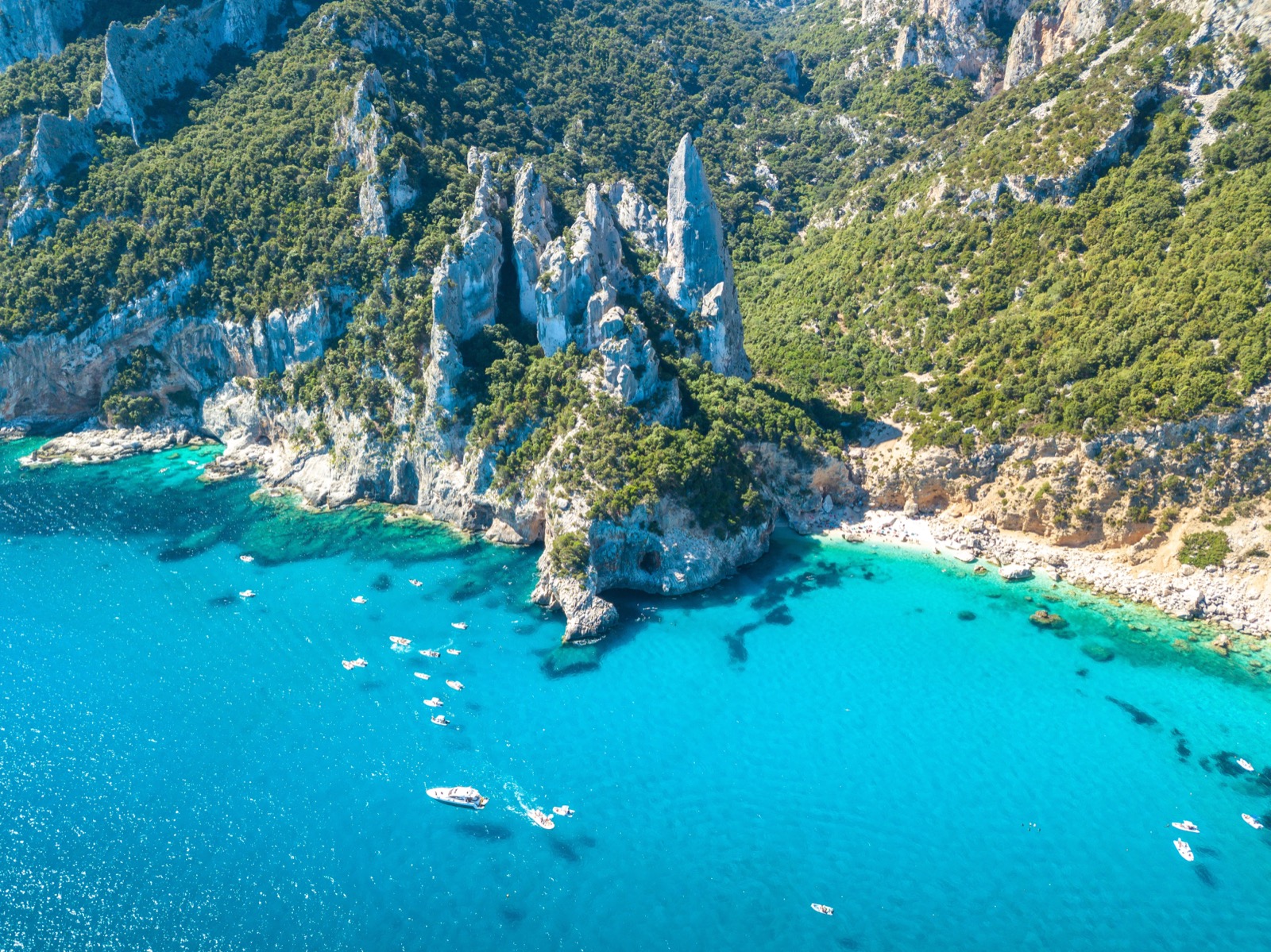
TL;DRThe La Maddalena archipelago is a national park off northern Sardinia, with seven main granite islands and dozens of smaller islets, reachable by ferry from Palau in 15 to 20 minutes. There are 10 key tips here, covering the main island with the town of La Maddalena and the scenic Strada Panoramica coastal road, Caprera island with Giuseppe Garibaldi’s house and the beach at Cala Coticcio (nicknamed Tahiti, capped at 60 visitors a day, with a fee of around 3 euros), plus the islands of Spargi, Santa Maria and Budelli, home to the off-limits Spiaggia Rosa (Pink Beach) — take any sand and you’re looking at a fine of up to 3,500 euros. June or September are the best months to go, when the sea sits around a warm 24°C and there are far fewer crowds than in the packed months of July and August.
The north of Sardinia is famous for the glamorous Costa Smeralda coastline and its gleaming yachts, but the real, wild treasure lies just a little further out to sea. The moment you board the ferry in the port of Palau and cross the narrow strait, the national park and archipelago of La Maddalena, Italy opens up before you. Travellers from all over the world rave that the water here is so impossibly turquoise and crystal-clear that, at times, you’ll feel as if you’re in the Caribbean rather than the Mediterranean.
The whole archipelago is made up of seven main granite islands and dozens of smaller islets, all strictly protected as a national park since 1994. They say you’ll find the very most beautiful beaches in all of Sardinia here, but don’t be fooled — it’s not just about lounging on white sand. You’ll also discover stunning panoramic roads, fascinating history tied to the Italian hero Garibaldi, and wild nature that’s guaranteed to take your breath away.
In this guide you’ll find 10 tips on what to see and do in La Maddalena so you don’t miss a single corner of this slice of paradise. We’ll look at how to get around between the islands, where you’ll run into strict visitor limits, and what to watch out for when choosing a boat trip.
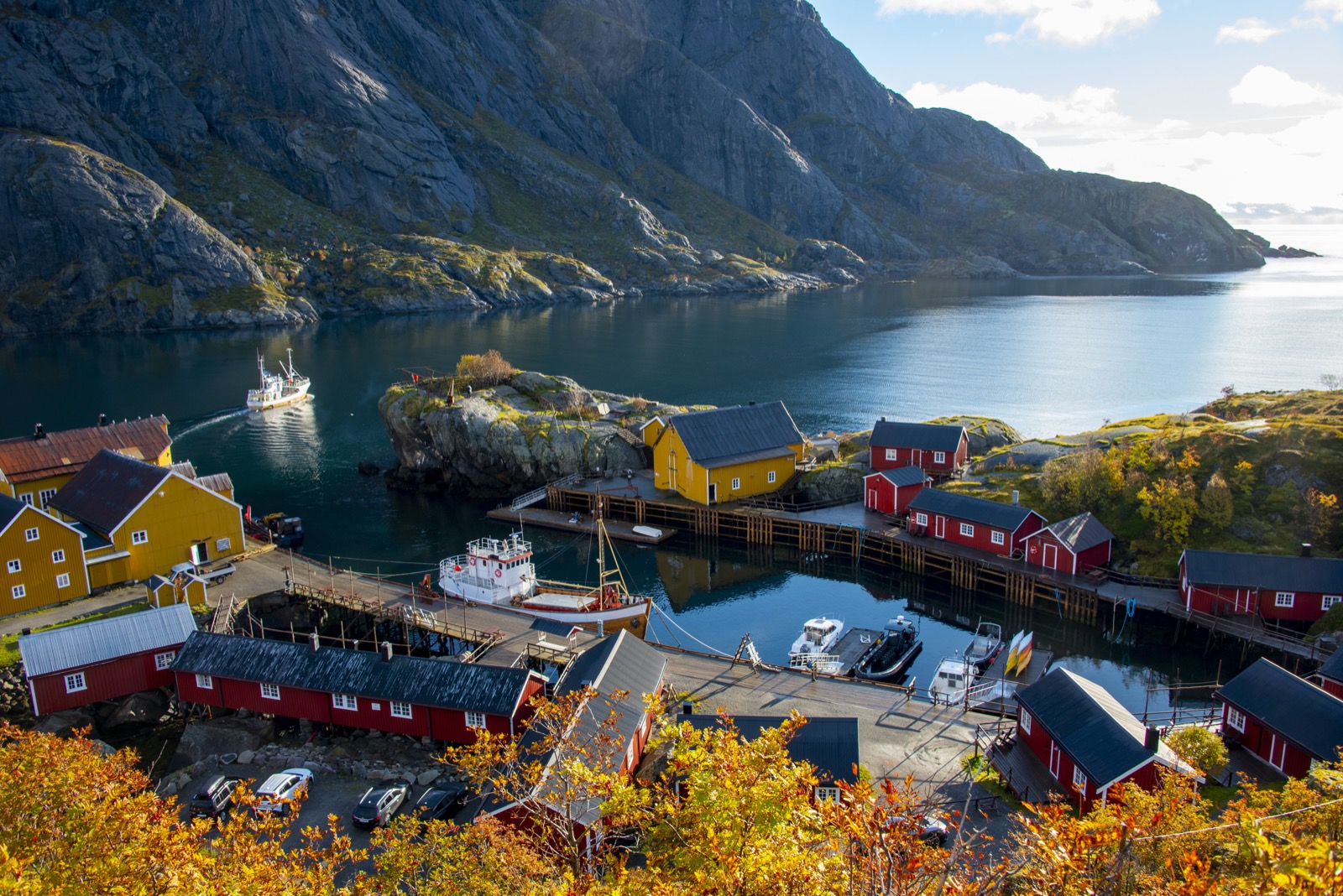
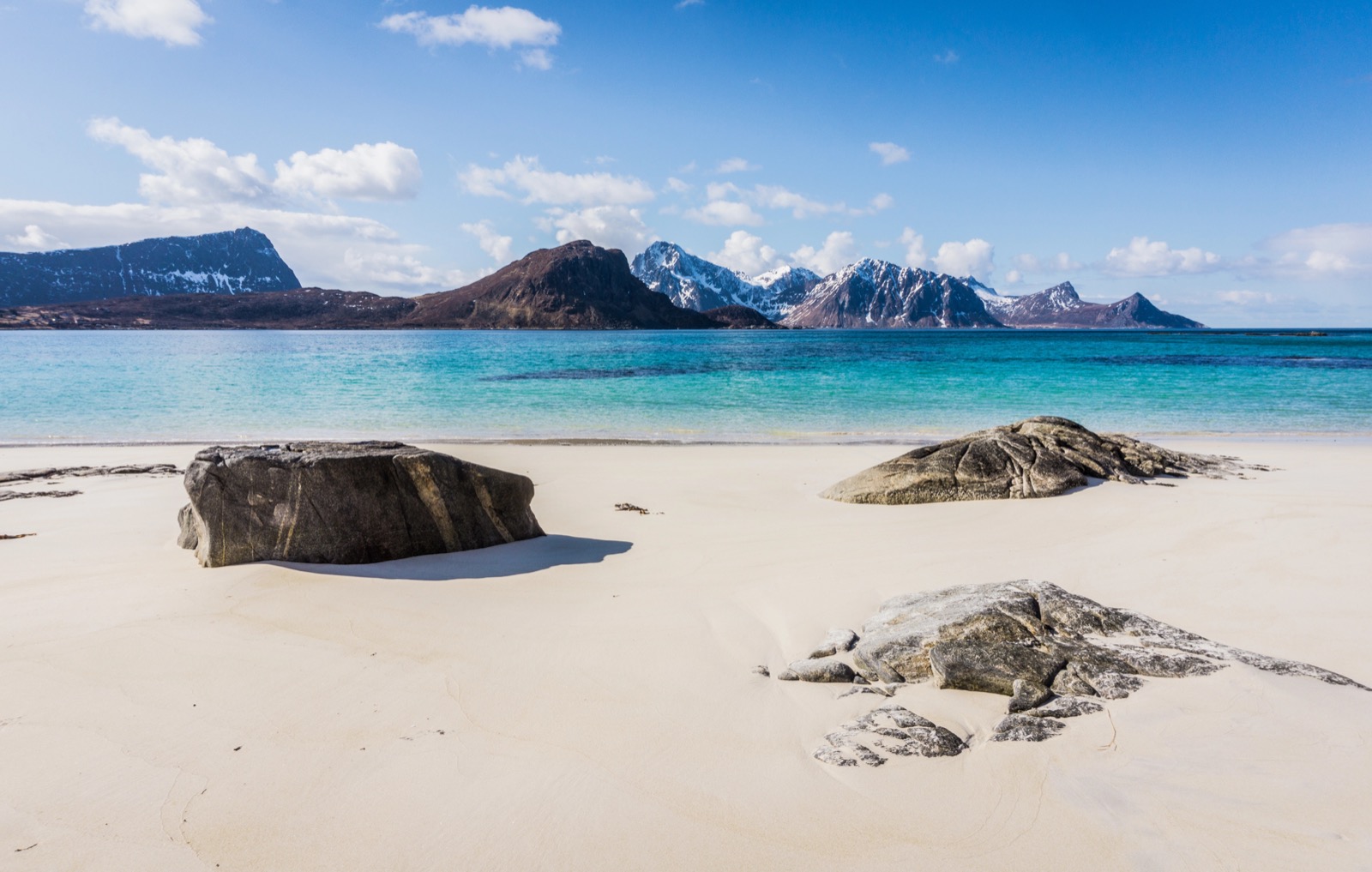
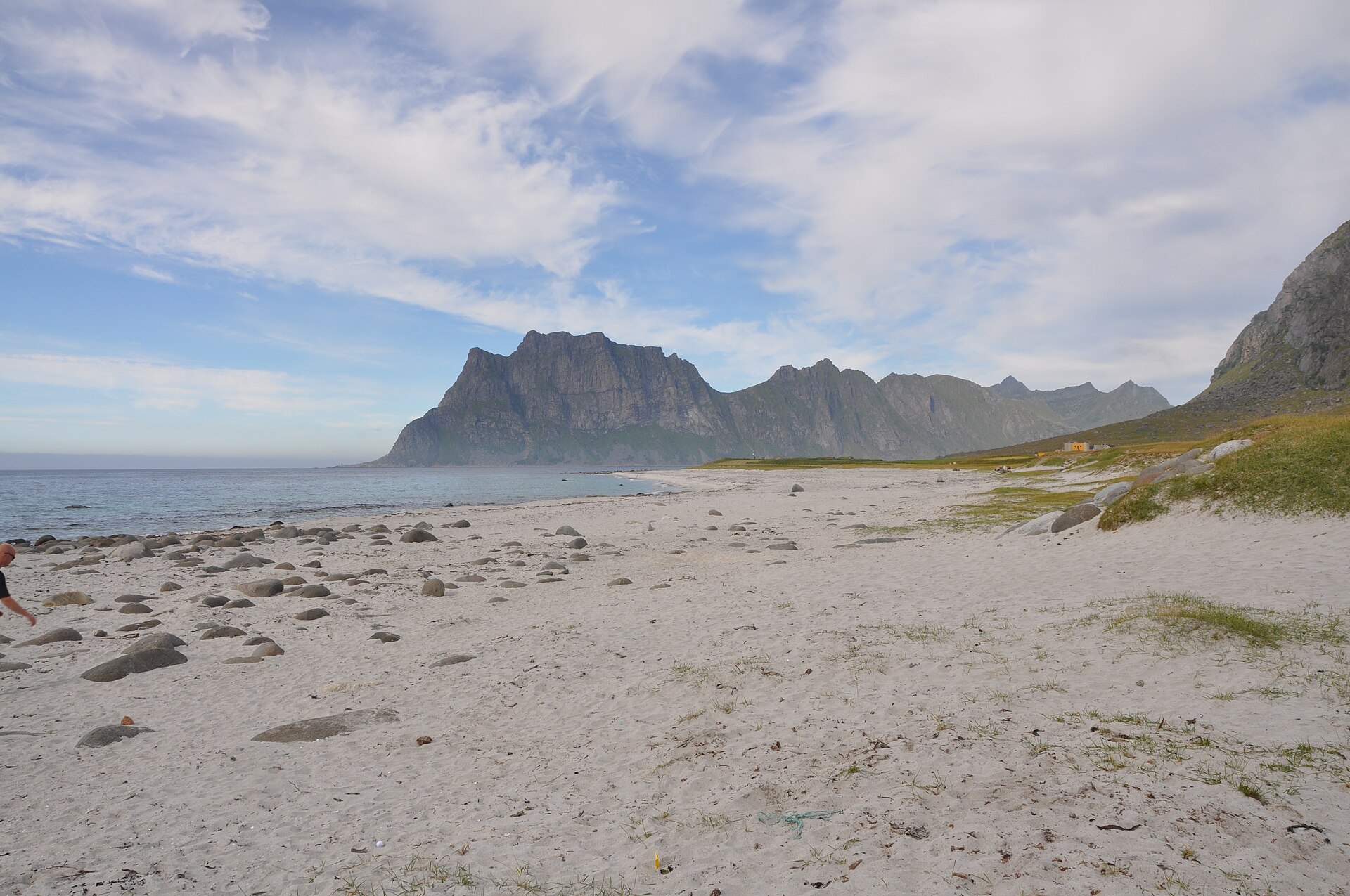
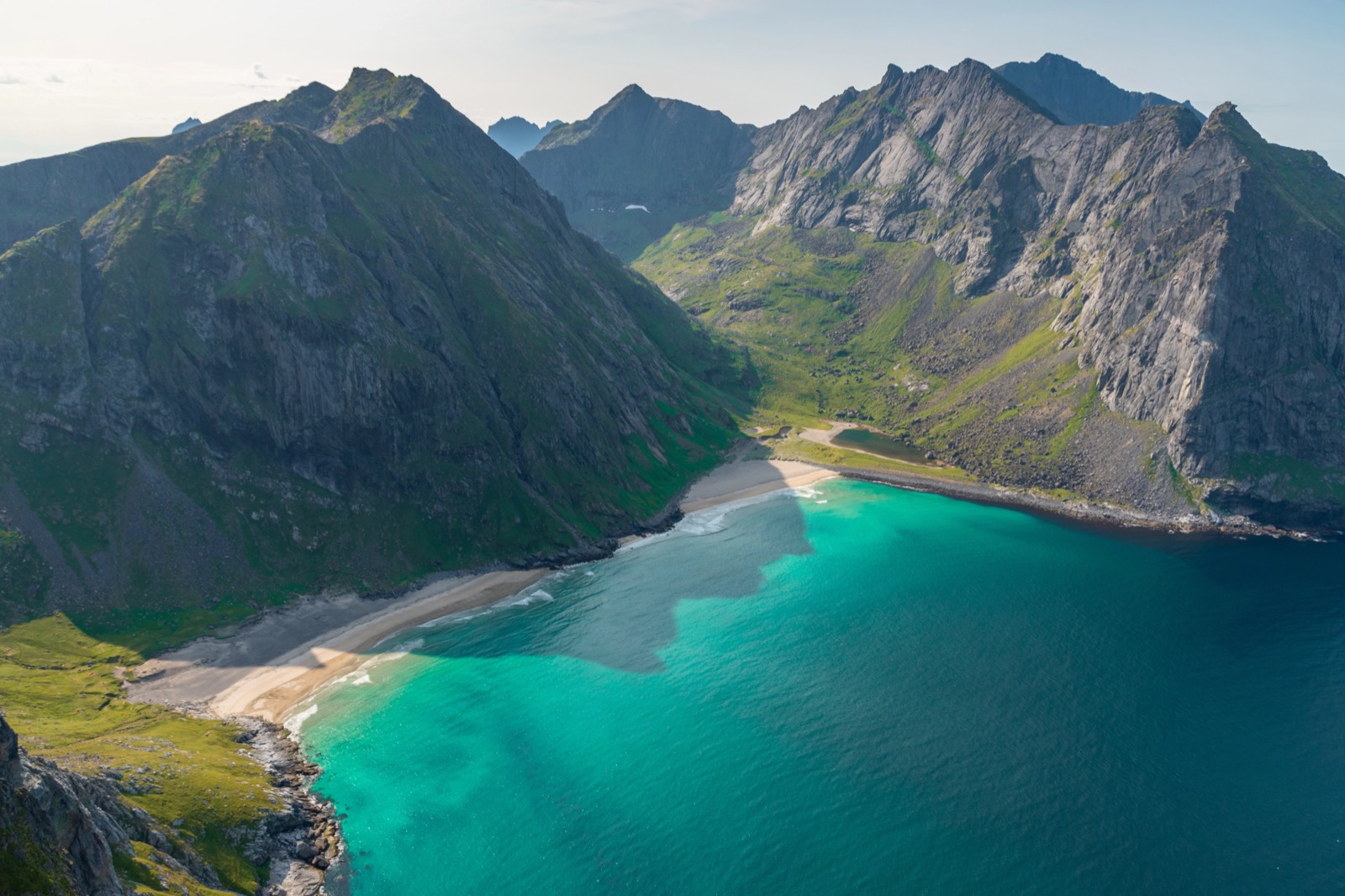
Beach in Sardinia
TL;DR
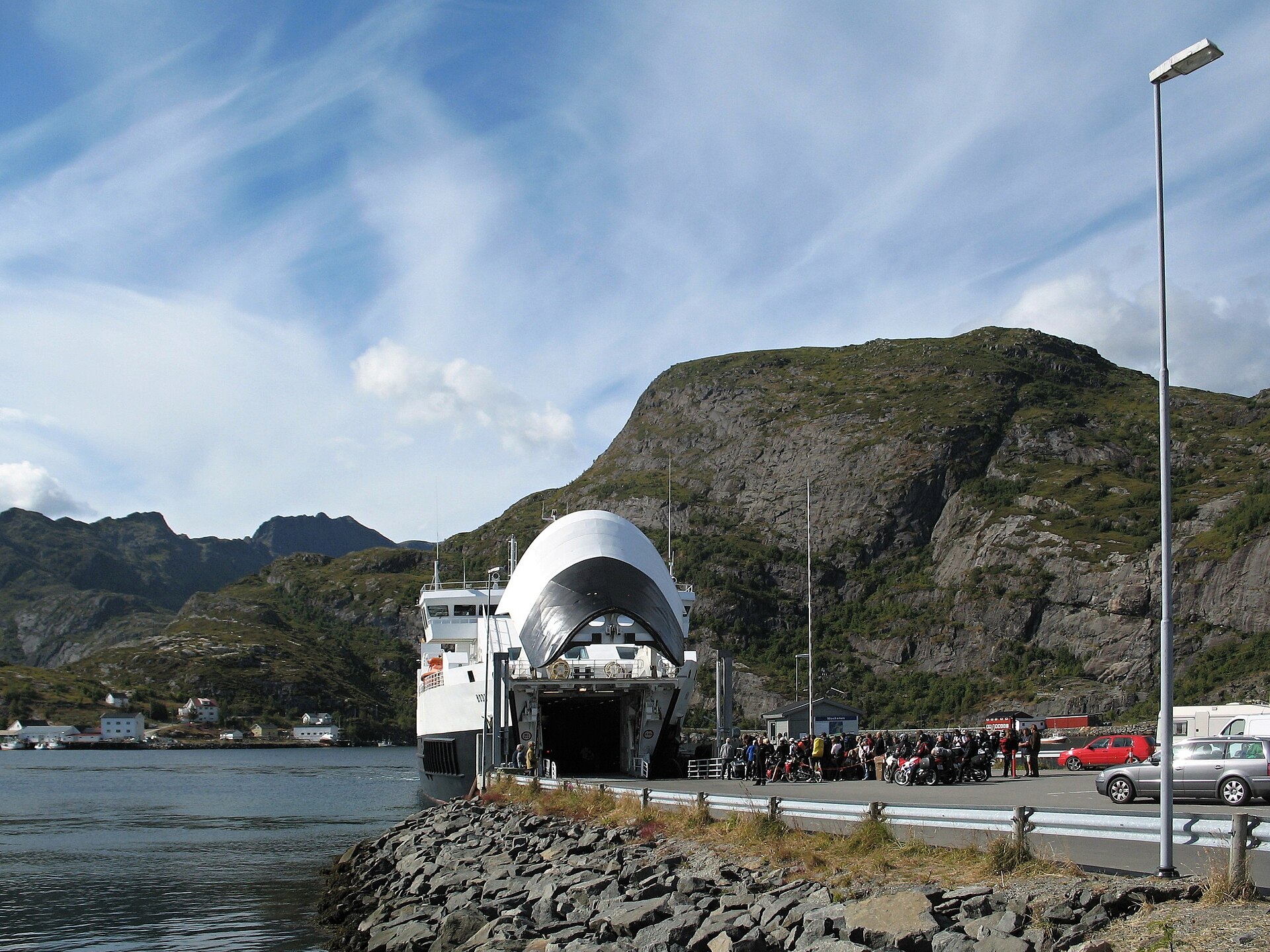
Getting to the island: Ferries from the town of Palau run to the main island of La Maddalena constantly, the crossing takes just 15 to 20 minutes, and they’ll happily take you across with a hire car too.
Getting around: For the main island and neighbouring Caprera (connected by a bridge) you’ll need a car or scooter; the other islands can only be reached by boat.
The most beautiful beach with a limit: Cala Coticcio beach on Caprera island has a strict limit of 60 people per day, and entry is only possible with an authorised guide for a fee.
Pink Beach ban: The famous Spiaggia Rosa on Budelli island has been strictly protected since 1998 — you can’t set foot on it, and swimming in its immediate vicinity is also banned.
Boat trips and the wind: Book your archipelago boat tours in advance, but always keep a close eye on the mistral wind forecast, which often causes trips to be cancelled.
When to go and how to reach the La Maddalena archipelago
Planning a trip to the archipelago takes a bit of strategy, as it’s one of the most sought-after destinations in all of Italy. The main gateway to the islands is the little port town of Palau in northern Sardinia, from which ferries shuttle to the main island of La Maddalena throughout the day. The best-known company is Delcomar, whose boats run very frequently and the crossing takes only 15 to 20 minutes. Tickets can be bought right at the port and the ferries carry cars without any problem.
If you’re wondering about the La Maddalena weather and when to go, July and especially August can be a real test of nerves. During the Italian holidays (around the Ferragosto bank holiday) the crowds pour in, temperatures climb to 35 °C and prices for accommodation and services shoot up sharply. A much more pleasant time is reportedly June or September, when the sea is still beautifully warm at around 24 °C, but the town’s alleys and the beaches are far more bearable.
Another crucial factor for your visit is the weather — or rather the unpredictable mistral wind (maestrale in Italian). This strong north-westerly wind can whip up the sea within a few hours to the point where all boat trips get cancelled. Seasoned travellers recommend regularly checking the forecast in the Windfinder app and having a plan B ready on the main island, which you can reach by car.
Where to stay: La Maddalena hotels and bases
Your accommodation strategy depends on how much time you want to spend in the national park. If you only plan to explore the islands over a day or two, it makes sense to stay on the mainland around Palau or Santa Teresa Gallura and just do day trips to La Maddalena. You’ll save on ferrying your car across and avoid the extra logistics. Most organised boat trips also depart from Palau, so in the morning you’ll only have a few steps to the harbour.
But if you want to soak up the true island atmosphere — when the last day-trippers leave, the buzz fades and the town takes on an incredibly romantic feel — stay right on the main island of La Maddalena. Here you’ll find both boutique hotels in the historic centre and quieter resorts with pools just outside town. Just bear in mind that capacity is limited and, especially in the peak summer season, the best deals disappear months in advance.
Sleeping right on the La Maddalena archipelago means having paradise on your doorstep even after the afternoon excursion boats sail off and the island falls quiet. A practical alternative is Palau on the mainland, just a few minutes away by ferry and easier to reach by car. Choose according to whether you want peace and quiet, or a convenient base for setting off on trips:
✨ For wellness and tranquillity:Grand Hotel Resort Ma&Ma(La Maddalena) — an elegant resort with a spa just steps from the beaches; adults-only calm and the island almost to yourself once the day-trippers have gone.
💑 For couples near the sea:Hotel La Funtana(La Maddalena) — a modern hotel with a pool close to both the town and the beaches; a comfortable base for exploring the archipelago.
💰 For a central stay at a reasonable price:Petit Hotel Cavour(La Maddalena) — a cosy little hotel right in the centre of La Maddalena town, with everything within walking distance in the evening and at a pleasant price.
⛵ For convenient boat trips:Hotel La Roccia(Palau) — in Palau on the mainland, just minutes from the harbour where the boats set off for the archipelago, with easy access by car.
💡 One last tip: you can book most hotels through Booking.com with free cancellation, so you can reserve your favourite spot right away and decide later. Just don’t wait too long — the most in-demand seaside addresses sell out for July and August up to six months ahead and peak-season prices climb tens of percent higher.
What to see on the main island of La Maddalena
Of all seven islands, the main one is the busiest and the only one that’s permanently and densely inhabited. Life here revolves around the harbour where the ferries arrive from the mainland, and that’s exactly where you can set off to explore. The advantage of the main island is that you can comfortably drive around it in your own car or on a scooter, giving you total freedom over where and how long you stop.
1. The town and bustling harbour of La Maddalena
The moment you roll off the ferry, you find yourself right in the heart of the town of the same name, full of narrow cobbled lanes, ochre and pastel houses with wooden shutters and the aroma of strong Italian espresso. The focal point is the picturesque Piazza Garibaldi, around which cafés, restaurants and small craft shops cluster. They say the town has its best atmosphere in the whole north in the evening, when the street lamps come on and locals head out for the traditional passeggiata (evening stroll). Be sure to set aside time to wander around the harbour, where fishing boats bob alongside luxury sailing yachts.
Cala Gavetta harbour in the town of La Maddalena
2. The panoramic road and the Bassa Trinità and Spalmatore beaches
The best way to explore the main island is to take the scenic road known as the Strada Panoramica, which loops around most of the island. This route offers breathtaking views over turquoise bays and the neighbouring islands, and around almost every bend you’ll feel the urge to stop and take photos. Among the most popular stops is Spalmatore beach on the east coast, which is sheltered from the wind and has good facilities. But if you’re after something wilder, head north to the brilliant white Bassa Trinità beach with its gorgeous sand dunes, or to the picturesque Cala Lunga bay. In peak season, though, definitely come early in the morning, because the car parks by the best beaches fill up in a flash.
Bassa Trinità beach on La Maddalena island
3. Sunset at Punta Tegge
The western tip of the island hides the spot of Punta Tegge, which is strikingly different from the classic sandy beaches. Instead of fine sand, you’ll find flat granite reefs and boulders that the sea and wind have sculpted over millennia into bizarre, rounded shapes. It’s an absolutely perfect place to watch the sunset. In the evening light the rocks turn golden and even red, and the sight of the sun dipping below the horizon with the island of Spargi in the background is said to be a once-in-a-lifetime experience. What’s more, you’ll often find lovely beach bars here where you can enjoy an evening drink and just listen to the lapping of the waves.
Sunset over the La Maddalena archipelago at Punta Tegge
Caprera island: Garibaldi and a Caribbean cove
Right next to the main island of La Maddalena lies Caprera, which is conveniently linked to it by the man-made Passo della Moneta bridge. So you can drive across without any trouble. Unlike its busier sister, Caprera is wild, green and laced with pine groves. A large part of the island is protected, no roads lead to many of its coves, and you have to reach them on foot along dusty trails.
4. The house and museum of Giuseppe Garibaldi
Caprera is famous not only for its nature, but above all as the place where the celebrated Italian general Giuseppe Garibaldi spent the last twenty-six years of his life. If you have even the slightest interest in history, a visit to the Compendio Garibaldino complex is almost a must. Here you can see his iconic “White House”, which he built himself in the style of South American farms, as well as his personal belongings, his library and his tomb. It’s fascinating to see that the man who unified Italy chose this remote, wind-battered corner of Sardinia for his rest. I’d recommend checking ticket prices and opening hours on the museum’s official website.
The Giuseppe Garibaldi house-museum on Caprera island
Lukáš and Lucie recommend
Where to stay in La Maddalena Archipelago
5 accommodations — wellness hotels, hotels and other accommodation options
This is the absolute jewel of the entire national park and probably one of the most famous beaches in Italy. Thanks to its fine white sand and incredibly vivid turquoise water, Cala Coticcio has earned the nickname Tahiti. But because it suffered from an enormous influx of tourists in the past, the park authority introduced extremely strict rules and limits. The daily limit is currently set at just 60 people, and you can only reach the beach accompanied by an authorised guide after roughly an hour-long trek across rocky terrain. There’s a small fee of around €3 for the guide. The rules can also change slightly from year to year, so for the current season be sure to check the booking conditions on the national park’s official website.
Cala Coticcio beach, known as Tahiti, on Caprera island
The most beautiful islands and coves for a boat trip
While you can tackle La Maddalena and Caprera on your own, for the remaining islands of the archipelago you’ll need a boat. And it would be a huge shame to skip them, because it’s precisely the uninhabited islands in the north-west of the park that offer the most iconic postcard views of Sardinia. Dozens of companies run boat trips, and choosing the right one is key to a successful experience.
6. Budelli island and the forbidden Pink Beach (Spiaggia Rosa)
Budelli island hides one of the greatest natural wonders of the Mediterranean. The famous Spiaggia Rosa, or Pink Beach, got its name from the microscopic shells of foraminifera and fragments of coral that tinted the sand pink. Unfortunately, tourists used to carry this sand home by the kilo in bottles, so the beach almost lost its colour entirely. Since 1998, entry has been strictly forbidden (Zone A, the highest level of protection). You can’t set foot on it, and there’s even a ban on swimming and anchoring boats within 70 metres of the shore. Breaking the rules carries a €500 fine, and stealing sand an incredible €3,500. During boat trips the captain will show you this legend only from a respectful distance, but it’s well worth it all the same.
Budelli island and the forbidden Pink Beach (Spiaggia Rosa)
7. Spargi island and Cala Corsara bay
Spargi is the third-largest island in the archipelago and probably the one with the most dramatic coastline. Its calling card is steep granite cliffs and coves that once served as a pirate hideout. By far the most popular stop for all the boats is the beautiful Cala Corsara bay on the southern tip of the island. When you arrive, you’re greeted by dazzling white sand and rocks in which, with a little imagination, you can make out the shape of a dog’s head or a boot. The water here is so clear that the boats look as if they’re floating in mid-air.
Spargi island and Cala Corsara bay
8. Santa Maria island
Compared with rocky, wild Spargi, Santa Maria is much flatter and greener. It’s the only place besides the main island of La Maddalena and Caprera where you’d find a few private houses, but these serve mostly as summer residences. The main draw is the huge Cala Santa Maria bay with its very shallow seabed, resembling a giant natural swimming pool. This is exactly where boats often head for a longer swimming break, because the water here is a touch warmer and ideal for snorkelling.
Beach on Santa Maria island in the La Maddalena archipelago
9. Santo Stefano island
On boat trips you’ll usually only see this island from the deck as you sail past. It has a very interesting and slightly secretive history. In the past it housed a US submarine base, and to this day the Italian navy still uses part of the territory. The rest of the island is occupied by an exclusive holiday resort, so the island isn’t freely accessible to ordinary tourists and the usual excursion boats don’t stop at its beaches. Even so, it’s interesting to take a look at it as you sail by and listen to the captain’s tales from the Cold War era.
Santo Stefano island in the La Maddalena archipelago
10. A full-day La Maddalena boat trip
To see all these gems with your own eyes, you’ll need to book a full-day tour. Most boats set off in the morning from Palau or from the harbour in La Maddalena. You can choose either a large excursion boat, which is cheaper but packs in a lot of people, or pay a little extra for a smaller catamaran or an inflatable boat (gommone) with a skipper. Smaller boats have the huge advantage of being able to slip into shallower coves where the big ferries aren’t allowed. In peak season, booking trips well in advance is an absolute must — easily 48 hours ahead. You can easily compare a selection of excellent boat tours on portals like Sardegna Turismo or through booking apps.
Panorama of La Maddalena national park from a boat trip
💡 Tip: Tickets, boat trips and organised tours fill up quickly in season, so it pays to buy them online in advance on GetYourGuide.
What to eat at a La Maddalena restaurant
Sardinian cuisine is incredibly rich, and although traditional island restaurants naturally tempt you above all with fish specialities, vegetarians certainly won’t go hungry here. Sardinia has a strong pastoral tradition, so cheeses and pasta take centre stage. They say it would be a sin to leave without tasting the famous culurgiones — hand-pleated pasta parcels filled with potato, pecorino cheese and fresh mint, often served in a simple tomato sauce.
With every meal they’ll be sure to bring you pane carasau, an incredibly thin and crispy bread sometimes nicknamed “music paper” for its appearance. For a sweet finish, be sure to order seadas (or sebadas). These are large fried parcels filled with melted young cheese and generously drizzled with local honey — it sounds a little odd, but apparently it’s an absolute flavour bomb. And of course, don’t forget to wash it all down with a glass of the excellent local white wine, Vermentino di Gallura, which is grown in the north of the island and boasts Italy’s highest DOCG certification.
Where to go next
If you’re planning to explore other parts of this fascinating island, our other comprehensive guides are sure to come in handy. Here’s a selection of the most useful ones:
The easiest route is via the port of Palau in northern Sardinia, from where ferries regularly depart to the main island of La Maddalena. The journey takes approximately 15 to 20 minutes and the ferries also transport cars.
What to see on La Maddalena?
On the main island, don’t miss the historic center with the harbor, the scenic Strada Panoramica road, Spalmatore or Bassa Trinità beaches, and unforgettable sunsets at the rocky Punta Tegge. From neighboring Caprera, be sure to visit Garibaldi’s house.
Can you visit the Pink Beach on Budelli?
No, entry to the famous Pink Beach (Spiaggia Rosa) has been strictly prohibited since 1998 due to nature conservation. You cannot set foot on it, swimming nearby is forbidden, and you can only see the beach from a distance during a boat trip.
What is Cala Coticcio called Tahiti?
It’s one of the most beautiful beaches in the national park, located on the island of Caprera. Due to nature protection, there’s a strict limit of maximum 60 visitors per day and access is only possible for a fee accompanied by an authorized guide.
Is a boat trip around the La Maddalena archipelago worth it?
Definitely yes. Without a boat trip, you won’t be able to reach the most beautiful wild islands such as Spargi, Santa Maria, or Budelli. It’s precisely these uninhabited islands that offer the most famous Caribbean-like scenery.
Do I need a car on La Maddalena?
“`html
On the main island of La Maddalena and neighboring Caprera, you’ll definitely make use of a car or scooter – without one, it’s quite difficult to reach the more remote beaches. However, you can’t get to the other smaller islands of the national park by car anyway and you’ll need to take a boat.
“`
Where to stay on La Maddalena?
If you want to experience the island’s evening atmosphere, stay right in the town of La Maddalena on the main island. However, if you’re only planning day boat trips, it’s cheaper and logistically easier to stay on the mainland, for example directly in Palau or the surrounding area.
Tips and Tricks for Your Vacation
Don’t Overpay for Flights
Search for flights on Kayak. It’s our favorite search engine because it scans the websites of all airlines and always finds the cheapest connection.
Book Your Accommodation Smartly
The best experiences we’ve had when looking for accommodation (from Alaska to Morocco) are with Booking.com, where hotels, apartments, and entire houses are usually the cheapest and most widely available.
Don’t Forget Travel Insurance
Good travel insurance will protect you against illness, accidents, theft, or flight cancellations. We’ve had a few hospital visits abroad, so we know how important it is to have proper insurance arranged.
Where we insure ourselves: SafetyWing (best for everyone) and TrueTraveller (for extra-long trips).
Why don’t we recommend any Czech insurance company? Because they have too many restrictions. They set limits on the number of days abroad, travel insurance via a credit card often requires you to pay medical expenses only with that card, and they frequently limit the number of returns to the Czech Republic.
Find the Best Experiences
Get Your Guide is a huge online marketplace where you can book guided walks, trips, skip-the-line tickets, tours, and much more. We always find some extra fun there!
TL;DRCozumel is a Mexican island in the Caribbean, great for diving, snorkelling and quieter beaches without the Cancún or Tulum crowds. You get there by ferry from Playa del Carmen (30–45 minutes, departing every hour). The best time to go is late November to April, when hurricanes and the worst heat stay away. Among the 12 tips, standouts include the diving reefs at Palancar and Columbia, the shallow sandbar at El Cielo, the Punta Sur eco park with its Celarain lighthouse, the Mayan ruins at San Gervasio, and the wild east-coast beaches of Chen Rio and San Martin. Entry to the National Marine Park costs around 218 pesos a day (about 260 CZK) as of 2025, and unlike the mainland, the island’s west side stays clear of the seaweed problem.
Know that feeling when you’re craving the perfect Caribbean paradise with powder-white sand and turquoise water, but you really can’t face battling the crowds in Cancún or dealing with the gridlocked roads in Tulum? Then the Mexican island of Cozumel in Mexico might just be the right call for you. While the mainland Riviera Maya is bursting at the seams, this island still holds onto a far more laid-back and friendly atmosphere that pulls you in straight away.
Most people come here on a day trip by boat, but trust me, that’s a real shame. Cozumel is genuinely world-class when it comes to snorkelling and diving, and its remote, untamed beaches on the east coast will quite literally take your breath away. And the best part of it all? When the mainland is plagued by floating seaweed, the west coast of this island stays beautifully clean.
In this guide you’ll find 12 tips on what to see and do on the island of Cozumel. We’ll go through the best spots for diving and swimming, I’ll help you sort out your accommodation, and I’ll add up-to-date prices for 2025 and 2026 so nothing catches you off guard once you’re there.
TL;DR
When to go: The best weather runs from late November to April. Summer is brutally hot, and autumn brings the risk of hurricanes.
Sargassum (seaweed): The western side of the island (where the hotels and swimming beaches are) is sheltered from the seaweed and stays clean even when the mainland is buried under it.
Diving and snorkelling: Palancar and Columbia are world-famous reefs. As of 2025, there’s an increased marine park fee of 218 pesos (about €11) per day.
Getting to the island: By ferry from Playa del Carmen — the crossing takes 30 to 45 minutes and runs every hour.
Getting around: The ideal option is to hire a jeep or scooter for the day and drive around the wild eastern side of the island, which is absolutely stunning and has no phone signal.
Money: The currency is the Mexican peso (MXN), but US dollars (USD) are accepted everywhere, although the exchange rate is often poor.
When to visit Cozumel and what’s the deal with the seaweed
If you’re planning a Caribbean holiday, timing is absolutely crucial, because the weather can be pretty unpredictable. The ideal time to visit Cozumel is from late November to April, when it’s pleasantly warm, dry, and the humidity is bearable. May to October brings much more intense heat and the rainy season, with the biggest hurricane risk from August to October. We covered this topic in more detail in our article on when to go to Mexico.
💡 Tip: Cozumel has one huge advantage over the mainland Riviera Maya, and that’s sargassum (brown seaweed). Travellers and locals agree that sargassum barely affects the average tourist on Cozumel, because while the windward eastern side does get the seaweed in season, it’s undeveloped with no swimming infrastructure, whereas the western side with its beach clubs and reefs stays protected and clean even during the worst sargassum seasons on the mainland source.
Where to stay (and how much it costs)
Cozumel offers accommodation for every budget, but it’s important to think ahead about what kind of holiday you’re actually after. Most of the action happens on the west coast, because the eastern side is wild, windy and full of strong currents, so you won’t find any big resorts there.
The west coast splits into two main areas. The first is the town of San Miguel de Cozumel itself, which is ideal if you want everything close by, fancy local restaurants and cheaper accommodation, and don’t mind having to hop over to the beach. The second option is the southern and northern hotel zones, where you’ll find more upmarket beachfront resorts, often with their own snorkelling reef, but you’ll need to grab a taxi to get into town for food.
Cozumel is first and foremost a diving and snorkelling paradise, so decide whether you’d rather be in San Miguel (life, ferry, restaurants) or right by the sea above a reef. Both have their charm — and very different price tags.
💑 For couples:Encantada Resort is an adults-only boutique resort with a private beach and personal service just a few minutes south of San Miguel — peace and quiet made for two (from ~€115 per night).
👨👩👧 For families:Occidental Cozumel – All Inclusive is a sprawling beachfront all-inclusive resort with four pools, a kids’ programme and snorkelling straight off the beach (from ~€170 per night, all-in).
💰 Best value for money:Hotel Villas Las Anclas offers spacious apartments with a kitchenette and a garden pool just a few blocks from the main square and the ferry — the top pick among the island’s guesthouses (from ~€70 per night).
✨ For divers:Coral Princess Hotel & Dive Resort has its own pier and a reef right in front of the hotel, and it repeatedly wins reader polls in diving magazines (from ~€130 per night).
Booking tip: with all of these hotels, choose a rate with free cancellation — plans change and you don’t want to pay for somewhere you never end up reaching. And don’t leave it to the last minute: the top-rated places sell out months in advance in peak season, and prices then jump by tens of percent.
Specific accommodation picks on Cozumel:
Cheaper stays in town: If you’re after something cosy with an authentic vibe right in San Miguel, check out Casa Mexicana Cozumel. They do a great breakfast and you’re just a few steps from the main square and the harbour. Another fantastic, affordable option is the boutique Villas El Encanto Cozumel, which has a gorgeous tropical garden with a pool where you can fully unwind after a long day.
The happy medium by the sea: For those who want a sea view but don’t need a giant all-inclusive resort, Coral Princess Hotel & Dive Resort is absolutely ideal. They have their own dive centre and you can snorkel in crystal-clear water straight off the steps by the hotel. Prices usually run around €100 to €145 per night for two.
Luxury and total relaxation: If you want to treat yourself to genuine Caribbean luxury, you’ll definitely be wowed by the Presidente InterContinental Cozumel Resort & Spa. It’s among the very best on the island, sitting right on a beautiful private beach with absolutely top-tier service.
💡 Tip: If you know you’ll be spending most of your time underwater, look for accommodation with “Dive Resort” in the name. They often offer good-value packages combining accommodation with dives, which can save you a fair bit of money in the end.
What to see and do in Cozumel: 12 tips
Let’s take a look together at the best this island has to offer. Most of the activities here revolve around the water, and no wonder — the Mesoamerican Reef that fringes the island is the second largest in the world, right after Australia’s. But we’ll throw in a bit of history and some wild nature exploring too.
1. The ferry from Playa del Carmen as the start of the adventure
Photo: Willian Justen de Vasconcellos / Pexels
Getting to the island is a little experience in itself, as you’ve got a crossing over incredibly blue water ahead of you. The ferries depart from the port in Playa del Carmen and the whole thing is very straightforward. You can buy tickets online or right at the port kiosks — just be prepared for various tour sellers trying to grab you there.
Travellers confirm that the ferries run reliably every hour, with Ultramar and Winjet handling the crossing in about 45 minutes for a one-way ticket of around 250 pesos (about €13), while the newer Xcaret Xailing boats are a touch faster, taking just 30 minutes for around $16 (roughly €15) source.
2. Diving at Palancar Reef
Photo: Harvey Clements / Pexels
If you’ve got a diving licence, Cozumel is a place where you simply have to put it to use. Palancar Reef is an absolute legend, popularised by the famous Jacques Cousteau himself, offering over five kilometres of breathtaking coral formations, caves and swim-throughs. The water here is so incredibly clear that visibility regularly tops 30 metres.
Prices for a standard “two-tank dive” (two dives from a boat) in 2025 and 2026 range from $75 to $115 (roughly €70 to €105) depending on the dive centre. One traveller who dived with the local Pepe Scuba centre was thrilled when, within the first three minutes underwater, they came across a large ray and a majestic reef shark source.
3. Diving at Columbia Reef
Photo: Harvey Clements / Pexels
Right next to Palancar lies another diving gem, Columbia Reef. It’s a bit deeper and more demanding, so instructors often bring more experienced divers here. Waiting for you are enormous coral towers rising up from the depths like underwater skyscrapers, and huge sea turtles gliding past them with complete elegance.
Compared to Palancar, there tend to be slightly fewer boats here, so you’ve got a better chance of enjoying the underwater world in relative peace. If you love underwater photography, this spot will completely captivate you with its colours and dramatic topography.
4. The National Marine Park and the new fees
Photo: Harvey Clements / Pexels
Most of the most beautiful reefs and beaches fall under the protection of the National Marine Park (Parque Nacional Arrecifes de Cozumel), which works to preserve this fragile ecosystem. That also comes with an obligation to pay a daily entrance fee, which is added to the price of diving and snorkelling trips.
Good to know: the National Marine Park entry fee rose to around 218 pesos (about €11) per person per day as of 1 January 2025, the first increase since 2020, with the money going directly towards reef protection source. Be sure to use only biodegradable sunscreen, ideally one explicitly labelled “reef-safe,” as ordinary sunscreens are strictly banned in some areas.
💡 Tip: Far better than any sunscreen is buying a UV-protective top (a so-called rashguard) for snorkelling and diving. It protects you from burning much more reliably and, on top of that, you have a cast-iron guarantee that you’re not harming the coral.
5. Snorkelling straight from the shore
Photo: Gabriela Carrillo / Pexels
If you’re not into scuba diving, don’t despair at all, because Cozumel’s beaches and coastline also offer fantastic snorkelling with just a mask and fins. You don’t necessarily need to buy pricey boat trips — plenty of beauty is hidden just a few metres from the shore, especially along the western road, where you’ll find a string of small restaurants and beach clubs with water access.
A great example is the experience of one traveller who, in early June, snorkelled every day straight from their accommodation on the west side of the island — they just walked down the steps into clear water and immediately saw loads of fish, small yellow rays, and a coral wall teeming with life just off the shore source.
El Cielo translates as “heaven,” and the moment you arrive you’ll understand why. It’s a vast sandbar with the most turquoise water you can possibly imagine. The water barely reaches your waist here, and dozens of beautiful starfish rest on the white seabed.
You can only get here by boat, so it’s a popular stop on most snorkelling trips. But remember one immensely important rule: under no circumstances may you touch the starfish, and you absolutely must not lift them above the surface for a photo. Sadly, even a few seconds in the air is fatal for them.
7. The Punta Sur Eco Park and the Celarain lighthouse
Photo: Wikimedia Commons
At the southernmost tip of the island you’ll find the amazing Punta Sur ecological reserve. This place shows Cozumel from a completely different side — you’ll find mangrove lagoons, wild nature and one of the most beautiful views on the entire island. Entry to the park costs around $19 (about €18) and it’s well worth setting aside at least half a day for it.
When visiting Punta Sur, don’t miss the climb up the historic Celarain lighthouse. It does mean tackling very narrow concrete steps and a tight hatch at the top, but travellers agree the incredible view over the azure sea stretching to the horizon is well worth the effort — and just nearby, by the lagoon, you can often safely watch wild crocodiles from an observation tower source.
8. The Mayan ruins of San Gervasio
Photo: María Regina Díaz / Pexels
When you need a break from the sun and salt water, head inland to explore some Mayan history. The San Gervasio archaeological site isn’t as enormous or famous as Chichén Itzá or Tulum, but it has its own unmistakable charm. In ancient times it was a sacred site dedicated to the goddess Ixchel, protector of fertility, and every Mayan woman was apparently supposed to make a pilgrimage here at least once in her life.
The site is hidden away in the jungle, so you’ll meet plenty of iguanas basking on the old stones. Entry is split into two parts (a state and a federal fee) and comes to about 220 pesos (around €11) in total. Don’t forget to pack a strong insect repellent, because the jungle mosquitoes can be pretty relentless. For current opening hours, check the official pages of the INAH institute.
9. Hire a jeep and tour the wild east
Photo: Elizabeth Kinney / Pexels
This is an experience it would be a sin to skip. While the west coast is calm and touristy, the eastern side of the island (locals call it “The Other Side”) is utterly untamed. There’s no electricity, no mobile signal, and the beaches are battered by huge waves off the open Caribbean.
The best way to explore this area is to hire an open-top jeep or an old convertible Beetle, drop the roof and simply drive along the coastal road. Along the way you’ll come across a few isolated beach bars, like the popular Coconuts, where you can grab a refreshing coconut or an ice-cold beer. Hiring a car for the day usually costs between $50 and $80 (€46 to €74), and I’d definitely recommend taking out full insurance.
10. Relax at the beach clubs in the west
Photo: Matias Mango / Pexels
If you’re in the mood to just lounge about, sip a margarita and pop into the sea now and then, the western beach clubs are made for it. They mostly work on a minimum-spend basis — you don’t pay an entrance fee, but you commit to eating and drinking a certain amount, in return for which you get a sunbed, a parasol and water access.
Among the most popular are Buccanos Beach Club, with a fantastic pool and excellent food, or the slightly quieter Money Bar, where the snorkelling is absolutely phenomenal. The minimum spend usually sits around $20 to $40 (€18 to €37) per person, which you’ll easily rack up over lunch and a few drinks.
11. The untamed beaches of Chen Rio and San Martin
Photo: Marcelo Gonzalez / Pexels
While the western beaches tend to be narrow and often rocky, the east coast offers kilometres of broad strips of fine sand. But as I mentioned, swimming here can be pretty treacherous because of the strong undercurrents.
The exception is Chen Rio beach, where the rocks form a small sheltered cove in which you can swim safely, even with kids. The water here is beautifully warm and there’s an excellent restaurant right on the beach. Another lovely stop is San Martin beach, which is perfect for long walks along the sand, collecting shells and watching pelicans diving into the waves.
12. Evening atmosphere in San Miguel de Cozumel
Photo: Nadine Biezmienova / Pexels
When the sun sets and most of the day-trippers sail back to Playa del Carmen, the town of San Miguel calms down beautifully and reveals its true face. The heart of town is the zócalo (main square), Parque Benito Juárez, which comes alive in the evening with local families, street musicians and food stalls.
Grab some churros from a cart, sit down on a bench and soak up that easy-going Mexican atmosphere. In the lanes around the square you’ll find loads of little shops selling ceramics, silver and textiles — absolutely ideal for an evening wander.
What to taste (and where to eat without meat)
Mexican cuisine is a lifelong love, and on Cozumel that goes double. Even though the Yucatán region is famous for its meat specialities (like the traditional slow-roasted pork cochinita pibil in a citrus marinade, or fresh fish ceviche), as a vegetarian you definitely won’t go hungry here — quite the opposite!
Venture away from the main tourist drag on the waterfront and slip into the small local eateries known as “loncherías.” Be sure to try the fresh cheese quesadillas served with a generous dollop of guacamole, which tastes far more intense here than back home. An absolute treat is the tacos filled with grilled cactus (nopales), beans, mushrooms or even hibiscus flowers (tacos de jamaica), which have a wonderful sweet-and-sour flavour. And if you’re really hungry, order chiles rellenos — large spicy peppers stuffed with cheese, dipped in batter and smothered in tomato sauce.
💡 Tip: If you’re after something really healthy and vegan, pop into the restaurant La Cocina de Silvia or the little bistro Nutrisano. They do great fresh juices, smoothie bowls and excellent vegetarian versions of the Mexican classics. To drink, definitely try agua de chaya — a refreshing drink made from local chaya leaves blended with lemon and pineapple.
Practical tips for your trip
So that nothing on the island catches you off guard, I’ve put together a few more practical bits of advice that are definitely worth knowing before you set off.
Money and payment: The official currency is the Mexican peso (MXN), but US dollars (USD) are widely accepted everywhere. The catch is that when you pay in dollars, vendors set their own exchange rate, which is often very poor. That’s why I recommend withdrawing pesos from an ATM. But watch out for ATMs right out on the street — because of frequent skimming (card copying), always withdraw cash from machines located inside the branches of official banks (e.g. Santander, HSBC, Banorte). Also, never accept the unfavourable dynamic currency conversion (DCC) rate at the terminal.
Getting around the island: Apps like Uber or Cabify sadly don’t work on Cozumel — transport here is firmly controlled by the local taxi union. The taxis are reliable but fairly expensive. Travellers report that a short ride from town a little way along the coast costs around 150 pesos (about €8). Always agree the price with the driver before you get in.
Hiring a scooter: Hiring a scooter is hugely popular and cheap (around $25 / €23 per day), but I have to be honest and warn you. The island’s hospitals are full of tourists who couldn’t handle a scooter. The roads get slippery after rain and the locals drive pretty wildly. If you’ve no scooter experience from home, this isn’t the place to learn — hire a car instead.
Safety: Cozumel is generally considered one of the safest places in Mexico, far safer than mainland Cancún or Tulum. Crime targeting tourists is minimal here, but of course common sense still applies — don’t leave valuables unattended on the beach, and avoid the unlit lanes on the edge of town at night.
💡 Tip: If someone in the street or at the ferry approaches you offering “island information” or invites you to a free breakfast, smile, decline and walk on. It’s almost always a timeshare seller (shared apartment ownership) who can trap you in a meeting room for four hours, relentlessly pushing you to sign a bad contract.
You can book diving and snorkelling trips on GetYourGuide.
Frequently asked questions
How long does the ferry ride to Cozumel take?
The ferry ride from the port in Playa del Carmen takes about 45 minutes with the standard ferries operated by Ultramar or Winjet. The newer catamarans from Xcaret Xailing can make the trip in as little as 30 minutes, and boats run throughout the day approximately every hour.
Is Cozumel safe for tourists?
“`html
Yes, the island is considered one of the safest destinations in all of Mexico, and crime is significantly lower here than on the mainland. However, as anywhere else, it’s good to follow basic precautions and keep an eye on your belongings at the beach.
“`
Can you pay by card in Cozumel?
“`html
In larger restaurants, hotels and beach clubs you’ll pay by card without any problems. But if you’re heading to the eastern side of the island, to small local eateries or want to buy something from street stalls, definitely have enough cash in pesos with you.
“`
Are there seaweed (sargassum) on the beaches in Cozumel?
“`html
The west coast, where most beach clubs and dive sites are located, is usually protected from seaweed and stays beautifully clean all year round. Seaweed occasionally appears on the eastern windward coast, where there isn’t suitable infrastructure for swimming anyway.
“`
Do I need an advanced certification for diving in Cozumel?
For most reefs, like the famous Palancar, a basic Open Water Diver certification is sufficient, as many dives take place at depths up to 18 meters. For deeper dives or sites with stronger currents, instructors require more advanced experience and an Advanced certification.
Can you drink tap water on the island?
“`html
Under no circumstances is tap water in Mexico safe to drink for tourists, and it could cause you serious intestinal problems. Always buy bottled water and use it for brushing your teeth too; ice in restaurants is usually safe though, as it’s made from filtered water.
“`
How much does it cost to rent a car in Cozumel?
Car rental, most often an open-top jeep or an old Beetle, ranges between 50 and 80 USD (approx. €45 to €70) per day depending on the season. I highly recommend paying extra for full insurance, as the roads on the island can sometimes be unpredictable.
Tips and Tricks for Your Vacation
Don’t Overpay for Flights
Search for flights on Kayak. It’s our favorite search engine because it scans the websites of all airlines and always finds the cheapest connection.
Book Your Accommodation Smartly
The best experiences we’ve had when looking for accommodation (from Alaska to Morocco) are with Booking.com, where hotels, apartments, and entire houses are usually the cheapest and most widely available.
Don’t Forget Travel Insurance
Good travel insurance will protect you against illness, accidents, theft, or flight cancellations. We’ve had a few hospital visits abroad, so we know how important it is to have proper insurance arranged.
Where we insure ourselves: SafetyWing (best for everyone) and TrueTraveller (for extra-long trips).
Why don’t we recommend any Czech insurance company? Because they have too many restrictions. They set limits on the number of days abroad, travel insurance via a credit card often requires you to pay medical expenses only with that card, and they frequently limit the number of returns to the Czech Republic.
Find the Best Experiences
Get Your Guide is a huge online marketplace where you can book guided walks, trips, skip-the-line tickets, tours, and much more. We always find some extra fun there!
TL;DRNew York’s best museums are The Metropolitan Museum of Art (The Met), MoMA, the American Museum of Natural History and the Guggenheim, backed up by eleven more, including the Whitney, the New Museum, the Frick Collection and the 9/11 Memorial Museum. Tickets range from $22 (Whitney) and $30 (The Met, MoMA, Guggenheim) up to $37 (AMNH), while Intrepid tickets start at $13.20. The pay-what-you-wish scheme at The Met and AMNH, along with MoMA’s Free Friday, only applies to residents of New York, New Jersey and Connecticut — visitors pay full price. Set aside 3–4 hours for The Met and pick 2–3 sections beforehand, since the collection runs to two million works. The New York Public Library is free for everyone, and from 1 January 2026 so is MoMA PS1.
Finding your way through the cultural riches of the American metropolis takes a clear plan. The best museums in New York form a dense network of more than eighty institutions scattered across all five boroughs. You’ll find everything here, from enormous collections of ancient art to tiny galleries devoted to modern design.
Exploring them all in a single holiday simply isn’t physically possible. That’s why we’ve picked out fifteen of the most interesting places to help you make sense of history, art and technological progress. Each one offers a completely different experience.
When you’re planning your days, think first and foremost about your own energy levels. Choose no more than one big institution per day. Spend the rest of the afternoon wandering the city or sampling the local vegetarian scene.
The famous spiral of the Guggenheim Museum (photo: T meltzer, Wikimedia Commons, CC BY-SA 4.0)
TL;DR
The Met: Admission $30 (seniors $22, students $17, children under 12 free). Ticket is valid for 3 days and includes the Cloisters branch.
MoMA: $30 on site, $28 online. Free Friday applies ONLY to NY/NJ/CT residents.
AMNH: The natural history museum costs $37. A great choice for kids, with giant dinosaurs and a planetarium.
Pay-what-you-wish: The voluntary admission system is EXCLUSIVELY for NY/NJ/CT residents. Tourists pay the full price.
Free for everyone: New York Public Library (Rose Main Reading Room). From 1 January 2026, also MoMA PS1 in Queens.
Tourist passes: CityPASS at $154 (5 attractions) or Go City Explorer from $89 will save you money.
Summer 2026: Expect record crowds thanks to the FIFA World Cup and the 250th anniversary of the USA. Buy tickets online well in advance.
Quieter alternatives: Lesser-known museums like the Frick, Morgan or Neue Galerie offer an equally rewarding experience without the huge queues.
You enter America’s largest art museum up a sweeping staircase on Fifth Avenue. The Metropolitan Museum of Art holds two million works spanning five thousand years of human history. You can walk around a complete Egyptian temple from Dendur, bathed in natural light from the surrounding windows. A floor higher up, the famous canvases of the European masters await.
A standard ticket costs $30 for adults (seniors pay $22, students $17, and children under 12 get in free). The ticket is valid for three full days and also covers entry to the medieval Cloisters branch. During the summer months, take the lift up to the rooftop terrace. It offers a lovely view over the treetops of Central Park.
⚠️ The well-known pay-what-you-wish system applies ONLY to residents of New York, New Jersey and Connecticut. Visitors from the UK pay full admission. You’ll find official information at metmuseum.org.
The Metropolitan Museum, The Met (photo: Arad, Wikimedia Commons, CC BY-SA 3.0)
MoMA (the Museum of Modern Art)
MoMA in Midtown (photo: ajay_suresh, Wikimedia Commons, CC BY 2.0)
Vincent van Gogh’s famous The Starry Night hangs on the fifth floor of this minimalist building. The Museum of Modern Art brings together the finest works by twentieth-century artists. You’ll see Picasso’s Les Demoiselles d’Avignon and Andy Warhol’s pop-art Campbell’s Soup Cans. On the ground floor, you can rest in the peaceful sculpture garden.
Buy a ticket at the box office and you’ll pay $30, while booking online costs $28. Seniors pay $22/$20, students $17/$15, and young people under 16 get in free. ⚠️ The often-mentioned Free Friday (5:30 to 8:30 pm) once again applies ONLY to local residents, not to tourists. You can get tickets at moma.org.
American Museum of Natural History (AMNH)
The skeleton of a giant Tyrannosaurus greets you on the fourth floor, which is dedicated to prehistory. The American Museum of Natural History is an ideal choice for families with children. In the dimly lit ocean hall, a 25-metre model of a blue whale hangs from the ceiling. The modern Rose Center for Earth and Space, linked to the Hayden Planetarium, is also well worth exploring.
You’ll pay $37 for the standard tour plus one special exhibition. This price gives you access to all the main exhibits, including the popular animal dioramas. ⚠️ Pay-what-you-wish admission is reserved exclusively for local residents with valid ID. Book your tickets via amnh.org.
American Museum of Natural History (AMNH)
Art from modernism to the present day
The Guggenheim Museum
Behind the iconic white facade designed by architect Frank Lloyd Wright lies a truly unique exhibition space. The Guggenheim Museum isn’t made up of conventional galleries but of one long spiralling ramp. You take the lift up to the very top floor beneath the glass skylight and slowly make your way down, passing major works of modern and contemporary art along the way.
The building itself is considered an architectural masterpiece admired by people the world over. Admission runs to roughly $30; check the exact price and opening hours on guggenheim.org.
Whitney Museum of American Art
This glass building designed by architect Renzo Piano rises right at the southern end of the popular High Line park. The Whitney Museum focuses exclusively on American art of the twentieth and twenty-first centuries. From its outdoor steel terraces, you get a fantastic view over the Hudson River and the skyline of Lower Manhattan.
Adults pay $22 for entry. A big plus is free admission for all visitors under 18, which makes the gallery a more accessible destination for families with teenagers. You’ll find the details at whitney.org.
New Museum (Bowery)
A stack of asymmetrically arranged white boxes forms an unmistakable landmark in the Bowery neighbourhood on the Lower East Side. The New Museum shows nothing but contemporary and experimental art. Don’t expect permanent displays of old masters here; the programme changes constantly and gives space to new artists from around the world.
At weekends, you can head up to the rooftop terrace for a fresh view over Lower Manhattan. A ticket costs roughly $22. Take a look at the current exhibitions at newmuseum.org.
Frick Collection
Masterpieces of European painting hang in the luxurious rooms of the former mansion of steel magnate Henry Frick. The Frick Collection offers a more intimate alternative to the giant institutions. Here you can study rare canvases by Vermeer, Rembrandt and El Greco up close, surrounded by antique furniture.
After an extensive renovation, the museum reopened its doors in 2025. Admission sits at roughly $30. Keep an eye on news about the reopening at frick.org.
Neue Galerie (UES)
Gustav Klimt’s portrait of Adele Bloch-Bauer, known as the Woman in Gold, is the star attraction of this elegant collection. The Neue Galerie on the Upper East Side specialises in Austrian and German art. After viewing the paintings, stop by the ground-floor Café Sabarsky for excellent Viennese pastries and coffee.
Entry to the gallery costs roughly $28. ⚠️ The management considers the space unsuitable for small children and therefore doesn’t admit anyone under 12. You’ll find more information at neuegalerie.org.
History, design and special museums
9/11 Memorial Museum
The 9/11 Memorial pools (photo: Mike Norton, Wikimedia Commons, CC BY 2.0)
This underground exhibition lies right in the foundations of the former World Trade Center towers. The 9/11 Memorial Museum delivers a powerful and deeply moving experience. You’ll see authentic artefacts from the rubble, destroyed fire trucks, and hear chilling voice recordings from that fateful day.
A ticket to the underground spaces costs roughly $30 to $33. The outdoor memorial pools with their cascading water can be viewed completely free of charge. You can book tickets at 911memorial.org.
Ellis Island (National Immigration Museum)
Halls full of hope and fear once welcomed tens of millions of immigrants. The National Immigration Museum sits on Ellis Island, right next to the Statue of Liberty. You can walk through the registration rooms and medical offices where decisions were made about whether people would be let into the new world.
Entry to the building is included in the ticket for the official Statue City Cruises ferry. ⚠️ During 2025 and 2026, the island is undergoing an extensive renovation. Check current operating restrictions at statueofliberty.org.
Tenement Museum
Narrow corridors and tiny rooms on the Lower East Side reveal the harsh reality of working-class life. The Tenement Museum has preserved authentic immigrant apartments from the nineteenth and twentieth centuries. The guides tell the specific stories of the families who lived in these cramped conditions.
You can only see the spaces with a guide; there’s no self-guided entry. A ticket costs $30, and booking ahead is essential given the small group capacity. Look for available dates at tenement.org.
A three-storey library lined with dark wood feels like a set from a period film. The Morgan Library & Museum houses a collection of medieval illuminated manuscripts and original drawings. A rare Gutenberg Bible rests in the vaults. You can also walk through the original study of the influential banker J. P. Morgan.
A striking contrast to the historic wing comes from the modern glass pavilion that connects the individual buildings. Admission costs roughly $25. You’ll find the details at themorgan.org.
Cooper Hewitt (Smithsonian Design Museum)
The historic residence of industrialist Andrew Carnegie on the Upper East Side hosts exhibitions brimming with creativity. Cooper Hewitt charts the evolution of design from antiquity to the cutting edge of today. On arrival, you’re given an interactive stylus. With this digital pen, you can save exhibits that catch your eye into a virtual collection or draw your own patterns on the interactive tables.
The garden behind the mansion is a great spot to rest after a stroll down Fifth Avenue. A ticket costs roughly $22. The current programme is posted at cooperhewitt.org.
Intrepid (Sea, Air & Space Museum)
The real aircraft carrier USS Intrepid is permanently moored at Pier 86 on the Hudson River. This military and naval museum will thrill anyone who loves technology. On the flight deck, you can get up close to dozens of historic fighter jets, while a separate pavilion is home to the original Space Shuttle Enterprise.
The tour also includes a descent into the cramped quarters of the submarine Growler. Tickets start from $13.20 depending on the attractions package you choose. You’ll find the opening hours at intrepidmuseum.org.
The Cloisters (medieval art)
Stones from several ruined French monasteries were shipped across the ocean and reassembled into a new building. The Cloisters sits in the north of Manhattan in the peaceful Fort Tryon Park. This branch of The Met focuses exclusively on the art and architecture of the European Middle Ages. You’ll see the rare Unicorn Tapestries and tranquil inner gardens planted with herbs.
A visit here transports you from the noisy metropolis into the silence of a European monastery. Entry to the site is included in your main Met ticket. Look for transport information at metmuseum.org/cloisters.
The Cloisters, a branch of the Met (photo: GK tramrunner RU, Wikimedia Commons, CC BY-SA 4.0)
Free museums and how to save on admission
Cultural institutions can swallow a big chunk of your travel budget. ⚠️ We strongly want to flag the rules of the pay-what-you-wish system at The Met and AMNH. This option applies ONLY to residents of NY, NJ and CT. Tourists pay full admission. The same rule limits the popular Free Friday at MoMA, too. Locals get in free, but as a tourist you’ll have to buy a ticket.
Some places, though, open their doors free of charge to ALL visitors without exception. You don’t need a ticket for the magnificent New York Public Library. Its famous Rose Main Reading Room and the lion statues named Patience and Fortitude can be seen at no cost. From 1 January 2026, the contemporary art centre MoMA PS1 in Queens will join the list of free institutions.
If you’re planning to visit three or more paid attractions, consider buying a tourist pass. The CityPASS at $154 covers five major attractions, while the flexible Go City Explorer starts from $89. You can pick up standard tickets and special passes through GetYourGuide, where you can easily check availability.
💡 Always buy tickets to your chosen galleries online. You’ll save precious time in the queues and, in MoMA’s case, a few dollars too. ⚠️ For summer 2026, we expect a huge surge of tourists. The city is hosting the FIFA World Cup and celebrating 250 years of American independence, so book your tickets well in advance.
Practical tips for visiting the museums
Book online: Buying over the internet will save you tens of minutes of waiting at the box office. At MoMA, you’ll also pay two dollars less.
Plan ahead at The Met: The building is enormous. Pick two or three specific wings in advance. Don’t try to race through everything in one day.
Watch out for the cloakrooms: Large backpacks and rucksacks are a problem. Security won’t let you in with them, and the cloakrooms are often full. Bring a small bag.
Make the most of bad weather: A rainy day is the perfect time to explore the exhibitions. Just be prepared for more people with the same idea.
Get an early start: First thing in the morning after opening, or during a weekday, you’ll find far fewer visitors in the halls.
Download the apps: Official audio guides are usually free and run right on your phone. They’ll deepen your understanding of the works on display.
American institutions tend to be heavily air-conditioned in summer. Pack a light jumper or hoodie in your bag, otherwise you’ll be shivering after an hour of admiring paintings. Wear your most comfortable trainers, too. Marble and concrete floors really take a toll on your feet after a few kilometres of walking.
Tips and experiences from visitors
Experienced travellers tend to agree on a few essential rules. Before your trip, give these practical insights some thought.
Pay-what-you-wish warning: Visitors from the UK pay full price at the AMNH and The Met. Don’t try to haggle at the box office; the rules are crystal clear.
You can’t do The Met in a day: Just pick your favourite sections. Speed-walking through the whole building only leads to total exhaustion.
A refuge from the extremes: Museums make a perfect shelter from summer heat or unexpected rain.
Good timing: Early hours on weekdays mean shorter queues at the box office and the toilets.
Lesser-known museums: The Frick Collection, Morgan Library and Neue Galerie tend to be quieter. They often deliver a stronger experience than the overcrowded headline attractions.
Every institution occasionally changes its opening days or closes certain wings while new exhibitions are being installed. Check current opening hours on The Met’s official website and those of the other galleries mentioned.
Where to stay near the museums
Looking for a hotel within walking distance of the main cultural hubs? Focus on the famous Museum Mile along the eastern side of Central Park. The Upper East Side neighbourhood offers a calmer atmosphere and quick access to The Met, the Guggenheim and the Neue Galerie. Accommodation here is on the pricier side, but you’ll save time on morning subway trips.
A second great option is the Upper West Side neighbourhood on the opposite side of the park. From here, you can walk to the AMNH natural history museum. The streets are lined with beautiful historic townhouses, and you’ll find plenty of small cafés serving vegetarian dishes. Both neighbourhoods stand out for being safe even after dark.
The Met (world art, 2 million pieces), MoMA (modern art, Van Gogh), AMNH (natural history, dinosaurs), Guggenheim (architecture + art). Depends on your interests.
How much does museum admission cost in New York?
“`html
The Met and MoMA $30, AMNH $37, Whitney $22, Intrepid from $13.20. Guggenheim, Frick, Neue Galerie roughly around $28-30. CityPASS passes $154.
“`
Is entry to the Metropolitan Museum free?
“`html
Not for tourists. Pay-what-you-wish ONLY for NY/NJ/CT residents with proof of residency. Tourists pay €27. However, the ticket is valid for 3 days and includes The Cloisters as well.
“`
Which museum is best for kids?
“`html
AMNH (37 USD) – dinosaurs, Hayden Planetarium, interactive exhibits. Whitney Museum has free admission under 18. Intrepid (aircraft carrier, space shuttle) is great for older kids.
“`
How Much Time to Allow for The Met?
The Met has 2 million works across hundreds of galleries. You won’t see the entire museum in one day. Choose 2-3 sections in advance (e.g. Egyptian art, European masters, rooftop terrace) and plan for 3-4 hours.
Which museums in New York are free?
“`html
Free for everyone: New York Public Library (Rose Main Reading Room) and MoMA PS1 in Queens (from 1.1.2026). Pay-what-you-wish at Met and AMNH applies ONLY to NY/NJ/CT residents, not for tourists.
“`
Tips and Tricks for Your Vacation
Don’t Overpay for Flights
Search for flights on Kayak. It’s our favorite search engine because it scans the websites of all airlines and always finds the cheapest connection.
Book Your Accommodation Smartly
The best experiences we’ve had when looking for accommodation (from Alaska to Morocco) are with Booking.com, where hotels, apartments, and entire houses are usually the cheapest and most widely available.
Don’t Forget Travel Insurance
Good travel insurance will protect you against illness, accidents, theft, or flight cancellations. We’ve had a few hospital visits abroad, so we know how important it is to have proper insurance arranged.
Where we insure ourselves: SafetyWing (best for everyone) and TrueTraveller (for extra-long trips).
Why don’t we recommend any Czech insurance company? Because they have too many restrictions. They set limits on the number of days abroad, travel insurance via a credit card often requires you to pay medical expenses only with that card, and they frequently limit the number of returns to the Czech Republic.
Find the Best Experiences
Get Your Guide is a huge online marketplace where you can book guided walks, trips, skip-the-line tickets, tours, and much more. We always find some extra fun there!
TL;DRThere are 13 of Slovenia’s best thermal spas here, from giant family aquaparks to quiet health resorts, roughly 12 to 15 hours’ drive from London. Top picks include Terme Čatež, the largest water world in Central Europe, Terme 3000 Moravske Toplice with its unique black thermo-mineral water at 37°C, the luxurious Terme Olimia with the country’s biggest sauna world, and the mountain eco-resort of Terme Snovik. Day passes run from around €14 to €26 depending on the resort and day of the week, and swimwear is traditionally off in the sauna areas. Late autumn, winter and early spring are the best times to go, with shorter queues and lower prices.
You probably know Slovenia mainly for its stunning mountains and turquoise lakes, but let me let you in on a little secret. The country is a genuine hidden geothermal paradise, with over 15 large resorts packed into a relatively small area. That makes the best thermal spas in Slovenia surprisingly easy to reach, and once you arrive you can comfortably pay for everything in euros.
If you’re heading here to relax for the first time, it helps to understand the basic difference between the two types of resorts. You can choose a family thermal resort, known locally as “Terme,” which is essentially a huge water park with slides and wellness rolled into one. The second option is a medical spa, or “Zdravilišče,” where calm reigns supreme, the treatments are therapeutic, and you’ll search in vain for any water attractions.
Slovenian spas also have their own fascinating quirks and one-of-a-kind features that draw people from all over Europe. You’ll find incredible black thermal-mineral water in Moravske Toplice, for example, or bright green iodine water in Lendava. And one small heads-up for the shyer among us: the sauna worlds here are traditionally swimsuit-free (textilfrei), while in the pool areas you of course keep your swimwear on.
TL;DR
For those of you who don’t have time to read the whole article, I’ve put together a quick overview of all 13 resorts so you can make your choice easily:
Terme Čatež: The largest water world in Central Europe, an absolute top pick for families.
Terme 3000 Moravske Toplice: Unique black water and adrenaline-pumping slides.
Terme Olimia: Premium wellness and a massive sauna world for the discerning.
Terme Ptuj: The biggest slide system in Slovenia, just steps from a historic town.
Terme Lendava: A small, quiet resort with rare green paraffin water.
Thermana Laško: A gorgeous pool beneath a huge glass dome.
Terme Dobrna: Slovenia’s oldest spa with a wonderful historic park.
Rimske Terme: Romantic bathing in an elegant ancient-Roman style.
Terme Radenci: The local sparkling mineral water, Radenska, is good for the heart and blood vessels.
Terme Topolšica: A pleasant spa with glass-walled views over greenery beneath the mountains.
Terme Zreče: The ideal combination of thermal bathing and skiing on Rogla.
Terme Snovik: An eco-friendly Alpine resort, the highest-lying in the country.
Terme Krka (Dolenjske Toplice): A brilliant blend of historic pools and a modern family zone.
Thermal resorts have one huge advantage: most of them are open year-round. If you want to enjoy that hot water to the fullest, the best time is late autumn, winter and early spring, when the frost outside creates a magical mist hovering over the pools.
In summer, the enormous outdoor water parks fill up with families from all over Europe and queues can build up at the slides. If you want to dodge the crowds, I’d recommend planning your visit for weekdays, Monday to Thursday, when admission is noticeably cheaper at many resorts.
Where to stay near Slovenia’s thermal spas
In terms of value for money, by far the best option is a multi-day stay package in one of the spa hotels. Most large resorts have their own accommodation, and when you book a room you get free pool access, often with the chance to swim twice a day.
If you’re after the black water, a fantastic choice is the luxurious Hotel Livada Prestige or the very popular Hotel Ajda, both right inside the Terme 3000 complex. You can easily compare package prices and book through Booking, where you’ll often snap up great half-board deals.
For mountain and winter-sports lovers there’s the eco-friendly Hotel Atrij in the Zreče resort, while families and couples craving premium design swear by the gorgeous Hotel Sotelia in the Olimia area.
💡 Terme or a wellness break?
If you’re after a beautiful hotel where you can unwind in a hot tub in the evening, rather than spending all day racing down slides, you might not need a giant water park at all. In that case, definitely check out our article on wellness hotels in Slovenia and Croatia, where we hand-pick specific places to stay for the perfect relaxation.
13 of the best thermal spas in Slovenia and what to do there
Let’s take a closer look at the individual resorts, divided into three practical categories. Whether you’re after adrenaline for the kids, romance for two or peace and quiet in the mountains, you’re sure to find your match.
Large family thermal resorts with water parks and slides
These enormous complexes are ideal if you’re travelling with kids or simply love wild water and endless attractions.
1. Terme Čatež
This resort in the southeast, right by the motorway towards Zagreb, is the country’s true flagship. It runs on a clever twin-riviera concept, a covered winter one and an open-air summer one, which makes it the largest water world in Central Europe, spanning more than 12,000 square metres.
The water from eleven springs is a pleasant 26 to 36 °C, and kids will go wild over the giant wave pool, the lazy river and the pirate island. For grown-ups there’s a peaceful adults-only Wellness Riviera zone with roughly eight different saunas for total relaxation.
Prices here are a touch higher: an all-day ticket to the riviera costs an adult around €25, while the sauna world will set you back about €46. You can stay right on site, with the very popular Hotel Toplice or the adjacent Terme Village campsite.
2. Terme 3000 Moravske Toplice
In the northeast of Slovenia you’ll discover a genuine world rarity: dark black thermal-mineral water. It was found completely by accident during drilling, back when local engineers were trying to strike oil, and its temperature reaches a lovely 37 °C at the source.
This year-round water park boasts more than two dozen pools, and the big draw is the 22-metre adrenaline tower. From it you can launch down slides 170 and 140 metres long, or brave the extreme Aqualoop, where you reportedly hit speeds of up to 80 kilometres per hour.
An all-day ticket costs around €20, children pay a little less, and the saunas come at an extra charge of just under fifteen euros. For an overnight stay there’s the aforementioned luxurious Hotel Livada Prestige, or the more budget-friendly Hotel Termal.
3. Terme Olimia
This very elegant, award-winning complex sits near the Croatian border and is made up of three distinct areas. In summer the outdoor Aqualuna water park beckons, families love the year-round Family Wellness Termalija, and for the discerning there’s the premium adults-only Orhidelia zone with its designer infinity pools.
Kids will be thrilled with Aqualuna and its ten giant slides, the longest of which runs an incredible 110 metres. Fans of warming up, meanwhile, will appreciate the local sauna world, which at 1,550 square metres is the largest in all of Slovenia.
Entry to the family Termalija zone costs around €19 on weekdays and €26 at weekends, but watch out, the summer Aqualuna has its own price list, which is worth checking on their website. Superb facilities are on offer at the luxurious Hotel Sotelia, beautifully and sensitively woven into the surrounding nature.
4. Terme Ptuj
Right next to Ptuj, Slovenia’s oldest town and just a short hop beyond Maribor, lies a resort famed for the largest slide system in the country. The water bubbles up at 39 °C and feeds fourteen pools spread across more than four thousand square metres.
Slide lovers will be in their element here, with nine different slides waiting for them, including the wild Typhoon and the 140-metre Twist. Adults can relax in the sauna world, which according to the website has around five saunas, and the standout is a Finnish sauna built into a giant wine barrel.
A summer all-day ticket costs a very pleasant €18 on weekdays and two euros more at weekends; winter prices tend to differ. If you’re after something out of the ordinary, alongside the elegant Grand Hotel Primus you can even spend the night in stylish glamping wine barrels.
5. Terme Lendava
In the easternmost tip of Slovenia, a stone’s throw from Hungary, sits a smaller, calmer resort that prides itself on its green iodine water. The water gets its colour from a high paraffin content, gushes out very hot, and is said to work absolute wonders on aching joints.
The complex has six year-round pools at a pleasant 34 to 38 °C, and in the summer season from June to September an outdoor Olympic pool with smaller slides also opens. It’s not a giant water park, but rather a lovely spot for family relaxation combined with a touch of therapy.
The prices here change fairly often, so I’d recommend checking them directly on the official website, as the resort has been undergoing renovations recently. You can stay at the quiet Thermal Resort Lendava, in the nearby apartments, or at the local campsite.
💡 Tip: If you’re after total freedom, nearby lies Terme Banovci, Europe’s first naturist thermal campsite, which has been running since 1974.
Wellness and medical spas
This category is made for couples, seniors and anyone who loves peace and quiet, who want to use the hot water for deep relaxation and recovery, free from the shrieks coming off the kids’ slides.
6. Thermana Laško
Not far from the famous brewery in the town of Laško stands an architecturally stunning resort whose centrepiece is a huge glass dome. It arches directly over the main thermal pool and is beautifully lit in the evenings, creating an incredibly romantic atmosphere.
The thermal water here is a pleasant 32 to 35 °C and is known for its beneficial effects on the musculoskeletal system. There’s also a superb sauna world covering 675 square metres, home to seven different saunas, one of which is even shaped like a brewing kettle.
An all-day soak costs roughly €19 on a weekday and €23 at weekends, with evening entry tickets considerably cheaper. You’ll get the best experience by staying at the modern Thermana Park Laško, from which you can walk to the pools straight in your robe.
If you love history, you simply must head to the peaceful valley north of Celje, home to Slovenia’s oldest active spa. The first records date back as far as 1403, and even Empress Maria Theresa herself came here for treatment.
The local alkaline water, at around 36 °C, has traditionally been used to treat women’s ailments and rheumatism. There’s an indoor and an outdoor pool, plus the absolutely superb Arbora SPA with five saunas, an ice cave and outdoor hot tubs under the open sky.
An all-day ticket will cost you about €19, which is a very fair price given the gorgeous historic setting. You can stay at the elegant Hotel Vita or at the historic Hotel Park, which oozes the atmosphere of times gone by.
8. Rimske Terme
This premium wellness resort lies tucked away in the forests near Laško and carries on the rich tradition of the ancient Romans. The interiors are beautifully decorated, full of stone and soft lighting, so you’ll feel just like you’re in an ancient Roman bath.
The water from the local Amalija and Roman springs is an ideal 32 to 36 °C and feeds both covered and outdoor panoramic pools with a beautiful view over the surrounding nature. There’s also a sauna world with around five types of sauna and the Diana’s SPA temple for relaxation.
Admission prices tend to be fairly variable and often come bundled into different packages, so I’d recommend checking the current rates on their online shop. A wonderful experience awaits at the Hotel Zdraviliški dvor or the exceptionally romantic Hotel Sofijin dvor.
9. Terme Radenci
In the northeast, near the Austrian border, you’ll find a spa that made its name with Radenska mineral water and its natural CO₂ content. This resort is a top-tier centre for cardiovascular rehabilitation, with a tradition stretching back over 140 years, and boasts an incredible number of sunny days a year.
Treatments come in three forms here: drinking cures and carbonic baths in the mineral water, classic thermal water, and hot fango mud. There are ten peaceful pools and six saunas, so there’s no shortage of space to unwind.
An all-day ticket to the thermal oasis costs a pleasant €19.50, and shorter afternoon tickets are cheaper still. Accommodation is provided by the modern Hotel Radin or Hotel Izvir, both perfect for a quiet getaway for two.
10. Terme Topolšica
At the foot of the Pohorje mountains, not far from the town of Velenje, lies a spa focused mainly on respiratory and cardiovascular conditions. The main attraction is a covered semi-Olympic pool with a huge glass wall, through which you get a gorgeous view straight into the green park as you swim.
The water here is a pleasant 28 to 36 °C, and besides the indoor Roman baths with three saunas, the resort also offers an outdoor summer water park called Zora. According to the website, the outdoor terraces underwent a major renovation recently, so the surroundings should be brand new.
Admission here is very reasonable, with an all-day ticket costing around €17 on weekdays and €19 at weekends. Great facilities for your stay are on offer at the classic Hotel Vesna or the apartment villas scattered throughout the surrounding greenery.
Alpine, eco and lesser-known thermal spas
If you like to steer clear of mass tourism and would rather pair your soak with mountain walks or a visit to the capital, these tips are sure to win you over.
11. Terme Zreče
This complex at the foot of Pohorje offers an absolutely genius combination of thermal spas and skiing. The resort is linked to the Rogla mountain resort, just ten kilometres away, so after a day on the slopes you can hop straight into the hot outdoor pools.
There are eight pools in total covering 1,600 square metres, and in summer the Forest Water Park opens with its slides, though it’s worth taking the listed slide lengths with a pinch of salt. The local Sauna Vas is wonderful too, a little “village” of nine different saunas.
The official price list is sometimes missing online or shows suspiciously low figures around €11, so check prices in advance at terme-zrece.eu. For sustainability fans, I’d recommend staying at the eco-friendly Hotel Atrij, built with enormous respect for nature.
12. Terme Snovik
Near Ljubljana, in the Kamnik–Savinja Alps, you’ll discover a family eco resort that holds the title of highest-lying thermal spa in Slovenia (sitting at roughly 440 metres above sea level). The whole complex runs on the principles of Kneipp philosophy and holds the prestigious EU Ecolabel.
The water here is exceptionally rich in calcium and magnesium, and the resort has a lovely outdoor pool with a grassy beach. Kids will love the slides, the longest of which runs 82 metres and partly passes through a tunnel, while adults will appreciate the Finnish and ice saunas and the Kneipp trail.
This resort is one of the most affordable, with an adult ticket costing around €14 on weekdays and €16 at weekends. You can stay in the Eko Terme Snovik apartments, and the resort makes an absolutely ideal base for trips into the mountains.
13. Terme Krka (Dolenjske Toplice)
Just outside the town of Novo Mesto sits a resort that masterfully blends historic tradition with modern fun. You’ll find both the peaceful Balnea wellness centre and the family Balnea FUN zone, where four wild slides and a large pirate ship await the kids.
The thermal-mineral water here is a wonderful 36 °C, and a real highlight is the historic vaulted cave pool, beneath which two hot springs rise up directly. This blend of old and new worlds works absolutely brilliantly, and the resort has something for every generation.
An all-day soak costs roughly €18 on weekdays and €24 at weekends, with the outdoor section usually opening around mid-June. You can stay at the lovely Hotel Balnea, which offers four-star superior service.
💡 Tip: If you’re after absolute silence for heart treatment, the sister resort of Šmarješke Toplice lies nearby, focused on cardiology programmes and home to perfect peace and quiet.
Where to go next from Slovenia’s thermal spas
If you’ve fallen for soaking in hot water, you can extend your holiday by a few days and explore other fantastic spots. From many of these resorts it’s a short trip to Austria, so do get inspired by our article on the best thermal spas in Austria, where you’ll find tips on Alpine spas with amazing views.
And if you’re not quite ready to head home on the way back, you could break up the journey with a stop elsewhere along the route. We’ve rounded up a selection of well-loved spas closer to home in our guide to the best thermal spas in the Czech Republic.
Practical tips before you go
A few small pieces of advice will definitely come in handy before your trip, and save you both money and hassle. Here are the most important ones:
Consider an accommodation package: If you’re going for several days, don’t book the tickets and hotel separately. A half-board package works out best financially, and Čatež and Ptuj often run promotions where two children stay free.
Combine the water with a day out: Terme Snovik and Krka are just a short drive from Ljubljana or Bled Castle. Ptuj has a beautiful historic centre and wineries, while Zreče offers superb mountain trips.
Mind the sauna rules: The sauna world is charged separately almost everywhere (budget €15 to €22 extra), and entry is strictly swimsuit-free. Children usually aren’t allowed into premium sauna zones (such as Orhidelia) at all.
Looking for more watery fun? Check out our big hub of the best water parks and thermal spas in Europe, where you’ll find icons across countries plus a selection based on exactly what you’re after.
Frequently asked questions
Which are the largest thermal spas in Slovenia?
Definitely Terme Čatež in the Posavje region, whose Thermal Riviera with an area of over 12,000 square meters is the largest water world in Central Europe. Close behind are the huge complexes of Terme 3000 Moravske Toplice and Terme Olimia.
Which thermal baths are best for families with kids?
The absolute number one is Čatež, also great is Olimia with its summer Aqualuna and ten water slides, or Ptuj, which has the largest water slide system in the country. For smaller children I recommend the calmer eco resort Snovik.
What is black thermal water in Moravske Toplice?
This is a dark “oil” thermal mineral water at the Terme 3000 resort, which was discovered during deep drilling for oil. At the source, it has a temperature of 37 °C, is exceptionally rich in minerals and excellently treats joints and rheumatism, making it a worldwide unique phenomenon.
How much does entry to Slovenian thermal spas cost?
14 to 26 €
Wait, let me provide the full translation:
A full-day adult ticket will cost you roughly 14 to 26 € depending on the specific resort and the day of the week. The cheapest is usually the mountain resort of Snovik, while the large Čatež is the priciest, and you always pay extra for the saunas.
How far are the Slovenian thermal spas from Czechia?
The journey by car usually takes 4 to 6 hours and you’ll drive the vast majority of the route comfortably on the motorway via Vienna and Graz. The closest resorts are in the east and southeast (Čatež, Terme 3000), and you pay in euros on site.
Are saunas in Slovenian thermal spas nude?
Yes, the sauna worlds here are traditionally textilfrei (without swimwear), which is the common Central European standard. For the pool and aquapark areas you do bring your swimwear, with the exception of the naturist campsite Terme Banovci.
When to visit Slovenian thermal spas without the crowds?
“`html
The best time to go is outside of holidays and on weekdays (Monday to Thursday), when admission is often noticeably cheaper. The ideal period is late autumn and winter, while in July and August you have to expect crowds of people.
“`
Tips and Tricks for Your Vacation
Don’t Overpay for Flights
Search for flights on Kayak. It’s our favorite search engine because it scans the websites of all airlines and always finds the cheapest connection.
Book Your Accommodation Smartly
The best experiences we’ve had when looking for accommodation (from Alaska to Morocco) are with Booking.com, where hotels, apartments, and entire houses are usually the cheapest and most widely available.
Don’t Forget Travel Insurance
Good travel insurance will protect you against illness, accidents, theft, or flight cancellations. We’ve had a few hospital visits abroad, so we know how important it is to have proper insurance arranged.
Where we insure ourselves: SafetyWing (best for everyone) and TrueTraveller (for extra-long trips).
Why don’t we recommend any Czech insurance company? Because they have too many restrictions. They set limits on the number of days abroad, travel insurance via a credit card often requires you to pay medical expenses only with that card, and they frequently limit the number of returns to the Czech Republic.
Find the Best Experiences
Get Your Guide is a huge online marketplace where you can book guided walks, trips, skip-the-line tickets, tours, and much more. We always find some extra fun there!
TL;DROpava is well worth a visit for the Hláska tower on Horní Square, the Gothic Co-Cathedral of the Assumption of the Virgin Mary with its 66-metre tower, and the Silesian Regional Museum — the oldest museum in the Czech Republic, home to 2.4 million exhibits. Add the green ring of the Municipal Park, the interwar Breda department store, and a swim at Stříbrné Lake, and you’ve got a full day out. One day covers the historic centre nicely, while a long weekend lets you fit in nearby castles at Hradec nad Moravicí, Kravaře and Raduň. Spring through to early autumn is the best time to come, and the Nový Dvůr arboretum is at its most spectacular from May to the end of June.
Opava in the Czech Republic was once the proud capital of Austrian Silesia, packed with elegant palaces and provincial government offices. Then came the end of the Second World War, and the front line that flattened much of the city to the ground. Roughly eighty-three percent of all buildings were damaged. Today it’s a place that pieces its lost elegance back together from whatever survived.
You’ll find fascinating brick Gothic architecture here, the oldest museum in the country, and a green ring of parks wrapped around the historic core. In short, it’s an ideal, peaceful Silesian capital for anyone who wants to explore the Czech north completely free of tourist crowds.
Together we’ll walk through what to see in Opava, where to grab great coffee, and which elegant châteaux nearby are worth exploring. I’ll also point you towards where to stay and how to plan a trip to Silesia in the best possible way.
Photo: Fry72, Karel Frydrýšek, CC BY-SA 4.0, Wikimedia Commons
TL;DR
Hláska on the Upper Square: a Renaissance town hall tower that forms the symbolic centre of the city and a favourite landmark.
Concathedral of the Assumption of the Virgin Mary: the largest Silesian brick Gothic structure in the country, with an unmissable tall tower.
Silesian Museum: the very oldest museum on Czech soil, with millions of exhibits covering the region’s nature and history.
The green ring: city gardens encircling the centre where the old fortifications once stood, perfect for long walks.
Breda department store: an interwar architectural gem and the very first modern American-style department store in Czechoslovakia.
Châteaux nearby: Hradec nad Moravicí or the Kravaře château museum sit just outside the city limits and make a perfect afternoon trip.
Opava can be visited year-round, but you’ll enjoy it most from spring through early autumn. Since one of the big draws is the ring of city parks and the nearby arboretum in Stěbořice, it pays to come when everything is lush and in bloom. Summer is also absolutely ideal for swimming at Silver Lake, where locals and students from the Silesian University love to cool off on hot days.
In autumn, you’ll appreciate the warmth of the local cosy cafés and the rich collections of the Silesian Museum. If you’re planning a trip in December, the Opava Christmas markets will be a treat. Held right on the Upper and Lower Squares, they have a wonderfully relaxed and intimate atmosphere without the usual pre-Christmas rush. One good full day is enough for the historic centre itself, but if you want to visit the châteaux nearby too, set aside a long weekend for Silesia.
Where to Stay in Opava
There’s no shortage of accommodation in Opava, and you’ll find everything from cosy guesthouses to very decent hotels with excellent service. If you want all the main sights at your fingertips, look for a room right in the historic core, where everything is within easy reach. For a quieter stay, you can instead seek out accommodation close to the city parks.
Let’s look at some specific tips on where to lay your head. We’ve picked out a few tried-and-tested options depending on what you expect from your stay:
For history lovers:Hotel IBERIA Opava sits right in the centre and offers a very good breakfast along with easy access to all the main sights and cafés.
Peace and wellness:KATERAIN hotel Opava lies just a short distance from the river, and guests particularly praise the modern rooms and wellness area, which you’ll definitely appreciate after a full day of walking around the city.
The happy medium:Hotel Opava is a reliable classic just a few steps from the City Gardens. It guarantees very comfortable facilities and hassle-free parking for those arriving by car.
Right by the square:Hotel Maxim Opava is located right next to the Opava town hall, so you’ll be only a few steps from the best morning coffee.
Things to Do in Opava
Let’s take a detailed look at what to see in Opava and the spots you definitely shouldn’t miss during your visit. The historic centre, which had to recover from enormous wartime damage, has today turned into a very pleasant and well-kept place for strolling.
1. Hláska and the Upper Square
Photo: Vladimír Jadrný, CC BY 3.0, Wikimedia Commons
You’ll probably start your tour of the city on the Upper Square, reliably dominated by the sixty-metre-tall Renaissance town hall tower known as Hláska. It forms the symbolic centre of the city, and its current four-sided shape was built between 1614 and 1618. Its appearance was then slightly tweaked again after a rebuild at the very start of the twentieth century. Today the building houses the Opava city hall, and you’ll also find a very cosy café here to recharge.
If you head to Opava during the season between April and September, you can usually climb the tower on Saturdays and admire the city’s red roofs from above. On the square itself, your eye will surely be caught by the modern metal Sphere, which works as a model of the solar system and where you’ll often see clusters of students. Just a short walk away stands the historic Silesian Theatre building with its rich cultural programme.
2. Concathedral of the Assumption of the Virgin Mary
Photo: Palickap, CC BY-SA 4.0, Wikimedia Commons
Lovers of sacred architecture will be in their element at this monumental three-nave church, which is the largest Silesian brick Gothic structure in the whole Czech Republic. Its construction is closely tied to the Teutonic Order and probably began very shortly after 1204, with the main section taking shape mostly during the fourteenth century. The massive brick façade is genuinely imposing, and it’s immediately clear that this building was conceived from the start as the showpiece temple of the Silesian capital.
The southern tower stands at a respectable 66 metres, making it reliably the tallest tower in all of Silesia. Since 1996 the building has officially served as the concathedral of the Ostrava-Opava diocese, although locals usually just call it the cathedral. I definitely recommend stepping inside too, because the contrast between the darker brickwork and the light streaming through the windows creates a very striking atmosphere.
3. The Silesian Museum
Photo: Jan Polák, CC BY-SA 3.0, Wikimedia Commons
Did you know that Opava boasts the very oldest museum on the territory of today’s Czech Republic? The Silesian Museum was founded as far back as 1814 and is now the largest museum in Silesia and the third-largest institution of its kind in the country. Its collections number an incredible 2.4 million objects covering the nature and history of this distinctive region, so you could easily spend a whole afternoon here.
The Historic Exhibition Building itself, built in a grand neo-Renaissance style between 1893 and 1895, is worth a thorough look both inside and out. It’s an absolutely ideal spot if the weather doesn’t cooperate during your trip and you want to shelter from the rain in a meaningful way while learning plenty about the local culture.
4. The House of Art and St Wenceslas Church
Photo: Jan Polák, CC BY-SA 3.0, Wikimedia Commons
The city gallery has found truly unusual and beautiful premises for its exhibitions in a former Dominican monastery. Part of the complex is the three-nave Gothic Church of St Wenceslas, consecrated back in 1336. Emperor Joseph II abolished the monastery at the end of the eighteenth century, and in the 1960s the entire complex genuinely faced demolition, but thankfully historians and enthusiasts managed to save it.
Since 1974 the House of Art has operated here successfully, and the church itself regularly hosts all sorts of exhibitions and classical music concerts. The pairing of raw Gothic architecture with modern fine art works surprisingly well and creates a very particular mood that you shouldn’t miss.
5. St Adalbert’s Church and the Lower Square
Photo: Lehotsky, CC BY-SA 3.0, Wikimedia Commons
From the Upper Square you’ll glide seamlessly down to the Lower Square, where you’ll immediately be drawn to the monumental Baroque building of the former Jesuit Church of St Adalbert. The building took shape between 1675 and 1681, and it’s said that its builders drew inspiration from the famous Roman Jesuit church of Il Gesù. For Baroque lovers it’s a must-see, full of ornate detail.
Right in front of the church entrance stands a sandstone Marian column, which Count Jiří Štěpán had erected here during the same period. In the literature it’s often also called a plague column, and after significant damage it was meticulously restored again in 1869. The whole square today forms a pleasant, quiet space to rest with views of the historic façades.
6. The Church of the Holy Spirit and the tomb of the Opava Přemyslids
Photo: Jan Polák, CC BY-SA 3.0, Wikimedia Commons
This originally Gothic and later Baroque-ised church belongs to the former Minorite monastery, whose history reaches all the way back to around 1238. While from the outside it may not look as massive or eye-catching as the neighbouring concathedral, it hides one enormous historical secret for Czech history that many tourists know nothing about.
In the crypt beneath the presbytery lies the very rare family tomb of the Opava Přemyslids. It was established by the then Duke Nicholas, who was buried here himself in 1365 alongside other prominent members of his line. It’s one of those places where you can really feel ancient history breathing on you, full of power struggles and Silesian pride.
Lukáš and Lucie recommend
Where to Stay in Opava
5 accommodations — wellness hotels, hotels and other accommodation options
Once you’ve had your fill of monuments and churches, definitely head out to recharge among the greenery. Opava’s historic core is surrounded by a continuous ring of beautiful parks that began to take shape from the early nineteenth century. The gardens grew up on the sites of demolished city walls and laboriously filled-in moats, which urbanistically resembles a smaller version of Vienna’s Ringstrasse.
This green belt is made up of several connected sections, to name just a few: the Dvořák Gardens founded back in 1856, the Smetana Gardens, the Gardens of Freedom, and the Janáček Gardens with their memorial. A stroll around the whole centre in the shade of mature trees is wonderfully refreshing and provides the perfect contrast to the busier streets with their traffic.
8. The Breda Department Store
Photo: Jan Polák, CC BY-SA 3.0, Wikimedia Commons
This is a real treat for anyone genuinely passionate about modern architecture and design. The Breda department store was built between 1927 and 1928 by the Breda and Weinstein company to a design by architect Leopold Bauer. In its day it was the first modern American-style department store in Czechoslovakia, and for a long time it had no rival in the country for size or luxury.
Sadly, from 2012 the building fell into sorry decay and was completely closed to the public. But better times are on the horizon, because in 2021 this striking building was bought by the City of Opava, and a gradual renovation is now under way. Since autumn 2025 a small infopoint with a café has been operating in the entrance area, so you can finally see part of the interior with your own eyes.
9. Silver Lake
Photo: Fry72, CC BY-SA 4.0, Wikimedia Commons
If you head to Opava in the height of summer and have a day of walking sun-baked streets behind you, you’ll surely welcome the chance for a proper cool-down. Silver Lake, which local patriots call nothing but “Sádrák”, is a popular natural swimming spot in the outlying district of Kateřinky. Originally there was mining here, and water filled the area when the former gypsum quarry was flooded.
Today the body of water covers around 6.6 hectares, and you’ll find pleasant grassy beaches for sunbathing. At its deepest, the water reaches up to fifteen metres, and besides swimming you can fish or go paddleboarding. You can reach it very conveniently from the centre on ordinary public transport, and it makes a perfect summer escape from the city.
💡 Tip with kids: If you’re travelling with children, combine an afternoon swim at Silver Lake with a morning visit to the Silesian Museum. They have wonderful natural history exhibits with animal models that usually keep little travellers reliably entertained for quite a while.
Where to Eat in Opava
Exploring the city and walking through the parks will surely tire you out, so you’ll need to top up on calories and caffeine. Opava has a surprisingly strong café scene that draws people in from all around. You’ll find excellent speciality coffee and honest homemade desserts at KUPKAFE right on the Upper Square. Another great, proven choice is Botaniqa Bistro & Café, where besides good coffee they also serve original seasonal cuisine made from local ingredients, along with delicious breakfasts and lunches. Also worth a mention is Kavárna Libertas, another safe bet for lovers of quality coffee in the centre.
When it comes to a bigger meal, locals rave about the restaurant Taste of India, whose menu features a huge selection of vegetarian and vegan dishes packed with wonderful spices. You’ll also come across a smaller purely vegetarian bistro in town, so there really is no shortage of meat-free options full of vegetables, and we’d happily pop in here for lunch.
When it comes to traditional Silesian cuisine, guidebooks often mention the so-called Silesian heaven. It’s a local meaty speciality of smoked meat served in a sweet sauce of dried fruit and cinnamon, usually with Silesian potato dumplings. On our travels we tend to prefer Indian cuisine or good falafel at a bistro, but if you’re keen to discover the historic flavours of the region exactly as our ancestors ate them, you’ll occasionally find this dish in traditional restaurants.
Day Trips from Opava
Silesia is full of magnificent château grounds and carefully tended nature, so it’s well worth venturing beyond the city limits too. Here are the most interesting trips in the area that you can easily manage in half a day.
Photo: Lestat (Jan Mehlich), CC BY-SA 3.0, Wikimedia Commons
Hradec nad Moravicí State Château: located around eight kilometres from the city, it’s a gorgeous complex of a white Neoclassical and Empire-style château, complemented by the showy neo-Gothic Red Castle from 1872 to 1895. The former seat of the Lichnowsky family hosted names like Beethoven and Liszt, and the Beethoven’s Hradec festival is still held here today.
Nový Dvůr Arboretum: found in Stěbořice roughly nine kilometres from Opava, it’s part of the Silesian Museum. Around seven thousand plant species grow across thirty hectares here, and the grounds are famous above all for their huge collection of flowering rhododendrons and a large greenhouse with tropical plants.
Raduň Château: just eight kilometres from the city stands this charming Neoclassical château built between 1816 and 1822. It long belonged to the prominent Blücher family, and you can stroll through a lovely park with an orangery and old ponds.
Kravaře Château: just under ten kilometres away lies this lavish Baroque château from 1721 to 1728. Today it functions as a château museum with a very unusual exhibition about the alchemist Sendivogius, surrounded by a sprawling English park. Definitely don’t confuse it with a spa — it’s purely a historic monument.
Šibenice Lookout Tower: built in 2019 near Stěbořice, this very interesting concrete lookout tower clearly references the interwar border fortifications with its distinctive shape and offers lovely views across the Silesian countryside.
Photo: Palickap, CC BY-SA 4.0, Wikimedia Commons
💡 GetYourGuide tip: Whether you’re planning to visit castles, châteaux, or special city tours, I always recommend checking whether you can sort out tickets in advance from the comfort of home. The GetYourGuide portal works very well for finding all sorts of activities and local trips, where you’ll often discover experiences that ordinary printed guidebooks overlook entirely.
Where to Next
If you enjoy discovering more of the beauty and curiosities of the Czech Republic, we’ve put together a few more articles packed with travel inspiration from different corners of the country.
From Prague it’s about 374 kilometers by car and the journey will take you approximately three hours and forty-five minutes of driving, mostly on the motorway via Olomouc and Ostrava. If you head out by train, be prepared that you’ll probably have to change in Ostrava, as direct connections are rather minimal. The train journey usually takes around three and a half to four hours and long-distance trains end their journey at Opava východ station.
How many days should you set aside for Opava?
You’ll easily have enough time to explore the historical center itself and the main church monuments in one full-day trip. However, if you want to combine your visit with summer swimming at Silver Lake, a tour of Hradec nad Moravicí Castle, or a trip to the nearby blooming arboretum, I definitely recommend planning two to three days for this area and spending a relaxing weekend here.
Is Opava suitable for a bike trip?
Yes, the city and its surrounding area are perfect for cycling. Since we’re located in a relatively flat landscape close to the Polish border, you won’t encounter any brutal and exhausting elevation gains here. By bike, you can easily reach nearby castles as well as natural swimming areas, and the entire region is interwoven with a network of very well-marked and safe cycling paths.
What happened in Opava at the end of the war?
The city experienced some of the heaviest fighting on our territory in the spring of 1945. Although Opava was liberated on April 22, 1945, the advancing front left behind enormous devastation. Around eighty-three percent of all buildings were destroyed or seriously damaged, making the then Silesian metropolis one of the most destroyed cities in Czechoslovakia, and a large part of the historic centre had to undergo lengthy and costly restoration.
When is the best time to visit Nový Dvůr Arboretum?
Although the local extensive arboretum has its charm in every season, it is by far most beautiful from May to the end of June. It is precisely during this time that their renowned collection of rhododendrons blooms in full splendor, which is a spectacle full of vibrant colors that would be a great shame to miss when visiting Silesia.
Tips and Tricks for Your Vacation
Don’t Overpay for Flights
Search for flights on Kayak. It’s our favorite search engine because it scans the websites of all airlines and always finds the cheapest connection.
Book Your Accommodation Smartly
The best experiences we’ve had when looking for accommodation (from Alaska to Morocco) are with Booking.com, where hotels, apartments, and entire houses are usually the cheapest and most widely available.
Don’t Forget Travel Insurance
Good travel insurance will protect you against illness, accidents, theft, or flight cancellations. We’ve had a few hospital visits abroad, so we know how important it is to have proper insurance arranged.
Where we insure ourselves: SafetyWing (best for everyone) and TrueTraveller (for extra-long trips).
Why don’t we recommend any Czech insurance company? Because they have too many restrictions. They set limits on the number of days abroad, travel insurance via a credit card often requires you to pay medical expenses only with that card, and they frequently limit the number of returns to the Czech Republic.
Find the Best Experiences
Get Your Guide is a huge online marketplace where you can book guided walks, trips, skip-the-line tickets, tours, and much more. We always find some extra fun there!
TL;DRThere are 31 solid ideas here for what to see and do in Edinburgh, from Edinburgh Castle (£21.50 entry, roughly 625 Kč) and the historic Royal Mile with St Giles’ Cathedral, to the free views from Calton Hill or Arthur’s Seat. May and September are the best months to visit, with pleasant weather and fewer crowds — steer clear of August, when the Fringe festival sends accommodation prices two or three times higher. Plenty of attractions cost nothing, including the National Museum of Scotland, Dean Village and the Royal Botanic Garden. Since April 2025, UK entry requires an ETA electronic authorisation costing £20 (roughly 580 Kč), and cards are used for almost everything, including buses with a daily cap of £5.70 (roughly 165 Kč).
Edinburgh, Scotland is exactly the kind of place you might picture in your wildest dreams. Dark Gothic spires rise above cobbled lanes, the mournful drone of bagpipes drifts in from somewhere nearby, and watching over it all is a majestic castle perched on the summit of an extinct volcano. The city has an incredible magic that pulls you straight into the story and never lets go.
As you wander around, you’ll discover that the city is made up of two completely different worlds. On one side you’ll be enchanted by the tangled medieval lanes of the Old Town, full of mysteries and legends, while just a few streets away the Georgian elegance of the New Town opens up before you with its wide boulevards. Both parts are so unique that they have rightly earned a place on the UNESCO World Heritage list.
I’ve put together 31 specific places and experiences for you, from the most famous landmarks to the hidden gems most tourists walk straight past. I’ll also throw in tips on where to stay, how to dodge the crowds, and what you need to know about the new travel authorisation you’ll soon need to enter the UK at all.
Photo: Igor Passchier / Pexels
TL;DR
New rule for EU travellers: Since April 2025, EU citizens need an electronic ETA authorisation costing £20 to enter the UK, which you can easily arrange through the official app. (As a UK resident you obviously don’t need one, but worth knowing if you’re travelling with EU friends.)
Book tickets early: Tickets for Edinburgh Castle sell out fast in season, so secure them online several weeks in advance.
Beware of August: During the August festivals the city is absolutely packed and accommodation prices double or even triple.
Plenty is free: The National Museum, the breathtaking view from Calton Hill or a stroll through picturesque Dean Village won’t cost you a penny.
Pay by card: The city is almost cashless — even on buses you simply tap your card, with a daily cap of £5.70.
No adapter needed: Scotland uses the same type G plugs as the rest of the UK, so your charger will work just fine.
Scottish weather is famous for its unpredictability, and locals love to say you can experience all four seasons in a single day. The mild oceanic climate brings frequent showers and strong winds all year round, so it pays to always keep a good waterproof jacket handy and rely on layering. When packing, definitely think in layers — several thin ones you can easily peel off and put back on. Leave the umbrella at home, because a strong gust will snap it instantly, and invest in a really decent rain jacket instead.
The best compromise for a calm visit is May and September, when temperatures are pleasant, the days are long enough and you’ll avoid the biggest crowds. In summer, temperatures average around 17 to 19 degrees, while the days stretch to an incredible 17 hours of daylight. Winters here aren’t bitterly cold, but the high humidity and short days make them a challenge for only the hardiest travellers.
A big warning applies to the whole month of August, when the city hosts the famous Fringe festival and the popular Military Tattoo. During this period the streets are bursting at the seams, you won’t get a restaurant table without a reservation, and accommodation prices shoot to astronomical heights. So unless you’re heading specifically for the festivals, definitely pick a different time for your trip.
Photo: Emiliano LG / Pexels
Where to Stay in Edinburgh
💡 Tip for accommodation and experiences: We like to look for places to stay on Booking.com, which usually has the best cancellation policies. For tickets, tours and activities, it pays to compare and book through GetYourGuide.
Edinburgh is a fairly compact city with huge demand for accommodation, so booking through Booking well in advance pays off in every situation. Most hotels offer free cancellation, so go ahead and book early — and if your plans change, you can cancel stress-free.
If you’re after absolute luxury or planning a special celebration, I recommend the iconic five-star The Balmoral, with its gorgeous clock tower right above Waverley Station. For couples in love, the boutique The Witchery by the Castle is an absolute dream — tucked away right by the castle gates, it offers Gothic suites with an unrepeatable romantic atmosphere.
For a happy middle ground with excellent value and location, there’s Motel One Edinburgh-Royal, just a few steps from the Royal Mile. Another great choice is the design-led four-star Radisson Collection Royal Mile with modern rooms right in the heart of the action, or the smaller boutique The Inn on the Mile, sensitively converted from a former historic bank.
For young travellers and those on a tighter budget, an absolute legend is Castle Rock Hostel, which boasts a fantastic community vibe and a location right beneath the castle rock. An interesting alternative is the modern capsule pods at CoDE Pod The Court, housed in a fascinating former prison building and offering great privacy.
Photo: Oleksiy Yeshtokyn,🌻🇺🇦🌻 / Pexels
31 Things to See and Do in Edinburgh
Let’s take a closer look at the specific places that make this city so special. I’ve put together a mix of famous landmarks and smaller hidden gems so you can take home the best experiences and discover the corners that ordinary tourists usually never visit.
Photo: Oriel Frankie Ashcroft / Pexels
1. Edinburgh Castle: The Symbol of the City on a Volcanic Rock
The most-visited paid attraction in all of Scotland rises majestically on a black volcanic rock and dominates the entire city. Adult admission costs £21.50 online, and buying over the internet saves you money and, more importantly, secures your spot, because you often can’t get tickets on the day at all. The grounds themselves are designed like a small fortress town, with buildings from different historical eras that together form a fascinating mosaic of Scottish history.
Set aside at least two to three hours for a thorough tour of the whole sprawling complex. Besides the ramparts with their stunning views over the city, you’ll find interesting museums, royal apartments, and the oldest surviving building in the city — the tiny St Margaret’s Chapel from the early 12th century.
💡 Tip: Buy your tickets at least two to four weeks in advance — during the August festivals even a quarter of a year ahead — otherwise you won’t set foot in the castle courtyard at all.
Photo: Zekai Zhu / Pexels
2. The Crown Jewels and the Cannon Shot
While touring the castle, you absolutely can’t miss the legendary One O’Clock Gun, a cannon fired every day except Sunday at exactly one o’clock in the afternoon. Originally this shot served as a time signal for ships anchored in the nearby port of Leith; today it’s a beloved tourist tradition.
The main draw is undoubtedly the Scottish Crown Jewels, which are among the oldest in all of Europe. Displayed alongside them is the famous Stone of Destiny, on which Scottish kings were crowned for centuries.
I should warn you, though, that the Crown Room is undergoing extensive renovation in 2026, so check the exhibition’s current availability before your visit so you’re not disappointed on the spot — and in the meantime definitely take a look at Mons Meg, the enormous medieval siege cannon from the 15th century.
Photo: Rino Adamo / Pexels
3. The Royal Mile: The Golden Vein of the Old Town
The backbone of the entire historic centre is the famous Royal Mile, a continuous strip of connecting streets that descends from the castle gate all the way down to the royal palace. Start at the top by the Esplanade and gradually make your way down through the sections known as Lawnmarket, High Street and Canongate. Each part has its own distinct architecture and slightly different character. It runs roughly one Scottish mile in length — about 1.8 kilometres — and is lined with the most beautiful historic stone houses.
As you stroll, be sure to look out for the so-called closes and wynds, the narrow, often dark and covered alleys that branch off the main artery at right angles. Many of them hide wonderful surprises, like the picturesque and often hidden Dunbar’s Close Garden, which is completely free to enter.
The whole street is lined with shops selling traditional souvenirs, tartan and cashmere scarves, along with plenty of street performers and pipers. It’s a place that’s constantly buzzing, but slip into one of the passageways and you’ll find yourself in the complete silence of historic courtyards.
Photo: Mario Spencer / Pexels
4. St Giles’ Cathedral: Gothic Beauty with a Crown Spire
Right in the heart of the Royal Mile you’ll come across the magnificent St Giles’ Cathedral, which you’ll recognise instantly by its distinctive spire shaped like a royal crown. This Gothic building is the city’s main religious centre and played a key role during Scotland’s turbulent Reformation.
Basic entry to the cathedral is completely free, though it’s customary to leave a small voluntary donation towards its upkeep. Inside, you’ll be amazed by the gorgeous stained-glass windows, massive stone pillars and an incredibly calm atmosphere that contrasts sharply with the bustle of the street outside.
If you have time, definitely peek into the beautifully decorated Thistle Chapel, home to the Scottish Order of the Thistle. Its wood carvings are incredibly detailed and rank among the very best you can see in the interior of any Scottish church.
Photo: Oleksiy Yeshtokyn,🌻🇺🇦🌻 / Pexels
5. The Real Mary King’s Close: The Underground City of Ghosts
Right beneath the busy streets of the Old Town lies a complex of sealed-off lanes and houses from the 17th century, where only the poorest once lived. During the plague epidemics and the city’s later rebuilding, these spaces were simply covered over with new buildings, creating a fascinating underground maze full of incredible historical testimony.
Tours of The Real Mary King’s Close run only with a costumed guide and cost £35. During the hour-long excursion you’ll hear chilling stories of the harsh life, diseases and crimes that really took place in these dark corners.
💡 Tip: The underground tour is hugely popular and groups have limited capacity, so book your timed ticket well in advance. The atmosphere down there is genuinely cramped, so it’s not ideal for anyone who suffers from claustrophobia.
Photo: Muhammed Zahid Bulut / Pexels
6. Palace of Holyroodhouse: The Royal Residence
At the very bottom of the Royal Mile stands the beautiful Palace of Holyroodhouse, which to this day serves as the official Scottish residence of the British monarch. For centuries the palace was the stage for the most significant historical events, and you can still feel the presence of the famous Mary, Queen of Scots, who spent part of her turbulent life here. Standard admission costs £22 and includes the chance to walk through the lavish State Apartments, where important ceremonies are still held today.
The grounds also include the romantic ruins of Holyrood Abbey and the sprawling royal gardens, which are stunning in their own right. In 2026, visitors will also gain access to the previously off-limits private apartments of the late Queen Elizabeth II.
Do keep an eye on the opening hours, though — the palace is still a working residence, so the monarchy occasionally closes it to the public. It will definitely be closed from 14 to 18 May and from 26 June to 2 July 2026, so it’s best to check the schedule on the official Royal Collection website the day before your planned visit.
Photo: Richard Park / Wikimedia Commons, CC BY-SA 2.0
7. Arthur’s Seat and Salisbury Crags: A Hike Up a Volcano
Right behind the royal palace rises the wild landscape of Holyrood Park, dominated by an extinct volcano whose summit, Arthur’s Seat, stands at 251 metres. The park covers over 600 acres, and up here you feel more like you’re in some remote corner of the rugged Scottish Highlands than in the very heart of a European capital. The climb itself takes about 30 to 45 minutes and is the absolute best way to see the whole city from a bird’s-eye view, completely free.
The way up is no walk in the park — the final stretch is rocky and slippery, so leave the trainers at the hotel and bring solid shoes. At the top, expect strong wind that blows here practically non-stop, but the breathtaking view of the castle and the Firth of Forth is well worth the bit of effort.
If you’re after something a little easier but no less beautiful, take a walk along the dramatic Salisbury Crags, which loom right above the city. Especially at sunrise or sunset, you’ll capture absolutely fantastic photos in the wonderfully soft light.
Photo: Daniel Kraft / Wikimedia Commons, CC BY-SA 3.0
8. Calton Hill: The Most Iconic Views for Free
If you don’t fancy climbing a tall volcano, head to nearby Calton Hill, which you can comfortably reach from the centre in under ten minutes. This low hill on the eastern edge of the New Town is an absolute must for anyone who wants to capture the most iconic shots. Locals also love coming here to celebrate the traditional Beltane Fire Festival, which lights up the sky every year at the end of April.
You’ll find several interesting structures here, the most striking being the unfinished National Monument, which was meant to echo Athens’ Parthenon but, due to a lack of funds, never got past a few columns. Today it’s sometimes wryly nicknamed “Edinburgh’s Disgrace”, though locals have grown rather fond of it.
The main reason to come up here, though, is the Dugald Stewart Monument with its distinctive dome, through which the famous panorama of the Old Town is photographed, with the castle in the background. Access to the whole hill is free and it’s an ideal spot for a romantic evening picnic.
Photo: Clément Proust / Pexels
9. Scott Monument: A Climb Up Narrow Stairs
On the border between the Old and New Towns you can’t miss the majestic Gothic tower dedicated to Walter Scott (reportedly the largest literary monument in the world), and the £8 to £9 admission can only be paid in person on site — online booking doesn’t work here.
Be prepared for a climb up 287 very narrow, spiralling steps that get tighter and tighter the higher you go. Your reward, though, will be amazing views from several different platforms straight into the heart of bustling Princes Street and across to the castle rock.
Thanks to the pollution of the Industrial Revolution, this dark stone structure looks as though it’s been scorched by fire, giving it an incredibly dramatic and slightly gloomy appearance that suits the city perfectly.
Photo: Emiliano LG / Pexels
10. Princes Street Gardens: The Green Lungs of the Centre
Right below the castle, in the valley separating the city’s two historic halves, lie these beautiful public gardens where locals and tourists alike come to escape the bustle of the city. Entry is free, and the manicured lawns positively invite you to relax with a coffee in hand.
Few visitors realise that this spot was once home to the heavily polluted Nor Loch, where all the sewage from the Old Town was flushed and where witch trials were carried out. In the 19th century the loch was thankfully drained and replaced by these gorgeous parks full of flower beds.
In the winter months the gardens transform completely, hosting the traditional Christmas markets complete with an enormous ice rink and a big wheel. In August, on the other hand, you’ll find plenty of street performances as part of the summer festivals.
Photo: Richard Harris / Pexels
11. National Galleries of Scotland: Art Without Paying
Scotland really shows off when it comes to access to culture — entry to the permanent collections of all the national galleries is completely free. You only pay for specialised temporary exhibitions, which you can add on at the reception desk if you’re interested.
Your first steps should lead to the Scottish National Gallery on the artificial mound called The Mound, where you’ll find classic masterpieces by artists such as Rembrandt, Turner and Botticelli. The interiors are beautifully lit, and there’s also an extensive collection of Scottish landscape painters that brings the raw beauty of the local scenery to life.
Also worth a mention is the National Portrait Gallery in the New Town, housed in a stunning neo-Gothic building of red sandstone, which charts Scottish history through portraits of its most important figures. It’s a great rescue on those days when the typical, relentless rain catches you outside.
Photo: David C Murray / Pexels
12. Dean Village and Water of Leith: A Fairytale by the River
Just about ten minutes’ walk from busy Princes Street lies the former milling village of Dean Village, which looks as though it fell out of an entirely different era. Picturesque stone cottages huddle along the banks of a narrow river, and the whole place has an incredibly calm, almost rural feel.
The most photographed building here is the red sandstone Well Court complex from the late 19th century, originally built as model housing for local workers. Try to arrive early in the morning, because during the day the narrow lanes between the houses get quite crowded with photographers.
From here you can join the lovely Water of Leith Walkway, which follows the river and leads you, beneath the shade of mature trees, all the way to the nearby modern art gallery or to the Stockbridge neighbourhood. It’s an absolutely idyllic stroll.
Photo: Micheile Henderson / Pexels
13. Stockbridge: Bohemian Atmosphere and Markets
North of the elegant New Town lies the Stockbridge neighbourhood, which has kept the character of an independent village. Here you’ll find the best speciality coffee shops, antique stores, vinyl record shops and plenty of small independent wine bars.
The absolute highlight is the Sunday Stockbridge Market, held regularly from ten in the morning to four in the afternoon. The little square fills with stalls offering great street food, handmade crafts, fresh baked goods and local cheeses.
Stop by the Scandinavian bakery Söderberg — their cinnamon and cardamom buns are so good you’ll happily buy a second one for the road. This charming neighbourhood is the perfect refuge for anyone who loves lazy Sunday afternoons.
Photo: Duna Jbara / Pexels
14. Grassmarket: History Beneath the Castle
The spacious Grassmarket square sits in a deep hollow right below the castle’s southern wall and has a very dark past. Public executions were once held here and cattle were sold, but today it’s one of the liveliest areas, full of historic pubs and restaurants.
You’ll find establishments with names that nod to local legends, like the pub named after Maggie Dickson, a woman who supposedly survived her own hanging. It’s an ideal spot for an evening out, with the dramatically lit castle rock towering above you.
If hunger strikes for something a bit healthier, visit the vegan café Pumpkin Brown in this area, where they make excellent fresh salads and hearty hot dishes from purely plant-based ingredients. A little further along West Port, don’t miss the artisan cakes at the cosy Lovecrumbs café either.
Photo: Muhammed Zahid Bulut / Pexels
15. Victoria Street: The Inspiration for Diagon Alley
From the Grassmarket, Victoria Street curves up in a long sweep and is, according to many fans, the model for the famous Diagon Alley from the Harry Potter books. Its lower level is made up of beautifully colourful shopfronts of small stores, while the upper level forms a stone pedestrian terrace.
Here you’ll find bookshops, joke shops and specialist boutiques focused precisely on wizarding souvenirs. The street is at its most beautiful when viewed from below at the so-called West Bow, from where you’ll capture just the right slope and the full colour of all the façades.
Even though J.K. Rowling never officially confirmed that this particular street was her direct inspiration, the visual resemblance is simply impossible to miss, and as you walk along you feel as though you’re off to buy your school supplies for Hogwarts.
Photo: Ivan Dražić / Pexels
16. Greyfriars Kirkyard: A Graveyard Full of Legends
This atmospheric old graveyard a short walk from the Royal Mile has an unmistakable charm, especially when the mist rolls in. Entry is free and you can wander among ancient headstones that remember the days when the city was plagued by body snatchers supplying corpses to local anatomists.
The graveyard’s most famous resident is a Skye Terrier named Greyfriars Bobby, who according to legend guarded his master’s grave for fourteen long years. You’ll find his statue on the corner of George IV Bridge and Candlemaker Row, and locals will ask you not to rub the dog’s nose for luck, as it damages the precious bronze patina.
The graveyard has a peculiar, eerie atmosphere and is often the setting for evening ghost tours. It was these very grounds that writer J.K. Rowling used to visit for inspiration for her most famous works.
Speaking of Harry Potter, while in Greyfriars Kirkyard you have to find the headstones of Thomas Riddell and William McGonagall, whose names served as obvious inspiration for the characters of Lord Voldemort and Professor McGonagall. From the graveyard you also get a lovely view of the private George Heriot’s School, whose four houses strikingly resemble the layout of Hogwarts.
Another cult spot is The Elephant House café on George IV Bridge, where the author spent hours writing with a view of the castle. Unfortunately the building suffered a fire in August 2021, and both its operation and the date of its full reopening remain very uncertain, so check the situation carefully in advance and, if needed, use their smaller branch right on Victoria Street.
💡 Tip: You can join one of the popular Potter Trail walking tours, which run on a tip-as-you-like basis, with guides in wizard cloaks leading you to all the key locations.
Photo: Nachosan / Wikimedia Commons, CC BY-SA 3.0
18. National Museum of Scotland: From Dinosaurs to a Sheep
This magnificent museum on Chambers Street is an architectural gem with a gorgeous glass-roofed Grand Gallery from the Victorian era. Entry is again completely free, and inside you’ll find an incredible mix of exhibits ranging from Scottish history to natural sciences and technology.
The biggest draw for curious visitors is undoubtedly Dolly the sheep, who in 1996 became the very first cloned mammal in the world and was born at the nearby research institute in Roslin. The museum is enormous and offers plenty of interactive elements, making it an ideal rescue for rainy afternoons.
Definitely take the lift all the way up to the rooftop terrace on the seventh floor, where you’ll get a fantastic, unobstructed view over the entire Old Town with the castle. You can check the opening hours directly on the museum’s official website.
Photo: Richard West / Wikimedia Commons, CC BY-SA 2.0
19. Royal Botanic Garden: A Green Paradise in Inverleith
When you fancy a break from the stone streets for a while, head north of the centre to the Royal Botanic Garden. The entire sprawling 70-acre outdoor grounds are accessible without paying, though you’ll find donation boxes for a small voluntary contribution by the entrance.
The garden is among the oldest in the world and will dazzle you with its carefully tended beds, rockeries and enormous rhododendrons that bloom beautifully here in spring. You only pay to enter the historic glasshouses, which hide exotic plants and giant water lilies from tropical rainforests.
A stroll through the garden pairs wonderfully with a visit to the adjacent Stockbridge neighbourhood, or you could grab a coffee on the terrace with a view of the distant city skyline. You arrive from the busy centre and suddenly all you can hear is birds and wind. This is the Edinburgh the guidebooks don’t write much about.
Photo: Mark Owens / Wikimedia Commons, OGL v1.0
20. Edinburgh Zoo: The Famous Penguin Parade
The zoo sits on a gentle hill in the Corstorphine district, easily reached by an ordinary city bus. Adult admission costs £29.50, but if you buy tickets online in advance you’ll get a slight discount. The zoo focuses on protecting endangered species and takes part in many international projects, so your visit supports a good cause.
The main attraction here is the huge colony of more than a hundred penguins who inhabit the popular Penguin Rock. If the weather and the birds’ mood allow, you can witness the famous Penguin Parade, when the penguins set off on a short walk right among the visitors along a designated route.
Note that you’ll no longer see the famous giant pandas here — at the end of 2023, after a long stay, they returned to China. Even so, you’ll still find hundreds of other fascinating animals here, including koalas and chimpanzees.
Photo: Valentine Kulikov / Pexels
21. Leith and The Royal Yacht Britannia: Maritime History
The harbour district of Leith in the north of the city has transformed from a rough working-class area into an absolutely top-tier gastronomic destination with Michelin-recommended bistros. If you head here, I recommend the fantastic, entirely vegan gastropub Harmonium, where they make excellent plant-based mac & cheese — and you can even try a great vegetarian haggis that holds its own against the meaty original.
In the local docks by the Ocean Terminal shopping centre, the famous Royal Yacht Britannia is moored — for decades she served the royal family on their travels around the world. For £21 admission you can freely wander her decks with an audio guide available in many languages.
You’ll see the sailors’ modest cabins as well as the lavish reception rooms, and you can even enjoy an afternoon tea right on the royal deck. You’ll find current information and times on the Royal Yacht’s website. Given the capacity, a strict timed reservation isn’t necessary here.
Photo: Enric / Wikimedia Commons, CC BY-SA 4.0
22. Camera Obscura & World of Illusions: Fun for All Ages
Right next to the castle gate, housed in a historic tower, sits an absolutely unique attraction that reliably entertains adults and children alike. It’s actually the oldest purpose-built attraction in the city, operating since the mid-19th century. Admission costs £21.95 and you’ll find five floors packed with optical illusions, light tricks and fun mirror mazes.
The highlight of the tour is the Victorian Camera Obscura itself, perched right at the top, which uses a system of mirrors and lenses to project a live image of the surrounding streets onto a large table in a darkened room. It’s an incredibly fascinating piece of old technology.
From the rooftop terrace you’ll also get one of the best views over the Royal Mile and the whole city, which you’ll especially appreciate for photography. The attraction is very popular, so again it pays to buy your tickets online in advance.
Photo: Andrew Patrick Photo / Pexels
23. A Scotch Whisky Experience
Being in Scotland and ignoring whisky would be a sin, even if you’re not exactly a die-hard fan. Right at the top of the Royal Mile you’ll find The Scotch Whisky Experience, where for £24 in the basic Silver package they sit you in a little barrel-shaped car and take you through the entire production process of this golden spirit.
The tour of course includes a tasting and a visit to the largest private whisky collection in the world, which numbers thousands of bottles and looks truly impressive in its illuminated cabinets. If you’re after a more modern take, head to the opposite end of the centre to the new Johnnie Walker Princes Street experience.
Its 1820 Rooftop Bar offers, besides fantastic cocktails, an unforgettable view of the illuminated castle. If you want a proper meal alongside your whisky, head to the nearby restaurant David Bann with its acclaimed plant-based cuisine, or book a table at the legendary Henderson’s. Although locals traditionally eat meaty haggis, fish & chips or salmon, the city is incredibly friendly to meat-free dining, and you’ll commonly find these local specialities in purely plant-based versions too.
Photo: U.S. Army photo by Staff Sgt. Gabriel Bacewicz / Wikimedia Commons, Public domain
24. Edinburgh Fringe and Military Tattoo: The World’s Greatest Festival City
If you want to experience Edinburgh at its wildest, come in August. Every year the city hosts the Edinburgh Festival Fringe, the largest arts festival in the world, which in 2026 runs from 7 to 31 August. On hundreds of stages all over the city, some fifteen hundred performances unfold, from comedy through theatre to circus, and a large part of the street performances right on the Royal Mile are completely free.
At the same time, the castle esplanade hosts the ceremonial Royal Edinburgh Military Tattoo — a gripping ninety-minute show of pipers and military bands with the floodlit castle as a backdrop. Tickets start at around £89 and sell out months in advance, so sort them out well ahead of time.
💡 Tip: August is magical, but bear in mind the whole city is packed and accommodation prices double or even triple. If you’re not specifically after the festivals and want some peace, plan your visit for May or September instead.
Photo: Kabelleger / David Gubler / Wikimedia Commons, CC BY-SA 4.0
25. South Queensferry and the Bridges over the Firth of Forth
Just outside the city lies the picturesque harbour town of South Queensferry, above which arches a trio of stunning bridges across the Firth of Forth. The most famous is the brick-red cantilever railway Forth Bridge from 1890, a UNESCO World Heritage Site since 2015 — around two hundred trains cross it every day, and it’s one of the most photographed structures in Scotland.
You can get here by train from Edinburgh Waverley station in just 25 minutes (get off at Dalmeny station), or by bus. From the harbour, boat trips also set sail to the little island of Inchcolm with its well-preserved abbey.
💡 Tip: The most powerful experience is to cross the bridge by train towards the region of Fife and get off on the other side in North Queensferry, from where you’ll get the best view of the whole structure from below.
Photo: Eusebius / Wikimedia Commons, CC BY 3.0
26. On the Trail of Nessie: A Full-Day Trip to the Highlands and Loch Ness
Edinburgh is an ideal base for a trip into the dramatic Scottish Highlands. Dozens of full-day coach tours set off from here, costing roughly £55 to £75 and lasting around twelve hours. The classic route heads through the picturesque Glencoe valley to the legendary Loch Ness, where the romantic ruin of Urquhart Castle awaits you by the water’s edge — and, of course, the prospect of the mysterious Nessie.
Harry Potter fans shouldn’t miss the option to the Glenfinnan Viaduct, across which the Jacobite Steam Train — the model for the famous Hogwarts Express — thunders. A ticket for the train itself needs to be booked separately and well in advance, as it sells out months ahead.
💡 Tip: Driving to the Highlands under your own steam for a single day isn’t worth it, because you’d spend the whole time behind the wheel. Reliable operators include Rabbie’s and Highland Explorer.
Photo: Kostiantyn Klymovets / Pexels
27. Edinburgh Vaults: Dark Underground and Ghost Tours
Beneath the mighty arches of the South Bridge lies a network of dark chambers from the late 18th century known as the Edinburgh Vaults. They were once workshops and storerooms, later a refuge for the city’s poorest, and today they rank among the most haunted spots in Edinburgh. You can visit them only with a guide on a commentated, often evening tour.
Admission to these tours starts at around £17, and the tour itself, often lit only by candlelight, lasts about 75 to 120 minutes. Edinburgh isn’t nicknamed the world’s ghost capital for nothing.
💡 Tip: Evening slots fill up fast, so book them in advance. If you’re travelling with younger children or are of a more sensitive disposition, opt for the daytime historical version of the tour instead.
Photo: M J Richardson / Wikimedia Commons, CC BY-SA 2.0
28. Portobello Beach: Edinburgh’s Seaside
Few people expect the Scottish capital to have its own beach, and yet just a few kilometres from the centre lies the Victorian seaside suburb of Portobello, with a wide sandy beach and a kilometre-long promenade. Locals come here for morning swims, coffee, ice cream and weekend walks, so you’ll see a more homely side of Edinburgh.
From Princes Street you can get here by bus in under twenty minutes (routes 12, 21 or 26, which run every fifteen minutes), and access to the beach is of course free. On the promenade you’ll also come across the historic Portobello Turkish Baths.
💡 Tip: It’s nicest here on a clear afternoon, when local families gather on the promenade — a pleasant contrast to the polished, touristy Old Town.
Photo: Lewis Clarke / Wikimedia Commons, CC BY-SA 2.0
29. Cramond and Cramond Island: A Tidal Island for Adventurers
If you love places most tourists don’t know about, head to the quiet coastal village of Cramond in the northwest of the city. Waiting for you here are white cottages, a river mouth and, above all, Cramond Island, a small islet you can walk to at low tide along a concrete causeway lined with anti-tank barriers from the Second World War.
One crucial rule applies here, though: you can only cross safely about two hours before low tide and two hours after it, because the water then rises faster than you’d expect. From the centre you can get here by bus in roughly half an hour, and entry is free.
💡 Tip: The current safe crossing times are posted on a board right at the start of the causeway. Never underestimate them — every year irresponsible day-trippers stranded on the island have to be rescued here.
Photo: PAUL FARMER / Wikimedia Commons, CC BY-SA 2.0
30. Holyrood Park and the Secret Dr Neil’s Garden
Right behind Holyrood Palace stretches the sprawling Holyrood Park, a slice of real wilderness in the very heart of the city, with cliffs, little lochs and the summit of Arthur’s Seat. But tucked into its southeastern corner hides a treasure most visitors miss — Dr Neil’s Garden, a secret garden by Duddingston Loch, free to enter and open daily from ten in the morning until dusk.
Right next door lies Duddingston Village, one of the oldest settlements in Edinburgh, with one of the oldest pubs in Scotland. On your way through the park you’ll also come across St Margaret’s Loch with its swans and the romantic ruin of St Anthony’s Chapel.
💡 Tip: Combine these spots into one peaceful half-day stroll. It’s exactly the kind of Edinburgh idyll that other tourists completely overlook.
Photo: Jim Barton / Wikimedia Commons, CC BY-SA 2.0
31. Edinburgh’s Christmas and Hogmanay: A Winter Fairytale Below the Castle
If you’re considering a winter visit, know that Edinburgh ranks among the best addresses in all of Europe. The traditional Christmas markets in East Princes Street Gardens get going from around mid-November, and entry to them is free (you only pay for individual attractions like the carousels, the ice rink and the observation big wheel right below the castle).
The absolute highlight, though, is Hogmanay, the world-famous Scottish New Year’s Eve celebration. It kicks off with a torchlight procession on 29 December and culminates in a spectacular fireworks display at midnight on 31 December, lighting up the sky right above the castle. Tickets for the main street party and concert are bought in advance.
💡 Tip: You don’t need to buy a pricey ticket for the New Year’s fireworks themselves. Some of the best views are completely free from the top of Calton Hill.
Photo: Gül Işık / Pexels
Where to Eat in Edinburgh
The local food scene is long past being just about fried fish and chips and traditional sheep’s haggis. In recent years the city has transformed into a real paradise for food lovers, and you’ll find everything from laid-back cafés to top-tier vegan bistros. If you want to eat well, you really are spoilt for choice.
Since the best places are in huge demand, I recommend booking dinner at least a few days ahead. This goes especially for weekends and the summer months, when the best tables get snapped up in the blink of an eye and walk-ins simply aren’t accommodated. Tap water is served completely normally and free of charge in restaurants — just ask for it with a smile.
Great Coffee and Quick Breakfasts
Photo: Georgie Devlin / Pexels
On your morning wanderings it definitely pays to head for fresh pastries and excellent coffee. The Scandinavian bakery Söderberg in the Stockbridge neighbourhood will win you over with its sinfully good cardamom buns, an absolutely perfect start to a chilly day. A short walk from the Grassmarket you’ll find the wonderful vegan café Pumpkin Brown, where they conjure up rich breakfast bowls from purely plant-based ingredients. And for an afternoon pick-me-up after all that walking, the nearby Lovecrumbs café is a safe bet, offering one of the best selections of artisan cakes far and wide.
Hearty Lunches and Luxury Dinners
Photo: Sarah Arasco / Pexels
If you venture out to the harbour district of Leith during the day, you can’t miss the acclaimed gastropub Harmonium. Their hearty vegan takes on British classics are legendary and will give you the energy for more sightseeing. Evenings in the centre are all about vibrant flavours. An amazing experience awaits at the restaurant David Bann, which takes plant-based cuisine to the very highest level, and in beautiful, softly lit surroundings to boot. A classic for lovers of quality meat-free food remains the traditional Henderson’s, which has been a cornerstone of the local culinary scene for many decades.
Where to Go From Edinburgh
If you have more than two days for your visit, definitely set off to discover the beauty beyond the city limits. Among the easiest half-day trips is a visit to South Queensferry, from where you can admire the iconic red railway Forth Bridge, a UNESCO World Heritage Site. This enormous feat of engineering has fascinated travellers for more than a hundred years, and the little town full of colourful houses on the coast has huge charm.
Also very popular is the nearby beautifully decorated Rosslyn Chapel, made famous by the novel The Da Vinci Code, or the majestic Stirling Castle with its rich history and breathtaking views over the countryside. If the rugged nature of the Highlands appeals to you, we recommend buying tickets for the castle and a full-day Loch Ness trip in advance on GetYourGuide; smaller ghost tours and tickets for the sightseeing city bus can be bought without any problem on the spot from local vendors.
Before your trip, you’re bound to have plenty of practical questions buzzing around your head. Scotland has its own quirks, and after Brexit a few things have changed for travellers. So I’ve put together answers to the most common queries to help you avoid unnecessary surprises and plan your trip with complete ease.
What is a UK ETA and do I need one for Scotland?
Yes, from April 2025 all Czech citizens need an electronic travel authorisation ETA to enter the United Kingdom. You can get it for £20 (approx. €24) through the official mobile app or government website gov.uk, it’s valid for two years and you need to apply several days before your departure.
How does public transportation work and how do you pay on the buses?
MHD is operated by transport companies like Lothian Buses and the system is very straightforward. When boarding, you just tap your payment card (TapTapCap system) and don’t worry about anything else, as the system will never charge you more than the daily cap of £5.70 (approx. €6.80), no matter how much you travel. For trips to the airport, there are also excellent Airlink express lines or a comfortable modern tram.
Do I need to bring a plug adapter to Scotland?
Definitely yes. In Great Britain, type G sockets are used with three large rectangular pins and 230 V voltage. Czech flat or round plugs won’t fit without a special travel adapter, so it’s better to buy one at home, as adapters at the airport tend to be quite overpriced.
Is tap water in Edinburgh drinkable?
Yes, Scottish tap water is absolutely safe to drink and is moreover considered one of the tastiest in all of Europe. Feel free to bring along a reusable bottle and refill it during the day from drinking fountains throughout the city.
How does payment and cash work?
The city is almost cashless and you can pay by card absolutely everywhere, from buses through cafés to admission fees at monuments. Scottish banks print their own pound banknotes, but they’re accepted everywhere just the same, so you don’t need to worry about exchanging cash at all.
Will I have free roaming in Scotland?
Since the United Kingdom is outside the European Union, roaming is no longer automatically free and depends entirely on your Czech operator. Some operators still offer it, but the absolute best and cheapest option is to get an electronic eSIM card for Europe.
Do I need special travel insurance for Scotland?
Definitely get it sorted. The European Health Insurance Card (EHIC) does guarantee access to necessary emergency care here after Brexit, but it won’t cover your potential repatriation, trip cancellation, or treatment in private facilities, which could get very expensive.
Tips and Tricks for Your Vacation
Don’t Overpay for Flights
Search for flights on Kayak. It’s our favorite search engine because it scans the websites of all airlines and always finds the cheapest connection.
Book Your Accommodation Smartly
The best experiences we’ve had when looking for accommodation (from Alaska to Morocco) are with Booking.com, where hotels, apartments, and entire houses are usually the cheapest and most widely available.
Don’t Forget Travel Insurance
Good travel insurance will protect you against illness, accidents, theft, or flight cancellations. We’ve had a few hospital visits abroad, so we know how important it is to have proper insurance arranged.
Where we insure ourselves: SafetyWing (best for everyone) and TrueTraveller (for extra-long trips).
Why don’t we recommend any Czech insurance company? Because they have too many restrictions. They set limits on the number of days abroad, travel insurance via a credit card often requires you to pay medical expenses only with that card, and they frequently limit the number of returns to the Czech Republic.
Find the Best Experiences
Get Your Guide is a huge online marketplace where you can book guided walks, trips, skip-the-line tickets, tours, and much more. We always find some extra fun there!
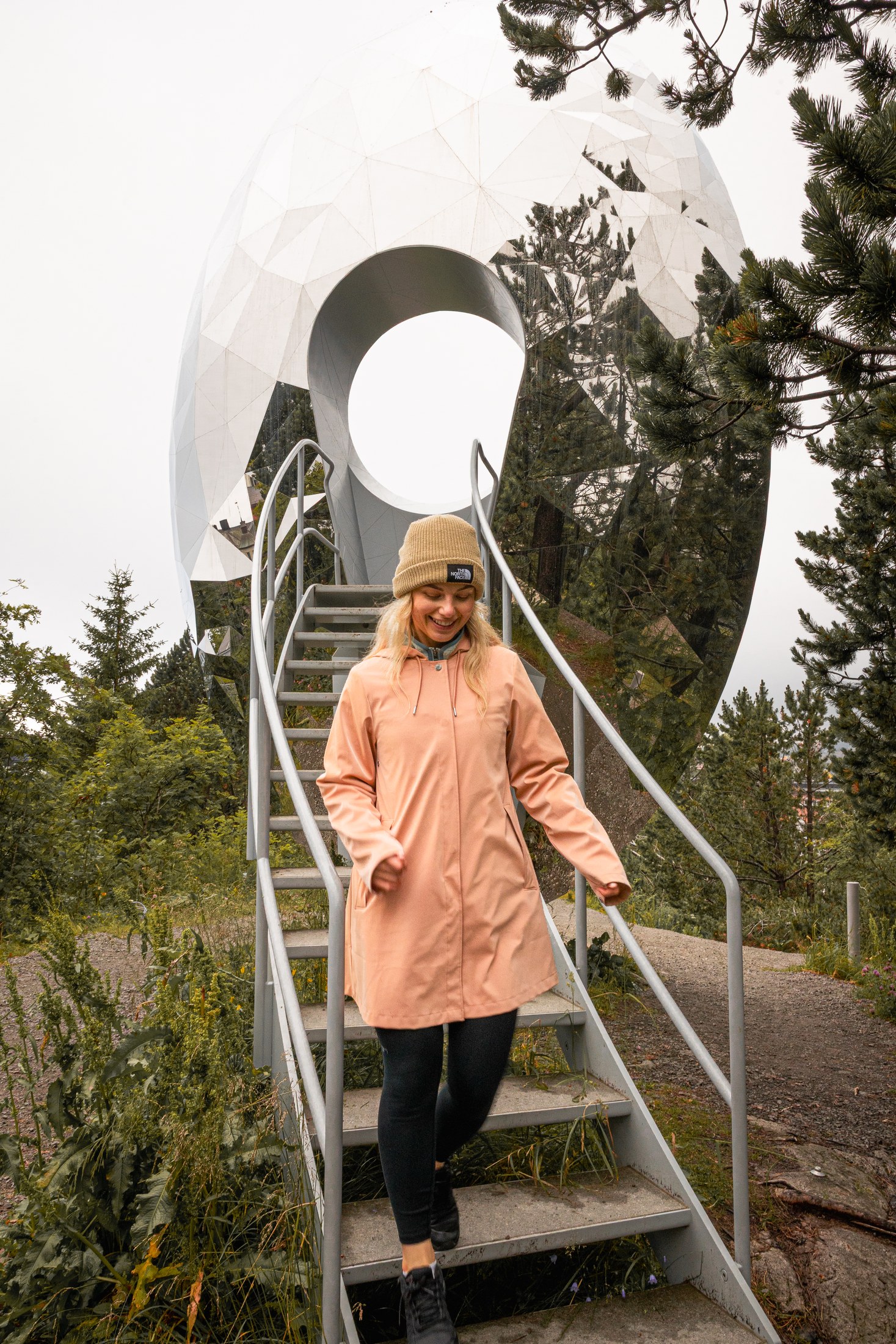
TL;DRAuvergne, in France’s Massif Central, is a peaceful alternative to overcrowded Provence and the Riviera, and here are 13 tips covering volcanic craters, lakes and historic towns. Key stops include Clermont-Ferrand with its black cathedral, the summit of Puy de Dôme (1,465 m), reachable by a panoramic rack railway, the Chaîne des Puys with its 80-plus extinct volcanoes and UNESCO listing, and the Saint-Michel d’Aiguilhe chapel in Le Puy-en-Velay. The best time to visit is May to the end of September, ideally July and August, when it’s five to ten degrees cooler than in Provence. The region is known for its cheese route, home to five protected cheeses, and the spa town of Vichy — you’ll really want a car to get around.
When most people picture summer in France, they think of Provence or the crowded beaches of the French Riviera. But if you’re after the real France without the crowds, I’d point you straight to the very heart of the country — to Auvergne, France.
This is where you’ll find the vast Massif Central and its green volcanic heart, the breathtaking Auvergne region. This quiet land of extinct volcanoes is guaranteed to win you over with its raw beauty and untouched nature.
In the lines below you’ll find 13 tips for places you simply have to visit here. You’ll quickly understand why this peaceful corner is the perfect cure for overtourism.
TL;DR
Where to start: The ideal base for exploring the area is the city of Clermont-Ferrand, with its unique black cathedral.
The volcanic chain: The Chaîne des Puys offers over 80 sleeping volcanoes listed by UNESCO.
Best view: A panoramic cog train whisks you comfortably and quickly to the top of the most famous volcano, Puy de Dôme.
For families: The Vulcania science and adventure park takes you on an interactive journey through the secrets of the Earth’s core.
Architectural wonder: In Le Puy-en-Velay you’ll find a stunning chapel built atop a steep rocky pinnacle.
Spa elegance: The town of Vichy will delight fans of luxurious Belle Époque architecture and hot mineral springs.
Gastronomy: The region is famous for its cheese trail, where you can taste five renowned cheeses with protected designation of origin.
Foto: U.S. Navy photo by Mass Communication Specialist 2nd Class E / Wikimedia Commons, Public domain
Auvergne is primarily a summer destination, best visited from May until the end of September. In these months the landscape turns an unbelievably lush green and the weather practically begs you to set off on long ridge walks. While the south of France grinds to a halt in August and temperatures often hit an unpleasant forty degrees, up in the volcanic mountains you breathe fresh, far cooler air. Expect it to be roughly five to ten degrees cooler here than in Provence during summer — something you’ll appreciate on every climb.
July and August are therefore the perfect choice for those of you who struggle with extreme summer heat and prefer an active holiday. At lower elevations, daytime temperatures hover around a pleasant twenty-five degrees, but the volcano summits are much windier and the weather can change very quickly. If you’d like to go in winter, things get trickier. The winter season from late December to March can offer some nice local skiing at the Super-Besse resort, but snow conditions here are fairly unpredictable due to the altitude staying under two thousand metres. This is simply not the glacier-packed Savoie, so during a mild winter many tourist services and mountain lodges stay completely closed.
When planning your trip, also keep in mind that you really can’t get by without a car in this rural region, since public transport outside the larger towns is very sparse. A huge advantage is the A75 motorway cutting through the Massif Central from north to south — it’s largely completely free, which is a rare and very welcome exception in France. Do watch out, though, for the Free-Flow system on regular toll sections, where there are no traditional barriers and you have to pay the toll online within seventy-two hours based on your number plate to avoid unpleasant, hefty fines.
Where to Stay in Auvergne
Foto: Paul Vidal de La Blache (1845-1918) / Wikimedia Commons, Public domain
💡 Tip for accommodation and experiences: We like to look for places to stay on Booking.com, which usually has the best cancellation terms. It’s worth comparing and booking tickets, tours and activities through GetYourGuide.
When planning your trip, you need to realise that Auvergne is a genuinely vast rural region and a strategic choice of accommodation will save you hours of pointless driving. Given how hard the smaller villages are to reach, I recommend picking places from which you can easily get to the main motorways and larger roads. Always book your accommodation well in advance through platforms like Booking, because capacity vanishes quickly during the summer season and the choice in more remote areas is very limited.
The most logical starting point is the university city of Clermont-Ferrand, which sits right at the foot of the volcanoes. From the UK it’s easiest to fly into Lyon or Paris and drive on, or take the TGV high-speed train from Paris, which gets you here in under three and a half hours. You’ll find great facilities, plenty of restaurants and excellent road connections. Right in the centre you can stay, for example, at the popular Hôtel Littéraire Alexandre Vialatte, which offers wonderful views over the city and the volcanic hills behind it.
If you’re after more peace and nature, the spa town of Le Mont-Dore makes a brilliant base for mountain hikes. It feels a little like something from another century, set in a deep valley just a stone’s throw from the highest peak in the whole massif, so you can head out on walks practically straight from your hotel door. Try the traditional Hôtel du Puy Ferrand, where you can soak up the mountain atmosphere to the full and warm up by the fireplace after a day on the trail.
For lovers of history and spa elegance, an overnight stay in the beautiful town of Vichy in the north of the region is a great option. The Mercure Vichy Thermalia offers all the comforts of the modern era surrounded by historic colonnades — an absolutely ideal choice for the calmer, more restful part of your holiday after a demanding day clambering around extinct craters.
13 Tips: What to See and Do in Auvergne, France
Foto: Vida Nova / Wikimedia Commons, CC BY-SA 4.0
Let’s take a look together at the very best this fascinating corner of France has to offer. Pack a comfortable pair of shoes, because most of the most beautiful spots require at least a little physical effort — but I promise you those breathtaking views over the green craters are absolutely worth it.
1. Clermont-Ferrand and the Dark Cathedral
Foto: Romainbehar / Wikimedia Commons, CC0
Your first encounter with the region will probably be its capital, Clermont-Ferrand, whose skyline grabs your attention from afar. Two towers of the Notre-Dame-de-l’Assomption cathedral rise above the city, built entirely from black volcanic stone known as pierre de Volvic. At first glance the building looks a little dark and almost gothic-horror, but inside it hides incredibly detailed and colourful stained-glass windows.
The city itself has a very lively university atmosphere and is known worldwide as the home of the Michelin brand, so you’ll find countless excellent bistros and cafés here. As a contrast to the black cathedral, be sure to look at the Romanesque basilica of Notre-Dame-du-Port, listed by UNESCO as an important stop on the famous pilgrimage route to Santiago de Compostela.
When driving into the centre, watch out for the low-emission zones, as the rules are enforced very strictly. The Crit’Air eco-sticker is mandatory for all foreign cars, and following a recent court ruling, entering without one can lead to fines of between 68 and 375 euros. You have to order the sticker online for around five euros well in advance and have it delivered home — you can’t sort it out on the spot.
💡 Tip: Don’t miss the modern L’Aventure Michelin museum, where you’ll learn not only all about the history of the famous tyres but also about the origins of the legendary star-studded gastronomic guide.
Foto: Another one of my pictures:
This photograph was taken by / Wikimedia Commons, CC BY-SA 4.0
2. Puy de Dôme and the Panoramic Cog Train
The highest and by far the most famous point of the entire volcanic chain is the majestic Puy de Dôme summit. At 1,465 metres above sea level it dominates the whole horizon, and in good summer weather you can see tens of kilometres in every direction. If you enjoy a proper climb, you can head up on foot along the old Roman path Chemin des Muletiers, which guarantees lovely views the whole way up the steep ascent.
For those of you who want to spare your knees or are travelling with younger children, there’s a great alternative running from roughly late February to mid-November: the Panoramique des Dômes cog railway. This electric train carries you comfortably to the top in fifteen minutes, and the ride itself is a huge experience, as the track spirals around the mountain and gradually opens up views over the craters.
In summer you’ll pay around 18.60 euros for an adult return ticket and about 11.70 euros for a child. Up at the top, alongside the breathtaking views, you’ll also find the surprising ruins of an ancient Roman temple to the god Mercury and the fascinating spectacle of paragliders, who use this spot as their legendary launch site for flights over the volcanoes.
💡 Tip: The cog train gets very busy in the summer months and long queues form, so it’s best to buy your tickets online in advance for a specific departure time.
3. Chaîne des Puys and 80 Sleeping Giants
Foto: Another one of my pictures:
This photograph was taken by / Wikimedia Commons, CC BY-SA 4.0
Just beyond the boundaries of Clermont-Ferrand begins a true geological wonder unlike anything else in Europe, reminiscent of illustrations from a Jules Verne novel. The Chaîne des Puys is a stunning belt roughly thirty kilometres long, made up of more than eighty perfectly preserved volcanic cones, domes and deep craters. In 2018 this enormous plateau was inscribed on the UNESCO World Heritage List as the very first — and so far only — purely geological monument in France.
There’s no need to worry in the slightest: all the volcanoes here have long been extinct, and the last eruption took place roughly eight thousand years ago. So today you can safely wander a densely forested landscape draped in a soft green carpet of grass, where you’ll probably meet more grazing cows on the roads than oncoming cars.
The most beautiful way to explore this area is to lace up some sturdy boots and head out on long hikes. Marked trails lead you right through the old craters, called maars, which at sunset take on an incredibly romantic, deep atmosphere full of a calm that’s becoming ever rarer in today’s Europe.
💡 Tip: If you want a truly unforgettable experience, try booking a hot-air balloon flight, because the bird’s-eye view of dozens of green craters will absolutely take your breath away.
4. Vulcania, an Adventure Park Not Just for Kids
Foto: Camulogene77 / Wikimedia Commons, CC BY-SA 4.0
If you’re travelling with family, or you’re simply fascinated by geology and natural forces, definitely don’t miss Vulcania park. It’s just a short hop from Clermont-Ferrand and it’s no ordinary amusement park with classic rollercoasters and candy floss. It’s more of a unique interactive science centre, cleverly sunk deep into the hard volcanic rock, so the building’s architecture alone commands huge respect.
During your visit you’ll easily come to understand exactly how the enormous forces hidden deep beneath the Earth’s crust work. Thanks to amazing 3D projections, dynamic cinemas and very realistic earthquake simulators, you’ll experience first-hand what it’s like to stand right at the birth of a volcano. Most of the attractions are cleverly designed and do a brilliant job of entertaining adult visitors too.
Ticket prices for the current season run to around 32.50 euros for an adult and 27 euros for a child’s ticket. The park is fairly large, so set aside a whole day to explore it thoroughly, because there really is a huge number of attractions and educational trails here.
💡 Tip: Special shuttle buses run to the park from Clermont-Ferrand, so you can easily get here even if you don’t feel like driving or you arrive in the region by train.
5. Le Mont-Dore and the Rugged Puy de Sancy
Foto: GerritR / Wikimedia Commons, CC BY-SA 4.0
While the more northerly areas resemble neat, rounded green hillocks, a little further south the landscape changes beyond recognition and takes on a far harsher character. The Monts Dore massif is geologically older, more eroded and with its more dramatic appearance and steep slopes it looks more like the Alps. This is precisely where the famous Puy de Sancy summit lies — at a respectable 1,885 metres, it’s the highest point in the entire central French massif.
The base camp for this wild area is the charming spa town of Le Mont-Dore, which in the summer months becomes a perfect paradise for keen walkers. You can tackle the ascent of Puy de Sancy itself either on foot through the picturesque Val de Courre valley, or give yourself a big helping hand with the cable car and then walk just the last few hundred wooden steps along well-maintained paths.
The view from Sancy is wonderfully raw and rocky, and on a clear day you can see all the way to the snowy peaks of the French Alps. After the demanding descent, I recommend dropping into one of the local pubs and rewarding yourself with a huge portion of truffade — delicious baked potatoes with an enormous amount of local cheese.
💡 Tip: The weather at the summit changes incredibly quickly and unpredictably, so even when the warm sun is shining down in the valley, you can be freezing in thick fog up top — always pack a good windproof jacket.
6. Le Puy-en-Velay and the Chapel Balancing on a Needle
Foto: Adrien BENOIT à la GUILLAUME / Wikimedia Commons, CC BY-SA 4.0
If there’s one place in central France that will make your jaw literally drop in amazement, it’s the fascinating town of Le Puy-en-Velay. The local topography utterly defies common sense, because from the flat valley floor, steep volcanic chimneys known as dykes suddenly soar towards the sky. They’re essentially just the solidified lava cores of ancient volcanoes, whose softer outer layers were carried away long ago by gradual erosion — and people built stunning stone monuments on their peaks.
The most impressive of all is the Romanesque chapel of Saint-Michel d’Aiguilhe, which dates back to the tenth century. This incredible structure balances atop an 82-metre-high stone chimney and from a distance it looks as though it landed there from another world entirely. To reach it and admire its beautiful architecture influenced by Córdoban mosaic patterns, you have to climb a solid 268 steps carved directly into the bare rock.
The bird’s-eye view of the whole town and the surrounding volcanic landscape is absolutely fantastic, and you’ll quickly understand why this spot appears so often on postcards. It really does feel like an elaborate film set.
💡 Tip: The steps up are fairly narrow and steep, so in the hot summer months set off first thing in the morning as soon as the site opens, to avoid the unpleasant heat of the sun beating down on the warmed-up rock.
7. Notre-Dame Cathedral and the Famous Pilgrimage Route
Foto: Phyrexian / Wikimedia Commons, CC BY-SA 4.0
Le Puy-en-Velay isn’t just known for the incredible chapel on its needle — it also holds enormous Europe-wide spiritual significance reaching deep into history. The beautiful local Notre-Dame cathedral, listed by UNESCO, is the historic starting point of one of the most important pilgrimage routes to Santiago de Compostela. This is the famous Via Podiensis route, also known as the GR65 long-distance trail, from which pilgrims set off on a respectable 736-kilometre march towards the Pyrenees.
Every morning, after the early mass, dozens of people gather on the huge steps in front of the cathedral with their backpacks and the traditional scallop shells, ready to take their first steps westward. Thanks to them, the whole town has a constantly buzzing, international and incredibly friendly atmosphere. Even just watching this morning bustle from a café is a wonderful experience.
Not far from the cathedral, on yet another volcanic formation, stands a giant pinkish statue of the Virgin Mary that hides a fascinating fact. This monumental statue was actually cast from 213 Russian cannons, captured by the French army during the brutal Crimean War at the siege of Sevastopol.
💡 Tip: A huge local speciality is the green lentil of Le Puy, which boasts a protected designation of origin — in restaurants you’ll get it as a delicious, hearty soup full of flavour that will perfectly fill you up after a long day.
Lukáš and Lucie recommend
Where to stay in Auvergne
4 accommodations — wellness hotels, hotels and other lodging options
On the northern edge of the region lies a town with a completely different atmosphere from the rest of the rugged volcanic countryside full of cows and green pastures. The town of Vichy is the perfect essence of nineteenth-century French elegance — the famous era known as the Belle Époque. Here you can briefly forget your dusty hiking boots and enjoy promenades full of ornate cast-iron details, glass awnings and grand historic buildings.
For decades Vichy was synonymous with luxurious health retreats, and today it’s returning fully to this rich tradition. You’ll find beautiful covered colonnades, historic casinos and a magnificent opera house here, all surrounded by carefully tended parks lining the peaceful River Allier. It’s an ideal place to recharge your batteries.
The town also holds a fascinating distinction. In 2021, Vichy was inscribed on the UNESCO World Heritage List as part of an exclusive group of just eleven famous European spa towns. It shares this prestigious label with renowned spa towns such as Bath in England and Baden-Baden in Germany, so spotting the shared architectural parallels will certainly keep you entertained as you stroll around.
💡 Tip: Be sure to try the famous Vichy pastilles — refreshing white sweets made from salts extracted from the local healing mineral springs, which you can buy in lovely retro tins on every corner.
9. The Auvergne Cheese Trail and Five Kings
Foto: Rundvald / Wikimedia Commons, CC BY-SA 4.0
If you love good food, you’ll be in absolute seventh heaven in Auvergne — but you need to prepare yourself for one major change. Forget about wine for a moment, because in this mountain region cheese reigns supreme. The local cows graze on volcanic slopes full of wild herbs, which gives the local milk a specific and incredibly rich flavour. The region rightly boasts five cheeses with the prestigious protected designation of origin, forming the perfect cheese board — a highlight of Auvergne food.
The most famous of them is the hard cheese Cantal, whose roots reportedly date back to the days of the ancient Gauls, and the creamy Saint-Nectaire, scented with mushrooms and damp earth. True connoisseurs will appreciate Salers cheese, which has extremely strict rules and may only be made from mid-April to mid-November using milk from cows grazing outdoors. For lovers of bolder flavours, there’s the pungent blue cheese Bleu d’Auvergne or the slightly milder cylindrical Fourme d’Ambert.
The best way to get to know all these delicacies is to set off by car along the official Cheese Trail, which takes you to dozens of small farms and dairies where you can taste directly from local producers and enthusiasts, who’ll gladly explain the whole maturing process to you.
💡 Tip: When buying Saint-Nectaire cheese, look for the oval green mark on its rind, which guarantees it’s a so-called farmhouse cheese made by the traditional hand-crafted method right on the farm.
Foto: Matěj Baťha / Wikimedia Commons, CC BY-SA 2.5
10. The Mysterious Volcanic Lake Lac Pavin
The region’s stormy volcanic activity left behind not only beautiful green hills but also created huge amounts of water in the form of many unique mountain lakes. The most visually striking and definitely the most mysterious of them is undoubtedly Lac Pavin. It’s a perfect circular maar, which in geological terms means an old volcanic crater formed by an enormous explosion, gradually flooded over time by rain and groundwater.
The lake is surrounded on all sides by dense, dark forests, and its water has an unusually deep blue, almost inky colour, while the bottom lies at a respectable depth of ninety metres. No wonder this place looks a little sinister at first glance, and plenty of local ghost stories and legends about demons are tied to it.
Swimming is strictly forbidden here for understandable reasons, but you can walk all the way around the lake along a very pleasant and easy forest path. The whole walk takes about an hour, and from several viewpoints you’ll get a wonderful view of the perfectly round surface of the water reflecting the surrounding trees.
💡 Tip: If you fancy a slightly more active break and aren’t afraid of the deep water beneath you, you can hire a small boat at the shore and explore the lake’s mysterious waters up close from its quiet centre.
Foto: Thalia Gylonno / Wikimedia Commons, CC BY-SA 2.0
11. Swimming with a View at Lac Chambon
If, after a demanding mountain hike, you’re looking for more of a classic summer refresh and a relaxing time in the sun, head just a couple of valleys over to the gorgeous Lac Chambon. Unlike the deep, dark and very cold Pavin, this lake is fairly shallow, so its water warms up quickly and pleasantly in the summer months. It’s an absolutely ideal and safe stop for families with younger children, or for those of you who simply want to swim in clean, natural surroundings.
Around the lake you’ll find two beautifully maintained beaches with all the facilities you need. Straight from the water you get a stunning view of the surrounding steep volcanic massifs, which gives an ordinary swim a whole new, slightly adventurous dimension. The beaches are bordered by spacious grassy areas that practically beg for an afternoon picnic with a fresh French baguette and local cheese.
The lake’s tourist infrastructure is brilliant, so you can easily hire pedalos, popular paddleboards, or set off on a bike along the maintained cycle paths that follow the shores and offer plenty of shady spots to rest after a good lunch.
💡 Tip: If you stay by the water until evening, definitely wait for the sunset, when the surface of the lake turns orange and the surrounding volcanic peaks form an absolutely magical dark silhouette.
Foto: Père Igor / Wikimedia Commons, CC BY-SA 3.0
12. The Medieval Castle of Murol and Knightly Tournaments
If rich history appeals to you more than water-based fun, take a short detour from the lakes to the magnificent Château de Murol. This majestic fortress dating back to the twelfth century rises on a steep basalt spur and dominates the whole surrounding landscape from afar. But it’s no ordinary, empty ruin you’d run through in a few minutes and then move on.
The local historical society puts on brilliant performances in period costume and grand reconstructions of medieval life here during the summer season. Experienced actors will show you knightly tournaments on horseback, demonstrations of traditional falconry and old crafts in practice. It’s an absolutely fantastic stop, especially if you’ve got children in the car who are getting a bit bored of daily mountain walks and need a more action-packed programme.
From the ramparts you also get a perfect view deep into the valley and over the nearby Lac Chambon. In 2026, admission to the castle with the full day’s programme will cost an adult around twelve euros, which is a very fair price for such a generous helping of honest medieval entertainment.
💡 Tip: The programme of performances changes depending on the day of the week, so check the castle’s official website in advance so you don’t miss the best knightly duels.
Foto: Myrabella / Wikimedia Commons, CC BY-SA 3.0
13. White Water in the Gorges de l’Allier
For a proper dose of adrenaline and untamed nature, head to the south of the region into the deep canyon of the Gorges de l’Allier. Over millennia, the fast-flowing River Allier has carved breathtaking, steep gorges into the hard volcanic rock. Today it’s one of the very best spots in all of France for keen lovers of rafting and canoeing, drawing paddlers from across Europe in summer.
The surrounding villages have plenty of well-established hire centres where they’ll happily explain the basics and kit you out with a helmet, life jacket and paddles. You can choose from several stretches of river of varying difficulty — from calmer ones suitable even for complete beginners and families with children, to wild rapids that will reliably test your paddling skills and muscles. The river forms deep pools fringed by pristine forests, where with a bit of luck you’ll spot rare species of birds.
If you don’t fancy getting into the cold water, there’s also a much drier way to admire this natural gem. A special tourist train runs through the canyon, slowly conquering the incredibly steep slopes and passing through dark tunnels in places you’d have no chance of reaching by car.
💡 Tip: Rafting trips and tickets for the scenic train tend to sell out very quickly during the peak summer season. Definitely book your spot online a few days in advance, or use GetYourGuide to search for available activities.
Where to Go Next from Auvergne
Foto: Victor Charreton (1864-1936) / Wikimedia Commons, Public domain
Once you’ve explored all the extinct volcanoes, you can move smoothly on to other amazing places located relatively nearby. If you find yourself craving the buzz of a big city and top-class gastronomy, just hop in the car and after roughly two hours’ drive eastward you’ll reach the city of Lyon. This vibrant heart of France offers a completely different, far more urban atmosphere full of Renaissance palaces and mysterious hidden passageways called traboules.
To the south, meanwhile, opens up the warm gateway to sunny, fragrant Provence. As soon as you descend from the mountains to lower elevations, the architecture, the scents in the air and the temperature itself begin to change dramatically. You can explore the nearby Rhône valley with its famous vineyards, or head even further to the stunning Pont du Gard aqueduct. France is an incredibly varied country, and these quiet volcanic peaks are just one of its many magical fragments.
Frequently Asked Questions
Is it necessary to travel to Auvergne by car?
Yes, having your own car or rental car is an absolute necessity for this region if you really want to explore the nature. Public transport works quite well between major cities like Clermont-Ferrand and Paris thanks to the TGV high-speed trains, but buses to mountain villages, volcanic lakes, or trailheads run very infrequently or not at all. Without a car, you’d miss out on the most beautiful and remote spots.
Do they speak English in the region?
English is definitely not a given here, especially at small cheese farms and among older residents in the countryside. It always pays to start a conversation with a polite French greeting “Bonjour” and only then ask with a smile about speaking a foreign language. This small gesture of respect will open many doors and hearts of the locals, even if you end up communicating over a piece of cheese with hand gestures and body language.
How much does the highway toll cost?
The huge advantage is that the A75 motorway cutting through the Massif Central from north to south is completely free, which is an absolute and very pleasant rarity in France. However, if you’re coming from Paris or Lyon on the standard toll sections, expect to pay around €9.50 per hundred kilometres driven. Also be very careful about new sections without toll booths, where you must pay the fee online using your licence plate number within three days.
Is hiking on volcanoes difficult?
The majority of craters in the Chaîne des Puys area offer very pleasant and well-marked trails that can easily be managed by occasional hikers or families with older children, as the hills here tend to have gentler shapes. However, if you choose the more rugged massif around the highest peak Puy de Sancy, be prepared for serious high-mountain elevation gain and rocky terrain that requires really sturdy ankle-supporting footwear and good fitness.
When are the local restaurants open?
Auvergne is typical French countryside, where traditional and unchanging lunch and dinner times are strictly observed. Hot meals are served only between noon and 2 PM, with evening service then usually starting at 7 PM sharp. If you arrive at a restaurant at quarter to three, the kitchen will already be uncompromisingly closed and you’ll get a coffee at best, or a packaged baguette at a nearby gas station.
Are the volcanoes in Auvergne still active?
You don’t need to have the slightest worry, all volcanoes in the region have long been considered extinct and completely safe to explore. The last volcanic activity here took place approximately eight thousand years ago. Today these fascinating craters are covered in lush green grass and trees. Huge herds of cows graze cheerfully on their slopes, and their milk is used to make the finest French cheeses.
What do I have to try from the local cuisine?
The region is world-famous for its excellent cheeses with protected designation of origin. Don’t miss the ancient hard cheese Cantal or the creamy Saint-Nectaire, which you can easily buy in absolutely every town. A great local specialty for vegetarians is also the green lentils from Le Puy, which are cooked in local bistros into very thick and hearty soups, or the delicious baked potatoes with cheese called truffade.
Tips and Tricks for Your Vacation
Don’t Overpay for Flights
Search for flights on Kayak. It’s our favorite search engine because it scans the websites of all airlines and always finds the cheapest connection.
Book Your Accommodation Smartly
The best experiences we’ve had when looking for accommodation (from Alaska to Morocco) are with Booking.com, where hotels, apartments, and entire houses are usually the cheapest and most widely available.
Don’t Forget Travel Insurance
Good travel insurance will protect you against illness, accidents, theft, or flight cancellations. We’ve had a few hospital visits abroad, so we know how important it is to have proper insurance arranged.
Where we insure ourselves: SafetyWing (best for everyone) and TrueTraveller (for extra-long trips).
Why don’t we recommend any Czech insurance company? Because they have too many restrictions. They set limits on the number of days abroad, travel insurance via a credit card often requires you to pay medical expenses only with that card, and they frequently limit the number of returns to the Czech Republic.
Find the Best Experiences
Get Your Guide is a huge online marketplace where you can book guided walks, trips, skip-the-line tickets, tours, and much more. We always find some extra fun there!
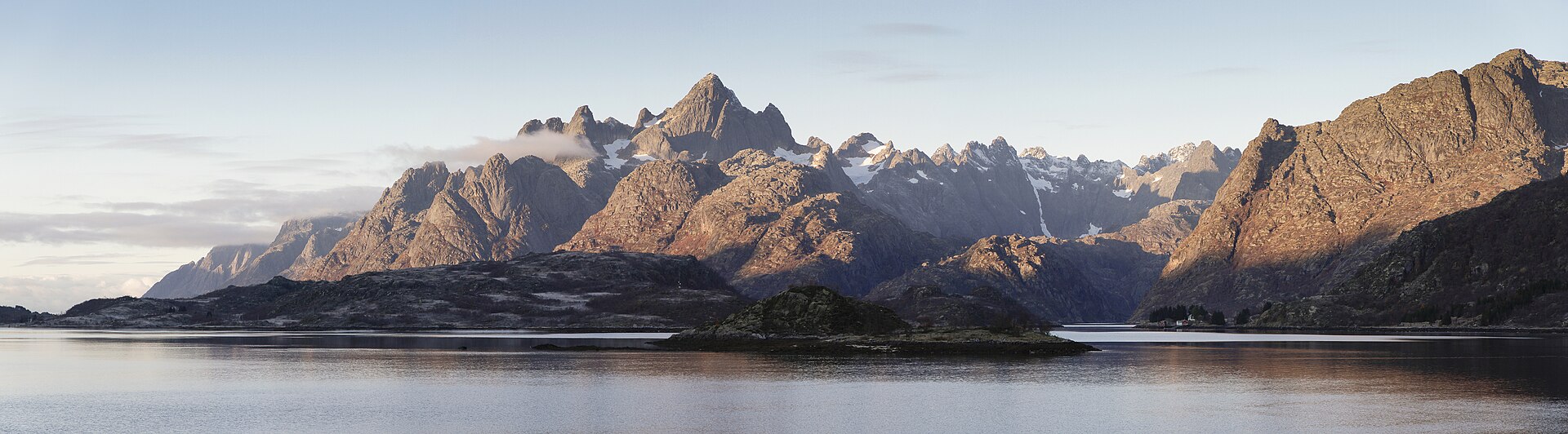
TL;DRThe best time to visit Turkey depends on where you’re headed. For the Riviera coast (Antalya, Side, Bodrum, Fethiye), come in June to September — ideally September or the first half of October, when the sea sits at 25–27°C and both crowds and prices drop off.
Istanbul and ancient sites like Ephesus and Pamukkale are best from April to May or September to October, when temperatures hover around 15–25°C rather than the 40°C summer highs.
For hot air balloons over Cappadocia, the most stable weather runs April to June and again in September and October — book at least three nights to allow for cancellations.
August brings the warmest sea (28–29°C), but also the biggest crowds and highest prices. Travelling between November and March is cheapest, though coastal resorts are largely shut down for winter. Watch out for the Ramazan Bayramı and Kurban Bayramı holidays, which will push up flight prices and clog roads and hotels in 2026.
Turkey is a vast subcontinent – in terms of sheer size, it could swallow France and the UK combined. That’s exactly why there’s no single right answer to the question of the best time to visit Turkey. While people are still swimming in the sea down south in October, snow is already swirling around the eastern mountains.
The ideal timing depends on where you’re heading and what you want from your holiday. One month is perfect for lounging by an all-inclusive pool on the riviera, another for a balloon flight over Cappadocia, and yet another for wandering ancient ruins without the crowds and the heatstroke.
In this guide we’ll break Turkey down by region, walk through the weather month by month, recommend the best time according to the type of holiday, and flag Ramadan and the public holidays that can throw both your plans and your budget off course.
Foto: UMUT 🆁🅰🆆 / Pexels
TL;DR
For the beach:June–September, with the sweet spot being September and the first half of October (sea 25–27 °C, fewer crowds, lower prices).
Istanbul and ancient sites:April–May and September–October (15–25 °C); in summer the interior is brutal.
Cappadocia and balloons:April–June and September–October (the most stable winds = the best chance of taking off).
Warmest sea:August (28–29 °C), but also the most heat, crowds and the highest prices.
Cheapest: November–March (the resorts are asleep, though) and the shoulder season in May.
Watch out ⚠️: Ramadan and the Bayram holidays (spring 2026) – jammed motorways, sold-out hotels, pricier flights.
The east and the Syrian/Iraqi border: ⚠️ travel advisory in place; the tourist regions are not affected.
Turkey’s climate splits sharply along geographical lines, so the first thing you need to know is exactly where you’re going.
Foto: Ahmet Kurt / Pexels
The Mediterranean and Aegean Riviera (Antalya, Side, Bodrum, Fethiye)
This is the classic stretch most British holidaymakers fly to. The swimming season kicks off in May and runs through October. If you’re tied to the school holidays, brace yourself for the July and August heat – air temperatures regularly hit 35–40 °C, and by August the sea feels like a thermal spa at 28–29 °C.
The holy grail of a beach holiday here is September and the first half of October: after a long summer the sea is gloriously warm (25–27 °C), the family crowds have vanished and last-minute prices tumble. May, on the other hand, can be deceptive – the air already feels like summer, but the Mediterranean is still a fresh 20–22 °C. The Aegean coast (Bodrum, Marmaris) tends to be a degree or two cooler and breezier than the bay around Antalya.
Istanbul and the Marmara Region
The metropolis on the Bosphorus is perfect for a spring or autumn city break. April, May, September and October offer 15–25 °C and the city is comfortable to explore entirely on foot. Summer in Istanbul, by contrast, is hot, heavy and extremely humid, while winter brings rain, a biting wind off the sea and the occasional snowfall.
Foto: Martin Cígler / Wikimedia Commons, CC BY-SA 3.0
Cappadocia
Inland Anatolia has a harsh continental climate: parched, scorching summers and freezing winters that are often buried in snow (which, admittedly, looks magical in photos). Balloons fly over Göreme year-round, but their take-off depends entirely on wind strength, and in poor conditions flights are cancelled without compromise. You’ll find the most stable weather and the highest chance of launching from April to June and again in September and October. More in our guide to Cappadocia.
The East and Southeast
For a trip to the ancient Göbekli Tepe, Mount Nemrut or Lake Van, there’s only one rule: avoid the summer (regularly over 40 °C); spring and autumn are ideal. ⚠️ Before travelling to the southeast (the provinces of Diyarbakır, Mardin, Van, Şırnak), always check the latest UK Foreign Office (FCDO) travel advice – because of the conflicts across the border in Syria and Iraq, the highest level of warning applies here. The main tourist arteries (Istanbul, the coast, Cappadocia) are entirely free of any such risk.
Beach and all-inclusive holiday: Go for June to September, ideally September (warm sea, fewer people). For tips on choosing a resort, see our article on all-inclusive in Turkey.
Istanbul city break:April–May or September–October, when you can explore the city without baking in the sun or freezing in the cold.
Balloons over Cappadocia:April–June and September–October – the best chance the wind will allow a take-off. Always build in a buffer of at least three nights.
Ancient sites (Ephesus, Pamukkale):Spring and autumn – in summer the interior bakes at an unbearable 40 °C and the white terraces of Pamukkale and the marble of Ephesus radiate heat like an oven.
Trekking and the Lycian Way: Only spring or autumn – in summer the sun will roast you on the clifftops and you won’t carry enough water.
Ramadan and Public Holidays in 2026
The Islamic lunar calendar can shuffle your plans. The fasting month of Ramadan falls in 2026 roughly around the turn of winter into spring (the exact date depends on the sighting of the moon). In the tourist resorts and in Istanbul you’ll barely notice it, but out in the countryside and the east you won’t find food during the day, and drinking water in the street in front of fasting locals is considered rude. After sunset, though, the streets come alive with the evening iftar feast.
⚠️ The dates to really watch out for are Ramazan Bayramı (the end of the fast) and Kurban Bayramı (the Feast of Sacrifice). That’s when the whole of Turkey hits the road – flights vanish, motorways clog up and coastal hotels report sold out. If you can avoid it, don’t travel on these days, or book months in advance.
When to Visit Turkey on a Budget
The lowest prices for flights and hotels come outside the season, namely from November to March – but most resorts on the coast are dormant and it’s not the time for swimming. The best compromise between price and weather is the shoulder season in May and, above all, the post-season from mid-September into October, when the sea is still warm, the crowds have gone and last-minute offers come tumbling down. Look for domestic flights and hotels in Cappadocia and Istanbul 2–4 weeks ahead.
💡 Tip: For a complete overview of regions, resorts and practical information, see our main guide to a holiday in Turkey.
💡 Tip for accommodation and experiences: We love searching for places to stay on Booking.com, where the cancellation terms tend to be the best. For tickets, tours and activities, it pays to compare and book through GetYourGuide.
When is the best time to go to Turkey for a beach vacation?
The best time is June to September, with the real highlight being September and the first half of October – the sea is a pleasant 25–27 °C after summer, the heat has eased off, the family crowds have disappeared and last-minute prices drop. August has the warmest sea (28–29 °C), but also the most intense heat, crowds and highest prices. May is still borderline for swimming (sea 20–22 °C).
When do hot air balloons fly in Cappadocia?
Hot air balloons over Göreme launch year-round, but their take-off depends on wind strength and flights are cancelled in bad weather. You’ll have the best chance of flying from April to June and in September and October, when the weather is most stable. Always plan at least three nights in Cappadocia as a buffer in case the first morning doesn’t work out.
When to go to Istanbul?
Perfect times to visit Istanbul are spring (April–May) or autumn (September–October) with temperatures of 15–25 °C, when you can comfortably explore the city on foot. Summer is hot and extremely humid, winter rainy and windy. Also avoid the Bayram holidays, when the city and transport are overcrowded.
Is it too hot in Turkey in summer?
On the coast in July and August it’s scorching hot (35–40 °C), but it’s bearable thanks to the sea and air-conditioned resorts. On the other hand, in the interior and at ancient sites (Ephesus, Pamukkale, Cappadocia) the summer heat is exhausting – save these areas for spring or autumn.
Is it worth going to Turkey in the off-season?
Yes, if you’re not going primarily for swimming. From November to March, flight and hotel prices are lowest and Istanbul, Cappadocia and ancient sites can be beautifully visited (just dress warmer). However, most resorts on the coast close during winter.
Tips and Tricks for Your Vacation
Don’t Overpay for Flights
Search for flights on Kayak. It’s our favorite search engine because it scans the websites of all airlines and always finds the cheapest connection.
Book Your Accommodation Smartly
The best experiences we’ve had when looking for accommodation (from Alaska to Morocco) are with Booking.com, where hotels, apartments, and entire houses are usually the cheapest and most widely available.
Don’t Forget Travel Insurance
Good travel insurance will protect you against illness, accidents, theft, or flight cancellations. We’ve had a few hospital visits abroad, so we know how important it is to have proper insurance arranged.
Where we insure ourselves: SafetyWing (best for everyone) and TrueTraveller (for extra-long trips).
Why don’t we recommend any Czech insurance company? Because they have too many restrictions. They set limits on the number of days abroad, travel insurance via a credit card often requires you to pay medical expenses only with that card, and they frequently limit the number of returns to the Czech Republic.
Find the Best Experiences
Get Your Guide is a huge online marketplace where you can book guided walks, trips, skip-the-line tickets, tours, and much more. We always find some extra fun there!
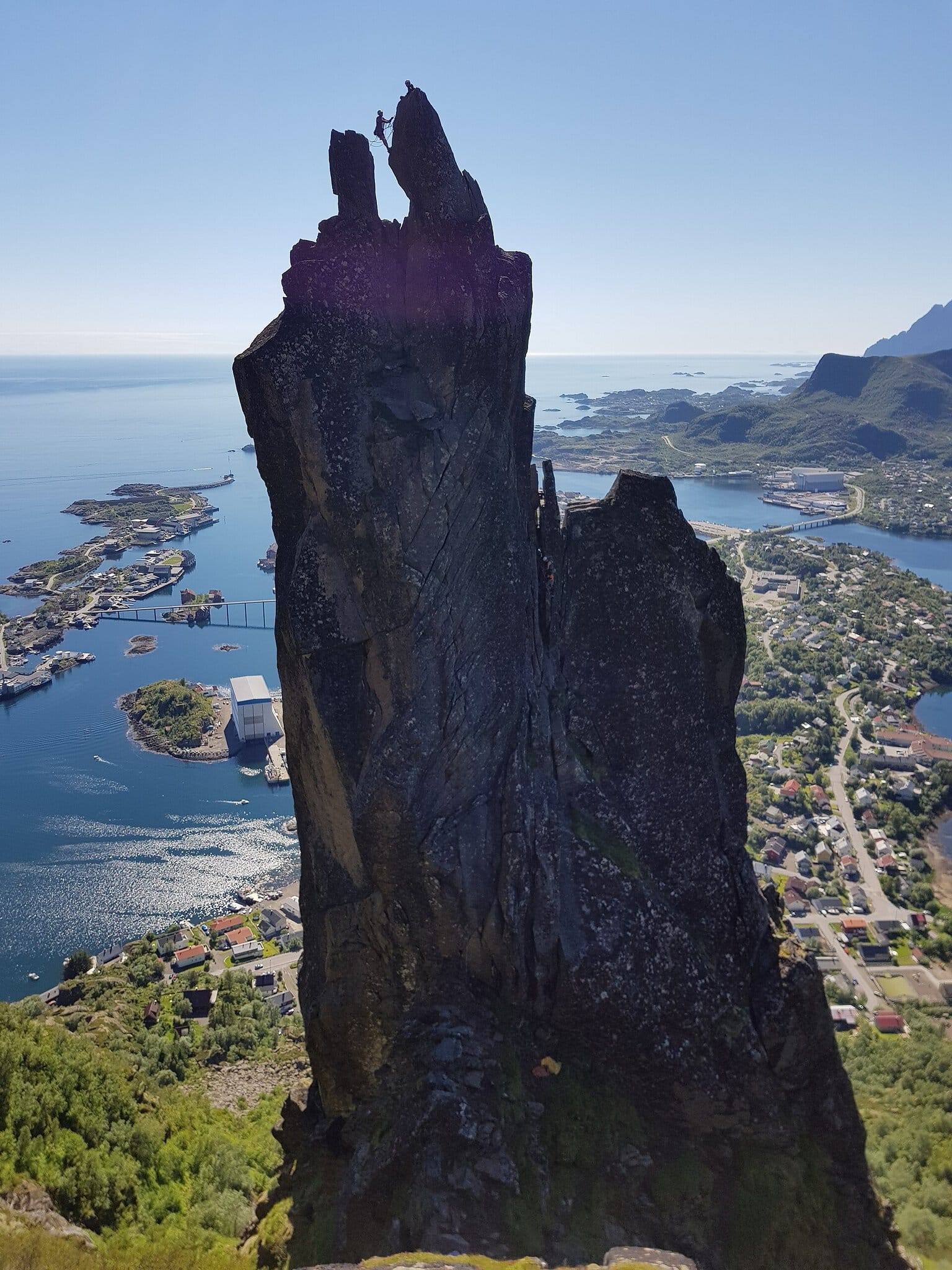
TL;DRBodrum, often called Turkey’s answer to Saint-Tropez, mixes history, yacht-set glamour and Aegean beaches. Highlights include Bodrum Castle with its Museum of Underwater Archaeology, an ancient theatre that once seated 13,000, the Yalıkavak marina, the beaches at Bitez, Gümbet and Camel Beach, and the fishing village of Gümüşlük, built over the sunken ruins of ancient Myndos. It’s also worth taking a day trip by ferry to the Greek island of Kos, about twenty minutes away. The best time to visit is June to September, with the warmest sea in August, while September offers the best balance of prices, weather and fewer crowds. The nearest airport is Bodrum-Milas (BJV), around 40 minutes from the centre, and Bodrum ranks among Turkey’s pricier destinations.
While families head for the all-inclusive riviera around Antalya, the Aegean coast has its own star – Bodrum, Turkey, rightly nicknamed the Turkish Saint-Tropez. It’s chic, bohemian and a touch pricier, with luxury yachts moored in its harbours and Istanbul’s high society rubbing shoulders with the international jet-set.
The town wins you over at first glance with its cascade of dazzling white flat-roofed houses tumbling down to a sea presided over by a mighty Crusader castle. But Bodrum isn’t just one town – it’s an entire peninsula full of bays, from the wild party scene in Gümbet to the ultra-modern marinas in the north.
In this guide you’ll find 12 things to do in Bodrum and its surroundings – from St. Peter’s Castle and the ancient theatre to the most stylish marinas and beaches, boat trips and a quick hop to the Greek island of Kos. We’ll also help you figure out when to come, how to get here and where to stay.
Photo: Muzin Kahraman / Pexels
TL;DR
Why go: The Turkish Saint-Tropez – a white town, yachts, a chic vibe and Aegean coves.
When to come:June–September (the Aegean coast tends to be a touch cooler and breezier than Antalya).
How to get here: Fly into Bodrum-Milas (BJV); from the UK there are some seasonal charters, but you’ll often connect via Istanbul.
Don’t miss:St. Peter’s Castle, the ancient theatre, Yalıkavak marina, sunset by the windmills.
Beaches: Bitez, Gümbet, Camel Beach; the prettiest coves are best seen from the deck of a boat.
Day trip: A ferry to the Greek island of Kos (just a few dozen minutes away).
Money ⚠️: Bodrum is pricier than the rest of the country; pay by card in lira (TRY), and use an eSIM instead of roaming.
When to visit Bodrum and the weather in Bodrum, Turkey
The Aegean coast is at its best between June and September. When it comes to the weather in Bodrum, Turkey, it tends to be a degree or two cooler and breezier than the bay around Antalya – something you’ll appreciate in summer, with a pleasant breeze taking the edge off the heat. The sea is warmest in August, but the best balance of weather, prices and peace and quiet comes in September, once the crowds thin out.
The nearest airport is Bodrum-Milas (BJV), roughly 40 minutes from the centre. ⚠️ There are fewer direct flights to Bodrum from the UK than to the Antalya riviera – it often pays to take a regular service with Turkish Airlines or Pegasus connecting in Istanbul, or fly into Dalaman and transfer overland. Around the peninsula, cheap minibuses called dolmuş get you everywhere.
💡 Tip: Bodrum makes you pay for its exclusive reputation – prices in restaurants and bars are noticeably higher than in the rest of Turkey. Factor that in when planning your budget.
Photo: R. Yasin Asil / Pexels
Where to stay in Bodrum
💡 Tip for accommodation and experiences: We like to look for places to stay on Booking.com, which usually has the best cancellation terms. For tickets, tours and activities, it pays to compare and book through GetYourGuide.
Bodrum spreads across an entire peninsula, and a lot depends on which bay you head for. Central Bodrum is all about history and nightlife, while neighbouring Gümbet is the home of cheaper party tourism. The north of the peninsula is a different world entirely: Yalıkavak with its ultra-modern marina and oligarchs’ yachts, and Türkbükü as a hideaway for Turkish celebrities. For peace and lovely beaches, consider Bitez or Gümüşlük.
Here are some specific tips for tried-and-tested places to stay in Bodrum and the surrounding area (compare prices and availability in one click via Stay22, which finds the best deal across Booking.com, Airbnb and more):
The Bodrum by Paramount Hotels – a stylish resort with an infinity pool and views over the Aegean bay; perfect for couples.
Lujo Hotel – a design all-inclusive boutique with its own beach scene.
Doria Hotel Yalikavak – a hotel by the luxurious Yalıkavak marina, ideal for fans of style and yachts.
Kaya Palazzo Resort Bodrum – a family resort with a beach and pools just a short hop from central Bodrum.
4Reasons Hotel – a popular boutique hotel with a renowned restaurant and a laid-back atmosphere.
💡 Tip: For nightlife, stay in the centre or in Gümbet; for peace and style, head north (Yalıkavak, Türkbükü) or to Bitez. Aim for ratings of 8.5+ with plenty of reviews, and book ahead in high season.
12 things to do in Bodrum and its surroundings
Bodrum is an elegant base from which bays, ancient ruins and boat trips fan out in every direction. Here are twelve things that make it well worth the trip.
Photo: Serhio Magpie / Wikimedia Commons, CC BY 4.0
1. St. Peter’s Castle and the Museum of Underwater Archaeology
The town’s landmark is the mighty 15th-century St. Peter’s Castle (Bodrum Kalesi), built by the Knights Hospitaller. Within its walls sits one of the finest Museums of Underwater Archaeology in the Mediterranean, with finds from ancient shipwrecks, glassware and jewellery. From the towers you get a glorious view over both of the town’s bays and the marina.
Photo: Cengiz Z / Pexels
2. The ancient theatre
Set into the hillside above the town is a well-preserved ancient theatre from the Hellenistic period, with a capacity of around 13,000 spectators. It still hosts concerts and festivals today, and the view of the white town and the sea from the upper rows is among the prettiest in Bodrum. Admission is nominal and you’ll run into hardly any crowds.
3. The Mausoleum at Halicarnassus
Bodrum stands on the site of ancient Halicarnassus, and this is exactly where one of the Seven Wonders of the Ancient World once stood – the enormous tomb of King Mausolus, after which we still use the word “mausoleum” today. All that remains now are the foundations and a few columns, but the information centre helps you picture its former grandeur. A must-stop for history lovers.
Photo: Muzin Kahraman / Pexels
4. The white town and the windmills at sunset
Wander the narrow lanes of the white town with their blue shutters, bougainvillea and boutiques. On the ridge between Bodrum and Gümbet stand the old stone windmills, well worth heading up to at sunset – the panorama of both bays bathed in orange light is unforgettable.
Photo: Buğrahan Haksever / Pexels
5. Yalıkavak marina
In the north of the peninsula lies Yalıkavak, with its ultra-modern marina where billionaires’ yachts moor and you’ll find designer boutiques and elegant restaurants. Even if a drink here will set you back a fair bit, a stroll along the pier among the luxury boats and the evening atmosphere are well worth the trip. It’s the most “jet-set” experience in all of Turkey.
Neighbouring Türkbükü is a favourite retreat for Turkish celebrities and high society. Instead of classic beaches, you’ll find wooden jetties dotted with sun loungers running straight out over the water, plus stylish beach clubs. It’s expensive, but if you want to see where the Istanbul elite unwind, this is the place.
Photo: Vano111ru / Wikimedia Commons, CC BY-SA 4.0
7. Gümbet and the nightlife
Just over the hill from the centre lies Gümbet – the epicentre of Bodrum’s party scene, packed with bars, clubs and young travellers. In Bodrum itself you’ll find some of the largest open-air clubs in Europe. ⚠️ Watch your wallet: alcohol is heavily taxed in Turkey, and drinks in the clubs work out pricier than you’d pay back home in the UK.
Photo: Nokoko Art / Pexels
8. Beaches of the peninsula: Bitez, Gümbet, Camel Beach
Bodrum itself doesn’t have big sandy beaches, but the surrounding peninsula offers plenty. Bitez is the quieter, family-friendly choice with shallow water and windsurfing, Gümbet is livelier, and Camel Beach near Ortakent tempts you with a photo on a camel and crystal-clear water. Sun loungers and umbrellas usually come at a charge.
Photo: Koray / Wikimedia Commons, CC BY-SA 4.0
9. Gümüşlük and the sunken city
The fishing village of Gümüşlük on the western tip of the peninsula stands on the ruins of ancient Myndos, and part of the town now lies beneath the surface – in the shallow, crystal-clear water you can spot the remains of ancient walls. From the beach you can wade across to the little Rabbit Island (Tavşan Adası). The village is famous for its tranquillity, fish tavernas and romantic sunsets.
Photo: Fotoğraf Rotaları / Pexels
10. A blue cruise around the coves
The Aegean coast is best discovered from the deck of a traditional wooden yacht called a gulet. From Bodrum harbour you can set off on full-day boat trips or multi-day Blue Cruises (Mavi Yolculuk) that anchor in the crystalline coves of the Gökova Gulf, which you can’t reach by car. The crew cooks lunch while you simply swim and soak it all in.
Photo: Wolfgang Weiser / Pexels
11. A day trip to the Greek island of Kos
Several times a day a ferry to the Greek island of Kos leaves from Bodrum harbour, and the crossing takes only around twenty minutes. It’s the perfect way to add a day in Greece to your Turkish holiday – wander the ancient Asklepieion, hire a bike and head back in the evening. ⚠️ Don’t forget your passport, as you’re crossing the EU border.
Photo: Murat Halıcı / Pexels
12. Ancient sites nearby: Ephesus and Pamukkale
If you want to see the best of Aegean antiquity, Bodrum makes a good base for (longer) trips to Ephesus, the best-preserved ancient city in the world, and to the dazzling white terraces of Pamukkale. Both are full-day excursions, but they rank among the absolute highlights of Turkey.
What to eat in Bodrum
Aegean cuisine is a paradise for vegetarians – it revolves around olive oil, herbs, fresh vegetables and cheeses. After a day by the sea, treat yourself to:
Meze – cold starters: aubergine purée, yoghurt dips, stuffed vine leaves yaprak sarma, and the spicy ezme salad. The ideal meat-free dinner to share.
Gözleme – thin flatbreads cooked on a griddle and filled with cheese or spinach.
Aegean salads and grilled vegetables – with feta-style cheese, lemon and herbs.
Dondurma – stretchy Turkish ice cream, and sweet baklava with a glass of Turkish tea.
Bodrum’s tavernas are famous for their fresh fish and seafood; those are the regional specialities for non-vegetarians, while vegetarians can happily make a meal of meze and vegetable dishes.
Practical tips for Bodrum
Money ⚠️: Bodrum is pricier than the rest of Turkey. Pay by card in lira (TRY) and decline DCC currency conversion; withdraw cash from an ATM locally.
eSIM ⚠️: Turkey isn’t in the EU – sort out a data eSIM before you leave home.
Getting around: Cheap dolmuş minibuses run around the peninsula; for the more remote coves and ancient sites, a hire car comes in handy.
Alcohol: Heavily taxed and expensive in the clubs – budget for it.
Passport for Kos: You need a valid passport (not just an ID card) for the ferry to Greece.
Bodrum is Turkey’s chicest and most bohemian resort – luxury yachts anchor here, Istanbul’s high society and international jet-set flock to it, and in the north of the peninsula (Yalıkavak, Türkbükü) you’ll find ultra-modern marinas and celebrity hideaways. Together with its cascade of white houses and elegant atmosphere, it has earned the nickname of the Turkish Saint-Tropez.
Does Bodrum have nice beaches?
The town itself doesn’t have large sandy beaches, but the surroundings of the peninsula offer plenty – Bitez (calm, shallow entrance), Gümbet (more lively) or Camel Beach with crystal-clear water. However, the most beautiful coves, which you can’t reach by car, you’ll discover from the deck of a boat on a full-day trip or Blue Cruise.
How do I get from Bodrum to the Greek island of Kos?
Several times a day, a fast ferry to Kos island departs from Bodrum port, the journey takes approximately 20 minutes. It’s a popular day trip to Greece. Don’t forget your passport, you’re crossing the EU border, and buy tickets in advance during the season.
When is the best time to go to Bodrum?
Best between June and September. Bodrum tends to be a degree or two cooler and windier than Antalya, making the summer heat more bearable. The warmest sea is in August, but the best combination of weather, lower prices and peace is offered by September.
Is Bodrum expensive?
Yes, Bodrum is one of the most expensive Turkish destinations – prices in restaurants, bars and marinas are noticeably higher than in the rest of the country, and alcohol is heavily taxed. You can find cheaper accommodation and food in Gümbet or surrounding villages, but you’ll pay extra for the jet-set atmosphere.
Tips and Tricks for Your Vacation
Don’t Overpay for Flights
Search for flights on Kayak. It’s our favorite search engine because it scans the websites of all airlines and always finds the cheapest connection.
Book Your Accommodation Smartly
The best experiences we’ve had when looking for accommodation (from Alaska to Morocco) are with Booking.com, where hotels, apartments, and entire houses are usually the cheapest and most widely available.
Don’t Forget Travel Insurance
Good travel insurance will protect you against illness, accidents, theft, or flight cancellations. We’ve had a few hospital visits abroad, so we know how important it is to have proper insurance arranged.
Where we insure ourselves: SafetyWing (best for everyone) and TrueTraveller (for extra-long trips).
Why don’t we recommend any Czech insurance company? Because they have too many restrictions. They set limits on the number of days abroad, travel insurance via a credit card often requires you to pay medical expenses only with that card, and they frequently limit the number of returns to the Czech Republic.
Find the Best Experiences
Get Your Guide is a huge online marketplace where you can book guided walks, trips, skip-the-line tickets, tours, and much more. We always find some extra fun there!
TL;DRLagos has eight beaches worth building a trip around. Praia Dona Ana gets the postcard shot of golden cliffs, while Praia do Camilo means two hundred wooden steps and a tunnel cut through rock. Praia do Pinhão is your romantic hideaway, and Praia da Batata is right there, five minutes from the centre. Praia dos Estudantes has a stone Roman-style bridge that photographs beautifully, and the four-kilometre Meia Praia is perfect for families and easy parking. Surfers head to Praia do Porto de Mós, and Praia da Luz, six kilometres from Lagos, suits families too.
June to September is best for swimming, though spring or early autumn gives you a quieter, more relaxed atmosphere. Sunbed hire at Dona Ana comes in at around fifteen euros a day.
Lagos in Portugal is a place close to our hearts and something of a second home for us — we’ve been coming back every single year since 2020. We love the local cafés, the cliffs towering over the ocean, and above all those incredible beaches that look as though someone painted them. If you’re chasing the most beautiful beaches in Lagos, you’ve come to the right place.
Whether you’re after a quiet cove for a morning swim, perfect waves for beginner surfers, or miles of golden sand for a family holiday, the south of Portugal won’t let you down. The Atlantic can be refreshing (read: bracing), but the scenery is absolutely worth it.
Each beach has a completely different vibe, so we’ll go through them one by one — from magical coves tucked beneath the cliffs to long stretches of golden sand. And don’t worry, we’ll also tell you where to park without the stress and which beach is best avoided in summer.
TL;DR
Best for photos: Praia do Camilo with its iconic wooden staircase and Praia dos Estudantes with its Roman-style bridge.
For families with kids: Meia Praia thanks to its huge open space, and Praia da Luz with excellent facilities.
Easiest parking: Meia Praia has by far the most parking spaces of any beach in Lagos.
Surfing: Praia do Porto de Mós offers consistent waves for complete beginners.
Accessible without stairs: Praia da Batata and Meia Praia are reachable comfortably on the flat.
Peace and privacy: Praia do Pinhão is a tiny cove with no commercial bustle.
If swimming and sunbathing are your main goals, the best time to visit is from June to September, when the ocean reaches its most pleasant temperatures. The Algarve enjoys more than three hundred sunny days a year, so summer here is properly hot and dry, all but guaranteeing gorgeous weather for the whole of your holiday.
Just bear in mind that July and August are the absolute peak of the season. The smallest coves fill up by early morning, and finding a parking spot near the cliffs becomes a fine art that requires nerves of steel.
Personally, we love coming in spring or early autumn, when the water is still warm from the summer but the beaches have thinned out nicely. Winter is ideal for surfing or long cliff-top walks too — though swimming itself naturally calls for a wetsuit by then.
Photo: Mike Finn from Worcester, United Kingdom / Wikimedia Commons, CC BY 2.0
Where to Stay in Lagos Near the Beaches
💡 Tip for accommodation and experiences: We like to search for places to stay on Booking.com, which tends to have the best cancellation terms. For tickets, tours and activities, it pays to compare and book through GetYourGuide.
Your choice of accommodation depends a lot on whether you want the ocean right beneath your window, or prefer somewhere quieter with a pool a little further from the crowds. I’d recommend booking well in advance, because the best hotels with a view disappear as early as spring.
If you’re dreaming of that iconic view over the golden cliffs, take a look at the Carvi Beach Hotel, which sits right above the famous Dona Ana beach. You can enjoy the rooftop pool here, and the most beautiful cove is literally a few steps away — invaluable for a morning swim.
For families with children, the five-star Iberostar Selection Lagos, just a short walk from the long sandy Meia Praia, is a fantastic option. They have four pools, great wellness facilities and a kids’ club, so every member of the family can truly relax.
If you prefer peace and quiet up on the cliffs, check out the luxurious Cascade Wellness Resort, perched high above Porto de Mós beach. And for design lovers, I have to mention the gorgeous Casa Mãe near the centre, which incidentally serves absolutely phenomenal vegetarian food.
The 8 Most Beautiful Beaches in Lagos and Nearby
Let’s dive into the specific tips for where to swim in Lagos and its immediate surroundings. I’ll show you which coves are best for a romantic date and which to head to with kids, so you don’t have to lug toys up hundreds of steps.
1. Praia Dona Ana
This is an absolute classic and quite possibly the most photographed beach in the whole Algarve, found just under two kilometres south of the historic centre. The cove is sheltered by tall golden cliffs, the water is crystal clear and incredibly calm, so don’t forget to pack your snorkelling mask.
It’s worth knowing that in 2015 and 2016 the beach underwent a huge expansion, which has made it the largest cove on this stretch of coast, with a respectable depth of sand. There are roughly ninety-three steps down, split across two staircases, so plan ahead if you’re travelling with a pushchair or have trouble walking.
You’ll find all the usual beach services here, from lifeguards to sunlounger hire for around fifteen euros a day, and when hunger strikes at midday, you can pop into the popular local restaurant Marisol.
💡 Tip: The car park up on the cliffs has only around seventy spaces and fills up in a flash in summer, so I’d recommend arriving right after breakfast or hopping on the little tourist train that runs from the town centre.
2. Praia do Camilo
A little further along the coast, about ten minutes’ walk from Dona Ana, hides this absolute gem, which you reach by descending some two hundred wooden steps. The staircase itself, carved into the cliff, is incredibly photogenic, and I promise that very first view from the top will take your breath away.
Down below you’ll find two smaller coves connected by a hand-dug tunnel through the rock, where there’s a beautiful rock arch and calm shallows with turquoise water. At low tide you can comfortably walk through to the second section, which tends to be a touch quieter for swimming.
It’s an absolutely ideal spot for couples and romantics, but because the beach is genuinely tiny, in the summer months there’s soon no room left to even lay out a towel.
💡 Tip: Come here early in the morning if you can. Up top by the small car park there’s a lovely restaurant where you can reward yourself with a great drink after the strenuous climb back up.
Photo: Marcos Túlio / Pexels
3. Praia do Pinhão
If you’re looking to escape the big crowds, this unassuming cove squeezed between Dona Ana and Estudantes beaches is exactly what you need. The strip of sand is barely forty metres wide and surrounded by cliffs fifteen to twenty metres high, creating a wonderful sense of privacy.
The beach holds barely fifty people, so there’s a far calmer atmosphere than at the more commercial spots next door, the water has a beautiful greenish hue, and you’ll enjoy blissful peace and quiet.
You need to be prepared for the fact that there are no lifeguards, toilets or beach bars here, so you’ll have to bring all your own drinking water and snacks in a backpack.
💡 Tip: The way down to the ocean runs along older stone steps, so a little caution is definitely in order — but that peace, free of any commercial bustle, is well worth the bit of effort.
Photo: Petra Nesti / Pexels
4. Praia da Batata
This is hands down the most accessible beach from Lagos’s historic centre, lying right below the old Forte da Ponta da Bandeira fortress, just under a five-minute walk away on completely flat ground. If you don’t fancy trekking anywhere far or tackling steps, this is your clear and very convenient choice.
It’s a very cosy and sheltered cove with soft golden sand, where the ocean is surprisingly calm and safe for an everyday swim. A big draw are the natural openings and arches in the rocks, which you can safely clamber through straight into the neighbouring smaller coves.
For families with children it’s an absolutely ideal spot with a shallow entry into the water, plus you have all the town’s shops and cafés literally a few steps away.
💡 Tip: In the summer season there are lifeguards on patrol and you can hire kayaks here, which are perfect for setting off to explore the gorgeous cliffs to the south.
Right next to Batata beach you’ll come across this tiny cove, barely thirty metres long, yet home to one of the most famous photo spots in the whole town. Its main feature is the stunning stone bridge linking two cliffs — actually a remnant of the old Pinhão fortress, destroyed in the great earthquake of 1755.
The cove is perfectly sheltered from stronger winds, the water is crystal clear and utterly calm, and you reach the beach through very photogenic tunnels carved straight into the rock.
Just like at Camilo, this narrow strip of sand fills up very quickly, mostly with people who’ve come to snap the perfect shot with the bridge.
💡 Tip: There are no lifeguards or sunlounger hire here, so I’d suggest combining your visit with a swim at neighbouring Batata beach and just nipping over here to explore the rocks.
Photo: Efrem Efre / Pexels
6. Meia Praia
If you’ve had enough of small sheltered coves and rocks, Meia Praia is the exact opposite — it’s the longest beach in Lagos, with a remarkable four kilometres of wide golden sand. It lies on the other side of the river beyond the marina, and you can easily get there by car, on foot across the bridge, by boat, or on the tourist train that runs from the centre in about five minutes.
The beach is beautifully open, there are no rocks in the water, and thanks to the shelter of the Ponta da Piedade headland the sea is surprisingly calm. At the same time, thanks to the steady breeze, it’s the most popular spot for windsurfing and kitesurfing in the wider area.
On a practical note, you’ll find by far the easiest parking of any beach in town, plenty of space even at the height of the season, and great beach bars such as the popular Bahia Beach Bar.
💡 Tip: This is the best choice for families who need plenty of space, step-free access and full facilities, including lifeguards keeping an eye on the main stretches.
Photo: Lena Khrupina / Pexels
7. Praia do Porto de Mós
You’ll find this long beach to the southwest of the historic centre, and unlike the town coves it’s far more open to the wild Atlantic. That’s exactly why proper waves roll in here, and the beach works as the most consistent surf spot around Lagos, absolutely ideal for complete beginners on a board.
The beach is huge and bordered by tall cliffs on both sides, so if you stroll along the sand for twenty minutes towards the south, you’ll find total peace even in the heat of summer.
The facilities are great for a full day out: right by the entrance there’s a large car park, excellent restaurants, and over the summer experienced lifeguards keep watch over safety.
💡 Tip: If you like an active holiday, you can take a beautiful hour-long clifftop walk from here to the neighbouring village of Luz — the ocean views along the way are simply spectacular.
Photo: Carel Voorhorst / Pexels
8. Praia da Luz
About six kilometres west of Lagos lies the picturesque little town of Luz, which boasts a huge arc of bright white sand wedged between the dark Rocha Negra cliff and an old fortress. It’s very often described as the best family beach in the whole Algarve, and we can only wholeheartedly agree with that assessment.
Thanks to its perfectly sheltered position, the water here is incredibly calm and clean, and the entry into the ocean is very gradual, so you needn’t worry about safety even for the littlest children.
A lovely promenade lined with palm trees, cafés and little shops runs along the beach, where you can grab a great lunch or an ice cream — and incidentally, we even discovered some excellent vegetarian spots for dinner here.
💡 Tip: You’ll find complete beach facilities here, including sunlounger and parasol hire and showers, plus parking is noticeably less stressful than in the centre of Lagos itself.
How to Get Around Between the Beaches in Lagos
If you stay right in town, plenty of spots like Batata or Dona Ana are easily reached on foot. There’s also a handy tourist train running from the centre that will whisk you off to Meia Praia or the more distant cliffs in a matter of minutes.
The coastal path running from Batata beach southwards used to be very popular, but I have to give you a firm heads-up: the continuous route along the cliff edge is no longer safe due to landslides, so stick strictly to the official wooden boardwalks.
A car will come in especially handy for trips out to Porto de Mós or the nearby town of Luz. Don’t miss the famous rock formations and grottoes at Ponta da Piedade, which we’ve written a separate article about, because that natural spectacle could easily fill a whole day. Boat trips between the rocks can comfortably be booked in advance through GetYourGuide, which saves you queuing for ages during the summer months.
Where to Go Next from Lagos
If you’re planning to explore the wider area, be sure to check out our detailed article Lagos, Portugal: 18 Tips, where you’ll find plenty more inspiration for day trips and great cafés, including our favourite vegan spots like the wonderful Estúdio Vegetariano.
The famous sandstone towers are well worth seeing too, which we cover in our dedicated guide to Ponta da Piedade. If you’ve hired a car, set off to discover even more of the most beautiful beaches in the Algarve, or take a full day trip to the charming little town of Carvoeiro.
And for those of you who want to see the absolute best of southern Portugal, we’ve put together a complete 7-day Algarve road trip, along with a carefully chosen list of where to find the best hotels in the Algarve.
Want to see even more beaches? A little further along lies Praia da Falésia, voted the best beach in the world. And for accommodation tips, take a look at our roundup of the best hotels in the Algarve.
Frequently Asked Questions
To wrap things up, we’ve gathered the answers to the questions we’re asked most often about the beaches in Lagos.
Which beach in Lagos is the absolute best?
It really depends on what you’re looking for from beach time on your vacation. If you’re after beauty and stunning photos, head to Dona Ana or Camilo beaches. For families and lovers of wide open space, Meia Praia is the clear choice, while surfers will most appreciate the consistent waves at Porto de Mós.
Where to head to the ocean with small children?
The best choice is the wide Meia Praia beach, where there’s a very gradual entry into the water and plenty of safe space for playing. Praia da Luz is also great, forming a sheltered bay with shallow and calm water. On the other hand, it’s better to avoid beaches like Camilo, which has lots of steep stairs to get down to.
Where’s the best place to park in Lagos?
Sovereignly the easiest situation is at the long Meia Praia beach, where you can park along the road even in the height of summer season. Praia do Porto de Mós also has a very good and spacious car park. At small coves like Dona Ana, parking is almost impossible in summer and you have to arrive really early in the morning.
Which beach is the prettiest for photos?
The most iconic shots you’ll definitely capture at Praia do Camilo with its breathtaking wooden staircase and rock arch. Also very popular is Praia dos Estudantes, where you’ll find an old stone bridge connecting two cliffs, and of course the famous wide bay of Dona Ana.
Do lifeguards work on the beaches in Algarve?
Yes, all the main beaches such as Batata, Dona Ana, Meia Praia, Porto de Mós and Luz have professional lifeguards on duty roughly from June until the end of September. The smaller and more remote ones, like Pinhão or Estudantes, don’t usually have lifeguards, so be extra careful in the water.
Should I choose Camilo beach or Dona Ana?
I definitely recommend seeing both, they’re just a pleasant ten-minute walk from each other. Dona Ana is bigger, more famous and has much easier access. Camilo, on the other hand, is smaller, much more intimate and charming thanks to the connection of two coves by a tunnel, but you have to climb over two hundred steps to reach it.
Can you walk between the beaches in Lagos?
Yes, from the historic center you can comfortably walk on flat ground to Batata beach in about five minutes. To the famous Dona Ana it’s about half an hour’s nice walk on foot. You can reach beaches on the other side like Meia Praia by walking across the bridge, but for Porto de Mós or Luz it’s better to use a car. EXCERPT: Discover with us the most beautiful beaches in Lagos! We’ll show you where to find the famous stone bridge, where to go with children without climbing stairs, and where to park.
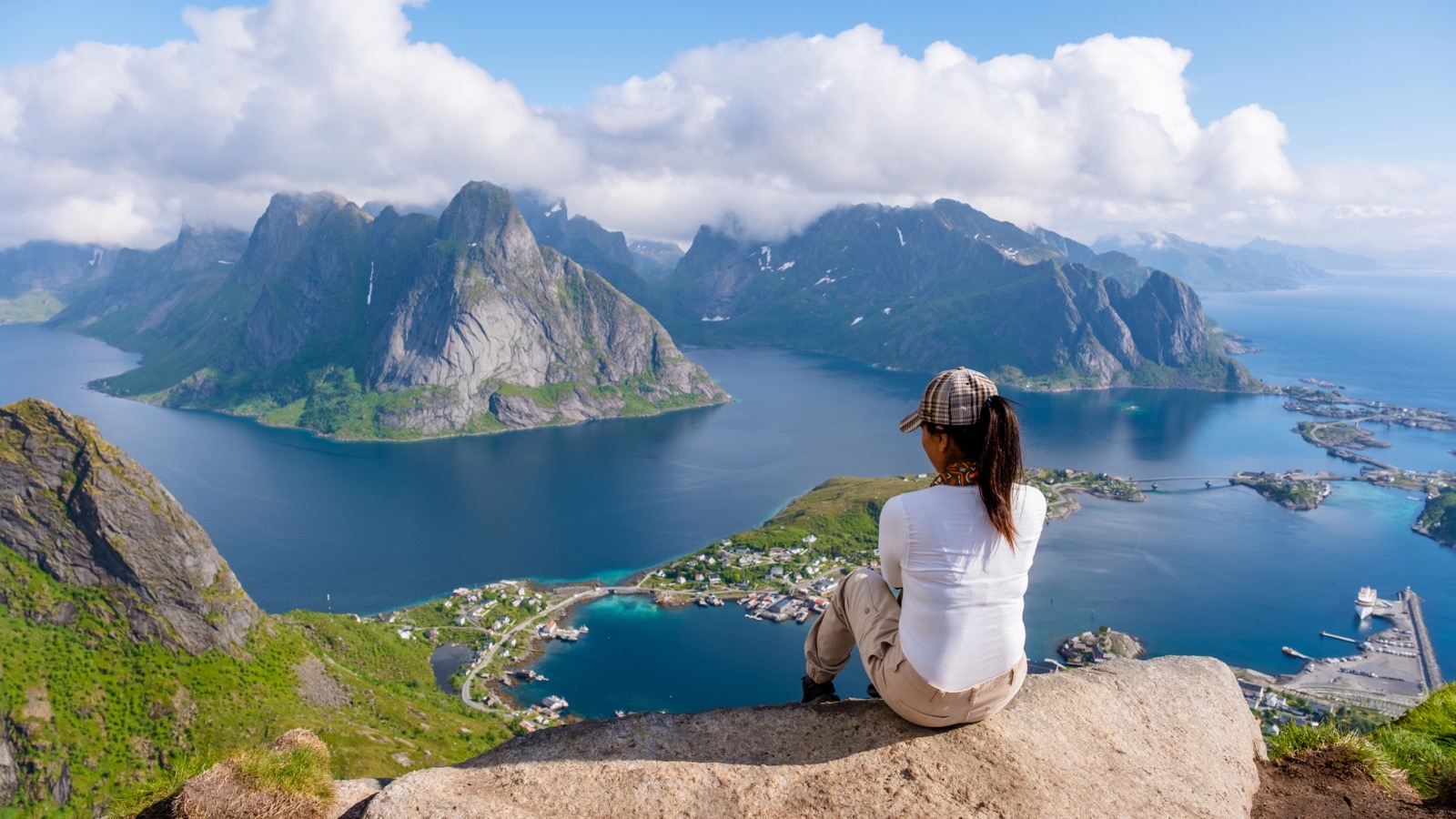
Tips and Tricks for Your Vacation
Don’t Overpay for Flights
Search for flights on Kayak. It’s our favorite search engine because it scans the websites of all airlines and always finds the cheapest connection.
Book Your Accommodation Smartly
The best experiences we’ve had when looking for accommodation (from Alaska to Morocco) are with Booking.com, where hotels, apartments, and entire houses are usually the cheapest and most widely available.
Don’t Forget Travel Insurance
Good travel insurance will protect you against illness, accidents, theft, or flight cancellations. We’ve had a few hospital visits abroad, so we know how important it is to have proper insurance arranged.
Where we insure ourselves: SafetyWing (best for everyone) and TrueTraveller (for extra-long trips).
Why don’t we recommend any Czech insurance company? Because they have too many restrictions. They set limits on the number of days abroad, travel insurance via a credit card often requires you to pay medical expenses only with that card, and they frequently limit the number of returns to the Czech Republic.
Find the Best Experiences
Get Your Guide is a huge online marketplace where you can book guided walks, trips, skip-the-line tickets, tours, and much more. We always find some extra fun there!