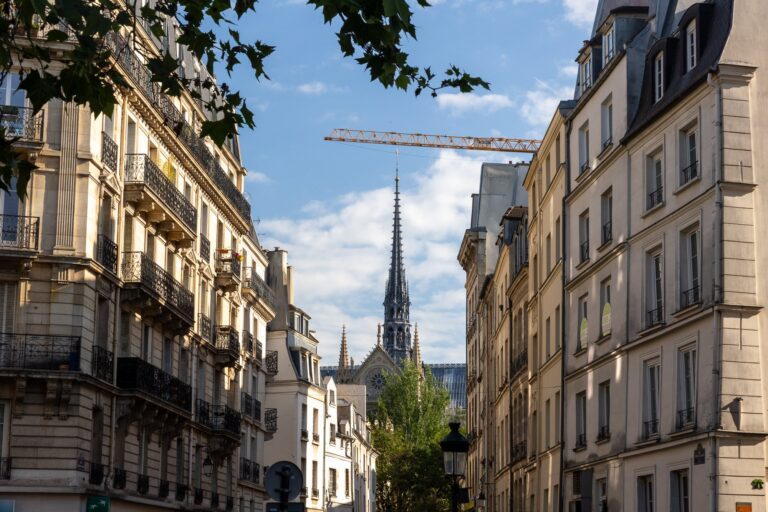
Open a map of the French capital, start studying the Paris arrondissements, and try to figure out where to lay your head, and you’ll probably feel a wave of mild panic. Instead of the neat grid we know from American cities, you’re looking at a confused snail. The River Seine twists through the middle, and twenty numbered pieces spiral around it. Suddenly, choosing where to stay feels like an unsolvable puzzle. Lukáš and I have felt exactly this way more times than we can count. Over our travels, we’ve tried staying in the bustling centre, in tucked-away lanes overlooking interior courtyards, and in quiet residential districts full of embassies. And honestly? The neighbourhood you pick will make or break your entire experience of the city.
Paris isn’t one single, unified city. It’s twenty completely different villages that just happened to end up next to each other. Crossing from the bourgeois 16th arrondissement to the multicultural 20th is like crossing a national border. The architecture changes, the smell from the bakeries changes, the pace of the locals’ walk changes, and so does the price of a morning espresso. And when you’ve got a two-year-old toddler in the pushchair and you’re searching for that delicate compromise between romance, easy access to great vegetarian food, and logistical sanity, you have to plan strategically. Staying right under the Eiffel Tower might sound like a dream come true, but when you’re hunting in vain that evening for an ordinary supermarket or a quiet park where your child can run around, the romance fades fast.
Understanding the Paris system of districts, known as arrondissements, is actually quite fun once you play along with their game. It all starts in the very historic heart on the islands and the first arrondissement by the Louvre. From there, the city spirals outward clockwise, further and further. Each arrondissement has its own town hall, its own mayor, and an utterly unmistakable character.
Let me warn you right at the start: this guide is long, because Paris deserves it. We’ll go through all twenty arrondissements, from the royal Louvre to wild Belleville. We’ll look at where to stay with a pushchair, where to eat cheaply and well, and most importantly, where you shouldn’t even stop. Make yourself a coffee, we’re off to pick your temporary Parisian home.
TL;DR
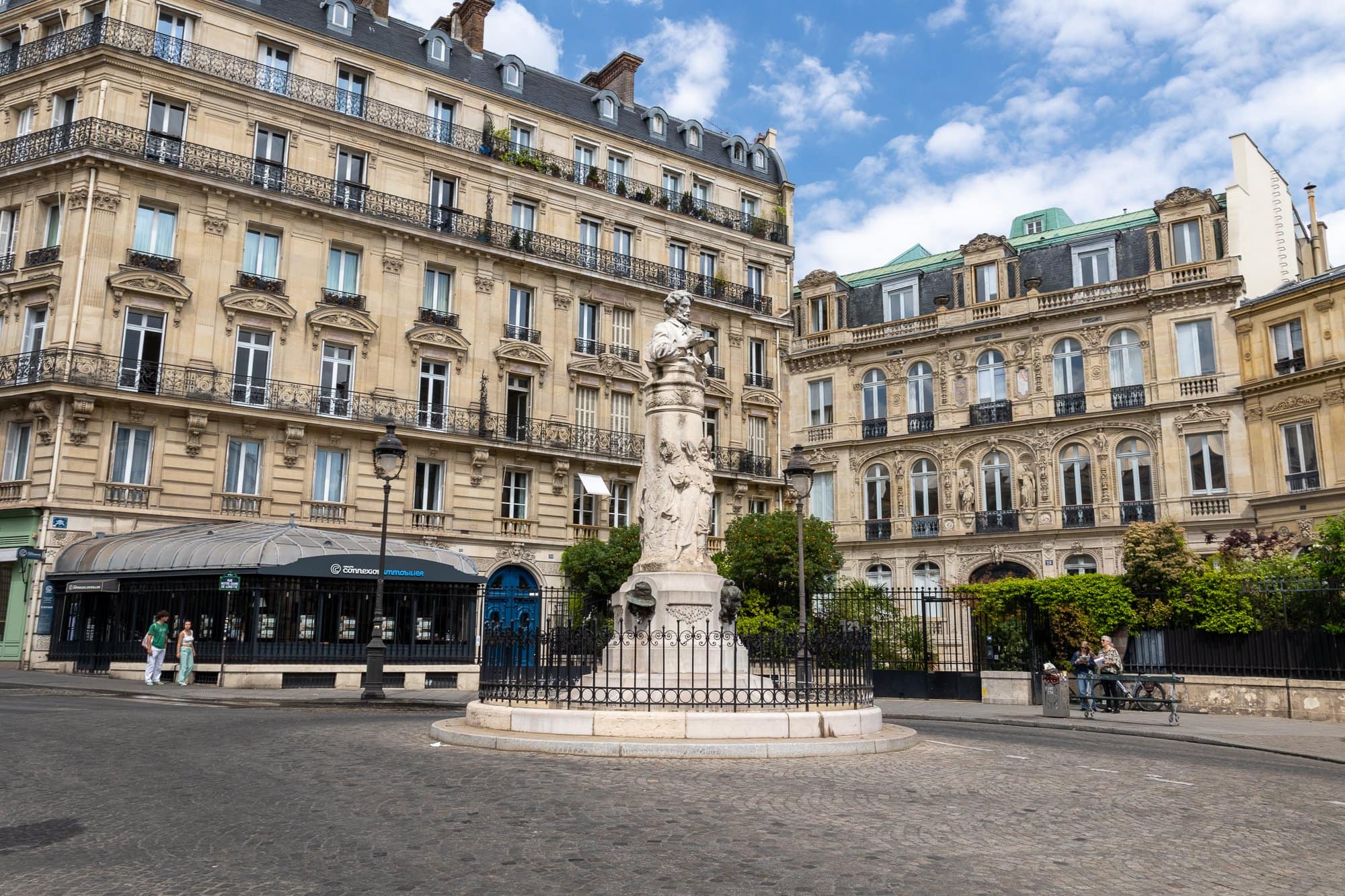
- Highlight: Paris is divided into 20 arrondissements that wind into a spiral. The lower the number, the closer you are to the historic centre (and the more you’ll pay).
- Highlight: For families with children, the absolute holy grail is the 6th arrondissement (Saint-Germain). It’s completely safe, with wide pavements and a gorgeous park with a puppet theatre.
- Highlight: If it’s your first visit and you want to walk everywhere, choose the 1st arrondissement (Louvre) or the 4th arrondissement (southern Marais). But brace yourself for enormous crowds and higher prices.
- Highlight: For foodies and lovers of specialty coffee or natural wines, the best choice right now is the 11th arrondissement (Bastille) and the 10th arrondissement (Canal Saint-Martin).
- Highlight: Absolutely avoid staying in the immediate area around Gare du Nord and Gare de l’Est stations (northern 10th arrondissement). It’s not safe there at night.
- Highlight: With a pushchair, cross Montmartre (18th arrondissement) off your list. It’s romantic, sure, but those endless steps and cobblestones will destroy you.
- Highlight: Notre-Dame has finally reopened (hooray!), but Centre Pompidou is closed until 2030. Take it as a fact, not as sad news.
- Highlight: Don’t look for hotels right on the Champs-Élysées. It’s expensive, packed with tourists, and the area loses its soul completely once the shops close.
- Highlight: The Paris metro has a lot of steps. If you’re travelling with a toddler, look for accommodation near Line 14, the only fully step-free line.
- Highlight: Prices for a decent double room in the wider centre start at roughly €150 per night in 2026.
The full destination guide: Paris — guide and what to see
When to Go to Paris and How the Season Affects Your Choice of Neighbourhood
Choosing the right month for your trip is half the battle. Paris changes its entire coat with each season, and what works in spring can be an absolute disaster in summer. Lukáš and I love those moments when you can sit out on a terrace in a light jumper while the city ticks along at its normal, non-touristy pace.
Spring and Autumn as the Safest Bet
May is probably the most beautiful month of the year. The chestnut trees blossom, the days stretch out pleasantly, and you can picnic in the parks without a worry. If you’re travelling in spring, arrondissements with large green spaces work brilliantly, like the 6th arrondissement or the 12th near the Promenade plantée.
September and October are just as magical. The period known as la rentrée (the return after the holidays) brings fresh energy to the streets, exhibitions open, and the city breathes culture. A windbreaker and umbrella always come in handy in autumn, but the atmosphere is worth it. Lukáš and I love visiting Paris most in mid-October, when the tourists have left but we can still sit outside with a glass of wine.
Summer Heatwaves and Winter Illusions
If you can, give August a wide berth. Parisians flee en masse to the coast this month. The city does empty out, but you’ll find a fermeture annuelle (annual holiday) sign on plenty of the best independent bistros and cafés, leaving you stuck with tourist traps.
The tarmac also melts under the heatwaves, and that’s simply something you don’t want to experience with a small child. If you absolutely must go in summer, look for accommodation near water, ideally in the 10th arrondissement by Canal Saint-Martin. Winter has its charm around Christmas, but January and February tend to be damp, grey, and trudging through monuments with a frozen toddler isn’t much fun.
The 2026 Events Calendar That Will Change Your Plans
The Parisian year 2026 is packed with events that will either enrich your itinerary or complicate it a little. The critical date is 12 April 2026, when the Paris Marathon is run and traffic in the city essentially collapses. Another big event is the enormous Nuit Blanche (White Night) on 6 June 2026, full of art in the streets until morning.
If you’re planning an autumn trip, watch out for the weekend of 19 and 20 September 2026. The European Heritage Days (Journées du Patrimoine) take place, and although normally inaccessible palaces open their doors, the famous Monet gardens in Giverny are closed on exactly those two days. Yes, that’s a bit sneaky 😅.
💡 Tip: During the summer months (July and August 2026), after a hundred years it will finally be possible again to swim safely directly in the River Seine in designated zones. If you’re going in summer, pack your swimsuit, it’s a historic moment!
Where to Stay in Paris: Strategy, Budget and Our Favourite Hotels
Accommodation in Paris will painfully strip you of your illusions if you don’t sort out your budget before you leave home. Staying in Paris isn’t cheap, and space is an enormous luxury here. Hotel rooms are often so small you can barely unfold a suitcase, let alone squeeze in a cot. If you’re travelling with family, cross off the cheapest offers in the outer neighbourhoods straight away. The time and nerves you’ll lose commuting in a crowded metro full of steps aren’t worth the few euros you’ll save.
Set your budget realistically. A decent hostel on the edge of the 10th or 11th arrondissement will cost you roughly €40 for a bed in a shared room in 2026. A nice Airbnb for two in the trendy Marais district runs around €140 per night. If you’re after a comfortable family hotel with a lift (which really isn’t standard in historic buildings) and a good breakfast in districts like Saint-Germain or Invalides, expect to pay from €220 to €300 per night.
With Airbnb, watch out carefully for the new rules. Since 2024, Paris has enforced strict regulations. Every legal rental must list an official thirteen-digit registration number in the listing, and owners may only rent out a flat for a maximum of 120 days per year. If the number is missing from the listing, you risk having your accommodation cancelled right before departure because it gets flagged by the city’s inspections.
Here are three specific hotels in different price ranges and neighbourhoods that we’ve tried ourselves, or that our friends recommend long-term:
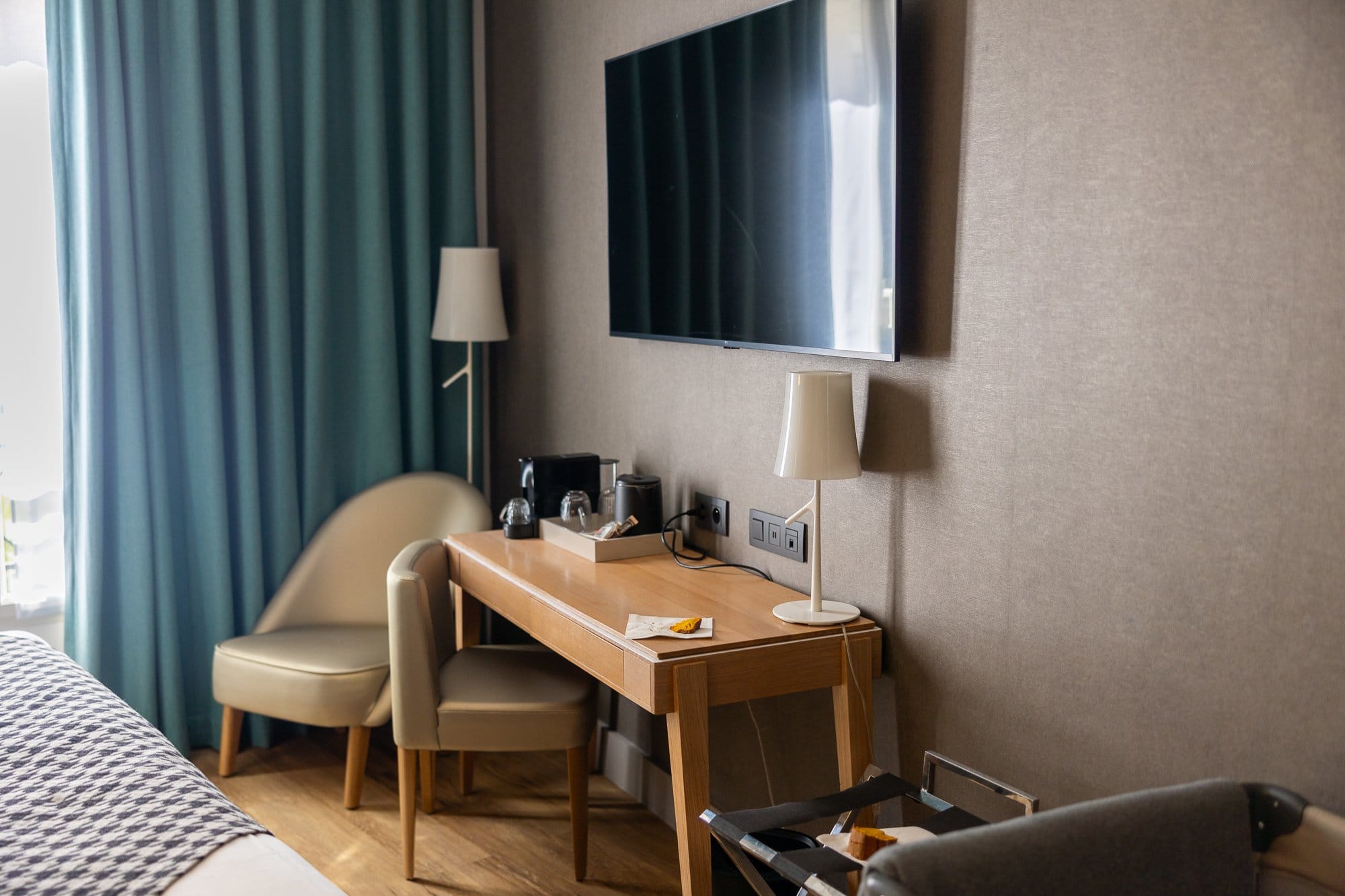
- Hôtel Providence (10th arrondissement): A gorgeous boutique hotel a stone’s throw from Canal Saint-Martin. The rooms have their own little bars, wallpaper by House of Hackney, and the whole atmosphere is wonderfully moody and romantic. Ideal for couples. Prices hover around €180 per night.
- Le Pavillon de la Reine (4th arrondissement, Marais): If you’re celebrating an anniversary or have a higher budget, this is an absolute dream. The hotel is tucked away in a private courtyard right on the historic Place des Vosges. They even have family suites and impeccable service. Prices start at €450.
- Hôtel des Grands Hommes (5th arrondissement, Latin Quarter): A great compromise for families. It sits directly opposite the majestic Panthéon, you can walk to the Luxembourg Gardens in five minutes, and the staff are incredibly kind to children. A double room comes to roughly €200.
Most people automatically look for accommodation in the very heart of the city, but Lukáš and I prefer to choose cleverly located suburbs like Boulogne-Billancourt. From the boutique hotel Hôbou we reached the Eiffel Tower by metro in twenty minutes and enjoyed the kind of quiet you simply won’t find in the centre. If this approach appeals to you, check out our detailed review, or go straight ahead and check availability.
How the Parisian Snail Works: Rive Droite vs. Rive Gauche
The River Seine doesn’t just divide Paris geographically into north and south. It divides it philosophically, historically, and socially. It’s an age-old rivalry that Parisians can passionately debate for hours over a glass of wine. Before you pick a specific arrondissement, you have to choose your bank.
Left Bank (Rive Gauche): Intellectual Calm and Old Money
The Left Bank to the south is historically home to intellectuals, students, old publishing houses, and literary cafés. Here you’ll find the famous Sorbonne university, the sprawling Luxembourg Gardens, and the iconic Saint-Germain-des-Prés district. The atmosphere flows at a much more relaxed pace, the streets are noticeably cleaner, the façades more ornate, and the property prices astronomical.
The Left Bank stubbornly clings to classic Parisian elegance: it never rushes, it smells of expensive perfume and old paper. If you’re after calm, safety, and that traditional, cinematic Paris, Rive Gauche is your choice.
Right Bank (Rive Droite): Relentless Energy and Trends
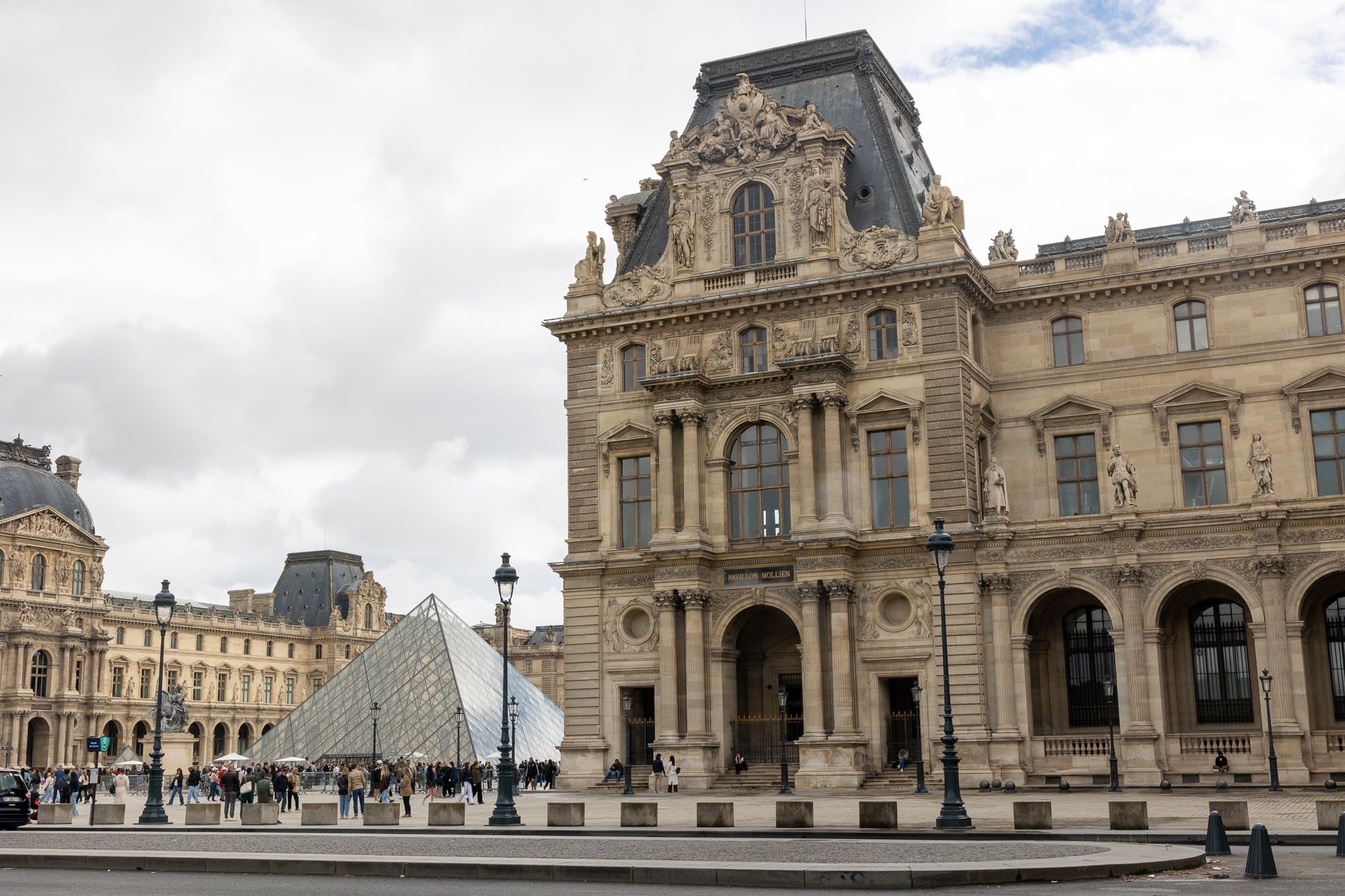
The Right Bank to the north has historically been the centre of commerce, power, and money. This is where the banks, the royal Louvre, the Élysée Palace, and the luxury boutiques are based. Today, though, it has also become the epicentre of hipsters, independent specialty coffee roasters, natural wines, and wild nightlife.
Arrondissements like the 10th, 11th, or 20th set the current cultural tone. The Right Bank never sleeps. It pulses, constantly changes, is louder, rawer, and far more dynamic. If you want to experience contemporary, real Paris full of great modern food, head here.
💡 Tip: If you can’t decide, go for the islands in the middle of the Seine (Île de la Cité or Île Saint-Louis). You’re right on the boundary of both worlds and can walk everywhere, but bear in mind that for this luxury you’ll pay roughly 30% more in a hotel than on the mainland.
Top 5 Neighbourhoods Based on Who You’re Travelling With and Why
Twenty arrondissements are quite enough to drive you mad while planning. So let me break it down differently, namely by who you’re going with and why.
Paris with Children and a Pushchair
With Jonáš in the pushchair, we learned one crucial thing. Steps in the metro and crowds of tourists are your biggest enemies. The absolute favourite for families is the 6th arrondissement (Saint-Germain) and the 7th arrondissement (Invalides).
They’re extremely safe, with wide pavements and enormous parks right on your doorstep. A great and slightly cheaper alternative is the quiet 15th arrondissement (Vaugirard) or the green 12th arrondissement (Bercy), from which you’re close to the elevated Promenade plantée trail, where there are no cars at all.
Romance for Couples
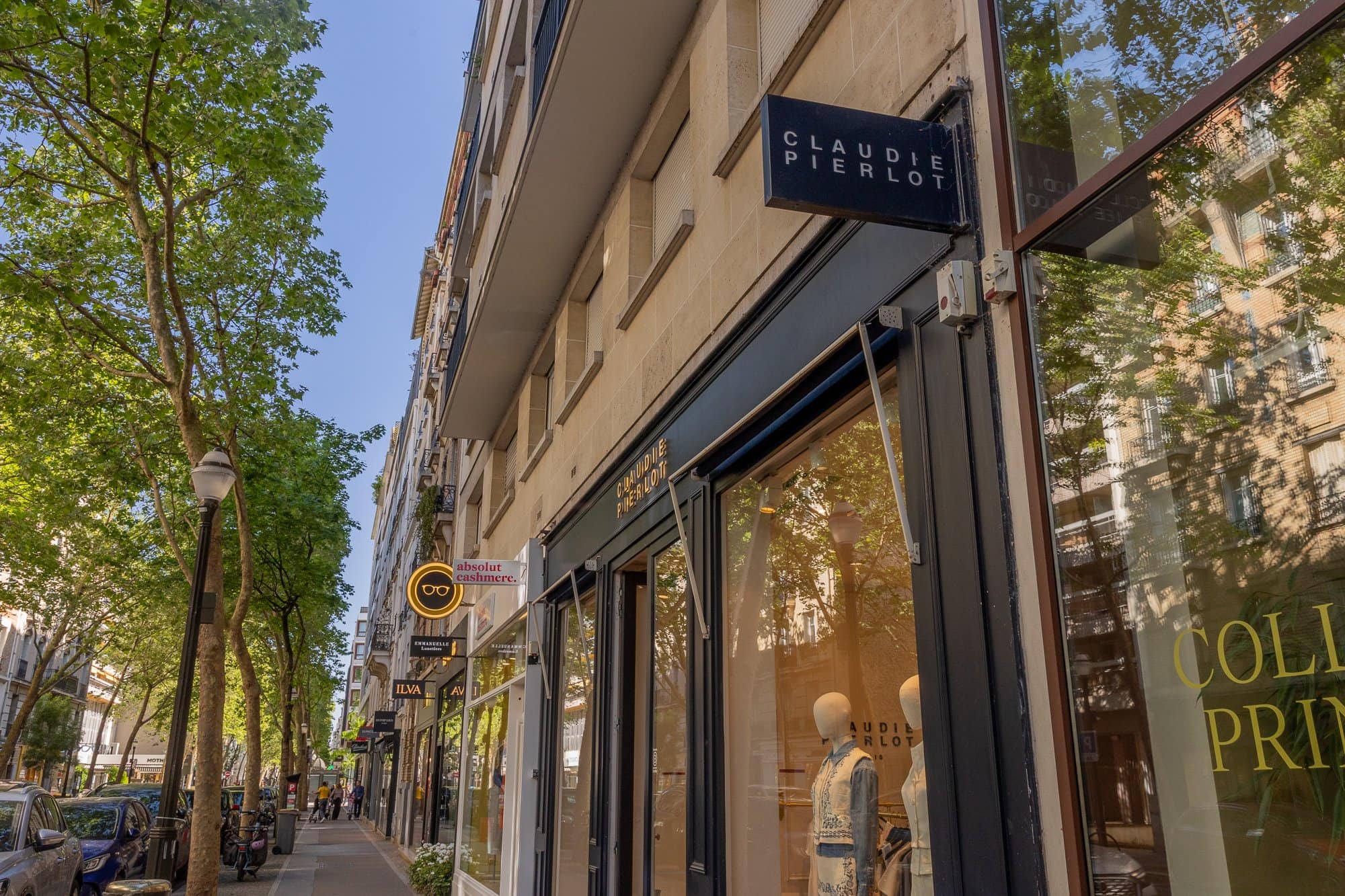
If you’re travelling as a two and want to enjoy evening walks and great cocktails, head to the 3rd arrondissement (northern Marais). It’s quiet there but full of wonderful little bistros. Lukáš and I always try to carve out at least one evening just for ourselves.
For lovers of classic elegance, the 9th arrondissement (around the Opéra) works brilliantly, or the quieter lanes in the 4th arrondissement near Place des Vosges. You can wander the evening city, stop for a drink, and feel exactly like you’re in an old French film.
A Paradise for Foodies and Vegetarians
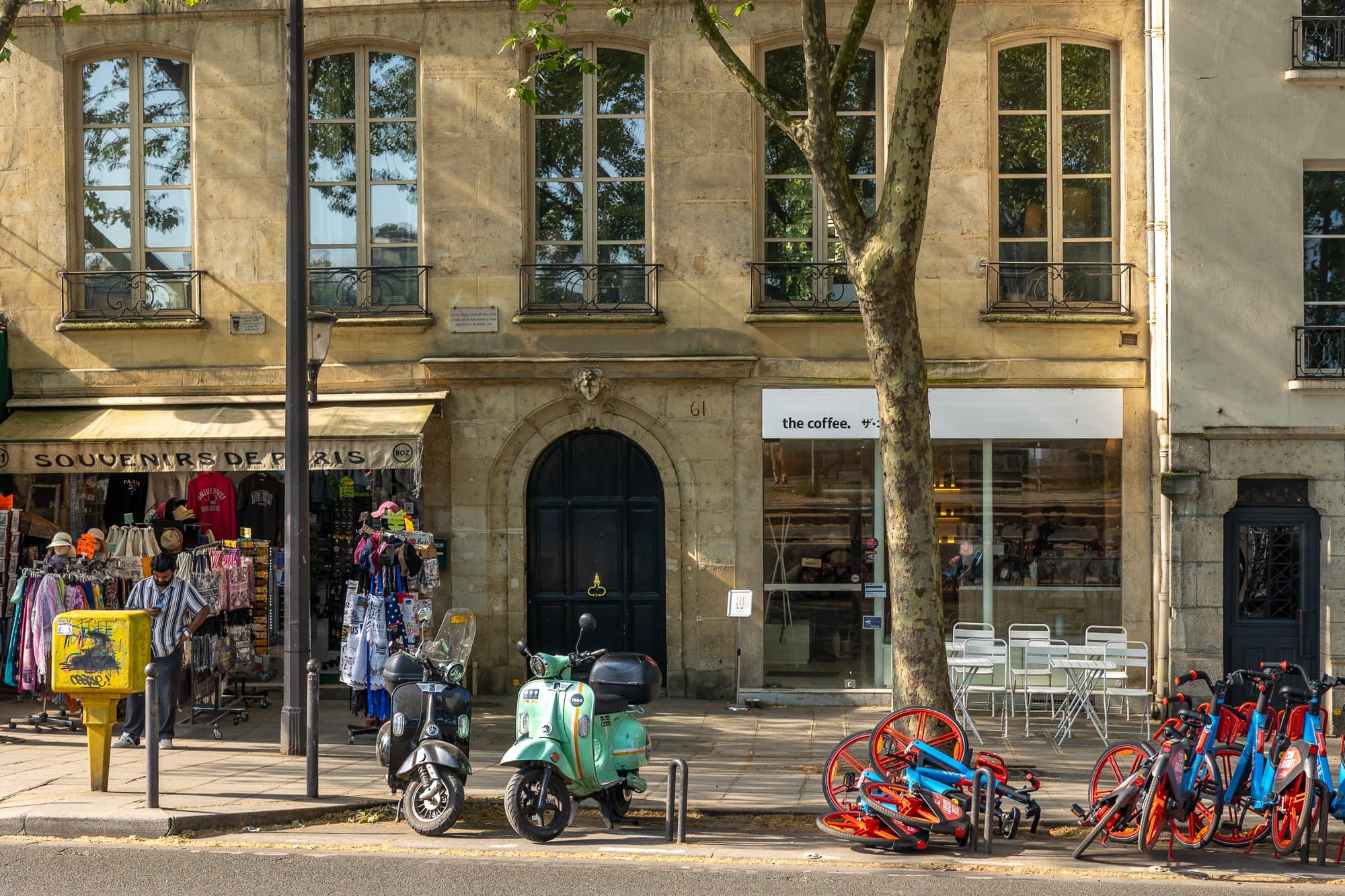
If the main goal of your trip is food, forget the centre and head straight east. The 11th arrondissement (Bastille) is simply the dining room of contemporary Paris. This is exactly where new culinary trends are born and the best bistros open.
The 10th arrondissement (Canal Saint-Martin), full of bakeries and cafés, works brilliantly too, as does the already mentioned 3rd arrondissement (Marais), where you’ll find the best falafel in the city and plenty of purely vegan concepts. For me as a vegetarian, it was a total liberation.
First Visit to the City
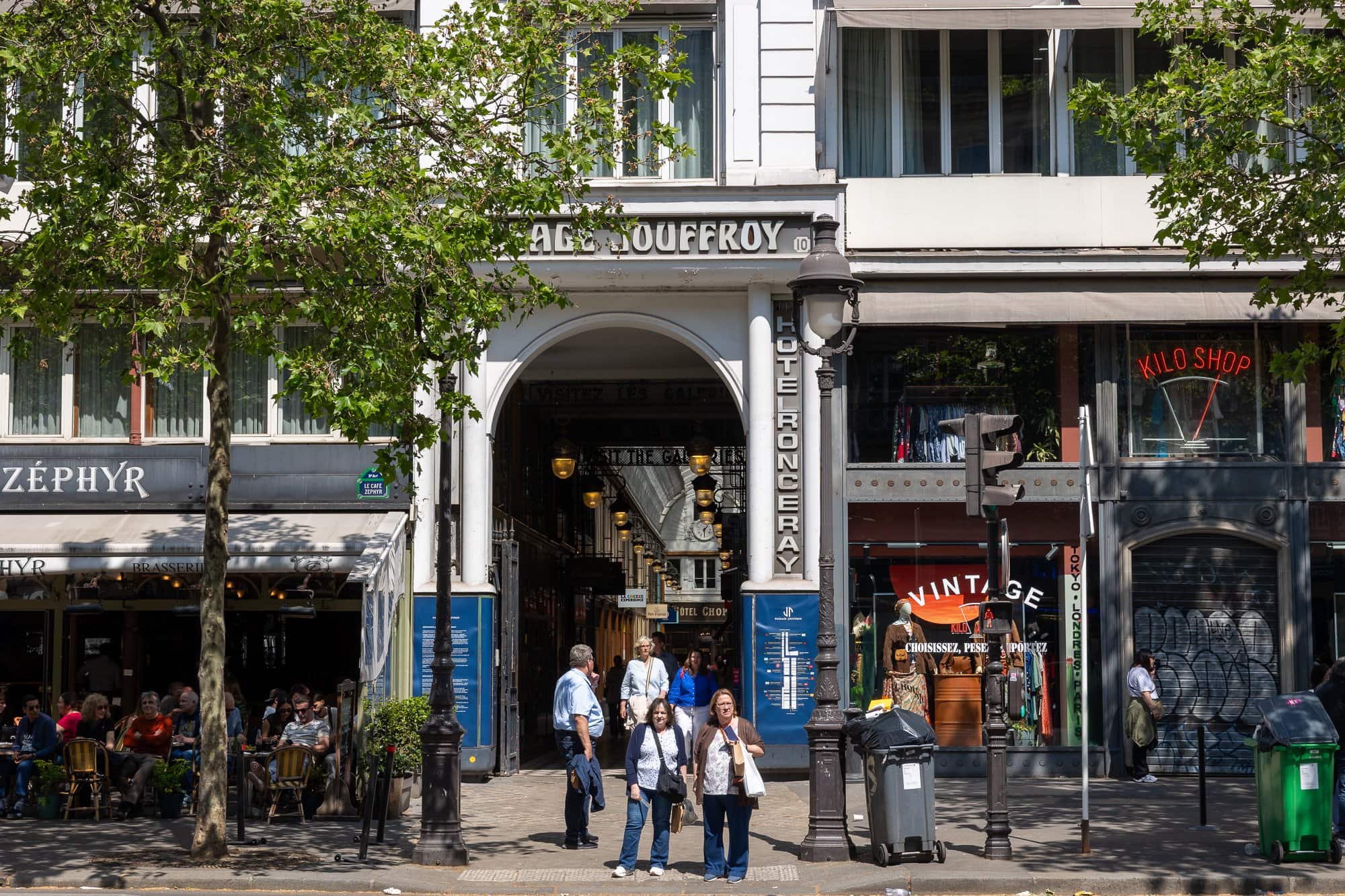
When you’re going for the first time, you want to see the Eiffel Tower and the Louvre ideally the moment you wake up. In that case, the 1st arrondissement (Louvre) makes the most sense, as you can cover the most important sights on foot. The 2nd arrondissement (Bourse) is great too, very central but slightly less crowded.
Staying close to the centre saves a lot of time and the stress of commuting. Sure, you’ll pay extra for the location, but you can spend the time you save strolling along the banks of the Seine and soaking up the real atmosphere.
Paris on a Limited Budget
If you’re counting every euro, avoid the western part of the city. You’ll find great accommodation prices in the 14th arrondissement (Montparnasse), which is quiet and well connected to the metro. We used to sleep there regularly back when we still travelled as broke students.
Cheaper hostels and apartments can be found in the laid-back 5th arrondissement (Latin Quarter) thanks to its huge concentration of students, or on the northern slopes of the 18th arrondissement (behind Montmartre). Just take extra care on late-night walks home so you don’t end up on the wrong street unnecessarily.
💡 Tip: If you find suspiciously cheap accommodation in the 8th arrondissement (Champs-Élysées), check whether there’s any construction work nearby. Local hotels often slash prices drastically for rooms with workers jackhammering the road outside the window from six in the morning.
Where to Eat in Paris: Baguettes, Snails and Natural Wine
Paris is undeniably one of the greatest gastronomic paradises on earth, but if you don’t want to pay twenty euros for an average microwaved croque monsieur, you need to know where to go. Most of the best authentic bistros and restaurants have long since moved out of the historic centre. The locals have followed the good food east, specifically to the 11th and 10th arrondissements, where culinary trends are now dictated and natural wine flows freely.
Lukáš and I are always careful not to eat in the immediate vicinity of the big monuments. Just walk two or three streets further and the prices drop by half, while the quality shoots up steeply. If you’re a vegetarian like me, Paris has thankfully changed a lot and plant-based food is now far easier to find than it was five years ago. Just don’t forget to make dinner reservations, the most popular places tend to be booked out weeks in advance.
Markets and Street Food
One of the best ways to taste Paris without emptying your wallet is to head to the local markets. Marché d’Aligre in the 12th arrondissement is an absolute classic, where the scent of ripe cheeses, fresh vegetables, and fresh oysters all blend together. Our favourite thing to do is buy fresh baguettes and grapes and go for a picnic in the park.
Another great option is street food, which is growing in popularity in the city. It’s not just the famous falafel in the Marais, but also the various little bakeries and crêpe stands you’ll find on practically every corner of the Latin Quarter. For a few euros, you can eat like a king.
Cafés and Sweets
What kind of trip would it be if we skipped coffee and something sweet. These days you’ll find plenty of places in Paris serving specialty coffee, which is successfully replacing the traditional, very bitter Parisian classic. Head to the area around Canal Saint-Martin, where these spots are practically swarming.
And of course, the patisserie. Macarons, éclairs, or a perfect pain au chocolat are non-negotiable on your daily menu. Finding a bakery that still bakes by hand is getting easier all the time. Just look for the “Artisan Boulanger” sticker on the door, which guarantees the bread wasn’t simply defrosted somewhere in a factory but baked with love right on the spot.
Where Not to Stay: Neighbourhoods to Avoid
Paris is generally a very safe city, but it has its sore spots. Especially if you’re travelling with family, there are zones where you won’t feel entirely comfortable after dark. It’s not that your life is in danger, but the streets are dirtier, noisier, and there’s a faint sense of chaos.
Around Gare du Nord and Gare de l’Est Stations
The northern part of the 10th arrondissement, immediately around the two enormous train stations, is a notorious haven for pickpockets and street vendors. During the day it’s busy, but at night the streets around the La Chapelle metro station turn into a place where peculiar groups of people hang around.
If you find a gorgeous hotel right opposite the station at a great price, give it a miss. That extra hundred euros you save per night really isn’t worth being afraid to walk back after dark.
Pigalle and Barbès at Night
The southern edge of the 18th arrondissement below Montmartre, especially the boulevards around the Pigalle and Barbès-Rochechouart metro stations, wake up to a very wild life in the evening. It’s a red-light district of cabarets and constant hustling into dodgy clubs.
For young people heading out to party, it can be fun. But pushing a pushchair here at ten in the evening through crowds of noisy tourists and odd characters is simply not something you want. I once got lost there with a map in my hand and it wasn’t exactly a memory for the diary.
💡 Tip: Pickpockets in Paris don’t look like thieves from the movies. They’re often smartly dressed young women holding a clipboard, pretending to collect signatures for charity. Most of them operate on metro Line 1, right at the Louvre-Rivoli station.
Detailed Guide: Paris Arrondissements 1 to 5 (The Historic Heart)
This is where it all began. The first five arrondissements form the absolute historic core of the city. These are the postcard places, full of monumental landmarks, narrow lanes, and, unfortunately, the biggest crowds of tourists too.
1st Arrondissement (Louvre and Les Halles): The Royal Heart
The most central, the oldest, and the most monumental arrondissement of them all. Wide boulevards, the perfect symmetry of the Tuileries gardens, and the ever-present feeling that you’re walking through history. It’s a luxurious, intensely touristy, and architecturally stunning district where you have the biggest draws right around the corner.
Lukáš and I usually head here first thing in the morning, before the city fully cranks up its touristy roar. We grab a coffee to go and simply stroll along the river for as long as we can.
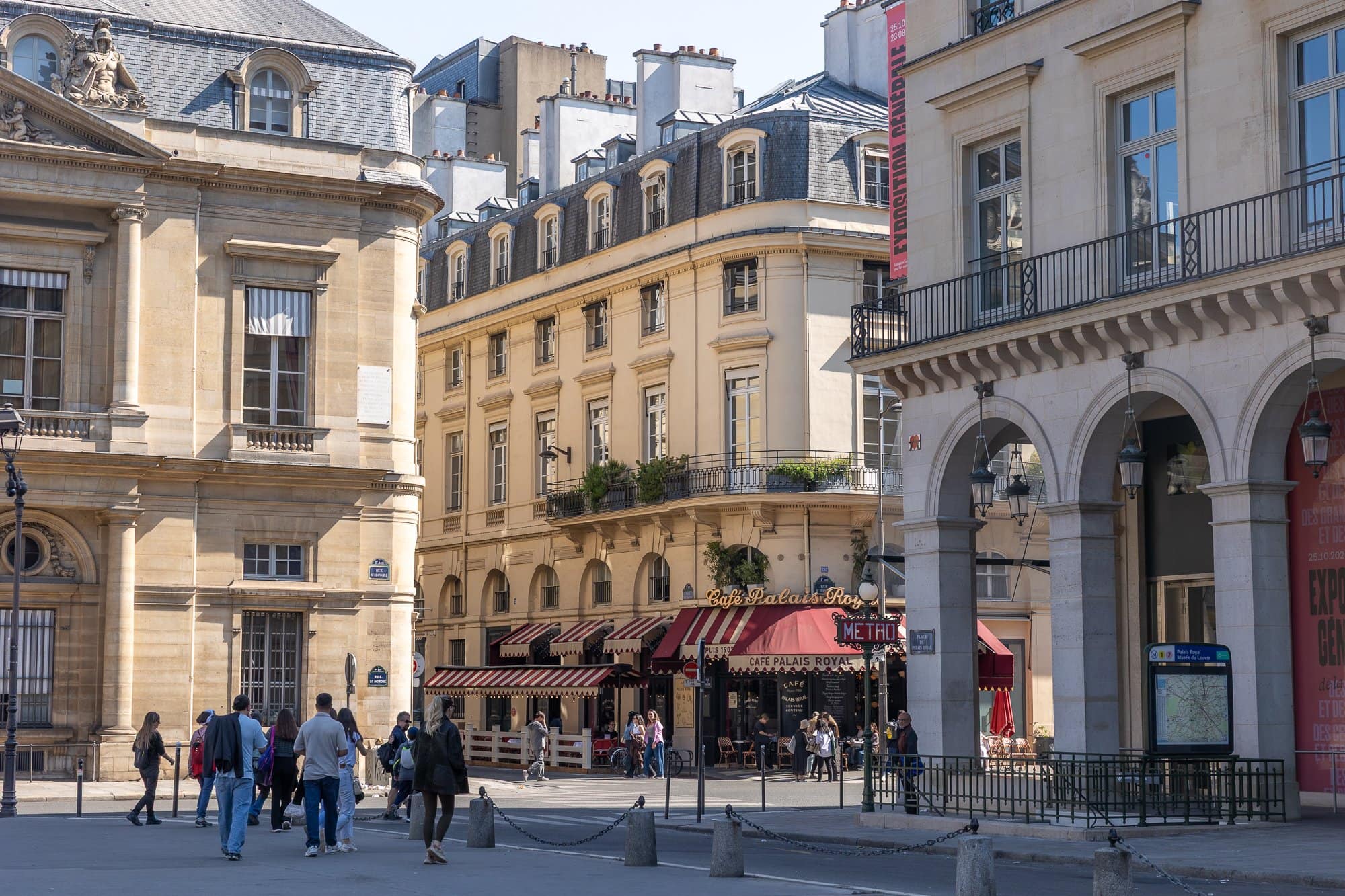
- Must-see: The Louvre, of course. For 2026 there’s a strict rule: entry only with an online reservation for a specific time slot at €22. Avoid the main glass pyramid and slip in through the Porte des Lions entrance in the southern Denon wing, which drops you much closer to the Mona Lisa. Don’t miss the stunning Palais Royal courtyard with its black-and-white columns.
- Food: You’ll find excellent modern bakeries like Bo&Mie here. For me as a vegetarian, the little spot Maisie Café near the Tuileries is an absolute lifesaver. They make fantastic gluten-free focaccia and cold-pressed juices.
- Pushchair rating (4/5): Excellent. The Tuileries gardens are enormous and flat, and the pavements along Rue de Rivoli are nice and wide.
💡 Tip: If you want to see Monet’s famous water lilies at the Musée de l’Orangerie (entry €12.50), book the very first morning slot at 9:00. An hour later there’s no room to move in the oval rooms.
2nd Arrondissement (Bourse and Sentier): Passages and Startups
The smallest Parisian arrondissement is wonderfully dynamic. The former textile district of Sentier has transformed into Paris’s Silicon Valley, full of young startups, while the western part around the old stock exchange holds onto its historic charm thanks to its beautiful covered passages. By day it buzzes with business; at night a pleasant calm settles in.
Unlike the overcrowded first arrondissement, here you have a chance to absorb a bit more of the normal working rhythm of Parisians. We love escaping here with the family when we want to hide from the rain for a while and wander through the wonderful shopping passages.
- Must-see: The covered passages (passages couverts) from the 19th century. Take a free walk, starting in Passage Verdeau, continuing through Jouffroy and Panoramas all the way to the gorgeous, mosaic-clad Galerie Vivienne.
- Food: The pedestrian Rue Montorgueil is an absolute food paradise. Stop by Stohrer, the oldest Parisian bakery, dating back to 1730. In the evening, have an iconic cocktail at the Experimental Cocktail Club.
- Pushchair rating (3/5): The passages tend to be narrow and often have steps at the entrances, but Rue Montorgueil is a car-free pedestrian zone, which is great.
💡 Tip: In the Passage des Panoramas you’ll find lots of small restaurants. If it’s raining, it’s the best place to take the family for a long, dry lunch.
3rd Arrondissement (Northern Marais / Haut Marais): Hipster Elegance
While the southern Marais is bursting at the seams, this northern part is quiet, trendy, and dotted with independent boutiques, galleries, and cafés. The streets are wider here and the atmosphere far more neighbourly than in the south of the Marais. The district feels fashionable, artistic, and carries that slightly self-aware air that’s fashionable in Paris 😉.
For me, this place is an endless well of inspiration. Whenever Lukáš and I head here, we always discover some new shop or gallery we overlooked last time. It’s simply a joy to explore.
- Must-see: Musée Picasso in the stunning Hôtel Salé mansion (entry €14). Stop by the iconic concept store Merci (you’ll recognise it by the red Fiat 500 in its little courtyard) and rest in the forgotten oasis of Square du Temple park.
- Food: A pure gastronomic paradise. Sort out lunch at the oldest covered market, Marché des Enfants Rouges. Vegans will love Hank Burger or the café Cloud Cakes. Grab great coffee at the tiny Boot Café, housed in a former cobbler’s shop.
- Pushchair rating (4/5): The streets are wider than in the south, Square du Temple park has a decent playground, and you can sit outside at the market.
💡 Tip: The famous speakeasy bar Little Red Door (nine times in the world’s top 50 bars) doesn’t take reservations. Arrive exactly at 18:00 when they open, otherwise you’ll queue for an hour.
4th Arrondissement (Southern Marais and the Islands): History and Falafel
This is the real Paris from the movies. Narrow medieval lanes that miraculously survived the great rebuilding of the city, the historic Jewish quarter of Pletzl, and the stunning, symmetrical Place des Vosges. The district lives and breathes history, but on weekends it gets extremely overcrowded.
Even so, we always love coming back, even if it means weaving the pushchair through crowds of tourists. That energy and the smell of fresh food from the little bistros are simply worth it.
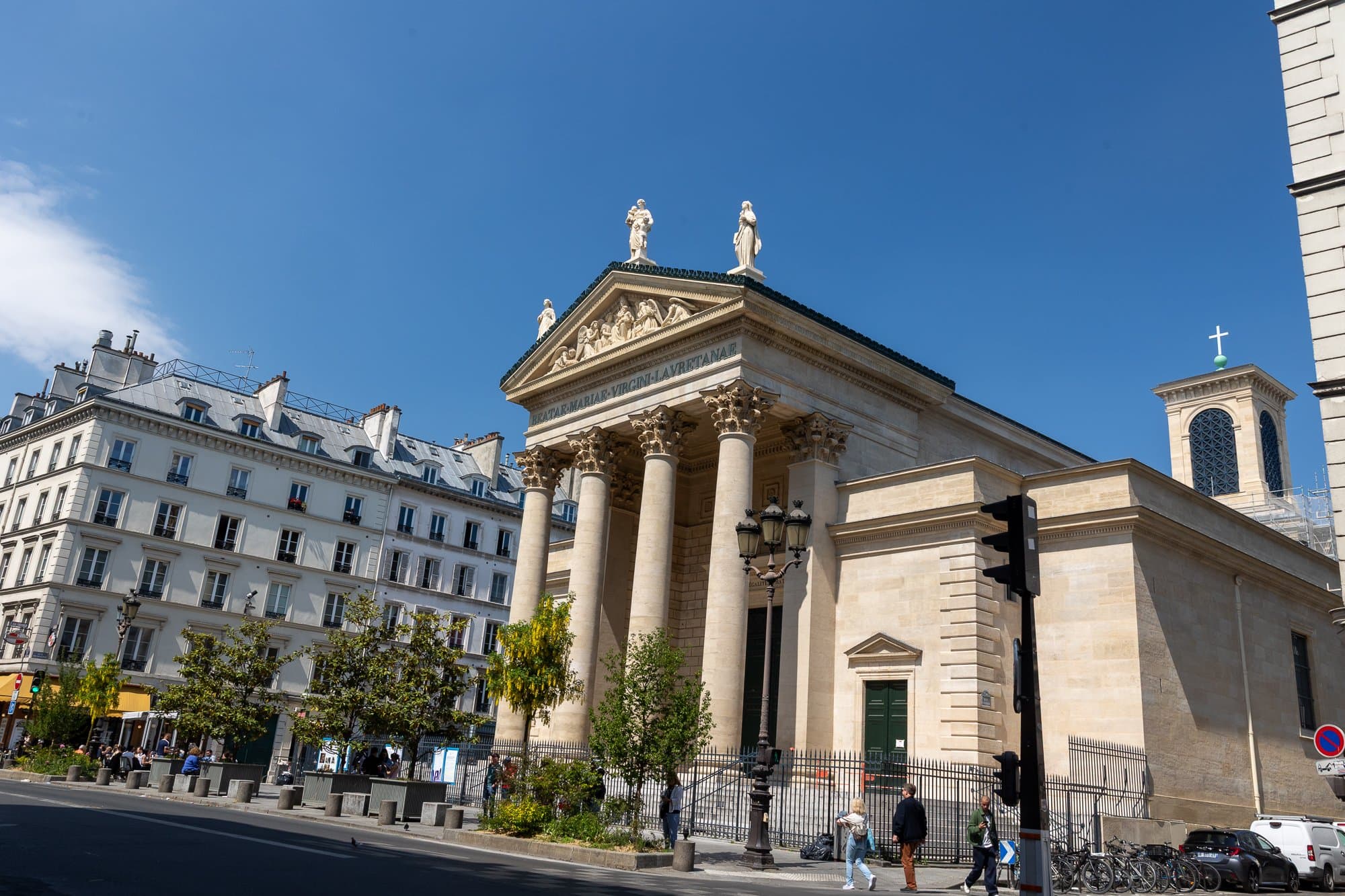
- Must-see: Notre-Dame Cathedral. After the massive fire it has finally reopened; entry itself is free, but you need to click through an online time reservation. The towers open for a €16 fee. ⚠️ Note that the famous Centre Pompidou is CLOSED from the end of 2025 until 2030 for asbestos removal.
- Food: L’As du Fallafel on Rue des Rosiers supposedly makes the most famous falafel in Europe (a pita in hand for roughly €8). The queue stretches halfway down the street, but it moves fast. For ice cream, go to Berthillon on Île Saint-Louis.
- Pushchair rating (2/5): Narrow cobbled lanes, crowds everywhere, and on weekends you’ll get completely stuck in the crowd with a pushchair.
💡 Tip: L’As du Fallafel is strictly closed on Saturdays for the Jewish Shabbat. If you’re heading here over the weekend, plan for Sunday.
5th Arrondissement (Latin Quarter): Students and Botany
Home of the old Sorbonne, the majestic Panthéon, and narrow lanes full of cheap crêperies. The Latin Quarter still holds onto a strong intellectual spirit, even though tourist restaurants have long since taken over the main arteries. It feels relaxed and studenty, and you’ll find some great parks here.
Especially in spring, when everything starts to bloom, this place is utterly magical. We often just sit on a bench, drink coffee, and watch the students hurrying off to lectures with their books.
- Must-see: The botanical garden Jardin des Plantes (entry to the gardens is free). It also has a small zoo and gorgeous greenhouses. Stop by Place de l’Estrapade, where the Emily in Paris apartment from the show is located, and explore Arènes de Lutèce, a hidden Roman amphitheatre from the 1st century.
- Food: The restaurant Les Belles Plantes, right in the botanical garden, offers a children’s menu, high chairs, and, as one of the few in Paris, a baby-changing table! For a proper coffee, head to Strada Café.
- Pushchair rating (3/5): It’s quite uphill around the Panthéon and the streets are cobbled, but the botanical garden down by the river is completely flat and perfect.
💡 Tip: Take the lift up to the roof of the Institut du Monde Arabe (9th floor). Entry is completely free and you’ll get one of the most beautiful views of the river and Notre-Dame.

Detailed Guide: Paris Arrondissements 6 to 10 (From Luxury to Hipsters)
The western and northern parts of the wider centre offer the greatest extremes. From quiet streets full of expensive cars and Michelin restaurants to the grittier but all the more authentic surroundings of the water canals.
6th Arrondissement (Saint-Germain-des-Prés): Literary Luxury
Our absolute Parisian favourite. This is where Hemingway, Sartre, and Simone de Beauvoir once wrote in the cafés. You won’t find poor artists here any more; they’ve been replaced by Chanel boutiques and elegant Parisians. The district is bourgeois, intellectually snobbish, immensely clean and beautiful.
If we could pick a single place to spend our time in Paris, it would be right here. Those perfect cafés and wide pavements simply never get old.
- Must-see: Jardin du Luxembourg. For a toddler it’s heaven on earth. You’ll find the huge fenced playground Poussin Vert and the famous puppet theatre Théâtre des Marionnettes (shows cost €2.70 and run on Wednesdays and weekends).
- Food: The historic cafés Café de Flore and Les Deux Magots are classics, but have your wallet ready (a coffee comes to €8). For a family brunch opposite the Luxembourg Gardens, choose the wonderful spot Treize au Jardin. Buy macarons at Pierre Hermé on Rue Bonaparte.
- Pushchair rating (5/5): The holy grail. Wide flat pavements, considerate drivers, and the best park in the city.
💡 Tip: In the Luxembourg Gardens, by the big fountain, you can rent a wooden sailboat with the flag of your country for a few euros and push it across the water with a long stick. It’s been a tradition since 1927 and children love it.
7th Arrondissement (Invalides and the Eiffel Tower): In the Shadow of the Iron Lady
Wide, quiet avenues, ministries, embassies, and families with old money. The seventh arrondissement is monumental, exclusive, and very calm. In the evening it dies down a little and you’ll have to go elsewhere for nightlife, but by day it’s an oasis of calm.
For families with children, this is an absolute luxury. Jonáš can run around on the grass while Lukáš and I simply admire the view of the Eiffel Tower without having to jostle through the crowd.
- Must-see: The Eiffel Tower, of course. Book tickets to the top (from €14.80 to €36.70) up to 60 days in advance on the official website. The magnificent Musée d’Orsay (entry €16) is celebrating its huge 40th anniversary in 2026 and offers a major Renoir exhibition in spring. The Musée Rodin, with its gorgeous sculpture-filled garden, is also worth a visit.
- Food: ⚠️ For me as a vegetarian, the event of the decade: the legendary three-star restaurant Arpège (chef Alain Passard) has switched to a fully plant-based menu! It’s the only 3-star vegan restaurant in France (lunch comes to roughly €260). For more affordable great coffee, head to Coutume Café.
- Pushchair rating (5/5): The Champ de Mars park is the perfect spot for an afternoon picnic and letting your child loose on the grass. The pavements are wide and empty.
💡 Tip: Don’t actually go up the Eiffel Tower at all. It’s expensive, packed with people, and crucially you can’t see the Eiffel Tower itself from it. Better to have a picnic below and enjoy the tower from the outside.
8th Arrondissement (Champs-Élysées): The Golden Triangle
Here you’ll find the Arc de Triomphe, luxury hotels, and the most expensive boutiques on Avenue Montaigne. It’s an arrondissement that Parisians have essentially handed over to wealthy tourists and businesspeople. Lukáš and I once walked the entire Champs-Élysées and felt more like we were in a shop window than on a street.
Even so, it’s a place everyone should see at least once. Just be prepared for your wallet to weep even when buying a perfectly ordinary coffee to go.
- Must-see: The Arc de Triomphe (rooftop entry €16) and the magnificent glass palace of the Grand Palais.
- Food: An extreme concentration of Michelin stars (Le Cinq, Epicure). If you don’t have a bottomless budget, you’ll mostly come up short gastronomically. The ordinary bistros around the main avenue are often overpriced and the quality lags behind.
- Pushchair rating (3/5): Physically you’ll manage easily, but the crowds on the Champs-Élysées are exhausting and parks are rather lacking here.
💡 Tip: Never try to run across the enormous roundabout to reach the Arc de Triomphe, it really is life-threatening. Use the safe underpass, Passage du Souvenir, which leads right to the entrance.
9th Arrondissement (Opéra and SoPi): From Consumerism to Hipsters
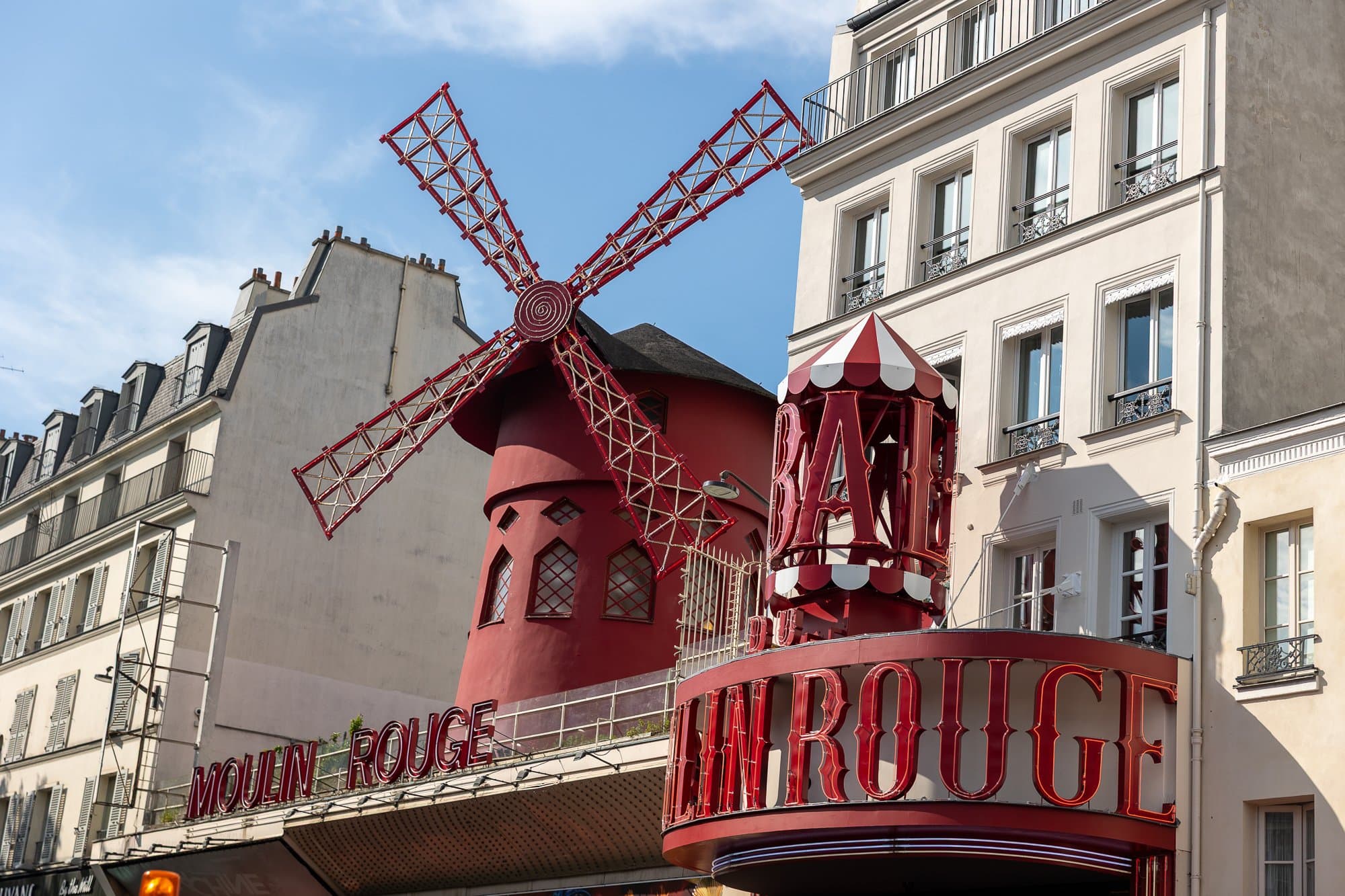
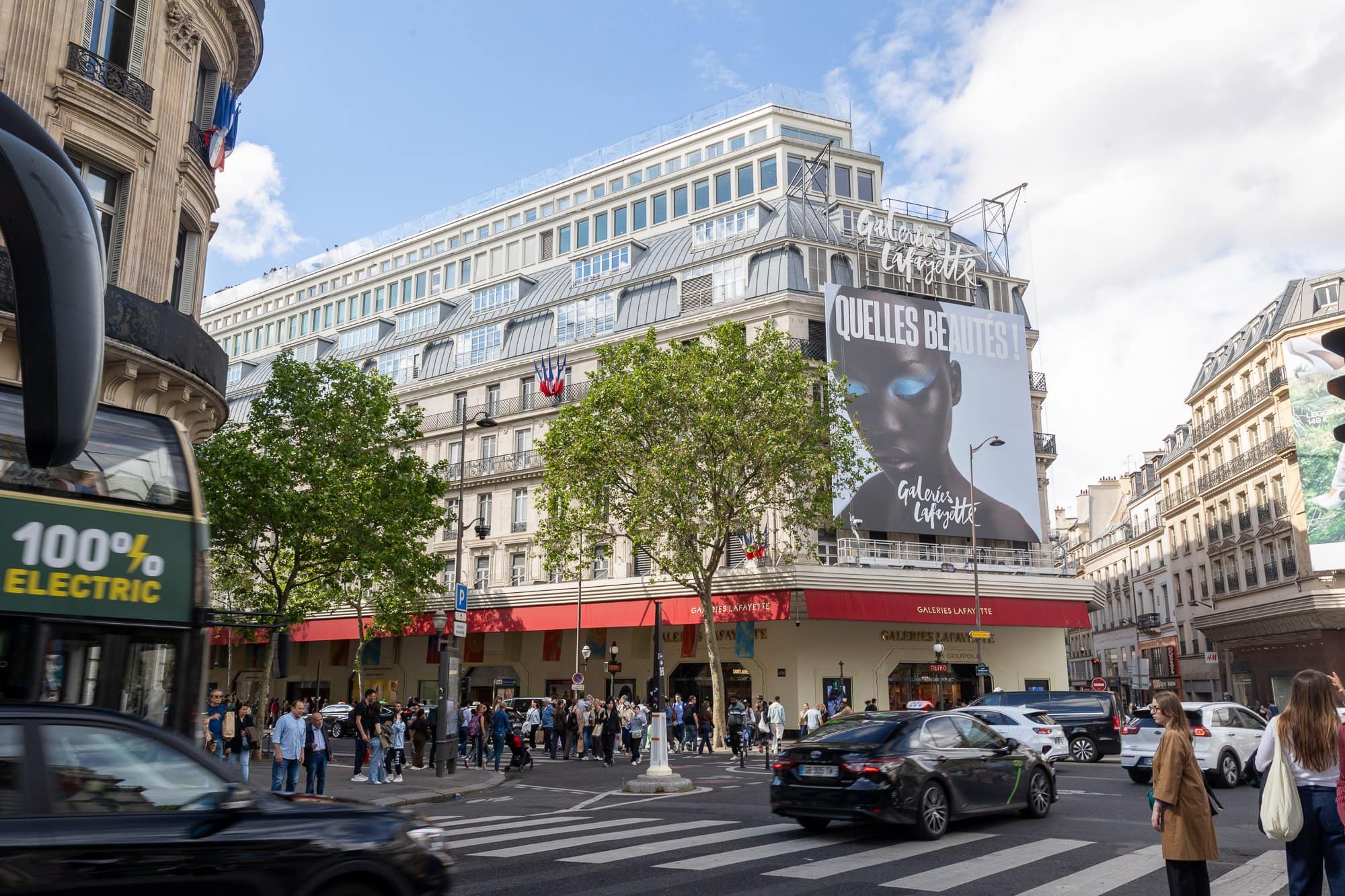
The south of the ninth arrondissement belongs to the big department stores and the ornate Opéra Garnier. The northern part below the Montmartre hill, known to locals as SoPi (South of Pigalle), is by contrast full of trendy bars, bakeries, and young professionals.
I love this contrast. You can enjoy a bit of classic consumerism, and just a few streets away you stumble into a completely different, relaxed world where locals chat over a beer on the terraces.
- Must-see: The Opéra Garnier building (entry €15) with its phantom chandelier. The department stores Galeries Lafayette and Printemps.
- Food: Great coffee at KB Coffee Roasters. The wonderful organic bakery Mamiche (brace yourself for a queue). For vegans I recommend the upscale bistro Le Potager de Charlotte. The 2026 Bib Gourmand award newly went to the excellent spots Adami and Le Coucou.
- Pushchair rating (3/5): The northern part already starts climbing uphill and the pavements narrow, but you’ll manage.
💡 Tip: Galeries Lafayette has an enormous terrace on its roof. Entry is completely free and at sunset you get a fantastic view over all of Paris, including the twinkling Eiffel Tower.
10th Arrondissement (Canal Saint-Martin): Water and Wine
The Parisian bohème gathers around Canal Saint-Martin. The locals lounge on the embankment with a bottle of wine, feet dangling over the water, eating cheese. The atmosphere here is bobo (bourgeois-bohème), grittier than in the centre but immensely relaxed and authentic.
We love this rawness. Whenever we want to escape the polished façades of the centre, we grab a blanket and go soak up the atmosphere by the water. It’s a great way to unwind.
- Must-see: The Canal Saint-Martin itself, which is 4.5 km long and ideal for a long stroll along the locks. You’ll also find the hidden, huge terrace of Café A in a former monastery here.
- Food: The epicentre of natural wines (Le Verre Volé). An absolute must is the old bakery Du Pain et des Idées, where they make a pistachio-and-chocolate snail that’s a city legend. For vegans, there’s the great Ima Cantine.
- Pushchair rating (2/5): You have to take extreme care around the water, there are no railings. And as I’ve already mentioned, avoid the northern part by the stations.
💡 Tip: The bakery Du Pain et des Idées doesn’t take cards for small amounts. Have coins ready, otherwise you won’t be able to buy that divine pistachio snail (it costs about €3.50).
Detailed Guide: Paris Arrondissements 11 to 15 (Local Life and Gastronomy)
You won’t find many big monuments here, but you’ll discover all the more real life. These are the arrondissements where Parisians actually live, shop at the markets, and take their children to school.
11th Arrondissement (Popincourt and Bastille): The Dining Room of Paris
The eleventh arrondissement has no famous museums. But it has, without question, the best contemporary gastronomy in the city. This is exactly where the culinary trends are made. The district is informal, full of young people, and lives mostly at night.
I always look forward to discovering new flavours here. There’s nothing better than stumbling into a small spot that hasn’t yet made it into the guidebooks and getting something utterly unforgettable on your plate.
- Must-see: Atelier des Lumières (entry €17). The former foundry offers immersive digital projections onto the walls; in 2026 it’s running an exhibition of Renaissance masters. Children love it because they can run around freely in the dark.
- Food: This is the domain of the famous chef Bertrand Grébaut and his restaurant Septime (reservations needed a month in advance). Try the modern patisserie Utopie with its black baguettes made from activated charcoal. For raw vegans, the unique spot 42 Degrés works wonders, where nothing is cooked above 42°C.
- Pushchair rating (3/5): Standard streets; on weekend evenings it’s quite noisy here.
💡 Tip: Stop by the unassuming Bistrot Melac on Rue Léon Frot. On its façade they have their own grapevine, from which they make about 30 bottles of wine each year.
12th Arrondissement (Reuilly and Bercy): The Green East
I love the twelfth, perhaps precisely because tourists skip it. It’s calm, with plenty of greenery and that pleasant market bustle that died out in the centre long ago. Time flows a little more slowly here, and that’s no exaggeration.
For family holidays it’s a hidden gem. You can spend a whole afternoon here without running into a single souvenir seller, and yet you’re just a few minutes from the centre by metro.
- Must-see: The Promenade plantée. This green trail built high on an old railway viaduct is the predecessor of the famous New York High Line and makes for an ideal walking route. Don’t miss the colourful Rue Crémieux with its pastel façades.
- Food: Marché d’Aligre. A mix of outdoor and covered market where you can get the cheapest and freshest produce in all of Paris.
- Pushchair rating (5/5): An excellent and more affordable alternative for families with children. There are no cars at all on the Promenade plantée, and you’re close to the huge Bois de Vincennes woodland park.
💡 Tip: The residents of the picturesque Rue Crémieux can’t stand influencers with cameras. Behave quietly there, don’t peer into their windows, and respect the no-photography signs in front of specific doors.
13th Arrondissement (Gobelins and Butte-aux-Cailles): The Hidden Village
The thirteenth is primarily known for its modern architecture around the BnF library and as the Asian quarter (Chinatown). But it hides one of Paris’s greatest treasures: the Butte-aux-Cailles neighbourhood, where concrete tower blocks give way to village lanes.
Whenever we walk there, I feel like I’m on another planet. That contrast between cold concrete and picturesque little houses with flowerpots is charming in that typically Parisian way.
- Must-see: Butte-aux-Cailles. A micro-neighbourhood on a small hill that looks like a village somewhere in the south of France. Cobbled lanes, fantastic street art, and no multinational chains. Walk through nearby Cité Florale too, lanes with flower names and colourful little houses.
- Food: The legendary bistro Chez Gladines rules Butte-aux-Cailles. It serves Basque cuisine, enormous portions, and a wonderfully noisy, homely atmosphere.
- Pushchair rating (3/5): Hills and plenty of cobblestones, but the absolute calm makes up for it.
💡 Tip: In Butte-aux-Cailles you’ll find one of the oldest public swimming baths in the city (Piscine de la Butte-aux-Cailles). It has a gorgeous art deco vault and a pool heated to 28°C all year round by warmth from underground springs.
14th Arrondissement (Montparnasse): In the Shadow of the Tower
It was once the epicentre of the art world, where Picasso and Modigliani lounged in the cafés. Today it’s more of a calm, traditional, and slightly nostalgic residential district dominated by the unsightly black skyscraper, the Tour Montparnasse.
Even though it lacks that earlier wild artistic energy, the district has its undeniable charm. What we value most there are the wide boulevards and the calm, which is priceless after a day spent in the centre.
- Must-see: The Paris Catacombs (entry €29). Beneath Place Denfert-Rochereau lie the bones of six million Parisians. ⚠️ You must book tickets exactly 7 days in advance online; you can’t buy them on the spot!
- Food: The excellent vegetarian restaurant Slow with a constantly changing seasonal menu. You can buy great natural wines at the little shop La Cave des Papilles.
- Pushchair rating (4/5): Wide boulevards and calm, but for understandable reasons they won’t let you into the catacombs with a pushchair (there are narrow spiral stairs).
💡 Tip: The locals hate the black Tour Montparnasse skyscraper, but paradoxically it offers a better view than the Eiffel Tower (entry €21). Why? Because you can see all of Paris from it, and crucially you have the Eiffel Tower itself in the frame!
15th Arrondissement (Vaugirard): The Family Fortress
The largest and most populous arrondissement in all of Paris. You’ll find almost no tourists here, just the everyday life of Parisians. The district is modern, very safe, but hand on heart, I’d start getting bored after two days myself 😅. It’s not bad here, there’s just not much to experience.
On the other hand, if you have small children and want complete calm, it’s an ideal choice. Space, safety, and good connections to the centre are sometimes worth far more than monuments outside your window.
- Must-see: Parc André Citroën with its enormous hot-air balloon, in which you can rise above the city in good weather (a flight costs €20).
- Food: More local bistros and great Sunday markets. A rarity here is the Chat Mallows Café, one of the few cat cafés in the city.
- Pushchair rating (5/5): Great. Wide streets, modern buildings with spacious lifts, and lots of locals with children.
💡 Tip: From the 15th arrondissement you get a lovely view of the river and the Statue of Liberty (yes, Paris has its own scaled-down copy on the island of Île aux Cygnes). The walk to it is absolutely ideal with a pushchair.
Detailed Guide: Paris Arrondissements 16 to 20 (The Edges Full of Surprises)
These districts lie at the very outer edge of the spiral. You’ll find extreme wealth here as well as raw immigrant neighbourhoods.
16th Arrondissement (Passy and Bois de Boulogne): Discreet Luxury
This is where the wealthiest live. And it’s obvious at first glance: quiet avenues, private villas with security, and cars parked along the pavement whose price you’d rather not guess. Lukáš and I felt like we were on another planet here.
The district is aristocratic, very conservative, and absolutely silent in the evening. Coming here does mean admiring luxury, but for the average tourist it’s pretty dead after a few hours.
- Must-see: With a toddler it’s an absolute must: the amusement park Jardin d’Acclimatation in the Bois de Boulogne (entry €7, or €46 for an unlimited rides pass). You’ll find a small Normandy farm, boats, a playground, and carousels. For grown-ups, there’s the stunning glass Fondation Louis Vuitton.
- Food: Classic bourgeois elegance with expensive tea at Carette on Place Trocadéro.
- Pushchair rating (5/5): Maximum safety and an enormous woodland park for walks.
💡 Tip: The Musée Marmottan Monet is located here (entry €14). There are far fewer people than at the Musée d’Orsay, yet it holds the largest collection of Monet paintings in the world, including the famous work Impression, Sunrise.
17th Arrondissement (Batignolles): Two Faces
The western part by the Arc de Triomphe is formal and expensive. The eastern part, the Batignolles neighbourhood itself, is by contrast very hip, family-friendly, and feels more like a laid-back village somewhere in Brittany.
I love this duality. You can choose which face of Paris you want to see right now, and all it takes is crossing a few streets. It’s an ideal place for slow weekends.
- Must-see: Parc Clichy-Batignolles, a modern park surrounded by new sustainable architecture.
- Food: The great organic market Marché Batignolles. The new 2026 Michelin Bib Gourmand went to the local bistro À L’Improviste.
- Pushchair rating (4/5): The eastern part is a great compromise for families, offering a relaxed atmosphere but the safety of the west.
💡 Tip: Find the little square Place du Docteur Félix Lobligeois. Plenty of bakeries and bistros cluster around it, you can sit outside, and it’s an absolute local dream without a single tourist.
18th Arrondissement (Montmartre): Romance and Rawness
The hill everyone knows from photos. At the top, Montmartre keeps its romantic, artistic (and heavily touristy) face, while down below the hill it’s a raw, multicultural working-class district. Visually it’s stunning, but physically quite demanding.
When we come here, we strictly do it without the pushchair. The view from the basilica is gorgeous, but weaving through the narrow lanes and constantly stepping around people takes a firm will and good shoes.
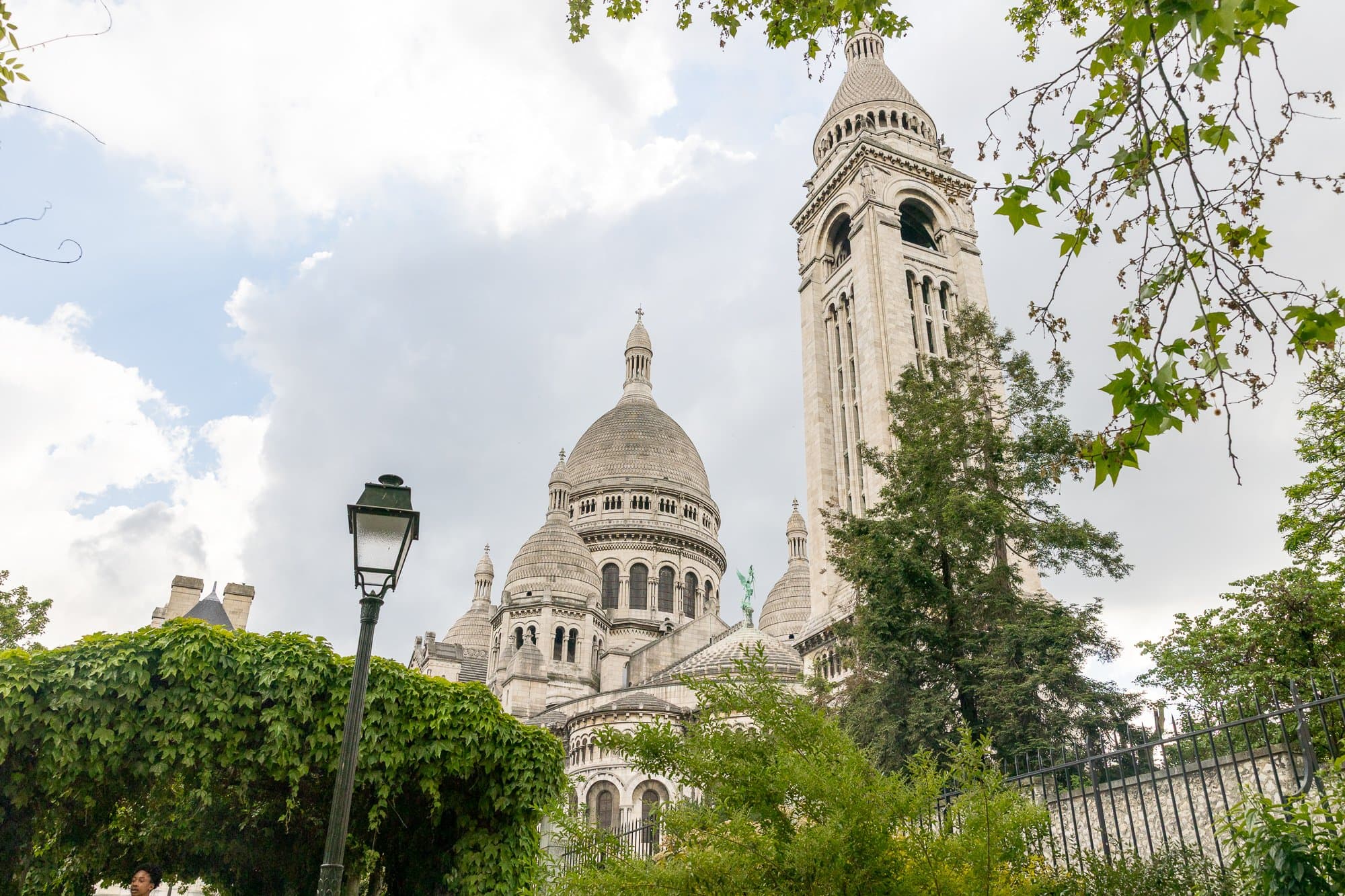
- Must-see: The dazzling white basilica of Sacré-Cœur (entry to the main nave is free). Walk along the prettiest street, Rue de l’Abreuvoir, with its pastel houses, and photograph the pink restaurant La Maison Rose.
- Food: A crucial rule: avoid all the restaurants right on Place du Tertre, they’re overpriced tourist traps serving reheated food. There’s a great vegan patisserie, VG Pâtisserie, below the hill. You can manage a calm lunch with a child at La Recyclerie, a bistro in an old railway station with a very family-friendly atmosphere.
- Pushchair rating (1/5): Pure hell. Endless steps, steep hills, and large cobblestones.
💡 Tip: Hidden on the slope of the hill is the Clos Montmartre. It’s the last and only active vineyard in Paris. The grapes are harvested every autumn and the town hall makes its own local wine from them.
19th Arrondissement (Buttes-Chaumont and La Villette): The Green Northeast
An arrondissement defined by two enormous parks. It’s a multicultural, rapidly gentrifying district full of young people driven out of the centre by high rents. It’s cheaper here and very green.
If you want to experience how the young Parisian generation lives today, head here. It’s not exactly the postcard Paris, but it has incredible buzz and dynamism that simply pulls you in.
- Must-see: The dramatic Parc des Buttes-Chaumont with cliffs, a waterfall, and a suspension bridge. And the huge futuristic Parc de la Villette to the north. ⚠️ Note that the popular children’s centre Cité des Enfants in La Villette is closed for renovation for children aged 2 to 7 until 9 June 2026!
- Food: Around the Canal de l’Ourcq you’ll find plenty of cheap bistros, like the Paname Brewing Company brewery right on the water.
- Pushchair rating (4/5): Parc Buttes-Chaumont is very hilly, but the paths are paved and La Villette is completely flat.
💡 Tip: In Parc Buttes-Chaumont, climb up to the little Temple de la Sibylle at the very top of the cliff. The sunset from there is unreal and you’ll only run into locals.
20th Arrondissement (Belleville and Ménilmontant): Street Art and Immigrant Cuisine
The twentieth is wild, colourful, and unpolished, full of street art, cheap Asian and African restaurants, and artists driven out of the centre by rents. Don’t expect any luxury here, but I always come away feeling more energised than after a trip to the Eiffel Tower.
It’s an arrondissement you go to for an authentic experience. You don’t come here to admire history, you come to absorb the energy of the people who make the city so incredibly diverse.
- Must-see: The Père-Lachaise cemetery (free entry), where Edith Piaf, Jim Morrison, and Oscar Wilde rest. Also walk through La Campagne à Paris, a small working-class colony from the 20th century that looks like country cottages with front gardens.
- Food: The best cheap Chinese dumplings and Vietnamese soups (Pho) are found down on Boulevard de Belleville.
- Pushchair rating (2/5): The arrondissement sits on a hill and the pavements are often broken or full of parked scooters.
💡 Tip: You don’t have to squeeze onto Montmartre. Climb up the hill to Parc de Belleville. From the upper terrace there’s a fantastic panoramic view of all of Paris, including the Eiffel Tower, completely free and without the tourists.
Practical Info: Transport, Safety and Scams 2026
Paris can sometimes catch you out unpleasantly if you don’t know the basic survival rules. It’s nothing dramatic, it’s just good to be prepared.
The Golden Bonjour Rule
This is the absolute basic without which you’ll fail in Paris: every single time you enter a shop, a bakery, or a restaurant, you must greet them out loud and with eye contact: “Bonjour”. If you just walk in and start ordering straight away, a Parisian takes it as a rude insult and will treat you accordingly.
Honestly, just this one word and suddenly they become the kindest people under the sun. Lukáš and I now joke about it and bellow “Bonjour” the moment we step through the door, and it always works like a magic spell.
Travelling with a Pushchair and the Navigo Pass
The Paris metro is old and full of steps. Lifts rarely work. If you’re travelling with a toddler, remember one number: Line 14. It’s fully automated, super modern, and the only line in the entire network that’s completely step-free from start to finish. For other journeys with a pushchair, rely instead on the dense bus network, from which you also get to see the city. Definitely pack a baby carrier for days when you head to Montmartre or the catacombs.
For transport, it’s worth getting a Navigo Découverte card (a weekly pass costs a little over €30 in 2026). You’ll need a small passport-style photo for it (just print it out at home beforehand), which you stick onto the card.
Watch Out for Tourist Scams
Paris is full of petty scammers, and although the city tries to fight them, they’re still on every corner by the main monuments. They’re not out to hurt you, they just want to confuse you out of a few dozen euros before you even realise what’s happening.
Here are the most common tricks you must ignore the moment you spot them:
1. The Gold Ring: Someone in front of you on the street (often near the Louvre) “finds” a thick gold ring. They ask if it’s yours. When you say no, they offer it to you for a small fee, claiming they don’t need gold. It’s worthless brass. Just keep walking. 2. Friendship Bracelets: Groups of men hang around on the steps below Sacré-Cœur on Montmartre. They’ll try to suddenly tie a string around your wrist. Once they tighten it, they aggressively demand money for the “bracelet”. Keep your hands in your pockets and say a firm “Non”. 3. Fake Petitions: Near the Eiffel Tower and the Louvre, young women operate pretending to be deaf-mute. They shove a clipboard with a petition under your nose and ask for a charity donation. While you read the paper, their accomplice rummages in your bag. 4. Fake Tickets: Remember that entry to Notre-Dame Cathedral is FREE. Don’t buy any overpriced “skip-the-line” tickets to get inside from anyone on the street.
Where to Next
If you’ve already chosen your neighbourhood, it’s time to start planning what exactly you’ll do and how to fit it all into a sensible itinerary. I’ve prepared more detailed guides for you:
- If you need a comprehensive overview of all the sights, take a look at our big article What to See in Paris.
- Only have a long weekend in the city? Open the ready-made itinerary Paris in 3 Days.
- For families who don’t want to deal with logistical dramas, I’ve put together special tips in the article Paris with Children.
Frequently Asked Questions
Where is the best place to stay in Paris for the first time?
For a first visit, the 1st arrondissement (Louvre) or the 4th arrondissement (Marais) is best, as you can cover most of the main sights on foot. A great and slightly cheaper option is the 2nd arrondissement (Bourse), which is still very close to the center.
Which Parisian districts are dangerous?
Paris is generally safe, but after dark it’s better to avoid the northern part of the 10th arrondissement (the immediate vicinity of Gare du Nord and Gare de l’Est stations) and the southern edge of the 18th arrondissement around Pigalle and Barbès stations. Pickpockets operate here and there’s a chaotic atmosphere.
Can You Handle Paris with a Stroller?
Yes, but it requires planning. Choose accommodation in flat districts with wide sidewalks (e.g. 6th or 7th district). In the metro, expect stairs, so it’s better to use buses or the accessible metro line number 14. Definitely bring a baby carrier.
How much does accommodation in Paris cost?
In 2026, you’ll pay around €40 for a hostel bed. A nice smaller apartment via Airbnb in the Marais district will run you approximately €140, and a comfortable family hotel with breakfast in the quiet 6th arrondissement starts at €220 per night.
Is it better to stay near the Eiffel Tower or in Marais?
It depends on your priorities. The area around the Eiffel Tower (7th arrondissement) is incredibly quiet, exclusive and safe, ideal for families. Le Marais (3rd and 4th arrondissements), on the other hand, is full of narrow streets, independent boutiques, great street food and buzzes with energy late into the night.
Where to find cheap accommodation in Paris?
You’ll find the best value for money in the 14th arrondissement (Montparnasse), which is quiet and well connected to public transport. Alternatively, look on the northern slopes of the 18th arrondissement behind Montmartre, or in the laid-back 13th arrondissement around Butte-aux-Cailles.
How does the Paris metro work?
The network is huge and will get you everywhere. Tickets are now loaded onto a rechargeable Navigo Easy card or into your phone via the Bonjour RATP app. A single ride costs €2.15. Just a reminder, the metro has loads of stairs, so if you’re traveling with heavy luggage, look for hotels near stations with escalators.
Do I need to speak French?
Not at all, in tourist areas and hotels you’ll communicate in English without any problems. However, you must follow basic etiquette: every conversation and every entry into a shop MUST begin with the French greeting “Bonjour”. Without it, you’ll be considered rude.
Tips and Tricks for Your Vacation
Don’t Overpay for Flights
Search for flights on Kayak. It’s our favorite search engine because it scans the websites of all airlines and always finds the cheapest connection.
Book Your Accommodation Smartly
The best experiences we’ve had when looking for accommodation (from Alaska to Morocco) are with Booking.com, where hotels, apartments, and entire houses are usually the cheapest and most widely available.
 🚗 Car rental on the roadVerified car rentals in Paris
Search with the DiscoverCars comparison engine — it compares prices from dozens of local and international rental companies, and most bookings come with free cancellation.
Compare car prices in Paris →Don’t Forget Travel Insurance
Good travel insurance will protect you against illness, accidents, theft, or flight cancellations. We’ve had a few hospital visits abroad, so we know how important it is to have proper insurance arranged.
Where we insure ourselves: SafetyWing (simple monthly subscription) and TrueTraveller (for extra-long trips).
Find the Best Experiences
Get Your Guide is a huge online marketplace where you can book guided walks, trips, skip-the-line tickets, tours, and much more. We always find some extra fun there!