

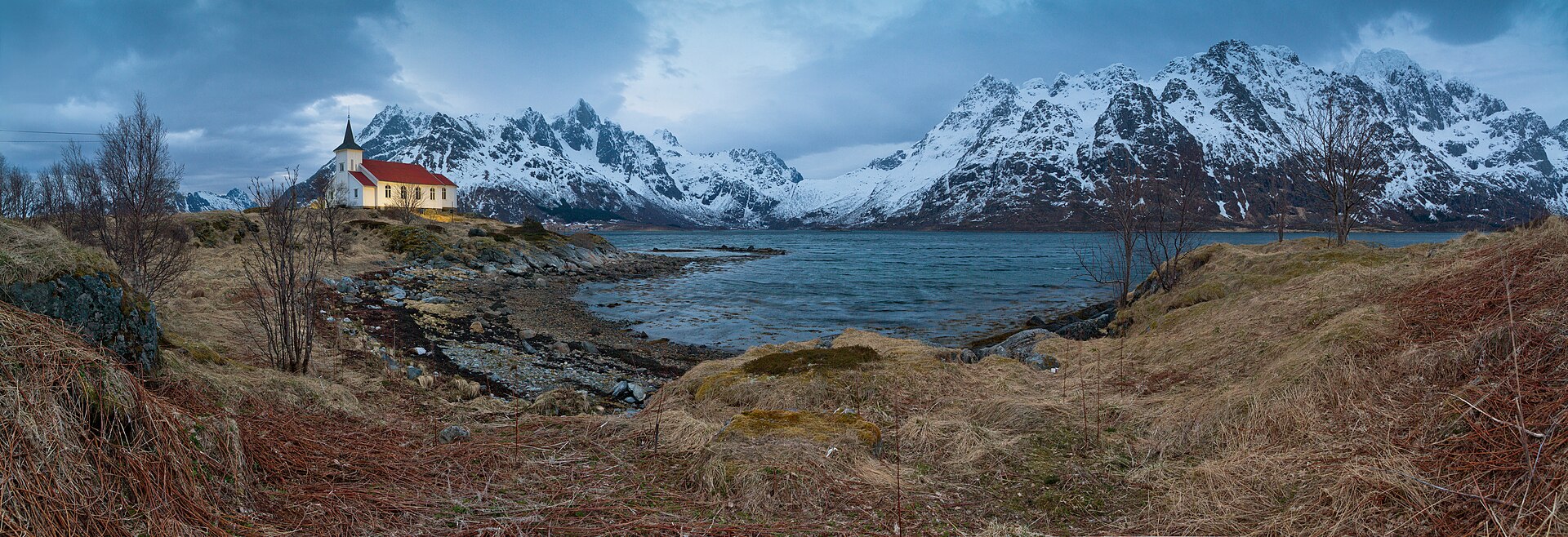
You’ve almost certainly stumbled across those breathtaking photos on social media: little red wooden cabins huddled beneath steep granite peaks, with a deep blue ocean spilling out all around them. This Norwegian archipelago above the Arctic Circle is simply one of the most photogenic places on the planet — nobody really doubts that. If you’re thinking about heading to Lofoten, Norway for your holiday, you’re in for an absolutely spectacular experience full of wild nature and dramatic scenery.
Lofoten doesn’t forgive those in a hurry, and trying to rush through it over a long weekend would be a real shame. The weather changes here at incredible speed, and four days simply isn’t enough — you risk it raining the entire time. A two-week stay, on the other hand, will give your wallet a proper workout, since Norway is one of the most expensive destinations in Europe.
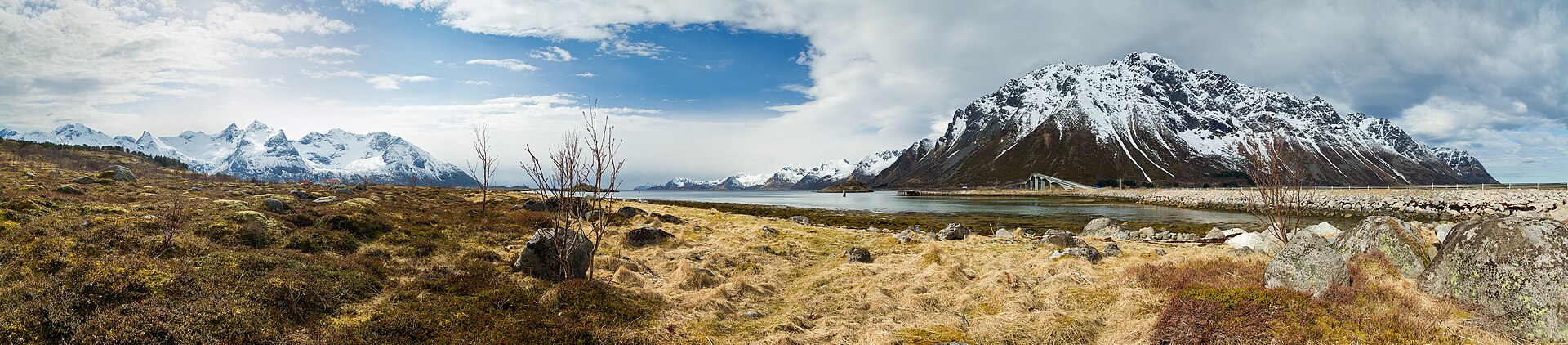
After poring over hundreds of travel diaries and real-world experiences, exactly seven days emerges as the absolute sweet spot. A week-long window gives you enough flexibility in case of bad weather, lets you slow down, and lets you soak up the genuine Nordic atmosphere. On top of that, you’ll manage to drive the islands nicely from north to south and back without spending entire days cooped up in the car.
Logistically, it makes the most sense to split your stay between two strategic bases to minimise long transfers. Be prepared: distances here aren’t measured in kilometres but in hours spent on winding roads. So let’s take a detailed look at an itinerary that will guide you through the most beautiful corners, from the busier north all the way down to the magical south.
TL;DR
- Total route length: Over the week you’ll cover roughly 400 to 500 kilometers, depending on the specific detours.
- Best time to visit: From mid-June to August you’ll enjoy the midnight sun phenomenon and relatively the most stable weather.
- Base airport: The most common arrival point is Evenes Airport (EVE) near Narvik, where you can pick up a rental car right away.
- Splitting your bases: A strategic compromise is to spend 3 nights in the north (Henningsvær) and 4 nights in the south (Reine or Hamnøy).
- Main experiences: A quiet cruise into Trollfjord awaits you, a visit to the Viking museum, Caribbean-like white beaches and picturesque fishing villages.
- Driving and tolls: The E10 road is the main artery, most sections are toll-free, but to be safe keep an AutoPass box in your car.
- Key tip: Don’t try to cram too many places into a single day, the weather in Lofoten dictates the pace and the yr.no app will be your best friend.
The full destination guide: Lofoten — guide and what to see
When to set off on this trip
Choosing the right dates is absolutely crucial when travelling above the Arctic Circle, because every season offers a wildly different experience. If you want a classic road trip with hiking and long days, go in the summer months — from mid-June to the end of August. During this period average temperatures hover around 12 to 15 °C, which by Nordic standards is actually rather pleasant ☺️. A seven-day window is ideal precisely because Lofoten doesn’t forgive those in a hurry. When a classic Nordic front rolls in and lashes the islands with wind and rain for three days straight, a shorter trip will leave you seeing absolutely nothing — whereas a week-long stay gives you a strong chance of outwitting the Norwegian weather in the end.
The main draw of the Norwegian summer is undoubtedly the midnight sun phenomenon, which lasts roughly from late May to mid-July. During this time the sun never dips below the horizon — it just sinks low over the ocean in the evening, casting a magical golden light. Thanks to this you have endless time for exploring, and you can head to the most popular viewpoints at midnight if you like, when you’ll have them entirely to yourself and avoid the biggest crowds.
You do need to bear in mind that summer is also peak tourist season, which means higher prices and the need to book accommodation many months in advance. August tends to be a little calmer, the days start to shorten, and the sea is at its warmest after summer — though for most mortals it’s still not really swimming weather. By early September nature is turning to autumn tones, the chance of catching the northern lights slowly increases, and the narrow roads pleasantly empty out so you can enjoy far more peace and quiet.
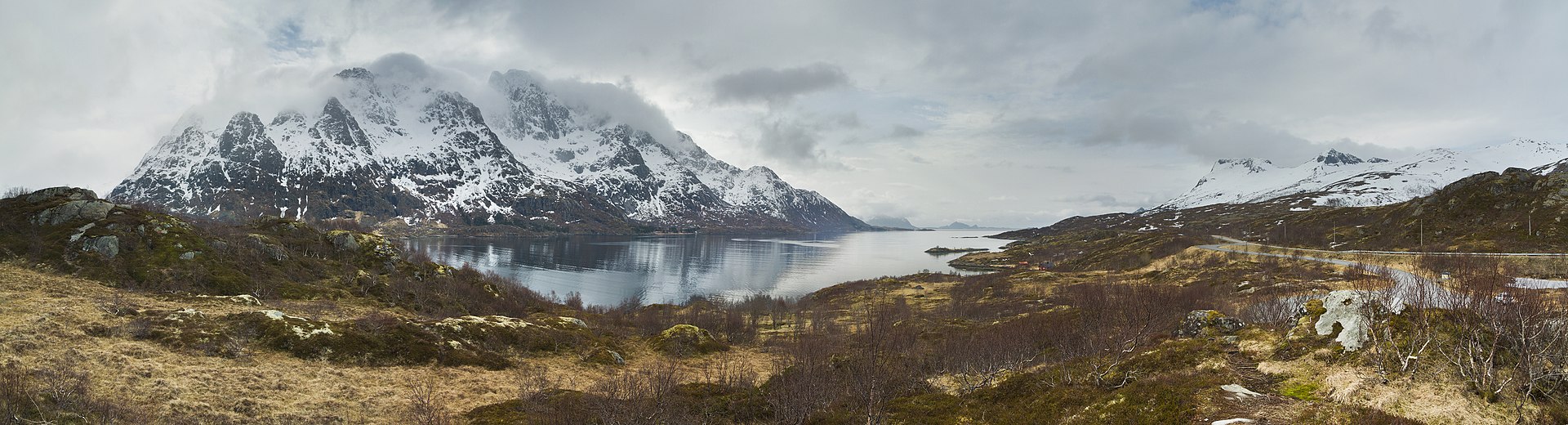
Whichever month you choose, be prepared for the fact that the weather in Lofoten, Norway is incredibly fickle and can change three times in a single afternoon. Within a few hours you can get clear skies, thick fog, driving rain, and strong wind. Your most important companion will therefore be the Norwegian weather app yr.no, which you’ll check several times a day so you can adjust your plans on the fly depending on where the sun happens to be shining.
Practical info: car, transport and budget
For freely exploring the islands, your own or a rental car is an absolute necessity, because public transport here is very sparse. Most travellers fly into the mainland airport Harstad/Narvik (code EVE, often referred to simply as Evenes), which offers the best connections and the widest choice of car hire firms. As soon as you land, collect your reserved car at the airport and set off on the roughly two-and-a-half-hour drive towards the first islands. From the UK, the easiest route is usually a connecting flight via Oslo, with onward services to Evenes.
The main artery of the whole archipelago is the scenic road designated E10, which winds from the mainland all the way down to the southernmost village of Å. Although it’s the most important route, be prepared for the fact that it’s often just a narrow two-lane road, busy in summer with huge numbers of slow-moving motorhomes. Speed limits in Norway are strict, fines are astronomical, and overtaking is practically impossible in many places, so arm yourself with patience.
As for tolls, Lofoten itself is mostly free of toll gates, but if you’re arriving from the mainland or using some of the newer tunnels, the odd charge is unavoidable. Hire firms usually fit cars with an automatic AutoPass box, which records the toll and later debits it from your card. Ferries on shorter routes work similarly — the system automatically scans your number plate and you don’t have to worry about a thing.
Parking at popular tourist spots has become a fairly pricey affair in recent years, so be sure to download the EasyPark app, which works across all of Scandinavia. In popular villages like Reine you can easily pay 35 to 50 NOK (roughly £2.50 to £3.50) per hour to park. As for a rough 2026 budget, it’s worth stressing that Norway is simply expensive — a typical supermarket shop will cost you a good deal more than back home.
Speaking of shopping, your saving grace will be chains like Rema 1000, Kiwi or Coop Extra, where you can get basic ingredients at relatively bearable prices. Restaurants here are extremely expensive — a main course commonly runs to 300 to 500 NOK (around £21 to £35). If you want to keep an eye on your budget, I’d recommend booking accommodation with its own kitchen, where you can make breakfasts and dinners, and get through the day on packed picnics.
The Lofoten Norway itinerary, day by day
This itinerary is designed to minimise the stress of constant packing while still letting you see the best. We’ll start in the northeast and gradually work our way down to the wild south, with a single base change in the middle of the week. You deliberately won’t drive more than two hours at a stretch, so you’ll have plenty of time for spontaneous stops and soaking up the landscape.
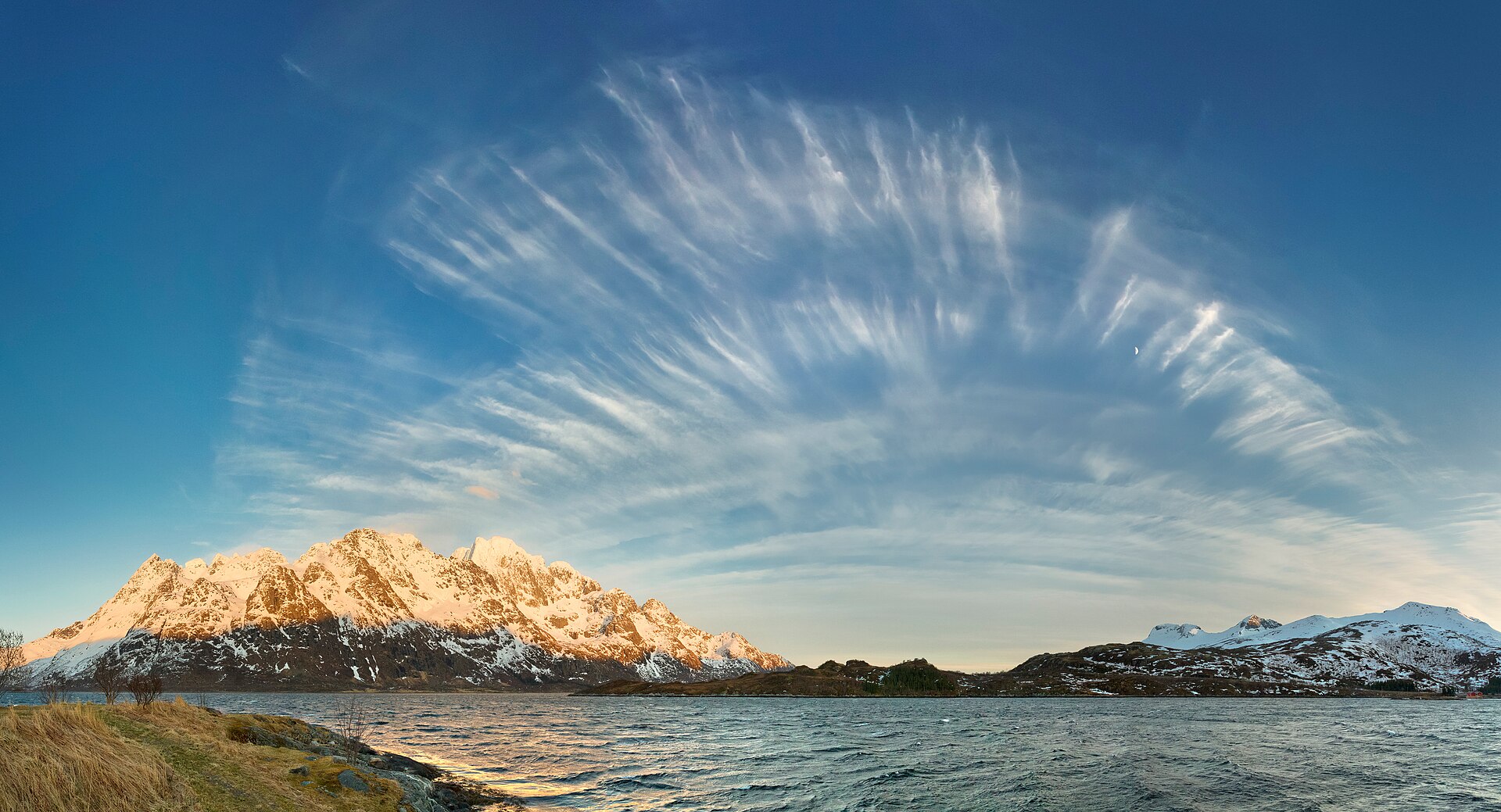
Day 1: Arrival at Evenes and transfer to your northern base
The first day is purely about logistics, long transfers, and taking in your first impressions of the Arctic landscape. Once you touch down at Harstad/Narvik Airport (Evenes for short), after a possible stopover in Oslo, collect your reserved car from the hire desk and set off along the E10 heading southwest. Ahead lies an opening route of roughly 160 kilometres that takes you along deep fjords, with ever more dramatic mountains opening up before you, giving you a clear sense of what awaits over the coming days.
After about an hour and a half of driving, I recommend making a practical stop in the town of Sortland, which serves as the natural commercial hub of the whole area. You’ll find a large Coop Extra supermarket here, the perfect moment to stock up on your first supplies for the evening and the next morning, whether that’s fresh bread, cheese, or porridge oats. A short stroll along the waterfront will help you stretch your legs after the long flight, take a deep breath of fresh air, and recharge before the final leg.
Today’s destination is the fishing village of Henningsvær, often nicknamed the Venice of the North, which will serve as your first strategic base. Once you’ve settled into a traditional wooden rorbu cabin, head out for an evening stroll through the narrow lanes and don’t forget to peek at the iconic football pitch, stunningly carved straight into a rocky little islet.
💡 Tip: If you don’t fancy cooking after the long journey, head for dinner at the hipster hub Trevarefabrikken, a former cod-liver-oil factory. The atmosphere is fantastic and they do a brilliant vegetarian pizza, which you can enjoy with an unforgettable view straight out over the open ocean.
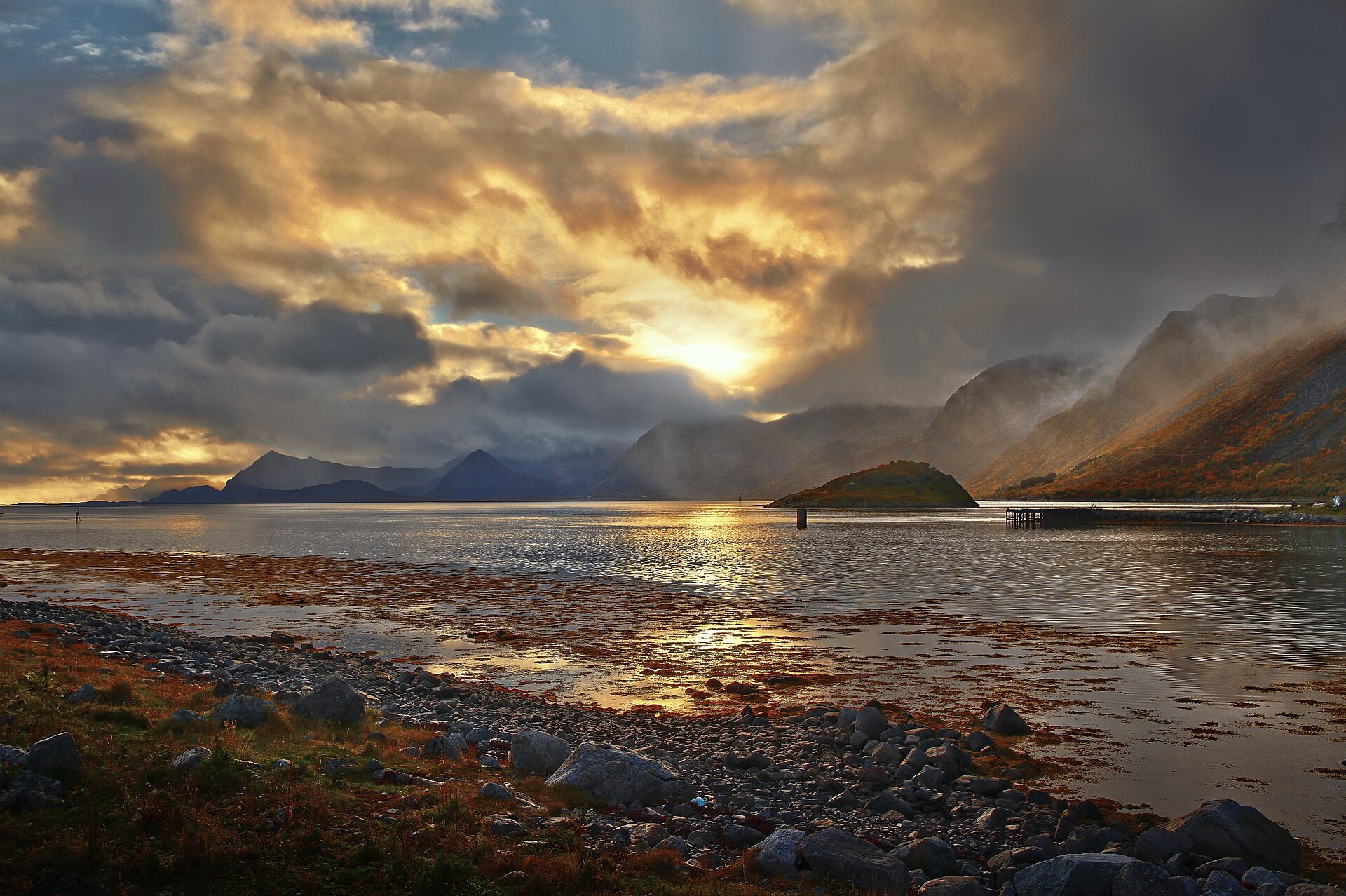
Day 2: Back to the Vikings and the white beaches of Gimsøy
After a peaceful first night and a hearty breakfast, you’re off on a journey into fascinating Norwegian history, around forty-five kilometres to the west. Head for the village of Borg, home to the famous Lofotr Viking Museum — and the hour-long drive itself will lead you through gorgeous green valleys that contrast sharply with the dark mountains behind, so you’ll almost certainly stop several times for photos.
The museum’s main attraction is the enormous reconstructed Viking longhouse, built precisely on the site of the original archaeological dig, which opens at half past ten in the morning. Inside, the dark atmosphere of ancient times wraps around you, everything smells of smoke from an open fire, and guides in period costume vividly bring to life the harsh existence of the chieftains of old. In summer, sheep and pigs graze freely here, and you can even take a trip across the nearby lake in a replica of a genuine Viking ship.
After lunch — which you can spread out picnic-style in the quiet museum garden — point your sat-nav towards the island of Gimsøy, thirty kilometres away. It’s geomorphologically completely different from the rest of Lofoten: largely flat and battered by wild winds. Head to the Hov Gård farm, where sturdy Icelandic horses roam freely along the snow-white sandy beaches, creating an utterly magical and photogenic scene.
💡 Tip: Stop for an afternoon coffee at the Låven restaurant, right next to the horse farm. From its cosy terrace you’ll have a lovely view of Hov Beach and the churning sea while you slowly warm up with a hot drink.
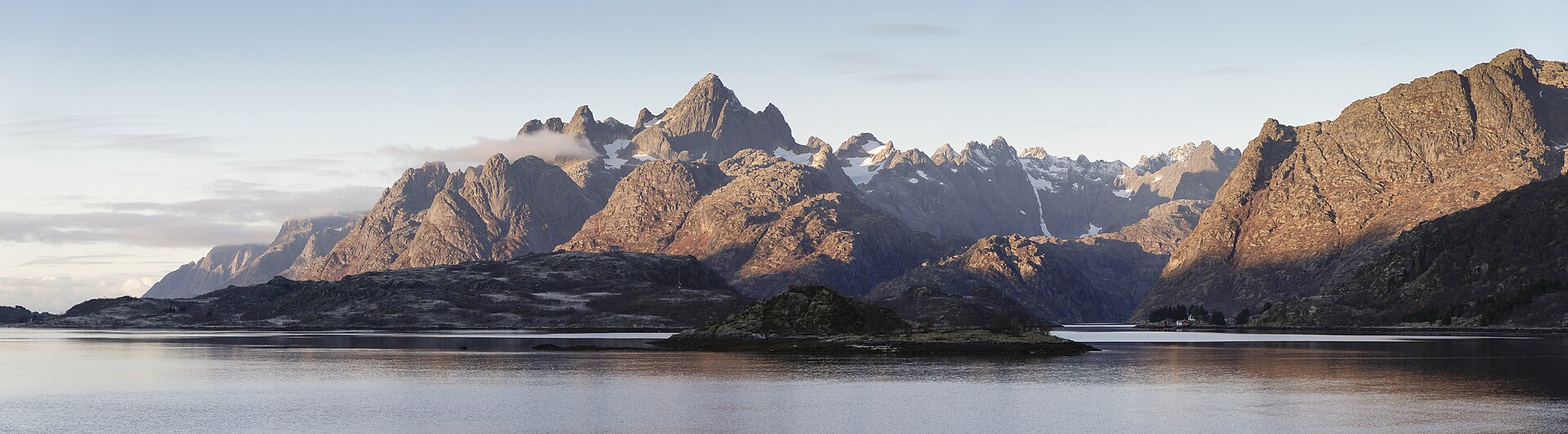
Day 3: A silent cruise into Trollfjord and around Svolvær
On day three it’s time to take to the sea and experience one of the area’s greatest natural wonders, reached after a short half-hour drive. In the morning, head to Svolvær, twenty-five kilometres away — the capital of Lofoten — where you can park conveniently at the harbour terminal using the EasyPark app. Get ready to board: I’d recommend reserving tickets for this popular cruise via GetYourGuide well in advance to be sure of your spot.
The best way to explore narrow Trollfjord is to take the hybrid-electric catamaran Brim Explorer, which has huge windows and a heated café inside. This unique vessel runs on normal power out on the open sea, but as soon as it approaches the fjord it switches to quiet batteries, and you glide into the gorge in complete silence. The steep rock walls tower hundreds of metres straight out of the water, and with a bit of luck, majestic white-tailed eagles will circle overhead.
After returning from the half-day cruise, you can take a leisurely wander around the centre of Svolvær, with its many cafés, small galleries, and even the icy Magic Ice bar. If you’re keen on marine life, head another fifteen kilometres south to the nearby village of Kabelvåg, home to the popular Lofoten Aquarium. Here you’ll learn plenty about the fragile ecosystem of the Arctic Ocean, and you might even catch the popular otter feeding, which takes place at two o’clock in the afternoon or half past five in the evening.
💡 Tip: Use your evening in Henningsvær for some calm packing, because tomorrow brings a big move south. I’d also suggest finishing off all the supplies in the fridge, so you don’t have to dawdle in the morning and can set off early.
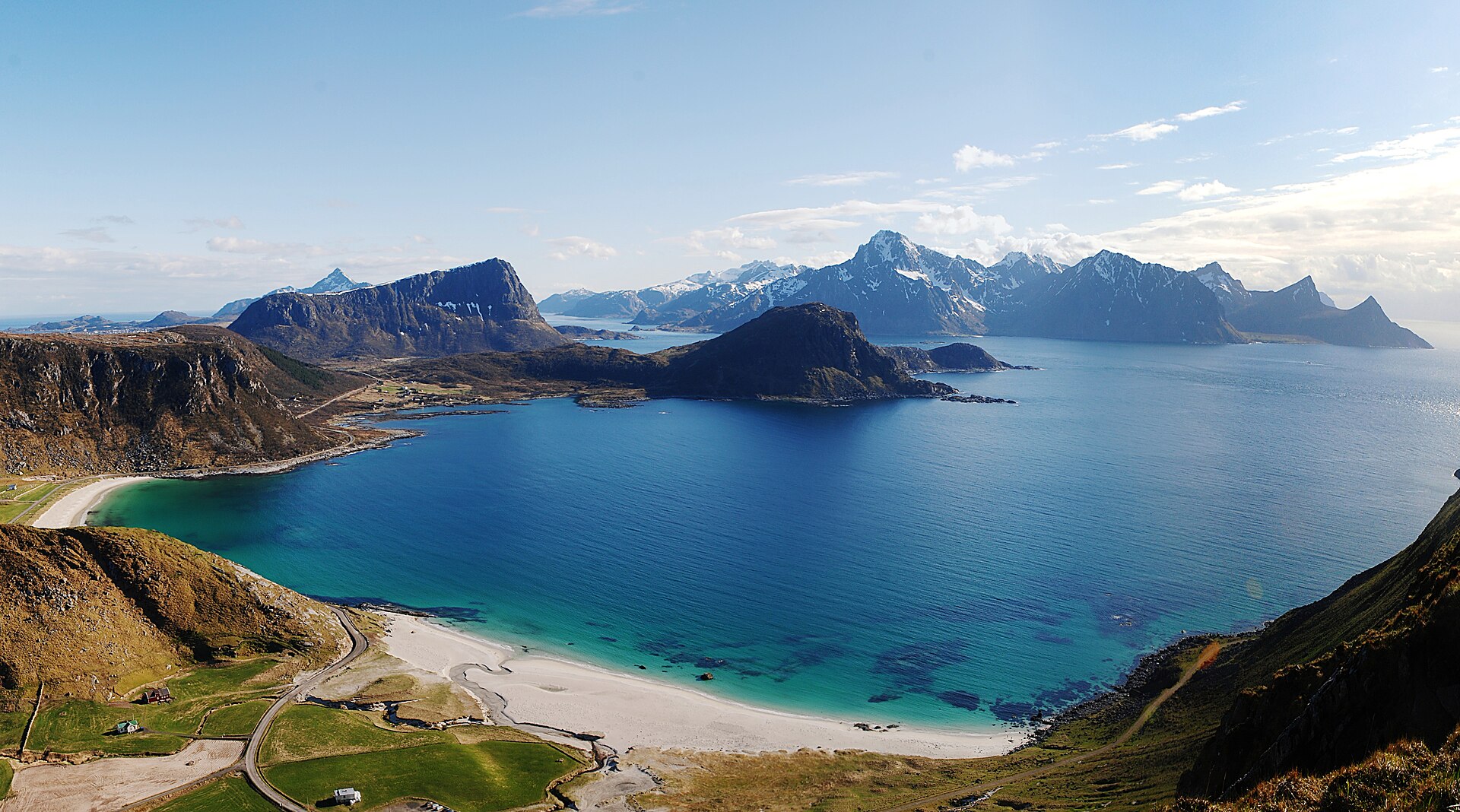

Day 4: The big move south via Haukland Beach
Today is your longest travel day, as you’ll be moving a full 165 kilometres, but we’ll wisely break the route into several lovely stops so it won’t feel like much at all. After breakfast, say goodbye to Henningsvær and set off along the E10 heading west. After about fifty kilometres and an hour of driving you’ll reach the town of Leknes, which isn’t exactly bursting with charm but is a key administrative centre with large Coop Extra supermarkets — the perfect spot to restock food for the next four days.
Just ten kilometres past Leknes lies one of the absolute highlights of the entire archipelago: the famous Hauklandstranda beach. The white sand and incredibly turquoise water will briefly convince you you’ve landed somewhere in the Caribbean — until you test the icy water temperature 😅. Be sure to take the gorgeous, flat coastal walk that links Haukland with the neighbouring Uttakleiv beach, offering around a kilometre and a half of fantastic views over the open ocean.
In the afternoon, carry on another hour south across the island of Flakstadøya, where you can make a quick stop at Skagsanden beach, a popular spot with surfers and photographers. The road begins to twist dramatically here, the mountains grow ever steeper, and you gradually arrive in the iconic area around Reine and Hamnøy, where your second base for the rest of the trip awaits.
💡 Tip: For accommodation in this area I warmly recommend the iconic red cabins of Eliassen Rorbuer in Hamnøy, or the neighbouring Sakrisøy Rorbuer. They’re pricier, but the stunning view from the window straight onto the majestic Festvågtind mountain is well worth the money.
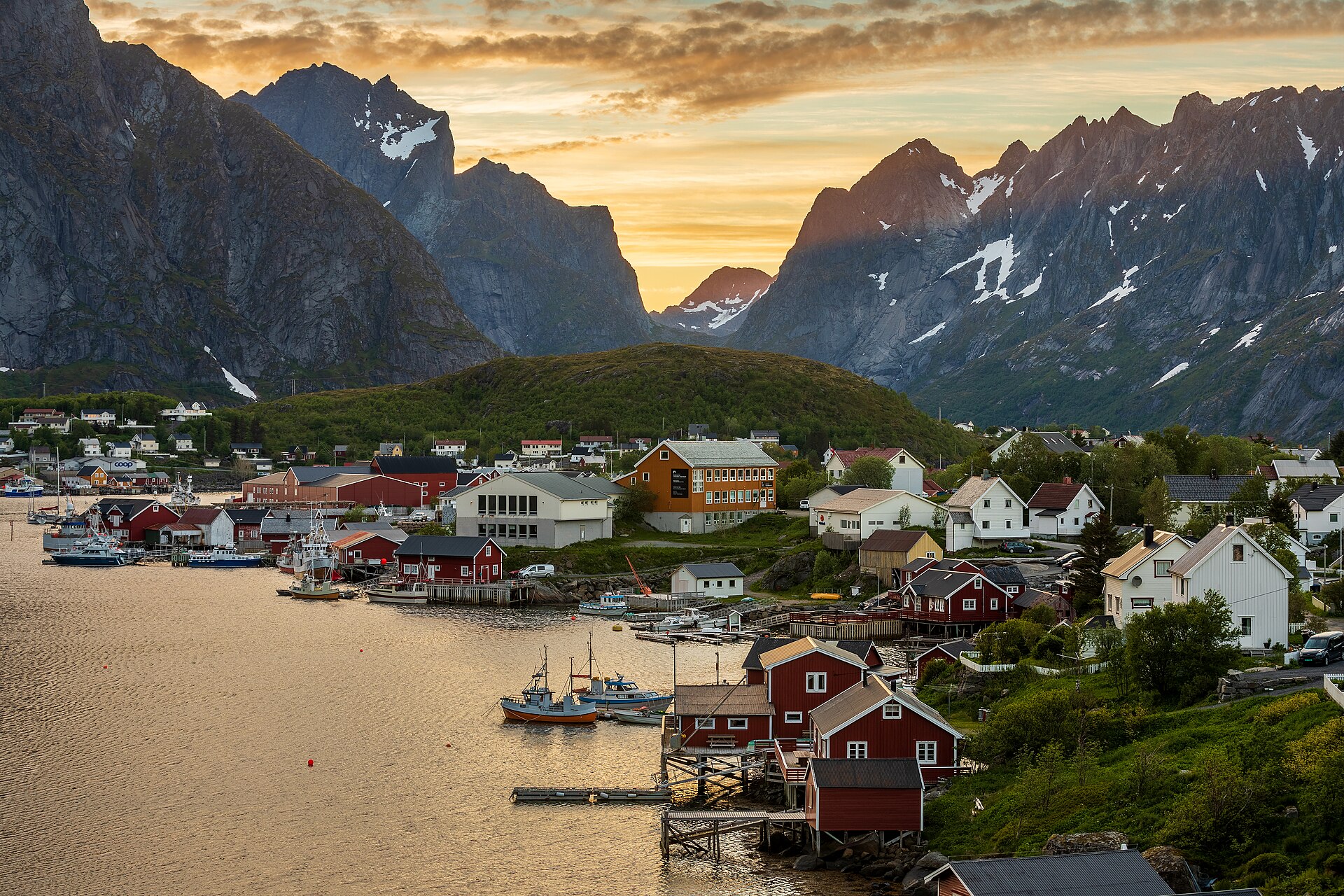
Day 5: Iconic Reine and the end of the world in the village of Å
After yesterday’s big move, order yourself a slightly slower pace and set off to explore the single most photographed little town in all of Norway. A walk around Reine is a great experience in itself, because you’ll see the iconic scenery you definitely know from postcards. Park at the main car park on the edge of town — have 35 NOK (about £2.50) per hour ready — and set off on foot among the traditional fishing huts, which are picturesquely mirrored in the calm waters of the fjord.
Once you’ve had your fill of the views from Reine, drive on roughly ten kilometres to the very end of the E10, where you’ll find a charming village with the shortest name in the world, called simply Å. The road simply ends here, and beyond it stretches nothing but the wild ocean. The village is famous for its traditional cod-drying racks — the dried fish is called stockfish — and the local museum dedicated to this phenomenon does a great job of bringing the harsh history of Lofoten’s fishermen to life.
You can pleasantly extend your return journey with a stop at the more secluded Storsandnes beach, which lies just fifteen minutes’ drive from Hamnøy and offers free parking. It tends to be much quieter than the popular Haukland and is an absolutely ideal spot to simply sit on the pebbles, listen to the murmur of the waves, and watch the ever-changing Arctic clouds overhead.
💡 Tip: In Å you simply mustn’t miss the famous Bakeri Å bakery, which makes its bread the traditional way in an original nineteenth-century oven. Their fresh cinnamon buns are renowned far and wide and are an essential part of any afternoon coffee.
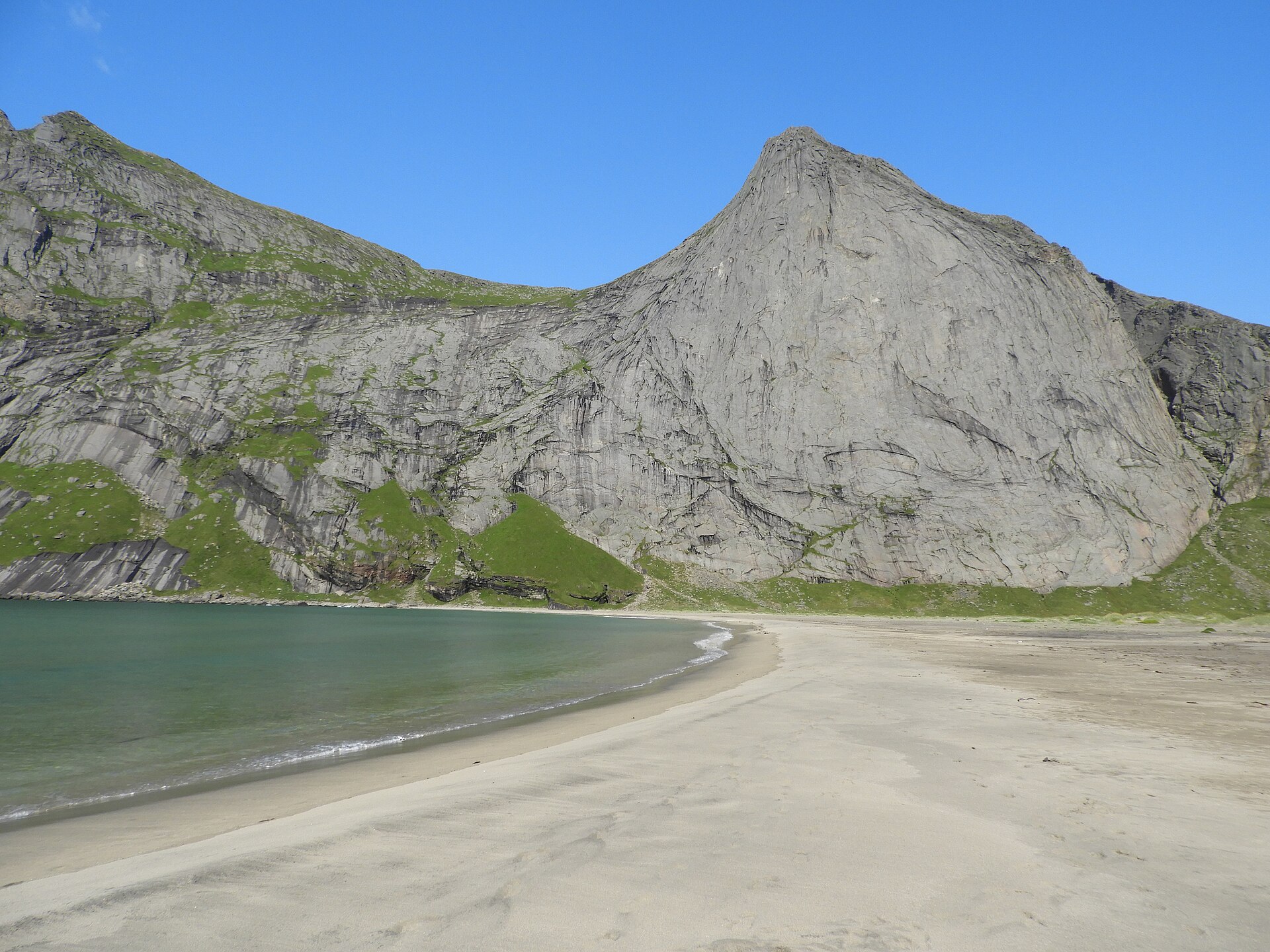
Day 6: The cut-off Bunes Beach and the Arctic Caribbean
On your penultimate day, leave the car to enjoy a well-earned rest in the car park and set off on a fantastic excursion that perfectly combines a boat trip with a hike. In the morning, head to the harbour in Reine, from where a local ferry departs at nine o’clock sharp towards the remote settlement of Vindstad. It’s a sort of water bus that primarily serves local residents, so in high summer be sure to book your tickets in advance, as it tends to get fairly full.
The twenty-five-minute crossing across Reinefjorden is a wonderful experience in itself, but the main event awaits once you finally disembark. From the jetty at Vindstad, a roughly two-kilometre, gently undulating trail with just eighty metres of elevation gain leads you safely to the other side of the island. There, all of a sudden, the enormous sandy expanse of Bunes Beach opens up before you, hemmed in on three sides by massive granite walls.
The scale of this place is utterly overwhelming, and human figures look like tiny ants from a distance. Spread out a picnic blanket on the fine sand, draw energy from the surrounding peaks, and enjoy the feeling of being completely cut off from civilisation. After taking the ferry back to Reine, you can treat yourself to a peaceful early-evening stroll among the yellow cabins on the little island of Sakrisøy.
💡 Tip: Stop by the famous yellow house Anita’s Sjømat on the island of Sakrisøy. The local speciality is their celebrated fish burgers, which draw tourists from all over the world, and if you prefer plant-based food, you’ll also find excellent cheeses and local delicacies that you can happily enjoy out on a bench.
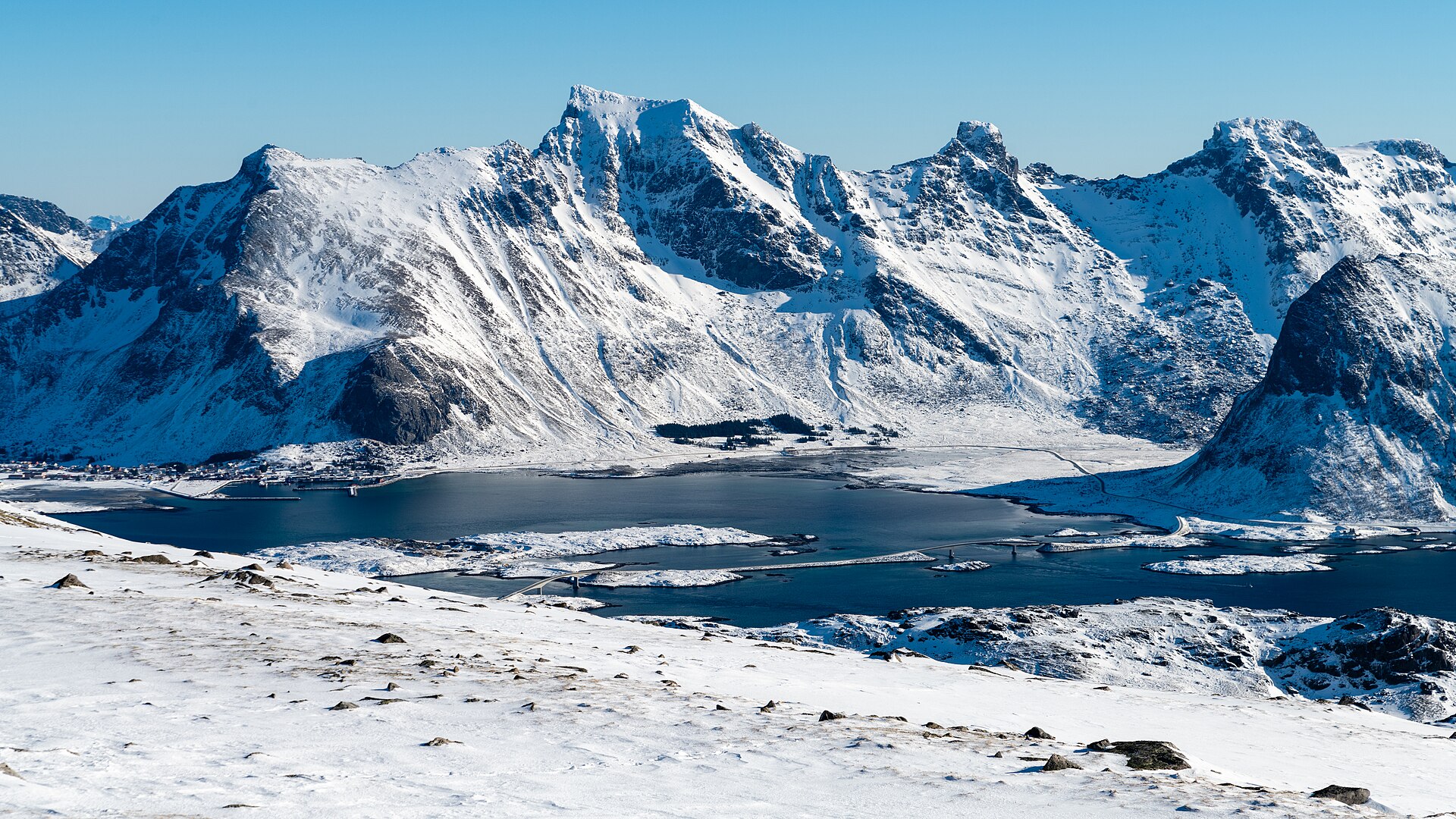
Day 7: The hidden gems of Fredvang, the glassblowers of Vikten and departure
Your week in Lofoten is slowly drawing to a close, but before the long drive to the airport, a few last beautiful places await that would be a shame to miss. In the morning, say a final goodbye to your cosy rorbu in Reine and head north. Just past the village of Flakstad, turn off towards the settlement of Fredvang, reached by very photogenic, elegantly curved bridges that look as if they’re magically floating over the turquoise water of the deep fjord.
Beyond the bridges, carry on about two kilometres to the very end of the road, where you’ll find the beautiful and often overlooked Yttersand beach. Walk along the white sand and savour your last breaths of fresh Arctic air. Then return to the main road and make a roughly forty-minute detour to the settlement of Vikten, where you’ll come across the renowned Glasshytta glassblowing workshop. It’s set into the rugged coastline in a wonderfully striking piece of architecture, and you can watch master glassblowers at their demanding work.
Then, unfortunately, only the inevitable remains: the roughly 260-kilometre transfer back to the mainland and Evenes Airport. Break this long route into several shorter stretches of no more than two hours each, so you don’t tire yourself out at the wheel. The last stunning views of snow-capped mountain peaks will keep you quiet company all the way to the airport terminal.
💡 Tip: If you have enough time on the way back, you could try visiting the Aalan Gård goat farm in Bøstad. It offers fantastic homemade cheeses and a friendly atmosphere — just remember to check their current opening hours in advance.
Map of points of interest for your phone
Where to stay along the route
💡 Tip for accommodation and experiences: We like to look for places to stay on Booking.com, which usually has the best cancellation terms. For tickets, tours, and activities, it pays to compare and book through GetYourGuide.
As mentioned at the very start, packing your bags every single day in Lofoten is completely needless stress, and a base-camp strategy is the key to a relaxed holiday. Splitting your stay between two strategic bases turns out to be the best possible compromise for seeing the most of the islands without that oppressive feeling that you’re spending your entire holiday cooped up in the car. Staying in traditional fishing cabins, known as rorbu, is simply a must and an inseparable part of any visit to Norway.
For the first half of the week in the north, I’d recommend looking for accommodation around romantic Henningsvær or the more practical Svolvær. Henningsvær offers a fantastic atmosphere, plenty of excellent cafés, and the feeling that you’re truly living right on the sea. Svolvær, on the other hand, is far better equipped for shopping or setting off on boat trips. Both make a great starting point for discovering Viking history and exploring the more northerly beaches.
For the second half of the week in the south, the obvious choice is the area around Reine, Hamnøy, or Sakrisøy, where all those famous front-cover travel photos are taken. You do need to bear in mind, though, that accommodation prices here climb to astronomical heights in high summer, often around £290 a night, and free parking spaces vanish in a flash. For that price, however, you get a magical view of the jagged peaks straight from your bed — an experience for life.
If for some reason you’d rather spend the whole week in a single place and not move at all, the ideal location is the area around the town of Leknes or the authentic fishing village of Ballstad. These spots sit right in the middle of the archipelago, so you’re roughly equidistant from the rugged north and the photogenic south, and you’ll save yourself a lot of hassle. You might miss out on the most iconic view straight from your window, but you gain maximum peace and quiet, proximity to big supermarkets, and a fantastic logistical advantage. A lovely and more affordable option in the heart of Lofoten is, for example, the Kræmmervika Havn complex in Ballstad, which keeps a wonderfully raw, original atmosphere, or the more luxurious Hattvika Lodge.
Where to go next
If this plan has whetted your appetite and you’d like even more details about this Nordic paradise, I’ve put together some more useful resources to make your planning easier.
- For deeper insight into individual landmarks and viewpoints, read our big guide to Lofoten.
- If you’re still unsure which fishing cabin to choose, check out the article on where to stay in Lofoten.
- And for practical tips on flights and ferries, don’t miss the guide on how to get to Lofoten.
Frequently asked questions
Platí se na lofotských silnicích nějaké mýtné?
Samotné souostroví je od mýtných poplatků z velké části osvobozeno, silnice E10 je na ostrovech většinou zdarma. Pokud ale přijíždíte z pevniny přes letiště Evenes nebo využíváte nové podmořské tunely, poplatkům se nevyhnete. Půjčovny aut standardně vybavují vozy krabičkou AutoPass, která vše automaticky zaznamená, a částka se vám na konci výpůjčky jednoduše strhne z platební karty.
Potřebuji v Norsku s sebou hotovost?
Rozhodně ne, Norsko je jednou z nejvíce bezhotovostních společností na světě. Kartou zaplatíte naprosto všude, od parkovacích automatů přes nákup rohlíků v supermarketu až po ty nejzapadlejší kavárny na konci světa. Fyzické norské koruny pravděpodobně za celou cestu ani neuvidíte, takže se s rozměňováním ve směnárnách vůbec nemusíte trápit.
Jak je to s komáry a otravným hmyzem?
Na rozdíl od vnitrozemského severního Norska nebo Finska, kde mohou být komáři v létě doslova noční můrou, na Lofotech máte díky silnému oceánskému větru většinou klid. Hmyz se tu drží spíše ve vnitrozemských močálech, ale na pobřeží a ve vesničkách vás trápit nebude. Přesto si pro jistotu jeden spolehlivý repelent do kufru přibalte, pokud by nefoukalo.
Dá se v oceánu koupat?
Záleží na tom, jak moc jste otužilí 😅. Během léta se teplota Norského moře pohybuje kolem 10 až 13 °C, což je pro běžného středoevropana spíše na rychlé zchlazení a fotku než na plavání. Tyrkysová voda na plážích jako Haukland sice láká, ale většina lidí skončí jen u svlažení kotníků, zatímco do celého ponoru se pouštějí jen ti nejodvážnější.
Co si mám určitě sbalit na sebe?
Klíčem k úspěchu je na Lofotech cibulové vrstvení oblečení, protože během pár hodin zažijete všechna roční období. Nejdůležitějším kouskem je kvalitní nepromokavá a větruodolná bunda, ke které přidejte merino trička, teplý svetr a pohodlné trekové kalhoty. Rozhodně nezapomeňte na pevné a nepromokavé boty, protože terén tu bývá často podmáčený a blátivý.
Jsou obchody s potravinami otevřené každý den?
V Norsku platí poměrně přísná pravidla pro nedělní prodej. Většina velkých supermarketů jako Rema 1000 nebo Kiwi má v neděli zavřeno, proto si víkendové zásoby vždy nakupte už v sobotu odpoledne. Výjimku tvoří jen některé menší večerky typu Joker, které mohou mít omezenou nedělní otevírací dobu, ale sortiment tam bývá slabší a ceny znatelně vyšší.
Uvidím v létě polární záři?
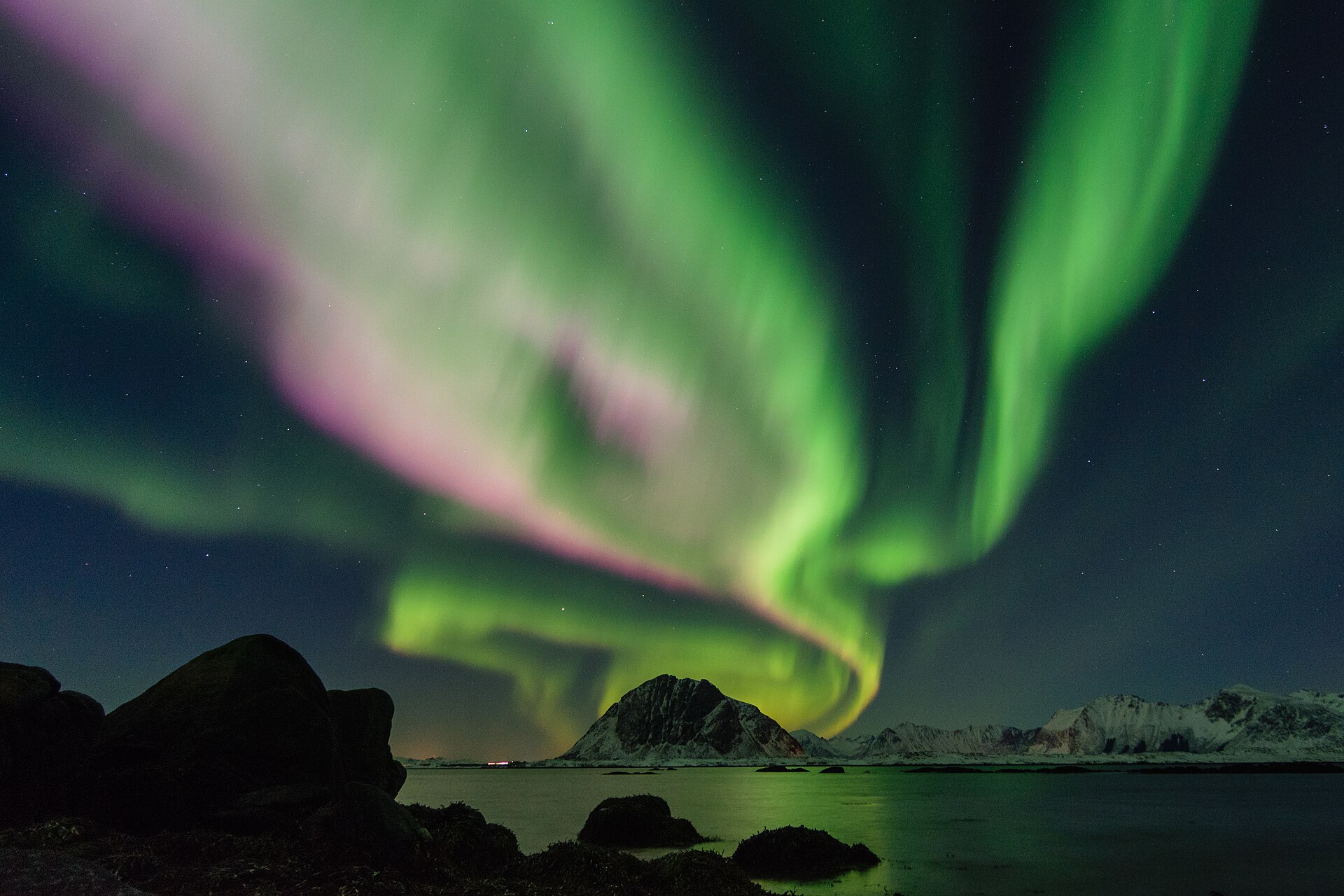
Bohužel ne. Od konce května do poloviny července panuje na Lofotech fenomén půlnočního slunce, takže je venku světlo celých 24 hodin denně. Ani v srpnu ještě není obloha dostatečně tmavá na to, abyste mohli auroru pozorovat. Pokud je vaším hlavním cílem polární záře, musíte cestu naplánovat na období od konce září do března, kdy jsou tu noci dlouhé a temné.
Tips and Tricks for Your Vacation
Don’t Overpay for Flights
Search for flights on Kayak. It’s our favorite search engine because it scans the websites of all airlines and always finds the cheapest connection.
Book Your Accommodation Smartly
The best experiences we’ve had when looking for accommodation (from Alaska to Morocco) are with Booking.com, where hotels, apartments, and entire houses are usually the cheapest and most widely available.
 🚗 Car rental on the roadVerified rental cars in Norway
Search with the DiscoverCars comparison engine — it compares prices from dozens of local and international rental companies, and most bookings come with free cancellation.
Compare car prices in Norway →Don’t Forget Travel Insurance
Good travel insurance will protect you against illness, accidents, theft, or flight cancellations. We’ve had a few hospital visits abroad, so we know how important it is to have proper insurance arranged.
Where we insure ourselves: SafetyWing (simple monthly subscription) and TrueTraveller (for extra-long trips).
Find the Best Experiences
Get Your Guide is a huge online marketplace where you can book guided walks, trips, skip-the-line tickets, tours, and much more. We always find some extra fun there!
More from Lofoten
Full guide →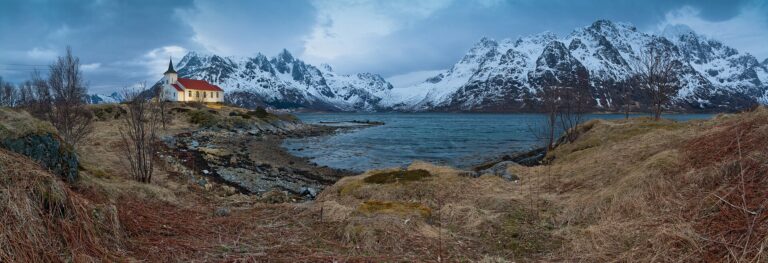 When to go · most readWhen to Visit Lofoten, Norway: Weather Month by Month and the Midnight Sun 2026
 ActivitiesReinebringen Norway: 6 Things to Know — The Hike, Steps & Current Status
 Travel storyWhat to Pack for Lofoten, Norway: A Packing List for Every Season
 What to see7 Things to Do in Lofoten, Norway When It Rains: Your Backup Plan
 Getting thereLofoten Islands by Campervan: Parking & Rules for 2026


