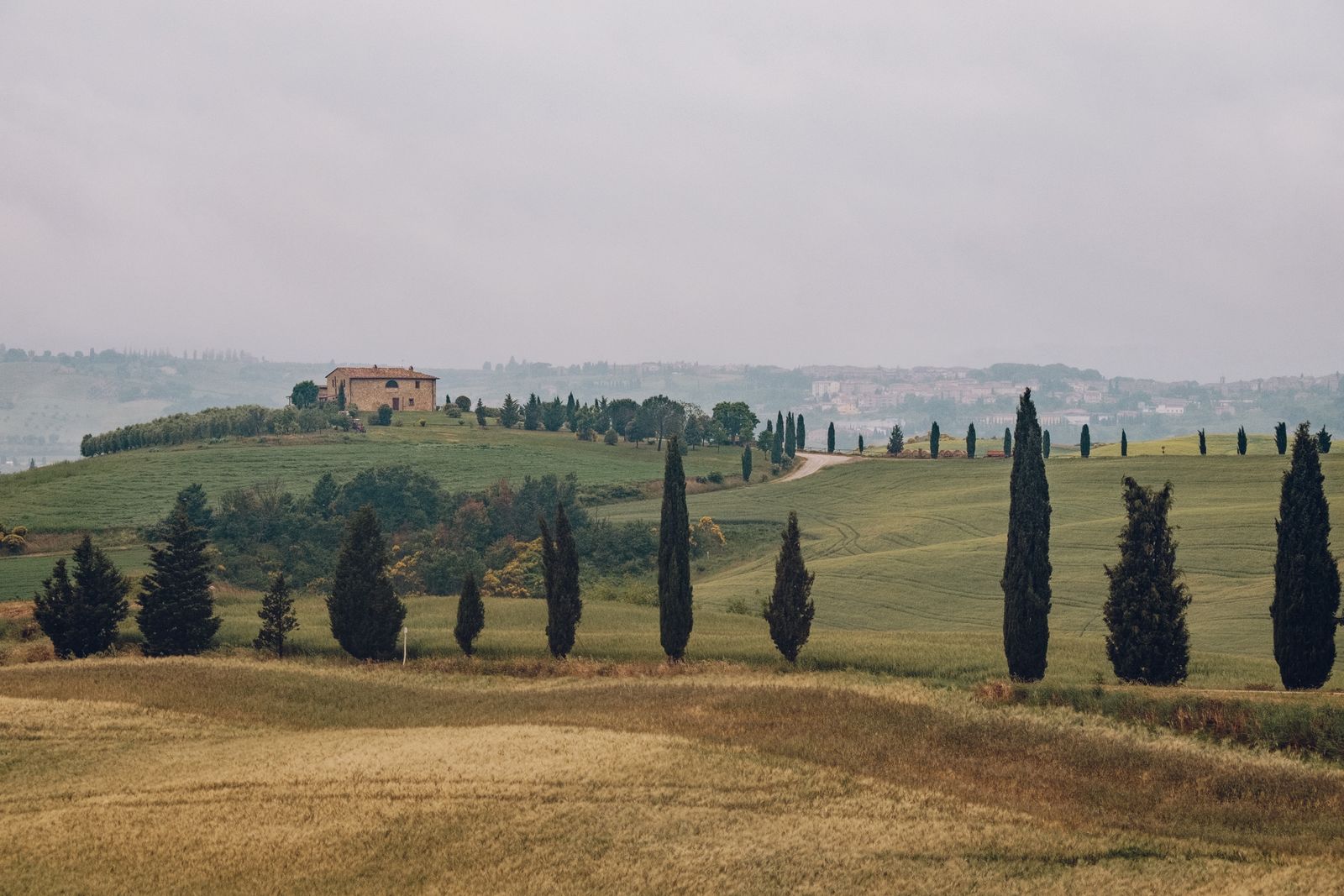
Forget the crowded squares of Italy’s big cities for a moment and set off to discover a place where time has stood still. The inland Tuscan countryside around Siena, Italy and San Gimignano isn’t the kind of destination where you race around ticking sights off a list — it’s a place that teaches you to enjoy slow travel. If you’re after that perfect image you know from films and postcards, you’ll find it right here, among the rolling green hills, morning mist drifting through the valleys, and lonely stone farmhouses reached by long driveways lined with slender cypress trees.
This region suits anyone happy to spend the day wandering down country roads with no fixed destination, discovering local cheeses and watching the sun set over endless vineyards. Medieval stone towns sit majestically on hilltops, looking down over the fertile landscape they’ve watched over for centuries, and every little village hides stories hundreds of years old.
Whether you’re planning to taste full-bodied red wines in the Chianti region, or you long to see the famous Palio horse race in the heart of Gothic Siena with your own eyes, I’ve put together a detailed guide for you. In it you’ll learn how to avoid those nasty parking fines, when the best time to visit is, and which spots would be an absolute shame to miss.
TL;DR
- A car is a must: Smaller towns like San Gimignano and Volterra aren’t on the railway, so to explore the countryside and the vineyards you’ll absolutely need your own or a rental car.
- Watch out for the ZTL: Historic centres are strictly monitored by cameras and driving into them means a hefty fine, so always park exclusively in the marked car parks outside the walls.
- A base on a farm: You’ll get the best Tuscan experience by staying in a so-called agriturismo — working farms surrounded by nature, which do, however, often require a multi-night stay.
- Siena’s marble treasure: The stunning mosaic floor in Siena Cathedral is covered for most of the year, and in 2026 you can admire it only from 27 June to 31 July and from 18 August to 15 November.
- Towering San Gimignano: Of the original 72 family towers, only 14 survive, and you can climb the tallest, Torre Grossa, for the best view over the region.
- World-class gelato and wine: In San Gimignano you can’t skip the ice cream from a world champion at Gelateria Dondoli and a glass of the local white wine, Vernaccia.
- A gem called Val d’Orcia: This UNESCO-listed area offers the most iconic Tuscan scenery, Renaissance Pienza full of pecorino cheese, and open-air thermal baths.
The full destination guide: Tuscany — guide and what to see
When to Visit Medieval Tuscany
The landscape of inland Tuscany changes colour so dramatically that it looks like a completely different corner of the planet in every season, which makes it a destination worth returning to again and again. Spring, from April to June, is an absolute explosion of vivid green, when temperatures are lovely for strolling through the towns and thousands of red poppies bloom along the roads. It’s the ideal time if you want to dodge the worst of the summer heat and enjoy nature waking up at full strength.
Summer, through July and August, gives you the most classic postcard scene, because the wheat fields turn golden and huge fields of sunflowers come into bloom — but you’ll need to brace yourself for scorching heat and the absolute peak of the tourist season. During this time the historic towns are bursting at the seams, accommodation prices shoot up, and crowds also descend on Siena for the August race, so planning well in advance is essential.
Autumn, in September and October, is then the absolute sweet spot for travellers, as temperatures drop to a very manageable 21 to 27 degrees and the light takes on a wonderfully soft tone. This is when the traditional grape harvest begins, followed a little later by the olive harvest, so although the landscape is a touch parched after summer, the atmosphere full of good food and wine remains utterly unbeatable and the crowds noticeably thin out. If you’re checking the weather for Siena, Italy, this is the most forgiving stretch of the year.
Where to Stay in the Heart of Tuscany
💡 Accommodation and experiences tip: We like to look for places to stay on Booking.com, where the cancellation terms tend to be the best. Tickets, tours and activities are then worth comparing and booking through GetYourGuide.
If you’re travelling by car, it doesn’t make much sense to stay in a standard hotel in the middle of town, because the real phenomenon of this region is staying on a working farm, or agriturismo. These are sensitively restored historic stone estates, usually set in splendid isolation, with a pool overlooking the countryside and fantastic dinners made from their own produce. For 2026, expect the comfortable middle-of-the-road rooms to cost roughly €200 to €375 per night, but watch out for one quirk of high season, when most farms require a minimum stay of 2 to 6 nights. A great base for exploring the area is the eco-friendly Agriturismo Castello di Spedaletto, set right in the picturesque Val d’Orcia valley, or the gorgeous Palazzo Malaspina in the Chianti region.
If you prefer evening strolls along cobbled streets and you’re travelling by train, Siena makes an absolutely fantastic base, full of great restaurants and Gothic architecture. For lovers of views and boutique style I warmly recommend Campo Regio Relais, a wonderful guesthouse right in the historic centre. If you’re after something more affordable with an unbeatable location, Piccolo Hotel Etruria is a great choice — it’s just a few dozen steps from the main square, Piazza del Campo.
Here are some specific tips for tried-and-tested accommodation across all categories (you can compare prices and availability in one click with Stay22, which searches for the best deal across Booking.com, Airbnb and others):
- Campo Regio Relais – A boutique guesthouse in Siena’s historic centre with gorgeous views, an ideal base for day trips around the area.
- Piccolo Hotel Etruria – An affordable hotel just a few steps from Piazza del Campo.
- Hotel Leon Bianco – A hotel right on Piazza della Cisterna in an 11th-century building with wooden beamed ceilings.
- Hotel L’Antico Pozzo – A historic 15th-century palazzo inside the walls of San Gimignano.
- Agriturismo Castello di Spedaletto – An organic farm in Val d’Orcia with panoramic apartments and authentic countryside (often a 2-night minimum).
- Palazzo Malaspina – A guesthouse in the heart of Chianti with breakfast, close to the wine villages and San Gimignano.
The town of towers, San Gimignano, is extremely packed with coach-trippers during the day, but if you decide to spend the night inside the walls, you’ll have the quiet stone lanes almost to yourself morning and evening. Right on the main square you can stay in an 11th-century historic building, home to Hotel Leon Bianco, and soak up the medieval atmosphere to the full. Another gem is Hotel L’Antico Pozzo, set in a carefully restored 15th-century palazzo, offering an unforgettable experience right in the heart of this tower-studded town.
8 Things to Do in Medieval Tuscany
Let’s take a look together at the very best this part of Italy has to offer, from the Gothic lanes of Siena to the endless vineyards of the Chianti region. I’ve put together a detailed list of eight places and experiences to help you plan the perfect itinerary, whether you’re coming for a long weekend or a two-week road trip.
1. Siena: Piazza del Campo and the Torre del Mangia
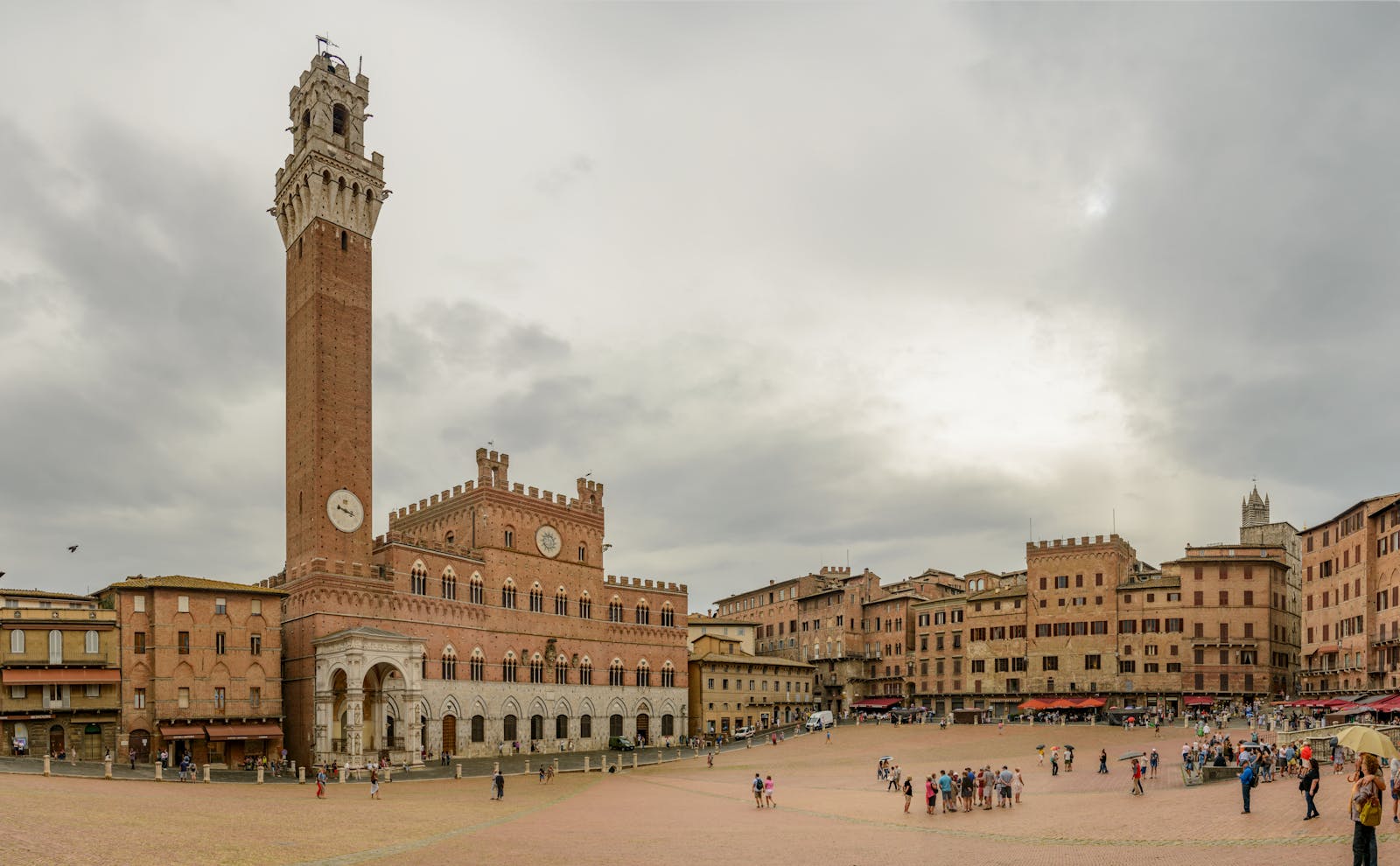
Siena is the breathtaking Gothic counterpoint to Renaissance Florence, and its heart is Piazza del Campo, a square with the utterly unique shape of a shell that slopes gently down towards the town hall. The whole space is paved with red bricks divided into nine segments, which historically symbolise the rule of the so-called Council of Nine that governed the city during its greatest heyday around the turn of the 14th century. At the top edge of the square you can’t fail to notice the richly decorated Fonte Gaia fountain, where visitors constantly gather, but the best view comes when you simply sit down on the sun-warmed paving and drink in the atmosphere.
The whole space is dominated by the town hall, Palazzo Pubblico, from which the slender Torre del Mangia rises to an impressive 102 metres. If you don’t suffer from claustrophobia and have the energy, I recommend tackling the roughly 400 narrow steps, because the view over Siena’s red roofs and the surrounding green hills is absolutely phenomenal. A ticket for the tower alone costs €10, but the combined ticket for €15 is far better value, opening the door to the adjoining Musei Civici as well (children under 11 enter free).
Once you’re back on solid ground, don’t miss a tour of the town hall itself, which hides some genuine artistic treasures. The halls of the Musei Civici house the famous frescoes by Ambrogio Lorenzetti titled The Allegory of Good and Bad Government, which weren’t merely decoration but a constant visual reminder to the politicians of the day about the consequences their decisions would have for the whole city.
2. Siena: The Duomo and Its Uncovered Secrets
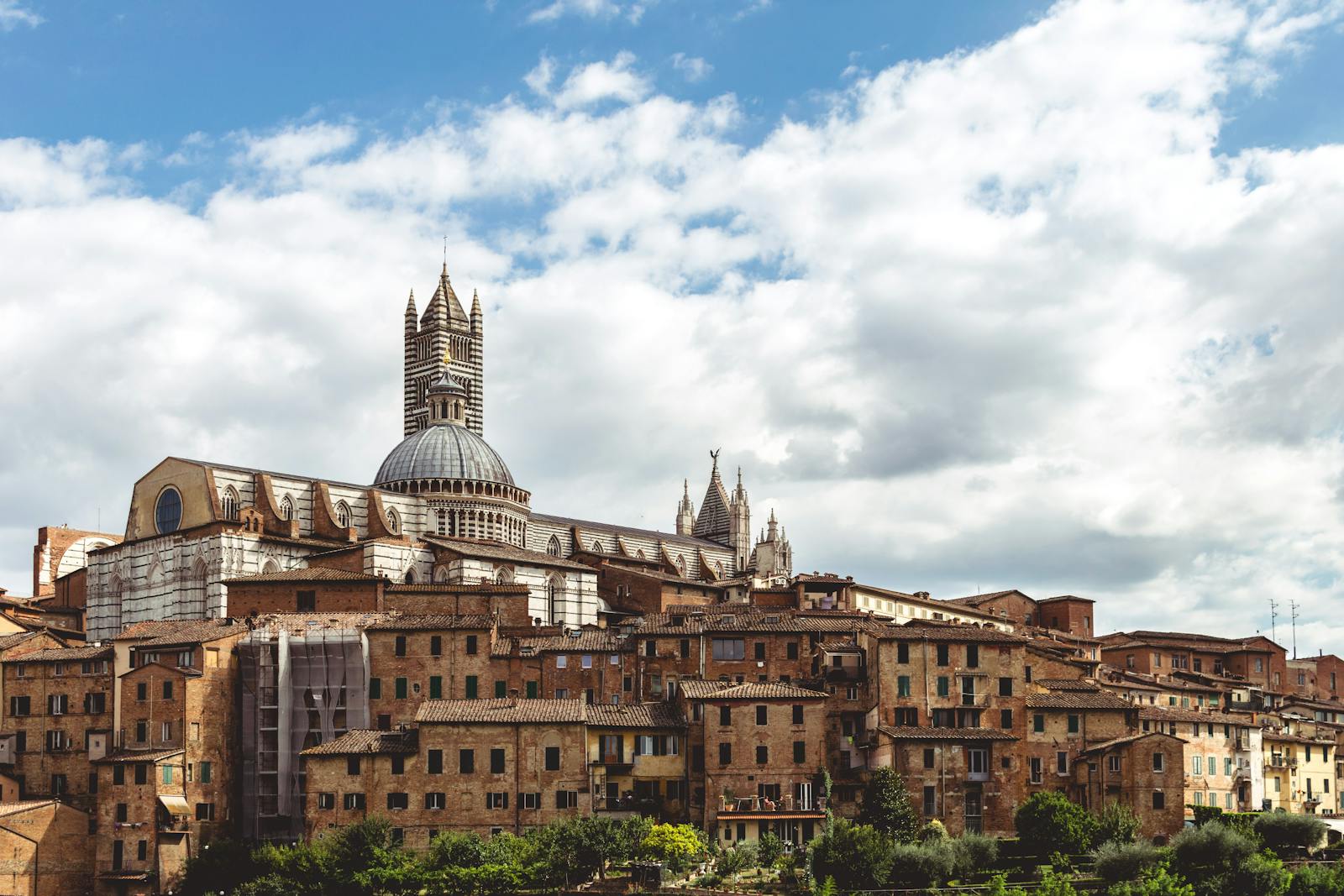
Siena Cathedral, the Cathedral of the Assumption of the Virgin Mary, known simply as the Duomo di Siena, is one of the most beautiful churches in all of Italy, and its striped black-and-white façade will literally take your breath away. The real treasure, though, is hidden inside, in the form of a unique marble mosaic floor made up of 56 detailed panels that artists worked on for an incredible six centuries. To see this masterpiece in all its glory you need good timing, because the floor is carefully covered with boards for most of the year to protect it from wear. 💡 Tip: In 2026 the floor will be fully uncovered only from 27 June to 31 July and then from 18 August to 15 November, so if you’re planning a trip, definitely try to hit those dates.
Besides the nave of the cathedral itself, you should absolutely not miss stepping into the Piccolomini Library, located right beside the left aisle. The library is decorated with incredibly vibrant frescoes by the painter Pinturicchio, which even after centuries look as though the master finished them only yesterday, and it preserves rare illuminated choir books. Also worth your attention are the crypt, discovered only in 1999, and the baptistery with its magnificent font, worked on by artists such as Donatello and Lorenzo Ghiberti.
If you want to see everything important, the best-value option is to buy the combined OPA SI Pass, which costs from €16 to €18 depending on the season. This pass is valid for three consecutive days and includes entry to the cathedral, library, crypt, baptistery and museum, and it also lets you climb the unfinished façade known as the Facciatone, which offers a wonderful view over the whole city. Bear in mind that during the period when the marble floor is uncovered, pass prices tend to be slightly higher, so always check the current rates in advance on the official site operaduomo.siena.it.
3. Siena: The Madness Known as the Palio di Siena
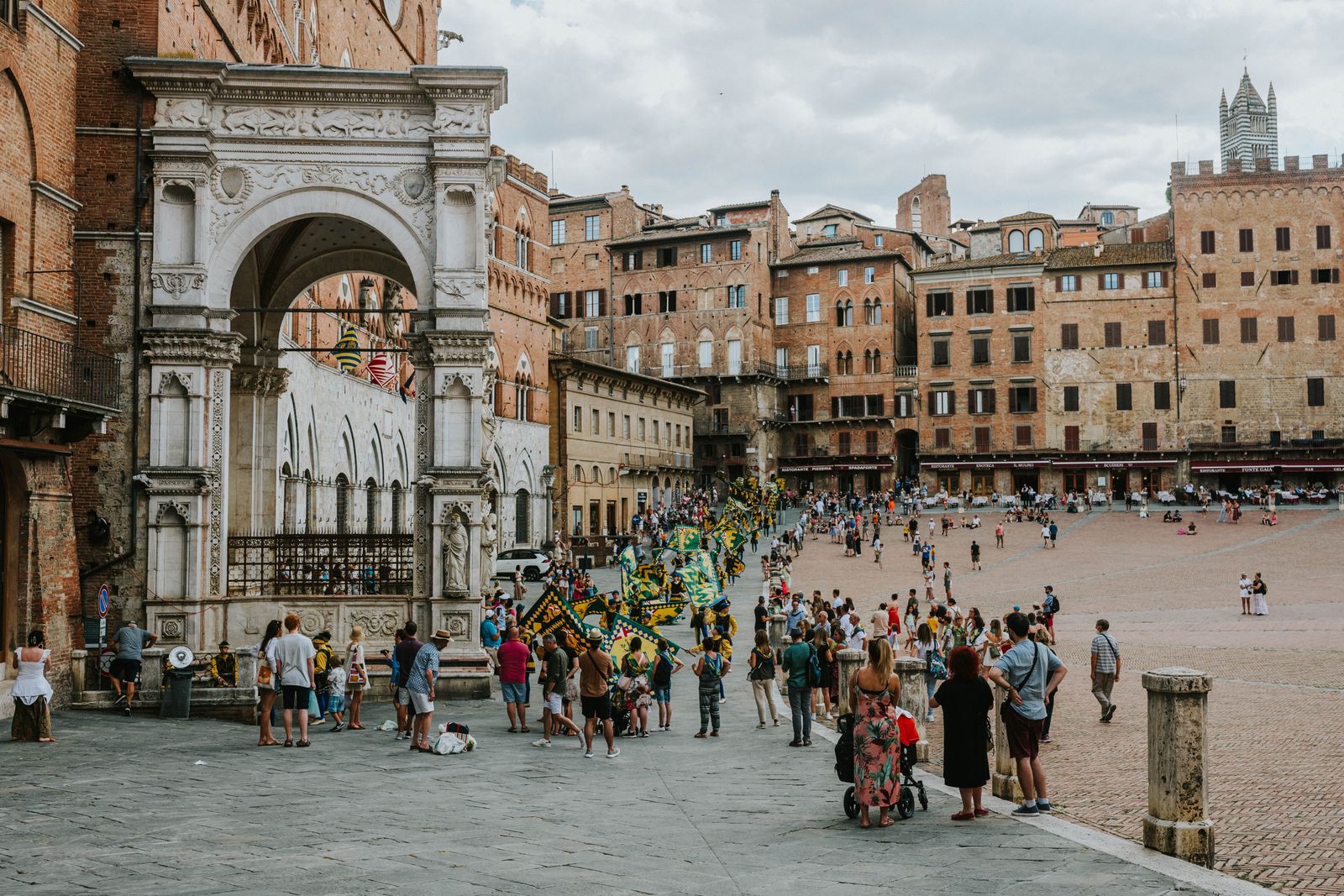
If you visit Siena during the summer, you might just witness an event that means more to the locals than almost anything else in the world. The Palio di Siena is a brutal, centuries-old horse race held on the main square, Piazza del Campo, twice a year — specifically on 2 July and 16 August. This isn’t your average tourist attraction but a deeply rooted rivalry between the city’s seventeen districts, the so-called contrade, ten of which are drawn by lot to take part in each race.
The atmosphere in the city during these days is electric — the streets are decked with flags, and the evening before the race each district holds a huge communal open-air dinner for thousands of people. The race itself lasts just 90 seconds, during which the bareback riders circle the square three times, and the rules are so loose that even a horse that crosses the finish line without its jockey can win. Watching this tradition with your own eyes is a once-in-a-lifetime experience, but it takes a bit of strategic planning and, above all, a huge dose of patience.
For 2026, entry to the centre of the square is completely free for spectators, but bear in mind that the spots fill up 6 to 8 hours before the start, and you’ll be standing in an incredibly tightly packed crowd the whole time with no chance to nip to the loo. If you crave comfort, seats in the stands around the track range from €150 to €400, and spots on the balconies of surrounding buildings can easily set you back €300 to €800. It’s very important to know that there’s no official central ticket-sales portal — tickets have to be sourced through local agencies or directly from property owners many months in advance.

4. San Gimignano: The Medieval Manhattan and the Torre Grossa
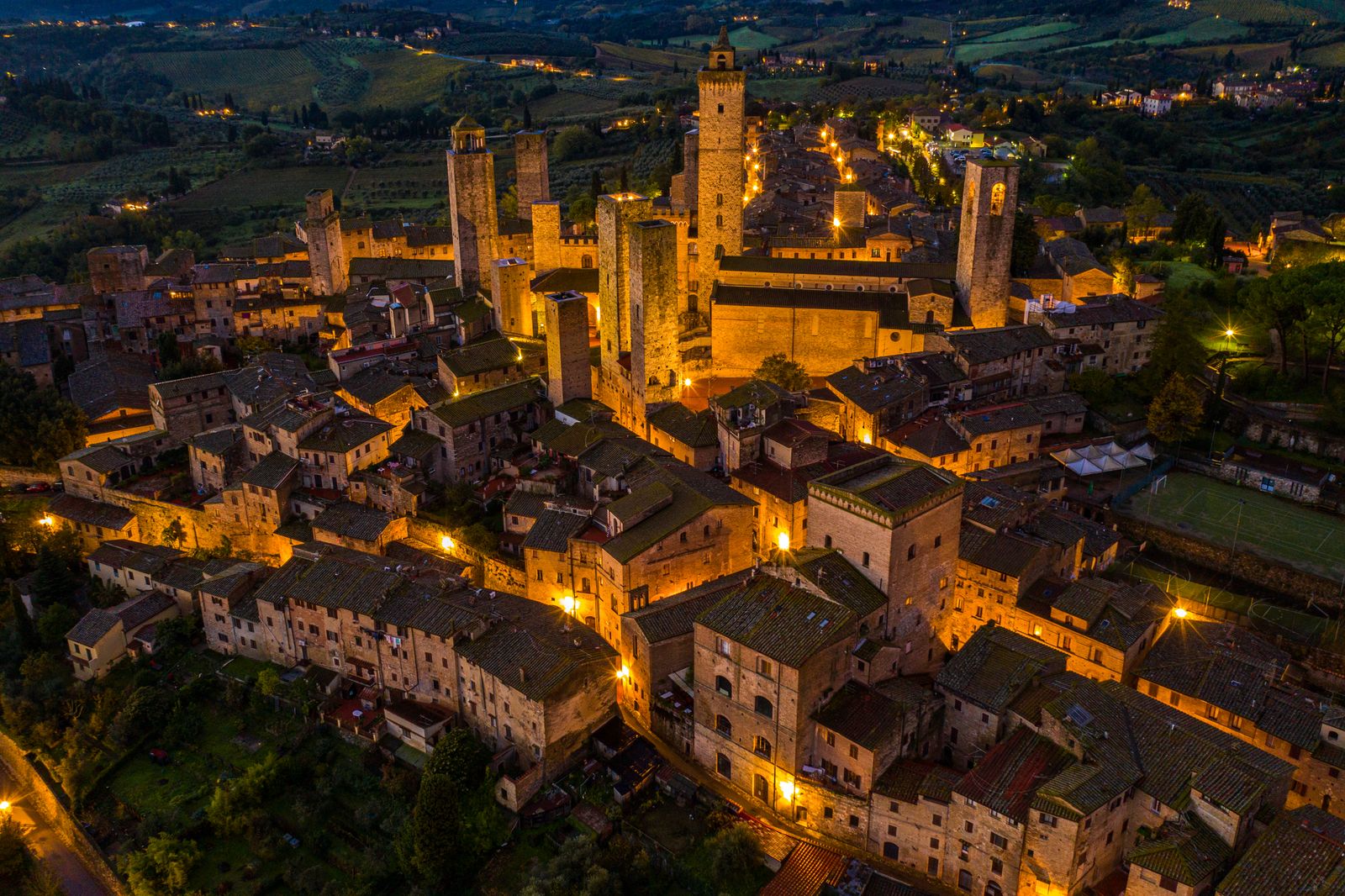
As you approach the town of San Gimignano, its skyline will amaze you from afar — and quite rightly it’s nicknamed the medieval Manhattan. In the 12th and 13th centuries, wealthy noble families built 72 tall defensive towers here, with one clear purpose: to show the world the enormous wealth and power of their owners. Of this incredible number, 14 stone giants survive to this day, which is why the town has kept its unmistakable character and earned a place on the UNESCO World Heritage list.
If you want to see the town from a bird’s-eye view, the only tower normally open to the public is the majestic Torre Grossa, which stands an impressive 54 metres tall. To reach the top you’ll need to climb 218 fairly steep steps, but your reward will be a panoramic view over the whole valley and the neighbouring towers, well worth the effort. A ticket for the tower is part of the Musei Civici circuit and costs €10 for an adult and €8 for the reduced rate, with opening hours from April to October extended until 7.30 pm.
When visiting this town, be extremely careful about traffic restrictions, because the entire historic centre falls within a ZTL zone and driving in is strictly forbidden. The historic lanes are watched by cameras and the fines are uncompromising, so always leave your car in the car parks outside the walls, from where it’s just a short walk into the centre. 💡 Tip: The best choice for hassle-free parking is the large P1 Giubileo or P2 Montemaggio car parks, where you’ll easily find a space even during busier times of year.
5. San Gimignano: World-Class Gelato and Vernaccia White Wine
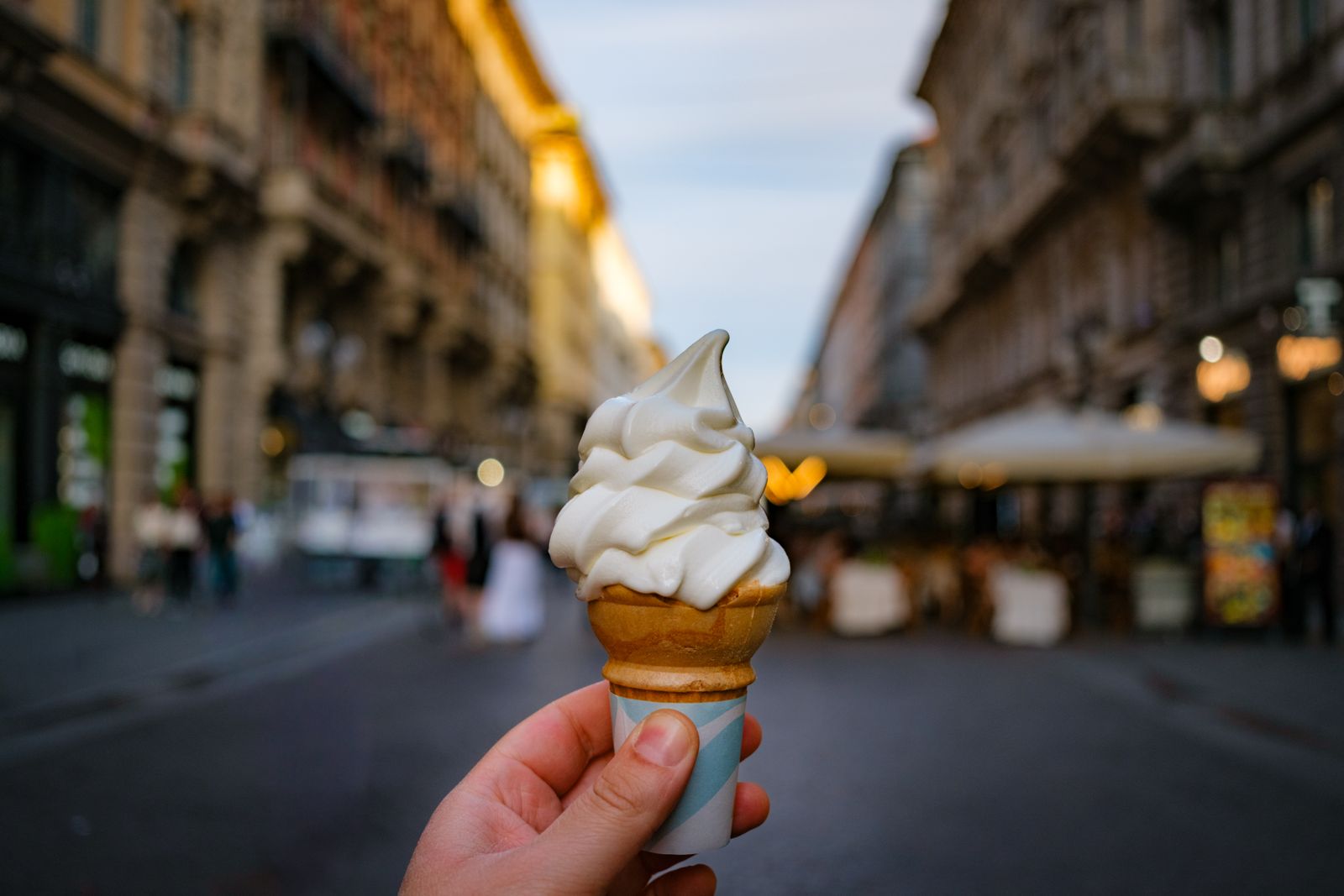
San Gimignano isn’t just about historic architecture — it also offers truly exceptional culinary experiences that draw people from all over the world. On the triangular Piazza della Cisterna you’ll find the renowned Gelateria Dondoli, run by Sergio Dondoli, a two-time world champion gelato maker. The queue outside his shop is often long, but it moves fairly quickly and the result is well worth the wait, because you won’t easily find such creamy ice cream made from top-quality ingredients anywhere else.
Once you’re at the counter, you simply have to order the master’s signature creation called Champelmo, an ingenious and very refreshing combination of pink grapefruit and local white wine. Vernaccia di San Gimignano is itself another jewel of the region, a dry white wine with a delicately bitter almond finish that has been grown here, in this otherwise mostly red-wine country, since medieval times. In fact it was the very first Italian wine to be granted the prestigious DOC protected-origin status, back in 1966.
When you get peckish from exploring Tuscan cuisine, remember that the local gastronomy is absolutely fantastic for vegetarians, as it’s built on simple, quality ingredients. Order pici cacio e pepe — thick, hand-rolled pasta with cheese and pepper — or try the all’aglione version with a delicious tomato-and-garlic sauce. I recommend trying the wonderful pasta and the hearty bread soup ribollita right in Siena at places like Antica Trattoria Papei or the cosy Osteria Il Grattacielo. And if you spot bistecca alla fiorentina on the menu, know that it’s a huge, very rare Florentine steak from a local breed of cattle — a famous speciality, though we vegetarians prefer to give it a wide berth.
6. Chianti: The SR222 Wine Route and the Black Rooster
The Chianti Classico area, stretching between Florence and Siena, is densely wooded, hilly and literally dotted with endless rows of vines. The backbone of the whole region is the famous SR222 road, known as the Chiantigiana, which links the most important wine-producing villages and offers roughly 60 kilometres of the most beautiful views you can imagine from behind the wheel. The ideal route is to set off from the little town of Greve in Chianti, continue through Panzano and Castellina all the way to Radda, with historic wineries tempting you to a tasting at every turn.
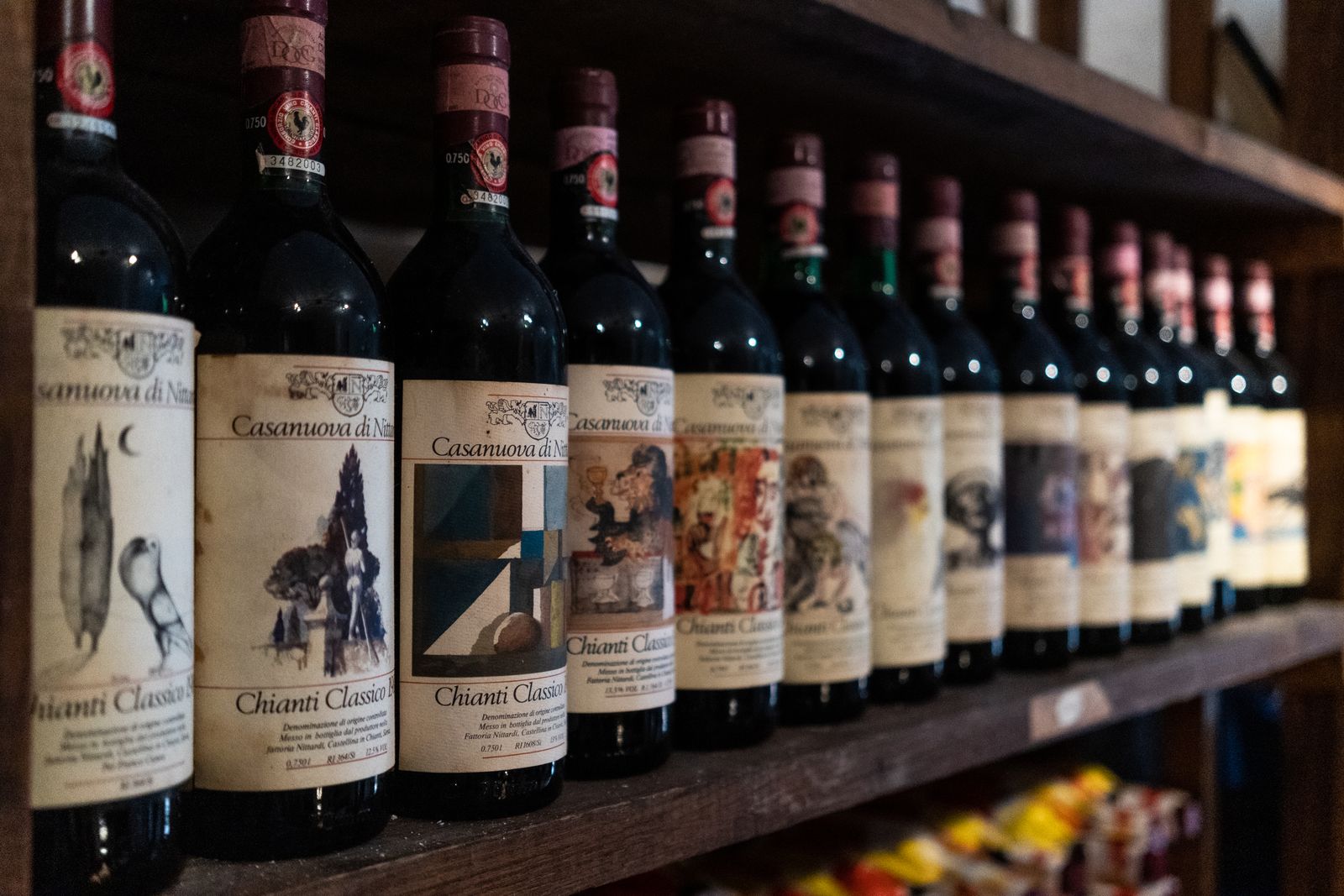
When choosing wine in the local shops and wine bars, look for the symbol of a black rooster, or gallo nero, on the neck of the bottle — it’s the official seal of genuine Chianti Classico DOCG, guaranteeing the highest quality. Alongside the classics, you’ll also come across so-called Super Tuscan wines, which emerged in the 1970s as a rebellion by winemakers against the strict rules; although they carry a lower classification, their quality and complexity put many a famous bottle to shame. If you really want to enjoy the tasting experience, I recommend booking an organised cellar tour in advance — these are very easy to find and book through GetYourGuide, for example.
Wine tasting in Italy does, however, come with one very crucial and strict rule you shouldn’t take lightly. The alcohol limit for drivers is set at 0.5 per mille, but if you’ve held your driving licence for less than three years, an absolute zero applies to you. So be very careful behind the wheel and consider whether it might be better to arrange a sober driver to explore the vineyards, pay for a minibus tour, or learn to professionally spit your wine into the spittoons provided after tasting.
7. Val d’Orcia: Cypresses, Pienza and Montepulciano
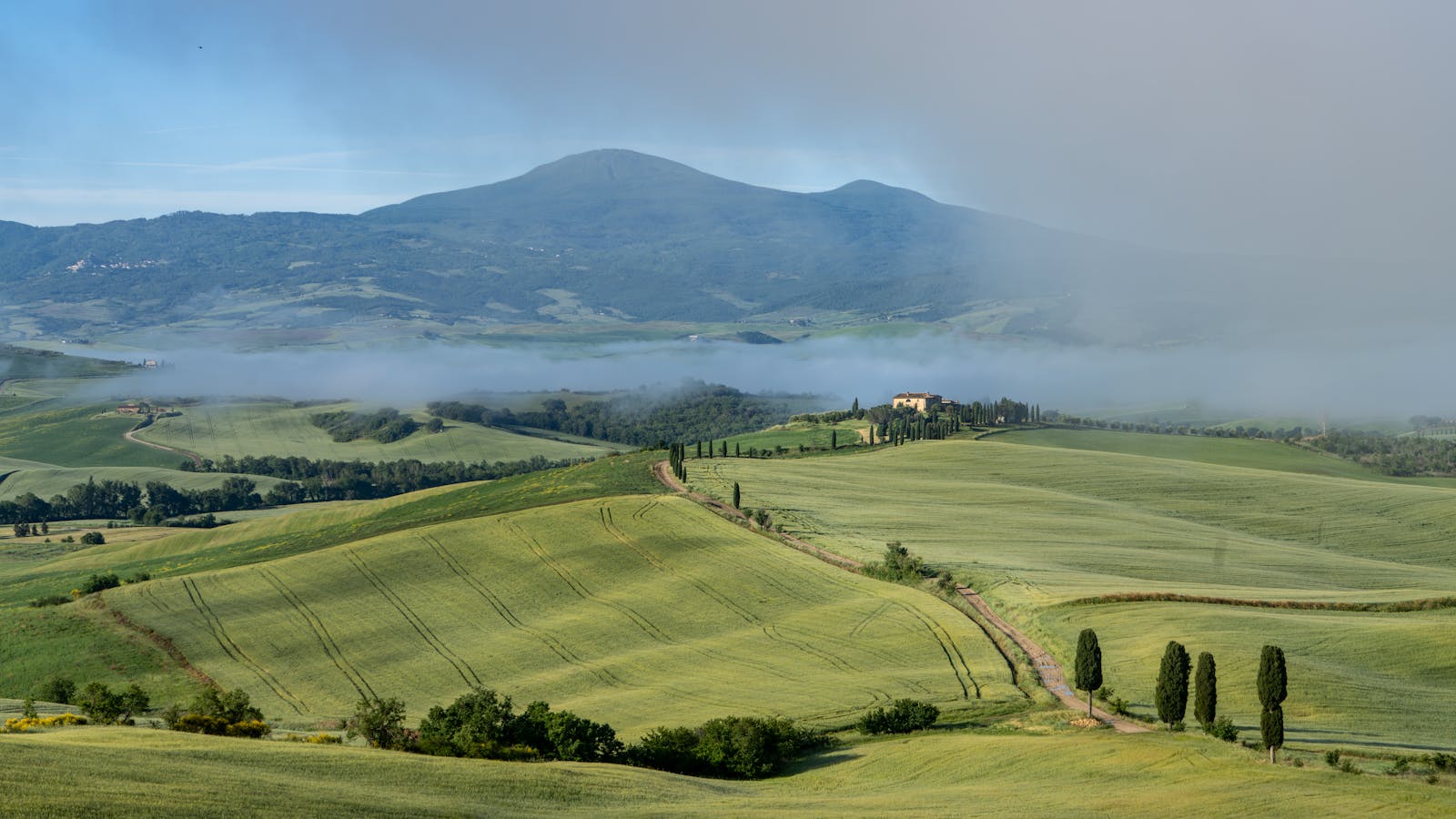
If you’ve ever seen the perfect photo of the Tuscan landscape, 99% of the time it was the Val d’Orcia valley, which lies south of Siena. This region is so aesthetically flawless that it was added to the UNESCO list in 2004 as an example of the Renaissance ideal of beauty, where people have shaped nature for centuries to please the eye. Here you’ll find the most iconic golden hills and the famous lone chapel Cappella di Vitaleta, reached by a path lined with slender cypresses.
A basic loop through this valley should definitely begin in Renaissance Pienza, which Pope Pius II had built in the 15th century as a utopian “ideal city”. Today Pienza smells mainly of wonderful sheep’s cheese, as it’s the home of the famous pecorino di Pienza, which you can buy here at dozens of different stages of maturity. From there, head to Montepulciano, perched high on a limestone ridge, where huge historic cellars hide beneath the steep streets, ageing the excellent red wine Vino Nobile di Montepulciano.
For lovers of relaxation, this valley holds one more big and very pleasant surprise. In the village of Bagno Vignoni, the main square isn’t a paved area but a vast medieval pool of hot thermal water, in which the ancient Romans once bathed. Swimming right on the square is understandably forbidden these days, but just below the hill you’ll find freely accessible cascades where you can enjoy the hot springs out in the open air, completely free of charge.
8. Monteriggioni and Etruscan Volterra
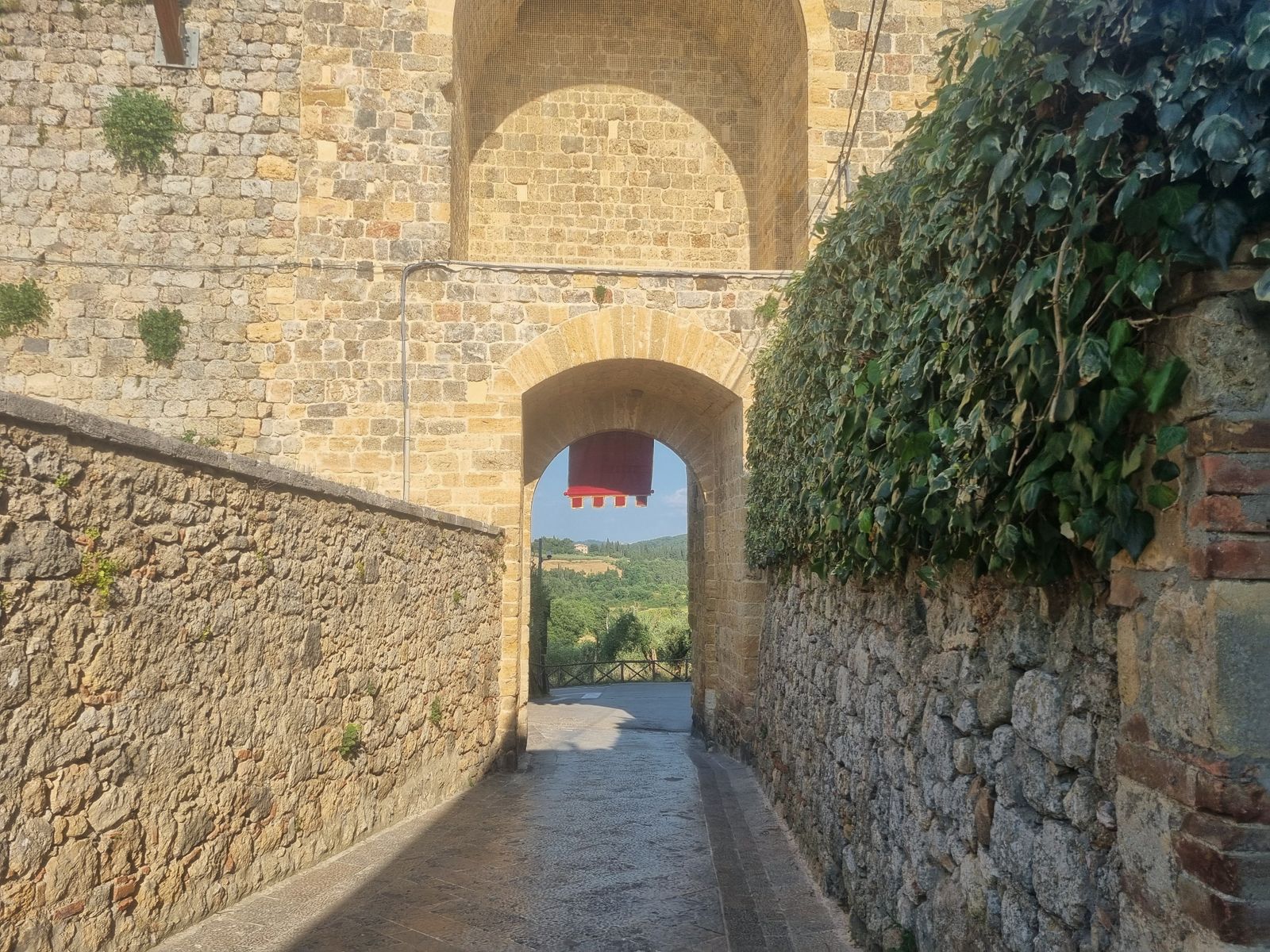
A short way from Siena lies the tiny but utterly fascinating fortified village of Monteriggioni, which looks as if it fell straight out of a period film. Its perfectly circular walls from 1213 are lined with fourteen defensive towers, and the whole structure is so iconic that even Dante Alighieri mentioned it in his Divine Comedy. Walking along the wall walkway will take you just a few dozen minutes, but it offers a beautiful view over the surroundings and a feeling that you’ve genuinely travelled several centuries back in time.
If you long for even deeper history, head west to mysterious Volterra, which rises on a high hill and breathes its ancient Etruscan past. The biggest draw here is the massive Porta all’Arco, the best-preserved Etruscan gate in Italy, whose stone arches remember the days long before the rise of the Roman Empire. The town has no railway connection, so you’ll need to drive here too, and don’t forget to pick up a small souvenir, because Volterra is world-famous for its beautiful craftsmanship in translucent alabaster.
Map of points of interest for your phone
Where to Go Next from Medieval Tuscany
If you’ve had enough of wandering between vineyards and medieval towers and you’re wondering where to take your Italian road trip next, there’s a whole host of options. Definitely take a look at our comprehensive article Tuscany: where to go on holiday, where you’ll find plenty more inspiration. Art lovers, of course, shouldn’t miss the cradle of the Renaissance, about which we’ve written a detailed guide to Florence.
If you want to take that famous photo, read our article Pisa and the Leaning Tower, where you’ll learn how to buy tickets stress-free. If after all those trips you mostly crave some rest, check out our tips for wellness hotels in Tuscany. And if you’re still in the planning stages, you’ll definitely find the overview Where to go on holiday in Italy useful, along with the practical advice on when to visit Italy, so you can avoid the worst of the crowds.
Frequently Asked Questions
Do I need a car to travel around the Tuscan countryside?
Yes, a car is an absolute necessity for exploring the interior, as towns like San Gimignano, Volterra, or Montepulciano don’t have train stations at all and bus connections are very infrequent. Without a car, you’ll miss out on the freedom to stop at viewpoints and vineyards.
What is ZTL and how to avoid fines?
ZTL (Zona a Traffico Limitato) is a limited traffic zone in historic city centers, where tourists are strictly prohibited from entering under threat of hefty fines. In Siena, use for example the large park-and-ride facilities Parcheggio Stazione, Stadio or Fortezza, from where you can easily reach the center on foot or by escalators.
How many days should I set aside for Siena and the surrounding area?
For a quick visit to the main points, a long weekend will suffice, but if you really want to enjoy the atmosphere, wine tastings, and farm stays, it’s ideal to set aside 5 to 7 days.
Where can you buy tickets for the Palio di Siena horse race?
For the year 2026, there is no official central portal. Entry to the center of the square is free, but if you want to sit in the grandstands (€150–400), you need to hunt for tickets several months in advance through local agencies or directly from property owners with balconies.
When is the marble floor uncovered in Siena Cathedral?
This unique treasure is covered most of the year. In 2026, the floor will be fully uncovered for the public from June 27th to July 31st and then during the autumn period from August 18th to November 15th.
What good things can I try if I don’t eat meat?
Tuscan cuisine is absolutely fantastic for vegetarians. Be sure to try hand-rolled pici pasta with all’aglione sauce, the hearty bread soup ribollita, panzanella salad, or the excellent pecorino sheep’s cheese from Pienza.
What’s the best way to get from Florence to Siena?
Although a car is great for the countryside, public transport works perfectly for direct transfers between these two cities. The regional train from Florence to Siena takes about an hour and a half, or you can use the reliable direct buses that drop you off just a short walk from the historic center.
Tips and Tricks for Your Vacation
Don’t Overpay for Flights
Search for flights on Kayak. It’s our favorite search engine because it scans the websites of all airlines and always finds the cheapest connection.
Book Your Accommodation Smartly
The best experiences we’ve had when looking for accommodation (from Alaska to Morocco) are with Booking.com, where hotels, apartments, and entire houses are usually the cheapest and most widely available.
 🚗 Car rental on the roadVerified car rentals in Tuscany
Search with the DiscoverCars comparison engine — it compares prices from dozens of local and international rental companies, and most bookings come with free cancellation.
Compare car prices in Tuscany →Don’t Forget Travel Insurance
Good travel insurance will protect you against illness, accidents, theft, or flight cancellations. We’ve had a few hospital visits abroad, so we know how important it is to have proper insurance arranged.
Where we insure ourselves: SafetyWing (simple monthly subscription) and TrueTraveller (for extra-long trips).
Find the Best Experiences
Get Your Guide is a huge online marketplace where you can book guided walks, trips, skip-the-line tickets, tours, and much more. We always find some extra fun there!