Lauterbrunnen, Switzerland: 12 Best Things to See in the Valley of 72 Waterfalls

TL;DRLauterbrunnen is an alpine valley in Switzerland with 72 waterfalls, headed by the 297-metre Staubbachfall, the highest free-falling one, and the 417-metre Mürrenbachfall, the tallest overall, plus the glacial Trümmelbachfälle tucked inside the rock itself. May and June are the best months to visit, when snowmelt sends the falls into full force, while July and August guarantee every cable car running — along with bigger crowds. Among the 12 tips, the article recommends the car-free villages of Wengen and Mürren, the Schilthorn viewpoint with its revolving restaurant Piz Gloria, the via ferrata to Gimmelwald, and an eight-kilometre trek down to Stechelberg. There’s no entry fee for the valley itself, but from 13 April to 10 July 2026 the cable car up to Grütschalp is out of action, so you’ll need to reach Mürren via Stechelberg instead.

Switzerland hides countless gems, but only one single valley managed to inspire J. R. R. Tolkien himself to create the mythical Rivendell. Lauterbrunnen in Switzerland is exactly as magical as you remember it from The Lord of the Rings, and perhaps even a touch more so. Steep rock walls tower all around you, and dozens of waterfalls plunge from incredible heights.

In photos it almost looks like a fairy-tale illusion, but trust me, this Alpine village is absolutely real. I’ve put together a complete guide so you know what you can’t miss here and how to avoid the biggest crowds. We’ll cover everything from iconic waterfalls to adrenaline-pumping viewpoints.

On top of that, this year a new record-breaking cable car is being completed in the area, but you’ll also need to factor in one major transport closure. Let’s take a look at twelve places and experiences you simply can’t miss in the valley of 72 waterfalls.

TL;DR

  • Tallest waterfalls: You’ll be dazzled by the free-falling Staubbachfall and the glacial Trümmelbachfälle hidden right inside the mountain.
  • 2026 closure: The cable car from Lauterbrunnen to Grütschalp won’t run from 13 April to 10 July 2026. To reach Mürren you’ll have to go via Stechelberg.
  • New cable car: In April 2026 the project for the steepest cable car in the world will be completed, taking you all the way up to the Schilthorn.
  • Where to stay: Capacity in the valley is very limited, so book your accommodation months in advance. A great choice is Hotel Staubbach with a view of the waterfall.
  • No entry fees: Despite media reports about introducing an entrance fee, no charge is paid to enter the village.
  • Car-free zones: You can’t reach the villages of Wengen and Mürren by car — you have to leave it in the multi-storey car park by the station.

When to Visit Lauterbrunnen and the Weather in Switzerland

The waterfalls are at their most powerful in spring, when the snow melts in the mountains, and that’s also the most beautiful time to visit. May and June are absolutely ideal months if you want to see the falling water at its most majestic. What’s more, the gallery behind the main waterfall opens as soon as the winter ice melts, and the scenery is simply breathtaking. Around the same time the first flowers start appearing in the Alpine meadows, so the whole place looks like a painting.

If you head out in July or August, you can be sure that all the infrastructure and cable cars are up and running. But be prepared for the fact that the valley faces a huge influx of tourists. In the summer season I recommend getting up very early in the morning so you can enjoy the most beautiful spots in peace. By the afternoon there are usually fairly long queues at the cable cars.

September and October bring gorgeous autumn colours and far fewer people to the valley. You do need to check the timetables in advance, though, because some cable cars undergo autumn maintenance. For example, the Stechelberg–Mürren section has a closure planned for the second half of October this year.

In winter the valley turns into a snowy fairy tale and becomes a great base for the surrounding ski resorts. Keep in mind, however, that the Trümmelbach waterfall is completely closed in winter. The main Staubbach waterfall, meanwhile, often freezes into an enormous curtain of ice, which is beautiful but means you can’t get as close. On the plus side, the skiing here is perfect and you can try winter hiking along the groomed trails.

Lauterbrunnen Hotels: Where to Stay in Switzerland

💡 Tip for accommodation and experiences: We like to look for our accommodation on Booking.com, which usually has the best cancellation terms. Tickets, day trips and activities are then worth comparing and booking through GetYourGuide.

Bed capacity in the valley is desperately small and demand from all over the world is enormous. You absolutely have to sort out accommodation here well in advance, ideally as soon as you’ve booked your flights or planned your road trip. Be prepared, too, for the fact that Swiss prices are merciless — but waking up to a view of Alpine peaks is well worth it.

Right by the train station you’ll find Hotel Silberhorn, a great and practical classic. It has a lovely terrace and is often the first choice for couples who want to have everything within easy reach. If you’re after something more romantic, definitely check out Hotel Staubbach, which has fantastic reviews and offers rooms with a direct view of the iconic waterfall.

In the centre of the village stands the popular Hotel Schützen, which tempts you with a cosy restaurant with a fireplace and good prices. If you’re travelling on a smaller budget, there’s Valley Hostel, an absolute legend among backpackers with incredibly clean rooms, some of which look straight out onto the waterfalls.

For nature lovers and campers there’s Camping Jungfrau, which is flooded with enthusiastic reviews online — and from the photos you’ll understand exactly why. You can also take a look at their website. It offers not only tent pitches but also comfortable bungalows. And if you’d rather sleep high above the valley in a car-free zone, book a room at Hotel Edelweiss Superior in the village of Mürren, where absolute peace and quiet await.

Where to Eat in Lauterbrunnen: The Best Restaurants

Swiss cuisine is admittedly a little heavy, but after a full day of hiking through the mountains you absolutely deserve those cheesy feasts. In Lauterbrunnen and the surrounding villages you’ll find plenty of great spots, from cosy mountain huts to more modern cafés.

Cheese Fondue and Rösti on Every Corner

If you want to enjoy the classics, I recommend grabbing a table at one of the traditional restaurants in Mürren or Wengen. Excellent traditional rösti — golden, pan-fried potato cakes topped with melted cheese — are served, for example, at the restaurant of Hotel Schützen right in Lauterbrunnen. Most places here open for lunch and then again for dinner, so keep an eye on the time.

Another sure-fire tip for a great lunch with an incredible view is the revolving Piz Gloria restaurant on the Schilthorn. And if you get a craving for something smaller during the day, stop for a hot chocolate or a homemade dessert. The Swiss are masters at making sweet pastries, so you really can’t go wrong.

12 Best Things to See and Do in Lauterbrunnen, Switzerland

Let’s take a look at the very best this Alpine region has to offer. I’ll show you how to save time, where to find the most beautiful views, and what to watch out for this year.

1. Staubbachfall

This is the absolute landmark of the entire village and quite possibly the most photographed waterfall in Switzerland. Staubbachfall stands at an impressive 297 metres and proudly holds the title of the country’s tallest free-falling waterfall. The water plunges down from a sheer rock face and shatters against the rocks so forcefully that a fine mist of water hangs permanently in the air. From the train station it’s just a few minutes of easy walking to get there.

An interesting feature is that you can actually get right behind the falling water. A narrow path leads up from the foot of the cliff, guiding you through a tunnel and up steps to a special viewing gallery. Be sure to bring a raincoat or a waterproof jacket, because you’re guaranteed not to stay dry here.

This experience is completely free — you only pay a voluntary contribution towards path maintenance. You do have to come during the main season, though, because the gallery is only open from May to October. The waterfall has been an inspiration to many artists and writers over the centuries — even the famous Goethe wrote a poem about it. The best light for photography here is usually in the morning, when the sun beautifully lights up the whole rock face. In the winter months access is closed for safety reasons due to falling chunks of ice.

2. Trümmelbachfälle

If Staubbachfall amazed you from the outside, Trümmelbachfälle will completely blow you away from the inside. It’s a system of ten glacial waterfalls hidden deep within the heart of the mountain. These waterfalls drain the mighty glaciers of the giants Eiger, Mönch and Jungfrau, and an incredible twenty thousand litres of water flow through here every second.

To reach them, you don’t have to climb any rocks. A special tunnel lift takes you inside the mountain, and from there you continue along safely secured walkways and corridors. It’s a deafening, dark and utterly fascinating natural phenomenon with no equal in Europe. The sound of the roaring water bouncing off the cave walls is so loud you can’t even hear yourself speak.

There’s an entrance fee, and the official website lists admission at 18 CHF for adults (around €19) and 8 CHF for children. Precisely because of the spray, it’s quite cold and damp inside, so dress warmly even in the height of summer. Remember that children under four and dogs are not allowed in for safety reasons. The waterfalls are open from April to the beginning of November, and the whole complex closes in winter.

3. The Valley of 72 Waterfalls and the Hike to Stechelberg

The entire region proudly calls itself the valley of 72 waterfalls, and the best way to get to know it is on foot. A beautiful and completely easy trail leads from the train station along the flat valley floor all the way to the neighbouring hamlet of Stechelberg. The whole route is just under eight kilometres, and the elevation gain is absolutely minimal, so you can even tackle it with a pushchair.

During the roughly two-hour walk you’ll pass one waterfall after another. The path takes you past snow-capped peaks, green pastures and traditional wooden chalets. Along the way you’ll come across several rest stops and benches where you can have a snack. To your right you’ll see walls towering up that reach heights of up to four hundred metres.

About halfway along the route you can take a detour to the Trümmelbach cave waterfalls, and if you’re lucky you’ll even spot cows with traditional bells — an inseparable part of the Alps. Once you reach your destination in Stechelberg, you don’t have to walk the same way back. There’s a regular yellow PostBus that runs from here and conveniently takes you back to the centre of Lauterbrunnen.

4. Wengen and the Männlichen Viewpoint

Perched on a sunny terrace right above the valley lies the picturesque village of Wengen. A key piece of information is that the entire village is completely car-free. From Lauterbrunnen you can only reach it on the Wengernalpbahn cog railway, whose journey takes about fourteen minutes and offers gorgeous views into the chasm below you.

Wengen is the quintessential postcard Swiss village (wooden façades, geraniums in the windows), but the biggest draw is the cable car up to the Männlichen summit. Some of its cabins even have an open viewing balcony on the roof, which is an experience in itself. At the top a wide Alpine panorama and crisp mountain air await.

From the upper station, definitely set off on the so-called Royal Walk. It’s an easy thirty-minute climb to the very summit, where there’s a crown-shaped viewing platform built up top. From it you’ll have the iconic trio of mountains — Eiger, Mönch and Jungfrau — beautifully laid out in front of you.

5. Mürren and Its Alpine Views

On the opposite side of the valley, at an altitude of 1,638 metres, lies another car-free village: the famous Mürren. It acts as a natural balcony above the deep valley, and the views from here are arguably even more dramatic than those from Wengen. Normally you get here by cable car from Lauterbrunnen up to Grütschalp and then on a narrow-gauge train.

💡 Tip: This year, though, you really need to watch out for the transport. From 13 April to 10 July 2026 there’s a huge closure, and the cable car to Grütschalp is completely out of service for a full rebuild. During this period you can reach Mürren exclusively via the alternative route from the Stechelberg valley station.

Mürren itself is wonderfully photogenic. You’ll find classic Swiss chalets decorated with geraniums and plenty of great restaurants. Accommodation here is admittedly on the pricier side, but waking up high above the clouds with a view of the Jungfrau massif is simply priceless. If you’re looking for a spot for lunch, the local establishments serve excellent Alpine cheese fondue or traditional rösti.

lukas a lucka
Lukáš and Lucie recommend
Where to stay in Lauterbrunnen
6 accommodations — campsites, hotels and other lodging options

6. Gimmelwald and Its Honesty Shops

If you head downhill on foot from Mürren, you’ll come across the little village of Gimmelwald. Here, they say, time stopped many decades ago. About a hundred permanent residents live here, and you won’t find any large hotels or typical supermarkets. The whole place has retained an incredibly authentic farming atmosphere.

The most interesting thing in Gimmelwald are the so-called honesty shops — little stores built entirely on trust. Local farmers have fridges set up outside in which they offer homemade Alpine cheese, fresh eggs or jams. No one is watching over it; you simply take the goods and drop the money into a wooden cash box that’s been put out.

It’s a wonderful example of the fact that somewhere in the world decency still works. Stop by the self-service fridge at Esther’s Guesthouse, for instance, and buy a piece of cheese for a snack. Plus, you know that every franc goes straight to the locals — and they genuinely need it.

7. Schilthorn and Piz Gloria

This is the absolute highlight of any trip to this region. The Schilthorn summit rises to nearly three thousand metres and was made famous by the legendary Bond film On Her Majesty’s Secret Service. The revolving Piz Gloria restaurant still operates up here today, completing a full rotation around its axis in forty-five minutes, giving you views of more than two hundred mountain peaks.

2026 is a year of enormous changes for this mountain. In April of that year the final section of the new Schilthornbahn project will be officially completed, with the total construction costing 130 million francs. The section between Stechelberg and Mürren even boasts the title of the steepest cable car in the world, with a gradient of over 159 percent.

According to the official price list, the cost of a return ticket from Stechelberg is around 115 CHF (roughly €120). The price, however, includes not just the ride itself but also entry to the interactive James Bond museum and access to the adrenaline-fuelled Thrill Walk (suspended on a sheer rock face at the Birg intermediate station). The whole trip is packed with fantastic experiences from the first minute to the last.

8. Allmendhubel and the Flower Park

If you’re travelling with children, you mustn’t skip Mount Allmendhubel. An old-fashioned funicular runs up here from Mürren, taking you up to an altitude of just under two thousand metres. The journey takes only a few minutes, and a return ticket costs a reasonable fourteen francs (it’s best to check the price on site, as it can vary outside the season).

At the top you’ll find the Flower Park, a children’s playground that looks as though nature itself designed it. Kids can clamber through giant wooden flowers, swing and slide, while you can sit on the terrace of the panoramic restaurant and enjoy a coffee with an incredible view of the Eiger massif.

The playground is also where beautiful themed trails like the Flower Trail begin. On these you’ll learn lots of interesting facts about the local Alpine flora and see flowers that grow only at these extreme altitudes. It’s an ideal spot for a relaxed afternoon once you’ve had enough of demanding hikes.

9. The Via Ferrata from Mürren to Gimmelwald

For adrenaline lovers there’s a secured route on offer that is definitely not for those with a fear of heights. The via ferrata starts in Mürren and, unusually, leads downhill to Gimmelwald. The whole route is over two kilometres long, and the entire time you’ll have a deep three-hundred-metre drop beneath your feet.

The biggest highlight of the whole route is the so-called Nepal Bridge. It’s an eighty-metre-long rope bridge that sways slightly and beneath which gapes pure emptiness. Crossing it takes genuinely steady nerves, but the photos from this spot are absolutely unbeatable.

Access is free (you only pay a voluntary contribution towards cable maintenance), but you must bring the mandatory gear — a harness, a via ferrata set and a helmet. Don’t have your own? Any sports shop in Mürren will rent them out without any trouble. The staff at the rental shops will happily explain all the safety rules to you.

10. BASE Jumping

Lauterbrunnen is known worldwide as the mecca of BASE jumping — the extreme sport in which people leap with a parachute from fixed points. Each year fifteen to twenty thousand jumps take place here from the surrounding vertical cliffs. It’s a fascinating spectacle, but we have to approach it with great respect, because this sport is extremely dangerous.

Never try to look for take-off points on the edges of the cliffs — it’s an enormous risk. The best and completely safe spot for watching is right from the valley road heading towards Stechelberg. About twenty minutes’ walk from the village, all you have to do is look up and you’ll almost certainly see colourful parachutes drifting down to the ground.

Right in the centre of the village there’s the Airtime Café, a legendary spot closely linked to the community of jumpers and paragliders. They make absolutely delicious cinnamon rolls and great coffee — an ideal stop before you set off on another hike. What’s more, you’ll often find enthusiastic conversations between flyers from all over the world going on around you.

11. The Little Church and Cemetery

Every mountain town has its photogenic church, but the one here plays in a completely different league. The Gothic church dates back to the fourteenth century, and there’s a gorgeous view from its well-kept cemetery. From here you’ll see not only the village itself but, above all, the Staubbach waterfall and the massive rock walls in the background.

If you’re after the best angle for that perfect shot for social media, head up the main street towards Chalet Pironnet. A little way from it you’ll find a narrow path by two stone spheres. From this exact spot you’ll capture in a single frame the church tower on the left and the falling waterfall on the right.

It’s a favourite spot among photographers, especially in the early evening when the sun lights up the spray. Just bear in mind that the cemetery is still in active use and that quiet is part of the place. Simply sit silently on a bench and soak up the magical mountain atmosphere.

12. Talmuseum Lauterbrunnen

When bad weather catches you out in the Alps, it’s good to have a backup plan under a roof. The Talmuseum is tucked away in a former sixteenth-century mill and shows the hard life of the local people in the past. It’s a small but very engaging exhibition that transports you back to the era before mass tourism.

Here you’ll find historic skis, old climbing equipment and examples of traditional lace-making. On the upper floors you’ll learn interesting facts about the history of mining in the region and about the first pioneers of alpinism who conquered the surrounding three-thousanders with primitive gear. These are stories of incredible courage and perseverance from the mountain folk of the time.

Admission costs six francs, but if you have a guest card from your accommodation, entry is often completely free. It’s best to check the opening hours in advance: it’s usually open only in the afternoons from June to October, and it’s normally closed on Mondays and Wednesdays. There’s nothing worse than a wet day and a closed museum 😅

Where to Go Next from Lauterbrunnen

Lauterbrunnen makes a wonderful starting point for a day trip. The surrounding valleys are each more beautiful than the last. If you don’t want to bother with train connections, organised tours will save you a lot of planning. There are plenty of options that can easily be booked online, for example through GetYourGuide, from where you can even head out to the glaciers.

If you want to explore the surroundings on your own, definitely head to the neighbouring valley and read our article Grindelwald: What to See and Do. The atmosphere there is a little livelier, and the cable cars take you up to incredible viewpoints.

If you’re planning a longer road trip, you shouldn’t miss the most beautiful mountain in Europe, which we write about in the guide Zermatt and the Matterhorn: What to See and Do. You can also stop in the capital, where our article Bern: What to See in the Swiss Capital will help you out. And for an overall overview of the country, I recommend our big guide A Holiday in Switzerland: Where to Go, What to See and When.

Frequently Asked Questions

If you’re heading to the area for the first time, you’re bound to have plenty of practical questions about transport or admission fees buzzing around your head. Here are the answers to the most common questions to help you with your planning.

How much does entry to Trümmelbachfälle cost?

For entry to the glacier waterfall complex, according to current information, adults pay 18 CHF and children aged six to fifteen pay 8 CHF. Children under four years old are not permitted entry for safety reasons. During the winter months, the entire site is closed. You can purchase tickets directly at the entrance to the complex. I recommend having cash ready, as some smaller stands and ticket offices in the valley still prefer to accept coins and notes rather than payment cards.

Can you get to Lauterbrunnen by car?

Yes, you can drive to the village itself by car on a quality road from Interlaken. However, further towards Wengen and Mürren, there is a strict car ban. You must leave your vehicle in the huge multi-storey car park at the station, where daily parking costs approximately 18 CHF. The drive itself on the mountain roads is an amazing experience and the car park is perfectly connected directly to the train station. Don’t forget to check in advance whether your hotel offers discounted parking or assistance with luggage transfer.

Did Lauterbrunnen Inspire Tolkien’s Rivendell?

# Translation

Definitely yes. Young J. R. R. Tolkien walked through this valley in 1911 during his hiking tour. His later drawings of the legendary Rivendell strikingly mirror the steep walls and waterfalls found here. The author himself confirmed this inspiration in his letters. As you walk along the massive rock walls and cascading waterfalls, it will immediately become clear why this epic scenery captivated him so much. It’s even said among locals that the very name Rivendell loosely refers to this deep valley bounded on both sides.

Is there an entrance fee to the village of Lauterbrunnen?

Not applicable. In 2024, there was news in world media that the village was considering charging an entrance fee of five to ten francs, but the proposal ran into Swiss law. Charging for a cantonal road is not legally possible, so you only pay the standard tourist tax at your accommodation. The standard tourist tax is paid directly at reception at your hotel or campsite, and in return you often receive a so-called guest card. This card provides you with various benefits and small discounts on some cable cars or local museums in the valley.

How many waterfalls are actually in the valley?

Official materials mention 72 waterfalls cascading from the surrounding cliffs. The most famous is undoubtedly Staubbachfall, but the highest is actually Mürrenbachfall at 417 metres, which you can see from the cable car to Mürren. However, if you come in late summer or autumn, you’ll see far fewer of them. The total number and force of the falling water depends heavily on how much water is currently flowing from the glaciers and how quickly the snow is melting high up in the mountains.

When are the waterfalls at their strongest?

The waterfalls have their highest flow in May and June, when enormous amounts of snow melt in the surrounding mountains. Conversely, in winter many waterfalls freeze or have only a fraction of their spring water volume, and some of them even dry up completely. During hot spring and summer days, the water spray from the largest waterfalls also pleasantly cools the entire valley. It’s an absolutely perfect natural refreshment that you’ll definitely appreciate after a long journey or challenging climb.

Is a cable car trip to Schilthorn worth it?

Definitely yes, especially since in 2026 a completely new and steepest cable car in the world will be completed. A return ticket from Stechelberg costs 115 CHF and the price includes not only fantastic views, but also entrance to the adrenaline-pumping Thrill Walk walkway at the middle station. Once at the top, you can enjoy an iconic lunch or coffee at the famous revolving restaurant Piz Gloria with views of the entire Alps. This entire trip takes at least half a day at a comfortable pace, so it’s better to set off from the valley early in the morning.

Tips and Tricks for Your Vacation

Don’t Overpay for Flights

Search for flights on Kayak. It’s our favorite search engine because it scans the websites of all airlines and always finds the cheapest connection.

Book Your Accommodation Smartly

The best experiences we’ve had when looking for accommodation (from Alaska to Morocco) are with Booking.com, where hotels, apartments, and entire houses are usually the cheapest and most widely available.

Don’t Forget Travel Insurance

Good travel insurance will protect you against illness, accidents, theft, or flight cancellations. We’ve had a few hospital visits abroad, so we know how important it is to have proper insurance arranged.

Where we insure ourselves: SafetyWing (best for everyone) and TrueTraveller (for extra-long trips).

Why don’t we recommend any Czech insurance company? Because they have too many restrictions. They set limits on the number of days abroad, travel insurance via a credit card often requires you to pay medical expenses only with that card, and they frequently limit the number of returns to the Czech Republic.

Find the Best Experiences

Get Your Guide is a huge online marketplace where you can book guided walks, trips, skip-the-line tickets, tours, and much more. We always find some extra fun there!
The Biggest Aquaparks in Europe: 10 Giant Water Worlds

TL;DREurope’s biggest water parks vary depending on what you’re measuring. Poland’s Suntago is officially the largest indoor water park (67,000 m², room for 15,000 people), Germany’s Therme Erding boasts Europe’s biggest slide world (28 slides, over 2,800 m), and Siam Park in Tenerife keeps getting crowned the world’s best water park on TripAdvisor. Other giants worth knowing about include Tropical Islands (Europe’s largest tropical hall), Croatia’s Aquacolors Poreč, Hungary’s Hungarospa Hajdúszoboszló, Aquaworld Budapest, Napfényfürdő Aquapolis Szeged with its 272-metre slide, Austria’s Therme Loipersdorf, and the Hungarian spa town of Bükfürdő, spread across 14 hectares. Entry runs roughly from 340 Kč to 985 Kč. Indoor parks are worth visiting year-round, while outdoor ones are best from late May to mid-September.

Do you love that feeling when you plunge into hot thermal water in the middle of a freezing winter, or, on the flip side, when you hurtle down an adrenaline-pumping slide at top speed in the height of summer? If you’re looking for inspiration and want to discover the biggest aquaparks in Europe, I have to warn you right from the start: pointing your finger at a single, absolutely largest complex is actually pretty much impossible.

It all depends fundamentally on the yardstick you choose for the comparison. While one complex will amaze you with the largest surface area in square metres, another boasts a record number of slides, and yet another lures visitors with the biggest indoor area under one roof. On top of that, many of these water worlds rely on claims made by the operators themselves, so it’s worth taking all those lofty superlatives with a pinch of salt.

That’s why I’ve put together a detailed list of ten giant water worlds, breaking down exactly what makes each one stand out and the real numbers behind them. You’ll find out where to find the best-rated park in the world according to travellers, plus plenty of practical tips on where to head for the best water fun.

TL;DR: the biggest aquaparks in Europe at a glance

  • Suntago (Poland) – verifiably the largest indoor water park in Europe, with a capacity of up to 15,000 visitors.
  • Therme Erding (Germany) – billed by its operator as the world’s largest thermal complex, with the biggest slide world in Europe.
  • Siam Park (Spain) – repeatedly voted the world’s best aquapark, with a Thai theme on the island of Tenerife.
  • Tropical Islands (Germany) – the largest tropical hall in Europe, hidden inside a former airship hangar.
  • Aquacolors Poreč (Croatia) – the largest water complex by area in all of Croatia, with a huge wave pool.
  • Hungarospa Hajdúszoboszló (Hungary) – a gigantic complex billed as the largest in Hungary, with over a million visitors a year.
  • Aquaworld Budapest (Hungary) – the largest indoor water park in Central Europe, with its iconic glass dome.
  • Napfényfürdő Aquapolis Szeged (Hungary) – home to the Kék Anaconda slide, a whopping 272 metres long.
  • Therme Loipersdorf (Austria) – the largest thermal spa in Austria and an enormously popular weekend destination.
  • Bükfürdő (Hungary) – a giant spa complex covering 14 hectares with more than thirty pools.

When to visit the biggest aquaparks

If you’re planning to visit one of the giant indoor complexes like Germany’s Tropical Islands or Poland’s Suntago, you can head off at absolutely any time of year. These enormous halls keep a gorgeous tropical air and water temperature all year round, making them an ideal escape from a dreary autumn or a frosty winter, when you just want to feel like you’re on an exotic holiday for a while.

With the outdoor giants aimed primarily at the summer season, the situation naturally changes and you’ll need to plan your trip for the warm months. Croatia’s Aquacolors, for instance, and the outdoor sections of the Hungarian complexes usually open their gates from late May to mid-September, with the biggest crowds rolling in during the school summer holidays, when families from all over Europe flood in.

Whenever you plan a trip to one of these huge complexes, I’d definitely recommend considering a visit on a weekday. Not only will you dodge the biggest crowds at the popular attractions, but you’ll often save a fair bit too, since most modern complexes now use dynamic ticket pricing that’s noticeably more expensive at weekends and on public holidays.

Where to stay near the biggest aquaparks

The very best and biggest water worlds are often so vast that you simply can’t get through them all in a single day, which is why it’s worth considering accommodation right on site. Most of these gigantic complexes offer their own themed hotels or adjoining cabin villages, so you can walk straight from the pool to your room in your dressing gown – an absolutely priceless perk, especially with kids.

If you head to Erding in Bavaria, you can stay at the stunning Hotel Victory, styled like a luxury ocean liner with direct views over the artificial waves. In Poland, visitors often make use of the modern cabins at Suntago Village, from where a free shuttle bus will whisk you to the aquapark itself comfortably and quickly.

With the Hungarian thermal parks it’s even simpler, because the local spa culture is built around connecting hotels with pools. A lovely example is the Hunguest Hotel Szeged, where entry to the Aquapolis experience complex is included in the price of your stay – something you can easily check and book through Booking.com.

10 of the biggest aquaparks in Europe

Let’s take a look together at ten specific water worlds that, thanks to their staggering size, deserve your attention. For each one, I’ll explain in detail exactly what record it holds, what attractions await you there, and roughly how much to budget for an all-day adult ticket.

1. Suntago Park of Poland (Poland)

A short distance from Warsaw, an utterly fascinating complex sprang up a few years ago that is verifiably the largest indoor water park in Europe. Beneath its enormous roof lies an area of around 67,000 square metres, with room for an incredible 15,000 visitors a day, and where the water and air temperature stays around a pleasant 32 degrees Celsius all year round.

The main draw is the Jamango zone, home to more than 30 different slides spread across six floors, with a combined length of over 3.2 kilometres. Beyond the adrenaline slides, you can look forward to a huge wave pool, a lazy river and a beautiful relaxation zone surrounded by hundreds of live palm trees imported directly from Florida, Costa Rica and Malaysia.

The complex sits less than 50 kilometres south-west of Warsaw, so from the UK the easiest option is to fly into Warsaw – LOT, Ryanair and Wizz Air all serve the route from London and other UK airports – and then hire a car or grab a transfer for the short hop out. A full-day ticket for the basic zone costs roughly 130 to 170 Polish złoty (around €30–40) depending on whether you visit on a weekday or at the weekend.

💡 Tip: Given the sheer size and number of attractions, I recommend buying tickets well in advance online, securing your entry even on the busiest days and skipping the queues at the box office.

2. Therme Erding (Germany)

This Bavarian giant near Munich is proudly billed by its own operator as the largest thermal complex in the world, and although that’s their own claim, one look at its 185,000 square metres will leave you in no doubt. The complex offers an incredible 40 pools and 35 saunas, drawing almost two million enthusiastic visitors every year.

For adrenaline lovers there’s Galaxy Erding, comfortably the largest slide world in Europe, packing in 28 different slides with a total length of over 2,800 metres. You’ll even find an attraction called Magic Eye, which measures 360 metres and is often described as the longest tube slide in the world – making it an absolute must for every visitor.

From the UK, the simplest route is to fly into Munich – British Airways, Lufthansa and easyJet all run direct flights from London and several regional airports – and Erding is then around a 30-minute drive from the city. A full-day adult ticket costs roughly €54 on a weekday and €59 at the weekend, and you can stay right on site at the stylish Hotel Victory.

💡 Tip: This complex is definitely not just about the slides, so if you’re after some peace and quiet, don’t miss the enormous sauna world – though bear in mind it’s only accessible without swimwear.

3. Siam Park (Spain, Tenerife)

If you’re after the single most popular water world out there, you’ll need to head to the Canary Islands, because Siam Park has repeatedly been voted the world’s best aquapark on TripAdvisor. The whole sprawling 18.5-hectare complex is beautifully styled around a Thai theme and offers 24 absolutely top-class attractions surrounded by lush, exotic vegetation.

The park’s biggest icon is the breathtaking Tower of Power, a slide with a near-vertical drop from 28 metres that shoots you, in a transparent tube, right through a giant aquarium full of live sharks and rays. There’s also the Wave Palace, said to have the highest artificial waves in the world at up to 3.3 metres, and the Mai Thai River, a lazy river said to be the longest of its kind.

Given its location on Tenerife, you’ll of course have to fly – there are plenty of direct flights from the UK with the likes of Jet2, TUI, easyJet and Ryanair to Tenerife South – so this one calls for pairing the visit with a longer holiday. Adult admission is around €45 a day, and it’s worth mentioning that the park has no hotel of its own, so you’ll need to look for accommodation in the nearby resort of Costa Adeje.

💡 Tip: Tenerife enjoys stable, warm weather all year round, so you can head out here even in the depths of winter and enjoy great outdoor bathing without the summer crowds.

4. Tropical Islands (Germany)

South of Berlin lies a place that’s literally an architectural marvel, because it’s the largest tropical hall in Europe. This giant complex was built inside a former airship-manufacturing hangar boasting an incredible length of 360 metres and a height of 107 metres, making it one of the largest free-standing halls on the entire planet.

The capacity of the whole space is around 8,200 people a day, and roughly 1.2 million visitors come here every year to enjoy a constant temperature of 26 degrees Celsius. Inside, alongside sandy beaches and a huge rainforest, you’ll find a 27-metre-high slide tower that ranks as the tallest in all of Germany.

The complex sits roughly 50 kilometres south of Berlin – easily reached after flying into Berlin, which is served by plenty of direct flights from the UK with easyJet, Ryanair and British Airways. It offers a truly unique chance to stay overnight, with 2,500 beds; you can even sleep in tents pitched right on the sand inside the hall. A basic online adult ticket starts at around €34.90, though prices vary considerably depending on how busy it is.

💡 Tip: If you decide to sleep in the tents inside the tropical hall, pack some light summer pyjamas, as it stays fairly warm and humid even at night.

5. Aquacolors Poreč (Croatia)

On a summer holiday in Istria, you definitely shouldn’t miss this fantastic outdoor complex, which is the largest aquapark by area in all of Croatia. It spreads across more than 100,000 square metres and, on hot summer days, can comfortably accommodate up to 5,000 fun-seeking visitors.

The complex is divided into four large themed zones and offers 13 superb slides, among which the giant Magicone adrenaline funnel stands out with its almost twenty-metre starting tower. For some downtime, the 2,700-square-metre wave pool works a treat, as does the half-kilometre-long lazy river, which the operators claim is the longest in southern Europe.

The park lies just two kilometres south of the popular resort of Poreč. From the UK, the most practical approach is to fly into Pula – Ryanair and Jet2 serve the route from several British airports in summer – with the park then around a 45-minute drive away, or hire a car if you’re touring the Istrian coast. Online admission for an adult is €27.40, children pay €22.40, and the very smallest visitors under 90 centimetres tall get in completely free.

💡 Tip: This is a purely seasonal outdoor affair, so always check the current opening times before you travel – they usually run from late May to mid-September.

lukas a lucka
Lukáš and Lucie recommend
Where to Stay Near Europe’s Largest Water Parks
6 accommodations — resorts, hotels and other lodging options

6. Hungarospa Hajdúszoboszló (Hungary)

Eastern Hungary hides an absolute treasure for everyone who loves a good swim, one that the operator proudly presents as the largest bathing complex in Europe. Whether or not that claim is precise, the fact remains that this is a gigantic space sprawling across an incredible 30 hectares, drawing over a million enthusiastic visitors every year.

The whole complex is made up of several large sections, with the indoor Aqua-Palace alone covering 15,000 square metres and housing 20 different pools. The outdoor summer beach, known as the strand, adds another 13 to 15 large pools, while the huge slide park can boast fifteen adrenaline slides of every shape and size.

From the UK, the easiest route is to fly into Debrecen – Wizz Air operates seasonal flights from London Luton – with the complex then around a 30-minute drive away; alternatively, fly into Budapest and continue on for roughly two and a half hours. An all-day ticket to the indoor Aqua-Palace section costs around 6,400 to 7,400 Hungarian forint (roughly €17), and you can stay very comfortably at the partner Hunguest Hotel Aqua-Sol.

💡 Tip: The complex is so vast that it’s worth planning your visit over at least two days, so you can try out both the indoor experience pools and the enormous outdoor section with its slides.

7. Aquaworld Budapest (Hungary)

Right on the edge of the Hungarian capital you’ll find another wonderful complex, one that holds the title of largest indoor water park in Central Europe. Its absolute centrepiece and architectural symbol is a huge glass dome with a 72-metre diameter, beneath which sits the main section with capacity for 1,800 swimmers and water-fun lovers.

The area under this stunning glass roof measures 4,200 square metres and holds a respectable 15 pools, with nearly twenty across the whole resort. The fun is delivered by 11 fantastic slides, which together offer over a kilometre of fast-paced rides and are guaranteed to keep the whole family entertained for a very long time.

From the UK, simply fly into Budapest – British Airways, easyJet, Wizz Air and Ryanair all run direct flights from London and several regional airports – with Aquaworld then just a short ride from the city centre. An adult ticket costs roughly 8,500 forint on a weekday and 11,500 forint at the weekend, and the complex is directly connected to the excellent four-star Aquaworld Resort with more than three hundred rooms.

💡 Tip: If you stay at the Aquaworld Resort itself, you can hit the pools first thing in the morning or late in the evening, when most of the day visitors are long gone.

8. Napfényfürdő Aquapolis Szeged (Hungary)

Southern Hungary is home to a year-round aquapark combined with healing thermal waters, drawing visitors from all over Europe with one enormous speciality. That’s the flagship slide named Kék Anaconda, which measures a respectable 272 metres, launches from a thirty-metre tower and is often cited as the longest year-round covered slide in Europe.

In total, this experience complex with its 4,400 square metres of water surface offers 13 different slides, nine of them cleverly tucked away under cover and four in the outdoor section. If you’re an adrenaline fan, you’ll also want to try the park’s second-longest slide, measuring 223 metres and even featuring a special steep kamikaze section for the bravest among you.

The city of Szeged sits right by the border with Serbia. From the UK, the simplest option is to fly into Budapest and continue on for around two and a half to three hours by car, or take the train. A full-day ticket costs roughly 5,700 forint from Monday to Thursday and 9,500 forint from Friday to Sunday (around €15–25), and if you stay at the Hunguest Hotel Szeged, pool access is already included.

💡 Tip: To reach the top of the highest thirty-metre slide tower, you can simply take the lift, so there’s no need to worry about running out of energy after a few rides.

9. Therme Loipersdorf (Austria)

Not far from Vienna, in the federal state of Styria, sits a complex long known as the largest thermal spa in Austria and occasionally mentioned, with some caution, as one of the largest in Europe. For many travellers it’s an absolute classic and a hugely popular weekend destination full of hot, healing water.

The whole complex offers an incredible 35 pools and 20 saunas, with the outdoor bathing area covering a massive 23,000 square metres. There’s thermal water at 36 degrees from four of its own springs, plus a great Fun Park with slides totalling 529 metres and the luxurious Schaffelbad relaxation zone reserved exclusively for adults.

From the UK, the most convenient approach is to fly into Vienna – British Airways, easyJet, Ryanair and Wizz Air all run direct flights from London and regional airports – with Loipersdorf then around a 90-minute drive south of the city. There’s a huge range of accommodation in the area, with the thermal hotels Stoiser and Panoramahof among the most popular, letting you get into the water in just a few minutes.

💡 Tip: If you’re travelling without children and craving absolute peace, it’s well worth paying extra for entry to the Schaffelbad zone, which is enormous, luxurious and off-limits to anyone under sixteen.

10. Bükfürdő (Hungary)

The last giant on our list is the second-largest spa in Hungary, located very close to the Austrian border and often ranked among the very largest spa complexes in all of Europe. While it’s primarily a healing complex, its excellent slide park means the whole family can enjoy perfect water fun here too.

The scale of this place is utterly breathtaking: the complex covers 14 hectares and features an amazing 32 to 34 pools with over 5,000 square metres of water surface. Nearly 900,000 visitors come here each year and, alongside four thermal wells, can enjoy a modern sauna world with ten saunas and a slide park with 7 fast slides.

Bük lies close to the Austrian border, so from the UK the easiest route is to fly into Vienna and continue on for around an hour and a half by car. Adult admission ranges from 6,550 forint on a weekday to 7,650 forint at peak times (roughly €17–20), and for an overnight stay the excellent Danubius Health Spa Resort Bük or the nearby Greenfield Golf & Spa are perfect choices.

💡 Tip: The local thermal water has a very particular composition and a darker colour, so for bathing in the healing pools it’s best not to bring your very best light-coloured swimwear, to avoid any staining.

Where to head next from the giant aquaparks

If you love a splash about and fancy trying some interesting alternatives that are practically on your doorstep, you don’t necessarily have to travel halfway across the continent. I’ve put together plenty of other articles mapping out the most fun water worlds within easy reach.

You could, for example, explore the best aquaparks in the Czech Republic, where you’ll find out everything the local giant Aqualand Moravia has to offer. A huge hit in recent years has been the very modern and affordable Polish aquaparks near the border, and if you’re mainly after hot water and relaxation, be sure to check out the most beautiful thermal spas in Slovakia.

Practical tips

Before you rush off to pack your swimwear, I’d like to sum up a few practical pointers that will definitely help when planning your water holiday. The word “biggest” always needs to be read in the right context, because while Suntago is the largest indoor park and Erding reigns supreme over Europe’s slides, Siam Park is the absolute best-rated and Aquacolors dominates the Croatian coast.

For the most far-flung destinations it definitely pays to combine the whole trip with a longer summer holiday, so visit Aquacolors during a stay in Istria, and for Siam Park you simply have to plan a flight straight to the Canary Islands. Remember, too, that thermal giants differ from purely adrenaline aquaparks, so if you’re mainly after extreme slides and speed, head for Suntago or Szeged rather than the relaxing Loipersdorf in Austria.

Looking for more water-fun tips? Take a look at our big hub of the best aquaparks and thermal spas in Europe, where you’ll find icons across different countries and a selection based on exactly what you’re after.

Frequently asked questions

Which is the largest aquapark in Europe?

It depends on what criteria you choose, as the largest indoor water park is Poland’s Suntago with around 67,000 square meters under the roof. The title for the largest tropical hall belongs to Germany’s Tropical Islands, and if we’re talking about quality, the best-rated complex is Siam Park on the island of Tenerife.

Is Therme Erding really the largest in the world?

The operator itself does indeed present the complex as the largest thermal baths in the world, but this should be taken as their own claim rather than some official independent record. What is absolutely certain, however, is that it offers 40 pools and houses the largest water slide world in Europe with 28 slides totalling over 2,800 metres in length.

What is Siam Park and where is it?

Siam Park is an amazing water park on the Spanish island of Tenerife with beautiful Thai theming, which has been repeatedly voted the world’s best water park by TripAdvisor travelers. You’ll find an almost kilometer-long lazy river and the famous free-fall Tower of Power from a height of 28 meters, and from the Czech Republic you can only get here by plane.

Which is the largest aquapark in the Czech Republic and Slovakia?

In the Czech Republic, the popular Aqualand Moravia holds the top spot, boasting a water area of over 3,000 square metres, 16 pools and 24 slides. Meanwhile, our eastern neighbours in Slovakia are clearly dominated by Tatralandia, which is the largest water fun complex in Central Europe with a full 30 slides.

How many water slides does the largest water park have?

When it comes to numbers, Polish Suntago offers over 30 slides with a total length of more than 3.2 kilometers, German complex Rulantica has 31 and Therme Erding Galaxy exactly 28. In terms of the actual length of a single ride, the giant Magic Eye in Erding leads with 360 meters and the indoor slide Kék Anaconda in Szeged with 272 meters.

Which are the largest in Hungary?

In Hungary, you’ll find several gigantic complexes, among the largest are Hungarospa Hajdúszoboszló with an area of approximately 30 hectares and the Bük thermal baths with 14 hectares and more than 30 pools. Furthermore, you mustn’t miss Aquaworld Budapest, which is the largest indoor aquapark in Central Europe, and the amazing Napfényfürdő complex in Szeged.

Do the largest aquaparks have their own hotel?

Most of these giant complexes offer their own accommodation, for example at Therme Erding (Hotel Victory), at Tropical Islands or at the vast majority of Hungarian complexes. However, a major exception is the famous Siam Park on the island of Tenerife, which doesn’t have its own hotel directly within the complex and you’ll need to arrange accommodation at nearby resorts.

Tips and Tricks for Your Vacation

Don’t Overpay for Flights

Search for flights on Kayak. It’s our favorite search engine because it scans the websites of all airlines and always finds the cheapest connection.

Book Your Accommodation Smartly

The best experiences we’ve had when looking for accommodation (from Alaska to Morocco) are with Booking.com, where hotels, apartments, and entire houses are usually the cheapest and most widely available.

Don’t Forget Travel Insurance

Good travel insurance will protect you against illness, accidents, theft, or flight cancellations. We’ve had a few hospital visits abroad, so we know how important it is to have proper insurance arranged.

Where we insure ourselves: SafetyWing (best for everyone) and TrueTraveller (for extra-long trips).

Why don’t we recommend any Czech insurance company? Because they have too many restrictions. They set limits on the number of days abroad, travel insurance via a credit card often requires you to pay medical expenses only with that card, and they frequently limit the number of returns to the Czech Republic.

Find the Best Experiences

Get Your Guide is a huge online marketplace where you can book guided walks, trips, skip-the-line tickets, tours, and much more. We always find some extra fun there!
Statue of Liberty, New York: Tickets, Ferry & Crown Access in 2026

TL;DRStatue City Cruises is the only authorised operator selling tickets to the Statue of Liberty, and the basic Reserve ticket costs around $25.50 (roughly 600 Kč), covering the ferry, Liberty Island and the museum on Ellis Island. Crown access costs just a few cents more, but only around 500 tickets go on sale each day, and they typically sell out 3 to 4 months ahead — plus you’ll need to climb 162 steps once you’re up there. Ferries leave from Battery Park in Manhattan or Liberty State Park in New Jersey, and it’s worth setting aside 4 to 5 hours to see both islands properly. If you just want a free look, hop on the Staten Island Ferry — it passes about 500 metres from the statue, though it won’t drop you on the island itself.

No trip to New York is complete without paying a visit to a certain lady holding a torch. The first time you spot that iconic green silhouette from the deck of a ferry, your breath catches in your throat. The Statue of Liberty is a symbol as inseparable from the city as yellow cabs or towering skyscrapers. From a distance she looks majestic, and somehow you never tire of the view.

But that very popularity comes with one practical headache. If you don’t want to end up with nothing more than a wistful glance from afar, you need to sort out your tickets well in advance. The confusion around different sellers, dozens of websites and ticket types can trip up many a traveller. I know all too well how easy it is to get lost in the flood of tourist traps and empty promises.

That’s why I’ve put together this detailed guide. I’ll show you a safe way to buy your tickets and explain why you absolutely shouldn’t skip nearby Ellis Island. You’ll also pick up practical tips on how to get the most out of your visit without any unnecessary stress. That way you can save your energy for the experience itself.

TL;DR

  • The only official, authorised ferry operator is Statue City Cruises.
  • The basic Reserve ticket costs around $25.50 (roughly £20) and includes the ferry plus entry to both islands.
  • Crown access costs just a few cents more, but it’s usually sold out three to four months ahead.
  • The historic Ellis Island, with its immigration museum, is included in your ferry ticket — you pay nothing extra.
  • Watch out for scammers around Battery Park selling overpriced tickets for fake cruises.
  • The Staten Island Ferry is a free alternative for a view from the water, but it doesn’t stop at the island.

How to Buy Statue of Liberty New York Tickets (and What to Watch For)

When you start planning your New York itinerary and type statue of liberty new york tickets into a search engine, you’ll be hit with a pile of different sites. Most of them resell tickets with a pointless markup. The only authorised operator is called Statue City Cruises. Their boats depart from two specific spots: either Manhattan’s Battery Park, or Liberty State Park in neighbouring New Jersey.

You can choose from three basic ticket types depending on how much you want to see. The prices differ only marginally, but availability changes dramatically.

Ticket typePriceWhat it includesWhen to book
Reserve ticket~$25.50Ferry, Liberty Island, Ellis Island museumA few days ahead is fine
Pedestal~$25.80All of the above + access to the stone pedestalWeeks ahead
Crown~$25.80All of the above + climb to the statue’s crown3 to 4 months ahead

The whole buying process is simple and done online. Once you’ve paid, your tickets land straight in your inbox. Just save them to your phone and show the QR code at the ferry entrance. No need to print anything out or queue at a ticket booth.

Unfortunately, dozens of touts in fake uniforms gather right at the entrance to Battery Park. These people will try to push the “guaranteed best” Statue of Liberty cruises on you at absurdly high prices. Often they’ll send you onto a boat that only sails past the island from a great distance. Save yourself the mistake — only ever buy tickets through the official website or a verified seller.

If you’d rather have all your attraction tickets neatly in one app, I recommend using GetYourGuide.

Statue of Liberty: What Awaits You on Liberty Island

This copper beauty has been drawing visitors’ gazes since 1886. France gave her to the United States back then as a grand gesture of friendship. The visual design came from the talented sculptor Frédéric Auguste Bartholdi, while the famous Gustave Eiffel handled the complex internal metal framework. The monument represents the Roman goddess Libertas, who firmly grips a torch in one hand and a tablet bearing the date of the American Declaration of Independence in the other.

The ferry ride takes about fifteen minutes, and the journey itself is a great experience. The wind tousles your hair, the concrete jungle recedes behind you, and the green silhouette of the monument grows ahead. There’s both an open and a covered deck on board, so you needn’t fear bad weather — though it’s usually far windier out on the water than in the city streets.

Once you step onto Liberty Island, history washes over you. A wide promenade runs all the way around the statue. From here you’ll get the best photos of the landmark, as well as a stunning view of the glass skyscrapers of Lower Manhattan. A walk around the whole thing takes about half an hour and offers plenty of interesting angles.

Your basic ferry ticket also includes entry to the modern museum located just behind the statue. Inside you’ll find the original torch, which workers had to replace in the past due to damage, along with detailed drawings and models from the era of its complicated construction.

💡 Tip: Be sure to pick up the audio guide on the island — it’s included in the ticket price and offers beautifully crafted storytelling full of detail. There’s also a small café on the island, but the prices for snacks tend to be quite high. It’s worth packing your own water bottle and a light snack.

Before your visit, it’s a good idea to check the latest opening hours on the official national parks website, nps.gov/stli.

Crown and Pedestal: Is the Climb Worth It?

Here comes the biggest dilemma when buying Statue of Liberty tickets. The basic ticket gets you onto the island, but it won’t let you inside the monument. If you want to peek into its depths, you’ll need to upgrade your ticket. Adding access to the stone pedestal costs a negligible $0.30. An elevator whisks you up comfortably, or you can climb the 215 steps yourself.

The climb up to the crown itself is a whole different league. The ticket also costs just 30 cents more than the base price, but only around 500 are released into circulation each day. This is a classic situation where hesitation doesn’t pay off. The disappointment of discovering summer is sold out is enormous. Anyone who doesn’t book three months in advance simply hasn’t got a chance.

Summer 2026 will bring an even more extreme tourist surge. The United States is hosting the football World Cup while also celebrating 250 years since the country’s founding. Because of these events, crown tickets will vanish even faster than usual. If you’re planning a trip during this period, keep an eagle eye on the ticket release date.

The journey to the crown will reliably test your fitness. There are 162 narrow, spiral steps in a very cramped, un-airconditioned space. Children must be at least 107 centimetres tall, otherwise the guards won’t let them up for safety reasons. What’s more, the name on your ticket must match your travel document exactly.

Ellis Island: The Gateway to America

Once you’re holding your ferry tickets, it would be a huge mistake to miss the second stop. Between 1892 and 1954, Ellis Island served as the main immigration gateway for the entire United States. An incredible 12 million immigrants from all corners of the world passed through here. People often arrived with just one battered suitcase, but with enormous hope for a fresh start.

Today, the historic main building houses the fascinating National Museum of Immigration. Open since 1990, it maps out in detail the fates of newly arrived Europeans and people of many other nationalities. Walking through the vast registration hall, where human destinies were once decided, leaves a powerful impression. The exhibitions are part of the standard tour and require no extra fee.

The museum’s spaces are enormous and full of interactive elements. You can listen to authentic audio recordings of memories from people who passed through this gateway. Their stories of long voyages across the ocean really draw you in. On the ground floor, don’t miss the room with piles of luggage — it brilliantly illustrates just how little people had when starting a new life.

Medical inspections back then were lightning-fast and uncompromising. A chalk symbol drawn on a coat meant a suspected illness and often deportation back to Europe. These harsh historical realities lend the whole place a particular gravity. Visitors with American roots even spend hours here searching for their ancestors’ names in the extensive computer database.

⚠️ A heads-up for travellers: During 2025 and 2026, extensive renovation of the historic buildings is taking place on the island. Some parts of the museum may therefore be temporarily closed to the public. Be sure to check which exhibitions are open on the official website before you travel.

lukas a lucka
Lukáš and Lucie recommend
Where to Stay in New York
2 accommodations — hotels and other lodging options

How to Get to the Statue of Liberty (and a Free Alternative)

The most common starting point for tourists is Manhattan’s Battery Park. You can get here very easily by subway — the ideal stops are Bowling Green or South Ferry. From there you’ll already see the long queues for security screening. It works much like an airport, so give yourself plenty of time and leave large backpacks behind.

The second option is to set off from Liberty State Park on the New Jersey side. There are usually far fewer people, which cuts down your wait for the boat. The park also offers lovely views of the Manhattan skyline from the opposite side. The downside is the slightly trickier journey from central New York.

If you’re not desperate to actually set foot on the island and would rather save money, there’s an interesting free option. The Staten Island Ferry runs for free, 24 hours a day, connecting the southern tip of Manhattan with Staten Island. This massive orange boat sails past the Statue of Liberty at a distance of about half a kilometre.

This crossing will please travellers on a tight budget, or anyone who’s happy just to see the statue from afar. The boat won’t drop you off at the island, but you’ll get some decent photos from the deck. You’ll find official information on timetables and rules at siferry.com.

💡 Tip: On the way out to Staten Island, stand on the right-hand side of the boat. That gives you the best possible view of the statue and the surrounding islands.

Tips and Visitor Experiences

When it comes to visiting the Statue of Liberty, a few pieces of advice crop up time and again in reviews and traveller forums. They’re worth knowing — they’ll save you time and stress.

  • Take the very first morning ferry. The security queues swell sharply through the morning, and those who arrive early have the islands almost to themselves.
  • Book the crown three to four months ahead, the pedestal a few weeks ahead, and the basic ticket can wait until just a few days before. Hesitate, and you won’t get crown access.
  • The crown climb isn’t for everyone. Travellers warn that the 162 narrow steps in a cramped, un-airconditioned space are seriously demanding, and they’d talk anyone with claustrophobia or a fear of heights out of it.
  • Allow half a day for both islands. Plenty of visitors regret rushing through Ellis Island, when the immigration museum there is often rated in reviews as an unexpectedly powerful experience.

You’ll find detailed practical tips for your visit, complete with photos, on sites like My Wanderlusty Life.

Where to Stay Near Battery Park

For an early morning crossing, I recommend staying as close to the harbour as possible. The Lower Manhattan and Financial District area offers perfect access to the ferries. You get up in the morning, grab a quick coffee at one of the many local cafés, and ten minutes later you’re calmly waiting with your tickets in hand. In the evening, you can also stroll along the quieter streets around Wall Street and pop into one of the area’s excellent vegetarian restaurants.

It’s particularly worth checking out the Artezen Hotel right in the Financial District, a short walk from the harbour, or compare all the accommodation in New York by location and budget.

Where to Go Next in New York

Frequently Asked Questions

How much do Statue of Liberty tickets cost?

The Basic Reserve ticket costs approximately 25.50 USD (about €23) for an adult and includes the ferry, access to Liberty Island, and the museum on Ellis Island. Adding the Pedestal or Crown costs only about an extra 0.30 USD, but you need to book them in advance, especially the Crown, which is sold out months ahead.

How to get to the Statue of Liberty?

Ferries to the Statue of Liberty depart from Battery Park in Lower Manhattan or from Liberty State Park in New Jersey. The only authorized carrier is Statue City Cruises, buy tickets exclusively there or through GetYourGuide. Around Battery Park there are scam ticket sellers offering “Statue of Liberty tours,” but they won’t actually take you to the island.

Can you go up into the crown of the Statue of Liberty?

Yes, but it’s a challenge. The crown is accessed via 162 narrow spiral stairs, and only about 500 tickets are sold daily, which are typically sold out 3 to 4 months in advance. In summer 2026 (World Cup, 250th anniversary of the USA), tickets are even more scarce. Minimum child height is approximately 107 cm and the name on the ticket must match your ID.

Is entry to the Statue of Liberty free?

Entry to Liberty Island is not free, you need a ferry ticket from Statue City Cruises. However, if a view of the statue from the water is enough for you, the Staten Island Ferry runs free 24 hours a day and sails past the statue at a distance of about 500 meters. But it won’t drop you off on the island.

What is Ellis Island?

Ellis Island was the main immigration entry point to the USA from 1892 to 1954. Approximately 12 million immigrants passed through here, arriving from all over the world in search of a better life. Today, it houses the National Museum of Immigration, which opened in 1990. Please note: extensive renovations are taking place in 2025–2026, so check which parts of the museum are open before your visit.

How long does it take to visit the Statue of Liberty and Ellis Island?

Plan for a whole morning or afternoon, ideally set aside 4 to 5 hours. The ferry ride takes approximately 15 minutes to each island, visiting Liberty Island with the museum about an hour, and Ellis Island another 1 to 2 hours depending on your interest in the exhibits. Add time for waiting for the ferry, especially during peak tourist season.

Tips and Tricks for Your Vacation

Don’t Overpay for Flights

Search for flights on Kayak. It’s our favorite search engine because it scans the websites of all airlines and always finds the cheapest connection.

Book Your Accommodation Smartly

The best experiences we’ve had when looking for accommodation (from Alaska to Morocco) are with Booking.com, where hotels, apartments, and entire houses are usually the cheapest and most widely available.

Don’t Forget Travel Insurance

Good travel insurance will protect you against illness, accidents, theft, or flight cancellations. We’ve had a few hospital visits abroad, so we know how important it is to have proper insurance arranged.

Where we insure ourselves: SafetyWing (best for everyone) and TrueTraveller (for extra-long trips).

Why don’t we recommend any Czech insurance company? Because they have too many restrictions. They set limits on the number of days abroad, travel insurance via a credit card often requires you to pay medical expenses only with that card, and they frequently limit the number of returns to the Czech Republic.

Find the Best Experiences

Get Your Guide is a huge online marketplace where you can book guided walks, trips, skip-the-line tickets, tours, and much more. We always find some extra fun there!
When to Visit Lapland: Weather Month by Month

TL;DRThe best month for Lapland depends on what you’re after. December brings festive cheer and Santa Claus Village, though prices peak and you’ll only get 3–4 hours of daylight. January offers the best value for money, with temperatures of −10 to −25°C and guaranteed snow. February and March are the most balanced choice, thanks to longer daylight hours, over 70cm of snow cover and good odds of catching the northern lights. Summer (June–July) means the midnight sun and cheap, crowd-free travel, but no aurora and plenty of mosquitoes. September, meanwhile, tempts you with a colourful tundra, peace and quiet, and the return of the first northern lights.

There’s no single right answer to the question “when is the best time to visit Lapland?” It really depends on what you want to bring home with you. The Northern Lights and Santa? A proper Arctic winter? Or green hills and a sun that never sets at midnight? Every season has its own magic and its own drawbacks, and the prices and crowds shift accordingly. ☺️

In this guide we’ll walk through the weather in Lapland month by month, from temperatures and snow to day length, your chances of catching the aurora, prices and crowds. I’ll tell you which month is best for the Northern Lights, skiing and the midnight sun, and what to pack for each season.

If you’re still gathering ideas on what to actually do there, take a look at my big guide on what to see in Lapland and my article about the Northern Lights.

TL;DR

  • For Christmas atmosphere and Santa: December, but expect the highest prices and shortest days.
  • Best value for money: January, when prices drop after the Christmas peak and snow is guaranteed.
  • The best overall compromise: February and March, with plenty of light, clearer skies, the most snow and a good chance of the Northern Lights.
  • For the midnight sun and hiking: June and July, cheap and crowd-free, but with no snow and no aurora (and plenty of mosquitoes).
  • For autumn “ruska” colours and the first aurora: September, quiet, no mosquitoes and the returning Northern Lights.

The two faces of Lapland: winter and summer

Before we dive into the individual months, it’s worth knowing that Lapland has two completely different sides. Most people come for the winter one: snow, the Northern Lights, huskies, reindeer and the festive atmosphere of Santa Claus Village. The winter season runs roughly from December to April, and it’s the time that made Lapland famous.

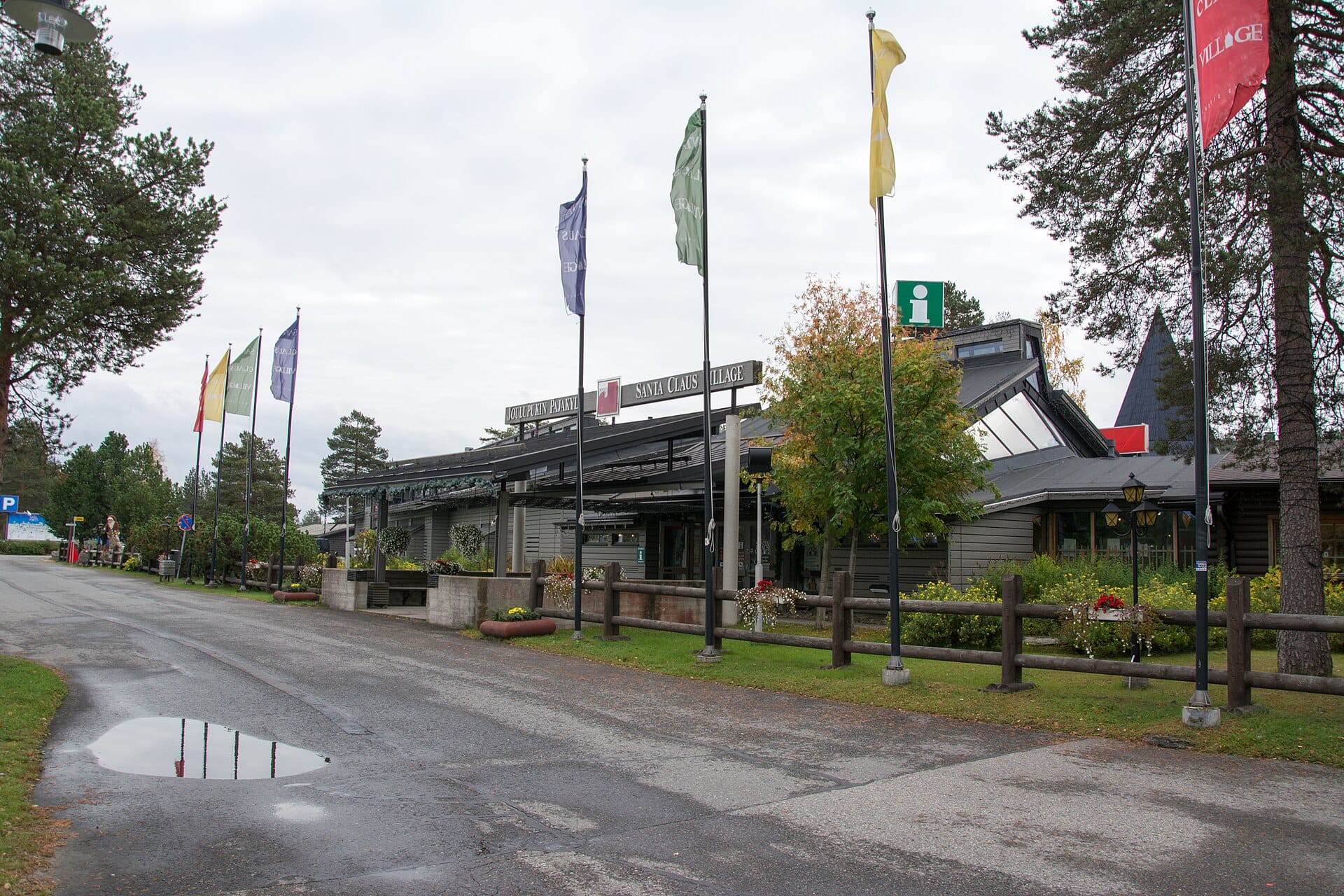
Summer is a completely different story. The landscape turns green, the sun doesn’t set at midnight, and instead of snow you go hiking and canoeing. It’s noticeably cheaper and free of crowds — the only catch is that the constant daylight means you won’t catch the aurora. Let’s take a look at the individual months now.

Lapland month by month

The temperatures refer to Rovaniemi on the Arctic Circle; in the far north (Saariselkä, Inari) it tends to be colder and darker. Here’s what to expect from each season.

December: a Christmas fairy tale and the polar night

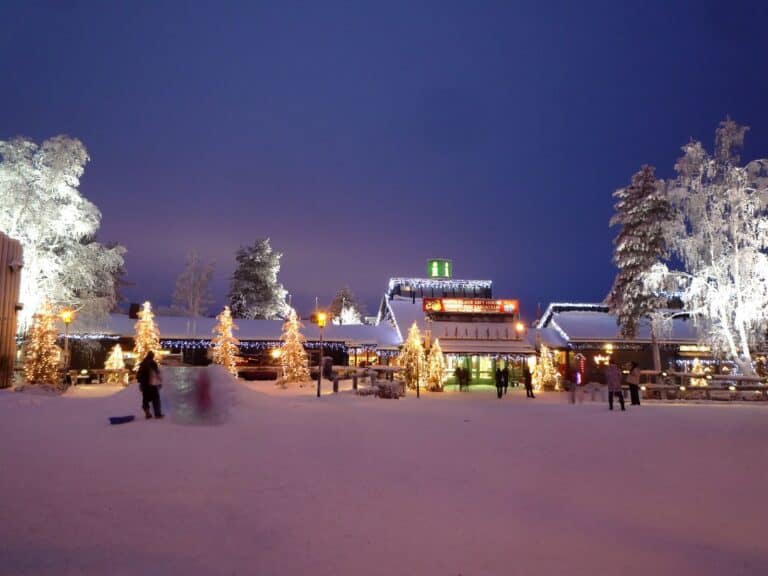
December is the most festive and at the same time the most expensive season. Temperatures hover roughly between 0 and −15 °C, occasionally dropping lower. Around the winter solstice comes the polar night, when the sun barely rises in Rovaniemi and you get just three to four hours of bluish twilight.

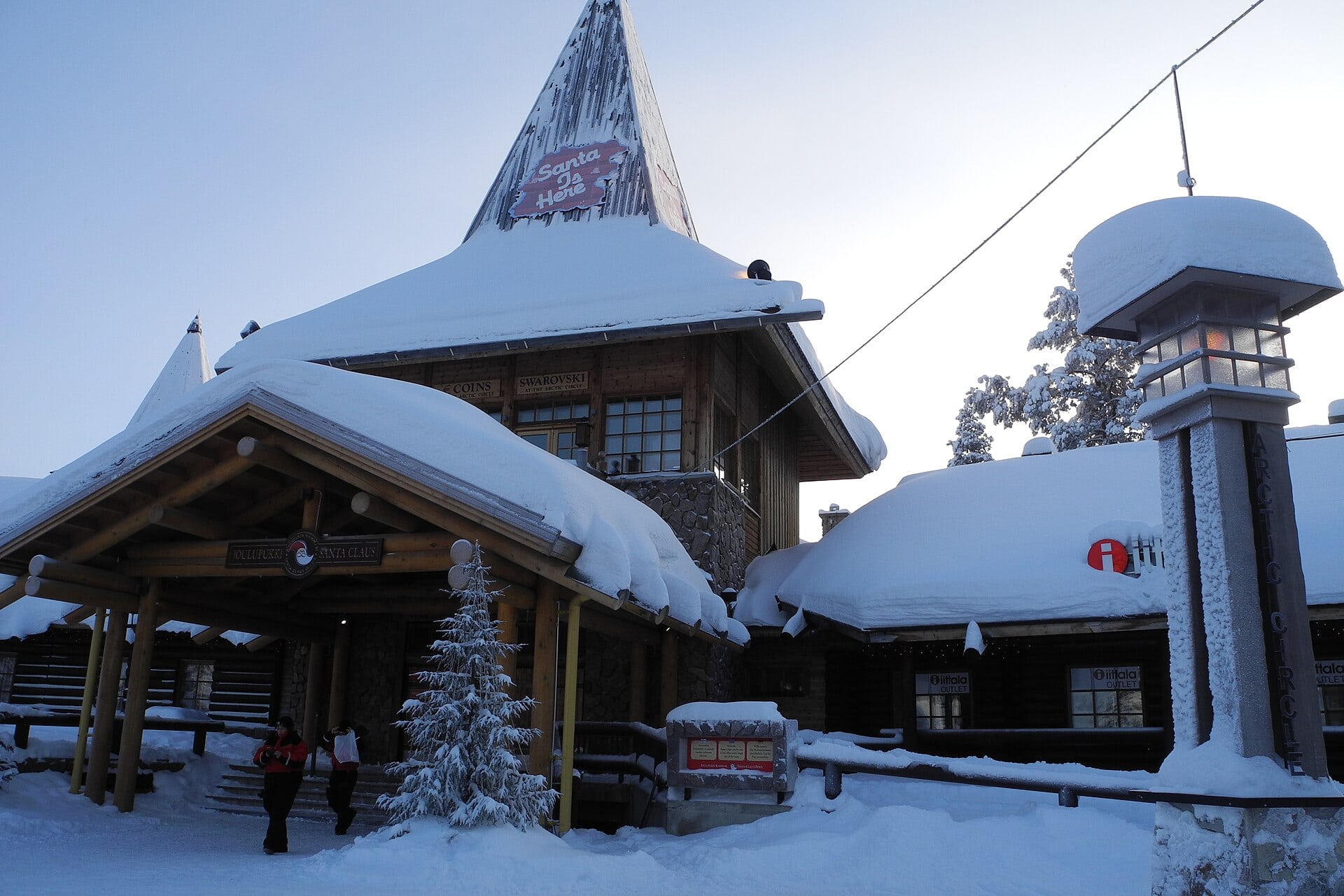
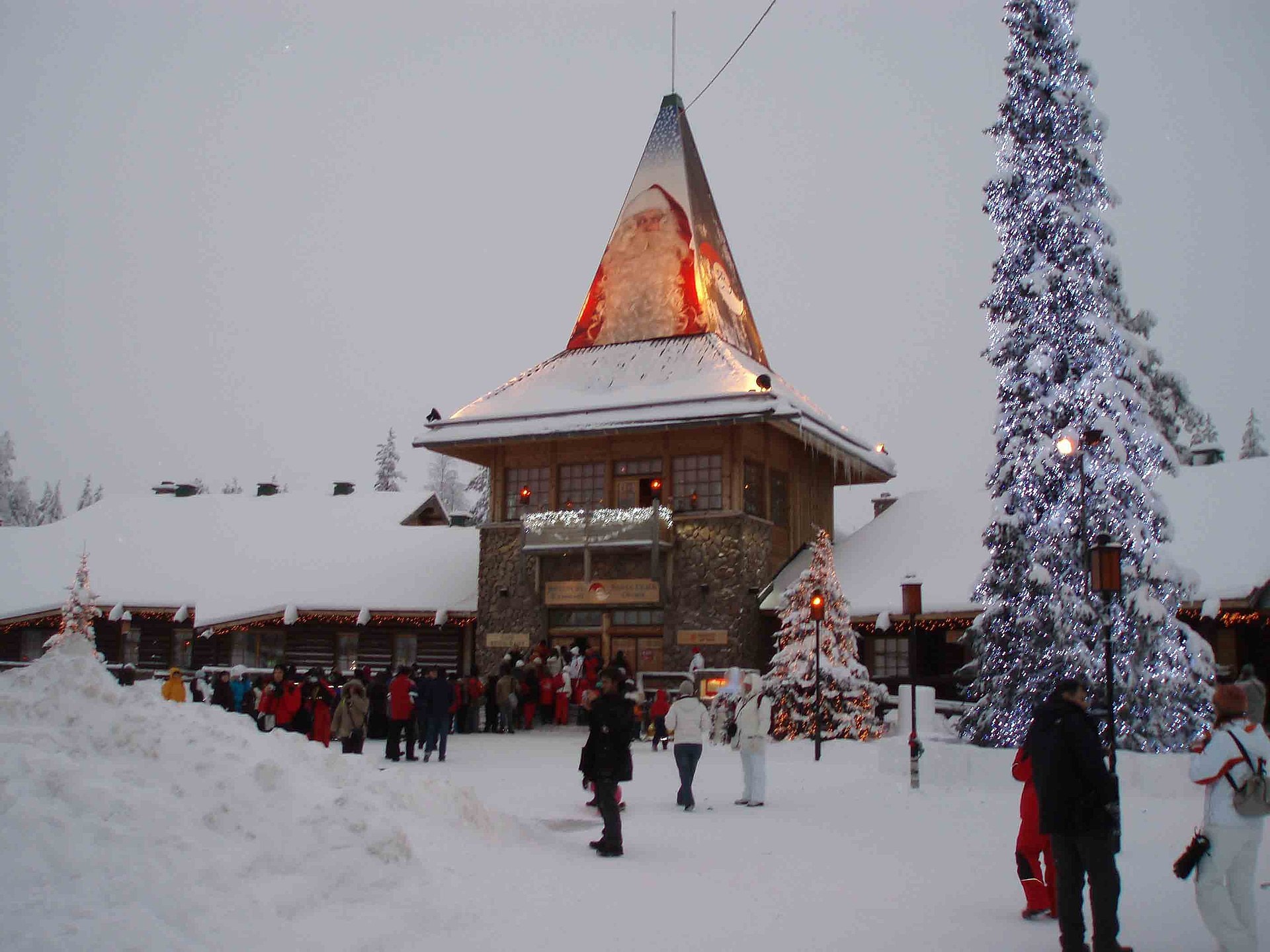
Santa Claus Village is in its full glory, but it’s bursting at the seams and accommodation prices shoot up, especially around Christmas. On top of that, there may not be enough snow yet in early December. 💡 Tip: if you want the Christmas atmosphere without the crazy prices, consider early December instead of the holidays themselves.

January: the coldest, but the best value for money

Along with February, January is the coldest month, typically −10 to −25 °C and occasionally even below −30 °C. It’s also very dark, but it has one big advantage: prices fall after the Christmas peak and snow is absolutely guaranteed. If you want a proper Arctic winter with all the trimmings and want to save money, January is ideal.

The dry Arctic cold is also easier to handle than you might expect, which pleasantly surprises a lot of first-time visitors. You just need to dress properly, which we’ll get to in a moment.

February and March: the best compromise

This, in my opinion, is the best time to visit Lapland. In February and especially in March the daylight returns fast, the skies are clearer (and so your chances of the Northern Lights improve), there’s the most snow (easily over 70 cm in March) and the cold is milder than in January.

March also brings long sunny days and the start of the popular spring skiing season at resorts like Levi or Ylläs. You get the ideal combination: winter experiences, plenty of daylight for trips and a good chance of the aurora. For most people, it’s the most balanced choice.

April: spring sunshine and the end of the winter season

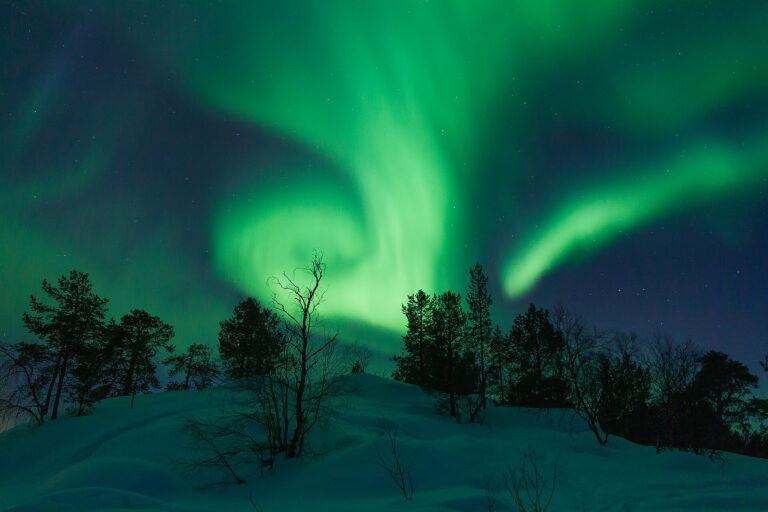
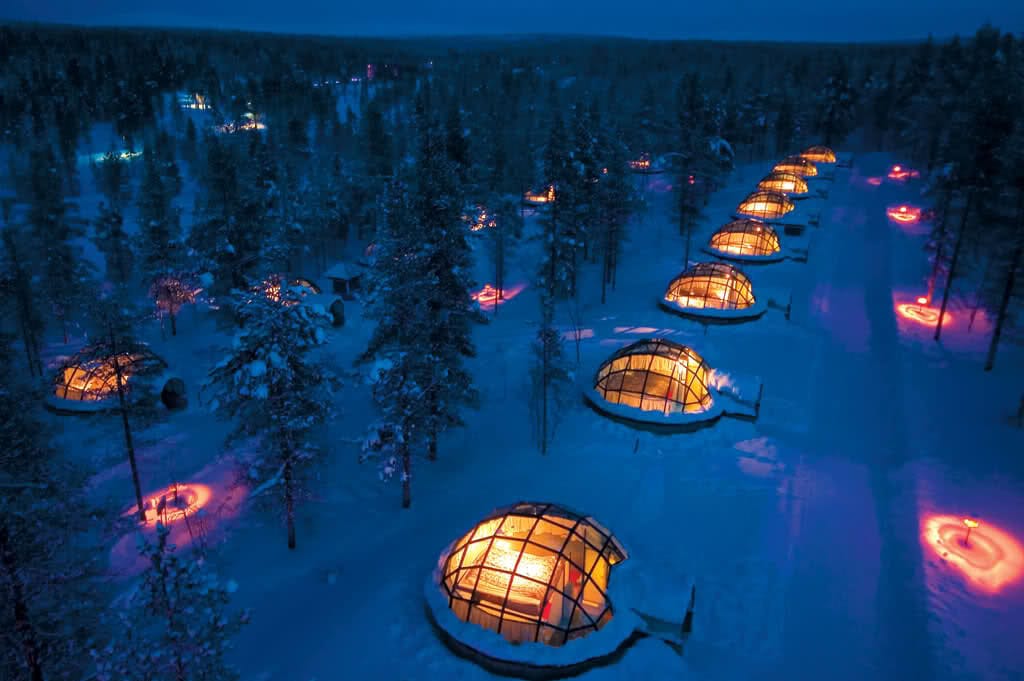
In April there’s still plenty of snow, but it’s noticeably warmer and sunnier. It’s a great time for spring skiing and snowmobiling in more pleasant conditions. At the same time, though, the Northern Lights and glass igloo season comes to an end (the igloos usually only run until the end of April), so if you’re coming mainly for the aurora, don’t leave it too long.

Summer (June to August): the midnight sun and hiking

Summer in Lapland is a completely different world. Temperatures are mild (often around 15 to 20 °C) and the midnight sun takes centre stage, when the sun never sets and the night never fully darkens. You can set off on a hike or paddle a canoe even at midnight in full daylight.

It’s significantly cheaper, with fewer tourists and a green landscape instead of snow. Two downsides: the non-stop light means you won’t see the aurora, and in June and July especially the mosquitoes are out in force, so don’t forget the repellent.

Autumn and “ruska” (September to October): colours and the return of the aurora

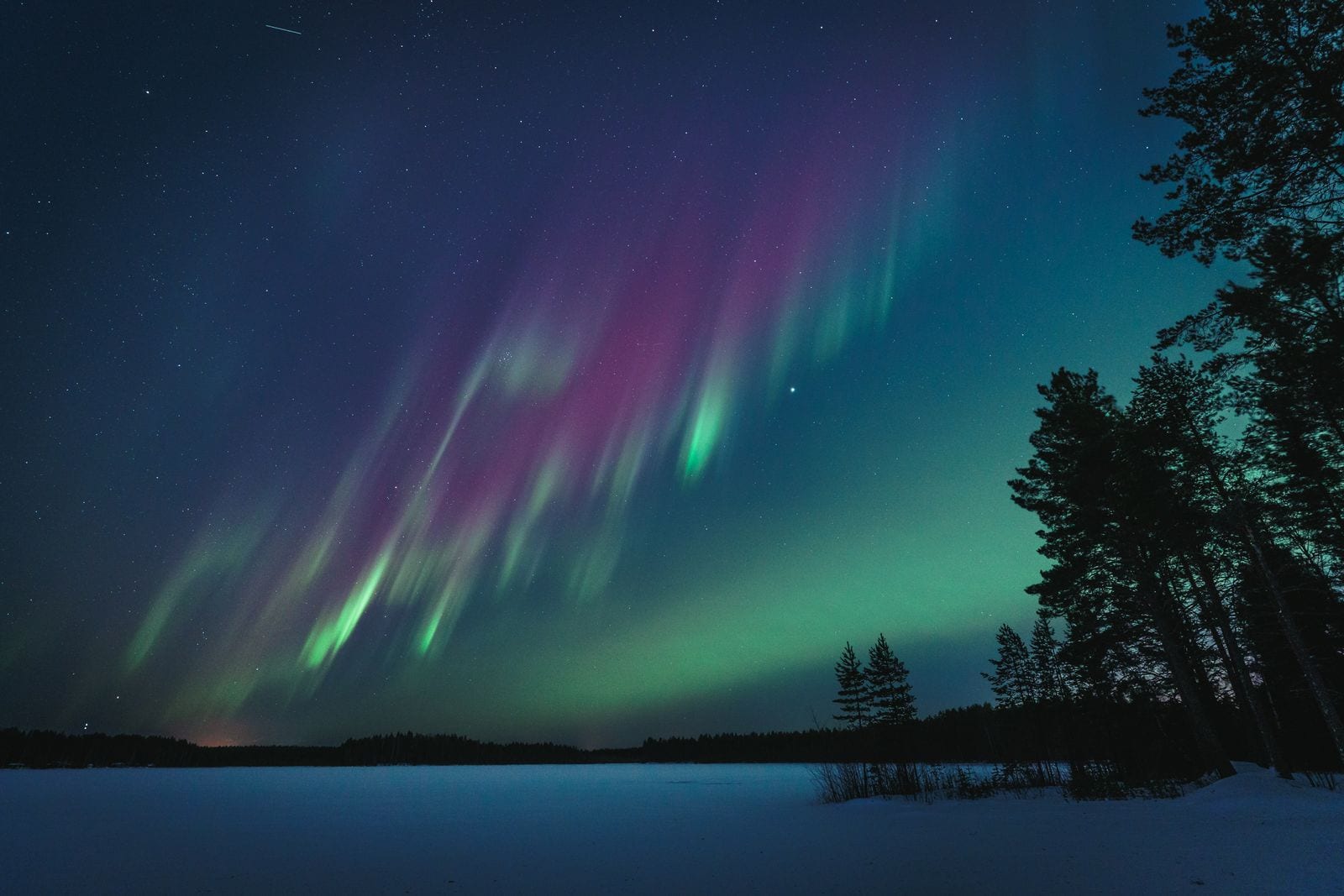
My secret favourite is September and the so-called ruska, a short window when the forests and tundra turn fiery orange and red. The mosquitoes are gone, the temperatures are crisp, and the first Northern Lights return to the darkening sky. For photographers and hiking lovers it’s one of the most beautiful times of all.

It’s the perfect time if you want to combine hiking with a chance of the aurora while avoiding the crowds and high winter-peak prices. Just bear in mind that the weather can already be changeable.

lukas a lucka
Lukáš and Lucie recommend
Where to Stay in Lapland
4 accommodations — resorts, hotels and other lodging options

The polar night and the midnight sun: Lapland’s two extremes

Because Lapland lies beyond the Arctic Circle, you’ll experience two phenomena you won’t see anywhere else. Both are worth planning around if they appeal to you.

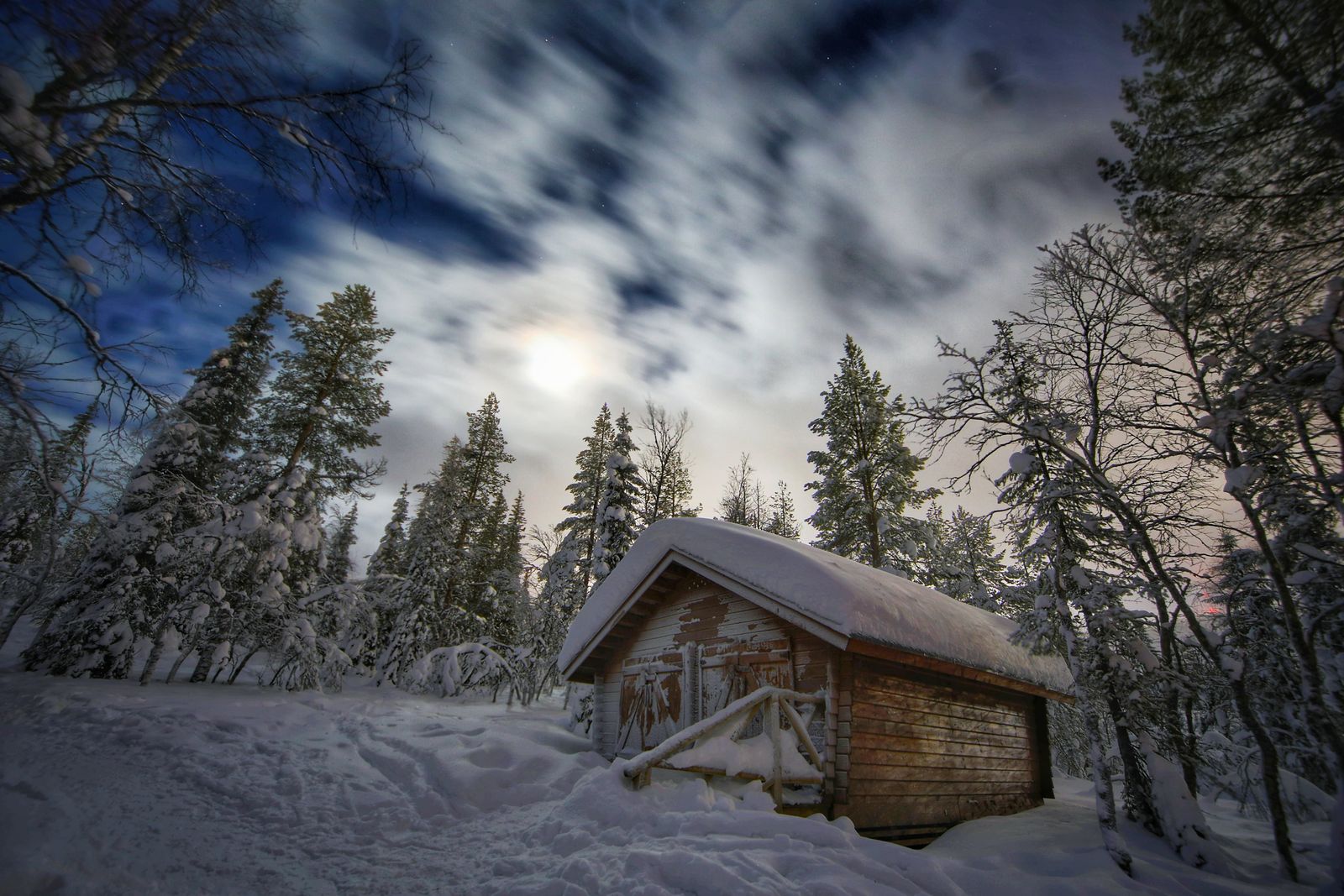
The polar night, or kaamos in Finnish, falls around the winter solstice. In Rovaniemi the sun barely rises during this period and you get just a few hours of bluish twilight; in northern Lapland the sun stays below the horizon for several weeks on end. It isn’t complete darkness, though — more of a magical blue and purple light that photographers adore.

The opposite is the midnight sun, when from roughly early June to early July the sun doesn’t set at all. The white nights are a surreal experience, but a word of warning: if you struggle to sleep in the light, pack a good eye mask, because even at two in the morning it’s as bright as day outside.

What to pack by season

Whether you go in winter or summer, what you wear in Lapland matters. In winter it’s all about staying warm; in summer it’s mainly about protection from mosquitoes and the changeable weather.

For winter, the rule is layering: quality thermal base layers, a fleece or wool mid-layer, and a waterproof insulated outer layer. Don’t forget a warm hat that covers your ears, mittens and sturdy winter boots with thick socks. The good news: on safaris (huskies, reindeer, snowmobiles) they usually lend you a warm Arctic overall and boots on site, so you don’t need to cram your full polar kit into your suitcase.

For summer, pack layers, a light waterproof jacket, sturdy hiking boots and above all mosquito repellent, as the bugs can really make life miserable in June and July.

Where to stay in Lapland

Whichever season you choose, the most sought-after places to stay sell out months in advance, so don’t put off booking. In Rovaniemi a reliable choice is Santa’s Hotel Santa Claus, while for something more memorable you can head to the experiential Arctic SnowHotel & Glass Igloos with its ice bar, or the legendary Kakslauttanen Arctic Resort near Saariselkä with its glass igloos. You’ll find more specific hotel tips in my guide on what to see in Rovaniemi.

Where next: ideas for more Nordic adventures

If Lapland has caught your imagination, here are a few ideas for further reading:

Frequently asked questions: when to visit Lapland

When is the best time to go to Lapland?

It depends on what you want to experience. For Christmas atmosphere go in December (most expensive and darkest), for the best price/experience ratio in January, and for the best compromise of light, snow and chance of northern lights in February and March. Summer attracts with midnight sun and treks, September with autumn colors and first aurora.

Which month is best for northern lights in Lapland?

“`html
The Northern Lights can be seen from the end of August to the beginning of April. Statistically, they are most active around the equinoxes, meaning in September and March, when clear skies are also more frequent. However, the key is a dark and clear sky, not a specific month.
“`

What is winter like in Lapland and how cold is it there?

Winter season lasts roughly from December to April. In Rovaniemi, temperatures typically range between −10 and −25 °C, occasionally dropping below −30 °C in January and February. However, the dry Arctic cold is easier to bear than damp winter weather, you just need to dress in layers.

Is it dark all day in Lapland in December?

Almost. Around the winter solstice, polar night (kaamos) occurs, when in Rovaniemi the sun practically doesn’t rise and you only have 3 to 4 hours of bluish twilight. In northern Lapland, the sun stays below the horizon for several weeks. It’s not complete darkness, rather a magical blue light.

When is the midnight sun in Lapland?

You’ll experience the midnight sun, when the sun never sets at all, in Rovaniemi roughly from the beginning of June to the beginning of July. In the north of Lapland it lasts even longer. It’s the ideal time for treks and canoeing, just be prepared for mosquitoes and bring a sleep mask.

Is it worth going to Lapland in summer?

If you’re not primarily going for snow and the Northern Lights, absolutely. Summer offers the midnight sun, treks, canoeing and green landscapes, it’s significantly cheaper and without the crowds. The downside is mosquitoes in June and July and the fact that you won’t see the Northern Lights due to the daylight.

Will there definitely be snow in Lapland?

“`html
Guaranteed snow is roughly from January to April, when the snow cover is at its highest (in March even over 70 cm). At the beginning of December there might not be enough snow yet, so if you want a guaranteed white Lapland, head out rather in January to March.
“`

Tips and Tricks for Your Vacation

Don’t Overpay for Flights

Search for flights on Kayak. It’s our favorite search engine because it scans the websites of all airlines and always finds the cheapest connection.

Book Your Accommodation Smartly

The best experiences we’ve had when looking for accommodation (from Alaska to Morocco) are with Booking.com, where hotels, apartments, and entire houses are usually the cheapest and most widely available.

Don’t Forget Travel Insurance

Good travel insurance will protect you against illness, accidents, theft, or flight cancellations. We’ve had a few hospital visits abroad, so we know how important it is to have proper insurance arranged.

Where we insure ourselves: SafetyWing (best for everyone) and TrueTraveller (for extra-long trips).

Why don’t we recommend any Czech insurance company? Because they have too many restrictions. They set limits on the number of days abroad, travel insurance via a credit card often requires you to pay medical expenses only with that card, and they frequently limit the number of returns to the Czech Republic.

Find the Best Experiences

Get Your Guide is a huge online marketplace where you can book guided walks, trips, skip-the-line tickets, tours, and much more. We always find some extra fun there!
5 Best Viewpoints in New York 2026: Top of the Rock, Edge, SUMMIT & Empire State

TL;DRFor most visitors, the best view in New York is from Top of the Rock at Rockefeller Center (259m, from $39) — you get Central Park and the Empire State Building in a single shot. For something more modern, SUMMIT One Vanderbilt (368m, from $44) offers mirrored installations and a view of the Chrysler Building. Empire State Building (381m, from $44) has the old-school 1931 charm, but the longest queues by far. If you fancy an adrenaline hit, Edge at Hudson Yards (344m, from $39) has an outdoor glass platform jutting out over nothing. And for the highest point in the US, with views over the Statue of Liberty, head to One World Observatory (386m, from $40).

The first time that lightning-fast elevator shoots you up to the hundredth floor, your ears pop and your heart starts pounding like crazy. Seeing that endless concrete labyrinth from above is the kind of experience you never erase from your memory. But choosing the right New York viewpoint — so you don’t blow a fortune on a mediocre view of the wall opposite — takes a bit of planning.

The city of a thousand lights now boasts five major observation decks, and each one is aimed at a slightly different kind of visitor. From my own experience, queuing for the wrong viewpoint at the wrong time can easily eat up an hour or more. Ticket prices aren’t exactly cheap either, so it pays to think carefully about what kind of experience you actually want from your visit 😊

That’s why I put together this comparison of the five main skyscrapers. You’ll discover where to catch the best view of Manhattan, where to head for mirror-filled modern architecture, and where you’ll pay only for a famous name without the great panorama to match. I’ll also share how to time your ticket purchase smartly ahead of the summer season.

TL;DR

  • Top of the Rock: The sweet spot and the best choice for most travellers — you’ll see Central Park and the iconic Empire State in a single frame.
  • SUMMIT One Vanderbilt: A fun, mirror-filled show with an unbeatable view of the Chrysler Building.
  • Empire State Building: The historic classic with a retro vibe, but the longest queues — and no view of the icon itself.
  • Edge: An adrenaline climb onto an outdoor platform jutting out into thin air, ideal for anyone unfazed by glass floors.
  • One World Observatory: The tallest point in the US and a brilliant choice for views over the bay and the Statue of Liberty.

Which New York Viewpoint Is the Best? A Quick Comparison

Every skyscraper offers a different perspective and a different price tag. I’ve put together a handy comparison table so you have the key numbers at your fingertips right away.

ViewpointHeightFrom (USD)What makes it unique
Top of the Rock259 m39Empire State Building and Central Park right in front of you
Empire State Building381 m441931 art deco atmosphere
SUMMIT One Vanderbilt368 m44Mirror illusions and a view of the Chrysler Building
Edge344 m39Cantilevered outdoor platform with a glass floor
One World Observatory386 m40Tallest point in the US, view of the Statue of Liberty

Top of the Rock

The roof of the Rockefeller Center serves up exactly the postcard image you know from movie posters. Even though it rises only 259 metres, it offers the most balanced view of the city. On one side you have the sprawling green rectangle of Central Park, and on the other the majestic Empire State Building stands right in front of you, surrounded by dozens of other towers.

The top floor is also completely glass-free, which anyone holding a camera will appreciate. Basic tickets start at $39 to $42 depending on the season and current demand. This is exactly where I send all my friends flying to the States for the first time who want the best viewpoint in New York without any unnecessary compromises.

💡 Tip: During the summer months the sun sits high and harsh above the city, so pack a hat and sunglasses — there’s nowhere to hide from the rays on the open terrace.

You’ll find official information and exact opening hours on the Rockefeller Center website.

It’s worth buying tickets online in advance on GetYourGuide to skip the queue at the box office.

Empire State Building

This historic 1931 icon is the symbol of the entire city, and its art deco foyer instantly whisks you back a whole century. The observation deck on the 86th floor, at 381 metres, is the ultimate romantic classic, especially at sunset. There’s one annoying catch, though: from the building itself you simply can’t see the Empire State Building, which is a fairly big loss for the overall panorama.

Bear in mind that this is the busiest tourist spot of them all, with the longest queues of any skyscraper. Basic entry starts at $44, the combo with the 102nd floor comes to $79, and an express skip-the-line ticket can easily run you $120. Head here if you love old-city architecture and want to tick off the most famous point on the tourist map.

💡 Tip: If you’re willing to give up daylight and come late in the evening, you’ll dodge the worst crowds and enjoy a magical view of the brightly lit streets full of yellow cabs far below you.

Check the current prices and details about each floor on the official Empire State Building website.

It’s worth buying tickets online in advance on GetYourGuide to skip the queue at the box office.

SUMMIT One Vanderbilt

This newer addition to the skyline has shaken things up and created an entirely different kind of experience. At 368 metres you’ll find the Air mirror art installation, which optically fractures the space and stretches it out into infinity. Add the glass Levitation alcoves, where you stand directly above a busy street, and you’ve got the most fun viewpoint, with a breathtaking view of the Chrysler Building’s spire.

A basic ticket costs around $44 to $45, and evening slots will set you back roughly twelve dollars more. There’s also the option to ride the glass Ascent elevator, but that comes to $68 — and in my opinion this surcharge just doesn’t make sense for a few seconds of a ride.

💡 Tip: Because of the mirrors covering the floor everywhere, skirts and dresses are strictly forbidden — security will only let you in wearing trousers or shorts.

You’ll find the entry conditions and recommended dress code right on the SUMMIT One Vanderbilt website.

It’s worth buying tickets online in advance on GetYourGuide to skip the queue at the box office.

Edge

This architectural marvel in the Hudson Yards district offers a slightly different perspective, because its outdoor platform at 344 metres literally juts out into thin air from the side of the skyscraper. You stand here surrounded only by slanted glass panels, with part of the floor see-through. The view, however, points more outward, away from the centre, so you see the famous skyscrapers from a bit further off 😅

For summer 2026 the operators are also planning a major redesign of the space, so the visit will take on a fresh atmosphere again. Tickets start at $39, and for the bravest there’s the City Climb option, where you scale the outer façade in a safety harness all the way to the very top of the building.

💡 Tip: It sits in a modern district full of greenery and great bistros, so once you’re back down you can treat yourself to an excellent vegetarian lunch right in the Hudson Yards complex.

Look for details on the planned redesign and the adrenaline climb on the official Edge website.

It’s worth buying tickets online in advance on GetYourGuide to skip the queue at the box office.

lukas a lucka
Lukáš and Lucie recommend
Where to stay in New York
3 accommodations — hotels and other lodging options

One World Observatory

Right at the southern tip of the island stands the tallest building in the United States at the moment, and from its top at 386 metres you’ll see the city from a completely different angle. A huge advantage is the fixed price of around $40 regardless of the time of day, so there’s no dynamic surge pricing typical of the other skyscrapers. The experience kicks off in the lightning-fast SkyPod elevator, which projects the city’s history onto the walls in just a few seconds.

The entire observation area is tucked behind thick glass, so reflections from the interior lighting make photography a little tricky. On the other hand, from here you get the best possible view of the bay’s water and a tiny Statue of Liberty in the distance. It makes sense to combine your visit with a tour of the nearby 9/11 Memorial.

💡 Tip: Set aside time for the brilliant audiovisual show right after you step out of the elevator — the unexpected surprise as the view is revealed will absolutely knock you off your feet.

Read all the information you need for your visit on the One World Observatory website.

It’s worth buying tickets online in advance on GetYourGuide to skip the queue at the box office.

What Travellers Say About the Viewpoints

Before you settle on one, it helps to know what other visitors agree on. A few points come up again and again in reviews and travel forums, and they’ll make your choice a lot easier.

  • For photographers, Top of the Rock is the obvious winner — thanks to its lower position and glass-free top floor, you’ll get sharp shots of the Empire State Building and Central Park without annoying reflections.
  • SUMMIT is more of an experience than a classic viewpoint. People love it for the mirror halls, but they often mention having to wait a bit at the most popular selfie spots.
  • Edge tends to get seriously busy, and because of its position on the west side the view points more away from the centre. It’s also windy on the open platform, so bring a jacket.
  • One World has a stunning view of the bay and the Statue of Liberty, but the glass all around makes it harder to photograph.
  • Empire State is about the atmosphere of an icon, not the best view — and expect the longest queues of them all.

The most common piece of advice from travellers is clear: book your sunset slot well in advance, even a few weeks ahead, because those exact times are the first to sell out. You’ll find detailed comparisons with photos on sites like Where Are Those Morgans or My Wanderlusty Life.

When and How to Visit the Viewpoints (Practical Tips)

When planning your trip, keep one important rule in mind: buy your tickets online well in advance. Summer 2026 will bring an extreme surge of tourists to the city thanks to the FIFA World Cup and the celebrations marking 250 years since the founding of the USA. You probably won’t be able to grab tickets on the spot at all, and the buildings’ capacity will be sold out weeks ahead.

Bear in mind that the American admission system makes heavy use of dynamic pricing. That means you’ll pay noticeably more for weekend slots and especially for the attractive sunset window. On top of that, the prices listed on the websites are always before tax — at the box office a sales tax of just under nine percent (8.875% to be exact) gets added to the total.

If you want the best photos, book a time slot roughly 60 to 90 minutes before sunset. You’ll get to enjoy the city bathed in golden light and then smoothly transition into watching the glowing nighttime skyscrapers. Before entry there’s always an airport-style security check, so don’t bring any unnecessarily big backpacks.

Don’t buy tickets for all five spots — that would be a huge waste of time and money. The ideal strategy is to pick one classic viewpoint, like Top of the Rock, and pair it with one modern experience such as SUMMIT. A brand-new alternative open since April 2026 is the One Times Square Skywalk, which for $30 takes you 19 floors up right above the flashing neon of the famous square.

You might also be interested in the architectural curiosity that is Vessel in Hudson Yards, which reopened on 9 March 2026 after a long break. Tickets are tied to a specific time, so secure them early. And if you want to spare your wallet entirely, hop aboard the orange Staten Island Ferry — it runs for free and offers a gorgeous view of the Manhattan skyline from the water.

Where to Stay Near the Viewpoints

Finding the right hotel will save you plenty of pointless rides on the packed subway. For lovers of heights, Midtown Manhattan makes the ideal base. From there you can comfortably walk to the Empire State Building, the Rockefeller Center and the modern SUMMIT One Vanderbilt — something you’ll especially appreciate after a late evening return, when your feet are guaranteed to be aching.

Specifically, it’s worth checking out the Pod 51 Hotel in Midtown or the Artezen Hotel in the Financial District. Or feel free to compare all accommodation in New York by location and budget.

Where to Go Next in New York

Frequently Asked Questions

Which observation deck in New York is the best?

For most visitors, we recommend Top of the Rock on the roof of Rockefeller Center. You’ll see the Empire State Building, Central Park, and all of Midtown in a single view, and the top floor is glass-free. Price from ~39 USD. Those looking for a modern experience should go for SUMMIT One Vanderbilt.

Is Top of the Rock or Empire State Building Worth It?

On Top of the Rock you’ll see the Empire State Building as the dominant feature of the panorama. At the Empire State Building, you won’t see the actual building where you’re standing. For photographers and those who want the classic Manhattan view, Top of the Rock works out better. The Empire State is more about the experience of an icon and has the longest queues.

How much do observation decks cost in New York?

Prices in 2026 range from ~39 USD (Edge, Top of the Rock) to ~44–45 USD (Empire State Building, SUMMIT One Vanderbilt) and ~40 USD (One World Observatory without dynamic pricing). Add sales tax of ~8.875% to the prices. Weekend and sunset slots are typically 5–15 USD more expensive.

Is it better to go to the viewpoint during the day or at sunset?

The sunset is the most beautiful, but also the most expensive and sells out the fastest. Best strategy: buy a ticket 60–90 minutes before sunset. You’ll get the transitional light, then the illuminated panorama. During the day, prices are lower and visibility is better for distant views. If you’re only in NYC for a few days, sunset is worth the extra cost.

What is SUMMIT One Vanderbilt?

SUMMIT One Vanderbilt is New York’s most modern observation deck (opened in 2021), located in a skyscraper next to Grand Central Terminal. It features the mirrored Air installation, Levitation glass floors, and the best view of the Chrysler Building. Entry from 44–45 USD, evening tickets about ~12 USD more. Note: skirts and dresses are not allowed due to the glass floor.

Can you go to an observation deck in New York for free?

Paid observation decks aren’t free. The exception is the Staten Island Ferry, which runs for free and offers you views of the Manhattan skyline and the Statue of Liberty from the water. Sure, you’re not going up high, but the skyline view is worth it and you’ll save over 40 USD.

Tips and Tricks for Your Vacation

Don’t Overpay for Flights

Search for flights on Kayak. It’s our favorite search engine because it scans the websites of all airlines and always finds the cheapest connection.

Book Your Accommodation Smartly

The best experiences we’ve had when looking for accommodation (from Alaska to Morocco) are with Booking.com, where hotels, apartments, and entire houses are usually the cheapest and most widely available.

Don’t Forget Travel Insurance

Good travel insurance will protect you against illness, accidents, theft, or flight cancellations. We’ve had a few hospital visits abroad, so we know how important it is to have proper insurance arranged.

Where we insure ourselves: SafetyWing (best for everyone) and TrueTraveller (for extra-long trips).

Why don’t we recommend any Czech insurance company? Because they have too many restrictions. They set limits on the number of days abroad, travel insurance via a credit card often requires you to pay medical expenses only with that card, and they frequently limit the number of returns to the Czech Republic.

Find the Best Experiences

Get Your Guide is a huge online marketplace where you can book guided walks, trips, skip-the-line tickets, tours, and much more. We always find some extra fun there!
Ostrava, Czech Republic: 12 Best Things to See and Do in 2026

TL;DRThere are 12 essential tips here, topped by the industrial site of Dolní oblast Vítkovice, with its glass-walled Bolt Tower standing almost 78 metres tall. Add to that the interactive Svět techniky science centre, the mining exhibits at Landek Park and Michal Mine, and the smouldering Ema slag heap, which gives you views out to the Beskids. One packed day covers the centre and Dolní Vítkovice, but give the wider city and surroundings 2 to 3 days if you can. May, June and September are the best months for relaxed exploring, while the Colours of Ostrava festival takes over Dolní oblast Vítkovice from 15 to 18 July. Ostrava also makes a great base for day trips to Štramberk, Hukvaldy, or up Lysá hora, which rises to 1,324 metres.

For a lot of people, Ostrava in the Czech Republic still carries the label of an ugly black city full of coal and smog. Luckily, the truth is somewhere else entirely. This underrated destination has cleverly turned its raw industrial past into its biggest draw, proving that industrial heritage can be incredibly fascinating.

It’s a city of huge contrasts. Right next to giant rusty furnaces you’ll find modern glass-fronted cafés and lots of greenery. In fact, Ostrava is one of the greenest cities in the country. Anyone who comes here without prejudice usually leaves having seriously reshuffled their ranking of favourite Czech cities.

I’ve put together the best of what to see in and around Ostrava — from industrial furnaces and viewpoints to parks, plus tips on where to grab a great coffee and where to stay. Ostrava will probably surprise you more than you expect.

TL;DR

If you don’t have time to read the whole article, here’s a quick overview of Ostrava’s biggest highlights:

  • Lower Vítkovice and the Bolt Tower: Former ironworks transformed into a huge cultural centre with a glass viewing platform.
  • World of Technology: An interactive science centre that delights kids and curious adults alike.
  • Mining exhibitions: Landek Park with a ride down underground, and the Michal Mine preserved exactly as the miners left it.
  • Ema Slag Heap: Ostrava’s “volcano”, which still smoulders inside and offers lovely views over the city and the mountains.
  • City centre and Nová Karolina: Historic Masaryk Square contrasting with a modern district and the reconstructed Trojhalí hall.
  • Day trips nearby: Picturesque Štramberk, composer Leoš Janáček’s hometown of Hukvaldy, or a hike up Lysá hora.

When to Visit Ostrava

Ostrava has something to offer in every season, but it really depends on what you’re coming for. Let’s look at the best months for your visit and what the weather in Ostrava is like.

Spring and Autumn for Relaxed Exploring

Months like May, June or September are probably the best for wandering around the city. Temperatures are very pleasant and you’ll avoid the summer heat, which you’ll especially appreciate when climbing the viewing towers or exploring the vast Lower Vítkovice complex. Autumn mists also lend the industrial landmarks a beautifully mysterious atmosphere.

Summer Full of World-Class Festivals

If you love music and live culture, summer in Ostrava won’t let you down. The city comes alive with huge events and an incredible energy. In mid-July it hosts the legendary Colours of Ostrava (in 2026, specifically from 15 to 18 July), held right in the magical setting of Lower Vítkovice. And at the turn of June and July the city pulses to the beat of the Beats for Love dance festival.

Where to Stay in Ostrava

Ostrava offers plenty of accommodation options for every budget. It pays to stay as close as possible to the centre or Nová Karolina, from where you can easily reach all the main sights on foot or by tram. Here are some popular hotels in Ostrava, Czech Republic, split up by what you’re after from your stay.

Modern comfort near Nová Karolina:

  • Clarion Congress Hotel Ostrava: A very popular choice with a huge wellness centre and a great location near the sports arenas and the centre.
  • Park Inn by Radisson Ostrava: A lovely modern hotel just a short walk from a popular park, praised by travellers for its spotless rooms and excellent breakfasts.

Classic elegance in the heart of the city:

  • Mercure Ostrava Center: A modern, stylish hotel right in the city centre, just a few steps from the main square.
  • Imperial Hotel Ostrava: One of the best-known addresses in the city, offering first-class service and a location right by the main square.
  • Hotel Brioni Boutique Ostrava: A smaller family-run hotel with a very personal touch, located just a few steps from the famous Stodolní Street.

Quiet and lower prices outside the very centre:

  • Harmony Club Hotel Ostrava: A great choice if you’re after good value for money, plus it sits in a quieter area not far from the centre.

Things to See and Do in Ostrava, Czech Republic

The city is easy to explore on foot and with its excellent public transport. Let’s take a look at the most interesting spots that you definitely shouldn’t miss on your first visit.

1. Lower Vítkovice (Dolní Vítkovice)

This enormous complex has no equal in the country and ranks among the most-visited places outside Prague. Coal was once mined here and iron produced in giant blast furnaces. Production stopped for good in 1998, and there was a real risk the whole complex would fall into ruin. Fortunately, the site was transformed into a national cultural monument that takes your breath away with its sheer scale.

Walking among the huge rusty pipes and mining towers is an experience that looks almost surreal in photos. The most striking structure is the old gas holder, which the brilliant Czech architect Josef Pleskot turned into the modern Gong concert hall, with a capacity of 1,500. It’s in the Gong and the surrounding grounds that tens of thousands of people gather each summer for the Colours of Ostrava festival.

Entry to the grounds themselves is free, so you can spend hours wandering around and soaking up that raw atmosphere. For a deeper understanding of the history, though, it’s worth paying for a guided tour, where you’ll learn incredible details about the gruelling work of the local labourers.

2. Bolt Tower

While you’re in Lower Vítkovice, you can’t skip its highest point. The Bolt Tower is an absolutely fascinating glass extension rising on top of the former blast furnace number 1. It was designed once again by the area’s resident architect Josef Pleskot, who gave it a shape resembling a helix.

The tower reaches almost 78 metres, and its name hides a little play on words. The English word “bolt” means a screw, but it also nods to the phenomenal sprinter Usain Bolt. He regularly came to Ostrava to compete at the Golden Spike athletics meeting and even christened this tower in person.

At the top, the lovely Bolt Café awaits, where you can enjoy a coffee with an incredible view over the whole city and, in good weather, all the way to the nearby Beskydy mountains. It’s probably the most popular photo spot in all of Ostrava.

3. World of Technology

Right next to the blast furnaces is a place where you could easily spend a whole day. The World of Technology is split into two parts, both worth a visit. The Big World of Technology occupies a brand-new building with a mirrored façade and works as a huge, modern science centre.

Inside you’ll find four main exhibitions: the Children’s World, the World of Nature, the World of Science and the World of Civilisation. Everything here is wonderfully interactive — you can get hands-on with the laws of physics, try out various experiments, and understand how the world around us works in a playful way. Set aside a whole morning, because the experiences are arranged so cleverly that time just flies by.

The Small World of Technology U6, by contrast, is housed in the historic building of a former power station. Its exhibition focuses on the history of inventions from the Industrial Revolution to the present day. You’ll find models of old steam engines, working looms and historic aircraft.

4. Landek Park

If you want to experience first-hand what work deep underground was like, head to Landek Hill. It’s home to the largest mining museum in the Czech Republic, with the entire exhibition built on the site of Ostrava’s oldest mine shaft. Visitors absolutely rave about the experience.

The highlight is the moment when the original mine cage lowers you into a real underground tunnel. You’ll walk through historic galleries and see an exhibition on mine rescue work, showing the dangerous and courageous efforts of rescuers during mining disasters. People reportedly come out rather quiet — which says a lot about the experience.

Landek Hill is also world-famous thanks to one unique archaeological discovery. In 1953, the so-called Landek (or Petřkovice) Venus was found here — a tiny figurine carved from mammoth ivory, over 20,000 years old. Interestingly, it’s the only slender Venus ever found in Europe.

5. Michal Mine

While Landek Park offers a varied museum exhibition, the Michal Mine in Michálkovice offers a completely different kind of experience. This national cultural monument is essentially frozen in time. Everything here has stayed exactly as the miners left it after their very last shift in 1993.

The tour route uniquely follows a miner’s daily journey to work. You’ll pass through the chain changing rooms, the token room and the lamp room, where the workers picked up their lamps, before reaching the mining tower itself. The atmosphere is so thick that the dust on the old equipment and the silence in the lamp room make it feel as though the shift only ended yesterday.

6. Silesian Ostrava Castle

Yes, Ostrava has its own castle too. Its origins date back to the late 13th century, when it was meant to protect a regional trade route. The castle has had a very turbulent history — because of intensive coal mining in the bedrock, the whole structure gradually sank by several metres and spent long years sadly falling into disrepair.

Fortunately, at the turn of the millennium the city decided to save the ruin, and after a demanding restoration the castle reopened to the public in 2004. Today it’s a lively cultural centre worth visiting in almost any season. Visitors can see an exhibition on witches, an old torture chamber, and there are plenty of weekend events for families with children.

lukas a lucka
Lukáš and Lucie recommend
Where to stay in Ostrava
6 accommodations — hotels, wellness hotels and other lodging options

7. Ema Slag Heap

Locals lovingly nickname the Ema slag heap “Ostrava’s volcano”, and it’s not just poetic licence. This enormous hill of mining spoil has been slowly smouldering inside for over a hundred years. Temperatures inside the heap are estimated to reach hundreds of degrees Celsius.

White clouds of steam constantly rise from cracks on the surface, and the ground is hot to the touch in places. As a result, snow doesn’t settle here in winter, and heat-loving steppe plants grow on the slopes — the kind you’d never expect at this latitude. Hiking up along the yellow trail markers is a favourite weekend activity for locals.

The top of the Ema heap sits at over 300 metres above sea level and offers some of the most beautiful views around. On a clear day you can see not only the whole of Ostrava but also the panorama of the Beskydy mountains with the dominant Lysá hora, the ridges of the Jeseníky, and even a slice of neighbouring Poland.

8. New Town Hall Viewing Tower

If you love views over the city from up high but don’t fancy climbing a smouldering slag heap, head straight to the centre. The New Town Hall is the largest town hall building in the country, and its tower is also the tallest town hall viewing tower in the entire Czech Republic. The whole structure rises to an impressive 85.6 metres.

The viewing gallery sits at 73 metres, and a huge bonus is that you reach the top comfortably by a fast lift. The view from the gallery is absolutely stunning, and from here you’ll see that famous Ostrava contrast beautifully: historic centre on one side, old factory chimneys on the other, and green parks all around.

9. Masaryk Square and the City Centre

A stroll through the historic core of the city reveals that Ostrava has a classic city face too. The hub of all the action is the spacious Masaryk Square, dominated by the old town hall building, a Baroque plague column and a statue of St Florian. The square is lined with beautifully ornate façades of townhouses from the turn of the 19th and 20th centuries.

Just off the square you’ll find Ostrava’s most important churches. The Church of St Wenceslas is the oldest surviving building in the city, with a historic core dating back to the 13th century. Also worth seeing is the majestic Cathedral of the Divine Saviour, the second-largest church in Moravia, whose two enormous towers reach 67 metres.

10. Nová Karolina and Trojhalí Karolina

Just a short distance from the historic centre, a brand-new modern district has sprung up — a textbook example of the city’s transformation. Nová Karolina was built on the site of a former giant coking plant. Today it’s home to a large shopping centre, modern apartment blocks and spacious squares. It’s not the most romantic part of Ostrava, but it nicely shows where the city is heading.

Right next to the shopping zone stands an absolute architectural gem. Trojhalí Karolina is the rescued industrial hall of a former power plant from the early 20th century. The dilapidated building was taken in hand by architect Josef Pleskot, who sensitively turned it into a huge covered multifunctional space. Today it hosts markets, sporting events, concerts and exhibitions.

11. Stodolní Street

Stodolní Street. You’ll hear this name in Ostrava before you’ve even unpacked your suitcase. It has a reputation as the place that never sleeps, and in its heyday it was a genuine phenomenon across the whole country. Dozens of bars, pubs and dance clubs of every genre are crammed into one long street.

These days the street is apparently a bit quieter than at its peak around the turn of the millennium, but the evening atmosphere is still very much alive. Even if you’re not planning a wild night out, it’s worth at least walking through in the evening to soak up the distinctive energy Stodolní is so famous for.

12. Ostrava Zoo and Botanical Park

If you need a break from the industrial landmarks, Ostrava Zoo is an absolutely ideal retreat. It spreads across a huge area of around 100 hectares and is special in the way the animal enclosures blend seamlessly with a gorgeous botanical park. You’ll find, for instance, the country’s largest collection of colourful rhododendrons and azaleas.

The whole site is set within an old forest, so even in the hot summer there’s plenty of pleasant shade. Walks around the enclosures are nicely slow-paced and never rush you along, and when your feet start to ache, the popular little zoo train will carry you through the prettiest parts of the park.

💡 Tip: With kids, don’t stop at the zoo — be sure not to miss the Papilonia butterfly house full of exotic butterflies, the miniature world of buildings at Miniuni, or the World of Technology mentioned above. Just outside the city you’ll also find a brilliant DinoPark, which children absolutely love.

Where to Eat and Grab a Coffee in Ostrava

Ostrava has a surprisingly excellent and very modern food scene. If you love speciality coffee and cosy spots, you’ll be in your element here. So where can you find the best food and coffee?

  • Great cafés: An absolute legend is Kavárna Daniel, cleverly tucked away on the second floor of an old building in the centre, breathing First Republic nostalgia. For the modern coffee wave, head to CØKAFE, A Café in Mariánské Hory, or the stylish Black Tree Cafe near Prokešovo Square. Animal lovers will appreciate the cat café Čauky Mňauky.
  • Vegetarian and vegan restaurants: Ostrava is very friendly to plant-based eaters. The fully vegan restaurant Kocouří způsoby has a rating of 4.9 out of 5, and anyone who knows it says it’s well deserved. You’ll also find excellent meat-free food at the Indian restaurant U Milé Gópí or the popular bistro Burfi. A great quick option is the Dhaba Beas branch, where you fill your plate with fresh food and pay by weight.

Day Trips from Ostrava

Once you’ve explored the city itself, it’s well worth venturing into the surrounding area. Ostrava is a great base for discovering picturesque towns and the nearby Beskydy mountains.

  • Štramberk: This romantic little town is nicknamed the “Moravian Bethlehem”. You can climb the Gothic Trúba tower, explore the Šipka cave and, above all, taste the legendary gingerbread “Štramberk ears”.
  • Hukvaldy: This picturesque village is known as the birthplace of composer Leoš Janáček. Stroll through the beautiful game park, stroke the statue of the Cunning Little Vixen for luck, and hike up to the largest castle ruin in Moravia.
  • Příbor and Kopřivnice: In Příbor you can visit the birthplace of psychoanalysis founder Sigmund Freud, now a museum. Neighbouring Kopřivnice draws visitors with the superb technical museum of the Tatra car company and an exhibition dedicated to runner Emil Zátopek.
  • Lysá hora and Pustevny: For mountain lovers, the Beskydy are an obvious choice. You can take on the more demanding climb up Lysá hora (1,324 m) or head to Pustevny and Radhošť, where you’ll see the charming timber buildings by Dušan Jurkovič and the famous statue of the pagan god Radegast.

💡 Tip: If you’d rather explore the region hassle-free, check out the GetYourGuide platform. You can often find organised guided tours running from Ostrava straight into the Beskydy or to the surrounding landmarks.

Where to Next

If you’re keen to discover more of the country’s beauty, here are some tips for further reading:

Frequently Asked Questions

How many days do you need to visit Ostrava?

For the historic center itself and the Lower Vítkovice complex, one packed day will comfortably do the trick. But if you’d like to see the other landmarks too, head to the zoo, and take a trip to the nearby Beskydy Mountains, it’s best to set aside a long weekend of 2 to 3 days.

Is Ostrava really ugly and dirty?

“`html
Definitely not. This old stereotype is long outdated. Ostrava is surprisingly one of the greenest cities in the Czech Republic and its preserved industrial heritage has an enormous charm that architects from all over the world admire.
“`

What to do in Ostrava with kids?

The city is wonderfully prepared for families with children. The biggest attraction is the beautiful zoological garden and the incredibly entertaining interactive World of Technology. Younger children will surely also enjoy a trip to the nearby DinoPark or a tour of the miniatures of world buildings in the Miniuni complex.

How to get to Ostrava from Prague?

The journey is very straightforward and the most comfortable option is to take the train. Direct connections from Prague run every hour and the journey takes only about three hours. Moreover, the carriers České dráhy, RegioJet and LEO Express compete heavily on this route, so tickets can be purchased at very reasonable prices.

When does the Colours of Ostrava festival take place?

This legendary music festival takes place regularly in mid-July right in the magical grounds of the Lower Vítkovice Area. In 2026, the festival dates are from July 15th to 18th. We recommend booking tickets and accommodation well in advance.

Tips and Tricks for Your Vacation

Don’t Overpay for Flights

Search for flights on Kayak. It’s our favorite search engine because it scans the websites of all airlines and always finds the cheapest connection.

Book Your Accommodation Smartly

The best experiences we’ve had when looking for accommodation (from Alaska to Morocco) are with Booking.com, where hotels, apartments, and entire houses are usually the cheapest and most widely available.

Don’t Forget Travel Insurance

Good travel insurance will protect you against illness, accidents, theft, or flight cancellations. We’ve had a few hospital visits abroad, so we know how important it is to have proper insurance arranged.

Where we insure ourselves: SafetyWing (best for everyone) and TrueTraveller (for extra-long trips).

Why don’t we recommend any Czech insurance company? Because they have too many restrictions. They set limits on the number of days abroad, travel insurance via a credit card often requires you to pay medical expenses only with that card, and they frequently limit the number of returns to the Czech Republic.

Find the Best Experiences

Get Your Guide is a huge online marketplace where you can book guided walks, trips, skip-the-line tickets, tours, and much more. We always find some extra fun there!
Maldives Island Holidays: 21 Tips on What to See & When to Go in 2026

TL;DRThe Maldives really come in two flavours: luxury private resorts (from $400 a night, plus 28% in tax and fees) and cheaper local islands like Maafushi, Dhigurah or Ukulhas, where a week away costs from $1,000 including flights. The best approach is combining 4–5 days on a local island with 2–3 nights at a resort — around 10 days in total is plenty. The driest weather runs December to April (February and March are the sweet spot), but you’ll get better prices in the wet season from May to November, when rates can drop by half. There are 21 tips on things to do here, from snorkelling with whale sharks in South Ari Atoll to spotting manta rays in Hanifaru Bay and surfing at Thulusdhoo.

Say the word Maldives and most people picture luxury overwater villas, endless white-sand beaches and price tags that make your eyes water. For years there was a myth that this destination was strictly for millionaires or honeymooners. Thankfully, that’s not true at all any more, and you can enjoy this tropical paradise on a perfectly normal budget. Maldives island holidays don’t have to cost a fortune.

If you’re thinking about heading here, I have some good news right off the bat. The Maldives hides two completely different worlds that combine beautifully. On one side you have the famous private resorts with flawless service, and on the other more than a hundred local islands. It’s on the local islands that you’ll experience authentic life, and a week-long holiday here can cost as little as £900 including flights.

When planning your trip, though, it’s hugely important to know exactly what you’re getting into. Local islands have strict rules, because you’re in a one-hundred-percent Muslim country. In this article I’ll share 21 tips on what to see and do in the Maldives so your holiday turns out perfect. Together we’ll look at the hidden fees, I’ll help you pick accommodation, and explain why you should be very careful about travelling on a Friday.

TL;DR

  • Two worlds: The Maldives is made up of pricey private resorts (where alcohol and bikinis are allowed anywhere) and cheaper local islands (where strict rules apply and swimming is only possible on designated beaches).
  • The ideal combination: You’ll get the best experience by spending 4–5 days on a local island and finishing your holiday with 2–3 nights in a luxury resort.
  • Hidden costs: Resort prices almost always quote the base rate without taxes (add 17% government tax and a 10% service charge) and suddenly you pay 28% more than you expected. Yes, even on that cocktail. 😅
  • When to go: The driest weather runs from December to April, but if you want to save up to half your budget, go in the summer months.
  • Watch out for Fridays: Friday is a holy day in the Maldives and there’s no public transport at all, which you need to factor in when buying flights.
  • New rules: Since the end of 2024 there’s a very strict ban on importing e-cigarettes and vapes, with huge fines for breaking it.

When to Visit the Maldives and How Many Days You’ll Need

The weather in the Maldives runs on two monsoons, but one thing holds true all year round: both the water and the air sit around thirty degrees, so you simply won’t have a bad holiday when it comes to swimming. The main dry season, known locally as Iruvai, runs from December to April. The driest months are February and March, when you can expect fantastic underwater visibility and near-constant sunshine. This is also when you’ll hit the absolute peak of prices, though.

If you want to save a good chunk of money, try the wet monsoon season, Hulhangu, which lasts from May to November. During these months accommodation prices often drop by half, which is a huge draw. The showers can be intense, but they usually last only a little while before it clears up again. Historically October sees the most rainfall, but paradoxically it’s an excellent time to spot mantas and whale sharks, because the water is full of plankton.

The ideal length of your holiday depends a lot on the type of accommodation you choose. On a small local island, four days will be plenty, because after longer you might get a touch of island fever. I’d therefore recommend planning roughly a ten-day itinerary, combining two different local islands with some relaxation at the end of your trip.

Where to Stay in the Maldives (and How Much It Costs)

Your choice of accommodation decides the whole budget of your trip, so give it plenty of thought before you hit ‘Book’. I strongly recommend checking transfer prices before you commit to anything. The hidden trap is seaplane transport, which can easily double the cost of your holiday for the more distant atolls. Below you’ll find specific tips broken down by budget to help with your planning.

If it’s your first time and you want everything kept simple, Island Ambience on Maafushi is a reliable choice — a room with breakfast goes for around $100 and the fast boat from the airport is just $30. Whale shark lovers tend to head for Dhigurah and Whaleshark Beach, where the ocean giants are within arm’s reach. On the fruit island of Thoddoo, definitely check out Holiday Cottage Thoddoo, one of the best-rated options for value for money.

The happy middle ground is resorts offering brilliant snorkelling just off the beach. A legendary reef is the pride of Embudu Village, where a full-board stay won’t break the bank and the fast-boat transfer costs very little. A fantastic underwater world also awaits at Vilamendhoo Island Resort & Spa, though you’ll need to budget for a pricier seaplane flight. For families with kids, the absolutely wonderful Kuramathi Maldives (renamed Niva Kuramathi from 2026) includes a huge kids’ club and its own stunning sandbank.

When you’re dreaming of that iconic overwater villa and attainable luxury, definitely take a look at the smaller boutique resort Drift Thelu Veliga Retreat, home to some of the most affordable overwater villas anywhere. A beautiful big island with plenty to do is Meeru Maldives Resort Island, easily reached by a cheaper speedboat. And if you’re after the greatest imaginable luxury for a honeymoon, there’s Soneva Jani, where villas have their own slides into the lagoon and retractable roofs for stargazing (just the seaplane transfer here runs to more than $1,000 per person).

21 Tips on What to See and Do in the Maldives

The Maldives is no longer just a byword for endless beach lazing. The local atolls offer so many fantastic activities that you won’t know where to start! Whether you love the underwater world and long to snorkel with giant mantas, want to explore authentic island culture, or simply want to find the most beautiful deserted sandbank under the sun, there’s more than enough to choose from.

In this article we’ve put together 21 tips on what to see and do in the Maldives so you can squeeze the absolute most out of your holiday. Let’s take a look at the most important bits together — from choosing the ideal island and the best excursions to practical advice that’ll save you a lot of money and stress on the spot. 😉

1. Which Local Island to Choose

Choosing the right local island is the absolute foundation of success. Each island has a completely different atmosphere and suits a different kind of traveller. If it’s your first time and you’re on a tight budget, you’ll probably end up on Maafushi. It’s the busiest local island with a huge range of excursions, but unfortunately it has no reef of its own, and the designated tourist beach tends to get rather crowded.

For nature and quiet lovers there are far better options. Dhigurah is famous for its three-kilometre beach and year-round whale sharks. If you love snorkelling straight off the beach, head to Ukulhas, which is also one of the cleanest islands thanks to its excellent waste-sorting system. Divers most often head to Rasdhoo, where you can watch impressive hammerheads early in the morning.

The smaller community islands are also worth considering. Tiny Fulidhoo is home to just around four hundred people, and in the evening giant stingrays glide up to the jetty. Surfers have their base on Thulusdhoo, where you’ll find renowned waves. And for couples chasing romance, the fruit island of Thoddoo is wonderful — packed with papaya and melon plantations and blessed with a gorgeous wide beach.

2. Resort vs. Local Island: What’s the Difference?

The basic rule of the Maldives is simple: one island = one resort. In practice this means some pretty fundamental differences in what you’re allowed to do where. A resort is a private island where the strict Muslim rules don’t apply. You can wander freely in your swimwear, have a glass of wine with dinner or order bacon for breakfast. Price-wise, though, we’re talking from around £350 per night upwards, and that’s before transport.

Local islands, by contrast, are ordinary villages where local people live. Here you have to adapt to local customs and respect the culture. Alcohol is completely banned on local islands, and swimming in a bikini is only possible on strictly marked beaches (so-called Bikini Beaches). Away from this beach you must keep your shoulders and knees covered, which also applies when walking to the shop or a restaurant.

3. Hidden Fees and Taxes: What “++” Means

This is probably the most important financial lesson for any traveller. When you see a price at a resort or on Booking.com, you’ll very often spot two little plus signs next to it. It means the price doesn’t include taxes, which in the Maldives make up a huge chunk. Specifically, that’s a 10% service charge and the TGST government tax, currently sitting at 17%.

Do the maths and you’ll realise that you have to add a full 28% to every bill. So if you order a $20 cocktail at a resort, you’ll actually pay almost $26 once it hits the bill. On top of that there’s the mandatory environmental Green Tax, which is $12 per person per night in a resort, or $6 in smaller guesthouses on local islands.

4. IMUGA and Pre-Trip Formalities

Travelling to the Maldives is wonderfully easy when it comes to visas, because you get a free 30-day tourist visa on arrival. What you do need to sort out in advance is the compulsory electronic traveller declaration called IMUGA. You must complete this form no more than 96 hours before arrival, and again before you leave the country.

Filling it in is completely free and generates a QR code on your phone. Be extremely wary of scam websites that try to charge you a “handling fee”. Another extremely important new rule is the absolute ban on importing e-cigarettes and vapes, in force since the end of 2024. If customs find any, you face a fine of around £280. Not a single drop of alcohol may be brought into the country either, not even from duty-free shops.

5. Snorkelling with Whale Sharks

Swimming alongside the world’s biggest fish is a dream for many travellers, and the Maldives is the perfect place for it. South Ari Atoll is a genuine world first, because a population of young male whale sharks stays here all year round. Trips most often set out from Dhigurah or Maafushi, with a full-day boat trip from Maafushi costing around $100.

Sadly this experience has a darker side I have to warn you about. In high season a hundred snorkellers will often crowd around a single animal along with a swarm of boats, causing the sharks huge stress. More than half the whale sharks here bear scars from boat-propeller strikes. I’d therefore recommend choosing operators who follow the code of conduct of the MWSRP organisation, and heading out to sea as early in the morning as possible.

6. Mantas in Hanifaru Bay

If you long to see elegant giant manta rays, your destination should be the protected Hanifaru Bay in Baa Atoll. The season here runs from May to November, with the best chances of success between June and October. When plankton floods into the bay, you can see dozens of mantas spinning in a kind of feeding tornado, an absolutely breathtaking spectacle.

The area is under strict UNESCO protection and clear rules apply. Scuba diving is strictly forbidden here — only snorkelling is allowed. To prevent overcrowding, every visitor must buy an entry token for $30, which entitles them to just 45 minutes in the water. Visits are only possible with a certified guide, who makes sure you don’t approach the mantas closer than three metres.

7. Bioluminescence: Sea of Stars

Photos of the glowing blue shoreline known as the Sea of Stars have gone all around the internet, and plenty of people fly to the Maldives precisely for it. But I have to be honest with you, because the reality is often quite different from the edited shots. This natural phenomenon is caused by specific phytoplankton and is never one hundred percent guaranteed, not even on the famous island of Vaadhoo.

Most of the photos you see on social media were taken with a very long camera exposure. To the naked eye it often just looks like a faint sparkle in the sand when you kick at it with your foot. Your best chance of seeing it is between June and October during a new moon, when the sky is at its darkest. So treat it as a lovely bonus to your holiday rather than the main reason for your trip.

8. How to Get Around Between Islands

Transport in the Maldives is a chapter all of its own. The cheapest option is the local ferries called dhoni, which cost around £2. Travelling on them is a wonderful, authentic experience, but they’re very slow and better suited to shorter distances within a single atoll. Far more widely used are the shared fast boats (speedboats), which will get you to Maafushi, for example, for around $25.

There’s one huge rule you absolutely must remember. Friday is the main holy day in the Maldives and public transport comes to a complete standstill. No local ferries run at all, and only the bare minimum of fast boats operate. If your flight has you arriving on a Friday, be aware that you may not be able to reach a more distant local island that same day at all, and you’ll have to spend the night in the capital.

9. Seaplanes: An Experience That’ll Empty Your Wallet

A seaplane flight over the turquoise atolls is probably one of the most beautiful aerial experiences in the world. They’re mostly operated by companies like Trans Maldivian Airways and fly exclusively to private resorts. It’s a very expensive affair price-wise — a return ticket costs $400 to $800 per person, which the resort automatically adds to your accommodation bill.

Seaplanes have one key quirk. They fly only in daylight, roughly from six in the morning to half past three in the afternoon. If your international flight lands in Malé late afternoon or in the evening, the seaplane won’t fly any more and you’ll be forced to spend your first night in a transit hotel near the airport. Bear in mind the weight limits too, as baggage tolerance on seaplanes is much stricter than on regular flights.

lukas a lucka
Lukáš and Lucie recommend
Where to stay in the Maldives
6 accommodations — resorts and other lodging options
⭐ TOP CHOICE 🏡 Guesthouse
Island Ambience
A reliable choice on Maafushi island with a room including breakfast for around 100 dollars. The speedboat from the airport costs only 30 dollars, making it an ideal place for your first visit to the Maldives.
★★★★ from 100 USD/night
Check availability
🏡 Beach Guesthouse
Whaleshark Beach
Accommodation on Dhigurah island for whale shark lovers, where you have these ocean giants within arm’s reach. The island is famous for its three-kilometer beach and year-round presence of whale sharks.
★★★★ Check prices
Check availability
🏡 Cottage
Holiday Cottage Thoddoo
One of the best-rated value-for-money options on the fruit island of Thoddoo, which is full of papaya and melon plantations with a beautiful wide beach.
★★★★ Check prices
Check availability
🌲 Resort
Embudu Village
A resort with a legendary coral reef ideal for snorkeling. A stay with full board won’t cost much and you’ll pay minimal for the speedboat transfer. The golden middle ground between luxury and affordability.
★★★★ Check prices
Check availability
🌲 Resort & Spa
Vilamendhoo Island Resort & Spa
A resort offering a fantastic underwater world for snorkeling. You need to account for a more expensive seaplane flight, but the underwater experiences make up for it.
★★★★ Check prices
Check availability
🌲 Family Resort
Kuramathi Maldives
An absolutely amazing resort for families with children with a huge kids’ club included in the price and its own stunning sandbar. From 2026 renamed to Niva Kuramathi.
★★★★ Check prices
Check availability

10. Flights from the UK

Getting to the Maldives from the UK is wonderfully straightforward. British Airways flies direct from London Heathrow to Malé over the winter season, with a flight time of around ten and a half hours. It’s by far the most comfortable way to go, sparing you the hassle of a connection.

If you don’t mind a single stopover, tickets with Emirates (via Dubai), Qatar Airways (via Doha) or Turkish Airlines (via Istanbul) are a tried-and-tested choice, and outside the high season you can sometimes snag fares from around £450 return. Standard prices otherwise sit somewhere between £550 and £800. Many UK travellers also book the Maldives as part of a complete holiday package, which can work out excellent value.

11. The Truth About Coral After 2024

Look at older travel brochures and you’ll see vividly colourful coral gardens. But I have to be completely honest — the reality after the massive coral bleaching of 2024 is sadly bleaker. Due to extremely warm water, the central atolls lost almost forty percent of their living coral, and most shallow reefs today are rather grey.

That doesn’t mean the snorkelling isn’t worth it — quite the opposite. The Maldives is world-class thanks to its enormous amount of underwater megafauna, which still remains here in great numbers. On every dive you’ll see dozens of turtles, reef sharks, stingrays and incredible shoals of colourful fish. You just need to have the right expectations and not expect neon-coloured coral right by the shore.

12. Local Food and Vegetarian Treats

Maldivian cuisine is heavily influenced by nearby Sri Lanka and India, which means plenty of wonderful spices and coconut milk. The national dish is tuna prepared in hundreds of ways, whether it’s the traditional morning mix mas huni or the strong fish broth garudhiya. You can buy these dishes in local diners for a few pennies — the Kada bistro on Maafushi cooks them excellently, and they’re usually served with thin roshi flatbreads.

If you’re vegetarian, you’ll be thrilled by the local meat-free specialities. Boshi mashuni is excellent — a fresh salad made from banana flower that replaces the classic tuna breakfast here. Be sure to try the tharukaaree riha vegetable curry too, or the crispy fried bis keemiya parcels filled with cabbage and egg. As for Indian cuisine, you’ll easily find a tasty lentil dhal in just about every guesthouse.

13. Bikini Beaches and Dress Code on Local Islands

As I touched on in the intro, swimming on local islands has its own specific rules. Tourists may only swim in regular swimwear on beaches marked as Bikini Beach. These beaches are often separated from the rest of the village by a reed fence or a strip of palms, to avoid offending local residents.

Away from this designated area, you’re expected to respect Muslim traditions. The moment you step out into the streets, the shop or for dinner, you must keep your shoulders and knees covered. For women that means avoiding short shorts and spaghetti-strap tops; for men a regular T-shirt and longer shorts will do. This dress code also applies on board local public ferries, so keep your swimwear strictly for the beach or the excursion boat.

14. All Inclusive, Full or Half Board?

Dining in resorts works completely differently from European hotels. The biggest trap tends to be plain half board, because à la carte food and drink prices on these isolated islands are extreme. Just an ordinary bottle of drinking water with dinner can set you back eight to twelve dollars, plus that 28% in taxes on top. A simple lunch can therefore cost as much as fifty dollars per person.

If you’re heading to a resort for five or more nights, All Inclusive will almost always pay off financially. The tipping point at which the All Inclusive supplement starts to make sense usually comes at your third or fourth drink of the day. Especially if you like a beer with lunch and a couple of cocktails in the evening, a prepaid package will save you a fair bit of money — and a lot of stress when signing bills.

15. When to Go See the Mantas at Rasdhoo

Rasdhoo Atoll is among the absolute best for all lovers of diving and advanced snorkelling. The area is famous for its excellent house reef, which starts just off the beach and drops away into enormous depths. The biggest draw, though, is the local manta cleaning station, where these majestic creatures arrive from November to April — exactly the opposite season to Hanifaru Bay.

Besides the mantas, Rasdhoo is also known for its morning hammerhead dives. It’s one of the few places in the Maldives where these sharks can be seen regularly. The island also has great infrastructure, a beautiful long Bikini Beach and several excellent dive centres that run trips at very fair prices.

16. Surfers’ Paradise: Thulusdhoo and Cokes

The Maldives isn’t just about lounging on the beach — it’s home to some of the best surfing waves in the Indian Ocean. The mecca for all surfers is the local island of Thulusdhoo, which has an utterly laid-back, relaxed vibe. The main draw is the legendary wave called Cokes, which got its name from the Coca-Cola factory that, paradoxically, sits on the island.

The Cokes wave is fast and breaks over shallow coral, so if you’re just starting out, you’re better off warming up your board at another destination. More experienced surfers will be thrilled, though, especially since just across the channel the longer, more playful Chickens awaits. The best conditions come in summer, specifically June to September, when the best ocean swells arrive. For a few dozen dollars the locals will take you out to the break in a little boat, so you don’t have to paddle laboriously across the whole lagoon.

17. The Fruit Island of Thoddoo

Most Maldivian islands are made up of nothing but sand and coral, so almost nothing can be grown on them. The exception is the beautiful island of Thoddoo, which functions as a giant farm for the rest of the country. Lush plantations of papayas, watermelons, bananas and passion fruit cover almost its entire surface. As a result, you’ll find the freshest and cheapest fruit here for miles around.

Thoddoo also has one of the nicest designated beaches of any local island. The beach is lined with tall palms and the fine sand slips into a wonderfully turquoise lagoon. Because the island is a little bigger than the others, I’d recommend hiring a bike here and exploring the dusty tracks between the plantations — a great change of pace after a full day of swimming.

18. Time Difference and the Curious “Resort Time”

The official time in the Maldives is UTC+5, which means that during British Summer Time it’s four hours ahead, and in winter five hours ahead of the UK. This modest time difference is fairly kind and most travellers don’t suffer any drastic jet lag. What is curious, though, is that many luxury resorts have introduced their own so-called island time.

Resort managers artificially move the clocks one hour ahead of the capital. They do it to give guests longer daylight in the evenings, so the sun sets around seven instead of six. So if you’re combining a stay on a local island with a resort, be extremely careful about which time your fast boat is actually leaving on.

19. Sandbank: A Picnic on a Sandbar in the Middle of the Ocean

One of the most iconic experiences you can treat yourself to is a trip to a deserted sandbar known as a sandbank. These are small patches of brilliant white sand that emerge from the ocean only at low tide and have absolutely no trees or vegetation. Almost every guesthouse will happily organise a half-day trip for you, often including a private picnic under a parasol.

The cost of such a trip from the local islands is around thirty to forty dollars per person. It’s an absolute paradise for lovers of photography and romance. Don’t forget to bring plenty of factor 50 sun cream, though (ideally a reef-safe one, free of oxybenzone and octinoxate), because the sun reflecting off the water and sand will burn you faster than you’d expect.

20. Weddings and Honeymoons in the Maldives

The Maldives is a byword for luxury honeymoons, and many couples dream of a romantic beach wedding here. You should know, though, that foreigners can’t have a legally binding marriage here, since the country only allows Muslim ceremonies. All tourist weddings are therefore purely symbolic, and on paper you have to get married back home in the UK.

Almost every better resort offers symbolic wedding packages, costing anywhere from five hundred to several thousand dollars depending on how elaborate the decor is. If you’re flying here for a honeymoon, don’t forget to pack a copy of your marriage certificate. Most resorts and guesthouses will happily prepare a lovely surprise for you — a flower-decorated bed, a bottle of champagne or a romantic candlelit dinner, free of charge.

21. Turtle Rescue Centres and Marine Life Conservation

Sea turtles are everywhere in the Maldives, but sadly so are the ones who don’t fare so well. Many of them end up tangled in abandoned fishing nets that drift in from the open ocean. If you want to support a good cause, visit one of the local rescue centres. One of the best known operates under the Olive Ridley Project and cares for injured turtles, many of which are missing flippers.

On many islands you’ll see efforts to protect the fragile ecosystem. It’s strictly forbidden to take any shells, coral or tortoiseshell products out of the Maldives. While snorkelling there’s an absolute ban on touching anything underwater, standing on coral or feeding wild fish. In short: don’t collect, don’t touch, don’t stand and don’t feed. Nothing more, nothing less — that’s your bit done to make sure there are still some reefs left here.

Where to Go Next from the Maldives

If you love the exotic and you’re wondering where to head on your next trip, the Indian Ocean and its surroundings offer plenty of other wonderful options. If you fancy greater variety and want to combine beach lazing with jungle trips and tea plantations, definitely read our big article Sri Lanka: holiday, 21 tips on what to see and when to go.

For those looking for a touch of African atmosphere mixed with Arabic culture, I recommend taking a look at Zanzibar: holiday, 21 tips on what to see and when to go. If you’d rather fly closer to home and like rawer landscapes, check out Cape Verde: holiday, 19 tips on what to see and when (not) to go. And if you’re drawn to Asian culture full of Hindu temples and volcanoes, we have a detailed guide to Indonesia, Bali: 57 tips on what to see. Travellers sometimes combine the Maldives with a visit to the Emirates, for which our article Dubai holiday: 43 great tips is perfect.

More from our exotic series: Mauritius: holiday, 21 tips on what to see and when to go · Dominican Republic: holiday, 21 tips and when to go · Abu Dhabi: holiday, 21 tips on what to see and when to go

Frequently Asked Questions

Planning a trip to the Maldives always brings up a heap of questions. In this article we’ve put together answers to the most common ones, so you can fly off with a perfectly clear head.

Do I need a visa for the Maldives and what is Imuga?

You’ll get a 30-day visa for free upon arrival. However, it’s mandatory to fill out the electronic IMUGA declaration, no more than 96 hours before your arrival and departure. The form is online, free, and generates a QR code that you’ll show at the airport.

Is there malaria in the Maldives and what vaccinations do I need?

Maldives is completely malaria-free, so you can leave antimalarials at home. However, dengue fever occasionally occurs here, which you can protect against with a strong repellent. No vaccinations are mandatory, only the standard basics like hepatitis A and typhoid are recommended.

How much does a vacation in the Maldives cost, can you go cheap?

Definitely yes. A week on a local island can cost you from €1,000 per person including flights and accommodation in a nice guesthouse. Resorts are much more expensive, we’re talking about amounts from €2,000 to €10,000 and more depending on the level of luxury.

Can you wear bikinis on the local islands?

Yes, but with one major limitation. On each local island, there is a so-called Bikini Beach designated for tourists, where you can freely sunbathe in swimwear. Outside this beach, meaning in the village, you must respect Muslim rules and keep your shoulders and knees covered.

When is the best time for mantas and whale sharks?

Whale sharks are present year-round in the South Ari Atoll area, so you can head out to see them anytime. Mantas have their main season in the protected Hanifaru Bay from May to November, while at Rasdhoo Atoll they gather more from November to April.

Is it worth paying for All Inclusive at the resort?

Mostly yes, especially if you’re staying for several days and enjoy having a drink. Bottled drinking water alone at the resort can easily cost ten dollars and a regular lunch fifty. The All Inclusive surcharge often pays for itself by your third or fourth cocktail of the day.

What is the time difference in the Maldives?

The base time offset is UTC+5, which in practice means plus three hours in summer and plus four hours in winter compared to Central European time. However, many luxury resorts artificially add one extra hour (so-called resort time), so you have daylight longer in the evening.

Can you go to the Maldives with small children?

Definitely, the Maldives are great for kids thanks to the shallow and warm lagoons. However, I recommend choosing a resort or island accessible by speedboat within 45 minutes, because the noisy seaplane flight can be quite uncomfortable for small children. Plus, many resorts have amazing kids’ clubs.

Tips and Tricks for Your Vacation

Don’t Overpay for Flights

Search for flights on Kayak. It’s our favorite search engine because it scans the websites of all airlines and always finds the cheapest connection.

Book Your Accommodation Smartly

The best experiences we’ve had when looking for accommodation (from Alaska to Morocco) are with Booking.com, where hotels, apartments, and entire houses are usually the cheapest and most widely available.

Don’t Forget Travel Insurance

Good travel insurance will protect you against illness, accidents, theft, or flight cancellations. We’ve had a few hospital visits abroad, so we know how important it is to have proper insurance arranged.

Where we insure ourselves: SafetyWing (best for everyone) and TrueTraveller (for extra-long trips).

Why don’t we recommend any Czech insurance company? Because they have too many restrictions. They set limits on the number of days abroad, travel insurance via a credit card often requires you to pay medical expenses only with that card, and they frequently limit the number of returns to the Czech Republic.

Find the Best Experiences

Get Your Guide is a huge online marketplace where you can book guided walks, trips, skip-the-line tickets, tours, and much more. We always find some extra fun there!
Grindelwald, Switzerland: 14 Best Things to Do (First, Bachalpsee & Jungfraujoch) 2026

TL;DRGrindelwald in Switzerland comes with 14 solid tips: the First cable car (76 CHF), the photogenic First Cliff Walk, a fifty-minute trek to Lake Bachalpsee, the sleek three-cable Eiger Express (15 minutes to the glacier), and a trip up to the Jungfraujoch, which costs over 260 CHF and is only worth it on a clear day. The best time to visit is July to September, when the trails are walkable and Bachalpsee is usually ice-free (the lake often doesn’t fully thaw until well into July). November, by contrast, is dead season, with cable cars shut for maintenance and attractions closed. It’s also worth getting the Jungfrau Travel Pass to save on the cable cars, and staying somewhere like Hotel Belvedere or Bergwelt Grindelwald, both with views of the Eiger.

When you picture an Alpine idyll, Grindelwald in Switzerland is exactly the kind of place that springs to mind. Timber chalets dotted with geraniums scattered across deep-green pastures, the ominous north face of the Eiger looming right outside the window, and air so clean you could happily bottle it and sell it. The village will have you reaching for your camera every five minutes, because the panoramas look almost too good to be real.

Grindelwald is responsible for a lot of full SD cards and drained power banks — and honestly, I’m not the least bit surprised. Here are 14 tips that will help you get the most out of this mountain paradise, save money on the cable cars and dodge a few nasty surprises.

One word of warning up front: the trip up to Jungfraujoch costs over 260 CHF (around £230), and in bad weather you’ll come away with nothing but a painful memory. Pack your sturdy boots, get your calculator ready and let’s dive in 😉.

TL;DR

  • The First cable car (from 76 CHF / ~£68) is an absolute must, and the price includes the photogenic First Cliff Walk suspension bridge.
  • The hike to fairy-tale Lake Bachalpsee takes about 50 minutes, but bear in mind the lake often doesn’t thaw until well into July.
  • The revolutionary new tricable Eiger Express whisks you up to the glacier in just 15 minutes, saving you almost an hour of slow travel.
  • A trip to the famous Jungfraujoch (Top of Europe) costs over 260 CHF (~£230) and is only worth it in crystal-clear weather.
  • For a longer stay, consider the Jungfrau Travel Pass, which can save you a fortune on cable cars and local trains.
  • Avoid the dead season in November, when the main cable car maintenance takes place and lots of attractions and hotels are closed.
  • If you’re after accommodation with breathtaking mountain views, book the iconic Hotel Belvedere or the luxurious Bergwelt Grindelwald well in advance.

When to Visit Grindelwald

Picking the right dates is absolutely crucial in the Swiss Alps. If your goal is high-altitude hiking and you want to see that famous mirror reflection of the mountains on the lakes, the best time to visit is from July to September. By then all the main trails are safely passable and the snow at higher elevations has usually melted. On top of that, Alpine weather in Grindelwald can change minute by minute, so even in the middle of a hot summer don’t forget to pack a quality waterproof layer and a warm jumper. You’ll be glad of them once the cable car takes you above 3,000 metres.

Spring and early summer can be deceptive. Right through June there’s still snow on many trails, especially on the popular Eiger Trail and around Lake Bachalpsee. Winter, from December to April, transforms the valley into a top-class ski resort with over a hundred kilometres of groomed pistes and the longest sledging run in Europe.

The biggest mistake you can make when planning is to go in November. It’s the dead off-season in the most literal sense: nature is bracing for winter, the cable cars are being serviced, and the village itself feels as if everyone’s gone away on holiday. The glacier gorge is closed too, and a sleepy atmosphere hangs over the whole place.

Where to Stay in Grindelwald and Around

Accommodation in Grindelwald is gorgeous, but it won’t do your wallet any favours — we’re in Switzerland and in the mountains at the same time, so you get a double premium. Rooms fill up incredibly fast in both the summer and winter seasons, so I’d strongly advise against leaving your booking to the last minute. A big perk of staying right in the village is the included guest card, which gets you discounts on selected attractions and free travel on the local buses.

For families or a group of friends, renting an apartment with its own kitchen often makes the most sense, because dinners at the local restaurants can really stretch your budget. Here are the top-rated hotels travellers fall for, both for their atmosphere and their fantastic views of the surrounding 4,000-metre peaks.

  • Bergwelt Grindelwald is a stunning, modern four-star design resort with an infinity pool and a luxury spa. The rooms have glass balconies with a direct view of the Eiger massif, which makes it arguably the most stylish choice in the entire valley.
  • Hotel Belvedere is an absolute classic, boasting an incredible 8.9 rating on Booking. It’s a family-run place with a celebrated panoramic terrace where you can soak up the views straight from the outdoor salt-water hot tub.
  • Sunstar Hotel is strategically positioned right opposite the lower station of the First cable car. With a rating of 8.7 it’s the ideal family hotel, with a spacious pool and a lovely view of the north face from most of the rooms.
  • Eiger Mountain & Soul Resort sits right in the centre by the station and prides itself on its unique wellness concept. The staff are famous for their friendliness, and the hotel offers great facilities after a tough day in the mountains.
  • Eiger Lodge Easy is the tip for anyone wanting to save money while staying in the thick of it. It’s just a short walk from the new terminal, breakfast is included and you can choose between shared rooms and private ones. For the price, a genuinely good option.

Where to Eat Well in Grindelwald

Switzerland may be best known for its meaty sausages and air-dried meat, but vegetarians certainly won’t go hungry here. The very foundation of the local cuisine is cheese and potatoes. The absolute must-tries include traditional cheese fondue and golden-fried potato rösti, which you’ll find on the menu of just about every mountain hut.

If you’re after a cosy atmosphere, head to Onkel Tom’s Hütte, a cult tiny pizzeria in an adorable wooden chalet. They serve excellent vegetarian wood-fired pizzas and a huge wine selection, but booking a table is absolutely essential. For an afternoon coffee and cake, the unbeatable spot is C&M Café, with a terrace offering the best imaginable view of the glacier.

For lovers of mountain romance, Alpinhotel Bort at the cable car’s mid-station is a great choice, serving superb fondue and plenty of vegetarian options right on the slope. And when you’ve finally had your fill of melted cheese, a surprisingly brilliant rescue is the restaurant GoldenIndia. They cook utterly authentic Indian food packed with spices, and their vegetarian selection is exceptionally generous.

Grindelwald, Switzerland: 14 Best Things to Do

Grindelwald is a little sneaky, actually. From a distance it looks like a place for relaxed mountain gazing, but then you discover you can fly on a zipline, drive go-karts and hike beneath a wall where climbers fight for their lives. Here are the best things to do in Grindelwald, Switzerland, so you can pick exactly according to your mood. The area is incredibly varied, and thanks to a dense network of cog railways and modern cable cars you can reach spots that would otherwise be reserved for experienced mountaineers only.

1. The Cable Car to Grindelwald First

The First area has earned, without exaggeration, the nickname ‘the local adventure hub’ — and the cable car ride is only the beginning. Over twenty-five minutes you climb an impressive number of vertical metres, with green pastures and grazing cows in bells gliding by beneath you. At the top, 2,168 metres above sea level, you’re treated to an incredible view of the glaciers and the surrounding giants.

A return ticket in peak summer season costs 76 CHF per adult, which works out at a little over £68. If you hold a Half Fare Card or a Swiss Travel Pass, you get 50% off the ticket. The absolute winners are holders of the regional Jungfrau Travel Pass, for whom the trip to First is included completely free.

The cable car has two important mid-stations on the way up, named Bort and Schreckfeld. Don’t head straight back down from them, because this is exactly where all the popular adrenaline attractions and descents into the valley begin. During the summer months there tends to be a fair queue at the village station, so I’d recommend hopping into the very first cabin of the morning.

2. First Cliff Walk by Tissot

Right by the upper cable car station you’ll find one of the most photographed attractions in all of Switzerland. The First Cliff Walk is a unique steel walkway that clings firmly to a vertical rock face, with nothing but tens of metres of empty air below you in places. The whole loop ends on a long suspension bridge with a glass floor, offering a phenomenal view of the Eiger.

Access to the walkway is free (you only pay for the cable car), and a one-way pass, including stops for photos, takes about fifteen minutes — so even people who aren’t keen on heights have nothing to fear, because the whole structure is solidly built and completely stable.

💡 Tip: The viewpoint is open during cable car operating hours, until roughly 4:15 pm, but it closes during strong winds or thunderstorms. In peak season there are long queues for that final photo on the protruding platform, so the early-bird rule applies here too.

3. The Hike to Lake Bachalpsee

If you only had time for one single hike in Grindelwald, it has to be the walk to the blue Lake Bachalpsee. The trail starts at the upper First station and takes roughly fifty minutes of easy walking one way. It’s a very easy, wide path with minimal elevation gain, which even small children or all-terrain pushchairs can handle with no trouble. Don’t forget to pack plenty of drinking water and ideally a small snack too, because you won’t pass any mountain huts with refreshments along the way.

The reward at the end of the trail is two connected mountain lakes, in which the sharp peaks of the Schreckhorn massif are perfectly mirrored on a windless day. If you want to capture that famous flawless reflection on the water, you’ll need to get up early. Around ten in the morning a thermal wind often picks up in the valley, rippling the surface and wiping out the reflection in an instant. The ideal move is to reach the water as early as possible.

I do have to flag one important thing that often catches tourists out unpleasantly. Given the altitude of over 2,200 metres, the lake is often frozen until the end of June. Even in mid-July there are routinely ice floes drifting on the surface, so the best window for classic summer photos opens up from mid-July to roughly the start of October.

4. Adrenaline on First: Flyer and Glider

For those for whom simply admiring the mountains isn’t enough, the Swiss have laid on a proper dose of adventure on the slopes of First. The first option is the First Flyer, a giant seated zipline that sends you racing down to Schreckfeld station at speeds of up to 84 kilometres per hour. During the flight you’re safely strapped into the seat and you enjoy the sensation of soaring freely over the Alpine meadows. As scary as it sounds, the safety standards here are absolutely top-notch and the staff explain everything carefully.

An even more bizarre experience is offered by the First Glider. Here, the crew clip you into a harness shaped like a giant eagle, which can hold up to four people at once. The eagle first hauls you sharply backwards up the slope, and then you plummet back down at over 80 kilometres per hour. It’s great fun for a group of friends or a family with older children.

These activities can be bought as part of the so-called Adventure Package. The price for a single activity starts at around 69 CHF (~£62), and there are also combinations that include unlimited cable car rides. Given the huge popularity of these descents, I’d recommend booking the package well in advance, as the afternoon slots are hopelessly sold out during the summer months.

5. Descending to the Valley by Mountain Cart and Trottibike

Once you’ve flown through the air enough, you can carry on down to the village by land — but definitely not on foot. At Schreckfeld station you can hire a Mountain Cart, a three-wheeled off-road go-kart, for a fantastic three-kilometre descent along a gravel track to Bort station. The ride is incredibly addictive and you control the speed yourself with strong brakes, which is more than enough to give you a cracking dose of adrenaline.

At Bort station you then swap the kart for a giant off-road scooter called the Trottibike. These rugged machines with fat tyres are ideal for the final stretch along the tarmac lanes all the way down into Grindelwald itself. Hiring the scooter on its own costs 21 CHF (~£19) per adult, or it’s included in the adrenaline packages mentioned above.

💡 Tip: On the scooter descent you share the road with hikers and occasionally with local farmers in tractors. I’d recommend riding really carefully and keeping to the edge, because the road drops away quite sharply in places and the scooter can pick up unexpectedly high speed.

6. Eiger Express: The Revolutionary Tricable

Getting up to the famous glacier has never been easier. In December 2020, the ultra-modern Eiger Express tricable opened to huge fanfare, completely transforming the way tourists travel around the region. The enormous glass cabins, each holding 26 people, carry you from the new terminal up to Eigergletscher station in an incredible 15 minutes.

The cable car ride is a visual experience in itself. The whole route is over six kilometres long and held up by just seven giant pylons, so the cabins seem to float effortlessly through the air. At its highest point the cable car passes the ominous north face of the Eiger at a distance of just 1.8 kilometres, so you feel you could almost reach out and touch the rock. Inside the cabin there’s plenty of room to take photos from every angle.

This engineering marvel saves passengers a brilliant 47 minutes compared with the old route on the traditional cog railway over the Kleine Scheidegg pass. Tickets and any reservations can be easily arranged through the official website, or you can book them from the comfort of home via the trusted GetYourGuide portal.

lukas a lucka
Lukáš and Lucie recommend
Where to Stay in Grindelwald
6 accommodations — resorts, hotels and other lodging options

7. Jungfraujoch: Top of Europe

Jungfraujoch — 3,454 metres above sea level, the highest railway station in Europe and a bucket-list item people travel here from the other side of the world to tick off. The cog railway has been running here for over a hundred years, and a substantial part of the route runs through a tunnel blasted directly into the heart of the Eiger and Mönch. At the top you’ll discover the famous Sphinx Observatory, the magical Ice Palace carved into the glacier and, above all, the view of the majestic Aletsch Glacier, which at 22 kilometres long is the longest in the Alps.

I’d recommend slowing your pace a little at the summit itself, because at three and a half thousand metres you’ll feel the thinner air the moment you climb the first flight of stairs. A return ticket from Interlaken costs a whopping 261 CHF (~£233) in summer season, and from May to October you have to add a compulsory seat reservation of ten francs. If you have the regional Jungfrau Travel Pass, you get a significant discount and the top-up for the summit itself costs just 63 to 79 CHF depending on the season.

💡 Important warning: Travellers on the popular TripAdvisor forums agree unanimously that the trip up is only worth it in absolutely clear weather. Always check the live webcams in the morning, because paying over £230 to stand in thick white fog is a genuine nightmare. If you’re on a limited budget, many reckon the First area offers far better value for money.

8. Männlichen and the Royal Walk Viewpoint

If you want to see the famous mountain trio of the Eiger, Mönch and Jungfrau from the best possible angle, take the cable car up to Männlichen. You’ll find the boarding station right in the new terminal in Grindelwald, and the twenty-minute ride up costs around 34 CHF (~£30) one way — though I’d always advise checking current prices on the official website.

From the upper cable car station, a short and easy trail called the Royal Walk leads to a viewing platform shaped like a royal crown. The climb takes about half an hour of gentle ascent, and your reward is a panoramic view often considered the most beautiful in all of the Bernese Oberland. The benches along the way practically invite you to extend the walk and just soak up the atmosphere.

Besides the snow-capped peaks themselves, from the viewpoint you’ll also get a stunning view down into the deep Lauterbrunnen valley, famous for its dozens of waterfalls cascading down sheer cliffs. It’s a very photogenic spot where you’ll feel as if you’re on top of the world, and all without any extreme physical effort.

9. The Panorama Trail to Kleine Scheidegg

Right after returning from the Royal Walk viewpoint, I’d recommend not taking the cable car back down but setting off on foot for one of the most famous walks in Switzerland. The Panorama Trail links Männlichen with the Kleine Scheidegg pass and offers just under five kilometres of pure mountain perfection. The path is very easy and runs gently downhill the whole way, so you can cover it in around an hour and a half.

It’s exactly the kind of trail you set off on in trainers, without a map and without planning, because the path is so wide and clear that you simply walk and gaze. You need nothing more. The whole way you have the iconic trio of mountains constantly in view, surrounded by meadows full of Alpine flowers.

This route is a popular choice for families and older travellers and makes a perfect logical loop. In the morning you take the cable car from Grindelwald up to Männlichen, walk the Panorama Trail to Kleine Scheidegg, and from there descend on the famous yellow-and-green cog railway back into the valley.

10. The Historic Kleine Scheidegg Pass

The mountain pass of Kleine Scheidegg, at 2,061 metres, is a genuine crossroads of the entire region. The cog railways from Grindelwald and neighbouring Wengen meet here, and it’s also where the historic route of the famous train to Jungfraujoch begins. The place is constantly buzzing with life and has an unmistakable mix of transport and tourist atmosphere.

Right in the pass stands the legendary Hotel Bellevue des Alpes, which has retained its almost fairy-tale charm since the early twentieth century (it served as a base for countless climbing expeditions, and the chilling film North Face was shot here too). Even if you’re not staying overnight, do stop for a coffee on the outdoor terrace and enjoy watching the bustle around you.

In the winter months the whole area turns into the pulsing heart of the Jungfrau ski region. The pass serves as the main interchange point for skiers, and the renowned Lauberhorn run — the longest course in the entire Alpine Skiing World Cup — starts nearby.

11. The Eiger Trail Beneath the North Face

If you have any respect for climbing history, you can’t miss the legendary Eiger Trail. This trail starts at Eigergletscher station, where the new express conveniently drops you off, and descends roughly six and a half kilometres to Alpiglen station. The whole route runs directly beneath the sheer 1,800-metre north face of the Eiger, which sends shivers down your spine just looking up at it, especially when you grasp the sheer scale of that drop.

The hike is rated as moderate, but technically there’s nothing tricky about it, because you walk downhill the whole way on a well-maintained gravel path. It takes roughly two to three hours, and along the way you’ll come across special information boards describing the dramas and heroic feats from the days of the first attempts to conquer this feared wall.

💡 Important warning: Because of the shadow cast by the giant wall, layers of snow often linger on the trail until the end of June. During this period the trail is usually officially closed for safety reasons, so the best conditions for this walk reliably come only from July to September.

12. The Gletscherschlucht Glacier Gorge

Once the mountain heights tire you out, head off to explore the power of nature deep in the valley. Just about 35 minutes’ walk from the centre of the village lies the fascinating Gletscherschlucht glacier gorge. Over millennia the River Lütschine has carved out a kilometre-long ravine here, its vertical limestone walls rising to a staggering height of up to three hundred metres.

The walk through the gorge runs along safe wooden walkways and through short tunnels blasted straight into the rock. The temperature inside rarely exceeds ten degrees, even on the hottest August days, so you definitely won’t manage without a light jacket. The biggest draw for the brave is a giant net platform called the Spiderweb, stretched high above the roaring river, which you can walk out onto. It’s a great spot to take refuge on sweltering summer days, since it stays reliably cool inside.

Admission for an adult is 21 CHF (~£19), with children under six getting in free, and the guest card earns you a small discount. Bear in mind, though, that the gorge is only accessible in summer season, from May to mid-November — over winter it’s uncompromisingly locked for safety reasons.

13. Pfingstegg: The Summer Toboggan Run

The Pfingstegg hill, on the southern edge of the village, is the smaller, quieter sibling of bustling First. A charming little cable car carries you up, and a return ticket costs around 32 CHF (~£29). It’s an ideal spot for families with younger children looking for fun without the massive crowds of tourists.

The main attraction is a fast 736-metre toboggan run, with a superb view over the whole valley as you descend; a ride costs 8 CHF (~£7) and the carts reach up to 40 km/h. Children from the age of four can ride with an adult for a token surcharge.

Besides the toboggan run, they recently opened the Fly-Line, a gentler suspended track that glides you smoothly between the treetops. Up top there’s a spacious terrace with a restaurant, where you can grab a coffee and admire the view of the village below.

14. Winter Paradise: The Longest Sledging Run

If you head to the region in winter, alongside the first-class skiing you’ll also enjoy one absolute European rarity. It’s called Big Pintenfritz, and it’s the longest sledging run in Europe, measuring an incredible 15 kilometres. It starts at the summit of Faulhorn at 2,681 metres and ends right down in the village of Grindelwald.

There is, however, one small catch. You can’t take a cable car to the start itself. From the upper First station you have to carry your sledge by hand and face a roughly two-and-a-half-hour walk uphill through the snowy landscape. Don’t forget to bring really good, warm, waterproof boots. It’s a proper sporting effort, but that endless descent into the valley is absolutely worth the trouble.

For those who want to sledge without trudging uphill, there’s a great yellow bus service up to Bussalp. You can buy a day pass and enjoy shorter but still fantastic runs with a view of the Eiger. Another huge hit here is night sledging combined with a traditional cheese fondue dinner — a real treat you won’t forget in a hurry.

Where to Go Next from Switzerland (or from Grindelwald)

Switzerland is laced with such a perfect rail network that it would be a shame to stay in just one place. If you’re planning a longer holiday and wondering how to put your itinerary together, take a look at our big overview, Switzerland Holidays: Where to Go, What to See and When.

From Grindelwald it’s just a short train ride into the neighbouring valley, which looks like something straight out of Lord of the Rings. Find out everything hidden in Lauterbrunnen: The Valley of Waterfalls. If cities are more your thing, you mustn’t skip the capital with its bear park — read all about it in Bern: What to See in the Swiss Capital. And if you want to see the single most iconic mountain in the whole Alps, read our guide to Zermatt and the Matterhorn: What to See and Do.

Frequently Asked Questions (FAQ)

Planning a trip to the Swiss Alps can sometimes leave your head spinning, so it’s no wonder you often ask the same practical questions. Here I’ve gathered the answers to the most common queries, so you have everything important in one place.

How much does the cable car to Grindelwald First cost?

Return ticket in the high summer season costs an adult 76 CHF (approximately €80). Outside the high season, the price is slightly lower, specifically 72 CHF. If you own a Swiss Travel Pass, you get a 50% discount, and with the regional Jungfrau Travel Pass, the journey is completely free.

Is a trip to Jungfraujoch worth it?

This expensive trip for more than 260 CHF is worth it only in absolutely clear weather. Travellers agree on forums that if you’re on a tighter budget, the First area offers a much better price-to-experience ratio. You can save significantly at Jungfraujoch with passes or early morning tickets.

When is the First Cliff Walk viewing platform open?

The attraction is open year-round depending on the operation of the cable car to First (typically from 8:00 AM to 4:15 PM). Please note that for safety reasons, the walkway is immediately closed during strong winds or thunderstorms and is also inaccessible during the autumn cable car maintenance period.

How long is the trek to Lake Bachalpsee?

The path from the First upper station to the lake is about 3 kilometers long and takes approximately 50 minutes of leisurely walking in one direction. It’s a very easy and wide trail. However, keep in mind that the lake is often frozen until early July.

How to best get to Grindelwald?

The most convenient way to arrive is by yellow-and-blue train from Interlaken Ost, the journey takes about 30 minutes. It’s important to board the rear part of the train, as it splits at Zweilütschinen station. By car, the journey takes about the same time, and I recommend parking at the huge Grindelwald Terminal building.

What is the Eiger Express and how much time does it save?

Eiger Express is a super-modern tricable gondola opened in 2020. It whisks you from the new terminal in Grindelwald to Eigergletscher station in just 15 minutes. This shortens the journey to the glacier on Jungfraujoch by a fantastic 47 minutes compared to the old cogwheel route.

Is the Jungfrau Travel Pass or Swiss Travel Pass better?

The Jungfrau Travel Pass is worth it if you plan to spend 3 or more days exclusively in this specific region and want to use the local cable cars (First, Männlichen). Don’t forget to calculate in advance how many cable cars you can realistically fit in per day, because purchasing the pass usually breaks even at three to four major excursions. The Swiss Travel Pass, on the other hand, is ideal for those who want to explore all of Switzerland and travel longer distances by train.

Tips and Tricks for Your Vacation

Don’t Overpay for Flights

Search for flights on Kayak. It’s our favorite search engine because it scans the websites of all airlines and always finds the cheapest connection.

Book Your Accommodation Smartly

The best experiences we’ve had when looking for accommodation (from Alaska to Morocco) are with Booking.com, where hotels, apartments, and entire houses are usually the cheapest and most widely available.

Don’t Forget Travel Insurance

Good travel insurance will protect you against illness, accidents, theft, or flight cancellations. We’ve had a few hospital visits abroad, so we know how important it is to have proper insurance arranged.

Where we insure ourselves: SafetyWing (best for everyone) and TrueTraveller (for extra-long trips).

Why don’t we recommend any Czech insurance company? Because they have too many restrictions. They set limits on the number of days abroad, travel insurance via a credit card often requires you to pay medical expenses only with that card, and they frequently limit the number of returns to the Czech Republic.

Find the Best Experiences

Get Your Guide is a huge online marketplace where you can book guided walks, trips, skip-the-line tickets, tours, and much more. We always find some extra fun there!
Holidays in Turkey: Where to Go, What to See and When in 2026

TL;DRTurkey in 2026 offers two very different holidays: all-inclusive resorts on the Turkish Riviera (Antalya, Side, Alanya) for families, or an independent trip taking in Istanbul, Cappadocia and the Aegean coast (Bodrum, Fethiye). Flights take around three hours, and the highlights include a hot air balloon ride over Cappadocia, the ancient city of Ephesus with its Library of Celsus, and the travertine terraces at Pamukkale. For the beaches, June to September is best (August is hottest but also priciest), while Istanbul and the ancient sites are better visited in spring (April–May) or autumn (September–October), since inland Turkey gets brutally hot in summer. Entry tickets in Istanbul add up to over €100 a person (Hagia Sophia €25, Topkapı Palace €55, the Basilica Cistern €38), and a hot air balloon flight in Cappadocia costs €250–€400 per person. British travellers don’t need a visa for stays up to 90 days, but your passport must be valid for at least 6 months after you return.

Turkey isn’t a single country – it’s two completely different worlds that happen to meet on one map. For thousands of British holidaymakers, holidays in Turkey are synonymous with carefree all-inclusive summers, where an army of waiters takes care of you from your morning coffee to your evening drink. For independent travellers, on the other hand, it’s one of the richest cultural crossroads on the planet, where antiquity, Byzantium and Ottoman grandeur blend with wild nature.

Whether you’re heading to a giant resort with water slides, a romantic balloon flight over Cappadocia, or a trek along turquoise cliffs, a holiday in Turkey offers unbeatable value for money and a flight from London takes only around four hours. You just need to pick the right part of the country and know what you’re getting into.

This guide is a signpost to the whole of Turkey – together we’ll go through the individual regions and resorts, advise you on when to go, how much it costs, whether to choose all-inclusive or travel independently, what to taste and which scams to watch out for. For every topic you’ll find a link to a detailed article.

TL;DR

  • Why go: Excellent value for money, a 4-hour flight, five stars for the price of an apartment elsewhere, plus antiquity and beaches.
  • Where to go for the beach: The Turkish Riviera (Antalya, Side, Alanya) for families and all-inclusive, the Aegean coast (Bodrum, Fethiye) for young and active travellers.
  • Don’t miss: Istanbul, the balloons over Cappadocia, ancient Ephesus and the white terraces of Pamukkale.
  • When to go: Beaches June–September, Istanbul and ancient sites in spring and autumn (in summer the interior is hellish).
  • All-inclusive vs. independent: A resort on the Riviera for comfort, your own car and guesthouses for exploring.
  • Money ⚠️: Turkey is not in the EU – buy an eSIM, pay by card in lira (TRY), passport valid for 6 months.
  • Watch out for: taxi tricks and the “friendly local” in Istanbul, overpriced entry to monuments (prices in euros).

Why go on holiday to Turkey

Turkey (officially Türkiye since 2022) appeals for several reasons. The first is price: where you’d pay for a bare apartment in Croatia or Italy, here you get a five-star resort with ultra all-inclusive dining. The second is accessibility – charter and scheduled flights run from across the UK (London, Manchester, Birmingham), and you can be at the resorts around Antalya in roughly four hours.

The third reason is variety. On a single holiday you can lie on a sandy beach in the morning, wander an ancient city in the afternoon and sample meze at a bustling bazaar in the evening. ⚠️ It’s important to know that Turkey is not in the European Union or the Schengen Area, and EU roaming doesn’t apply here – so sort out a data eSIM before you leave home. The country’s tourist backbone is completely safe, and its infrastructure often puts southern Europe to shame.

💡 Tip: Your passport must be valid for at least 6 months after your return. UK citizens do not need a visa for stays of up to 90 days, but always double-check the latest entry rules on GOV.UK before you travel.

Where to go in Turkey: regions and resorts

For tourist purposes, Turkey divides into several distinct zones, and choosing the right one determines what kind of holiday you’ll have.

The Turkish Riviera: Antalya, Side, Alanya

The coast around Antalya is the number one choice for British holidaymakers – a huge airport, sandy and pebble beaches, and unbeatable all-inclusive resorts. But each resort has its own character: Belek is luxury and golf, Lara/Kundu lies closest to the airport (ideal for families), Side adds ancient ruins to its beach, Kemer suits mountain lovers, and Alanya is the liveliest and cheapest. You’ll find the details in our guides to Antalya, Side, Alanya and Manavgat.

⚠️ What to watch out for: travel forums are full of disappointment over “canteen-style food” at weaker hotels – read the reviews carefully and check whether the hotel actually has a beach right on the doorstep, or whether a shuttle bus drives you there.

The Aegean coast: Bodrum, Marmaris, Fethiye

While families take over the Riviera, the Aegean coast (Dalaman and Bodrum airports) is the domain of the young, couples and active travellers. Bodrum works like a Turkish Saint-Tropez – chic, pricey, full of yachts; more in our article on Bodrum. Marmaris is a byword for wild nightlife, and Fethiye with Ölüdeniz has the iconic turquoise Blue Lagoon and paragliding from the 2,000-metre Mount Babadağ – one of the best adrenaline experiences in the world.

Istanbul: a cultural giant on two continents

Istanbul isn’t a destination for an afternoon trip from the beach – it deserves its own extended weekend (3–4 days). Mosques, bazaars, the Bosphorus and the best street food in the country. ⚠️ In 2026, though, you’ll run into brutal hikes in entry fees (prices in euros): Hagia Sophia €25, Topkapı Palace around €55, the Basilica Cistern around €38. Beware of the Museum Pass – it doesn’t cover Hagia Sophia or the Cistern, the most common tourist trap.

Cappadocia: balloons, cave hotels and rock cities

Inland Cappadocia is a magnet for hunters of unforgettable experiences. You stay in cave hotels in the town of Göreme, and the main draw is the morning hot air balloon flight over a fairytale rock landscape. ⚠️ Flights are often cancelled because of wind, so plan at least three nights as a buffer.

The ancient west: Ephesus and Pamukkale

History lovers mustn’t miss Ephesus – the best-preserved ancient city in the world, with its iconic Library of Celsus – and the dazzling white travertine terraces of Pamukkale, with ancient Hierapolis rising above them. ⚠️ You must walk the Pamukkale terraces strictly barefoot, and the famous Cleopatra’s Pool is closed to swimming for renovation.

The east and the Black Sea

The Black Sea coast (Trabzon, Rize) resembles misty alpine meadows full of tea plantations, while the southeast hides the deepest historical treasures, including the 12,000-year-old Göbekli Tepe. ⚠️ For areas within 10 km of the Syrian and Iraqi borders, however, the highest level of warning applies – always check the current situation on the UK government’s travel advice pages (GOV.UK).

Quick overview of the regions

Region / placeWhat you’ll find thereWho it’s forWhen to go
Antalya and the RivieraHuge AI resorts, sand and pebbles, water slidesFamilies, comfort loversJune–September (August = warmest sea)
Aegean coastCoves, nightlife, paragliding, yachtsYoung, couples, activeJune–September
IstanbulMosques, bazaars, the Bosphorus, street foodCity breaks, foodies, historySpring and autumn
CappadociaRock cities, balloon flights, cave hotelsCouples, romance, photographersApril–May, September–October
Ancient west (Ephesus)The best ancient ruins, thermal springsRoad-trippers, history loversSpring, autumn (summer is hellish here)

Who Turkey is perfect for (and who it isn’t)

For families with children, Turkey is king. The entertainment programmes and kids’ clubs at the big resorts are a level above those in Greece or Bulgaria, and the food at decent hotels is safe. The worry about an upset stomach is solved by a simple rule: drink bottled water (it costs a few lira), but in a good hotel the ice in your drink or brushing your teeth won’t knock you out.

For couples and young travellers, the Aegean coast and Cappadocia are ideal – romantic cave hotels, balloon flights, beach clubs in Bodrum and Çeşme. For backpackers and digital nomads, Turkey offers one of the most beautiful long-distance trails in the world, the Lycian Way (760 km along the cliffs), and if you skip the expensive headline monuments, it remains a cheap destination.

For health tourists, Turkey is a huge phenomenon – thousands head to Istanbul and Antalya for hair transplants or new teeth at prices 50–70% lower than at home. ⚠️ But be very careful choosing a clinic; many of the cheapest procedures aren’t done by doctors but by technicians, and sorting out a complaint from abroad is a nightmare.

The hammam experience

You have to try a traditional Turkish bath, the hammam. You step into a marble room, lie down on a heated stone, and an attendant scrubs the old skin off you with a coarse kese mitt, followed by a foam massage. Etiquette? No phones, no noise, full nudity is taboo (keep your swimwear bottoms on), and it’s customary to leave a bakshish (tip) at the end. It’s a brilliant way to relax after a day among the monuments.

How much a holiday in Turkey costs

Turkey is one of the best-value destinations in the Mediterranean. A week of all-inclusive on the Riviera is usually cheaper than a comparable holiday in Greece, and thanks to the weak lira food and transport are cheap (lunch at a local restaurant costs just a few euros). On the other hand, entry to the top monuments has shot up in recent years and is charged in euros: Hagia Sophia, Topkapı and the Cistern in Istanbul alone will cost you over €100 per person, Ephesus €40 (+€15 for the Terrace Houses), Pamukkale €30. A balloon flight in Cappadocia is also a big item (€250–400 per person in season). Those travelling independently save on guesthouse accommodation and local food, but pay for domestic flights and entry fees.

When to go to Turkey

The ideal time depends on what you expect from your holiday. For the beaches of the Riviera and the Aegean coast, go between June and September; August has the warmest sea but also the fiercest heat and highest prices. Save Istanbul and the ancient sites (Ephesus, Pamukkale) for spring (April–May) and autumn (September–October), because in summer the interior turns into a scorching furnace. Cappadocia is loveliest in spring and early autumn, when there’s the best chance the balloons will fly.

💡 Tip: You’ll find a detailed month-by-month weather breakdown by region in our article on when to go to Turkey.

lukas a lucka
Lukáš and Lucie recommend
Where to Stay in Turkey
6 accommodations — resorts, hotels and other lodging options

All-inclusive or independent?

This is the key decision. An all-inclusive resort on the Riviera is ideal for families and anyone who wants to switch off – you pay once and don’t have to worry about a thing, and the entertainment and kids’ clubs are a level above those in Greece or Bulgaria. Travelling independently with a hire car and guesthouses, on the other hand, pays off for those who want to explore Turkey – the ancient sites, Cappadocia, the Aegean coves and the mountain villages. We cover how to choose a good resort and avoid getting caught out in our article on all-inclusive in Turkey.

Where to stay: tips across the regions

💡 Tip for accommodation and experiences: We love searching for accommodation on Booking.com, which usually has the best cancellation terms. For tickets, tours and activities, it’s worth comparing and buying through GetYourGuide.

Turkey offers accommodation for every budget and style. For inspiration, we’ve picked popular, well-rated addresses across the most popular regions:

Specific tips for trusted accommodation across Turkey’s most popular regions (you can compare prices and availability in one click via Stay22, which finds the best deal across Booking.com, Airbnb and more):

  • Rixos Premium Belek – a luxury ultra all-inclusive resort with its own beach and water park; the pinnacle of the Turkish Riviera.
  • Ali Bey Resort Side – a popular family all-inclusive resort with a huge water park and elaborate entertainment programmes.
  • Sultan Cave Suites – a cave hotel in Cappadocia with a famous terrace and views of the balloons at dawn.
  • Sirkeci Mansion – a boutique hotel in the historic Sultanahmet district, with the main monuments within walking distance.
  • The Bodrum by Paramount Hotels – a stylish resort with an infinity pool and views over the Aegean gulf; perfect for couples.
  • Oyster Residences – a boutique hotel nestled in greenery just a short distance from the Blue Lagoon in Ölüdeniz.

💡 Tip: Go for ratings of 8.5+ and a large number of reviews; for Riviera resorts, read the comments about the food and the distance to the beach, while in Istanbul and Cappadocia focus on location and noise. In high season, book months ahead.

What to taste: Turkish cuisine is more than just kebabs

Turkish food is built on sharing dishes and is a paradise for vegetable lovers. The day starts with a hearty kahvaltı breakfast – a table full of little bowls of olives, tomatoes, cheeses, honey and kaymak clotted cream, plus menemen eggs and crispy sesame simit bread. Don’t miss the meze (cold starters), gözleme flatbreads filled with cheese or spinach, sweet baklava and Turkish tea (çay) in a tulip-shaped glass. Spicy meat specialities such as Adana kebap are a regional classic for non-vegetarians. More in our guide to Turkish cuisine.

Practical tips for a holiday in Turkey

  • Money and inflation ⚠️: The lira (TRY) is weakening sharply, which makes everyday life here cheap for a British visitor. Pay by card in lira and at the ATM always decline the DCC conversion to pounds (it would rob you of 5–8%).
  • eSIM instead of roaming ⚠️: Turkey isn’t in the EU. Get a data eSIM before you leave home so you have internet the moment you land. Our guide on what to pack for a holiday in Turkey will help too.
  • Watch out for scams: In Istanbul, beware of taxi drivers (insist on the meter, pay with small notes or use an app), “shoe cleaners” and the “friendly local” who drags you into a bar with an astronomical bill.
  • Water: Don’t drink the tap water; bottled costs a few lira. In good hotels, though, ice and brushing your teeth won’t be a problem.
  • Etiquette: Cover shoulders and knees in mosques (women also their hair); when you take your shoes off, carry them with you. Tipping (bakshish) is appreciated.
  • Transport: Turkish Airlines and Pegasus fly year-round, with seasonal charter routes from several UK airports (including London, Manchester and Birmingham) to Antalya. Domestic flights (İzmir, Cappadocia) are cheap with Pegasus, and in Istanbul the super-fast M11 metro whisks you from the new airport into the centre in 24 minutes.
  • Ramadan ⚠️: In 2026 it falls roughly at the turn of winter and spring. You won’t feel the fasting at all in the resorts, but in smaller towns some local restaurants may be closed during the day – yet after sunset the streets come incredibly alive.

Itinerary: how to combine Turkey

If you don’t just want to lie by the pool, Turkey combines beautifully. For an extended weekend, Istanbul alone is enough. For 10–14 days, the classic triple combination is Istanbul + Cappadocia + the Aegean coast (domestic flights with Pegasus are cheap), or a road trip across the ancient west (Ephesus, Pamukkale, Pergamon) starting from İzmir. Anyone who just wants to relax stays on the Riviera and heads out only on day trips to the ancient sites.

Where next: detailed Turkey guides

Pick a region or topic and dive deeper. Big cities and experiences: Istanbul, Cappadocia, Ephesus, Fethiye and Ölüdeniz, Bodrum. Riviera and beaches: Antalya, Side, Alanya, Manavgat. Antiquity and nature: Pamukkale and Hierapolis. And practical advice: when to go to Turkey, all-inclusive in Turkey, Turkish cuisine and what to pack.

Frequently asked questions

Is a vacation in Turkey safe?

Yes, Turkey’s tourist spine – Istanbul, the Aegean coast, the Riviera and Cappadocia – is absolutely safe and often surpasses southern Europe in infrastructure. The main risks are petty scams targeting tourists (taxis, “friendly locals”) in Istanbul, not violent crime. ⚠️ The only exception is the zone within 10 km of the Syrian and Iraqi borders, where a travel ban applies – but this doesn’t affect regular tourist areas at all.

How much does a vacation in Turkey cost?

Turkey is one of the best-value destinations in the Mediterranean. A week-long all-inclusive package holiday to the Riviera is often cheaper than a comparable vacation in Greece, and food and transport are inexpensive thanks to the weak lira. On the other hand, admission to top attractions (Hagia Sophia, Ephesus, Topkapı) has jumped dramatically in recent years and is charged in euros, so you’ll spend more on entrance fees in Istanbul and at ancient sites.

When is the best time to go to Turkey?

For beaches between June and September (August = warmest sea plus highest heat and prices). Istanbul and ancient sites are best visited in spring (April–May) or autumn (September–October), as the interior is extremely hot in summer. Cappadocia is most beautiful in spring and early autumn, when hot air balloons fly most frequently.

Do I need a visa for Turkey?

Czechs do not need a visa for stays up to 90 days. However, your passport must be valid for at least 6 months after your return, and you won’t be allowed into the country with just an ID card. Turkey is neither in the EU nor in Schengen, so turn off roaming and get an eSIM.

Is all inclusive worth it, or going on your own?

It depends on the type of vacation. All inclusive resort on the Riviera is ideal for families and worry-free relaxation. Traveling on your own with a car and guesthouses is worth it if you want to explore Istanbul, Cappadocia, ancient sites and Aegean coves. You can also combine both worlds – a week by the sea and a few days on a historical trip.

Tips and Tricks for Your Vacation

Don’t Overpay for Flights

Search for flights on Kayak. It’s our favorite search engine because it scans the websites of all airlines and always finds the cheapest connection.

Book Your Accommodation Smartly

The best experiences we’ve had when looking for accommodation (from Alaska to Morocco) are with Booking.com, where hotels, apartments, and entire houses are usually the cheapest and most widely available.

Don’t Forget Travel Insurance

Good travel insurance will protect you against illness, accidents, theft, or flight cancellations. We’ve had a few hospital visits abroad, so we know how important it is to have proper insurance arranged.

Where we insure ourselves: SafetyWing (best for everyone) and TrueTraveller (for extra-long trips).

Why don’t we recommend any Czech insurance company? Because they have too many restrictions. They set limits on the number of days abroad, travel insurance via a credit card often requires you to pay medical expenses only with that card, and they frequently limit the number of returns to the Czech Republic.

Find the Best Experiences

Get Your Guide is a huge online marketplace where you can book guided walks, trips, skip-the-line tickets, tours, and much more. We always find some extra fun there!
French Riviera: 14 Tips for the Côte d’Azur in 2026

TL;DRThe French Riviera guide packs in 14 key tips, with Nice as your base and coastal TER trains linking towns like Villefranche-sur-Mer, Èze, Monaco, Antibes, Cannes and Menton, plus inland villages Saint-Paul-de-Vence and Grasse. May, June or September are the sweet spot, with temperatures around 25 degrees, while July and August swing between 35 and 43 degrees Celsius with rammed beaches to match. In Nice, don’t miss the Promenade des Anglais, the old town Vieux Nice, the Colline du Château viewpoint, and the Matisse and Chagall museums — expect to pay around €120–€180 a night for two in 2026. Trains beat driving here: the network’s dense and tickets run €4–€10.

Close your eyes and picture the sun-drenched south of France, where the steep peaks of the Alps plunge straight into the deep blue Mediterranean. The French Riviera, also known as the Côte d’Azur, is a fascinating place that defined modern tourism back in the nineteenth century. Today, international demand for this stretch of coast comfortably outranks even icons like the Loire Valley or romantic Paris. British and Russian aristocrats once came here to spend the mild winters, and today millions of travellers flock in for the art, the turquoise water, and that unmistakable atmosphere.

There’s one rather significant catch, though, that catches plenty of visitors off guard. The Riviera in July and August can be absolutely relentless — temperatures regularly soar to extremes and the coastal roads grind to a halt under a flood of cars. If you turn up blindly, dreaming of the empty beaches you’ve seen in old films, you’re heading for a harsh collision with the reality of overcrowded resorts. The key to a successful holiday on the Côte d’Azur is flawless logistics and perfect timing. That’s exactly why I’ve put together this detailed guide packed with practical advice, so you fall in love with the south of France at first sight.

TL;DR

  • Make Nice your base: It’s the strategic heart of the whole region, with excellent infrastructure and an international airport.
  • Leave the car at home: The coastal TER trains get you absolutely everywhere far faster — and without the huge stress of finding parking.
  • Watch out for the summer heat: Peak-season temperatures push 40 °C, so it’s far more pleasant to visit in May, June or September.
  • Hilltop gems: Don’t limit yourself to the beaches — inland villages like Èze or Saint-Paul-de-Vence hide the region’s true soul.
  • Art everywhere: The Riviera boasts some of the finest modern art museums in the world, where masters like Chagall, Matisse and Picasso once worked.
  • A vegetarian paradise: Don’t miss the traditional street snack socca made from chickpea flour, or the fantastic lemon desserts in Menton.

When to Visit Nice and the Rest of the Riviera

Deciding when to travel is the single most important step, and it shapes your entire experience. The peak summer season in July and August brings temperatures between 35 and 43 °C, which turns strolling around the towns into a rather exhausting endeavour. The Mediterranean sun can be scorching, and the crowds in the narrow lanes of the historic centres often reach their absolute limit. On top of that, if you’re craving even a hint of peace and quiet, give the summer holidays a wide berth — that’s when the whole of France is on holiday too.

A much smarter strategy is to plan your trip for the shoulder season — ideally May, June, or September and October. In these months the temperatures sit in a very pleasant range around 25 °C, the sea is already (or still) beautifully warm, and the whole Riviera visibly breathes easier. In May the countryside is in glorious bloom and the towns smell of jasmine and the orange trees that line the local promenades. It’s also far easier to settle into the rhythm of the locals, who treat themselves to a long lunch in the shade and spend the hottest part of the day resting.

If you don’t mind skipping a swim in the sea, the winter months from December to February offer an utterly unique atmosphere. On sunny days the coastal temperatures hover around 15 °C, which is perfect for long walks and exploring the local museums. In February you can even catch the famous lemon festival in Menton, which reliably brightens up even the gloomiest winter days with giant sculptures built from tens of thousands of citrus fruits. Winter in the south of France simply has its own unmistakable, very peaceful charm.

Where to Stay on the French Riviera (and Why to Skip the Car)

💡 Tip for accommodation and experiences: We like to look for places to stay on Booking.com, which usually has the best cancellation terms. For tickets, tours and activities, it pays to compare and book through GetYourGuide.

The biggest mistake you can make when planning a Riviera holiday is stubbornly trying to drive your way around it. In high season the coastal roads turn into one endless car park, and hunting for a spot in the narrow resort streets will cost you time and patience. The solution is the brilliantly run TER regional train network, which crisscrosses the entire coast from Marseille to the Italian border with three or four services an hour. Make the city of Nice your main base — it works as a perfect transport hub, and you can fly in directly from the UK with the likes of easyJet or British Airways for very reasonable fares if you book well ahead.

In Nice I recommend looking for accommodation near the main train station, Gare de Nice-Ville, or along the main artery, Avenue Jean-Médecin. This strategic location saves you a huge amount of time on early morning departures to the surrounding towns, while the beach and the old town are just a fifteen-minute walk away. From Nice Côte d’Azur international airport, the L2 surface tram will whisk you comfortably into the centre in about half an hour. If you’re planning intensive day trips around the area, do look into the multi-day Pass SudAzur regional ticket, which unlocks unlimited travel across the whole département.

Don’t leave booking your accommodation until the last minute — the best search engine is, as ever, Booking, where you’ll find the widest range of hotels and apartments. For 2026, budget for an average nightly rate at a decent hotel in Nice of around €120 to €180 for two people, depending on the season. Here are three specific tips for great hotels across different price brackets:

  • Boutique Hotel Nice Côte d’azur: A fantastic, modern hotel just a few steps from the main station, which makes it an ideal base for travelling by train.
  • Hôtel Florence Nice: A very pleasant hotel right on the pedestrian zone, with a strong eco-friendly ethos and green terraces where you can enjoy your morning coffee.
  • Hotel Negresco: An absolute legend and an architectural gem right on the Promenade des Anglais — well worth it if you’re after the most luxurious experience on the entire Riviera.

14 Tips for What to See and Do on the French Riviera

Let’s take a look together at the very best the Côte d’Azur has to offer — from buzzing cities and quiet mountain villages to art galleries with no equal anywhere in the world. Every one of these spots is easy to reach by public transport.

1. Promenade des Anglais and the Beaches of Nice

Life in Nice is dictated by the sea and the famous Promenade des Anglais, which acts as the city’s main shop window. This seven-kilometre boulevard hugging the curved Bay of Angels is forever full of runners, skaters and elegant locals who come here to soak up the sunset. The wide, palm-lined promenade offers countless benches where you can simply sit and admire, for instance, the stunning historic façade of the legendary Hotel Negresco, the landmark of the whole seafront.

It’s worth knowing that the beaches in Nice itself are entirely pebbly, so if you’re used to soft sand, pack a good pair of water shoes. The reward for that minor discomfort is the incredibly clear, azure-blue water that gave the whole coast its famous name and offers much-needed refreshment in the summer heat. During summer you’ll find a string of private beach clubs with luxury loungers, but there are also huge stretches of public beach that are completely free.

💡 Tip: On the promenade, don’t miss the famous blue chairs (chaises bleues), which are quite literally an icon of the city. Finding a free blue chair at dusk and watching the waves roll in is probably the most authentic memory you can take away from Nice.

2. Get Lost in the Lanes of Vieux Nice

The heart and historic soul of the city is Vieux Nice, the old town full of narrow, shaded lanes where the house façades play through every imaginable shade of ochre, yellow and terracotta. Deliberately ditch the map here and just let yourself drift with the crowd, because sooner or later you’ll stumble upon a picturesque little square with a baroque church or a cosy café. The architecture here feels far more like neighbouring Italy than typical France, a legacy of the region’s rich Savoyard history.

The main draw of the old town is the long Cours Saleya square, which serves as the city’s main market and a buzzing social hub. Every morning except Monday there’s a gorgeous flower and vegetable market here, where the scent of fresh lavender mingles with stalls of artisan cheeses, olives and fresh produce. On Mondays the market traders are replaced by antiques dealers, where you can hunt down fascinating vintage pieces and old posters from the Riviera’s golden age.

While wandering the market you simply must taste the local culinary pride and joy: the famous socca. It’s a thin pancake of chickpea flour, olive oil and water baked in a wood-fired oven, served generously dusted with coarse pepper. It’s an absolutely perfect, naturally gluten-free and vegan street food that fills you up for just a few euros and fuels you for more exploring.

3. Climb Colline du Château for the Best View

When you’ve had just about enough of the old town’s hustle and bustle, head up to Colline du Château, the steep hill rising straight above the bay. Don’t be fooled by the name — there’s no castle here any more; it was destroyed by the army of French king Louis XIV at the start of the eighteenth century. In place of the medieval fortress, a beautiful sprawling park grew up, full of centuries-old pines, cypresses and even an artificial waterfall that creates a perfect microclimate in the summer heat.

From the top of the park you’ll get the most iconic view of all over the entire Promenade des Anglais and the Bay of Angels. The colour of the sea from this height looks almost unreal, especially when the sun is out and the surface reflects the sky in a thousand turquoise shades. There are several viewing terraces up here, each offering a slightly different perspective on the city, the old harbour packed with luxury yachts, or the surrounding green hills.

The climb up the endless steps from the sea can really take it out of you in the summer heat, but luckily there’s a far more comfortable way up. You can use the free public lift carved straight into the rock, found near the Bellanda tower at the end of the promenade. Ride up the cool lift shaft, then stroll back down on foot at your leisure to enjoy all the viewpoints and romantic corners along the way.

4. Discover Art at the Musée Matisse and Chagall

Nice ranks as a first-class art destination because the Riviera’s distinctive soft light drew the greatest painters of the twentieth century here for decades. The Marc Chagall National Museum is an absolute must, holding his breathtaking cycle of monumental biblical messages in a building designed specifically for these particular paintings. The space and the canvases resonate perfectly together, creating an almost spiritual experience that delights even people who aren’t usually keen on galleries.

Just a little further away, in the quiet, hilly Cimiez neighbourhood, you’ll find another gem in the form of the Musée Matisse. The museum is set in a beautiful seventeenth-century Genoese villa standing in the middle of a vast olive grove where locals love to picnic in the afternoon. Henri Matisse spent a substantial part of his life in Nice, and the museum carefully charts his artistic development from his early oils to the famous paper cut-outs of his later years.

Getting to Cimiez from the centre of Nice is very easy by city bus, and the journey takes about twenty minutes. Besides the museums mentioned, you can also explore the ruins of ancient Roman baths and the adjacent Franciscan monastery with its stunning rose garden. It’s a very quiet part of the city where you can take a wonderful break from the hectic bustle of the seafront promenade.

5. Villefranche-sur-Mer and Its Deep Bay

Just hop on the local train heading east and, after an incredible seven-minute ride from Nice, you’ll step out into a completely different world. Villefranche-sur-Mer boasts one of the deepest and most beautiful bays on the entire Mediterranean coast. The steep slopes shelter this picturesque little town from strong winds, which historically made it a perfect natural harbour — and to this day you’ll often see some of the world’s most luxurious cruise ships anchored here.

The buildings cascade down the hillside right to the water’s edge, and the house façades glow in rich pastel colours that contrast sharply with the blue water. It’s a considerably smaller, more intimate and calmer alternative to busy Nice, ideal for a lazy afternoon over a coffee on the waterfront. A curiosity of the old town is the dark, vaulted Rue Obscure, which dates back to the thirteenth century and once served the locals as a secret hiding place from pirate raids.

The local sand-and-pebble Plage des Marinières beach lies incredibly conveniently right next to the train stop and offers a wonderfully gentle entry into the water. The water in the deep bay is often a touch warmer and calmer than on the open sea in Nice, which makes Villefranche a perfect spot for a full day of swimming and reading a book with a view of the surrounding wooded hills.

6. The Eagle’s Nest of Èze and the Nietzsche Path

If you’re after dramatic heights and far-reaching views, you absolutely have to head up to the village of Èze. This medieval eagle’s nest balances on a sheer cliff more than 400 metres above sea level and offers panoramas that will quite literally take your breath away. Èze itself is an incredible tangle of narrow stone lanes, vaulted passageways and tiny squares that unerringly lead you ever higher towards the summit.

At the very top of the village, right among the ruins of an old medieval fortress, you’ll find the famous Jardin Exotique. This stunning botanical garden is full of enormous cacti, agaves and rare succulents carefully brought here from all over the world. The combination of spiky exotic plants in the foreground and the endless blue sea far below makes for one of the most powerful visual experiences on the entire Riviera.

💡 Tip: The train only takes you down to Èze-sur-Mer station by the water. Up to the village leads the so-called Nietzsche Path, a steep, rocky trail where the famous philosopher is said to have found inspiration for his work Thus Spoke Zarathustra. The climb up in summer heat is exhausting, though, so it’s better to ride up comfortably by bus from Nice and walk this legendary path only downhill towards the sea.

lukas a lucka
Lukáš and Lucie recommend
Where to Stay on the French Riviera
4 accommodations — hotels, wellness hotels and other accommodation options

7. Monaco and Monte Carlo as a Day Trip from Nice

Visiting the world’s second-smallest state is so easy from Nice that it would be a downright sin to skip it. The train ride along the cliffs takes just twenty minutes and a one-way ticket will set you back around four to six euros. The moment you step out of the vast underground station grandly carved into the rock, you find yourself in a world where an unbelievable amount of wealth, luxury and perfectly groomed, spotless streets are all concentrated together.

Start your tour on the rock of Le Rocher, home to the old town, the Grimaldi family’s Prince’s Palace and the famous oceanographic museum once headed by Jacques Cousteau himself. From the viewpoints by the palace you’ll have the whole harbour packed with the world’s most luxurious yachts laid out right at your feet. The narrow lanes of the old town are surprisingly peaceful and full of historic charm that contrasts sharply with the modern high-rises down in the bay.

Then head down to the harbour and walk along the famous Formula 1 circuit all the way to the renowned Casino de Monte-Carlo. Even if you’re not planning to gamble away millions at the roulette table, the casino building is an architectural gem, with the planet’s most expensive supercars constantly parked out front. To round off the day, relax in the beautiful Jardin Japonais, which offers a perfect oasis of calm in the middle of the busy concrete principality.

8. Menton, the City of Lemons on the Italian Border

On the very eastern edge of the French Riviera, just before the border crossing into Italy, lies the enchanting town of Menton. It boasts a completely unique microclimate and is the warmest spot on the entire coast. The surrounding mighty mountains shield it perfectly from the cold northern winds, which allows citrus fruit to be grown on a scale that simply has no equal anywhere else in France — and gives the town its distinctive fragrance.

Menton is visually stunning, because its architecture breathes pure Italy and the pastel façades of the old town rise dramatically above the harbour. The atmosphere flows noticeably slower and calmer here than in the rest of the region, which you’ll especially appreciate after hectic days spent in Nice or Monaco. Get lost in the maze of narrow lanes and climb all the way up to the baroque Basilica of Saint-Michel, from where there’s a gorgeous view over the whole bay and the local sandy beaches.

You absolutely can’t skip the gastronomic delights tied to the local produce here. Menton lemons are celebrated across the whole country, and the local lemon tartlets with fluffy meringue are an utterly unbeatable vegetarian treat. If you arrive in February, you’ll experience the famous Fête du Citron, when the entire town transforms into a giant, bizarre parade of sculptures and gigantic floats built entirely from tens of thousands of citrus fruits.

9. Antibes and the Picasso Museum

Back to the west of Nice you’ll find the town of Antibes, which, despite all the modern development, has held onto a very strong historic character and an authentic atmosphere. The old town is encircled by massive stone ramparts from the sixteenth century, much of which you can walk along while enjoying views of the churning sea. Inside the old quarter you’ll find a charming tangle of lanes and the wonderful covered Marché Provençal, full of local cheeses, spices and beautifully colourful vegetables.

The town’s biggest cultural draw is undoubtedly Château Grimaldi, a mighty historic castle towering right above the waves. It was here in 1946 that the famous Pablo Picasso set up a studio for a few months, and today the building houses his much-loved museum. Don’t expect his most famous dark canvases from the Paris years — instead you’ll see immensely joyful, light-soaked works, playful ceramics and drawings he created right here under the influence of the Mediterranean.

Admission to the museum is around eight euros and the whole visit won’t take more than two hours. The castle itself is stunning, and from the terrace dotted with modern sculptures there are fantastic views over the entire long coastline. It’s simply a perfect blend of ancient military architecture, playful modern art and the endless blue sea.

10. The Astonishing Superyachts of Port Vauban

Right next to the historic ramparts of old Antibes lies Port Vauban, which holds one rather incredible record. It’s the largest private yacht marina in all of Europe, and a walk along its piers is a fascinating glimpse into a world of unlimited financial means. Moored here are the floating palaces of billionaires, Arab sheikhs and tech magnates, which you can examine surprisingly close up from the public quayside.

The most exclusive part of the marina is the so-called Billionaires’ Quay (Quai des Milliardaires), where the absolute largest and most luxurious vessels on the planet are moored. Some of these ships have their own helicopter pads, giant pools and even mini-submarines, and their value routinely runs into hundreds of millions of euros. It’s a slightly bizarre but utterly fascinating spectacle that contrasts sharply with the ancient lanes of Antibes and is simply an inseparable part of today’s Riviera.

At the very end of the harbour pier, don’t miss the enormous white Nomade sculpture by the acclaimed artist Jaume Plensa. This monumental figure made of white steel letters gazes pensively out to the open sea and has become a new, highly photogenic focal point for the whole port. You can even step right inside the sculpture and look out over the luxury marina through a jumble of cold metal characters.

11. Cannes and the Cinematic Glitz of the Croisette

The town of Cannes, another forty minutes or so by train from Nice for roughly seven to ten euros, plays in a completely different league within the Riviera. This town is the absolute byword for ostentatious luxury and the famous international film festival. If you’re not here in May during the festival frenzy, the town can feel a little polished and quiet, but a stroll along the main promenade is part of the obligatory ritual for every traveller.

The main artery is the wide Boulevard de la Croisette, an elegant promenade lined with towering palms and the most expensive boutiques of the world’s fashion houses. On one side of the street rise legendary grand hotels like the Carlton or the Martinez, while on the other stretch private sandy beaches with neatly arranged loungers. A walk along the Croisette is essentially one long fashion show, where people parade in designer clothes and bask in the attention.

At the western end of the promenade you’ll come across the Palais des Festivals, a somewhat unsightly concrete building where the famous Palme d’Or awards are handed out each year. Posing on the legendary red carpet on the palace steps is a huge cliché, but pretty much everyone does it. In the paving around the palace you can then spot the handprints of famous actors and directors from all over the world, forming a kind of European walk of fame.

12. Escape into History in the Le Suquet Quarter

Once you tire of the ever-present luxury and glittering shop windows on the Croisette, set off to find the town’s original, far calmer soul. The Le Suquet quarter is the old, historic Cannes spread across a steep hill right above the old harbour. This is where the town once began as a humble fishing village, long before the first film producers arrived and Hollywood stars started filling the local hotels.

The way up leads through a tangle of steep cobbled lanes lined with old houses sporting pastel shutters and lavishly blooming bougainvillea. At the very top of the hill stands an old stone church and the remains of a castle, which today houses a very interesting museum of world cultures. There’s a wonderful sense of calm and pleasant shade up here, which is utterly priceless when exploring the town on hot summer days.

The main reward for the climb is a breathtaking panoramic view over the whole town and coastline. From the ramparts you’ll see not only the entire bay and the modern marina full of yachts, but also, in the distance, the green Lérins Islands, which you can reach very easily by local ferry from Cannes. It’s a perfect spot for early evening photos, when the setting sun bathes the whole coast in soft golden tones.

13. The Artistic Paradise of Saint-Paul-de-Vence

The coast acts as a powerful magnet, but the region’s true, raw beauty very often lies a few kilometres further into the hilly hinterland. Saint-Paul-de-Vence is probably the most famous fortified village in France, which became a major refuge for many European artists in the mid-twentieth century — Marc Chagall is even buried in the local cemetery. You can reach it from Nice or neighbouring Cagnes-sur-Mer by bus in about thirty minutes.

The village itself behind the massive ramparts is gorgeous, but in the summer months it sadly bursts at the seams under the weight of tourists and art galleries. The main reason for your visit should lie just outside the walls, where the famous Fondation Maeght is hidden. It’s one of the most important independent modern art institutions in Europe, designed by architect Josep Lluís Sert, and utterly unique in the way it completely merges with the surrounding nature.

The architecture of the exhibition pavilions grows organically into the pine forest, and the artworks breathe freely in the open air. In the sprawling gardens you’ll come across fantastic sculptures by Miró, mosaics by Marc Chagall and an utterly unique courtyard full of elongated figures by Alberto Giacometti. If you love modern art and architecture even a little, this place will completely captivate you and you could easily spend a whole fascinating half-day here.

14. Grasse and the Fascinating World of French Riviera Perfume

Deeper still into the Provençal hinterland lies the town of Grasse, the undisputed perfume capital of the world. This town scattered across the hillsides is surrounded by vast fields of jasmine, roses and lavender, from which the rarest fragrant essences are extracted for the world’s best-known brands. Incidentally, this is where much of the plot of Süskind’s famous novel Perfume: The Story of a Murderer takes place.

The famous big three of historic perfume houses are based here, namely Fragonard, Molinard and Galimard. All of these family businesses offer tours of their original workshops and museums, very often completely free of charge. During the fascinating tour you’ll see old copper stills, learn the basics of the fragrance pyramid, and grasp just how incredibly complex a craft — and how perfect a nose — it takes to create a harmonious perfume.

The tours are, of course, elegantly rounded off in a huge boutique, where you can buy the local products at very friendly prices straight from the source. Besides perfumes, you’ll find fantastic natural soaps, body lotions and scented candles here, which are, incidentally, the very best and most useful souvenirs you can bring home to family or friends from the French Riviera.

Where to Go Next from the French Riviera

If you have more time in the south of France and want to venture beyond the classic Riviera, the region offers great options for further exploration. You might be tempted to head to legendary Saint-Tropez, but bear one crucial thing in mind: there’s no railway here, and the access road turns into a paralysing traffic jam in summer. If you do go, save it for the quieter spring or autumn months.

A far more interesting and accessible choice might be the wild and charismatic Marseille, which the high-speed train from Nice reaches in just over two hours. It greets you with a buzzing harbour and the gorgeous Calanques National Park. From Marseille you can then carry on smoothly into the vast hinterland, where the real, lavender-scented Provence awaits, full of ancient Roman monuments and deep canyons.

Frequently Asked Questions

How to best get around the Riviera without a car?

The ideal choice is the regional TER trains, specifically the main Marseille–Ventimiglia line. These trains run right along the coast, stop in the centres of all the important towns from Cannes through Nice to Menton, and typically run three to four times per hour. This way you’ll avoid the insane summer traffic jams and save yourself a lot of stress.

How much do train tickets cost in the region?

In 2026, single ticket prices from Nice range between €4 and €10, depending on distance. For example, you’ll get to Monaco for €5, to Cannes for roughly €8. If you’re planning to travel a lot, it’s definitely worth getting a multi-day Pass SudAzur tourist ticket for unlimited travel.

When is the best time to visit the Riviera?

The ideal periods are the shoulder seasons, specifically May, June, or September. Temperatures hover around a pleasant 25 degrees, the tourist crowds are much more bearable, and the sea is already (or still) warm enough for swimming. It’s best to avoid July and August due to the extreme heat reaching 43 degrees.

How to get from the airport in Nice to the city center?

From Nice Côte d’Azur International Airport (NCE), getting to the city centre is absolutely hassle-free. A modern surface tram (line L2) runs directly from the terminals, taking you to the main Jean-Médecin avenue or to the old port in about thirty minutes, and for much less than a regular taxi.

How much does food cost in restaurants on the Riviera?

Prices are a bit higher than in the rest of France. If you want to save money, look for the so-called Menu du jour (daily menu) at lunchtime, which usually includes two courses and costs 15 to 25 euros. A typical dinner at a bistro without wine will run you roughly between 20 and 35 euros, and you can get an espresso at the bar for around two euros.

Do you tip in restaurants in France?

Service (service compris) of 15% in France is already automatically included in the price of the meal and is a fixed part of the bill. Tipping is therefore not mandatory, but it’s common practice to leave 1 to 2 euros in cash on the table. Remember that adding a tip directly through the payment terminal is often not possible, so it’s useful to have some change.

Are the beaches on the Riviera sandy or pebbly?

It depends on the specific town. Right in Nice, the beaches are exclusively pebbly, so water shoes are an absolute must. If you prefer fine sand, you need to head west to Cannes and Antibes, or alternatively east to the beautiful Menton, where the beaches are sandy or made of very fine pleasant pebbles.

Tips and Tricks for Your Vacation

Don’t Overpay for Flights

Search for flights on Kayak. It’s our favorite search engine because it scans the websites of all airlines and always finds the cheapest connection.

Book Your Accommodation Smartly

The best experiences we’ve had when looking for accommodation (from Alaska to Morocco) are with Booking.com, where hotels, apartments, and entire houses are usually the cheapest and most widely available.

Don’t Forget Travel Insurance

Good travel insurance will protect you against illness, accidents, theft, or flight cancellations. We’ve had a few hospital visits abroad, so we know how important it is to have proper insurance arranged.

Where we insure ourselves: SafetyWing (best for everyone) and TrueTraveller (for extra-long trips).

Why don’t we recommend any Czech insurance company? Because they have too many restrictions. They set limits on the number of days abroad, travel insurance via a credit card often requires you to pay medical expenses only with that card, and they frequently limit the number of returns to the Czech Republic.

Find the Best Experiences

Get Your Guide is a huge online marketplace where you can book guided walks, trips, skip-the-line tickets, tours, and much more. We always find some extra fun there!