

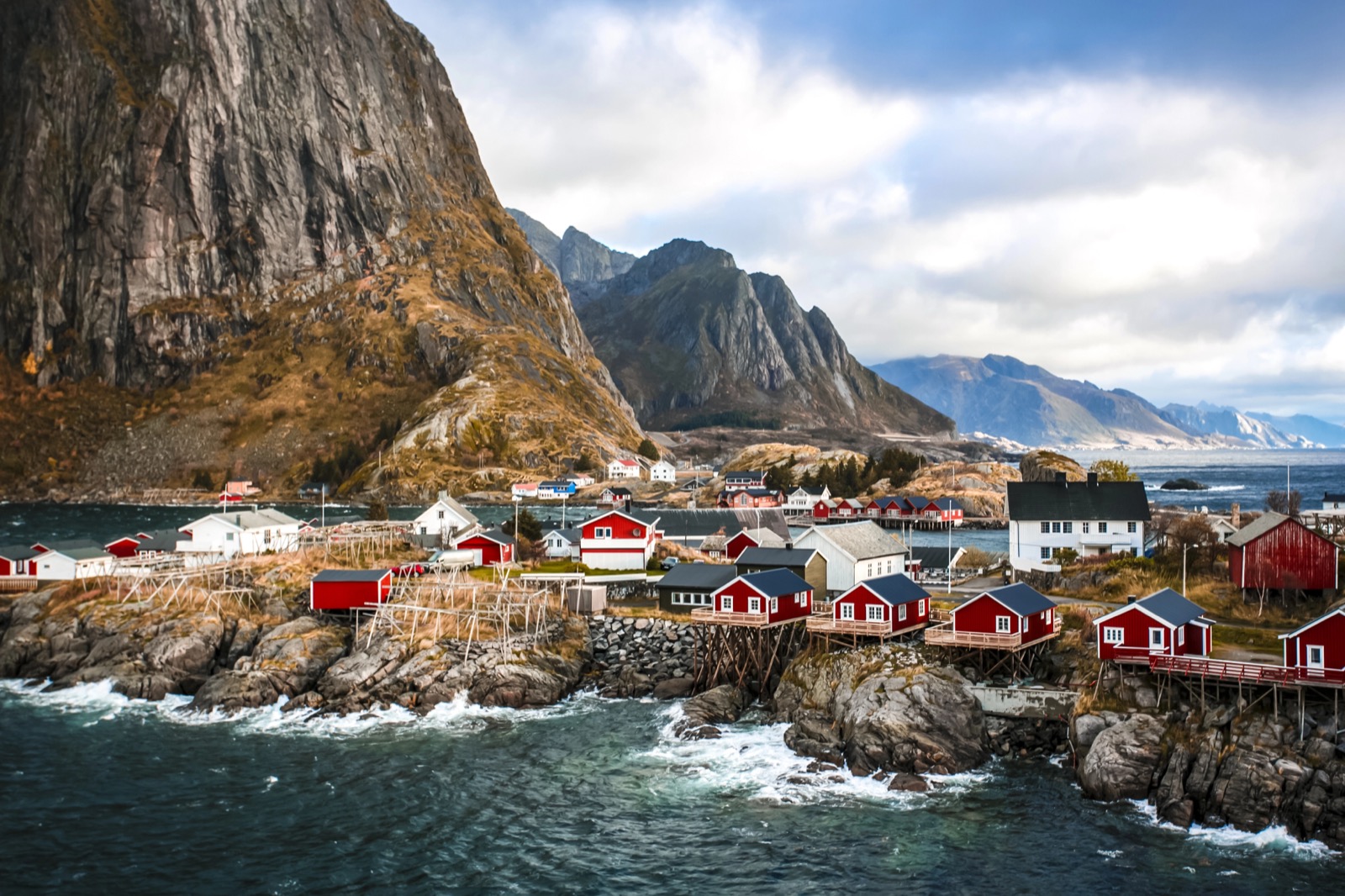
Picture a place where steep granite peaks plunge straight into a deep blue ocean and dozens of traditional red fishing cabins huddle together on narrow strips of land. Reine and Hamnøy in Lofoten, Norway are exactly the postcard-perfect image that springs to mind when someone says the word “Norway”.
These two neighbouring fishing villages at the very southern tip of the archipelago are the undisputed stars of the entire region, and you’ll find the most photogenic scenery in all of Lofoten right here. Although it’s a fairly remote corner of the world, be prepared for the fact that travellers come from every continent to chase the midnight sun and the northern lights.
In this guide, we’ll walk through how to plan your visit to these iconic spots down to the last detail. You’ll learn where to park without picking up needless fines, which bridge gives you the best photographs, and why it pays to split your accommodation across more than one base.
TL;DR
- Base for exploring: Reine and Hamnøy sit on the south-western tip of Lofoten and make the ideal starting point for exploring the southern part of the islands.
- Traditional stays: Sleeping in the red fishing cabins known as rorbu is an absolute must, but book them ideally six months ahead.
- Wildly changeable weather: The yr.no app will be your best friend, because Lofoten can serve up three seasons in a single afternoon.
- Pricey parking: Most parking spots in central Reine are paid, and in peak summer the free spaces vanish at an incredible rate.
- A paradise for photographers: In the winter months Hamnøy offers some of the best conditions for watching and photographing the northern lights.
- Logistics on the E10: Distances here aren’t measured in miles, but in hours spent crawling behind slow campervans.
The full destination guide: Lofoten — guide and what to see
When to visit Reine and Hamnøy
Choosing the right season has a huge impact on the kind of experience you’ll take home from southern Lofoten, Norway. The summer months from June to August bring the phenomenon of the midnight sun, when the light never quite fades and you can happily set off on a hike at midnight. During this period average temperatures hover around a pleasant 12 to 15 °C, but you also have to factor in that this is the absolute peak of the tourist season, when the narrow roads are clogged with slow-moving motorhomes.
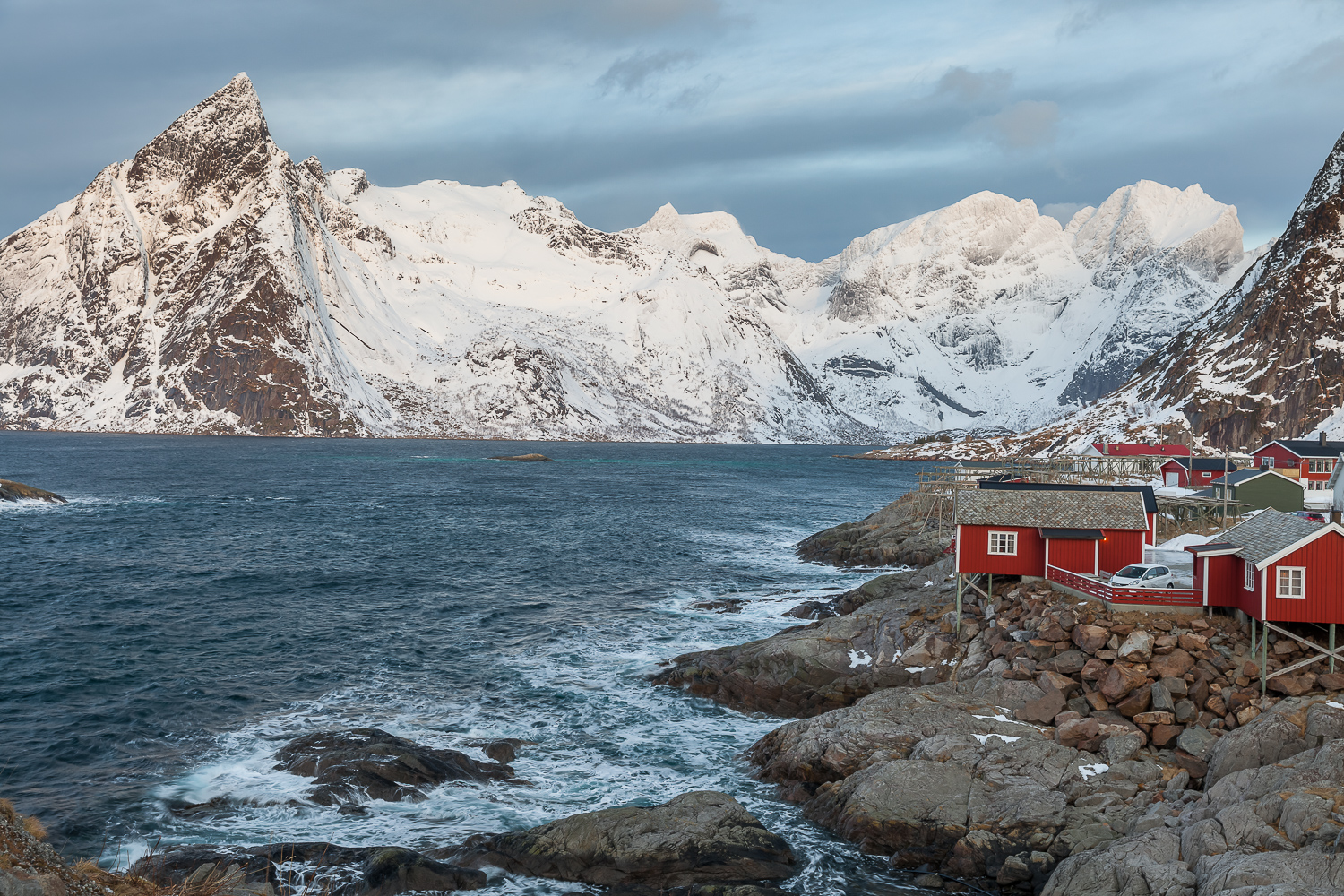
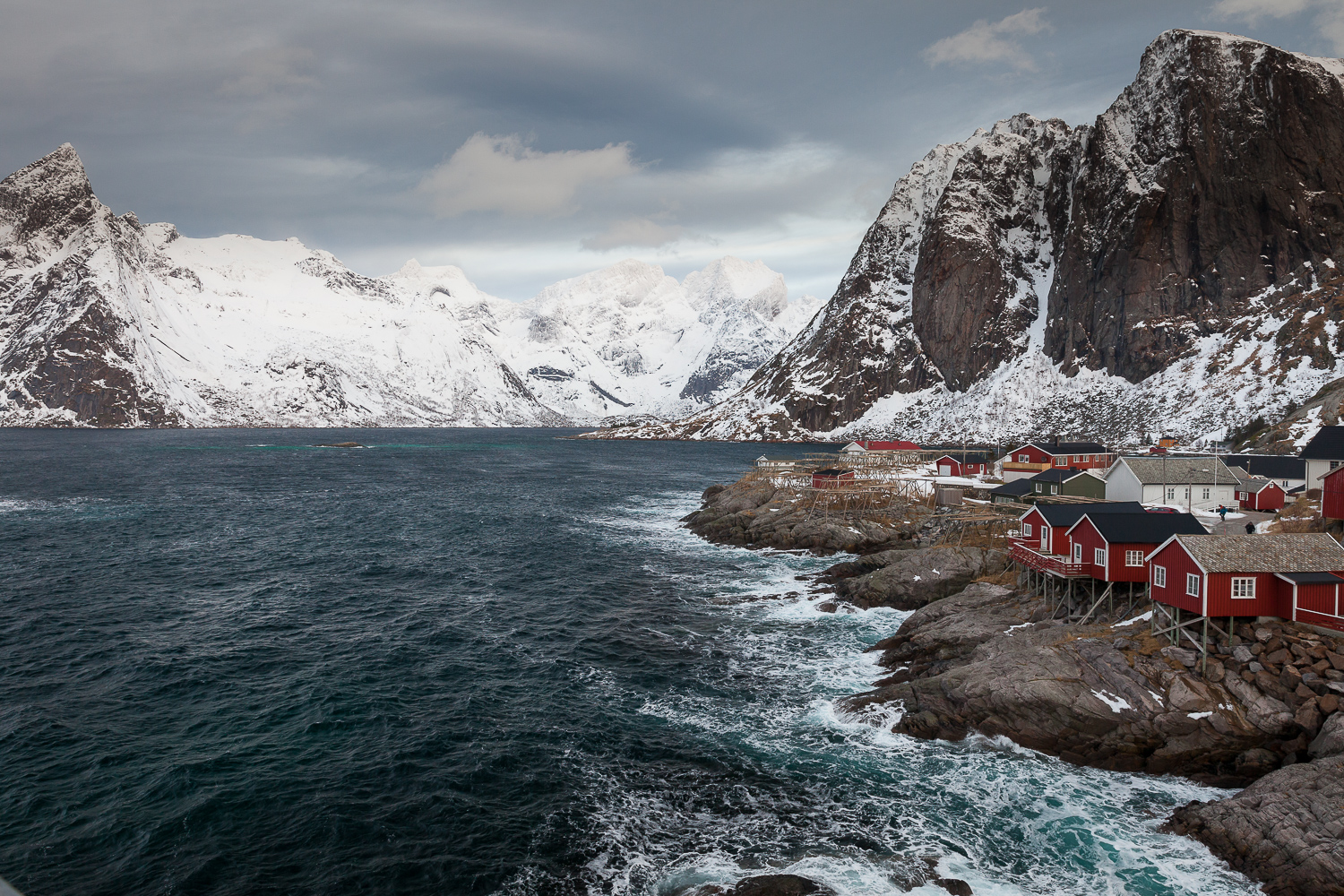
If you’re craving winter romance and your main goal is to hunt the northern lights, plan your trip for the period between late September and March. Winter Lofoten is harsh, often lashed by strong winds and snowstorms, but the sight of snow-capped peaks above the red cabins is utterly breathtaking. Just keep in mind that December and January bring the polar night, when daylight lasts only a few short hours.
The perfect compromise is found in the spring and autumn months, which offer a calmer atmosphere without the summer crowds. In May nature begins to wake up, while in September the landscape turns to gorgeous autumn tones. Norwegian weather is unpredictable all year round, though, and you can easily get three seasons in one afternoon 😅. So always check the local forecast — by far the most accurate one is the Norwegian meteorological website yr.no — and ideally set aside a whole week for Lofoten so you can sit out any passing rain front in peace.
Getting to the very south of Lofoten takes enormous patience, because the main E10 road is often narrow and full of bends. If you fly into the most commonly used Evenes Airport (EVE), you’re facing a drive of roughly 260 kilometres. It doesn’t look too daunting on the map, but it eats up at least four hours of pure driving without stops. For travellers from the UK the easiest option is usually to fly from London or Manchester to Oslo and connect onwards to Evenes (Harstad/Narvik) — or fly via Bodø and take the short hop to Leknes. In Norway, distances simply aren’t measured in miles but in hours spent stuck behind campervans, so I really recommend not rushing and breaking the route up logistically.
Where to stay in Reine and Hamnøy
💡 Tip for accommodation and experiences: We like to look for places to stay on Booking.com, which usually has the best cancellation policies. For tickets, tours and activities, it pays to compare and book through GetYourGuide.
Staying right in the south of Lofoten is a dream come true, but it takes strategic planning and a fairly generous budget ☺️. If you’re coming here for a whole week, the best tactic is to use what’s known as the base camp strategy. You might spend three nights in the south at Reine or Hamnøy, then move further north for four more nights towards Henningsvær. This way you’ll save yourself hours of exhausting back-and-forth driving on the congested E10, because just the drive from Svolvær to Reine takes over two hours one way.
The classic choice is to spend the night in a rorbu — the original fishermen’s cabins standing on stilts right over the water. They once housed seasonal fishermen; today they’re renovated apartments with modern fittings. In peak summer, rates for the best cabins regularly climb to around 700 € for a single night, so it’s absolutely essential to book through Booking even six months in advance.
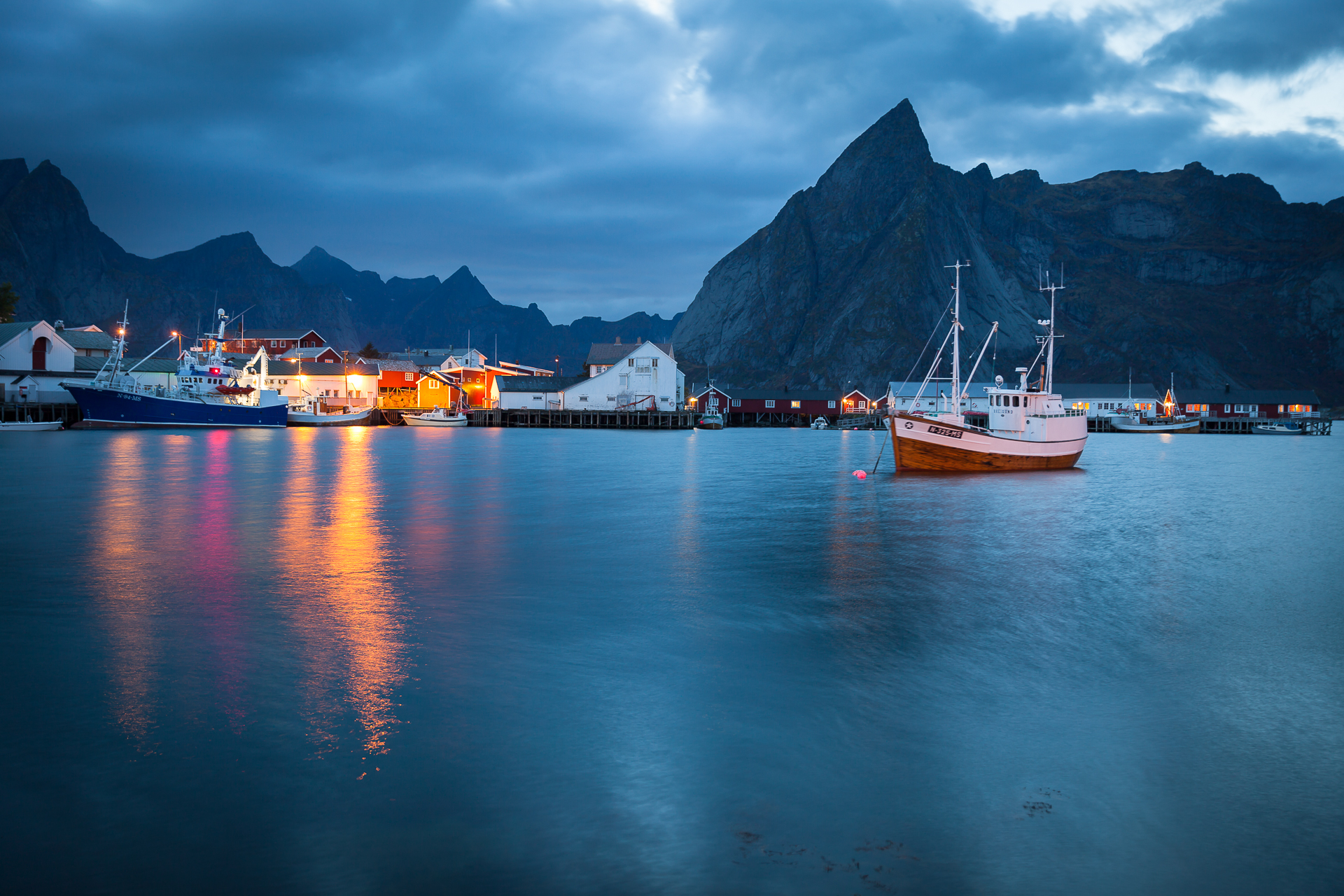
Right in Hamnøy you’ll find the most famous accommodation in all of Lofoten: the Eliassen Rorbuer complex. These iconic red cabins appear on practically every second photo of Norway and offer an incredibly authentic atmosphere with views over a dramatic fjord. If you prefer to stay in the heart of the biggest village within walking distance of cafés, take a look at the more upmarket Reine Rorbuer, right on the picturesque harbour.
💡 Tip: For those of you after a quieter and cheaper alternative in the middle of the islands, I can recommend the area around the village of Ballstad. It sits roughly halfway along Lofoten, accommodation like Kræmmervika Havn goes for around 170 € a night, and Reine is only about an hour’s drive away. Right in the south, try Sakrisøy Rorbuer, where the cabins are a distinctive yellow and create a lovely contrast against the surrounding blue water.
6 things to see and do in Reine and Hamnøy
Let’s take a detailed look at the very best this stunning area has to offer. You’ll discover where to go for the most beautiful views, how to organise trips into the surroundings, and what to watch out for when planning your daily schedule.
1. Hamnøy and the famous view from the bridge
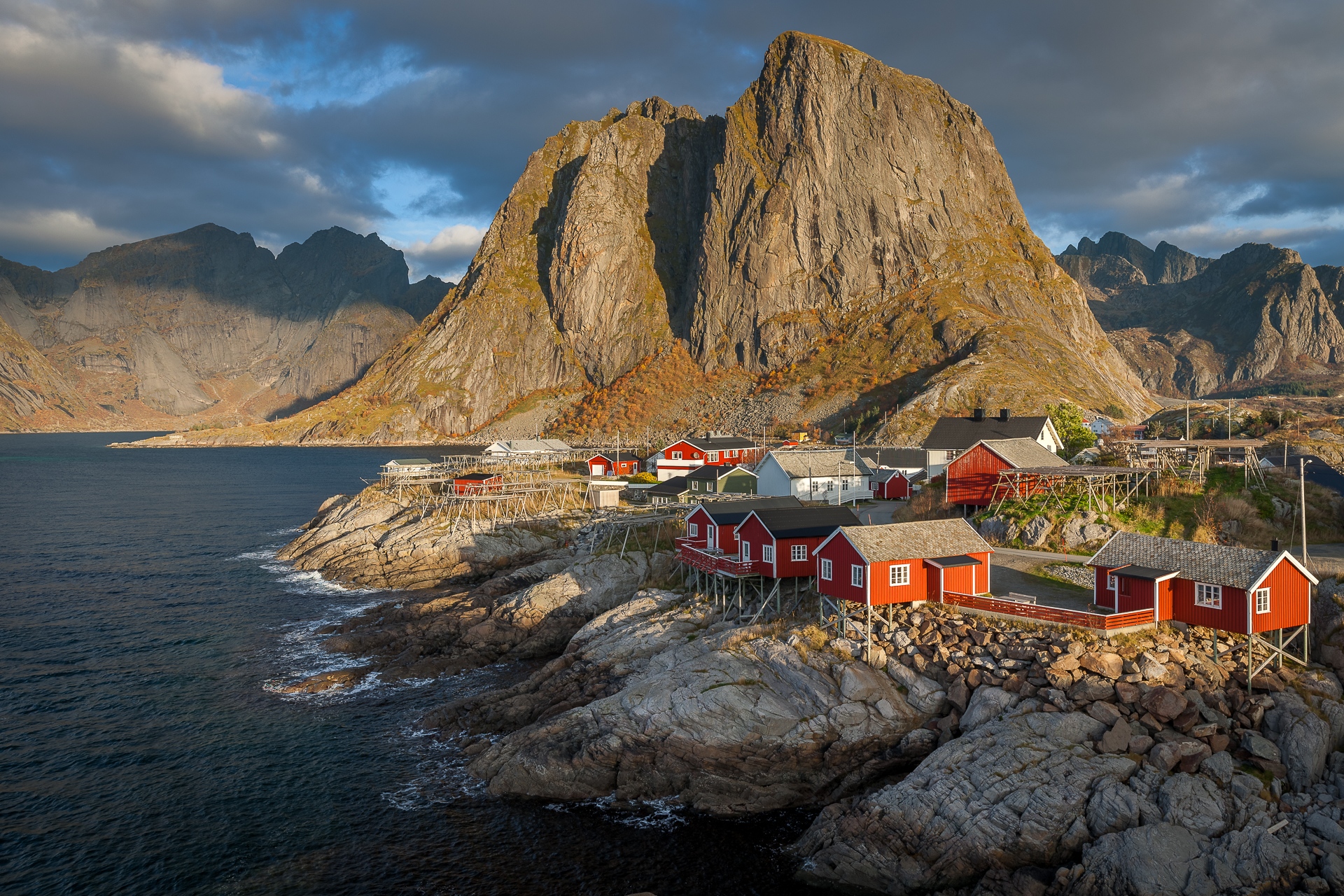
When you arrive from the north along the main E10, Hamnøy is the very first in the string of iconic villages to greet you in the south. The village itself is fairly tiny, but it hides the most photographed view in all of Norway, which opens up right from the bridge connecting Hamnøy with the neighbouring islet. From here you’ll see the famous red Eliassen Rorbuer cabins piled up on the rugged rocks directly beneath the majestic Festvågtind mountain.
The best light for photography here comes early in the morning, when the surface of the fjord is often as still as a mirror and the surrounding mountains reflect in it perfectly. During the winter months, this bridge turns into the main gathering point for northern lights hunters, who wait patiently in the freezing wind for the green show in the sky. If you head here in winter, don’t forget really warm clothing and an extra-sturdy tripod, as the gusts of wind off the ocean can be very strong.
Parking by this famous bridge is heavily limited and dangerous situations often arise. The best bet is to leave your car at a small pull-in just before the bridge and walk the rest of the way along the marked verge. Always prioritise your safety and never walk in the road itself, because the E10 is the only traffic artery of the whole archipelago and even heavy lorries pass through here.
2. Reine and wandering beneath the peaks
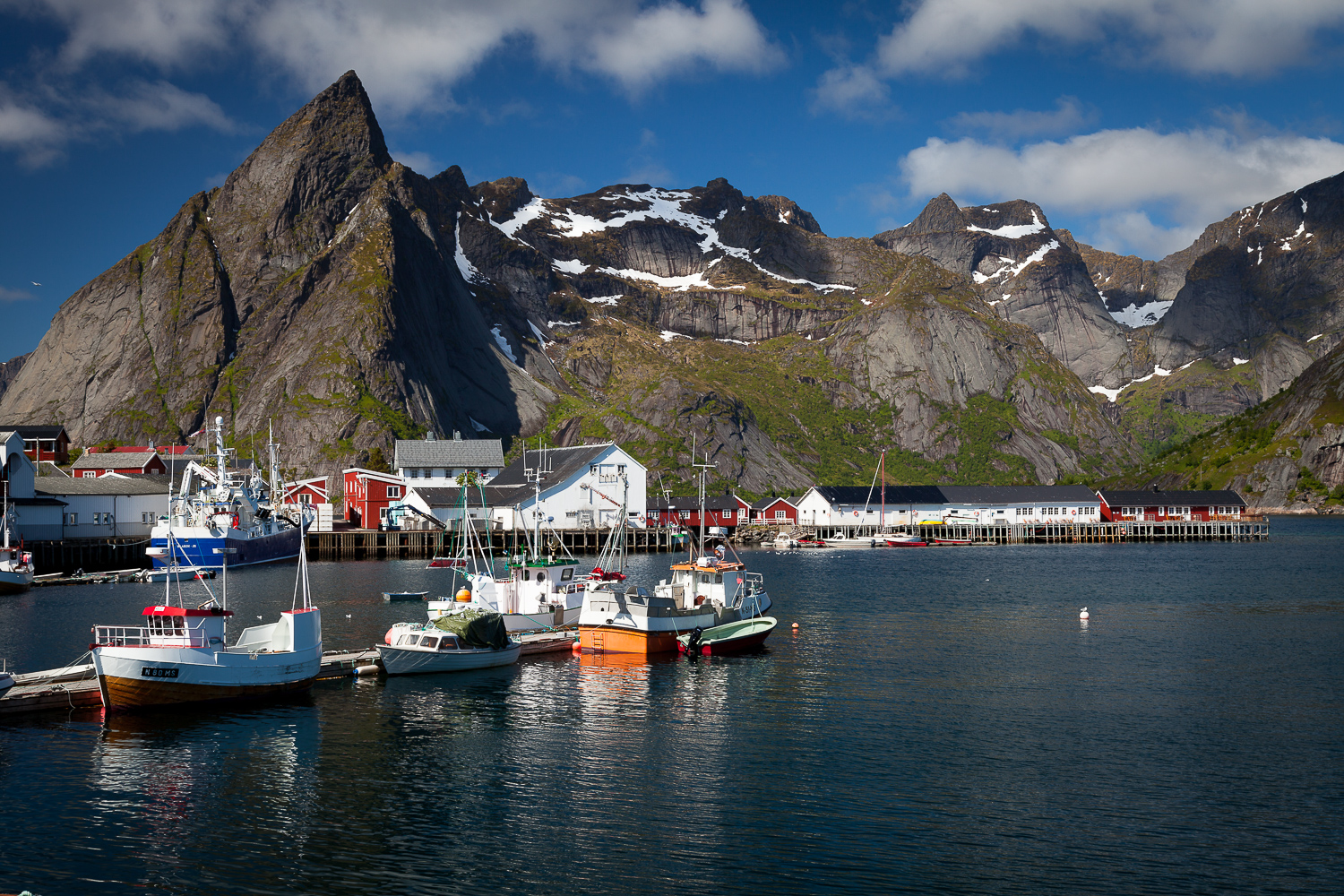
Reine acts as the natural hub of the whole southern region and, unlike the surrounding settlements, it feels like a real — if very small — town. You’ll find everything you need here, from a petrol station to a Coop supermarket, where you can comfortably stock up on food. Just bear in mind that food prices here are roughly three times what you’d pay back home 😅. A stroll through the village lanes is an experience in itself, as fantastic views of granite walls plunging into the sea open up from every angle.
The heart of the village is its picturesque harbour, where small fishing boats and excursion vessels bob on the water. If you fancy a quiet moment with excellent coffee, be sure to stop by the local café Bringen Kaffeebar, which is renowned for its perfect cinnamon buns and cosy interior. It’s the ideal hideaway to duck into when a typical Norwegian rain shower catches you off guard outside.
Parking in Reine can turn into a real nightmare during the summer season. Most of the free spaces in the centre are strictly regulated, and your best chance of finding a spot is at the central Reine Outer Harbor car park, where you pay around 35 NOK (roughly 3 €) per hour. Payment works very simply through the EasyPark mobile app, which you should definitely download before your trip.
💡 Tip: If you drive about 15 minutes further south, you’ll reach the little village of Å, where the E10 road finally ends and where you’ll find another great bakery, Bakeri Å.
3. Sakrisøy and the yellow cabins
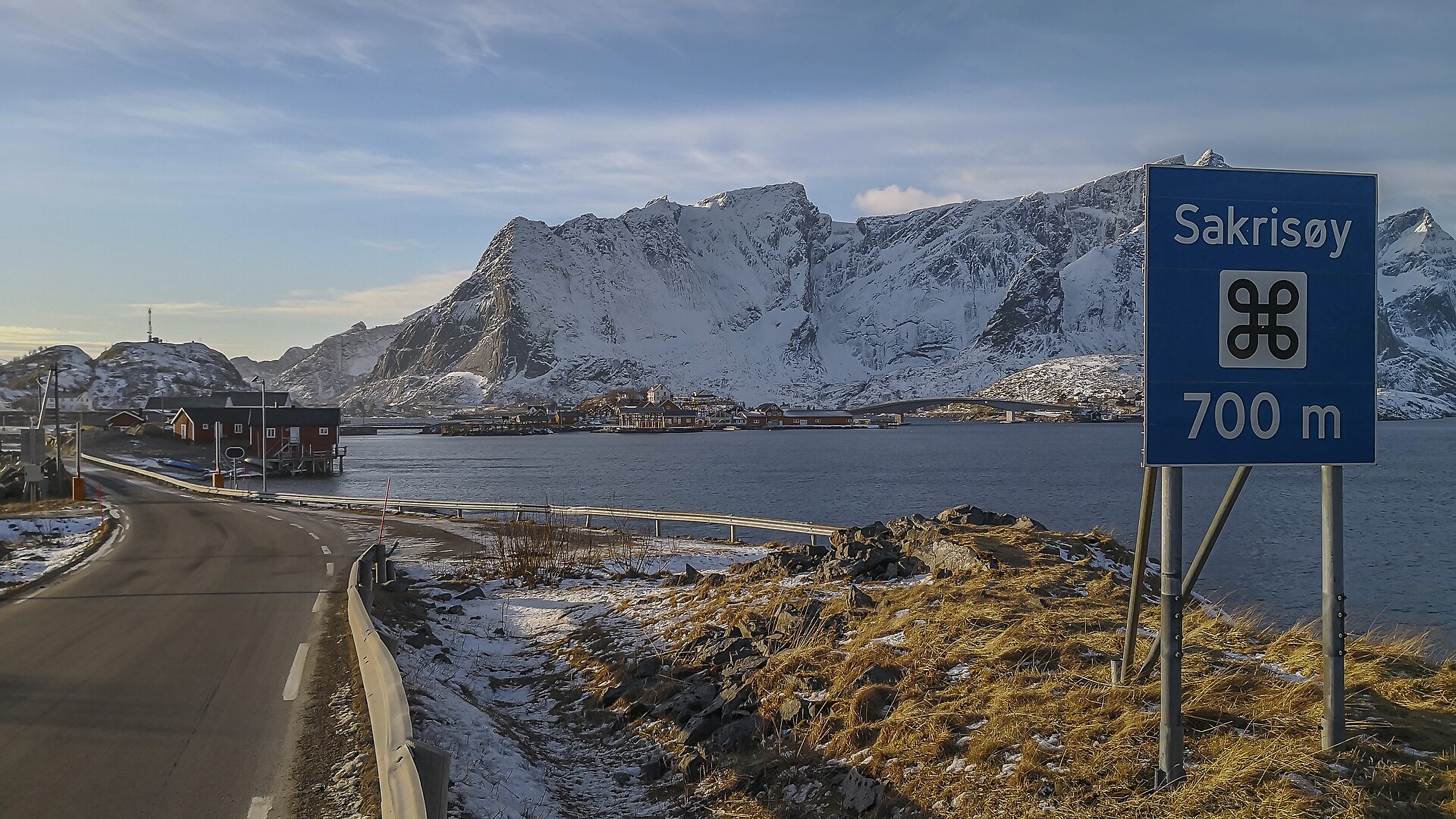
Driving between Hamnøy and Reine, you’re guaranteed to come across the small islet of Sakrisøy, which catches your eye at first glance. Unlike all the surrounding villages, which have been strictly red for centuries, the rorbu here glow a bright yellow. This striking colour difference has interesting historical roots and to this day it’s photographers who benefit most, as the vivid yellow cabins beautifully liven up a composition.
The islet is also a very well-known food stop thanks to the popular spot Anita’s Sjømat. This combined shop and bistro offers a wide range of local products. The classic Lofoten ingredient is dried cod, known as skrei, which you’ll see hanging on huge wooden racks absolutely everywhere around here. For meat-lovers, the bistro serves up famous fish burgers (one costs around 200 NOK, roughly 17 €), which people typically carry out in boxes to the benches with their perfect fjord views. Vegetarians, unfortunately, won’t find much here and would be better off heading to the café in neighbouring Reine.
If you’re interested in local history and culture, Sakrisøy is also home to a unique toy and antiques museum known as Dagmar’s Museum of Dolls and Toys. It’s a thoroughly fascinating and slightly nostalgic collection of hundreds of objects from the last century, offering an intriguing glimpse into the everyday lives of Lofoten’s former inhabitants. This museum makes a great back-up plan for a rainy afternoon when you don’t fancy trudging up the mountains.
4. The hike up Reinebringen
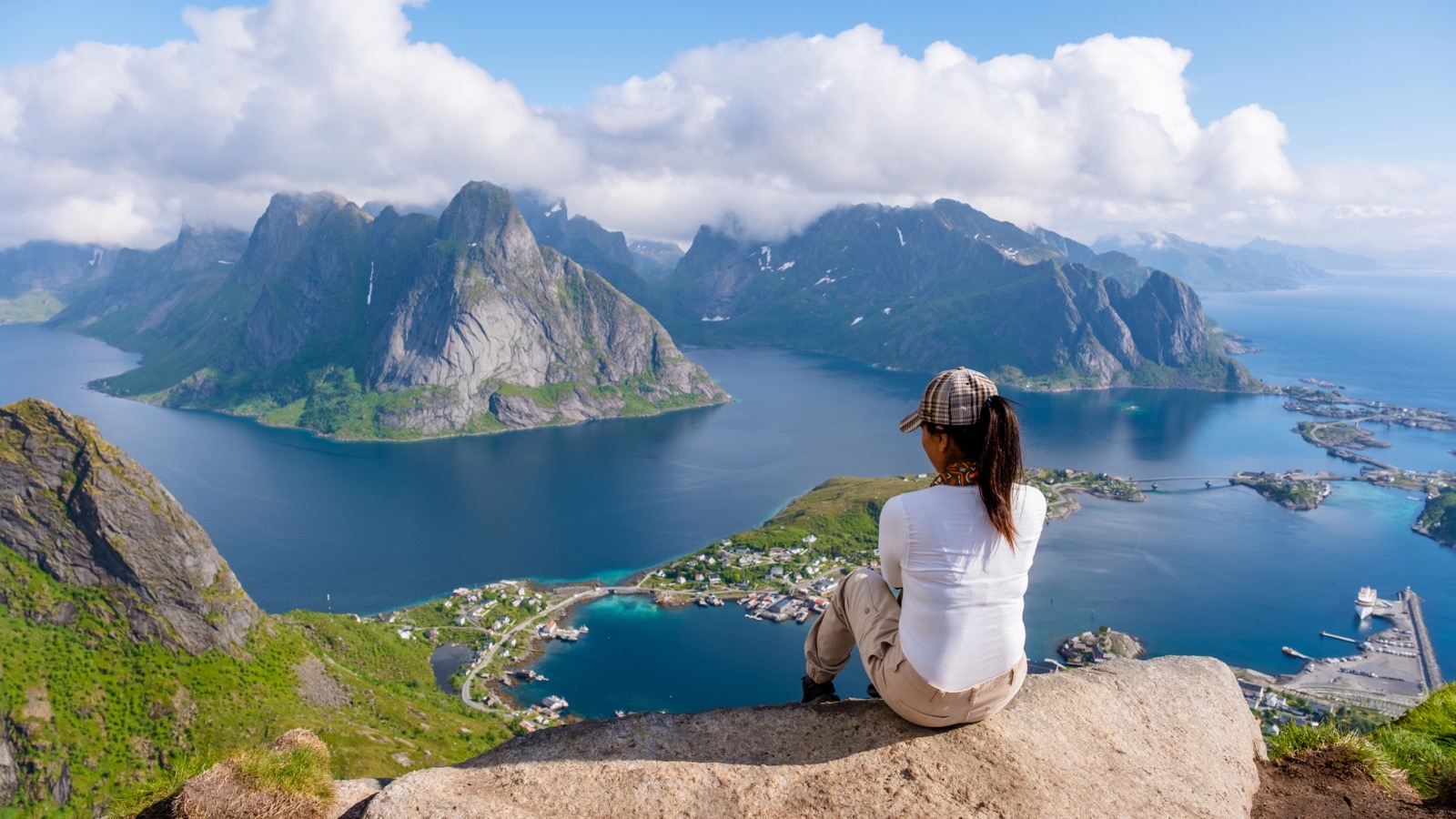
If there’s one single hike in Lofoten you simply must not miss, it’s the climb up Reinebringen mountain. Although this iconic peak sits at a fairly modest 448 metres above sea level, it offers the most iconic panoramic view of the entire archipelago, hands down. From this bird’s-eye perspective you’ll have the villages of Reine, Sakrisøy and Hamnøy literally laid out at your feet — it’s exactly the view that draws people here from all over the world.
The path up used to be very dangerous and full of slippery loose rock, but a few years ago experienced Sherpas from Nepal built an impressive stone staircase here. You’re facing nearly two thousand extremely steep steps that will really put your thighs and knees to the test. The climb takes on average one to two hours of pure walking depending on your current fitness, and it certainly shouldn’t be underestimated, especially on hot summer days.
When planning the climb, keep in mind that there’s nowhere sensible to park beneath the mountain itself. You have to leave your car in the paid spaces right in the centre of Reine and walk roughly a kilometre to the start of the trail by the tunnel, along the verge of the main road.
💡 Tip: We’ve put together detailed information on the difficulty, parking options and safety rules for this steep climb in a dedicated article focused purely on Reinebringen. Definitely give it a read before you tackle the endless steps.

5. The ferry trip to Bunes beach
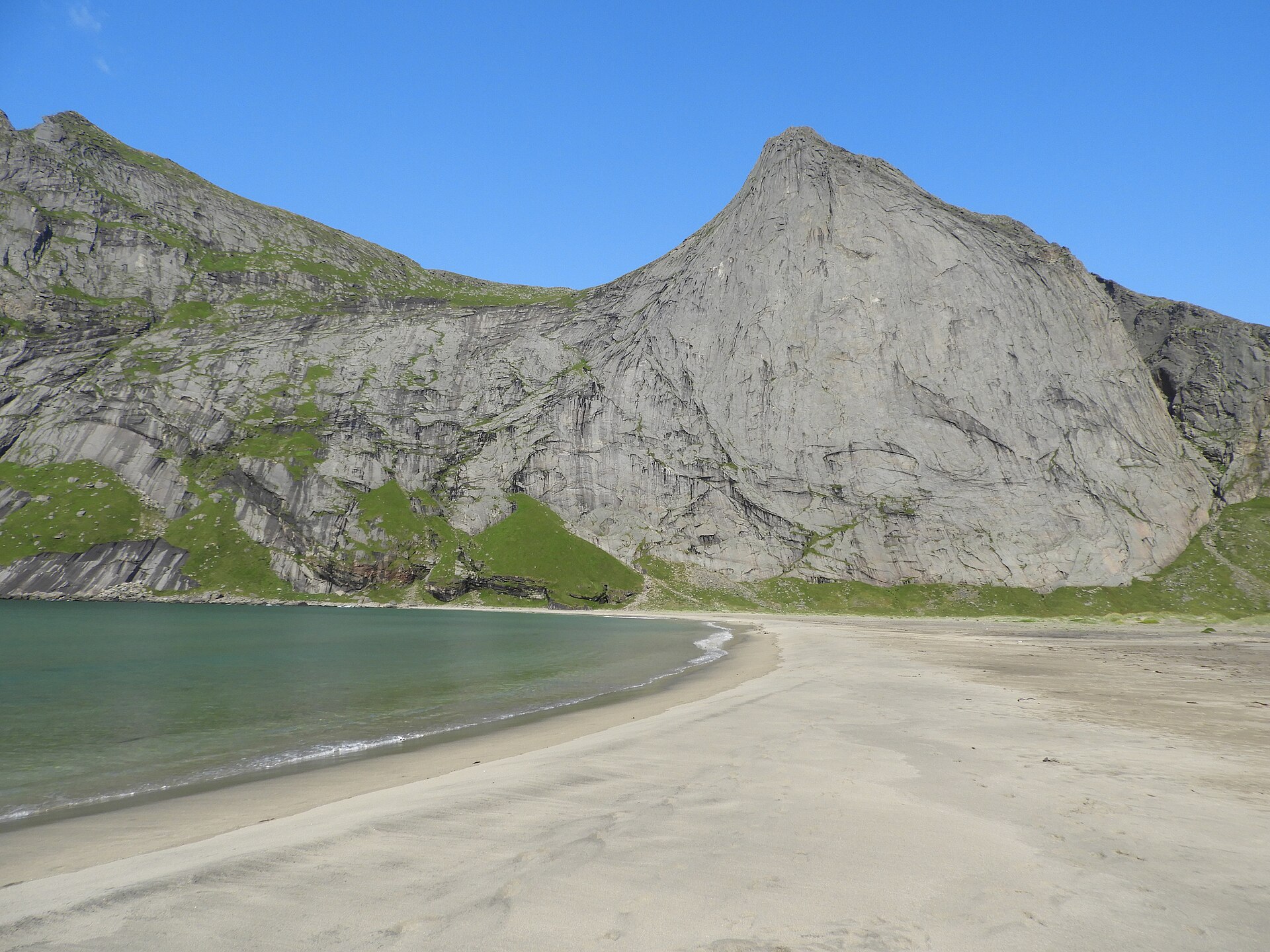
A small ferry line called Reinefjorden sails regularly from the harbour in Reine, working like a local water bus and opening up the way to more remote corners. Your target should be the stop at the abandoned village of Vindstad, from where an incredibly easy and very pleasant walking trail leads to one of the most beautiful beaches in all of Norway. The roughly twenty-five-minute crossing through the deep fjord, framed by steep cliffs, is a fantastic experience in itself.
After disembarking at Vindstad, you’re in for an easy two-kilometre walk along a firm path with minimal elevation gain of around 80 metres. It’s such a relaxed route that even families with children in a carrier can manage it without any trouble. At the very end of the path, a huge bay of brilliant white sand called Bunes Beach suddenly opens up before you, magically enclosed on three sides by mighty mountains. The water here is icy as a razor even in the middle of high summer, but the scenery is absolutely breathtaking and perfect for a long afternoon picnic.
In peak summer, be sure to book your tickets for this little ferry online well in advance, as the boat’s capacity is very limited and it’s often hopelessly sold out on the spot. If you’re interested in other similarly breathtaking spots nearby, take a look at our roundup of the most beautiful beaches in Lofoten.
6. A trip to Kvalvika Beach and the Fredvang bridges
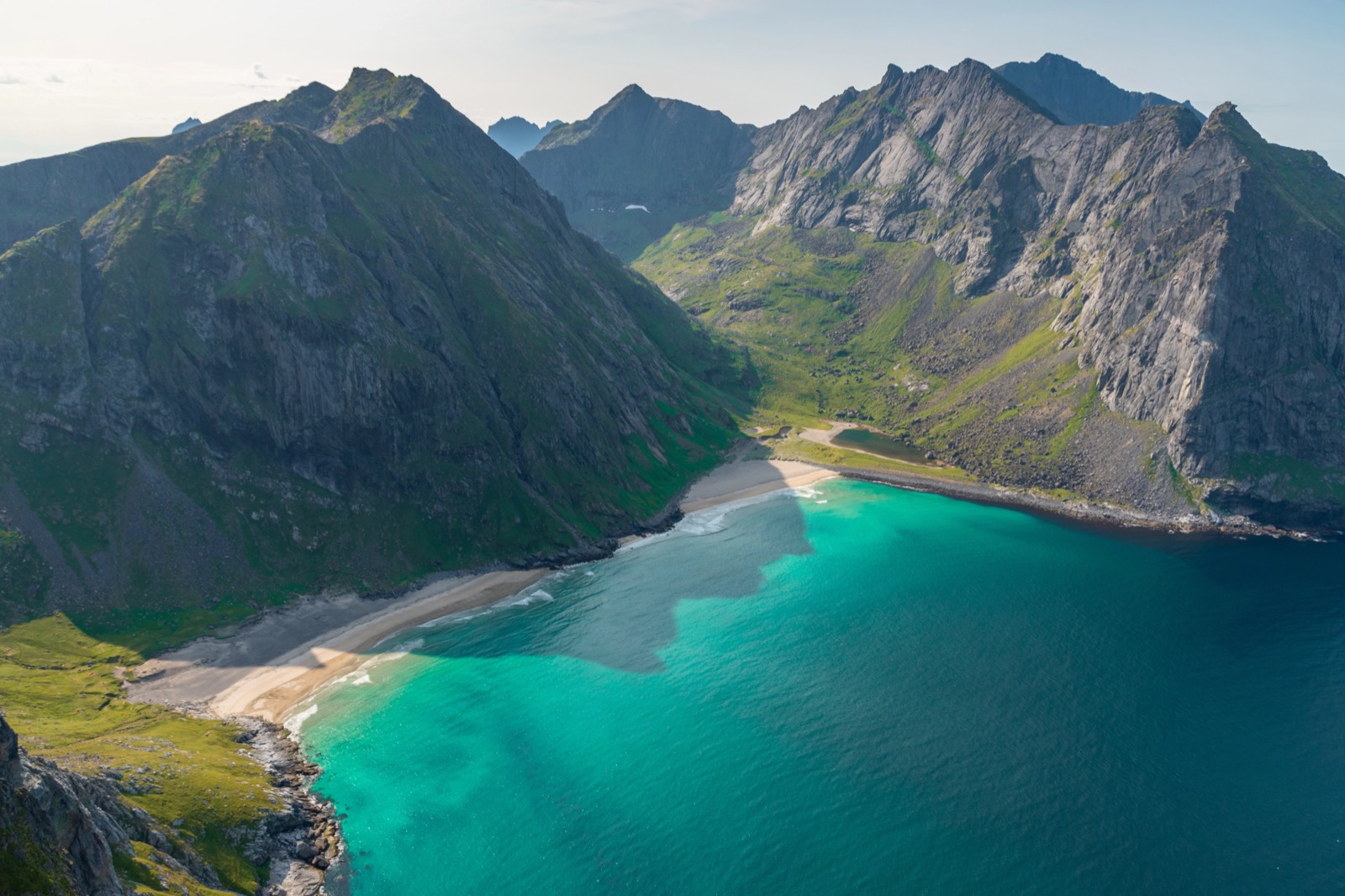
Although the famous Kvalvika Beach doesn’t lie directly in Reine itself, it’s a very popular half-day trip that’s perfectly easy to reach from here. It’s just 15 kilometres and around a 20-minute drive by car. The journey itself is a huge experience, because you’ll drive across the iconic curved bridges in the village of Fredvang, which strikingly connect the neighbouring island with the mainland. From a distance these bridges look like enormous concrete waves and rightly rank among the most photographed pieces of architecture in the whole region.
From the car park just past Fredvang, you’re facing a roughly one-hour, moderately steep climb over a mountain saddle, after which a breathtaking view of the wild Kvalvika cove opens up. The beach is picturesquely framed by dark rocks and became famous worldwide, among other things, thanks to a documentary film about two brave surfers who spent an entire harsh winter here in a cabin they built themselves from driftwood.
The hike is moderately demanding and any reasonably fit walker can manage it comfortably. After rain, though, the trail is often very muddy and unpleasantly slippery. So don’t forget to pack quality waterproof boots with good soles, because the peat bog at the start of the route can be treacherous and getting across it with dry feet is genuinely tough.
💡 Tip: If you don’t fancy trekking over the mountains, drive about 2 more kilometres past the bridges to the nearby Yttersand beach, which you can reach without any effort at all.
Map of points of interest for your phone
Where to go next from Reine and Hamnøy
Once you’ve thoroughly explored the southern tip, I recommend setting off at a leisurely pace towards the north. Along the E10 you’ll come across countless gorgeous stops, whether it’s the surf beaches near the village of Ramberg or hidden fishing settlements like Nusfjord, which look as though time stopped there a hundred years ago.
If you want to build a complete picture of what else the archipelago has to offer, definitely take a look at our extensive article that serves as a big guide to Lofoten. You’ll find complete itineraries and tips for the more northerly areas around the towns of Leknes and Svolvær.
Planning a base for further moves can be a logistical puzzle. To save you hours of searching and comparing, we’ve put together a detailed breakdown of where to stay in Lofoten, including tips on specific areas worth choosing as a starting point for the northern part of your trip.
Frequently asked questions
How much does parking cost in Reine?
Most parking areas in the center of Reine and at popular viewpoints are strictly paid. At the largest parking lot, Reine Outer Harbor, you’ll pay approximately 35 NOK per hour. For payment, I definitely recommend using the EasyPark app, which is the absolute standard throughout Norway and will save you unnecessary searching for parking meters.
Are there supermarkets on site?
Yes, right in Reine you’ll find a reasonably well-stocked Coop supermarket where you can buy all the basic groceries. However, keep in mind that food prices here are roughly three times higher than in the Czech Republic. Larger supermarkets with a wider selection and better prices (such as Rema 1000 or Kiwi) can be found in the town of Leknes, which is about an hour’s drive to the north.
Do I need cash in Norway?
Definitely not. Norway is nowadays practically a cashless society and you can use your payment card without any problems absolutely everywhere, from the tiniest cafés to paying for public toilets or ferry tickets. You don’t need to withdraw cash at all, during your entire stay you probably won’t even see Norwegian banknotes with your own eyes.
When is the best chance to see the Northern Lights?
The polar lights season takes place in Lofoten from late September to early April. The absolutely best conditions are during clear, frosty winter nights away from the light pollution of villages, for example right on the bridge in Hamnøy. For monitoring solar activity, I recommend downloading the Aurora app to your phone, which will alert you in time to approaching solar storms.
Can I fly a drone in the area?
Drone flying rules are quite strict throughout Norway and you must follow them strictly. In built-up areas, national parks and over crowds of people, flying without special permission is strictly prohibited. Additionally, rescue helicopters occasionally operate around Reine. Therefore, always carefully check the current no-fly zone map before takeoff.
Are the roads safe in winter?
Norwegian road maintenance services work absolutely brilliantly, but in winter the roads in Lofoten are not kept clear down to bare asphalt. Instead, they deliberately maintain a layer of packed snow and ice. All cars from local rental companies are automatically equipped with quality winter tyres with metal studs, so driving is surprisingly stable, but even so you must drive with extreme caution.
Can you drink tap water?
Yes, tap water throughout Norway is perfectly safe, crystal clear, and tastes much better than most bottled waters from regular stores. Definitely bring your own reusable bottle and refill it directly at your accommodation or at public fountains. You’ll save lots of money and unnecessary plastic waste.
Tips and Tricks for Your Vacation
Don’t Overpay for Flights
Search for flights on Kayak. It’s our favorite search engine because it scans the websites of all airlines and always finds the cheapest connection.
Book Your Accommodation Smartly
The best experiences we’ve had when looking for accommodation (from Alaska to Morocco) are with Booking.com, where hotels, apartments, and entire houses are usually the cheapest and most widely available.
 🚗 Car rental on the roadVerified rental cars in Norway
Search with the DiscoverCars comparison engine — it compares prices from dozens of local and international rental companies, and most bookings come with free cancellation.
Compare car prices in Norway →Don’t Forget Travel Insurance
Good travel insurance will protect you against illness, accidents, theft, or flight cancellations. We’ve had a few hospital visits abroad, so we know how important it is to have proper insurance arranged.
Where we insure ourselves: SafetyWing (simple monthly subscription) and TrueTraveller (for extra-long trips).
Find the Best Experiences
Get Your Guide is a huge online marketplace where you can book guided walks, trips, skip-the-line tickets, tours, and much more. We always find some extra fun there!
More from Lofoten
Full guide → Travel story · most readWhat to Pack for Lofoten, Norway: A Packing List for Every Season
 When to goWhen to Visit Lofoten, Norway: Weather Month by Month and the Midnight Sun 2026
 ActivitiesReinebringen Norway: 6 Things to Know — The Hike, Steps & Current Status
 Getting thereLofoten Islands by Campervan: Parking & Rules for 2026
 With kidsLofoten Norway with Kids: 8 Tips on What to See and Do


