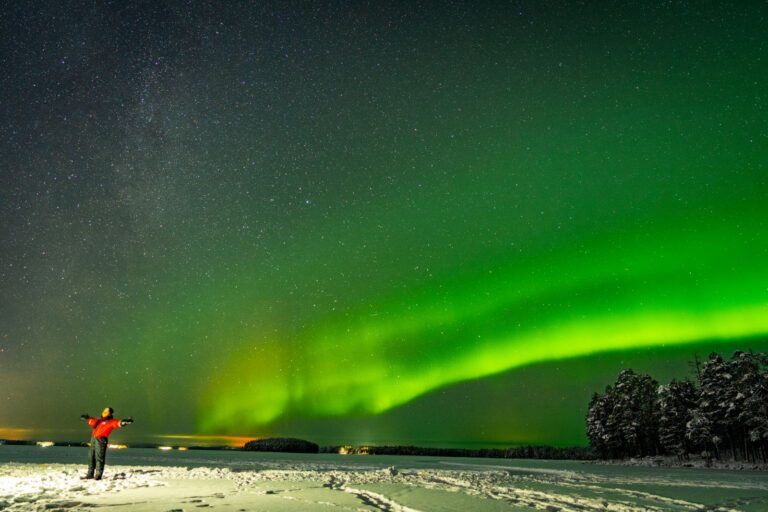
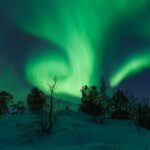
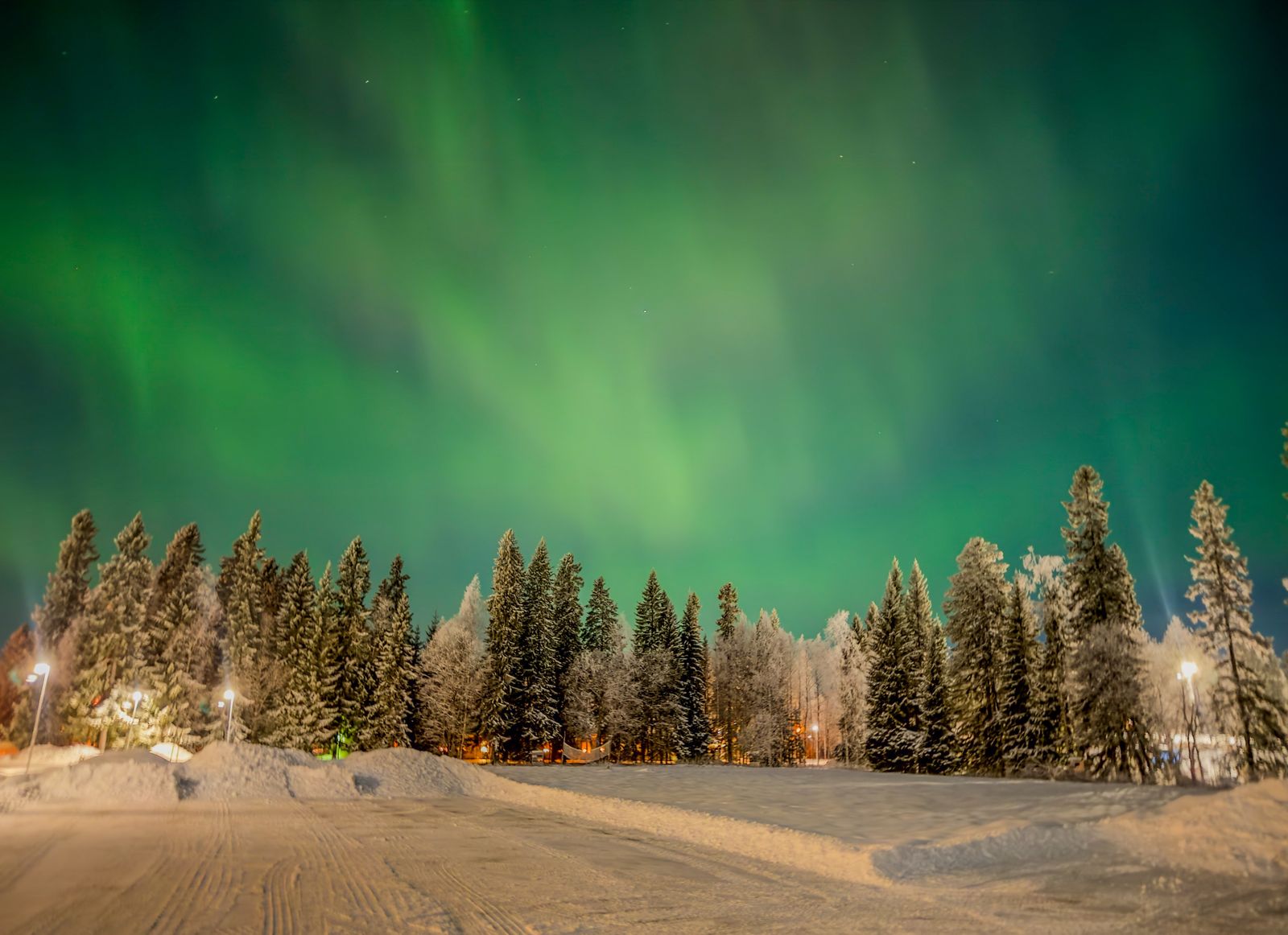
The northern lights in Lapland are the number one reason people head this far north, and at the same time one of the most common sources of disappointment. Plenty of visitors arrive expecting to spot them everywhere, exactly like the photos, and then run straight into reality: the aurora is never guaranteed, and a lot comes down to the weather and a bit of luck. But once you know when and where to go and how to boost your chances, it’s one of the most powerful experiences you can have anywhere in Europe. ☺️
In this guide I’ll walk you through when and where to see the northern lights in Finnish Lapland, how to dramatically improve the odds of actually catching them, how to photograph them so you go home with a keepsake, and where to stay so you can watch them right from your bed. Let’s do this with realistic expectations, so you genuinely enjoy the trip.
If you’re still planning the whole trip, take a look at my big guide on what to see in Lapland and the article on what to see in Rovaniemi.
TL;DR
- When: the season runs roughly from late August to early April, and statistically it’s most active around the equinoxes (September and March).
- Where: the further north and the further from city lights, the better. The best conditions are in Saariselkä, Inari and Utsjoki.
- How to boost your chances: give yourself at least 3 nights for the aurora (ideally more), watch the forecast and cloud cover, and book a guided tour that chases clear skies.
- The key to success: clear skies. Without them you won’t see the aurora even when it’s active.
- Photography: tripod, manual mode, a fast lens, ISO around 1600 to 3200 and a longer exposure (5 to 15 seconds).
The full destination guide: Finland — guide and what to see
What the northern lights are and why they happen
The northern lights, or revontulet in Finnish, appear when charged particles from the Sun collide with Earth’s atmosphere and set it glowing. They’re not the static green smudge they often look like in photos, but curtains of light that ripple and dance across the sky, sometimes green, sometimes pink or purple. Seeing it live is something completely different from any photo.
If the science behind it intrigues you, it’s well worth visiting the Arktikum museum in Rovaniemi, where the whole phenomenon is explained in plain terms. It comes in especially handy on a cloudy night when there’s nothing to see outside, so at least you’ll understand how the magic works.
Northern lights in Finland: the best time to go
You can catch the northern lights in Finnish Lapland roughly from late August to early April, during the period when the nights are long and dark enough. In summer it’s the opposite: thanks to the midnight sun it’s so bright that you won’t see the aurora even if it’s active.
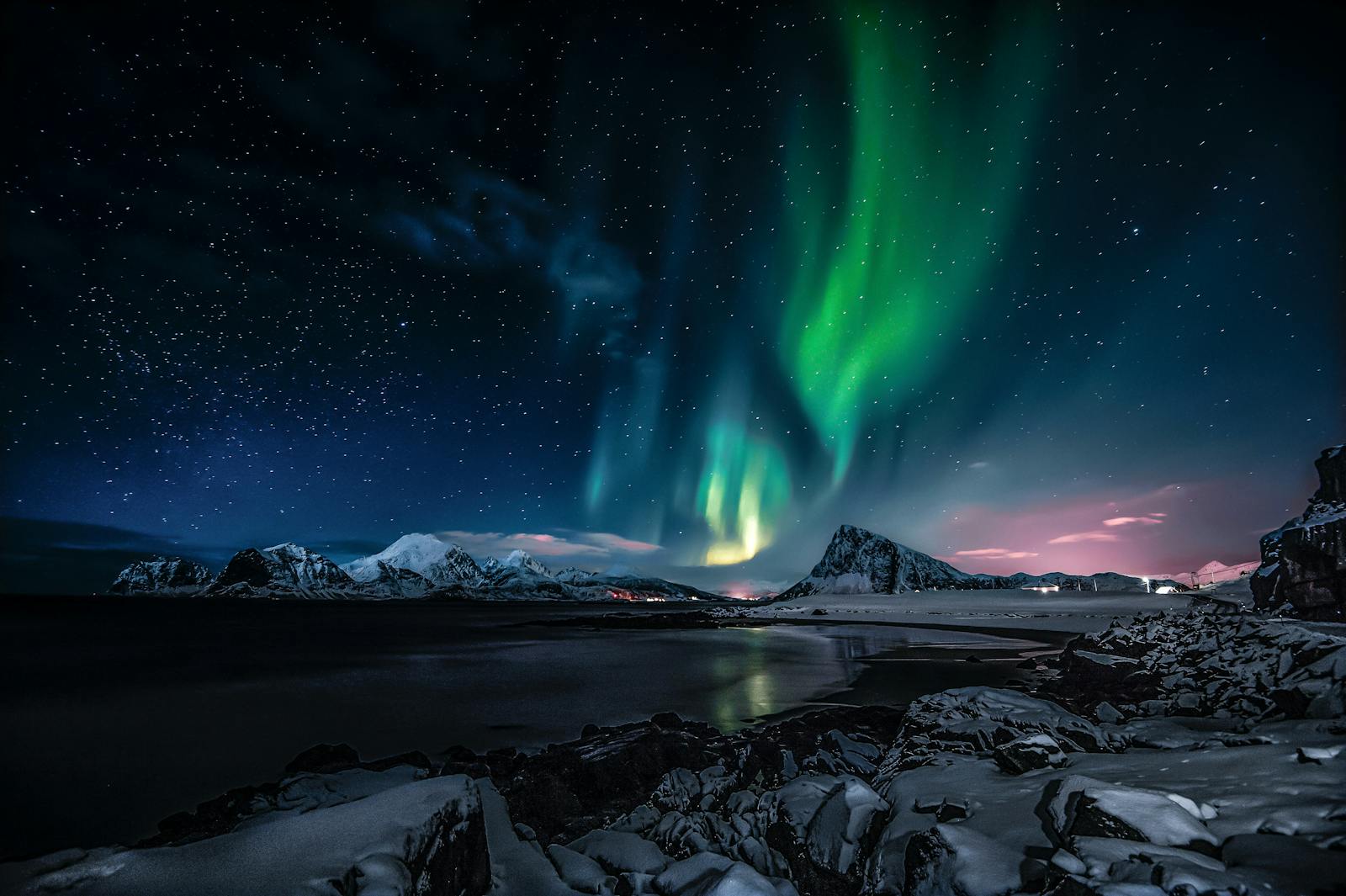
Statistically, your best odds come around the equinoxes, in September and March, when geomagnetic activity tends to be higher and the skies are clearer than in the depths of winter. The best times are also summed up by the official Visit Finland. December and January have the most darkness, but also the most cloud cover and snowfall, which kills visibility.
💡 Tip: The exact month matters less than the weather on the night itself. The aurora needs clear skies, so keep an eye on the northern lights and cloud forecast and be ready to chase clear skies several evenings in a row. A dark, moonless sky helps a faint aurora stand out, but you’ll see a strong display even under a full moon.
Where to see the northern lights in Lapland
There’s a simple rule: the further north and the further from city lights, the better your chances. You can catch the aurora above Rovaniemi too, but you’ll need to leave town for darker skies. Here are the best areas.
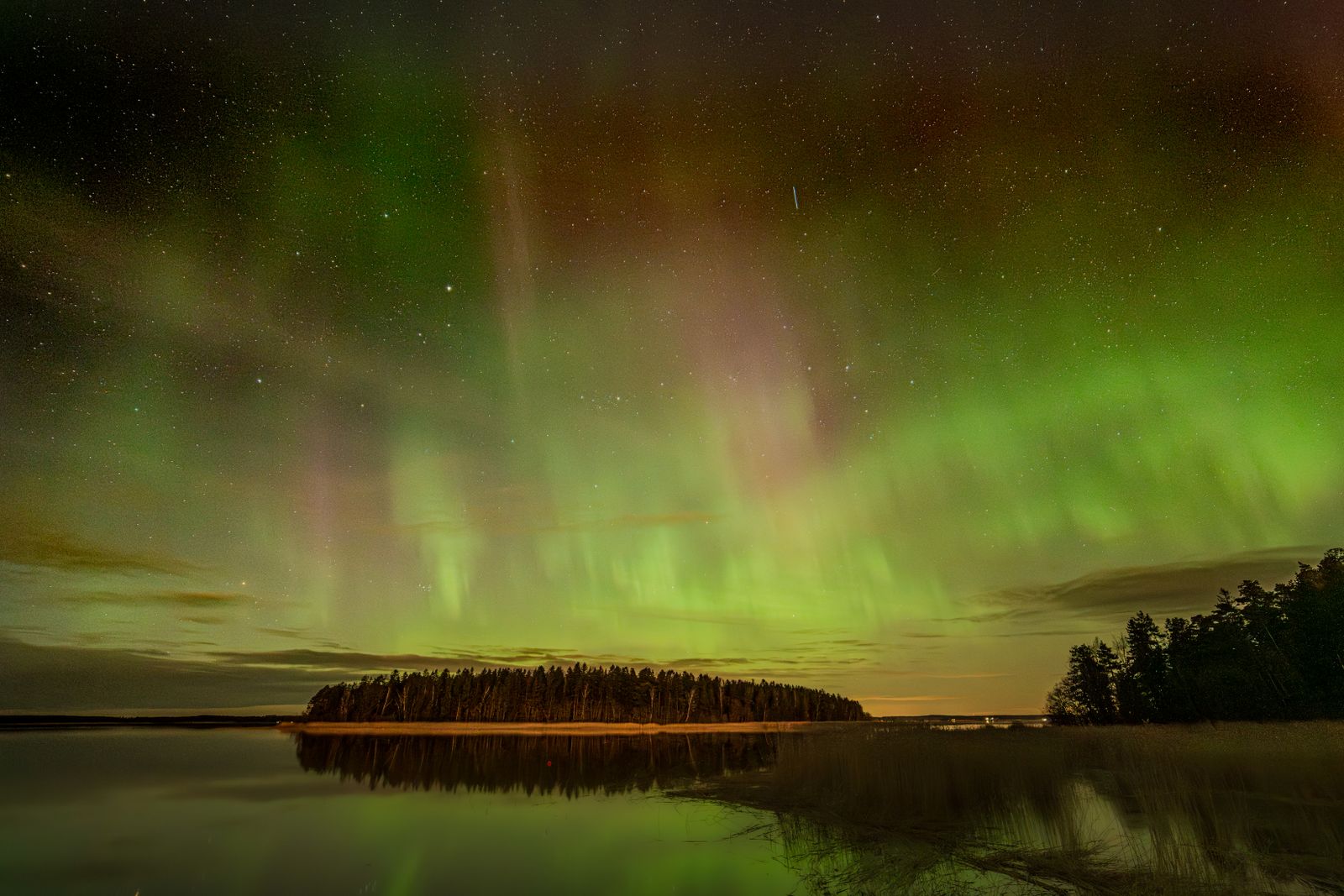
Saariselkä, Inari and Utsjoki in the far north have statistically far better conditions and much less light pollution than Rovaniemi. Utsjoki, right on the Norwegian border, sees the aurora on more than two hundred nights a year. If you’re heading out from Rovaniemi, the most accessible spots are Ounasvaara hill, the Arctic Garden by the Arktikum museum, or (about twenty minutes by car) the Arctic Circle Hiking Area with genuinely dark skies.
As a general rule, it pays to stay in a forest cabin or a resort outside town rather than in the centre, because away from street lighting you’ll see a great deal more. And if you have a car, you can simply drive wherever the skies are clear.
How to boost your chances of actually seeing the aurora
Here are a few concrete tips that can really help. None of them is a magic wand, but together they make a big difference.
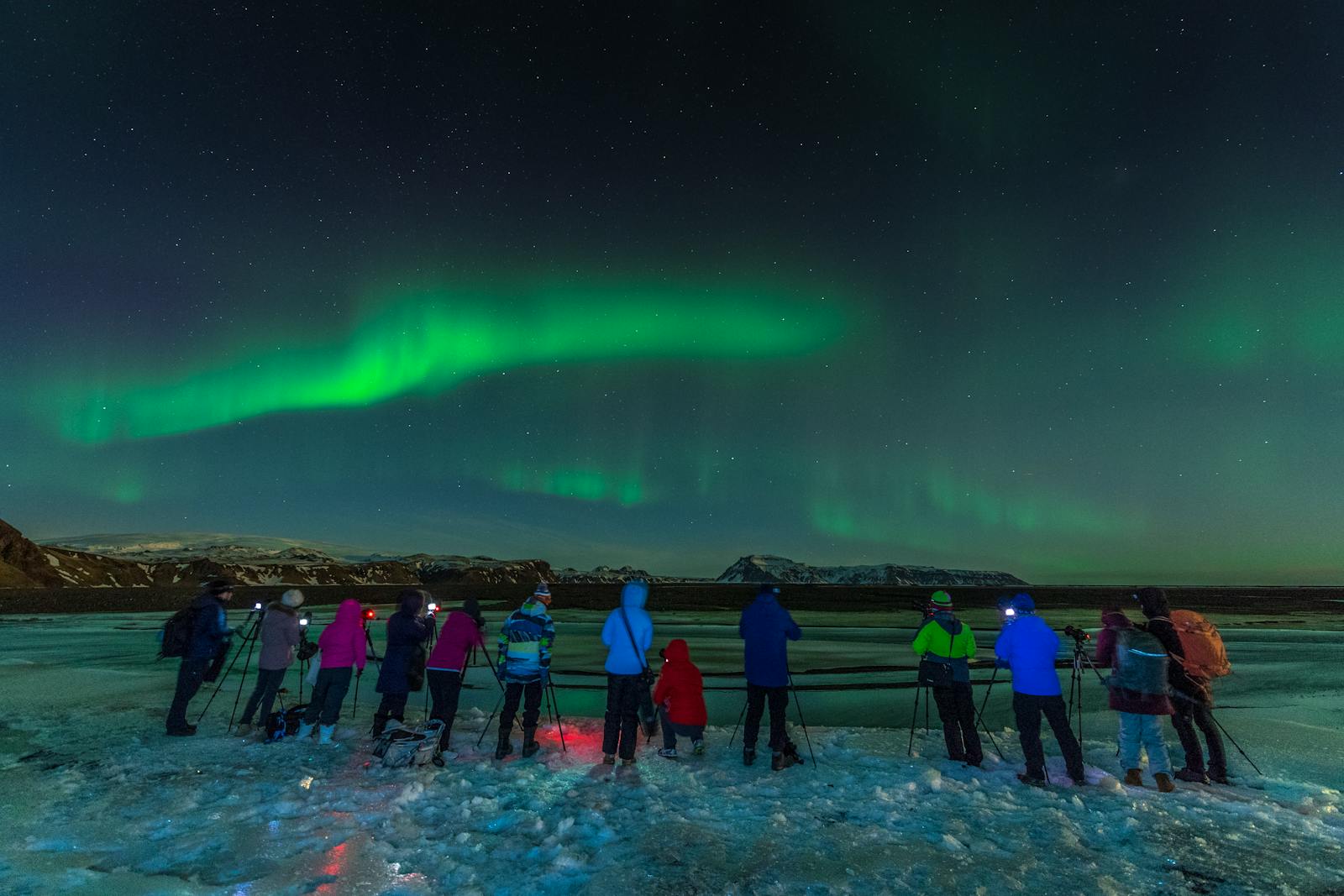
- Give yourself more nights. Over three nights, the chance of seeing the aurora at least once is around 75 percent, but the sweet spot is five to seven nights. The more attempts, the better.
- Book a guided tour. Guides track the cloud forecast and will happily drive for hours away from town, sometimes all the way to the Norwegian or Swedish border, to get you under clear skies. A tour costs around €150, but your odds are much higher than going it alone.
- Download a forecast app (such as My Aurora Forecast or Aurora Forecast) and keep an eye on both the activity index and the cloud cover.
- Use an “aurora alarm.” Lots of hotels and igloos will wake you in the night the moment the sky lights up, so you don’t have to keep watch all night.
- Be patient and dress warmly. The aurora often appears between 9 pm and 1 am and can take a while. In the cold, a thermos of something hot is worth its weight in gold.
You can book specific aurora tours in advance through GetYourGuide. They tend to sell out in season, so don’t wait too long.
How to photograph the northern lights
The northern lights are a rewarding but tricky subject to photograph. With a phone on auto you’ll barely capture anything, but with a few settings you can manage even with that. Here are the basics.
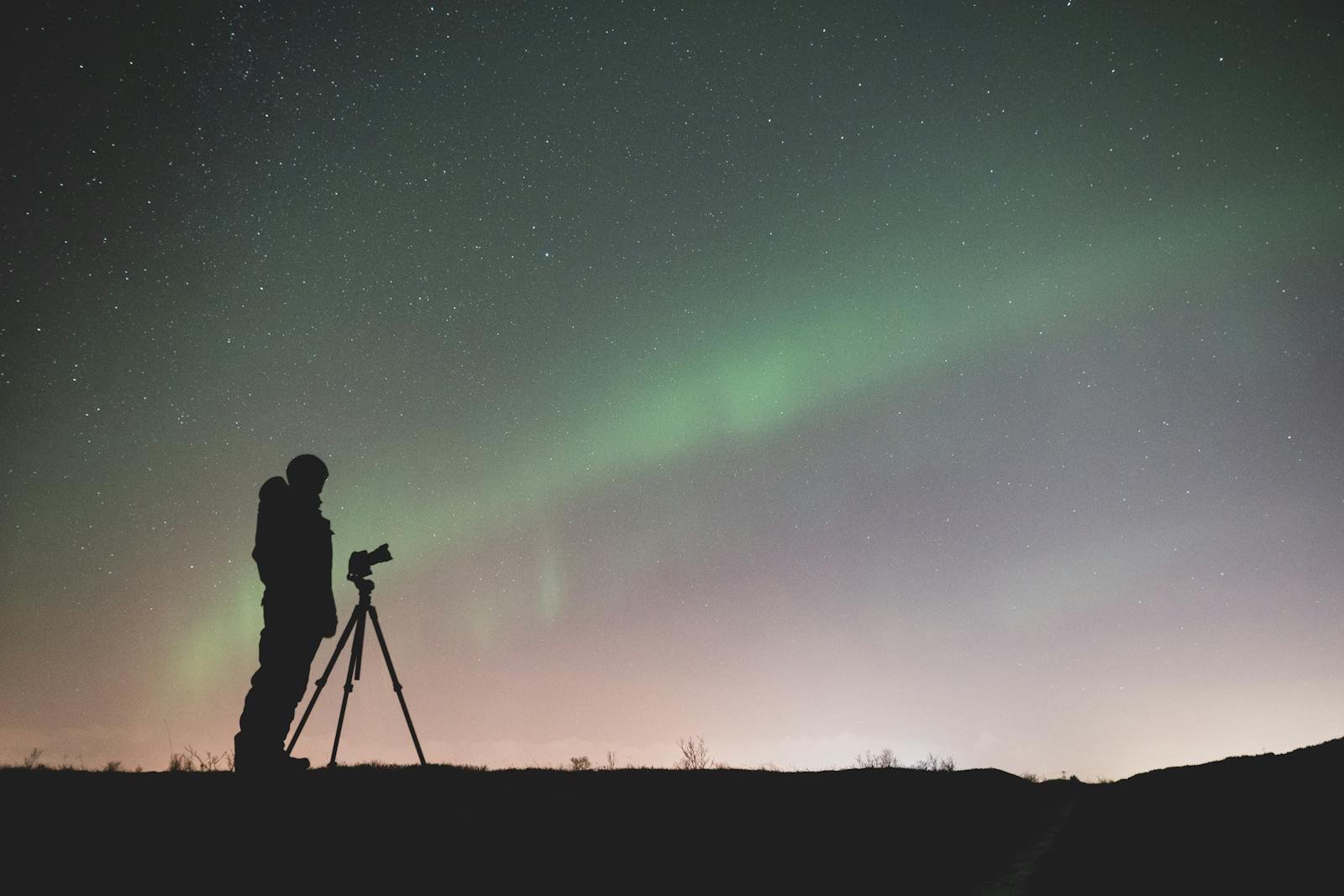
- A tripod is a must. The exposure is long, so the camera has to stay completely still. Handheld won’t cut it.
- Manual mode. Open the aperture as wide as possible (ideally f/2.8 or lower), set ISO around 1600 to 3200 and an exposure of 5 to 15 seconds depending on how active the aurora is.
- Focus to infinity manually. Autofocus struggles in the dark, so switch focus to manual and lock onto a distant light or the stars.
- Shoot in RAW and bring spare batteries. The cold drains them in no time, so keep them warm against your body.
- Your phone can do more than you’d expect. Newer phones have a night mode that, when propped against something solid, takes a surprisingly good shot.

Where to sleep under the northern lights: glass igloos and aurora resorts
The most romantic way to wait for the aurora is to fall asleep under a glass roof. Glass igloos and aurora cabins have a heated glass dome right above the bed, so you can watch the lights warm and snug under the duvet. Just bear in mind: even glass won’t guarantee you’ll see the aurora, you still need clear skies. Treat it as a luxurious extra, not a sure thing. And book months ahead, because these are the first places to sell out.
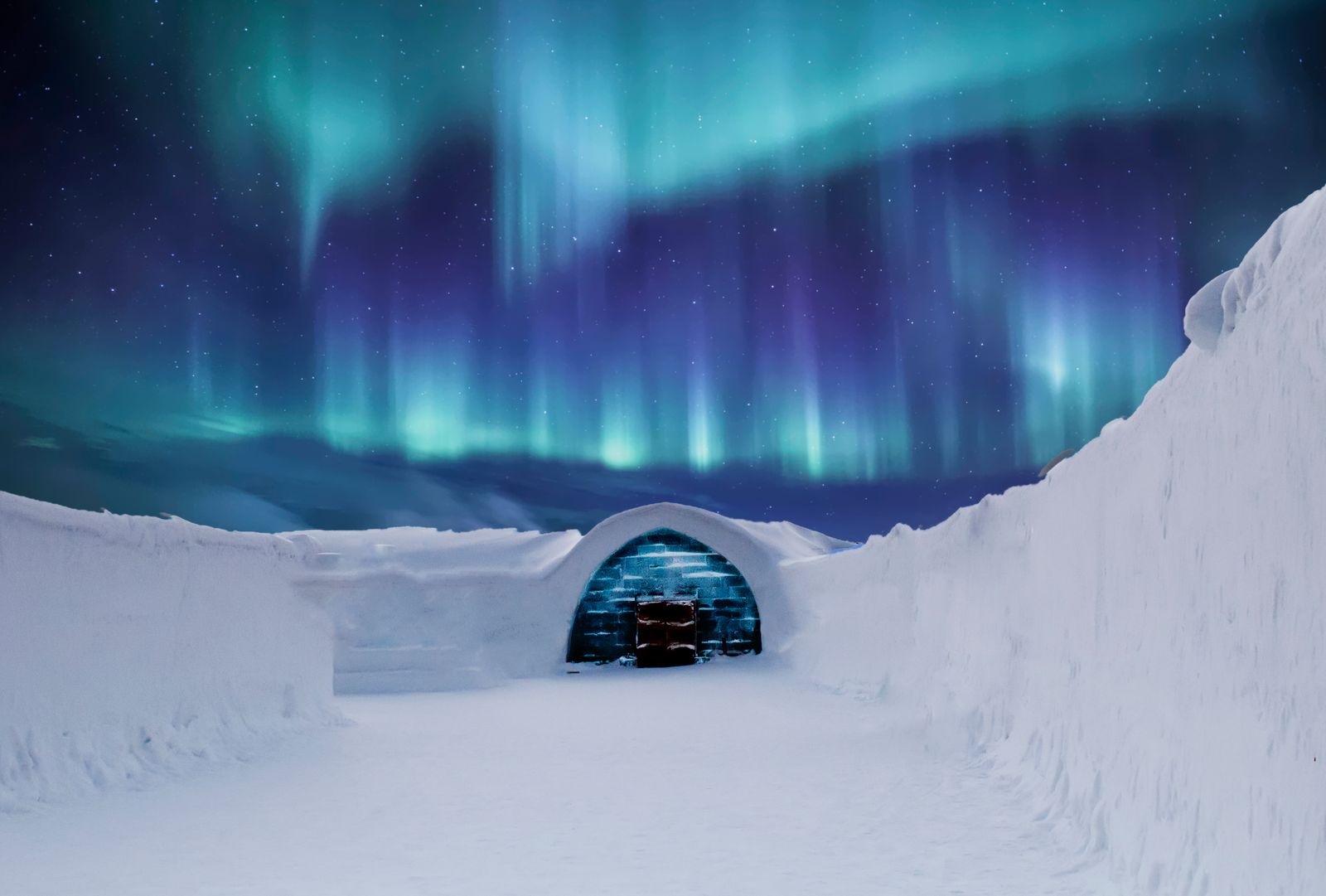
Up in the far north, where the skies are darker, the legendary Kakslauttanen Arctic Resort near Saariselkä reigns supreme, the inventor of the whole concept, alongside the highly rated Northern Lights Village Saariselkä with its aurora cabins. For solid value and great reviews there’s Aurora Village Ivalo, and for a stunning view the Star Arctic Hotel perched on the hill above Saariselkä. Closer to Rovaniemi there’s the experience-packed Arctic SnowHotel & Glass Igloos with its ice bar, and near the Levi resort the Northern Lights Village Levi.
Where to next: more tips for Nordic trips
If the northern lights have you hooked, here are a few more ideas for where to chase them:
- Lapland: 20 ideas of what to see and do (the big guide to the whole region)
- Iceland, Finland and Norway: how and where to catch the northern lights
- Northern lights in the Lofoten Islands: when, where and how to see them
Frequently asked questions about the northern lights in Lapland
When is the best time for northern lights in Lapland?
The season lasts roughly from the end of August to the beginning of April, when the nights are dark enough. Statistically, the aurora is most active around the equinox, meaning in September and March, when clear skies are also more frequent. December and January have the most darkness, but also the most cloud cover.
Is the northern lights guaranteed?
There isn’t. The Northern Lights depend mainly on clear skies and solar activity, so no one can guarantee them, not even a travel agency. You’ll significantly increase your chances by spending more nights (ideally 5 to 7), heading out of town to a dark sky, and joining a guided tour that chases clear weather.
Where in Lapland is there the best chance to see the northern lights?
The farther north you go and the farther from city lights, the better. The best conditions are in Saariselkä, Inari and Utsjoki in the far north. From Rovaniemi in September, people head to Ounasvaara, to Arctic Garden or about 20 minutes by car to Arctic Circle Hiking Area with dark skies.
How many nights should I plan for the Northern Lights?
Plan for at least 3 nights, which gives you around a 75 percent chance of seeing the lights at least once. Ideally stay 5 to 7 nights, because the more attempts you have, the higher the probability that both the weather and solar activity will work in your favor.
How to photograph the Northern Lights?
You’ll need a tripod and manual mode. Set the aperture as wide open as possible (ideally f/2.8 or less), ISO around 1600 to 3200, and exposure time 5 to 15 seconds. Focus manually to infinity, shoot in RAW, and have spare batteries as the cold drains them quickly. Newer phones can handle the aurora in night mode.
Can you see the northern lights from a glass igloo?
Yes, if the sky is clear and the lights are active. The glass igloo and aurora cabins have a glass roof above the bed, so you can watch the lights in warmth. However, even the glass doesn’t guarantee you’ll see them, so consider it a luxury bonus, not a certainty. Book months in advance.
Does it have to be cold to see the northern lights?
Not necessarily. The aurora is visible from late August, when it’s not yet freezing, until early April. Deep winter isn’t a requirement; in fact, the aurora tends to be more active and the sky clearer in September and March. The key is darkness and clear skies, not temperature.
Tips and Tricks for Your Vacation
Don’t Overpay for Flights
Search for flights on Kayak. It’s our favorite search engine because it scans the websites of all airlines and always finds the cheapest connection.
Book Your Accommodation Smartly
The best experiences we’ve had when looking for accommodation (from Alaska to Morocco) are with Booking.com, where hotels, apartments, and entire houses are usually the cheapest and most widely available.
 🚗 Car rental on the roadVerified rental cars in Finland
Search with the DiscoverCars comparison engine — it compares prices from dozens of local and international rental companies, and most bookings come with free cancellation.
Compare car prices in Finland →Don’t Forget Travel Insurance
Good travel insurance will protect you against illness, accidents, theft, or flight cancellations. We’ve had a few hospital visits abroad, so we know how important it is to have proper insurance arranged.
Where we insure ourselves: SafetyWing (simple monthly subscription) and TrueTraveller (for extra-long trips).
Find the Best Experiences
Get Your Guide is a huge online marketplace where you can book guided walks, trips, skip-the-line tickets, tours, and much more. We always find some extra fun there!