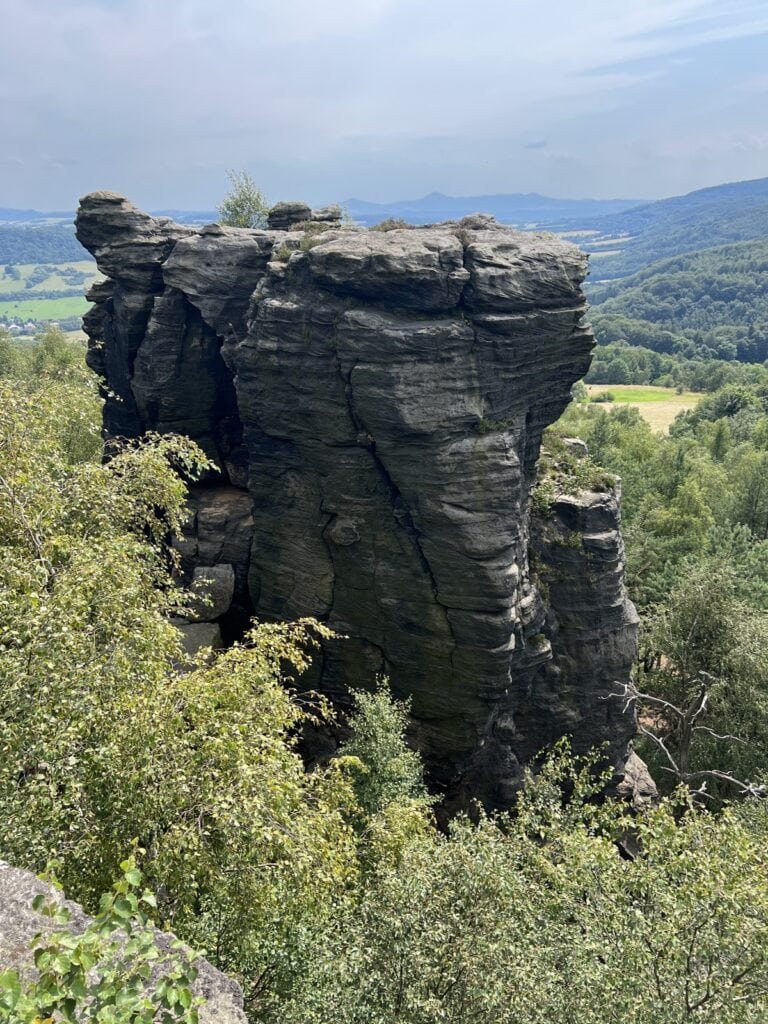
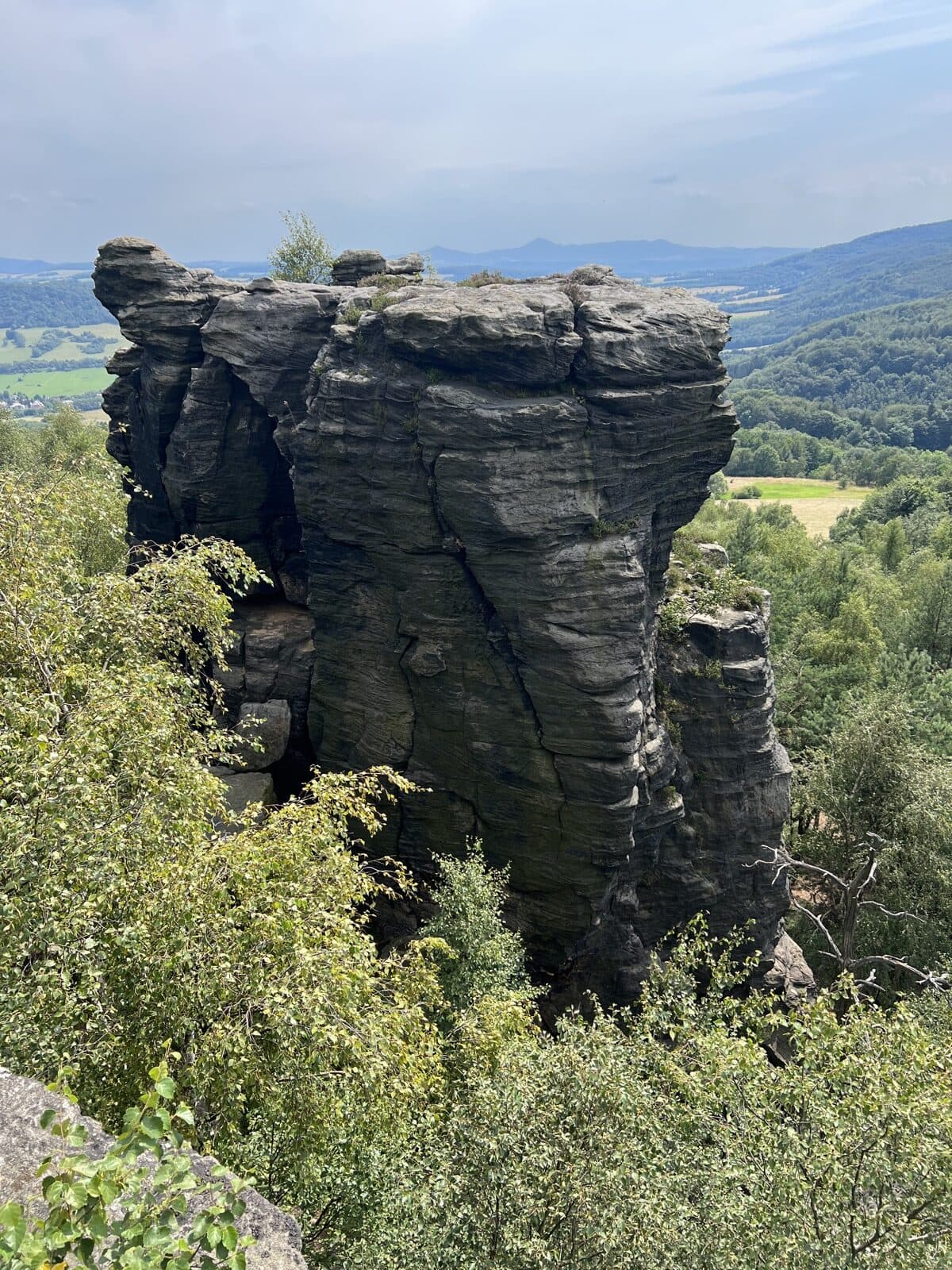
Right near the German border hides a place where you’ll feel like you’ve stepped into another world. Sandstone towers soar tens of metres into the sky, and between them wind mysterious ravines full of shadows and moss.
The Tiské stěny rocks are, according to travellers, among the most beautiful sandstone rock towns in the Czech Republic. Although they lie just a short drive from the famous Bohemian Switzerland, they long escaped the main tourist spotlight. That’s gradually changing, though, and today this sandstone maze draws families with kids and film fans alike.
If you’re planning a trip to northern Bohemia, be sure to set aside time for this labyrinth of sandstone towers. Judging by the photos and glowing reviews, a walk along the narrow ladders and stairs is a fantastic experience. Let’s take a look at what awaits you here.
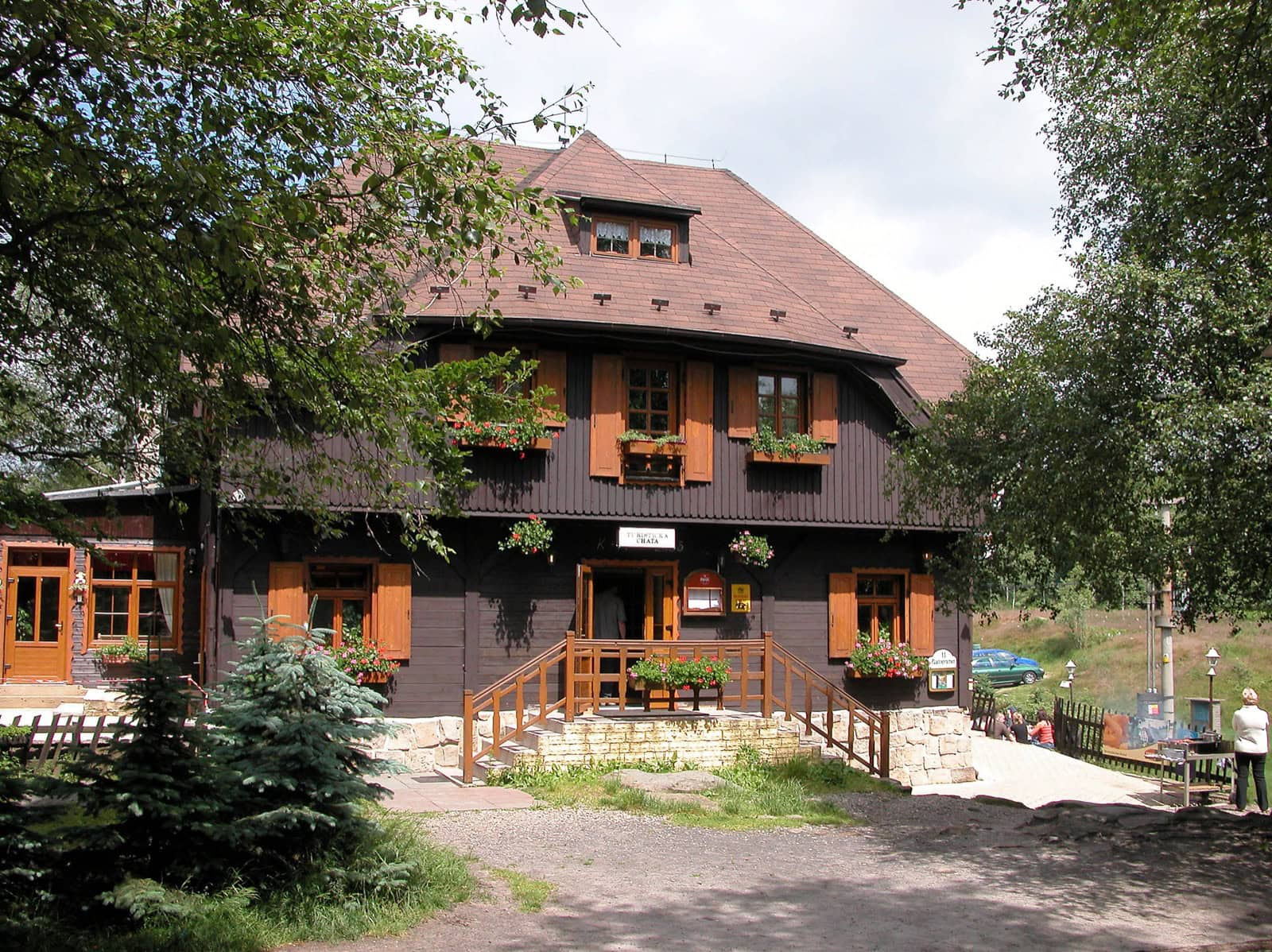
Photo: Lukas Beck, CC BY 4.0, Wikimedia Commons
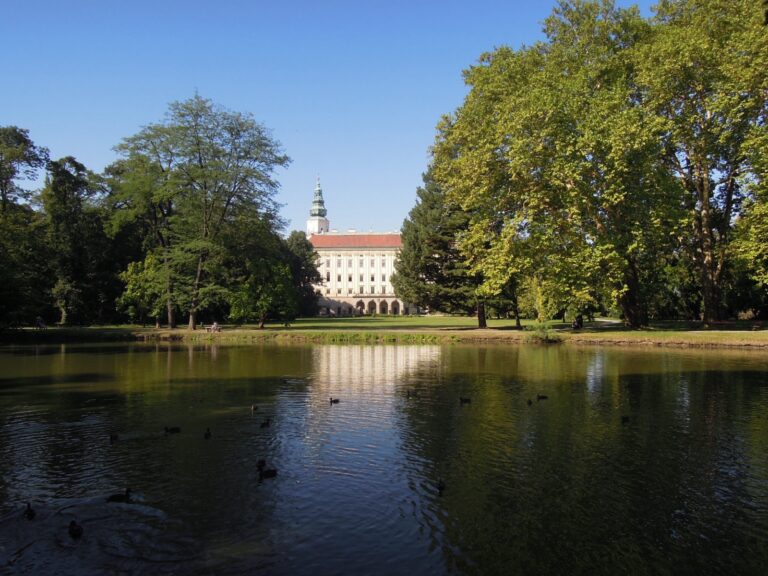
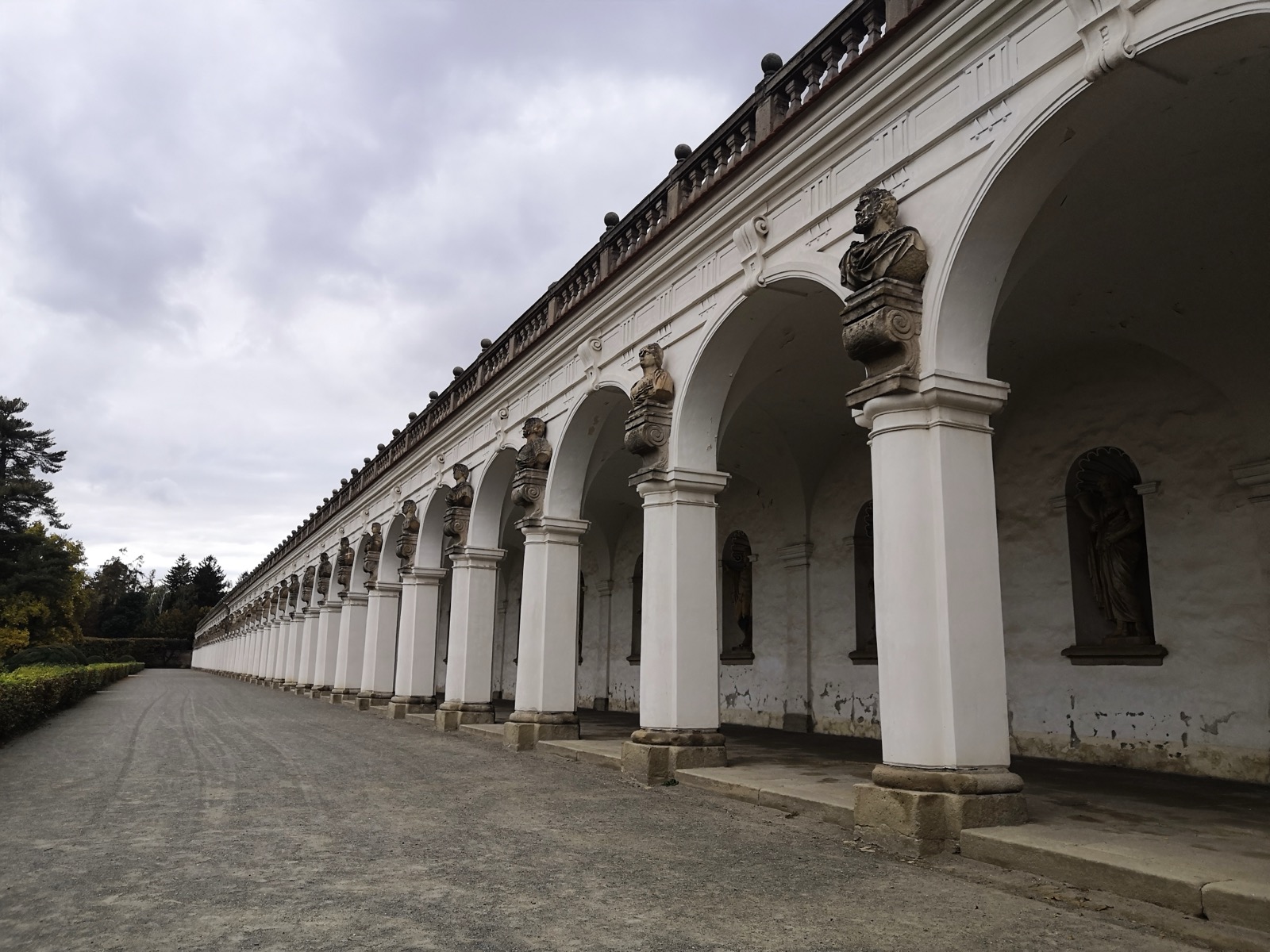
TL;DR: what awaits you at the Tiské stěny rocks
You’ll walk through a labyrinth of sandstone rock towers, pillars and mysterious ravines.
Two main loops await you, forming the Small and Great Tiské Walls.
The route runs roughly 2.5 to 5 kilometres and is suitable even for capable kids.
Along the way you’ll come across spots where the winter scenes of the fairy-tale film The Chronicles of Narnia were shot.
Since 2025 a new visitor cap has been in place, so it pays to grab timed tickets online in advance.
When to visit the Tiské stěny rocks
The rock town has seasonal opening hours. The official season runs roughly from April to October. During the summer holidays it’s usually open every day, while in spring and autumn it mainly operates on weekends. If you’re heading here off-season, it’s a good idea to check the current opening hours on the official website.
The entrance fee is around €4 for an adult, while the reduced rate for students and seniors comes to about €2. Families with kids can take advantage of a good-value family ticket for roughly €10, and the youngest children under six get in free.
The most important change, though, arrived in 2025. Due to the surge in visitors and the need to protect nature, a daily cap on the number of visitors has come into force. Tickets are sold for a specific time slot and capacity is limited. Travellers warn that weekends and holidays sell out fast. So it’s definitely worth buying your tickets online well ahead of time, so you don’t turn up only to find they won’t let you in. Nature needs a rest, and those narrow ravines simply can’t stretch to fit everyone.
How to get to the Tiské stěny rocks and where to park
The Tiské stěny rocks lie by the village of Tisá on the very edge of the Labské pískovce Protected Landscape Area. From the nearest major hubs the drive takes about an hour and a half, which makes the spot an ideal target for a day trip. It’s best to head towards Ústí nad Labem and then turn off for Libouchec and Tisá. It’s also very close from the nearby town of Děčín.
As for parking, you’ll find paid car parks right by the entrances to the rocks. The price for all-day car parking is around €4. If you arrive in the middle of summer and later in the day, be prepared for the hunt for a free spot to take a while.
If you prefer public transport, the easiest option is to take the train to Ústí nad Labem or Děčín and continue from there on a direct bus line all the way to the village of Tisá. The bus stop sits just a short walk from the main entrance to the rock complex.
Where to stay nearby
If you want to explore not just the maze itself but also the nearby Děčínský Sněžník, or head straight into the heart of Bohemian Switzerland, it’s worth sticking around for a few days. By the way, the Bohemian Switzerland National Park doesn’t actually border the Tiské stěny rocks, and the recent wildfires thankfully didn’t touch this area at all. Right in the village of Tisá and its surroundings you’ll find very cosy guesthouses and hotels.
In the village of Tisá itself, travellers recommend Hotel Na Skřivánku Tisá. It offers a great location just a short walk from the rocks and perfect facilities for families with kids, who love it here.
If you’d rather stay in a strategic spot with easy access to other famous sights, you can go for Hotel Praha Hřensko. Hřensko lies a bit further away, but it’s a great base for discovering the Pravčická Gate and the wild ravines all around.
What to see at the Tiské stěny rocks
Let’s take a closer look at what the rock complex itself has in store. The Tiské stěny rocks form a unique sandstone rock town full of tall pillars, crawl-through gaps and bizarre sandstone formations. The tour splits into two main sections, and both fans of far-reaching views and lovers of fairy-tale stories will get their money’s worth. Here are three tips for what not to miss on your visit.
1. The rock maze and towers
Photo: Lukas Beck, CC BY 4.0, Wikimedia Commons
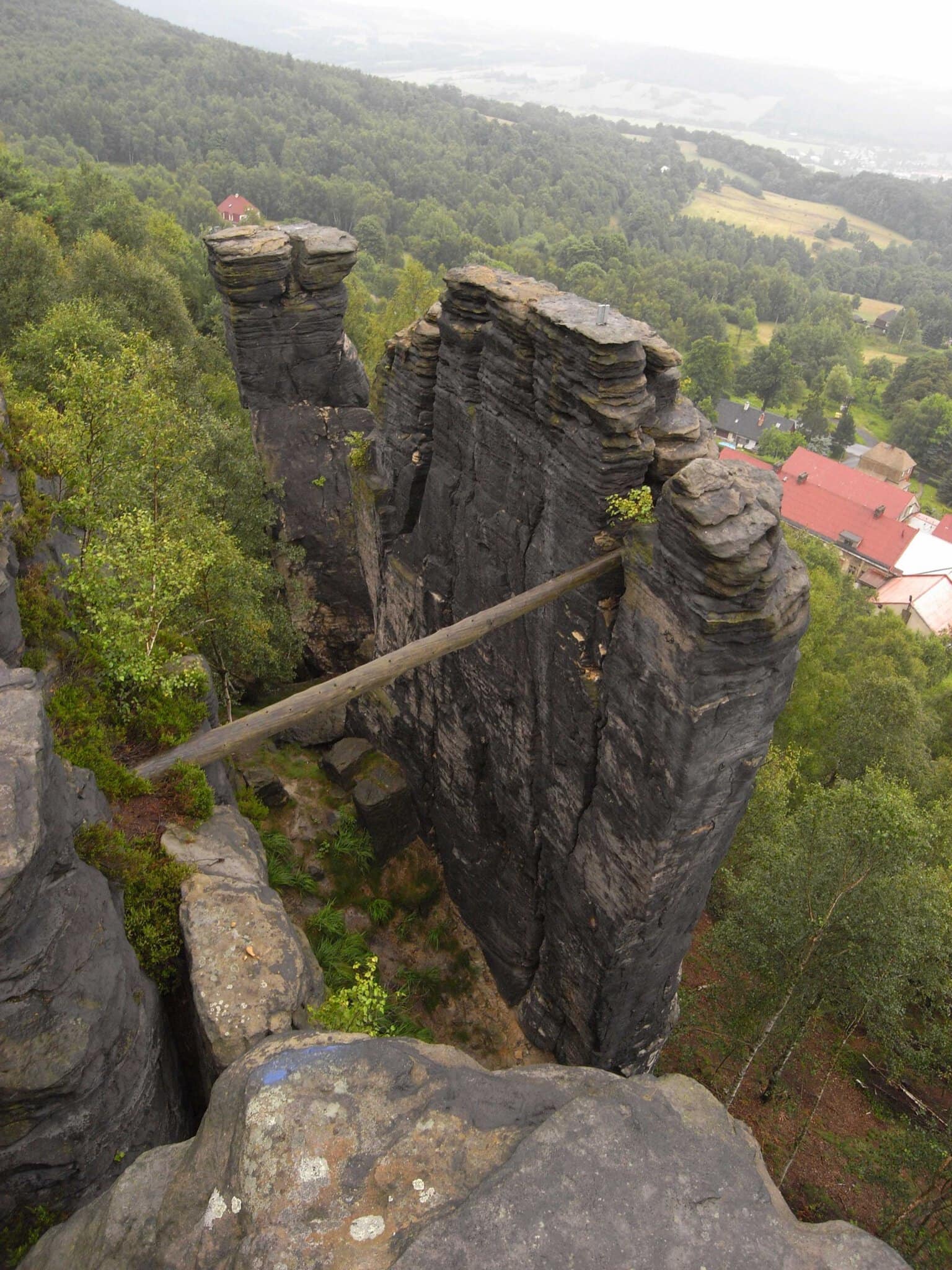
The whole complex is divided into the Small and Great Tiské Walls. You’ll walk through a genuine labyrinth where sandstone towers and pillars loom above you, in places reaching an incredible seventy metres high. The path leads through narrow passages, up stone stairs and wooden ladders. Here and there you’ll have to watch your head and squeeze through tight ravines, which turns the tour into an amazing adventure even for nimble kids.
Forget about bringing a pushchair, though, as the terrain is very rugged and calls for really sturdy footwear. Some rock formations are said to resemble animals and various fairy-tale creatures in their shapes. You can let your imagination run wild and look for hidden faces or figures in the stone. You’ll come across formations with names like The Mayor, The Skinny Doctor or The Elephant. The full loop measures roughly two and a half to five kilometres, depending on how thoroughly you explore every nook and cranny.
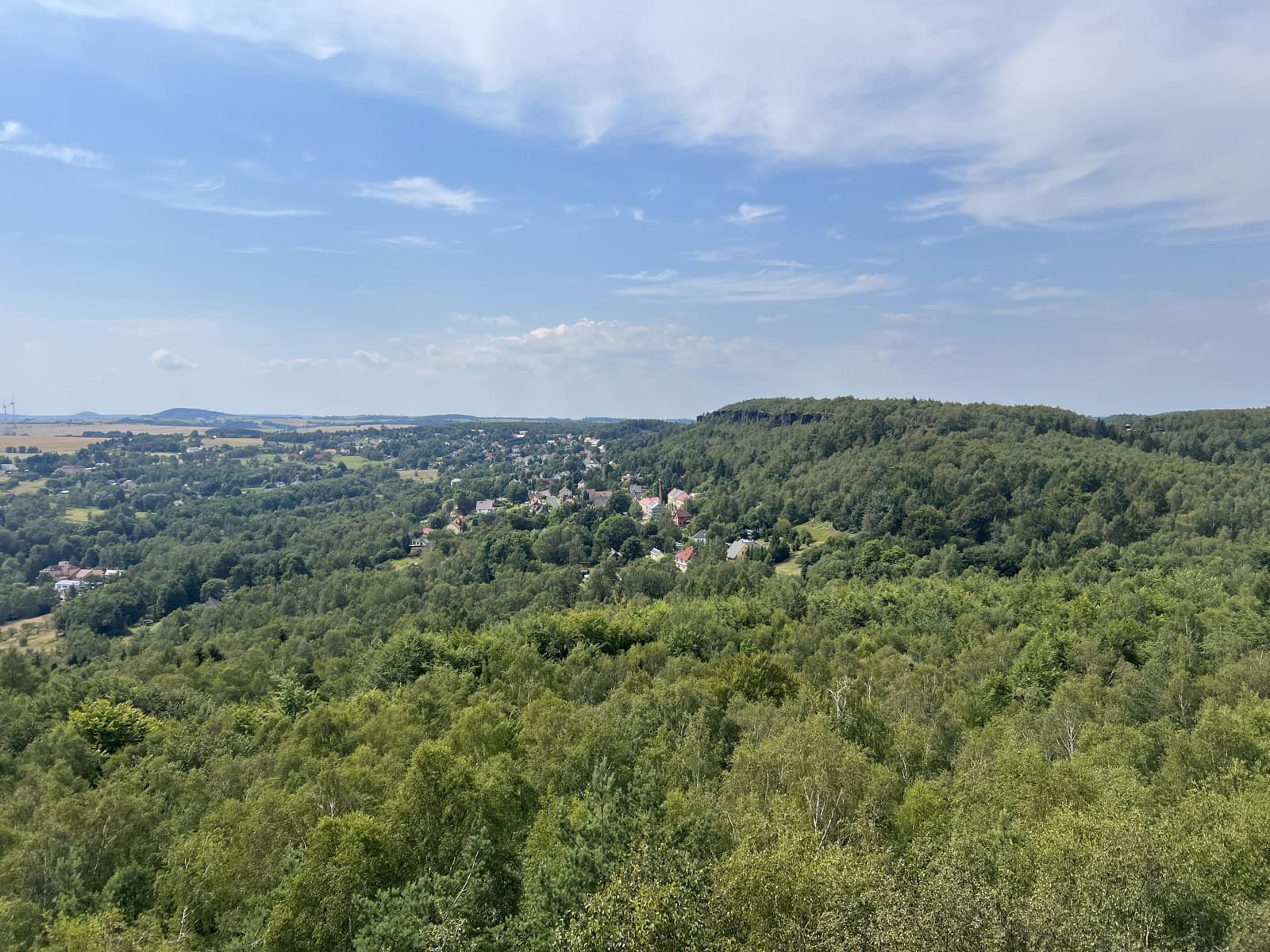
Besides wandering through the dark ravines, you’ll also head up to the tops of the rocks. From the elevated platforms, gorgeous panoramas open up over the village of Tisá and the whole surrounding landscape of the Bohemian Central Highlands and the Ore Mountains. If you’re lucky with clear weather, you’ll even spot the nearby Děčínský Sněžník with its distinctive stone lookout tower.
The viewpoints are mostly secured with railings, but it’s still a good idea to keep smaller kids in sight at all times. They say this is where you’ll take the very best photos. In autumn the surrounding forests turn beautiful warm shades, and early in the morning a thick mist often lingers in the valley, giving the whole place a real dose of mystique. Travellers recommend packing a warm jacket or a jumper, because once the sun dips below the horizon, the temperature among the rocks drops sharply.
3. Film-set Narnia and practical info
Photo: Jörg Blobelt, CC BY-SA 4.0, Wikimedia Commons
Did you know the famous Hollywood film The Chronicles of Narnia: The Lion, the Witch and the Wardrobe was shot in these very spots? The filmmakers were so taken with the fairy-tale setting that they chose it to portray the snowy landscape and winter Narnia. If you’ve seen the film, you’ll surely recognise some familiar corners, like the narrow passageways the heroes walked through.
💡 Tip: There’s a common misconception that the famous film stone bridge is also here in Tisá. Don’t go looking for it, though. The bridge scene was filmed at the Pravčická Gate deeper in Bohemian Switzerland. In Tisá, only the forest and rocky winter passages were shot.
And what about something good to eat after a long walk? Right by the entrance to the rock area there’s usually a kiosk or a tourist cabin where you can grab basic refreshments. In the village of Tisá itself you’ll then find a few classic pubs. Among the local specialities, travellers rave about various meat dishes, and for vegetarians there’s always a good classic in the form of a hearty soup, crispy potato pancakes or fried cheese.
Where to go next
Wondering where to head after exploring the rocks? Here are more tips for interesting places nearby and across the country:
No, the trail leads over stone steps, wooden ladders and very narrow passages. Visiting with a stroller is not possible; for young children it’s better to choose a baby carrier or wrap.
How much does parking at Tiské stěny cost?
For all-day parking at the official car parks near the entrance to the rocks you’ll pay approximately €4. Parking spaces fill up quickly in summer, so it’s a good idea to arrive early.
Is it necessary to buy tickets online?
Since 2025, new regulations with a daily visitor limit apply. Especially on weekends and public holidays, purchasing online tickets for a specific time slot is strongly recommended to avoid sold-out capacity and having to leave empty-handed.
How long does a visit to the rock city take?
The entire circuit measures roughly 2.5 to 5 kilometres and, depending on how fast you walk and how many photos you take along the way, your visit will take about two to three hours.
Did the Bohemian Switzerland fire affect Tisá?
No, Tiské stěny are located on the very edge of the Labské pískovce Protected Landscape Area and are quite far from the core of the National Park that was affected by the devastating fire. The area is completely safe and fully operational.
Tips and Tricks for Your Vacation
Don’t Overpay for Flights
Search for flights on Kayak. It’s our favorite search engine because it scans the websites of all airlines and always finds the cheapest connection.
Book Your Accommodation Smartly
The best experiences we’ve had when looking for accommodation (from Alaska to Morocco) are with Booking.com, where hotels, apartments, and entire houses are usually the cheapest and most widely available.
Don’t Forget Travel Insurance
Good travel insurance will protect you against illness, accidents, theft, or flight cancellations. We’ve had a few hospital visits abroad, so we know how important it is to have proper insurance arranged.
Where we insure ourselves: SafetyWing (best for everyone) and TrueTraveller (for extra-long trips).
Why don’t we recommend any Czech insurance company? Because they have too many restrictions. They set limits on the number of days abroad, travel insurance via a credit card often requires you to pay medical expenses only with that card, and they frequently limit the number of returns to the Czech Republic.
Find the Best Experiences
Get Your Guide is a huge online marketplace where you can book guided walks, trips, skip-the-line tickets, tours, and much more. We always find some extra fun there!
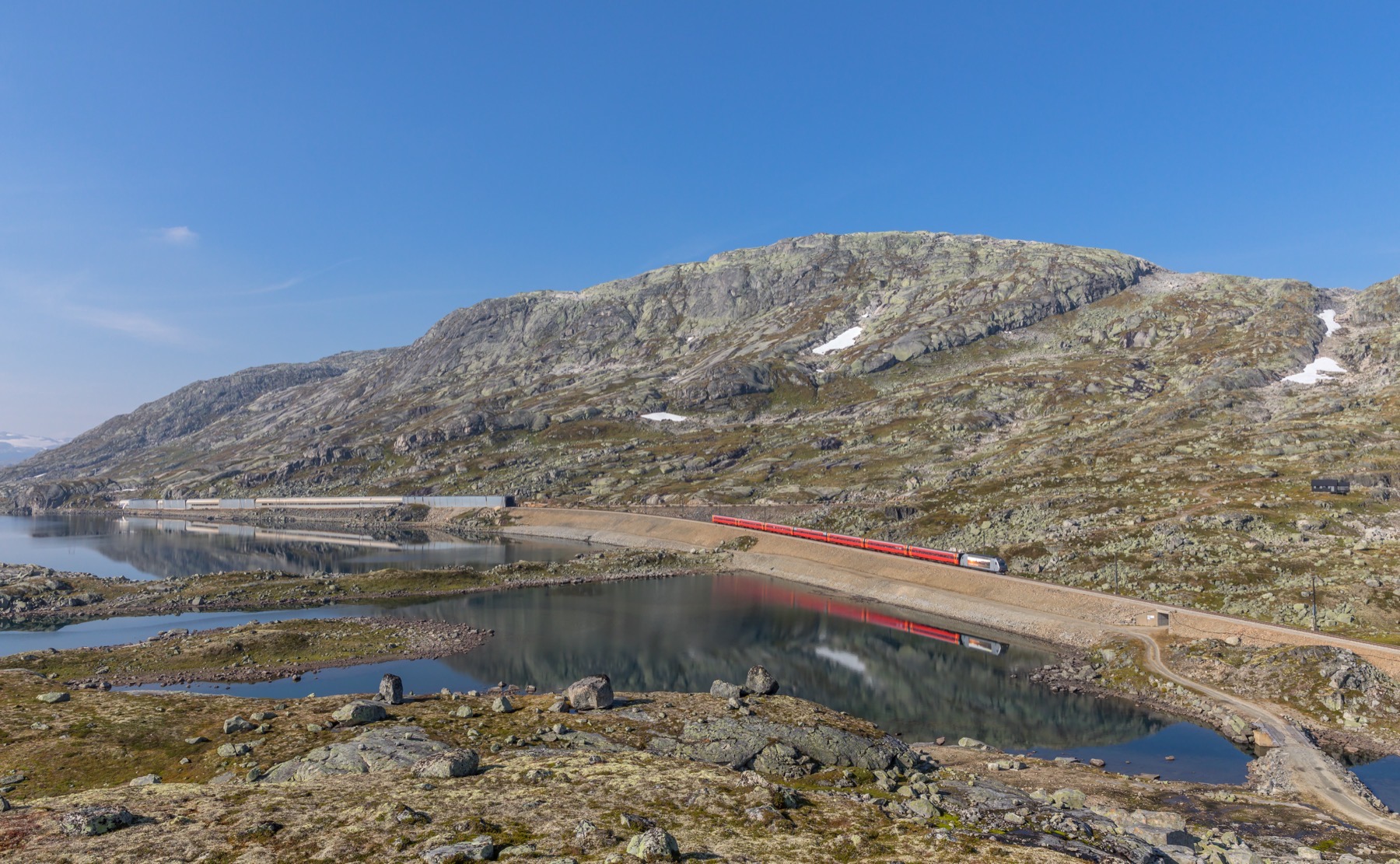
In under seven hours you climb out of the Oslo fjord, cross the Hardangervidda plateau at 1,222 metres and end up under the umbrellas of Bergen, Norway — and the whole thing can cost less than a pizza and a drink if you know when to buy your ticket. Bergensbanen, the Bergen Railway, regularly tops the lists of the most beautiful train routes in the world, and it’s far from an empty marketing gimmick. Riding this train is a fascinating cross-section of all of Norway’s nature, taking you from a comfortable seat to places no road will ever reach.
A plane can cover the route between Norway’s two largest cities in under an hour, but you’d rob yourself of a monumental experience of the rugged Nordic landscape, deep valleys and glacial plateaus. Here you’ll find everything you need to know: how to grab a cheap ticket, which side to sit on for the best photos, and why you should never underestimate this journey.
Foto: Audrey B / Pexels
TL;DR
Route length and time: The full route from Oslo to Bergen is 496 kilometres, and the direct train covers it in 6 hours 47 minutes to 7 hours 22 minutes depending on the service.
Highest point: The train climbs well above the tree line, with the highest station Finse sitting at 1,222 metres above sea level and the track itself peaking at 1,237 metres in a nearby tunnel.
2026 ticket prices: The cheapest Lavpris (Lowfare) tickets from operator Vy start at just 249 to 299 NOK (roughly €22–27) if you book well in advance.
When to buy: Sales open about three months before departure, and in summer the discounted tickets disappear incredibly fast, so it pays not to dawdle.
Where to sit: For the best views, sit on the left in the direction of travel from Oslo to Myrdal, then switch to the right side from Myrdal to Bergen.
Transfer to the Flåm Railway: At the mountain station of Myrdal you can easily change to the famous steep railway down to Flåm, which costs an extra around 538 NOK (roughly €48) one way.
Night train: To save on a hotel, take the overnight service, where you can pay a supplement of 740 NOK (roughly €65) for an entire two-berth compartment with proper beds.
Foto: Bahnfrend / Wikimedia Commons, CC BY-SA 4.0
10 Things You Must Know About the Bergensbanen Journey
This legendary line offers far more than a simple transfer from A to B. Before you board and let the Nordic scenery carry you away, it’s worth doing a little prep for the Bergensbanen journey. That way you’ll know where the most breathtaking scenery awaits, how to save cleverly on tickets, and why it pays to plan a stop in the mountains.
Let’s go through it all step by step so you take home the absolute most from Norway.
Foto: Wikimedia Commons / Wikimedia Commons
1. The route and why it’s the most beautiful railway in Europe
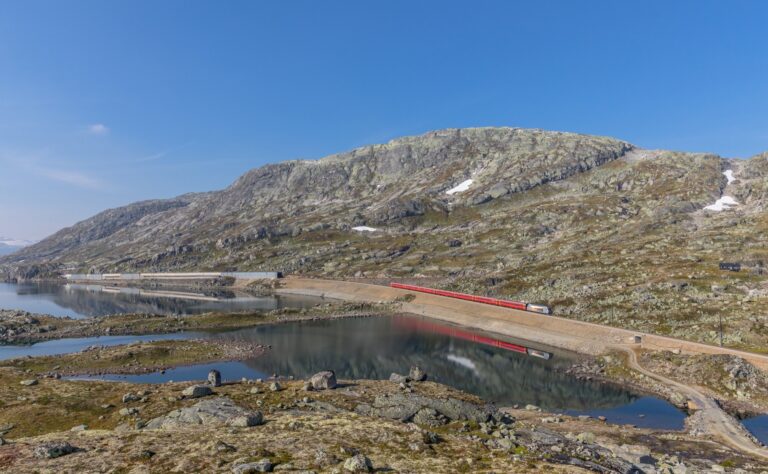
When the Norwegian authorities ceremoniously opened the Bergen Railway in 1909, many engineers considered it a miracle that the project was finished at all. Bergensbanen itself is a respectable 371 kilometres long, while the entire route from Oslo to the west coast carves off a full 496 kilometres from the map. What gets you most, though, is that roughly a hundred kilometres of that runs through rugged terrain high above the tree line. Along the way you pass through twenty-one stations and conquer around two hundred tunnels, easily ruled by the more than ten-kilometre-long Finse Tunnel.
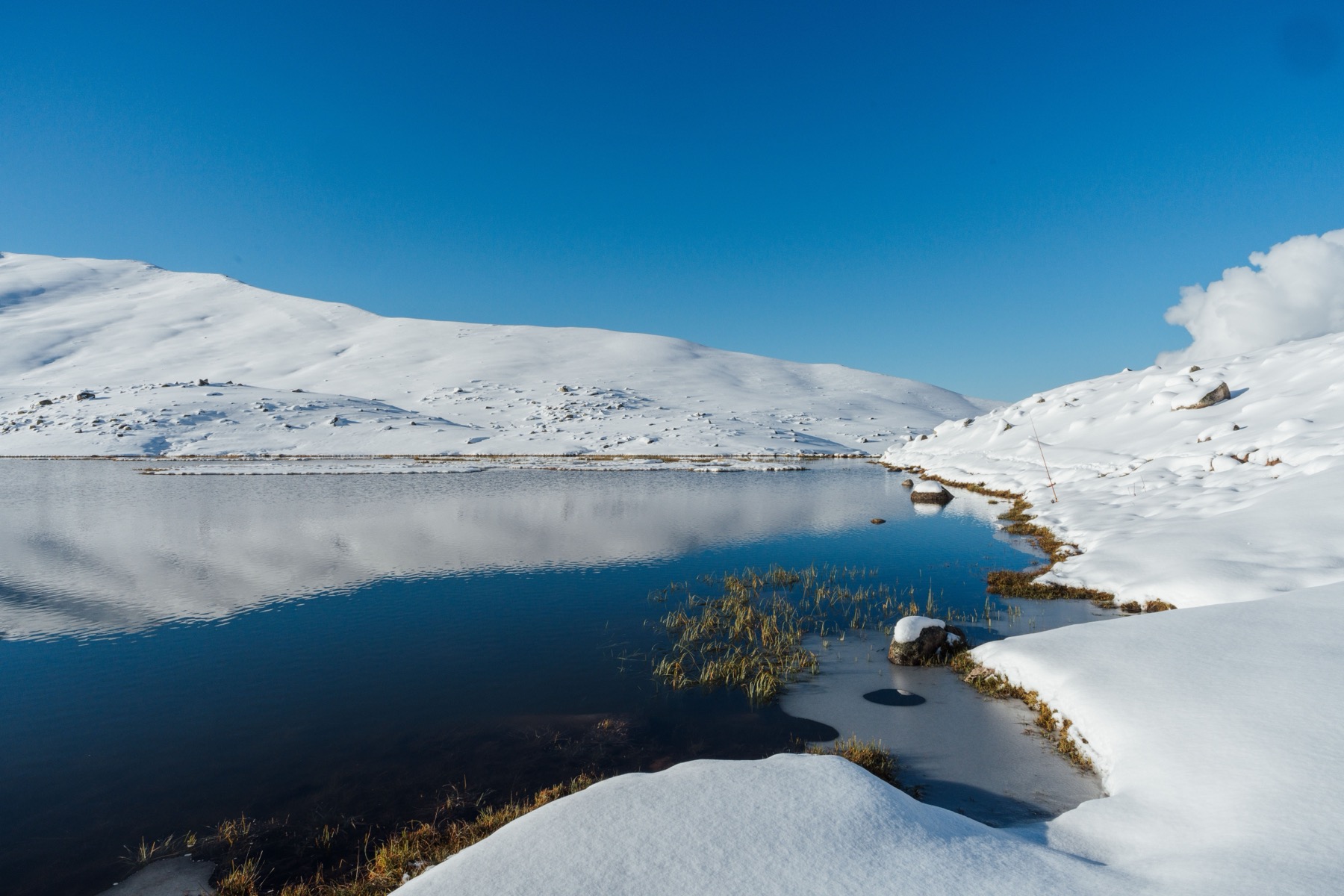
The scenery out the window changes so fast you won’t even pull that book out of your backpack. The journey starts very peacefully in the forested Hallingdal valley, from where the train follows a wild river and deep lakes and gradually climbs onto the largest mountain plateau in Northern Europe. This area is called Hardangervidda and stretches across an incredible eight thousand square kilometres. Here you’ll find breathtaking bare Arctic tundra, frozen lakes and majestic views of Norway’s sixth-largest glacier, Hardangerjøkulen. The dramatic descent that follows through the deep Raundalen gorge towards the fjords and Bergen is the absolute cherry on top.
Foto: MART PRODUCTION / Pexels
2. Vy tickets and how to snag a discounted Lavpris
The trains on this line are run by Norway’s national operator Vy, and I recommend buying tickets exclusively through their official website vy.no or the state platform Entur. The key to huge savings is, of course, booking early. The cheapest non-refundable Lavpris tickets start at 249 to 299 NOK (roughly €22–27), though realistically in the peak summer season expect closer to 500 NOK. Leave it to the last minute, however, and the Lavpris tickets are guaranteed to be gone, leaving you to pay the full flexible fare, which in 2026 runs around 1,238 to 1,362 NOK (roughly €110–120).
💡 Tip: Sales usually open about three months before departure, and for the very busy summer months I recommend booking at least six to eight weeks ahead. If you want to make the most of the ride, you can also pay extra for Plus class. It offers much wider seats, more legroom, handy work tables and, best of all, unlimited free coffee and tea for the whole journey. Don’t forget that children under five travel free and seniors over 67 get a 50% discount.
Foto: Nils R / Pexels
3. Which side of the carriage to sit on for the best photos
One of the most common questions travellers ask is which seat to pick in the booking system so they don’t miss Norway’s most dramatic scenery. The line twists and turns constantly and offers gorgeous views fairly to both sides, but the general consensus is to sit on the left side in the direction of travel from Oslo to Myrdal. That gives you an unbeatable view of the rushing rivers and mirror-like lakes of the Hallingdal valley, which makes up the first third of the trip. Reserving a specific seat is free with all ticket types, so definitely don’t leave it to chance.
On the Vy website, pick a window seat in the carriage plan — the aisle really robs you of the view. Once the train passes the highest Arctic sections and starts dropping sharply towards the west coast, the whole situation flips. From Myrdal to Bergen it pays to have a seat on the right side, where you’ll see the steepest slopes of the Raundalen valley and, later, the calm surfaces of deep fjords. And if the left side from Oslo doesn’t work out, don’t despair — the right side offers a fantastic view of the Hardangerjøkulen glacier near Finse station.
Foto: Wikimedia Commons
4. The night train and the magic of a sleeper compartment
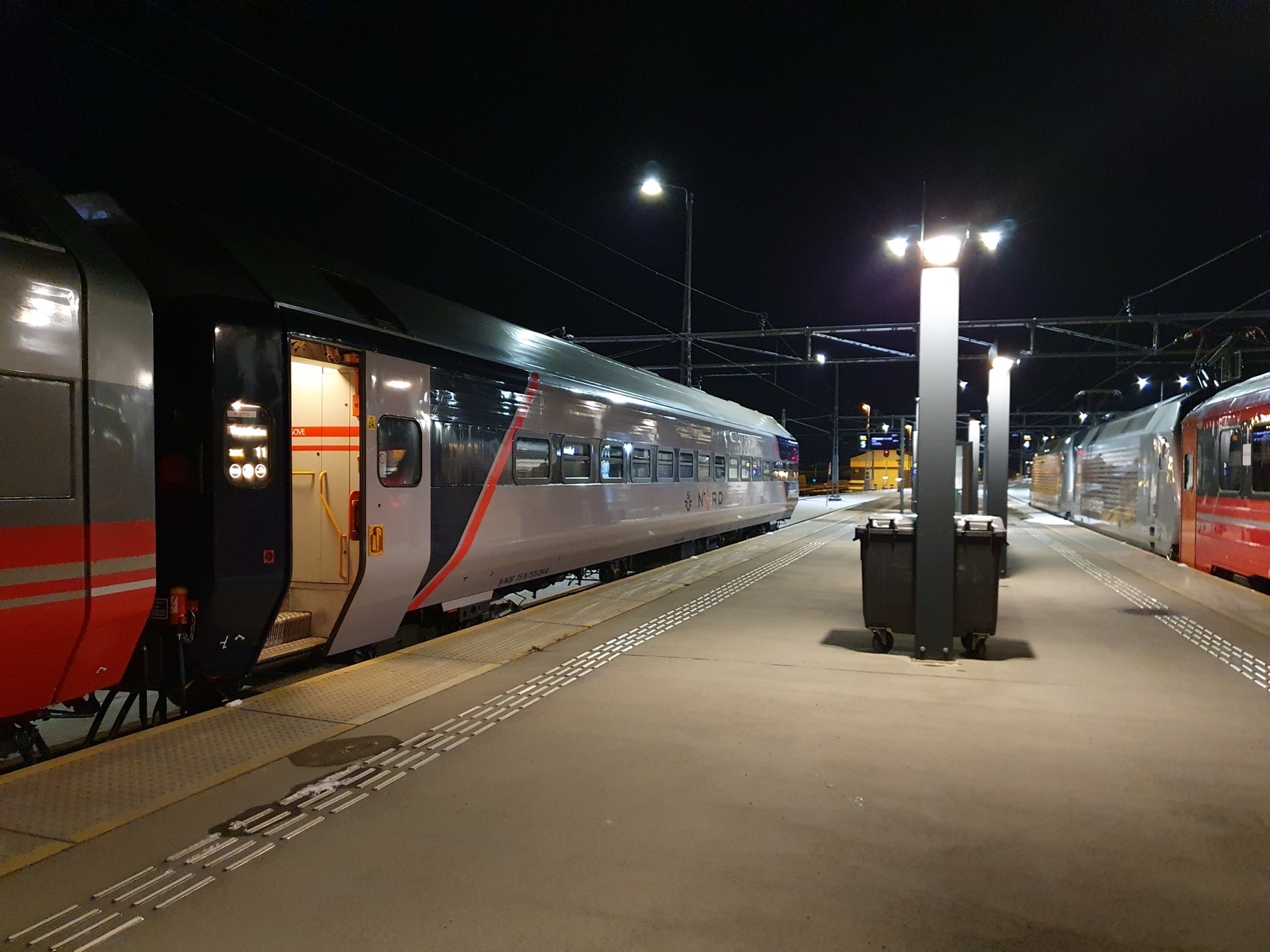
If your itinerary is packed and you want to save both money and precious time on a hotel, Bergensbanen offers very popular overnight services. Those from Oslo usually leave around eleven at night and reach Bergen after six in the morning. A basic ticket for an ordinary seat starts at roughly 479 NOK (roughly €42), but hand on heart, sleeping upright isn’t ideal for everyone. For a small supplement of 130 NOK (roughly €12) you can choose the PlusNight fare, where you get a fully reclining seat, a blanket and bottled water, so you certainly won’t complain about a decent night’s sleep.
A far more interesting option, though, is to book a proper sleeper compartment, which is incredibly worth it especially if you’re travelling as a pair. The supplement for an entire two-berth compartment is 740 NOK (roughly €65), regardless of whether one or two people sleep in it. Inside you’ll find very comfortable beds with clean linen, soft towels and even a small sink for morning freshening up. You pick up the key in the form of a magnetic card from the conductor in the dining car, and in the morning the staff gently wake you just before arrival, so there’s no fear of oversleeping.
Foto: Bahnfreund21 / Wikimedia Commons, CC0
5. The cult stop of Finse, like another planet
About halfway along you arrive at Finse station, an absolute one-off of the entire Norwegian rail network, and quite possibly all of Europe. It sits at 1,222 metres above sea level and has absolutely no road leading to it, so the train is the only conceivable connection with the surrounding civilization. The place is essentially just a station, the historic hotel Finse 1222 and the small Rallarmuseet museum, which together create the most isolated and rugged combination of high-mountain atmosphere you won’t easily find anywhere else in Europe.
It was these eternally snow-covered plains and the mighty nearby Hardangerjøkulen glacier that Hollywood filmmakers chose in the spring of 1979 to shoot scenes for the ice planet Hoth from the cult film Star Wars: The Empire Strikes Back. For fans of the saga, an ordinary station has thus become a huge pilgrimage site. In summer, the famous Rallarvegen cycling route also starts here, running around eighty kilometres and tracing the old workers’ roads all the way down to the fjord and the little town of Flåm. Bikes can be hired here without any trouble and the experience is said to be absolutely phenomenal.
Foto: Giorgio Giorgetti / Wikimedia Commons, CC BY 2.0
6. The transfer at Myrdal and the legendary Flåmsbana
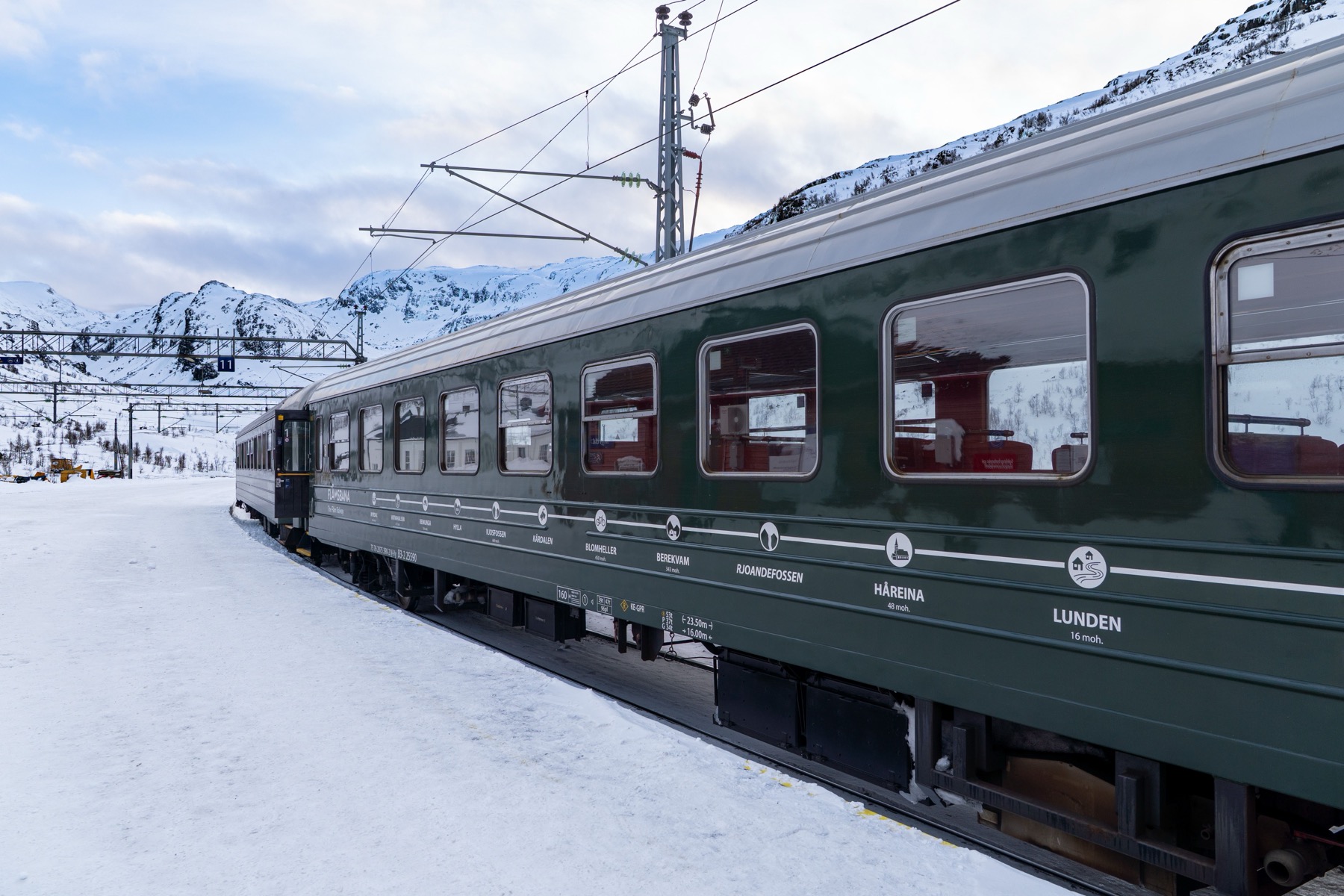
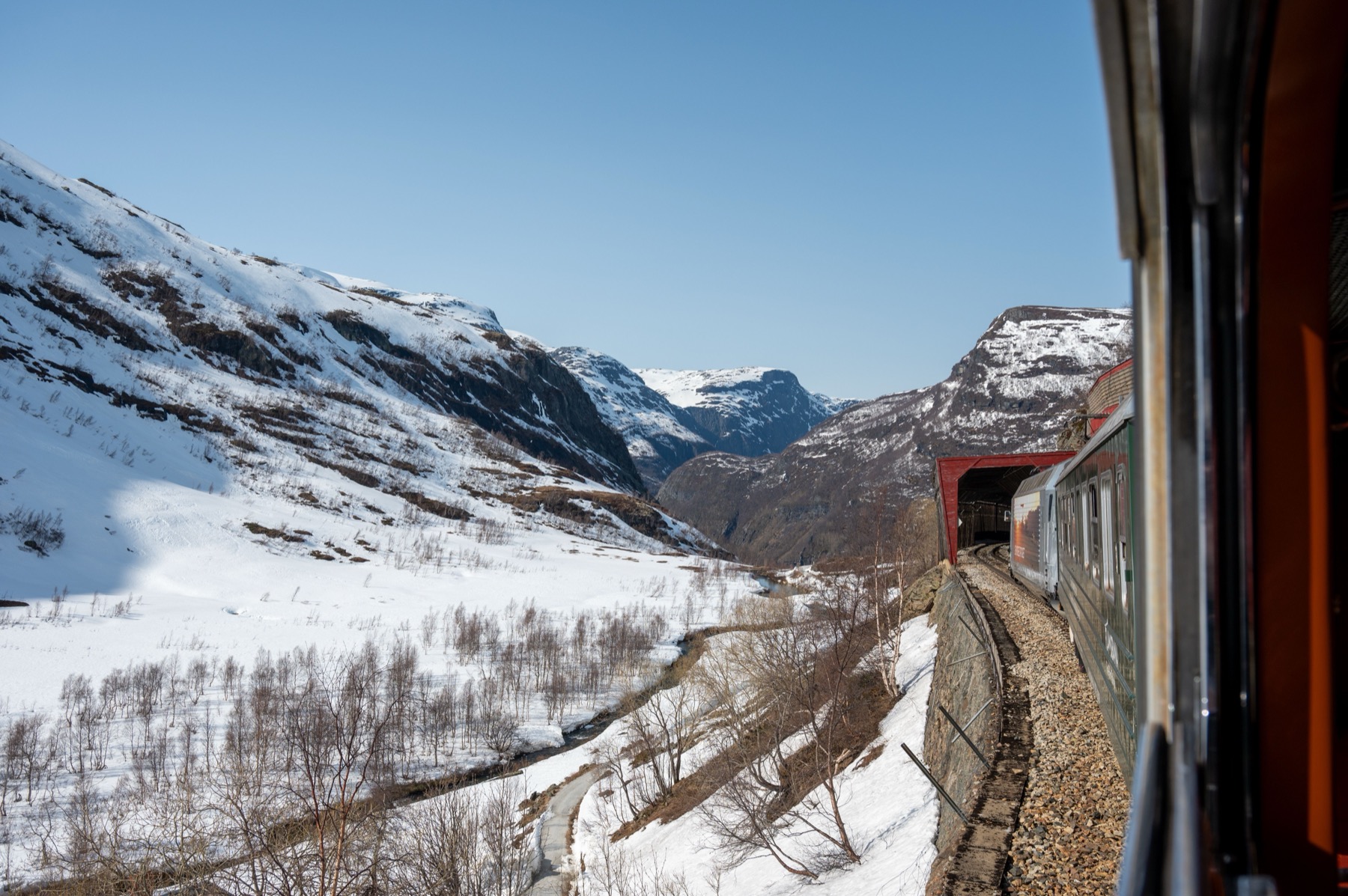
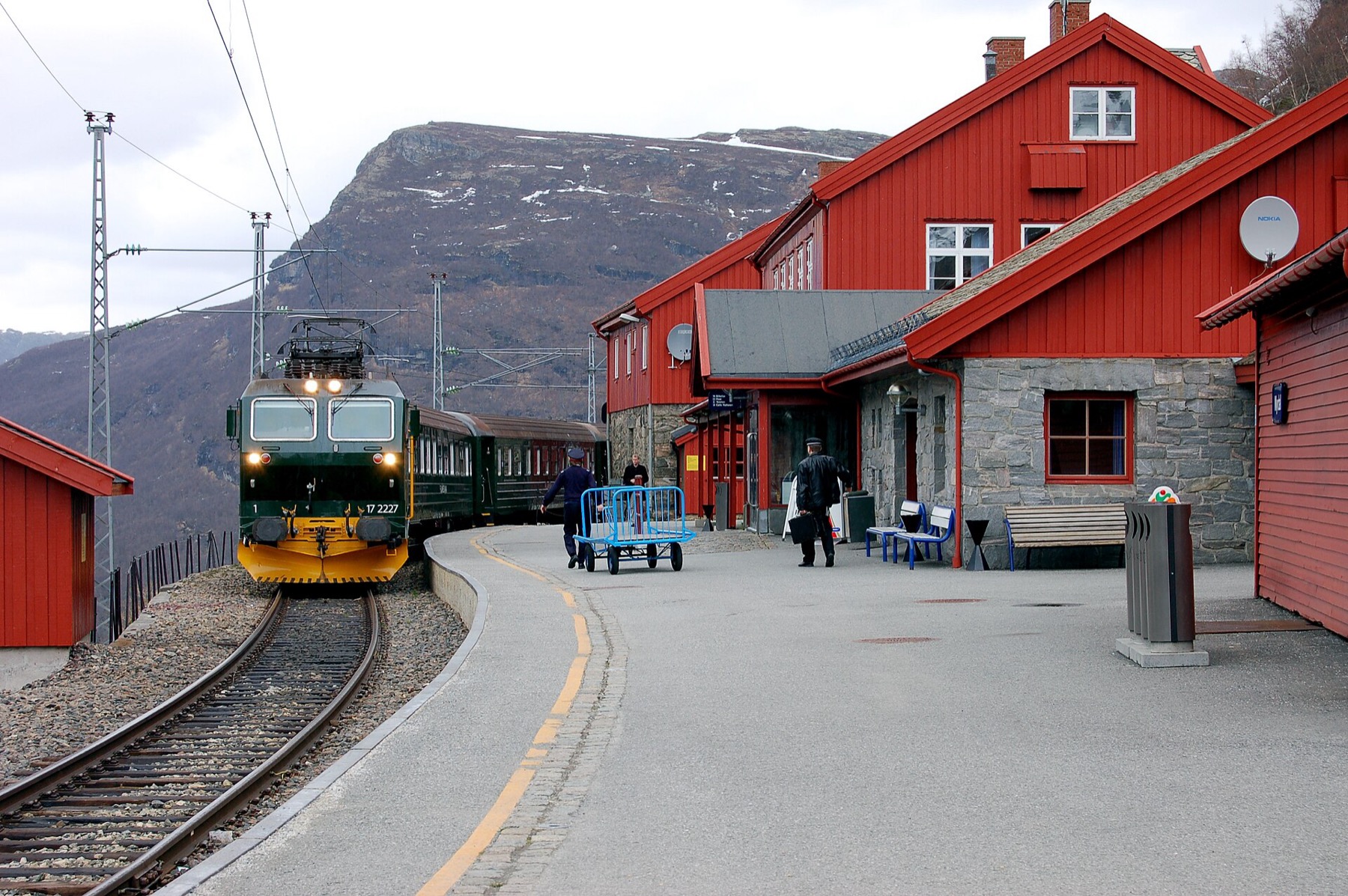
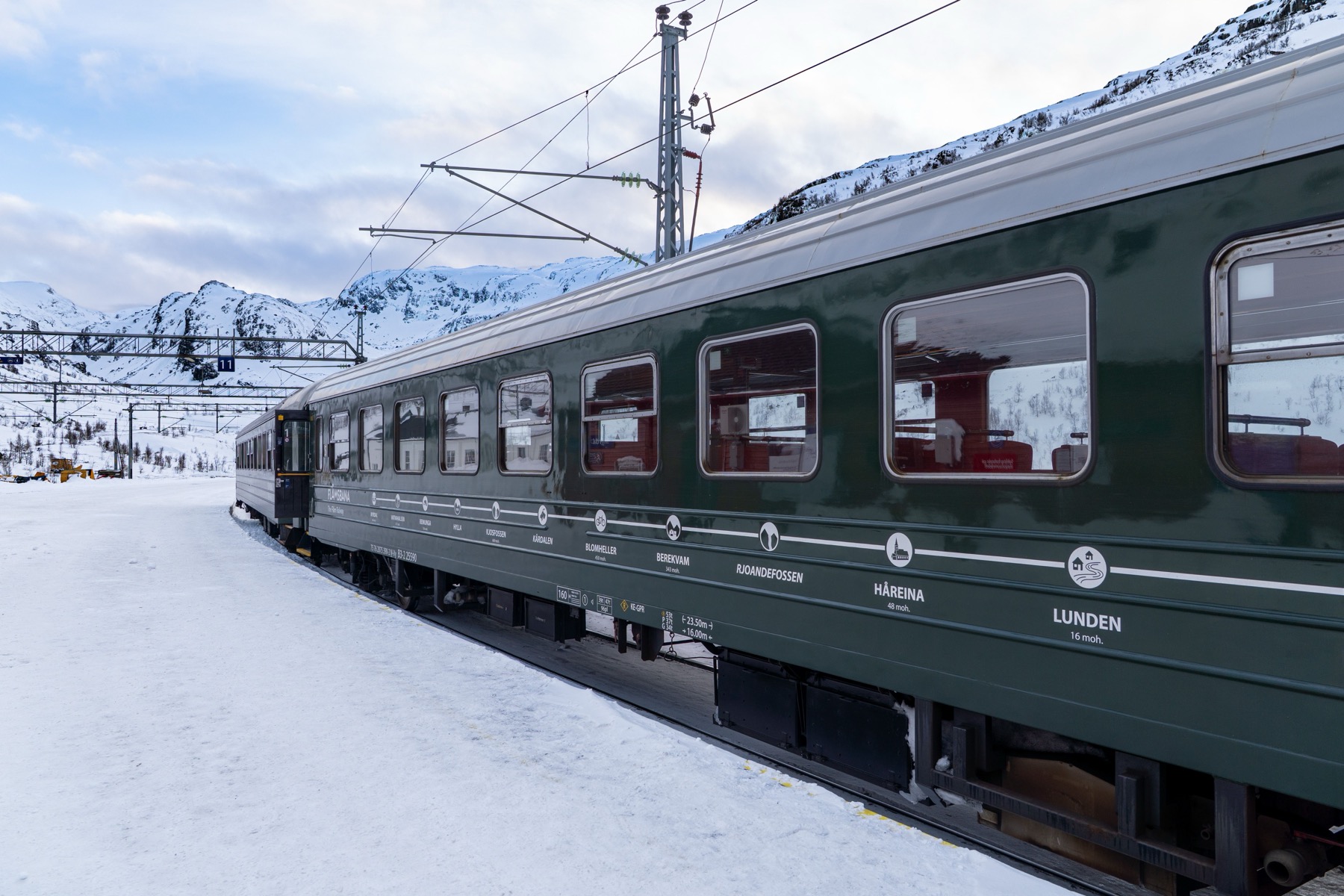
Another mountain station you definitely shouldn’t pass by unnoticed is Myrdal, set at 867 metres above sea level. This is where one of the steepest railways in Europe connects to the main line — the utterly legendary Flåm Railway, or Flåmsbana. Over just twenty kilometres, this green train drops an incredible 860 vertical metres down to the Aurlandsfjord. The average gradient is 5.5% and along the way you pass through twenty tunnels, eighteen of which the workers reportedly had to dig entirely by hand.
💡 Tip: Myrdal station has only two tracks, so the transfer from Bergensbanen is completely hassle-free and really takes only a few seconds. A one-way ticket from Myrdal to Flåm costs from 538 NOK (roughly €48) and you can buy it directly as a connecting service through the Vy system. If you want to go back too, a return ticket costs 900 NOK through the booking site Norway’s Best. During the roughly fifty-minute ride the train even makes a special five-minute photo stop at the stunning Kjosfossen waterfall, which is 93 metres high and where, in summer, the mythical fairy Huldra is said to dance.
Foto: Wolfmann / Wikimedia Commons, CC BY-SA 4.0
7. Voss and why it pays to split the journey
If you’ve set aside more time to explore Norway, I strongly recommend not doing the whole Oslo–Bergen route in one go. You can easily manage the nearly twelve-hour marathon even with the detour to Flåm, but you’ll miss the huge chance to explore the area around the line in more detail. The ideal place to break the journey is the little town of Voss, considered Norway’s outdoor capital, offering something for every adrenaline lover. The train from here to Bergen takes just one hour and ten minutes.
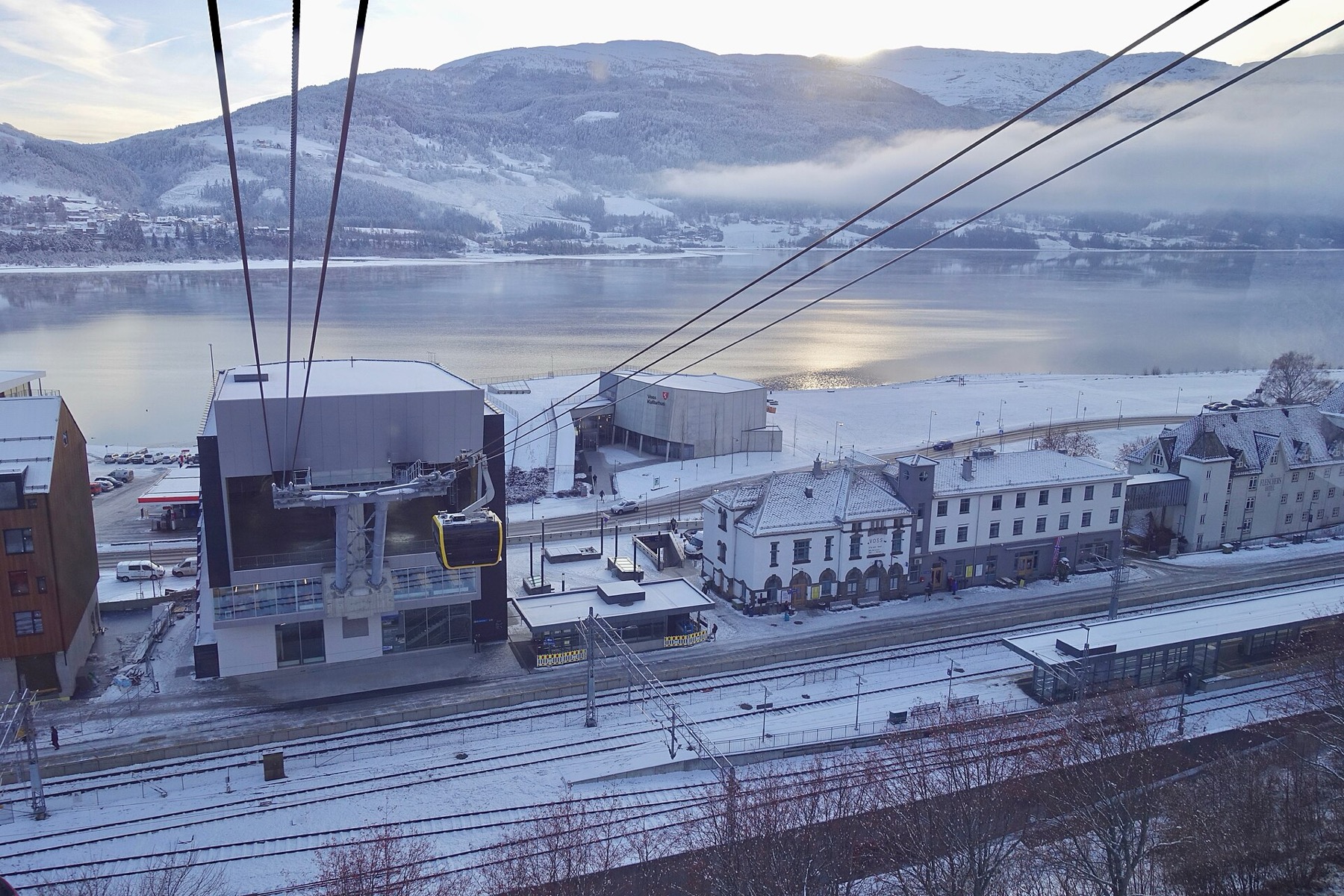
Right from the Voss railway station, the ultramodern Voss Gondol cable car departs and whisks you up to the Hangurstoppen summit at 820 metres in a few minutes. From there open up wonderful views of the surrounding mountains and lakes, where you can grab a coffee and just relax for a while. The whole area is otherwise renowned for absolutely superb conditions for hiking, wild river rafting or paragliding. If you fancy a small bus trip, just outside town the cascading Tvindefossen waterfall tumbles down the cliffs, and this is one spot where a camera really comes in handy.
Foto: Yunus Tuğ / Pexels
8. Winter versus summer on the rails
The Bergensbanen experience differs dramatically depending on the season you visit Norway, and according to the locals both versions have huge charm. In summer you can look forward to endlessly long days full of light, richly green valleys, thundering waterfalls and flocks of sheep grazing carefree just beside the track. It’s also by far the best time to combine the train with hiking or cycling, because all the high-mountain trails are open and you can venture on trips deeper into the surroundings.
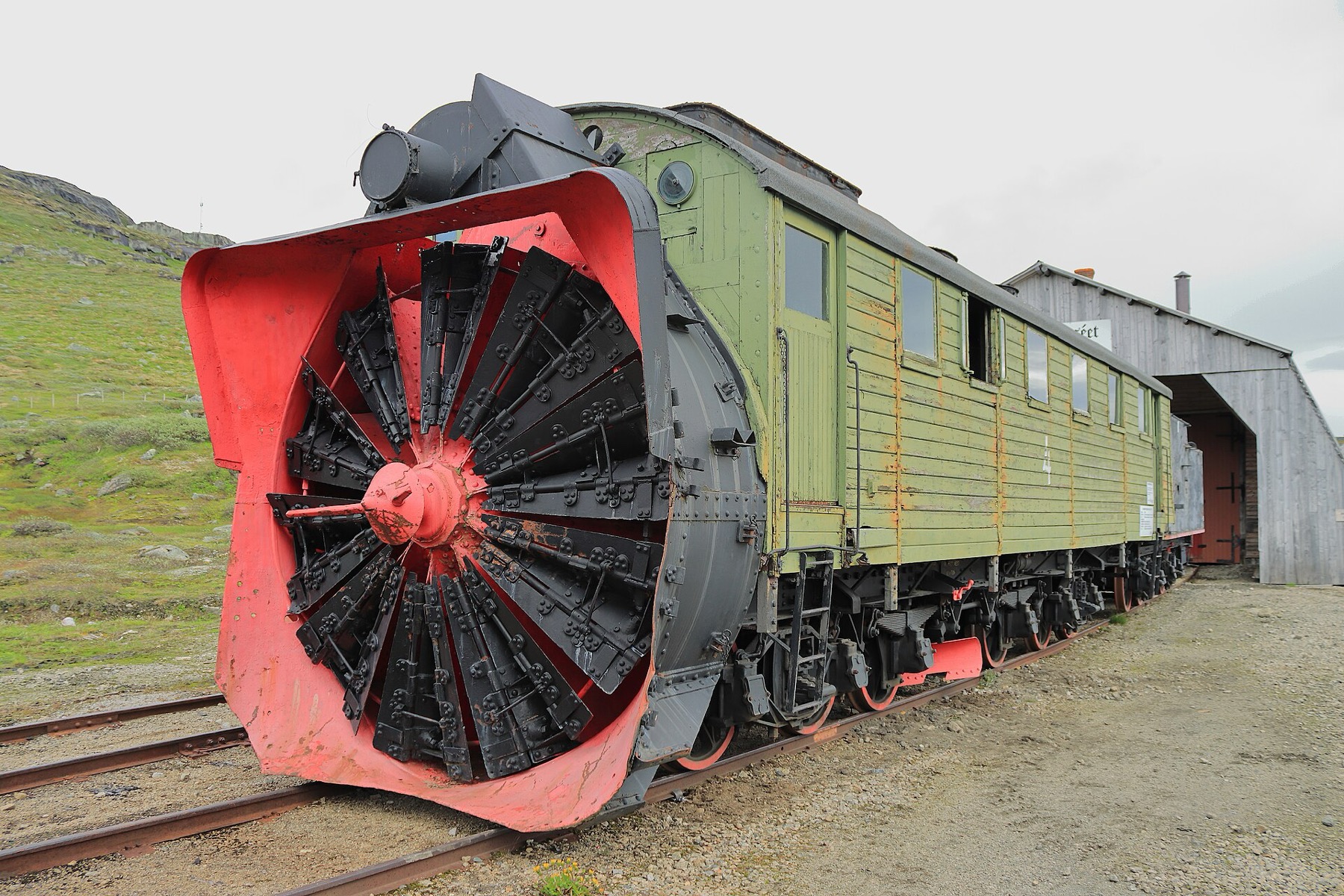
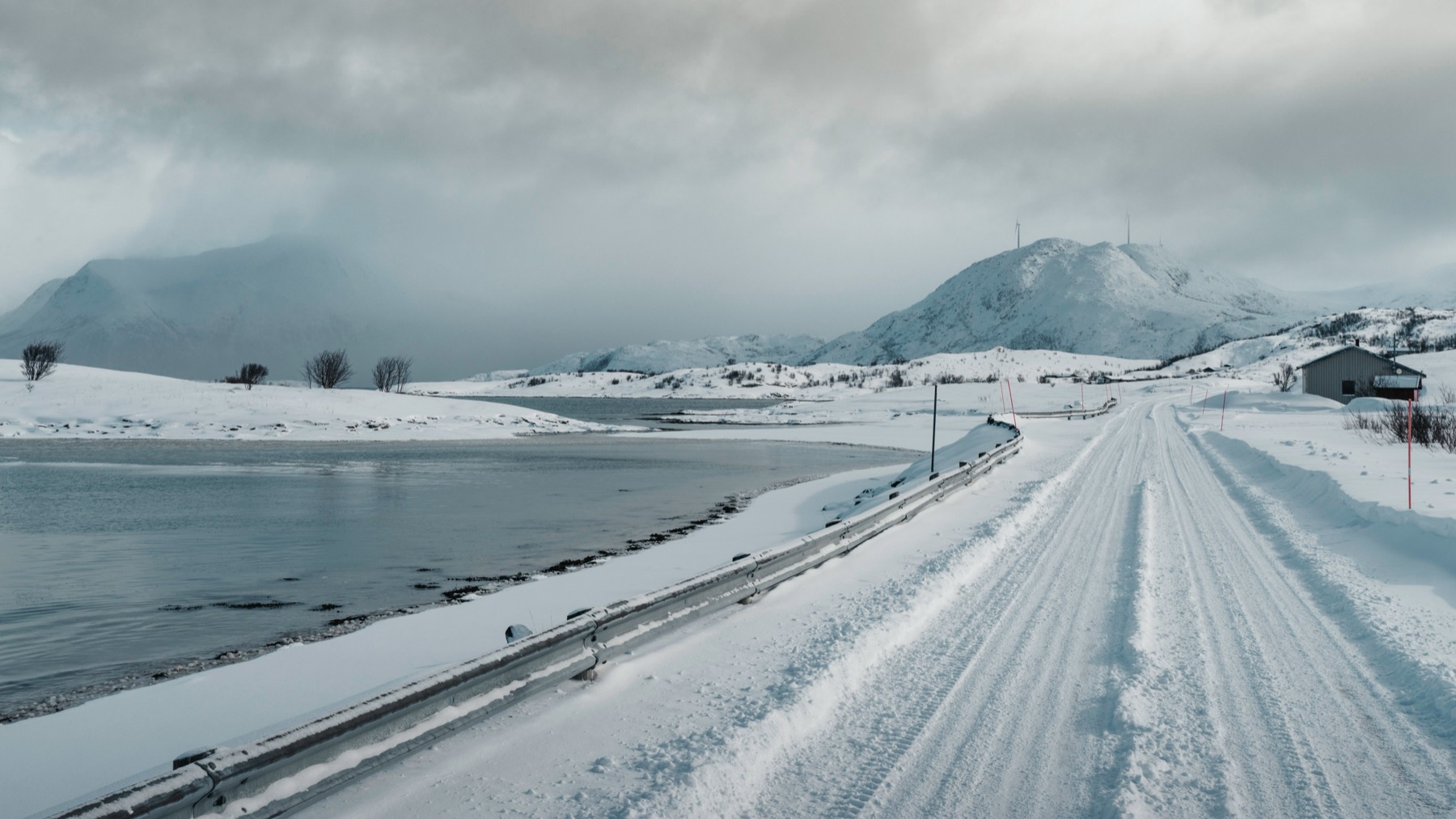
A winter train ride, by contrast, feels like a harsh expedition into the heart of the impenetrable Arctic. The summit sections around Finse station are reliably buried under several metres of snow drifts and the train passes through endless snow galleries that protect the rails from falling avalanches. The winter landscape on the plateau feels incredibly pure and raw. Do plan ahead, though, for the fact that during extreme blizzards the line can run late, or is sometimes closed entirely for a few hours for safety reasons until special ploughs clear the tracks again.
9. On-board facilities: food, bikes and a kids’ play area
Norwegian trains really are a different league — clean, quiet and surprisingly spacious. If you’re travelling with little explorers, definitely pick seats in the special Family car when buying your ticket. It has a truly fabulous kids’ play area, tons of room for prams and a large changing corner, so the long journey passes incomparably faster for children and saves you a lot of stress. In the middle section of every train you’ll always find the Vy Kafé dining car.
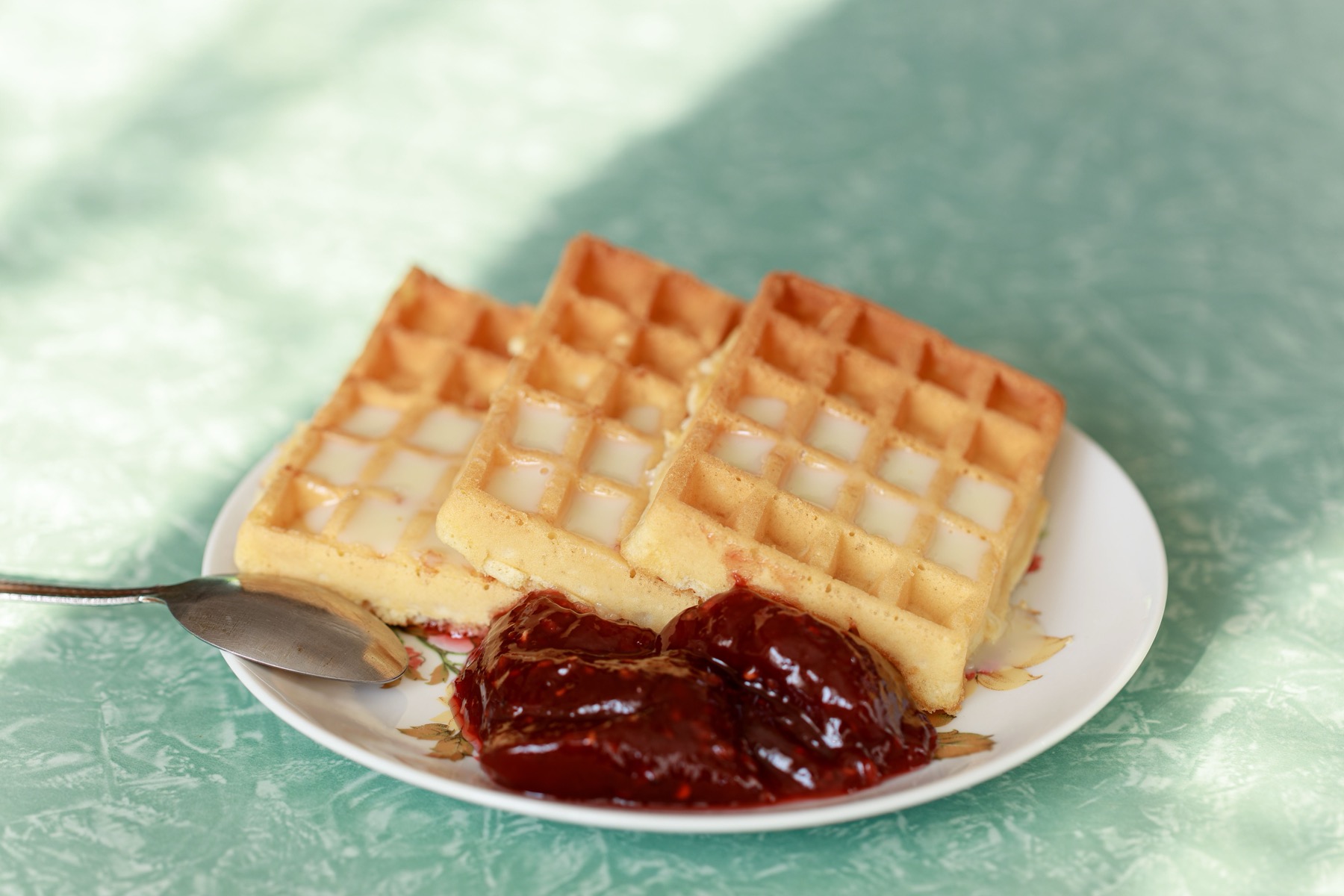
The bistro typically serves hot meals for around 100 to 200 NOK, fresh sandwiches, hot coffee and traditional Norwegian waffles. Prices here are naturally quite high, though, so if you’re travelling on a slightly tight budget, definitely pack a hearty snack of your own straight into your backpack. Free Wi-Fi is a given on board, along with very spacious toilets. In summer you can bring a bike on the train for a fee, but spaces must be booked really far in advance because of the huge demand from cyclists heading to the Rallarvegen route. Transporting skis in winter, on the other hand, is completely hassle-free.
Foto: Audrey B / Pexels
10. Train versus plane and car
You might be seriously weighing up whether to rent a car for the trip from Oslo to the west coast, or simply fly instead. The Oslo–Bergen flight is only fifty minutes in the air, but once you add the trip to Gardermoen airport, mandatory security checks and the tedious transfer from Flesland airport into central Bergen, the overall time difference shrinks very quickly. The train also drops you off completely stress-free right in the very heart of both cities, and you save on expensive transfers.
The drive over the mountain passes is undeniably gorgeous, but behind the wheel you won’t enjoy the views nearly as much, because the driver has to concentrate constantly on sharp switchbacks and narrow roads. Even without longer stops the drive takes at least seven to eight hours and you have to reckon with very high costs for fuel and Norwegian toll gates. The train is simply the greenest option, and if you buy your ticket in time, it works out cheaper than the car too.
Foto: Raul Ling / Pexels
Practical summary and rough prices for 2026
To make planning easier, here’s an overview of rough prices for the 2026 high season. Exchange rates can of course shift a little, but for a basic idea of your budget this works perfectly (calculated at roughly 1 NOK = €0.09).
Basic Oslo–Bergen ticket (discounted Lavpris): from 249 to 539 NOK (roughly €22–48)
Full flexible Oslo–Bergen fare: roughly 1,238 to 1,362 NOK (roughly €110–120)
Night train (basic seat): from 479 NOK (roughly €42)
Supplement for an entire two-berth compartment on the night train: 740 NOK (roughly €65)
Supplement for a premium PlusNight reclining seat: 130 NOK (roughly €12)
Flåmsbana one way from Myrdal to Flåm (via Vy): from 538 NOK (roughly €48)
Return ticket for Flåmsbana (Norway’s Best): 900 NOK (roughly €80)
Foto: color line / Wikimedia Commons, CC BY 2.0
Where to eat
When hunger strikes on your journey through the Norwegian landscape, you have several great options to choose from. Norwegian cuisine offers plenty of local specialities, so don’t settle for just the supplies in your backpack. Here are a few tried-and-tested tips right on the route.
Foto: Melanie Brumble / Pexels
Vy Kafé right on the train
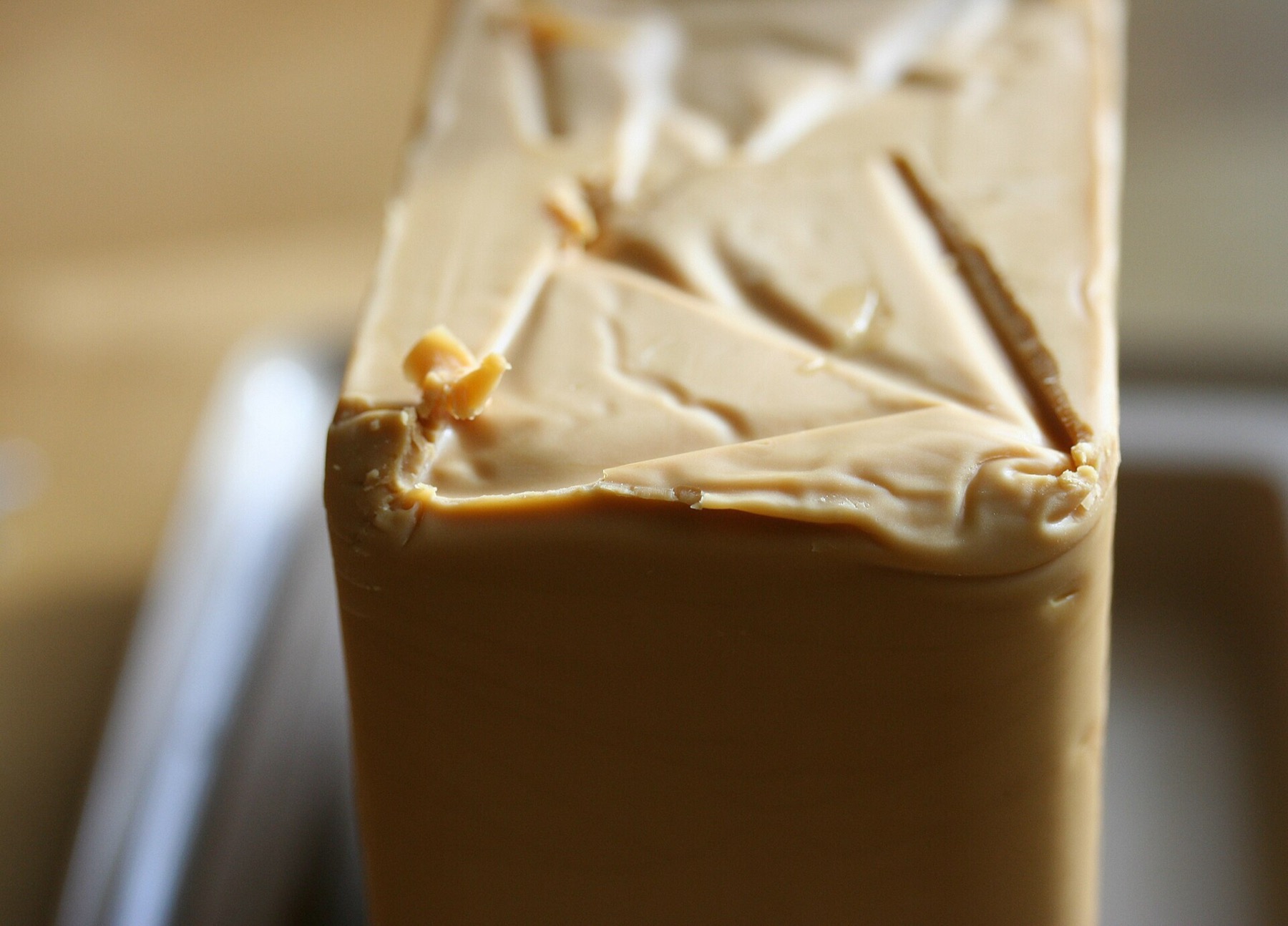
As mentioned above, the dining car itself offers a very decent standard. I especially recommend trying the traditional Norwegian waffles with brown cheese, brunost — an absolute classic that simply belongs to Nordic travel. Wash it down with hot coffee and you’ve got the ideal snack with a view of the glaciers.
Foto: Kindel Media / Pexels
A stop in Voss and Bergen
If you break the journey in Voss, the local classic is Vangen Café, with excellent soups and traditional meatballs at reasonable prices; vegetarians will find soups and salads here too. Once you arrive in Bergen, the famous Fisketorget fish market is well worth a stop, where fresh catches are prepared right before visitors’ eyes. It’s a slightly pricier experience, but it’s an inseparable part of Bergen.
Foto: Wolfmann / Wikimedia Commons, CC BY-SA 4.0
Where to stay along the route
💡 Tip for accommodation and experiences: We prefer to look for accommodation on Booking.com, which usually has the best cancellation terms. Tickets, tours and activities are then worth comparing and buying through GetYourGuide.
If you decide not to stick to a one-day crossing and want to soak up that gorgeous Nordic nature to the fullest, I recommend staying overnight right on the route or in the final destination at one of the tried-and-tested accommodations. By splitting the journey into two days you save a lot of stress from any potential delays and, above all, you get to enjoy the most beautiful spots early in the morning, before the crowds of day-trippers from cruise ships arrive. A night in the fjord area is a bit pricier, but that morning calm over the water is one hundred percent worth it.
If you branch off Bergensbanen down to the little town of Flåm, you have several gorgeous options to choose from. The absolute classic is Fretheim Hotel. It’s a historic hotel where the architecture and the glass-walled restaurant with fjord views are worth a stop in themselves, plus it’s a one-minute walk from the station. Right next door you’ll also find the popular Flåmsbrygga hotel, which even has the famous Ægir Viking brewery on its grounds. Anyone looking for a quieter atmosphere can take a bus about ten minutes to neighbouring Aurland and stay at the picturesque Vangsgaarden guesthouse with perfect views over the fjord surface.
For true adventurers there’s a completely unique experience in the form of staying right at the highest station on the line, which has no road to it at all. The mountain hotel Finse 1222 has an incredible high-mountain atmosphere, and in the morning you can set off straight for the Hardangerjøkulen glacier or the famous Rallarvegen cycle path.
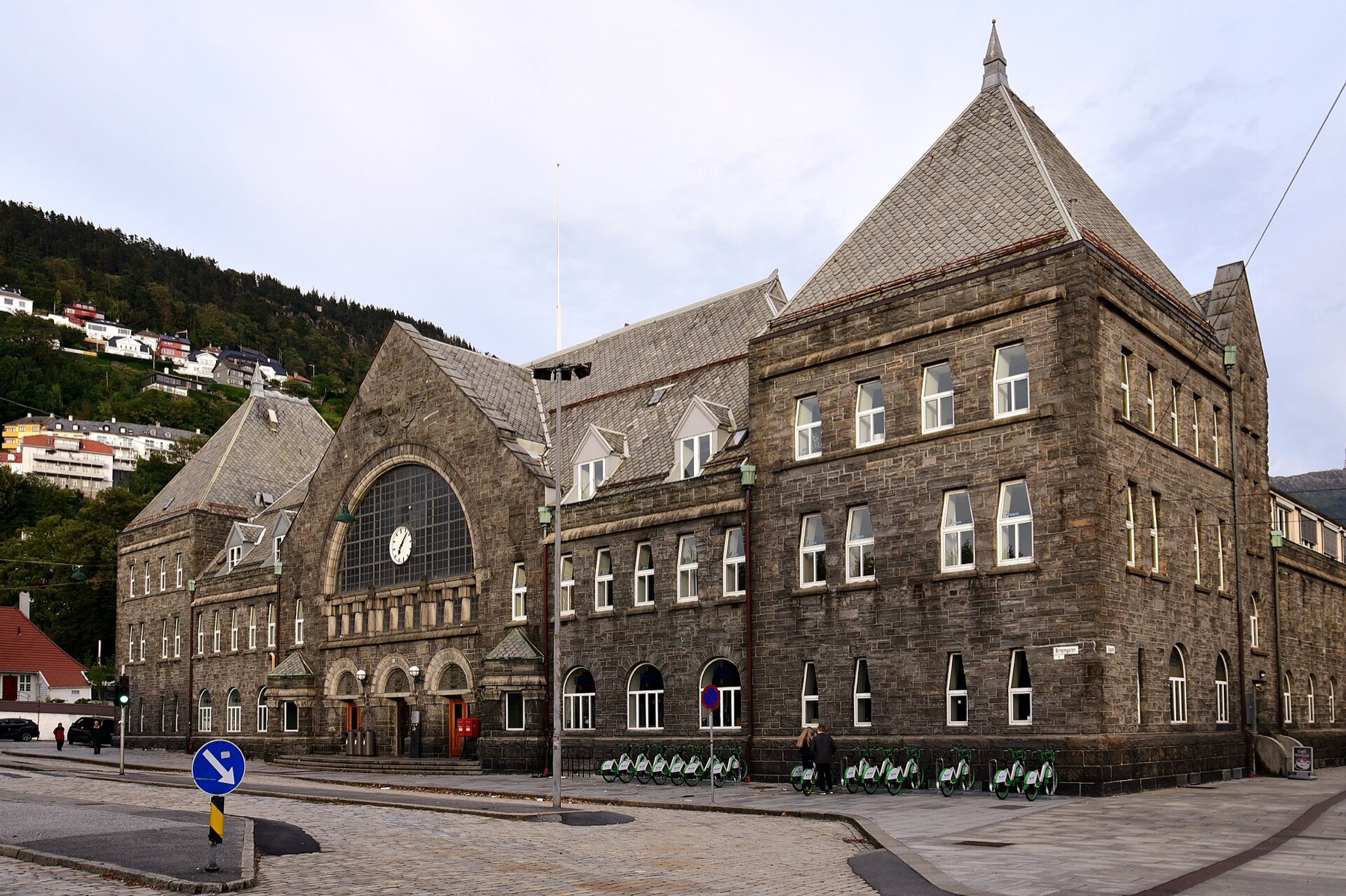
Once you reach your final destination, you’ll definitely appreciate the elegant Grand Hotel Terminus in Bergen. This beautiful hotel sits right across from the main railway station, so after a long journey you won’t have to lug heavy suitcases anywhere. It offers absolutely superb breakfasts and makes the perfect base for exploring the lanes of the historic Bryggen quarter.
Where to go next
From Bergen or the intermediate stations, plenty of other adventures await. Here you’ll find our detailed guides that will come in handy when planning the rest of your Nordic trip.
Planning a trip north always brings plenty of practical questions. Here you’ll find answers to the most common ones, which will help you picture the whole ride through the Norwegian mountains much more clearly and make your final preparations easier.
How long does the train from Oslo to Bergen take?
The direct train journey typically takes 6 hours and 47 minutes to 7 hours and 22 minutes, covering a distance of 496 kilometres. The connections are direct and you don’t need to change trains anywhere along the way, unless you decide to take a detour to Flåm. The journey flies by because the scenery outside the window constantly changes from deep forests to Arctic tundra.
How much does the Oslo–Bergen train cost?
The cheapest advance Lavpris tickets can be found when booking several months ahead from 249 to 539 NOK. If you buy your ticket just before departure, you’ll pay the full flexible fare, which runs around 1,240 to 1,360 NOK. Night trains are exceptionally good value because you’ll only pay a fixed supplement of 740 NOK for an entire sleeper compartment for two.
Which side of the train is best to sit on?
For the absolute best photographic opportunities, reserve a seat from Oslo to the mountain station of Myrdal on the left side in the direction of travel, where you’ll see rivers and lakes. Once the train begins descending through the gorge towards Bergen, the most beautiful views shift to the right side. Seat reservations are free with all tickets, so choose your seat early on the carriage plan.
Does the Bergensbanen run in winter?
Yes, the line is in full year-round operation and the winter journey offers absolutely magical Arctic scenery, especially on the snow-covered Hardangervidda plateau near Finse station. During periods of extreme snowstorms, however, you need to expect possible delays or even short-term line closures until special snow ploughs safely clear the tracks again.
Is the night train to Bergen worth it?
The night service is an absolutely brilliant choice if you want to maximise time exploring both cities while also saving a considerable amount of money on one night in a Norwegian hotel. The sleeper compartments are very clean, incredibly comfortable, and waking up in the morning with views of deep fjords just before arriving in Bergen is an experience that’s simply priceless.
Can you take a bicycle or skis on the train?
You can take skis on the train during the winter season quite routinely and without complicated reservation procedures. Transporting bicycles in summer is also possible, but given the enormous popularity of the Rallarvegen cycle path, you must reserve a bike space as a paid supplement to your ticket well in advance, otherwise you won’t get on the train.
Is the Bergensbanen or Flåmsbana better?
It’s a bit like asking whether the sea or the mountains are better. It depends on you, but ideally do both. The Bergensbanen is a monumental crossing of the entire mountain range with Arctic landscape, while the Flåmsbana is a short but incredibly steep descent through a deep green valley straight to the fjord. The ideal option is to combine both railways into one grand trip.
Tips and Tricks for Your Vacation
Don’t Overpay for Flights
Search for flights on Kayak. It’s our favorite search engine because it scans the websites of all airlines and always finds the cheapest connection.
Book Your Accommodation Smartly
The best experiences we’ve had when looking for accommodation (from Alaska to Morocco) are with Booking.com, where hotels, apartments, and entire houses are usually the cheapest and most widely available.
Don’t Forget Travel Insurance
Good travel insurance will protect you against illness, accidents, theft, or flight cancellations. We’ve had a few hospital visits abroad, so we know how important it is to have proper insurance arranged.
Where we insure ourselves: SafetyWing (best for everyone) and TrueTraveller (for extra-long trips).
Why don’t we recommend any Czech insurance company? Because they have too many restrictions. They set limits on the number of days abroad, travel insurance via a credit card often requires you to pay medical expenses only with that card, and they frequently limit the number of returns to the Czech Republic.
Find the Best Experiences
Get Your Guide is a huge online marketplace where you can book guided walks, trips, skip-the-line tickets, tours, and much more. We always find some extra fun there!
Kroměříž, often quite rightly nicknamed the Athens of Haná, is one of those towns that grab your heart the moment you see the photos. If you’re wondering about the best things to do in Kroměříž, this gorgeous city of gardens and historic monuments on the UNESCO list offers an incredible atmosphere that draws travellers from all over Europe.
As you wander the local streets and halls, you might just remember the Oscar-winning film Amadeus by Miloš Forman, which was shot here and made the local castle famous around the world. Trust me, once you see these masterpieces of Baroque architecture, you’ll immediately understand why the filmmakers chose this unique Moravian location.
So I’ve put together 12 tips for what to see in Kroměříž, from castle halls and archbishop’s wine cellars to gardens you won’t want to leave. You’ll learn exactly how tickets to both famous gardens work, where to base yourself strategically, and what to watch out for so you don’t arrive on the day when everything is closed.
TL;DR
Combined ticket: The castle and the Flower Garden have different operators; the only shared ticket is the Via UNESCO for around €24 (580 CZK).
Closing days: Most sights, including the castle, are closed on Mondays, so plan your trip ideally for the weekend or from Tuesday onwards.
Castle Garden: Entry is completely free and offers 53 hectares of beautiful landscape park to explore.
Parking: The best choice is the Velehradská car park, where the first 30 minutes are free and there’s plenty of space.
Tower and treasury: You can visit the castle tower without a guide, and tickets cost a pleasant €7 (170 CZK).
Surroundings: If you have more time, definitely head to the nearby pilgrimage site of Svatý Hostýn or to Holešov.
When to Visit Kroměříž
The best time to visit Kroměříž is undoubtedly from late spring to early autumn, when both famous gardens are in full bloom and the town buzzes with an amazing atmosphere. The main tourist season runs from June to August, but if you want to avoid the biggest crowds, I’d recommend going in May or September, when the weather is still lovely for long walks.
When planning your trip, be very careful that the castle and most sights are closed on Mondays, a common mistake that can ruin an entire trip. So always build your itinerary from Tuesday to Sunday, so you can get inside all the breathtaking interiors and don’t miss the most beautiful Baroque monuments the town has to offer.
Set aside at least one full day to explore the best of it, but if you want to enjoy the surroundings too and not rush anywhere, a long weekend will be absolutely ideal. At the end of summer, a popular Baroque culture festival is traditionally held here, but the date for Hortus Magicus in 2026 hasn’t been confirmed yet, so I’d recommend checking the official websites before you travel.
If you love a wintry atmosphere, Kroměříž won’t disappoint at the end of the year either, when the historic streets sink into pure romance. From 5 to 20 December there’s a lovely Advent, when the town lights up with twinkling lights and offers wonderful markets that will reliably warm every traveller’s soul.
Where to Stay in Kroměříž
Kroměříž offers plenty of lovely places to rest your head, whether you’re looking for romance for two or something more practical for the whole family. Prices per night for two people range on average from around €60 to €120 (1,500–3,000 CZK), depending on the luxury and location you ultimately choose for your stay.
If you’re after something with real atmosphere and great service, definitely check out the U Zlatého kohouta hotel, located right on the main square with a stunning wellness area and rooftop bar. A huge plus is that for stays of three nights or more you get free access to the wellness area, which is absolute bliss after a full day of sightseeing, plus they have their own wonderful patisserie.
Another excellent choice is the renowned Hotel Octárna, which travellers love above all for its peace and quiet and its excellent restaurant with a lovely seating area. A key benefit of this stay is free parking in an enclosed courtyard, which saves you plenty of hassle and money in the town centre, since parking in the narrow streets can be a real headache.
For those who want all the historic attractions literally on their doorstep and love smaller, cosy places, there’s the boutique hotel La Fresca, right in the heart of the action. When you book directly through their website, you’ll also enjoy free use of the infrared sauna, an incredibly pleasant bonus to your stay after a walk through a chillier town.
Things to Do in Kroměříž: 12 Tips for Sights and Gardens
Let’s take a look together at the very best this captivating town with its enormous history has to offer, and trust me, a single weekend might not even be enough for all of it. In the following twelve tips you’ll find a complete guide to the sights and gardens, from the magnificent archbishop’s residence to the magical pilgrimage hill outside town, so you know exactly what to add to your itinerary.
1. The Archbishop’s Castle
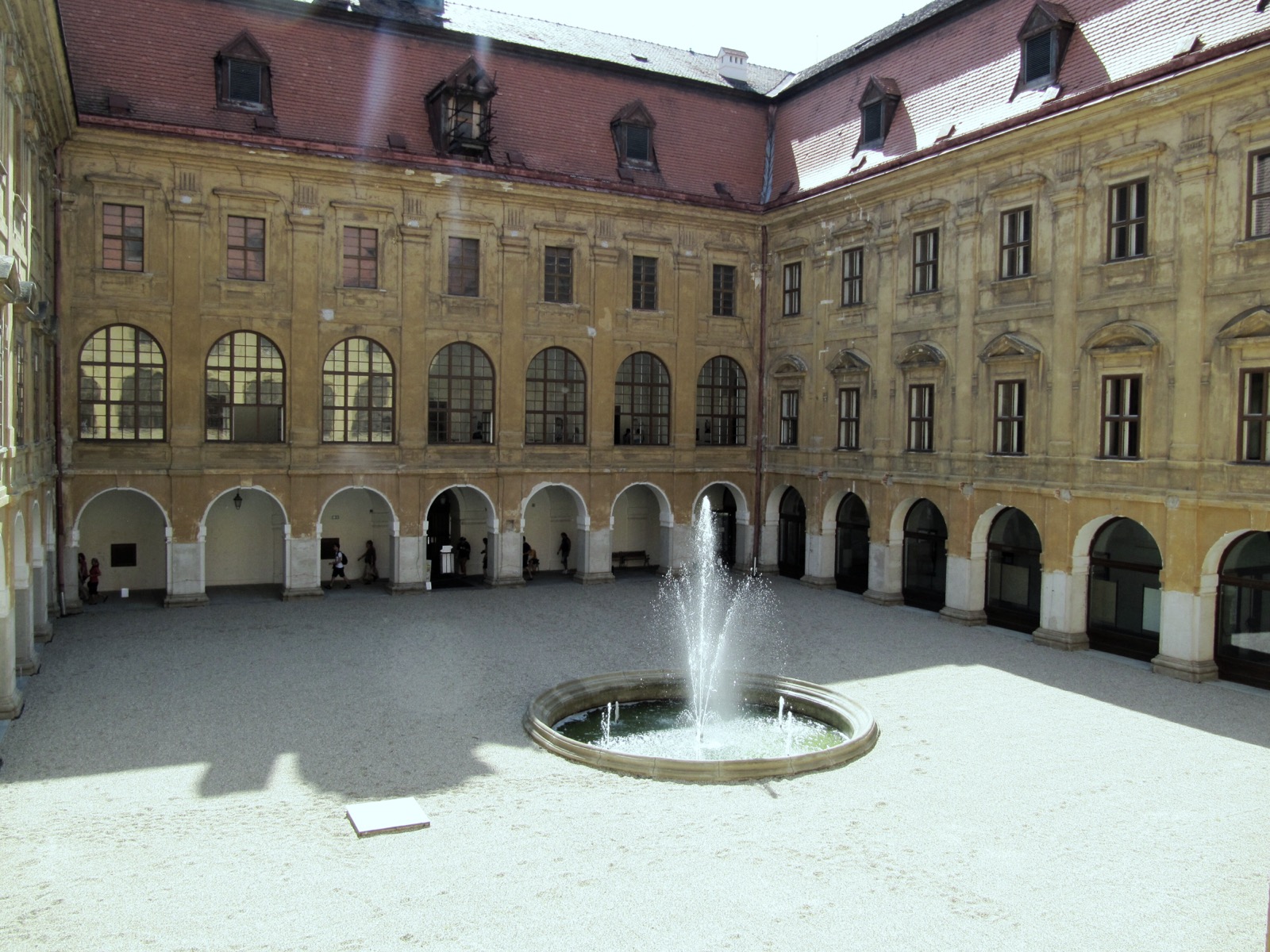
This breathtaking Baroque residence of the bishops of Olomouc is the very heart of the town, and since 1998 it has rightly boasted a place on the UNESCO cultural heritage list. Its walls have witnessed truly major historical events; among other things, its magnificent Assembly Hall hosted the Constituent Imperial Diet in 1848 and 1849, a fact that still gives history lovers goosebumps today. The castle interiors are incredibly lavish and you can explore them via several different tour routes, of which the most popular is the Heritage Trail at around €18 (450 CZK) for an adult, or a family ticket for around €49 (1,200 CZK).
If you’re a film fan, you’ll be thrilled to know that it was right here that Forman’s legendary film Amadeus was shot in 1983, going on to collect a respectable eight Oscars. The crew spent a full fortnight here filming, for example, the iconic scenes of Mozart meeting Emperor Joseph II, and on the tour you’ll even see the original Mozart score for two pianos. It’s said the castle is also beloved by all sorts of local fairy-tale productions, but the famous Amadeus is one of a kind, and its atmosphere still lingers here.
💡 Tip: Be very careful that the castle and the Flower Garden have different operators, and the same regular ticket doesn’t cover both. The only way to save money is to buy the combined Via UNESCO ticket for around €24 (580 CZK), which I definitely recommend using to visit both places.
2. The Castle Tower and Treasury
While you’re at the castle, you absolutely must not skip the climb up its majestic tower, which rises to a height of 84 metres and forms the town’s dominant landmark. This route has a huge advantage in that you can visit the tower and treasury without a guide, so you set the pace of the tour yourself, and full admission costs a very pleasant €7 (170 CZK). From the gallery you’ll get a breathtaking view of the whole historic centre, both famous gardens, and on a clear day you can see all the way to the ridges of distant mountains.
As well as the views, a visit to the castle treasury awaits, hiding genuine historical treasures of immense value and precise craftsmanship. The treasury space is also architecturally fascinating, as it boasts a unique star vault dating from around 1500, testament to the incredible skill of the master builders of the time. Don’t forget to set aside at least the best part of an hour for this route, so you can enjoy all those glittering marvels and views in complete peace.
💡 Tip: The last entry to the tower is possible no later than 30 minutes before the end of opening hours, so don’t leave this experience until the very last moment, or you’ll leave empty-handed.
3. The Castle Picture Gallery
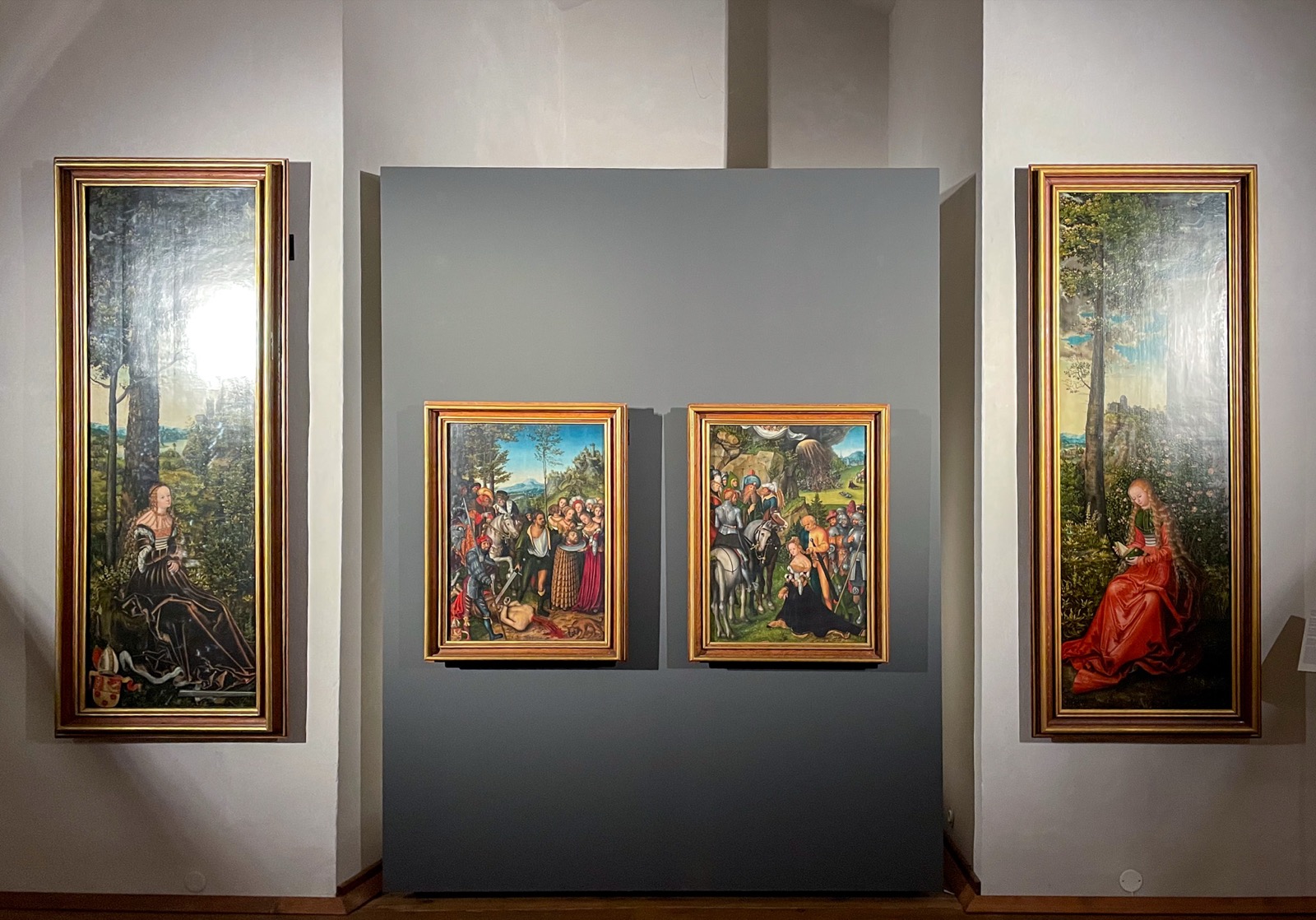
The castle picture gallery in Kroměříž is one of the most important in all of Central Europe, and for art lovers it’s an absolute must that it would be a huge sin to skip. The whole collection numbers a respectable five hundred paintings, of which 85 of the most valuable works are currently on display, charting European painting from Gothic all the way to playful Rococo. You’ll find canvases here by masters such as Anthony van Dyck, Lucas Cranach the Elder, and the famous Venetian painter Titian.
The collection’s greatest pride is undoubtedly Titian’s masterpiece Apollo and Marsyas, prized by experts as one of the most important works of art in the country. But I must warn you about one important thing that visitors sometimes fall foul of and then leave disappointed. At present, two significant paintings from the collection are temporarily on loan abroad, so before you travel it’s best to check on the official website whether your dream works are currently on view.
💡 Tip: The gallery is normally part of the large Heritage Trail route, which lasts around 80 minutes, but bear in mind that the fascinating details of the paintings may keep you much longer.
4. The Castle Garden
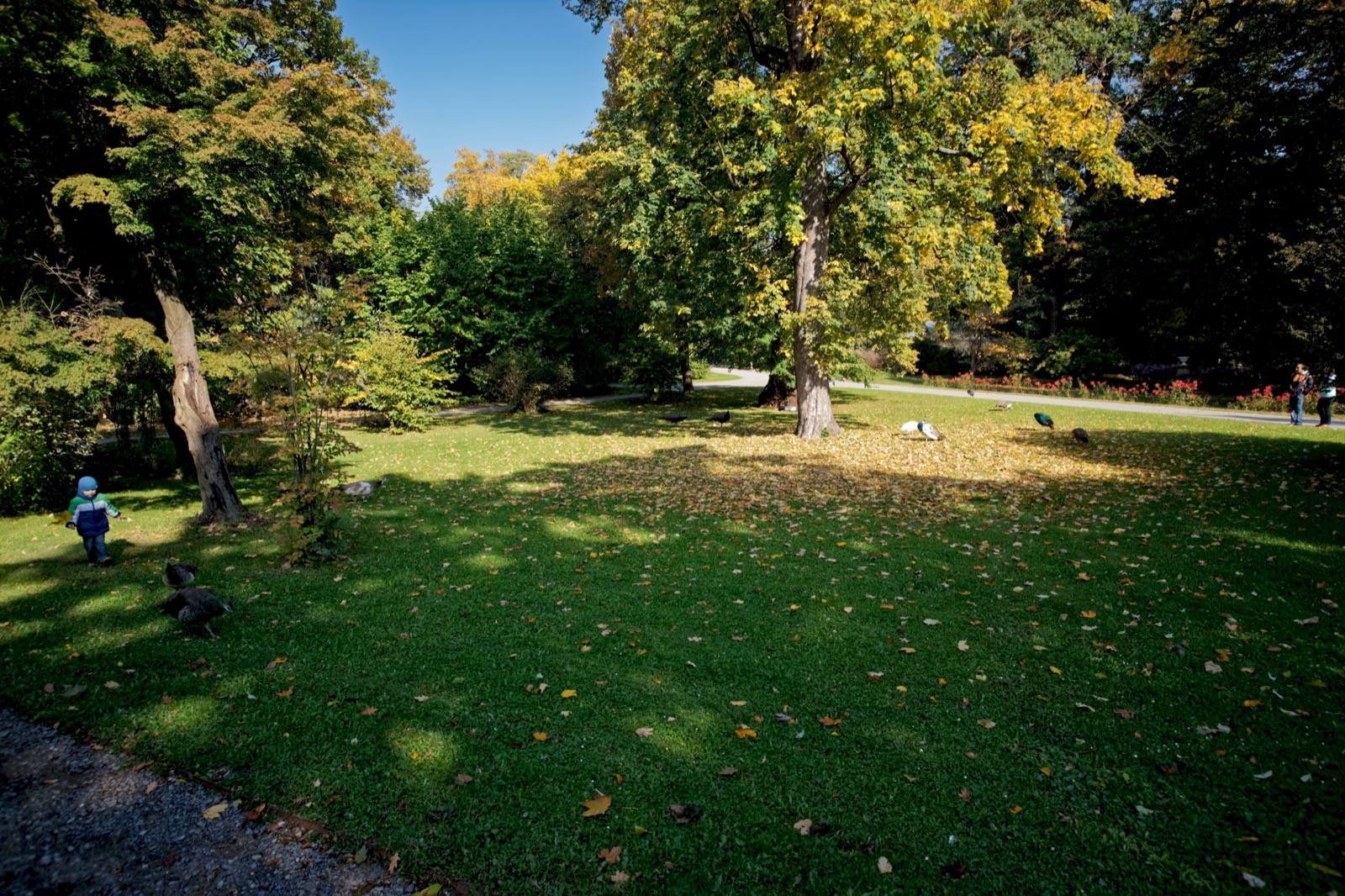
Right beneath the windows of the archbishop’s castle stretches the enchanting Castle Garden, which, unlike its floral sister, is open to all visitors all year round and completely free. This beautiful piece of nature covers an incredible 53 hectares, making it an ideal spot for long afternoon strolls among rare centuries-old trees. The garden was founded back in 1509, but it acquired its current form as a romantic English-style landscape park only in the prosperous 19th century.
As you walk, you’ll come across plenty of romantic nooks, streams, little bridges, and charming pavilions that complete the unforgettable atmosphere of this magical place. The park is also brought to life by wild waterfowl gliding across the surface of the local ponds, adding a pleasant liveliness to the garden. For 2026, though, one important restriction applies, because the entrance gate to the garden from the square is temporarily closed, so you’ll have to use other access routes.
💡 Tip: If you want to learn more about the park’s history, download the audio guide app straight to your phone, or pay for a guided tour with an expert for around €8 (200 CZK).
5. The Flower Garden
The Flower Garden, also known as the historic Libosad (Pleasure Garden), is an absolute gem of early Baroque garden architecture and, on a global scale, a unique creation with no equal. It was built between 1665 and 1675 and will instantly dazzle you with its perfect geometry, meticulously trimmed hedges, and colourful floral ornaments. This garden falls under the management of the National Heritage Institute, which means different rules apply for admission; a full ticket costs around €7 (180 CZK), and unfortunately there’s no family ticket here.
The centrepiece of the whole complex is a beautiful octagonal rotunda, whose interior is adorned with rich stucco by master Castelli and hides a genuine technical rarity. Right in the middle of the building hangs a Foucault pendulum that has been here for over a hundred years, vividly demonstrating the rotation of planet Earth. Be sure to extend your walk along the long colonnade lined with statues of ancient gods, from whose rooftop you get the very best view of the precise geometry of the whole park.
💡 Tip: During the summer months, come here first thing around nine in the morning, because the garden tends to fill with tourists in the afternoon, all trying to snag the best shots for their family albums.
6. The Main Square and Arcades
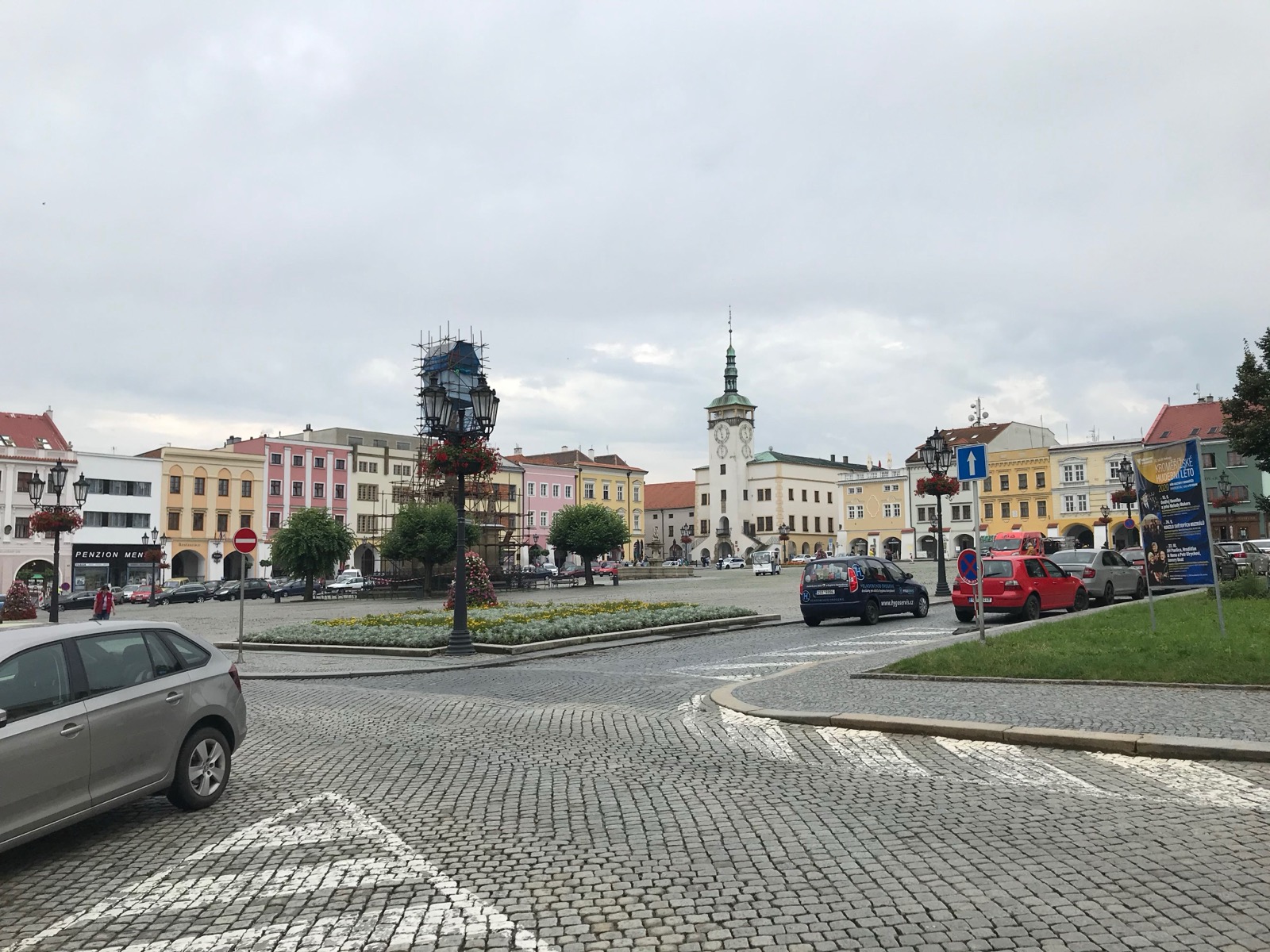
The heart of the whole town is the picturesque Main Square (Velké náměstí), lined with beautiful burgher houses with typical arcades, which today hide cosy cafés and small shops. The entire historic core was declared an urban conservation area back in 1978, which has had a very positive effect on its excellent condition and authentic, sun-soaked atmosphere. The dominant feature of the space is the Baroque Marian column, erected here immediately after the devastating plague epidemic of 1680 as a gesture of enormous thanks for its passing.
On the square, be sure to notice the imposing town hall building and the lovely Renaissance fountain, which offers welcome refreshment on hot summer days in a sun-baked town. A short walk from here you’ll find the Mill Gate and the remains of Maximilian’s water conduit, which recall the incredible ingenuity of the town engineering of the time. If you’re interested in the history of currency, the historic bishop’s mint reportedly hides a huge coin collection, but before visiting be sure to check its current opening at the information centre.
💡 Tip: Take a seat on the terrace of one of the cafés under the arcades and simply watch the everyday life of this beautiful town; it’s a guaranteed balm for the soul.
7. The Archbishop’s Castle Wine Cellars
If you love quality wine and rich history, you definitely shouldn’t miss a tour of the Archbishop’s Castle Wine Cellars, which boast the title of the oldest winery in the Czech Republic. The skilled local winemakers still uphold centuries-old traditions, and the wine matures slowly in enormous oak barrels that have seen a lot. Tours take place from April to September, Tuesday to Friday at 2:00 p.m., but if you’d like to come on a Saturday, prior booking is required.
Basic admission to this mysterious underground world costs around €4 (90 CZK), but if you fancy a tasting too, set aside around €8 (190 CZK) for five excellent samples for adult visitors. From a practical point of view, it’s very important to know that prams are not allowed in the cellars, so if you’re travelling with small children, you’ll have to take turns on the tour or carry your child in a baby carrier.
💡 Tip: On Sundays and throughout the winter season the cellars are unfortunately completely closed to the public, so plan your visit for a weekday during the summer season.
Right on the Main Square sits the interesting Kroměříž Region Museum, an ideal stop for anyone who wants to delve deeper into local history and vibrant culture. The institution’s biggest draw is undoubtedly the memorial to the famous painter and local native Max Švabinský, offering a truly unique insight into his life’s journey and key masterpieces. Separate entry to a single exhibition costs a symbolic €2 (50 CZK), but it’s definitely worth buying the combined ticket to the whole museum for around €8 (200 CZK).
As well as the Švabinský memorial, the museum regularly hosts various short-term exhibitions that keep its year-round programme fresh and bring in new themes. For the summer season of 2026, a major exhibition dedicated to Miloš Macourek is planned, running from June to September and promising a great experience for visitors of all generations.
💡 Tip: The museum is an absolutely brilliant rescue in case an unpleasant summer downpour catches you off guard during your wanderings, since you can easily spend a good couple of hours here.
9. The Church of St. Maurice
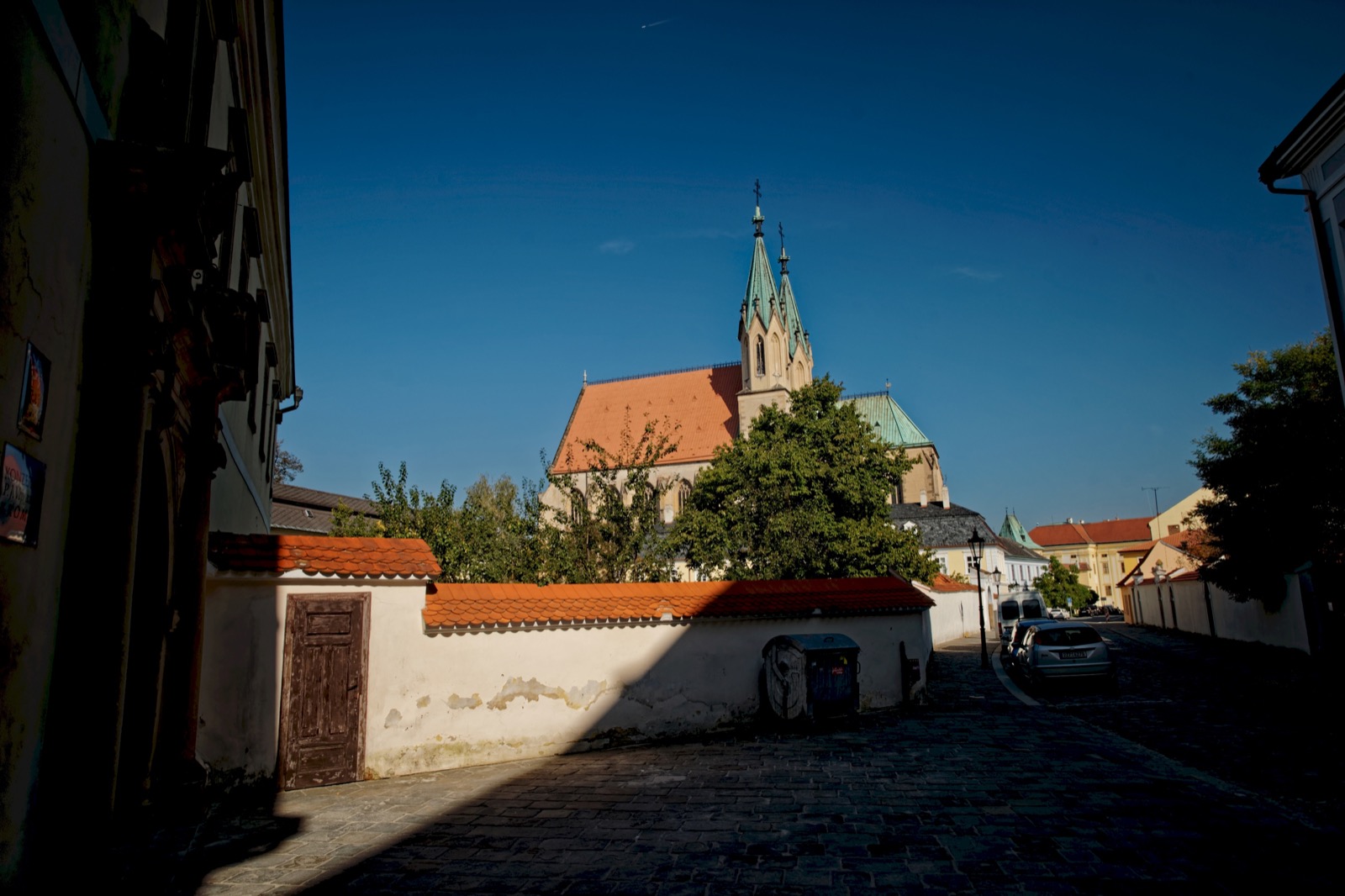
Kroměříž isn’t just about ornate Baroque; it also hides beautiful Gothic monuments, the most important of which is the imposing Church of St. Maurice. This monumental building was founded by the prominent Olomouc bishop Bruno of Schauenburg back around 1265 and to this day ranks among the most beautiful sacred buildings in the entire wider region. The atmosphere inside the church is incredibly quiet and majestic, in sharp contrast to the bustle of the surrounding summer streets.
As you explore the dimly lit interior, you’ll come across plenty of valuable details and works of art that have accumulated here over the centuries of its continuous operation. The single most important place in the whole church is the spot where the very remains of the church’s founder are laid to rest, which lends this place enormous historical depth and spiritual significance.
💡 Tip: If you enjoy church architecture, a short walk from here you’ll also find the Baroque Church of St. John the Baptist, whose richly decorated interior is worth a brief stop, if it happens to be open.
10. Jewish Kroměříž
The history of Jewish settlement in Kroměříž was immensely rich, even though only a few tangible reminders have survived to the present day, which nonetheless hold enormous historical value. The most significant surviving monument of the former Jewish town is the Jewish Town Hall building on Moravcova Street, a silent witness to the times when the local community flourished and formed a very important part of town life.
Sadly, the original large synagogue, which was the pride of the local community, was irretrievably demolished during the Nazi occupation, so we can now recall its majesty only from period photographs and the accounts of those who remember it. Even so, a walk through these places carries a very powerful and moving atmosphere, one that history lovers should definitely not miss on their wanderings.
💡 Tip: For a deeper understanding of Jewish history in the region, I definitely recommend a short trip to nearby Holešov, where far more unique monuments have been preserved.
11. Svatý Hostýn
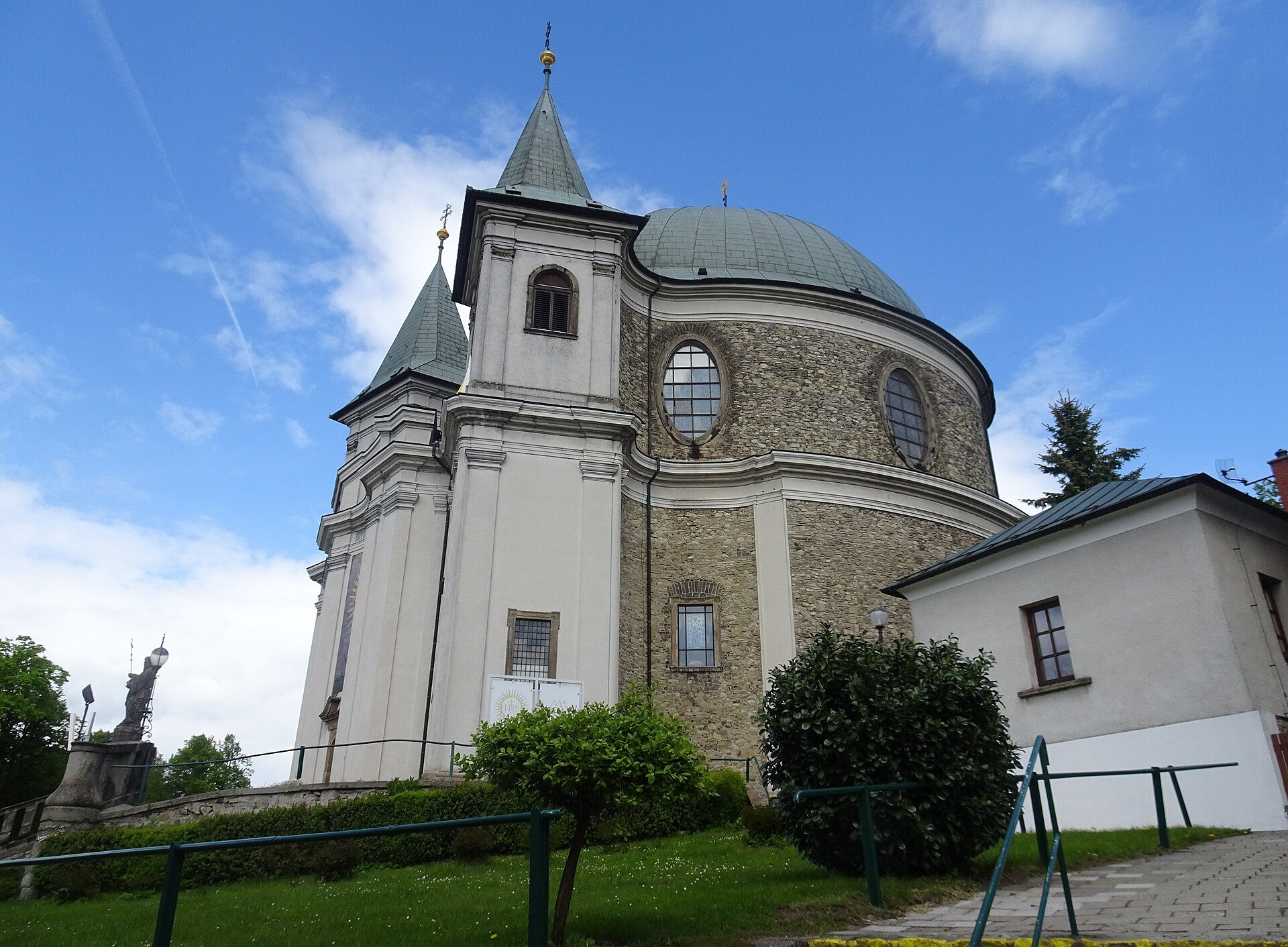
If you want to take a break from the town bustle for a while, head to nearby Svatý Hostýn, a magical pilgrimage hill rising to a height of 736 metres above sea level. At the very summit you’ll be greeted by the stunning Baroque Basilica of the Assumption of the Virgin Mary, built between 1721 and 1748, one of the most important Marian pilgrimage sites in the country, radiating an incredibly majestic calm that will immediately absorb you. A short walk from the basilica itself, you absolutely must explore the architecturally unique Jurkovič Way of the Cross with its beautiful Köhler mosaics, a wonderful blend of vibrant folk Art Nouveau and deep spiritual tradition.
The pilgrimage complex is beautifully maintained and offers plenty of benches for resting in the shade of tall trees. If you have enough energy, be sure to climb the nearby stone lookout tower, or go and refresh yourself at the sacred water chapel with its spring, which locals say has miraculous healing powers.
💡 Tip: The journey to the top of Hostýn can be done on foot along marked hiking trails, but for the less mobile there’s a regular bus line from nearby Bystřice pod Hostýnem that will take you right up to the basilica.
12. Holešov: The Castle and the Šach Synagogue
Just twelve kilometres from Kroměříž lies the unassuming town of Holešov, which hides an unexpectedly rich history and is an absolutely ideal choice for a half-day trip. The biggest draw is the local early Baroque castle surrounded by a sprawling French garden, whose geometric precision and elaborate water canals create the perfect backdrop for romantic afternoon strolls.
Beyond the castle, though, Holešov is famous above all for its historic Jewish monuments, dominated by the rare Šach Synagogue, built in a unique Polish style, which ranks among absolute world rarities. Watch out for a very common mistake in ordinary guidebooks, because it is definitely not a shingle building, as many texts sometimes quite wrongly state.
Also worth a visit is the extensive Jewish cemetery, where you’ll find more than fifteen hundred ancient headstones arranged in the quiet shade of mighty trees. The most significant of all is the grave of the famous scholar Rabbi Šach, to which pilgrims from all over the world still travel to quietly honour his memory.
💡 Tip: Tickets to the synagogue and the cemetery can be conveniently purchased at the local information centre, where they’ll also gladly advise you on the best walking route around all the preserved Jewish monuments in town.
Kroměříž with Kids
Travelling to Kroměříž with kids can be an absolutely brilliant experience, if you know exactly where to go and which spots are best avoided with little fidgets. An absolute safe bet is the huge Castle Garden, with year-round entry completely free, offering endless grassy areas where children can safely run around and watch all sorts of waterfowl on the local ponds.
During the summer holidays, don’t miss the special family programmes in the Flower Garden, such as the popular “Holidays in the Flower Garden” or the interactive “Playful Flower Garden”, which run throughout July and August. If you arrive on a truly hot summer’s day, a rescue for the whole family will be the refreshing Bajda open-air pool, the very best official option for summer swimming right in town.
When planning your overall budget, be very careful about the different ticket approaches at the main sights, so you’re not unpleasantly surprised at the ticket desk. While the archbishop’s castle offers a very good-value family ticket, the Flower Garden unfortunately has no family option, and you’ll have to buy tickets for each family member separately.
Where to Eat in Kroměříž
After a long day of sightseeing you’ll definitely work up an appetite, and luckily Kroměříž offers plenty of great places to refuel for further wanderings. An absolute legend is the renowned Amadeus patisserie, based in the U Zlatého kohouta house, and treating yourself to one of their excellent desserts in the town where the famous Oscar-winning film was shot is simply a traveller’s must.
For excellent coffee and sweet pastries, I’d also recommend trying the popular Cukrárna Gabriela, where they always have fresh treats and very smiley service. In the evening you can settle into one of the local cosy wine bars, which serve excellent archbishop’s wines from local production, an inseparable part of this captivating town.
Craft beer lovers should definitely not miss the Černý Orel microbrewery on the Main Square, which boasts its own great production and a very cosy historic interior. The local brewpub kitchen serves honest Czech classics as well as meaty specialities for serious eaters, but fans of other local brands such as Pivo Maxmilian or Selský pivovárek will certainly find something to love here too.
How to Get to Kroměříž and Where to Park
Getting to Kroměříž is fairly easy, and whether you choose a car or the train, the journey will fly by thanks to good connections to the main routes. If you set off by rail from Brno, expect one change in nearby Kojetín, while travellers coming from the direction of Olomouc or Zlín will have to change at the junction station of Hulín.
For drivers, a huge advantage is that the town’s motorway bypass on the D1 is completely toll-free (a national motorway vignette applies elsewhere on Czech motorways, much like the toll stickers in Austria or Switzerland). The best option is to use exits number 258 for the western part or 260 for the east, which will smoothly guide you to the centre. Parking in the narrow historic streets tends to be a real headache, so the town officially recommends that tourists use the modern Velehradská car park.
In this spacious car park you’ll find 137 spaces, the first 30 minutes of parking are completely free, and the whole facility operates around the clock, which will reliably save you plenty of nerves when hunting for a free spot. Other paid parking can be found right on the Main Square and Riegrovo Square, where you can easily settle the fees via the EasyPark app, or check availability online on the town website.
Where to Go Next
If you love beautiful towns and Kroměříž won you over, Moravia offers plenty of other gorgeous places that are definitely worth your attention and belong on your travel list. Take a look at our article Things to Do in Olomouc: 14 Tips, where you’ll discover the most beautiful historic streets and wonderful cafés that will absolutely charm you.
A great stop for lovers of unique architecture is the neighbouring Baťa metropolis, which we’ve written about in detail in the guide Things to Do in Zlín: 12 Tips. You’ll find a peaceful Slovácko atmosphere and great wine in the piece Uherské Hradiště: 9 Tips, and if you’re looking for more big holiday inspiration, definitely check out the extensive list of 20 Tips for a Holiday in Czechia.
Frequently Asked Questions
Planning a trip to the city of gardens can occasionally throw up a few uncertainties, especially when it comes to the different admission fees at the various sites and their opening hours. That’s why I’ve put together answers to the most common questions to help you avoid unnecessary complications and enjoy your trip to the fullest.
Which day are most monuments in Kroměříž closed?
The vast majority of main historical monuments, including the Archbishop’s Palace, are closed on Mondays. Therefore, always plan your trip ideally for the weekend or for days from Tuesday to Sunday, so you can get into all the beautiful interiors and not leave empty-handed.
Is it worth buying a combined ticket to the gardens?
Definitely yes, because the palace and the Flower Garden have different operators and regular tickets cannot be combined. The only advantageous option is to purchase the joint Via UNESCO ticket for €20 (580 Kč), which will save you money and ensure entry to both main attractions.
Are the Kroměříž gardens accessible completely free of charge?
While the extensive Castle Garden is accessible all year round completely free of charge, the geometrically precise Flower Garden requires a standard admission fee. A full ticket to the Flower Garden will cost you €7 (180 Kč), or you can pay extra for a guided tour with an expert.
Where exactly in Kroměříž was the film Amadeus shot?
The famous Oscar-winning film Amadeus by Miloš Forman from 1983 was shot directly in the richly decorated interiors of the Archbishop’s Palace. During the tour you will see magnificent halls where iconic scenes were created, and there is even an original Mozart score for two pianos on display.
Can the Flower Garden be visited with a stroller?
Yes, the Flower Garden offers wide and well-maintained paths that are absolutely problem-free for families with strollers. However, be very careful when visiting the Archbishop’s wine cellars, where entry with strollers is unfortunately strictly prohibited for safety reasons.
Where is the best place to park near the center?
The city itself officially recommends using the modern Velehradská parking garage, which offers 137 spaces and convenient 24/7 operation. A huge advantage of this parking lot is that the first 30 minutes are completely free, which is useful for quick errands.
Is there an advantageous family admission at both gardens?
While at the Archbishop’s Palace you can purchase a very advantageous family admission for €45 (1200 Kč), unfortunately no family option exists at the Flower Garden. There you will have to buy tickets for each member of your family separately, which is good to factor into your budget.
Tips and Tricks for Your Vacation
Don’t Overpay for Flights
Search for flights on Kayak. It’s our favorite search engine because it scans the websites of all airlines and always finds the cheapest connection.
Book Your Accommodation Smartly
The best experiences we’ve had when looking for accommodation (from Alaska to Morocco) are with Booking.com, where hotels, apartments, and entire houses are usually the cheapest and most widely available.
Don’t Forget Travel Insurance
Good travel insurance will protect you against illness, accidents, theft, or flight cancellations. We’ve had a few hospital visits abroad, so we know how important it is to have proper insurance arranged.
Where we insure ourselves: SafetyWing (best for everyone) and TrueTraveller (for extra-long trips).
Why don’t we recommend any Czech insurance company? Because they have too many restrictions. They set limits on the number of days abroad, travel insurance via a credit card often requires you to pay medical expenses only with that card, and they frequently limit the number of returns to the Czech Republic.
Find the Best Experiences
Get Your Guide is a huge online marketplace where you can book guided walks, trips, skip-the-line tickets, tours, and much more. We always find some extra fun there!
Taking small children into the deep freeze above the Arctic Circle sounds like a crazy idea at first. And then you see photos of kids meeting reindeer for the first time, riding on a husky sled and shaking hands with the real Santa, and your mind is made up. Lapland in Finland is one of the best family winter destinations in the world, and the whole of Rovaniemi is fine-tuned for little visitors down to the last detail. ☺️
In this guide you’ll find the best tips for visiting Lapland with kids: what will thrill them (and what’s free), when to go so you avoid the darkness and crazy prices, how to dress children for the Arctic winter, where to stay and what to watch out for, from short days to Santa queues.
Good news right off the bat: no jet lag (the time difference is just an hour or two, depending on where you fly from), the flight is shorter than a trip to Egypt, and children handle the dry cold surprisingly well. If you’d first like an overview of the whole region, start with my big guide to what to see in Lapland.
TL;DR
Best time with kids: February and March, when there’s more daylight, milder cold and lower prices than at Christmas. December is magical but dark, expensive and full of queues.
Top experiences: meeting Santa (free!), Ranua Arctic zoo, short reindeer and husky rides, SantaPark and the Pilke science centre.
Clothing: layers, layers, layers. On safaris kids are lent thermal overalls; for everyday walking, quality winter gear plus spare mittens is enough.
Pace: short days = max one big activity per day. In between: sledding, snowmen and hot chocolate.
Budget: a 4–5 day family package tour costs roughly from €4,900 for a family of four; going independently you can save the most outside the Christmas peak.
When to visit Lapland in Finland with kids
With children I’d choose differently than without them. December is the most Christmassy and magical, but it also means the shortest days (3–4 hours of twilight), the highest prices and the longest queues to see Santa. For younger kids who need routine and daylight, that can be tough.
For families, I think the ideal window is February and March: the days are noticeably longer, the cold is milder, there’s the most snow, and prices drop after the Christmas peak. Santa holds court in his village all year round, so you won’t miss meeting him, and it’s still northern lights season. You’ll find a detailed month-by-month comparison in my article on when to visit Lapland.
💡 Tip: Plan for a maximum of one big activity per day. Short days and the cold tire kids (and adults) faster than you’d expect. Fill the gaps with sledding by the hotel, building a snowman and hot chocolate, and those are the moments kids often remember most.
How to get there with kids and what it costs
With children, the most convenient option is a direct winter charter to Rovaniemi through a tour operator: the flight takes around three to five hours from most European hubs, transfers and the programme are all arranged, and a rep on the ground helps if anything goes wrong. Family package tours for 4–5 days cost roughly from €4,900 for a family of four, depending on the dates and programme.
Going independently, you fly via Helsinki, from where you can continue on a domestic flight or take the more adventurous Santa Claus Express night train with family cabins (tickets on the Finnish railways VR website). Kids love the train: you board in Helsinki in the evening and wake up in snowy Lapland. A big plus for parents: the time difference is only an hour or two, so no wrecked sleep schedule.
Where to stay with kids
With children it pays to stay close to the action so you don’t have to commute every day. In central Rovaniemi you have restaurants and shops within reach, while near Santa Claus Village you get evening calm and Christmas atmosphere without the crowds. Book family rooms well in advance, as they’re the first to sell out in high season.
In the centre, a great family choice is Santa’s Hotel Santa Claus, with a much-praised breakfast and family rooms, everything within walking distance. An experiential classic is Apukka Resort by the lake, with family aurora cabins and its own activities right on site (reindeer, huskies and sledding within reach), or perhaps Arctic TreeHouse Hotel with kitchenette apartments a short walk from SantaPark. And if you want to blow the kids’ minds, take them for a tour (or a whole night) at Arctic SnowHotel & Glass Igloos, a hotel carved out of snow.
What kids love in Lapland: 6 best experiences
Here are six experiences that work on kids almost every single time, ranked from the most famous. For each one I note the age it suits and what it costs.
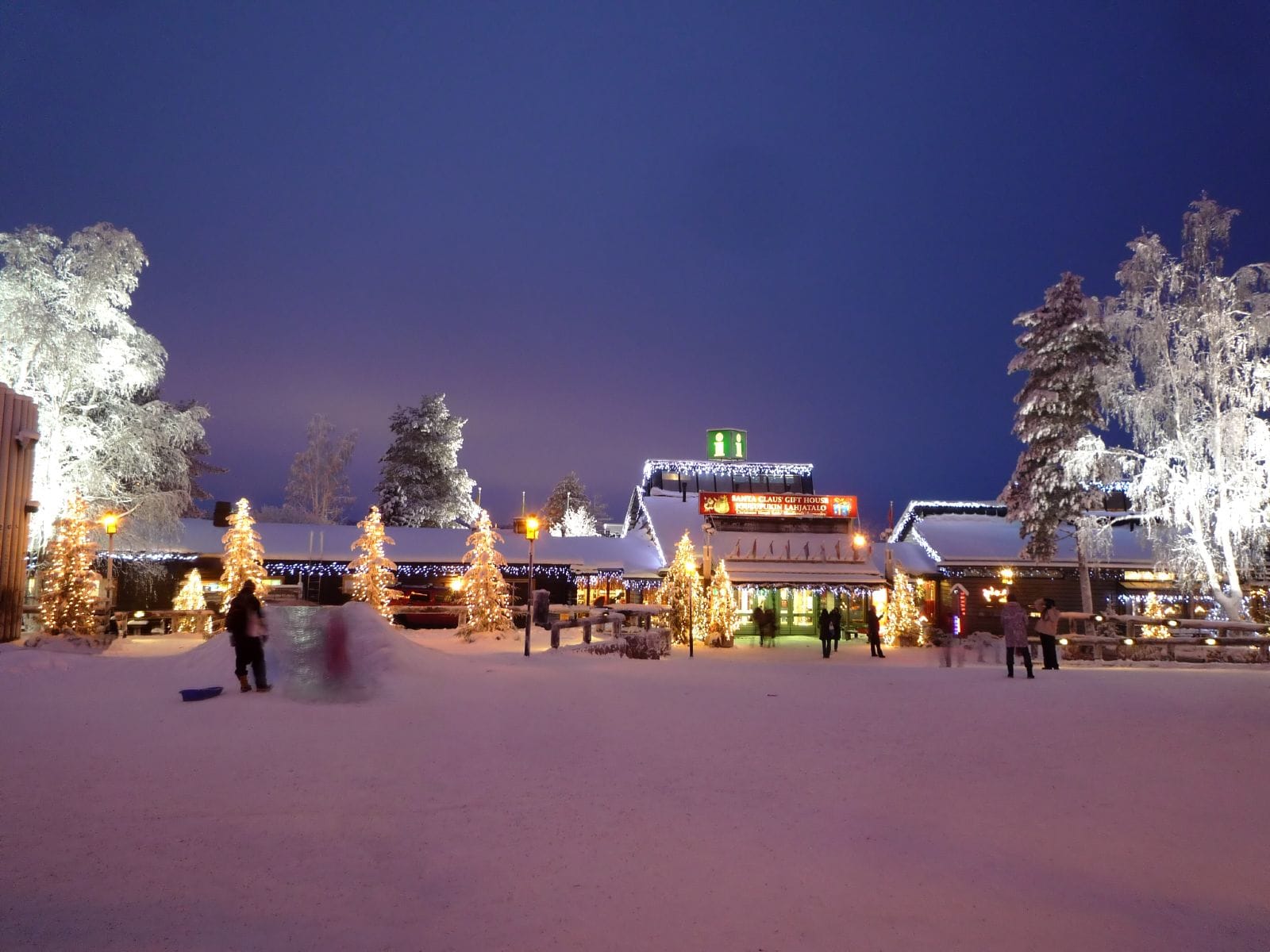
1. Meeting Santa at Santa Claus Village
Photo: Timo Newton-Syms from Helsinki, Finland and Chalfont St Gile / Wikimedia Commons, CC BY-SA 2.0
This is why most families come, and it’s free. Santa receives visitors in his office on the Arctic Circle every day of the year, chats a little with the kids (the elves translate), and the whole thing is handled with surprising warmth. You only pay for the official photo (from ~€40).
Don’t forget to cross the Arctic Circle line with the kids and send a postcard home from Santa’s Main Post Office, where the Arctic Circle stamp is the cheapest souvenir in the whole village. I’ve covered all the essentials in a separate Santa Claus Village guide. 💡 Tip: come first thing in the morning right after opening to avoid the queues.
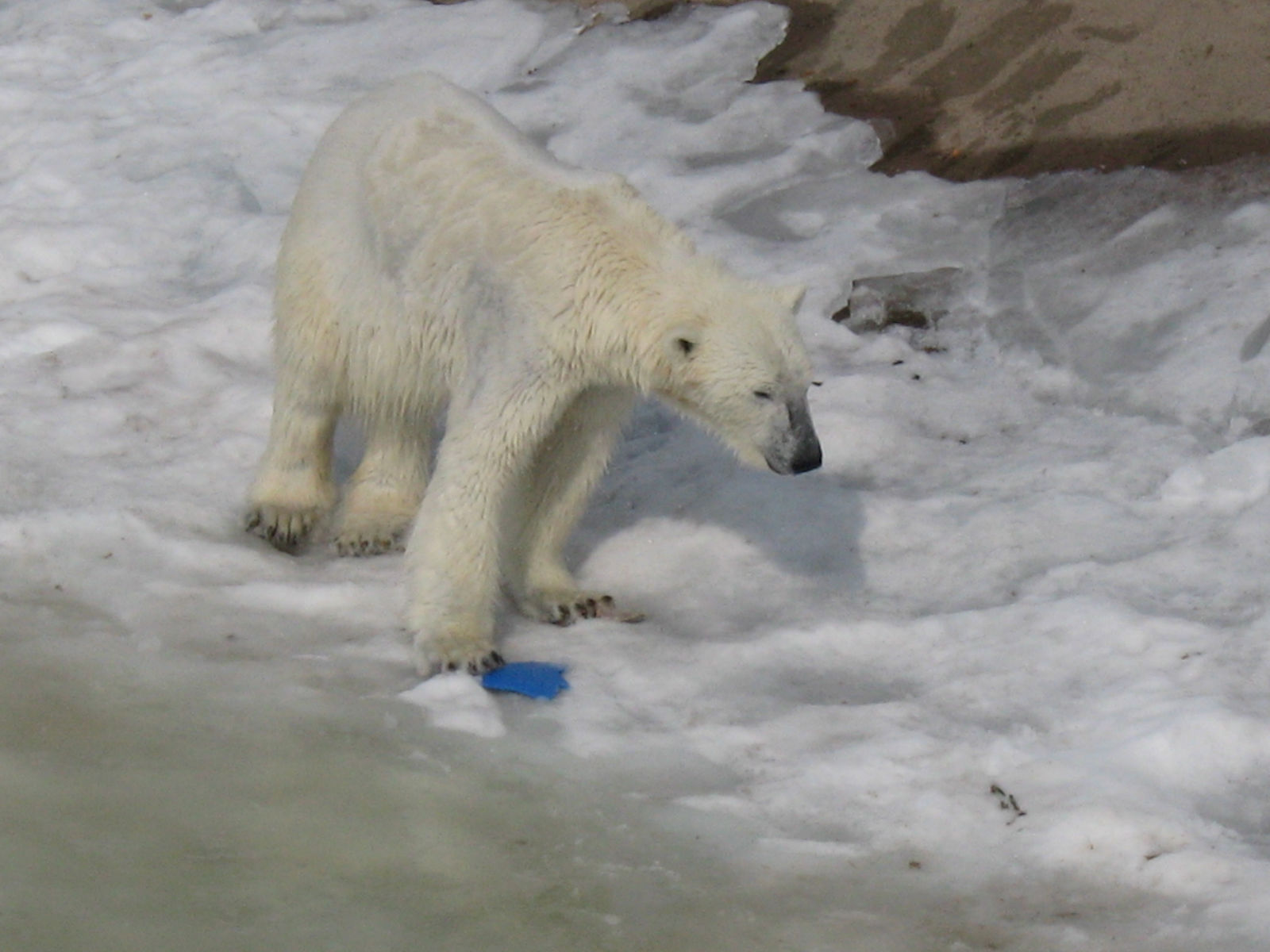
2. Ranua Arctic zoo: polar bear and friends
Photo: Crimson Cherry Blossom / Wikimedia Commons, Public domain
An hour from Rovaniemi lies the world’s northernmost zoo, and with kids it’s a sure thing: the only polar bear in Finland, wolves, lynx, wolverines, arctic foxes and owls in a natural snowy setting. You walk along wooden boardwalks between the enclosures, and the whole loop takes two to three hours.
Entry costs around €24.50 for adults and €20 for children (cheaper online, and a family ticket is worth it), and it’s open year-round. Details on the Ranua Resort website. Buses run here from Rovaniemi too, but with a stroller expect snow, so a sled or a carrier is better.
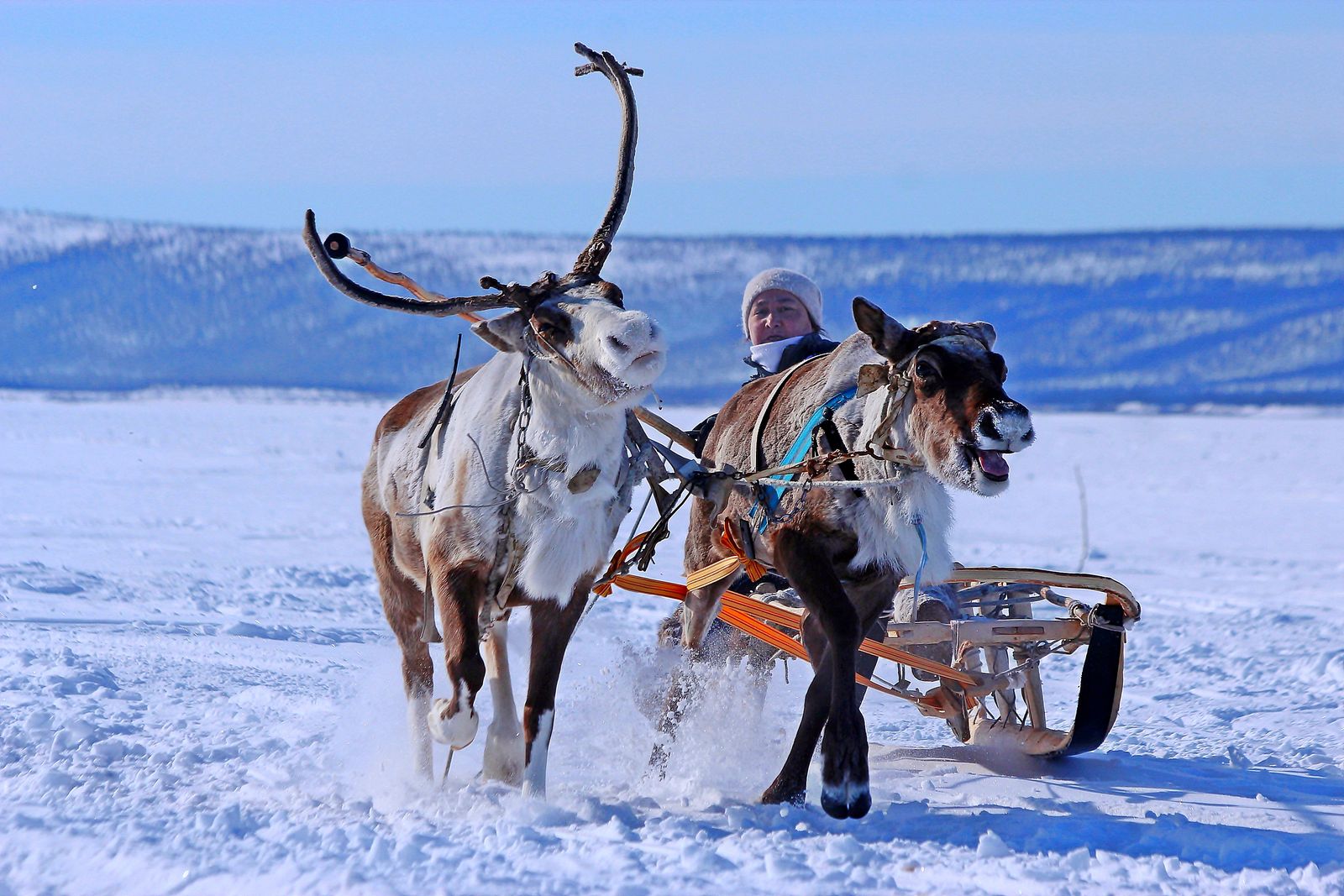
3. Reindeer sleigh rides and short husky trips
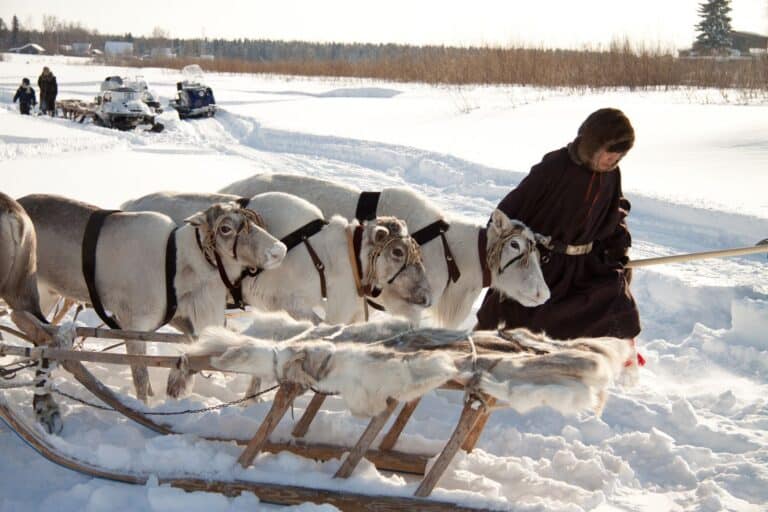
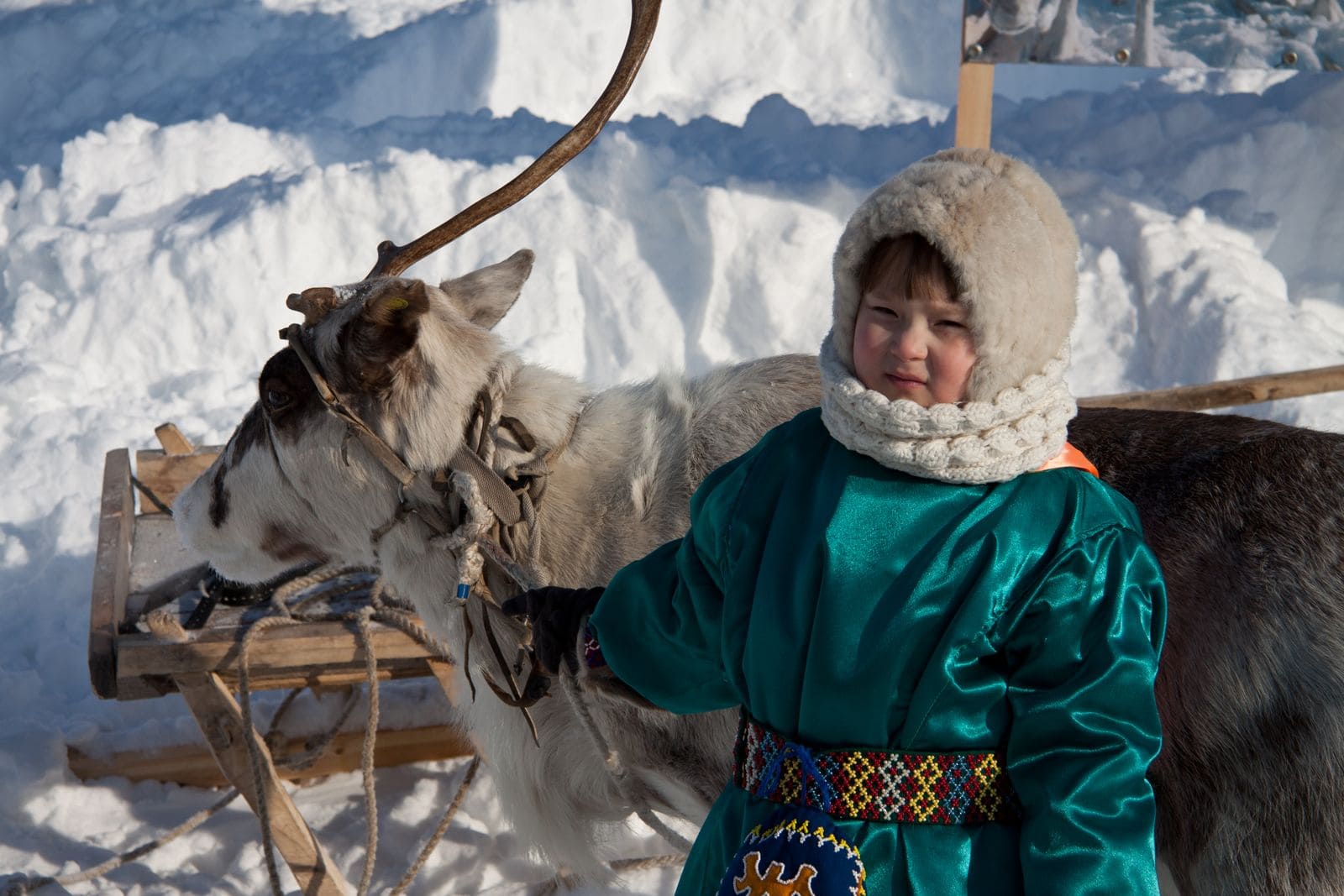
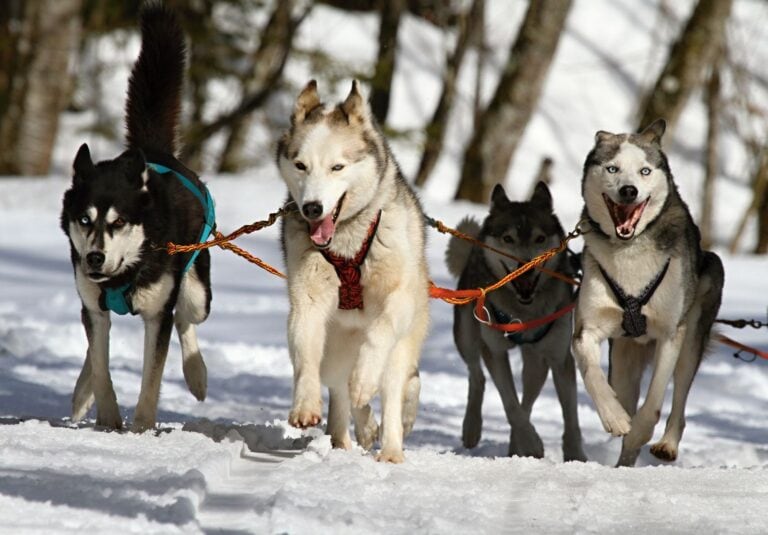
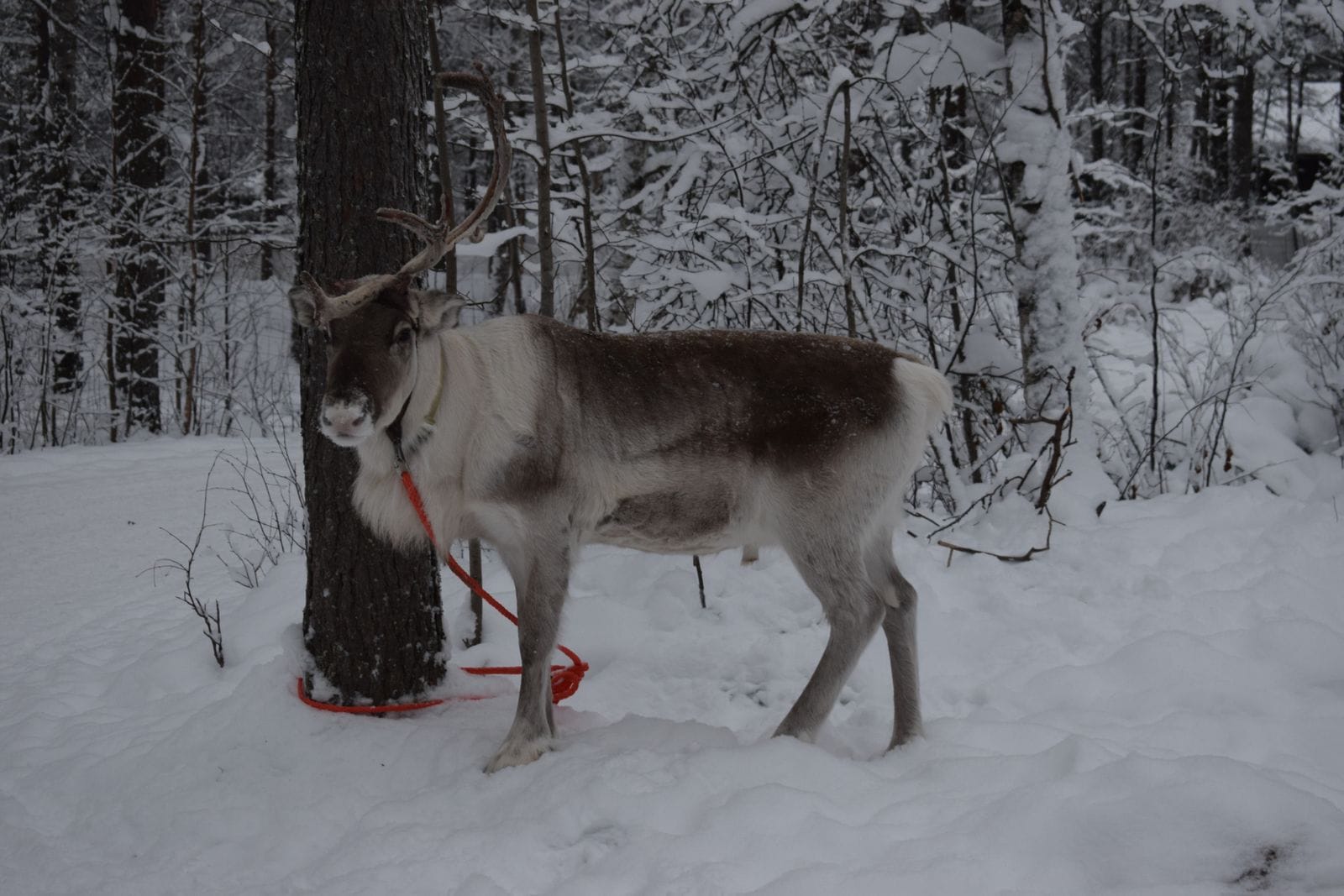
A full husky safari can be long and freezing for the littlest ones, but short loops right by Santa Claus Village or on the farms near Rovaniemi work even for two-year-olds: they sit bundled up in the sleigh under a reindeer hide while the world glides quietly past. A reindeer ride is slow and fairytale-like; huskies are faster and wilder.
A short ride costs a few dozen euros, while a visit to a reindeer farm with a ride and a “reindeer driving licence” runs around €80–120 per person (cheaper for kids). For longer safaris they’ll lend you thermal overalls in children’s sizes too. I write more about huskies and reindeer in my guide to what to see in Rovaniemi.
Photo: Timo Newton-Syms from Helsinki, Finland and Chalfont St Gile / Wikimedia Commons, CC BY-SA 2.0
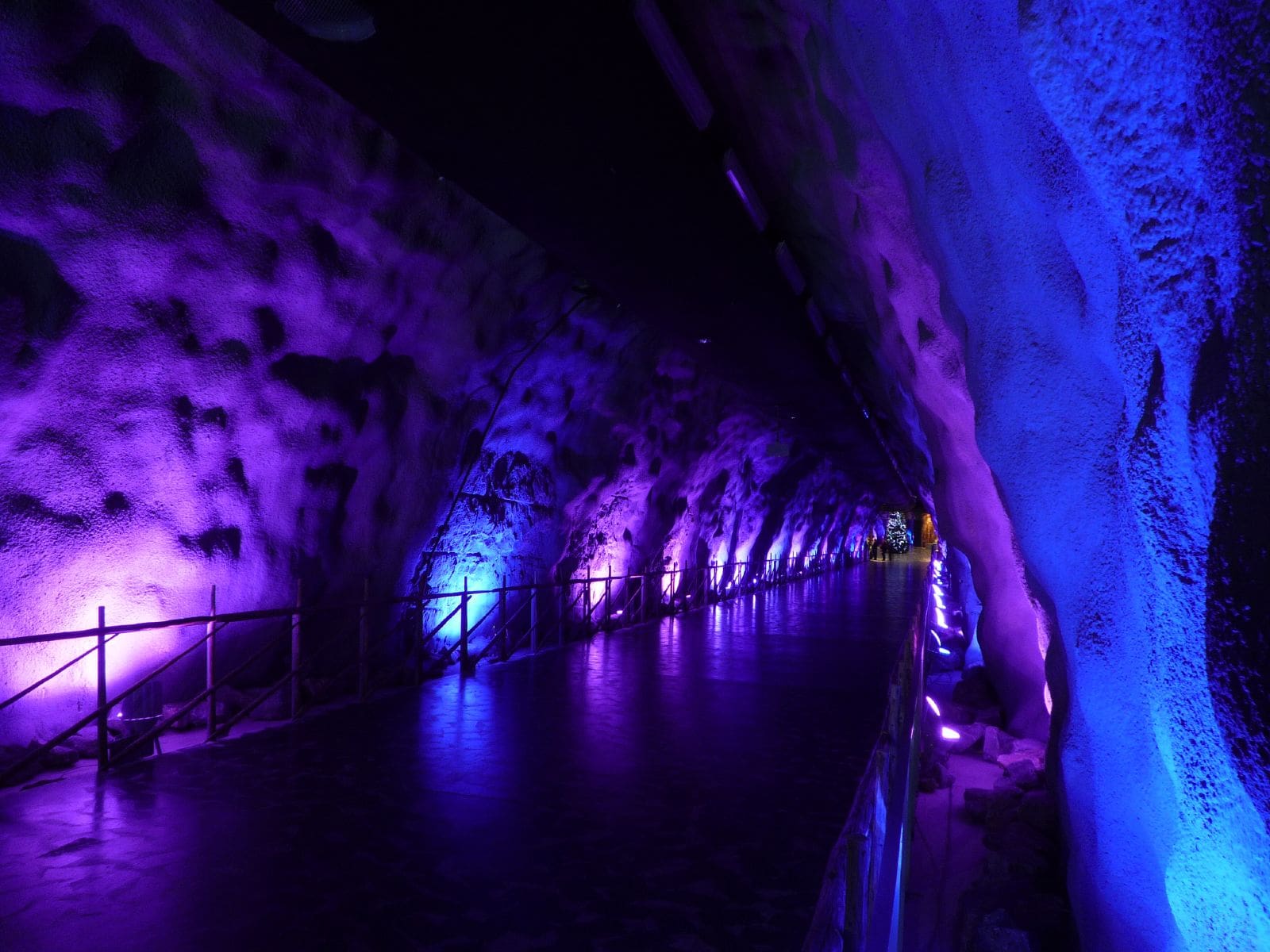
When it turns bitterly cold outside or sleet starts falling, SantaPark saves the day: a Christmas theme park carved into the rock, where kids go through elf school, decorate gingerbread in the bakery and ride the little train. It’s all warm and dry, so it’s the ideal “wet-weather option”.
Entry from ~€49 for adults and ~€40 for kids, free under three, with the season running roughly from late October to mid-January (check the SantaPark website). Right next door in the village is the icy SnowmanWorld with slides and a skating rink, open all winter long.
5. Pilke and Arktikum: museums where you’re allowed to touch everything
Photo: Clemensfranz / Wikimedia Commons, CC BY 3.0
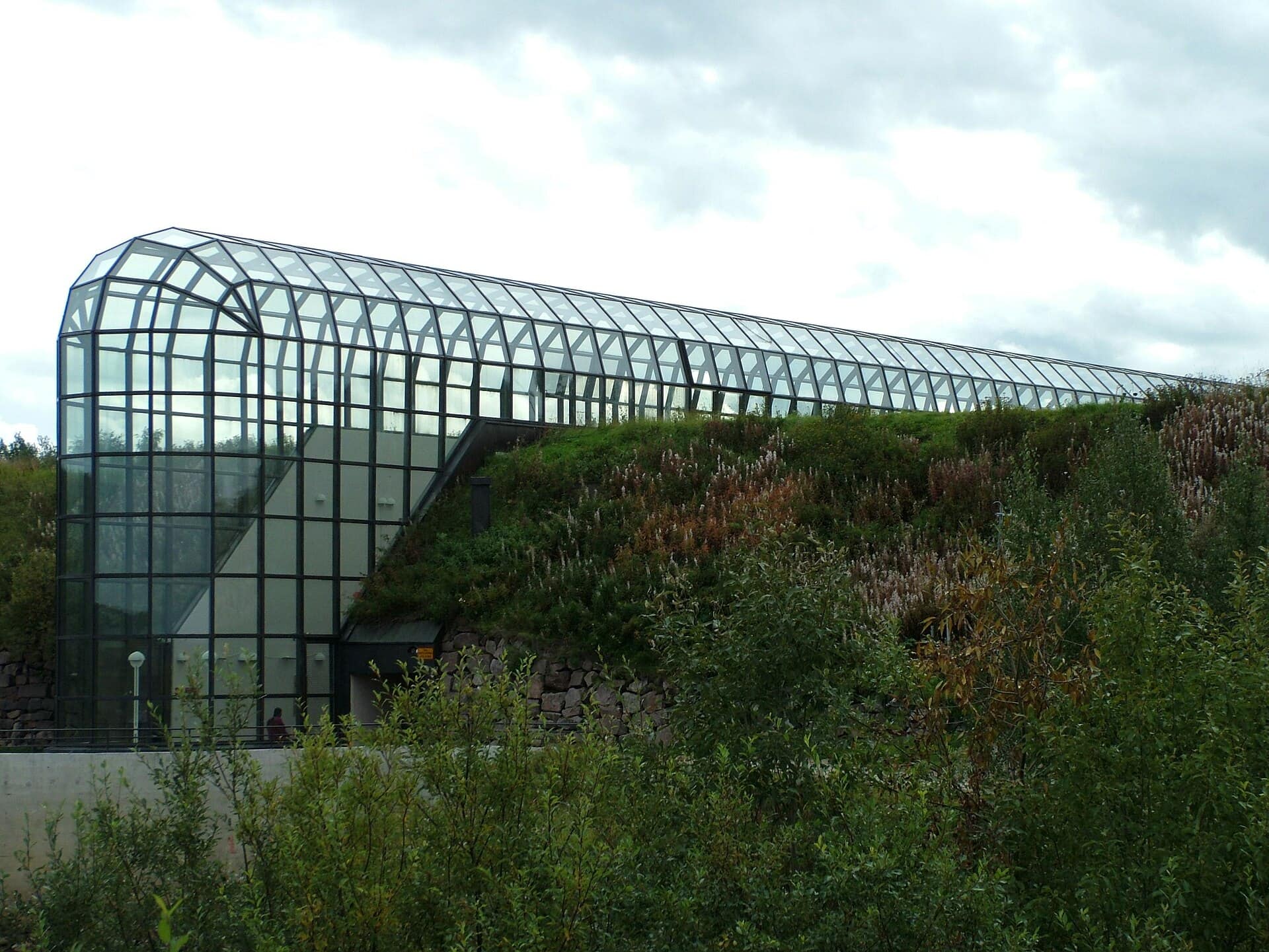
In central Rovaniemi, two excellent museums stand side by side. The Pilke science centre is all about the Finnish forest and entirely interactive: kids drive a harvester, climb over giant anthills and get their hands on everything. Arktikum next door clearly explains the northern lights and life in the north, which comes in handy in the evening when you head out to chase the aurora for real.
You can buy the tickets together at a discount (Culture Pass); Arktikum on its own is around €30, cheaper for children. Details on the Arktikum website. The ideal combo for a rainy or extra-cold day.
6. Northern lights and simple fun in the snow
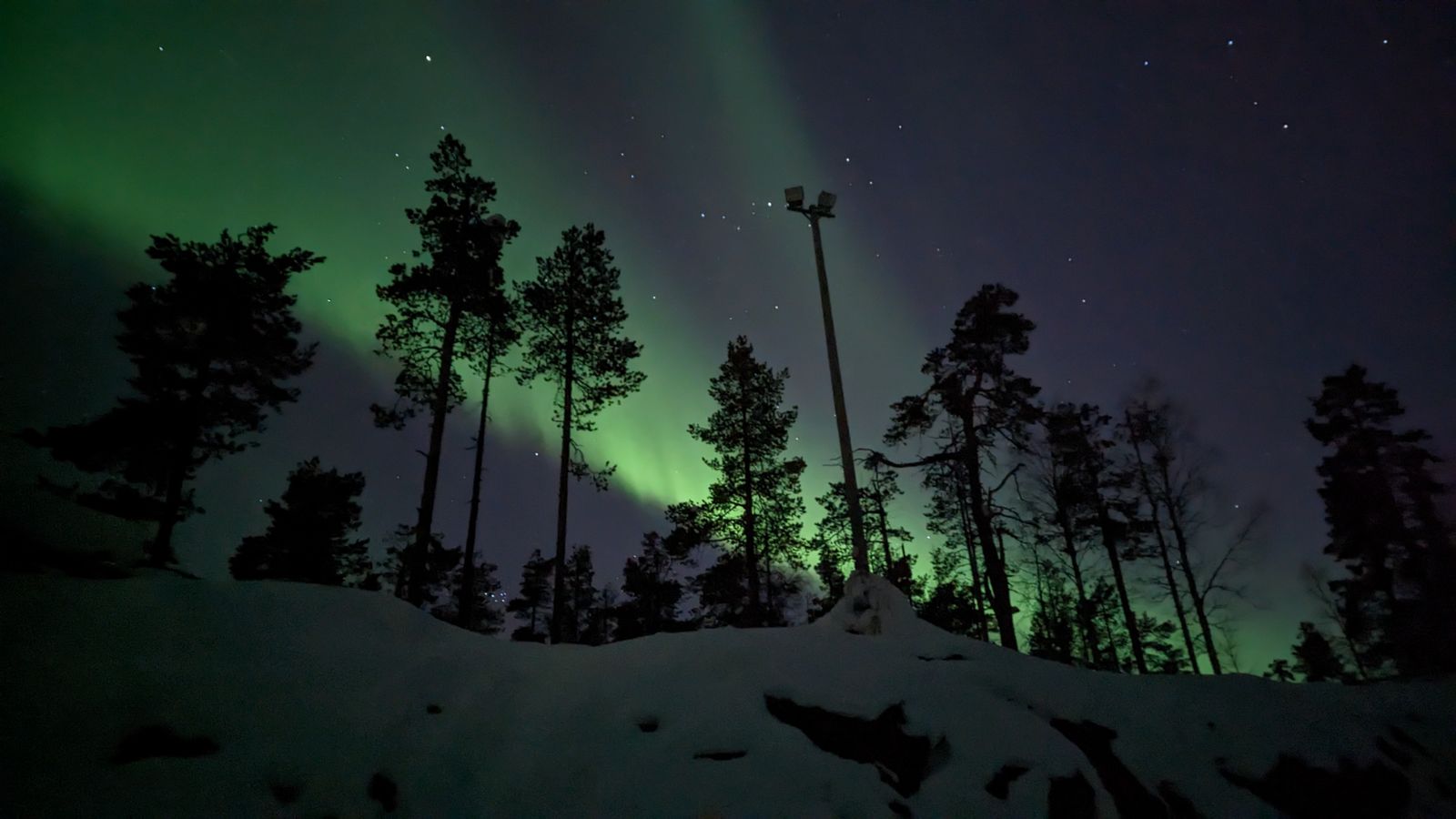
Chasing the northern lights works with kids too, just differently: instead of night-time expeditions into the wilderness, opt for accommodation outside town with an “aurora alarm” or a glass roof, where the kids sleep and you only wake them when the sky really lights up. I explain how to do it in my article on the northern lights in Lapland.
And don’t underestimate the simplest thing: a metre of snow is an attraction in itself for kids. Sledding by the hotel, snow angels, building snowmen and igloos, it’s all free and kids often enjoy it more than the paid programme. Leave a free morning in your itinerary just for messing about in the snow.
How to dress kids for the Arctic winter
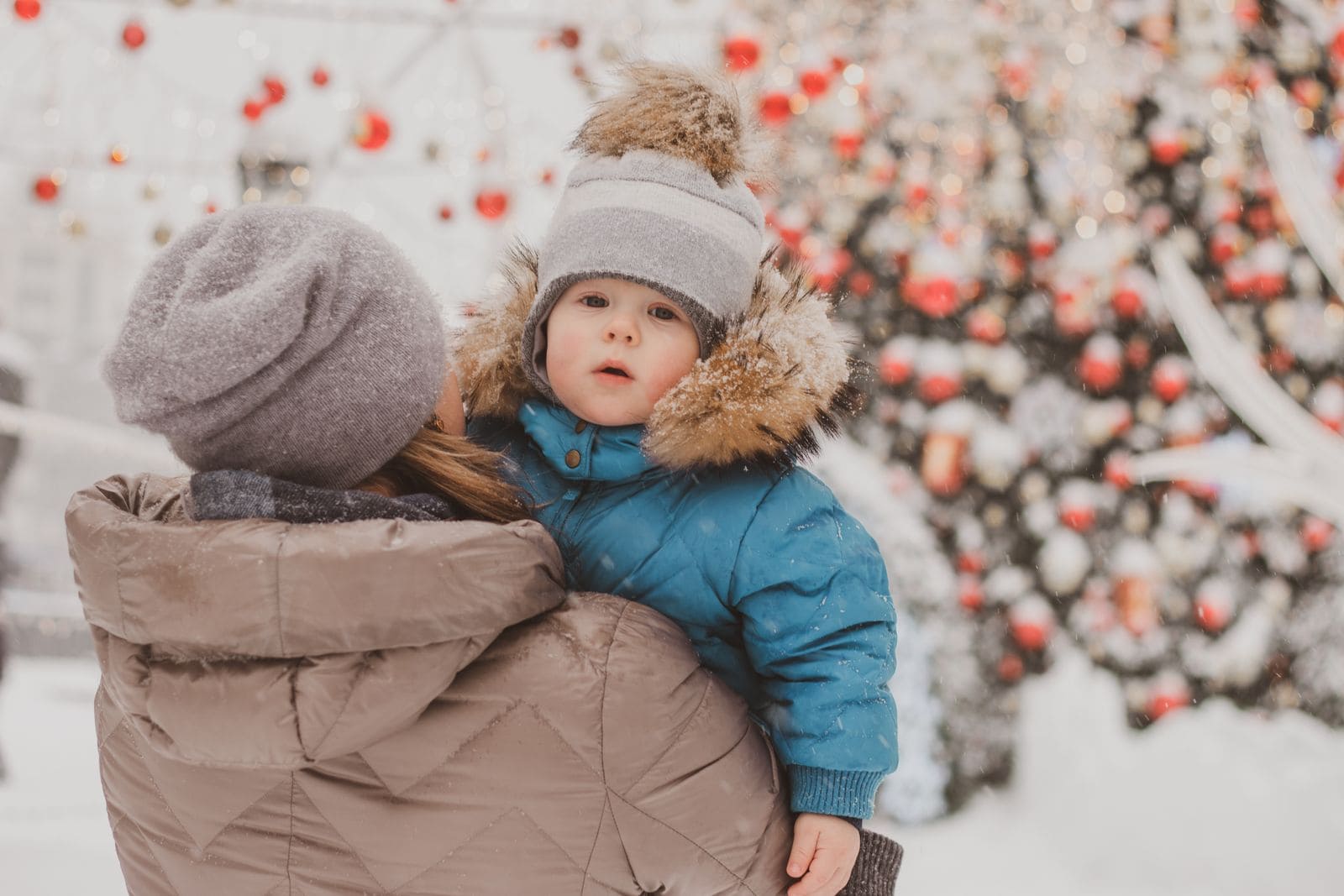
Cold around −15 °C sounds terrifying with children, but the dry Lapland cold is easier to handle than a damp winter back home. The key is layering: merino thermal underwear as the base, fleece or wool in the middle, and a waterproof insulated snowsuit on top. Add a warm hat that covers the ears, a neck gaiter (scarves come undone), mittens and one spare pair, and winter boots a size up with thick socks.
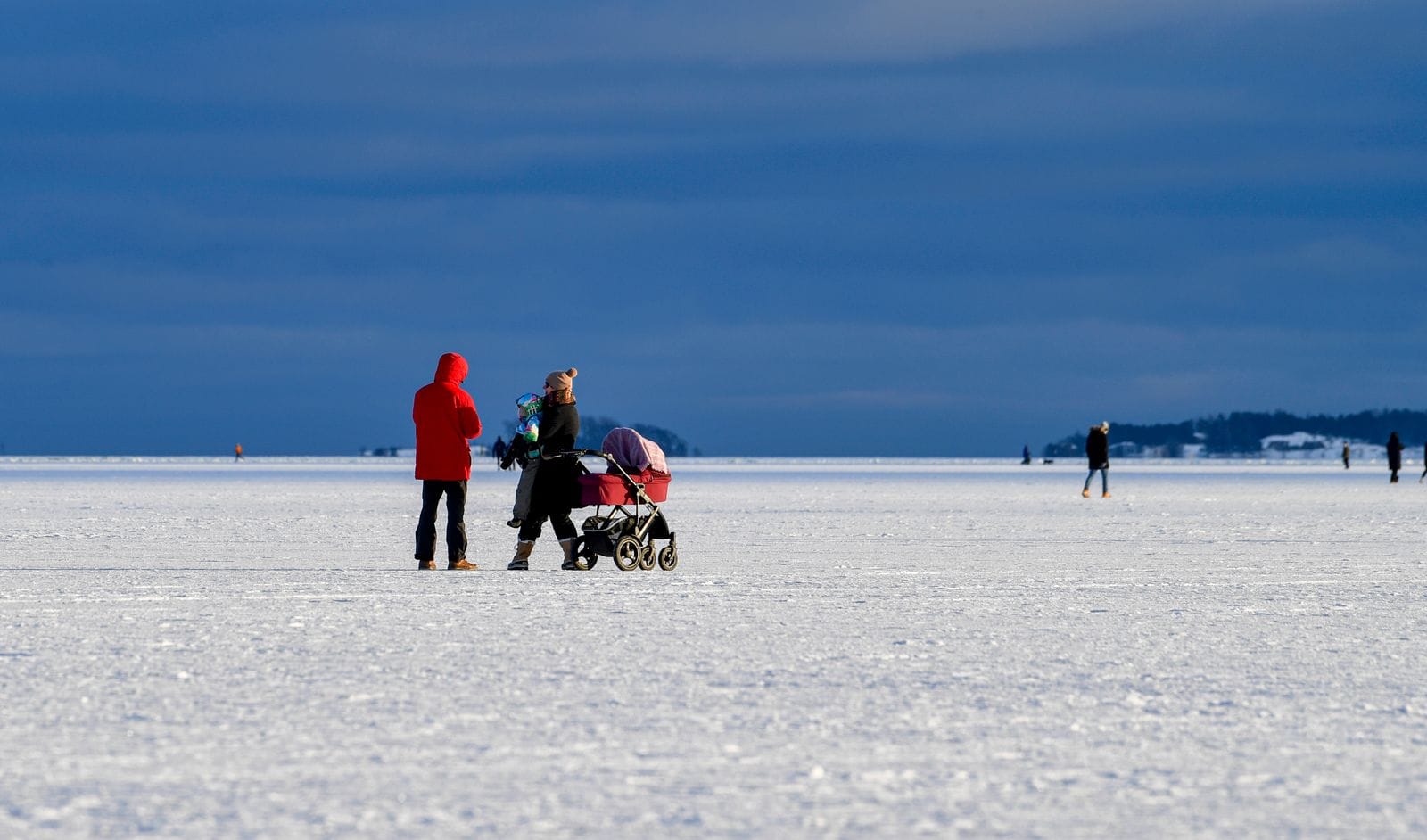
Two reassuring points: for organised activities kids are lent polar overalls and boots right on site, and Finnish shops (even supermarkets) sell quality winter gear in case anything is missing. With a baby, plan on a sled or a carrier under your jacket rather than a stroller, which struggles in the snow. You’ll find a complete packing checklist in my guide to packing for a flight.
💡 Tip: Kids in sleds and strollers don’t warm up through movement like you do, so dress them one layer warmer than yourself and check their little hands and cheeks regularly. A cold-weather cream (greasy, water-free) on the face is handy for the whole family.
Where next: more article tips
If you’re planning a family trip up north, these articles will come in handy:
Frequently asked questions about Lapland with kids
From what age does it make sense to take children to Lapland?
Even toddlers can manage it, short reindeer sleigh rides are suitable for children from two years old, and Santa will delight them from around three to four years old, when they really start experiencing Christmas. The ideal age for the full magic is 4 to 10 years. With an infant, plan on using a sled or baby carrier instead of a stroller.
When should you go to Lapland with children?
For families, February and March are best: longer days, milder frosts, the most snow, and lower prices than at Christmas. December is the most magical for Christmas, but it’s dark, expensive, and full of queues. Santa is at the village all year round, so you won’t miss out on meeting him.
Isn’t it too cold in Lapland for children?
Dry Arctic frost is surprisingly bearable, better than damp winters elsewhere. The key is layering (merino thermal underwear, fleece, waterproof snowsuit), spare gloves, and rich anti-freeze cream. For organized activities, children are lent polar overalls and boots on site.
What do children enjoy most in Lapland?
Meeting Santa (free), Ranua Arctic Zoo with its polar bear, short rides with reindeer and huskies, the underground SantaPark, the interactive Pilke centre, and simply messing around in a metre of snow. Plan for one big activity per day—the short days tire children out faster.
How much does Lapland with children cost?
A family package tour for 4 to 5 days costs roughly from €4,800 for a family of four. You’ll save more on your own, especially outside the Christmas peak. Lots of experiences are free: Santa, the Arctic Circle, snow. You pay for activities (huskies, reindeer), SantaPark, and Ranua.
Will children see the northern lights in Lapland?
The chances are the same as for adults, you just hunt for them differently: choose accommodation outside the city with an aurora alarm or glass roof, where children sleep normally and you wake them only when the sky truly lights up. The aurora isn’t guaranteed—treat it as a bonus, not the goal of the trip.
Is the flight to Lapland with children demanding?
It’s among the easier ones. Direct charter flights to Rovaniemi take around five hours, the time difference is just one hour, so there’s no disrupted routine. An experiential alternative is the overnight Santa Claus Express train from Helsinki with family compartments—children adore it.
Tips and Tricks for Your Vacation
Don’t Overpay for Flights
Search for flights on Kayak. It’s our favorite search engine because it scans the websites of all airlines and always finds the cheapest connection.
Book Your Accommodation Smartly
The best experiences we’ve had when looking for accommodation (from Alaska to Morocco) are with Booking.com, where hotels, apartments, and entire houses are usually the cheapest and most widely available.
Don’t Forget Travel Insurance
Good travel insurance will protect you against illness, accidents, theft, or flight cancellations. We’ve had a few hospital visits abroad, so we know how important it is to have proper insurance arranged.
Where we insure ourselves: SafetyWing (best for everyone) and TrueTraveller (for extra-long trips).
Why don’t we recommend any Czech insurance company? Because they have too many restrictions. They set limits on the number of days abroad, travel insurance via a credit card often requires you to pay medical expenses only with that card, and they frequently limit the number of returns to the Czech Republic.
Find the Best Experiences
Get Your Guide is a huge online marketplace where you can book guided walks, trips, skip-the-line tickets, tours, and much more. We always find some extra fun there!
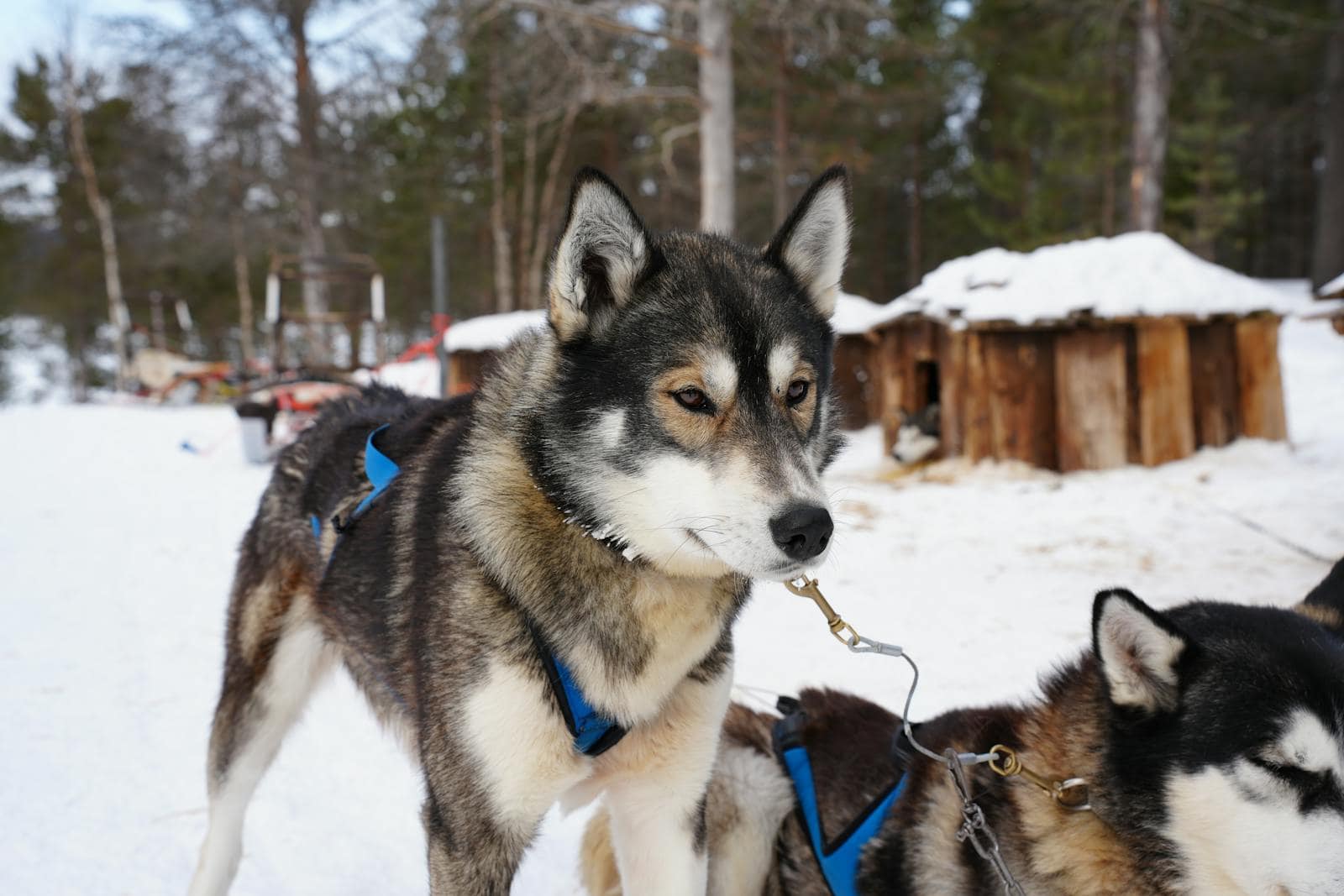
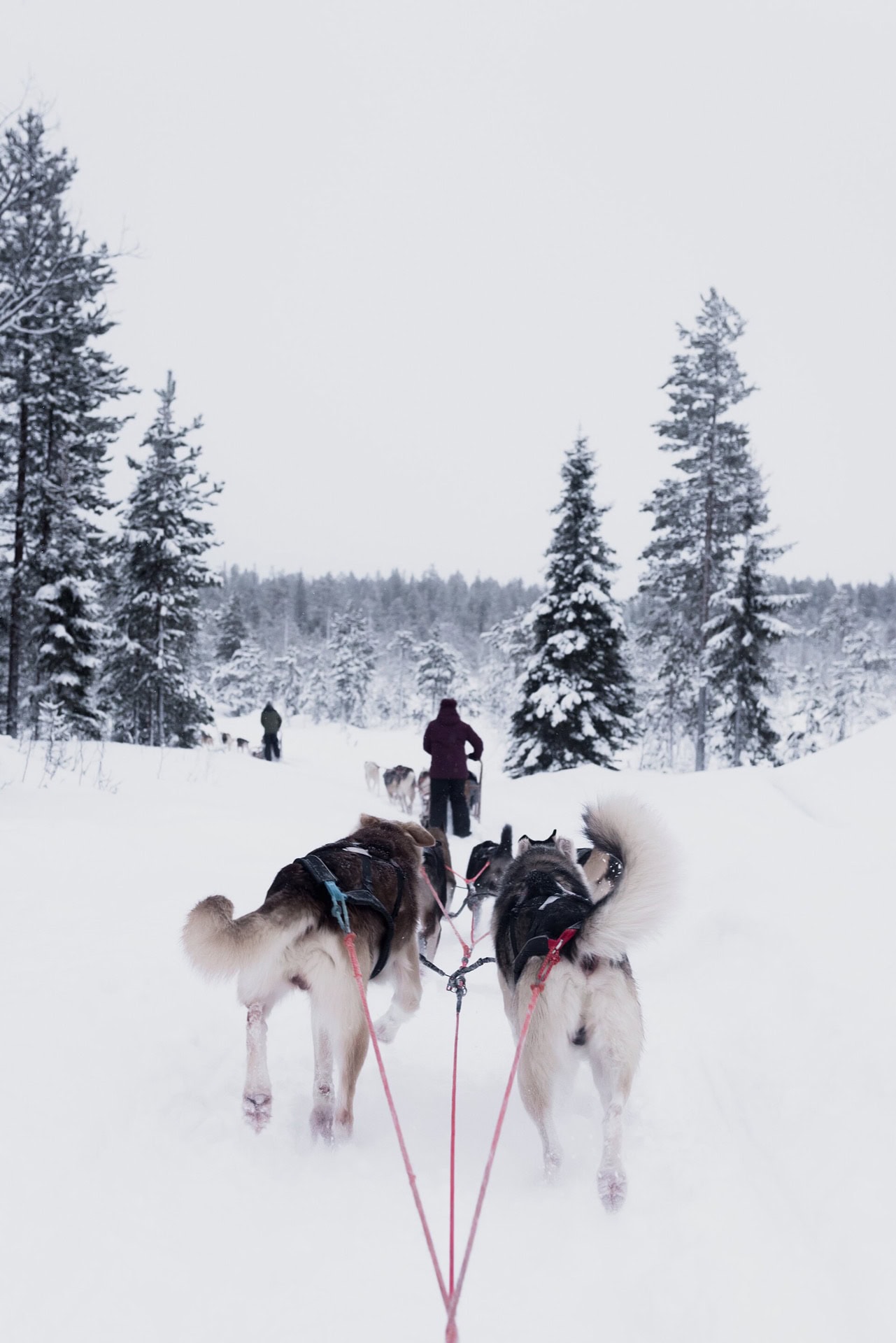
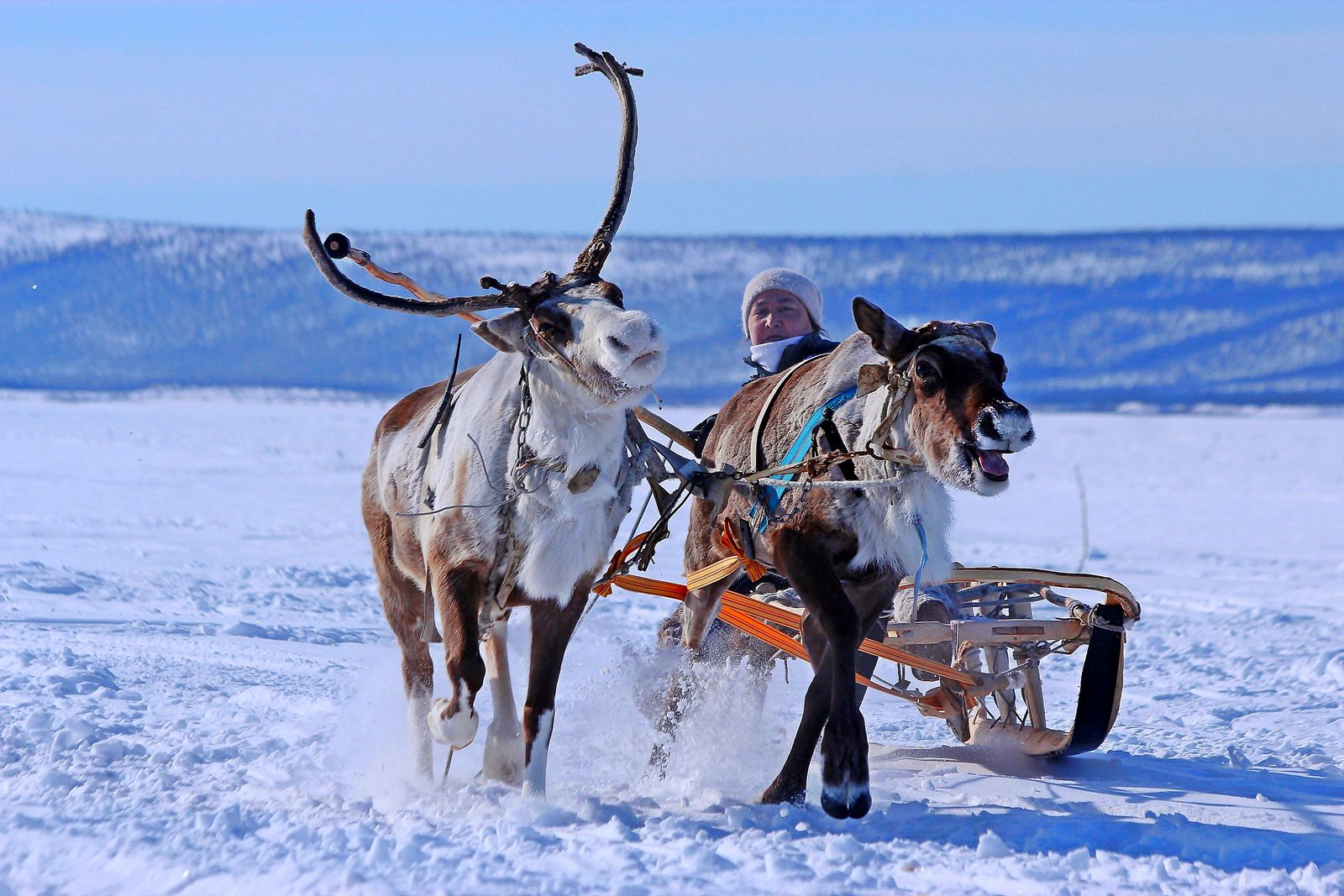
At first all you hear is the excited barking of twelve dogs who can’t wait to run. Then the guide releases the anchor, the sled jerks forward and suddenly… silence. Just the hiss of the runners, the panting of the team and the snowy forest rushing past. A husky safari is an experience you can’t describe, you have to live it. And its calmer sibling, the reindeer sled ride, is among the most fairy-tale-like things Lapland in Finland has to offer.
In this guide you’ll find everything about husky safaris and reindeer sledding in Finnish Lapland: how both rides work, how much they cost, whether you can drive your own team, what to wear, how to pick a fair farm that treats its animals well, and what kids can handle.
Season: roughly December to early April, depending on the snow. Book well ahead, high season often sells out.
Husky prices: a short ride from ~€65, a full safari driving your own team ~€95–200 depending on length.
Reindeer prices: a farm visit with a ride and a “reindeer driving licence” around €80–120.
Husky = adrenaline and speed, reindeer = calm and fairy tale. Ideally do both, there are combined safaris too.
A thermal suit, boots and gloves are lent on site, in kids’ sizes too. You just need good layers underneath.
When to go and how to book
The season for dog sledding and reindeer sleds runs roughly from December to early April, depending on when the snow falls and how long it lasts. The most reliable conditions are from January to March, when there’s the most snow and the days are already getting longer. You’ll find a detailed month-by-month comparison in the article on when to go to Lapland.
One important heads-up: the most popular dates sell out weeks or even months in advance, especially around Christmas and school holidays. So book as soon as you have your flights. Trips can be conveniently reserved online in advance, for example through GetYourGuide, or directly with the Lapland farms. The price usually includes hotel pickup, thermal clothing and a hot drink by the fire.
Where to stay for huskies and reindeer
Most farms and operators are found around Rovaniemi, which makes an ideal base. In the centre, a reliable choice is Santa’s Hotel Santa Claus with its praised breakfast, where the safari pickup collects you right at the door. A next-level experience is Apukka Resort, which has its own huskies and reindeer right on site, so you can walk straight from breakfast to the animals. And far up north near Saariselkä, the legendary Kakslauttanen Arctic Resort combines glass igloos with its own animal programmes.
Husky safari: a ride you’ll never forget
Let’s get to the main event. A husky safari starts at the farm, where you’re greeted by a chorus of excited barking, the dogs competing over who gets to run. After a briefing you set off: either as a passenger bundled up in the sled, or, and this is what I recommend, as the driver of your own team. You stand on the runners, brake with your own weight, and the team listens better than you’d expect.
Photo: darkroomsg, CC0, Wikimedia Commons
As soon as the dogs take off, the barking gives way to the complete silence of the winter forest. It’s meditation at 20 km/h. Short loops (2 km, about 20 minutes) start from ~€65 and even small children can join as passengers, while full safaris where you drive yourself cover 5 to 10 km and cost €95–200. There are even full-day expeditions for the hardy.
💡 Tip: The ride is often shorter than people imagine, the dogs can’t run forever. Expect a big part of the programme to be the farm visit, cuddling the dogs and the mushers’ stories about pack life, which is at least as lovely as the ride itself.
How to pick a fair husky farm
A husky safari lives and dies by how the farm treats its dogs. The good news: Nordic sled dogs love to run, it’s natural for them, not a chore. Even so, it pays to choose farms that show their facilities, limit the number of runs per dog and demonstrably care for the pack in summer (trekking, exercise runs).
Signs of a fair farm: they happily let you among the dogs, the mushers know every dog by name and the website openly talks about welfare. If a farm feels like an anonymous conveyor belt for tourists, pick another one. Reviews on Google and TripAdvisor tell you a lot.
Reindeer sleds: a fairy tale drawn at walking pace
If a husky safari is adrenaline, a reindeer sled ride is a pure fairy tale. The reindeer walks, the sled glides quietly through the snowy forest and you sit wrapped in furs, just soaking up the silence. It’s the calmest experience in all of Lapland and perfect even for very small children or grandparents.
A visit to a traditional reindeer farm usually includes feeding the reindeer, a talk about how they’re raised and a sled ride, after which you get a jokey “reindeer driving licence”. You can only drive the reindeer yourself on a short loop, they’re semi-wild animals and a herder leads the longer routes. The whole programme comes to about €80–120, while entry to the farm alone is cheaper.
Reindeer farms in Lapland are often run by herding families for generations, and reindeer husbandry remains the backbone of the livelihood and culture of the Sámi, the only Indigenous people of the European Union. A farm visit is the most natural way to learn about Sámi culture first-hand, around the fire rather than from a museum display case.
Ask away, the herders love telling stories about reindeer: why they shed their antlers, how a herd is tracked across the tundra using both GPS and traditional markings, what the reindeer year means. For a deeper dive into Sámi culture I recommend a trip north to Inari and the Siida museum, which I write about in my Lapland guide.
Huskies or reindeer? An honest comparison
The most common question is: if there’s only time (or budget) for one, which should you choose? Here’s my honest comparison.
Choose a husky safari if you want action, speed and a hands-on experience (driving your own team). Best for couples, groups of friends and kids from around 6 years old.
Choose a reindeer sled if you want calm, romance and a cultural dimension. Ideal for families with small children, grandparents and anyone who wants to savour Lapland slowly.
Can’t decide? There are combined safaris (huskies + reindeer in one day, roughly 3–3.5 hours, around €180–230) that cover both, including pickup and a hot drink by the fire.
💡 Tip: Whatever you choose, a thermal suit, winter boots and mittens are lent on site (for kids too). Under the suit, good thermal underwear and a fleece are enough. For everything to pack, see my packing guide.
Where to next: more articles
If you’re putting together your Lapland itinerary, these articles will come in handy:
Frequently asked questions about husky safaris and reindeer sleds
How much does a husky safari in Lapland cost?
A short ride (approx. 2 km, 20 minutes) starts from €65, while a full safari where you drive your own sled for 5 to 10 km costs roughly €95 to €200 depending on the length. Prices are per person and typically include thermal clothing, transfers, and a hot drink.
Can I drive my own husky sled?
Yes, and it’s the best part of the experience. After a short briefing you’ll stand on the runners of your own sled, brake with your own body weight, and steer the team. You usually go in pairs (one drives, the other sits in the sled) and switch halfway through. Any healthy adult can manage it.
When is husky safari and reindeer sleigh season?
Roughly from December to early April depending on snow conditions, with the most reliable conditions from January to March. The most popular dates (Christmas, school holidays) tend to sell out weeks in advance, so book as soon as you’ve purchased your flights.
Which is better: husky or reindeer sleigh?
Husky safaris are fast, active, and thrilling, while reindeer sleighs are slow, quiet, and fairy-tale-like, with a connection to Sámi culture. Choose huskies for action, reindeer for a peaceful experience and with small children. Combination safaris (husky + reindeer in one day, around €180 to €230) let you experience both.
Can children do husky safaris and reindeer sleighs?
Yes. As passengers in the sled, even toddlers can manage short rides, and reindeer sleighs are the calmest activity in all of Lapland. Only adults are allowed to drive their own sled; children ride as passengers. Farms lend thermal overalls in children’s sizes too.
Do the dogs and reindeer suffer during safaris?
Nordic sled dogs love to run—it’s in their nature. But choose ethical farms: they’ll happily let you spend time among the dogs, limit the number of rides, know the dogs by name, and openly share information about their care. Reindeer farms are often run by herding families for generations, and the animals are the foundation of their livelihood.
What should I wear on a safari?
Thermal overalls, winter boots, and mittens will be provided on-site, including for children. Under the overalls, bring good thermal underwear (ideally merino), a fleece layer, and warm socks. Your own hat and neck warmer. For photography, thin gloves to wear under the mittens are handy so your fingers don’t freeze.
Tips and Tricks for Your Vacation
Don’t Overpay for Flights
Search for flights on Kayak. It’s our favorite search engine because it scans the websites of all airlines and always finds the cheapest connection.
Book Your Accommodation Smartly
The best experiences we’ve had when looking for accommodation (from Alaska to Morocco) are with Booking.com, where hotels, apartments, and entire houses are usually the cheapest and most widely available.
Don’t Forget Travel Insurance
Good travel insurance will protect you against illness, accidents, theft, or flight cancellations. We’ve had a few hospital visits abroad, so we know how important it is to have proper insurance arranged.
Where we insure ourselves: SafetyWing (best for everyone) and TrueTraveller (for extra-long trips).
Why don’t we recommend any Czech insurance company? Because they have too many restrictions. They set limits on the number of days abroad, travel insurance via a credit card often requires you to pay medical expenses only with that card, and they frequently limit the number of returns to the Czech Republic.
Find the Best Experiences
Get Your Guide is a huge online marketplace where you can book guided walks, trips, skip-the-line tickets, tours, and much more. We always find some extra fun there!
Tallinn je natolik kompaktní a přehledný, že se dá jeho historické centrum s přehledem projít pěšky za jediný víkend. Má to ale jeden obrovský háček, protože mezi devátou ranní a šestou večerní se zdejší dlážděné uličky pravidelně zaplní tisíci lidmi z obřích výletních lodí. Kdo o tomto neúprosném denním rytmu ví, může si svůj program chytře otočit a užít si město bez mačkání v davech.
Pokud si svůj itinerář naplánujete strategicky a nenecháte se strhnout hlavním proudem, objevíte to nejzachovalejší středověké město severní Evropy v celé své tiché kráse. Stačí vědět, kam a kdy — a to vám tady ukážeme krok za krokem.
Tenhle průvodce jsme pro vás sepsali pořádně do hloubky — včetně tipů na skvělé bezmasé jídlo, orientačních cen a rad, kde si zarezervovat pokoj. ☺️ Věřte mi, že estonská metropole už dávno není tou levnou východoevropskou destinací, ale sebevědomým severským městem, které vás uchvátí skvělou gastronomií i všudypřítomnou digitalizací.
Foto: Sergei Gussev / Pexels
Shrnutí
Pro ty z vás, kteří mají rádi to nejdůležitější hezky pohromadě, jsme připravili rychlý přehled. V několika bodech se dozvíte, kolik času a peněz si na estonské hlavní město vyhradit.
Zároveň zjistíte, kdy je nejlepší vyrazit a jak efektivně naplánovat cestu, aniž byste se zbytečně stresovali. Tady je stručný výtah toho nejzásadnějšího pro vaši cestu.
Kolik dní stačí: Na hlavní památky a nasátí atmosféry vám budou bohatě stačit dva plné dny, ale pokud chcete stihnout i výlet do bažin nebo trajektem přes moře, určitě si vyhraďte dny tři.
Kolik to stojí: Počítejte s tím, že ceny se blíží spíše Berlínu než Praze, přičemž víkend pro dva se středním rozpočtem vyjde zhruba na 16 000 až 20 000 Kč včetně letenek a ubytování.
Jak se tam dostat: V letní sezóně můžete využít přímé lety z Prahy (létá Eurowings), mimo sezónu se létá s jedním rychlým přestupem přes Rigu nebo Helsinky.
Co rozhodně nevynechat: Určitě vás nadchne ranní procházka uličkou Katariina käik bez jediného turisty a večerní výhledy z kopce Toompea na nasvícené město.
Hlavní trik na davy: Historické Staré Město navštěvujte výhradně brzy ráno nebo až v podvečer, zatímco přes den se schovejte do kreativních čtvrtí Telliskivi nebo Noblessner.
Kdy jet: Zkušení cestovatelé si nejvíce pochvalují září pro jeho klidnější atmosféru, ale kouzelný je i prosinec díky vyhlášeným adventním trhům.
Foto: Raul1972 / Wikimedia Commons, CC BY-SA 4.0
Než vyrazíte: co je dobré vědět
Estonsko je absolutní technologická velmoc a všechno tu funguje neuvěřitelně hladce, takže doprava z letiště do centra je naprostá hračka. Samotné letiště Lennart Meri se pravidelně umisťuje v žebříčcích nejpříjemnějších evropských vzdušných přístavů, na kterých oceníte bezplatnou pitnou vodu i pohodlná odpočinková křesla. Leží jen čtyři kilometry od centra a za normálních okolností vás tam doveze pohodlná tramvaj číslo 4, případně můžete využít lokální aplikaci Bolt, která v Estonsku mimochodem vznikla. Jízda autem přímo k hradbám Starého Města vyjde zhruba na 5 až 12 eur podle aktuální poptávky a zabere příjemných patnáct minut.
Pokud do Tallinnu připlujete trajektem ze Skandinávie, z přístavu dojdete do historického jádra klidným tempem pěšky zhruba za patnáct minut. Od konce roku 2024 navíc funguje zbrusu nová tramvajová linka 2, která pohodlně propojuje oba hlavní osobní terminály v přístavu přímo s centrem města a vlakovým nádražím. Cestování městskou hromadnou dopravou je pro turisty sice zpoplatněné, ale nákup jízdenky je mimořádně jednoduchý. Jízdenku si koupíte pouhým pípnutím platební karty u oranžového validátoru, který se nachází vždy u předních dveří v každém voze.
Systém je natolik chytrý, že vám za den nikdy nestrhne více než 5,50 eur, což je cena celodenní jízdenky. Jednorázová jízda jinak stojí 1,50 eur a papírové lístky tu už dávno neexistují, takže stačí mít u sebe mobil nebo běžnou bezkontaktní kartu. Hotovost v Tallinnu prakticky vůbec nepotřebujete, protože kartou zaplatíte naprosto všude, od malých stánků se zeleninou na tržnici až po pouliční prodejce suvenýrů a řemeslných výrobků.
Tallinn Card (24 h za 29 eur, 48 h za 41 eur, 3 dny za 51 eur) se vyplatí jen tehdy, když plánujete denně navštívit alespoň dvě velká placená muzea, protože samostatné vstupy do hlavních atrakcí se jinak pohybují mezi 15 a 22 eury. V opačném případě peníze raději ušetřete. 😅 Jazykové bariéry se navíc rozhodně bát nemusíte. Anglicky se tu domluvíte naprosto perfektně, a to nejen s mladými lidmi ve službách, ale i na ulici, přičemž místní obyvatelé jsou k cizincům i přes svou severskou rezervovanost velmi vstřícní.
Foto: Margo Evardson / Pexels
Trik, který vám víkend zachrání
Aby vám itinerář skutečně klapnul, musíte pochopit jednu věc: jak v Tallinnu funguje námořní turismus. Obří výletní lodě kotví v přístavu zhruba od půl desáté dopoledne do šesti do večera, a přesně v tomto okně se do úzkých uliček vyvalí tisíce jednodenních výletníků. V létě se může stát, že dvě lodě najednou vypustí do města klidně i 6 700 pasažérů, což z romantického Starého Města plného středověké atmosféry udělá vcelku únavný lunapark.
Pravidlo je přitom naprosto jednoduché: středověké centrum prozkoumávejte obráceně než většina průvodců. Ráno si přivstaňte a ty nejfotografovanější uličky si projděte v naprostém klidu ještě před desátou hodinou, než dorazí první organizované skupiny vedené průvodci s barevnými deštníky. Jakmile se město začne plnit a ceny v kavárnách u radnice pocitově vyskočí na dvojnásobek, jednoduše vykliďte pole a zmizte za hradby do moderních čtvrtí nebo se vydejte na procházku k moři.
Do historického jádra se vraťte zase až v podvečer, kdy lodě odplují zpět do Helsinek nebo dál do Stockholmu. Staré Město se krásně vylidní, rozsvítí se dobové lucerny na tepaných konzolách a vy si konečně užijete tu pravou severskou melancholii, kterou jednodenní turisté ze svých lodí nikdy nezažijí. Tento jednoduchý časový úskok rozhoduje o tom, jestli si Tallinn zamilujete, nebo z něj odjedete otrávení z překážejících davů.
Foto: Margo Evardson / Pexels
Itinerář den po dni
Připravili jsme pro vás plán, který zohledňuje přesně tu zmíněnou strategii s výletními loděmi, abyste se elegantně vyhnuli turistickým špičkám. Zvládnete tak oběhnout ty nejkrásnější památky bez zbytečného stresu a ještě vám zbyde dost času na objevování moderních čtvrtí nebo popíjení vynikající kávy.
Díky tomuto postupu stihnete poznat nejen to historické pozlátko, ale nahlédnete pod pokličku skutečného života místních. Jdeme na to.
Foto: Margo Evardson / Pexels
1. den: Staré Město a večerní romantika na hradbách
Dopoledne začněte co nejdříve přímo v srdci Dolního Města na Radničním náměstí (Raekoja plats), kterému dominuje nádherná gotická radnice s vysokou osmibokou věží. Hned v rohu náměstí najdete nejstarší nepřetržitě fungující lékárnu v Evropě Raeapteek z roku 1422, kam je vstup zdarma a kde si můžete prohlédnout historické vitríny, v nichž se kdysi prodával sušený žabí sliz nebo netopýří krev. Odtud se plynule přesuňte do napůl skryté Pasáže svaté Kateřiny (Katariina käik), která je z obou stran lemovaná středověkými náhrobky a autentickými dílnami místních řemeslníků foukajících sklo nebo pracujících s keramikou.
Kolem desáté hodiny se přes hradby vydejte stoupáním vzhůru na kopec Toompea, což je historické Horní Město, kde odnepaměti sídlila estonská šlechta. Tady vás praští do očí masivní pravoslavná katedrála Alexandra Něvského v ostrém kontrastu k nedalekému růžovému paláci parlamentu — a než se nadějete, je odpoledne a vy procházíte hradby, míjíte věž Paks Margareeta a šplháte na Kiek in de Kök. Během procházky hradbami zjistíte, že na celém obranném valu se dochovalo úctyhodných 26 strážních věží a většina z nich má svá specifická, trochu vtipná jména, pod kterými se dají snadno dohledat v mapě.
Největší odměna vás ale čeká večer, kdy se vrátíte na vyhlídkové plošiny na kopci Toompea. Vyhlídka Kohtuotsa se slavným nápisem The Times We Had nabízí ikonický pohled na červené střechy a moderní centrum v pozadí, zatímco o kousek dál položená vyhlídka Patkuli vám zase ukáže pohádkové hradby táhnoucí se až k temně modré hladině Baltského moře (a to vše bez tlačenice). Celá atmosféra podvečerního Starého Města připomíná kulisy historického filmu, do kterého jste se právě omylem propadli.
💡 Tip: Mějte na paměti, že dlažba ve Starém Městě je tvořená z plochých kamenných kostek, které dokážou pořádně potrápit vaše nohy. Vezměte si opravdu pohodlné tenisky a pokud cestujete s malými dětmi, kočárek raději vyměňte za nosítko, protože nerovné schody ve strmé uličce Lühike jalg by vás beztak brzy zastavily.
Foto: Liilia Moroz / Wikimedia Commons, CC BY-SA 4.0
2. den: Hipsteři, sauny a kreativní Tallinn za hradbami
Druhý den dopoledne opusťte historii a vydejte se k hlavnímu vlakovému nádraží, kde se pyšně tyčí skvěle zrekonstruovaná tržnice Balti Jaama Turg. V moderně navrženém přízemí najdete fantastickou food hall plnou poctivého street foodu, sýrů a estonských řemeslných specialit, zatímco v suterénu se můžete s nostalgií prohrabávat bizarními sovětskými starožitnostmi a nefalšovaným vetešnictvím. Na rychlý a poměrně levný oběd v Tallinnu opravdu nenajdete lepší, živější a autentičtější místo.
Hned po obědě se plynule přesuňte o pár ulic dál do sousedního Telliskivi Creative City, což je největší kreativní čtvrť v celém Pobaltí vybudovaná v bývalém rozlehlém industriálním areálu a depu. Staré cihlové zdi tu zdobí obrovské legální murály a hlavním magnetem je slavná stockholmská galerie Fotografiska, která má navíc otevřeno až dlouho do noci a nabídne špičkové expozice současné fotografie. Odtud se pěšky projděte do staré rybářské čtvrti Kalamaja, kde vás spolehlivě okouzlí zachovalé barevné dřevěné domky s typickou estonskou architekturou a neuvěřitelně klidná, vyloženě lokální sousedská atmosféra.
V podvečer vaše kroky musí směřovat na pobřeží do luxusní, architektonicky ceněné čtvrti Noblessner, která teprve nedávno vznikla z bývalých carských loděnic. Zde se nachází úchvatné námořní muzeum Lennusadam v betonových hangárech (vstupné stojí kolem 20 eur), kde si můžete zblízka prohlédnout hydroplány a vlézt do útrob skutečné britské ponorky. ⚠️ Upozorňuji, že sousední temná pevnost Patarei s pohnutou historií je momentálně z důvodu dlouhodobé rekonstrukce uzavřená a její opětovné otevření se plánuje až na rok 2027. Únavný den pak můžete zakončit maximálně stylově v nedalekém Igluparku, kde si za 24 eur zarezervujete místo ve veřejné sauně s přímým výhledem a chladivým skokem do vln Baltského moře.
💡 Tip: Ačkoliv je severní část Tallinnu velmi přátelská pro pěší a neustále se tu budují nové pobřežní promenády, vzdálenosti tu už mohou být na ušoupané nohy trochu delší. Ideálním způsobem přesunu je proto sdílená elektrická koloběžka (odemčení stojí kolem 0,50 eur), protože město je protkané kvalitními a širokými cyklostezkami a jízda po rovinatém pobřeží je zkrátka naprostá radost.
Foto: A.Savin / Wikimedia Commons, FAL
3. den: Baroko, pláže nebo výlet přes moře (volitelný)
Pokud máte na Tallinn vyhrazený prodloužený víkend, dopoledne třetího dne určitě věnujte čtvrti Kadriorg, kam z centra pohodlně dojedete moderní tramvají za pár minut. Nachází se tu rozlehlý pečlivě udržovaný park s velkolepým barokním palácem, který nechal kdysi postavit ruský car Petr Veliký pro svou manželku Kateřinu, ale tím skutečným pravým klenotem je o kousek dál do vápencového svahu zaříznuté muzeum umění KUMU. Tato úchvatná budova, která získala prestižní ocenění pro evropské muzeum roku, je bezpochyby tím nejlepším muzeem umění v Pobaltí a běžné vstupné se pohybuje kolem 15 eur. Prohlídka vám spolehlivě zabere několik hodin, pokud chcete vstřebat alespoň základní přehled o estonském výtvarném umění.
Odpoledne se nabízí hned několik lákavých variant, jak pestrý program zakončit a vstřebat poslední dojmy. Můžete popojet ještě kousek na východ do rezidenční čtvrti Pirita, kde najdete krásnou dlouhou písečnou pláž oblíbenou mezi místními a fotogenické ruiny středověkého kláštera svaté Brigity. Pokud vás naopak více láká drsnější a neokoukaná severská příroda, zvažte půjčení auta a vyrazte na třičtvrtě hodiny vzdálený výlet do národního parku Lahemaa, kde se projdete po dřevěných povalových chodnících přímo přes hluboké a tajemné malebné bažiny typické pro estonskou krajinu.
Třetí a u cestovatelů velmi oblíbenou možností je využít toho, že chladný Finský záliv funguje v podstatě jako rušná mořská dálnice, a vyrazit rychlým trajektem na jednodenní otočku do sousedních Helsinek. Plavba moderní obří lodí vybavenou restauracemi i obchody trvá jen dvě hodiny a zpáteční lístek na tentýž den, takzvaný day cruise, vás v akci často vyjde na pouhých 25 až 40 eur. Za jedinou dovolenou tak naprosto bez jakéhokoliv stresu stihnete nasát atmosféru hned dvou krásných severských metropolí.
💡 Tip: Lístky na trajekt do Helsinek (pravidelně tu operují velké společnosti Tallink, Viking Line a Eckerö Line) podléhají tvrdé dynamické tvorbě cen, takže platí naprosto stejné pravidlo jako u letenek. Kupujte je ideálně s několikatýdenním předstihem online, protože nákup na poslední chvíli v letní víkendové špičce vás může vyjít i na dvojnásobek původní částky.
Foto: Jakub Zerdzicki / Pexels
Kolik víkend v Tallinnu stojí
Estonsko zažilo v posledních letech poměrně silnou inflaci a v červenci 2025 navíc stoupla základní sazba DPH na 24 %, což se logicky a poměrně citelně propsalo do všech cenovek v obchodech i restauracích. Tallinn už se zkrátka cenově zdaleka nevyrovná polským nebo litevským městům, ale na druhou stranu je tu stále ještě výrazně levněji než v sousedních severských Helsinkách nebo ve Stockholmu. Pro vaši lepší představu a snazší plánování rozpočtu uvádím všechny orientační ceny v eurech a rovnou je přepočítávám do korun v odhadovaném kurzu zhruba 25 Kč za jedno euro.
Zpáteční letenka z Prahy se v oblíbené letní sezóně pohybuje zhruba od 2 400 do 3 500 Kč, pokud si ji pečlivě pohlídáte a zarezervujete s dostatečným předstihem. Ubytování si z vašeho rozpočtu ukrojí velkou část, přičemž dvoulůžkový pokoj v hezkém butikovém hotelu v centru vyjde na 2 200 až 3 500 Kč za noc (zhruba 89 až 140 eur). Pokud zkrátka preferujete spíše levnější studentskou variantu, soukromé pokoje v moderních a čistých ubytovnách nebo hostelech se dají s trochou štěstí sehnat i kolem 1 200 Kč za jedinou noc.
Jídlo v běžné lepší restauraci (pokud zrovna nevyužijete polední nabídku) vás bude stát zhruba 15 až 25 eur na osobu (to je cca 375 až 625 Kč), a za pintu poctivého točeného estonského piva zaplatíte kolem 5 až 7 eur. Vstupy do velkých atraktivních moderních muzeí, jako je zmíněný Lennusadam nebo Fotografiska, se pohybují stabilně mezi 15 a 22 eury. Celkově by si průměrná dvojice měla na pohodový prodloužený víkend (tedy 3 noci) s běžným cestovatelským komfortem a návštěvou památek připravit orientační rozpočet zhruba kolem 16 000 až 20 000 Kč dohromady na obě osoby.
💡 Tip na ubytování a zážitky: Ubytování si nejradši hledáme na Booking.com, kde bývají nejlepší storno podmínky. Vstupenky, výlety a aktivity se pak vyplatí porovnat a koupit přes GetYourGuide.
Volba čtvrti v Tallinnu naprosto zásadně ovlivní to, jakou atmosféru z města nakonec nasajete. Bydlení přímo v historickém Starém Městě (Vanalinn) je obrovská sázka na romantiku, máte to všude opravdu kousek a na ranních vyhlídkách nad městem budete mezi prvními. Na druhou stranu je daní za tuto exkluzivitu rachot koleček od kufrů na staré dlažbě a celkově vyšší ceny za noc. Hned za hradbami ale leží progresivní čtvrť Rotermann, kde se staré továrny z červených cihel vkusně propojily s moderní architekturou, což nabízí úžasný klid a naprosto skvělou dostupnost jak do centra, tak rovnou k přístavním terminálům trajektů. Třetí a velmi oblíbenou variantou je hipsterská Kalamaja, která dlouhodobě boduje trochu nižšími cenami, útulnými dřevěnými domky a klidnější lokální náladou mimo ty nejhlavnější turistické proudy.
Pokud si chcete estonský víkend opravdu na maximum užít a nestarat se o kompromisy, doporučuji vám podívat se na tyto konkrétní a námi ověřené hotely, které si můžete snadno zarezervovat třeba z domova přes Booking a mít tak klid:
Nunne Boutique Hotel: Hotel na okraji Starého Města s výbornou polohou, odkud máte hradby přímo za rohem a vlakové nádraží jen kousek pěšky.
Hotel Telegraaf: Naprostá legenda a vyhledávaná luxusní pětihvězdičková stálice přímo v historickém centru, která navíc hostům nabízí nádherné uzavřené spa pro večerní odpočinek po dlouhém chození.
The Burman Hotel: Tenhle malý klenot ve Starém Městě má jen 17 apartmánů a čerstvě si ho všiml i průvodce Michelin. Větší exkluzivitu v Tallinnu zkrátka nehledejte.
Palace Hotel Tallinn: Elegantní hotel u náměstí Svobody s historickým charakterem, kam se cestovatelé vracejí hlavně kvůli snídaním, které prý jsou fakt nadstandardní.
Metropol Spa Hotel: Nachází se v moderní a skvěle dostupné čtvrti Rotermann, nabízí hostům celkově výborný poměr ceny a výkonu a jeho obrovským plusem je skvěle vybavený bazénový a saunový svět.
Citybox Tallinn City Center: Moderní, chytře vyřešený minimalistický a cenově velmi dostupný hotel přímo u osobního přístavu, který bez zádrhelů funguje na principu samoobslužného check-inu a ušetří vám tak spoustu času.
Foto: Boris Ivas / Pexels
Kde se najíst
Estonská gastronomie zažívá v posledním desetiletí obrovský boom a najdete tu vlastně úplně všechno od michelinských hvězd z vyhlášených podniků až po poctivou, těžkou stravu pobaltských rybářů připravovanou z místních surovin. Pokud chcete na jídle během dne výrazně ušetřit a přesto si pochutnat, zapamatujte si jedno jediné kouzelné slovo: päevapraad. Je to klasická polední denní nabídka, kterou malá i velká místní bistra podávají zhruba od 11 do 14 hodin za úžasných 5 až 8 eur. Pro opravdu rychlý a cenově dostupný plnohodnotný oběd z čerstvých surovin je pak absolutní nutností a jistotou zastávka ve vyhlášené food hall, kterou nabízí zrekonstruovaná tržnice Balti Jaama Turg.
Večer se můžete v klidu rozmazlit ve vyhlášených zážitkových podnicích, ale nezapomeňte na důležité pravidlo, že bez včasné rezervace si v těch nejlepších restauracích o víkendu často už vůbec nesednete. Úžasnou a cenově stále velmi sympaticky dostupnou sázkou na jistotu přímo ve Starém Městě je oblíbená restaurace Rataskaevu 16 nebo její o něco moderněji laděný sesterský podnik Pegasus. Pokud se přes den nebo večer pohybujete v živé kreativní čtvrti Telliskivi, určitě vás nadchne stylové vegetariánské bistro F-Hoone situované v obrovské bývalé tovární hale nebo střešní restaurace známé galerie Fotografiska, která se právem pyšní prestižní zelenou hvězdou za udržitelnost a svůj přísný zero-waste přístup při vaření. ☺️
Určitě vám ze srdce doporučuji ochutnat fantastický tmavý kvasový chléb must leib, který v tradičních restauracích velmi často dostanete ještě za tepla už jako předkrm namazaný poctivým slaným máslem, a výborné jsou na zahnání hladu také nejrůznější bezmasé estonské pelmeně poctivě plněné hříbky či rozmačkanými bramborami. Co se týče místních masových tradic, nesmírně typickou a fotogenickou specialitou je hutná losí polévka (tu dělají vyhlášenou v temné středověké krčmě III Draakon přímo pod podloubím na radnici) nebo tradiční tmavý chléb kiluvõileib s marinovaným slaným šprotem, které místní s oblibou zapíjejí kvalitním řemeslným pivem z vyhlášeného tallinnského pivovaru Põhjala Tap Room. Pro zaryté milovníky sladkého je pak doslova povinností návštěva krásné historické kavárny Maiasmokk, kde mistři cukráři pečou to nejlepší a nejzdobenější marcipánové pečivo v celém městě.
Foto: Jan van der Wolf / Pexels
Varianty víkendu
Tallinn je město neuvěřitelně tvárné a můžete si jeho program snadno přizpůsobit přesně podle toho, s kým aktuálně cestujete a co od dovolené očekáváte. Pokud zrovna plánujete tichý a romantický víkend ve dvou, soustřeďte se určitě na podvečerní a večerní procházky po krásně nasvícených středověkých hradbách. Nezapomeňte si zarezervovat s dostatečným předstihem malý stůl s úchvatným výhledem na noční moře v některé z michelinských restaurací (například v podniku NOA Chef’s Hall nebo 180°) a celý vyčerpávající den ujděte zakončit do voňavé privátní sauny ve stylovém Igluparku u vody.
Chystáte-li se naopak na aktivní víkend s malými dětmi, úzké Staré Město je bude stoprocentně chvíli bavit hlavně díky obsluze ve středověkých kostýmech a hradbám, ale tím úplně největším a nejlepším rodinným tahákem bude větrné severní pobřeží u čtvrti Noblessner. Rodiny si tu mezi sebou v recenzích nemohou vynachválit obří a interaktivní námořní muzeum Lennusadam a především nedaleké zábavné interaktivní centrum PROTO Invention Factory, kde se díky úžasné virtuální realitě na chvíli proletíte ve starodávném horkovzdušném balonu, a to přesně jako za starých dobrých dob vizionáře Julese Verna.
Samostatnou, nesmírně kouzelnou kapitolou pro milovníky zimy je pak prodloužený adventní víkend, kdy se mrazivý Tallinn promění v naprostou a nefalšovanou zimní pohádku. Zdejší fotogenický vánoční trh na Radničním náměstí totiž pravidelně vyhrává nejrůznější celosvětové ankety o ten vůbec nejkrásnější trh v celé Evropě. A přestože tu může být v prosinci pořádně lezavé mrazivo a brzy po poledni se stmívá, hrnek horkého estonského svařeného vína zvaného glögi a sněhem zasypané červené špičaté střechy desítek historických věží vám ty mírné teplotní nepříjemnosti nakonec bohatě a spolehlivě vynahradí.
Cestování do nového města s sebou vždycky přináší spoustu praktických dotazů, od dopravy přes ceny až po bezpečnost. Proto jsme na závěr sepsali odpovědi na ty vůbec nejčastější otázky, které vám při plánování estonského víkendu určitě usnadní život a ušetří čas s dohledáváním.
Kolik dní stačí na Tallinn?
Na samotné objevování historického centra a prozkoumání hlavních přilehlých moderních čtvrtí vám bohatě stačí dva plné dny. Pokud si chcete svůj itinerář přidat i o výlet do nedalekého národního parku Lahemaa nebo si udělat odvážnou plavbu na otočku trajektem do sousedních Helsinek, určitě doporučuji naplánovat si raději pohodové dny tři.
Kolik stojí víkend v Tallinnu?
Počítejte s tím, že po nedávném zdražování a zvýšení DPH jsou zdejší ceny srovnatelné s většími západními městy, přičemž za ubytování ve slušném hotelu dáte kolem 2 500 Kč za jednu noc a za běžné jídlo v estonské restauraci zaplatíte zhruba 15 až 25 eur na osobu. Prodloužený víkend pro dva lidi se středním běžným rozpočtem vyjde se vším všudy zhruba na 16 000 až 20 000 Kč celkem včetně letenek a taxíků.
Jak se dostat z letiště do centra?
Letiště Lennart Meri leží jen velmi praktické čtyři kilometry od centra a nejjednodušší možností je využít místní oblíbenou aplikaci Bolt, která vás doveze s kufrem přímo k hotelu za příjemných 5 až 12 eur zhruba během patnácti minut. Zcela spolehlivou a levnější alternativou je pak moderní městská hromadná doprava, konkrétně čistá tramvaj číslo 4 nebo klasický autobus číslo 2, které staví hned před příletovou halou.
Vyplatí se koupit Tallinn Card?
Turistická předplacená karta dává podle našich výpočtů reálný finanční smysl pouze tehdy, pokud plánujete v jednom dni navštívit alespoň dvě velká placená moderní muzea, protože jednorázové běžné vstupy do nich stojí většinou kolem 15 až 22 eur za dospělého. Pokud se ale do Tallinnu jedete jen tak bezcílně toulat úzkými uličkami a pít skvělou kávu, peníze za kartu s klidem ušetřete na jiné zážitky.
Kdy je nejlepší jet do Tallinnu?
Ostřílení cestovatelé i běžní turisté si nejvíce pochvalují stabilní a příjemné září, kdy už sice spolehlivě opadne největší letní turistická špička z výletních lodí, ale severské počasí je přitom stále ještě překvapivě přívětivé. Naprosto úžasný a nezapomenutelný je pro návštěvníky také estonský červen díky přírodnímu fenoménu magických bílých nocí nebo naopak velmi chladný a temný adventní prosinec s vyhlášenými a krásně osvětlenými vánočními trhy.
Dá se stihnout výlet do Helsinek?
Ano, spousta zahraničních návštěvníků a batůžkářů to tak běžně dělá, protože pohodlná plavba ohromným moderním trajektem trvá naprosto neuvěřitelné pouhé dvě hodiny čistého času jedním směrem napříč zálivem. Zpáteční lodní lístek na ten samý den (v rezervačních systémech označený jako day cruise) se dá navíc v častých slevových akcích velkých společností pořídit velmi výhodně, nezřídka už za lákavých 25 eur na osobu.
Je Tallinn drahé město?
Oproti poměrně nedávné a u nás zafixované minulosti bohužel už ano, protože estonská dlouhodobější inflace a nedávno zvýšená 24% celostátní daň zkrátka vyhnaly většinu cen strmě nahoru. Nyní je tu celkově nepatrně dráž než v Praze nebo třeba ve srovnatelné Varšavě, ale pro našince tu naštěstí i tak zůstává stále znatelně levněji než v opravdu drahých sousedních severských metropolích, jako jsou finské Helsinky nebo švédský Stockholm.
Co vidět v Tallinnu za jeden den?
Pokud se v estonské metropoli ocitnete jen na pár hodin v rámci mezipřistání nebo plavby lodí, soustřeďte se s čistým svědomím výhradně na historické Staré Město (Vanalinn). Projděte si slavné dlážděné Radniční náměstí s tou nejstarší fungující lékárnou, vyfoťte se pro vzpomínku ve ztichlé uličce Katariina käik a určitě nezapomeňte vystoupat rovnou nahoru na vyhlídkovou plošinu Kohtuotsa situovanou na strategickém kopci Toompea pro ten nejlepší pohled na střechy.
Je Estonsko bezpečné?
Ano, pobaltské Estonsko je dlouhodobě naprosto stabilní, bezpečná a vysoce civilizovaná inovativní země, která je plnohodnotným aktivním členem EU i vojenské aliance NATO, takže případné obavy z polohy opravdu hoďte za hlavu. Běžná pouliční kriminalita je zde i v turistických centrech celkově velice nízká a v osvětlených nočních ulicích moderního Tallinnu se tak můžete s klidem a bez nejmenších obav pohybovat i pěšky brzy po setmění nebo v pozdních hodinách.
Kde se v Tallinnu najíst levně?
Nejlepším zaručeným cestovatelským trikem na ušetření peněz bez ztráty kvality na talíři je hledat před restauracemi postavené křídové cedule s místním magickým nápisem päevapraad, což je oblíbená polední denní nabídka pro pracující, kterou nejrůznější sympatická malá i větší bistra běžně podávají s cenovkou jen za výborných 5 až 8 eur za porci. Další skvělou a dlouhodobě udržitelnou levnou alternativou pro vydatný teplý oběd v běhu je také rušná a provoněná moderní food hall nacházející se v přízemí nedaleké tržnice s těžko zapamatovatelným názvem Balti Jaama Turg, kde se za dobrou cenu dosyta a kvalitně nají naprosto každý od milovníků masa až po zaryté vegany.
Tips and Tricks for Your Vacation
Don’t Overpay for Flights
Search for flights on Kayak. It’s our favorite search engine because it scans the websites of all airlines and always finds the cheapest connection.
Book Your Accommodation Smartly
The best experiences we’ve had when looking for accommodation (from Alaska to Morocco) are with Booking.com, where hotels, apartments, and entire houses are usually the cheapest and most widely available.
Don’t Forget Travel Insurance
Good travel insurance will protect you against illness, accidents, theft, or flight cancellations. We’ve had a few hospital visits abroad, so we know how important it is to have proper insurance arranged.
Where we insure ourselves: SafetyWing (best for everyone) and TrueTraveller (for extra-long trips).
Why don’t we recommend any Czech insurance company? Because they have too many restrictions. They set limits on the number of days abroad, travel insurance via a credit card often requires you to pay medical expenses only with that card, and they frequently limit the number of returns to the Czech Republic.
Find the Best Experiences
Get Your Guide is a huge online marketplace where you can book guided walks, trips, skip-the-line tickets, tours, and much more. We always find some extra fun there!
Na nahlášení poškozeného kočárku máš přesně sedm dnů od jeho převzetí, jinak tvůj nárok definitivně propadá. Zničená kolečka nebo roztržená stříška se zkrátka nesmí řešit až po návratu domů.
Ihned po příletu zamiř ještě v hale k přepážce a sepiš s personálem protokol o škodě. K úspěšné reklamaci potřebuješ také palubní vstupenku a zavazadlový štítek. Pamatuj také na to, že některé aerolinky jako Smartwings vyžadují ochranný vak, jinak odpovědnost rovnou odmítají.
Získáš ucelený návod, jak z aerolinky dostat peníze zpět a na co si dát pozor před samotným odletem. Maximální částka náhrady se pohybuje kolem 2 175 dolarů, takže se včasné vyřízení rozhodně vyplatí.
Kočárek ve vaku má výrazně vyšší šanci přežít bez škrábanců.
Shrnutí
Zůstaň v tranzitní zóně: Pokud kočárek nedorazí nebo je zničený, nikdy nevycházej z letištní haly ven, ale okamžitě hledej přepážku Baggage Claim.
Neúprosná lhůta 7 dnů: Případné poškození musíš aerolince nahlásit písemně přes webový formulář nejpozději do sedmi dnů od převzetí, jinak tvůj nárok definitivně propadá.
Maximální limit náhrady: Podle Montrealské úmluvy ručí aerolinka za zavazadlo do výše zhruba 1 519 SDR, což v přepočtu dělá přibližně 2 175 USD.
Klíčové dokumenty: K úspěšné reklamaci potřebuješ bezpodmínečně zavazadlový štítek (tag), palubní vstupenku a na letišti sepsaný PIR protokol.
Pravidlo Smartwings: Tato aerolinka výslovně nenese odpovědnost za poškození kočárku, který nebyl před odevzdáním zabalený v ochranném vaku nebo fólii.
Chybějící autosedačka: Pokud ti nedorazí autosedačka, ptej se přímo na přepážce reklamací, protože některá letiště mají erární kusy k zapůjčení nebo darování.
10 věcí, které musíš vědět
Pojďme se podívat na to, co vše bys měla vědět, když se ztratí kočárek.
1. Co dělat hned po přistání, když kočárek nedorazí
Stojíš unavená u zavazadlového pásu, na informačním displeji už svítí nápis o ukončení výdeje a tvůj kočárek nikde není. V tuto chvíli je naprosto kritické, abys neopouštěla tranzitní prostor a neprocházela jednosměrnými dveřmi ven k taxíkům, protože návrat k reklamační přepážce by byl zbytečně složitý. Místo paniky se rozhlédni po příletové hale a hledej přepážku s nápisem Baggage Claim, Baggage Services nebo Lost and Found, která bývá obvykle hned vedle pásů.
Právě tam musíš předložit svůj cestovní pas, palubní vstupenku a malý nalepovací štítek, který ti dali při odbavení. Pracovník letiště zadá číslo tvého štítku do globálního sledovacího systému a velmi často ti okamžitě dokáže říct, kde se tvůj kočárek nachází. Někdy se stane, že ho personál jen nestihl přeložit na tvůj navazující let a dorazí prostě dalším letadlem o pár hodin později.
Na této přepážce s tebou pracovník následně sepíše takzvaný PIR protokol, do kterého pečlivě nadiktuješ adresu svého hotelu nebo apartmánu v destinaci. Zpožděné zavazadlo ti pak obvykle doveze letištní kurýr přímo na zadanou adresu, takže už na letiště znovu jezdit nemusíš a můžeš se v klidu přesunout na ubytování.
2. Svatá trojice dokumentů k úspěšné reklamaci
Bez štítku a palubenky reklamaci neuplatníš.
Aby se aerolinka vůbec začala tvou reklamací zabývat, musíš jí nezpochybnitelně dokázat, že kočárek s tebou skutečně cestoval. Úplně nejdůležitějším kouskem papíru je zavazadlový štítek neboli tag, což je ten malý útržek s čárovým kódem, který ti personál na check-inu obvykle nalepí na zadní stranu pasu nebo na letenku. Bez tohoto štítku letecký systém vůbec neví, že jsi nějaký kočárek měla, a tvá šance na odškodnění klesá k nule.
Druhým nezbytným dokumentem je tvá palubní vstupenka, která jasně prokazuje, že jsi na daném letu skutečně fyzicky seděla. Pokud používáš výhradně elektronické letenky v mobilní aplikaci, udělej si pro jistotu vždy screenshot obrazovky, protože po proběhlém letu může palubenka z aplikace nečekaně zmizet.
Třetím pilířem úspěchu je již zmíněný PIR protokol (Property Irregularity Report), který získáš na reklamační přepážce přímo na letišti. K této svaté trojici papírů pak musíš přidat ještě detailní fotografie případného poškození, které je naprosto ideální pořídit hned v příletové hale ještě předtím, než s kočárkem vyrazíš ven do města.
3. Neúprosná lhůta 7 dnů na písemnou reklamaci
Velmi často se stává, že přiletíš s rodinou ve dvě ráno, dítě usedavě pláče a ty v rychlosti popadneš kočárek z pásu a běžíš na taxi. Až za tři dny na hotelovém pokoji zjistíš, že má kočárek naprasklou nosnou konstrukci, která se při sebemenším zatížení nebezpečně bortí. V tento moment narážíš na pravidlo, které unavení rodiče nejčastěji prošvihnou, a tím je striktní sedmidenní lhůta na písemné nahlášení škody.
Těchto sedm dnů od převzetí zavazadla je tvrdá hranice stanovená mezinárodním právem a po jejím uplynutí dopravci reklamace zpravidla nekompromisně odmítají. Tuto lhůtu proto ber jako naprosto neprůstřelnou a nečekej s řešením až na návrat z dovolené domů.
Pokud zjistíš poškození až na ubytování, musíš okamžitě najít na webových stránkách příslušné aerolinky formulář pro reklamaci zavazadel a vyplnit ho online. K této elektronické žádosti pak nezapomeň přiložit všechny nafocené dokumenty, tedy kopii PIR protokolu, zavazadlový štítek, palubenku a samozřejmě ostré fotky zničených částí kočárku.
4. Montrealská úmluva a limit náhrady
Na všech mezinárodních letech tě jako cestujícího chrání takzvaná Montrealská úmluva, která jasně definuje odpovědnost leteckého dopravce za tvé věci. Tato právní ochrana se vztahuje jak na klasická odbavená zavazadla z podpalubí, tak i na kočárky odevzdané těsně před nástupem přímo u letadla. Aerolinka tak nese plnou odpovědnost za zničení, ztrátu i poškození tvého dětského vybavení během celé doby přepravy.
Tato odpovědnost ale rozhodně není neomezená a má své jasně dané finanční stropy. Maximální limit náhrady se podle úmluvy pohybuje kolem 1 519 SDR (zvláštních práv čerpání), což v běžném přepočtu dělá zhruba 2 175 amerických dolarů.
Pokud tedy cestuješ s luxusním kočárkem z drahé limitované edice, jehož pořizovací cena tento mezinárodní limit převyšuje, aerolinka ti případný rozdíl doplácet nebude. V takovém případě se musíš spoléhat na své nadstandardní cestovní pojištění, nebo ještě lépe takto drahý kousek do letadla vůbec nebrat a pořídit si na cesty levnější alternativu.
5. Vak na kočárek a odpovědnost aerolinek
Přímý let bez přestupu je s dětmi nejjistější volba.
Spousta rodičů odevzdává kočárek u brány jen tak složený bez jakéhokoliv obalu a nechává ho napospas letištním pracovníkům, kteří ho hodí na vozík k ostatním kufrům. U některých vstřícnějších aerolinek tohle možná projde, ale u jiných si tímto přístupem automaticky zavíráš dveře k jakékoliv budoucí kompenzaci. Například česká společnost Smartwings má ve svých podmínkách výslovně uvedeno, že nenese odpovědnost za poškození kočárku, který nebyl řádně zabalený.
Ochranný vak na kočárek nebo alespoň pečlivé obalení do silné smršťovací fólie tak není jen nějaké kosmetické doporučení, ale přímo podmínka pro uznání nároku na odškodnění. Neuvádím zde žádné konkrétní značky vaků, protože princip ochrany je vždy stejný, ať už použiješ drahý značkový obal nebo pevnou fólii z hobbymarketu.
Při balení si ale dej obrovský pozor na to, kam ti personál nalepí zavazadlový štítek. Štítek musí být vždy viditelný zvenku na obalu, aby ho mohly číst letištní scannery, takže si nejprve nech kočárek označit, pak ho zabal a štítek přilep na fólii, nebo požádej obsluhu o vytištění ještě jednoho náhradního kusu.
6. Poškozená autosedačka a náhradní řešení na letišti
Nejštědřejší dopravci dávají kojenci i vlastní odbavené zavazadlo.
Když se ti ztratí kočárek, je to sice obrovská nepříjemnost, ale s pomocí nosítka nebo chůze to s batoletem nějaký čas zvládneš. Pokud ale s kočárkem nedorazí ani odbavená autosedačka, máš mnohem tvrdší problém, protože se z letiště nedostaneš legálně do hotelu půjčeným autem. Například ve Španělsku musí být děti do 135 centimetrů v certifikované sedačce pod hrozbou pokuty 300 eur a v Itálii platí povinnost dokonce až do 150 centimetrů.
Taxíky sice mívají z této povinnosti v některých zemích výjimku, ale to tvůj problém s pronajatým autem u autopůjčovny rozhodně neřeší. V takové krizové situaci se podle naší hloubkové rešerše vyplatí zeptat přímo na přepážce reklamací, protože některá letiště jsou na podobné situace dobře připravena.
Na přepážce Baggage Claim se může stát, že ti půjčí nebo dokonce darují náhradní autosedačku ze svých zapomenutých či erárních zásob. Vždy se proto personálu aktivně zeptej, zda nemají nějakou sedačku k zapůjčení, protože za zkoušku nic nedáš a může ti to zachránit celou navazující cestu.
7. Jak se bránit, když aerolinka reklamaci zamítne
Když se kočárek zničí, máš v zásadě dvě paralelní cesty, jak žádat své peníze zpět. Tou první je odpovědnost leteckého dopravce podle Montrealské úmluvy, u které sice neplatíš žádnou spoluúčast, ale proces bývá často velmi byrokratický. Tou druhou cestou je tvé komerční cestovní pojištění zavazadel, které ale bývá velmi limitované různými sublimity a pojišťovna u něj vždy počítá s amortizací podle stáří věci.
Běžná praxe funguje tak, že podáš oficiální reklamaci nejdříve u samotné aerolinky. Pokud ti dopravce vyplatí jen část škody nebo nárok zamítne z důvodu, který tvá pojistka kryje, můžeš s tímto zamítavým stanoviskem jít za svou pojišťovnou a žádat doplacení do výše tvého sjednaného limitu.
Musíš si dát ale obrovský pozor na to, abys nikdy nezískala dvojí náhradu za tutéž věc, protože nemůžeš dostat plnou cenu od aerolinky a následně tu samou částku od pojišťovny. Pojišťovna po tobě proto bude vždycky chtít doložit oficiální vyjádření aerolinky a kopii PIR protokolu z letiště, aby předešla pojistným podvodům.
8. Jak riziko poškození snížit už při odbavení
Nejlepší reklamace je samozřejmě ta, kterou nemusíš na dovolené vůbec řešit, a proto je klíčová prevence už před odletem. Těsně před tím, než kočárek odevzdáš u brány letadla nebo na check-inu, si ho důkladně vyfoť z více úhlů svým mobilním telefonem. Dnešní telefony ukládají do fotky přesný čas a GPS lokaci, takže získáš naprosto neprůstřelný důkaz o jeho bezvadném stavu před předáním letištnímu personálu.
Letištní třídící pásy jsou k zavazadlům neúprosné, a proto musíš z kočárku odmontovat úplně všechno, co z něj jakkoliv trčí. Sundej držák na pití, plastový pultík, slunečník i připnuté hračky a schovej je do svého příručního zavazadla, protože tyhle drobnosti se v podpalubí ulomí jako první.
Pokud odevzdáváš kočárek výjimečně bez vaku, ujisti se, že je pevně zacvaknutý v transportní pojistce, a pro jistotu ho ještě stáhni popruhem na kufry, aby se samovolně nerozložil. Pokud máš kočárek dvoudílný, což znamená oddělený podvozek a korbičku, musíš si na check-inu nechat vytisknout a nalepit štítek na každý kus zvlášť, jinak ti aerolinka ztrátu neoznačeného dílu nikdy neuzná.
9. Zpožděný let a kompenzace pro miminko
Nárok na kompenzaci vzniká při zpoždění nad tři hodiny.
Zatímco poškozená zavazadla a kočárky řeší výhradně Montrealská úmluva, zpoždění samotných cestujících spadá pod evropské nařízení EU 261/2004. Pokud se tvůj rodinný let zpozdí o více než tři hodiny, máš nárok na finanční kompenzaci, ale u malých dětí cestujících na klíně bez vlastního sedadla je tato oblast v právní praxi velmi sporná ⚠️. Část zdrojů tvrdí, že nárok vzniká i kojencům, zatímco jiné zdroje to popírají a praxe jednotlivých dopravců se dost liší.
Moje rada zní jednoduše, pokud ke zpoždění dojde, žádost o kompenzaci pro dítě vždycky podej, protože tě to nic nestojí, ale počítej s tím, že se aerolinka bude pravděpodobně bránit. V souvislosti s právy cestujících je dobré vědět, že v červenci 2026 byla schválena revize tohoto nařízení, která zaručí dětem do 14 let bezplatné sezení vedle rodiče, ale kvůli přechodnému období začne reálně platit až od poloviny roku 2027.
Pokud jde ale o zavazadla dítěte, tam je situace naprosto jasná a bez debat. Pokud má dítě vlastní odbavené zavazadlo nebo kočárek s vlastním štítkem, Montrealská úmluva ho plně kryje bez ohledu na to, zda má koupené vlastní sedadlo v kabině.
10. Limity na tekutiny a léky pro klidný let
Když už kočárek v pořádku odevzdáš, čeká tě s dítětem samotný let, ke kterému se vážou specifická pravidla ohledně jídla a zdraví. Pokud létáš z pražského letiště, pamatuj, že mírnější pravidla pro tekutiny, kdy můžeš mít nádoby až do objemu dvou litrů, platí od října 2025 pouze v Terminálu 2. V Terminálu 1, odkud létají mimo jiné Ryanair a Wizz Air mimo schengenský prostor, platí stále striktní limit 100 mililitrů na jednu nádobu.
Dobrou zprávou ale je, že pro dětskou výživu, převařenou vodu na umělé mléko a přesnídávky platí na letištích celosvětově výjimka, a tyto věci si můžeš vzít v množství potřebném na cestu bez ohledu na limit aerolinky, protože to řídí pravidla samotného letiště.
Pokud jde o utišení dítěte během letu, nikdy nedoporučuji žádné léky na spaní, a zvláštní opatrnost platí u často diskutovaného melatoninu. Melatonin se nesmí podávat dětem do dvou let věku, a u těch starších by jeho použití mělo proběhnout výhradně po předchozí konzultaci s tvým dětským lékařem, takže se raději spolehněte na oblíbené hračky a dostatek pozornosti.
Praktické shrnutí a orientační ceny
Pravidla pro cestování s dětským vybavením a řešení problémů se řídí pevnými mantinely. Zde je přehledná tabulka s počty kusů vybavení, které ti vybrané aerolinky vezmou zdarma.
Aerolinka
Počet věcí zdarma
Věkový limit dítěte
Specifická pravidla a chytáky
:—
:—
:—
:—
Ryanair
2 kusy ⚠️ (kočárek + sedačka/postýlka)
Do 11 let včetně
Děti do 7 dnů nelétají, poplatek za kojence je fixních 25 €/£ za úsek.
Wizz Air
1 kus ⚠️ (kočárek NEBO postýlka)
Do 14 let
Pokud dítě neletí, platí se jako zavazadlo. Přísný zákaz motorizovaných kočárků.
Smartwings
3 kusy ⚠️ (kočárek + postýlka + sedačka)
Nespecifikováno
Nehlásí se předem. Kočárek musí být bezpodmínečně zabalený v obalu.
easyJet
2 kusy ⚠️
Nespecifikováno
Jako jedni z mála mají výslovně povolenou i dětskou nosící krosnu.
Norwegian
2 kusy ⚠️ (1 kočárek + 1 autosedačka)
Nespecifikováno
Toto pravidlo platí vždy, bez ohledu na to, jak levný tarif jsi koupila.
A pokud řešíš, jak kočárek správně odevzdat na check-inu, abys nepřišla o možnost reklamace, drž se těchto zásad:
Situace na letišti
Správný postup odbavení
:—
:—
Kočárek vcelku, bez vaku
Zabalit do smršťovací fólie přímo na letišti, štítek nalepit zvenku na fólii.
Kočárek v transportním vaku
Štítek musí být nalepený zvenčí na vaku, aby ho mohl personál oskenovat.
Dvoudílný kočárek (korba + podvozek)
Vyžádat si dva samostatné štítky, jeden na podvozek a druhý na korbičku.
Kam dál
Pokud se chystáš na letní dovolenou nebo první let s miminkem, určitě se ti budou hodit i další naše články, kde rozebíráme cestování s dětmi do nejmenších detailů.
🔗 Odkazy jsou partnerské — vám cenu nezmění, nám pomáhají tvořit obsah. · Všechny zážitky →
Často kladené otázky
Co dělat, když zjistím poškození kočárku až po 7 dnech?
Bohužel, pokud sedmidenní lhůtu stanovenou Montrealskou úmluvou zmeškáš, tvůj nárok na odškodnění od aerolinky definitivně propadá. V takovém případě ti zbývá už jen zkusit uplatnit škodu přes tvé vlastní cestovní pojištění, pokud kryje poškození zavazadel a máš dostatečný limit.
Můžu dostat plnou kompenzaci od aerolinky i od pojišťovny?
Ne, dvojí finanční náhrada za tu samou věc není legální a pojišťovny si to velmi pečlivě hlídají. Pokud ti aerolinka zaplatí jen část ceny kočárku, můžeš s potvrzením jít za pojišťovnou, která ti doplatí zbytek do výše tvého sjednaného limitu, ale nikdy nedostaneš zaplaceno dvakrát.
Zaplatí mi Smartwings zničený kočárek, když jsem neměla obal?
Ne, aerolinka Smartwings má ve svých oficiálních přepravních podmínkách výslovně zakotveno, že nenese odpovědnost za poškození nezabaleného kočárku. Pokud ho nezabalíš do vaku nebo pevné smršťovací fólie, reklamaci ti pravděpodobně rovnou zamítnou a nedostaneš ani korunu.
Jak správně označit kočárek, který se skládá ze dvou dílů?
Pokud odbavuješ zvlášť podvozek a zvlášť hlubokou korbičku a nedáváš je společně do jednoho velkého vaku, musíš na check-inu trvat na vydání dvou samostatných zavazadlových štítků. Každý kus musí mít svůj vlastní kód, jinak systém nepozná, že jsi odevzdala dvě věci.
Můžu mít pro dítě pití do letadla z Prahy, když je limit 100 ml?
Ano, dětská výživa, přesnídávky a voda na umělé mléko mají na letištích celosvětovou bezpečnostní výjimku. Můžeš si vzít množství potřebné na dobu letu, i když poletíš z Terminálu 1, kde jinak pro dospělé stále platí striktní limit sto mililitrů na jednu nádobu.
Má kojenec bez vlastního sedadla nárok na kompenzaci za zpožděný let?
Podle nařízení EU 261/2004 je nárok kojenců na klíně velmi sporný ⚠️ a praxe leteckých společností se výrazně liší. I když některé zdroje nárok potvrzují, aerolinky se často brání, takže doporučuji žádost vždy podat a vyčkat na jejich oficiální právní vyjádření.
Co dělat, když mi aerolinka ztratí autosedačku a nemůžu odjet autem?
Pokud ti nedorazí autosedačka, nesmíš s dítětem legálně odjet z letiště běžným autem ani autem z půjčovny, protože v EU platí přísná pravidla s vysokými pokutami. Běž hned na přepážku reklamací a aktivně se zeptej, jestli nemají k zapůjčení nebo darování erární náhradní kusy.
Tips and Tricks for Your Vacation
Don’t Overpay for Flights
Search for flights on Kayak. It’s our favorite search engine because it scans the websites of all airlines and always finds the cheapest connection.
Book Your Accommodation Smartly
The best experiences we’ve had when looking for accommodation (from Alaska to Morocco) are with Booking.com, where hotels, apartments, and entire houses are usually the cheapest and most widely available.
Don’t Forget Travel Insurance
Good travel insurance will protect you against illness, accidents, theft, or flight cancellations. We’ve had a few hospital visits abroad, so we know how important it is to have proper insurance arranged.
Where we insure ourselves: SafetyWing (best for everyone) and TrueTraveller (for extra-long trips).
Why don’t we recommend any Czech insurance company? Because they have too many restrictions. They set limits on the number of days abroad, travel insurance via a credit card often requires you to pay medical expenses only with that card, and they frequently limit the number of returns to the Czech Republic.
Find the Best Experiences
Get Your Guide is a huge online marketplace where you can book guided walks, trips, skip-the-line tickets, tours, and much more. We always find some extra fun there!
Tempted by camping in Sweden? In this Nordic country you’re allowed to sleep in someone else’s forest, walk across someone else’s land and pick a handful of blueberries — and it’s even written straight into the constitution. It might sound like total anarchy, but in practice it works beautifully thanks to a single rule: “don’t disturb, don’t destroy.” If you’re heading north with a backpack or a camper van, the greatest travel freedom in Europe awaits you. At the same time, it’s a topic surrounded by an incredible amount of myths and half-truths floating around the internet.
This article works as a complete manual so you don’t end up behaving like a bull in a china shop in Sweden’s wilderness. Swedes are raised from kindergarten on the philosophy of spending time outdoors, and nature is a sacred space to them. Unfortunately, foreign tourists often abuse the rules, which is gradually leading to more and more “no camping” signs popping up at popular lakes. So let’s take a look together at exactly what you’re allowed to do in Sweden’s forests, what is strictly forbidden, and how to enjoy this Nordic beauty with maximum respect.
Photo: Ron Lach / Pexels
TL;DR
The basic rule of allemansrätten: You can move freely through nature and sleep there as long as you don’t disturb the landowner or damage the environment.
Where to pitch a tent: Ideally out of sight of residential buildings (at least 150 metres away) and always for just one to two nights in the same spot.
Camper vans and cars: The right of free access does not apply to motor vehicles, so you can’t drive your van off the road onto a meadow or a beach.
Fire and bans: During summer there’s often a strict fire ban (eldningsförbud) that you must follow to the letter or face hefty fines.
Wild berries: You can freely pick blueberries, lingonberries or mushrooms for your own use, but you must not pick protected plants.
Campsite prices 2026: Official campsites cost roughly 300 to 450 SEK (€27–40) per night and often require a Camping Key Europe card.
Mosquito season: In northern Sweden the aggressive “knott” midges will torment you from mid-June to August, so a head net is an absolute must.
Photo: Ekam Juneja / Pexels
14 Things You Need to Know About Camping in Sweden
Before you set off to explore the Nordic wilderness, it’s worth getting familiar with a few basic rules. Swedish nature is incredibly generous to travellers, but with this huge freedom comes a necessary dose of responsibility. That’s why we’ve summed up the most important information for you, so you know exactly what to expect.
Whether you’re planning to sleep in a tent with a backpack or travel in a more comfortable camper van, these practical tips will save you plenty of needless hassle — and maybe even a fine or two. Let’s look at the essentials you need to know for a trouble-free trip.
Photo: Klara Foldys / Pexels
1. What is allemansrätten and why it works
Swedish nature has no barbed wire, and “no entry” signs are something you’ll only come across in very rare cases. This unique concept is called allemansrätten, which translates literally as the right of public access to the countryside. It’s a privilege that historically belonged to travellers on foot, so they could safely cross unfamiliar land and simply not freeze to death along the way in the harsh Nordic conditions. Today this concept forms the absolute cornerstone of Swedish national identity.
The whole wonderful system rests on an incredibly delicate balance between personal freedom and deep responsibility. From an early age, Swedes are raised on a philosophy called friluftsliv, meaning a life in harmony with nature. The core motto in Swedish is “inte störa, inte förstöra,” which means don’t disturb, don’t destroy. You can wander freely through deep forests, sprawling meadows and deserted coastline, but in return you must show maximum respect to nature and to the locals.
Thanks to this right, wild camping is by far the cheapest way to get to know the entire country. While classic hotels and restaurants can really drain your travel budget, staying in the forest costs you nothing at all and offers experiences money simply can’t buy. You do, however, need to know exactly where your personal freedom ends and someone else’s privacy begins. If you break the rules, you become the reason why even in very welcoming Sweden, unpleasant “no camping” signs are starting to appear at popular lakes.
💡 Tip: Learn the basic phrase “inte störa, inte förstöra”. If you get into a conversation with a local and show them you understand this concept, you’ll instantly win their sympathy and trust.
Photo: Ahmet Kurt / Pexels
2. Where you can legally pitch a tent for wild camping in Sweden
Wild camping is without doubt Sweden’s biggest draw and the reason adventurers head here from all over Europe. You can pitch your tent almost anywhere — in a deep forest, on a remote meadow or on the rocky shore of a lake. The law doesn’t state exact distances anywhere, but the unwritten rule is roughly 150 metres from the nearest dwelling. You should always choose a spot so the homeowners can’t see you directly from their living room window or terrace.
If you come across a livestock fence while wandering the countryside, you may climb over it or pass through a wooden gate without any trouble. But remember the absolutely crucial rule that you must always carefully close the gate behind you, so grazing animals don’t wander off. You’ll very often find ideal camping spots at the edges of dead-end forest tracks or in small clearings, where the ground is flat and mossy with enough shade for the morning sun.
Always check the ground you’re planning to sleep on, too. In the south of the country and in central Sweden you’ll find beautiful coniferous forests with soft moss, but in the north and in the archipelago you’ll often come across hard granite rock, where you simply can’t hammer in pegs. In that case a freestanding tent that you can pitch without anchoring into the ground will come in very handy.
💡 Tip: When looking for a place to sleep, use satellite imagery in map apps. From a bird’s-eye view you can easily tell whether there’s a summer cabin hidden behind that strip of trees that you can’t spot from the road.
Photo: Khairul Azizi / Pexels
3. Where camping is strictly forbidden
Your camping freedom hits a hard limit the moment you approach the private zone around houses, which in Swedish is called the hemfridszon. This is an untouchable space where owners have the right to absolute privacy and peace. Even if the house has no fence at all (which is completely normal in Sweden), you can’t take a shortcut across their manicured lawn to the lake, nor cheekily sit down on someone else’s wooden jetty.
Another huge exception is protected areas and national parks, where the right of public access gives way to strict nature conservation. In the famous Skuleskogen National Park on the High Coast, for example, you may camp only at clearly marked spots, otherwise you risk a really hefty fine. The limestone steppes called alvar on the islands of Gotland and Öland are also extremely sensitive, with a blanket ban on both camping and lighting fires to protect incredibly rare ecosystems that are vulnerable to every human step.
You also need to avoid cultivated fields and pastures with freshly sown grass. The “don’t destroy” rule means that you must not trample crops or ruin fodder meant for farm animals. If you’re not one hundred percent sure whether a given meadow is used for haymaking, it’s better to walk a few hundred metres further into a mature forest.
💡 Tip: If you’ve brought a drone and love shooting aerial footage, remember that a strict flying ban applies over national parks, so you don’t disturb nesting birds and wildlife.
Photo: Quang Nguyen Vinh / Pexels
4. How many nights you can stay in one spot
Sweden’s right of public access is definitely not designed for you to set up a permanent summer residence on someone else’s land and spend your whole holiday there. The golden rule for all campers is that you may camp in one spot for one, at most two nights. After that you should pack up your tent pegs, carefully clean up every last scrap and move a bit further into the countryside.
This strict time limit has a very logical and ecological reason. Nature needs to rest, and the grass flattened under your tent has to breathe and stand up straight again. If you stayed in one spot for a whole week, you’d leave behind a ruined rectangle of dead vegetation that would take months to recover. On top of that, by moving on you minimise the risk of getting in the landowner’s way for too long or scaring off local wildlife.
If you’d like to stay longer in a truly magical spot, you must always ask the landowner for their explicit permission. Experienced travellers agree that if you politely knock on a local farmer’s door and ask, they’ll usually let you stay by their lake for a few days with a smile — as long as they can see you’re behaving responsibly and have no plans to throw noisy parties.
💡 Tip: Change spots every day and see it as an advantage, not a restriction. Every morning you’ll wake up with a brand-new view over a different lake or a different stretch of beautiful forest.
Photo: Lorenzo Manera / Pexels
5. Fire in nature and the threat of summer drought
An evening campfire is an absolutely inseparable part of the Nordic camping adventure. You may light a fire in nature, but it takes common sense and, ideally, using existing, stone-lined fire pits, of which there are thousands all over Sweden. You must never light a fire directly on bare granite rock, because the extreme heat could crack the stone and damage it irreversibly — something Swedes consider barbaric.
During the dry summer months, however, there’s a crucial change, when the authorities often declare a strict blanket fire ban called eldningsförbud. In such a crisis situation you may not even strike a match at an official fire pit, and very often this strict ban also covers the use of ordinary gas stoves outside paved areas and gravel car parks. Breaking this ban is punished with astronomical fines, because forest fires are a huge threat to Sweden.
Once you’ve safely lit a fire, you may only use dry branches or cones that have fallen to the ground. Never leave a fire pit until the ash is completely cold, and always douse it with plenty of water from the lake just to be safe.
💡 Tip: Always check the current fire risk and any local bans in the free Brandrisk Ute app. If the app shows high risk, be prepared to have cold sandwiches for dinner instead of a hot soup.
Photo: Joshua Woroniecki / Pexels
6. Forest self-service: what you can pick and eat
In autumn, the Swedish forest works like a giant natural supermarket where you don’t pay at the checkout and the opening hours are unlimited. Throughout summer and early autumn you can freely pick blueberries, lingonberries and the incredibly rare cloudberries, which grow mainly in the boggy areas of the north. Swedes love foraging for wild berries and use their harvest to make delicious homemade jams or add them fresh to their morning porridge.
If you prefer savoury flavours, you’ll be delighted by the ubiquitous mushrooms, which thrive incredibly well in the Nordic climate. The locals are huge fans of mushroom picking, and they prize yellow chanterelles and porcini most of all. There are so many forests here that you won’t have to fight anyone over your finds, and you’ll fill your basket during a short late-afternoon stroll. From fresh mushrooms you can then whip up an absolutely perfect vegetarian risotto on your camping stove, which after a day on your feet will taste like it came from a Michelin-starred restaurant.
You can also pick a bunch of wild flowers for your camping table, or gather some herbs for an evening tea. All these gifts of nature, however, may only be picked for your own personal use, not for large-scale commercial sale.
💡 Tip: For blueberries, buy a special plastic picking comb at a local supermarket. It’ll cut your picking time down to a minimum, and your fingers won’t stay purple for a week after you get home.
Photo: Efrem Efre / Pexels
7. What doesn’t belong in your basket (what you must not destroy)
While berries and common mushrooms are freely available to everyone, there’s a clear list of things you must not touch in the forest. An absolute ban applies to picking protected plant species, which include, for example, all wild orchids you might come across, especially on the islands in the Baltic Sea. It’s equally strictly forbidden to take birds’ nests from the forest, collect eggs or disturb the young of wild animals in any way.
A very common and blameworthy mistake made by inexperienced campers is meddling with wood. For your evening fire you may collect dry fallen branches or cones straight off the ground. Under no circumstances, however, may you cut down living trees, cut off bark with a knife or break branches off standing trees — not even ones that look dried out at first glance.
Be careful, too, when moving close to sown fields. The right of free access in no way gives you permission to take a shortcut through growing grain or across a meadow that’s clearly ready for the upcoming harvest. Always walk around the very edge of a field instead, so you don’t ruin the farmers’ hard work and their crops.
💡 Tip: If you need firewood and the surrounding forest is just wet, pop over to the nearest petrol station or supermarket. They regularly sell neatly packaged bundles of dry firewood for roughly 60 to 80 SEK (€5–7).
Photo: Хитрый Хряк / Pexels
8. Water, swimming and island freedom
Sweden is a fascinating country of thousands of lakes, and water is an absolutely central element of every trip here. You can swim practically anywhere, as long as you’re not swimming right under the windows of a private cabin and disturbing the owners’ peace. If you have your own canoe, kayak or paddleboard, you can freely criss-cross the water and anchor your boat by the shore of one of the thousands of uninhabited islets for a day or two — they make perfect spots for isolated camping.
The water in Sweden’s streams and mountain rivers is often crystal clear in the north. Travellers on the long-distance Kungsleden trail rave about how they scoop water with a mug straight from the glacial stream and don’t need to filter it at all. In the south of the country, in lower-lying areas and around pastures, it’s much safer to use a good travel filter, though, to avoid very nasty stomach troubles that would ruin the rest of your holiday.
Fishing in Sweden is a chapter of its own. On the five largest lakes (Vänern, Vättern, Mälaren, Hjälmaren and Storsjön) and along the sea coast you can fish with an ordinary rod completely free of charge. On all other bodies of water, anglers have to buy a permit called a fiskekort, which is easy to get online and whose price starts at reasonable amounts of around 50 to 200 SEK (€4.50–18) per day.
💡 Tip: If you catch a trophy fish, Swedes strictly follow the “catch and release” rule. You may only take as many fish as you’ll eat for dinner that same day.
Photo: Freek Wolsink / Pexels
9. Travelling with a dog and protecting the young
Sweden is an absolute paradise for travelling with your furry companion, because there’s an endless amount of space to run and explore. European rules require a valid pet passport, a microchip and a valid rabies vaccination for entry, which is the standard we’re all used to when travelling within the EU. You do, however, have to be extremely careful about the strict local rules on moving through nature.
From 1 March to 20 August, Sweden has an uncompromising legal obligation to keep your dog on a leash in nature at all times. This regulation protects the young of wild animals and birds, which are at their most vulnerable during this spring and summer period. Swedes take wildlife protection deadly seriously, and a dog running loose in the forest can earn you not only very hostile looks from locals but also a hefty police fine.
Animals are hugely respected here. In the forests you’ll come across moose, and in the north and central part of the country there are around three thousand brown bears and hundreds of wolves. Both predators are extremely shy, though, and give humans a wide berth, so any fear of sleeping in a tent is completely unnecessary. And for the record, polar bears really don’t live in Sweden — that’s just a funny myth.
💡 Tip: Swedish restaurants and café terraces usually let dogs in without any problem, but they’re strictly banned from grocery stores and pharmacies.
One of the least pleasant but absolutely essential aspects of wild camping is personal hygiene. If you’re sleeping deep in the forest without any facilities at all, you need to learn how to go to the toilet properly. The golden rule is to dig a small hole far enough away from water sources and your camp, and after you’ve done your business, carefully fill it with soil and cover it with moss so there’s not a trace left behind.
The biggest problem these days is toilet paper and the popular wet wipes. While ordinary toilet paper breaks down in nature after a few rains, wet wipes contain plastics and can lie in the forest for decades. If you use them, you must pack them out in a special sealable bag and only throw them away in the nearest bin. White paper fluttering in the bushes around popular camping spots is the worst possible calling card left by inconsiderate tourists.
Sweden also has a fantastic deposit system called pant. All plastic bottles and cans carry a deposit, and you can return them at special machines at every larger supermarket, where the amount is deducted from your shopping bill.
💡 Tip: Always carry a small lightweight trowel and sealable plastic bags for all your waste. In Sweden there’s nobody who will clean up after you in the forest, so everything you bring in, you have to take back out.
Photo: Helena Jankovičová Kováčová / Pexels
11. Vindskydd: free wooden shelters
For outdoor and hiking lovers, Swedes have prepared an absolutely incredible bonus that has no equal anywhere else in Europe. Across the country you’ll find thousands of wooden shelters called vindskydd, which anyone passing by can use to sleep in free of charge. Most are very simple cabins open on one side, which will protect you perfectly from unexpected rain and strong wind.
At these shelters you’ll almost always find a well-maintained stone fire pit, a supply of dry firewood and a sharp axe. A little further into the forest there’s usually a clean dry toilet hidden away. Sleeping in a vindskydd on the shore of a quiet lake, cooking your morning porridge over the fire and listening to the rustling trees is the purest Swedish experience you can treat yourself to on your travels — and it saves you plenty of money on accommodation, too.
There’s an unwritten rule of shared decency here, though. If you arrive at a shelter that’s already partly occupied, politely ask whether you can join — Swedes will usually be happy to welcome you. When you leave in the morning, always clean up perfectly after yourself and ideally chop some fresh wood for the next tired travellers who’ll come after you.
💡 Tip: For finding these shelters, the Mapy.cz app works brilliantly, as it has a huge number of them logged in its free offline database — just look for the little cabin icon.
Photo: Clément Proust / Pexels
12. Camper vans and caravans follow different rules
Here we hit a huge stumbling block and by far the biggest myth that thousands of van and camper drivers from all over Europe naively believe. On social media you’ll often read the guaranteed piece of advice that in Sweden you can just pull over with your caravan anywhere. This is an absolutely fundamental mistake, though, because allemansrätten in no way applies to motor vehicles — it’s a law designed for people on foot.
Sweden’s off-road driving law (Terrängkörningslagen) strictly forbids driving any car or van off marked, surfaced roads. You must not park a camper van on a blooming meadow, you must not drive it onto a sandy beach and you must not set it up in the middle of a deep forest. You can only sleep in your vehicle at public tarmac car parks by the roads, at official gravel rest areas or in designated bays called ställplats.
In southern Sweden they’re also dealing with one very unpleasant phenomenon that’s rarely talked about. Authorities explicitly warn about night-time break-ins into camper vans along the main motorway routes, especially on the E4. Thieves often take advantage of the fact that tired people are fast asleep at rest areas. So always tidy your documents and valuables away into safety boxes and definitely don’t leave them lying on the front seats.
💡 Tip: If you’re travelling in a van, download the Park4Night app, where you’ll find thousands of verified and legal spots for safe overnight parking, including reviews from other travellers.
Photo: Хитрый Хряк / Pexels
13. Classic campsites and cabins as a cheap alternative
If you don’t feel up to sleeping in the wilderness, are travelling with small children or simply need a hot shower and a washing machine, Sweden’s network of campsites will absolutely delight you. The campsites here are perfectly maintained, fitted with huge clean kitchens and very often located right on the shores of the most beautiful lakes. The dominant player on the market is the First Camp chain, which offers a guaranteed top-notch standard across the whole country.
To make life easier, it’s worth getting a digital Camping Key Europe card. It costs around 200 SEK (€18) a year, speeds up your evening check-in and offers attractive discounts on accommodation and ferries. For the 2026 season, prices for a tent or caravan pitch average from 300 to 450 SEK (€27–40) per night, depending on location and the campsite’s facilities.
The small red wooden cabins called stuga, which you’ll find at almost every campsite, are also a huge hit. They’re a brilliant and cheap alternative to expensive hotels, especially if there are more of you travelling. A basic cabin without its own bathroom (you use the campsite’s central facilities) costs you roughly 500 to 800 SEK (€45–70) per night, which is an absolutely fantastic price for expensive Sweden.
💡 Tip: For basic cabins at a campsite, you always have to bring your own bedding and towels, or rent them at reception for a hefty fee. Before you leave, you’re also expected to clean the cabin perfectly yourself.
Photo: Erik Karits / Pexels
14. Mosquitoes, ticks and encounters with bears
When you look at the gorgeous photos from northern Sweden, it looks like the perfect Nordic idyll. People rarely tell you on camera, though, that from mid-June to mid-August the boggy areas will put your nerves to a real test with clouds of biting insects. Alongside ordinary mosquitoes, the north is home to extremely aggressive midges called knott, which can even crawl through an ordinary net and leave you with unpleasantly itchy bites.
A head net and a strong local repellent from the Mygga brand with a high DEET content are an absolute must in the north — gentle natural repellents simply don’t work here. When choosing a camping spot, try to find an open space on a small hill. Mosquitoes and knott hate a draught, so the wind becomes your best friend.
You do, however, need to be very careful about ticks, especially in the southern half of the country and in the beautiful Stockholm archipelago. This area is unfortunately known for an increased incidence of tick-borne encephalitis (TBE). If you’re planning to spend a lot of time in nature in southern Sweden, a TBE vaccination before your trip is a very sensible and far-sighted investment in your health.
💡 Tip: The insects are extreme in the north, but if you’re only heading to Stockholm or the southern coast, the mosquito apocalypse won’t affect you at all and the situation there is no worse than by a pond back home.
Photo: cottonbro studio / Pexels
Where to stay
💡 Accommodation and experiences tip: We prefer to look for accommodation on Booking.com, where the cancellation terms tend to be best. For tickets, tours and activities, it pays to compare and book through GetYourGuide.
If you don’t plan to sleep deep in the forest every day, Sweden’s accommodation infrastructure will absolutely delight you. It’s thought through down to the last detail and offers options for every budget. The foundation is classic campsites, of which there are hundreds all over the country. The dominant player on the market is the First Camp chain, which offers superbly equipped sites with heated showers, huge kitchens and often a sauna right on the lakeshore. You could try, for example, the luxury campsite First Camp Arcus – Luleå in the north or the highly rated First Camp Moraparken – Dalarna in central Sweden. For a tent or caravan pitch you’ll pay on average 300 to 450 SEK (€27–40) per night. For a faster check-in and discounts, it’s worth getting a digital Camping Key Europe card for around 200 SEK (€18).
A very popular alternative for backpackers are the STF (Svenska Turistföreningen) hostels. These aren’t classic cheap hostels but often beautiful historic buildings or mountain lodges with perfect facilities. You’ll find lovely accommodation, for instance, at the STF Abisko Turiststation mountain station by the national park of the same name. There’s a membership system here — if you pay an annual fee (around 375 SEK, €33), you get significant discounts on every night. At these hostels you can cook with your own ingredients, which will save you huge amounts of money on restaurant dinners.
For owners of camper vans and caravans, Sweden has an absolutely brilliant system of so-called ställplats. These are bays reserved exclusively for motorhomes, which you’ll often find by harbours, near popular beaches or on the outskirts of towns. Unlike a classic campsite, you won’t find playgrounds or large kitchens here. Usually it’s a tarmac or gravel area with the option of connecting to electricity, filling up with clean water and emptying your chemical toilet. They often run fully automatically — you pay by card at a machine (the price is around 200 to 250 SEK per night) and get a code for the barrier.
One important thing to close with: in July, Sweden’s so-called industrisemester begins, when the entire country takes a mass summer holiday. On top of that come thousands of German and Dutch tourists. If you plan to head out during this period and want to sleep at popular campsites in the south or rent a cabin, book your spots months in advance, otherwise you’ll run into hopelessly sold-out capacities.
💡 Tip: In the Campercontact or Park4Night app you’ll find a detailed map of all Swedish ställplats, including current prices and reviews from other travellers.
Photo: Tahir Xəlfəquliyev / Pexels
Where to eat
Sweden definitely isn’t one of the cheapest gourmet destinations, but that doesn’t mean you won’t eat well here. While camping, you’ll probably cook most of your meals yourself on a travel stove, but it’s still worth heading into civilisation now and then to sample some interesting local specialities.
If you want to eat well while sticking to your budget, look for the sign “dagens lunch” in restaurants after midday. It’s a very popular daily set menu, usually served from 11:00 to 14:00, and for a completely reasonable price (around 120–150 SEK) it gets you a main course, a big salad bar, drinking water and an excellent coffee to finish.
Photo: Uriel Mont / Pexels
Traditional fika and classic treats
Be sure not to miss the famous meatballs (köttbullar) with mashed potatoes and hot lingonberries, which you’ll come across in traditional pubs and even at motorway rest stops. This iconic dish tastes completely different in its homeland than the version we know from the big furniture stores.
For those with a sweet tooth, the Swedish fika — a proper coffee break — is an absolute must. Stop by any cosy little café, treat yourself to a freshly baked cinnamon bun (kanelbulle) and gather energy for more exploring. Coffee here simply flows in abundance, and very often, with your first paid cup, you get the chance to refill for free (this great custom is called påtår).
Photo: Timur Weber / Pexels
What to pack for camping in Sweden
Packing for a Nordic adventure calls for a slightly different approach than a trip to the Mediterranean. The weather here changes incredibly fast, and even in mid-July you might be surprised by night-time temperatures close to zero, especially if you head north or into the mountains. The foundation is therefore a good three-season sleeping bag with a comfort temperature ideally around 0 to 5 °C and a reliable sleeping mat that insulates you from the cold ground. Your tent should have a good waterproof rating, because heavy summer rain is a completely normal occurrence in Sweden.
If you’re heading north of Stockholm between mid-June and mid-August, your most important piece of kit will be a head net. The aggressive knott midges can ruin any nature experience. Leave any gentle repellent at home; in Sweden, grab the local Mygga brand (around 90 to 120 SEK) at the first supermarket, as it contains a high percentage of DEET and works far more reliably against Nordic insects.
Cooking in nature is essential, but remember you can’t take gas canisters on a plane. You can buy them without any trouble at every larger Swedish petrol station or at Naturkompaniet outdoor shops for roughly 80 to 120 SEK. The water is crystal clear in the north, but if you’ll be moving around southern and central Sweden, definitely pack a good travel water filter (such as a Sawyer) so you can safely drink from the lakes.
Don’t forget a strong power bank. In the mountains and deep forests your phone constantly searches for a signal, which drains the battery at a huge rate, and the cold nights don’t help the capacity either. Also throw a sturdy lightweight trowel for burying your toilet in the forest into your backpack, along with plenty of strong plastic rubbish bags. Download offline maps from the Mapy.cz app straight onto your phone before you go — they work absolutely brilliantly here, even for the most remote forest paths and vindskydd shelters.
💡 Tip: Pack clothing made of sturdy fabric with long sleeves and trouser legs. Mosquitoes and knott midges will pierce thin summer materials and leggings with total ease.
Photo: Dmitry Demidov / Pexels
Practical summary and indicative prices
Planning a budget for Scandinavia can sometimes be a bit scary, but if you rely on your own tent or cabins, it’s manageable with a smile. All prices are given for the 2026 season and converted at an indicative rate of roughly €0.09 per one Swedish krona (SEK).
Tent pitch at a campsite: 300 – 450 SEK (€27 – 40) per night.
Search for flights on Kayak. It’s our favorite search engine because it scans the websites of all airlines and always finds the cheapest connection.
Book Your Accommodation Smartly
The best experiences we’ve had when looking for accommodation (from Alaska to Morocco) are with Booking.com, where hotels, apartments, and entire houses are usually the cheapest and most widely available.
Don’t Forget Travel Insurance
Good travel insurance will protect you against illness, accidents, theft, or flight cancellations. We’ve had a few hospital visits abroad, so we know how important it is to have proper insurance arranged.
Where we insure ourselves: SafetyWing (best for everyone) and TrueTraveller (for extra-long trips).
Why don’t we recommend any Czech insurance company? Because they have too many restrictions. They set limits on the number of days abroad, travel insurance via a credit card often requires you to pay medical expenses only with that card, and they frequently limit the number of returns to the Czech Republic.
Find the Best Experiences
Get Your Guide is a huge online marketplace where you can book guided walks, trips, skip-the-line tickets, tours, and much more. We always find some extra fun there!
Just twenty-five minutes by boat from central Stockholm is all it takes to leave the buzz of the Swedish capital behind and step into a completely different reality. The Stockholm archipelago forms a gigantic labyrinth of nearly thirty thousand islands, reefs, and bare skerries stretching dozens of kilometres out into the Baltic Sea. Although it’s one of the greatest natural wonders of northern Europe, a surprising number of visitors to the city skip it entirely during their stay. If you have at least a couple of days set aside for sightseeing, I highly recommend putting a boat trip at the very top of your list, because every scrap of land here breathes its own utterly unique atmosphere.
Photo: Sergei Gussev / Pexels
TL;DR
Fastest trip: The Fjäderholmarna islands lie just 25 minutes by boat from the centre, making them the perfect spot for a half-day afternoon of relaxation.
Best for families: Vaxholm serves as the archipelago’s capital with all the facilities you need, a historic fortress, and plenty of cafés.
Transport and boats: The backbone of transport is provided by the white boats of Waxholmsbolaget, and on some routes close to the centre a regular public transport ticket is even valid.
Big 2026 discount: The Swedish government is subsidising public transport across the board, so the thirty-day SL pass has dropped to an incredible 530 SEK (about €48).
Payments and money: Sweden is almost entirely cashless, but in the countryside vendors often require the local Swish app, which you won’t be able to get as a tourist, so bring some small cash.
Alcohol for the road: Drinks over 3.5% alcohol are sold exclusively in the state-run Systembolaget stores, which are strictly closed on Saturday afternoons and all day Sunday.
Photo: Jess Chen / Pexels
14 Tips on Which Island to Choose and What You Need to Know
Finding your way around this vast labyrinth of waterways can feel a little daunting at first, but once you grasp the basic layout, everything falls neatly into place. The archipelago is informally divided into an inner green belt full of forests, a middle section with classic red cottages, and rugged outer islands where you’ll find nothing but wind-battered granite rocks. Let’s take a look at how to pick the right destination based exactly on your time and how to plan the whole logistics without any stress.
Photo: Pham Ngoc Anh / Pexels
1. Vaxholm: The Ideal Gateway to the Archipelago
If you’re travelling with young children, short on time, or simply dread long crossings on the open sea, Vaxholm is an absolute safe bet. The boat ride from Stockholm takes a very pleasant hour and the town itself offers everything you could need. You’ll find picturesque lanes lined with traditional wooden houses that practically beg you to take long afternoon strolls. Vaxholm functions as the unofficial capital of the whole archipelago, so there’s no need to worry about running short on civilisation and comfort.
The biggest draw is without doubt the imposing Vaxholm Fortress (Vaxholms fästning). This historic structure, which once protected Stockholm from enemy raids across the Baltic, is easily reached by a short local ferry. The fortress tour delights not just history buffs but also families with kids, thanks to its many interactive corners. The entrance fee is around 150 SEK (roughly €14) and it’s absolutely worth it for the stunning views over the shimmering water from the massive ramparts.
After returning from the fortress to the town centre, be sure to make time for a proper Swedish fika. The local cafés bake absolutely fantastic cinnamon and cardamom buns that perfectly complement a strong drip coffee. It’s simply the ideal destination for a half-day trip, when you want to sit calmly on an outdoor terrace, buy excellent artisan ice cream, and soak up the true island atmosphere without any complicated planning.
💡 Tip: Boats to Vaxholm depart straight from the Strömkajen terminal in central Stockholm. Ideally head out first thing in the morning to avoid the biggest crowds, which pour into the town around midday during the summer months.
2. Fjäderholmarna: The Quickest Possible Taste
These nearest little islands are rightly nicknamed the gateway to the archipelago, because the journey from the Slussen or Nybrokajen stop takes just 25 minutes. Don’t expect truly wild nature like you’d find on the outer edge here; Fjäderholmarna is more about laid-back afternoon relaxation close to civilisation. It’s an absolutely brilliant solution for anyone who only has a long weekend to see Stockholm and can’t afford to spend a whole day on a boat.
Right by the water you’ll find interesting craft workshops and a renowned local brewery where you can spend a very pleasant few hours sampling regional specialities. Stop by the local glassworks or ceramics studio, where you can watch artists at work. If you get hungry, there are excellent restaurants that traditionally focus on local fish but will happily whip up hearty vegetarian salads or great cheese platters to go with your beer.
The islands are tiny, but their rocky shores offer plenty of space to sit and watch the ferries glide by. Are you in Stockholm for a quick weekend city break with just one single free afternoon to spare for a boat trip? Then there’s nothing to think about, this is your stop. You’re there in half an hour, back in three hours for dinner, and yet you’ve seen the sea, the rocks, and tasted the local beer.
💡 Tip: A boat ticket to Fjäderholmarna costs around 175 SEK (roughly €16) for a return trip, and in the summer season boats shuttle back and forth about every half hour. You can buy tickets right at the harbour.
Photo: Tina P. / Pexels
3. Grinda: The Golden Middle Ground for Nature
For many travellers, Grinda represents the perfect compromise between accessibility and untouched Nordic landscape. The island functions as an enormous nature reserve about an hour and a half to two hours by boat from the bustling centre. What’s truly best about Grinda, though, is that no cars run here at all, so the moment you step ashore you’re surrounded by nothing but rustling trees and birdsong.
All around you’ll see deep pine forests, green meadows with grazing cows, and a few smaller coves that tempt you to swim during the summer months. The water here tends to be surprisingly calm and warms up quickly on sunny days. At the same time you won’t go without anything, since the renowned Grinda Wärdshus inn, a small country shop, and a well-stocked sea kayak rental all operate smoothly here.
You can enjoy the perfect slow day here. Wander along the network of perfectly marked hiking trails that lead you across viewpoints all the way to secluded beaches. For lunch you can spread out your own picnic on the sun-warmed granite rocks, or head to the inn mentioned above for a hearty vegetarian soup and fresh bread. Simply the kind of day that sees you return to the boat in the evening with light legs and a head full of pine.
💡 Tip: If you’re planning a kayaking trip, I recommend arriving on the first morning boat. The rental fills up quickly in July, and the morning surface of the Baltic tends to be calmest, which complete beginners will especially appreciate.
Photo: Alex Max / Pexels
4. Sandhamn: The Sailing Scene on the Outer Edge
Sandhamn lies at the very edge of the Stockholm archipelago, right where the untamed open sea begins. The journey here takes over two hours and eats up practically the whole day, but the island is considered the absolute mecca of Swedish yachting. In summer it’s incredibly lively, music blares from the harbour bars late into the night, and the moorings burst at the seams under a flood of beautiful sailing boats from all over Europe.
Don’t be put off by the initial bustle at the pier, though. All you need to do is cross the narrow pine trails to the opposite shore of the island and you’ll discover beautiful sandy beaches lined with dunes, like the popular Trouville beach. Here you’ll feel more like you’re somewhere on the Mediterranean than in the rugged north. The sand is incredibly fine and the water refreshing.
Sandhamn serves up the most authentic experience of the rugged outer belt, where ordinary tourists from the centre often never venture at all. You can wander the sandy paths among old fishermen’s cottages, admire the luxury yachts, and breathe in the salty scent of the sea. On one street a fisherman’s cottage in pre-war paint, ten metres further along a yacht worth a million euros. That’s just what Sandhamn is like.
💡 Tip: A return ticket on the fast Cinderella boat will set you back just under 400 SEK (about €36). Since it’s a very popular destination, buy tickets for weekend crossings in July online several weeks in advance.
Photo: Efrem Efre / Pexels
5. Utö: Cycling and Mining History in the South
While most visitors automatically head to the central or northern part of the archipelago, Utö sits proudly in the far south. It’s a fairly large piece of land with an extensive network of paved paths, so the best way to explore it is by bicycle. Luckily you don’t have to lug one along on the ferry, because a huge rental shop operates just a few steps from where you disembark at the main harbour.
The island boasts a genuinely fascinating mining history. Here you’ll find the oldest iron mines in all of Sweden, now flooded deep chasms bordered by dark rock, and high above them rises a historic windmill offering fantastic views, before you set off cycling along the coast through deep forests all the way to deserted beaches.
After a solid sporting effort you’ll definitely appreciate refuelling. In that respect, a visit to the famous local bakery Utö Bakgård is an absolute must. Their freshly baked bread and giant cardamom knots can be smelled from miles away. Utö is simply the ideal destination for more active types who can’t just lie on the beach and want to properly walk off a day on the island.
💡 Tip: If you plan to ride around the whole island, count on a route of about twenty kilometres. Renting a bike for the whole day costs roughly 250 SEK (about €23), and in high season it’s wise to book ahead.
Photo: Masood Aslami / Pexels
6. Möja and Finnhamn: Quieter Options for a Longer Stay
If you’re looking for a real escape from the summer crowds and have more than just one quick day to explore the archipelago, definitely turn your attention to the islands of Möja or Finnhamn. These pieces of land lie noticeably further from the city and retain a very traditional character, with original fishing villages, dirt roads, and an absolute minimum of commercial temptations.
They’re absolutely ideal places for so-called slow travel. You can rent a small wooden cabin here, spend entire days reading your favourite books on the sun-warmed granite rocks, and in the evening stroll through deep forests in utter silence. You won’t find as many lively restaurants and bars here as on, say, Sandhamn, but in return you’ll gain far more room to completely clear your head and enjoy a digital detox.
Möja is a bit larger and offers several small villages connected by a dirt road, while Finnhamn feels even more compact and intimate. Both islands force you to slow right down. You’ll cook from whatever you brought along, watch the stars in the evening, and jump into the icy sea in the morning, because why not.
💡 Tip: Given the limited number of shops, buy most of your non-perishable food and treats in Stockholm supermarkets. On the islands you’ll find only the absolute basics, and even those with a fairly hefty island markup.
Photo: Ulle Haddock / Pexels
7. Nämdöskärgården: The New National Park 2025/26
Looking for something you definitely won’t find in older printed guidebooks? Add Nämdöskärgården to your travel list, which the Swedish government ceremonially declared at the end of 2025 as a brand-new national park of Sweden. This park holds one absolute first, as it’s the very first large marine national park in the entire Baltic Sea.
It spreads across an enormous expanse of water and includes over thirteen hundred uninhabited islands, islets, and bare skerries. That makes it a true paradise for kayakers, birdwatchers, and lovers of absolute silence. You can paddle for hours through shallow coves, watch sea eagles, and enjoy a feeling of complete isolation from the outside world. The nature here remains rugged and perfectly untouched.
Unlike many famous national parks in southern Europe or America, don’t expect any booking systems or turnstiles here. Entry to the national park remains completely free, and you really only pay for the boat transport to the starting point. You simply show up, pay for the boat ticket, and nature is yours. No turnstiles, no entry reservations, no queues.
💡 Tip: Much stricter camping rules apply in the national park than in the rest of the archipelago. You can pitch a tent only in designated spots, and lighting fires outside official fire pits is prohibited under strict penalty.
Photo: Lana / Pexels
8. How to Get to the Islands: Boat Logistics
Getting around the vast archipelago is a wonderful experience in itself, but it requires a bit of careful planning and reading of timetables. The backbone of public transport is formed by the classic white boats of Waxholmsbolaget, which run absolutely reliably all year round and patiently connect even the most remote corners of the archipelago with civilisation. The journey on them is slower, but incredibly romantic.
A brisker and considerably more modern alternative is offered by the fast Cinderellabåtarna boats. You pay a little extra for them, but their powerful engines save you plenty of precious time on the way to the most distant islands, like Sandhamn. Whereas the classic boat trundles along for over two hours, the Cinderella covers the distance much faster, giving you more time to explore your destination.
Whether you choose slow romance or modern speed, remember one absolutely crucial rule of island life. Always double-check the departure time of the last boat back to Stockholm. If you miss it, private water taxis will cost you a fortune, and finding overnight accommodation on the island without a prior reservation in July is practically impossible.
💡 Tip: In the summer season, always book tickets for the Cinderella boats well in advance online. For the slower Waxholmsbolaget boats it’s enough to be at the harbour on time, since tickets are normally bought right on board after you get on.
Photo: Hüsna Kefelioğlu / Pexels
9. Boat Ticket Prices and 2026 Subsidies
If you’re planning more than one island trip and want to explore the archipelago from every angle, definitely consider buying the special island pass called Båtluffarkort. It allows unlimited rides for either five or thirty days. For 2026, though, there’s one much more interesting financial development that foreign tourists don’t yet know much about.
The Swedish government has decided to massively subsidise public transport, and thanks to this the thirty-day SL pass has dropped to an incredible 530 SEK (roughly €48). Regular one-off Waxholmsbolaget boat tickets, meanwhile, range from 60 to 170 SEK per trip depending on distance, so if you spend a week in Stockholm and use both public transport and boats, the subsidised monthly pass pays for itself very quickly.
City SL tickets are also commonly valid on suburban boats close to the centre (for example, the very popular line 80). Their integration with the longer Waxholmsbolaget routes, however, often changes with the current season. In winter, your city pass will take you deeper into the archipelago, whereas in summer different rules apply.
💡 Tip: Always check in advance, either in the official SL mobile app or directly with staff at the harbour, exactly how far your cheap city pass will take you for free, to avoid the unpleasant surprise of having to top up on board.
Photo: Claudia Schmalz / Pexels
10. When to Go: The Seasonality of a Swedish Summer
Sweden has two completely different faces, and the archipelago shows this in full. July is the month of the so-called Industrisemester, when all of Sweden takes a month-long holiday en masse. During this period the islands burst at the seams, every summer café runs at full throttle, and the sea reaches its warmest temperatures. It’s incredibly lively, but you sometimes simply won’t get a seat on the ferries.
If you’re after that longed-for Nordic calm, I recommend heading out in June or, ideally, sometime in September. In September the island landscape turns a gorgeous golden hue, the excursion boats are suddenly half empty, and best of all, the pesky insects vanish from the air entirely. Tiny midges called knott can be quite annoying in midsummer in marshy areas, though it’s not as bad by the sea as it is in the north of the country.
A winter visit is reserved only for real travel connoisseurs. The Baltic Sea around the islands often freezes over and excursion boats run only in a very limited mode to supply the permanent residents. But if you dress well, you’ll be treated to a rugged, silent, and visually stunning experience full of ice floes and deep blue skies.
💡 Tip: If you’re travelling in high season (July and August), pack a quality repellent with a high DEET content, which reliably works against the local mosquitoes, and long-sleeved clothing for evening walks.
Photo: Efrem Efre / Pexels
11. Kayaking the Archipelago: The Best Point of View
The view of the islands from a ferry’s upper deck is nice, but only from the surface of a kayak does it truly hit you just how enormous those rocks are and how small you are. Thanks to the wall of outer islands, the water here is usually very calm and sheltered from the big waves of the open sea, so even complete beginners who have never sat in a boat before can take up paddling without much worry.
If you don’t dare set off on your own, use the local rentals in Vaxholm or right in central Stockholm, where you can pay for a safe full-day trip with a local guide. Modern double kayaks are extremely stable, and experienced instructors will take you into beautiful shallow coves that big motorboats can never reach because of their draught.
For more experienced paddlers, local operators offer multi-day expeditions. You get an equipped kayak, a map, a tent, and set off on your own to discover uninhabited islets. You sleep under the open sky, cook on a gas stove, and wash off the salt with a swim in the sea in the evening. It’s by far the most adventurous way to experience the archipelago.
💡 Tip: Even if you’re only going on a half-day trip, always ask the rental for a waterproof dry bag for your phone, documents, and dry clothes. The weather on the Baltic can change quickly, and an unexpected wave from a passing boat can easily catch you off guard.
The Swedish right of public access to nature, known as allemansrätten, allows you to pitch a tent for one to two nights practically anywhere in the wild. In the archipelago, though, this comes with some very strict specifics you must respect, because many islands are privately owned and hold the beloved summer cottages of local residents.
The basic principle is crystal clear: you mustn’t disturb residents and you must keep a respectful distance. There’s a rule called the hemfridszon (private zone). If you see a house, a jetty with a boat, or a maintained lawn on an islet, it’s better to go a good deal further and look for purely rocky, uninhabited skerries where you won’t be in anyone’s sight.
Swedes also love being outdoors so much that they’ve built wooden shelters called vindskydd all over the country. They’re free, often with a fire pit and a supply of dry wood nearby, but in national parks and bird reserves always check the information signs, because free camping tends to be restricted to designated spots only.
💡 Tip: If you plan to camp on deserted rocks, get a free-standing (dome) tent. You simply can’t hammer classic tent pegs into hard granite rock, and you’d have to improvise by tying it to heavy stones.
Photo: Alex Pham / Pexels
13. Swimming and Water Temperature in the Baltic Sea
When you say Sweden, few people picture a classic beach holiday, but the Nordic summer months here can be unexpectedly hot. In the sheltered shallow coves of the archipelago, the water commonly warms to 18–20 degrees in July and August, which after a full day of trekking or paddling in the sun makes for an absolutely perfect and much-wanted refreshment.
The most beautiful sandy beaches with fine white sand are found on the outer island of Sandhamn, but on most other islands smooth granite cliffs prevail, worn into perfect shapes by glaciers over millennia. From these very rocks you dive straight into the deep, dark blue water. There’s nothing better than stretching out on a sun-heated rock after a swim and letting the Nordic sun dry you off.
At many public bathing spots on the larger islands (for example on Grinda or Utö), you’ll also find simple wooden changing huts and sometimes pontoons from which you can comfortably climb down into the sea. Swimming in the Baltic is very pleasant thanks to the much lower salinity, and you won’t feel the need to immediately rinse off with fresh water.
💡 Tip: Be sure to pack a good pair of water shoes. In some places the rocks below the surface can be treacherously slippery or densely covered in sharp mussels that can easily slice your foot open.
Photo: Eva Belšánová Langrová / Pexels
14. Food, Fika, and the Tricky Swish App
Local island eateries traditionally build their menus around local fish and giant open sandwiches loaded with shrimp, mayonnaise, and eggs, called räksmörgås in Swedish, a true national treasure. But if you prefer meat-free food, I definitely recommend trying the excellent Swedish bakeries, where you can indulge in the traditional ritual of fika with a cardamom bun, or ordering the rich vegetarian salad buffets at restaurants, which are often included in the lunch menu price.
Be prepared, though, for one big technological trap that catches out plenty of tourists. Sweden is an almost entirely cashless society, and small vendors selling beer, ice cream, or roadside strawberries often accept only the local Swish app. As a tourist without a Swedish bank account and personal number, you simply can’t get this payment platform.
So it can easily happen that you have a full wallet, a working payment card, but you just can’t buy that ice cream at a small stall because they don’t have a proper terminal. That’s why you should always keep a solid backup of cash in small notes just in case, because sometimes the vendor takes pity on you and accepts cash after all.
💡 Tip: If you plan to rent a cottage and are looking forward to an evening barbecue with a bottle of wine, stock up on alcohol (over 3.5%) back in central Stockholm at the state-run Systembolaget stores. These shops are strictly closed from 3 p.m. on Saturdays and all day Sunday, and you obviously won’t find them on the small islands at all.
Photo: Tolga Aslantürk / Pexels
Boat Transport: How to Get to the Islands
The foundation of a successful trip is understanding how the local fleets actually work. The Stockholm archipelago is served by two main boat companies, each suited to a slightly different type of journey. The backbone of the whole network is Waxholmsbolaget. Their typical white boats with a blue stripe crisscross the sea year-round and will get you even to the most remote little islands. The fleet ranges from historic steamers to modern ferries, but generally speaking, sailing with them is an experience in itself, slower and stopping at many small piers.
If you’re short on time and want to reach the outer islands (like Sandhamn or Möja), it’s better to choose the Cinderella Båtarna boats (operated by Strömma). These are elegant, fast catamarans that easily halve the distances. Tickets for them are more expensive, the state subsidy doesn’t apply, and in the summer season you must absolutely reserve your spot online in advance, because they tend to be hopelessly sold out.
Most boats depart from the very centre of Stockholm, specifically from two main quays: Strömkajen (directly opposite the Royal Palace) and Nybroplan (a short walk from the Östermalm market hall). For the shortest trips, for example to the Fjäderholmarna islands, boats often depart from the Slussen terminal.
And now one thing that surprises a lot of people: a regular SL ticket is also valid on some suburban boat lines, the most popular of which is line number 80. It takes you to the inner edge of the archipelago and works essentially like a water bus. The integration of SL tickets with the longer Waxholmsbolaget routes changes with the season, so it’s always best to ask the staff when boarding. On Waxholmsbolaget boats you can usually bring your bicycle along for a small fee, just let the crew know when boarding so they can help you stow it safely on board.
Photo: Tima Miroshnichenko / Pexels
Which Island to Choose Based on Your Time
So that you don’t drown in that flood of thousands of islands the moment you start planning, I’ve sorted the best destinations by how much time you can devote to them.
Scenario 1: I only have a free afternoon (half-day trip) If you only have a weekend in Stockholm and don’t want to spend hours on a boat, your one and best choice is the Fjäderholmarna islands. The crossing takes just under half an hour and a return ticket costs around 175 SEK (about €16). On the island you can browse the craft workshops, enjoy a great coffee with a sea view, and be comfortably back in the city centre for dinner within three hours.
Scenario 2: I have a whole day (the full-day classic) Here your decision depends on who you’re travelling with. For families with children or history lovers, Vaxholm is absolutely ideal. The crossing takes an hour, the ticket is cheap, and the fortress will keep you busy for the whole morning. If you’re travelling as a couple and are looking more for nature, forests, and a possible swim in the coves, hop on a boat and head out just under two hours to the island of Grinda. The local inn and quiet hiking trails will conjure up the perfect escape from reality.
Scenario 3: I want to stay one night If you have time set aside for an overnight stay, take the fast Cinderella boat to Sandhamn. The crossing takes about two hours and the ticket costs 400 SEK (about €36). During the day you’ll enjoy the beautiful sandy beaches, and in the evening, once all the day trippers have sailed off, you’ll soak up the true atmosphere of a luxurious sailing village. Book your accommodation up to half a year ahead, though, as capacity is severely limited.
Scenario 4: I have a whole weekend or more For a multi-day stay it’s worth venturing deeper. Focus south on the island of Utö, where you can rent bikes right at the harbour and explore the old iron mines and stunning coastline. If you’re after absolute wilderness and silence, buy a ticket to the new Nämdöskärgården national park. There you can rent a kayak and spend your days paddling through the enormous labyrinth of uninhabited rocks.
Photo: Margo Evardson / Pexels
Where to Stay on the Islands
💡 Accommodation and experiences tip: We prefer to look for accommodation on Booking.com, which tends to have the best cancellation terms. For tickets, tours, and activities, it’s worth comparing and booking through GetYourGuide.
Accommodation capacity is very limited, though, and in the summer months you should only leave your booking until the last minute if you enjoy gambling. If you decide not to stop at just a day trip, a fantastic experience of evening silence awaits you the moment the last boat to Stockholm sails away.
Swedish Tourist Association (STF) hostels: An absolutely great and affordable alternative is the STF hostels, such as the highly rated STF Utö Vandrarhem. These hostels have nothing to do with cheap party dorms. They offer very clean, simply furnished rooms, shared fully equipped kitchens (where you can comfortably cook your own meals), and a fantastic community atmosphere. A bed usually costs around 600 to 800 SEK (€55–75).
Classic island inns: If you’re after more comfort, romance, and don’t want to bother with cooking, a great choice is the renowned Grinda Wärdshus. It’s a beautiful traditional building with an excellent restaurant, surrounded by nothing but forests and water. A double room here starts at around 1,800 SEK (about €165) per night depending on the season.
Sailing luxury at the edge of the sea: For lovers of a livelier scene and maximum comfort, the iconic Sandhamn Seglarhotell awaits on the outer edge. It functions as the social hub of the whole island. It offers a lovely spa, pools, and views right over the harbour full of luxury sailing boats. Prices here commonly exceed 2,500 SEK (€230) per night, though, and it tends to be fully booked in summer.
Renting a traditional cottage: Want to live the real slow-living dream and feel like a local for a while? Through popular Swedish platforms like Stugknuten, you can rent a classic red cottage right by the water from private owners. Often a small boat comes included in the price, and a weekly rental can work out better value for a family than several nights in a standard hotel.
Photo: Nihat Küçük / Pexels
Where to Eat on the Islands
Swedish island cuisine is an experience in itself. The salty air reliably wakes up your appetite, and even though plenty of day trippers bring their own picnic snacks, it would be a huge shame not to try at least a few local spots. Fish takes centre stage here, but with the growing popularity of meat-free eating, the islands have adapted fantastically, so vegetarians will find plenty to enjoy too.
If you head to Grinda, I recommend visiting the famous Grinda Wärdshus inn, one of the best in the whole archipelago. It offers a great seasonal menu and views right over the water. On the island of Utö, you must try the beloved Utö Bakgård bakery. Their fresh cardamom knots are an absolute must after a full-day cycling trip. And if you’re only heading to the nearest Fjäderholmarna, drop anchor at the local Fjäderholmarnas Bryggeri brewery, where you can taste local craft beers.
Photo: Dara Visuals / Pexels
Practical Summary and Rough Prices
When planning your budget, keep a simple rule in mind: ten Swedish kronor works out to roughly €0.90, so you can quickly estimate your costs in euros. Here’s an overview of the most important items for 2026:
Subsidised monthly SL pass: 530 SEK (about €48)
Single SL ticket (75 minutes): 42 SEK (about €4)
Waxholmsbolaget boat ticket: from 60 to 170 SEK depending on distance
Lunch menu (dagens rätt): 120 to 150 SEK (about €11–14)
Coffee and a cinnamon bun (fika): 65 to 100 SEK (about €6–9)
Beer in an island restaurant: 70 to 95 SEK (about €6–9)
Beer from a Systembolaget store: 18 to 35 SEK (about €2–3)
💡 Important alcohol warning: If you’re planning an evening at the cottage, stock up back in Stockholm. Alcohol over 3.5% is sold exclusively at the state-run Systembolaget stores, which close on the dot at 3 p.m. on Saturdays and don’t open at all on Sundays. On the small islands themselves you obviously won’t find these stores at all.
The archipelago is enormous, and planning a trip can raise plenty of questions at first. Especially when it comes to transport or Nordic rules, it’s good to be clear on things before you board the boat.
So I’ve put together answers to the most common questions I get about island trips, so you can set off completely stress-free.
Which island should I choose for a day trip?
If you have limited time and want a quick escape from the city, head to the Fjäderholmarna islets, where the boat ride takes just 25 minutes. If you’re traveling with family and want to see a historic fortress and streets full of cafés, choose Vaxholm. For nature lovers and hiking enthusiasts, Grinda is absolutely ideal—it’s less than two hours by boat and offers beautiful car-free forests.
How do I get to the islands and how much does a ticket cost?
The most common way is by Waxholmsbolaget’s public white ferries, where you can buy your ticket directly on board or via the mobile app. Prices range from 60 to 170 SEK depending on distance. Cinderella Båtarna express boats are considerably more expensive and must be booked in advance, but they save you a lot of time when traveling to distant islands like Sandhamn.
Can I use my regular Stockholm public transport ticket on the boats?
On some suburban routes (for example the very popular line 80) your standard SL ticket or subsidized monthly pass is valid. However, integration with longer Waxholmsbolaget routes changes by season. In winter, passes often cover deeper into the archipelago than during the busy summer, so always check this in the SL app before boarding.
When is the best time to visit the archipelago?
High season runs in July and August, when the water is warmest and absolutely all cafés and restaurants are open, but you should expect large crowds of vacationing Swedes. For a quieter experience and kayaking trips, I recommend visiting in June or ideally September, when the annoying insects are gone and the autumn light is stunning.
Can you swim in the Baltic Sea around the islands?
Yes, in sheltered shallow bays the water commonly warms up to a refreshing 18 to 20 degrees Celsius during July and August. The best sandy beaches with fine sand can be found on Sandhamn island. In most other places you’ll be swimming from smooth granite rocks, so it’s definitely worth packing water shoes.
Can I pitch a tent freely on the islands?
Thanks to the Swedish right of allemansrätten, you can pitch a small tent for one to two nights practically anywhere in nature, as long as you’re not on private property or within sight of residential homes. However, in national parks (such as the new Nämdöskärgården) and bird reserves, stricter local restrictions apply and camping is only allowed in designated areas.
Why won’t they accept cash on the islands?
Sweden is an almost completely cashless society and small vendors (such as ice cream stands or farmers) often use only the local payment app Swish. Unfortunately, as tourists without a Swedish bank account, you won’t be able to get it. So it’s good to always have at least a small supply of coins and banknotes with you just in case.
Tips and Tricks for Your Vacation
Don’t Overpay for Flights
Search for flights on Kayak. It’s our favorite search engine because it scans the websites of all airlines and always finds the cheapest connection.
Book Your Accommodation Smartly
The best experiences we’ve had when looking for accommodation (from Alaska to Morocco) are with Booking.com, where hotels, apartments, and entire houses are usually the cheapest and most widely available.
Don’t Forget Travel Insurance
Good travel insurance will protect you against illness, accidents, theft, or flight cancellations. We’ve had a few hospital visits abroad, so we know how important it is to have proper insurance arranged.
Where we insure ourselves: SafetyWing (best for everyone) and TrueTraveller (for extra-long trips).
Why don’t we recommend any Czech insurance company? Because they have too many restrictions. They set limits on the number of days abroad, travel insurance via a credit card often requires you to pay medical expenses only with that card, and they frequently limit the number of returns to the Czech Republic.
Find the Best Experiences
Get Your Guide is a huge online marketplace where you can book guided walks, trips, skip-the-line tickets, tours, and much more. We always find some extra fun there!
Švédsko má v našich končinách pověst nekřesťansky drahé země. Spousta lidí si myslí, že kvůli jedné severské dovolené budou muset jíst po návratu domů měsíc suché rohlíky. Tenhle mýtus ale můžeme rovnou rozbít, protože realita roku 2026 je mnohem milosrdnější. Stockholm dnes platí za fakticky nejlevnější severskou metropoli a s přehledem za sebou nechává Oslo, Kodaň i Helsinky.
Dvoulůžkový pokoj v hotelu seženete za částky, které hravě srovnáte s Německem nebo Rakouskem. Infarkt vás nečeká ani u benzinové pumpy, protože litr paliva stojí prakticky stejně jako ve střední Evropě. Skutečná rána do rozpočtu číhá jen u dvou konkrétních položek. Jsou jimi restaurace a jakýkoliv alkohol. Pokud se na tyto dvě věci připravíte a osvojíte si pár lokálních triků, váš bankovní účet severské dobrodružství bez problémů přežije.
Shrnutí
Kurz švédské koruny: Pro rychlý přepočet v hlavě stačí švédskou cenu vynásobit dvěma a kouskem.
Bezhotovostní společnost: Hotovost neberou často ani na trhu nebo veřejných záchodcích, spoléhejte výhradně na platební kartu.
Zlatý grál jménem dagens lunch: Zvýhodněné polední menu s neomezeným salátovým bufetem a kávou vás nasytí za zlomek ceny běžné večeře.
Alkoholový monopol: Pivo a víno koupíte jen ve státních obchodech Systembolaget, které v sobotu odpoledne a v neděli striktně zavírají.
Dálnice jsou zdarma: Neplatíte žádné dálniční známky, mýto se vybírá automaticky přes kamery jen ve Stockholmu, Göteborgu a na velkých mostech.
Spaní v přírodě zdarma: Díky právu allemansrätten smíte na jednu až dvě noci postavit stan prakticky kdekoli mimo dohled domů.
Letní revoluce v dopravě: V druhé polovině roku 2026 platí masivní státní slevy na veřejnou dopravu a měsíční jízdenky stojí přesně polovinu.
Foto: trip1 Travel / Pexels
16 věcí, které musíte vědět
Předtím než si začnete balit kufry a plánovat itinerář, je fajn vědět, do čeho přesně jdete. Severské země mají svá specifika a Švédsko není výjimkou. Sepsali jsme pro vás šestnáct praktických tipů, které vám pomohou ušetřit, vyhnout se zbytečným pokutám a užít si cestu naplno.
Foto: Jakub Zerdzicki / Pexels
1. Kurz a jednoduché počty
💡 Tip: Naučte se rychlý matematický trik, který vám ušetří neustálé koukání do mobilní kalkulačky. Kurz se ustálil na velmi příjemné hodnotě, kdy jedna švédská koruna (SEK) odpovídá zhruba 2,21 českých korun.
Před cestou se samozřejmě vyplatí mrknout na aktuální lístek, protože trhy se neustále hýbou. Pro bleskové počty v obchodě vám ale stačí naprosto jednoduchá pomůcka. Švédskou cenu prostě vynásobte dvěma a kousek a máte okamžitou představu o částce v korunách. Pokud tedy vidíte kávu za 40 SEK, v hlavě si bleskově spočítáte, že vás vyjde na necelou stokorunu.
Kurz z vás udělá spokojené cestovatele. V Norsku nebo Dánsku jste z cenovek v šoku, tady se naopak chodíte pochlubit, kolik jste ušetřili. V porovnání s velkými evropskými metropolemi jako Londýn, Paříž nebo Amsterdam vychází Stockholm v mnoha ohledech dokonce levněji.
Základním pravidlem pro úspěšný výlet je uvědomit si, že největší částky naskakují na maličkostech. Jedno odpolední pivo v baru nebo spontánní večeře v centru dokážou s rozpočtem pořádně zamávat. Pokud ale přijmete místní styl života, budete pít vynikající vodu z kohoutku a hlavní jídlo dne si dáte přes poledne, vaše peněženka žádný drastický šok nezažije.
Foto: Soudha J. / Pexels
2. Letenky a konec jedné velké pasti
💡 Tip: Při nákupu letenek dávejte obrovský pozor na název cílového letiště. Dlouhé roky platilo, že nízkonákladové společnosti létaly z Prahy a dalších měst výhradně na letiště Skavsta. To leží přes sto kilometrů od Stockholmu v hlubokých lesích.
V roce 2026 ale přišla naprosto zásadní změna. Dopravce Ryanair nově přistává přímo na hlavním mezinárodním letišti Stockholm Arlanda (ARN). Odpadá tak zdlouhavá a drahá cesta autobusem, která často smazala veškerou úsporu z levné letenky. Stejná společnost navíc obnovila přímé lety i do Göteborgu (Landvetter), což vám fantasticky usnadní objevování celého západního pobřeží a nádherných ostrovů v oblasti Bohuslän.
Z hlavní Arlandy se do centra dostanete nejrychleji žlutým rychlovlakem Arlanda Express. Vlak sviští a na hlavním nádraží jste za necelých dvacet minut, jenže za tu rychlost zaplatíte zhruba 340 SEK (750 Kč), a pokud chcete ušetřit, pohodlné autobusy Flygbussarna to zvládnou za tři čtvrtě hodiny a za zlomek ceny.
Vyhněte se ovšem obloukem taxíkům čekajícím před terminálem. Švédský trh s taxi službami prošel plnou deregulací a volní řidiči si mohou legálně účtovat naprosto astronomické částky. Zahraniční fóra jsou plná příběhů o turistech, kterým řidič naúčtoval za cestu do centra 4 600 SEK (přes 10 000 Kč). Policie vám v takovém případě nepomůže, protože jste nástupem souhlasili s ceníkem. Vždy si proto předem zkontrolujte žlutou cenovku na okně vozu s nápisem Jämförpris, kde by se částka měla pohybovat kolem 350 až 400 SEK.
Foto: www.EPiC VIDEO.es🎥 / Pexels
3. Trajekty a cesta autem
💡 Tip: Lístky na letní trajekty kupujte ideálně několik měsíců dopředu, protože fungují úplně stejně jako letenky. Čím více se blíží termín odjezdu a čím plnější je loď, tím strměji letí cena nahoru.
Čeští a středoevropští řidiči se dělí na dvě hlavní skupiny podle toho, kudy najíždějí na moře. První variantou je cesta přes polské přístavy Świnoujście nebo Gdyně. Tato trasa dává obrovský smysl cestovatelům z východních oblastí, protože najedete méně kilometrů po pevnině. Plavba do Ystadu nebo Karlskrony trvá sedm až devět hodin a lístek pro auto s řidičem začíná zhruba na 95 eurech. Pokud si vyberete noční spoj a zarezervujete kajutu, ušetříte peníze za jeden hotelový nocleh a ráno vyrazíte na švédské silnice krásně odpočatí.
Druhou oblíbenou školou je cesta přes německý Rostock nebo dánský Öresundský most. Z Rostocku se dostanete do Trelleborgu za šest hodin a spoje tu jezdí velmi často. Pro milovníky architektury a volnosti se nabízí suchozemská cesta přes Dánsko, která vrcholí přejezdem slavného Öresundského mostu do Malmö.
Za jednosměrný přejezd tohoto obrovského mostu zaplatíte kolem 1 550 až 1 700 Kč (zhruba 470 až 510 DKK). Pokud plánujete jet stejnou cestou i zpět, vyplatí se vám pořídit si roční předplatné ØresundGO. S ním cena za jeden průjezd rapidně klesá a investice se vám vrátí hned při první zpáteční cestě. Když si to na čtyři osoby rozložíte, auto prostě nemá konkurenci.
Foto: Efrem Efre / Pexels
4. Dálnice zdarma a mýto ve městech
💡 Tip: Před cestou vlastním autem si zaregistrujte poznávací značku na portálu Epass24, abyste se vyhnuli zpožděným fakturám a zbytečnému penále.
Evropští řidiči zvyklí na dálniční známky po překročení hranic neustále nervózně hledají informace, kde se ve Švédsku platí za dálnice. Odpověď vás zaručeně potěší. Švédské dálnice jsou pro osobní auta zcela zdarma. Žádné nalepovací ani elektronické známky tu jednoduše neexistují a vy můžete křižovat zemi od jihu na sever bez jakýchkoliv dálničních poplatků.
Peněženku vytáhnete jen ve velmi specifických případech. Platí se mýto na velkých hraničních mostech a drobný poplatek za vjezd do širšího centra Stockholmu a Göteborgu ve všední dny přes den (takzvaná congestion tax). Žádné mýtné budky se závorami ale nehledejte, protože kamery si automaticky načtou vaši značku a účet přijde elektronicky. Právě proto se hodí zmíněná registrace v systému Epass24, který vše spáruje s vaší platební kartou.
Skvělou zprávou pro letní roadtripy je fakt, že v červenci se stockholmské mýto neplatí vůbec. Město se v době hromadných dovolených vylidní a úřady poplatky dočasně pozastaví. Samostatnou kapitolou je pak parkování. Ve městech a u supermarketů elegantně zaplatíte přes mobilní aplikace jako Parkster nebo EasyPark. Pokud uvidíte dopravní značku s textem P-skiva, znamená to povinnost použít papírové nebo plastové parkovací hodiny za sklo, které koupíte na každé benzínce za pár korun.
Foto: Lando Dong / Pexels
5. Revoluce ve veřejné dopravě
💡 Tip: Pokud se chystáte do Švédska v druhé polovině roku 2026, využijte masivní státní dotace na veřejnou dopravu. Švédská vláda totiž napumpovala miliardy korun do zlevnění dopravy a výsledek je pro cestovatele fantastický.
Od července do konce prosince 2026 stojí všechny třicetidenní kupony na MHD v celé zemi přesně polovinu. Ve Stockholmu (síť SL) tak cena měsíční jízdenky spadla z 1 060 SEK na pouhých 530 SEK (zhruba 1 170 Kč). Vzhledem k tomu, že obyčejná jednorázová jízdenka vyjde na 42 SEK, stačí vám jet metrem nebo trajektem párkrát za den a zlevněný měsíčník se vám bohatě vyplatí i při pětidenním pobytu.
Pokud sníte o pomalém cestování a pozorování nekonečných lesů, naskočte na vnitrozemskou dráhu Inlandsbanan. Tato letní scénická trať vás rychlostí vyhlídkového vlaku protáhne od jihu až vysoko za polární kruh. Vlak staví u vodopádů, občas musí počkat, až přes koleje přejde stádo sobů, a nabízí neuvěřitelně romantický zážitek.
Švédské rychlovlaky SJ na hlavní trati mezi Malmö, Göteborgem a Stockholmem fungují naopak na principu letenek. Vyžadují povinnou místenku a vyplatí se je kupovat s velkým předstihem. Pokud si zkusíte koupit lístek na nádraží pět minut před odjezdem, zaplatíte klidně trojnásobek původní ceny. Samotné vlaky jsou ovšem nádherně čisté, přesné a cesta s nimi ubíhá velmi pohodlně.
Foto: Towfiqu barbhuiya / Pexels
6. Cashless past a aplikace Swish
💡 Tip: Do Švédska si vůbec nevozte papírové koruny ani eura, protože je s velkou pravděpodobností nikde neudáte. Švédsko je pravděpodobně nejdál v bezhotovostním styku na celém světě.
Běžnou platební kartou zaplatíte naprosto všude, i to nejmenší espresso nebo lístek na záchod pípnete bez mrknutí oka. Skutečný problém pro turisty tkví v tom, že hotovost dnes už mnoho podniků vyloženě odmítá přijmout. Slavné stockholmské muzeum lodi Vasa funguje například striktně v režimu card-only a papírové bankovky vám u pokladny rovnou vrátí zpět.
Do hry navíc vstupuje švédská národní platební aplikace Swish. Místní ji naprosto milují a platí s ní všechno od útraty v hospodě po nákup jahod u silnice. Jako turista ji ale bohužel nezískáte, protože striktně vyžaduje švédské rodné číslo a lokální bankovní účet. Zaseknete se tak často na bleších trzích, u venkovských stánků se zeleninou nebo u kostelních sbírek, kde chybí klasický platební terminál a hotovost nikdo nemá jak rozměnit.
Vaší jedinou zbraní je spolehlivá platební karta. Při platbě na terminálu si vždy hlídejte, abyste vybírali účtování ve švédských korunách (SEK). Nikdy nenechávejte terminál přepočítat částku do vaší domácí měny, protože takzvaná DCC konverze má vždy nevýhodný kurz. Bankomaty hledejte jen ve chvíli, kdy vyrážíte do opravdové divočiny, například na odlehlé treky, kde se platí převozy lodičkami v hotovosti.
Foto: Efrem Efre / Pexels
7. Ubytovací strategie a chatky stuga
💡 Tip: Ubytování vybírejte vždy s ohledem na to, zda plánujete vařit, nebo se budete stravovat venku. Právě jídlo totiž ve finále rozhoduje o celkovém rozpočtu vaší cesty.
Švédské hotelové snídaně jsou fenomenální způsobem, který vás přesvědčí zůstat u stolu hodinu déle, než jste plánovali. Pečivo, lokální sýry, ovesné kaše — prostě vše. Bohatě vás zasytí na půl dne a vyrazit do ulic můžete s plným žaludkem. Večer pak vyřešíte lehčím jídlem v bistru.
Pro rodiny a milovníky přírody je naprosto nepřekonatelnou volbou klasická červená chatka zvaná stuga. Najdete je v každém kempu po celé zemi. Bývají jednoduše, ale velmi prakticky zařízené a co je hlavní, mají vlastní kuchyňku. Vlastní vaření vám ušetří tisíce korun za drahé večeře v restauracích. Pokud se chystáte kempovat nebo spát v chatkách častěji, vyplatí se vám pořídit si kartu Camping Key Europe, která zrychluje ubytovací proces a často přináší zajímavé slevy.
Naprostým unikátem švédské krajiny jsou pak dřevěné přístřešky vindskydd. Tyto jednoduché sruby otevřené z jedné strany stojí na březích jezer a podél turistických tras. Jsou zcela zdarma, vybavené ohništěm a občas i zásobou suchého dřeva. Přespat ve spacáku ve vindskydd, uvařit si ranní kávu na ohni a skočit do ledového jezera je ten nejčistší švédský zážitek, jaký si můžete dopřát.
Foto: Robert Pügner / Pexels
8. Allemansrätten a spaní v přírodě zdarma
💡 Tip: Využijte unikátní právo volného přístupu do přírody, ale vždy dodržujte pravidlo nerušit a neničit. Švédská příroda je otevřená náruč a neexistují v ní ostnaté dráty.
Allemansrätten je největší švédská svoboda. Stan si můžete postavit prakticky kdekoli v lese, na louce nebo u nádherného jezera, pokud dodržíte uctivou vzdálenost od nejbližšího obydlí. Zlaté pravidlo říká, že na jednom místě smíte zůstat jednu, maximálně dvě noci, a nesmíte lidem kempovat tak, aby se vám z okna obýváku dívali přímo do stanu. Toto takzvané hemfridszon (soukromá zóna kolem domu) musíte bezpodmínečně respektovat.
Největší omyl evropských cestovatelů spočívá v tom, že toto právo vztahují i na svá auta. Allemansrätten se v žádném případě nevztahuje na obytná auta a karavany. Zákon o jízdě v terénu striktně zakazuje sjíždět s dodávkou mimo vyznačené cesty na louku nebo na pláž. Zaparkovat a přespat můžete výhradně na asfaltových odpočívadlech u silnic, na vyhrazených stáních ställplats nebo v klasických kempech.
Pokud vyrážíte do národních parků, pamatujte, že tam platí přísnější režim a allemansrätten často ustupuje ochraně přírody. V národních parcích stanujte jen na vyznačených místech, po sobě vždy ukliďte a s ohněm buďte opatrní, protože v suchých letních měsících úřady zákaz rozdělávání ohňů vyhlašují velmi ochotně.
Foto: Olga Lioncat / Pexels
9. Restaurace a zlatý grál dagens lunch
💡 Tip: Pokud chcete ochutnat místní gastronomii a nezruinovat rozpočet, choďte do restaurací výhradně přes poledne. Jde o ten nejlepší gastronomický deal v celé zemi.
Běžná večeře ve stockholmské restauraci vás vyjde na 150 až 250 SEK za hlavní chod, v lepším podniku klidně mnohem více. Záchranou je magické slovní spojení dagens lunch neboli denní menu. Většina restaurací, od obyčejných bister až po velmi solidní podniky, ho nabízí zhruba mezi jedenáctou a druhou hodinou odpolední za velmi přijatelných 120 až 150 SEK (270 až 330 Kč).
V této ceně nedostanete jen holý hlavní chod. Ve Švédsku je standardem, že v ceně máte zahrnutý neomezený salátový bufet, čerstvé pečivo s máslem, vodu a kávu na závěr. Vždy se najde skvělá bezmasá varianta, ať už jde o výborný falafel, krémové zeleninové ragú, halloumi burgery nebo vydatné polévky. Místní masovou specialitou jsou samozřejmě kuličky köttbullar se smetanovou omáčkou, které ovšem mimo polední menu stojí podstatně více.
Ke každému jídlu navíc dostanete vynikající kohoutkovou vodu kranvatten zcela zdarma. Nikdo se na vás nebude dívat skrz prsty, když si neobjednáte drahou limonádu, pít vodu k jídlu je tu naprostý standard. Večeři pak nejlevněji vyřešíte nákupem v supermarketu nebo rychlým jídlem z asijských bister.
Foto: Evgeniy Alekseyev / Pexels
10. Fika jako sladký rituál
💡 Tip: Místo drahé odpolední návštěvy restaurace vyzkoušejte švédský národní sport jménem fika. Zastavíte tak čas a užijete si naprosto uvolněnou atmosféru.
Není to jen obyčejná pauza na kávu, ale přímo posvátný rituál a čas vyhrazený k zastavení. Švédsko patří k zemím s absolutně nejvyšší spotřebou kávy na světě. Pije se tu typicky překapávaná, silná a černá, přičemž v kavárnách vám běžně nabídnou bezplatné dolití zvané påtår. Fika je v kultuře zakořeněná tak hluboko, že v mnoha firmách se všichni scházejí v deset dopoledne a ve tři odpoledne, odloží práci a prostě si povídají.
K horkému nápoji neodmyslitelně patří sladké pečivo v čele se skořicovým šnekem zvaným kanelbulle, případně jeho voňavější kardamomová varianta. Za kávu a tuto sladkou dobrotu zaplatíte zhruba 65 až 100 SEK. Bohatě to vydá za menší svačinu, nasajete díky tomu místní klid a ještě ušetříte peníze za další jídlo.
Pokud cestujete s dětmi, nebo prostě milujete sladké, musíte zažít fenomén lördagsgodis (sobotní bonbony). V každém větším supermarketu najdete obrovské stěny plné boxů s bonbony na váhu. Naberete si papírový sáček a namícháte si vlastní mix. Odvažte si zkusit i místní specialitu salt lakrits, což je extrémně slaná lékořice, kterou Švédové milují, zatímco cizinci u ní často nechápavě kroutí hlavou. 😅
Foto: Christian Naccarato / Pexels
11. Supermarkety a vratné obaly
💡 Tip: Pokud vaříte v kempu nebo v hostelu, vyplatí se znát hierarchii místních obchodů, rozdíly v cenách u pokladny umí být propastné.
Na vrcholu cenového žebříčku sedí krásné a skvěle zásobené supermarkety ICA a Coop. Najdete v nich naprosto všechno v prémiové kvalitě, ale u pokladny zaplatíte zdaleka nejvíc. Pro budgetové nákupy hledejte raději řetězce Willys nebo Lidl. Účet za jídlo v obchodě vás i tak vyjde zhruba o třetinu dráž než ve střední Evropě, obyčejné mléko stojí kolem 16,50 SEK.
Ve větších obchodech najdete velmi oblíbené teplé pulty a salátové bary, kde si naberete čerstvé jídlo do krabičky přímo na váhu. Získáte tak plnohodnotný oběd za zlomek ceny v restauraci. Nezapomeňte také, že ve Švédsku funguje propracovaný systém záloh na plechovky a PET lahve zvaný pant. Prázdné obaly rozhodně neházejte do koše, ale vracejte je do automatů u vchodu. Lístek s částkou vám pak pokladní rovnou odečte z vašeho nákupu.
Foto: Кирилл Абрамов / Pexels
12. Systembolaget a alkoholový monopol
💡 Tip: Jakýkoliv alkohol nad tři a půl procenta koupíte výhradně ve státních obchodech Systembolaget, v běžném supermarketu ho zkrátka nehledejte.
Tohle je klasika, na které se spálí každý druhý prvonávštěvník. V supermarketu s jídlem najdete jen takzvané lehké pivo folköl. Státní obchody Systembolaget mají navíc velmi striktní pravidla a omezenou otevírací dobu. Zákon zakazuje jakékoliv slevové akce typu 2+1 zdarma a pivo ani víno se tu neprodává chlazené.
Největší past číhá o víkendu. Ve všední dny zavírají pobočky brzy večer, v sobotu mají otevřeno jen do tří hodin odpoledne a v neděli je zavřeno úplně. Typický scénář nepřipravené party končí tím, že v sobotu v podvečer dorazí na chatu a zjistí, že si víno k večeři prostě nekoupí. Cenový rozdíl mezi barem a obchodem je přitom propastný. Zatímco v hospodě dáte za pivo 70 až 95 SEK, v Systembolagetu stojí plechovka stejného piva 18 až 35 SEK.
Od června 2025 ovšem platí jedna fantastická novinka: gårdsförsäljning. Malé lokální pivovary, vinice a palírny mohou prodávat své produkty přímo návštěvníkům ze dvora. Pokud vyrazíte na výlet po švédském venkově, můžete si konečně po absolvování degustace odvézt lahev lokálního ginu nebo piva přímo od zdroje.
💡 Tip: Mnoho státních muzeí nabízí vstup zdarma nebo výrazné slevy pro děti a studenty, vyplatí se to předem zkontrolovat na jejich webech.
Návštěva památek ukrojí z rozpočtu poměrně velkou část, protože běžné vstupné do hlavních taháků se pohybuje mezi 150 až 250 SEK. Například ohromující muzeum potopené lodi Vasa ve Stockholmu, které rozhodně nesmíte vynechat, patří k místům, kde přijímají striktně jen platební karty. Hotovost vám tu bude naprosto k ničemu. Většina stockholmských top muzeí leží pohromadě na zeleném ostrově Djurgården, takže ušetříte čas za přejíždění.
Na druhou stranu spousta menších galerií a některá menší státní muzea nevybírají vstupné vůbec. Pokud cestujete s dětmi do osmnácti let, mají na mnoha místech vstup zcela zdarma, což rodinný rozpočet neuvěřitelně uleví. Krásným příkladem je skanzen a zábavní parky, které často nabízí výhodné rodinné balíčky. Vyplatí se proto předem projít oficiální weby a naplánovat si itinerář přesně podle těchto výhod.
Foto: Anna Tarazevich / Pexels
14. Spropitné a pravidla v restauracích
💡 Tip: Švédové si na složité počítání dýšek nepotrpí, spropitné se tu v podstatě neočekává a nikdo vás do něj nebude nutit.
Obsluha v restauracích a kavárnách má velmi slušné platy zaručené kolektivními smlouvami, takže vaše dýško netvoří základ jejich obživy. Pokud jste byli s jídlem a servisem opravdu extrémně spokojení, stačí celkovou částku mírně zaokrouhlit nahoru. Přidat pět nebo deset procent je milé gesto, ale rozhodně to není povinnost jako třeba ve Spojených státech.
V mnoha moderních bistrech si navíc objednáváte a platíte rovnou u pultu. Dostanete číslo, posadíte se a obsluha vám jídlo jen přinese, takže prostor pro spropitné zcela odpadá. Specifikem švédských institucí je také systém lístečkových front. Kdekoliv se tvoří fronta, ať už v lékárně, v Systembolagetu nebo u rybího pultu: hledejte červený automat na papírové lístky s číslem. Bez lístku nummerlapp vás zkrátka nikdo neobslouží.
Foto: Efrem Efre / Pexels
15. Kdy jet a měsíc prázdných měst
💡 Tip: Pokud hledáte ruch velkoměsta a plné kavárny, vyhněte se červenci, kdy probíhá hromadná dovolená zvaná industrisemester.
Švédsko si v červenci bere celonárodní volno a lidé hromadně mizí na své letní chaty do přírody nebo na ostrovy v souostroví. Ve městech tak může mít spousta vašich vysněných kaváren a menších designových obchodů na dveřích ceduli se vzkazem, že mají zavřeno na celé léto.
Dalším kritickým termínem je svátek letního slunovratu midsommar na konci června. Jde o největší a nejbujarejší oslavu v roce. Města se ve čtvrtek odpoledne úplně vylidní a v pátek zůstanou supermarkety i restaurace s velkou pravděpodobností zavřené. Všichni v tu chvíli tančí kolem májky někde v regionu Dalarna.
Pokud vyrážíte v létě na daleký sever, připravte se na test psychické odolnosti v podobě komárů a drobných mušek. Repelenty si kupte až na místě v supermarketu, protože místní značky jako Mygga fungují na severský hmyz mnohem lépe než spreje dovezené z domova. Pro ideální městskou atmosféru a nejlepší ceny vyrazte do Švédska raději v květnu, na začátku června nebo v kouzelném září.
Foto: Lara Jameson / Pexels
16. Co si zařídit ještě před cestou
💡 Tip: Připravte si veškeré digitální nástroje v klidu doma, na místě už vás nic nepřekvapí a ušetříte čas i peníze.
Základem je platební karta s výhodným kurzem, ideálně Revolut nebo Wise, abyste neplatili zbytečné bankovní poplatky za převod měn při každém pípnutí. Vzhledem k tomu, že budete kartou platit i drobné částky na veřejných záchodcích, špatný kurz vaší domácí banky by se mohl ošklivě prodražit. Pokud jedete vlastním autem, registrace do systému Epass24 vám zaručí bezproblémové doručení faktur za mýtné.
Milovníci kempování ocení fyzickou nebo digitální kartu Camping Key Europe, která přináší slevy a zrychluje ubytovací proces ve velkých kempech. Nezapomeňte také na kvalitní cestovní pojištění z domova. Vaše modrá kartička pojištěnce (EHIC) sice platí, ale v případě ošetření uhradíte stejnou spoluúčast jako běžný Švéd, což bývají řádově stokoruny až tisíce, které vám dobré pojištění pokryje.
Foto: Ketut Subiyanto / Pexels
Kde se ubytovat a kolik to stojí
💡 Tip na ubytování a zážitky: Ubytování si nejradši hledáme na Booking.com, kde bývají nejlepší storno podmínky. Vstupenky, výlety a aktivity se pak vyplatí porovnat a koupit přes GetYourGuide.
Najít ve Švédsku ubytování, které nezruinuje rozpočet a zároveň splňuje severské standardy čistoty, není vůbec složité. Nečekejte žádné pochybné motely, i ta nejlevnější postel v hostelu bude mít čisté povlečení a funkční design.
Nejlevnější variantou ve městech jsou hostely a ubytovny spravované organizací STF (Svenska Turistföreningen). Postel ve sdíleném pokoji vyjde zhruba na 550 až 900 Kč. Pokud cestujete ve dvou a hledáte soukromí, střední třída tříhvězdičkových hotelů vás naprosto nadchne. Za dvoulůžkový pokoj s fantastickou snídaní zaplatíte zhruba 2 200 až 3 500 Kč, což je cena srovnatelná s Vídní nebo Mnichovem. Pro roadtripy a cesty do přírody jsou naprostou spásou kempy, kde si za 1 500 až 2 000 Kč pronajmete červenou dřevěnou chatku (stuga) s vlastní kuchyňkou.
Zde je pár konkrétních tipů, kde se strategicky ubytovat:
City Backpackers Hostel (Stockholm): Jedna z nejlepších budgetových voleb přímo v centru Stockholmu. Skvělá atmosféra, čisté pokoje, sauna zdarma a možnost půjčit si kola. Ideální pro sólocestovatele i mladé páry.
STF af Chapman & Skeppsholmen (Stockholm): Naprosto unikátní zážitek. Přespíte v kajutě historické plachetnice ukotvené přímo v centru města s fantastickým výhledem na Královský palác.
Motel L Hammarby Sjöstad (Stockholm): Designový, moderní a cenově dostupný hotel v klidnější ekologické čtvrti. Zastávka tramvaje je hned před dveřmi a snídaně jsou tu vynikající. Skvělý poměr ceny a kvality pro páry.
First Camp (celé Švédsko): Pokud jedete autem, stáhněte si aplikaci této obrovské sítě kempů. Najdete je od Malmö až po severní polární kruh. Nabízejí skvěle vybavené chatky, dětská hřiště a čisté sociální zařízení.
Icehotel (Jukkasjärvi): Pokud hledáte životní zážitek na severu Laponska, tohle je on. Spánek v místnosti vytesané z ledu při stabilní teplotě pod bodem mrazu si sice připlatíte (ceny od 13 000 Kč za noc), ale nikdy na to nezapomenete.
Foto: Ayşenur / Pexels
Kde se najíst, aby to nebolelo
Jídlo je ve Švédsku spolu s alkoholem tou nejdražší položkou rozpočtu. S pár triky ale utratíte zlomek toho, co většina turistů. Klíč je jednoduchý: hlavní jídlo dne dejte na oběd, večeři řešte nákupem v supermarketu a mezi tím si dopřejte fiku.
Dagens lunch kdekoli v zemi: V pracovní dny mezi 11:00 a 14:00 nabízí většina podniků
denní menu za 120 až 150 SEK (270 až 330 Kč). V ceně bývá hlavní jídlo, neomezený salátový bufet, chléb s máslem, voda a káva. Vegetariánská varianta bývá vždycky na výběr a salátový bufet z ní udělá plnohodnotný oběd.
Gunnebo Kaffehus (Göteborg): Bio kavárna u zámku Gunnebo, kde pečou z vlastních surovin.
Ideální zastávka na fiku se skořicovým šnekem a šálkem překapávané kávy.
Vete-Katten (Stockholm): Kavárenská instituce z roku 1928 na Kungsgatan. Kanelbulle
s kávou vyjde kolem 90 SEK (200 Kč) a atmosféra starých salonků stojí za to.
Möllevångstorget (Malmö): Multikulturní náměstí, kde falafel roll koupíte za 50 až 70 SEK
(110 až 150 Kč). Nejlevnější pořádné jídlo, jaké ve Švédsku seženete.
Tržnice Östermalmshallen a Hötorgshallen (Stockholm): Vedle pultů s rybami a masem tu
najdete polévky, saláty, sýry a pečivo. Místní klasikou jsou tu rybí polévky a masové kuličky köttbullar, které se podávají s brusinkami a bramborovou kaší.
💡 Tip: Supermarkety ICA, Coop a Willys mají vlastní pulty s hotovým jídlem a saláty. Večeře z obchodu vyjde na 60 až 100 SEK a v chatě s kuchyňkou ušetříte i polovinu rozpočtu na jídlo.
Foto: Negative Space / Pexels
Tři modelové rozpočty na týden ve Švédsku
Řeč o cenách je hezká, ale co to znamená pro vaši peněženku? Tady jsou tři reálné scénáře pro rok 2026. Uvedené částky jsou orientační pro rok 2026 a počítají s týdenním pobytem. Nezapomeňte, že nejvíc ovlivníte rozpočet tím, jak často budete jíst v restauracích a zda si odpustíte alkohol.
1. Skromný rozpočet (Backpacker) Cestujete sami, přesouváte se veřejnou dopravou nebo stopem a spíte v hostelech či ve stanu díky allemansrätten. Na oběd i večeři si vaříte vlastní jídlo z ingrediencí nakoupených v levných supermarketech Willys nebo Lidl. Občas si dopřejete kávu a skořicového šneka v rámci fiky. Památky obdivujete převážně zvenku nebo chodíte do státních muzeí, kde je vstup zdarma.
Celkem na týden: cca 11 000 až 14 000 Kč na osobu.
2. Střední třída (Pár na dovolené) Letíte do Stockholmu nebo Göteborgu, spíte v pěkném tříhvězdičkovém hotelu se snídaní. Přes den se pohybujete zlevněnou městskou hromadnou dopravou. Na oběd využíváte fantastické nabídky denního menu (dagens lunch) v restauracích, kde se skvěle najíte za 150 SEK. Večeři pak řešíte lehčím nákupem ze supermarketu nebo asijským bistrem. Zaplatíte si vstupné do muzea Vasa, projedete se lodí a večer si občas dáte jedno pivo.
Celkem na týden: cca 16 000 až 22 000 Kč na osobu.
3. Rodinný roadtrip (2 dospělí + 2 děti s vlastním autem) Přijeli jste vlastním autem přes trajekt z Německa nebo Polska. Spíte v kempech, buď ve vlastním rodinném stanu, nebo v pronajatých červených chatkách stuga. Jídlo si vaříte z drtivé většiny sami z nákupů v lokálních supermarketech. Navštívíte zábavní park Pipi Dlouhé punčochy ve Vimmerby, zaplatíte si losí safari a užíváte si výlety do národních parků, které jsou zdarma.
Celkem na týden: cca 9 000 až 12 000 Kč na osobu (včetně rozpočítaných nákladů na naftu a trajekt z ČR).
Foto: Mahmoud Yahyaoui / Pexels
Praktické shrnutí a orientační ceny
Celé to hezky shrnuje tenhle přehled — orientační ceny přepočítané na koruny pro rok 2026.
Položka na den
Budget Backpacker
Střední třída (Pár)
Rodina s autem (2+2)
:—
:—
:—
:—
Styl cesty
Cestuje sám, spí v hostelech, vaří si z Lidlu, MHD, atrakce zdarma.
Dva lidé, 3* hotel, obědy dagens lunch, večeře z obchodu, káva, placené muzeum.
Čtyři lidé, přijeli autem z ČR, spí v kempech a chatkách, vaří si sami.
Zde jsou odpovědi na ty nejčastější dotazy, které vás při plánování rozpočtu a cesty do Švédska trápí.
Kolik peněz si připravit na týden ve Švédsku?
Pokud cestujete ve dvou, spíte ve středně drahém hotelu a jíte kombinovaně v bistrech a ze supermarketu, připravte si zhruba 16 až 22 tisíc korun na osobu. Rodina s autem a vlastním stanem dokáže náklady srazit podstatně níže na zhruba 10 tisíc korun za osobu, zatímco luxusní víkend ve Stockholmu s večeřemi a alkoholem vyjde nepoměrně dráž.
Potřebuji s sebou do Švédska hotovost?
Rozhodně ne, hotovost je v podstatě k ničemu a často ji ani nevezmou. Většina podniků, muzeí i malých kaváren funguje čistě bezhotovostně. Vystačíte si s běžnou platební kartou s dobrým kurzem, bankomaty hledejte jen při cestě do velmi hluboké divočiny.
Jak je to ve Švédsku s prodejem alkoholu?
Silnější alkohol, víno a klasické pivo nad 3,5 % koupíte výhradně ve státních obchodech Systembolaget. Ty mají velmi omezenou otevírací dobu, v sobotu zavírají už v 15:00 a v neděli neotevírají vůbec. V běžném supermarketu najdete pouze slabé pivo.
Kolik reálně stojí jídlo v restauracích?
Běžná večeře vás vyjde minimálně na 150 až 250 SEK za hlavní chod. Nejlepším trikem je chodit do restaurací na obědové menu dagens lunch, které stojí kolem 130 až 150 SEK a zahrnuje neomezený salátový bufet, pečivo, kávu i vodu z kohoutku.
Je Švédsko dražší než sousední Norsko?
Ne, Švédsko je dnes výrazně levnější než zbytek Skandinávie. Z velkých severských zemí nabízí nejpříznivější kurz a Stockholm je z pohledu turisty mnohem dostupnější metropolí než norské Oslo nebo dánská Kodaň.
Dá se po Švédsku cestovat levně a s omezeným rozpočtem?
Ano, pokud využijete spaní v přírodě zdarma ve vlastním stanu, budete si vařit z nákupů v Lidlu a odpustíte si drahý alkohol v barech. V druhé polovině roku 2026 navíc neuvěřitelně ušetříte díky polovičním cenám za veřejnou dopravu.
Kolik stojí benzin a nafta u švédských pump?
Ceny pohonných hmot se pohybují na velmi podobné úrovni jako ve střední Evropě. Litr benzinu natankujete zhruba za 17 až 20 SEK, takže vás žádný cenový šok na čerpacích stanicích nečeká a roadtrip se vyplatí.
Platí se ve Švédsku za dálnice?
Švédské dálnice jsou pro osobní auta zcela zdarma a nepotřebujete žádnou známku. Platí se pouze elektronické mýtné za vjezd do centra Stockholmu a Göteborgu nebo poplatky za přejezd velkých hraničních mostů, jako je Öresund.
Smím kempovat kdekoli v přírodě zadarmo?
Díky právu allemansrätten smíte na jednu až dvě noci postavit stan mimo dohled domů. Toto pravidlo se ale striktně nevztahuje na obytná auta a karavany, se kterými nesmíte sjíždět mimo vyznačené cesty a musíte parkovat na vyhrazených místech.
Tips and Tricks for Your Vacation
Don’t Overpay for Flights
Search for flights on Kayak. It’s our favorite search engine because it scans the websites of all airlines and always finds the cheapest connection.
Book Your Accommodation Smartly
The best experiences we’ve had when looking for accommodation (from Alaska to Morocco) are with Booking.com, where hotels, apartments, and entire houses are usually the cheapest and most widely available.
Don’t Forget Travel Insurance
Good travel insurance will protect you against illness, accidents, theft, or flight cancellations. We’ve had a few hospital visits abroad, so we know how important it is to have proper insurance arranged.
Where we insure ourselves: SafetyWing (best for everyone) and TrueTraveller (for extra-long trips).
Why don’t we recommend any Czech insurance company? Because they have too many restrictions. They set limits on the number of days abroad, travel insurance via a credit card often requires you to pay medical expenses only with that card, and they frequently limit the number of returns to the Czech Republic.
Find the Best Experiences
Get Your Guide is a huge online marketplace where you can book guided walks, trips, skip-the-line tickets, tours, and much more. We always find some extra fun there!