Stockholm, Sweden, stretches across fourteen islands connected by an incredible fifty-seven bridges, so you will see water at every turn. You can forget about the stuffy concrete capitals of southern Europe here: you are breathing wonderfully clean air from the Baltic Sea, and you can even catch salmon right in the historic centre.
In my opinion, it is probably the most underrated European capital, held back in travellers’ eyes for years by its reputation as a shockingly expensive city. The truth, however, is that thanks to currency movements, Stockholm is now the cheapest capital in Scandinavia, and expensive airfares are a thing of the past.
So here are 25 tips on what to see and do in Stockholm, Sweden, so you do not miss anything important — not the brilliant cheap lunch system, not the world’s longest art gallery hidden underground, and not the reason you do not need any cash in your backpack 😅.
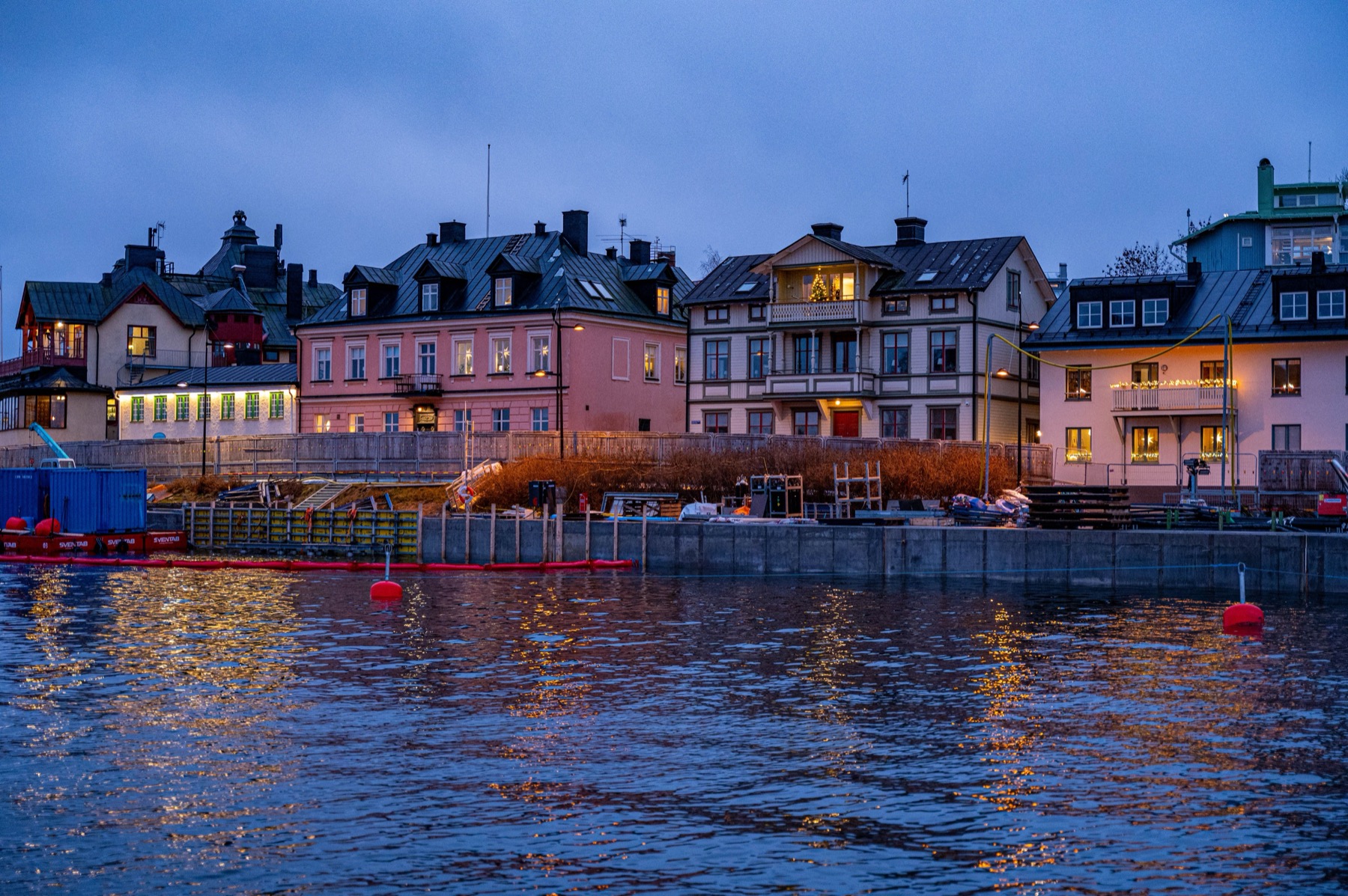
A quick summary for anyone who does not have time to read the whole article
- Top attraction: The absolute must-see is the Vasa Museum, where you can admire a perfectly preserved 17th-century warship.
- The metro as a gallery: A regular public transport ticket opens the door to the world’s longest art gallery, made up of Stockholm’s spectacularly decorated metro stations.
- Swedish fika: Take a break during the day for the traditional fika ritual — coffee with a cinnamon bun, without which it is impossible to function in Sweden.
- Transport and 2026 updates: Ryanair now flies directly to Arlanda Airport from major European hubs, and monthly public transport passes are being reduced by half.
- Money and payments: Sweden is an almost completely cashless society, so leave paper notes at home and rely on your payment card.
- Trips beyond the centre: If you have at least one extra day, definitely take a boat into Stockholm’s vast archipelago, which is home to thirty thousand islands.
The full destination guide: Sweden — guide and what to see
When to visit Stockholm
Choosing the right time to visit Sweden is absolutely crucial because the city has two completely different faces throughout the year. Each season offers entirely different experiences — and requires completely different things in your suitcase. If you are looking for long days and sunshine, the best time to visit the city is from May to September. During this period, the city largely lives outdoors, all the summer terraces are open, people sit by the water and boat services run at full capacity. The highlight of summer is the famous Midsummer celebration, held every year on the Friday between 19 and 25 June. It is a magical experience filled with flower crowns and dancing, but bear in mind that the city practically empties on that Friday and most shops remain completely closed.
If you visit in July, you need to be prepared for a phenomenon known as industrisemester. This means that Swedes leave en masse for their summer cottages and take a long month-long holiday. Many small cafés and independent restaurants close for the entire month of July, but fortunately the main tourist attractions and major sights are not affected at all. August, on the other hand, tempts visitors with traditional crayfish parties. By September, autumn is beginning, but the annoying mosquitoes have disappeared completely and the city is wrapped in beautiful golden colours. Many travellers consider September the very best month to visit because of its calm atmosphere and pleasant temperatures.
Stockholm in winter also has an enormous amount of charm, especially during the December Advent season, with its fairy-tale Christmas markets at Skansen. Be prepared, though, for the sun to set before three in the afternoon and for a damp chill from the sea to creep into the streets. Around midday, however, you can experience the so-called blue hour, when soft light creates perfect conditions for photography. February and March are ideal for anyone who loves a wintry atmosphere and sharp Nordic sunshine reflected in sparkling snow.
Where to stay in Stockholm
💡 Accommodation and experience tip: We prefer to look for accommodation on Booking.com, which often has the best cancellation policies. It is then worth comparing and booking tickets, trips and activities through GetYourGuide.
Stockholm is made up of several very different districts, and your choice of area can have a major effect on your overall experience of the city. Booking works reliably here and the selection is wonderfully varied, from budget hostels to boutique hotels right by the water. A night in a shared hostel room usually costs €25–€35, while a pleasant three-star hotel for two costs around €100–€145 per night. In general, the closer you are to the water and the historic centre, the more your accommodation budget will be stretched.
If you are looking for perfect romance and want all the historic sights within easy reach, stay right in the heart of Gamla stan. A popular option is Castle House Inn, which offers stylish rooms in beautiful historic buildings and is just a few steps from the Royal Palace. You will be close to all the main museums, although in the evening you should expect slightly higher prices in nearby restaurants and more tourists in the streets.
For lovers of modern design and shopping, Norrmalm around the T-Centralen main station is ideal. A great choice here is Downtown Camper by Scandic, a fantastic lifestyle hotel with an excellent rooftop pool and perfect access to the Arlanda Express. If you prefer a cheaper option in this convenient area, I recommend the modern Generator Stockholm, which offers a great price-to-quality ratio for younger travellers.
If you are after a more hip atmosphere filled with independent cafés and vintage shops, head to the southern island of Södermalm. Its boutique Hotel Rival offers truly fantastic breakfasts and the lively atmosphere of popular Mariatorget square. For connoisseurs who want to enjoy the luxury and tranquillity of the elegant Östermalm district, the designer Story Hotel Riddargatan is an excellent choice, with a wonderful industrial interior and first-class service.
25 Things to See and Do in Stockholm
Stockholm has so many interesting places that you could spend entire weeks here and still have plenty left to discover. Let’s get started — these are the places you really do not want to miss in Stockholm.
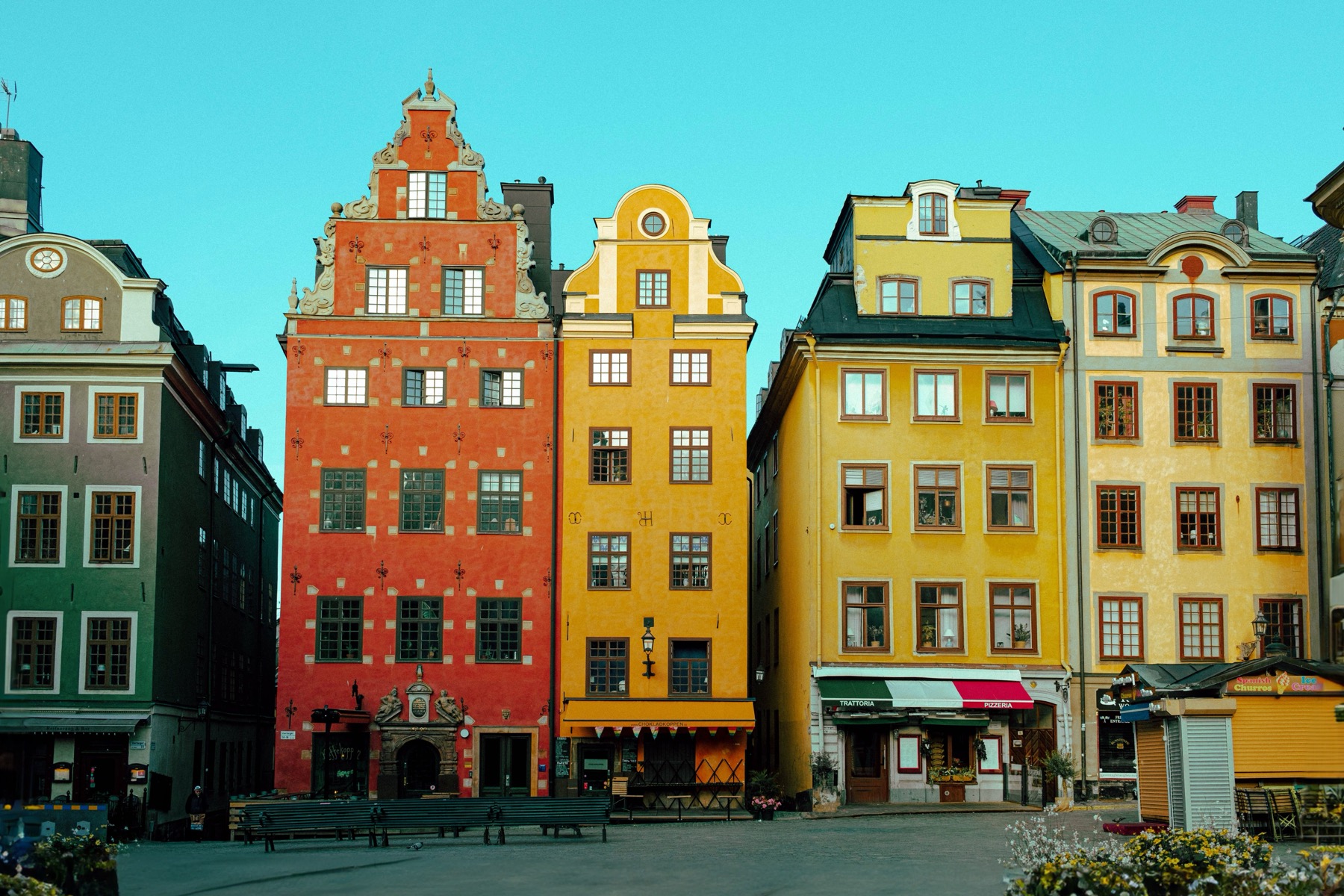
1. Gamla stan’s historic heart and Stortorget square
Your steps will probably take you first to Stadsholmen island, home to the wonderful historic centre of Gamla stan. Here you will find a maze of cobbled lanes, ochre and brick façades, and the wonderful atmosphere of the old town from the days of the Swedish Empire. Getting here is very easy: take the green or red metro line to the Gamla stan station of the same name. It is just one stop from T-Centralen station.
The main highlight is iconic Stortorget square, lined with the famous colourful houses you have probably seen on almost every Nordic postcard. The renowned Nobel Prize Museum is directly opposite, where you can learn plenty of fascinating information about the founder of this prestigious award. In winter, the square hosts the most beautiful Christmas market, while local cafés tempt you with thick hot chocolate topped with homemade whipped cream. The atmosphere is particularly magical in December.
As you wander through the historic centre, you can feel centuries of history and realise that the history of all Scandinavia was written here, and that powerful kings once walked these streets — although today you are more likely to meet crowds of tourists with cameras. That hardly takes away from the charm, though. Just remember to look up from time to time and admire the beautiful details on the old merchants’ houses.
💡 Tip: The square is packed with tourists and organised groups from huge cruise ships during the day. For the best photos without the crowds, come early in the morning or in the early evening, when soft golden light falls across the façades and the lanes become pleasantly quiet.
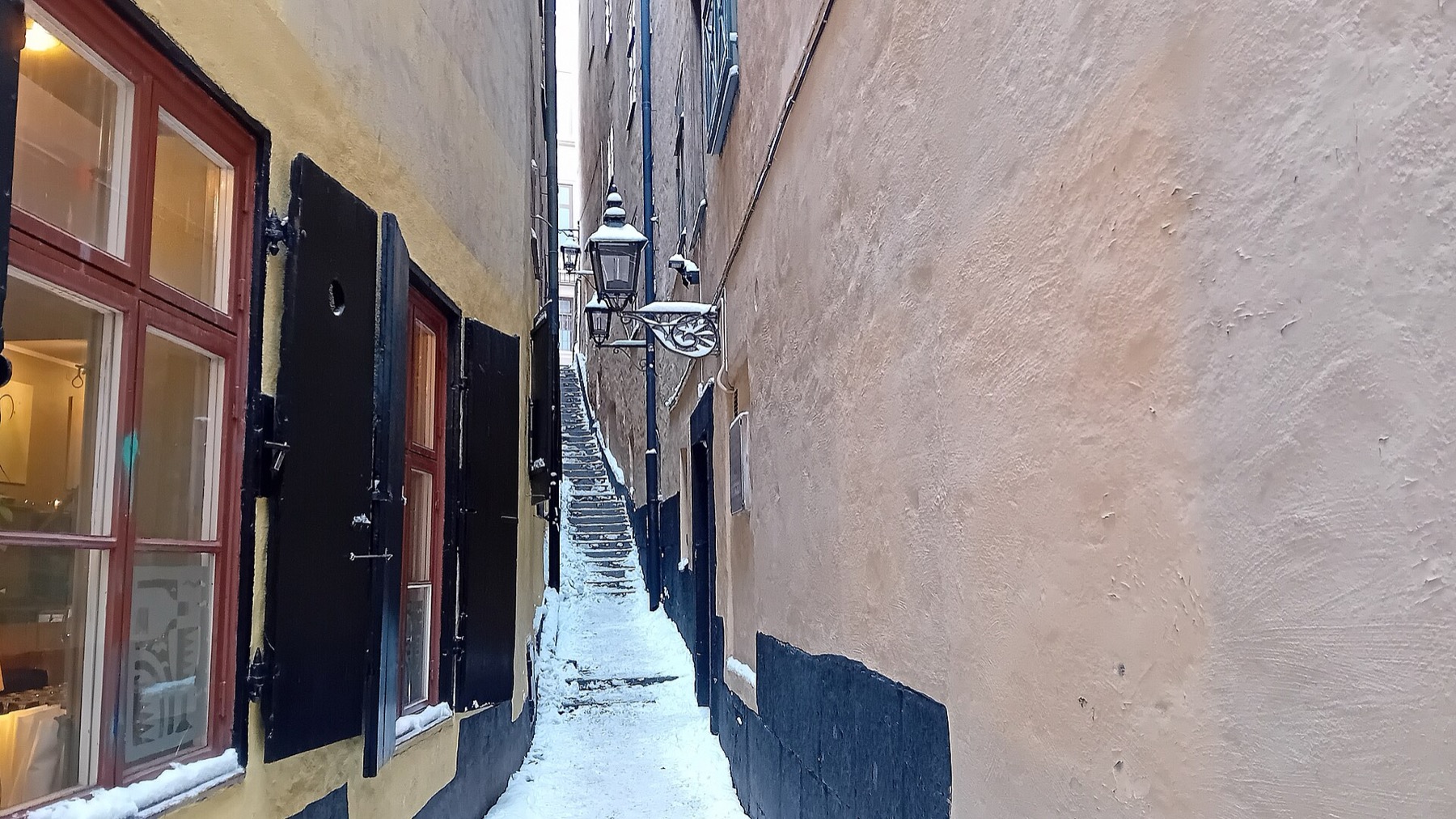
2. The narrowest lane, Mårten Trotzigs gränd, and Västerlånggatan
While exploring the old town, you will certainly come across the main pedestrian artery, Västerlånggatan, which is full of souvenir shops and busy restaurants. Experienced travellers advise against lingering here for too long and, above all, avoiding the overpriced establishments, which often serve mediocre food at astronomical prices. The shop windows overflow with plastic reindeer and typical tourist tat, so you will not find much genuine Swedish authenticity here.
Instead, look for Mårten Trotzigs gränd, which is officially the narrowest lane in all of Stockholm. It is inconspicuously tucked between the buildings, and you have to descend exactly thirty-six steep steps. At its narrowest point, the lane is just 90 centimetres wide, so if you are travelling as a pair, you certainly will not fit side by side. Walking through it is a pretty funny experience 😁 and a wonderfully unusual place for a quick photo.
This unassuming passage is named after a wealthy German merchant who bought properties here in the sixteenth century. Today, it is one of those small curiosities that make exploring Stockholm so much fun. It is also in a quieter part of the island, where organised groups are less likely to wander.
💡 Tip: When you get hungry in Gamla stan, simply turn off the main street into one of the lanes two or three blocks closer to the water. The quality of the food improves immediately and prices drop significantly, and if you take advantage of the daily lunch menu, you will save a decent amount of money while eating much better.
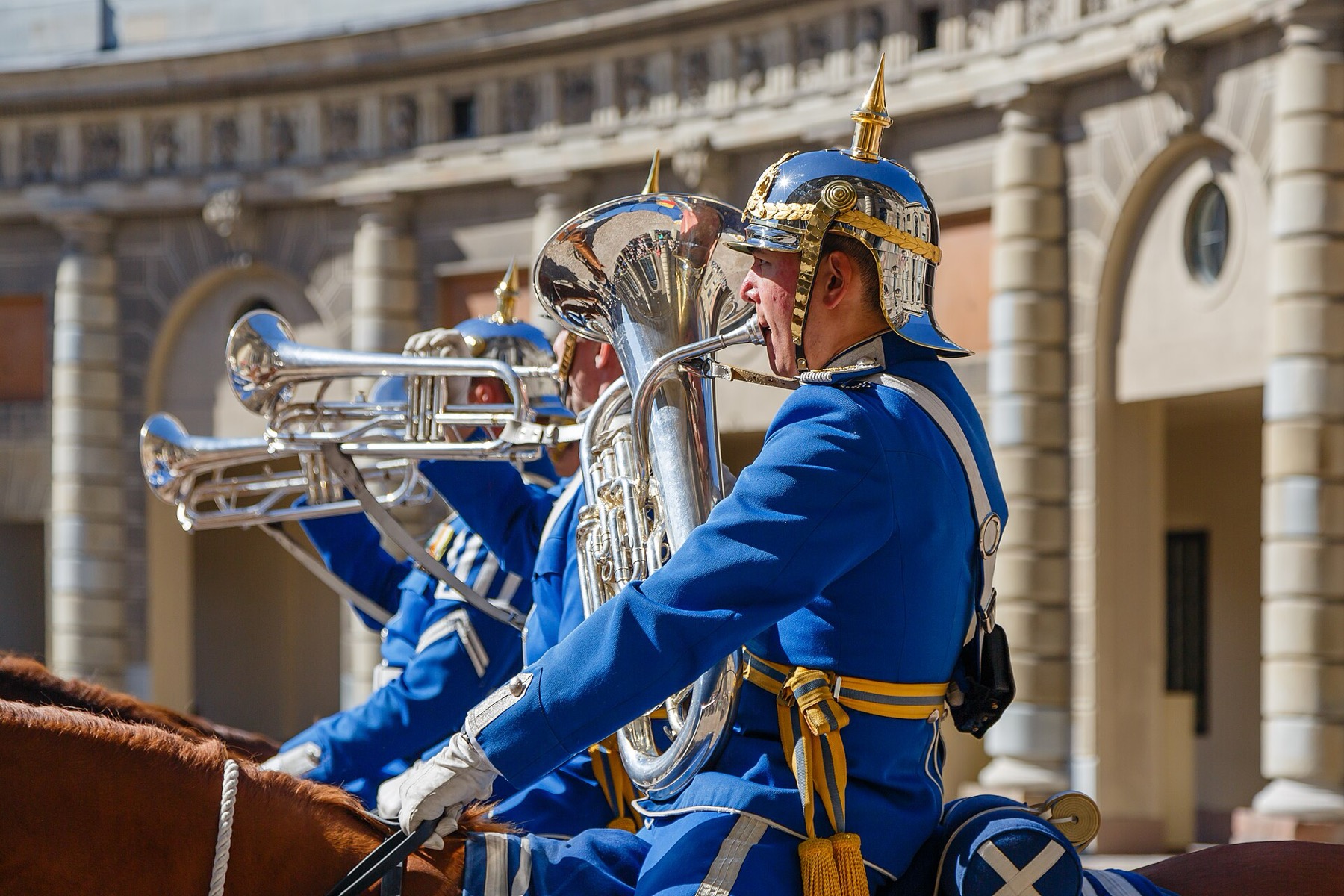
3. The Royal Palace and the ceremonial changing of the guard
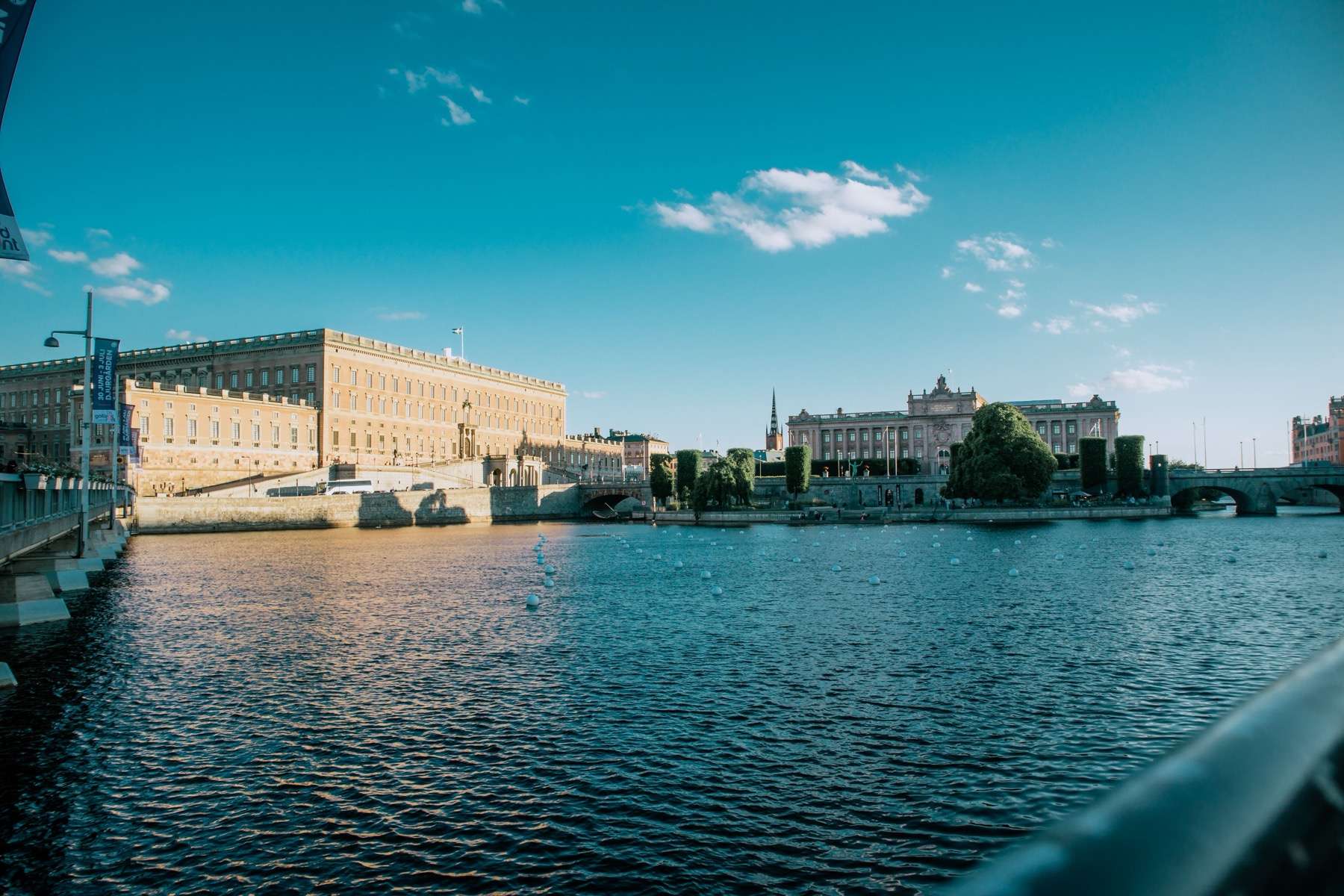
At the edge of the historic centre stands the monumental Royal Palace, Kungliga slottet, which is one of the largest functioning palaces in Europe. It serves as the official residence of the Swedish king and contains more than six hundred beautifully decorated rooms, including the royal apartments and a fascinating treasury filled with coronation jewels. Admission for an adult costs around 190 SEK, or approximately €35.
This huge Baroque building was constructed in the eighteenth century after the original medieval Tre Kronor castle was destroyed by fire. Today you can admire not only the lavish interiors but also the Museum of Antiquities and the Royal Armoury. Set aside two or three hours for the entire complex, because the amount of historical artefacts here is truly astonishing.
The ceremonial changing of the guard is another major highlight. It takes place to the accompaniment of a military band and sometimes even includes magnificent horses. It is a wonderful display of Nordic pride that you can enjoy completely free of charge in the palace’s outer courtyard. A large crowd always gathers around the courtyard, so the atmosphere is very ceremonial and lively.
💡 Tip: During the summer season, the changing of the guard takes place at exactly 12:15 every weekday, while on Sundays and public holidays the programme starts at 13:15. Arrive at least twenty minutes early to get a good view and avoid being squeezed into the back rows.
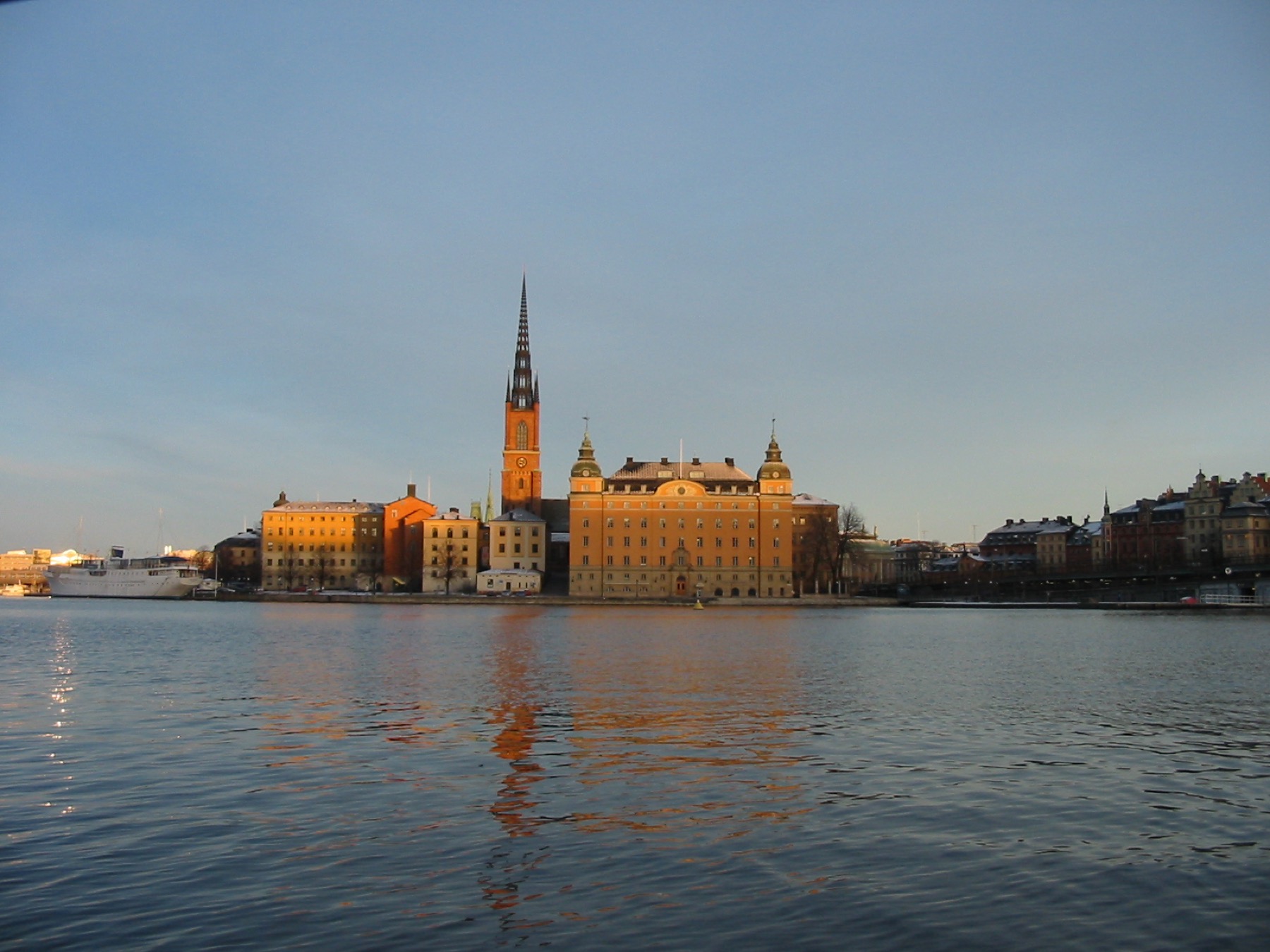
4. Riddarholmen island and the kings’ burial church
A short five-minute walk from busy Gamla stan takes you to the small island of Riddarholmen, which feels like a perfect oasis of calm in the middle of the capital. Its dominant landmark is the beautiful Riddarholmskyrkan, with its distinctive cast-iron tower rising majestically above Lake Mälaren and forming an unmistakable part of Stockholm’s skyline.
This 13th-century Gothic church is the final resting place of Swedish monarchs and contains the tombs of many famous kings and queens. Among those buried here are the legendary Gustavus Adolphus and Charles XII. The interior is decorated with the coats of arms of Knights of the Order of the Seraphim, and the entire building is steeped in profound sacred history. Admission costs around 65 SEK (approximately €12).
A walk along the island’s cobbled waterfront also offers one of the most beautiful views of Stockholm City Hall across the water, especially at sunset, when the town hall’s red bricks turn a deep orange. From the island, you also have a perfect view of boats passing through the city centre.
💡 Tip: The church is open to the public only during the summer season, from May to September. You can admire its exterior and the views over the water all year round, and you will hardly encounter any tourist crowds here because most people remain on the main island.
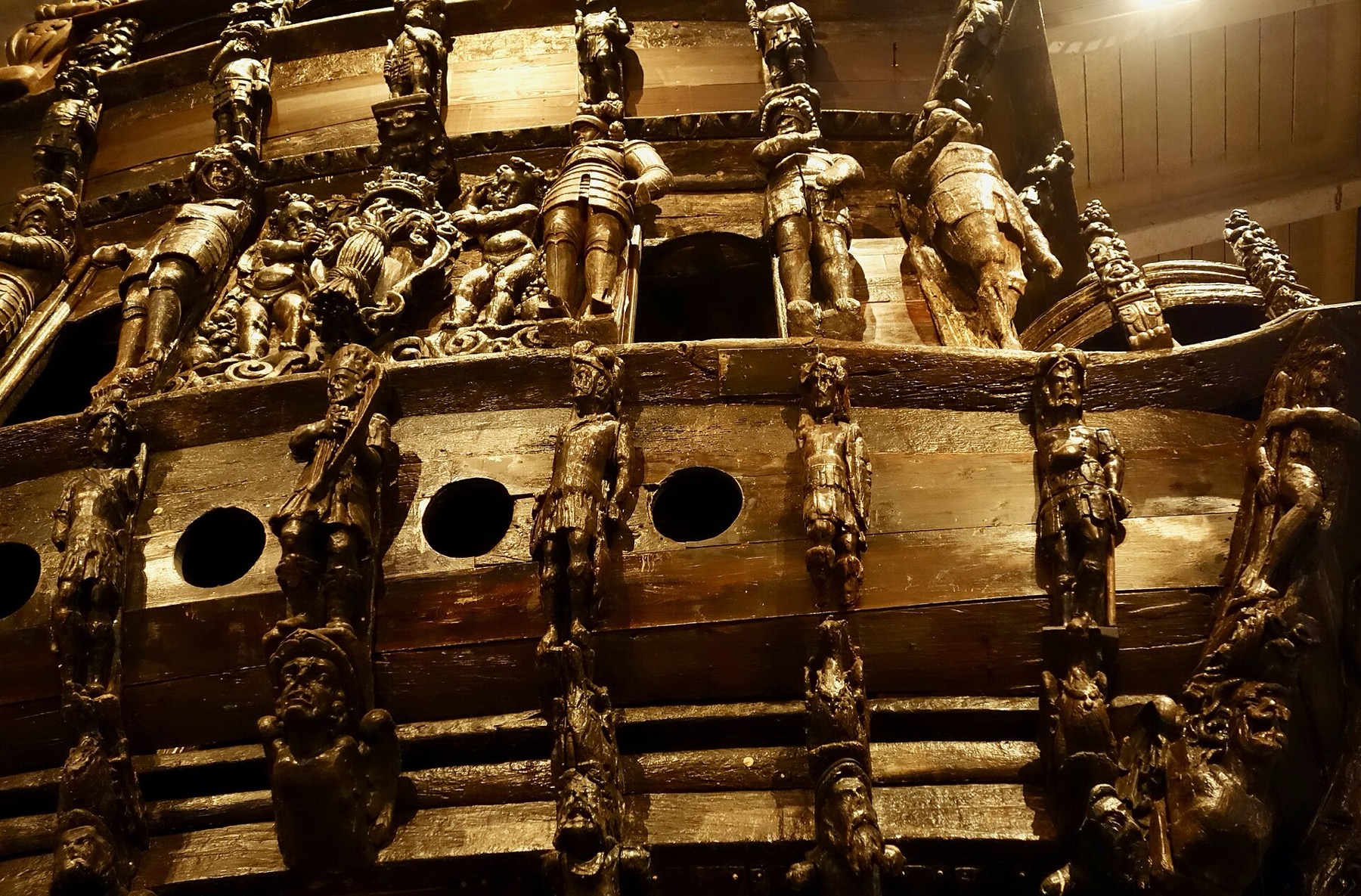
5. The Vasa Museum is an absolute must
Djurgården island is home to a true global rarity: the Vasa Museum, without a doubt. It is the most visited museum in all of Scandinavia and if you have time and money for just one paid attraction, this absolutely has to be it. You can get there easily on historic tram number 7, which runs from the city centre near the main station.
The story of the Vasa is a perfect example of unfortunate royal pride. This enormous warship sank in 1628 after sailing just 1,300 metres because King Gustavus Adolphus insisted on adding another row of heavy bronze cannons. The ship consequently became extremely top-heavy, and during the first strong gust of wind, water poured in through the open gun ports. It sank right in front of shocked onlookers on the shore.
It lay on the seabed for 333 years, and thanks to the low salinity of the water, where wood-boring worms cannot survive, it was preserved in an almost unbelievable condition. Today you can stand before the huge vessel, 98% of whose timber is original 17th-century material. It is decorated with hundreds of carved sculptures that were once intended to frighten Sweden’s enemies.
💡 Tip: Tickets cost 240 SEK in summer (around €40) and 195 SEK in winter (around €35). The museum is completely cashless, so you can pay only by card. Arrive as soon as it opens at 8:30 to avoid the endless queues that begin forming around 11:00.
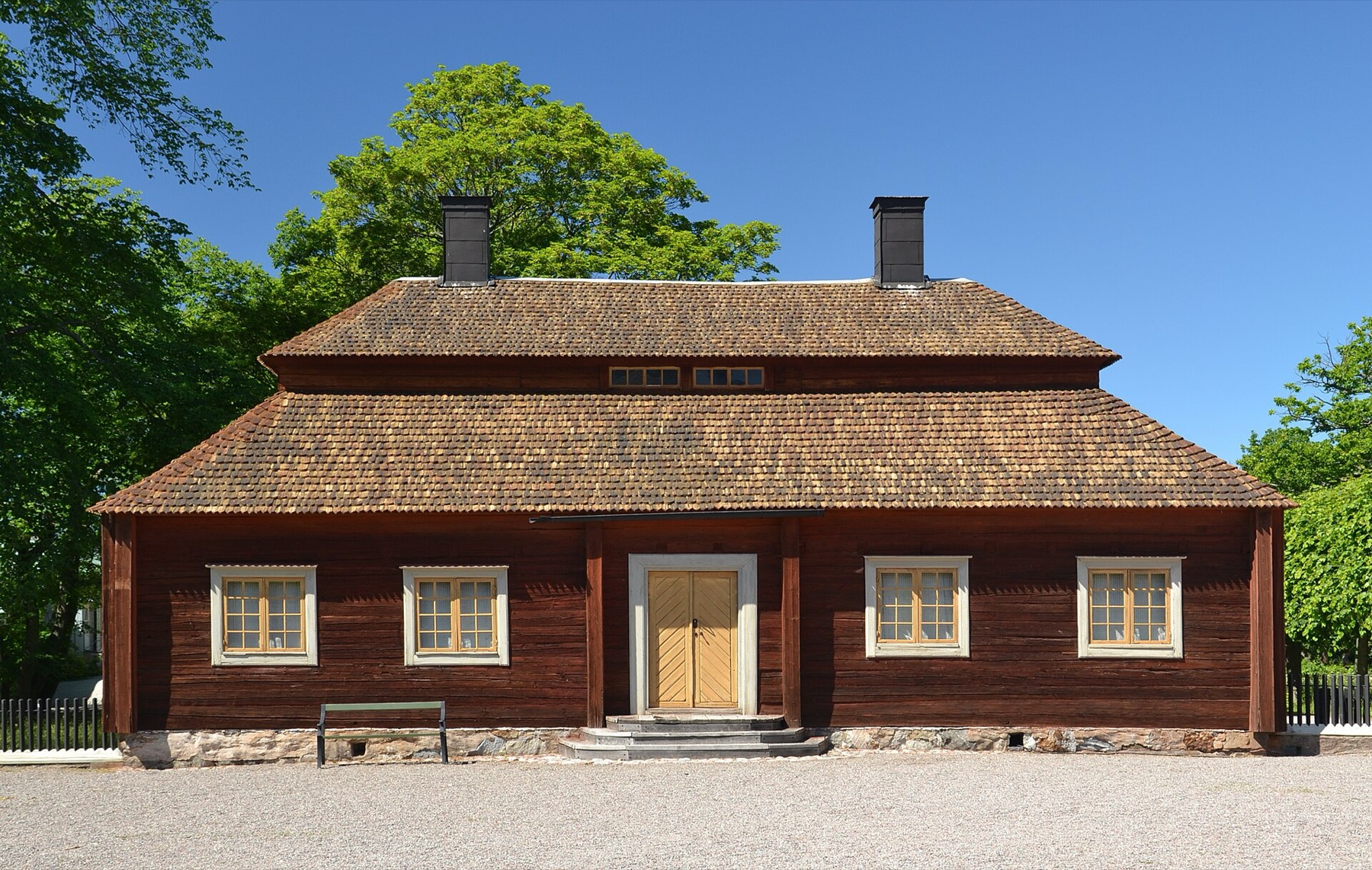
6. Skansen, the world’s oldest open-air museum
Just a short distance from the Vasa Museum, you will find famous Skansen, the world’s oldest open-air museum. Since 1891, Swedes have systematically moved historic wooden buildings here from all over the country in order to preserve traditional rural architecture and old crafts for future generations. The grounds are enormous and set in beautiful countryside, so allow at least half a day for your visit.
This wonderful park also contains an excellent Nordic zoo, where you can observe wild animals up close in surroundings resembling their natural habitat. You will find majestic moose, reindeer, wolverines, brown bears and seals here. It is an ideal place for families with children and a great alternative if you do not have time to travel thousands of kilometres to the wilds of Lapland.
Skansen hosts Sweden’s most important celebrations throughout the year. In June, you can experience traditional dancing around the maypole during Midsummer, while in December the grounds become a beautiful Christmas village filled with markets, mulled wine and local specialities. During your walk, you will also meet people in period costumes who will happily show you how bread used to be baked or glass blown.
💡 Tip: Admission varies according to the season, from 185 to 305 SEK (approximately €30–€50). Children under 15 enter free, but you must select a so-called zero-price ticket for them in advance on the official website, otherwise they will not be allowed through the turnstiles.
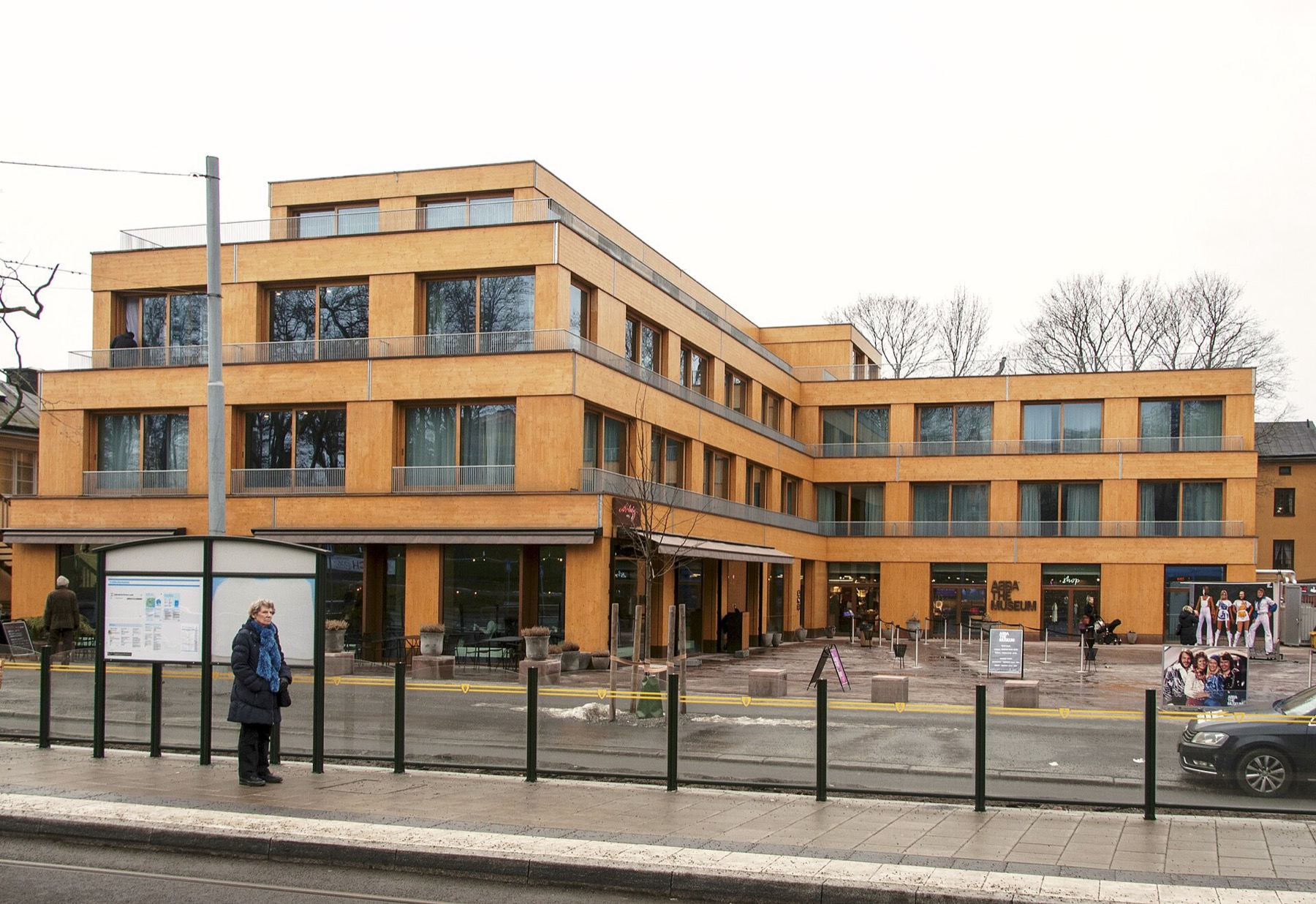
7. ABBA The Museum and its interactive world of music
For all pop music fans, a visit to ABBA The Museum is an absolute must and one of the main reasons to head to Djurgården. The museum’s slogan is “Walk in, dance out”, and that is exactly what awaits you inside, because this is certainly not just a dry exhibition of old glittering costumes and gold records celebrating huge album sales.
The whole space is designed to involve you as much as possible. You can sing in a hologram studio alongside the band, try mixing music in a replica of the original recording studio, or pick up a special red telephone whose number is known only to the group’s four members. They occasionally call the museum, giving you a chance to chat directly with a music legend.
It is fantastic entertainment for several hours, and the exhibitions draw you incredibly deeply into the musical world of the 1970s. You will also see the original helicopter from the cover of the Arrival album and a reconstruction of the summer cottage where Benny and Björn wrote their biggest hits.
💡 Tip: Tickets are among the more expensive ones at around 250 SEK (approximately €40), but enthusiastic traveller reviews agree that the experience is absolutely worth the money. Tram number 7 stops directly outside the entrance, so getting here could not be easier.
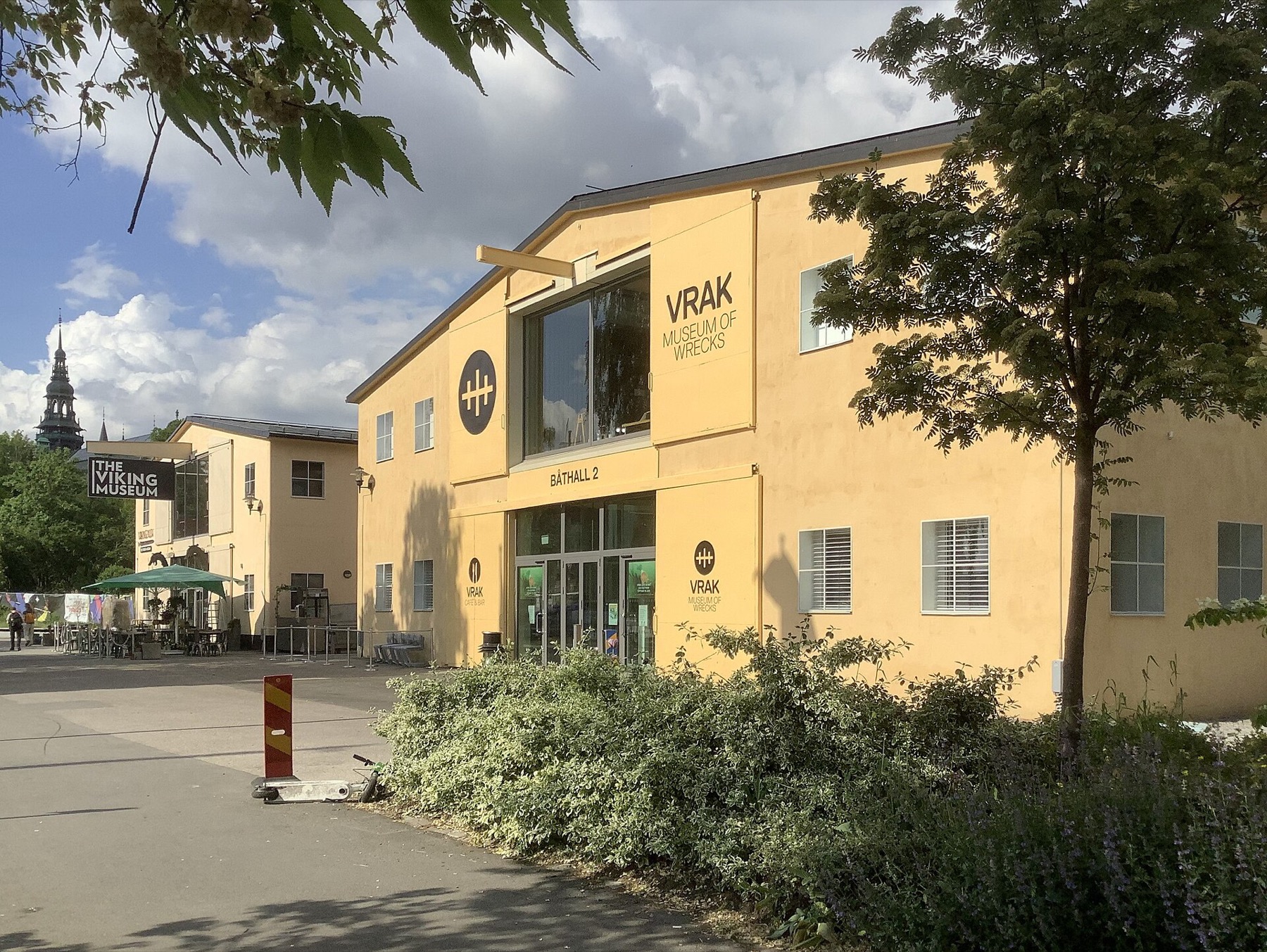
8. Vrak, Djurgården’s modern wreck museum
Djurgården has another maritime gem: the completely new and modern Vrak museum. It focuses on the fascinating history of sunken ships in the Baltic Sea and uses state-of-the-art digital technology and breathtaking light projections to tell these stories. Unlike the Vasa Museum, you will not find one enormous ship here, but an entire network of underwater stories.
Instead of boring display cases, the exhibition takes you on a virtual dive to the seabed. You explore the wrecks of old ships through holograms and projections that look almost too real. You will learn plenty about underwater archaeology and discover why wooden ships are preserved so well in the Baltic thanks to the complete absence of wood-boring worms.
The entire museum has a mysterious atmosphere and makes a perfect addition to Sweden’s maritime history. You will follow sailors’ stories, discover treasures recovered from the depths and understand how dangerous it was to sail through the harsh Nordic waters in centuries past. It is a great experience even for people who do not usually visit many museums.
💡 Tip: Vrak and the Vasa Museum are just a few dozen metres apart. You can easily combine the two visits in one afternoon and create a complete maritime excursion. I recommend starting with Vasa first thing in the morning and saving Vrak for later.
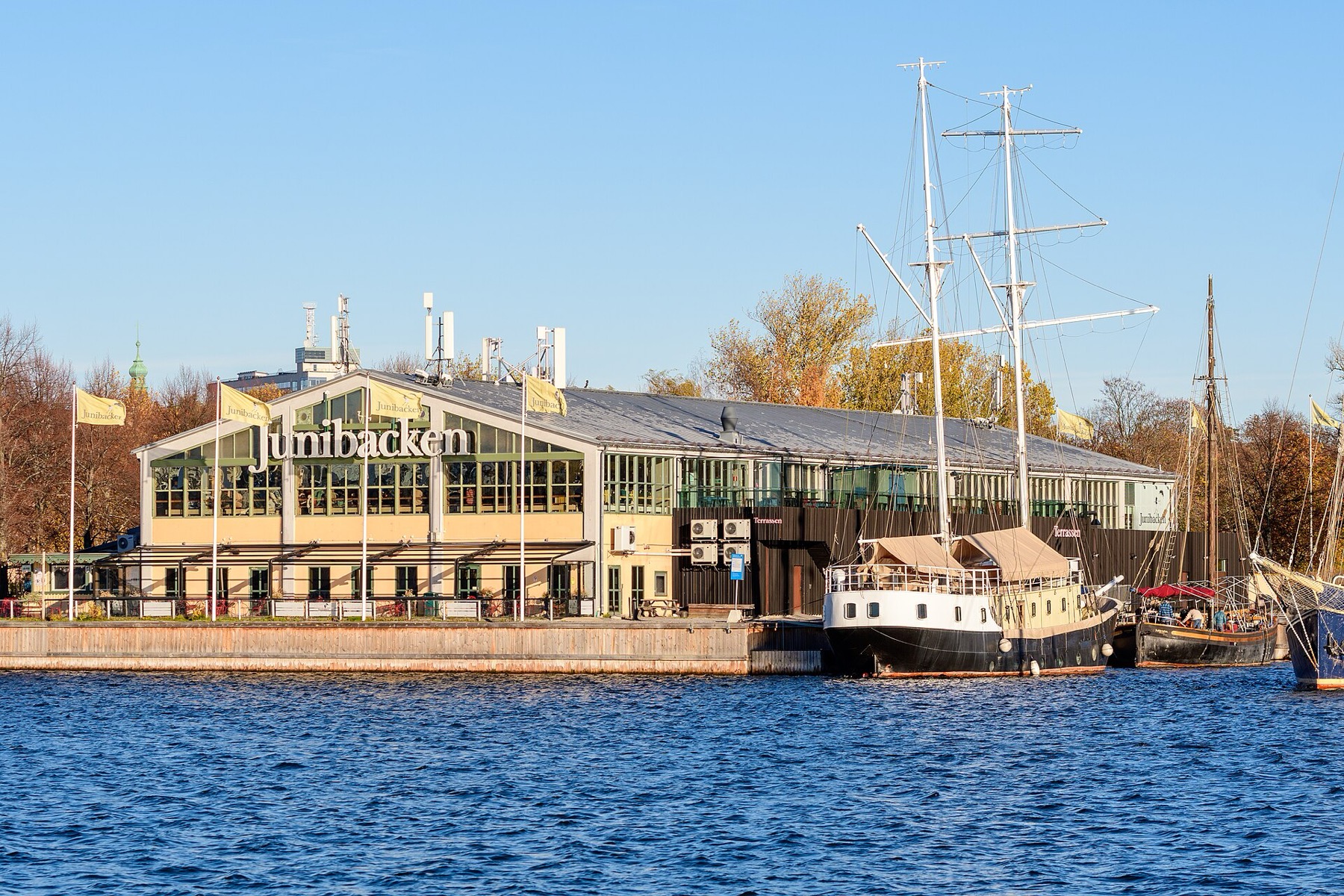
9. Junibacken and Astrid Lindgren’s Enchanted World
If you’re travelling with younger children, you really shouldn’t miss Junibacken, an interactive world filled with books and fairy tales by the famous author Astrid Lindgren. The atmosphere here is truly magical, full of bright colours, and will transport more than one adult visitor back to their childhood. You’ll find it on Djurgården island, just a short walk from the Vasa Museum.
The biggest attraction in the entire complex is the Story Train. During the ride, it takes you above detailed miniature landscapes of Sweden and straight into beloved stories. You’ll meet Pippi Longstocking, mischievous Emil of Lönneberga and the Brothers Lionheart, and experience plenty of adventures surrounded by beautiful, meticulously crafted scenery.
Besides the little train, children will find a huge indoor playground shaped like Villa Villekulla, where they can climb, slide and play with props from the books. The complex also has a large children’s bookshop and a very pleasant restaurant with beautiful views over the water, where you can relax after playing.
💡 Tip: The train ride has excellent narration in many languages. Your children will understand exactly what is happening around them, even if they don’t speak Swedish yet. Simply ask the staff for the right language channel.
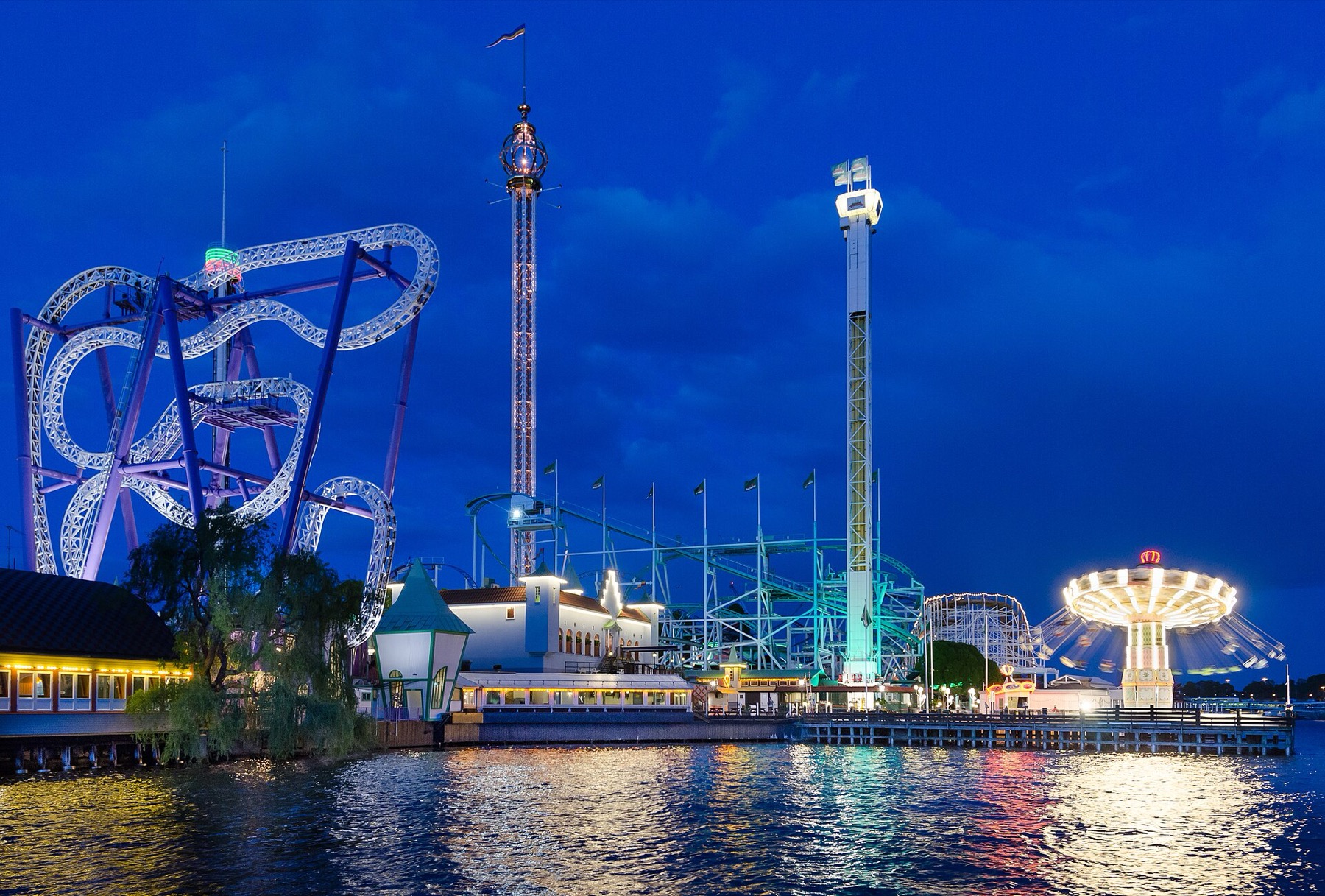
10. Gröna Lund Amusement Park Packed with Adrenaline
Right on the shore of Djurgården island lies the historic Gröna Lund amusement park, which offers the perfect combination of adrenaline and beautiful views over the water. You’ll find everything here, from old-fashioned romantic carousels for the youngest visitors to modern roller coasters and free falls that will reliably get your heart racing and test your courage.
For 2026, the park is preparing a new, seriously intense attraction called Spindeln, which is set to be the first Super Jumper in Sweden. They’re also preparing a special K-street K-pop zone for the summer season, filled with modern music and excellent Asian food. The park is also one of the city’s best concert venues, where well-known Swedish and international bands perform on the outdoor stage throughout the summer.
The park’s atmosphere is absolutely magical in the evening, when thousands of colourful bulbs light up. You can stroll along the wooden piers, breathe in the smell of candy floss and watch illuminated boats passing right beside the roller coasters.
💡 Tip: If you’re planning to try several adrenaline rides, it’s definitely worth it to buy an all-day wristband that gives you unlimited rides. It will save you a lot of time and spare you from paying separately at every single attraction.
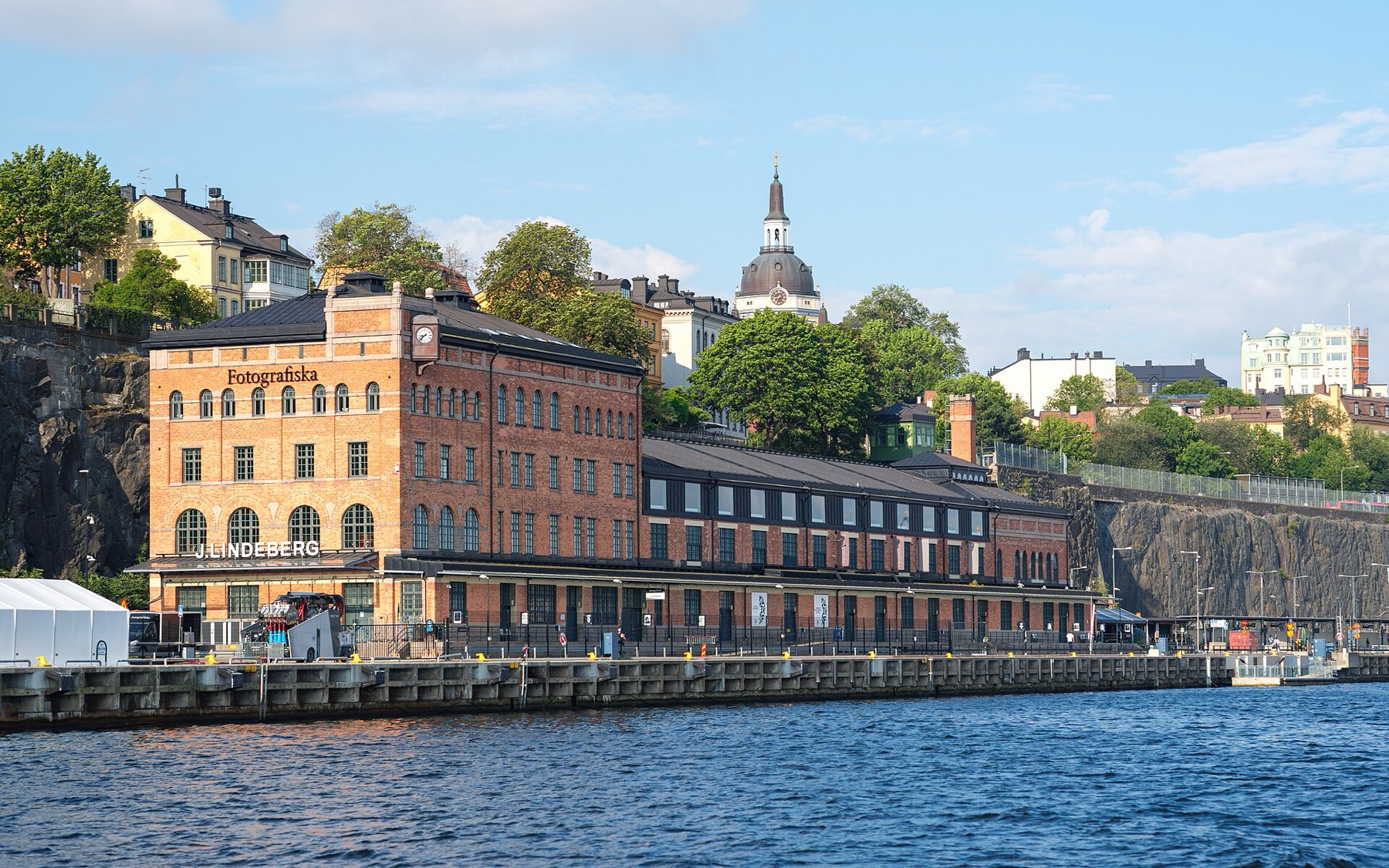
11. Fotografiska and Fascinating Contemporary Art
Fotografiska is located on the steep northern shore of Södermalm island and is one of the world’s largest venues for contemporary photography. This isn’t a classic, sleepy museum with a permanent collection, but rather a lively art gallery. It regularly rotates stunning exhibitions by international and local artists and responds to current social issues. The closest metro station is the busy Slussen.
The old red-brick customs house contrasts with a modern interior filled with large-format photographs. Besides excellent visual art, Fotografiska also offers an acclaimed restaurant and a fantastic top-floor café with breathtaking panoramic views over Stockholm. It’s the perfect place to unwind in the early evening after a busy day and soak up the artistic atmosphere over a glass of good wine.
The gallery also takes a strong approach to sustainability. The restaurant focuses on sustainable plant-based food, and zero waste is considered a matter of course here, making the food itself a small exhibition.
💡 Tip: The gallery stays open very late, usually until 23:00. That means you can easily visit after a good dinner, when all the other traditional museums have long since closed, and enjoy the art in peace.
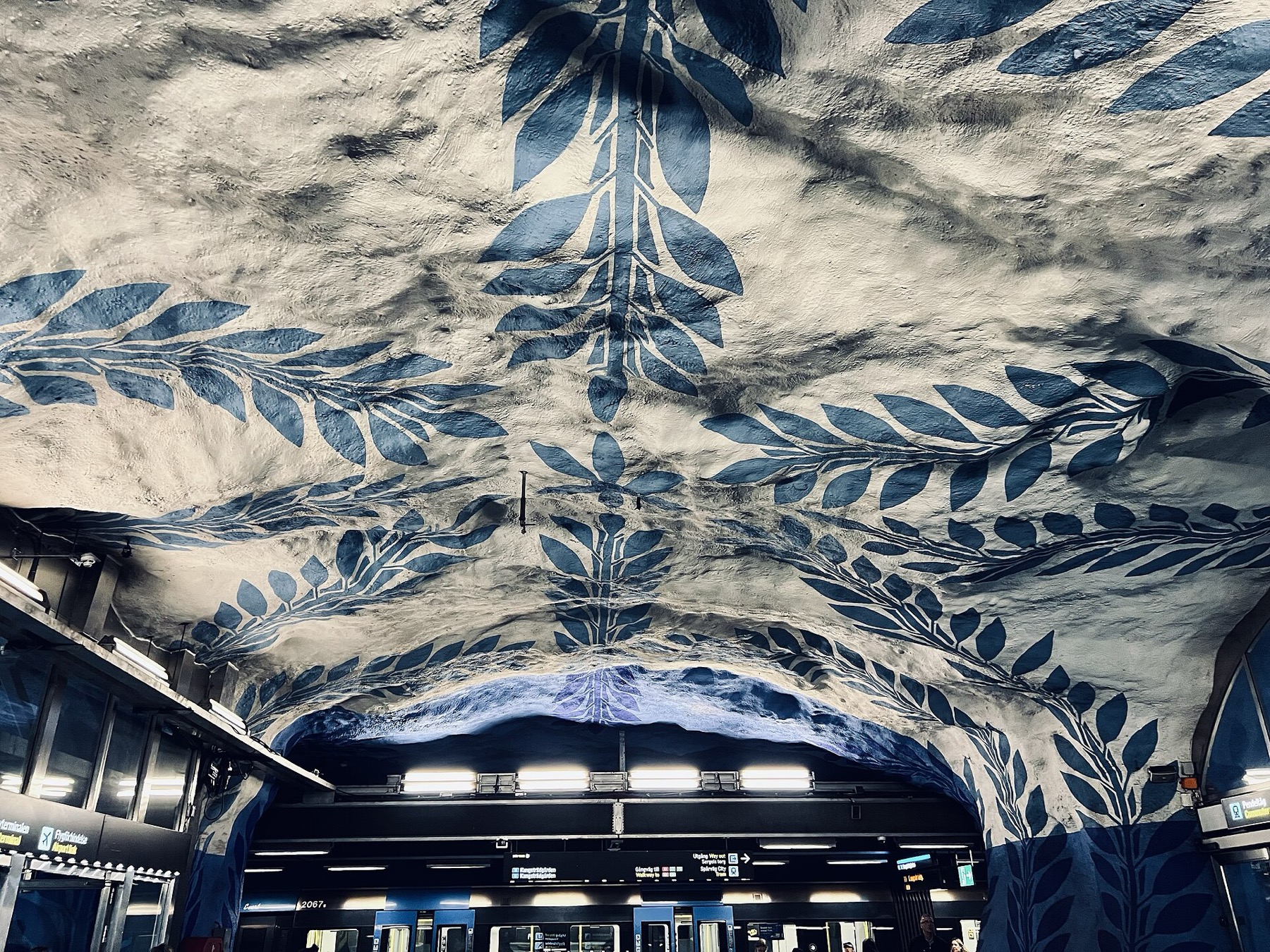
12. The Metro as a Gallery: T-Centralen and Kungsträdgården Stations
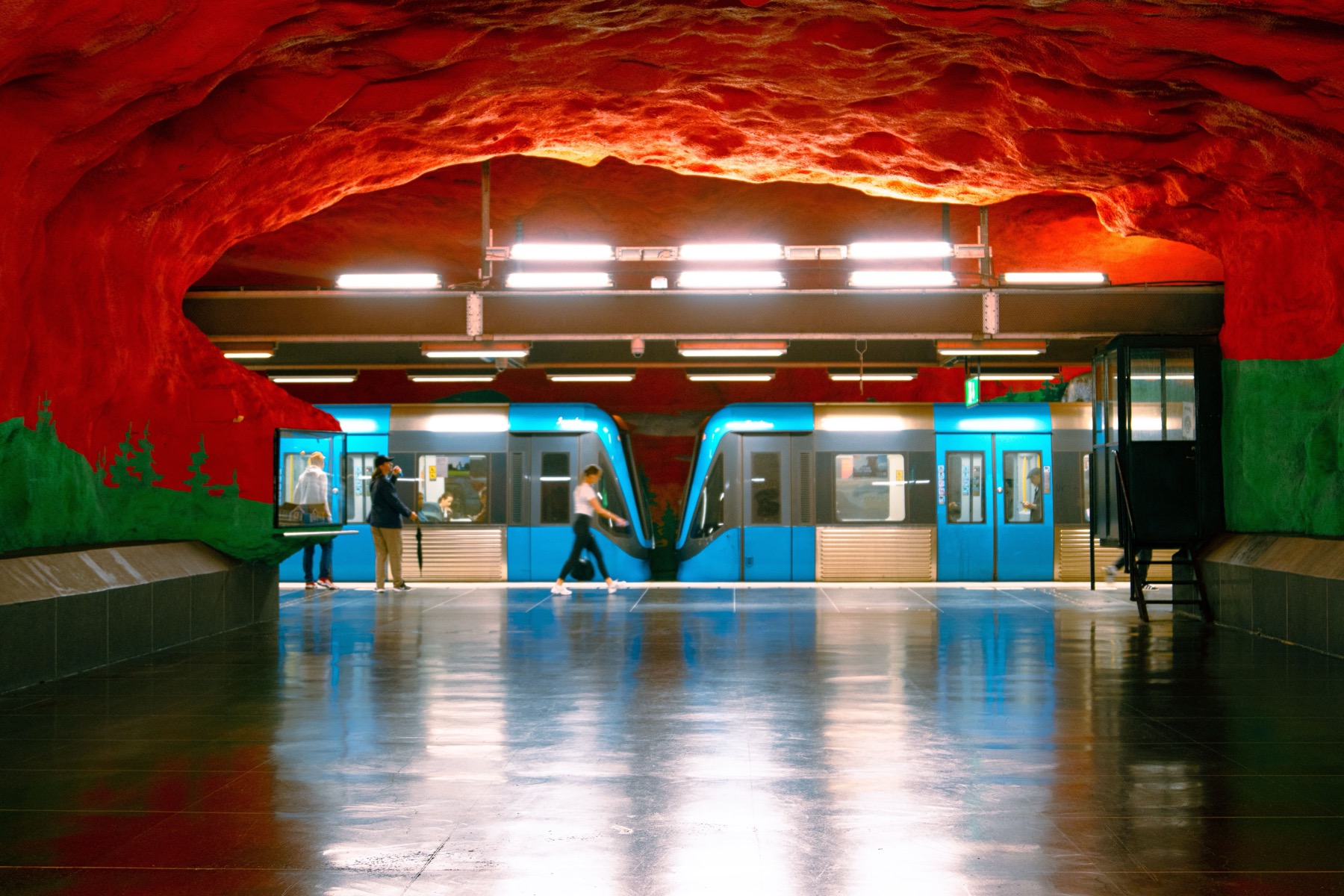
Stockholm’s metro, or Tunnelbana, holds an incredible world record because it functions as the world’s longest art gallery. Around 90 of its 100 stations have been decorated by different artists. All you need to explore them is a regular single public transport ticket costing 42 SEK (around €4), and you can spend the full 75 minutes admiring sculptures, mosaics and huge paintings right in the cool underground.
The most photogenic station is the blue line’s main interchange, T-Centralen. It surrounds you with calming blue vines and flowers painted directly onto rough, unfinished rock. It feels as if you’ve stepped into a beautiful ice cave. The neighbouring Kungsträdgården station, meanwhile, looks like a mysterious archaeological excavation and conceals elements of the old Makalös Palace, which once stood above the city.
Exploring the metro is the perfect activity for days when it’s raining or freezing outside. The entire blue line is essentially carved deep into the rock, and each station offers a completely different artistic concept.
💡 Tip: The best time to discover the underground art is late in the evening or on a weekend morning, when you can avoid the crowds of locals commuting home from work and take great photos without people in them.
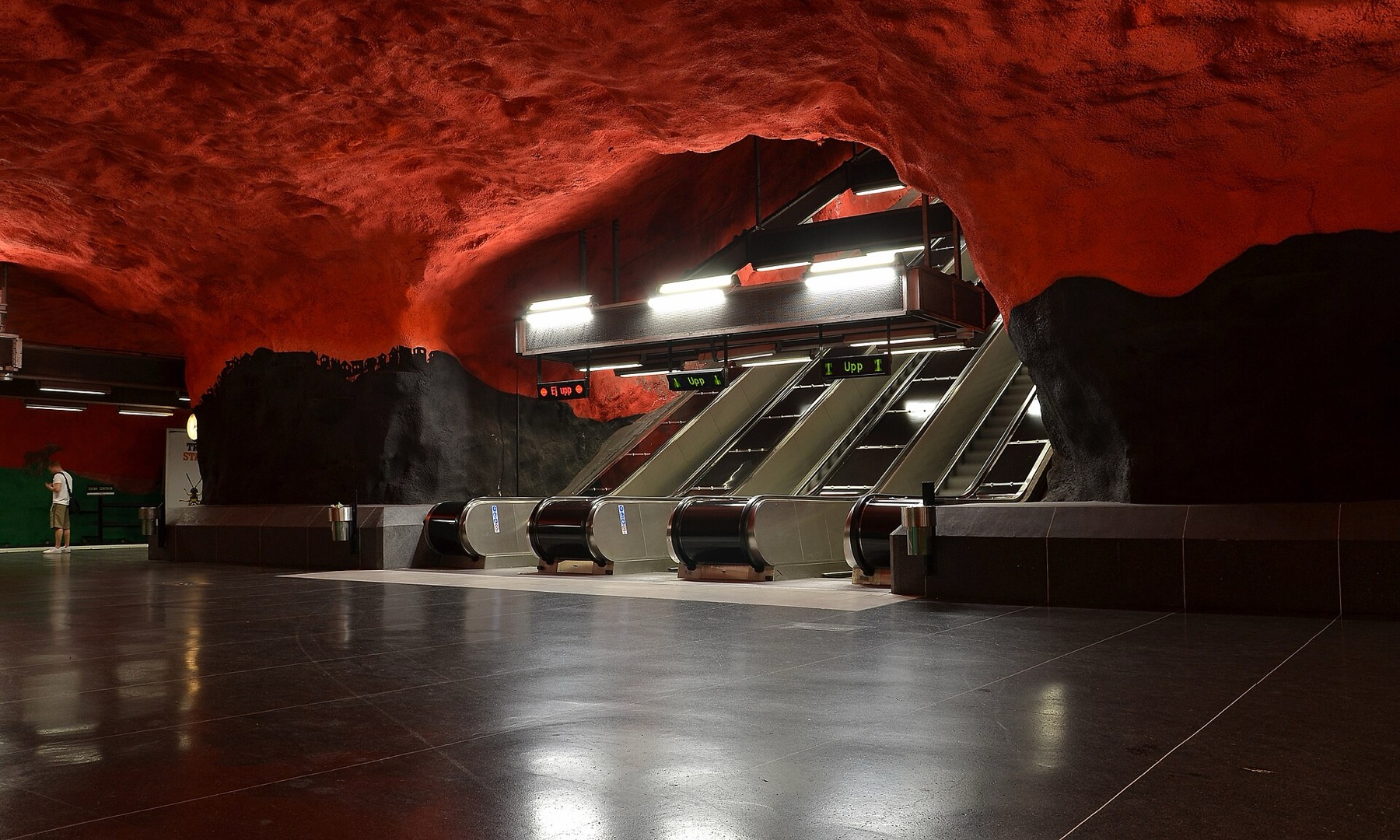
13. Solna centrum and Stadion Metro Stations
If you continue along the blue metro line, you’ll reach Solna centrum, a station that is visually striking and filled with bold contrasting colours. Its bright red, raw ceiling represents a dramatic evening sky, beneath which a kilometre-long spruce forest stretches across the walls, symbolising Swedish nature giving way to rapid post-war industrialisation. The artwork also includes small details such as campers and falling trees.
The red metro line, meanwhile, offers the beautiful and highly optimistic Stadion station, which was decorated with a huge, colourful rainbow painted against a bright sky-blue background. The station was built near the old 1912 Olympic stadium and is meant to evoke the Olympic rings, the spirit of sport and the idea of worldwide brotherhood.
Each of these stations tells its own story and encourages passengers to pause for a moment and look up from their phones. That’s exactly the kind of public art people continue talking about over dinner at home.
💡 Tip: Set aside at least two full hours for your own metro art tour so that you can take your time exploring the most interesting stations on different lines without rushing during transfers. A regular ticket is valid for 75 minutes, so you’ll have plenty of time to cover a lot.
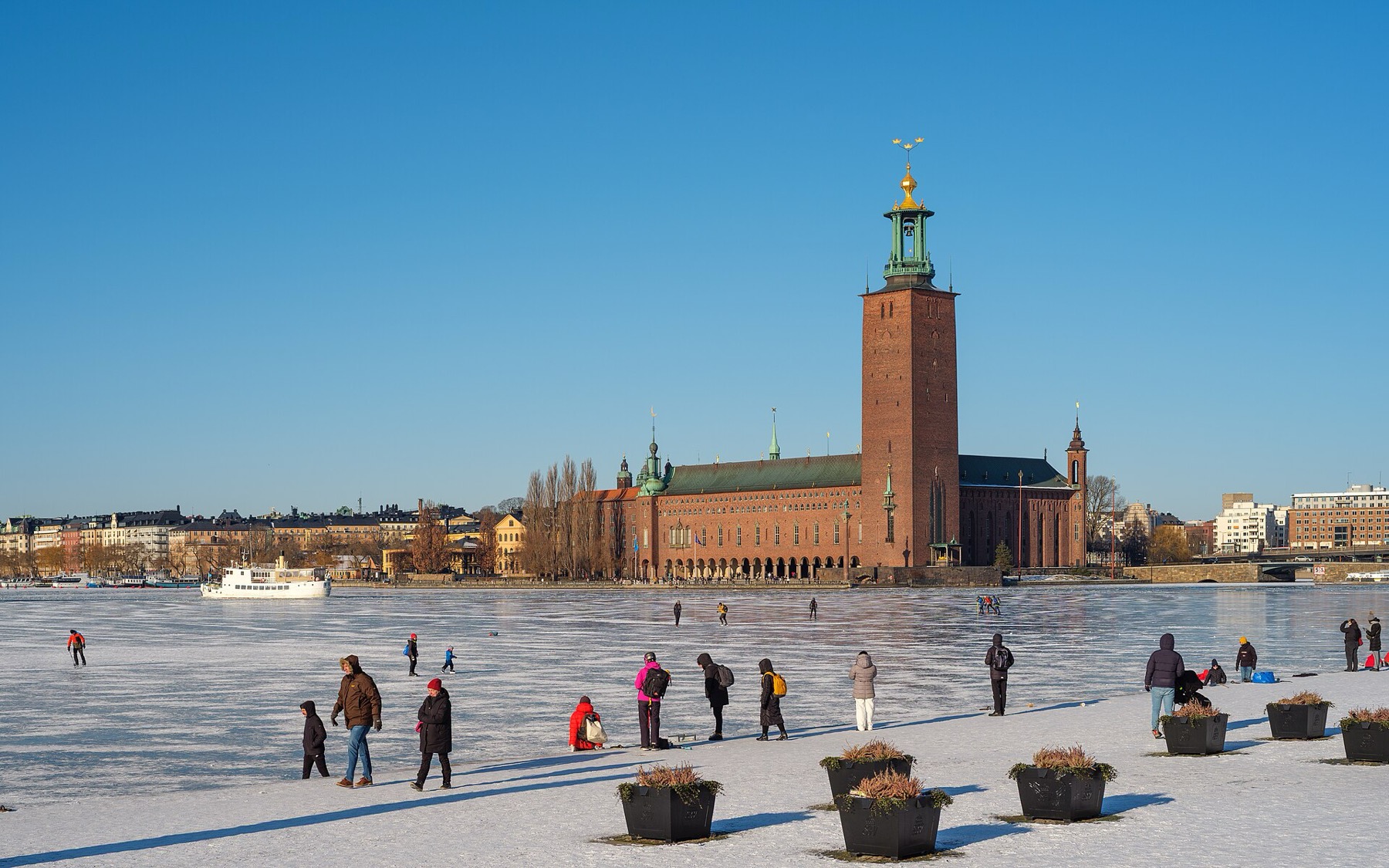
14. Stadshuset City Hall and the Famous Nobel Banquet
Stockholm City Hall, or Stadshuset, is one of the city’s most distinctive buildings, and its characteristic red-brick tower can be seen from far away. It stands at the very tip of Kungsholmen island and is reflected in the waters of Lake Mälaren. This is where the famous banquet following the Nobel Prize ceremony takes place every year on 10 December, bringing together some of the brightest minds from around the world.
Guided tours take you into the impressive Blue Hall, which paradoxically isn’t blue at all but reveals its raw brickwork. You then continue into the magnificent Golden Hall, whose walls are decorated with an incredible 18 million golden mosaic tiles. They depict Swedish history and create an extraordinarily luxurious impression. If you enjoy views, you can climb the stairs to the city hall tower, where you’ll have a fantastic view over the entire historic centre and the surrounding islands.
💡 Tip: The tower is open to the public only during the summer season, from May to September. Tower tickets are sold separately and have a specific time slot, so it’s best to buy yours first thing in the morning, as capacity is limited for safety reasons.
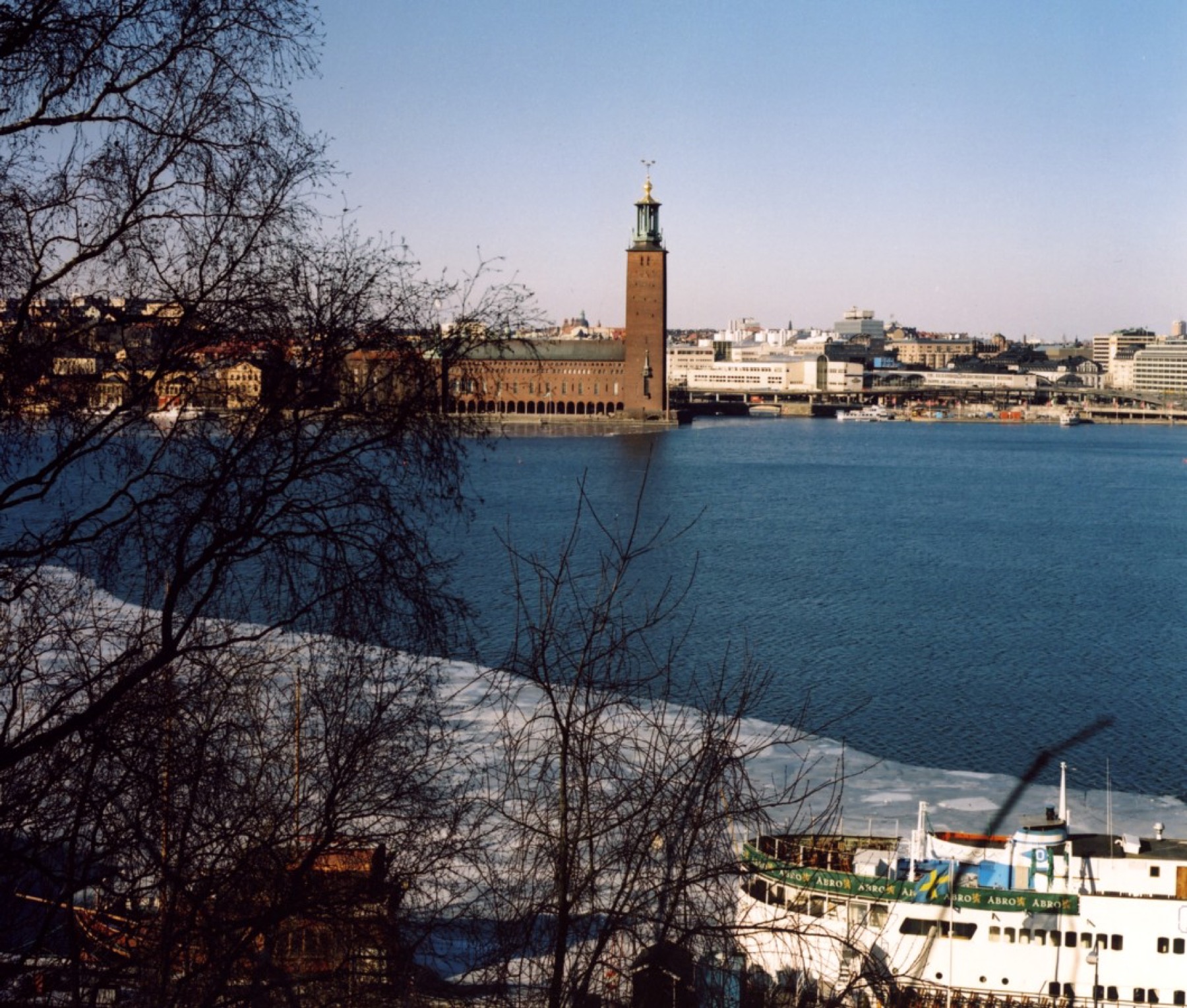

15. Monteliusvägen Viewpoint and Views over the Islands
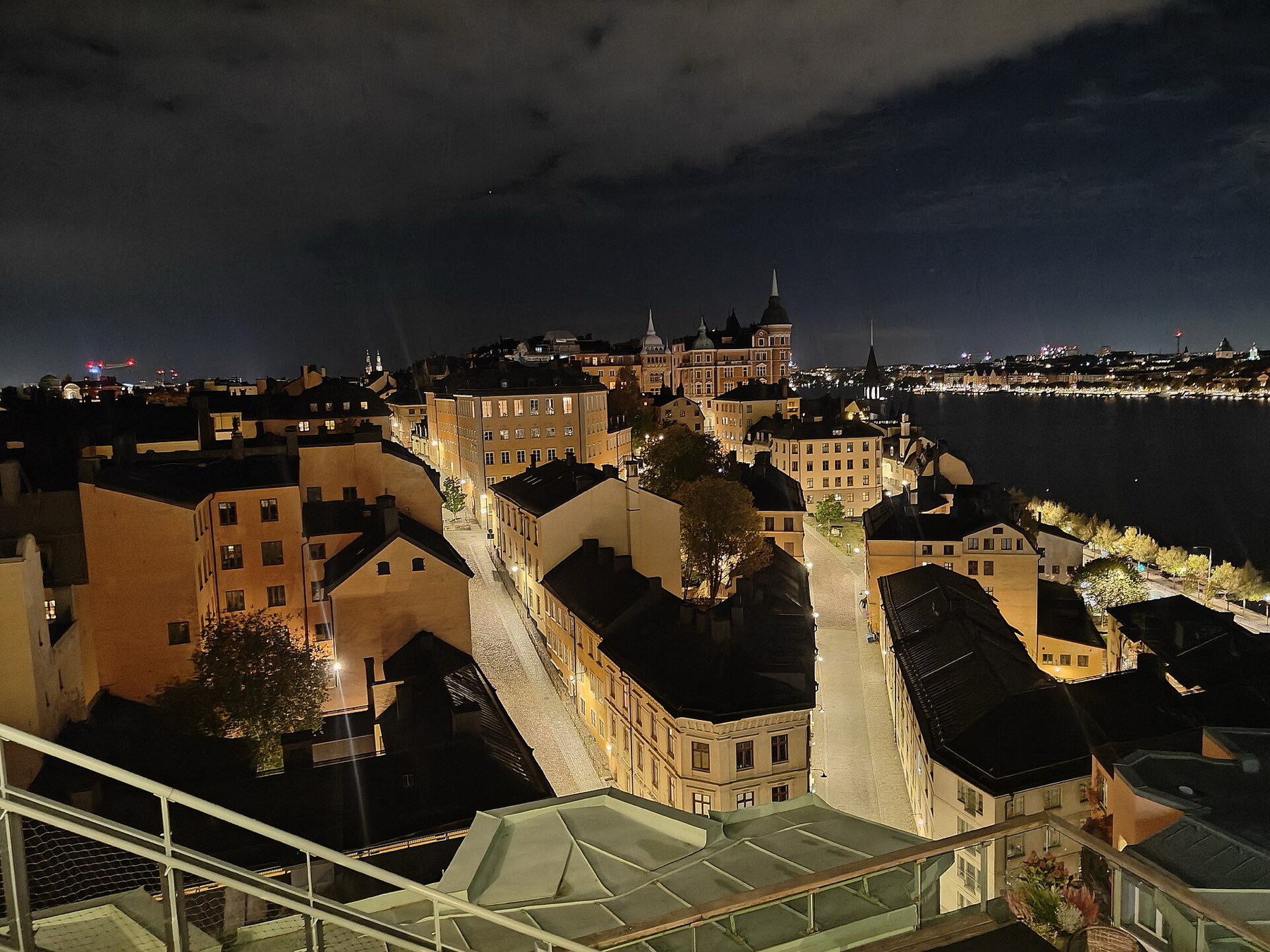
Södermalm rises high above the water on enormous granite cliffs, making it the perfect viewing platform over the entire city. When you want to take the best photo of Stockholm, head to the Monteliusvägen promenade. It’s a narrow path about half a kilometre long, cut directly into the rock. The closest metro station is Mariatorget on the red line, from where it’s just a ten-minute uphill walk.
From here, Gamla stan, City Hall and Lake Mälaren are laid out before you, and it’s easily one of the best places to watch the sunset. The path is lined with old wooden houses dating back to the days when the poor working class lived here. The entire area has a wonderfully romantic and peaceful atmosphere, especially once the street lamps come on.
💡 Tip: The path can be quite slippery and dangerous in winter because of snow and ice. Wear sturdy shoes with good soles and take extra care when walking beside the steep drop, as the railing doesn’t provide complete protection.
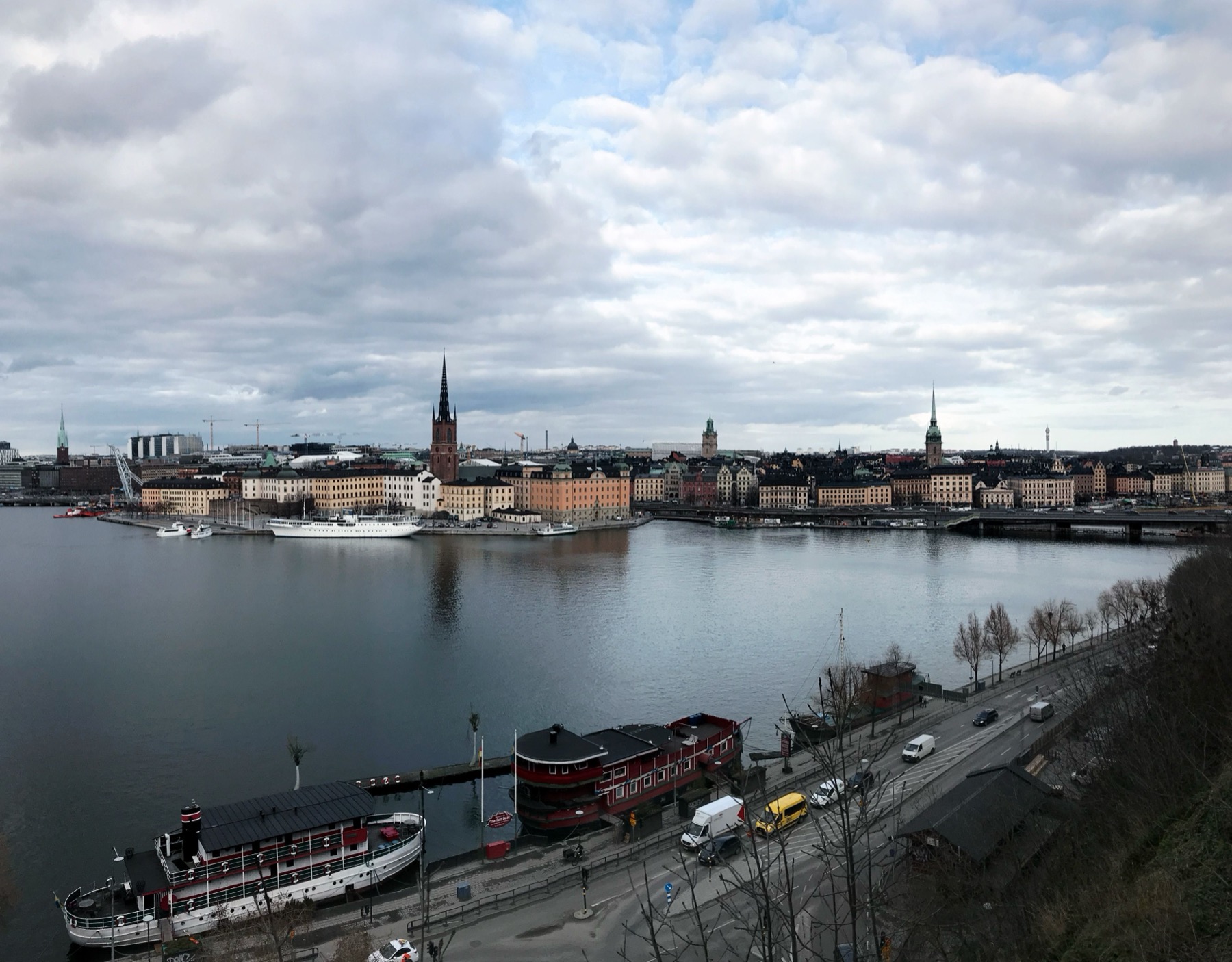
16. Views from Fjällgatan, Skinnarviksberget and Katarinahissen
If you still haven’t had your fill of spectacular views, Södermalm offers several more wonderful places to explore. The historic street of Fjällgatan on the island’s north-eastern edge is lined with beautifully preserved wooden houses and offers a broad panoramic view of Djurgården island and the busy harbour. Huge cruise ships stop here too, and you can watch them from above.
Skinnarviksberget is the highest natural point in central Stockholm. It consists of large bare granite rocks where locals often come for summer picnics and evening drinks with friends. The outdoor industrial Katarinahissen lift near Slussen is also worth mentioning. It connects the waterfront with the elevated neighbourhood and doubles as an excellent metal viewing platform.
💡 Tip: Katarinahissen recently underwent an extensive and very costly renovation. You can take the lift up for a small fee, or simply climb the wooden stairs beside the structure for free and spend the money you save on coffee.
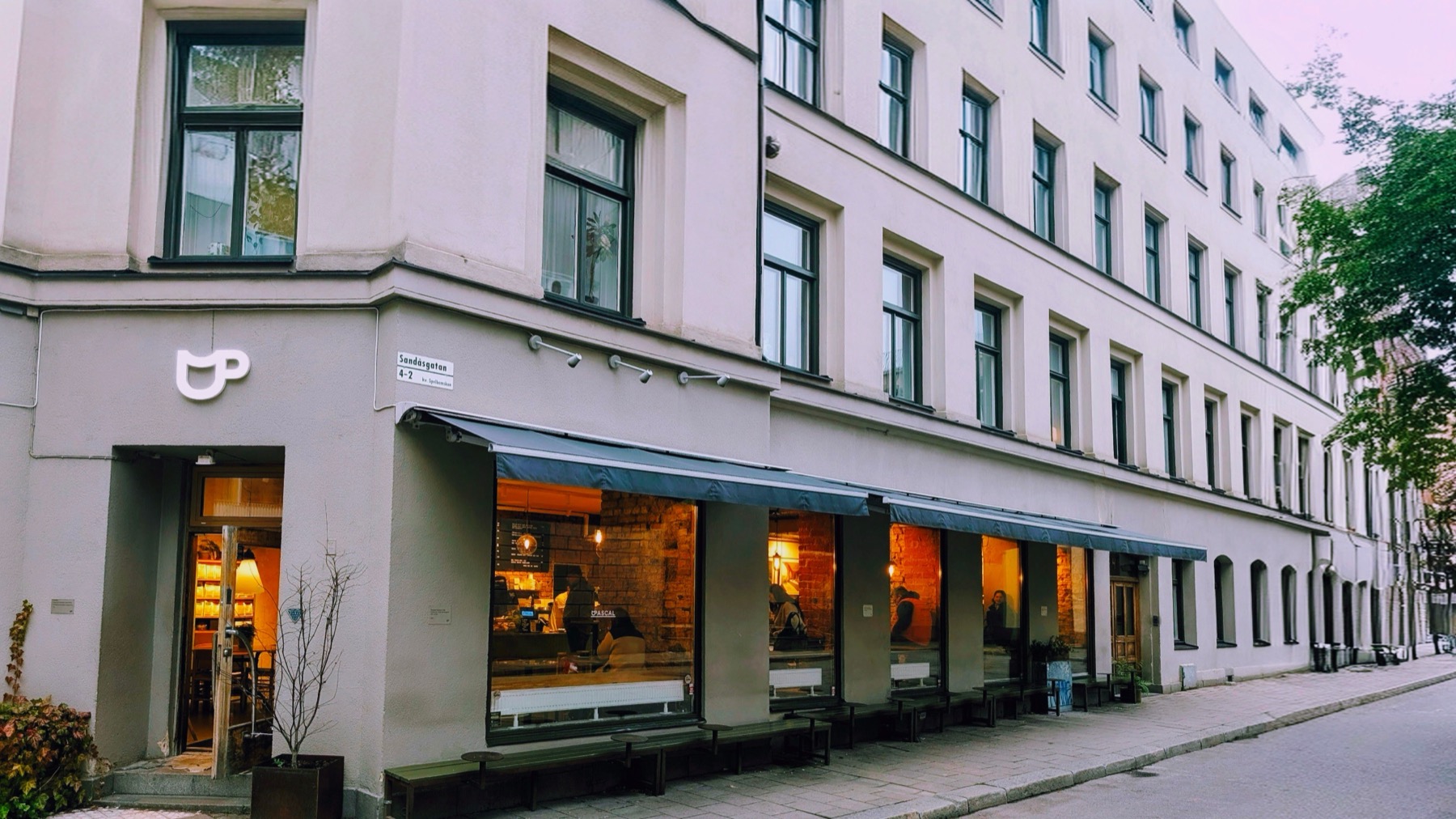
17. Södermalm and the Hipster Heart of SoFo
The southern island of Södermalm has gradually transformed from a dusty working-class neighbourhood into the coolest address in all of Stockholm. If you want to experience the real local vibe, focus especially on the area known as SoFo, or South of Folkungagatan, near Medborgarplatsen metro station, where there’s an incredible buzz all day and well into the night.
You’ll find the best vintage shops packed with fantastic fashion finds, independent cafés serving speciality coffee from local roasters, second-hand shops and small boutiques selling local Scandinavian design and clothing. The streets are full of young creatives, musicians and artists. The overall atmosphere is relaxed, friendly and entirely unpretentious, so you’ll feel at ease here.
💡 Tip: Ideally, come here on a weekend in the late afternoon, when all the little shops are open and local cafés are buzzing. You’ll soak up the real modern Stockholm atmosphere and easily find an original addition to your wardrobe.
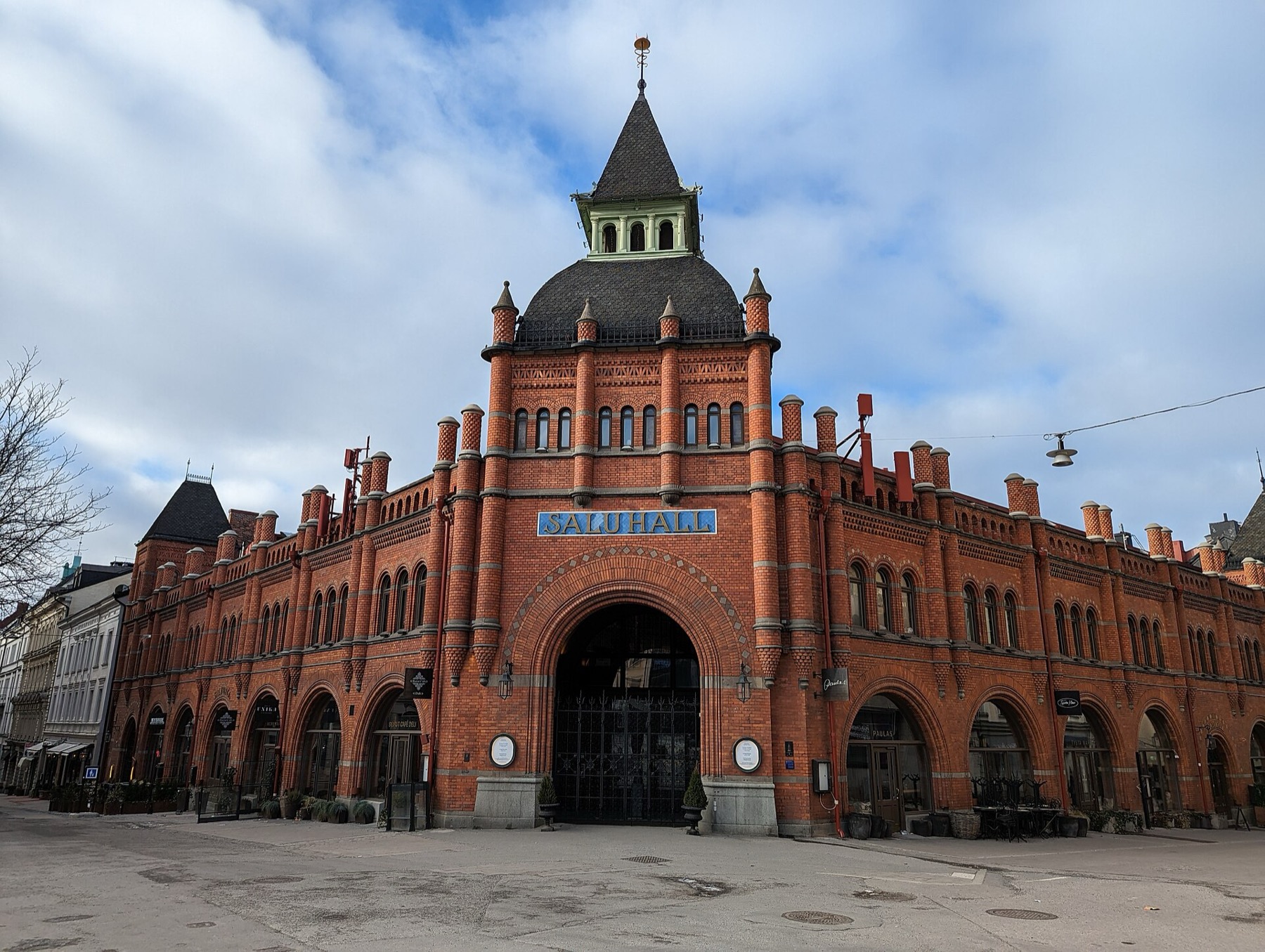
18. Östermalm and the Brick Östermalmshallen Market Hall
While Södermalm is a paradise for hipsters and bohemians, the neighbouring Östermalm is synonymous with old money, effortless elegance and luxurious designer boutiques. You’ll find the city’s most expensive addresses, impressive richly decorated apartment buildings, manicured parks and an overall grand atmosphere that’s well worth an afternoon stroll, even if you’re not planning to spend a fortune.
The area’s main attraction is the beautiful 19th-century Östermalms Saluhall brick market hall, right on Östermalmstorg square. The building has recently undergone a stunning renovation and now gleams with cleanliness. Although lunch prices here aren’t exactly aimed at backpackers, walking among the carefully arranged counters of local cheeses, pastries and fresh seafood is an incredible visual and olfactory experience.
💡 Tip: You can admire local meat and fish specialities, such as huge prawns or reindeer meat, as curiosities in the display cases. For lunch, though, head to one of the vegetable stalls, which offer excellent fresh plant-based salads at somewhat more reasonable prices.
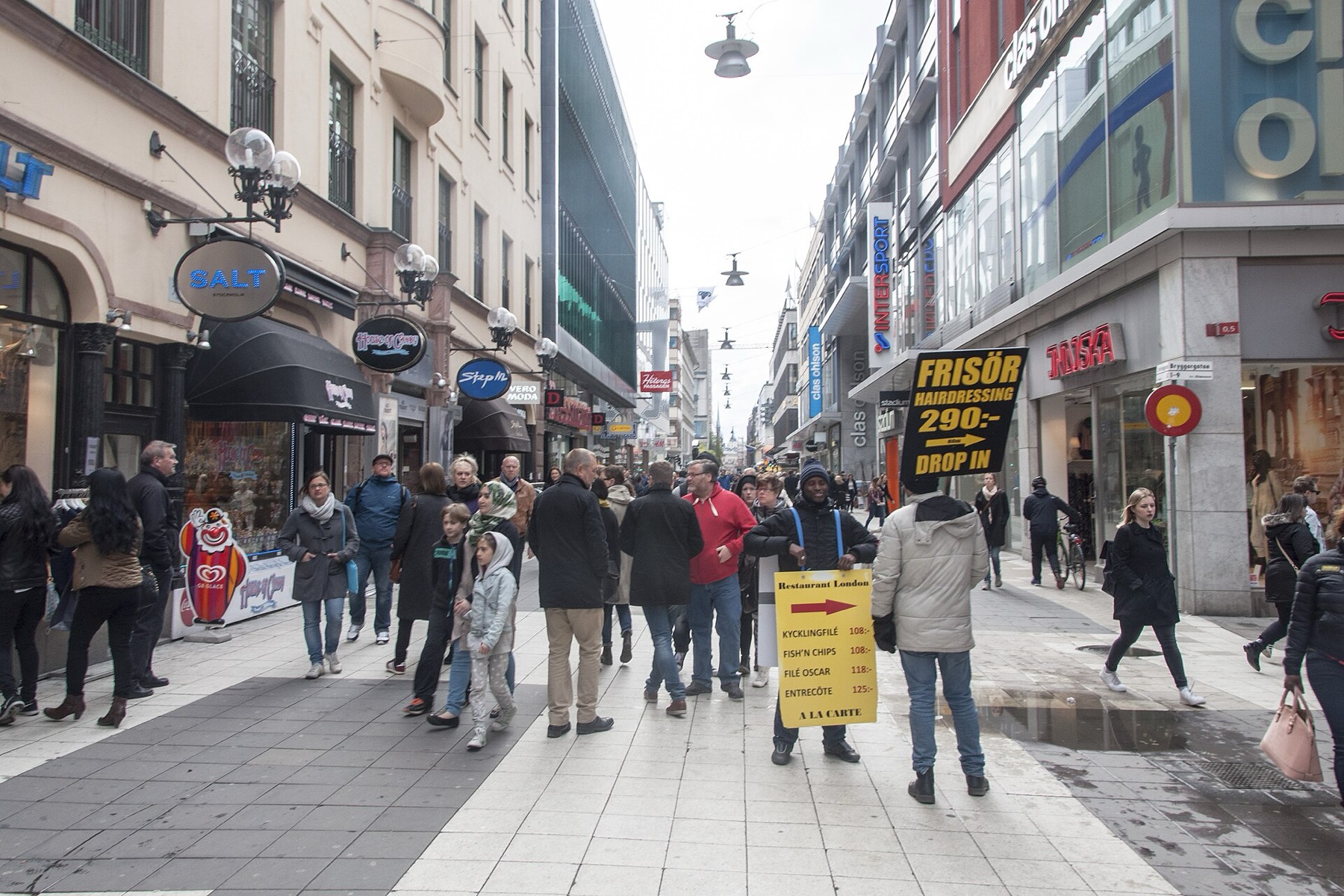
19. Kungsholmen, Norrmalm and Drottninggatan Shopping Street
Norrmalm serves as the city’s main commercial and transport centre, home to the T-Centralen railway station, huge glass department stores and broad, busy boulevards. The famous long pedestrianised Drottninggatan runs through the area and is a true paradise for anyone who loves shopping, cafés and major international fashion brands. You can buy everything here, from souvenirs to luxury clothing.
The neighbouring island of Kungsholmen offers a much slower pace and beautifully landscaped waterside promenades where locals go running or walk their dogs. It’s a wonderful place to relax in the afternoon and escape the noise and bustle of the city, even though you’re still in the centre. Prices at local establishments also tend to be a little friendlier than on the main shopping street.
💡 Tip: On Kungsholmen, be sure to take a peaceful walk along the Norr Mälarstrand waterfront. It will reliably lead you to the huge Rålambshovsparken park, full of people relaxing, where you can have a lovely picnic on the grass in summer.
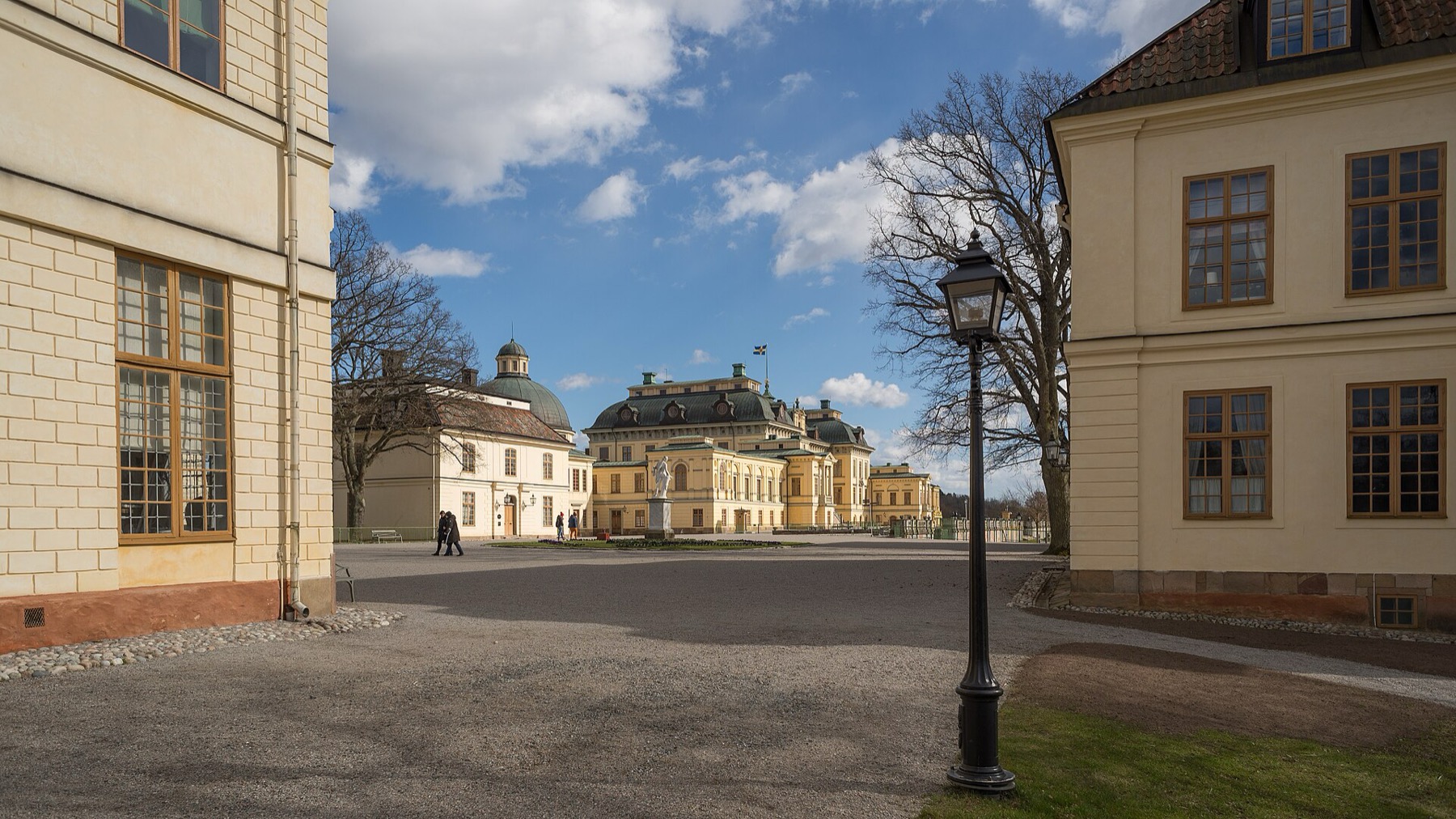
20. Drottningholm Palace and a Romantic Steamboat Cruise
If you have time for a half-day trip beyond the immediate city centre, head to Drottningholm Palace, which is often, and entirely rightfully, called Sweden’s Versailles. This beautiful Baroque complex lies on Lovön island, is listed as a UNESCO World Heritage Site and serves as the private residence of the current Swedish royal family, although parts of it are open to the public.
Much of the palace, its impressive geometrically landscaped gardens and the Chinese Pavilion will take your breath away. You’ll also find a unique 18th-century theatre with its original wooden stage machinery, which still works today. The best way to get there is by taking a romantic historic steamboat cruise directly from Stockholm City Hall. The journey takes just under an hour and offers beautiful views of Lake Mälaren.
💡 Tip: Steamboat tickets often sell out quickly in summer and at weekends, so booking ahead is essential. Otherwise, all you’ll have left is watching the boats from the shore 😅.
21. The Stockholm Archipelago and the Islands of Vaxholm and Sandhamn
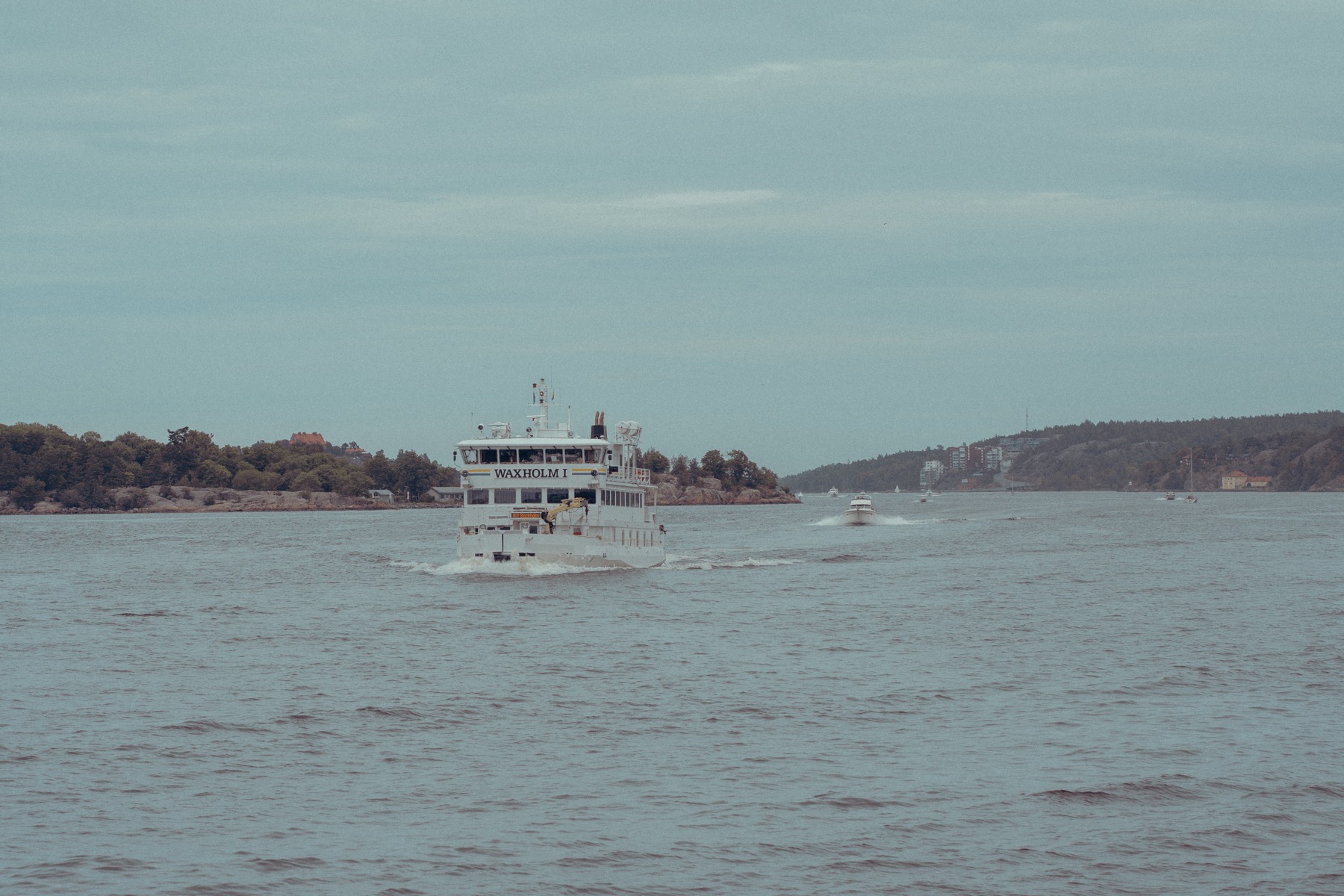
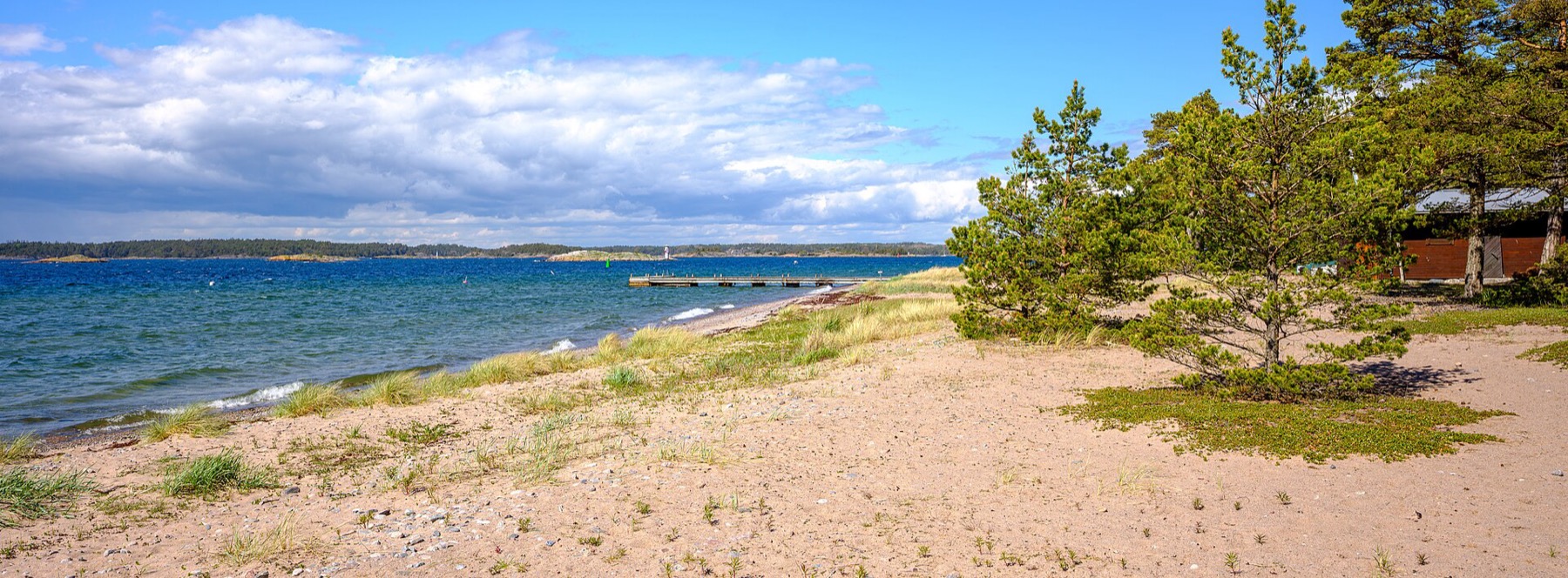
The Stockholm archipelago isn’t just a handful of ordinary islets, but a vast, fascinating maze of 30,000 islands, skerries and bare granite cliffs stretching far into the Baltic Sea. From the city centre, it takes only an hour by boat to leave the bustle of the capital behind and find yourself in beautiful, rugged Nordic nature filled with pines and salt water.
For a quick day trip, the town of Vaxholm is ideal, with its historic fortress, harbour and charming streets lined with old wooden houses and cafés. If you’re looking for wilder nature and open sea instead, take a boat to the more distant island of Sandhamn, which is a mecca for Swedish sailing and relaxed summer days by sandy beaches. The journey takes over two hours, but the peace and quiet are absolutely worth it.
💡 Tip: The classic white boats of Waxholmsbolaget operate throughout the archipelago. In summer, always double-check the departure time of the last boat back to Stockholm. If you miss it, you’ll be stranded on the island, as water taxis are extremely expensive and accommodation is often fully booked during high season.
22. The New Nämdöskärgården National Park (New for 2026)
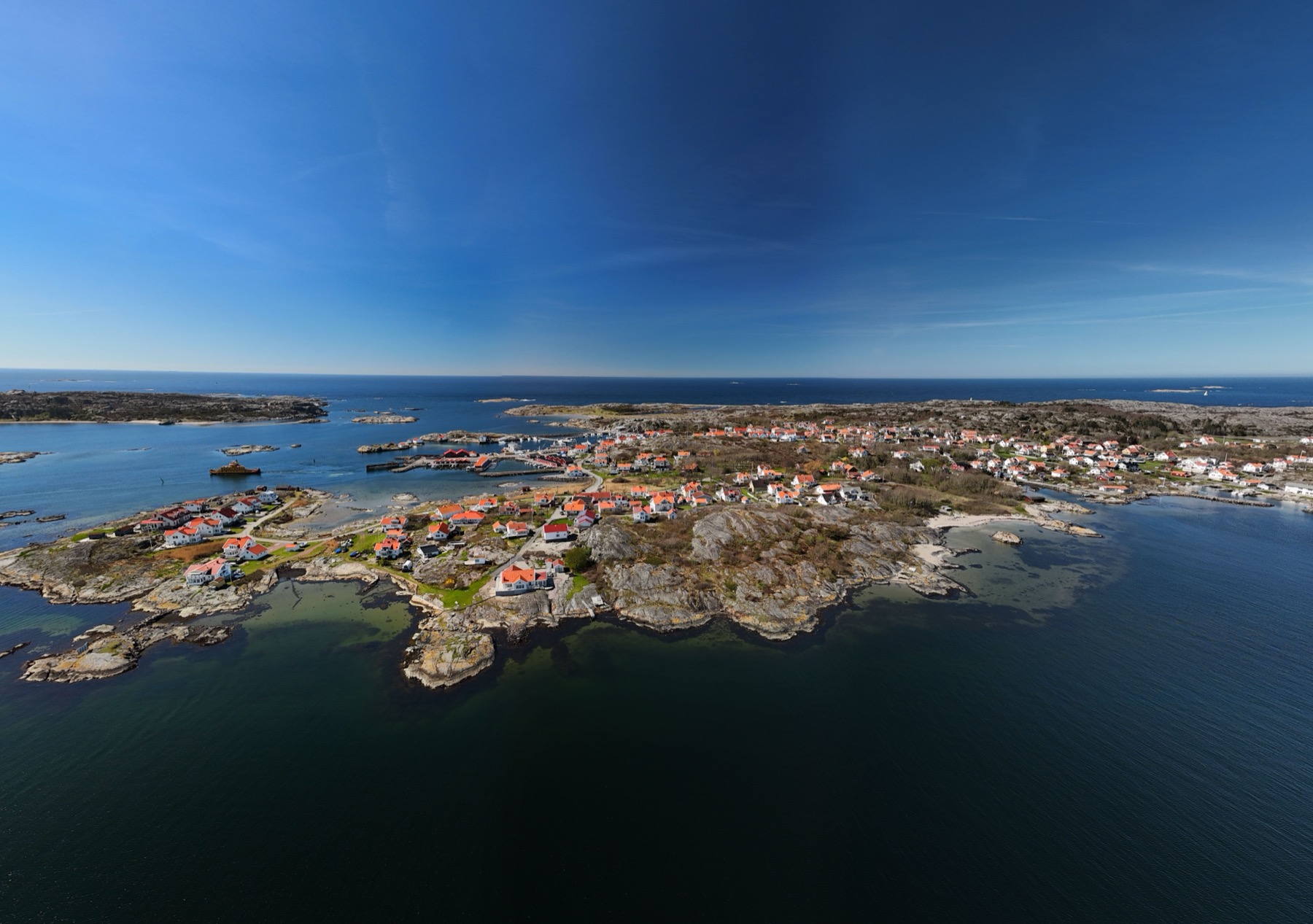
We have fantastic news for nature lovers: the new Nämdöskärgården National Park is planned to be officially inaugurated around the turn of 2025 and 2026. It will be the first marine national park in the entire Baltic Sea and will include more than 1,300 picturesque islands and tiny islets scattered across a vast expanse of water.
This is a place for kayakers, birdwatchers and people who consider a holiday without mobile reception a proper holiday. You’ll see seals, white-tailed eagles and endless horizons. Unlike many parks in southern Europe, where high entrance fees are charged, Swedish national parks remain completely free, and you pay only for transport by ferry or boat from the mainland.
💡 Tip: The national park has much stricter rules on camping and making fires under the allemansrätten law than the rest of the archipelago. Always pay close attention to the information signs along the shores so that you don’t disturb the fragile ecosystem and avoid hefty fines.
23. Kayaking and Swimming Right in the City Centre
One of the most amazing things about Stockholm in summer is that the water in the city centre is so clean that you can swim in it without a second thought. In summer, simply walk over to the green island of Långholmen, where you’ll find lovely sandy beaches filled with local swimmers and families having picnics. It’s an incredibly refreshing experience in the middle of a big city.
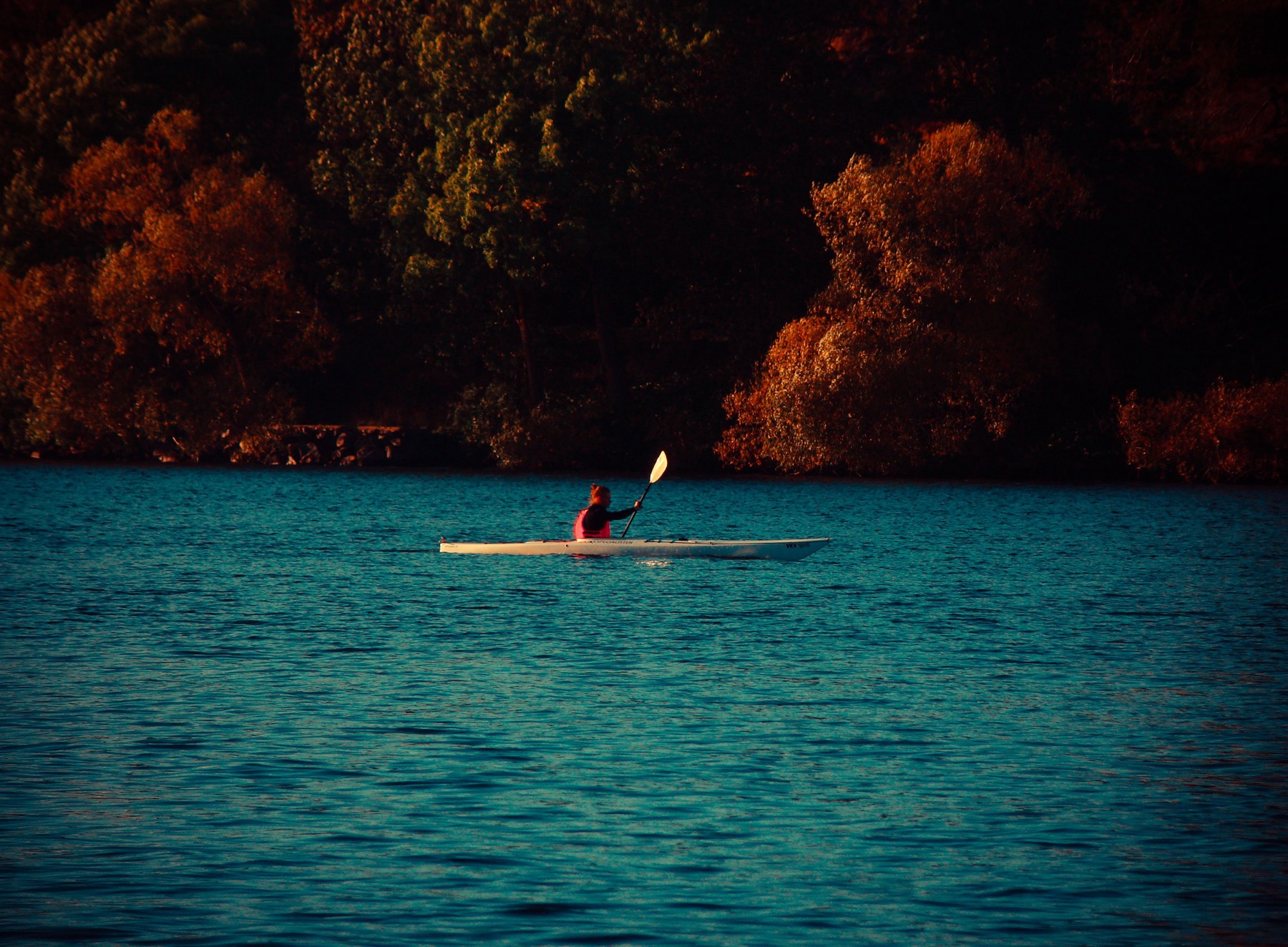
The view of the city from a ferry deck is lovely, but you only truly understand its charm and enormous scale from the surface of a kayak. You’ll find plenty of reliable rental companies right in the centre, where they’ll give you a paddle and life jacket, allowing you to explore narrow bays and canals and pass beneath bridges entirely on your own. From the water, you’ll see City Hall, the historic centre and moored sailboats from a completely different, much more peaceful perspective. It’s an incredible experience that shows you exactly why Stockholm is so often, and so deservedly, called the Venice of the North.
If you don’t feel confident heading out alone, local rental companies commonly offer guided trips with an instructor, who will take you to the most beautiful and safest corners. Two-person sea kayaks are also extremely stable, so you really don’t have to worry about taking an involuntary dip in the cold water. Paddling along Djurgården or Kungsholmen is the perfect activity for a sunny summer afternoon.
💡 Tip: The water here is usually calm and well protected from large waves coming in from the sea, so complete beginners with no previous experience can take up paddling with confidence. Just keep an eye on the routes used by regular ferries.
24. Fika, Kanelbulle and the Sacred Café Ritual
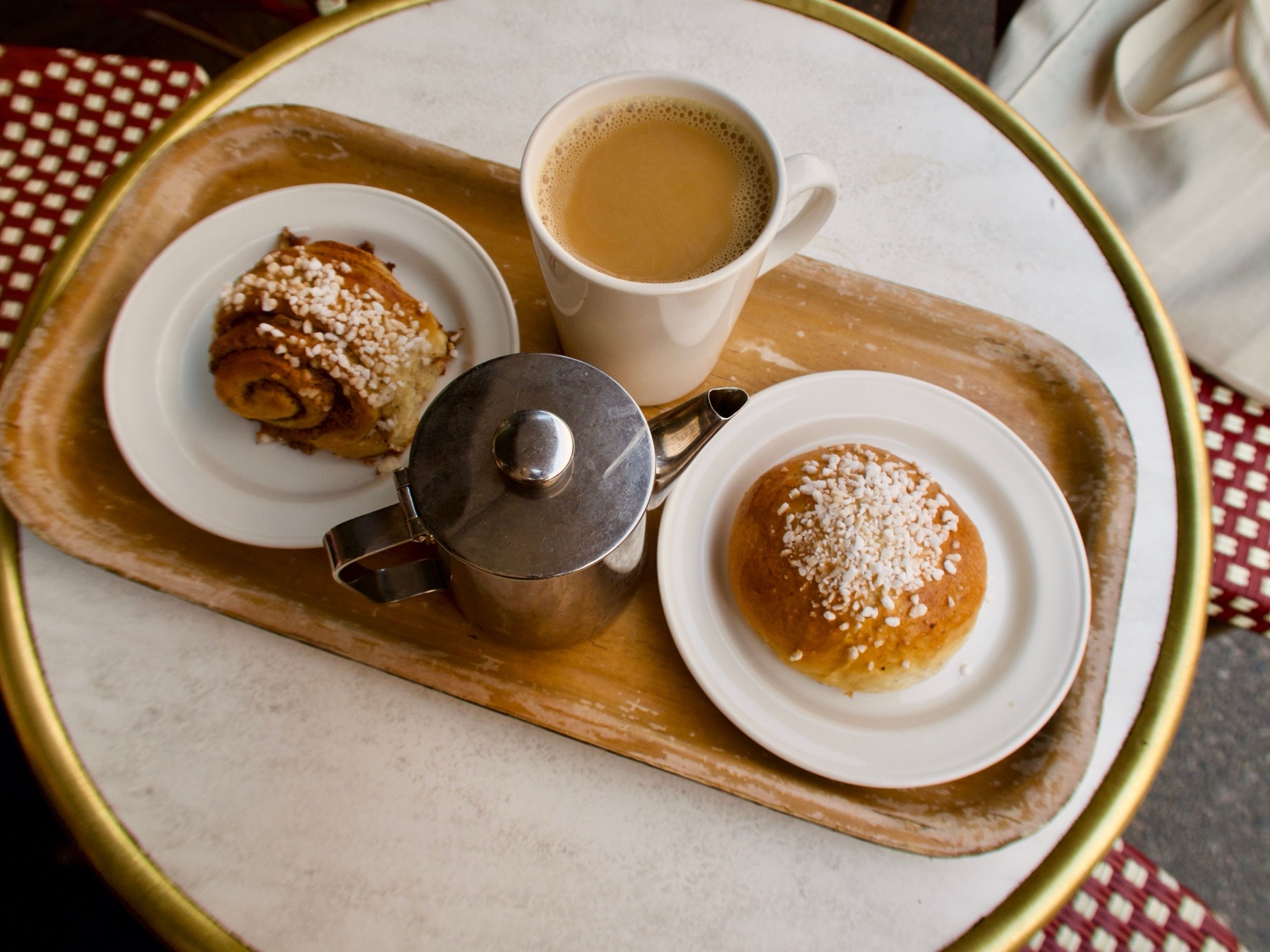
You can’t leave Stockholm without experiencing fika. It isn’t just an ordinary coffee break, but a genuinely sacred social ritual. It’s that lovely moment when you stop in the middle of a busy day, sit down with friends or colleagues and have strong filter coffee with something sweet to eat. Sweden is one of the world’s biggest coffee-consuming nations, and fika is so important here that companies routinely set aside dedicated time for it during the workday.
The star of this ritual is the kanelbulle, or cinnamon bun, along with its more elegant and intensely flavoured cardamom sibling, the kardemummabulle. You’ll find these fluffy, spice-scented knots in every bakery. If you visit the city in winter, between January and Easter, you’ll see semlor everywhere: delicious brioche buns filled with almond paste and a generous portion of whipped cream. For cake lovers, the obvious choice is the iconic prinsesstårta with its bright green marzipan.
For a classic old-world atmosphere, head to the legendary Vete-Katten café on busy Kungsgatan, where lace, teapots and the scent of freshly baked goods will charm you instantly. It feels like a pleasant journey back in time.
💡 Tip: Coffee and a sweet bun cost roughly 65–100 SEK (about €6–€9), which makes a very satisfying light snack while allowing you to soak up the real local atmosphere. Many cafés also offer a refill known as påtår with filter coffee, meaning you can get another cup completely free.
25. Dagens lunch and How to Eat Smart
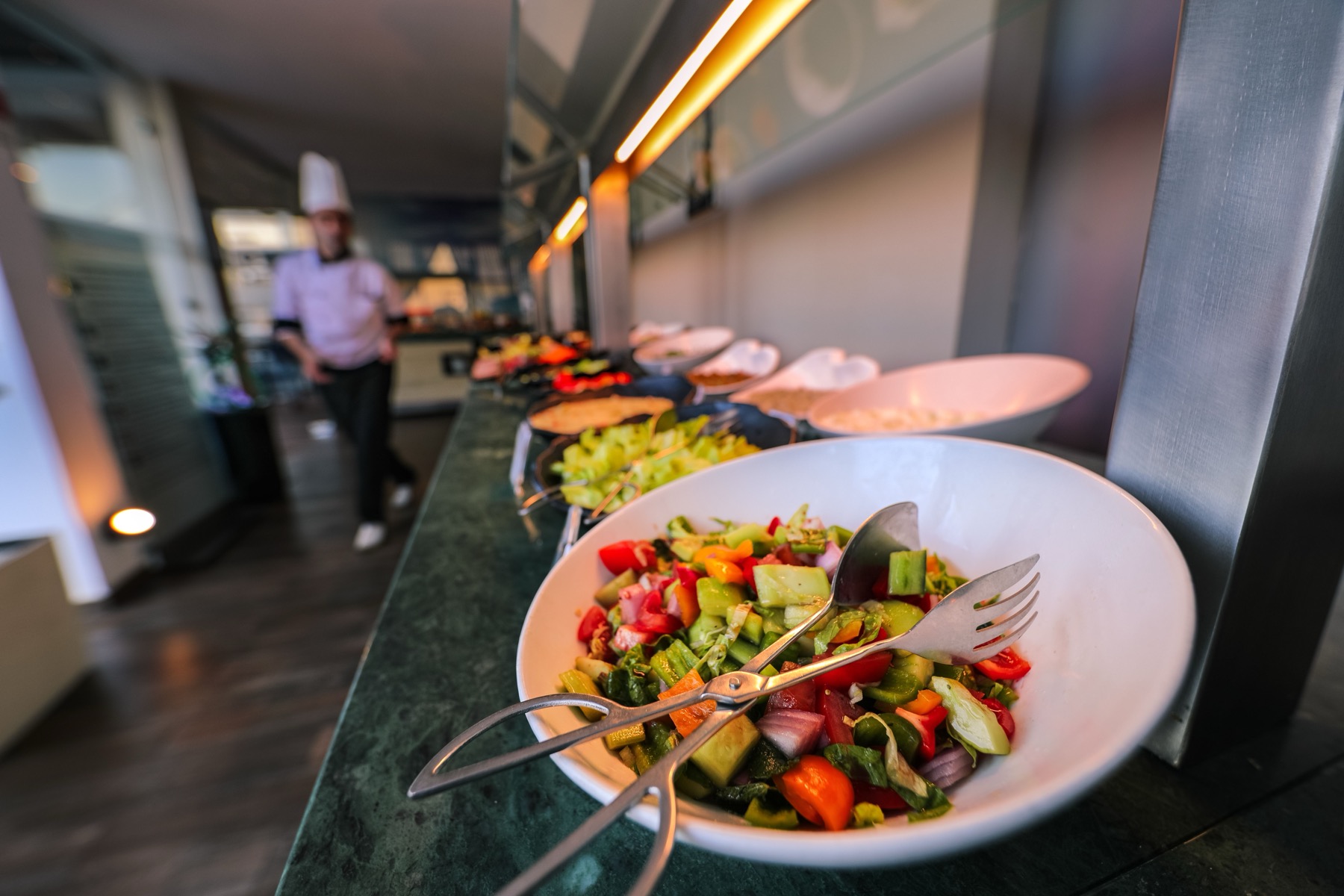
Dinners in Stockholm, Sweden, can put a serious dent in your travel budget, but during the day, thankfully, there’s a brilliant money-saving option called dagens lunch. Most restaurants offer a discounted lunch menu, usually between 11 a.m. and 2 p.m., for around 120–150 SEK (about €10–15). For this very appealing price, you get not only a main course but also unlimited access to a generous salad buffet, fresh bread with butter, water and coffee to finish.
While some tourists like to seek out local meat specialties such as köttbullar or even fermented fish called surströmming, you can choose from excellent salad bars, hearty vegetable soups and modern plant-based dishes without the slightest concern. Stockholm is incredibly vegetarian-friendly, and you’ll find creative meat-free options in almost every neighborhood eatery. You’ll often come across excellent dishes made with local root vegetables, wild mushrooms or beautifully seasoned legumes, so you certainly won’t feel like you’re missing out.
There’s one more important thing to know about drinks at lunchtime. Tap water (kranvatten) is absolutely excellent in Sweden, and restaurants will always be happy to serve it with your meal completely free of charge. No one will look at you strangely if you don’t order an expensive soft drink.
💡 Tip: Remember that alcohol above 3.5% ABV can only be bought in special state-run Systembolaget stores, which close strictly at 3 p.m. on Saturday and remain closed all day Sunday. So if you’d like to enjoy a glass of wine at your hotel in the evening, make sure you shop well in advance.
Getting Around Stockholm and Traveling from the Airport
As soon as you arrive in Stockholm, you’ll quickly discover that the local public transport system, run by SL, is exceptionally efficient and reliable. What’s more, from July 1 to December 31, 2026, an amazing new measure will come into effect: the Swedish government will subsidize public transport across the board, cutting the price of all monthly passes in half. Stockholm’s 30-day pass will therefore cost just 530 SEK (about €50), which is definitely worthwhile even if you’re visiting the city for only a five-day long weekend and plan to get around a lot.
If you plan to use public transport less and walk more, a single 75-minute ticket costs 42 SEK (about €5). You don’t need to download a special app or spend ages looking for a machine selling paper tickets. Simply tap your regular contactless payment card at the metro gate or on the reader next to the driver on a bus. The ticket covers not only the metro, buses and commuter trains, but even selected ferries, which operate here as a completely ordinary part of the public transport network. Route 80 is particularly popular, taking you comfortably all the way to the island of Djurgården.
Getting from the Airport to the City Center
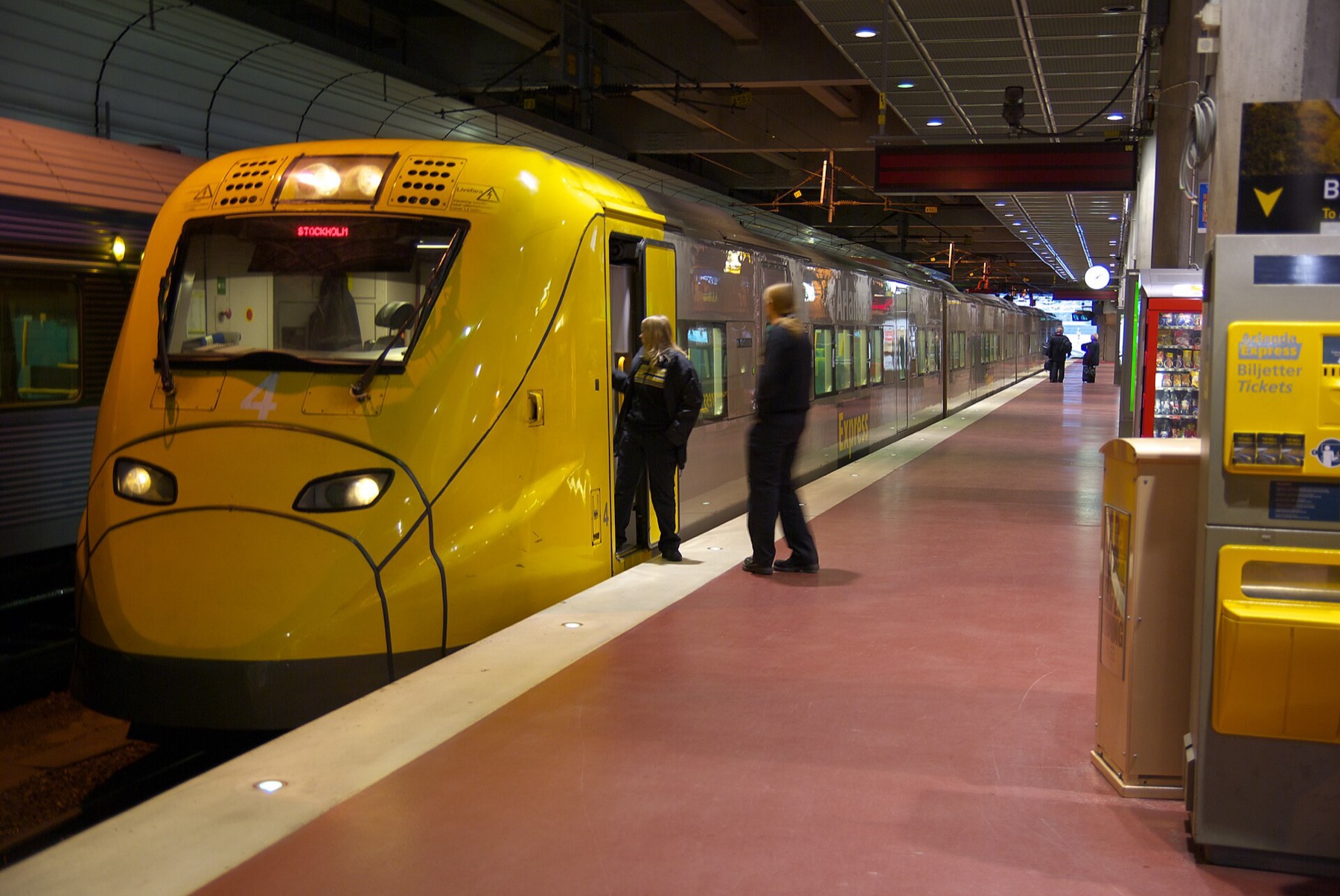
There are several ways to get from the main international airport, Arlanda, to the city center. The fastest option is the bright yellow Arlanda Express, which takes you to the central railway station in just 20 minutes. It is fairly expensive, though, with a one-way ticket costing around 340 SEK (about €30). A much more sensible and affordable option is the comfortable Flygbussarna airport bus, which takes about 45 minutes but costs only a fraction of the train fare. Another option is a regular commuter train or an official taxi, which has a fixed fare to the city center, so you don’t need to worry about unexpected surcharges.
Be especially careful when buying cheap flights from low-cost airlines. Although Ryanair now flies directly to the main Arlanda Airport, you may occasionally come across flights heading to the more distant airports of Skavsta or Västerås. These smaller airports are located more than 100 kilometers from Stockholm, and the bus journey to the city center takes an hour and a half, often wiping out the savings on your cheap ticket while also costing you valuable time.
A Cashless Society in Practice
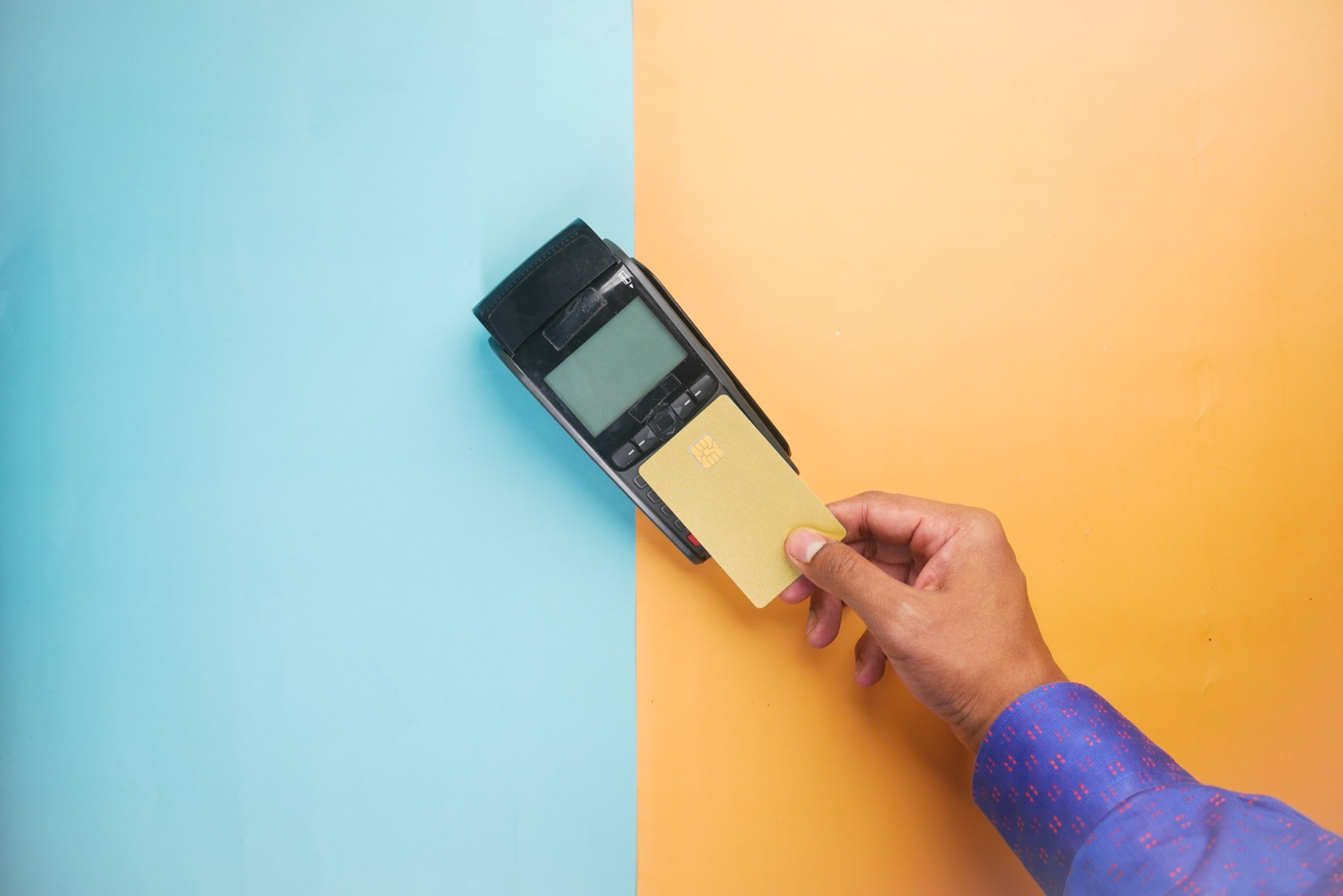
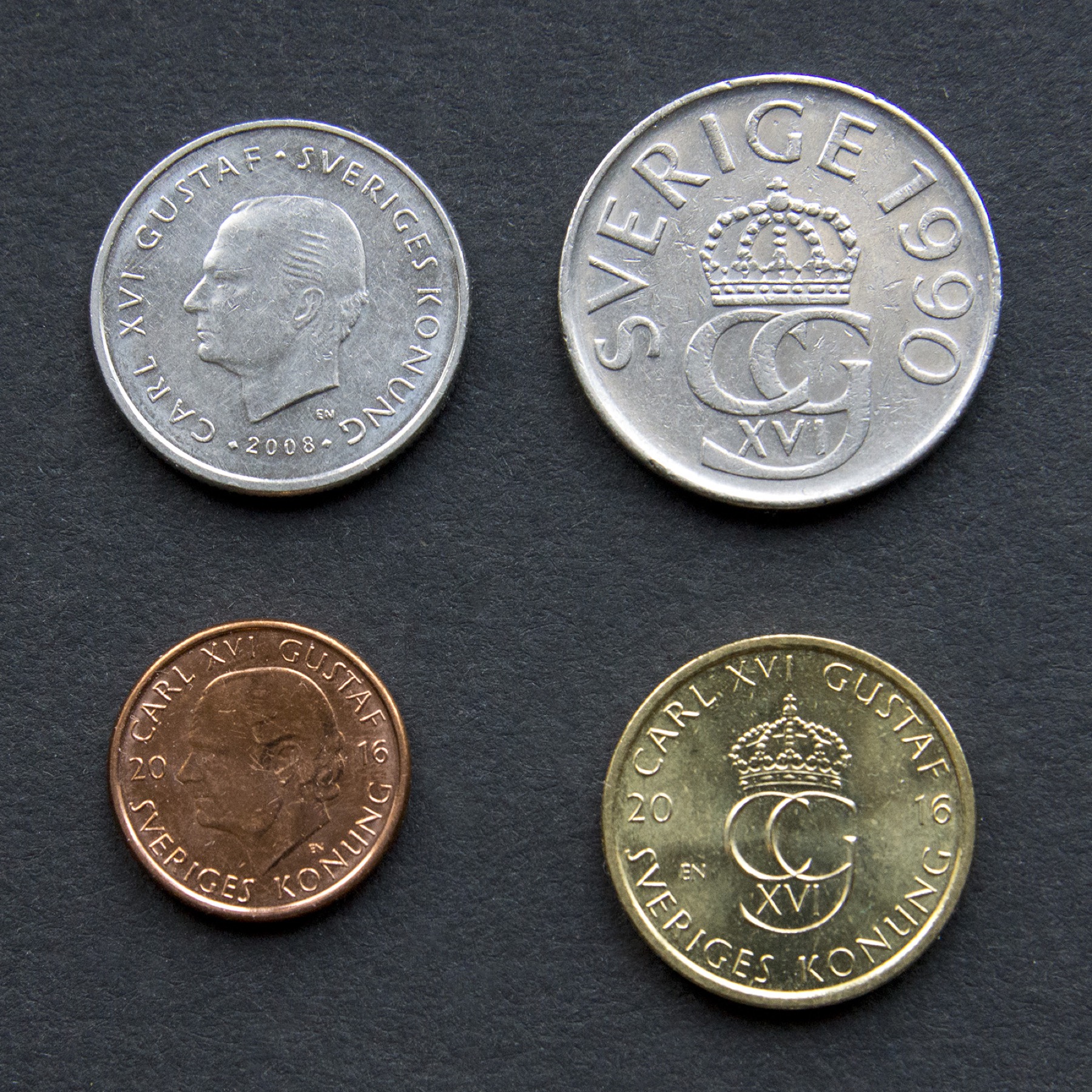
Sweden is now an almost entirely cashless society, and paper banknotes will be completely useless to you in many places. Even some large and well-known museums, such as the Vasa Museum, no longer accept cash. Locals most often pay using the special Swish app, but unfortunately, as a foreign visitor without a Swedish personal identity number and a local bank account, you cannot get it.
Your best friend will therefore be a regular payment card, ideally one offering a good exchange rate such as Revolut, with which you can pay for absolutely everything, from a small espresso at a kiosk to public toilets. Here’s one final practical tip. Although public transport is excellent, Stockholm’s historic center is very compact, and you can comfortably walk between most of the main sights. There are also excellent, safe cycle paths everywhere, so simply rent a shared bike and you’ll blend right in with the locals.
Where to Eat in Stockholm
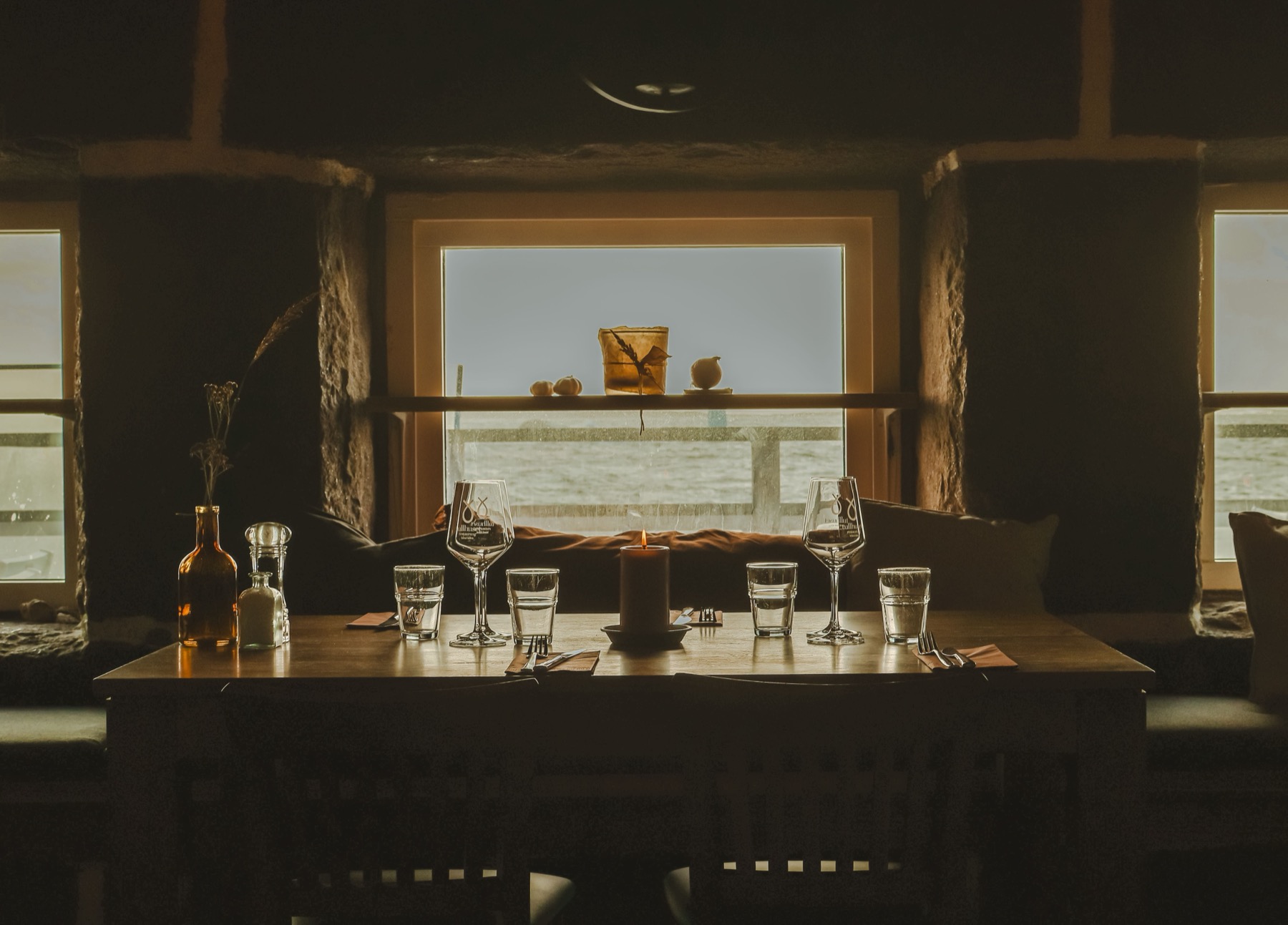
Swedish cuisine has long been about more than meatballs, although you can of course find them here in truly luxurious versions. The city is packed with excellent bistros, modern vegan restaurants and traditional food halls, where you’ll eat more expensively than in southern Europe, but the quality of the ingredients is second to none.
The basic rule for saving money is to take advantage of the lunch menus mentioned above and keep dinner to lighter snacks from a supermarket or food trucks. If you do want to treat yourself to a traditional restaurant, though, here are some specific places that won’t disappoint.
Where to Eat Without Spending Your Last Euro
The plant-based buffet Hermans on Södermalm offers the best balance of price and experience. For around 280 SEK (about €25), you can help yourself to as much as you like, while enjoying one of the loveliest views of the historic center and harbor. Vegetarians will find a ready-made paradise here, but the restaurant is also popular with people who normally eat meat.
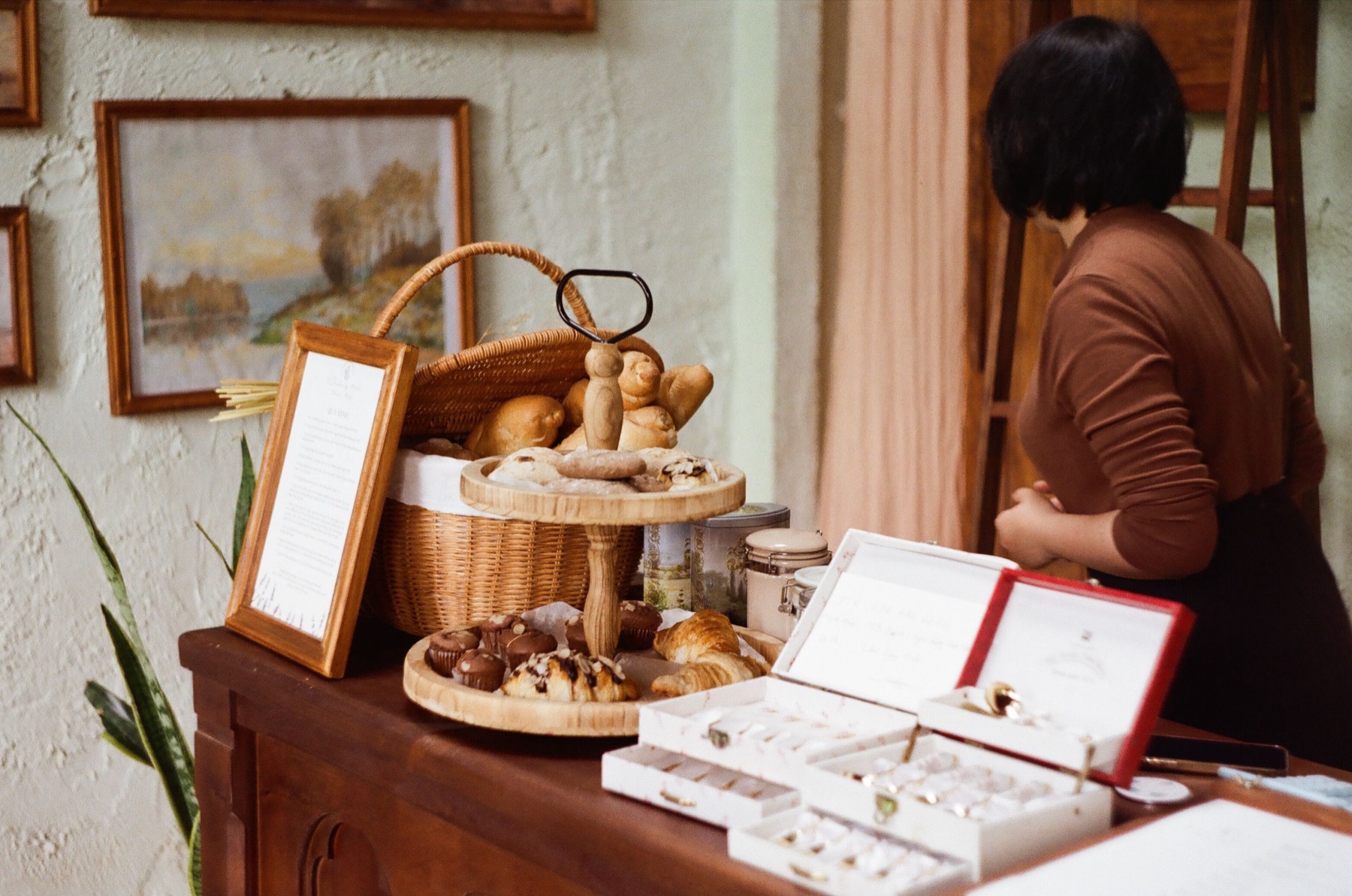
For a classic fika, head to Vete-Katten café on Kungsgatan, which has been baking according to recipes from 1928; a kanelbulle with coffee costs around 90 SEK (about €10). You can also eat very well at the Östermalmshallen food hall, dating from 1888, where alongside the fish and cheese counters you’ll find soups, salads and pastries.
A traditional Swedish classic that locals especially like to order here is köttbullar, meatballs served with lingonberries and mashed potatoes. You can try them at the legendary Pelikan beer hall, which dates back to 1904, or at Meatballs for the People, which serves not only meat versions but also meatballs made from peas and mushrooms. Prices are around 150 SEK for a lunch menu and 250 SEK for an evening portion.
How Much Does a Weekend in Stockholm Cost and How to Save
If you plan your trip wisely, Stockholm certainly won’t ruin your bank account. Prices can be divided into three basic categories, depending on how much comfort you want to enjoy on your holiday. Here are sample budgets, converted into euros; the exchange rate is roughly 2.2 SEK to €1.
Budget option (around €60–80 per day): As a backpacker, you’ll stay in a shared hostel room (€25–35 per night). You’ll sort out meals by shopping at cheaper supermarkets such as Willys or Lidl and cooking in the shared kitchen. You’ll mostly walk around the city or make full use of the discounted monthly public transport pass. You’ll enjoy plenty of free sights, stroll through the parks and choose just one important paid attraction, such as the spectacular Vasa Museum.
Mid-range option (around €100–145 per day): You’ll stay in a double room at a pleasant three-star hotel, costing approximately €50–70 per person per night. During the day, you’ll make the most of the fantastic dagens lunch system, treating yourself to a hot meal with a generous salad buffet for 120–150 SEK (about €10–15). In the afternoon, you’ll stop for a traditional fika with coffee and a cinnamon bun (around €10). You’ll buy good-quality ready-made meals from a supermarket for dinner and pay for entry to two interesting museums each day.
Comfortable option (from €185 per day): You’ll choose a stylish boutique hotel right in the historic center. During the day, you’ll travel comfortably by ferry and Uber. You’ll eat lunch and dinner at a traditional restaurant, where a main course generally starts at around 450 SEK (about €20). You’ll enjoy a glass of wine or a draft beer with your meal, which typically costs 150–210 SEK in a bar, and spend the evening exploring Nordic culture.
The biggest drain on your wallet in Sweden is unquestionably alcohol served in bars and restaurants. If you’d like to open a bottle of good wine at your hotel in the evening, remember that you can buy it exclusively at the state-run Systembolaget store, which offers fair prices but has very limited opening hours.
Where to Go Next from Stockholm
If you have more time in Sweden, Stockholm is a perfect base for exploring other fascinating places. Around 40 minutes away by comfortable train lies the university city of Uppsala, with its enormous cathedral and fascinating history of Vikings and runestones, which are scattered throughout the surrounding landscape.
Nearby Sigtuna is also worth mentioning. It is the oldest preserved town in Sweden, with beautiful wooden houses and a romantic lakeside promenade. If you’d like to delve even deeper into Viking history, board an excursion boat and set off for the island of Björkö, home to the important archaeological site of Birka.
Would you like to explore more European capitals? Get inspired by our other guides:
- Sweden: 30 Things to See and Do
- Helsinki: 15 Things to See and Do in the Finnish Capital
- Copenhagen: 25+ Things to See and Do
- European City Break: 21 Best Cities in Europe
Frequently Asked Questions
Planning a trip north can raise plenty of practical questions, whether they concern your budget, transport or how to put your itinerary together. Since you keep asking the same questions in the discussions, I’ve collected the most common ones in one convenient place.
I hope these quick answers will help you fine-tune your itinerary and set off with complete peace of mind.
How many days do I need for Stockholm?
For a basic tour of the main sights in the center, such as the Vasa Ship Museum, Gamla stan, and the amazing metro stations, around three days or a long weekend will be enough. But if you want to take a boat out to the more distant islands in the vast archipelago or visit nearby Uppsala with its rune stones, I recommend setting aside at least four to five days so you don’t have to stress about anything and can enjoy the city in complete peace.
Is Stockholm really that expensive?
Thanks to the current favorable exchange rate and good flight deals, Stockholm is no longer among the overpriced capitals and is actually the cheapest in all of Scandinavia. Accommodation and transport work out very reasonably, especially with discounted monthly public transport passes. You really only need to watch out for evening meals in traditional restaurants and very expensive alcohol in bars, which can still seriously shake up your budget.
How do I get from Arlanda airport to the center?
The fastest option is clearly the yellow express train Arlanda Express, which takes just 20 minutes to the main station, but is quite expensive (costs around €30). A much more sensible and budget-friendly option is the comfortable Flygbussarna buses, which take about 45 minutes and cost just a fraction of the train fare. If you’re traveling in a larger group, the official airport taxi might also be worth it, which has a fixed rate to the center with no surprises.
Can I pay cash in Stockholm?
Sweden today is an almost one hundred percent cashless society and paper banknotes will often be completely useless to you, because many places simply won’t accept them at all. Most museums, shops, and cafés accept only card payments or the local Swish app. So for Stockholm, don’t forget to bring a reliable payment card with no conversion fees, ideally Revolut, which you can use to pay for absolutely everything from your morning coffee to public toilets on the street.
When is the best time to visit the city?
The ideal months for a relaxed visit are May, June, August, and September, when there’s pleasant warm weather, long days, and plenty of sunshine. July is warm, but many Swedes go on vacation and smaller cafés may be closed for the entire month. In winter, especially in December, the city attracts visitors mainly for its magical Christmas markets, but you have to expect the sun to set before three o’clock in the afternoon.
Is Stockholm a safe city?
Yes, Stockholm has long been one of the safest capital cities in all of Europe, including for solo travelers. You can move around the city center on foot without the slightest worry, even late at night. You just need to take the usual care with your personal belongings in places with higher concentrations of tourists, such as the main T-Centralen station area or the busy Drottninggatan pedestrian shopping zone, where pickpockets occasionally operate.
Can I fit in Stockholm and the archipelago in one weekend?
It can be done, but your schedule will be quite packed and you won’t have much time to rest. Dedicate one full day to the center, the streets of Gamla stan, and the museums on Djurgården island. On the second day in the morning, then hop on a boat to, for example, the picturesque Vaxholm, which is relatively close. You can return to the center in the afternoon at your leisure and finish the evening with a beautiful view over the city from the Södermalm district.
Tips and Tricks for Your Vacation
Don’t Overpay for Flights
Search for flights on Kayak. It’s our favorite search engine because it scans the websites of all airlines and always finds the cheapest connection.
Book Your Accommodation Smartly
The best experiences we’ve had when looking for accommodation (from Alaska to Morocco) are with Booking.com, where hotels, apartments, and entire houses are usually the cheapest and most widely available.
Don’t Forget Travel Insurance
Good travel insurance will protect you against illness, accidents, theft, or flight cancellations. We’ve had a few hospital visits abroad, so we know how important it is to have proper insurance arranged.
Where we insure ourselves: SafetyWing (simple monthly subscription) and TrueTraveller (for extra-long trips).
Find the Best Experiences
Get Your Guide is a huge online marketplace where you can book guided walks, trips, skip-the-line tickets, tours, and much more. We always find some extra fun there!