In photos, the northern lights in Sweden glow in neon green, but to the naked eye they often look like a greyish veil — and yet it’s an experience you’ll never forget for the rest of your life. Many people think all it takes is to buy a plane ticket to Sweden, stand out in the December frost, and the sky will instantly light up in every colour. The reality of the Arctic north is, however, far more complicated and requires careful planning.
If you’re thinking about a trip to see this celestial show, I have to warn you right away about one crucial thing: the weather and solar activity simply can’t be ordered for a specific hour. You can, however, hugely boost your chances of success with the right timing and a smart choice of location. So I’ve put together everything you should know before you buy that plane ticket — so you don’t end up like those who fly in for a single night and leave disappointed. You’ll learn why it’s far more important to watch the cloud cover than the KP index itself, and why you should avoid the depths of winter.
The full destination guide: Sweden — guide and what to see
TL;DR
- The golden rule of three to four nights: Never plan a trip for just one night, because cloud cover in the north changes incredibly fast and you need enough of a time buffer.
- February and March are best: While December tends to be extremely dark and freezing, late winter offers far longer days for activities and still plenty of darkness for evening aurora watching.
- Abisko is a safe bet: Thanks to the rain shadow of the surrounding mountains, the local lake sits under a so-called blue hole, which delivers statistically the highest share of clear nights in all of Scandinavia.
- Clouds matter more than the KP index: Above the Arctic Circle, even very weak solar activity is enough for an unforgettable show, as long as you have a perfectly clear sky with no snowfall overhead.
- Doing it yourself on a budget: A carefully planned week-long trip will cost you roughly €1,000 per person, while organised package tours from travel agencies commonly start at over €3,000.
- The solar cycle favours travellers: The peak of solar activity occurred around the turn of 2024 and 2025, but the years in the declining phase of the cycle around 2026 bring absolutely excellent conditions, according to astronomers.
- Don’t expect neon green: Weaker aurora often appears to the naked eye as a greyish misty cloud, and the truly vivid colours are only captured by the lens of your camera or a good smartphone.
14 Things You Must Know
The Arctic can be unpredictable, but when you know what to prepare for, hunting the northern lights becomes an adventure you’ll remember for a lifetime. There are plenty of myths floating around online, and the reality of the harsh north can catch unprepared travellers off guard rather unpleasantly.
That’s why I’ve gathered from all the available information and travellers’ experiences the most important tips that will save you both disappointment and wasted money. We’ll go through everything from ideal timing to what to wear, because freezing in the middle of the forest with a dead phone is really not what you want 😉. Let’s dive in!
1. What the northern lights actually are and why they glow in colours
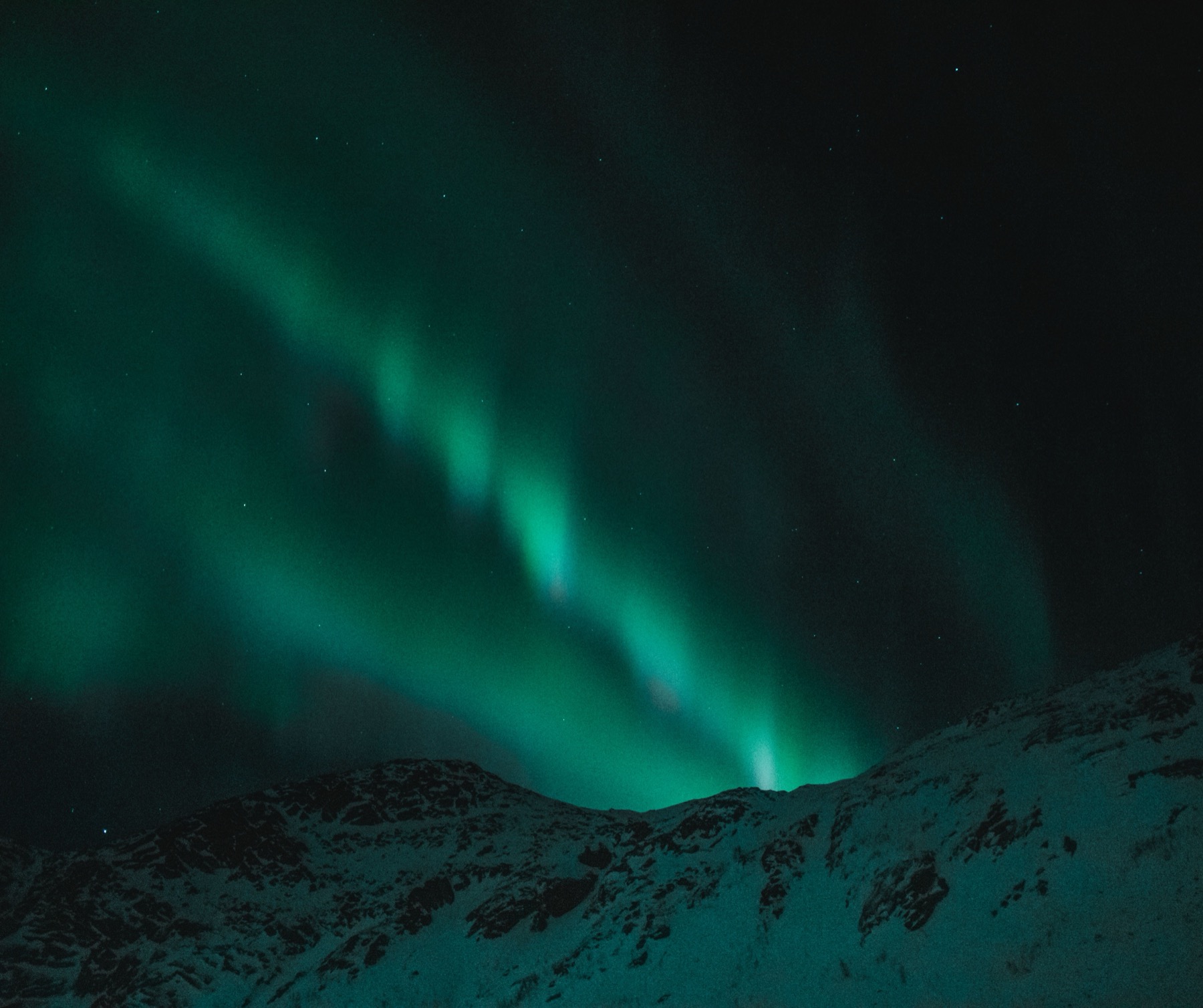
This celestial light show forms the moment the solar wind, full of charged particles, hits the Earth’s magnetic field. These particles are then drawn towards our planet’s magnetic poles, where they collide with gas molecules high up in the atmosphere. It’s precisely these collisions that release energy in the form of photons, which the human eye perceives as the fascinating dancing light in the night sky. The stronger the stream of these particles, the brighter and more expansive the show that plays out above your head.
The Sun also has its eleven-year activity cycle, whose recent peak around the turn of 2024 and 2025 delivered absolutely fantastic conditions. During this period the Sun forms so-called coronal holes, which send a very stable and strong solar wind towards Earth. Your chances of a spectacular show above the Arctic Circle therefore remain excellent in the coming years too, and you definitely won’t be arriving too late to the party.
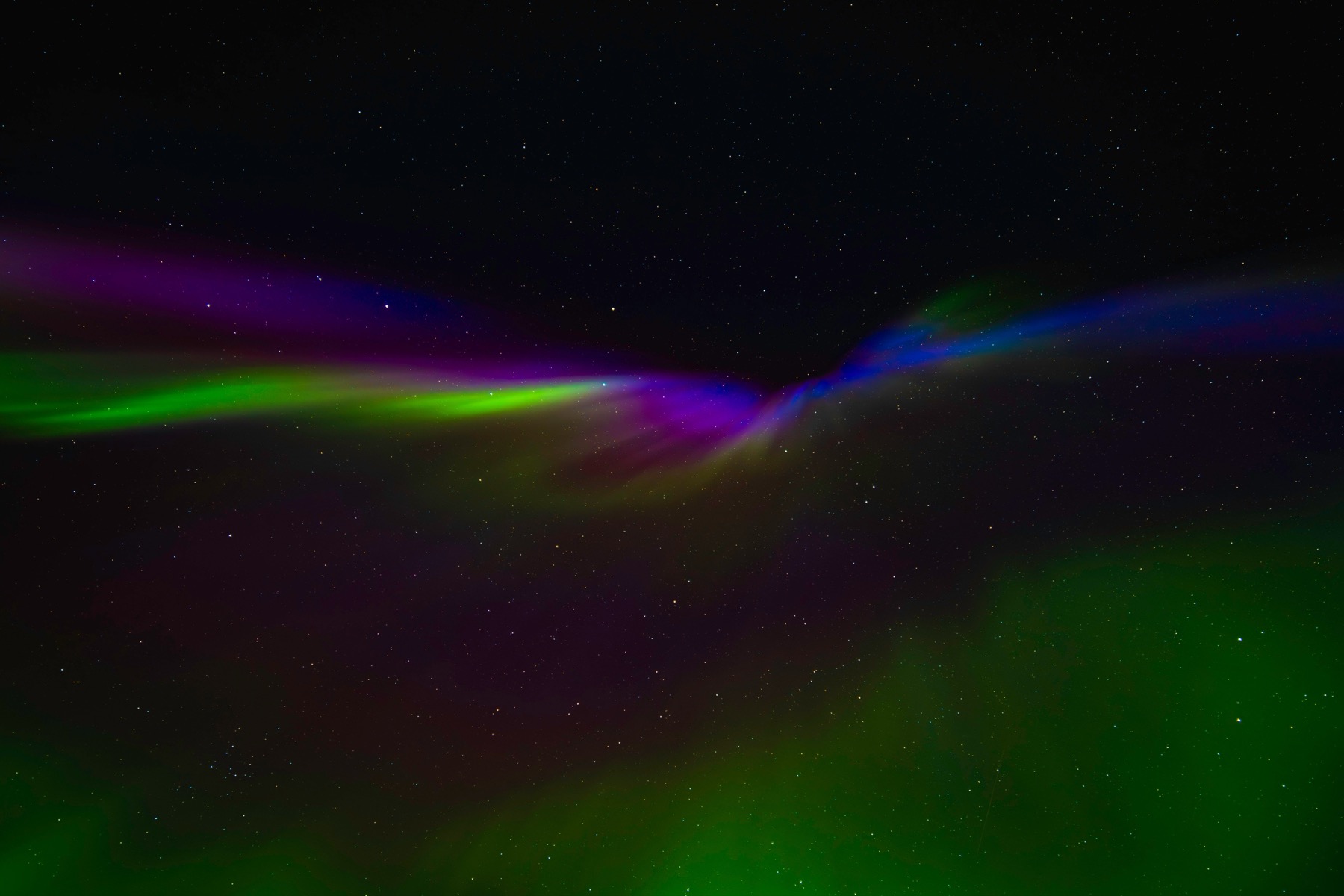
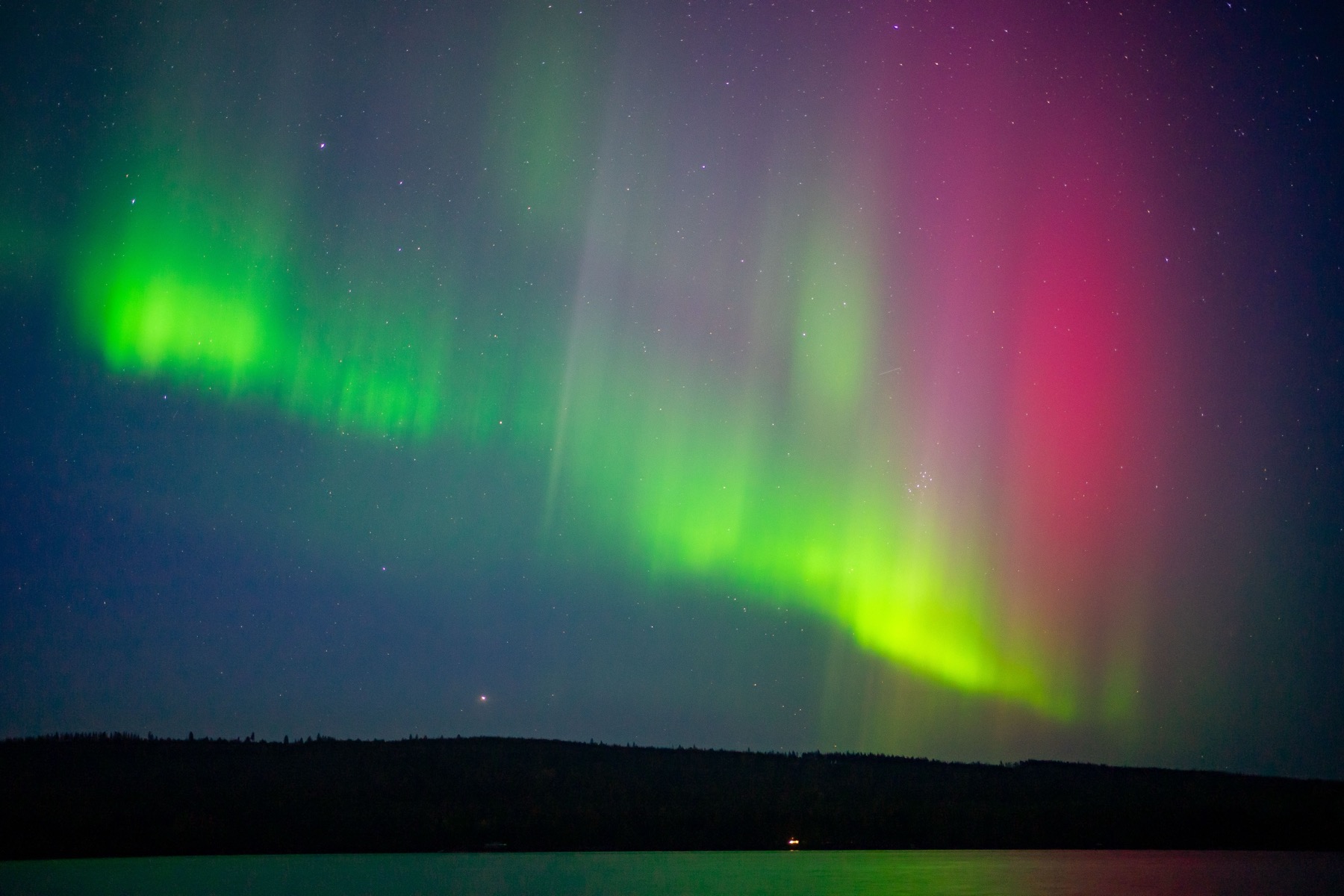
The colour of the aurora depends on which gas the solar particles collide with and at what altitude. The most common and best-known green colour comes from a reaction with oxygen at lower altitudes of roughly a hundred to a hundred and fifty kilometres above the surface. If, however, the charged particles collide with oxygen at extreme altitudes above two hundred kilometres, the whole sky turns rare shades of deep red. Stunning purple or blue, on the other hand, appears in moments when there’s a collision with nitrogen molecules.
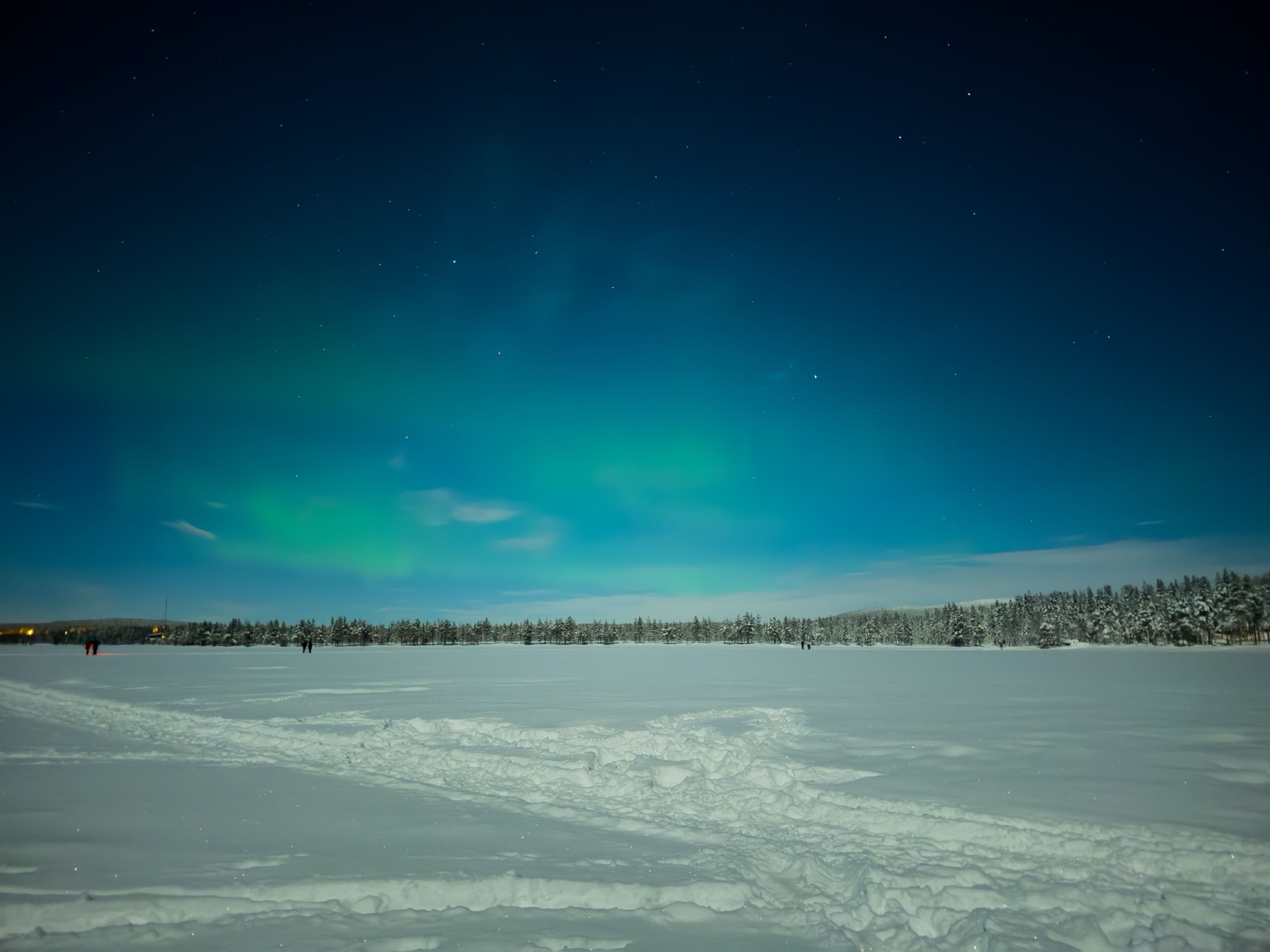
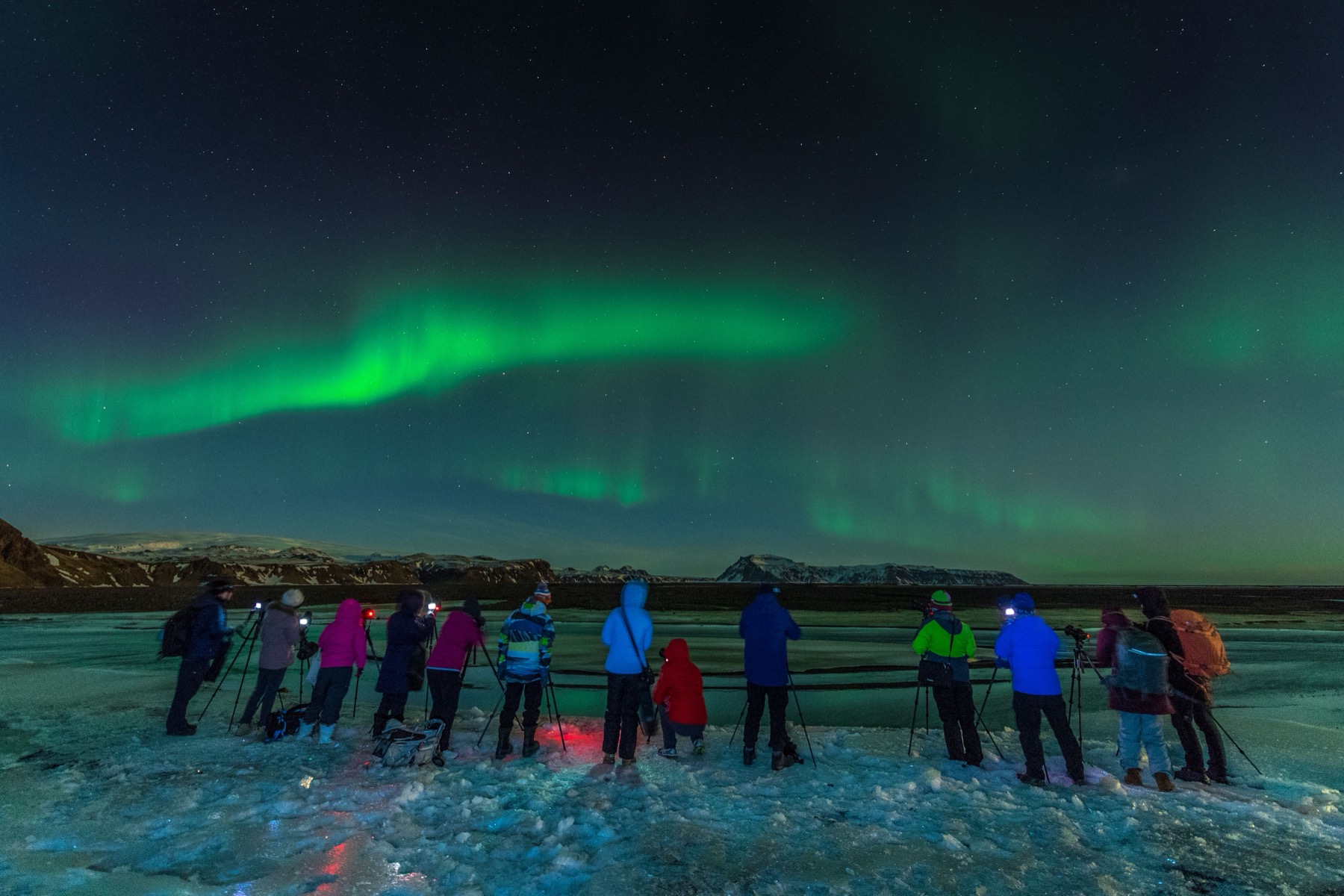
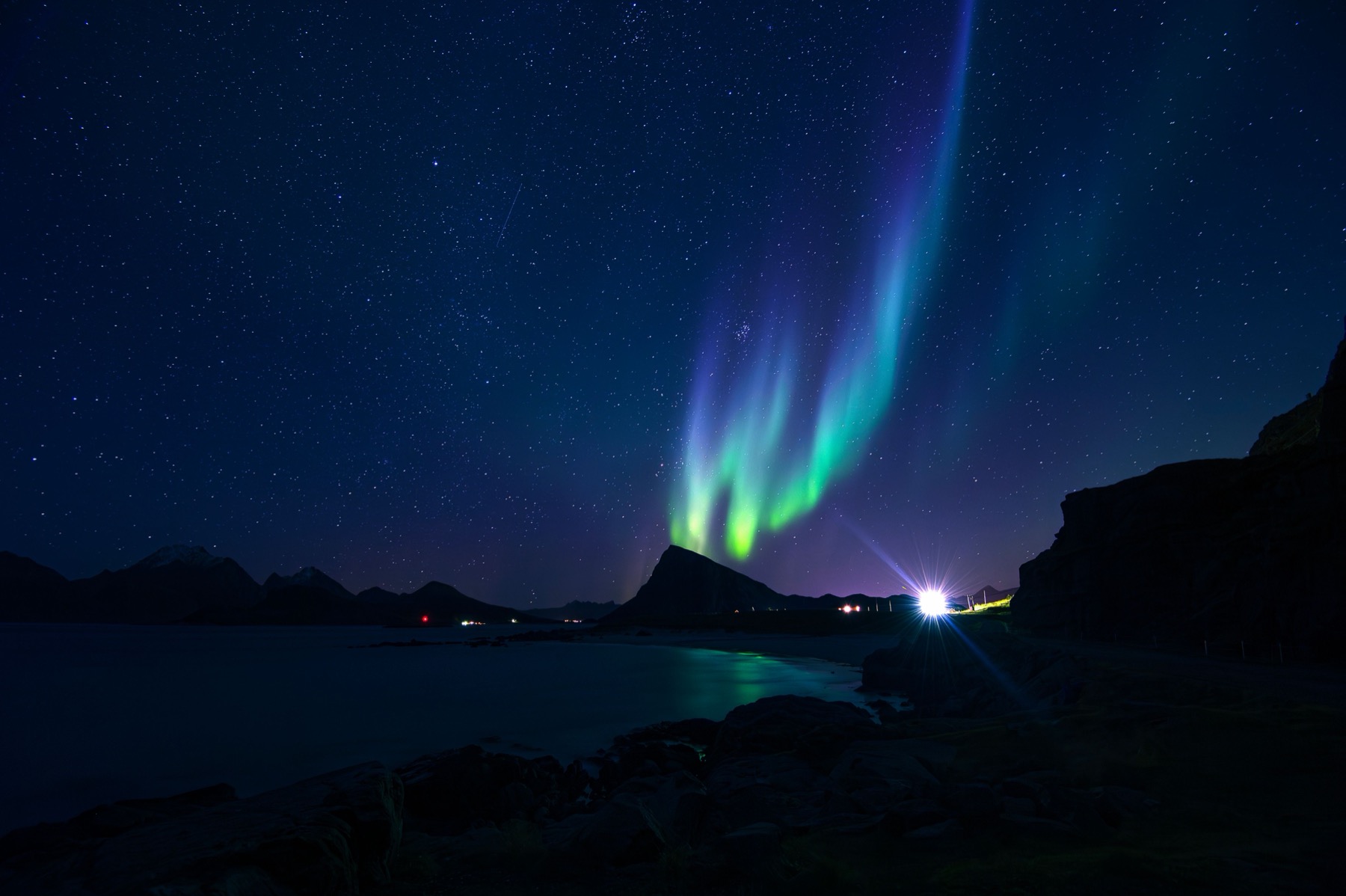
But get ready for one fundamental difference between reality and the photos on social media. Weaker aurora often appears to the naked human eye merely as a greyish or slightly greenish misty cloud that ripples oddly. Only when you point a camera lens at it does the sensor gather more light and reveal that vivid neon green.
💡 Tip: If you see purple edges beneath the green bands in the sky, it means the solar wind has penetrated very deep into our atmosphere and you’re witnessing an exceptionally strong geomagnetic storm.
2. When the high season is and why December isn’t the best idea
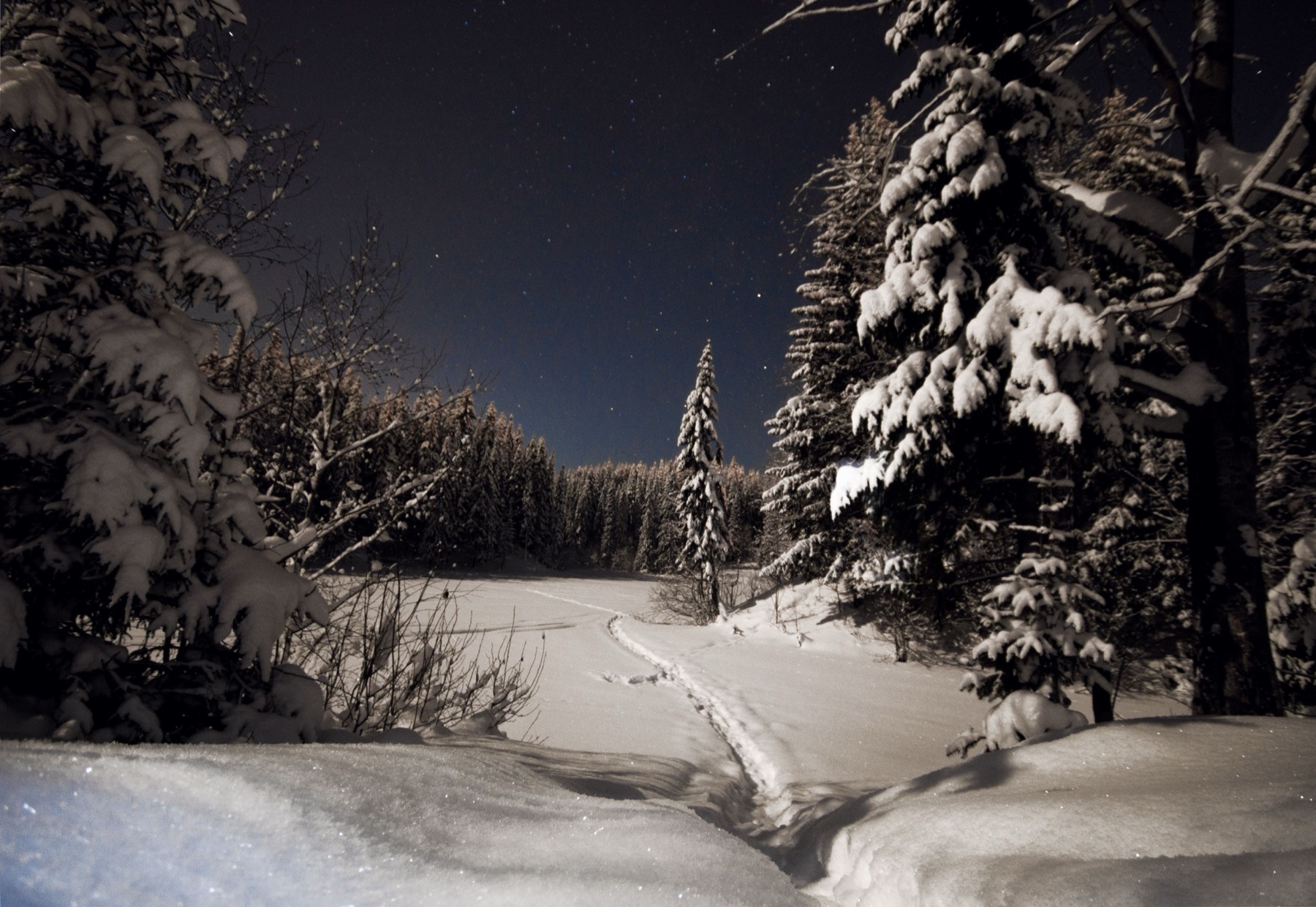
The aurora-watching season in Swedish Lapland lasts quite a long time, usually starting in late August and ending in the first days of April. Most people automatically associate aurora hunting with the Christmas holidays, snowdrifts and deep December frosts. The reality in the far north, however, shows that December and January are among the most challenging months for easygoing travel, because the landscape is gripped by the uncompromising polar night (in Swedish, polarnatt).
In Kiruna, for example, the sun doesn’t rise above the horizon at all from the beginning of December to mid-January, and you’ll only get a few hours of bluish twilight around midday. This period also comes with temperatures commonly dropping to minus thirty degrees. In such extreme cold, operators often decide to cancel daytime dog-sledding runs, because breathing in the icy air during physical exertion endangers the safety of both the animals and the tourists themselves. December also statistically brings very frequent cloud cover combined with heavy snowfall.
If you’re after the secret tip of experienced travellers and want to avoid both the crowds and the brutal frosts, head north as early as September or October. During this autumn period the lakes aren’t frozen yet, so the dancing green bands are beautifully mirrored on the calm water surface, creating utterly dreamy compositions for photographers. Nature is also playing in gorgeous autumn colours and the trees aren’t yet bent under the weight of snow.
Another huge advantage of the autumn months is thermal comfort. Temperatures often stay above zero or only slightly below, so you don’t need extreme and expensive Arctic gear. You can happily set out in a good autumn jacket and light hiking boots, which dramatically lowers the initial outlay. The annoying summer mosquitoes, which can really spoil a stay in the Lapland wilderness during July and August, have reliably vanished by September. You get the perfect compromise between bearable weather and dark nights ideal for aurora hunting.
3. Why February and March are the absolute winners of the whole year
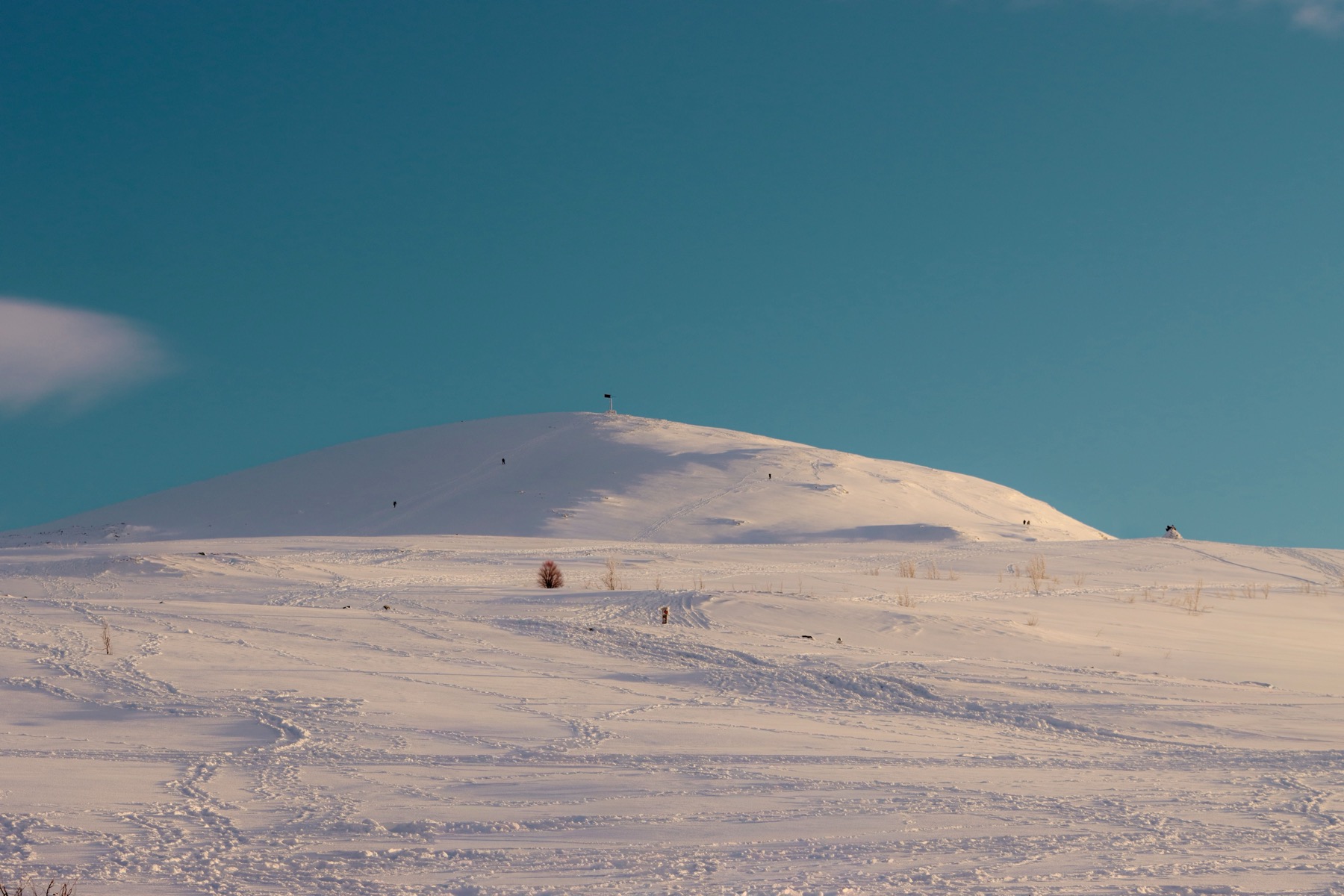
Ask anyone who’s been to Lapland more than once and they’ll tell you the same thing: late February and all of March are simply the best possible combination. The days start getting longer very quickly during this period, so you’ll enjoy plenty of daylight for cross-country skiing, snowmobiling or trips to explore Sami culture. The frosts aren’t as brutal as in deep January anymore, and the landscape stays beautifully buried under huge layers of sparkling snow.
March also hides one huge astronomical trump card, closely tied to the spring equinox. During this period the Earth’s magnetic field sits at an ideal angle to the incoming solar wind, which historically leads to the strongest geomagnetic storms of the entire year. At night you still have enough deep darkness for perfect aurora watching, and during the day you soak up the vitamin D you need from the sun, which reliably keeps you from the typical fatigue and depression of the long polar night.
When planning a February trip, though, you have to watch out for one specific local phenomenon. Swedish children have their so-called sportlov (spring break) during this period, which shifts across regions over the course of several weeks. Swedes head to the mountains en masse for skiing and winter fun at this time, which means enormous pressure on accommodation capacity. Hotels and cabins fill up at an unbelievable pace and prices often climb to seasonal highs.
So if you’re considering a trip around the turn of February and March, you have to sort out your bookings several months in advance. Especially famous spots like Abisko National Park or the ice hotel in Jukkasjärvi report being fully booked even six months ahead. But the reward for planning early will be the absolute best conditions the Arctic north can offer, and experiences bathed in afternoon sun.
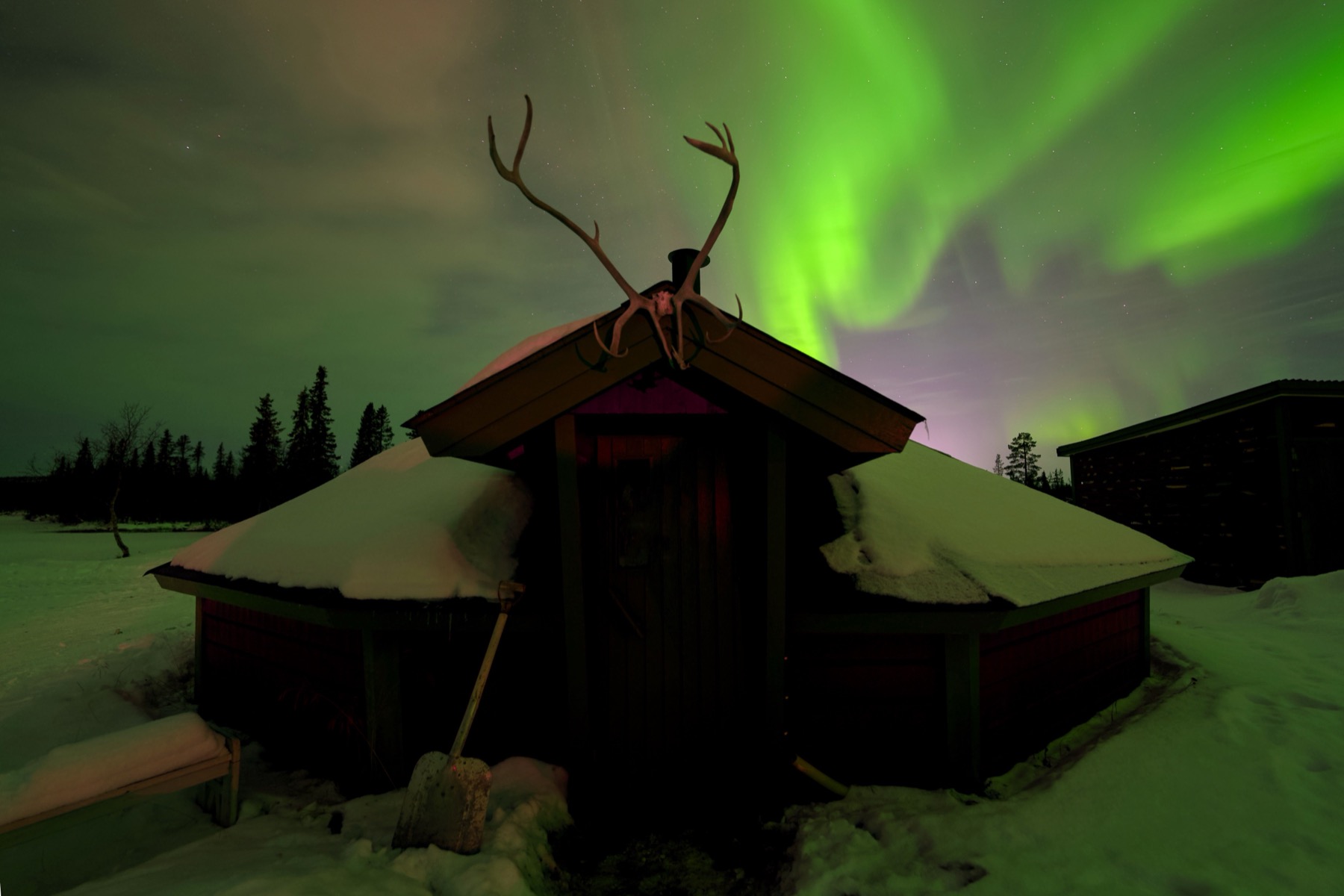
4. The golden rule of three to four nights for a good night’s sleep
The most painful mistake tourists make is planning their Arctic adventure for a single weekend and relying on one free night. The weather above the Arctic Circle changes with incredible speed and can throw an opaque blanket of clouds at you precisely at the moment the app reports the highest solar activity. If you arrive for a single night and the sky clouds over, you’ll head home with a broken heart and an empty wallet.
Travel forums are full of complaints about commercial agencies that run paid evening aurora trips. Most of these companies have a strict no-refund clause for bad weather in their terms. Sure, the guides will drive you out into the wilderness and grill you a sausage over a fire, but if it snows heavily all night, your money vanishes irretrievably without the result you longed for. Relying on a single night is simply too big a gamble in the Arctic.
Experienced aurora hunters therefore always follow the so-called three-to-four-night rule, which gives you the time buffer you need in case of unexpected snowstorms. Over four days in one place, the statistical probability of a clear sky increases radically, especially if you cleverly pick a location with a stable microclimate. Even if the first two days rain or snow away, the sky usually breaks open on the third night and you’ll finally get your long-awaited reward.
This time cushion also lets you spread out your daytime activities far more sensibly. Aurora hunting means standing outside in the frost often until two or three in the morning. If you had to get up early the very next morning for demanding dog-sledding, you’d be completely exhausted. More nights give you room to sleep in through the morning and enjoy the Arctic scenery calmly, without the constant stress of the clock ticking.
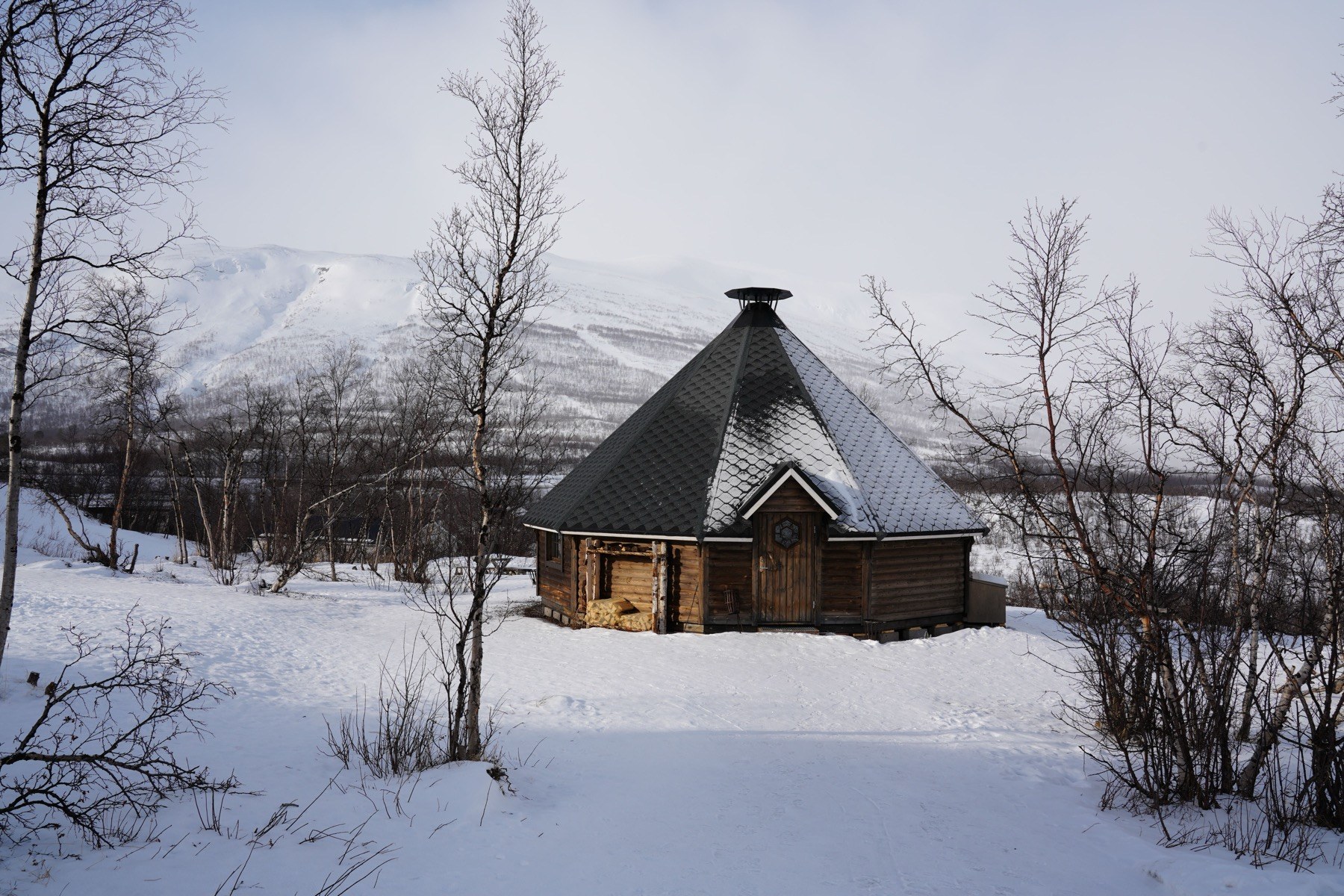
5. Abisko and the magical phenomenon of the blue hole
Abisko National Park and the little village of the same name, lying on the shore of the huge frozen Lake Torneträsk, are considered the absolute holy grail for aurora hunters. This place offers no big shopping centres, no expensive restaurants and no busy streets full of bars, but it hides a huge meteorological advantage in the form of a unique microclimate. Thanks to the specific rain shadow of the surrounding mountains, the clouds often break directly over the lake, even in moments when the rest of Swedish Lapland is desperately reporting heavy snowfall.
This phenomenon became famous under the name the blue hole, and agencies of course make heavy use of it in their marketing — they claim Abisko has up to seventy percent clear nights in winter, which sounds almost too good to be true. Meteorological data, however, really does confirm that Abisko offers the highest share of clear nights in all of Scandinavia. That’s exactly why professional photographers from all over the world head here, knowing full well that a perfectly clear sky is absolutely key to the final result.
A huge advantage of Abisko is also its remoteness from the light pollution of big cities. If you stay at the main tourist complex, STF Abisko Turiststation, you don’t have to pay for expensive guided night trips at all. You just need to dress well and walk about five hundred metres from the lit-up buildings straight onto the frozen surface of Lake Torneträsk, where you’ll find complete darkness and a perfect view of the entire northern sky.
Patience is absolutely key here. The best time window for watching usually falls around two hours before and after local midnight, but the aurora can just as easily surprise you at seven in the evening. If you want to maximise your chances and don’t want to spend a fortune chasing clear skies in vans, Abisko should be your main base for the night part of the whole trip.
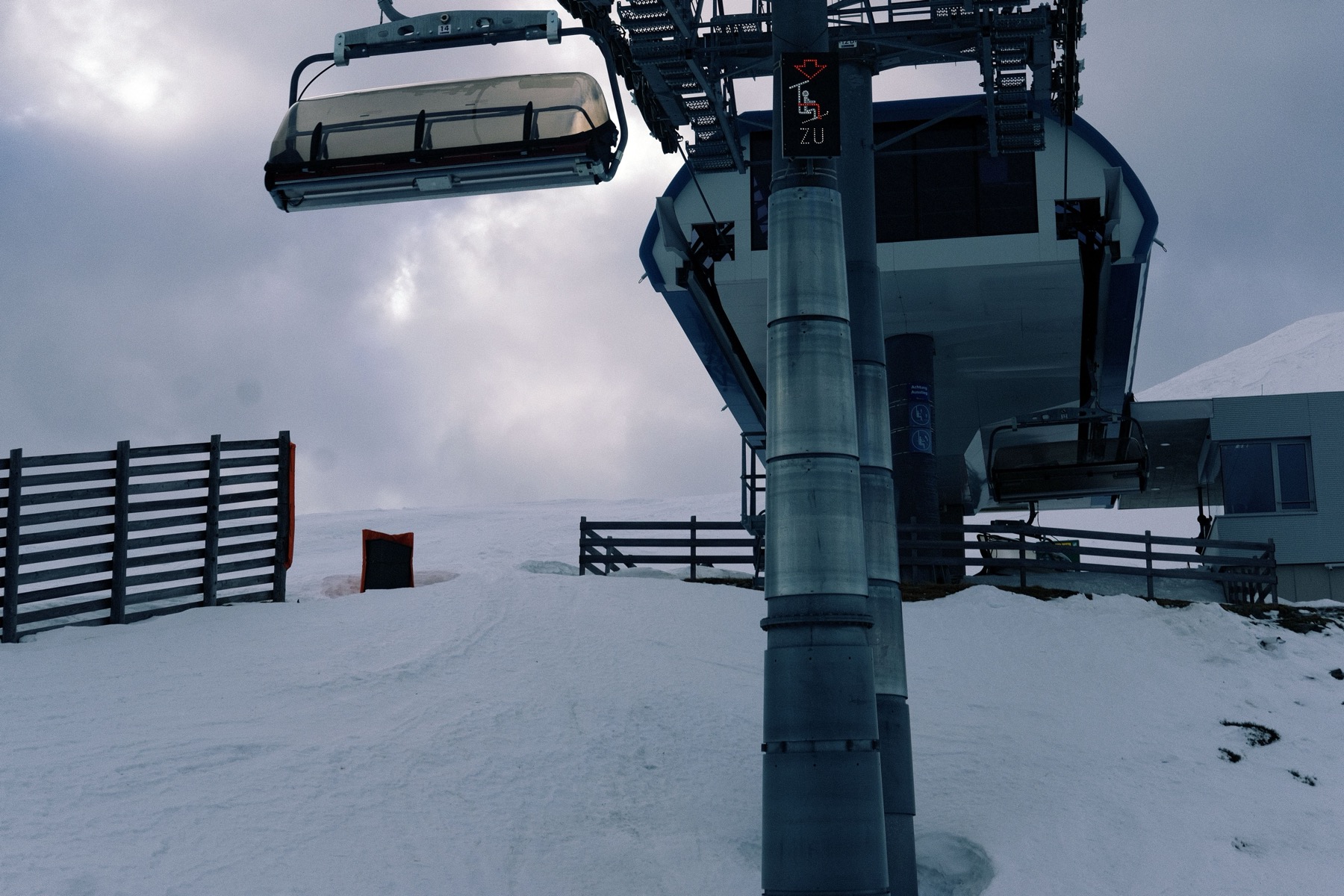
6. The Aurora Sky Station on Mount Nuolja and its real value
Right in the heart of Abisko National Park you’ll find one of the world’s most famous observatories dedicated to aurora watching, which bears the proud name Aurora Sky Station. It sits high on Mount Nuolja and is run by the Swedish Tourist Association STF. An older but reliable chairlift takes you up to it, opening up an incredible view beneath you in the frosty night. At the top you find yourself in absolute darkness without any light pollution, creating perfect conditions for photographing the famous mountain profile of Lapporten (the Lapland Gate).
For this exclusive experience, though, the Swedish operators charge very handsomely. Special evening tickets (Night Visit) commonly cost around 750 to 900 SEK, which is roughly €67 to €82 depending on the specific season. Given the high price and the uncertainty of the weather, many travellers swear by a smarter strategy of going up the mountain on the much cheaper lift during the day. A day ticket costs about 220 SEK and offers you absolutely phenomenal views into the sun-drenched valley.
In the evening you can then watch the aurora completely free directly from the frozen Lake Torneträsk lying below the mountain. The experience from the lake is reportedly no less magical, you can invest the money you save into a good dinner at a local restaurant, and above all you avoid the brutal cold. Waiting on the mountain at night means being constantly exposed to the icy wind with no chance of quickly sheltering in a warm room.
💡 Tip: If you do decide on the evening lift ride for the aurora, put on at least two extra insulating layers compared to your usual outfit. A twenty-minute journey on a completely open chairlift at minus twenty degrees can chill a person very quickly and dangerously.
7. Kiruna as a base: pros, cons and light pollution
The city of Kiruna serves the vast majority of travellers as the ideal gateway to the far north, since it has an international airport and is the end point of the popular night trains from Stockholm. In itself it’s a huge global curiosity, because due to the expansion of the giant underground iron ore mine of the LKAB company, its entire centre is gradually being relocated about three kilometres away. In August 2025 the world watched with bated breath the operation in which workers moved an entire — and beautiful — wooden church weighing 672 tonnes along a special route.
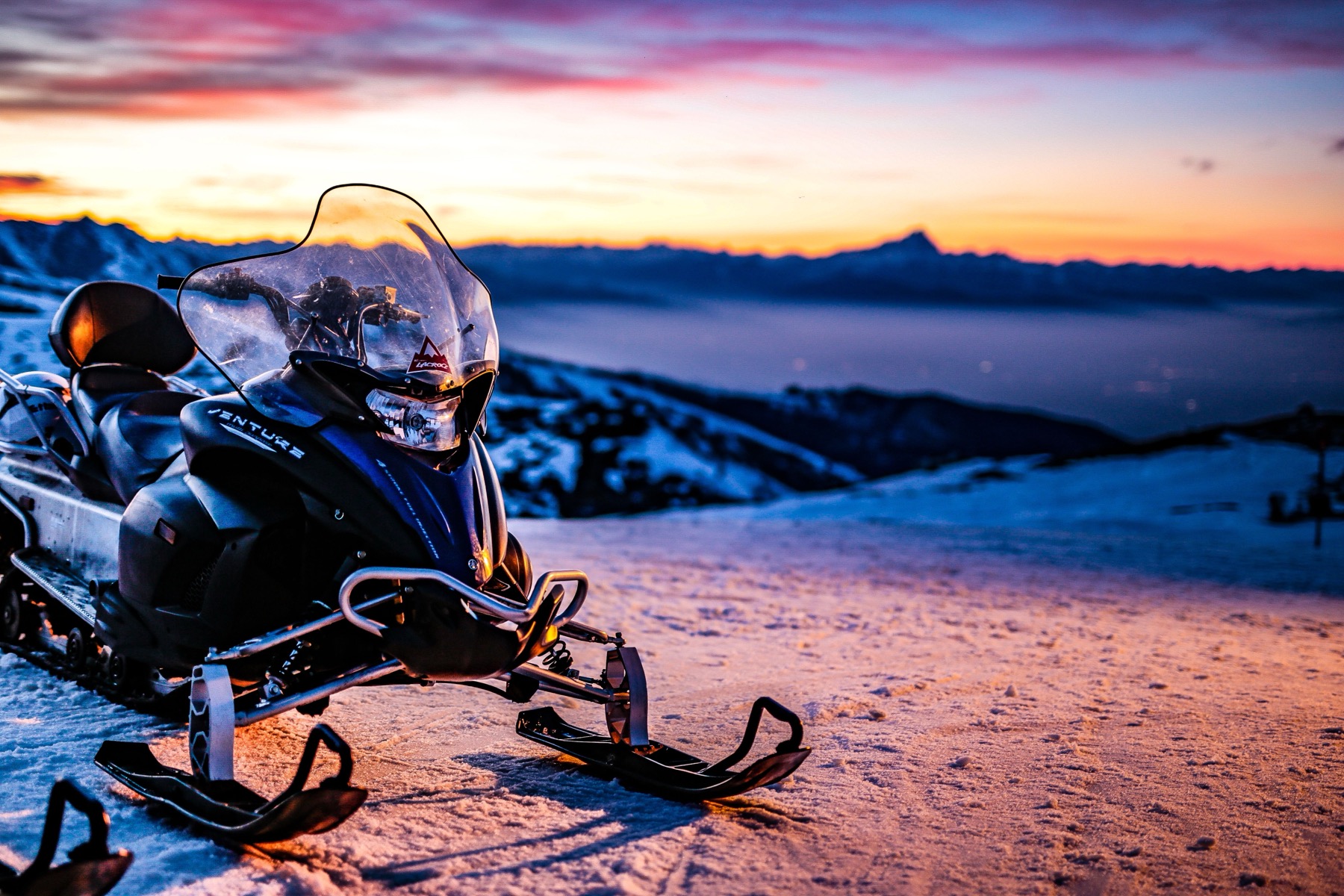
During the day you’ll find an enormous number of operators offering dog-sledding, snowmobile trips and authentic encounters with Sami culture. You can even descend hundreds of metres underground for a tour of the mine itself. For aurora hunting, however, Kiruna has one absolutely fundamental problem, namely the ever-present and fairly strong light pollution from the giant mining pit, street lamps and industrial areas.
If you stay right in the city centre, you won’t see weaker aurora through the veil of light at all. You’ll have to head out into the wilderness for a dark sky every single time. That costs you either considerable money for organised trips with agencies, or requires renting your own car and the courage to drive on icy roads. Paying over €40 every evening for a lift into the dark adds up hugely over a week-long holiday.
The ideal compromise and winning strategy therefore lies in combining both main locations. Devote the first days to daytime activities in Kiruna, ride a husky-drawn sled and visit the ice hotel. For the actual night aurora watching, you then move by train a hundred kilometres further west to dark Abisko, where the darkness is really just a few steps from your bed.
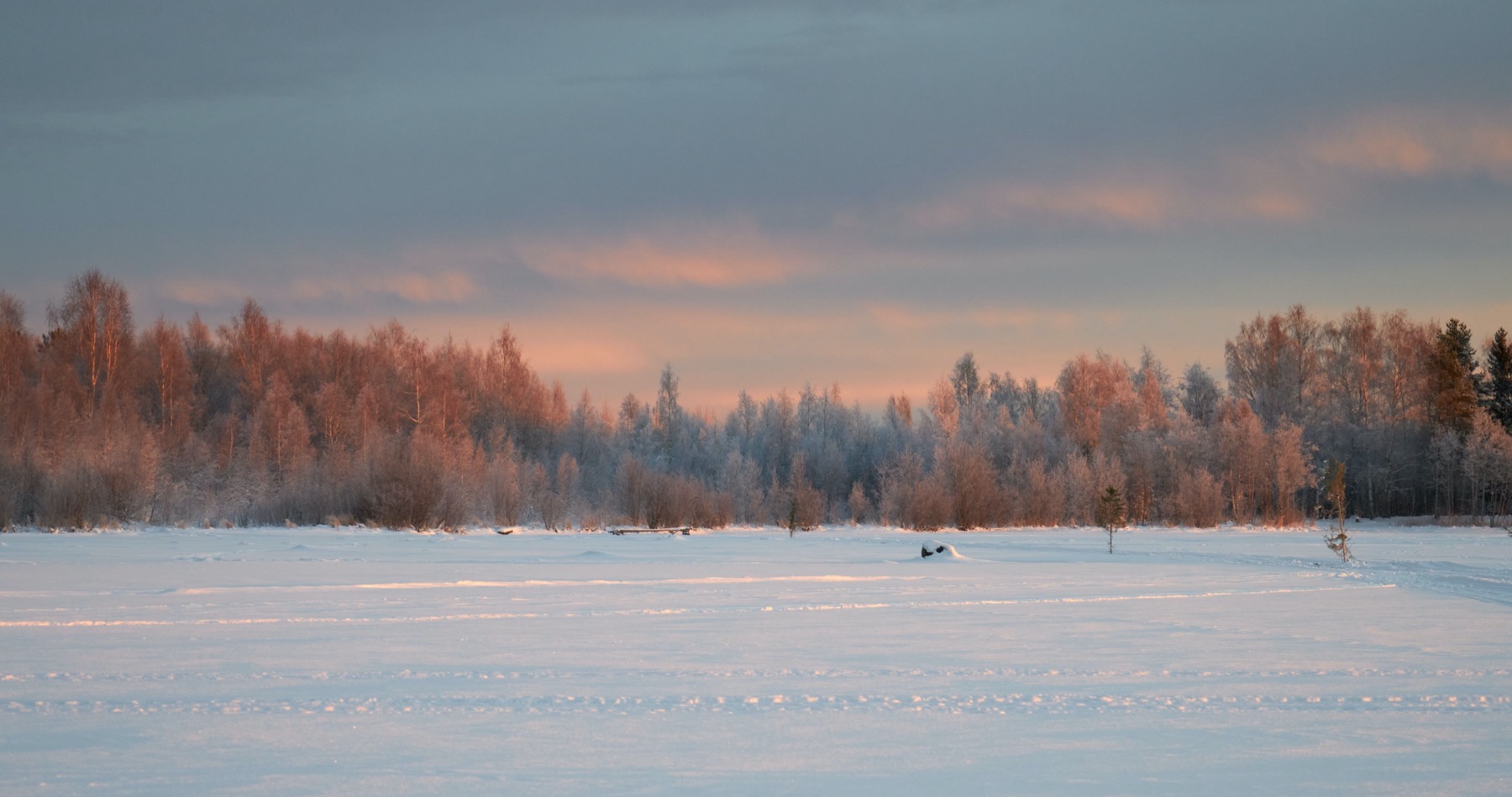
8. Other great spots: Jukkasjärvi, Jokkmokk and Luleå
If you’re looking for alternatives to the best-known locations, Swedish Lapland offers several other fascinating destinations. A short drive from Kiruna lies the famous village of Jukkasjärvi, which boasts the celebrated ice hotel (Icehotel). Its tradition dates back to 1989 and every winter it’s built anew from blocks of ice harvested from the River Torne. For the 2026/2027 season, the opening of Icehotel 37 is planned for 11 December. The frozen river itself serves as an endless natural grandstand for watching the night sky, and the darkness here is much deeper than in Kiruna itself.
A night in an ice room at a temperature of minus five degrees costs about 6,000 SEK (approx. €545). Experienced travellers therefore recommend the smarter option: pay only for a day ticket at 325 SEK (roughly €30), admire the beautiful ice sculptures, and in the evening drive off to sleep in a cheaper — and above all heated — guesthouse.
A big draw for culture-loving travellers is the small town of Jokkmokk, which comes alive above all at the start of February during its legendary winter market with a tradition of more than four hundred years. Around thirty thousand visitors descend on the settlement. Sami people sell traditional handicrafts (duodji) here, and you can watch the preparation of suovas, smoked reindeer meat cooked over a fire and served in flatbreads. The atmosphere is absolutely electrifying.
A completely different, adrenaline-fuelled experience is offered by the coastal town of Luleå in the north of the Gulf of Bothnia. When the sea freezes enough in February, road workers mark out official ice roads (isvägar) on it. You can rent a car and go for a drive directly on the frozen Baltic Sea, a feeling that’s guaranteed to send a shiver down your spine and one you’ll never forget.
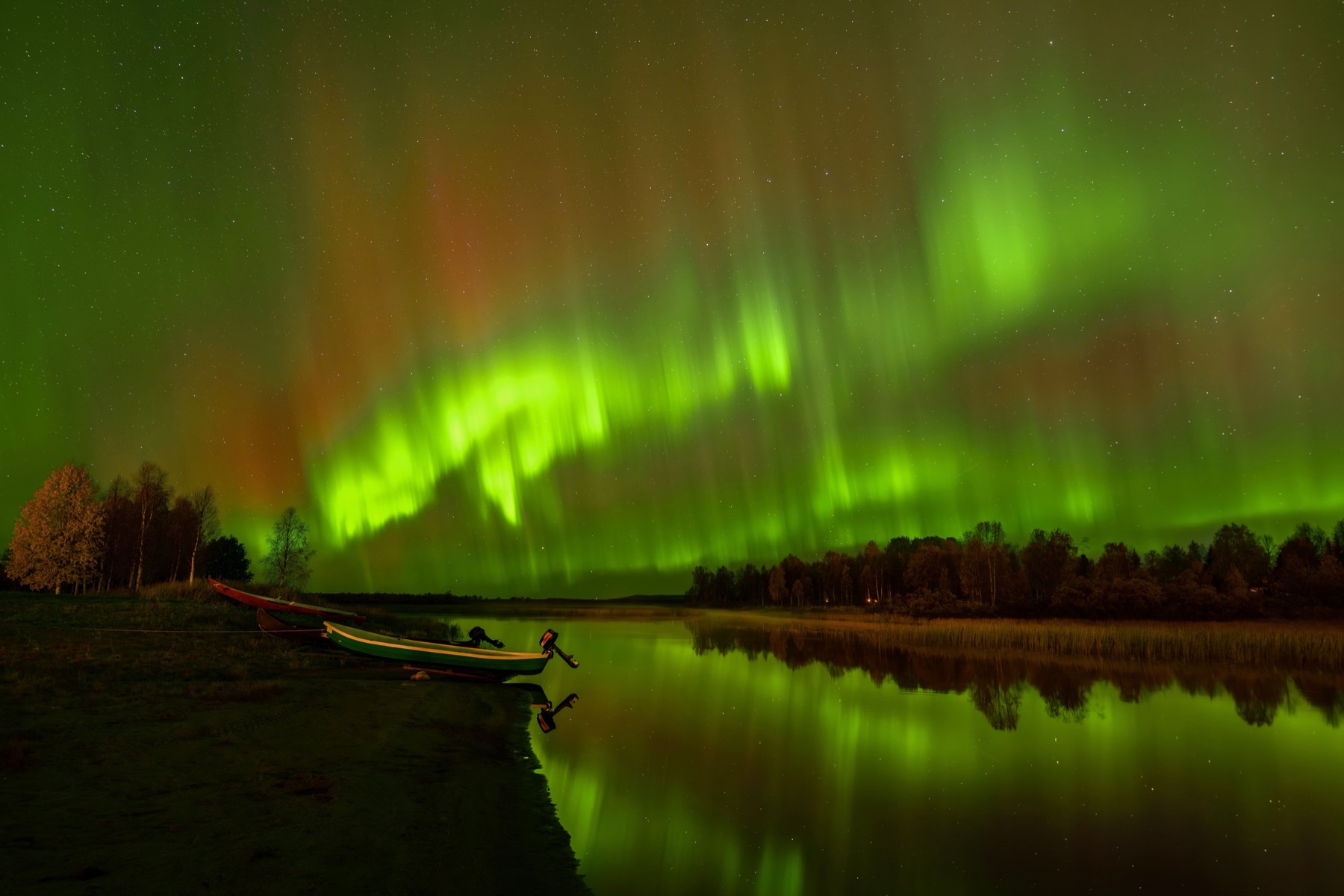
9. Can you see the aurora in southern Sweden and Stockholm, and during which storms?
The northern lights occasionally become a viral hit even in much more southerly Swedish regions, and enthusiastic photos from around Stockholm or Gothenburg regularly fill social media. The truth, however, is that to see the aurora in the south of the country you need an exceptionally strong geomagnetic storm, reaching values of at least KP 6 or higher. Displays this strong appear only a few times a year and often last only a few dozen minutes.
You definitely can’t rely on them in any way when planning an ordinary holiday. If you go to Stockholm for a long weekend hoping you might see the northern lights, you’ll probably leave disappointed. Another huge obstacle in southern Sweden is the massive light pollution from densely populated areas and the E4 motorway, which reliably wipes weaker aurora clean off the night sky.
If you do happen to find yourself in the capital during a reported extremely strong solar storm, you can’t stay standing in the centre by the royal palace. You have to drive far beyond the city limits into the deep forests or to darkened lakes to have any chance of success at all. The aurora will also always be low above the northern horizon, never dancing directly overhead as it does in Lapland.
For a guaranteed and truly intense experience there simply is no other reliable path than to head high above the Arctic Circle. There the show plays out in the sky almost every clear-sky evening, and even weak solar activity can conjure up incredible patterns that will take your breath away.
10. Why the cloud forecast matters far more than the KP index
Among beginner aurora hunters there’s one huge misconception, where everyone constantly watches mobile apps showing the value of the so-called KP index on a scale from zero to nine. They feel that if the app reports a value below level three, there’s no point at all going out into the freezing night. In northern Sweden this is complete nonsense, because you’re standing directly beneath the auroral oval.
In areas located high above the Arctic Circle, such as Abisko or Kiruna, even a very weak KP index of 1 or 2 is enough for a gorgeous celestial show. Solar particles fall into these latitudes constantly and form a stable green ring. So if the app reports weak solar activity, it doesn’t mean at all that you should hide under the duvet and give up.
Your arch-enemy is in fact not weak solar activity, but plain old clouds and snowfall, which can reliably ruin even the strongest solar storm of the decade. Experienced photographers therefore treat the KP index value as only a rough guide and much more study the local meteorological models and cloud radar imagery, so they know exactly where the sky will clear at night.
If you find a spot with perfect star visibility, you’ve won half the battle. Then all you need to do is dress warmly, arm yourself with patience and wait in complete darkness. The green glow will most likely appear sooner or later and round off your evening to absolute perfection. Clouds are simply the only real spoilsport of the whole experience.
11. Apps and websites that are really worth following
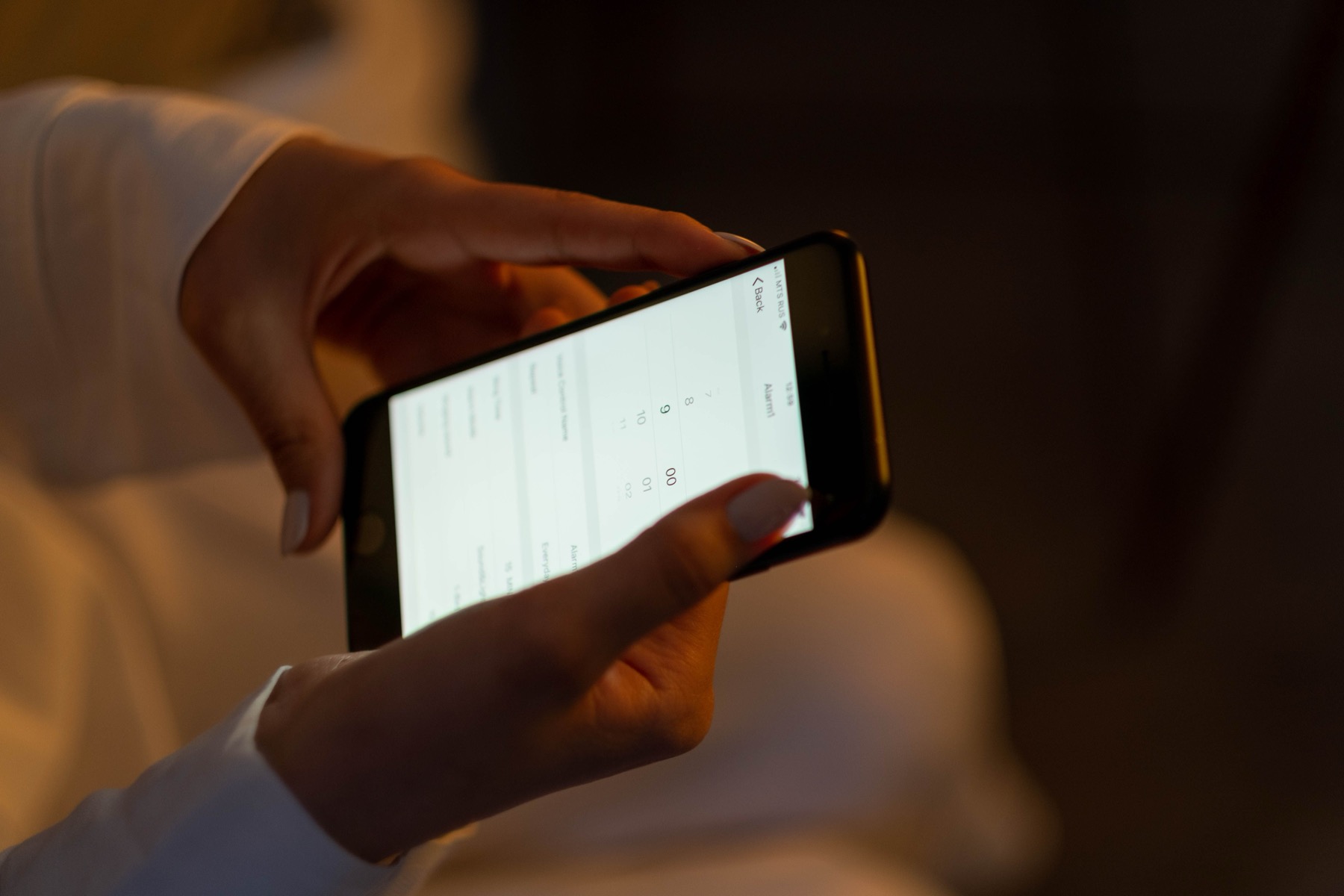
These days you can hardly manage aurora hunting without good data on your phone, and the right apps will save you a lot of pointless freezing outside. The gold standard among travellers is the globally popular app called My Aurora Forecast. It offers clear notifications, a percentage probability of visibility in your location and a very useful visual map of the auroral oval, on which you can see exactly how far the green ring currently reaches.
For a deeper understanding of solar activity and accurate raw data from satellites, the detailed website SpaceWeatherLive is a fantastic fit, regularly followed rather by advanced astronomy enthusiasts and photographers. Here you’ll find real data on the density and speed of the solar wind in real time. Global apps, however, often can’t react fast enough to local weather fluctuations, which is a fatal problem in the mountains.
The most important secret for a successful hunt, however, lies in local Swedish data. Definitely download the official app of the Swedish Meteorological Institute SMHI to your phone; it has the absolute most accurate local cloud-cover models. It can predict even very small gaps in the clouds over specific lakes and valleys within a radius of a few dozen kilometres.
The combination of solar-activity alerts from global apps and precise knowledge of cloud movement from the Swedish radar will make you a master of planning. When watching the SMHI map, always look for dark spots without precipitation and cloud cover, and steer your evening steps or your car’s route exactly there.
12. How to photograph the aurora even on an ordinary phone
Photographing the northern lights once required expensive DSLRs and a great deal of aperture know-how, but today’s modern phones can work miracles thanks to smart algorithms. The basic and absolutely essential rule, though, is total stability of the device, because you’ll simply never get a sharp photo in night mode handheld. Even the tiniest shake of the hand turns the stars and the aurora into one big blurry smudge.
If you don’t want to invest in a classic large tripod, at least get a small pocket tripod with flexible legs. As a last resort, prepare a sturdy backpack or a rock outside to safely prop the phone against and secure it against slipping. In the camera settings, always turn on night mode and manually extend the exposure time to three to ten seconds depending on how quickly the aurora moves across the sky.
The biggest trap of the Arctic cold is that it can drain your phone battery from full to zero in twenty minutes, so always carry it in an inner jacket pocket close to your body and only pull it out just before pressing the shutter.
A good, fully charged power bank should be a mandatory part of your kit on every night hunt. Ideally keep it connected to your phone by cable and tucked away under a warm layer of clothing the whole time, ensuring you don’t run out of juice at the most important moment.
13. Organised tours versus your own rental car
The decision of whether to pay a small fortune for an organised tour or rent a car and set out on your own troubles just about every traveller on a limited budget. Paid trips commonly cost from €80 to €140 per person and you can book them in advance through the GetYourGuide portal. They have the huge advantage that local guides know the region’s microclimate perfectly and will often drive you a hundred kilometres in a van just to find a patch of clear sky where the clouds break.
On the other hand, they charge extremely well for this service and most companies apply an uncompromising no-refund policy. Even if you see absolutely nothing because of heavy snowfall and the guide just grills you a sausage in the forest, they won’t give you a cent back. Renting a car in Kiruna gives you absolute freedom and saves money with more people, but it requires considerable driving experience and enormous respect for winter conditions. If you long for that freedom, I definitely recommend checking out the RentalCars comparison site.
Swedish rental cars come with top-notch studded winter tyres (allowed from October to mid-April), which grip into the ice perfectly. But you have to get used to the fact that roads in the north aren’t salted at all — they’re only ploughed and you drive exclusively on packed white snow and ice, which dramatically lengthens your braking distance.
The biggest danger, moreover, isn’t skidding but the ever-present reindeer. The animals like to gather by the ploughed roads at night to lick up any salt, and in the dark they blend in completely with the surrounding forest. If you’re driving in the dark, you have to be constantly alert and not exceed the speed limits, otherwise you risk a fatal collision.
14. How to dress properly for several hours in the cold
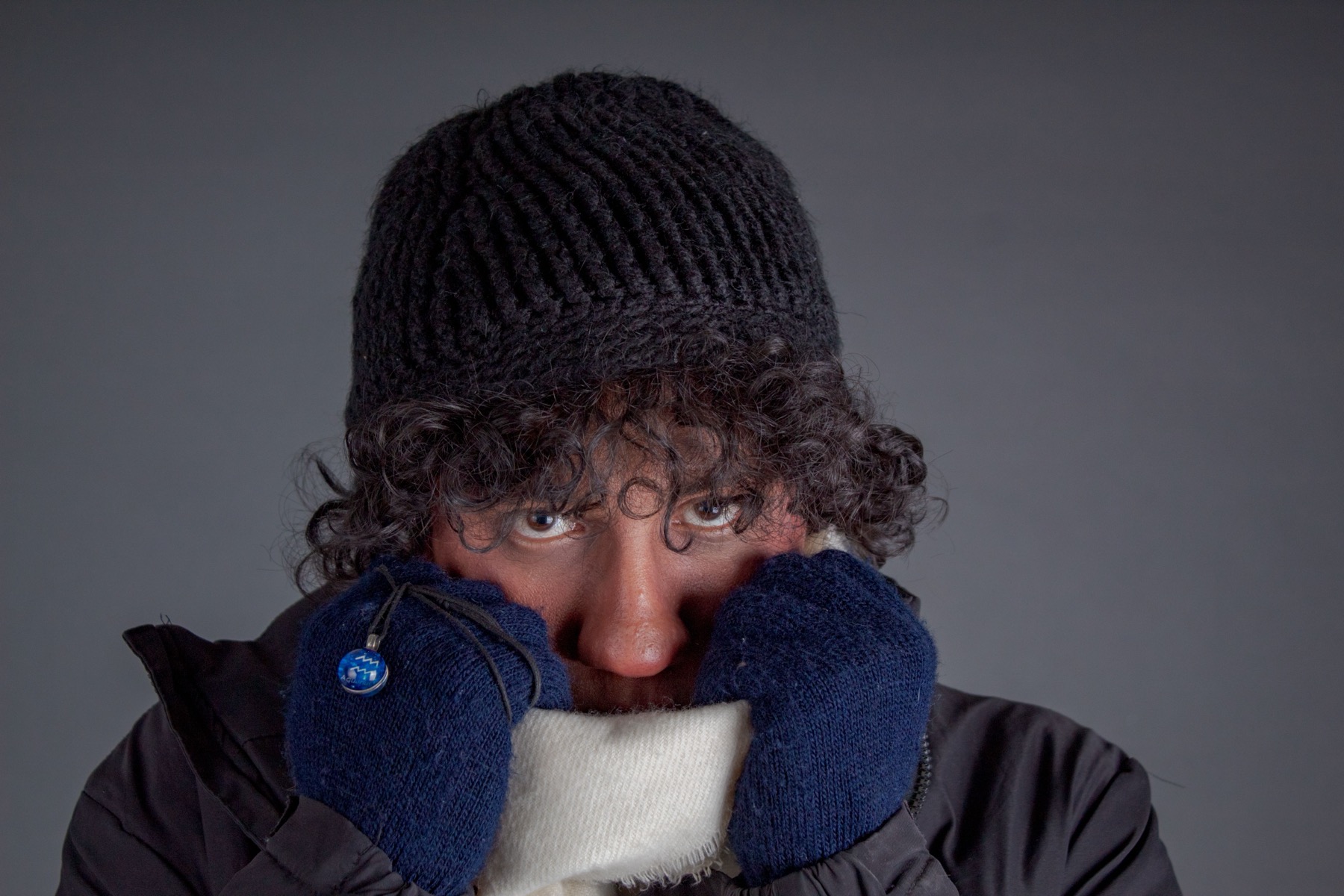
Waiting for the northern lights is a real test for your body. You stand for long hours at night, almost motionless, in extreme frosts that bite deep into your bones. The usual daytime temperature in the north in winter ranges between minus fifteen and minus thirty degrees. Forget jeans or ordinary cotton — cotton soaks up your sweat, doesn’t wick it away, and then chills you fatally, risking a serious health problem.
The alpha and omega of Arctic dressing is cleverly thought-out layering. The base absolutely must be good merino wool thermal underwear (a long-sleeved top and long johns), which keeps you warm even when you sweat slightly while walking. On top of this base layer should come a thick fleece hoodie or a proper coarse wool sweater to trap heat close to the body.
A massive down jacket serves as the main insulation. Finally you have to cover everything with a windproof and waterproof shell in the form of trousers and a jacket that will reliably protect you from the icy wind. Wind can drop the perceived temperature by dozens of degrees. Don’t forget to bring a neck gaiter and a proper winter hat.
The critical points are always the extremities. The ideal strategy is to take two pairs of gloves. Thin fingered gloves underneath will help you when adjusting the camera, while thick mittens on top will keep your fingers safe for the rest of the evening. The good news is that most operators will lend you heavy Arctic overalls and massive snow boots free of charge for the paid activities (dog-sledding or snowmobiling), so you don’t have to bring the most extreme gear from home.
How to photograph the northern lights
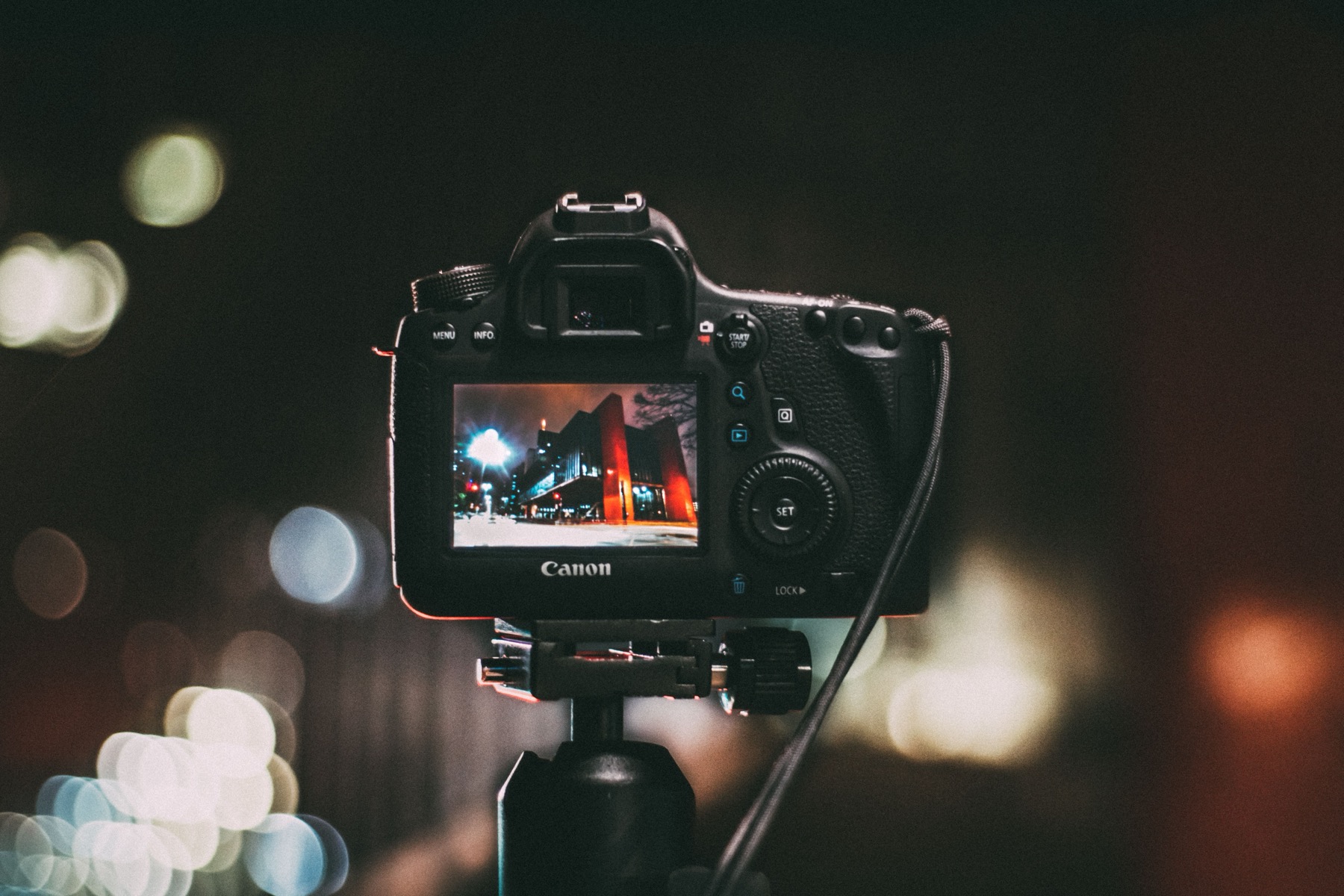
Shooting on a phone is great for quick snapshots, but if you want to bring home truly professional images with deep colours and a perfectly sharp landscape, you’ll need a classic DSLR or mirrorless camera with full manual settings. The foundation of success is a wide-angle lens with the best possible light-gathering ability, ideally with an aperture of f/2.8 or even lower, so the sensor picks up as much of the precious light as possible in the Arctic darkness.
First and foremost, you have to switch focus to manual and focus on infinity, because autofocus simply can’t cope with stars in the dark. The easiest trick is to find the brightest point in the sky on the display, focus on it manually, and leave the lens ring in that position for the rest of the night. Set the ISO according to the lens speed at roughly between 1600 and 3200. You’ll have to experiment a bit with the exposure time — if the aurora moves across the sky very quickly, choose a shorter time of around three to five seconds so the green bands don’t blur into one solid smudge. If the aurora is weak and static, you can happily extend the time to ten or fifteen seconds.
A sturdy tripod is an absolute necessity, as is a remote shutter release, because even just pressing the button on the camera body will uncompromisingly blur the whole photo. If you don’t have a remote release, at least set a two-second self-timer. Also don’t forget to turn off image stabilisation on the lens, which does more harm than good on a tripod.
A huge challenge is the cold, which drains energy at lightning speed. The camera battery will last only a fraction of the usual time at minus twenty degrees, so bring at least two or three spares and carry them the whole time in an inner jacket pocket close to your body to keep them warm.
💡 Tip: When composing your shot, don’t get carried away by the green sky alone. The photo gains much greater depth and scale if you work a piece of snowy landscape into the foreground — trees, a little wooden cabin or the silhouette of a person with a headlamp.
Where to stay for the best chance
💡 Accommodation and experiences tip: We prefer to look for accommodation on Booking.com, which usually has the best cancellation terms. Tickets, tours and activities are then worth comparing and buying through GetYourGuide.
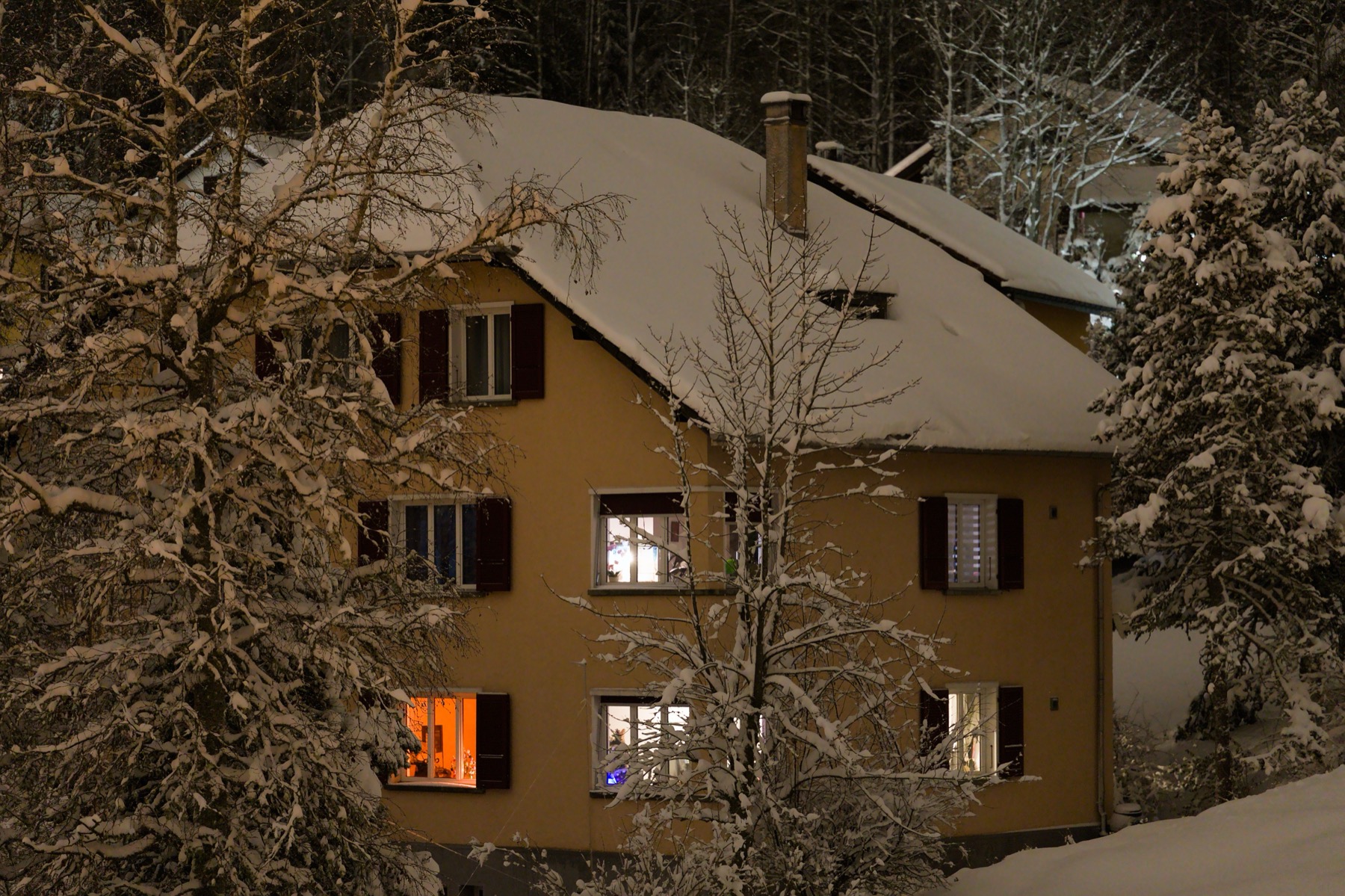
Where you sleep in Lapland is definitely not a trivial matter — the ideal accommodation will save you not only money on night taxis, but also your nerves and a few frostbitten fingers. I’ve picked out the best proven options in various price categories for you, all located strategically far from the light pollution of the big mining towns.
If you want to bet on an absolute sure thing in the form of the famous cloud-free blue hole, stay right in Abisko National Park. The absolute legend here is the STF Abisko Turiststation complex, which offers classic warm rooms as well as much cheaper beds in shared tourist cabins. From here it’s just a few minutes’ walk to the dark Lake Torneträsk, and the price for a double room is around 1,500 SEK (roughly €135) per night. A great, more intimate alternative in the same area is Abisko Guesthouse, where a night costs about 1,200 SEK (approx. €110). The owners are incredibly helpful, happy to lend you warm clothing for the cold, and there’s often a fire burning in the yard to warm up during the night wait for a green sky.
If you prefer the area around Kiruna for daytime activities with dogs and snowmobiles, try the more luxurious Camp Ripan near the town centre. The resort boasts a fantastic outdoor wellness area with heated pools and a proper restaurant. The northern lights can be watched very comfortably from here — you just head to the edge of the camp out of reach of the street lamps — and you can expect a price of around 2,000 SEK (approx. €180) per night. A true hidden gem for lovers of absolute silence is then Aurora Camp Kurravaara, lying about fifteen kilometres beyond Kiruna right on the bank of the River Torne. You’re completely cut off from the light pollution of the mines and can watch the aurora straight from the terrace of your wooden cabin or from the glass-walled sauna for roughly 1,800 SEK (approx. €165) per night.
A chapter all of its own is then the world-famous Icehotel in the village of Jukkasjärvi, where you can spend the night in a room carved from river ice at a temperature of minus five degrees. A night in an ice room (a so-called cold room) starts at roughly 6,000 SEK (approx. €545). Experienced travellers, however, strongly recommend spending just a single night in the ice for the unique experience and enjoying the rest of the stay in the classic heated rooms that this enormous Arctic complex also offers, because sleeping in a sleeping bag in the freezing cold will exhaust you rather than let your body rest.

Where to eat in Swedish Lapland
Lapland isn’t a culinary destination full of Michelin stars, but you’ll eat honestly and heartily here, which you’ll appreciate twice over in the cold. Bear in mind that restaurants here are among the most expensive in Sweden: a main course costs 200 to 350 SEK (€18 to €32), while the lunchtime dagens lunch can be had for 120 to 150 SEK (€11 to €14) including a salad buffet and coffee.
The staples of the local menu are reindeer and moose meat, fish from the cold lakes, and forest berries, especially cloudberry (hjortron). Vegetarians won’t leave hungry, though: almost every place has a meat-free version of the daily menu, soups, and in the cafés the classic fika awaits.
Kiruna and its hidden treasures
In the centre of Kiruna there’s Stejk Street Food, a stall with seating in a heated tipi with an open fire in the middle. Locals come here for reindeer kebabs and pulled-moose sandwiches, but meat-free versions and hot drinks are available too. The atmosphere of the tipi is exactly what you need after a day on the snowmobiles.
A more formal dinner is offered by the restaurant at the Camp Ripan resort, which builds on local ingredients and traditional Swedish cuisine in a modern take. Besides Arctic specialities, the menu also features seasonal vegetarian options. In high season, reserve a table in advance — it tends to get full.
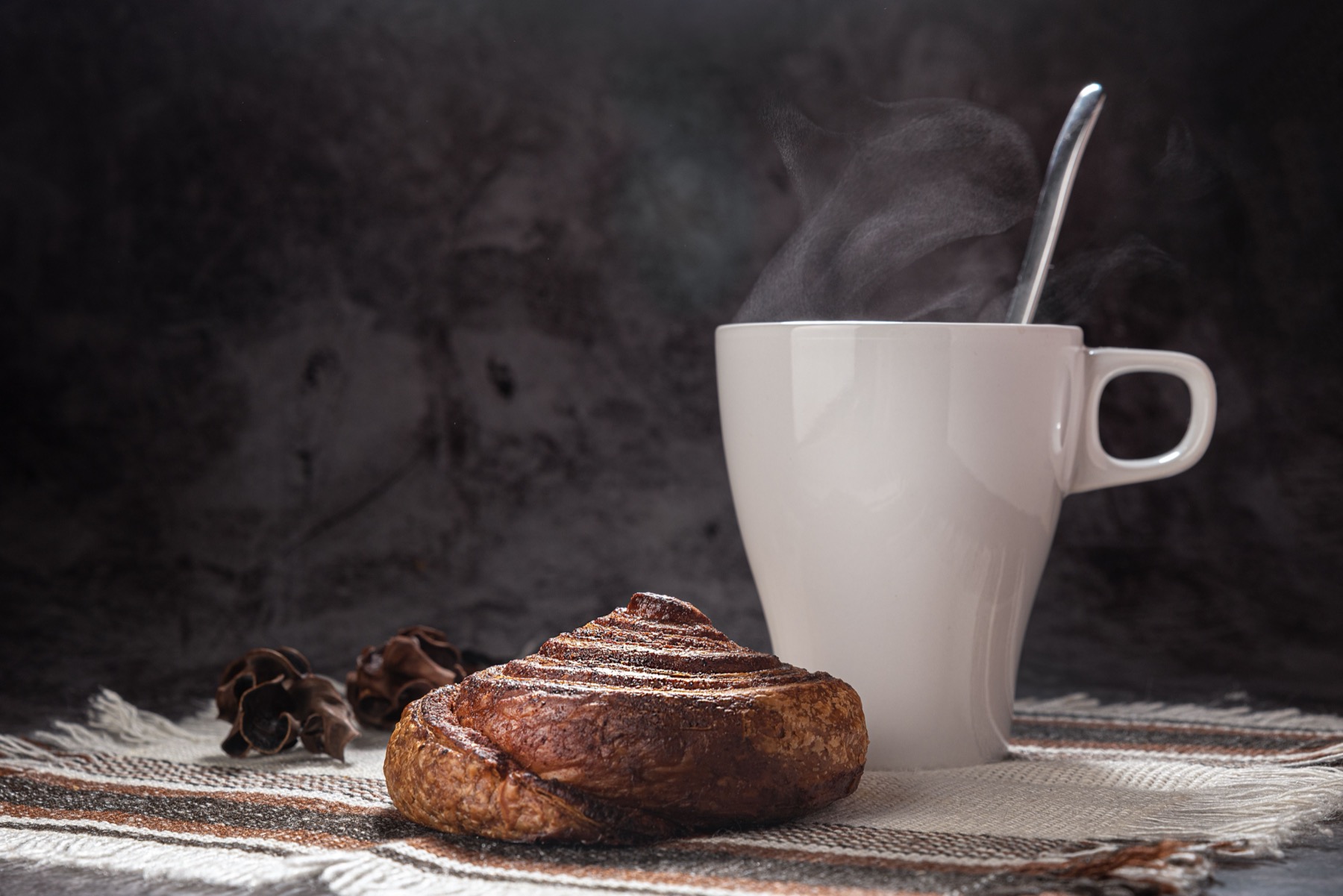
For coffee and something sweet, the best spot is Café Safari in the centre, the heart of local social life, where a coffee with a giant cinnamon bun costs around 80 SEK (€7).
Abisko and Jukkasjärvi
In Abisko National Park the dining options are understandably more limited, but Brasserie Fjällköket right at Abisko Mountain Lodge is an absolute safe bet. The menu here changes depending on what fresh ingredients the chef manages to get hold of, and there’s a very cosy, family-run atmosphere. After hours of freezing outside by the lake, their honest hot soups and meatballs with lingonberries will guaranteed bring you back to life.
And when you head out to tour the ice hotel in Jukkasjärvi, treat yourself at the local Icehotel Restaurant. It tends to be noticeably pricier, but the tasting menu served partly on blocks of crystal-clear ice from the River Torne is a gastronomic experience that simply has no equal. Trust me, a hearty reindeer stew somehow tastes better in the immediate vicinity of the Arctic Circle.
Practical summary and rough prices for 2026
To make planning your Arctic adventure easier and to spare you nasty surprises when you look at your bank statement, I’ve put together an overview of the most important cost items. The Nordic countries aren’t cheap, but with smart planning the expenses can be kept at a reasonable level. The Swedish krona (SEK) sits at roughly €0.09, so keep that in mind when converting local prices.
- Air travel: Return flights with major carriers such as SAS or Lufthansa via Stockholm to Kiruna can be found in the range of €150 to €250, if you’re lucky with deals on search engines like Kiwi and book well in advance. Direct flights to Kiruna are rare, so count on a connection at Arlanda airport.
- Night train (Arctic Circle Train): If you choose the romantic and eco-friendly train journey with SJ or Vy from Stockholm to the north (the journey takes 15 to 18 hours), you’ll pay approximately from 475 SEK (€43) for an ordinary seat and from 835 SEK (€76) for a more comfortable berth. I recommend buying tickets as soon as they’re released for sale, because berths in the winter season disappear at lightning speed. Watch out for possible closures on the Malmbanan line, where delays occasionally occur due to freight trains carrying iron ore.
- Groceries from an ordinary supermarket: Buying basic food for several days will cost roughly €40 to €60 per person. Sweden is generally more expensive, but cooking from your own supplies in your rented cabin will lighten the budget enormously.
- Dinner in a restaurant: An ordinary main course in an average restaurant in Kiruna starts at 200 SEK (€18), a beer costs 70 to 90 SEK (€6 to €8).
- Day entry to the Icehotel: If you don’t want to sleep in the ice and risk frostbite, you’ll pay 325 SEK (€30) for a day tour of the beautiful ice sculptures for an adult and 39 SEK for a child.
- Paid organised tours: A dog-sledding run (husky safari) or a full-evening aurora hunt in a guided van will cost you from €80 to €140 per person.
Where to go next
If this Arctic guide has whetted your appetite and you want to get stuck into further planning, definitely don’t miss our other articles about Sweden and the northern lights, where you’ll find plenty of detailed information.
- For a complete overview of the whole country and tips on summer road trips, read our comprehensive article Sweden: 30 Things to See and Do.
- If you need to plan your days around the ice hotel and the mines, the article Kiruna: 18 Things to See and Do will help.
- We cover the more general astronomical principles and photography tips in the text Northern Lights: Where and When to See Them.
- Interested in a comparison with the neighbouring countries? Then I recommend the guide Iceland, Finland and Norway: How and Where to Catch the Aurora.
- And if you’re still not sure about the timing, check out the detailed breakdown in the article When to Go to Sweden: Weather Month by Month.
Frequently asked questions
When is the best chance to see the northern lights?
Statistically, the absolutely best conditions occur in late February and throughout March. The days are already starting to get longer, so you’ll have time for plenty of daytime activities in the sunshine, and the frost isn’t as extreme as during the deep polar night. The spring equinox also historically brings very strong geomagnetic storms according to astronomers, so the chances of a brilliant green sky are enormous. If you can only choose one specific week, aim for the period around the spring equinox. That’s when the entire solar and terrestrial mechanics align at the absolutely ideal angle and the probability of powerful experiences is statistically the highest.
How many nights should you allow for viewing?
Never plan a trip to the north for just a single night—that’s a huge risk. Experienced aurora hunters always follow the golden rule of three to four nights spent in one location. Weather in the Arctic changes incredibly quickly, and this cushion gives you an enormous statistical advantage against rapidly changing cloud cover or unexpected snowstorms. Lots of travelers think that when the app predicts strong activity, they’ve got it made. But if heavy clouds roll in overhead, even the strongest geomagnetic storm won’t help you, which is why having a time buffer in the mountains is so incredibly important.
Can you see the aurora with the naked eye?
Yes, you can observe it without any problem, but be prepared that weaker auroras often appear to the human eye as just a greyish or slightly greenish hazy cloud. Those saturated neon colors you know so well from photos on social media will only be visible to the naked eye when Earth is hit by a really very strong solar storm. So don’t be discouraged by initial disappointment when you only see that strange grey streak in the sky. Once your eyes properly adjust to the darkness and the solar wind picks up strength, the aurora will suddenly start dancing and those dreamed-of colors may reveal themselves for a brief moment even without using a camera.
How do you photograph the northern lights with a phone?
The absolute key to success is perfect device stability—you simply can’t get a sharp photo handheld. Use a tripod or prop your phone against something, activate night mode, and manually extend the exposure to about three to ten seconds. Don’t forget to keep your phone hidden close to your body in the warmth most of the time, so the battery doesn’t die in a few minutes in the brutal Arctic cold. Today’s smartphones have excellent night modes that can capture plenty of light, but they require absolute stillness from you. It’s also ideal to set the automatic timer to at least two seconds so you don’t shake the phone when tapping the screen.
Is a paid aurora tour worth it?
It really depends on your base location. If you’re staying right in Kiruna, which is full of strong light pollution from mines and street lamps, a trip with a professional guide into the dark wilderness definitely makes sense. But if you’re sleeping in Abisko National Park, you don’t really need a paid tour because you can just walk a few hundred meters to the frozen lake completely free. If you do decide on a tour, though, carefully choose verified operators. Local experts know very well which lake or valley to head to in order to find a break in the clouds even when the rest of the region is desperately reporting heavy snowfall.
Where in Sweden is the highest probability?
The absolute winner and holy grail for aurora hunters is Abisko National Park. It lies in a very specific precipitation shadow of the surrounding mountains, which creates the so-called blue hole. This meteorological phenomenon guarantees the statistically highest proportion of clear nights without precipitation in all of Scandinavia, so the sky often clears even when it’s snowing heavily elsewhere. A huge plus of Abisko is the zero light pollution right by Lake Torneträsk. You don’t need to pay for expensive aurora chasing in minibuses—you just step a few meters outside your accommodation and you have the most beautiful natural television in the world above you.
What clothing should you bring for the cold?
The foundation of survival is smart layering, which must absolutely start with quality thermal underwear made from merino wool. On top of that, put on a thick fleece or solid wool sweater, add an insulated down jacket, and finally cover everything with a windproof and waterproof shell. This will reliably protect you from the icy wind, which can drop the perceived temperature by dozens of degrees more. Don’t forget warm extremities either, because hands and feet freeze the fastest in the Arctic night. A great trick is two pairs of gloves—thin fingered ones for operating your camera and massive mittens into which you can quickly tuck and warm your frozen hands.
Can you see the northern lights in southern Sweden too?
Exceptionally it does happen in the south, but you need a really extraordinarily strong geomagnetic storm with a high KP index. Plus you need to travel far beyond the boundaries of big cities like Stockholm or Gothenburg to reliably escape the omnipresent light pollution. The aurora will always be very low on the horizon in the south and will never dance directly overhead. So even though with a bit of enormous luck you can photograph green streaks around Stockholm, that shouldn’t be your primary plan. For that real, once-in-a-lifetime experience, it’s simply worth sacrificing the time and money to take the night train deep north into the heart of the Arctic wilderness.
Tips and Tricks for Your Vacation
Don’t Overpay for Flights
Search for flights on Kayak. It’s our favorite search engine because it scans the websites of all airlines and always finds the cheapest connection.
Book Your Accommodation Smartly
The best experiences we’ve had when looking for accommodation (from Alaska to Morocco) are with Booking.com, where hotels, apartments, and entire houses are usually the cheapest and most widely available.
Don’t Forget Travel Insurance
Good travel insurance will protect you against illness, accidents, theft, or flight cancellations. We’ve had a few hospital visits abroad, so we know how important it is to have proper insurance arranged.
Where we insure ourselves: SafetyWing (simple monthly subscription) and TrueTraveller (for extra-long trips).
Find the Best Experiences
Get Your Guide is a huge online marketplace where you can book guided walks, trips, skip-the-line tickets, tours, and much more. We always find some extra fun there!