France is a country that offers absolutely everything, from snow-capped Alpine peaks to sun-drenched Mediterranean beaches. If you’re wondering exactly where to go, I’ve put together this big overview to help you decide on the best places to visit in France.
Inside you’ll find the 30 best places to visit in France, whether you’re craving city romance or wild, untamed nature. That way you can easily pick the destination that matches your idea of a perfect holiday.
This guide will help you get your bearings if you’re after historic landmarks, outstanding wine, or simply peace and quiet by the sea. For every tip you’ll learn who the place suits best and what you definitely shouldn’t miss while you’re there.
TL;DR
- Best time to visit: Spring and autumn offer pleasant weather without the extreme crowds.
- Ideal trip length: Set aside at least a long weekend for one region; for a road trip I recommend 7 to 14 days.
- History lovers: You’ll fall for the Loire Valley full of Renaissance châteaux or the stunning papal city of Avignon.
- Nature and mountains: Head to Europe’s highest mountain in Chamonix, or marvel at the dramatic cliffs of Normandy.
- Romance and wine: Make for the picturesque Alsace Wine Route or the prestigious region of Burgundy.
- Swimming and sun: The French Riviera and wild Corsica will wow you with crystal-clear water and a Mediterranean vibe.
- Top tip: Paris is an absolute classic and a great starting point for your first taste of French culture.
The full destination guide: France — guide and what to see
When to Visit France and for How Long
Planning a trip to this wonderfully varied country depends a lot on exactly what you want to experience and see. If you’re mainly interested in landmarks and historic towns, spring and autumn are absolutely ideal. The weather tends to be very pleasant and you’ll reliably avoid the biggest tourist crushes that arrive over the summer holidays. For more detail on individual months and weather, check out our separate article on when to visit France.
In summer you have to reckon with serious heat in the south, and the beaches and coastal towns burst at the seams. For a trip to sunny Provence or the glamorous Riviera, it’s often better to choose June or quieter September. As for the ideal length of stay, three days is usually enough to explore one particular city, but for wider regional discovery set aside at least a week.
You can travel comfortably by TGV high-speed trains, which connect the major cities perfectly, or set off under your own steam for greater freedom. If you’re coming from the UK, you can hop across on the Eurotunnel or a ferry from Dover to Calais and then drive on. If you go for that second option, definitely read our practical tips on what a road trip to France involves. Motorway tolls and fuel can add up on a longer route, but in return you’ll gain complete independence for exploring tucked-away villages.
The North, Normandy, Brittany and the Loire
The northern and western parts of the country will charm you with their rich history and breathtaking, dramatic coastline. You’ll find everything here, from a buzzing metropolis to wild cliffs battered by strong Atlantic winds.
1. Paris
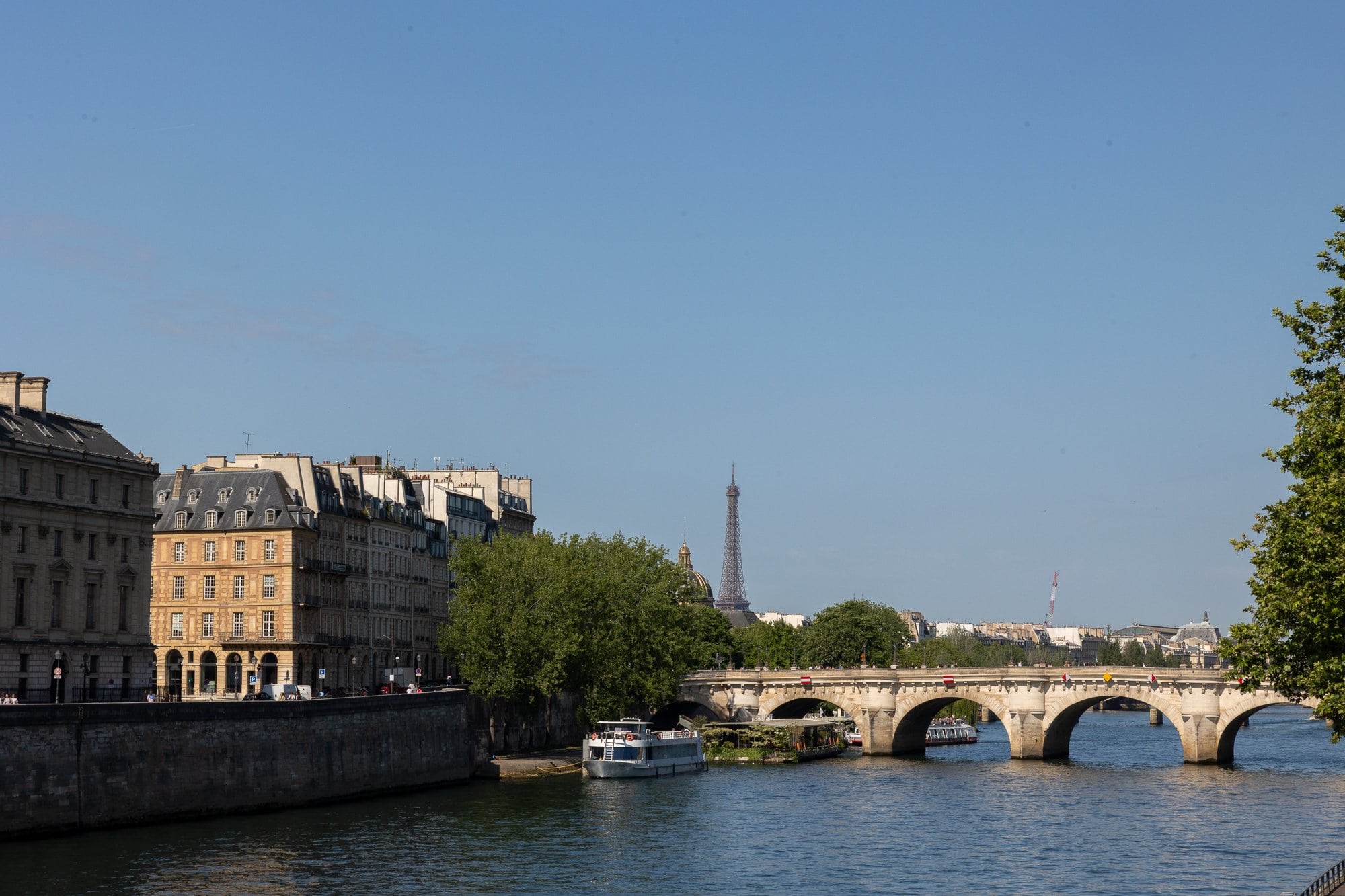
You simply can’t skip the capital, because Paris is an absolute European classic. The iconic Eiffel Tower rises majestically over the city, elegant boulevards invite endless strolls, and the artistic Montmartre district still holds on to its unmistakable bohemian soul. We mustn’t forget the world-famous Louvre, the picturesque Seine, and the stunning Notre-Dame cathedral, which is gradually reopening to the world after the devastating fire of 2019.
It’s an ideal choice for a first visit to France, yet it offers so many layers that you’ll keep enjoying it on repeat visits too. We absolutely adore Paris and it’s a huge personal favourite of ours, somewhere we happily and regularly return to. If you want the best weather, come ideally in spring or autumn, because in summer the streets get extremely hot and the crowds can be rather exhausting.
The key to a successful trip is good planning and, above all, comfortable shoes for a full day of wandering. 💡 Tip: If you want to plan the perfect stay and find out which spots you really can’t miss, take a look at our detailed article with tips on what to see in Paris.
2. The Loire Valley
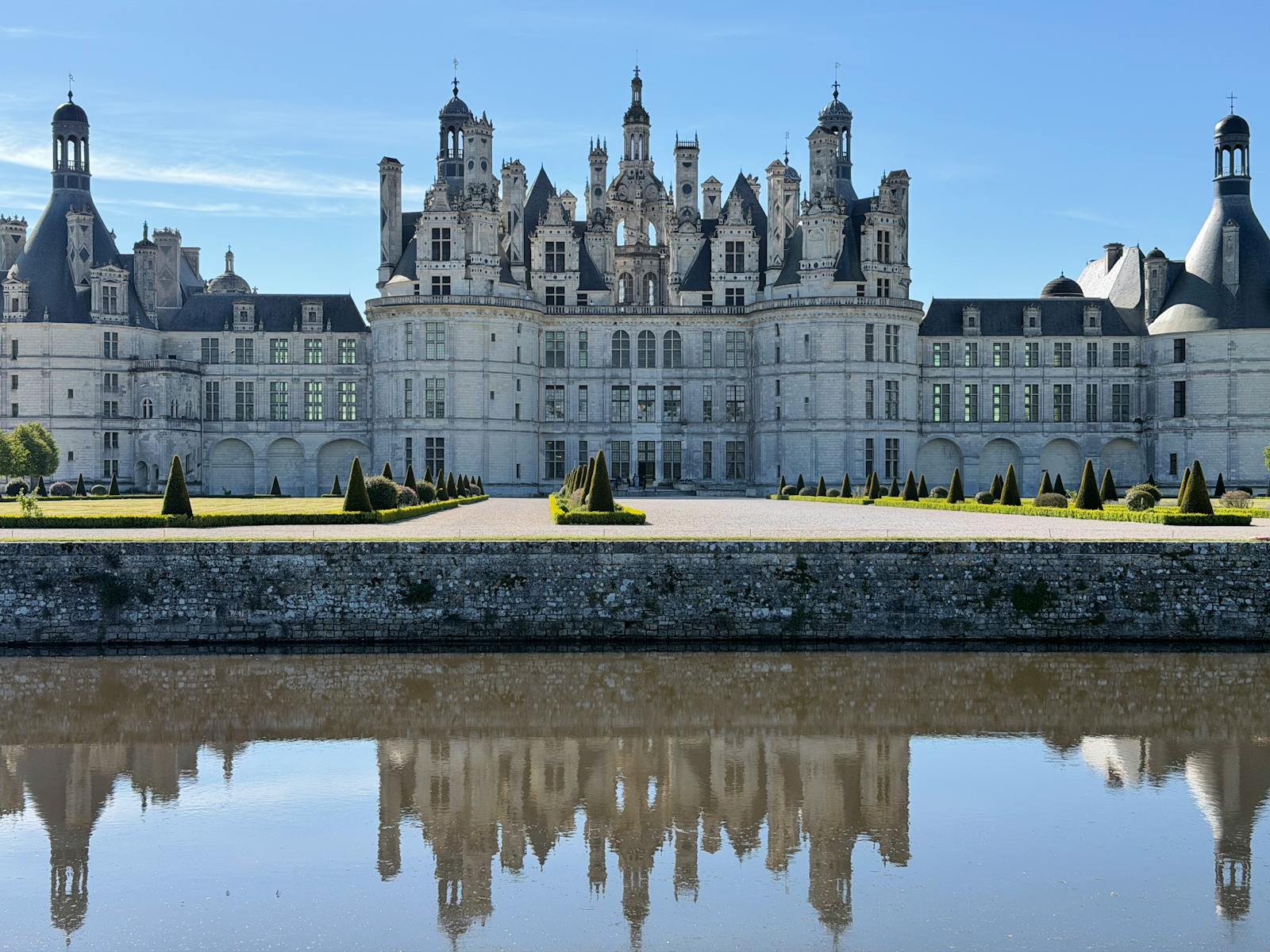
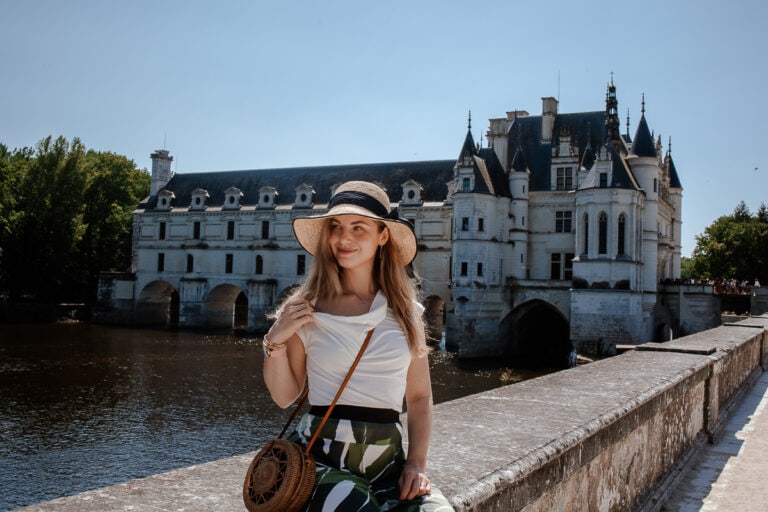
This gorgeous area is often nicknamed the Garden of France, and it hides dozens of enchanting Renaissance châteaux scattered along the River Loire. Among the biggest stars is the staggering Chambord, with 380 rooms and a unique double-helix staircase said to have been designed by Leonardo da Vinci himself. Equally fascinating is the elegant Chenonceau, built as a bridge straight across the river, along with the majestic Amboise and Villandry with its flawless geometric gardens.
This region is absolutely ideal for romantic souls and devoted lovers of history and architecture. You’ll enjoy the valley best by car or by renting a bike, as there are plenty of beautiful, easy cycle paths along the river. It also makes a brilliant trip from Paris, for which two or three days is plenty.
Be sure to book tickets to the most famous châteaux online well in advance. You’ll find more practical info and specific routes in our comprehensive guide to the Loire Valley châteaux.
3. Mont-Saint-Michel
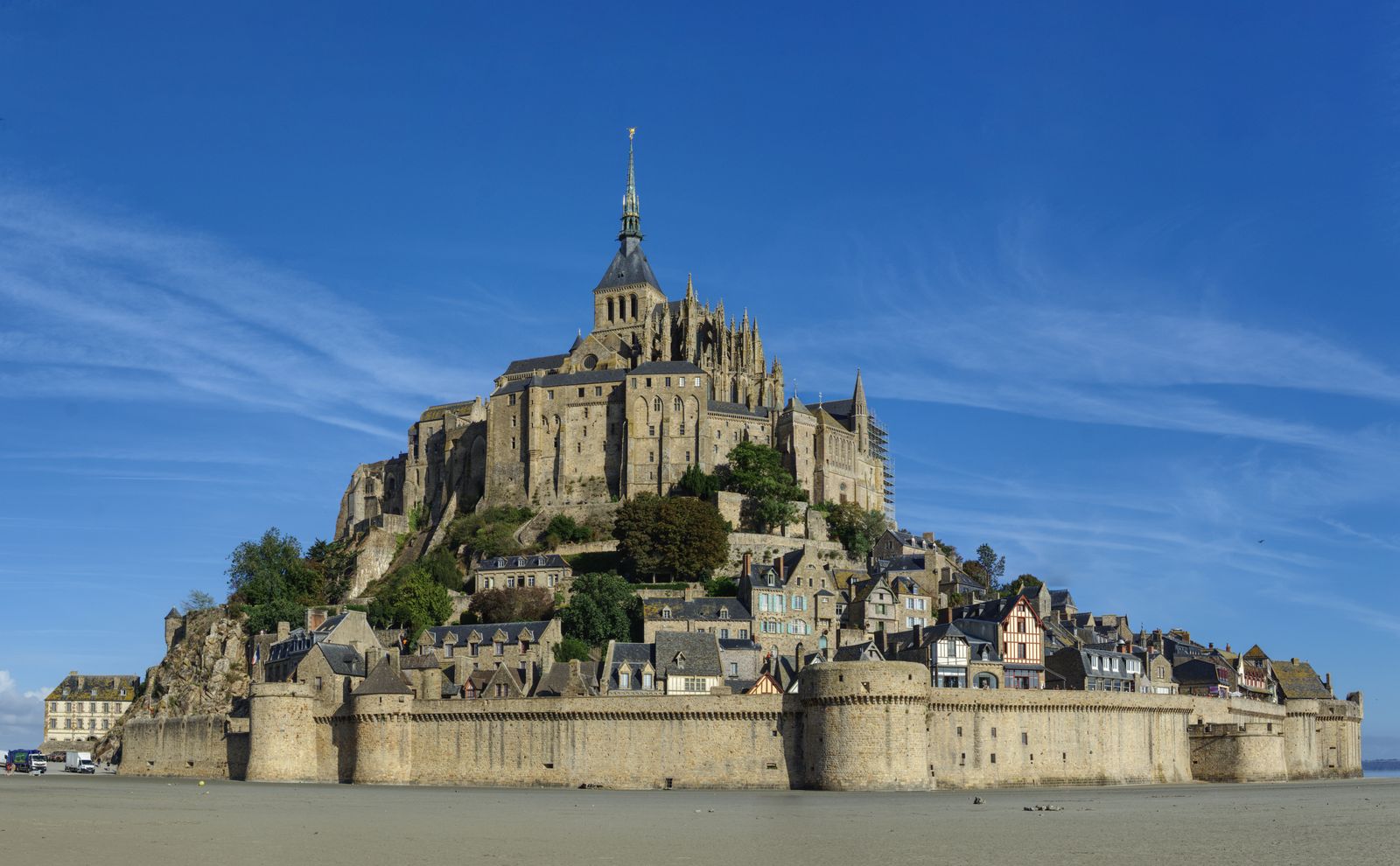
This magical rocky island with its stunning abbey in Normandy is one of the most photographed images of all of France. Ancient lanes wind up the steep hill all the way to the monastery itself, and the whole scene looks like it’s been cut straight out of a medieval fairy tale. The fascinating spectacle comes when the powerful tide surrounds the mount with water and cuts it off from the outside world, making it a truly unique UNESCO World Heritage site.
It’s a destination that every admirer of extraordinary architecture should see at least once in their lifetime. To really enjoy the atmosphere, though, you need to arrive either very early in the morning or later in the evening. During the day the narrow lanes fill with such huge crowds that you can barely squeeze through, and the romance quickly evaporates.
Bear in mind too that parking is located away from the mount itself to protect the environment. A free shuttle bus then takes you from the car parks to the island. For detailed trip planning, read our article about Mont-Saint-Michel.
4. Saint-Malo
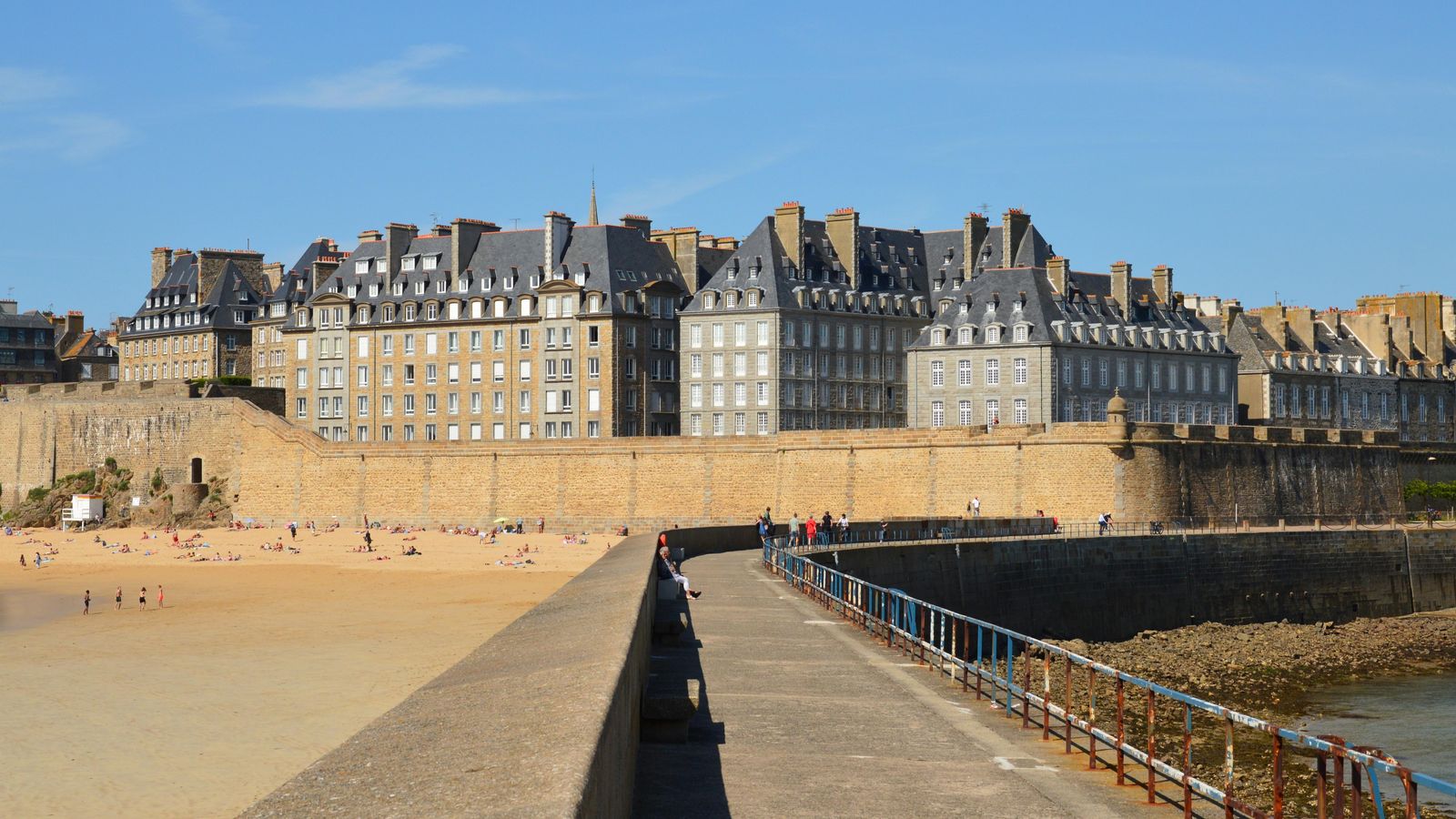
This famous corsair town, ringed by mighty stone ramparts, sits on the Atlantic coast of Brittany. The main draw here is the wonderful walk right along the top of the ramparts, offering breathtaking views of the churning sea and the historic centre itself. The town is also renowned for its enormous tidal range, and at low tide you can walk dry-footed out to the nearby fortified islets.
The town serves perfectly as a great gateway to wild Brittany and nearby Normandy. It will win over anyone who loves soaking up a maritime atmosphere and doesn’t mind that classic fresh ocean breeze. In the narrow lanes you’ll find countless excellent crêperies where you can warm up nicely after a long walk.
💡 Tip: Be sure to set aside time to sit in one of the local cafés with a view of the waves. If this town tempts you, take a look at our further tips for Saint-Malo.
5. Brittany
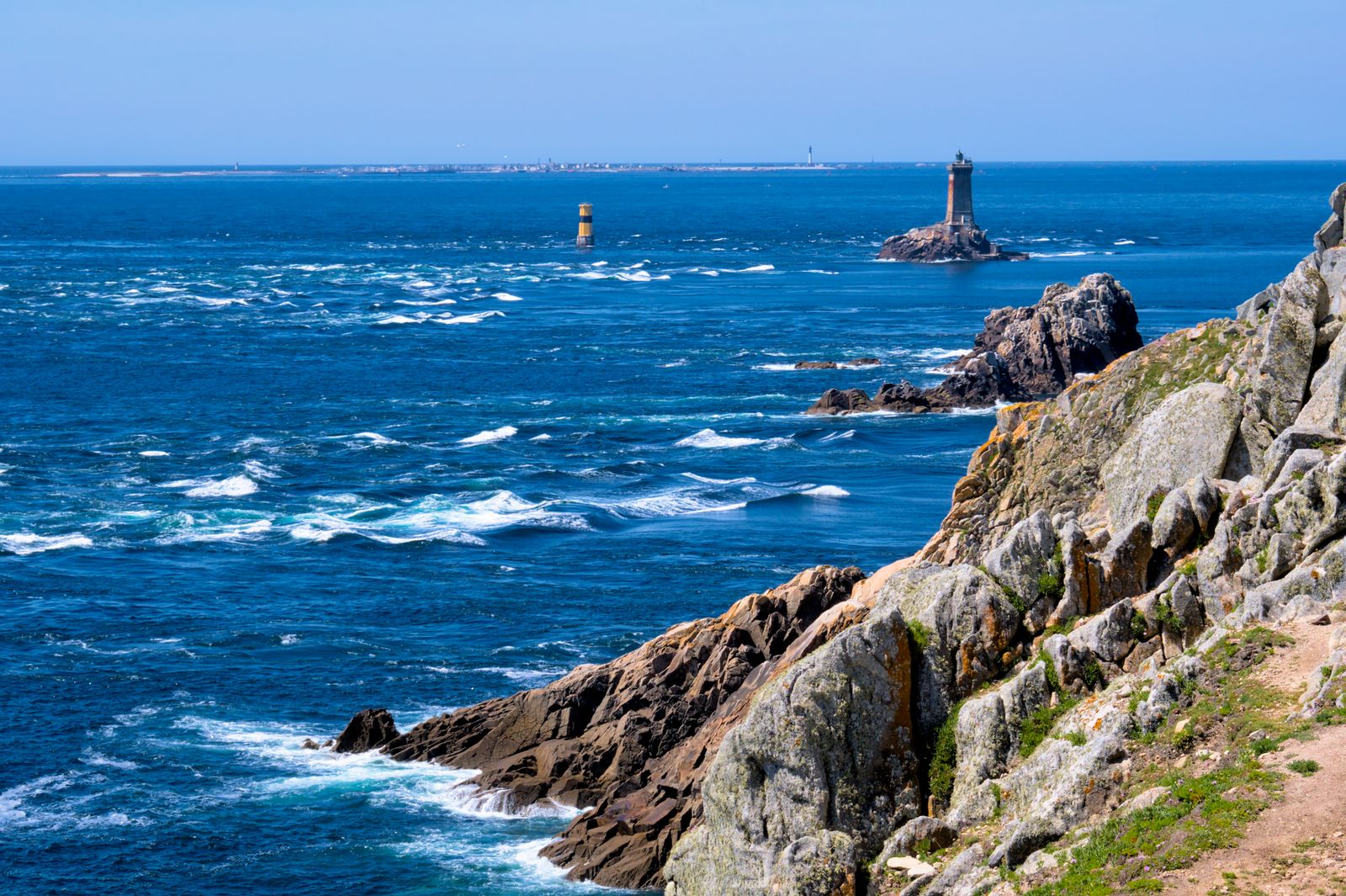
This western tip of France offers the wildest and most magical coastline you can imagine. You’ll find the photogenic Phare du Petit Minou lighthouse, the incredible pink granite coast that shifts colour with the setting sun, and the mysterious prehistoric megaliths of Carnac. To all that add the traditional savoury crêpes known as galettes, delicious apple cider, and an ever-present Celtic atmosphere steeped in old legends.
The region is quite literally a paradise for everyone who loves untamed nature, dramatic cliffs, and wandering through morning mist. If you’re not after tropical heat but rather crave authentic experiences and a break from overcrowded resorts, Brittany will completely captivate you. Just be prepared for the weather to change from one minute to the next.
Definitely pack a good waterproof jacket, because the Atlantic wind can be very unpredictable. For more inspiration and specific itineraries, explore our big guide to Brittany.
6. Étretat
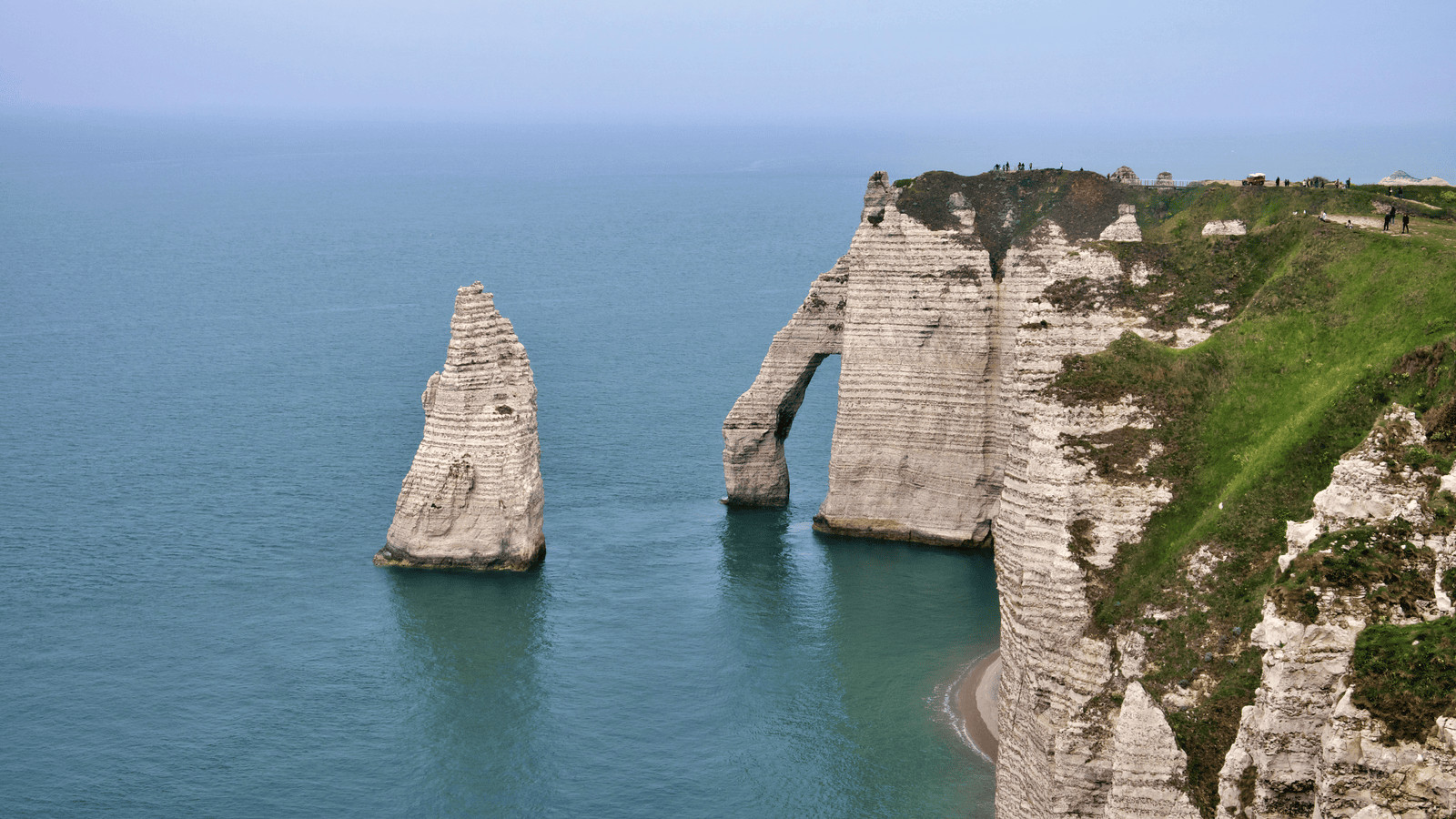
This little Norman town made its name thanks to the beautiful white chalk cliffs with natural arches that rise steeply above the crystal-clear sea. The coast is dominated by the famous rock needle known as the Aiguille, which fascinated artists for centuries and served as the main inspiration for the celebrated Impressionist painter Claude Monet. A walk along the paths high above the sea offers views that will quite literally take your breath away.
The spot makes a brilliant half-day stop on a road trip along France’s northern coast. It will win over photographers and lovers of dramatic natural scenery who appreciate the raw beauty of the local landscape. The loveliest atmosphere is in the late afternoon, when soft light bathes the white cliffs in warmer tones.
💡 Tip: Don’t limit yourself to the beach, but be sure to walk the trails up both cliffs that flank the town. If you’re planning a trip, read our article focused specifically on Étretat.
7. Normandy and the D-Day Landing Beaches

This region is where modern history was written, and it offers an incredibly powerful and moving Second World War experience. You can walk the famous Omaha Beach and Utah Beach, visit the stunning American cemetery at Colleville with its rows of white crosses, or explore the preserved gun batteries and museums. But Normandy isn’t only about history — it’s also the land of delicious Camembert cheese, traditional apple Calvados, and the beautiful Gothic cathedral in Rouen.
This area is a must for anyone interested in military history, but it offers plenty of beauty for ordinary travellers too. The combination of memorials, green pastures, and superb gastronomy makes it a hugely rewarding destination for a multi-day exploration. The atmosphere on the beaches remains deeply solemn and stirs everyone to deeper reflection.
Come here ideally in your own car so you can freely hop between the various memorials along the entire coastline. To plan your trip, use our extensive Normandy guide and our detailed article on how to visit the D-Day landing beaches in Normandy.
8. Giverny
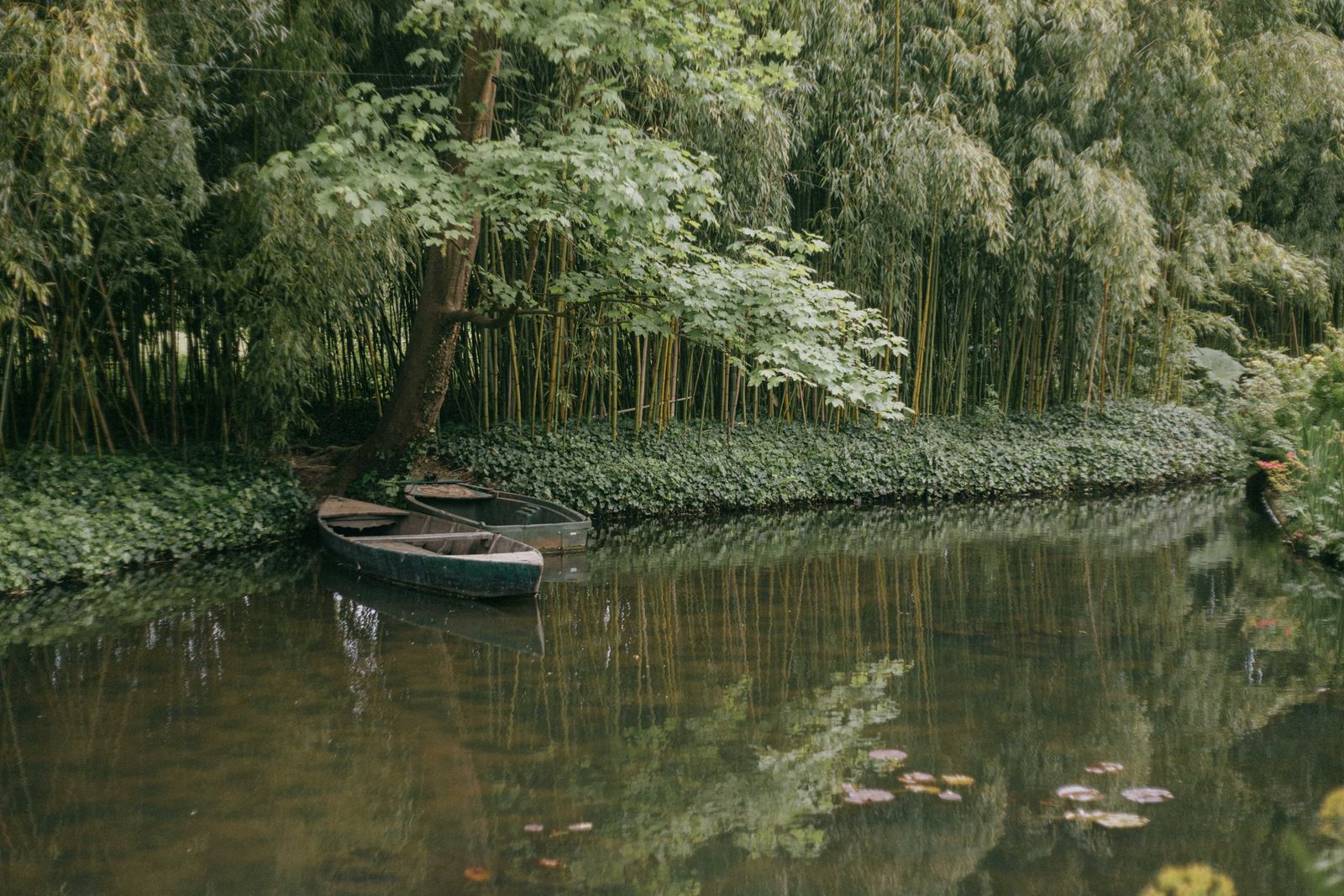
This picturesque village earned its place in art history thanks to the beautiful garden and house of Claude Monet, who spent a large part of his life here. You can see the famous water-lily pond with your own eyes, cross the iconic Japanese bridge, and admire the endless flower beds that inspired the painter’s best-known canvases. The gardens are immaculately maintained, and the artist’s house itself, with its brightly coloured rooms, instantly transports you back in time.
It’s a perfect destination for admirers of Impressionism and everyone who loves blooming gardens. The site is open roughly from April to late November, with the most beautiful display in May and June, when everything bursts with colour. What’s more, it makes a very easy and popular day trip straight from Paris.
Bear in mind it gets busy at weekends, so I recommend arriving right as it opens in the morning. If you’re heading here, you’ll appreciate our practical advice for Giverny and Monet’s garden.
Alsace, Burgundy and the French Alps
The eastern regions are a promised land for lovers of top-class gastronomy, outstanding wine, and majestic mountains. Fairy-tale villages with colourful houses and breathtaking Alpine peaks await you here.
9. The Alsace Wine Route
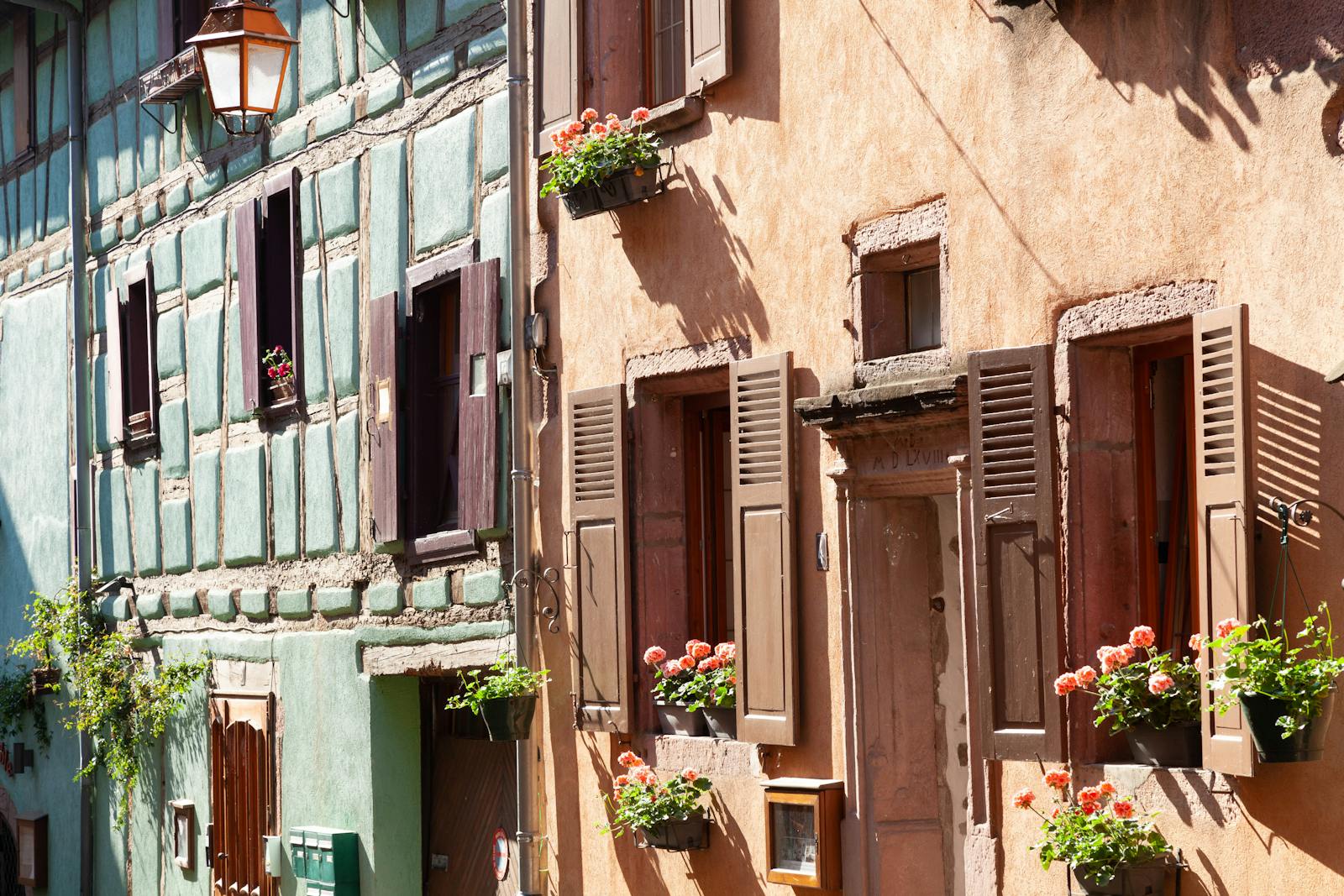
The famous Route des Vins d’Alsace stretches for 170 kilometres and hides the most charming half-timbered wine villages dotted between the hills of the Vosges and the River Rhine. Stops like Riquewihr, Eguisheim, or Kaysersberg regularly — and rightly — top the rankings of France’s most beautiful villages. The whole region is renowned for fantastic white wines such as dry Riesling and aromatic Gewürztraminer, and at every turn you’ll spot stork nests on the rooftops.
This area is made for foodies and admirers of fairy-tale architecture. The colourful houses draped in vines look quite literally like sets from a film, and you’ll love them at first sight. If you want to experience the best atmosphere tied to the harvest, plan your trip ideally for the autumn months.
💡 Tip: Exploring the vineyards works brilliantly on rented e-bikes, which will easily carry you up into the surrounding hills. You’ll find a detailed itinerary in our article focused on the Alsace Wine Route.
10. Colmar
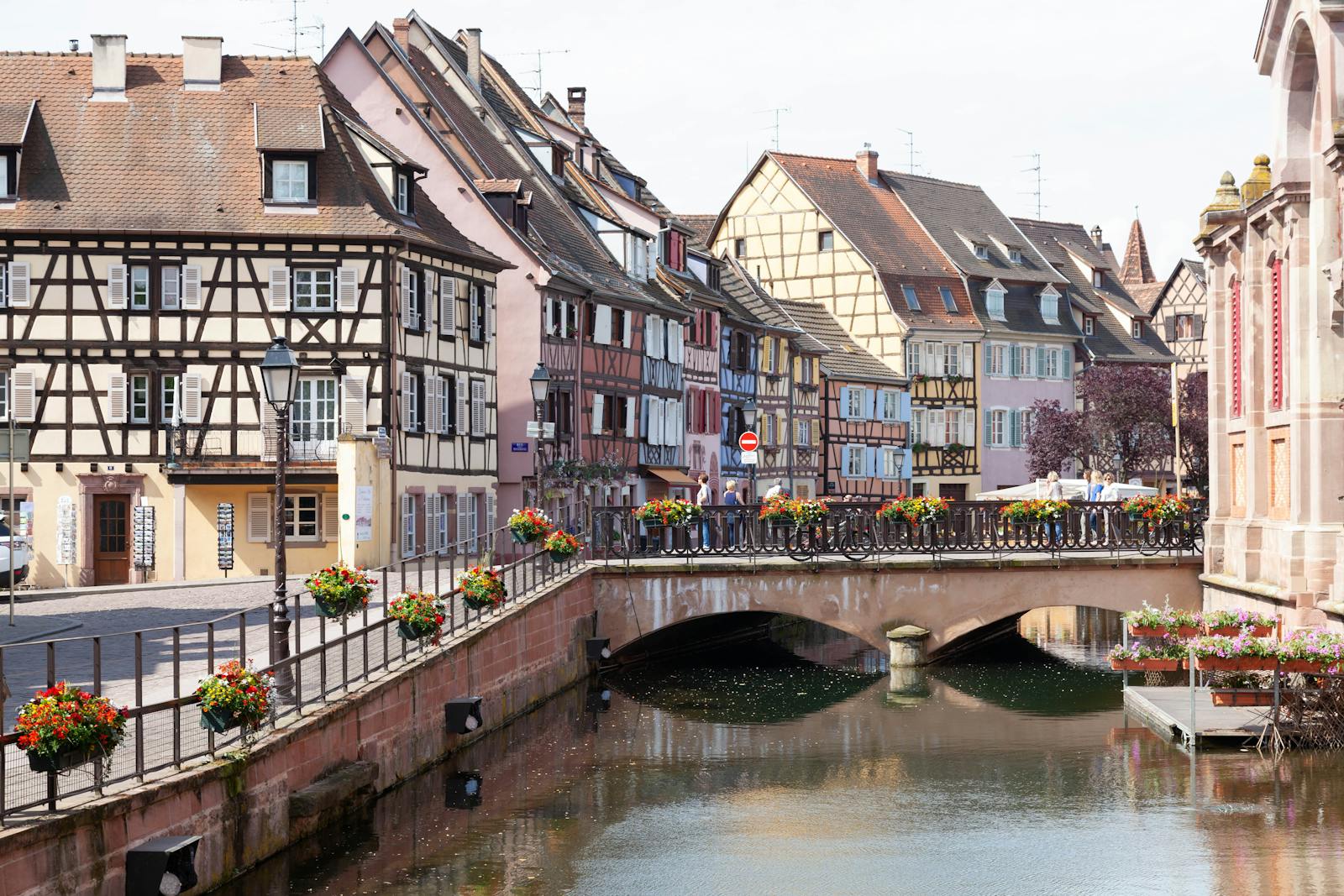
Thanks to its network of waterways, this stunning town is often nicknamed Little Venice of Alsace, and its historic centre is made up of perfectly preserved half-timbered houses. Especially in spring and summer, the whole town is covered in an incredible profusion of flowers adorning seemingly every bridge and windowsill. It’s one of the most romantic places in all of France, where you can wander aimlessly through cobbled lanes for hours.
Beyond the warm months, Colmar also draws visitors in winter, because at Christmas the town transforms into a magical setting for festive markets. Thanks to its location it also works as an absolutely ideal, strategic base for trips along the entire Alsace Wine Route. You’ll also find plenty of excellent traditional winstubs here, serving local specialities.
Be sure not to miss a short boat ride along the local canals, which offers a whole new perspective. For more on what else you shouldn’t miss, see our guide to Colmar.
11. Strasbourg
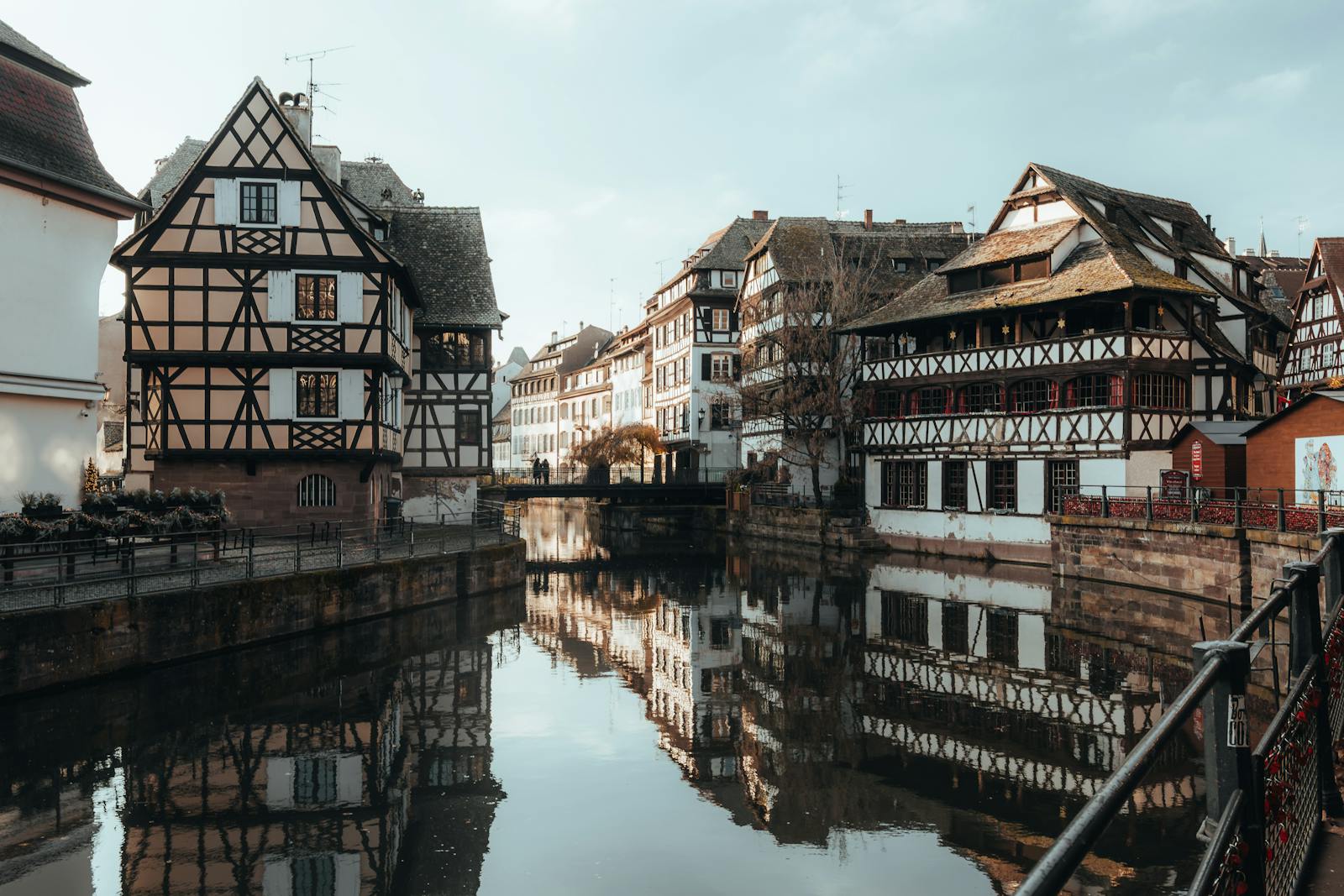
The capital of the entire Alsace region blends French elegance with German precision to perfection. The incredible Gothic Notre-Dame cathedral, with its fascinating astronomical clock, is one of the most stunning buildings in Europe. Just a stone’s throw away you’ll find the picturesque Petite France quarter, full of water canals and old tanners’ houses, while the modern part of the city is home to the important institutions of the European Parliament.
Strasbourg is a lively yet very safe and pleasant city that wins the hearts of lovers of culture and good food. You’ll experience a truly extraordinary atmosphere here in December, as the city boasts the title of Capitale de Noël and hosts some of the most famous and beautiful Christmas markets in the world.
If you’re coming in winter, book your accommodation well in advance, as rooms vanish at a rocket pace. Also read our detailed article on what the Strasbourg Christmas markets are like.
12. Burgundy
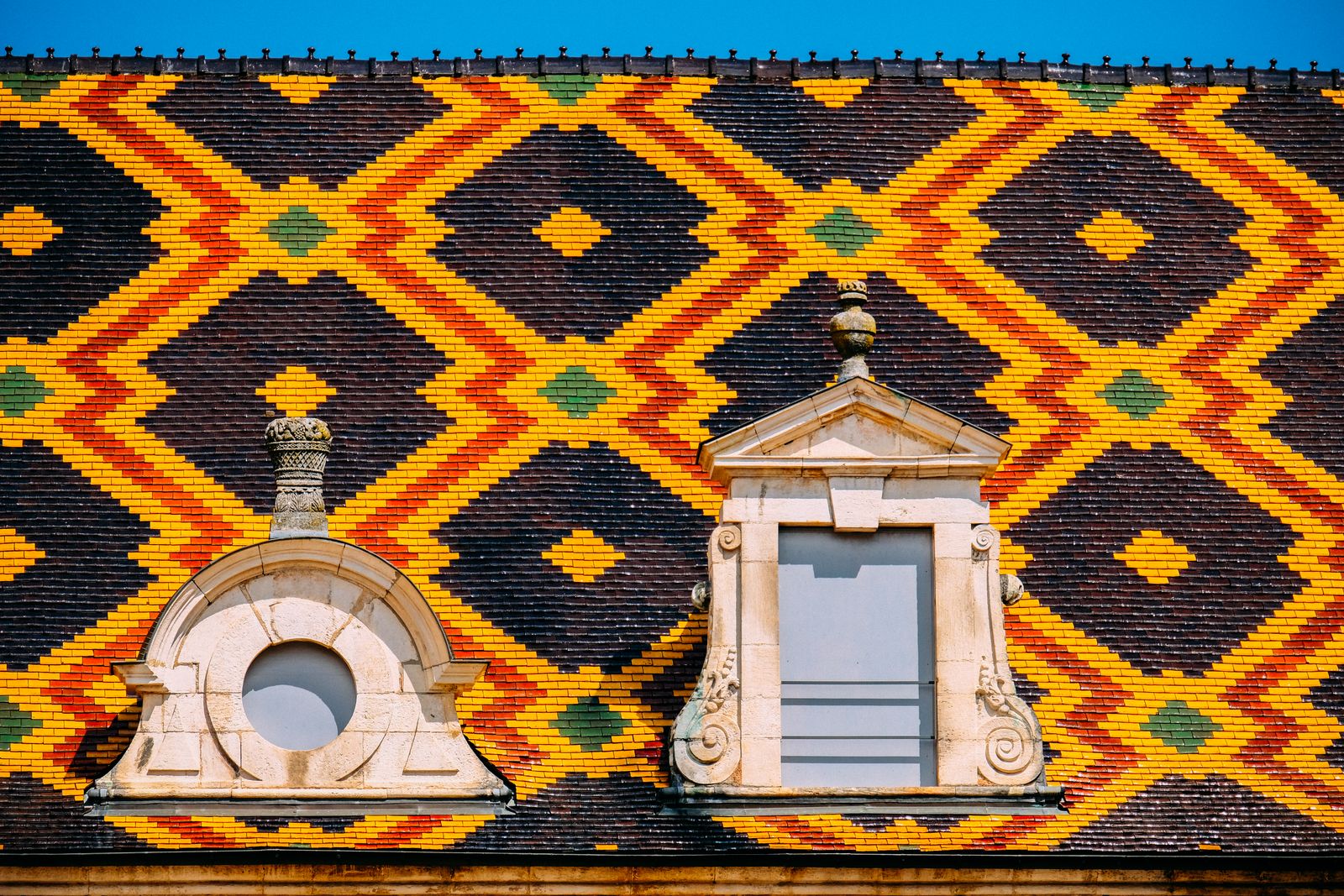
This picturesque region is the absolute embodiment of rural calm, top-class gastronomy, and some of the finest wine in the world. Drive the renowned Côte d’Or wine route, which takes you to famous villages such as Nuits-Saint-Georges, and stop in the beautiful medieval town of Beaune. There you mustn’t miss the iconic former Hôtel-Dieu hospice with its distinctive colourful roof, today a symbol of the whole area.
Burgundy is an absolute paradise for gourmets and everyone passionate about premium Pinot Noir and Chardonnay. The landscape here is dotted with peaceful abbeys and canals, along which you can set off on a slow cruise in a rented boat. It’s simply a place where time slows down and you can fully savour the present moment.
When visiting local wineries, don’t be afraid to taste wines from smaller family producers — they’ll often pleasantly surprise you. For more inspiration and tips on specific spots, check out our Burgundy guide.
13. Lyon
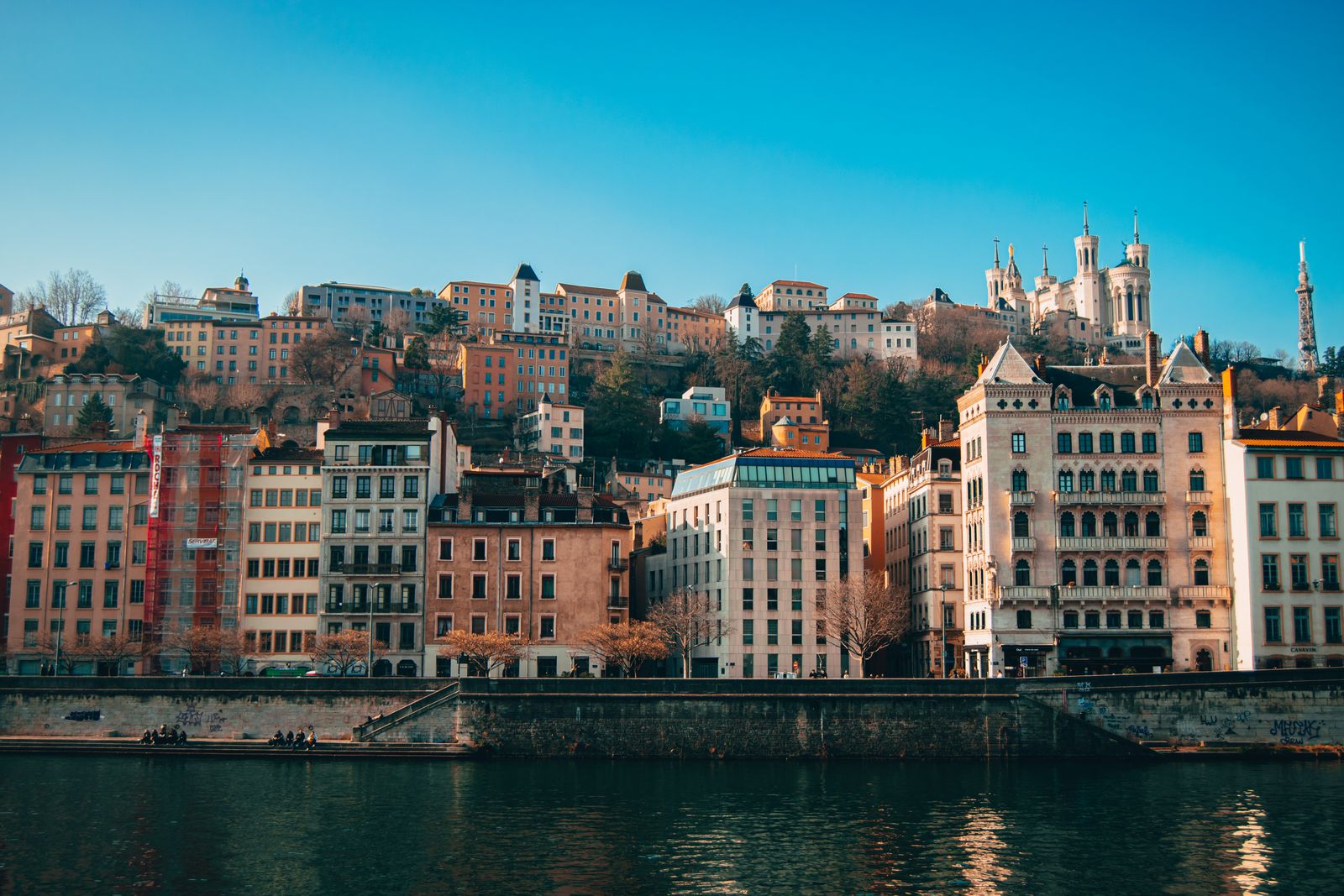
France’s uncrowned gastronomic capital lies at the stunning confluence of the Rhône and the Saône, and offers a great alternative to the busy capital. In the historic Renaissance quarter of Vieux Lyon you can explore the famous “traboules” — fascinating secret passageways through courtyards. Watching over the city is the majestic white Notre-Dame de Fourvière basilica, reached comfortably by funicular for fantastic views.
Lyon is a city for people who want to experience real French culture but avoid the biggest tourist crowds heading to Paris. Culinary enthusiasts will be in their element in the traditional eateries known as bouchons, serving honest regional dishes. If you come in December, you’ll witness the incredible Fête des Lumières, the famous festival of lights.
💡 Tip: Definitely buy a day ticket for the local public transport — it’ll save you a lot of steps tackling the hills. You’ll find more practical advice in our article focused on Lyon.
14. Annecy
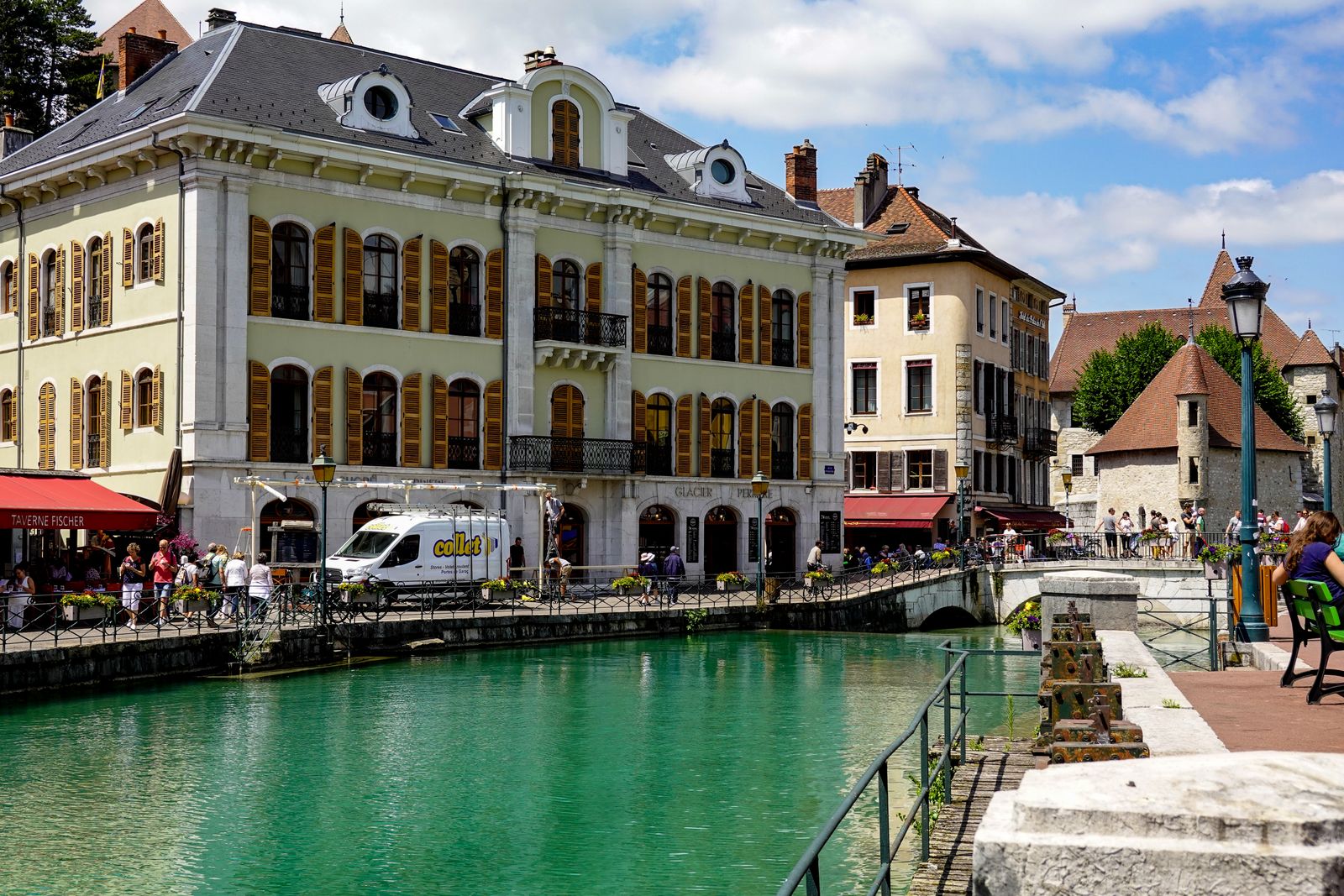
This gorgeous Alpine town is often called the Venice of the Alps, thanks to its network of clean canals and flower-lined bridges. The historic centre is dominated by the incredibly photogenic island palace Palais de l’Île, which once served as a prison, while an ancient castle rises above the town with beautiful views. The crystal-clear lake of the same name then provides a perfect backdrop, with sharp mountain peaks in the distance.
It’s a destination that will thrill romantic souls and active sports lovers alike. In summer the lake is perfect for swimming and water sports, while a great cycle path runs along the shore, from which you can comfortably admire Alpine panoramas. The town feels very clean, cosy, and safe.
Set aside time to rent a pedalo or a little boat, because the views from the water are unbeatable. If this place tempts you, read our further trip tips for Annecy.
15. Chamonix and Mont Blanc
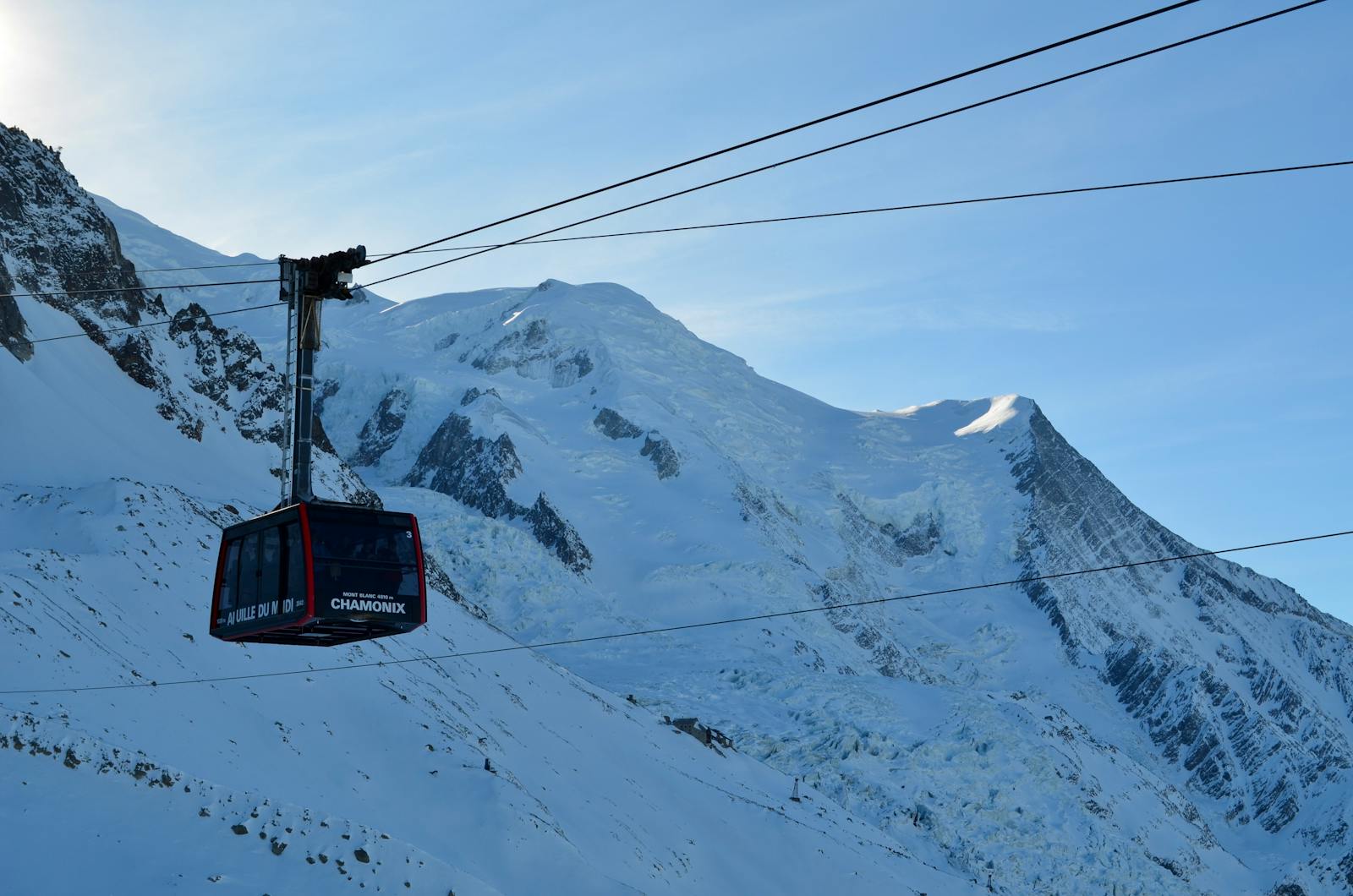
This famous Alpine resort lies right beneath the gaze of Europe’s highest mountain, the mighty Mont Blanc, which reaches a height of 4,808 metres. The biggest draw is the spectacular cable car to the summit of the Aiguille du Midi (3,842 m), where the glass viewing box “Step into the Void” awaits the brave and the air is noticeably thinner. Besides the cable cars, you can take a rack railway to the retreating Mer de Glace glacier and marvel at the immense power of Alpine nature.
The place is a mecca for all lovers of mountains, adrenaline, and high-altitude hikes. In winter it offers top-class skiing, while in summer it transforms into a paradise for hikers and climbers who come to push their own limits. Even if you’re not an experienced alpinist, the views from the cable cars are an experience you’ll never forget.
Given the high altitude, I recommend bringing really warm clothing even in the middle of summer, as temperatures at the top often drop below freezing. You’ll find more tips for this area in our guide to Chamonix and Mont Blanc.
Provence and the French Riviera
The south of France is an absolute byword for endless fields of purple lavender, the loud song of cicadas, and luxurious resorts by an azure sea. It’s the ideal destination for your sun-soaked summer holiday, full of fragrances.
16. Provence
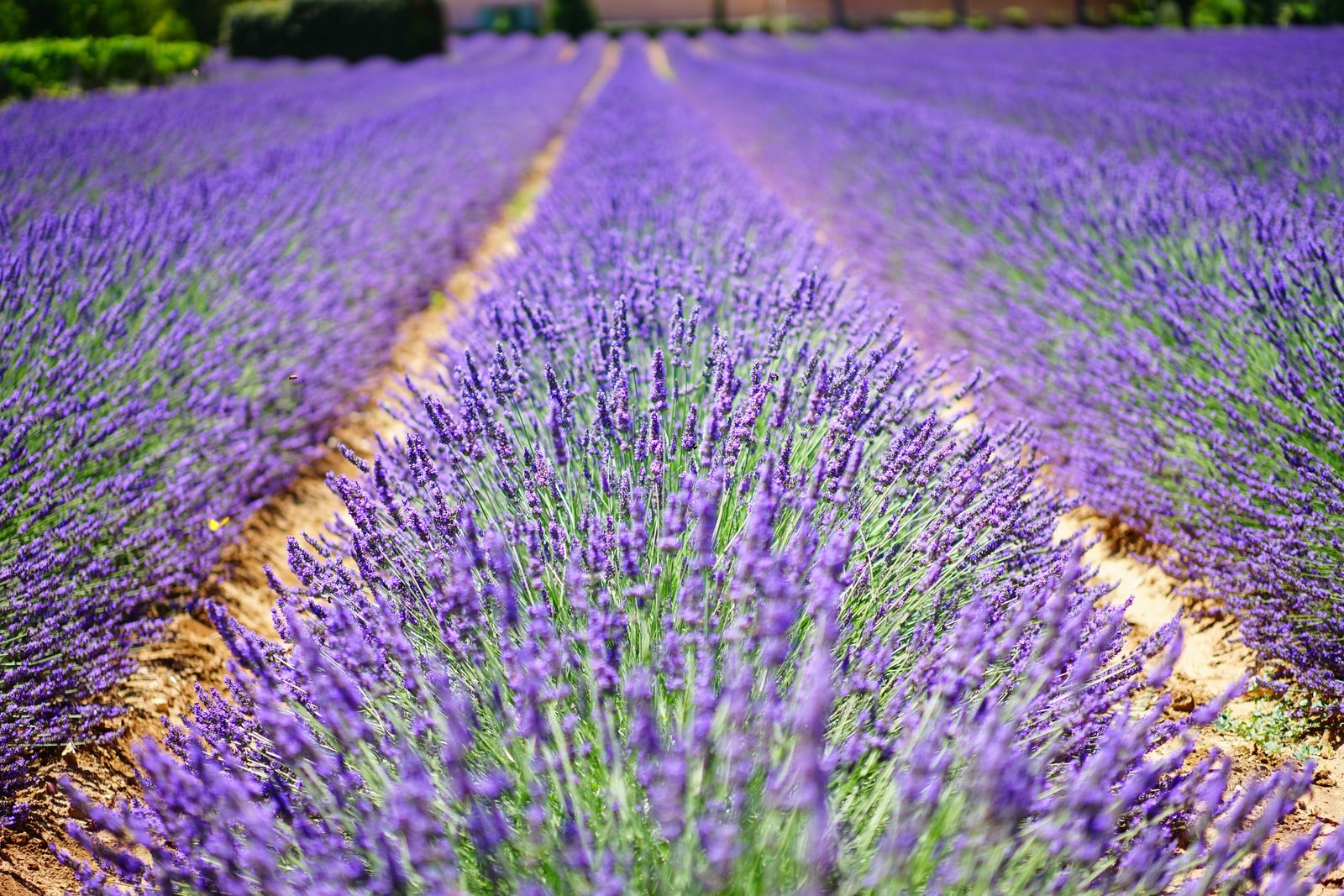
This sun-soaked region is famous worldwide for its stunning lavender fields that scent the air far and wide. Among the most beautiful spots are the vast Valensole plateau and the picturesque Sénanque abbey, whose photos grace seemingly every travel brochure. But you’ll also find picturesque stone villages perched high on hilltops, such as Gordes or the red-hued Roussillon, plus ancient olive groves everywhere.
Anyone who loves southern ease, local markets full of fresh herbs, and romantic sunsets should head to Provence. If you want to see the lavender fields in full bloom, you need to plan your trip roughly from mid-June to mid-July, before the main harvest begins. That’s when the region is at its absolute most beautiful, although you’ll have to expect larger crowds.
The best way to get around here is your own or a rented car, so you can discover hidden corners off the main routes. We’ve gathered loads more useful tips in our big Provence guide.
17. The Verdon Gorge
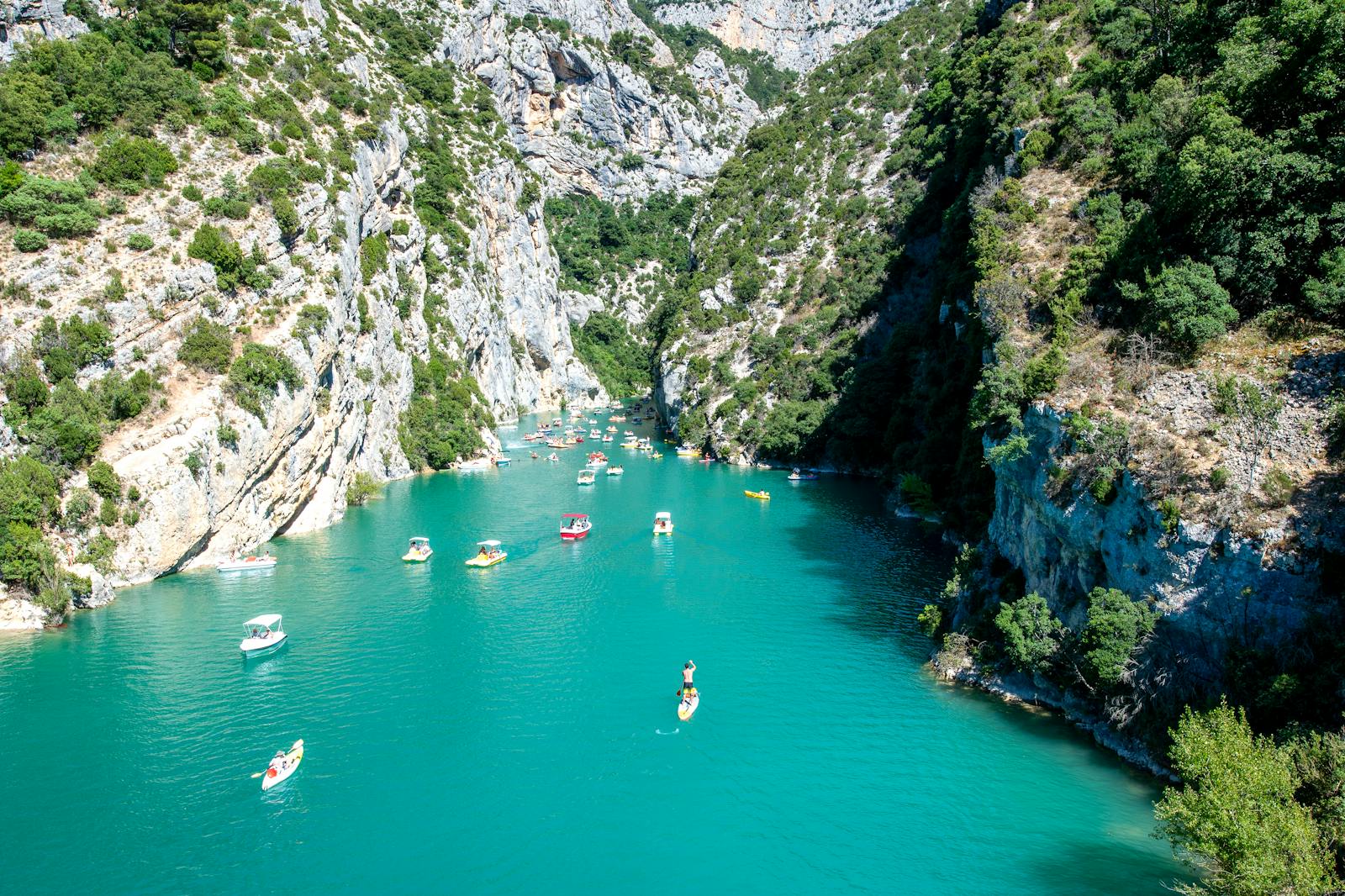
This natural wonder is often called the Grand Canyon of Europe, with its limestone walls plunging to an incredible depth of 700 metres. At the very bottom flows a river of such a vivid turquoise colour that you’ll struggle to believe it isn’t a photo edit. At the end of the gorge the river flows into the gorgeous Lac de Sainte-Croix, lined with pebble beaches and ideal for a summer dip.
This area is an absolute must for anyone seeking the most beautiful natural experience in the whole south. You can rent a pedalo or a kayak here and glide right between the sheer walls of the narrow gorge, a hugely popular and relaxing activity. For driving fans there’s also the Route des Crêtes scenic road, offering panoramic views from above.
💡 Tip: In the summer months, get up early and rent a boat first thing in the morning to avoid the queues and the scorching midday sun. You’ll find detailed visiting advice in our post about the Verdon Gorge.
18. Avignon
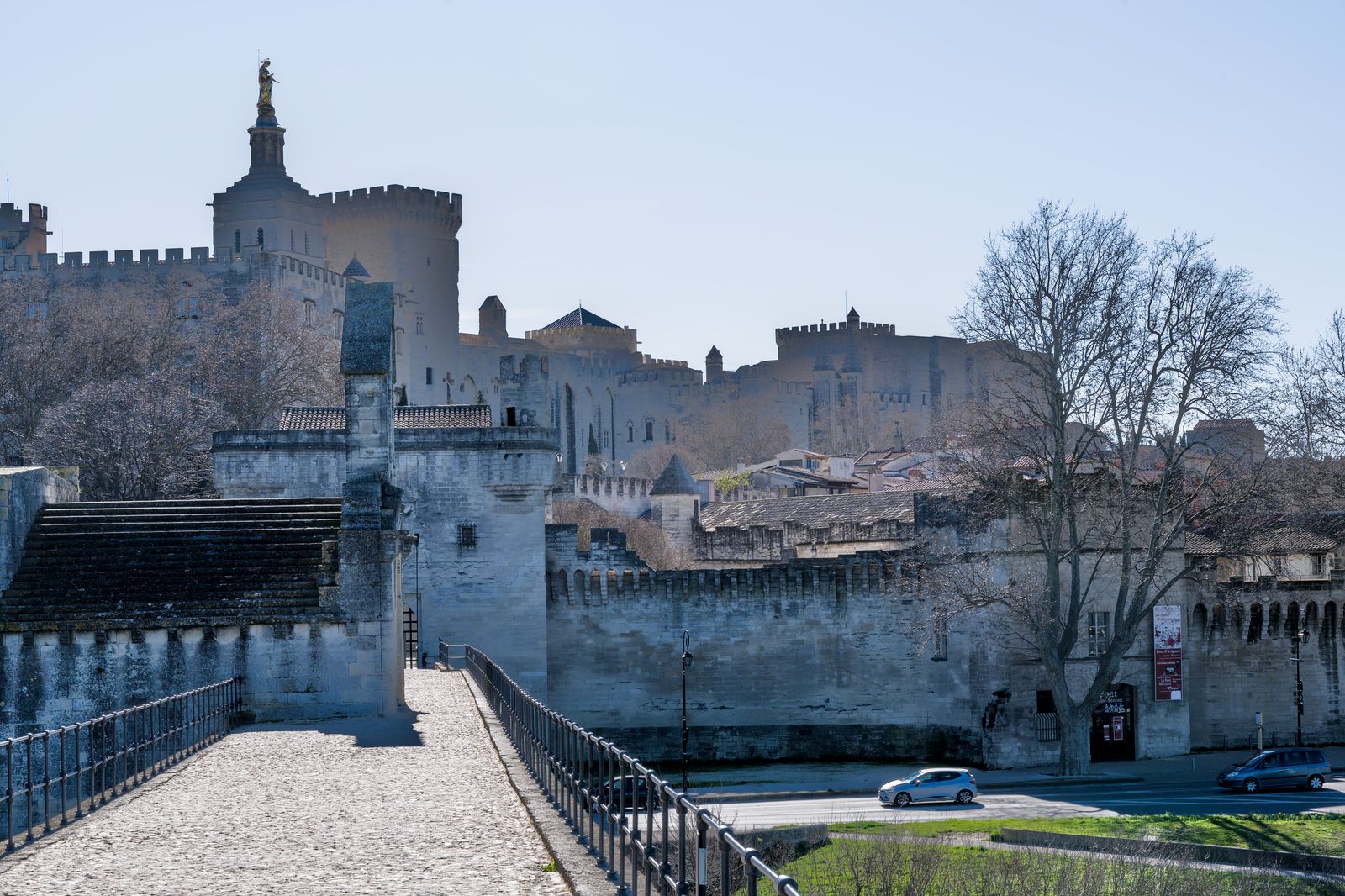
The historic city of Avignon is proudly nicknamed the City of Popes, because in the 14th century it served as the seat of the head of the Catholic Church. The legacy of that era is the mighty Papal Palace (Palais des Papes), a vast stone fortress that still dominates the whole centre. Equally famous is the ruined Pont Saint-Bénézet bridge from the beloved nursery rhyme, which ends halfway across the broad River Rhône and is surrounded by well-preserved ramparts.
The city is guaranteed to thrill anyone who loves soaking up the atmosphere of the Middle Ages and stunning historic buildings. What’s more, it works perfectly as a strategic, well-connected base for further trips across Provence. During July the city comes alive with a huge theatre festival, filling the streets with street performers and a unique energy.
Be sure to book your palace tickets online in advance, as the queues can be gruelling, especially in high season. For more on what else to see here, check out our article on Avignon.
19. The French Riviera
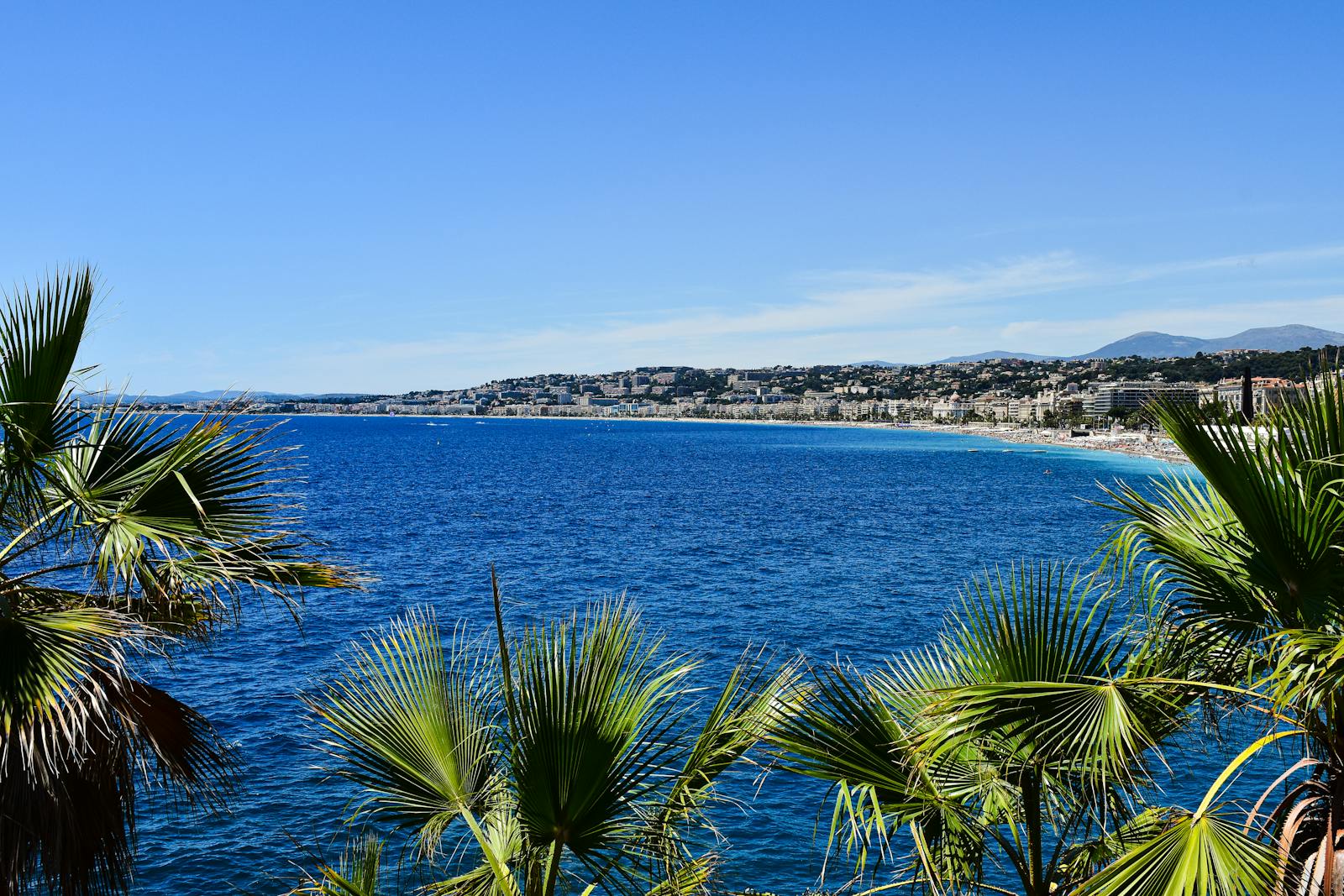
The famous Côte d’Azur is the embodiment of elegance, blue sea, and beautiful weather. The heart of the action is buzzing Nice, with its beloved Promenade des Anglais and the narrow lanes of the colourful Old Town. The whole coastal area offers a mix of beautiful pebble and sandy beaches, and on top of that it lies just a stone’s throw from the miniature, fabulously wealthy Monaco or the stunning hilltop “eagle’s nest” village of Èze perched high above the sea.
The Riviera is the south’s main summer destination, where people come for perfect sun, great swimming, and that typical French glamour. It suits both couples seeking romance and families wanting a relaxed summer holiday with everything on hand. The atmosphere balances between bustling seafront boulevards and quiet viewpoints high up in the hills.
When travelling between towns along the coast, make the most of the local trains to avoid the endless traffic jams on the roads. For detailed planning, explore our comprehensive article on the French Riviera.
20. Cannes
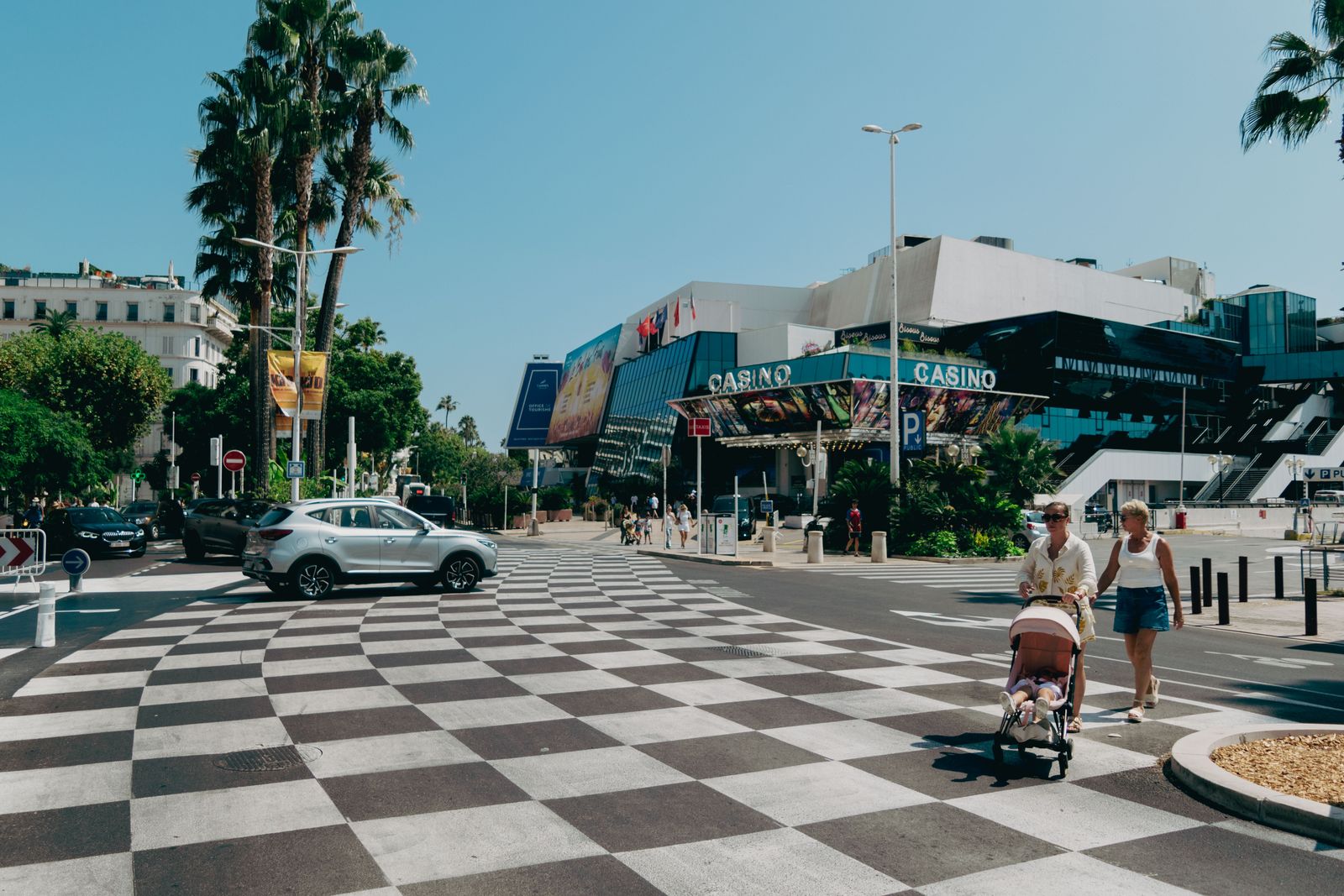
This town is inextricably linked with its famous film festival, which brings the world’s biggest celebrities here every year. The town’s main artery is the luxurious palm-lined La Croisette boulevard, full of designer boutiques, flanked by beautiful public and private sandy beaches and moored yachts. But once you escape the main streets, you’ll discover a quieter part of the old town with lovely views and a more laid-back atmosphere.
Cannes offers exactly the elegance and glamour you’d expect from the Riviera, and it draws everyone who enjoys life in the fast lane and first-class beach service. A big plus is that the town has very good, cheap train connections to all the nearby resorts along the coast, so you don’t need a car here at all.
💡 Tip: Be sure to take a short boat trip to the nearby Lérins Islands, where you’ll find unexpected calm and the scent of pines. If you’re heading here, take a look at our detailed article on Cannes.
21. Saint-Tropez
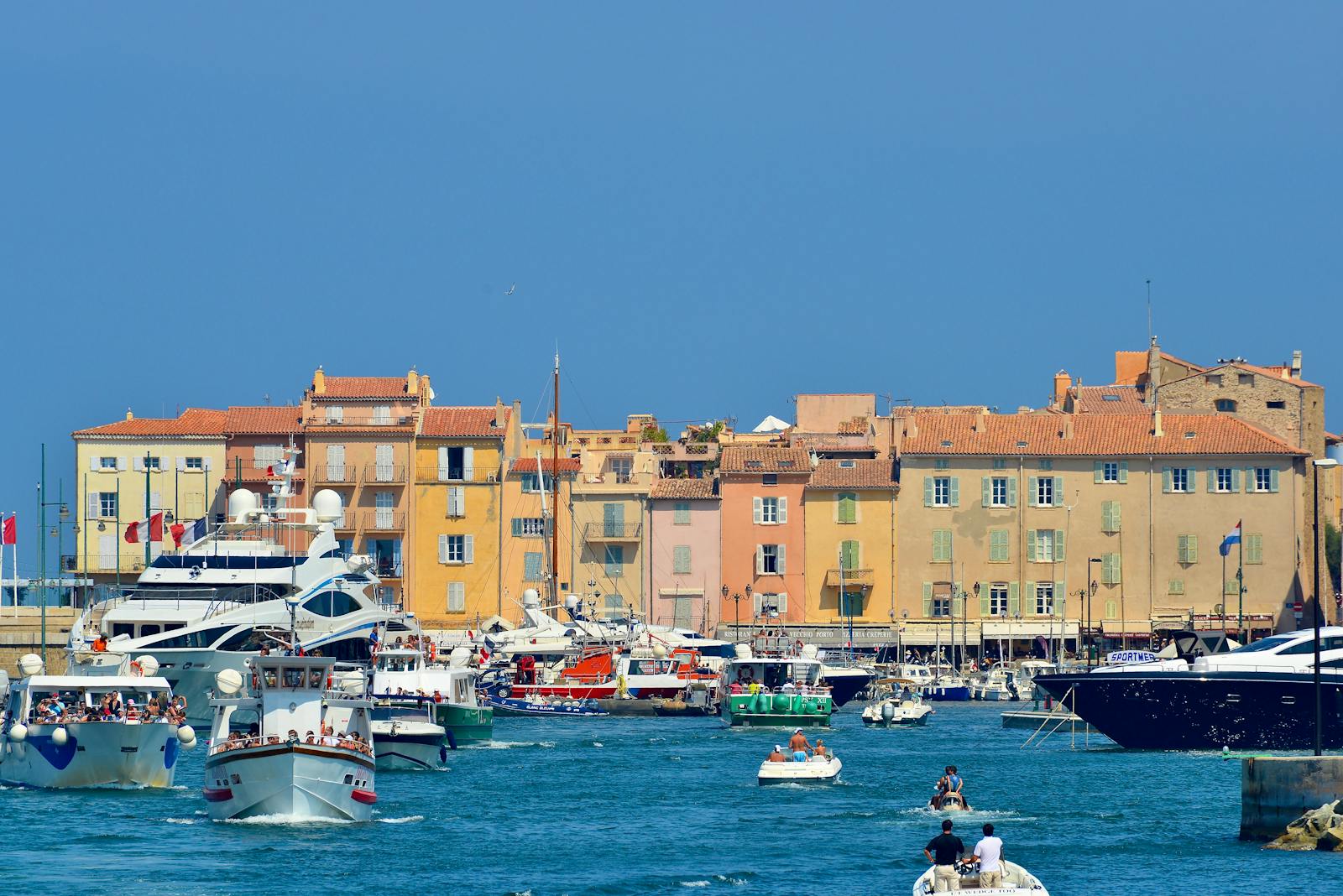
Over the years, a once sleepy and ordinary fishing village has become an absolute symbol of luxury and moored yachts, made famous in part by Brigitte Bardot and the New Wave era of cinema. Despite the huge influx of visitors, the old lanes full of pastel houses and the nearby citadel have managed to hold on to an undeniable and very specific charm. Beyond the town stretches the famous, long Pampelonne beach, where Europe’s elite come to sunbathe.
This resort attracts visitors keen to soak up its distinctive jet-set atmosphere and see the places they know from famous films. While in summer long lines of expensive cars clog the access roads, off season the town is surprisingly quiet and hugely romantic. So the best time to visit in peace is early spring or late autumn.
You can’t reach the town by train, so you either have to drive or take the regular ferries from the surrounding coastal towns. Find out more about this phenomenon in our post dedicated to Saint-Tropez.
22. Marseille
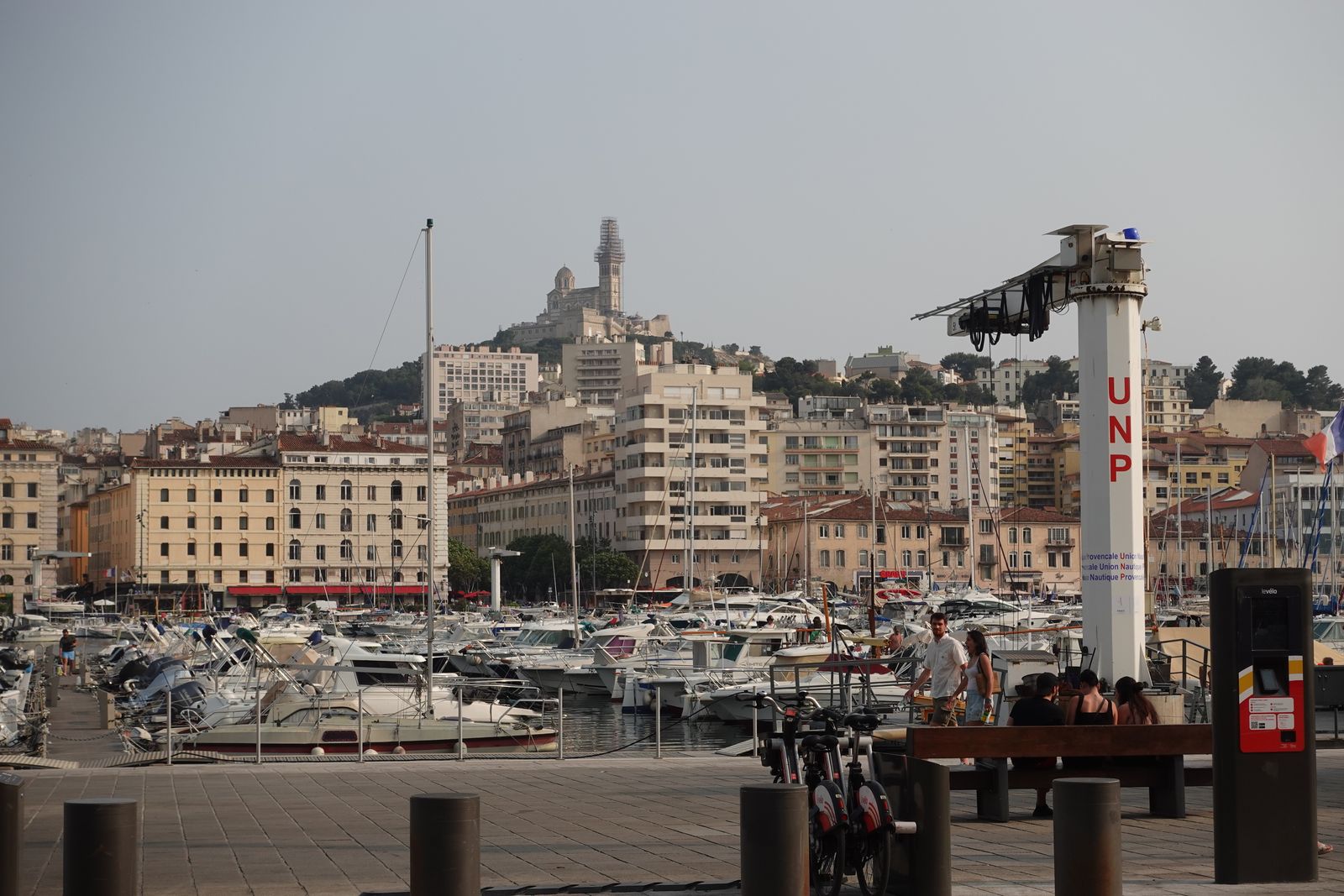
France’s oldest and second-largest city offers an incredibly energetic, multicultural, and slightly gritty port experience. The heart of the city is the bustling Old Port (Vieux-Port), watched over from a high hill by the stunning Notre-Dame de la Garde basilica, visible from almost everywhere. Also well worth exploring is the historic, once slightly forgotten Le Panier quarter, full of street art and charming cafés.
Marseille isn’t as polished as Nice, but it will win over those seeking an authentic atmosphere, great food, and vibrant southern culture. Besides the city itself, it serves as a perfect gateway to exploring the nearby national parks, especially the beautiful cliffs and inlets known as the Calanques, with their turquoise water. This wild nature begins quite literally on the city’s doorstep.
When visiting the basilica, be ready for a steep uphill climb, but the view over the whole city and the sea is well worth the effort. We’ve put everything you need to know about this metropolis into our Marseille guide.
Map of points of interest for your phone
Occitania and South-West France
This vast corner of the country hides breathtaking ancient monuments, perfect medieval fortifications, and enormous sand dunes. It offers a very varied and somewhat calmer alternative to the busy summer coastline of the Riviera.
23. Nîmes and the Pont du Gard
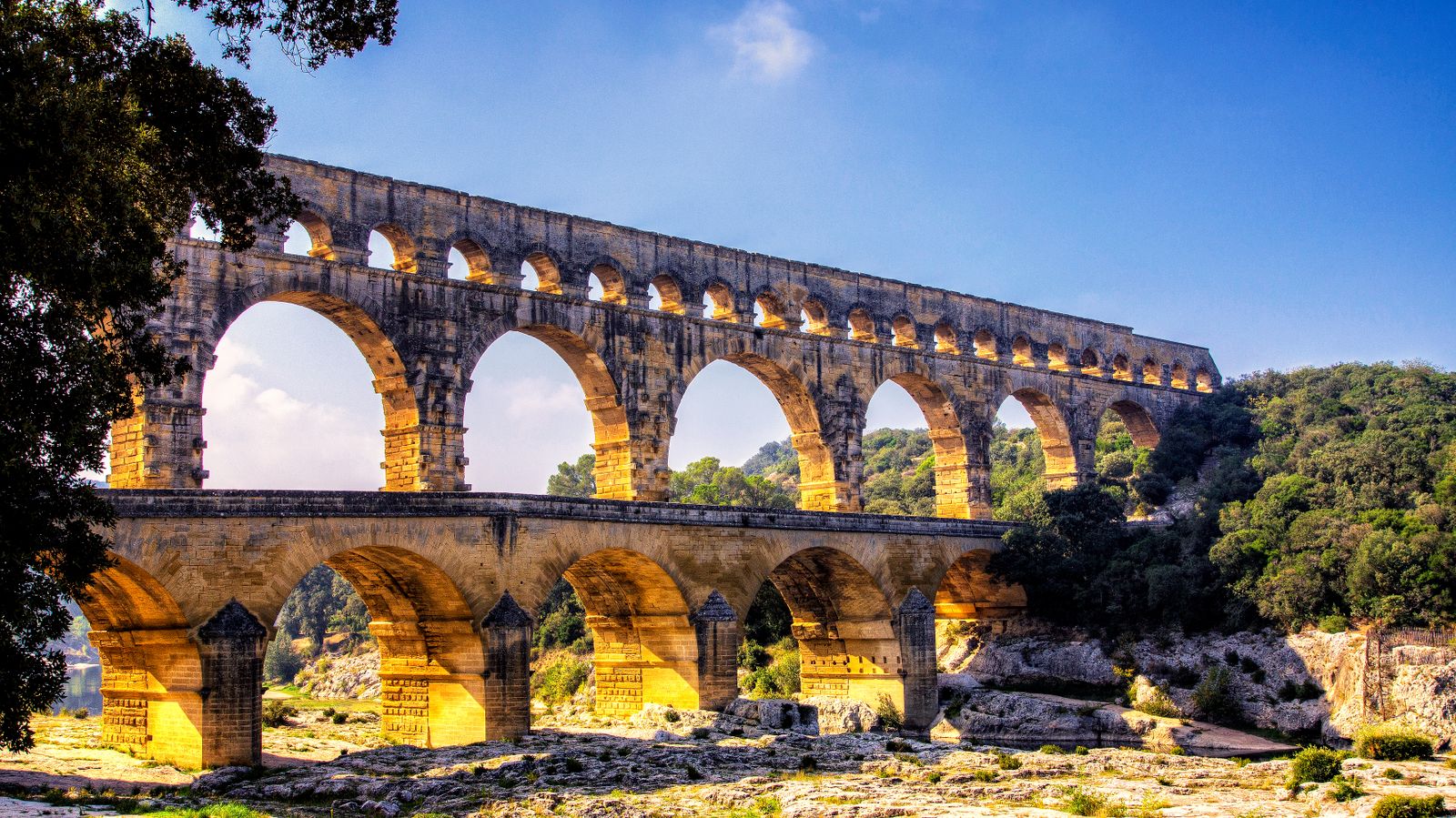
The city of Nîmes is rightly nicknamed the French Rome, because it hides an incredibly well-preserved ancient arena (amphitheatre) and the elegant Maison Carrée temple, which looks as though it was built yesterday. Even more astonishing, though, is the nearby Roman aqueduct Pont du Gard, a UNESCO-protected site whose three tiers of flawless stone arches arch magnificently high above the valley of the River Gardon.
If you’re fascinated by antiquity and you’re among the lovers of stunning classical architecture, this region will completely captivate you. The area around the aqueduct is also brilliantly set up for hiking, and in the summer months you can swim in the clean river right beneath the arches or rent a kayak and paddle under it.
It pays to buy a combined ticket covering both the arena and the aqueduct, saving you money and time in the queues. You’ll find more practical details in our comprehensive article on Nîmes and the Pont du Gard.
24. Carcassonne
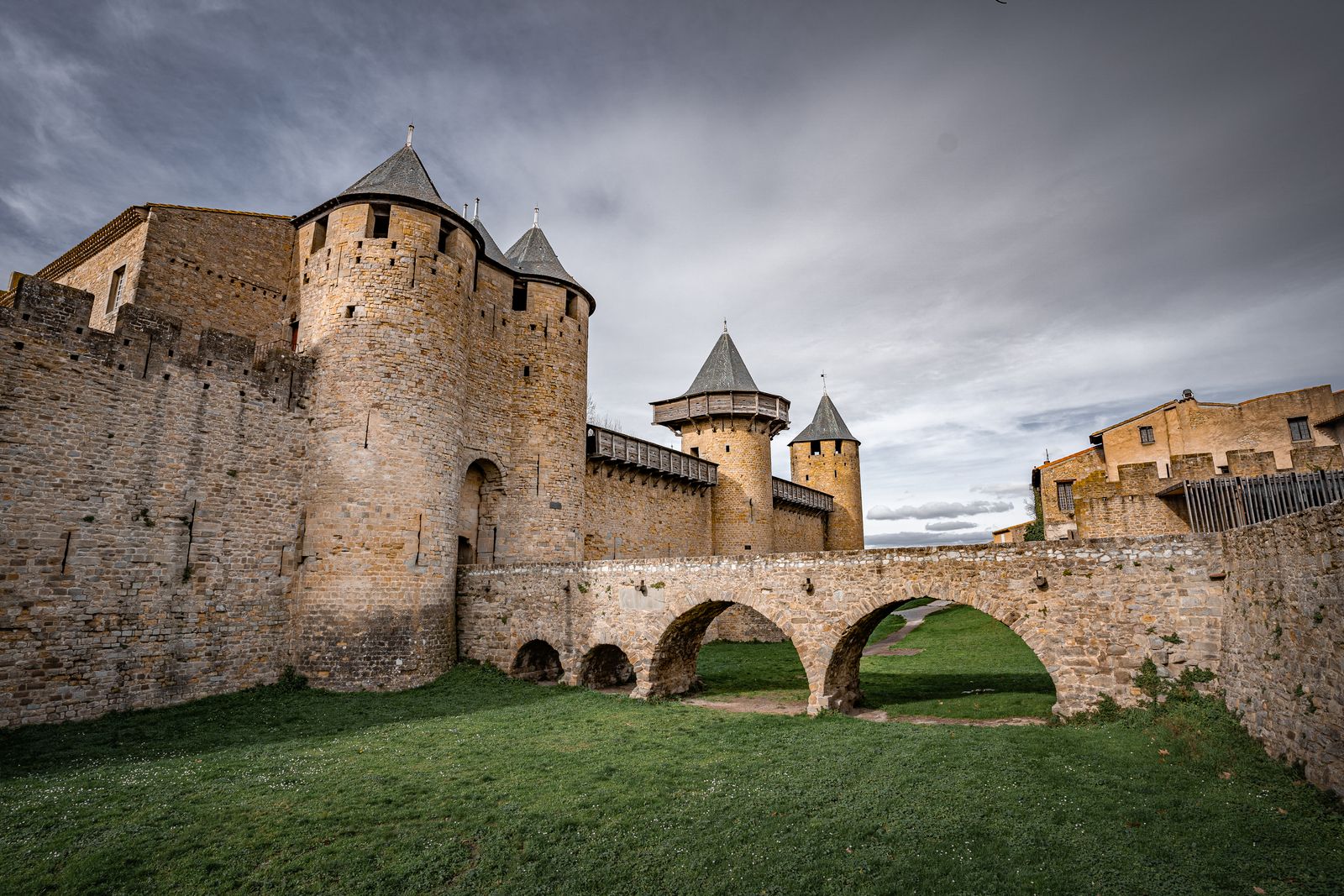
When you first lay eyes on this hilltop town, you’ll feel like you’ve stepped into a historical blockbuster, because it’s the largest preserved medieval fortified Cité in Europe. Its majestic double walls with 52 defensive towers feel like an impenetrable, fairy-tale maze, and the whole town is proudly listed by UNESCO. Inside you’ll find narrow stone lanes, old wells, and a majestic castle.
A stop here is a must for families with children and anyone who admires castles and the history of knights. The town sits right on the strategic route between the large city of Toulouse and the Mediterranean coast, so it’s easy to slot into your road trip. To make the most of your experience, though, you’ll want to avoid the biggest daytime rush of day-trippers.
The fortress is at its most beautiful and mysterious after sunset, when it’s beautifully lit up, or early in the morning before the first coaches arrive. If you want to plan your visit, take a look at our article on Carcassonne.
25. Montpellier
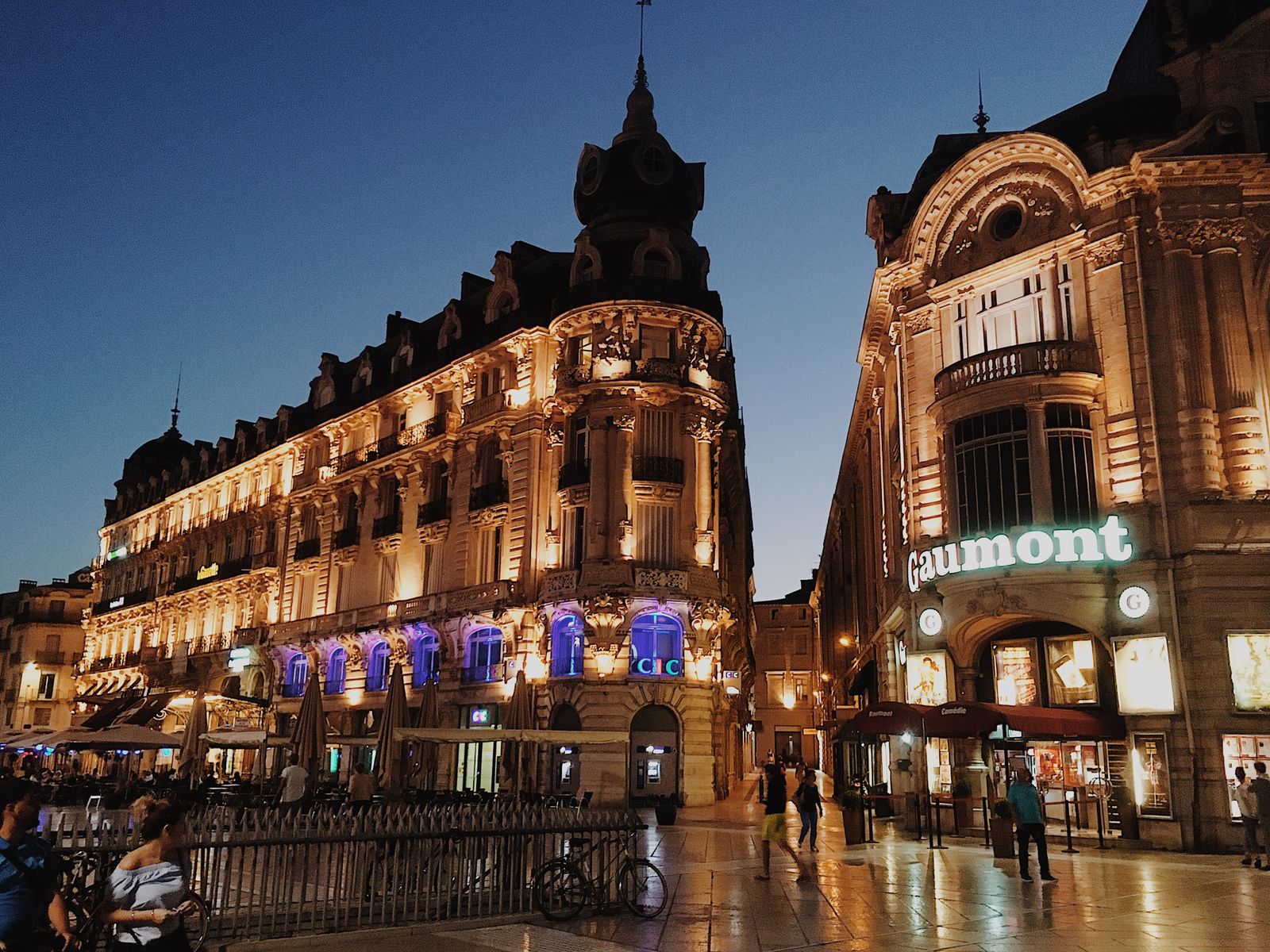
This youthful, energetic city in southern France thrives above all thanks to its huge community of university students, who give it a modern flair. The heart of the action is the generous and beautiful Place de la Comédie square, from which the winding historic lanes of the old quarter known as the Écusson radiate out. The city is also surrounded by vineyards and lies just a stone’s throw from beautiful beaches and the wild Camargue nature park, with its flamingos.
Montpellier is a wonderfully sunny and lively city that’s perfect for discovering a relaxed southern atmosphere, and at significantly less cost than the glamorous Riviera. The centre is also largely car-free, so you can stroll endlessly and stop at any of the countless great cafés and bistros serving both modern and traditional cuisine.
💡 Tip: The local tram network will carry you comfortably and stylishly into the centre and to the nearby beaches — it’s a design experience in its own right. Our article on Montpellier offers more inspiration for exploring.
26. Collioure and the Côte Vermeille
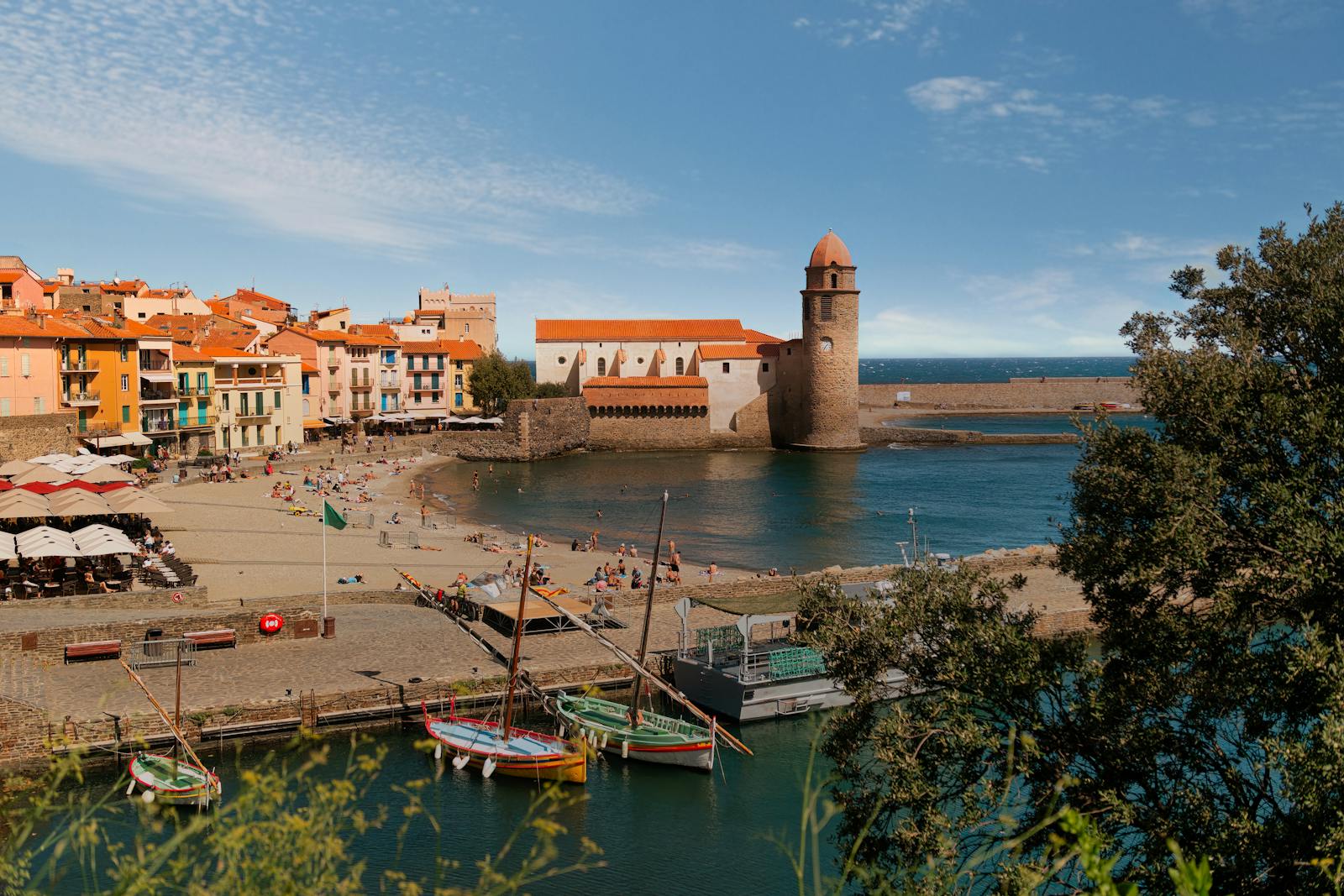
This gorgeous Catalan port town lies just a stone’s throw from the Spanish border, and its skyline is unmistakably defined by an old stone bell tower rising straight out of the sea. The surrounding steep cliffs are dotted with green vineyards that tumble right down to the water, and this remarkably colourful scenery once deeply inspired famous Fauvist painters such as Henri Matisse and André Derain. You can feel the strong influence of nearby Catalonia everywhere here, both in the architecture and in the excellent food.
It will win over anyone craving Mediterranean colour, fresh seafood delicacies, and quieter coves with crystal-clear water. Be sure not to forget to taste the local sweet dessert wine known as Banyuls, grown here on terraced slopes. The whole Côte Vermeille coast is altogether much wilder and less built-up than the rest of the French south.
I recommend coming here in autumn, when the vineyards above the sea take on incredible red-gold tones. For more detailed tips on this area, open our article about Collioure and the Côte Vermeille.
27. Toulouse
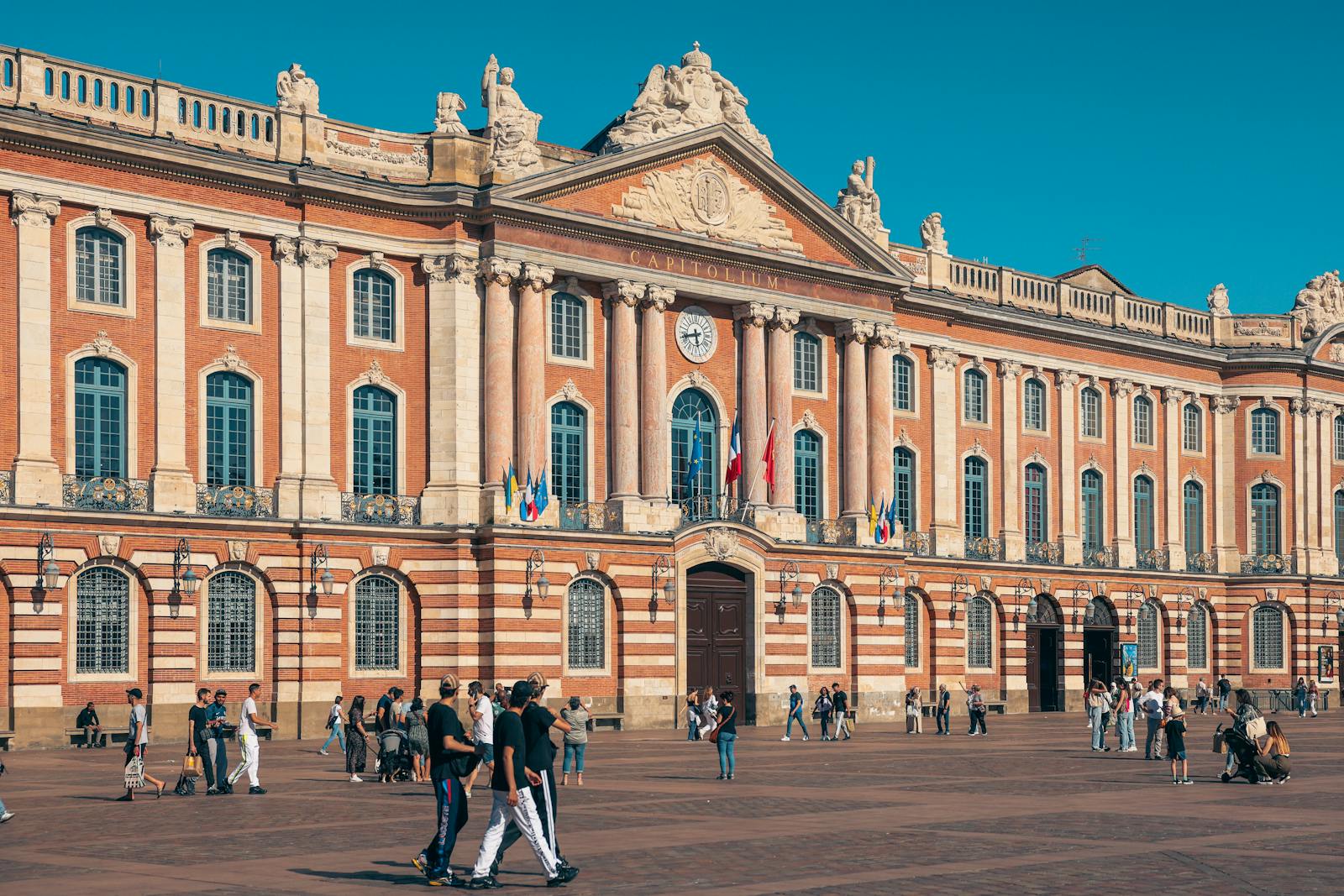
This city in the south-west is nicknamed everywhere the “pink city”, thanks to its distinctive terracotta-brick façades, which take on a beautiful pinkish hue at sunset. Here you’ll find the grand main square Capitole, the huge Romanesque basilica of Saint-Sernin, and the tranquil Canal du Midi, which flows through the city lined with mighty trees. Beyond its rich history, Toulouse is also Europe’s capital of aviation, home to Airbus and a wonderful aviation museum featuring Concorde.
Thanks to its huge university, there’s a fantastic student energy here, and the city makes a perfect destination for a long weekend full of culture and science. It’s also a strategic starting point if you’re planning to explore the nearby Pyrenees or want to continue towards impregnable Carcassonne. Compared with the northern cities, the mood here is far more relaxed and friendly.
If you’re into engineering, definitely book a tour straight into the Airbus assembly halls in advance — it’s a fascinating experience. You’ll find more visiting advice in our post on Toulouse.
28. Bordeaux and the Dune du Pilat
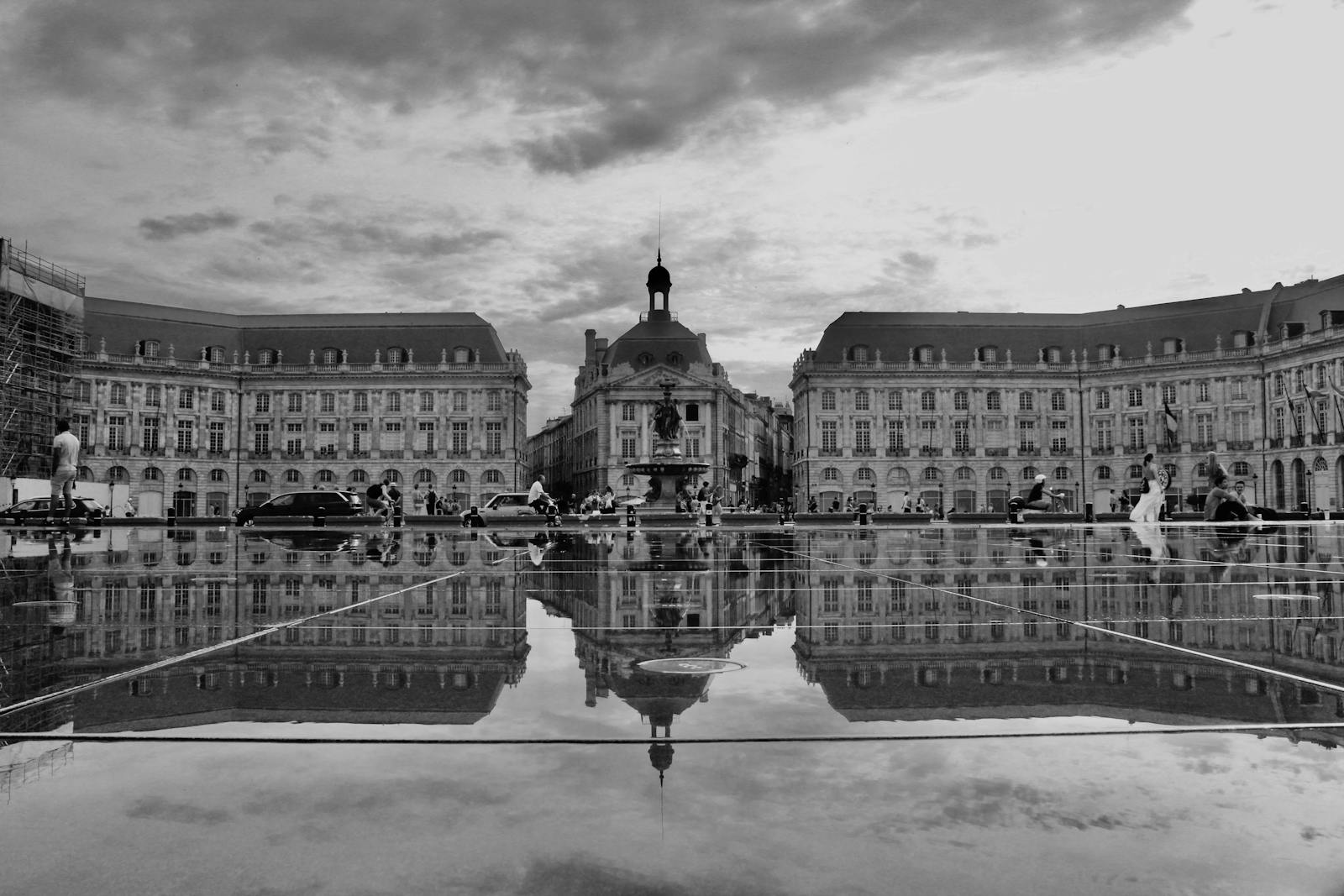
Elegant Bordeaux is a world capital of fine wine, and its whole centre, full of classical architecture, is UNESCO-protected. Besides tastings at the modern Cité du Vin museum, you can enjoy the wonderful reflection of the palaces in the Miroir d’eau water mirror right on the riverbank. The city also serves as an ideal gateway to the Atlantic, where just off the coast lies the breathtaking Dune du Pilat — the tallest sand dune in Europe (it measures over 100 metres).
The combination of a prestigious city and nearby wild beaches is absolutely perfect for a summer road trip focused on experiences and tastings. From the top of the enormous sand dune you get a fantastic contrasting view of the deep-blue ocean on one side and endless green pine forests on the other.
The climb up the dune through deep sand is quite a workout, so set off in the morning before the sand heats up in the sun. If you’re planning a trip this way, read our article on Bordeaux and our detailed info for visiting the Dune du Pilat.
29. Dordogne, Périgord and Rocamadour
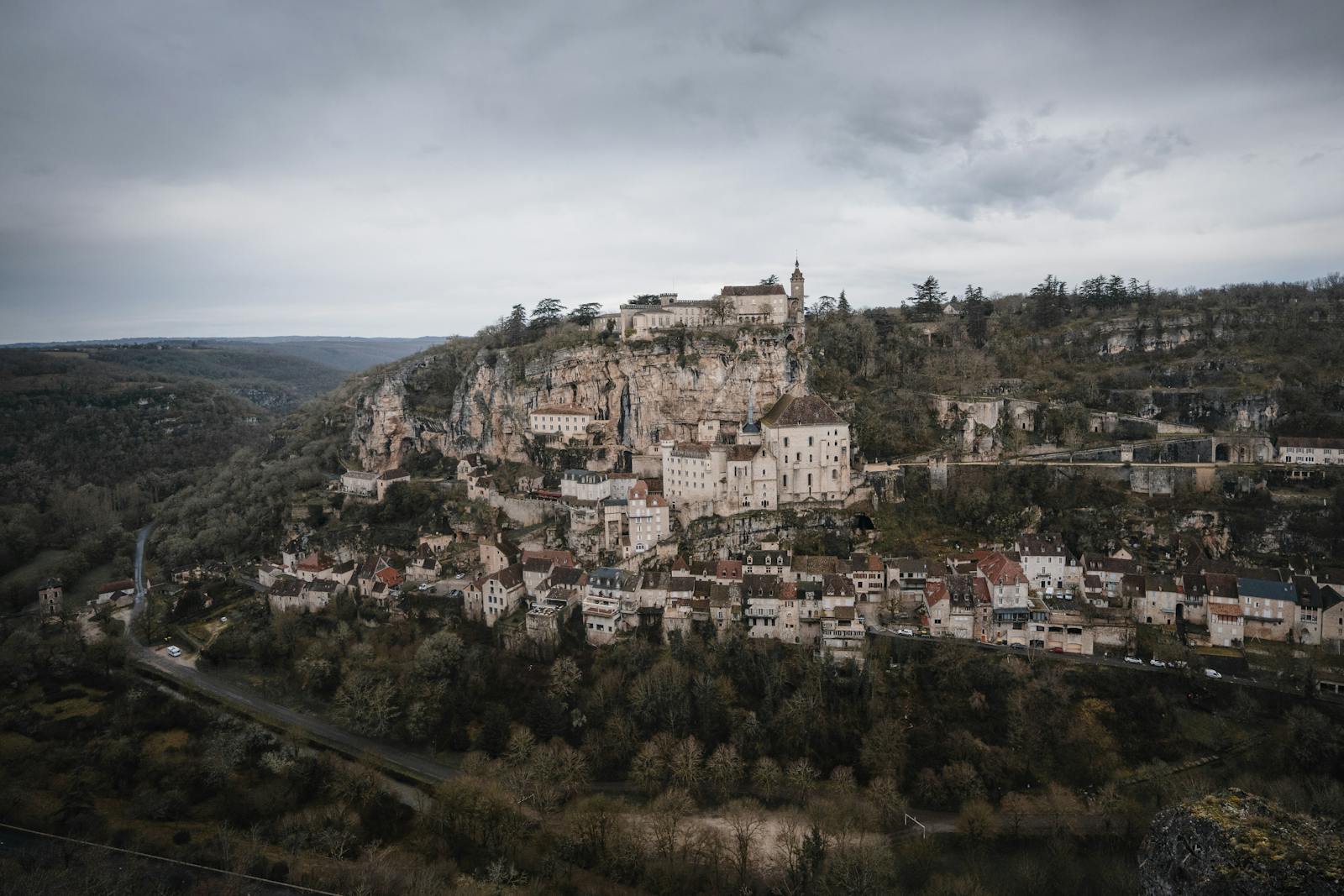
The area around the lazily flowing River Dordogne is full of medieval villages with slate roofs, such as Sarlat or the stunning La Roque-Gageac, which look as though they’re frozen in time. You’ll find ancient castles perched on cliffs and fascinating, mysterious caves with prehistoric paintings, the most famous of which is Lascaux. Nearby is also the famous pilgrimage town of Rocamadour, which is quite literally glued to a sheer rock face above a deep canyon, forming an utterly unforgettable silhouette.
It’s a destination sought out by great romantics and all lovers of ancient history and good food, as the region is renowned for its local farm specialities. Just a stone’s throw from Rocamadour lies the huge karst chasm of Gouffre de Padirac, which you descend into and explore along an underground river in little boats.
💡 Tip: Explore the river valley from the deck of the traditional wooden boats known as gabares — it’s a wonderfully peaceful experience. Find out more about these gems in our articles on Dordogne and Périgord and on Rocamadour itself.
30. Corsica
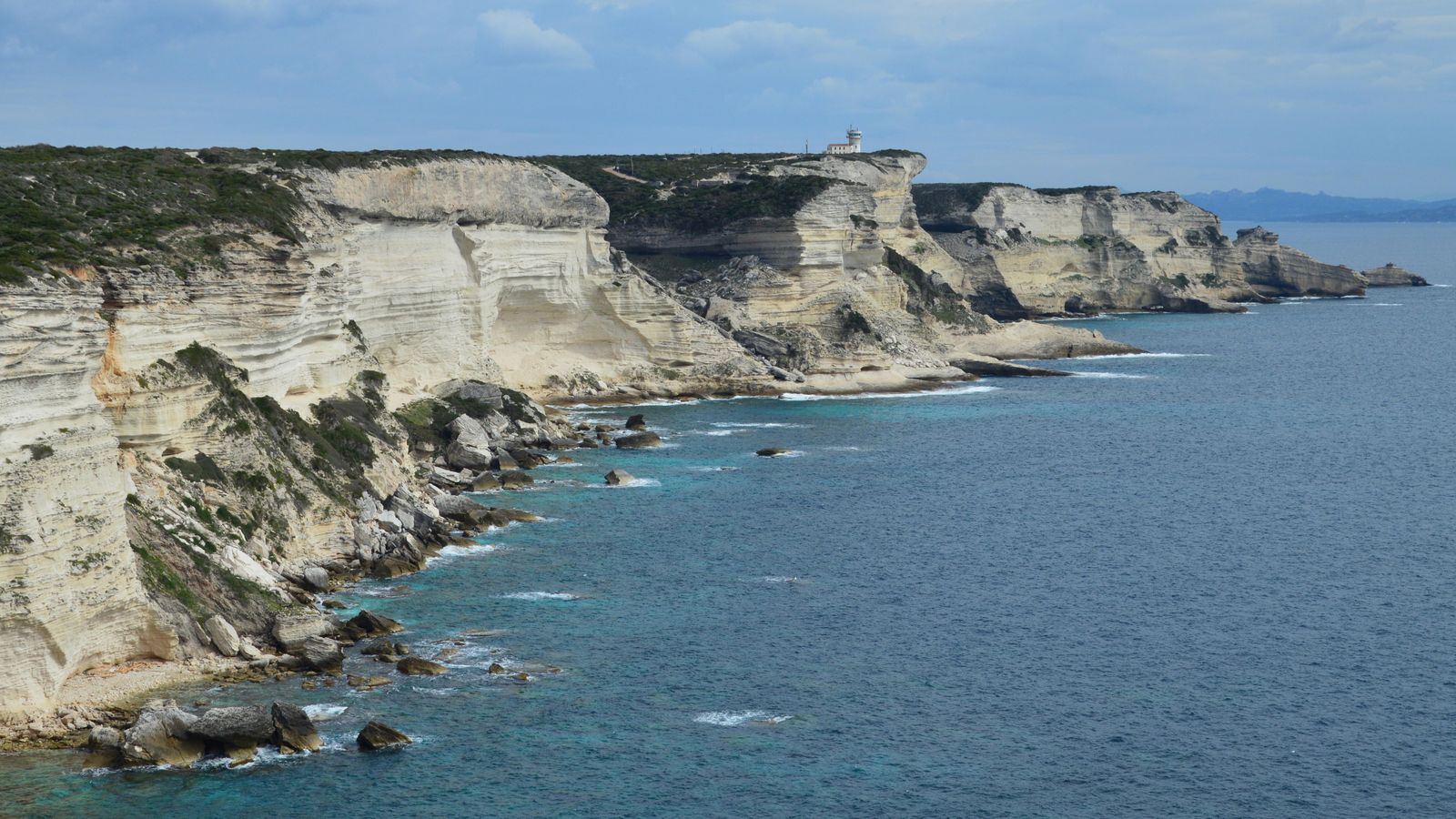
This Mediterranean island has more than earned its nickname the “Island of Beauty”, because its landscape takes your breath away at every step. While in the south around Porto-Vecchio you’ll find turquoise coves and white-sand beaches (such as Palombaggia or Santa Giulia), the interior is made up of rugged, wild mountains crossed by one of Europe’s toughest treks, the GR20, and the stunning Scandola reserve, which is even UNESCO-protected. In the far south lies the spectacular town of Bonifacio, with its historic citadel literally balancing on the edge of sheer white cliffs plunging into wild waves. On top of all that, you can look forward to the excellent and highly distinctive Corsican cuisine, full of local herbs and cheeses.
This island is a perfect destination for those who want to experience Caribbean-like beaches alongside demanding high-mountain climbs and deep forests, all in a single holiday. The local atmosphere is very proud, strongly traditional, and considerably wilder than the manicured mainland Riviera, which makes the island a truly unique world.
Given the variety of terrain, it really pays to arrive with your own car or rent one, so you can easily drive from the coast straight up into the mountain passes. We’ve gathered more detailed travel advice for the island in our big article on Corsica, or take a look at our tips for the stunning Bonifacio or the renowned beaches near Porto-Vecchio.
Where to Go Next
If the lines above have whetted your appetite, the best way to get to know this beautiful and incredibly varied country is to plan a proper road trip. You can easily take inspiration from our ready-made itineraries and set off on a shorter 7-day road trip around France or treat yourself to a grand 14-day road trip around France. If you’re mainly drawn to sun and sea, you’ll love our sun-soaked road trip around southern France, while lovers of good food definitely shouldn’t miss our easy-going wine road trip through France.
On a practical note, never underestimate the prep, especially if you’re driving your own car. So read up on the useful info about when to visit France to dodge the biggest summer crowds, and find out exactly how a road trip to France works and what it actually costs. That way you’ll avoid any unwelcome surprises at the motorway toll booths and know exactly what to expect from the long journey.
And if you still haven’t had enough, the map of France hides yet more incredible gems that simply didn’t make it into the main thirty. Well worth considering is the surfing paradise of Biarritz and the French Basque Country, with its giant Atlantic waves, or the utterly fantastic and world-unique historical park Puy du Fou, where you can experience first-hand some of the best and most spectacular shows in all of Europe.
Frequently Asked Questions
Where to go in France for your first visit?
For complete beginners, unforgettable Paris is an absolute must, offering the most famous monuments, excellent museums and a typical café atmosphere. However, if you prefer to head straight into peaceful nature, choose picturesque Alsace or the sunny French Riviera, where tourism is well-prepared and you can easily get by with English.
When is the best time to go to France?
Ideal conditions for exploring cities and monuments are always in spring and autumn, when there’s pleasant warmth and you’ll safely avoid the biggest crowds. Summer is indeed the ideal time for swimming and blooming lavender, but in the south be prepared for quite exhausting heat and beach resorts bursting at the seams.
How many days is enough for France?
For visiting one specific city like Paris or Lyon, a long weekend of three to four days will comfortably suffice. However, if you want to explore an entire region, such as touring all the châteaux of the Loire or discovering wild Brittany, set aside at least a week, and for a proper circular road trip I recommend a full two weeks.
What is the most beautiful part of France?
It obviously depends purely on your preferences, but among the most stunning and most photographed areas are the fairytale Loire Valley and the purple-hued summer Provence. Lovers of wilder scenery, on the other hand, swear by the dramatic coastlines of Brittany and Normandy with their amazing white chalk cliffs rising above the sea.
Where to go to the sea in France?
If you’re looking for warmth, guaranteed summer sunshine and luxury resorts with gentle slopes, head to the famous French Riviera or to the sandy beaches of wilder Corsica. On the other hand, the Atlantic coast in the west and north of the country offers giant waves and colder water, so it’s more suitable for surfers and lovers of long evening walks on the cliffs.
Is France Worth It by Car?
Absolutely yes, because having your own car will give you complete and invaluable freedom when exploring hidden wine villages or remote mountain passes. Just keep in mind that highways here are subject to relatively expensive tolls, so it often pays off not to rush and sometimes deliberately choose slower but incredibly scenic local roads.
Where are the lavender fields in France and when do they bloom?
You’ll find the most famous purple fields in the sunny Provence region in the south of the country, with the absolutely most beautiful being the vast Valensole plateau or the immediate surroundings of Sénanque Abbey. To catch the lavender in full bloom, you need to head there within a fairly narrow time window, roughly from mid-June to early July, before the big summer harvest begins.
Is France expensive?
Prices vary significantly depending on the specific region, with Paris and luxury resorts traditionally being the most expensive scattered along the south on the French Riviera. You can save money by staying in smaller towns further from the sea, buying excellent fresh produce at local markets, and avoiding the main summer tourist season.
Where to go in France with kids?
For a family vacation, the absolutely fantastic historical theme park Puy du Fou is amazing, offering breathtaking knight performances and spectacular shows in nature. At the seaside, families will appreciate the calmer and shallower beaches on the coast towards the Spanish border, or the fascinating medieval fortifications in the city of Carcassonne, which from a distance resembles a huge fairy-tale castle.
Tips and Tricks for Your Vacation
Don’t Overpay for Flights
Search for flights on Kayak. It’s our favorite search engine because it scans the websites of all airlines and always finds the cheapest connection.
Book Your Accommodation Smartly
The best experiences we’ve had when looking for accommodation (from Alaska to Morocco) are with Booking.com, where hotels, apartments, and entire houses are usually the cheapest and most widely available.
 🚗 Car rental on the roadVerified rental cars in France
Search with the DiscoverCars comparison engine — it compares prices from dozens of local and international rental companies, and most bookings come with free cancellation.
Compare car prices in France →Don’t Forget Travel Insurance
Good travel insurance will protect you against illness, accidents, theft, or flight cancellations. We’ve had a few hospital visits abroad, so we know how important it is to have proper insurance arranged.
Where we insure ourselves: SafetyWing (simple monthly subscription) and TrueTraveller (for extra-long trips).
Find the Best Experiences
Get Your Guide is a huge online marketplace where you can book guided walks, trips, skip-the-line tickets, tours, and much more. We always find some extra fun there!