Close your eyes and picture the sun-drenched south of France, where the steep peaks of the Alps plunge straight into the deep blue Mediterranean. The French Riviera, also known as the Côte d’Azur, is a fascinating place that defined modern tourism back in the nineteenth century. Today, international demand for this stretch of coast comfortably outranks even icons like the Loire Valley or romantic Paris. British and Russian aristocrats once came here to spend the mild winters, and today millions of travellers flock in for the art, the turquoise water, and that unmistakable atmosphere.
There’s one rather significant catch, though, that catches plenty of visitors off guard. The Riviera in July and August can be absolutely relentless — temperatures regularly soar to extremes and the coastal roads grind to a halt under a flood of cars. If you turn up blindly, dreaming of the empty beaches you’ve seen in old films, you’re heading for a harsh collision with the reality of overcrowded resorts. The key to a successful holiday on the Côte d’Azur is flawless logistics and perfect timing. That’s exactly why I’ve put together this detailed guide packed with practical advice, so you fall in love with the south of France at first sight.
TL;DR
- Make Nice your base: It’s the strategic heart of the whole region, with excellent infrastructure and an international airport.
- Leave the car at home: The coastal TER trains get you absolutely everywhere far faster — and without the huge stress of finding parking.
- Watch out for the summer heat: Peak-season temperatures push 40 °C, so it’s far more pleasant to visit in May, June or September.
- Hilltop gems: Don’t limit yourself to the beaches — inland villages like Èze or Saint-Paul-de-Vence hide the region’s true soul.
- Art everywhere: The Riviera boasts some of the finest modern art museums in the world, where masters like Chagall, Matisse and Picasso once worked.
- A vegetarian paradise: Don’t miss the traditional street snack socca made from chickpea flour, or the fantastic lemon desserts in Menton.
The full destination guide: France — guide and what to see
When to Visit Nice and the Rest of the Riviera
Deciding when to travel is the single most important step, and it shapes your entire experience. The peak summer season in July and August brings temperatures between 35 and 43 °C, which turns strolling around the towns into a rather exhausting endeavour. The Mediterranean sun can be scorching, and the crowds in the narrow lanes of the historic centres often reach their absolute limit. On top of that, if you’re craving even a hint of peace and quiet, give the summer holidays a wide berth — that’s when the whole of France is on holiday too.
A much smarter strategy is to plan your trip for the shoulder season — ideally May, June, or September and October. In these months the temperatures sit in a very pleasant range around 25 °C, the sea is already (or still) beautifully warm, and the whole Riviera visibly breathes easier. In May the countryside is in glorious bloom and the towns smell of jasmine and the orange trees that line the local promenades. It’s also far easier to settle into the rhythm of the locals, who treat themselves to a long lunch in the shade and spend the hottest part of the day resting.
If you don’t mind skipping a swim in the sea, the winter months from December to February offer an utterly unique atmosphere. On sunny days the coastal temperatures hover around 15 °C, which is perfect for long walks and exploring the local museums. In February you can even catch the famous lemon festival in Menton, which reliably brightens up even the gloomiest winter days with giant sculptures built from tens of thousands of citrus fruits. Winter in the south of France simply has its own unmistakable, very peaceful charm.
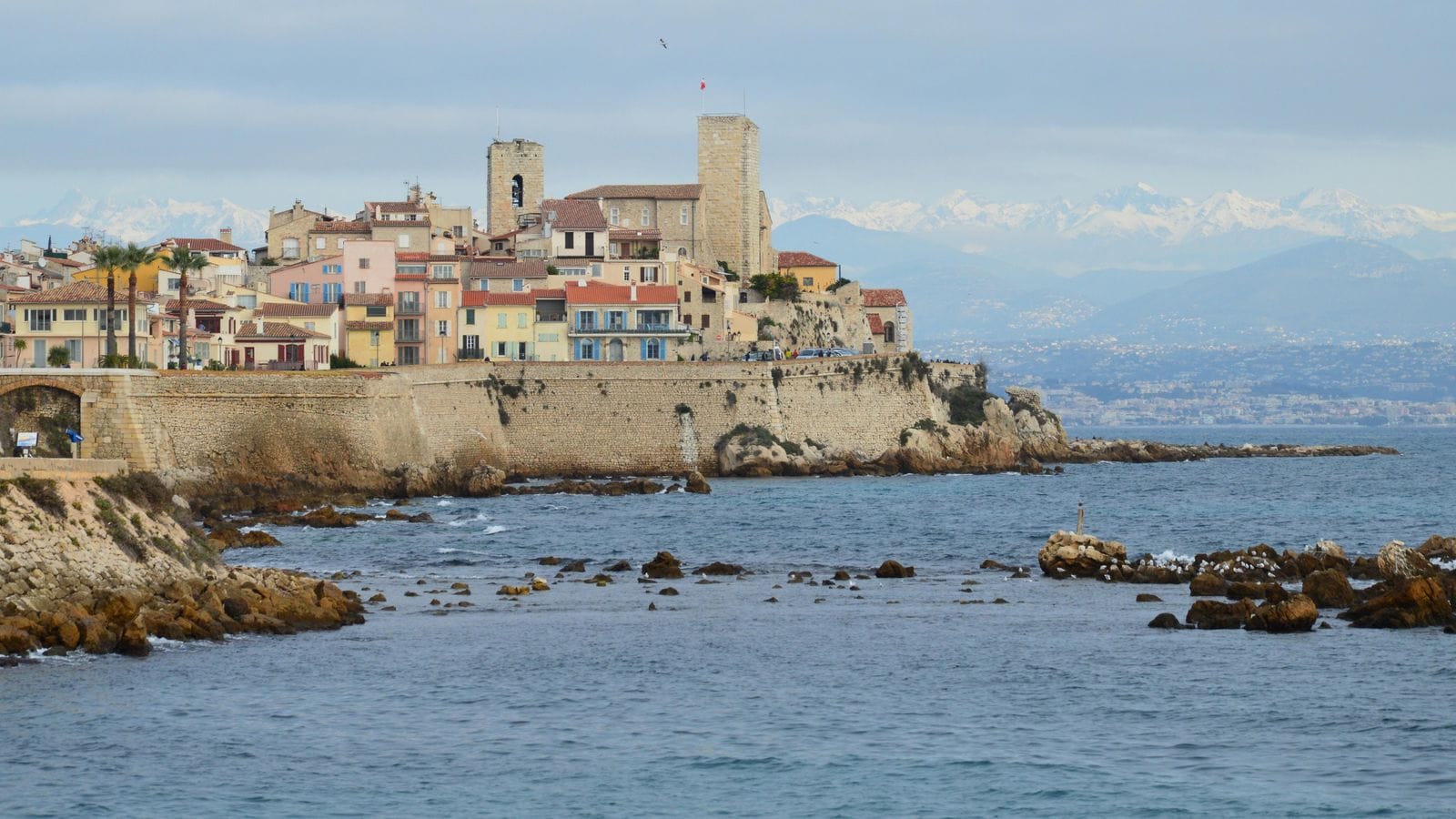
Where to Stay on the French Riviera (and Why to Skip the Car)
💡 Tip for accommodation and experiences: We like to look for places to stay on Booking.com, which usually has the best cancellation terms. For tickets, tours and activities, it pays to compare and book through GetYourGuide.
The biggest mistake you can make when planning a Riviera holiday is stubbornly trying to drive your way around it. In high season the coastal roads turn into one endless car park, and hunting for a spot in the narrow resort streets will cost you time and patience. The solution is the brilliantly run TER regional train network, which crisscrosses the entire coast from Marseille to the Italian border with three or four services an hour. Make the city of Nice your main base — it works as a perfect transport hub, and you can fly in directly from the UK with the likes of easyJet or British Airways for very reasonable fares if you book well ahead.
In Nice I recommend looking for accommodation near the main train station, Gare de Nice-Ville, or along the main artery, Avenue Jean-Médecin. This strategic location saves you a huge amount of time on early morning departures to the surrounding towns, while the beach and the old town are just a fifteen-minute walk away. From Nice Côte d’Azur international airport, the L2 surface tram will whisk you comfortably into the centre in about half an hour. If you’re planning intensive day trips around the area, do look into the multi-day Pass SudAzur regional ticket, which unlocks unlimited travel across the whole département.
Don’t leave booking your accommodation until the last minute — the best search engine is, as ever, Booking, where you’ll find the widest range of hotels and apartments. For 2026, budget for an average nightly rate at a decent hotel in Nice of around €120 to €180 for two people, depending on the season. Here are three specific tips for great hotels across different price brackets:
- Boutique Hotel Nice Côte d’azur: A fantastic, modern hotel just a few steps from the main station, which makes it an ideal base for travelling by train.
- Hôtel Florence Nice: A very pleasant hotel right on the pedestrian zone, with a strong eco-friendly ethos and green terraces where you can enjoy your morning coffee.
- Hotel Negresco: An absolute legend and an architectural gem right on the Promenade des Anglais — well worth it if you’re after the most luxurious experience on the entire Riviera.
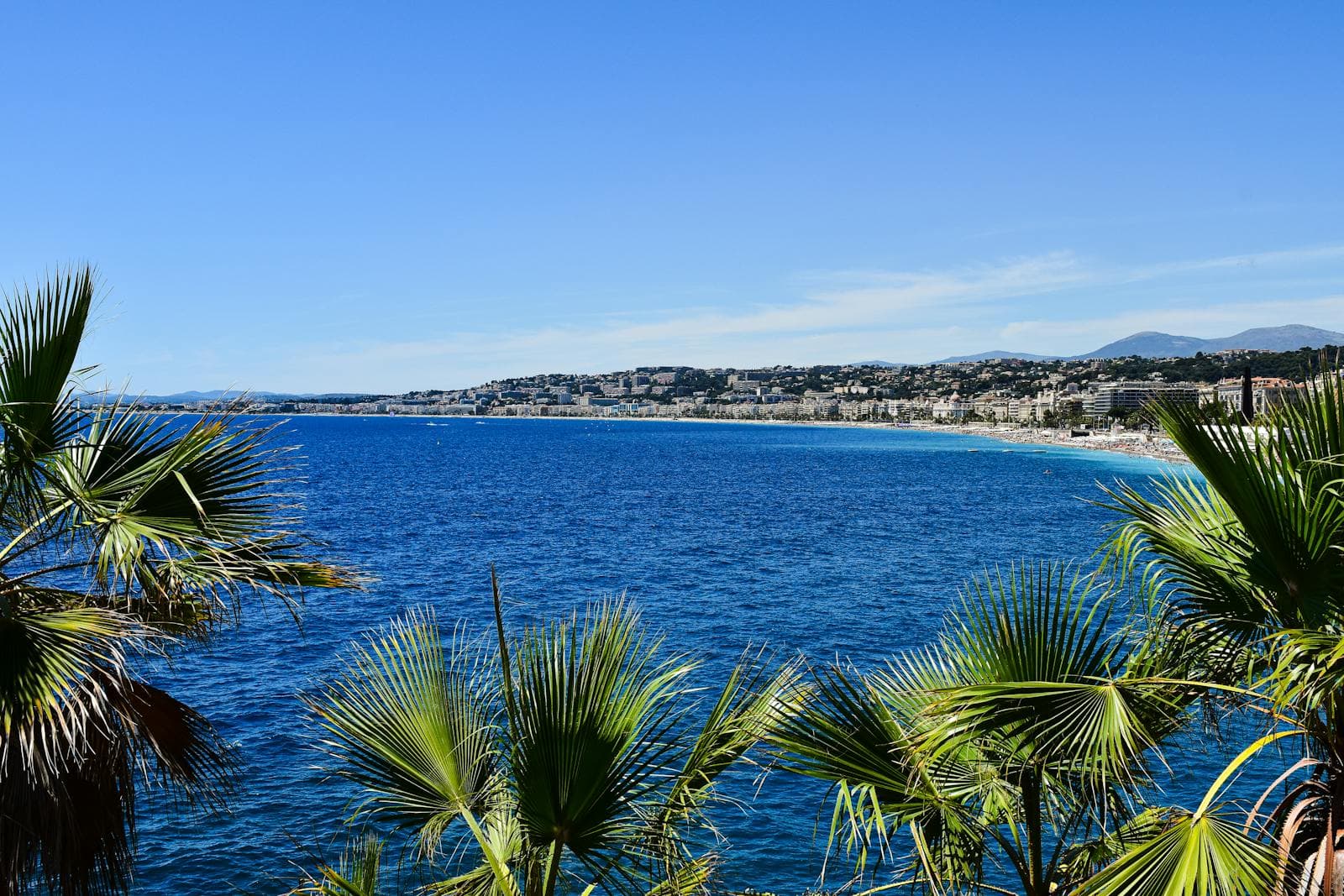
14 Tips for What to See and Do on the French Riviera
Let’s take a look together at the very best the Côte d’Azur has to offer — from buzzing cities and quiet mountain villages to art galleries with no equal anywhere in the world. Every one of these spots is easy to reach by public transport.
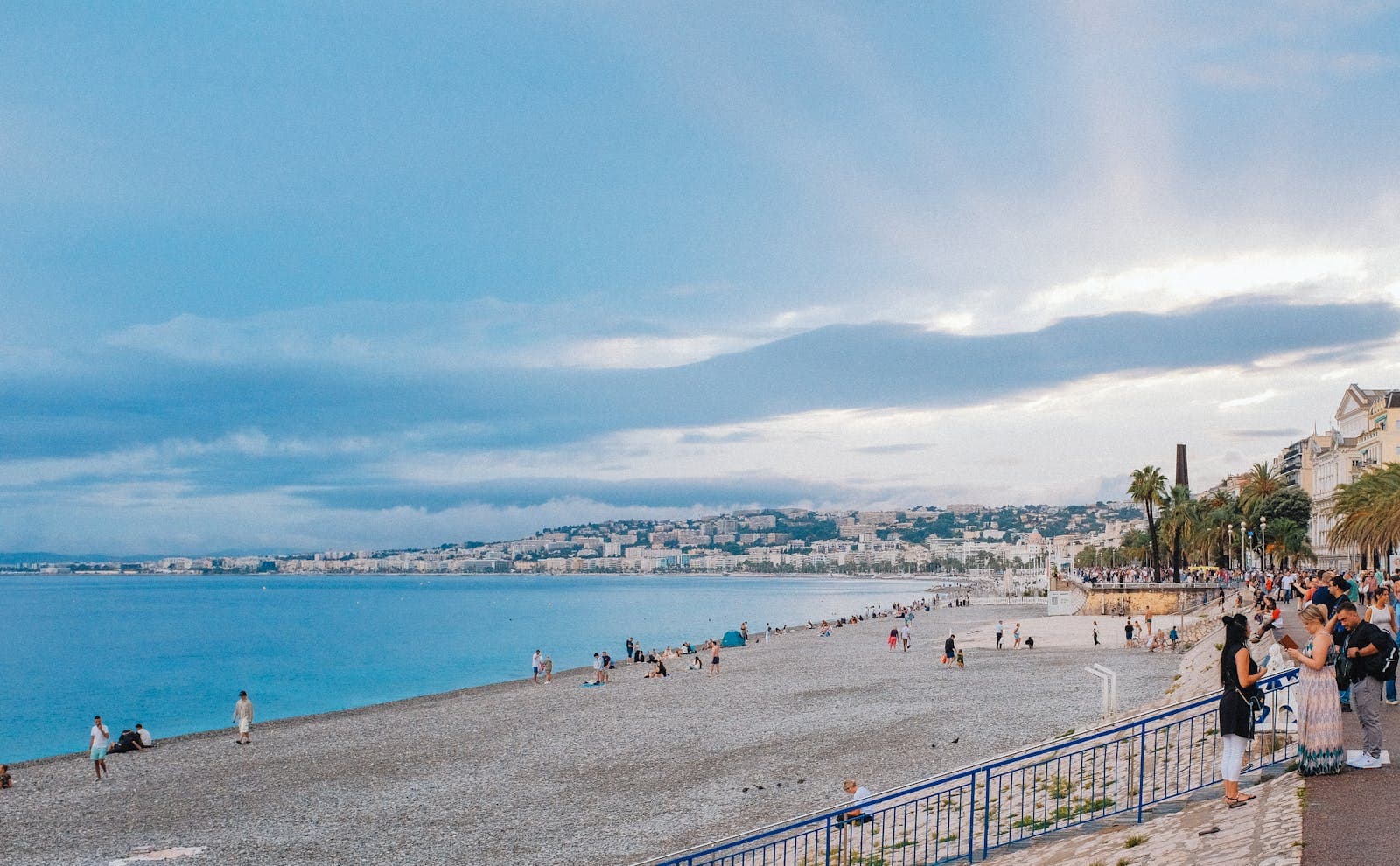
1. Promenade des Anglais and the Beaches of Nice
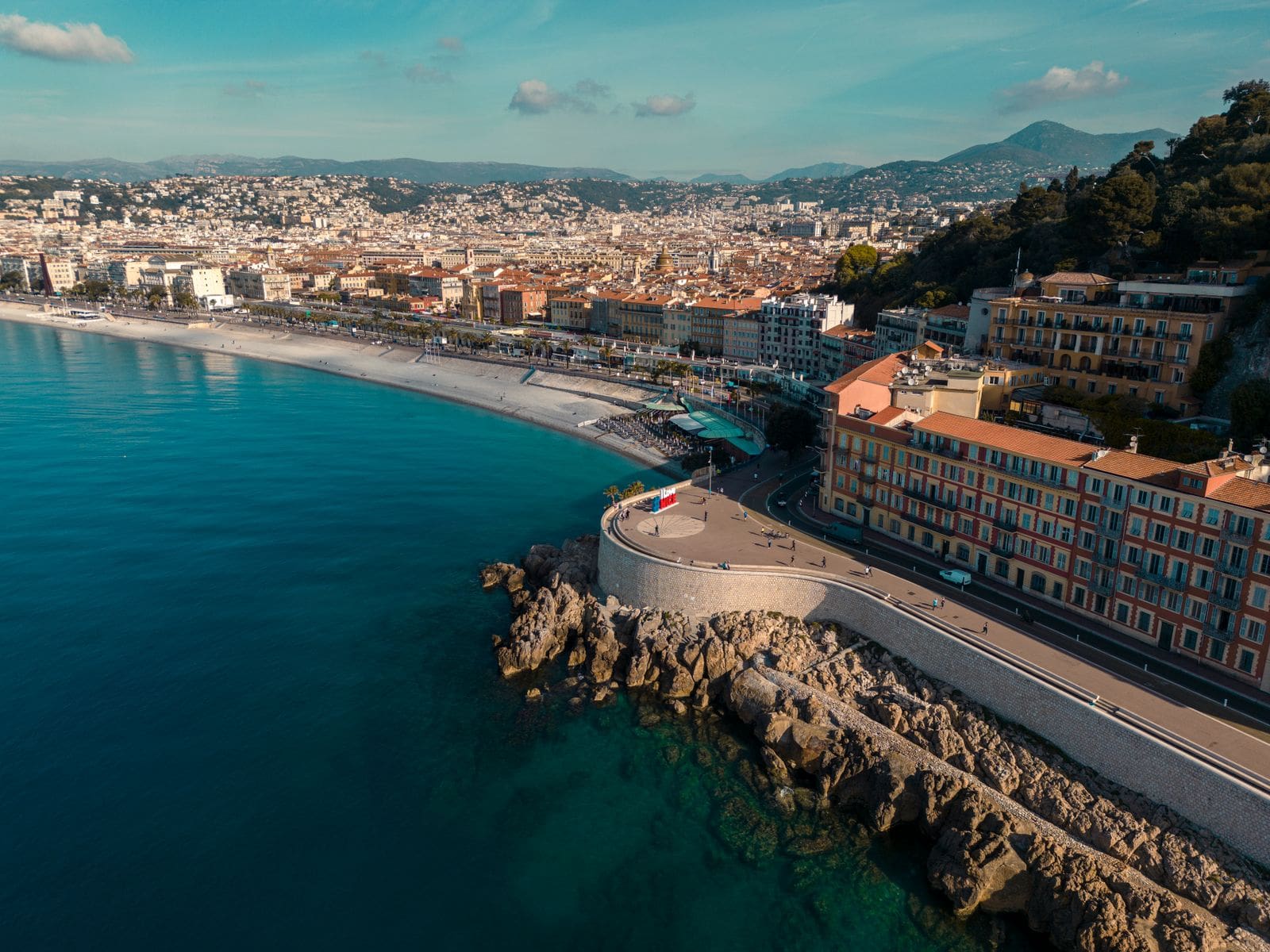
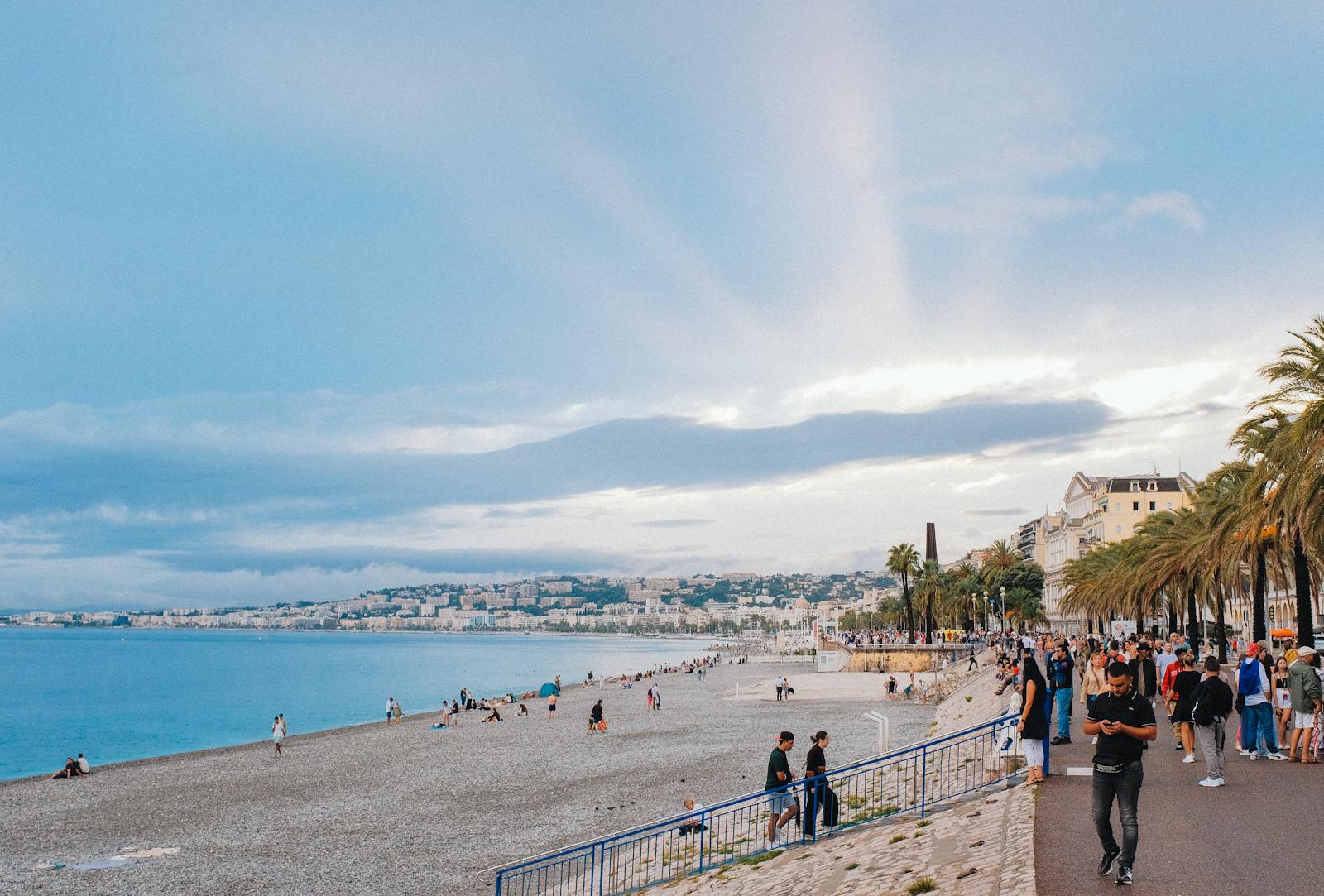
Life in Nice is dictated by the sea and the famous Promenade des Anglais, which acts as the city’s main shop window. This seven-kilometre boulevard hugging the curved Bay of Angels is forever full of runners, skaters and elegant locals who come here to soak up the sunset. The wide, palm-lined promenade offers countless benches where you can simply sit and admire, for instance, the stunning historic façade of the legendary Hotel Negresco, the landmark of the whole seafront.
It’s worth knowing that the beaches in Nice itself are entirely pebbly, so if you’re used to soft sand, pack a good pair of water shoes. The reward for that minor discomfort is the incredibly clear, azure-blue water that gave the whole coast its famous name and offers much-needed refreshment in the summer heat. During summer you’ll find a string of private beach clubs with luxury loungers, but there are also huge stretches of public beach that are completely free.
💡 Tip: On the promenade, don’t miss the famous blue chairs (chaises bleues), which are quite literally an icon of the city. Finding a free blue chair at dusk and watching the waves roll in is probably the most authentic memory you can take away from Nice.
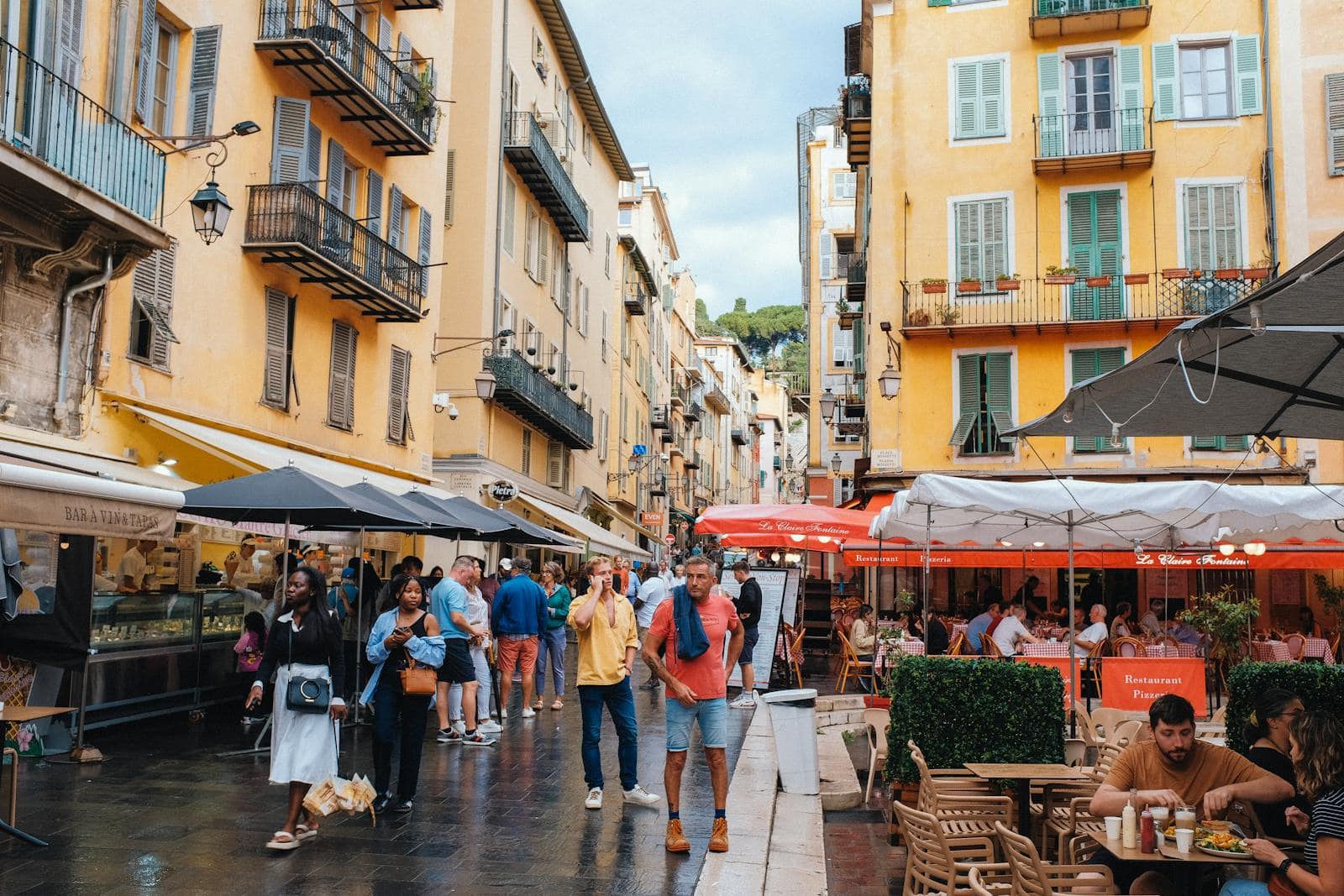
2. Get Lost in the Lanes of Vieux Nice
The heart and historic soul of the city is Vieux Nice, the old town full of narrow, shaded lanes where the house façades play through every imaginable shade of ochre, yellow and terracotta. Deliberately ditch the map here and just let yourself drift with the crowd, because sooner or later you’ll stumble upon a picturesque little square with a baroque church or a cosy café. The architecture here feels far more like neighbouring Italy than typical France, a legacy of the region’s rich Savoyard history.
The main draw of the old town is the long Cours Saleya square, which serves as the city’s main market and a buzzing social hub. Every morning except Monday there’s a gorgeous flower and vegetable market here, where the scent of fresh lavender mingles with stalls of artisan cheeses, olives and fresh produce. On Mondays the market traders are replaced by antiques dealers, where you can hunt down fascinating vintage pieces and old posters from the Riviera’s golden age.
While wandering the market you simply must taste the local culinary pride and joy: the famous socca. It’s a thin pancake of chickpea flour, olive oil and water baked in a wood-fired oven, served generously dusted with coarse pepper. It’s an absolutely perfect, naturally gluten-free and vegan street food that fills you up for just a few euros and fuels you for more exploring.
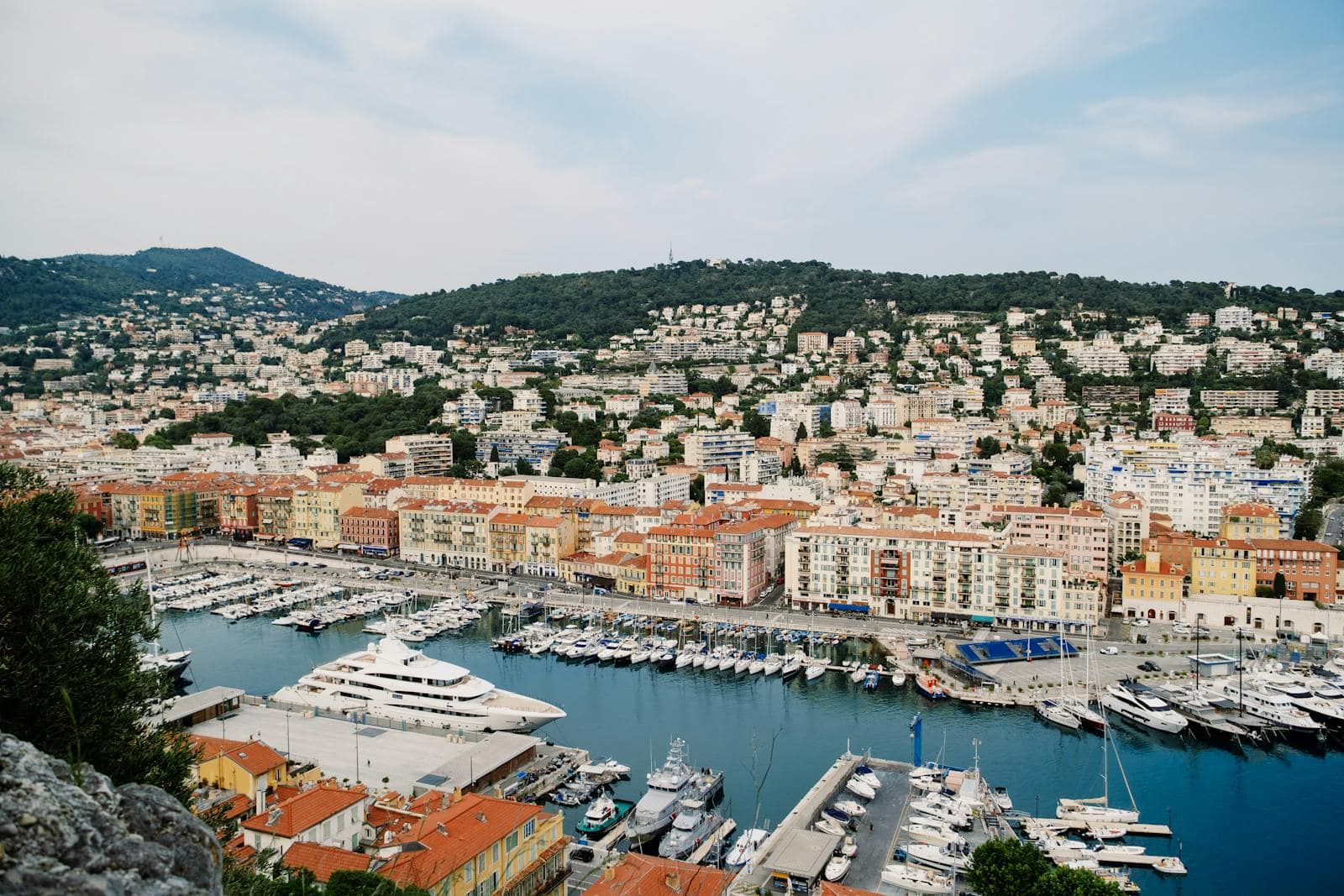
3. Climb Colline du Château for the Best View
When you’ve had just about enough of the old town’s hustle and bustle, head up to Colline du Château, the steep hill rising straight above the bay. Don’t be fooled by the name — there’s no castle here any more; it was destroyed by the army of French king Louis XIV at the start of the eighteenth century. In place of the medieval fortress, a beautiful sprawling park grew up, full of centuries-old pines, cypresses and even an artificial waterfall that creates a perfect microclimate in the summer heat.
From the top of the park you’ll get the most iconic view of all over the entire Promenade des Anglais and the Bay of Angels. The colour of the sea from this height looks almost unreal, especially when the sun is out and the surface reflects the sky in a thousand turquoise shades. There are several viewing terraces up here, each offering a slightly different perspective on the city, the old harbour packed with luxury yachts, or the surrounding green hills.
The climb up the endless steps from the sea can really take it out of you in the summer heat, but luckily there’s a far more comfortable way up. You can use the free public lift carved straight into the rock, found near the Bellanda tower at the end of the promenade. Ride up the cool lift shaft, then stroll back down on foot at your leisure to enjoy all the viewpoints and romantic corners along the way.
4. Discover Art at the Musée Matisse and Chagall
Nice ranks as a first-class art destination because the Riviera’s distinctive soft light drew the greatest painters of the twentieth century here for decades. The Marc Chagall National Museum is an absolute must, holding his breathtaking cycle of monumental biblical messages in a building designed specifically for these particular paintings. The space and the canvases resonate perfectly together, creating an almost spiritual experience that delights even people who aren’t usually keen on galleries.
Just a little further away, in the quiet, hilly Cimiez neighbourhood, you’ll find another gem in the form of the Musée Matisse. The museum is set in a beautiful seventeenth-century Genoese villa standing in the middle of a vast olive grove where locals love to picnic in the afternoon. Henri Matisse spent a substantial part of his life in Nice, and the museum carefully charts his artistic development from his early oils to the famous paper cut-outs of his later years.
Getting to Cimiez from the centre of Nice is very easy by city bus, and the journey takes about twenty minutes. Besides the museums mentioned, you can also explore the ruins of ancient Roman baths and the adjacent Franciscan monastery with its stunning rose garden. It’s a very quiet part of the city where you can take a wonderful break from the hectic bustle of the seafront promenade.
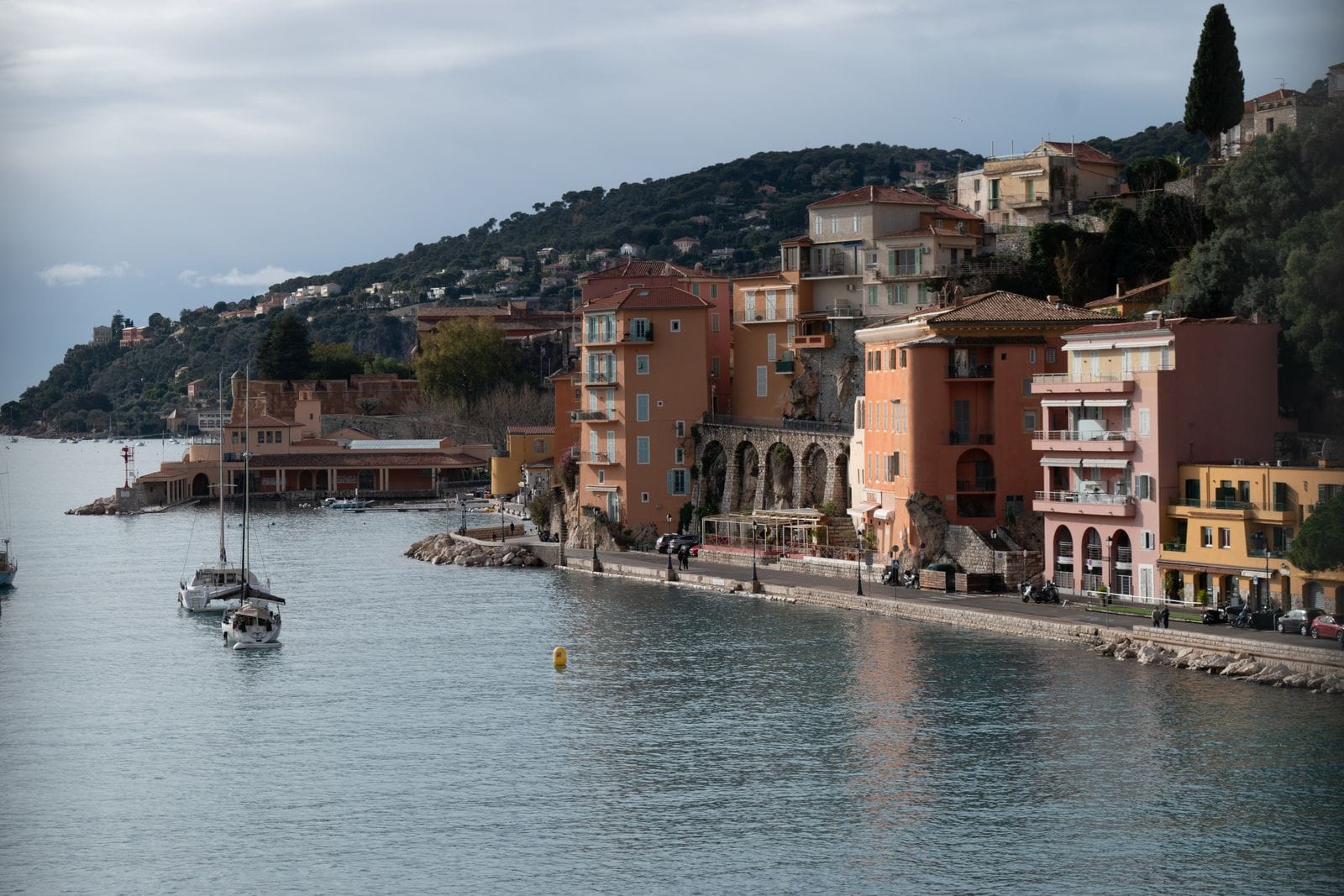
5. Villefranche-sur-Mer and Its Deep Bay
Just hop on the local train heading east and, after an incredible seven-minute ride from Nice, you’ll step out into a completely different world. Villefranche-sur-Mer boasts one of the deepest and most beautiful bays on the entire Mediterranean coast. The steep slopes shelter this picturesque little town from strong winds, which historically made it a perfect natural harbour — and to this day you’ll often see some of the world’s most luxurious cruise ships anchored here.
The buildings cascade down the hillside right to the water’s edge, and the house façades glow in rich pastel colours that contrast sharply with the blue water. It’s a considerably smaller, more intimate and calmer alternative to busy Nice, ideal for a lazy afternoon over a coffee on the waterfront. A curiosity of the old town is the dark, vaulted Rue Obscure, which dates back to the thirteenth century and once served the locals as a secret hiding place from pirate raids.
The local sand-and-pebble Plage des Marinières beach lies incredibly conveniently right next to the train stop and offers a wonderfully gentle entry into the water. The water in the deep bay is often a touch warmer and calmer than on the open sea in Nice, which makes Villefranche a perfect spot for a full day of swimming and reading a book with a view of the surrounding wooded hills.
6. The Eagle’s Nest of Èze and the Nietzsche Path
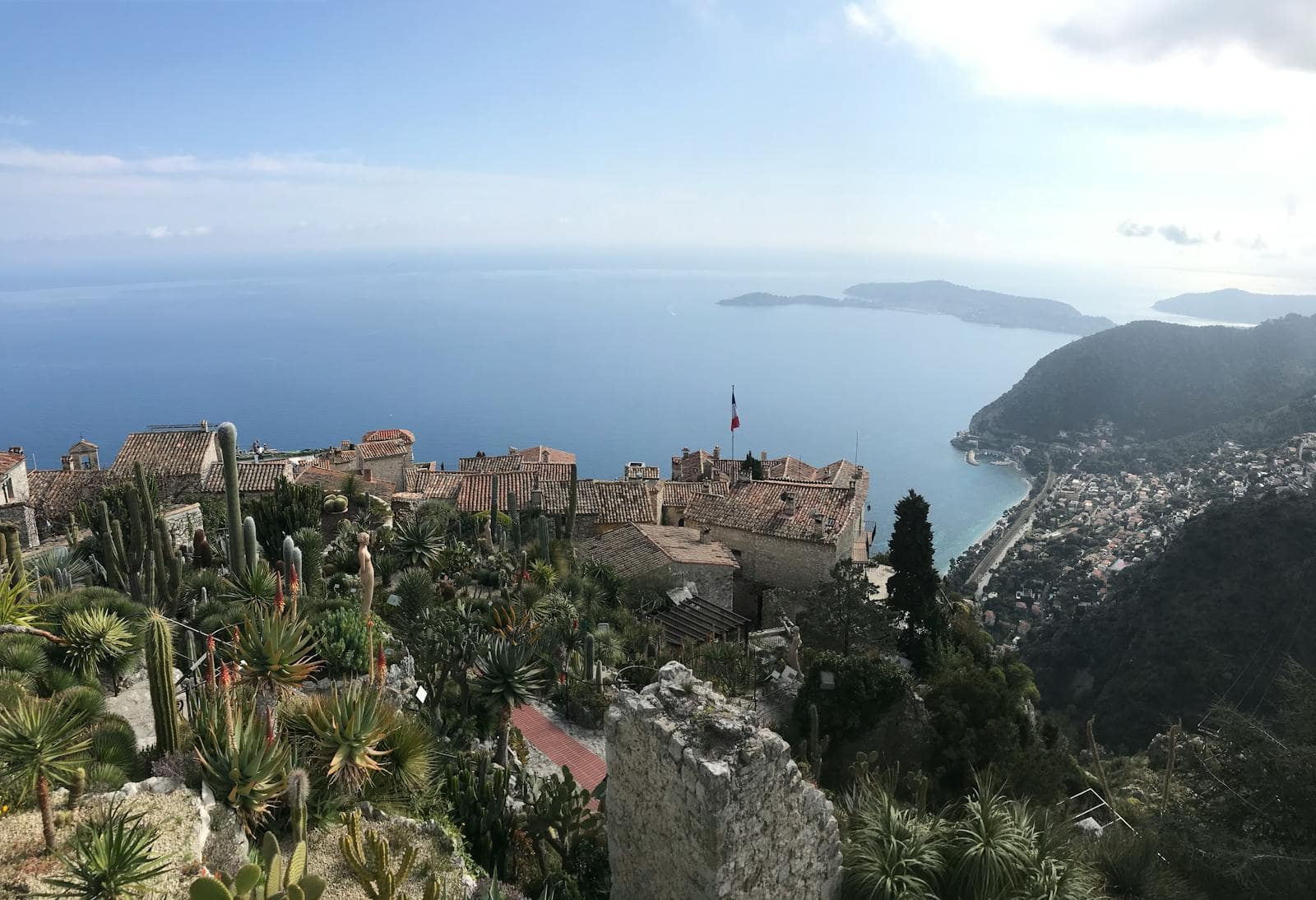
If you’re after dramatic heights and far-reaching views, you absolutely have to head up to the village of Èze. This medieval eagle’s nest balances on a sheer cliff more than 400 metres above sea level and offers panoramas that will quite literally take your breath away. Èze itself is an incredible tangle of narrow stone lanes, vaulted passageways and tiny squares that unerringly lead you ever higher towards the summit.
At the very top of the village, right among the ruins of an old medieval fortress, you’ll find the famous Jardin Exotique. This stunning botanical garden is full of enormous cacti, agaves and rare succulents carefully brought here from all over the world. The combination of spiky exotic plants in the foreground and the endless blue sea far below makes for one of the most powerful visual experiences on the entire Riviera.
💡 Tip: The train only takes you down to Èze-sur-Mer station by the water. Up to the village leads the so-called Nietzsche Path, a steep, rocky trail where the famous philosopher is said to have found inspiration for his work Thus Spoke Zarathustra. The climb up in summer heat is exhausting, though, so it’s better to ride up comfortably by bus from Nice and walk this legendary path only downhill towards the sea.

7. Monaco and Monte Carlo as a Day Trip from Nice
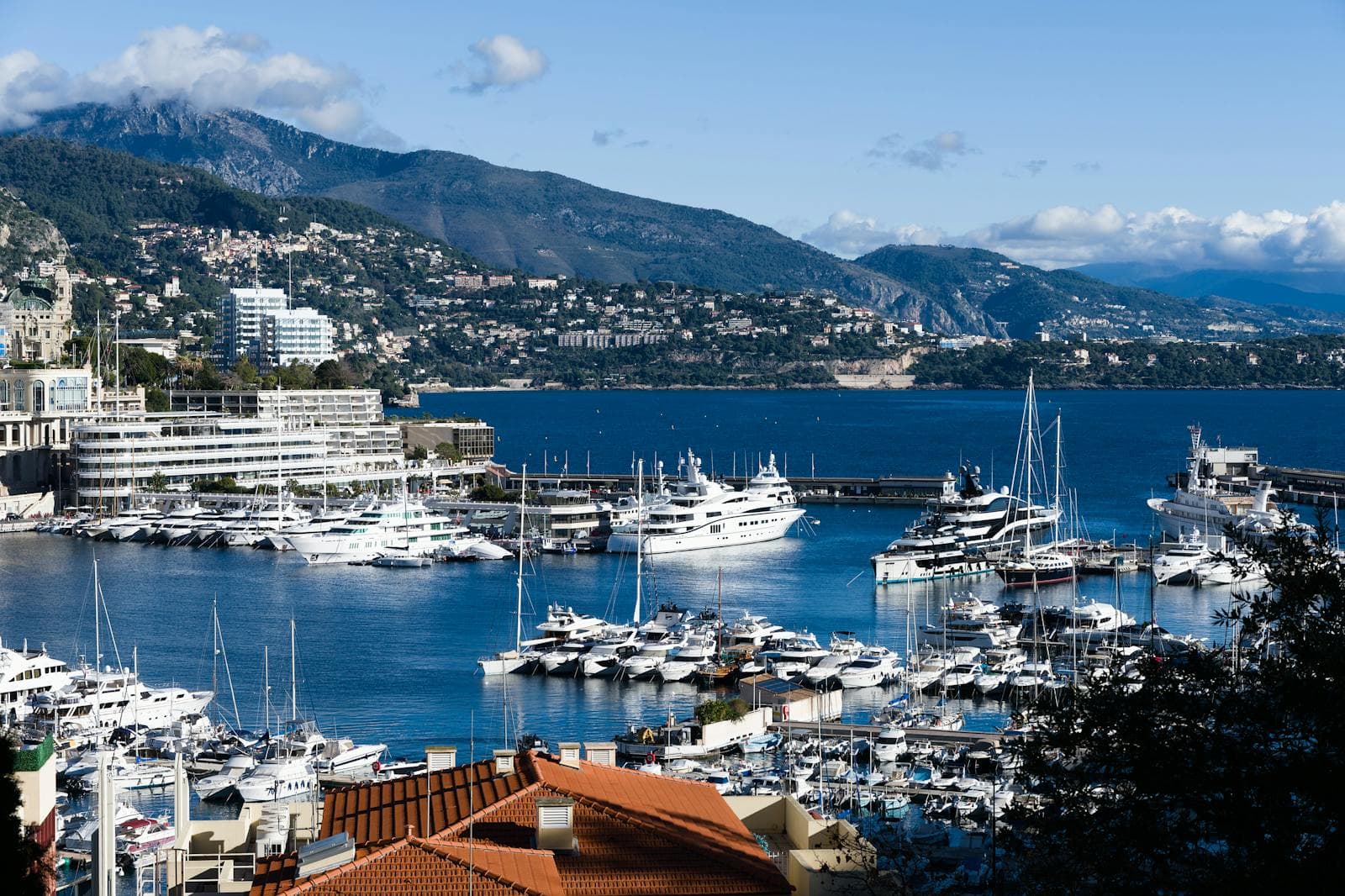
Visiting the world’s second-smallest state is so easy from Nice that it would be a downright sin to skip it. The train ride along the cliffs takes just twenty minutes and a one-way ticket will set you back around four to six euros. The moment you step out of the vast underground station grandly carved into the rock, you find yourself in a world where an unbelievable amount of wealth, luxury and perfectly groomed, spotless streets are all concentrated together.
Start your tour on the rock of Le Rocher, home to the old town, the Grimaldi family’s Prince’s Palace and the famous oceanographic museum once headed by Jacques Cousteau himself. From the viewpoints by the palace you’ll have the whole harbour packed with the world’s most luxurious yachts laid out right at your feet. The narrow lanes of the old town are surprisingly peaceful and full of historic charm that contrasts sharply with the modern high-rises down in the bay.
Then head down to the harbour and walk along the famous Formula 1 circuit all the way to the renowned Casino de Monte-Carlo. Even if you’re not planning to gamble away millions at the roulette table, the casino building is an architectural gem, with the planet’s most expensive supercars constantly parked out front. To round off the day, relax in the beautiful Jardin Japonais, which offers a perfect oasis of calm in the middle of the busy concrete principality.
8. Menton, the City of Lemons on the Italian Border
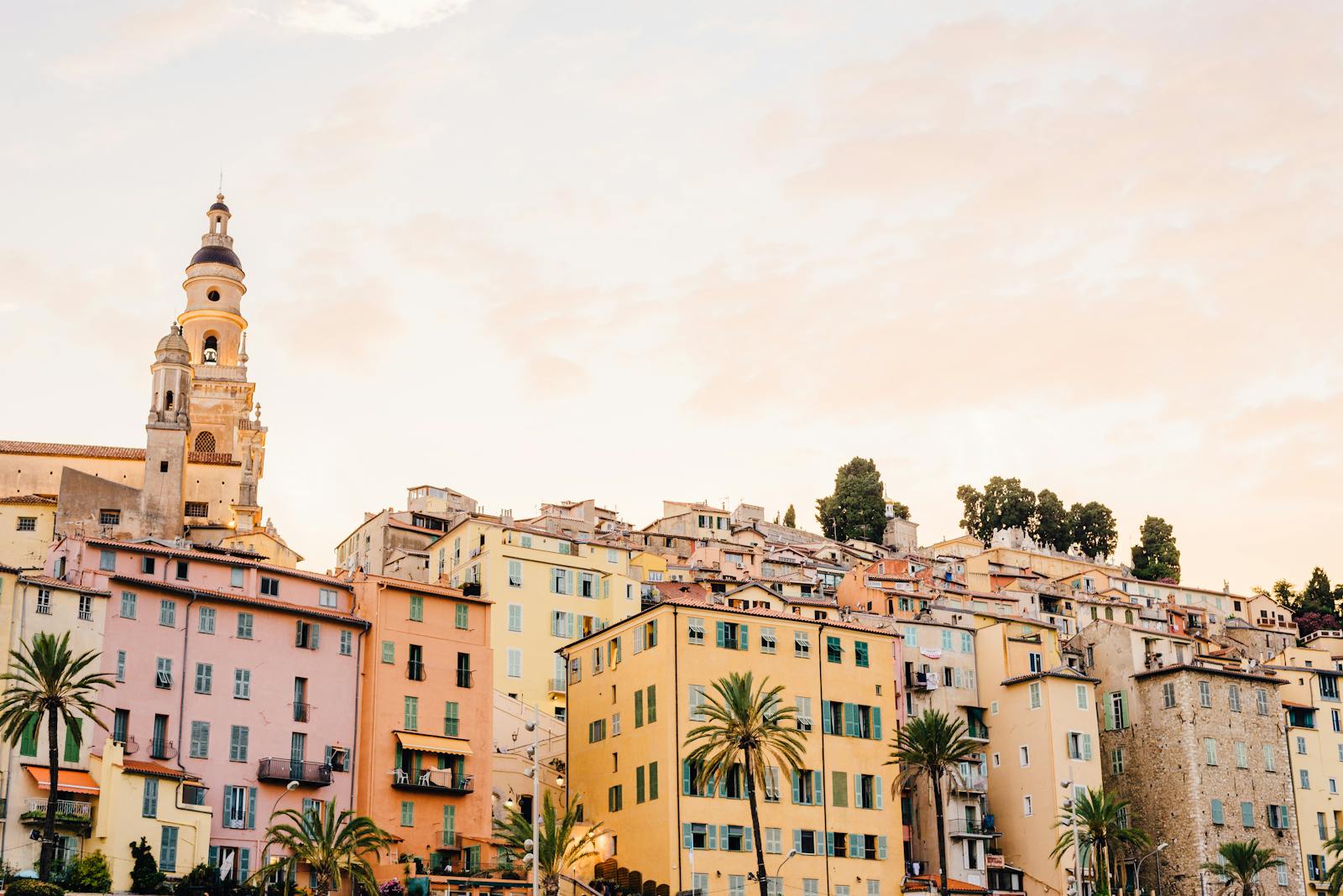
On the very eastern edge of the French Riviera, just before the border crossing into Italy, lies the enchanting town of Menton. It boasts a completely unique microclimate and is the warmest spot on the entire coast. The surrounding mighty mountains shield it perfectly from the cold northern winds, which allows citrus fruit to be grown on a scale that simply has no equal anywhere else in France — and gives the town its distinctive fragrance.
Menton is visually stunning, because its architecture breathes pure Italy and the pastel façades of the old town rise dramatically above the harbour. The atmosphere flows noticeably slower and calmer here than in the rest of the region, which you’ll especially appreciate after hectic days spent in Nice or Monaco. Get lost in the maze of narrow lanes and climb all the way up to the baroque Basilica of Saint-Michel, from where there’s a gorgeous view over the whole bay and the local sandy beaches.
You absolutely can’t skip the gastronomic delights tied to the local produce here. Menton lemons are celebrated across the whole country, and the local lemon tartlets with fluffy meringue are an utterly unbeatable vegetarian treat. If you arrive in February, you’ll experience the famous Fête du Citron, when the entire town transforms into a giant, bizarre parade of sculptures and gigantic floats built entirely from tens of thousands of citrus fruits.
9. Antibes and the Picasso Museum
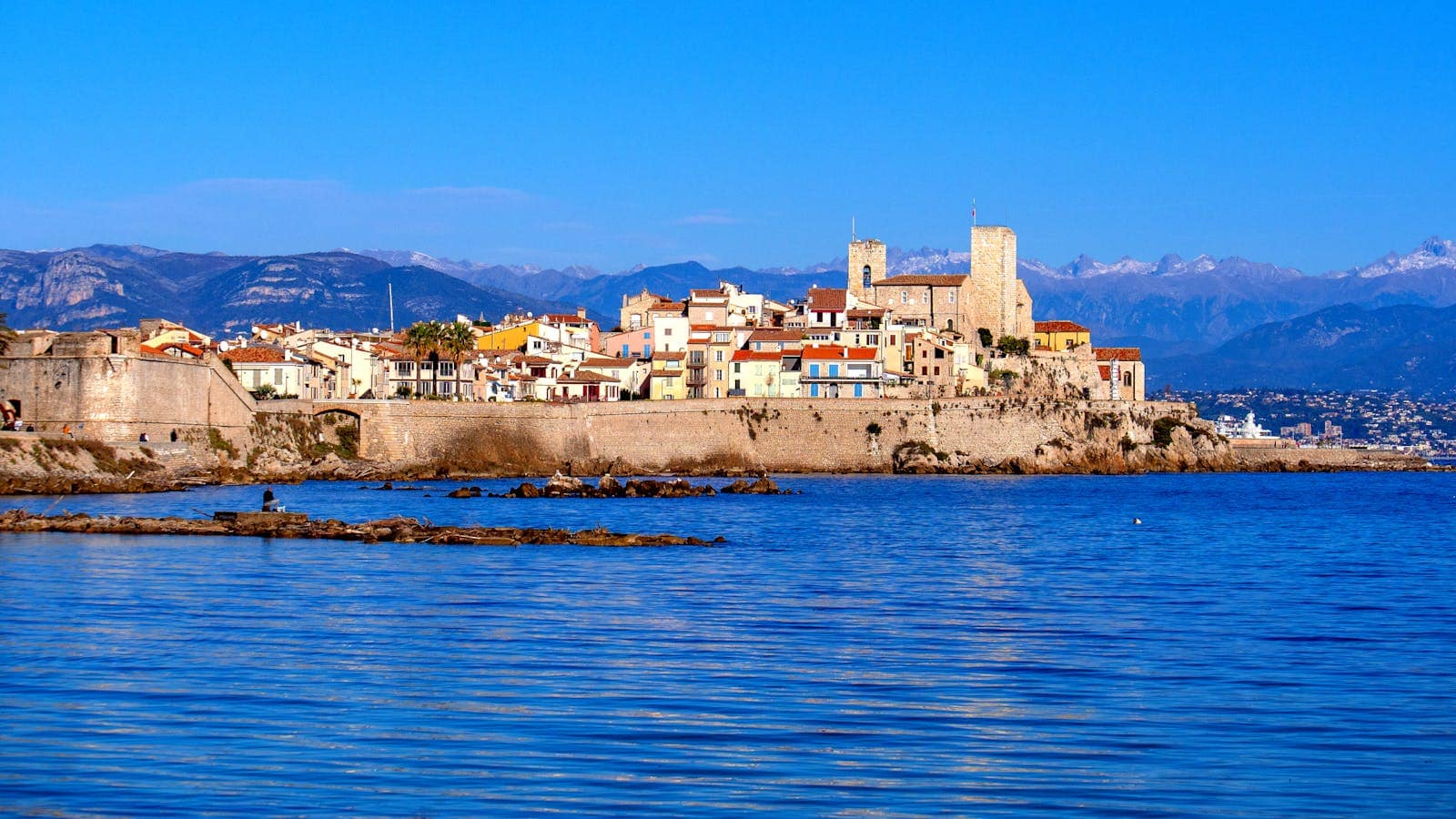
Back to the west of Nice you’ll find the town of Antibes, which, despite all the modern development, has held onto a very strong historic character and an authentic atmosphere. The old town is encircled by massive stone ramparts from the sixteenth century, much of which you can walk along while enjoying views of the churning sea. Inside the old quarter you’ll find a charming tangle of lanes and the wonderful covered Marché Provençal, full of local cheeses, spices and beautifully colourful vegetables.
The town’s biggest cultural draw is undoubtedly Château Grimaldi, a mighty historic castle towering right above the waves. It was here in 1946 that the famous Pablo Picasso set up a studio for a few months, and today the building houses his much-loved museum. Don’t expect his most famous dark canvases from the Paris years — instead you’ll see immensely joyful, light-soaked works, playful ceramics and drawings he created right here under the influence of the Mediterranean.
Admission to the museum is around eight euros and the whole visit won’t take more than two hours. The castle itself is stunning, and from the terrace dotted with modern sculptures there are fantastic views over the entire long coastline. It’s simply a perfect blend of ancient military architecture, playful modern art and the endless blue sea.
10. The Astonishing Superyachts of Port Vauban
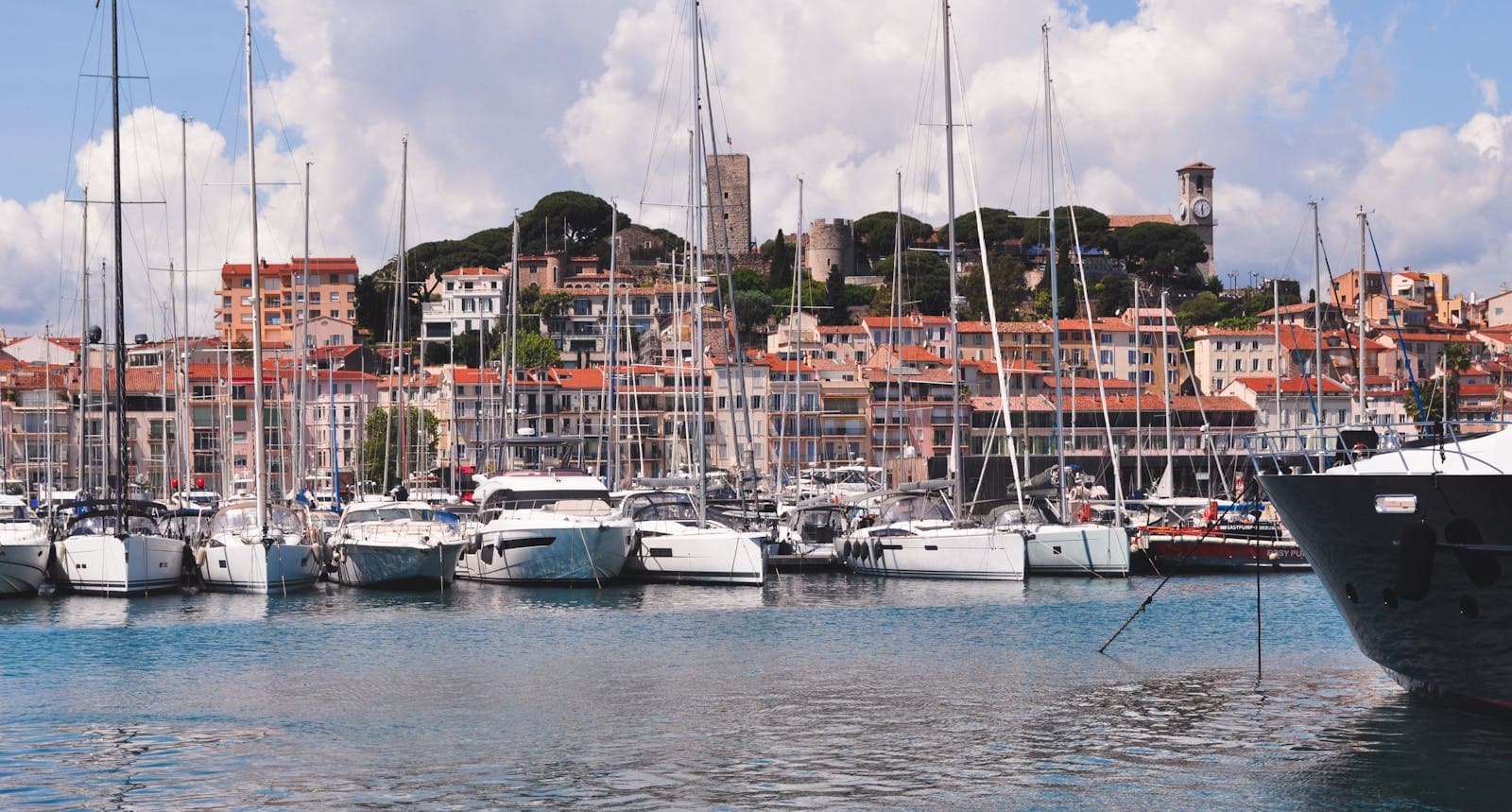
Right next to the historic ramparts of old Antibes lies Port Vauban, which holds one rather incredible record. It’s the largest private yacht marina in all of Europe, and a walk along its piers is a fascinating glimpse into a world of unlimited financial means. Moored here are the floating palaces of billionaires, Arab sheikhs and tech magnates, which you can examine surprisingly close up from the public quayside.
The most exclusive part of the marina is the so-called Billionaires’ Quay (Quai des Milliardaires), where the absolute largest and most luxurious vessels on the planet are moored. Some of these ships have their own helicopter pads, giant pools and even mini-submarines, and their value routinely runs into hundreds of millions of euros. It’s a slightly bizarre but utterly fascinating spectacle that contrasts sharply with the ancient lanes of Antibes and is simply an inseparable part of today’s Riviera.
At the very end of the harbour pier, don’t miss the enormous white Nomade sculpture by the acclaimed artist Jaume Plensa. This monumental figure made of white steel letters gazes pensively out to the open sea and has become a new, highly photogenic focal point for the whole port. You can even step right inside the sculpture and look out over the luxury marina through a jumble of cold metal characters.
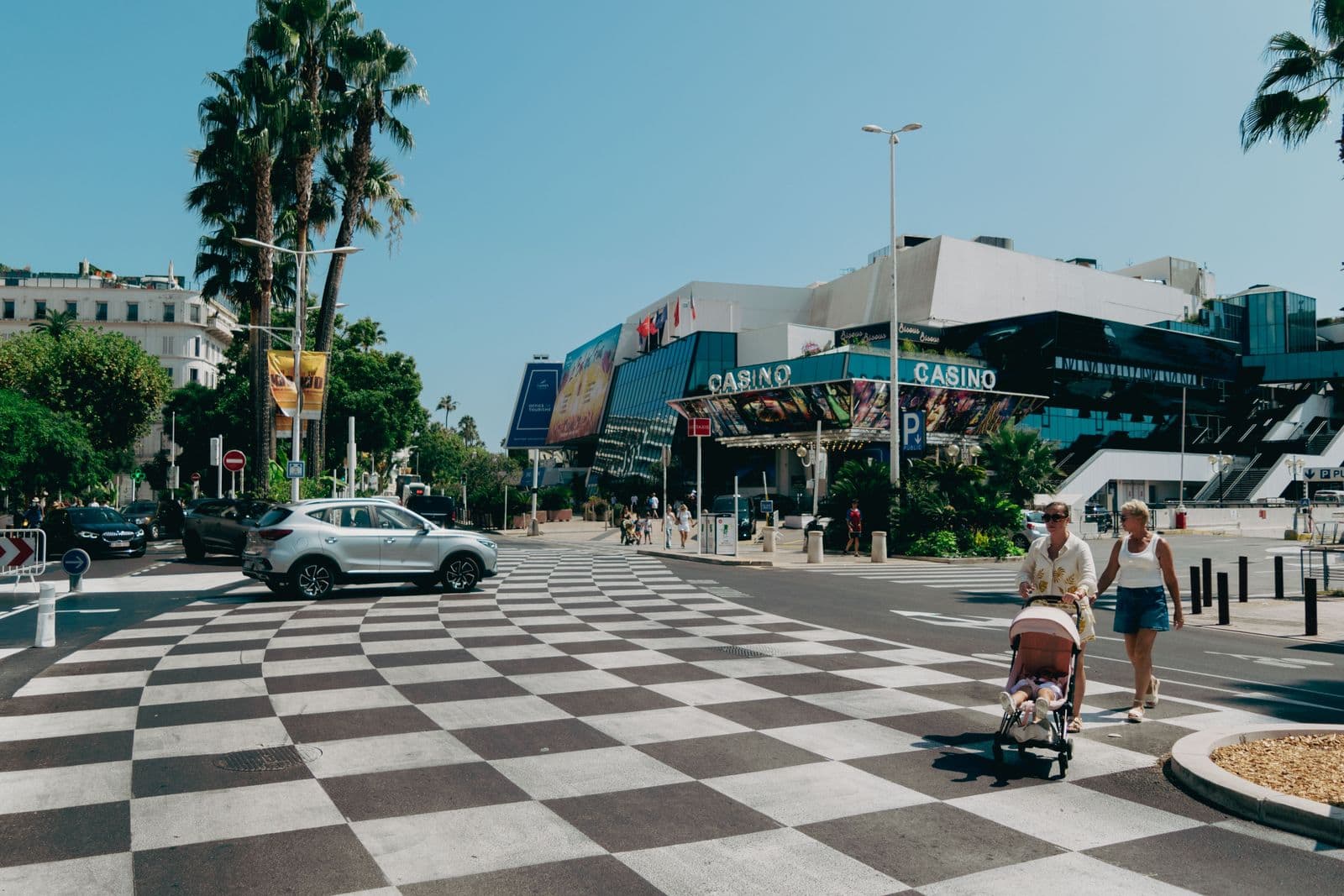
11. Cannes and the Cinematic Glitz of the Croisette
The town of Cannes, another forty minutes or so by train from Nice for roughly seven to ten euros, plays in a completely different league within the Riviera. This town is the absolute byword for ostentatious luxury and the famous international film festival. If you’re not here in May during the festival frenzy, the town can feel a little polished and quiet, but a stroll along the main promenade is part of the obligatory ritual for every traveller.
The main artery is the wide Boulevard de la Croisette, an elegant promenade lined with towering palms and the most expensive boutiques of the world’s fashion houses. On one side of the street rise legendary grand hotels like the Carlton or the Martinez, while on the other stretch private sandy beaches with neatly arranged loungers. A walk along the Croisette is essentially one long fashion show, where people parade in designer clothes and bask in the attention.
At the western end of the promenade you’ll come across the Palais des Festivals, a somewhat unsightly concrete building where the famous Palme d’Or awards are handed out each year. Posing on the legendary red carpet on the palace steps is a huge cliché, but pretty much everyone does it. In the paving around the palace you can then spot the handprints of famous actors and directors from all over the world, forming a kind of European walk of fame.
12. Escape into History in the Le Suquet Quarter
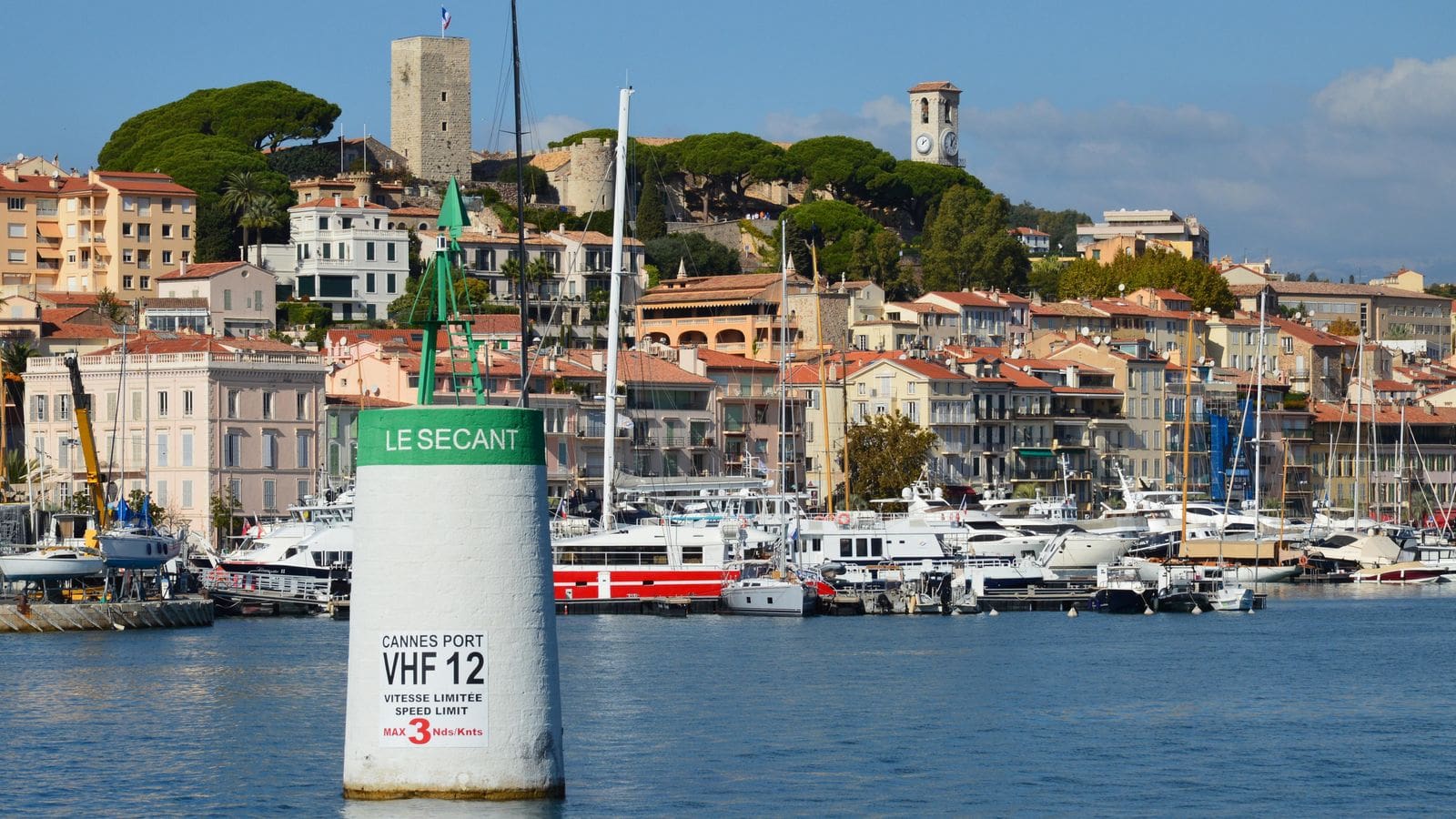
Once you tire of the ever-present luxury and glittering shop windows on the Croisette, set off to find the town’s original, far calmer soul. The Le Suquet quarter is the old, historic Cannes spread across a steep hill right above the old harbour. This is where the town once began as a humble fishing village, long before the first film producers arrived and Hollywood stars started filling the local hotels.
The way up leads through a tangle of steep cobbled lanes lined with old houses sporting pastel shutters and lavishly blooming bougainvillea. At the very top of the hill stands an old stone church and the remains of a castle, which today houses a very interesting museum of world cultures. There’s a wonderful sense of calm and pleasant shade up here, which is utterly priceless when exploring the town on hot summer days.
The main reward for the climb is a breathtaking panoramic view over the whole town and coastline. From the ramparts you’ll see not only the entire bay and the modern marina full of yachts, but also, in the distance, the green Lérins Islands, which you can reach very easily by local ferry from Cannes. It’s a perfect spot for early evening photos, when the setting sun bathes the whole coast in soft golden tones.
13. The Artistic Paradise of Saint-Paul-de-Vence
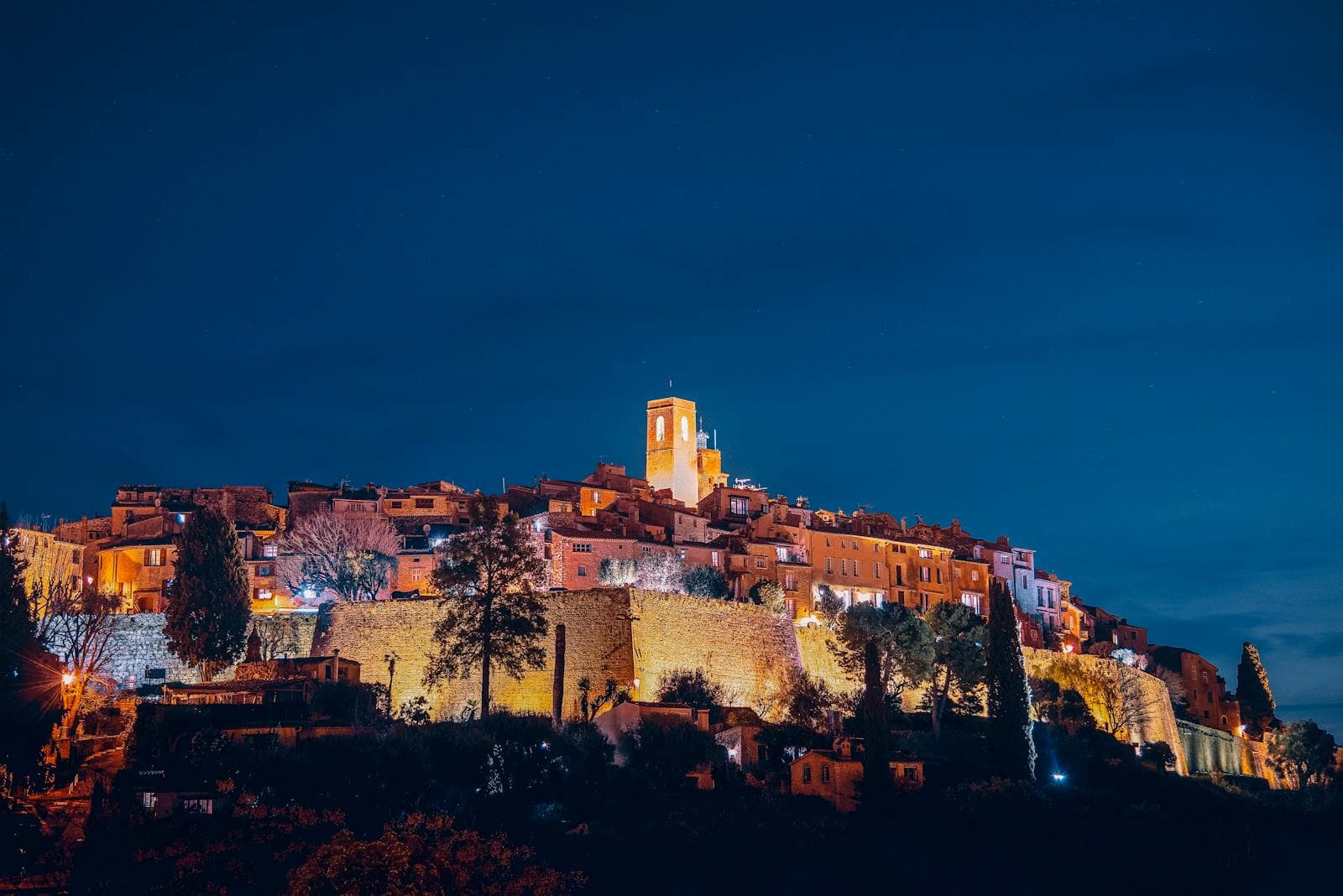
The coast acts as a powerful magnet, but the region’s true, raw beauty very often lies a few kilometres further into the hilly hinterland. Saint-Paul-de-Vence is probably the most famous fortified village in France, which became a major refuge for many European artists in the mid-twentieth century — Marc Chagall is even buried in the local cemetery. You can reach it from Nice or neighbouring Cagnes-sur-Mer by bus in about thirty minutes.
The village itself behind the massive ramparts is gorgeous, but in the summer months it sadly bursts at the seams under the weight of tourists and art galleries. The main reason for your visit should lie just outside the walls, where the famous Fondation Maeght is hidden. It’s one of the most important independent modern art institutions in Europe, designed by architect Josep Lluís Sert, and utterly unique in the way it completely merges with the surrounding nature.
The architecture of the exhibition pavilions grows organically into the pine forest, and the artworks breathe freely in the open air. In the sprawling gardens you’ll come across fantastic sculptures by Miró, mosaics by Marc Chagall and an utterly unique courtyard full of elongated figures by Alberto Giacometti. If you love modern art and architecture even a little, this place will completely captivate you and you could easily spend a whole fascinating half-day here.
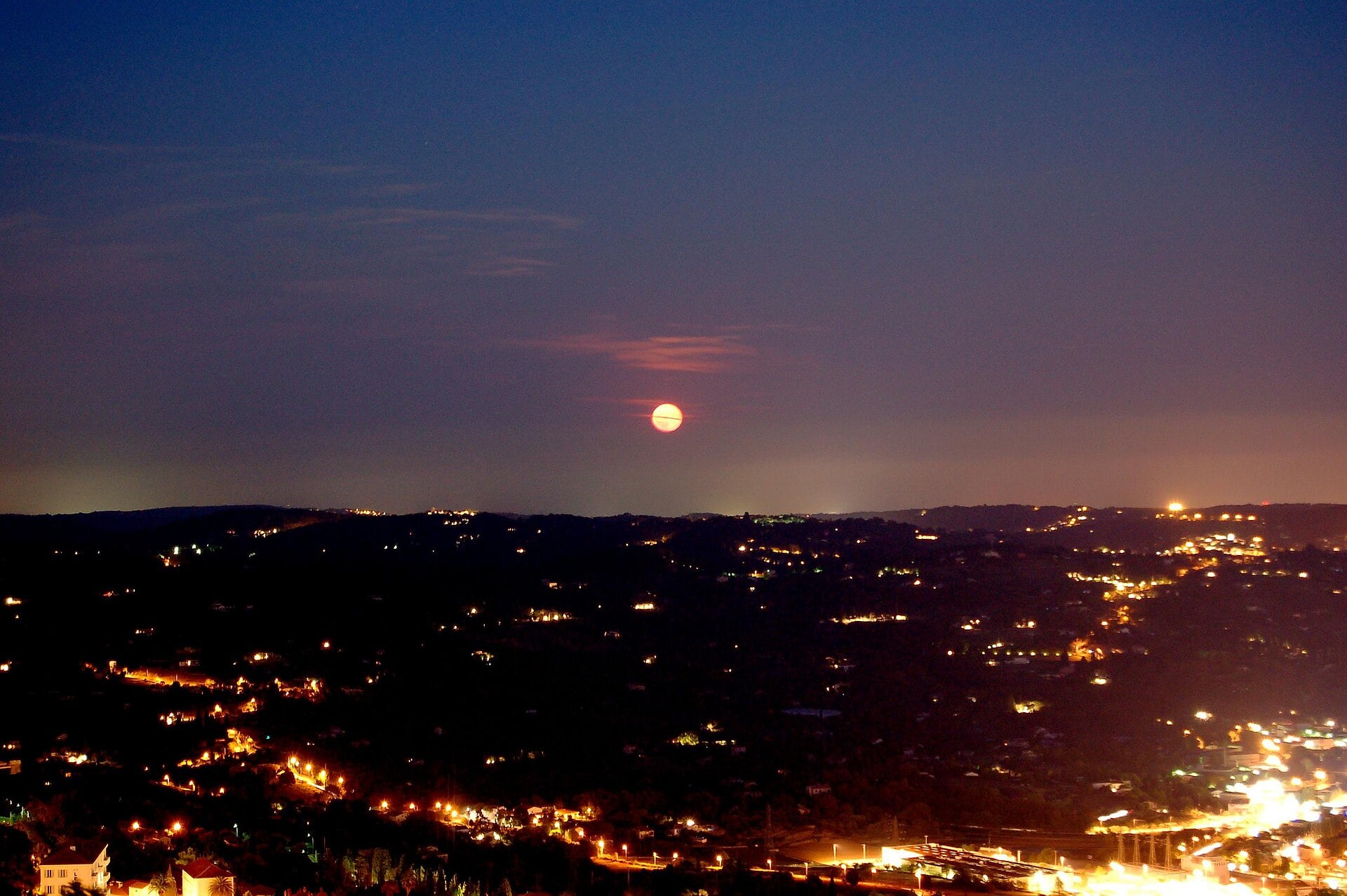
14. Grasse and the Fascinating World of French Riviera Perfume
Deeper still into the Provençal hinterland lies the town of Grasse, the undisputed perfume capital of the world. This town scattered across the hillsides is surrounded by vast fields of jasmine, roses and lavender, from which the rarest fragrant essences are extracted for the world’s best-known brands. Incidentally, this is where much of the plot of Süskind’s famous novel Perfume: The Story of a Murderer takes place.
The famous big three of historic perfume houses are based here, namely Fragonard, Molinard and Galimard. All of these family businesses offer tours of their original workshops and museums, very often completely free of charge. During the fascinating tour you’ll see old copper stills, learn the basics of the fragrance pyramid, and grasp just how incredibly complex a craft — and how perfect a nose — it takes to create a harmonious perfume.
The tours are, of course, elegantly rounded off in a huge boutique, where you can buy the local products at very friendly prices straight from the source. Besides perfumes, you’ll find fantastic natural soaps, body lotions and scented candles here, which are, incidentally, the very best and most useful souvenirs you can bring home to family or friends from the French Riviera.
Map of points of interest for your phone
Where to Go Next from the French Riviera
If you have more time in the south of France and want to venture beyond the classic Riviera, the region offers great options for further exploration. You might be tempted to head to legendary Saint-Tropez, but bear one crucial thing in mind: there’s no railway here, and the access road turns into a paralysing traffic jam in summer. If you do go, save it for the quieter spring or autumn months.
A far more interesting and accessible choice might be the wild and charismatic Marseille, which the high-speed train from Nice reaches in just over two hours. It greets you with a buzzing harbour and the gorgeous Calanques National Park. From Marseille you can then carry on smoothly into the vast hinterland, where the real, lavender-scented Provence awaits, full of ancient Roman monuments and deep canyons.
Frequently Asked Questions
How to best get around the Riviera without a car?
The ideal choice is the regional TER trains, specifically the main Marseille–Ventimiglia line. These trains run right along the coast, stop in the centres of all the important towns from Cannes through Nice to Menton, and typically run three to four times per hour. This way you’ll avoid the insane summer traffic jams and save yourself a lot of stress.
How much do train tickets cost in the region?
In 2026, single ticket prices from Nice range between €4 and €10, depending on distance. For example, you’ll get to Monaco for €5, to Cannes for roughly €8. If you’re planning to travel a lot, it’s definitely worth getting a multi-day Pass SudAzur tourist ticket for unlimited travel.
When is the best time to visit the Riviera?
The ideal periods are the shoulder seasons, specifically May, June, or September. Temperatures hover around a pleasant 25 degrees, the tourist crowds are much more bearable, and the sea is already (or still) warm enough for swimming. It’s best to avoid July and August due to the extreme heat reaching 43 degrees.
How to get from the airport in Nice to the city center?
From Nice Côte d’Azur International Airport (NCE), getting to the city centre is absolutely hassle-free. A modern surface tram (line L2) runs directly from the terminals, taking you to the main Jean-Médecin avenue or to the old port in about thirty minutes, and for much less than a regular taxi.
How much does food cost in restaurants on the Riviera?
Prices are a bit higher than in the rest of France. If you want to save money, look for the so-called Menu du jour (daily menu) at lunchtime, which usually includes two courses and costs 15 to 25 euros. A typical dinner at a bistro without wine will run you roughly between 20 and 35 euros, and you can get an espresso at the bar for around two euros.
Do you tip in restaurants in France?
Service (service compris) of 15% in France is already automatically included in the price of the meal and is a fixed part of the bill. Tipping is therefore not mandatory, but it’s common practice to leave 1 to 2 euros in cash on the table. Remember that adding a tip directly through the payment terminal is often not possible, so it’s useful to have some change.
Are the beaches on the Riviera sandy or pebbly?
It depends on the specific town. Right in Nice, the beaches are exclusively pebbly, so water shoes are an absolute must. If you prefer fine sand, you need to head west to Cannes and Antibes, or alternatively east to the beautiful Menton, where the beaches are sandy or made of very fine pleasant pebbles.
Tips and Tricks for Your Vacation
Don’t Overpay for Flights
Search for flights on Kayak. It’s our favorite search engine because it scans the websites of all airlines and always finds the cheapest connection.
Book Your Accommodation Smartly
The best experiences we’ve had when looking for accommodation (from Alaska to Morocco) are with Booking.com, where hotels, apartments, and entire houses are usually the cheapest and most widely available.
 🚗 Car rental on the roadVerified rental cars in France
Search with the DiscoverCars comparison engine — it compares prices from dozens of local and international rental companies, and most bookings come with free cancellation.
Compare car prices in France →Don’t Forget Travel Insurance
Good travel insurance will protect you against illness, accidents, theft, or flight cancellations. We’ve had a few hospital visits abroad, so we know how important it is to have proper insurance arranged.
Where we insure ourselves: SafetyWing (simple monthly subscription) and TrueTraveller (for extra-long trips).
Find the Best Experiences
Get Your Guide is a huge online marketplace where you can book guided walks, trips, skip-the-line tickets, tours, and much more. We always find some extra fun there!