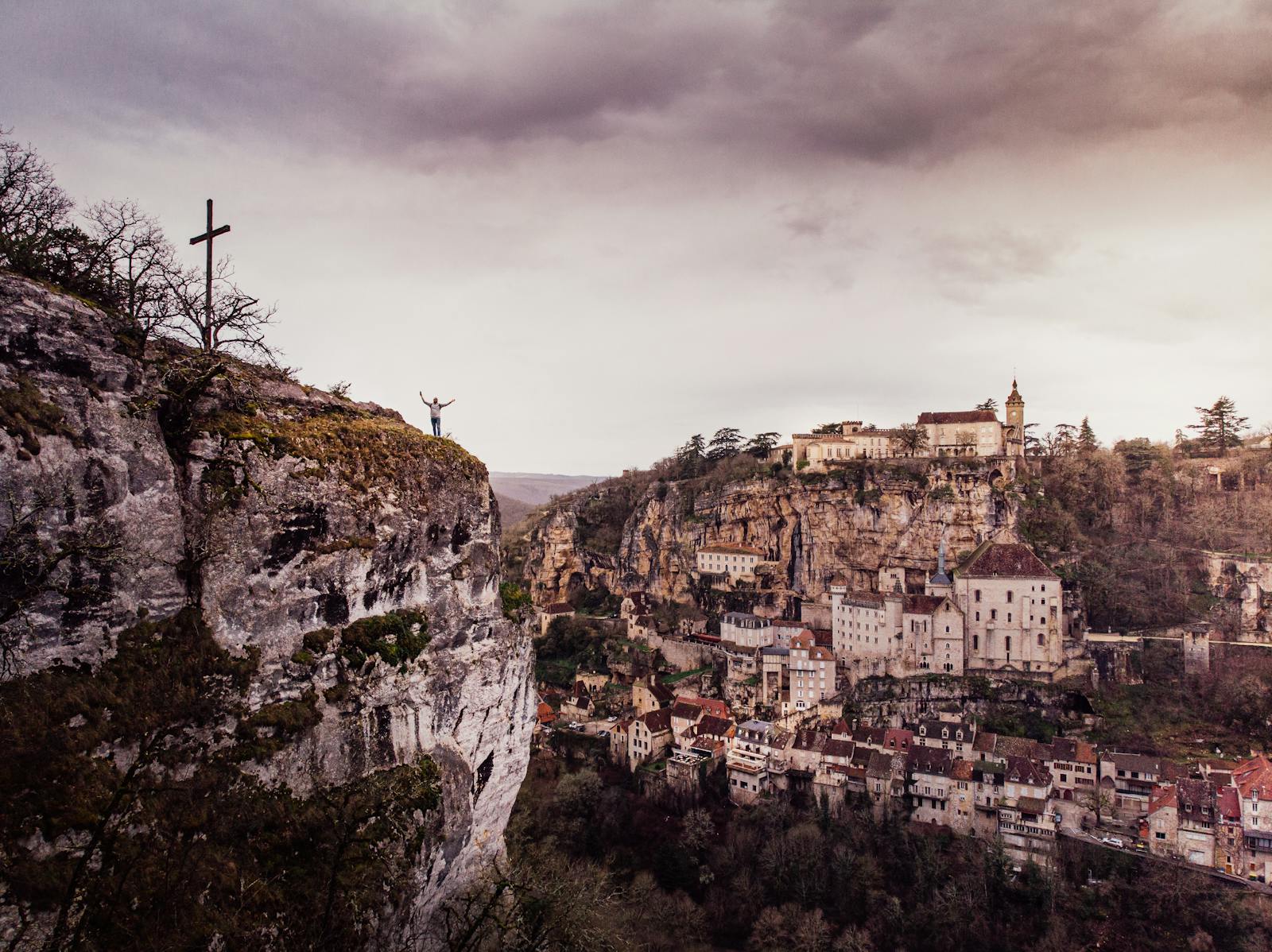
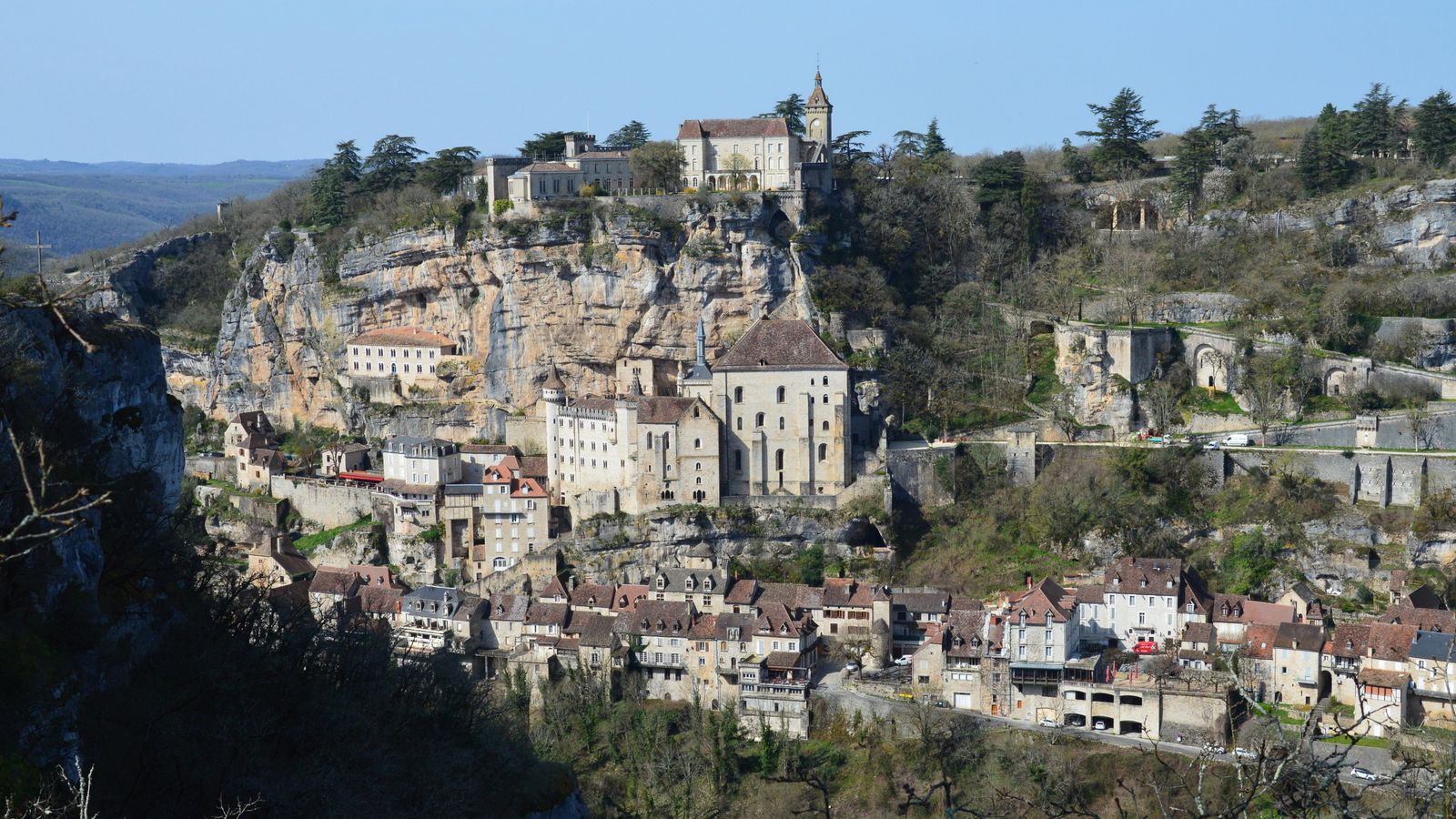
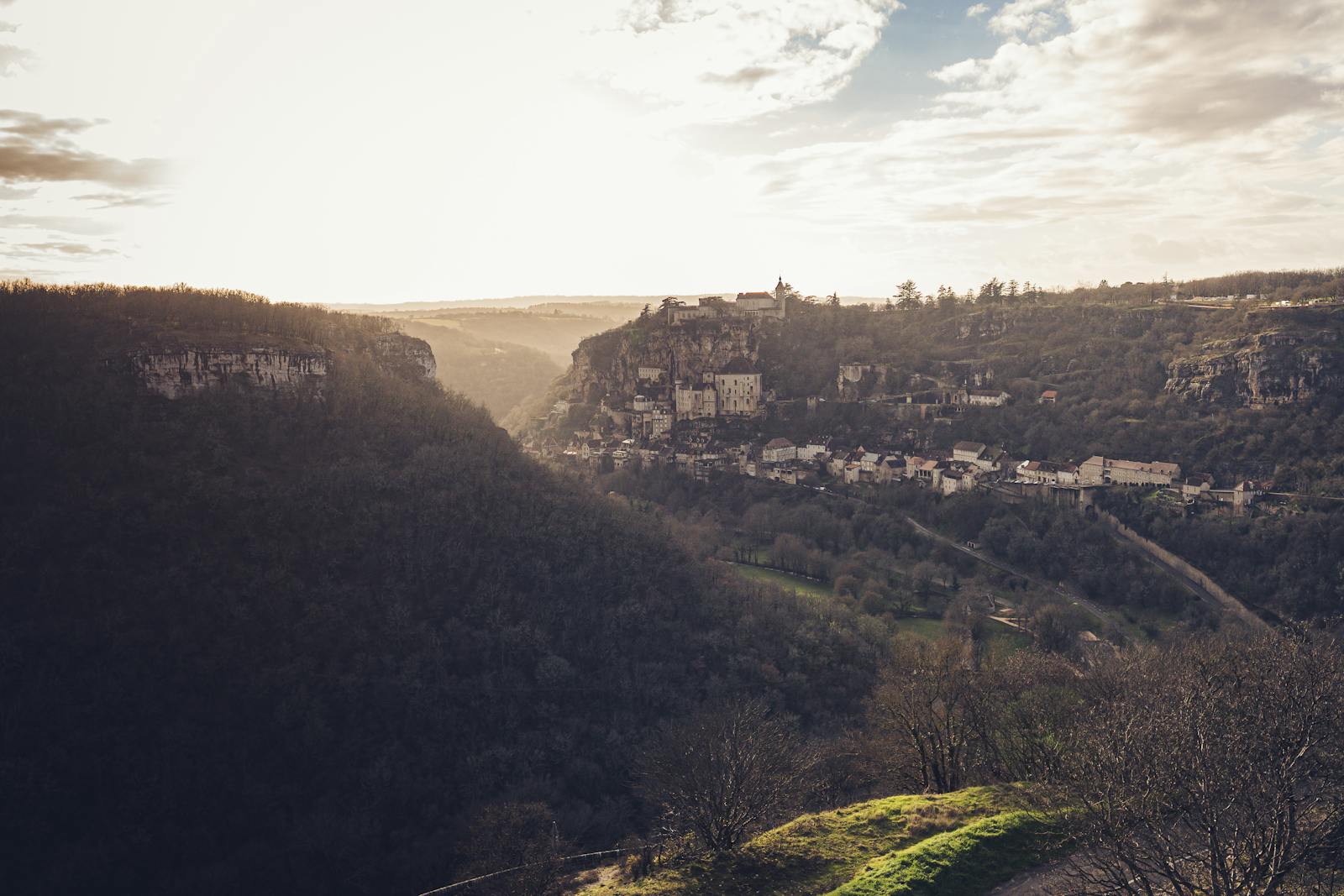
Picture a village that completely defies the laws of gravity, hanging not on a grassy hill but literally glued to a sheer limestone cliff above a deep canyon. That is exactly what Rocamadour in southwest France looks like, and it ranks among the most remarkable places in all of Europe. If you’re planning a trip to the nearby Dordogne valley, this is one place you simply have to see with your own eyes, because photographs can’t capture its true majesty. In this article you’ll find 11 tips on what to see and do in Rocamadour, and we’ll also take a look at the fascinating Gouffre de Padirac chasm nearby.
I’ll show you how to cleverly avoid the unpleasant tourist crowds, where to base yourself strategically, and how to plan the whole thing so you come away with nothing but the best memories. You’ll also find all the current prices and conditions for 2026, because the rules for entry at the region’s biggest attractions have changed quite strictly, and without preparation you might not get in at all. Take a deep breath, because a journey into the Middle Ages and deep into the heart of the earth awaits.
TL;DR
- Rocamadour is a vertical pilgrimage village made up of three tiers, and to reach the main sanctuaries you have to climb the famous Grand Staircase (or take the paid lift).
- Its greatest treasure is the Black Madonna statue, to which kings and ordinary peasants from all over Europe made pilgrimages for centuries.
- In summer the place is bursting at the seams, so come either early in the morning before nine o’clock, or stay overnight and enjoy the magical evening atmosphere without the crowds.
- The Gouffre de Padirac chasm is an absolute must — a huge hole into the centre of the earth where you’ll glide along an underground river in little boats.
- Tickets to Padirac for 2026 cost €22.50 in high season, and it’s absolutely essential to book online weeks in advance.
- The local cuisine is extremely meat-heavy (duck and goose), but vegetarians will survive thanks to the excellent Rocamadour goat’s cheese and dishes with truffles or walnuts.
The full destination guide: Occitania — guide and what to see
When to visit Rocamadour and the Lot river valley
Getting the timing right is absolutely key to your overall experience here. July and August are a real test of nerves, because after Mont-Saint-Michel and Carcassonne, Rocamadour is one of the most visited monuments in all of France. Temperatures during this period regularly climb above thirty degrees, the narrow main street becomes completely clogged with people, and finding a free spot in the huge car parks feels like a fight for survival. The French also have long summer holidays, and this is one of their favourite domestic destinations. Definitely avoid the weekend around the first of August, which the locals call chassé-croisé. On these days July and August holidaymakers swap over en masse and the roads turn into one giant, motionless car park.
If you’re flying in from the UK, the most convenient option is a flight to Bordeaux or Toulouse. From London, direct connections run with airlines like easyJet and British Airways, with Bordeaux being the handier gateway. From the airport you simply pick up a hire car and within about two and a half hours you’ll be admiring the views of the limestone cliffs. Bear in mind that French motorways are excellent but you’ll need to budget for the pricey tolls, which work out at roughly €9.50 per hundred kilometres. If you fancy a longer road trip, the drive down through France is scenic — just allow plenty of time and keep that toll budget in mind.
If you have the choice, the ideal time to visit is May, June and September. The weather is already very pleasant, you can wander the narrow medieval lanes at your own pace, and you can explore the monuments without constantly jostling other visitors. October offers a lovely atmosphere too, when the surrounding oak forests turn beautiful shades of autumn and the local restaurants kick off the mushroom and truffle season. Keep in mind, though, that from November to Easter plenty of smaller hotels, restaurants and tourist attractions across the region — including the nearby castles — close their doors. A winter visit therefore requires much more careful planning and checking of opening hours on official websites.
Where to stay in Rocamadour and the surrounding area
💡 Tip for accommodation and experiences: We like to find our accommodation on Booking.com, which tends to have the best cancellation terms. For tickets, tours and activities, it pays to compare and book through GetYourGuide.
Finding the ideal accommodation here comes with one big quirk that many travellers forget. Most tourists arrive just for a day trip from nearby Sarlat or the Dordogne valley and leave again in the evening. I’d recommend, though, that you spend at least one night right in Rocamadour or its immediate surroundings, because once the tour coaches leave the valley at dusk, the village takes on an utterly indescribable, mystical atmosphere. Staying right in the historic centre on the cliff is enormously romantic, but bear in mind you’ll be hauling your suitcases up steep steps. Far more practical is to choose accommodation on the upper plateau of L’Hospitalet, which gives you the most beautiful view over the whole village and keeps your car just a few steps away.
A great choice with a gorgeous view is Hôtel Les Esclargies, set just a short distance from the edge of the cliff in a peaceful oak grove with a lovely pool. If you’re after something right in the heart of the medieval town and don’t mind a few steps, take a look at Hôtel Beau Site, with a terrace carved straight into the rock. For lovers of more modern comfort tucked away in nature, Le Bois d’Imbert works beautifully, lying a little outside town and offering complete peace away from the tourist bustle.
If you’re planning to explore the wider area and don’t want to pack up every day, the ideal base is the nearby town of Sarlat-la-Canéda, which is itself one of the most beautiful in France. Here you can rent a traditional country house, known locally as a gîte, or stay in a charming family-run guesthouse called a chambre d’hôtes. The small, quiet villages within about fifteen kilometres of Sarlat are excellent — places like Vézac, Vitrac or Saint-Cybranet. You’ll enjoy absolute peace, hassle-free free parking, and you can reach the heart of all the action in the river valley by car in just ten minutes.
11 tips on what to see and do in Rocamadour and the surrounding area
Now let’s take a detailed look at the best of what this fascinating corner of France has to offer. You’ll discover that Rocamadour isn’t just about one pretty viewpoint, but that it holds within it centuries of pilgrimage history, architectural marvels, and some of the country’s finest natural wonders right on its doorstep.
1. Stroll along the main street, Rue de la Couronnerie
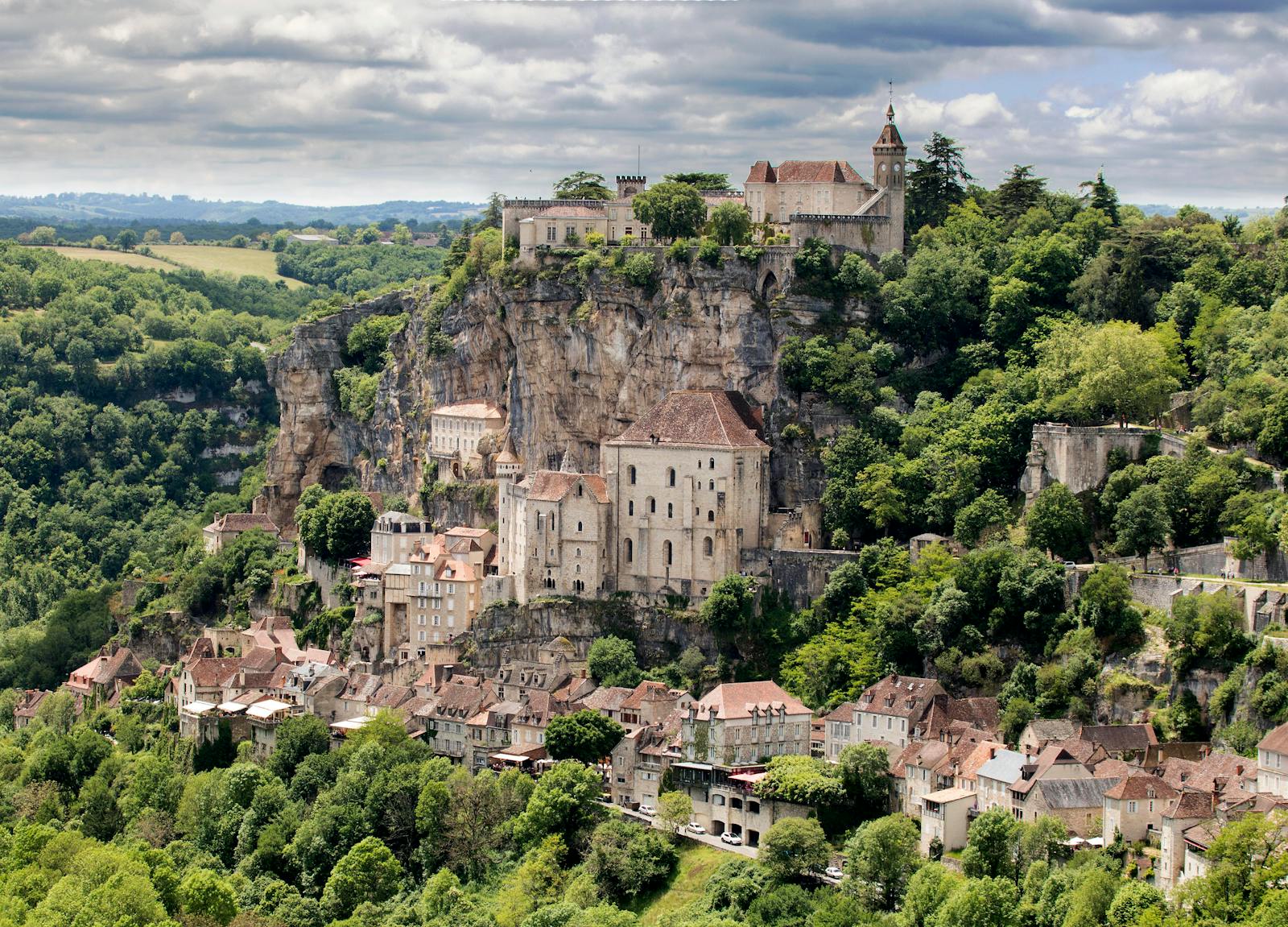
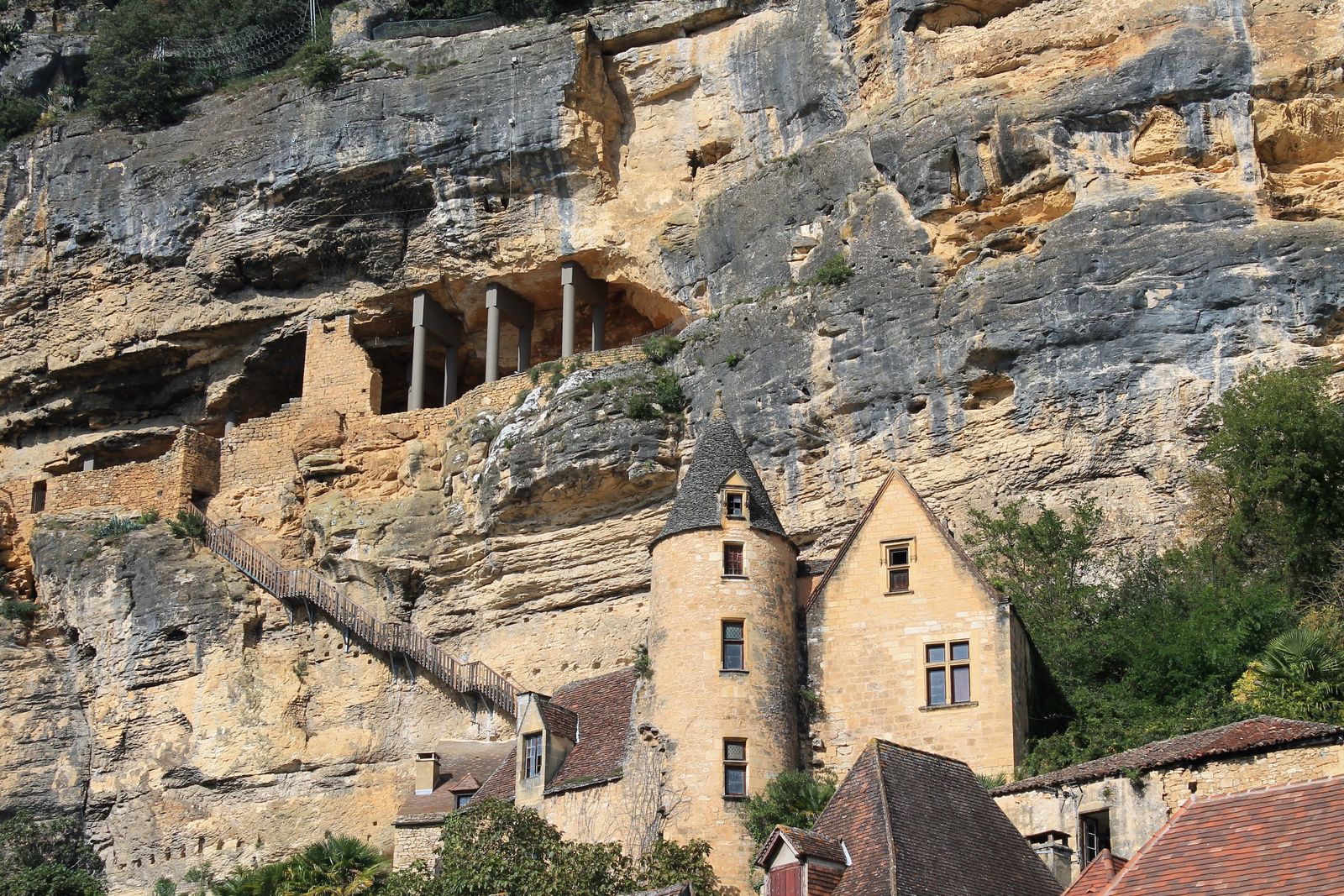
Your visit will most likely begin in the lower tier of the village, which historically belonged to the working folk and merchants. The only artery of this part is Rue de la Couronnerie, which winds along the cliff and is lined with beautiful medieval houses. The whole vertical village is built on three terraces, which once precisely mirrored the social hierarchy of the time. The lower level belonged to the craftsmen, the middle to the clergy, and the very top boasted an impregnable castle reserved exclusively for the nobility.
As you walk along this street, be sure to notice the stunning architecture, which had to bend completely to the harsh natural conditions. The houses are built from honey-coloured limestone and their roofs are covered with heavy stone tiles called lauzes, which are absolutely typical of this southwestern region. While today you’ll mostly hear a babble of world languages from hundreds of tourists, and the shop windows display modern souvenirs, it would have buzzed in exactly the same way back in the twelfth century. The only difference being that, instead of fridge magnets, the pilgrims of the day bought lead badges as tangible proof of their gruelling journey, which they would then show off back home.
💡 Tip: If you arrive here at scorching midday in summer, the street will probably be impassable and full of noisy tour groups. Try to walk it either very early in the morning before nine o’clock, or sit down at one of the many restaurants with a terrace overhanging the canyon. That way you can enjoy a coffee in peace and watch the tourist madness from a perfectly safe distance.
2. Climb the Grand Staircase (Grand Escalier)
Once you pass through the lower village, you’ll reach an absolutely iconic spot that has defined the entire history of Rocamadour for over a thousand years. Before you appear 216 steep stone steps, which connect the secular part with the sacred sanctuaries on the middle tier. For pilgrims on the Camino de Santiago, this majestic staircase represented the final test of their resolve, faith and physical stamina.
For centuries it was the custom for devout pilgrims to ascend these steps on their knees, reciting a Rosary prayer on each individual step and begging forgiveness for their sins. Although today the vast majority of visitors choose to walk on their feet, the climb is still fairly demanding, especially when the midday August sun beats down on the limestone rock. Every step, though, brings you closer to the very spiritual heart of this incredible place, and the views into the canyon keep improving the higher you go.
If you have trouble with your knees, are travelling with small children in a pushchair, or simply aren’t in the mood for athletic feats, there’s no need to worry at all. You can use the handy public lift, which is carved straight into the heart of the limestone rock. For a small fee, it whisks you from the lower street right up to the square by the sanctuaries, saving you plenty of precious energy for exploring the historic monuments in the upper tiers of the village.
3. Explore the Sanctuaries and the Notre-Dame chapel
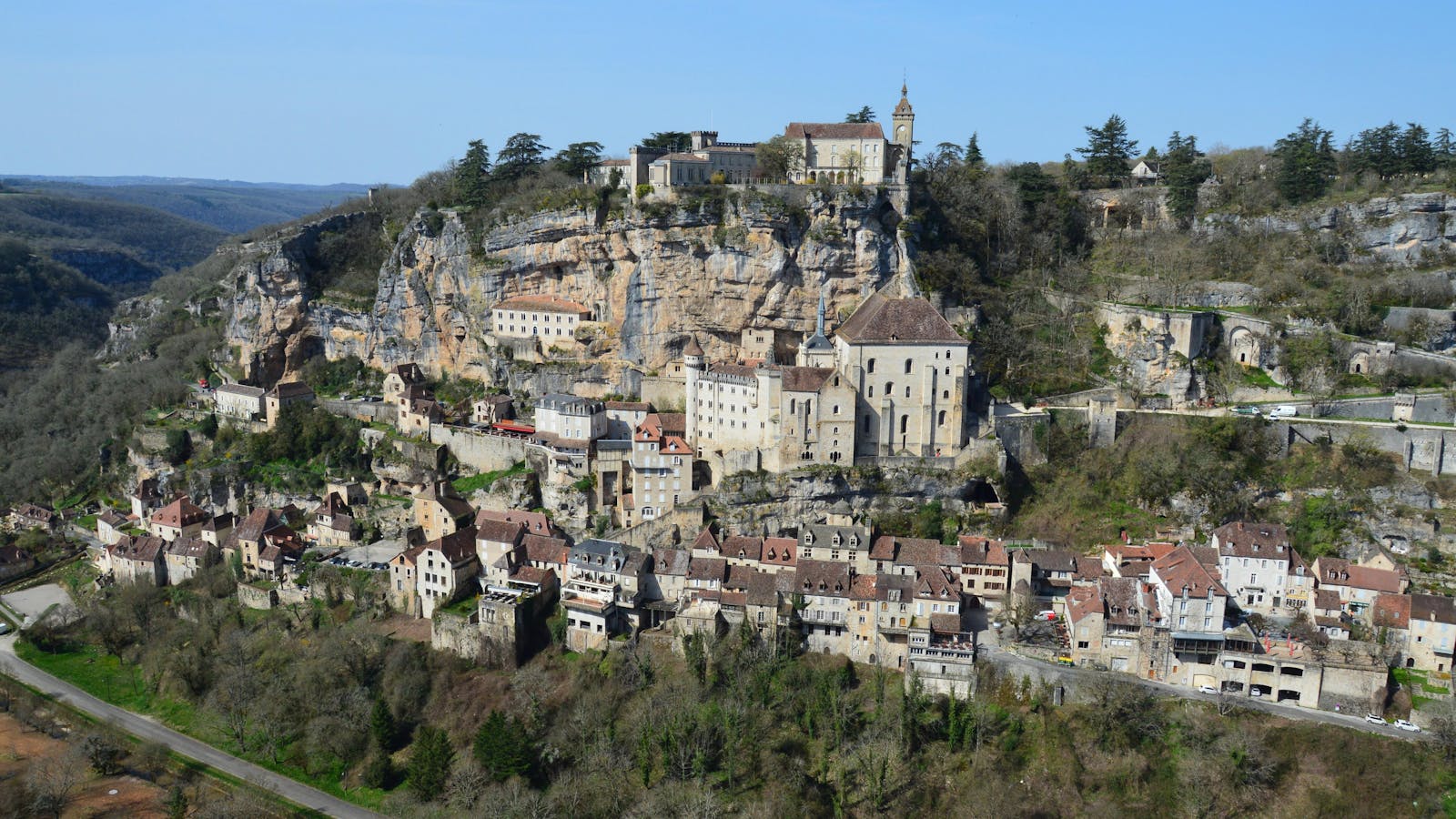
Once you’ve conquered the staircase or stepped out of the lift, you’ll find yourself on a small paved square called the Parvis des Sanctuaires, literally wedged into the overhanging rock. Here stand seven historic chapels and churches, which together form one of the most sacred sites in all of France. The moment you step inside, the atmosphere noticeably calms, and even in the peak of summer people instinctively lower their voices.
The most significant building is without doubt the Notre-Dame chapel, which partly merges with the rock itself, with the cliff forming one of its interior walls. The walls of this chapel are literally blackened by the thick smoke from candles that devout pilgrims have been lighting here for more than a thousand years. Notice too the remnants of old, faded frescoes adorning the outer walls of the chapels, and the ancient iron sword embedded high in the rock directly above your heads.
Legend firmly holds that this is the fabled sword Durandal belonging to the famous knight Roland. He supposedly hurled it here magically from a vast distance, so that his sacred weapon wouldn’t fall into the hands of the advancing enemy. Whether you believe in old medieval legends or not, the sight of that massive rusty blade jutting out of the sheer cliff has something deeply epic about it, and it makes you wonder how many generations have already gazed up at this place.
4. Stop by the mysterious Black Madonna
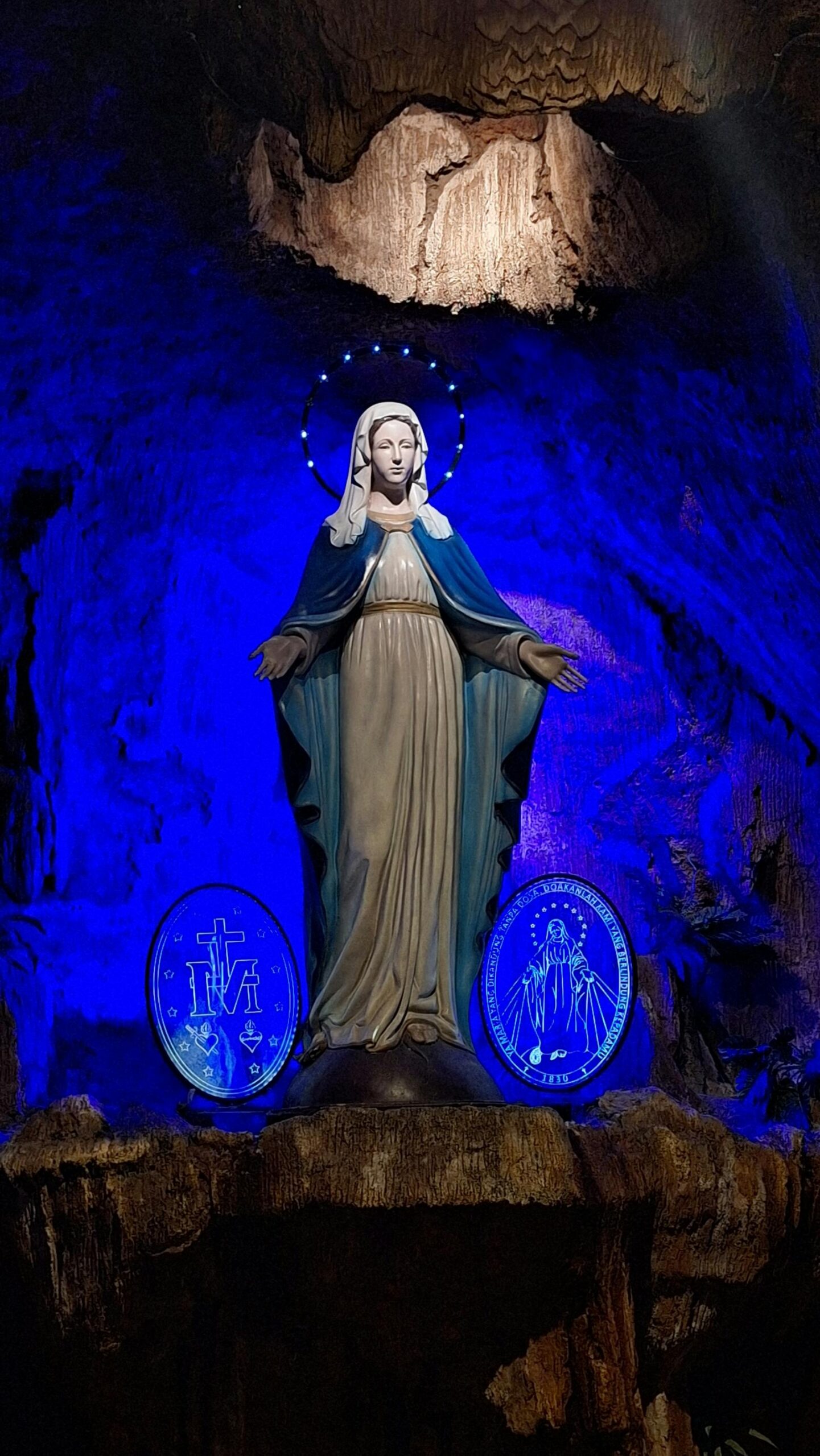
Inside the blackened Notre-Dame chapel you’ll find the single main reason why Rocamadour was so immensely famous throughout the Christian world for centuries. On a modest altar sits a small wooden carved statue of the Black Madonna, probably dating from the twelfth century. It was carved from very hard walnut wood, which over time, with age and the ever-present candle smoke, acquired its characteristic dark colour.
This fascinating statue is associated with hundreds of documented miracles, especially the rescue of desperate sailors caught in fierce storms on distant oceans. High in the vault directly above the statue hangs an ancient bell from the ninth century, about which a wonderful tale is told in the region. The bell has no rope, yet it supposedly rings entirely of its own accord whenever the Black Madonna miraculously saves someone on a stormy sea.
Even if you aren’t religious at all and take it merely as a historical curiosity, the presence of this statue in the dark chapel is enormously powerful. People from all over the world still come here to leave notes with their pleas or thanks. Try sitting for a moment in the old carved wooden pews and simply take in the immense weight of centuries-old history that radiates from this small, silent space.
5. Climb up to the castle and enjoy the view
At the very top of the limestone cliff, on the third and highest tier of Rocamadour, a medieval castle stands proudly. This tier once belonged exclusively to the local nobility and served to protect the immensely valuable sanctuaries from enemy raids, which is why the castle retains a rather austere, defensive character to this day. The castle’s interior is not open to the public, as it currently serves as private quarters for the local clergy.
What is definitely open, and worth every euro spent, is the castle rampart called the Remparts, for which you can buy a ticket at the entrance. From here you’ll be treated to an absolutely breathtaking panoramic view into the deep canyon of the Alzou river and over the historic tiled roofs of the sanctuaries far below. It’s probably the very best spot for photographing the whole stunning scene, because you have the entire village laid out at your feet.
From the sanctuaries you reach the castle via a steep, zig-zagging Stations of the Cross path shaded by tall oaks, which is a very pleasant walk especially on hot summer days. But if you really don’t fancy trudging uphill after a whole day, there’s another very handy inclined lift up here too, which elegantly links the sacred tier with the upper car park and spares you a lot of sweat.
6. Experience a magical evening walk without the crowds
This is possibly the single most important tip for planning your visit, if you want to come away with a truly unforgettable experience. As six o’clock in the evening approaches, the last giant coaches packed with tourists from around the world finally leave the deep valley. Rocamadour suddenly falls incredibly quiet, empties out and transforms back into the mystical medieval village it was hundreds of years ago, when only solitary pilgrims streamed in.
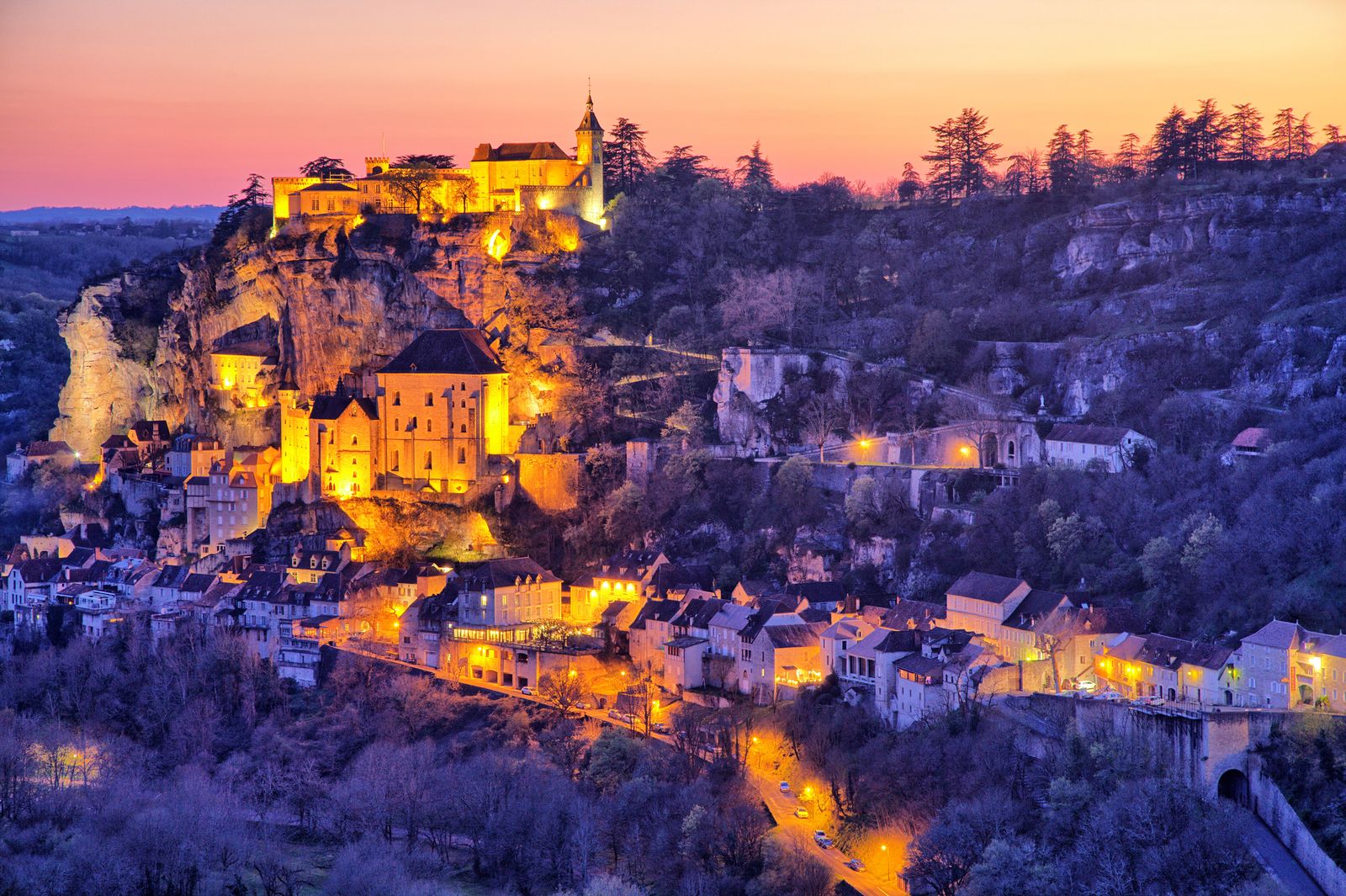
I’d recommend setting out on a slow stroll through the narrow paved lanes just before sunset. The houses carved into the limestone rock take on an incredible golden colour and the shadows begin to lengthen romantically across the canyon. Once full darkness falls, the entire sheer cliff with its sanctuaries and castle lights up beautifully, creating a scene before you that looks like the perfect backdrop from an expensive period film. You’ll hear only the wind in the valley and your own footsteps on the old paving.
💡 Tip: The best view of a floodlit Rocamadour at night comes from the opposite side of the canyon, in the area called L’Hospitalet. There you’ll find a small viewing terrace from which you can see the whole vertical village glowing into the dark like an absolute apparition. It’s precisely for this perfect photographic moment that it really pays to stay overnight in the area rather than fleeing off with the other tourists.
7. Visit the eagle park Rocher des Aigles
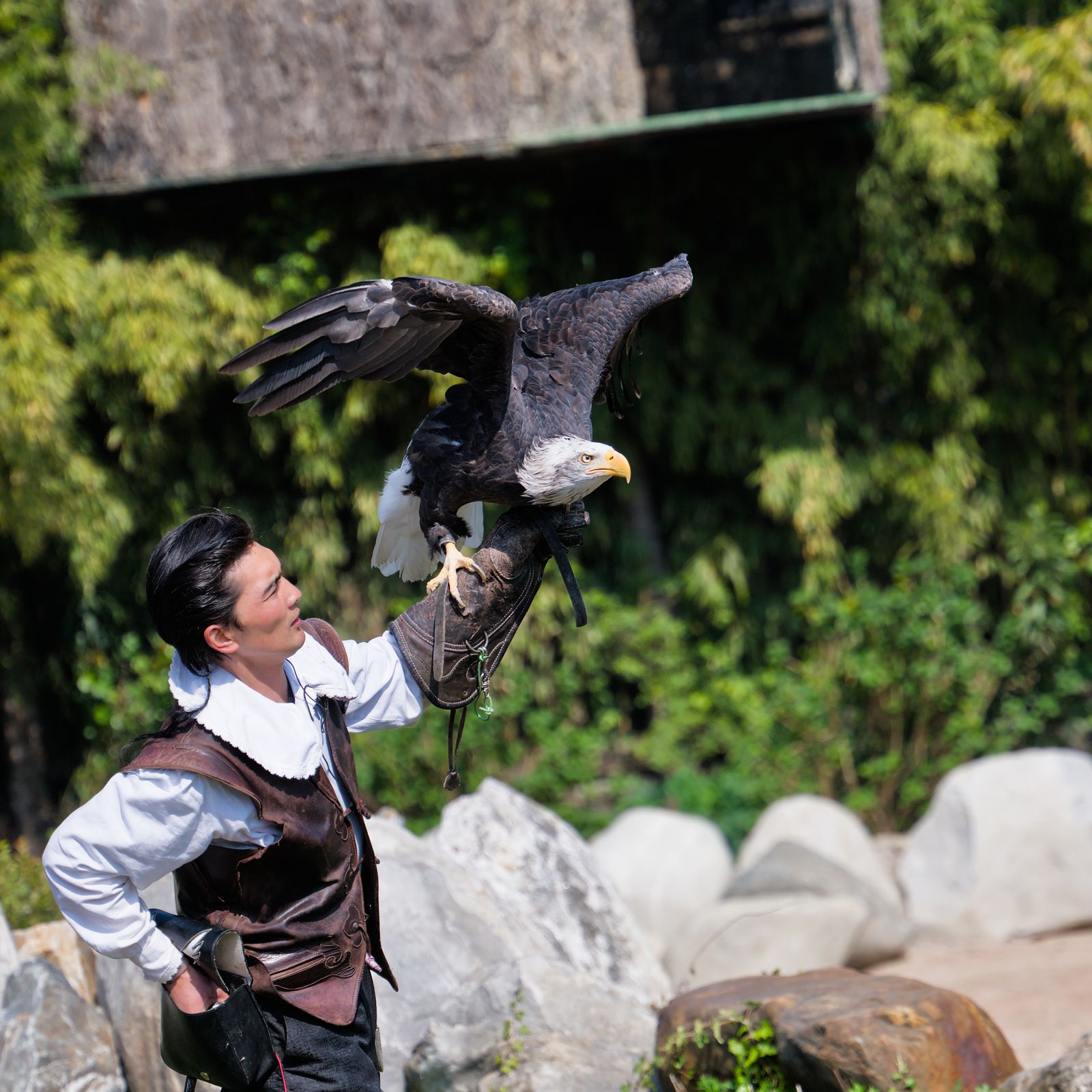
If you need a break from the heavy church history and medieval architecture for a while, head just past the castle on the upper plateau to the eagle park Rocher des Aigles. It’s a specialised rescue centre and sprawling park for birds of prey, which is absolutely fantastic not only for families with children, but for every enthusiastic lover of nature, animals and perfect flying displays.
Several times a day there are guided flying displays that take place right on the steep edge of the limestone cliff. You’ll see majestic eagles, vultures, falcons and huge condors fly freely over the deep canyon and then return elegantly and with perfect precision to the leather gloves of experienced falconers. This is no cheap circus show for tourists, but a highly educational performance with a huge emphasis on protecting these endangered species in their natural environment.
Outside the flying display times you can wander the whole expansive forest grounds at your own pace and view dozens of species of birds of prey really up close. The birds here live in excellent, spacious conditions and the park itself does an incredible amount of commendable work towards their gradual breeding and return to the wild. You simply buy tickets right at the ticket office on site, and the visit will take you around two very pleasant hours.
8. Head to the Gouffre de Padirac chasm
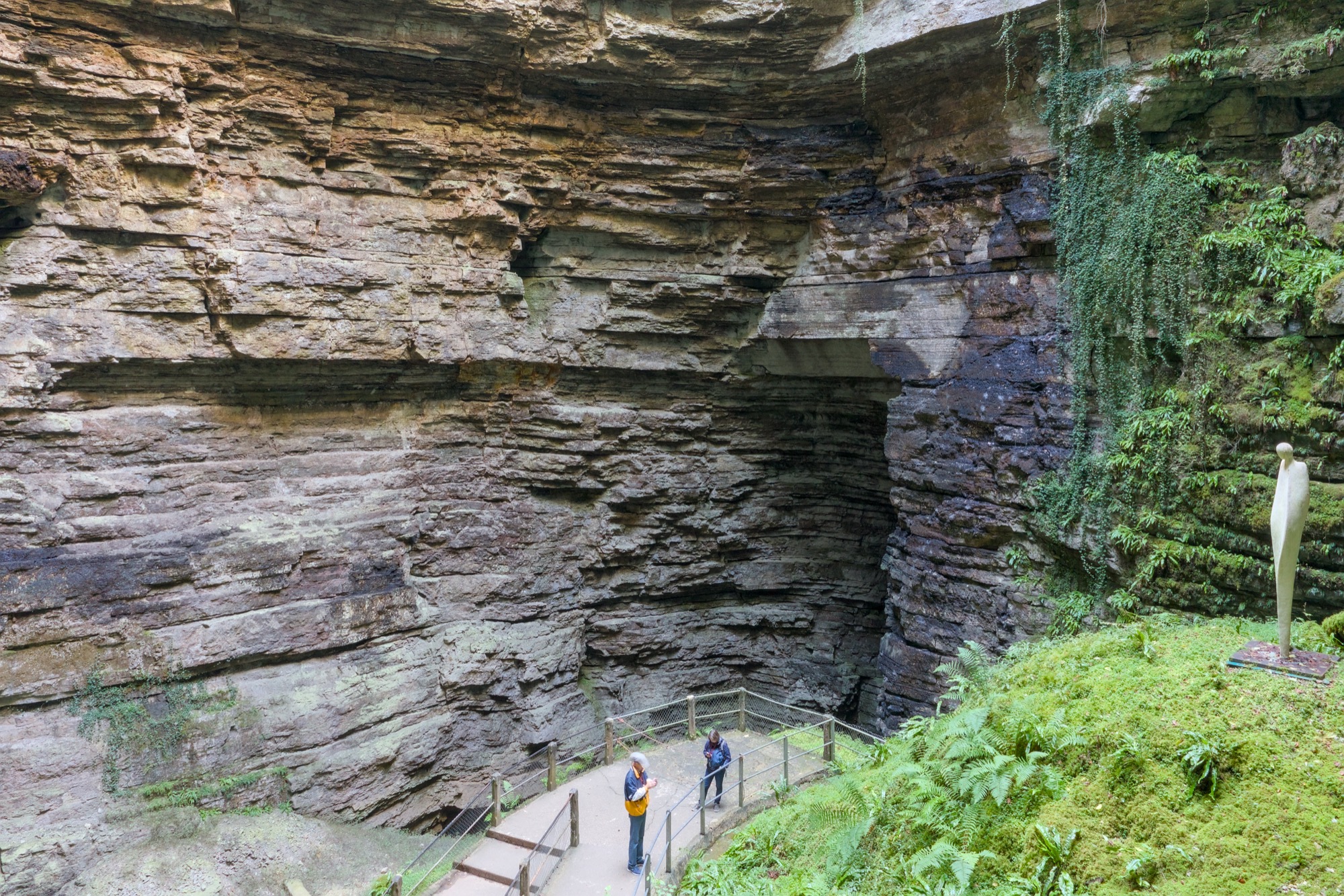
Just about twenty-five minutes’ drive from Rocamadour lies a place that would be a huge and unforgivable mistake to skip on your trip. The Gouffre de Padirac is by a huge margin the most visited underground system in France and offers an experience that completely transcends ordinary visits to classic tourist caves. It all begins outside at a huge circular hole in the ground, 33 metres in diameter and plunging to an incredible depth of 75 metres, so it looks as though hell itself has caved in here.
You can ride down in a comfortable modern lift, but I warmly recommend walking down the wonderful steel staircase, designed by none other than the famous Gustave Eiffel himself. During the slow descent you physically feel the climate change quickly, the air growing heavy with moisture, and the temperature dropping to a constant 13 °C, so be sure to bring a warm jumper even in the middle of scorching August.
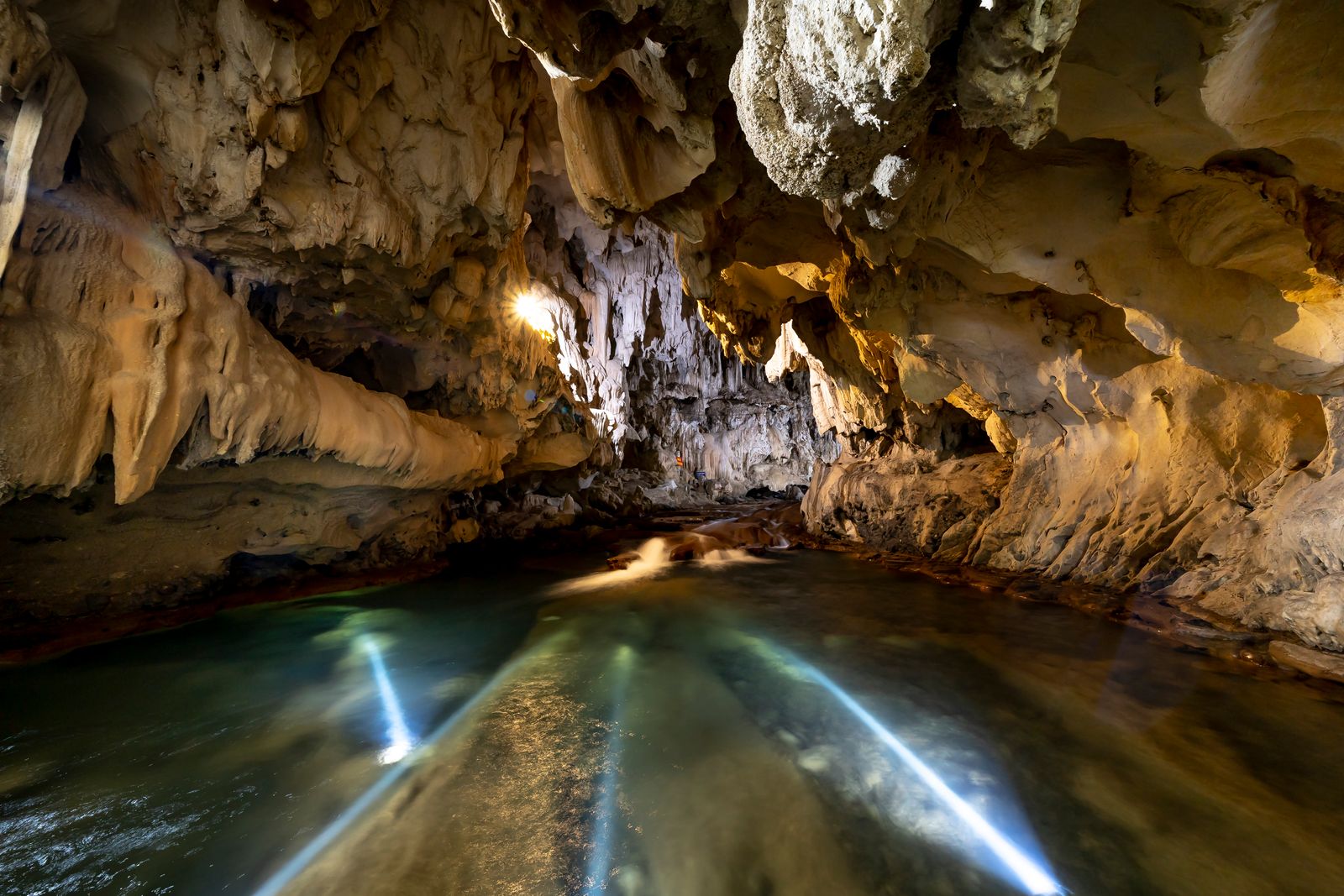
At the bottom of the chasm your adventure has only just begun, because you’ll board a small metal boat steered by an experienced boatman. You’ll glide about half a kilometre along an incredibly clear underground river in complete silence, broken only by the gentle splash of the oars and drops of water falling from the ceiling. This is followed by a stunning walking loop through the underground domes, where you enter the Hall of the Great Dome, which boasts a stalactite ceiling at an incredible height of 94 metres and resembles a giant underground cathedral.
9. Practical information for Padirac in 2026
If you’re planning to visit this fascinating chasm in the upcoming season, you must know a few absolutely crucial rules, otherwise you sadly won’t get underground at all. The Gouffre de Padirac opens its gates for the new season on exactly 28 March 2026, and demand for tickets is so enormous every year that the entire booking system has moved completely online, with the on-site ticket office now operating more symbolically than anything.
You absolutely must buy your tickets in advance for a specific date and time, exclusively through their official website gouffre-de-padirac.com. In high summer season the best slots around midday sell out even several weeks in advance, so definitely don’t count on turning up randomly on site and sorting out tickets somehow — it simply doesn’t work that way, and you’d leave empty-handed.
Prices for 2026 are set at €22.50 for an adult in high summer season, while off-peak in spring and autumn you’ll pay a slightly friendlier €18. Tours in foreign languages can easily be handled with the audio guides provided, which is incredibly practical for non-French-speaking visitors. The time you book is the precise time of your descent into the chasm, so arrive at the huge car park well in advance so you don’t needlessly miss your slot.
10. Get to grips with the local cuisine (and how to survive as a vegetarian)
Southwest France, and this particular region especially, is famous the world over for its very heavy, rustic and strongly meat-based cooking. The foundation of everything here is duck and goose fat, on which absolutely everything is cooked, including plain roast potatoes. For the locals, confit duck and the fattened liver foie gras are practically a religion, and you’ll find them on the menu of literally every traditional restaurant, where they form a proud part of the cultural heritage.
If you don’t eat meat, however, it might seem at first glance that you’ll starve here — but fortunately the opposite is true. The Lot river valley is also a renowned region for excellent walnuts and rare truffles. In many restaurants they’ll very happily prepare you a perfect fluffy omelette with fresh truffles or a rich vegetable salad with nuts and honey. Just watch out in summer, when cheaper summer truffles flavoured with synthetic truffle oil are often used — the real culinary experience with the black diamonds of Périgord is a winter affair.
Other great vegetarian options include creamy soups made from local vegetables or pasta with a rich mushroom sauce, which will reliably fill you up for the whole afternoon. And a little practical tip on paying that will save you some confusion: a service charge of 15% is always automatically included in the price of your meal in France by law. So extra tipping isn’t compulsory, but if you were very happy with the service, it’s a nice custom to leave one or two euros in coins on the table, since you usually can’t add it to your card payment on French terminals.
11. Taste Rocamadour cheese and walnut wine
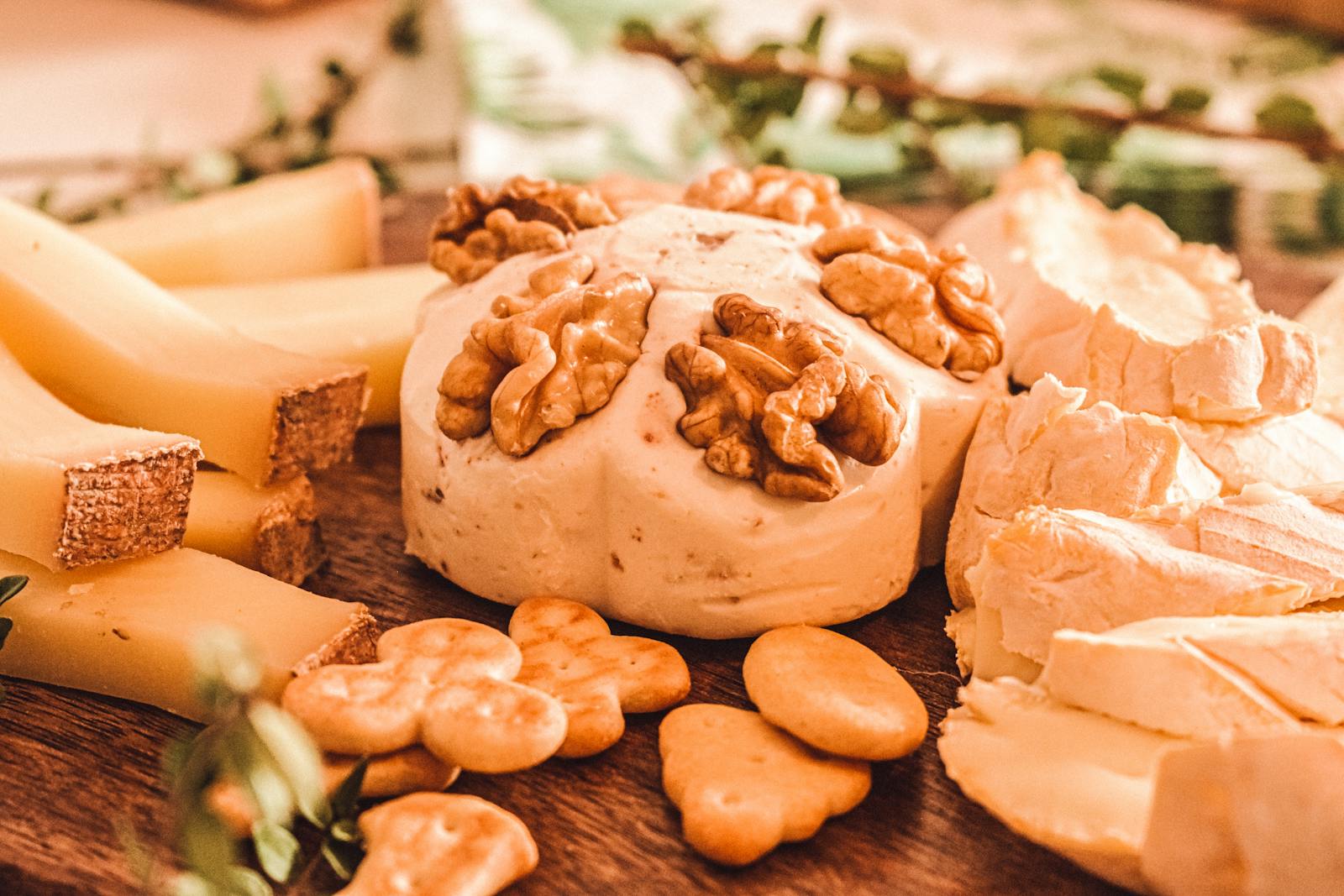
And since we’re on the subject of those wonderful cheeses and nuts, we definitely can’t leave out the fantastic local treasures you simply must try on your trip. Rocamadour cheese, with its prestigious AOP certification, is a small, round goat’s cheese that has been traditionally produced in this stony area since the fifteenth century. It’s very creamy, delicate on the surface, and with increasing age and ripening gradually takes on a much more intense, slightly nutty flavour.
You’ll find it at all the local markets, but the best way to enjoy it is right in a restaurant, melted on warm crispy toast in combination with local honey and a fresh salad. This popular dish is called salade au chèvre chaud and makes the absolutely ideal light lunch on a hot summer’s day. A completely unforgettable experience is offered by the picturesque country restaurants known as ferme auberge, which cook exclusively from the ingredients they grow and produce themselves on their own farm.
The excellent cheese and salad pair beautifully with another renowned local speciality, namely the sweet, strong walnut wine vin de noix. It’s usually served well chilled as a traditional aperitif before a meal and has an unmistakable earthy flavour. Local farmers often sell it at small stalls along country roads or at the morning markets in Sarlat, so be sure to buy a bottle to take home — it’s quite simply the very best liquid souvenir from this wonderful area.
Map of points of interest for your phone
Where to go next from Rocamadour
Once you’ve explored Rocamadour and descended into the depths of Padirac, a huge range of further options opens up before you. The whole area lies on the edge of one of the most beautiful French regions, where you should definitely head for the next days of your trip.
I’d recommend hopping in the car and setting off northwest into the historic province of Périgord. If you love medieval towns, stunning castles perched on cliffs and prehistoric caves with paintings thousands of years old, be sure to read our detailed article Dordogne and Périgord, where you’ll find a complete itinerary and tips for breathtaking Sarlat or a kayak trip beneath the Beynac castle.
Frequently asked questions
How much time do I need to visit Rocamadour?
For the village itself, climbing the stairs and visiting the sanctuaries, you’ll need about three to four hours. However, if you’re also planning to visit the eagle park, want to go up to the castle walls, or wish to enjoy a long lunch on the terrace above the canyon, set aside a full day for the place without rushing.
How is parking in Rocamadour?
There are several parking lots down in the canyon by the river, but they fill up quickly and it’s harder to climb uphill from there. The best option is to use the large central car parks up on the L’Hospitalet plateau (look for signs to Car Park P2 or P3), from where you can either walk down on foot or use the paid lift. Parking is of course subject to a fee during the summer season.
Is Rocamadour suitable for people with reduced mobility?
The village is built on a steep vertical cliff, so it’s not exactly an ideal destination for strollers and wheelchairs. However, thanks to a clever system of two paid elevators, you can easily get from the lower street up to the sanctuaries and castle without having to climb hundreds of stairs. The lower street, Rue de la Couronnerie, is flat but paved with historic stones.
Do I need to buy tickets to Gouffre de Padirac in advance?
Yes, for 2026, online booking is absolutely essential. Tickets are virtually impossible to get on-site, and without a reservation for a specific time slot, you won’t be allowed into the gorge at all. Book them ideally several weeks before your trip on the official website, as popular times around lunchtime disappear very quickly during the summer season.
What is the temperature in Padirac Cave?
The underground maintains a constant temperature of 13°C year-round and very high humidity, so it can feel even colder. Even if it’s scorching hot outside in August with temperatures around 30 degrees, definitely bring long trousers and a warmer sweater or light jacket for the descent into the abyss and the boat ride.
Can you get to Rocamadour by train?
Yes, but it’s quite complicated and time-consuming. Rocamadour-Padirac train station is located about 4 kilometers from the village itself up on the hill. From the station you have to either walk or take an expensive taxi, because regular bus connections practically don’t exist here. A car is absolutely essential for exploring this rural region.
When is the best time to photograph the village?
If you want to capture the houses carved into the rock in all their glory, the best light is early in the morning or late afternoon before sunset, when the limestone rock catches warm golden hues. Don’t forget to photograph the village after dark from the opposite viewpoint in L’Hospitalet – it’s a magical experience.
Are there any vegetarian restaurants in the area?
There are virtually no purely vegetarian restaurants in this traditional duck region, practically none. However, every regular restaurant will offer you excellent meat-free alternatives, most commonly in the form of delicious truffle omelettes, salads with warm goat cheese, or pasta with mushrooms. Just ask the waiter about meat-free options and they’ll be happy to help.
Tips and Tricks for Your Vacation
Don’t Overpay for Flights
Search for flights on Kayak. It’s our favorite search engine because it scans the websites of all airlines and always finds the cheapest connection.
Book Your Accommodation Smartly
The best experiences we’ve had when looking for accommodation (from Alaska to Morocco) are with Booking.com, where hotels, apartments, and entire houses are usually the cheapest and most widely available.
 🚗 Car rental on the roadVerified rental cars in Occitanie
Search with the DiscoverCars comparison engine — it compares prices from dozens of local and international rental companies, and most bookings come with free cancellation.
Compare car prices in Occitanie →Don’t Forget Travel Insurance
Good travel insurance will protect you against illness, accidents, theft, or flight cancellations. We’ve had a few hospital visits abroad, so we know how important it is to have proper insurance arranged.
Where we insure ourselves: SafetyWing (simple monthly subscription) and TrueTraveller (for extra-long trips).
Find the Best Experiences
Get Your Guide is a huge online marketplace where you can book guided walks, trips, skip-the-line tickets, tours, and much more. We always find some extra fun there!