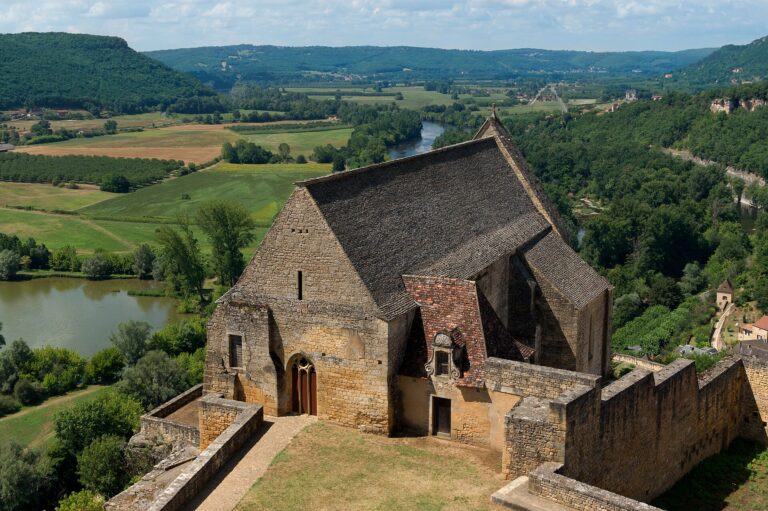
Picture the scent of an ancient oak forest and morning mist rising over a lazily flowing river. Welcome to the Dordogne region in France, a breathtaking corner of the southwest that instantly forces you to slow down. This area, historically known as Périgord, is exactly the kind of romantic, peaceful France you dream about.
Forget the hectic buzz of the Riviera or the rush of Paris — here, time flows in an entirely different way. Stunning limestone cliffs, majestic medieval castles and deep underground caves hiding prehistoric secrets all await you. You’ll also be charmed by endless walnut orchards and gorgeous countryside at every turn.
If you’re looking for the perfect destination to relax, you’ve just found your next travel goal. Around every corner, rich history blends with enchanting landscapes. Quite simply, behind every bend a postcard-worthy view peeks out at you.
TL;DR
- Base in Sarlat: The historic town of Sarlat-la-Canéda is the absolute ideal starting point for exploring the whole region.
- Medieval castles: The Dordogne valley is dominated by the castles of Beynac and Castelnaud, which still stare at each other across the river as they did during the Hundred Years’ War.
- Prehistoric art: The Lascaux caves in the Vézère valley offer a truly unique glimpse of paintings tens of thousands of years old.
- On the water: A kayak trip from Vitrac to Beynac is probably the best way to soak up views of the surrounding landmarks in complete peace.
- A miracle on the rock: The vertical village of Rocamadour and the nearby Gouffre de Padirac chasm make the perfect day-trip destination.
- Book ahead: Always buy tickets for the caves and main attractions online well in advance, as they tend to sell out hopelessly on site during the season.
- Getting around: You can hardly manage in this rural region without your own or a rental car — public transport here is very limited.
The full destination guide: Nouvelle-Aquitaine — guide and what to see
When to Visit the Dordogne and Périgord
If you’re thinking about a summer holiday in July or August, I have to warn you in advance — these months are a real trial by fire in the Dordogne. Temperatures regularly climb well above 30°C, the narrow lanes along the river fill up with caravans, and long queues form at the most famous landmarks. The French absolutely adore this region and spend their long summer holidays here, so you’ll need to arm yourself with an enormous dose of patience. By far the worst situation is around the first of August during the so-called chassé-croisé, when the July and August holidaymakers swap en masse and the roads turn into one giant car park.
The ideal time to visit is therefore clearly late spring or early autumn. May, June and September offer very pleasant, stable weather that’s perfect for hiking, kayaking and exploring the picturesque villages without the suffocating crowds. In October, the surrounding oak forests turn beautiful autumn shades and the mushroom and truffle season kicks off in full swing, though you should bear in mind that mornings are already fairly cool and damp. During the winter months, roughly from November to Easter, the region settles into hibernation and a large number of landmarks and rural restaurants close their doors.
As for getting there, you have two main options. The most comfortable is to take a direct flight to Bordeaux or Toulouse — both well served from the UK by the likes of British Airways, easyJet and Ryanair — and simply pick up a rental car at the airport, reaching the heart of the region in a comfortable two and a half hours. If you’d rather drive your own car, bear in mind that France has fairly pricey motorway tolls, working out at roughly under 10 € per 100 kilometres, plus the long haul across the Channel.
Where to Stay in the Dordogne and Périgord
💡 Tip for accommodation and experiences: We like to look for places to stay on Booking.com, which usually has the best cancellation terms. For tickets, tours and activities, it pays to compare and book through GetYourGuide.
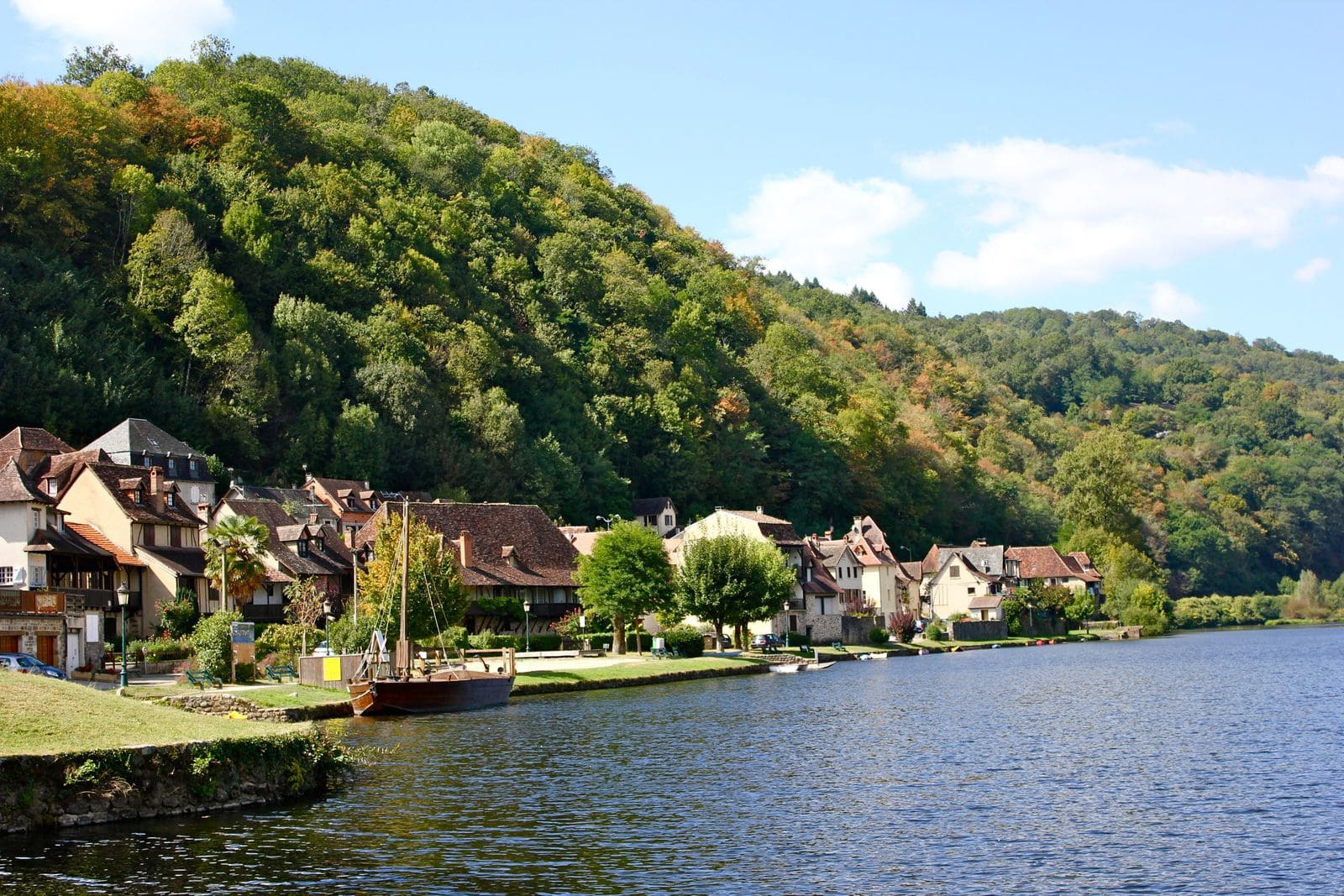
Choosing the right base is absolutely crucial in this rather sprawling region, so you don’t spend hours pointlessly driving around and constantly repacking your bags. The best strategic location is around the town of Sarlat-la-Canéda, from where you can easily reach both the castles on the Dordogne river and the prehistoric caves in the Vézère valley. The centre of Sarlat itself is gorgeous, but fairly noisy in season and with very limited parking options.
If you’re after total peace and quiet, it’s worth seeking out a gîte (a traditional rural holiday home) or a chambre d’hôtes (the French version of a bed and breakfast) in one of the smaller villages within about fifteen kilometres of Sarlat. Great choices include the picturesque villages of Vézac, Vitrac or Saint-Cybranet, where you can park without any trouble, enjoy your morning coffee with a view over the countryside, and reach the heart of the action in just ten minutes.
Accommodation prices for the 2026 season naturally vary depending on whether you head out in the middle of the summer holidays or off-peak. A night in a very nice rural guesthouse for two will set you back roughly 100 to 150 €, while more luxurious hotels with a pool start at around 200 € per night. Always search for your favourite place well in advance on Booking.com, because the most beautiful stone cottages vanish as early as spring.
If you’re after specific accommodation tips, in the very centre of Sarlat the popular Hôtel Plaza Madeleine offers great comfort and a pool right in the historic core. For lovers of rural romance, I can recommend the wonderful Domaine de Rochebois, located just outside town, where you’ll enjoy perfect peace surrounded by nature with absolutely fantastic service. If you want to stay right by the river, check out the boutique hotels in the village of La Roque-Gageac.
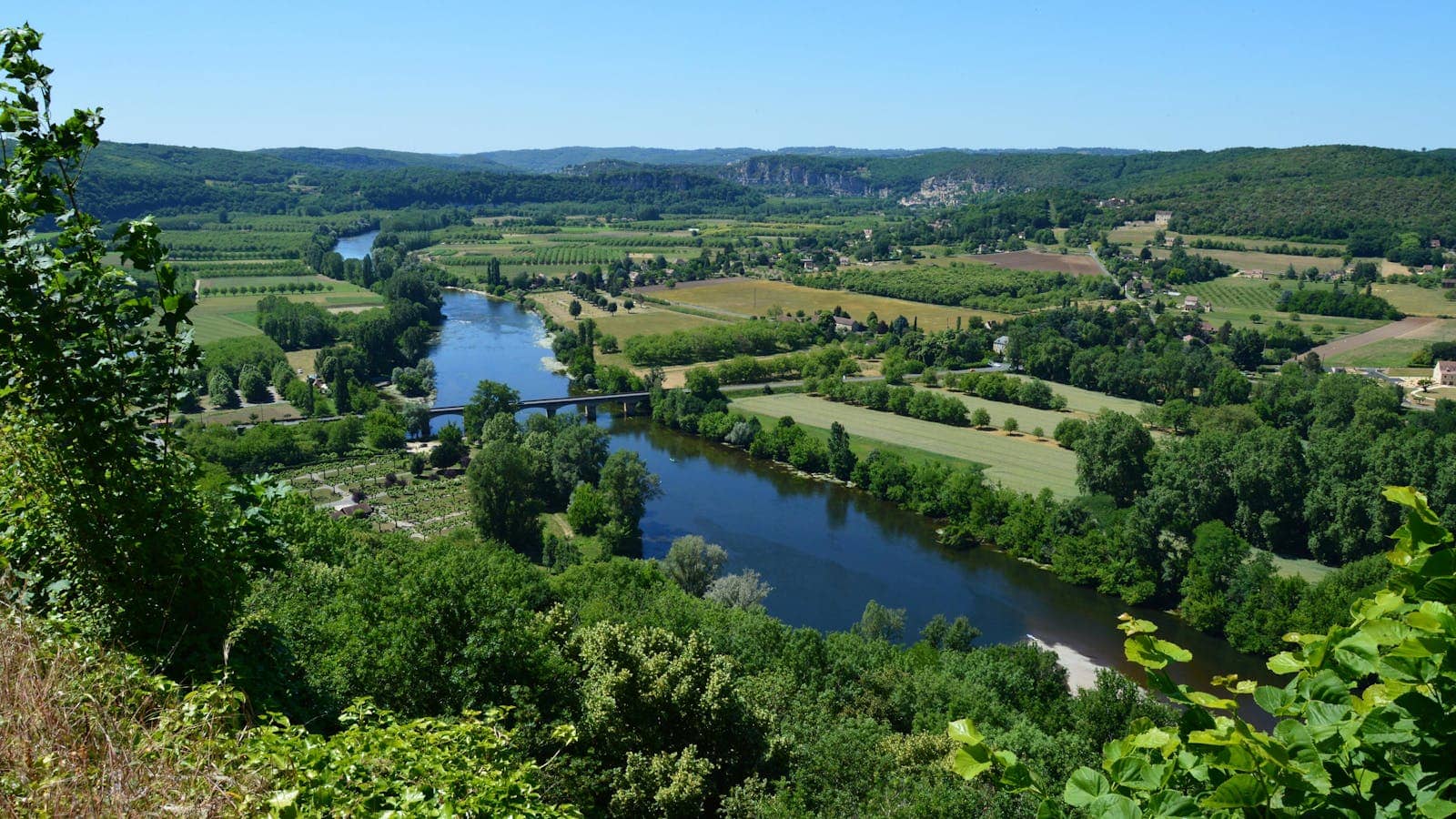
15 Best Things to See and Do in the Dordogne and Périgord
Let’s take a look together at the most interesting things this magical region has to offer. From medieval fortresses to mysterious underground worlds, there’s truly something here for every traveller who loves history, nature and a slow pace of discovery.
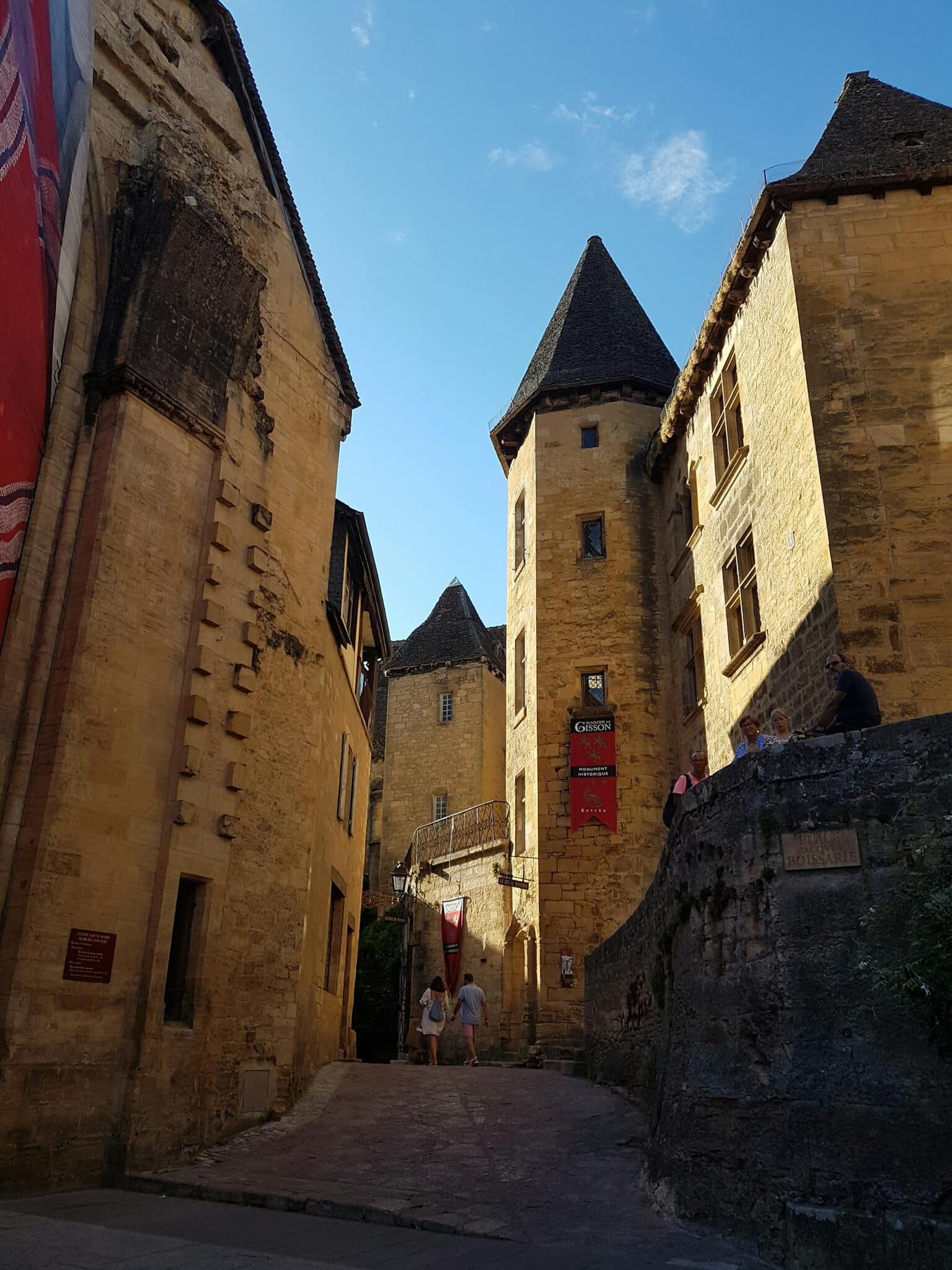
1. Sarlat-la-Canéda and Its Alleys
The town of Sarlat acts as the stone heart of the whole Périgord, and you simply can’t skip a visit. The town boasts the highest density of historic monuments per square metre in all of Europe, so you’ll feel like you’re walking through a perfectly preserved film set. The historic centre is so frozen in time that filmmakers shooting period dramas don’t even need to build artificial sets — they just temporarily unscrew a few road signs. A stroll between the honey-coloured limestone houses, topped with heavy stone tiles called lauzes, is a real treat for the soul.
The town is at its most magical after dark, when the narrow cobbled lanes are gently lit by old-fashioned gas lamps, creating a truly one-of-a-kind, mysterious atmosphere. If you want to enjoy the local cuisine during the day, remember that in France lunch is served strictly between noon and 2 p.m. Turn up at a restaurant at quarter past two and the kitchen will most likely be uncompromisingly closed. The set lunch menu (menu du jour) will cost you roughly 15 to 25 € and will reliably fill you up for the rest of the day.
💡 Tip: If you want to photograph Sarlat without the crowds, you’ll need to get up early and head into the centre by around 8 a.m., when the honeyed façades on the Place de la Liberté are bathed in morning sun and you’ll meet only the bakers hurrying to work.
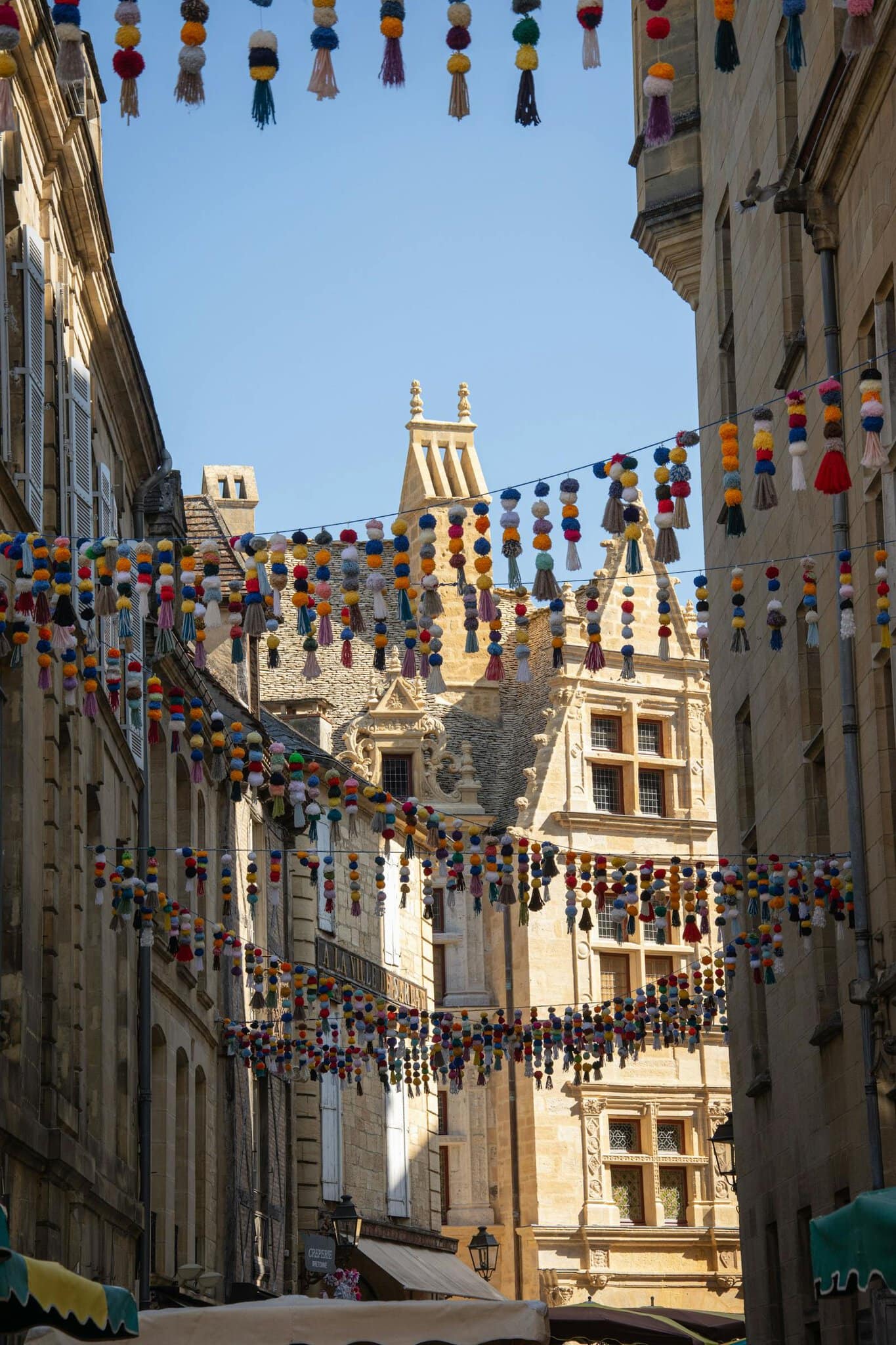
2. Traditional Markets in Sarlat
On Wednesday and Saturday mornings, the historic centre of Sarlat transforms into a buzzing, wonderfully fragrant market that is the main social event of the entire week. This is no artificial tourist attraction created for visitors with cameras — locals genuinely come here to buy fresh vegetables, crusty bread and regional specialities from farmers across the area. The atmosphere is utterly captivating and loud, exactly as it should be in proper French countryside.
While the Wednesday market is a bit more intimate and focuses primarily on food, the Saturday one takes over practically the whole town, and you’ll find everything here from lavender soaps to ceramics to handcrafted goods. The local stalls literally bow under the weight of huge wheels of sheep’s cheese, fresh walnuts, artisan sausages and, of course, the ever-present jams and preserves. The vendors will happily let you taste their products and are often glad to chat with you, even if you only speak broken French.
💡 Tip: Head to the market on an empty stomach and pick up a fresh baguette, a piece of ripe cheese and a delicious walnut tart, which will make the best possible picnic by the river for just a few euros.
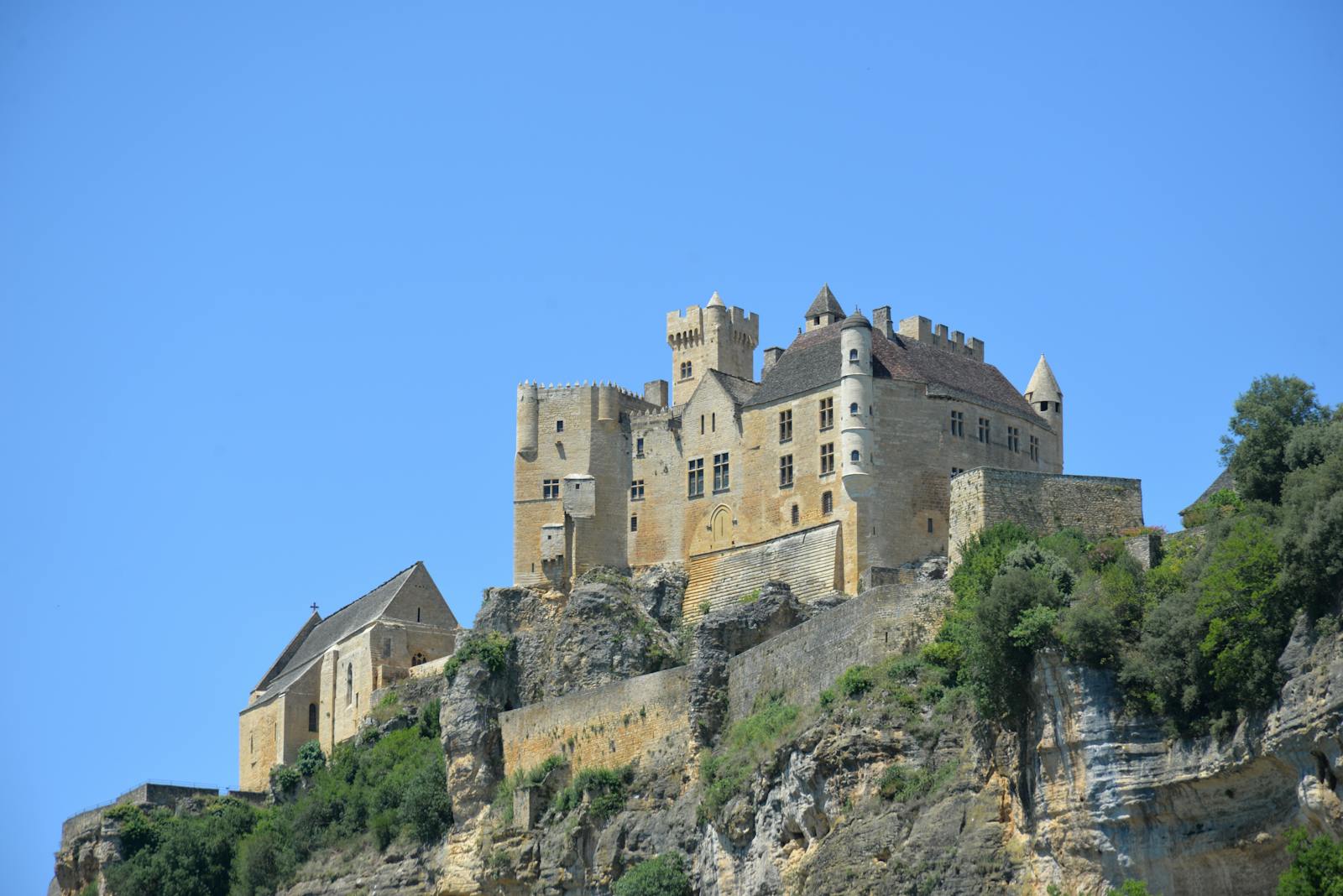
3. Beynac Fortress High Above the River
Beynac Castle is the embodiment of austere medieval military architecture, towering on a steep limestone cliff right on the right bank of the Dordogne river. During the drawn-out Hundred Years’ War, this imposing French fortress guarded the natural border and constantly faced English attacks from the hill opposite. To this day it makes an immensely majestic, impregnable impression, because you’ll find no needless decoration on it — just a pure, cold defensive function.
When you climb the steep cobbled lanes of the village all the way up to the castle courtyard, a truly breathtaking view over the valley opens up before you — dotted with sprawling walnut orchards and small, tidy fields. The castle interiors are admittedly fairly bare, so don’t expect any ornate furniture, but the rough stone walls, enormous fireplaces and well-preserved kitchen give you a very clear idea of just how harsh and uncompromising life must once have been for the castle garrison.
💡 Tip: Leave your car parked down by the river and walk up on foot, because the lanes below the castle are full of little cafés and craft shops you’d completely miss if you drove straight up.
4. Castelnaud Castle and the Museum of Warfare
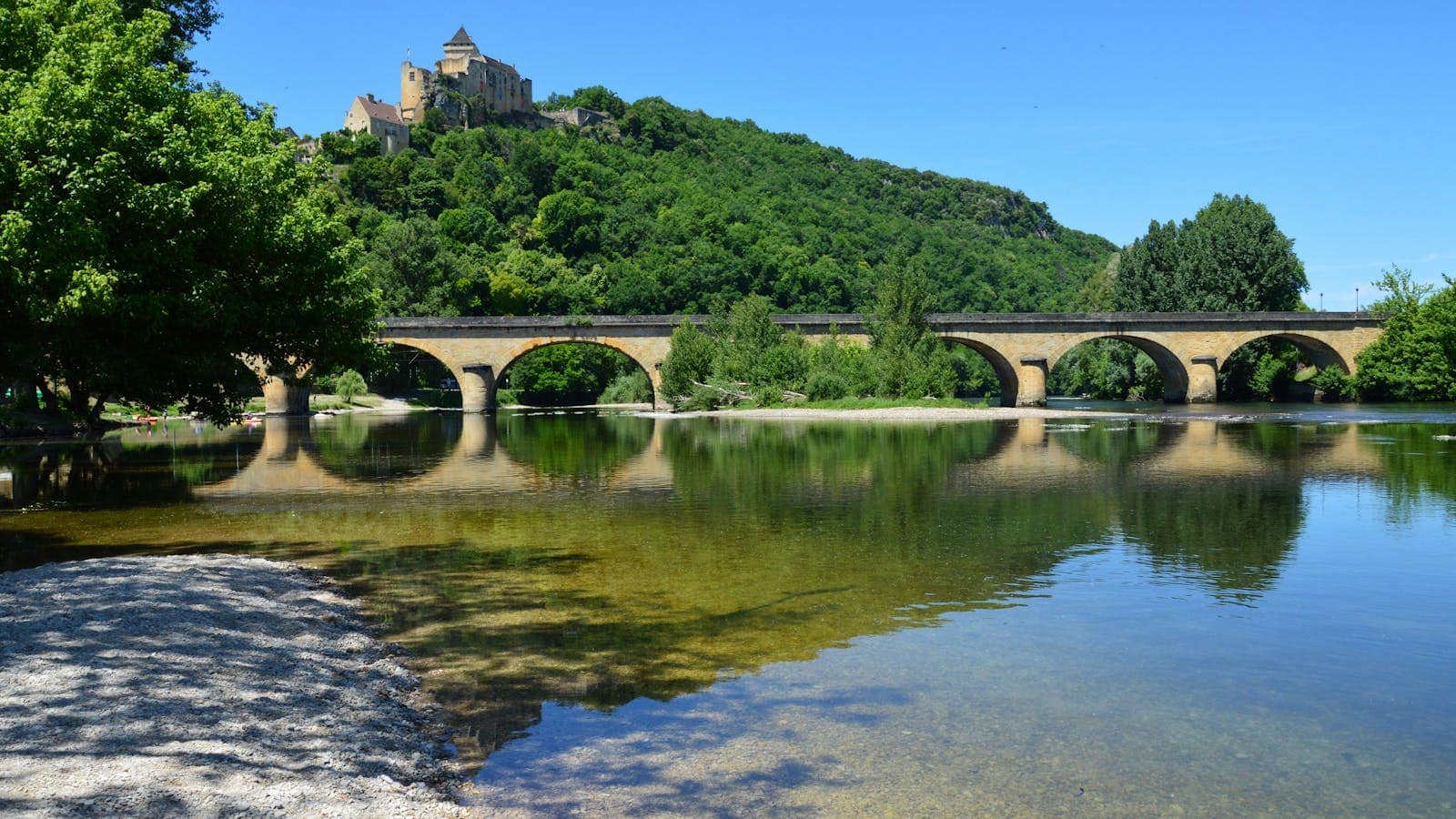
Right opposite Beynac, on the left bank of the river, sits its eternal English rival, the mighty Castelnaud castle. This gorgeous fortress was in the hands of the English crown for centuries, and the two castles still glare at each other across the deep valley in silent tension. Today this beautifully restored monument houses an utterly fascinating museum of medieval warfare, where you can see working, life-size replicas of enormous siege engines.
If you’re travelling with kids, this place is guaranteed to thrill them and you could easily spend a whole afternoon here. Visitors can handle various types of weapons, feel the weight of knights’ swords and clearly understand exactly how the huge catapults and trebuchets hurling heavy stones at enemy walls actually worked. From the upper ramparts you also get a stunning panoramic view straight at rival Beynac, making it easy to imagine the atmosphere of those long-ago battles.
💡 Tip: Try to arrive right at opening time, because the museum is very interactive and fairly large crowds gather around the most popular exhibits in the afternoon, especially during the summer holidays.
5. La Roque-Gageac Clinging to the Cliff
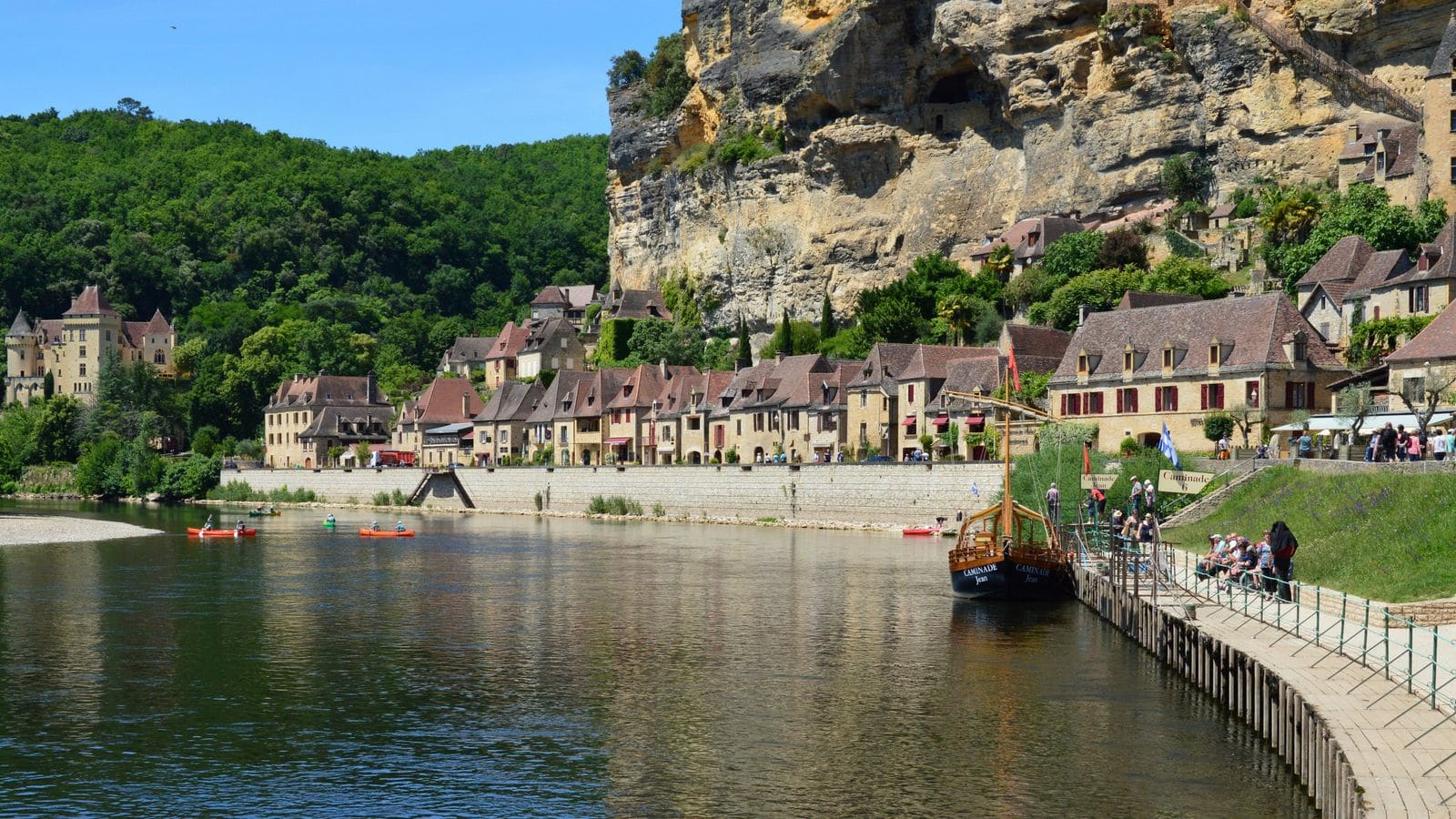
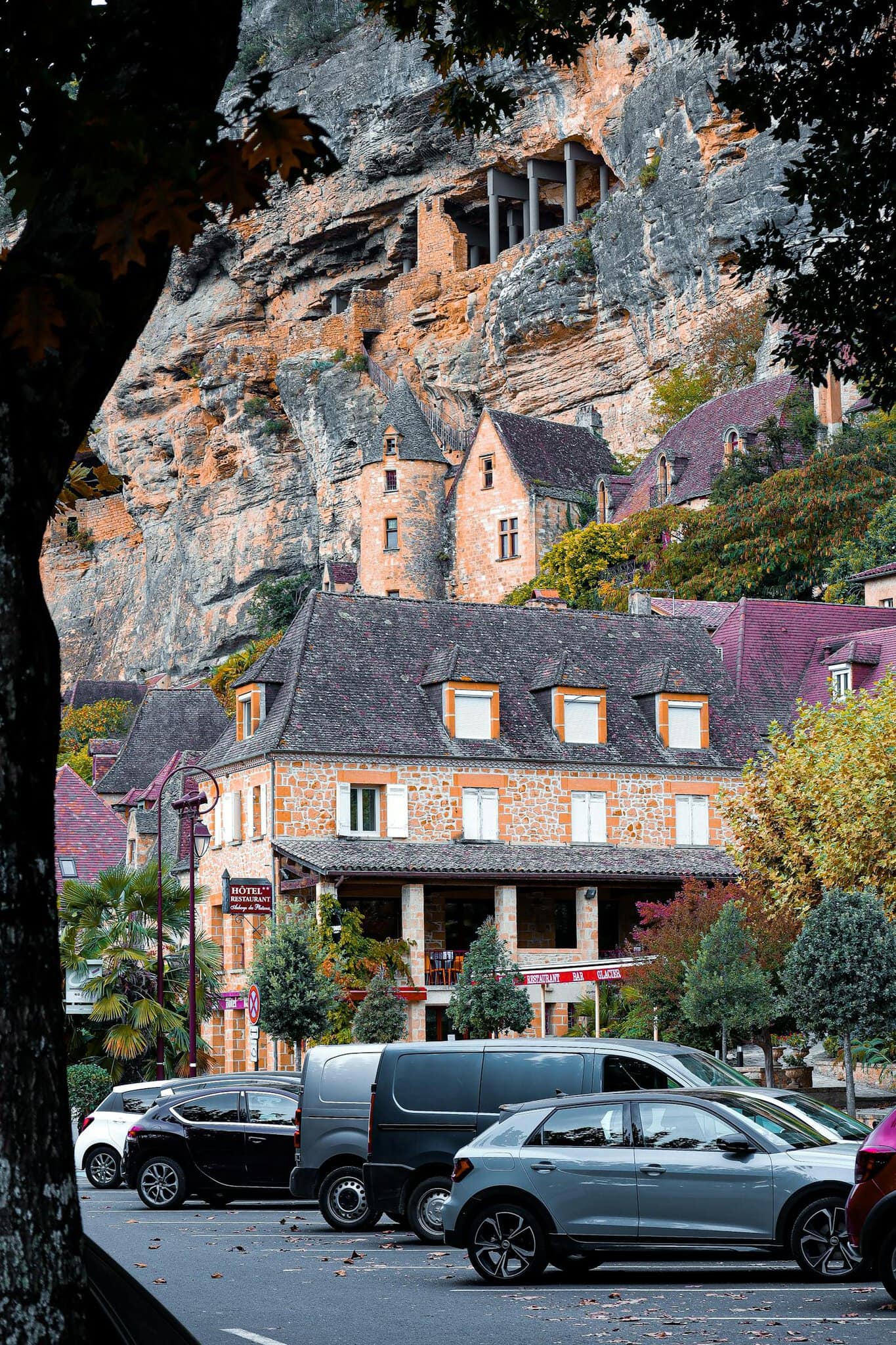
The village of La Roque-Gageac is literally wedged into an extremely narrow strip of land between the lazily flowing river and a sheer limestone wall, which undoubtedly makes it one of the most photogenic spots in all of France. Thanks to the specific southern orientation of the cliff, which warms up during the day and releases heat at night, the village enjoys a unique microclimate strongly reminiscent of the Mediterranean. On a stroll, you’ll quite routinely come across tall palm trees, banana plants and huge fig trees lining the ochre façades of the houses.
A walk along the river is immensely calming, even if looking up makes you realise that this beautiful spot has exacted a very cruel toll in the past. In 1957, a huge section of the limestone cliff collapsed and destroyed several houses lying directly beneath it. Today the cliff is, of course, carefully monitored and reinforced with steel nets, so you can enjoy the exotic atmosphere of this little piece of paradise without any worries.
💡 Tip: Look for the small botanical trail that runs just below the rock overhang, because from there you’ll get the absolute best photos of the village with the river in the background, while avoiding the crowds on the main promenade.
6. A Cruise on a Traditional Gabare Boat
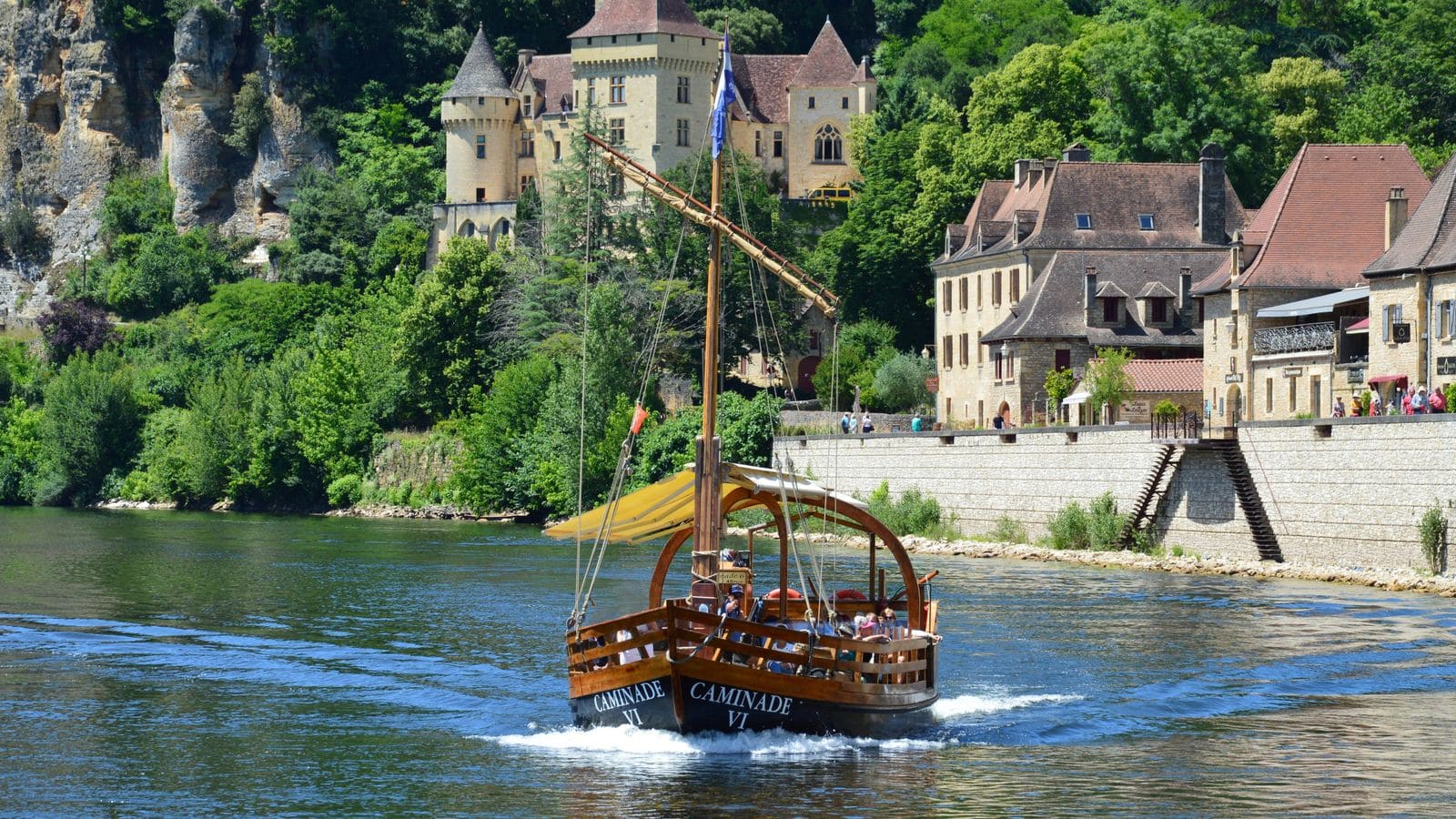
From the little harbour in picturesque La Roque-Gageac, traditional flat-bottomed wooden boats called gabares set sail regularly throughout the day, taking you on a very pleasant and historically enlightening sightseeing cruise. These wide, stable boats once carried precious wine and oak timber down the river all the way to distant Bordeaux; today, however, they serve purely to delight visitors and rank among the most popular experiences in the whole region.
The roughly one-hour cruise with commentary is absolutely perfect for a lazy afternoon, when you’ve already got the demanding climbs up to the castles behind you and just want to sit back and watch the passing scenery from an entirely new perspective. During the smooth ride, the guides tell fascinating stories about the hard lives of the local boatmen and point out architectural details of the castles and hidden spots you’d never notice from the bank.
💡 Tip: You can very conveniently secure tickets for these popular cruises through GetYourGuide, which in the summer months saves you a long wait in the queue at the sun-baked wooden ticket booth on the bank.
7. Domme, the Balcony of the Périgord
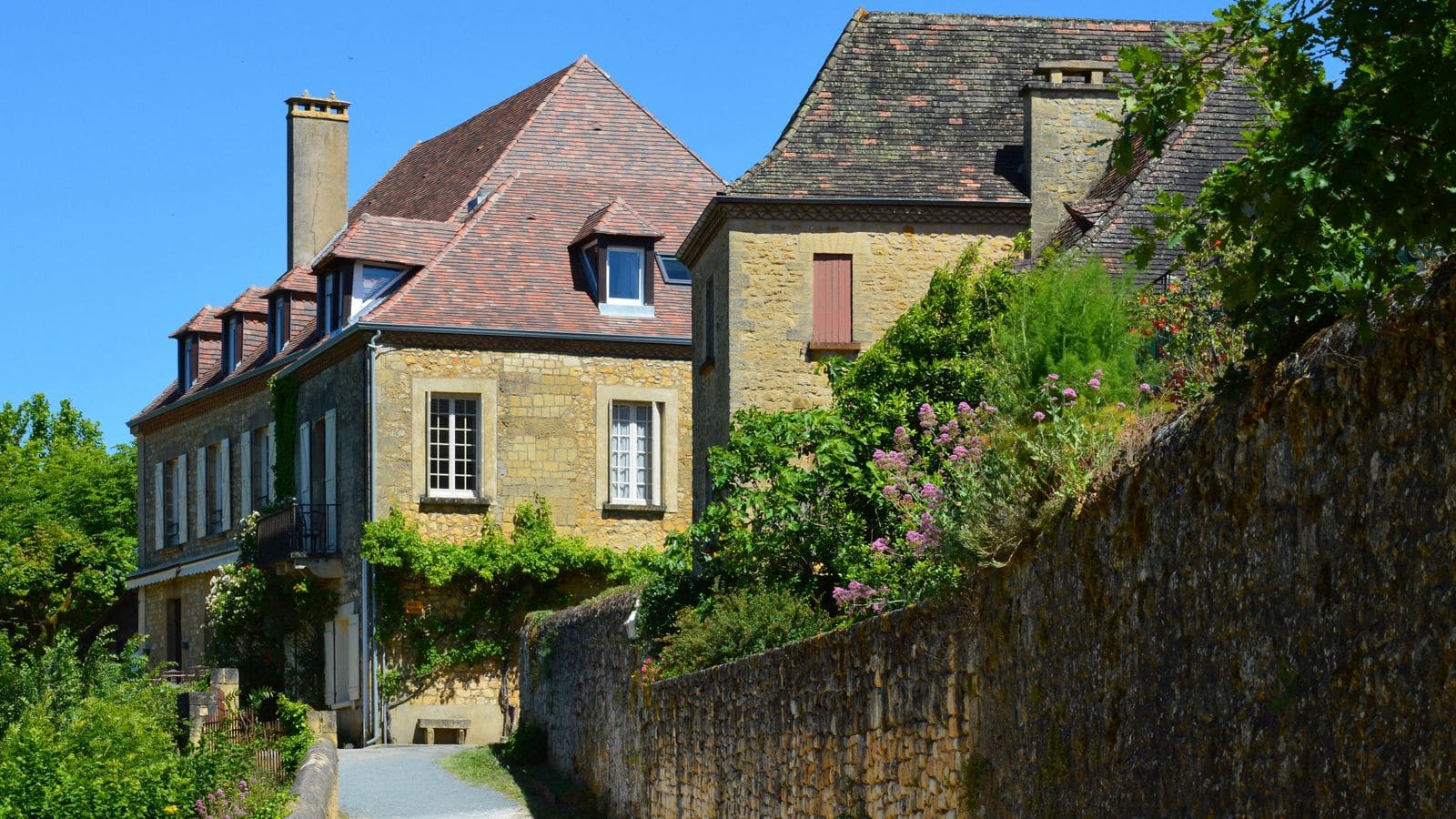
Unlike the previous villages, Domme doesn’t sit down by the water — it’s a so-called bastide, a carefully fortified town with a strictly rectangular layout, founded in 1281 by the French king Philip III the Bold. The town was strategically built high on a hill, and from its main viewing terrace on the edge of the cliff you get probably the most beautiful panoramic view of all over the entire valley and its dramatic meanders, from where you can easily see all the way to the castles of Beynac and La Roque-Gageac.
But the town has one more big and very unexpected secret. Hidden directly beneath its main square is an extensive system of natural underground caves, which in times of unrest and devastating wars served the locals as an immensely safe and spacious refuge. You can head down the steps and, accompanied by a guide, admire beautiful limestone stalactites just a few metres below the bustling cafés where tourists sip their afternoon coffee.
💡 Tip: If you want to avoid the fairly expensive and often hopelessly full car park right in town, leave the car at the overflow lot below the hill and head up on foot — the views during the climb are absolutely worth the effort.
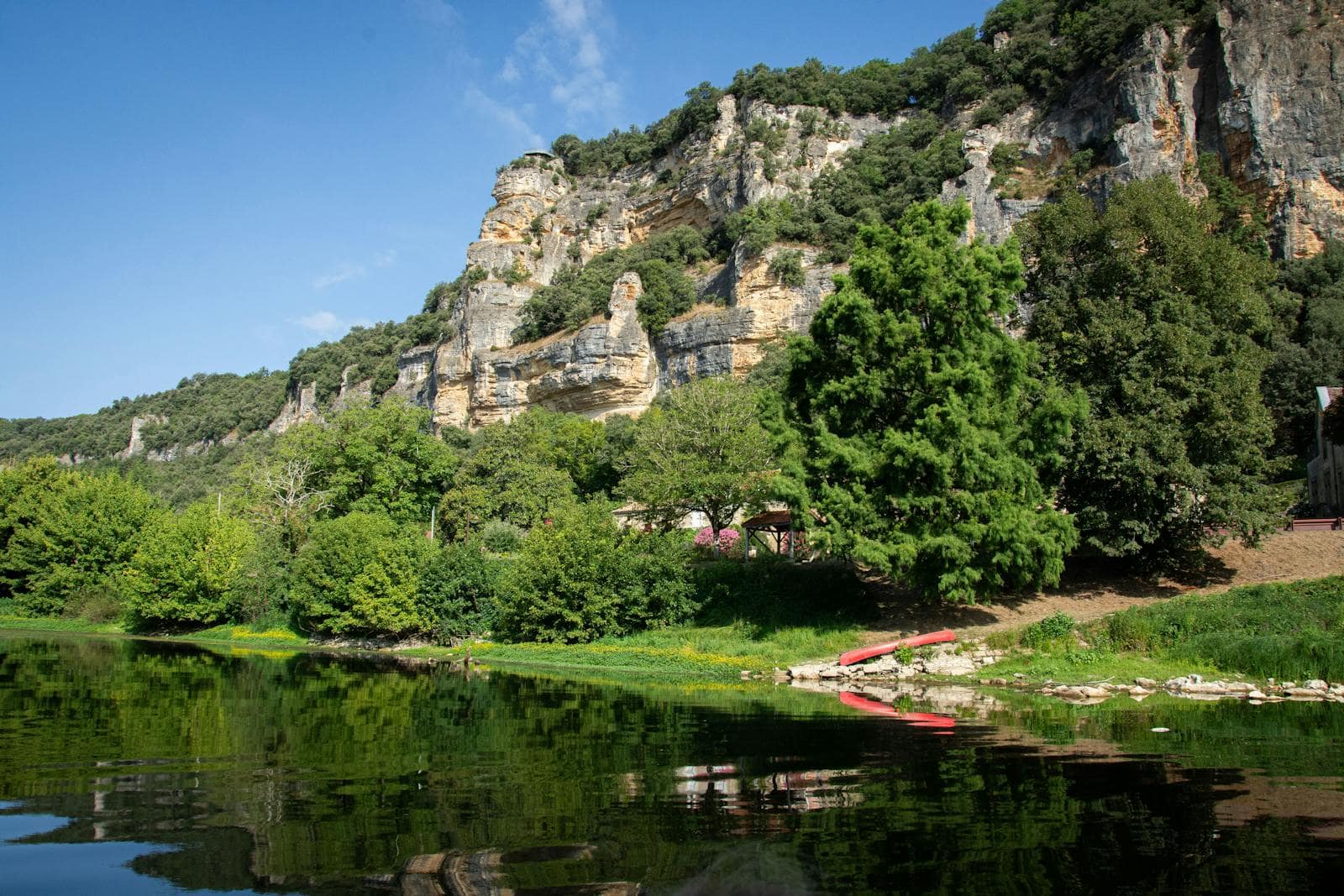

8. Kayaking on the Dordogne River
If you want to experience this region from the very best perspective and stretch your body a little, you simply have to get out on the water. The Dordogne river is very calm in the summer months, the water is beautifully clean, and the gentle current makes the trip more of a relaxing experience than a demanding sporting feat. The visually most attractive route by far is the stretch from Vitrac to Beynac, which measures around sixteen kilometres and is easily managed even by complete beginners or families with kids.
There’s a huge number of boat rentals along the river and the system works perfectly. In the morning they simply drive you upstream by van, kit you out with a life jacket, paddles and a waterproof barrel for your things, and the rest of the day is up to you. While paddling, you can stop at any time on a pebble beach, take a refreshing dip and savour the sight of the majestic castles towering high above your heads, which look even more monumental from the surface of the river.
💡 Tip: Don’t rush anywhere — set aside the whole day for this roughly three-to-four-hour stretch, because a picnic with fresh baguette and cheese on the riverbank is one of the biggest highlights of the entire holiday.
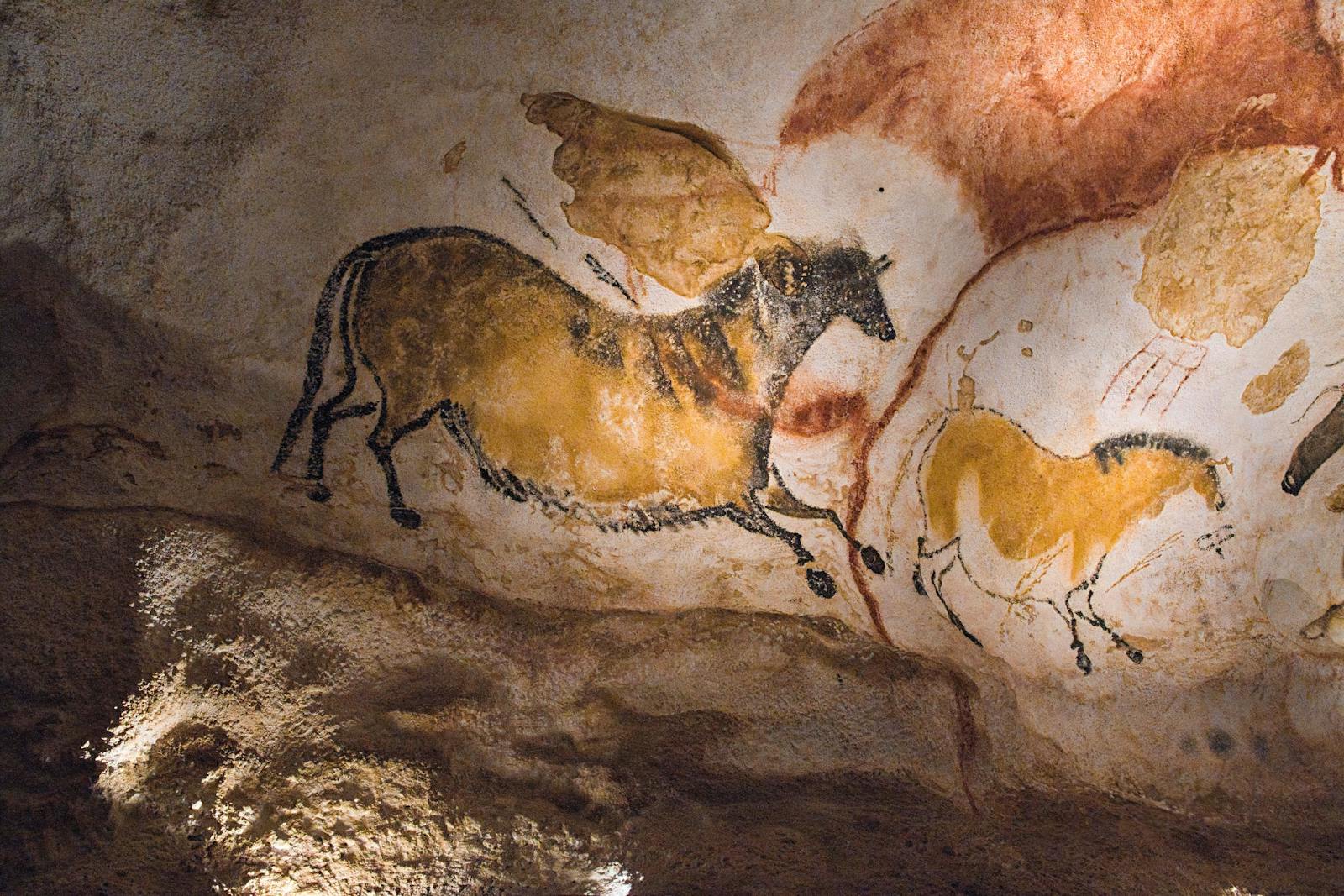
9. The Lascaux IV Caves and Modern Technology
The neighbouring Vézère river valley is literally dotted with prehistoric monuments, but the absolute pinnacle is undoubtedly the Lascaux cave, often called the Sistine Chapel of prehistory. It was discovered by chance by four boys in 1940, but because the carbon dioxide and humidity from crowds of tourists began rapidly destroying the precious paintings, the original was strictly closed in 1963. To save this heritage, the Lascaux IV exhibition was created — a perfect, millimetre-accurate replica made using 3D scanning and hand-painting with natural pigments.
This modern architectural building, discreetly sunk into the hillside, will amaze you not only with the paintings themselves in the exact copy of the cave, but also with its huge interactive section. Here you can examine the prehistoric art in detail, up close on digital screens, light up individual details and grasp the historical context. A great advantage of this international centre is that tours are regularly held in English too, which is by no means a given in this region.
💡 Tip: Inside the replica, a constant cave temperature of around 13°C is maintained, so even in the heat of August, don’t forget to pack a light jumper or hoodie — otherwise you’ll be very cold during the tour.
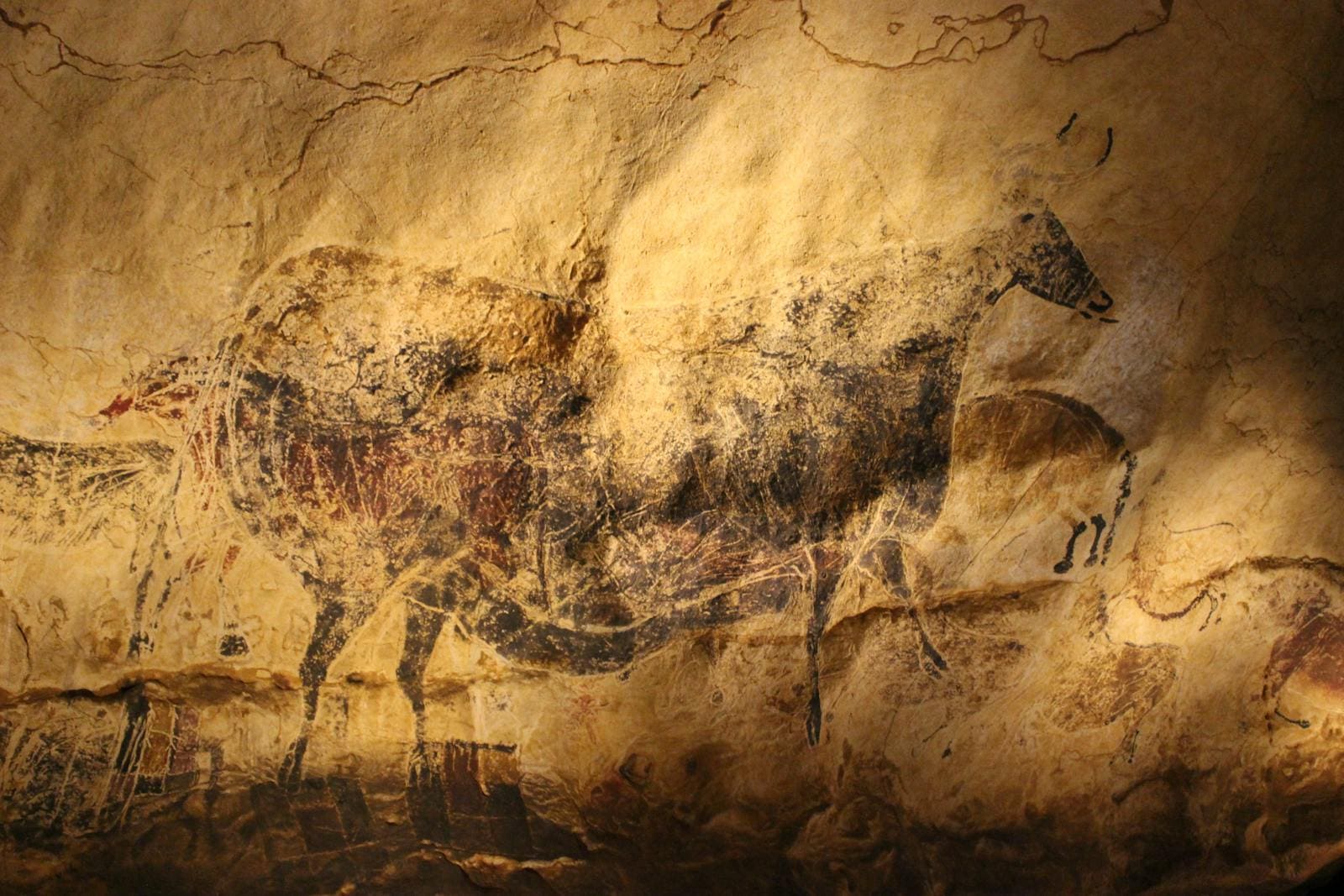
10. Lascaux II for the More Adventurous
If you crave a slightly rawer, more intimate experience than the one offered by the modern museum complex, you can visit the older Lascaux II replica from the golden 1980s. It’s located in the same hill, just a few hundred metres from the original, and shows about ninety percent of the most famous paintings, including the celebrated Hall of the Bulls. Its huge and quite unique advantage is the atmosphere, because the tour takes place in a small group lit only by small torches, lending the whole place an incredible magic.
When the guide switches off the main electric lights and shadows begin to dance wildly across the uneven walls, you suddenly understand exactly how prehistoric hunters perceived these animals more than twenty thousand years ago. The horses and deer on the walls seem to move and breathe thanks to the flickering light and the natural ridges of the rock — a fascinating visual experience. It should be noted, though, that tours here are conducted primarily in French, and English slots are rather rare.
💡 Tip: Whichever version of the cave you choose, booking tickets through the official website lascaux.fr several weeks in advance is an absolute must — you won’t get tickets on site during the season.
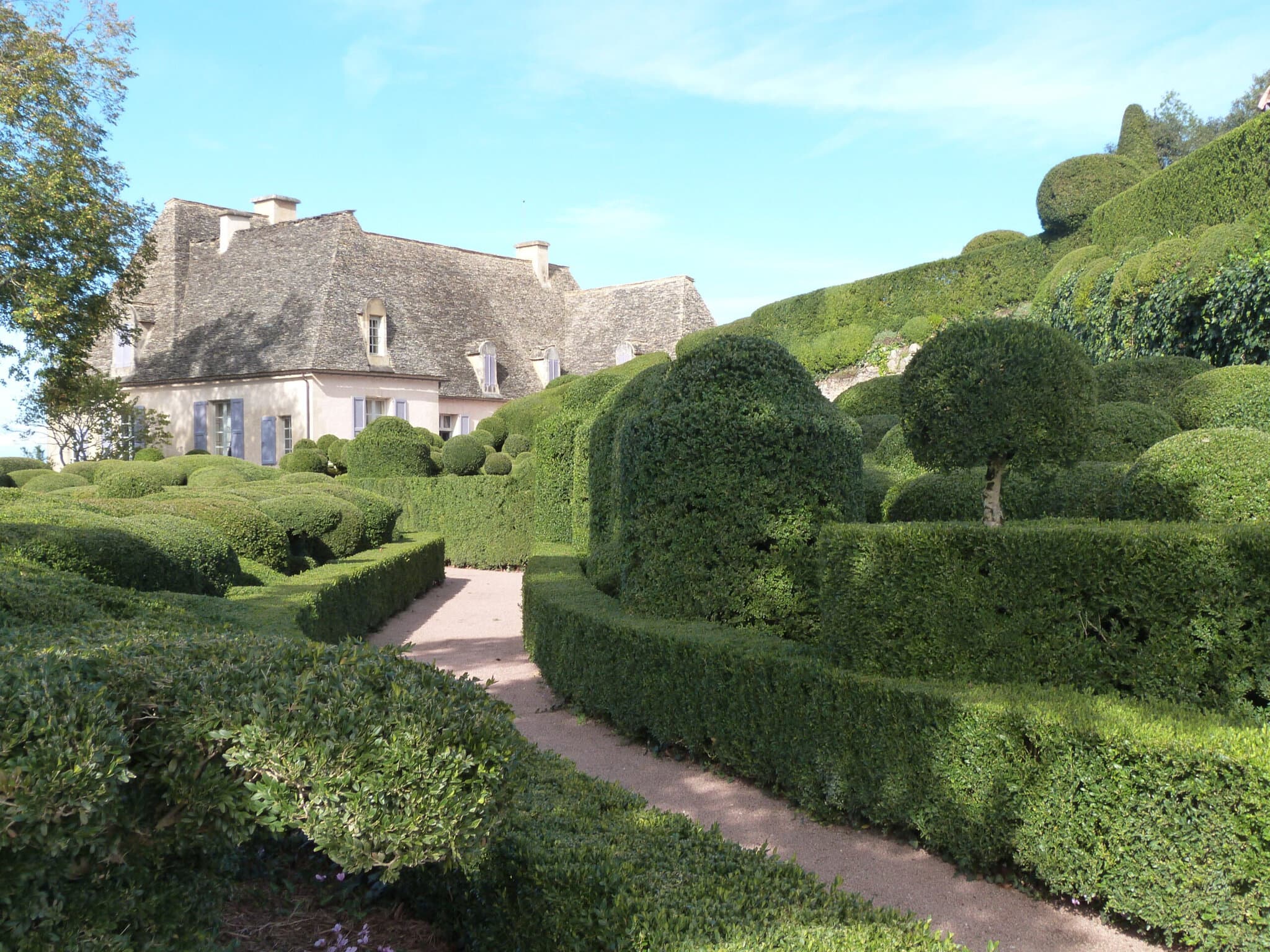
11. The Marqueyssac Gardens and Their Peacock Residents
As you wander the region, you definitely mustn’t miss the hanging gardens of Marqueyssac, which rightly rank among the most romantic spots in all of France. This sprawling, carefully tended park is famous for its tens of thousands of hand-trimmed boxwoods, which form incredible rounded, fluffy shapes resembling flocks of grazing sheep on a perfect green carpet. Maintaining this labyrinth requires a whole team of gardeners who trim everything by hand without any noisy machinery.
The gardens spread out high on a rocky promontory and offer fantastic panoramic views over the entire Dordogne river valley, while proud and occasionally very loud peacocks wander completely freely around your feet. A walk through the labyrinth of green paths is immensely calming, and in the shade of the tall oaks you’ll find a pleasant refuge even on the hottest summer days, when it’s unbearable down by the water.
💡 Tip: During the summer holidays, the so-called candlelit nights are held here every Thursday evening, when the whole gardens are lit by thousands of tiny lights, creating an absolutely fairy-tale, unforgettable atmosphere.
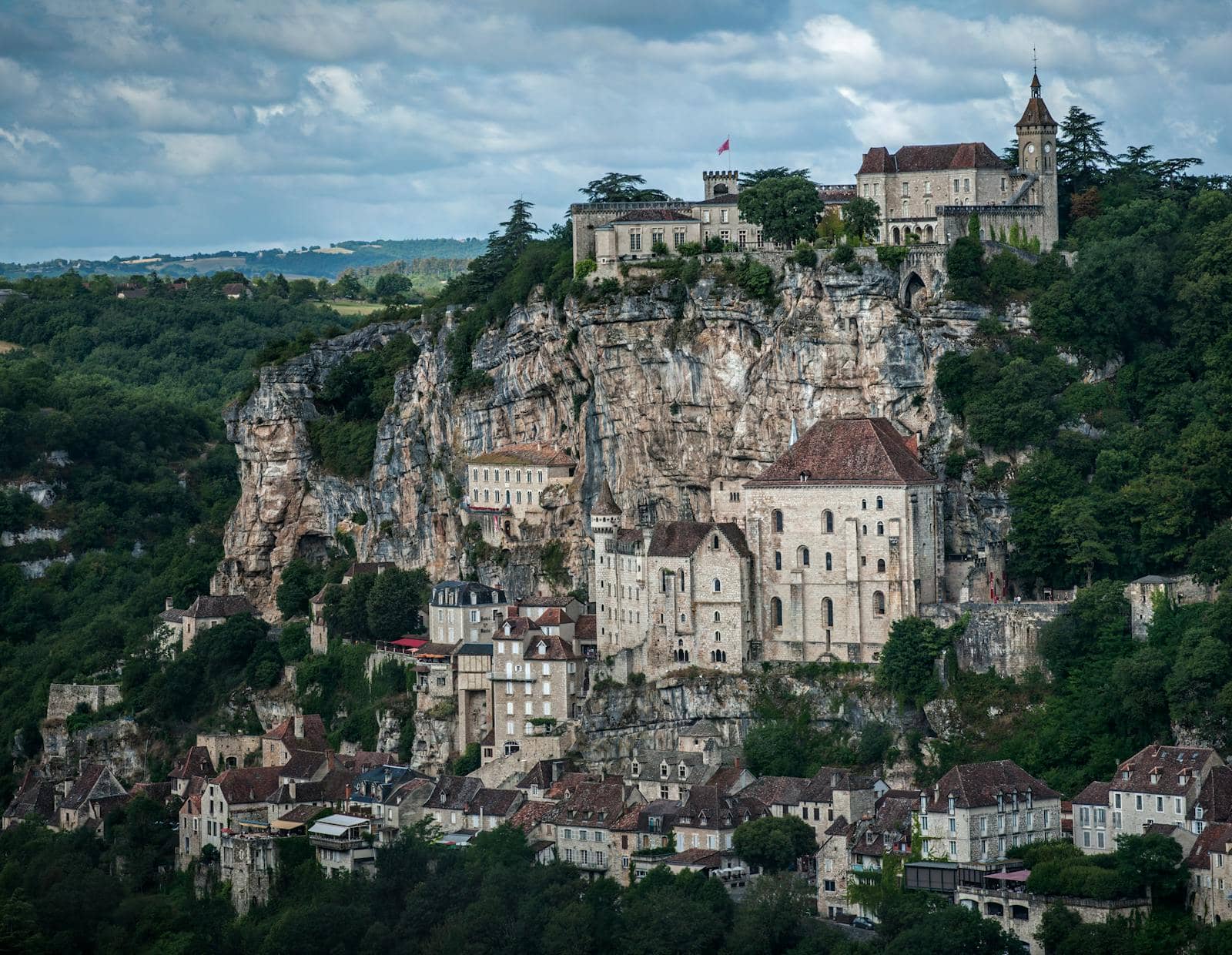
12. The Vertical Village of Rocamadour
Although Rocamadour technically lies in the neighbouring department of Lot, it’s so close that it would be a huge sin not to visit it. This breathtaking village literally defies all laws of gravity, as it’s glued to a sheer rock wall on several levels, with its individual terraces rising high above the deep canyon of the Alzou river. The town’s three levels once corresponded exactly to medieval society — the working folk lived at the bottom, the clergy in the middle, and the nobility resided at the very top.
The place has served as an immensely important pilgrimage site since the twelfth century, where kings and peasants alike made their way to honour the famous Black Madonna. You too can tackle the demanding climb up the historic staircase of 216 steps, which pilgrims once climbed on their knees. The architecture of the sanctuaries carved straight into the rock is fascinating, and a spiritual atmosphere radiates from every stone — even if in the summer months it’s sadly often diluted by huge crowds of tourists.
💡 Tip: Rocamadour is one of the most visited landmarks in France, so ideally arrive right at 9 a.m., or stay overnight here, so you can enjoy the empty evening lanes in complete silence.
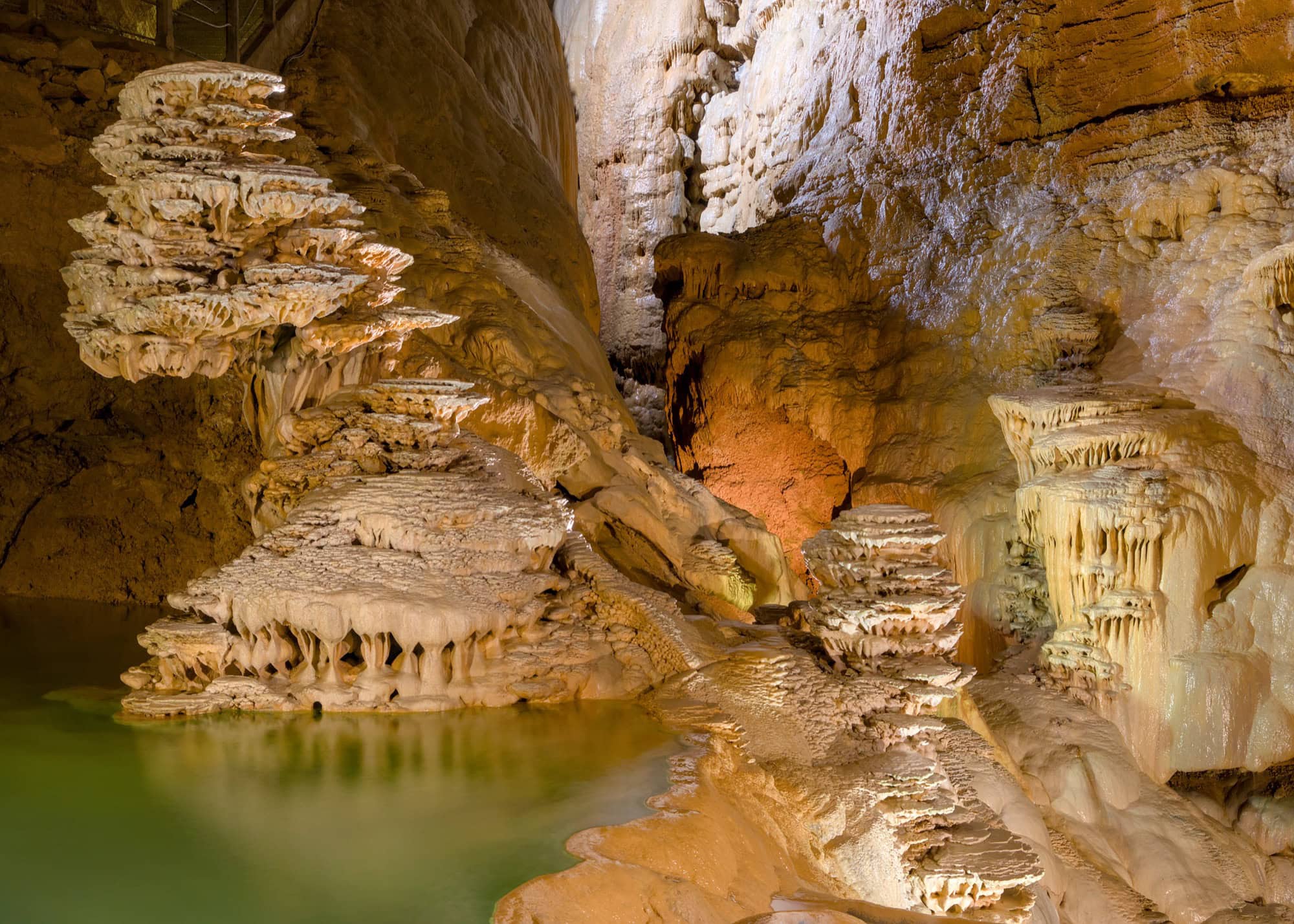
13. A Journey to the Centre of the Earth at Gouffre de Padirac
Just a short distance from Rocamadour lies another absolute one-off — the enormous circular chasm of Gouffre de Padirac, with a diameter of thirty-three metres, which looks as if hell itself caved in straight into the depths of the earth. It’s the most visited underground system in France by far, into which you descend via a tangle of historic steel stairs designed by Gustave Eiffel himself, down to a respectable depth of seventy-five metres below the surface.
Down below, a real adventure straight out of a Jules Verne novel awaits you, as you board a little boat with a ferryman and sail along a crystal-clear underground river surrounded by silence and falling drops of water. The cruise is followed by a walking loop, the highlight of which is the fascinating Great Dome Hall with its astonishing ceiling at a height of ninety-four metres. For the 2026 season, the chasm opens its gates on 28 March, and admission for an adult costs 22.50 €, with booking an exact time slot being an absolute must.
💡 Tip: If you suffer from vertigo or have knee problems, you don’t have to go down the grated stairs — you can very conveniently use a series of modern lifts that take you all the way down to the bottom of the chasm to the boats.

14. Local Cuisine and Walnut Orchards
Although this region is world-famous for its rich meaty specialities, such as duck confit or the renowned foie gras — which form a deeply rooted part of the cultural heritage, and the locals prepare them exclusively in goose fat — lovers of meat-free food will, surprisingly, also do brilliantly here. The valley is largely full of beautiful walnut orchards, and walnuts are an absolute culinary treasure. You’ll find them in fabulous tarts (tarte aux noix), in the local cheese, and in the form of a strong walnut oil that’s an absolute joy to dip your fresh morning bread into.
Another huge phenomenon is the precious black truffles, which are gathered in the local oak forests primarily from December to March using specially trained dogs, since pigs are no longer used much these days. The winter truffles give the local dishes that proper earthy, unmistakable flavour that the summer varieties sadly can’t fully imitate. Don’t forget to also try the local cheeses baked with honey and the fresh vegetables from the morning markets.
💡 Tip: Try to seek out a so-called ferme auberge, a small rural restaurant right on a farm, where they’ll prepare fantastic honest food made exclusively from local ingredients. A service charge is already automatically included in the price, so you only need to leave a few coins.
15. Discovering the Most Beautiful Villages
The Dordogne boasts an enormous number of villages that have earned the prestigious Les Plus Beaux Villages de France (The Most Beautiful Villages of France) certification, and freely exploring them without a map and without stress is a huge joy. You don’t need any precise plan — just hop in the car, turn off the busy main roads and let the narrow country lanes guide you to the most enchanting, authentic spots in the whole region.
Villages like Carennac, Autoire or Loubressac, which technically lie on the border with the neighbouring department, offer quiet cobbled squares with fountains, old stone churches and above all huge tranquillity with no onslaught of mass tourism. Stop at the little local bakery for a crusty croissant, have a strong coffee on a sunny terrace, and simply watch the slow-flowing country life that, surprisingly, has changed little here over the past centuries.
💡 Tip: When driving on these small roads, be very careful and don’t rush, because they often have no centre line, and on blind bends you’ll quite routinely come face to face with huge tractors or slow-moving caravans.
Map of points of interest for your phone
Where to Go Next from the Dordogne and Périgord
If you have more time to explore France, the region offers great options for onward trips. Your first and very logical step should be a more detailed visit to the breathtaking pilgrimage site of Rocamadour, which, for its unique atmosphere, definitely deserves more than just a fleeting stop. If, on the other hand, after all the rural calm you’re drawn to the bustle of a big city and crave a tasting of top-class wines, head west to elegant Bordeaux, which you can comfortably reach by car in under three hours.
Frequently Asked Questions
How many days do I need to visit Dordogne?
To truly enjoy the region and not spend your entire holiday just constantly driving, I recommend setting aside five to seven days. During this time, you can easily explore the main castles, go kayaking down the river, visit the prehistoric caves in the Vézère valley, and soak up the proper slow-paced atmosphere of the local weekend markets without any unnecessary stress.
Is the region suitable for traveling with children?
Absolutely yes, Dordogne is a fantastic choice for families with children, as it offers a perfect mix of history and nature. Kids will be absolutely thrilled by the giant siege catapults at Castelnaud Castle, enjoy a boat ride in the mysterious underground of Gouffre de Padirac, and easy paddling on the river.
Can you manage Dordogne without a car?
Honestly speaking, traveling without a car is a huge problem here, because public transport primarily only connects larger cities. Getting to majestic castles, remote caves, or the most picturesque villages by bus is very difficult and often involves several tedious transfers, so a car is practically a necessity here.
When does Gouffre de Padirac open in 2026?
For the 2026 season, the gates of this breathtaking underground system open precisely on March 28th. Admission during high season is 22.50 euros for an adult, and you absolutely must book tickets for a specific time slot online well in advance—at least a month ahead—otherwise you unfortunately won’t get in at all.
Should I choose Lascaux II or Lascaux IV?
If you prefer modern technology, cutting-edge interactive museum exhibitions and clear explanations in English, choose the large Lascaux IV replica. But if you’re looking for a more intimate, raw and adventurous experience by flickering torchlight and don’t mind French commentary, head to the older Lascaux II.
When are the famous markets held in Sarlat?
Markets in the historic centre of Sarlat take place regularly twice a week, on Wednesday and Saturday mornings. The Saturday market is considerably larger, occupying a large part of the town, and in addition to excellent local food, cheeses and nuts, you can also buy various souvenirs and beautiful handicrafts.
Do you need to buy tickets for attractions in advance?
During the summer months, from June to August, buying tickets online in advance is absolutely critical, especially for the Lascaux caves and the Gouffre de Padirac chasm. Capacities are strictly limited here to protect the sites, and on-site tickets are often hopelessly sold out weeks in advance.
Tips and Tricks for Your Vacation
Don’t Overpay for Flights
Search for flights on Kayak. It’s our favorite search engine because it scans the websites of all airlines and always finds the cheapest connection.
Book Your Accommodation Smartly
The best experiences we’ve had when looking for accommodation (from Alaska to Morocco) are with Booking.com, where hotels, apartments, and entire houses are usually the cheapest and most widely available.
 🚗 Car rental on the roadVerified rental cars in New Aquitaine
Search with the DiscoverCars comparison engine — it compares prices from dozens of local and international rental companies, and most bookings come with free cancellation.
Compare car prices in New Aquitaine →Don’t Forget Travel Insurance
Good travel insurance will protect you against illness, accidents, theft, or flight cancellations. We’ve had a few hospital visits abroad, so we know how important it is to have proper insurance arranged.
Where we insure ourselves: SafetyWing (simple monthly subscription) and TrueTraveller (for extra-long trips).
Find the Best Experiences
Get Your Guide is a huge online marketplace where you can book guided walks, trips, skip-the-line tickets, tours, and much more. We always find some extra fun there!