It’s become something of a family tradition for us. Every year, when the days start getting shorter in autumn and the morning fog lingers well past noon, we pack up the car and head south. Our final destination is Portugal, where we spend the winter, but we always try to see something along the way — it’s a long drive, and with a small child it’s even longer. Bordeaux, France is one of our regular stops, and there are plenty of things to do here. We’ve pulled over several times before, but this October was a bit different with our little Jonáš.
It was the first time we had our year-and-a-half-old son with us, and honestly, we were a little nervous. What is there to see in Bordeaux with a toddler when the forecast is calling for typical “April showers” weather in the middle of autumn? Our answer might surprise you: the Wine Museum was our Jonáš’s biggest hit, and I’m so glad I’d read forum discussions saying it’s well worth visiting even with small children.
Bordeaux is vibrant, playful, and surprisingly brilliant even for the tiniest travellers. (If you’re thinking about travelling with little ones in general, have a look at: Holiday with a Baby.)
The full destination guide: Nouvelle-Aquitaine — guide and what to see
TL;DR
- Book Bassins des Lumières online in advance (e.g. via GetYourGuide) — a massive digital art show inside a former submarine base that’s utterly immersive even in the worst weather, but it often sells out.
- Arrive at Place de la Bourse an hour before sunset — the light is perfect, you’ll dodge the crowds, and you’ll see magical reflections in the Miroir d’eau water mirror.
- Hit Marché des Capucins at 9 am on a Friday — if you love oysters (we’re vegetarians, so definitely not our thing), this is where you’ll find the best ones at fair prices rather than the tourist-trap markups. A tip from locals that we’re happy to pass along.
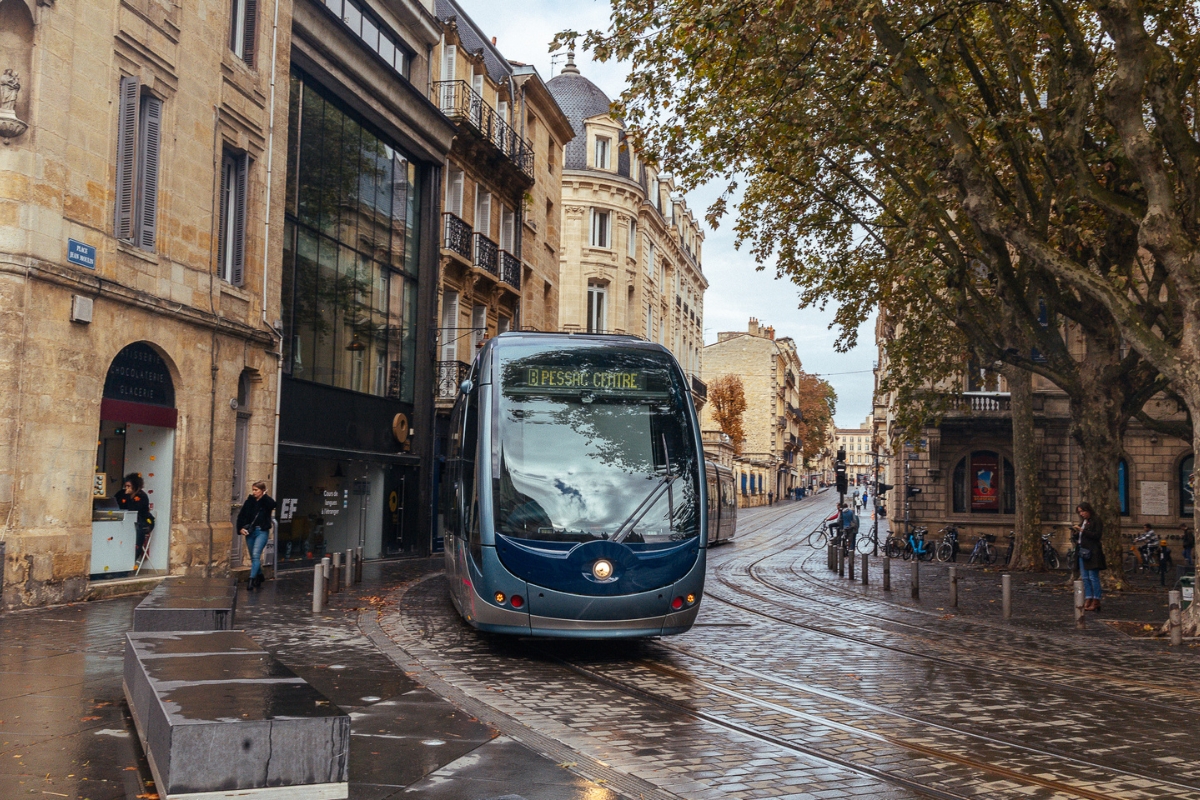
- Buy a 10-trip tram ticket from the machine right away — you’ll save 5 euros and won’t have to fuss with tickets every time you hop on (each ticket is valid for one hour).
- Skip Grand Théâtre unless you’re seeing a show — it’s stunning from outside, but the tours are often underwhelming. Better to grab a glass of wine in Chartrons and soak up the neighbourhood atmosphere instead.
Why Bordeaux looks like a postcard — and the story behind it
Bordeaux is nicknamed the “Port of the Moon” because of the characteristic crescent-shaped bend of the Garonne River. But this is more than a poetic moniker. That curve created a natural harbour that brought the city wealth for two thousand years.
All those honey-gold façades, sweeping squares, and monumental buildings aren’t a coincidence. They were built during a massive 18th-century urban overhaul, when the city literally tore down its medieval alleyways and erected what you see today. And where did all that money come from? Trade. Wine, of course, but also colonial goods — and, tragically, involvement in the slave trade.
Bordeaux was France’s second-largest slave-trading port after Nantes, with 419 to 480 documented expeditions. Between 1672 and 1837, roughly 150,000 to 200,000 Africans were deported on ships from Bordeaux. The city profited indirectly — importing sugar, coffee, rum, and cotton. Today, Bordeaux addresses this history openly and is working to reckon with its past.
Where to stay in Bordeaux — and why we recommend Chartrons
The first time we visited Bordeaux, we stayed right in the centre, near Place de la Comédie. It looked perfect — we were in the middle of everything. But we barely slept a wink. Tipsy tourists under our windows, noisy restaurant terraces until eleven at night, and then clubs thumping until three in the morning. With a toddler, it was a nightmare. That’s why we recommend the Chartrons neighbourhood. Chartrons sits north of Place de Quinconces, about a 15-minute walk from the centre. It used to be the wine merchants’ quarter — British, Irish, and Dutch traders had their warehouses and elegant townhouses here. Today it’s the most sought-after residential area in Bordeaux, a blend of bourgeois and bohemian.
Why Chartrons is brilliant:
- Peaceful, but never boring. It’s noticeably quieter than the tourist centre, yet you’ll still find excellent restaurants, cafés, and wine bars. Rue Notre Dame is lined with boutiques, vintage shops, and antique stores. On Sunday mornings, Place du Marché des Chartrons hosts a local market — smaller, calmer, and more authentic than Capucins.
- Tram B gets you everywhere. Line B runs straight through Chartrons towards the centre, to Saint-Jean station, and north to Cité du Vin and Bassins à Flots. The ride to the centre takes 5–8 minutes.
- Riverbank and park on your doorstep. You’re just minutes from Quai des Chartrons (a waterfront promenade with a playground and skatepark) and Jardin Public. With small children it’s ideal — morning in the park, tram to the centre, then back to the park or riverbank in the afternoon.
- Perfect for families. Chartrons is considered one of the best neighbourhoods for family living — pedestrian waterfront for rollerblading, a skatepark, calm atmosphere. You’ll see locals with their kids here, not hordes of tourists.
- Reasonable prices. Yes, Chartrons is a “posh area”, but it’s still cheaper than Saint-Pierre or the Grand Théâtre surroundings. You’ll find quality Airbnbs, smaller hotels, and lovely B&Bs. For more options, check Booking.com.
Specific accommodation tips in Chartrons
- Casa Blanca — cosy, stylish B&B with excellent breakfast, a few minutes’ walk from Place du Marché des Chartrons
- Chambres à Bord’O — beautiful B&B with spacious rooms, right by tram line A
- Hotel Indigo — a livelier hotel closer to the waterfront, if you prefer a hotel experience over a family guesthouse
- Mercure Chartrons — four-star hotel with great breakfast, good for families and groups, though the rooms could use a refresh
- Eklo — eco-friendly hostel with an outdoor bar, if you’re on a tighter budget
Other things to consider
Parking: If you’re driving (as we do on our way to Portugal), parking in Chartrons is far easier than in the centre. Some hotels have their own car parks or can advise on long-term parking. Street parking is metered during the day, but often free in the evenings and at weekends.
Safety: Chartrons is one of the safest and quietest neighbourhoods in Bordeaux. We walked around with a pushchair in the evenings and never once felt uneasy.
Alternatives if Chartrons is fully booked
Bacalan / Bassins à Flots: North of Chartrons, even quieter, with a grungy vibe and modern architecture around the docks. Close to Cité du Vin and Bassins des Lumières. Radisson Blu or Seeko’o Hotel are solid choices here.
La Bastide (right bank): A calmer neighbourhood on the other side of the river with good prices and an authentic atmosphere. Tram A or D gets you to the centre in 10 minutes. A great option for families with a car.
Avoid: Cours de la Marne after dark — it’s not the safest area. Saint-Michel has charm, but be cautious there at night.
37 things to see and do in Bordeaux, France
Let’s dive into what you should see and do in this beautiful city of Bordeaux.
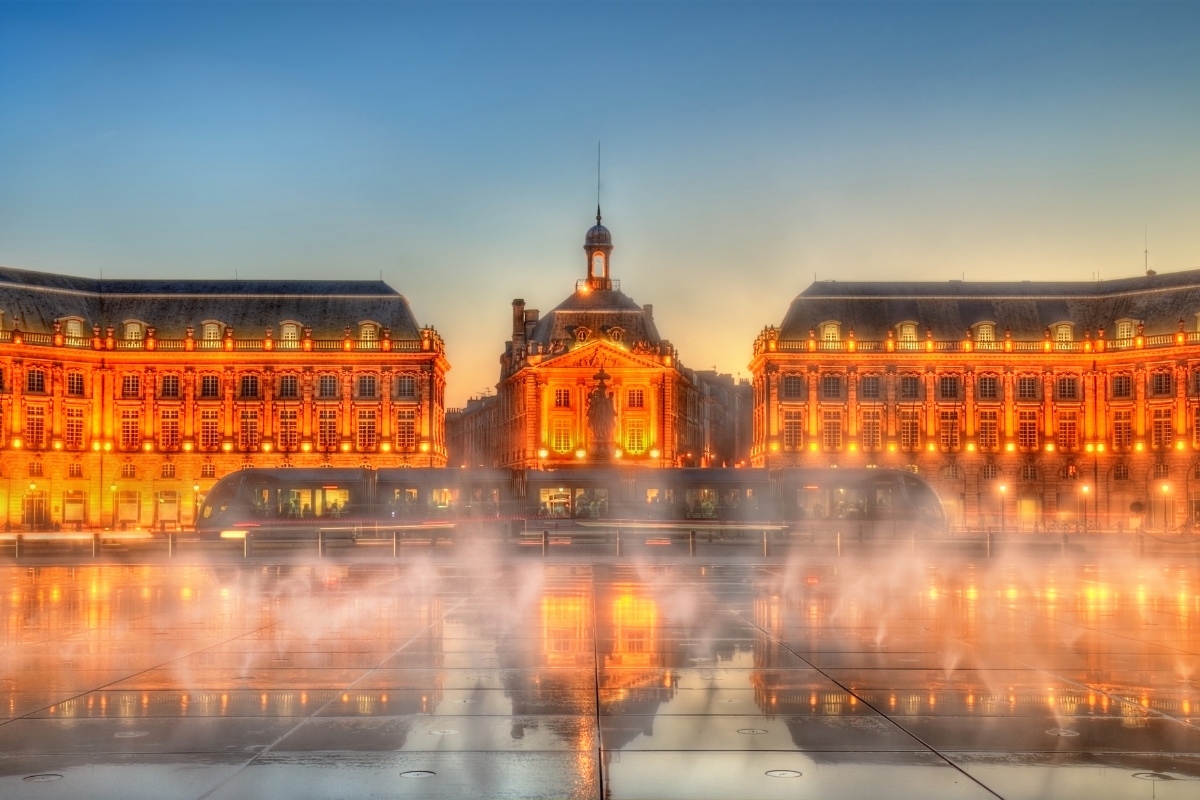
1. Place de la Bourse and Miroir d’eau — but come at the right time
This is THE spot. Place de la Bourse was built specifically to impress foreign merchants arriving by boat on the Garonne. Its message was crystal clear: “Look how wealthy we are.”
In front of the square lies the Miroir d’eau — the world’s largest water mirror. It’s a shallow pool (about 2 cm of water) that creates perfect reflections of the palace. Every fifteen minutes, a mist sprays above the water — lovely in summer, though in October we were glad to have our jackets on.
Practical tip: Arrive an hour before sunset. The light is at its best and you’ll avoid the tourist crowds. In summer, locals gather here in the evening, sit by the river, and sip wine — join them. In winter, note that the Miroir d’eau may be out of service for maintenance, typically November to March.
Time on site: A good 45 minutes to an hour. Don’t expect information boards or interactive features though — it’s simply a square and a reflecting pool.
2. Bassins des Lumières
Bassins des Lumières is probably the most incredible place to spend time when it’s pouring outside. It’s a former World War II submarine base built by the Germans. Enormous concrete halls several storeys high, with four massive water-filled basins in the middle. And onto all those walls and ceilings, they project dynamic digital art shows accompanied by music.
When we visited, the exhibition was dedicated to the Impressionists. The walls came alive with giant Monets and Renoirs that shifted and morphed in time with the music. Our son was absolutely transfixed — mouth wide open. So were we.
Practical tips: Book your tickets in advance online via GetYourGuide — the venue often sells out. Tickets cost around 14–16 euros; children under 5 go free. It’s chilly and damp inside (it’s still a submarine base, after all), so bring a jumper. The show lasts about 50 minutes, but you can stay as long as you like. Allow 1.5–2 hours in total.
Time on site: 1.5–2.5 hours. Don’t eat right before — there’s no food inside and nowhere to pop out for a snack.
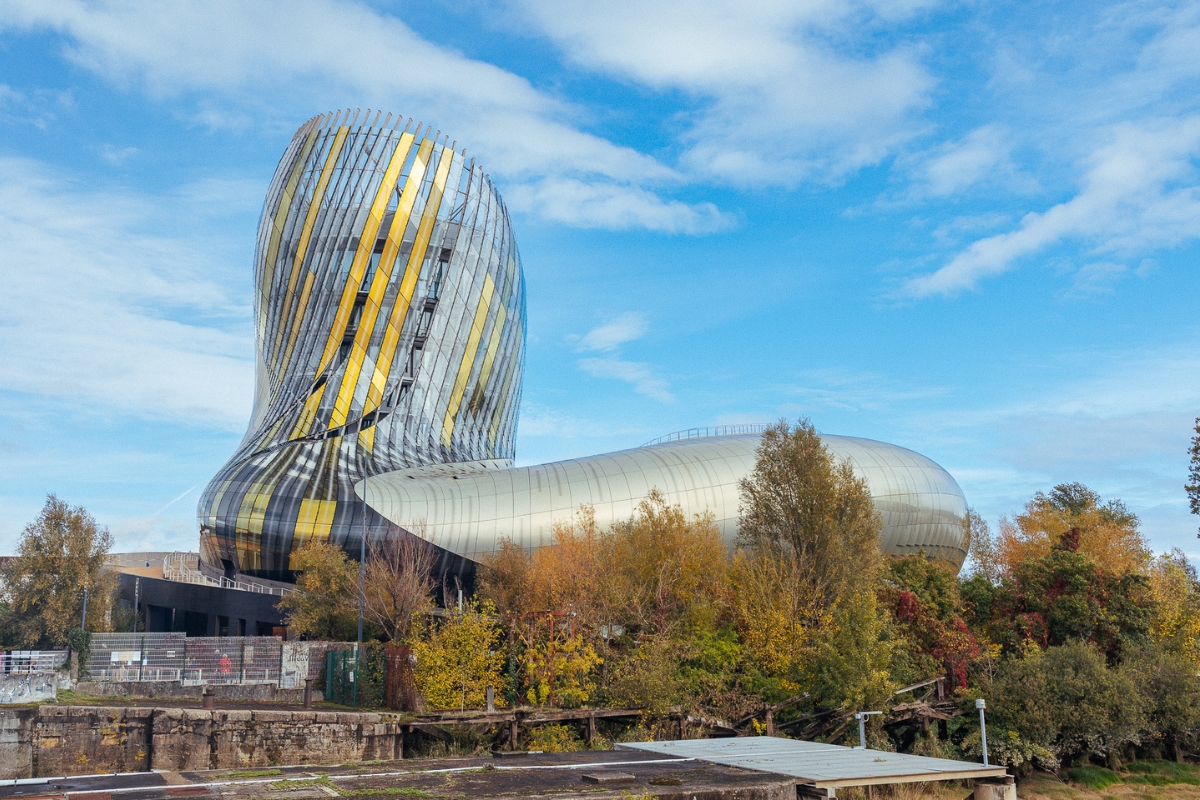
3. Cité du Vin — understanding wine (no snobbery required)
A modern museum of wine culture shaped like a decanter that even the smallest visitors will love (our 18-month-old son was absolutely thrilled). Inside you’ll find an interactive exhibition on the history of wine, winemaking around the world, and tastings. At the end, you take the lift up to a panoramic viewing bar where a glass of wine and sweeping views of Bordeaux are included in the ticket price.
Practical tips: The Bordeaux CityPass includes admission, BUT only before noon. If you want to visit in the afternoon, you’ll need to pay extra. Tickets cost around 22 euros. The tasting in the viewing bar is included, but you choose from a limited selection of wines based on what’s currently available.
The museum is well done but quite large, and it can be exhausting. If you’re not a hardcore wine enthusiast, head straight for the sections that interest you and don’t wear yourself out reading every single panel.
Time on site: 2–3 hours.
4. Walking the UNESCO “Port of the Moon” trail
UNESCO recognised Bordeaux as an “outstanding urban and architectural ensemble” — meaning the entire historic centre is effectively one giant monument. The trail runs along the river from Pont de Pierre (the Stone Bridge) all the way to Chartrons.
What you’ll see: 18th-century honey-coloured façades (limestone quarried from the region), wide promenades along the Garonne where port warehouses once stood, Place de la Bourse, Porte Cailhau (a medieval gate), and the narrow streets of the Saint-Pierre quarter.
Practical tip: Start at Porte Cailhau and walk towards Place de la Bourse, then continue along the river northward. The waterfront is flat and smooth — ideal for pushchairs. You’ll pass plenty of cafés and wine bars along the way.
Time for the walk: 2–4 hours depending on how often you stop. With a toddler, allow for the longer version — they’ll want to run, rest, eat…
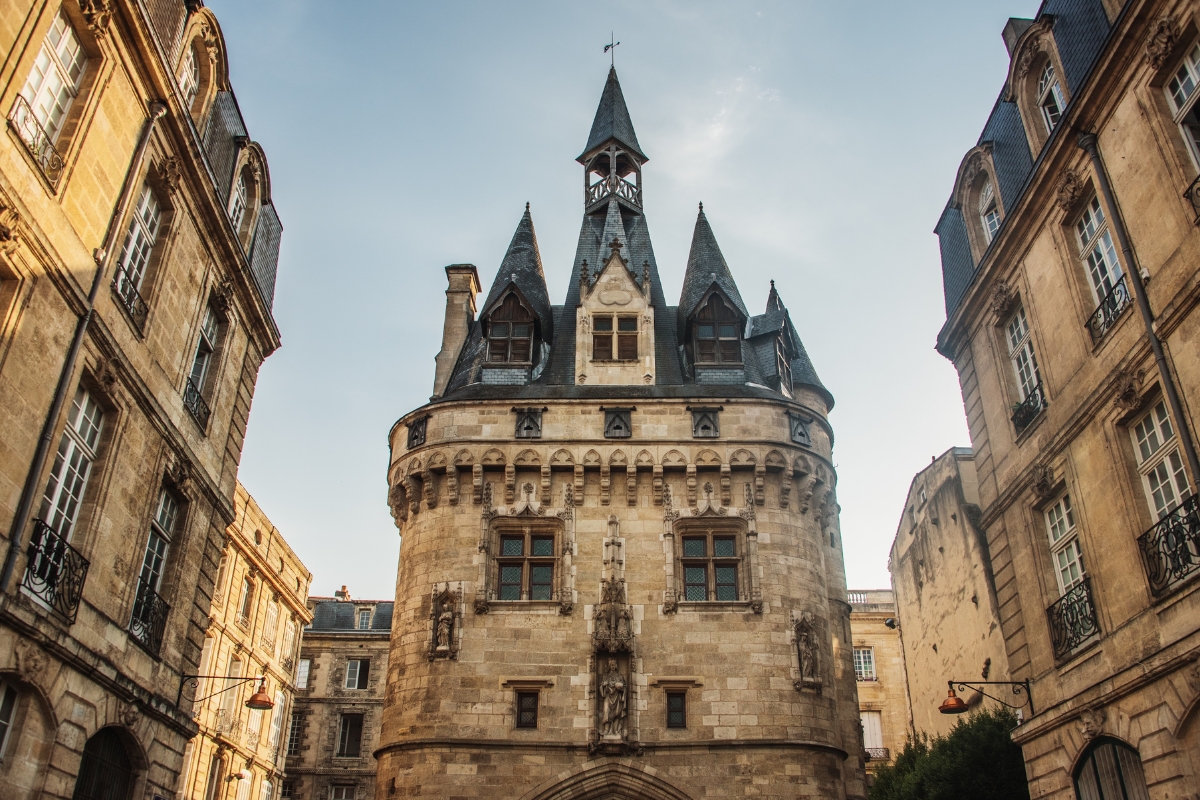
5. Porte Cailhau — a slice of the Middle Ages
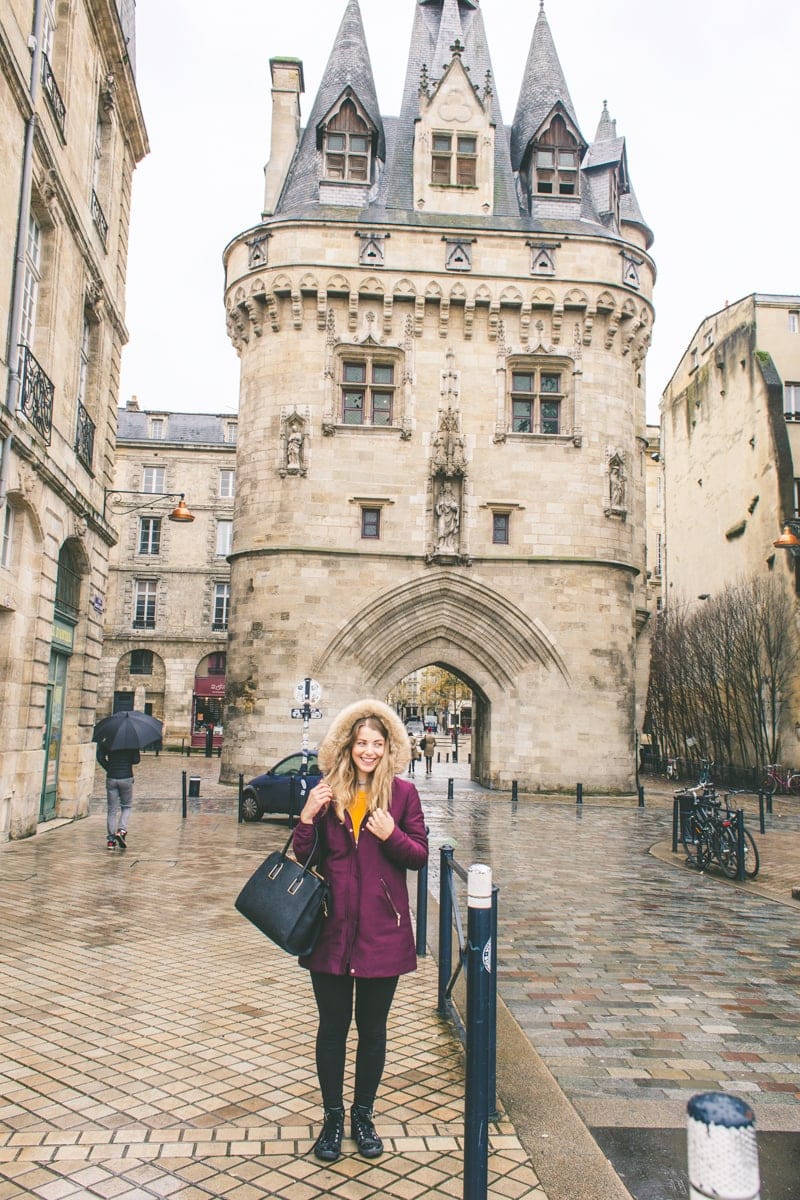
One of the few surviving medieval landmarks. The gate was built in 1495 to celebrate King Charles VIII’s victory at the Battle of Fornovo. It’s a charming little Gothic turret-topped structure that contrasts beautifully with the neoclassical Bordeaux surrounding it.
You can go inside and climb to the top (232 steps) for a view, but honestly — the view isn’t spectacular and it’s quite narrow and dimly lit. Worth admiring from the outside though.
Time on site: 15–30 minutes from outside, 60–90 minutes if you go inside.
6. Grosse Cloche — the bell that dictated the grape harvest
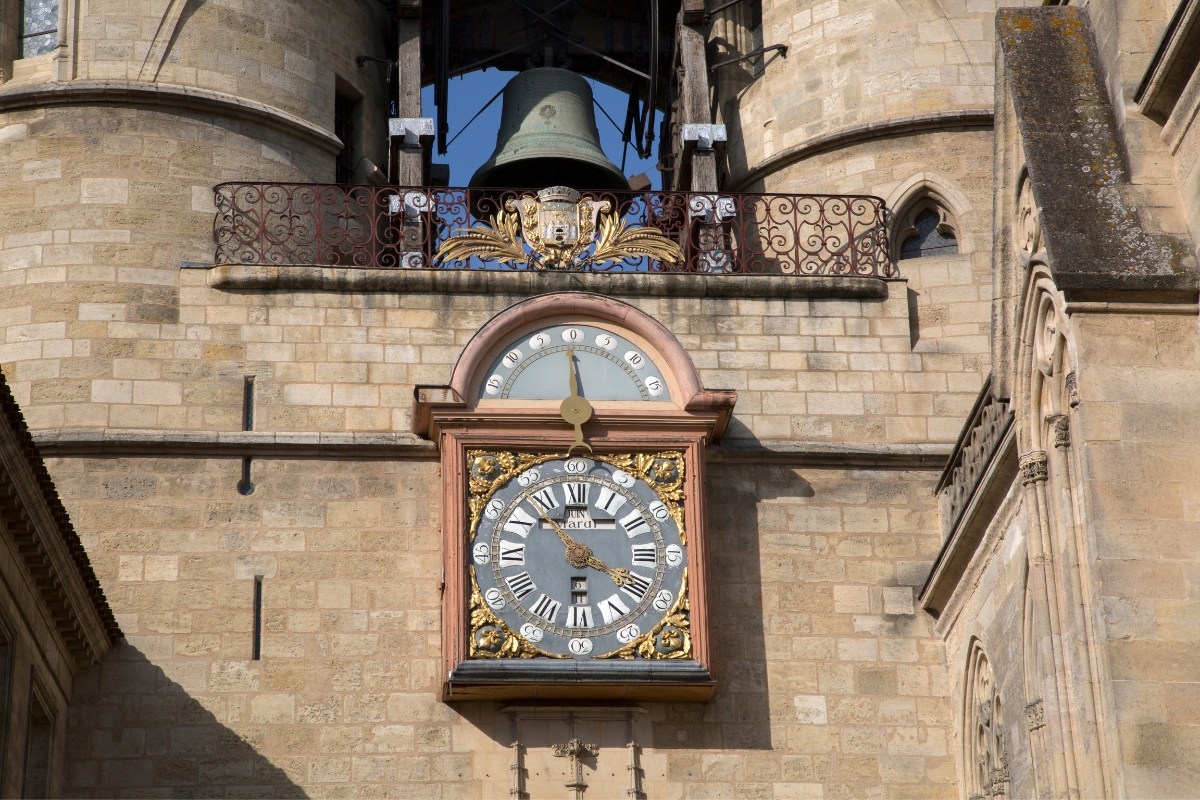
Grosse Cloche is a medieval gate topped with an enormous bell. It served as a city fortification gate and the belfry of the old town hall. The bell, Armande-Louise, dates from 1775 and weighs a hefty 8 tonnes.
The city magistrates used this bell to signal the start of the grape harvest — winemakers weren’t allowed to begin picking until Grosse Cloche had rung. It also served as a fire alarm. Today it rings at noon on the first Sunday of each month and on public holidays.
Practical tip: The best view is from Rue Saint-James. You can’t go inside — it’s an exterior-only attraction.
Time on site: 20–30 minutes.
7. Grand Théâtre — stunning outside, skip the tours
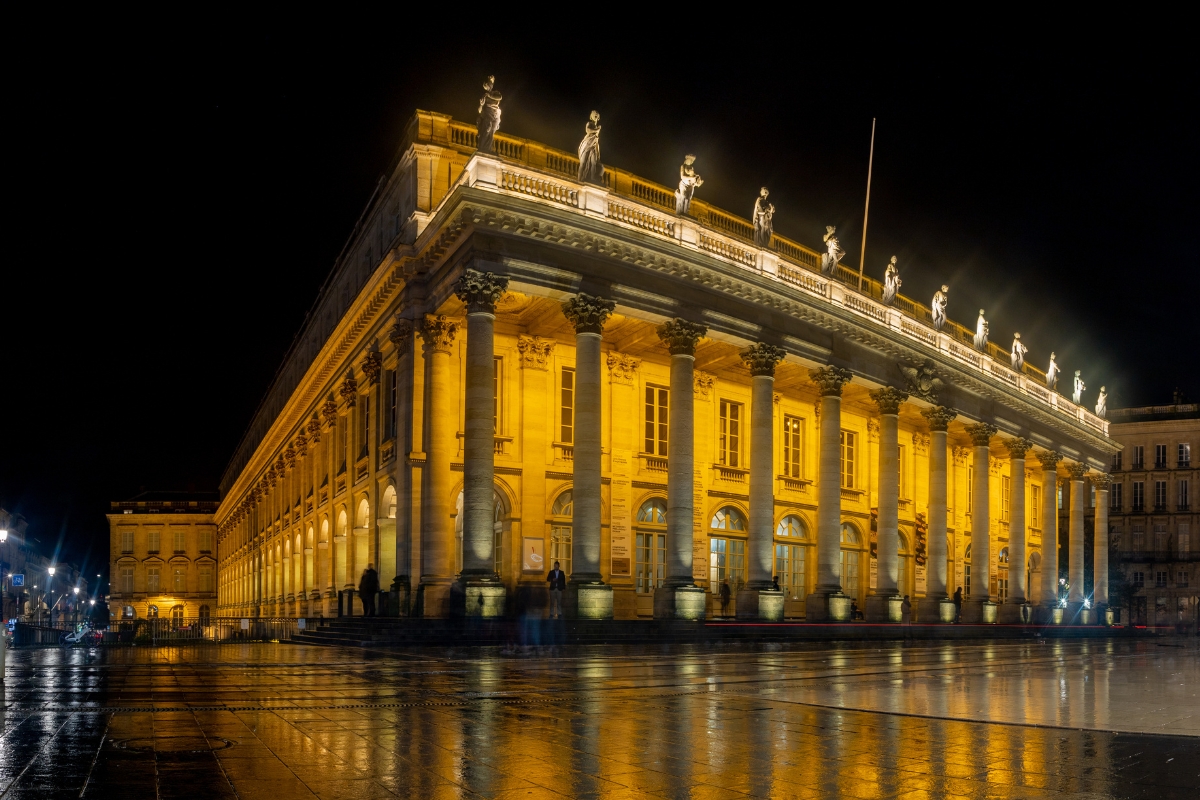
A neoclassical theatre from the late 18th century with twelve Corinthian columns and statues on the roofline. It’s an emblem of Bordeaux — the city’s official tourist board says as much.
But: The guided tours often disappoint. You go in expecting something on par with the Paris Opera, but the tour is fairly brief and there isn’t much to see unless you’re attending a performance.
Practical tip: Admire it from the outside, snap your photos, and then treat yourself to a glass of wine at one of the nearby wine bars instead. If you do want to go inside, try to get tickets for an opera or ballet — that’s a completely different experience from a standard tour.
Time on site: 15 minutes from outside.

8. Tour Pey-Berland — the best view of the city
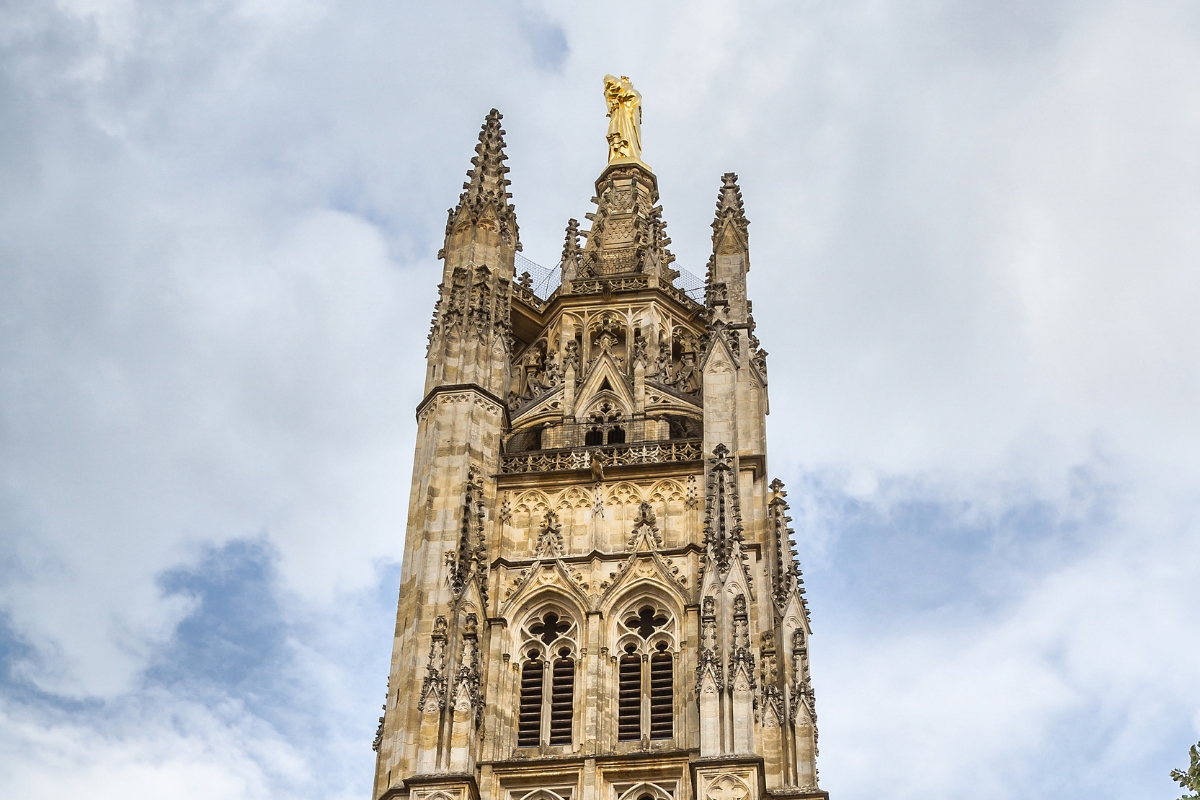
A 15th-century Gothic bell tower, built separately from the main cathedral over fears that the bell vibrations might damage the structure. Climb 229 steps and you’re rewarded with a panoramic view over all of Bordeaux.
Practical tips: Tickets are sold online with timed slots due to limited capacity — book ahead. Expect to pay around 7–8 euros. There’s no lift. It’s narrow at the top and can be windy. Not feasible with a pushchair or very small children.
Time on site: 60–90 minutes including queuing and the climb.
9. Cathédrale Saint-André
A Gothic cathedral dedicated to Saint Andrew, part of the UNESCO World Heritage Site. Inside, in 1137, the wedding of Eleanor of Aquitaine and the future King Louis VII took place.
Practical tip: Free entry. Lovely for a quick visit, but unless you’re a devoted fan of Gothic cathedrals, 20 minutes will do.
Time on site: 20–45 minutes.
10. Chartrons — where wine was traded and today you’ll find the best brunch
The historic wine merchants’ quarter. From the 17th century, foreign traders — mainly from Britain, Ireland, and the Netherlands — came here, building warehouses for wine barrels and elegant townhouses.
Today Chartrons is a neighbourhood brimming with boutiques, antique shops, cafés, and wine bars. It’s calmer than the tourist centre but still within walking distance of everything.
What to do there: On Sunday mornings there’s a market (until 14:30) that’s smaller and far less touristy than Capucins. Pop into a café for brunch. Wander along Rue Notre Dame for vintage clothing and furniture shops.
Practical tip: If you’re looking for accommodation, Chartrons is an excellent choice — quieter than the centre, cheaper than the tourist quarters, and tram B gets you anywhere.
Time in the neighbourhood: 2–4 hours.
11. Darwin Ecosystem — alternative Bordeaux on the right bank
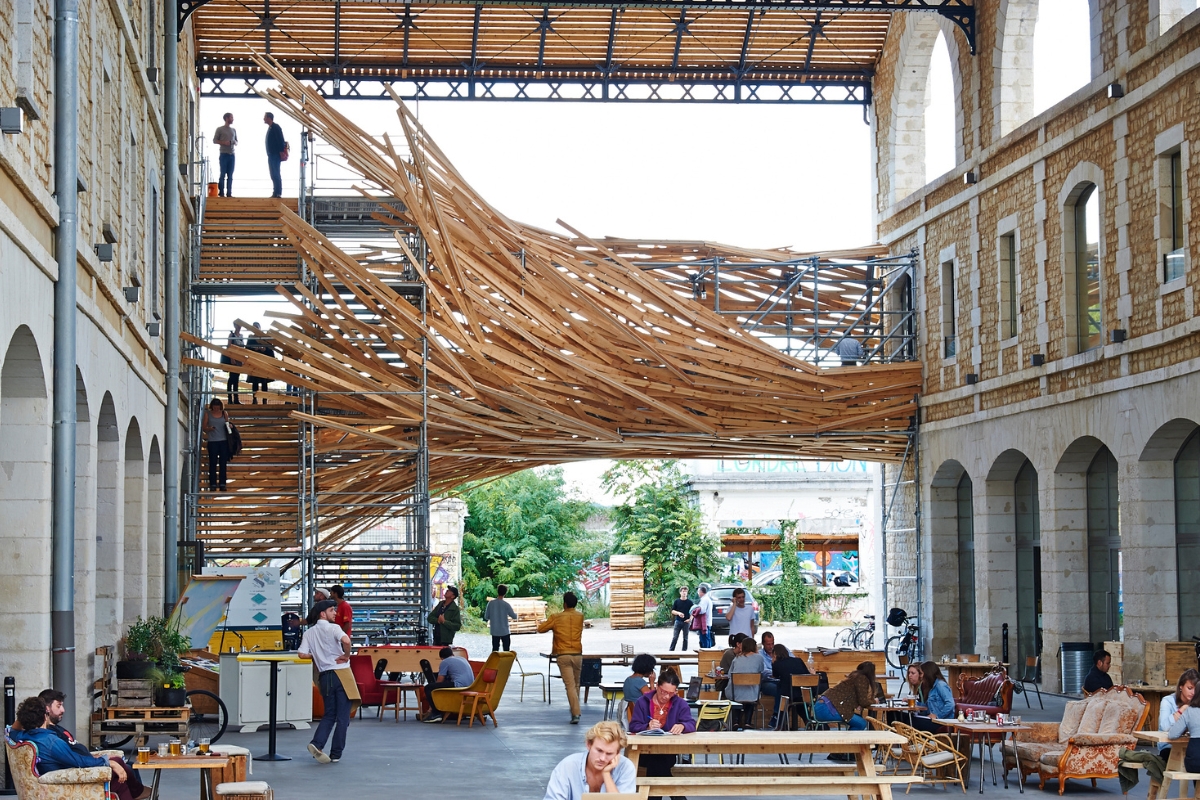
Former military barracks (Caserne Niel), now an eco-rehabilitated hub packed with street art, startups, a skatepark, organic restaurants, and cultural events.
Think of it as Bordeaux’s answer to Brooklyn — a place where locals hang out, not tourists. You’ll find co-working spaces for sustainability-focused social enterprises, bistros with locally sourced produce, galleries, concerts, and markets.
What to do there: Explore the street art (the entire complex is covered in graffiti by leading artists), grab lunch at an organic bistro, and on Saturday afternoons there’s often a farmers’ market. If you have kids, the skatepark is open and free.
Practical tip: Darwin is on the right bank of the river (La Bastide quarter) — take tram line D to the Belvédère stop. It’s about 10 minutes from the centre.
Time on site: 1.5–3 hours.
12. Saint-Pierre — the oldest quarter
The oldest neighbourhood in Bordeaux. Narrow alleyways, carved-stone buildings, the little church of Saint-Pierre, and plenty of restaurants and wine bars.
In the evening, Saint-Pierre buzzes with life — restaurant terraces are packed, couples stroll through the lanes with wine in hand. It’s lively, loud, and fun. And, yes, a bit touristy.
Practical tip: If you’re looking for accommodation, Saint-Pierre offers an excellent location — you’re in the heart of everything. But expect noise at night, especially at weekends.
Time in the quarter: 1–3 hours, depending on whether you’re just strolling or sitting down for dinner.
13. Rue Sainte-Catherine — the shopping spine
Often cited as the longest pedestrian shopping street in Europe, stretching 1.2 km. It connects Place de la Victoire with Place de la Comédie (where the Grand Théâtre is).
You’ll find all the usual high-street chains — Zara, H&M, Sephora, and so on. Nothing extraordinary, but handy if you need to pick up clothes or toiletries.
Time on the street: 30 minutes–2 hours, depending on whether you’re actually shopping.
14. Jardin Public
A city park dating from 1755 with a pond, mature trees, and a blissful sense of calm. Inside you’ll find the Musée d’Histoire Naturelle, which has its own Musée des Tout-Petits section for children under 6 — an interactive exhibition full of animals, colours, and tactile elements.
In summer (July and August), the park hosts Guignol puppet shows. There’s a playground, benches by the pond, and locals come here with a baguette and cheese for a picnic.
Practical tip: It’s at its prettiest in the afternoon when the sun filters through the trees. Bring your own food and drink — the park café is overpriced and underwhelming.
Time in the park: 1–2 hours.
15. Quai des Chartrons and the riverfront — the best spot for a family walk
The waterfront along the Garonne stretches for several kilometres. It’s flat, smooth, and ideal for pushchairs, scooters, and bikes. Locals jog, rollerblade, and walk their dogs here.
In Chartrons (the northern stretch of the waterfront) there’s a children’s playground and skatepark right by the river. You’ll find benches where you can sit and watch the boats go by.
Practical tip: The prettiest section runs from Place de la Bourse northward towards Chartrons. At sunset it’s absolutely magical.
Time for the walk: However long you fancy — could be 30 minutes, could be 3 hours.
16. Musée d’Aquitaine
A museum covering the history of Bordeaux and Aquitaine “from prehistory to the 21st century”. You’ll find prehistoric artefacts, Roman mosaics, medieval sculptures, exhibits on colonial trade, and modern history.
There’s an entire section dedicated to the slave trade — unvarnished, with hard facts and figures. It’s an important thing to see if you want to understand where Bordeaux’s wealth really came from.
Practical tip: The museum is large. If you don’t have an entire afternoon, focus on the sections that interest you most. A solid combination: Roman Bordeaux + the 18th century + the slave trade. Free entry for under-18s; adults around 5 euros.
Time in the museum: 1.5–3 hours.
17. CAPC — contemporary art in a former colonial warehouse
The contemporary art museum is housed in the former “Entrepôt Lainé” warehouse, where colonial goods — coffee, cocoa, cotton — were once stored. The building itself is striking — a cavernous space with concrete pillars.
The exhibitions rotate, so you never know what you’ll find. If you’re into contemporary art, it’s a must. If not, give it a miss.
Time in the museum: 1.5–2.5 hours.
18. Museum of Illusions — rainy day fun with kids
An interactive museum packed with optical illusions, mirrors, and brain-teasers. Kids love it, and adults have a good laugh too.
Practical tip: It’s a small museum — you can see everything in about an hour. Tickets cost around 12–15 euros. A great shout for a rainy afternoon.
Time in the museum: 1–1.5 hours.
19. Marché des Capucins — the “belly of Bordeaux”
A market with nearly 200 years of history — the liveliest food spot in the city. The covered hall is packed with stalls selling fresh vegetables, fruit, meat, cheese, fish, and oysters.
But Capucins isn’t just about shopping. It’s a social hub where locals come for a morning coffee, lunch, oysters, and white wine. In the middle of the market, several stalls have high stools where you can sit, eat fresh oysters (6 euros a dozen), sip an Entre-Deux-Mers, and watch the bustle around you.
Practical tips: The best time is Friday morning around 9–10 am — fresh produce, free tables, authentic atmosphere. Weekends are great too, but noticeably busier. Some stalls close in the afternoon.
Bring cash — not all stalls take cards. And come hungry.
Time at the market: 1–3 hours, depending on whether you’re just browsing or eating too.
20. Canelé — the city’s sweet icon
A small dessert with a caramelised, almost burnt crust and a soft, custardy centre flavoured with rum and vanilla.
Its history is hazy — one legend has it that 18th-century nuns from the Annonciades convent created it. They used egg yolks (the whites were used for clarifying wine), vanilla, and rum from the port. The batter needs to rest for 24–48 hours before being baked in special copper moulds greased with beeswax at very high temperatures.
Where to buy canelé: Almost any bakery. The most famous names are Baillardran and La Toque Cuivrée, but honestly — regular bakeries often have fresher and better canelé. Expect to pay around 1.50–2 euros each.
Practical tip: Canelé must be fresh — ideally baked that day, two days old at most. Don’t buy them from tourist shops where they’ve been sitting for a week. And watch out for “luxury” brands — there have been media exposés about frozen canelé being sold as fresh.
21. Oysters and white wine — a ritual you must experience
Southwest France is an oyster paradise. Bordeaux is just an hour from the Arcachon Bay, where they’re farmed. At Capucins you can get a dozen fresh oysters for 6–8 euros and a glass of white Entre-Deux-Mers for 3–4 euros.
How it works: Sit down at a stall, order “une douzaine d’huîtres” (a dozen oysters) and “un verre de blanc” (a glass of white). You’ll get a plate of oysters, a lemon, and shallot vinegar. Squeeze lemon over them (or don’t — it’s up to you), tip them into your mouth, and wash them down with wine.
Time for the experience: 30–60 minutes.
22. Entrecôte à la Bordelaise — where to try it
Beef entrecôte in a sauce of red Bordeaux wine, shallots, bone marrow, and butter. Served with chips or mashed potatoes.
Where to get a good one:
- Brasserie Bordelaise (50 Rue Saint-Rémi) — a classic, focused on quality meat
- Le Bouchon Bordelais (2 Rue Courbin) — stone walls, red accents, fantastic atmosphere
- Filoche (32 Rue des Argentiers) — a tiny restaurant with just 14 seats, famous for its “boeuf à la bordelaise”
Price: Budget around 20–30 euros for a main course.
23. Where to eat well without breaking the bank
- Petit Mignon (33 Rue Saint-Rémi) — cosy, local vibe, famous for its burger in cream sauce and steak tartare
- Les Drôles (21 Rue Saint-Rémi) — traditional French cooking with a homely feel, proper comfort food
- Marché des Capucins — where else? The cheapest and most authentic food in Bordeaux
24. Saint-Émilion — a UNESCO wine landscape
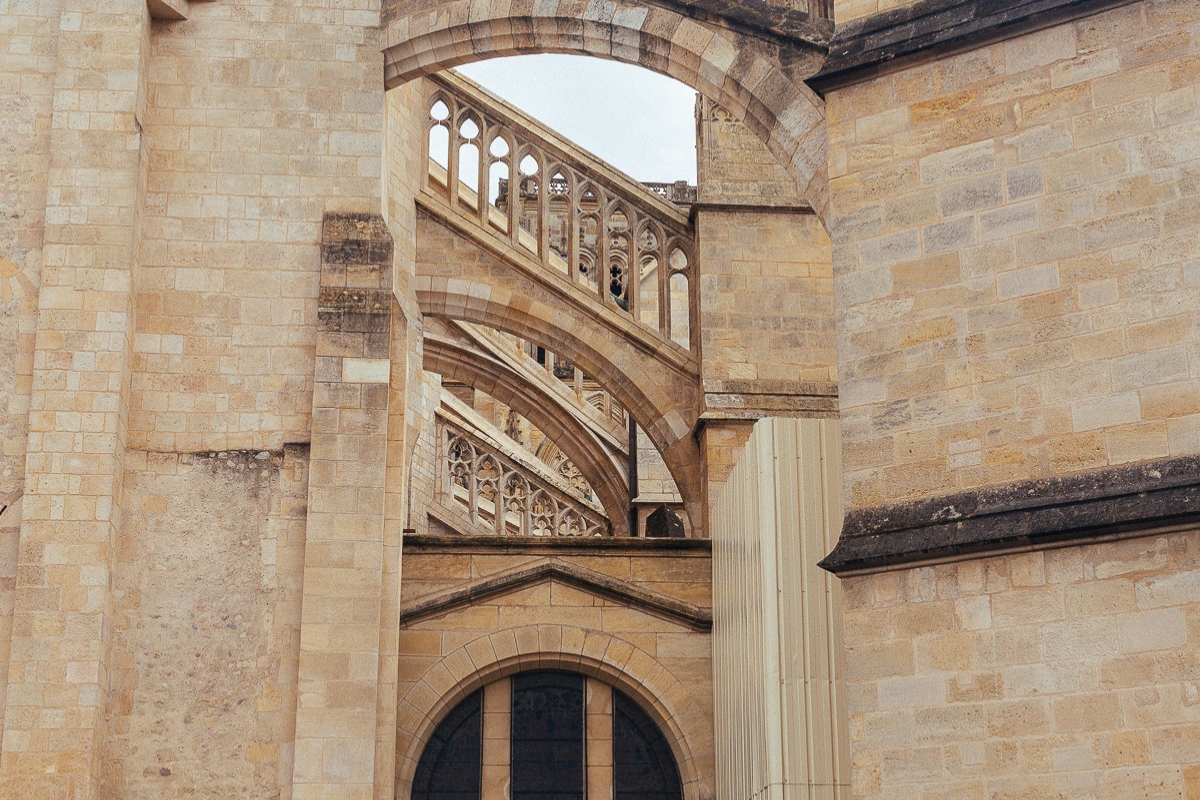
A medieval town nestled among vineyards, about an hour by car or train from Bordeaux. The entire area is a UNESCO cultural landscape — vines have been grown here since Roman times.
What to do: Wander the medieval lanes, visit the monolithic church carved into the rock, taste wines in the cellars, and take in the views across the vineyards.
Practical tips: Book tastings in advance via GetYourGuide, especially at weekends and in summer — it gets packed. Some châteaux offer English-language tours. Full-day organised trips from Bordeaux cost around 60–100 euros including transport and tastings.
If you’re driving yourself, parking in the centre of Saint-Émilion is limited — arrive early in the morning.
Time for the trip: A full day.
25. Dune du Pilat — the tallest dune in Europe
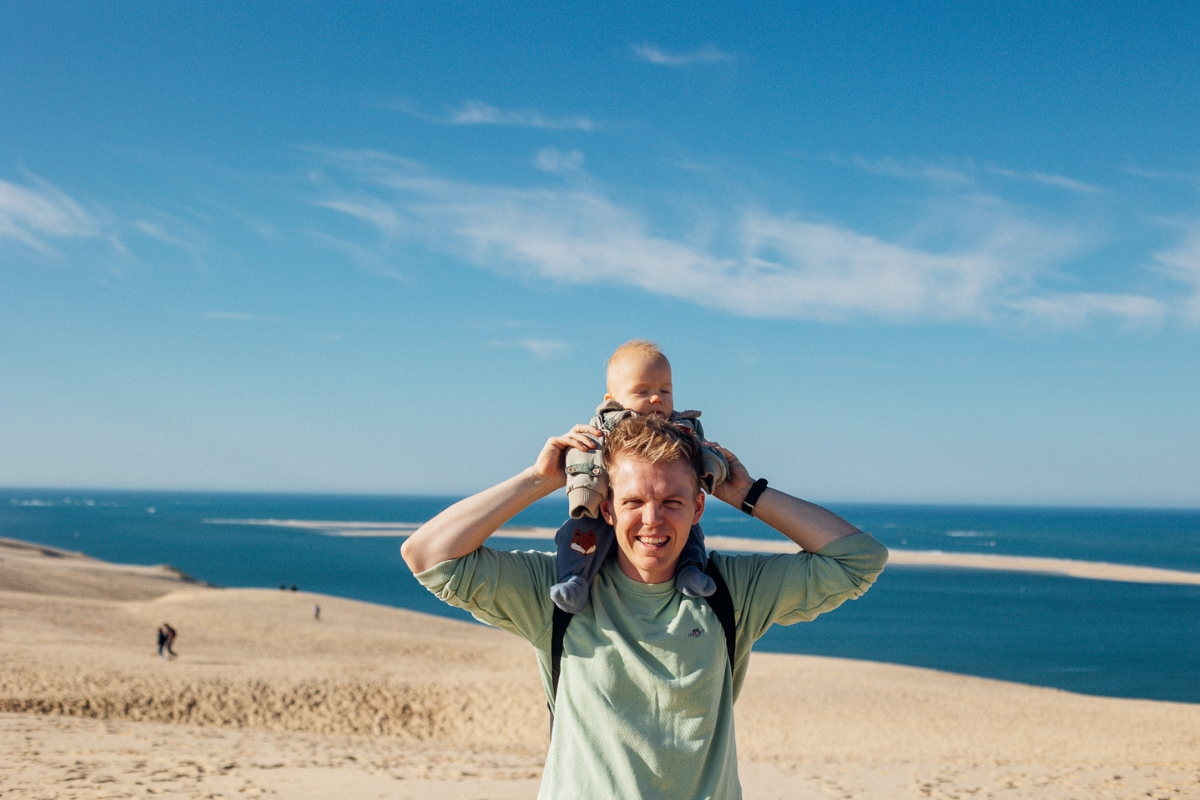
A colossal sand dune on the Atlantic coast, roughly 110 metres high and 2.7 km long. Official sources list it as the tallest dune in Europe.
What to do: Scramble up the dune (hard work, especially in hot weather), gaze at the ocean and the pine forest, and swim in the Atlantic (if it’s warm enough).
Practical tips: It’s about an hour’s drive from Bordeaux, heading towards Arcachon. Parking is paid (around 6–8 euros). Bring water and sunscreen — there’s no shade on the dune. If you don’t have a car, organised day trips from Bordeaux are available.
Sunset is the most beautiful time, but also the busiest. If you can, arrive mid-morning or early afternoon.
Time for the trip: Half a day to a full day (depending on whether you combine it with Arcachon, which is right next door).
26. Médoc Route — vineyards and châteaux
The famous wine route along the left bank of the Garonne, north of Bordeaux. Here you’ll find the most iconic châteaux — Château Margaux, Château Latour, Château Lafite Rothschild — all from the legendary 1855 Classification.
What to do: Drive along the Route des Châteaux (D2), stopping at estates for tastings, and photograph the vineyards and grand buildings.
Practical tips: You’ll need a car. Some châteaux require reservations weeks in advance, particularly the most famous ones. Tastings can be pricey — budget 20–50 euros per château.
If you’d rather not drive (because of the wine), organised tours are available. Or hire a driver through a local taxi service.
Time for the trip: A full day.
27. Arcachon and Cap Ferret — beaches and oysters
Arcachon Bay is an hour from Bordeaux — a seaside resort with belle époque villas, beaches, and some of the finest oyster farms in France. It pairs perfectly with a visit to the nearby Dune du Pilat for a full day out on the Atlantic coast.
Map of points of interest for your phone
Tips and Tricks for Your Vacation
Don’t Overpay for Flights
Search for flights on Kayak. It’s our favorite search engine because it scans the websites of all airlines and always finds the cheapest connection.
Book Your Accommodation Smartly
The best experiences we’ve had when looking for accommodation (from Alaska to Morocco) are with Booking.com, where hotels, apartments, and entire houses are usually the cheapest and most widely available.
 🚗 Car rental on the roadVerified rental cars in New Aquitaine
Search with the DiscoverCars comparison engine — it compares prices from dozens of local and international rental companies, and most bookings come with free cancellation.
Compare car prices in New Aquitaine →Don’t Forget Travel Insurance
Good travel insurance will protect you against illness, accidents, theft, or flight cancellations. We’ve had a few hospital visits abroad, so we know how important it is to have proper insurance arranged.
Where we insure ourselves: SafetyWing (simple monthly subscription) and TrueTraveller (for extra-long trips).
Find the Best Experiences
Get Your Guide is a huge online marketplace where you can book guided walks, trips, skip-the-line tickets, tours, and much more. We always find some extra fun there!