If you’re looking for a spot in the south of France with incredible energy, forget the overcrowded and overpriced Riviera for a moment. Just across the Rhône River a completely different world begins, called Occitania, and its beating heart is right here in Montpellier, France. This is a city with a huge student population, which gives it an unbelievable buzz that will pull you in instantly. You won’t find the polished boutiques of Cannes here, but instead medieval lanes built from sun-soaked limestone, rugged castles in the surrounding hills, and beaches where, instead of Hollywood stars, you’ll meet local families with picnic baskets. Travellers often call this region “the other Riviera,” because it’s far more authentic and a lot easier on the wallet.
In this article you’ll find 13 things to see and do in Montpellier to make the most of your visit. Together we’ll wander through the historic Écusson quarter, check out the fantastic modern district of Antigone, and I’ll show you the easiest way to reach the nearby beaches. You’ll also learn where to base yourself strategically, the best time to go so you can dodge the summer inferno, and which day trips are absolutely worth adding to your itinerary.
TL;DR
- Car-free historic centre: The Écusson quarter is a vast pedestrian zone full of narrow lanes where you’ll happily get lost among boutiques and cafés.
- Architectural contrasts: From the historic Place de la Comédie you flow seamlessly into the modern Antigone district and on to the futuristic L’Arbre Blanc building.
- The oldest medical school: The city boasts a university dating back to the 12th century, where the famous Nostradamus once studied.
- Beaches within reach: You can get to the seaside resorts of Palavas-les-Flots or Carnon from the centre by bike or tram in under half an hour.
- Transport as an experience: The local tram network is a work of art, with carriages designed in part by the famous fashion house Christian Lacroix.
- Brutal summer heat: In July and August temperatures routinely hit 40 °C, so it’s best to plan your visit for spring or autumn.
- Day trip to Sète: This nearby port town, nicknamed the Venice of Languedoc, offers waterways and summer jousting tournaments on boats.
The full destination guide: Occitania — guide and what to see
When to Visit Montpellier
Timing your trip to Occitania is absolutely key, because the south of France can be tricky and doesn’t forgive mistakes. The best time to visit is clearly from April to the end of June, or later on throughout September and October. During these spring and autumn months you’ll enjoy very pleasant temperatures between 20 and 28 °C, everything is in bloom, and the days are long enough for endless evening strolls. The sights are also far quieter, so you can enjoy the city in total comfort without crowds or the stress of constantly hunting for a parking spot.
On the other hand, steer clear of July and August unless you’re a genuine lover of extreme heat. Summer temperatures in the Languedoc region are often downright brutal, with daytime highs regularly hitting 35 to 40 °C. Being outdoors at midday is physically exhausting, and walking through the baking lanes of the old town borders on pure masochism. During this period the local authorities frequently issue official warnings about dangerous heatwaves and the threat of wildfires. On top of that, August brings the nationwide French holidays, so you’ll need to brace yourself for jam-packed park-and-ride car parks and the absolute necessity of booking a table at any decent restaurant well in advance.
If you want to experience that genuine student atmosphere at its best, head over in October. After the long summer lull the city is once again full of young people, the cafés are bursting at the seams, and there are plenty of great cultural events on. The winter months in Montpellier are very mild and temperatures rarely drop below 10 °C, but a sharp, unpleasant wind often blows in off the sea. September and October are also a fantastic choice for wine lovers, as the entire region is in full harvest and the colours of the autumn vineyards under a blue sky are absolutely breathtaking.

Where to Stay in Montpellier
💡 Tip for accommodation and experiences: We like to look for places to stay on Booking.com, which usually has the best cancellation terms. For tickets, tours and activities it pays to compare and book through GetYourGuide.
Choosing the right neighbourhood will save you plenty of precious time and sore feet, because while the city is fairly compact, it’s quite spread out for getting around on foot. The best choice for a first visit is undoubtedly the historic centre of Écusson, which is entirely reserved for pedestrians. Here you’ll have all the main sights, tucked-away cafés and excellent restaurants literally a few steps from your bed. Just bear in mind that hotel prices here tend to be the highest of any quarter, and if you arrive by car you’ll have to leave it in one of the large underground park-and-ride facilities on the edge of the centre.
A great, quieter alternative is the modern Antigone or Port Marianne district, both just a short hop from the historic core towards the sea. These newer areas offer wider streets, an airier feel and far easier parking right by the hotels. The most important tram lines also run through here, so you can reach the historic centre in just five minutes. In 2026, prices for a night for two people average around 120 to 150 euros for quality mid-range accommodation, climbing a little higher, of course, in peak summer season.
Montpellier also makes an absolutely ideal base for exploring all of Occitania. From here you can easily set off on day trips to the sea, to the Roman amphitheatre in Nîmes, or to discover the rugged history of the Cathar castles in the mountains. For something specific I’d recommend Hôtel des Arceaux, set in a quiet quarter right next to the famous stone aqueduct. It has a lovely shady garden and a wonderfully authentic French feel. If you’re after something more luxurious, take a look at Hôtel Oceania Le Métropole just off the main square, which even has its own pool cleverly hidden in a quiet inner courtyard. When searching for a place to stay, simply rely on the classic Booking, where you’ll find the widest range for every budget.
13 Things to See and Do in Montpellier
Montpellier isn’t a city you can simply rush through with a checklist in hand. You really need to soak it up, slow down and live it. So let’s take a look at the specific spots that make this southern French city so special.
1. Place de la Comédie and the Opera House
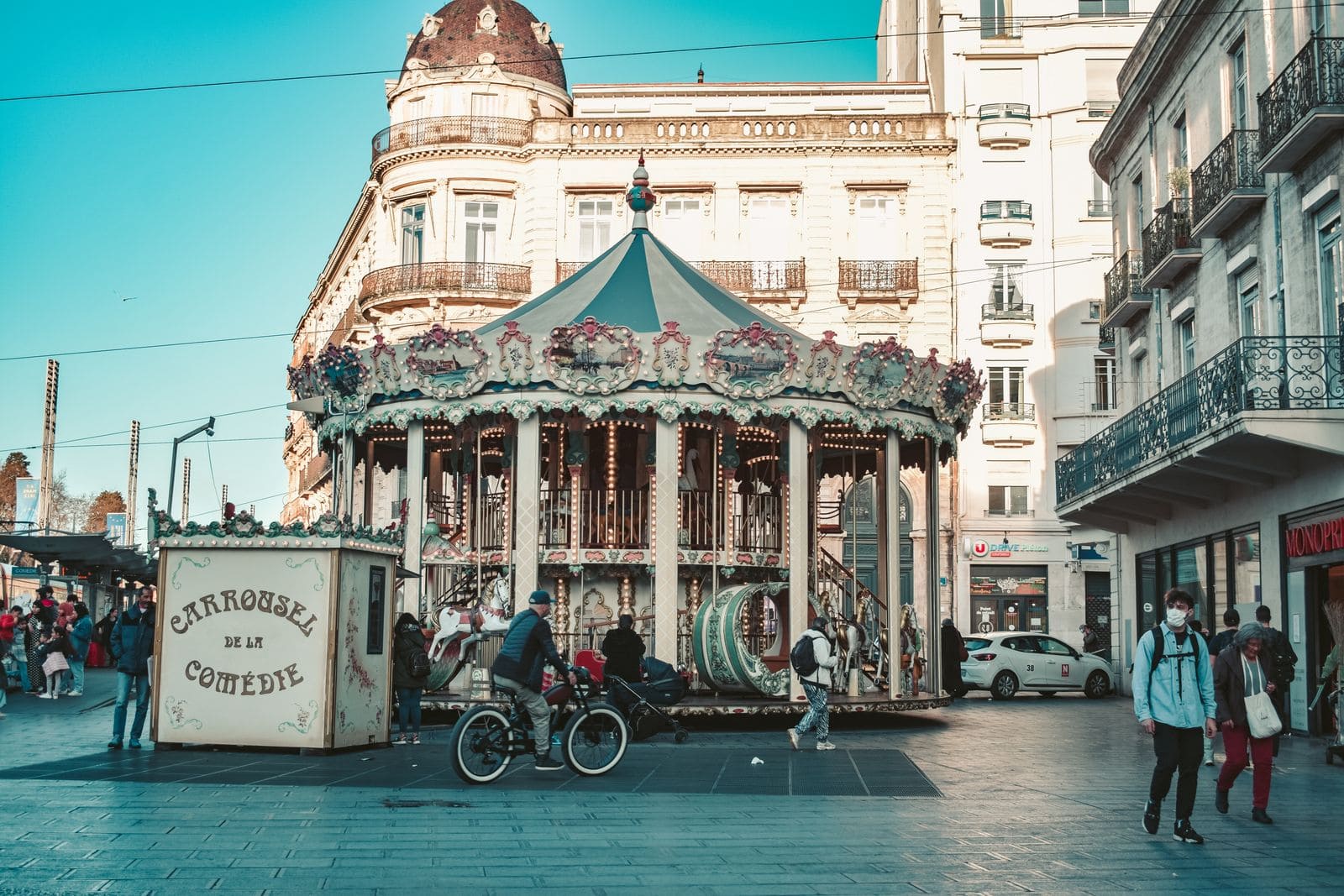
Sooner or later your steps will inevitably lead you to the enormous Place de la Comédie, which locals call nothing other than L’Œuf, meaning “the Egg.” The square earned this playful name thanks to its distinctive oval shape, once hemmed in by busy roads. Today it’s a giant pedestrian zone paved with smooth white limestone that shimmers incredibly in the fierce southern sun, forming the absolute centrepiece of the whole city. The square is so vast that during the day you’ll easily find your own favourite corner for sitting and watching the world go by.
At one end of the square the 19th-century Opéra Comédie rises majestically, its ornate architecture strikingly reminiscent of the famous Palais Garnier opera house in Paris. Most people traditionally gather right in front of it by the beautiful Three Graces fountain, which is the best-known landmark for any meet-up in the city. It’s an ideal place to sit on the stone rim of the fountain and simply watch the incredible bustle of students and street performers.
A continuous row of traditional cafés and restaurants with sprawling outdoor terraces lines the entire square. Even though coffee prices on the square are noticeably higher, that luxurious view of the colourful trams gliding past is absolutely worth it. The atmosphere really thickens towards the evening, when the façades of the historic buildings are beautifully lit and the square comes alive with live music. It’s a huge, fascinating contrast to the sleepy medieval villages scattered throughout the surrounding Languedoc region.
💡 Tip: Don’t buy your meals at the restaurants right on the square — they’re mostly overpriced tourist traps. Pop in just for a coffee or a glass of local wine, and head into one of the narrow lanes towards the historic centre for a proper, authentic dinner.
2. The Historic Écusson Quarter and Its Lanes
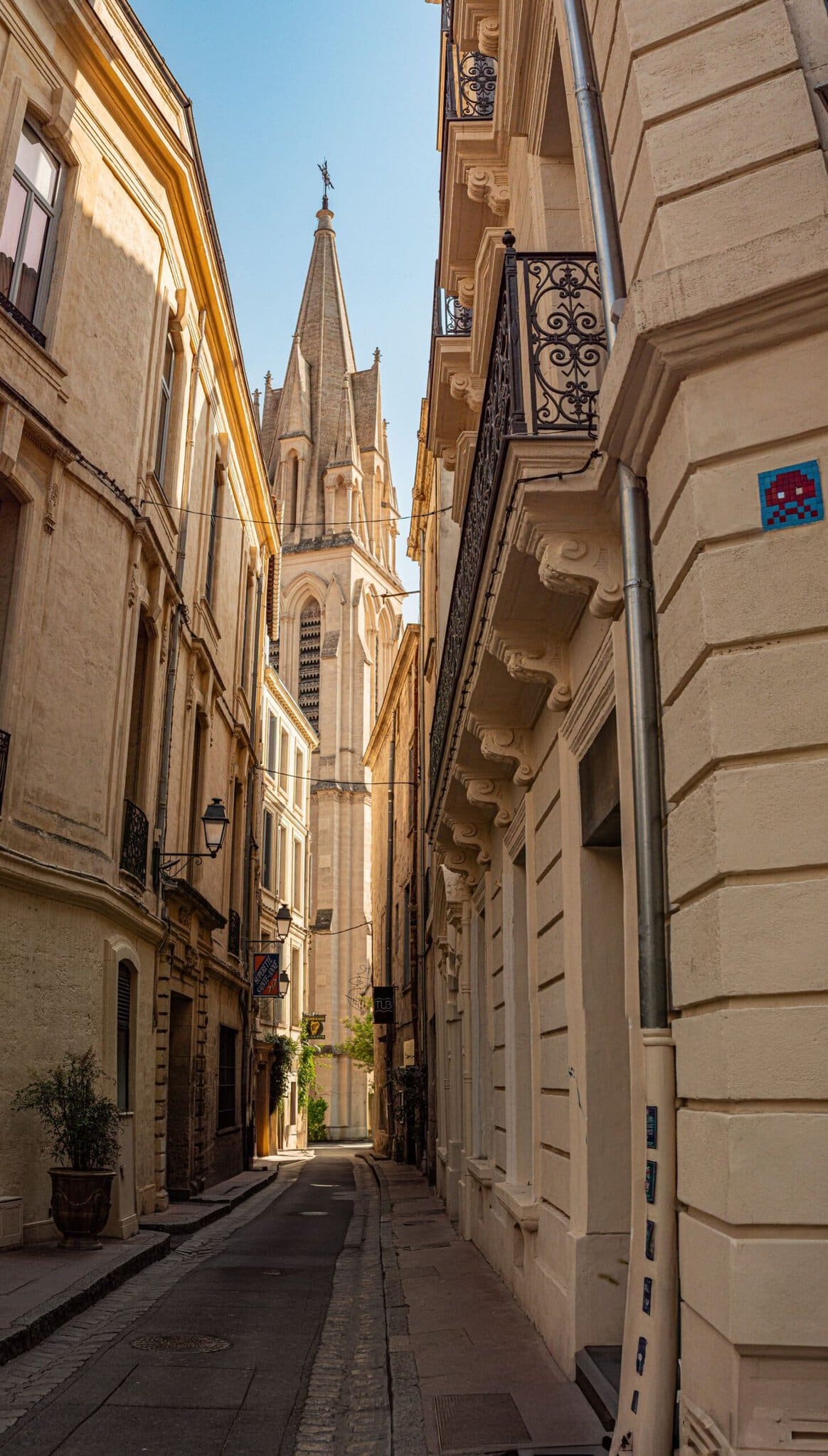
Just behind Place de la Comédie the Écusson quarter begins, a tangle of gorgeous medieval lanes that form the historic heart of the entire city. The name comes from the original shape of the old fortifications, which from a bird’s-eye view resembled a knight’s shield. Today it’s one of the largest connected pedestrian zones in all of Europe, so you can safely wander for hours without worrying about cars darting about. This whole region is often nicknamed “the other Riviera,” and in these picturesque lanes you’ll immediately understand why.
The main artery is the bustling Rue de la Loge, packed with shops, luxury boutiques and well-known brands. But the truly interesting stuff hides away in the narrow side lanes, where the hot sun reaches only for a few hours a day. That’s where you’ll find small independent bookshops, antique dealers and tucked-away cafés serving the best specialty coffee in the city. On your wanderings, be sure to head towards the romantic little squares of Place Saint-Roch or Place de la Canourgue.
As you stroll, keep a close eye on the large, heavy wooden gates. Behind them hide beautiful inner courtyards of the luxurious 17th- and 18th-century mansions of the local nobility, known as hôtels particuliers. Most are privately owned, but occasionally the massive gates are left ajar and you can peek into stunning hidden gardens with ornate staircases. It’s like secretly glimpsing into a long-vanished world of the old French aristocracy.
💡 Tip: Try deliberately getting lost in the lanes around the Saint-Roch church. There are plenty of great little bistros here, and on the walls of the surrounding houses you’ll find enormous, incredibly realistic murals (trompe-l’œil) that visually enlarge the whole little square.
3. The Triumphal Arch and Promenade du Peyrou
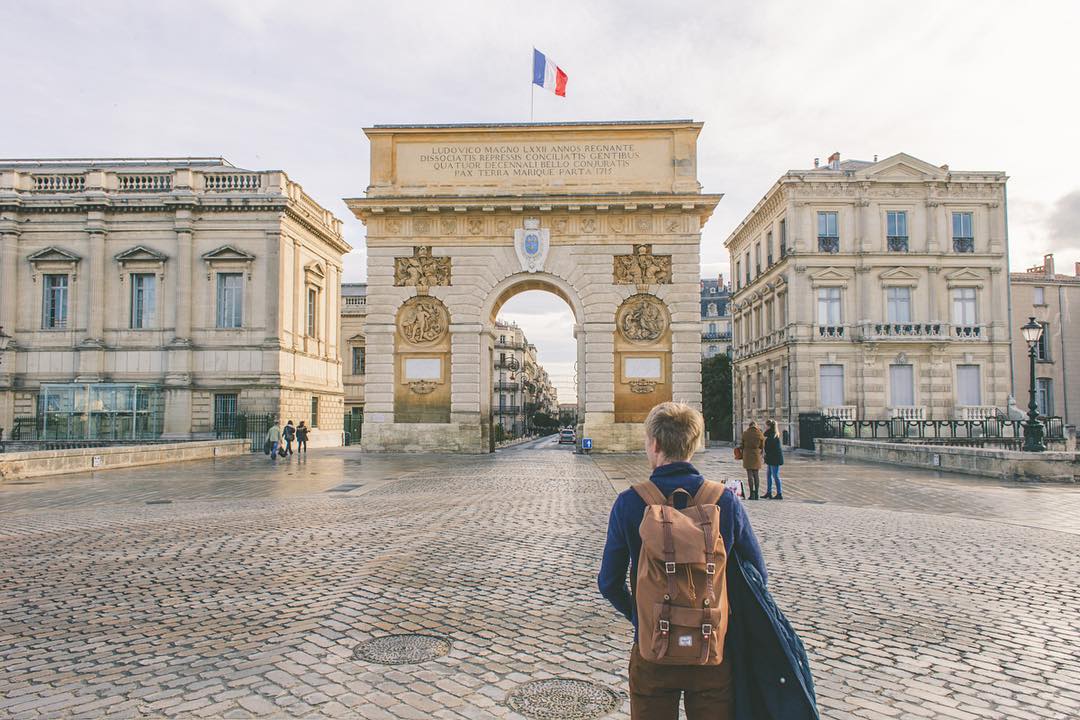
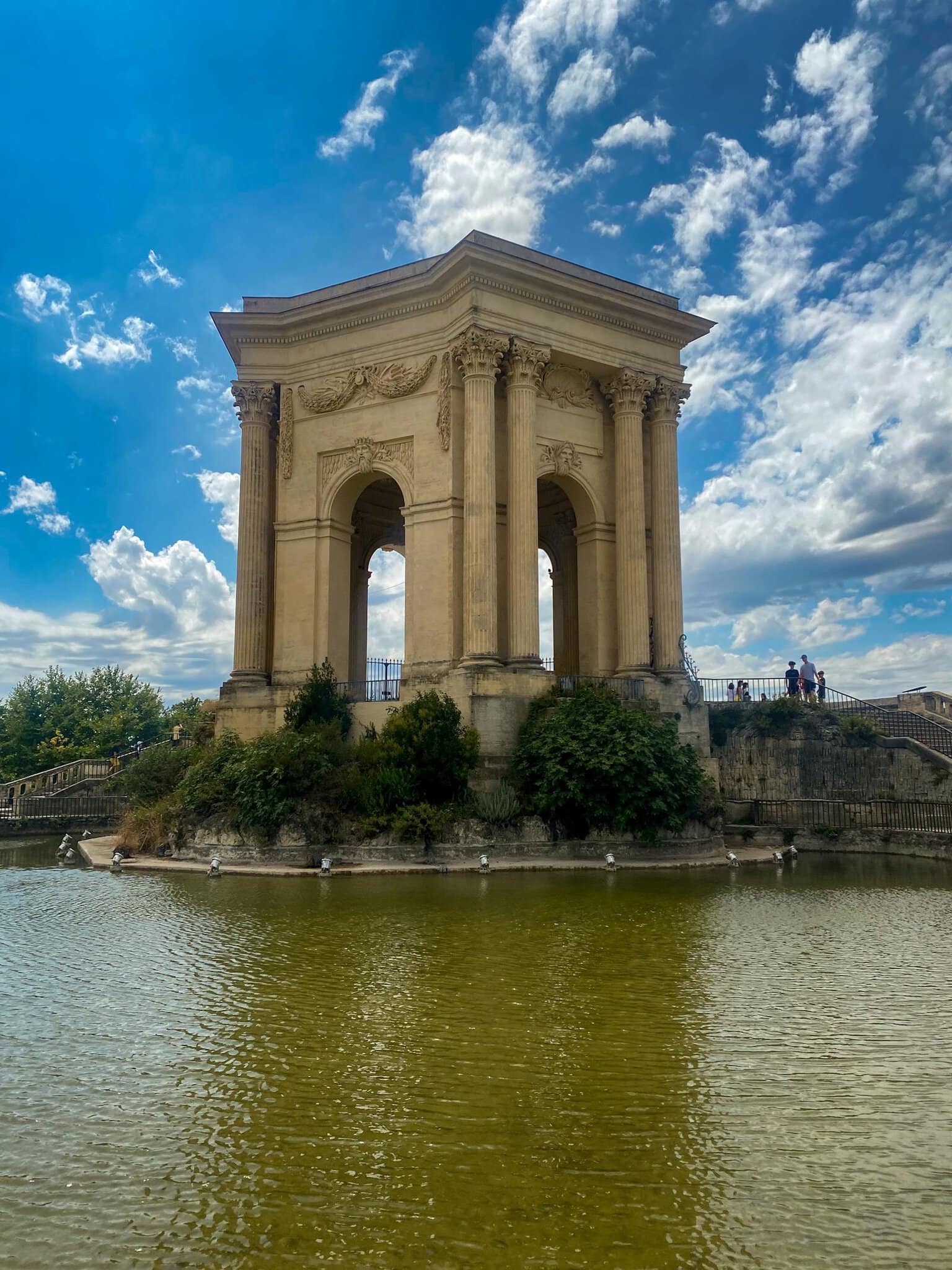
If you want to treat yourself to the very best panoramic view of the city and the wider surroundings, you’ll need to climb up to the Promenade du Peyrou. This is a huge two-tiered terrace sitting on the highest strategic point of the old town. The grand gateway to this royal promenade is the magnificent Triumphal Arch (Porte du Peyrou), built at the end of the 17th century in honour of King Louis XIV. Walking beneath its massive vaults instantly transports you to the heyday of the French monarchy.
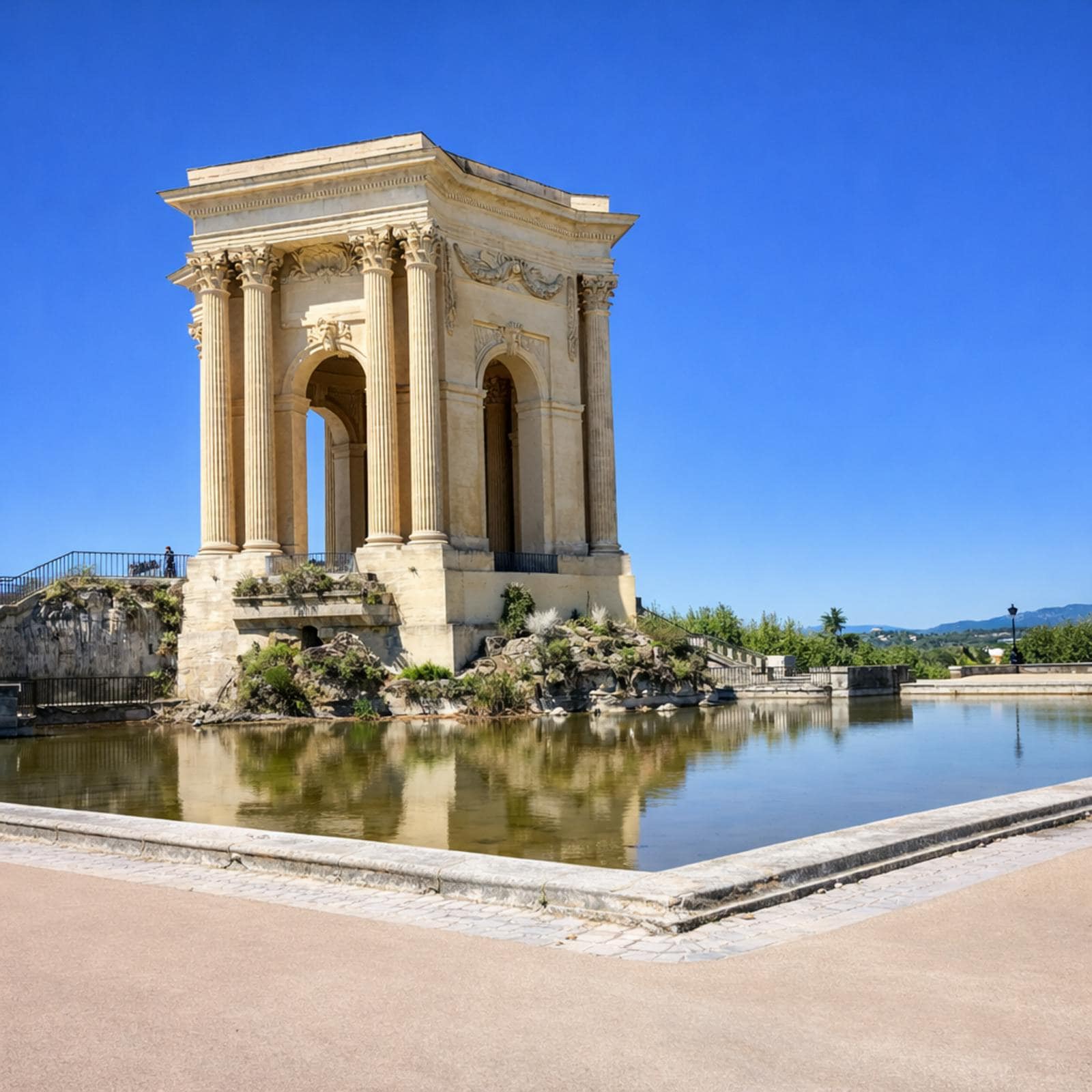
The promenade itself is a sprawling, carefully tended park with broad sandy paths, mature shady plane trees and an equestrian statue of the king at its centre. At the very end of the terrace you’ll find the beautiful Château d’eau water tower, directly connected to the imposing stone Saint-Clément aqueduct. In the past this aqueduct brought fresh drinking water to the city from fourteen kilometres away. Its tiered arches will instantly remind you of the famous nearby Roman Pont du Gard near Nîmes, though this one is many centuries younger.
The promenade is hands down the best place in the whole city to watch the sunset. On a clear day you can see in one direction all the way to the rugged peaks of the Cévennes National Park, and in the other towards the glittering Mediterranean Sea. Locals very often come here with a blanket, a bottle of good wine and a wedge of cheese to round off a busy day in peace.
💡 Tip: Every Sunday morning a very popular traditional flea market (brocante) is held right under the trees on the promenade. You’ll find absolutely everything here, from old French books to retro crockery, and the laid-back atmosphere is fantastic.
4. Saint-Pierre Cathedral and Its Fortress-Like Look
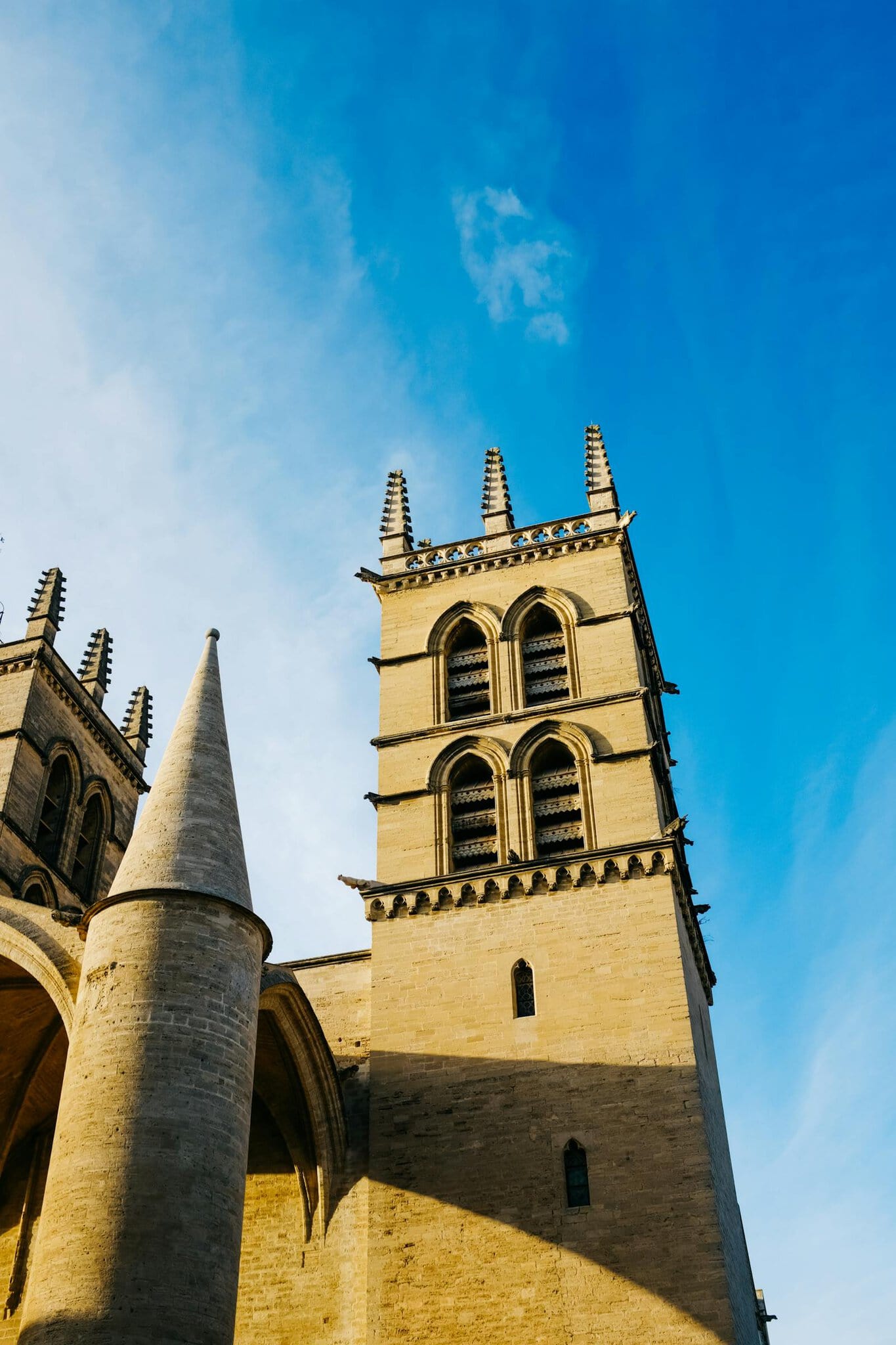
As you weave through the northern part of the historic centre, you’ll come across a building that will probably catch you off guard at first. From the outside, Saint-Pierre Cathedral looks more like an impregnable military fortress than a welcoming, inviting place of worship. Its façade is flanked by two massive cylindrical towers supporting an enormous stone canopy, and the whole structure feels immensely heavy and impenetrable. This rugged, defensive architecture is actually very typical of the historic Occitania region.
This brutal appearance has a clear, bloody historical reason. The cathedral was originally a monastery church, and during the very harsh religious wars of the 16th century it served as a genuine defensive bastion for Catholics against attacks by Protestants. It was also the only church building in the city to survive these wild conflicts at all. The history of southern France is full of similar clashes and fortresses — just think of the nearby Cathar castles hidden high in the mountains by the Spanish border.
But once you pass through the heavy wooden doors and step inside, a huge and beautiful contrast awaits you. The interior is surprisingly bright, incredibly peaceful, and adorned with gorgeous stained-glass windows and an impressive historic organ. Entry to the cathedral is completely free and offers a very welcome cool refuge during the scorching summer days, when outdoor temperatures climb dangerously towards an uncomfortable 40 °C.
💡 Tip: Don’t forget to walk around the back of the cathedral through the narrow lanes. There you’ll find a small, quiet little square with a view of the old university buildings, where time stopped some three hundred years ago and you’ll barely meet a single noisy tourist.
5. The Oldest Working Medical School in the World
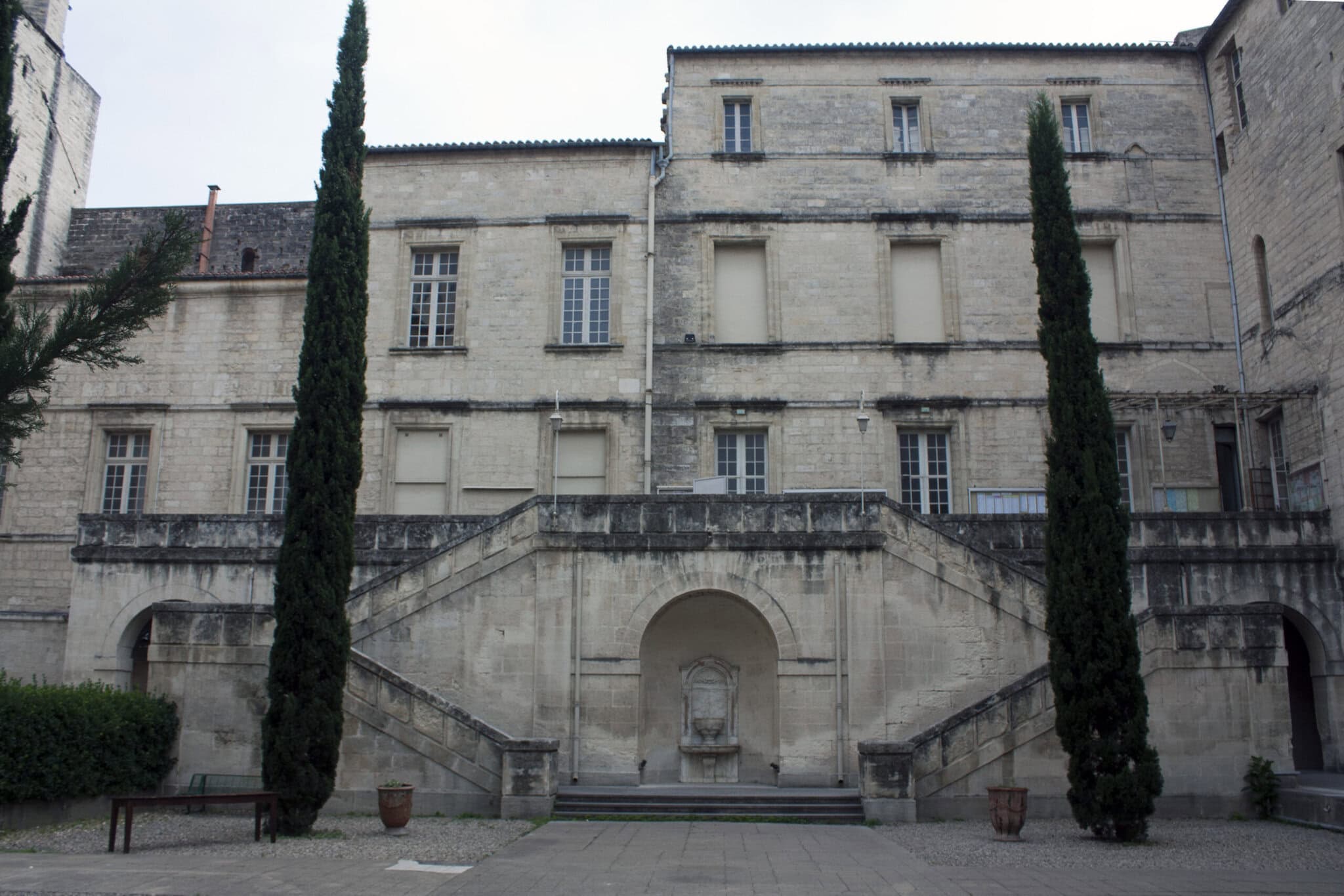
Right next door to the massive cathedral sits an institution that has made Montpellier famous throughout the academic world. The local medical school (Faculté de Médecine) is officially the oldest continuously operating medical school on the planet. It was founded back in the 12th century, and to this day future generations of doctors are trained in its historic halls. There’s an incredible feeling in walking the very same corridors as medieval scholars.
The faculty is housed in a magnificent former monastery building, and its history is packed with illustrious names. In the Middle Ages, Nostradamus famously studied here, though he was apparently eventually expelled in disgrace. He earned his living as an apothecary, which the strict academic rules of the time absolutely forbade. The celebrated Renaissance writer François Rabelais also worked here, pushing the boundaries of contemporary thought with his provocative texts.
You can’t normally just walk into the faculty’s interior, as it’s fully used for teaching, but the city organises guided tours. On these you can peek into the old libraries and, above all, into the fascinating anatomy museum (Conservatoire d’Anatomie). This unique museum is full of historic wax figures and old anatomical specimens. It’s admittedly a slightly bizarre and dark experience, but for lovers of medical history it’s an absolute must, showing the evolution of science in practice.
💡 Tip: You really need to book the faculty tours well in advance through the official tourist office, as they’re constantly sold out. For 2026, full admission costs around 15 euros.
6. The Jardin des Plantes Botanical Garden
If you need a break from the constant hustle of the city and a place to hide from the blazing sun, head for the Jardin des Plantes. This tranquil botanical garden lies just a short distance from the medical school, and it’s no ordinary park. It was founded back in 1593 on the direct orders of King Henry IV, and by a wide margin it’s the oldest botanical garden in all of France.
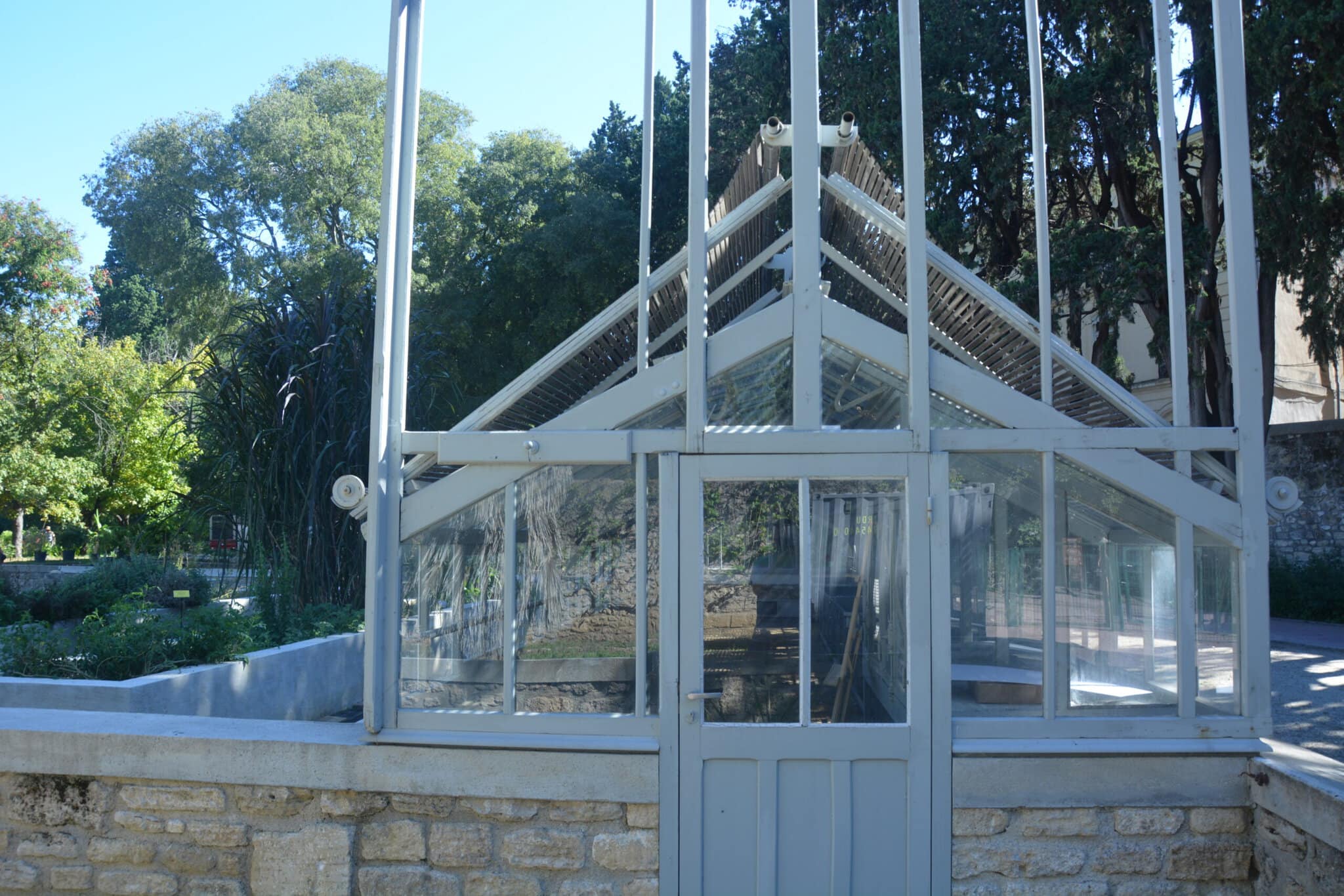
Originally it served exclusively to help medical students carefully cultivate and study rare medicinal herbs. Today it’s a vast green oasis covering nearly five hectares, home to thousands of plant species from around the world. You can stroll along wide shady avenues, explore historic greenhouses filled with exotic flora, or admire centuries-old trees that recall the days of the French kings. In the scorching summer, when Occitania practically bakes under a 40 °C sun, it’s a perfect, safe refuge with a wonderfully cool microclimate.
The garden has a wonderfully wild and romantic feel — don’t expect any strictly clipped, geometric French lawns here. There are small ponds, discreet hidden benches and plenty of quiet corners where you can read a book in peace. Entry to the garden is free year-round, but keep in mind that the whole site is firmly closed to the public on Mondays for regular maintenance.
💡 Tip: Look for the so-called wishing tree. It’s a very old, gnarled olive tree near the main entrance, into whose bark visitors tuck small paper notes bearing their secret wishes.

7. The Modern Antigone District and Ricardo Bofill
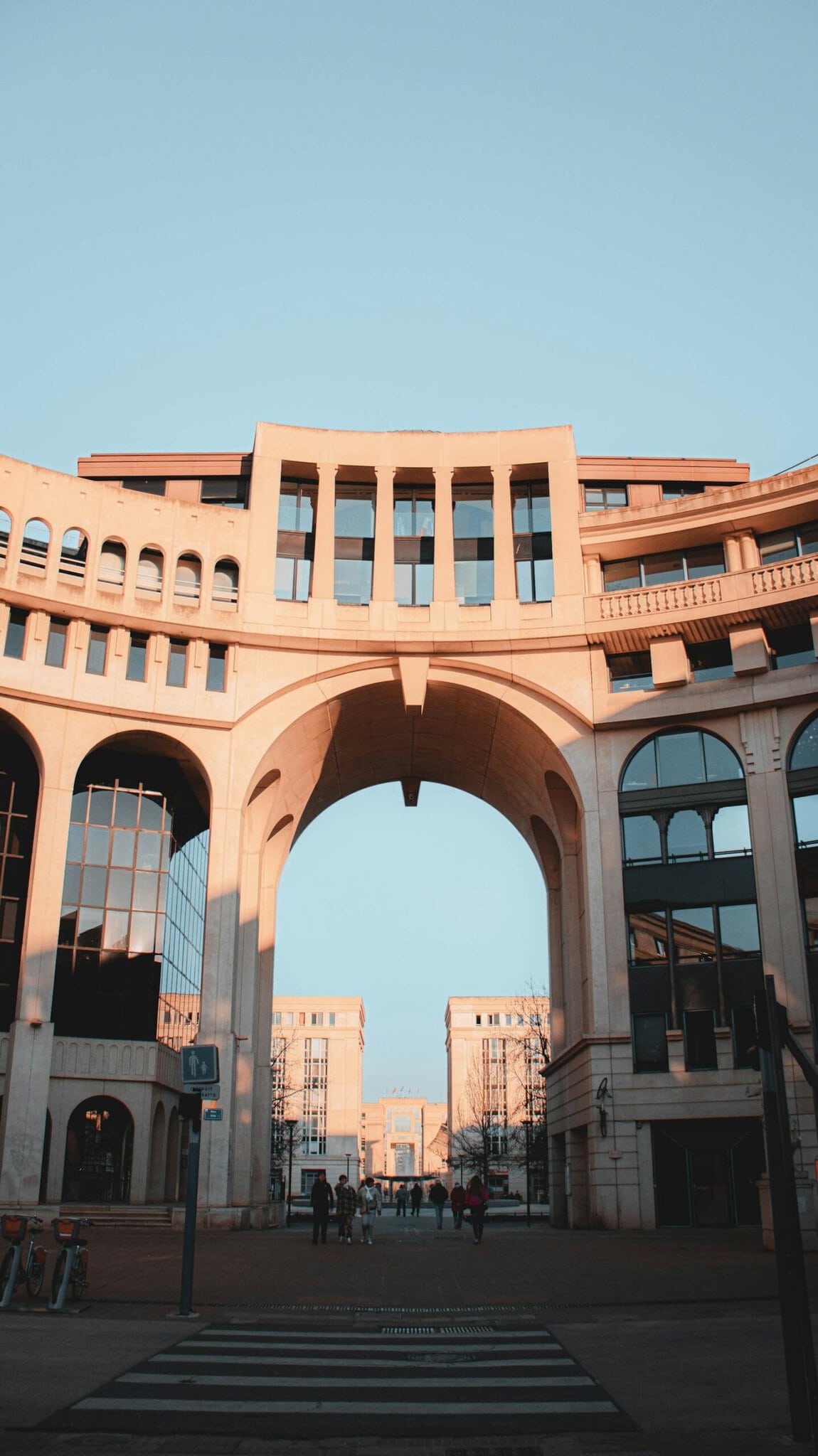
Montpellier isn’t all about wandering through the Middle Ages — the city also has a very self-assured, futuristic side. The best proof of this is the Antigone district, lying east of the historic centre towards the river. It sprang up in the 1980s on the site of disused military barracks and was designed by the famous Catalan architect Ricardo Bofill. It’s an utterly fascinating architectural counterpoint to the narrow, winding lanes of the old town.
When you first set foot in Antigone, you’ll get the intense feeling you’ve stepped into a sci-fi film set in ancient Greece. The whole sprawling district is built in a monumental neoclassical style. Everything is dominated by enormous columns, gigantic symmetrical squares, cascading fountains and buildings made of concrete the colour of pale sandstone. It’s exactly the kind of utopian architecture that stirs strong emotions, much like the famous concrete pyramids in the nearby beach resort of La Grande-Motte.
The best way to take in the whole district is to start at the large Polygone shopping centre and walk the entire main axis all the way down to the banks of the River Lez. The route leads you smoothly across several huge squares lined with cafés and luxury apartments. At the very end by the river, a fantastic view opens up onto the modern glass building of the regional council.
💡 Tip: Walk through the Antigone district in the evening hours. All the main buildings are dramatically lit, which heightens their ancient look even further and creates a fantastic backdrop for night photography.
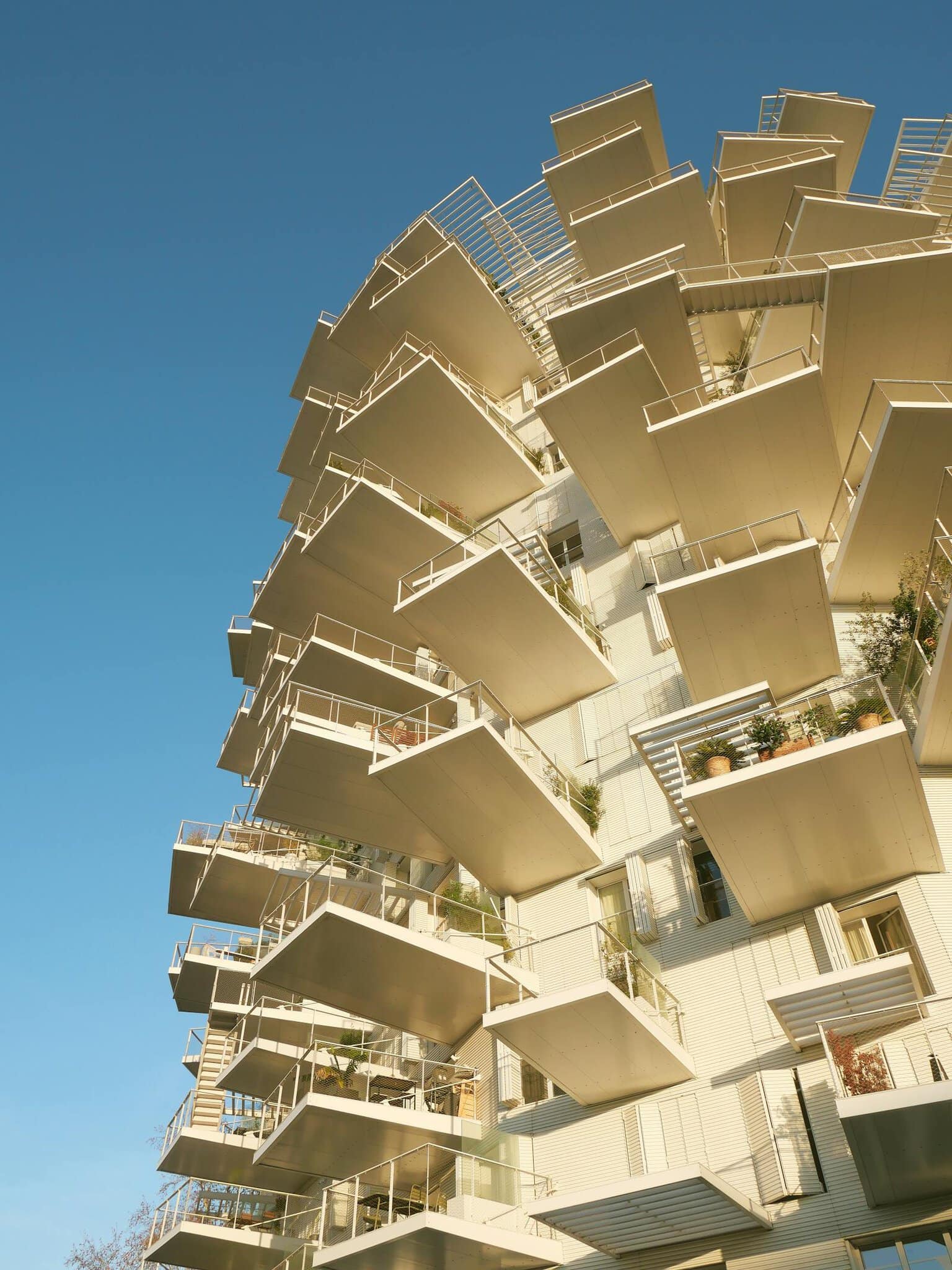
8. The Architectural Marvel of L’Arbre Blanc
Once you’re at the end of the Antigone district by the River Lez, just look east and your eyes will be drawn to an incredible structure that somehow defies the usual logic of gravity. The building called L’Arbre Blanc, meaning “the White Tree,” is a masterpiece of modern architecture from the 21st century. It was completed fairly recently and instantly became a proud new symbol of modern, dynamic Montpellier.
This seventeen-storey residential building really does look at first glance like an enormous, leafy tree. From its brilliant white façade, long cantilevered balconies jut out in every direction, looking like giant leaves reaching for the sun. The balconies are genuinely huge — some are even seven metres long — and residents have full-blown outdoor gardens and large dining tables on them. It’s a fantastic example of how to innovatively and boldly connect indoor and outdoor living space.
Although the building is primarily residential and you obviously can’t get into the private luxury apartments, the lower section offers an accessible gallery and an excellent restaurant. But the absolute best is to take the express lift up to the rooftop bar, Rooftop de l’Arbre Blanc. Here you can enjoy a superb cocktail and soak up a stunning panoramic view of the whole city, the distant sea and the nearby peaks of the national park.
💡 Tip: Drinks at the rooftop bar are admittedly a touch pricey (reckon on around 15 euros for a cocktail in 2026), but that exclusive view is absolutely worth it. Try to book in good time for exactly sunset — it’s an unforgettable experience.
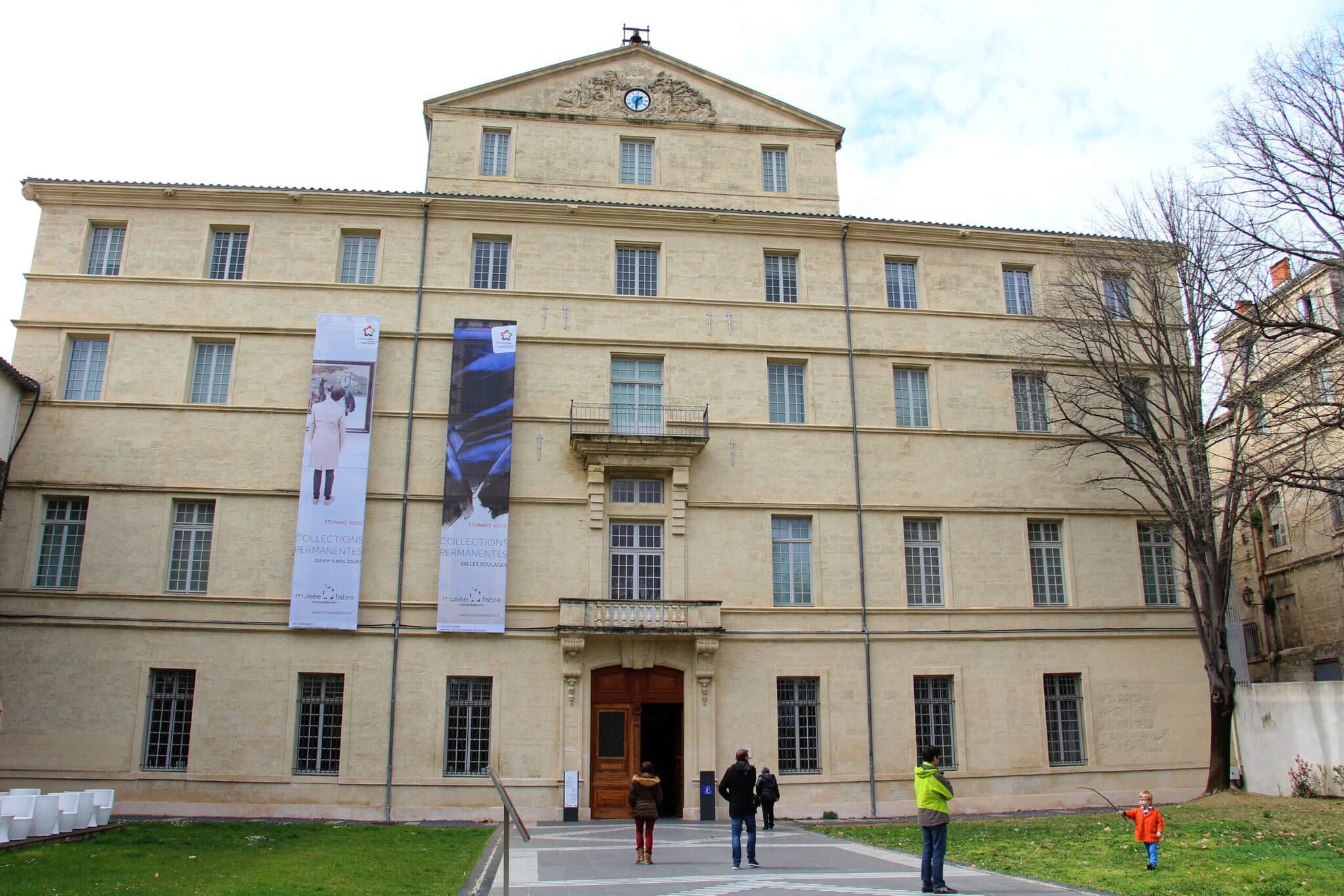
9. Musée Fabre and European Art
For lovers of fine art, a visit to Montpellier is utterly incomplete without a longer stop at the Musée Fabre. Without any exaggeration, this is one of the most important fine art museums in all of France, right after the Louvre in Paris and the famous Musée d’Orsay. The museum was founded in the 19th century by the acclaimed local painter François-Xavier Fabre, and today it’s housed in a magnificent restored palace near the main Comédie square.
The collections here are vast and guide you very clearly and chronologically through the history of European art — from the Renaissance through dramatic Baroque to Impressionism and modern works. You’ll find famous canvases by masters such as Rubens, Delacroix and Courbet. After an extensive renovation the museum’s interiors are also beautifully bright and airy, so the exhibited works look absolutely perfect. The south of France has always magically drawn artists thanks to its distinctive light, as clearly demonstrated by the nearby coastal town of Collioure, where the whole Fauvist movement was born years ago.
A separate and very fascinating chapter is the new modern wing, dedicated to the contemporary artist Pierre Soulages. This French painter is known worldwide for his lifelong fascination with the colour black, and the museum holds a huge collection of his large, dark canvases. The contrast between classic historic art and these modern abstractions works brilliantly.
💡 Tip: If you happen to be in the city on the first Sunday of the month, you’re in luck — entry to the museum’s extensive permanent collections is completely free for everyone that day. Standard admission otherwise runs at around 9 euros.
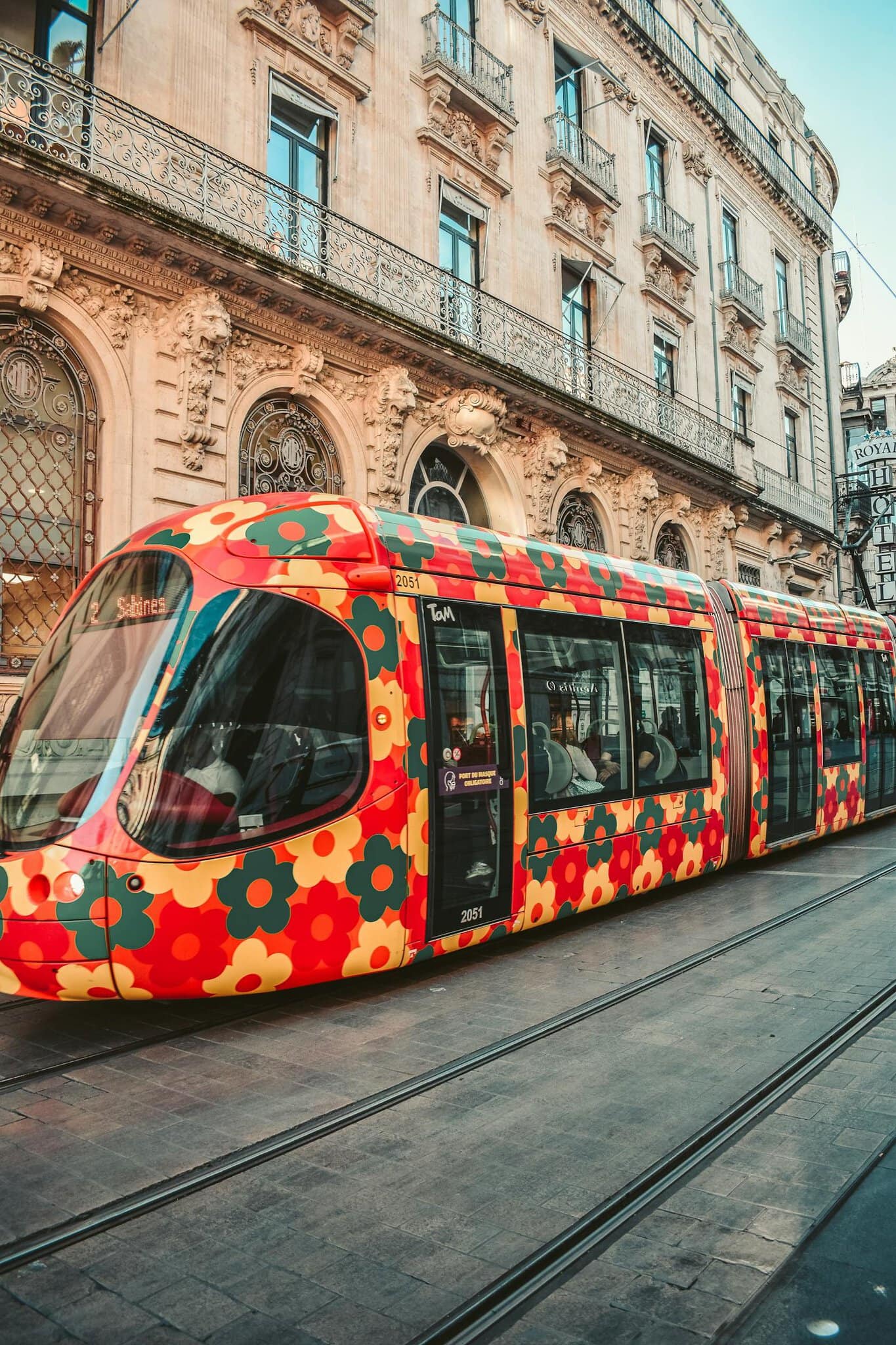
10. A Ride on the Designer Trams
In most European cities, public transport is just a purely functional, dull way of getting from point A to point B. In Montpellier, though, it’s a fully-fledged tourist and visual experience. The city’s extensive tram network is a world first in terms of design. The city once made the visionary decision to turn its trams into rolling works of art, calling in top designers from across the country to draw them up.
Currently four main lines run reliably through the city, and each has its own distinctive look. Lines 3 and 4 were even designed by the famous fashion house Christian Lacroix. Line 3 is a mysterious black, adorned with wonderful colourful sea-creature motifs that clearly symbolise its route towards the southern beaches. Line 4, by contrast, is luxuriously gold and richly studded with elegant ornaments that shimmer beautifully in the harsh summer sun.
Taking the tram is also the best way to calmly take in the wider city centre when your feet are aching after a full day of walking. The trams run incredibly quietly, often along tracks beautifully set into green grass. For locals, public transport has recently become completely free. As a tourist you’ll need to buy a single ticket, but it costs a very reasonable 1.60 euros. Given the enormous parking problems across the whole region, the local transport is a real lifesaver.
💡 Tip: Tickets have long stopped being sold by the driver. At every stop you’ll find modern machines where you can pay by card, or you can simply tap your payment card directly on the orange terminal inside the carriage.
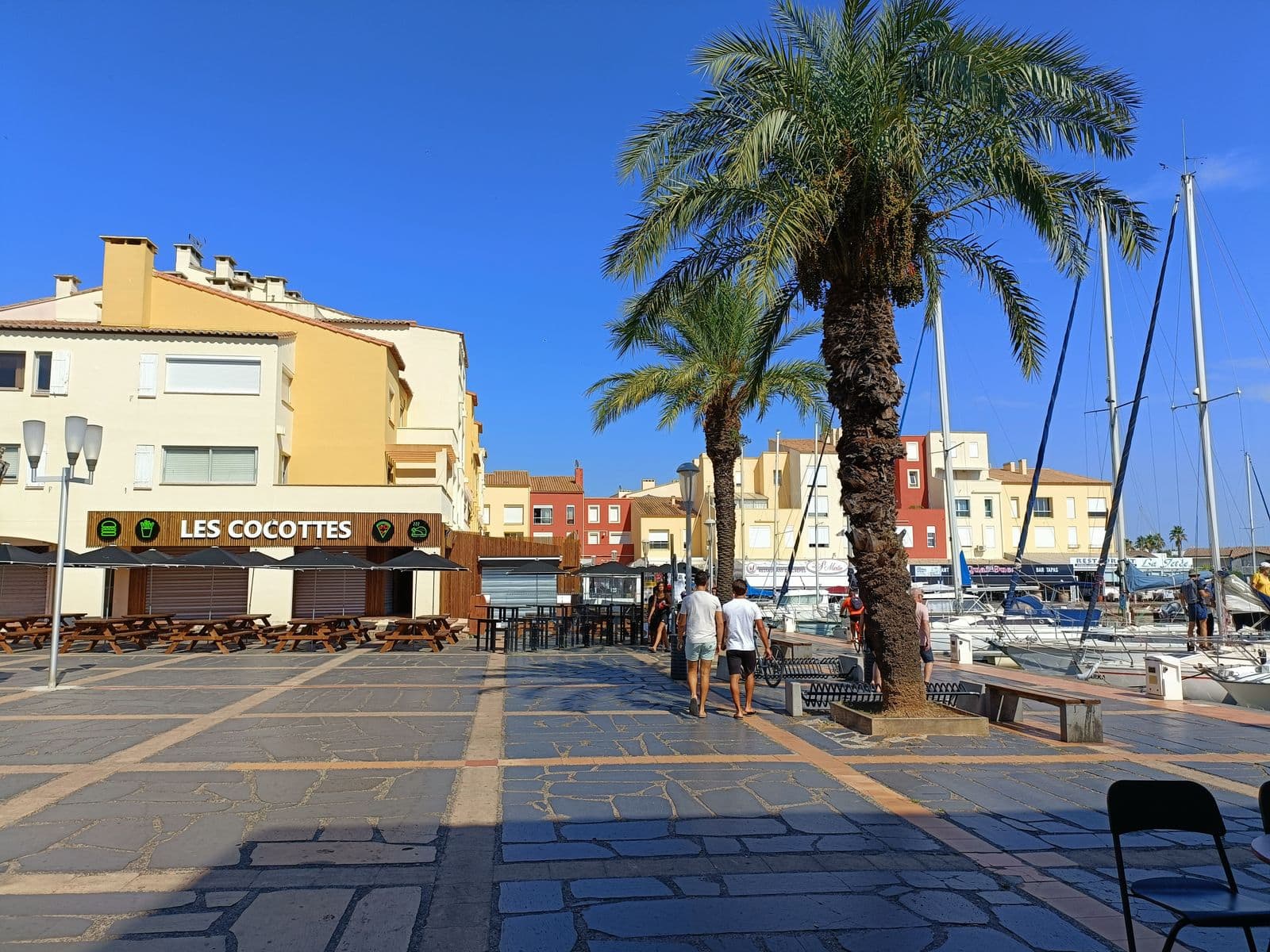
11. A Trip to the Beaches of Palavas-les-Flots and Carnon
Although Montpellier doesn’t sit directly on the coast, the sea is literally within arm’s reach. The nearest beaches are roughly ten kilometres from the centre and you can get to them very easily and quickly. The Languedoc coast, however, differs significantly from the famous Côte d’Azur. Don’t expect any dramatic cliffs plunging into the water here, but rather kilometres of long, very wide sandy beaches that are occasionally whipped by a stronger wind. The most popular resorts in the immediate vicinity of the city are Palavas-les-Flots and Carnon.
You can of course reach the resorts in a rental car, but in the summer months the only access roads are hopelessly clogged from the morning onwards. The much smarter option is to rent a bike and set off along the safe, flat cycle path that runs alongside the River Lez all the way from the centre to the sea. The ride takes just over half an hour, and along the way you’ll pass a beautiful nature reserve with wetlands.
If you don’t fancy pedalling in the typical southern heat, take tram line 3 with its black sea design, which will drop you off on the edge of the resort at the Pérols Étang de l’Or stop. From there it’s about a fifteen-minute walk to the sea, or you can hop on the connecting summer shuttle bus. On the way to the sea you’ll also ride past vast salt lakes, where you can very often spot enormous flocks of pink flamingos in their natural habitat.
💡 Tip: The beaches in Palavas can get really crowded and noisy in summer. If you head a little further on towards Grand Travers beach, you’ll find much wider and noticeably calmer stretches without quite so many parasols.
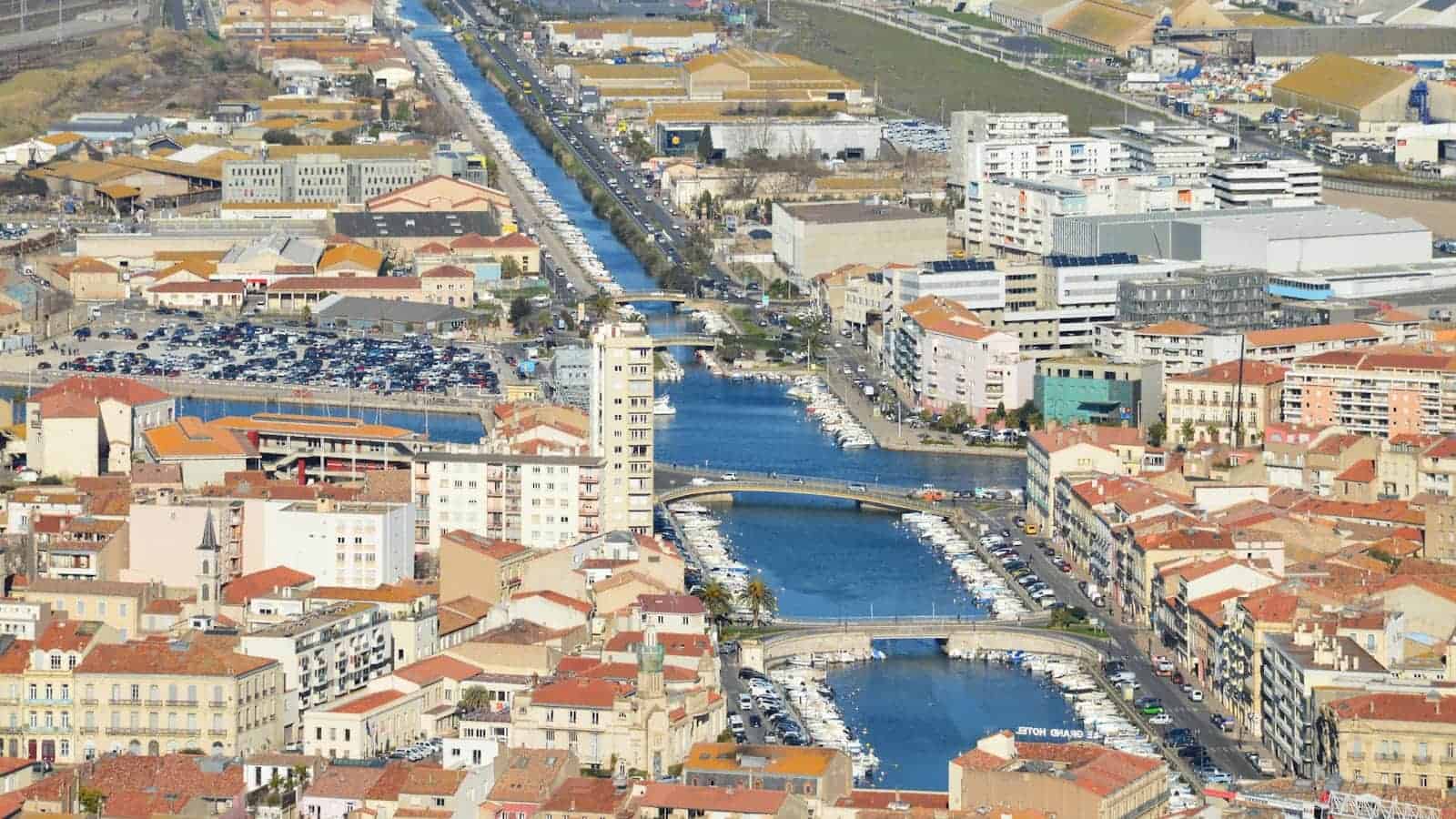
12. Sète: The Venice of Languedoc and Water Tournaments
If you have time for just one single full-day trip from Montpellier during your stay, definitely head to nearby Sète. This fascinating port town lies about half an hour west by train and is an absolute regional gem. It doesn’t resemble a typical neat French resort for wealthy tourists, but rather a rough, salty, hard-working fishing port criss-crossed by a dense network of deep canals. That’s exactly why it’s so often nicknamed the Venice of Languedoc, and there’s a wonderfully raw atmosphere here.
Dozens of colourful fishing boats and small authentic restaurants crowd around the main canal. The main local speciality served everywhere here is tielle. It’s a traditional spiced pie made from bread dough, filled with finely chopped octopus and a spicy tomato sauce. If you want to see the whole town from a bird’s-eye view, drive or hike up the steep Mont Saint-Clair hill. From there you’ll get a fantastic view of the sea and the huge Étang de Thau lagoon, where the famous oysters have been farmed for generations.
The absolute highlight of summer in Sète is the famous joutes nautiques. These are traditional water jousting tournaments that have been held here since the incredible 17th century. Two heavy wooden boats powered by rowers race towards each other, and the men standing on a raised platform at the stern try to knock one another into the water with a long wooden lance. It’s an incredibly loud, adrenaline-fuelled and thrilling spectacle that the whole town experiences with gusto.
💡 Tip: If you’re planning a trip to one of these tournaments, arrive in town early in the morning. The spots with a good view along the canals are hopelessly taken many hours before the contest even begins.
13. Student Nightlife and Café Culture
Montpellier really never sleeps at night, largely thanks to its huge, energetic student community. Nearly a third of the city’s residents are young people under thirty, which is naturally reflected in the incredibly vibrant nightlife and unflagging café culture. In the evening the entire historic Écusson centre transforms into one big, bustling terrace, as people finally head out into the cooler lanes for some fun after a sweltering summer day.
The hub of the evening fun is the ancient little squares like Place Jean Jaurès or Place de la Canourgue. The bars and small bistros here offer a very relaxed atmosphere, and there’s often great live music too. The south of France is also world-famous for its local wine, so a visit to one of the many wine bars (bar à vin) is an absolute must. You can spend hours here with friends over a glass of excellent, full-bodied Corbières wine from the Languedoc region, which often costs less than an ordinary coffee in central Paris.
To go with the good wine, I recommend trying the local delicacies. Most bars offer great vegetarian tapas, large boards of superb local cheeses, Provençal herb-marinated olives, proper black olive tapenade and freshly baked, crusty baguette. It’s clearly the best way to fully soak up the laid-back southern vibe with all your senses, no unnecessary rushing.
💡 Tip: If you’re after a slightly more alternative atmosphere, head to the Beaux-Arts quarter, just north of the historic centre. It’s a much-loved local bohemian district full of small independent pubs, street musicians and local artists.
Map of points of interest for your phone
Where to Go Next from Montpellier
Montpellier is an absolutely ideal starting point for exploring the wider Occitania. Whether you head east or west, within an hour’s drive or train ride you’ll hit places of enormous historical significance.
If you love ancient Rome and classical history, definitely set off to the northeast. Waiting there for you is Nîmes and the Pont du Gard. In Nîmes you’ll find the best-preserved Roman amphitheatre in the world, with a capacity of 24,000 seats, where grand open-air summer concerts and historical reenactments are still held today. Right next door stands the perfect ancient temple Maison Carrée, recently added to the UNESCO list. Just outside the town arches the monumental three-tier Roman aqueduct, the Pont du Gard. In summer people routinely swim beneath its two-thousand-year-old arches, and in the evening there’s a fantastic light-and-sound show you definitely shouldn’t miss.
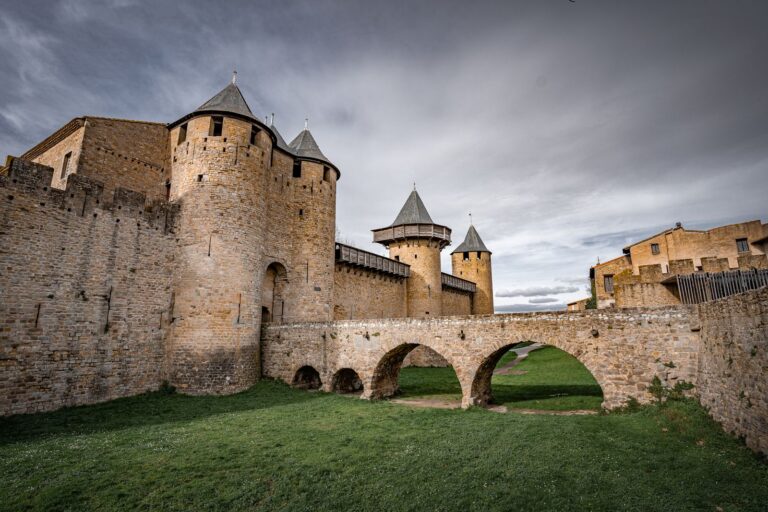
Head west, on the other hand, and you’ll discover a place that looks as if it leapt straight out of a fairy-tale book. The medieval fortified town of Carcassonne is the largest preserved fortress in Europe. Its fifty-two towers and mighty ramparts will absolutely astound you. In the summer months it gets unbearably hot during the day and the crowds are extreme, so it pays to arrive early in the morning or, conversely, late in the evening, when entry to the outer lanes is also free and the fortress is beautifully lit. If you’re there on the 14th of July, you’ll witness one of the biggest firework displays in all of France.
Also worth a mention is a trip north into the Cévennes National Park. Here you’ll find the tallest motorway bridge in the world, the famous Millau Viaduct, designed by architect Norman Foster. Just beyond it open up the dramatic limestone canyons of the River Tarn (Gorges du Tarn). It’s a breathtaking area where you can admire circling vultures from the floor of the gorge, paddle the river by canoe and enjoy the rugged nature far from the typical crowds on the coast.
Frequently Asked Questions
How long does a tour of Montpellier take?
Two full days are plenty for the city itself. During that time you’ll be able to leisurely stroll through the historic center, visit the museum of fine arts, take a look inside the cathedral, and soak up the evening atmosphere on the terraces. But if you’re also planning to head to the beaches or take trips to nearby towns like Sète or ancient Nîmes, it’s ideal to set aside three to five days for your whole stay.
Is Montpellier a safe city?
Yes, the historic center and main tourist zones are completely safe during the day and there’s a very relaxed atmosphere. However, as in any larger European city, you need to watch out for pickpockets, especially in crowded trams, on large squares, and at Sunday flea markets. At night, it’s better to avoid solitary walks through outlying neighborhoods or dimly lit parks.
Do they speak English in Montpellier?
Given that this is a huge university town with a large number of students and international researchers, the level of English here is considerably better than in the rest of the deep French countryside. In hotels, museums, and restaurants in the center, you’ll get by in English without major problems. However, it always helps a lot if you start the conversation with basic French phrases like “bonjour” and “merci”.
How to get from the airport to the center?
Montpellier-Méditerranée Airport is located very close to the city itself. The easiest and cheapest way is to use the airport bus line (Navette Aéroport line 620), which will take you to Place de l’Europe square in about fifteen minutes. From there, you can simply transfer to the city tram network, which will comfortably take you anywhere in the centre or to your chosen accommodation district.
Are the beaches in the area sandy or pebbly?
The entire coastline of the Languedoc region, which the city of Montpellier borders, is characterized by its endlessly long and very wide sandy beaches. Don’t expect any dramatic cliffs or pebbles here like on the French Riviera. The sand is very fine and light, which is absolutely ideal for long walks along the sea, lounging around, and for families with children.
How does public transportation work for tourists?
Although local residents have been traveling by public transport for free since the end of 2023, tourists still need to buy tickets. However, the system is incredibly simple and modern. You don’t need to look for tobacco shops or struggle with printing paper tickets. Just tap your regular payment card on the orange terminal when boarding the tram and the fare of €1.60 will be automatically deducted.
How much does food cost in restaurants (2026 prices)?
The prices in Occitanie are somewhat more friendly than in Paris or on the expensive Riviera, but you’re still in France and you need to keep that in mind. For a main course in a standard restaurant, you’ll pay on average 18 to 25 euros. If you want to save money, look for the so-called “Menu du Jour” (daily menu) around lunchtime, where you’ll get a starter, main course and dessert usually for a very pleasant 20 to 25 euros total.
Tips and Tricks for Your Vacation
Don’t Overpay for Flights
Search for flights on Kayak. It’s our favorite search engine because it scans the websites of all airlines and always finds the cheapest connection.
Book Your Accommodation Smartly
The best experiences we’ve had when looking for accommodation (from Alaska to Morocco) are with Booking.com, where hotels, apartments, and entire houses are usually the cheapest and most widely available.
 🚗 Car rental on the roadVerified rental cars in Occitanie
Search with the DiscoverCars comparison engine — it compares prices from dozens of local and international rental companies, and most bookings come with free cancellation.
Compare car prices in Occitanie →Don’t Forget Travel Insurance
Good travel insurance will protect you against illness, accidents, theft, or flight cancellations. We’ve had a few hospital visits abroad, so we know how important it is to have proper insurance arranged.
Where we insure ourselves: SafetyWing (simple monthly subscription) and TrueTraveller (for extra-long trips).
Find the Best Experiences
Get Your Guide is a huge online marketplace where you can book guided walks, trips, skip-the-line tickets, tours, and much more. We always find some extra fun there!