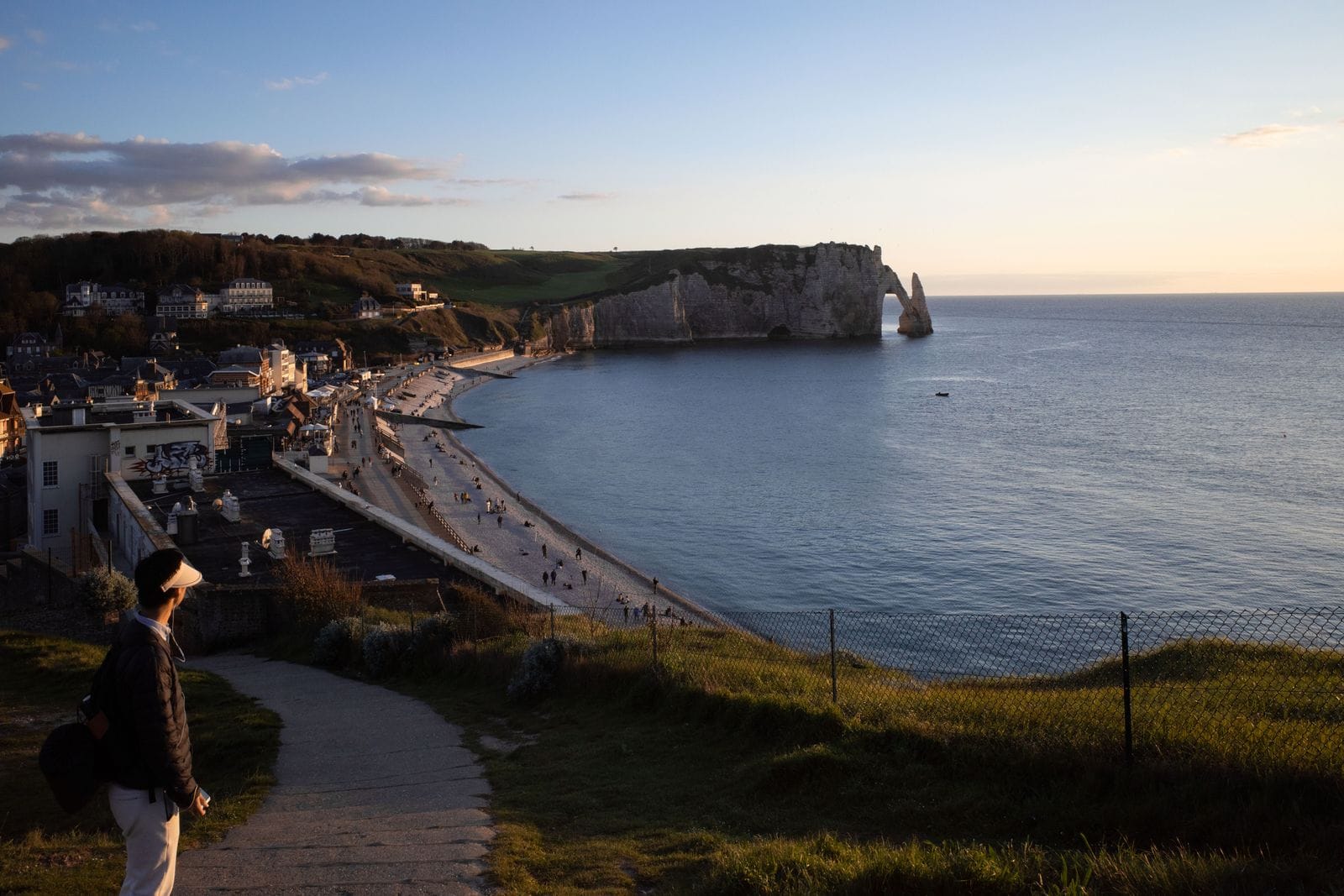
Étretat on the Normandy coast isn’t your typical beach destination where you’d come to catch a tan on a sun lounger. What you’ll find in Étretat, France is a landscape of untamed elements and raw beauty that once enchanted the greatest Impressionist painters. If you’re after views that will quite literally take your breath away, this little French town will completely sweep you off your feet.
The air here smells of salt, fermenting apple cider and freshly baked crêpes, while gulls wheel high above the treacherous cliffs. Although the town itself is fairly small, it holds onto an atmosphere of old France that the modern hustle hasn’t quite steamrolled yet. Whether you set off on a hike along the tops of the chalk massifs or simply stroll along the pebble beach with a hot coffee in hand, Étretat will lodge itself in your memory as one of the most photogenic spots in all of Europe.
Be warned, though, that nature here dictates strict rules, because everything revolves around the tides. In a single day you can experience warm sunshine, thick fog and a strong wind that forces you to zip your jacket right up to your chin. In this guide, we’ll look together at how to plan your visit to this Normandy gem down to the last detail, so you get the absolute most out of it.
TL;DR
- Main draw: Stunning chalk cliffs and rock arches shaped by sea and wind over thousands of years.
- Getting there: A car is best, or you can take the direct bus from the nearby city of Le Havre.
- When to go: Spring or early autumn is ideal, when you’ll avoid the biggest summer crowds and enjoy more pleasant temperatures.
- Safety: There are no railings on top of the cliffs, so never get close to the edge and always respect the warning signs.
- Tides: Always check the low-tide times before heading down to the beach beneath the cliffs, so you don’t get cut off by the water.
- What to taste: Normandy Camembert, buckwheat galettes and proper apple cider.
The full destination guide: Normandy — guide and what to see
When to visit Étretat
Normandy is famous the world over for its utterly unpredictable weather, which can change several times in a single afternoon. If you want the best chance of sunny days, come between May and September, when temperatures sit at very pleasant levels. The summer months bring the most stable weather, but they also bring huge crowds of tourists and packed car parks. Normandy simply isn’t the Riviera — people come here for a slightly rougher kind of romance and jaw-dropping natural scenery.
The ideal compromise, then, is April, May or the turn of September into October. During this period you’ll probably need a good waterproof jacket, but you’ll enjoy far more peace and a more intimate atmosphere on the cliffs. A dramatic overcast sky also gives the white rock that wonderful contrast photographers love, and the autumn sun paints the chalk in beautiful golden tones. In the morning you’ll be woken by the cry of gulls, and in the evening you can wander the beach in peace without weaving through crowds of weekend day-trippers.
The winter months have their own melancholy charm too, you just have to brace yourself for a biting wind and a cold that seeps right into your bones. Whatever dates you choose, always pack plenty of layers. Even in the heat of July a cold ocean gust on the cliff tops can take you by surprise and have you reaching for a jumper. Pay special attention to 2026, when all of Normandy marks the 100th anniversary of Claude Monet’s death and the 82nd anniversary of the D-Day landings — both of which will reliably draw enormous numbers of international visitors to the region.
Where to stay in Étretat
💡 Tip for accommodation and experiences: We like to look for places to stay on Booking.com, which usually has the best cancellation terms. For tickets, tours and activities it pays to compare and book through GetYourGuide.
Although Étretat is a fairly small village, it offers a surprisingly wide range of accommodation for different budgets. You’ll find everything from luxurious historic villas with sea views to cosy family guesthouses tucked away in narrow cobbled lanes. Given how popular the place is, though, I’d strongly recommend booking your accommodation up to six months in advance. If you’re planning a trip during the summer holidays or around the big cultural celebrations of 2026, look for rooms even earlier — ideally almost a year ahead. Staying right in the centre will also save you a lot of frustration over the daily hunt for a parking space, which in Étretat is a notorious and exhausting nightmare.
Nightly rates for two people in high season will run roughly between €120 and €250, with hotels that look straight out over the sea naturally being the most expensive of all. A great and reliable place to search is, as usual, Booking, where you can easily find smaller apartments with their own kitchenette. That comes in incredibly handy if you want to save on pricier restaurant dinners or simply enjoy preparing your own breakfast from the fantastic local produce bought at the market.
If you’re looking for specific tips and want to treat yourself to something special, Domaine Saint Clair (Le Donjon) is a gorgeous boutique hotel on the hill that offers fantastic views and the unforgettable romantic atmosphere of an old château. Right on the beachfront promenade you’ll find the very comfortable Hotel Le Rayon Vert, where you can lazily watch the waves in the morning straight from the comfort of your bed. For lovers of a more classic style, there’s the very popular Dormy House, which sits right on the edge of the cliff and boasts a beautiful garden full of greenery. If Étretat is hopelessly sold out, try looking for accommodation in the nearby town of Fécamp or in the larger port city of Le Havre.
11 tips for what to see and do in Étretat
Let’s take a look together at the most beautiful viewpoints and experiences this Normandy town has to offer. I’ll show you how to dodge the biggest crowds, where to find the best angles for photographing the famous cliffs, and what to watch out for around the unpredictable ocean.
1. Admire the famous Porte d’Aval arch
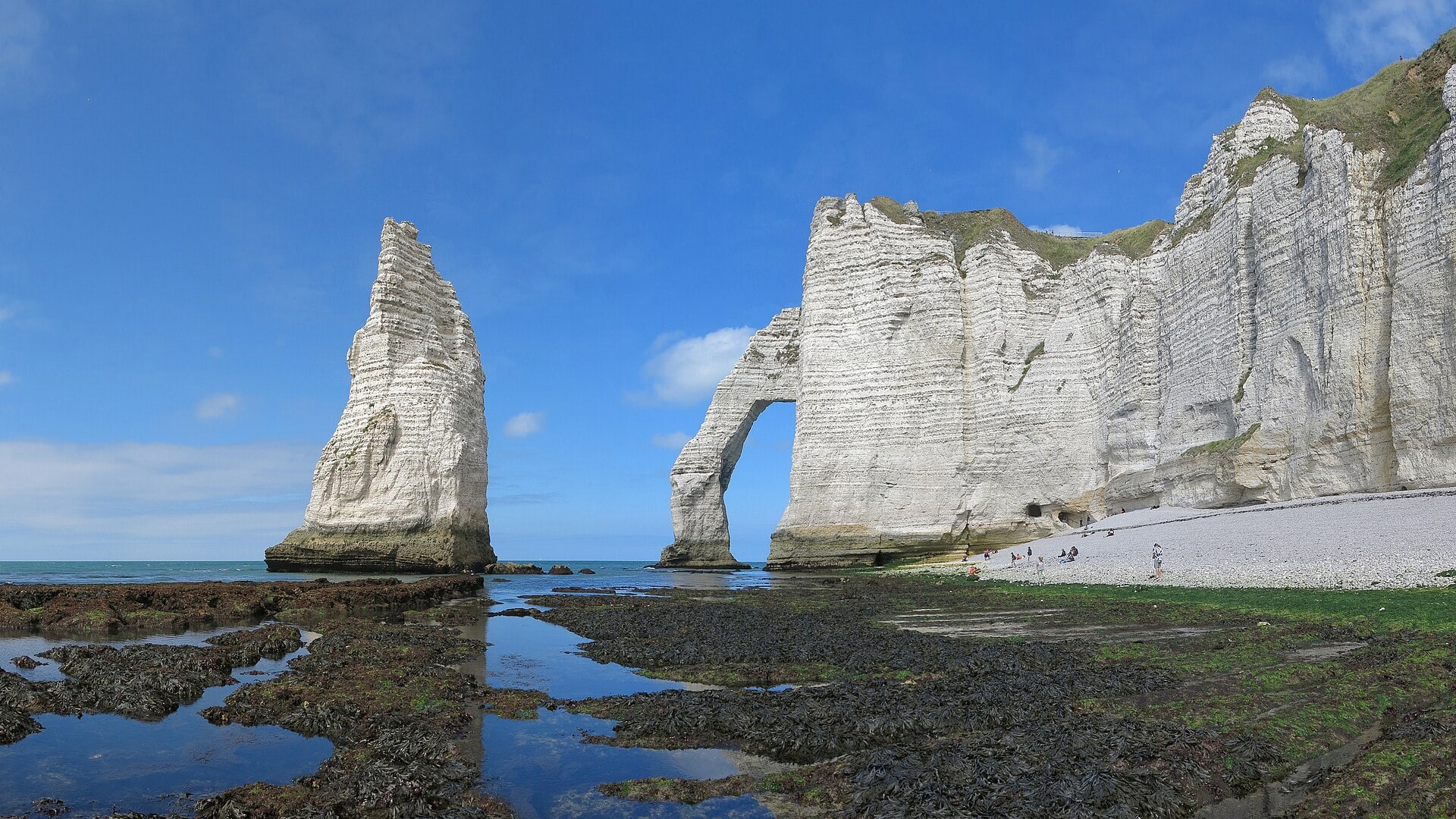
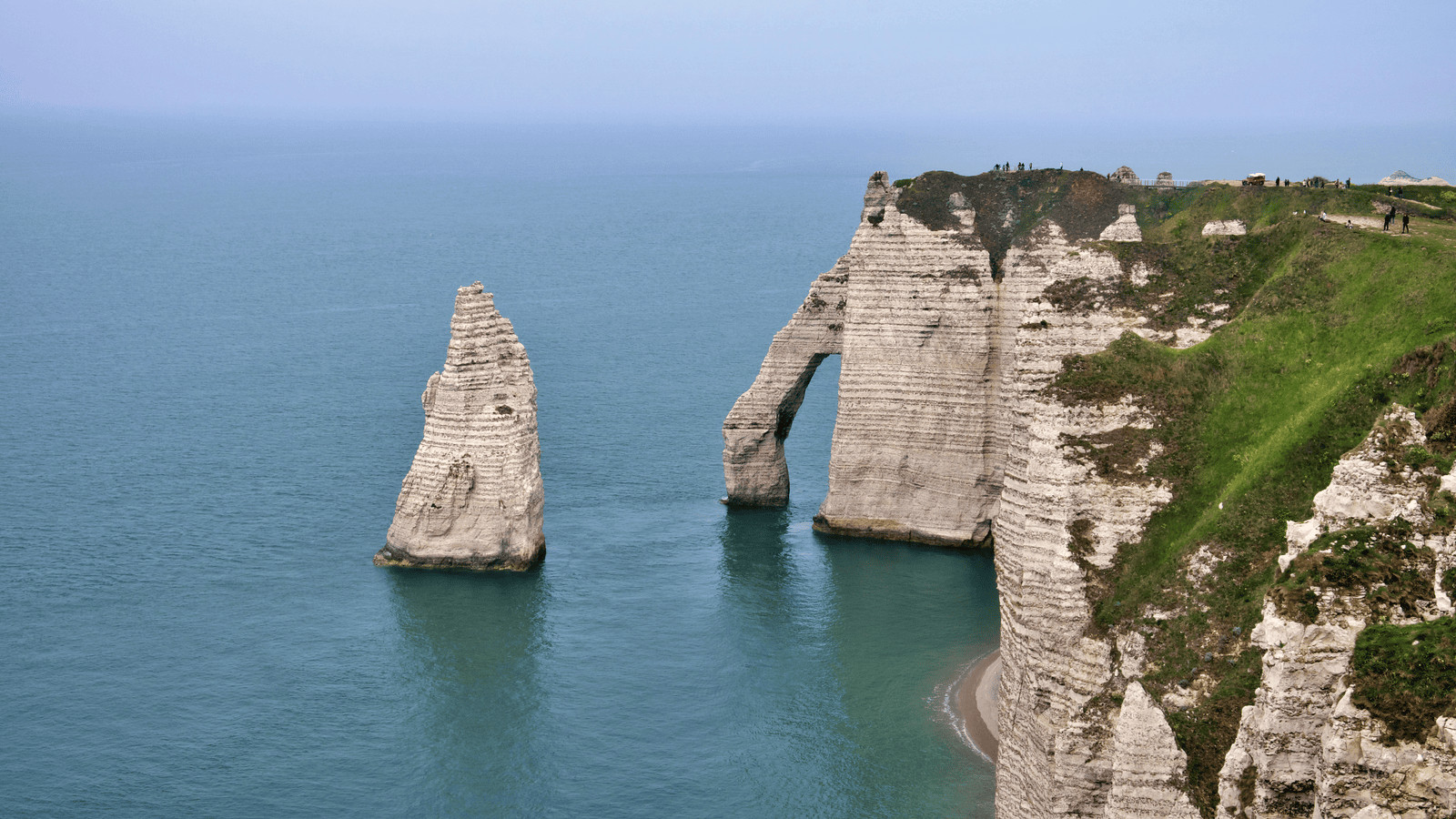
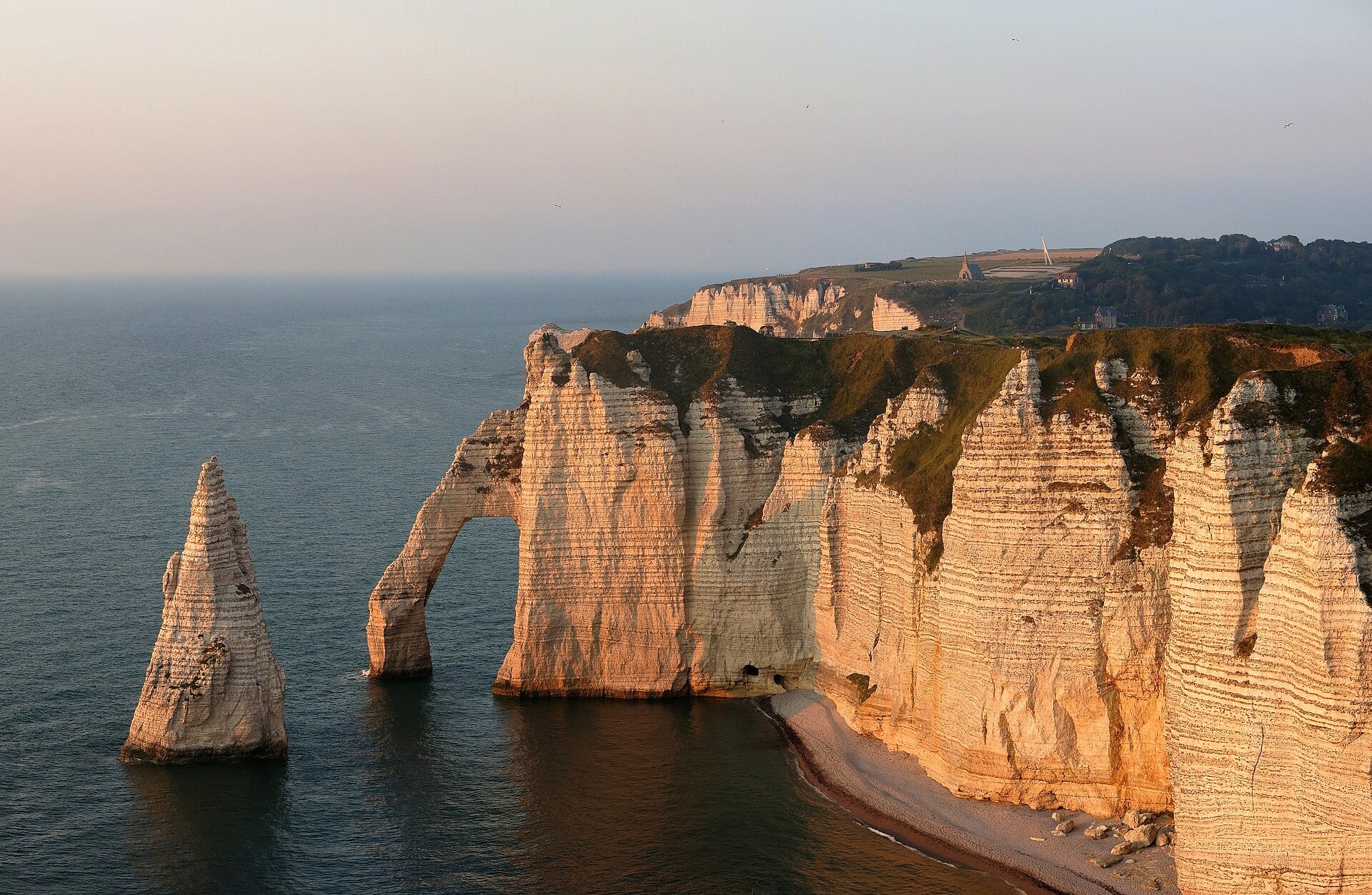
Looking left from the main beach, the single most famous rock formation rises before you — the one that graces just about every travel postcard from Normandy. Porte d’Aval is a massive chalk arch that the famous French writer Guy de Maupassant once aptly described as resembling a giant elephant dipping its trunk into the waves. And when you look at it from the right angle on the pebble beach, you really do see that fascinating likeness of an animal quite clearly.
This natural wonder formed over many thousands of years through relentless erosion, as rough sea waves and strong winds gradually wore away the softer parts of the chalk wall. Sadly you can’t reach the arch on dry feet even at the very lowest tide, so the best place to see it is from the clifftop walking trail. The view from above also offers a wonderful visual contrast between the dazzling white rock, the fresh green grass and the emerald-green water of the English Channel. The rock is constantly working away, though, crumbling unexpectedly, so when taking photos always keep a completely safe distance from the edge.
💡 Tip: You’ll get the best light for photographing Porte d’Aval in the late afternoon and evening. The setting sun paints the white chalk in warm orange and golden tones, creating an utterly magical atmosphere that the famous French Impressionists fell in love with centuries ago.
2. Spot the mysterious L’Aiguille needle
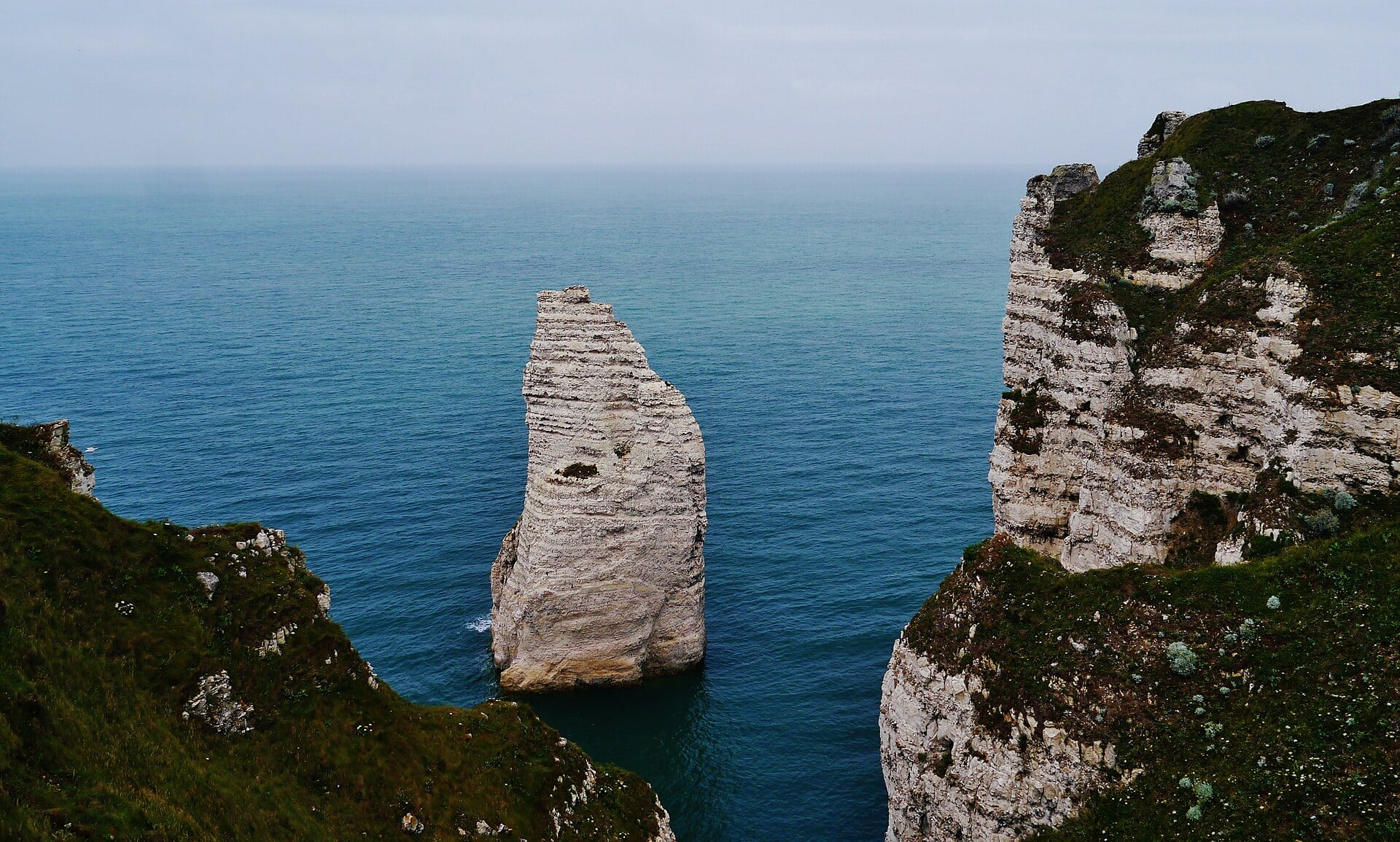
Right behind the elephant arch of Porte d’Aval, a solitary rock tower juts dramatically out of the sea — known in French as L’Aiguille, which literally means “the Needle”. This stunning limestone obelisk rises to an impressive 70 metres and looks as though it’s guarding the entrance to some forgotten underwater kingdom. You’ll really grasp its enormous size when a small sailing boat passes by, looking like a mere bath toy next to the towering rock.
Across France, the Needle is inseparably tied to local pop culture — specifically to the character of the brilliant gentleman thief Arsène Lupin. In the novel The Hollow Needle by the beloved writer Maurice Leblanc, it’s said that inside the rock lies a secret cave holding a vast treasure of ancient French kings. To this day, that adventurous tale draws thousands of devoted fans who scour the cliffs with binoculars in hand, searching for the imaginary secret entrance into the heart of the rock.
💡 Tip: Although the hidden treasure story is pure literary fiction, right in the town centre you’ll find the lovely Le Clos Lupin museum. Housed in the author’s former historic home, the tour costs just under €9 and pulls you perfectly into the detective atmosphere of the early 20th century.
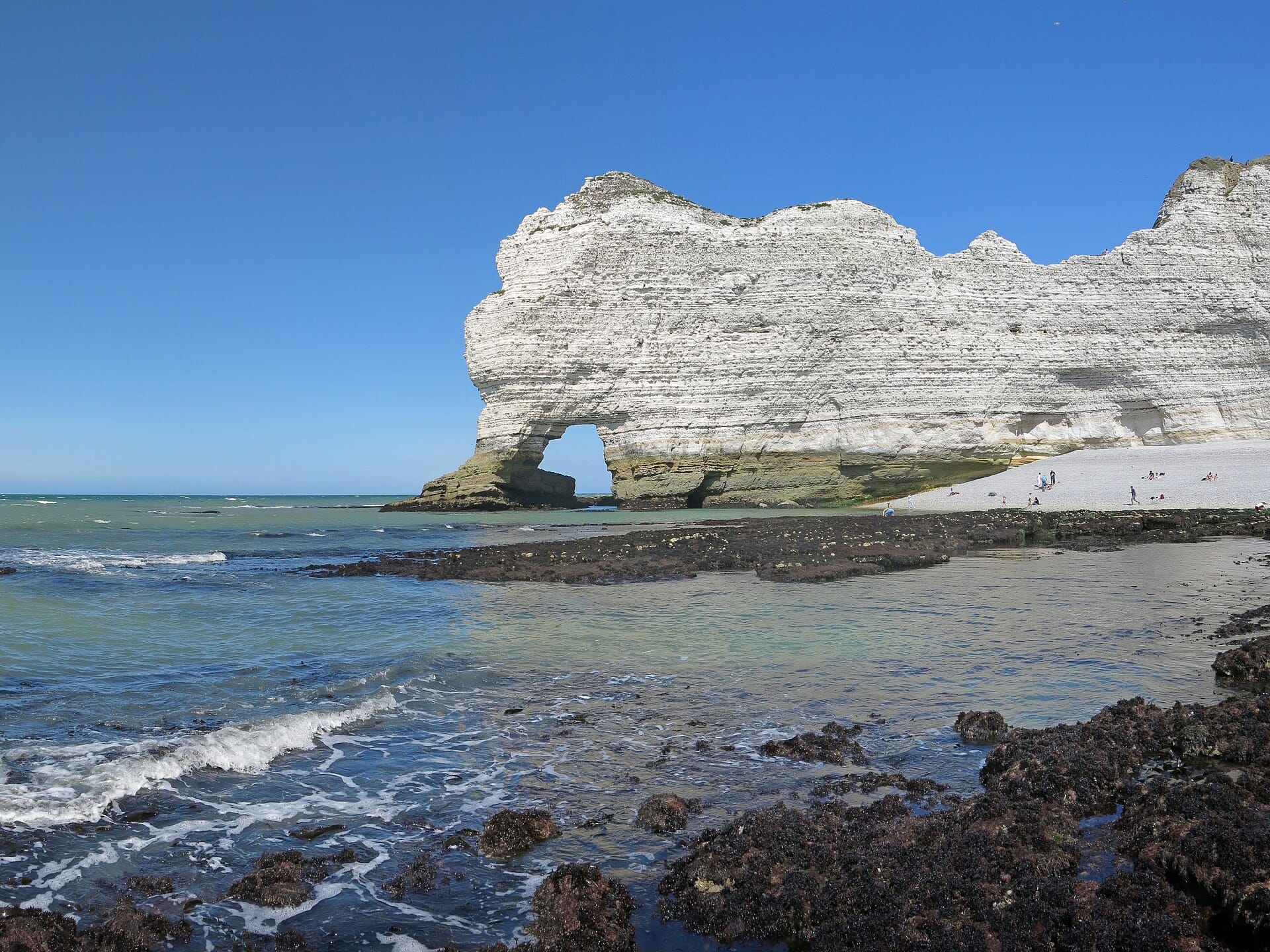
3. Conquer the Porte d’Amont cliff and arch
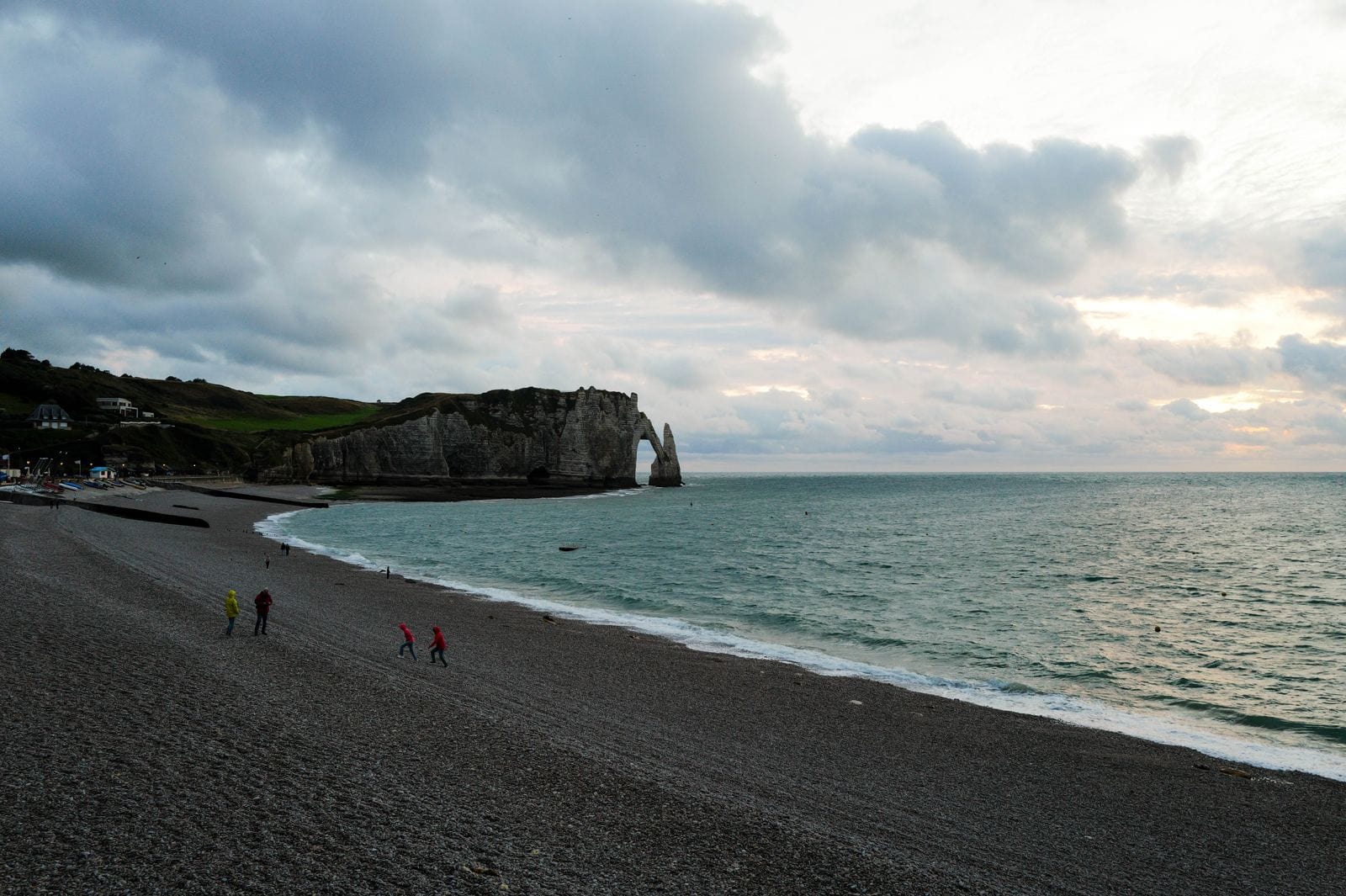
If you turn your gaze right from the main pebble beach, you’ll see a slightly smaller but no less beautiful cliff known as Porte d’Amont. This stretch is far more accessible to ordinary walkers, and the path up begins conveniently right at the very end of the town promenade. From there you’ll face a fairly steep but very well-maintained path and a series of concrete steps that lead you up to the grassy summit. Your reward for a little sweat is the finest bird’s-eye view of the entire town.
At the very top of this cliff stands the small, charming chapel of Notre-Dame de la Garde, the patron and spiritual protector of all the local sailors and fishermen. The original historic building was sadly destroyed entirely during the Second World War, but in the mid-20th century the locals rebuilt it with enormous love and care, so that it could go on symbolically watching over the whole bay.
💡 Tip: A short way beyond the chapel stands the very unusual Nungesser and Coli monument. Shaped like a long white arrow, it commemorates the two daring aviators who in 1927 attempted to be the first to cross the Atlantic in their plane, the White Bird — but were last seen right over Étretat before their mysterious disappearance.
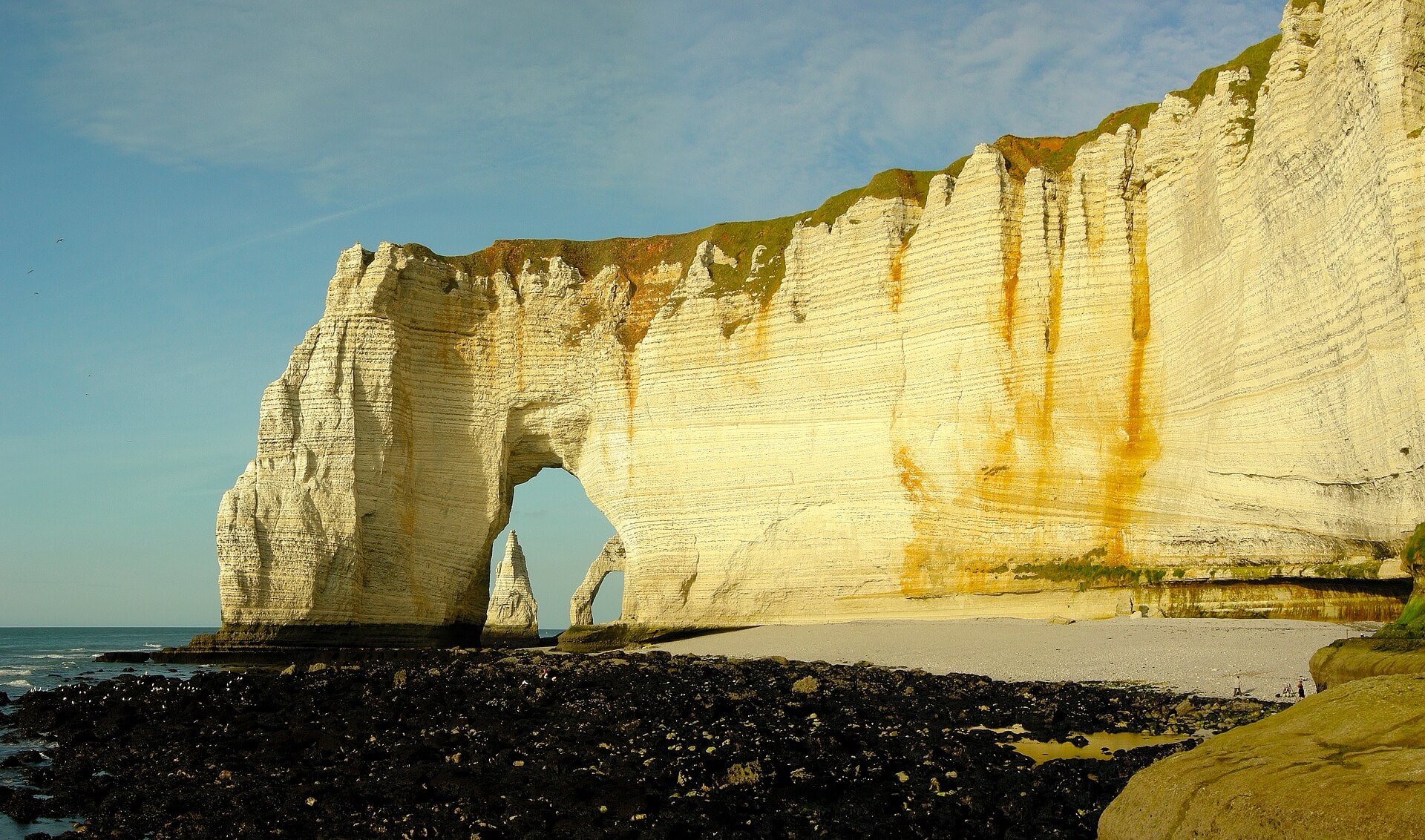
4. Discover the majestic Manneporte
Although the elephant arch of Porte d’Aval is by far the best-known among tourists, paradoxically it isn’t the largest you’ll find on this coast. If you bravely keep going along the cliffs further west on the well-trodden paths, you’ll come upon Manneporte. This is an absolutely gigantic chalk arch, beneath which — according to old seafaring legend — even a fully laden large ship could easily sail.
This geological formation is incredibly vast, raw and immensely majestic, precisely because it lies away from the heaviest tourist bustle around the town. From the viewpoints right above it, you’ll fully grasp the enormous power of nature and the smallness of man as you watch, in complete silence, the ocean crash into the stone pillars with a deafening roar. The water has carved such deep grooves into the rock that the whole enormous structure feels more like the work of some alien architect.
💡 Tip: The giant Manneporte arch was one of painter Claude Monet’s favourite subjects. He painted it around fifty times under different lighting conditions, capturing on canvas the fleeting mood of the moment and the ever-changing reflections on the sea’s surface.
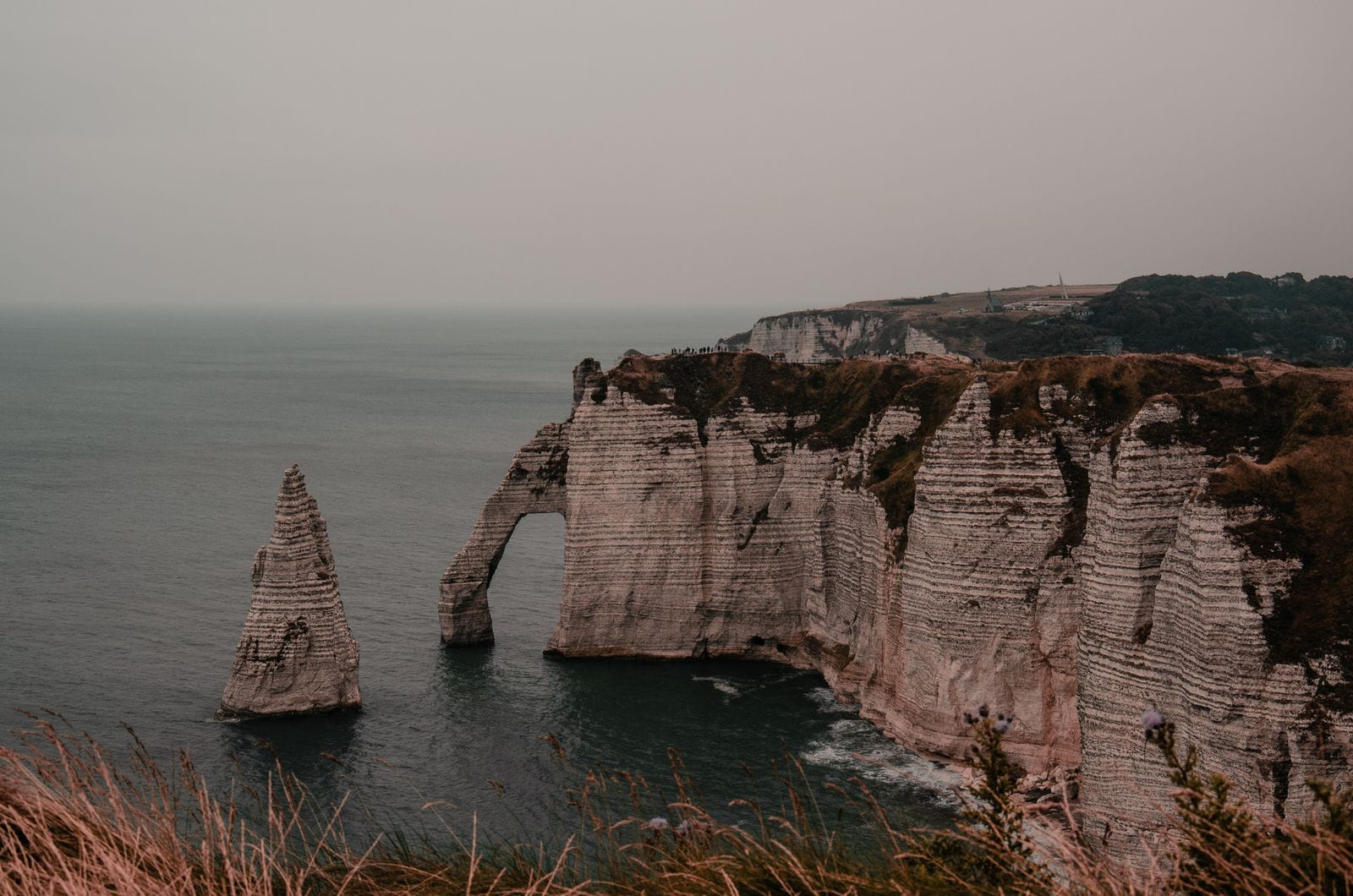
5. Set off on a walk along the cliff edge
The best way to truly soak up the rugged beauty of the whole Normandy coast is to set off on a proper hike along the long-distance trail marked GR21. This famous route runs along the entire coastline, and its stretch around Étretat is among the most beautiful in the whole country. You can head off in either direction from the town and walk along the cliff edge as far as your legs and your water supplies will let you.
The fresh green grassy plains atop the cliffs contrast sharply with the dazzling white chalk and the deep blue ocean, creating breathtaking scenery that feels like another world. The trail is gently rolling and easy to navigate, so any reasonably fit walker can manage it without much trouble. You’ll definitely need sturdy, closed shoes, though, because the chalk surface gets extremely slippery after the morning dew or rain, and a single wrong step here can be very dangerous.
💡 Tip: The cliffs are incredibly treacherous and the stone is constantly shifting, so never climb over the protective barriers or try to take dramatic photos right on the edge of the drop. There are no safety railings at all here, and sudden landslides are sadly nothing unusual.
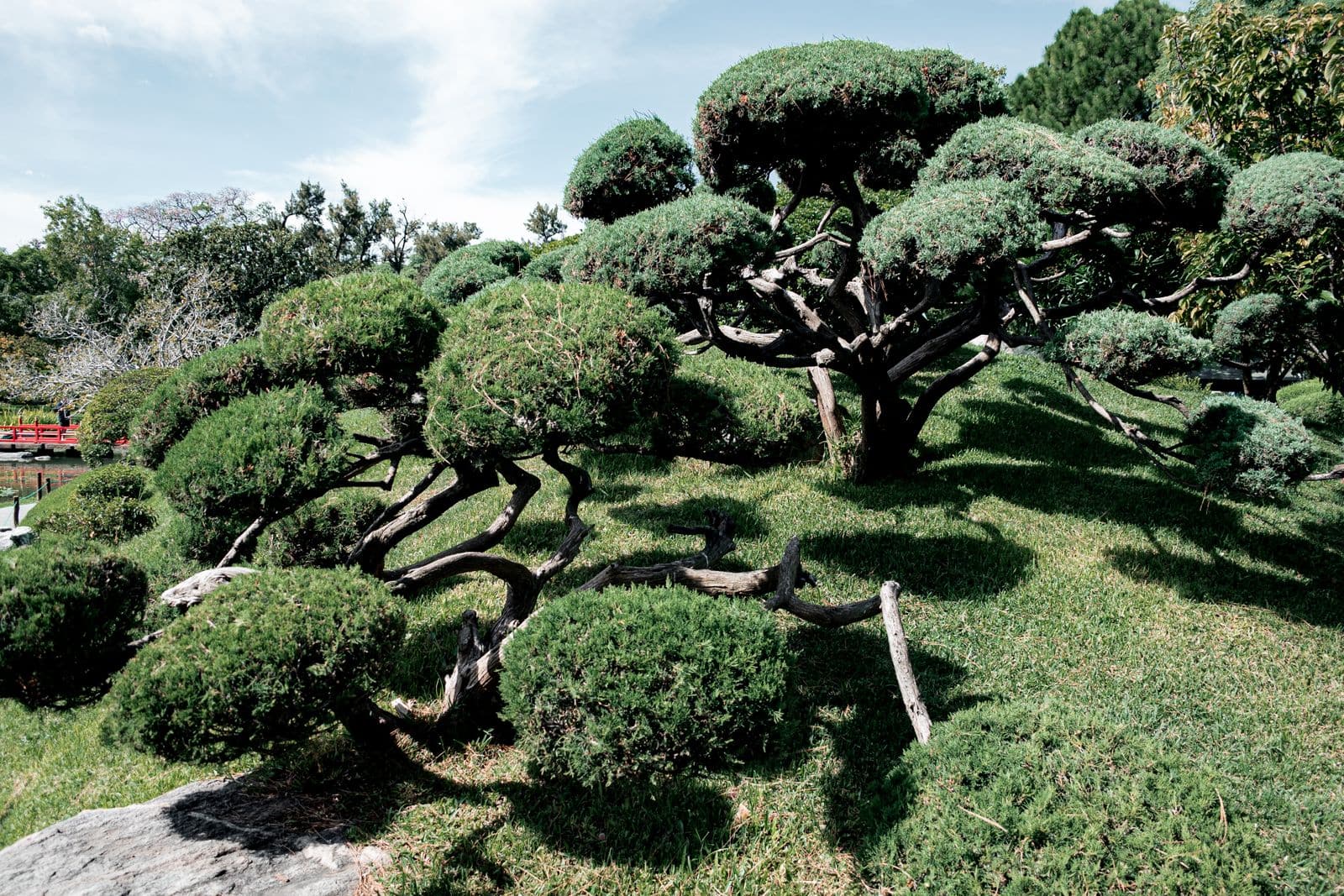
6. Relax in the Étretat gardens (Les Jardins d’Étretat)
When the strong wind on the cliffs has worn you out, be sure to head for the utterly fascinating Étretat gardens, Les Jardins d’Étretat, cleverly perched on the steep slope of the Porte d’Amont cliff. Don’t expect a classic romantic French park full of symmetrical rose beds, though. This unique spot works more like an open-air gallery of neo-futurist art, where carefully clipped shrubs blend seamlessly with modern sculptures and the soothing sounds of the ocean.
The most photographed and best-known part is the so-called Garden of Emotions, where enormous rubber faces with various expressions surprisingly peek out from the green box hedges, meant to symbolise the ever-shifting moods of the ocean. The gardens are laid out in terraces, and from their highest levels you get an unbeatable, peaceful view across the whole bay and the cliff opposite with its famous needle. It’s an absolutely ideal place for a moment of quiet meditation or a well-earned rest after a demanding climb.
💡 Tip: Better to buy your tickets online well in advance, because the gardens have a strictly limited capacity and won’t let in more people than allowed. In the summer months there are genuinely long queues at the ticket office, and admission costs around €15.

7. Listen to the sound of the pebble beach
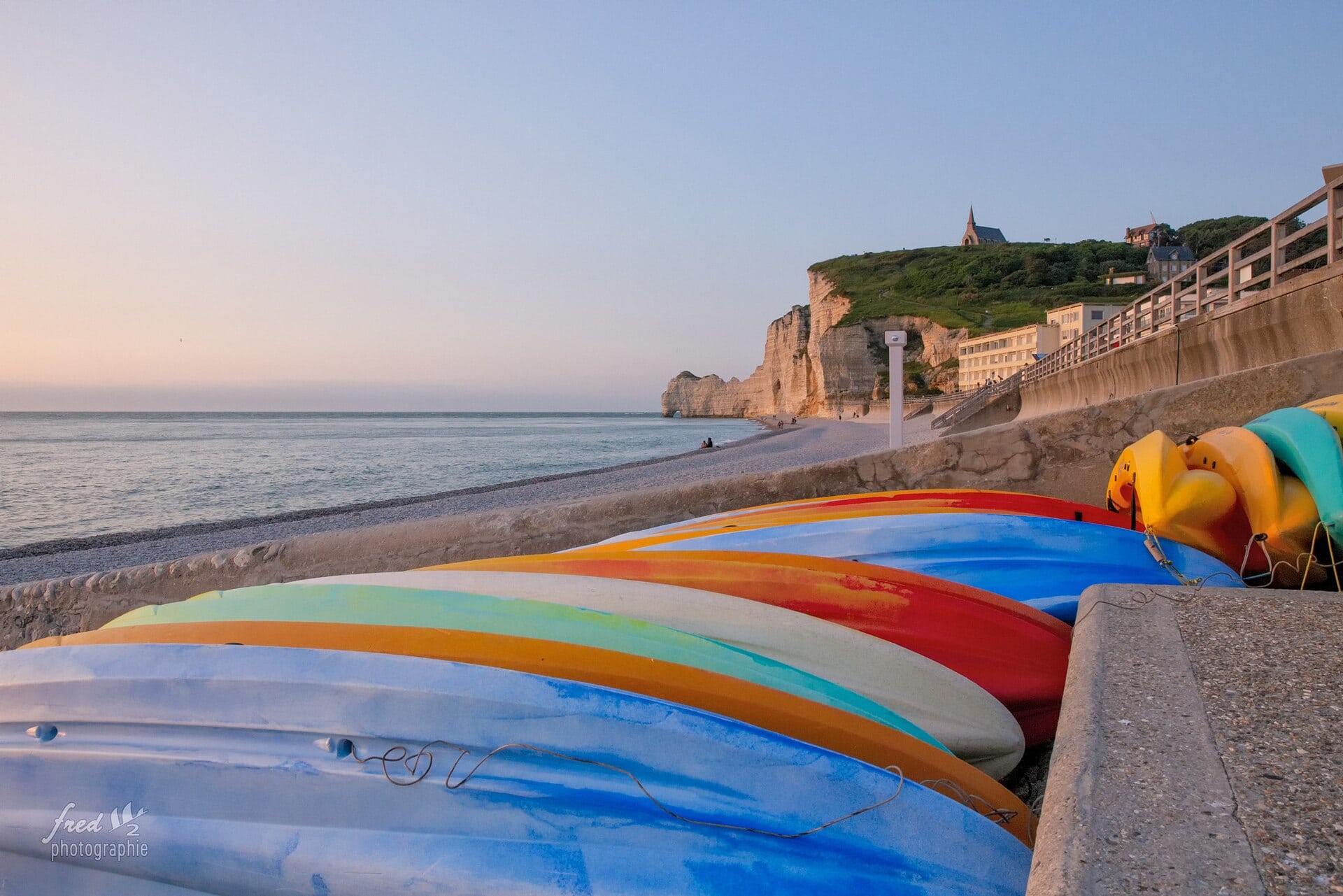
The main beach in Étretat sweeps in a wide arc along the whole town, but if you’re expecting soft white sand like somewhere in the Caribbean, you’ll be rather surprised. The beach is in fact made up of millions of smooth grey pebbles, which the locals call galets. These stones aren’t just for show, though — they serve an utterly essential protective function, effectively shielding the town from the destructive force of the strong winter waves.
When the stronger tide comes in, the waves lift these heavy stones, and as they slowly retreat the whole bay fills with a beautiful, soothing sound of rattling pebbles that strongly resembles the deep breathing of the ocean. For that reason, though, walking across the beach is fairly hard on the ankles, and swimming in the cold English Channel here is really only for true hardy souls, because the seabed drops steeply into deep water and the currents are strong.
💡 Tip: Under threat of a very hefty fine, it is strictly forbidden to take pebbles home as a souvenir. They form a completely natural breakwater, and their gradual loss would, over time, seriously threaten the safety of the whole historic town.
8. Wander the lanes of the old town
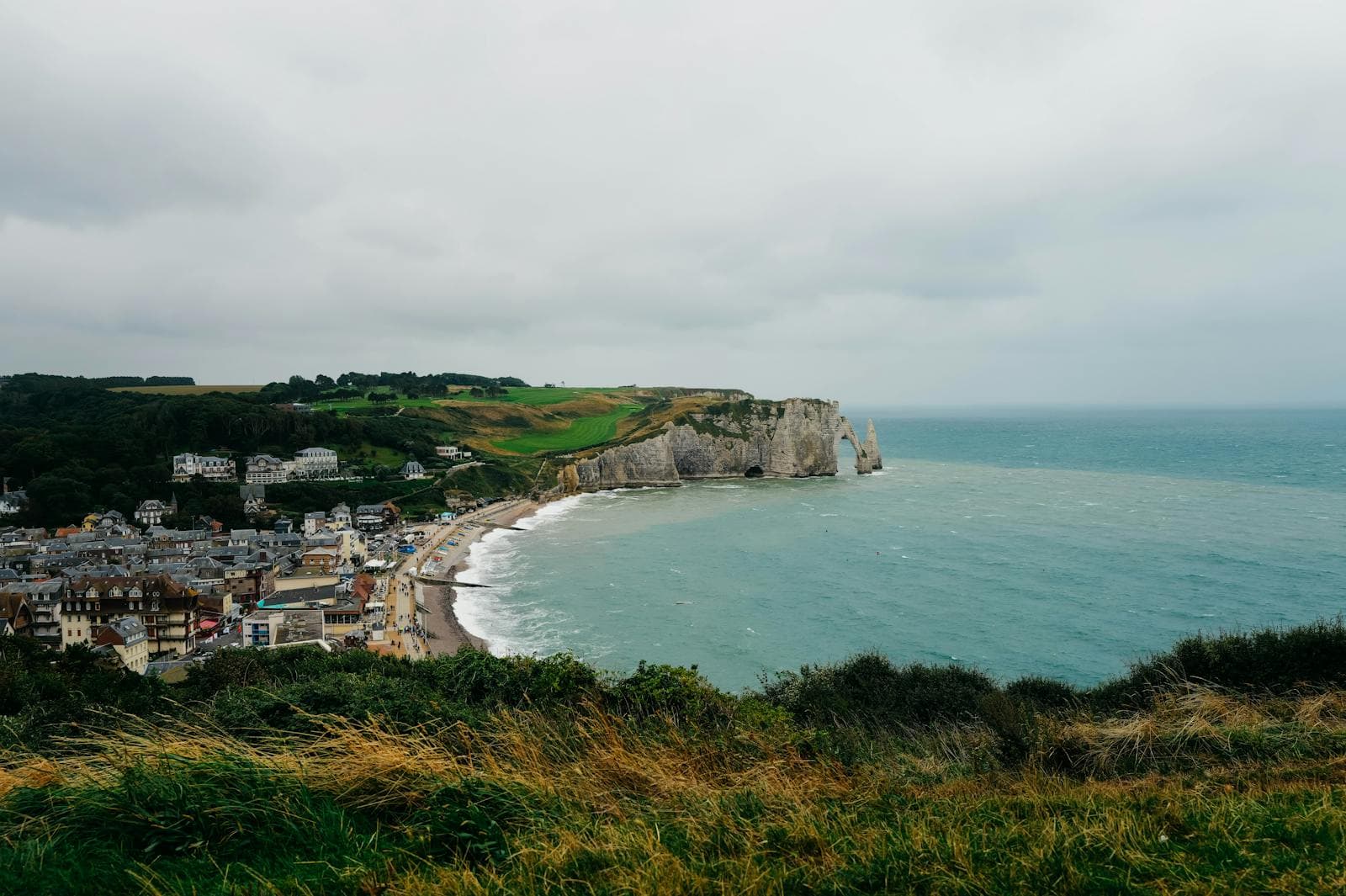
Even though the vast majority of people come here primarily for the natural wonders of the chalk cliffs, Étretat itself has an undeniable charm that absolutely deserves your full attention. The historic centre is woven through with enchanting Normandy houses, boasting traditional half-timbered façades of dark wood and the typical steep slate roofs. The whole town is permanently and temptingly scented with salty air, freshly baked crêpes and poured cider.
The heart of the town is the beautiful old wooden market hall, Les Halles, where fresh fish and vegetables were once sold, while today you’ll find in its shade a host of small shops selling souvenirs and local farm produce. In the narrow cobbled lanes you’ll also come across countless cosy cafés, where you can enjoy a great coffee with a crisp croissant and simply watch the lazy bustle of the picturesque French countryside in peace. Thanks to the strict ban on parking in the centre, there’s also relative quiet from car noise.
💡 Tip: If you love historic architecture, look out for the gorgeous Manoir de la Salamandre, standing right by the main market hall. It’s among the finest examples of medieval building in the entire area, and its richly carved wooden detail is absolutely stunning.
9. Walk in the footsteps of famous painters (Étretat and Monet)
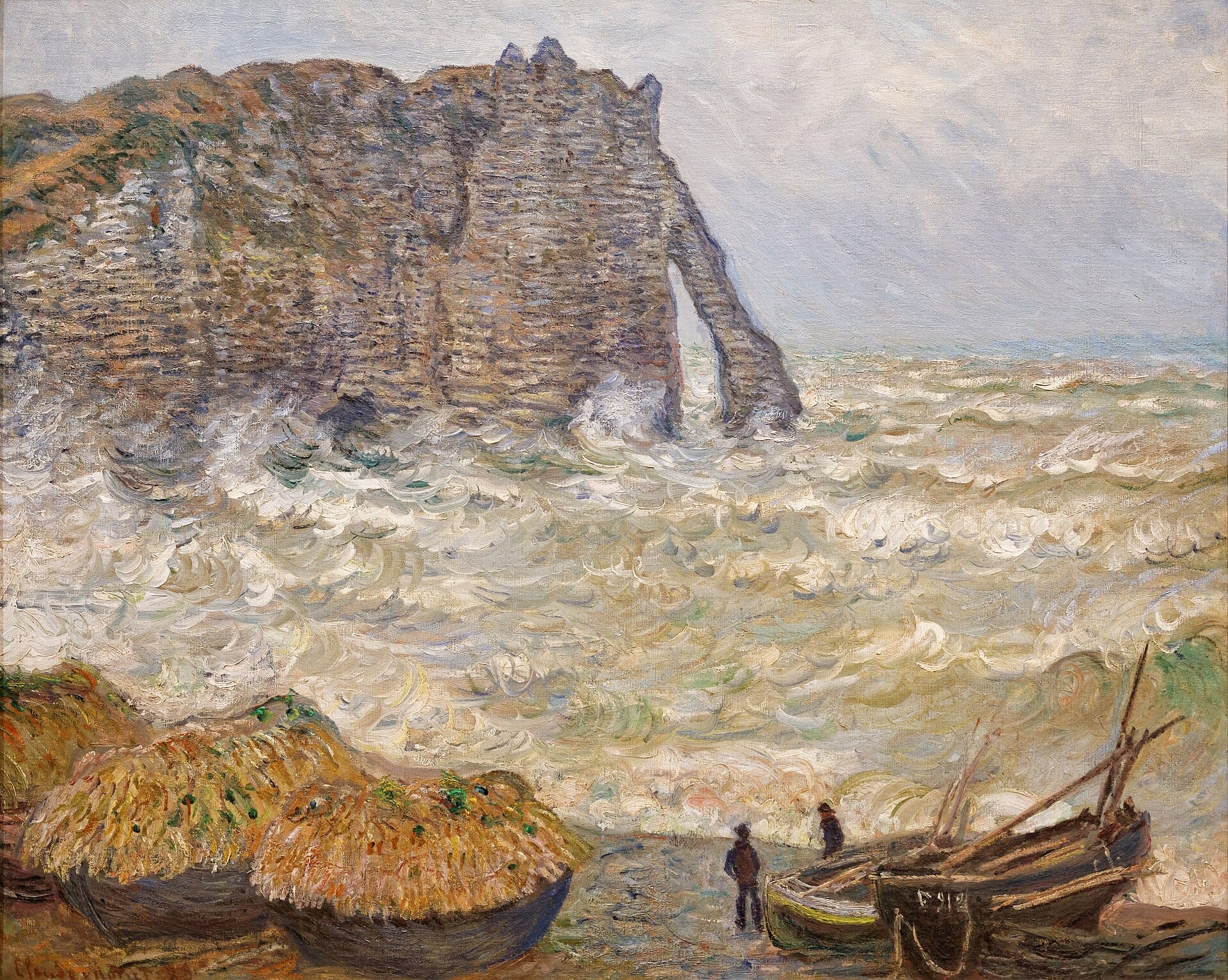
Étretat played an absolutely pivotal role in the development of world art, because it was here that artists flocked in droves to capture the magic of the local light on the stormy water. In the 19th century, once the direct railway from Paris was finally built, the town immediately became a favourite haunt for famous painters such as Gustave Courbet, Eugène Boudin and Claude Monet. It was they who fully established the tradition of painting in the open air here.
Claude Monet in particular was utterly obsessed with this wild coast, and during his repeated stays he created dozens of stunning canvases depicting the chalk cliffs and the stormy sea. When you stroll slowly along the seafront promenade today, you’ll come across several handy information panels showing the exact spots where these legendary masters once stood at their wooden easels, mixing their paints.
💡 Tip: The year 2026 is absolutely momentous for all of Normandy, as it marks exactly one hundred years since Claude Monet’s death. Expect special exhibitions, themed walks and enormous interest from Impressionism lovers worldwide, so book any guided tours very early.
10. Watch the tide and explore the caves
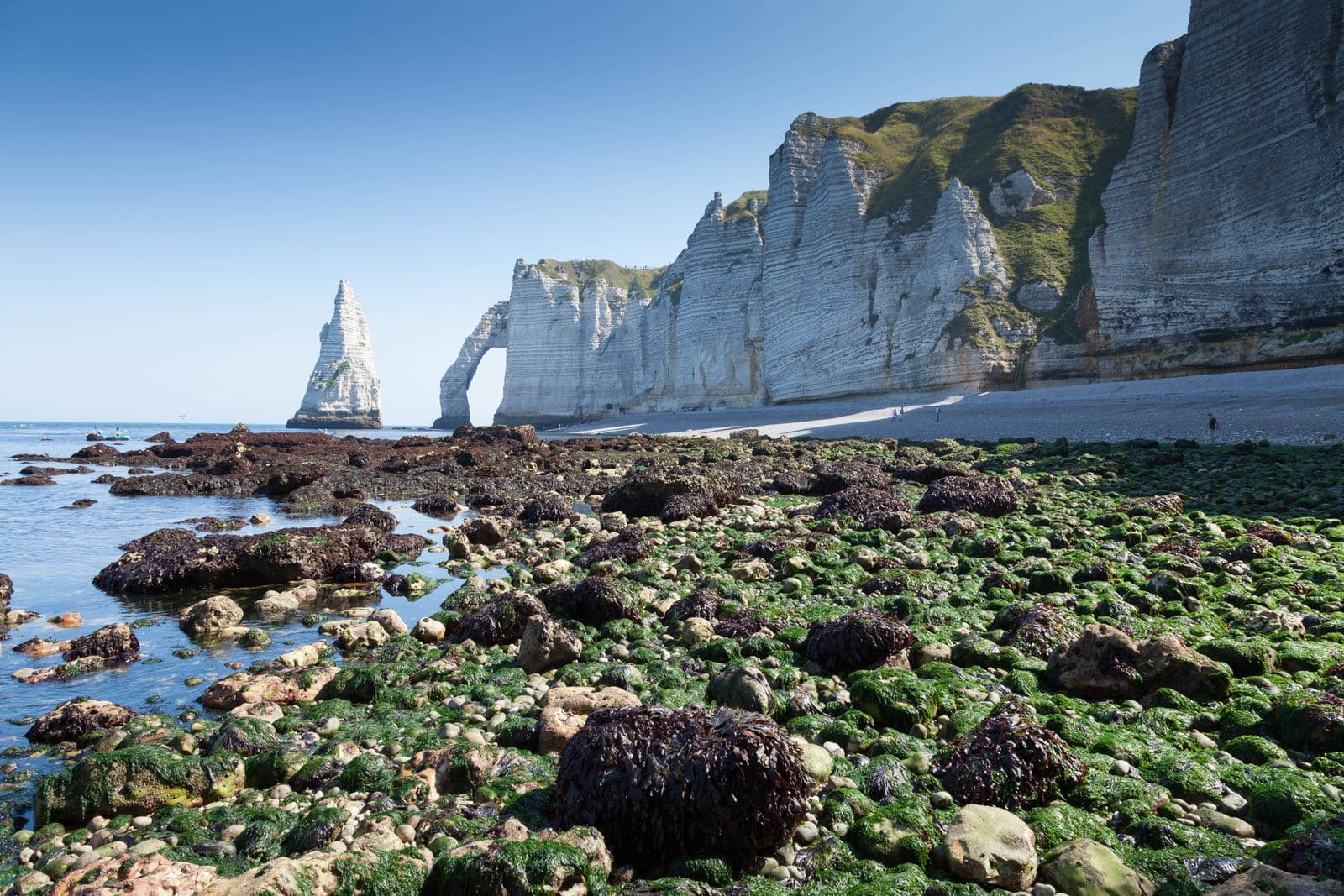
The ocean in Normandy follows a strict rhythm, and the differences between high and low tide here can be enormous, especially during the so-called spring tides in spring and autumn. When the water finally retreats after a few hours, a secret path opens up across the wet sea floor right beneath the Porte d’Aval cliff, carefully leading you into the fascinating natural cave of Trou à l’Homme, which literally translates as “the Man’s Hole”.
It got this unusual name after an old shipwrecked sailor from Sweden, who was supposedly cast into this very cave by a furious storm and miraculously survived as the only member of the whole crew. Walking through the dark cave to the other side of the cliff is a hugely adventurous experience, but you must keep a precise eye on the relentless clock. The water returns to the bay incredibly fast, silently and unexpectedly, so it can very easily and imperceptibly cut off your safe route back to the main beach.
💡 Tip: Before you even step down from the concrete promenade onto the beach, stop at the information board and carefully check the exact tide times. Never head into the rock passages if the water is starting to rise — the local fire crews sadly have to rescue careless tourists here fairly regularly.
11. Taste the best of Normandy cuisine

Normandy is a rich region that irresistibly smells of melted butter, full-fat cream and ripe apples, so you might as well forget any strict diet here with a smile. The local cuisine is very hearty but absolutely fantastic, and it’ll delight even committed vegetarians, because it’s built primarily on top-class local cheeses. Normandy cows graze on fresh, salt-laden grass, which gives the milk a unique flavour. I’d definitely recommend trying genuine raw-milk Camembert de Normandie, the strongly aromatic Pont-l’Évêque cheese, or the delicate Neufchâtel, which comes in a charming heart shape.
The traditional quick meal you’ll find in bistros on every corner is the savoury buckwheat galette, most often generously filled with cheese, egg and sweet caramelised onion. For dinner after a windy day on the cliffs, order a proper onion soup or potatoes gratin with cream, which will warm you up perfectly. But do watch the timing carefully — French restaurants have strict rules, and lunch is served strictly only between noon and two o’clock. If you turn up at three in the afternoon, the kitchen will already be uncompromisingly closed.
💡 Tip: With any meal you absolutely must order traditional apple cider, which is stylishly poured into ceramic bowls rather than glasses. You can choose between a sweeter version (doux) and a drier one (brut). If you fancy something stronger, order a Calvados, the famous apple brandy that works wonderfully to settle the stomach after a heavy cheese feast.
Map of points of interest for your phone
How to get to Étretat and the logistics
Given how remote the whole coast is, the most practical way to travel is by your own or a rental car, giving you complete freedom to stop at any viewpoint you like. If you’re coming from the UK, the easiest route is to take a ferry across the Channel (for example to Le Havre or Caen) or fly into Paris and hire a car from there. The problem arises the moment you actually reach Étretat itself. The town suffers from an enormous shortage of parking spaces, and parking in the centre is extremely expensive and woefully inadequate. So I’d strongly recommend using the large overflow car parks (such as the Grand Val car park) on the approach just before the village, from which you can comfortably reach the centre on foot in about fifteen minutes.
If you don’t have a car, the best starting point is the large port city of Le Havre, served by direct and very comfortable high-speed trains from Paris. From Le Havre, the regional bus line number 13 of the NOMAD network connects on, taking around fifty minutes and a few euros to deliver you right to the town hall in Étretat. The buses don’t run all that frequently, though, especially at weekends, so always check the current timetables online well in advance so you don’t end up stranded at the stop.
Where to go next from Étretat
If you have a car at your disposal, it would be a huge shame not to carry on exploring more of Normandy’s gems, because the whole region offers an incredible wealth of historic sites and stunning natural wonders.
- The Normandy landing beaches – Head further west and explore the places where history was written in 1944. From the quiet American cemetery with nine thousand white crosses at Omaha Beach to the bomb-cratered cliffs of Pointe du Hoc, an incredibly powerful experience awaits. In 2026 there will also be huge celebrations marking the 82nd anniversary of D-Day.
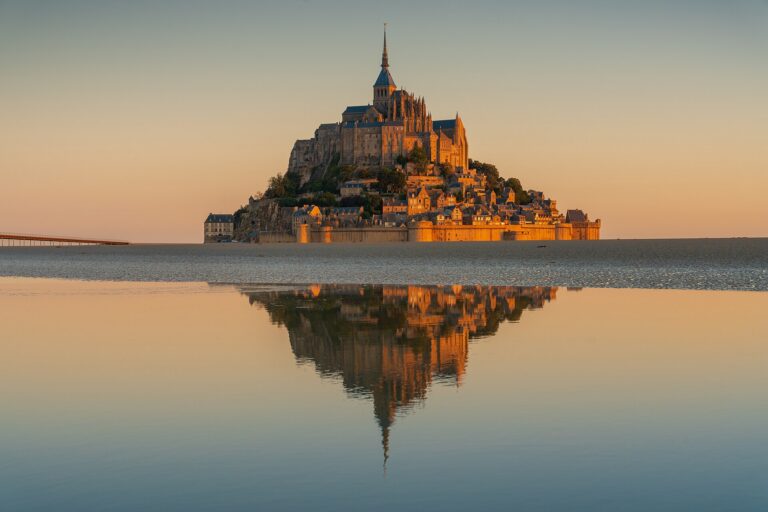
- Mont-Saint-Michel – The iconic Gothic abbey perched on a granite island, completely cut off from the mainland by the water during a fast spring tide. It lies about two and a half hours’ drive from Étretat. You have to leave your car on the mainland and reach the mount by free shuttle bus.
- Rouen and Giverny – On the way back towards Paris, stop in the city of Rouen, where Joan of Arc was burned at the stake, and then in Giverny. Here you can visit the famous water-lily gardens created by Claude Monet (in 2026 there will be a festival marking the centenary of his death).
- Honfleur – Pop over to one of the most photogenic harbours in all of France, where the first Impressionist school took shape in the local inns and where you can admire the old wooden church built by ships’ carpenters.
Frequently asked questions
How much time do I need to visit Étretat?
You can manage to explore the town itself, hike up the chalk cliffs, and visit the modern gardens in one very full day. However, if you want to enjoy the cliff walks completely stress-free and wait for the most beautiful evening light for photography, I recommend staying overnight and spending at least a day and a half here. In the morning, you’ll also experience the town beautifully quiet, smelling of fresh pastries, and most importantly without the large tour buses from Paris, which start arriving around ten o’clock in the morning.
Are the cliffs safe for children?
Yes, but they require an enormous amount of caution. The wider paths along the cliffs are fairly safe, however there are absolutely no railings or safety barriers separating you from the deep drop. Children must be under constant strict supervision, ideally held firmly by the hand at all times, and under no circumstances should they be allowed to run near the edges, which can unexpectedly break off and cause a fatal fall.
Can I swim in the sea at Étretat?
Swimming is permitted here, but it’s really only for very strong and hardy swimmers. The water in the English Channel is very refreshing and cold even in the heat of summer, and entering over the giant pebbles isn’t exactly comfortable for bare feet. The seabed also drops off quite steeply just a short distance from the shore, and underwater currents can be unexpectedly strong and treacherous, so never venture out too far.
Is it possible to visit the caves at any time?
Absolutely not! The caves beneath the cliffs are safely accessible only at maximum low tide. Always carefully follow the current tide tables posted at the entrance to the promenade. Never venture into the rock passages if the water is already visibly rising, as it returns extremely quickly and could easily trap you in the cave.
Are dogs allowed in the area?
Dogs are generally welcome in the town and on the tourist trails above the cliffs, provided you keep them obediently on a leash. However, keep in mind that dogs are strictly prohibited on the main pebble beach throughout the entire summer season to avoid disturbing other visitors and to maintain cleanliness. You can only take them to the water at more remote wild beaches outside the town center.
How physically demanding are the hikes?
The climb up the Porte d’Amont cliff to the chapel follows paved walkways and solid concrete steps, so any person of average mobility can manage it, although you’ll probably work up a bit of a sweat. The path to the opposite Aval cliff is somewhat steeper and the surface is less developed, but with frequent breaks to catch your breath and take photos, you can make it up without major problems even without professional athletic fitness.
Can Étretat be visited in a wheelchair?
The promenade along the beach itself, the streets with restaurants, and the town center are flat and easily accessible for wheelchair users or families with strollers. Unfortunately, the paths to the tops of the chalk cliffs themselves are not wheelchair accessible, and due to steep stairs and uneven natural terrain, you won’t be able to get up there with a wheelchair. However, even from the promenade, the views of the cliffs are absolutely fantastic.
Tips and Tricks for Your Vacation
Don’t Overpay for Flights
Search for flights on Kayak. It’s our favorite search engine because it scans the websites of all airlines and always finds the cheapest connection.
Book Your Accommodation Smartly
The best experiences we’ve had when looking for accommodation (from Alaska to Morocco) are with Booking.com, where hotels, apartments, and entire houses are usually the cheapest and most widely available.
 🚗 Car rental on the roadVerified car rentals in Normandy
Search with the DiscoverCars comparison engine — it compares prices from dozens of local and international rental companies, and most bookings come with free cancellation.
Compare car prices in Normandy →Don’t Forget Travel Insurance
Good travel insurance will protect you against illness, accidents, theft, or flight cancellations. We’ve had a few hospital visits abroad, so we know how important it is to have proper insurance arranged.
Where we insure ourselves: SafetyWing (simple monthly subscription) and TrueTraveller (for extra-long trips).
Find the Best Experiences
Get Your Guide is a huge online marketplace where you can book guided walks, trips, skip-the-line tickets, tours, and much more. We always find some extra fun there!