France is one of those countries you simply want to keep coming back to. This France roadtrip itinerary was born out of that exact feeling — you know the one, when you’re sitting on the plane home already planning your next visit? That’s how France makes us feel every single time. The scent of fresh croissants, endless stretches of vineyards, fairytale châteaux, and those cliffs… Oh, those cliffs in Normandy. 😍
Because I love France, I’ve put together this 7-day itinerary — so you can avoid the classic mistakes and enjoy France to the fullest. You’ll drive from Paris through the fairytale Loire Valley châteaux, breathtaking Mont Saint-Michel, the history-laden beaches of Normandy, all the way to Monet’s gardens in Giverny. And all of that in just one week.
In this article you’ll find a complete day-by-day itinerary for a 7-day France roadtrip, with specific tips on restaurants, accommodation, and places you absolutely shouldn’t miss. I’ll tell you when to go, how much the whole thing costs, and what to watch out for.
TL;DR
- Route: Paris → Versailles → Loire Valley châteaux (Chambord, Chenonceau, Amboise) → Mont Saint-Michel → Normandy (D-Day beaches, Étretat) → Giverny → Paris
- Total distance: approx. 1,200–1,400 km (depending on detours and side trips)
- Best time to go: May, June or September — pleasant weather, fewer tourists, lower prices
- A car is essential — you can’t comfortably cover this route by public transport in 7 days
- Budget for two for a week: approx. €1,150–2,000 (excluding flights) — depends on accommodation type and dining habits
- Biggest WOW moments: Mont Saint-Michel at sunrise, the cliffs of Étretat, sunset over Chambord
- Watch out for: motorway tolls will surprise you (budget €50–80 for the whole trip), petrol is expensive, you don’t need a car in Paris
- Download the map of all recommended places straight to your phone (link in the article)
The full destination guide: Normandy — guide and what to see
When to go on a France roadtrip and how to prepare
France is beautiful practically all year round, but for a roadtrip where you’re switching between city, countryside, and coast, some months are significantly better than others. Let’s go through everything you need to know before you set off.
Best time: May, June and September
May and June are, in our opinion, absolutely ideal. The weather is pleasant (18–25 °C), gardens are in full bloom (Monet’s Garden in Giverny is a literal explosion of colour in June), the tourist season is only just getting started, and accommodation prices are reasonable. September is a great alternative — temperatures are similar, but the vineyards in the Loire Valley begin to turn golden with autumn tones, creating a completely different atmosphere.
I wouldn’t recommend July and August if you want to avoid crowds. Mont Saint-Michel in August is like the Tower of London in peak season — you simply can’t move. On top of that, the French take their nationwide holiday in August and popular spots are packed. And prices? Easily 40–60% higher in summer. 😅
The winter months (November–February) have their charm, but many gardens and some smaller châteaux are closed, and in Normandy the wind will blow you right off your feet.
How to get to France
Flying into Paris is the most practical option. From London, there are frequent direct flights to Charles de Gaulle (CDG) with airlines like British Airways, easyJet, and Air France — book ahead and you can find return tickets from around £50–80. Alternatively, Eurostar from London St Pancras gets you to Gare du Nord in about 2.5 hours, which is a wonderful option if you prefer rail.
For the best deals on flights, we always compare on Skyscanner or Google Flights — they often surface connections you won’t find elsewhere.
Tip: If you fly into Charles de Gaulle, pick up your rental car directly at the airport. Nearly every rental company has a branch there, and you can head straight onto the motorway towards Versailles without having to drive through central Paris (and trust me, you don’t want to do that).
Car hire and transport
A car is absolutely key for this roadtrip. While you can theoretically reach most places on the route by train (France has an excellent TGV network), the flexibility of having your own car is irreplaceable — especially in Normandy and the Loire Valley, where interesting spots are scattered across the countryside.
We’ve had consistently great experiences with DiscoverCars, which we use all over the world. For France, I recommend:
- Book well in advance — ideally 2–3 months ahead; last-minute prices can be astronomical
- A small car will do — the roads in Norman villages are narrow, and you’d be cursing an SUV
- Automatic transmission is more expensive in France, but if you’re used to an automatic, it’s worth the surcharge
- Full insurance with zero excess — always, always, always. French roads are full of roundabouts and occasionally confusing junctions
What to watch out for with your car:
- Tolls (péage) on French motorways are fairly steep. Budget €50–80 for the entire trip. Toll booths accept cards.
- Petrol costs around €1.70–1.90 per litre; diesel is slightly cheaper
- Speed cameras are everywhere, and the French fine you even for a few km/h over the limit. Motorway limit is 130 km/h, on regular roads it’s 80 km/h.
- Parking in small towns — look for Park & Ride or car parks on the outskirts; town centres are often pedestrianised
How much does car hire cost: Expect €200–350 per week for a small car, more in peak season.
Where to stay on a France roadtrip + total costs
On a seven-day roadtrip, I recommend staying at 3–4 different places — you don’t want to pack up and move every single day, or your holiday turns into a logistical nightmare. Here’s my recommended strategy:
- Night 1: near Versailles or the southern suburbs of Paris (close to the motorway towards the Loire)
- Nights 2–3: Loire Valley (ideally Amboise or Tours)
- Nights 4–5: Mont Saint-Michel or nearby (Pontorson, Beauvoir)
- Nights 6–7: Normandy — Bayeux or Honfleur (both are strategically superb)
How much does a week in France cost for two
France isn’t among the cheapest countries, but it doesn’t have to break the bank. Here’s our realistic budget for 7 days for two (excluding flights):
- Accommodation: €400–800 — depends on whether you choose Airbnb / B&B / hotels
- Car hire + petrol + tolls: €350–500
- Food and drink: €300–500 — lunch in bistros €15–25 per person, dinner €25–40
- Tickets and activities: €100–200 — châteaux, museums, gardens
- Total: approx. €1,150–2,000 for two
Money-saving tip: Pick up cheese, baguettes, fruit, and wine from supermarkets (Carrefour, Leclerc) and have a picnic for lunch — you’ll spend just a few euros, and the atmosphere of a picnic beside a Loire Valley château is unbeatable. We “saved” on lunch this way and spent the difference on a nicer dinner. Win-win. 😁
Here’s a day-by-day overview of the entire route. Want more time and to see the south of France too? Check out our 14-day France roadtrip itinerary.
| Day | Route & transfers | Where to sleep |
|---|---|---|
| 1. | Arrive in Paris, Versailles | Versailles |
| 2. | Versailles → Loire Valley châteaux — Chambord, Chenonceau | Loire (Amboise) |
| 3. | Amboise → Mont-Saint-Michel (~3.5 hrs) | near Mont-Saint-Michel |
| 4. | Mont-Saint-Michel → Normandy (Saint-Malo, Cancale) | Bayeux |
| 5. | D-Day beaches & historic Normandy | Bayeux |
| 6. | Étretat, Honfleur → Giverny | Giverny |
| 7. | Monet’s gardens in Giverny → return to Paris | — |
Day 1. Versailles and your first taste of France
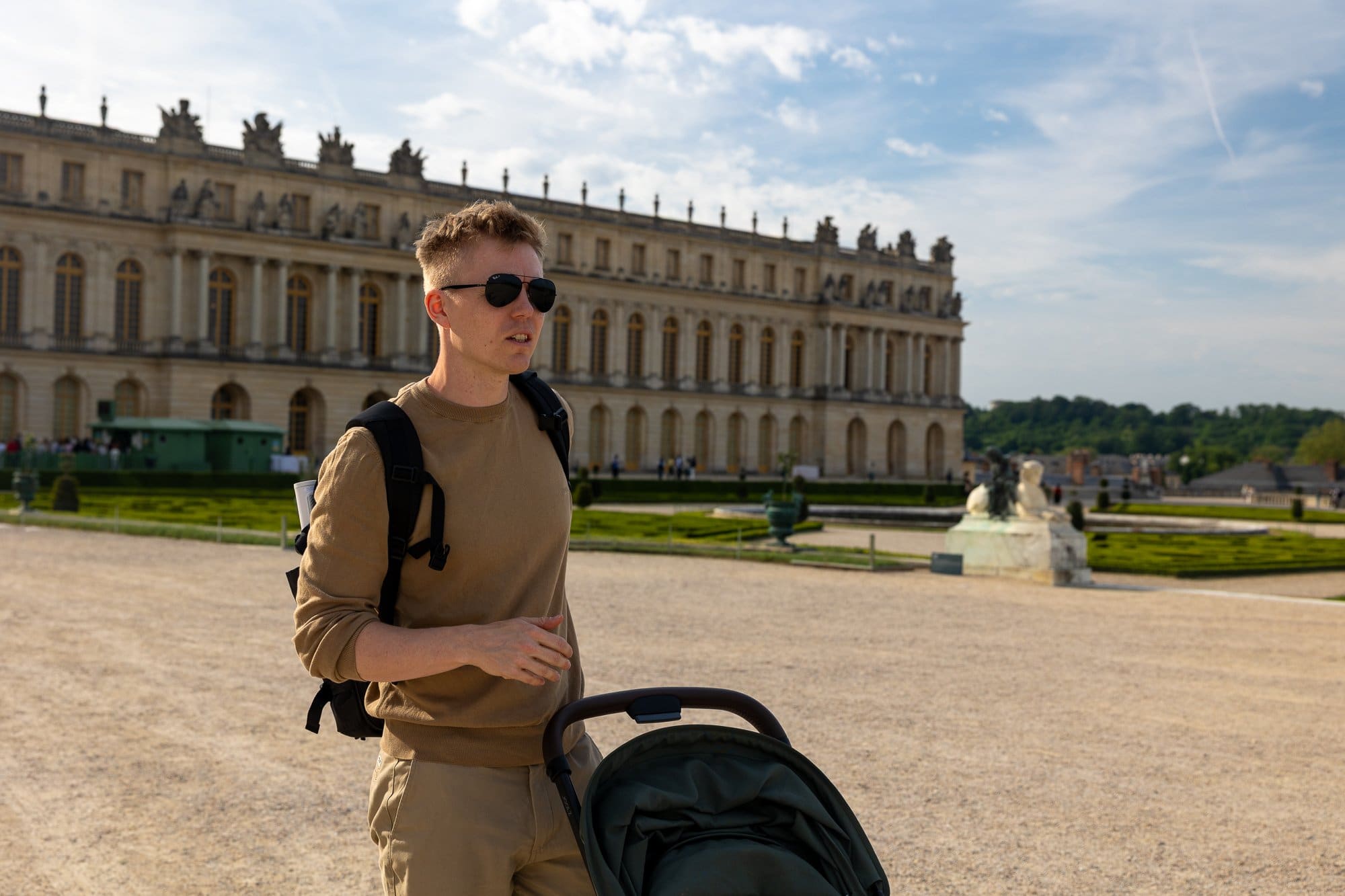
You arrive in Paris, pick up your car and — don’t drive into the city centre. I know it’ll be tempting, but save Paris for the end (or for a separate trip, because Paris deserves at least 3 days on its own). Instead, head straight to Versailles, which is about an hour and a half from CDG airport.
Palace of Versailles
The Palace of Versailles is simply on another level. You can study all the photos and videos beforehand, but when you’re physically standing there, it still takes your breath away. The sheer scale, the opulence, those gardens stretching into infinity… Louis XIV clearly didn’t have a problem with modesty. 😅
Practical tips:
- Buy tickets online in advance — queues without a reservation can be up to 2 hours (and I’m not exaggerating)
- A full ticket costs €21.50 per person, covering the palace and gardens
- Arrive at opening time (9:00) — the first two hours are the quietest
- Allow at least 3–4 hours for the palace + gardens, ideally the whole morning
- The gardens are enormous — if you’re not keen on walking, you can hire a golf cart or a rowing boat on the Grand Canal
For lunch, head into the town of Versailles — Rue de Satory is packed with small restaurants. I recommend La Table du 11 (if your budget stretches to a slightly fancier meal) or Bistrot du Potager du Roi with its lovely terrace and local cuisine. Main courses around €18–25.
After lunch, take a stroll through the historic centre of Versailles — the Saint-Louis quarter with its cathedral and market hall is surprisingly charming and almost untouched by tourists.
If you’ve still got energy, pop into the Versailles Market (Marché Notre-Dame) — it’s open every day except Monday and you’ll find fantastic cheeses and local produce for a picnic the next day.
Where to stay on the first night
Stay near Versailles or in Chartres (it’s halfway to the Loire and saves you time in the morning). In Versailles itself, I recommend Hôtel Le Louis Versailles Château (modern, walking distance from the palace) or the more budget-friendly Hôtel Le Cheval Rouge, which has a family feel and excellent breakfasts. If you’re looking for an Airbnb, focus on the Saint-Louis quarter.
Day 2. Loire Valley châteaux — Chambord and Chenonceau
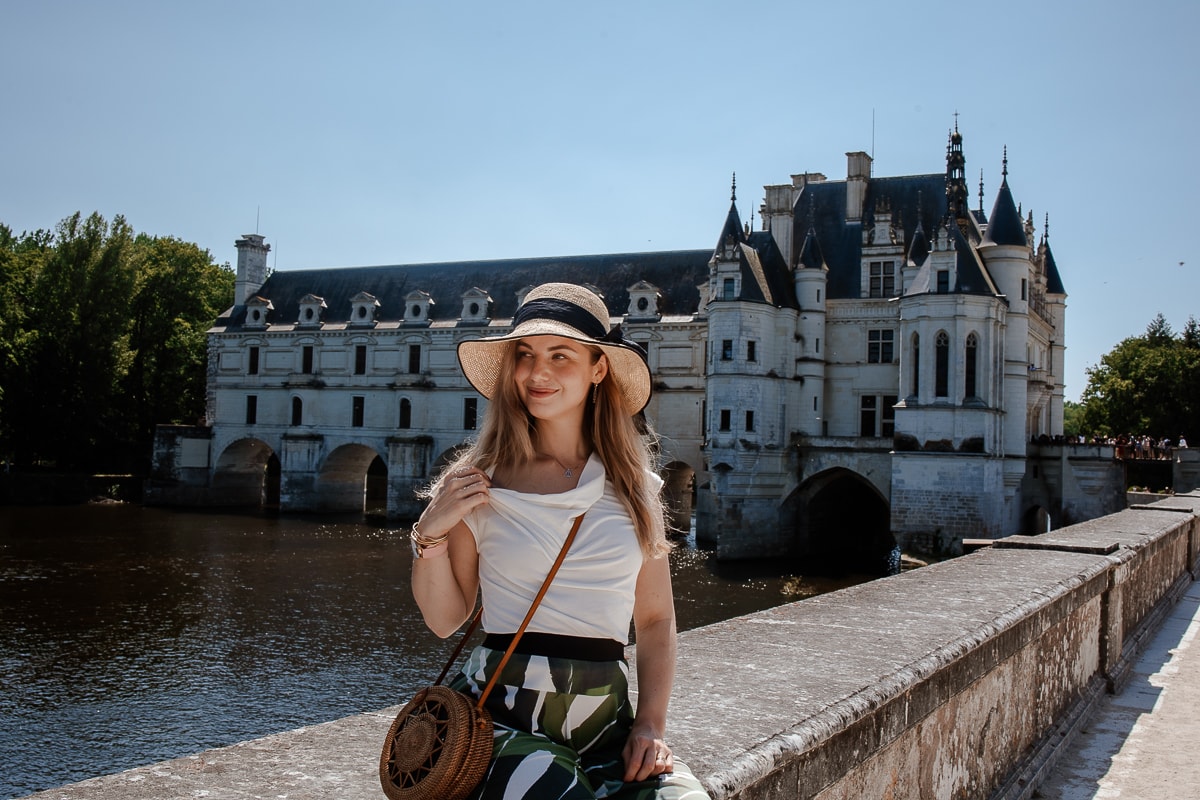
Today is the most fairytale-like day of the entire roadtrip. In the morning you’ll head to the Loire, which is about a 2-hour drive from Versailles along the A10 motorway. The road passes through endless fields and is fairly monotonous, but what awaits you at the other end is absolutely worth it.
Château de Chambord
Chambord is the undisputed crown jewel of the Loire Valley châteaux. As you drive towards it and it slowly emerges from behind the trees… just wow. It’s enormous, with over 400 rooms, and its famous double helix staircase (reportedly designed by da Vinci) is an architectural wonder — two people can ascend simultaneously without ever meeting.
Practical tips:
- Admission: €16, free for under-26s from the EU (!)
- Arrive early morning (opens at 9:00) — the morning is the quietest
- Allow 2–2.5 hours for the château + grounds
- Don’t miss the rooftop terrace — the views over the surrounding forests are incredible
- In the grounds (5,440 hectares!) you can hire bikes or electric buggies
This is the perfect spot for a picnic — spread out a blanket by the pond in front of the château, crack open the cheese and baguette from the Versailles market, and soak in the view. You won’t find a better restaurant. ☺️
Château de Chenonceau
In the afternoon, make your way to Chenonceau (about 1 hour from Chambord). This is the famous “Ladies’ Château”, built spanning the River Cher — you’ll recognise it from every other French postcard. And I have to say, photos don’t do it justice.
Chenonceau is more intimate than Chambord but has an incredible atmosphere. You walk through the château with the river flowing beneath you and gardens blooming all around… It’s like stepping into a painting.
- Admission: €17
- Allow 1.5–2 hours for the visit
- The gardens of Diane de Poitiers and Catherine de’ Medici are both stunning, but each in a completely different way
- In summer they offer evening visits with illuminations — if you get the chance, go!
For dinner, head to Amboise (30 minutes from Chenonceau), a charming little town on the banks of the Loire. I recommend L’Écluse right by the river — they do excellent steaks and local Loire wine at reasonable prices (main courses €18–28). For something lighter, try Bigot, a patisserie and chocolate shop with phenomenal desserts.
Where to stay in the Loire Valley
Stay in Amboise — it’s a strategically excellent base for the châteaux, and the town itself is lovely. Le Clos d’Amboise is a gorgeous boutique hotel with a garden and pool. A more budget-friendly option is Hôtel Le Chaptal or an Airbnb right in the historic centre. In the surrounding area, you can even find troglodyte accommodation (carved into the rock face) — an experience you won’t get anywhere else!
Day 3. Amboise, one last château, and the drive to Mont Saint-Michel
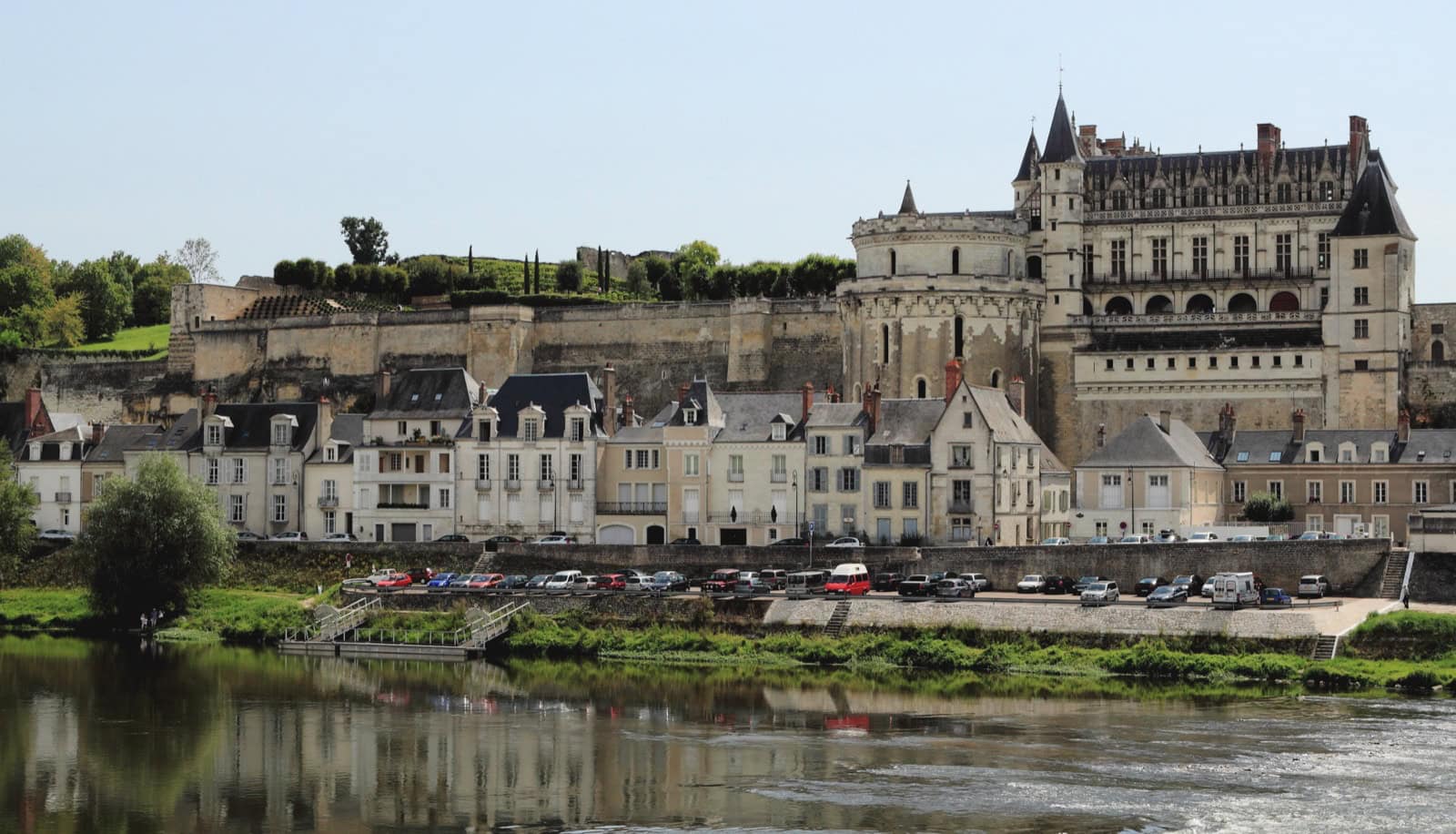
Treat yourself to a relaxed morning in Amboise — stroll along the Loire embankment, have breakfast in one of the cafés on the main street, and visit a place you really shouldn’t skip.
Château d’Amboise and Clos Lucé
The Royal Château of Amboise presides over the town and offers beautiful views of the river and surrounding countryside. The visit is shorter than at the larger châteaux (an hour is enough), but the atmosphere is intimate and pleasant.
Right next door is Clos Lucé — Leonardo da Vinci’s final home, where he spent his last years at the invitation of Francis I. The interactive exhibition of his inventions is fantastic even for adults (and if you have kids, they’ll love it). Admission: €19. Allow 2–3 hours for both.
Morning tip: If you haven’t had enough of châteaux yet, on your way out of Amboise you could stop at Château de Villandry — its interiors aren’t as imposing, but its Renaissance gardens are arguably the most beautiful in all of France. Truly breathtaking geometric patterns. Admission: €13.
Driving to Mont Saint-Michel
After lunch in Amboise (try L’Amboiserie — excellent galettes, the savoury buckwheat crêpes that are a Breton staple, mains from €12), hop in the car and head for Mont Saint-Michel.
The drive takes about 3.5 hours via Le Mans and Avranches. It’s the longest transfer of the whole roadtrip, but the scenery is lovely — especially the final hour, when you pass through the Norman countryside with its cow-filled pastures and apple orchards.
Important: You can’t drive right up to Mont Saint-Michel. You’ll park in a large car park (about 2.5 km from the island, parking €14.90 for 24 hours) and continue by free shuttle or on foot along the causeway. I recommend arriving in the early evening — Mont Saint-Michel at sunset is one of the most powerful experiences of the entire trip.
Where to stay near Mont Saint-Michel
You have two options: stay right ON the island (expensive but unforgettable) or in the surrounding area (more practical and cheaper).
On the island: La Mère Poulard is a legendary hotel and restaurant — pricey, but an experience. If you want to tick off a bucket-list dream, this is worth it.
Nearby: The villages of Beauvoir or Pontorson (10–15 minutes away) have decent B&Bs at reasonable prices. Le Beauvoir is a lovely family hotel with views of Mont Saint-Michel, while La Jacotière is a beautiful farmstead converted into a chambre d’hôte (B&B).
Day 4. Mont Saint-Michel and the road to Normandy
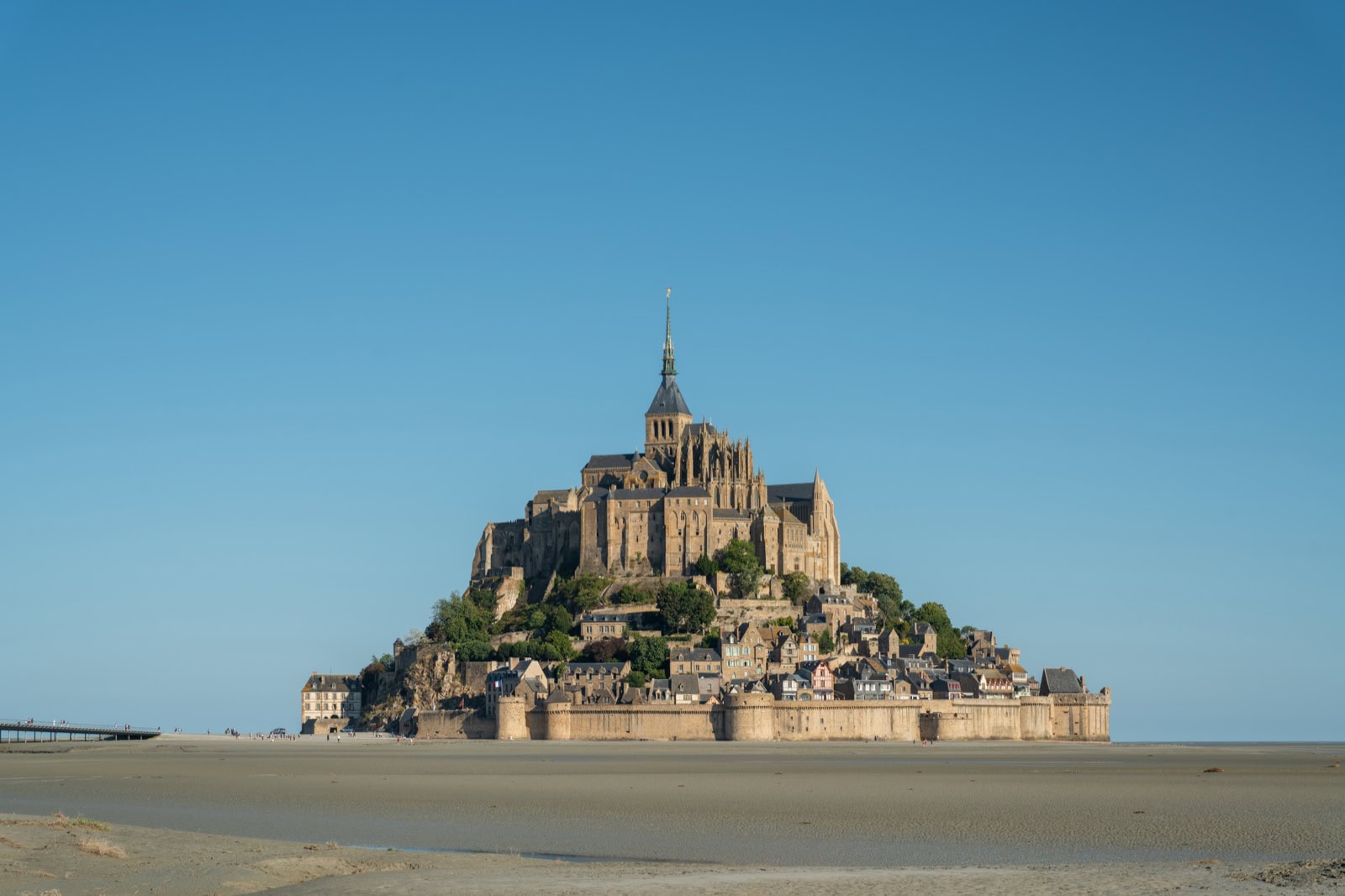
Today you’ll visit the place that draws many people to this route in the first place. And rightly so.
Mont Saint-Michel
Get up early. I know, it’s a holiday, but Mont Saint-Michel in the morning, before the tourist crowds arrive, is a magical experience. If you’re lucky with the tidal coefficient (check ahead of time on the island’s website), you can watch the sea encircle the entire island — it’s one of the highest tides in Europe.
The abbey at the top is monumental. Gothic columns, the cloister, views from the terraces across the bay… It’s a place with incredible energy, whether you’re religious or not.
Practical tips:
- Abbey admission: €13, free for under-26s from the EU
- Arrive at opening time (9:30) — from 11:00 onwards, coaches full of tour groups start pouring in
- Allow 2–3 hours for the abbey + a wander through the alleyways
- The main street (Grande Rue) is full of tourist traps — souvenir shops and overpriced restaurants. But the atmosphere is wonderful regardless.
- La Mère Poulard is famous for its fluffy omelette — it costs €30–40 and honestly, taste-wise, it’s a fairly ordinary omelette. But the experience? That’s arguably worth it. Sort of. 😅
Secret tip from Reddit: If you have time and are comfortable walkers, book a guide for a barefoot crossing of the bay (traversée de la baie). You walk across sand and mud directly to the island — it takes roughly 2–3 hours and is a once-in-a-lifetime experience. DO NOT attempt this without a guide — quicksand and the incoming tide are genuinely dangerous. Cost: around €10–15 per person.
Afternoon: Road to Normandy — Saint-Malo or Cancale
After lunch (I recommend leaving Mont Saint-Michel and stopping in Cancale, just 50 minutes’ drive away), head along the coast. Cancale is the “oyster capital” — at the Marché aux Huîtres you can buy freshly shucked oysters for just a few euros straight from the fishermen and eat them with a sea view. You don’t even have to be an oyster lover — it’s an experience even for sceptics (tested on Lukáš, who subsequently became an oyster convert 😁).
In the afternoon, continue to Bayeux (about 1.5 hours from Cancale), which will be your base for the next two days in Normandy. On the way, stop in Saint-Malo — this fortified coastal town looks like something from a pirate film. An hour walking the ramparts and the streets of the intra muros (walled city) is enough to get a feel for it.
Where to stay in Normandy
Bayeux is the ideal base — it’s picturesque, well-positioned between the D-Day beaches and Étretat, and has an excellent range of accommodation.
Hôtel Reine Mathilde is in the heart of town, with friendly staff and a superb location. Villa Lara is the more luxurious option with views of the cathedral. For Airbnbs, look in the town centre — everything is walkable and the atmosphere of the medieval streets is enchanting.
Alternatively, stay in Honfleur — it’s a bit further from the D-Day beaches, but it’s one of the most photogenic towns in all of France.
Day 5. D-Day beaches and historic Normandy
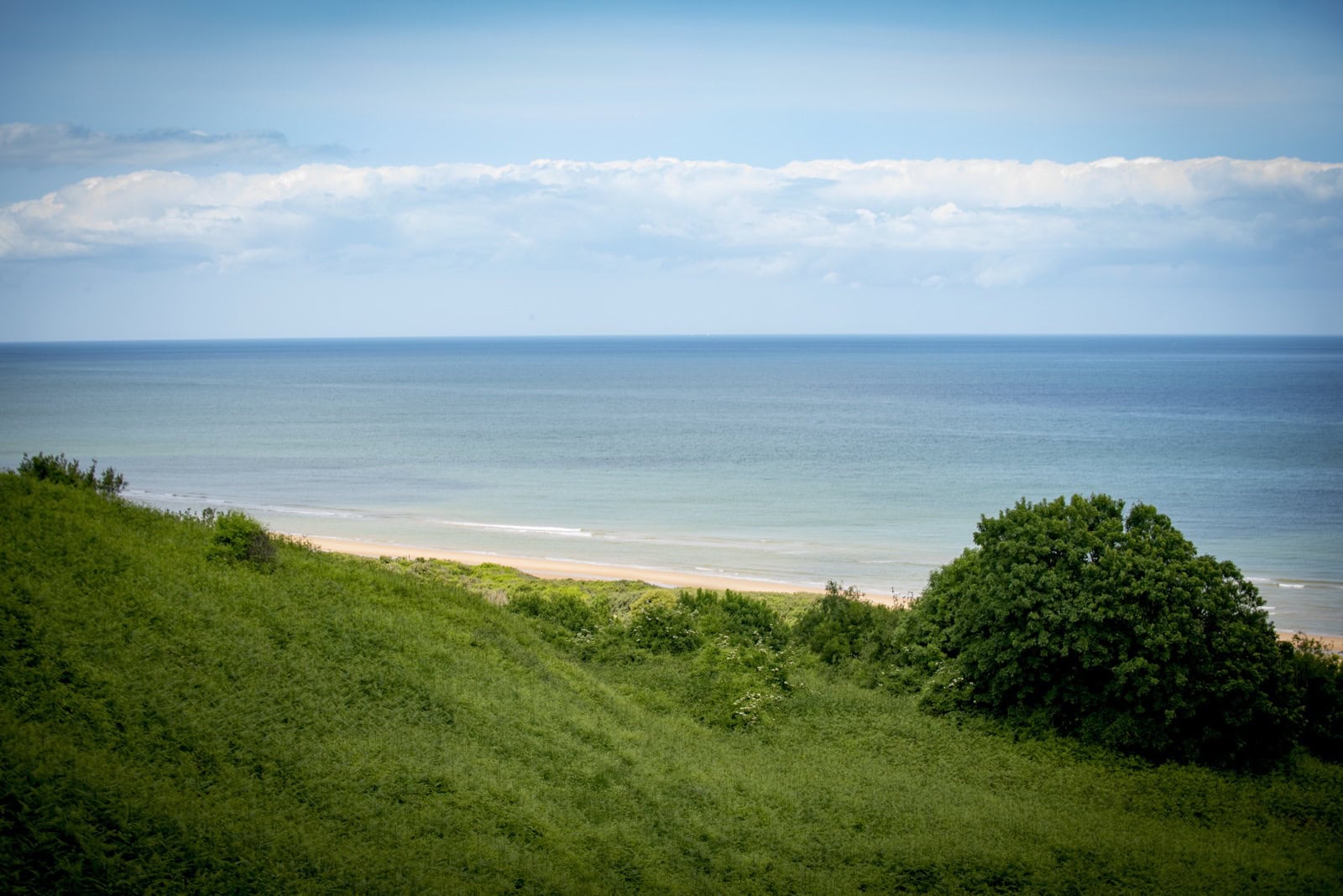
Today will be a day that stays with you. Even if you’re not a history buff, the D-Day beaches and surrounding memorials are a deeply emotional experience.

American Cemetery at Colleville-sur-Mer
Start here. 9,387 white crosses in perfect rows overlooking Omaha Beach. It’s a quiet, dignified place that hits you harder than you expect. Entry is free.
Directly below the cemetery is Omaha Beach — a wide, windswept stretch of sand where it’s almost impossible to imagine what unfolded here on 6th June 1944. Walk along the beach, look at the remnants of fortifications, and just let it sink in.
Pointe du Hoc
A short distance from Omaha Beach is Pointe du Hoc — the cliffs that American Rangers scaled under fire. The bomb craters are still visible today and look as though the war ended yesterday. Entry is free; allow 30–45 minutes for the visit.
Arromanches and the artificial harbour
The town of Arromanches-les-Bains is fascinating — the remains of the Mulberry artificial harbour built by the Allies during the invasion are still visible on the beach. The D-Day Museum (Musée du Débarquement) right on the beach explains the entire operation. Admission: €10.50.
For lunch, stop in Arromanches — Restaurant L’Idéal on the promenade does excellent mussels (moules-frites for around €16) with a view straight out to the harbour remnants. Or treat yourself to a picnic on the beach — pick up baguettes from a bakery and cheese from a fromagerie in Bayeux that morning.
Afternoon: Bayeux and its tapestry
Back in Bayeux, enjoy a stroll around town and visit the Bayeux Tapestry — a 70-metre-long embroidered strip from the 11th century that tells the story of the Norman conquest of England. It’s like a medieval comic strip and utterly fascinating. Admission: €12. There’s an excellent English audio guide available.
Dinner in Bayeux: L’Angle Saint-Laurent is our number-one recommendation — modern French cuisine in a beautiful historic building, mains €22–35. For something more casual, try La Reine Mathilde (connected to the hotel), which serves excellent Norman specialities including camembert en croûte.
Map of points of interest for your phone
Day 6. Étretat and the road through Honfleur to Giverny
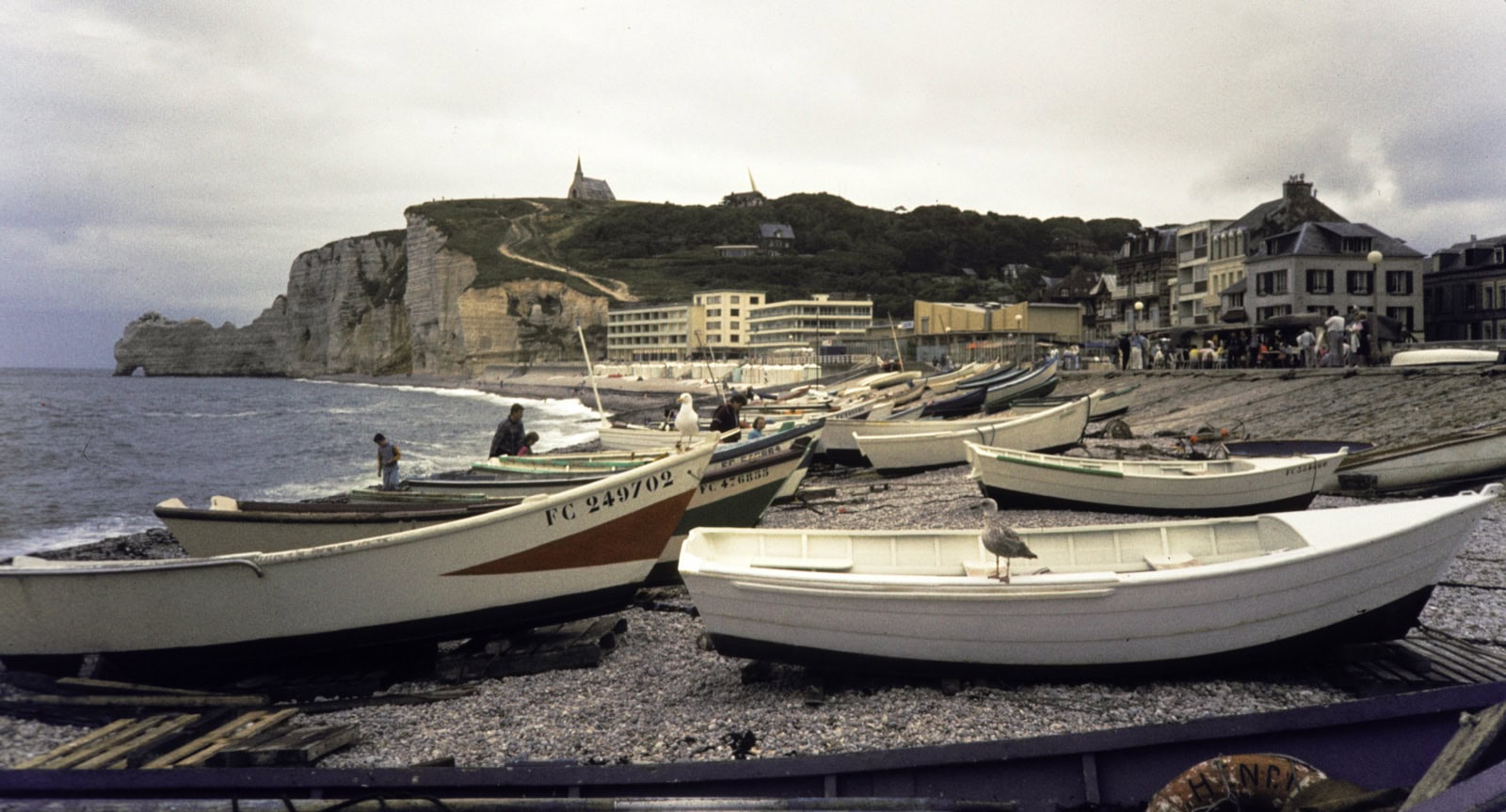
Today you’ll be driving through scenery that’ll make you want to stop every five minutes. The Norman coast is simply stunning.
Étretat — cliffs from another world
From Bayeux it’s about 2 hours to Étretat. Set off early, because you want to be up on those cliffs before the tour buses arrive.
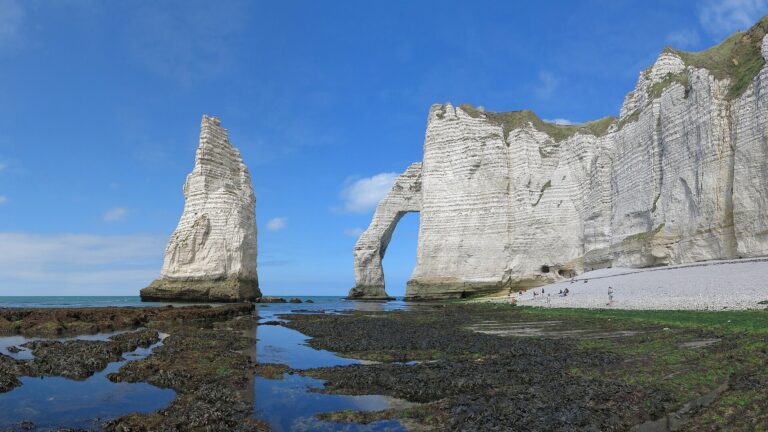
The cliffs at Étretat are… how to describe them? Imagine enormous white rock arches jutting out of a turquoise sea, green grass on top, and a dramatic sky above it all. Monet and Manet both came here to paint, and I completely understand why.
What to definitely do:
- Climb the Falaise d’Aval (the left cliffs when facing the sea) — steps lead to the top and the views are absolutely breathtaking. The walk up takes 15–20 minutes.
- Climb the Falaise d’Amont (the right cliffs) — fewer people, a chapel, and a small Nungesser et Coli museum. Also beautiful views.
- Walk along the beach — it’s pebbly, but at low tide you can walk right under the rock arch.
- Jardins d’Étretat (gardens) on the clifftop — a modern garden with art installations and 360° views. Admission: €12.50. Honestly? The view is worth it; the gardens themselves are… rather niche. 😅
For lunch in Étretat I recommend Le Belvédère — a terrace with cliff views and seafood as fresh as it gets. Main courses around €20–30. If you’re looking for something cheaper, there are galette and crêpe stands along the beachfront promenade.
Stop in Honfleur
From Étretat, continue to Honfleur (about 45 minutes). This seaside town with its small Vieux Bassin harbour is one of the most photogenic spots in all of France — a row of colourful houses reflected in the water, tiny galleries, cafés…
Allow 1–2 hours to explore Honfleur:
- Vieux Bassin (old harbour) — walk, photos, coffee
- Church of Sainte-Catherine — an entirely wooden church, unique in France
- Les Maisons Satie — an interactive museum dedicated to composer Erik Satie, surprisingly entertaining
Afternoon drink: La Cidrerie right by the harbour — order a cidre (cider, a Norman classic) and a galette with salted caramel. Normandy is cider country, so drink it wherever you can.
Driving to Giverny
From Honfleur to Giverny is about 2 hours. The road crosses the Pont de Normandie (impressive!) and continues along the Seine. Stay either in Giverny itself or in nearby Vernon (5 minutes by car) so you can be at Monet’s gardens first thing in the morning.
Where to stay in Giverny / Vernon
La Musardière in Giverny is a charming hotel right in the centre of the village — walking distance from the gardens, with a lovely garden of its own and prices around €100–140 per night. In Vernon there’s a wider and cheaper selection — Hôtel Normandy is a solid choice, while Le Vieux Moulin (an old mill on a tiny island in the Seine) is available as an Airbnb and is probably the most romantic accommodation of the entire trip.
Day 7. Monet’s gardens in Giverny and return to Paris
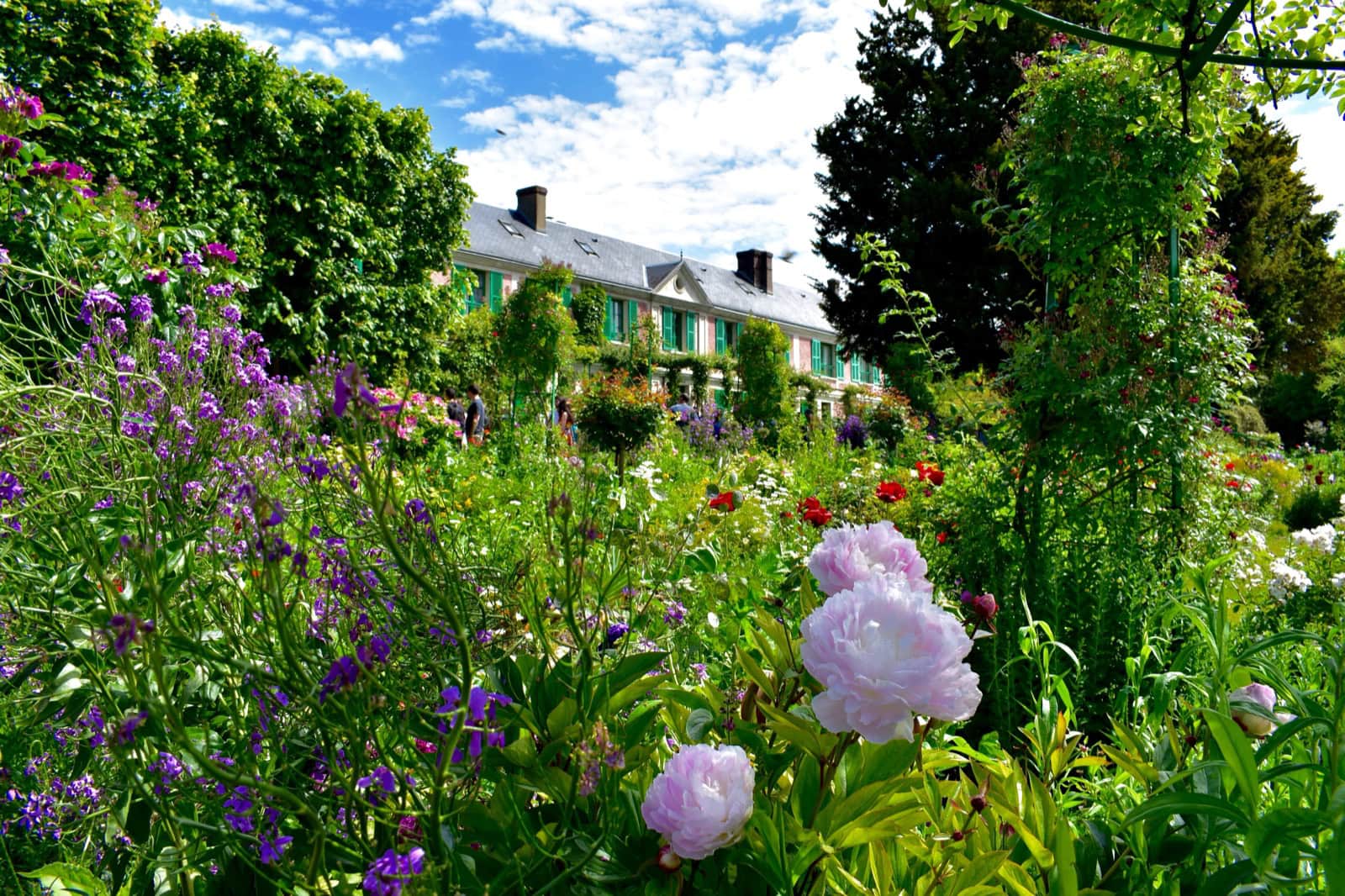
The final day of the roadtrip, but by no means the weakest. Giverny is a fitting grand finale for the entire journey.
Monet’s Gardens (Fondation Claude Monet)
Claude Monet lived and worked here for over 40 years, and his gardens are his greatest masterpiece. The famous Japanese bridge, water lilies on the pond, vibrant flower beds… Everything you know from his paintings is right here, alive and breathing.
Practical tips:
- Open: April–October (closed in winter!)
- Admission: €12
- ARRIVE AT OPENING TIME (9:30). This is probably the single most important piece of advice in this entire article. From 10:30 onwards, coaches from Paris start arriving and the gardens fill up so much that you’ll be standing in a crowd by the lily pond. In the morning you’ll have the place almost to yourself — it’s a completely different experience.
- Allow 1.5–2 hours for the gardens + house
- The gardens are at their most beautiful in May and June (peonies, roses, water lilies beginning to bloom) and in September (fewer visitors, autumn colours)
- The house is preserved in its original state — Monet’s yellow dining room and blue kitchen are surprisingly modern and stylish
Museum of Impressionism (Musée des Impressionnismes)
If you have time, this small museum in Giverny hosts temporary exhibitions focused on Impressionism. Admission: €9. Pleasant for a 30–45 minute visit.
For lunch in Giverny I recommend Restaurant Baudy — a historic restaurant where Impressionist painters used to dine. The garden terrace is beautiful and the food is decent, though prices are a touch touristy (mains €20–28). Alternatively, in Vernon try Les Fleurs — more local and cheaper.
Return to Paris
From Giverny to central Paris is only about an hour and a half; to CDG airport it’s roughly 2 hours (factor in suburban traffic, which can be slow during the afternoon rush).
If your flight doesn’t leave until the evening or the next day:
You’ve got several options for spending the afternoon:
- Return the car at the airport and take the metro into the centre — wander around Montmartre, grab a coffee on Place du Tertre, and bid farewell to France with a view of the city from Sacré-Cœur
- Stop at La Roche-Guyon on the way to Paris — a picturesque village with a castle carved into the rock, 30 minutes from Giverny
- Detour to Auvers-sur-Oise — the village where van Gogh spent his final days. A small museum and the cemetery where he’s buried. An unforgettable stop for art lovers.
Practical tips and tricks for a France roadtrip
What to pack
France isn’t exactly the back of beyond, but a few things come in handy:
- Comfortable walking shoes — you’ll be on your feet a lot, from château gardens to cliff paths. If you haven’t got a tried-and-tested pair, check out our guide to the best hiking shoes.
- A lightweight waterproof jacket — in Normandy, showers can appear out of nowhere, even in summer
- A plug adapter — you WILL need a UK-to-EU adapter, as France uses Type C/E sockets (different from UK three-pin plugs)
- Sunglasses and sunscreen — the sun hits harder than you’d expect on the cliffs and beaches
For more packing tips, take a look at our article on how to pack into carry-on luggage.
Where to find flights
For cheap flights from the UK to Paris, compare on Skyscanner or Google Flights. From London, you can find return flights from around £50–80 if you book ahead. Also consider the Eurostar — it’s often competitively priced and drops you right in central Paris, which is convenient if you want to spend a day exploring before picking up your car.
Insurance and eSIM
For shorter trips around Europe, your UK Global Health Insurance Card (GHIC) gives you access to state-provided healthcare, but we always recommend travel insurance on top. For our tips, check out our SafetyWing review.
If you don’t want to worry about roaming charges (post-Brexit, free roaming in the EU is no longer guaranteed by UK networks, so check your plan), take a look at our Holafly eSIM review — we use it on all our trips.
Tolls and refuelling
- Toll booths accept card payments — no cash needed
- The ViaMichelin app calculates your route including toll costs in advance — brilliant for planning
- Fill up at supermarket petrol stations (Carrefour, Leclerc, Auchan) — they’re significantly cheaper than branded service stations on the motorway
Food and drink — what to definitely try
- Galettes (savoury buckwheat crêpes) — the staple in Brittany and Normandy
- Cidre (cider) — a Norman speciality, order it with your galette
- Camembert, Livarot, Pont-l’Évêque — Norman cheeses, buy them at local markets
- Crème brûlée — simple, but the French simply do it best
- Croissant au beurre — every morning, from every bakery. You’ll never get tired of them. 😁
Frequently asked questions about a France roadtrip
Before you set off, here are answers to the questions we get asked most often by readers about a 7-day France roadtrip.
Is 7 days enough for this route?
Honestly? It’s just about right, but your schedule will be full. If you can extend to 9–10 days, do it — you’ll be able to spend more time in Normandy and add places like Saint-Malo or Rouen. But in 7 days you’ll cover all the main highlights without feeling like you’ve missed anything major.
Can you do this roadtrip without a car?
In theory, yes — Versailles, Mont Saint-Michel, and Giverny are all accessible by train or bus from Paris. But you’ll lose a lot of flexibility and spend a lot of time waiting for connections. The Loire châteaux and D-Day beaches are very tricky without a car. If you don’t want to drive, consider organised day trips to individual destinations from Paris, though you’ll see significantly less in 7 days.
How much do tolls cost on the whole route?
For the full loop Paris–Loire–Mont Saint-Michel–Normandy–Paris, budget €50–80 in tolls. You can avoid toll roads by taking “N” and “D” roads instead of the “A” (autoroute), but the journey will be considerably longer. We combined both — motorways for longer stretches, secondary roads for shorter ones.
Is it better to go clockwise or anticlockwise?
Our itinerary runs anticlockwise (south to the Loire, then west and north). It’s more practical because Giverny is close to Paris, making it a perfect final stop before your flight. But the opposite direction works too — it really depends on your flight times.
Do I need a motorway vignette in France?
No. France doesn’t have a vignette system like some other European countries. You pay tolls as you go at toll booths (by card or cash). No sticker or electronic device needed.
Are Monet’s gardens in Giverny really that beautiful, or are they overrated?
They really are that beautiful. BUT — timing is everything. In the morning, without crowds, in May or June when everything’s in bloom? Magical. On an August afternoon when hundreds of people are jostling for space? Frustrating. The key is to arrive at opening time. And if you visit outside peak season (April or October), the gardens are still lovely, just in a different way.
What if it rains? Is Normandy worth visiting in the rain?
Absolutely. Normandy in the rain has a rugged beauty all its own — the cliffs at Étretat in the mist look utterly mystical, and the D-Day beaches under grey skies are even more moving. Plus, museums, châteaux, and restaurants all work regardless of the weather. Just bring that waterproof jacket. ☺️
Tips and Tricks for Your Vacation
Don’t Overpay for Flights
Search for flights on Kayak. It’s our favorite search engine because it scans the websites of all airlines and always finds the cheapest connection.
Book Your Accommodation Smartly
The best experiences we’ve had when looking for accommodation (from Alaska to Morocco) are with Booking.com, where hotels, apartments, and entire houses are usually the cheapest and most widely available.
 🚗 Car rental on the roadVerified car rentals in Normandy
Search with the DiscoverCars comparison engine — it compares prices from dozens of local and international rental companies, and most bookings come with free cancellation.
Compare car prices in Normandy →Don’t Forget Travel Insurance
Good travel insurance will protect you against illness, accidents, theft, or flight cancellations. We’ve had a few hospital visits abroad, so we know how important it is to have proper insurance arranged.
Where we insure ourselves: SafetyWing (simple monthly subscription) and TrueTraveller (for extra-long trips).
Find the Best Experiences
Get Your Guide is a huge online marketplace where you can book guided walks, trips, skip-the-line tickets, tours, and much more. We always find some extra fun there!