If you’ve already ticked Paris off your list, head for the unique city where the Rhône and Saône rivers meet. Lyon, France has a real earthiness to it and is rightly considered the true gastronomic shrine of the whole country. Locals will happily confirm that the real belly of France lies right here, surrounded by vineyards and alpine peaks.
Over a long weekend you can spend endless hours discovering secret Renaissance passageways and soaking up the atmosphere in tiny cafés. What awaits you is a dynamic, historically rich playground for the perfect city break. Get your itinerary ready and find out which spots you absolutely shouldn’t miss.
TL;DR
- Secret traboules passageways: The most iconic experience in the whole city is discovering the hidden passages that originally served silk weavers and, during the war, the French Resistance.
- Gastronomy is a religion: People come here primarily to eat, and the traditional local taverns known as bouchons are an absolute culinary must for every visitor.
- Festival of Lights in December: If you visit in early December, you’ll experience the incredible Fête des Lumières — but you’ll need to book accommodation up to nine months ahead.
- Watch out for low-emission zones: If you’re driving, remember that only vehicles with a Crit’Air 1 or 2 eco sticker can enter the wider city centre, otherwise you risk a hefty fine.
- Two rivers, two banks: Getting your bearings is easy — the historic centre sits by one river, while the more modern districts and the main square lie on the peninsula between the two waterways.
The full destination guide: France — guide and what to see
When to Visit Lyon
The loveliest time to visit traditionally falls in the warm spring months and the colourful autumn, when temperatures sit at very pleasant levels and the city lives an outdoor life. In May and June you can enjoy long evenings on restaurant terraces, while the autumn months offer ideal conditions for tasting young wine from the nearby Beaujolais region. During these months you’ll also avoid the worst extremes of high summer and deep winter, and the city has an absolutely perfect atmosphere for a full day of exploring on foot.
If you’re planning your trip for the summer holidays, be prepared for the fact that July and August can get seriously hot. The stone streets of the old town bake during the day and you’ll only find shade in the dark archways of historic houses or in air-conditioned museums. Many locals also flee south to the sea or to the nearby mountains in August, so some smaller family-run businesses and traditional restaurants may have a sign up about their annual closure. All year round you’ll need to respect the very strict French dining rules, because lunch is served exclusively between noon and 2pm, and if you miss that window, you’ll only manage to grab a coffee or a cold baguette in the afternoon.
A chapter all of its own is early December, when the famous Fête des Lumières (Festival of Lights) takes place. In 2026 this enormous festival runs from the 5th to the 8th of December, and around four million people from all over the world descend on the city during that time. It’s an absolutely fascinating spectacle full of breathtaking video mapping, but also a huge logistical challenge, because the streets are bursting at the seams and hotel prices shoot through the roof. If you want to experience this event, you need to start sorting out accommodation by the end of summer at the latest.

Where to Stay in Lyon
💡 Tip for accommodation and experiences: We prefer to look for places to stay on Booking.com, which usually has the best cancellation policies. For tickets, tours and activities, it pays to compare and book through GetYourGuide.
Choosing the right location is absolutely key to exploring the city, and you’ll do best to stay right on the Presqu’île peninsula or in historic Vieux Lyon. From these spots you can comfortably walk to all the main sights and won’t have to rely on public transport in the evening. Prices for a standard double room outside festival dates average around €120 to €160 per night, but during major trade fairs or the December festival they can easily be triple that.
When looking for accommodation I strongly recommend sorting out the parking question, because driving in the centre is genuinely tricky and the rules are very strict. On weekdays from 8am to 8pm, only vehicles with a Crit’Air 1 or 2 eco sticker can enter the wider centre — you’ll need to order one online in advance for around €5. If you don’t have this sticker or you drive an older diesel, you risk a fine of €68 to €375. By far the best strategy is to leave the car at a P+R park-and-ride on the edge of the city and take the excellent metro into the centre. If you’re travelling from the UK, the easiest option is to fly into Lyon–Saint-Exupéry Airport — British Airways and easyJet run direct routes from London, and a tram-train whisks you into the city centre in about half an hour.
A great choice for a romantic stay is the stylish Hôtel de l’Abbaye, which offers beautiful designer rooms in a quieter part of the peninsula. If you’re after something truly exceptional and have a more generous budget, take a look at Villa Florentine, a luxury hotel with a pool and a breathtaking view over the whole city straight from the Fourvière hill. For lovers of modern technology and total privacy, the MiHotel concept works brilliantly, offering luxury designer apartments scattered across the centre with contactless code access. When paying, bear in mind that most accommodation in France adds a small city tax (taxe de séjour) of roughly €2 per person per night, paid at reception.
14 Things to See and Do in Lyon
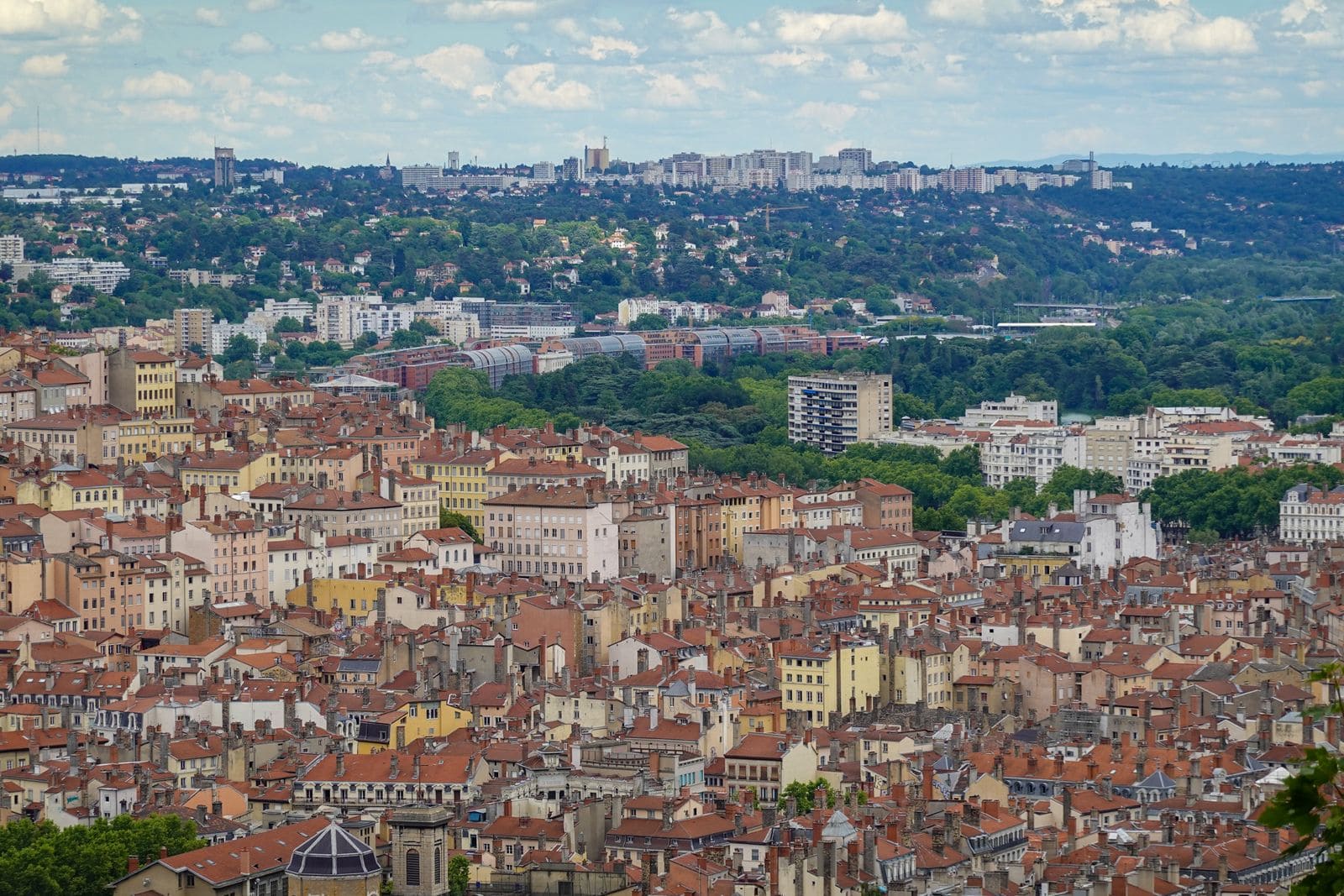
Let’s take a look together at the very best this stunning city has to offer — and trust me, you’ll struggle to fit it all into a single weekend. The city is woven through with history from Roman times to modern architecture, and it pays to have at least a rough plan so you don’t waste time dashing from one riverbank to the other.
1. The Old Town of Vieux Lyon and the Renaissance Palaces
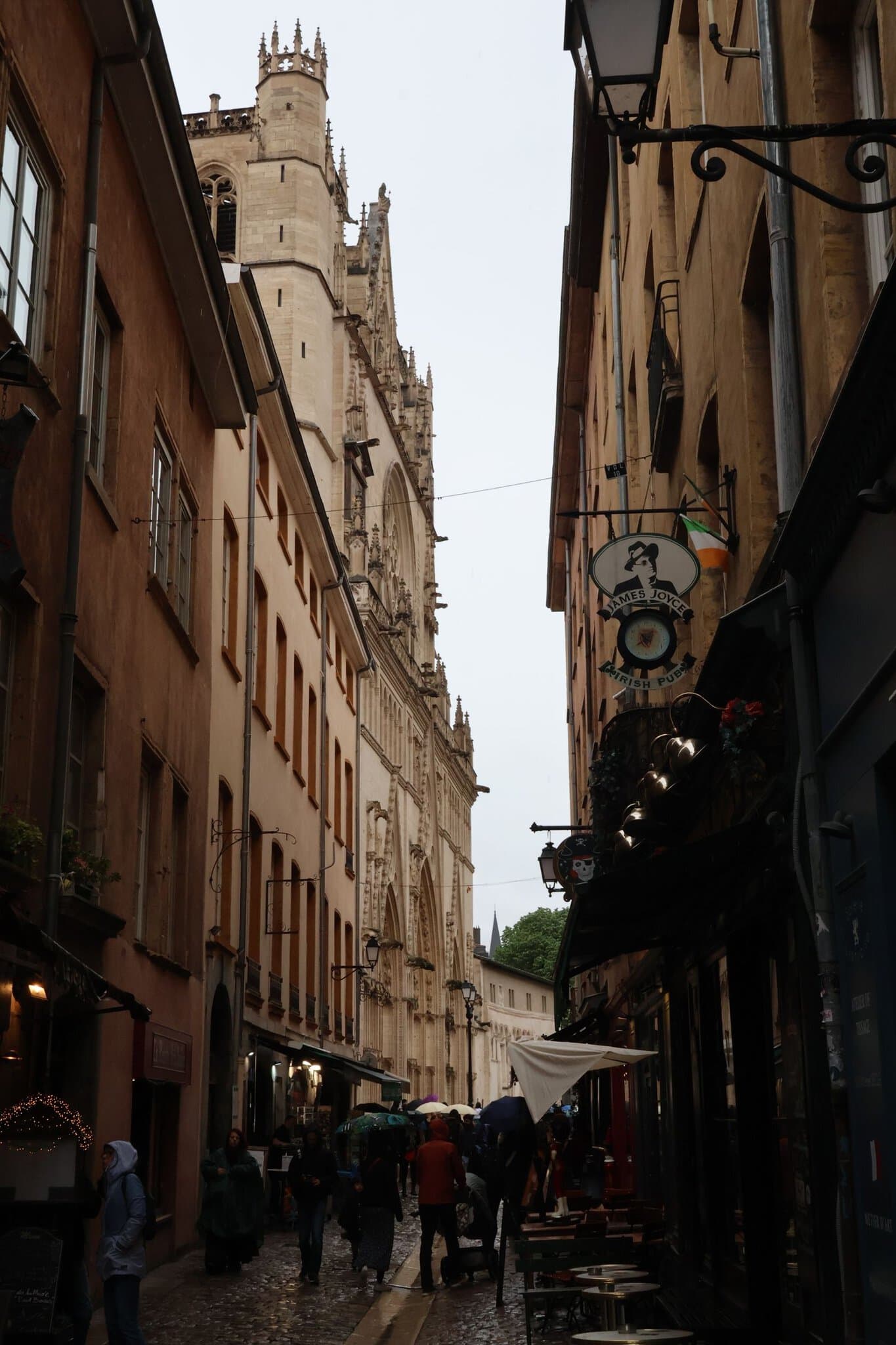
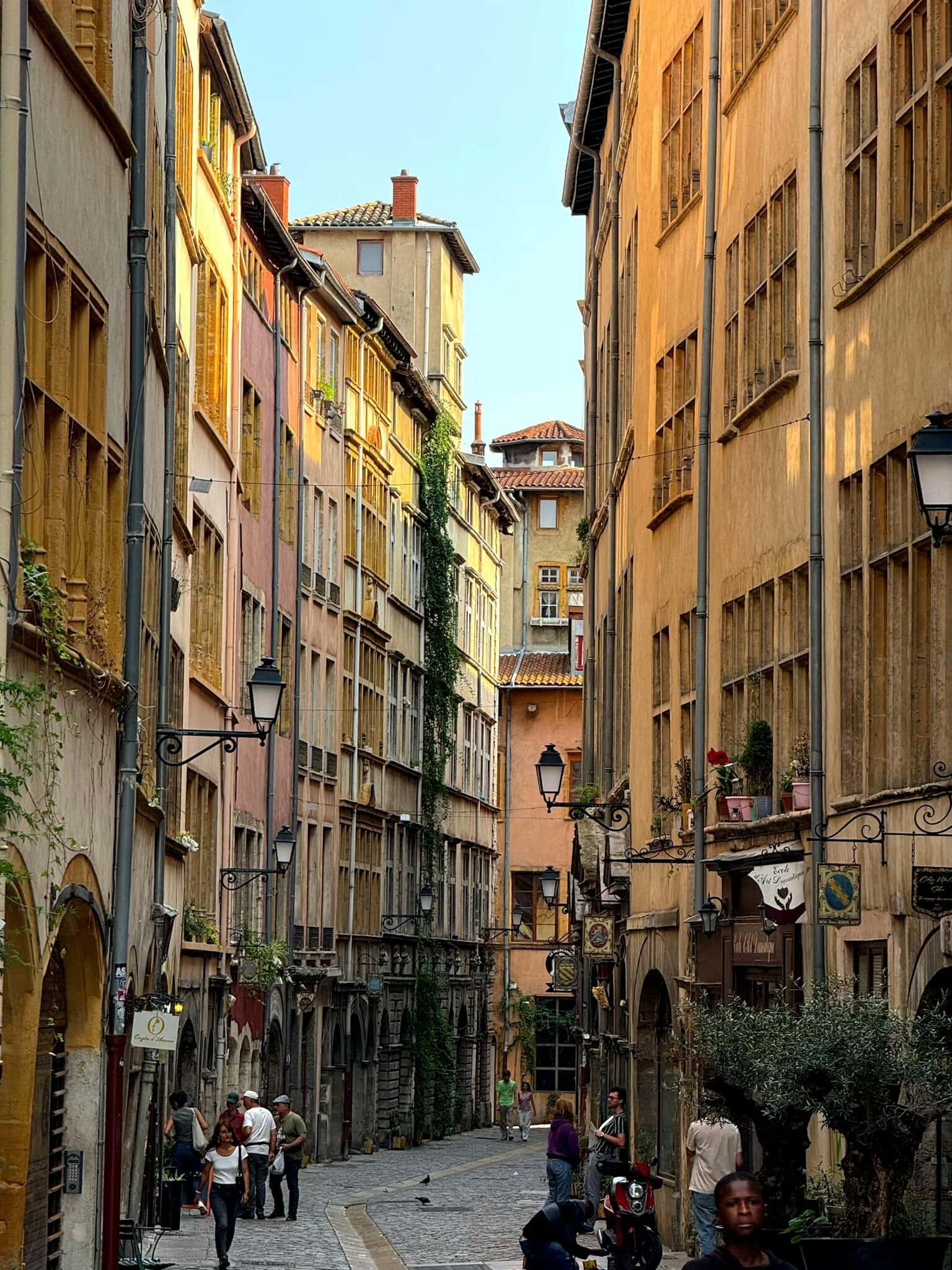
This is exactly the place where the real historic France hits you, and probably where you’ll spend the most time. The entire Vieux Lyon district is a UNESCO World Heritage Site and consists of a stunning labyrinth of narrow cobbled lanes lined with gorgeous Renaissance houses in pastel hues. Dive into this maze early in the morning, before the streets fill with crowds of tourists and restaurant terraces spread their tables across every free inch of bumpy cobblestone.
This historic quarter logically splits into three smaller parts named after the local churches, with the central Saint-Jean always the busiest. As you stroll, be sure to notice the beautiful details on the building façades, the elaborate stone gargoyles, soaring vaults and massive ornate shutters that recall the heyday of the rich silk trade. It’s an area made for aimless wandering, discovering little shops selling traditional handmade goods and soaking up that authentic southern atmosphere.
💡 Tip: Avoid the main drags like Rue Saint-Jean at lunchtime, when it’s literally packed shoulder to shoulder, and instead slip into the side streets of the Saint-Georges or Saint-Paul sections, where you’ll find a much calmer atmosphere and small, authentic cafés frequented mostly by locals.
2. The Secret Traboules Passageways
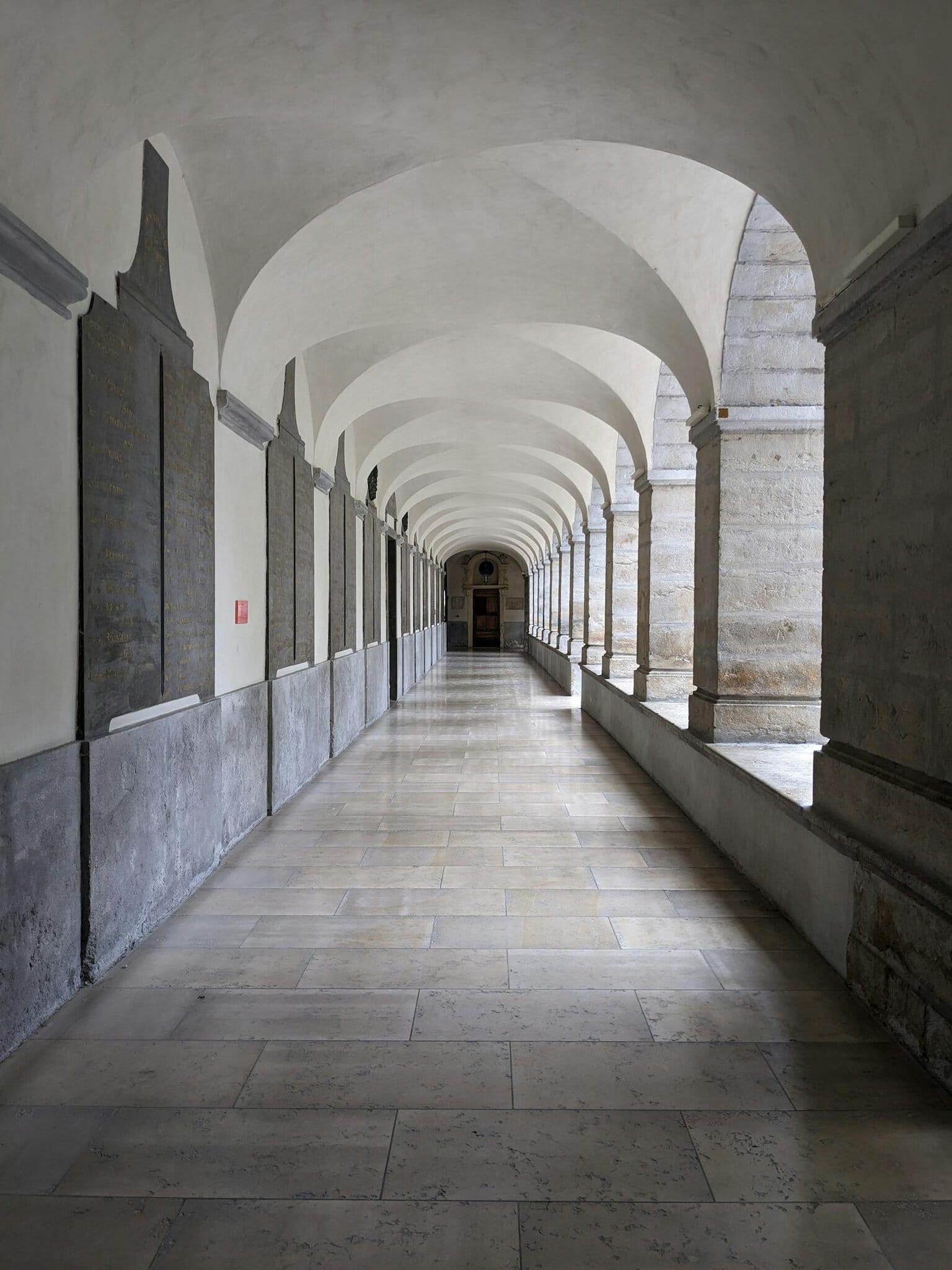
Mention Lyon and any local will immediately bring up the traboules — a completely unique system of secret passages and staircases that run through courtyards and elegantly connect parallel streets. Originally built by silk weavers so they could carry precious, delicate fabrics to market in the dry and in total safety from the unpredictable rain. During the Second World War this intricate labyrinth then served the French Resistance, who could move through the city completely unnoticed and slip away from the Gestapo.
Today these historic passages are open to the public completely free of charge, but you need to know where to look, because from the street they look like perfectly ordinary front doors to apartment buildings. The most famous is the Cour des Voraces in the Croix-Rousse district, which boasts an imposing monumental staircase of six storeys that might just make your head spin a little. You don’t need any pricey ticket to explore them — sometimes it just takes a bit of courage to turn the handle of an inconspicuous door and suddenly find yourself standing in a Renaissance courtyard that the people outside have no idea exists.
💡 Tip: As you pass through these corridors, keep completely quiet and fully respect the privacy of the residents, because traboules run through real apartment buildings where people actually live and work. If you spot a small bronze plaque with a lion’s head by the entrance, it means the passage is officially and legally open to the public.
3. Notre-Dame de Fourvière Basilica and the City View
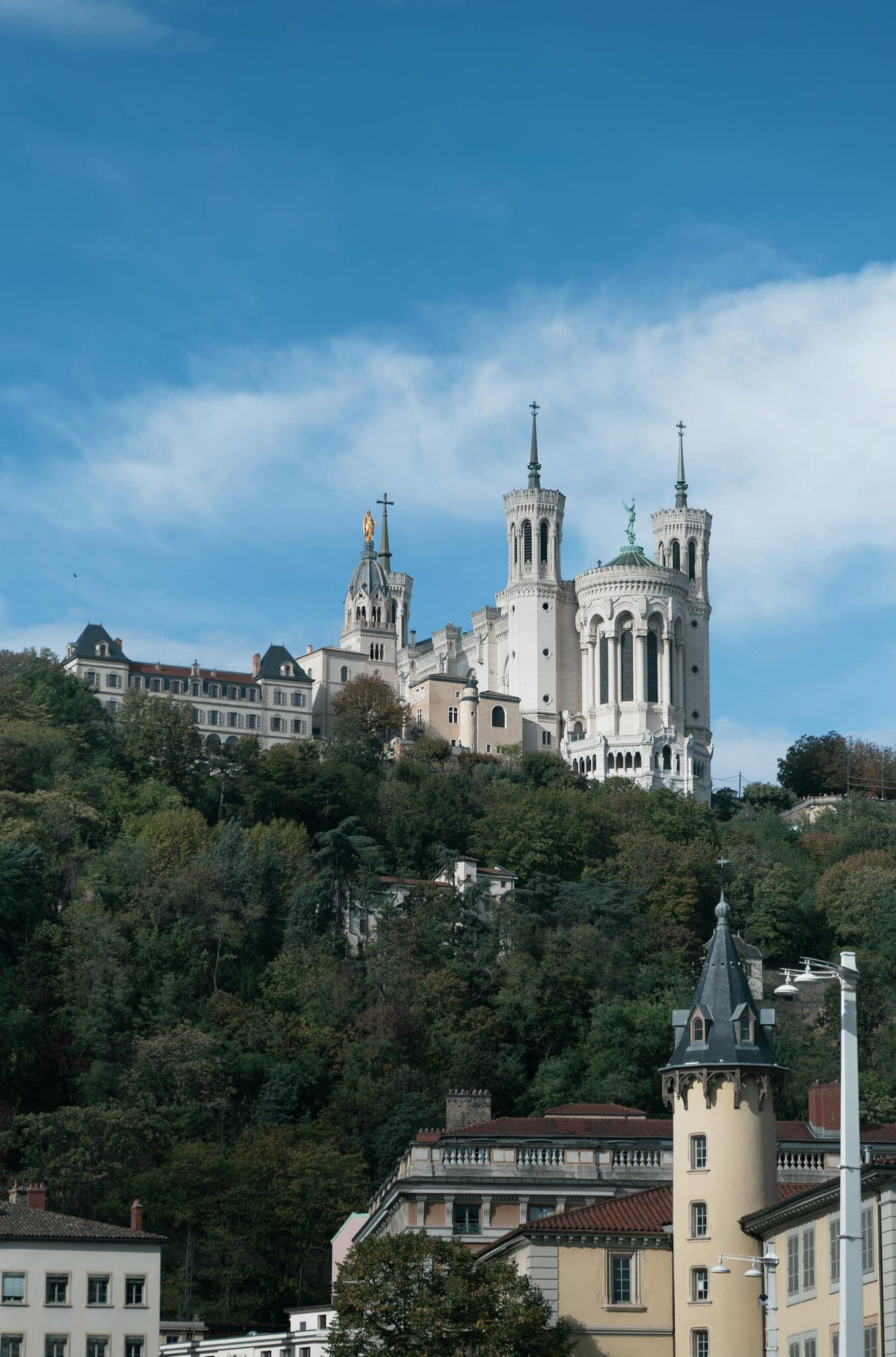
High above the city on the Fourvière hill rises a gleaming white basilica that locals sometimes affectionately call the upside-down elephant, because its four mighty towers resemble elephant legs sticking up into the air. This monumental 19th-century structure is dedicated to the Virgin Mary, who, according to legend, saved the city from a devastating plague epidemic — and its interior will literally take your breath away with its opulent decoration. The inside is covered from floor to ceiling in intricate gold mosaics and beautiful stained glass, creating a fascinating contrast to the rather austere exterior.
You can make your way up on foot via steep lanes and endless steps, but a far more authentic and comfortable experience is offered by the historic funicular, commonly known here as the ficelle. The funicular departs from a station right in Vieux Lyon and accepts standard public transport tickets, saving you plenty of energy for further exploring. A single ticket costs just over €2 and saves you a roughly 20-minute, very demanding climb.
Right next to the basilica you’ll find a sprawling viewing terrace that opens up an absolutely fantastic panoramic view over the whole city, the confluence of the two rivers and, on a clear day, even the majestic snow-capped summit of Mont Blanc somewhere in the distance. Try to come here ideally just before sunset, when the whole old town below takes on a beautiful golden glow and the street lamps gradually start to light up.
4. The Roman Theatre and Ancient History
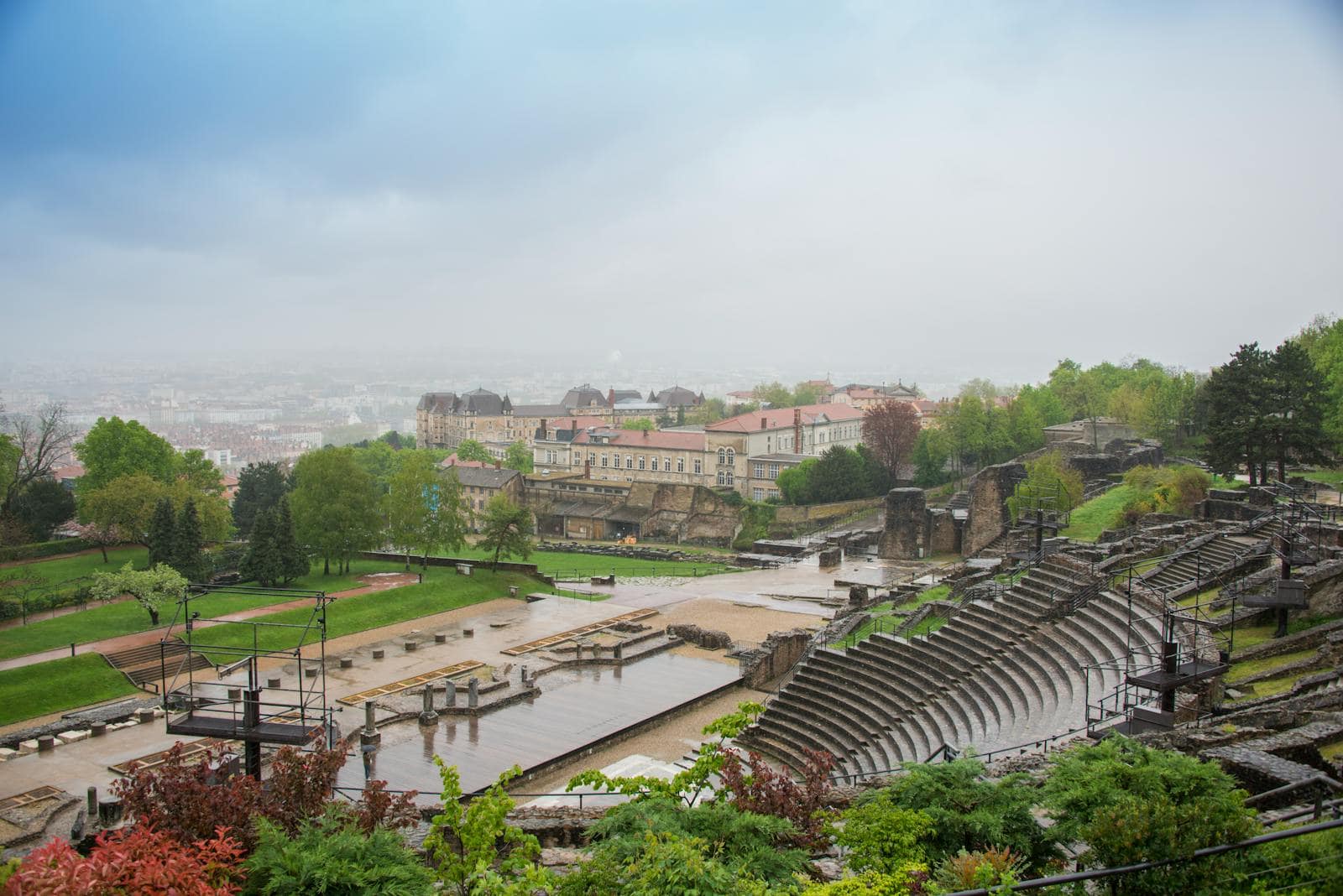
Long before this strategic spot became a bustling French city, there stood a very significant Roman settlement called Lugdunum, and to this day you’ll find its fascinating, beautifully preserved remains. Right on the slope of the Fourvière hill lies a stunning Roman theatre and a smaller adjacent odeon, which rightly rank among the oldest ancient monuments in the entire country. The whole vast archaeological park is freely open to the public with no admission fee, so you can wander completely freely among the ancient stones and test the incredible acoustics of the preserved tiers.
In the summer months this stunning historic space comes alive during the prestigious Les Nuits de Fourvière festival, when it hosts grand open-air theatre performances and music concerts. Sitting on stone steps twenty centuries old, sipping local wine from the Rhône valley and listening to live music with a view over the glittering night-time city is an experience you won’t easily forget. If you’re interested in ancient history on a deeper level, definitely set aside time for the adjacent museum too.
💡 Tip: The Lugdunum museum building itself is an architectural gem, because it is almost entirely tucked discreetly into the hillside, so as not to disrupt the look of the archaeological site in any way. Its raw concrete interior then contrasts brilliantly with the delicate ancient mosaics on display.
5. The Presqu’île Peninsula and Place Bellecour
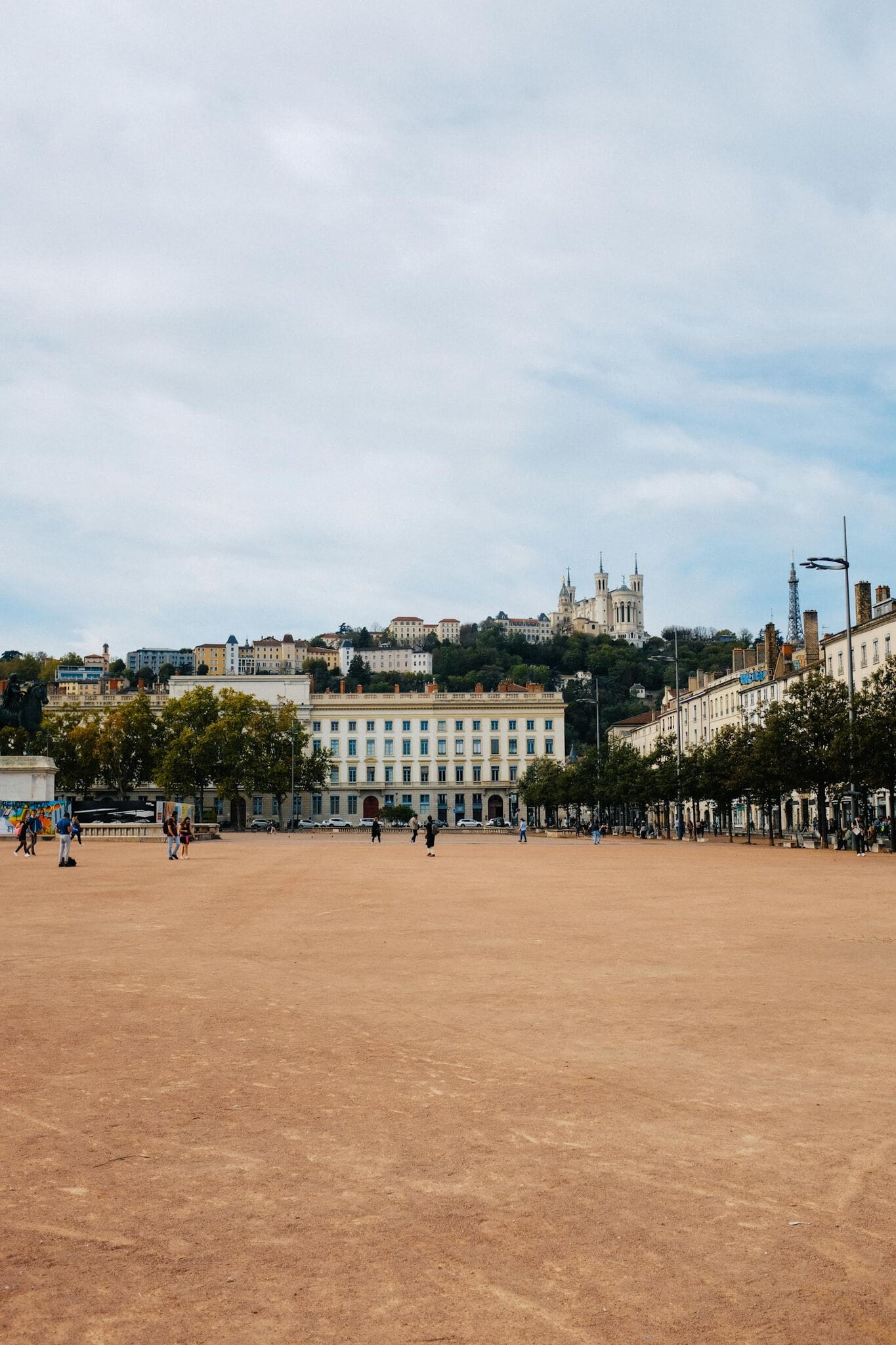
The heart of modern city life beats on a fairly narrow strip of land called Presqu’île, hemmed in on two sides by the mighty currents of the Rhône and the Saône. This very elegant district is full of wide boulevards, luxury shopping boutiques and imposing 19th-century buildings that might remind you a little of classic Parisian architecture. It’s an absolutely ideal place for an afternoon of shopping on the main artery of Rue de la République, lingering in pricey cafés and soaking up that genuine French city atmosphere.
The main landmark of the whole peninsula is the enormous Place Bellecour, which ranks among the very largest pedestrian squares in all of Europe. Its surface is made of distinctive red sand, and right in the middle stands a proud equestrian statue of King Louis XIV, where locals love to meet up before a night out. From this open space you also get a lovely view straight across to the Fourvière basilica perched on the wooded hill opposite.
As you stroll across the whole peninsula, definitely don’t skip the beautiful Place des Terreaux, dominated uncompromisingly by a monumental lead fountain by sculptor Bartholdi, the famous creator of New York’s Statue of Liberty. On this square you’ll also find the richly decorated town hall and the nearby Museum of Fine Arts, whose tranquil inner courtyard offers a perfect oasis of calm in the middle of the bustling city.
6. The Croix-Rousse District and the Silk Weavers’ History
If Vieux Lyon has the reputation of a beautiful historic open-air museum and Presqu’île is the elegant shopping centre, then the Croix-Rousse district is the real, pulsating bohemian heart of the city. This steep, hilly quarter is often nicknamed the village within the city and has a completely unique atmosphere full of independent cafés, art studios and small artisan bakeries. Especially at the weekend there’s a wonderfully relaxed mood here, with locals gathering in great numbers at farmers’ markets and chatting over their morning coffee.
The history of this area is inseparably linked with the production of luxury silk, and the hard-working local labourers were known as canuts. The houses here typically have very tall windows and genuinely lofty ceilings, so that in the past they could even fit the enormous looms on which the most luxurious fabrics were woven for Europe’s royal courts. To this day you’ll find several working workshops down hidden lanes, where they’ll happily show you the traditional production process and where you can buy a beautiful silk scarf as the most authentic souvenir.
💡 Tip: Don’t take the convenient metro up to the district — instead, earn it properly by walking up the slopes of the Montée de la Grande-Côte. It’s a gorgeous steep street full of small independent shops, gradually revealing the most beautiful and interesting views over the city far below you.
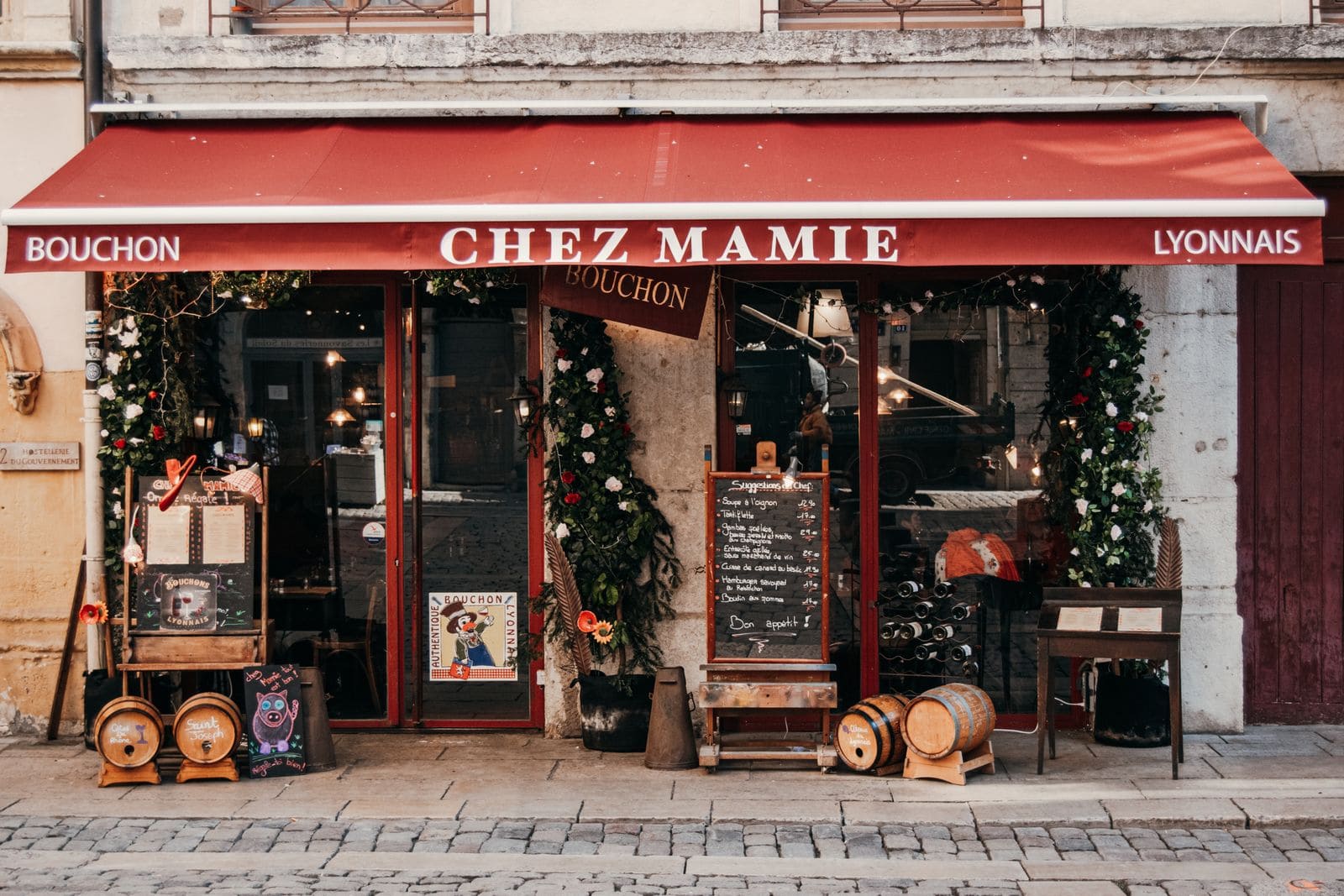

7. Traditional Bouchons and Lyon Gastronomy
Honestly, if you head to this region, your days will naturally revolve mainly around food and the dinner table, because this is the real belly of France. The traditional local taverns known as bouchons are an absolute cultural phenomenon, originally created to feed the hungry workers from the silk workshops with a proper portion of calories. Don’t expect any starched white tablecloths or minimalist fine dining here — this is the domain of a noisy atmosphere, tables crammed tightly together, and hearty local Côtes du Rhône wine poured into heavy glasses.
Classic Lyon cuisine is historically heavily built on meat, offal and lard, which locals absolutely adore, but as a vegetarian you’ll have it a touch harder here. You definitely won’t go hungry, though, because the French passion for quality cheese and cream will reliably save you. Look on the menu for the traditional gratin dauphinois, wonderfully creamy potatoes baked with cream and cheese, or order one of the various large salads with warm goat’s cheese.
A wonderful experience is the famous Lyon quenelles, if you happen to come across a version without the traditional pike in a more modern establishment. These are incredibly fluffy dumplings made from choux pastry, baked in a rich sauce, that literally melt on your tongue. When paying, remember that a lunch menu (menu du jour) will set you back roughly €15 to €25, and a 15% service charge is already automatically included in the price by law.
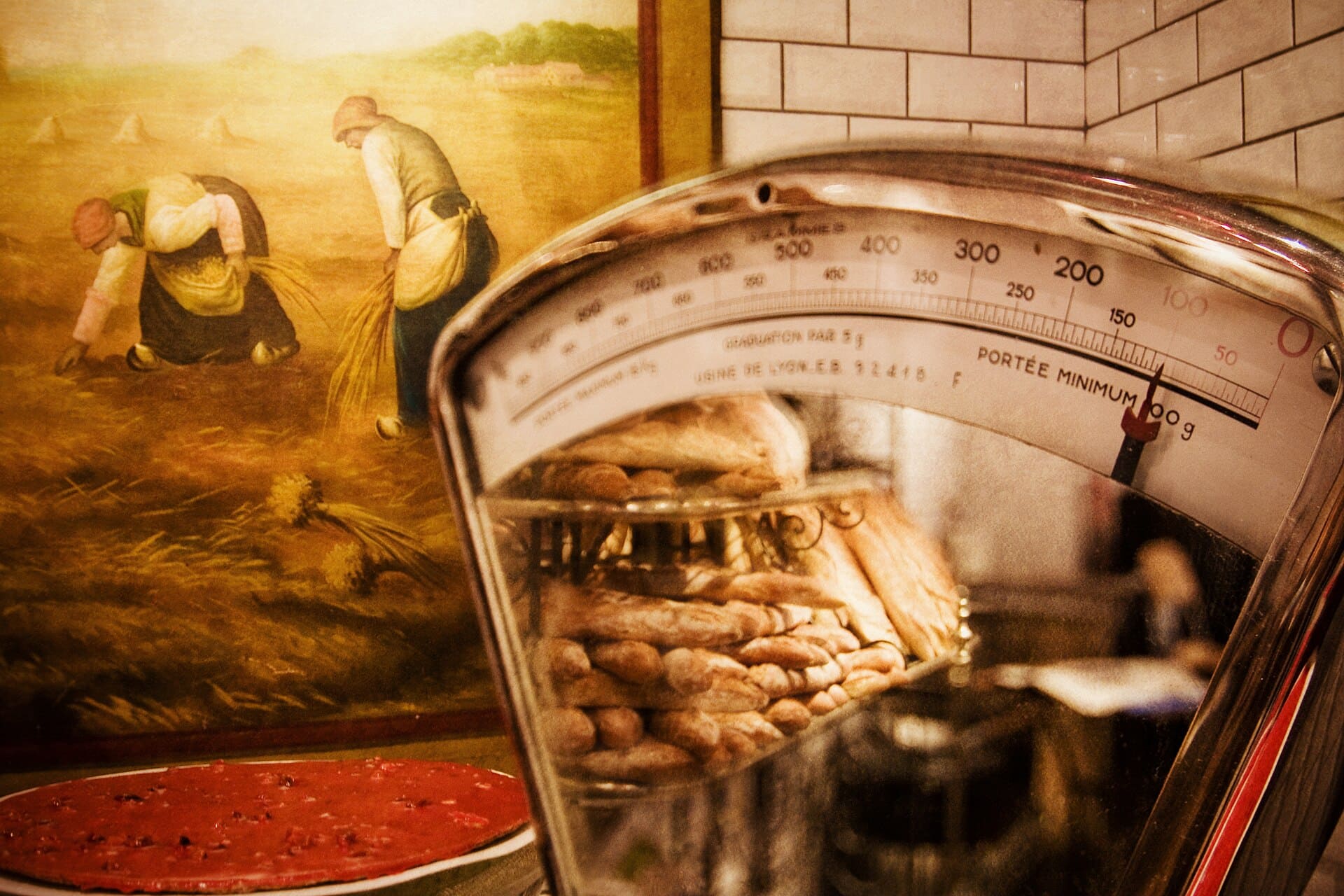
8. Les Halles de Lyon Paul Bocuse
If you want to see with your own eyes where the best chefs and discerning local gourmets shop for fresh ingredients, you have to head straight to this legendary covered market. It proudly bears the name of Paul Bocuse, the most famous local chef of all, whose ideas defined modern French gastronomy for the entire 20th century. It’s an absolute culinary temple and a giant larder, where the aromas of ripening cheeses, freshly baked bread, exotic spices and top-class wines all blend under one enormous roof.
Strolling the narrow aisles between the beautifully arranged stalls is a huge experience in itself, and I recommend coming ideally on a Sunday morning, when the liveliest atmosphere prevails. Be sure to stop at one of the celebrated cheesemongers and pick up some Saint-Marcellin, a small, incredibly creamy cheese that’s absolutely synonymous with this region and tastes best of all simply with a fresh, crusty baguette.
💡 Tip: This renowned market isn’t the cheapest affair, but you can assemble an absolutely luxurious picnic from top-quality ingredients that will end up costing you far less than an ordinary lunch in a pricey restaurant. You can then enjoy your purchased treasures at leisure in a nearby park right on the riverbank.
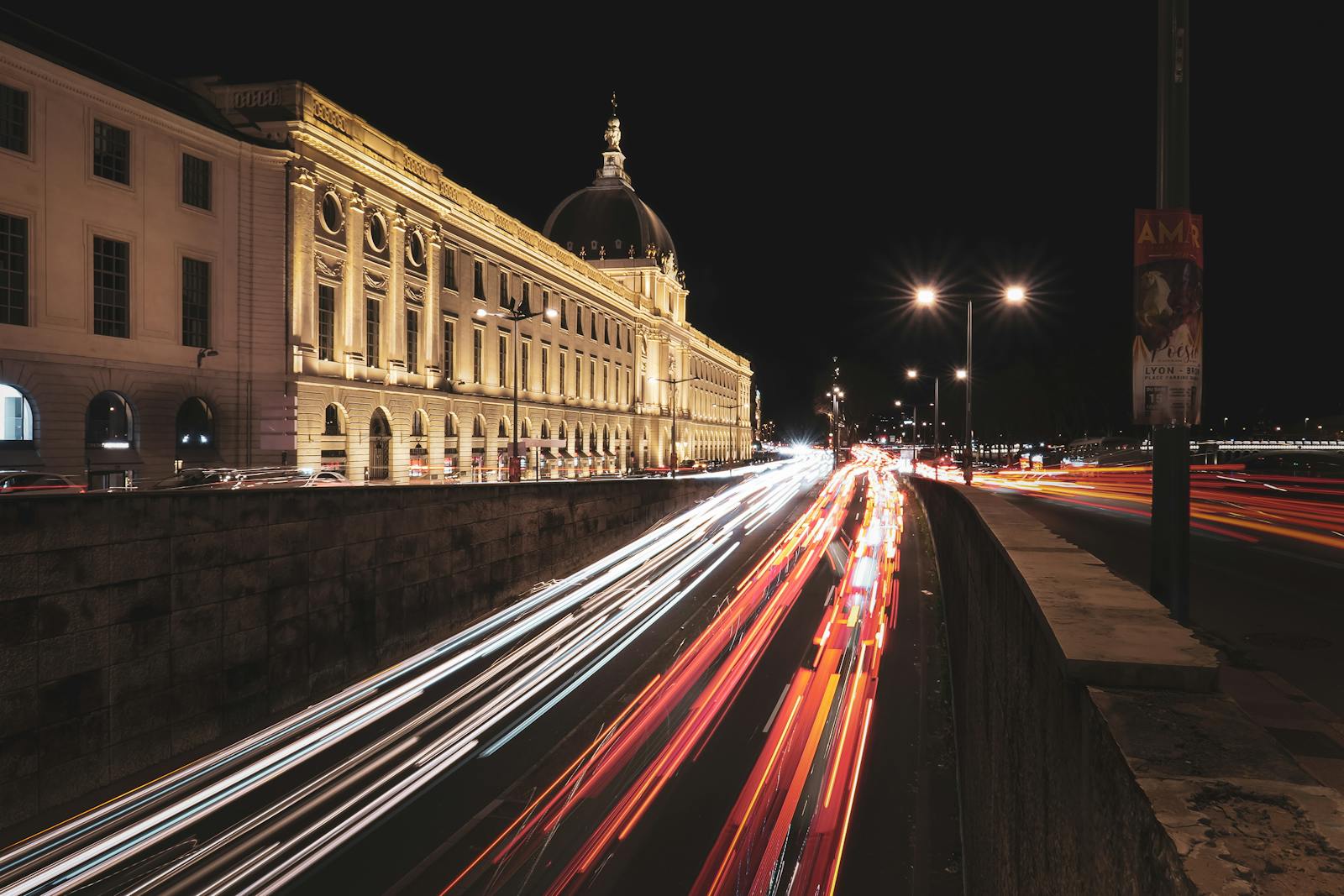
9. Fête des Lumières, the December Festival of Lights
This enormous event completely transforms the rhythm of the whole city, and if you have that rare chance, it’s well worth experiencing at least once in your life. The Fête des Lumières has very deep historical roots, when locals lit candles in their windows as heartfelt thanks to the Virgin Mary for protection from a plague epidemic, and this lovely tradition gradually grew into a gigantic festival of modern light art. Over four December evenings the whole historic centre magically transforms into one vast, dazzling open-air gallery.
The most important monuments, grand squares and historic building façades come alive with incredible video mapping and elaborate light installations by acclaimed artists from all over the world. People stroll through the festively illuminated streets, drink hot mulled wine, and the whole atmosphere is absolutely magical despite the huge crowds moving through. In 2026 this celebrated festival runs from the 5th to the 8th of December, and around four million people descend on the city during it.
⚠️ If you want to experience this unique festival, you must book accommodation by the end of summer at the very latest, because any later and you won’t find anything at all, or you’ll pay absolutely astronomical sums. Be prepared too for the fact that the streets in the centre turn into one-way streams of bodies, and a normal walk from one square to another can easily take an hour.
10. Futurism at the Musée des Confluences
At the very southern tip of the peninsula, exactly at that dramatic spot where the waters of the two great rivers Rhône and Saône fiercely merge, stands a building that at first glance looks like a crashed spaceship from the distant future. The Musée des Confluences is a stunning and very bold piece of modern deconstructivist architecture that creates an enormous visual contrast with the ancient historic centre. Even if you’re not a big fan of wandering around museums, just the walk around this massive glass-and-metal structure is well worth it.
Inside is a rather fascinating exhibition devoted to natural sciences, anthropology and the history of humankind, presented in a very modern and highly interactive way. For most visitors, though, the biggest draw is the architecture itself and the publicly accessible rooftop terrace, which opens up a beautiful view straight onto the confluence of the two rivers and the regenerated industrial surroundings. It’s an absolutely great place to take shelter when an unexpected rain cloud catches you out during the afternoon.
Admission to this modern museum will set you back roughly €10, and you can reach it very comfortably by tram from the centre. After your visit, definitely take a walk along the landscaped riverbanks in the Confluence district, which has transformed from a former grimy industrial zone into a showcase eco-district full of interesting residential buildings and community gardens.
11. The Green Oasis of Parc de la Tête d’Or
When you start to feel that all the baking stone and cobbled streets are getting a bit much, head off to rest in this enormous city park. Parc de la Tête d’Or ranks among the largest and by far the most beautiful city parks in France and represents an absolutely indispensable green lung for the whole city’s residents. It spreads out along the bank of the Rhône and offers endless kilometres of well-kept paths for running, cycling, or just lazy Sunday strolls with a coffee in hand.
The park hides several very pleasant surprises, the most striking of which is a large lake where you can leisurely take a spin in a rented rowing boat in summer. You’ll also find a beautiful botanical garden with historic glasshouses full of exotic plants, and an extensive, fragrant rose garden that you’ll appreciate most during the spring bloom. The whole generous complex even includes a fairly large zoo, free to enter, where local families with children love to head for afternoon outings.
💡 Tip: Stop off at a bakery on the way, pick up some excellent cheese and a fresh baguette, and have a proper French picnic on the sprawling, well-kept lawns. It’s exactly the style of relaxation that local students and young families practise here at the weekend, and it’ll clear your head perfectly.
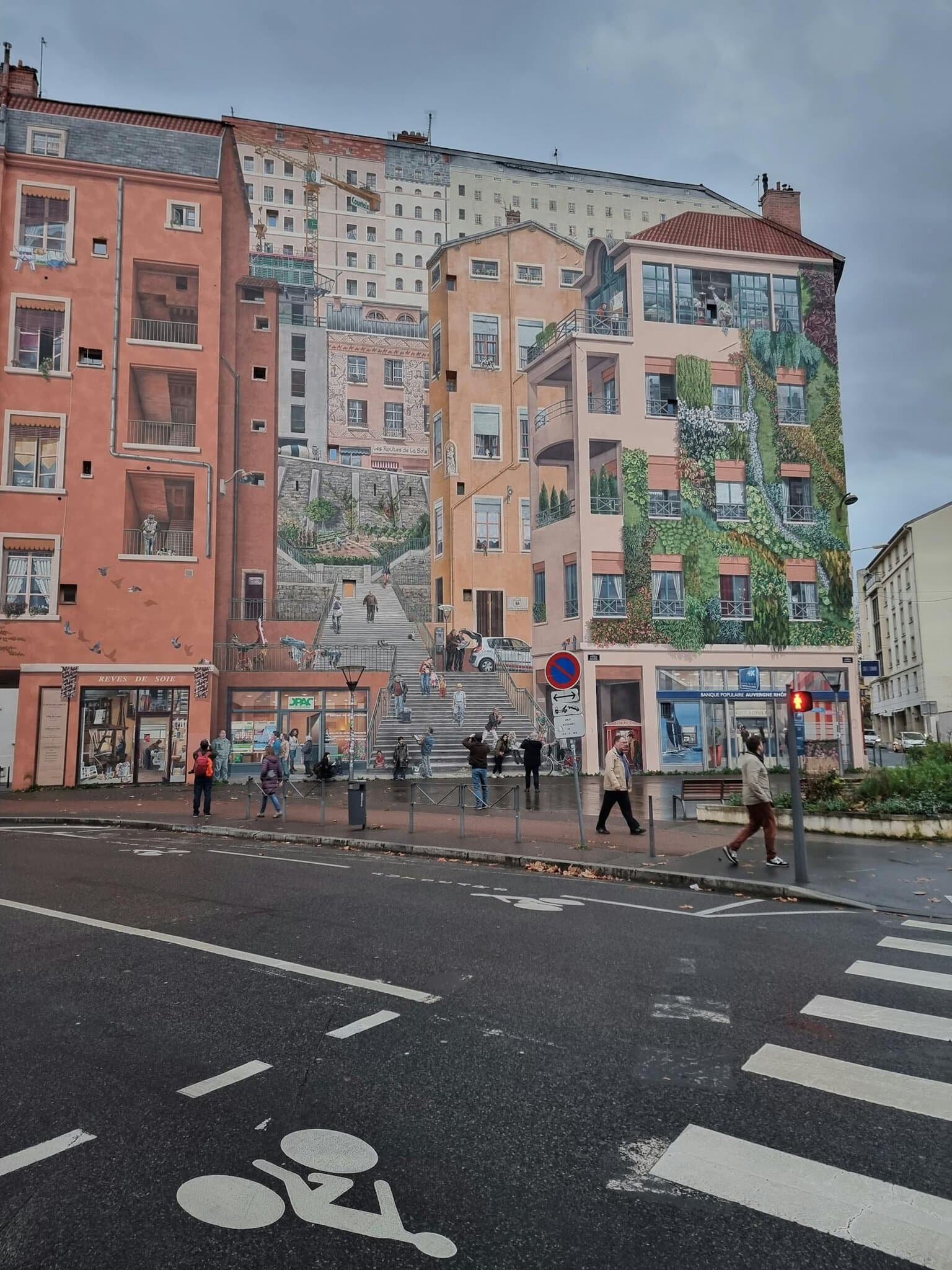
12. The Giant Mur des Canuts Mural
The city boasts a fairly unique and visually striking tradition of giant murals, or trompe-l’œil, which decorate the blank façades of many tall apartment buildings and create an absolutely perfect optical illusion. The most famous and largest of them is the Mur des Canuts in the Croix-Rousse district, which covers an incredible 1,200 square metres and ranks among the very largest murals in all of Europe. It’s painted with such precision and attention to perspective that for a moment you won’t be able to tell what’s still a real wall and what’s just a painted image.
What’s fascinating about this giant work is the fact that it’s not just an ordinary static picture — the artists carefully update and alter the mural roughly every ten years, so that it reflects the evolution of the district itself and the natural ageing of the characters depicted on it. Over the decades the painted people gradually grow up, their hairstyles change, and modern features like shared bikes or brand-new shops appear on the fictional streets.
Another wonderful mural that you definitely shouldn’t miss on your wanderings is the Fresque des Lyonnais, right on the bank of the Saône, where the most significant historic and contemporary figures firmly connected to the city are beautifully depicted. Here you’ll find chef Paul Bocuse, cinema pioneers the Lumière brothers, and the famous author of The Little Prince, Antoine de Saint-Exupéry.
13. A Boat Cruise on the Rhône and Saône
A city that sits so strategically on two great rivers simply has to be seen from the water, because it offers a completely different perspective and beautiful views without the aching feet. Sightseeing cruises usually start in the centre on the Saône embankment and offer fairly varied routes, from short hour-long loops to much longer trips paired with a luxury dinner right at sunset. It’s an absolutely great way to rest for a while during a demanding afternoon while picking up plenty of historical titbits from the audio guide.
While the Saône is noticeably calmer and lined with the picturesque historic façades of Vieux Lyon, the wide and wilder Rhône offers a view of the more modern part of the city and green banks full of cyclists getting their exercise. These boat trips are understandably very popular in the summer season, so it’s wise to secure your spot well in advance, and the various cruise options can be found and booked very easily through the GetYourGuide platform.
💡 Tip: If you’d rather not pay for a classic tourist sightseeing boat, use the local water tram known as the Vaporetto. It works essentially like ordinary public transport and, for just a few euros, will carry you very pleasantly along the Saône between the historic centre and the modern Confluence district.
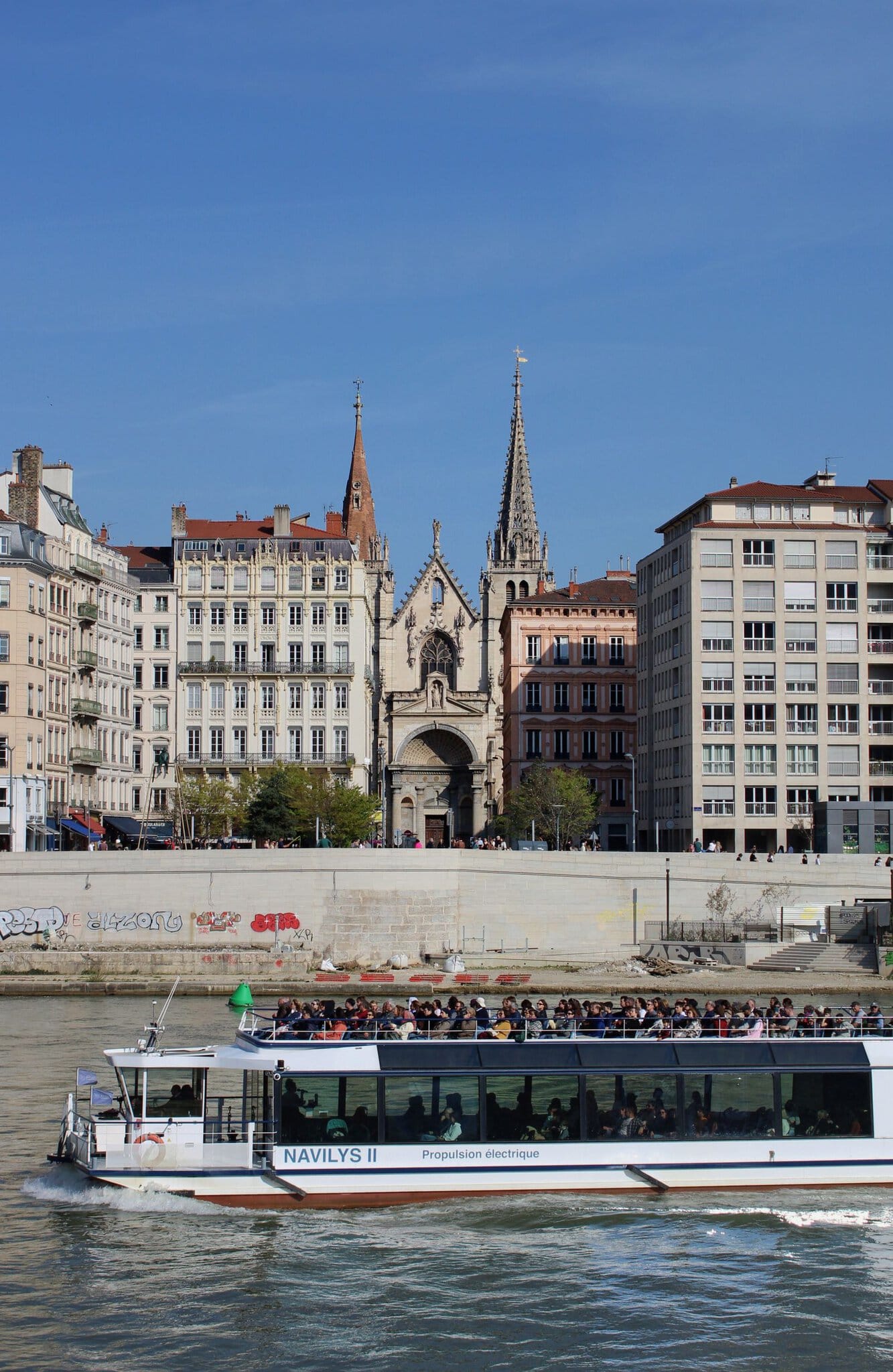
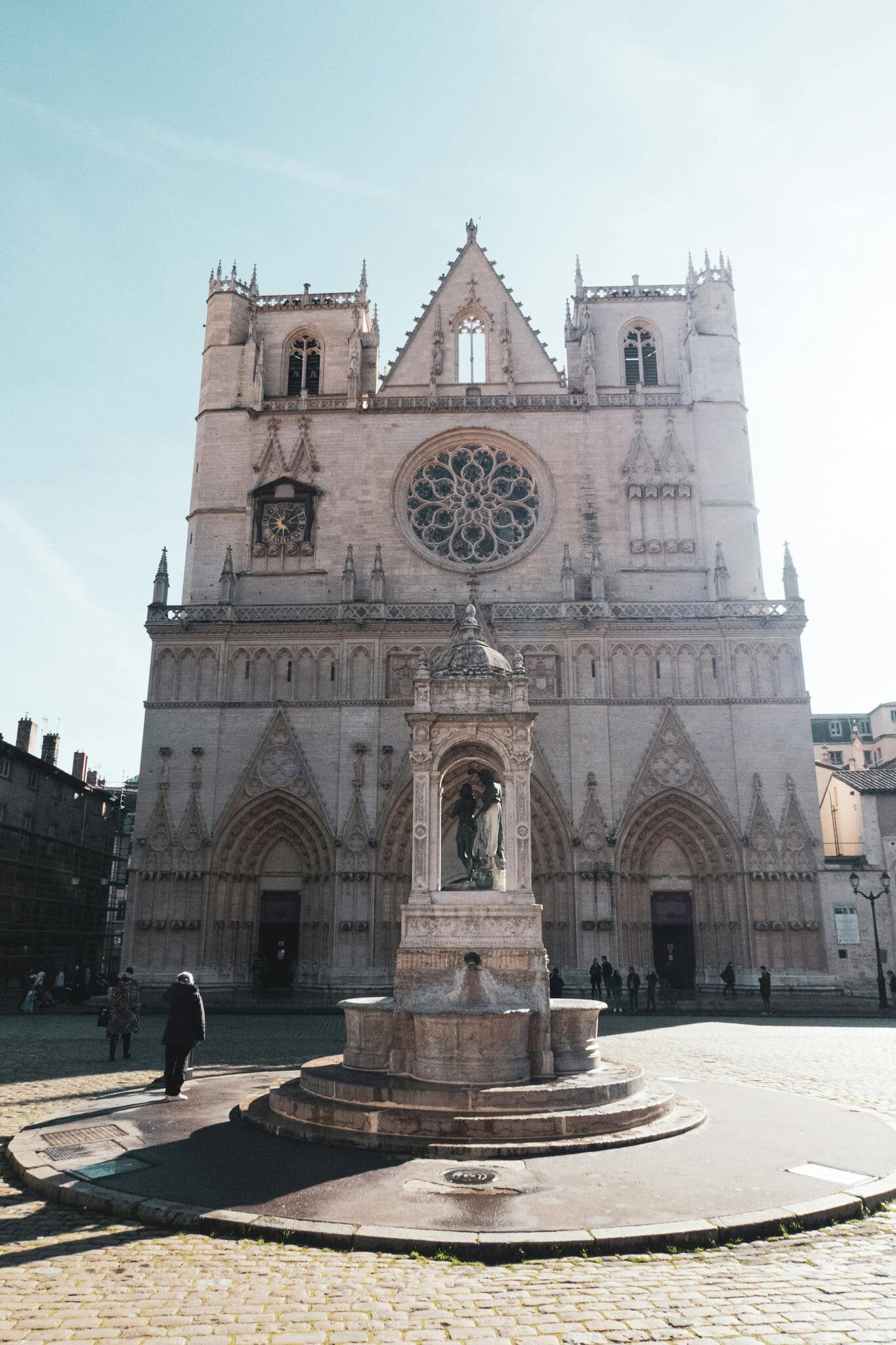
14. Saint-Jean-Baptiste Cathedral
Right in the heart of the old town, on the busy Place Saint-Jean, stands this imposing structure, a perfect illustration of how different architectural styles naturally blended in the Middle Ages. Saint-Jean-Baptiste Cathedral took an incredible three hundred years to build, which in practice means its oldest parts are purely Romanesque, while the main façade and the upper floors are adorned with ornate Gothic and beautiful, enormous stained glass. It’s an absolute focal point of all the historic action, and in summer the square in front of it hosts plenty of street performances.
The greatest treasure hidden within its walls is a fully functioning 14th-century astronomical clock, which ranks among the very oldest in all of Europe. The clock shows not only the precise time but also the complex positions of the stars, the phases of the moon and the exact dates of church festivals. If you arrive at the right time — usually at 12, 2, 3 and 4pm — you can watch with your own eyes as the tiny mechanical figures spring into motion and play out scenes from the Annunciation of the Virgin Mary.
After touring the inside of the cathedral, definitely don’t forget to take a look at the adjacent archaeological park, the Jardins Archéologiques, where you’ll find the neatly uncovered foundations of much older early Christian churches that stood on this very spot long before the present-day cathedral.
Map of points of interest for your phone
Where to Go Next from Lyon
This region works as an absolutely perfect crossroads, and once you’ve had enough of the big-city buzz, you have several fantastic options for heading out into nature. If you prefer water and romance, hop on a train or into the car and drive about two hours east, where Annecy lies. This gorgeous town is rightly nicknamed the Venice of the Alps and sits on the shore of an incredibly clear, turquoise lake, ringed by a superb cycle path.
If you’re drawn more to the high mountains and want to see the real alpine giants, carry on a little further and visit the stunning Chamonix and Mont Blanc. Here you’ll find raw mountain wilderness, glaciers and the chance to ride a cable car up to incredible heights.
For lovers of wilder summer activities, I recommend heading southwest to the Ardèche region. The local limestone canyon with its giant natural arch, the Pont d’Arc, is an absolute paradise for canoeing — but be prepared for the fact that in July and August the water gets seriously overcrowded with domestic tourists.
Frequently Asked Questions
How many days do I need to explore Lyon?
For the main sights, wandering through the old town, and sampling the local cuisine, two full days will be enough, ideally a long weekend. However, if you want to visit more museums, thoroughly explore all the secret passageways, and head out shopping on the peninsula as well, it’s better to set aside three or four days so you don’t have to rush unnecessarily.
Do I need a car for the city?
Definitely not, a car in the city center is more of a huge burden due to lack of parking and complicated one-way streets. Moreover, strict rules apply for emission zones, so only vehicles with Crit’Air sticker 1 or 2 are allowed into the center on weekdays, which you must arrange in advance online. It’s best to leave your car at a P+R park-and-ride lot on the outskirts and get around everywhere using the excellent metro.
What exactly is a traboule?
It’s a specific architectural feature of the old town that functions as a secret passageway through the interior courtyards. These corridors connect parallel streets and originally served silk weavers and the French resistance during the war. They’re free to access, but you must behave quietly in them because they lead directly through residential buildings.
Can I eat well here as a vegetarian?
Even though traditional local cuisine in bouchons is heavily based on offal and lard, you definitely won’t go hungry here. In traditional establishments, go for the creamy potato gratin dauphinois, huge salads with cheese, or fluffy quenelles dumplings in the meatless version. Modern bistros commonly offer excellent vegetarian menus.
How does paying and tipping work in restaurants?
In France, a 15% tip is already automatically included by law in the price of every meal and drink (so-called service compris). If you were really satisfied with the service, it’s customary to leave one or two euros in coins on the table, but you usually can’t add a tip through the payment terminal at all, because the system doesn’t allow it.
When exactly does the Festival of Lights take place?
This huge video mapping and light installation festival takes place every year in early December. For 2026, the official dates are set from December 5th to 8th, but accommodation for these dates absolutely must be booked at least six months in advance, or even at the end of summer, otherwise you’ll pay ridiculously high prices.
Is the city safe for tourists?
Yes, the tourist center on the peninsula and the old town are completely safe both during the day and evening, with a relaxed atmosphere. Exercise extra caution regarding pickpockets only at large train stations, and as in most big cities, the rule applies that you shouldn’t wander alone through poorly lit outlying neighborhoods at night.
Tips and Tricks for Your Vacation
Don’t Overpay for Flights
Search for flights on Kayak. It’s our favorite search engine because it scans the websites of all airlines and always finds the cheapest connection.
Book Your Accommodation Smartly
The best experiences we’ve had when looking for accommodation (from Alaska to Morocco) are with Booking.com, where hotels, apartments, and entire houses are usually the cheapest and most widely available.
 🚗 Car rental on the roadVerified rental cars in France
Search with the DiscoverCars comparison engine — it compares prices from dozens of local and international rental companies, and most bookings come with free cancellation.
Compare car prices in France →Don’t Forget Travel Insurance
Good travel insurance will protect you against illness, accidents, theft, or flight cancellations. We’ve had a few hospital visits abroad, so we know how important it is to have proper insurance arranged.
Where we insure ourselves: SafetyWing (simple monthly subscription) and TrueTraveller (for extra-long trips).
Find the Best Experiences
Get Your Guide is a huge online marketplace where you can book guided walks, trips, skip-the-line tickets, tours, and much more. We always find some extra fun there!