Reykjavik, Iceland: 15 Best Things to See and Do

TL;DRReykjavík is easily done in a day and a night, ideal right after landing or as the grand finale of an Iceland trip. Among the 15 tips: Hallgrímskirkja church with its viewing tower for 1,500 ISK, the Harpa concert hall (free to wander in), the Sun Voyager sculpture, the rainbow street Skólavörðustígur, Lake Tjörnin, and the Grandi district with the Omnom chocolate factory. For a bit of downtime there are the city’s geothermal pools (sundlaug) at around 1,430 ISK, the swankier Sky Lagoon, or the hike up to the hot river at Reykjadalur (45 minutes uphill from the car park). From Keflavík airport, about 45 minutes away, the Flybus gets you into the centre for 3,999 ISK. It’s best to visit outside the summer peak, when accommodation is cheaper and the crowds thin out.

We only made it to Reykjavik, Iceland on the very last day of our two-week autumn road trip around the island. We were chilled to the bone, our hair was sticking out in every direction after soaking in the hot springs, and after two weeks of boiling pasta in the tiny kitchens of our guesthouses and apartments, we were desperate for a bit of civilisation.

Before reaching the city itself, we’d spent a frosty morning hiking 45 minutes up to the Reykjadalur hot river, shivering as we changed outside in the wind. So we appreciated the warmth of that first cosy little café in the centre all the more.

Icelandic coffee may be eye-wateringly expensive, but after days of cold, wind and endless supplies of local liquorice, it tasted like divine nectar.

A lot of people skip the city entirely on their trip, which I think is a real shame. If you’re putting together an itinerary and looking for tips on things to do in Reykjavik, Iceland, you’re in the right place.

It’s a tiny city and a single day is plenty to cover the main sights, but it has an incredible atmosphere. In this article you’ll find my favourite tips for what to see and do in Iceland’s capital, plus our tried-and-tested spots to warm up and eat well without meat.
TL;DR

  • Reykjavik isn’t a week-long destination: It’s a compact city, and one day and one night is plenty to explore it. You can visit straight after landing, or save it as a sweet finale at the end.
  • You don’t need a car in the city: The Flybus gets you comfortably from the airport into the centre, and you can easily get around the city itself on foot.
  • The hot springs are a must: Skip the overpriced Blue Lagoon and head to the classic municipal pools (sundlaug) like the locals do, where entry costs a fraction of the price.
  • Watch out for the naked shower rule: Icelandic pools have strict rules — you absolutely must shower completely naked with soap before getting in the water.
  • Food is extremely expensive: If you want to save money, your best friends will be the Bónus supermarket and the excellent local bakeries.

When to Go and How to Get There

The weather in Iceland simply does whatever it wants, and the weather in Reykjavik, Iceland is no exception. We visited at the turn of September and October, and I have to say it was already a properly cold winter, but in return we had incredible luck with the Northern Lights.

It’s warmest here in summer, of course, when you’ll also experience the midnight sun, but be prepared for the biggest crowds of tourists and absolutely astronomical accommodation prices. On top of that, in August 2026 Iceland is in for a rare total solar eclipse, visible right from Reykjavik and lasting just under a minute.

So if you’re planning a trip for that period, arm yourself with plenty of patience, because accommodation in the path of totality is vanishing at lightning speed and prices have shot up to absurd levels. We always hunt for cheap flights on Skyscanner — it’s our favourite tool for catching good deals, and in the summer season you can reach Iceland from London on a direct flight in around three hours.

Outside the high season, expect a standard connection via Amsterdam, Frankfurt or Copenhagen. Just be careful when reading older guidebooks, because the popular budget airline PLAY Airlines has gone under, and you’ll most likely be flying with Icelandair or one of the major carriers from the UK.

The moment you step off the plane at Keflavík International Airport, you’ll feel that typical salty, freezing Icelandic wind. The airport itself sits on the Reykjanes Peninsula about a 45-minute drive from the capital, so if you’re heading straight into the centre and not planning to set off on a big road trip immediately, I’d definitely recommend taking the comfortable Flybus.

For around 3,999 ISK (roughly £24) it takes you directly to the main BSÍ bus terminal. If you’d like to be dropped right outside your hotel, you can pay extra for the Flybus+ option, which works out at 5,199 ISK.

Travelling as a couple or solo, this is by far the cheapest and most sensible option, because a car in the city is just an expensive burden.

But if you know you’ll only be spending a few hours in Reykjavik and will be carrying straight on around the island, it’s worth renting a car right there in the arrivals hall. Lukáš and I have long had a great experience with the DiscoverCars portal, which we use pretty much everywhere in the world.

That said, Iceland is a bit of a wild west when it comes to car hire, and insurance is definitely not the place to skimp. Be sure to pay extra for Gravel Protection, because stones flying up from oncoming cars smash windscreens here on a daily basis.

If you’re heading south, consider Sand and Ash Protection (SAAP) too, since the strong wind can literally sandblast a car down to bare metal. And remember one golden Icelandic rule that no insurance will cover: always hold the car door firmly with both hands when opening it, because the local gales can rip it clean off the hinges for careless tourists in an instant.

From 2026, Iceland has also introduced a new per-kilometre tax of 6.95 ISK per kilometre driven, which the rental company will likely charge to your card when you return the vehicle, so it’s best to factor this extra cost into your travel budget in advance.

Where to Stay and How Much It Costs

Iceland is officially one of the most expensive countries in the whole world, and Reykjavik itself sadly doesn’t escape this merciless rule. If you long to stay right in the heart of the action and soak up that genuine Nordic city atmosphere, look for hotels in the area known as 101.

It’s the very centre of the city, spread between the majestic Hallgrímskirkja church and the glass-fronted Harpa concert hall, and from here you can walk absolutely everywhere with ease. A night here, though, typically costs around £105 (roughly 18,000 ISK) and up.

Accommodation tends to be noticeably cheaper right near the church itself, where you can find rooms even 40 percent cheaper, or in the wider harbour area and the Grandi district.

💡 Specific accommodation tips (check prices and availability via Booking.com, book early — in season and around the 2026 eclipse they sell out months ahead):

If you’re on a limited budget, from personal experience I warmly recommend finding accommodation with at least a small kitchenette. We genuinely saved a lot of money by buying basic groceries and breakfasts at the local Bónus supermarket, which you’ll spot from a distance by its bright yellow logo with a giant pink piggy.

The Krónan or Nettó chains are good alternatives too. A dinner for two in a standard restaurant easily crosses the £100 mark. And if you arrive in the city in a hire car, watch out for the complicated parking zones.

In the very centre (zone P1) you’ll pay around 630 ISK (roughly £3.80) for a single hour, so we always try to find a spot in zone P3 instead, which is much friendlier and costs just 230 ISK for the first two hours. Parking here is also paid for exclusively through handy mobile apps like Parka or EasyPark, so forget about digging for coins in your pockets.

Booking.com is our absolute favourite accommodation search engine, and we often snag cosy apartments there with free parking a little further from the centre, which is priceless. And one more little money-saving tip.

Never buy bottled water — the tap water here is some of the cleanest in the world. Just always run the cold tap, because the hot water is heated geothermally and has a fairly strong smell of sulphur 😅.

Downtown and Icons: 6 Places You Must Visit and What to Do

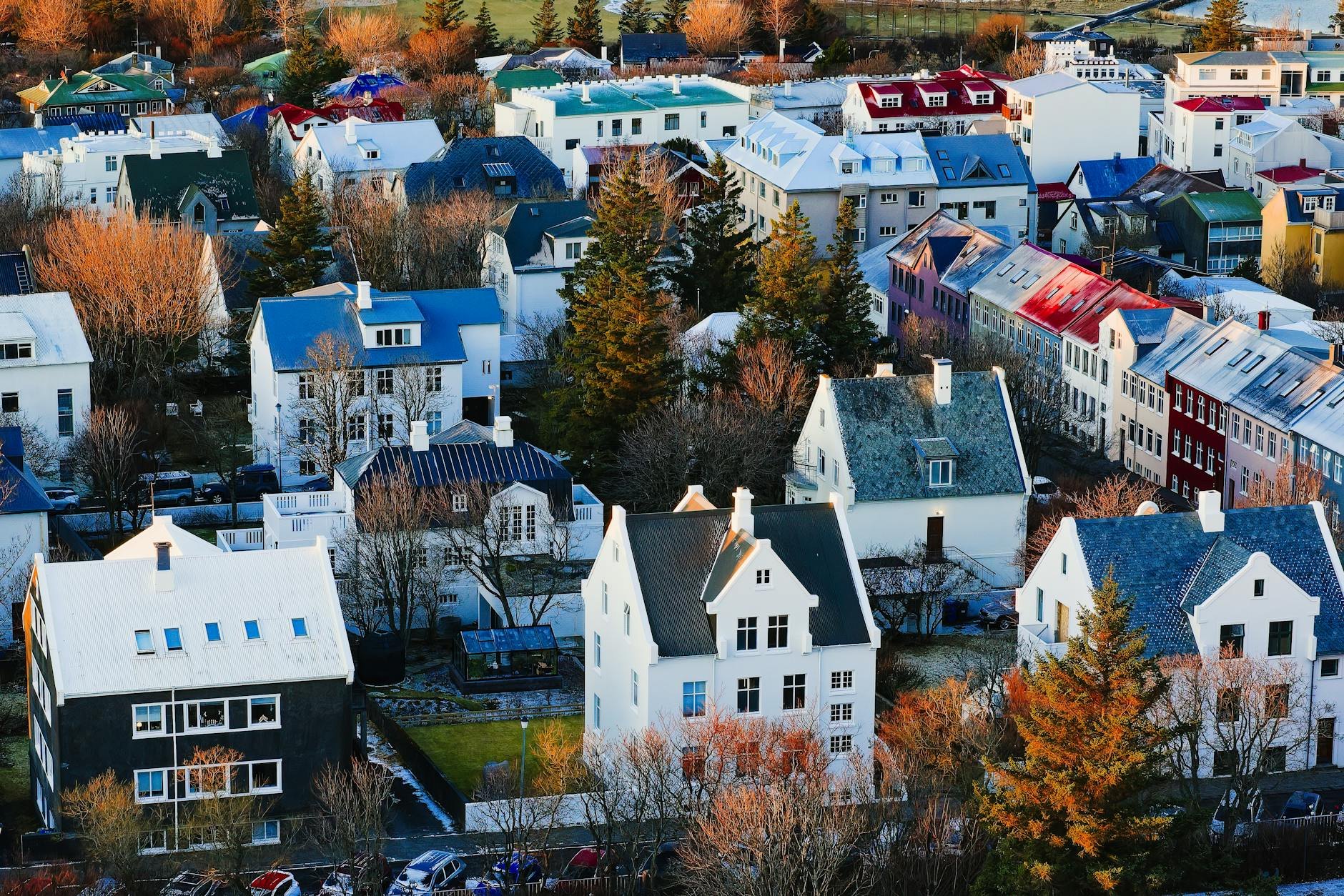
When people hear “the capital of Iceland,” many wrongly picture a small, frozen, grey village somewhere at the end of the world. The real Reykjavik will instantly surprise you with its incredibly vivid colours, stunning Nordic architecture and ever-present creative art.

The houses here are often clad in corrugated iron to defend against the salty wind, but they come in every shade from mustard yellow to brilliant turquoise. Let’s take a look at the very best things you absolutely shouldn’t miss on a walk through the city.

1. Hallgrímskirkja: Church or Concrete Spaceship?

This is without doubt the most famous landmark of the entire city, and I guarantee you won’t miss it, because it rises majestically on a hill and is visible from just about every street.
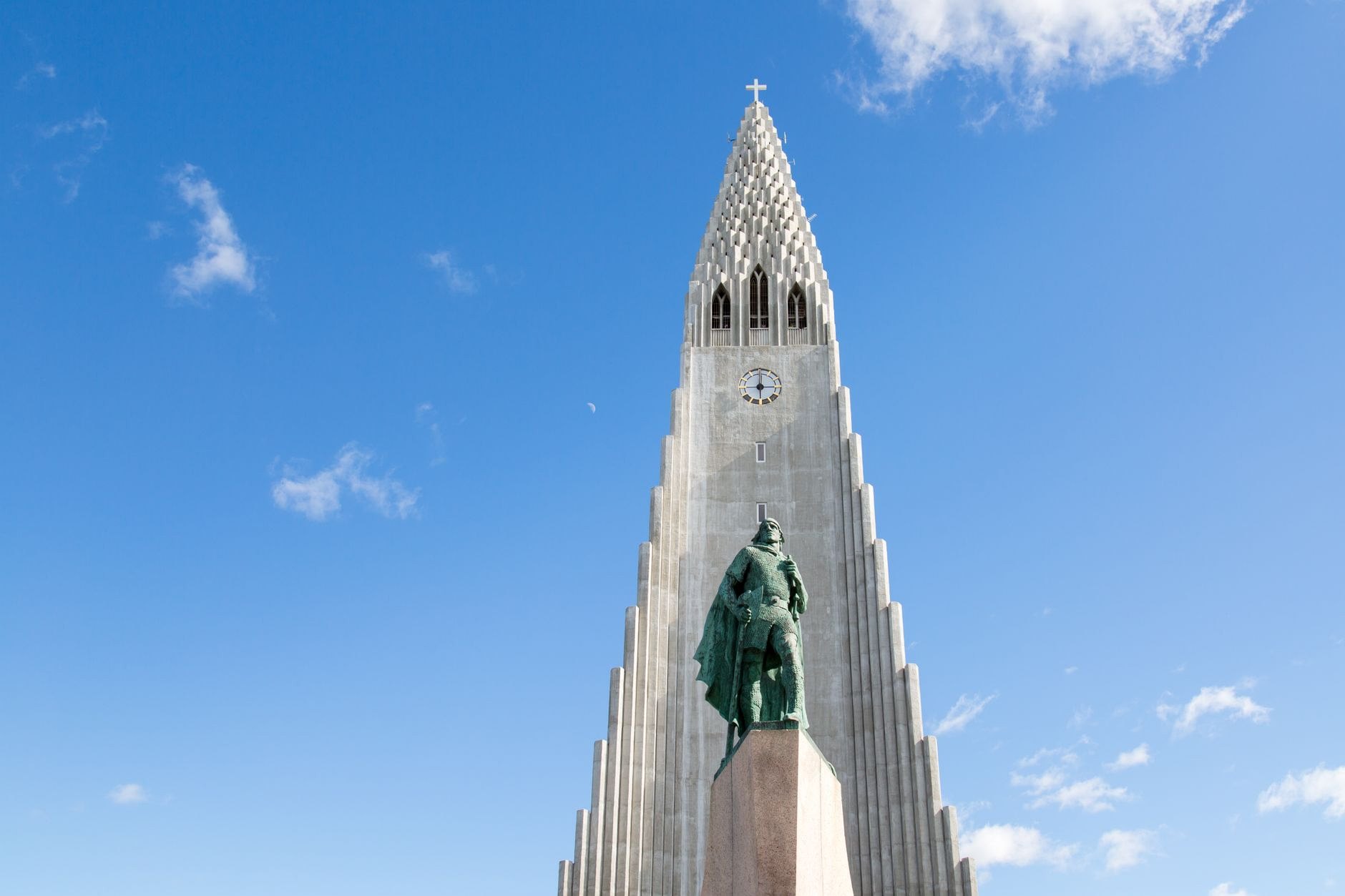
When I first saw this building with my own eyes, it reminded me more of an enormous concrete spaceship ready for launch than a classic Christian church. Its breathtaking shape was actually carefully designed to evoke the regular basalt columns that are so typical of Iceland’s volcanic landscape, which you’ll see in full glory at the famous Svartifoss waterfall, for example.

Entry to the ground floor of the church is completely free, and inside you’ll be captivated by the view of the enormous organ with more than five thousand silver pipes. But definitely don’t miss the chance to buy a ticket to the viewing tower.

You take a small lift up very comfortably, and for 1,500 ISK per adult (roughly £9), 1,000 ISK for students and 200 ISK for children, you’re treated to an absolutely perfect experience.

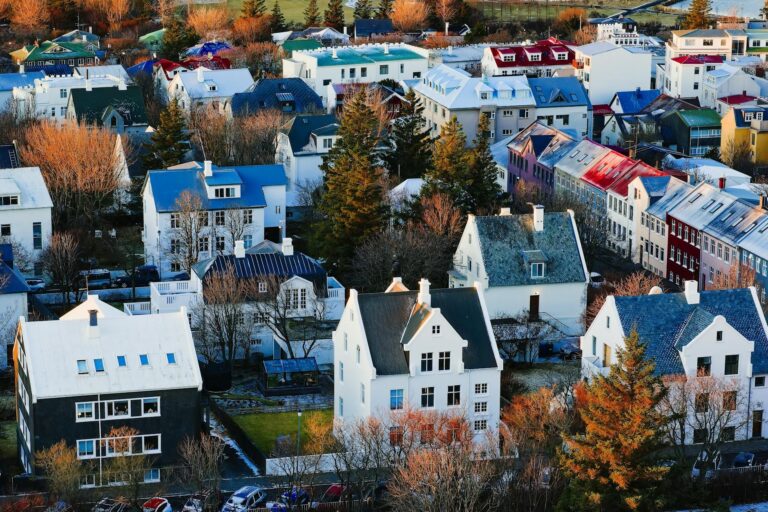
It’s from this viewing gallery that you’ll get the most beautiful views over the colourful rooftops of the little Nordic houses, while in the distance the cold ocean and the snowy peaks of Mount Esja shimmer.

Booking tickets in advance isn’t possible here, nor is it necessary — you simply walk up to the window, pay, and ride straight up. It does tend to be rather unpleasantly windy up there, though, so don’t forget to pull on a hat and zip up your jacket properly.

2. Laugavegur and the Rainbow Street Skólavörðustígur

If, like us, you love aimless wandering through a city, peering into shop windows and lingering in cafés, the main street Laugavegur will be an absolute paradise for you.
It’s the artery of the whole old town, where in one place you’ll find everything from boutiques selling traditional and outrageously expensive lopapeysa wool jumpers, to quality outdoor shops, to the most charming little spots smelling of freshly roasted coffee.

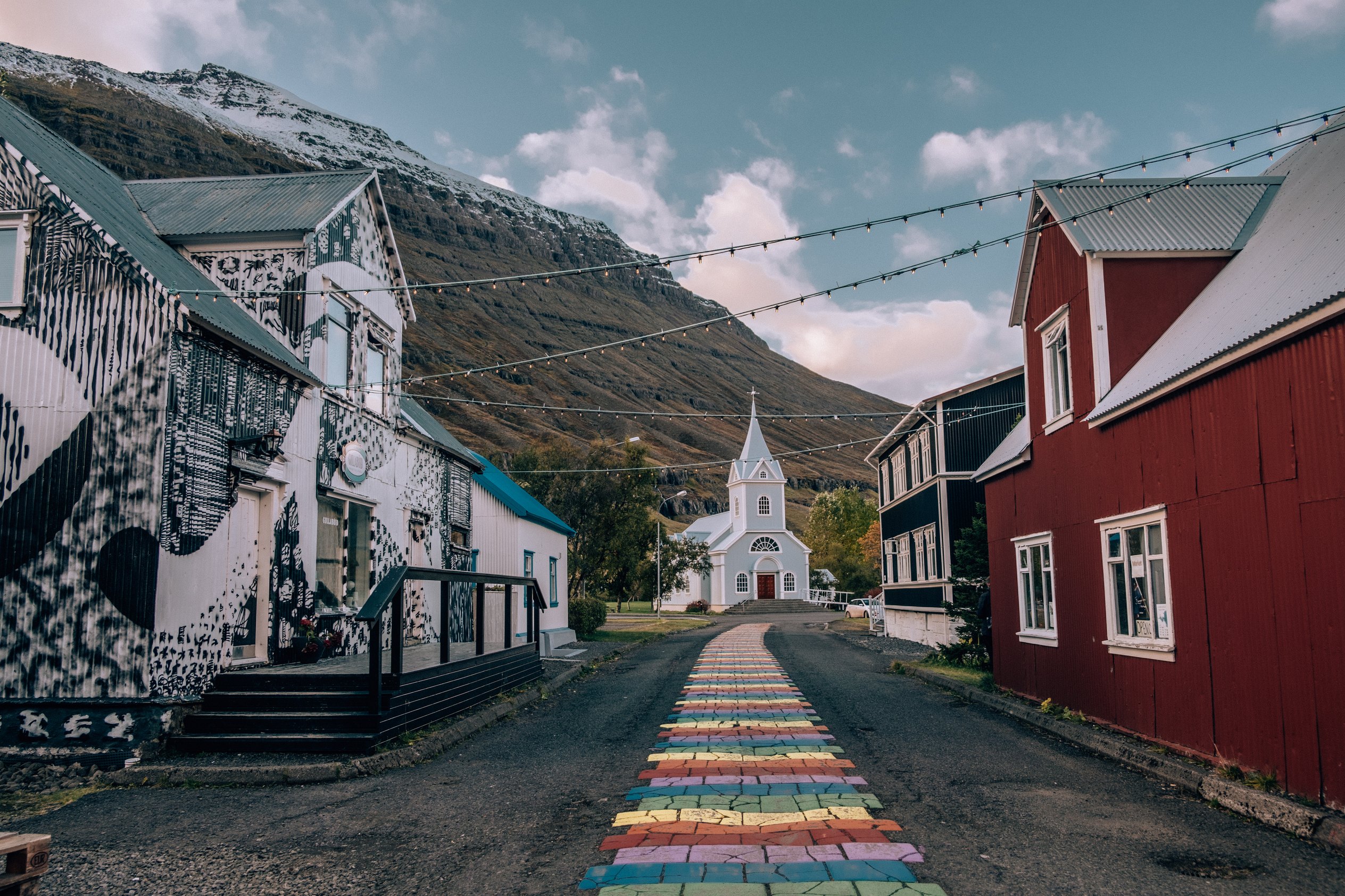
From this street, your walk flows seamlessly onto Skólavörðustígur, which by now just about every tourist and local knows by the nickname Rainbow Street.

This whole long street, which leads gently uphill straight to the main Hallgrímskirkja church, is painted in the vivid colours of the rainbow in clear support of diversity and the local pride community. It’s probably the most photographed spot in the entire country, so you’ll occasionally have to weave a little between people holding up their phones, but that cheerful, positive atmosphere is well worth it.

During the week it’s fairly quiet, but if you find yourself here on a Friday or Saturday evening, the street transforms beyond recognition. This wild weekend bar-hopping is known as the rúntur.

Because alcohol is extremely heavily taxed in Iceland, locals drink at home first as part of the so-called fyrirpartý, then head out into the buzz of the city only around midnight.

If you want to join in without bankrupting yourself, definitely download an app listing the local Happy Hours, which lets you have a beer between four and eight in the evening for a more bearable 1,000 to 1,200 ISK instead of the usual 1,750 ISK.

3. Harpa: A Glass Wonder Right by the Ocean

When you wind your way down the narrow streets from the church towards the harbour, the dazzling Harpa concert and conference hall will instantly catch your eye.
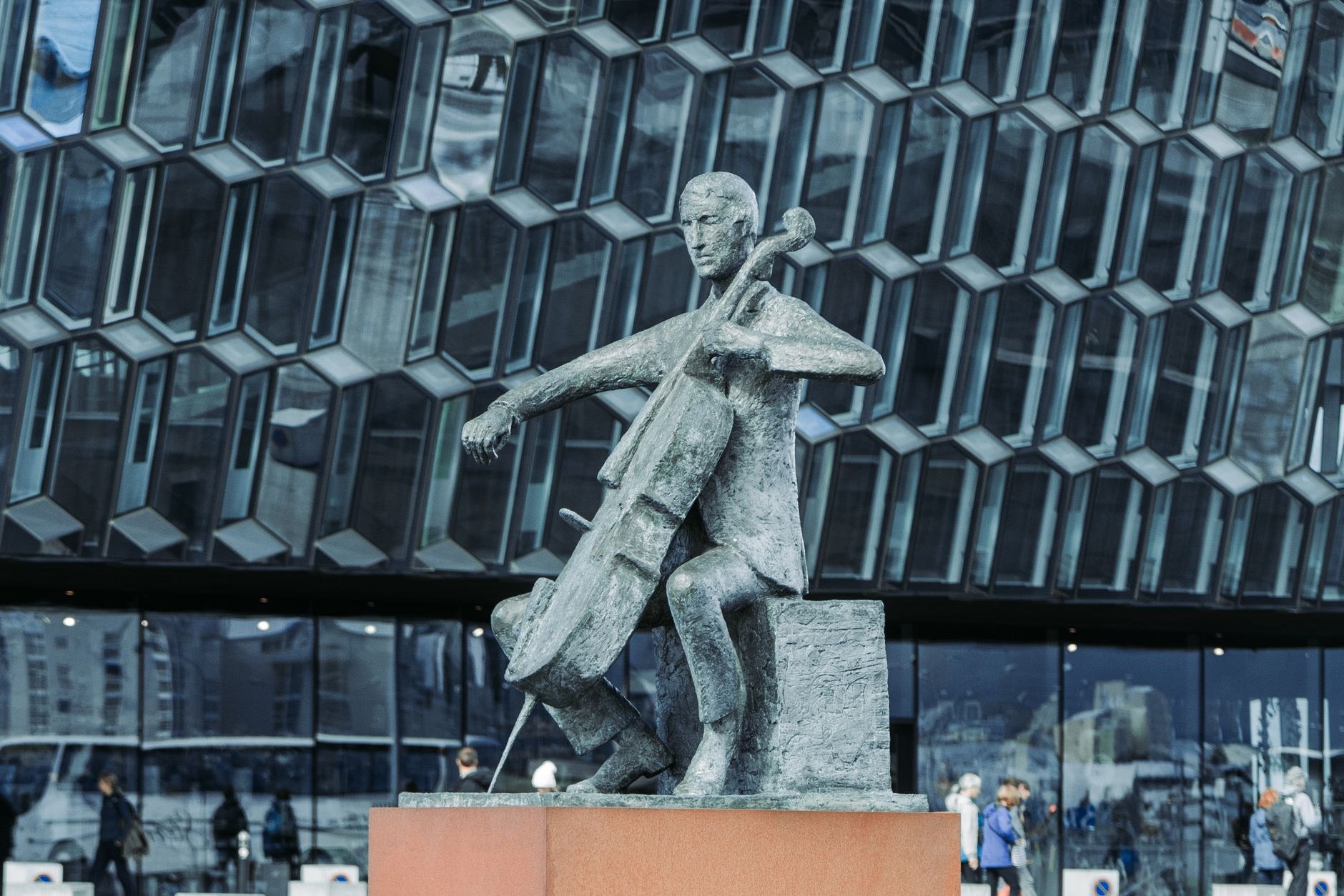
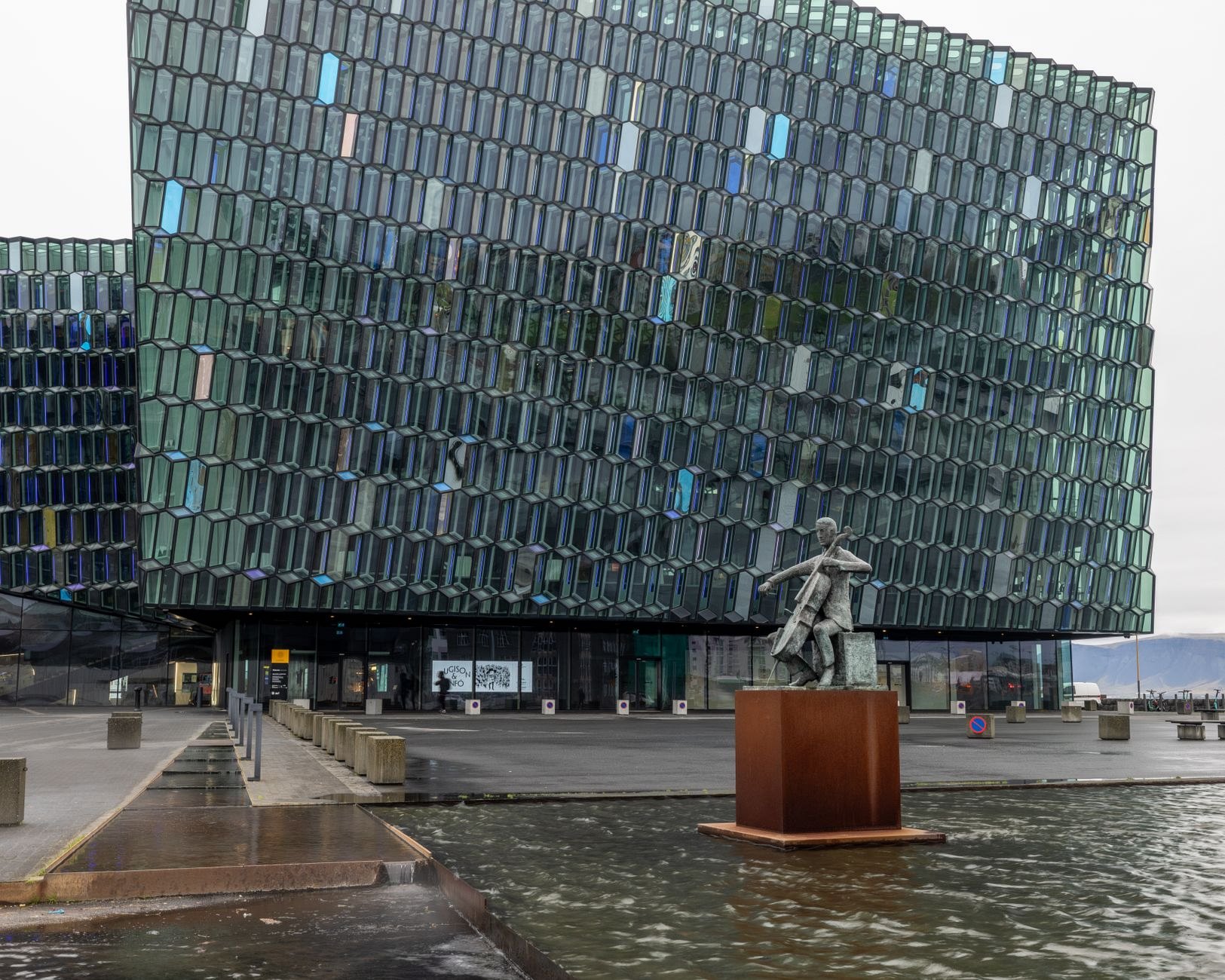
It’s an absolutely stunning piece of architecture, its unique façade made up of thousands of glass blocks resembling a honeycomb. These blocks were so ingeniously designed by the famous Danish-Icelandic artist Ólafur Elíasson that they constantly reflect the changing light of the Nordic sky and the dark colours of the adjacent sea.

The best thing about the whole experience is that you can step into the huge foyer completely free. The interior of the hall is incredibly spacious, full of light, and offers absolutely perfect angles for photos. The play of light and shadow changes here practically by the minute, depending on how the clouds happen to be drifting outside.

It’s also an absolutely ideal and strategic refuge if you get caught out exploring the city by some sudden downpour or snow flurry — which can easily happen to you three times in a single afternoon in Iceland 😅.

Sitting on a bench here, gazing out through those curious glass bubbles at the churning waves while slowly warming my frozen hands, is one of my favourite Icelandic memories.

4. Sólfar, or the Sun Voyager, for the Perfect Photo

Just a short walk from glassy Harpa along the lovely, well-kept coastal promenade, you’ll come across a steel sculpture that at first glance looks like the bleached skeleton of an old Viking ship.
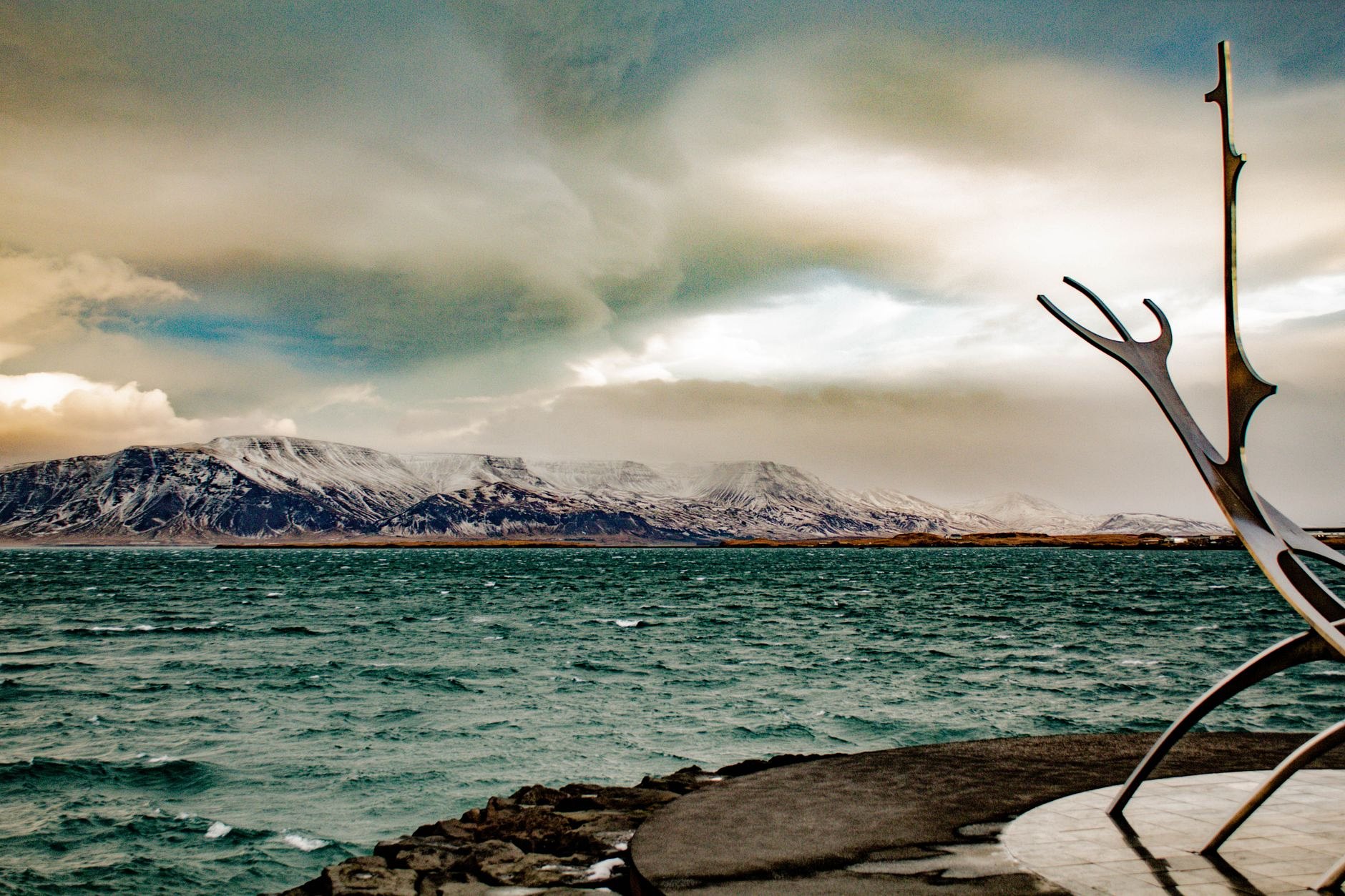
In reality this famous work of art is called Sólfar, or the Sun Voyager, and the artist intended it as a notional dream boat, a magical ode to the sun and a promise of undiscovered territory.

On a warm summer day there’s usually quite a crowd of tourists here, but if you get up a little early or, conversely, arrive when the sun begins to slip slowly towards the horizon, you’ll be rewarded with an incredible, romantic spectacle.

The metal sculpture gleams beautifully in that slanting light, and in the distance, right across the bay, the snowy peaks of the aforementioned Mount Esja rise dramatically.

It’s exactly the right, iconic spot for that typical moody photo every traveller loves to post as proof they really were in Iceland. What’s more, after the photos you can take a long stroll along the clean waterfront and breathe in that crisp, ocean-scented air.

5. The Peaceful Centre by Lake Tjörnin

Right in the heart of the old town you’ll come across a surprisingly large and very tranquil lake that goes by the name of Tjörnin. It’s largely surrounded by old, colourful houses, and at one end stands an interesting modern concrete town hall building that looks as though it’s partly floating right on the surface of the water.
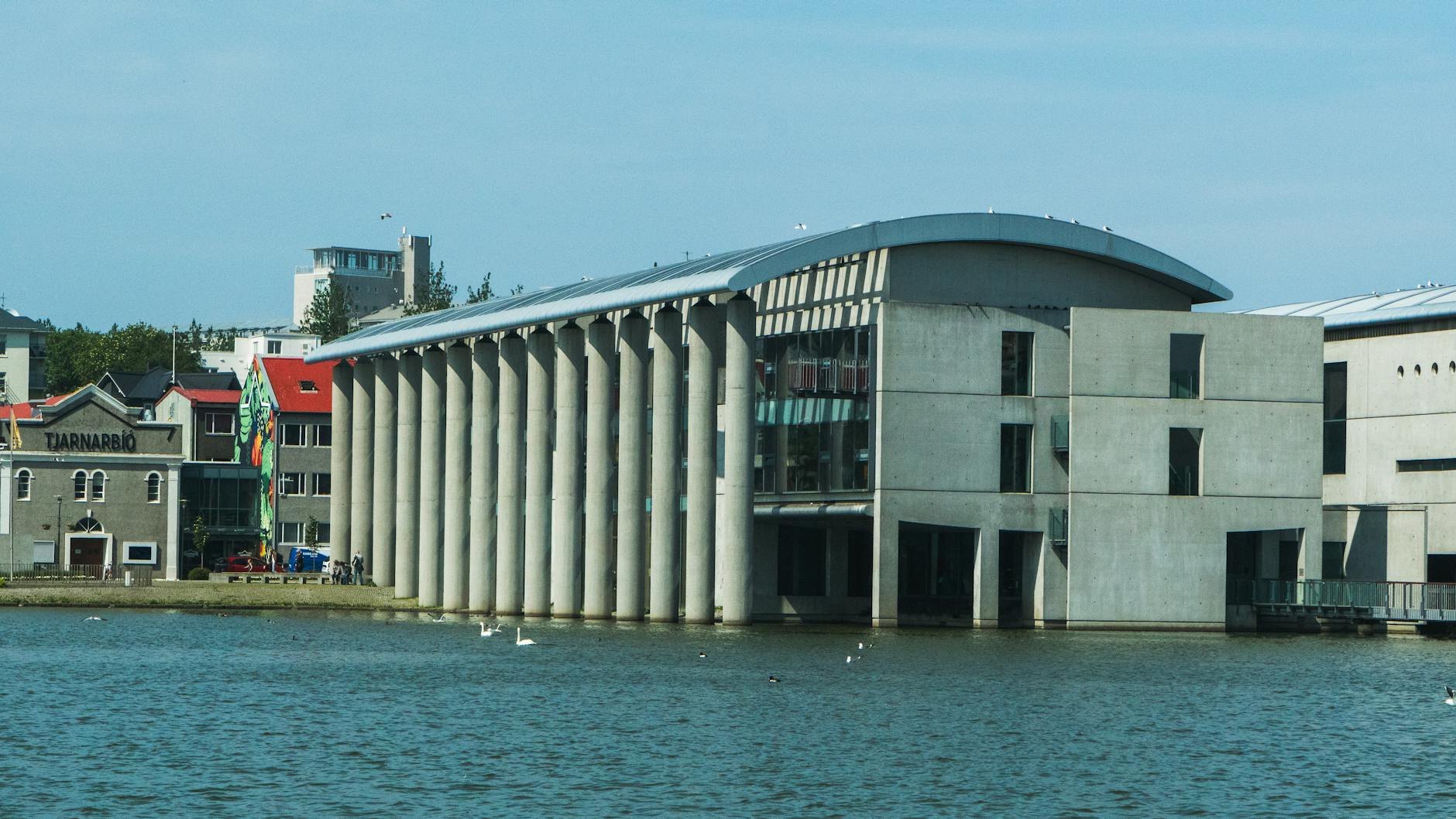
The surface of this lake is always full of elegant swans, ducks and wild geese, which locals and children love to feed from the banks. A slow walk around the water has an incredibly relaxing atmosphere and completely pulls you out of the feeling that you’re actually in the middle of a capital city, just a few steps from the busy streets.

When you arrive in the proper winter months and it’s properly freezing outside, the lake very often gets covered with a thick, solid layer of ice, and this whole beautiful spot transforms overnight into an enormous, cheerful public skating rink for local families.

6. The Grandi District and the Old Harbour

If you want to see how an industrial zone becomes the most hipster spot in the city, you have to head to the Grandi district near the old harbour.
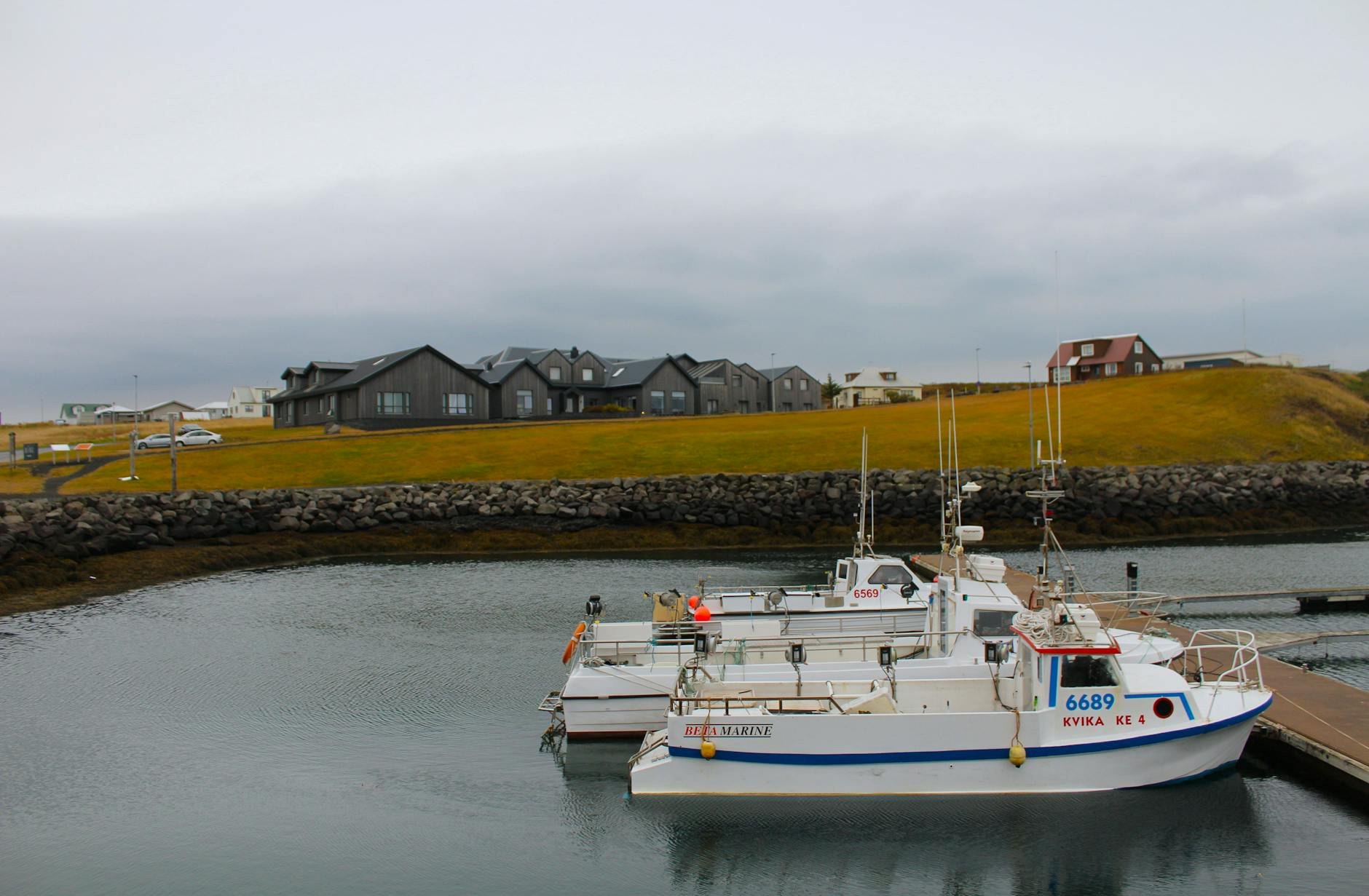
It was originally an area full of smelly fish markets and old shipyards, but today the old hangars are home to the best modern cafés, stylish museums and walls adorned with huge, colourful murals.

One of the district’s big draws is the Whales of Iceland exhibition, where for an entry fee of around 4,300 ISK you can admire enormous life-size models of whales.

It’s a fascinating sight, especially when you’re standing beneath a giant model of a blue whale and realise just how tiny we actually are compared to these creatures.

And if you love sweets as much as I do, you mustn’t skip a visit to the small artisan chocolate factory Omnom Chocolate in the Grandi area.

Their chocolates with quirky flavours, wrapped in gorgeous designer boxes, make an absolutely perfect and delicious souvenir from your travels. You can also peek straight into the production and, of course, taste the chocolate.

Relax and Spas: 4 Tips on How to Warm Up Perfectly

For Icelanders, bathing in hot thermal water isn’t just some ordinary weekend hobby — it’s more of a religion, a daily social necessity and, above all, a way of surviving those long, dark, freezing Nordic winters at all.

Around the city, luxury spas and perfectly ordinary community swimming centres constantly compete for your attention. Wherever you end up sinking into that hot water, a stay in Reykjavik guarantees you’ll climb out of the pool feeling utterly reborn, body and soul.

7. The Municipal Pools (sundlaug): An Authentic Experience for Pennies

If you want to save hundreds in your tight budget and experience something genuinely, one hundred percent authentic, skip all the famous and overpriced lagoons and head off with a towel to an ordinary public pool.
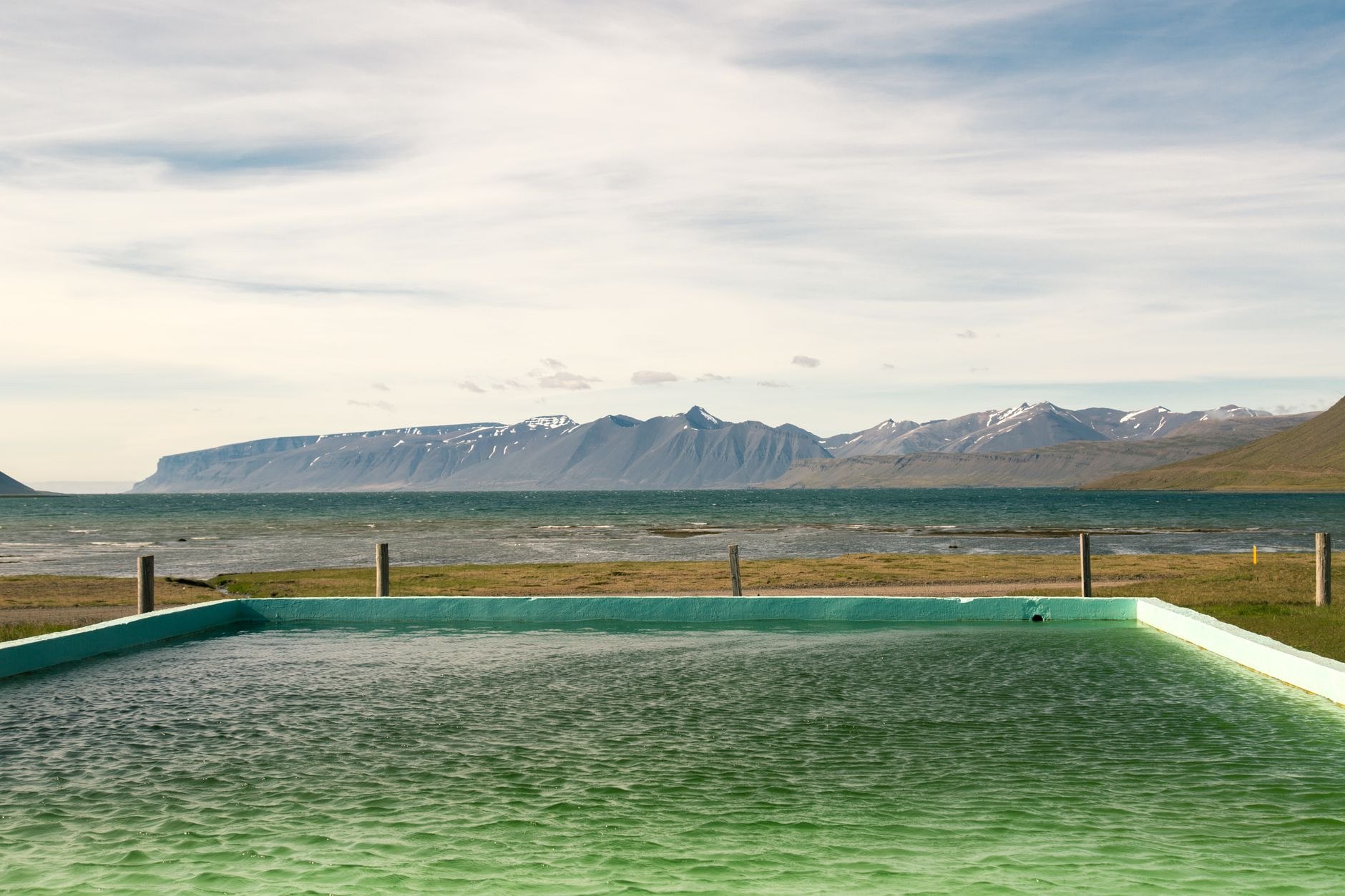
Almost every Icelandic neighbourhood has its own sundlaug, and entry usually costs around 1,430 ISK (roughly £8.60).

The biggest and most popular one is called Laugardalslaug, where you’ll find a classic large swimming pool and, more importantly, several smaller round pools — the so-called hot pots — with water temperatures ranging from 38 to a respectable 44 °C.

It’s right here, in the hot water, that the real, unvarnished Icelandic social life plays out. People come early in the morning or after work to swap the latest gossip, complain about politics and, of course, endlessly discuss the weather.

Sitting outside in almost boiling water while big snowflakes fall on your wet head and a sharp wind blows is incredibly relaxing and addictive.

⚠️ Important warning about local hygiene: Out of sheer ignorance, visitors make one absolutely fatal mistake here. Before you even put your swimsuit on in the changing room, you must shower in the communal showers completely naked and with soap.

There are illustrative posters on every wall showing that you must wash particularly your armpits, groin and feet. The water in the pools here is cleaned by constant flow and contains only the absolute minimum of chlorine, so personal hygiene is treated as utterly sacred.

If you break this important rule and try to shower with your swimsuit on, the locals will sharply and publicly tell you off. So please drop the embarrassment — nobody in those showers has the slightest interest in your body!

lukas a lucka
Lukáš and Lucie recommend
Where to Stay in Reykjavik
3 accommodations — hotels and other lodging options

8. Sky Lagoon: A Luxurious, Intimate Ritual by the Ocean

If you do want to treat yourself to something special, premium and photogenic for social media, the Sky Lagoon spa is guaranteed to delight you.
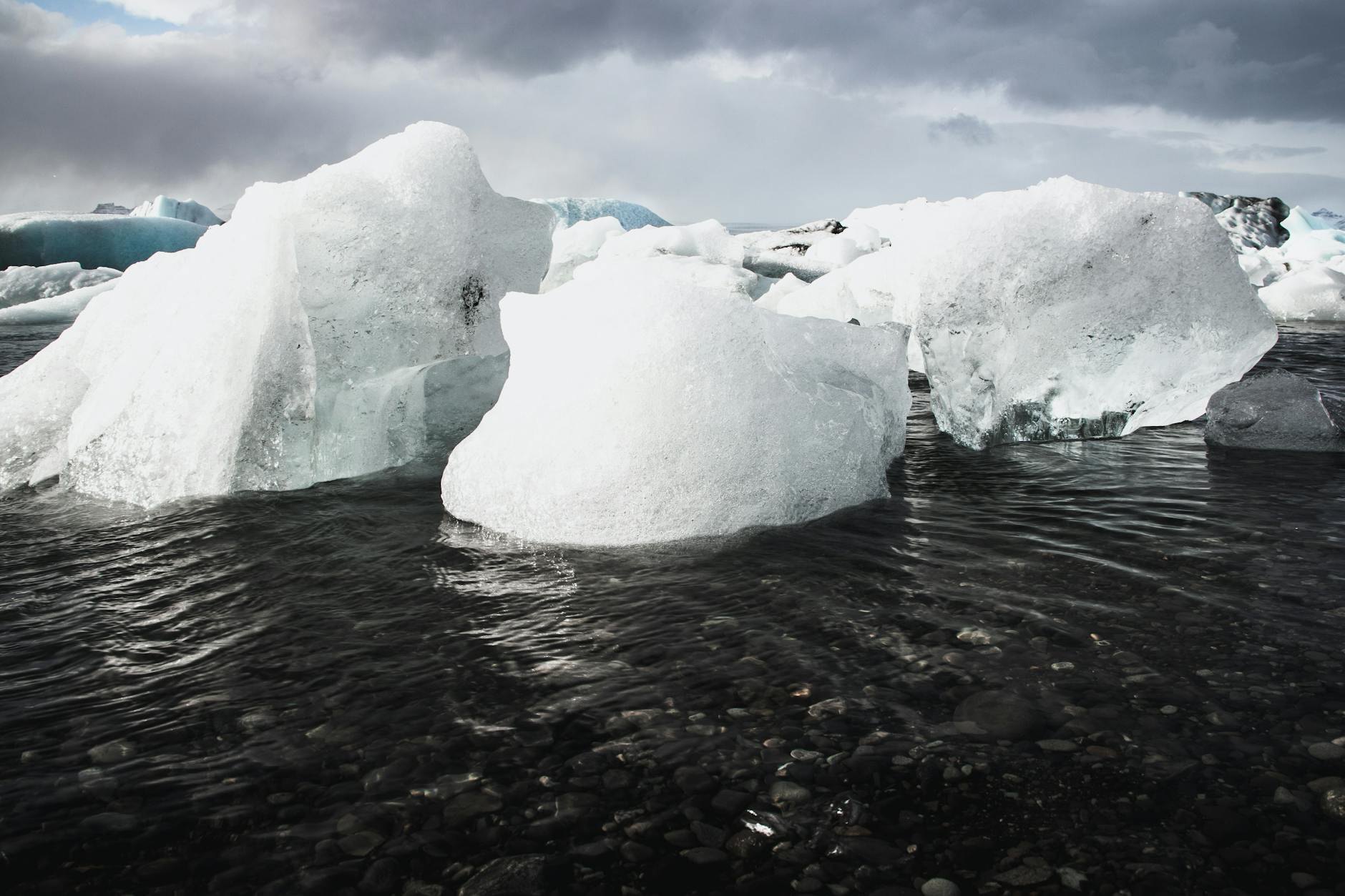
This architecturally gorgeous lagoon lies just about 15 minutes’ drive from the city centre and offers a dramatic “infinity” edge, over which the crystal-clear hot water seems to merge optically with the wild, cold Atlantic.

Compared with the more mass-market and famous Blue Lagoon, this place feels a touch more intimate and natural thanks to the black basalt cliffs and the old traditional turf houses that sensitively surround the whole complex. If you head here, I definitely recommend paying extra straight away for the package with the Skjól ritual.

During it you go through seven steps, where you warm up properly in a glass-walled sauna with an epic sea view, then cool off in an icy mist, and finally scrub your body with a fragrant salt scrub.

Admission prices here have risen sharply recently — packages start at around 12,000 to 14,000 ISK (roughly £72 to £84) — but it’s a fantastic, luxurious experience ideal for the very end of your trip. Always buy tickets well in advance online, though, because you most likely won’t get in at the door.

💡 Tip: It’s worth buying tickets and organised tours (Reykjavik and surroundings) ahead of time online on GetYourGuide — in season they fill up fast.

9. The Famous Blue Lagoon and a Bit of Honesty About Volcanic Activity

For many years the Blue Lagoon has probably been the single most famous image of Iceland on the cover of every magazine. Its milky-blue, opaque water at 37–40 °C, set in a harsh black lava field, looks absolutely incredible. You can even smear the silica mud from the bottom straight onto your face as a face mask.
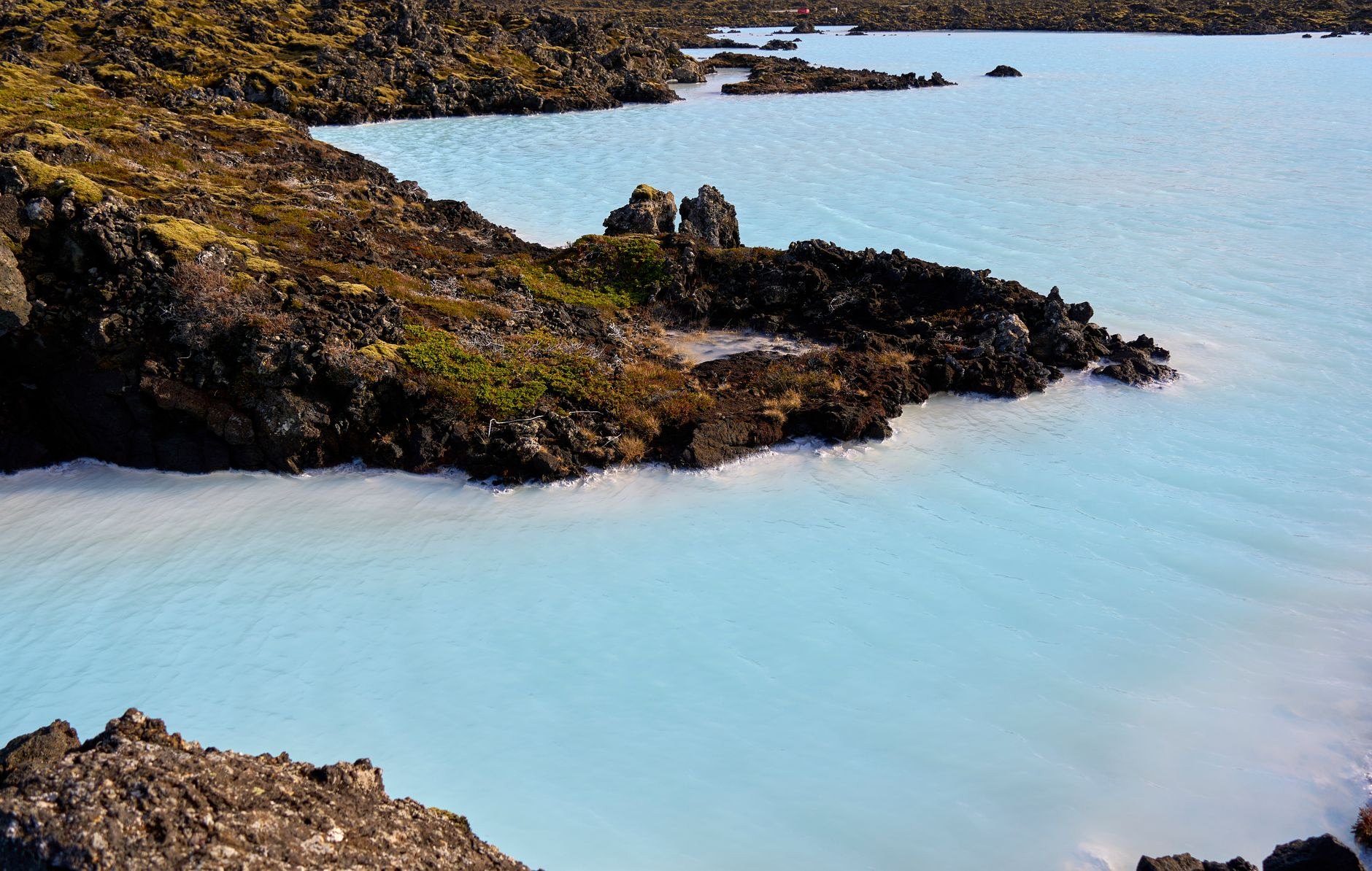
The basic ticket, called Comfort, currently costs around 11,990 ISK, and the Premium version even 14,990 ISK.

We tried this place enthusiastically ourselves back in the day, of course, but these days I’d think twice about this particular outing for two reasons.

The first is the fact that the lagoon lies in the Svartsengi area, which is now extremely volcanically active. Since the end of 2023 there’s been a series of dramatic volcanic eruptions here, and the spa has had to be hastily and chaotically evacuated several times.

The complexes do have a top-notch safety plan and monitor every tremor in the ground, but realistically you risk having your expensive booking cancelled at the last minute.

If you do head here anyway and there’s no threat of an eruption, I have one purely pragmatic and life-saving tip for women. That gorgeous silica water may smooth your skin beautifully, but within ten minutes it will utterly wreck your hair, turning it into hard, unmanageable straw for several days.

So before getting into the water, massage in a huge, thick layer of conditioner, available free in the showers, and pin your hair up tightly. For the latest on operations and any evacuations, always check the official Blue Lagoon website.

10. The Grótta Lighthouse and the Discreet Kvika Footbath

At the very tip of the windy Seltjarnarnes peninsula, just a short drive or longer walk from central Reykjavik, stands the beautiful, solitary lighthouse named Grótta.
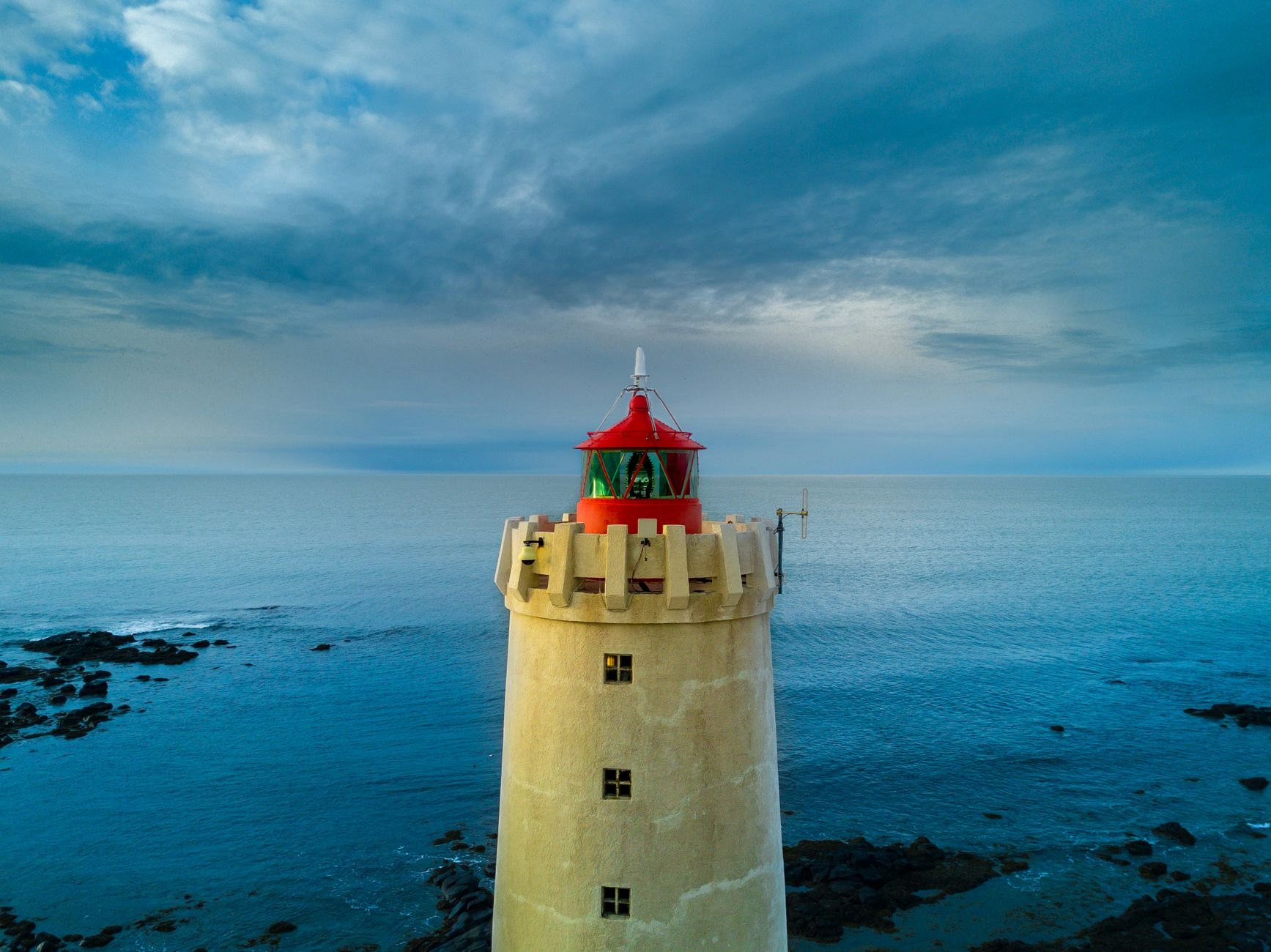
It’s a wonderful, wild spot full of untamed birdlife, reachable along a narrow sand spit only at low tide. Because this headland has almost no strong light pollution from the busy city, it’s absolutely one of the best spots for watching the Northern Lights nearby.

As you walk the coastal path towards this lighthouse, keep your eyes open and look out for an unassuming work of art called Kvika. It’s actually a small, hemispherical stone pool carved straight into the rock, into which wonderfully hot geothermal water flows continuously from a pipe.

Access to this artwork is completely free and open to anyone. You can simply sit on the cold stone, take off your hiking boots and plunge your tired, frozen feet into the hot water with a perfect view of the roaring ocean and distant mountains.

It’s a small, discreet, but immensely romantic and powerful experience, one that ordinary tourists with their giant cameras usually have no idea about and walk straight past without noticing.

Nature and Attractions Nearby: 7 Tips on Where to Head Beyond the City

While Reykjavik itself offers wonderful modern culture and excellent cafés, the true raw heart of the country naturally lies in the wild landscape just outside the city. And you don’t need to drive hundreds upon hundreds of kilometres east at all. Some of the most beautiful and dramatic experiences await you right beyond the notional gates of this Nordic metropolis.

11. Perlan: Fascinating Nature Safely Under a Glass Dome

When you look up at the wooded hill of Öskjuhlíð, you’ll see a strange, futuristic building standing out, looking exactly like an enormous glass pearl set on six massive cylinders.
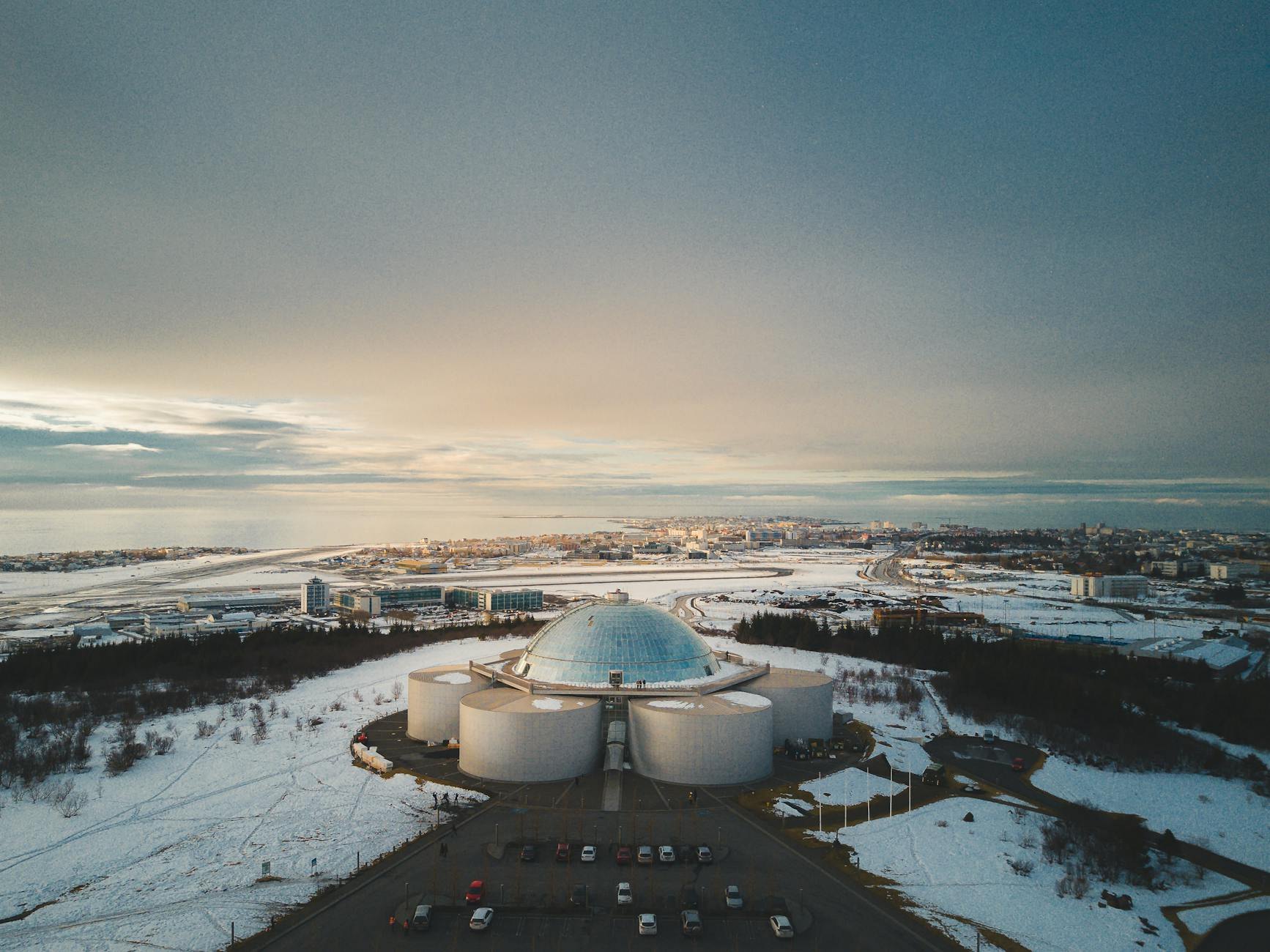
Incidentally, these cylinders originally served as giant hot-water tanks for the whole city, but today this fantastic complex functions as an ultra-modern interactive museum of Icelandic nature called Perlan.

The biggest draw for visitors here is a fully real, ice-cold cave. From more than 350 tonnes of real snow and ice brought down from the mountains, they’ve created a 100-metre-long tunnel inside the building where the temperature stays permanently below freezing, so you can touch a glacier even in the middle of summer.

A ticket to the entire complex costs 6,890 ISK (about £41) if you wisely buy it online in advance. At the desk on site you’ll pay a little more — the ticket works out at 7,290 ISK.

Besides the ice cave, they also have a beautiful, immersive planetarium with the Áróra show, which projects the Northern Lights, and on the building’s roof there’s an amazing circular viewing platform with 360° views of the wide surroundings.

If you’re travelling with small children, this is a place you simply can’t skip, but it also entertains and educates adult travellers brilliantly, especially when it’s downright grim outside and there’s no chance of hiking in the mountains.

12. The Hike to the Reykjadalur Hot River

This particular experience from our last autumn trip is probably the one Lukáš and I remember most vividly, because it was such an enormous extreme. The spot lies about a 40-minute drive from Reykjavik, near the little town of Hveragerði.
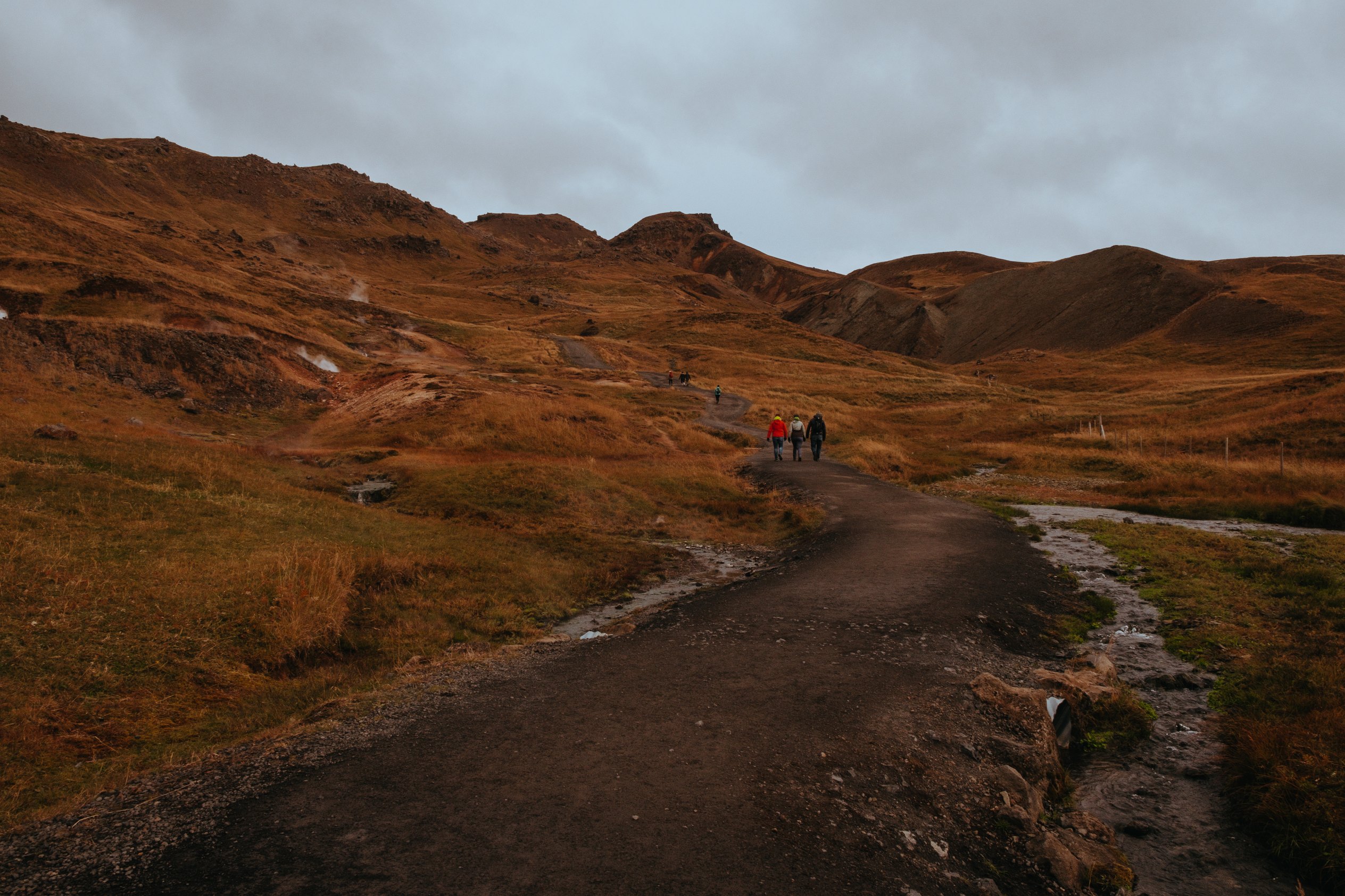
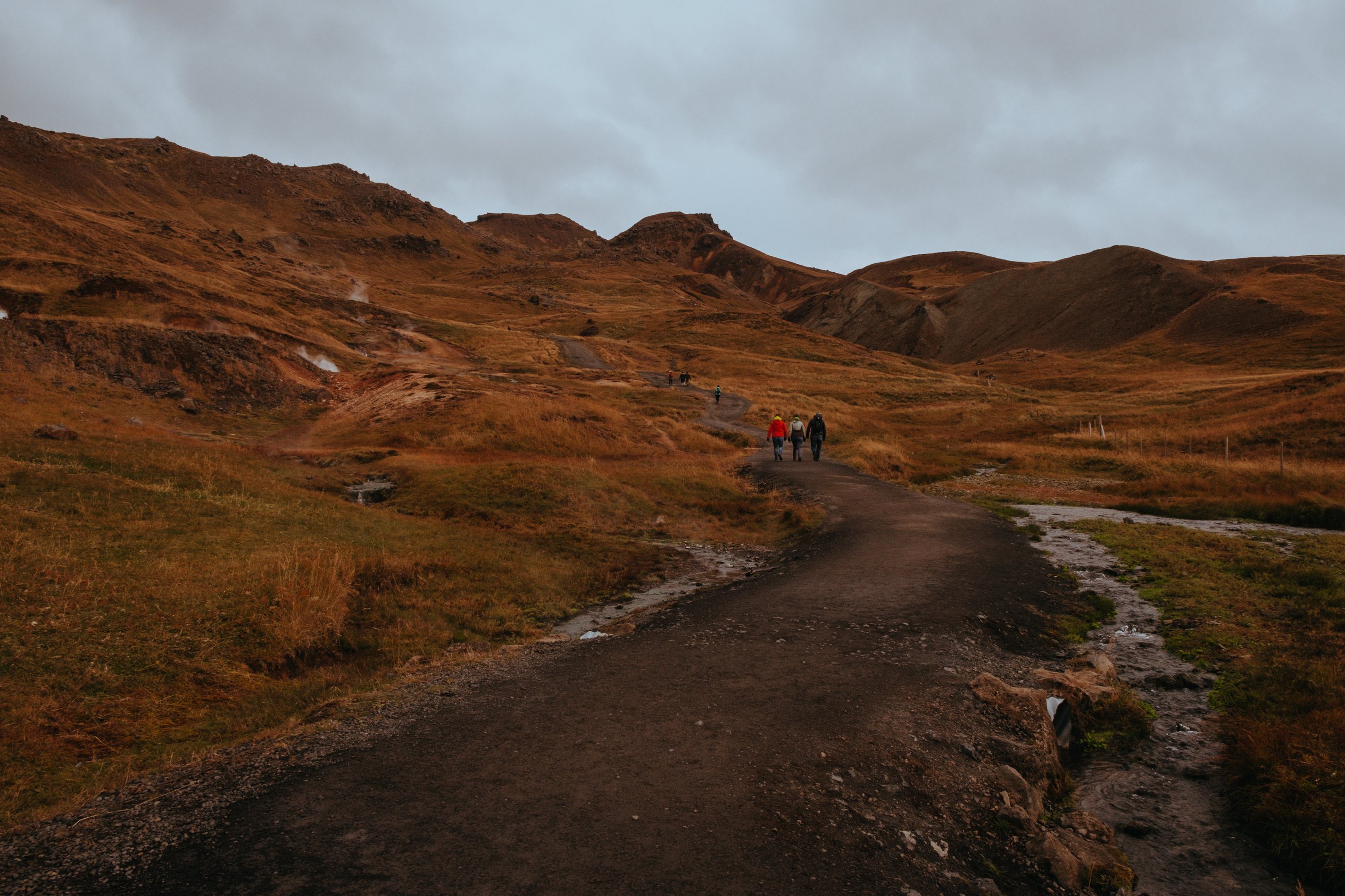
Don’t expect any tidy concrete pools or a reception desk with towels up on the hill. This is an utterly wild river hidden among bare hills, which warms up naturally thanks to strong geothermal activity underground, with steam rising from it far and wide down into the valley.

To reach this river, you have to hike from the central car park for roughly 45 minutes uphill, so you’ll warm up nicely on a chilly morning. Up at the water you won’t find any cosy heated changing rooms — just plain wooden screens behind which the icy wind blows mercilessly.

Changing into our swimsuits in that cold and wind was a real test of our courage; our teeth chattered so loudly it must have been heard all the way down in the valley. But the moment we slipped into that wonderfully hot water with a view of pristine nature and leaned back against the warm stones, all that suffering was instantly forgotten.

I recommend setting off really early in the morning, even right at dawn, before the organised tours arrive and dozens more frozen travellers occupy the river along its whole length. It’s an immensely authentic and one hundred percent natural alternative to those expensive commercial spas.

13. The Legendary Golden Circle

The capital works as an absolutely great and practical base for a day trip along the so-called Golden Circle. This legendary, much-praised route takes in three key natural attractions you can comfortably drive around in a single day without any stress.
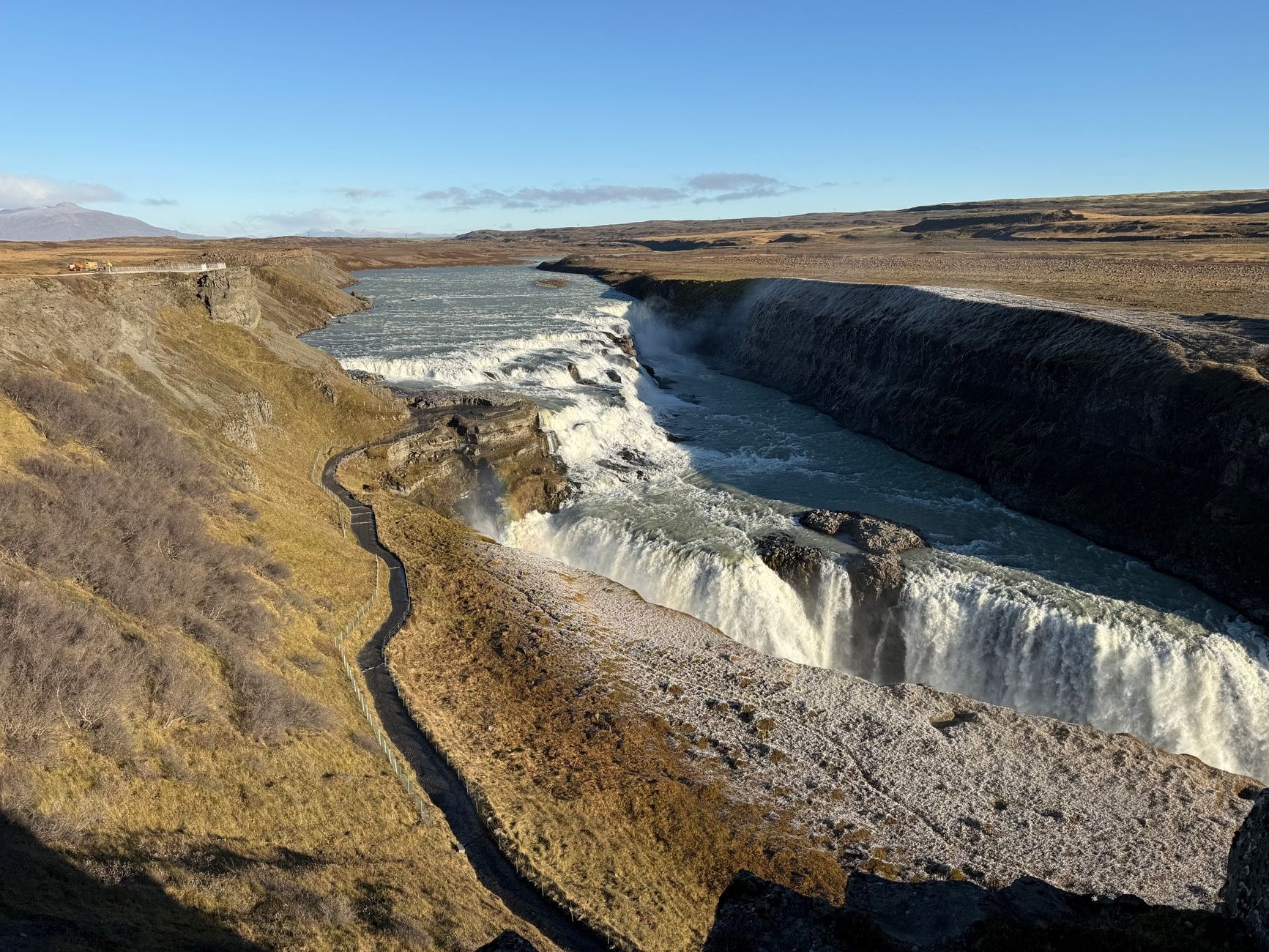
First you’ll visit the historic Þingvellir National Park, where right before your eyes the mighty Eurasian and North American tectonic plates are visibly pulling apart.

Then you’ll cross over to the geothermal area and see the regularly erupting Strokkur geyser, which reliably shoots boiling, bubbling water dozens of metres into the air every few minutes, and finally you’ll stare open-mouthed at the majestic, deafening Gullfoss waterfall, whose power is breathtaking.

If you’d like to add a dose of adrenaline, you can also book tours from the city to descend into the enormous magma chamber of the dormant Þríhnúkagígur volcano.

The Golden Circle is unquestionably the most-visited route in all of Iceland, so you’ll never be completely alone here, but the sites are so epic and monumental that they’re simply worth it despite the crowds of tourists and packed car parks.

14. The Reykjanes Peninsula: An Untamed Geological Laboratory

You might think you have to rush off to the opposite end of the island to the glaciers to see the truly harshest nature, but that’s not true.
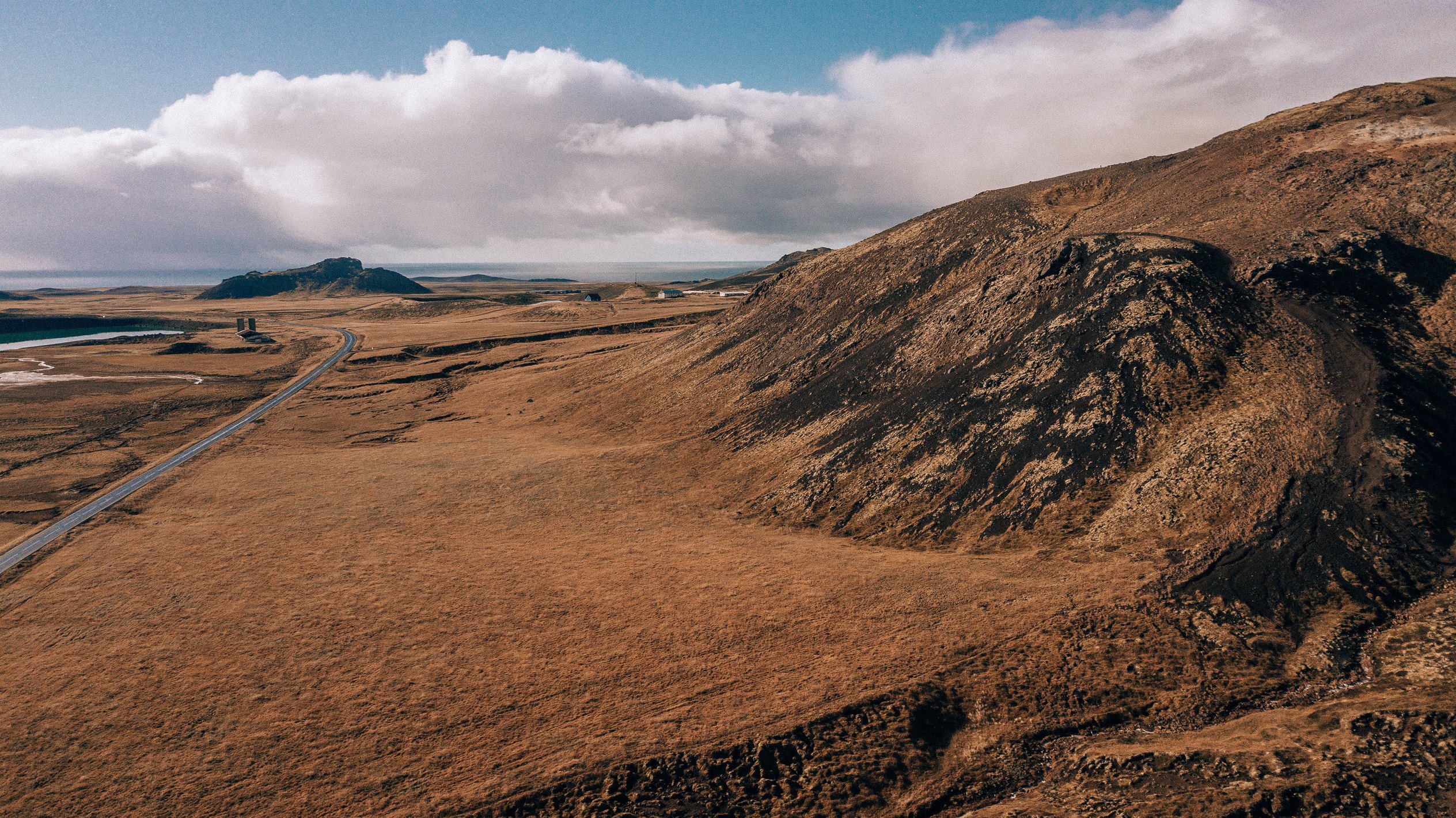
It’s plenty to head back a short way from the centre to the Reykjanes Peninsula, where the aforementioned international airport is also located. The earth here literally cracks, breathes and bubbles, and you’ll find several unusual stops that look like they’re from another planet.

Here you can take a short walk across the small symbolic Bridge Between Continents, which arches in steel directly over a deep tectonic rift, letting you cross from Europe to America in a matter of seconds.

Definitely drive out to the noisy Gunnuhver mud pools too, named after the local angry spirit Gudrun, where such thick clouds of hot steam with a strong sulphurous smell roll out with a menacing roar that you sometimes can’t see a metre in front of you.

And on the way back, also stop in the picturesque Krýsuvík area (Seltún), where wooden walkways guide you through a place where the soil is coloured in incredible shades of yellow, deep red and green.

15. The Magical Northern Lights Dancing Straight from the City

Under the influence of beautiful photos, most people think that to spot the Northern Lights you have to drive long hours far out into the absolute, deserted wilderness.
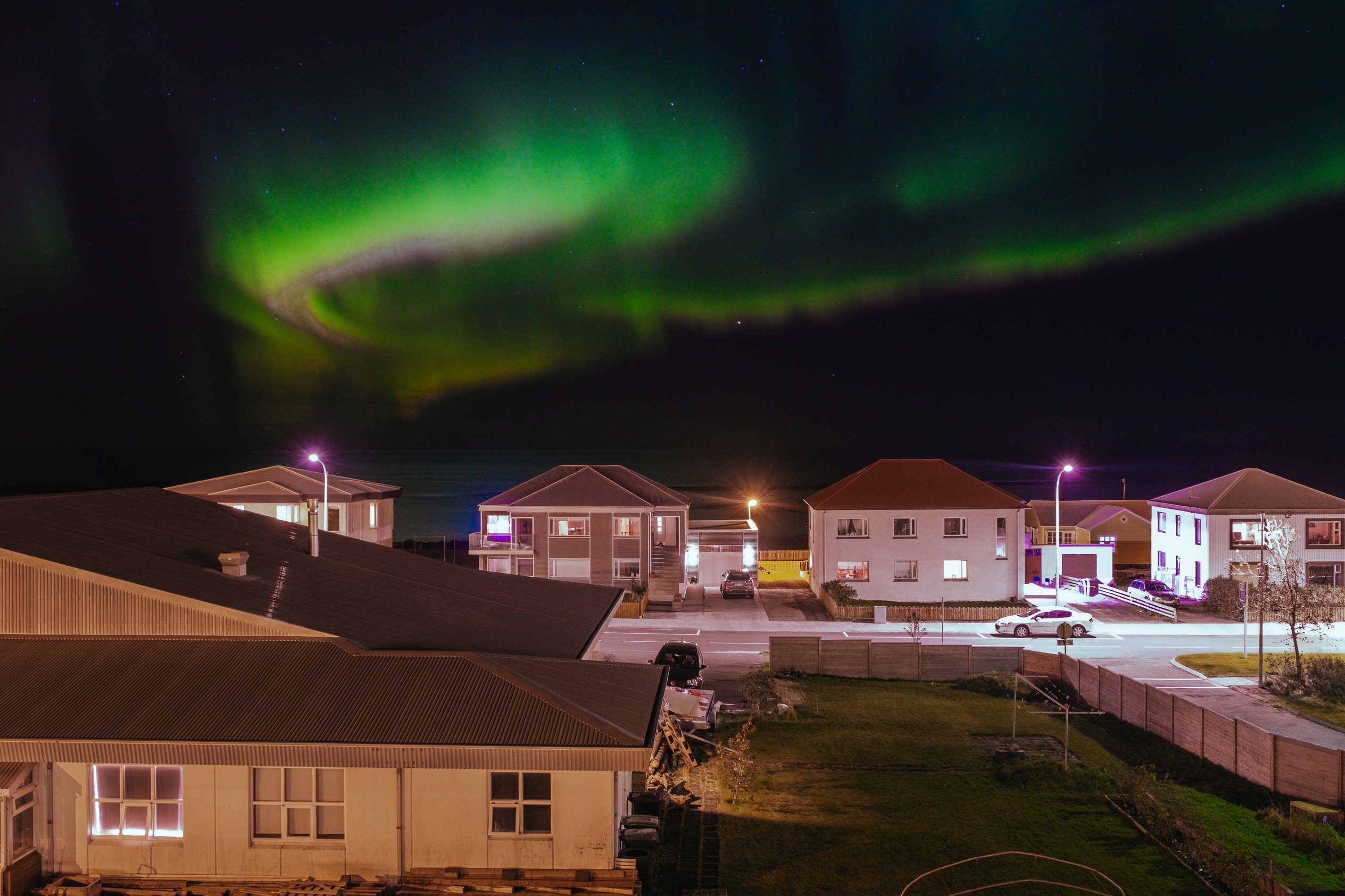
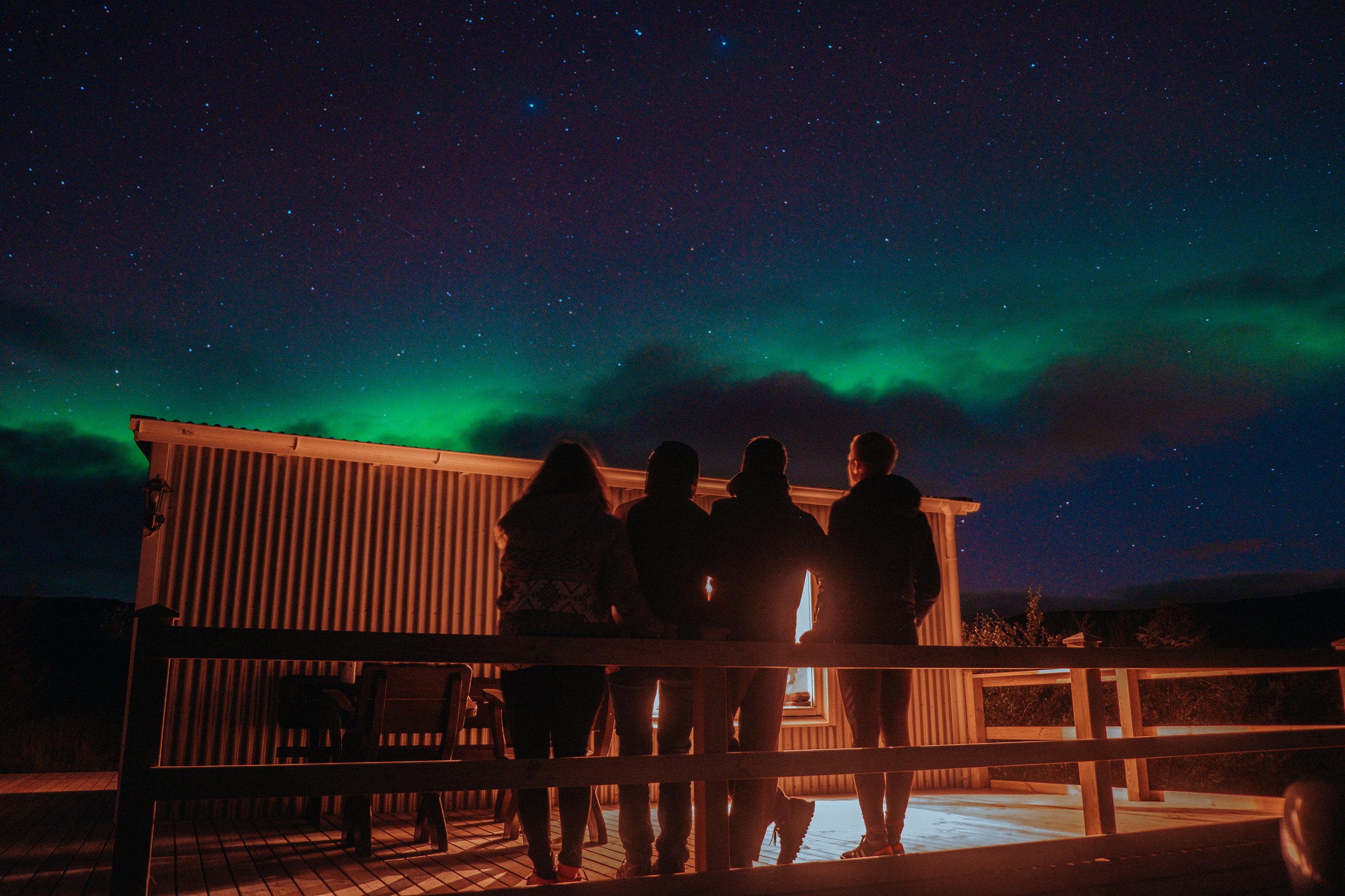
But that’s not quite true — even over brightly lit Reykjavik you can easily catch this green celestial show with a bit of great luck. During our trip we saw it dancing like a green ribbon right over the city’s buildings, from the window of our rented accommodation!

The key to success within the city is to get away from the very strongest public lighting and the neon of the bars. As I mentioned with the tip on the natural spas and relaxation, the absolute ideal is to head by car or on foot to the deserted Grótta lighthouse, or simply move to some much darker city park with a view of the sky.

Always, though, before any night-time hunt, check the detailed forecast for sky clarity and solar activity on the excellent website of the Icelandic Meteorological Office, Vedur.is. Because if it’s overcast with thick clouds over the city, your solar activity can be as high as you like — you’ll simply see nothing at all up there.

16. An Honest Assessment of the Volcanic Situation for 2026

The aforementioned Reykjanes Peninsula has, over the last two years, become one of the geologically most active areas in the whole world, making newspaper headlines.
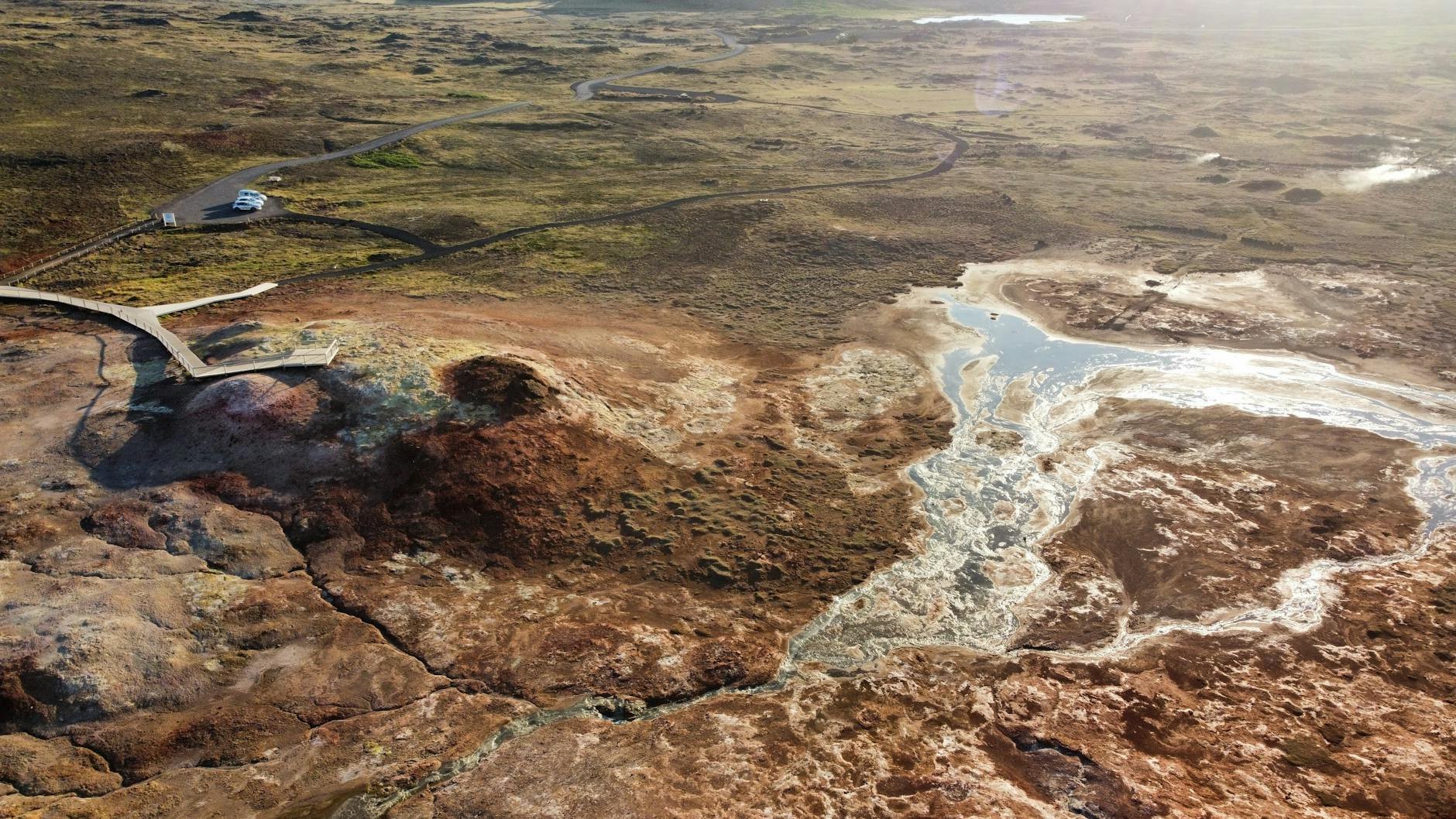
Since 2021 there’s been a series of dramatic eruptions here, and the picturesque little town of Grindavík had to be completely evacuated by the authorities, sadly turning into a ghost town with cracked roads.

The whole area around Mount Svartsengi, beneath which an enormous 26 million cubic metres of magma had accumulated by spring 2026, is the scene of vast natural changes.

But does this mean you should be afraid of your 2026 trip to Iceland and cancel your flights? Not at all! These particular fissure eruptions are what’s called effusive, meaning the lava just flows out relatively calmly from the cracks, with no risk of the huge, massive explosions and ash clouds that would ground all aircraft over Europe, as Eyjafjallajökull did years ago.

Reykjavik itself and Keflavík International Airport are not threatened in any way by these lava streams and are completely safe. There is one absolutely iron-clad rule, though.

Always, but truly always, before any morning trip into nature, check the Safetravel.is website, where the Icelandic rescue services publish all current warnings and unexpected road closures near the volcanoes. Respect them without exception and don’t venture anywhere you’re not meant to go.

Where to Eat in Reykjavik (Not Just for Vegetarians)

When it comes to good food and the harsh local weather in Reykjavik, both can put you through quite a wringer here. Traditional island cuisine was always more about what the harsh, barren landscape and the ocean would actually allow the locals to catch and survive the long winter on.

What’s more, prices in today’s modern restaurants are so dreadfully high that one look at the menu and the bill that follows will make you wince and roll your eyes so far back they won’t want to return.

On top of that, Lukáš and I don’t eat meat at all, which in a Nordic land of fish and ever-present lamb sounds like a genuinely big and unsolvable problem — but Reykjavik has a surprisingly excellent, modern and immensely rich selection of meat-free dishes!

When, during the day while dashing between sights, we needed something quick, really good and above all balanced to eat, we very often headed to the popular bistro Gló. There you’ll find absolutely brilliant, fresh veggie bowls packed with pulses, big stuffed wraps full of flavour, and above all hearty, healthy soups, which hit the spot more than anything after a whole day spent outside in the cold.

We were also very fond of the lovely spot Loving Hut, which you’ll find right on the busy main street Laugavegur at number 164. They have a completely vegan Asian menu, and we eagerly tucked into their excellent hot mushroom pho and rich Asian noodles, at fairly friendly prices that didn’t bankrupt our wallet.

But if you’re after something a bit more upscale and special for the evening, definitely try the award-winning restaurant Vegan World Peace, where their pan-Asian dishes are made so brilliantly and with such sauces that I don’t think even a die-hard, stubborn meat-eater would miss the meat.

For lovers of sweet baking and speciality coffee — which is exactly our style — there’s the perfect artisan bakery Brauð & Co, whose colourful façade is entirely covered in cheerful graffiti.

They bake the unbeatably best and most fragrant giant cinnamon rolls (locally called snúður), which all but melt on your tongue thanks to the butter. An absolutely elegant classic with amazing espresso and cakes is the bakery Sandholt a little further along, which has been running here without interruption since 1920.

And, of course, for completeness I can’t fail to mention the local strange meat phenomena, even though we naturally didn’t taste them in the slightest and gave them a very wide berth.

If you’d like to test your courage in the spirit of the ancient Vikings, the local restaurants offer the so-called hákarl, which is a fermented (or rather slightly rotten) piece of shark, said to reek of ammonia so powerfully that it brings instant tears to your eyes.

It’s then washed down with the local strong spirit Brennivín, very aptly nicknamed Black Death.

And for more ordinary diners, roughly by the harbour you’ll find one unassuming stall called Bæjarins Beztu Pylsur, where, so they say, long queues of locals and tourists form from morning till evening for a classic Icelandic hot dog.

It’s reportedly made from a curious mix of lamb, pork and beef, and at around 820 ISK it’s one of the very cheapest hot meals in this whole expensive city.

If you eat meat, it’s apparently a culinary must for every traveller, ordered, according to the locals, as “eina með öllu” (one with everything), with both crispy and raw onion, sweet mustard and remoulade. We preferred to go and have another excellent cinnamon roll and coffee, and we were absolutely happy ☺️.

Where to Next

If Reykjavik has whetted your appetite with its colours and Nordic calm, it’s time to discover the wild rest of this stunning country too. Take a look at our really big, comprehensive Iceland guide, where we’ve carefully summarised all the practical information you need for planning your trip.

For those of you facing a longer journey who want to drive, we’ve written up our personal Iceland road trip in detail, which will help you plan a flawless route step by step.

More interested in specific stops in nature and don’t know what to choose from such an abundance? Read our personal pick of the most beautiful places in Iceland.

And if, like us, you boundlessly love long soaks in hot springs and pools, definitely don’t miss the article on the 16 best hot springs in Iceland when planning, so you know exactly where you can happily rest your weary bones along the way.

Frequently Asked Questions

Is Reykjavík even worth visiting, or should I head straight from the airport to nature?

In my opinion, it’s definitely worth dedicating at least one full day and evening to it. It’s a surprisingly calm, very colorful city with a great atmosphere, amazing Nordic architecture, and excellent cafés. It’s absolutely ideal as a slow start right after landing and picking up your luggage, or conversely as a very pleasant and cozy end to your trip with a bit of well-deserved luxury after two long weeks of sleeping in a car in winter. However, I wouldn’t sacrifice more days from a packed itinerary.

What’s the best and cheapest way to get from the airport to the city center?

Most people who don’t want to deal with parking take the convenient Flybus; the journey from the airport takes about 45 minutes on a good road, and an adult ticket costs around 3,999 ISK (approximately €25). If you want to be dropped off directly in front of your hotel, you can pay extra for the Flybus+ option for around 5,199 ISK (approximately €35).

Tips and Tricks for Your Vacation

Don’t Overpay for Flights

Search for flights on Kayak. It’s our favorite search engine because it scans the websites of all airlines and always finds the cheapest connection.

Book Your Accommodation Smartly

The best experiences we’ve had when looking for accommodation (from Alaska to Morocco) are with Booking.com, where hotels, apartments, and entire houses are usually the cheapest and most widely available.

Don’t Forget Travel Insurance

Good travel insurance will protect you against illness, accidents, theft, or flight cancellations. We’ve had a few hospital visits abroad, so we know how important it is to have proper insurance arranged.

Where we insure ourselves: SafetyWing (best for everyone) and TrueTraveller (for extra-long trips).

Why don’t we recommend any Czech insurance company? Because they have too many restrictions. They set limits on the number of days abroad, travel insurance via a credit card often requires you to pay medical expenses only with that card, and they frequently limit the number of returns to the Czech Republic.

Find the Best Experiences

Get Your Guide is a huge online marketplace where you can book guided walks, trips, skip-the-line tickets, tours, and much more. We always find some extra fun there!
What to Do in Croatia: 24 Best Places to Visit

TL;DRCroatia serves up 32 holiday ideas across Istria, the Kvarner Riviera and Dalmatia – from Pula with its Roman amphitheatre and romantic Rovinj, to the islands of Krk, Rab, Hvar and Brač, right down to Dubrovnik and Plitvice Lakes. June is the best month to visit, with September a solid alternative when the sea’s still warm and the crowds have thinned out. Entry to Plitvice Lakes runs 40 euros in high season, 23 euros out of season, and 10 euros in winter. Plan for 7 days if you’re sticking to one region, or 10–14 days to properly explore the whole coast.

It’s no wonder Croatia is the top summer holiday destination for Czechs. Croatia boasts beautiful beaches, picturesque islands, medieval towns, and diverse natural landscapes. You’ll find historic towns with a relaxed atmosphere, some of the best party spots in Europe, and a few tourist traps to avoid. Let’s explore where to go in Croatia for your next holiday.

Wondering where to go in Croatia? This country is a paradise for young couples, singles, and families with children. In the spring, it’s enjoyed by cyclists, and in early autumn, it’s perfect for culture enthusiasts and sightseers. Discover the best places to visit in Croatia, including the best beaches in Croatia, to make your Croatia holiday unforgettable.

Croatia Holiday: 24 Most Beautiful Places in Croatia

Are you dreaming of a Croatia holiday but not sure where to go? From the stunning Adriatic coastline to charming medieval towns, Croatia offers a wealth of experiences for every traveler. Whether you’re seeking the best beaches in Croatia, vibrant nightlife, or historical sites, this beautiful country has it all. Join us as we explore the 24 best places to visit in Croatia, each destination promising unique adventures and unforgettable memories.

Istria

Istria is a top destination for Czech tourists visiting Croatia, thanks to its easy and comfortable accessibility by car or train. If you’re seeking a relaxing and peaceful holiday, Istria is the perfect choice.

Located in northern Croatia, Istria is a large peninsula offering a variety of accommodations, from large resorts with children’s animation programs to small, romantic apartments for couples.

Best Hotels in Istria: Where to Stay

  • Hotel Zorna Plava Laguna: An all-inclusive hotel with a pool.
  • Luxury Apartments Magali 2: Ideal for a luxurious stay.
  • Apartments Oliva: Perfect for a cozy and intimate experience.

The Most Beautiful Beaches in Istria

Discover the stunning pebble beaches of Lanterna, where you can stay at Apartment and Rooms Hacienda Stelio. Explore the resorts of Rabac, featuring accommodations like Hotel Mimosa – Maslinica Hotels & Resorts, or enjoy the scenic beauty of Medulin with a stay at Apartmani Marin.

Pula – Stunning Beaches and Beautiful Architecture

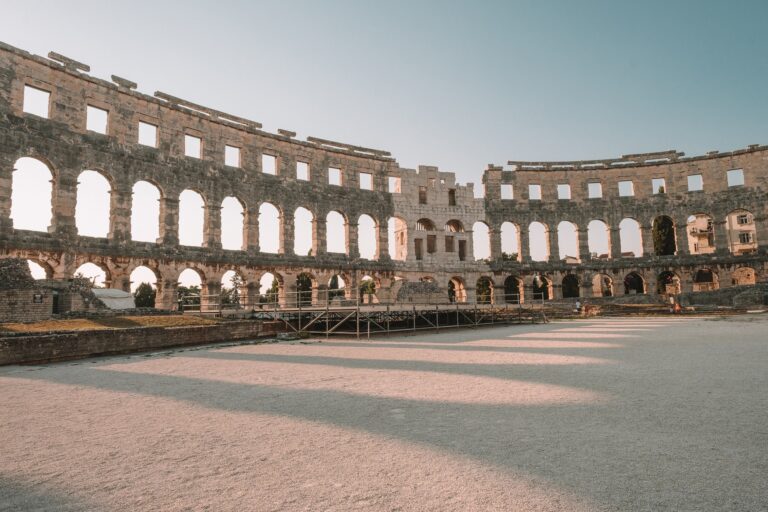
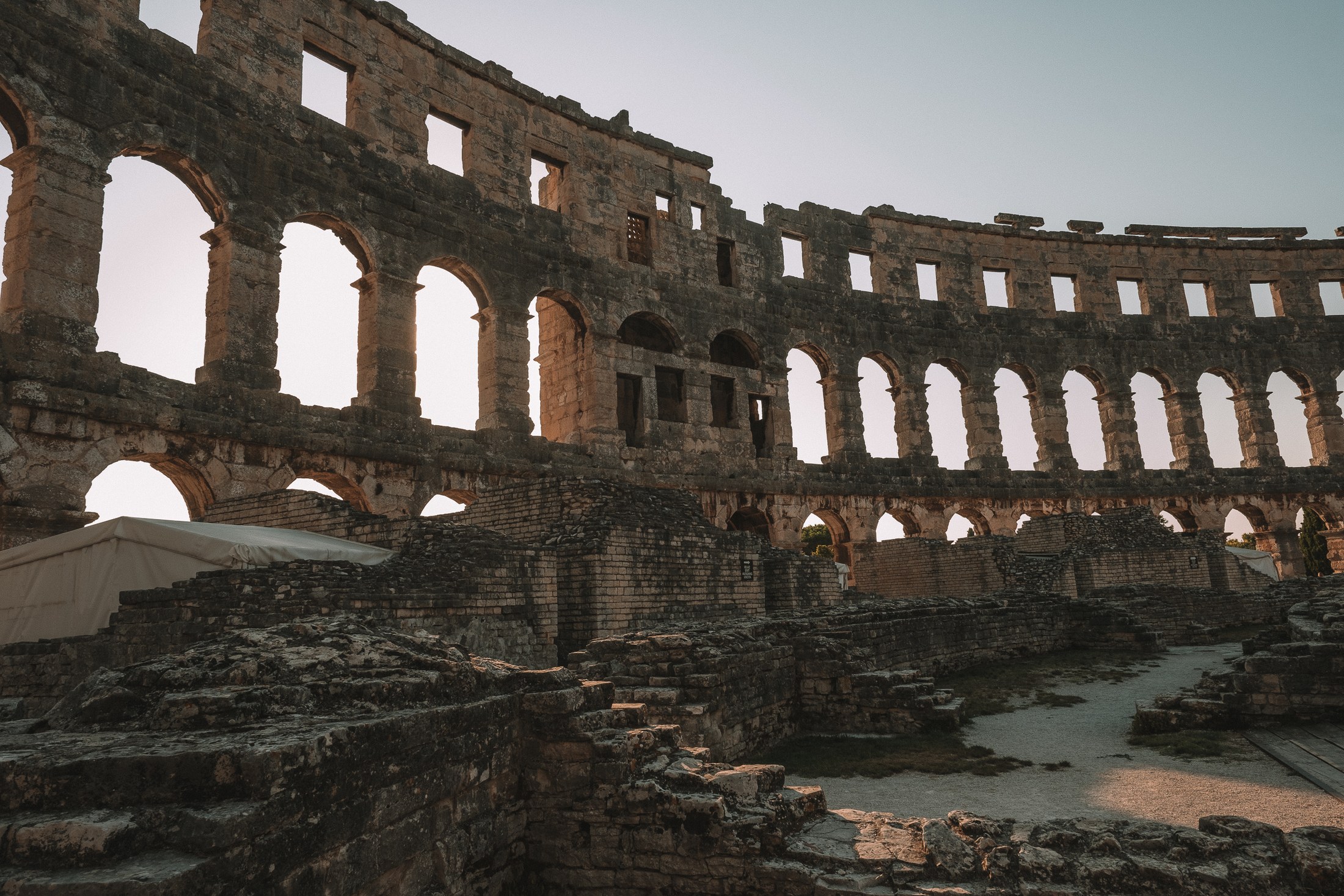
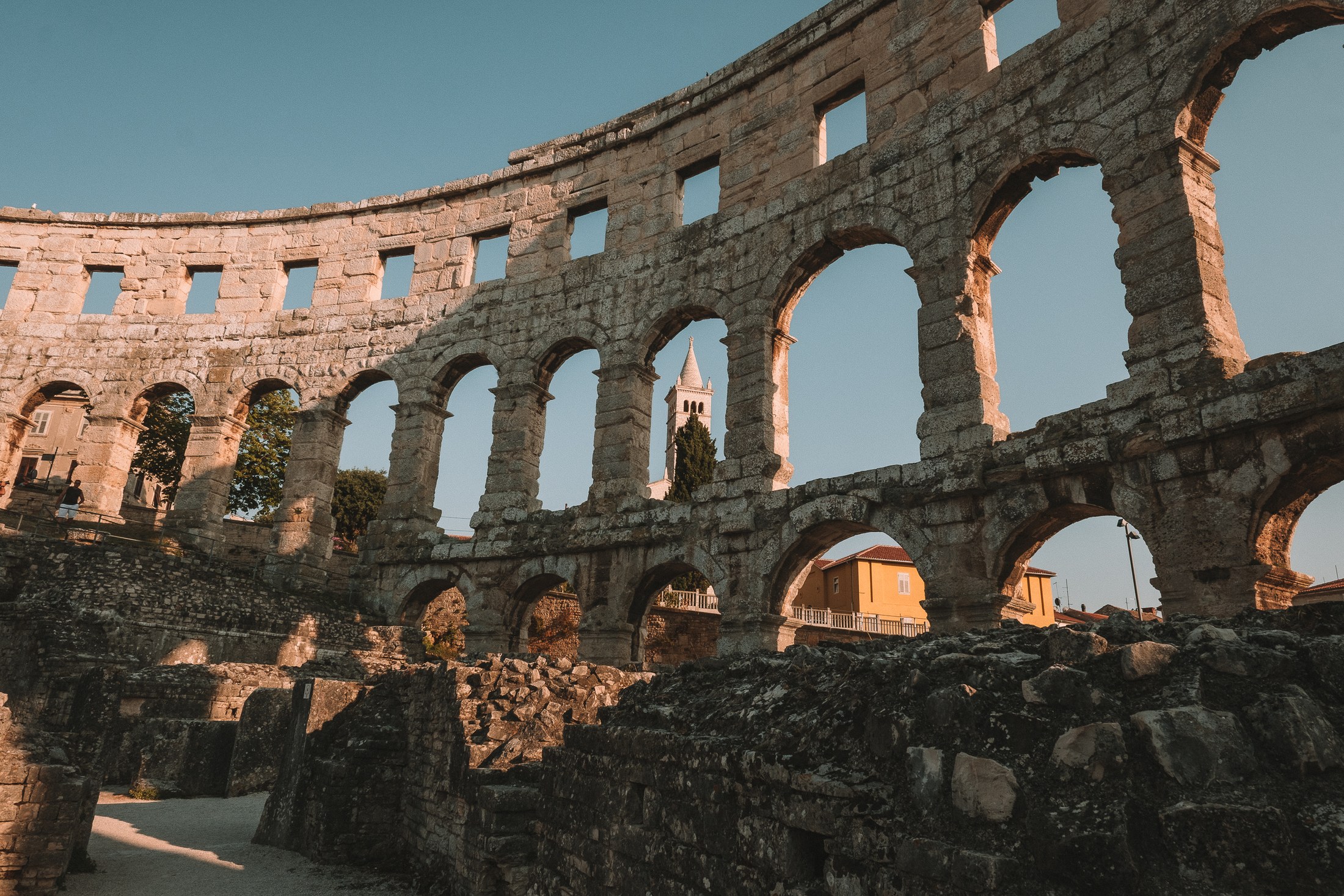
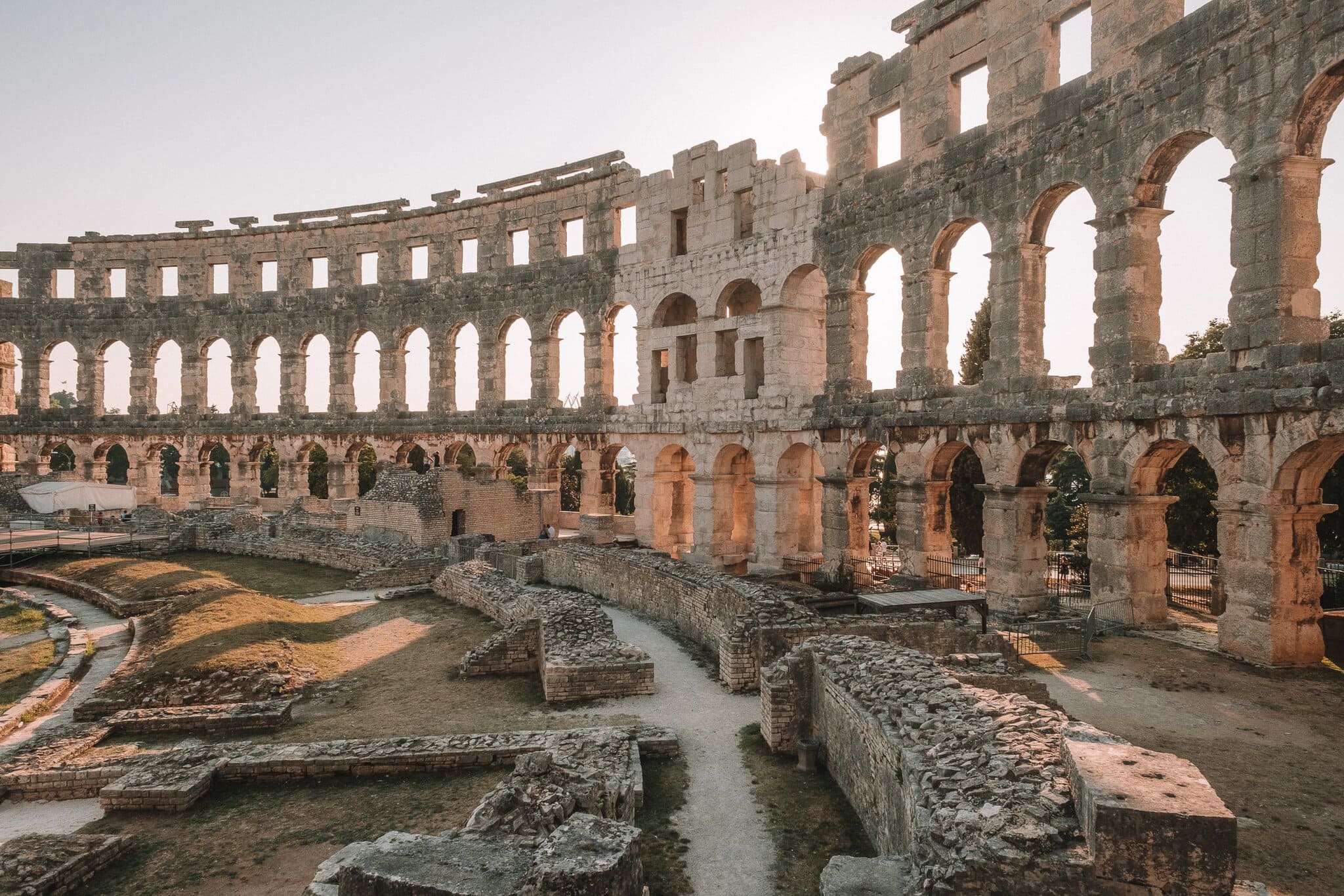
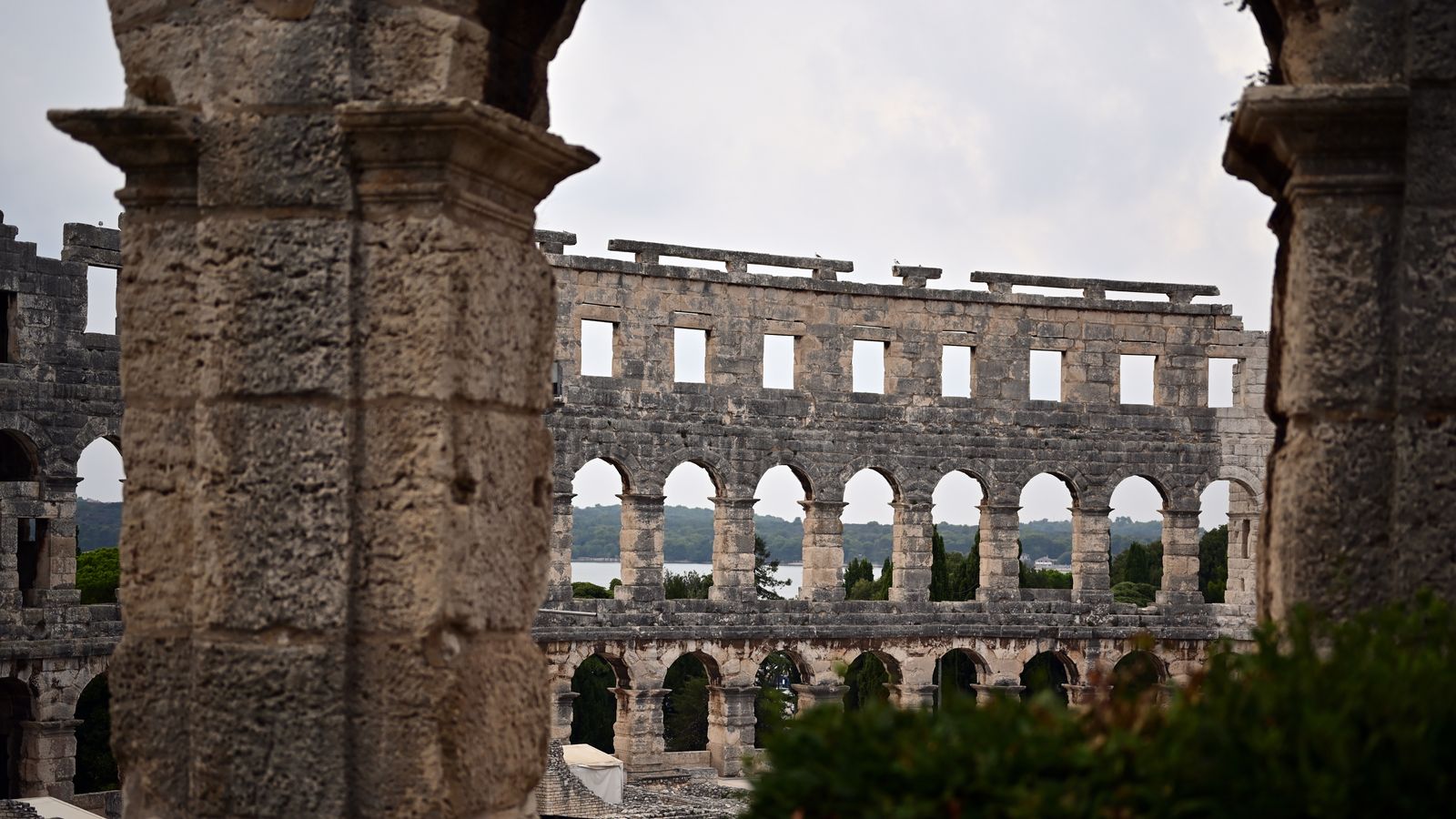
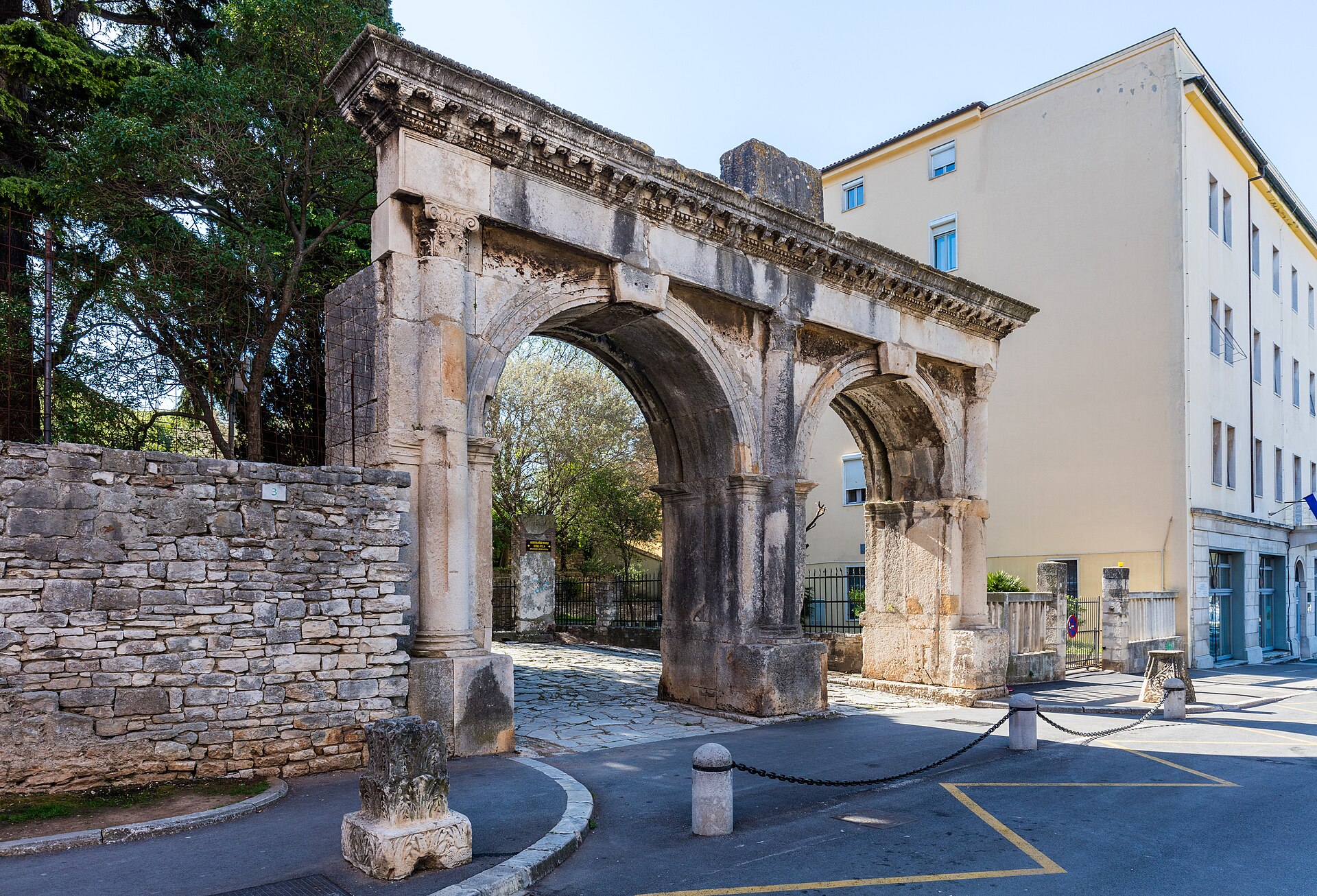
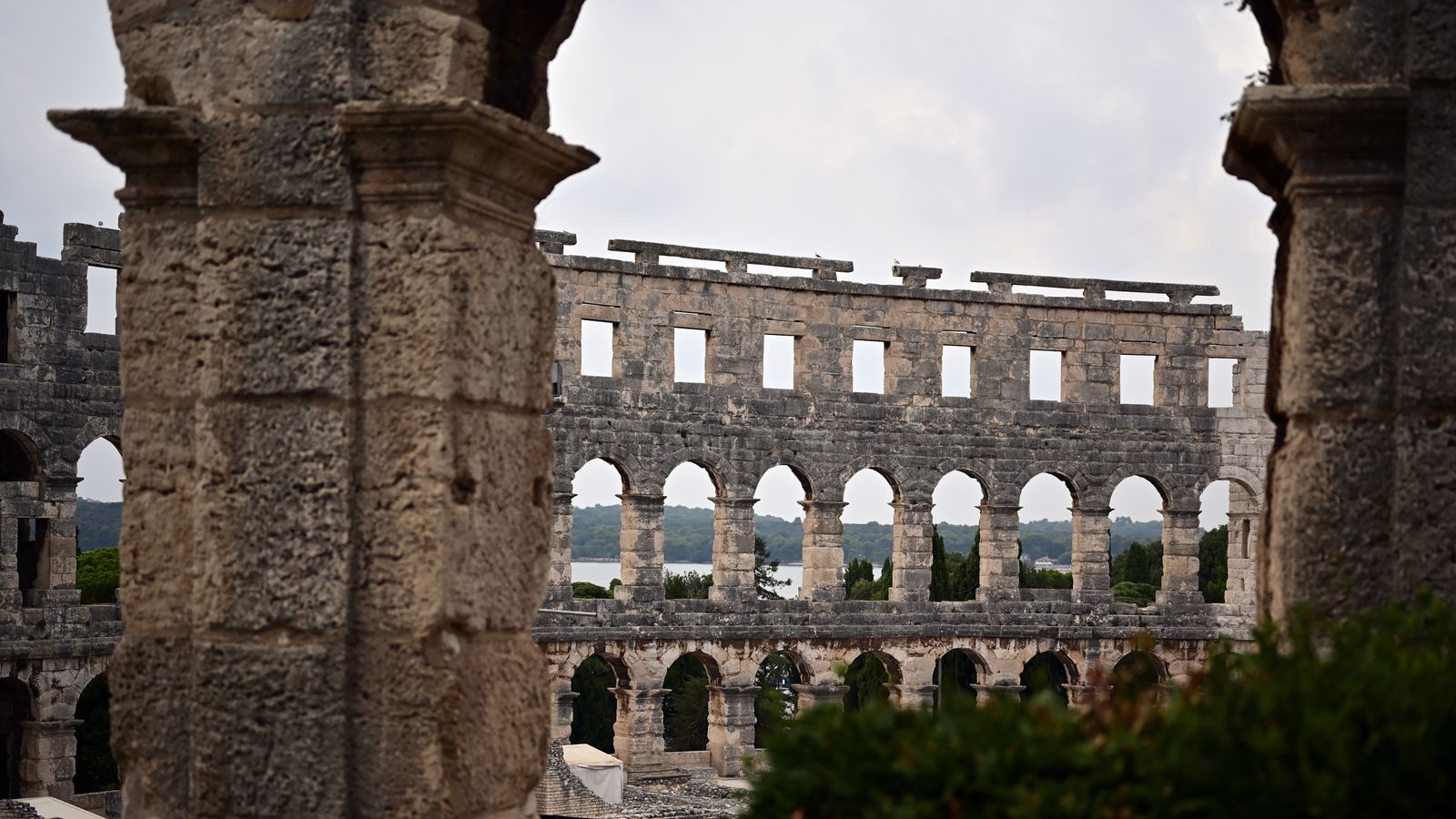
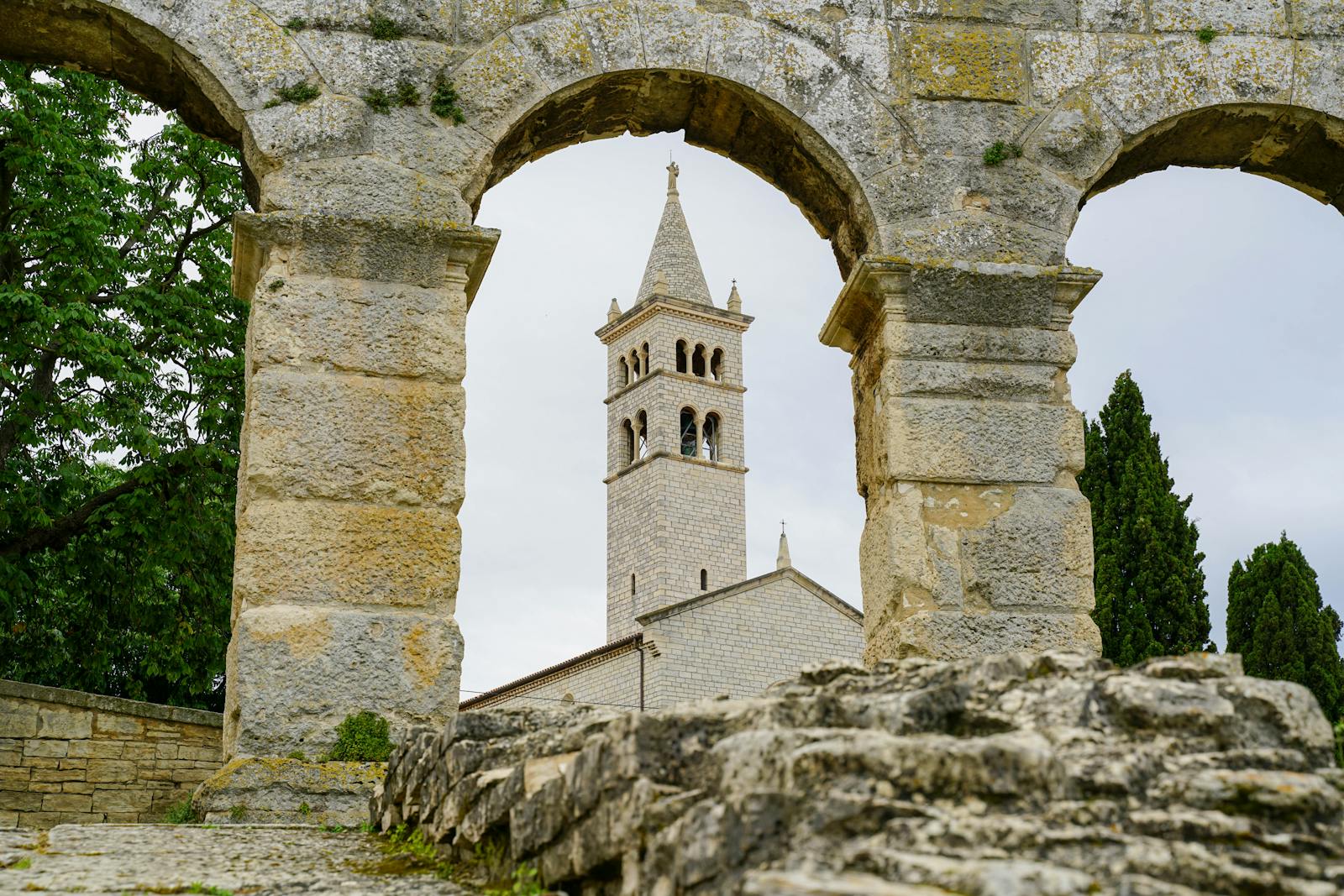
For culture and architecture, head to Pula, a port city in southern Croatia renowned for its Roman amphitheatre, one of the best-preserved in the world. Pula’s charm extends beyond its ancient amphitheatre to its beautiful old quarter, featuring narrow streets and historic landmarks such as the St. Francis Cathedral and Belvedere Castle.

In addition to its rich cultural heritage, Pula is a popular tourist destination known for its stunning beaches, vibrant local culture, and exquisite gastronomy. Whether you’re exploring historical sites or relaxing on the beach, Pula offers a perfect blend of attractions for every traveler.

🏠 Where to stay in Pula: The Twins Idola Apartments or Apartments Hedona are exceptional. But you need to book early, they are often sold out. A luxury option is Penthouse Leonarda with private parking, if you’re looking for something cheap, check out Apartments Franko 1586.

Rovinj

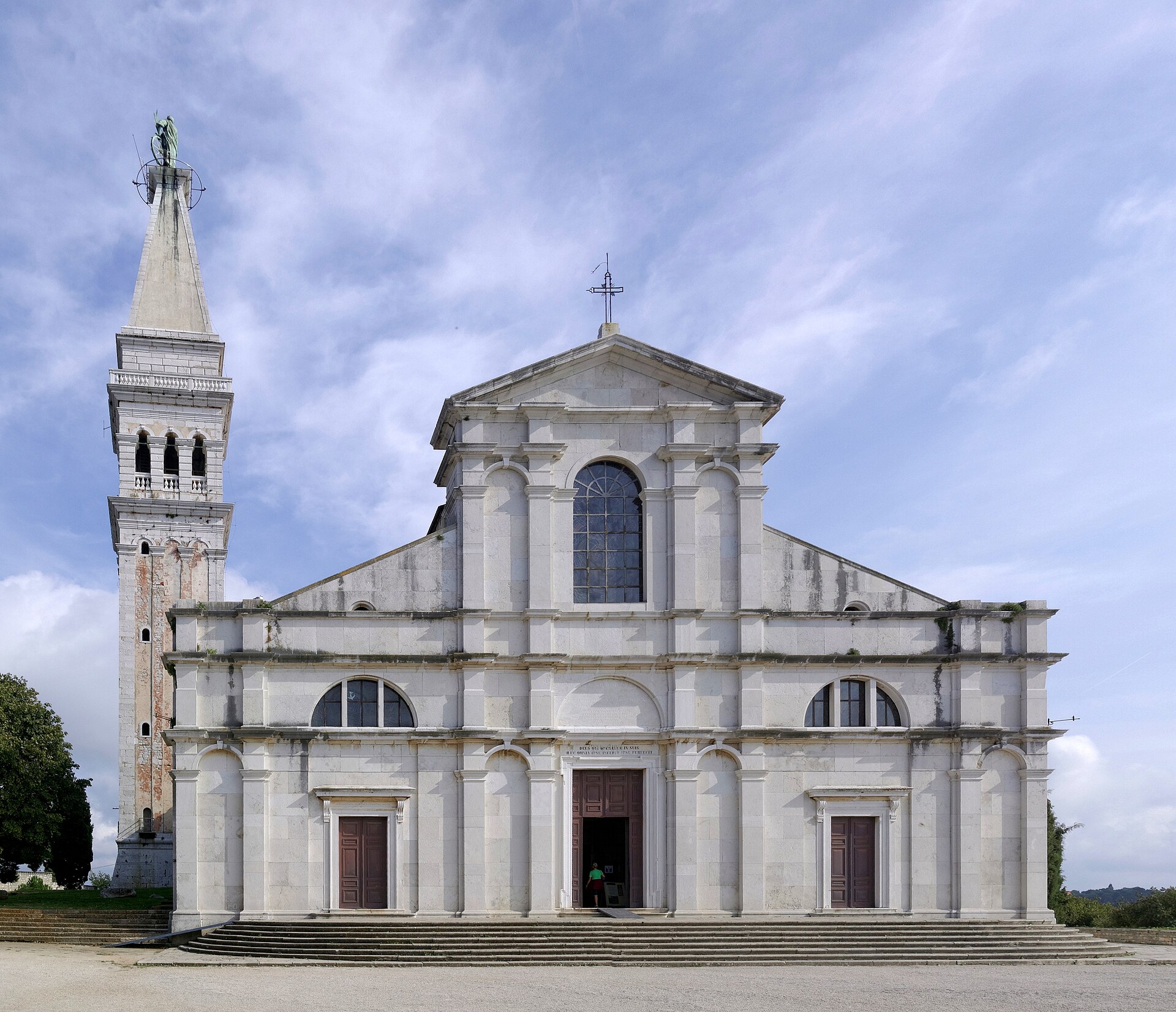
Rovinj is often hailed as one of the most romantic towns in Croatia. Its picturesque old town features tightly clustered houses that rise directly from the sea, creating a stunning coastal panorama. Don’t miss the local landmark, the Church of St. Euphemia, which adds to the town’s charm.

Rovinj is also a prime destination for diving enthusiasts, offering numerous underwater wrecks to explore. Whether you’re strolling through its historic streets or diving into its crystal-clear waters, Rovinj promises a blend of romance and adventure for all visitors.

🏠 Where to stay in Rovinj: The Apartmani Gržinić apartments are beautiful, but if you are looking for something really luxurious, check out the Adriatic Hotel by Maistra Collection. A great option for those seeking a budget-friendly holiday without compromising on quality, check out Apartments Ita.

Poreč

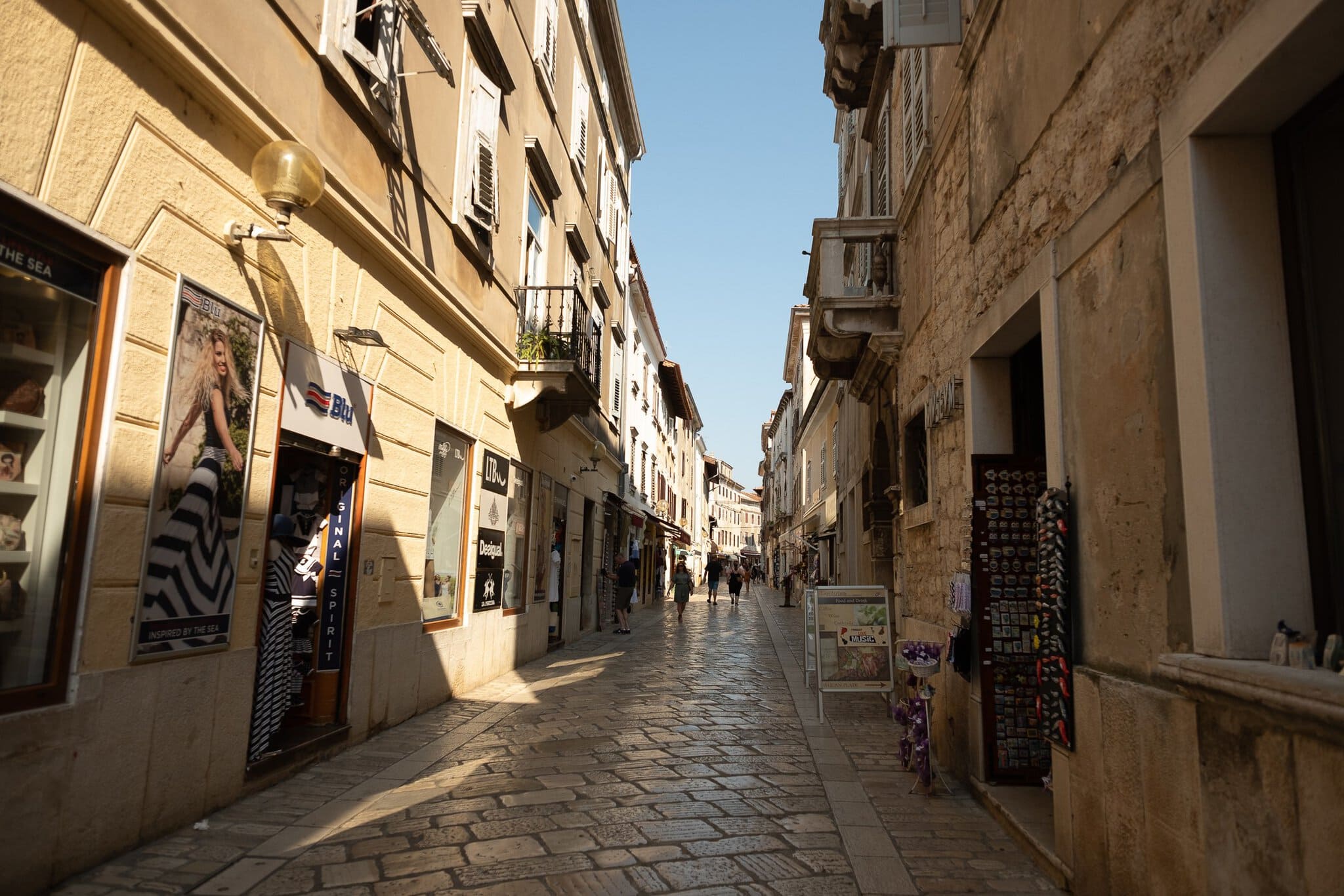
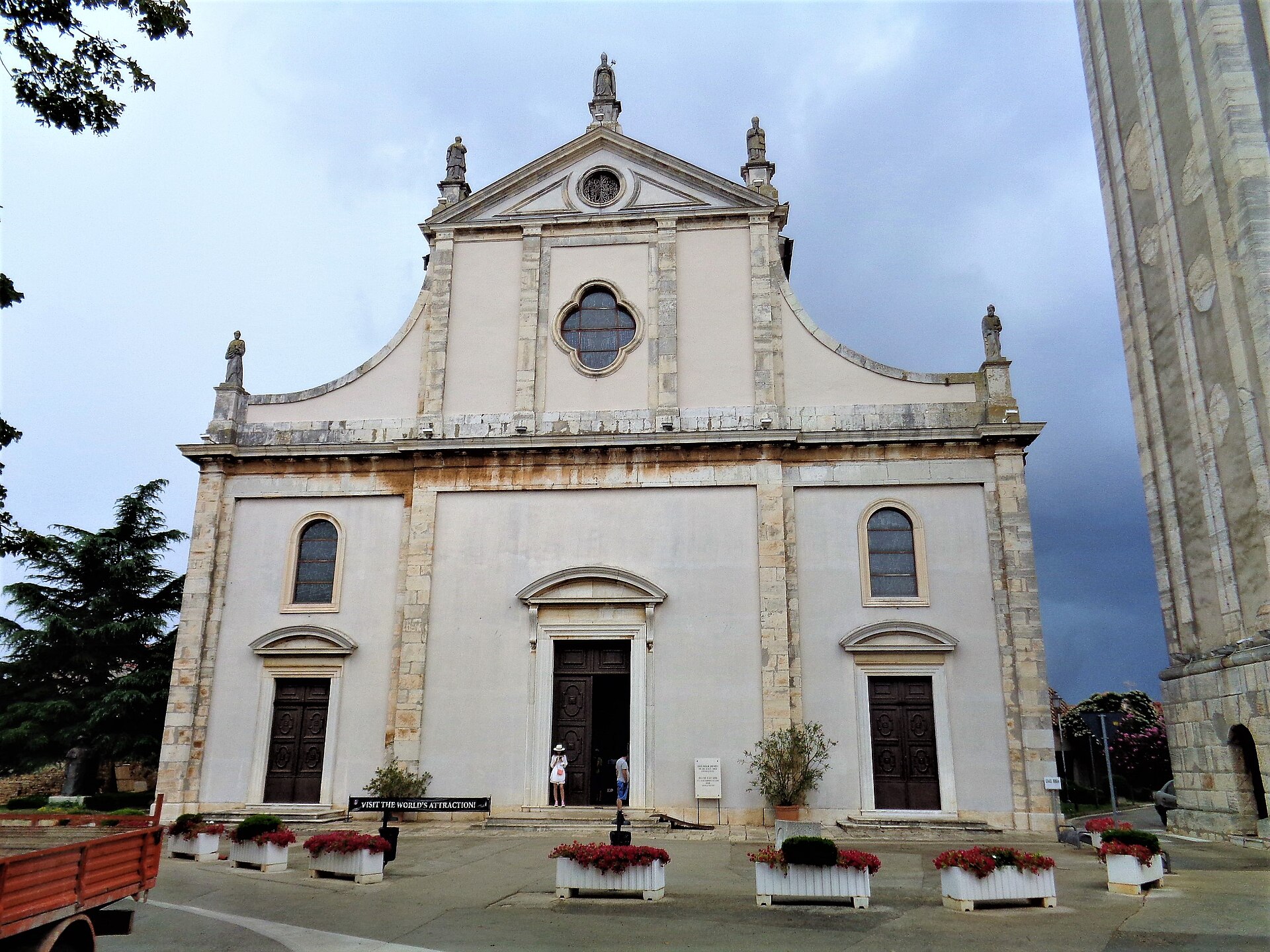
Poreč, a town in northwest Croatia, is renowned for its historical center, a UNESCO World Heritage Site. It is home to the ancient Church of St. Nicholas, one of the oldest and best-preserved churches in Europe, and a notable amphitheatre.

Poreč boasts excellent tourist services, stunning beaches, a variety of sports and recreational activities, and a vibrant nightlife. This charming town is ideal for families with children and couples seeking a mix of history, relaxation, and entertainment.

🏠 Where to stay in Poreč: Luxury accommodation in the resort Hotel Zorna Plava Laguna, for a cheaper option you can choose for example Apartment Danica 358.

Where to Go on a Trip to Istria

Umag

Visit the town of Umag, known for its impressive medieval center. Wander through its historic streets and immerse yourself in the charm of its well-preserved architecture.

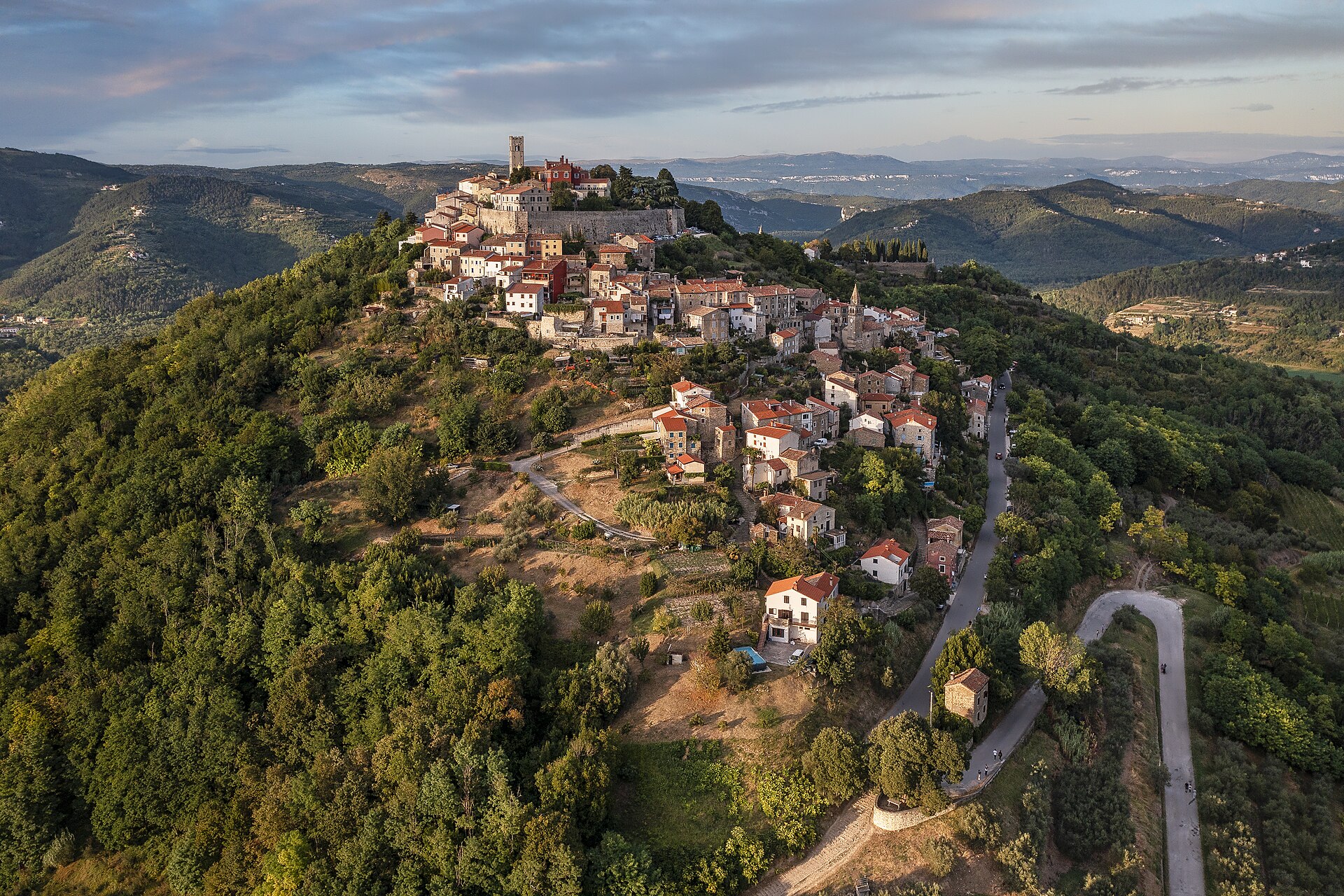
Motovun

For a bit of adrenaline, head to Motovun, a beautiful mountain town and a mecca for paragliding. Its stunning views and adventurous spirit make it a must-visit destination.

Hum

Don’t miss Hum, the smallest town in the world. This quaint town is perfect for those who love architecture and leisurely walks through picturesque streets.

Day Trip to Venice

From Istria, you can also take a day trip to Venice, just a 2.5-hour journey away. Explore the iconic canals and historic landmarks of this enchanting Italian city.

Kvarner Riviera

The Kvarner Riviera is a stunning tourist area in northwestern Croatia, located along the picturesque coast of Kvarner Bay. Renowned for its beautiful beaches framed by pine groves, it offers breathtaking views of the Adriatic Sea.

The Kvarner Riviera provides a wide range of activities for visitors, including sailing, diving, hiking, and cycling. This region is also rich in history and culture, featuring numerous monuments such as ancient amphitheatres, old city forts, and historic churches.

Combined with the friendly atmosphere and warm hospitality of the locals, these attractions make the Kvarner Riviera a beloved tourist destination. Whether you’re looking for adventure, relaxation, or cultural exploration, the Kvarner Riviera has something for everyone.

Island of Krk

Krk, the largest Croatian island, has been known as the “Golden Island” (Insula Aurea) since ancient times for its stunning beauty. With its mild Mediterranean climate, azure Adriatic Sea, and rich historical and cultural heritage, Krk is a must-visit destination.

Getting to Krk

Krk is easily accessible by air or car, and you can also take a ferry or boat to the neighboring island of Rab for a delightful day trip.

Family-Friendly Activities

If you’re traveling with children, don’t miss the Aquarium Adriatic in Baška, located right in the center of the town. It’s an educational and fun experience for the whole family.

Historical and Cultural Attractions

For lovers of medieval towns, a visit to Vrbnik is a must. Other popular attractions include the Biserujka Cave and the grounds of St. Lucie in the center of Jurandvor.

Special Events

Fig lovers should mark their calendars for the Fig Days, celebrated on Krk at the end of August. This event is a unique opportunity to enjoy local fig delicacies and festivities.

Krk offers a blend of natural beauty, cultural richness, and family-friendly activities, making it an ideal destination for all types of travelers.

Opatija: The Most Luxurious Resorts

Opatija, located on the northeastern Adriatic coast of Croatia, is one of the country’s oldest and most luxurious resorts. Renowned for its excellent spa services and beautiful beaches, Opatija offers an exceptional getaway experience.

Rich History and Culture

Opatija boasts a rich history and culture, evident in its opulent villas and park-like landscaping that stretches along the 12 km long Lungomare promenade. This scenic walkway is perfect for leisurely strolls, offering stunning views of the Adriatic Sea.

Activities and Recreation

Opatija provides a wide range of activities to suit all interests, including golf, tennis, sailing, and hiking. For food enthusiasts, the town offers excellent cuisine, and its vibrant nightlife ensures entertainment for all visitors.

Whether you’re a family, couple, or solo traveler, Opatija’s luxurious amenities, historical charm, and diverse activities make it a top destination for an unforgettable holiday.

Crikvenica – for a peaceful holiday

If you are looking for a quieter holiday, Crikvenica is one of the less touristy places. But it still has beautiful beaches, a rich history and culture, which can be seen in local monuments such as the old town forts, churches and museums.

🏠 Where to stay in Crikvenica: Relax Derossi or Hotel Miramare.

Island of Cres: An Oasis of Peace

The Island of Cres is one of the two largest islands in the Adriatic Sea, yet it remains one of the least visited, offering a tranquil retreat for those seeking peace and serenity.

Diverse Landscapes

The island features diverse landscapes: the northeast is arid and rugged due to stormy winds, while the south boasts beautiful meadows and pastures. In the northwest, you’ll find lush forests, creating a stunning contrast.

Must-Visit Spots

The crown jewel of Cres is Lake Vrana, the largest lake in Croatia, known for its pristine beauty.

Towns and Settlements

Explore charming towns like Cres, Martinšćica, Porozina, Osor, and Punta Križa. Don’t miss the quaint settlements of Lubenice, Melin, and Grabar, each offering unique local charm and picturesque views.

🏠 Where to stay on Cres: Villa Lavanda or Apartments and rooms Roberto B.

Rab Island

Rab is my favorite island in Croatia, especially for its ancient town of the same name, whose silhouette is easily recognizable by its four iconic towers.

Pleasant Climate

Rab is renowned for its pleasant climate, making it a great destination year-round. Ironically, during our visit in the middle of summer, we experienced rain, which was an exception to the generally sunny weather.

Natural Attractions

The Komrčar Forest Park and the Dundo Nature Reserve are must-visit spots for nature lovers. The island also boasts some of the most beautiful beaches in Croatia, particularly near the second-largest town of Rab, Lopar. Rajska Plaža, a 1.5 km long sandy beach, is one of the most popular beaches on the island.

Rijeka

Rijeka, Croatia’s busiest port, is a crossroads of land and sea routes and definitely worth a visit. In Rijeka, you can explore the Natural History Museum, which offers insights into oceanography and the geological history of the Adriatic, and enjoy the beautiful botanical garden.

Northern Dalmatia

If you’re drawn to the sea, Northern Dalmatia is an excellent choice, renowned for its crystal-clear waters perfect for snorkeling. The resorts here are generally quieter and smaller, making them ideal for families with children and couples seeking a peaceful retreat.

Gateway to National Parks

Northern Dalmatia serves as a great starting point for visiting the national parks of North Velebit and Plitvice Lakes. The region is also home to the famous Krka National Park and Kornati National Park, both of which are major attractions for nature enthusiasts.

Must-Visit Nature Spots

  • Krka National Park: Known for its stunning waterfalls and serene landscapes, Krka is a must-see for nature lovers.
  • Kornati National Park: This park comprises a beautiful archipelago, perfect for a day trip from Sibenik.

Travel Tips

Be aware that Northern Dalmatia can get crowded during the peak tourist season. To avoid the crowds, consider visiting in the off-season or arriving early in the day.

Northern Dalmatia offers a blend of tranquil seaside resorts and breathtaking natural beauty, making it a perfect destination for both relaxation and adventure.

Zadar

Zadar is the largest city in northern Dalmatia and offers a less touristy alternative to Makarska. This vibrant city serves as a perfect starting point for exploring the surrounding islands and engaging in various outdoor activities such as climbing, rafting, and hiking.

🏠 Where to stay in Zadar: Shell Luxury Residences with Pool and Whirlpool is the most luxurious accommodation, but Magic View Apartments are more affordable. If you are looking for cheap accommodation, there is also cheap accommodation, for example Apts and rooms Jagoda-parking.

Sibenik

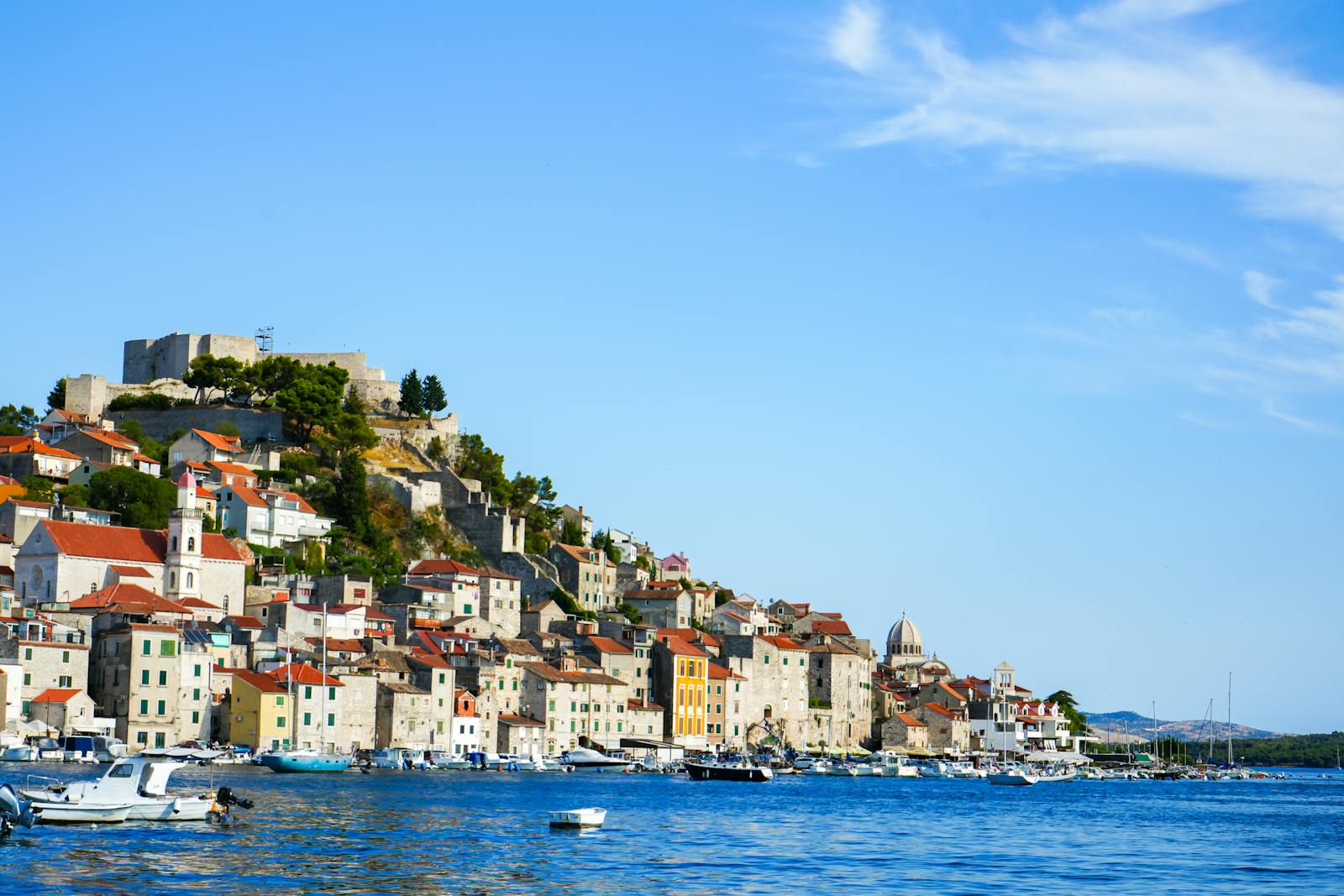
During our cycling tour through Croatia, I fell in love with the Dalmatian town of Sibenik. I believe it’s an underrated gem, brimming with cultural richness and modern amenities that even a city like Prague would envy.

One standout spot is Hostel Scala, where you’ll not only find comfortable accommodations but also phenomenal food and surprisingly good coffee. Sibenik’s blend of history, culture, and contemporary businesses makes it a must-visit destination in Croatia.

🏠 Where to stay in Sibenik: Hostel Scala in Sibenik is the cheapest, Guest House Bakica in Trogir is a happy medium, Apartments Silver Beauty in Rogoznica is the best, if you want something really luxurious, check out Bifora Heritage Hotel and Dubrovnik President Valamar Collection Hotel.

Vodice

Vodice is a charming town located just 11 km from Sibenik, known for its vibrant nightlife and beautiful beaches. This smaller resort town is especially suitable for young groups looking for a lively atmosphere.

🏠 Where to stay: There are a number of apartments in Vodice that are suitable for young people, such as Apartment Zorica.

Primosten

Primosten is a popular destination located between Sibenik and Split. Its historic center is uniquely situated on a small island, adding to its charm and allure.

Like many Croatian towns, Primosten boasts beautiful architecture, with its old town offering a picturesque and historic atmosphere. In addition to its architectural beauty, Primosten is renowned for its stunning beaches with crystal clear waters, making it an ideal spot for both sightseeing and relaxation.

Whether you’re exploring the historic streets or lounging on the pristine beaches, Primosten offers a perfect blend of cultural richness and natural beauty.

🏠 Where to stay in Primošten: Apartments Villa Šibenik or Olive gardens.

Central Dalmatia

The Central Dalmatia region begins with the coastal resort of Rogoznica, located northwest of the historic town of Trogir, extending to the port of Ploče. This picturesque region is renowned for its stunning beaches, vibrant culture, and charming coastal towns.

The Makarska Riviera

Central Dalmatia includes the famous Makarska Riviera, one of the most popular tourist destinations in Croatia. This area offers several kilometers of pebble and sandy beaches, beautifully lined with pine forests, providing a perfect setting for relaxation and enjoyment.

Idyllic Islands

Central Dalmatia is also home to several idyllic islands, each offering unique experiences:

  • Hvar: Known for its lively nightlife, historic sites, and beautiful lavender fields.
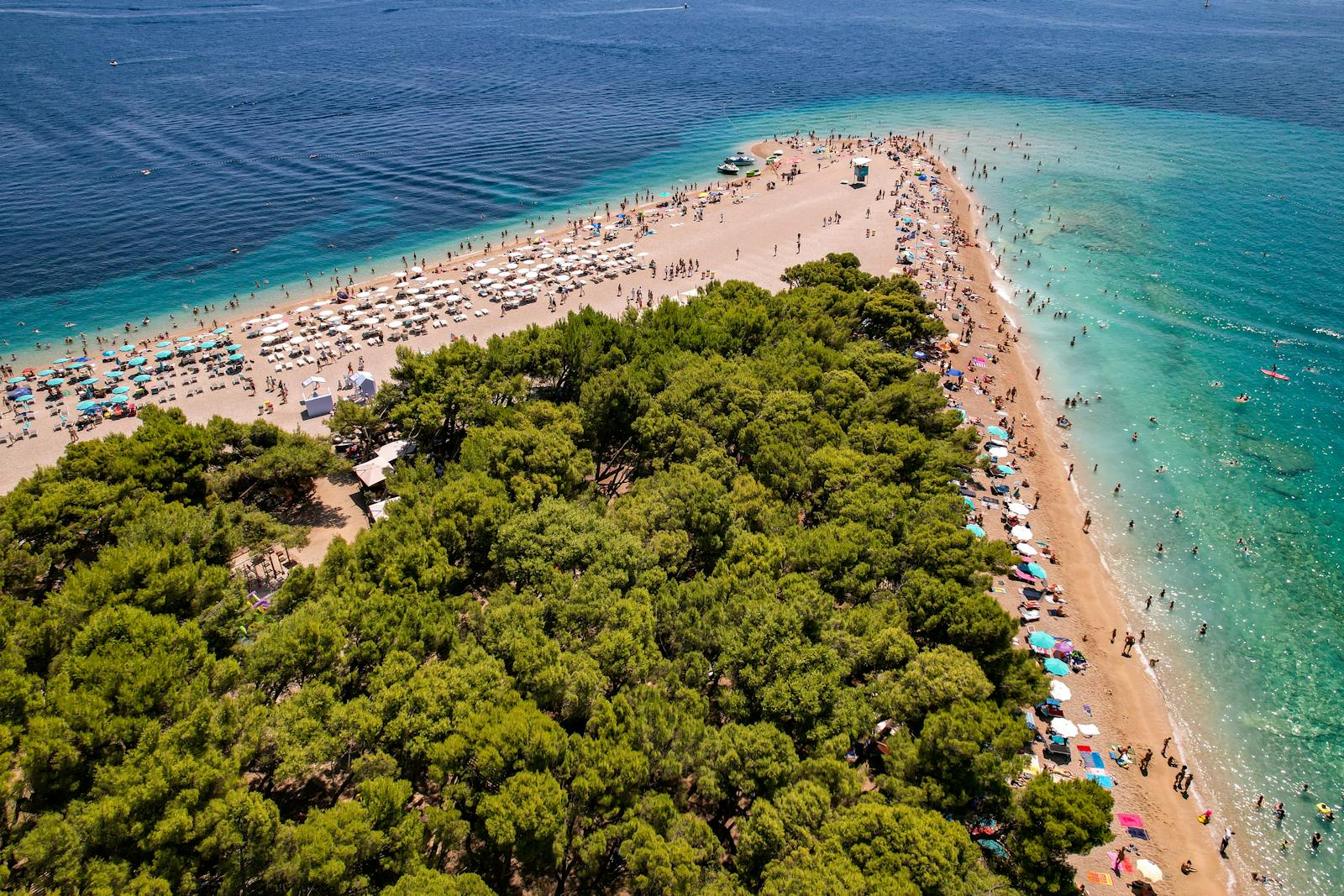
  • Brač: Famous for the Zlatni Rat beach, one of the most photographed beaches in Croatia.
  • Šolta: A quieter island, ideal for those seeking a peaceful retreat.
  • Čiovo: Close to Trogir, offering easy access to beautiful beaches and secluded spots.
  • Drvenik Veli: Known for its pristine beaches and crystal-clear waters.
  • Vis: A remote island with stunning natural beauty and historical charm.

Central Dalmatia’s blend of coastal resorts, lush pine forests, and beautiful islands makes it a perfect destination for every type of traveler. Whether you’re looking for vibrant nightlife, historical exploration, or peaceful beach days, Central Dalmatia has something to offer.

Omis Riviera: Sandy Beaches and Family-Friendly Fun

The Omis Riviera, once overlooked, has now become a popular destination for its beautiful sandy and pebbly beaches. This picturesque area is ideal for families with small children, offering a safe and enjoyable environment for beach activities.

Located along the stunning Adriatic coast, Omis combines natural beauty with a family-friendly atmosphere, making it a perfect spot for a relaxing vacation. Whether you’re building sandcastles with the kids or enjoying the serene coastal views, the Omis Riviera provides a delightful escape for all ages.

🏠 Where to stay in Omiš: the Villa Marina or the more luxurious Hotel Saint Hildegard.

Discover Split: The Heart of Dalmatia

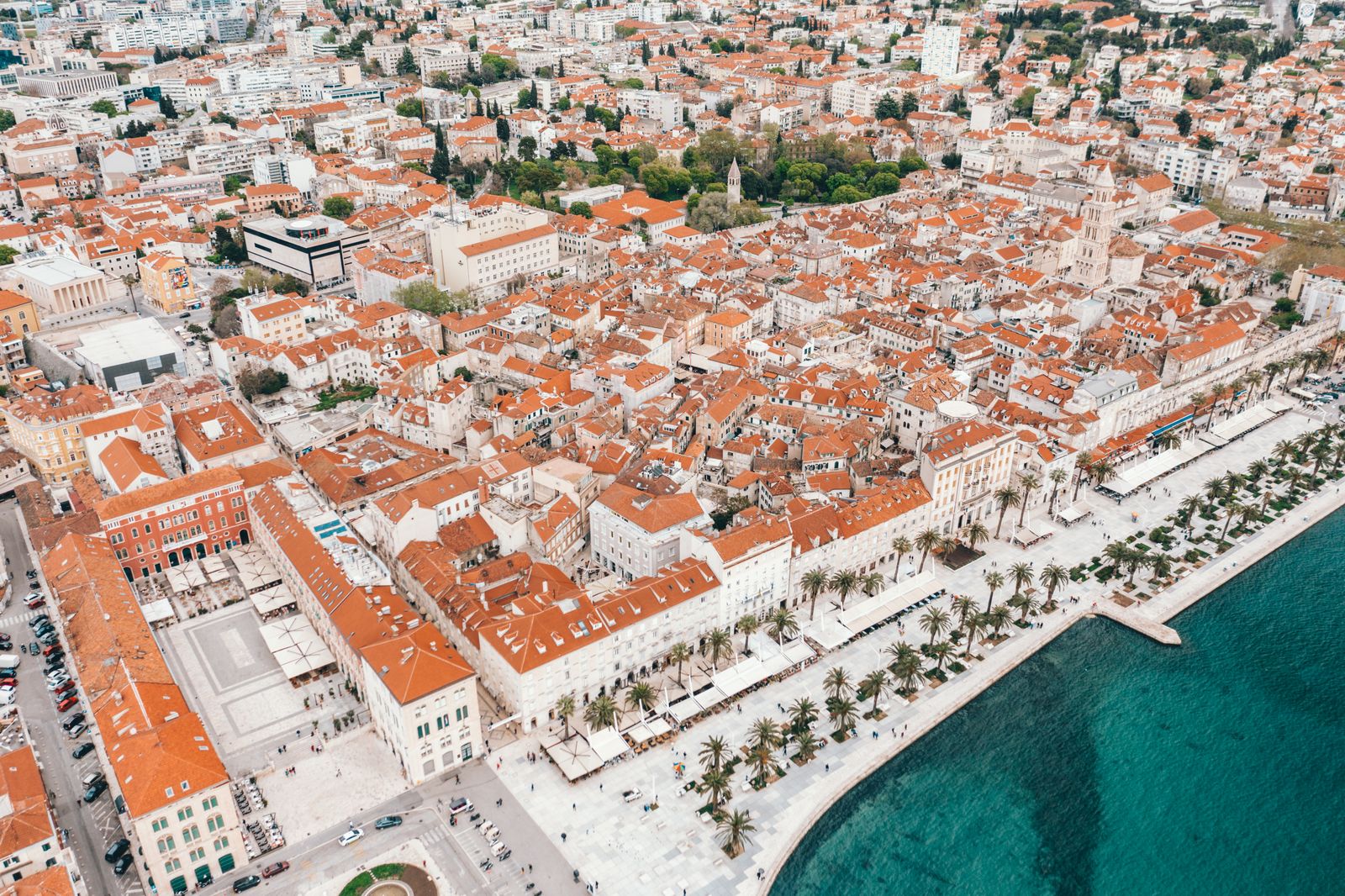
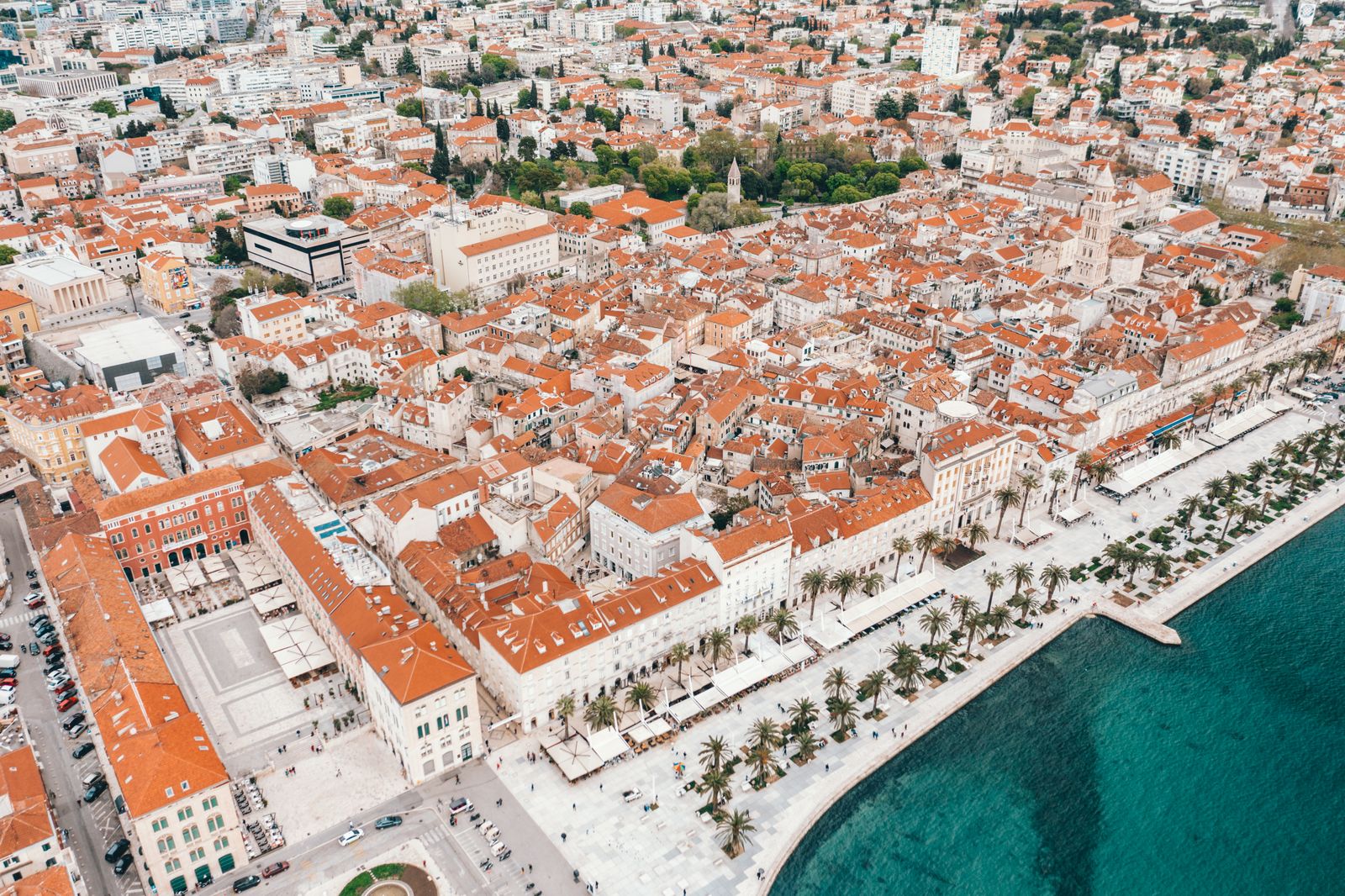
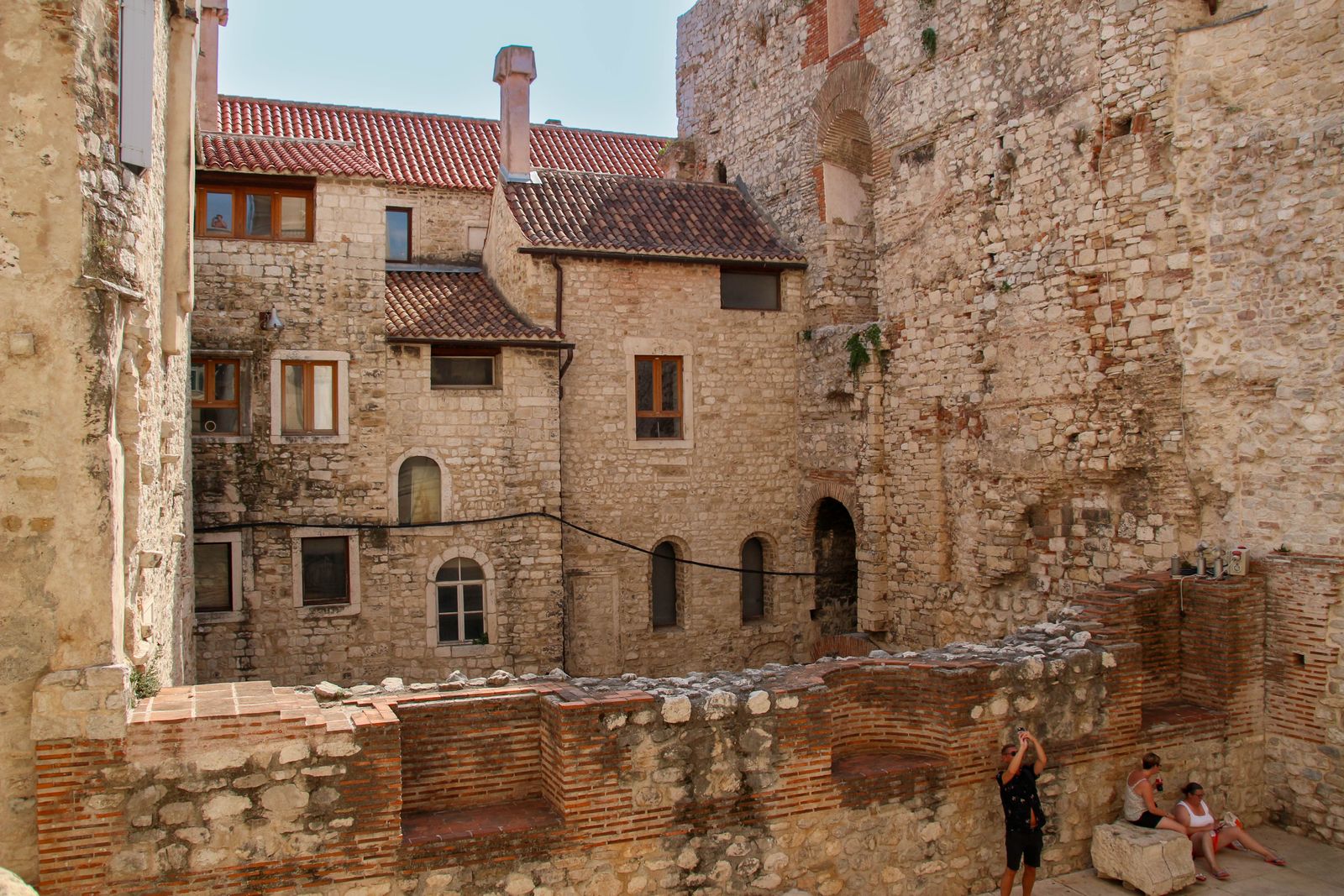
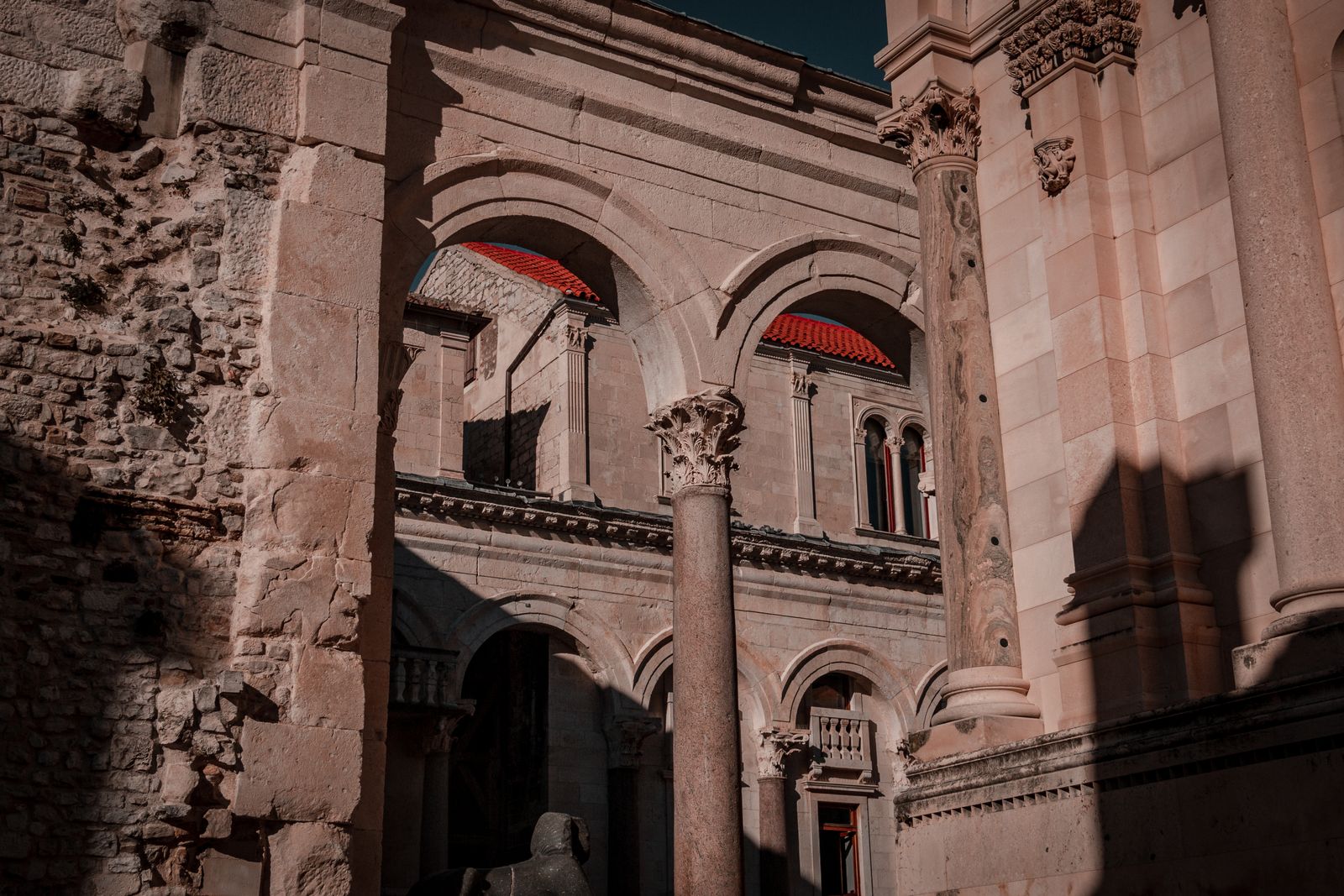
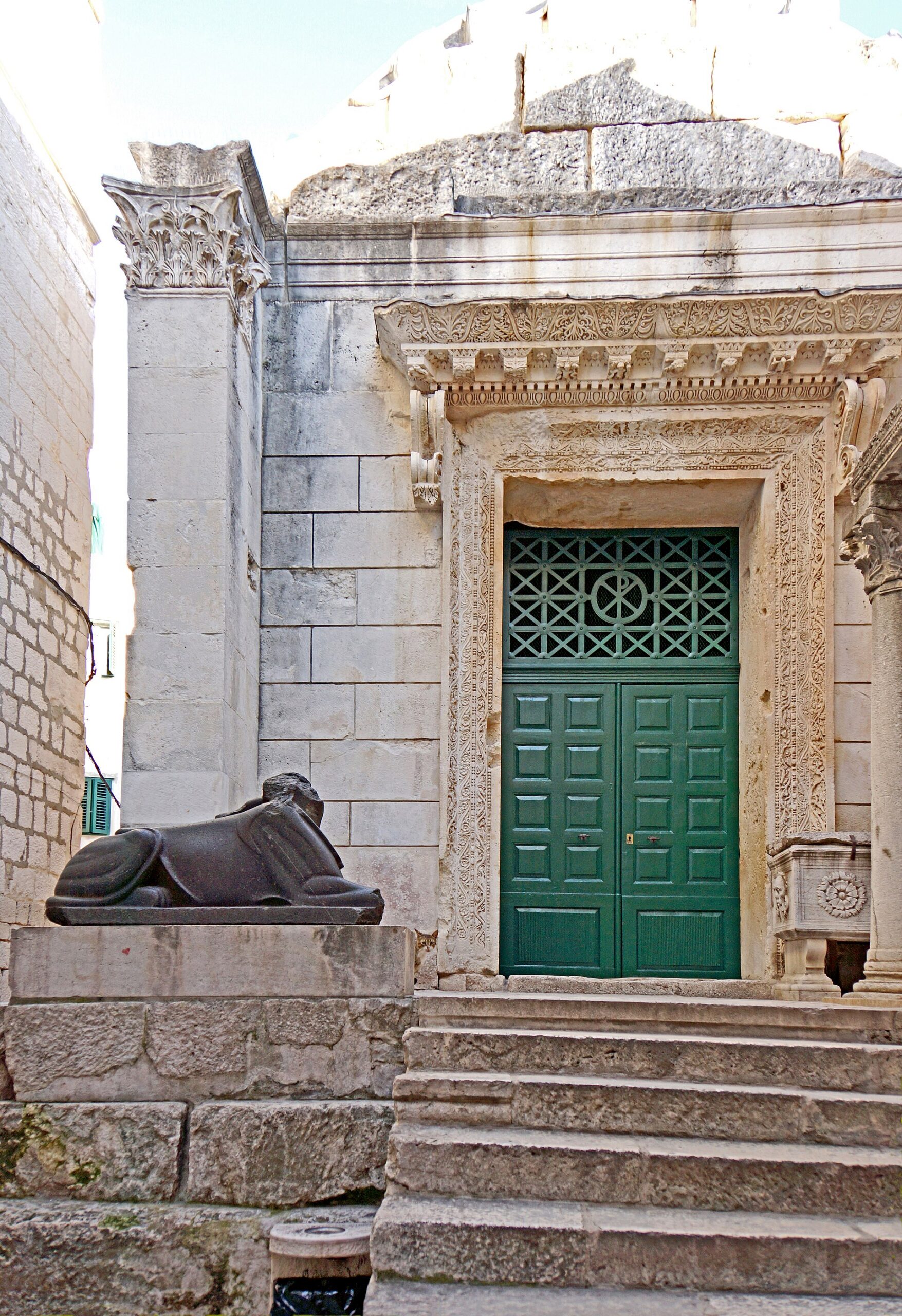
Split, the port city, is both the cultural and economic center of Dalmatia and the second-largest city in Croatia. Its beautiful historic center is home to the extremely popular Diocletian’s Palace, a UNESCO World Heritage Site and a must-visit landmark.

Split serves as a great starting point for ferry transport to the larger nearby islands, including Hvar, Brač, and Korčula. Whether you’re exploring its rich history or using it as a gateway to the stunning Adriatic islands, Split offers a perfect blend of culture, history, and connectivity.

🏠 Where to stay in Split: luxury accommodation is Oblivion Luxury Rooms or Four Elements, the golden mean is Apartmani Lucante, for a cheaper option try Pension Alba.

Trogir

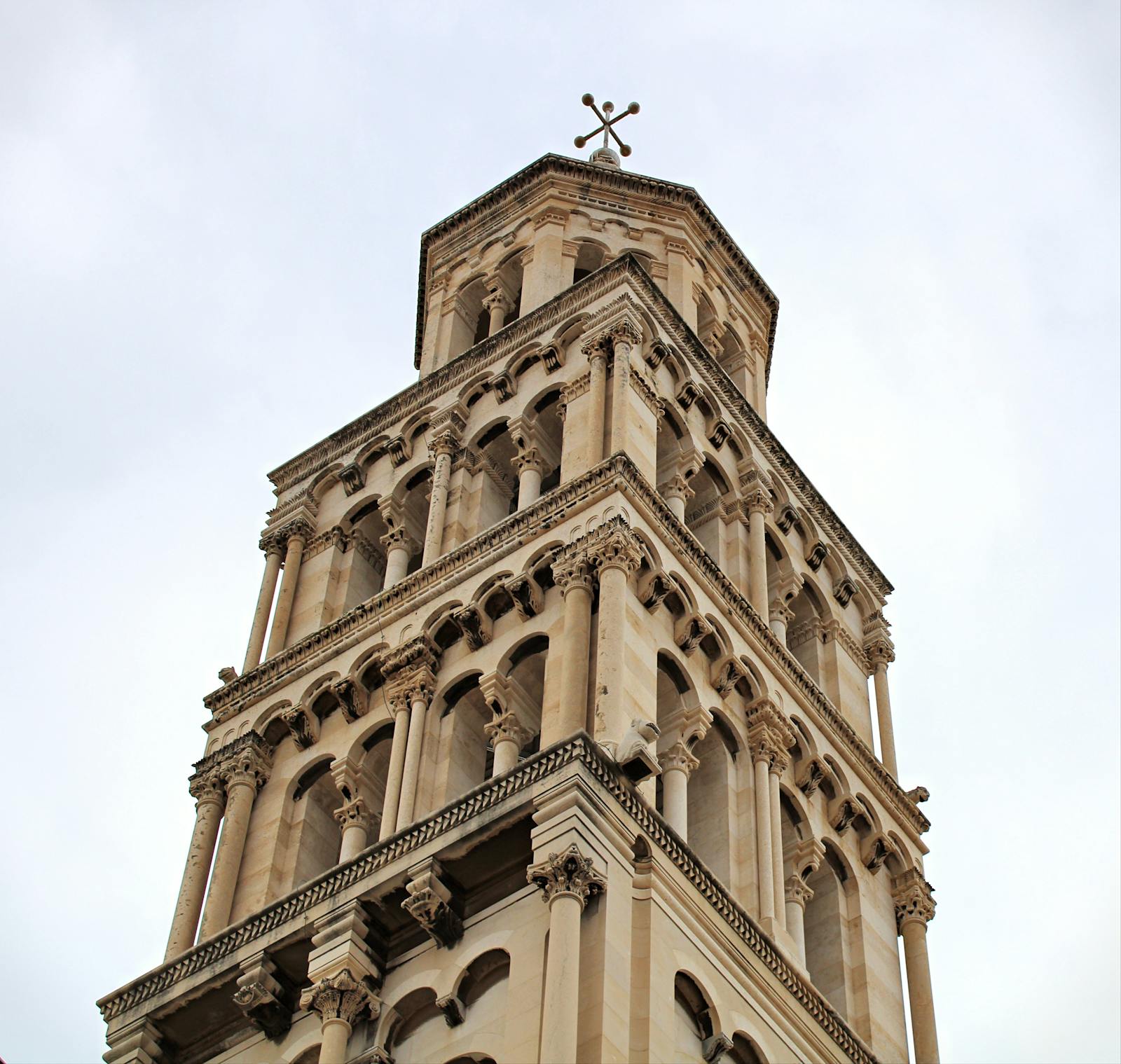
Trogir is a quintessential historic town in Dalmatia, boasting a charming old town filled with boutiques and shops offering local jewelry. The highlight of Trogir is the St. Lawrence Cathedral, with its impressive tower that visitors can climb for a small fee, offering stunning views of the town and its surroundings.

Wandering through the narrow streets of Trogir’s historic center, you’ll be enchanted by its medieval architecture and vibrant local culture. Trogir’s unique blend of history, shopping, and scenic beauty makes it a must-visit destination in Dalmatia.

🏠 Where to stay in Trogir: Guest House Bakica.

Makarska Riviera: Home to Croatia’s Most Beautiful Beaches

The Makarska Riviera is renowned for having some of Croatia’s most beautiful beaches. While the area can get quite busy, the stunning scenery makes it worth the visit.

Natural Attractions

For a change of pace, take a trip to the Biokovo mountain range, accessible by car. One of the most popular attractions in the area is the Skywalk Biokovo, a glass lookout offering breathtaking views of the surrounding landscape and the Adriatic Sea.

Whether you’re lounging on the pristine beaches or exploring the majestic mountains, the Makarska Riviera offers a perfect blend of natural beauty and adventure.

🏠 Where to stay in Makarska: Let’s start with the luxury option, there are few that supposedly surpass Hotel Tamaris, but City Beach Makarska also has an excellent location. The golden mean is Apartments & Rooms Alagić. For cheap accommodation, choose Apartments Josip.

Island of Hvar: A Mamma Mia Experience

We cannot fail to mention Hvar, the most visited island in Croatia, famously featured in the movie “Mamma Mia! Here We Go Again.” The island’s stunning landscapes served as a picturesque backdrop for the film, drawing fans from around the world.

Hvar boasts beautiful nature with lavender fields and vineyards, where the air is filled with the fragrance of wild herbs. Visitors can enjoy the charming town of Hvar with its historic architecture, vibrant nightlife, and delightful local cuisine.

🏠 Where to stay in Hvar: Not many people will be able to afford it, but you should check out this absolutely luxurious hotel Hotel Moeesy, Blue & Green Oasis. Still more expensive but gorgeous is also B&B Buzolic or the cheaper Fontana Resort or Apartments Ana.

Island of Brač: Home to Croatia’s Iconic Zlatni Rat Beach

The Island of Brač boasts stunning beaches that rival even the renowned shores of Makarska. Among them, the beach in Bol stands out as a true gem. Often considered the most beautiful beach in Croatia, Zlatni Rat, also known as the Golden Horn, is undoubtedly the most famous.

Experience Zlatni Rat

Zlatni Rat is a unique, V-shaped beach that extends into the turquoise waters of the Adriatic Sea, constantly changing its shape with the tides and winds. This pebble beach is not only a visual marvel but also a hotspot for various water sports, including windsurfing, kayaking, and paddleboarding.

Explore Bol and Beyond

The charming town of Bol offers more than just its iconic beach. Wander through its quaint streets, enjoy local delicacies at seaside restaurants, and explore the rich history at sites like the Dominican Monastery.

More to See on Brač

Beyond Bol, the Island of Brač is home to other attractions such as the ancient Blaca Hermitage, the Vidova Gora mountain—the highest peak on the Adriatic islands—and numerous picturesque villages that showcase traditional Croatian life.

Getting to Brač

Brač is easily accessible by ferry from Split, making it a perfect day trip or an extended stay destination. Whether you’re drawn by the allure of Zlatni Rat or the island’s natural and cultural treasures, Brač promises an unforgettable Croatian experience.

With its combination of natural beauty, cultural richness, and recreational opportunities, the Island of Brač is a must-visit destination in Croatia.

🏠 Where to stay on the island of Brac: Bluesun Hotel Borak is a more expensive option, but you can also find cheaper accommodation, such as Apartments Obala.

South Dalmatia

In South Dalmatia, you can find everything you need for an unforgettable holiday. If you are a fan of nature and Game of Thrones, South Dalmatia is the place to go. This region is characterized by its striking contrasts, breaking up into several distinct areas, each offering a unique experience.

South Dalmatia is a land of great contradictions, where each part of the region offers something entirely different. From historic cities to tranquil nature spots, South Dalmatia promises a varied and exciting holiday.

South Dalmatia is home to stunning natural landscapes, including pristine beaches, lush forests, and dramatic cliffs. Whether you’re hiking in the countryside or relaxing by the sea, the region’s natural beauty is sure to captivate you.

Fans of the hit series Game of Thrones will be thrilled to visit some of the iconic filming locations in South Dalmatia. Explore the ancient city of Dubrovnik, known as King’s Landing in the series, and other nearby sites that brought the fantasy world to life.

From the bustling streets of Dubrovnik to the peaceful islands of Mljet and Korčula, South Dalmatia offers a wide range of attractions. Visit historic landmarks, indulge in delicious local cuisine, and immerse yourself in the vibrant culture of the region.

Plitvice Lakes

The Plitvice Lakes, located in the county of Licko-Senj, are the most famous national park in Croatia and the most visited tourist attraction. To fully enjoy this stunning destination, it’s recommended to arrive at the opening time.

The Plitvice Lakes are a UNESCO World Heritage Site situated on the upper reaches of the Korana River, nestled between the limestone massifs of Velika and Mala Kapela and Pleševica. The park is located between the towns of Karlovac and Zadar, near the border with Bosnia and Herzegovina.

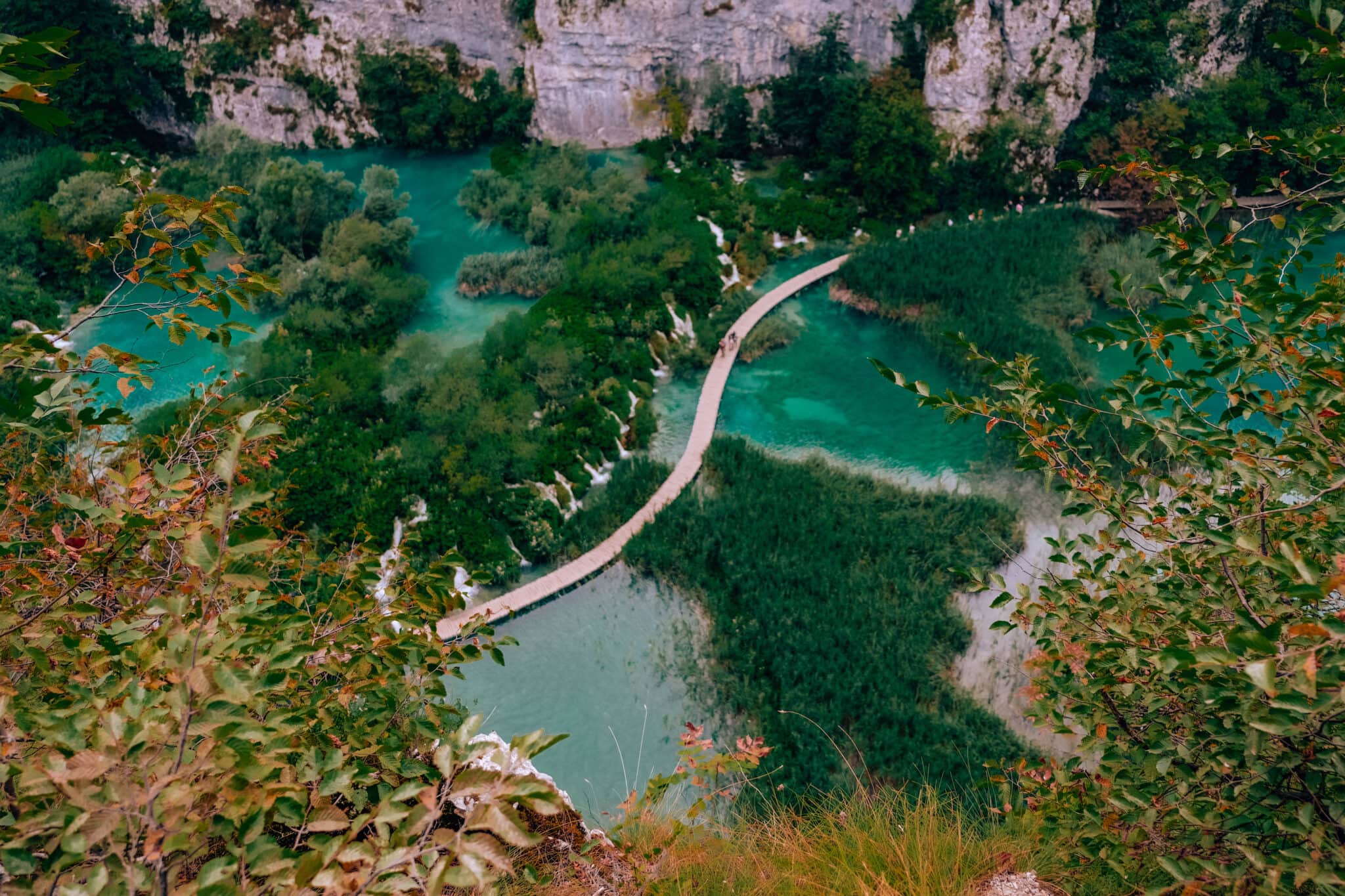
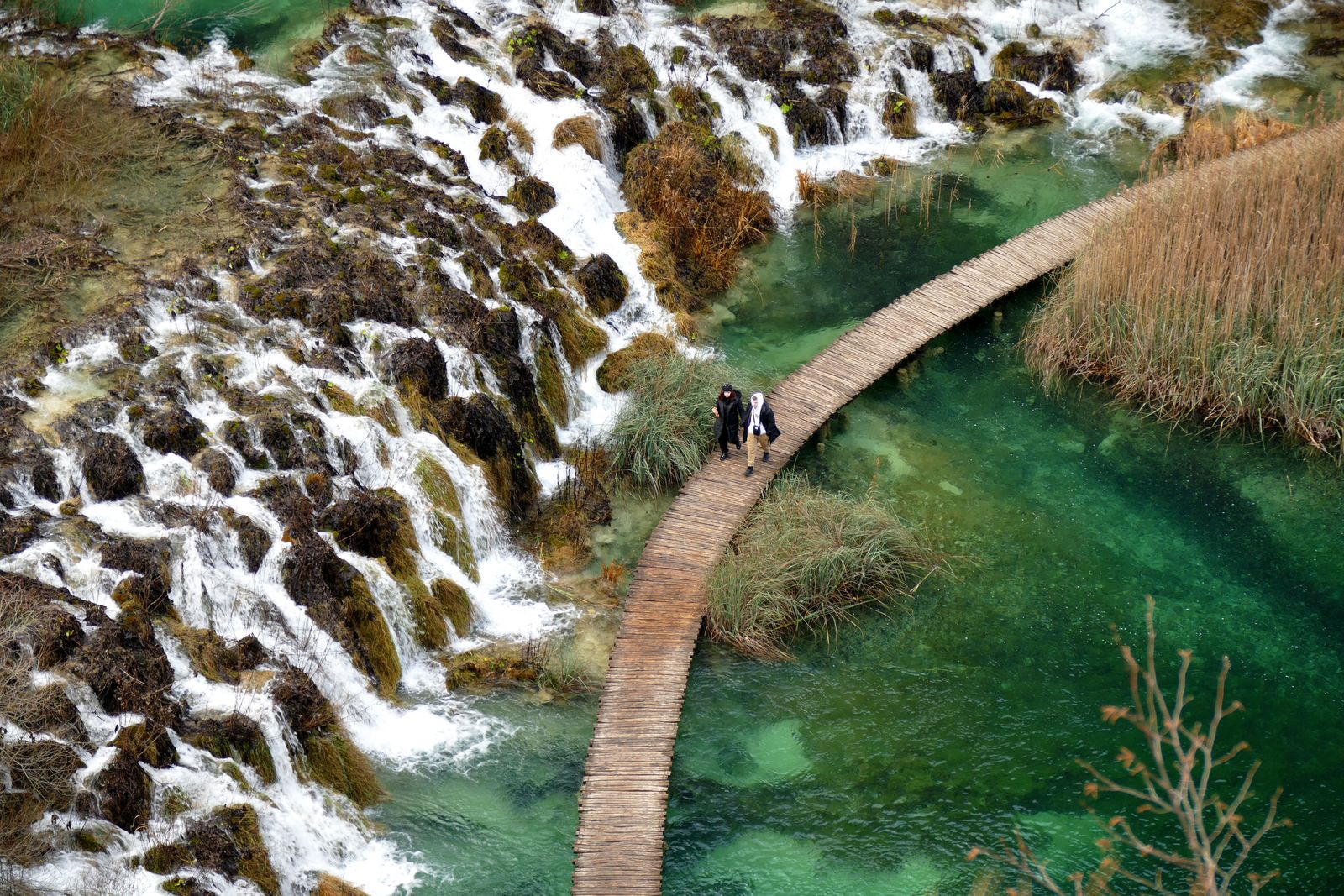
The park features 16 terraced karst lakes, interconnected by a series of waterfalls and flows. Since 2006, swimming in the lakes has been prohibited to preserve their natural beauty. Visitors can explore the park by walking on footbridges and designated paths.

Dubrovnik

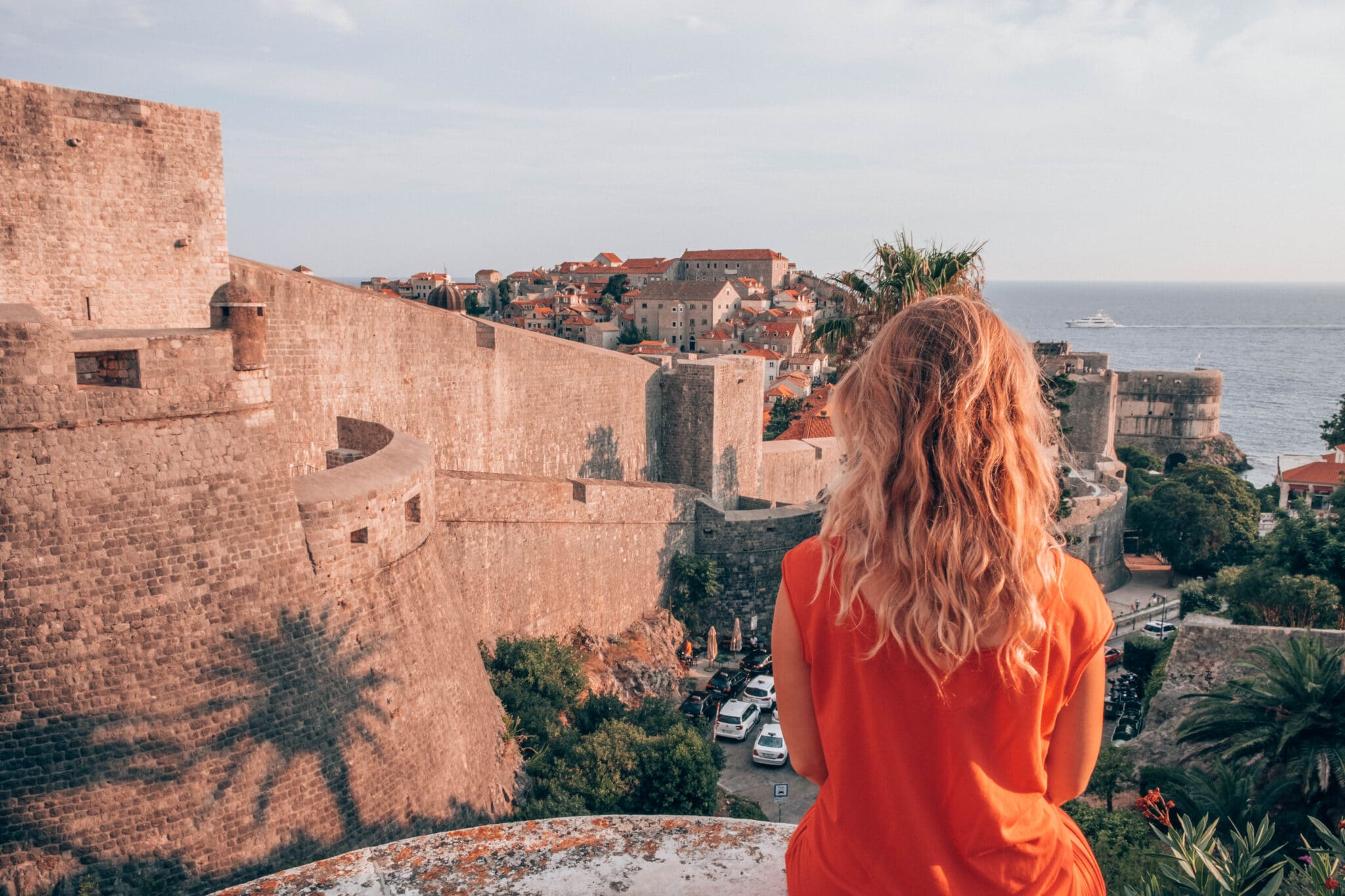
The famous HBO series Game of Thrones was filmed in Dubrovnik, dramatically increasing the number of visitors to this stunning medieval city. To avoid the crowds, consider visiting in the off-season or planning an early morning stroll, as we did. Dubrovnik, a UNESCO World Heritage Site since 1979, is a city that deserves every bit of its acclaim.

Island of Korcula

Korčula, often referred to as Marco Polo Island, is another gem in Croatia’s collection of beautiful islands. Though it’s tiny, stretching only about thirty kilometers in length, Korčula offers a wide range of activities for families, couples, and sports enthusiasts.

Attractions and Activities
  • Wineries: Enjoy tasting local wines at the island’s charming wineries.
  • Stunning Coastlines: Relax and explore the breathtaking coastlines that surround the island.
  • Historical Sights: Discover beautiful landmarks and immerse yourself in the rich history of the island.

Korčula is also celebrated as the supposed birthplace of the famous explorer Marco Polo. This island’s blend of natural beauty, cultural heritage, and recreational activities makes it an ideal destination for all types of travelers.

🏠 Where to stay: the most luxurious option is Korcula Holiday.

Discover the Sandy Beaches in Croatia

Contrary to popular belief, Croatia is home to several beautiful sandy beaches, despite the prevalence of pebble and rocky shores. Here are some of the best sandy beaches you can find across various Croatian islands and regions:

Island of Dugi Otok

  • Sandy Beach Sakarun: Near Soline, this beach is renowned for its crystal-clear waters and white sand.

Island of Pag

  • Čista Plaža: A pristine sandy beach.
  • Planjka: Located in the bay of Blue Lagoon in Vlašici.
  • Povljana: Home to smaller sandy beaches, including the one in the western bay of Potočnica.

Island of Pašman

  • Plažine: A lovely sandy beach located in Tkon.

Island of Rab

  • Rajska Plaža: The most popular sandy beach in Lopar, but the island itself is known for its numerous sandy shores.

Island of Brač

  • Lovrečina: A beautiful sandy beach near the island of Hvar.

Island of Hvar

  • Jelsa: This area offers several sandy beaches perfect for relaxing.

Island of Korčula

  • Lumbarda: Home to Tatinja, Bilin, and Pržina sandy beaches.

Pelješac Peninsula

  • Trstenica: Located in Orebić, this sandy beach is a favorite among visitors.

Omis Riviera

  • Omis-Duće: Known for its sandy beaches that stretch along the coast.

Zadar Riviera

  • Iza Banja: A sandy beach in Sveti Filip i Jakov.

Nin

  • Ninska Laguna: This sandy beach is known for its therapeutic mud and shallow waters, making it ideal for families.

Where to Go on Holiday in Croatia with Children

Croatia is an ideal destination for holidays with small children, offering a mix of beautiful beaches, family-friendly activities, and scenic landscapes. Here are some of the best regions and islands to consider:

Istria

Istria is a convenient choice for families with younger children due to its relatively short travel distance. The region is known for its charming coastal towns, beautiful beaches, and kid-friendly resorts.

  • Rovinj: Explore its picturesque old town and family-friendly beaches.
  • Poreč: Offers a mix of cultural attractions and activities for children.

Islands

Croatia’s islands provide a peaceful and serene environment, perfect for families looking to relax and enjoy nature.

  • Krk: Easily accessible by car and known for its family-friendly beaches and resorts.
  • Brač: Famous for Zlatni Rat beach and offers plenty of activities for kids.
  • Korčula: Known for its historical charm and quiet beaches.
  • Pag: Offers both sandy and pebble beaches, and various family activities.

Makarska Riviera

If your kids can handle a longer journey, the Makarska Riviera is worth the trip for its stunning beaches and scenic beauty.

  • Makarska: Known for its beautiful pebble beaches and family-friendly amenities.

Choosing Accommodation

When planning a holiday with children, selecting the right hotel or apartment is crucial. Look for accommodations that offer family-friendly facilities such as:

  • Kids’ clubs and playgrounds
  • Swimming pools
  • Proximity to the beach
  • Childcare services

Additional Tips

  • Activities: Opt for locations that offer a variety of activities like water parks, adventure parks, and nature trails.
  • Traveling: Consider the travel time and choose destinations that are easily accessible to minimize the hassle of long journeys with small children.
lukas a lucka
Lukáš and Lucie recommend
Where to Stay in Croatia
6 accommodations — wellness hotels, hotels and other accommodation options

Accommodation Croatia – find the accommodation of your choice

Booking.com

Tips and Tricks for Your Vacation

Don’t Overpay for Flights

Search for flights on Kayak. It’s our favorite search engine because it scans the websites of all airlines and always finds the cheapest connection.

Book Your Accommodation Smartly

The best experiences we’ve had when looking for accommodation (from Alaska to Morocco) are with Booking.com, where hotels, apartments, and entire houses are usually the cheapest and most widely available.

Don’t Forget Travel Insurance

Good travel insurance will protect you against illness, accidents, theft, or flight cancellations. We’ve had a few hospital visits abroad, so we know how important it is to have proper insurance arranged.

Where we insure ourselves: SafetyWing (best for everyone) and TrueTraveller (for extra-long trips).

Why don’t we recommend any Czech insurance company? Because they have too many restrictions. They set limits on the number of days abroad, travel insurance via a credit card often requires you to pay medical expenses only with that card, and they frequently limit the number of returns to the Czech Republic.

Find the Best Experiences

Get Your Guide is a huge online marketplace where you can book guided walks, trips, skip-the-line tickets, tours, and much more. We always find some extra fun there!
Krka National Park: 10 Tips + Waterfalls, Tickets & Advice for 2026

TL;DRKrka National Park in Dalmatia has seven waterfalls spread across 109 km², with the star attraction being the 800-metre Skradinski buk cascade, made up of 17 tiers and a drop of nearly 46 metres. Swimming there’s been banned since 2021 — the only spot left for a dip is the Roški slap waterfall. You can get into the park either via Lozovac, which has car parking, or the more scenic way through the town of Skradin by excursion boat. Entry prices for 2025/2026 range from €7 in winter, up to €20 in spring and autumn, and as much as €40 in summer — though there’s a 25% discount after 3pm. Among the 10 tips in the piece are the island of Visovac, home to a 15th-century monastery, the Manojlovac waterfall with a drop of almost 60 metres, and the historic town of Šibenik, about 20 minutes’ drive from the park.

Heading to Croatia and looking for a day trip that will leave your jaw on the floor? Krka National Park in Croatia is an absolute natural gem of central Dalmatia that simply shouldn’t be missing from your travel itinerary. Cascading travertine waterfalls, emerald-green water and deep karst canyons create scenery that looks like it was lifted straight out of an adventure novel.

Unlike the far more sprawling Plitvice Lakes, this park is a touch more compact, yet across its 109 square kilometres it hides an incredible seven waterfalls along with fascinating historical landmarks. You can take a boat cruise out to a picturesque island monastery, explore ancient watermills, and enjoy a stroll along wooden walkways that lead you right above the roaring mass of water.

In this detailed guide you’ll find everything you need to know before your visit, from current ticket prices and opening hours to the best walking routes. I’ll also let you know which entrance is best to use and where you can safely take a dip, because the rules for getting into the water have tightened up quite a bit in recent years.

TL;DR

  • Main attraction: The most famous cascade is Skradinski Buk, which tumbles over seventeen travertine steps, but the stunning Roški Slap is also well worth seeing.
  • Swimming ban: Since January 2021 a strict swimming ban has been in place at the main Skradinski Buk waterfall to protect nature. You can only cool off in the marked areas by the Roški Slap waterfall.
  • Two main entrances: Drivers most often choose the Lozovac entrance with its large car park, while more romantic souls will appreciate the entrance through the town of Skradin, where a boat will carry you to the waterfalls.
  • Tickets 2025/2026: During the peak summer season adults pay €40, in spring and autumn the price drops to €20, and in winter you can see the park for just €7.
  • Summer discount: If you arrive in summer after 3 pm, you’ll get a nice 25% discount on your ticket.
  • Booking accommodation: A strategic base is the historic town of Šibenik or the charming town of Skradin itself, where you can easily sort out accommodation through Booking.

When to Visit Krka National Park

Choosing the right season will completely shape your overall experience of this watery kingdom. The best compromise is late spring or the month of September, when the weather is pleasantly warm, a decent amount of water flows through the river, and there are noticeably fewer tourists than during the school holidays. The spring months also offer beautifully rich colours from the awakening landscape, which you’ll especially appreciate when taking photos.

If you’re longing to see the Krka waterfalls at their absolute most powerful, come here in April or May. The spring snowmelt in the surrounding mountains and heavier rains push the river’s flow to its maximum, so the waterfalls literally thunder and the riverbed is full to the brim. Just bear in mind that the water is still very cold at this time and spring weather can occasionally be a little unpredictable.

During the summer months from July to August you need to be prepared for truly large crowds of tourists as well as the highest ticket prices, which climb to €40 per adult. If you have to come in summer regardless, I’d recommend arriving at 8 am sharp when the park opens. Another clever option is to take advantage of the discounted afternoon ticket after 3 pm, when the sun isn’t beating down as hard and the crowds of day-trippers from Split and Zadar are slowly heading home.

A winter visit from November to March also has its undeniable and very peaceful charm, because a ticket costs just €7 and you’ll have the park almost to yourself. You’ll have to accept, though, that during this off-season the boats and shuttle buses don’t run. Opening hours in winter are usually cut short to around 4 pm, so you’ll need to drive to the waterfalls in your own car and plan your time well.

Where to Stay in and Around Krka National Park

💡 Tip for accommodation and experiences: We like to look for accommodation on Booking.com, where you’ll usually find the best cancellation conditions. It’s then worth comparing and buying tickets, tours and activities through GetYourGuide.

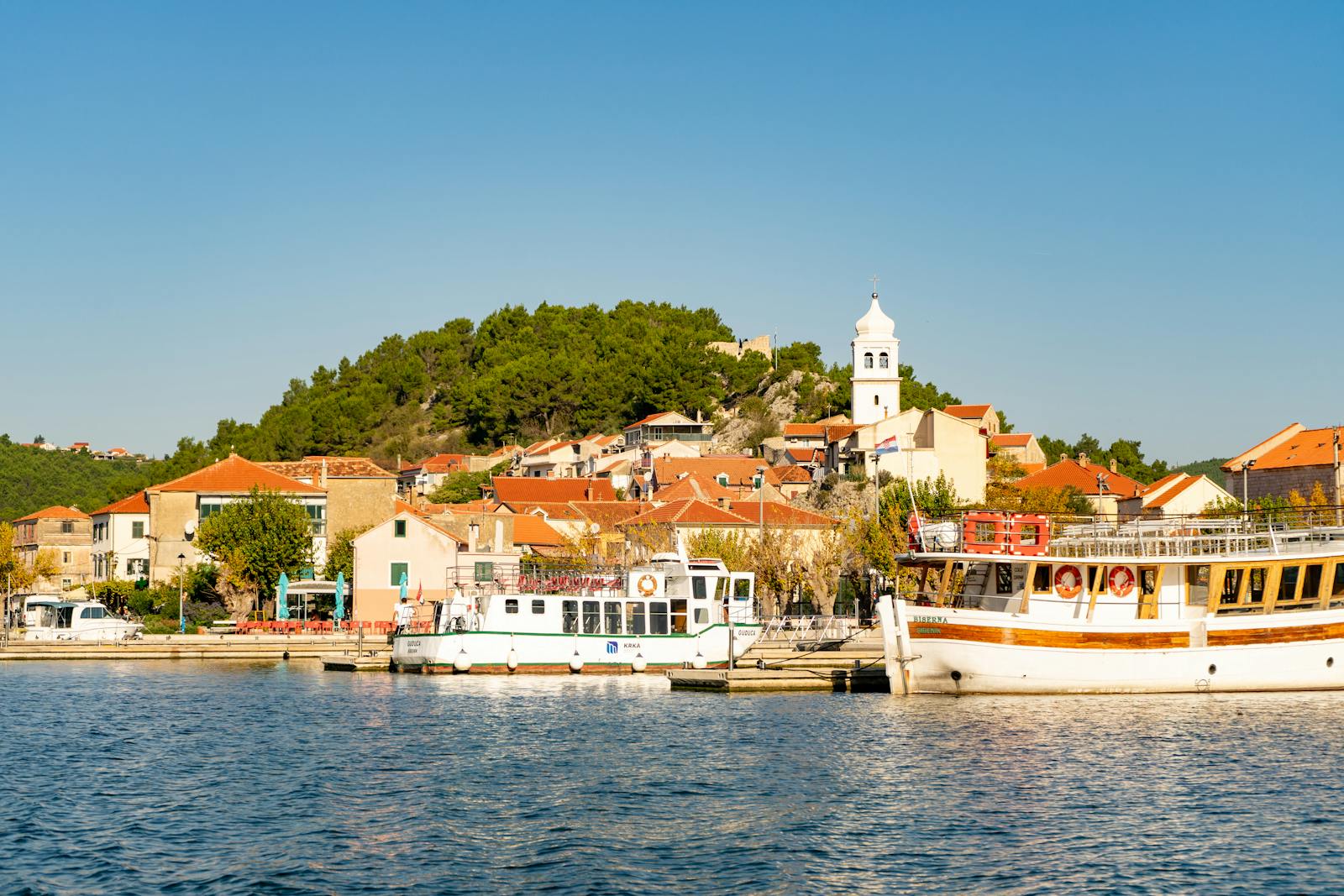
If you want to explore the park really thoroughly and not rush anywhere, it’s ideal to find a place to stay right nearby. The most practical choice is the picturesque town of Skradin, which sits right on the riverbank and offers great food, narrow historic lanes and a beautiful marina for yachts. On top of that, the boats to the main waterfall set off from this town, so you won’t lose a single minute in the morning.

Right in Skradin you can stay at the popular Hotel Skradinski Buk, which offers very comfortable rooms and is just a few steps from the main jetty. This hotel is a fantastic base for an early-morning visit, allowing you to easily beat the crowds arriving by bus from the larger resorts.

Another fantastic and highly strategic base is the nearby historic town of Šibenik, which is roughly a twenty-minute drive from the park. Here I recommend the gorgeous Heritage Hotel Life Palace, tucked right into the historic heart of the town, where you’ll feel the incredible atmosphere of old Dalmatia. You’ll be just a short walk from the magnificent Cathedral of St. James, a UNESCO World Heritage Site.

If you’re after something a little more modern with a touch of luxury and its own parking, take a look at the wonderful Boutique Hotel King in Šibenik. After a full day of walking the wooden boardwalks of the national park, you’ll enjoy the perfect rest here. You can easily and safely book any accommodation in this area through Booking, where you’ll also find plenty of cosy private apartments for families.

10 Tips on What to See and Do in Krka National Park

Let’s take a look together at the most beautiful spots you definitely shouldn’t miss during your visit. Krka National Park offers much more than just one famous waterfall, so it’s worth setting aside a whole day for exploring and discovering its lesser-known corners too.

1. Skradinski Buk and a Walk Along the Wooden Boardwalks

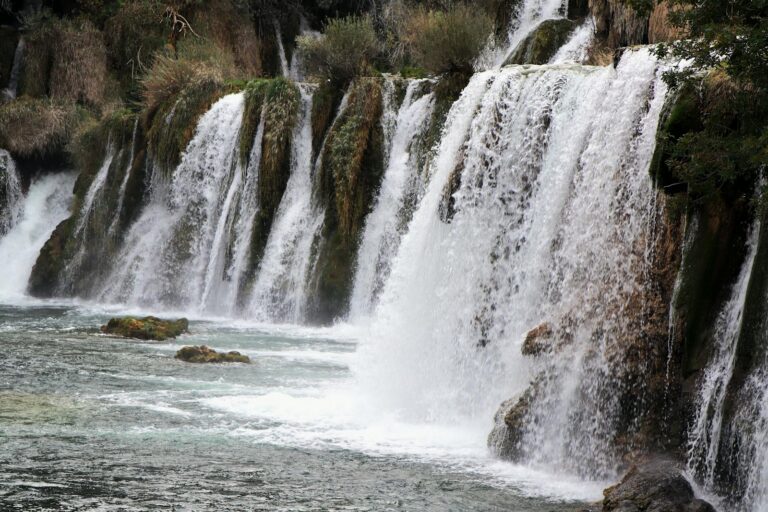
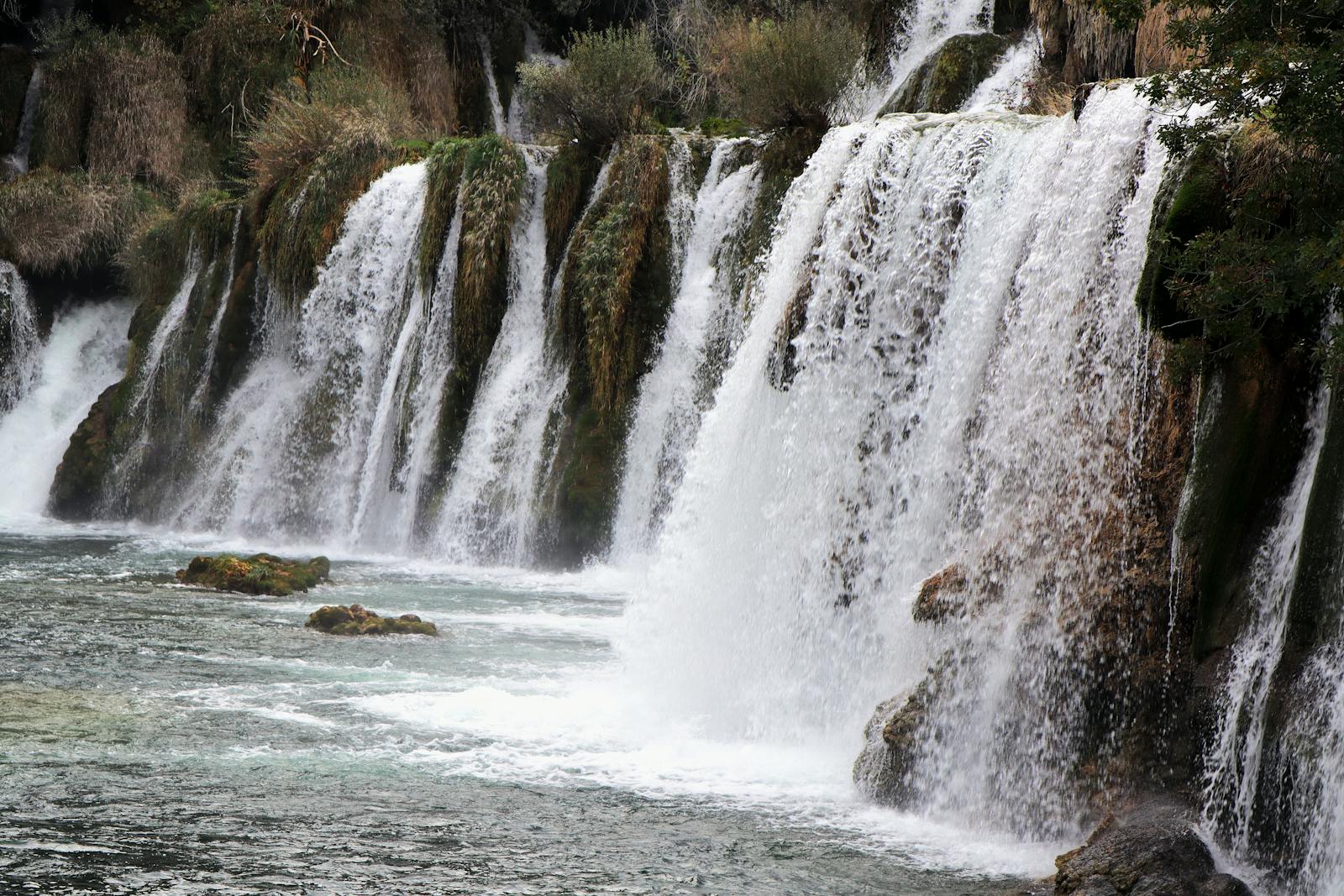
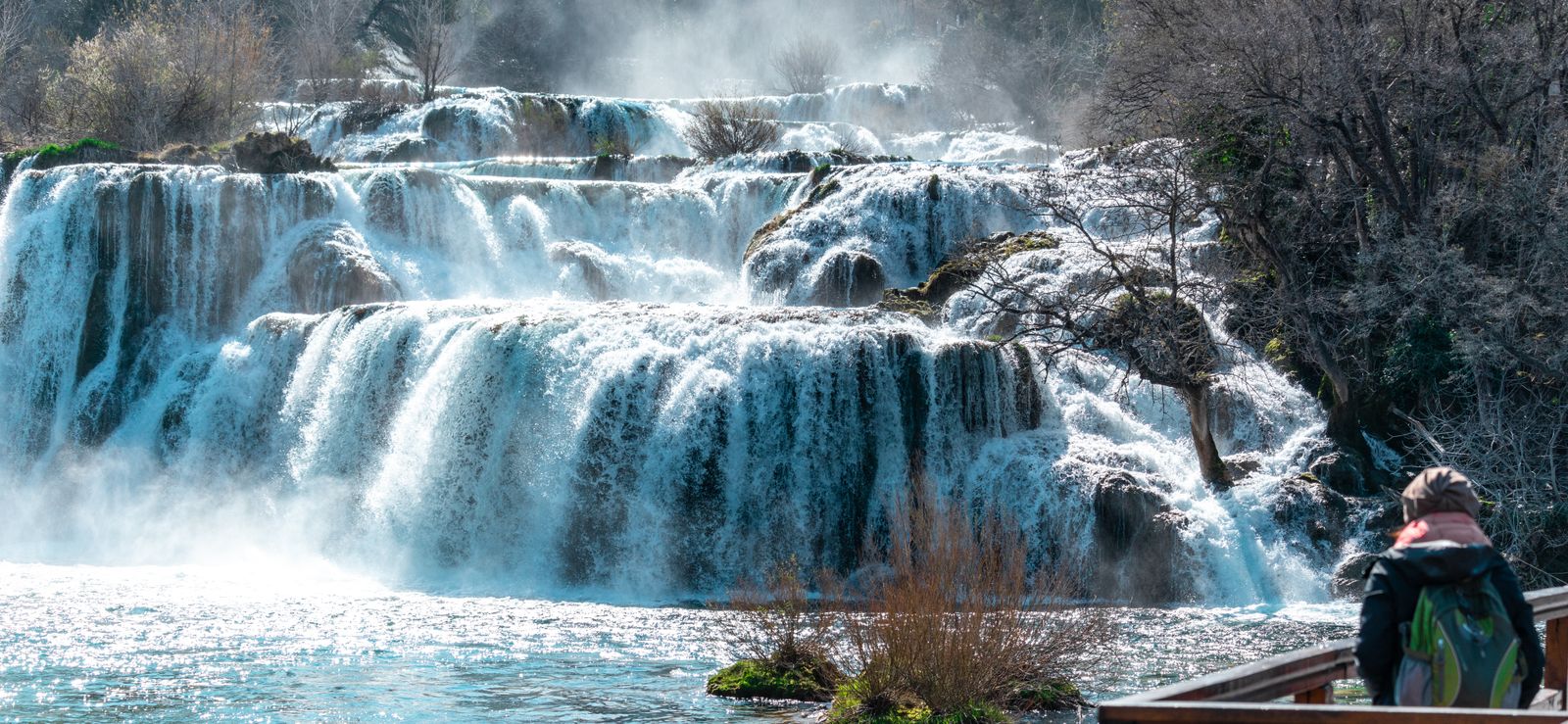
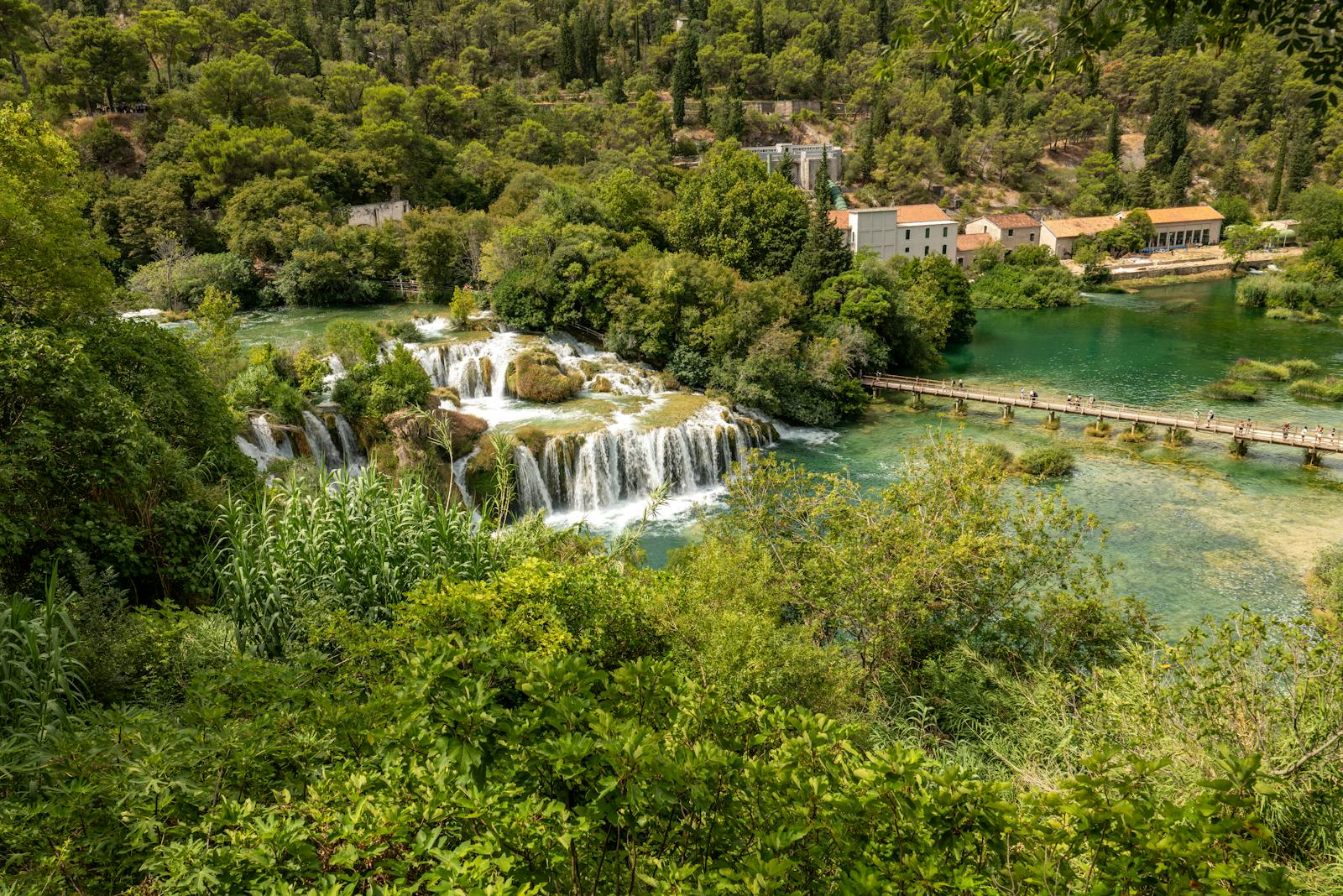
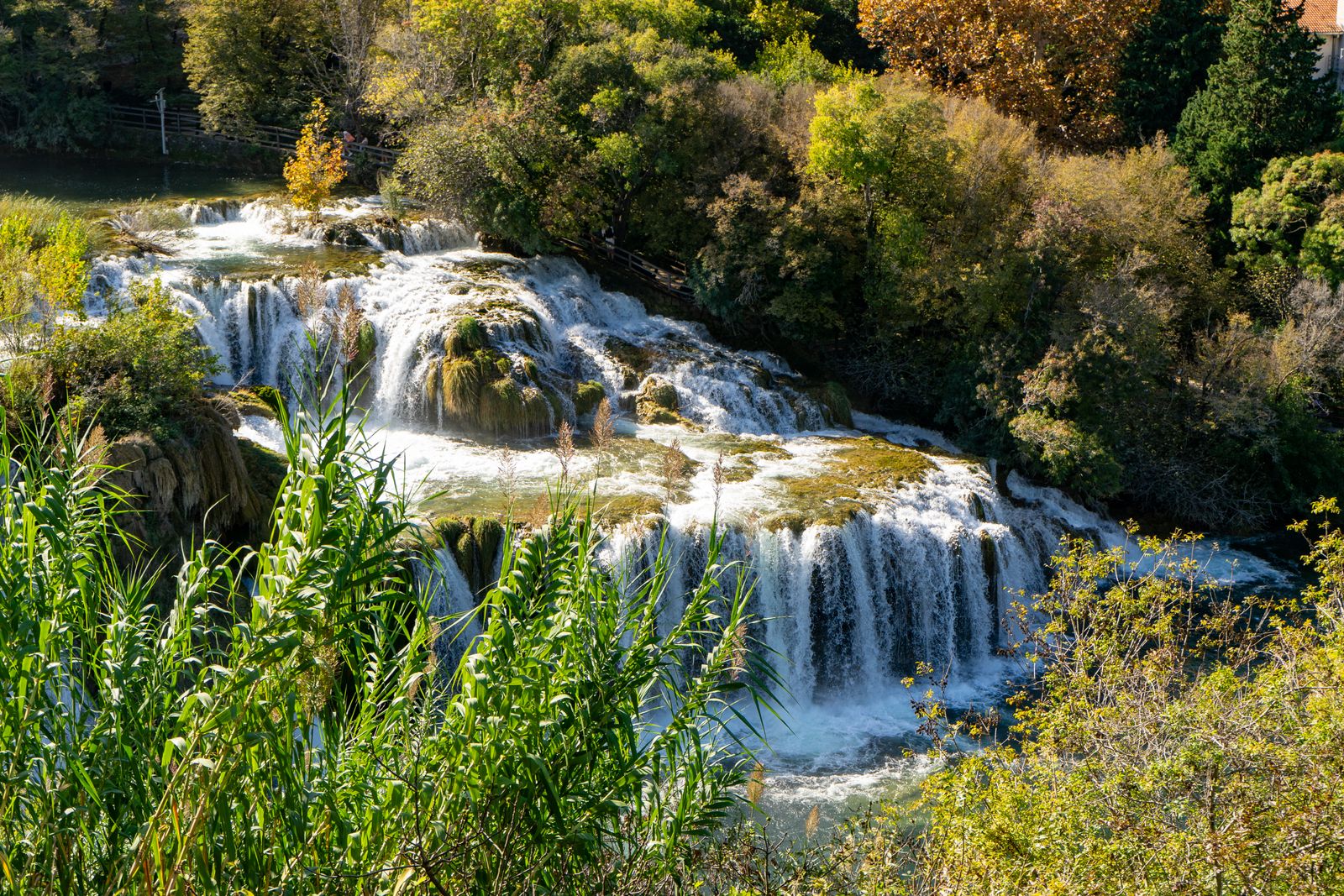
The biggest magnet of the entire park is undoubtedly the stunning Skradinski Buk, which at 800 metres long is the longest travertine cascade in all of Europe. Here the water overcomes a height difference of nearly forty-six metres across seventeen cascading steps. The width of the waterfall ranges between two and four hundred metres, and the powerful flow of water creates an utterly deafening and mesmerising natural spectacle.

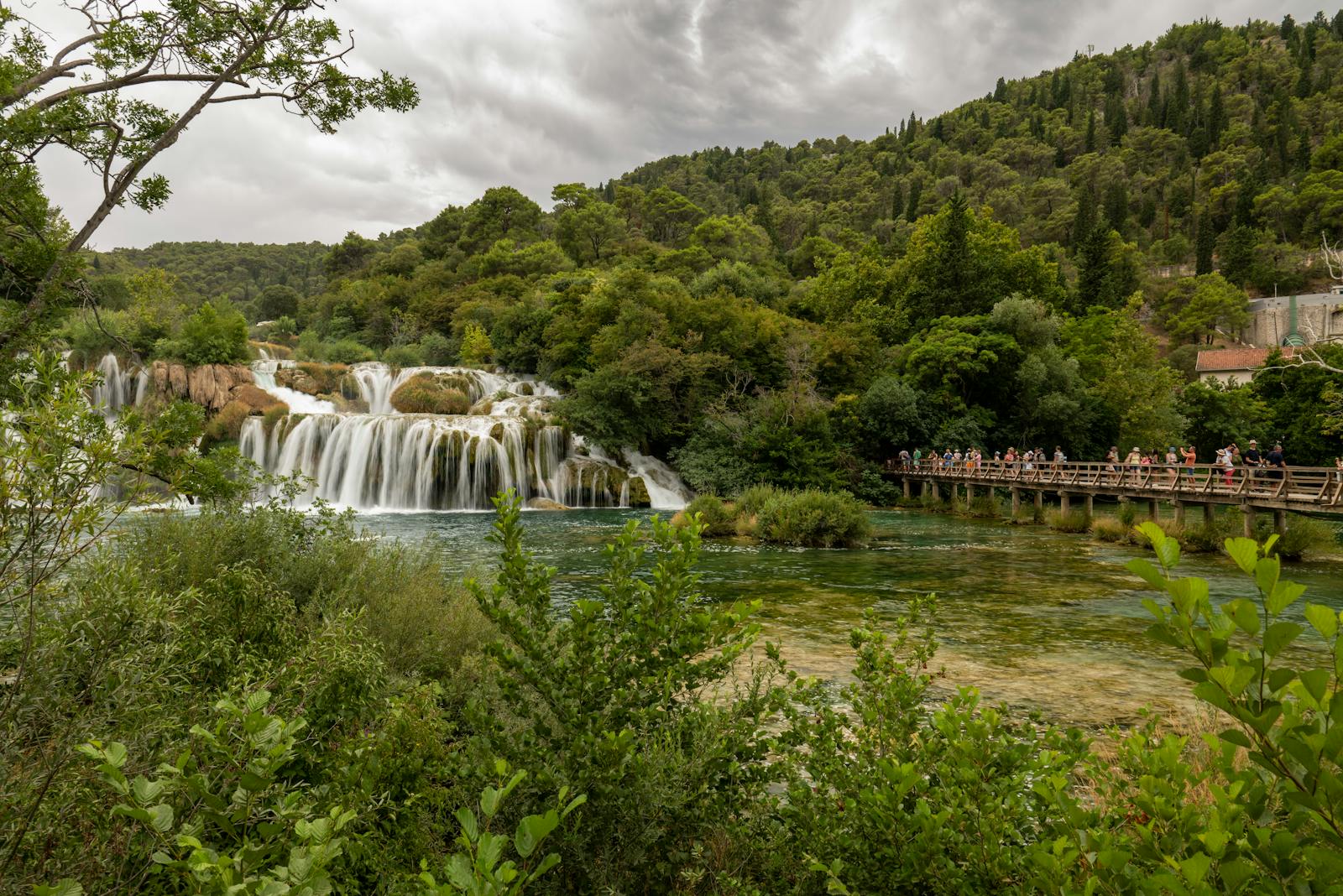
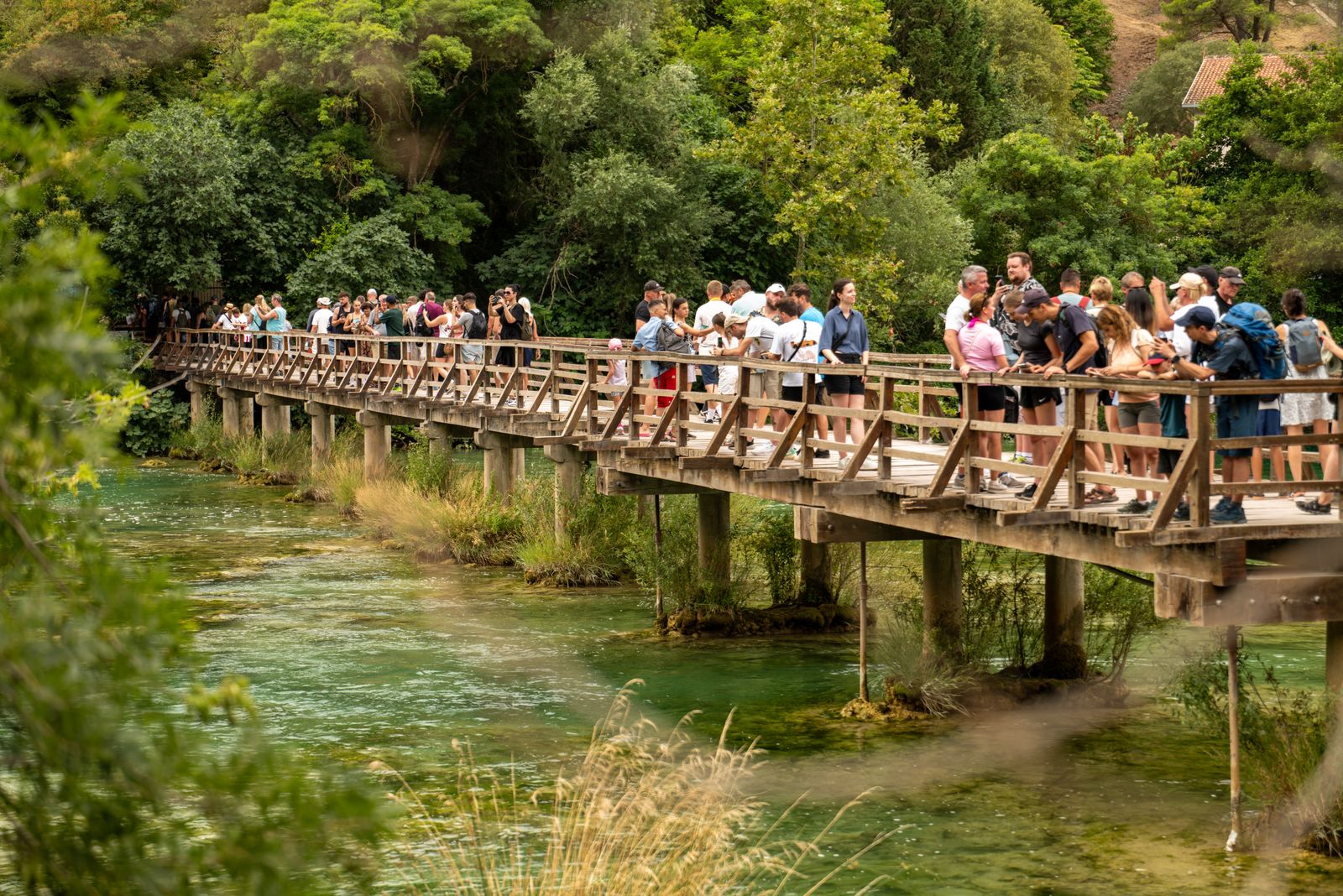
A roughly two-kilometre circular trail leads around the entire waterfall along a system of wooden walkways and bridges, taking you right above the bubbling water and small emerald pools. Along the way you’ll come across a series of panoramic viewpoints, old stone watermills and interesting ethnographic exhibits. These ancient buildings still show the traditional life of the local people and the old crafts of past centuries.

💡 Tip: Keep in mind that since 1 January 2021 a strict swimming ban has been in place at Skradinski Buk, introduced by the park administration to protect the exceptionally sensitive travertine bedrock. People used to bathe freely under the main cascade, but today you can only photograph the crystal-clear water here, so feel free to keep your swimsuit tucked away in your backpack for this part of the trip.

2. Roški Slap Waterfall and the Famous Water Necklaces

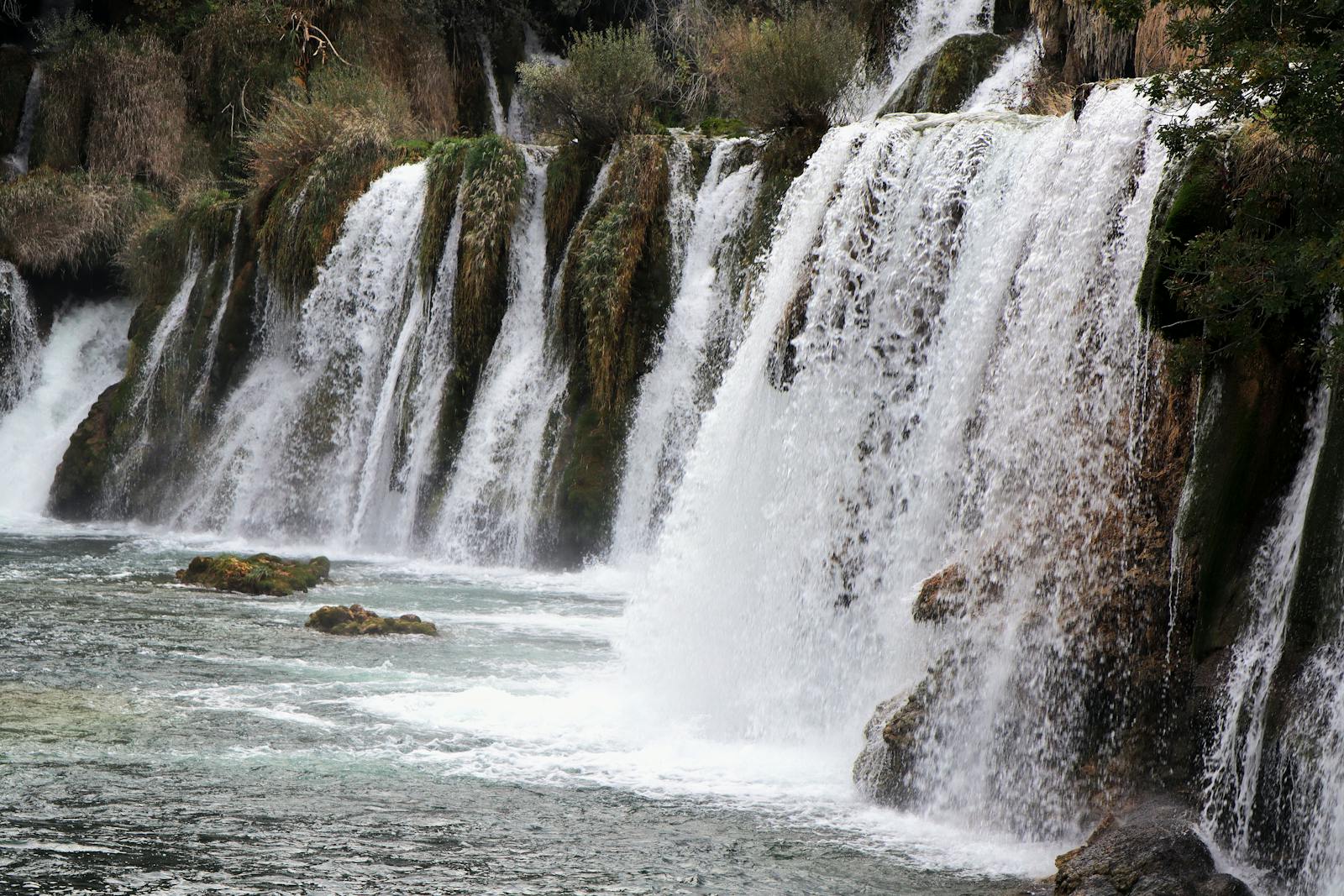
If you continue further upstream, you’ll reach the sixth waterfall in the chain, the stunning Roški Slap. This waterfall is roughly six hundred and fifty metres long, reaches a height of twenty-five metres, and its most interesting feature is the so-called water necklaces (ogrlice in Croatian). It’s a fascinating network of tiny cascades, pools and rapids that, when viewed from above, really do resemble scattered beads.

Compared to the main waterfall down south, it’s noticeably quieter here, and you’ll also find beautifully restored watermills. In the past they were used to grind grain for the entire surrounding area and they’re still fully functional to this day. You can reach this enchanting spot either by car from the northern side of the park, or on an organised boat trip that departs from Visovac Lake.

💡 Tip: Roški Slap is currently the only place in the park where swimming is still officially allowed, in clearly marked areas from June to the end of September. Swimming here is at your own risk, but if you need to cool off in the refreshing river water on a scorching summer’s day, it’s simply the best option available.

3. Visovac Island and the Franciscan Monastery

Right in the middle of the wide river basin known as Visovac Lake lies the small, romantic island of Visovac. On this tiny patch of land stands an ancient fifteenth-century Franciscan monastery, surrounded by tall cypresses and a beautiful, tranquil garden. The Augustinians originally settled here in the fourteenth century, but since 1445 the site has belonged to the Franciscans.

The monastery library holds immensely rare historical treasures that draw historians from all over the world. The most remarkable is one of just three surviving editions of Aesop’s Fables from 1487, an absolute world-class rarity. The only way to reach the island is by boat, and this cruise is included in the price of the so-called full ticket to the national park during the main season from April to October.

💡 Tip: You’ll need to plan and book your boat trip to Visovac at the jetty just above Skradinski Buk, since boat capacity is naturally limited. The island tour itself takes around half an hour, which is plenty of time to visit the church, the small museum of historical artefacts and take a short stroll through the well-kept gardens.

4. Manojlovac Slap for Lovers of Heights

While most tourists end their tour at the Roški Slap waterfall, the more curious head even deeper north to the Manojlovac waterfall. With a total drop of almost sixty metres, it’s the highest waterfall on the Krka river, offering an exceptionally dramatic and wild spectacle. The karst canyon is deep and incredibly steep in this part.

The easiest way to reach the waterfall is by car, as it lies close to the Burnum archaeological site and is accessed by a narrow road. From the small car park there’s only a very short and easy walk to the viewing platform on the edge of the canyon. From there you’ll get a spectacular view of the enormous mass of water roaring down into the deep abyss.

💡 Tip: If you come here during the scorching summer period, you might be in for a slight disappointment, because the water flow is often regulated in summer due to a nearby hydroelectric power station. This giant offers its most beautiful spectacle without question in spring, when the riverbed is full of meltwater and the waterfall shows its true power.

5. Two Main Entrances: Lozovac and Skradin

When planning your trip, you’ll need to decide in advance which of the two main entrances to the national park you’ll use. The Lozovac entrance is absolutely ideal for drivers, as it offers a huge free car park on the plateau above the river. From there, in the summer season, a free shuttle bus will safely carry you straight to the start of the trail loop, while in winter you drive down in your own car.

The second and far more romantic option is the entrance via the town of Skradin, where you leave your car in a paid town car park. You then head to the waterfalls themselves on the official park boat, which is included in the ticket price from the start of April to the end of October. This roughly twenty-five-minute cruise through the green canyon is a wonderful experience in itself and gets you perfectly in the mood for the rest of the day.

💡 Tip: If you want to avoid any potential wait for the boat, you can also reach the waterfalls from Skradin on foot or by rented bike. A very pleasant, flat gravel path of roughly three and a half kilometres runs this way. It hugs the river itself and offers plenty of beautiful views where you won’t be squeezed in among the crowds.

lukas a lucka
Lukáš and Lucie recommend
Where to Stay near Krka National Park
4 accommodations — hotels, wellness hotels and other lodging options

6. The Krka Orthodox Monastery and Ancient Burnum

Krka National Park isn’t only about breathtaking nature, but also about a wonderful blend of different cultures and religions. While the island of Visovac is the historic centre of the Catholics, deeper in the northern canyon of the river, about three and a half kilometres from the town of Kistanje, lies the Serbian Orthodox Krka monastery. This monastery is incredibly photogenic, and right beneath it you can even explore ancient Roman catacombs.

A short distance away, history lovers will be thrilled by the remains of the Roman military camp of Burnum, built here by seasoned legionaries in the first century AD. Impressive stone arches and the remnants of a large amphitheatre have survived from the original mighty military structure to this day, standing alone in the middle of the parched karst landscape and creating a very mystical impression.

💡 Tip: These northern landmarks are visited by only a tiny fraction of ordinary tourists, so you’ll enjoy complete peace and quiet here even in the height of summer. To explore this part of the park, however, you’ll definitely need your own car, because the distances between the individual stops are already quite large here and walking simply isn’t doable in the heat.

7. Bilušića Buk and the Tranquil Watermills

The very first waterfall on the upper course of the Krka river is Bilušića Buk, located roughly nine kilometres downstream from the historic town of Knin. Here the water rushes through a bed enclosed by limestone cliffs over two main steps with a total drop of twenty-two metres. You’ll hear the roar of the falling water from quite a distance as soon as you step out of the car.

This waterfall is utterly exceptional in that the human hand has touched it only minimally, so it has a very wild and unspoilt feel. In its immediate surroundings you’ll find several old but still carefully maintained watermills and small fields. Local people still grow crops and farm here in exactly the same way as they did hundreds of years ago.

💡 Tip: If you’re looking for a place on holiday where you can escape the holiday hustle and bustle of the sun-baked coast, a visit to Bilušića Buk is a bullseye. Most organised coach tours from Split don’t come here at all, so you’ll often have nature all to yourself even during the peak summer season.

8. A Boat Cruise Through the Krka River Canyon

Seeing the karst canyon from the water’s surface itself is something you definitely shouldn’t miss on your trip. The park administration runs several official boat lines that cleverly connect the most interesting points. From spring to autumn these boats serve as an extremely pleasant alternative to walking and save you plenty of steps in the summer heat.

The basic cruise from Skradin to the main waterfall is always included in the summer ticket. But if you buy the so-called full ticket, you can also take advantage of longer boat trips heading to the island of Visovac, to the Roški Slap waterfall, or even to the Oziđana Pećina cave. The boat journey is very slow and quiet, and provides perfect views of the steep limestone walls that close in the river from both sides.

💡 Tip: Ask about the specific boat departure times right at the park entrance, because the timetables change very often depending on the current season and water levels. There’s also a strict rule on all boats that dogs must wear a muzzle. So if you’re travelling with a four-legged companion, don’t forget to pack one in your backpack.

9. Where to Eat and Vegetarian Refreshment Options

A full day of walking the wooden boardwalks of the national park will certainly leave you exhausted, but luckily you won’t go hungry here. Right in the area around the main Skradinski Buk waterfall, as well as by the more relaxed Roški Slap waterfall, you’ll find several pleasant kiosks and outdoor restaurants. You can easily buy chilled drinks, iced coffee or a simple but tasty lunch here.

Although Dalmatian cuisine is renowned above all for its fresh fish and local cured meats, vegetarians will be well catered for here without the slightest trouble. In the cosy local konobas they’ll gladly prepare you excellent pizza, hearty pasta salads, grilled Mediterranean vegetables or cheese sandwiches. Another great culinary experience is the traditional baked štrukli filled with fresh cheese.

💡 Tip: Food sold inside the national park is logically a little more expensive, which is why packing your own picnic is a brilliant choice. In many places along the river you’ll find benches and wooden tables set in the shade of mature trees, where you can quietly eat your own packed snack and refuel for more walking.

10. Practical Tips for Your Visit: Tickets, Discounts and Gear

Krka National Park ticket prices vary dramatically depending on which month you decide to come. While during the summer peak from June to September adults pay €40, in spring and autumn the price drops to a pleasant €20. Children aged seven to eighteen and students always pay the child rate (€20 in summer), while the youngest children under seven get in completely free.

If you want to save money during the summer months while cleverly avoiding the worst of the heat, take advantage of the discounted ticket after 3 pm, when an adult ticket costs a more favourable €30 and a child’s ticket just €11. In high season, be sure to buy your tickets in advance online on the official website at shop.np-krka.hr to avoid the long queues at the ticket office. The park’s ecological capacity is, after all, strictly limited.

💡 Tip: Definitely don’t underestimate your choice of footwear, because the wooden walkways are often very slippery and wet from the ever-present spray. Rather swap ordinary flip-flops for sturdy, comfortable walking shoes. Also throw a hat and a large bottle of drinking water into your backpack, because there’s really very little shade on the scenic trails around the waterfalls.

Where to Go Next from Krka National Park

From the national park you can set off to plenty of other amazing places that central Dalmatia has to offer. An absolute must is the nearby Šibenik, whose historic centre with the UNESCO-listed Cathedral of St. James will completely charm you with its narrow stone lanes and majestic fortresses.

If the buzz of a big city appeals to you more, head south to the ancient city of Split, where you can lose yourself in the magnificent ruins of Diocletian’s Palace. On the way, be sure to stop in the magical island town of Trogir, famous for its beautiful promenade and Romanesque-Gothic architecture.

To the north, on the other hand, lies the popular Zadar, a city known for its unique sea organ and breathtaking sunsets that even Alfred Hitchcock himself is said to have admired. If you’re planning a wider road trip and wondering where to go on holiday in Croatia, you can also combine a visit to Krka with a trip to the famous Plitvice Lakes, so you can compare both of these natural wonders with your own eyes.

Frequently Asked Questions

Can you swim in Krka National Park?

At the main and most famous waterfall, Skradinski buk, there has been a strict swimming ban since 2021 to protect the travertine barriers. If you want to cool off, you can swim only at designated areas near the Roški slap waterfall, or at the Stinice and Pisak locations, from June until the end of September.

How much does admission cost in 2025 and 2026?

Prices vary depending on the tourist season. During the busiest months from June to September, adults pay 40 euros, children and students 20 euros. In spring and autumn months, an adult ticket costs 20 euros, and in winter, when the park has limited access without boat transport, you’ll pay only 7 euros.

How long does it take to tour the park?

It depends on how much you want to see. The walking trail around the main Skradinski buk waterfall alone takes about two to four hours. If you add a boat trip to Visovac island, the visit extends to five to six hours, and exploring the entire park including the Roški slap waterfall is a full-day trip.

Which park entrance is better to choose?

For drivers who want to park for free and quickly reach the main trail, the Lozovac entrance is best, from where a shuttle bus runs down. The Skradin entrance is ideal for those who enjoy romance, as a complimentary excursion boat takes you from the town to the waterfalls, which is a wonderful experience in itself.

How do I get to Krka NP from Split or Zadar?

Regular bus lines run from both cities to the town of Skradin. From Split, the journey takes approximately one hour with up to sixteen connections daily during the season, and from Zadar it’s very similar time-wise with twelve connections daily. The drive by car on the highway is fast and very well signposted.

Do I need to buy tickets in advance?

During the main summer season, I definitely recommend buying tickets online in advance, as the park’s capacity is limited for ecological reasons and long queues can form at the ticket offices. Outside the season, you can easily buy tickets directly on-site at the park entrances.

Is the park suitable for strollers or wheelchairs?

The national park is not fully accessible. From the upper Lozovac entrance, you can reach the upper viewpoints relatively easily, but the main circular trail runs along wooden walkways that include many steps and uneven surfaces, which significantly complicates movement with a stroller or wheelchair.

What does the reduced admission after 3 PM mean?

The park administration offers a special summer discount from June to September. If you buy a ticket and enter the area after three o’clock in the afternoon, you’ll pay only thirty euros for an adult instead of forty euros. Children and students pay just 11 euros at this time.

Do boats run in the park year-round?

No, boat transport in the national park operates exclusively during the tourist season, from April 1st until the end of October. During the winter months, boats don’t run, so you can’t reach Visovac island and must use your own car via the Lozovac entrance to access the park.

Tips and Tricks for Your Vacation

Don’t Overpay for Flights

Search for flights on Kayak. It’s our favorite search engine because it scans the websites of all airlines and always finds the cheapest connection.

Book Your Accommodation Smartly

The best experiences we’ve had when looking for accommodation (from Alaska to Morocco) are with Booking.com, where hotels, apartments, and entire houses are usually the cheapest and most widely available.

Don’t Forget Travel Insurance

Good travel insurance will protect you against illness, accidents, theft, or flight cancellations. We’ve had a few hospital visits abroad, so we know how important it is to have proper insurance arranged.

Where we insure ourselves: SafetyWing (best for everyone) and TrueTraveller (for extra-long trips).

Why don’t we recommend any Czech insurance company? Because they have too many restrictions. They set limits on the number of days abroad, travel insurance via a credit card often requires you to pay medical expenses only with that card, and they frequently limit the number of returns to the Czech Republic.

Find the Best Experiences

Get Your Guide is a huge online marketplace where you can book guided walks, trips, skip-the-line tickets, tours, and much more. We always find some extra fun there!
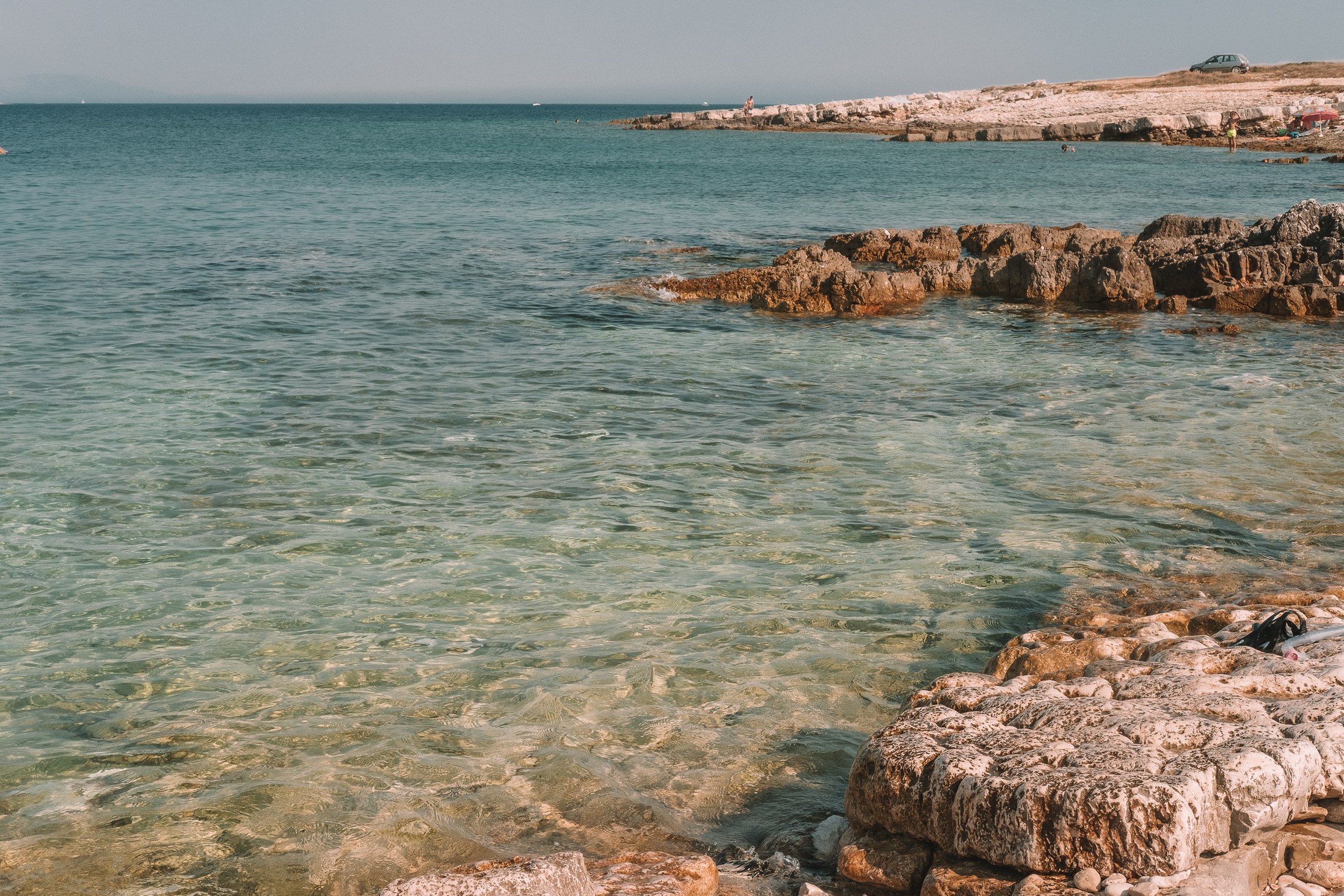
Brittany, France: 15 Best Things to See and Do in 2026

TL;DRBrittany offers 15 essential tips for where to head in 2026 – from pirate-era Saint-Malo and medieval Dinan to the pink granite cliffs of Ploumanac’h, the wild Pointe du Raz, the prehistoric standing stones at Carnac and the Golfe du Morbihan with its Île aux Moines. Plan on 7 to 10 days for a road trip round the region, splitting your time between the north (Dinan, Saint-Malo) and the south (Vannes). June and September are the best months to come, when you’ll dodge the crowds and summer temperatures rarely climb above 25°C. Rooms cost €90–€110 a night out of season, rising to €140–€180 in summer. Since 2025 the Carnac stones have come under stricter UNESCO protection, and in summer you can only walk among them with a paid guide.

Forget about lavender fields, lazy afternoons with a glass of rosé and the endless chirping of cicadas for a moment. Here in Brittany, France, you find yourself in the far northwest, on the very edge of the European continent, where the land wages an eternal and futile battle with the stormy Atlantic. This is definitely not the polished, romantic France you know from travel brochures.

It is a rugged land of granite, salt, fierce wind and immensely proud Celtic heritage. The locals often feel like Bretons first and French second, and they’ll let you know it very quickly. They have their own language, their own black-and-white flag called the Gwenn-ha-du, which you’ll see flying absolutely everywhere, and a completely different idea of what a good life should look like.

Travellers come here for the raw and dramatic scenery that takes your breath away. They come for the cliffs where enormous ocean waves shatter with such force that the ground literally trembles beneath your feet. They are drawn by the mysterious standing stones that stood on these plains long before the Egyptian pyramids were even built.

If you’re planning a road trip, allow yourself a proper loop of ideally seven to ten days. Brittany won’t give you anything for free and the moody weather will occasionally test your patience, but in return it rewards you with experiences that get under your skin and never let go.

TL;DR

  • Best bases: For the north coast choose historic Dinan or Saint-Malo; to explore the south, base yourself strategically in the town of Vannes.
  • Transport and getting around: A car is an absolute must, because the most beautiful spots sit on narrow lanes by the cliffs that public transport practically never reaches.
  • Tides: The northern part of the region has some of the biggest tidal ranges in Europe, with the water rising and falling by more than 10 metres.
  • Breton cuisine: Forget baguettes — here it’s all about salted butter, buckwheat galettes and the ever-present apple cider.
  • Weather and clothing: A waterproof jacket is essential kit even in August; the Atlantic wind would turn an ordinary umbrella into a useless tangle of wire.
  • Book ahead: Reserve accommodation and ferry tickets to the islands well in advance, as capacity is very limited over the summer.
  • New UNESCO rules: The famous standing stones at Carnac have been under stricter protection since 2025, and in high season you can only approach them with a paid guide.

When to visit Brittany and how to survive the local weather

A popular local joke says that in Brittany the weather is lovely several times a day. The conditions here are extremely changeable, and a strong Atlantic wind with rain can lash you even in the middle of an August afternoon. So leave the umbrella at home, because the Atlantic gale would turn it into a completely useless tangle of wire within a single minute. Instead you’ll want a quality waterproof jacket, which the locals call a ciré. Ideally get one in the traditional bright yellow, so you blend right in with the locals and honour their seafaring tradition.

On the other hand, this wild untameability is a huge advantage for the whole region. While the south of France bakes in 40-degree heat in July and August and suffocates under unbearable crowds of tourists, Brittany offers pleasantly breathable air and refreshing coolness. Summer temperatures rarely climb above 25 degrees, which creates absolutely ideal conditions for full-day walks along the coastal paths or exploring the stone-built towns. Do pack clothes you can easily layer, though, because the morning sea mists can really chill you to the bone.

If you want to avoid the biggest crowds of French holidaymakers who descend on the region en masse, the ideal compromise for a visit is June or September. The ocean is calmer at this time and nature is beautifully coloured. Outside the main summer months, however, be prepared for many smaller family businesses, rural crêperies and some historic attractions to cut their opening hours or close their doors entirely. The winter months are reserved for the most hardened adventurers only. They love the solitude, don’t mind the endless gales, and want to experience the rawest face of this Celtic coast first-hand, without any embellishment.

Where to stay in Brittany and how much it costs

💡 Accommodation and experiences tip: We like to look for places to stay on Booking.com, which usually has the best cancellation policies. For tickets, tours and activities it pays to compare and book through GetYourGuide.

Given the enormous size of the region, it makes no sense to stay in one place the whole time, as you’d spend long hours pointlessly driving back and forth. It’s best to split your stay between two strategic bases, something seasoned travellers also recommend. To explore the northern Emerald Coast and the pink granite cliffs, choose accommodation around the towns of Dinan or Saint-Malo. Incidentally, you can reach both by high-speed TGV train from Paris, so you can get there without a long drive too. For the southern Celtic part with its standing stones, the area around the town of Vannes or the Gulf of Morbihan is a great fit, putting you a short hop from the most beautiful islands.

In 2026, be ready for the fact that accommodation prices in France have crept up slightly again. A decent double room in a small guesthouse or three-star hotel will cost you around 90 to 110 euros a night out of season. During July and August these figures easily jump to 140 to 180 euros, especially if you want to stay right by the sea or in the historic centres of the fortified towns. Always look for your accommodation well in advance to bag the most charming family-run hotels and traditional stone cottages with blue shutters.

If you’re after a truly authentic experience in the north, I’d recommend you choose medieval Dinan over the busy resort of Saint-Malo. Dinan offers a far calmer evening atmosphere, gorgeous views over the green valley of the river Rance, and the hotels here tend to be noticeably cheaper than right on the coast, which is a magnet for day-trippers. In the south, consider the smaller villages within walking distance of the Gulf of Morbihan. In the morning you’ll hear only the cry of gulls, the rustle of pines and the bells from nearby country churches — pure balm for the soul after days spent on windy cliffs.

15 Best Things to See and Do in Brittany

Let’s take a look together at a complete overview of the most beautiful places that definitely shouldn’t be missing from your itinerary. From fortified pirate ports through geological anomalies to mystical sites full of prehistoric stones. Remember that it’s better to arrange boat tours or entry to some of the castles in advance during the high season, and you can easily book all sorts of trips through GetYourGuide.

1. Saint-Malo and a walk along the ramparts

Saint-Malo is an absolute icon of the north coast and the symbolic gateway to all of Brittany. This former stronghold of the feared corsairs — state-sanctioned pirates who raided enemy English ships — is surrounded by massive stone ramparts. During the Second World War the town was sadly almost levelled to the ground, but the locals stunningly rebuilt it stone by stone. A walk along the ramparts known as Les Remparts is an absolute must, giving you a bird’s-eye view of the narrow lanes packed with crêperies, the endless ocean and the island fortresses.

The bay between Brittany and Normandy — where, incidentally, the famous abbey of Mont-Saint-Michel lies about fifty minutes’ drive away — has one of the biggest tidal ranges in all of Europe. The water regularly rises and falls by an incredible ten metres. At low tide you can walk dry-footed all the way out to the little islet of Grand Bé, where the famous French writer Chateaubriand is buried.

💡 Tip: Keep a close eye on your watch and the official tide tables posted at every beach entrance. Once the water starts coming back in, they say it advances at the speed of a galloping horse. Many careless tourists have had to be ignominiously rescued from the islet by the coastguard, so watch the time carefully.

2. Tasting authentic Breton cuisine

Before heading further along the coast, you absolutely must get to grips with the local gastronomy, because it is utterly sacred to every Breton. The cornerstone here is salted butter, which goes into absolutely everything and without which the local cuisine would scarcely exist. You simply must try the traditional galette — a dark, earthy, slightly crispy savoury buckwheat pancake. The classic is the so-called complète with cheese, egg and optionally ham. In the local crêperies, though, you’ll come across dozens of different variations; the cheese-only, mushroom or fresh-spinach fillings are excellent too.

For a sweet finish, treat yourself to the classic wheat-flour crêpe, ideally with homemade salted caramel known as caramel au beurre salé. If you like really rich desserts, hunt down a kouign-amann at the bakery. It’s a devilishly good pastry made of layers of dough, butter and sugar, after which you’ll need to walk at least ten kilometres. You can also try far breton, a dense flan-like dessert often studded with prunes.

💡 Tip: You never drink wine or beer with galettes, but exclusively fermented apple cider known as cidre, whether in the dry (brut) or sweet (doux) variety. It’s served in traditional wide ceramic bowls called bolées. And if you spot a poster for a Fest-Noz celebration, head along for an evening full of Celtic music, dancing in circles and litres of cider.

3. Dinan and its medieval lanes

If you’re after pure medieval charm and want a break from the strong ocean wind, drive a little way inland to the enchanting little town of Dinan. Luckily this town didn’t suffer the enormous wartime damage that the coastal ports did, so here you’ll find perfectly authentic half-timbered houses and winding stone lanes that whisk you back several centuries in an instant. The entire historic centre sits high on a hill above the river Rance and offers wonderful views over the green wooded valley.

The best-known and most-photographed spot is the steep Rue du Jerzual, which drops from the centre all the way down to the small, peaceful port on the river. It’s lined with the workshops of local artists, little cafés and craft shops, so you’ll definitely linger far longer than you originally planned. The walk down is incredibly romantic, but be prepared — the steep climb back up will give you a decent workout.

💡 Tip: Head down to the river early in the morning, when a light mist still hangs over the water and the narrow lanes are completely empty. The atmosphere is utterly magical at that moment. Dinan also works as a superb, quieter strategic base for exploring the whole north coast, from where you can run day trips out in all directions.

4. Dinard and the Belle Époque atmosphere

Right across from rugged, stone-built Saint-Malo, directly over the mouth of the river Rance, lies the noticeably more elegant and refined Dinard. At the turn of the nineteenth and twentieth centuries, wealthy Britons and influential Parisians built showpiece villas perched high on the cliffs here. You can feel the very strong atmosphere of the good old days of the Belle Époque, when people went to the sea in long striped bathing suits and ladies strolled with lace parasols to carefully protect their pale skin.

Stroll along the gorgeous seafront promenade, the Promenade au Clair de Lune, which is surprisingly planted with palm trees and lush Mediterranean greenery. That, by the way, is a real rarity for the windswept northern coast of France. The architecture of the local villas is incredibly varied and at times almost crazy. You’ll find everything from fake Gothic castles with turrets to extraordinary oriental palaces commissioned by eccentric millionaires craving attention.

💡 Tip: In the summer months, popular guided evening walks are held around the town, during which the most beautiful historic villas are dramatically illuminated. It’s a lovely contrast to the wild scenery you’ll see everywhere else, and it shows an entirely different face of this normally very rugged Celtic region.

5. Cancale and the famous oyster market

This little harbour town is an absolute culinary phenomenon you mustn’t miss, even if you’re not normally a fan of seafood. The shallow local bay produces an incredible 15,000 tonnes of oysters a year, and gourmets flock here from all over Europe for this gastronomic treasure. The best and most authentic experience, though, isn’t found in some overpriced restaurant with white tablecloths. Instead, head straight to the quayside and the bustling open-air market, the Marché aux Huîtres.

The atmosphere here is wonderfully relaxed, noisy and utterly informal. The stallholders sell freshly caught oysters for literally a few euros, expertly shuck them for you on the spot and add nothing more than half a plain lemon. Locals and tourists alike then sit down on the stone wall with a view of the sea and tuck in. They simply toss the empty shells over their shoulder onto the beach below, where millions of other pearly shells from previous years already lie.

💡 Tip: On a clear day you can see the famous silhouette of Mont-Saint-Michel abbey in the distance from the Cancale quay. Just outside the village lies the wild Pointe du Grouin, where, they say, the wind goes to sleep. Take a post-meal walk out there for views of the rough sea and the bird reserve on the Île des Landes.

6. Cap Fréhel and the wild heathlands

As you continue along the north coast further west, you’ll hit the dramatic headland of Cap Fréhel, which will quite literally take your breath away. The breathtaking pink sandstone cliffs here drop 70 metres straight down into the churning ocean, where huge Atlantic waves shatter against them. It’s demonstrably one of the windiest places in all of France, so don’t forget to fasten your hood tightly and keep a firm grip on your hat — otherwise you’ll lose it forever in a single second.

Around the tall lighthouse stretch endless heathlands, a strictly protected nature reserve and home to many rare species of seabirds. If you arrive at the end of summer, the whole plain bursts into vivid purple and rich yellow. In sharp contrast to the dark blue ocean, it creates an absolutely perfect scene that looks just like something out of a romantic painting.

💡 Tip: The car park by the lighthouse itself fills up very quickly in high season and charges a fee. It’s far better to leave the car a little further away and walk out to the headland along the well-kept coastal path. The experience of the lighthouse slowly emerging from the mist and heather is much stronger, and you’ll get wonderful photos without the crowds.

7. Fort la Latte towering above the ocean

About an hour and a half of leisurely walking along the scenic coastal path from Cap Fréhel, you’ll reach the fascinating medieval castle of Fort la Latte. You can, of course, also drive there in a few minutes if you’re short on time, but that walk with its uninterrupted views of the jagged cliffs is truly worth it. The fortress itself, built in the fourteenth century, looks exactly how you’d picture an impregnable castle on the very edge of an abyss, with enormous waves crashing against it.

Several historical films have been shot here, and it’s no wonder — the setting is absolutely flawless. The castle still has a working drawbridge, massive stone towers and a spacious courtyard relentlessly battered by the ocean wind. The view from the main keep over the churning ocean and the surrounding Emerald Coast is priceless, even if the climb up the narrow, well-worn spiral stairs requires a bit of fitness.

💡 Tip: In August, grand medieval festivals with real knightly tournaments and period music are regularly held at the castle. If you’re travelling with children, it’s a tremendous experience they’ll remember for a long time. The whole castle comes alive exactly as it actually functioned hundreds of years ago.

8. Ploumanac’h and the Côte de Granit Rose

The north coast hides an incredible geological anomaly that you’ll find in only three other places on Earth — the rest being nearby Corsica and far-off China. The Côte de Granit Rose, or Pink Granite Coast, is a unique stretch around the villages of Perros-Guirec and Ploumanac’h. The local shores and shallows are strewn with massive pinkish boulders that look as though some angry prehistoric giant scattered them here.

The village of Ploumanac’h itself regularly, and entirely deservedly, wins the polls for the most beautiful village in all of France. When you arrive at dusk and the setting sun strikes the granite stones full on, they turn incredible shades of copper, orange and deep pink. The tireless Atlantic wind and water have, over millions of years, sculpted the stones into the most bizarre shapes, in which, with a bit of imagination, you can spot all kinds of figures and animals. The locals will happily show you a boulder resembling Napoleon’s famous hat, a sinister witch or a giant turtle crawling out of the sea.

💡 Tip: In the immediate area around the Mean Ruz lighthouse, the concentration of pink stones is absolutely highest and the scenery is most impressive. Be prepared, though, to share the best photo spots with crowds of other enthusiastic travellers in the summer months, so I recommend setting out really early in the morning or, conversely, just before sunset, when the place is at its most magical.

lukas a lucka
Lukáš and Lucie recommend
Where to stay in Brittany
1 accommodation — hotels and other lodging options

9. Sentier des Douaniers (the Customs Officers’ Path)

The absolute best way to soak up the atmosphere of the pink coast and avoid the crowded car parks is to go for a walk. The Sentier des Douaniers, also known as the long-distance GR 34 hiking trail, was originally created for vigilant customs officers who patrolled the cliffs by night, scouring for dangerous smugglers. Today this iconic trail winds right between the giant granite boulders along the sea and offers the best, unobstructed views of the endless ocean — views you simply won’t get from elsewhere on the mainland.

The most beautiful section, lying between the towns of Perros-Guirec and Ploumanac’h, is about nine kilometres long and is walkable for absolutely everyone. You don’t need any special hiking gear for it — just comfortable shoes, because the path is more or less flat. The route is very well and clearly marked, and quite literally every few moments it forces you to stop and admire, mouth agape, yet another bizarre rock formation jutting dramatically out of the churning water.

💡 Tip: Set out on the trail ideally very early in the morning at sunrise, or conversely late in the afternoon. Around midday in the summer months it gets surprisingly hot here, and because you’re out on an open cliff the whole time, there’s nowhere to hide from the harsh sun. The treacherous ocean breeze can fool you unpleasantly too, so without good sunscreen you’ll burn very easily.

10. Pointe du Raz at the very end of the world

The word Finistère comes from the original Latin Finis Terrae, which literally translates as the very end of the land. It’s the westernmost tip of France, the wildest and most Celtic part of all Brittany, which quickly reminds you how small we are compared to Mother Nature. If you want to experience an intense feeling of human insignificance against the enormous power of nature, head out to Pointe du Raz. This rocky headland cuts deep into the Atlantic, and giant waves slam into the cliffs with such overwhelming brutality that it’ll take your breath away and send spray shooting dozens of metres into the air.

The whole area was once the victim of an enormous tourist onslaught and unpleasant overtourism, but the French luckily made a very radical cut here. They demolished all the ugly commercial buildings on the headland itself, moved the large car parks and visitor centre further inland, and wisely let nature reclaim this magical place. Today it’s a strictly protected and gorgeous zone, where in the distance you’ll see only the solitary La Vieille lighthouse, bravely defying all the raging elements on a small patch of deserted rock.

💡 Tip: From the central car park to the headland itself it’s about twenty minutes of very pleasant walking. If a strong wind is blowing, definitely keep well away from the edges of the cliffs, because the gusts here can be extremely strong, completely sudden and, above all, very unpredictable.

11. Quimper and its leaning cathedral

When the endless, relentless wind on the cliffs finally wears you down, retreat to the pleasant and considerably calmer inland city of Quimper. This historic capital of the traditional region of Cornouaille is full of romantic narrow lanes, flower-laden bridges over the quiet river Odet and beautiful traditional Breton houses that lean over you. The whole city is clearly dominated by the magnificent Gothic cathedral of Saint-Corentin, which conceals one huge and fascinating architectural curiosity. Its main nave is noticeably and visibly curved. According to an old legend, the medieval architects did this deliberately so the shape of the huge building would resemble Christ’s head tilted on the cross, although a more realistic and far more pragmatic explanation speaks of the need to adapt the structure to the unstable marshy subsoil.

Beyond its unique architecture, Quimper is famous throughout France for its traditional faience. This is beautiful and very detailed hand-painted pottery with typical blue and yellow patterns, which you can buy here as a truly perfect, authentic souvenir to take home. These craft workshops have been operating very successfully since the seventeenth century, and some of them still offer interesting tours right into the production itself, where you can watch the skilled painters at work.

💡 Tip: In the immediate vicinity of the huge cathedral you’ll find plenty of excellent establishments and cosy little cafés. Sit outside on the terrace, order a bowl of dry cider, have a delicious cheese galette and simply watch, in peace, the easy-going hustle of this important Breton centre, which lives at its own slow pace.

12. Concarneau and the fortified Ville Close

On the considerably sunnier southern coast of the rugged Finistère department, you definitely shouldn’t miss the picturesque harbour town of Concarneau. Its main and biggest tourist draw is the so-called Ville Close, or Walled Town. It’s an ancient fortified historic centre sitting on its own small island right in the middle of a large and, to this day, very busy fishing port. You enter this stunning stone town dramatically across a long bridge that spans a deep moat and instantly carries you back hundreds of years into the past.

Inside these old walls awaits a real labyrinth of narrow, cobbled lanes with an unmistakable atmosphere. It’s true that in the main summer season it gets quite touristy here, with plenty of classic souvenir shops and iconic striped sailor shirts. Nevertheless, an evening walk along the massive ramparts overlooking hundreds of anchored fishing boats still has enormous charm and clearly reminds you that Concarneau lives to this day primarily off fresh seafood.

💡 Tip: Arrive at the port around midday, right by the large fish market, where a wonderful spectacle plays out. Even if you have no plans to cook on holiday, it’s absolutely fascinating to watch the fishing boats unload their fresh catches and the noisy, fast-paced auction to local restaurateurs that follows.

13. Vannes as the gateway to southern Brittany

The southern coast of Brittany, the so-called Morbihan department, is noticeably milder and friendlier than the rugged, ever-windy north. The ocean is markedly calmer here, the sun shines far more often and the whole landscape is full of shallow bays that invite you to slow down and rest. An absolutely superb and strategic base for exploring this calmer area is the beautiful town of Vannes. Its medieval centre, with colourful half-timbered houses leaning gently into the narrow cobbled streets, is among the very best-preserved and most charming in the whole wide area.

Beyond the historic core, you’ll also find beautiful, perfectly maintained French gardens stretching along the mighty old town walls. They lead onto a very easy-going promenade lining the modern marina full of snow-white boats bobbing on the calm water. Vannes combines absolutely perfectly the elegance of a larger historic town with the relaxed atmosphere of a summer holiday resort, where there’s simply no rush to be anywhere.

💡 Tip: Don’t forget to stop by the beautiful Place Henri IV during your wanders through town. This is precisely where you’ll find the most beautiful timber-framed houses, and you’ll take the most iconic photos here. It’s especially magical at sunset, when the old wood takes on a wonderfully warm, almost honeyed hue.

14. A boat trip across the Golfe du Morbihan

The name Morbihan itself means “little sea” in old Breton, which perfectly captures the character of this place. In reality it’s a huge, largely landlocked bay dotted with dozens of wooded islands and small islets. According to one old local legend there are exactly 365 of them, one for each day of the year, but in reality only about thirty are inhabited year-round. The rest belong to untamed nature and seabirds, which find a perfect refuge here from the wild ocean.

The absolute best way to get to know this fascinating bay in depth is to hop aboard a pleasure boat in Vannes or the nearby smaller port of Port-Blanc and take a leisurely round trip. The most common and most popular destination is the Île aux Moines, a gorgeous island full of fragrant pines, figs and little white houses. There are almost no cars on the island, so as soon as you disembark in the port, rent a bike and enjoy the complete tranquillity, scented with the intense aroma of sea salt and resin.

💡 Tip: If you have more time and want to see a real, wild ocean island outside the bay, buy a ferry ticket from the nearby port of Quiberon to Belle-Île. This so-called Beautiful Island alternates perfectly between dramatic, steep cliffs and picturesque, pastel-coloured coves where small sailing boats shelter from the wind.

15. Carnac and the mystery of the prehistoric standing stones

The single greatest and most captivating mystery in all of Brittany lies in the south near the unassuming little town of Carnac. Here you’ll find an incredible more than 3,000 standing stones, the so-called menhirs, carefully arranged in extremely long rows stretching for kilometres into the open countryside. They are absolutely staggering, demonstrably over 6,000 years old, and not one of the world’s historians or archaeologists knows for certain to this day why they actually stand here or how people of that era managed to get them here at all with their primitive technology.

Was it a giant astronomical observatory, a sacred place for worshipping the dead, or perhaps a gigantic calendar for farmers? An amusing local legend, meanwhile, claims they are a petrified Roman legion, turned to stone by Saint Cornelius as he fled from them along the coast. Whatever the truth, the place has an incredible and deeply mysterious energy that completely engulfs you the moment you first lay eyes on those endless ranks of giant, silent boulders.

💡 Tip: Be very careful of the new rules. Since 2025, Carnac has been proudly inscribed on the UNESCO list, and due to extreme tourist pressure a very strict protection regime now applies to the monument. From April to September, free access right among the stones is forbidden, and you can only reach them as part of a paid guided tour with an official guide. You can see them for free and comfortably from behind a low fence, but if you long to walk right among them and touch them, you must book a tour in good time. In the winter months the regime is noticeably more relaxed.

Where to go next from Brittany

If you’ve set aside more than ten days for your French road trip, definitely cross the regional border eastwards. Brittany flows very smoothly into the equally fascinating Normandy, which offers a slightly different history but equally good food and a gorgeous coastline.

  • You absolutely mustn’t miss Mont-Saint-Michel. This famous island abbey lies exactly on the border between the two regions and is an absolute architectural miracle, cut off from the mainland with every high tide.
  • Continue along the Normandy coast and visit the giant chalk cliffs at Étretat, which the famous Claude Monet himself came to paint.
  • Stop off at the historic D-Day landing beaches in Normandy, such as the well-known Omaha Beach, where the weighty but hugely important modern history of our planet hangs in the air.

Frequently asked questions

Jak dlouho trvá cesta autem z Česka do Bretaně?

Cesta z Prahy do Rennes, což je pomyslná vstupní brána do regionu, trvá čistého času zhruba 13 až 14 hodin a urazíte při ní přes 1300 kilometrů. Většina cestovatelů si tuto dlouhou trasu chytře rozděluje na dva dny s přespáním někde v Německu nebo východní Francii. Je to mnohem bezpečnější a zajistí to, že nepřijedete na pobřeží naprosto zničení a rovnou si začnete užívat dovolenou plní energie.

Platí se v Bretani dálniční poplatky?

Tady pro vás mám naprosto skvělou zprávu, která hodně potěší vaši peněženku. Na rozdíl od zbytku Francie, kde jsou dálnice poměrně draze zpoplatněné mýtnými branami, jsou rychlostní silnice a dálnice v samotné Bretani pro osobní auta zcela zdarma. Je to historické specifikum, které si region před staletími úspěšně vybojoval, a při delším roadtripu vám to spolehlivě ušetří spoustu peněz na další palačinky.

Domluvím se v Bretani anglicky?

V hlavních turistických centrech, větších hotelech a u vyhlášených památek se anglicky bez větších problémů domluvíte. Jakmile ale vyrazíte do menších vesnic, zastrčených venkovských palačinkáren nebo na trhy, angličtina velmi rychle mizí. Místní hrdí obyvatelé ale nesmírně ocení, když se naučíte alespoň základní francouzské pozdravy jako bonjour a merci. Rázem roztají a hned se k vám budou chovat o poznání vřeleji a vstřícněji.

Je v Bretani moře vhodné ke koupání?

Bretaň z jedné strany omývá Atlantický oceán a z druhé průliv La Manche, takže voda je tu opravdu hodně studená a divoká. I v parném srpnu se teplota vody málokdy dostane nad osvěžujících 18 až 19 stupňů. Koupání je tak spíše pro opravdové otužilce a milovníky ledové vody, většina lidí sem jezdí spíše za dramatickými výhledy, dlouhými procházkami na útesech a pobytem na zdravém čerstvém vzduchu.

Jak je to v Bretani se psy?

Francouzi obecně psy naprosto milují a Bretaň v tomto ohledu není žádnou výjimkou, spíše naopak. Do mnoha restaurací i menších hotelů vás se čtyřnohým parťákem bez řečí a s úsměvem pustí. Dejte si ale velký pozor na plážích, protože během hlavní letní sezóny platí na většině opečovávaných městských pláží přísný zákaz vstupu psů, musíte tedy s chlupáčem vyhledávat divočejší a odlehlejší úseky pobřeží.

Co dělat, když celý den prší?

Pokud vás chytne opravdový a vytrvalý atlantický liják, stáhněte se z větrných útesů do vnitrozemí. Můžete navštívit obrovské mořské akvárium v Saint-Malo, prozkoumat malebné kryté historické centrum města Vannes, schovat se do monumentální gotické katedrály v Quimperu nebo prostě strávit dvě hodiny v suchu a teple nad výbornou sýrovou galette a velkou miskou jablečného cidru, což k místní kultuře patří úplně stejně jako památky.

Jsou v Bretani nějaké možnosti pro vegetariány?

Ačkoliv je místní tradiční kuchyně hodně založená na sýrech, vejcích a slaném másle, vegetariáni tu nebudou mít vůbec žádný problém. V každé crêperii vám bez sebemenších potíží udělají slanou galette plněnou jen rozteklým sýrem, houbami, čerstvým špenátem nebo karamelizovanou cibulí. Restaurace ve větších městech a přístavech už dnes navíc naprosto běžně nabízejí i moderní a velmi chutná bezmasá hlavní jídla.

Tips and Tricks for Your Vacation

Don’t Overpay for Flights

Search for flights on Kayak. It’s our favorite search engine because it scans the websites of all airlines and always finds the cheapest connection.

Book Your Accommodation Smartly

The best experiences we’ve had when looking for accommodation (from Alaska to Morocco) are with Booking.com, where hotels, apartments, and entire houses are usually the cheapest and most widely available.

Don’t Forget Travel Insurance

Good travel insurance will protect you against illness, accidents, theft, or flight cancellations. We’ve had a few hospital visits abroad, so we know how important it is to have proper insurance arranged.

Where we insure ourselves: SafetyWing (best for everyone) and TrueTraveller (for extra-long trips).

Why don’t we recommend any Czech insurance company? Because they have too many restrictions. They set limits on the number of days abroad, travel insurance via a credit card often requires you to pay medical expenses only with that card, and they frequently limit the number of returns to the Czech Republic.

Find the Best Experiences

Get Your Guide is a huge online marketplace where you can book guided walks, trips, skip-the-line tickets, tours, and much more. We always find some extra fun there!
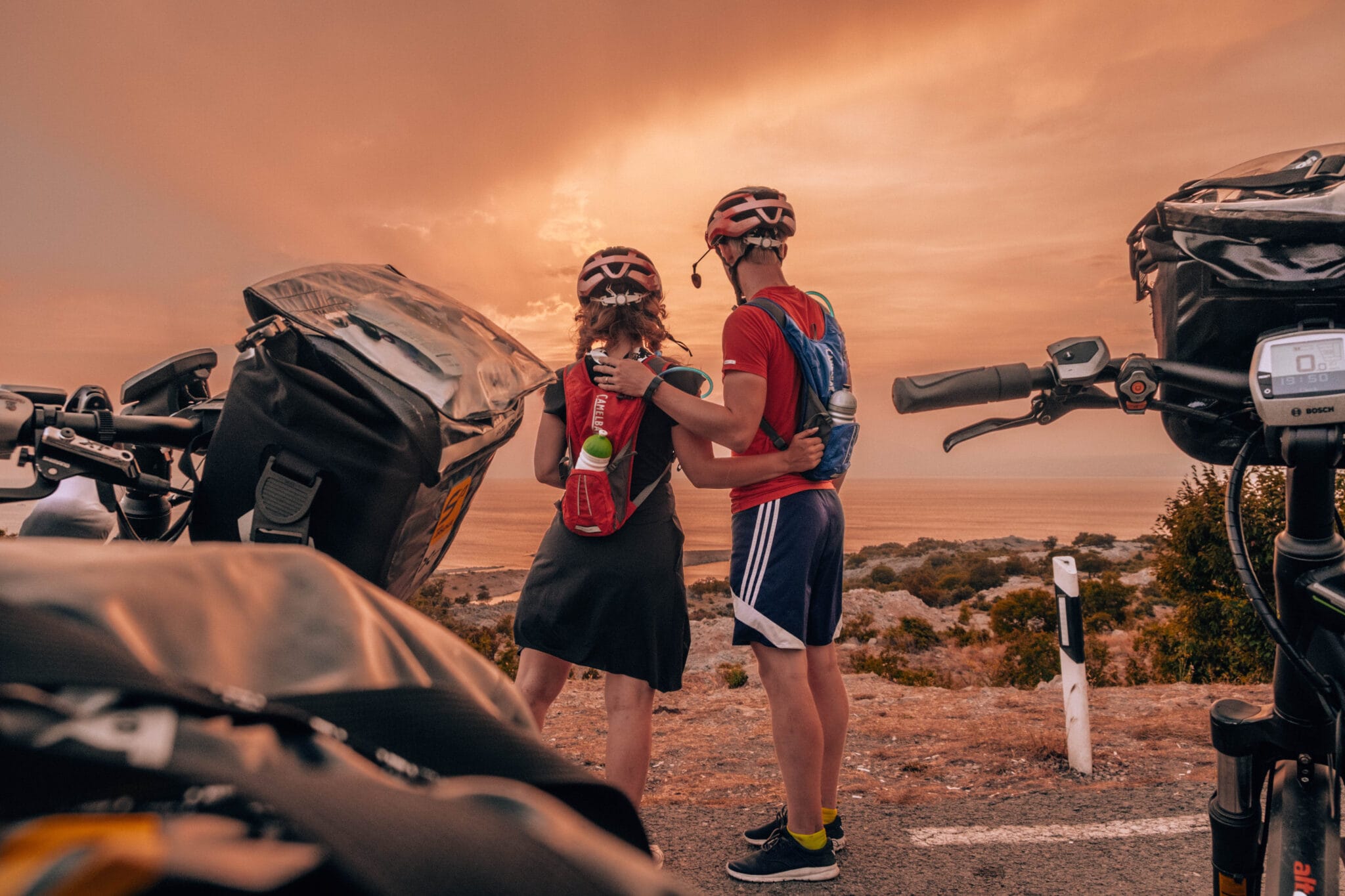
Corsica Road Trip: Driving the Island in 7–10 Days in 2026

TL;DRA 7–10 day Corsica road trip in 2026 runs anticlockwise from Bastia via Cap Corse, Calvi, the Gulf of Porto with its Scandola nature reserve, the Calanche de Piana rock formations, Ajaccio, mountainous Corte with the Restonica gorge, the Aiguilles de Bavella, Bonifacio, and the beaches of Palombaggia and Santa Giulia near Porto-Vecchio. The whole route covers 600 to 700 kilometres, and 8 days is the sweet spot, though it’s easy enough to stretch it to 10. May, June and September are the best months to go — steer clear of August, when the crowds and prices both spike. A car is essential on the island, and a week’s budget for two, including guesthouse stays, comes to €1500–€2000.

The moment you step off the ferry and take your first deep breath, you feel it. The air is a heady blend of wild thyme, rosemary, myrtle and sun-baked earth. Corsicans call this distinctive scrubland the maquis. Napoleon Bonaparte once supposedly claimed he could recognise his home island blindfolded, purely from this unique fragrance. A Corsica road trip really does begin with the nose before the eyes.

Corsica has more than earned its nickname, the Island of Beauty. Don’t expect the polished French Riviera here, though, with its tidy promenades and pricey boutiques. This island is rugged, proud and unforgiving of driving mistakes. It’s essentially one enormous mountain range that somebody picked up and carelessly dropped into the middle of the Mediterranean.

If you’re after a destination for an adventurous road trip in 2026, you’ve come to exactly the right place. In the morning you can scramble up cliffs with steel chains bolted into the rock, and by afternoon wash the sweat off your face in a turquoise lagoon. I’ve put together a detailed eight-day itinerary that will reliably guide you through the very best of what Corsica has to offer.

TL;DR

  • Total route length: Roughly 600 to 700 kilometres. The island looks small, but on the winding mountain roads the kilometres pass painfully slowly and your average speed stays low.
  • Recommended time: Exactly 8 full days for the loop itself, with the option to stretch it to 10 days for a slower pace and longer rest stops on the beaches.
  • When to go: The best months are May, June and September. Avoid August at all costs because of the extreme crowds and wildly inflated prices.
  • Transport: A car is an absolute must. Without one you’re practically stranded on the island and won’t reach the most beautiful hidden coves.
  • What to look forward to: Red granite cliffs plunging into the sea, snow-white Caribbean-style beaches, towering mountain peaks and historic Genoese citadels.
  • Top tip: Book your ferry from the mainland ideally six months ahead, because high-season capacity disappears at an incredible rate.

When to Set Off on This Trip

Picking the right dates is absolutely crucial to a successful Corsica road trip and can decide whether you fall head over heels for the island or leave it utterly drained. The ideal months to visit are May, June and September, when the weather is already gloriously sunny and the autumn sea stays pleasantly warm long after summer. In this period you can breathe freely on the roads, empty coves are almost all yours and accommodation prices stay within reason. You can sip your morning coffee in quiet historic alleyways without the stress of finding nowhere to park near the beach.

August, on the other hand, you should avoid like the plague, because that’s the month when the French and Italians take their national holidays and storm the island en masse. Compared to July there are suddenly two to three times as many tourists, which puts an enormous strain on the island’s infrastructure. The narrow mountain roads regularly turn into endless car parks, and drivers lose their patience in tailbacks that form even in remote spots high in the mountains.

The finest white-sand beaches in the south-east are hopelessly booked out in summer, and the prices of ferries and accommodation soar to truly absurd heights. Even in the campsites you can struggle to find a free pitch for an ordinary small tent. If you have no choice but to travel during the summer holidays, arm yourself with enormous patience and always set out on your day trips early in the morning, ideally at first light, to dodge the biggest crowds.

Also consider a trip in very early October, when autumn Corsica has a wonderfully calm charm, nature’s colours start to turn and the tourist bustle dies down. Whatever dates you settle on, buy your ferry tickets well in advance, because capacity for the most popular crossings vanishes in a flash and you might not get on board at all if you leave it until you arrive.

Practical Info: Car, Transport and Budget

You can reach the island by plane at one of four local airports, but most travellers quite rightly opt for the ferry. For visitors from the UK, the most straightforward approach is to fly to a southern French city such as Nice or Marseille and pick up the ferry there. The fastest crossing runs from Nice to Bastia, taking roughly six to seven hours of actual sailing. From Toulon allow eight to ten hours, and Marseille is historically the longest route, where you’ll be at sea for twelve to fourteen hours, so it’s well worth paying extra for an overnight cabin.

If you want to save a serious amount of money, consider departing from mainland Italy, because the Italian ports are consistently the cheapest and the crossing from Livorno takes only about four hours. A foot passenger pays between €40 and €100 for a ticket, but once you add a car and travel as a pair, a return ticket will set you back anywhere between €250 and €1,000. It all depends mainly on how far ahead you book and exactly which season you travel in.

On the island itself a car is quite simply a question of survival, and without one you’re completely stuck in Corsica. Public transport does technically exist, but relying on it means spending your holiday waiting at bus stops where the bus might turn up and might not. A car gives you total freedom to discover empty coves and explore remote mountain passes entirely at your own pace.

The roads here are very often carved straight into sheer rock. Corsican roads are narrow, incredibly winding and full of animals, so be prepared for an average speed that rarely tops forty kilometres per hour. A budget for a week-long road trip for two people with your own car and guesthouse accommodation works out at roughly €1,500 to €2,000, depending on how much you treat yourselves in the local taverns.

Day-by-Day Itinerary

This detailed plan is cleverly designed so you loop around the whole island anticlockwise. That keeps you driving on the outer side of the road, where you’ll have the best and most photogenic sea views the entire time.

Day 1: Bastia and the Northern Cape, Cap Corse

Your adventurous road trip kicks off as you disembark in the bustling port of Bastia in the north-east of the island, the main gateway for ferries. This town is beautifully authentic, a touch rough around the edges at first glance, and the narrow lanes of the old harbour smell gorgeously of fish and ripening cheese. Be sure to make time for a morning coffee by the port and soak up the genuine local atmosphere before you climb into the car for the first time and head north.

The main goal of the day is Cap Corse, a thirty-kilometre peninsula that points like a raised finger towards Genoa in Italy. It’s essentially Corsica in miniature, where a narrow coastal road leads you past old Genoese watchtowers, tiny fishing villages and steep slopes plunging dangerously into the waves. The views here are absolutely breathtaking, especially on the western side of the peninsula, and they’ll have you stopping every other kilometre.

In the afternoon I’d suggest dropping down into the picturesque Patrimonio region, famed for its green vineyards and offering quite simply the best wine tastings on the island. For dinner, stop at a local tavern and order the excellent vegetarian pizza made with chestnut flour and fresh local sheep’s cheese, brocciu. The locals may love their hearty cured meats, but you’ll find a surprising number of meat-free, light dishes made from fresh vegetables here too.

💡 Tip: For your first night, stay in the harbour town of Saint-Florent, just a stone’s throw from Patrimonio. You’ll find it easily on Booking.com, and it makes a strategically brilliant base for the onward journey west.

Day 2: Calvi and the Balagne Coast

Right after breakfast, set off from Saint-Florent heading west across the parched Agriates desert, which makes a fascinating contrast to the green vineyards. The winding road brings you to the lovely harbour town of L’Île-Rousse, which got its curious name from the deep-red granite islets scattered just off the coast. Stop here for a mid-morning coffee, stroll along the promenade and drink in the wonderfully laid-back morning atmosphere, in sharp contrast to the wild nature all around.

The day’s main goal is the enchanting town of Calvi in the north-west, confidently dominated by its huge historic citadel. This fortress rises on a rocky spur directly above the sea, and within its walls hides an intricate maze of cobbled lanes dotted with charming cafés where you could happily spend a whole afternoon. For lovers of tough mountain hiking, it’s worth knowing that the northern (and most brutal) section of the famous GR20 trek starts nearby, from the village of Calenzana.

The region around Calvi is called Balagne, and it boasts beautiful sandy beaches with a very gentle slope into the sea, perfect for an afternoon of relaxation. For a late lunch, try the traditional Corsican soup, made from a huge amount of fresh vegetables, local beans and fragrant herbs gathered straight from the maquis. It will reliably keep you going for the rest of an afternoon spent swimming and exploring the hidden lanes of the old town.

💡 Tip: Calvi is an absolutely ideal spot for a peaceful overnight stay. Book a room via Booking.com at the Le Magnifique hotel or one of the smaller romantic guesthouses right beneath the old citadel.

Day 3: The Gulf of Porto and the Scandola Nature Reserve

On day three a fascinating drive awaits along the west coast heading south, where the island shows its most dramatic face. This part of Corsica is all about wild nature, where high mountains meet the sea in the strangest volcanic shapes. Your main destination is the magnificent Gulf of Porto and the adjacent protected cove of Girolata, where for a while you’ll forget civilisation even exists.

A little north of Porto lies the strictly protected Scandola nature reserve, which quite rightly falls under UNESCO protection. It’s one of the few places in France you absolutely cannot reach by car, and for conservation reasons you can’t even get there on foot. The only way to see this unique volcanic landscape full of dark caves, red cliffs and nesting ospreys is to take a tour boat from the port in Porto or Calvi.

The rules here are extremely strict, and from the boat there’s an absolute ban on stepping ashore, so as not to disturb the local wildlife. The fragile ecosystem is so overburdened by boat traffic that the park authority is bringing in very tough measures, and around 2027 strict quotas for incoming vessels should come into full effect. I’d therefore recommend planning your trip well in advance and buying tickets via GetYourGuide as early as you can before departure.

💡 Tip: Stay overnight right in the small town of Porto. In the morning it’s just a few dozen steps to the harbour, and in the evening you’ll enjoy an unforgettable sunset over the gulf.

Day 4: Calanche de Piana and the Drive to Ajaccio

Early in the morning, head out onto the panoramic D81 road that links Porto with the picturesque mountain village of Piana. You’ll drive through the staggering Calanques de Piana, where granite formations eroded over millennia drop hundreds of metres straight into the churning sea. Forget the white limestone cliffs you might know from the French mainland near Marseille, because here the rock is literally blood-red and creates an utterly magical spectacle, especially in the morning light.

In these dramatic spots the road is carved straight into the rock, and driving it takes genuinely steady nerves. It’s so unbelievably narrow that when two buses meet on a bend, the drivers have to manoeuvre to the millimetre and you’ll be holding your breath. Pull over at one of the little laybys and take a short hike down to the coast, because in the late afternoon sun the rocks glow a deep crimson and your photos won’t need any filter at all.

In the afternoon a smooth transfer awaits to the island’s capital, Ajaccio, birthplace of the famous commander Napoleon Bonaparte, whose historic traces you’ll find on every corner. The streets are full of busy cafés and statues of the emperor, there’s an international airport, and the overall atmosphere is noticeably more urban and French than in the rest of the island.

💡 Tip: In Ajaccio, find a cosy restaurant in the historic centre for dinner and try the local pasta with a rich cheese sauce and fresh herbs gathered straight from the wild maquis.

Day 5: Mountain Corte and the Restonica Gorge

On day five you’ll leave the coast behind for good and head off to explore the rugged, quiet interior, home to the island’s true soul. The heart of Corsica offers travellers an entirely different world, ruled by absolute calm, the deep chestnut forests of the Castagniccia region and sharp granite peaks rising majestically skyward. Your main destination is the historic town of Corte, rightly regarded as the spiritual centre of all Corsica, and in the eighteenth century the seat of the first independent Corsican government under Pasquale Paoli.

Corte is surrounded on all sides by high mountains and is still home to the island’s only university, which gives the ancient town a very pleasant, lively student atmosphere. From the town a narrow road easily takes you to the renowned Restonica Gorge, one of the most beautiful natural jewels of the interior. The road along the icy mountain river is exceptionally narrow and ends at a car park high in the mountains, where I’d recommend arriving as early in the morning as possible.

From there you can set off on a stunning but physically demanding hike to the crystal-clear mountain lakes of Melo and Capitello. Be warned in advance that even in the height of summer the water is icily refreshing, and only the very hardiest souls dare to take a dip. After a tough trek you’ll deserve a proper reward in the evening, so don’t forget to order the excellent Corsican beer Pietra, unusually brewed from local edible chestnuts.

💡 Tip: Staying in the mountains has its own very particular charm. Find a small stone guesthouse right in Corte via Booking.com and enjoy the cooler mountain air.

Day 6: The Bavella Needles and the Descent South

Today a long but visually stunning drive awaits across the majestic interior towards the longed-for south of the island. You’ll pass the iconic Aiguilles de Bavella, fittingly known as the Bavella Needles, and they’ll take your breath away. They’re sharp, jagged granite towers soaring high above green pine forests, creating an utterly unforgettable Corsican panorama.

This mountain region is an absolute paradise for climbers and keen canyoning enthusiasts who travel here from all over Europe. It’s right here that it fully dawns on you that Corsica is in fact just a giant mountain set in the sea. Don’t forget to pack sturdy hiking boots, because even short walks from the road demand a sure footing, and in beach flip-flops you really wouldn’t get far over the sharp stones.

From the cool mountains you’ll then descend down long hairpin bends back to the coast, all the way to the far south of the island and the town of Bonifacio, where the hot Mediterranean air hits you. The contrast between the cold mountains and the sun-warmed coast is utterly fascinating and beautifully shows off the island’s enormous variety. For dinner in Bonifacio, try the delicious aubergine baked with tomatoes and delicate sheep’s cheese in one of the romantic restaurants right by the busy harbour.

💡 Tip: The drive from Corte via Bavella to Bonifacio takes nearly the whole day. So set off really early in the morning to leave plenty of time for photos and safe stops at the viewpoints.

lukas a lucka
Lukáš and Lucie recommend
Where to Stay in Corsica
5 accommodations — hotels and other lodging options

Day 7: Bonifacio, the Town on the Cliffs

If you could only visit one place in Corsica, it absolutely has to be Bonifacio, because it will knock you off your feet. This ancient town literally defies the laws of gravity, with its old quarter and mighty citadel balanced right on the very edge of dazzling white limestone cliffs. These cliffs drop sheer into the churning sea far below, and the historic houses look as though they might slide into the waves at any moment.

Be sure to visit the famous Aragonese Steps, exactly 187 steps carved straight into the steep rock face beneath the citadel. According to old legend they were cut by Aragonese soldiers in a single dark night during a siege in 1420, though in reality the credit more likely goes to Franciscan monks searching for a freshwater spring. Either way, the descent down to the water and the steep climb back up in the blazing sun is a workout your legs won’t soon forget.

Bonifacio is also the gateway to the Lavezzi archipelago, where I’d thoroughly recommend an afternoon boat trip. It’s a gorgeous nature reserve formed of huge granite boulders scattered through crystal-clear water, where you won’t find a single scrap of shade or a refreshment stand. Take huge supplies of drinking water, a snorkel and genuinely good sun cream, otherwise you’ll burn within the first hour.

💡 Tip: Tour boats to Lavezzi leave directly from the harbour in Bonifacio at regular intervals. You can buy tickets right there at the stands, but in season I’d recommend turning up early in the morning.

Day 8: The Caribbean of the Mediterranean and the Beaches of Porto-Vecchio

Devote the final day of your road trip entirely to the south-east coast below the town of Porto-Vecchio, which has earned the island its nickname as Europe’s Polynesia. The sand here is white and fine as flour and the sea shimmers in every conceivable shade of blue and azure, so at times you’ll feel more like you’re somewhere in the Caribbean than in France. Just be prepared that, in season, you’re far from the only one who knows about this beauty.

Definitely stop at the most famous beach on the whole island, Palombaggia, lined by the crowns of mighty umbrella pines offering merciful shade. Beautiful red porphyry rocks poke out of the shallow water here and there, creating the perfect picture-postcard scene. But come early in the morning, because the narrow access road clogs up incredibly fast, and after nine o’clock parking turns into an outright battle.

Another superb choice for swimming is the bay of Santa Giulia, which forms a perfect horseshoe-shaped natural lagoon. The water here is so calm and stays shallow for so incredibly far that you feel like you’re standing in a giant heated swimming pool, ideal for hiring a paddleboard. In the afternoon, all that’s left is a brisk drive along the main eastern road back to Bastia for the evening ferry, on which you’ll bid farewell to this magical island.

💡 Tip: A little further south, the gorgeous bay of Rondinara hides away from the tourist crowds. Its shape resembles a seashell, and because it’s tucked between two wooded peninsulas it’s beautifully sheltered from the wind. In 2019 it was even ranked among the world’s top 10 best beaches.

Where to Stay Along the Route

💡 Accommodation and experiences tip: We like to search for places to stay on Booking.com, where the cancellation terms are usually the best. For tickets, tours and activities, it’s worth comparing and booking through GetYourGuide.

When planning your accommodation in Corsica, it’s absolutely key not to spend the whole holiday in just one place and commute out to the far-flung corners of the island. I’d recommend switching base every two nights, to effectively cut down on the long and very tiring drives along the winding mountain roads, where the average speed often drops below forty kilometres per hour. The ideal approach is to cleverly mix coastal towns with the cooler interior, showing you both of the island’s beautiful faces in full glory.

In the north of the island, Bastia or nearby Saint-Florent make an excellent and strategic base, easily within reach of Cap Corse. In Saint-Florent you’ll find lovely smaller hotels, such as Hotel La Roya, which offers perfect peace and easy access to both the beaches and the mountains. To explore the Balagne region, go for Calvi and stay within walking distance of the citadel, so you can enjoy evening strolls without the hassle of hunting for a free parking space.

On the west coast I’d recommend dropping anchor right in the Gulf of Porto, from where you can easily set off early in the morning for the boat to the Scandola reserve. For example, Hotel Capo d’Orto offers fantastic views straight out over the red granite rocks and the open sea. In the mountains, look for accommodation in Corte, where there are plenty of small family-run guesthouses with an authentic Corsican atmosphere and excellent local breakfasts that will reliably charge you up for long mountain hikes.

The far south calls for at least two relaxed nights in Bonifacio or Porto-Vecchio, to give yourself enough time for the white-sand beaches and the dramatic limestone cliffs. In Bonifacio, try the popular Hotel des Etrangers, from where you can very easily walk to the historic centre and the Aragonese Steps. Don’t forget to book your 2026 accommodation well ahead, ideally as early as winter, because the best places vanish for good by early spring and last-minute prices are very painful indeed.

Where to Go Next

If travelling around the French regions has captured your heart, don’t miss the other beautiful spots. Read our comprehensive Southern France Road Trip, packed with masses of inspiration for the mainland part of this wonderful country.

For more detailed information about the island itself, be sure to check out our in-depth article on Corsica. And if the white cliffs in the photos fascinate you, don’t skip our dedicated article focused squarely on the town of Bonifacio.

And for the most hardcore hikers and adventurers, we have a separate guide to the legendary mountain crossing. Find out everything you need to know in our article on the GR20, which will get you perfectly prepared for the toughest trek in all of Europe.

Frequently Asked Questions

Potřebuji na Korsiku nutně půjčené auto?

Ano, auto je naprostou a neoddiskutovatelnou nezbytností pro poznávání ostrova. Veřejná doprava je velmi omezená, nespolehlivá a nedostane vás k těm nejkrásnějším plážím ani do horských vesniček. Bez auta uvidíte jen nepatrný zlomek toho, co ostrov nabízí, a strávíte spoustu času zbytečným čekáním na zastávkách v horku.

Kolik stojí trajekt na Korsiku pro dvě osoby s autem?

Ceny se na rok 2026 velmi dynamicky liší podle sezóny a předstihu rezervace. Zpáteční lístek z Francie nebo Itálie pro dvě dospělé osoby s osobním autem vás vyjde zhruba na 250 až 1000 eur. Nejlevněji historicky vycházejí plavby z italského přístavu Livorno, zatímco z Marseille zaplatíte za 14hodinovou plavbu mnohem více.

Kdy je absolutně nejlepší doba pro návštěvu ostrova?

Nejlepší měsíce pro pohodový roadtrip jsou květen, červen a září. Počasí je velmi příjemné, silnice jsou volnější a moře na podzim zůstává krásně teplé z léta. Srpnu se kvůli obrovským davům francouzských a italských turistů, kdy se počet lidí na ostrově ztrojnásobí, a extrémním cenám doporučuji vyhnout velkým obloukem.

Je řízení na Korsice opravdu nebezpečné?

Řízení vyžaduje velkou opatrnost a velmi pevné nervy. Horské silnice jsou extrémně úzké, klikaté a často vytesané přímo do útesů nad propastí bez pořádných svodidel. Pokud ale pojedete pomalu, budete před nepřehlednými zatáčkami preventivně troubit a nenecháte se vyvést z míry místními řidiči, zvládnete to bez problémů.

Jaké místní jídlo by měli vyzkoušet vegetariáni?

Korsika je naprostým rájem sýrů a jedlých kaštanů. Určitě vyzkoušejte lokální ovčí sýr brocciu, tradiční hutnou zeleninovou polévku, bezmasé těstoviny a pizzu z kaštanové mouky. V horách si rozhodně nenechte ujít vynikající kaštanové pivo Pietra nebo zapečený lilek, který po celodenní túře chutná naprosto dokonale.

Je na ostrově povolené divoké kempování?

Ne, stavění stanu kdekoli ve volné přírodě je na celém ostrově přísně a nekompromisně zakázáno a hodně se to hlídá. Platí to i pro proslulý horský trek GR20, kde musíte nocovat výhradně v bezprostřední blízkosti oficiálních horských chat zvaných refuges, a to navíc s povinnou předchozí rezervací, která je dnes nutností.

Jak dlouho trvá objet celý ostrov autem?

Ačkoliv ostrov měří na délku jen necelých dvě stě kilometrů, na kompletní okruh potřebujete minimálně sedm až deset dní. Kvůli velmi náročnému terénu a klikatým silnicím ubíhají kilometry velmi pomalu, průměrná rychlost je nízká a navíc budete chtít neustále zastavovat na úzkých odpočívadlech kvůli dechberoucím výhledům.

Kde najdu ty úplně nejkrásnější pláže?

Nejkrásnější bělostné pláže připomínající Karibik najdete na jihovýchodě kolem města Porto-Vecchio. K těm absolutně nejznámějším a nejfotografovanějším patří pláže Palombaggia lemovaná piniemi, mělká laguna Santa Giulia plná paddleboardistů a perfektně chráněná zátoka Rondinara, která má tvar dokonalé lastury.

Tips and Tricks for Your Vacation

Don’t Overpay for Flights

Search for flights on Kayak. It’s our favorite search engine because it scans the websites of all airlines and always finds the cheapest connection.

Book Your Accommodation Smartly

The best experiences we’ve had when looking for accommodation (from Alaska to Morocco) are with Booking.com, where hotels, apartments, and entire houses are usually the cheapest and most widely available.

Don’t Forget Travel Insurance

Good travel insurance will protect you against illness, accidents, theft, or flight cancellations. We’ve had a few hospital visits abroad, so we know how important it is to have proper insurance arranged.

Where we insure ourselves: SafetyWing (best for everyone) and TrueTraveller (for extra-long trips).

Why don’t we recommend any Czech insurance company? Because they have too many restrictions. They set limits on the number of days abroad, travel insurance via a credit card often requires you to pay medical expenses only with that card, and they frequently limit the number of returns to the Czech Republic.

Find the Best Experiences

Get Your Guide is a huge online marketplace where you can book guided walks, trips, skip-the-line tickets, tours, and much more. We always find some extra fun there!
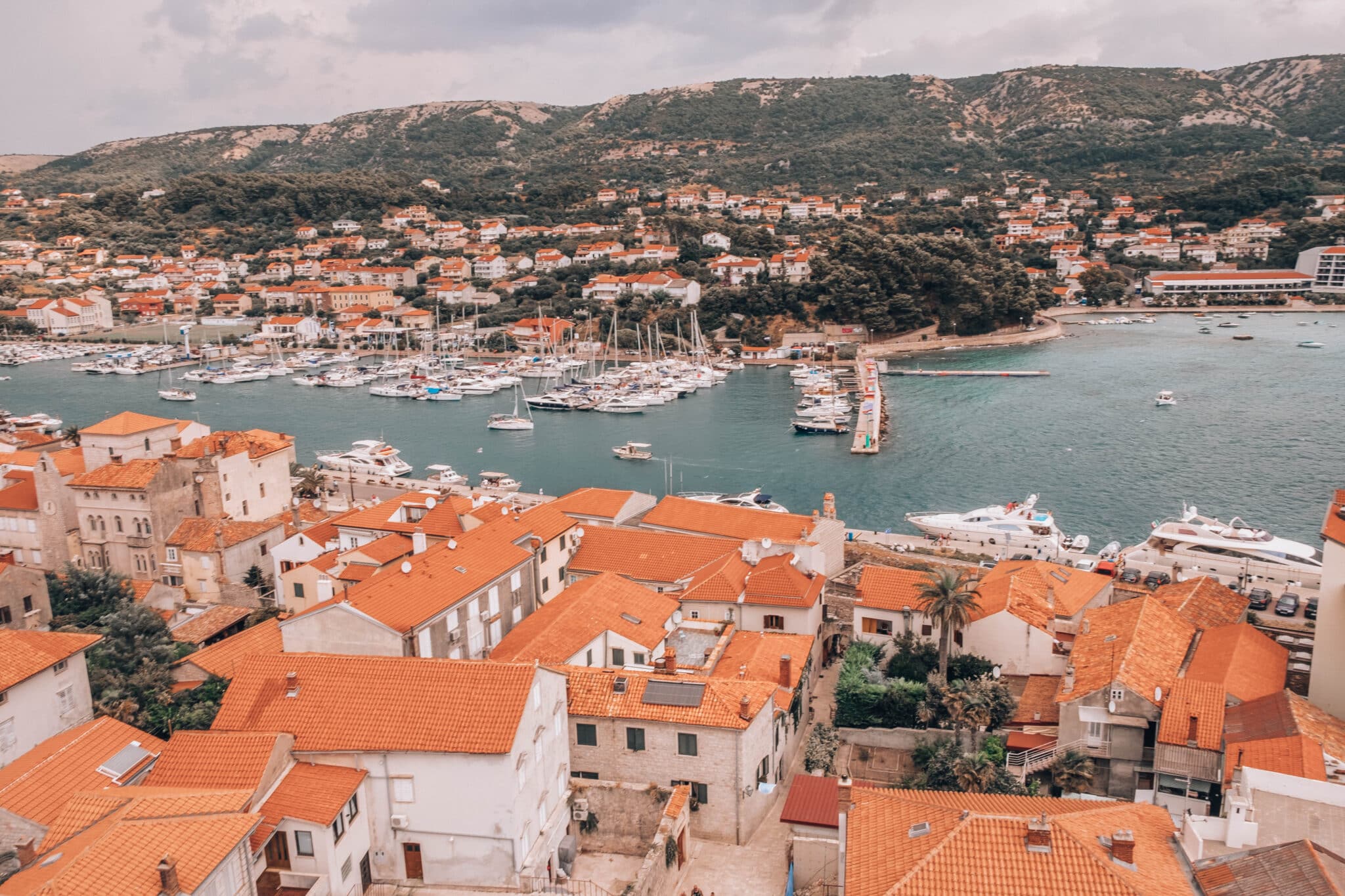
7-Day Lofoten Norway Itinerary: Day by Day 2026

TL;DRThe ideal 7-day Lofoten itinerary starts at a northern base in Henningsvær (days 1–3), then moves to a southern base around Reine and Hamnøy (days 4–7), covering 400–500 kilometres in total. Highlights include the Viking museum at Borg, a catamaran trip into Trollfjord, the beaches at Haukland and Bunes, and the tiny village of Å at the very end of the E10. The best time to come is mid-June to August, when the midnight sun is out and the weather’s at its most settled, with temperatures around 12–15°C. You’ll fly into Evenes Airport (EVE) and hire a car there, since there’s no public transport linking the islands.

You’ve almost certainly stumbled across those breathtaking photos on social media: little red wooden cabins huddled beneath steep granite peaks, with a deep blue ocean spilling out all around them. This Norwegian archipelago above the Arctic Circle is simply one of the most photogenic places on the planet — nobody really doubts that. If you’re thinking about heading to Lofoten, Norway for your holiday, you’re in for an absolutely spectacular experience full of wild nature and dramatic scenery.

Lofoten doesn’t forgive those in a hurry, and trying to rush through it over a long weekend would be a real shame. The weather changes here at incredible speed, and four days simply isn’t enough — you risk it raining the entire time. A two-week stay, on the other hand, will give your wallet a proper workout, since Norway is one of the most expensive destinations in Europe.

After poring over hundreds of travel diaries and real-world experiences, exactly seven days emerges as the absolute sweet spot. A week-long window gives you enough flexibility in case of bad weather, lets you slow down, and lets you soak up the genuine Nordic atmosphere. On top of that, you’ll manage to drive the islands nicely from north to south and back without spending entire days cooped up in the car.

Logistically, it makes the most sense to split your stay between two strategic bases to minimise long transfers. Be prepared: distances here aren’t measured in kilometres but in hours spent on winding roads. So let’s take a detailed look at an itinerary that will guide you through the most beautiful corners, from the busier north all the way down to the magical south.

TL;DR

  • Total route length: Over the week you’ll cover roughly 400 to 500 kilometers, depending on the specific detours.
  • Best time to visit: From mid-June to August you’ll enjoy the midnight sun phenomenon and relatively the most stable weather.
  • Base airport: The most common arrival point is Evenes Airport (EVE) near Narvik, where you can pick up a rental car right away.
  • Splitting your bases: A strategic compromise is to spend 3 nights in the north (Henningsvær) and 4 nights in the south (Reine or Hamnøy).
  • Main experiences: A quiet cruise into Trollfjord awaits you, a visit to the Viking museum, Caribbean-like white beaches and picturesque fishing villages.
  • Driving and tolls: The E10 road is the main artery, most sections are toll-free, but to be safe keep an AutoPass box in your car.
  • Key tip: Don’t try to cram too many places into a single day, the weather in Lofoten dictates the pace and the yr.no app will be your best friend.

When to set off on this trip

Choosing the right dates is absolutely crucial when travelling above the Arctic Circle, because every season offers a wildly different experience. If you want a classic road trip with hiking and long days, go in the summer months — from mid-June to the end of August. During this period average temperatures hover around 12 to 15 °C, which by Nordic standards is actually rather pleasant ☺️. A seven-day window is ideal precisely because Lofoten doesn’t forgive those in a hurry. When a classic Nordic front rolls in and lashes the islands with wind and rain for three days straight, a shorter trip will leave you seeing absolutely nothing — whereas a week-long stay gives you a strong chance of outwitting the Norwegian weather in the end.

The main draw of the Norwegian summer is undoubtedly the midnight sun phenomenon, which lasts roughly from late May to mid-July. During this time the sun never dips below the horizon — it just sinks low over the ocean in the evening, casting a magical golden light. Thanks to this you have endless time for exploring, and you can head to the most popular viewpoints at midnight if you like, when you’ll have them entirely to yourself and avoid the biggest crowds.

You do need to bear in mind that summer is also peak tourist season, which means higher prices and the need to book accommodation many months in advance. August tends to be a little calmer, the days start to shorten, and the sea is at its warmest after summer — though for most mortals it’s still not really swimming weather. By early September nature is turning to autumn tones, the chance of catching the northern lights slowly increases, and the narrow roads pleasantly empty out so you can enjoy far more peace and quiet.

Whichever month you choose, be prepared for the fact that the weather in Lofoten, Norway is incredibly fickle and can change three times in a single afternoon. Within a few hours you can get clear skies, thick fog, driving rain, and strong wind. Your most important companion will therefore be the Norwegian weather app yr.no, which you’ll check several times a day so you can adjust your plans on the fly depending on where the sun happens to be shining.

Practical info: car, transport and budget

For freely exploring the islands, your own or a rental car is an absolute necessity, because public transport here is very sparse. Most travellers fly into the mainland airport Harstad/Narvik (code EVE, often referred to simply as Evenes), which offers the best connections and the widest choice of car hire firms. As soon as you land, collect your reserved car at the airport and set off on the roughly two-and-a-half-hour drive towards the first islands. From the UK, the easiest route is usually a connecting flight via Oslo, with onward services to Evenes.

The main artery of the whole archipelago is the scenic road designated E10, which winds from the mainland all the way down to the southernmost village of Å. Although it’s the most important route, be prepared for the fact that it’s often just a narrow two-lane road, busy in summer with huge numbers of slow-moving motorhomes. Speed limits in Norway are strict, fines are astronomical, and overtaking is practically impossible in many places, so arm yourself with patience.

As for tolls, Lofoten itself is mostly free of toll gates, but if you’re arriving from the mainland or using some of the newer tunnels, the odd charge is unavoidable. Hire firms usually fit cars with an automatic AutoPass box, which records the toll and later debits it from your card. Ferries on shorter routes work similarly — the system automatically scans your number plate and you don’t have to worry about a thing.

Parking at popular tourist spots has become a fairly pricey affair in recent years, so be sure to download the EasyPark app, which works across all of Scandinavia. In popular villages like Reine you can easily pay 35 to 50 NOK (roughly £2.50 to £3.50) per hour to park. As for a rough 2026 budget, it’s worth stressing that Norway is simply expensive — a typical supermarket shop will cost you a good deal more than back home.

Speaking of shopping, your saving grace will be chains like Rema 1000, Kiwi or Coop Extra, where you can get basic ingredients at relatively bearable prices. Restaurants here are extremely expensive — a main course commonly runs to 300 to 500 NOK (around £21 to £35). If you want to keep an eye on your budget, I’d recommend booking accommodation with its own kitchen, where you can make breakfasts and dinners, and get through the day on packed picnics.

The Lofoten Norway itinerary, day by day

This itinerary is designed to minimise the stress of constant packing while still letting you see the best. We’ll start in the northeast and gradually work our way down to the wild south, with a single base change in the middle of the week. You deliberately won’t drive more than two hours at a stretch, so you’ll have plenty of time for spontaneous stops and soaking up the landscape.

Day 1: Arrival at Evenes and transfer to your northern base

The first day is purely about logistics, long transfers, and taking in your first impressions of the Arctic landscape. Once you touch down at Harstad/Narvik Airport (Evenes for short), after a possible stopover in Oslo, collect your reserved car from the hire desk and set off along the E10 heading southwest. Ahead lies an opening route of roughly 160 kilometres that takes you along deep fjords, with ever more dramatic mountains opening up before you, giving you a clear sense of what awaits over the coming days.

After about an hour and a half of driving, I recommend making a practical stop in the town of Sortland, which serves as the natural commercial hub of the whole area. You’ll find a large Coop Extra supermarket here, the perfect moment to stock up on your first supplies for the evening and the next morning, whether that’s fresh bread, cheese, or porridge oats. A short stroll along the waterfront will help you stretch your legs after the long flight, take a deep breath of fresh air, and recharge before the final leg.

Today’s destination is the fishing village of Henningsvær, often nicknamed the Venice of the North, which will serve as your first strategic base. Once you’ve settled into a traditional wooden rorbu cabin, head out for an evening stroll through the narrow lanes and don’t forget to peek at the iconic football pitch, stunningly carved straight into a rocky little islet.

💡 Tip: If you don’t fancy cooking after the long journey, head for dinner at the hipster hub Trevarefabrikken, a former cod-liver-oil factory. The atmosphere is fantastic and they do a brilliant vegetarian pizza, which you can enjoy with an unforgettable view straight out over the open ocean.

Day 2: Back to the Vikings and the white beaches of Gimsøy

After a peaceful first night and a hearty breakfast, you’re off on a journey into fascinating Norwegian history, around forty-five kilometres to the west. Head for the village of Borg, home to the famous Lofotr Viking Museum — and the hour-long drive itself will lead you through gorgeous green valleys that contrast sharply with the dark mountains behind, so you’ll almost certainly stop several times for photos.

The museum’s main attraction is the enormous reconstructed Viking longhouse, built precisely on the site of the original archaeological dig, which opens at half past ten in the morning. Inside, the dark atmosphere of ancient times wraps around you, everything smells of smoke from an open fire, and guides in period costume vividly bring to life the harsh existence of the chieftains of old. In summer, sheep and pigs graze freely here, and you can even take a trip across the nearby lake in a replica of a genuine Viking ship.

After lunch — which you can spread out picnic-style in the quiet museum garden — point your sat-nav towards the island of Gimsøy, thirty kilometres away. It’s geomorphologically completely different from the rest of Lofoten: largely flat and battered by wild winds. Head to the Hov Gård farm, where sturdy Icelandic horses roam freely along the snow-white sandy beaches, creating an utterly magical and photogenic scene.

💡 Tip: Stop for an afternoon coffee at the Låven restaurant, right next to the horse farm. From its cosy terrace you’ll have a lovely view of Hov Beach and the churning sea while you slowly warm up with a hot drink.

Day 3: A silent cruise into Trollfjord and around Svolvær

On day three it’s time to take to the sea and experience one of the area’s greatest natural wonders, reached after a short half-hour drive. In the morning, head to Svolvær, twenty-five kilometres away — the capital of Lofoten — where you can park conveniently at the harbour terminal using the EasyPark app. Get ready to board: I’d recommend reserving tickets for this popular cruise via GetYourGuide well in advance to be sure of your spot.

The best way to explore narrow Trollfjord is to take the hybrid-electric catamaran Brim Explorer, which has huge windows and a heated café inside. This unique vessel runs on normal power out on the open sea, but as soon as it approaches the fjord it switches to quiet batteries, and you glide into the gorge in complete silence. The steep rock walls tower hundreds of metres straight out of the water, and with a bit of luck, majestic white-tailed eagles will circle overhead.

After returning from the half-day cruise, you can take a leisurely wander around the centre of Svolvær, with its many cafés, small galleries, and even the icy Magic Ice bar. If you’re keen on marine life, head another fifteen kilometres south to the nearby village of Kabelvåg, home to the popular Lofoten Aquarium. Here you’ll learn plenty about the fragile ecosystem of the Arctic Ocean, and you might even catch the popular otter feeding, which takes place at two o’clock in the afternoon or half past five in the evening.

💡 Tip: Use your evening in Henningsvær for some calm packing, because tomorrow brings a big move south. I’d also suggest finishing off all the supplies in the fridge, so you don’t have to dawdle in the morning and can set off early.

lukas a lucka
Lukáš and Lucie recommend
Where to stay in Lofoten
5 accommodations — wellness hotels and other lodging options

Day 4: The big move south via Haukland Beach

Today is your longest travel day, as you’ll be moving a full 165 kilometres, but we’ll wisely break the route into several lovely stops so it won’t feel like much at all. After breakfast, say goodbye to Henningsvær and set off along the E10 heading west. After about fifty kilometres and an hour of driving you’ll reach the town of Leknes, which isn’t exactly bursting with charm but is a key administrative centre with large Coop Extra supermarkets — the perfect spot to restock food for the next four days.

Just ten kilometres past Leknes lies one of the absolute highlights of the entire archipelago: the famous Hauklandstranda beach. The white sand and incredibly turquoise water will briefly convince you you’ve landed somewhere in the Caribbean — until you test the icy water temperature 😅. Be sure to take the gorgeous, flat coastal walk that links Haukland with the neighbouring Uttakleiv beach, offering around a kilometre and a half of fantastic views over the open ocean.

In the afternoon, carry on another hour south across the island of Flakstadøya, where you can make a quick stop at Skagsanden beach, a popular spot with surfers and photographers. The road begins to twist dramatically here, the mountains grow ever steeper, and you gradually arrive in the iconic area around Reine and Hamnøy, where your second base for the rest of the trip awaits.

💡 Tip: For accommodation in this area I warmly recommend the iconic red cabins of Eliassen Rorbuer in Hamnøy, or the neighbouring Sakrisøy Rorbuer. They’re pricier, but the stunning view from the window straight onto the majestic Festvågtind mountain is well worth the money.

Day 5: Iconic Reine and the end of the world in the village of Å

After yesterday’s big move, order yourself a slightly slower pace and set off to explore the single most photographed little town in all of Norway. A walk around Reine is a great experience in itself, because you’ll see the iconic scenery you definitely know from postcards. Park at the main car park on the edge of town — have 35 NOK (about £2.50) per hour ready — and set off on foot among the traditional fishing huts, which are picturesquely mirrored in the calm waters of the fjord.

Once you’ve had your fill of the views from Reine, drive on roughly ten kilometres to the very end of the E10, where you’ll find a charming village with the shortest name in the world, called simply Å. The road simply ends here, and beyond it stretches nothing but the wild ocean. The village is famous for its traditional cod-drying racks — the dried fish is called stockfish — and the local museum dedicated to this phenomenon does a great job of bringing the harsh history of Lofoten’s fishermen to life.

You can pleasantly extend your return journey with a stop at the more secluded Storsandnes beach, which lies just fifteen minutes’ drive from Hamnøy and offers free parking. It tends to be much quieter than the popular Haukland and is an absolutely ideal spot to simply sit on the pebbles, listen to the murmur of the waves, and watch the ever-changing Arctic clouds overhead.

💡 Tip: In Å you simply mustn’t miss the famous Bakeri Å bakery, which makes its bread the traditional way in an original nineteenth-century oven. Their fresh cinnamon buns are renowned far and wide and are an essential part of any afternoon coffee.

Day 6: The cut-off Bunes Beach and the Arctic Caribbean

On your penultimate day, leave the car to enjoy a well-earned rest in the car park and set off on a fantastic excursion that perfectly combines a boat trip with a hike. In the morning, head to the harbour in Reine, from where a local ferry departs at nine o’clock sharp towards the remote settlement of Vindstad. It’s a sort of water bus that primarily serves local residents, so in high summer be sure to book your tickets in advance, as it tends to get fairly full.

The twenty-five-minute crossing across Reinefjorden is a wonderful experience in itself, but the main event awaits once you finally disembark. From the jetty at Vindstad, a roughly two-kilometre, gently undulating trail with just eighty metres of elevation gain leads you safely to the other side of the island. There, all of a sudden, the enormous sandy expanse of Bunes Beach opens up before you, hemmed in on three sides by massive granite walls.

The scale of this place is utterly overwhelming, and human figures look like tiny ants from a distance. Spread out a picnic blanket on the fine sand, draw energy from the surrounding peaks, and enjoy the feeling of being completely cut off from civilisation. After taking the ferry back to Reine, you can treat yourself to a peaceful early-evening stroll among the yellow cabins on the little island of Sakrisøy.

💡 Tip: Stop by the famous yellow house Anita’s Sjømat on the island of Sakrisøy. The local speciality is their celebrated fish burgers, which draw tourists from all over the world, and if you prefer plant-based food, you’ll also find excellent cheeses and local delicacies that you can happily enjoy out on a bench.

Day 7: The hidden gems of Fredvang, the glassblowers of Vikten and departure

Your week in Lofoten is slowly drawing to a close, but before the long drive to the airport, a few last beautiful places await that would be a shame to miss. In the morning, say a final goodbye to your cosy rorbu in Reine and head north. Just past the village of Flakstad, turn off towards the settlement of Fredvang, reached by very photogenic, elegantly curved bridges that look as if they’re magically floating over the turquoise water of the deep fjord.

Beyond the bridges, carry on about two kilometres to the very end of the road, where you’ll find the beautiful and often overlooked Yttersand beach. Walk along the white sand and savour your last breaths of fresh Arctic air. Then return to the main road and make a roughly forty-minute detour to the settlement of Vikten, where you’ll come across the renowned Glasshytta glassblowing workshop. It’s set into the rugged coastline in a wonderfully striking piece of architecture, and you can watch master glassblowers at their demanding work.

Then, unfortunately, only the inevitable remains: the roughly 260-kilometre transfer back to the mainland and Evenes Airport. Break this long route into several shorter stretches of no more than two hours each, so you don’t tire yourself out at the wheel. The last stunning views of snow-capped mountain peaks will keep you quiet company all the way to the airport terminal.

💡 Tip: If you have enough time on the way back, you could try visiting the Aalan Gård goat farm in Bøstad. It offers fantastic homemade cheeses and a friendly atmosphere — just remember to check their current opening hours in advance.

Where to stay along the route

💡 Tip for accommodation and experiences: We like to look for places to stay on Booking.com, which usually has the best cancellation terms. For tickets, tours, and activities, it pays to compare and book through GetYourGuide.

As mentioned at the very start, packing your bags every single day in Lofoten is completely needless stress, and a base-camp strategy is the key to a relaxed holiday. Splitting your stay between two strategic bases turns out to be the best possible compromise for seeing the most of the islands without that oppressive feeling that you’re spending your entire holiday cooped up in the car. Staying in traditional fishing cabins, known as rorbu, is simply a must and an inseparable part of any visit to Norway.

For the first half of the week in the north, I’d recommend looking for accommodation around romantic Henningsvær or the more practical Svolvær. Henningsvær offers a fantastic atmosphere, plenty of excellent cafés, and the feeling that you’re truly living right on the sea. Svolvær, on the other hand, is far better equipped for shopping or setting off on boat trips. Both make a great starting point for discovering Viking history and exploring the more northerly beaches.

For the second half of the week in the south, the obvious choice is the area around Reine, Hamnøy, or Sakrisøy, where all those famous front-cover travel photos are taken. You do need to bear in mind, though, that accommodation prices here climb to astronomical heights in high summer, often around £290 a night, and free parking spaces vanish in a flash. For that price, however, you get a magical view of the jagged peaks straight from your bed — an experience for life.

If for some reason you’d rather spend the whole week in a single place and not move at all, the ideal location is the area around the town of Leknes or the authentic fishing village of Ballstad. These spots sit right in the middle of the archipelago, so you’re roughly equidistant from the rugged north and the photogenic south, and you’ll save yourself a lot of hassle. You might miss out on the most iconic view straight from your window, but you gain maximum peace and quiet, proximity to big supermarkets, and a fantastic logistical advantage. A lovely and more affordable option in the heart of Lofoten is, for example, the Kræmmervika Havn complex in Ballstad, which keeps a wonderfully raw, original atmosphere, or the more luxurious Hattvika Lodge.

Where to go next

If this plan has whetted your appetite and you’d like even more details about this Nordic paradise, I’ve put together some more useful resources to make your planning easier.

Frequently asked questions

Platí se na lofotských silnicích nějaké mýtné?

Samotné souostroví je od mýtných poplatků z velké části osvobozeno, silnice E10 je na ostrovech většinou zdarma. Pokud ale přijíždíte z pevniny přes letiště Evenes nebo využíváte nové podmořské tunely, poplatkům se nevyhnete. Půjčovny aut standardně vybavují vozy krabičkou AutoPass, která vše automaticky zaznamená, a částka se vám na konci výpůjčky jednoduše strhne z platební karty.

Potřebuji v Norsku s sebou hotovost?

Rozhodně ne, Norsko je jednou z nejvíce bezhotovostních společností na světě. Kartou zaplatíte naprosto všude, od parkovacích automatů přes nákup rohlíků v supermarketu až po ty nejzapadlejší kavárny na konci světa. Fyzické norské koruny pravděpodobně za celou cestu ani neuvidíte, takže se s rozměňováním ve směnárnách vůbec nemusíte trápit.

Jak je to s komáry a otravným hmyzem?

Na rozdíl od vnitrozemského severního Norska nebo Finska, kde mohou být komáři v létě doslova noční můrou, na Lofotech máte díky silnému oceánskému větru většinou klid. Hmyz se tu drží spíše ve vnitrozemských močálech, ale na pobřeží a ve vesničkách vás trápit nebude. Přesto si pro jistotu jeden spolehlivý repelent do kufru přibalte, pokud by nefoukalo.

Dá se v oceánu koupat?

Záleží na tom, jak moc jste otužilí 😅. Během léta se teplota Norského moře pohybuje kolem 10 až 13 °C, což je pro běžného středoevropana spíše na rychlé zchlazení a fotku než na plavání. Tyrkysová voda na plážích jako Haukland sice láká, ale většina lidí skončí jen u svlažení kotníků, zatímco do celého ponoru se pouštějí jen ti nejodvážnější.

Co si mám určitě sbalit na sebe?

Klíčem k úspěchu je na Lofotech cibulové vrstvení oblečení, protože během pár hodin zažijete všechna roční období. Nejdůležitějším kouskem je kvalitní nepromokavá a větruodolná bunda, ke které přidejte merino trička, teplý svetr a pohodlné trekové kalhoty. Rozhodně nezapomeňte na pevné a nepromokavé boty, protože terén tu bývá často podmáčený a blátivý.

Jsou obchody s potravinami otevřené každý den?

V Norsku platí poměrně přísná pravidla pro nedělní prodej. Většina velkých supermarketů jako Rema 1000 nebo Kiwi má v neděli zavřeno, proto si víkendové zásoby vždy nakupte už v sobotu odpoledne. Výjimku tvoří jen některé menší večerky typu Joker, které mohou mít omezenou nedělní otevírací dobu, ale sortiment tam bývá slabší a ceny znatelně vyšší.

Uvidím v létě polární záři?

Bohužel ne. Od konce května do poloviny července panuje na Lofotech fenomén půlnočního slunce, takže je venku světlo celých 24 hodin denně. Ani v srpnu ještě není obloha dostatečně tmavá na to, abyste mohli auroru pozorovat. Pokud je vaším hlavním cílem polární záře, musíte cestu naplánovat na období od konce září do března, kdy jsou tu noci dlouhé a temné.

Tips and Tricks for Your Vacation

Don’t Overpay for Flights

Search for flights on Kayak. It’s our favorite search engine because it scans the websites of all airlines and always finds the cheapest connection.

Book Your Accommodation Smartly

The best experiences we’ve had when looking for accommodation (from Alaska to Morocco) are with Booking.com, where hotels, apartments, and entire houses are usually the cheapest and most widely available.

Don’t Forget Travel Insurance

Good travel insurance will protect you against illness, accidents, theft, or flight cancellations. We’ve had a few hospital visits abroad, so we know how important it is to have proper insurance arranged.

Where we insure ourselves: SafetyWing (best for everyone) and TrueTraveller (for extra-long trips).

Why don’t we recommend any Czech insurance company? Because they have too many restrictions. They set limits on the number of days abroad, travel insurance via a credit card often requires you to pay medical expenses only with that card, and they frequently limit the number of returns to the Czech Republic.

Find the Best Experiences

Get Your Guide is a huge online marketplace where you can book guided walks, trips, skip-the-line tickets, tours, and much more. We always find some extra fun there!
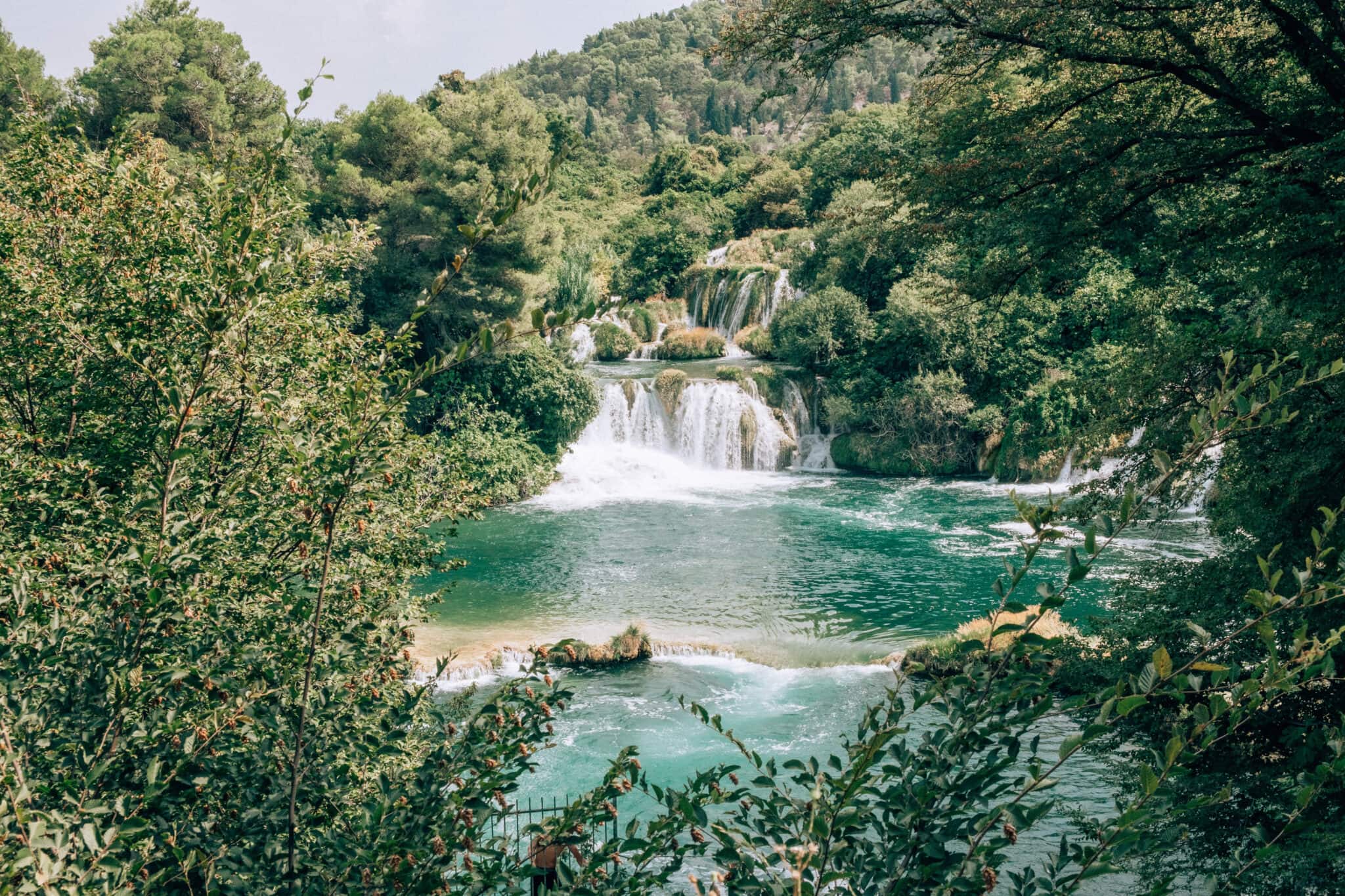
Saint-Malo, France: 12 Things to See and Do in 2026

TL;DRSaint-Malo in Brittany packs in 12 highlights, starting with a walk along the nearly two-kilometre Intra-Muros ramparts and a trip out to Grand Bé island, where Chateaubriand is buried. Add the Fort National and the tides here, which swing by as much as 12 metres. It’s also worth heading out to Dinard (10 minutes by boat), medieval Dinan, the harbour at Cancale with its 15,000 tonnes of oysters a year, and Pointe du Grouin. One day covers the town itself; give the surrounding area three days if you can. June and September are the best months, with fewer crowds, and the TGV from Paris takes just under three hours. A decent room in the 2026 season runs €120–€180 a night.

Say the word France and most people instantly picture lavender fields in Provence, lazy afternoons with a glass of rosé, or romantic Paris. But Saint-Malo, France is a completely different world. You’re in the rugged northwest, on the very edge of the continent, where the land wages an eternal battle with the Atlantic. Brittany isn’t polished — it’s a land of granite, salt, fierce wind, and an incredibly proud Celtic heritage.

Locals often feel they’re Bretons first and French second. They have their own language, the ever-present black-and-white Gwenn-ha-du flag, and a slightly different take on what life should look like. You don’t come to Saint-Malo to sunbathe on a lounger — you come for raw nature, breathtaking cliffs, and the incredible history of fearless corsairs.

In this article we’ll take a look together at 12 things to see and do in Saint-Malo, so you can get the most out of this fascinating corner of France. I’ll tell you how to avoid the crowds, where to find the best accommodation, and how the area’s extreme tides work — tides that catch out many an unprepared traveller. Grab your waterproof jacket, you’re going to need it.

TL;DR

  • The Intra-Muros walls are the heart of it: The historic centre is encircled by mighty ramparts you can walk all the way around.
  • Watch out for the tides: The bay near Saint-Malo has some of the biggest differences between high and low tide in Europe, and the water rises extremely fast.
  • City of corsairs: You’ll discover the local heroes weren’t ordinary pirates, but state-paid corsairs who raided foreign ships.
  • The weather is unpredictable: Even in August a strong Atlantic gale can take you by surprise, so good layered clothing is an absolute must.
  • A paradise for vegetarians and seafood lovers alike: The local diet is built on savoury buckwheat galettes, litres of dry cider, and — for the brave — the famous oysters from nearby Cancale.
  • Perfect day trips nearby: Don’t miss medieval Dinan, elegant Dinard, or the wild headland of Pointe du Grouin.

When to visit Saint-Malo and how to get there

Brittany never gives you anything entirely for free, and its biggest hurdle tends to be the weather. There’s a local joke that in Brittany you get beautiful weather several times a day. Conditions here are extremely changeable, so heavy clouds can appear out of nowhere on a clear blue sky and a strong, rainy wind can start lashing you even in the middle of August. Leave the ordinary umbrella at home in the drawer — the Atlantic gale would turn it into a useless tangle of bent spokes within a minute. A good waterproof jacket, known here as a ciré, will serve you far better. Get the traditional yellow version and you’ll blend in perfectly with the locals — plus you’ll look great against the grey granite in photos.

Despite the weather’s whims, a summer visit has a huge upside. While the south of France bakes in 40°C heat in July and August and chokes under the weight of tourists, Brittany offers breathable air and a refreshing cool. Summer is also when the so-called Fest-Noz take place — traditional night festivals full of live Celtic music, dancing in circles, and cider. The ideal compromise for a crowd-free trip is June or September, when the sea is still cold but the days are still pleasantly long.

Getting to Saint-Malo is fairly straightforward. The easiest option from the UK is to fly to Rennes, Dinard, or Nantes (with connections from London and other major airports), or to catch the Eurostar to Paris and continue on the high-speed TGV, which whisks you to Saint-Malo in just under three hours. That’s a fantastic time for those who only want to explore the town itself and its immediate surroundings. But if you’re planning to discover the wild cliffs, remote lighthouses, and picturesque coastal villages, you’ll definitely need your own car or a hire car. Public transport outside the big towns runs only sporadically in Brittany, and you simply won’t reach the most beautiful out-of-the-way spots by bus.

Where to stay in Saint-Malo

💡 Tip for accommodation and experiences: We like to look for places to stay on Booking.com, which usually has the best cancellation terms. For tickets, tours, and activities, it pays to compare and book through GetYourGuide.

When choosing your strategic base you essentially have two main options that differ dramatically in both atmosphere and price. The greatest experience is, of course, staying right inside Intra-Muros, the old walled town. You’ll sleep among narrow stone alleys, nip to the nearest bakery in your dressing gown for fresh pastries in the morning, and stroll the empty ramparts by the light of the street lamps in the evening. The price for this romance, though, is higher rates and a massive parking problem — getting into the historic centre by car is very difficult and parking spaces are practically non-existent.

The second option, often more practical for drivers, is the district along Sillon beach or the quieter Saint-Servan. The hotels here offer gorgeous views straight out over the open ocean and often have their own parking or at least easier on-street parking. From here it’s just a pleasant twenty-minute walk along the paved seafront into the historic centre. You might also consider staying in nearby medieval Dinan, which makes a great and slightly calmer base for exploring the whole region. For 2026, expect a good double room in season to cost roughly €120 to €180 per night.

I warmly recommend you don’t dawdle with accommodation and book everything through Booking.com several months ahead. Among the specific hotels worth mentioning is the luxurious Hôtel Le Nouveau Monde, right by the beach with unforgettable sea views and a great hotel spa to warm up after windy walks. If you’re after something right in the heart of the ramparts, Hôtel de la Cité has a magical atmosphere and puts you just a few steps from the historic sights. For travellers on a tighter budget, an excellent choice is the Ibis Styles Saint Malo Port, a short walk from the harbour, offering great value for money including a generous breakfast.

12 things to see and do in Saint-Malo

Saint-Malo is a proud town that has bowed for centuries to the sea alone and its untamed rhythm. I’ve put together twelve specific places and experiences you definitely shouldn’t miss during your visit.

1. A walk along the majestic Intra-Muros ramparts

The stone walls encircling the historic centre are an absolute icon of the town and the first place your steps should lead. The full loop is just under two kilometres and offers the very best panoramic views over the town and the bay. On one side you’ll look down into a maze of narrow cobbled streets full of cosy crêperies, while on the other the endless horizon of the Atlantic opens up before you, scattered with islets and fortresses. As you walk you’ll definitely notice the ever-present black-and-white Breton flag, the Gwenn-ha-du, fluttering proudly on every corner and recalling the strong Celtic identity of the locals.

You can climb up to the ramparts by several discreet stone staircases, with the most popular entrance found by the main gate, Porte Saint-Vincent. This is exactly where the true atmosphere of the old harbour begins. I recommend planning your walk for late afternoon or early evening, when the sinking sun starts to paint the stark granite in warm tones and the sea wind usually loses a little of its edge. Along the way you’ll pass plenty of small alcoves, watchtowers, and bronze cannons still pointing out to the open sea.

💡 Tip: If you want the best photos without hundreds of other tourists, head to the ramparts early in the morning. Most day-trippers are still having breakfast, so you’ll have the entire stone promenade and the views of the waking sea almost to yourself.

2. Cité Corsaire and the fascinating history of pirates

Saint-Malo wasn’t just any old French port — it was the feared home of the corsairs. Unlike ordinary pirates, corsairs were state-sanctioned sailors who had official permission from the French king to raid enemy merchant ships (chiefly English ones) and seize their rich cargo. The most famous of them was Robert Surcouf, whose large bronze statue today proudly points a finger straight towards England, recalling an age when local sailors feared no one at all. The whole town still breathes this rebellious atmosphere, and you’ll find the corsair legacy in the names of streets and restaurants.

As you wander the winding lanes of the Cité Corsaire, it’s hard to believe that during the Second World War the town was almost razed to the ground. In August 1944 it was destroyed by heavy American bombardment and the fires that followed, leaving only around twenty percent of the original buildings standing. But the French showed incredible determination and rebuilt the town literally stone by stone according to the original historic plans, so today it looks utterly authentic.

💡 Tip: Stop by Saint-Vincent Cathedral in the very heart of the old town. Its beautiful stained-glass windows may be modern post-war work, but they lend the dark stone interior an incredibly mystical, colourful atmosphere.

3. The phenomenon of giant tides

The bay between Brittany and Normandy hides a fascinating natural phenomenon that draws people from all over the world. The difference between high and low tide here is among the largest in Europe, with the water level rising and falling by an incredible 12 metres. At low tide the sea retreats for kilometres, revealing vast sand flats full of all kinds of shells, tiny crabs, and the remains of old rusted wrecks stranded here many years ago. The spectacle is captivating, but it also hides an enormous and often underestimated danger.

The water returns towards the shore with tremendous force and speed. Local warning signs like to point out that the sea advances at the speed of a galloping horse. Every year the coastguard has to rescue dozens of careless tourists who ventured too far out and couldn’t make it back to land before the rising water. The most dramatic events (the so-called grandes marées) occur regularly around the spring and autumn equinoxes, when waves crash directly against the protective breakwaters and splash all the way up onto the road.

💡 Tip: Always check the tide tables (horaires des marées) in advance — you’ll find them posted at every beach or in tourist apps. If you’re planning a longer walk across the exposed seabed, keep the land in sight at all times and watch the clock carefully.

4. The island of Grand Bé and the tomb of a famous writer

When the sea retreats at low tide, a dry and slightly slippery path opens up to the small rocky islet of Grand Bé. This unassuming chunk of rock hides the tomb of François-René de Chateaubriand, the famous French writer and proud native of Saint-Malo. In his will he wished to be buried right here, so he could forever listen to the sound of the wild Atlantic waves he loved so much in life. The route to the island runs along a paved causeway visible only a few hours a day, forming a magical bridge between the town and the ocean.

An interesting detail is that, at the writer’s express wish, the tomb itself is very plain, without any name or grand inscription. It sounds a touch sombre, but from the top of the island you get a gorgeous view of the whole walled town from a completely different perspective. It’s especially beautiful here just before sunset, when the sky turns purple.

💡 Tip: Before heading to Grand Bé, check the information boards for exactly when safe access ends. If you linger on the island too long and the water floods the path, you’ll be stranded there for another six hours — and you certainly won’t escape a hefty fine for a rescue operation.

5. The impregnable Fort National

Another island gem that emerges from the sea only at low tide is the majestic Fort National. This impregnable fortress was built in 1689 by the famous military architect Vauban on the direct orders of King Louis XIV. Its main task was to protect the harbour from the constant English attacks — and it must be said it carried out that strategic goal reliably for centuries. The fortress silhouette rises above the surrounding sand like a giant stone ship, completing the town’s signature panorama.

Today this imposing fortress is open to the public, though only at precisely set times dictated solely by the mood of the sea. An adult ticket costs roughly €8, and for that you get to explore the old ramparts, dark munitions stores, and take in views of the town through the barrels of the old cannons. The French flag flies on the highest tower, giving the place the right historical flavour and serving as a great landmark.

💡 Tip: If you’d rather not pay the entry fee or can’t make the official opening hours, walking around the fortress walls across the exposed seabed is completely free and offers great angles for photographing the granite blocks.

6. Sandy beaches and the iconic seawater pool

Although Saint-Malo is definitely not a typical beach destination for sun-worshippers, the local stretches of sand have their own unmistakable, slightly rugged charm. The best known is the huge Plage du Sillon, which stretches almost three kilometres and is lined with fascinating wooden posts called brise-lames. These massive oak trunks are driven deep into the sand and have protected the seafront for decades from the crushing force of the winter waves, which can cause enormous damage here.

Right below the town walls you’ll find the noticeably smaller and more sheltered Plage de Bon-Secours. Its biggest draw is the unique seawater pool (piscine d’eau de mer), built back in the 1930s. When the tide goes out and the sea retreats into the distance, water stays trapped in the stone pool and warms up pleasantly in the summer sun. This allows for safe swimming even when the actual ocean is hundreds of metres away.

💡 Tip: The seawater in Brittany really is very refreshing and rarely exceeds 18°C even in the middle of summer. If you’re not a hardened cold-water swimmer, pack a thin wetsuit — you certainly won’t be the only one wearing one on the beach.

7. Escaping the rain at the Grand Aquarium

When the unpredictable Breton weather does let you down and sets in for steady rain (which happens fairly often here), the ideal refuge for the whole family is the local Grand Aquarium. It’s one of the very best and most modern in France and offers a fascinating dive into the depths of the world’s oceans. You can look forward to dozens of giant tanks full of colourful tropical fish, smaller sharks, sea turtles, and the curious creatures of the cold Atlantic waters that surround the Breton coast.

By far the biggest highlight is the so-called Anneau des Mers. It’s a huge circular tank with 360-degree views, where you find yourself right in the middle of the underwater world while large sharks and graceful rays glide majestically overhead. The aquarium lies just outside the town itself, so you’re best off getting there by car or the local bus line. You can conveniently buy tickets online or look up good-value packages through GetYourGuide.

💡 Tip: On rainy summer days, roughly half the tourists in the whole region have this same escape plan. I’d definitely recommend buying your tickets in advance for a specific time slot, so you don’t have to queue at the ticket desks, where waits can stretch to an hour.

lukas a lucka
Lukáš and Lucie recommend
Where to stay in Saint-Malo
4 accommodations — hotels, wellness hotels and other accommodation options

8. A short boat trip to elegant Dinard

Right across from Saint-Malo, over the wide mouth of the River Rance, lies the picturesque resort of Dinard. While Saint-Malo is rugged, stony, and piratical, Dinard is the absolute embodiment of Belle Époque elegance. At the turn of the 19th and 20th centuries, wealthy Britons and influential Parisians built lavish holiday villas here right on the steep cliffs above the sea. The place has kept its gorgeous atmosphere of the good old days to this day, perfectly complemented by the iconic blue-and-white striped beach tents and elegant promenades.

The most beautiful way to Dinard isn’t along the long-winded road, but straight across the water. A little water bus (Bus de Mer) sails regularly from Saint-Malo harbour and carries you to the other side of the bay in just ten minutes. During this short crossing you’ll also enjoy fantastic panoramic views of both towns and spare yourself the tedious drive around the entire bay in the summer traffic jams.

💡 Tip: In Dinard, be sure to make time for a stroll along the renowned coastal path, the Promenade au Clair de Lune. It winds right beneath the rocky cliffs and serves up luxurious views of the opulent historic villas and the shimmering sea itself.

9. The Rance Valley and the medieval gem of Dinan

If you fancy a little change of scenery and want to leave the windy ocean behind for a while, head a short way inland. The town of Dinan is probably the most beautiful and best-preserved medieval settlement in all of Brittany. Unlike the coastal towns, it didn’t suffer such catastrophic damage during the war, so the original half-timbered houses, mighty stone walls, and narrow winding lanes survive here in full glory, breathing deep history.

The most famous spot in town is undoubtedly the steep Rue du Jerzual, which drops sharply from the historic centre down to the River Rance. Lining this street are traditional craft workshops, art galleries, and little cafés housed in fairytale buildings from the 15th and 16th centuries. Walking down it feels like a genuine journey through a time machine to the days of the wealthy Breton merchants — just be careful to wear comfortable shoes, as the cobblestones here are very treacherous.

💡 Tip: Don’t miss a relaxed lunch or an afternoon coffee right down at the Port de Dinan. While the upper town is full of steep hills, the harbour offers a flat promenade along the calm river with lovely views of the old stone viaduct.

10. Cancale and its famous oysters (not just for the brave)

Seafood lovers flock with delight to the nearby port of Cancale, which has rightly earned the title of oyster capital. This small and at first glance unassuming town produces an incredible 15,000 tonnes of them a year, and oyster farming here has a deep, centuries-old tradition. The local harvest was reportedly shipped to Paris in bulk for King Louis XIV himself, who swore by their quality.

The most authentic experience isn’t in a posh air-conditioned restaurant, but right at the lively quayside market (Marché aux Huîtres). People here commonly buy plastic plates of freshly caught oysters for a few euros, the vendors shuck them on the spot in a flash, and add a wedge of lemon. Customers then sit on the stone wall, gaze out at the sea, and simply toss the empty shells over their shoulder down onto the beach, where millions of other old shells already lie. It’s brutally simple and utterly fascinating to watch, even if you don’t try the oysters yourself.

💡 Tip: Even if you don’t eat seafood for whatever reason, a walk along the quayside in Cancale is well worth it. On a clear day, the magical and unmistakable silhouette of the famous abbey of Mont-Saint-Michel appears across the bay in the distance.

11. Breton cuisine for vegetarians: galettes and cider

Forget the classic crunchy French baguettes for a moment — Brittany runs on completely different gastronomic frequencies. The cornerstone of the local diet is excellent salted butter and dark buckwheat flour. From the latter come the famous savoury pancakes called galettes — naturally dark, beautifully crisp, with a slightly earthy flavour. They’re an absolutely brilliant choice for vegetarians, since you can have them filled with excellent local cheeses, fresh spinach, egg, or perhaps goat’s cheese with nuts and honey. (Locals love the classic “complète” with ham, but every crêperie has an endless array of meat-free options.)

Galette is washed down exclusively with the local cidre — a lightly alcoholic fermented apple juice served in brut (dry) or doux (sweeter) varieties. You’ll never get it in a regular glass; it’s drunk from traditional ceramic bowls called bolées, which adds just the right rustic touch to the whole experience. To finish your meal, don’t skip a sweet wheat pancake (crêpe) with thick homemade salted caramel (caramel au beurre salé) or the dense far breton dessert with prunes.

💡 Tip: If you have a weakness for sweets and aren’t afraid of the calories, seek out the traditional Kouign-amann cake at a bakery. It’s a devilishly good affair made of layers of dough, a mountain of butter, and caramelised sugar. Eaten warm, it will completely disarm you.

12. The wild headland of Pointe du Grouin

Just beyond the town of Cancale lies a place where the wind goes to sleep and where you’ll feel the full power of nature. Pointe du Grouin is a stunning rocky promontory that cuts unusually sharply into the sea swell. The nature here is utterly untamed, scented with salt, blooming heather, and iodine. From the cliffs you get a fantastic panoramic view over the whole sweeping bay of Mont-Saint-Michel and the nearby uninhabited Île des Landes, which serves as a very important and protected bird sanctuary.

Well-marked walking trails take you right along the edges of the cliffs, where you can spend hours marvelling at the raging ocean and the circling cormorants. The wind here can be so strong you can literally lean into it, and the sense of absolute freedom is palpable in every breath. This is exactly the wild corner of Brittany that draws people all the way here from across the world.

💡 Tip: Take sturdy closed shoes and a reliable windproof jacket out to the cliffs, even if it seems perfectly calm back at the parked car. The weather at the very tip of the headland is always several degrees harsher and more unpredictable than inland.

Where to go next from Saint-Malo

If the Breton atmosphere has won you over, you’ve got plenty of options for where to head next. All of Brittany is laced with wild cliffs, lighthouses, and mysterious menhirs waiting to be discovered. Start by exploring the northern Pink Granite Coast, or head south to the mystical stones at Carnac.

You definitely shouldn’t miss the journey east either, where one of the most visited places in all of France lies. The majestic Mont-Saint-Michel is less than an hour’s drive from Saint-Malo, and the sight of this fortified abbey on an island, surrounded by quicksand, will leave you absolutely breathless.

Frequently asked questions

Kolik dní potřebuji na návštěvu Saint-Malo?

Pro samotné historické město a procházku po hradbách vám s přehledem postačí jeden celý den. Pokud ale chcete prozkoumat i okolní místa jako Dinard, Dinan, vyrazit na mys Pointe du Grouin a užít si jedinečnou atmosféru bez spěchu, vyhraďte si alespoň tři plné dny. Saint-Malo totiž funguje jako naprosto skvělá strategická základna pro severní pobřeží.

Kde je nejlepší parkovat?

Parkování v centru (Intra-Muros) je velmi drahé a místa jsou chronicky obsazená. Nejlepší volbou je obří záchytné parkoviště Paul Féval (v roce 2026 stojí celodenní stání kolem 15 eur). Z parkoviště jezdí pravidelně zdarma kyvadlový autobus přímo k historickým hradbám, takže si ušetříte spoustu stresu v úzkých jednosměrných uličkách.

Kdy je nejlepší doba na pozorování obřích přílivů?

K těm vůbec největším a nejdramatičtějším přílivům (takzvaným grandes marées) dochází pravidelně během jarní a podzimní rovnodennosti, tedy koncem března a koncem září. Voda v těchto dnech stoupá extrémně vysoko a často se s ohlušujícím rachotem přelévá přímo přes ochranné vlnolamy na nábřeží.

Je Saint-Malo drahá destinace?

Saint-Malo patří v rámci Bretaně k těm o něco dražším lokalitám, zejména pokud jde o ubytování v hlavní letní sezóně. Za oběd v podobě kvalitní galette zaplatíte kolem 12 až 15 eur, což je velmi přijatelné, ale večeře v luxusnější restauraci uvnitř hradeb s výhledem na moře může vaši peněženku provětrat podstatně více.

Co dělat ve městě, když prší?

Kromě návštěvy obřího Grand Aquarium se můžete schovat v některé z mnoha útulných palačinkáren a popíjet teplý čaj nebo tradiční cidre. Za návštěvu stojí také zajímavé muzeum v hlavní hradní věži (Musée d’Histoire de la Ville), kde se dozvíte vše podstatné o slavné korzárské minulosti a námořních objevech regionu.

Jak se bezpečně dostat na ostrov Grand Bé?

Přístupová kamenná cesta na ostrov se otevírá zhruba hodinu a půl před maximálním odlivem a zavírá se zhruba hodinu a půl po něm. Přesný časový rozpis najdete vždy vyvěšený na tabuli přímo u vstupu na pláž Bon-Secours. Nikdy se nesnažte přecházet, pokud už mořská voda začala zalévat dlážděnou stezku.

Dá se v Saint-Malo vykoupat v moři?

Koupat se tu dá na několika hezkých písečných plážích, ale teplota Atlantiku je poměrně nekompromisní. Voda zřídkakdy překročí hranici 18 až 19 stupňů, a to i v tom nejteplejším srpnu. Pokud preferujete klidnější a o něco teplejší vodu, vyzkoušejte mořský bazén na pláži Bon-Secours, kde se voda na slunci ohřeje mnohem rychleji.

Tips and Tricks for Your Vacation

Don’t Overpay for Flights

Search for flights on Kayak. It’s our favorite search engine because it scans the websites of all airlines and always finds the cheapest connection.

Book Your Accommodation Smartly

The best experiences we’ve had when looking for accommodation (from Alaska to Morocco) are with Booking.com, where hotels, apartments, and entire houses are usually the cheapest and most widely available.

Don’t Forget Travel Insurance

Good travel insurance will protect you against illness, accidents, theft, or flight cancellations. We’ve had a few hospital visits abroad, so we know how important it is to have proper insurance arranged.

Where we insure ourselves: SafetyWing (best for everyone) and TrueTraveller (for extra-long trips).

Why don’t we recommend any Czech insurance company? Because they have too many restrictions. They set limits on the number of days abroad, travel insurance via a credit card often requires you to pay medical expenses only with that card, and they frequently limit the number of returns to the Czech Republic.

Find the Best Experiences

Get Your Guide is a huge online marketplace where you can book guided walks, trips, skip-the-line tickets, tours, and much more. We always find some extra fun there!
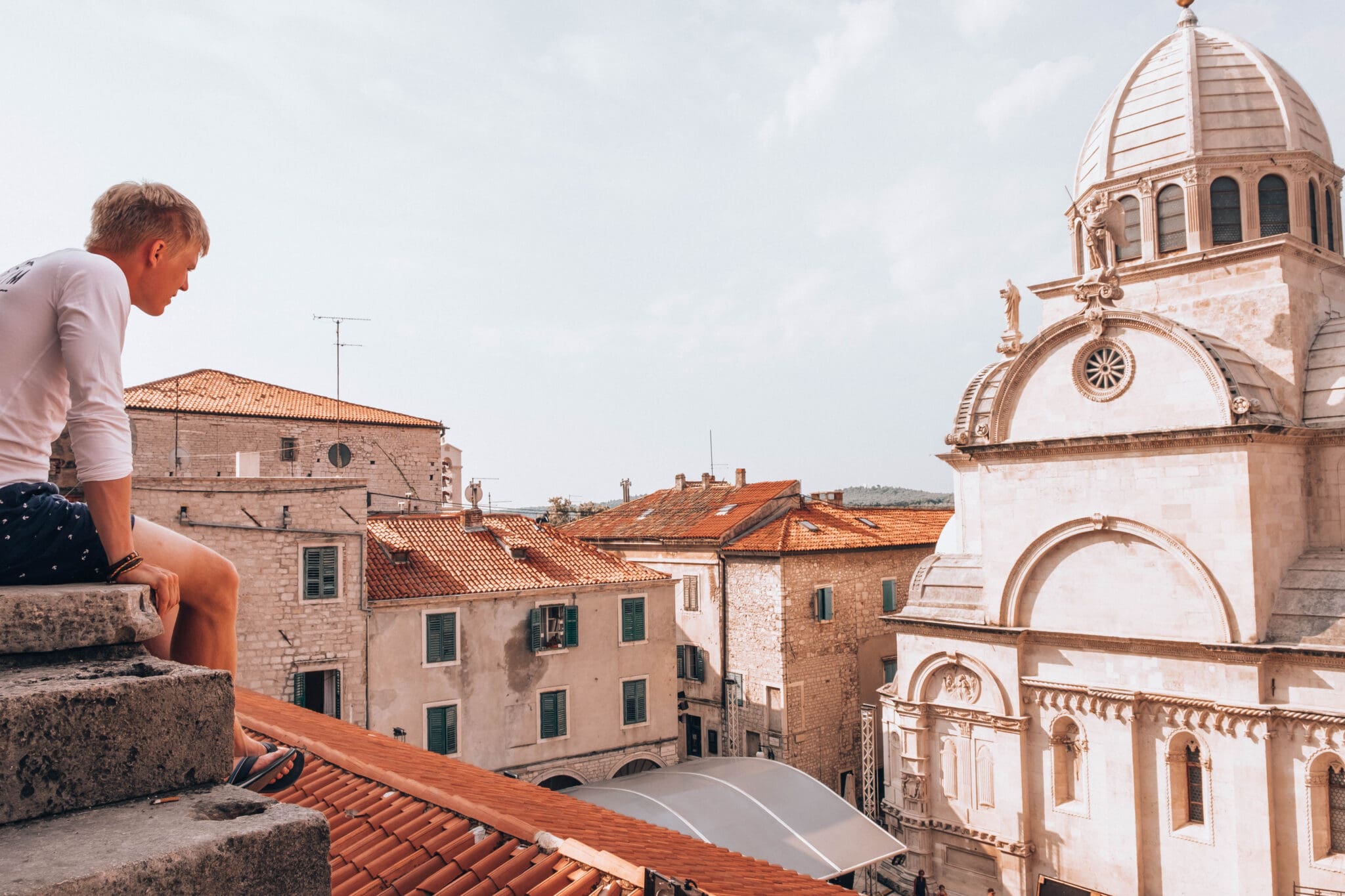
Split, Croatia: 15 Best Things to See and Do in 2026

TL;DRSplit is a historic port city in Croatia, built around the ancient Diocletian’s Palace. Wandering the old streets is free — you only pay for specific sights like St Domnius Cathedral, the bell tower, or the underground cellars made famous by Game of Thrones. The best time to visit is late May and early June, or September into early October, when temperatures sit around 25 degrees. Two days is enough for the centre; allow four to five if you’re using Split as a base for day trips. Split has Croatia’s biggest ferry port, with boats out to the islands of Brač, Hvar and Šolta. There are 15 specific tips here, from Marjan Hill and Bačvice Beach to Klis Fortress (12 km away) and rafting in Omiš. Out of season, a room costs €50–€80 a night; in July and August, expect over €150.

When most of us picture a summer holiday in Croatia, we imagine a postcard-perfect coastline — but Split, Croatia is actually a completely different world that pulls you straight into its incredible atmosphere. This isn’t just another seaside resort. It’s a buzzing port city built directly into ancient Roman ruins, where laundry hangs between thousand-year-old columns and locals sip their morning coffee among the stones.

Thanks to its strategic location, the city works as the main gateway to all of Dalmatia and its most beautiful islands, which makes it an absolutely ideal base for countless amazing day trips. Within a single hour you can go from ancient monuments to wild whitewater rafting in a river canyon, or hop on a ferry and find yourself swimming off sun-drenched Hvar by the afternoon.

In this article I’m bringing you a complete guide and all the practical information for 2025 and 2026, so you can make the most of your visit and avoid any unnecessary stress. Together we’ll look at where to stay strategically, how the monument ticket bundles work, and of course there will be plenty of tips for excellent vegetarian restaurants you definitely shouldn’t miss.

TL;DR

  • The heart of the city is Diocletian’s Palace: Entry into the palace lanes themselves is completely free — you only pay to enter specific historic buildings.
  • Tickets are sold in bundles: If you want to see the cathedral, the bell tower and the baptistery, it pays to buy a combined ticket right at the box office.
  • The perfect launchpad: Split has the largest ferry port in Croatia, and from here you can easily reach the islands of Brač, Hvar or Šolta.
  • A paradise for Game of Thrones fans: You can visit the underground cellars where Daenerys kept her dragons, or head to the nearby Klis Fortress.
  • Where to stay: If you’re travelling with suitcases or by car, look for accommodation in the Bačvice or Veli Varoš neighbourhoods, as the historic centre is a pedestrian zone.
  • Foodie tip for vegetarians: You can enjoy the traditional Dalmatian “peka” in a meat-free version with potatoes and vegetables, but you have to order it at the konoba at least 24 hours in advance.

When to Visit Split

If you want to truly enjoy the city in peace, without being constantly squeezed through narrow stone lanes, the best time to visit is late May into June, or the whole of September and early October. During these months the weather is absolutely ideal for exploring the monuments and taking full-day trips around the area, with temperatures hovering around a pleasant 25 degrees. The sea is also still beautifully warm in September after the scorching summer, so you can swim happily at every city beach.

During the peak holiday months you’ll have to reckon with the fact that temperatures regularly climb well over 30 degrees and the historic centre fills up with huge crowds of tourists pouring in from enormous cruise ships. On the other hand, July and August are wonderful because the whole city comes alive with long warm evenings, and there are constant concerts and cultural events along the seafront promenade. In this period, though, I strongly recommend sorting out accommodation and ferry tickets well in advance.

For a tour of the historic core and the most important monuments, two full days will be more than enough, but if you’re planning to use Split as the main base for your holiday, I’d recommend setting aside a good four or five days. That gives you plenty of time not just for history, but also for relaxing on the beach, hiking up Marjan hill and taking at least one boat trip to the surrounding islands — without ever having to rush.

Where to Stay in Split

💡 Tip for accommodation and experiences: We love searching for places to stay on Booking.com, which usually has the best cancellation terms. For tickets, tours and activities, it pays to compare and book through GetYourGuide.

Choosing the right location is absolutely crucial, because the historic core inside Diocletian’s Palace is strictly a pedestrian zone where you can’t drive a car under any circumstances. Staying right inside the palace has an incredibly romantic charm and puts everything literally a few steps from your bed, but if you’ve got heavy suitcases or are dealing with tricky parking, it’ll be far more comfortable to choose the outer neighbourhoods. Parking near the centre itself can be a genuine nightmare in summer, and it’s fairly expensive too.

For travellers with a car, I recommend looking for accommodation in the Bačvice neighbourhood, which sits just a short walk from both the ferry port and the popular sandy beach, so it makes for an absolutely ideal and practical compromise. A lovely and slightly quieter alternative is the old fishing quarter of Veli Varoš, spreading out right beneath Marjan hill and offering a maze of romantic lanes full of traditional taverns known as konobas. As for prices, outside the main season you can find a nice apartment from roughly 50 to 80 euros a night, while in July and August prices in the centre regularly tip over 150 euros.

Here are a few specific accommodation tips I can warmly recommend, all with excellent ratings:

  • Cornaro Hotel sits in a perfect spot right on the edge of the historic centre, so everything is just a short walk away, and it also boasts a gorgeous rooftop terrace with a hot tub and views over the whole city.
  • Hotel Park Split is an absolute classic and one of the most prestigious hotels in the city, found right above the famous sandy Bačvice beach — something you’ll especially appreciate on a summer holiday.
  • Heritage Hotel Antique Split is a wonderful choice for history lovers, as it lies right in the heart of Diocletian’s Palace and offers luxurious rooms with exposed stone walls.

15 Best Things to See and Do in Split, Croatia

Let’s take a look together at the most interesting things this enchanting Dalmatian city has to offer. You’ll find absolutely everything here, from mysterious Roman cellars to amazing trips out into the surrounding nature. I’ve divided the tips so you can easily piece together your own itinerary depending on whether you prefer history, active relaxation or good food.

1. The Golden Gate and the Other Gates of Diocletian’s Palace

Finding your way around the old town might seem quite complicated at first glance, but in reality the palace precisely mirrors the layout of a typical Roman military camp. This enormous complex, measuring roughly 215 by 175 metres, is crossed by two main perpendicular streets that connect four majestic entrance gates. The Golden Gate to the north served as the main imperial entrance leading towards ancient Salona, and today it takes you straight out into the beautiful Đardin park.

The Silver Gate on the eastern side, on the other hand, leads you straight to the bustling Pazar green market, which comes incredibly alive every morning. If you want to reach the main city square of Pjaca, you’ll pass through the Iron Gate to the west, which is fascinating because it has been in continuous use ever since antiquity. It’s also adorned with an old Renaissance clock whose dial is divided into a full 24 hours — a huge rarity.

The Bronze Gate to the south originally opened directly onto the sea, so that ships could safely unload supplies straight into the imperial storerooms. Today this gate leads you out of the charming underground cellars straight onto the sun-soaked Riva seafront promenade, so it works as the ideal shortcut between the historic centre and the harbour. If you happen to get lost in the lanes, just keep heading downhill and sooner or later you’re guaranteed to find the sea.

2. The Magical Peristyle and the Ancient Sphinx

The palace’s central courtyard, known as the Peristyle, is without doubt the most photographed and most striking spot in all of Split, where history breathes down on you at literally every turn. The square is lined on both sides by gorgeous ancient columns, and at its edge an amazing Egyptian sphinx made of black granite rests majestically. Emperor Diocletian had it shipped all the way from Egypt, and its origins date back roughly to the 15th century BC.

During the day the place tends to be fairly full of tourists and guided groups, so it pays to get up early and come here at sunrise. But if early mornings aren’t your thing, I recommend saving your Peristyle visit for late evening, when the square takes on a completely different and immensely romantic atmosphere.

💡 Tip: Every evening people settle onto the ancient Peristyle steps with a glass of wine and the space fills with live acoustic music from the adjacent Luxor café. Sitting on the warm stones under the stars with a view of the floodlit cathedral is an experience you absolutely have to take home from Split.

3. The Mysterious Cellars and Game of Thrones

The underground halls of Diocletian’s Palace, known technically as the Substructiones, precisely mirror the floor plan of the imperial chambers that once stood above them. It’s thanks to this that archaeologists worked out exactly what the palace’s upper floor looked like, and these enormous spaces today rank among the very best-preserved ancient complexes in the whole world. You’ll pass through part of the cellars completely free on your way from the sea towards the Peristyle, with this wide passageway now packed with stalls selling souvenirs and local crafts.

If you’re a fan of popular TV series, definitely pay the entrance fee for the side paid halls too. This is exactly where the famous, dark scenes from Game of Thrones were filmed — the ones in which Queen Daenerys kept her huge dragons in the fictional city of Meereen. The atmosphere of the massive stone vaults is genuinely impressive, and the cool air also offers a great escape from the summer heat.

Entry to this extended paid section costs around 8 euros per person, and you can easily buy tickets right at the entrance. The tour takes roughly 30 to 40 minutes, and the underground is usually open to visitors from 9 a.m. to 5 p.m., with opening hours often extended during the main summer season.

4. The Cathedral of St. Domnius and Its Breathtaking Bell Tower

Few buildings in the world have such an incredibly ironic fate as Split’s cathedral. This gorgeous octagonal building originally arose as the grand mausoleum of the Roman Emperor Diocletian, who was a notorious and extremely cruel persecutor of the early Christians. A few centuries later the Christians turned the mausoleum into a church and dedicated it to St. Domnius — who was, paradoxically, a bishop whom Diocletian himself had executed.

Today it’s one of the oldest continuously functioning cathedrals in the world, and its Romanesque-Gothic bell tower rising to a height of 57 metres forms the unmistakable landmark of the entire city. The climb up the tower is fairly steep due to the narrow stairs, and I definitely wouldn’t recommend it to anyone who suffers from vertigo, but the panoramic view of the red rooftops and the wide-open sea is one hundred percent worth the effort.

Tickets are sold in various good-value bundles at the box office right on the Peristyle square, and the price depends on everything you want to see. The so-called purple ticket, which includes entry to the cathedral, the bell tower, the underground crypt and the nearby baptistery, comes to roughly 15 euros. During the main summer season, expect longer queues at the entrance to the bell tower, so it’s best to arrive right at 9 a.m.

5. The Temple of Jupiter with Perfect Acoustics

Right next to the Peristyle, tucked away in a narrow lane, you’ll find the small but immensely interesting Temple of Jupiter. Just like the mausoleum, this pagan temple too was converted in the 6th century and began to serve as a Christian baptistery, in other words a christening font. Right at the entrance you’ll be greeted by another sphinx, this time headless, which Diocletian had brought from Egypt, and inside you’re guaranteed to be captivated by the gorgeous coffered ceiling and the ancient stone baptismal font carved with reliefs.

On the way to the temple, be sure to peek into the enormous Vestibule, which was once a monumental circular antechamber leading directly into the private imperial apartments. Today this imposing structure has an open circular dome reaching up to the sky and offers absolutely perfect acoustics. The sunlight refracts beautifully here, creating utterly magical conditions for photography.

Thanks to these exceptional acoustics, the Vestibule has become a very popular spot for musical performances. In the summer months, therefore, traditional Dalmatian male singing groups known as klapa often perform here, singing without any instrumental accompaniment. Their voices bounce off the high stone walls and create an unforgettable cultural experience that’s well worth stopping for a moment to enjoy.

6. Café Life on the Riva Promenade

The main seafront promenade, the Riva, lined with tall palms and colourful house façades, is the city’s true social heart. This is where locals come to stroll, catch up on the latest news and, above all, to quietly watch the world go by. It’s an ideal spot for a long morning coffee or an evening glass of local wine, even if the prices at the cafés right by the sea are understandably a touch higher than in the more hidden lanes of the old town.

Once you start discovering the beauty beyond the palace itself, you absolutely mustn’t skip the excellent Dalmatian cuisine, which knows perfectly well how to delight vegetarians too. Instead of the traditional fish or Dalmatian prosciutto, you can treat yourself to a fantastic meal at the wonderful vegan restaurant Pandora Green Box, where they make absolutely amazing truffle pasta and excellent plant-based burgers surrounded by lots of greenery.

If you want to taste something truly local, head to one of the traditional family-run restaurants, such as the renowned Konoba Varoš. There they’ll happily prepare you the so-called blitva, which is a typical Dalmatian side dish of fresh Swiss chard, potatoes, garlic and a generous dose of olive oil, working as an absolutely perfect, light summer meal you’ll remember long afterwards.

7. Good Luck at the Statue of Gregory of Nin

Just beyond the Golden Gate, near the well-kept Đardin park, you’ll come across an enormous, eight-and-a-half-metre-tall bronze statue by the famous Croatian sculptor Ivan Meštrović. This monumental work from 1929 depicts the 10th-century bishop Gregory of Nin, who became famous for introducing Old Church Slavonic into ordinary church services in place of the then-mandatory Latin, which ordinary people couldn’t understand — earning him enormous respect among the local population.

There’s a very popular, long-standing tradition tied to this venerable statue that you definitely shouldn’t miss when visiting the city. It’s said that if you rub the bishop’s big toe on his left foot, it’ll bring you luck and guarantee that one day you’ll return to Split. Whether it really works is hard to say, but the fact is that the toe has been polished to a gleaming gold by the constant touch of millions of tourists.

Originally the statue stood right on the main Peristyle square in the heart of the palace, but during the Second World War it was dismantled and hidden away from the Italian fascists. After the war it found its current — and, in my opinion, far more fitting — spot just in front of the walls, where its enormous size stands out and creates a beautiful contrast with the ancient stone.

lukas a lucka
Lukáš and Lucie recommend
Where to Stay in Split
4 accommodations — hotels, wellness hotels and other lodging options

8. The Authentic Atmosphere of the Pazar and Ribarnica Markets

If you want to soak up the truly local atmosphere and buy some fresh ingredients, you have to head out early in the morning to the Pazar, which is a large green market spreading out right beside the Silver Gate. Local farmers sell fresh figs, seasonal vegetables, excellent homemade cheeses from the surrounding villages, honest olive oil poured into unassuming plastic bottles and fragrant little sachets of Dalmatian lavender here every day. I recommend coming first thing in the morning, when the selection is best and the stalls are bursting at the seams.

Lovers of bustle and interesting architecture should also wander over to the nearby fish market known as the Ribarnica, which you’ll find just off the wide shopping street of Marmontova. A curious fact about this beautiful Art Nouveau building with its iron framework is that there are no flies or other annoying insects here at all, which is apparently down to the sulphur springs that rise beneath the building and naturally disinfect the whole space and repel uninvited guests.

💡 Tip: You can spice up your exploration of both markets and the tasting of local produce with organised gastronomic city tours, which you can easily reserve online through GetYourGuide, where you’ll find plenty of enthusiastic local guides. They’ll show you the secret spots where the locals shop and advise you on how to recognise the highest-quality olive oil.

9. Views and Nature on Marjan Hill

The forested peninsula and Marjan hill, rising to the west of the centre, work as a kind of enormous green lung for the whole city and a perfect refuge from the summer heat. After roughly ten minutes of climbing the steps up from the Veli Varoš neighbourhood, you’ll reach the first viewpoint by the popular Vidilica café, where you’ll be treated to the absolute loveliest panoramic view over the entire palace and harbour. It’s a perfect spot for an afternoon coffee combined with photographing the whole bay.

The entire hill is laced with a roughly nine-kilometre loop of well-kept trails, absolutely ideal for a morning run, a cycle, or just a peaceful stroll beneath the fragrant pine canopies. On the way to the highest point, called Telegrin, lying at an altitude of 178 metres, you can discover small stone churches and old hermitages carved directly into the rocks. Especially worth mentioning is the picturesque little church of St. Nicholas from 1219, hidden away in the dense forest.

If you set off on a longer walk here, don’t forget to pack your swimwear, because the slopes of Marjan hill hide several beautiful beaches. While the northern side offers more rocky coves, on the southern side you’ll find gorgeous pebble beaches tucked away from the busiest parts of the city, where you can cool off in crystal-clear water.

10. Swimming at the Popular City Beaches

Split can boast several great beaches, the most famous and most visited of all being the sandy Bačvice beach with its very shallow entry into the water, lying just fifteen minutes’ walk from the historic centre. This is exactly where the unique local ball game of picigin was born — in which local lads put on incredible acrobatic dives and stunts in the shallows to keep a small ball in the air, and they even play it here during Christmas.

If you prefer pebbles and you’re after slightly cleaner water, head to Kašjuni beach, lying beneath the southern slope of Marjan hill. This beach is surrounded by fragrant pines and dramatic cliffs, with the sea here a stunning turquoise colour. You’ll also find the popular Joe’s Beach Lounge here, where you can rent comfortable sun loungers and enjoy afternoon drinks with a view of the open sea.

A great and very practical option for families with children is also Žnjan beach, located on the edge of the city. It recently underwent a massive renovation costing nearly 45 million euros and today offers thoroughly modern facilities, shady promenades, children’s playgrounds and, above all, a huge multi-storey car park, which makes it the most accessible beach for everyone arriving in Split by car.

11. A Trip Into History to Trogir and Salona

Roughly 27 kilometres from Split, right next to the airport, lies the gorgeous historic little town of Trogir, which has been on the UNESCO list since 1997 and is often rightly nicknamed “little Venice”. Its stunning Romanesque-Gothic core sits on a small island, where you can wander through tangled narrow lanes, admire the masterful portal of the Cathedral of St. Lawrence by the builder Radovan, or climb the old Venetian fortress of Kamerlengo, from which there’s a beautiful view of the harbour.

On the way to Trogir it’s definitely worth making a stop in Salona, by the present-day town of Solin, just five kilometres from Split. Salona was once the enormous capital of the entire Roman province of Dalmatia with more than 60,000 inhabitants, and Emperor Diocletian himself came from here. Today you’ll find a fascinating and fairly extensive archaeological site here, which you can explore in complete peace, free of tourist crowds.

Walking among the ruins of Salona, you’ll discover the remains of a huge ancient amphitheatre, which once held up to fifteen thousand spectators and staged bloody gladiator fights. Also on view here are the preserved foundations of ancient baths, the remains of old aqueducts and early Christian basilicas. Combining a visit to Salona and Trogir into a single day trip makes huge sense, and you can easily manage it even by suburban bus number 37.

12. Klis Fortress with a Breathtaking View

Just twelve kilometres inland, the majestic medieval Klis Fortress towers on a steep rocky saddle, having protected the entire coastal region from Ottoman raids for many centuries. This sprawling fortress is absolutely brilliantly woven into the natural limestone terrain, and from its high ramparts an incredible view opens up over all of Split, the surrounding islands and the brilliant blue Adriatic Sea. You can drive here comfortably by car or take city bus number 22.

Much like Diocletian’s cellars, the Klis Fortress has seen an enormous surge in popularity in recent years thanks to the filming of Game of Thrones. This is exactly where the stunning exterior shots of the slaver city of Meereen were filmed, so you can walk along the very same stone paths that the Mother of Dragons strode along on screen. Within the walls you’ll even find a small room with photos from the filming.

Admission for adults costs roughly 12 euros in 2025, while children under fifteen pay just 4 euros, which makes Klis a fairly affordable family trip. Tickets are bought exclusively on site at the main entrance, because online ticket sales unfortunately don’t work here yet. Set aside roughly an hour and a half for a tour of the whole complex, and don’t forget to bring comfortable shoes and plenty of water.

13. Adrenaline on the Cetina River in Omiš

If you’ve had your fill of history and monuments and need to add a bit of action to your holiday, hop on a bus and head roughly fifty minutes south-east to the former pirate town of Omiš. This fascinating town sits in a dramatic spot where the Cetina River cuts into a deep rocky canyon and then flows out into the sea, which makes it Croatia’s main hub for all kinds of outdoor sports and adrenaline lovers.

You can pay for some great rafting on the lower stretch of the river here, which is completely safe and easily managed even by a total beginner or families with older children. During the descent through the rapids you’ll soak up the beautiful scenery, jump off a rock into the water and float through a mysterious cave. Prices for a three-hour rafting trip hover around 40 euros per person, and all the equipment is provided on site.

For the truly brave, I recommend trying the spectacular zipline route strung high above the entire canyon. A total of eight steel cables awaits you, with a combined length of over two kilometres, and on the very longest 700-metre stretch you’ll fly at lightning speed up to 150 metres above the beautifully turquoise river. The whole adrenaline experience lasts roughly two and a half hours, and the instructors will guide you safely through everything.

14. A Ferry Trip to the Surrounding Islands

Split has the largest passenger port in all of Croatia, located just five minutes’ walk from the historic centre, so it would be an enormous shame not to seize the opportunity and visit at least one of the surrounding islands. Right opposite the city lies the large island of Brač, which you can reach by ferry in under an hour. From there you can head to the famous pebble beach of Zlatni Rat near the town of Bol, which is unique in that it constantly changes its shape according to the sea currents and the wind.

Another very popular and tempting option is the sun-drenched island of Hvar, served by fast catamarans run by the Jadrolinija and Krilo companies. This island will enchant you with its purple lavender fields, excellent wine and gorgeous historic architecture in its eponymous main town, above which the Fortica fortress towers. In the summer season, definitely buy your catamaran tickets online several days in advance.

If, on the other hand, you’re after blissful peace and empty coves with no tourist crowds, I recommend hopping on a boat heading for the nearby island of Šolta. This little island still holds onto its very sleepy and authentic atmosphere — you won’t find any huge hotel resorts here, and local families produce absolutely fantastic olive oil and fragrant rosemary honey. It’s a perfect day-trip escape from the busy city.

15. A Full-Day Trip to Plitvice Lakes or the Krka Waterfalls

Although these natural treasures are a little further from the coast, very popular and affordable day tours run to them from Split, or you can easily drive there in a hire car. Krka National Park lies just about an hour and a half to the north and offers gorgeous walks along wooden boardwalks around the stunning cascades and waterfalls of Skradinski Buk. You do, however, have to reckon with the fact that swimming directly beneath the waterfalls is now sadly strictly forbidden for the sake of nature conservation.

If you don’t mind a roughly three-hour bus journey inland, you can head all the way to the legendary Plitvice Lakes, where the famous Winnetou films were shot years ago. Sixteen cascading lakes connected by gorgeous waterfalls and a boat ride await you here. Admission to both national parks climbs to as much as 40 euros in the main summer season, so it pays to consider a visit in the spring or autumn months instead, when ticket prices are considerably friendlier and you’ll meet only a fraction of the people on the wooden trails.

💡 Tip: Instead of the standard mass lunches, out in the countryside around the national parks you can arrange a delicious vegetarian peka with potatoes and seasonal vegetables on pre-order, baked for you under a cast-iron bell covered with hot coals. This traditional way of preparing food takes roughly three hours, so you have to call the family konoba at least a day in advance, but I promise the taste of the baked potatoes with local herb oil is absolutely divine.

Where to Go Next from Split

If you’re planning a longer road trip along the coast, Split makes a great starting point for discovering more gems of the Adriatic Sea. Heading north, you can set off to see the sea organ in the amazing Zadar, or instead head south to the Makarska Riviera.

For detailed planning of your onward journeys and trips, be sure to read our complete guide to Croatia, where you’ll find plenty of useful advice. If island life appeals to you, we’ve also mapped out in detail the island of Brač and, of course, the slightly more distant and luxurious island of Hvar.

Lovers of nature and turquoise waterfalls will find detailed information about admission and routes in our article on Krka National Park, and there are also practical tips for visiting the legendary Plitvice Lakes. In short, explore our other articles about what Dalmatia has to offer and plan your holiday exactly the way you imagine it.

Game of Thrones was also filmed in Split. The Diocletian cellars played the underground where Daenerys kept her dragons, and the nearby Klis Fortress served as the city of Meereen. You’ll find the complete route in the article Where Game of Thrones Was Filmed.

Frequently Asked Questions

Platí se vstup do Diokleciánova paláce?

Ne, vstup do samotných uliček a na hlavní náměstí paláce je zcela zdarma a otevřený nepřetržitě, protože je to běžně obydlená součást města. Platí se pouze vstupné do konkrétních historických památek, jako jsou zachovalá podzemní sklepení, stará katedrála s vyhlídkovou zvonicí nebo antické baptisterium.

Jak se dostanu ze splitského letiště do centra?

Nejjednodušší možností je využít letištní shuttle autobus společnosti Platanus, který vás pohodlně doveze na hlavní autobusové nádraží zhruba za 9 eur. Můžete využít i levnější, ale podstatně pomalejší veřejnou linku číslo 37 za 3 eura, případně si objednat Uber či Bolt, které vycházejí výhodněji než klasické předražené letištní taxíky.

Je ve Splitu písečná pláž?

Ano, nejslavnější pláží celého města je Bačvice, která nabízí jemný písek a velmi mělký vstup do moře, takže ujdete desítky metrů a vodu máte stále jen po kolena. Je to naprosto ideální místo pro rodiny s menšími dětmi, ale musíte počítat s tím, že v letních měsících bývá tato pláž opravdu extrémně plná.

Dají se ve Splitu najít dobrá vegetariánská jídla?

Rozhodně ano, dalmatská kuchyně má co nabídnout. Kromě úžasných čistě veganských restaurací, jako je Pandora Green Box, najdete v klasických konobách oblíbenou tradiční přílohu blitva (čerstvý mangold s bramborem a česnekem) nebo výborné těstoviny. Na předobjednávku vám v mnoha rodinných podnicích rádi připraví i tradiční peku v čistě zeleninové verzi bez masa.

Mohu se vykoupat pod vodopády v Národním parku Krka?

Bohužel to už není možné. Z důvodu ochrany křehké přírody a zachování unikátního ekosystému bylo koupání přímo pod hlavním vodopádem Skradinski buk a v jeho bezprostředním okolí před několika lety trvale zakázáno, takže si vodopády můžete prohlédnout pouze z dřevěných chodníčků.

Kde je nejlepší zaparkovat auto poblíž centra?

Parkování u historického centra bývá v létě opravdovou noční můrou a je poměrně drahé. Pokud vaše ubytování nenabízí vlastní parkovací stání, je nejlepší nechat auto na velkých odstavných parkovištích nebo v garážích na okraji města, například v okolí nově zrekonstruované pláže Žnjan, a do centra dojet pohodlně místním autobusem.

Kde se natáčela Hra o trůny?

Ve Splitu se natáčely ikonické scény z otrokářského města Meereen, a to konkrétně v temných podzemních sklepeních Diokleciánova paláce, kde královna Daenerys věznila své obří draky. Další úchvatné exteriérové záběry ze stejné dějové linky se pak točily na nedaleké středověké pevnosti Klis, která leží jen dvanáct kilometrů za městem.

Tips and Tricks for Your Vacation

Don’t Overpay for Flights

Search for flights on Kayak. It’s our favorite search engine because it scans the websites of all airlines and always finds the cheapest connection.

Book Your Accommodation Smartly

The best experiences we’ve had when looking for accommodation (from Alaska to Morocco) are with Booking.com, where hotels, apartments, and entire houses are usually the cheapest and most widely available.

Don’t Forget Travel Insurance

Good travel insurance will protect you against illness, accidents, theft, or flight cancellations. We’ve had a few hospital visits abroad, so we know how important it is to have proper insurance arranged.

Where we insure ourselves: SafetyWing (best for everyone) and TrueTraveller (for extra-long trips).

Why don’t we recommend any Czech insurance company? Because they have too many restrictions. They set limits on the number of days abroad, travel insurance via a credit card often requires you to pay medical expenses only with that card, and they frequently limit the number of returns to the Czech Republic.

Find the Best Experiences

Get Your Guide is a huge online marketplace where you can book guided walks, trips, skip-the-line tickets, tours, and much more. We always find some extra fun there!
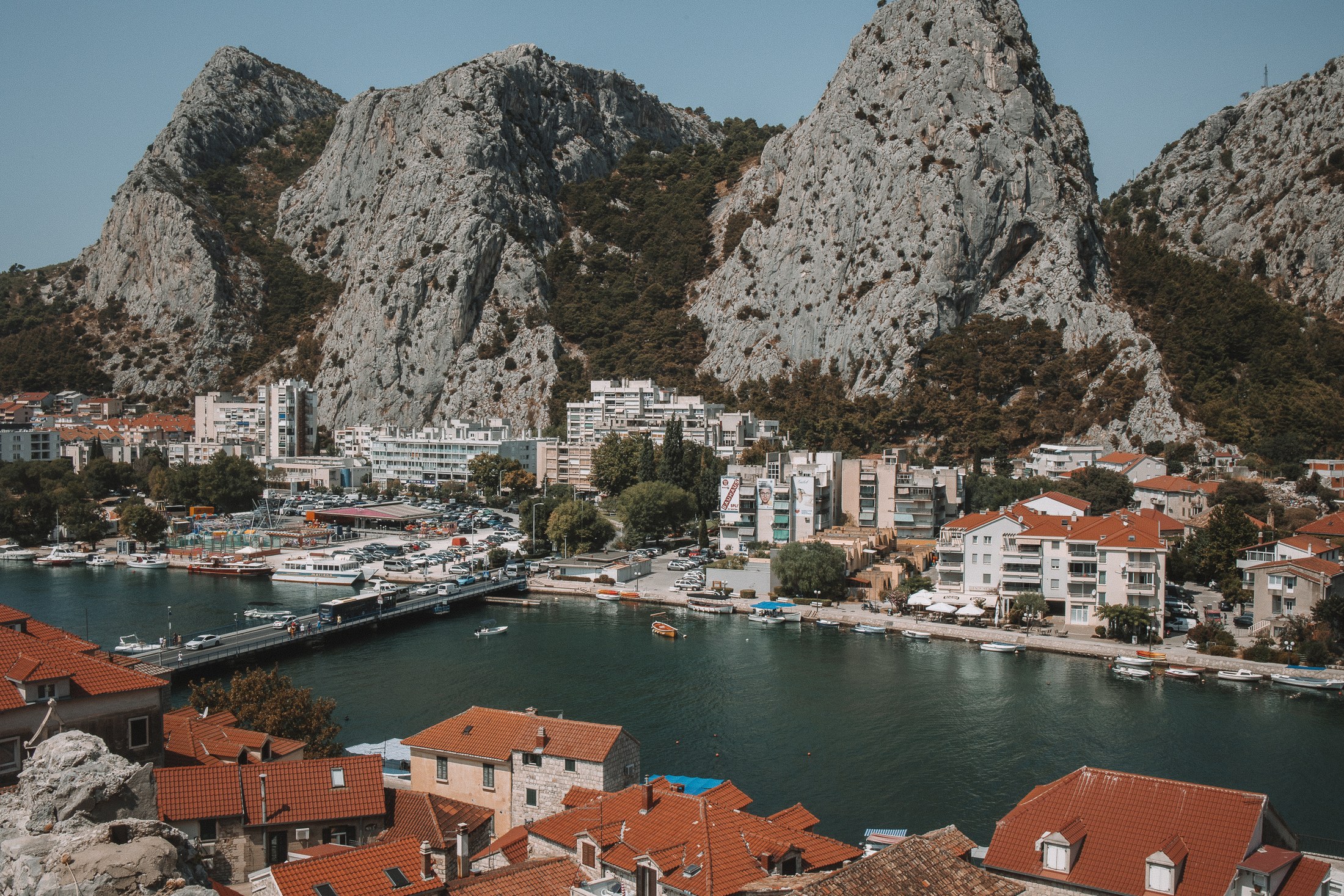
Pula, Croatia: 14 Best Things to Do and See

TL;DRPula, at the southern tip of Istria, comes with fourteen top tips on what to see and do. Highlights include the Pula Arena – the sixth-largest surviving Roman amphitheatre in the world, with entry costing around ten euros – plus the Temple of Augustus, the Sergii Triumphal Arch, the beaches of the Verudela peninsula, and the wild Cape Kamenjak nature park. The main sights in the old town are easily walkable in a single day, but four to seven days is the sweet spot if you want to fit in trips to the Brijuni Islands, Rovinj, or truffle-hunting inland. May, June and September are the best months to go, with warm weather and fewer crowds. There’s a direct flight to Pula’s own airport, or you can drive there in nine to ten hours from London.

If you’re toying with the idea of a summer beach holiday but the thought of overcrowded resorts in southern Dalmatia fills you with dread, Pula on the very southern tip of the Istrian peninsula will feel like a revelation. This charismatic port town in Croatia blends breathtaking Roman monuments with a laid-back atmosphere that, thanks to its deep historical ties, feels remarkably close in spirit to neighbouring Italy. You’ll find not only gorgeous beaches and wild scenery nearby, but also superb Istrian cuisine that will delight even the most demanding foodies.

While Dubrovnik and Split are practically overrun with tourists in peak season, Pula still holds on to its authentic character — working shipyards and all, with a calmer pace of life. The town makes an ideal base for families, lovers of ancient history, and couples who want to combine swimming in turquoise water with a bit of sightseeing. What’s more, you can comfortably walk between all the main landmarks in a single day, leaving plenty of time for trips inland or out to the nearby islands.

One of Pula’s big advantages is how easy it is to reach from the UK, whether you fancy flying in directly or combining a flight with a hire car to explore at your own pace. Let’s take a closer look at everything there is to see in Pula and the surrounding area, where to base yourself, and which day trips you really shouldn’t miss.

TL;DR

  • The historic heart of Istria: Pula boasts the sixth-largest Roman amphitheatre in the world, along with a whole host of other ancient monuments you can explore on foot.
  • A quieter alternative: Compared with southern Dalmatia, the vibe here is more Italian and relaxed, and the town isn’t quite so jammed with tourists.
  • Beaches for everyone: The Verudela peninsula has gorgeous pebble beaches with gentle entry into the water — perfect for families with kids.
  • Easy to reach: Several airlines fly to Pula’s airport just outside town, and from there it’s only a short ride into the centre.
  • Trips into nature: Just outside Pula lies Brijuni National Park with its unique safari, plus the wild Cape Kamenjak nature park, home to the prettiest swimming coves around.
  • A paradise for vegetarians: Istrian cuisine serves up fantastic meat-free specialities, above all homemade fuži pasta with fresh truffles and top-notch olive oil.
  • The best time to visit: For sightseeing and day trips, May, June and September are ideal — pleasantly warm and free of the biggest crowds.

When to Visit Pula

If you want to combine sightseeing with swimming in the sea, the ideal time to visit is June and September. By then the Adriatic is beautifully warm, but air temperatures haven’t yet hit those sweltering extremes. You won’t be drenched in sweat as you wander the town, and you’ll dodge the biggest crowds that traditionally flood Croatia during the summer holidays. Weather in Pula during these shoulder months is just about perfect for exploring. Getting here from the UK is straightforward, too: direct seasonal flights operate from several British airports, and you can also fly via Venice or Trieste and pick up a hire car. From Pula Airport you can reach the centre on the airport bus for around six euros in about twenty minutes.

Peak season falls in July and August, when Pula truly comes alive and becomes the cultural hub of all Istria. Huge summer concerts take over the arena, and from mid-July the famous Pula Film Festival — Croatia’s oldest — kicks off. If you love a buzzing nightlife and don’t mind paying a little extra, this is the time for you. Just bear in mind that accommodation prices shoot up sharply in these months, and the pebble beaches get pretty packed. For pure sightseeing with no swimming ambitions, April and October are absolutely fantastic, when you often have the ancient monuments practically to yourself and temperatures are ideal for long walks.

Where to Stay in Pula

💡 Tip for accommodation and experiences: We like to look for places to stay on Booking.com, which usually has the best cancellation terms. For tickets, tours and activities, it pays to compare and book through GetYourGuide.

When choosing where to stay in Pula, the first thing to settle is whether you want to be in the thick of things among the monuments, or prefer to be close to the beaches. If you’re coming mainly for the history and culture on a long weekend, look for a place right in the old town. A great choice is, for example, Hotel Amfiteatar, just a few steps from the famous arena and a perfect base for exploring the city. Do bear in mind, though, that parking in the historic centre can be a real headache in season. Most zones are paid and spaces fill up fast, so check the options with your hotel in advance, or leave the car in one of the park-and-ride lots on the edge of town.

For a classic summer beach holiday, the most sought-after spot is the Verudela peninsula, just a few kilometres from the centre. Here you’ll find beautiful beaches, pine groves and sprawling resorts such as the hugely popular Park Plaza Histria Pula. This hotel offers stunning sea views and excellent facilities for families who like a calmer pace and being close to nature. Another great beachside alternative is the quieter resort of Pješčana uvala, where you could stay, for instance, at the luxurious Boutique Hotel Valsabbion. If you’re planning frequent trips to Brijuni National Park, it makes huge sense to stay in the picturesque fishing village of Fažana, from where the excursion boats set off. You can easily book accommodation in these areas via Booking — but in the summer months, definitely don’t leave it to the last minute.

14 Things to Do in Pula

1. Pula Arena (the amphitheatre)

This is, without question, the biggest draw in the whole city and a landmark you simply cannot miss. The Pula Arena is the sixth-largest surviving Roman amphitheatre in the world, but it’s the only one that can boast having all four side towers and the complete outer ring still intact. It was built in the first century AD during the reign of Emperor Vespasian, and in its heyday it held an astonishing twenty-three thousand spectators who came to watch the bloody gladiatorial contests.

Today the arena hosts far more peaceful events and in summer it transforms into the most beautiful open-air concert venue imaginable. In 2025, the likes of Tom Jones and Bryan Adams are due to perform here, and the prestigious Pula Film Festival takes place every July. Standard adult admission costs around ten euros, while children and students pay half. Don’t skip the sprawling underground chambers, where you’ll find a fascinating permanent exhibition on ancient olive growing and winemaking in Istria. You can see old presses and enormous ceramic amphorae once used to transport these precious liquids all around the Mediterranean.

💡 Tip: During peak summer season the arena is open from eight in the morning until ten at night, so I’d recommend timing your visit for late afternoon. You’ll avoid the worst of the heat and soak up the magical atmosphere as the setting sun turns the ancient stones golden.

2. Temple of Augustus and the Forum

As you wander the historic centre, sooner or later your feet will carry you to the Forum, the main square that has been the heart of the city since antiquity. This is where three important temples once stood, of which only the Temple of Augustus has survived to this day in its full glory. This breathtaking structure dates from around the turn of the era, was originally dedicated to the goddess Roma and Emperor Augustus, and will impress you with its slender Corinthian columns. They lend it an incredible elegance and grandeur. Although the temple was badly damaged during the Second World War by an unfortunate bombing raid, Italian archaeologists managed to masterfully restore it to its original form.

Right next to the temple stands Pula’s town hall, the so-called Komunalna palača, which was cleverly built directly on the foundations of another ancient temple dedicated to the goddess Diana. The whole square is now lined with cosy little cafés and restaurants where you can sit down, order an excellent coffee and simply soak up that one-of-a-kind historic atmosphere. It’s the perfect starting point for further exploration of the old town’s alleys.

💡 Tip: Inside the Temple of Augustus there’s now a small but very interesting collection of ancient sculptures and minor artefacts, which you can see for a symbolic entry fee. If you’re keen on history, definitely pop inside — the visit only takes a few minutes.

3. Triumphal Arch of the Sergii (Golden Gate)

At the very end of the bustling pedestrian street lined with shops, known as Sergijevaca, the magnificent Triumphal Arch of the Sergii — often called the Golden Gate — suddenly appears before you. This late-Hellenistic gem was commissioned and paid for by the influential Sergii family around 27 BC. They built it to honour the memory of three of their prominent members who held high civic offices. The arch originally adjoined the mighty city walls on one side, which were demolished in the nineteenth century to make way for the expanding city. Today it stands proudly alone in the middle of the picturesque Portarata square.

An interesting detail is that the rich decoration with winged victories and finely detailed weaponry appears only on the western side of the arch, which faced into the city. The eastern side, originally hidden from view behind the walls, was left completely unworked. These days there’s always something going on around the arch — it’s a popular meeting spot for locals and you’ll often come across talented street musicians who give the whole square a wonderful atmosphere.

💡 Tip: Directly opposite the arch you’ll find the famous Café Uliks, in front of which a bronze statue of the writer James Joyce sits comfortably. Joyce actually lived in Pula for a while in the early twentieth century, teaching English to naval officers — so you can snap a stylish photo with him as a keepsake.

4. Hercules Gate and the Twin Gate

If you head from the Golden Gate along the remains of the old city walls, you’ll soon come to the Hercules Gate, which is the oldest surviving Roman monument in all of Pula. It dates from the mid-first century BC and gets its name from the discreet relief of the legendary hero Hercules’ head with his club, which you can study carefully right at the top of the stone arch. From a historical standpoint, this spot is enormously valuable, because the wall bears an inscription carved with the very first documented mention of the city’s founding, then known as Colonia Pietas Iulia Pola.

A little further along stands the majestic Twin Gate, or Porta Gemina, built around the second century AD. As the name suggests, it consists of two symmetrical arches, and in the past it served as one of the main entrances to the huge ancient theatre that once stood on the hill above it. Today it’s the best preserved of the original ten city gates, and you’ll pass through it if you set off to explore the Archaeological Museum or climb up to the Kaštel fortress.

💡 Tip: If you love photography and want the best shots, I’d recommend passing through these gates in the early morning hours. There aren’t as many tourists about yet, and the sun hits the old stones from a wonderfully photogenic angle that brings out all the historic detail.

5. Kaštel and the Archaeological Museum of Istria

Rising directly above the old town is the imposing Venetian star-shaped Kaštel fortress, which you simply can’t miss as you stroll through the centre. It was built in the seventeenth century to the ingenious design of the French military engineer Antoine de Ville, on the exact spot where the ancient capitolium once stood. The climb up will cost you a bit of sweat in the summer heat, but your reward will be the absolute best panoramic views over the whole of Pula. From up here you’ll see the bustling harbour with its working shipyards, and the roof of the nearby amphitheatre laid out below you.

Inside the fortress itself is the Historical and Maritime Museum of Istria, but for lovers of the most ancient history, the Archaeological Museum of Istria is far more interesting. You’ll find it a little further down the hill, right next to the Twin Gate, with an extensive outdoor lapidarium attached. The museum houses fascinating collections spanning prehistory, the celebrated Roman era and the early Middle Ages. Do check the current opening hours and admission on their official website, though, as the whole institution has been undergoing extensive and demanding renovation in recent years.

💡 Tip: Even if you decide not to visit the paid indoor exhibitions of either museum, the walk along the outer walls of the Kaštel itself is completely free. That breathtaking view over the city’s orange rooftops and the blue sea is something you simply can’t miss.

6. Zerostrasse (the underground tunnels)

If the heat of a summer’s day gets too much for you, I have the perfect tip for cooling off — one that also hides a chunk of darker history. Right beneath the hill on which the Kaštel fortress stands lies Zerostrasse, an intricate system of underground tunnels built during the First World War. Originally these concrete corridors served as safe air-raid shelters and enormous ammunition stores for the Austro-Hungarian army. They could supposedly hold up to fifty thousand people, which back then was almost the entire population of Pula.

Today part of these mysterious corridors is open to the public, and they maintain a constant, pleasantly cool temperature of around fourteen degrees Celsius, so do bring a light jumper for your visit. Adult admission is roughly seven euros, while children, students and seniors pay just three. Take note that they very often accept cash only, so come prepared and you won’t have to go hunting for a cash machine. The corridors are sometimes used for various art exhibitions and social events, too.

💡 Tip: Down in the tunnels there’s also a very modern lift, which for a small fee will whisk you comfortably straight up to the courtyard of the Kaštel fortress. You’ll definitely appreciate this shortcut if your legs are already tired from a full day of sightseeing and you don’t fancy the uphill climb.

7. The Mosaic of the Punishment of Dirce

This is one of Pula’s greatest hidden treasures, one that plenty of ordinary tourists have no idea exists, because there are no flashy signposts or big billboards leading to it. In the middle of perfectly ordinary buildings, almost tucked away among residential houses near the Chapel of St Mary Formosa, lies an incredibly well-preserved Roman floor mosaic from the second to third century AD. It depicts the highly dramatic mythological scene of the Punishment of Dirce, who is being mercilessly tied to an enraged bull by the brothers Amphion and Zethus.

Interestingly, the whole mosaic was discovered entirely by chance after the Second World War, when workers were clearing the rubble of buildings destroyed by the devastating Allied bombing. It sits roughly two metres below the current ground level and is protected from the elements by a simple glass shelter. The great thing is that access is completely free and the site is open all day. So you can take your time admiring it without any queues, pricey tickets or the crush of crowds you know from the big museums.

💡 Tip: On the way to the mosaic you might feel a little confused, because the map will lead you across an ordinary car park and between old blocks of flats. Don’t let that first impression put you off — this unique spot is well worth the little bit of searching, and it’ll give you a real taste of antiquity.

lukas a lucka
Lukáš and Lucie recommend
Where to stay in Pula
4 accommodations — hotels, resorts and other lodging options

8. The beaches on the Verudela peninsula

Once you’ve had your fill of ancient history, you’re bound to feel a serious urge to jump into the sea — and for that, the suburban Verudela peninsula is the absolute ideal destination. On a fairly small stretch of rugged coastline you’ll find a whole range of varied beaches, tastefully surrounded by shady pines. The absolute star, the one you’ll see on every other postcard from Pula, is the little cove of Hawaii Beach, or Havajka. As the name suggests, the water here is a gorgeous turquoise, the entry into the sea is gentle and made up of small pebbles, while the surrounding white cliffs tempt the brave into diving straight into the waves.

Another great choice, especially if you’re travelling with younger children, is Ambrela Beach, which has even earned the prestigious international Blue Flag award for outstanding water quality and excellent facilities. It’s a classic pebble beach with all the comforts — handy showers, sunbeds to rent, an attentive lifeguard and a few pleasant beach bars for refreshment. From the centre of Pula you can reach Verudela very easily on city buses number 2a or 3a, and the journey takes just a little over ten minutes.

💡 Tip: These beaches are genuinely beautiful, but in July and August they get rather crowded thanks to how easy they are to reach. So I’d recommend heading out early in the morning to grab a good spot in the natural shade under the trees.

9. Pješčana uvala

Don’t be misled by the Croatian name, which literally translates as Sandy Cove. While you won’t find Caribbean-style fine sand here, Pješčana uvala is made up of very small pebbles that are much friendlier on the feet than the sharp limestone rocks found in so many other parts of Istria. This fairly modern residential and tourist district lies close to Verudela and offers a much calmer, more intimate atmosphere than the huge hotel resorts nearby.

The beach itself slopes very gently into the sea, making it another absolutely brilliant and safe spot for families with little ones who can’t swim yet. A pleasant shaded promenade runs along the shore, where you’ll come across plenty of excellent cafés, restaurants and little souvenir shops. The local yachting marina lends the whole bay a slightly luxurious feel, and there are lots of options for sport, from beach volleyball to the ever-popular paddleboard rental. From the city centre you can get here very easily on city lines 27 and 28, if you don’t happen to have your own car.

💡 Tip: If you like a lie-in on holiday and only reach the beach around midday, it’s best to pack your own beach tent or parasol. There’s a little less natural shade under the trees here than on the neighbouring Verudela peninsula, and the sun can be deceptively strong.

10. Cape Kamenjak Nature Park

This is, without exaggeration, one of the most beautiful places in all of Istria and a trip you simply have to plan. Cape Kamenjak is a vast protected nature park at the very southern tip of the peninsula, just ten to fifteen kilometres from the city centre, beyond the village of Premantura. Don’t expect any fancy concreted promenades or five-star hotels, though — Kamenjak offers above all utterly wild nature, the heady scent of herbs and kilometres of rocky coastline dotted with hidden pebble coves. It’s an absolute paradise for lovers of snorkelling in crystal-clear water, sea kayaking, or adrenaline-fuelled cliff jumps straight into the waves.

The prettiest swimming coves, well worth exploring, are called Mala Kolombarica, Debeljak and Pinižule. Admission is only charged for bringing in motor vehicles, so hikers and cyclists always enter the entire park completely free. In peak summer season, from mid-June to mid-September, driving in by car costs around twenty euros, while out of season you’ll pay just ten. The park also has a strict daily limit on the number of cars, so it’s best to buy your ticket online in advance — you’ll get a small ten-percent discount and save yourself the stress of waiting at the barriers.

💡 Tip: At the very end of the peninsula hides the legendary Safari Bar, which looks as though Robinson Crusoe himself built it out of reeds and driftwood. It’s an absolutely unique spot for a refreshing drink after a full day of swimming. You’ll find more detailed information in our separate guide to Kamenjak Nature Park.

11. A trip to the Brijuni islands

Brijuni National Park is a cluster of fourteen wonderfully picturesque islands northwest of Pula, with an incredibly rich and slightly curious history. In the days of the former Yugoslavia, the main island of Veliki Brijun served as the strictly guarded, exclusive summer residence of President Josip Broz Tito, who loved to host the world’s most influential statesmen and famous Hollywood stars here. Today the whole island is thankfully fully open to the public, and you can get here very easily on the official ferry from the nearby port town of Fažana, with the comfortable crossing taking just twenty minutes.

The basic admission, which in summer costs around thirty to thirty-five euros, includes a guided tour of the island aboard a sightseeing train accompanied by a guide. During the roughly four-hour tour you’ll visit, among other things, the unique Safari Park, where the descendants of exotic animals gifted to Tito by leading statesmen from around the world still live today. You’ll see Lanka the elephant with your own eyes, plus grazing zebras, llamas, sacred cows and ostriches. The island is also dotted with ancient Roman excavations and old olive trees that have witnessed entire centuries.

💡 Tip: Cars with combustion engines are strictly banned from the island, but you can comfortably hire a regular bike or an electric golf buggy here. That way you can explore the prettiest, most remote coves entirely on your own, at your own pace and away from the crowds.

12. Romantic Rovinj and the Lim Fjord

If you have a hire car in Pula or arrive in your own vehicle, treat yourself to a wonderful day trip about forty kilometres north to the town of Rovinj. The drive takes just over half an hour, and your reward will be the most photogenic town in all of Istria. With its narrow cobbled lanes and colourful houses rising straight out of the sea, Rovinj makes no attempt to hide the strong influence of Venetian architecture. The town is crowned by the beautiful Church of St Euphemia at the very top of the hill, from where a gorgeous view opens up over the nearby islands and sailing boats.

On the way from Rovinj, be sure to stop at the Lim Fjord, which the locals call Limski kanal. This nine-kilometre-long sea inlet cutting deep into the mainland is in fact a flooded karst canyon surrounded by steep green slopes. The waters of the bay are absolutely ideal for farming mussels and oysters, which the local konobas serve up wonderfully fresh to seafood lovers. You can take in the bay either from one of the viewpoints right by the road or by paying for a cruise aboard an excursion boat. Read more in our article about Rovinj.

💡 Tip: Parking in Rovinj is an absolute nightmare in peak summer season and the prices climb to astronomical heights. So I’d recommend using the large park-and-ride lots on the very edge of town and walking into the centre — you’ll save yourself a lot of stress and money.

13. Vodnjan and its mysterious mummies

Just some ten kilometres north of Pula lies the quiet, unassuming town of Vodnjan, which hides one of the most bizarre and intriguing secrets in all of Croatia. From far away you’ll be drawn to the tallest church bell tower in all of Istria, belonging to the central Church of St Blaise. Entry to the main nave of the church is completely free, but the real attraction hides at the back, where a small admission is charged. For here lies an astonishing collection of more than three hundred Christian relics and, above all, six naturally mummified bodies of saints.

It remains an utter mystery to scientists that these bodies, including the very famous mummy of St Nicolosa Bursa, were never embalmed, yet they have survived in incredibly good condition and no one knows exactly how it’s even possible. Beyond this slightly mystical spectacle, Vodnjan is also renowned around the world as a major centre for producing the very finest olive oil. So definitely stop by one of the local family-run mills for a proper tasting, because Istrian oils regularly win prestigious global competitions.

💡 Tip: From Pula you can reach Vodnjan very easily on an ordinary suburban bus — the journey really only takes a moment, and it’s an absolutely ideal trip for a cloudy afternoon when you don’t fancy lying on the beach.

14. Inland Istria in search of truffles

While the coast buzzes with typical beach life all summer long, inland Istria is a completely different world full of green hills, picturesque vineyards and medieval towns, and it’s very often — and rightly — nicknamed the Croatian Tuscany. About an hour’s drive from Pula, perched on a steep hill, lies the fortified town of Motovun, hemmed in by deep oak forests in the valley of the river Mirna. And it’s precisely these damp forests that are one of the richest sources of precious truffles in the entire world, both the exclusive white ones and the year-round black variety.

Istrian gastronomy is an absolute promised land for us vegetarians, and this is exactly where you’ll be spoilt for choice. You absolutely must try the traditional homemade fuži pasta or potato gnocchi generously showered with fresh truffles. It’s a culinary experience you won’t forget in a hurry, especially when you wash it down with an excellent local white wine of the Malvazija variety. A short distance from Motovun lies another enchanting town, Grožnjan, known far and wide as the town of artists, whose narrow lanes are literally crammed with small galleries and studios. Istrian meat specialities like cured istarski pršut or beef from the local boškarin cattle are also highly regarded here, but throughout our trip we happily made do with that brilliant truffle glory.

💡 Tip: If the mysterious world of truffles fascinates you, you can book an experiential truffle hunt around Motovun, heading deep into the forest with a professional hunter and his specially trained dogs.

Where to Go Next from Pula

Pula is an absolutely brilliant springboard for exploring all of northern Croatia. If you fell for the Italian atmosphere of the Istrian peninsula, be sure to read our comprehensive guide to Istria, where you’ll find another helping of inspiration for your trips. Well worth a visit too is the town of Umag in the far north, famous for its prestigious tennis tournaments and beautiful coastline with crystal-clear water. If you have a car and fancy crossing over into neighbouring Dalmatia, the journey south will lead you to more gorgeous historic towns. Roughly four hours’ drive away is the port city of Zadar, where you can listen to the unique sea organ, and a little further on stands the majestic Split with its breathtaking Diocletian’s Palace. For an overall overview and to plan a longer trip, our complete guide to Croatia will come in handy.

Frequently Asked Questions

Kolik dní potřebuji na návštěvu Puly?

Na samotné historické centrum Puly a pohodlnou prohlídku hlavních antických památek vám bohatě postačí jeden až dva dny. Pokud si ale chcete odpočinout na plážích poloostrova Verudela, vyrazit na divoký Kamenjak a udělat si výlet na ostrovy Brijuni nebo do vnitrozemí za lanýži, ideální délka pobytu je čtyři až sedm dní. Díky tomu město využijete jako skvělou základnu pro prozkoumání celé jižní Istrie.

Je těžké v Pule zaparkovat?

V hlavní letní sezóně je parkování v historickém centru Puly skutečný oříšek a vyžaduje notnou dávku trpělivosti. Většina parkovacích zón je placených a místa mizí opravdu rychlostí blesku. Doporučuji proto zaparkovat na větších odstavných parkovištích dále od centra a dojít k památkám pěšky, nebo si vybrat ubytování, které nabízí zaručené parkovací místo přímo v ceně pokoje.

Kde najdu v Pule dobré vegetariánské jídlo?

Istrie je pro vegetariány nesmírně přívětivá a rozhodně tu nebudete o hladu. Kromě všudypřítomných lanýžových těstovin můžete vyrazit například do podniku Vegan House přímo u arény, což byla historicky první čistě veganská restaurace na celé Istrii. Skvělé bezmasé alternativy nabízí i oblíbená restaurace Bookeria ve starém městě nebo podnik Extraveganza, kam si můžete zajít na perfektní snídani.

Je Pula vhodná pro rodiny s dětmi?

Rozhodně ano. Zatímco historické centrum nabízí poučnou a zajímavou podívanou na antické památky, resorty na poloostrově Verudela mají krásné oblázkové pláže s velmi pozvolným vstupem do vody, kde si děti bezpečně vyhrají. Navíc výlet za exotickými zvířátky na safari na nedalekých ostrovech Brijuni je pro menší děti naprosto ideálním zpestřením letní dovolené.

Platí se v Pule eurem?

Ano, od prvního ledna roku 2023 Chorvatsko plně přešlo na jednotnou evropskou měnu euro, které tak definitivně nahradilo dřívější chorvatské kuny. Ve většině restaurací, obchodů i za lístky na památky zaplatíte naprosto bez problémů běžnou platební kartou. Pro menší nákupy na trhu nebo vstupenky do podzemních tunelů Zerostrasse ale mějte po ruce i menší hotovost.

Dá se koupat přímo v centru Puly?

Přímo v historickém centru a přilehlém přístavu se koupat opravdu nedá, jelikož tu probíhá běžný lodní provoz a nachází se zde i velká funkční loděnice. Za nejbližším koupáním v čistém moři musíte vyrazit buď městským autobusem, nebo autem kousek za město. Nejlepší volbou jsou pláže na poloostrově Verudela nebo oblíbené letovisko Pješčana uvala.

Musím si lístky na památky kupovat předem?

Lístky do majestátní Pulské arény nebo na ostatní historické památky si stačí bez větších problémů koupit až přímo na místě, jelikož fronty tu ani v sezóně nebývají nijak tragické. Pokud ale plánujete vjezd autem do přírodního parku Kamenjak, určitě si kupte lístek online s předstihem. Vyhnete se zdlouhavému čekání u závor a zajistíte si, že vás dovnitř vůbec pustí kvůli přísným denním limitům.

Potřebuji na cestu do Puly pas?

Ne, občanům České republiky stačí pro cestu do Chorvatska pouze platný občanský průkaz. Chorvatsko je navíc od začátku roku 2023 plnohodnotnou součástí schengenského prostoru, takže definitivně odpadly i otravné pasové kontroly na slovinsko-chorvatských hranicích, což cestu autem na letní dovolenou výrazně urychluje a zpříjemňuje.

Tips and Tricks for Your Vacation

Don’t Overpay for Flights

Search for flights on Kayak. It’s our favorite search engine because it scans the websites of all airlines and always finds the cheapest connection.

Book Your Accommodation Smartly

The best experiences we’ve had when looking for accommodation (from Alaska to Morocco) are with Booking.com, where hotels, apartments, and entire houses are usually the cheapest and most widely available.

Don’t Forget Travel Insurance

Good travel insurance will protect you against illness, accidents, theft, or flight cancellations. We’ve had a few hospital visits abroad, so we know how important it is to have proper insurance arranged.

Where we insure ourselves: SafetyWing (best for everyone) and TrueTraveller (for extra-long trips).

Why don’t we recommend any Czech insurance company? Because they have too many restrictions. They set limits on the number of days abroad, travel insurance via a credit card often requires you to pay medical expenses only with that card, and they frequently limit the number of returns to the Czech Republic.

Find the Best Experiences

Get Your Guide is a huge online marketplace where you can book guided walks, trips, skip-the-line tickets, tours, and much more. We always find some extra fun there!
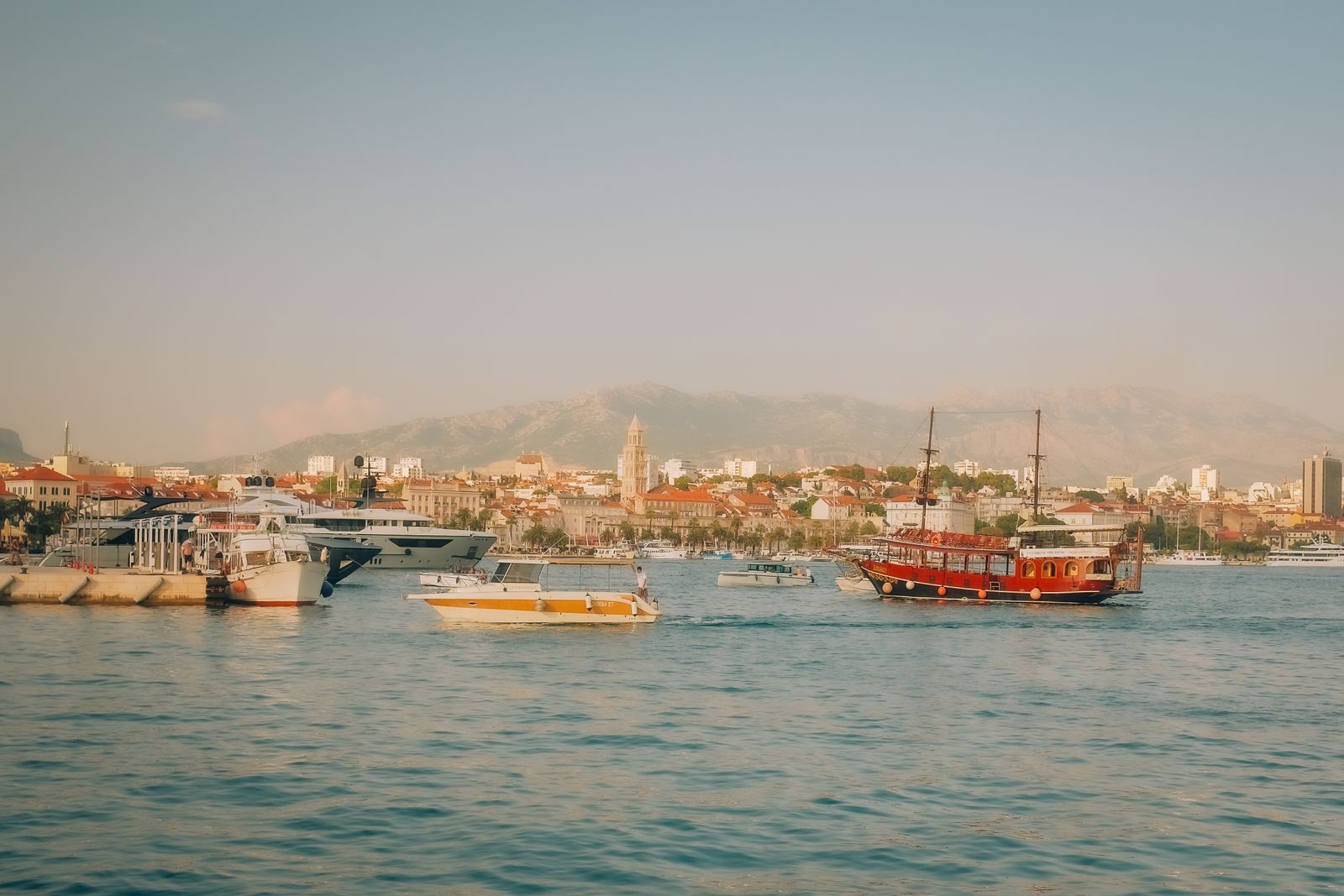
Southwest France Road Trip: Bordeaux, Dordogne & Basque Country (10 Days) in 2026

TL;DRTento desetidenní roadtrip po jihozápadní Francii v roce 2026 měří zhruba 750 kilometrů a začíná v Bordeaux. Odtud vede přes vinařské Saint-Émilion, přírodní dunu Dune du Pilat (110 metrů) a záliv Arcachon do Dordogne se Sarlatem, hrady Beynac a Castelnaud, jeskyní Lascaux IV a propastí Gouffre de Padirac. Trasa pokračuje do Baskicka (Bayonne, Biarritz, Saint-Jean-de-Luz) a do Pyrenejí k 422 metrů vysokému vodopádu Gavarnie, s návratem přes Lurdy a Toulouse. Počkat, mám přeložit do angličtiny, ne shrnout česky. Zde je správný výstup: This ten-day, roughly 750-kilometre road trip through southwest France in 2026 starts in Bordeaux. From there it runs through the wine country of Saint-Émilion, the Dune du Pilat (110 metres, the tallest sand dune in Europe) and the Arcachon Bay, before heading into the Dordogne for Sarlat, the castles of Beynac and Castelnaud, the Lascaux IV cave replica and the Gouffre de Padirac chasm. The route then continues into the Basque Country (Bayonne, Biarritz, Saint-Jean-de-Luz) and up into the Pyrenees to the 422-metre Gavarnie waterfall, looping back via Lourdes and Toulouse. May, June and September are the best months, letting you dodge both the 38–40°C heat and the traffic jams of late July and August. Budget €15 to €50 a day for food, with tolls running about €9.50 per 100 kilometres. Book tickets for Lascaux IV and Padirac weeks or even months ahead — slots fill up fast.

When people think of the south of France, they usually picture overcrowded Riviera beaches, lavender fields in Provence, and endless queues of tourists fighting over every scrap of shade. But today I want to take you somewhere completely different — rawer, more authentic, and in my opinion far more interesting. Imagine a landscape where wild Atlantic waves meet the majestic peaks of the Pyrenees, where the finest cheeses share a table with bold, full-bodied red wines. This southwest France road trip covers a vast, proud region that will swallow you whole with its unique atmosphere.

This region isn’t about rushing through a checklist of sights — it’s about slowly discovering tucked-away villages and breathtaking natural wonders. I’ve put together a detailed 10-day road trip itinerary that takes you from elegant Bordeaux through the prehistoric caves of the Dordogne valley, on to the surf beaches of the Basque Country and high into the mountains. I’ve deliberately cut out any pointless cross-country drives, so you won’t spend your holiday staring through a dusty windscreen. Instead, I’ll show you where to linger over a morning coffee and where to head for the most spectacular views — without stress or rushing.

TL;DR

  • Total driving distance: Around 750 kilometres of actual driving through three completely different regions.
  • Ideal trip length: Exactly 10 days, giving you enough time at each key destination without feeling rushed.
  • Best time to go: May, June and September offer the best conditions — avoiding extreme summer heat and brutal traffic jams.
  • Main vibe: A striking contrast between elegant wine country, clifftop medieval castles, surf culture and rugged mountain scenery.
  • Highlights to look forward to: Climbing Europe’s largest sand dune, sailing an underground river by boat, and stargazing high in the Pyrenees.
  • Top tip: Book accommodation and entry tickets to the main attractions (especially the caves) several months in advance for 2026 — capacity is strictly limited.

When to Go

Timing really does matter here, because southwest France can be merciless in summer, with temperatures regularly hitting 38–40 °C. If you travel in July or August, be prepared for the whole country being on holiday — coastal areas get absolutely packed. The first weekend of August, known in France as chassé-croisé, sees motorways grind to one enormous, frustrating car park as the summer holiday changeover happens all at once. On top of that, accommodation prices soar and getting a restaurant table without a reservation becomes almost impossible.

A much smarter choice is spring or early autumn, when you’ll find settled weather and a far more relaxed atmosphere. May and June bring long, light-filled days, very pleasant temperatures for sightseeing, and nature in full bloom. Just bear in mind that if you head up to the higher Pyrenean trails to see the Gavarnie waterfall in May, you may still encounter snow on the paths. For ocean lovers, early September is wonderful — the water is still warm from summer, but the Arcachon Bay has shed its biggest holiday crowds.

If you love wine, September and October are simply phenomenal. This is when the traditional harvest season takes place and the entire Dordogne valley turns to gorgeous shades of gold and deep purple. October temperatures are perfect for strolling through vineyards and tasting in ancient cellars. Autumn also marks the start of the main surf season in the Basque Country, when the Atlantic sends in its cleanest, most powerful swells. In short, avoid the peak summer rush and your trip will be noticeably cheaper, more authentic and — above all — wonderfully stress-free.

Practical Info: Car Hire, Getting Around & Budget

This itinerary is designed as a road trip, because without your own car you simply can’t reach the more remote valleys and mountain waterfalls. You can easily hire a car on arrival at Bordeaux Airport — I’d recommend using a reliable comparison site to find the best deal with comprehensive insurance included. French motorways are in excellent condition, but be prepared for the toll system (péages), which works out at roughly €9.50 per 100 km. You can pay at every toll booth by contactless card, so no need to carry piles of change.

Pay close attention to low-emission zones (ZFE), which now apply in most larger French cities and were tightened further for 2026. Even in a modern hire car, you’ll need the special Crit’Air eco-sticker, which you can order online for around €5. Drive into a ZFE without one and you risk an entirely avoidable €68 fine that the rental company will simply deduct from your deposit. Parking in cities like Biarritz or Sarlat can be a nightmare in season, so always try to book accommodation that includes a dedicated parking space.

As for a rough budget for 2026, France is definitely not a cheap destination, but with a little planning it’s very manageable. A typical weekday lunch menu (menu du jour) at a small bistro will set you back €15–25, while a three-course dinner at a decent restaurant runs around €35–50 per person. A classic espresso at the bar costs about €2, and a 15% service charge is already included in your bill by law (service compris) — leaving an extra euro or two for exceptional service is entirely at your discretion.

Day-by-Day Itinerary

Let’s dive into the detailed plan for the trip, which takes you through the very best that southwest France has to offer. The route is designed so that every day gives you time to soak up the local atmosphere, rather than just racing on to the next stop.

Day 1: Arrival in Bordeaux & the Modern Waterfront

Your journey begins in Bordeaux, easily reached from the UK with direct flights from London Gatwick, London Stansted and Bristol operated by easyJet, Ryanair and Jet2. This dynamic city on the banks of the Garonne has undergone one of Europe’s most celebrated urban transformations, with its old docks now buzzing with culture and creativity. Once you’ve picked up your hire car and checked in, head straight out for a long stroll along the waterfront. The undisputed centrepiece is the stunning Miroir d’eau — a vast water mirror covering 3,450 square metres, where a thin sheet of water reflects the monumental façade of the Place de la Bourse in extraordinary fashion.

In the afternoon, make your way to the northern Bacalan district, where the extraordinary La Cité du Vin building rises up, its organic shape echoing wine swirling in a glass. In 2026 this hypermodern wine museum celebrates its tenth anniversary — entry costs around €22. Inside you’ll find a wonderfully immersive journey through the world’s wine cultures, crowned by a visit to the glazed belvedere on the eighth floor with sweeping panoramic views over the city. If you’re drawn to darker industrial spaces, the nearby Bassins des Lumières — a former submarine base transformed into a vast digital art centre — is well worth a look.

Bordeaux is wonderfully generous when it comes to food, with a huge range of excellent bistros and cafés and a pleasingly relaxed atmosphere. I’d suggest settling in for a hearty vegetable ratatouille or a generous cheese board with fresh baguette. Meat lovers tend to seek out the city’s famous duck confit, which is an utterly classic dish in this region and turns up on virtually every menu.

💡 Tip: Stay right in the heart of Bordeaux’s historic centre, in a neighbourhood like Chartrons, so you can wander out into the evening on foot. A great option is booking a room at the charming Casa Blanca B&B through Booking.com.

Day 2: A Day Trip to the Wine Town of Saint-Émilion

On the second morning, I’d recommend leaving the car safely parked in Bordeaux and hopping on a comfortable regional TER train out to the famous wine village of Saint-Émilion. The journey from Saint-Jean station takes just 33–40 minutes and saves you all the stress of hunting for parking in its narrow medieval streets. This gorgeous golden-limestone village is surrounded by a sea of vineyards that became the world’s very first wine-producing landscape to earn UNESCO World Heritage status.

Once you step off the little train, you can walk straight out between the vine rows and visit some of the celebrated châteaux. Do book your tastings well in advance online though — the best cellars simply won’t let you in without a reservation. In the village centre itself, don’t miss the extraordinary monolithic church carved directly into the underground rock, and a wander through the steep cobbled lanes the locals call tertres. The bell tower rising above the main square rewards even the most reluctant stair-climber with a magnificent view.

For lunch, duck into one of the smaller, less touristy restaurants and order a fluffy herb omelette or a plate of local sheep’s cheese with walnuts and grapes. The food in Saint-Émilion is honest and rustic — it will keep you going comfortably for the rest of the afternoon. Bear in mind that local restaurants strictly observe lunch hours between noon and 2 pm, so plan your gastronomic experience to fit neatly within that window.

💡 Tip: Explore the village in the early afternoon and head back to Bordeaux for the night. You can easily book an English-language wine tasting tour through GetYourGuide, which often includes guided visits to the best estates.

Day 3: To the Ocean via Arcachon Bay & Dune du Pilat

Today it’s time to get behind the wheel and head west towards the untamed Atlantic coast, which smells of pine trees and salt wind. Arcachon Bay forms a remarkable microworld all of its own, and the centrepiece of today is the awe-inspiring Dune du Pilat. Standing 110 metres high, it’s the largest sand dune in the whole of Europe — a living, shifting organism that is slowly but relentlessly swallowing the dense pine forest at its feet. In summer more than 10,000 visitors arrive every single day, so timing your visit is absolutely critical.

Don’t attempt the climb at midday, when the sand is scorching hot and the shadeless ascent becomes genuine physical suffering. Far better to arrive before 11am or wait until after 7pm. The sand cools pleasantly, the crowds thin out, and you’re rewarded with a phenomenal sunset. The view — boundless blue ocean on one side and a dark green carpet of the Landes forest stretching to the horizon on the other — is genuinely breathtaking. If you want to avoid paying for the main car park, try the free spaces near Plage de Petit Nice and walk up to the dune from there.

After the climb, swing by the town of Gujan-Mestras, the heart of the local oyster culture, with seven small harbours and dozens of brightly painted wooden huts (cabanes) crammed right at the water’s edge. While the seafood fans around you are gleefully slurping freshly harvested oysters, you can settle into one of the waterfront cafés for a wonderful savoury buckwheat galette filled with grilled vegetables and cheese. It’s a wonderfully unhurried sort of place — people sit on rough wooden benches and nobody is in any rush at all.

💡 Tip: Spend tonight in the Arcachon Bay area, ideally in the town of Arcachon itself. The well-reviewed Hôtel Le B d’Arcachon is a great pick, bookable through Booking.com and just a short walk from the beach.

Day 4: Into the Dordogne & Prehistoric Lascaux

Today’s drive takes you from the coast deep into the interior, into the magical Dordogne region — all oak forests, limestone cliffs and lazily winding rivers. The journey from Arcachon takes about two and a half hours, so set off early to give yourself plenty of time to explore the Vézère valley. This is where some of the earliest evidence of human creativity was found — cave systems sheltering paintings tens of thousands of years old that continue to astonish researchers from around the world.

Your main destination is the legendary Lascaux cave, often called the Sistine Chapel of Prehistory. The original cave is strictly closed to protect the paintings, but you can visit the superb, state-of-the-art replica known as Lascaux IV, which opened in 2016. Inside, a constant temperature of 13 °C is maintained and every centimetre of the cave has been recreated using 3D scanning technology. For 2026, the rules are strict and timed-entry tickets must be booked weeks in advance through the official website lascaux.fr — simply turning up won’t get you in. One bonus of Lascaux IV is that English-language guided tours are available regularly.

After the fascinating underground tour, I’d suggest stopping for lunch in one of the smaller villages and ordering a classic local salad with fresh walnuts and warm goat’s cheese. Walnuts (noix) are quintessentially Dordogne and the local walnut oil adds extraordinary depth to any dish. The region’s famous foie gras is the other great culinary pillar here, though it will obviously appeal more to travellers who enjoy rich, traditional meat-based cuisine.

💡 Tip: Head to Sarlat by early evening — it’ll be your base for the next couple of days. Look for accommodation within walking distance of the centre, such as the charming Plaza Madeleine hotel on Booking.com, so you can enjoy the atmospheric evening streets at leisure.

Day 5: Dordogne Valley Castles & Sarlat

Sarlat-la-Canéda is the stone heart of this whole region, boasting the highest density of listed historic buildings per square metre anywhere in Europe. If you’re there on a Wednesday or Saturday morning, you’ll be treated to a huge, gloriously chaotic market that takes over the entire old town. The honey-coloured limestone houses and rooftops covered in heavy stone tiles look as though time froze here several centuries ago — it’s a perfect setting for morning coffee and picking up local cheeses.

Around midday, head down to the river Dordogne, where two ancient rivals from the Hundred Years’ War glower at each other across the valley — the castles of Beynac and Castelnaud. Beynac, which once defended the French side of the conflict, requires a steep climb up cobbled lanes to reach the fortress, but the view over the river and cornfields below is absolutely worth it. On the opposite hillside stands the English-held Castelnaud, now home to a superb museum of medieval warfare with full-size replica siege engines. Afterwards, hire a kayak and drift the 16 kilometres from Vitrac to Beynac — a relaxed three-to-four-hour paddle directly beneath those towering limestone cliffs.

In the evening, return to Sarlat and tuck into the classic local dish of pommes sarladaises — potatoes slowly roasted with garlic and a generous handful of parsley until they develop a perfect golden crust. While they’re traditionally served alongside duck, paired with a fresh green salad they make a wonderfully satisfying vegetarian dinner. After dark, the whole town is beautifully lit by old gas lamps, creating an utterly romantic atmosphere that feels completely timeless.

💡 Tip: Keep the same accommodation as the night before in Sarlat — no need to pack and move. You’ll appreciate the relaxed morning in this architectural gem without the faff of changing hotels.

lukas a lucka
Lukáš and Lucie recommend
Where to stay in southwestern France
6 accommodations — hotels, wellness hotels and other lodging options
⭐ TOP CHOICE 🏡 Guesthouse/B&B
Casa Blanca B&B
Cozy B&B in the designer Chartrons district in the historic center of Bordeaux, from where you can easily reach the entire city on foot. Ideal starting point for exploring the city and trips to Saint-Émilion.
★★★★ Check prices
Check availability
🏨 Hotel
Hôtel Le B d’Arcachon
Hotel located just steps from the beach in Arcachon Bay. Great reviews and ideal location for visiting the Dune of Pilat and the surrounding coastline.
★★★★ Check prices
Check availability
🏨 Hotel
Plaza Madeleine
Charming hotel within walking distance of the medieval center of Sarlat. Perfect base for exploring the castles of the Dordogne Valley and the prehistoric caves of Lascaux.
★★★★ Check prices
Check availability
🏨 Hotel
Villa Navarre
Elegant hotel in the vicinity of Pau, serving as a stopover on the route from Dordogne to the Basque Country. Ideal for breaking up a longer journey.
★★★★ Check prices
Check availability
⭐ Luxury
Grand Hôtel Thalasso & Spa
Premium hotel in the quiet port town of Saint-Jean-de-Luz with wellness facilities. A much quieter alternative to bustling Biarritz, from where you can easily reach surf beaches.
★★★★ Check prices
Check availability
🏨 Hotel
Hôtel Lion d’Or
Classic hotel in the historic Pyrenean town of Cauterets, known for its thermal springs. Ideal rest stop after a full day’s hike to the Gavarnie waterfall.
★★★★ Check prices
Check availability

Day 6: Rocamadour & the Underground River of Padirac

Today we venture a little beyond the Dordogne and drive roughly an hour southeast into the neighbouring Lot department, which hides two absolute showstoppers. The first is Rocamadour — a vertically stacked village that defies gravity, plastered directly onto a sheer cliff face above a deep gorge. Since the twelfth century it has been one of the most important Christian pilgrimage sites in the world, drawing thousands of faithful who climb 216 steep stone steps to venerate the statue of the Black Madonna. To beat the worst of the crowds, try to arrive by 9am.

After exploring the sanctuaries, drive a short distance to the extraordinary natural phenomenon known as Gouffre de Padirac. Picture a huge chasm 33 metres across, which you descend 75 metres underground into a constant temperature of 13 °C. At the bottom, you board a small flat-bottomed boat and glide along a crystal-clear underground river through vast illuminated chambers hung with stalactites. This staggering cave system opens for 2026 on 28 March; tickets cost €22.50 and online booking for a specific time slot is absolutely essential.

Back on the surface, you’ll have worked up an appetite, so make sure to try a wonderful warm Rocamadour goat’s cheese salad — the cheese melts on the tongue beautifully. This delicate cheese carries its own AOP designation and, paired with honey and walnuts, it’s a genuine flavour sensation. Heartier eaters will find excellent country-style pâtés here, but the fresh vegetables and local cheeses will fuel you far more comfortably before an afternoon on the road.

💡 Tip: Move south towards the Basque Country this evening to shorten tomorrow’s drive. A great choice is staying near Pau — look for the elegant Villa Navarre hotel on Booking.com.

Day 7: Into the Basque Country via Bayonne

This morning brings a longer drive southwest, where the character of the landscape and the architecture begins to shift dramatically as you enter proud Basque territory. Your first stop is Bayonne, a city at the confluence of the Nive and Adour rivers, which serves as the cultural capital of French Basque Country. You’ll wander through narrow streets lined with tall townhouses painted in their signature shades of red and green — giving the city an unmistakable, slightly rugged personality.

Bayonne is virtually synonymous with exceptional chocolate, a craft brought here by Jewish refugees from Spain in the 17th century — you simply must order a thick, bitter hot chocolate in one of the traditional arcaded shops. While the crowds busily buy slabs of the famous slow-cured Jambon de Bayonne, treat yourself to a bowl of piperade for lunch — the traditional Basque slow-cooked dish of tomatoes, onions and peppers, often topped with a fried egg. It’s wonderfully fragrant and deeply satisfying.

In the afternoon, make a half-hour detour inland to the village of Espelette, which gave its name to one of France’s most famous ingredients — the Piment d’Espelette chilli pepper. By late summer the façades of its traditional white houses are draped in thousands of strings of drying red peppers, creating a truly spectacular sight. The whole village is perfumed with warm spice and has a wonderfully easy-going rural atmosphere — and in October it all culminates in a lively pepper festival.

💡 Tip: Spend the night in the nearby harbour town of Saint-Jean-de-Luz — it’s far more tranquil than busy Biarritz. The Grand Hôtel Thalasso & Spa promises a wonderful stay and is easy to book via Booking.com.

Day 8: Surf & Grandeur in Biarritz

Today is all about waves, ocean air and effortless elegance, as we visit Biarritz — the undisputed surf capital of Europe. This former sleepy fishing village was put firmly on the map by European aristocracy in the nineteenth century, and to this day it carries a fascinating mix of faded imperial glamour and laid-back beach culture. Around the grand Belle Époque hotels and the famous casino, people in wetsuits carrying boards under their arms and sand between their toes stroll about completely naturally.

The busy Grande Plage with its iconic striped beach tents is the main showpiece, but if you prefer a calmer setting, head to the Côte des Basques beach, hemmed in by dramatic cliffs and offering a perfect view of the Villa Belza. This is where European surfing history was written in the 1950s, and the waves here are far more forgiving for beginners. Do be warned, however, that finding a parking spot in Biarritz in summer is a genuine nightmare, and traffic wardens here are completely ruthless.

After walking the coastline and watching the surfers, I’d strongly suggest ducking into a pintxos bar and trying some vegetarian bites — small skewered snacks that are a Basque obsession. You’ll find roasted peppers, olives, local cheeses and a perfect potato tortilla, all best washed down with a glass of crisp white wine. Meat dishes and seafood are everywhere, of course, but the meat-free spread in the Basque Country is surprisingly varied and genuinely delicious.

💡 Tip: Stay in Saint-Jean-de-Luz and make Biarritz a day trip. You’ll save money on overpriced parking and enjoy a much more relaxed evening stroll along the harbour.

Day 9: Into the Pyrenees — Gavarnie Waterfall & Stargazing

Today we leave the coast behind and strike out for the rugged, majestic peaks of the Pyrenees — the natural wall dividing France from Spain. The mountain roads are wonderfully dramatic but rarely allow you above 50 km/h, though the views more than make up for any lost time. Your centrepiece for the day is the Cirque de Gavarnie, a vast glacial amphitheatre inscribed on the UNESCO World Heritage list, which Victor Hugo once described as a natural colosseum.

From the village of Gavarnie, an hour-and-a-half to two-hour hike leads you directly to the floor of the cirque, where the Grande Cascade de Gavarnie thunders down from above. At an astonishing 422 metres, this is one of the highest waterfalls in the whole of Europe, and the icy spray drifts through the air for dozens of metres in every direction. Standing beneath that enormous wall of limestone and granite, with the roar of the water filling your ears, is an experience that no amount of money can truly prepare you for — and it’s perfectly manageable for any reasonably fit walker.

When you’re back and hungry, warm up in a mountain refuge with a bowl of hearty garbure soup — packed with beans, cabbage and root vegetables. It’s traditionally made with meat, but good restaurants here are very happy to prepare a purely vegetarian version that is equally filling and deeply comforting. In the afternoon, if you have the energy, take the cable car from La Mongie up to Pic du Midi at 2,877 metres, home to a unique astronomical observatory with astonishing views across the entire mountain range.

💡 Tip: Stay overnight in the classic Pyrenean spa town of Cauterets, known for its historic thermal springs. The Hôtel Lion d’Or, bookable via Booking.com, is a lovely place to rest your legs after a full day’s hiking.

Day 10: Lourdes & The Journey Home via Toulouse

The final day of our itinerary takes us somewhere that defies any ordinary tourist description — a place that draws an extraordinary 4 to 6 million visitors every year. Lourdes sits at the foot of the mountains and, ever since 1858 when the Virgin Mary is said to have appeared to a young girl at the Massabielle grotto, it has functioned as one of the most significant Christian pilgrimage sites on earth. The atmosphere in town is intensely polarising — streets packed with commercial stalls selling glowing rosaries stand in sharp contrast to the quiet hope of the sick gathered at the actual site of the apparition.

When planning your 2026 visit, bear in mind that a major British pilgrimage takes place here from around 21–28 August, so the town will be packed to the rafters during that period. Whether you’re a believer or not, I’d encourage you to take in the atmosphere of the evening Marian procession at 9 pm, when thousands of people process through the candlelit grounds in near silence, broken only by the soft murmur of prayers. After that, it’s roughly a two-hour motorway drive to Toulouse, where your journey home begins.

Before your flight from the Pink City — as Toulouse is fondly nicknamed for its rose-brick buildings — grab a proper lunch at one of the city’s many forward-thinking restaurants. Toulouse is a young, vibrant university city with an enormous variety of international cuisine. If you have a few hours to spare before your flight, the Airbus factory tour is genuinely fascinating — just remember that bookings need to be made up to three weeks in advance.

💡 Tip: If you have an early flight, stay as close to Toulouse Airport as possible to avoid getting caught in morning traffic. The tried-and-trusted Radisson Blu Hotel Toulouse Airport is a reliable choice, easily found on Booking.com.

Where to Stay Along the Route

💡 Accommodation & activities tip: We always search for accommodation on Booking.com, which offers the best cancellation policies. For tickets, tours and activities, it’s worth comparing and booking through GetYourGuide.

On a ten-day road trip, it makes absolutely no sense to change hotels every single night — you’d spend most of your holiday packing and unpacking. A much better approach is to choose a handful of strategic bases and do day trips out from each one. It saves money, cuts out unnecessary stress and gives you the satisfying feeling of actually living in a region rather than just passing through.

  • Bordeaux area (Days 1–2): Stay right in the heart of Bordeaux’s historic centre — you can jump on a regional train to Saint-Émilion and completely sidestep the parking nightmare at the vineyards. Look for accommodation in the stylish Chartrons neighbourhood, full of great cafés. The cosy Casa Blanca B&B is a wonderful choice.
  • The coast and bay (Day 3): Choose accommodation in Arcachon town, which has great infrastructure, or nearby Gujan-Mestras if you want to be closer to the rustic oyster farms. Either way you’ll have easy access to the Dune du Pilat and to the boats crossing to Cap Ferret peninsula.
  • Dordogne and Périgord (Days 4–6): The medieval town of Sarlat-la-Canéda is the perfect launchpad for exploring the whole valley. Its markets are phenomenal, and it sits just a short drive from the main riverside castles and the Lascaux caves. Go for a hotel within walking distance of the centre — the Plaza Madeleine is a great option.
  • Basque Country (Days 7–8): To escape Biarritz’s sky-high summer prices and parking chaos, base yourself in the far more charming harbour town of Saint-Jean-de-Luz. You’ll be moments from the ocean and the main surf spots, but your evenings will be blissfully peaceful over a plate of pintxos.
  • The Pyrenees (Days 9–10): Classic mountain towns like Cauterets, famous for its thermal baths, or Luz-Saint-Sauveur are ideal gateways to the national park and the spectacular Gavarnie waterfall.

Where to Go Next

If this itinerary has whetted your appetite and you’d like to explore specific corners of southwest France in greater depth, check out my other detailed guides to this beautiful region.

  • Want to dig deeper into the wine scene and architecture? Read all about what Bordeaux has to offer.
  • Fancy spending more time among castles and prehistoric caves? Check out the dedicated guide to Dordogne and Périgord.
  • Drawn to wild Atlantic swells and surf culture? Browse the in-depth guide to Biarritz.
  • Looking for the perfect seaside escape? Find out what else is hiding around Arcachon.

Frequently Asked Questions

How much are the motorway tolls in France?

There’s no single motorway vignette in France. You pay through a system of toll gates (péages), where the average price works out at roughly 9.50 euros for every 100 kilometres driven. You can pay in cash or with an ordinary payment card.

Is it necessary to book attractions in advance in summer?

Yes, absolutely essential. In particular, entry to the Lascaux caves and the Gouffre de Padirac chasm tends to sell out several weeks ahead in season. Without an online reservation for a specific time slot, you won’t get inside at all.

Do the locals speak English?

In tourist centres such as Bordeaux or Biarritz, you’ll manage in English fairly easily. However, in the more out-of-the-way villages in the Dordogne or the Pyrenees, they’ll appreciate it if you try at least basic French phrases, such as good day (bonjour) or thank you (merci).

Do I need an environmental sticker for French cities?

Yes, plenty of larger cities have introduced so-called low-emission zones (ZFE). You have to buy a Crit’Air sticker online in advance, which costs just over 5 euros, otherwise you risk a fairly high fine.

Is it safe to drink tap water in France?

Yes, tap water in France is perfectly safe and drinkable. In restaurants you can ask for a carafe of water free of charge without any hesitation; just say “une carafe d’eau, s’il vous plaît”.

When is the worst time to travel on French roads?

The biggest traffic gridlocks happen during the summer holidays, especially at the turn of July and August during the so-called chassé-croisé. On this weekend, holiday rotations overlap and the roads near the coast grind to a halt.

Do you tip in France?

Under French law, a 15% service charge is always included in the final price on the bill (service compris). If you were really happy with the service, it’s common practice to leave an extra 1 to 2 euros in coins on the table.

Tips and Tricks for Your Vacation

Don’t Overpay for Flights

Search for flights on Kayak. It’s our favorite search engine because it scans the websites of all airlines and always finds the cheapest connection.

Book Your Accommodation Smartly

The best experiences we’ve had when looking for accommodation (from Alaska to Morocco) are with Booking.com, where hotels, apartments, and entire houses are usually the cheapest and most widely available.

Don’t Forget Travel Insurance

Good travel insurance will protect you against illness, accidents, theft, or flight cancellations. We’ve had a few hospital visits abroad, so we know how important it is to have proper insurance arranged.

Where we insure ourselves: SafetyWing (best for everyone) and TrueTraveller (for extra-long trips).

Why don’t we recommend any Czech insurance company? Because they have too many restrictions. They set limits on the number of days abroad, travel insurance via a credit card often requires you to pay medical expenses only with that card, and they frequently limit the number of returns to the Czech Republic.

Find the Best Experiences

Get Your Guide is a huge online marketplace where you can book guided walks, trips, skip-the-line tickets, tours, and much more. We always find some extra fun there!