Budapest, Hungary: 35 Best Things to Do and See

TL;DRBudapest, Hungary’s capital on the Danube, wins you over with grand architecture and a laid-back vibe. Give yourself three to four days to explore both banks and soak in the baths. Don’t miss the Parliament building, the Fisherman’s Bastion, the Castle District, the Széchenyi or Gellért thermal baths, and the classic ruin bars in the Jewish Quarter. A map on your phone helps, along with a few tricks for dodging the crowds. Spring and autumn are the best times to go. The guide packs in 66 top tips on what to see, where to stay and how to get around on local transport.

You’re going away for the weekend to Budapest and would like some inspiration on what to do there? Lukas and I spent more than a week in the Hungarian capital; we walked at least a hundred kilometres, tried more cafes than is healthy and tasted so much food that we gained at least two kilos each. In this guide I will share Budapest, Hungary: 35 Best Things to Do and See. Let’s take a look together at what to see in Budapest.

Budapest is not just a city with beautiful architecture and good coffee, but a place where you’ll find amazing chop shops, designer shops, restaurants to satisfy the hungriest of palates and famous ruin pubs.
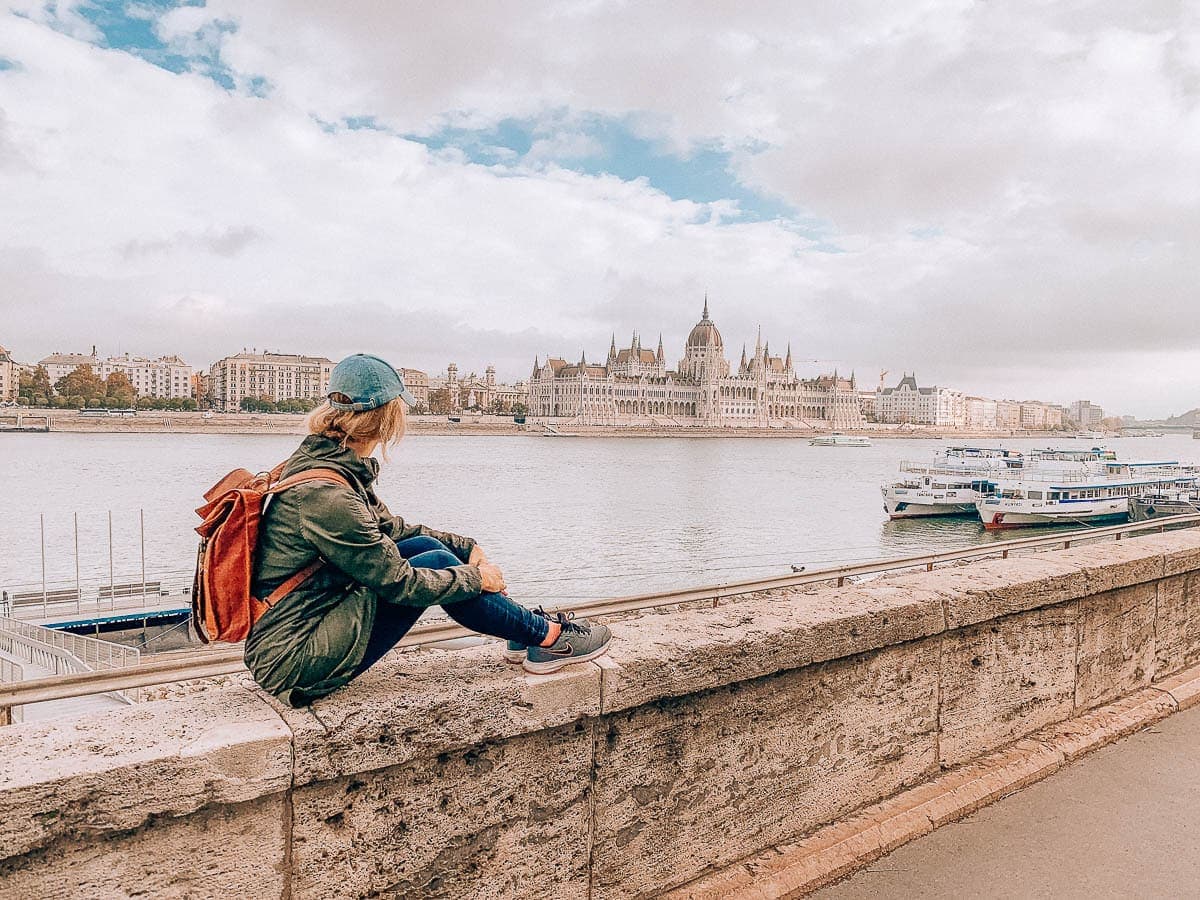
When to go to Budapest?

I’ve been to Budapest in just about every season and the best time to visit Budapest is spring (April-June) or autumn (September-October). In summer, Budapest tends to be quite hot and also full of tourists. And winter in Budapest? If it doesn’t snow, which doesn’t happen very often in Budapest, it is under a cloud and quite cold.

lukas a lucka
Lukáš and Lucie recommend
Where to stay in Budapest
6 accommodations — hotels, wellness hotels and other accommodation options

How to get to Budapest?

You can go to Budapest by car, train, bus (for example, you can go FlixBus ) or by plane. From Prague it is approximately 5-6 hours by car. If you choose to fly, it is approximately a 1 hour flight from Prague. Read, how to get cheap flights.

Where to stay in Budapest?

I recommend staying right in the centre, you can easily walk almost all of Budapest and save time and money on transport. If you are looking for cheap accommodation, try the Flow hostel, where we stayed when we saved every penny. It’s a rather designer and nice hostel, a short walk from the market and super money.

For those of you looking for more luxurious accommodation, I recommend Hotel Vision, which we stayed at last year and it has great breakfasts, location and beautiful rooms. It’s stunning, but quite expensive. Aria Hotel Budapest by Library Hotel Collection . A good middle ground is Eurostars Danube Budapest, Novotel Budapest Danube or Milford Suites Budapest.

How to get around the city: Public transport in Budapest

We recommend staying in the centre so you can mainly explore Budapest on foot, but it’s easy to get to more distant places by public transport.

For this, you can use the BKK FUTÁR public transport app, which provides information about public transport in Budapest.

Don’t Forget Insurance – SafetyWing Travel Insurance

You may be unpleasantly surprised when travelling, so never forget to take out travel insurance. For us, a great option is long-term insurance from SafetyWing, which offers travel and health insurance for frequent travellers and digital nomads around the world.

SafetyWing offers insurance in two different plans (Essential and Complete), paid monthly, so if you’re not traveling, it can be easily paused. It can be easily arranged online, even if you are already abroad, and you don’t have to return to the Czech Republic after a certain period.

The basic plan for individuals aged 10-39 (Essential) costs from $56.28 for 28 days (extended coverage for the USA or hazardous sports can be added) and coverage includes medical treatment, hospitalization, medical evacuation, lost baggage, trip interruption, and flight delays. Total coverage is limited to $250,000 per incident.

More comprehensive coverage is provided by the Complete variant. The main advantage of this plan is the high total coverage limit of USD 1,500,000. It covers not only unexpected health problems, but also ongoing medical care or preventive doctor’s appointments. Other covered services include:

  • Transfer to a better-equipped hospital.
  • Baggage loss cover.
  • Psychological help.
  • Theft insurance.
  • Reimbursement of costs for travel delays or interruptions due to family reasons.
  • Cover the cost of transportation or burial in the event of death.

The price for individuals aged 18–39 starts at $150.50 for 28 days, with the option to add extended coverage for the USA or hazardous sports.

Budapest, Hungary: 35 Best Things to Do and See

Let’s now look at what to see in Budapest and how to enjoy the city to the fullest.

Freedom Bridge – Szabadság híd

We start our walk at Szabadság híd. This historic bridge connects two parts of Budapest. It is as photogenic in itself as the view from it. If you give up on us and stay in Flow hostel you’ll be a few minutes’ walk away.

Buda Castle (Budai Vár, Budin kalesi)

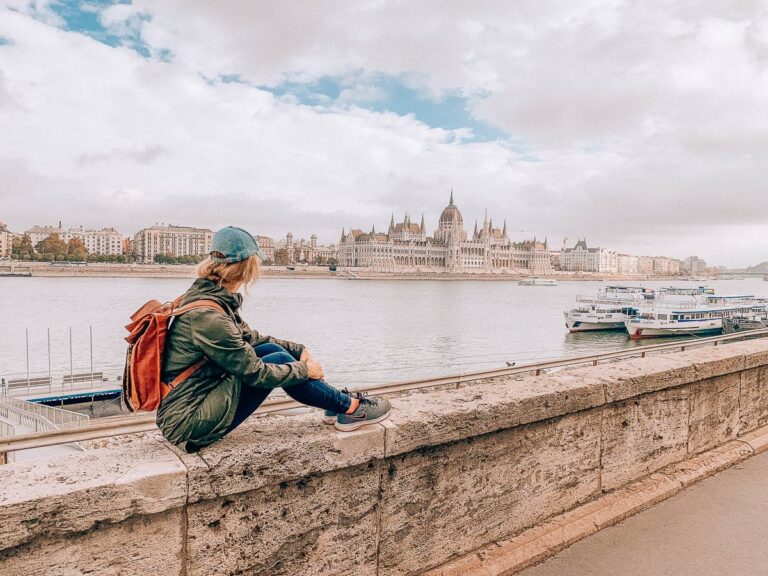
Buda Castle (Budai Vár in Hungarian) is the main structure of Budapest’s Castle Hill and can be easily reached on foot from the Freedom Bridge. Like our Prague Castle, Buda Castle is a complex of palaces and a medieval town with several other important monuments, including the Fisherman’s Bastion and Matthias Church. From Buda Castle you can see the opposite bank, where you can see the huge Hungarian Parliament building.
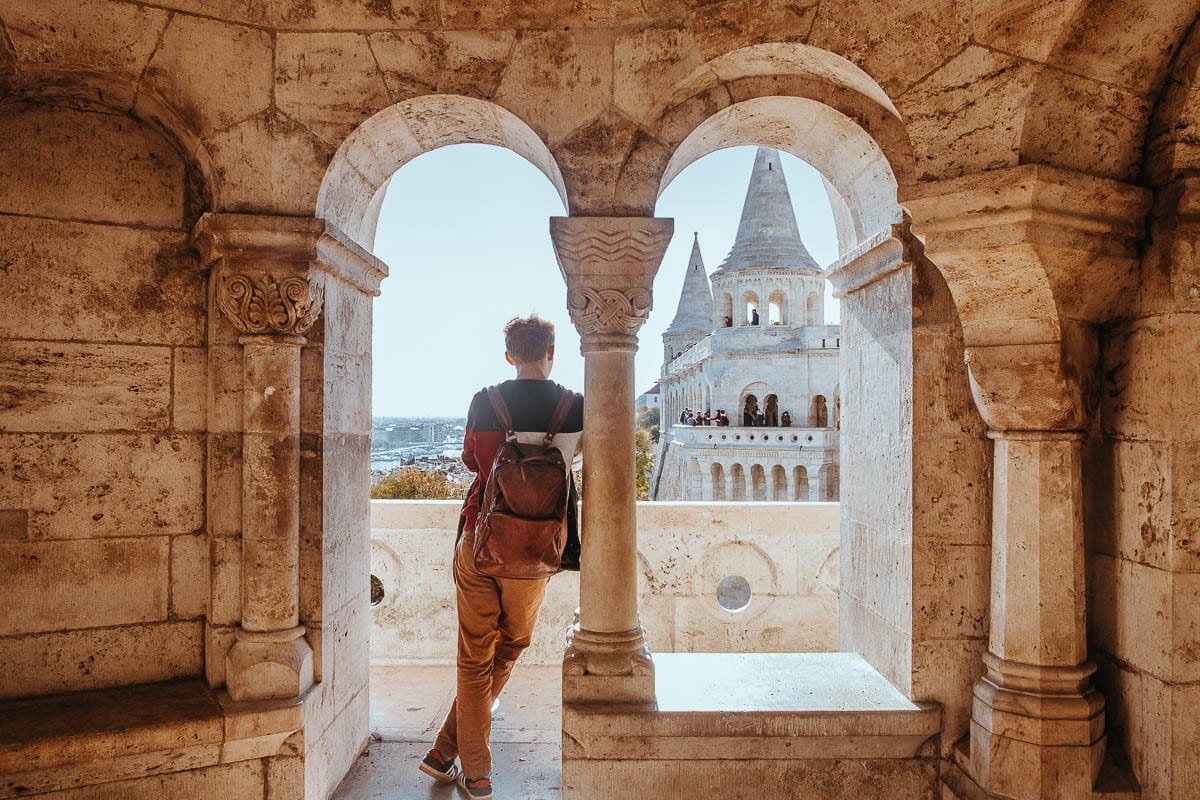
Fisherman’s Bastion in Hungarian Halászbástya

The Fisherman’s Bastion is also part of the palace complex on Castle Hill. This place is every photographer’s dream. Romantic arches, magnificent views of the river and Parliament in the background.

Probably the most beautiful photos from Budapest are taken here at the Fisherman’s Bastion. No wonder, from this neo-Gothic and partly neo-Romanesque representative terrace you can see the river and the majestic Budapest Parliament. But beware, even in the off-season there is an incredible amount of people here. So head here early in the morning. There is also a beautiful Matthias Church near the Fisherman’s Bastion. Don’t worry, you can’t miss it.

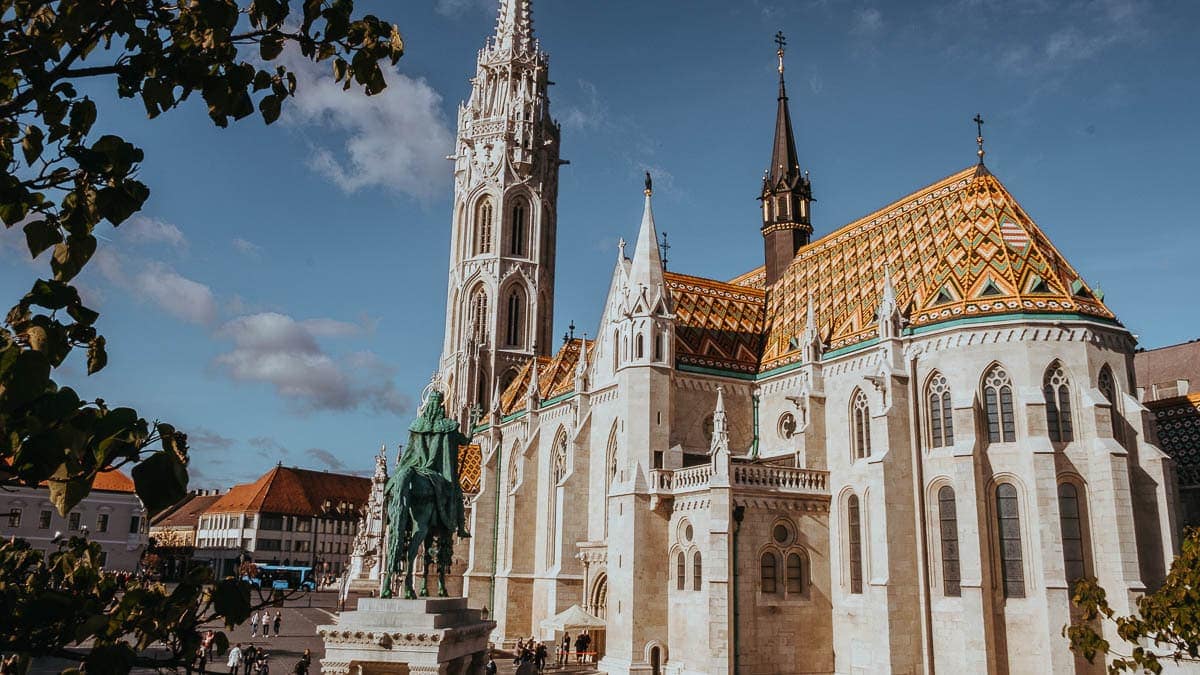
St. Matthias Cathedral in Budapest

St. Matthias Church, officially the Church of the Assumption, is one of the most important symbols of Budapest and the whole of Hungary. Although the original church was destroyed by Mongol invasions and built in 1015, the present Gothic church dates from the mid-13th century. century.

It has been modified and rebuilt many times over the centuries, which is evident in its architectural mix. It was the centre of many historical events, including the coronation of the Hungarian kings. The name “Matthias Temple” was created in honour of the Hungarian king Matthias Corvinus from the 15th century. century. The temple is open to visitors and offers breathtaking views from the tower. It is located in the historic centre of Buda, next to the Fisherman’s Bastion.
Gellert Mountain

If you have good weather, you can go to Gellertova hora on the way back from the Fisherman’s Bastion. Gellért’s Mountain is a kind of Hungarian Petřín, just don’t expect a cable car there. At the top of the hill is a military citadel, next to which is the statue of Liberty with the goddess Nike. The divine view of Buda Castle will probably attract you the most.

Military citadel

As we have already said, the military citadel stands on Gellért Hill and was built in 1848-1849, when the Hungarian Revolution against the ruling Habsburgs took place.

Statue of Liberty

The Statue of Liberty stands on a 14-metre high pedestal and was erected in 1947 to commemorate the victory of the Red Army.

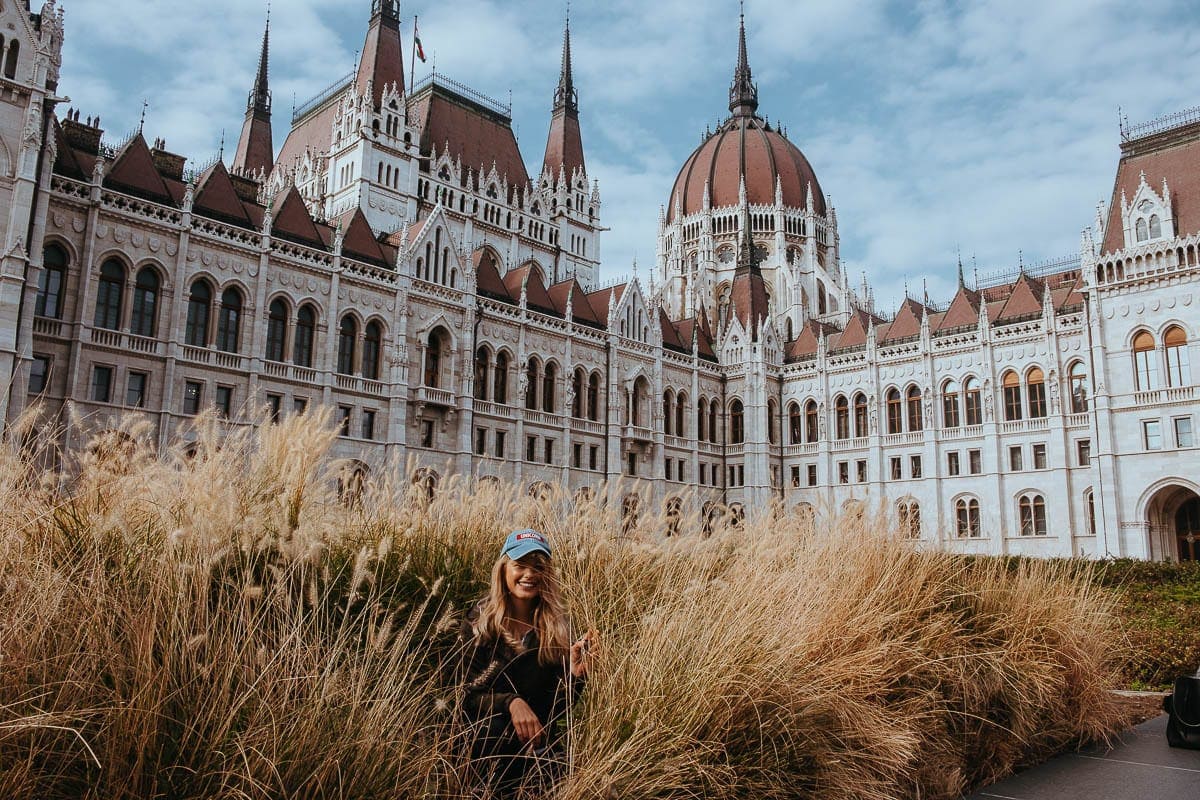
Budapest Parliament (Országház)

With 691 seats, the Parliament of Budapest is one of the three largest parliaments in the world. For me, he’s probably the most impressive. When Imre Steindl designed it, he didn’t want anything extravagant, he just wanted to capture the Hungarian spirit “modestly”.

And the result? 88 statues of important figures of Hungarian history and countless coats of arms decorating its facade. Well, modesty above all. If you wanted to go through all the rooms, you would need at least two days.

60 pairs of iron shoes

A short walk from the Parliament building, 60 pairs of iron boots on the banks of the Danube remind Budapest residents and visitors of the massacre of Jews during World War II.
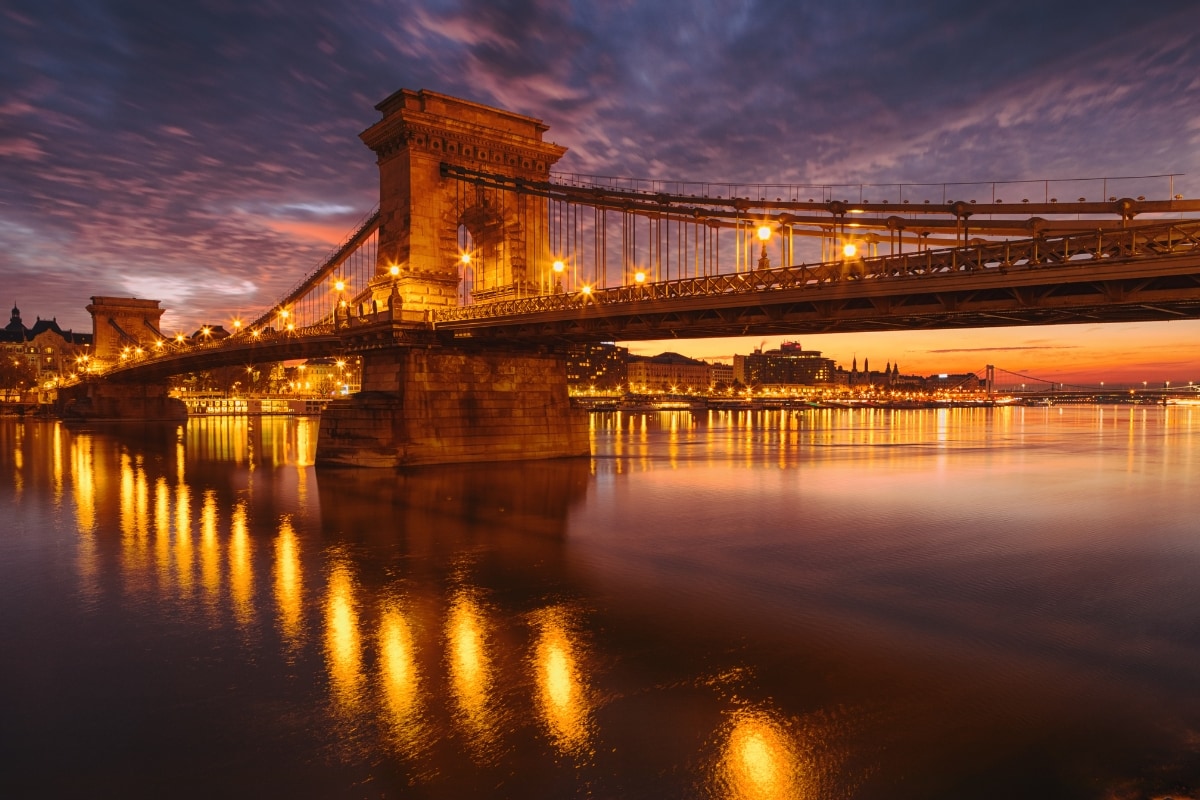
Széchenyi lánchíd Bridge

If you walk further away from the Parliament, you will reach the famous Széchenyi lánchíd Bridge. The Széchenyi lánchíd Bridge in Budapest is the first of eight bridges connecting the cities of Buda and Pest. It was built in 1849 at the instigation of Count István Széchenyi and designed by British engineers William and Adam Clark.

Interesting fact: Although it is sometimes referred to as a “chain bridge”, it is actually a suspension bridge. At the time of its commissioning, it had a span of 202 metres, making it one of the largest in the world. On the Buda side of the bridge the Buda Tunnel under the Castle Hill is connected.
Margaret Island – Margitsziget

Margaret Island is an oasis of peace and quiet on the Danube. You’ll find it in the middle of Budapest, and it’s a great place when you want to take a break from the busy tourist city. There are beautiful Japanese gardens, a hidden thermal bath and a small zoo.

Margitsziget Singing Fountain

The biggest free attraction in Budapest is the Singing Fountain, which dances to the rhythm of music on Margaret Island. If you arrive here at night, you will also see a light show that would put even Signalfest in Prague to shame. It is on the UNESCO list.

Water tower

The water tower now serves as a lookout tower and can also be found on Margaret Island. It dates back to 1911 and is now a UNESCO World Heritage Site.

The best spa in Budapest

If you are going to Budapest, you should definitely not miss the spa. Let’s take a look at the best spas you can visit in Budapest.

TIP: Read about the best Hungarian thermal baths

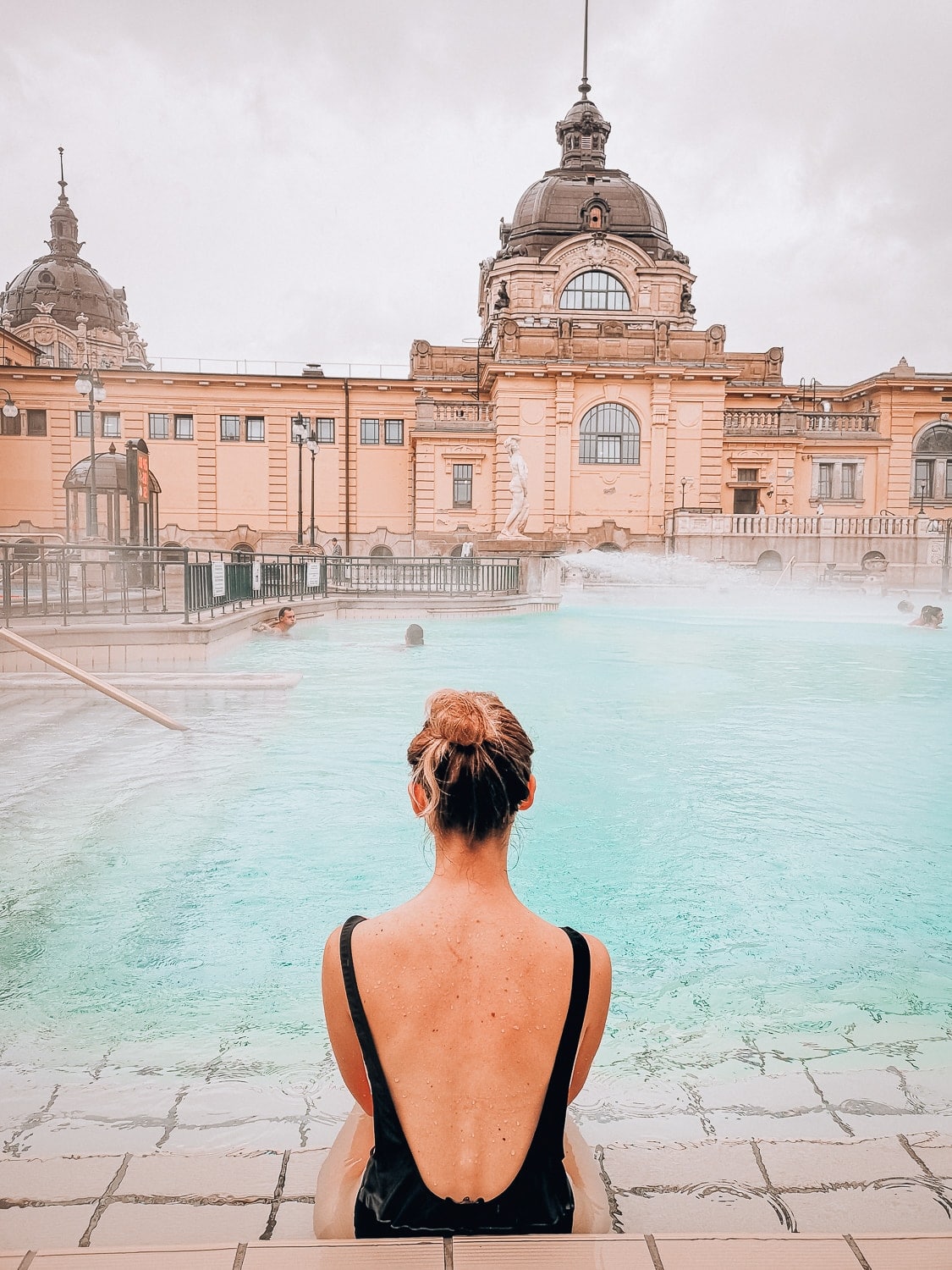
Szécheney Spa

Not for nothing is Budapest called the “Spa of Europe”, the capital of Hungary is situated on 125 thermal springs. The most popular spas are the huge Szécheney Spa which is where we went.

Széchenyi Thermal Baths in Budapest, located in Pest’s City Park, is one of the largest spa complexes in Europe with a history dating back to 1913. The spa has impressive neo-Gothic grounds and offers a wide range of attractions, including bubble benches, geysers and a chess zone.

The spring, which supplies the spa with hot water, was discovered in 1876 and comes from a depth of 1,256 m with a temperature of 76°C. The spa was built according to the design of Győző Czigler and has been extended several times, the last extension being in the 1960s. years 20. century.

Spa admission includes a locker, access to the outdoor and indoor pools and sauna. A range of treatments are available, including massages and beer baths. The water from the spring has healing effects, especially for degenerative joint diseases and arthritis.

If you are planning a visit to the spa, it is recommended to book at least four hours and then explore the nearby tourist attractions of Budapest, including Heroes’ Square, the Zoo and Vajdahunyad Castle.
Vajdahunyad vára

Near the baths is the Vajdahunyad vára, which was originally built of wood as a backdrop for the millennium celebrations in the 19th century. century.
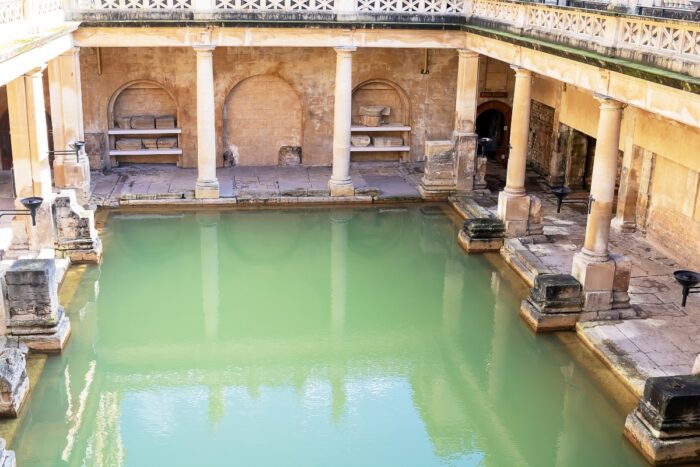
Gellert Baths

If you will be staying in hostel Flow , just cross the river and you will be at the Gellert Baths (15). While Szécheney’s mainly outdoor pool is beautiful, Gellert’s Baths boasts the nicest indoor pool.

Rudas Baths – Rudas Gyógyfürdő Baths

Rudas Baths, also known as Rudas Gyógyfürdő, are one of the oldest and most famous thermal baths in Budapest. It is located on the right bank of the Danube at the foot of Mount Gellért and their history dates back to the Turkish era 16. century. This historic spa centre is famous for its imposing dome and octagonal pools, a reminder of Ottoman architecture.

The water from the spa comes from a thermal spring, which is rich in calcium, magnesium and other minerals, and is known for its healing effects on joints, muscles and skin.

Rudas Baths offers various therapeutic treatments, including massages, saunas and steam baths. In addition to the traditional Turkish bath, visitors will find a modern wellness centre with panoramic views of the Danube, making the spa an ideal place for rest and relaxation.

In the traditional part of Rudas, there are separate days for men and women, allowing guests to have an authentic Turkish experience. However, the modern wellness centre is open to both sexes every day.

Király Baths

Király Baths is a historic spa centre in Budapest, built in the 16th century. century during the Ottoman rule. This spa has retained its authentic Turkish atmosphere with its imposing domes and stone columns.

Veli Bey Baths

Veli Bej Baths are one of the oldest thermal baths in Budapest. They were originally built in 16. century during the Ottoman era, but have recently undergone extensive reconstruction. Today’s visitors can appreciate the combination of historic architecture and a modern wellness centre. The healing water is known for its positive effects on rheumatic diseases and circulatory disorders.

Lukács Baths

Lukács Baths have a rich history dating back to the Middle Ages. Over the years, it has become a popular place among artists and intellectuals. The spa offers a wide range of therapeutic treatments and wellness services. The water sources of the spa are known for their healing properties, especially for the treatment of degenerative joint diseases.

Danubius Health Spa Margitsziget

Located on the picturesque Margitsziget Island in the middle of the Danube, the Danubius Health Spa is a modern wellness centre offering a combination of therapeutic and relaxing treatments.

What to take to the spa in Budapest

In addition to your swimsuit, bring your own bathing cap, slippers, water and towel. Rental fees can be overpriced at some spas. Yes, most spas won’t let you in without a bathing cap. Before going to the spa, check who the spa is open to that day (women, men, mixed). Szécheney Spa is always mixed.

Tip: Go to sparties or spa parties

If you want to party in Budapest, you shouldn’t hesitate to wear your swimsuit and book a place at one of the local magical parties in the thermal baths. Nowhere else in central Europe can you party by the pool all year round with a fabulous light show. Most of the sparties are on Saturday.

Where to go for coffee, food and beer in Budapest

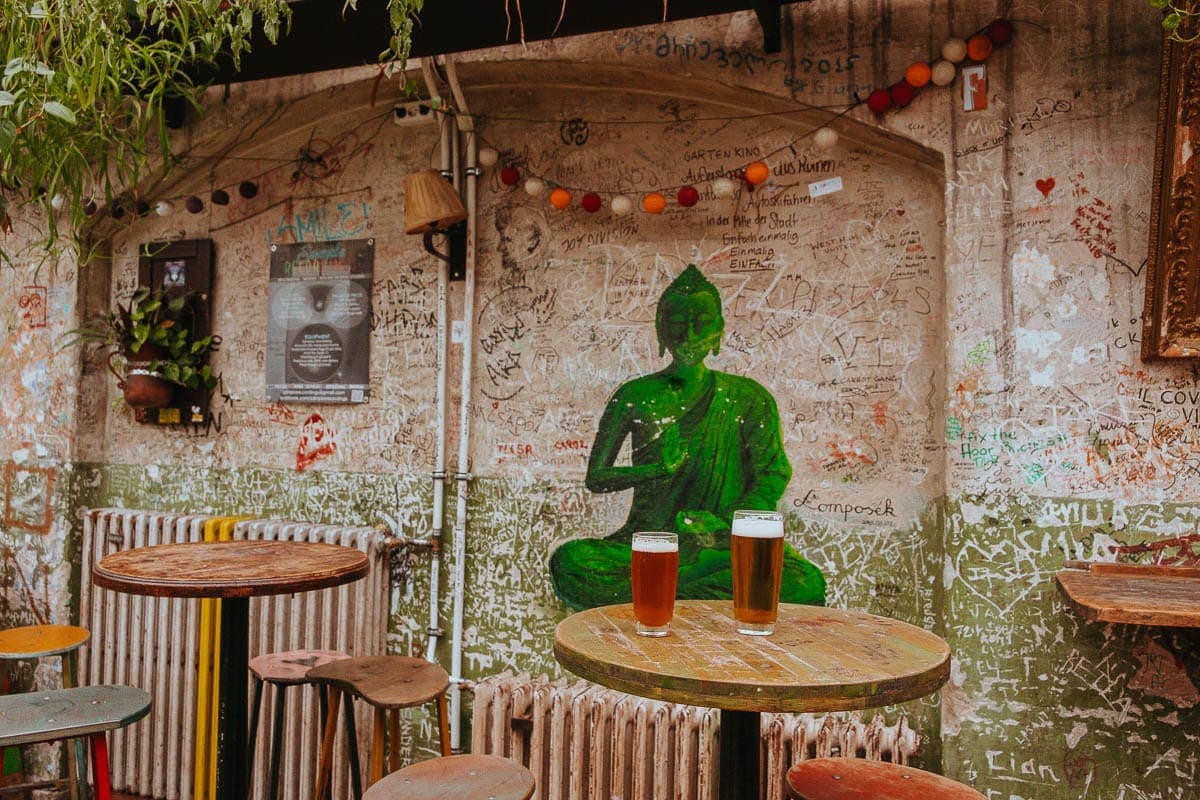
Romkocsma, in English Ruin Pub, in Czech probably ruin pub, or semi-decayed pub. Anyway, these are pubs with a great atmosphere, unusual interior and good beer. The most famous one is Szimpla Kert, where we also went. If you want to avoid the crowds, go on Thursday.
Szimpla Kert

Szimpla Kert, located in the heart of Budapest, is considered the first “ruin bar” in the city and is one of the most famous and most visited nightclubs in Budapest. What started as a temporary bar in an abandoned building has quickly become a cultural hub combining bars, cafes, galleries and open spaces for events.

The interior of Szimpla Kert is a combination of art installations, antique furniture and colourful lights, creating a unique and bohemian atmosphere. The venue is divided into several different areas – from the main bar, to secret corners, to an open garden where concerts and film screenings take place.

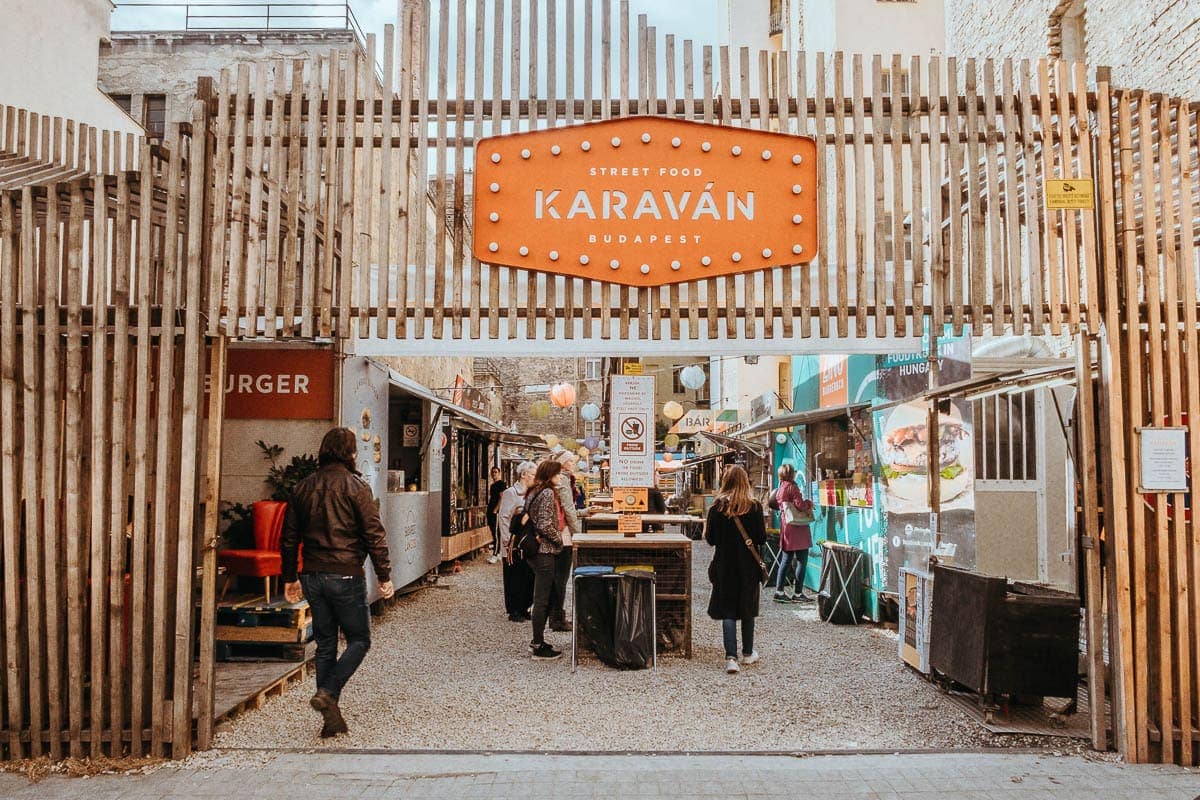
Caravan – great street food

Whether you like street food or not, you will absolutely love this place. In the same neighborhood as the ruin pubs, there is the Caravan, a place full of hipster food stalls. There’s something for everyone. It offers Mexican, Thai and Hungarian food, vegan burgers for vegans and delicious waffles for sweet lovers. The coffee is great, but most people come here for a beer.
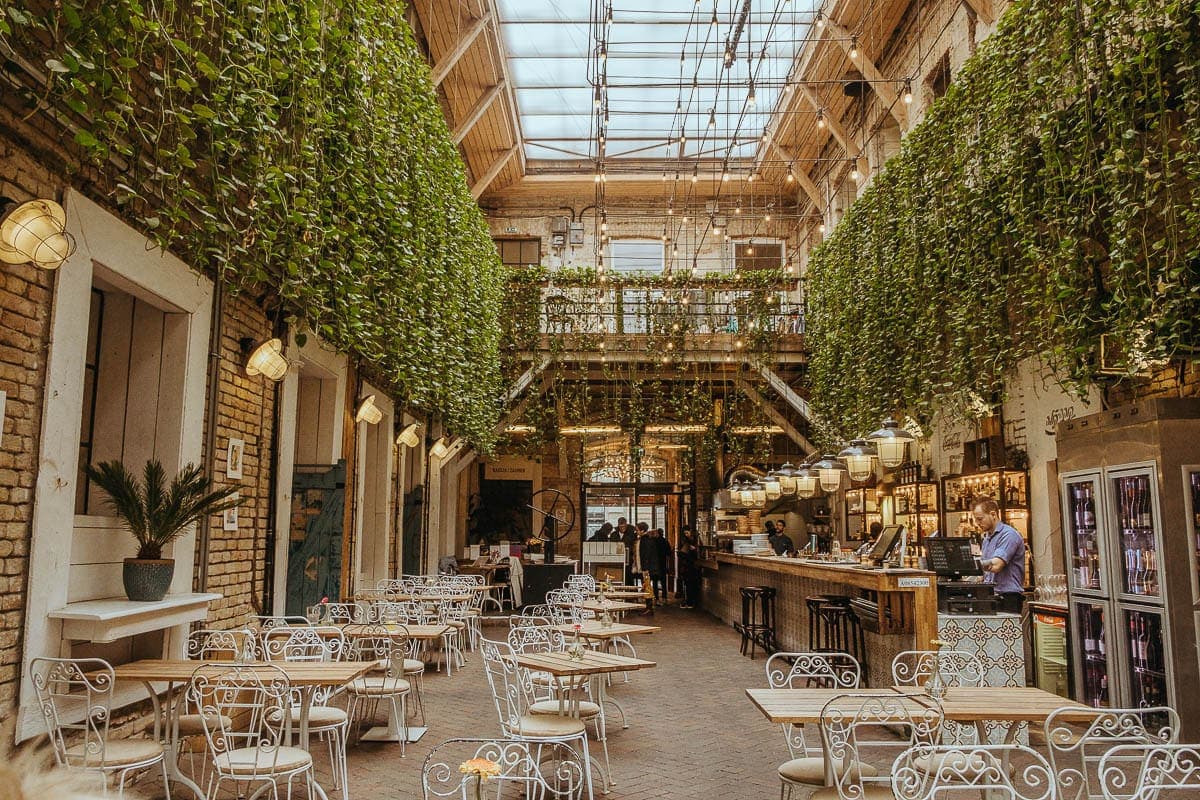
Mazel Tov – the best restaurant in Budapest

I was a little worried that Mazel Tov would be out of our budget. But this famous Israeli restaurant also surprised with its prices. They’re slightly higher, but definitely not terrible (and certainly a lot cheaper than if you went out to eat in Israel 😀 ). But the food you get here is top-notch, unconventional and high quality. The setting of Mazel Tov is truly romantic, make sure to make a reservation during the tourist season.
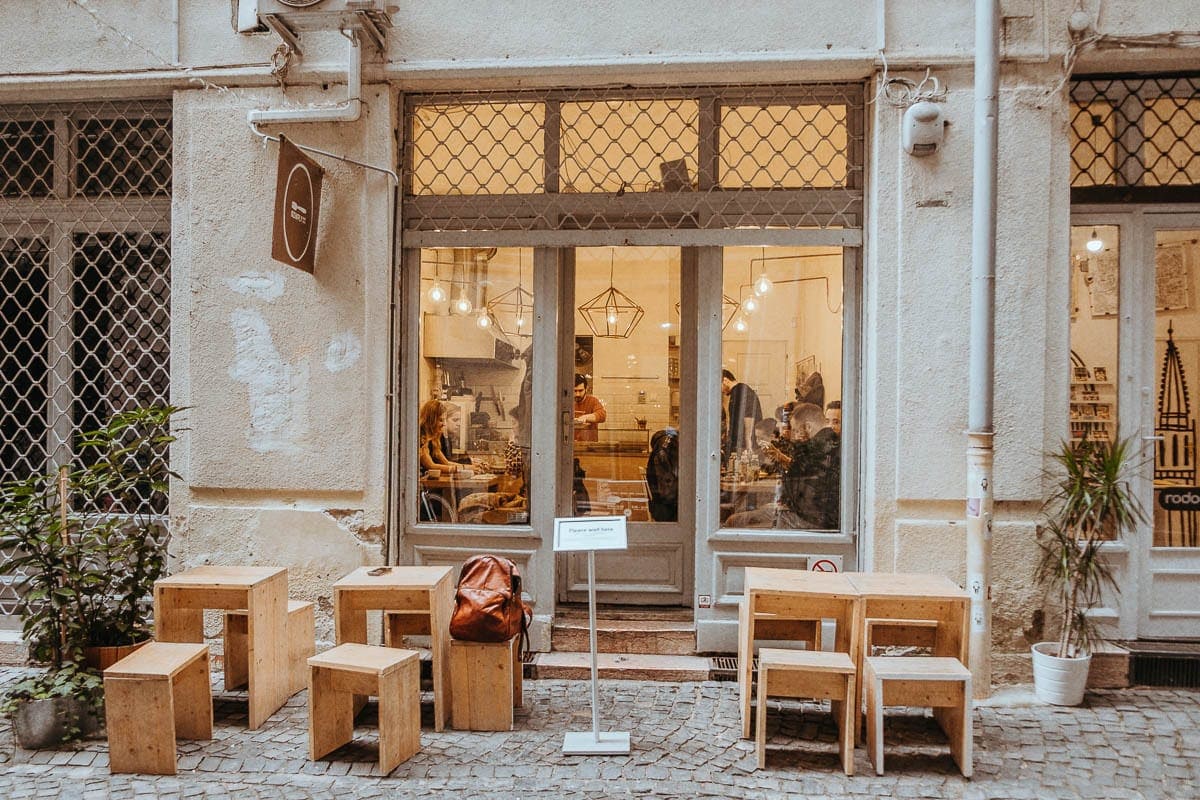
Where to go for coffee in Budapest

We were probably looking forward to the cafes in Budapest the most. We love coffee and the café life in Budapest is booming. Just in the month we were gone, several more hipster cafes opened in Budapest! We liked the most:

  • Contact.
  • Cafe Madal,
  • and Torokmez

For our full list of the best cafes, check out you can read here .
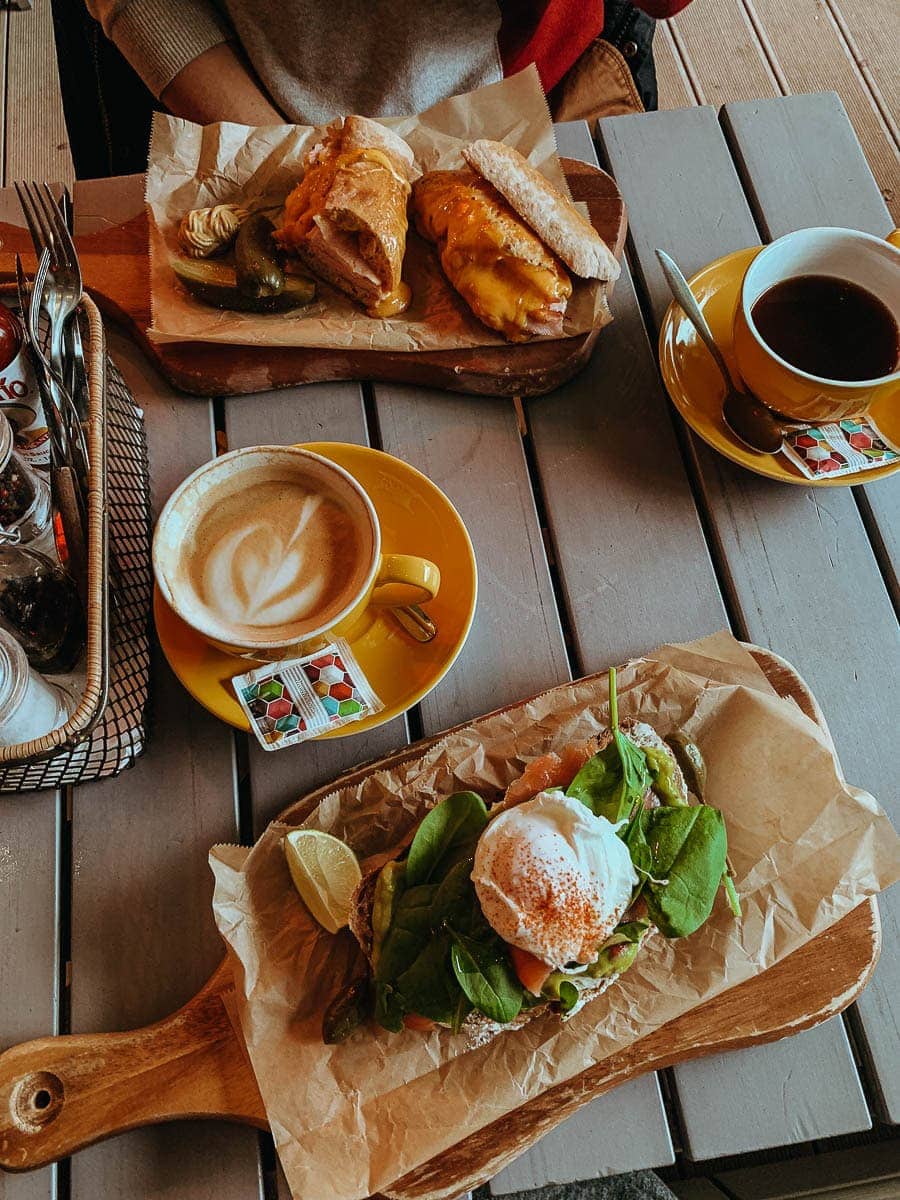
Where to go for brunch in Budapest

Budapest may be even better at brunch than Prague. Avocado sweet potato toast, sushi pancakes, French croissants or American pancakes, you’ll find it all in Budapest. We liked the brunches the best

  • in Budapest Baristas,
  • Shimply
  • and the Blue Bird Cafe.

All tips for brunches can be found in the same article as cafes .
Budapest Market – Nagy Vásarcsarnok

For Hungarian delicacies and souvenirs, be sure to head to Nagy Vásarcsarnok, a market next to the recommended Flow Hostel. And what to buy? Try the goulash or traditional Hungarian langos. As a souvenir you can buy Hungarian paprika (spices) or dried chillies. They are rightly proud of their peppers here.

Tips for interesting vintage shops and chop shops in Budapest

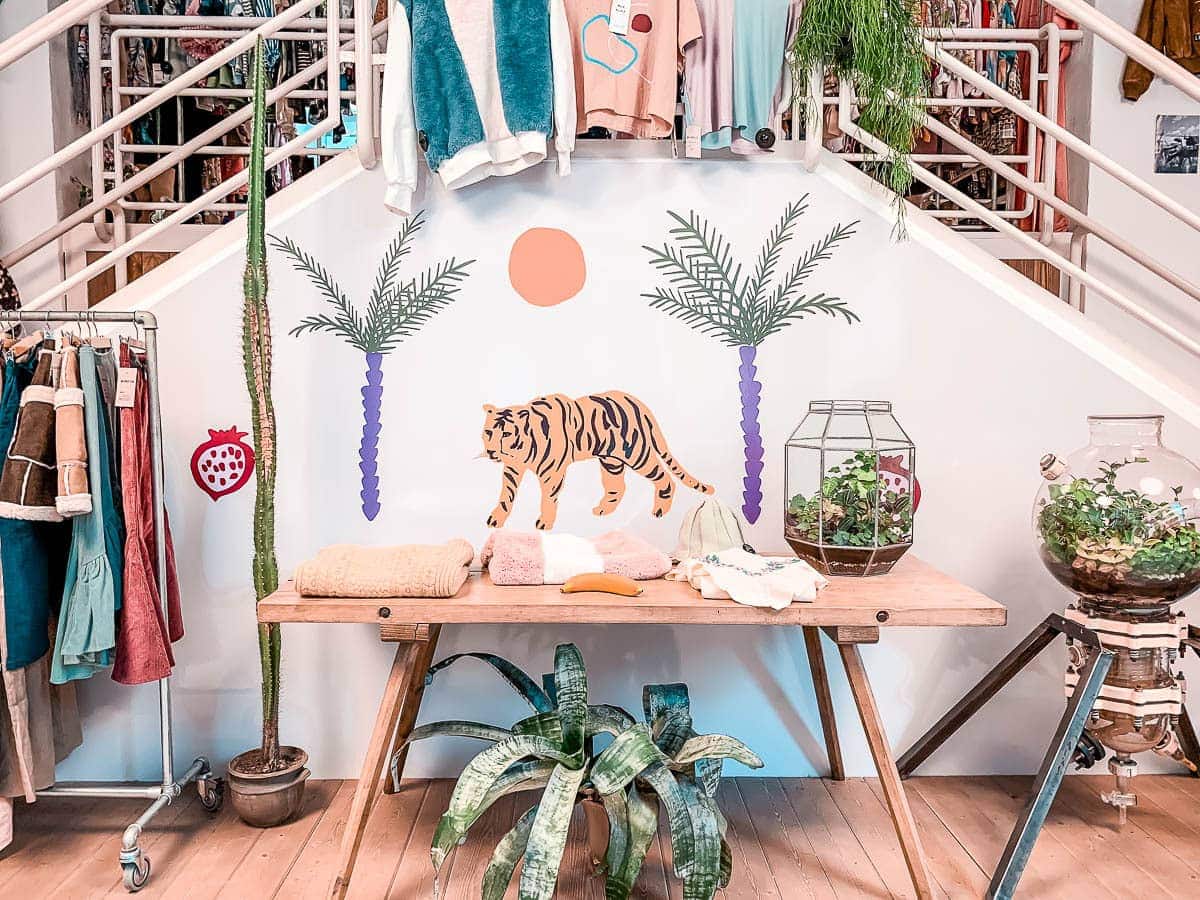
One of our favourite activities in Budapest was going to the chop shops and design shops. They’re everywhere and they’re amazing. And we hardly go to second hand shops, we are not such fans. But they are perfect in Budapest! What we liked the most:

  • in Szputnyik Shop, which has several branches in Budapest, and the
  • LoveBug Vintage,
  • Antifactory Vintage Shop.

Be careful, before you go, check the opening hours online.
Where to go for a sweet treat in Budapest

If you love sweets, you simply must come here. Mr. Funk is probably the most popular sweet shop in Budapest. With her unicorn-shaped donut shakes, she clearly wins the top spots not only with food bloggers on Instagram. Beware, one overpriced cocktail can supposedly feed up to five people.

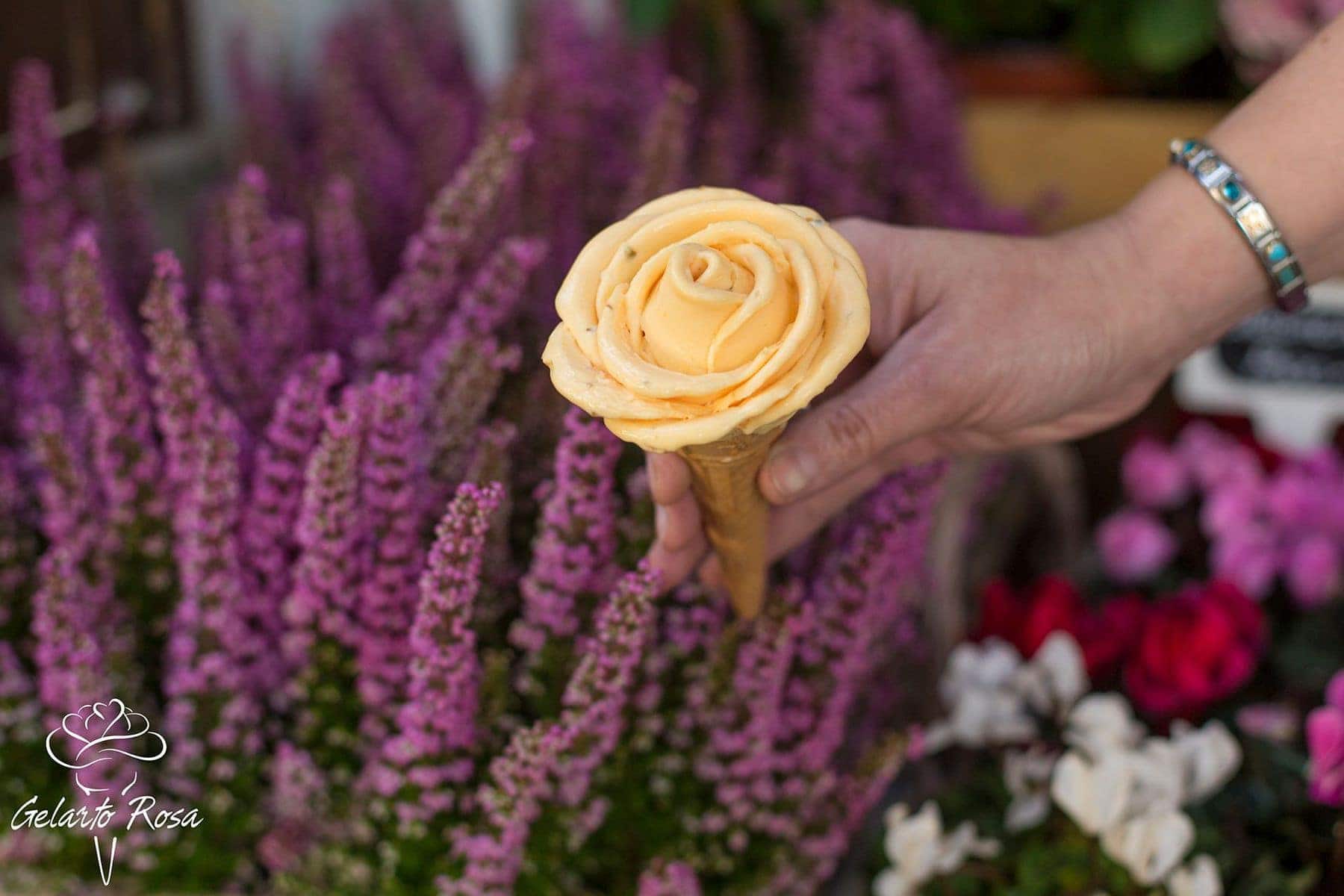
Gelarto Rosa, a place where they make ice cream in the shape of a rose, comes in second place. Unfortunately, Luky and I didn’t try either, because we avoid sweets. 🙂
What to do in Budapest when it rains – museums to visit

There are more than 50 museums to visit in Budapest. If you like art, visit the national gallery (Hungarian National Gallery); if you are interested in the Nazi past, the House of Terror is very interesting. I recommend checking GetYourGuide, where you’ll find very interesting activity offers that you might not discover otherwise. Here you can buy, for example, a tour of the caves in Budapest or a guided tour of the Parliament.

Hungarian National Museum (Magyar Nemzeti Múzeum)

Located in the centre of Budapest, it is home to a rich collection of objects that trace the history and culture of the country. The museum has exhibitions ranging from prehistory to the Middle Ages to the modern history of Hungary.

Museum of Fine Arts (Szépművészeti Múzeum)

One of the largest museums in Hungary, in addition to permanent exhibitions there are also temporary exhibitions. Before visiting, check out the museum’s website .

House of Terror (Terror House)

This museum is dedicated to the periods of Nazi and Communist rule in Hungary. The exhibitions show the dark history of the country during the 20. century and are a moving reminder of the victims of these regimes.

Hungarian National Gallery (Magyar Nemzeti Galéria)

It is located in the Royal Palace at Buda Castle and you will find there collections of Hungarian art from the Middle Ages to the present day. It also includes many works by important Hungarian artists.

Budapest History Museum (Budapesti Történeti Múzeum)

Located in the palace of Buda Castle, this museum is dedicated to the history of Budapest itself. Exhibitions include archaeological finds, historical models of the city and much more.

Jewish Museum (Magyar Zsidó Múzeum és Levéltár)

This museum, often associated with the Dohány Street Synagogue, is dedicated to the history and culture of the Hungarian Jewish community. It hosts a number of exhibitions on the Holocaust and the life and fate of Jews in Hungary.

Tip: Romantic boat ride

As in other cities, Budapest has GetYourGuide (we used it extensively in Rome as well), where you can buy tickets in advance so you don’t have to queue, but more importantly, you can use it to buy, for example, boat rides or guided themed tours of Budapest (about vampires and myths, for example).

What to do in Budapest with children: Aquaworld Budapest

Aquaworld Budapest is one of the largest indoor water parks in Europe. It has 17 pools, including thermal pools, whirlpools, wave pool and many more. There are also 11 slides, including some for small children and some for more adventurous visitors.

The water park is part of the Aquaworld Resort, which also includes a hotel and wellness centre. The hotel complex offers rooms and suites for guests who want to enjoy more than just a day of water attractions.

What to Do in Budapest for Free

Budapest offers many interesting places and activities that are completely free. Here are some tips on how to enjoy the city without unnecessary spending:

Sights and Viewpoints

  1. Fisherman’s Bastion – Wonderful views of the Danube and Parliament, an architectural gem in Neo-Gothic style. Access to the lower terraces is free.
  2. Castle District – Walk around Buda Castle, Matthias Church, and enjoy the beautiful historic streets.
  3. Basilica of St. Stephen Entry to the main nave is free; you only pay for the ascent to the dome.
  4. Parliament – The building is beautiful from the outside, even at night when lit up. EU citizens have the option to get free entry (advance booking is recommended).
  5. Chain Bridge – One of the iconic symbols of the city connecting Buda and Pest. A great place for a walk.
  6. Gellért Hill – Beautiful panoramic views of the city and interesting historical monuments, such as the Citadel.

Nature and Parks

  1. City Park (Városliget) – A great place to relax; Vajdahunyad Castle is also located here.
  2. Margaret Island – A peaceful oasis with beautiful gardens, a running track, and a musical fountain.
  3. Normafa – A popular place for walks in the hills with views of Budapest.

Markets and Local Atmosphere

  1. Great Market Hall (Nagycsarnok) – Explore the huge market full of local products, even if you don’t buy anything.
  2. Gozsdu Udvar – A popular passage with restaurants and bars, where weekend flea markets are held.
  3. Street Art and Ruin Bars – Walk through the Erzsébetváros district and discover interesting street art and an alternative atmosphere.

Cultural Experiences

  1. Free Museums – Some museums have free entry on certain days, e.g., the Hungarian National Gallery or the Budapest History Museum every first Sunday of the month.
  2. Music and Cultural Events – Free concerts or festivals are often held in squares and parks (especially in summer).
  3. Jewish Quarter Tour – The Dohány Street Synagogue requires a fee, but its surroundings are full of interesting sights, including the memorial to Jewish Holocaust victims.

Other Attractions

  1. Shoes on the Danube Bank Memorial – A powerful memorial commemorating the victims of the Holocaust.
  2. Hourly Display at the Parliament Building – Every hour a fanfare sounds, and at night the building is beautifully illuminated.
  3. Free Walking Tours – Join a city tour for a voluntary contribution.

Budapest Itinerary: What to See in Budapest in Two Days

If you only have two days in Budapest, then stick to our itinerary:

Day 1 – Pest: Sights, History, and Evening Atmosphere

Morning

  • Breakfast – We recommend New York Café (one of the most beautiful cafes in the world) or Artizan bakery with excellent pastries.
  • Parliament – A monumental building on the bank of the Danube. If you want to go inside, book your tickets in advance.
  • Shoes on the Danube Bank – A moving place commemorating the victims of the Holocaust.
  • Basilica of St. Stephen A beautiful church with the possibility of ascending to the dome, from where there is a magnificent view of the city.

Lunch

Lunch tips: Hungarikum Bisztró (traditional Hungarian cuisine) or the more modern Borkonyha Winekitchen (with a Michelin star).

Afternoon

  • Walk along Andrássy Avenue – A luxurious boulevard with beautiful buildings, shops, and historical sites.
  • Great Market Hall (Nagycsarnok) – An ideal place to taste local specialties or buy souvenirs.
  • City Park (Városliget) & Vajdahunyad Castle – A beautiful park with a romantic castle and the iconic Széchenyi Thermal Bath.

Evening

  • Sunset at the Chain Bridge – One of the most beautiful views in Budapest.
  • Dinner at a Ruin Bar – Szimpla Kert is a legendary ruin bar with a unique atmosphere.
  • Night Bathing at the Baths – Széchenyi or Rudas Baths offer evening entry.

Day 2 – Buda: Castle District and Panoramic Views

Morning

  • Breakfast – Ruszwurm Confectionery, a small historic cafe with excellent pastries.
  • Castle District – Walk around Buda Castle and its courtyards. If you want to go inside the Hungarian National Gallery, expect a longer visit.
  • Matthias Church & Fisherman’s Bastion – Iconic white terrace with the best view of the Parliament.

Lunch

Lunch tips: Pest-Buda Bistro (homely atmosphere and traditional dishes) or 21 Hungarian Kitchen (modern version of Hungarian cuisine).

Afternoon

  • Gellért Hill & Citadel – A hike up this hill offers some of the best views of Budapest. On the way, stop at Gellért Baths and the Cave Church.
  • Danube Cruise – Many companies offer evening sightseeing cruises, some with live music. Alternatively, you can take a regular public transport boat.

What to taste in Budapest: traditional Hungarian food

Hungarian cuisine is quite similar to Czech cuisine but it is a bit spicier. Because we were once part of the Austro-Hungarian Empire, most of the dishes or their variants are also familiar in the Czech Republic.

Gulyás (goulash)

Traditional beef soup with onions and peppers. It is often served with dumplings. The Czech version of the goulash is thicker and less spicy, but both versions have a similar composition and seasoning.

Pörkölt – Hungarian goulash

A spicy goulash, usually of beef, pork or chicken, served with cakes or potatoes. In the Czech Republic, this variant is known as Hungarian goulash.

Halászlé (fish soup)

Spicy fish soup, usually prepared with carp. In the Czech Republic we know Christmas fish soup, how similar they are, you will have to judge for yourself. I personally don’t put fish soup in my mouth.

Töltött paprika (stuffed peppers)

Peppers stuffed with meat mixture and cooked in spicy tomato sauce. Even in our kitchen we know stuffed peppers.

Meggyleves

Cold cherry soup, often served in summer. I’ve had similar cold fruit soups in school, I think it was strawberries. But I haven’t seen it anywhere in recent years. But I guess our grandmothers knew similar food.

Rakott krumpli

A layered dish of potatoes, sausage, eggs and cream. It has similarities with Czech potato stuffing.

Lángos – lángos

Sourdough fried dough, often served with garlic, cream and grated cheese. It’s simply lángos as we know it from fast food.

Főzelék

A thick vegetable soup often served with sausage or other meats.

Frequently asked questions and answers about Budapest

What to see in Budapest in one day

I would definitely go for a walk through Szabadság híd past Gellért Mountain, through Buda Castle to the Fisherman’s Bastion. In one day you can catch Parliament and maybe even one spa.

Is Budapest safe?

Budapest is generally a safe city, but as in any big city you need to be careful. Beware of taxi drivers, who, like in the Czech Republic, are notorious for cheating. There’s just as much risk of petty pickpocketing.

What to do in Budapest with children?

Popular attractions for children include the Zoo, Tropicarium, Children’s Island on Margit Island, Aquaworld and Miniversum (a miniature model of Hungary).

Where are the Christmas markets in Budapest?

The markets are open from the end of November to the end of December. They are always on Vörösmarty tér (square) and at St. Stephen.

What are the best spas in Budapest?

This is subjective, but Szécheney and Gellert’s baths are definitely among the most popular.

Where was The Grandhotel Budapest filmed?

The Grand Budapest Hotel, directed by Wes Anderson, was not filmed in Budapest, but in Germany. The main exterior scenes of the hotel were shot on location at a location known as the Görlitzer Warenhaus, which is a historic department store in the city of Görlitz in eastern Germany. The interior scenes were shot in various locations, including the Babelsberg studios in Potsdam and other locations in Saxony.

What is worth buying in Budapest?

In Budapest, it is worth buying paprika, a spice known all over the world.

How to spend a long weekend in Budapest?

Stay in the centre and on the first day, take a walk to the Fisherman’s Bastion and then to the Parliament on the other side. The next day, take a dip in the spa and go to the ruins bar.

Tips and Tricks for Your Vacation

Don’t Overpay for Flights

Search for flights on Kayak. It’s our favorite search engine because it scans the websites of all airlines and always finds the cheapest connection.

Book Your Accommodation Smartly

The best experiences we’ve had when looking for accommodation (from Alaska to Morocco) are with Booking.com, where hotels, apartments, and entire houses are usually the cheapest and most widely available.

Don’t Forget Travel Insurance

Good travel insurance will protect you against illness, accidents, theft, or flight cancellations. We’ve had a few hospital visits abroad, so we know how important it is to have proper insurance arranged.

Where we insure ourselves: SafetyWing (best for everyone) and TrueTraveller (for extra-long trips).

Why don’t we recommend any Czech insurance company? Because they have too many restrictions. They set limits on the number of days abroad, travel insurance via a credit card often requires you to pay medical expenses only with that card, and they frequently limit the number of returns to the Czech Republic.

Find the Best Experiences

Get Your Guide is a huge online marketplace where you can book guided walks, trips, skip-the-line tickets, tours, and much more. We always find some extra fun there!
Croatia Road Trip 2026: Routes, Tolls, Map & Ferries

TL;DRDriving to Croatia in 2026 usually means either the route through Austria and Slovenia (Prague–Zagreb, 750 km, roughly 7 hours) or via Slovakia and Hungary (Brno–Zagreb, 600 km, roughly 6 hours), and border checks are gone thanks to Schengen since 2023. Along the way you’ll need transit vignettes: a 10-day Austrian one for €12.80, a weekly Slovenian one for €16, and a 10-day Hungarian one for roughly 440 CZK. Croatia still runs old-school toll booths with barriers (about €7.50 per 100 km, with Zagreb–Split coming to around €26); the barrier-free Crolibertas system won’t arrive until March 2027. Car ferries to the islands run with Jadrolinija (Split–Supetar on Brač, for example, costs €6.50 per person), and heading south to Dubrovnik, the free Pelješac Bridge now bypasses the Bosnian corridor at Neum.

A Croatia road trip in your own car gives you incredible freedom, because you don’t have to rely on flight schedules and you can pack half your house into the boot if you fancy it. If you’re planning a summer holiday and wondering which way to head for the sun, a surprisingly relaxed journey awaits you — one that recent European changes have made even smoother. Proper preparation is absolutely essential, though, because pointless fines, endless queues or confusion at toll gates can really put a damper on the start of your holiday. I’ve put together a complete guide with a detailed comparison of routes, up-to-date information on motorway vignettes and practical tips for finding your way around the ports. Make yourself a good coffee and let’s plan your perfect summer road trip together.

TL;DR

  • End of border checks: Croatia has been part of the Schengen Area since 2023, so you’ll no longer sit in long queues at the Slovenian and Hungarian borders.
  • Transit vignettes: Driving through Austria, a ten-day vignette costs €12.80, a Slovenian weekly one comes to €16, and a Hungarian ten-day pass is roughly €18.
  • Croatian tolls in 2026: The classic toll gates with barriers are still in operation, and you’ll pay an average of €7.50 per 100 kilometres for a car.
  • Ferries and catamarans: If you’re heading to the islands with a car, you’ll need to book your Jadrolinija ferry ticket well in advance during the summer season, as spaces sell out fast.
  • Pelješac Bridge: Travelling to the far south towards Dubrovnik, you no longer have to pass through the Bosnian corridor at Neum — instead you cross the new, toll-free bridge.
  • Parking in cities: Historic centres of major cities are closed to cars or extremely pricey — in Dubrovnik you can easily pay over €10 for an hour of parking.

10 things you need to know

1. Two main driving routes

💡 Tip: Choosing the right route mainly depends on where you’re setting off from and exactly which destination you’re heading to.

If you’re driving to Croatia from the UK, most road-trippers cross the Channel and then head down through Germany, Austria and Slovenia — the classic and fastest approach. From the Channel you’ll aim for Munich, then continue past Graz and through the Slovenian city of Maribor until you reach Zagreb, where the A1 motorway takes you straight to the sea. Once you reach Zagreb, it’s roughly 750 kilometres onward, and reaching sunny Split takes over ten hours of driving (around 1,035 kilometres). If your goal is northern Istria or the Kvarner region, you’ll turn off already in Slovenia towards Ljubljana and drop down onto that picturesque peninsula via the Učka tunnel.

An alternative route through Hungary makes a lot of sense if you’re coming down the eastern side of Europe, saving both time and money. You’d head towards Budapest, then take the M7 motorway down to the Letenye border crossing, where you smoothly connect to the Croatian motorway network. The advantage of this route is not only the gentler terrain and the near-total absence of tunnels, but also the lower toll costs, since you only buy a single Hungarian transit vignette. So you can be sitting down for lunch in the Croatian capital and enjoying your first holiday coffee before you know it.

When planning, don’t forget regular breaks, because fatigue behind the wheel is genuinely treacherous on these long stretches and microsleep creeps up on you unnoticed. Along the Austrian and Hungarian motorways you’ll find well-equipped rest stops with clean toilets, where you can safely stretch your legs and perhaps grab a light vegetable sandwich or a fresh salad to recharge for the next few hundred kilometres.

2. Schengen and the end of border checks

💡 Tip: Before you set off, check that all your personal documents are valid, because random checks in border regions still take place.

Croatia joining the Schengen Area on 1 January 2023 is absolutely fantastic news for every motorist, and it saves hours of time and a whole lot of frustration. The dreaded border crossings at Macelj or Letenye, where in the summer heat you once sat in endless queues for hours, are now something you glide straight through without the slightest delay. No more rolling down windows, digging out passports that have slid under the seat and handing them to customs officers — you simply drive past the abandoned booths and carry on towards your holiday at motorway speed.

Although permanent border checks have been scrapped, that certainly doesn’t mean you can set off without any documents. Every traveller, including small children, must carry a valid passport or national ID card, because local police can carry out random checks anywhere inland or at motorway exits. As the driver you must of course have a valid driving licence, the vehicle registration document and a printed Green Card, which serves as international proof of insurance.

If you’re planning day trips outside the European Union during your holiday, for example to neighbouring Bosnia and Herzegovina or wild Montenegro, you won’t escape the classic border checks. Fairly long queues still form at these crossings during the summer months, so it’s best to plan any such excursions for the early morning hours, when traffic is a little calmer and the sun isn’t quite so scorching ☺️.

3. Transit vignettes and where to buy them

💡 Tip: Sort out all your vignettes comfortably from home through the official state e-shops to avoid overpriced commissions at petrol stations near the borders.

When driving through Austria you must have a valid vignette, which you can buy in purely digital form on the official website of ASFINAG. The ten-day version will cost you €12.80 in 2026, and a huge advantage is that the nonsensical 18-day consumer cooling-off period no longer applies, so the vignette becomes valid immediately after payment. Besides the standard vignette, don’t forget to check whether your particular route passes through any of the tolled Alpine tunnels, which charge a special section toll paid directly on the spot.

Slovenia uses a modern e-vignette system, which you buy most safely on the official DARS portal. For most ordinary cars you need category 2A, with a weekly vignette costing €16 and a monthly one €32 (an annual one is €117.50). If you’re heading to the coast for the classic two weeks, you’ll unfortunately need to buy either two weekly vignettes or one monthly one, which makes driving through Slovenia a bit pricier than Austria.

If you choose the route through Hungary, you’ll buy the electronic e-matrica vignette, sold exclusively on the nemzetiutdij.hu portal. A ten-day vignette for a car costs 6,900 forints, which is roughly €18. The system is very intuitive — you simply enter your vehicle’s registration plate and select the correct country of registration, and confirmation arrives in your inbox straight away.

4. Croatian tolls and the barrier system

💡 Tip: For a quicker passage, have some small euro notes or a payment card ready, or consider getting an ENC electronic device if you travel more often.

Croatia does not yet use the classic time-based vignette system — instead you pay for the kilometres you actually drive via toll gates. If you’ve read about a revolutionary barrier-free system, don’t be misled: during the 2026 summer season the classic barriers are still in place, so you’ll take a paper ticket from the machine when you join the motorway and pay an attendant or a machine when you exit. The new barrier-free Crolibertas system with cameras, for which foreigners will have to register in advance, is only planned to fully launch in March 2027, so this year be ready for the traditional stops.

The toll for an ordinary car (category I) averages around €7.50 per 100 kilometres, but remember that during the peak summer season (usually June to September) a surcharge of roughly ten per cent applies. If you drive the whole route from the Slovenian border via Zagreb down to sunny Split on the A1 motorway, budget around €26 in tolls for a single journey. You can pay in cash in euros, but it’s far more convenient and quicker to use an ordinary contactless card, which you just tap against the terminal.

If you go to Croatia regularly, or plan to travel a lot between the coastal towns during your holiday, getting an ENC device is worth it. This handy on-board unit lets you pass through dedicated toll lanes without stopping, and you also get around a 21 per cent discount on all charges. Starter packages with prepaid credit cost from around €60 and are available at selected HAC sales points.

5. Ferries and catamarans to the islands

💡 Tip: In high season, buy your car ferry ticket online well in advance, otherwise you may not fit onto the boat at all and end up spending half a day waiting.

Travel to Croatia’s magical islands is provided mostly by the state ferry company Jadrolinija, which operates an extensive and reliable network of lines along the entire coast. It’s very important to distinguish between a classic ferry, which carries cars and people, and a fast catamaran, which is intended solely for foot passengers. If you need to reach an island with your own vehicle, you must filter your search on the website or app exclusively for the large car ferries, otherwise you’ll buy a ticket for the wrong vessel.

The most popular routes, such as the crossing from Split to the port of Supetar on the island of Brač, take around fifty minutes and run fairly frequently in summer. A ticket for an adult costs around €6.50, but you’ll pay considerably more to transport a car — the amount often runs into several tens of euros depending on the size of the vehicle. Longer routes, say to the gorgeous island of Hvar (the crossing to Stari Grad takes over two hours) or distant Vis, are of course far more demanding on both wallet and time.

In the summer months it’s absolutely essential to arrive at the port at least an hour before departure, even if you’ve carefully bought your car tickets in advance. Cars are lined up in special lanes by destination, and boarding takes time and careful organisation by the port staff. Outside the main season the situation is much calmer and you can usually buy tickets on the spot at the kiosk by the pier without any problem.

6. Driving quirks and traffic rules

💡 Tip: Stick to the speed limits, because Croatian police are very uncompromising and fines are enforced on the spot with zero tolerance for excuses.

Driving in Croatia thankfully doesn’t differ much from driving elsewhere in Europe, though some details might surprise you and it’s worth being prepared. Speed limits are set at the usual 50 km/h in towns, 90 km/h outside built-up areas, 110 km/h on expressways and 130 km/h on motorways. Coastal roads, especially the famous and photogenic Adriatic Highway, are full of blind bends and steep drops, so it really doesn’t pay to rush anywhere — better to soak up the views of the turquoise sea.

The blood-alcohol limit for drivers in Croatia is set at 0.5 per mille, but with one huge exception that few tourists know about. For drivers under the age of 24 and all professionals the limit is absolute zero, so if you fall into that age group you’ll have to skip that evening glass of local wine. Mandatory vehicle equipment includes a warning triangle, a reflective vest for every passenger who gets out, and a first-aid kit — and it’s recommended to carry spare bulbs too, unless your car has modern LED headlights.

If a police patrol stops you for speeding, be prepared for the fact that fines are genuinely very high, ranging from seventy euros for a minor offence up to an unbelievable two thousand euros for the serious ones. Daytime running lights are only compulsory in the winter period, specifically from the last Sunday in October to the last Sunday in March, but for purely safety reasons I strongly recommend driving with lights on all year round.

lukas a lucka
Lukáš and Lucie recommend
Where to stay in Croatia
2 accommodations — hotels and other accommodation options

7. When is the best time to set off

💡 Tip: Avoid travelling on Saturdays, because apartment rentals change over and the whole motorway network sees the biggest surge of the entire week.

Even though scrapping the Schengen borders has significantly sped up crossing Europe and done away with the hour-long queues, your departure timing still plays an absolutely key role in how relaxed your journey will be. The biggest enemy of every driver heading south is Saturday mornings in July and August, when the vast majority of tourists from across Europe are checking into their accommodation or, conversely, ending their holiday. On these days huge queues form in front of the toll gates near Zagreb (especially at the Lučko toll station), and all the approach roads to the big resorts around Split or Makarska become hopelessly clogged.

If you have the option to plan your holiday flexibly, set off on a weekday, ideally from Tuesday to Thursday, or else leave your departure until Sunday afternoon or Monday. A great strategy chosen by many experienced travellers is driving overnight, which brings several notable benefits. Motorway traffic is minimal, outdoor temperatures are far more pleasant and you’ll also save fuel, because you won’t need to run the air conditioning at full blast — while the kids in the back seats comfortably sleep through most of the journey.

When driving at night, though, you must place maximum emphasis on rest and safety, because darkness and monotonous motorways can quickly lull you. If you’re travelling with a partner, swap over at the wheel regularly and stop at the nearest rest area for a coffee at the first sign of drooping eyelids. It helps a lot to monitor the traffic situation through various apps, such as the official app of the Croatian automobile club HAK, which will warn you in good time about overnight tunnel closures for maintenance and even show you live footage from the motorway cameras.

8. Parking in cities and useful apps

💡 Tip: Don’t drive into the historic centres at all — instead use the park-and-ride car parks on the edges of towns, saving yourself a lot of stress in the narrow streets and a lot of money on overpriced zones.

Parking in Croatian towns can be a downright nightmare during the hot summer, and the prices can catch an unsuspecting tourist off guard. The worst situation is down south in Dubrovnik, one of the most expensive and busiest spots in the whole country. Parking right next to the Old Town can cost you more than €10 an hour, and since 2025 there’s also been a restricted-traffic zone here that you’re not even allowed to enter with an ordinary car. It’s far more sensible to leave your car in a more distant car park (where prices drop to a bearable €3 an hour) and walk fifteen minutes into the centre, or not drive out from your hotel at all and use the reliable city bus.

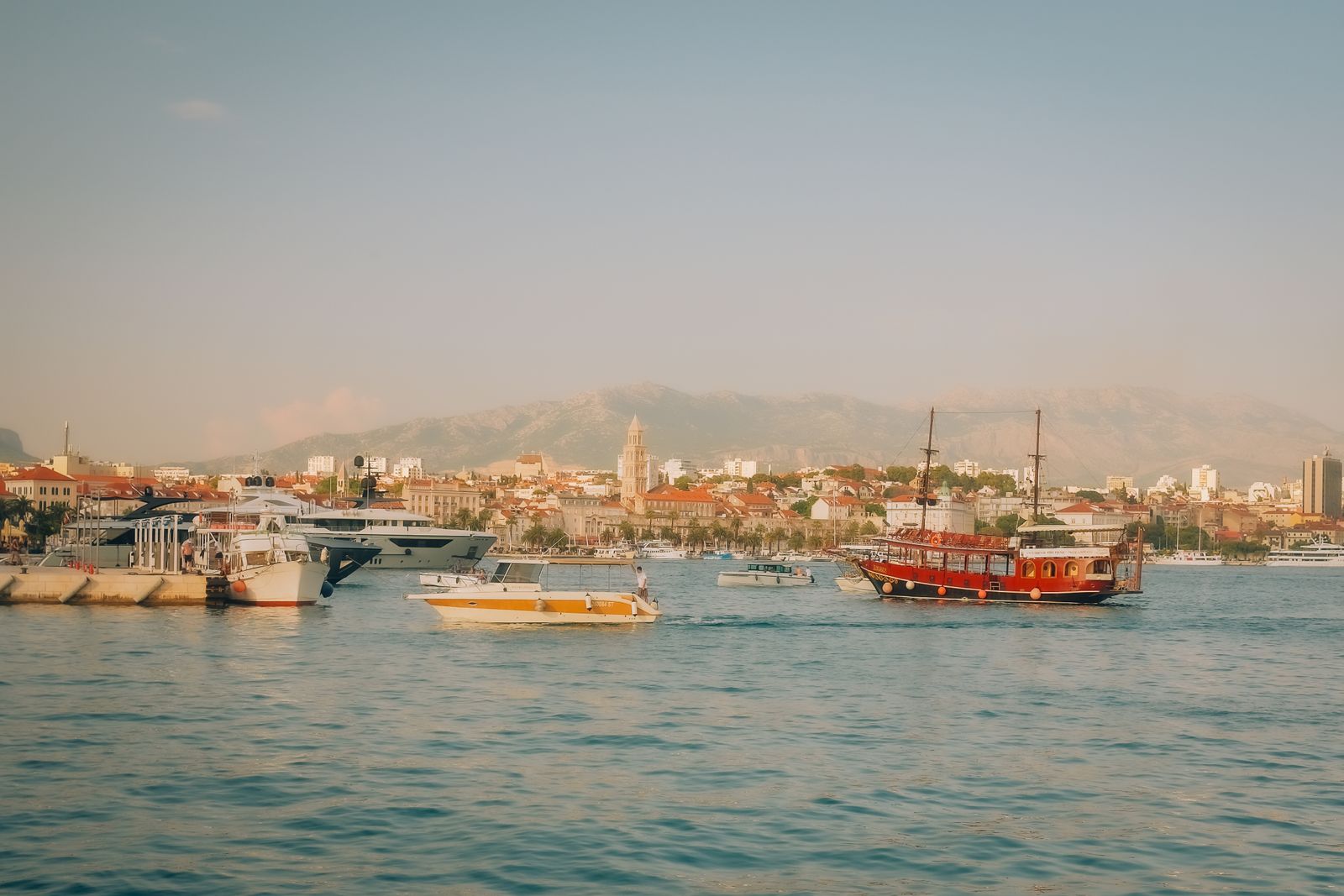
In Split the situation is a little better, but the centre around Diocletian’s Palace is constantly packed with cars and tourists. The red zone near the port costs over a euro an hour, while the blue zone further from the sea is noticeably cheaper. To pay hassle-free, definitely download the local Parking M-Split app to your phone, so you don’t have to hunt for coins in your pockets and can easily extend your parking remotely, straight from the beach or your restaurant table 😅.

If you’re planning a trip to Zadar, I’ve got great news that will save you a lot of time hunting for a spot. Just a short distance from the historic peninsula you’ll find a large free car park by Marka Marulića street, from where it’s only a pleasant five-minute walk into the very heart of the centre. If it happens to be full, paid parking in Zadar is among the cheapest compared with the south, and an hour costs a very friendly few tens of cents, so you needn’t worry about a day trip ruining you.

9. The Bosnian corridor and the Pelješac Bridge

💡 Tip: The route across the new bridge is not only smoother but also offers absolutely breathtaking views of the turquoise sea and the surrounding islands, which you simply mustn’t miss.

If your journey heads to the very south, to Southern Dalmatia, until recently you had to pass through a roughly nine-kilometre stretch across the territory of Bosnia and Herzegovina in the small town of Neum. In the past this meant double border checks, tiresome waiting in queues and formally leaving the Schengen Area, which considerably complicated the trip to Dubrovnik and added long hours to it.

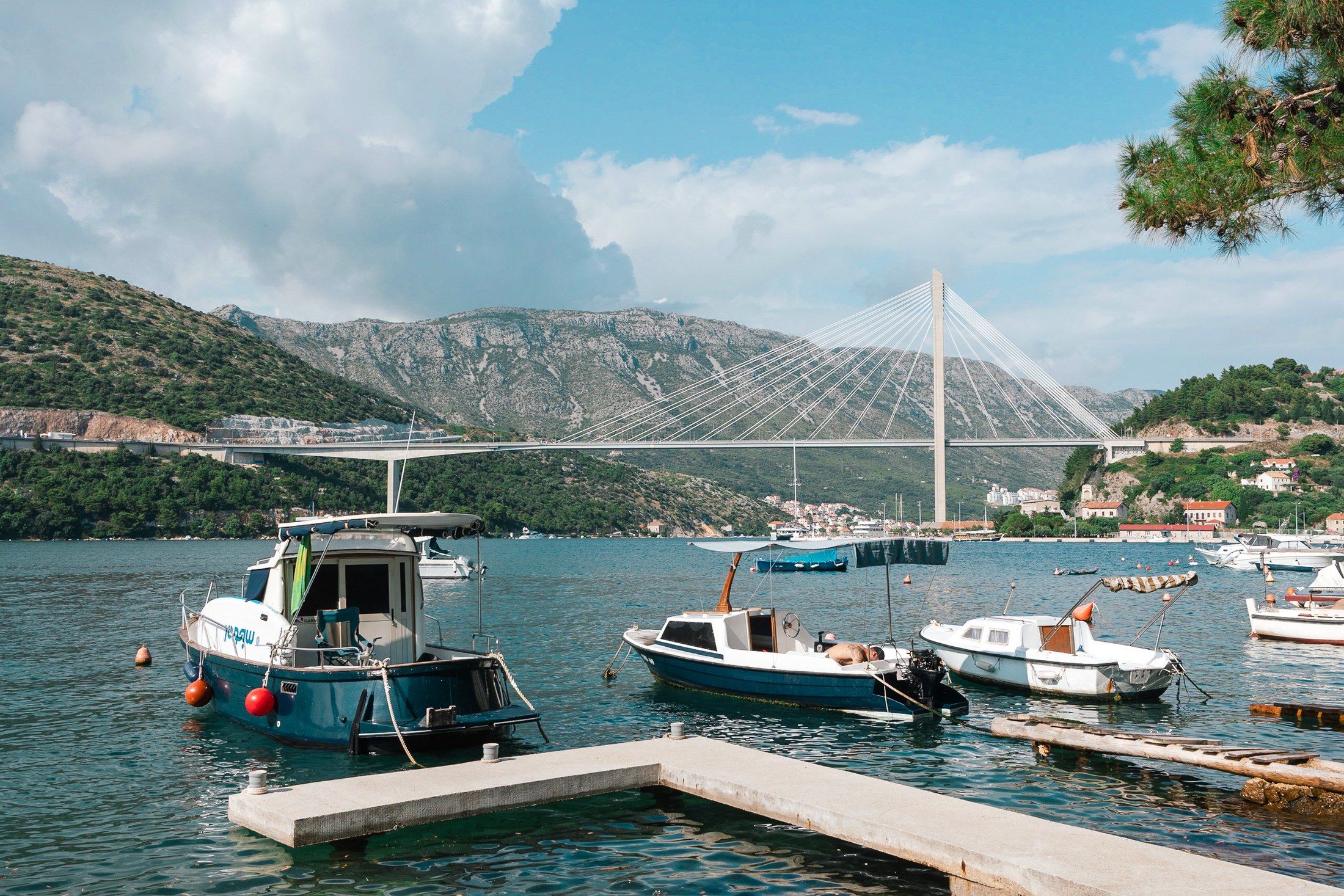
Since the summer of 2022, however, this long-standing problem has been very elegantly solved by the impressive Pelješac Bridge, which connects the Croatian mainland directly to the picturesque Pelješac peninsula. Thanks to this fantastic modern structure you can comfortably bypass all of Bosnia entirely on Croatian territory, without having to stop and show your passport to anyone. Crossing the bridge is completely free for all vehicles too, so you needn’t worry about any hidden extra toll — a very welcome bonus.

If for some reason you nonetheless decide to take the old route through the town of Neum, remember that for those few kilometres you are leaving the European Union. You’ll have to present valid travel documents, and you should watch out for data roaming, because internet charges in Bosnia are downright astronomical and your phone will switch to the local network very quickly as soon as you approach the border 😉.

10. Getting your bearings in the regions

💡 Tip: For a first visit to Croatia I recommend Istria, which is the closest region and offers gorgeous historic towns with an Italian flavour.

Croatia’s coastline is enormous and divides into several main regions, each with its own utterly unique atmosphere and distinctive landscape. In the northwest lies the Istria peninsula, which you reach fastest via Ljubljana. Here you’ll find romantic towns like Rovinj, Pula with its ancient amphitheatre, or the picturesque inland town of Motovun. In the hidden lanes of these little towns you’ll discover superb family-run konobas serving fantastic homemade truffle pasta or creamy mushroom risotto. Right next door is Kvarner, which includes well-known resorts like Opatija and the islands of Krk, Cres and Pag.

Heading south stretches the very long region of Dalmatia, which splits into three parts. In Northern Dalmatia you’ll be captivated by Zadar or the stunning national parks of Krka and Kornati. Central Dalmatia is best known for the Makarska Riviera and historic Split, from where the vast majority of ferries to the popular islands of Brač and Hvar set sail. The beaches here are mostly pebbly, beautifully kept and lined with fragrant pine groves.

Right at the bottom lies Southern Dalmatia, dominated by majestic Dubrovnik and the Pelješac peninsula, famous for its top-class vineyards. The journey here is admittedly the most demanding in terms of time (be prepared for at least thirteen hours of driving), but your reward will be beautiful, wild nature, far less crowded beaches and crystal-clear water that begs you to snorkel all day.

Practical summary and approximate prices

To give you a better idea of your travel budget, here’s an overview of the most important charges you need to reckon with in 2026.

  • Austrian vignette (10 days): €12.80
  • Slovenian vignette (7 days): €16
  • Hungarian vignette (10 days): approx. €18 (6,900 HUF)
  • Croatian tolls (car): on average €7.50 / 100 km
  • Toll Zagreb – Split (one way): approx. €26 in the summer season
  • Ferry Split – Brač (per person): €6.50
  • Discount with an ENC device: approx. 21 to 22 per cent

💡 Tip for accommodation and experiences: We like to search for accommodation on Booking.com, which usually has the best cancellation terms. Tickets, tours and activities are then worth comparing and buying through GetYourGuide.

Where to next

If you’re after more practical information or looking for inspiration for your trip, we’ve prepared several other useful guides on the blog. If you’re not sure which spot to pick for this year’s holiday, take a look at the article on where to holiday in Croatia. Lovers of views and mountain passes will surely appreciate the unusual itinerary describing the amazing drive through the Julian Alps to Zadar. If adventure on the waves appeals to you, read what Croatia by boat looks like, and don’t forget to check out our tried-and-tested tips for the best accommodation in Croatia.

Frequently asked questions

Do I need an international driver’s license for Croatia?

No, you really don’t need an international driver’s license for Croatia. Since Croatia is a full member state of the European Union, your valid Czech driver’s license in the form of a standard plastic card is completely sufficient for driving and any police checks.

Where can I buy an ENC toll box?

You can easily purchase the ENC onboard unit directly in Croatia at selected sales points of Hrvatske autoceste (HAC), which are mostly located in close proximity to major toll plazas. Basic starter packages with prepaid credit cost from around 60 euros and are worth it for frequent trips.

Did the toll change in 2026?

In the summer season of 2026, Croatian motorways still use the traditional payment system through conventional toll barriers where you take a ticket and pay when exiting. The new barrier-free camera system (called Crolibertas) has been delayed and is expected to launch in March 2027.

How do you pay tolls on the Istrian peninsula?

The highway network in Istria, known locally as the Istrian Ypsilon, is operated by the private company Bina Istra, which has its own toll pricing system separate from the rest of the country. On these sections, you pay at traditional toll booths, and the system accepts both cash and standard contactless payment cards without any issues.

Can I transport a car on a catamaran?

No, catamarans are fast boats designed exclusively for transporting foot passengers and vehicles have no access to them whatsoever. If you need to transport your car to the island, you must carefully filter and select a classic large ferry when purchasing your ticket with Jadrolinija.

Is it worth taking the route off the toll highways?

Bypassing the toll sections on the old D1 road will save you money on the rather expensive tolls, but your journey will be significantly extended by several hours. During peak summer season, you’ll also often get stuck behind slow caravans on these back roads and will constantly be driving through dozens of villages with strict speed limits.

What to do when I get a parking ticket?

If you find a fine ticket under your windshield wiper, I recommend paying it as soon as possible, ideally right away at the nearest local post office branch or via bank transfer according to the attached instructions. Croatian authorities are very efficient at enforcing fines retroactively through European systems, and any potential increases due to enforcement fees tend to be drastic.

Tips and Tricks for Your Vacation

Don’t Overpay for Flights

Search for flights on Kayak. It’s our favorite search engine because it scans the websites of all airlines and always finds the cheapest connection.

Book Your Accommodation Smartly

The best experiences we’ve had when looking for accommodation (from Alaska to Morocco) are with Booking.com, where hotels, apartments, and entire houses are usually the cheapest and most widely available.

Don’t Forget Travel Insurance

Good travel insurance will protect you against illness, accidents, theft, or flight cancellations. We’ve had a few hospital visits abroad, so we know how important it is to have proper insurance arranged.

Where we insure ourselves: SafetyWing (best for everyone) and TrueTraveller (for extra-long trips).

Why don’t we recommend any Czech insurance company? Because they have too many restrictions. They set limits on the number of days abroad, travel insurance via a credit card often requires you to pay medical expenses only with that card, and they frequently limit the number of returns to the Czech Republic.

Find the Best Experiences

Get Your Guide is a huge online marketplace where you can book guided walks, trips, skip-the-line tickets, tours, and much more. We always find some extra fun there!
Šibenik, Croatia: 12 Things to See and Do in 2026

TL;DRŠibenik in central Dalmatia comes with 12 tips on what to see, including two UNESCO sites – the Gothic Cathedral of St James and the coastal St Nicholas’ Fortress – plus four historic fortresses, Banj town beach and trips out to Krka National Park (20–30 minutes by car, entry €7–€40 depending on the season) and the Kornati islands (a full-day boat trip for €35–40). The best time to go is the shoulder months of May, June or September, when it’s pleasantly warm and prices drop. The old town itself takes one or two days to explore, but with day trips into the surrounding area you could easily fill a week. Šibenik sits just 5 kilometres from the A1 motorway and an hour from the airports at Split and Zadar, making it a great base for exploring further afield.

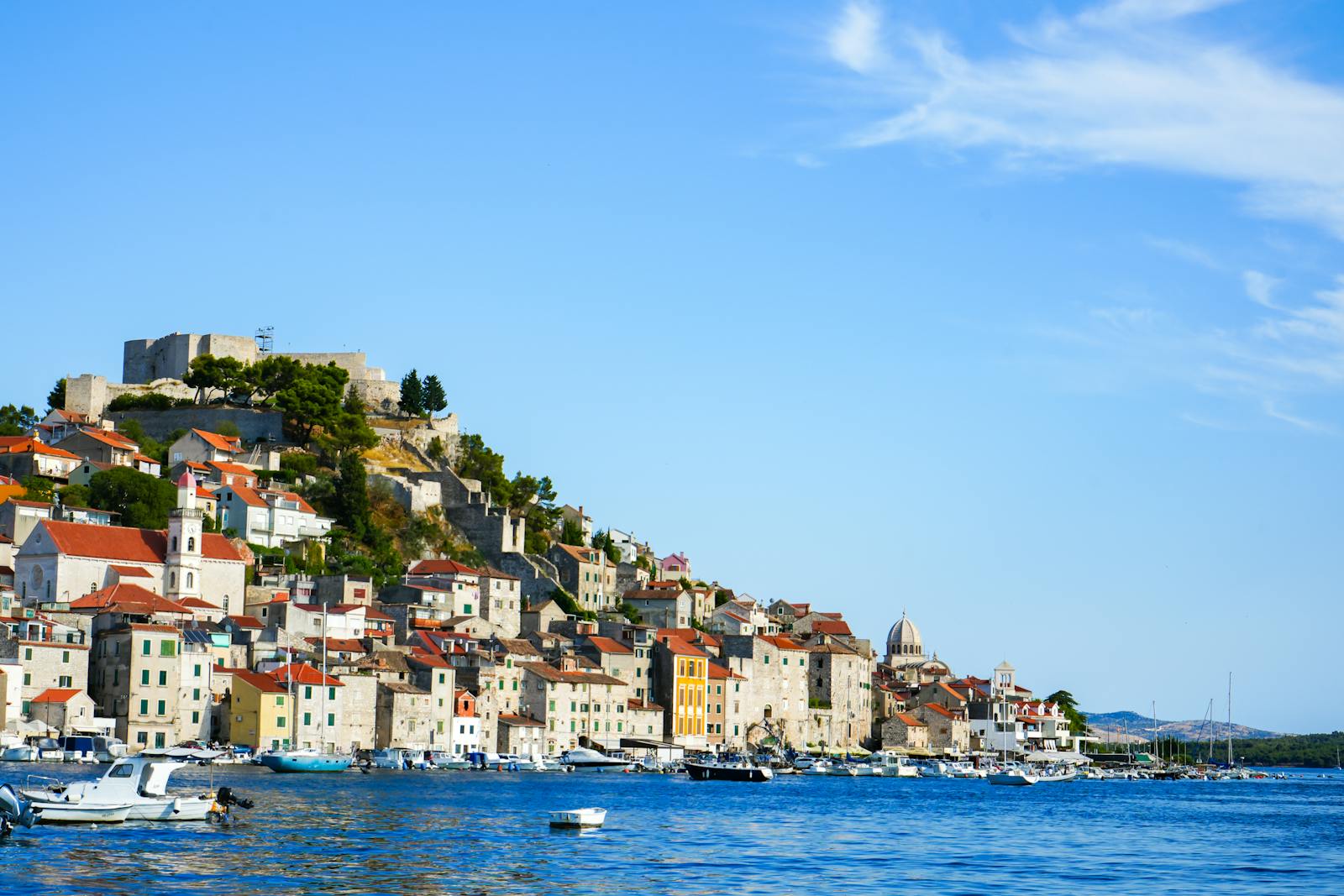
If you’re looking for a spot in Croatia that has held onto its authentic character and doesn’t groan under the crush of tourists like its more famous neighbours, you’ll fall head over heels for Šibenik, Croatia. This picturesque town sits in central Dalmatia right at the mouth of the Krka River, and it offers a near-perfect blend of history, narrow stone alleys and a relaxed, laid-back atmosphere. Unlike Split or Dubrovnik, which were founded by the Greeks and Romans, Šibenik is the oldest purely Croatian town on the Adriatic coast.

Wandering through the historic centre, you’ll breathe in a calmer and far more genuine slice of Dalmatian life. There are two unique UNESCO-listed monuments here, medieval fortresses tower above the rooftops with breathtaking views, and the cafés on the squares tempt you into a long, lazy morning over coffee. In short, it’s the ideal destination for anyone who wants to soak up the beauty of the Balkans without the stress and the constant elbowing through crowds.

Beyond the historic core itself, the town makes a brilliant base for exploring the surrounding area. It sits just a short hop from the entrance to the gorgeous Krka National Park, while boats set sail from the local harbour to the fascinating Kornati archipelago. Whether you’re after romantic evenings in the old town or an active holiday out in nature, Šibenik has a little something for everyone.

TL;DR

  • The oldest Croatian town: Founded by the Croats themselves, first mentioned in 1066.
  • Two UNESCO monuments: St James’s Cathedral and the impressive maritime St Nicholas Fortress.
  • Four historic fortresses: Offering the finest panoramic views over the sea and islands.
  • An ideal base for day trips: The best starting point for visiting Krka NP and Kornati NP.
  • Fewer tourists: A more authentic and peaceful vibe than nearby Split or Zadar.
  • Great access: A quick exit off the A1 motorway, with Split and Zadar airports both around an hour away.

When to visit Šibenik

For the best experience, I’d recommend planning your visit for the shoulder months around the peak season — May, June or September. By then it’s pleasantly warm for long walks and your first dips in the sea, but you’ll safely dodge the fiercest summer heat. The town moves at a wonderfully easygoing pace in these months, every restaurant is open, and accommodation prices are considerably friendlier than at the height of summer. A huge bonus of spring and autumn is the entry fee to the nearby Krka National Park, which drops to a very reasonable twenty euros compared to forty in summer.

If you decide to come in July or August, be ready for the fact that the sun can turn the old town’s narrow stone alleys into a real furnace. In these months it’s ideal to head out for the sights early in the morning, while the air still has that fresh dawn coolness, and then spend the afternoon on a beach or by the hotel pool. You’ll also need to factor in that you’ll meet considerably more people at the popular waterfalls in the national parks, and boat trips need to be booked several days in advance.

The winter months and early spring, from November to March, have their own particular charm in the form of total peace and very cheap entry to the nature reserves. A ticket to the Krka waterfalls, for instance, costs just a symbolic seven euros in winter. That said, most smaller businesses and tourist attractions may have reduced opening hours or be closed altogether. The upside is that the magnificent historic fortresses and the famous cathedral are accessible all year round, and in the off-season you can even visit the high-perched Barone and St John fortresses completely free of charge.

Where to stay in Šibenik

💡 Tip for accommodation and experiences: We like to look for places to stay on Booking.com, which usually has the best cancellation terms. Tickets, tours and activities are then worth comparing and booking through GetYourGuide.

A lot depends on the kind of holiday you’re planning and whether you’ll have a car. If you want to soak up the romantic atmosphere and have all the wonderful sights within arm’s reach, look for apartments and small hotels right in the historic centre. Just bear in mind that the town’s core is entirely pedestrianised, laced with steep lanes and hundreds of steps. You’ll need to leave the car in a paid car park on the edge of the waterfront or in the underground garages beneath the fortresses, and carry your luggage the last stretch on foot.

For a guaranteed touch of luxury right in the heart of the old town, the beautiful Heritage Hotel Life Palace sits in a sensitively restored noble palace, blending centuries of history with modern comfort. For lovers of design and sea views, the stylish Armerun Heritage Hotel is a fantastic choice — just a few steps from the cathedral and the evening waterfront promenade. If you’d rather have your own private space, the booking portals list dozens of gorgeous stone apartments with a magical, authentic feel, where you’ll feel like a true local.

For families with children, or anyone who wants to combine sightseeing with lazing on the beach, the Solaris Beach Resort area is an ideal pick — it lies about six kilometres from the historic centre. Here you’ll find beautifully maintained Solaris Beach Resort beaches with a gentle slope into the sea, a huge water park and very convenient parking right by your accommodation. One option offering great, very comfortable facilities in this complex is the Amadria Park Hotel Ivan, with its enormous pools and perfect entertainment for the whole family. Getting into the centre of Šibenik from here takes just ten minutes by car or regular bus.

12 things to see and do in Šibenik

Let’s take a look together at the very best this Dalmatian town and its surroundings have to offer. You can explore the historic centre in one or two days, but thanks to the brilliant day trips on offer, you could easily spend a whole week here.

1. St James’s Cathedral (UNESCO)

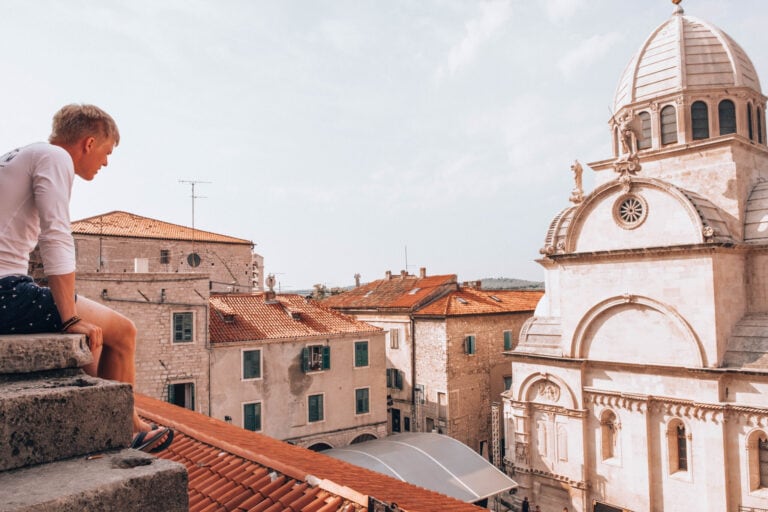
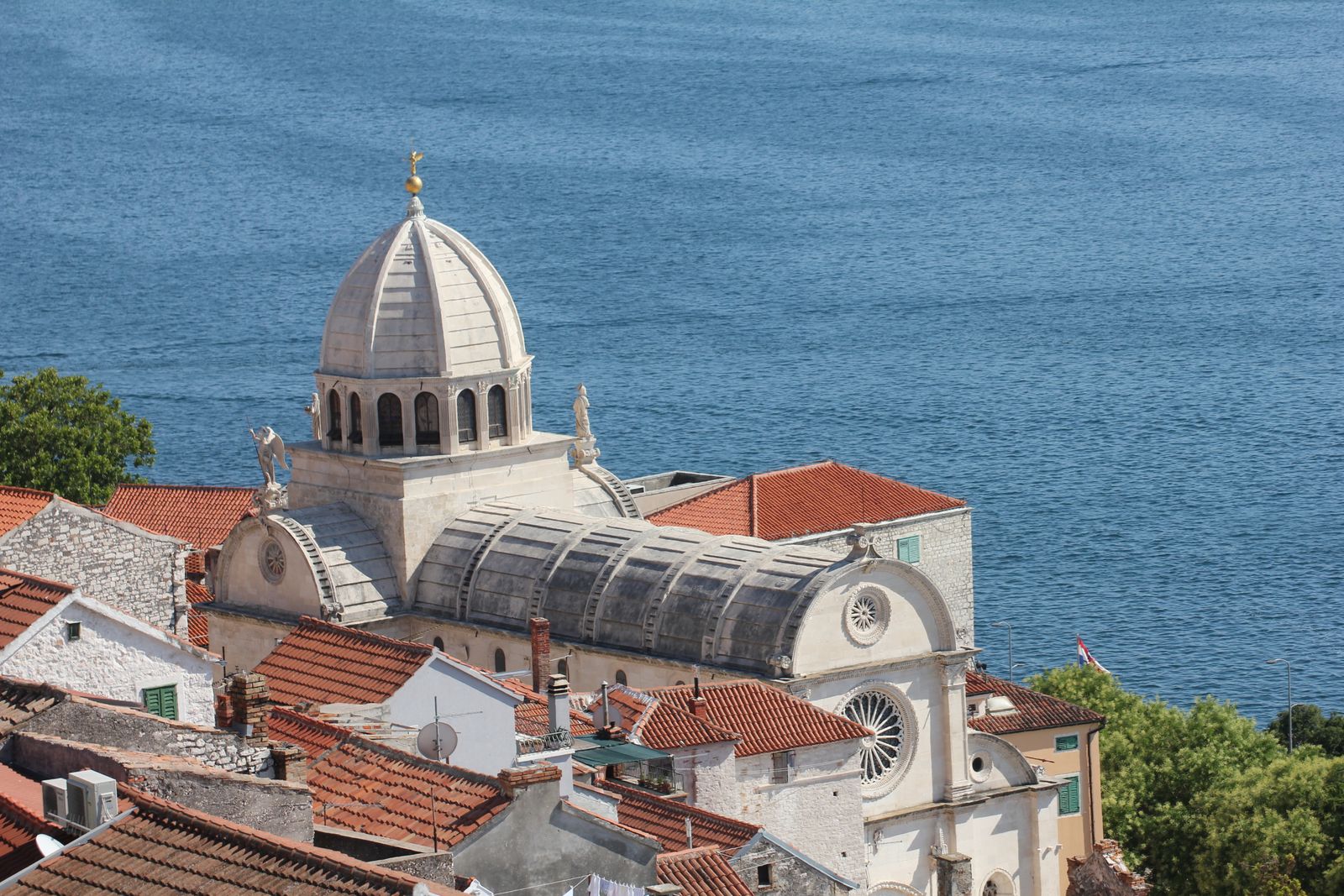
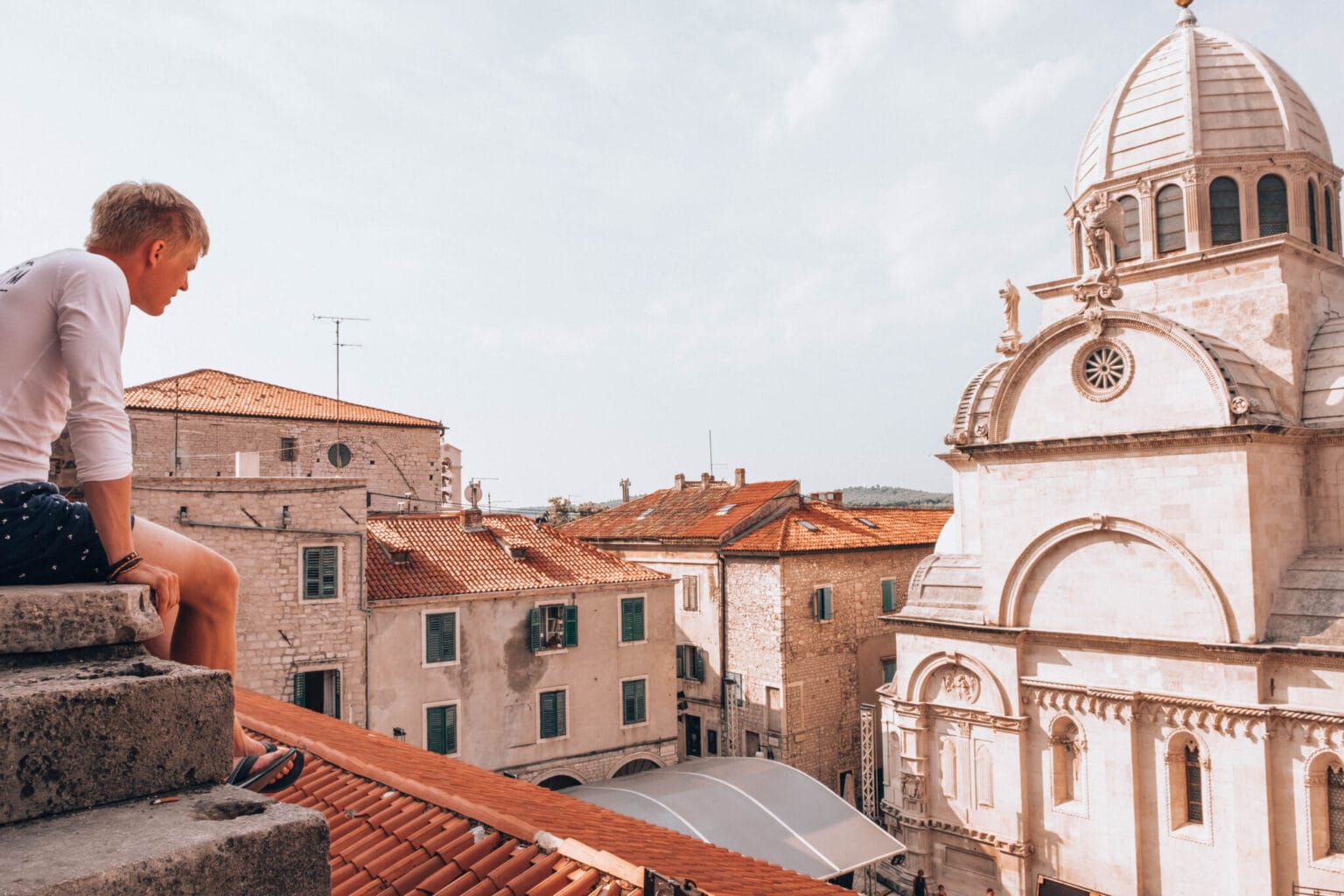
This monumental building is an absolute gem of late Gothic and Renaissance architecture, and it rightly boasts a place on the prestigious UNESCO list. Construction began in 1431, took more than a hundred years, and it’s a world first because it’s built entirely of stone. You won’t find a single piece of wood, mortar or brick in it. The brilliant architects Juraj Dalmatinac and, after him, Nikola Firentinac slotted the huge blocks together using a special groove-and-tongue technique. The stone dome itself rises to an impressive thirty-two metres and forms the unmistakable landmark of the whole town.

The stone for its construction was shipped in from the Dalmatian islands of Brač, Korčula, Rab and Krk. The cathedral’s most famous detail is, without doubt, the unique frieze of seventy-one carved stone heads adorning the outer wall of the apses. These are utterly realistic portraits of ordinary fifteenth-century Šibenik residents, whose varied expressions and moods you can still study with fascination today. Also worth your attention are the magnificent Lion Portal with figures of Adam and Eve, and the intricate baptistery inside.

💡 Tip: Entry to the cathedral runs around five to seven euros, and don’t forget to dress appropriately with shoulders and knees covered. Since the cathedral still functions as a working church and Masses are held here, visits for tourists aren’t possible during services. In high season it’s usually open daily from around half past eight in the morning until eight in the evening.

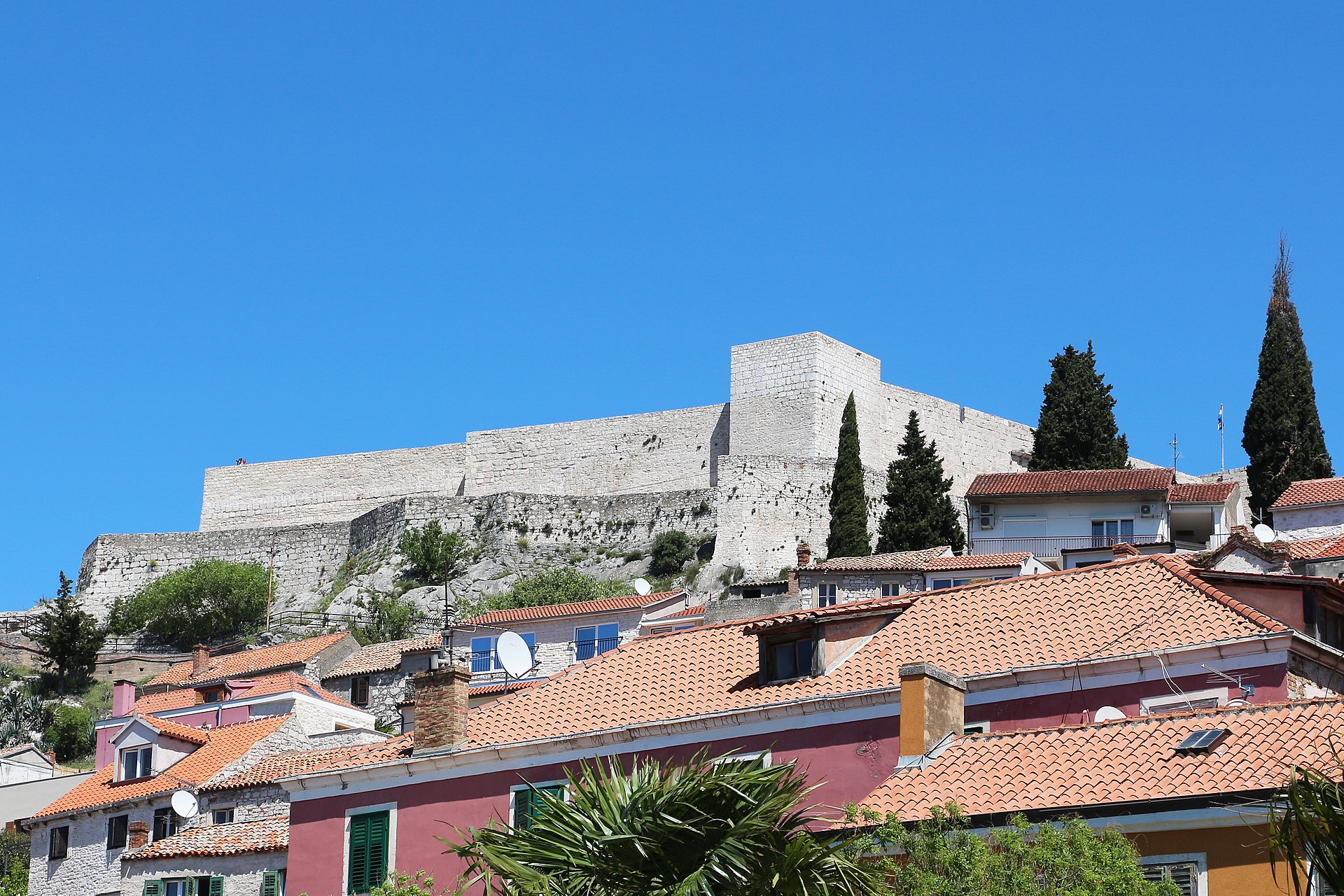
2. St Michael’s Fortress

St Michael’s Fortress, in Croatian Tvrđava sv. Mihovila, is the oldest of Šibenik’s four fortresses and stands proudly right above the historic centre. The way up to the main gate at Zagrađe 21 winds through tangled alleys and up many stone steps, but the more demanding climb is well worth it. Once you stand on its mighty ramparts, you’re greeted by an indescribably beautiful view over the red rooftops of the old town, the famous cathedral and the broad scattering of islands across the Adriatic Sea.

Today this stunning historic space comes alive above all with culture and music. Inside the old walls, a unique open-air summer stage was recently created, hosting fantastic concerts and theatre performances throughout the tourist season. Listening to live music as the sun slowly sinks into the sea behind the stage is an experience of epic proportions.

💡 Tip: A single entry to St Michael’s Fortress costs an adult 11.50 euros in high season. But if you’re planning to explore more of the historic sites, it’s worth getting the combined ticket for fifteen euros, valid for the three land fortresses over seven days. Tickets can only be paid for in euros, and it’s usually open daily from nine in the morning until eight in the evening.

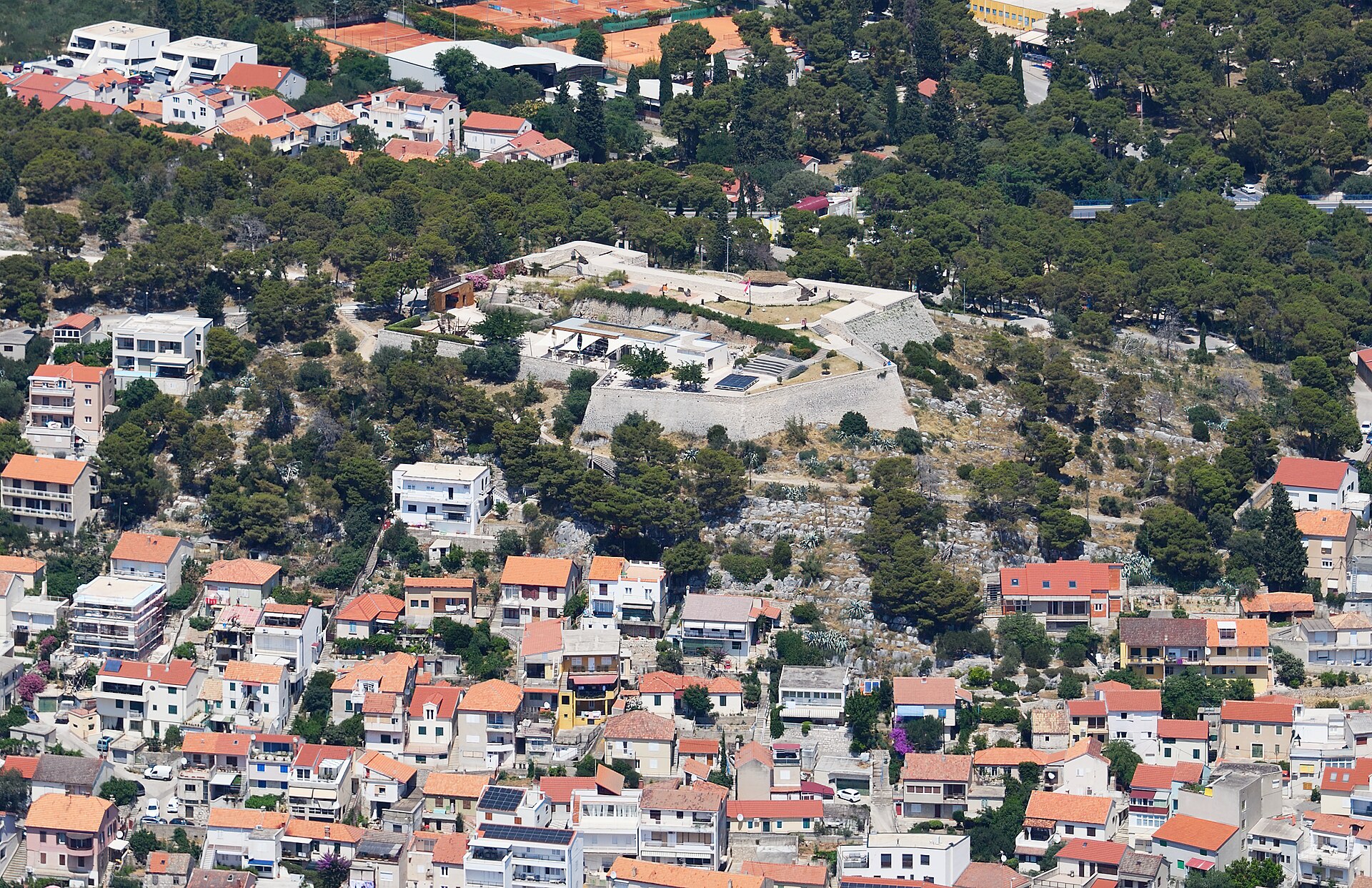
3. Barone Fortress and St John’s Fortress

These two fortresses were built in 1646 as a swift and desperate defence against the looming Ottoman raids, and they sit a little higher above the town. Barone Fortress, on Put Vuka Mandušića 28, recently underwent a beautiful restoration and now lures visitors with modern augmented reality. Using special tablets, lent out at the entrance, you can peer straight into history and watch with your own eyes how the dramatic siege of the town unfolded centuries ago.

A little further along and slightly higher still stands St John’s Fortress, in Croatian sv. Ivana, which is the highest defensive point in all of Šibenik. It offers a slightly different perspective and total peace, as far fewer tourists make it up here than to the main fortresses closer to the centre. It too has been extensively restored and invites you on lovely walks along the ramparts with views deep into the hinterland.

💡 Tip: While the main season from spring to autumn charges standard entry to these fortresses, in the off-season during the winter months, entry to the Barone and St John fortresses is completely free. What’s more, Barone Fortress has a very pleasant bistro open all year round, where you can enjoy a coffee with one of the best views over the entire town.

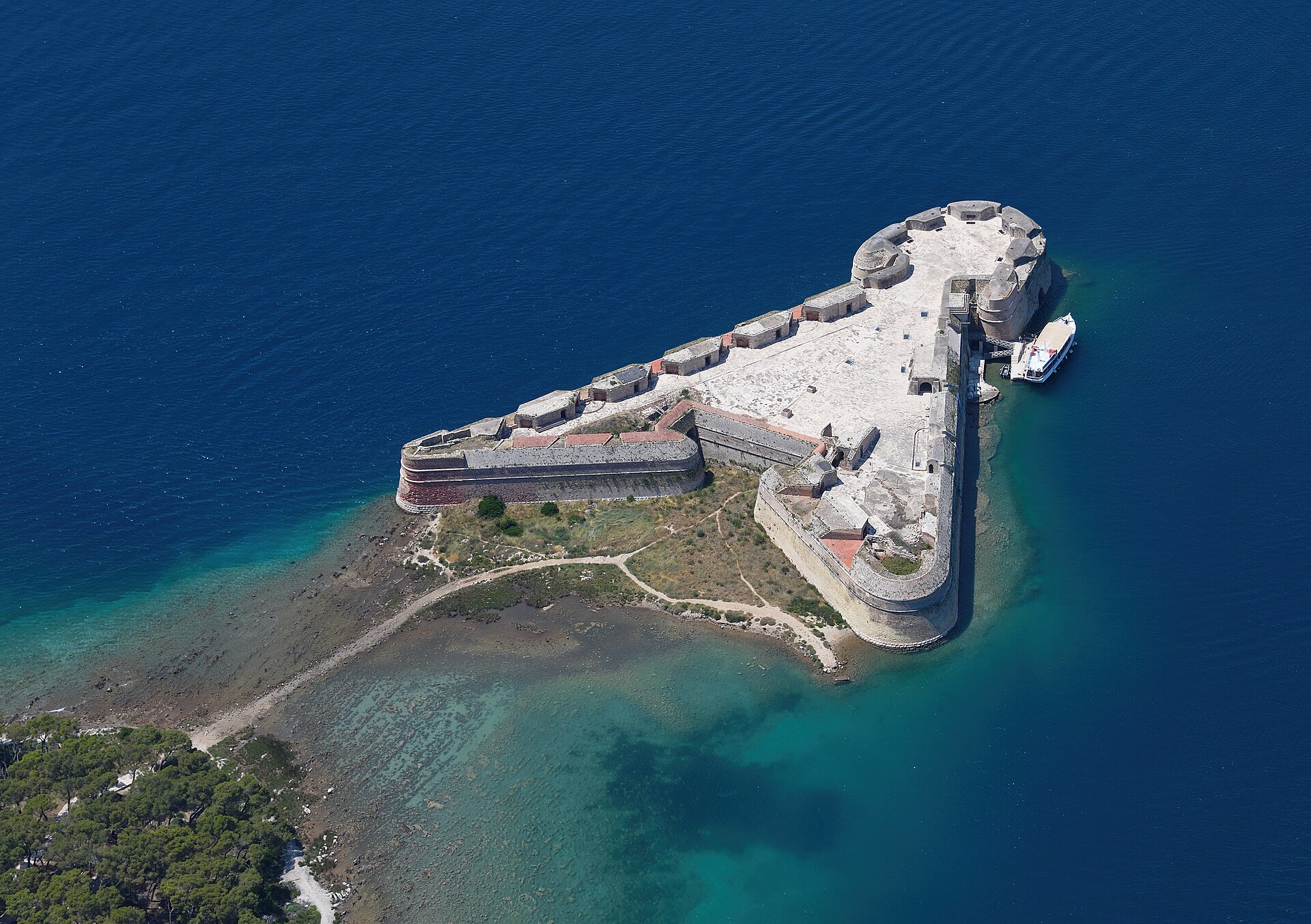
4. St Nicholas Fortress (UNESCO)

Unlike the previous three fortresses, which stand firmly on the hills above the town, St Nicholas Fortress is an imposing maritime structure from the sixteenth century. It sits on a small islet right at the entrance to the St Anthony Channel, and its garrison was tasked with protecting Šibenik from attacks by sea. Its distinctive Venetian defensive architecture and immense historical significance earned it a place on the prestigious UNESCO World Heritage list in 2017.

The fortress has a very characteristic, and for its time innovative, triangular shape. It was built from massive bricks and stone according to a carefully thought-out design by famous Venetian military architects. You can reach it either on an organised boat trip directly from Šibenik harbour, or on foot along a long scenic trail that runs along the channel’s shore and ends right opposite the walls.

💡 Tip: The fortress interiors are open to the public only during the main tourist season, and in the summer months it really is better to book your tickets for the official boat tour in advance. If you decide to walk to the fortress from the mainland along the maintained trail, be prepared that you’ll only get to see this beautiful structure from the outside.

5. Getting lost in the old town

Šibenik’s historic centre is made for aimless wandering and discovering hidden corners. Because the whole town is built on a fairly steep slope, you won’t find the classic wide streets here, but rather an endless network of steep stairways and narrow stone alleys. This is where you’ll best absorb the real, slightly raw but all the more romantic Dalmatian atmosphere — laundry hanging out to dry overhead, locals chatting across the street, and the smell of fresh lunch drifting from open windows.

On your stroll, you definitely won’t miss the Prince’s Palace on the waterfront, which today houses an interesting town museum full of historical artefacts. Stop too at the elegant sixteenth-century City Loggia, designed by the famous master builder Firentinac. Take in the picturesque Republic Square, peek into the churches of St Barbara and St John with its Renaissance clock, or seek out the quiet historic Square of the Four Wells, which once served as the main reservoir of drinking water for the whole town.

💡 Tip: Exploring the old town is fairly demanding thanks to the ever-present steps, so don’t forget to put on really comfortable shoes with a sturdy sole. The stone paving in the alleys has been polished smooth by centuries of footsteps and can be very slippery and treacherous, especially after morning rain or in sandals.

6. The scenic trail along the St Anthony Channel

If you want a break from the bustle of the town and a bit of pure nature, head out for a walk along the narrow sea strait that every boat heading into Šibenik harbour has to pass through. A well-maintained trail runs about four and a half kilometres along the crystal-clear St Anthony Channel, perfect for an easy hike or a morning run wrapped in the intense scent of pine and sea salt.

Along the way you’ll come across several informative panels, small pebble coves ideal for cooling your feet, and old abandoned military bunkers carved deep into the rock. But your greatest reward on the walk will be the magnificent panoramic views over the entire sea bay and, above all, of the majestic St Nicholas Fortress, which is essentially where this popular trail leads.

💡 Tip: The trail starts in the peaceful Paninkovac bay, which you can easily reach by car from the town centre in under ten minutes and where you’ll park comfortably. In the summer months I really recommend setting off early in the morning or, conversely, in the early evening, because along much of the route there’s nowhere to hide from the scorching Dalmatian sun.

7. Banj beach with a view of the town

At first glance, Šibenik isn’t your typical beach destination, but it still offers a brilliant spot for swimming right in the town. The town beach of Banj lies just a comfortable walk from the historic centre and is utterly iconic for its incredible view. As you lie on the small white pebbles or swim in the clear sea, you have the entire old town laid out before you, including the famous stone cathedral of St James.

The beach has a well-kept shore with a pleasantly gentle slope into the water, which families with children and non-swimmers will especially appreciate. You’ll find all the facilities you need here, including showers, changing rooms and a very popular beach bar, where you can grab a chilled drink and watch the gorgeous sunset in the evening.

💡 Tip: During the main summer season, Banj beach naturally gets fairly crowded with locals and tourists alike. If you’re after quieter swimming and a bit more privacy, it’s worth driving a short way out of town to the smaller rocky coves, or taking the regular boat service to the nearby tranquil islands of Zlarin, Krapanj and Prvić.

lukas a lucka
Lukáš and Lucie recommend
Where to Stay in Šibenik
5 accommodations — hotels, resorts and other lodging options

8. A day trip to Krka National Park

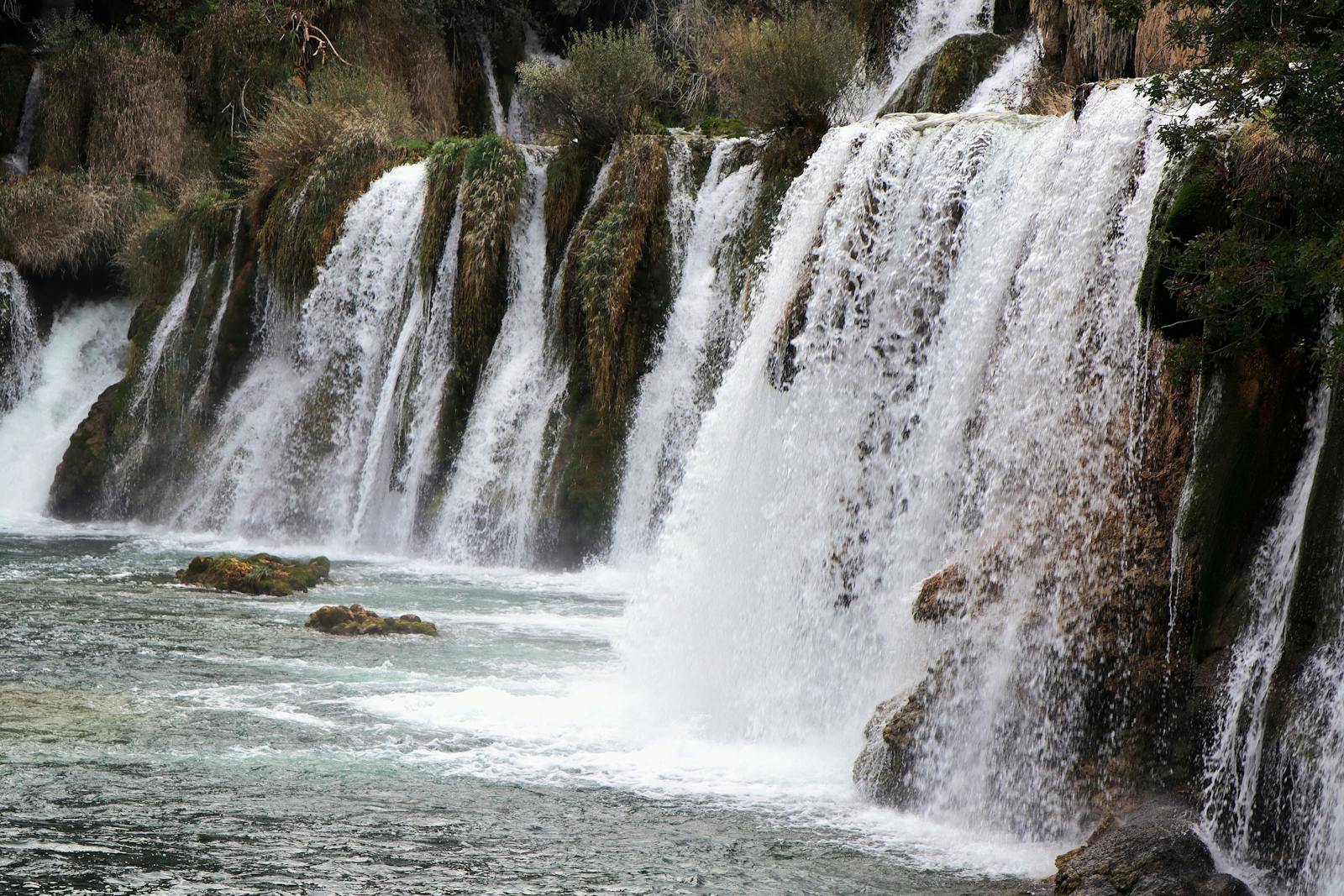
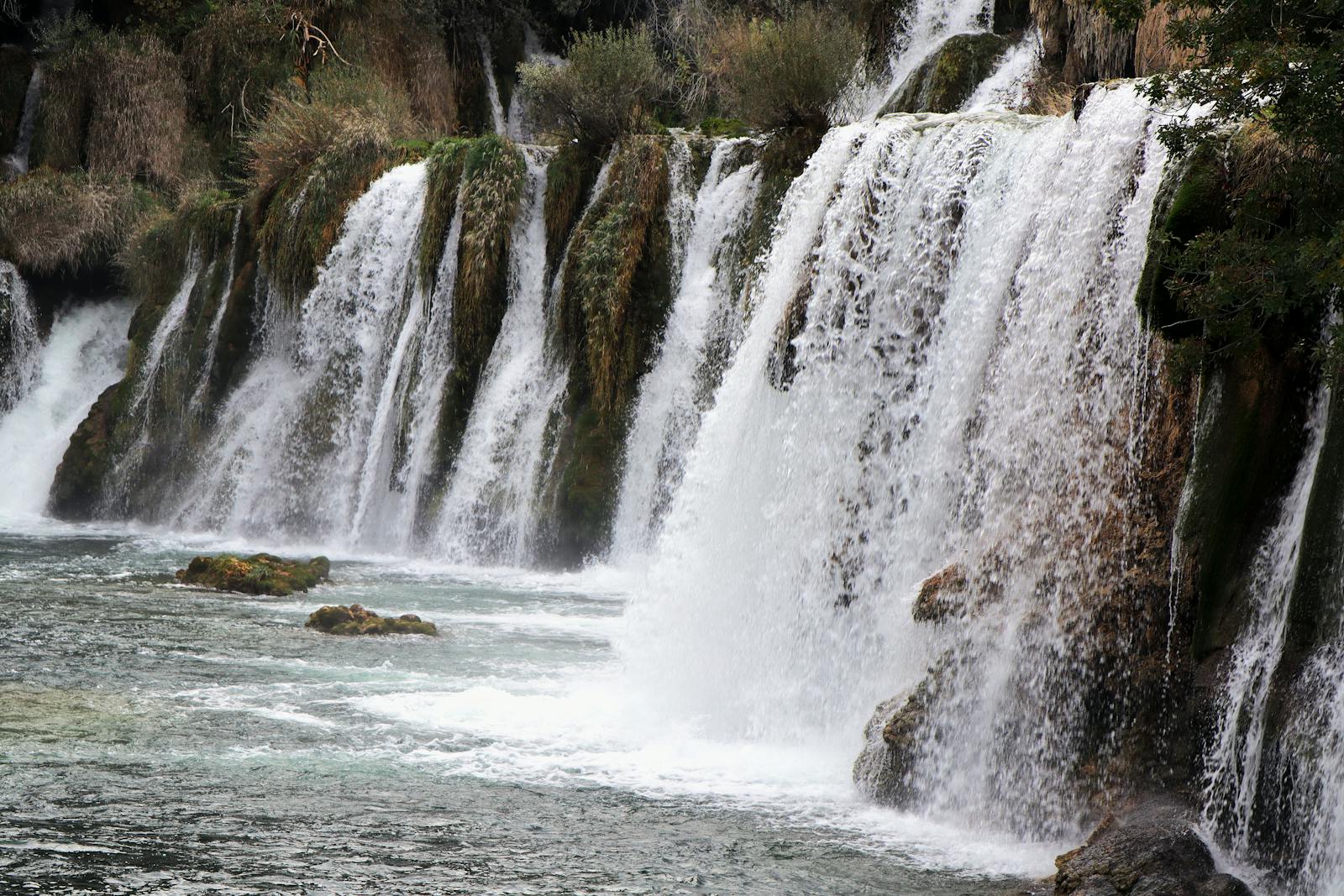
To be in Šibenik and not visit Krka National Park would be a real travel sin. The town is by far the best and closest base for this trip — it’s a mere half-hour drive to the park’s entrance gates. The most famous and most-visited spot is, without doubt, the wide cascading Skradinski buk waterfalls, around which a magical system of wooden walkways and bridges leads right above the crystal-clear water teeming with fish.

The easiest way into the park is via the main entrances in the picturesque little town of Skradin or from the huge Lozovac car park. If you choose the Skradin entrance, your ticket also includes a lovely boat ride straight through the deep river canyon right up to the waterfalls themselves. From April to October, you can also set off from the falls on further paid boat trips, for instance to the incredibly photogenic islet of Visovac with its Franciscan monastery.

💡 Tip: The entry fee varies dramatically throughout the year. In the summer months adults pay 40 euros, but if you arrive at the park after three in the afternoon, you get a discount and the ticket costs 30 euros. In the shoulder months in spring and autumn a full-day entry costs 20 euros, and over winter just a symbolic 7 euros.

9. A boat trip to the Kornati Islands

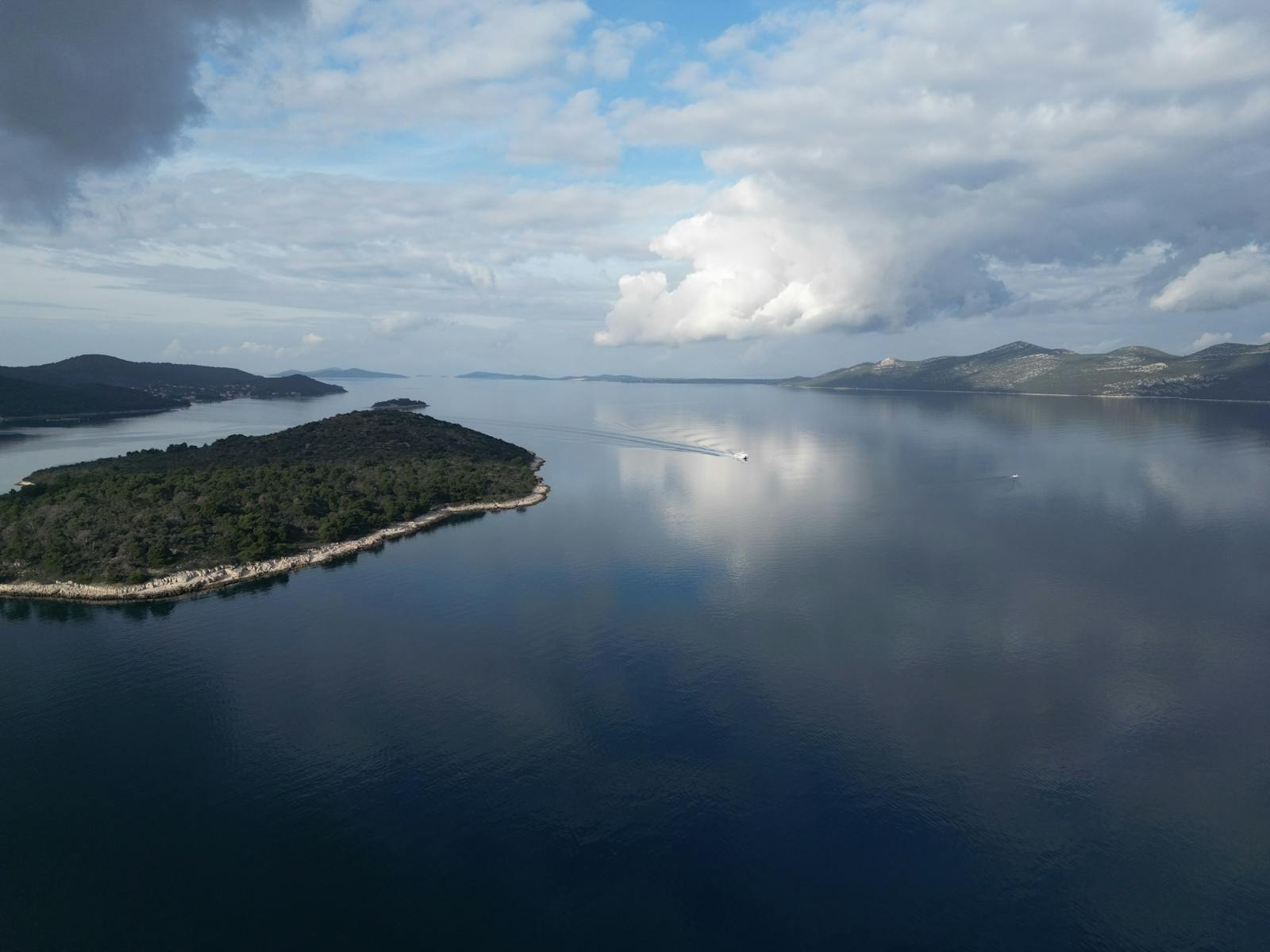
Another natural gem you have literally within reach of Šibenik is the incredible Kornati National Park. This fascinating sea labyrinth is made up of roughly a hundred and fifty limestone islands and islets, almost entirely bare of vegetation, giving them an almost otherworldly, lunar look against the blue water. The park is accessible only by sea and no individual tickets are sold for it — the entire entry fee is always tied directly to a specific vessel.

The easiest and most comfortable way to see this raw beauty with your own eyes is to book a full-day organised boat trip right on the Šibenik promenade. These trips usually last around nine hours, start early in the morning, and the boats don’t return to the harbour until early evening. During the long voyage you can look forward to stunning views of the cliffs and swimming stops in deserted coves with perfectly turquoise water.

💡 Tip: The price of a full-day trip usually ranges from around 35 to 40 euros per person and most of the time already includes the compulsory national park entry fee, a local guide and lunch served right on board. The trips are also very easy to find and book through the popular GetYourGuide platform.

10. A visit to the picturesque Primošten

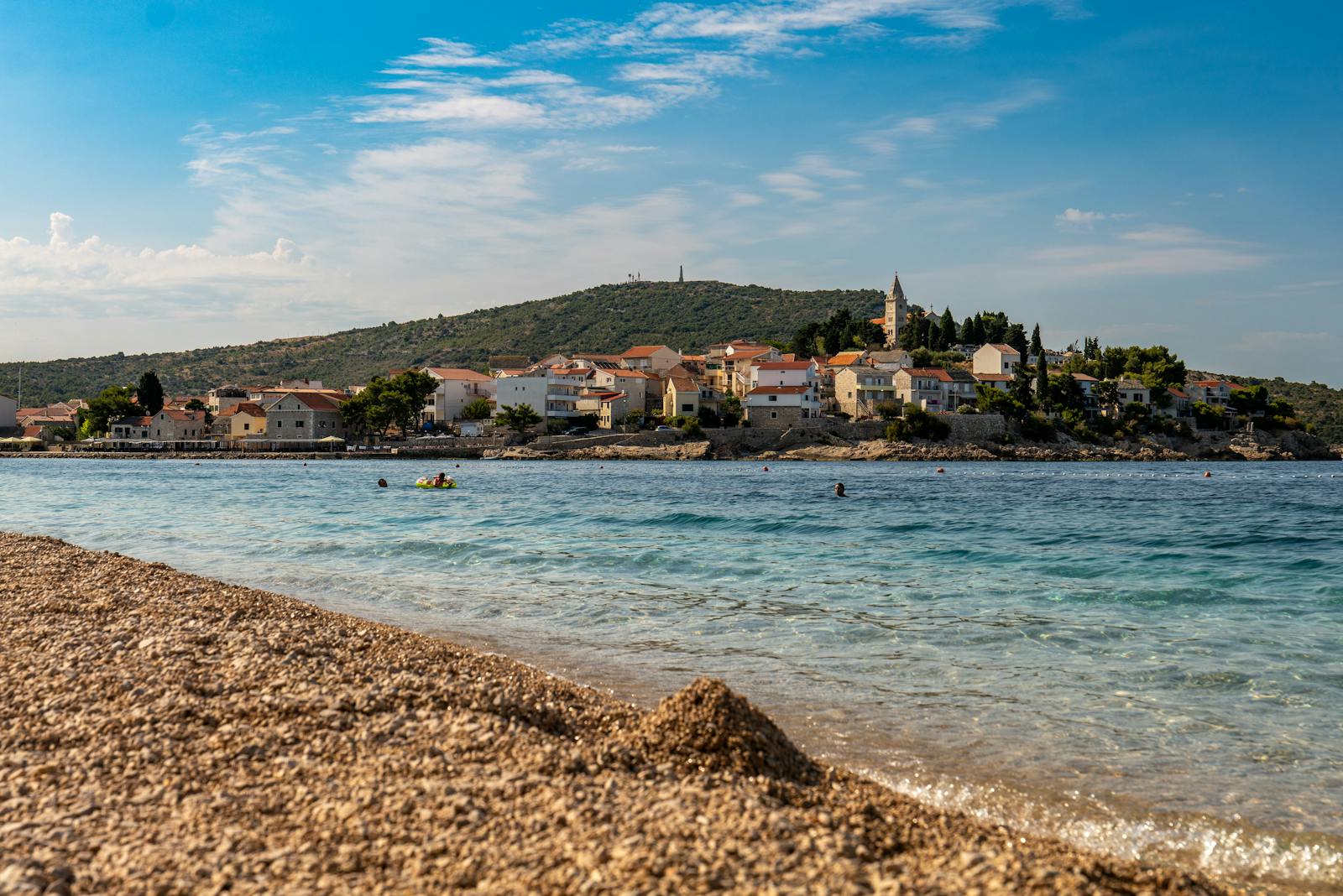
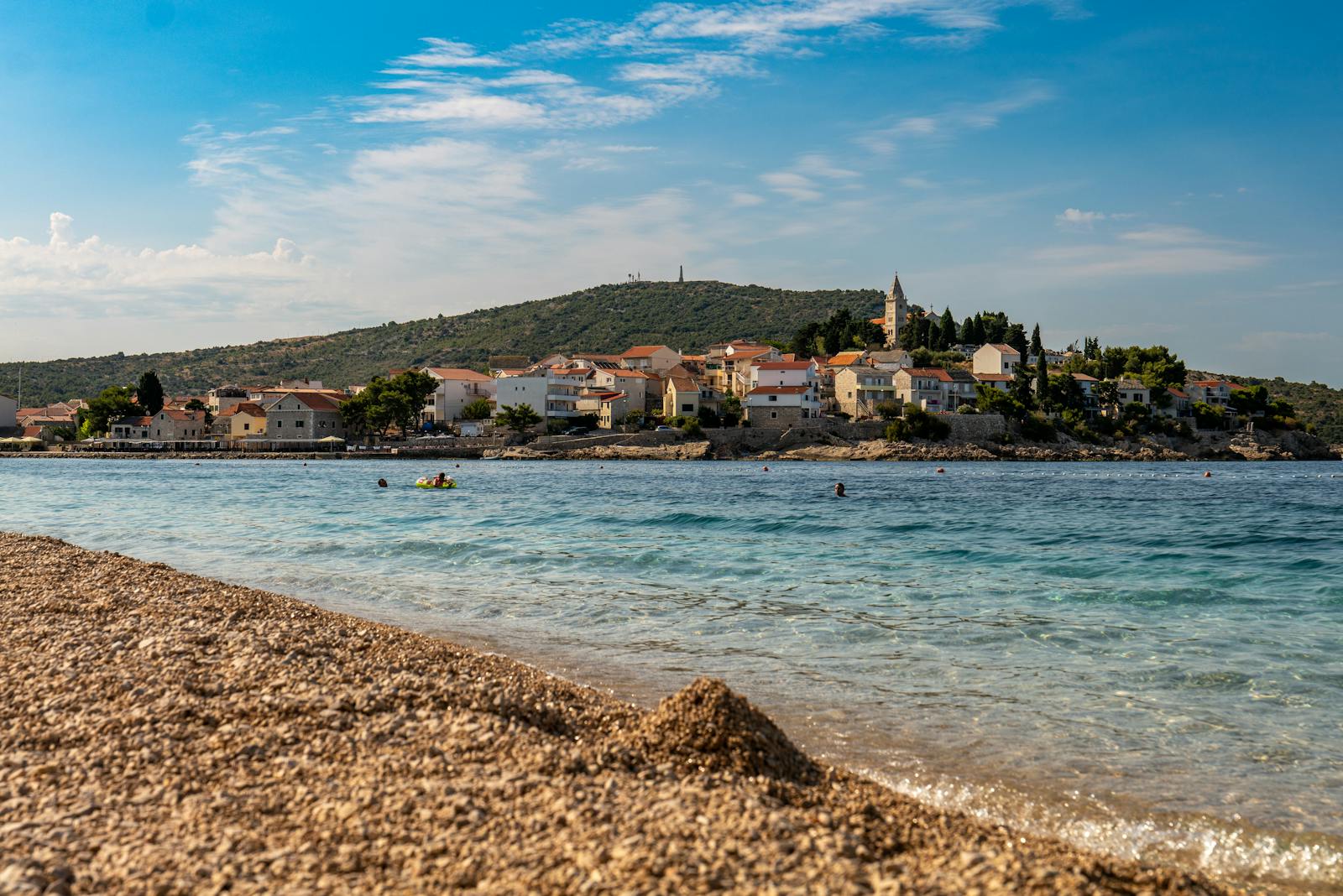
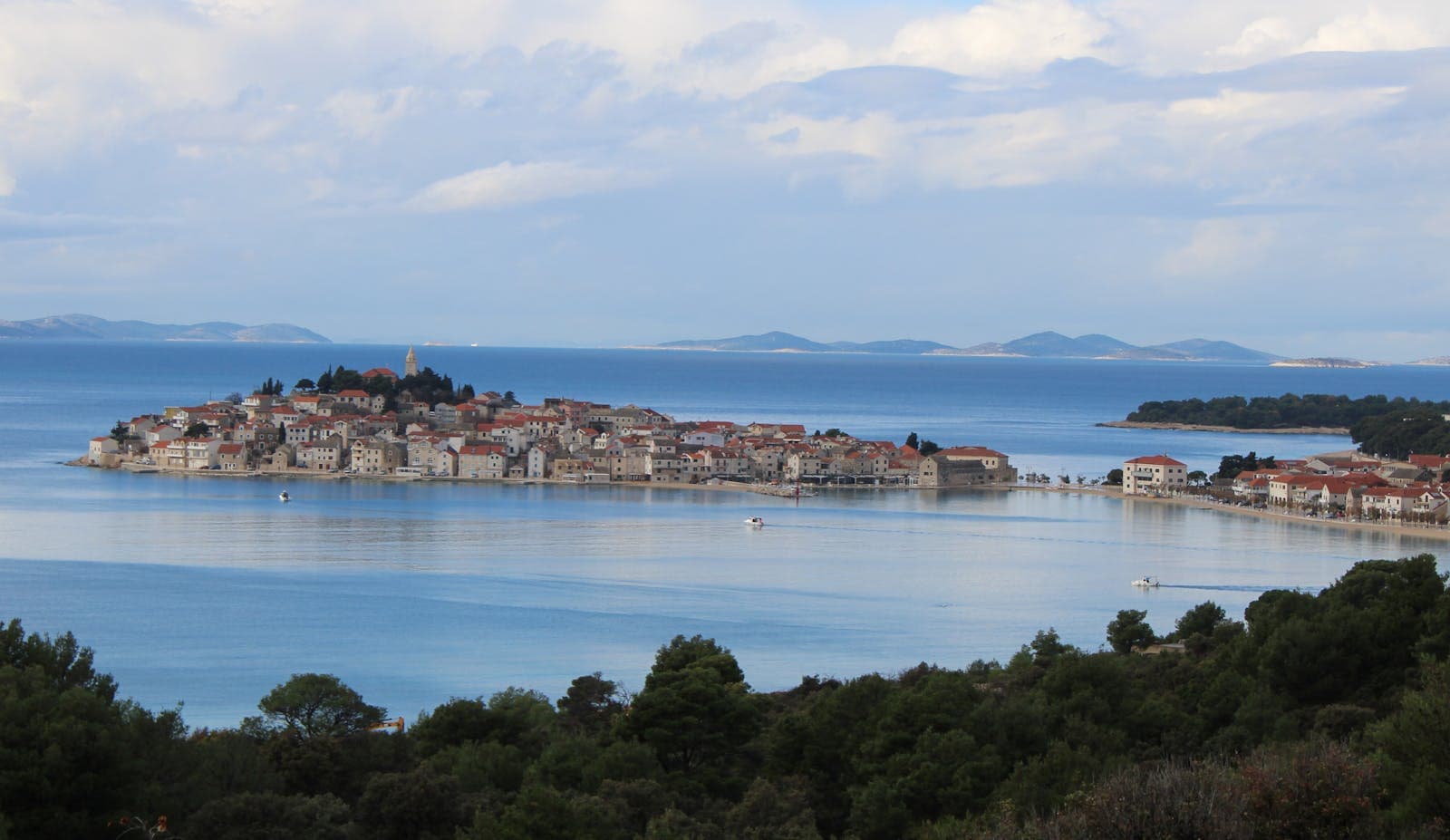
About twenty-eight kilometres south of Šibenik, along a comfortable coastal road, lies one of the most photogenic little towns in all of Dalmatia — the beautiful Primošten. Originally it was a small stone islet separated from the mainland, only much later artificially connected by a narrow causeway. Today its ancient lanes, full of blooming flowers and stone houses, climb all the way up to a little church at the very top of the hill, from where there’s an absolutely gorgeous view of the open sea.

This sun-drenched area is also famous far and wide for its excellent winemaking. Just outside the town you’ll find the famous Bucavac stone terraces, where the local variety of strong red Babić wine is grown on incredibly poor soil. These unique vineyards, bounded by low stone walls, are even on UNESCO’s tentative list, and an enormous photograph of them hangs in the UN headquarters in New York as a symbol of human tenacity and hard work.

💡 Tip: I’d highly recommend timing your visit to Primošten for late afternoon, when the lanes aren’t so baking hot. Stroll along the maintained promenade that wraps around the entire peninsula town, enjoy a glass of the excellent local Babić wine and wait for one of the most beautiful sunsets in all of Croatia.

11. Beaches and fun at the Solaris resort

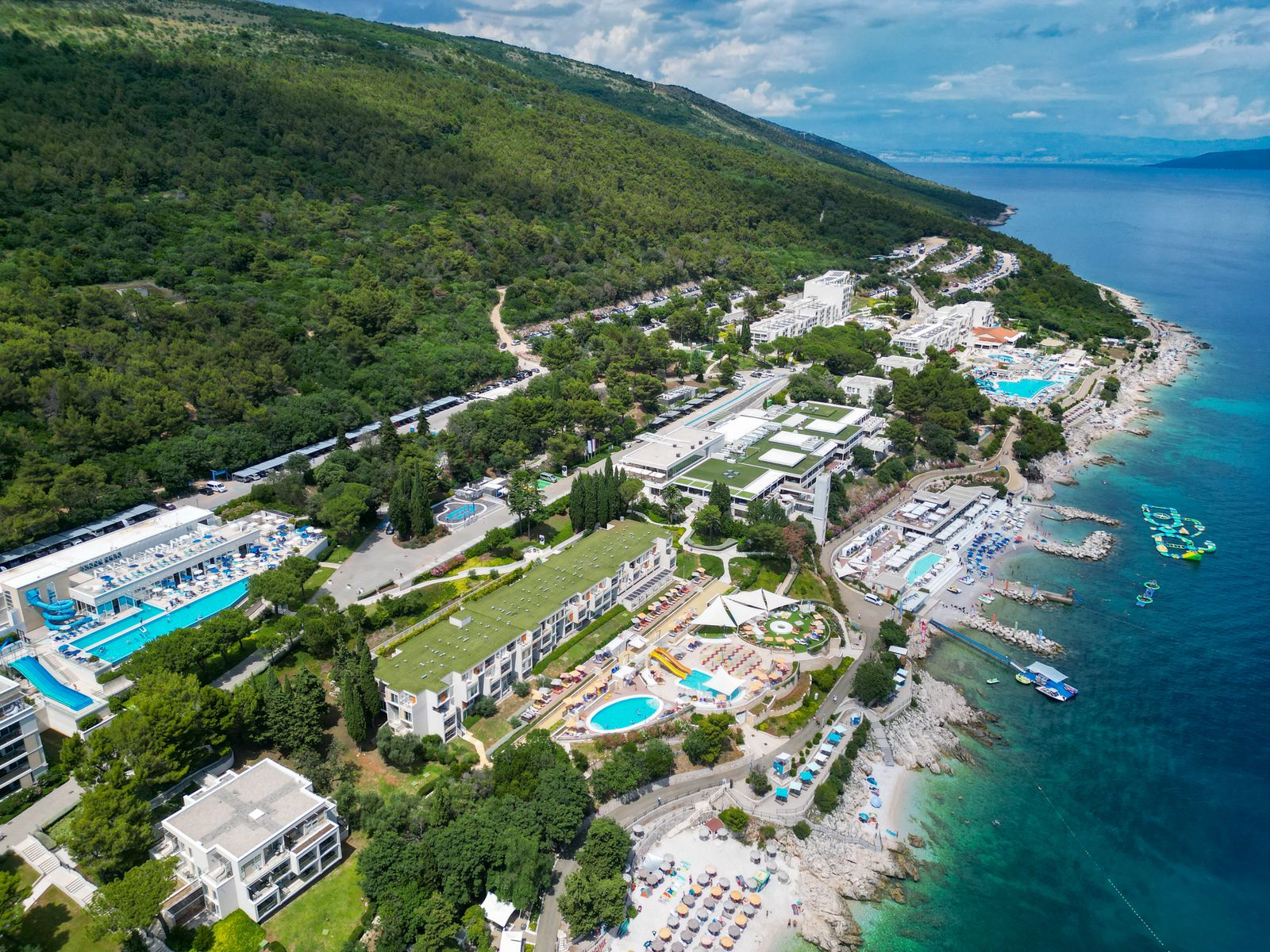
If you want a break from doing the rounds of historic sights and are after some carefree summer fun, head a short way out of town to the huge Solaris Beach Resort complex. Here you’ll find kilometres of beautifully maintained beaches, from the classic pebble kind to those with imported fine sand, all with a perfect gentle slope into the sea, making them absolutely ideal and safe even for the very littlest children.

The resort doesn’t just offer sea swimming, though — there’s also a huge water park full of adrenaline-pumping slides, lazy rivers and water attractions, which will keep the whole family entertained for a full day without the slightest trouble. On top of that there are plenty of modern sports facilities, a mini-golf course, a themed Dalmatian village showcasing traditional life, and lots of beach bars with very comfortable loungers and parasols.

💡 Tip: Even if you’re not actually staying in this giant resort, you can come here for a day trip without any problem at all — the complex is freely open to the public. Of course, you’ll need to factor in a sizeable fee for parking by the beaches and a separate entry fee for the water park itself.

12. Tasting Dalmatian cuisine

To be in the very heart of Dalmatia and not taste the local cuisine would be a huge shame. The whole regional gastronomy revolves above all around top-quality olive oil, fresh local ingredients and fragrant herbs. For lovers of meat-free food, the local restaurant offering is absolutely superb — you can look forward to wonderful fresh pasta prepared a hundred different ways, beautifully creamy vegetable and mushroom risottos, or refreshing Dalmatian salads with local sheep’s cheese and olives.

An absolute and incredibly healthy classic you simply have to try, either as a side or as a light lunch, is the traditional blitva with potato — soft-cooked chard with plenty of garlic and a generous splash of olive oil. If you’re keen on local meat specialities, the region’s typical dish is fresh fish, shellfish or octopus prepared the so-called “peka” way, a very slow and gentle braising under a cast-iron bell covered in hot embers.

💡 Tip: Good, hearty food naturally goes hand in hand with a good drink. Be sure to taste the strong red Babić wine already mentioned, from the stony vineyards around Primošten, whose full flavour pairs wonderfully with an evening spent over a cheese board and a bowl of crusty bread.

Where to go next from Šibenik

Once you’ve explored the town and its immediate surroundings, Dalmatia offers plenty of other gorgeous places worth a day trip or a stop on your road trip. If you’re planning to discover the waterfalls, be sure to read our detailed article on how to visit Krka National Park.

Heading south along the coastal motorway, in less than an hour you’ll reach another historic gem — the island town of Trogir with its beautiful architecture. If you’re drawn to larger cities buzzing with life and ancient monuments, you definitely shouldn’t skip Split with its famous Diocletian’s Palace, or head north instead to explore nearby Zadar with its world-unique Sea Organ. For general tips on travelling around the country, our guide on where to go on holiday in Croatia will come in handy, and if you still haven’t sorted your accommodation, take a look at our tips for accommodation in Croatia.

Verified rental cars in Croatia 🚗 Car rental on the road Verified rental cars in Croatia

Search with the DiscoverCars comparison engine — it compares prices from dozens of local and international rental companies, and most bookings come with free cancellation.

Compare car prices in Croatia →
DiscoverCars comparison✓ free cancellation on most bookings✓ no hidden fees

Frequently asked questions

How to best get to Šibenik?

If you’re travelling by car, the journey from Prague usually takes eleven to thirteen hours and the town has a huge advantage in that it lies just about five kilometres from the exit off Croatia’s main A1 motorway. If you prefer to fly, the airports in both Split and Zadar are roughly an hour’s drive away. From both cities there are fairly frequent direct bus connections with no need to change, with prices ranging from six to ten euros per trip.

Where to park in the city?

The historic center of Šibenik is made up of steep alleyways and hundreds of stairs, so it’s completely closed to car traffic and you must explore it on foot. Parking needs to be arranged at paid parking lots and underground garages, which are located along the main waterfront or beneath the city fortresses. From there it’s just a short walk to the heart of the old town, but be prepared that during peak season the capacity can fill up quickly.

How many days do I need for Šibenik?

For the historical center itself, a cathedral tour and a visit to one or two fortresses with views, one to two days at a very relaxed pace will be more than enough. However, if you want to use Šibenik as an excellent base for visiting the nearby Krka and Kornati National Parks and add a few days of swimming at the beaches, I recommend setting aside three to five days for the entire area.

Is the city suitable for small children and strollers?

A stroll along the wide main waterfront promenade and flat squares in the lower part of town is absolutely no problem with a stroller. However, once you venture deeper into the old town and towards the fortresses, be prepared for hundreds of stone steps and steep narrow streets where a stroller becomes a huge burden. For families with children, the nearby flat Solaris Resort with sandy beaches is therefore much more practical for a longer stay.

How far is it to Krka National Park?

Šibenik is the nearest larger town to the entrance of the national park, which makes it an absolutely strategic base for trips. By car, you’ll reach the main entrance in the small town of Skradin or the huge car park in Lozovac in a very pleasant twenty to thirty minutes’ drive on a well-signposted and well-maintained road.

Where to swim in the city?

Right within comfortable walking distance from the historic center, you’ll find the popular city pebble beach Banj, which offers an amazing view of the city’s entire silhouette including the cathedral dome. If you’re looking for more beach activities, water attractions, and sand, you’ll find kilometers of well-maintained beaches at the Solaris complex, located about six kilometers outside the city with convenient parking available.

Is it worth buying a combined ticket to the fortresses?

If you’re a true history and views enthusiast and you’re planning to visit at least two of the three land fortresses, the combination ticket is definitely worth it financially. For fifteen euros, you get access to the stunning St. Michael’s Fortress, the modern Barone, and the highest St. John’s Fortress, with the ticket valid for a generous seven days, so you don’t have to rush through all the sights in one afternoon.

Tips and Tricks for Your Vacation

Don’t Overpay for Flights

Search for flights on Kayak. It’s our favorite search engine because it scans the websites of all airlines and always finds the cheapest connection.

Book Your Accommodation Smartly

The best experiences we’ve had when looking for accommodation (from Alaska to Morocco) are with Booking.com, where hotels, apartments, and entire houses are usually the cheapest and most widely available.

Don’t Forget Travel Insurance

Good travel insurance will protect you against illness, accidents, theft, or flight cancellations. We’ve had a few hospital visits abroad, so we know how important it is to have proper insurance arranged.

Where we insure ourselves: SafetyWing (best for everyone) and TrueTraveller (for extra-long trips).

Why don’t we recommend any Czech insurance company? Because they have too many restrictions. They set limits on the number of days abroad, travel insurance via a credit card often requires you to pay medical expenses only with that card, and they frequently limit the number of returns to the Czech Republic.

Find the Best Experiences

Get Your Guide is a huge online marketplace where you can book guided walks, trips, skip-the-line tickets, tours, and much more. We always find some extra fun there!
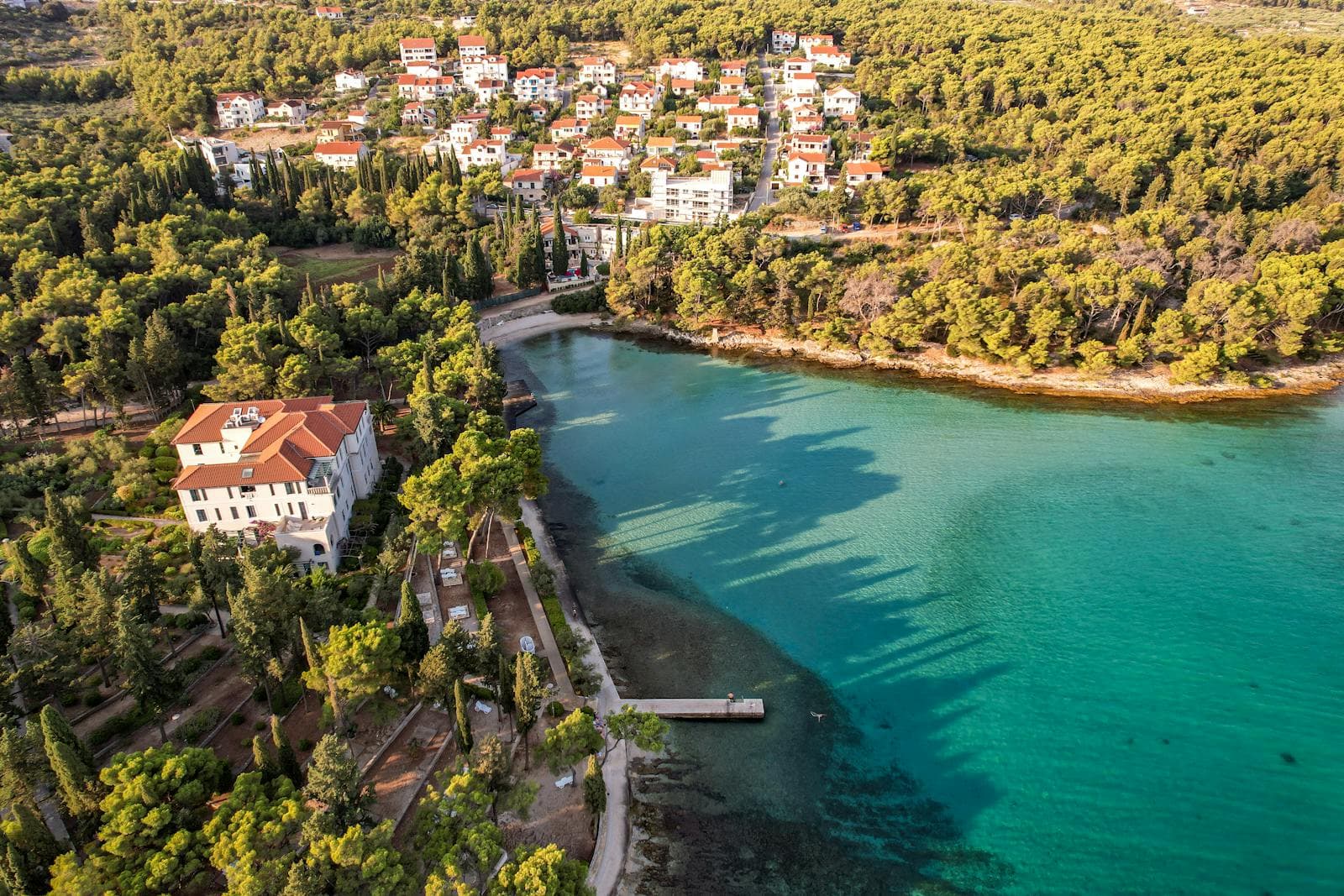
A Wine Road Trip Through France: Alsace, Burgundy & Champagne (8 Days)

TL;DRThis eight-day road trip through France links three wine regions over roughly 700 kilometres: Alsace with Strasbourg, Colmar, Eguisheim and Haut-Koenigsbourg castle; Burgundy with Dijon, Beaune and the Route des Grands Crus; and finally Champagne with Reims and Épernay. May, June and September are the best months to go, letting you dodge the crowds and the August holiday rush. Highlights include descending into Taittinger’s chalk cellars in Reims (€40–90), strolling along Avenue de Champagne in Épernay, and tasting Alsatian Riesling alongside Burgundy wines. You’ll need a Crit’Air sticker to drive into major cities, and tolls run at around €9.50 per 100 kilometres.

If you love a good glass of wine and dream of a journey through the most beautiful corners of Western Europe, the French countryside will sweep you off your feet. Picture steep rooftops shimmering in every colour, endless green vineyards bathed in sunshine, and deep chalk cellars where millions of bubbles quietly mature in total silence. When it comes to France wine, three legendary regions form the backbone of a route you can travel for days on end, always feeling as though you’ve stepped straight into a perfect period film. While the south of France can be oppressively hot and packed with tourists in summer, the eastern wine belt offers a far more authentic experience.

I’ve put together a complete circular route that takes you all the way from the German border to the heart of the old Burgundian dukedom. You’ll discover where the finest Riesling is born, how real Dijon mustard is made, and why entry to certain underground tunnels in Reims costs so much. This road trip is designed for eight days, but if you like to slow down and linger over long afternoon coffee breaks, feel free to stretch it into a full two weeks.

TL;DR

  • Total route length: Roughly 700 kilometres (excluding the drive from the UK), best spread over 8 to 10 days.
  • When to go: The best months are May, June and September, when you avoid the main holiday crowds and the weather is kind to day trips.
  • What to look forward to in Alsace: Fairy-tale half-timbered houses, superb dry Riesling and the breathtaking Gothic cathedral in Strasbourg.
  • Burgundy’s main draw: The iconic rooftops of the medieval hospital in Beaune and the world’s priciest vineyards along the Route des Grands Crus.
  • The Champagne experience: Descending into ancient chalk quarries in Reims, where the world’s most famous bottles mature at a steady temperature.
  • Foodie tips for vegetarians: Try the traditional thin pizza tarte flambée in its mushroom or cheese version, the famous Munster cheese and the fluffy Burgundian cheese puffs known as gougères.
  • Driving heads-up: You’ll need a Crit’Air clean-air sticker to enter the big cities, and be prepared for tolled motorway sections.
  • Top tip: Tastings at the famous Champagne houses sell out weeks in advance, so book everything online before you leave home.

When to set off on this trip

Choosing the right dates is absolutely crucial for a French road trip, because every month offers a completely different atmosphere and calls for different planning. The ideal time is without doubt September and early October, when the vineyard leaves slowly start to turn golden and the long-awaited harvest gets under way across the regions. In Champagne, the exact harvest date — the so-called Ban des vendanges — is announced each year according to grape ripeness. You can even pay for the wonderful “Vendangeur d’un jour” programme here, where a local winemaker hands you the secateurs, takes you straight into the rows, shows you gentle hand-picking, and rounds off the day with a hearty lunch and tasting right in the vineyard.

If you prefer nature waking up in spring, head out in May or June, when the days are gloriously long and all the castles and monuments are fully open. The Burgundian cycle path Voie des Vignes is especially magical for a ride at this time of year. On the other hand, I’d strongly advise avoiding August, because the French take mass holidays this month and many smaller family wineries unexpectedly shut up shop. On top of that, you’ll hit endless tailbacks on the motorways — particularly the famous Route du Soleil — during what the French call the chassé-croisé, the dreaded changeover days.

The Advent season deserves a chapter all of its own, transforming the northern part of the route into a perfect winter fairy tale. Alsace is world-famous for its Christmas markets, and the giant one in Strasbourg boasts over three hundred wooden stalls — in 2026 it runs from 27 November to 27 December. The smaller, more intimate markets in Colmar kick off as early as 23 November. Bear in mind, though, that accommodation prices skyrocket during this period, rooms vanish half a year in advance, and the narrow lanes fill with huge crowds from all over Europe. If you do decide on Advent, arm yourself with patience and enjoy a mug of hot mulled wine with star anise ☺️.

Practical info: car, transport and budget

Getting to the French wine regions from the UK is easiest by flying into Strasbourg, Basel-Mulhouse or Paris and picking up a hire car, though dedicated road-trippers can also bring their own vehicle via the Channel Tunnel or a Calais ferry and drive across in a few hours. French motorways are tolled through booths known as péages, so set aside enough budget for the journey. Reckon on a rough cost of around €9.50 for every hundred kilometres driven. Some newer sections now run on a barrier-free system (Free-Flow), where you must pay the toll online within seventy-two hours — so keep a close eye on that.

Something absolutely essential for 2026 is France’s low-emission zones, known as ZFE, which apply to foreign vehicles without exception. To enter cities with more than 150,000 inhabitants — including Reims and Strasbourg — you’ll definitely need a Crit’Air clean-air sticker. You have to order it several weeks ahead on the official government website for around €5, otherwise you risk an unpleasant fine starting at €68.

As for the food budget, France can be pricey, but there’s one brilliant trick for travellers. Make the most of the lunchtime offer known as the menu du jour, served strictly between midday and two in the afternoon. For somewhere between €15 and €25 you’ll get a proper three-course meal. If you miss that window, most restaurants will offer you nothing more than a coffee and maybe a dry baguette in the afternoon, because the kitchen simply closes and won’t reopen until the evening service.

Day-by-day itinerary

This plan walks you chronologically from the eastern border south into Burgundy and then north to the land of bubbles. Every day has a clear goal, but leaves you plenty of room to get pleasantly lost in picturesque lanes or treat yourself to a long coffee break.

Day 1: Arrival in Alsace and magical Strasbourg

Once you arrive, park up on the edge of Strasbourg at one of the park-and-ride sites and head into the historic centre on foot or by tram. A car would only be a nuisance here, and the city is laced with excellent cycle paths — it’s one of the most cycle-friendly places in all of France. The heart of the city is the island of Grande Île, encircled on all sides by the River Ill, and the whole area is rightly listed as a UNESCO World Heritage Site. Getting your bearings here is incredibly easy, because everywhere you look you’ll see the asymmetrical tower of the Gothic Notre-Dame cathedral, which Victor Hugo aptly called a vast and delicate marvel.

Up close, the pink sandstone cathedral looks like an unbelievably detailed petrified lace and is well worth a thorough look. I’d recommend waiting for the astronomical clock, which springs to life inside every day at exactly 12:30 and offers a fascinating spectacle of parading apostles and the figure of Death. In the afternoon, drift over to the most photographed quarter, called Petite France. Once home to tanners and millers, it’s where centuries-old half-timbered houses with enormous rooftops now lean over the water channels.

When hunger strikes, slip into one of the traditional Alsatian taverns known as winstub and tuck in. Skip the meaty choucroute garnie and order the vegetarian version of the thin pizza tarte flambée, also called flammekueche. Instead of cured meats, the extremely thin, crispy base brushed with cream comes topped with delicious local cheeses, onion and fresh forest mushrooms — an absolutely perfect match for the local white wine.

💡 Tip: Wander across the Ponts Couverts covered bridges and then climb up to the viewing terrace of the historic Vauban Dam. From there you’ll get the very best panoramic view over the whole historic centre with the cathedral tower in the background — and it’s completely free.

Day 2: The Alsace Wine Route through Colmar, Eguisheim and Riquewihr

In the morning, leave the big city behind and head south along the very oldest wine route in France, which stretches an impressive 170 kilometres and was founded back in 1953. Your first stop will be fairy-tale Colmar, whose historic centre is a labyrinth of cobbled lanes and pastel-coloured houses whose hues once marked out the owners’ trades. The biggest magnet here is the Petite Venise quarter, where you can hire a little boat and glide along the narrow Lauch canal right beneath windows draped in geraniums. Don’t miss the Maison Pfister from 1537, whose oriel windows make it look like a Renaissance château, or the old custom house, the Koïfhus.

Just a few kilometres from Colmar lies the village of Eguisheim, which regularly tops polls for the most beautiful place in all of France. Its unique layout is made up of three concentric rings encircling a central square with a castle. As you stroll, you’re constantly curving around, and a new flower-drenched facade waits around every corner. This is exactly where I’d recommend stopping at one of the family cellars to taste the proud, steely-dry local Riesling, which pairs beautifully with regional cheeses.

End the afternoon in Riquewihr, which had extraordinary luck and survived both world wars without the slightest damage, so you’ll feel as if you’ve stepped into a perfect medieval film. In a small space you’ll find over forty historic monuments, presided over by the old thirteenth-century defensive Dolder tower. What’s more, every other house hides a tasting cellar, so your evening entertainment — sampling fragrant Gewürztraminer — is firmly taken care of.

💡 Tip: If you love bold flavours, seek out the cow’s-milk Munster cheese in the local cheese shops. It has a very pungent aroma, but its smooth, creamy taste with caraway is utterly unforgettable.

Day 3: The Haut-Koenigsbourg eagle’s nest and the drive to Burgundy

Today begins a touch dramatically, as you head for a vast fortress that from a distance looks like the impregnable lair of a dark lord from a fantasy novel. Haut-Koenigsbourg Castle towers on a rocky spur 757 metres above sea level, and the German emperor Wilhelm II had it completely rebuilt at the start of the twentieth century from the original ruins destroyed by Swedish troops. You’ll cross drawbridges and pass through massive defensive bastions, old armouries and lavishly furnished chambers with beautiful wood panelling and tiled stoves.

The view from the Great Bastion will literally take your breath away, because on a clear day you can see the whole Alsatian plain, the Vosges mountains, Germany’s Black Forest and occasionally even the peaks of the distant Swiss Alps. In 2026, adult admission costs €16, and I’d recommend arriving right at opening time. The parking spots along the winding mountain road fill up very quickly through the morning, and later you’d have to park really far away. After the tour, hop back in the car and brace yourself for a longer drive to the southwest.

Your destination is the Burgundy region, where the landscape slowly shifts from narrow wooded valleys to open, gently rolling plains dotted with vineyards. By evening you’ll reach the city of Dijon, which will serve as an excellent base for the days ahead. For dinner, find a traditional bistro in the centre and be sure to try the local delicacy gougères. These are golden-baked choux-pastry puffs generously filled with Burgundian cheese — a flawless match for an evening glass of wine and a delight for any vegetarian.

💡 Tip: As you leave Alsace on the motorway, make a quick stop at one of the larger supermarkets and stock up on local wines. Prices here tend to be far friendlier than in the tourist shops along the wine route.

Day 4: Dijon, mustard and ducal splendour

Dijon is no ordinary provincial town, but the former seat of the mighty Dukes of Burgundy, whose wealth in the fourteenth and fifteenth centuries often overshadowed even the kings of France. Their legacy is tangible here in the enormous Palace of the Dukes of Burgundy, which today serves partly as the town hall and partly as an excellent art museum brimming with historic treasures. As you wander the cobbled lanes, watch the ground carefully for small brass plaques bearing the symbol of an owl — they mark twenty-two key stops and will reliably guide you through the best of the historic centre.

On the north wall of the church of Notre-Dame you’ll find a little stone carving of the owl itself — don’t forget to stroke it with your left hand for luck. Your steps should definitely lead to the Moutarderie Fallot, one of the last traditional makers of genuine Dijon mustard in the region. They still use old stone mills here, and a tasting of unusual variations with tarragon, blackcurrant or nuts will completely change how you think mustard should taste.

In the afternoon, drive south and join the legendary Route des Grands Crus, rightly nicknamed the Champs-Élysées of Burgundy. This sixty-kilometre wine route takes you from Dijon down to Santenay, right past the planet’s rarest and most expensive vineyards, where premium Pinot Noir and Chardonnay are born. Be sure to stop at the Renaissance Château du Clos de Vougeot, founded by Cistercian monks back in the twelfth century and still surrounded by absolutely flawless rows of vines.

💡 Tip: If you’d like to swap the car for a bike, a gorgeous, twenty-three-kilometre cycle path called the Voie des Vignes winds through the Burgundy vineyards, where you’ll dodge the traffic and enjoy the scenery at a far gentler pace.

Day 5: Beaune and a multi-million auction beneath a glazed roof

The heart of wine-growing Burgundy is without doubt the picturesque little town of Beaune, far more intimate than Dijon and a place utterly steeped in wine. No surprise, really, when kilometres of maturing barrels lie right beneath your feet under the cobbled streets. The town’s biggest magnet is the medieval hospital Hospices de Beaune, which instantly catches your eye with its incredible fifteenth-century roof. It’s covered in intricate geometric patterns of brightly coloured glazed tiles, and inside it conceals a breathtaking ward for the sick as well as the famous Last Judgement polyptych by Rogier van der Weyden.

This historic hospital still owns top-tier vineyards, bequeathed to it over the centuries by wealthy patients, and every year it hosts the world’s most famous charity wine auction. In 2026, this grand event falls on 15 November. Buyers gather here from across the globe to bid on barrels of young wine for astronomical sums during the Trois Glorieuses weekend, and the whole town bursts at the seams. If you head here on these dates, you’ll need to sort accommodation a good year in advance.

In the afternoon, make time for a proper tasting in one of the many historic cellars and refuel with some great food. You can happily skip meaty feasts like boeuf bourguignon, because Burgundian cuisine offers plenty of fantastic cheeses, walnut salads and vegetable dishes. Try asking for a vegetarian version of the daily menu in the local bistros — the French are far more accommodating these days than they used to be and will gladly rustle up something meat-free ☺️.

💡 Tip: If you fancy a break from driving, Burgundy has a great local rail network, the TER. The train from Dijon straight into the centre of Beaune takes just twenty minutes and a ticket costs a pleasant €8.

Experiences & tickets
traveler-rated · GetYourGuide
Bordeaux: Cité du Vin Entry Ticket and Wine Tasting
★★★★★ 4.6 · 4 142 reviews
from €23
I want this experience →
🔗 These are affiliate links — they don't change your price and help us create content. · All experiences →
lukas a lucka
Lukáš and Lucie recommend
Where to Stay in Alsace, Burgundy and Champagne
1 accommodation — hotels and other lodging options

Day 6: Crisp Chablis and the long drive north

Today you’ll say goodbye to the heavy red wines of the main Burgundian axis and head north through a region that’s synonymous with the crispest white wines in France. A stop in the village of Chablis is an absolute must if you want to grasp the sheer diversity of French winemaking. The local limestone soil here, literally packed with the fossils of prehistoric oysters, gives the local Chardonnay an utterly unrepeatable mineral character. The whole village is wrapped in steep, vine-covered slopes and feels far calmer than the busy tourist streets of Beaune.

Pop into one of the local bistros for a light lunch and treat yourself to a fresh, crusty baguette with regional cheeses — a perfect partner for the local wine. After lunch, you’re in for a drive of roughly two and a half hours across the countryside towards the Champagne region, where the finale of your road trip will unfold. The landscape shifts once again, becoming noticeably flatter, and the sky often takes on dramatic leaden hues that lend the whole area a faintly mysterious, majestic air.

In the early evening you’ll reach Reims, a historic city that will become your third and final base on this journey. Reims is a surprisingly busy, large metropolis, so ideally choose accommodation within walking distance of the centre, so you don’t have to hunt around for expensive parking in the evening. Head to one of the lively squares, order a glass of the local sparkling wine and toast your successful arrival in the royal city of bubbles.

💡 Tip: Around Chablis you’ll come across plenty of small producers offering completely free tastings. If you buy at least a bottle or two from them at the end, it’s good manners and a great souvenir all in one.

Day 7: Reims, the Gothic cathedral and the chalk underworld

Reims is a city of two utterly different faces, the first of which rises proudly to the heavens in the form of the majestic Notre-Dame cathedral. This Gothic masterpiece is UNESCO-listed and became the coronation place of thirty-three French kings, so a vast slice of history breathes from every stone. Take your time admiring the cathedral inside and out, and be sure to notice the stunning modern stained-glass windows, some of which were designed by the famous painter Marc Chagall, creating a beautiful contrast with the ancient architecture.

The second, far more mysterious face of the city hides dozens of metres beneath the pavement, and for wine lovers it’s even more alluring. Beneath Reims stretch hundreds of kilometres of tunnels carved into pure white chalk, known as crayères, dating all the way back to the time of the ancient Romans. Today they serve as perfect, naturally air-conditioned cellars for millions of bottles of champagne, with the temperature holding steady at ten to twelve degrees Celsius year-round and very high humidity.

Descend underground as part of a tour of the famous Taittinger house, whose UNESCO cellars are among the most impressive in the entire area. In 2026, a ticket will cost between €40 and €90, depending on how exclusive the vintages are and how many samples you want to taste at the end. You’ll need to book everything well in advance through the official website, as capacity sells out very fast. Definitely pack a warm jumper, because after a while underground you’ll start to feel cold even in the height of summer.

💡 Tip: The prestigious Pommery house also has enormous cellars here, and very boldly combines the classic tour of the historic tunnels with installations of modern, often deeply bizarre art. The result is a fascinating contrast you won’t see anywhere else on the route.

Day 8: Épernay, the world’s most expensive street and the monk Pérignon’s grave

While Reims is a metropolis with a rich history, nearby Épernay is the thoroughbred capital of bubbles, reachable by car in under half an hour. Everything here revolves around the famous Avenue de Champagne, of which Winston Churchill once jokingly declared it was the most drinkable street on the entire planet. It’s lined with opulent nineteenth-century mansions, and beneath the pavements, in a dark labyrinth, rest over two hundred million precious bottles of the very best brands 😅.

This is the home turf of the biggest global players, led by Moët & Chandon, whose underground system runs an incredible twenty-eight kilometres. Tastings at these houses are highly polished, professional and expensive, with prices ranging from €48 right up to €460 for the most exclusive guided experiences. If you’re after something a little more relaxed and light-hearted, hop aboard the underground tourist train at the Mercier house, where the tour even reveals a gigantic historic barrel that held the equivalent of two hundred thousand bottles.

To wrap up the whole road trip, drive a few kilometres up into the hills above town to the unassuming little village of Hautvillers, surrounded by a sea of endless vineyards. It was at the local abbey that the monk Dom Pérignon worked, the man whom legend unfairly credits with inventing champagne and the famous line about drinking the stars. His grave in the local church is now a place of pilgrimage, and the small family cellars nearby offer fantastic bubbles for a fraction of what you’d pay down in the commercial centre.

💡 Tip: If you want to dodge the pricey paid tours inside the buildings, a simple stroll along the Avenue de Champagne is completely free. You can admire the wrought-iron railings and soak up the luxurious atmosphere straight from the pavement.

Where to stay along the route

💡 Accommodation and experiences tip: We like to look for places to stay on Booking.com, which usually has the best cancellation terms. Tickets, tours and activities are then worth comparing and booking through GetYourGuide.

Since you’ll be constantly on the move across France, the best approach is to pick three main strategic bases along the route and use them for shorter day trips. That way you avoid endlessly packing and unpacking, save heaps of time and dodge the stress. Always book accommodation well in advance via Booking, especially if you’re travelling during the autumn harvest or the pre-Christmas markets, when rooms along the wine route vanish at lightning speed and prices shoot up. It’s quite common for the nicest hotels to be sold out half a year ahead.

For the first part of the trip, find accommodation right in Strasbourg or in the smaller Colmar. Strasbourg is an excellent choice if you enjoy evening buzz, a wide choice of restaurants, and want the magnificent cathedral and the TGV station right around the corner. Just watch out for the pricey parking in the centre and the need to sort a Crit’Air clean-air sticker. The smaller Colmar, by contrast, is far more intimate and romantic, offering a quick escape straight onto the Alsace wine route. Its park-and-ride sites fill up very fast in high season, though, so ideally look for a hotel with its own garage parking.

In Burgundy, the absolutely ideal strategic choice is historic Dijon. It offers a wide range of hotels for every budget, and in the evening you can stroll through the beautifully lit old town full of great bistros and superb bakeries. The romantic town of Beaune is closer to the most famous vineyards on the Route des Grands Crus, but in season it’s often hopelessly sold out and noticeably pricier than Dijon. On top of that, the cheap and fast TER train runs between the two towns, whisking you from Dijon to Beaune in twenty minutes for around €8, so you won’t miss anything important and you’ll save money ☺️.

For the end of the journey in the Champagne region, drop anchor in Reims, which thanks to its size has the best infrastructure and excellent high-speed train links to Paris. You’ll find beautiful hotels just a stone’s throw from the Gothic cathedral, and the biggest chalk cellars full of champagne will be literally right beneath your feet. I’d definitely recommend avoiding accommodation right on the luxurious Avenue de Champagne in nearby Épernay, unless you fancy paying premium, near-astronomical sums for a single night. Reims is far more practical for a regular overnight stay, and you can simply drive to Épernay for a half-day trip.

Where to go next

If this eastern loop has won you over and you’d like to learn more about the individual regions, we’ve put together some detailed guides for you. Find out exactly how to plan your stops and where to grab the best coffee.

  • Explore all the details and secret corners hidden along the fairy-tale Alsace Wine Route.
  • Read our extensive guide to the medieval monuments and acclaimed restaurants that Burgundy has to offer.
  • Get inspired by detailed tips on the best tasting cellars you mustn’t miss when you set off for the Champagne region.
  • See why it’s worth spending more time discovering the colourful canals and charming lanes of Colmar.

Frequently asked questions

Do I need an environmental sticker to travel to France?

Yes, to enter larger cities along the route, such as Reims and Strasbourg, you need a Crit’Air environmental sticker, even for Czech cars. In 2026, strict rules apply and the sticker costs just over five euros, and you must order it several weeks in advance online from the official government website and have it mailed to your home. Without it, you risk a fine of 68 euros.

Are French motorways very expensive?

France doesn’t use motorway vignettes, but instead charges tolls at so-called péages. As a rough guide, expect to pay around 9.50 euros per 100 kilometers driven. On some newer sections, cameras are already in operation (Free-Flow system without barriers) and the toll must be paid retroactively online within 72 hours.

When are the famous Christmas markets in Alsace held?

Strasbourg and Colmar host some of the most beautiful markets in Europe. In 2026, the Strasbourg markets with more than 300 stalls run from November 27 to December 27, while the more intimate ones in Colmar start as early as November 23. However, be prepared for huge crowds and extremely expensive accommodation that disappears six months in advance.

Is it necessary to book winery tours in advance?

At the major champagne houses in Reims and Épernay, advance booking online is absolutely essential, as capacity is often sold out weeks ahead. Smaller family wineries in Alsace will often welcome you without notice, but during high season and on weekends, it’s always safer to book ahead.

Will I find quality vegetarian food along this route?

The French countryside is very meat-heavy, but you definitely won’t go hungry. In Alsace, try mushroom tarte flambée or aromatic Munster cheese, while in Burgundy you’ll find excellent cheese gougères, fresh baguettes, and vegetable salads. Always ask at restaurants for a meatless version of the daily menu.

Can I manage this road trip with small children?

Absolutely, but I recommend slowing down the itinerary significantly. Kids probably won’t be thrilled about spending all day touring wine cellars, but they’ll fall in love with the fairytale colorful houses in Colmar, a boat ride, and a visit to the massive Haut-Koenigsbourg castle.

How much do tastings cost at prestigious houses in Champagne?

Prices vary greatly depending on exactly what you want to drink. A basic tour combined with a tasting of one sample starts at around 40 euros in 2026. However, if you’re after exclusive and vintage bottles at the best houses on Avenue de Champagne, the price can climb to over 460 euros.

Can part of the trip be done without a car by train?

Yes, especially in Burgundy, rail transport is excellent. Regional TER trains will reliably and quickly take you between Dijon and Beaune for a pleasant eight euros, so you can enjoy evening wine tastings without worrying about driving or complicated parking.

Tips and Tricks for Your Vacation

Don’t Overpay for Flights

Search for flights on Kayak. It’s our favorite search engine because it scans the websites of all airlines and always finds the cheapest connection.

Book Your Accommodation Smartly

The best experiences we’ve had when looking for accommodation (from Alaska to Morocco) are with Booking.com, where hotels, apartments, and entire houses are usually the cheapest and most widely available.

Don’t Forget Travel Insurance

Good travel insurance will protect you against illness, accidents, theft, or flight cancellations. We’ve had a few hospital visits abroad, so we know how important it is to have proper insurance arranged.

Where we insure ourselves: SafetyWing (best for everyone) and TrueTraveller (for extra-long trips).

Why don’t we recommend any Czech insurance company? Because they have too many restrictions. They set limits on the number of days abroad, travel insurance via a credit card often requires you to pay medical expenses only with that card, and they frequently limit the number of returns to the Czech Republic.

Find the Best Experiences

Get Your Guide is a huge online marketplace where you can book guided walks, trips, skip-the-line tickets, tours, and much more. We always find some extra fun there!
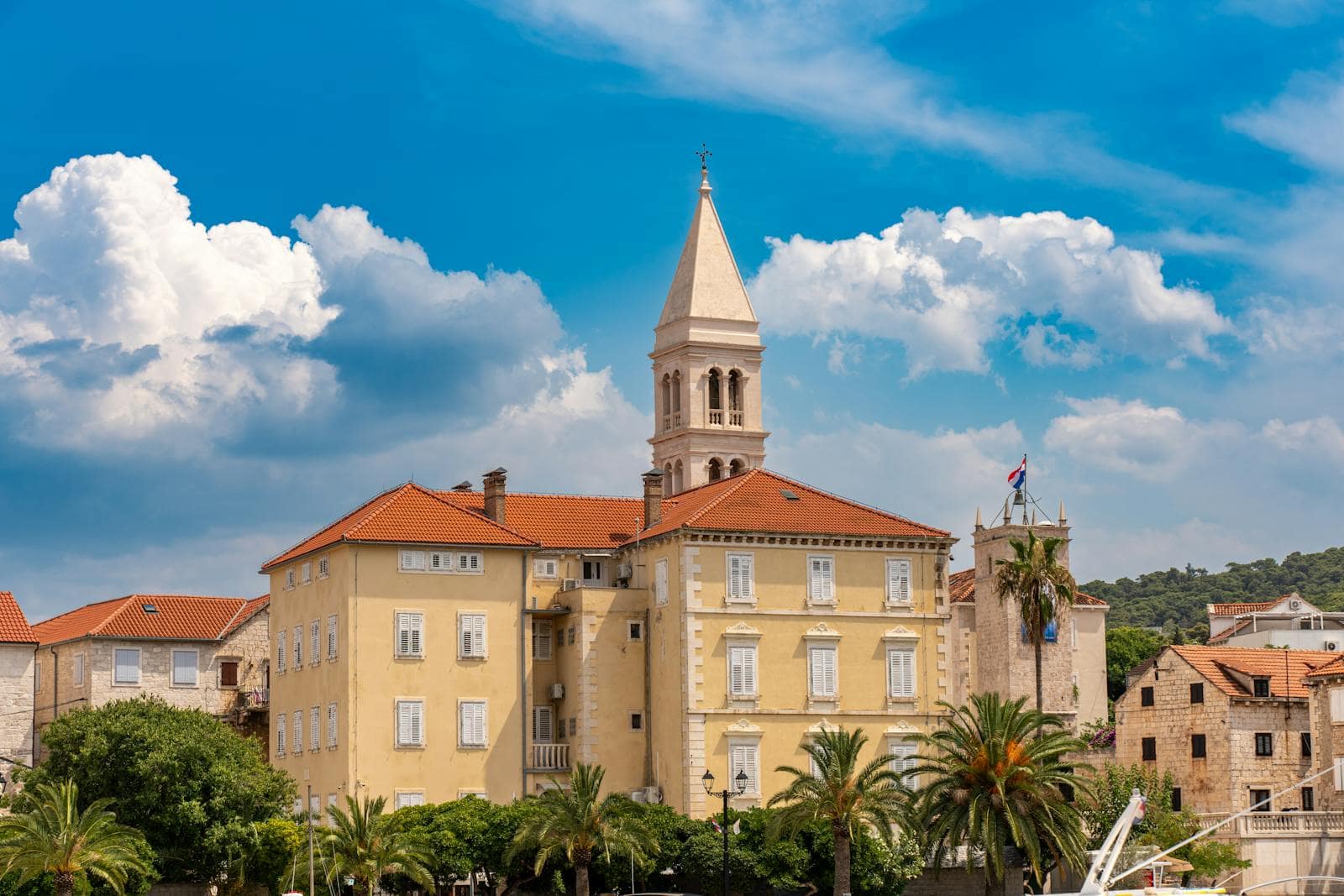
Étretat, France: 11 Tips for the Chalk Cliffs in 2026

TL;DRÉtretat, on the Normandy coast, is famous for its chalk cliffs and rock arches — Porte d’Aval, Manneporte and the 70-metre L’Aiguille sea stack — and this article rounds up 11 concrete tips for exploring them. The best time to visit is April, May, or late September into October, when crowds thin out and the weather’s kinder, though May to September gives you the most reliable climate. One packed day is enough to see the village, walk the clifftops and visit Les Jardins d’Étretat, but a day and a half with an overnight stay is better. The easiest way in is by car or the number 13 bus from Le Havre (about 50 minutes), and accommodation in high season runs €120–€250 a night for two.

Étretat on the Normandy coast isn’t your typical beach destination where you’d come to catch a tan on a sun lounger. What you’ll find in Étretat, France is a landscape of untamed elements and raw beauty that once enchanted the greatest Impressionist painters. If you’re after views that will quite literally take your breath away, this little French town will completely sweep you off your feet.

The air here smells of salt, fermenting apple cider and freshly baked crêpes, while gulls wheel high above the treacherous cliffs. Although the town itself is fairly small, it holds onto an atmosphere of old France that the modern hustle hasn’t quite steamrolled yet. Whether you set off on a hike along the tops of the chalk massifs or simply stroll along the pebble beach with a hot coffee in hand, Étretat will lodge itself in your memory as one of the most photogenic spots in all of Europe.

Be warned, though, that nature here dictates strict rules, because everything revolves around the tides. In a single day you can experience warm sunshine, thick fog and a strong wind that forces you to zip your jacket right up to your chin. In this guide, we’ll look together at how to plan your visit to this Normandy gem down to the last detail, so you get the absolute most out of it.

TL;DR

  • Main draw: Stunning chalk cliffs and rock arches shaped by sea and wind over thousands of years.
  • Getting there: A car is best, or you can take the direct bus from the nearby city of Le Havre.
  • When to go: Spring or early autumn is ideal, when you’ll avoid the biggest summer crowds and enjoy more pleasant temperatures.
  • Safety: There are no railings on top of the cliffs, so never get close to the edge and always respect the warning signs.
  • Tides: Always check the low-tide times before heading down to the beach beneath the cliffs, so you don’t get cut off by the water.
  • What to taste: Normandy Camembert, buckwheat galettes and proper apple cider.

When to visit Étretat

Normandy is famous the world over for its utterly unpredictable weather, which can change several times in a single afternoon. If you want the best chance of sunny days, come between May and September, when temperatures sit at very pleasant levels. The summer months bring the most stable weather, but they also bring huge crowds of tourists and packed car parks. Normandy simply isn’t the Riviera — people come here for a slightly rougher kind of romance and jaw-dropping natural scenery.

The ideal compromise, then, is April, May or the turn of September into October. During this period you’ll probably need a good waterproof jacket, but you’ll enjoy far more peace and a more intimate atmosphere on the cliffs. A dramatic overcast sky also gives the white rock that wonderful contrast photographers love, and the autumn sun paints the chalk in beautiful golden tones. In the morning you’ll be woken by the cry of gulls, and in the evening you can wander the beach in peace without weaving through crowds of weekend day-trippers.

The winter months have their own melancholy charm too, you just have to brace yourself for a biting wind and a cold that seeps right into your bones. Whatever dates you choose, always pack plenty of layers. Even in the heat of July a cold ocean gust on the cliff tops can take you by surprise and have you reaching for a jumper. Pay special attention to 2026, when all of Normandy marks the 100th anniversary of Claude Monet’s death and the 82nd anniversary of the D-Day landings — both of which will reliably draw enormous numbers of international visitors to the region.

Where to stay in Étretat

💡 Tip for accommodation and experiences: We like to look for places to stay on Booking.com, which usually has the best cancellation terms. For tickets, tours and activities it pays to compare and book through GetYourGuide.

Although Étretat is a fairly small village, it offers a surprisingly wide range of accommodation for different budgets. You’ll find everything from luxurious historic villas with sea views to cosy family guesthouses tucked away in narrow cobbled lanes. Given how popular the place is, though, I’d strongly recommend booking your accommodation up to six months in advance. If you’re planning a trip during the summer holidays or around the big cultural celebrations of 2026, look for rooms even earlier — ideally almost a year ahead. Staying right in the centre will also save you a lot of frustration over the daily hunt for a parking space, which in Étretat is a notorious and exhausting nightmare.

Nightly rates for two people in high season will run roughly between €120 and €250, with hotels that look straight out over the sea naturally being the most expensive of all. A great and reliable place to search is, as usual, Booking, where you can easily find smaller apartments with their own kitchenette. That comes in incredibly handy if you want to save on pricier restaurant dinners or simply enjoy preparing your own breakfast from the fantastic local produce bought at the market.

If you’re looking for specific tips and want to treat yourself to something special, Domaine Saint Clair (Le Donjon) is a gorgeous boutique hotel on the hill that offers fantastic views and the unforgettable romantic atmosphere of an old château. Right on the beachfront promenade you’ll find the very comfortable Hotel Le Rayon Vert, where you can lazily watch the waves in the morning straight from the comfort of your bed. For lovers of a more classic style, there’s the very popular Dormy House, which sits right on the edge of the cliff and boasts a beautiful garden full of greenery. If Étretat is hopelessly sold out, try looking for accommodation in the nearby town of Fécamp or in the larger port city of Le Havre.

11 tips for what to see and do in Étretat

Let’s take a look together at the most beautiful viewpoints and experiences this Normandy town has to offer. I’ll show you how to dodge the biggest crowds, where to find the best angles for photographing the famous cliffs, and what to watch out for around the unpredictable ocean.

1. Admire the famous Porte d’Aval arch

Looking left from the main beach, the single most famous rock formation rises before you — the one that graces just about every travel postcard from Normandy. Porte d’Aval is a massive chalk arch that the famous French writer Guy de Maupassant once aptly described as resembling a giant elephant dipping its trunk into the waves. And when you look at it from the right angle on the pebble beach, you really do see that fascinating likeness of an animal quite clearly.

This natural wonder formed over many thousands of years through relentless erosion, as rough sea waves and strong winds gradually wore away the softer parts of the chalk wall. Sadly you can’t reach the arch on dry feet even at the very lowest tide, so the best place to see it is from the clifftop walking trail. The view from above also offers a wonderful visual contrast between the dazzling white rock, the fresh green grass and the emerald-green water of the English Channel. The rock is constantly working away, though, crumbling unexpectedly, so when taking photos always keep a completely safe distance from the edge.

💡 Tip: You’ll get the best light for photographing Porte d’Aval in the late afternoon and evening. The setting sun paints the white chalk in warm orange and golden tones, creating an utterly magical atmosphere that the famous French Impressionists fell in love with centuries ago.

2. Spot the mysterious L’Aiguille needle

Right behind the elephant arch of Porte d’Aval, a solitary rock tower juts dramatically out of the sea — known in French as L’Aiguille, which literally means “the Needle”. This stunning limestone obelisk rises to an impressive 70 metres and looks as though it’s guarding the entrance to some forgotten underwater kingdom. You’ll really grasp its enormous size when a small sailing boat passes by, looking like a mere bath toy next to the towering rock.

Across France, the Needle is inseparably tied to local pop culture — specifically to the character of the brilliant gentleman thief Arsène Lupin. In the novel The Hollow Needle by the beloved writer Maurice Leblanc, it’s said that inside the rock lies a secret cave holding a vast treasure of ancient French kings. To this day, that adventurous tale draws thousands of devoted fans who scour the cliffs with binoculars in hand, searching for the imaginary secret entrance into the heart of the rock.

💡 Tip: Although the hidden treasure story is pure literary fiction, right in the town centre you’ll find the lovely Le Clos Lupin museum. Housed in the author’s former historic home, the tour costs just under €9 and pulls you perfectly into the detective atmosphere of the early 20th century.

3. Conquer the Porte d’Amont cliff and arch

If you turn your gaze right from the main pebble beach, you’ll see a slightly smaller but no less beautiful cliff known as Porte d’Amont. This stretch is far more accessible to ordinary walkers, and the path up begins conveniently right at the very end of the town promenade. From there you’ll face a fairly steep but very well-maintained path and a series of concrete steps that lead you up to the grassy summit. Your reward for a little sweat is the finest bird’s-eye view of the entire town.

At the very top of this cliff stands the small, charming chapel of Notre-Dame de la Garde, the patron and spiritual protector of all the local sailors and fishermen. The original historic building was sadly destroyed entirely during the Second World War, but in the mid-20th century the locals rebuilt it with enormous love and care, so that it could go on symbolically watching over the whole bay.

💡 Tip: A short way beyond the chapel stands the very unusual Nungesser and Coli monument. Shaped like a long white arrow, it commemorates the two daring aviators who in 1927 attempted to be the first to cross the Atlantic in their plane, the White Bird — but were last seen right over Étretat before their mysterious disappearance.

4. Discover the majestic Manneporte

Although the elephant arch of Porte d’Aval is by far the best-known among tourists, paradoxically it isn’t the largest you’ll find on this coast. If you bravely keep going along the cliffs further west on the well-trodden paths, you’ll come upon Manneporte. This is an absolutely gigantic chalk arch, beneath which — according to old seafaring legend — even a fully laden large ship could easily sail.

This geological formation is incredibly vast, raw and immensely majestic, precisely because it lies away from the heaviest tourist bustle around the town. From the viewpoints right above it, you’ll fully grasp the enormous power of nature and the smallness of man as you watch, in complete silence, the ocean crash into the stone pillars with a deafening roar. The water has carved such deep grooves into the rock that the whole enormous structure feels more like the work of some alien architect.

💡 Tip: The giant Manneporte arch was one of painter Claude Monet’s favourite subjects. He painted it around fifty times under different lighting conditions, capturing on canvas the fleeting mood of the moment and the ever-changing reflections on the sea’s surface.

5. Set off on a walk along the cliff edge

The best way to truly soak up the rugged beauty of the whole Normandy coast is to set off on a proper hike along the long-distance trail marked GR21. This famous route runs along the entire coastline, and its stretch around Étretat is among the most beautiful in the whole country. You can head off in either direction from the town and walk along the cliff edge as far as your legs and your water supplies will let you.

The fresh green grassy plains atop the cliffs contrast sharply with the dazzling white chalk and the deep blue ocean, creating breathtaking scenery that feels like another world. The trail is gently rolling and easy to navigate, so any reasonably fit walker can manage it without much trouble. You’ll definitely need sturdy, closed shoes, though, because the chalk surface gets extremely slippery after the morning dew or rain, and a single wrong step here can be very dangerous.

💡 Tip: The cliffs are incredibly treacherous and the stone is constantly shifting, so never climb over the protective barriers or try to take dramatic photos right on the edge of the drop. There are no safety railings at all here, and sudden landslides are sadly nothing unusual.

6. Relax in the Étretat gardens (Les Jardins d’Étretat)

When the strong wind on the cliffs has worn you out, be sure to head for the utterly fascinating Étretat gardens, Les Jardins d’Étretat, cleverly perched on the steep slope of the Porte d’Amont cliff. Don’t expect a classic romantic French park full of symmetrical rose beds, though. This unique spot works more like an open-air gallery of neo-futurist art, where carefully clipped shrubs blend seamlessly with modern sculptures and the soothing sounds of the ocean.

The most photographed and best-known part is the so-called Garden of Emotions, where enormous rubber faces with various expressions surprisingly peek out from the green box hedges, meant to symbolise the ever-shifting moods of the ocean. The gardens are laid out in terraces, and from their highest levels you get an unbeatable, peaceful view across the whole bay and the cliff opposite with its famous needle. It’s an absolutely ideal place for a moment of quiet meditation or a well-earned rest after a demanding climb.

💡 Tip: Better to buy your tickets online well in advance, because the gardens have a strictly limited capacity and won’t let in more people than allowed. In the summer months there are genuinely long queues at the ticket office, and admission costs around €15.

lukas a lucka
Lukáš and Lucie recommend
Where to Stay in Étretat
4 accommodations — hotels, wellness hotels and other lodging options

7. Listen to the sound of the pebble beach

The main beach in Étretat sweeps in a wide arc along the whole town, but if you’re expecting soft white sand like somewhere in the Caribbean, you’ll be rather surprised. The beach is in fact made up of millions of smooth grey pebbles, which the locals call galets. These stones aren’t just for show, though — they serve an utterly essential protective function, effectively shielding the town from the destructive force of the strong winter waves.

When the stronger tide comes in, the waves lift these heavy stones, and as they slowly retreat the whole bay fills with a beautiful, soothing sound of rattling pebbles that strongly resembles the deep breathing of the ocean. For that reason, though, walking across the beach is fairly hard on the ankles, and swimming in the cold English Channel here is really only for true hardy souls, because the seabed drops steeply into deep water and the currents are strong.

💡 Tip: Under threat of a very hefty fine, it is strictly forbidden to take pebbles home as a souvenir. They form a completely natural breakwater, and their gradual loss would, over time, seriously threaten the safety of the whole historic town.

8. Wander the lanes of the old town

Even though the vast majority of people come here primarily for the natural wonders of the chalk cliffs, Étretat itself has an undeniable charm that absolutely deserves your full attention. The historic centre is woven through with enchanting Normandy houses, boasting traditional half-timbered façades of dark wood and the typical steep slate roofs. The whole town is permanently and temptingly scented with salty air, freshly baked crêpes and poured cider.

The heart of the town is the beautiful old wooden market hall, Les Halles, where fresh fish and vegetables were once sold, while today you’ll find in its shade a host of small shops selling souvenirs and local farm produce. In the narrow cobbled lanes you’ll also come across countless cosy cafés, where you can enjoy a great coffee with a crisp croissant and simply watch the lazy bustle of the picturesque French countryside in peace. Thanks to the strict ban on parking in the centre, there’s also relative quiet from car noise.

💡 Tip: If you love historic architecture, look out for the gorgeous Manoir de la Salamandre, standing right by the main market hall. It’s among the finest examples of medieval building in the entire area, and its richly carved wooden detail is absolutely stunning.

9. Walk in the footsteps of famous painters (Étretat and Monet)

Étretat played an absolutely pivotal role in the development of world art, because it was here that artists flocked in droves to capture the magic of the local light on the stormy water. In the 19th century, once the direct railway from Paris was finally built, the town immediately became a favourite haunt for famous painters such as Gustave Courbet, Eugène Boudin and Claude Monet. It was they who fully established the tradition of painting in the open air here.

Claude Monet in particular was utterly obsessed with this wild coast, and during his repeated stays he created dozens of stunning canvases depicting the chalk cliffs and the stormy sea. When you stroll slowly along the seafront promenade today, you’ll come across several handy information panels showing the exact spots where these legendary masters once stood at their wooden easels, mixing their paints.

💡 Tip: The year 2026 is absolutely momentous for all of Normandy, as it marks exactly one hundred years since Claude Monet’s death. Expect special exhibitions, themed walks and enormous interest from Impressionism lovers worldwide, so book any guided tours very early.

10. Watch the tide and explore the caves

The ocean in Normandy follows a strict rhythm, and the differences between high and low tide here can be enormous, especially during the so-called spring tides in spring and autumn. When the water finally retreats after a few hours, a secret path opens up across the wet sea floor right beneath the Porte d’Aval cliff, carefully leading you into the fascinating natural cave of Trou à l’Homme, which literally translates as “the Man’s Hole”.

It got this unusual name after an old shipwrecked sailor from Sweden, who was supposedly cast into this very cave by a furious storm and miraculously survived as the only member of the whole crew. Walking through the dark cave to the other side of the cliff is a hugely adventurous experience, but you must keep a precise eye on the relentless clock. The water returns to the bay incredibly fast, silently and unexpectedly, so it can very easily and imperceptibly cut off your safe route back to the main beach.

💡 Tip: Before you even step down from the concrete promenade onto the beach, stop at the information board and carefully check the exact tide times. Never head into the rock passages if the water is starting to rise — the local fire crews sadly have to rescue careless tourists here fairly regularly.

11. Taste the best of Normandy cuisine

Normandy is a rich region that irresistibly smells of melted butter, full-fat cream and ripe apples, so you might as well forget any strict diet here with a smile. The local cuisine is very hearty but absolutely fantastic, and it’ll delight even committed vegetarians, because it’s built primarily on top-class local cheeses. Normandy cows graze on fresh, salt-laden grass, which gives the milk a unique flavour. I’d definitely recommend trying genuine raw-milk Camembert de Normandie, the strongly aromatic Pont-l’Évêque cheese, or the delicate Neufchâtel, which comes in a charming heart shape.

The traditional quick meal you’ll find in bistros on every corner is the savoury buckwheat galette, most often generously filled with cheese, egg and sweet caramelised onion. For dinner after a windy day on the cliffs, order a proper onion soup or potatoes gratin with cream, which will warm you up perfectly. But do watch the timing carefully — French restaurants have strict rules, and lunch is served strictly only between noon and two o’clock. If you turn up at three in the afternoon, the kitchen will already be uncompromisingly closed.

💡 Tip: With any meal you absolutely must order traditional apple cider, which is stylishly poured into ceramic bowls rather than glasses. You can choose between a sweeter version (doux) and a drier one (brut). If you fancy something stronger, order a Calvados, the famous apple brandy that works wonderfully to settle the stomach after a heavy cheese feast.

How to get to Étretat and the logistics

Given how remote the whole coast is, the most practical way to travel is by your own or a rental car, giving you complete freedom to stop at any viewpoint you like. If you’re coming from the UK, the easiest route is to take a ferry across the Channel (for example to Le Havre or Caen) or fly into Paris and hire a car from there. The problem arises the moment you actually reach Étretat itself. The town suffers from an enormous shortage of parking spaces, and parking in the centre is extremely expensive and woefully inadequate. So I’d strongly recommend using the large overflow car parks (such as the Grand Val car park) on the approach just before the village, from which you can comfortably reach the centre on foot in about fifteen minutes.

If you don’t have a car, the best starting point is the large port city of Le Havre, served by direct and very comfortable high-speed trains from Paris. From Le Havre, the regional bus line number 13 of the NOMAD network connects on, taking around fifty minutes and a few euros to deliver you right to the town hall in Étretat. The buses don’t run all that frequently, though, especially at weekends, so always check the current timetables online well in advance so you don’t end up stranded at the stop.

Where to go next from Étretat

If you have a car at your disposal, it would be a huge shame not to carry on exploring more of Normandy’s gems, because the whole region offers an incredible wealth of historic sites and stunning natural wonders.

  • The Normandy landing beaches – Head further west and explore the places where history was written in 1944. From the quiet American cemetery with nine thousand white crosses at Omaha Beach to the bomb-cratered cliffs of Pointe du Hoc, an incredibly powerful experience awaits. In 2026 there will also be huge celebrations marking the 82nd anniversary of D-Day.
  • Mont-Saint-Michel – The iconic Gothic abbey perched on a granite island, completely cut off from the mainland by the water during a fast spring tide. It lies about two and a half hours’ drive from Étretat. You have to leave your car on the mainland and reach the mount by free shuttle bus.
  • Rouen and Giverny – On the way back towards Paris, stop in the city of Rouen, where Joan of Arc was burned at the stake, and then in Giverny. Here you can visit the famous water-lily gardens created by Claude Monet (in 2026 there will be a festival marking the centenary of his death).
  • Honfleur – Pop over to one of the most photogenic harbours in all of France, where the first Impressionist school took shape in the local inns and where you can admire the old wooden church built by ships’ carpenters.

Frequently asked questions

How much time do I need to visit Étretat?

You can manage to explore the town itself, hike up the chalk cliffs, and visit the modern gardens in one very full day. However, if you want to enjoy the cliff walks completely stress-free and wait for the most beautiful evening light for photography, I recommend staying overnight and spending at least a day and a half here. In the morning, you’ll also experience the town beautifully quiet, smelling of fresh pastries, and most importantly without the large tour buses from Paris, which start arriving around ten o’clock in the morning.

Are the cliffs safe for children?

Yes, but they require an enormous amount of caution. The wider paths along the cliffs are fairly safe, however there are absolutely no railings or safety barriers separating you from the deep drop. Children must be under constant strict supervision, ideally held firmly by the hand at all times, and under no circumstances should they be allowed to run near the edges, which can unexpectedly break off and cause a fatal fall.

Can I swim in the sea at Étretat?

Swimming is permitted here, but it’s really only for very strong and hardy swimmers. The water in the English Channel is very refreshing and cold even in the heat of summer, and entering over the giant pebbles isn’t exactly comfortable for bare feet. The seabed also drops off quite steeply just a short distance from the shore, and underwater currents can be unexpectedly strong and treacherous, so never venture out too far.

Is it possible to visit the caves at any time?

Absolutely not! The caves beneath the cliffs are safely accessible only at maximum low tide. Always carefully follow the current tide tables posted at the entrance to the promenade. Never venture into the rock passages if the water is already visibly rising, as it returns extremely quickly and could easily trap you in the cave.

Are dogs allowed in the area?

Dogs are generally welcome in the town and on the tourist trails above the cliffs, provided you keep them obediently on a leash. However, keep in mind that dogs are strictly prohibited on the main pebble beach throughout the entire summer season to avoid disturbing other visitors and to maintain cleanliness. You can only take them to the water at more remote wild beaches outside the town center.

How physically demanding are the hikes?

The climb up the Porte d’Amont cliff to the chapel follows paved walkways and solid concrete steps, so any person of average mobility can manage it, although you’ll probably work up a bit of a sweat. The path to the opposite Aval cliff is somewhat steeper and the surface is less developed, but with frequent breaks to catch your breath and take photos, you can make it up without major problems even without professional athletic fitness.

Can Étretat be visited in a wheelchair?

The promenade along the beach itself, the streets with restaurants, and the town center are flat and easily accessible for wheelchair users or families with strollers. Unfortunately, the paths to the tops of the chalk cliffs themselves are not wheelchair accessible, and due to steep stairs and uneven natural terrain, you won’t be able to get up there with a wheelchair. However, even from the promenade, the views of the cliffs are absolutely fantastic.

Tips and Tricks for Your Vacation

Don’t Overpay for Flights

Search for flights on Kayak. It’s our favorite search engine because it scans the websites of all airlines and always finds the cheapest connection.

Book Your Accommodation Smartly

The best experiences we’ve had when looking for accommodation (from Alaska to Morocco) are with Booking.com, where hotels, apartments, and entire houses are usually the cheapest and most widely available.

Don’t Forget Travel Insurance

Good travel insurance will protect you against illness, accidents, theft, or flight cancellations. We’ve had a few hospital visits abroad, so we know how important it is to have proper insurance arranged.

Where we insure ourselves: SafetyWing (best for everyone) and TrueTraveller (for extra-long trips).

Why don’t we recommend any Czech insurance company? Because they have too many restrictions. They set limits on the number of days abroad, travel insurance via a credit card often requires you to pay medical expenses only with that card, and they frequently limit the number of returns to the Czech Republic.

Find the Best Experiences

Get Your Guide is a huge online marketplace where you can book guided walks, trips, skip-the-line tickets, tours, and much more. We always find some extra fun there!
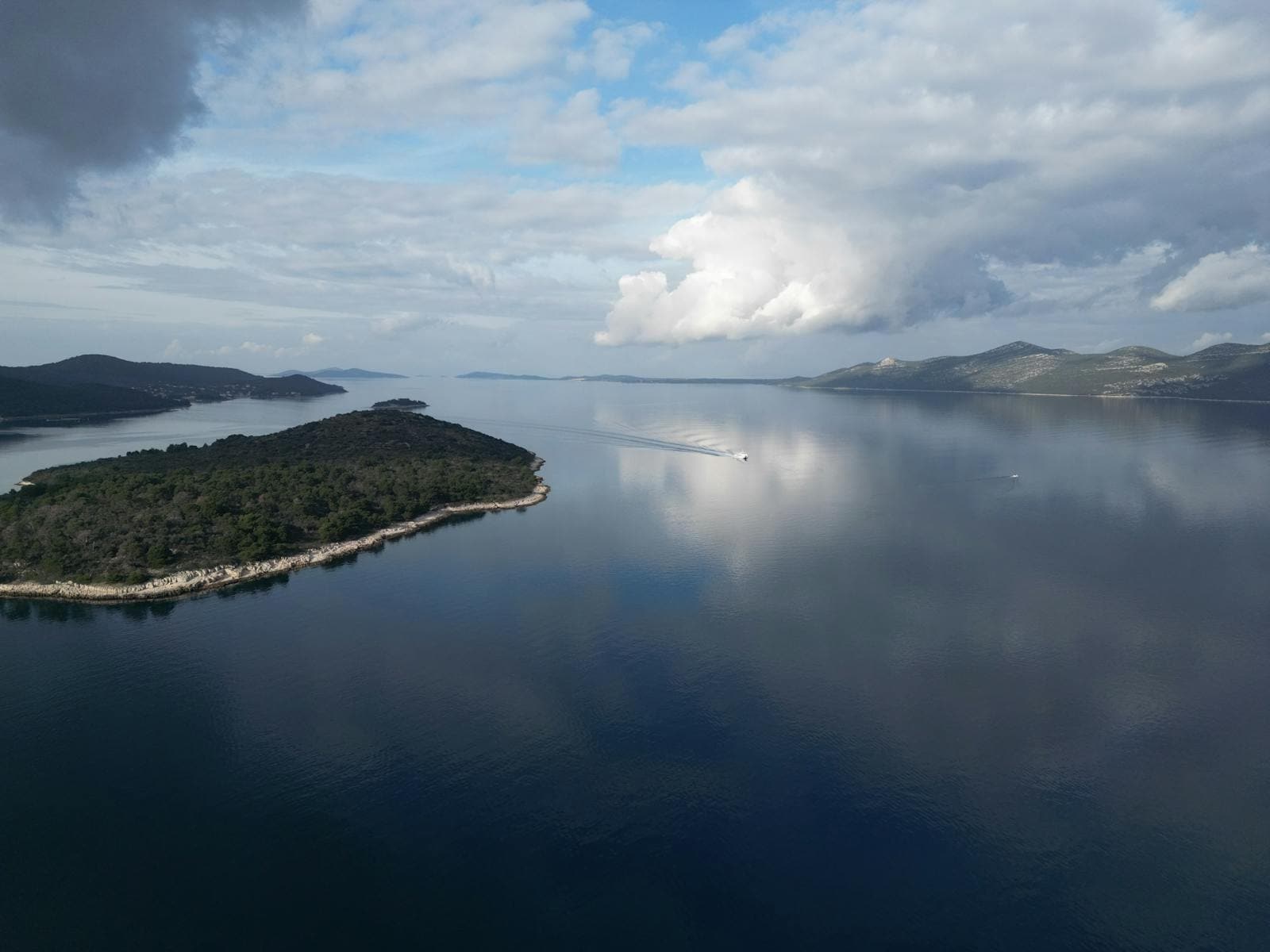
Bodø, Norway: Where the Ferry to Lofoten Departs in 2026

TL;DRThe ferry to the Lofoten Islands sails from Bodø to Moskenes in the south of Lofoten, run by Torghatten Nord. The crossing over the Vestfjorden takes roughly 3 to 3.5 hours, and for the 2026 summer season you’ll need to book a car space in advance — turn up without one and you’re looking at a full day stuck in the stand-by queue. A car costs around 1,000 NOK, while foot passengers travel free on many routes thanks to government subsidies. Aim to arrive at the port 45 to 60 minutes before departure; Bodø airport is only about 2 kilometres from the centre and the harbour.

If you’re planning a trip to northern Norway, your sights are probably set on the dramatic peaks of the famous Lofoten Islands. But the journey to this paradise often begins more quietly, in the port town of Bodø, Norway, which serves as the main transport hub and gateway to the islands.

Bodø might not seem like a typical romantic destination at first glance, but don’t be fooled, it hides enormous charm and fascinating natural phenomena. This is home to the strongest tidal current in the world, and majestic white-tailed eagles will be circling overhead.

In this article we’ll cover all the practical information about the Bodø–Moskenes ferry and show you how to fit the town into your itinerary. I’ll also throw in exactly 6 tips on what to see and do in Bodø, so it’s not just a boring waiting room for the boat. ☺️

TL;DR

  • Main hub: Bodø is the best starting point for the trip to Lofoten; the ferry to the port of Moskenes takes roughly 3 to 3.5 hours from here.
  • Biggest draw: Just half an hour’s drive from the town you’ll find Saltstraumen, which is the strongest tidal whirlpool on the planet.
  • Culture and art: In 2024 Bodø was the European Capital of Culture, which is reflected in a huge amount of stunning street art.
  • When to go: For the midnight sun and stable weather, the ideal time is the turn of June and July, while the winter months are best for the northern lights.
  • Ferry booking: In the 2026 summer season it is absolutely essential to book the car ferry in advance, otherwise you risk a full day of waiting at the port.
  • Views: If you have time before the boat departs, head up Keiservarden mountain, from where you can see the entire coastline and the approaching ferries.

When to Visit Bodø

Choosing the right time to visit northern Norway depends entirely on what you want to experience. The town sits just above the Arctic Circle, which gives it very specific light conditions that will shape your itinerary more than anything else. If hiking is your goal and you’re longing to experience the famous midnight sun, plan your trip for early June through to mid-July. During this period the sun officially never dips below the horizon, and you can enjoy endless days, a huge advantage for flexible travel and even midnight excursions.

The winter months, on the other hand, tempt you with a completely different atmosphere, above all the magical northern lights (Aurora Borealis). From September to April the sky turns green on clear nights, but you’ll have to reckon with very short days. In December and January there’s also the polar night, when the sun doesn’t show up at all and the town is wrapped in deep blue twilight. Although Bodø is much warmer than other places at the same latitude thanks to the strong influence of the Gulf Stream, with summer temperatures climbing to a pleasant 15 degrees, the strong ocean wind drastically lowers the feels-like temperature even in August. This is also why the weather in Bodø, Norway, varies so much from day to day.

Spring and autumn are seasons of rapid changes and frequent rain showers that can complicate your plans a little. While in May nature is only just waking up and there’s still plenty of snow on the mountain peaks, September offers gorgeous autumn colours and far fewer tourists. That means emptier ferries, more peace on the roads, and much friendlier prices for car rentals and accommodation, which is bursting at the seams in summer.

💡 Tip: Whatever season you set off in, always pack a quality waterproof jacket and a windproof layer. The weather on the Norwegian coast can change literally within minutes, and bright sunshine can be replaced without warning by a sudden horizontal downpour, in which an umbrella will be utterly useless.

Where to Stay in Bodø: Best Hotels

💡 Accommodation and experience tip: We prefer to look for places to stay on Booking.com, which usually has the best cancellation terms. Tickets, tours and activities are then worth comparing and buying through GetYourGuide.

Since the town is the main transit hub for the vast majority of tourists, the choice of accommodation is fairly wide and varied. In the main summer season (June to August), though, the best rooms disappear incredibly fast, so don’t leave your booking until the last minute. Strategically, it’s best to look for hotels in the immediate vicinity of the glass terminal or in the town centre (Sentrum), from where you can comfortably walk to the ferry, the airport and the main cafés.

Prices per night for a standard double room in 2026 average around 1,800 to 3,000 NOK (roughly £130 to £215), and in the winter months they can drop to half that. Booking through popular portals several months in advance can save your tight budget a great deal, especially if you’re after accommodation with a generous Norwegian breakfast, which you’ll definitely appreciate at local price levels.

Here are specific hotels that have consistently ranked among the best-rated and sit in ideal spots for onward travel:

  • Scandic Havet: This iconic hotel is the tallest building in all of northern Norway and offers absolutely fantastic views of the ocean and the surrounding mountains. The rooms are modern, spacious, and from the top floor you get a lovely view of the arriving ferries. At the renowned lavish breakfast you’ll also find plenty of great vegetarian and vegan options, including fresh pastries, local cheeses and excellent porridges.
  • Radisson Blu Hotel Bodø: A great choice located right by the port, which you’ll appreciate especially when you have an early morning ferry to Lofoten and don’t want to move around with all your luggage. The hotel has very comfortable beds, excellent coffee, and just around the corner you’ll find plenty of interesting street art.
  • Smarthotel Bodø: If you’re looking for a more affordable yet still very clean and modern option, this hotel will be an ideal choice for your budget. The rooms are smaller and efficiently furnished in a minimalist Nordic style, but the location right in the heart of the town makes it a perfect base for exploring the surroundings before your next departure.

6 Tips on Things to Do in Bodø, Norway

Let’s look at how to get the most out of a visit to this windy Nordic town. Whether you’re spending just one free afternoon before boarding or you have two whole days to explore, Bodø will surprise you with its wild nature and rich cultural life.

I’ll show you how to handle the tricky ferry logistics, where to head for the best view of the town, and how to safely watch the staggering phenomenon of the tidal whirlpools.

1. The Bodø–Moskenes Ferry: The Heart of the Journey

Most travellers arrive in Bodø for one logical reason: boarding the massive ferry heading to Lofoten. This backbone route is reliably operated by Torghatten Nord, and the crossing itself across the wide and often rough Vestfjorden to the town of Moskenes takes roughly 3 to 3.5 hours. If you suffer from seasickness, I recommend taking medication or ginger sweets beforehand, because the open sea here can be unpredictable and the waves sometimes reach impressive heights.

For the summer season there’s one absolutely crucial rule: you must book a car space well in advance. Vehicle tickets can be bought online on the operator’s website (the price for a car is around 1,000 NOK, roughly £72), and without them you really do risk not fitting on board and spending the whole day bouncing around in the so-called stand-by queue. Even with a valid reservation, operators will ask you to arrive at the port at least 45 to 60 minutes before departure, otherwise your spot will go to someone else.

If you’re travelling with just a backpack and no car, the situation is far friendlier and cheaper. Foot passengers board more smoothly, and in recent years the Norwegian government has even made foot passage on selected ferries completely free. During the crossing, definitely don’t stay cooped up inside the café the whole time, because the view of the approaching jagged peaks of Lofoten from the outer deck is an experience you won’t forget in a hurry, and one that’s guaranteed to fill up your phone’s memory.

2. Saltstraumen: The Strongest Tidal Current in the World

Just about 33 kilometres southeast of central Bodø lies a strait that hides one of the greatest natural wonders in all of Norway. Saltstraumen is officially the strongest tidal current on the planet, where every six hours an incredible 400 million cubic metres of water force their way through a channel just 150 metres wide. The water here reaches speeds of up to 40 km/h, creating enormous whirlpools (maelstroms) that can be up to 10 metres in diameter and several metres deep.

To get the most out of this dramatic phenomenon, timing your visit is absolutely key. The strength of the whirlpools depends on the phase of the moon and the tide, so before you leave town, always check the so-called tide tables (ideally on the Norwegian BarentsWatch portal) for the day. The biggest spectacle happens exactly when the current is at its absolute peak, which occurs around four times in 24 hours, and crowds of photographers always gather around the strait.

You can admire the strait completely free from the shore or from the high road bridge that elegantly spans it and offers a fantastic bird’s-eye view. If you don’t have a car, local bus number 300 runs here regularly from the central terminal (the journey takes about 40 minutes and a ticket costs around 50 NOK, roughly £3.50). 💡 Tip: Right by the car park you’ll find a small visitor centre where you can warm up with a cup of tea after the windy show and buy a few small souvenirs.

lukas a lucka
Lukáš and Lucie recommend
Where to stay in Bodø
4 accommodations — hotels and other lodging options

3. Hiking up Mount Keiservarden

If you have a free afternoon in Bodø and the moody Arctic weather is on your side, you definitely shouldn’t miss the hike up Mount Keiservarden. This popular local hill, 366 metres above sea level, rises right above the town and offers absolutely unbeatable panoramic views of the scattered islands, the endless ocean, and, on a clear day, even the distant wall of the Lofoten mountains. Incidentally, it got its name from the German emperor Wilhelm II, who visited the summit enthusiastically in 1889.

The route to the top isn’t extremely technically demanding and can be managed even by occasional hikers in decent trainers. The whole loop is roughly 4.5 kilometres and the climb takes a little over an hour, with the trailhead at the paid Turisthytta car park, about 3 kilometres from the centre. The most popular and comfortable route follows the so-called Sherpa steps (Sherpatrappa), built from massive stone blocks by Nepalese Sherpas to create a comfortable path that protects the fragile surrounding nature from erosion by thousands of boots.

Keiservarden is one of the locals’ favourite spots for watching the midnight sun. In the summer months you’ll meet dozens of Norwegians who bring a thermos of coffee in their backpacks and enjoy the magical light tinting the sky golden long after midnight. 💡 Tip: At the very summit, by the stone cairn, it often blows very hard, so a warm hat and a quality windbreaker will come in handy even in the heat of July.

4. European Capital of Culture and Street Art

2024 was an absolutely groundbreaking year for Bodø, as it became the first city ever located north of the Arctic Circle to win the prestigious title of European Capital of Culture. This huge event transformed a once rather sleepy and industrial port into a lively artistic hub full of modern galleries and public art, whose strong legacy can still be felt at every turn in the Nordic streets today.

The most striking element of this urban transformation is the ubiquitous and brilliantly executed street art. Largely thanks to the international UpNorth festival, the facades of dull concrete and brick buildings are decorated with huge murals by artists from all over the world, with most concentrated around Sjøgata and Storgata streets. At the information centre by the harbour you can pick up a map and set off on your own walking tour of the most interesting works, which very often reference Nordic mythology or the harsh life of the local people.

While strolling through the modern centre, you’ll definitely come across the architecturally interesting cathedral (Bodø domkirke) and the stunning Stormen library and concert hall. The original town was almost levelled during the Second World War, so today’s development is a showcase of interesting post-war architecture. 💡 Tip: When your feet start to ache from walking, pop into the popular Craig Alibone Pâtisserie, which makes excellent coffee and has fantastic desserts and cheese sandwiches.

5. Watching White-Tailed Eagles (Sea Eagle Safari)

The northern coast of Norway, and especially the rugged area around Bodø and Saltstraumen, proudly boasts the largest concentration of white-tailed eagles in the entire world. The town has even rightfully earned the nickname “the eagle capital.” This majestic bird of prey, with an enormous wingspan reaching an incredible 2.4 metres, is a symbol of the region, and seeing it circle in the wild above the fjords is an experience guaranteed to give you goosebumps.

Although with a bit of luck you’ll spot eagles by chance while walking along the coast, your best chance of a really close encounter is on an organised Sea Eagle Safari. These adrenaline-fuelled trips take place on fast RIB motorboats, and experienced local captains know exactly where these birds nest and what their habits are. The safari often lasts around two hours and is commonly combined with a visit to the Saltstraumen whirlpools. Before the trip you’ll also be given special insulated floating suits and protective goggles, so you definitely won’t be cold.

During the trip, the guides tell you fascinating details from the lives of these stunning Arctic predators. They often manage to lure the eagles close to the boat with a small fish thrown into the water, giving you a once-in-a-lifetime chance to photograph the huge bird as it gracefully plucks its prey straight from the surface. The price for such a trip ranges roughly from 900 to 1,200 NOK per person (about £65 to £85), but the investment in this authentic Nordic experience is absolutely worth it.

6. The Norwegian Aviation Museum (Norsk Luftfartsmuseum)

The weather in the far north is extremely unpredictable, and if you happen to get caught by persistent all-day rain in Bodø, the Norwegian Aviation Museum is an absolutely fantastic backup plan. It’s a huge, modern complex about a twenty-minute walk from the centre, whose building has a surprising giant propeller shape from above, and offers an incredibly detailed look at the rich history of flying in tough Nordic conditions.

The museum is cleverly divided into two main huge halls dedicated to civil aviation and military history. Bodø had enormous strategic importance during the Cold War as a key NATO base, and it was from here that the famous American U-2 spy plane flew before it was dramatically shot down over the Soviet Union in 1960. The exhibitions are very interactive, full of real restored aircraft, and visually superbly done, so you’ll easily and happily spend three hours here.

The biggest hit for all visitors is undoubtedly the chance to try out a realistic flight simulator. You sit down in a detailed cockpit, grab the control stick, and try to land safely on a virtual runway surrounded by digital Norwegian fjords. Admission costs roughly 175 NOK (about £12.50), it’s usually open from 10am to 4pm, and the museum overall is an unexpected technological gem you’d probably never go looking for in a small town above the Arctic Circle.

Where to Go Next from Bodø

As mentioned, for the vast majority of travellers Bodø is a springboard for further adventures. Once you board the ferry and cross the rough sea, a world of steep peaks, red fishing cabins and turquoise beaches opens up before you.

If you’ve already bought your boat tickets and are planning a detailed itinerary, be sure to check out our big guide to Lofoten, where you’ll find a detailed map and tips on the most beautiful beaches and hikes. If you’re still unsure whether to choose the ferry, the plane or driving across the mainland, read our article on how to get to Lofoten, where we compare in detail all the transport options, their prices and how long they take.

Frequently Asked Questions

How long does the ferry crossing from Bodø to Lofoten take?

The actual crossing on the massive ferry from the port in Bodø to the small town of Moskenes in the south of Lofoten takes approximately 3 to 3.5 hours. However, it really depends on the current weather conditions on the open sea and the strength of ocean currents in the Vestfjorden, which can make the journey unpleasantly rough and slightly longer, so it’s a good idea to bring seasickness medication with you.

Do I need to book the ferry in advance?

If you’re traveling with a car or camper van, booking in the summer months is absolutely essential. Tickets with Torghatten Nord often disappear from the online booking system weeks in advance, and without them you risk lengthy all-day waits for a random available spot in the stand-by queue at the port.

How far is the airport from the port in Bodø?

Bodø Airport (BOO) is very unique in that it’s located just about 2 kilometers from the town center and the main ferry port. You can easily walk there at a leisurely pace in 20 to 30 minutes, or if you have heavy luggage you can use the local bus or take a short taxi ride, which literally takes just a few minutes.

When is the best time to visit the Saltstraumen maelstrom?

This gigantic whirlpool has the greatest visual power when the tide changes between high and low tide, which happens approximately four times a day. To find out the exact time, it’s essential to check the tide tables available on Norwegian websites for the specific day of your visit, so you don’t just see a calm water surface.

Is the ferry to Lofoten really free for foot passengers?

Norway currently has a generous system supporting eco-friendly travel, thanks to which foot passengers can board many ferry routes for free, including the route to Moskenes. However, the system and government subsidies can change, so it’s always very wise to verify the current rules just before departure on the carrier’s official website.

Where can I safely park my car for an extended period in Bodø?

If you decide to leave your rental car on the mainland, near the port and close to the airport you’ll find official long-term parking zones. They’re easily paid for through mobile apps and regularly monitored, making it a completely safe and convenient solution for multi-day trips to the islands without unnecessary stress.

What good food can we try in Bodø?

In the city you’ll find plenty of excellent bakeries and cozy modern cafés with a warm atmosphere. I recommend stopping by one of them near the port and getting specialty Norwegian coffee and a freshly baked fluffy cinnamon bun (kanelbolle). If you’re hungrier, in the center you’ll find great bistros offering proper vegetarian pizza or creamy vegetable soups with sourdough bread.

Tips and Tricks for Your Vacation

Don’t Overpay for Flights

Search for flights on Kayak. It’s our favorite search engine because it scans the websites of all airlines and always finds the cheapest connection.

Book Your Accommodation Smartly

The best experiences we’ve had when looking for accommodation (from Alaska to Morocco) are with Booking.com, where hotels, apartments, and entire houses are usually the cheapest and most widely available.

Don’t Forget Travel Insurance

Good travel insurance will protect you against illness, accidents, theft, or flight cancellations. We’ve had a few hospital visits abroad, so we know how important it is to have proper insurance arranged.

Where we insure ourselves: SafetyWing (best for everyone) and TrueTraveller (for extra-long trips).

Why don’t we recommend any Czech insurance company? Because they have too many restrictions. They set limits on the number of days abroad, travel insurance via a credit card often requires you to pay medical expenses only with that card, and they frequently limit the number of returns to the Czech Republic.

Find the Best Experiences

Get Your Guide is a huge online marketplace where you can book guided walks, trips, skip-the-line tickets, tours, and much more. We always find some extra fun there!
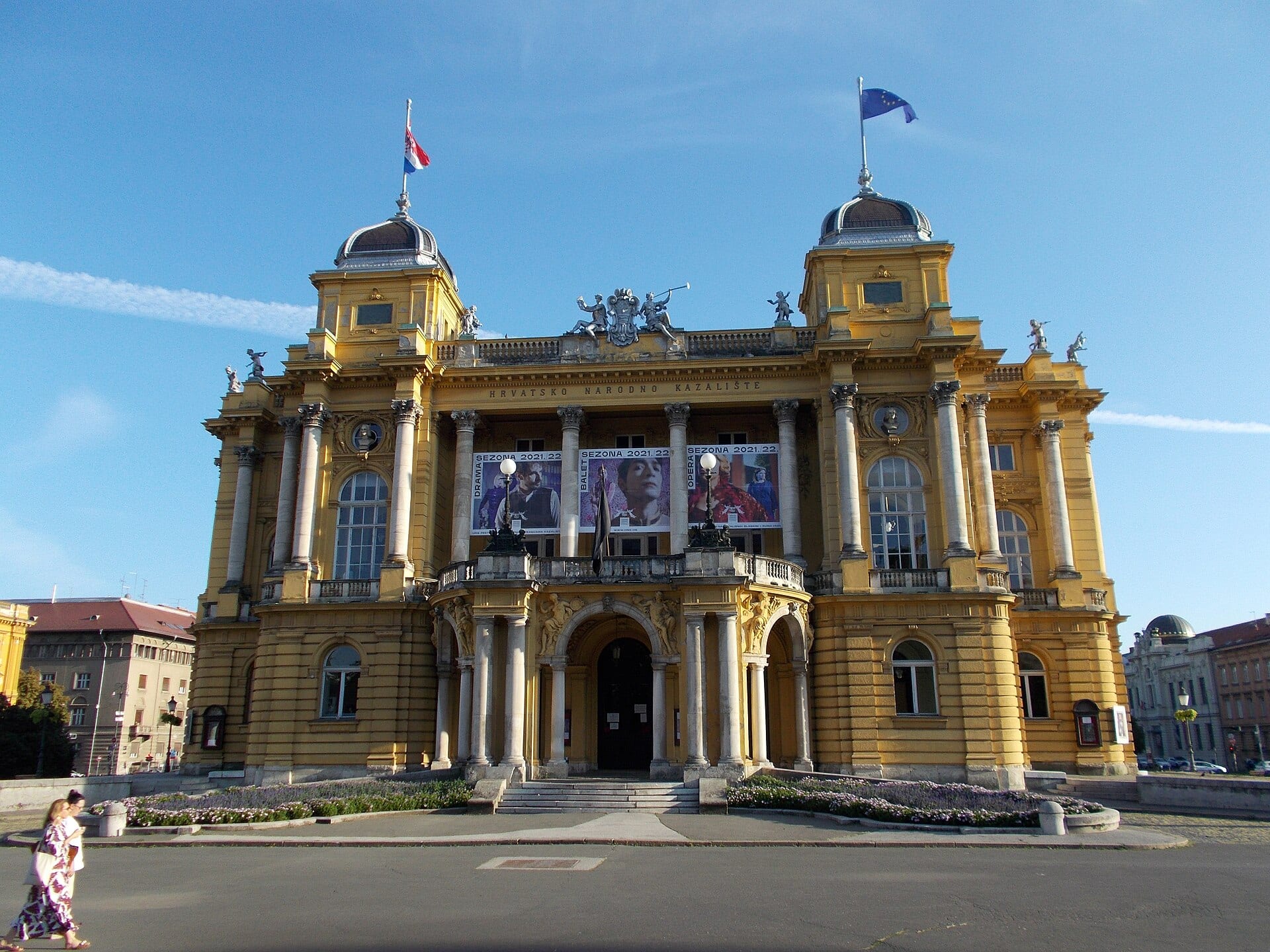
Lofoten in Winter: Northern Lights, Snow & Where to See Them in 2026

TL;DRFebruary and March bring the best conditions for spotting the Northern Lights and plenty of snow on the Lofoten Islands, with longer daylight hours, while December and early January offer a magical, sunless polar night. The most iconic shots of the red fishing huts come from the villages of Hamnøy and Reine — best captured from the bridge near Hamnøy or around Eliassen Rorbuer. For the Northern Lights, head to the north-facing beaches of Haukland, Uttakleiv or Skagsanden, while whales are more likely further north around Skjervøy near Tromsø. Set aside 7 to 10 days for a visit. A traditional rorbu costs 2000 to 3500 NOK a night, and studded winter tyres are a must.

If you’re thinking about a winter trip above the Arctic Circle, I have to warn you about one crucial thing upfront, because the snow-covered Lofoten islands in Norway will completely win you over and you won’t want to leave. ☺️ The combination of steep white peaks, deep blue ocean and red fishing cabins creates a breathtaking backdrop that feels like it belongs to an entirely different world.

While most tourists head here in summer, it’s the frosty months that offer the most magical Arctic atmosphere without the endless crowds and traffic jams. Snow crunching underfoot, the dramatic light of a low-hanging sun and a mug of hot tea after coming back from a freezing outing simply have an enormous charm. It’s the perfect escape into a true Nordic fairytale.

In this guide I’ll show you the best tips on what to see and do in Lofoten in winter, so you can enjoy your trip to the fullest, safely and warmly. We’ll cover the perils of driving on icy roads, hunting for the magical northern lights, and how to dress properly for the unpredictable Arctic weather.

TL;DR

  • Winter season up north: The best conditions for plenty of snow and northern lights viewing are from February to March, when the days are already pleasantly longer.
  • The magic of polar night: In December and early January, the sun never rises above the horizon, creating a unique blue twilight that’s gorgeous for photography.
  • Road safety: Studded winter tires are an absolute must, as roads are very often covered with invisible black ice.
  • Essential clothing layers: You definitely won’t get by up north without quality merino wool, a waterproof jacket, and sturdy ice grips for your shoes.
  • Iconic views: Photographing the traditional red fishing cabins in the snow-covered villages of Hamnøy and Reine is an absolute must for every visitor.
  • Whale watching: To see whales and orcas during the winter months, most trips head a bit further north to the renowned Skjervøy area.

When to Visit Lofoten in Winter

Planning a winter holiday above the Arctic Circle takes a bit of strategic thinking, mainly because of the limited daylight and the whims of nature. The Lofoten weather in winter is, thanks to the warm Gulf Stream, surprisingly milder than inland, so temperatures often hover just around freezing. The strong ocean wind, however, drops the perceived temperature far lower, which you definitely need to factor in when packing.

If you go in December or early January, you’ll experience the polar night, when the sun never climbs above the horizon and the landscape sinks into a magical blue twilight for just a few hours a day. This phenomenon is visually stunning and offers a truly unique atmosphere, but it’s obviously not ideal for long full-day mountain hikes. During this period you’ll mostly enjoy the silence, the night sky and the cosy atmosphere inside heated cabins.

Personally, for a more active holiday I’d recommend planning your trip for February or March, which I think are absolutely ideal months for a winter visit. The days lengthen quickly, the snow cover is usually at its deepest, and you still have a huge chance of catching the evening sky shows. Arctic conditions here change literally from minute to minute, so experiencing bright sun, a sudden blizzard and fog all in one afternoon is completely standard. Your best friend will become the Norwegian app yr.no, which you’ll have to use to plan outings practically by the hour, because long-range forecasts simply don’t work in the north.

You’ll find more detail about individual months and light conditions in our article on when to visit Lofoten. For a proper exploration of the winter islands, set aside at least seven to ten days so you have enough of a buffer in case of bad weather. Flexibility and a willingness to adapt your plans to the current situation are absolutely essential for winter travel, and will save you a lot of disappointment.

What to Wear and Pack for the Arctic Winter

The key to survival and all-day comfort is proper layering, because constantly moving from a warm car into the freezing wind at the viewpoints really takes a toll on your body. For your base layer, go for quality merino wool, which keeps you reliably warm even if you sweat a little while walking. Over that goes a thicker fleece or wool insulating layer, and on top a quality waterproof jacket with a membrane tough enough to handle the sharp ocean wind.

Don’t forget warm winter boots with sturdy soles that comfortably fit thick wool socks without rubbing. A crucial and often overlooked piece of kit is a good pair of hiking ice grips, because the icy pavements in the villages and the trodden paths to viewpoints are as slippery as the smoothest ice rink. Pack two pairs of gloves too, with one thinner pair for comfortably operating your camera or touchscreen phone in the biting cold.

Where to Stay in Lofoten

💡 Tip for accommodation and experiences: We like to find our accommodation on Booking.com, which usually has the best cancellation terms. It then pays to compare and buy tickets, tours and activities through GetYourGuide.

For the most authentic Norway experience, I wholeheartedly recommend renting a traditional fishing cabin, known locally as a rorbu. These deep-red or ochre-yellow houses stand on stilts directly above the sea and offer fantastic views of the surrounding snow-covered peaks. In winter they’re of course fully insulated, fitted with modern heating, and often have their own little kitchen — which you’ll appreciate enormously, since many restaurants have limited opening hours outside the summer season.

One of the absolute most beautiful places to stay is Eliassen Rorbuer in the iconic village of Hamnøy, one of the most photographed spots in the whole north. From the windows of these cabins you look straight out at the majestic Festvågtind mountain, and you can often comfortably watch the northern lights right from the warmth of your living room with a glass of wine in hand. Prices for classic fishing cabins in this area range roughly from 2,000 to 3,500 NOK per night (around £150 to £270), so it definitely pays to travel as a group and split the cost smartly. In the winter months demand among photographers is huge, so really don’t leave your Booking reservation until the last minute.

Another great choice is the historic complex Reine Rorbuer, located in the neighbouring town of Reine with its breathtaking backdrop of sharp granite peaks jutting out of the icy sea. For lovers of more modern Scandinavian design blended with tradition, I’d recommend the wonderful Hattvika Lodge in the Ballstad area, which offers slightly more luxurious facilities. If you want to save on food, the ideal strategy is to stock up at supermarkets like Rema 1000 or Extra and cook a hearty plate of pasta or local cheeses with bread in the warmth of your cabin in the evening.

7 Things to See and Do in Lofoten in Winter

Winter Lofoten offers a huge range of unforgettable experiences, from mild adrenaline on snowmobiles to quiet contemplation by frozen beaches. Let’s take a look at the 7 best winter activities that definitely shouldn’t be missing from your itinerary for the perfect holiday. For each one I’ve also got a few practical tips on how to enjoy it all in complete safety and without unnecessary stress.

1. Hunting the Magical Northern Lights

Seeing the dancing green northern lights with your own eyes is, for most travellers, the main and most important reason to visit northern Scandinavia in winter. Lofoten lies directly beneath the auroral oval, so the statistical chance of spotting them here from late September to early April is genuinely enormous. You only need three basic things: enough darkness, a clear sky without clouds, and strong solar activity.

The best spots for night photography are north-facing beaches such as the famous Haukland, Uttakleiv and Skagsanden, where no tall mountain ranges block your view. Wrap yourself in your warmest blankets, brew a hot tea into a thermos, and arm yourself with a huge dose of patience, because nature takes its time and waiting in the cold can last hours. You can stand on the beach for a long while and see absolutely nothing, then suddenly the whole sky unexpectedly explodes with colour, which instantly makes up for all the cold.

💡 Tip: For tracking cloud cover and the likelihood of the phenomenon I recommend downloading the Norwegian app yr.no along with specialised aurora radars on your phone. If you want a better chance and want to learn more about photographing it, definitely read our article on how to chase the northern lights in Lofoten.

2. Watching Orcas and Humpbacks (Skjervøy)

The winter months bring vast shoals of herring into the deep Norwegian fjords, and following them are hundreds of majestic whales in search of food. You’ll spot whales in the south of Lofoten only rarely, but plenty of travellers combine this trip with an excursion a little further north, where the fish have moved in recent years. The Skjervøy area near the town of Tromsø is world-famous for winter sightings of intelligent orcas and enormous humpback whales, drawing enthusiasts from across the globe.

Whale safaris usually take place either aboard larger, more stable boats or on fast, adrenaline-fuelled RIB boats, from which the animals are literally within arm’s reach. The operators always lend you thick insulated, waterproof overalls, because the wind on the open sea is genuinely icy in winter and cuts right to the bone. Seeing a humpback’s spout up close, hearing its powerful breath and watching its huge tail fin disappear into the dark waters is an absolutely breathtaking experience.

💡 Tip: These popular tours tend to sell out very quickly in peak winter season, so book them several months in advance. Expect a price of around 1,500 to 2,500 NOK (roughly £115 to £190) per person, which isn’t cheap, but the investment in this unique natural spectacle is one hundred percent worth it.

lukas a lucka
Lukáš and Lucie recommend
Where to stay in Lofoten
4 accommodations — wellness hotels and other lodging options

3. Photographing the Snowy Villages of Hamnøy and Reine

If you’ve ever seen a striking photo from winter Lofoten, ninety percent of the time it was a shot of yellow and red cabins against a backdrop of rugged, snow-covered mountains. The villages of Hamnøy and Reine are literally a paradise for photographers, and under a thick blanket of winter snow they look absolutely fairytale-like. The most iconic view of Hamnøy opens up right from the small road bridge, where even in the bitterest cold you’ll meet dozens of enthusiastic travellers with tripods waiting for the perfect light.

In nearby Reine I’d recommend parking on the edge of the village and walking the narrow, snow-covered lanes on foot, because the bay looks completely different from every new angle and offers fresh compositions. The light conditions here are beautifully soft all day long in winter, since the sun rises only very low above the horizon and creates no harsh, unpleasant shadows. Once you’re completely frozen, definitely stop by the cosy local café Bringen Kaffebar for a great coffee and a freshly baked cinnamon roll, which will warm you up wonderfully after your walk.

💡 Tip: Camera and phone batteries drain incredibly fast in the Arctic cold. Keep spare batteries and power banks tucked in your chest pocket close to your body, so they stay warm and don’t die before you’ve even managed to capture the most beautiful scenery.

4. A Winter Road Trip and Safe Driving

Renting a car is absolutely essential for thoroughly exploring the archipelago, but winter driving in Norway demands maximum respect for nature and a big dose of caution. The main artery, the E10, is regularly cleared by snowploughs, but it’s very often covered with packed snow or dangerous black ice that you can’t see at all at first glance. Fortunately, rental companies automatically supply cars fitted with special studded winter tyres (piggdekk in Norwegian), which grip the ice phenomenally well and give you a sense of security. Remember to drive on the right here, which takes a little getting used to if you’re coming from the UK.

Even with top-notch winter tyres you have to significantly reduce your speed and keep huge distances from other vehicles, because the braking distance is unforgiving and animals can dart into the road at any time. The weather can change within ten minutes from a clear sky to total whiteout, when you can’t see the car in front of you even five metres away and the road blends into the surrounding landscape. An ordinary small car will cost you around 7,000 to 11,000 NOK per week (roughly £530 to £840), so it pays to compare rental offers well in advance.

💡 Tip: Never let the tank run down to empty — top up regularly whenever you pass an open petrol station. In case of an unexpected road closure due to avalanche danger, you’ll need enough fuel to run the heating during a wait of several hours in a queue, which is nothing unusual in winter.

5. Dog Sledding

Few outdoor activities connect you with the winter Arctic landscape as powerfully and naturally as traditional dog sledding. Most of the large Alaskan husky farms are located further north in Tromsø or in Sweden, but even on Lofoten and in the neighbouring Vesterålen area you’ll find smaller, very friendly local operators. The dogs are extremely sociable, love human attention, and running through the snowy landscape is demonstrably their greatest joy in life.

During the trip you can usually choose whether to simply be carried comfortably in the sled wrapped in warm blankets, or to try driving the team yourself. An experienced guide will explain in detail before the ride how to shift your weight in the bends and how to use both brakes correctly when going downhill. It’s quite physically demanding and you’ll occasionally have to help the dogs by pushing off, but the feeling of the sled gliding silently across the snow is worth every drop of sweat — and it usually costs 1,800 to 2,000 NOK per person (around £140 to £155).

💡 Tip: Dog sledding trips are surprisingly ideal even on days when it’s overcast and lightly snowing. The experience of speeding through snowy forests and plains isn’t spoiled at all — quite the opposite, it adds drama to the whole Nordic atmosphere and makes you feel like a real polar explorer.

6. Adrenaline on Snowmobiles

For lovers of a bit more speed and powerful engines, a snowmobile trip is an absolute must that will reliably get your blood pumping. On Lofoten itself, free riding off marked trails is strictly forbidden to protect the fragile environment, but organised guided trips will take you to the most beautiful permitted spots. Tours often head high into the mountains and to frozen lakes that you’d never reach on foot through the deep powder.

To drive a snowmobile you only need a valid car driving licence, and before the ride itself you’ll go through a short safety briefing that anyone can manage. The guide will teach you how to control the throttle, switch on the handlebar heating, and explain how to react if you get stuck in deep snow. The views from snowy mountain saddles out over the endless white wilderness far below are simply phenomenal, perfectly offsetting the loud engine noise.

💡 Tip: The snowmobile gear lent to you at the base tends to be very bulky, and while the heavy helmet protects you from the icy wind, it often lets a draught through at the neck. Even so, don’t forget to wear a quality ski balaclava underneath, because at higher speeds the freezing wind really gets in everywhere and you’d chill quickly.

7. Visiting Fishing Museums and the Drying Cod (Skrei)

From February to April, an annual event takes place in northern Norway that has shaped the local culture and livelihood for centuries. Huge shoals of Arctic cod, known locally as skrei, swim to the coast to spawn here in the warmer waters of the Gulf Stream. The whole islands instantly come alive with fishing activity, boats head out onto the rough sea, and everywhere you look there are enormous wooden racks full of processed catch, which have become a symbol of the region.

This traditional method of preserving fish using nothing but the freezing Arctic wind and salt is an absolutely unique sight that you’ll come across in literally every village. If you’re interested in maritime history and architecture, definitely visit the Lofoten Museum in Kabelvåg or the fantastic Norwegian Fishing Village Museum right in the town of Å at the very south of the archipelago. After the tour I’d recommend popping into a local café for a hot vegetarian soup with crusty bread, because finding an open restaurant can be quite a challenge in winter.

💡 Tip: Thanks to the wind, you’ll often smell the wooden fish racks from far away, and they’re an inseparable part of the visual character of the winter and spring months. It’s admittedly a very distinctive, strong smell that takes a little getting used to, but it belongs to local life just as inseparably as the dramatic fjords and the northern lights.

Where to Go Next from Lofoten

The Lofoten islands in Norway are often just one of many stops on a broader exploration of rugged northern Scandinavia. If you have more time and a rental car, I’d recommend heading to the neighbouring Vesterålen archipelago, which is noticeably quieter and so far less affected by mass tourism. It offers gorgeous sandy beaches, deep fjords and is a great base for year-round whale watching.

Many travellers also like to combine this Arctic trip with a multi-day visit to the largest northern city of Tromsø, nicknamed the Paris of the North for its lively culture. The drive there takes about eight hours through breathtaking winter scenery you simply won’t get enough of. If you want to get an even better picture of the whole region, definitely read our detailed complete Lofoten guide, packed with more practical information. You’ll surely also be interested in our article on how to get to Lofoten, where we cover ferries, bridges and flights in detail.

Frequently Asked Questions

Is it safe to drive in Lofoten in winter?

Yes, but it requires great caution, smooth driving, and enormous respect for the changing weather. All rental cars are automatically equipped with special studded metal tires (piggdekk), which provide excellent traction on packed snow and black ice. The key is smooth driving without sudden braking, maintaining large distances, and constantly monitoring the weather forecast and current road conditions.

How many hours of daylight can I expect?

In December and early January, the north experiences the polar night period, when there are only a few hours of light per day in the form of magical blue twilight. From late January and throughout February, the days lengthen extremely quickly, and in March you’ll have around ten to twelve hours of beautiful daylight available for your all-day excursions and photography.

Will I see whales in Lofoten in winter?

Directly off the coast of Lofoten itself, the chance of observing whales in winter is unfortunately rather slim. Whales follow herring schools, which in recent years have moved further north to the Skjervøy area near the city of Tromsø. If you want absolute certainty and to experience an unforgettable whale safari, it’s definitely worth taking a several-day trip there.

What temperatures prevail during the winter months?

Thanks to the warm and stabilizing Gulf Stream, Lofoten is far from as freezing as the Swedish or Finnish interior. Average winter temperatures here typically range between minus 2°C and plus 2°C. However, due to the strong and icy ocean wind, the perceived temperature is much lower, so be prepared for even minus 10°C and layer your clothing wisely.

Can I pay by card everywhere or do I need cash?

Norway is currently a virtually cashless society and payment cards are accepted absolutely everywhere, even in the most remote places and small villages. From parking meters at beaches to buying groceries at Rema 1000 supermarkets to paid public toilets. You don’t need to carry cash in Norwegian kroner (NOK) at all.

Are hiking trails normally accessible in winter?

Most of the famous and steep mountain hikes, such as the popular Reinebringen, are extremely dangerous in winter due to avalanches and heavily iced terrain. I recommend ascents to higher elevations only with a certified mountain guide and proper avalanche equipment; otherwise, stick to beautiful and safe walks along frozen beaches and flat valleys.

How far in advance do I need to book accommodation?

Even though the Arctic winter is somewhat quieter than the packed summer, the most beautiful fishermen’s cabins (rorbu) with sea views are often sold out even half a year in advance. Especially dates in February and March are very popular among photographers and northern lights hunters from around the world, so definitely don’t wait until the last minute to book on portals like Booking and secure your accommodation early.

Tips and Tricks for Your Vacation

Don’t Overpay for Flights

Search for flights on Kayak. It’s our favorite search engine because it scans the websites of all airlines and always finds the cheapest connection.

Book Your Accommodation Smartly

The best experiences we’ve had when looking for accommodation (from Alaska to Morocco) are with Booking.com, where hotels, apartments, and entire houses are usually the cheapest and most widely available.

Don’t Forget Travel Insurance

Good travel insurance will protect you against illness, accidents, theft, or flight cancellations. We’ve had a few hospital visits abroad, so we know how important it is to have proper insurance arranged.

Where we insure ourselves: SafetyWing (best for everyone) and TrueTraveller (for extra-long trips).

Why don’t we recommend any Czech insurance company? Because they have too many restrictions. They set limits on the number of days abroad, travel insurance via a credit card often requires you to pay medical expenses only with that card, and they frequently limit the number of returns to the Czech Republic.

Find the Best Experiences

Get Your Guide is a huge online marketplace where you can book guided walks, trips, skip-the-line tickets, tours, and much more. We always find some extra fun there!
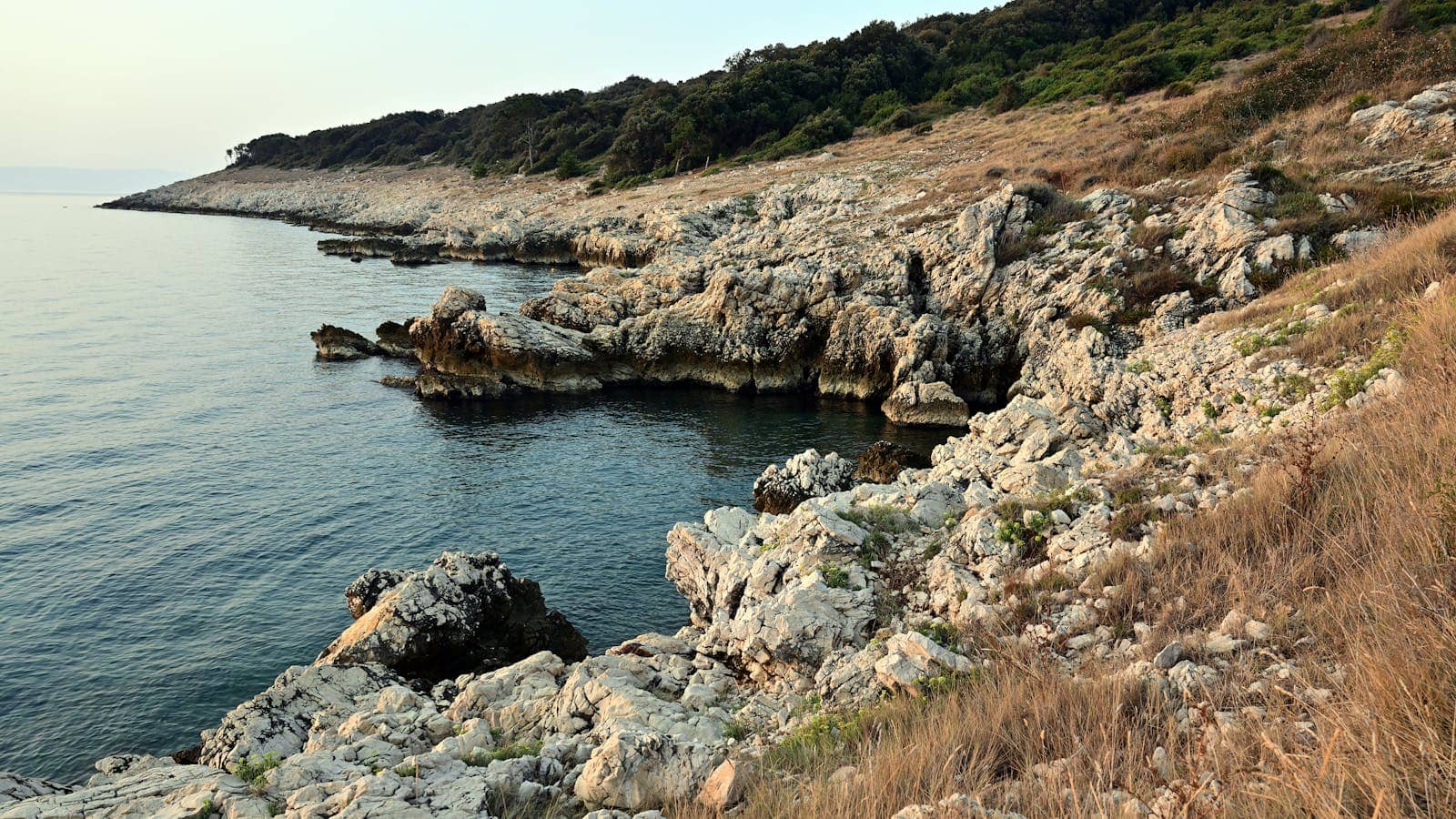
Westfjords, Iceland: 12 Best Things to See and Do

TL;DRThere are 12 essentials for the Westfjords, topped by the Látrabjarg bird cliffs with around 50,000 puffin pairs, the Dynjandi waterfall tumbling down seven cascades over 100 metres, the 10-kilometre red-sand Rauðasandur beach, and the Hellulaug hot pool at a toasty 38°C. The best time to go is summer, mid-June to mid-August, when the mountain roads are actually open — give yourself at least 3 days, ideally 4 to 5. It’s about a 6-hour drive from Reykjavík, or you can take the Baldur ferry from Stykkishólmur to Brjánslækur, which takes 2.5 hours. A 4×4 is well worth it, running 12,000 to 35,000 ISK a day, and you’ll want to base yourself in Ísafjörður or Patreksfjörður, where hotel rates start around $109 a night.

We drove through the Westfjords of Iceland on days 11 to 13 of our big Icelandic road trip, and to this day I look back on it as a downright spectacular adrenaline-fuelled experience (well, spectacular, even if slightly adrenaline-fuelled). I’ll be honest right off the bat: we very nearly got stuck in a blizzard on the gravel mountain roads here, but in the end everything turned out fine and we actually quite enjoyed it. 😅 The landscape is incredibly raw and rugged, so literally every kilometre begs you to stop, and you feel like all you ever do is take photos.

While crowds of tourists circle the famous Ring Road, fewer than 10% of all visitors ever wander up here to the northwest. It’s a huge, jagged peninsula that looks on the map like a hand reaching out towards Greenland, and it represents the truly untamed land of the Vikings that you simply can’t help but fall in love with.

If you’re drawn to the most interesting places in the Westfjords of Iceland, you’re in the right spot. In this article you’ll find 12 tips on what to see and do in the Westfjords region, advice on where to base yourself strategically, the lowdown on road conditions, and the most beautiful spots that make the long haul up here well worth it.

TL;DR

  • Best time to visit: Honestly, I’d recommend summer only (from mid-June to mid-August), because in winter many mountain passes are impassable and closed.
  • Solar eclipse 2026: Heads up — in August 2026 a total solar eclipse will pass directly over this region, so accommodation prices are already sky-high and it will be packed.
  • How much time you need: You’ll need at least 3 days to drive the region, but 4 to 5 days is ideal (it’s at least a 6-hour drive here from Reykjavík).
  • Top highlights: Definitely the fairytale Dynjandi waterfall, the Látrabjarg bird cliffs full of tame puffins, and the hot springs dotted along the coast.
  • Car: Although main roads 60 and 61 are largely paved, thanks to the frequent gravel and mountain stretches we strongly recommend a 4×4.

When to go and how to get there

The Westfjords lie well off the main tourist trails and getting here takes a fair amount of time and planning. You can choose to drive around the deep bays the long way under your own steam, or shorten the journey by ferry, but be prepared for the fact that logistics in this part of Iceland work by slightly different rules than in the more civilised south.

From our own experience, you definitely won’t squeeze this region into a single free afternoon — you need to add at least two to four extra days to your usual itinerary.

Most travellers from the UK fly into Keflavík with airlines such as easyJet, Wizz Air or Icelandair (direct routes run from London, Manchester, Edinburgh and several other UK airports), pick up a hire car in Reykjavík and drive north from there.

By car over mountains and bays

From Reykjavík the drive to the first bays takes roughly three to four hours, but it can easily be seven hours in one go to reach the biggest draws. You’ll follow Route 1 north and then turn onto Route 60, which winds you through stunning but very deep fjords. What looks like five kilometres as the crow flies actually means an hour of careful steering along clifftop edges, because the roads follow every curve of the coast.

In theory an ordinary two-wheel-drive car will do for the main routes, but because of the huge number of broken gravel stretches and steep climbs over mountain saddles, Lukáš and I strongly recommend paying extra for a 4×4, which in summer will cost you roughly 12,000 to 35,000 ISK per day — about €80 to €230.

Driving here demands an enormous amount of attention and constant focus. The speed limit on tarmac is 90 km/h and on gravel 80 km/h, but in reality you should slow right down, because most accidents happen the moment a driver flies off solid tarmac onto loose gravel at full speed and the car skids.

You’ll also regularly come across the Blindhæð sign, which marks a blind crest you simply can’t see over, so you have to keep strictly to the right and ease off the accelerator. You’ll also hit plenty of single-lane bridges, where the simple rule is that whoever reaches the bridge first goes first.

Insurance for your hire car is crucial too — absolutely pay extra for so-called Gravel Protection, because stones flying up from oncoming cars can very easily crack your windscreen, and without cover even a small chip could cost you a small fortune.

New fees and taxes on Iceland’s roads

As of 1 January 2026 a brand-new per-kilometre tax came into force in Iceland, applying to cars and SUVs up to 3.5 tonnes and amounting to 6.95 ISK for every kilometre driven, which works out to roughly €0.05 per kilometre. Car hire companies will charge you this either as a daily flat fee of around 1,390 to 1,550 ISK, or they’ll deduct it at the end of your trip exactly according to the odometer, so be sure to factor it in when planning your trip to the Westfjords.

As a small consolation, though, the state scrapped the original fuel tax, so a litre of petrol dropped pleasantly by about 80 ISK, and in the summer 2026 season you’ll pay around 305 ISK per litre, which is about €2.10. You can pay contactlessly with a card or phone absolutely everywhere in Iceland, but remember one crucial thing: for payments at self-service petrol pumps and in parking apps you’ll need to know the numerical PIN of your physical card.

The Baldur ferry as a brilliant shortcut

If you want to save yourself hundreds of kilometres behind the wheel and enjoy great views of the ocean and thousands of tiny islets, you can take the Baldur ferry, which sails from the town of Stykkishólmur on the Snæfellsnes peninsula, crosses Breiðafjörður bay and ends at Brjánslækur harbour in the south of the Westfjords. The crossing takes around two and a half hours, and in 2026 you’ll pay 7,700 ISK (about €52) for an adult passenger, exactly the same again for an ordinary car up to five metres long, while children under twelve travel completely free.

In the summer season from early June to the end of August the ferry runs twice a day and your car sails with you, but be sure to book your tickets well in advance on the official Seatours website, because in winter the frequency drops to one crossing a day (except Saturdays) and spaces vanish quickly.

Why not to come in winter and what awaits you in summer

Lukáš and I visited the Westfjords at the turn of September and October, and even then we hit a proper snowstorm that scared us quite a bit, our teeth chattering as we worried whether we’d make it down at all. Bear in mind that most mountain roads here aren’t maintained at all from October to May, the roads to the main sights lie under metres of snow, and the tourist infrastructure — including much of the accommodation — essentially shuts down, so plan your visit strictly for the summer months.

In summer, on the other hand, you’ll enjoy the fascinating midnight sun — at the end of June, for example, daylight lasts an incredible 21 hours and the sun barely sets, so you can explore the empty fjords at two in the morning without passing a single car.

Just be sure to pack an eye mask, otherwise you simply won’t get any sleep in those light-flooded rooms. And if you’re longing for the Northern Lights, you’ll need to come right at the very end of August or in September, when the nights are properly dark again and there’s a real chance of catching this celestial show.

Where to stay + how much it costs

The choice of accommodation is very limited in this remote part of Iceland, and given the enormous distances you have to think carefully about where you’ll lay your head after a long day. On our trip we didn’t camp at all, because we wanted warmth and our own little kitchen in the evening after a full day freezing outdoors, so we slept exclusively in cosy guesthouses, hostels and apartments along our route. You can easily check prices and availability for the whole area on Booking.com.

If you’re travelling in a campervan or planning to pitch a tent, the popular Camping Card 2026 is well worth getting — it costs around 26,000 ISK (about €175) and is valid for two adults and up to four children at dozens of campsites across the island. Just don’t forget that there’s now an accommodation tax everywhere in Iceland, amounting to 400 ISK per night at a campsite and 800 ISK for a standard hotel room.

💡 Specific accommodation tips (check prices and availability via Booking and book early — in season and around the 2026 eclipse they sell out months ahead):

A standard hotel room in peak summer season averages around $250 (roughly 35,000 ISK / €235) per night, while the most basic guesthouses go for from about €110 (17,000 ISK). The widest choice — and the best supermarkets — can be found in the largest town, Ísafjörður, while for comfortably exploring the southern part the absolutely ideal base is Patreksfjörður, home for example to our favourite Fosshotel Westfjords with prices from $109 a night, or you can look for accommodation in smaller villages such as Þingeyri and Reykhólar.

Be extremely careful if you’re planning a trip in August 2026, when a total solar eclipse will pass directly over the Westfjords on Wednesday 12 August — an astronomical event Iceland hasn’t witnessed since 1954. Because of this spectacular occasion, most accommodation in the band of totality is already hopelessly sold out, and ordinary guesthouses in Ísafjörður are charging utterly absurd rates climbing as high as $700 a night. So if you don’t yet have a reservation and don’t fancy sleeping in your car, it’s better to give August a wide berth this year and leave the space to the astronomers.

South and west: 4 breathtaking spots and what to do there

As soon as you drop off the main tarmac onto really coarse gravel, you find yourself in a world ruled only by the roaring ocean, steep black cliffs and incredible calm. The southern tip of the peninsula hides the very most beautiful natural extremes, from million-strong bird colonies to giant waterfalls that simply take your breath away and keep you lingering longer than you’d planned.

1. Látrabjarg and the tame puffins

Látrabjarg is one of the westernmost points in all of Europe and is the largest bird cliff on the continent, stretching an incredible fourteen kilometres and dropping straight into the dark ocean from a staggering height of up to 440 metres. It’s a place straight out of another world, reached by a rough gravel road where you’ll certainly appreciate a 4×4, though in summer you could manage it with care in an ordinary car too.

Access to the cliffs is completely free for all visitors, but please be extremely careful near the edges, which are often heavily undercut and at risk of unexpectedly collapsing into the sea. Standing heroically on the brink with a camera to your eye here is literally a one-way ticket to a flight into the icy waves, so there’s a strict rule: you approach the edge only by crawling on your belly.

From May to mid-August these magnificent cliffs turn into a huge, noisy and rather distinctively smelling bird metropolis, dominated by beautifully tame puffins, of which around fifty thousand pairs nest here. Unlike in the south of Iceland, the puffins here have no natural land predators, so they’re incredibly trusting and you can comfortably photograph them from just two metres away without spooking them in the slightest.

The absolute peak of the nesting season runs from late June to early August, when the sky is literally full of birds. To check current safety on the access roads and warnings about strong winds, I’d recommend always consulting the official Safetravel.is website.

2. The red beach of Rauðasandur

While the rest of Iceland is famous for its established jet-black volcanic beaches, led by Reynisfjara in the south, the vast bay of Rauðasandur — which translates as “Red Sand” — plays in every gorgeous shade of red, gold and brilliant orange. This incredible beach stretches an impressive ten kilometres, and the fine sand here is constantly changing depending on how the afternoon sun is shining and what stage the tide is at, so from every angle the place looks just a little different.

The drive down to the beach is quite the adrenaline rush in itself, because you descend a very steep and twisty gravel road full of hairpins without any crash barriers, which calls for a cool head and a steady hand on the wheel. But once you reach the bottom safely, your huge reward is total isolation from the outside world — there are no crowds of tourists at all, and with a little luck you can watch large colonies of seals through your binoculars, lounging contentedly on the golden sand and resting after a hunt.

3. Hot pools along the coast

Iceland’s hot springs and natural hot pots are a chapter all of their own, and on the twelfth day of our road trip we started things off in absolute fairytale fashion by heading to the cascade of thermal pools at Pollurin near the village of Tálknafjörður. It’s a beautiful, hidden spot with four small basins where the hot water sits at a very pleasant 36 to 45 degrees Celsius. The best thing about these hot pots is that they offer a perfect view straight onto the surface of the fjord, and there’s even a simple outdoor changing area — which counts for more than gold in the harsh island chill.

Besides Pollurin, the Westfjords hide a whole host of other hot pools you can jump into, mostly completely free or for a small contribution to a wooden honesty box. One wonderful find, for instance, is the nearby Reykjafjarðarlaug pool in Arnarfjörður, where you can soak surrounded by raw nature.

If you don’t mind a bit of grit and a freezing wind while you undress, be sure to make the detour to the Hörgshlíðarlaug hot pot in Mjóifjörður too, where the turquoise water is around 40 degrees and the spring itself sits on a local farmer’s land. The polite thing is to quickly ask whether you can bathe, but they usually have absolutely no problem with it.

4. Dynjandi, the fairytale cascading waterfall

This is the real, undisputed jewel of the entire western region, and some seasoned travellers even claim it’s the most beautiful waterfall in all of Iceland, putting even the most famous ones in the south to shame. Dynjandi, which you’ll often find on maps under the older name Fjallfoss, doesn’t overwhelm visitors with a huge volume of water but with its utterly fascinating shape. It resembles an enormous bridal veil — thirty metres wide at the top, then spreading across the steep cliff in a total of seven cascades over a height of a hundred metres, and widening at the bottom to double that, around sixty metres.

Lukáš and I spent a good hour and a half here, because we simply couldn’t get enough of all that natural beauty. The drive does eat up a lot of time — it’s some five to six hours from Reykjavík — but the car park itself is completely free, and a well-maintained, roughly fifteen-minute trail leads up alongside the cliff, passing several smaller waterfalls along the way and rewarding you with a breathtaking view down over Arnarfjörður bay.

Always keep in mind, though, that the mountain road leading to the waterfall closes completely in winter and isn’t maintained, so you can comfortably admire this watery beauty only in a short window from June to the end of September.

💡 Tip: Tickets and organised tours (around Iceland and beyond) are well worth booking in advance online via GetYourGuide — they fill up fast in season.

The north and Ísafjörður: 5 tips for the rugged north

While the south of the region is safely defined by long beaches and bird cliffs plunging into the waves, the northern part forms a very confusing labyrinth of deep, incredibly steep fjords that cut into the mainland like a very sharp axe. This is home to the largest town for miles around, from which all the important boats set sail, and it’s also the gateway to the wildest reserve you can realistically experience in Europe today.

5. Ísafjörður and its old wooden houses

The little town of Ísafjörður is home to just over two and a half thousand permanent residents, but by the standards of the deserted Westfjords it’s a genuine metropolis with everything you could need. The town sits in fairytale fashion on a narrow sandy spit right in the middle of the icy Skutulsfjörður fjord, with dramatic, dark, steep mountains looming above it — mountains that constantly threaten unexpected avalanches through the long winters, lending the place a distinctly dramatic edge.

We stayed here two nights after a demanding day full of endless drives, and an evening stroll among the beautifully preserved old wooden houses from the 18th and 19th centuries in the quiet historic quarter of Neðstikaupstaður had an enormous, almost romantic charm.

If you’re interested in the local history in more detail and the hard, dangerous life of the fishermen of old, don’t miss a visit to the captivating Westfjords Heritage Museum, beautifully housed in one of those lovely buildings right by the water. And if you head here around Easter, you’ll catch the huge Aldrei fór ég suður music festival, which the entire north of Iceland lives and breathes.

On a practical note, this town is also the absolute last place where you can reliably stock up on big supplies of food at the renowned Bónus or Krónan supermarkets before you disappear into the complete wilderness.

lukas a lucka
Lukáš and Lucie recommend
Where to stay in the Westfjords
4 accommodations — hotels and other lodging options

6. The dangerous but stunning Route 60 over the mountains

The Westfjords will really put you through your paces behind the wheel, because many of the routes here simply cross high, unprotected mountain saddles with very unstable, rapidly changing weather. During our earlier move north, an aggressive snow blizzard caught us at higher altitudes so violently that we nearly got stuck, teeth chattering as we wondered whether we’d even make it back down — and that was with a genuinely sturdy, safe 4×4 fitted with quality tyres.

Today many of the very most dangerous mountain passes on main Route 60 have been replaced by brand-new modern tunnels, which have significantly shortened the route and, thankfully, made it safer. But even so, you simply have to stay alert at all times and look far ahead. The Icelandic wind is so treacherous that, if you open the door carelessly, it can easily rip your car door clean off its hinges — which, by the way, standard insurance never covers — so you must always hold the door firmly with both hands.

7. Vigur island with its mill and bird post office

If you fancy a little genuine island romance for a while and want a break from driving, set off from the main harbour in Ísafjörður on a roughly thirty-minute, rolling boat ride to the tiny island of Vigur. It’s an incredibly photogenic and peaceful spot where, during the warm summer, an unbelievable 100,000 puffins nest — the sky is literally full of little wings and you won’t know where to point your camera first.

The island is also famous all across Iceland for proudly hosting the only surviving historic windmill on the entire island, and you’ll even find Europe’s smallest, most adorable post office here, from which you can send a postcard home as a lovely keepsake. These trips with a friendly guide usually last around a relaxed three hours and make an absolutely brilliant change from a full day sitting in the car.

8. Hornstrandir, true Arctic wilderness

If we talk about the Westfjords in general as a wilderness full of solitude, then the vast Hornstrandir peninsula, lying at the very north just below the Arctic Circle, is wilderness squared. There are simply no roads leading into this territory, and the last permanent inhabitants abandoned this harsh, inhospitable land for good back in the 1950s, because life here was simply too cruel.

Today it’s a strictly protected reserve and a genuine paradise for experienced trekkers and lovers of Arctic foxes, which have completely lost their natural shyness here since no one hunts them, and they’ll happily wander right up to your tent out of curiosity about what you’re cooking.

To get here at all, you need to use the special boat services run by companies such as Borea or Sjóferðir from Ísafjörður, with a return ticket costing roughly €150 to €250. The season for visiting lasts only a very short window from late June to early September, and you have to be one hundred percent equipped, because here a brutal storm can develop out of calm weather in as little as twenty minutes.

9. The Sea Monster Museum in Bíldudalur

In the very small and immensely remote harbour town of Bíldudalur you’ll come across a truly curious stop as you drive through, called Skrímslasetur in Icelandic, which translates as the Sea Monster Museum. The huge Arnarfjörður bay has always been notorious for frequent sightings of utterly bizarre creatures, so for generations the local fishermen and inhabitants told one another long, spine-chilling legends to pass those endless dark evenings.

From my point of view it’s a touch bizarre, but ultimately a hugely entertaining exhibition, full of modern multimedia elements, the tales of resurrected sailors and interactive monster models, that perfectly illustrates how the cruel winter isolation and the fight for survival once shaped a very vivid Icelandic imagination.

Secret gems and other curiosities: 3 spots not to miss

Besides the main, famous landmarks, the Westfjords hide plenty of very small, unassuming spots that may not leap straight off the front pages of the big guidebooks, but will definitely give your trip that right personal touch — the kind you’ll enthusiastically tell friends about over a glass of wine back home.

10. The village of Þingeyri and the legendary Simbahöllin café

As we drove past the tiny coastal village of Þingeyri one gloomy afternoon, we stumbled completely by chance upon the utterly charming Simbahöllin café, beautifully housed in a renovated old wooden building where the solid floors creak pleasantly underfoot with every step. The place has a wonderful, almost warm and homely atmosphere, rounded off by extremely friendly staff and the intense scent of freshly baked treats right by the entrance.

The café is renowned throughout the region for its excellent, fluffy Belgian waffles with thick homemade jam and a mound of whipped cream, but if you arrive frozen through, you’ll warm up nicely on the delicious hot homemade soups too. It’s exactly the kind of charming little place where you’ll happily rest with a hot mug in your hands after long hours spent steering with full concentration, and recharge the energy — and the sugar — you need for the next crazy exploration of the peninsula.

11. Watching the Northern Lights from a remote cabin

When we finally settled into one of the very remote wooden cabins on the evening of day 11, all we were hoping for was hot tea and at least a little quiet after a demanding drive — but nature had a far more spectacular and unexpected show in store for us outside the window. The sky suddenly brightened, the clouds tore apart, and right from the frozen terrace of our little lodging we watched, mesmerised, a gorgeous green aurora that danced and rippled smoothly above the snow-capped peaks of the nearby mountains.

The Westfjords are an absolutely ideal place for hunting the aurora borealis, because there’s almost no light pollution from big cities and towns, so the stars shine here with incredible intensity.

If you head here right at the very end of August or, better still, in September, you have a huge chance of seeing this magical natural phenomenon with your own eyes. I warmly recommend checking the current forecast for cloud cover and solar activity in detail each evening on the official Icelandic Met Office website, so you know exactly when it’s worth freezing outdoors and when you’re better off just going to sleep.

12. Bathing with a rugged ocean view at Hellulaug

Speaking of hot springs, I definitely can’t forget the natural pool of Hellulaug, hidden right on the rugged southern coast near the Brjánslækur ferry harbour, which you’ll fall in love with at first sight. Unlike the modern, sterile concrete bathing complexes near Reykjavík, this one is a purely natural-looking, unassuming stone pool that fits perfectly into the rock.

The hot geothermal water here is a luxurious 38 degrees and you can sink into it up to your neck with a direct, utterly undisturbed view of the crashing waves of the icy Atlantic Ocean — a contrast that simply gets you.

Bathing here is free, or you can drop a small voluntary contribution towards the modest upkeep of the pool. Just prepare yourself mentally for the fact that there are absolutely no facilities or shelters here, and you’ll have to wriggle quickly into your wet swimwear outside, right in the freezing Icelandic wind — which is the real experience for hardy travellers. 😉

Where to eat in the Westfjords (not just for vegetarians)

Lukáš and I are vegetarians, and I’ll be honest: in Iceland, a country literally full of caught sea fish and traditional lamb, that can sometimes be quite a big and tricky challenge — especially in such a remote area where supplies are at rock bottom. So we mostly cooked for ourselves, cheaper too, from our own provisions in our apartment kitchens, but when we did head out during the day and wanted to treat ourselves, we found several absolutely great places with excellent food in the centre of Ísafjörður.

Our favourite vegetarian finds

We fondly and gladly remember the cosy spot Húsið, a relaxed, easy-going café nicely combined with a bar and a classic restaurant, where they’re not the least bit afraid of meat-free dishes. After a demanding day, Lukáš and I sat down there and, with enormous relief, tucked into a delicious meat-free pizza and a hearty plate of pasta. If you love good coffee and are looking more for lighter modern dishes and little cakes, we’d warmly recommend heading straight to the stylish, hipster spot Heimabyggð, which has a wonderful interior that wouldn’t look out of place in trendy quarters of London.

If you’re after a bit more history and a quiet spot for a hearty lunch with soup or an afternoon slice of sweet cake, be sure to push open the door of the Edinborg restaurant, housed in one of those lovely big historic buildings erected in the 19th century. And for the very best crisp morning pieces of fresh pastry for breakfast, pop straight into the old, wood-scented bakery Gamla Bakaríið, which has the best sweet treats for miles around.

For a standard main course in these decent restaurants you’ll pay roughly between 2,500 and 4,500 ISK, which works out to a reasonable €17 to €30.

The local legendary fish tradition

If, unlike us, you’re not a vegetarian and simply love discovering and tasting local traditional dishes, you mustn’t miss the absolutely legendary family restaurant Tjöruhúsið in the lanes of Ísafjörður. The establishment is cleverly located in one of the oldest wooden buildings, right next to the museum, with long shared tables and no classic menu, and among travellers and locals alike it’s reckoned to be the single most renowned spot on the whole island.

People come from far and wide for nothing other than guaranteed fresh fish and the immensely famous plokkfiskur, an Icelandic fish stew with potatoes, which the cooks in the kitchen prepare exactly and solely according to whatever catch the local fishermen brought into the harbour that very same morning.

Where to go next in Iceland

If you’re planning to explore more of this icy island, do take a look at our other in-depth articles full of specific tips and personal experiences from Iceland, into which we’ve poured all the best:

Frequently asked questions

1. Kolik dní reálně potřebuji na projetí Západních fjordů?

Na nějaký základní, ale hodně uspěchaný průzkum tohoto obrovského regionu potřebujete naprosté minimum v podobě tří plných dnů, ale to vám garantuji, že budete jen od rána do večera sedět v autě a spěchat, abyste to vůbec objeli. Ideální doba, kterou s Lukášem doporučujeme, jsou 4 až 5 dnů čistého času, abyste si mohli v klidu a beze stresu projít vysoké útesy Látrabjarg, zastavit se v kavárně na vafle, prozkoumat vodopády a užít si mnohem pomalejší tempo jízdy po nezpevněných klikatých cestách.

2. Je opravdu nutné půjčovat si dražší auto s pohonem 4×4?

V letních měsících od června do srpna sice ty úplně hlavní asfalové tahy s notnou dávkou štěstí teoreticky projedete i s opatrným řízením běžného auta s náhonem pouze na dvě kola, ale vzhledem k obrovskému množství rozbitých, hrubých šotolinových úseků a strmým stoupáním čtyřkolku naprosto důrazně doporučujeme. Vaše cesta bude mnohem bezpečnější i klidnější a navíc se nemusíte bát defektu na každém kameni, přičemž v podzimních měsících je auto s pohonem všech čtyř kol vyloženou a neoddiskutovatelnou nezbytností a bez něj by vás sem občas ani nepustili.

3. Jak se do Západních fjordů nejlépe a nejrychleji dostat?

Máte v zásadě dvě naprosto odlišné možnosti. Buď se obrníte trpělivostí a pojedete autem po pevnině z Reykjavíku po silnici číslo jedna a pak po hodně klikaté silnici šedesát, což vám i bez větších zastávek a focení zabere reálně šest až sedm hodin čistého času kroucení volantem, nebo chytře využijete velký trajekt Baldur, který vyplouvá z městečka Stykkishólmur na poloostrově Snæfellsnes a zhruba za pohodové dvě a půl hodiny vás i s autem hladce převeze přímo na jih Westfjords.

4. Kdy přesně a kde s jistotou uvidím roztomilé papuchalky?

Největší pravděpodobnost na blízké pozorování papuchalků máte na velkolepých strmých útesech Látrabjarg. Tito krásní ptáci sem začínají pomalu přilétat už v květnu a zůstávají tu zhruba do poloviny srpna, přičemž absolutní vrchol hnízdící sezóny, kdy jich je tu opravdu přes padesát tisíc párů a nechají vás při opatrném plazení přijít naprosto v klidu až na dva metry od nich, nastává v okně od konce června do začátku srpna.

5. Stojí velká zajížďka k vodopádu Dynjandi za ten ztracený čas?

Jednoznačně a s čistým svědomím říkám, že ano! Tento majestátní a sto metrů vysoký vodopád úchvatně tvořený sedmi skalními kaskádami patří naprosto zaslouženě k těm vůbec nejkrásnějším a nejzajímavějším na celém ostrově, protože nevypadá jako klasická padající voda, ale spíš jako obří svatební závoj. Parkoviště přímo pod vodopádem je navíc stále ještě zdarma a k samotnému úpatí s dechberoucími výhledy na fjord Arnarfjörður dojdete příjemnou procházkou za patnáct minut, jen pamatujte na to, že v zimě je uzavřená a kompletně zasypaná sněhem příjezdová horská silnice.

6. Lze odlehlé Západní fjordy nějak navštívit také v zimě?

Cestování a objevování v této velmi drsné oblasti během mrazivé zimy (což se počítá už od října do konce května) je extrémně omezené a rizikové, protože velká většina důležitých horských průsmyků je zavalená metry hutného sněhu a silničáři je často vůbec neudržují průjezdné. Ty největší hlavní taháky regionu jako zmíněný vodopád Dynjandi nebo daleké ptačí útesy Látrabjarg jsou obvykle zcela nedostupné a odříznuté od světa, takže pokud nejste polárníci, vaši návštěvu sem plánujte skutečně jen na letní měsíce od června do začátku září.

7. Najíme se ve Westfjords dobře, i když chceme jíst bezmasě?

Určitě ano, i když je to na první pohled drsný rybářský region založený na úlovcích z moře a mase z ovcí, tak nebudete hladovět. V tom největším městečku jménem Ísafjörður najdete překvapivě hned několik skvělých a moderních podniků s dobrou kávou, my jsme měli hodně výbornou a osobní zkušenost se stylovými restauracemi Húsið nebo Heimabyggð, kde se chutných vegetariánských těstovin nebo pizzy vůbec nebojí, a pokud narazíte na apartmán, kde je praktická kuchyňka, vyplatí se vám zastavit se u Bónusu, nakoupit zásoby a jednoduše si večer uvařit něco vlastního. —

Tips and Tricks for Your Vacation

Don’t Overpay for Flights

Search for flights on Kayak. It’s our favorite search engine because it scans the websites of all airlines and always finds the cheapest connection.

Book Your Accommodation Smartly

The best experiences we’ve had when looking for accommodation (from Alaska to Morocco) are with Booking.com, where hotels, apartments, and entire houses are usually the cheapest and most widely available.

Don’t Forget Travel Insurance

Good travel insurance will protect you against illness, accidents, theft, or flight cancellations. We’ve had a few hospital visits abroad, so we know how important it is to have proper insurance arranged.

Where we insure ourselves: SafetyWing (best for everyone) and TrueTraveller (for extra-long trips).

Why don’t we recommend any Czech insurance company? Because they have too many restrictions. They set limits on the number of days abroad, travel insurance via a credit card often requires you to pay medical expenses only with that card, and they frequently limit the number of returns to the Czech Republic.

Find the Best Experiences

Get Your Guide is a huge online marketplace where you can book guided walks, trips, skip-the-line tickets, tours, and much more. We always find some extra fun there!
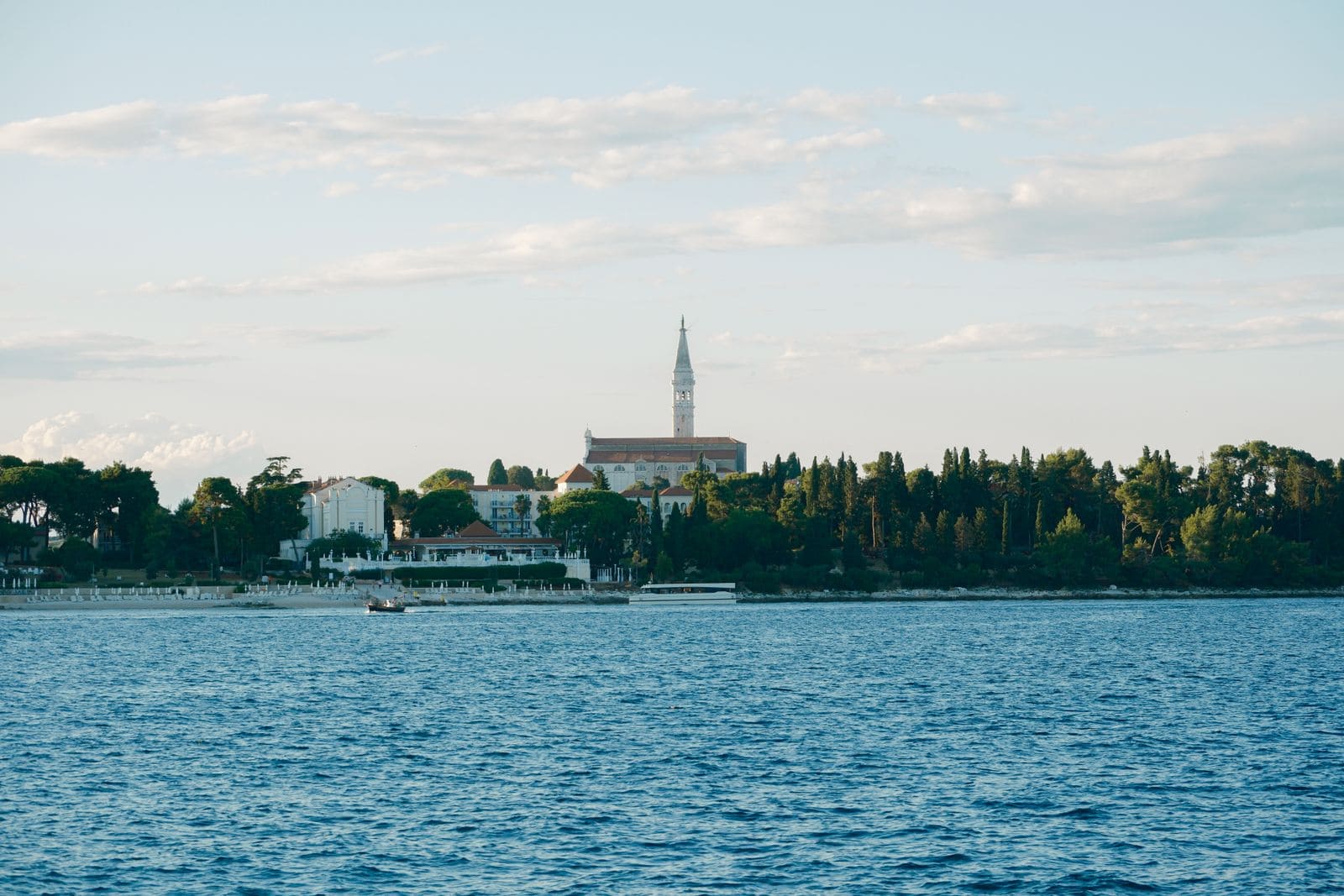
Road Trip Through the French Alps: Annecy, Chamonix & Lakes (7 Days)

TL;DRThis seven-day road trip runs from foodie-favourite Lyon through Grenoble, Lac du Bourget and Lac d’Annecy, up to mountain-ringed Chamonix beneath Mont Blanc, and finishes at the lakeside village of Yvoire on Lake Geneva. The whole route covers 450 to 550 kilometres, and June and September are the best months to go, with settled weather and fewer crowds. Highlights include the turquoise waters of Annecy, the Mer de Glace glacier, and the cable car up to the Aiguille du Midi at 3,842 metres, which costs 81 to 83 euros. You’ll need a Crit’Air sticker to drive into central Lyon or Grenoble, or you’re looking at a fine of 68 to 375 euros. In 2026, watch out for the viewing platform closing from 25 May and the Tour de France passing through in the third week of July.

France isn’t just endless fields of fragrant lavender, slow sips of pastis in the shade of plane trees, or romantic strolls beneath the Eiffel Tower in Paris. The moment you head east toward the Italian and Swiss borders, a completely different world opens up — one ruled by granite, ice, thin air, and adrenaline. The French Alps and their foothills are a region all their own, and they’ll pull you in instantly with their raw, uncompromising beauty. Here you stand at the threshold of the highest mountains in Western Europe, where you can admire Renaissance lanes in the morning, swim in a crystal-clear lake at noon, and watch melting glaciers in the afternoon.

This itinerary takes you from a gastronomic metropolis through turquoise lakes all the way to breathtaking alpine peaks. The French treat their mountains with enormous respect, yet also with an engineer’s audacity that has let them build cable cars where you’d expect to find only eagles. Whether you crave high-altitude hiking, love cycling, or simply want to see the legendary Mont Blanc with your own eyes, this route serves up the very best of the entire region. Get ready for a journey that won’t hand you anything for free — but the memories will stay with you forever.

TL;DR

  • Route length and time: The full loop measures roughly 450 to 550 kilometres, and ideally you should set aside a full 7 days so you never have to rush.
  • When to go: The best conditions for a road trip are in June and September, when you avoid the summer extremes and the roads aren’t yet jammed with crowds of tourists.
  • Main highlights: Gastronomic Lyon, the turquoise lake at Annecy, the rugged massifs around Grenoble, and the iconic view from the Aiguille du Midi.
  • Getting there: The easiest option is to fly into Lyon or Swiss Geneva, rent a car, and set off — bearing in mind you’ll have to pay tolls on the motorways.
  • Low-emission zones: To drive through bigger cities like Lyon or Grenoble you absolutely need a Crit’Air eco-sticker, otherwise you risk a hefty fine.
  • Watch out for 2026: In July the region will be paralysed by the famous Tour de France, and at the turn of May and June the main viewing terrace on the Aiguille du Midi will close.

When to Take This Trip

Choosing the right dates is absolutely crucial in the French Alps, because the mountains don’t forgive planning mistakes and the weather here can be highly unpredictable. If you’re heading out on a road trip combined with sightseeing and light hiking, steer clear of the winter months, when the mountain passes are buried in snow and the region turns into one giant ski factory. Leave the period from December to April to the die-hard skiers heading for the endless resorts of the Three Valleys or the glacier at Tignes, and focus instead on late spring or early autumn.

The ideal window for this route is June, or alternatively September, when the weather is fairly stable and the days are long enough. By June the valleys are already beautifully green, even though snow may still linger on the high mountain cols. September, on the other hand, offers gorgeously crisp light for photography and lets you dodge the main French summer holidays, which run through all of July and August. During summer, huge numbers of domestic tourists head into the mountains, accommodation prices soar, and endless queues form at the lakes and cable cars.

The year 2026 brings a major complication in the form of the Tour de France, which will have an extremely demanding alpine finale. Unless you’re a passionate cycling fan, you should definitely mark the third week of July in your calendar as a time not to drive into the Alps. The riders will battle the mythic climbs to the Plateau de Solaison, raced on 19 July, and will tackle the legendary 21 hairpins of Alpe d’Huez twice over, on 24 and 25 July. During these stages the peloton will also conquer the dreaded Galibier pass. On these days the roads will be completely impassable, the hotels hopelessly sold out, and the whole region will be swept up in an electrifying but, for the ordinary traveller, very restrictive frenzy.

Practical Info: Car, Transport and Budget

Exploring this corner of France takes a bit of logistical preparation, since local rules differ from those at home in many ways. Unless you drive over from the UK in your own car (which means crossing the Channel and a long haul), the most sensible option is to fly into Lyon or Geneva and pick up a rental car right at the airport. France doesn’t use the classic motorway vignette, but rather a system of toll booths called péages. Reckon on paying roughly €9.50 for every 100 kilometres driven on the motorway, which can noticeably bump up your total trip budget. On some newer stretches they’re switching to a barrier-free Free-Flow system, where you pay the toll online based on your number plate.

One absolutely essential thing that tourists often forget about is France’s low-emission zones, known by the abbreviation ZFE. The Constitutional Court confirmed their validity in 2026, so if you plan to drive into the wider centre of Lyon or Grenoble, you must have a Crit’Air eco-sticker on your windscreen. This sticker costs just €5.11, but you have to order it online well in advance, because you won’t be able to buy it on the spot anywhere. On weekdays, only cars with a category 1 or 2 sticker may enter the cities, while older diesels are out of luck and risk a fine of €68 to €375.

As for a rough budget for 2026, France is certainly not a cheap destination. A lunch menu in an ordinary restaurant runs between €15 and €25, while dinner will set you back at least €20 to €35 per person. The mountain attractions will be a big line item — just a return ticket on the Aiguille du Midi cable car costs €81 to €83 depending on the season. You’ll find decent accommodation for around €100 a night, but in tourist hubs like Annecy or Chamonix expect prices from €130 upwards, especially if you don’t book several months ahead.

Day-by-Day Itinerary

This seven-day road trip is designed so you experience a gradual transition from urban culture all the way to rugged alpine wilderness. You’ll travel at a steady pace, without any pointless long drives, and each day offers completely different scenery.

Day 1: Lyon → Grenoble

Your journey begins in Lyon, rightly considered the true belly and gastronomic capital of France. The city, set at the confluence of the Rhône and Saône rivers, has an earthy atmosphere you simply won’t find in Paris. Spend the morning exploring the old town of Vieux Lyon, threaded with so-called traboules. These secret Renaissance passageways and corridors run straight through the inner courtyards and once helped silk weavers carry their fabrics safely. Just grab an inconspicuous handle and you’ll suddenly find yourself in a magical courtyard with a spiral staircase that the people on the busy street have no idea exists.

Around midday, don’t miss a visit to a traditional Lyon tavern known as a bouchon, where lunch is served strictly between 12:00 and 14:00. A lunch menu will cost you roughly €15 to €25. Although the local cuisine is famous for its heavy dishes, there’s always an alternative for meat-free eating. Try seeking out the excellent cheese specialities, or visit the Les Halles de Lyon Paul Bocuse market, where you can taste the finest French cheeses and wash them down with a glass of Côtes du Rhône.

In the afternoon, pick up your car and set off on the roughly hour-and-a-half drive southeast. Your destination is Grenoble, the proud capital of the Alps, lying in a flat valley hemmed in on all sides by steep rock walls. The local tourist office boasts that, straight from the city, you have access to more than 800 kilometres of hiking trails using public transport alone.

💡 Tip: Only cars with a Crit’Air 1 or 2 eco-sticker may enter central Lyon. The best strategy is to leave the car at a P+R park-and-ride lot on the edge of the city and ride the excellent metro into the centre.

Day 2: Grenoble → Aix-les-Bains

On the morning of the second day, set off to discover the Vercors massif, which lies right at the gates of Grenoble and feels like an impregnable natural fortress. This vast limestone plateau is full of deep gorges and served as a safe refuge for French partisans during the Second World War. If you love views, head for the iconic Mont Aiguille, a solitary vertical rock tower that looks as though someone sliced it off the rest of the range with a giant knife.

An alternative for adrenaline lovers is a trip to Lac de Monteynard, spanned by unique Himalayan suspension footbridges called passerelles. These steel bridges sway dozens of metres above the turquoise water, and crossing them takes a serious dose of courage, because the view beneath your feet is literally breathtaking. For lunch, stop in one of the mountain villages, where they’ll happily prepare you a hearty potato pancake with local cheese.

In the afternoon you’ll head north to Lac du Bourget, which holds the title of the largest natural glacial lake in France. The drive takes about an hour and a half and brings you to the spa town of Aix-les-Bains. Its healing thermal springs were already known to the ancient Romans, and the town has retained its refined Belle Époque atmosphere to this day.

💡 Tip: For your overnight stay in Aix-les-Bains, choose a hotel with a lake view, such as the Golden Tulip Aix les Bains, which also offers a great wellness area for recovering after long mountain hikes.

Day 3: Aix-les-Bains → Annecy

In the morning, say goodbye to Aix-les-Bains and set off on the short, forty-five-minute drive to Annecy. The moment you arrive, you’ll instantly understand why it’s nicknamed the Venice of the Alps the world over. A tangled network of canals runs through the historic centre, fed by the crystal-clear water of the nearby lake. In the middle of the main canal, don’t miss the Palais de l’Île, an iconic stone building shaped like a ship’s prow that has served over the centuries as a mint, a court, and a town prison.

The region’s main magnet, though, is Lac d’Annecy itself, which boasts the title of one of the cleanest lakes in all of Europe. The water has an incredibly rich turquoise colour and, in the warm months, it positively invites you to swim. If you prefer an active break, rent a bike and head out on the popular Voie Verte cycle path. This roughly forty-kilometre route runs right along the shore, is completely separated from traffic, and you can ride it in one easygoing afternoon. Experienced hikers can then tackle the demanding climb up the limestone massif of La Tournette, from where you can see all the way to Mont Blanc.

For dinner, be sure to head into one of the restaurants in the winding lanes of the old town. Although Savoy is known for its cured meats, you’ll easily come across excellent cheese fondue or a vegetarian version of tartiflette, baked potatoes with onion and a huge portion of the local Reblochon cheese.

💡 Tip: Accommodation in Annecy sells out fast in season. Look for smaller boutique hotels near the lake — a dream-like place such as Les Tresoms Lake and Spa Resort usually gets excellent reviews.

Day 4: Annecy → Chamonix

On the fourth day you’ll leave the calm waters of the lakes behind and head into the real high mountains. The drive from Annecy to Chamonix takes a little over an hour by motorway, and with every kilometre the scenery grows more dramatic. Chamonix-Mont-Blanc isn’t just an ordinary mountain resort — it’s the pulsing base camp of European alpinism, towered over by the massif of Mont Blanc itself like an enormous white wall.

After checking in, head to the local train station and board the historic Tramway de Montenvers rack railway, in operation since 1908. It carries you up through pine forests to an altitude of 1,913 metres at the Mer de Glace glacier. Be prepared: the sight of it is fascinating, but also rather sad. The glacier is retreating at a terrifying pace due to climate change, as shown by the information signs on the rocks marking the ice level in past decades. A brand-new gondola from 2024, which replaced the original lift, now takes you right down to the ice.

In the evening, head into the bustling streets of Chamonix, where Japanese tourists mingle with tanned climbers draped in carabiners. The town has a far rougher, sportier atmosphere than the polished Austrian resorts. For dinner you might treat yourself to a hearty Italian pizza — the border is just over the hill, and the local pizzerias offer great meat-free options baked in a wood-fired oven.

💡 Tip: For an authentic mountain experience, stay in a traditional wooden chalet or an alpine-style hotel. The Heliopic Hotel & Spa is a great choice, strategically located right by the Aiguille du Midi cable car station.

lukas a lucka
Lukáš and Lucie recommend
Where to stay in the French Alps
5 accommodations — hotels, resorts and other lodging options

Day 5: Chamonix and the Aiguille du Midi

This day brings the absolute peak of the whole road trip — and that’s meant literally. If you only have time for a single attraction in Chamonix, it has to be the Aiguille du Midi cable car. This jagged rock needle reaches an altitude of 3,842 metres, and the ride up is an intense physical and mental experience. The upper section of the cable car spans an enormous drop without a single support pylon, so when the cabin swings out over a kilometre-deep abyss, everyone inside usually falls silent for a second.

At the top you get a proper slap in the face from the thin air — there’s 40 percent less oxygen here than at sea level. Every step up the stairs hurts, but the view of Mont Blanc and the surrounding glaciers is absolutely unrivalled. Don’t forget to try the Step into the Void, a glass box suspended in mid-air that you may enter only in special felt slippers so you don’t scratch the floor. The cable car ticket costs €81 in the spring season and €83 in summer, and booking a specific time slot is absolutely mandatory.

⚠️ Watch out for 2026: If you’re planning your trip at the turn of spring and summer, take note. From 25 May 2026 the main viewing terrace closes completely for 4 to 5 weeks for essential renovation. The cable car will still run and part of the complex will be accessible, but the most iconic view from the summit will be off-limits to tourists.

💡 Tip: After returning to the valley you’ll probably be wiped out by the altitude. Treat yourself to a relaxing afternoon at the local QC Terme thermal baths.

Day 6: The Mont Blanc Valley and Alpine Villages

After yesterday’s altitude extreme, treat yourself to a somewhat calmer day in the Mont Blanc valley. This region is home to the legendary Tour du Mont Blanc trek, which measures 170 kilometres, climbs over 10,000 metres of elevation, and circles the entire massif across three countries. You can carve off just a small one-day section, for example the beautiful stretch above the village of Les Houches, which opens up photogenic views of the creeping Bossons glacier.

If you ever wanted to do the whole trek with overnight stays in mountain huts, be aware that the logistics today are extremely demanding. Capacities are strictly limited and bookings open as early as 15 October the year before. Anyone who doesn’t book in the very first days is generally out of luck for the summer season. A night in a so-called refuge will then cost you roughly €80 to €90, including a hearty half-board meal, which is a must after a full day on the trail.

You, however, can calmly return to your car after a morning hike and explore the picturesque surrounding villages such as Argentière or Vallorcine. These hamlets have kept a much more authentic and peaceful character than the overcrowded centre of Chamonix itself. For lunch, drop into a tucked-away mountain pub, where they’ll serve you, with a smile, an honest onion soup or a rich vegetable quiche.

💡 Tip: Spend your last night in the mountains either at the same spot in Chamonix, or move a little further to the quieter Les Houches, for example to the RockyPop Chamonix hotel.

Day 7: Chamonix → Yvoire and Lake Geneva

The last day of your road trip brings the descent from the high mountains back down to civilisation. In the morning, set off from Chamonix heading northwest, and after roughly an hour and a half of driving you’ll reach the shores of the vast Lake Geneva. The landscape here is once again completely different — much gentler, sun-drenched, and dotted with fertile vineyards that slope right down to the water’s edge.

Your main stop will be Yvoire, a medieval stone village that regularly ranks among the most beautiful villages in all of France. This seven-hundred-year-old settlement is full of winding lanes, historic houses, and a flood of flowers that adorn seemingly every windowsill in the summer months. You’ll have to leave the car at a park-and-ride lot outside the ramparts, because the entire historic centre is reserved exclusively for pedestrians.

Stroll around the harbour, visit the lovely Garden of the Five Senses, and finally sit down at a café with a view over the lake. Switzerland lies just on the far shore, and you can calmly reflect on all the experiences of the past week. From here it’s just a short hop to Geneva airport, where you’ll return the rental car and head back home.

💡 Tip: If you still have a few hours before your flight, stop off in nearby Évian. This town is world-famous for its mineral water, and you can fill up straight from the public fountain for free.

Where to Stay Along the Route

💡 Tip on accommodation and experiences: We like to look for accommodation on Booking.com, which usually has the best cancellation terms. For tickets, tours and activities, it pays to compare and buy through GetYourGuide.

During this road trip you’ll move through several different locations, so it’s crucial to book your accommodation well in advance. French hotels often have smaller rooms, but they pride themselves on impeccable cleanliness and excellent breakfasts with fresh pastries. Set aside a budget of roughly €100 to €130 a night for two people, with prices rising further in tourist hubs during peak season. Here’s an overview of the ideal bases for your trip:

Lyon and around Look for accommodation in the Presqu’île (the peninsula) district, or right in the historic old town of Vieux Lyon. You’ll be close to the main sights and the very best restaurants. But be very careful about parking, since only cars with an eco-sticker may enter the centre. It’s safer to leave the car on the edge of the city at a P+R lot.

Grenoble as a gateway to the mountains Choose a hotel right in the centre near the busy Place Grenette. Grenoble works as a perfect urban base from which you can easily set out on day trips into the rugged Vercors or Chartreuse massifs, and return in the evening to a civilisation full of great cafés.

Lake Annecy Accommodation right by the turquoise lake or in the canal-laced historic centre is pricier, but it’s absolutely worth it. If you want to save money and avoid the biggest crowds, look around the smaller villages on the eastern shore of the lake, such as the picturesque Talloires.

Chamonix and the Mont Blanc valley If you want to be right at the heart of the action and soak up the climbing atmosphere, sleep in the town itself near the Aiguille du Midi cable car station. For quieter nights at far friendlier prices, opt instead for the neighbouring village of Les Houches or Argentière. These villages are superbly connected to the centre of Chamonix by a free train.

Where to Go Next

If this French region has charmed you and you’d like to extend your trip, or you’re just looking for more inspiration from the area, be sure to check out these more detailed guides:

  • Want to learn more about the Venice of the Alps? Read our article on Annecy.
  • Planning to stay in the mountains longer and conquer more peaks? Explore the details in our guide to Chamonix and Mont Blanc.
  • Tempted by the gastronomy and the winding lanes? Get inspired by our tips for Lyon.

Frequently Asked Questions

Potřebuji pro vjezd do francouzských Alp ekoplaketu?

Do horských středisek ji nepotřebujete. Pokud ale plánujete projet širším centrem velkých měst, jako je Lyon nebo Grenoble, ekoplaketa Crit’Air je naprosto povinná. Její absence se trestá pokutou od 68 do 375 eur. Objednávejte ji s dostatečným předstihem online, protože fyzicky ji na místě nikde nekoupíte.

Kolik stojí výjezd lanovkou na Aiguille du Midi?

V roce 2026 zaplatíte za zpáteční jízdenku pro dospělého 81 eur v jarní sezóně, přičemž od června cena stoupá na 83 eur. Pamatujte, že v sezóně je nezbytně nutné rezervovat si konkrétní čas odjezdu na oficiálních stránkách nebo přes zprostředkovatele, protože lanovky bývají beznadějně vyprodané.

Dají se ve Francii platit dálniční poplatky kartou?

Ano, na všech francouzských mýtných branách zvaných péages můžete pohodlně platit běžnou platební kartou. Na některých nových úsecích však klasické závory úplně chybí. V takovém případě musíte mýto zaplatit online do 72 hodin od průjezdu podle vaší SPZ, jinak vám domů s jistotou dorazí nepříjemná pokuta.

Kdy je nejlepší rezervovat horské chaty na Tour du Mont Blanc?

Pokud chcete absolvovat tento slavný vícedenní trek s přespáním v oficiálních horských chatách, musíte být neuvěřitelně rychlí. Rezervační systém se na letní sezónu otevírá vždy už 15. října předchozího roku a ta nejpopulárnější místa na trase zmizí doslova během několika málo dní.

Co znamená omezení na Aiguille du Midi v roce 2026?

Od 25. května 2026 se na 4 až 5 týdnů kompletně uzavírá hlavní nejvyšší vyhlídková terasa kvůli rozsáhlé plánované rekonstrukci. Samotná lanovka bude nadále v provozu a podíváte se do nižších částí celého komplexu, ale ten nejikoničtější výhledový bod bude všem turistům dočasně zapovězen.

Kdy se vyhnout Alpám kvůli Tour de France 2026?

Cyklistický závod dorazí do alpského regionu ve třetím červencovém týdnu. Naprosto kritické dny jsou 19., 24. a 25. července, kdy peloton překonává mýtická stoupání jako Galibier nebo Alpe d’Huez. V této době budou silnice kompletně uzavřené, hotely vyprodané a celá oblast logisticky paralyzovaná.

Najím se v Lyonu dobře, i když nejím maso?

Ačkoliv jsou tradiční lyonské bouchony proslavené těžkými masitými jídly a vnitřnostmi, hlady zde rozhodně trpět nebudete. V každé lepší restauraci vám dnes ochotně připraví výborné bezmasé menu. Vždy vás navíc zachrání obrovský výběr špičkových lokálních sýrů, krémových zeleninových polévek a čerstvých těstovin.

Tips and Tricks for Your Vacation

Don’t Overpay for Flights

Search for flights on Kayak. It’s our favorite search engine because it scans the websites of all airlines and always finds the cheapest connection.

Book Your Accommodation Smartly

The best experiences we’ve had when looking for accommodation (from Alaska to Morocco) are with Booking.com, where hotels, apartments, and entire houses are usually the cheapest and most widely available.

Don’t Forget Travel Insurance

Good travel insurance will protect you against illness, accidents, theft, or flight cancellations. We’ve had a few hospital visits abroad, so we know how important it is to have proper insurance arranged.

Where we insure ourselves: SafetyWing (best for everyone) and TrueTraveller (for extra-long trips).

Why don’t we recommend any Czech insurance company? Because they have too many restrictions. They set limits on the number of days abroad, travel insurance via a credit card often requires you to pay medical expenses only with that card, and they frequently limit the number of returns to the Czech Republic.

Find the Best Experiences

Get Your Guide is a huge online marketplace where you can book guided walks, trips, skip-the-line tickets, tours, and much more. We always find some extra fun there!
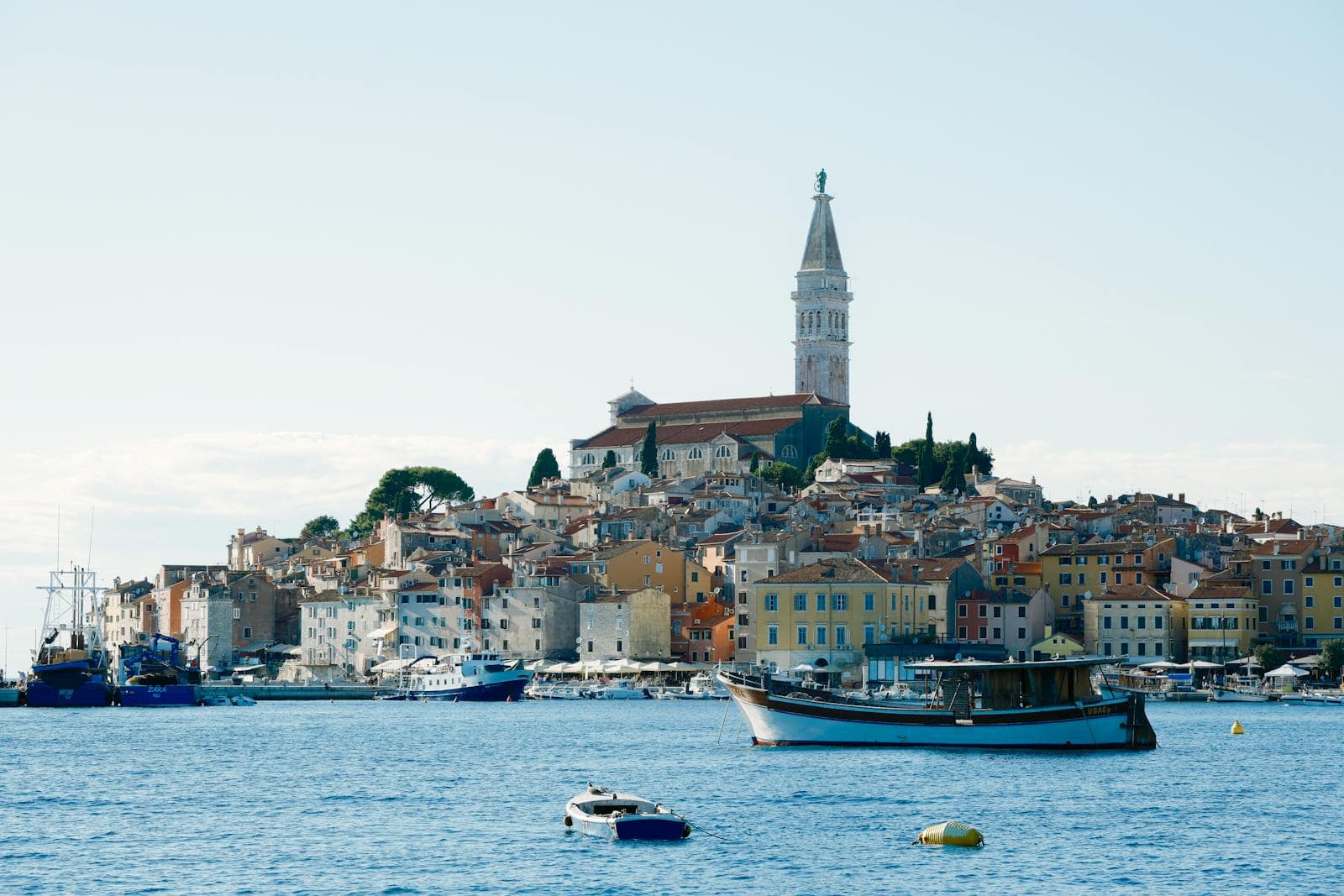
Collioure, France & the Côte Vermeille: 11 Tips for 2026

TL;DRCollioure and the Côte Vermeille, in the south of France near the Spanish border, pack in 11 tips for a proper taste of Catalan culture. Highlights include the harbour with its church of Notre-Dame-des-Anges, the Château Royal de Collioure (entry around €7), the fauvism trail tracing Matisse and Derain’s footsteps, the Mouré quarter, traditional anchovy production, the pebble beaches of Boramar and Port d’Avall, day trips to Perpignan and Banyuls-sur-Mer, the coastal Sentier du Littoral path, and the Moulin de la Cortina windmill. One day is enough for Collioure itself, but allow 4 to 5 days to take in the wider area. The best time to go is from mid-April to the end of June, or in September and October, when temperatures sit around 20 to 28°C. July and August bring highs of 35 to 40°C and a nightmare when it comes to parking.

When people talk about the south of France, most travellers immediately picture lavender fields in Provence or the luxury-soaked beaches of the French Riviera. But if you’re looking for a place where the dramatic peaks of the Pyrenees plunge straight into the waves of the Mediterranean, you’ll need to head a little further. All the way down near the Spanish border stretches the fascinating Côte Vermeille, which translates as the Vermilion Coast. And right at its heart sits Collioure, France — in this guide we’ll cover 11 tips on what to see and do in Collioure and along the Côte Vermeille, and show you why this rawer, wilder corner of the country was so beloved by Europe’s most famous painters.

Get ready for narrow cobbled lanes, brightly coloured house facades and mighty medieval castles rising right above the beach. Around every corner you’ll catch that unmistakable Catalan atmosphere, completely different from the rest of France. I’ll also tell you which months are best to visit so you don’t roast alive, and how to cleverly solve the logistics — because summer traffic here can be a real headache. Discover this gem of the French south that still holds onto its authentic character.

TL;DR

  • Parking is a nightmare: In July and August it’s practically impossible to reach Collioure by car — your best bet is to use the local trains from neighbouring resorts.
  • A paradise for art lovers: The town is the birthplace of Fauvism, and you can walk a trail right through the streets dotted with reproductions of Henri Matisse’s paintings.
  • Catalan pride: The ever-present yellow-and-red flags and bilingual signs are a constant reminder that Perpignan and its surroundings once belonged to the Kingdom of Majorca.
  • Rugged nature: Forget the endless sandy beaches of Languedoc — here you’ll find pebble coves and steep cliffs perfect for hiking.
  • History within reach: The Château Royal stands right in the water and offers the best panoramic view over the entire coast.

When to Visit Collioure and the Côte Vermeille

When planning a trip to the very south of France, it’s absolutely crucial not to underestimate the local climate, because the whole Occitanie region is known for its temperature extremes. The summer months tend to be relentlessly hot, with July and August regularly pushing 35 to 40 °C. Being outside through the midday heat becomes physically exhausting, and wandering the sun-baked ramparts without a scrap of shade borders on masochism. On top of that, this is the season when there’s a genuine risk of wildfires across the region, which can close off some hiking trails. If you’re checking the weather in Collioure, France, plan accordingly.

If you have the option, plan your visit for the spring or autumn months, when the south of France is utterly enchanting. From mid-April to the end of June it’s gorgeous — the wild flora on the cliffs is in bloom and temperatures hover around a very pleasant 20 to 28 °C. September and October are just as fantastic, when the worst of the tourist crush has eased, the sea is still beautifully warm after summer, and the traditional grape harvest is underway on the steep slopes above the coast. The long autumn days are perfect for full-day excursions and exploring historical sights without the crowds.

The peak summer season also brings one enormous logistical headache: road traffic. There’s essentially just one main road leading into Collioure, and during the holidays it gets jammed for miles before you even reach the town. If you absolutely must come during the French national holidays, brace yourself for patience and accept that you won’t get onto the overcrowded park-and-ride lots without a genuinely early start. So it’s worth considering alternative ways of getting around.

Where to Stay in Collioure and Nearby

💡 Tip for accommodation and experiences: We like to look for places to stay on Booking.com, which usually has the best cancellation policies. For tickets, tours and activities, it’s worth comparing and booking through GetYourGuide.

Finding the ideal base depends mostly on your budget and how you’re travelling, because the Côte Vermeille offers several completely different types of resort. Staying right in the historic centre of Collioure is wonderfully romantic, but be prepared for premium prices and a total absence of parking spaces. Accommodation in the very heart of the town tends to suit couples who don’t mind arriving by train and enjoying the quiet evening lanes once the day-trippers have left.

If you’re travelling by car and looking for something more practical, a great alternative is the neighbouring resort of Argelès-sur-Mer or Port-Vendres, a little further south. Argelès offers a wide range of more affordable apartments, sprawling campsites and, above all, long beaches. From either town you can reach Collioure completely stress-free on the local TER train in just a few minutes, neatly solving all the problems with summer traffic jams and overflowing car parks. What’s more, Collioure’s train stop is only a short walk from the historic centre.

As for specific Collioure hotels, the stylish Hôtel Madeloc in the wider centre of Collioure is worth considering, with a heated pool and that oh-so-valuable private parking for guests. The Hôtel Les Mouettes, perched on the dramatic cliffs just outside town towards Port-Vendres, offers beautiful views over the bay. I strongly recommend sorting out all bookings well in advance through Booking.com, because the best summer-season capacity disappears as early as the start of spring and you really can’t rely on last-minute deals here.

11 Tips on What to See and Do in Collioure and the Côte Vermeille

Let’s take a closer look at the very best this rugged yet incredibly photogenic corner of France has to offer. You’ll discover a perfect mix of historical sights, artistic heritage and stunning nature that invites long walks along the steep cliffs and the chance to seek out hidden beaches.

1. The Harbour and the Iconic Church Bell Tower

The most famous postcard view in the entire region is undoubtedly the Notre-Dame-des-Anges church, whose tower literally rises straight out of the sea. This unusual structure originally served as a lighthouse and watchtower for the local harbour before the nave of the church itself was added in the 17th century. It’s an absolute architectural one-off, in stark contrast to the modern concrete resorts you’ll find further north along the Languedoc coast.

Around the harbour bob the traditional colourful Catalan boats known as barques catalanes, completing the unmistakable character of the place. The water in the bay is incredibly clean and clear, so from the shore you can often see all the way down to the rocky bottom. A stroll along the old stone jetty towards the Chapelle Saint-Vincent offers the best view back over the town and the surrounding terraced hills dotted with vineyards.

💡 Tip: Head to the harbour early in the morning, just after sunrise, when the local cafés are coming to life. The golden light reflecting off the water and the pink facade of the church create an atmosphere that’s genuinely breathtaking — and you’ll avoid the main crowds of camera-toting tourists.

2. The Château Royal de Collioure

Right in the heart of the bay, literally a few steps from the main beach, sprawls the massive medieval fortress of the Château Royal. This imposing complex was the summer residence of the powerful kings of Majorca in the days when the entire territory fell under Spanish influence and the town played an important strategic role. A tour of the sprawling grounds leads you through a maze of courtyards, dark underground passages and high fortified walls.

Admission costs a reasonable 7 euros (valid for 2026), and within the walls you could easily spend a whole afternoon. The biggest draw is undoubtedly the panoramic views from the highest watchtowers, where the whole town and the endless blue sea lie spread out before you. Sadly, the castle has a darker history too — during the Spanish Civil War in the 20th century it served as a prison for refugees.

💡 Tip: Inside the castle you won’t find much in the way of classic period furnishings — the interior spaces are rather militarily austere. So focus mainly on the architecture itself and notice how the various building alterations fit together, from the 13th century right up to the ingenious work of the famous military engineer Vauban.

3. In the Footsteps of Matisse, Derain and Fauvism

In 1905, two then relatively unknown painters, Henri Matisse and André Derain, arrived in the sleepy fishing village of Collioure. The incredible local light and saturated colours completely captivated them and pushed them to start experimenting with wild, unrealistic brushstrokes. That single summer stay gave birth to an entirely new artistic movement called Fauvism, which utterly shocked the critics of the day and changed the history of modern art forever.

The local tourist office created a brilliant project called the Chemin du Fauvisme, which keeps this artistic heritage alive. It’s a marked trail running right through the town’s narrow streets, with metal frames holding reproductions of the original works placed at the exact spots where they were painted. You can compare with your own eyes the real-life view of the harbour with the way the famous artists transferred it onto canvas more than a century ago.

💡 Tip: Stop by the small modern art museum (Musée d’Art Moderne de Collioure) on the edge of town too. Although you won’t find originals by the very greatest masters here, the gallery offers an excellent collection of contemporary artists who were clearly inspired by the area’s magical atmosphere.

4. The Catalan Atmosphere in the Mouré Quarter

The historic Mouré quarter is a fascinating tangle of the narrowest, steepest little lanes you can imagine. The houses are painted in bold pastel colours, and from every antique balcony cascades a riot of bright pink and purple bougainvillea. This is where you’ll most strongly feel that you’re in French Catalonia, which is far closer to Spain than to Paris.

Red-and-yellow Catalan flags hang everywhere, street names are consistently bilingual, and Spanish is often heard drifting from the open windows of little bistros. The locals are immensely proud of their historical roots, which shows in their easy-going daily life and in the offerings of the small shops. As you wander, you’re bound to come across plenty of excellent tapas bars where you can tuck into great vegetarian patatas bravas with a spicy sauce, grilled aubergine or a board of local cheeses.

💡 Tip: Get lost in these winding lanes with no predetermined destination and no map in hand. In many tucked-away corners you’ll stumble upon small artists’ studios and workshops, where talented jewellers and painters create right in front of passers-by.

5. The Century-Old Tradition of Anchovy Curing

As you wander the town, sooner or later you’ll come across the ever-present mentions of a local culinary treasure: anchovies. Collioure is world-famous for its traditional method of salting and filleting them, a craft passed down from generation to generation since deep in the Middle Ages. The little harbour was once full of fishing boats; today, only two family firms remain dedicated to this demanding work.

The local Desclaux and Roque families keep this ancient tradition alive, and their operations even hold France’s official status of living cultural heritage. The processing is done strictly by hand and demands enormous patience, as the little fish mature in oak barrels of salt for many months. For the locals it’s a fundamental part of their historical identity and pride in their maritime past.

💡 Tip: If you’re interested in the craft side of things, the firm Maison Roque offers short tours of its historic workshops. You can peek behind the scenes and grasp just how much painstaking handwork and time goes into every little jar of this local product.

6. Beaches and Hidden Coves Along the Collioure Coast

While most of the Languedoc coast — like the resort of La Grande-Motte — offers endless flat sandy beaches, the Côte Vermeille is markedly different. Here you’ll mostly find smaller, picturesque coves with fine pebbles, surrounded by jagged rocks. Right in the centre of Collioure are the town beaches of Boramar and Plage Saint-Vincent, which offer a wonderful view of the castle but in summer are unfortunately hopelessly packed with tourists. If you’re researching Collioure beaches in France, it pays to look beyond the centre.

If you’re after a slightly quieter, more authentic setting, head to the southern edge of town to the Plage de Port d’Avall. Thanks to the rocky seabed, the water here is crystal clear, making the whole area an absolutely fantastic spot for recreational snorkelling. Just don’t forget to pack a good pair of water shoes, as walking across the hot, sharp pebbles isn’t exactly a pleasant experience for sensitive feet.

💡 Tip: Through the local tourist office or online platforms like GetYourGuide, you can easily arrange the rental of a sea kayak or paddleboard. It’s an unbeatable way to explore the deserted coves and caves you simply can’t reach on foot from the shore.

7. Perpignan, the Regional Capital

While you’re spending time at this very end of France, it would be a huge mistake to skip Perpignan, which lies just about half an hour away by car or train to the north. This vibrant city was the continental centre of the Kingdom of Majorca in the Middle Ages, and to this day it’s dominated by the impressive Palace of the Kings of Majorca (Palais des Rois de Majorque), surrounded by massive brick ramparts and beautiful gardens.

Perpignan is incredibly lively, colourful and multicultural. The focal point of the old town is the red brick gate of Le Castillet, which today houses an interesting museum of Catalan traditions. The famous eccentric painter Salvador Dalí once quite seriously declared the local train station the “centre of the universe” — something playfully recalled today by several surrealist art installations right in the concourse of the station hall.

💡 Tip: For a late lunch or an evening drink, head to the winding lanes around the bustling Place de la République. You’ll find loads of great tapas bars here, serving fantastic vegetarian delights from crispy croquettes and fried padrón peppers to delicious local olives.

lukas a lucka
Lukáš and Lucie recommend
Where to stay in Collioure and on the Côte Vermeille
3 accommodations — hotels and other lodging options

8. Banyuls-sur-Mer and Vineyards Tumbling into the Sea

A short way south of Collioure, right towards the Spanish border, you’ll discover the peaceful town of Banyuls-sur-Mer. The dramatic local landscape is defined by incredibly steep terraced vineyards that stretch from the high mountains down to the very cliffs above the sea. The vines grow on hard slate bedrock and are constantly lashed by a fierce, dry north wind the locals call the Tramontane.

This very harsh terroir gives rise to the famous sweet fortified wine Banyuls, made by a process very similar to the better-known Portuguese port. A visit to one of the local historic wineries is an absolute must, as bottles here often mature in large glass demijohns left out in the sharp summer sun. A bottle of good quality costs between 15 and 25 euros in the local shops and makes a brilliant souvenir.

💡 Tip: Take a walk along the well-kept seafront promenade and visit the modern Biodiversarium aquarium. It also serves as an important marine research station and beautifully showcases the incredibly rich underwater life of this rocky coast.

9. Hiking the Sentier du Littoral

For lovers of active travel and nature, the biggest draw of the whole region is the breathtaking coastal path, the Sentier du Littoral. This long-distance route links the resort of Argelès-sur-Mer with the border village of Cerbère, constantly winding up and down the cliffs, passing through deserted romantic coves and offering views over the endless sea that you’ll never forget.

The trail is definitely not suited to an afternoon stroll in beach flip-flops — you’ll need genuinely sturdy hiking boots and a large supply of drinking water, because the sun beats down relentlessly on the rocks and there’s minimal shade. Tackling the full stretch of more than thirty kilometres in a single day is a fairly extreme sporting feat, so most travellers pick just shorter, roughly two-hour segments — for example, the scenic stretch from Collioure to neighbouring Port-Vendres.

💡 Tip: The absolutely ideal strategy is to set off on foot from Collioure in the morning along the cliffs heading south, take your time reaching your chosen coastal town, and ride comfortably back on the local TER train in the afternoon — its line cleverly follows the entire coastline.

10. Maritime History in Port-Vendres

While Collioure lives its romantic, slightly polished artistic life, neighbouring Port-Vendres is a completely different world. It’s a deep-water working harbour with a rawer, distinctly salty atmosphere, where huge cargo ships and fleets of small fishing boats still come and go to this day. Tourism takes second place here, which gives the place a very rare, authentic character.

The town’s historic landmark is the tall marble obelisk on the main square, built in honour of King Louis XVI. As you walk along the industrial docks you’ll come across old maritime warehouses, and if you’re interested in military history, you can head to the nearby Fort Béar. It rises high above the harbour, offers a great view of the surroundings and still partly serves French military purposes today.

💡 Tip: Port-Vendres very often serves as the main departure point for longer trips out on the open sea. You can easily arrange full-day catamaran cruises from here along the nearby Spanish Costa Brava coast — a brilliant alternative for days when you’ve had enough of walking.

11. Sunset from the Moulin de la Cortina Windmill

Just above the town of Collioure, in the midst of old, fragrant olive groves, stands the beautifully restored stone windmill of Moulin de la Cortina. This photogenic structure dates back to the Middle Ages, and until recently it was still used to press excellent olive oil. The stone tower itself is small, but the absolute main reason to come up here is its strategic position on the hill.

From around the windmill opens up the very best panoramic view over the whole town below, the massive Château Royal, the iconic church bell tower and the endless blue of the Mediterranean. The climb up from the historic centre takes roughly twenty minutes along a gently rising dirt track, and any reasonably fit walker will manage it without much trouble.

💡 Tip: Plan your trip to the windmill for late afternoon or early evening. Watching the slow sunset from here, as the old ramparts glow golden and the sky turns pink, is without doubt the most beautiful way to bid farewell to this magical landscape for good.

Where to Go Next from Collioure

If you have more time in the south of France, the vast Occitanie region offers an inexhaustible wealth of fascinating places to explore. From the coast you can venture deeper inland to delve into the dark Cathar history or discover vibrant university cities full of youthful energy.

  • Carcassonne: Just under two hours’ drive from the coast you’ll find the largest preserved medieval fortress in Europe. A walk along the mighty ramparts with their fifty-two towers instantly transports you to the age of knightly tournaments. Admission to the inner castle costs around 19 euros, but you can wander the old town’s lanes for free. I’d recommend avoiding a visit between 11 a.m. and 4 p.m., when the fortress is bursting at the seams.
  • Montpellier: If you’re after elegant architecture, wide boulevards and a fantastic café culture, head further north along the coast. This dynamic city brilliantly blends the historic lanes around Place de la Comédie with the modern urbanism of the neoclassical Antigone district, and it’s bound to win you over.
Experiences & tickets
traveler-rated · GetYourGuide
Day Trip to France with Girona Visit from Barcelona
★★★★★ 4.9 · 148 reviews
from €107
I want this experience →
🔗 These are affiliate links — they don't change your price and help us create content. · All experiences →

Frequently Asked Questions

Dá se v Collioure dobře zaparkovat?

V hlavní letní sezóně (červenec a srpen) je parkování naprostá noční můra. Kapacity jsou extrémně omezené a město bývá ucpané auty. Ideální je nechat vůz v okolních obcích a dojet do centra lokálním vlakem, nebo využít velká záchytná parkoviště na okraji města, odkud v pravidelných intervalech jezdí kyvadlové autobusy.

Kolik dní potřebuji na návštěvu Côte Vermeille?

Na samotnou prohlídku městečka Collioure vám bude stačit jeden intenzivní den plný chození. Pokud ale chcete projít pobřežní stezky, navštívit okolní vinice v Banyuls a v klidu prozkoumat nedaleký Perpignan, doporučuji vyčlenit si na tuto krásnou oblast minimálně 4 až 5 dní.

Je to vhodná destinace pro rodiny s dětmi?

Ano i ne. Pro starší děti, které rády lezou po starých hradech a nevadí jim kamínkové pláže, je to skvělé dobrodružství. S kočárkem to ale bude velký boj, protože historická čtvrť Mouré je plná schodů a strmých, úzkých uliček, kde se místy stěží vyhnete protijdoucím.

Jak se sem nejlépe dostanu z České republiky?

Nejpohodlnější leteckou branou je letiště v Toulouse nebo v Montpellier, kam se z Prahy nebo Vídně dostanete s jedním přestupem, případně využijte přímé lety s nízkonákladovkami do okolí. Z letiště je pak ideální půjčit si auto pro průzkum vnitrozemí, nebo nasednout na rychlovlak TGV do Perpignanu a odtud pokračovat lokálním vlakem TER přímo do Collioure.

Jsou místní pláže písečné?

Ne, pobřeží Côte Vermeille je charakteristické svým drsným skalnatým profilem. Většina zátok a pláží v Collioure je pokryta hrubšími oblázky a kamínky, což na druhou stranu zaručuje krásně čistou vodu. Písečné pláže najdete až severněji, počínaje letoviskem Argelès-sur-Mer.

Je pobyt v tomto regionu drahý?

Collioure je považováno za prémiovou destinaci, takže ceny ubytování a služeb přímo v historickém centru jsou o dost vyšší než v okolních pracujících městech jako Port-Vendres. Stále je to ale znatelně levnější a celkově uvolněnější lokalita než luxusní letoviska na slavném Azurovém pobřeží.

Mluví se tu španělsky?

Úředním jazykem je samozřejmě francouzština, ale katalánské dědictví je tu extrémně silné. Místní obyvatelé rozumí španělsky velmi dobře díky bezprostřední blízkosti hranic, takže s angličtinou a případnými základy španělštiny tu v restauracích a obchodech naprosto bez problémů přežijete.

Je túra po pobřežní stezce náročná?

Pěší trasa Sentier du Littoral není technicky nijak složitá, ale vede neustále nahoru a dolů po útesech, což dá nohám docela zabrat. Největším nepřítelem je tu letní slunce a nulový stín, takže na túru vyrážejte výhradně brzy ráno nebo si ji naplánujte raději mimo hlavní letní sezónu.

Tips and Tricks for Your Vacation

Don’t Overpay for Flights

Search for flights on Kayak. It’s our favorite search engine because it scans the websites of all airlines and always finds the cheapest connection.

Book Your Accommodation Smartly

The best experiences we’ve had when looking for accommodation (from Alaska to Morocco) are with Booking.com, where hotels, apartments, and entire houses are usually the cheapest and most widely available.

Don’t Forget Travel Insurance

Good travel insurance will protect you against illness, accidents, theft, or flight cancellations. We’ve had a few hospital visits abroad, so we know how important it is to have proper insurance arranged.

Where we insure ourselves: SafetyWing (best for everyone) and TrueTraveller (for extra-long trips).

Why don’t we recommend any Czech insurance company? Because they have too many restrictions. They set limits on the number of days abroad, travel insurance via a credit card often requires you to pay medical expenses only with that card, and they frequently limit the number of returns to the Czech Republic.

Find the Best Experiences

Get Your Guide is a huge online marketplace where you can book guided walks, trips, skip-the-line tickets, tours, and much more. We always find some extra fun there!