Nice, France: 14 Things to See and Do in 2026

TL;DRNice has 14 solid tips for day trips, from the Promenade des Anglais and the old town Vieux Nice to the Marc Chagall National Museum, plus train trips to Monaco, Èze and the bay at Villefranche-sur-Mer. The best time to go is spring, from April to June, or autumn in September and October, when temperatures sit around 25°C — July and August climb to 35–43°C. Four to seven days is enough to explore the city and its surroundings, and from Nice you can reach Monaco by train in 20 minutes for €4–€6, or Cannes in under an hour for €7–€10. A room in the centre will cost €120–€180 a night in 2026 — skip the car hire and stick to the TER trains and trams.

Close your eyes and picture the sun-soaked south of France, where the steep peaks of the Alps plunge straight into the Mediterranean Sea. Chances are you’ll think of the famous French Riviera, or Côte d’Azur, which has been a byword for elegance and the perfect relaxing getaway ever since the nineteenth century. Originally it was British and Russian aristocrats who came here to spend their mild winters, while today Nice, France is by far the most sought-after region in the entire country. International demand for Nice easily eclipses even iconic names like the Loire Valley.

In this article you’ll find exactly 14 tips on what to see and do in Nice and its immediate surroundings, so your holiday really delivers. I’ll tell you the best time to go, where to base yourself strategically, and how to get around the coast completely stress-free. You’ll also learn why you should forget about renting a car straight away, and which day trips you absolutely shouldn’t skip.
TL;DR

  • Main base: Nice works as the best strategic spot for exploring the whole Riviera thanks to its excellent train connections.
  • Transport: Forget the car — the coastal roads gridlock in season and the TER trains run reliably three to four times an hour.
  • Best view: You’ll find it on Colline du Château hill, which you can reach via a free lift cut into the rock.
  • What to taste: At the Cours Saleya market, definitely try the traditional socca, a thin flatbread made from chickpea flour.
  • Swimming: The beaches right in town are pebbly, so be sure to pack water shoes for an easier entry into the sea.
  • Culture: Don’t miss the Marc Chagall National Museum and the gorgeous Musée Matisse set in an olive grove.
  • Where to take a trip: A few minutes by train will get you to Monaco, medieval Èze or the picturesque bay of Villefranche-sur-Mer.
When to Visit Nice and the Riviera

The French Riviera has one huge pitfall: the crushing wave of tourists and extreme heat during the main summer holidays. In July and August, temperatures regularly climb to 35–43 °C, the sun is absolutely relentless and the narrow coastal roads turn into one endless car park. If you show up blindly imagining the deserted beaches of old movies, you’re likely in for a harsh collision with the reality of overcrowded resorts and paralysed traffic. The key to a successful holiday on the Côte d’Azur is simply the right timing and respect for the local rhythm.

The ideal time to visit is therefore the spring months from April to June, or alternatively September and October in autumn. Temperatures sit at a pleasant 25 °C or so, the sea is still beautifully warm in autumn, and you’ll reliably avoid the biggest crowds. A big plus is how easy it is to reach from the UK — direct flights from London and other major airports are operated by airlines such as British Airways and easyJet, and outside the peak season you can grab return tickets at very reasonable prices. In May the whole area also comes alive thanks to the film festival in nearby Cannes, which lends the coast an utterly unmistakable atmosphere.

A February visit is also well worth considering, offering an entirely different experience and showing the Riviera in unexpected colours. The city hosts the famous Nice Carnival, one of the largest in Europe, and nearby Menton holds its fantastic Lemon Festival. The winter months aren’t ideal for swimming, but they’re absolutely perfect for strolls along the promenade and discovering the art museums in temperatures around 15 °C. To properly explore the city and surroundings, set aside ideally four to seven days so you’ll have enough time to relax over a coffee too.
Where to Stay in Nice and How Much It Costs

💡 Accommodation and experiences tip: We like to look for places to stay on Booking.com, which usually has the best cancellation terms. For tickets, tours and activities, it’s worth comparing and buying through GetYourGuide.

The biggest strategic mistake people make is trying to drive around the south of France, because hunting for parking in the narrow streets will reliably cost you both your nerves and your precious time. Choose Nice as your main base camp and take trips along the entire coast on the comfortable trains. Look for accommodation ideally within walking distance of the main station, Gare de Nice-Ville, or near one of the modern tram stops. In 2026, a decent double room in the centre runs roughly from 120 to 180 euros per night depending on the season and how early you book.

If you’re after romance and don’t mind the occasional noise from the street, pick a place right in the old town of Vieux Nice. You’ll be just a few steps from the morning market and the best restaurants, and the atmosphere of the narrow lanes with their ochre façades is simply priceless. From the train station you can easily reach the iconic spots nearby. Monaco, for example, is just twenty minutes away with a ticket costing around 4 to 6 euros, while the trip to Cannes takes just under an hour and sets you back 7 to 10 euros. Trains run very reliably about three to four times an hour.

As for specific hotels, one option is the stylish Hotel Florence Nice, which prides itself on a great eco-friendly approach and sits in the perfect spot between the train station and the beach. If you’re looking for something more budget-friendly for a no-frills stay, check out Ibis Styles Nice Centre Gare, which is literally just a few dozen metres from the trains. And for those who want to treat themselves to absolute luxury, there’s of course the legendary Hotel Negresco right on the seafront promenade with views over the sea.
Nice, France: 14 Things to Do on the Riviera

Let’s take a look together at the very best this uncrowned queen of the Riviera has to offer. You’ll discover where to head for art and where to find the most beautiful view over the azure sea that gave the whole coast its name.
1. Promenade des Anglais and Baie des Anges

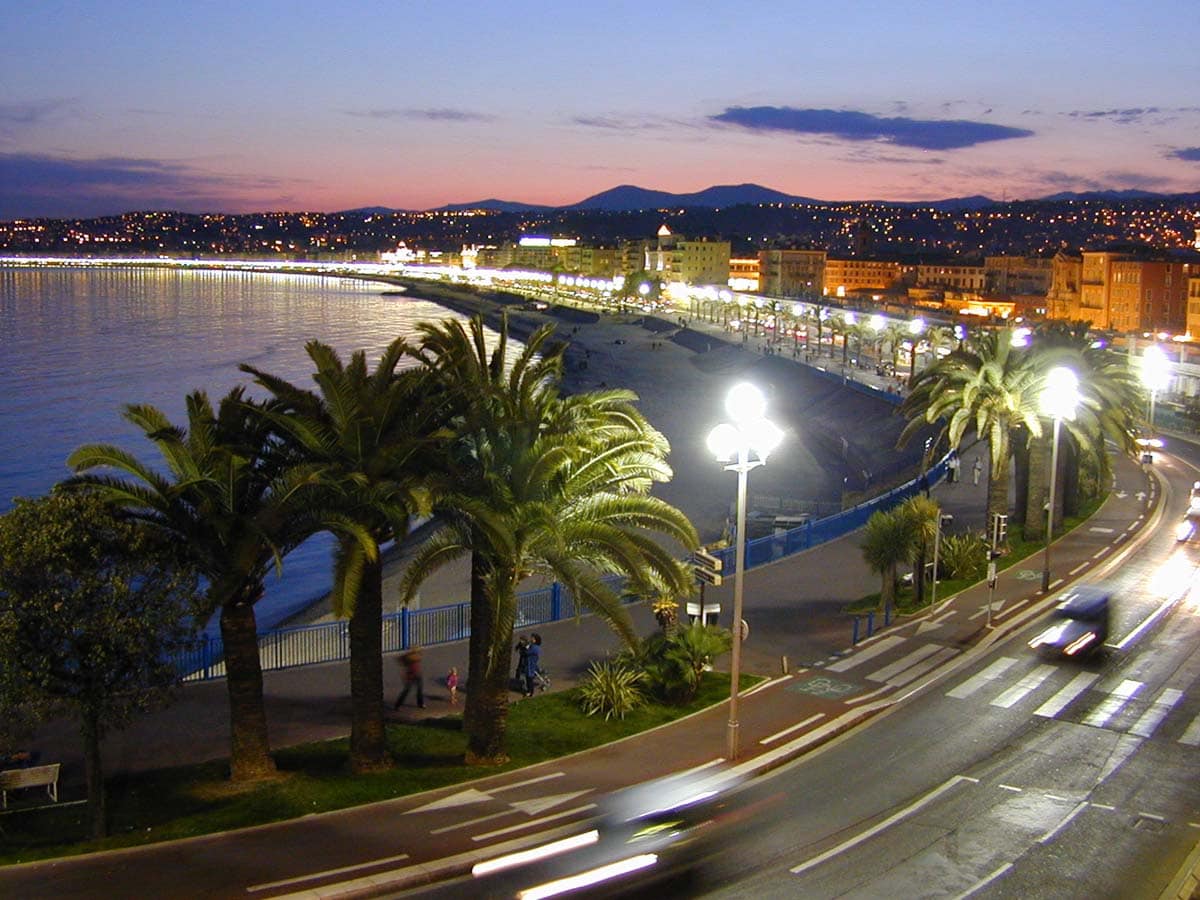
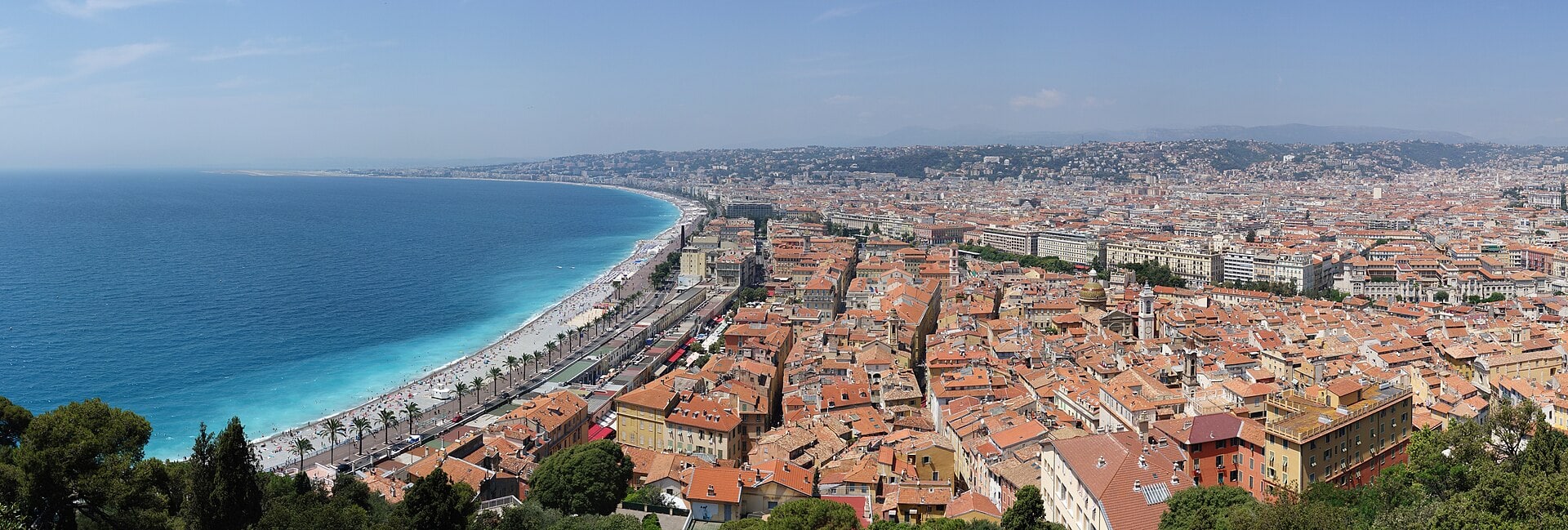
The Promenade des Anglais is the very heart of the city, and your first steps should lead right here. This seven-kilometre boulevard lines the breathtaking Bay of Angels, known in French as the Baie des Anges, and offers a perfect view over the endless blue sea. It was originally built in the nineteenth century by the British elite, who needed an elegant space for their afternoon strolls in the mild winter climate.

Today you’ll meet a colourful mix of locals and tourists here, from morning joggers to families on rollerblades and couples in love. On your walk, be sure to admire the fairy-tale façade of the Hotel Negresco, whose pink dome makes it one of the most famous architectural symbols of the entire French Riviera. Grab a coffee to go, sit down on one of the iconic blue benches facing the water and just watch the wonderful buzz around you. It’s the best free show in town.

💡 Tip: Head out onto the promenade as early in the morning as possible, when the light for photos is at its softest and you’ll reliably dodge the worst of the midday heat and the crowds.
2. The Old Town (Vieux Nice)

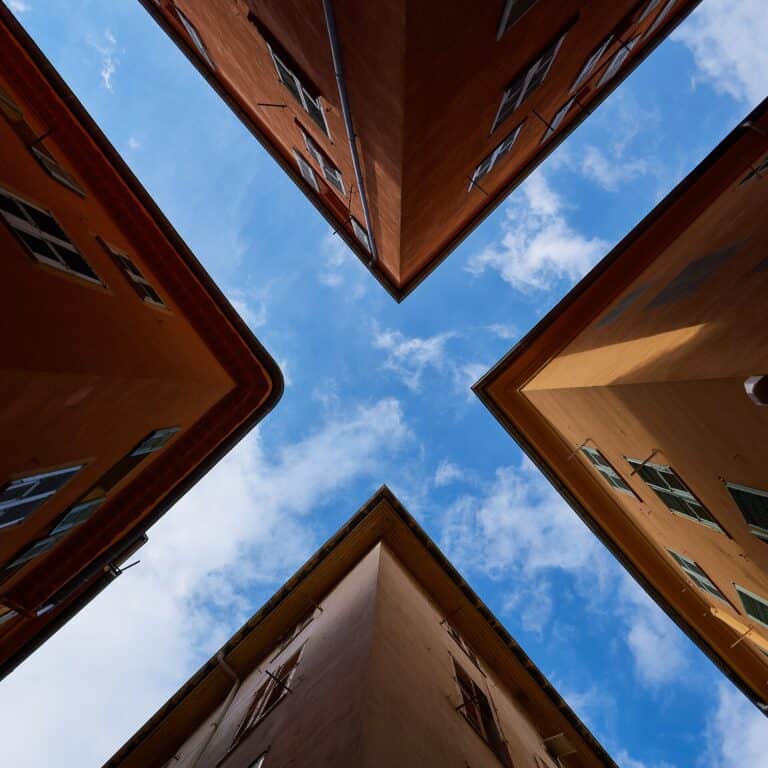
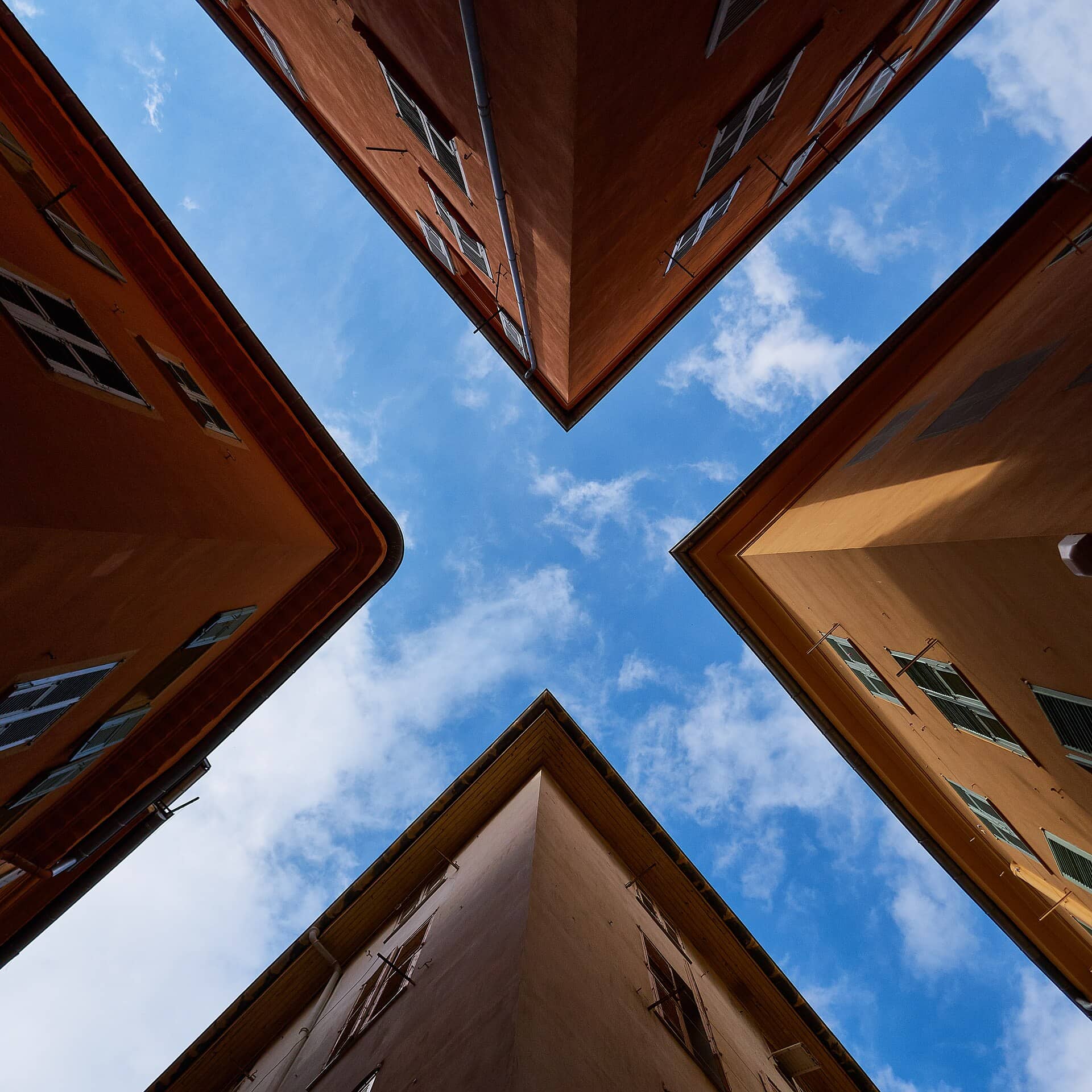
Right next to the bustling promenade lies Vieux Nice, a gorgeous old quarter full of narrow, shady lanes. The façades of the houses here glow in every conceivable shade of ochre, yellow and terracotta, a legacy of the strong influence of nearby Italy and the historic Savoy architecture. You’ll feel more like you’re in Genoa than in France. It’s exactly the kind of place where you most enjoy getting lost, discovering some hidden gem around every corner.

The old town’s atmosphere is completed by lines of hanging laundry, little artisan shops and surprisingly ornate baroque churches that look quite unassuming from the outside. I’d recommend wandering the lanes completely aimlessly and letting the smell of fresh pastries and Provençal herbs carry you along. When hunger strikes, drop into one of the small bistros for fresh pasta or a traditional Margherita pizza, which tastes absolutely fantastic here thanks to the Italian roots. In the evening the whole quarter lights up and becomes the main hub of the nightlife.

💡 Tip: If you want to experience the real atmosphere, avoid the main thoroughfares and head into the narrowest lanes, where you’ll only rarely bump into other tourists.
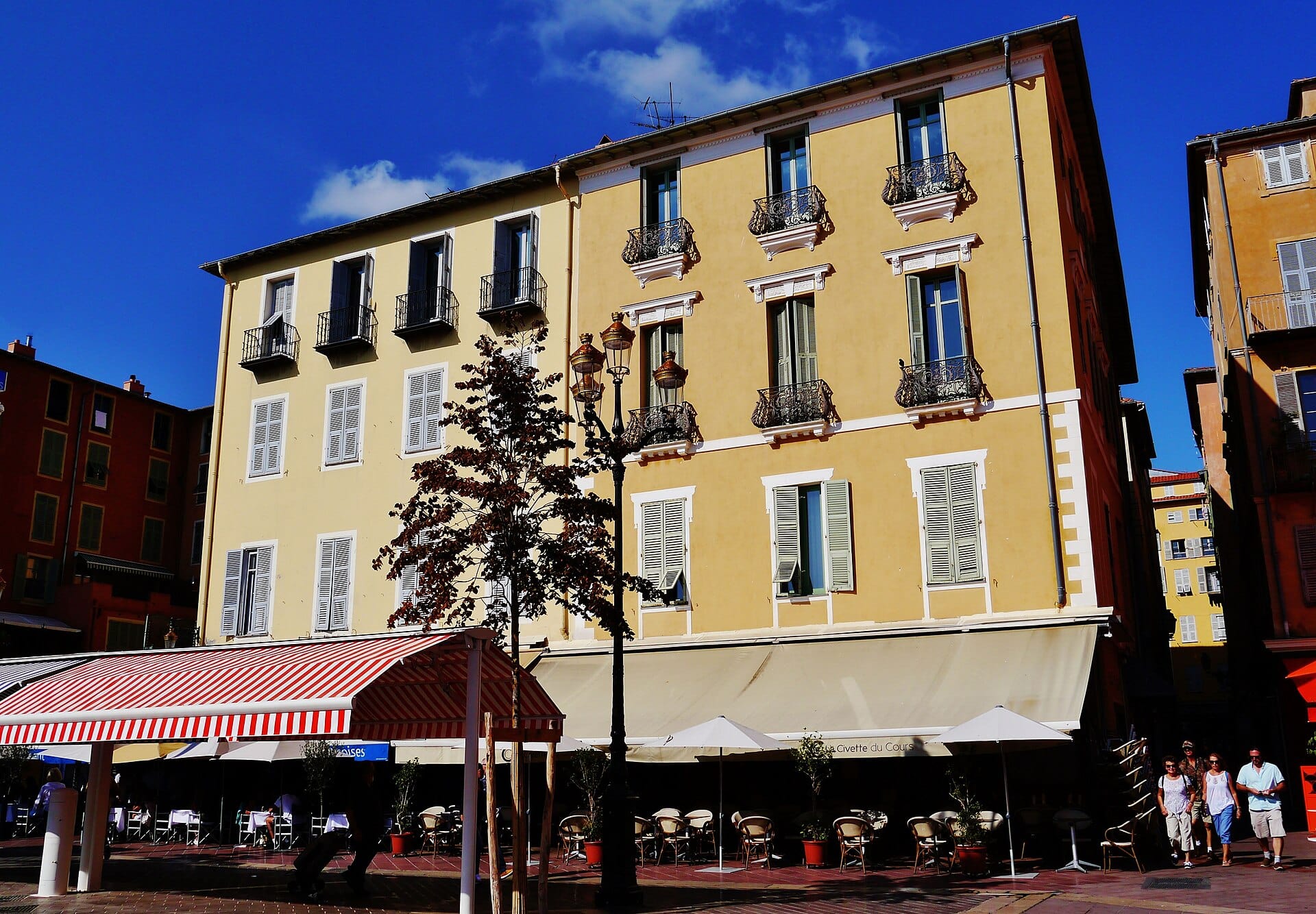
3. Cours Saleya Market and the Local Socca

Sooner or later your feet will unfailingly lead you to the long Cours Saleya square in the old town. This space serves as the city’s main marketplace and is a feast for all the senses. Every morning except Monday, vendors set out their stalls of fresh flowers, vividly coloured fruit, fragrant vegetables and a wonderful selection of local cheeses. It’s the ideal spot to pick up ingredients for an afternoon picnic by the sea.

This is exactly where you absolutely must try the cornerstone of local street food. Stop by one of the stalls and order a traditional socca, a thin, wood-fired flatbread made from chickpea flour. It’s served still hot and generously sprinkled with coarse black pepper. This naturally vegetarian treat costs just a few euros and pairs perfectly with a strong morning espresso, which will set you back about two euros at a nearby bar.

💡 Tip: On Mondays, instead of the usual food market, Cours Saleya hosts a huge flea and antiques market where you can hunt down real treasures and unusual souvenirs.
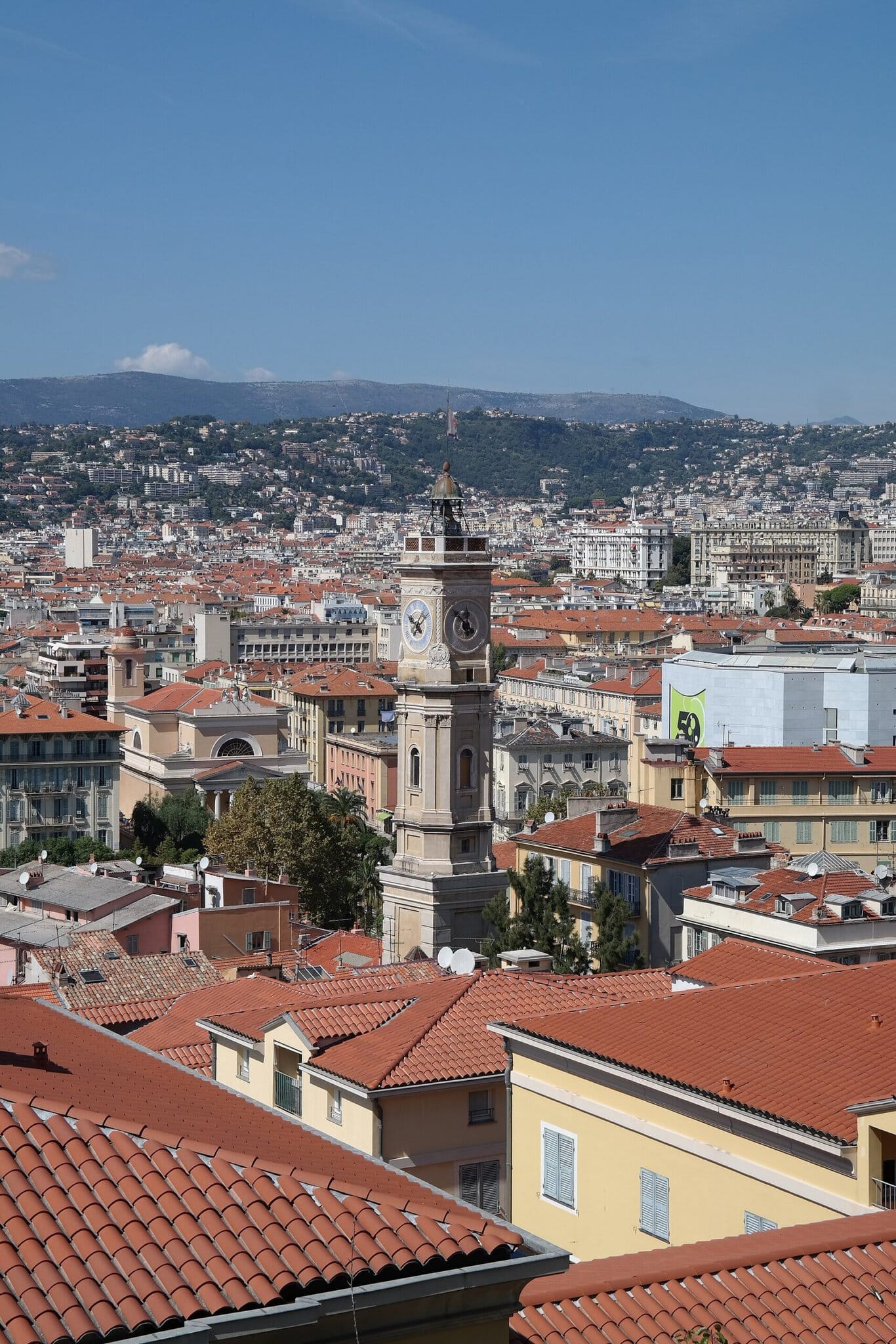
4. Colline du Château and an Unforgettable View

Once you’ve had just about enough of the old town’s bustle, head up Colline du Château hill to recharge. Don’t be fooled by the name, though — there’s been no majestic castle here for a long time, since the army of King Louis XIV razed it to the ground in the early eighteenth century. What remains is a beautifully spacious park full of mature pines, which provides much-welcome shade during the unbearably hot summer days.

From the top you’ll be treated to the single most iconic and most photographed view of the whole Promenade des Anglais and the azure sea below. The climb up hundreds of steps can be quite a workout in the summer heat, but luckily there’s also a free lift cleverly carved straight into the rock. You’ll find it at the foot of the hill near the coast, which saves you plenty of precious energy for the rest of your sightseeing.

💡 Tip: Up in the park there’s also a lovely artificial waterfall where the air cools pleasantly and you can capture gorgeous photos with a bright rainbow in the background.
5. Pebble Beaches and Swimming Right in the City

Unlike many other resorts along the coast, the city beaches in Nice are made up of large round pebbles. If you’re used to fine sand, don’t forget to pack water shoes, because walking barefoot over the scorching stones tends to be a rather painful experience. The reward for a bit of discomfort, however, is incredibly clean, crystal-clear water that sparkles on the sun in every imaginable shade of blue and begs for an instant dip.

The shore is divided into free public stretches and private beach clubs, where you can rent comfortable loungers and large parasols. The price for a lounger in a private club runs around 25 to 35 euros a day, which gets you comfort including service and access to clean showers. On the public beaches, keep an eye on your belongings and bring a really thick mat or a padded pad so the stones don’t dig into your back.

💡 Tip: If you’re truly craving fine sand, hop on a train and head to nearby Antibes or Menton, where you’ll find a much softer surface for a full day of lounging.
6. Marc Chagall National Museum

The city is a first-class art destination, because the unique light of the Riviera drew the greatest painters and visionaries here for centuries. One of the absolute highlights is the Marc Chagall National Museum, which houses his stunning cycle of seventeen large-format canvases carrying a deep biblical message. The artist himself actively took part in designing the building so that his masterpieces would have exactly the right natural lighting.

The museum’s spaces are incredibly calm and harmonious, while the enormous canvases glow in unbelievably rich tones of blue and red. The experience is heightened by a gorgeous garden full of olive trees and typical Mediterranean plants, where you can rest at a small café after your visit. Ideally book your tickets online in advance so you can skip the needless queues at the box office in the summer months.

💡 Tip: An audio guide is usually included in the ticket price and provides fantastic context on Chagall’s complex life and the rich symbolism hidden in his timeless paintings.

7. Musée Matisse in the Hilly Quarter

If you love modern art and the play of colour, your next steps should lead to the fascinating Musée Matisse. This exceptional museum is set in a beautiful seventeenth-century Genoese villa, whose deep red façade contrasts sharply with the surrounding greenery of tall trees. Henri Matisse spent much of his life in the city, and the collection includes everything from his early paintings to his famous colourful paper cut-outs.

The museum’s spaces aren’t gigantic, so the tour won’t wear you out for the rest of the day — but the exhibition is all the more intimate and powerful for it. Another big plus is the location itself in the hilly Cimiez quarter, which offers a perfect escape from the bustle of the overcrowded centre into the peaceful setting of olive groves. You can get here very easily by city bus straight from the centre, with the journey taking about twenty minutes.

💡 Tip: The museum is usually closed on Tuesdays, so plan your visit carefully for another day of the week so you don’t end up standing disappointed in front of locked doors.
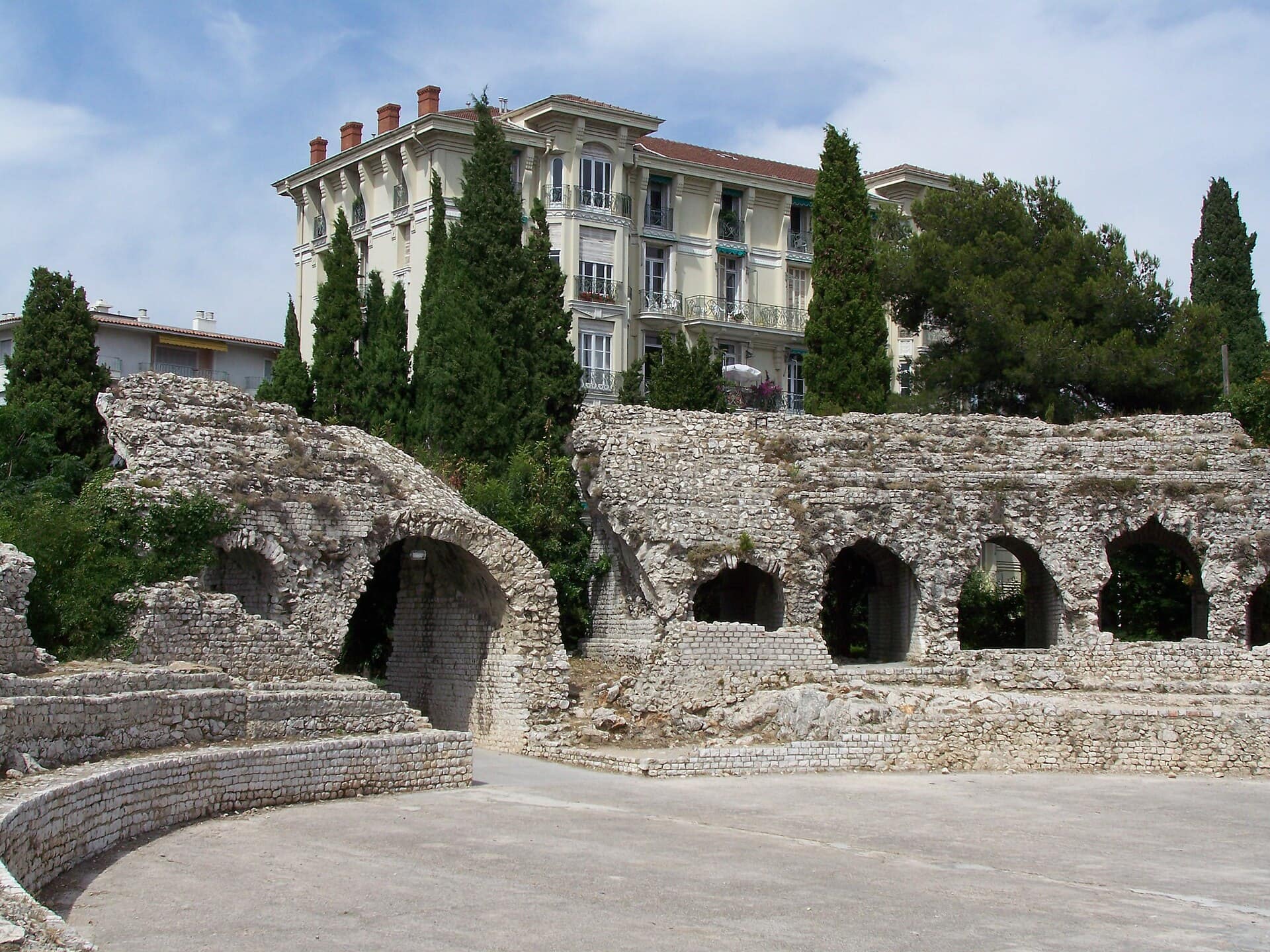
8. The Cimiez Quarter and the Ancient Roman Baths

Since you’ll already be heading to Cimiez for Matisse, definitely set aside time to explore the wider area too. This quiet and supremely elegant residential zone hides a huge slice of history, because this is where the ancient Roman settlement of Cemenelum once stood. To this day you can walk among the fascinating ruins of the old Roman baths and explore the remains of a small amphitheatre that breathes a genuine ancient atmosphere.

Right next to the archaeological ruins stands a beautiful Franciscan monastery surrounded by carefully tended gardens. The monastery gardens offer a gorgeous and very quiet view over the valley of the Paillon river, and unlike the seafront promenade, you’ll encounter only the bare minimum of tourists here. It’s the perfect spot for a moment’s rest with a good book or a small romantic picnic in the shade of century-old trees.

💡 Tip: Entry to the monastery gardens and the Roman ruins is often free, which makes this historic area a great tip for travellers on a tight budget.

lukas a lucka
Lukáš and Lucie recommend
Where to Stay in Nice
4 accommodations — hotels, wellness hotels and other accommodation options

9. St Nicholas Cathedral (Russian Cathedral)

As you stroll through the wider city centre, you might be completely taken aback by the sight of a building that visually doesn’t seem to belong here at all. St Nicholas Cathedral is in fact the largest Orthodox church outside Russia, and its richly decorated onion domes appear like an absolute apparition amid the Mediterranean townscape. It was built by the sizeable community of Russian aristocracy who came here for the warmth around the turn of the nineteenth and twentieth centuries.

The cathedral’s façade gleams with rich colours, striking gold details and precise ceramic tiles that make it an incredibly photogenic spot. Although the church is primarily a huge tourist attraction, it still fully serves its religious purpose, so you need to observe strict dress rules. Women should keep their shoulders and knees covered and ideally wear a scarf over their hair, while men must wear long trousers.

💡 Tip: The cathedral lies a little way from the main tourist centre, close to the train station, so you can easily walk here in about fifteen minutes.

10. February Wildness: The Nice Carnival

If you decide to take a chance and head to the south of France in February, a visual experience to last a lifetime awaits you. The city hosts the magnificent Nice Carnival, which in its size, tradition and electrifying atmosphere proudly stands alongside the famous celebrations in Venice or Rio de Janeiro. For two whole weeks the streets come alive with giant parades of allegorical floats, incredible light shows and thousands of dancers in extravagant costumes.

The absolute speciality of the local celebrations are the so-called flower battles (Bataille de Fleurs), held right on the Promenade des Anglais. Beautifully dressed models toss hundreds of thousands of fresh flowers from enormous floats straight into the enthusiastic crowd, creating an incredible spectacle of colour and scent. Tickets for the main stands tend to be quite pricey and, above all, sell out fast, so you need to buy them online several months in advance.

💡 Tip: During the carnival, definitely don’t miss the nearby Fête du Citron in Menton, where you’ll see giant and utterly bizarre sculptures built entirely from lemons and oranges.

11. How to Get Around the City Without a Car

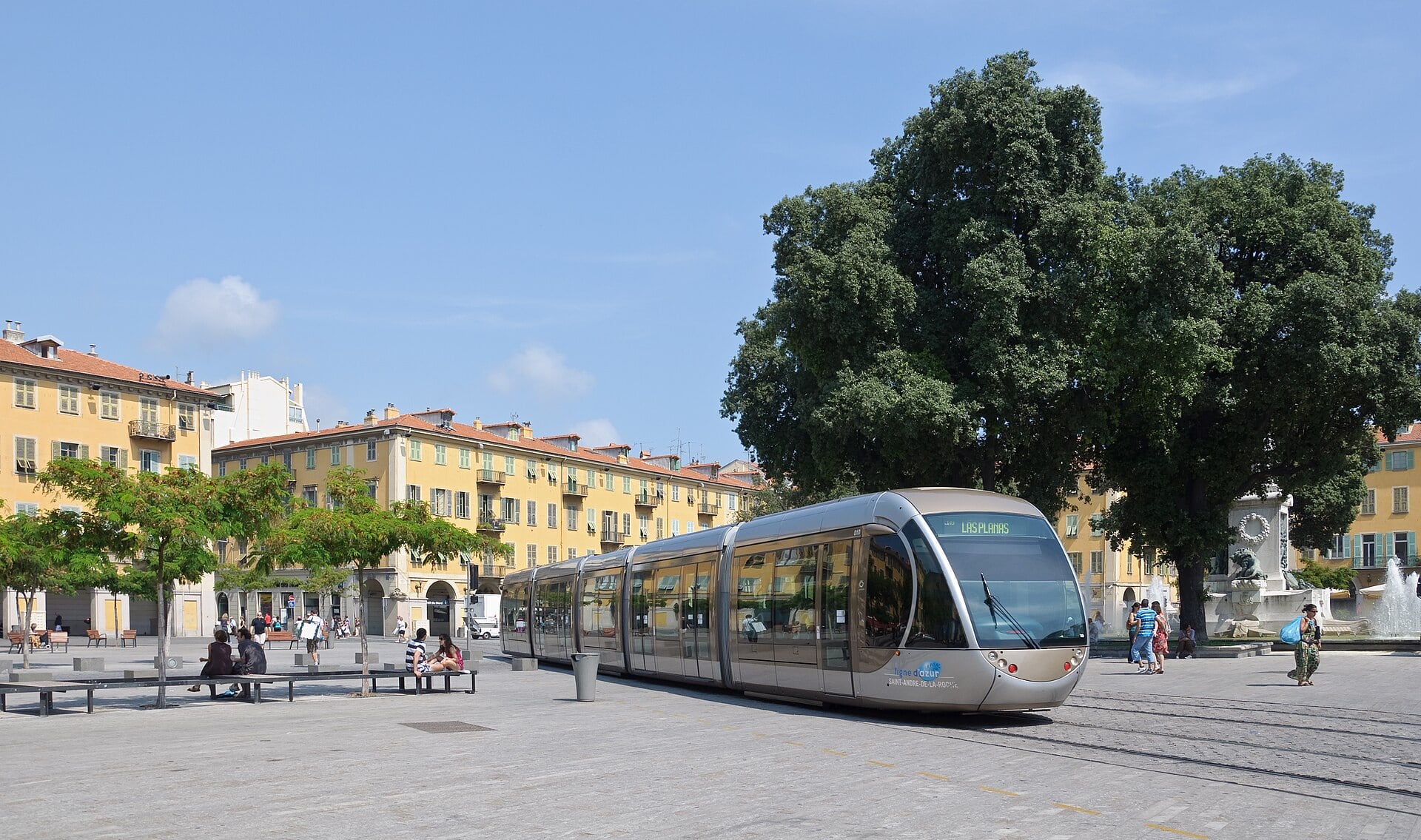
As I stressed in the introduction, renting a car on the Riviera is more of a huge burden than a real advantage. The city has a fantastic and very easy-to-navigate network of modern trams that will safely take you to all the main sights and to the international airport. The lines are perfectly clean, fully air-conditioned and run at really short intervals, so you’ll never be stuck waiting needlessly at a stop under the scorching sun.

For trips along the whole coast there’s the brilliant network of regional TER trains, which cross the line between Cannes and Menton. If you’re planning intensive journeys, get the great-value regional Pass SudAzur ticket, which unlocks unlimited travel across the whole département. Single train tickets can be bought from the blue machines at the station or via the SNCF app, and remember you must always validate a paper ticket in the yellow turnstile before stepping onto the platform.

💡 Tip: The L2 airport tram will take you from both terminals straight into the heart of the city in just under half an hour, and the ticket costs only a fraction of an ordinary taxi.

12. A Train Trip to the Luxury of Monaco

Once you’re based on the Riviera, it would be a crime not to visit the famous second-smallest state in the world. The train journey from Nice to Monaco takes just twenty minutes and a one-way ticket will set you back about four to six euros. The train station in Monaco itself is an enormous architectural gem carved deep into the rock, and after getting off you’ll find yourself right in the centre of all the action.

In a single day you can comfortably walk through the legendary harbour packed with the world’s most expensive yachts, see the famous casino in Monte Carlo and get up close to the Formula 1 race circuit. Definitely don’t skip the old town of Monaco-Ville towering high on the cliff, home to the Prince’s Palace and the gorgeous oceanographic museum with its giant aquariums. Just bear in mind that the prices for an ordinary coffee and lunch in a restaurant are even noticeably higher here than in France.

💡 Tip: You can easily and safely book various sightseeing cruises and organised boat trips along the coast in advance online through the popular GetYourGuide portal.

13. The Medieval Eagle’s Nest of Èze

If you long for heights and truly dramatic scenery, hop on a train and head east to the village of Èze. This fascinating medieval eagle’s nest balances on a steep cliff more than four hundred metres above sea level and is an absolute one-off in the whole region. The train takes you to the Èze-sur-Mer station down by the water, from where you can continue up by local bus or via the fairly demanding hike along the famous Nietzsche Path, where the great philosopher sought inspiration.

Èze itself is a tangled labyrinth of narrow stone lanes that unfailingly lead you higher and higher towards the sky. At the very top, in the ruins of an old fortress, lies the beautiful Jardin Exotique, a botanical garden full of huge cacti and varied succulents. The combination of spiny plants in the foreground and the endless blue water far below you is simply a breathtaking experience you mustn’t miss 😅.

💡 Tip: Set off on the hike as early in the morning as possible, or alternatively later in the afternoon, because the stone lanes fill with tourists around lunchtime and the climb in the summer heat is truly exhausting.

14. The Colourful Bay of Villefranche-sur-Mer

Just seven minutes by train from the main station in Nice, an entirely different and far calmer world awaits you. Villefranche-sur-Mer boasts one of the deepest and most beautiful natural bays on the entire coast, which reliably shelters the little town from strong winds and waves. The local colourful houses cascade down the steep slopes all the way to the crystal-clear water, creating a perfectly photogenic backdrop for your holiday snaps.

Compared with the busy metropolis, Villefranche offers a much more intimate and laid-back seaside atmosphere. Stroll along the charming waterfront full of great cafés and discover the fascinating dark alley of Rue Obscure, which is partly roofed over and served as a safe hideout from pirate raids in the Middle Ages. The local beach also has much finer pebbles and coarser sand, so getting into the water is far more pleasant and less painful than on the beaches in Nice.

💡 Tip: The town is fairly small, so you can easily combine your visit with a trip to the nearby Saint-Jean-Cap-Ferrat peninsula, dotted with luxury villas, which lies right opposite.

Where to Go Next from Nice and Beyond

The coast acts like a huge magnet, and the options for exploring are truly countless. If you head west by train, in just under an hour you’ll reach the famous Cannes, a byword for cinematic glamour, luxury boutiques and a broad palm-lined promenade. On the way, be sure to stop in historic Antibes, where you can walk the old ramparts and visit the great Pablo Picasso museum set right inside a former castle building.

If you’re tempted to explore the wider context of the whole region, take a look at our comprehensive article and guide covering the entire French Riviera. Many people dream of visiting iconic Saint-Tropez, but here I have to be honest and warn you. No railway runs into the town and the access road turns into a paralysed traffic jam in summer, so only go here outside the main season, in May or September. And if you prefer the quieter inland countryside with its scent of lavender, study our tips for the magical Provence.

Frequently Asked Questions

How to get from the airport to the center of Nice?

The fastest and cheapest option is to use the modern tram line L2, which connects both airport terminals directly with the city center. The journey takes about thirty minutes and you can conveniently buy a one-way ticket for just under two euros at the red ticket machine right at the stop in front of the terminal.

Is the tap water drinkable?

Yes, tap water is completely safe and drinkable throughout the French Riviera. You can confidently refill your own bottle at your hotel or from the many public fountains you’ll find dotted around parks and historic squares in town.

How much does food cost in a restaurant?

Prices here are understandably higher than back home. During lunch, it’s worth looking for the so-called Menu du jour (daily menu), which will cost you 15 to 25 euros for two courses. Dinner at a regular bistro without wine then costs roughly between 20 and 35 euros per person, while you’ll pay around two euros for a coffee at the bar.

How is it with tipping in France?

“`html
The restaurant bill always includes a mandatory fifteen percent service charge (service compris), so the tip is already factored into the price. However, it’s considered good practice to round up the amount or leave a few coins on the table. Be careful—adding a tip through the payment terminal is quite complicated.
“`

Do I need water shoes for the beach?

In Nice, definitely yes. The entire Bay of Angels and the adjacent public beaches are covered with relatively large and sun-heated pebbles, which are really very difficult to walk on barefoot. Water shoes will save you a lot of unnecessary pain when entering and exiting the sea.

How do TER regional trains work?

TER trains cross the coast between Cannes and Menton very reliably about three to four times per hour. You can buy tickets at the blue vending machines at the station or through the SNCF mobile app, and you must always validate your paper ticket in the yellow validator on the platform before boarding.

Is Nice safe?

“`html
The city is generally very safe, even for evening walks along the waterfront. However, during the peak tourist season, be very careful of skilled pickpockets, especially on crowded trams from the airport or in the crush of morning markets in the old town.
“`

Tips and Tricks for Your Vacation

Don’t Overpay for Flights

Search for flights on Kayak. It’s our favorite search engine because it scans the websites of all airlines and always finds the cheapest connection.

Book Your Accommodation Smartly

The best experiences we’ve had when looking for accommodation (from Alaska to Morocco) are with Booking.com, where hotels, apartments, and entire houses are usually the cheapest and most widely available.

Don’t Forget Travel Insurance

Good travel insurance will protect you against illness, accidents, theft, or flight cancellations. We’ve had a few hospital visits abroad, so we know how important it is to have proper insurance arranged.

Where we insure ourselves: SafetyWing (best for everyone) and TrueTraveller (for extra-long trips).

Why don’t we recommend any Czech insurance company? Because they have too many restrictions. They set limits on the number of days abroad, travel insurance via a credit card often requires you to pay medical expenses only with that card, and they frequently limit the number of returns to the Czech Republic.

Find the Best Experiences

Get Your Guide is a huge online marketplace where you can book guided walks, trips, skip-the-line tickets, tours, and much more. We always find some extra fun there!
Volcanoes in Iceland: Active Reykjanes, Craters & Where to See Lava 2026

TL;DRThe active volcanic zone on the Reykjanes peninsula has seen twelve eruptions since 2021. Evacuated Grindavík stays off-limits, but you can safely visit the lava fields near Fagradalsfjall, the geothermal area at Krýsuvík/Seltún and the Gunnuhver hot spring — all free of charge. Nobody can guarantee you’ll see flowing lava, but the Lava Show in Reykjavík or Vík is a sure bet (from 5,900 ISK). For the rawest Mars-like scenery, head north to Mývatn: the Hverir geothermal field, the Krafla crater with its Víti lake, and the Dimmuborgir lava maze. The eruptions are effusive, so flights through Keflavík aren’t affected. The best time to go is late May to mid-October.

The wind smacks you in the face the moment you first step out of the airport terminal in Keflavík, and the air smells of damp earth and faintly of sulphur. All around you stretches an endless plain of black-grey lava carpeted with a thick layer of moss, so you feel as if someone has just dropped you off on another planet. That’s exactly how I remember arriving in Iceland with Lukáš at the turn of September and October 2018 — and how we first came face to face with the volcanoes in Iceland.

There’s no gentle warm-up here — this country throws you straight into its raw and utterly fascinating world. Our main goal back then was nature, and of course we were curious about what the Icelandic volcanoes look like up close.

Although we didn’t see flowing lava at the time, because it happened to be a quieter period, we experienced the volcanic and geothermal landscape in plenty of places. On the very first day we walked among bubbling mud pools, and when we later stood on the ninth day of our road trip up north by Lake Mývatn, I literally felt like I was on Mars.

In recent years the situation has changed a lot, though, and volcanic activity on the Reykjanes Peninsula makes headlines almost constantly. Since 2021 the area near the airport has come to life and one eruption follows another.

In this article you’ll find a complete guide to volcanic Iceland along with plenty of tips on what to see and do in the active areas. I’ll show you where to find the most beautiful crater lakes, how things currently stand with safety, and why you really don’t need to worry about an eruption cancelling your flight home.

TL;DR

  • No danger to aircraft: Eruptions on the Reykjanes Peninsula are effusive, which means the lava flows out calmly and no volcanic ash is produced. Keflavík Airport operates without restrictions.
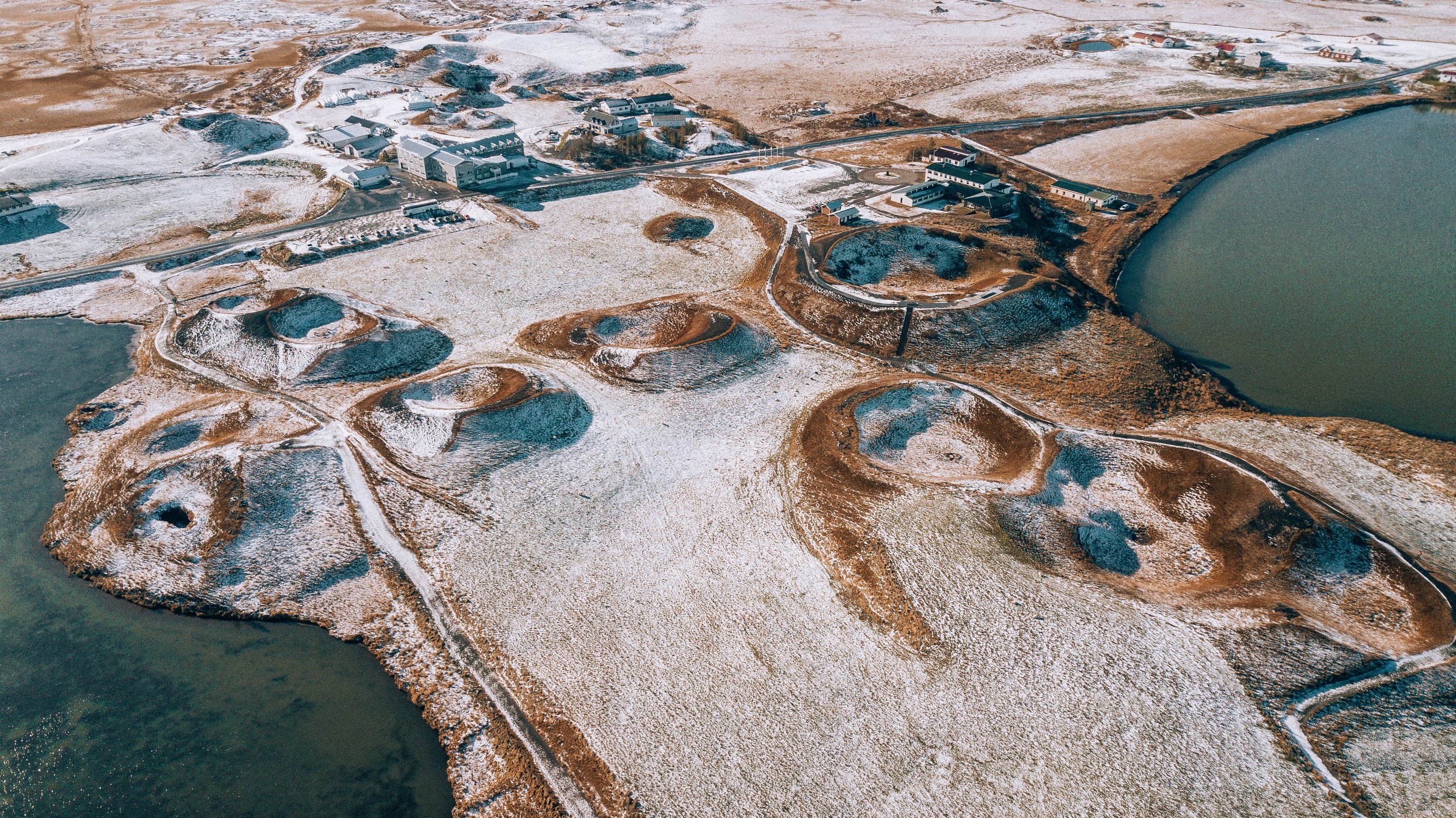
  • Where to see geothermal wonders for free: The Krýsuvík and Seltún area (a short drive from the airport) offers gorgeous colourful mud pools and hot springs.
  • Evacuated Grindavík: The little town is closed to tourists because of ground fissures and is strictly guarded — respect that and don’t try to get in.
  • The best volcanic landscape is up north: If you want to see a lunar landscape, head to Lake Mývatn, walk through the bubbling Hverir and peek into the Víti crater by the Krafla volcano.
  • Nobody can guarantee flowing lava: Seeing fresh lava depends on huge luck with an ongoing eruption, but in Reykjavík you can visit the Lava Show, where they show you molten lava live.
  • Safety first: Before any trip into the wild, absolutely always check safetravel.is.

When to go and how to get there

Iceland is a year-round destination, but if you want to enjoy a road trip without constant stress over snowstorms and impassable roads, the best time to go is from late May to mid-October. Major carriers such as Ryanair, easyJet and Icelandair serve Keflavík from many European hubs, and the flights take roughly a few hours. Icelandair with a connection is a great choice too, because of its brilliant Stopover programme, which lets you break your trans-Atlantic journey in Iceland for up to seven nights at no extra cost to your ticket.

We traditionally hunt for cheap flights on our favourite price-comparison portals, but watch out for old printed guidebooks that often mention the budget airline PLAY Airlines, because it went bankrupt back in autumn 2025. If you’re planning a trip for August 2026, brace yourself for absolute madness, because on 12 August Iceland will experience a total solar eclipse visible directly from Reykjavík and Reykjanes — accommodation has been sold out well in advance and flight prices are astronomical.

To explore volcanoes and craters outside the capital you’ll absolutely need a car, because public transport beyond the metropolis is fairly limited even in summer. Lukáš and I have long had a good experience with car-rental comparison sites that we use all around the world. Definitely pay extra for quality insurance against paint damage from ash and sand (SAAP), because the Icelandic wind can literally sandblast a car down to bare metal with fine volcanic dust in a matter of minutes.

Also keep in mind that since 2026 Iceland has a new kilometre-based tax instead of a fuel tax, which for passenger cars and SUVs comes to ISK 6.95 (about €0.05) per kilometre driven, and the rental company will reliably charge it when you return the vehicle. And one small but absolutely crucial piece of practical advice: it’s so windy in Iceland that if you carelessly open the car door, the wind can tear it off its hinges — something no insurance covers — so always park into the wind and hold the door firmly with both hands when opening it.

Where to stay and how much it costs

The best strategic base for exploring south-west Iceland and the active Reykjanes Peninsula is clearly Reykjavík itself or the towns in its immediate vicinity. Don’t worry — the current volcanic activity in no way threatens the capital, because the eruptions take place roughly forty kilometres away and the lava flows into uninhabited valleys.

Accommodation in Iceland has never been cheap, and in high season prices rise even further, so it’s ideal to book everything several months in advance.

💡 Specific accommodation tips (check prices and availability on Booking.com, and book early — in season and around the 2026 eclipse they vanish months ahead):

For a decent double room in a simpler guesthouse with a shared bathroom you’ll pay around ISK 15,000 to 20,000 per night (about €100 to €135), while classic hotels in central Reykjavík with an en-suite bathroom and breakfast start at roughly ISK 30,000 (over €200) per night.

Booking.com is our favourite hotel search engine, and especially in Iceland it paid off enormously to look for accommodation with a small shared kitchen. By cooking your own dinners from local ingredients you save a fortune, because eating in restaurants takes a truly gigantic chunk out of your budget.

Active Reykjanes: 5 places you have to see

The Reykjanes Peninsula works like a huge geological laboratory broadcasting live, and it’s here that Iceland’s most famous volcanic eruptions are currently taking place. Since March 2021 the area has woken up to incredible activity and there have already been twelve volcanic eruptions that have completely redrawn the local maps.

The whole peninsula lies right on the rift where the North American and Eurasian tectonic plates pull apart, so the land here literally breathes, cracks and hisses in many places. Let’s take a look at the specific spots you can explore in complete safety.

1. Krýsuvík and Seltún (geothermal fairy tale)

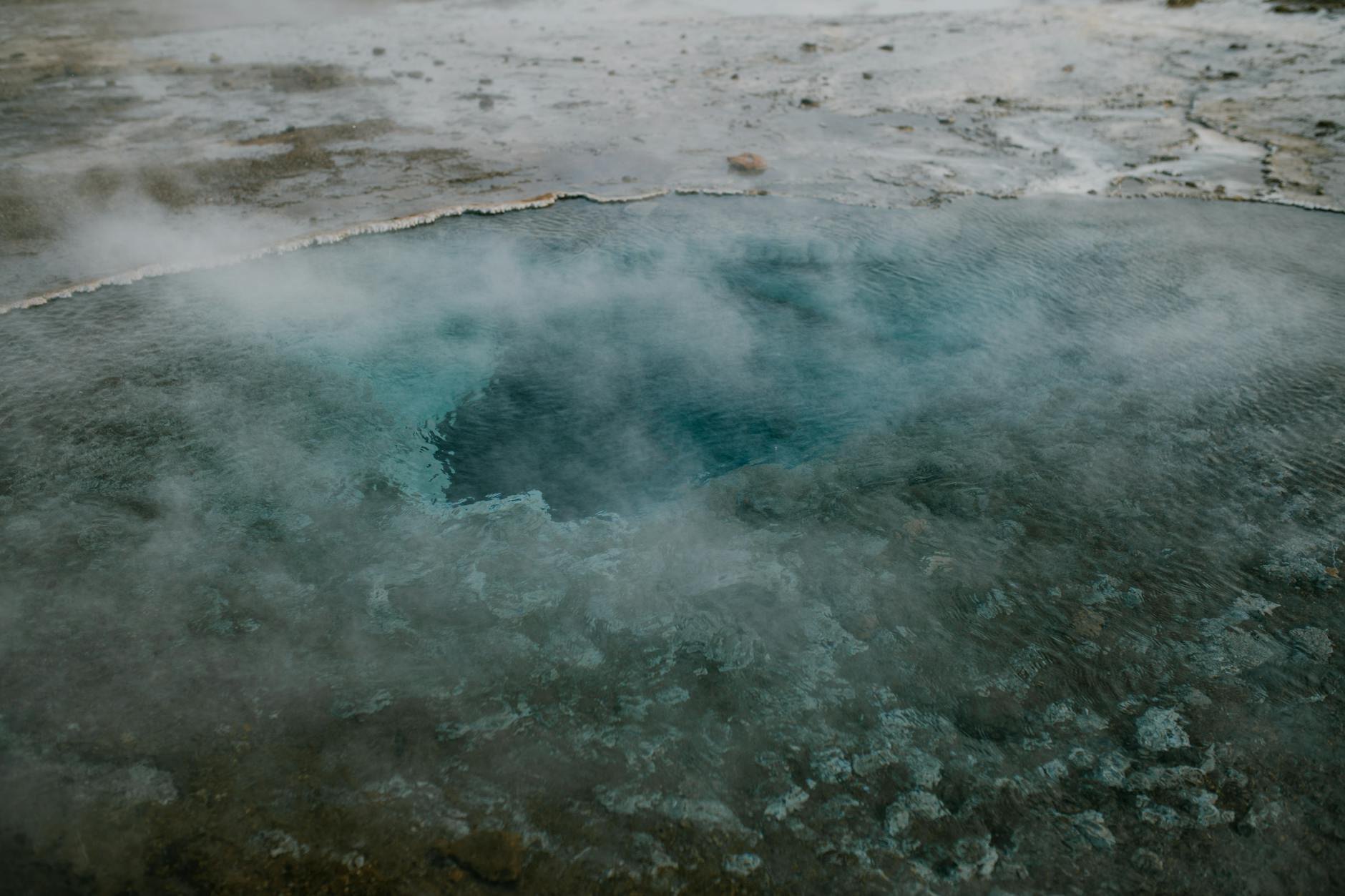
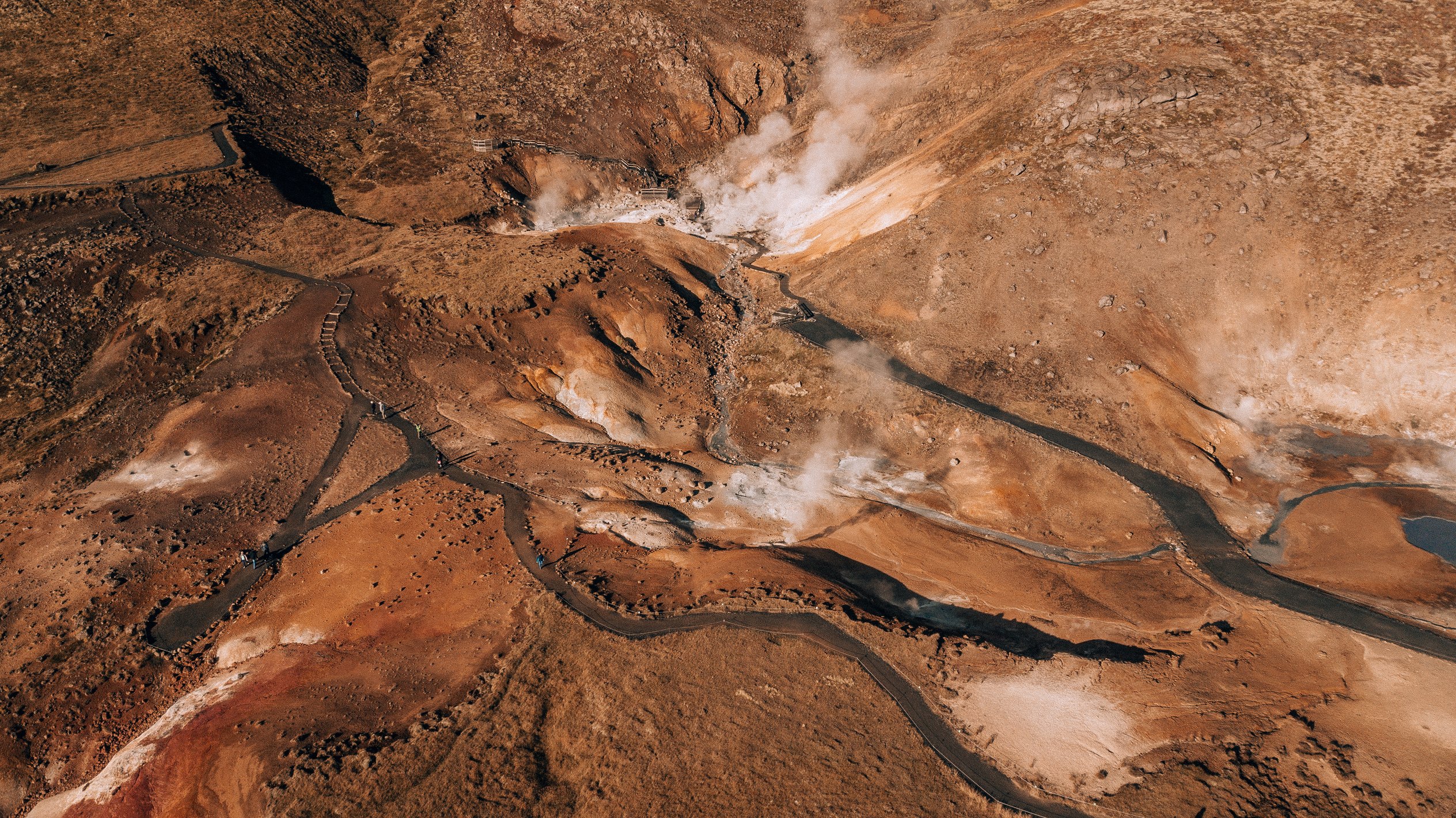
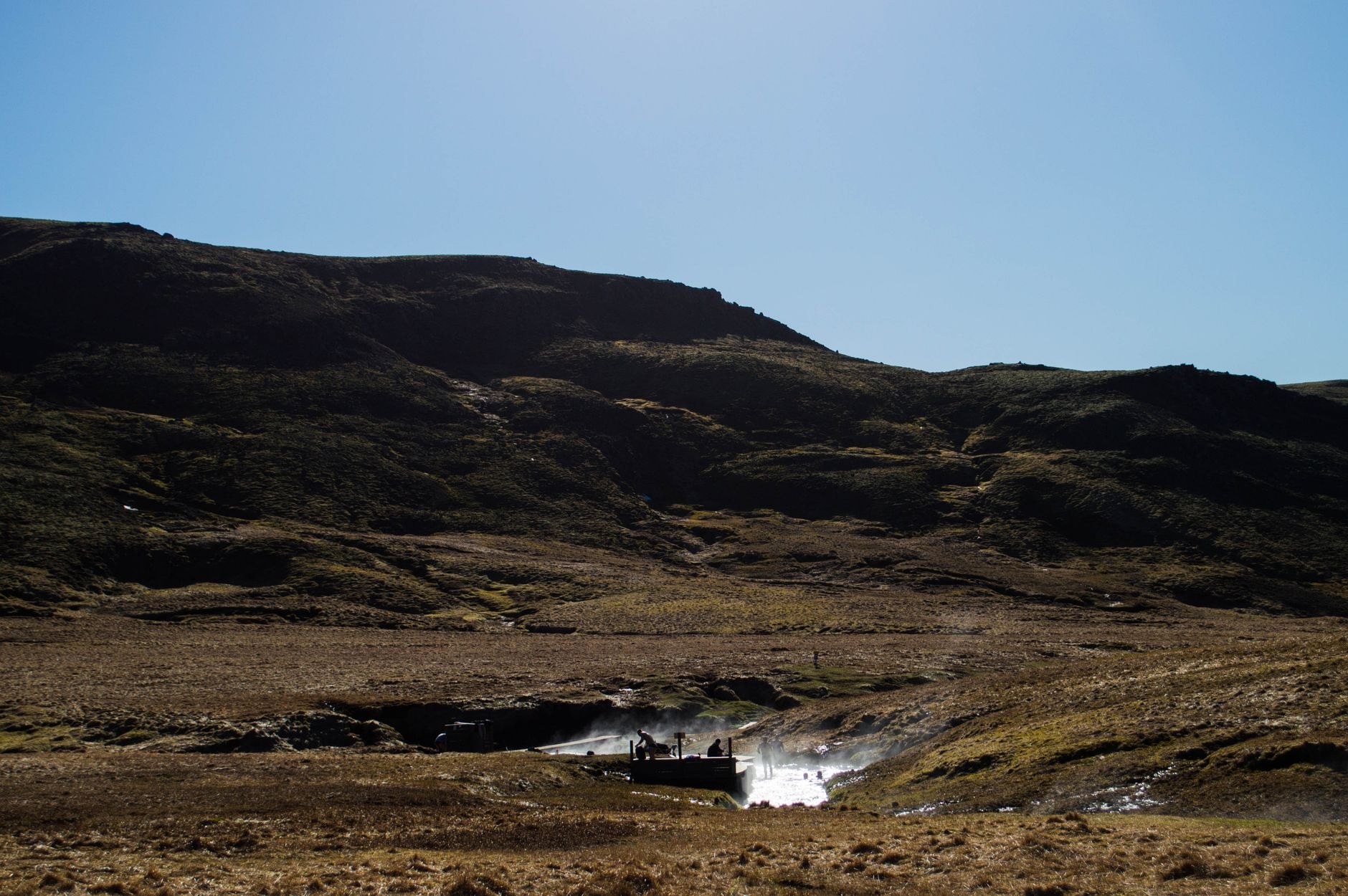
When we arrived in Iceland, on the very first day we headed straight from the airport to the geothermal area of Krýsuvík, often marked on maps as Seltún, which lies about half an hour’s drive from Reykjavík. It’s an absolutely magical place just a short walk from the main road, where you stroll along wooden boardwalks right between hot springs and bubbling mud.

We spent a very pleasant hour there taking photos, and for the very first time we experienced that typical sulphurous odour and hissing steam first-hand.

The ground here plays with utterly incredible shades of bright yellow, brick red and poison green, all thanks to various leached-out minerals and tiny thermophilic bacteria for which this extreme environment is a natural home.

Entry is completely free, the area is perfectly accessible, and there aren’t nearly as many coaches full of tourists crowding in as at the famous nearby Golden Circle, so you can savour that raw Icelandic atmosphere in pretty pleasant peace.

2. Gunnuhver and the Bridge Between Continents

If you’re exploring the western coast of the Reykjanes Peninsula by car, you definitely shouldn’t skip a stop at the Gunnuhver geothermal field. It’s an enormously mighty and surprisingly loud mud vent from which such thick steam rises that at times you really can’t see even a step ahead, and the sound of escaping gases sometimes resembles a jet plane taking off.

According to an old Icelandic legend, an evil spirit named Gudrun haunts this place — a clever local priest imprisoned her forever in a hot spring — and when you’re standing there in that roaring thick mist, you actually find these tales pretty easy to believe 😅.

Just a little further up the road to the north you’ll find the so-called Bridge Between Continents, a roughly fifteen-metre metal footbridge that arches elegantly over a deep sandy fissure in the black lava field.

It symbolically connects Europe and North America, so you can literally run from one mighty tectonic plate to the other in just a few seconds. It’s a fairly quick and interesting stop to stretch your legs after a long flight, and once again there’s no entrance fee whatsoever.

3. Evacuated Grindavík and the Fagradalsfjall lava fields

When the news talks about Icelandic volcanoes today, most people think of the area around the small fishing town of Grindavík, which until recently was home to just under four thousand local residents. But because of the massive fissures in its streets and the extreme amount of magma beneath the surface (in late May 2026 a record of more than 26 million cubic metres was measured here), the town had to be completely evacuated and has become rather a sad ghost town.

The authorities strictly prohibit entry here, all access roads are guarded by rescuers, and the area really is life-threatening, so please don’t try to sneak in out of curiosity and do respect the closures.

You can, however, head without any problem to the maintained car parks by the Fagradalsfjall volcano, where those very first well-known eruptions took place between 2021 and 2023. You’ll see huge and fascinating new lava fields, from which light smoke still rises in certain spots, even though the lava itself no longer flows.

Well-marked routes run through here — the most popular route A is about seven kilometres and takes you two to three hours of fairly steep climbing, while the shorter route C offers a roughly four-kilometre and even steeper hike for great views. The large car park at the foot is chargeable, and parking can be paid very conveniently via a local mobile app.

4. The Blue Lagoon and volcanic tension

The iconic Blue Lagoon with its beautiful milky-blue water lies in the immediate vicinity of the highly active Svartsengi volcanic zone, and in recent years it has been through a truly wild period thanks to the nearby eruptions. Because of increasing volcanic activity, local rescuers have had to evacuate it several times as a precaution, and it now has to be protected by newly built huge earthen berms designed to divert any flow of unstoppable lava.

The complex has a brilliantly worked-out evacuation plan and since spring 2026 has been safely reopened in a so-called dynamic mode, but as a visitor you simply have to accept that the situation can change from one day to the next and your long-planned reservation may be cancelled.

The water in the lagoon is a lovely 37 to 40 degrees and contains healing silica mud that you can smear on your face as a natural mask right while bathing. A basic ticket costs roughly ISK 11,990 (a little over €80), and booking many weeks in advance is an absolute must these days.

A little practical tip for the ladies: that mineral water does amazing things for your skin, but it will turn your lovely hair into unmanageable straw for several long days, so definitely coat it with a huge layer of conditioner from the changing room before you get into the water and tie it up high.

5. Sky Lagoon as a calmer alternative

If the volcanic risk around the Blue Lagoon scares you a little, or you simply don’t want to spend time in massive crowds of tourists, Reykjavík offers one absolutely fantastic and much newer alternative called Sky Lagoon. It lies just a few minutes’ drive from the city centre, so getting there is no trouble at all, and unlike the lunar wilderness on the Reykjanes Peninsula it offers a breathtaking infinity pool that optically blends perfectly with the cold waters of the Atlantic Ocean.

The water here is beautifully clear and hot, and the whole complex is lined with artificial cliffs of dark basalt and traditional Icelandic turf houses. Entry with the basic Pure package, which includes the absolutely amazing seven-step Icelandic Skjól ritual, ranges between ISK 12,000 and 14,000 (roughly €80 to €95).

During this ritual you’ll warm up in a glass sauna with a giant window overlooking the ocean, walk through a refreshing cold mist and finish by scrubbing your body with a salt exfoliant — all of which feels far more intimate and luxurious than the more famous Blue Lagoon.

💡 Tip: It’s worth buying tickets and organised tours (of Iceland and beyond) online in advance on GetYourGuide — they fill up fast in season.

Craters and lava caves of the south and west

If you’re immensely interested in volcanic activity but the Icelandic volcanoes just happen to be spewing no lava at all, there’s absolutely no need to despair. The southern and western parts of the island offer an incredible number of ancient craters, perfectly preserved calderas and mysterious underground caves that you can explore in complete safety and without any fear of an unexpected eruption.

What’s more, a huge number of them are within perfect reach of a relaxed day trip from the capital.

1. Kerið (red crater with a blue eye)

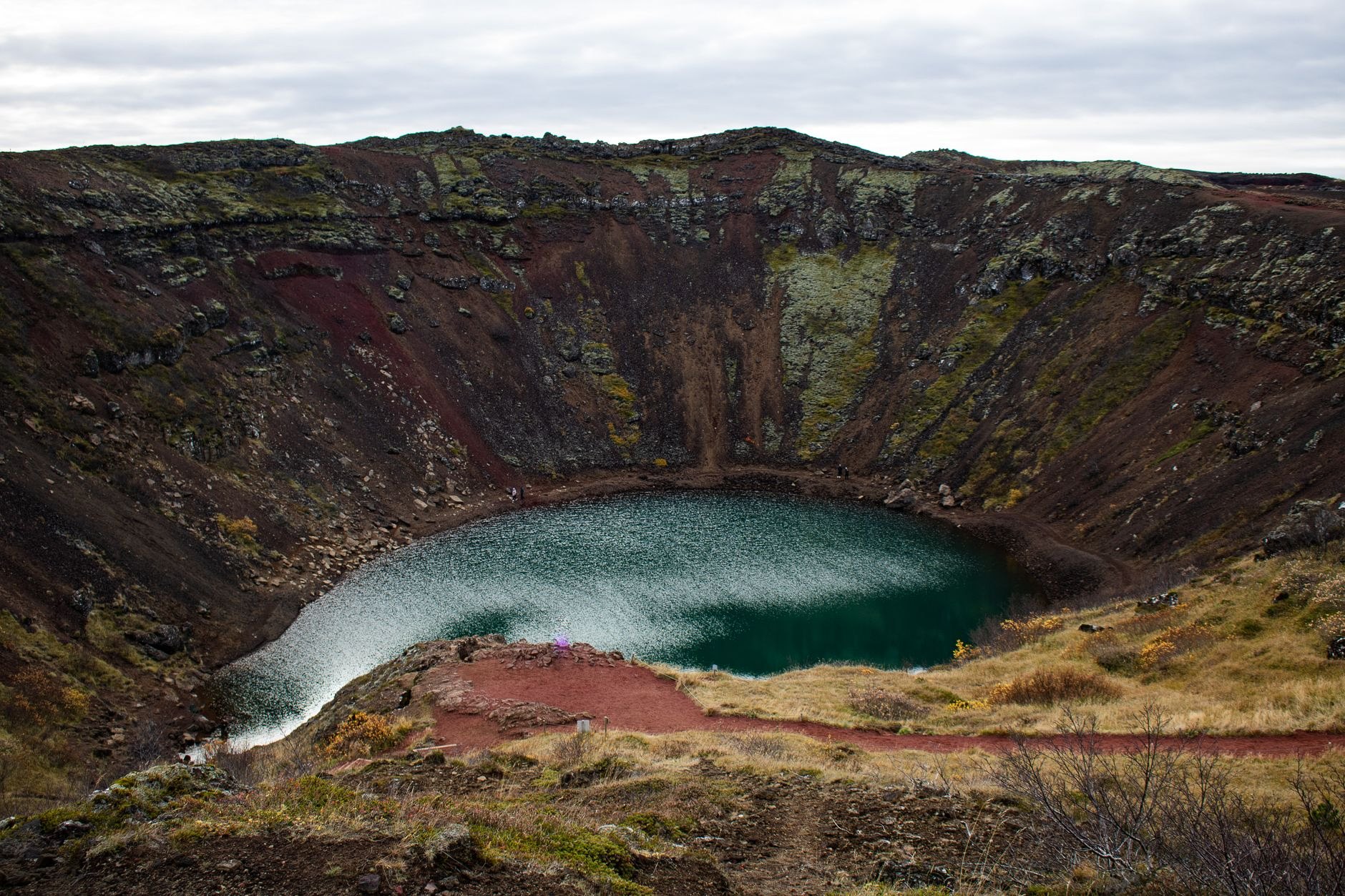
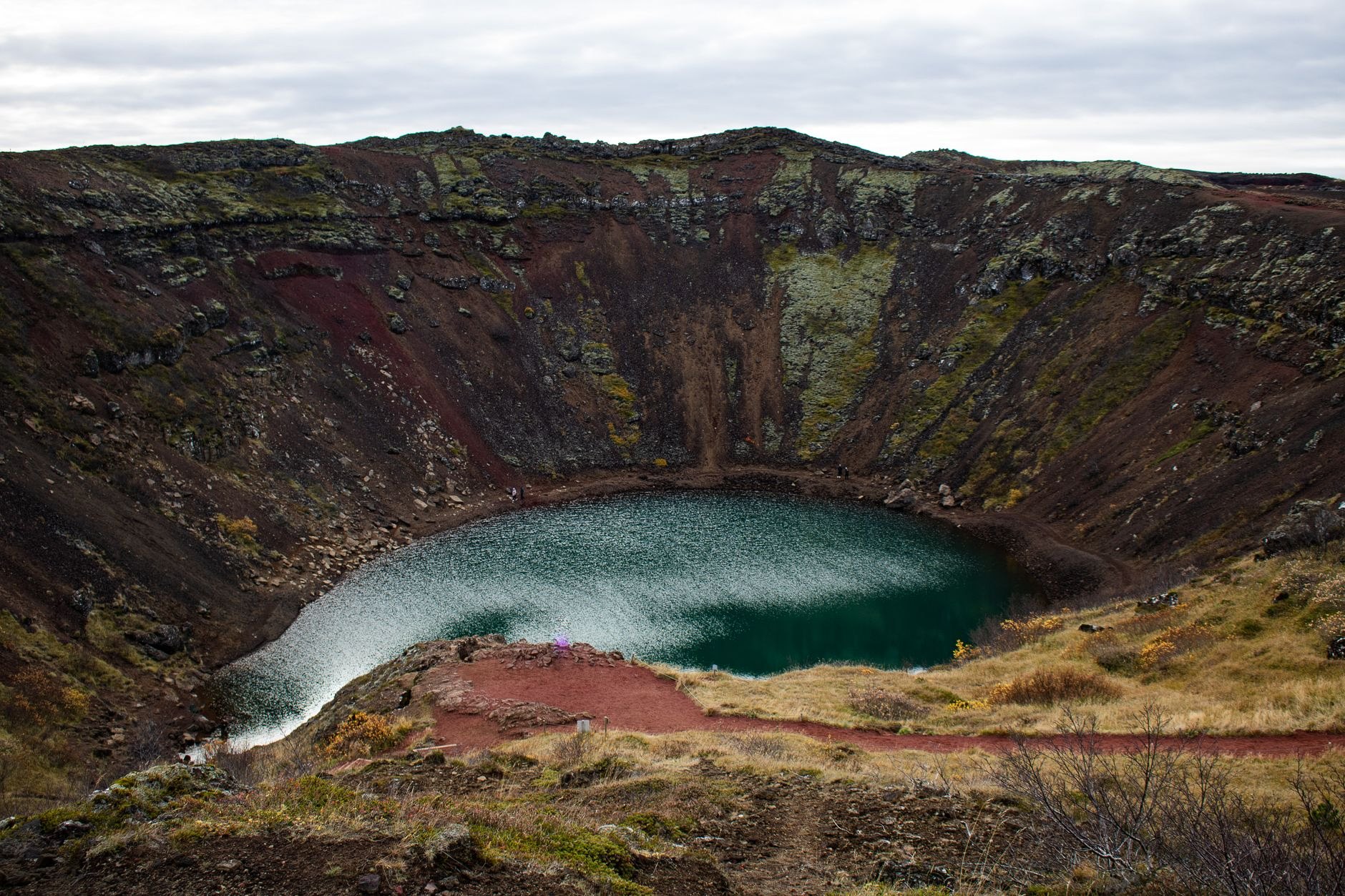
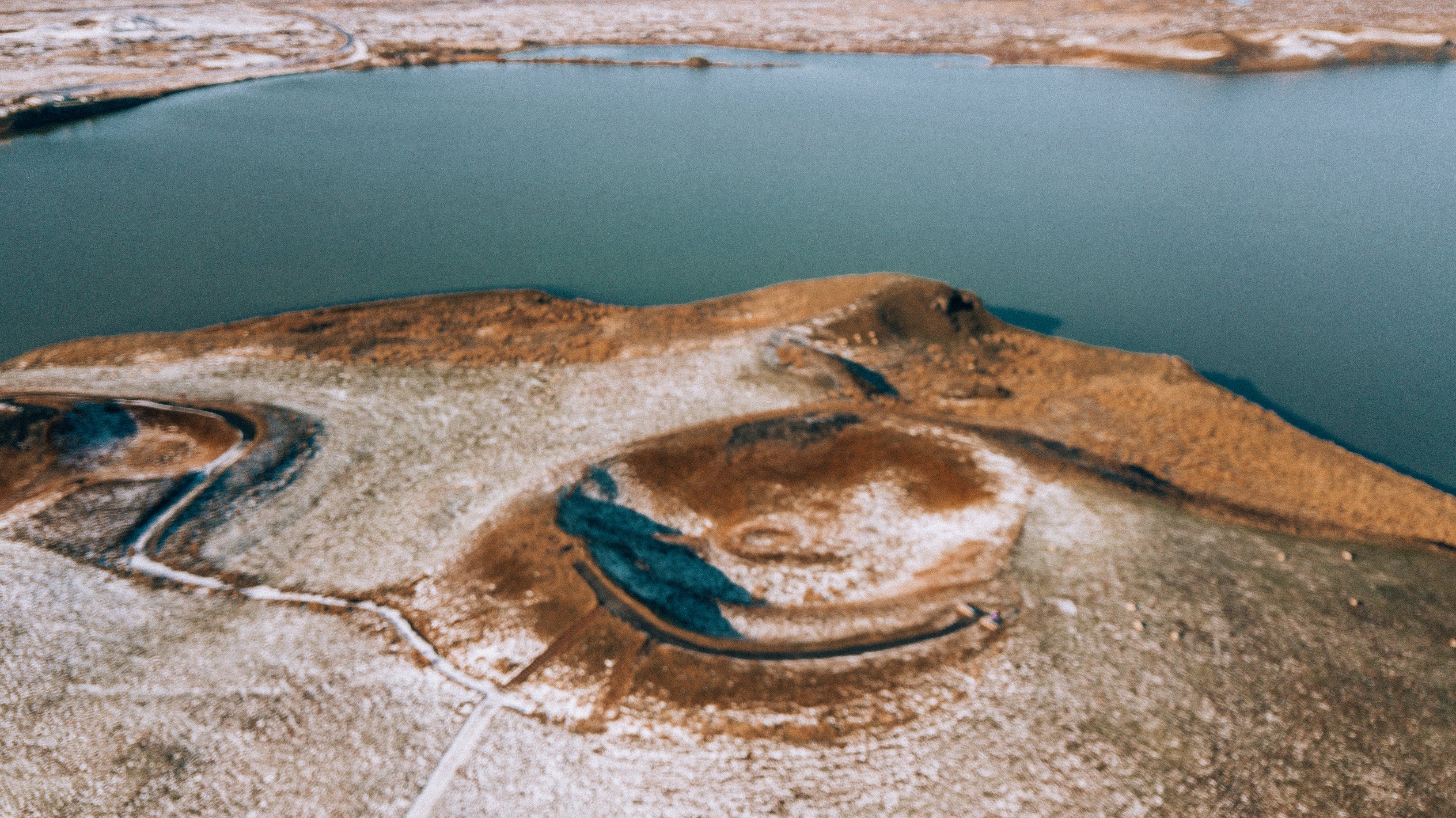
A stop at the majestic Kerið crater was one of our very first big experiences on the very first day of our Icelandic journey. This ancient volcanic crater, which geologists estimate to be more than three thousand years old, has incredibly rich red walls made of coarse volcanic scoria, and at its very bottom lies a vivid blue, opaque little lake.

That natural colour contrast is even more striking in person than in any retouched photo from the internet, and back then we spent a lot of time there just quietly watching the reflections on the calm surface of the water.

You can comfortably walk along the entire upper rim of the crater, which offers a truly gorgeous panoramic view over the varied surroundings, and then descend all the way down to the water on maintained wooden steps.

Kerið lies on the immensely popular Golden Circle tourist route, and as one of the few purely natural sights in all of Iceland it has a paid entry, which currently comes to ISK 600 per person (about €4), while children under twelve luckily get in completely free.

2. The Raufarhólshellir and Vatnshellir lava caves

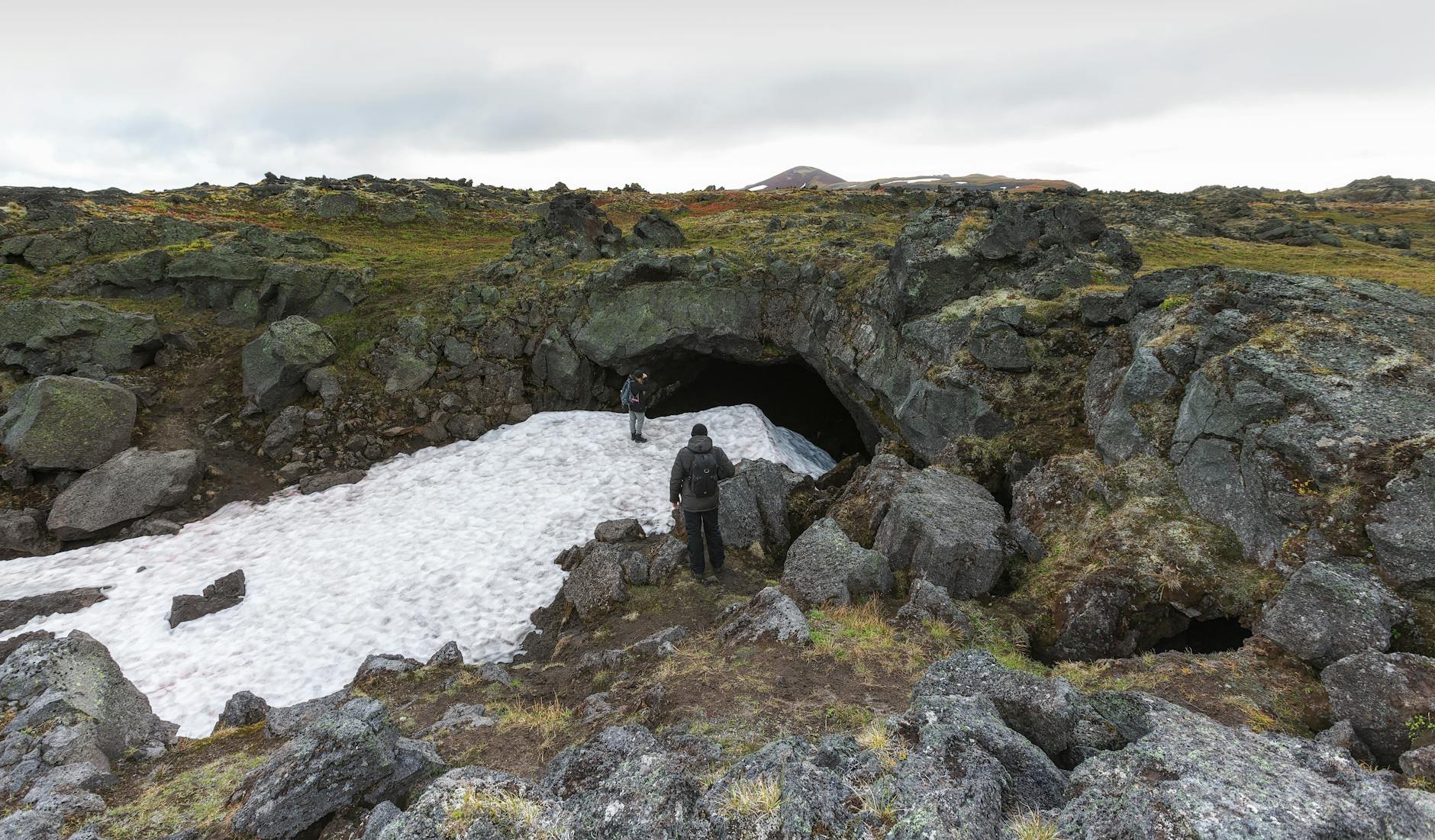
Do you want to see with your own eyes exactly what happens deep beneath the surface after scorching liquid magma has raced through at enormous speed? About thirty minutes’ comfortable drive from Reykjavík you’ll find the very popular Raufarhólshellir cave, a massive, kilometres-long lava tube with beautifully colourful mineral walls and gorgeous ice stalagmites that form naturally here during the colder winter months.

A basic one-hour tour with a very funny local guide costs around ISK 8,900 (about €60) and safely takes you into mysterious places you certainly wouldn’t dare venture into on your own.

Another really great and slightly wilder option is Vatnshellir cave, hidden on the magical Snæfellsnes Peninsula in the west of the country, into which you carefully descend down a narrow spiral metal staircase to a respectable depth of thirty-five metres. Entry here is a touch friendlier by Icelandic standards and comes to roughly ISK 5,400 for an adult (around €35).

In both cases you’ll be handed a protective helmet with a headlamp at the start of the tour, and you have to be prepared for the fact that deep underground it stays very uncomfortably cold all year round, so definitely don’t forget to bring a warm winter jacket and gloves even in the middle of summer.

3. Descent into the heart of the Þríhnúkagígur volcano

This is an absolute geological unicorn, and nowhere else on our entire planet will you find a similar crazy attraction. The volcano called Þríhnúkagígur (try saying that name three times fast 😁) has demonstrably been extinct for roughly four thousand years, but what’s incredible about it is that its huge magma chamber simply didn’t collapse in on itself after the last eruption, as usually happens — instead it stayed perfectly preserved.

The specialist agency Inside the Volcano runs fascinating expeditions here in season from May to October, lowering you a full one hundred and twenty metres deep on a special open lift right into the huge interior of the earth, whose walls literally glow with every imaginable colour, from purple through poison yellow to rich red.

It’s an immensely exclusive and visually stunning experience, but you’ll pay dearly for it too, because a ticket costs well over ISK 50,000 (more than €340) and, due to limited capacity, you have to book it many months in advance directly through the organiser’s official website.

This whole trip will take about five to six hours of your itinerary, because to reach the volcano’s throat you first have to walk about three kilometres across a fairly rough lava field. The huge price of the tour luckily includes a traditional hot Icelandic meat soup to warm you up instantly after returning to the surface, but from our own experience we can happily confirm that if you speak up, they’ll gladly prepare an absolutely delicious meat-free vegetable version in advance too ☺️.

4. The Grábrók crater in the west

If you’re heading north-west out of Reykjavík along the main Ring Road (Route 1), definitely make a short stop at the Grábrók volcanic crater. This beautifully shaped crater, which rises right by the road, is a perfect spot to stretch your legs during a long drive.

It formed roughly three thousand years ago during a mighty fissure eruption and is now largely covered in wonderfully soft, grey-green Icelandic moss.

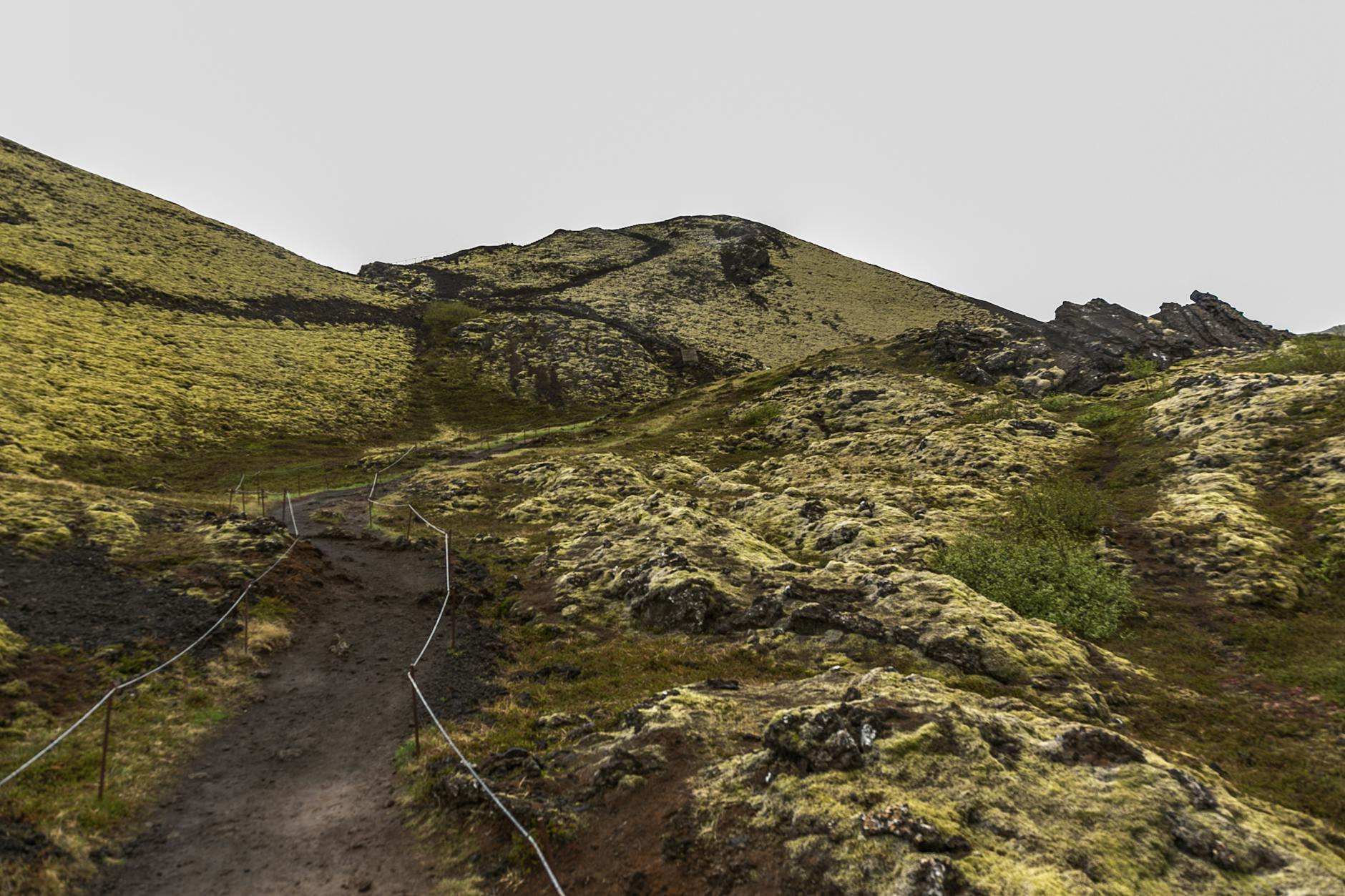
The climb up is completely undemanding and even small children can manage it, because well-maintained wooden steps that protect the fragile nature from being trampled lead all the way to the very top of the crater rim.

From the top you’ll get a breathtaking view down into the deep throat of the crater itself and across the sprawling surrounding Borgarfjörður lava field, and this whole little expedition will take you about thirty minutes with no entrance fee at all.

Mývatn and northern Iceland: where you feel like you’re on Mars

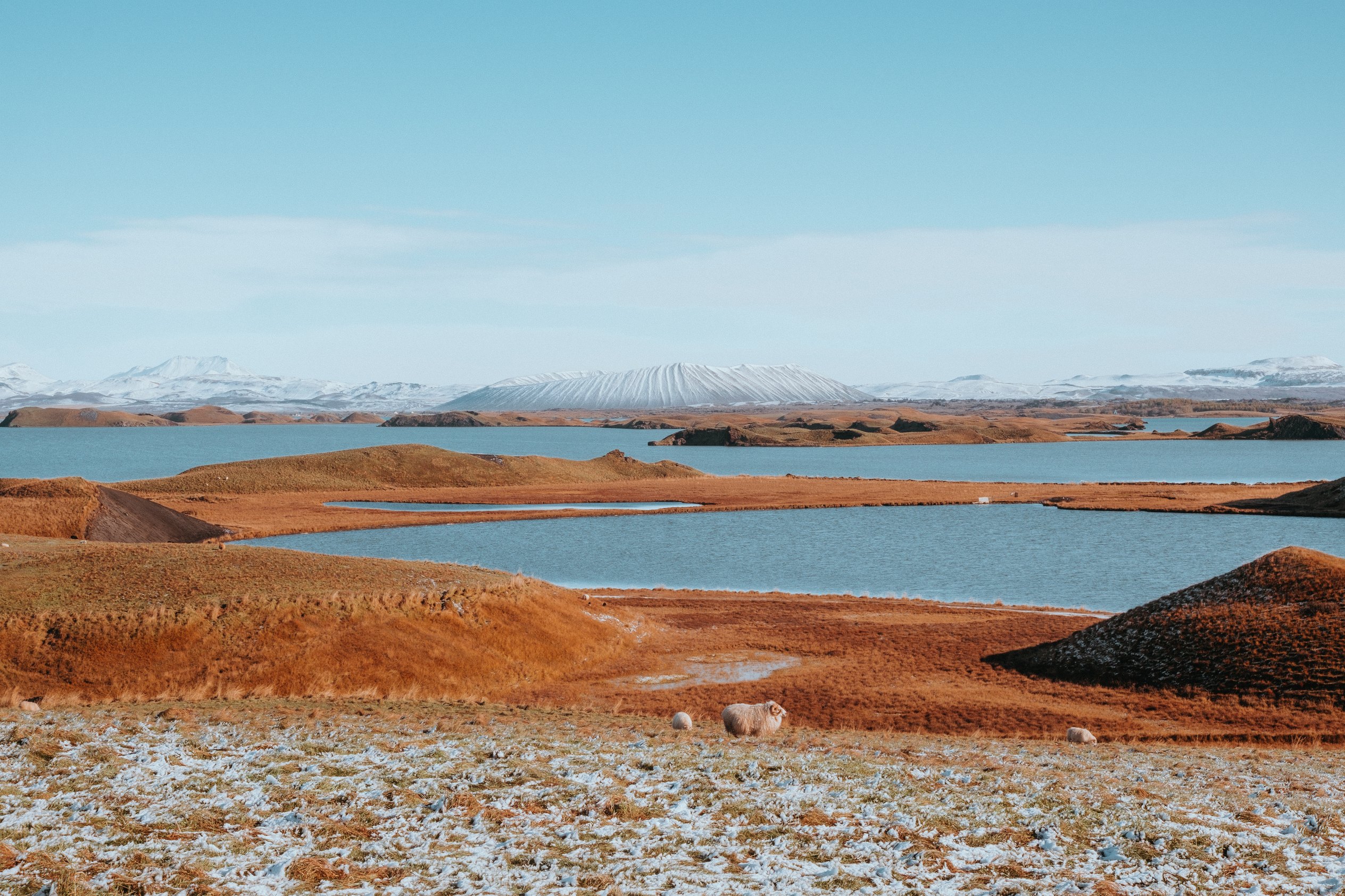
If you’re looking for the most epic and raw volcanic landscape on your trip, you simply have to head all the way north. When we arrived on the ninth day of our autumn road trip in the vast area of Lake Mývatn, I was completely lost for words.

All around us were deep cracks, symmetrical craters, hissing holes in the ground and huge pitch-black lava fields that stretched to the horizon. The northern volcano called Krafla has been sleeping peacefully for some time now, but its wild surroundings undoubtedly rank among one of the most interesting places in this whole Nordic country.

1. Hverir and Námafjall

You’ll reliably recognise the enormous Hverir geothermal field, located right at the foot of the colourful Námafjall mountain, from a distance by the huge clouds of steam rising to the sky and by the very specific and fairly strong sulphurous odour that faithfully resembles rotten eggs. Once you get used to that peculiar smell after a few minutes, though, an incredible walk awaits you across a literal lunar landscape covered in grey, loudly bubbling mud.

Everywhere you’ll see small stacks of piled-up stones from which, with an enormous, almost terrifying hiss, boiling steam constantly escapes from the depths of the earth.

The ground here plays with utterly incredible colours, with rich ochre and vivid orange dominating the view, and around the dangerous vents low rope barriers have been built for a good reason — you absolutely must not step beyond them under any circumstances.

The temperature of the bubbling mud and escaping steam here is truly extreme, and accidentally breaking through into the hot ground would mean instant, life-threatening burns. Entry to the Hverir area itself is completely free for all visitors — only at the large car park will you find modern machines for paying the parking fee.

2. The Krafla volcano and the Víti crater

Just a short drive over the hill from sulphurous Hverir lies the huge volcanic caldera of the Krafla volcano, and Lukáš and I arrived here back then in fairly cold and windy weather, which in my view only perfectly amplified the harsh, inhospitable atmosphere of the whole place.

The biggest visual draw here is the enormous explosive crater named Stóra-Víti, which formed during an exceptionally massive and destructive eruption in 1724. Inside this majestic crater you’ll now find an amazing, fascinatingly opaque blue lake that contrasts incredibly sharply with the surrounding steep, dark-reddish walls and snow-capped peaks in the distance.

A pleasant walk right around the upper rim of the crater is fairly safe as long as there isn’t heavy ice, and it takes you about an hour at a slower pace, with absolutely fantastic views over the surrounding endless dark Leirhnjúkur lava fields.

There’s no entrance fee to pay at all, and just below the volcano itself you’ll even see a huge and architecturally interesting geothermal power plant that very cleverly uses the untameable force of the hidden volcano to produce clean energy for the entire surrounding region.

3. The lava town of Dimmuborgir

Almost within sight of the calm surface of Lake Mývatn you’ll find a huge area called Dimmuborgir, which translates fairly precisely as the Dark Castles. And I have to say this dramatic name fits the place absolutely perfectly and captures its mood.

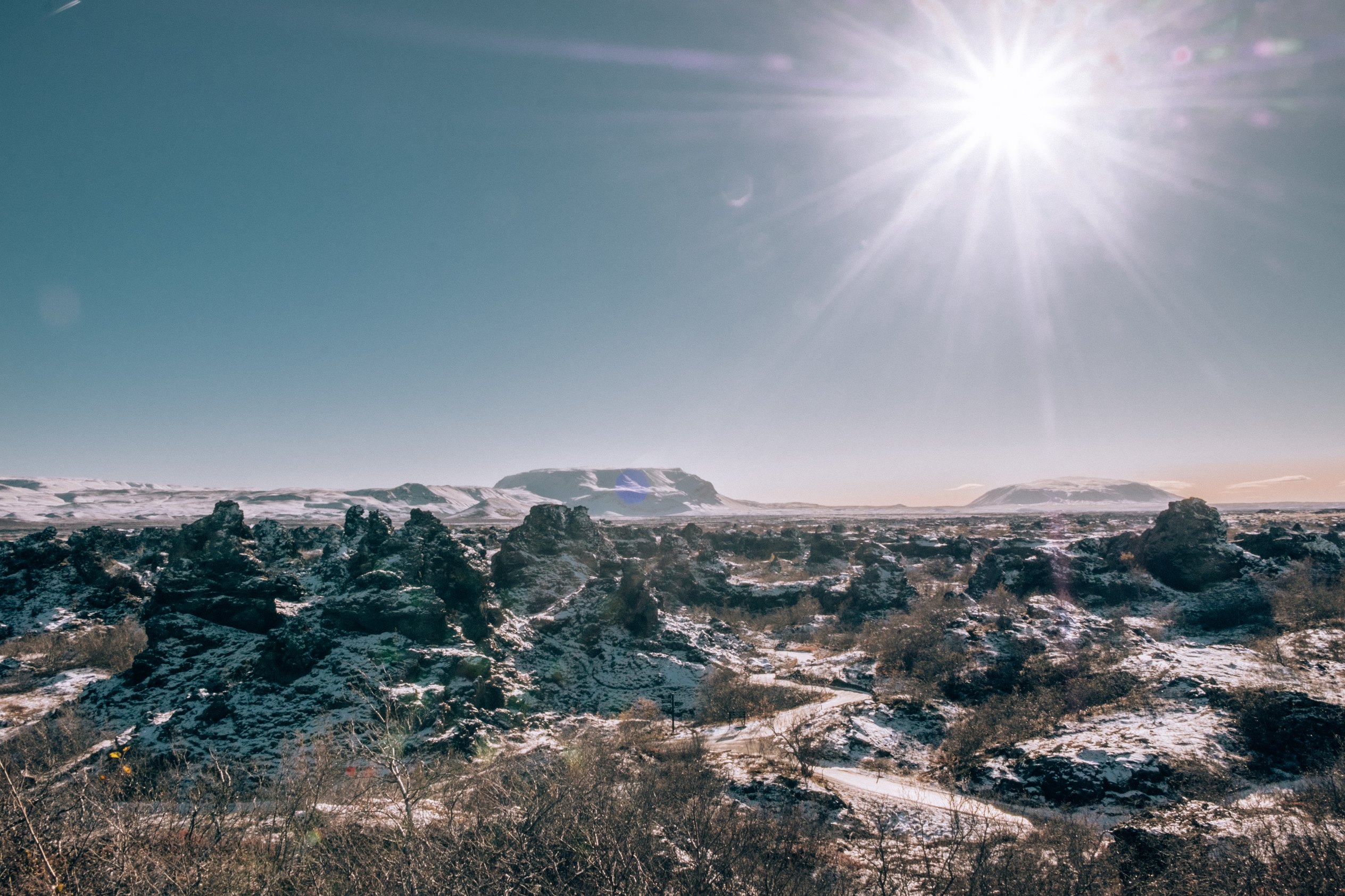
It’s an immensely vast field full of the most bizarre lava formations, tall black towers, fragile arches and gloomy caves that formed more than two thousand years ago when a giant lava lake suddenly cooled and its thin dome collapsed in on itself with a great crash.

Perfectly maintained and very clearly colour-marked trails of various difficulties and lengths lead right through this lava maze, so you can spend just a quick thirty minutes here, or easily several long hours wandering among the black rocks.

In rich Icelandic mythology it has long been believed that mysterious Dimmuborgir is the actual gateway to the underworld and home to evil trolls, and at Christmas the famous, mischievous Icelandic Christmas figures known as the Yule Lads supposedly slyly hide here from people.

lukas a lucka
Lukáš and Lucie recommend
Where to stay in Iceland
4 accommodations — hotels and other lodging options
lukas a lucka
Lukáš and Lucie recommend
Where to stay in Iceland
4 stays — hotels and other accommodation options

4. The explosive Hverfjall crater

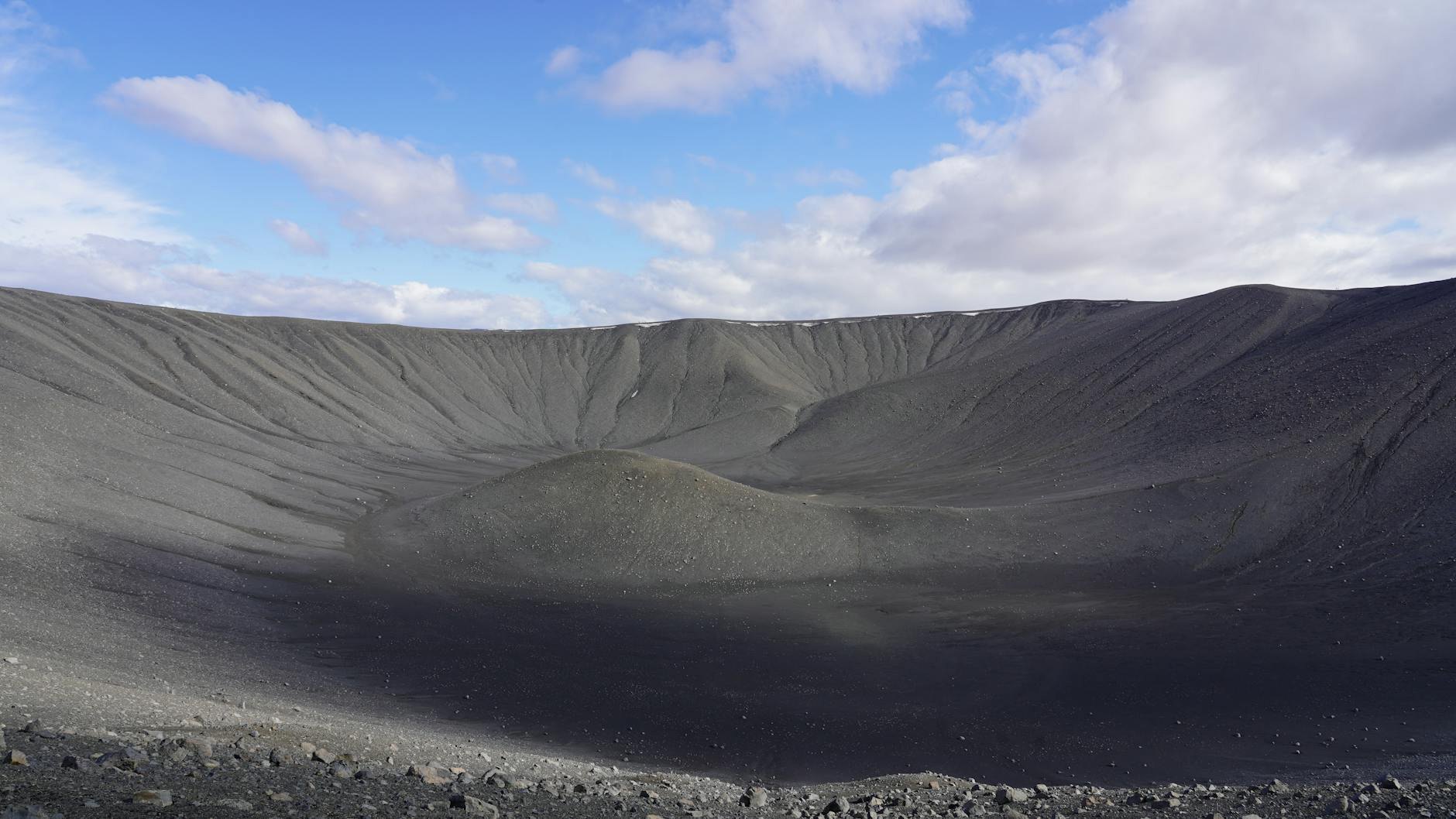
Once you’re near Mývatn, your attention definitely won’t miss the perfect giant cone of black volcanic ash that towers majestically over the whole lake and resembles a huge bundt cake someone has just plonked down here. This symmetrical explosive crater bears the name Hverfjall and represents one of the best and quickest ways to climb to the top of a really big volcano in Iceland without needing a guide or special mountaineering gear.

The way up along the maintained gravel path will give your thighs a bit of a workout, but the steep climb itself takes only around ten to fifteen minutes, so any reasonably fit traveller can manage it.

At the top a breathtaking view opens up into the gigantic black bowl of the crater itself, whose diameter measures over one kilometre, and you can walk right around its upper rim for a gorgeous circular view over the entire Lake Mývatn area — again with no entrance fee whatsoever.

💡 Tip: It’s worth buying tickets and organised tours (of Iceland and beyond) online in advance on GetYourGuide — they fill up fast in season.

Fire and ice: more unforgettable experiences between the elements

Iceland is definitely not just about lava and fire, but above all about a fascinating and constant battle between two extreme natural elements, because roughly eleven per cent of the entire island’s area is covered by massive, ancient glaciers.

Seeing such a huge mass of ice from a distance from the car is a nice experience, but standing right on it, feeling that ever-present chill and hearing with your own ears how the glacier constantly cracks and breathes quietly beneath you, is a completely different league of travel that you shouldn’t miss.

1. Glacier walks on Sólheimajökull and Skaftafell

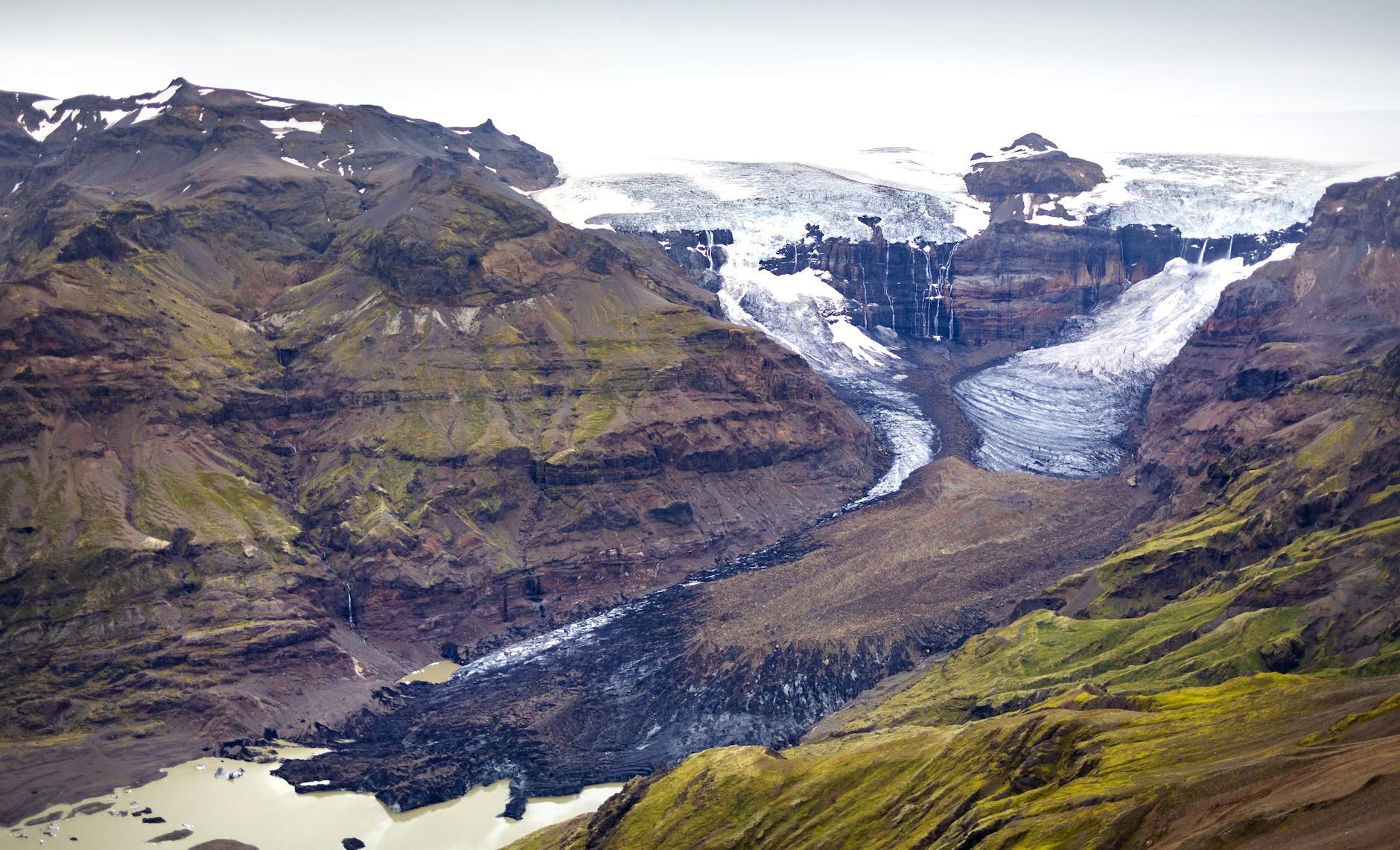
The basic and absolutely critical rule that simply admits no exceptions is: never, under any circumstances, walk on any glacier alone without an experienced local guide, because dozens of metres deep and deadly crevasses lurk beneath the thin, tempting layer of snow. The most accessible and immensely popular glacier hikes are found all along the south coast, and by far the most common departure is to the beautiful Sólheimajökull tongue, which lies just about two hours’ drive from Reykjavík and where the ice is fascinatingly densely threaded with black stripes of volcanic ash from historic eruptions.

The second, slightly more dramatic option is the vast Skaftafell glacier in the more distant south-east, where the ice mass opens up before you on an even more monumental scale and offers breathtaking views down into a green valley.

For a basic hike with equipment, which usually takes three to five hours with about an hour and a half of actual time spent freezing on the ice, you’ll pay from ISK 12,000 upwards (around €80) with local agencies, and the guide will lend you a safety helmet, harness, sharp crampons for your boots and a hiking ice axe in advance.

2. Ice caves under the Katla glacier

Stepping into the icy heart of a glacier and being surrounded on all sides by crystal-clear, deep blue ice is one of the most iconic experiences you can treat yourself to in Iceland, but with the natural blue caves you have to hit the right winter season, otherwise you can’t get inside at all because of the melting water.

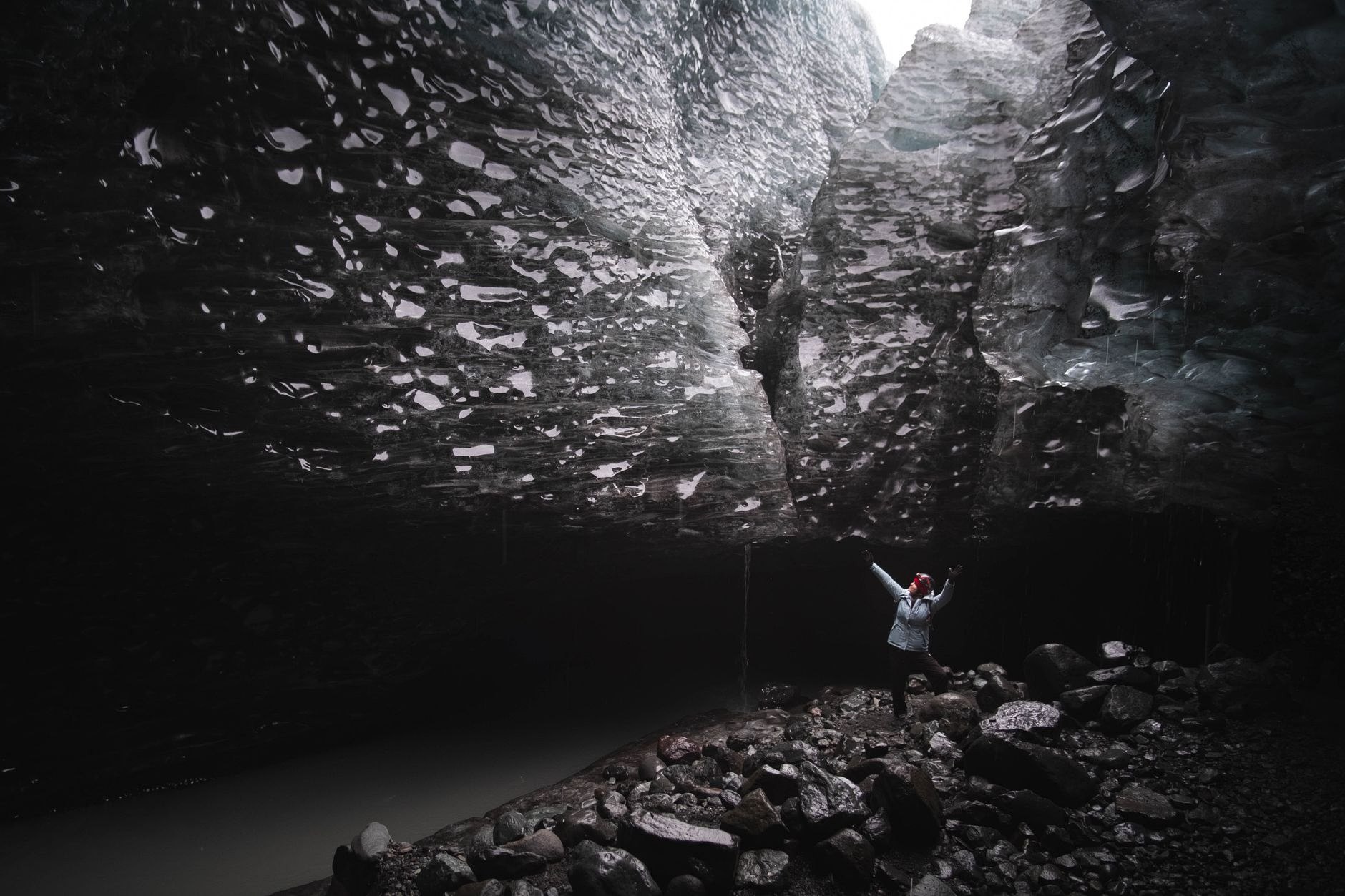
If you’re travelling in summer, though, and are desperate to see some kind of ice cave, the only available natural option is the wild caves hidden beneath the mighty Katla glacier near the little town of Vík, which thanks to their specific location are accessible with a guide all year round.

Don’t expect that bright blue, overexposed colour you know from popular Instagram photos by winter travellers, though. The ice on the Katla glacier is heavily mixed with pitch-black volcanic ash, so the whole cave feels much more dark, gloomy and dramatic, as if you suddenly found yourself in the set of some sci-fi film from a completely different, inhospitable planet.

3. Snorkelling in the Silfra tectonic fissure

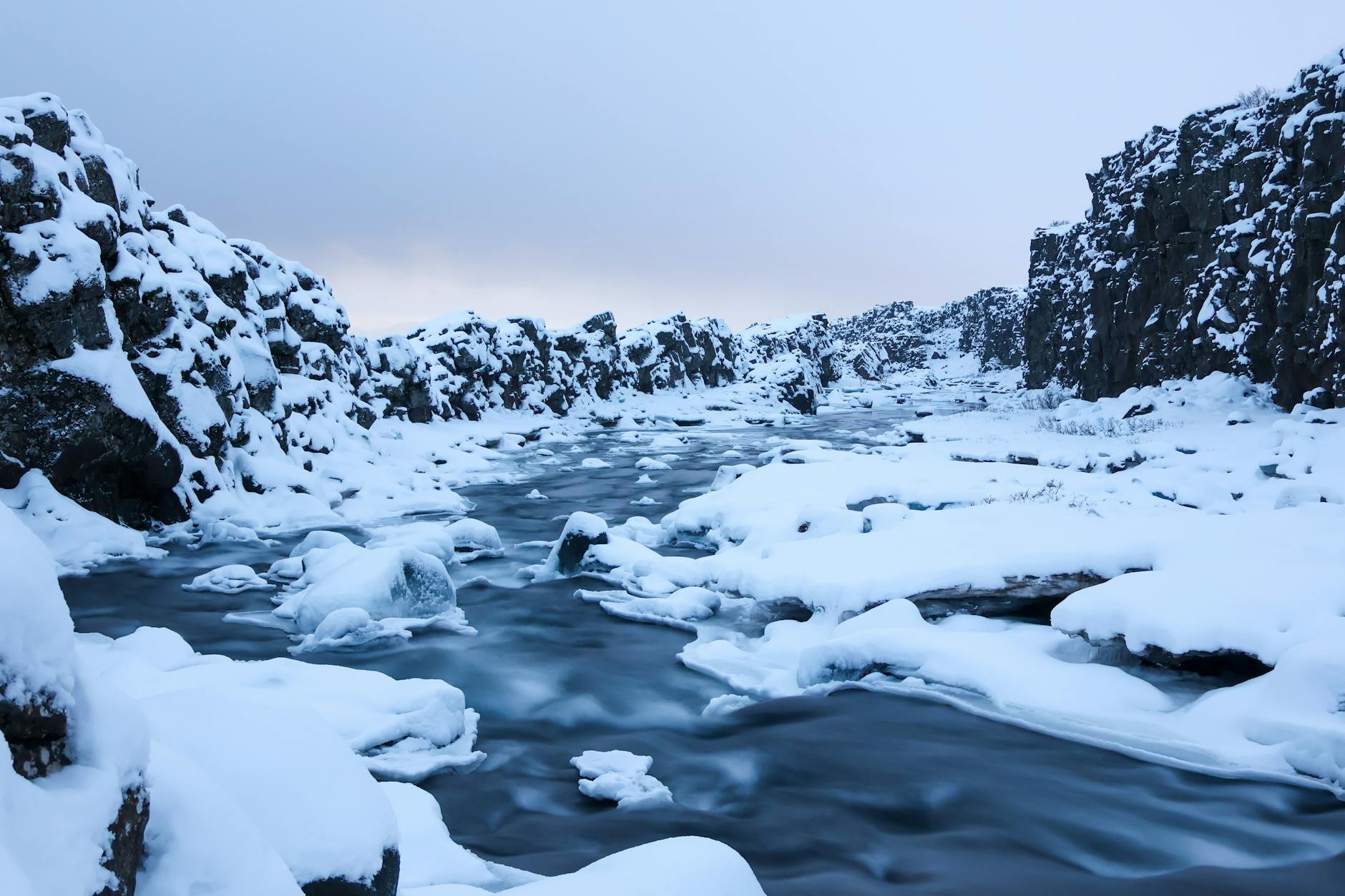
Even though it might sound like utter madness to voluntarily climb in a wetsuit into water that even in the middle of summer is a mere two to four degrees Celsius, snorkelling in the Silfra fissure inside Þingvellir National Park ranks among the world’s best diving spots.

It’s a narrow and immensely deep tectonic crack lying exactly between the North American and Eurasian lithospheric plates, so while swimming you literally find yourself in a watery void between two enormous continents.

The icy water travels here over many decades through underground lava fields from the melting Langjökull glacier, which means it goes through such extreme filtration that it’s absolutely crystal clear and underwater visibility easily exceeds a full hundred metres.

Don’t worry that you’ll freeze to the bone in it within a minute, because the agency will kit you out in a waterproof dry suit in which you’ll float on the surface like a giant Michelin man, and you’ll pay roughly USD 145 per person for this roughly two-hour experience.

4. Whale watching in Húsavík

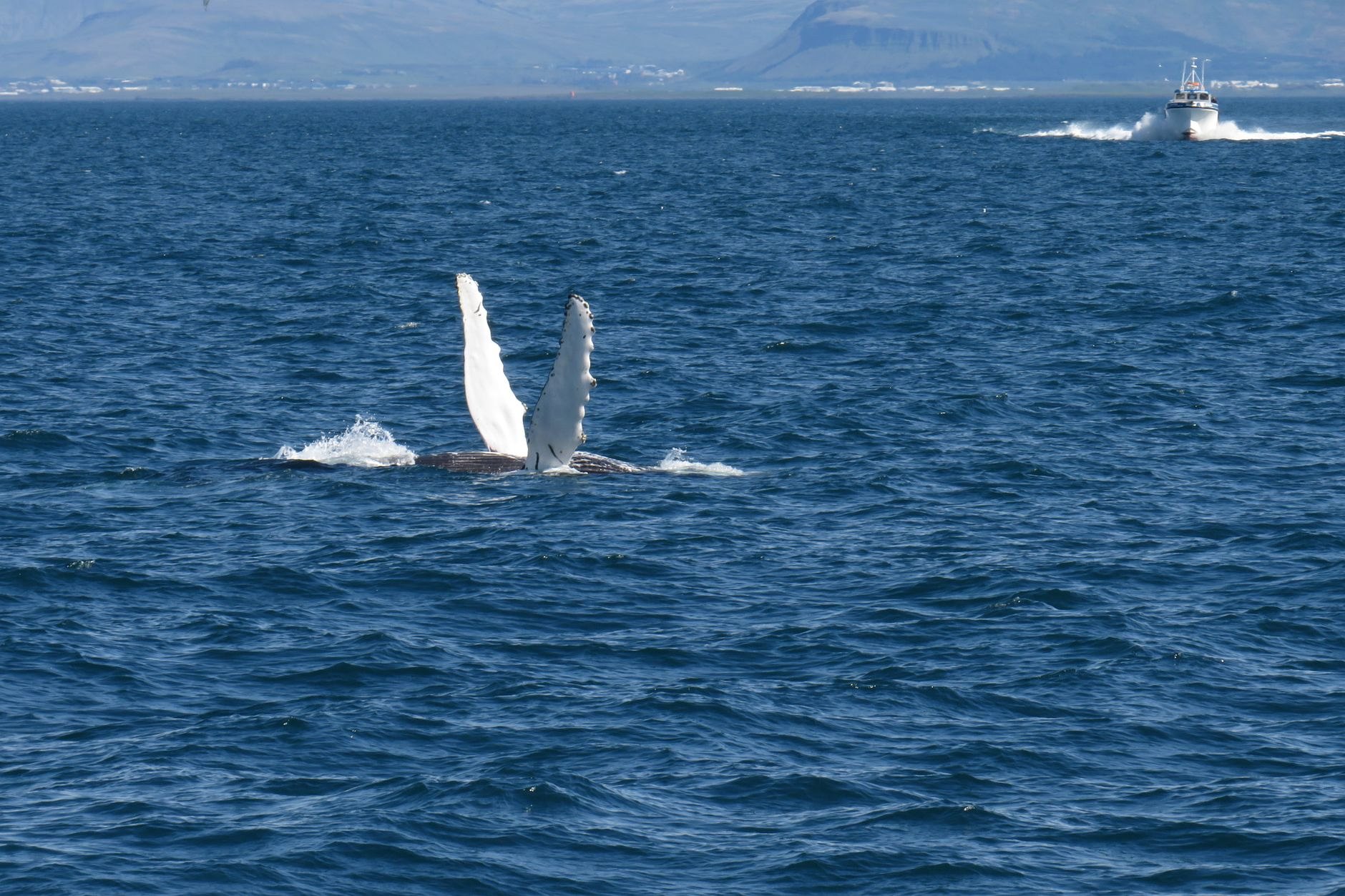
Seeing a tall spout of water from a blowhole and then a huge dark tail elegantly diving into the depths of the ocean is the dream of many people, and Iceland fortunately represents Europe’s absolute top for watching wild whales in their natural environment. The main season runs from April to October, with the absolute peak coming in the long summer months from June to August, when the sea is fairly calm and full of food.

If you’re wondering where to head to see these gentle giants, go straight to the north of the island to the small fishing town called Húsavík, quite rightly nicknamed the whale-watching capital of all Europe.

The cold Skjálfandi bay here is incredibly rich in nutritious plankton and small fish in season, which reliably draws in huge numbers of various cetacean species, from cute smaller ones to mighty humpbacks, so the chance of spotting them here approaches near-certainty.

A sure thing: where to see lava even when the volcano is asleep

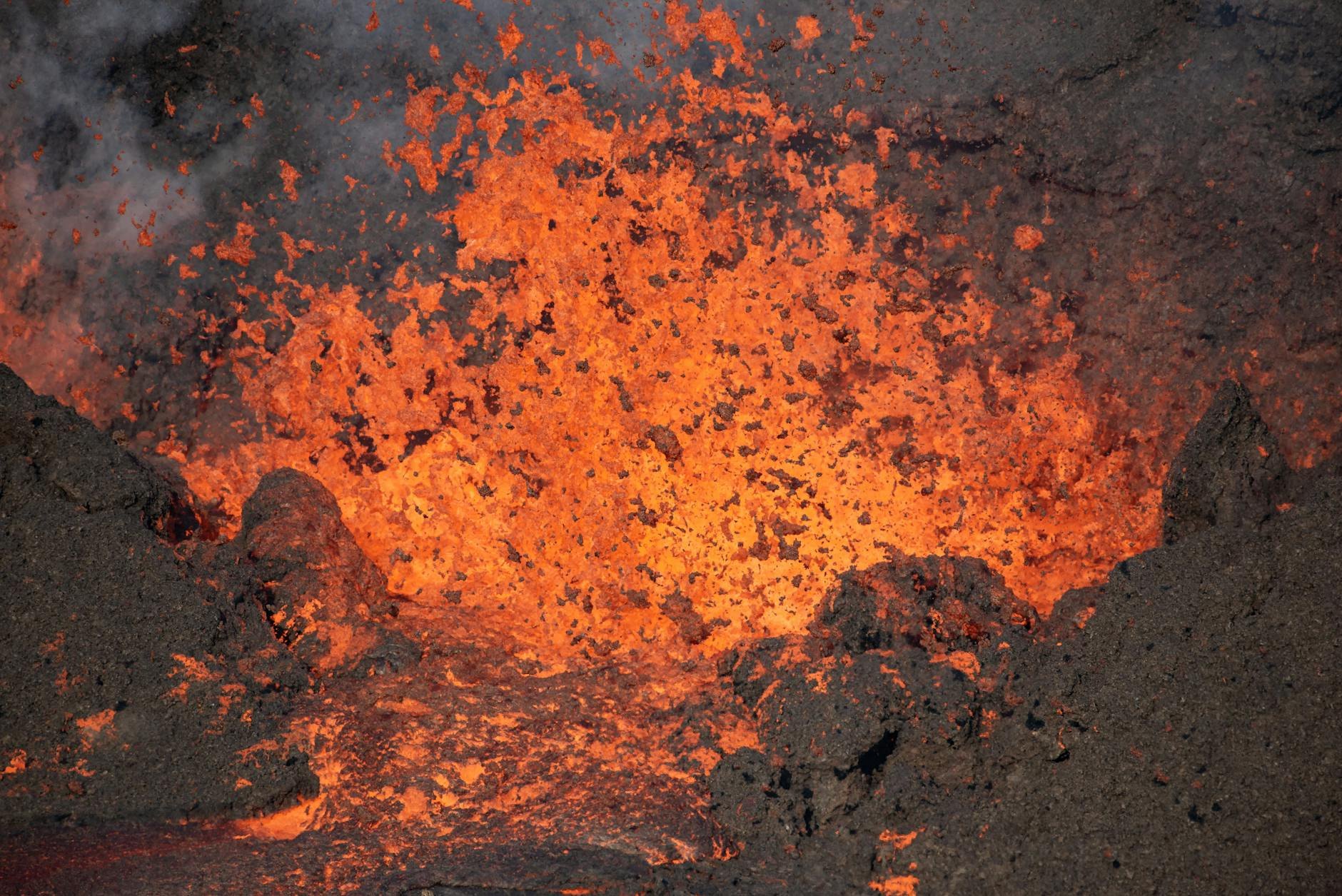
Many people think that when they land in volcanic Iceland, they’ll see glowing red lava flowing out of craters at literally every step of their trip. The truth, unfortunately, is that catching an ongoing safe eruption with your own eyes takes enormous luck, perfect timing and often a good dose of chance, because volcanoes simply do whatever they please.

If you’re not watching live news reports about sudden eruptions and no lava is flowing anywhere on the Reykjanes Peninsula, there are absolutely amazing places where you can fully enjoy this fascinating hot spectacle anyway.

1. The Lava Show in Reykjavík and Vík

If you don’t want to rely on the unpredictable mood of Mother Nature at all and risk disappointment, then a visit to the fantastic Lava Show is an absolute must for you. The owners of this unique Icelandic project came up with a safe way to melt real dark volcanic sand up to an incredible 1,100 °C in the dim light of a small theatre arena and then let it flow dramatically down a red channel right before the amazed eyes of the audience.

You see the heavy liquid magmatic mass, hear with your own ears how it loudly cracks and hisses as it cools, and above all you physically feel that overwhelming radiant heat that hits you in the face at once and makes you take off your jacket.

The experience of this fiery spectacle lasts a little under an hour, and a trained local guide explains everything essential about Icelandic volcanoes in a very funny, personal and engaging way.

You can currently visit this popular Lava Show either right in the centre of the capital Reykjavík (where an adult ticket costs ISK 6,590) or in the iconic little town of Vík on the windy south coast (at a slightly cheaper ISK 5,900, which is roughly €40). We both think it’s an absolute smash hit, and in my view it’s clearly one of the very best paid attractions on the whole island.

2. The Lava Centre in Hvolsvöllur

If your road trip takes you on the long drive along the south coast towards the most famous photogenic waterfalls, Seljalandsfoss and Skógafoss, you’ll most likely come across the village of Hvolsvöllur right by the main road, home to the very interesting modern building of the Lava Centre.

It’s a huge, architecturally sophisticated interactive museum devoted entirely to the complex geology and volcanology, where thanks to top-notch colour visualisations you can examine in detail the systems of active magma chambers pulsing beneath the whole of Iceland.

It’s an immensely educational and great stop especially when a storm is raging outside, it’s raining and a thoroughly unfriendly icy wind is blowing, which happens fairly often on the unpredictable Icelandic south. In the dimly lit museum you’ll finally properly understand why the whole country constantly trembles so strongly, what exactly triggers eruptions and how the dreaded explosions of volcanoes hidden deep beneath mighty glaciers actually work.

Volcanic safety: 5 rules for survival

The harsh and untamed nature in Iceland is definitely not just a pretty backdrop for nice photos for social media, but an uncompromising daily reality, and you never joke around with volcanoes. Icelanders are perfectly prepared for any volcanic eruptions, they have trained top-class rescue services and perfectly functioning information systems, so if you blindly follow their instructions, you’re in absolute safety even during an active eruption.

The thing is, enthusiastic tourists sometimes get a false sense that they’re simply immortal. Here are the basic survival rules you must not ignore for anything.

1. Follow the official websites

This recommendation is the absolute mantra of every safe road trip around Iceland and you should take it to heart. Before you even start the car in the morning and hit the road, always open the rescue services’ page Safetravel.is on your phone. You’ll immediately find all the colour-coded warnings about strong winds, approaching storms and any ongoing eruptions and closures there.

For really detailed monitoring of volcanic and seismic activity beneath the surface, the official Icelandic Meteorological Office (Vedur.is) is also brilliant, where you’ll find constantly updated real-time earthquake maps so you know where the ground is shaking most right now.

2. Invisible poisonous gases

When a fissure eruption is in full swing and lava is flowing into a valley, the very biggest and most insidious danger usually isn’t the slowly flowing hot mass itself (you can quite comfortably outrun that even on foot), but what you absolutely can’t see. Fresh volcanic fissures release large amounts of sulphur dioxide (SO2) and a range of other poisonous gases that are significantly heavier than ordinary air, so they accumulate unnoticed in deep valleys and natural hollows.

What’s more, if that traditional strong Icelandic wind that would mercifully sweep them out over the ocean happens not to be blowing, these pockets of gas can be deadly to tourists. The local authorities therefore constantly and carefully monitor the current air quality and any risks on the specialist website Loftgaedi.is, which you should definitely have saved in your browser bookmarks.

3. Never go near lava alone

If you’re ever lucky enough in Iceland to reach a site with a completely fresh and still smoking lava field via an officially permitted and safe route, definitely don’t be too curious and daring. The surface of freshly flowed lava does turn black and harden fairly quickly in the cold air, but don’t be fooled — beneath that thin and extremely fragile crust, molten magma at an unbelievable temperature of around one thousand degrees Celsius still hides in pockets.

Breaking through with your foot into even a small such pocket means a quick and utterly fatal end with burns incompatible with life, so never in your life go onto new lava fields alone and always keep to the marked, well-trodden paths explored by experts.

4. Respect closures and the police

The world-famous Icelandic rescue service called ICE-SAR is largely made up of incredibly devoted local volunteers who, exclusively in their own free time, rescue unprepared tourists from the very worst and most dangerous situations imaginable. If the state authorities or police suddenly block a certain road and quickly declare an evacuation or closure of a chosen volcanic area, believe that they have a very good and well-founded geological reason for it and certainly don’t just want to ruin your expensive holiday out of boredom.

So don’t try to secretly go around the guarded tracks somewhere or find a gap in the barriers at night, because these local rescuers really have better and more important things to do in Iceland than needlessly risk their own health and lives for someone who absolutely and at any cost needed a photo of a glowing volcano for their Instagram.

5. Watch out for the Icelandic wind and car doors

Even though it isn’t directly related to volcanoes, this is one of Iceland’s most underestimated risks, and it can nastily wreck your travel budget. The Icelandic wind has absolutely brutal force, and if you carelessly and abruptly fling the car door wide open at a stop by some natural sight, a strong gust can literally tear it off its hinges in a second or bend it so you can’t close it any more (it’s called door-ripping).

It’s immensely important to know that absolutely no rental insurance covers this specific mechanical damage, so every time you get out, especially in the flat areas of the south, always park the front of the car directly into the wind and hold the door really firmly with both hands whenever you open it, so it always faces into the wind.

Where to eat (without ruining your budget)

Dining on the island is a really big chapter in itself, and the final bills in local restaurants can hurt even hardened travellers quite a bit. It’s commonly said that the very cheapest hot meal in the whole city is the famous Icelandic hot dog, or pylsa, with crispy onions and sweet mustard, which you buy at the little red stand Bæjarins Beztu Pylsur a short walk from the harbour.

You’ll pay a friendly ISK 820 (about €5.50) for it, and locals make a huge deal out of it, just as the braver ones tuck into traditional fermented shark, hákarl, with a shot of the famous caraway spirit Brennivín (known as Black Death) or the hearty fish stew plokkfiskur.

Since Lukáš and I have both long eaten meat-free, though, and fermented shark really doesn’t tempt us, we simply don’t go for such local animal specialities and instead deliberately seek out great local vegetarian alternatives.

Our absolute daily lifesaver, especially during those long drives around the volcanoes and endless lava fields, is called the Bónus supermarket, which you’ll reliably recognise from afar by its very distinctive yellow logo with a little pink piggy (alternatively we also use the Krónan or Nettó shops).

They have by far the best food prices here — we constantly buy cheap supplies of cheese, tons of our favourite hummus, delicious sweet rye bread rúgbrauð and above all huge piles of traditional thick skyr yoghurt, which we basically lived on quite happily for a large part of our first and subsequent road trips.

When we then feel like treating ourselves and relaxing in Reykjavík after a whole day of freezing, we eagerly go for fantastic, wood-scented pizza at the cosy spot PizzaRé or at the modern but renowned pizzeria Flatey, where the menu has absolutely perfect vegetarian options with fresh cheese and vegetables (a large crispy pizza there comes to roughly ISK 3,500, which is around €24), and we also absolutely love tucked-away Asian and Indian places like Himalayan Spice, where in those freezing temperatures they cooked us the unbeatably best and thickest chickpea dal for miles around.

And remember one golden rule: tap water in Iceland is one of the very cleanest and tastiest in the whole world, so only complete fools buy bottled water in plastic here! Just be careful with the hot tap water in the sink, because it’s heated straight from geothermal wells and smells fairly strongly of sulphur, so for drinking always run only the absolutely ice-cold, crystal-clear water into your bottle.

Where to go next in Iceland

If you’ve already mapped out the south and the volcanoes have won you over, the island still has an enormous amount to offer. Try reading our other guides and plan your trip down to the details:

Frequently asked questions

Is it safe to fly to Iceland when there are reports of volcanic eruptions?

Absolutely yes, fear of flight paralysis is unnecessary. Eruptions on the Reykjanes Peninsula are fortunately of the effusive type, which in practice means that molten lava simply flows relatively calmly from fissures in the ground, but without creating those giant explosive clouds of volcanic ash. Ash is the only thing that directly threatens aircraft engines (as happened in 2010 during the famous eruption of the volcano hidden beneath the Eyjafjallajökull glacier). Thanks to this, Keflavík Airport has operated reliably the entire time and none of the eruptions since March 2021 have caused any flight cancellations.

Can I see flowing lava in person anywhere?

In nature only if you have tremendous luck with perfect timing and happen to catch an ongoing safe fissure eruption to which rescue authorities legally permit public access. It really depends on chance and most of the time on Reykjanes you’re looking at “just” impressive but newly solidified and only slightly steaming lava fields that are no longer flowing. If you want to see liquid glowing magma with one hundred percent certainty and in complete safety, it’s better to buy a ticket to the stunning Lava Show in Reykjavík or the one in the south in Vík.

Is the famous Blue Lagoon currently open to tourists?

Since the beginning of March 2026, the Blue Lagoon has been safely operating for visitors again, however it functions in a so-called dynamic regime dependent on seismic warnings. Although a massive protective barrier against lava was hastily built around it, because the complex simply lies directly in the active risk zone near the Svartsengi volcano, it can occasionally happen that rescue services temporarily and completely preventively close it during elevated seismic risk. Always check the current status and bathing availability directly on the official Blue Lagoon website.

Is the capital city Reykjavík itself or the town of Grindavík in danger?

Reykjavík lies at a safe distance of about forty kilometers from the main eruption sites and thanks to favorable terrain is completely safe, so you definitely don’t need to worry there and can peacefully explore the streets. The small town of Grindavík with just under four thousand inhabitants unfortunately wasn’t so lucky, because it lies directly on the threatened fault line. It was already evacuated long-term at the end of 2023 and due to enormous deep cracks in the streets and the real risk of deadly ground collapse, free access to it is strictly prohibited by authorities.

Where can I find beautiful volcanic landscapes for free, even when there’s no eruption happening?

On the active Reykjanes Peninsula near the airport, definitely head to the beautifully colorful geothermal area of Krýsuvík/Seltún, check out the loudly bubbling mud spring Gunnuhver, or cross the small Bridge Between Continents. If you’re traveling by car all the way to Iceland’s far north, the most “alien-like” and spectacular area is the wider surroundings of Lake Mývatn, specifically the sulfur fields of Hverir, the area around the Krafla volcano, and the dark labyrinth of Dimmuborgir. All these amazing and wild natural sites have completely free admission year-round and charge no entry fee.

How can I tell in the field if I’m at risk from dangerous volcanic gases?

Deadly dangerous and completely invisible to the naked eye volcanic gases, such as sulfur dioxide (SO2), can treacherously appear in the vicinity of active lava fields and because they are heavier than normal air, they secretly accumulate in deep valleys and depressions in the terrain. Fortunately, the current wind direction and precise concentration of this dangerous air pollution is constantly monitored and evaluated by the Icelandic Environment Agency, so for your own safety always carefully check the fresh green numbers at Loftgaedi.is before every trip to volcanic areas.

Is it possible to descend directly into the deep crater of a huge volcano in Iceland?

Yes, it is possible, and in an incredibly unique way! The extinct and very old Þríhnúkagígur volcano near bustling Reykjavík is the only one in the entire world offering tourists the opportunity to ride a small elevator directly down into its enormous and fantastically colorful magma chamber. However, this is an absolutely premium and quite expensive travel experience (with a price over €200), which due to the challenging terrain is only accessible to the public during the main summer season from May to the end of October and definitely requires firm online booking many months in advance.

Tips and Tricks for Your Vacation

Don’t Overpay for Flights

Search for flights on Kayak. It’s our favorite search engine because it scans the websites of all airlines and always finds the cheapest connection.

Book Your Accommodation Smartly

The best experiences we’ve had when looking for accommodation (from Alaska to Morocco) are with Booking.com, where hotels, apartments, and entire houses are usually the cheapest and most widely available.

Don’t Forget Travel Insurance

Good travel insurance will protect you against illness, accidents, theft, or flight cancellations. We’ve had a few hospital visits abroad, so we know how important it is to have proper insurance arranged.

Where we insure ourselves: SafetyWing (best for everyone) and TrueTraveller (for extra-long trips).

Why don’t we recommend any Czech insurance company? Because they have too many restrictions. They set limits on the number of days abroad, travel insurance via a credit card often requires you to pay medical expenses only with that card, and they frequently limit the number of returns to the Czech Republic.

Find the Best Experiences

Get Your Guide is a huge online marketplace where you can book guided walks, trips, skip-the-line tickets, tours, and much more. We always find some extra fun there!
Vesterålen, Norway: 6 Tips on What to See and Do

TL;DRThe Vesterålen, the archipelago north of the Lofoten Islands in Norway, offer the same dramatic scenery with a fraction of the crowds. There are 6 key ideas here, starting with a whale safari from Andenes (sperm whales year-round, orcas and humpbacks from November to January, around 1,300–1,500 Norwegian kroner). Add to that puffin-watching on Bleiksøya island near the village of Bleik, the scenic Andøya National Tourist Route (58 km), and the once-abandoned fishing village of Nyksund, now an artists’ colony. Round it off with the lively harbour at Stø and the Dronningruta trail (15 km, 5–8 hours’ walking), plus the Hurtigruten Museum in Stokmarknes. Summer (June–August) is best for hiking and birdwatching, while November to January is the time for orcas and the northern lights.

If you’re planning a trip to northern Norway and craving breathtaking scenery, you’ve almost certainly heard of the famous Lofoten Islands. Just to the north, however, lies the Vesterålen archipelago in Norway, which offers very similar, equally dramatic landscapes — but with one enormous difference. While the neighbouring islands are bursting at the seams with tourists in summer, here you’ll find the peace and quiet you’re after and a far more authentic Nordic atmosphere, without the endless convoys of camper vans.

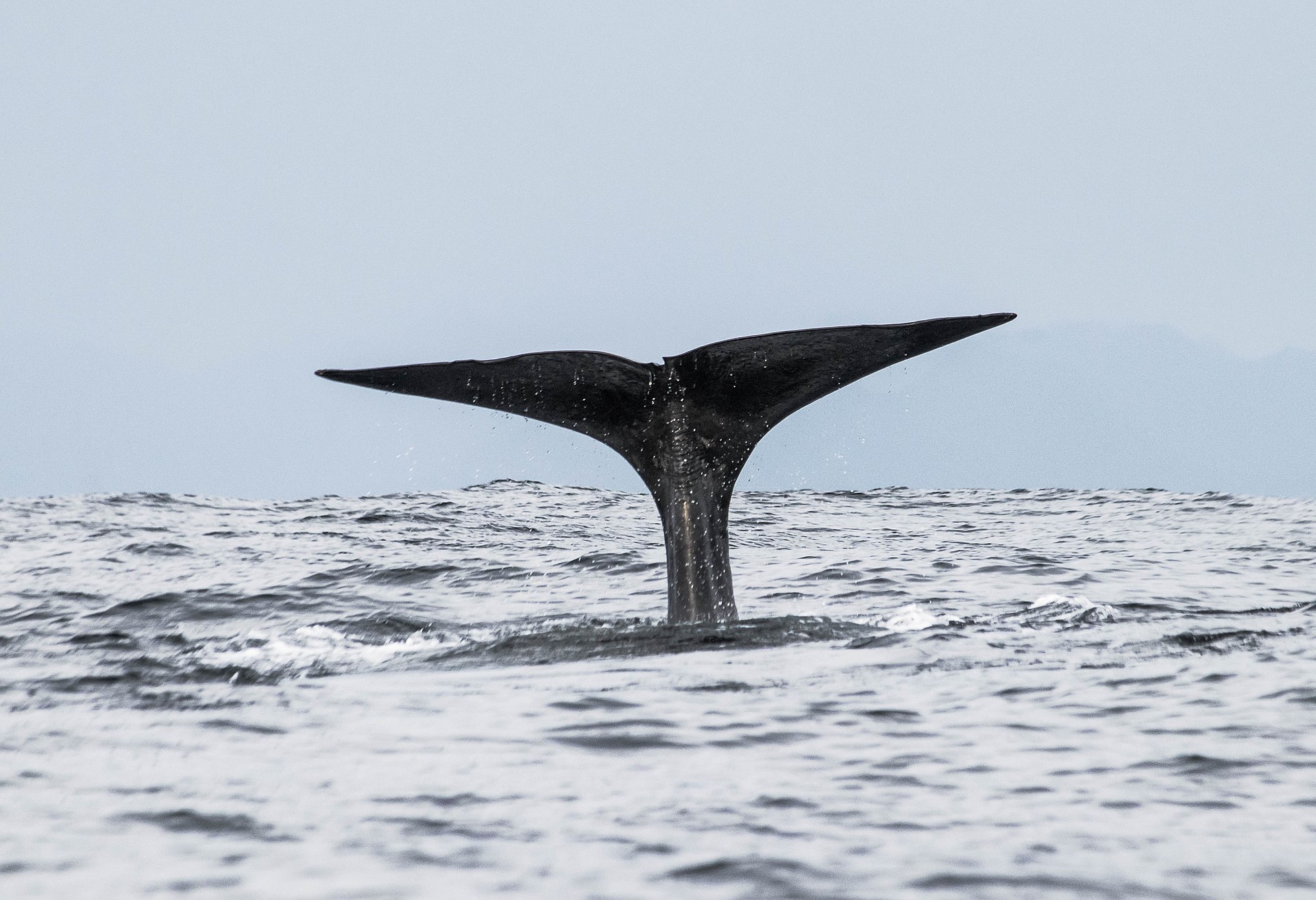
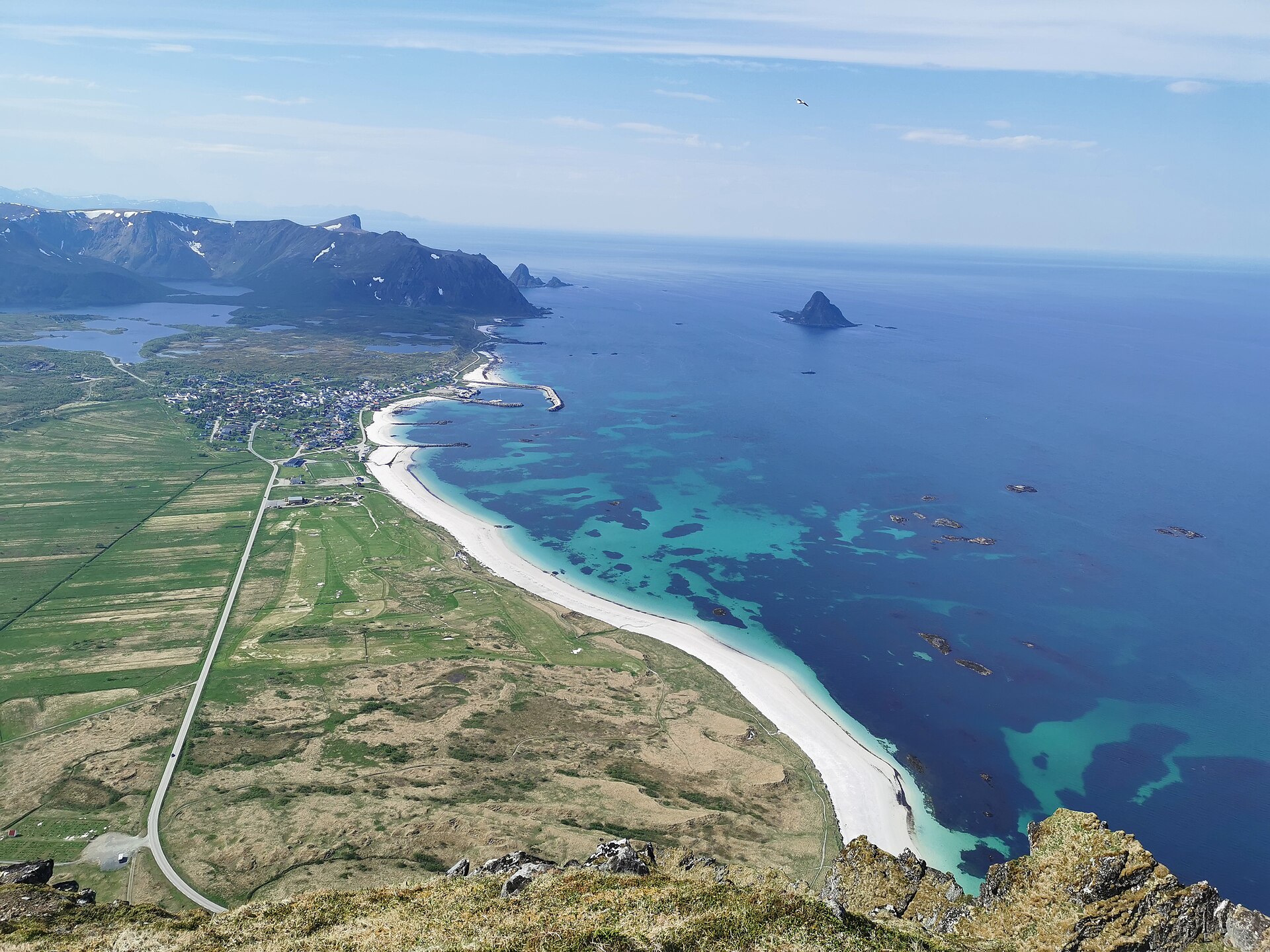
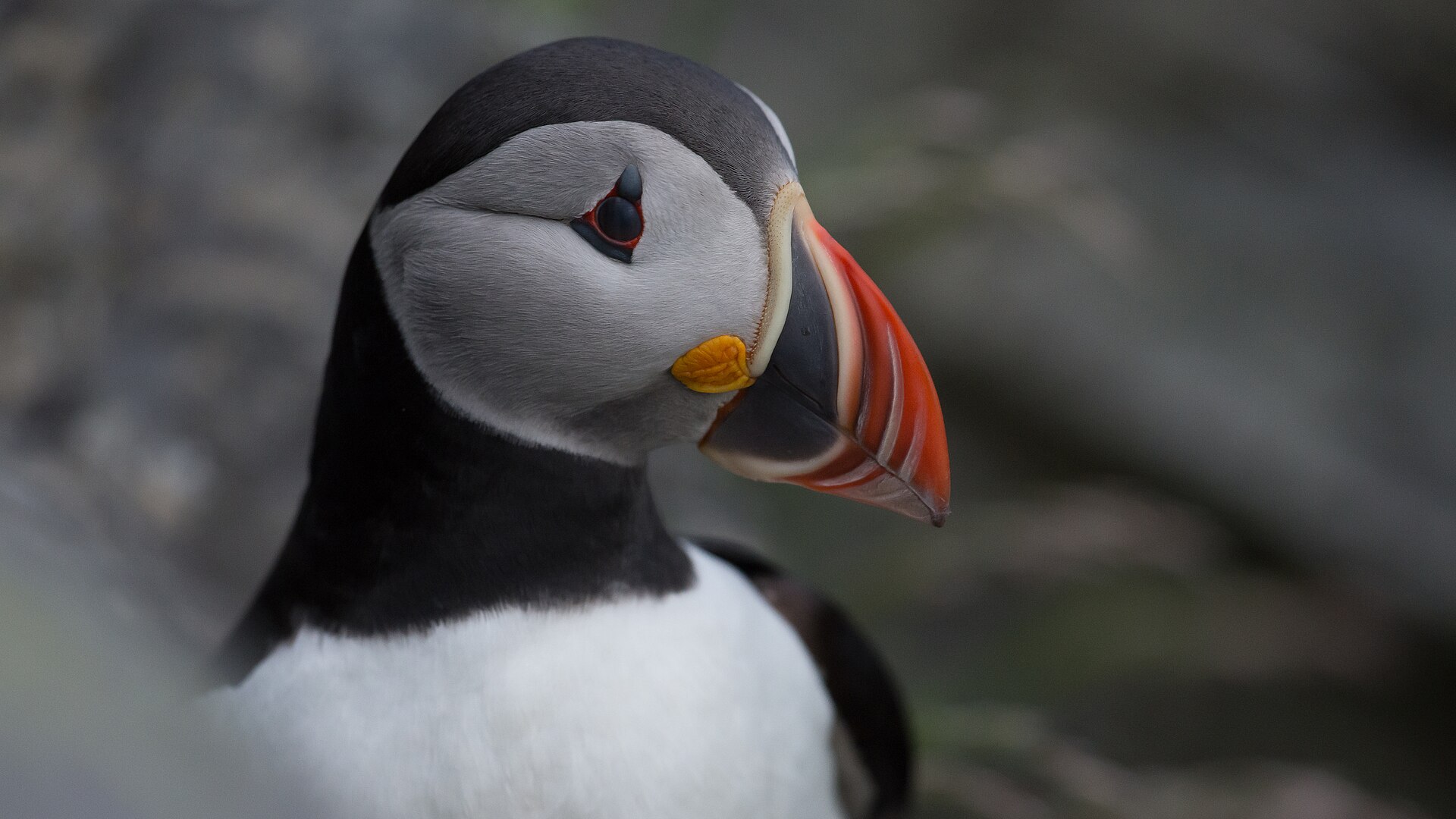
This greener and slightly less mountainous region is an absolute paradise for wildlife lovers, because this is where you’ll find the best whale safaris in all of Europe. You can watch majestic sperm whales here all year round, and in winter the bays fill with orcas that arrive chasing huge shoals of herring. Beyond the cetaceans, picturesque fishing villages, white sandy beaches and fascinating bird cliffs packed with adorable puffins are waiting for you.

The biggest advantage is that you can very easily combine both areas during a single holiday, as they flow seamlessly into one another thanks to a system of bridges and tunnels. I’ve put together a detailed guide covering the most interesting things to see and do in Vesterålen, so you can plan your Norwegian trip exactly the way you want — with estimated prices for 2026 in mind.

TL;DR

  • A quieter alternative: Vesterålen lies north of Lofoten and offers similarly beautiful scenery with far fewer tourists.
  • Whale capital: The town of Andenes is the starting point for watching sperm whales and orcas.
  • Bird islands: Near the village of Bleik you’ll find cliffs where thousands of adorable puffins nest.
  • Scenic driving: The Andøya National Tourist Route is one of the most beautiful roads in Norway.
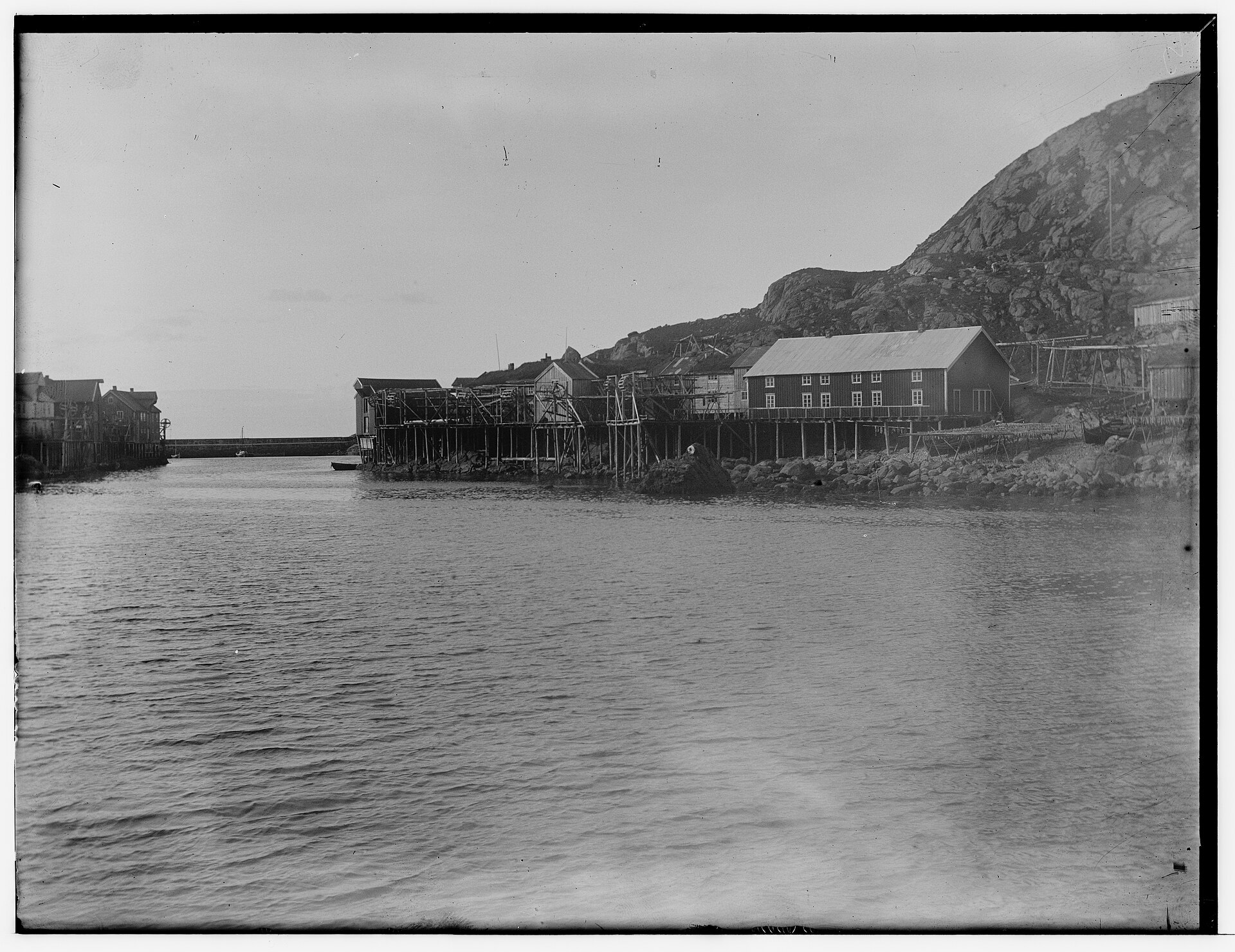
  • Abandoned history: The village of Nyksund was once completely deserted; today it’s a fascinating art hub.
  • Easy connections: To the south you can drive smoothly along the E10 road straight to Lofoten, while to the north a summer ferry runs to the island of Senja.

When to Visit Vesterålen

Planning a trip above the Arctic Circle always depends on exactly what you want to experience, because each season here offers a completely different spectacle. If your main goal is hiking and puffin-watching, the ideal time is the Norwegian summer — the months from June to the end of August. On top of that, summer brings the fascinating midnight sun, which lingers over Vesterålen roughly from late May to mid-July, when the light never fades and you can explore the landscape at two in the morning in full sunshine. Summer temperatures most often sit between ten and fifteen degrees Celsius, so even in July it pays to pack good layers and a waterproof jacket.

For those of you dreaming of an encounter with orcas or humpback whales, the winter season is the best choice, typically from November to the end of January. During this period, vast shoals of herring move into the local fjords, and these marine predators follow them unerringly, so the chances of spotting them from the deck of a boat are huge. The winter months do bring the darkness of the polar night from late November to mid-January, but your reward is an excellent chance of witnessing the magical northern lights. Thanks to the Gulf Stream, the winters here aren’t anywhere near as harsh as inland, and coastal temperatures surprisingly often hover just around freezing.

The spring and autumn months can be tricky due to frequent rain and strong winds, but if you enjoy a melancholy atmosphere and don’t mind getting wet now and then, you’ll be rewarded with empty roads. Just bear in mind that many tourist services and smaller cafés cut back their opening hours outside the main summer and winter seasons, so you’ll need to plan your trip a little more carefully. On the upside, autumn paints the low-lying vegetation in gorgeous shades of red and gold, creating absolutely dreamy conditions for photographing the Nordic landscape.

Where to Stay in Vesterålen

The archipelago is fairly sprawling, so it’s smart to choose your accommodation based on exactly what you’re planning to do on a given day, so you don’t spend hours in the car. If your main aim is whale-watching and exploring the northern part, the ideal base is the town of Andenes, where most of the excursion boats set off and where you’ll find all the amenities you need. Here I warmly recommend the popular Thon Hotel Andrikken, which serves a truly generous breakfast and sits within comfortable walking distance of both the harbour and the whale centre. Rooms for two in high season cost around 1,800 to 2,500 Norwegian kroner per night (roughly €155–215).

For history lovers and fans of dramatic atmosphere, a stay in the revived village of Nyksund is an utterly unique experience, reached by an adventurous unpaved road. Here you’ll find the charming Nyksund Ekspedisjonen, set in historic buildings right by the water, where the genuine atmosphere of the old fishing days washes over you. It’s an incredibly peaceful spot where, in the morning, you’ll hear nothing but the cries of gulls and the lapping of waves against the wooden pilings, making it a wonderfully romantic stop for couples. I recommend popping into the local restaurant in the evening for an excellent vegetarian pizza or a warm cheese soup that’s perfect for warming up after a day outdoors.

If, on the other hand, you’re after a practical base somewhere in the middle from which you can easily take day trips in every direction, the town of Stokmarknes or nearby Sortland will serve you brilliantly. In Stokmarknes you’ll find the modern Vesterålen Kysthotell, which offers every comfort, great facilities and excellent links to the region’s main transport routes. Whichever location — or classic red fishing cabin known as a rorbu — you choose, book your summer accommodation well in advance through Booking.com, because capacity in northern Norway tends to be very limited and the best deals vanish as early as spring.

6 Tips on What to See and Do in Vesterålen

Northern Norway is a giant playground for nature lovers, and the Vesterålen archipelago is no exception — you’ll just have far more space to yourself here. From watching giant cetaceans to driving along clifftop roads, you’ll find experiences here that will stay with you for the rest of your life. Let’s take a look at six specific places and activities that definitely shouldn’t be missing from your itinerary.

1. Whale Safari from Andenes

If there’s one main reason people make the trek to the very north of Vesterålen, it’s undoubtedly the whale-watching, which is world-class here and has few rivals anywhere. The town of Andenes sits on the island of Andøya very close to the edge of the continental shelf, where the seabed drops sharply into immense depths and creates ideal conditions for deep-diving cetaceans. This is exactly where huge male sperm whales arrive year-round to feed on squid in the deep canyons beneath the surface, which guarantees an almost one hundred percent success rate when looking for them.

Most expeditions begin with a roughly hour-long visit to the museum at the local whale centre, Hvalsenteret, where marine biologists give you a detailed introduction to the lives of these mammals before you even board the boat. The voyage itself usually lasts two to four hours and can be fairly rocky, because you soon leave the sheltered fjords and head out onto the open ocean — so don’t forget to take your seasickness tablets in good time. One perk of the organised trips is the so-called whale guarantee, which gives you a free ticket for another trip should the animals fail to show up on the rare occasion.

In the winter months, the focus shifts deeper into the fjords, where hundreds of orcas and majestic humpback whales arrive to chase the enormous herring shoals. Seeing with your own eyes how these intelligent predators cooperate while hunting amid snow-capped mountains is an absolutely unforgettable experience. These trips sell out fast, so always book well in advance through platforms like GetYourGuide; for 2026, expect a price of around 1,500 Norwegian kroner (roughly €130) per person.

2. Andøya National Tourist Route

Norway is famous for its scenic roads, and the stretch along the western coast of Andøya island is one of the eighteen official National Tourist Routes you simply have to drive. This roughly 58-kilometre road connects the village of Bjørnskinn with the town of Andenes in the north and offers absolutely breathtaking views over the Norwegian Sea, brilliant-white sandy beaches and steep rocky mountains. Driving it is a huge experience in itself, and it’s well worth setting aside half a day, because you’ll constantly want to stop and photograph the scenery.

Along the way you’ll notice a gorgeous contrast between the rugged, moss-covered rocks and the turquoise-tinted water, which on sunny days often looks more like the Caribbean than a region beyond the Arctic Circle. The route is also dotted with unique architectural rest stops, such as the famous Kleivodden viewpoint or the stunning Bukkekjerka rock formation, which once served as a sacred sacrificial site for the indigenous Sámi people. From these viewpoints, in clear weather, you can see all the way to the jagged peaks of neighbouring Senja island rising on the horizon.

💡 Tip: The road is fairly narrow in places, and you’ll often come across sheep that like to graze right by the tarmac or simply bask on it. So drive very carefully, don’t rush, and don’t forget to pack a good coffee and perhaps a sweet cinnamon bun from a local bakery, because you won’t find many refreshment options directly along this route.

3. Bleiksøya Bird Island and Puffins

Just a short distance from the town of Andenes lies a long white-sand beach and the picturesque fishing village of Bleik, which has a wonderful view of the iconic cone-shaped island of Bleiksøya. This uninhabited rocky outcrop jutting out of the ocean is one of the best-known bird cliffs in all of northern Norway, and every summer it becomes a safe home for an astonishing number of seabirds. Tens of thousands nest here in total, but the single biggest draw is, without question, the colourful puffins that burrow into the steep grassy slopes.

In the summer months — more precisely from early June to mid-August — the small harbour in Bleik runs popular bird safaris that take you on smaller boats right up under the steep cliffs. These little birds with their comically large, brightly coloured beaks are surprisingly clumsy in the air, but underwater they turn into remarkably nimble hunters, which you’ll get to watch during the roughly hour-and-a-half voyage. The boat trip costs an adult around 800 Norwegian kroner (roughly €70), and you’ll often also spot circling white-tailed eagles, which regularly make hunting raids on the puffin colonies.

Bleikstranda beach itself is also worth a long stroll, especially if you find yourself there during the summer midnight sun, when the night sky turns incredible pastel shades. The water here is fairly icy even in August and only tempts the hardiest souls in for a swim, but photos of the white sand contrasting with the deep-green mountains will be the absolute jewel of your travel album.

lukas a lucka
Lukáš and Lucie recommend
Where to Stay in Vesterålen
4 accommodations — hotels and other lodging options

4. The Abandoned and Revived Village of Nyksund

The history of the Nyksund settlement sounds a little like the melancholy script of a Nordic film, and you definitely shouldn’t miss it if you love remote places with a strong story. At the turn of the nineteenth and twentieth centuries, it was one of the most important and bustling fishing villages in the area, but with the arrival of large modern boats, for which the local harbour was too shallow, it gradually fell into decline. In the 1970s, the very last residents left, and Nyksund turned into a crumbling ghost town left at the mercy of merciless winter storms.

The turning point came in the late 1980s, when this gloomy, abandoned spot was discovered by artists, students and adventurers from various corners of Europe, who began to gradually repair the old houses together. Today, Nyksund is a fascinating, living settlement where you’ll find cosy cafés, art galleries and the original colourful wooden cabins sensitively restored to their former beauty. The atmosphere here is utterly unique, blending a feeling of perfect isolation at the end of the world with the very friendly, creative energy of the local permanent residents.

Even the journey to the village from the nearby town of Myre is a huge adventure, because it follows a narrow, winding gravel road that snakes along steep cliffs above the deep ocean. Allow plenty of time for the drive, and once you arrive, reward yourself with a visit to the local bistro, which makes great vegetarian sandwiches, hearty vegetable soups and excellent coffee that you can savour with a view over the old harbour.

5. The Fishing Village of Stø and the Dronningruta

While Nyksund is now more of an artistic and touristic curiosity, the nearby village of Stø on the northern tip of Langøya island is still an active and very busy fishing harbour. This is exactly where you can watch authentic life in the far north up close, where the locals’ daily rhythm is firmly tied to the sea and the weather. In the winter season, boats arrive here fully loaded with Arctic cod, and you can watch the fascinating process of how it’s handled, as well as the traditional drying on huge wooden racks scattered along the coast.

In summer, smaller boats also set off from Stø for whale- and seal-watching, which makes for a great, more intimate alternative to the far busier and better-known harbour in Andenes. This is also where the other end of the famous Dronningruta trail begins — the Queen’s Route — which connects Stø with Nyksund and is named after the Norwegian Queen Sonja, who took an immense liking to it. The whole loop is roughly fifteen kilometres long, takes five to eight hours of walking and rewards you with unbeatable views of jagged mountain peaks plunging straight into the ocean depths.

💡 Tip: The route combines coastal walking with a fairly steep climb up to a mountain ridge, so it demands very good fitness and quality footwear. If you set out on hikes in the area, always pack plenty of warm layers, because the weather on the Vesterålen coast can change in a matter of minutes from bright sunshine to lashing rain.

6. The Hurtigruten Museum in Stokmarknes

If you’re interested in maritime history and want to understand how Norway managed to connect its remote northern communities, you mustn’t miss the town of Stokmarknes. It was here, in 1893, that the visionary Richard With gave birth to the idea of the Hurtigruten coastal express, which to this day provides a vital link along Norway’s rugged coastline. The ships of this iconic company carry post, important cargo and tourists every day on the long route from Bergen in the south all the way to distant Kirkenes near the Russian border.

The town’s main attraction is the wonderfully designed Hurtigruten Museum, whose central and utterly unmissable exhibit is the huge historic ship MS Finnmarken from 1956, which was hauled entirely ashore and encased in a giant glass building. For an entrance fee of just under two hundred Norwegian kroner (around €17), visitors can freely wander all of its decks, peek into the original narrow cabins, explore the preserved engine room or take a seat in the elegant 1950s retro lounges. It’s an incredibly interactive experience that transports you perfectly and very realistically back to the golden age of sea travel.

Beyond the ship itself, the museum offers compelling exhibits about the harsh conditions the first sailors had to face when navigating dangerous winter storms without modern radar. A visit to this stunning place gives you much deeper context for just how incredibly resilient the inhabitants of northern Norway have always had to be in order to survive and thrive in such a beautiful yet extremely inhospitable environment.

Where to Go Next from Vesterålen

The logistical advantage of this archipelago is that it forms a kind of bridge between two other gorgeous Norwegian regions, so it practically begs to be part of a longer road trip. If you head south on the main E10 road, in under two hours of driving you’ll smoothly cross the architecturally interesting bridges near Fiskebøl straight onto the famous Lofoten. There you’ll find iconic red fishing cabins and even more dramatic mountain peaks, which you can read all about in our big guide to Lofoten.

If, on the other hand, you head to the very north of Vesterålen to the port of Andenes, the route to the wild island of Senja opens up — often nicknamed “Norway in miniature.” In the summer season, a direct ferry runs from here to the village of Gryllefjord on Senja, saving you a huge chunk of kilometres behind the wheel on the mainland. Senja is even less discovered than Vesterålen, offering brutally steep mountains plunging into the sea and great conditions for camping, as we describe in more detail in our article about Senja.

Frequently Asked Questions

What’s the main difference between the Lofoten and Vesterålen islands?

While Lofoten is famous for its sharp, jagged peaks rising straight from the sea, Vesterålen is overall greener, gentler, and has more beaches and cultivated farmland. The main difference, however, is the number of tourists—even during peak summer season, Vesterålen sees significantly fewer visitors, making it a much more authentic and peaceful destination for your holiday.

How much does a whale safari cost and do I need to book in advance?

Prices for whale safaris from Andenes in 2026 range from around €110 to €130 per adult, depending on the type of boat and total length of the trip. Advance booking, ideally online and several months ahead, is absolutely essential, as boat capacity is strictly limited and tours tend to be completely sold out during the season.

When do I have the best chance of seeing orcas?

Unlike the mighty sperm whales that stay around Andenes year-round, orcas and humpback whales come here only during the winter months to feed. The best chance to spot them is from November through the end of January, when massive schools of overwintering herring arrive in the fjords, providing these fascinating, intelligent cetaceans with an exceptionally rich and sought-after feast.

What’s the easiest way to reach the archipelago?

If you’re traveling by car, the easiest access is via the scenic E10 highway, which connects Vesterålen to mainland Norway and the neighboring Lofoten islands through a series of free bridges. You can also use the local airports in Stokmarknes or Andenes, which have domestic flights from major hubs like Oslo and Tromsø, or you can arrive on the iconic Hurtigruten ships that call here regularly.

Can I visit both archipelagos (Lofoten and Vesterålen) in one trip?

Yes, it’s a very popular and logistically easy combination, as both areas connect directly and you don’t need any paid ferries to travel between them. I recommend setting aside at least ten to fourteen days for such a northern road trip, so you’ll have enough time for driving, hiking, and unexpected plan changes due to the typically changeable Arctic weather.

Do I need my own car to get around the islands?

While there is basic bus service, to truly explore the natural beauty and remote villages, renting your own car is an absolute necessity. Buses run relatively infrequently, service is even more limited on weekends, and a car will give you complete freedom to stop at every tempting viewpoint or beach exactly when the sun decides to make an appearance.

Are there good conditions for hiking?

The archipelago offers hundreds of kilometers of well-marked trails of every conceivable difficulty level, from easy walks along white-sand beaches to technically challenging ascents of exposed peaks. Among the most famous and beautiful treks are the legendary Dronningruta near the village of Stø and the steep climb up Måtinden mountain, which offers absolutely dramatic views of jagged cliffs plunging into the icy ocean.

Tips and Tricks for Your Vacation

Don’t Overpay for Flights

Search for flights on Kayak. It’s our favorite search engine because it scans the websites of all airlines and always finds the cheapest connection.

Book Your Accommodation Smartly

The best experiences we’ve had when looking for accommodation (from Alaska to Morocco) are with Booking.com, where hotels, apartments, and entire houses are usually the cheapest and most widely available.

Don’t Forget Travel Insurance

Good travel insurance will protect you against illness, accidents, theft, or flight cancellations. We’ve had a few hospital visits abroad, so we know how important it is to have proper insurance arranged.

Where we insure ourselves: SafetyWing (best for everyone) and TrueTraveller (for extra-long trips).

Why don’t we recommend any Czech insurance company? Because they have too many restrictions. They set limits on the number of days abroad, travel insurance via a credit card often requires you to pay medical expenses only with that card, and they frequently limit the number of returns to the Czech Republic.

Find the Best Experiences

Get Your Guide is a huge online marketplace where you can book guided walks, trips, skip-the-line tickets, tours, and much more. We always find some extra fun there!
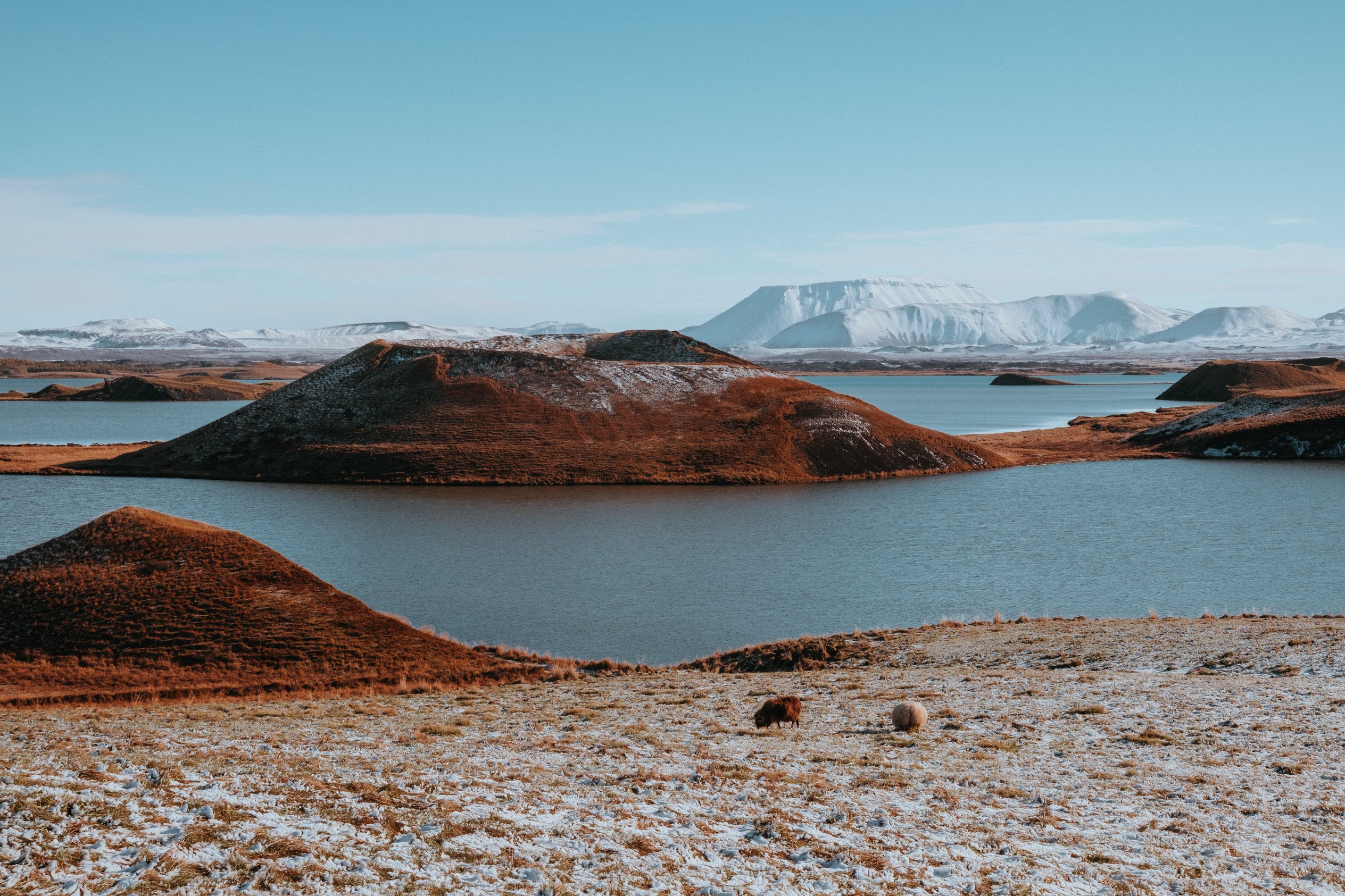
Golden Circle Iceland: The Complete 2026 Guide

TL;DRThe Golden Circle is a loop route of roughly 250 to 300 kilometres from Reykjavík, taking 6 to 8 hours with stops — the driving alone, without stopping, takes 3.5 to 4 hours. The key trio of sights is Þingvellir National Park, the Geysir geothermal area with the Strokkur geyser, and the Gullfoss waterfall. Entry and parking at Geysir and Gullfoss are free, while Þingvellir charges 1,000 ISK a day. Popular extra stops include the Kerið crater (700 ISK), Brúarfoss waterfall (750 ISK) and the Secret Lagoon hot springs (3,000–4,500 ISK). The roads are paved year-round, so you won’t need a 4×4 in summer, and it’s best to set off early in the morning or late in the afternoon to dodge the crowds coming from Reykjavík.

I remember it like it was yesterday, even though it’s been a few years since we first set off for Iceland in late September. We were standing by the geysers, a mad wind was howling, and we decided to climb the nearby little hill of Bjarnarfell to get a better view.

During the twenty minutes it took us to scramble to the top, we got sunshine, a sudden downpour, hail that stung our faces, and then the sun came out again to dry us off a little 😅. That was the moment I understood that in Iceland nature does whatever it pleases, and we’re only there as guests.

If you’re planning a trip to this magical island, the Golden Circle in Iceland will probably be your first big stop. It’s Iceland in a nutshell, where in a relatively small area you’ll see the best of the local landscape, from tectonic rifts to spouting geysers and breathtaking waterfalls.

In this article you’ll find a complete guide for 2026. We’ll look at what to see, how much things cost, where to base yourself smartly, and above all I’ll tell you what to skip so you don’t waste precious time.

TL;DR

  • The Golden Circle is a roughly 250 to 300 kilometre route starting and ending in Reykjavík, which you can easily cover in a single day.
  • Pure driving time is about 3.5 to 4 hours, but with the main stops and photo breaks set aside a full 6 to 8 hours.
  • The main free (or very cheap) stops are Þingvellir National Park, the Geysir geothermal area and the mighty Gullfoss waterfall.
  • The roads along the whole route are paved and in excellent condition, so in summer you don’t need a 4×4 car.
  • Set off either very early in the morning or late in the afternoon to avoid the crowds who roll in on big tour buses.

When to go and how to get there

The Golden Circle is easily accessible year-round and thanks to the wonderfully smooth, carefully paved roads you really don’t need to worry about requiring a giant off-road jeep with monster tyres to drive it. Even the most basic and tiniest little car from the rental company will handle this whole route effortlessly in summer, and the journey itself forms a neat loop that starts and ends in Reykjavík.

If you’re heading out to explore the island in the darker winter months, though, keep in mind that the days here are extremely short — in December the sun doesn’t rise until around 11:30 and sets again by 3:30 in the afternoon.

The weather can also be incredibly treacherous, so before you leave your hotel always check websites like Safetravel.is for important safety warnings and the excellent Umferdin.is for completely up-to-date information on icy roads.

Lukáš and I have long had a genuinely good experience with the DiscoverCars search engine, which we use reliably all over the world — just watch out for the new rules and small catches of the local island rental firms. As of January 2026 Iceland has introduced a brand-new per-kilometre tax for all passenger cars up to 3.5 tonnes, set at exactly 6.95 ISK (roughly £0.04) per kilometre driven.

Different rental companies handle this fee in different ways, so some charge a flat daily rate while others deduct the tax straight from your deposit at the end of the trip based on the actual odometer reading — it’s worth budgeting for it in advance. The popular Golden Circle will cost you roughly 2,000 ISK (about £12) in this specific tax, which is fortunately quite nicely offset by the fact that fuel has become cheaper across the board after the previous fees at petrol stations were scrapped.

At the same time, don’t be lulled into a false sense of security just because you’re only taking a relatively short trip on luxurious tarmac — pay real attention to getting the right insurance for your rental car. Basic insurance (often labelled CDW) unfortunately doesn’t come close to covering the typical and very expensive Icelandic damage, and given that a lot of inconspicuous turn-offs to cosy accommodation tend to be dusty or gravel tracks, we warmly recommend paying extra for Gravel Protection.

A chapter all of its own, and a real Icelandic speciality, is the unpredictable local wind, which routinely has such enormous force that it can rip your car door clean off its hinges if you don’t hold it firmly with both hands when opening — and no standard insurance covers that kind of unfortunate damage.

Bear in mind, too, that any off-road driving is strictly and uncompromisingly banned across the entire island, and breaking the rule can land you a fine of up to 500,000 ISK.

Where to stay and how much the Golden Circle costs

Although plenty of people drive this popular loop straight out of Reykjavík and back, a far smarter strategy is to base yourself somewhere along the route itself, which ends up saving you a lot of needless stress and precious time.

You can get up nice and early and set off for the biggest sights well ahead of time, before the first giant buses packed with day-trippers from the capital even arrive — and in the evening you’ve got a slightly better chance of spotting the northern lights you’ve dreamed of right from your window, since you won’t be as bothered by the strong light pollution of the city.

The best and most strategic base for thoroughly exploring the circle is the town of Selfoss, where you can relax in the excellent Hótel Selfoss spa, or the beautifully located Laugarvatn, sitting right in the beating heart of the whole loop on the shore of a peaceful lake.

Lovely accommodation is also on offer in the charming and very popular Flúðir at The Hill Hotel near natural thermal springs, and the absolute top pick for anyone who wants to be first at the sights every time is the slightly more upmarket Hótel Geysir, located literally just a few steps from the bubbling thermal fields. For another solid option right on the route, take a look at the Blue Hotel Fagrilundur – On The Golden Circle.

Accommodation prices in Iceland have not been exactly wallet-friendly for a long time, and you should be prepared to pay, for a fairly ordinary but decent double room, an average of 30,000 to 50,000 ISK (roughly £175 to £290) per single night in the peak summer season.

Beyond the sights and expensive food, don’t forget to factor in small parking fees, which are absolutely everywhere on the island and are handled today almost exclusively and cashlessly through handy mobile apps like Parka or the old familiar EasyPark.

Just watch out carefully for the fact that at the local self-service terminals at petrol stations and at some barriers you’ll always need a physical payment card and its PIN, so relying solely on convenient phone payments via Apple Pay for the whole trip really may not pay off here. Booking.com is our favourite accommodation search engine, and we definitely recommend booking popular hotels many months in advance.

💡 Specific accommodation tips (check prices and availability on Booking, and book early — in season and around the 2026 eclipse they vanish months ahead):

Þingvellir National Park: where history and continents were made

After about forty-five minutes of relaxed driving from central Reykjavík, your first stop awaits — and it’s the geologically most fascinating one of the whole Icelandic adventure. Þingvellir National Park (pronounced softly, like Thingvellir) is quite rightly inscribed on the prestigious UNESCO World Heritage list, and it’s exactly that unique, magical place where, at a rate of roughly two centimetres a year, the enormous North American and Eurasian tectonic plates are slowly and steadily drifting apart.

You can park your car at one of several cleverly arranged car parks labelled P1 to P5, and the daily fee of 1,000 ISK (about £6) is fortunately paid just once via a machine or the Checkit.is app — and the ticket, tied to your number plate, then covers the whole park area.

1. A walk through the Almannagjá rift and Öxarárfoss waterfall

From the large upper car park P1 Hakið, which lies right by the lovely main visitor centre and modern toilets, follow the well-maintained path straight into the huge, majestic Almannagjá rift, where you’ll spend the whole time walking through an extraordinary no-man’s-land set right between two mighty continents.

In person, this place has an utterly incredible and at times almost oppressive atmosphere, framed by the steep walls of black volcanic rock — something the sharp-eyed makers of the popular series Game of Thrones duly appreciated, setting the famous Bloody Gate here, very fittingly.

In autumn we took a beautiful and surprisingly peaceful stroll through the narrow canyon here and, without much physical effort, walked along the flat path to the charming Öxarárfoss waterfall, beneath which, incidentally, there’s another very handy car park labelled P2 Efri-Vellir for those who’d rather not walk far.

The walk to the waterfall itself is completely easy and manageable for children without any trouble, as it largely follows comfortable, well-kept wooden boardwalks, and the little waterfall tumbling wildly down the dark basalt cliffs looks fantastic in any weather.

What’s more, it was in this very carefully protected area that some of the most important and fateful moments in the whole rugged island’s history played out, because in the year 930 the powerful and respected Vikings founded the famous Alþingi here, in a perfect natural acoustic amphitheatre by the Lögberg rock.

That makes it one of the oldest functioning parliaments in the entire world, and long ago chieftains from all over Iceland would gather regularly at this sacred place to settle bloody disputes, arrange wealthy marriages and loudly recite brand-new laws before the assembled crowds.

2. Silfra: snorkelling in water with 100-metre visibility

If you really love a slightly more extreme and considerably more unusual experience, just plug the lower car park P5 Valhöll into your sat nav — of all the ones mentioned, it lies by far the closest to the world-famous, flooded Silfra fissure.

This at-first-glance fairly inconspicuous crack in the earth is filled to the brim with utterly crystal-clear water coming from the enormous Langjökull glacier, which trickles down here very slowly and, over decades, is naturally filtered through the porous underground lava on its way.

The result of this lengthy natural process is breathtakingly transparent water without a single flaw, in which you can see up to a hundred metres underwater without the slightest trouble — and diving or daring snorkelling here quite rightly counts among the great, sought-after wonders of the world.

I have to warn you honestly in advance, though, that this incredibly clean water sits at a chilly 2 to 4 °C year-round. But you really needn’t worry about your health, because professional operators like DIVE.IS, Arctic Adventures or Troll Expeditions first bundle you into an extremely warm undersuit before zipping you into a very thick neoprene drysuit.

You’ll feel a bit clumsy and comical for a while, like the famous Michelin Man, and the thick rubber around your neck may seem a little tight at first, but the moment you first dip your face below the surface and an endless, glowing blue abyss opens up beneath you, you’ll only feel a bit cold on your exposed face and fingertips.

It is, however, a fairly pricey and exclusive treat, as prices for basic snorkelling start at the best agencies at roughly 21,000 ISK (about £125) if you have your own transport, on top of which a further compulsory 1,500 ISK is added on site as a small national park fee per swimmer.

Be sure to book your spot many weeks in advance to be safe, and always keep in mind that to be allowed to dive, you and your children (who must be at least 12) have to meet strict and precisely set weight and height limits, so that the suit seals safely in the water.

💡 Tip: It’s worth buying tickets and organised tours (around the Golden Circle and beyond) in advance online via GetYourGuide — in season they fill up fast.

Geysir and Gullfoss: geothermal theatre and the deafening roar of water

From Þingvellir National Park, an easy, empty road takes us about sixty kilometres further east, straight to the amazing Haukadalur geothermal area, which literally bubbles and hisses underfoot.

Here you’ll see up close, with your own eyes, just how enormous and wild a force this restless land hides just beneath its thin surface, and then, only a few kilometres further downstream, you’ll be utterly deafened by one of the most impressive and mighty waterfalls in all of Europe.

These two stunning stops are really close together, so getting between them takes just a moment and you can focus fully and stress-free on the unbelievable, untamed natural beauty all around you.

3. The Haukadalur geothermal area and the reliable Strokkur

From a fair distance away as you arrive, you’ll safely see mighty columns of hot white steam rising into the sky, and the moment you step out of the car you’ll catch that characteristic sulphurous odour strongly reminiscent of rotten eggs, which somehow belongs inseparably and romantically to Iceland’s raw nature.

This huge, bubbling, colourful area is the original home of the majestic Great Geysir, which in its best years spouted boiling water to a tremendous height and ultimately gave its proud name to every spouting geyser in the world.

Today, though, this legendary old gentleman rests quietly most of the time, waking from his deep sleep only very rarely and unexpectedly after really large local earthquakes, so the biggest and most photographed star of the whole fenced enclosure is his considerably smaller but all the more reliable and energetic brother named Strokkur.

Strokkur really won’t keep you waiting impatiently for his show, because roughly every five to ten minutes he forms a huge, glowing turquoise bubble in the quiet crater, which then explodes with a tremendous roar and hurls boiling water a full fifteen to thirty metres high into the air, to the amazement of everyone watching.

Be sure to position yourself cleverly and downwind in good time, though, or after a moment you’ll be in for a very unwanted and rather unpleasant hot shower — and please, under all circumstances, properly respect the safety ropes lining all the paths.

The water in the inconspicuous nearby pools routinely reaches temperatures above 80 °C, and the weary local rescuers apparently treat needlessly burned, overly curious tourists here every single year — people who foolishly thought it was a good spot for a quick temperature test with a bare finger.

Parking at the nearby modern visitor centre, as well as access to the viewing area by the springs, are fortunately completely free, no exceptions — just keep a tight grip on your wallet in one of the largest and by far most expensive gift and souvenir shops on the island, which you’re forced to wander slowly through on the way to the warm toilets.

4. Gullfoss, the Golden Waterfall

Just ten minutes of brisk driving from the bubbling geysers, the true and utterly spectacular finale of the classic Golden Circle awaits you obediently — and it’s also my huge, lifelong personal favourite.

The incredibly mighty and deafening double waterfall Gullfoss, lovingly nicknamed the Golden Waterfall by locals, plunges in two stunning, steep cascades straight into a thirty-two-metre-deep, incredibly narrow rocky canyon carved by the fierce Hvítá river.

The sight, from right up close, of that enormous, unstoppable mass of glacial water — whose monstrous flow reaches an unbelievable and frankly terrifying 140 cubic metres per second in summer — simply takes the breath away from every newcomer.

The air throughout the valley is constantly and densely filled with refreshing spray because of the enormous impact of the water, so a quality waterproof jacket will come in extremely handy even when the sun is shining beautifully (which, incidentally, is why you’ll almost always see a gorgeous, vivid rainbow here through the dense droplets).

When you stand here today in utter awe and feel the whole soaked earth literally vibrating beneath your tired feet, it’s very hard to believe the sad fact that at the very start of the twentieth century, wealthy foreign investors wanted to destroy this unique natural waterfall forever and build a giant, ugly commercial hydroelectric plant here.

It was saved single-handedly by the incredibly brave local farmer’s daughter Sigríður Tómasdóttir, who boldly and loudly threatened to throw herself straight into the roaring, freezing water — and with the expert help of the enthusiastic lawyer Sveinn Björnsson, who, as it happens, eventually became the very first president of an independent Iceland, she miraculously won that long and extraordinarily complex court battle.

Today, two main, well-maintained paths lead very comfortably and safely to the stunning waterfall from two free, spacious car parks. The more comfortable one takes you to a breathtaking upper panoramic viewpoint by the restaurant, while the other, slightly more adventurous one, leads down wet steps right to the very edge of the roaring water, where you’re guaranteed to get a fair bit wetter.

Bonus stops: what else to see when you have time

If you’ve set off on your dream trip really sensibly and smartly, nice and early in the morning, or if you’ve planned a whole long summer day with plenty of daylight for this fantastic excursion, it would be a huge shame to limit yourself to just the famous big three sights.

On the way back to the busy capital you can quite easily add a few more fantastic places to your packed itinerary, where the ubiquitous crowds aren’t nearly so dense and you can enjoy captivating, raw Iceland in much greater, more pleasant peace.

5. The Kerið crater with its turquoise lake

Right by the main, busy road number 35 you’ll come across the utterly stunning, almost three-million-year-old Kerið volcanic crater, which unfortunately, unlike many other natural wonders, isn’t entirely free — but the entry fee fortunately sits at just a symbolic 700 ISK (about £4), which you’ll pay without batting an eye at the little wooden hut by the entrance.

The crater is utterly fascinating and exceptional at first glance because its remarkably deep-red, sharp volcanic walls contrast so strikingly with the deep, completely opaque, aquamarine-blue colour of the still little lake resting peacefully and motionless at its very bottom.

We stopped here with undisguised enthusiasm on the second tiring day of our trip together, and the whole easy, relaxed walk right along the high upper rim of the majestic crater took us about twenty minutes, full of amazing views over the landscape.

Anyone with a much greater urge to explore and who doesn’t mind a bit of effort on the way back can confidently head down the well-maintained wooden steps and go all the way down right to the calm surface of the colourful water.

A hugely interesting and unexpected curiosity of this mystical place is the fact that, thanks to the perfect shape and complete enclosure of the whole space, the acoustics inside are so fantastic and powerful that occasional, very rare chamber concerts are held on the little lake — and in the past, to the great delight of fans, even the famous Björk sang here from a small raft floating right in the middle of the icy water.

lukas a lucka
Lukáš and Lucie recommend
Where to Stay on the Golden Circle in Iceland
6 accommodations — hotels, wellness hotels and other lodging options

6. A soak in the Secret Lagoon or Hrunalaug

Warming your thoroughly chilled, frozen bones after a full day of demanding, exhausting walking in the cold, relentless wind is an absolute evening necessity in Iceland — and instead of the unbelievably overpriced and usually hopelessly overcrowded Blue Lagoon, we warmly and sincerely recommend heading for the inconspicuous little village of Flúðir.

This is where the fantastic Secret Lagoon, or Gamla Laugin, is cleverly hidden — the very oldest swimming pool on the entire island, built from stone way back in 1891, where the crystal-clear water sits at a wonderfully pleasant and relaxing 38 to 40 °C all year round.

Around the large pool, several more very small hot springs — and even one tiny active geyser — bubble away cheerfully and loudly, so it ends up being a far more authentic, calmer and more rustic experience than any sterile, luxurious modern spa on the coast. Entry costs, by Iceland’s hard standards, a pleasant 3,000 to 4,500 ISK, and for children under fourteen it’s completely free — just be sure to buy your tickets in advance on the official Secret Lagoon website.

I just sincerely and urgently ask you to remember carefully, and without any back-talk, that sacred and absolutely unbreakable Icelandic cultural rule known as Sundlaug etiquette, which applies very strictly to all local village pools and hot springs without the slightest exception.

Before you even try to discreetly slip into your favourite swimwear in the corner, it is your absolutely strict and uncompromising duty to shower in the open communal washrooms completely naked and, using plenty of liquid soap, very thoroughly wash your entire body from head to toe — something the rather funny and very explicit diagrams hanging on almost every wall of the damp changing rooms will clearly guide you through at every step.

For the sake of health and nature, Iceland’s traditional pools use the absolute bare minimum of chlorine and chemicals, so the cleanliness of the water depends entirely on the cleanliness of the bathers themselves. If you try to shyly and secretly shower in your swimwear, the ever-vigilant, no-nonsense local lifeguards will mercilessly chase you out, loudly — and you’ll have made an enormous international fool of yourself.

7. Brúarfoss, the bluest waterfall

If you genuinely love a rich turquoise colour and don’t mind sacrificing a little extra walking and time, definitely mark a stop on your downloaded map at the fascinating Brúarfoss waterfall, which is quite rightly and not at all exaggeratedly nicknamed the bluest waterfall in all of vast Iceland.

The water here flows incredibly wildly and loudly through a dark, very narrow volcanic rift, and its unusual colour is in fact so incredibly bright and vivid that after watching for a while you might even start to doubt whether someone local has secretly poured in some very strong, toxic chemical dye in the night.

It used to be reached only by a fairly long, roughly three-and-a-half-kilometre route through unpleasant, often muddy terrain, but today there’s fortunately, to the great delight of the lazy, a brand-new and much closer maintained car park, where you’ll pay a small fee of around 750 ISK after parking, but in return you’ll save yourself a huge amount of time and plenty of tired, wet steps.

8. Faxi waterfall and peace without the crowds

Just about twelve kilometres of very easy, flat driving from the enormous and sometimes uncomfortably overcrowded Gullfoss, the lovely and fairly wide Faxi waterfall hides quite inconspicuously. It doesn’t come anywhere close to the staggering dimensions of its far more famous colleague, but it does offer you something much rarer and more beautiful with certainty — wonderful calm and a vast, quiet sense of ease.

The vast majority of large, time-bound coach tours from Reykjavík completely and gladly ignore this amazing, magical place for timing reasons, so you can stroll the paths here at your own pace and in peace, take gorgeous, original photos from up close, and enjoy the babbling, falling water without anyone constantly and accidentally elbowing you while trying to grab the best possible selfie.

A short stop at the water here will take you barely ten to fifteen relaxed minutes of actual time, and as another huge, not-insignificant bonus you won’t pay any entry fee or annoying parking charge at all — which, in the middle of very expensive Iceland, is always a real pleasure.

9. The Reykjadalur hot river

If at the very end of a long, packed day you still have plenty of energy left in your legs and really don’t fancy paying hefty sums to enter the artificially enclosed, crowded commercial thermal baths with their tiles, you can happily make a fantastic detour a little further to the town of Hveragerði, from where a stunning and at times steep trail leads straight to the wild hot river called Reykjadalur.

The hike, climbing steadily over picturesque and occasionally windy hills, will reliably take you about an hour and a half of brisk walking one way, but at its very end a genuine, unspoiled natural fantasy awaits you for sure — a wild and beautiful river, steadily and strongly warmed at the bottom by nearby geothermal activity, into which you can plunge completely free of charge any time, without a worry.

Lukáš and I absolutely love and adore that unrepeatable feeling of total freedom when you lie wearily in the hot flowing water right in the middle of endless, deep-green hills with the grey island clouds constantly racing overhead — you just have to brace yourself bravely for the fact that the inevitable change into swimwear happens right outside in the incredibly freezing wind, and the only place to hide is behind some really flimsy, draughty wooden screens.

Where to eat: a paradise for vegetarians and ice-cream lovers

When Lukáš and I were in expensive Iceland for the very first time, we travelled in a really tight low-budget, student mode, and as committed, dyed-in-the-wool vegetarians we cautiously brought a large part of our non-perishable food from home, or happily cooked cheaply for ourselves on long evenings from our modest shopping done right after landing.

Today, though, the amazing and ever-growing food scene along the sprawling Golden Circle offers several absolute culinary gems you mustn’t accidentally miss, which will reliably satisfy both keen lovers of fragrant vegetables and those still vainly searching for those classic meaty delights at an at least somewhat reasonable, acceptable price.

10. The Friðheimar tomato farm

This incredibly fragrant, warm and magical place is simply an utter, genuine gourmet dream for just about every enthusiastic vegetarian travelling the world.

The wonderful family farm Friðheimar grows beautifully juicy, red tomatoes with enormous love and care in vast, gloriously sunlit greenhouses, which in the harsh climate are heated entirely ecologically and cleanly all year round by the ever-present local geothermal energy — and right in the middle of this incredible green paradise the owners have cleverly opened an immensely popular and renowned restaurant.

Their greatest pride and best-known island speciality is the absolutely fantastic, thick homemade tomato soup, which after paying you ladle into bowls completely unlimited and as you please from the constantly bubbling hot buffet, together with incredibly fresh, crusty, fragrant bread, proper homemade butter and a wonderfully refreshing, delicate cucumber salsa.

The two of us simply can’t help ourselves in this place and eat so much of the good stuff with such gusto that we can barely roll ourselves down the path to the car afterwards, because the whole unique feast takes place right among hundreds of grown tomato plants, helpful imported bumblebees occasionally buzz cheerfully and loudly past your head, and that warm, family atmosphere is simply indescribable.

The varied menu naturally also offers plenty of fully vegan and excellent vegetarian options, very delicate and wonderful stuffed ravioli, and for the brave they even make highly unusual desserts from deep-green tomatoes, which taste surprisingly great and fresh.

Just be really careful about the fact that the farm is usually only open for a short window over lunch, from around 11:30 to about 16:00, and without a timely, confirmed reservation sent via their official email you don’t stand the slightest chance of getting a table here in summer, because the greenhouses are constantly bursting at the seams under the onslaught of eager tourists from all over the world.

11. Finishing with homemade ice cream at the Efstidalur farm

Just a short distance from the powerfully bubbling geysers, on a quiet turn-off, lies the incredibly charming and honest family dairy farm called Efstidalur, where you essentially have to drop in for at least a moment if an unconquerable craving for something really, really good and sweet strikes you along the way.

For visitors’ delight, the owners have a lovely, cosy café cleverly connected to a huge transparent glass window in the floor, through which you can watch — completely undisturbed and in the dry, right while sipping your hot coffee — down into the perfectly clean cow barn and amusedly observe the contented local cows chewing their fresh hay.

They make absolutely phenomenal and one hundred percent genuine homemade ice cream there, produced exclusively from their own fresh milk, and trust me, if you happen to be travelling Iceland with tired and grumpy children, after all those dull geological phenomena and roaring cold waterfalls this will clearly and safely be their absolute favourite stop of the whole long day — one they’ll look forward to.

12. Cheap shopping at Bónus and the classic hot dog

For all travellers who want to save at least a little on food during their trip, the absolute and essential basic is the huge and very popular Icelandic supermarket Bónus, which in towns you’ll reliably and instantly recognise from a great distance by its giant bright-yellow logo with the odd pink pig, and where you’ll safely pick up by far the cheapest food supplies on the whole island before you even start the car and set off from Reykjavík.

Ordinary, average main meals at the nice classic restaurants dotted along the sights easily start at unpleasant prices from 2,500 to 4,000 ISK, so your own filled rolls or snacks will save you a really substantial amount of money for your stretched travel budget over the whole trip.

Bear firmly in mind, too, that buying overpriced bottled water in plastic is, from both nature’s and your wallet’s point of view, an absolute and enormous sin in Iceland, because the perfectly ordinary, clear local tap water is perfectly clean, purely glacial and tastes a hundred times better than anything stale you’ll find sitting on the shelves of petrol-station shops.

For meat lovers there’s of course one absolutely classic, very cheap and immensely popular Icelandic island gastronomic experience with a long tradition — the simple, quick hot dog proudly known locally as the pylsa, which here is surprisingly made from a rather interesting mix of proper lamb, pork and beef trimmings.

You can buy it reliably at essentially every larger, busier petrol station of the well-known local N1 chain along your whole route for an agreeable and acceptable 820 ISK or so, and all local connoisseurs, and even foreign guides, unanimously claim it’s best and safest to order it “with everything” (correctly, in Icelandic, “eina með öllu”), which in translation means they’ll generously bury it on the counter under both fried and crunchy raw onion and douse it lavishly and without warning in thick ketchup, spicy remoulade and traditional sweet Icelandic mustard.

13. Warm soup in the warmth at Gullfoss waterfall

When you’ve frozen right through to the bone at the railing while frantically photographing that enormous, icy mass of falling water in the mist, there’s a huge and at first glance very pleasant self-service heated café with a lovely panoramic view right in the large modern visitor centre by the Gullfoss waterfall itself.

In the kitchen they specialise mainly in the very traditional, renowned and very thick Icelandic meat-and-vegetable soup, for which crowds of enthusiastic tourists flock straight in from the cold, but as committed vegetarians we treated ourselves with great joy and gratitude in the corner to at least some fragrant fresh soft bread, a giant cup full of hot tea and absolutely delicious sweet fresh pastries, which instantly and reliably gave us the missing, much-needed energy for further hours of demanding scurrying about outside in the wind.

Where to go next in Iceland

The Golden Circle is a beautiful start and the perfect place to learn how travelling in Iceland works. Once you’ve got it behind you, I recommend heading further south or exploring the capital. Here are some more of our articles that will come in handy:

Frequently asked questions

What is the Golden Circle in Iceland?

The Golden Circle is a roughly 250 to 300 kilometer long and incredibly popular tourist route located not far from Reykjavík itself, which combines into one large and neat package three of the most famous attractions including the beautiful and historic Þingvellir National Park, the massive and bubbling geothermally active Geysir area, and the thundering and enormous Gullfoss waterfall.

How long does it take to drive the Golden Circle?

The actual pure drive by car from Reykjavík and safely back takes approximately 3.5 to 4 hours on smooth asphalt without stops. For the three main and most famous stops with walking around, reliably set aside another 5 to 6 hours, and if you like to add some magical bonus spots along the way such as the volcanic Kerið or the hot and relaxing Secret Lagoon, this incredibly rich trip will take you a beautiful and exhausting 8 to 10 hours, making it a full day program.

What is the best order of stops?

The most common and classic order on the map, which almost all huge tour buses mindlessly follow, is to start in the morning at Þingvellir, continue to the Geysir springs, and ceremoniously finish at Gullfoss waterfall. Our great and repeatedly tested tip, however, is to get up very early in the morning and drive the entire circle completely in reverse, so you start from the back at the more distant Gullfoss, where you’ll have the attraction absolutely and entirely to yourself at sunrise, and thus beautifully and elegantly avoid the massive uncompromising crowds from the capital during the day.

Can we manage it in winter and without a 4×4 vehicle?

Yes and absolutely without major concerns, since all main and secondary roads connecting the attractions on the circle are carefully paved and very well maintained by road crews. A big and heavy 4×4 drive really isn’t an absolute and bare necessity here, although it does come in very handy in deep winter for logical reasons. Rather, don’t forget to check the current weather at en.vedur.is and remember that in cold December and January the days are truly incredibly short with only a few hours of precious daylight, and on windy roads, transparent and extremely dangerous black ice often and very quickly forms unnoticed.

How much do basic entries and parking cost?

At the enormous Gullfoss waterfall and in the wide active area of the famous Geysir, the actual pedestrian entry including parking is to the great joy of wallets still completely free. At the majestic Þingvellir National Park, however, you must pay an all-day parking fee for the entire vast territory of 1,000 ISK (approximately €7), entry to the edge of the colorful volcanic Kerið crater costs about a symbolic 700 ISK (approximately €5) per person, a short walk and stop at Brúarfoss waterfall will cost you about 750 ISK (approximately €5) at the parking lot, and the hot Secret Lagoon thermal baths cost depending on age and season roughly around 3,000 to 4,500 ISK (approximately €21-31) per bathing visitor.

Can the circle be combined with a visit to Blue Lagoon in one day?

Theoretically, it is of course feasible and possible from a time and logistics perspective, especially in the bright summer months when clear daylight in Iceland is beautifully visible until late at night, and such a very hectic and accelerated combined car trip takes around 11 demanding hours. However, we happily recommend to all enthusiastic travelers to rather relax in complete peace at the much smaller and considerably quieter countryside Secret Lagoon, which best of all lies absolutely perfectly and conveniently directly on the marked route of your circle tour and is moreover diametrically cheaper and less crowded.

What should we be most careful about on the island and what about accommodation?

The main and most frequent treacherous enemy on the roads across all of wide Iceland isn’t exactly the cold and frost, but rather the completely unpredictable and in places truly extremely strong gusting wind. Therefore, always please hold your doors firmly and with both hands when opening car doors after stopping, so that the wind doesn’t unfortunately rip them straight off the hinges with enormous force, which rental companies unfortunately deal with absolutely every day, and no standard insurance policies usually cover this quite frequent but very costly and extremely dangerous damage at all. The water when diving in the popular Silfra fissure is an icy 2 to 4°C, but with quality clothing this admirable activity after prior booking is very popular, absolutely safe, and can be handled without problems even by enthusiastic swimming children over twelve years old.

Tips and Tricks for Your Vacation

Don’t Overpay for Flights

Search for flights on Kayak. It’s our favorite search engine because it scans the websites of all airlines and always finds the cheapest connection.

Book Your Accommodation Smartly

The best experiences we’ve had when looking for accommodation (from Alaska to Morocco) are with Booking.com, where hotels, apartments, and entire houses are usually the cheapest and most widely available.

Don’t Forget Travel Insurance

Good travel insurance will protect you against illness, accidents, theft, or flight cancellations. We’ve had a few hospital visits abroad, so we know how important it is to have proper insurance arranged.

Where we insure ourselves: SafetyWing (best for everyone) and TrueTraveller (for extra-long trips).

Why don’t we recommend any Czech insurance company? Because they have too many restrictions. They set limits on the number of days abroad, travel insurance via a credit card often requires you to pay medical expenses only with that card, and they frequently limit the number of returns to the Czech Republic.

Find the Best Experiences

Get Your Guide is a huge online marketplace where you can book guided walks, trips, skip-the-line tickets, tours, and much more. We always find some extra fun there!
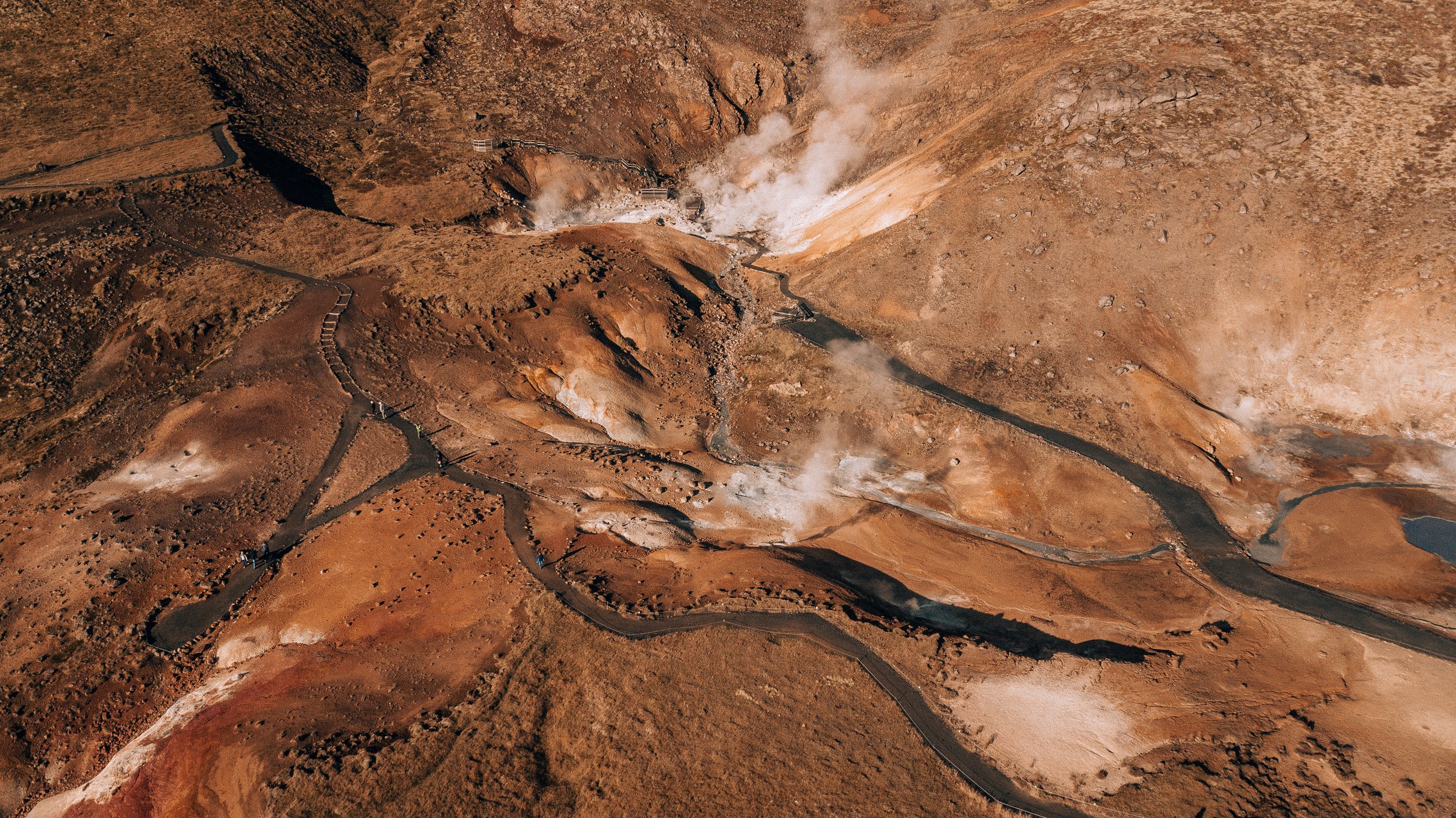
East Fjords of Iceland: 12 Things to See and Do

TL;DRIceland’s East Fjords come with 12 essential tips, from the basalt canyon of Stuðlagil with its turquoise water to Hengifoss waterfall (128 metres, the third-highest on the island), right through to the artsy town of Seyðisfjörður, with its rainbow street and little blue church, about 30 minutes from Egilsstaðir. Egilsstaðir makes an ideal base for exploring, with supermarkets and petrol stations, and a guesthouse night for two runs €2,900–€4,200. Give the region at least two to three days, and come in June to August when the roads are clear and puffins turn up in Borgarfjörður eystri, while wild reindeer are visible along the road between Egilsstaðir and Höfn from autumn through to spring. For unwinding, try the Laugarfell hot pools or the floating Vök Baths near Egilsstaðir, which cost €1,300.

When you leave behind the dramatic, breathtaking, but utterly tourist-packed south of the island and turn the wheel onto Route 1 heading northeast, the landscape suddenly takes a deep breath. Traffic thins out, the crowds at the waterfalls disappear, and you find yourself in a world ruled by endless bays, steep mountains and absolute calm. Welcome to the east fjords of Iceland, a place plenty of travellers blindly drive straight through, but one we fell head over heels for from the very first moment.

Lukáš and I explored the east fjords of Iceland on the sixth and seventh days of our autumn road trip, right at the turn of September and October, and we still think back fondly on that isolated beauty. While down south we sometimes had to dodge tour buses at the landmarks, up here we had loads of spots entirely to ourselves. I was fascinated by how the tarmac winds endlessly along the deep bays, and how every new bend reveals a view even prettier than the last.

In this article you’ll find 12 things to see and do in the east fjords. We’ll look at gorgeous basalt canyons, I’ll show you the most adorable little arts town, and I’ll tell you where to spot tame puffins or wild reindeer. I’ll also throw in practical info on where to base yourself strategically, what prices look like right now, and why you should pay close attention to which side of the river you pick for your trip. Let’s dive in! ☺️

TL;DR

  • Base for day trips: The best strategic point for exploring the eastern part of the island is the town of Egilsstaðir, where you’ll find supermarkets and the main roads cross.
  • Prettiest little town: You absolutely can’t miss Seyðisfjörður, about 30 minutes from Egilsstaðir over a mountain pass. This is home to the famous rainbow street and a little blue church.
  • Natural wonder: The Stuðlagil basalt canyon with its turquoise water is a huge draw — just make sure you park on the eastern side, where you can walk right down to the river.
  • Wildlife: Wild reindeer live only in this region, and in summer (until mid-August) you’ll find a huge colony of tame puffins in Borgarfjörður eystri.
  • Bathing: Our favourite thermal experience is the luxurious Laugarfell pools, or you can try the modern floating Vök Baths right next to Egilsstaðir.

When to Go and How to Get There

The main artery is the famous Route 1, better known as the Ring Road. You can reach the east either via the long drive from the south coast past stunning black beaches and glacier lagoons, or from the north near Lake Mývatn — and both routes are an incredible experience in their own right. Just bear in mind that looping around the individual bays eats up a lot of time, because there’s simply no way to cut a fjord short.

The ideal time to visit is of course the Icelandic summer, June to August, when all the roads are easily passable, the days are endlessly long, and you can watch the much-loved puffins. We drove the east coast in early October, which had the huge advantage of hardly any tourists and gorgeous autumn colours — but we missed the birds, which fly out to sea in August.

If you’re planning a winter trip, always check the official Icelandic road website before every drive, because mountain passes (like Route 93 to Seyðisfjörður) are often closed due to snow.

On top of that, from 2026 Iceland has introduced a new per-kilometre tax for passenger cars of 6.95 ISK (around £0.04) for every kilometre driven. Your rental company will likely bill you for this when you return the car, though on the upside the price of petrol at the pumps has dropped by a noticeable amount.

A special warning for August 2026, when a total solar eclipse will be visible from the east and other parts of the island. Tourist mayhem is expected, so if you want to travel during this exact window, book everything well in advance — easily a year and a half ahead.

Where to Stay and How Much It Costs

The logistical and practical hub of the entire east is, without question, the town of Egilsstaðir. It probably won’t win any awards for beautiful architecture, but you’ll find everything you need to survive in the rugged wilderness. We used this town as the launchpad for all our surrounding day trips, stocking up at the big Bónus and Nettó supermarkets and filling up on petrol, because further along the coast prices for everything climb sharply.

Lukáš and I never camped during our trip around Iceland, because we like our comfort and a bit of warmth in the evening. We always slept in guesthouses, hostels or small apartments that had access to a shared or private kitchenette. That’s by far the best way to save a fortune on food in Iceland.

Every evening we cooked our own hot dinners at the accommodation, prepped snacks for the next day, and made a thermos of hot tea — without which we probably wouldn’t have survived those windy days. A night in a nice guesthouse in Egilsstaðir will set you back roughly 17,000 to 25,000 ISK (around £100 to £150) for two people, although if you book your stay well in advance you can find cheaper rooms too.

💡 Specific accommodation tips (check prices and availability on Booking, and book early — in high season and around the 2026 eclipse they vanish months ahead):

Besides Egilsstaðir, you can also stay right in one of the romantic fjords. You’ll find lovely little hotels in the village of Seyðisfjörður, where prices start from around 21,000 ISK (about £125) and up. And if you come in summer mainly to watch the puffins, I’d recommend spending a night in the hamlet of Bakkagerði in the Borgarfjörður eystri area. Just be aware that capacity is very limited in these tiny villages, and in peak season the rooms vanish at lightning speed.

The Prettiest Towns and Villages in the East

The first batch of our tips focuses on the places where people actually live. The east fjords are dotted with small fishing settlements that huddle beneath steep mountainsides, often reached by just a single winding road. Most of them have only a few hundred residents, a modest harbour, and an utterly unmistakable atmosphere you won’t easily find anywhere else on the island.

1. Seyðisfjörður and Its Famous Rainbow Street

When we checked into our place in Egilsstaðir fairly early in the afternoon on day six, we realised we still had heaps of time, so we hopped back in the car and set off over the mountains to Seyðisfjörður.

It’s about a 30-minute drive along Route 93, and the journey itself is an experience, since you climb over the Fjarðarheiði mountain pass to over 600 metres above sea level before dropping steeply down into the bay. Incidentally, this is exactly the road Ben Stiller bombed down on a longboard in the film The Secret Life of Walter Mitty.

Seyðisfjörður is home to just under 700 residents, yet it feels like the cultural heart of the entire east. Here you’ll find the famous Rainbow Street, which leads you straight to the beautiful little blue church, Bláa kirkjan.

The town is full of small galleries, charming cafés and a bohemian vibe. On top of that, the big Norröna ferry arrives here from Hirtshals in Denmark, so when the ship docks, the number of people in the streets triples for a few hours. Definitely make time for a coffee and just wander among the old wooden houses.

2. Reyðarfjörður and the Hike up Mount Grænafell

If you fancy a slightly more active kind of rest, head to the town of Reyðarfjörður, which sits on the shore of the longest fjord on the entire east coast. The town itself is known mainly for its industrial history and an aluminium smelter, but we came here for the nature and set off on an easy hike up Mount Grænafell, which rises right above the centre.

The hike took us about two hours at a pleasant pace, and our reward was a breathtaking view over the whole elongated fjord and the surrounding peaks. The trail starts off fairly steeply uphill and weaves through a small wood (which is a huge rarity in Iceland, by the way) before opening out onto more exposed plains. It’s an ideal stop to stretch your legs when you’ve had enough of sitting in the car.

3. Neskaupstaður and a Slightly Disappointing Cave

Our next destination in the east was Iceland’s easternmost town, Neskaupstaður, which you reach by working your way through a long tunnel. The drive there is absolutely stunning — sheep graze along the roadside and the mountains plunge straight into the icy ocean. The town itself has a pretty little harbour and an overall very sleepy, peaceful mood.

We wanted to explore the so-called Easter cave Páskahellir, which lies on the coast just past the town. And here I have to be completely honest — for us it was a bit of a letdown 😅. We’d expected something far more epic, but in reality it was just a small hole in the rock, reached by a fairly muddy and slippery path.

If you’ve got a really packed itinerary and you’re pressed for time, in my opinion you can skip this spot with a clear conscience and save your energy for the other gems of this rugged region.

4. Djúpivogur and the Granite Eggs in the Harbour

If you’re driving up the Ring Road from the south, your first major stop in the east will probably be the village of Djúpivogur. This little town is proud of its Cittaslow certification, which means everything here is done slowly, with quality, and with respect for tradition and the environment. You can really feel it — nobody’s in a hurry and a perfect sense of calm reigns everywhere.

The main attraction that usually draws tourists off the road is the artwork Eggin í Gleðivík, stretching along the coast near the harbour. It’s a row of 34 oversized granite eggs, each one representing a species of bird that nests in the area. It’s a great spot for a short stroll, and just nearby you can grab an excellent hot coffee and watch the fishing boats bobbing on the waves.

💡 Tip: It pays to book tickets and organised tours (around Iceland and beyond) in advance online through GetYourGuide — they fill up fast in season.

Natural Wonders, Waterfalls and Stunning Canyons

The east isn’t just about towns, of course — it hides some of the most beautiful natural scenery we saw anywhere on the island. Compared with the famous Golden Circle or the south coast, there’s a far more raw, lonely atmosphere here that makes these places genuinely special. Whether you’re after turquoise rivers or thundering waterfalls, the east fjords certainly won’t let you down with their wonders.

5. The Stuðlagil Basalt Canyon

This is, without exaggeration, one of the most photogenic spots on the entire island — and one that, as it happens, was only revealed relatively recently. For decades this massive basalt canyon lay hidden beneath a raging glacial river, but when a nearby hydroelectric plant was completed in 2009, the water level dropped and exposed an incredible wall of geometrically precise hexagonal basalt columns, between which brilliantly turquoise water now flows.

When visiting, you need to pay very close attention to which side of the river you choose for your trip. The western side offers quick access and newly built steps up to a viewing platform, where you’ll also find toilets and a small food truck — but you can’t get down to the river from there.

We always recommend parking on the eastern side, from where you do have to walk about 40 minutes along a stony path, but it’s the only way to climb right down into the heart of the canyon and touch the icy water. Either way, you’ll pay 1,000 ISK (about £6) for parking, which you can easily sort out via the popular Parka app.

6. The Impressive Hengifoss Waterfall

While the south of Iceland boasts the Skógafoss and Seljalandsfoss waterfalls, the east has its own pride and joy — the Hengifoss waterfall. At 128 metres tall, it’s the third-highest waterfall on the island, but what makes it truly unique isn’t just the height — it’s the wall the water tumbles over. The black basalt here is laced with vivid red layers of clay, which, combined with the roaring water, looks downright magical.

We headed here on the seventh day of our road trip, and the walk up from the car park took us about half an hour at a brisker uphill pace, though most guides quote around 45 to 90 minutes one way.

It depends a lot on your fitness and how much you stop to soak it all in, because roughly halfway up you pass another, smaller but all the more interesting waterfall, Litlanesfoss, beautifully framed by perfect basalt columns. Definitely wear sturdy shoes, as the trail can get properly slippery after rain.

lukas a lucka
Lukáš and Lucie recommend
Where to stay in the East Fjords of Iceland
5 accommodations — hotels and other lodging options

7. Lake Lagarfljót and the Icelandic Monster

When you check in at Egilsstaðir, you’ll definitely notice the huge, murky lake that stretches alongside the entire town. It’s called Lake Lagarfljót, and for Icelanders it holds a significance similar to Scotland’s Loch Ness. With a deadly serious face, the locals will tell you the legend of a giant lake worm named Lagarfljótsormurinn, whose first recorded sighting dates all the way back to 1345.

I can’t promise you’ll actually spot the monster, but the drive along the lake shore is lovely all the same. What’s more, on its eastern bank you’ll find Hallormsstaður forest, which by Icelandic standards is a huge rarity, since the island is otherwise almost completely bare thanks to ancient deforestation. The trees here smell wonderful, and it’s a great spot for a short rest or a snack from your own supplies.

8. The Majestic Mount Snæfell

Throughout our wanderings in the east, we kept admiring a huge, solitary mountain that watched over the whole landscape from afar. Mount Snæfell, which fittingly translates as “Snow Mountain”, stands at 1,833 metres — the highest mountain in Iceland outside of the glaciers, even though its summit is covered in a white blanket practically all year round.

We didn’t plan to actually climb it (for that you need real experience, great gear and ideally the summer months), but even just the view of it from the car or the surrounding plains is genuinely captivating. The mountain looks like a giant guardian of the eastern highlands, and at sunset, when its snowy peak turns pink, you won’t know where to point your camera first.

Wildlife and Hot Springs: What Else to Experience Here

Besides the inanimate landscapes, the east also offers fantastic encounters with wildlife and some of the best thermal pools in the country. Because there are fewer tourists here, the animals are calmer and the thermal baths aren’t as hopelessly packed as the famous Blue Lagoon near the airport.

9. Borgarfjörður eystri and the Tame Puffins

If you’re travelling to Iceland between late April and mid-August, you absolutely must not miss the little village of Borgarfjörður eystri. Right beside it, in the harbour of Hafnarhólmi, you’ll find what is probably the very best and most accessible spot for watching adorable puffins on the entire island. Around 10,000 pairs nest here, and the locals have built wooden platforms from which you can watch these little creatures from literally a metre away.

We headed here to explore on the seventh day of our trip (the drive from Egilsstaðir took us about an hour), but because it was already early October, there wasn’t a puffin in sight. The birds had simply flown off to the open sea for the winter, and nothing at all was happening in the village — it was utterly silent and empty.

Outside of the bird season, I’d only recommend this detour to real lovers of remote roads — but in June and July it’s an absolute must.

10. Wild Reindeer by the Roadside

It might surprise you, but the eastern part of Iceland is the only region on the whole island where you can spot wild reindeer in the open. They were brought over from Norway in the 18th century for farming purposes, but the experiment didn’t quite go to plan — the animals went feral, and today several thousand of them roam freely here.

Your best chance of encountering them is along Route 1 on the stretch between the towns of Egilsstaðir and Höfn, especially from autumn to spring, when the snow drives them down from the mountains closer to the coast — sometimes they even lick salt straight off the roads.

We spotted a herd of reindeer right from the car window and it was an amazing experience, but it’s also a reason to be extremely careful. Especially at dusk, keep your eyes peeled while driving, because a collision with a reindeer is really not something you want to be sorting out with the rental company.

11. The Luxurious Laugarfell Thermal Pools

After long walks in the icy Icelandic wind, there’s nothing better than sinking into hot water. So on day seven we set off to the Laugarfell hot springs, which lie on a plateau east of Mount Snæfell. They’re a little way from civilisation and the road to them can get bumpy at times, but it’s worth every single minute of the drive.

Here you’ll find two gorgeous outdoor pools built from natural stone, with water at the ideal temperature for a long soak. While your nose freezes, your body warms up in the hot water and you can just gaze out over the endless tundra all around. It was a truly luxurious bathe that we still remember fondly, because back then we had it almost entirely to ourselves.

12. The Floating Vök Baths

If you’d rather not venture out into the wilderness and prefer a more modern spa setting, head to the Vök Baths, which sit literally five minutes’ drive from Egilsstaðir on Lake Urriðavatn. This place is architecturally stunning, because the thermal pools float right on the surface of the lake. The water — which, by the way, is so clean you can drink it — sits between 37 and 41 degrees Celsius in the pools.

Admission for an adult costs 7,690 ISK (about £45), and especially during the summer season, don’t forget to book your tickets well in advance through their official website, as capacity is understandably limited. We didn’t actually make it here, since we gave preference to the wilder Laugarfell, but we’ve heard nothing but huge praise for these floating baths from plenty of people.

Where to Eat

As I’ve already mentioned, Lukáš and I basically cooked in our accommodation’s kitchenettes the entire time we were in Iceland. Iceland is incredibly expensive, and daily restaurant visits would have reliably wrecked our budget. Since we’re both vegetarians, our diet consisted mainly of pasta, vegetables and excellent local skyr yoghurts, which we bought at Bónus. Even so, sometimes you just need a change and the warmth of a cosy café.

During our visit to Seyðisfjörður we popped into a great arts centre, part of which is Skaftfell Bistro. The atmosphere there is wonderful and they make an excellent vegetarian pizza, which we thoroughly enjoyed after a whole day outdoors.

Another amazing place we discovered near Egilsstaðir is Móðir Jörð. It’s an organic farm and café in one, offering a strong vegetarian menu made from its own produce — we tried a fantastic creamy soup here.

I also have to mention the small food truck on the western side of the Stuðlagil canyon, where you won’t get a full lunch, but their vegetarian soup and a hot coffee in hand will warm you up no end after your walk.

If you’re after acclaimed dining and don’t mind that it’s not a vegetarian recommendation, lots of travellers rave about Norð Austur in Seyðisfjörður. It’s a highly rated restaurant specialising in fresh sushi made from local fish and seafood. They only open during the summer season and a reservation is definitely essential, since the tables tend to be hopelessly booked out far in advance. We naturally gave it a miss given our diet, but its reputation is phenomenal.

Where to Go Next

If our guide to the east fjords has whetted your appetite for exploring more of this magical island, be sure to check out our other articles. In them we’ve written down all our experiences, routes and tips on how to get the most out of your trip:

To wrap up, let me just repeat our favourite practical recommendations. Lukáš and I have long had good experiences with Booking.com, which we use to book all our accommodation around the world. For renting a car in Iceland we usually use a comparison site like RentalCars, where you can neatly filter for 4×4 models. And we traditionally hunt for cheap flights on Kiwi, our favourite portal for combining different connections. One more tip from us: grab a travel eSIM like Holafly so you stay online for checking road conditions even out in the remote east.

Frequently Asked Questions

How many days do I need to explore the eastern fjords?

Make sure to set aside at least two to three days. People often try to drive through this region in one day as part of a Ring Road circuit, but that means you’ll miss out on the time for detours into individual bays and won’t get to soak up any of that wonderful, solitary atmosphere.

Which side of the river should I choose when visiting Stuðlagil canyon?

The western side is quick and easily accessible, it has a viewing platform and new stairs, but you can’t get down to the water from it. The eastern side requires a 4 to 8 kilometer hike (depending on where you park), but only from there can you descend directly down among the basalt columns to the river. On both sides, parking costs €6.50 via the Parka app.

When and where can I see puffins and wild reindeer in Iceland?

You can observe puffins in Borgarfjörður eystri from late April to mid-August, with the best time being June and July, ideally early morning or late afternoon. Wild reindeer live only in the east along Route 1 and you’ll most commonly encounter them from October to April, when they descend from the mountains to the roads.

What is the time difference in Iceland?

Island doesn’t use daylight saving time and follows Greenwich Mean Time (GMT) all year round. For us from the Czech Republic, this means that in winter, Iceland is 1 hour behind us, and in summer (when we switch to daylight saving time) it’s even 2 hours behind.

Why is Iceland actually such a rich country?

“`html
Iceland’s economy primarily rests on three strong pillars: abundant fishing in the surrounding seas, a massive tourism boom over the past ten years, and the use of cheap geothermal and hydroelectric energy. Thanks to natural energy sources, they can also process imported aluminum cheaply.
“`

When is the best time to fly to Iceland?

It depends on what you want to see. Summer is ideal for puffins, long days and hiking in the interior. Autumn (September and October) brings beautiful colours and smaller crowds, winter is perfect for the Northern Lights and ice caves, although the days are extremely short and roads are often closed due to snow.

Is it difficult to get to the town of Seyðisfjörður by car?

From Egilsstaðir, you can reach the town via road 93 and the Fjarðarheiði mountain pass, which takes about 30 to 45 minutes. In summer it’s a beautiful and safe drive, but in winter this section is often closed due to snowdrifts and strong winds on the sharp hairpin bends, so always check the current road conditions before traveling.

Tips and Tricks for Your Vacation

Don’t Overpay for Flights

Search for flights on Kayak. It’s our favorite search engine because it scans the websites of all airlines and always finds the cheapest connection.

Book Your Accommodation Smartly

The best experiences we’ve had when looking for accommodation (from Alaska to Morocco) are with Booking.com, where hotels, apartments, and entire houses are usually the cheapest and most widely available.

Don’t Forget Travel Insurance

Good travel insurance will protect you against illness, accidents, theft, or flight cancellations. We’ve had a few hospital visits abroad, so we know how important it is to have proper insurance arranged.

Where we insure ourselves: SafetyWing (best for everyone) and TrueTraveller (for extra-long trips).

Why don’t we recommend any Czech insurance company? Because they have too many restrictions. They set limits on the number of days abroad, travel insurance via a credit card often requires you to pay medical expenses only with that card, and they frequently limit the number of returns to the Czech Republic.

Find the Best Experiences

Get Your Guide is a huge online marketplace where you can book guided walks, trips, skip-the-line tickets, tours, and much more. We always find some extra fun there!
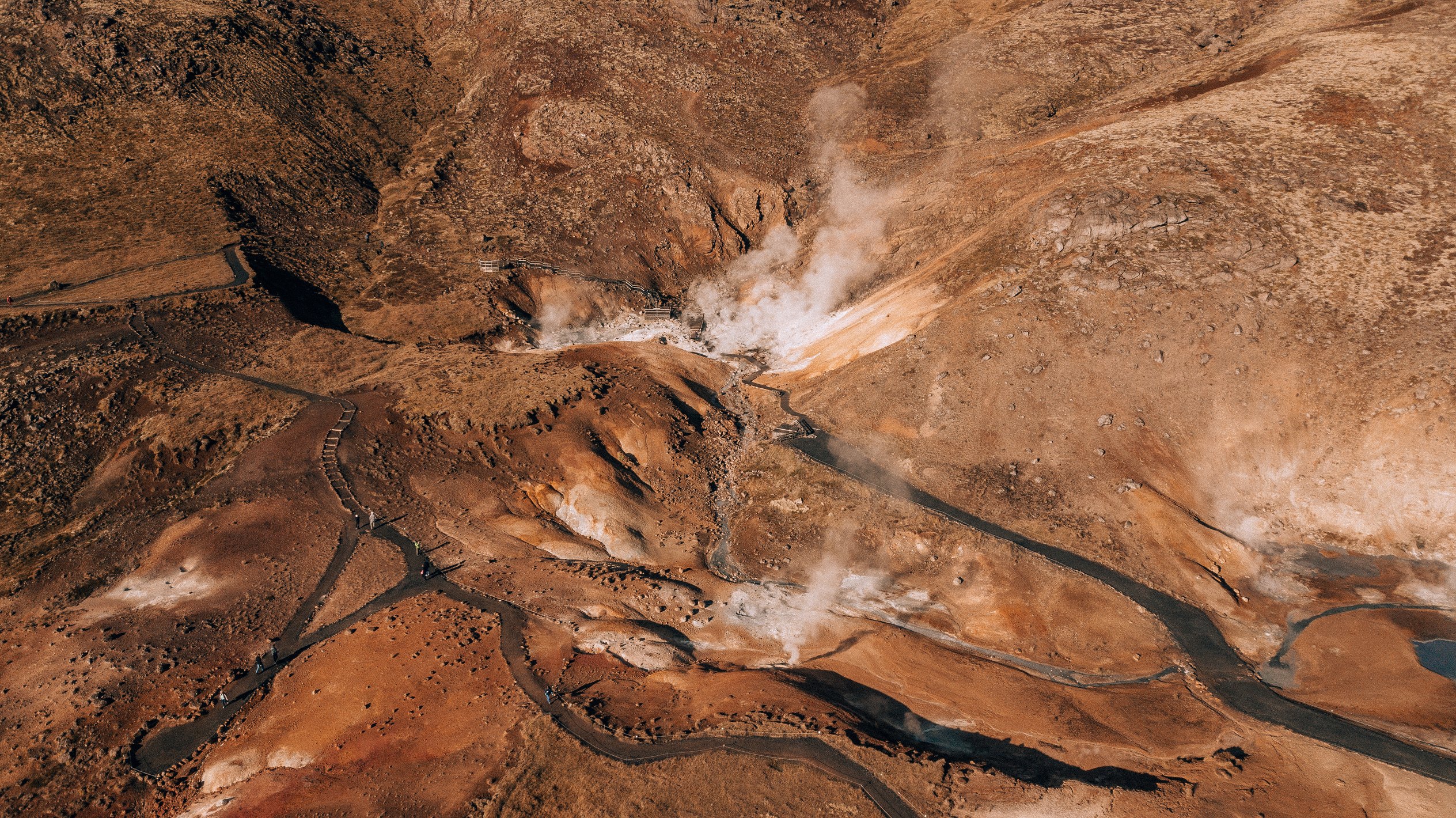
Krk Island, Croatia: 12 Things to See and Do in 2026

TL;DRThe Croatian island of Krk mixes history, wild beaches and easy access via a 1430-metre bridge from the mainland, toll-free for all vehicles since 2020. Among the 12 highlights: the historic town of Krk, with the third-longest town walls in Croatia and the Frankopan Castle; the resort of Baška, with its nearly two-kilometre pebble beach Vela Plaža and sandy seabed; the wine town of Vrbnik, famous for its Žlahtina white wine and Klančić, the narrowest street in the world (43 cm); and the islet of Košljun with its Franciscan monastery, reachable by boat from Punat. June to August is best for swimming, with the sea at 23–27°C, while May, September and October bring quieter crowds and cheaper accommodation.

If you’re thinking about a holiday on the Adriatic, chances are you’ve already considered one of the most accessible Croatian islands — a place historically (and rightly) nicknamed the Golden Island. Krk in Croatia offers a truly unique blend of deep history, stunning wild beaches and excellent infrastructure that makes getting here remarkably easy.

One huge advantage is the massive bridge connecting the island to the mainland, so there’s no need to wait for a ferry or pay extra crossing fees. Just to give you an idea: since 2020 this grand bridge has been completely toll-free, which makes Krk an ideal destination even for spontaneous road trips.

In this guide I’ll walk you through 12 specific things to see and do so you can make the most of the island. We’ll wander the ancient lanes of the main town, explore the famous winemaking village perched on a cliff, and I’ll point you to the most beautiful beaches and the smartest spots to base yourself.

TL;DR

  • Access: A 1,430-metre bridge leads from the mainland to the island and has been completely free for all vehicles since 2020.
  • History: The main town of Krk boasts the third most extensive town walls in Croatia and a magnificent Frankopan Castle.
  • Swimming: In the south you’ll find the resort of Baška with its famous pebble beach, nearly two kilometres long, with a sandy seabed.
  • Wine and romance: Vrbnik is a picturesque hilltop town on a cliff where the unique white wine Žlahtina is born.
  • Curiosities: You can try squeezing through Klančić alley, which measures just 43 centimetres across.
  • Day trips: From the town of Punat you can easily hop on a taxi boat to the tiny green islet of Košljun with its Franciscan monastery.
  • Ferries: From the port of Valbiska you can easily cross by ferry to the neighbouring islands of Cres or Rab.

When to visit Krk Island: weather and seasons

Krk Island is one of the sunniest places in all of Europe, racking up an impressive 2,500 hours of sunshine a year. If you love proper heat and swimming, the main season runs from June to August, when air temperatures stay steadily between 25 and 30 degrees and the sea warms up to a glorious 23 to 27 degrees.

Bear in mind, though, that July and August are the absolute peak of the season, which naturally means packed beaches, busier restaurants and significantly higher accommodation prices. That’s why I’d warmly recommend considering the shoulder months — May, June or September — when the weather is still lovely for swimming but the narrow lanes of the historic towns and the more remote coves are far quieter. Spring also brings beautifully blooming countryside, which you’ll especially appreciate on trips into the green interior.

If your main interest is sightseeing, cycling and sampling the local cuisine, October offers by far the best accommodation prices and still pleasant temperatures for staying active outdoors. The autumn months are also perfect for long hikes across the fascinating lunar landscape in the south of the island, where you’d needlessly suffer under the direct summer sun. Outside the main summer months, you’ll simply love not having to push through crowds of tourists — and you’ll soak up the authentic island atmosphere far better.

Where to stay on Krk Island: best hotels and areas

💡 Tip for accommodation and experiences: We prefer to search for places to stay on Booking.com, which usually has the best cancellation policies. For tickets, tours and activities, it pays to compare and book through GetYourGuide.

Choosing the ideal location mostly comes down to the type of holiday you prefer, because each part of the island has its own slightly different and very distinctive atmosphere. The town of Krk itself is a brilliant compromise if you want historic sights, excellent restaurants and easy access to the well-kept beaches nearby — all within reach.

Right in the town centre I can recommend the lovely Boutique Hotel Marina, which sits right by the sea and offers superb service and gorgeous views straight over the harbour with its moored boats. If you’re travelling with family and your main goal is relaxed swimming in shallow waters, definitely consider the resort of Baška in the far south of the island.

Baška is famous for its iconic long beach, and here you’ll find, for example, the well-equipped Corinthia Baška Sunny Hotel, with spacious pools just a few steps from the sea. For lovers of total peace, breathtaking views and romance, the unbeatable choice is historic Vrbnik on the rugged east coast.

Here you can stay at the luxurious Hotel Vinotel Gospoja, which elegantly blends modern design with a long winemaking tradition and offers some of the very best views of the mainland. Another popular and very quiet area for families is the smaller resorts of Malinska and Njivice in the northwest, which are close to both the mainland bridge and the island airport. Their promenades are pleasantly shaded by mature pines — something you’ll really appreciate on hot summer days.

12 things to do on Krk Island in Croatia

The island is fairly compact, but it offers a huge range of experiences — from exploring medieval fortresses and swimming in wild coves to tasting outstanding local food. Here are twelve specific spots you shouldn’t miss.

1. Krk town and its historic walls

The island’s main town is undoubtedly one of the oldest settlements on the entire Adriatic, with a fascinating history stretching back more than two thousand years. At first glance you’ll be enchanted by its majestic walls — which, incidentally, are the third most extensive fortifications in all of Croatia, after Ston and Dubrovnik.

A stroll through the old town feels like genuine time travel, because the narrow stone lanes are lined with ancient houses, small family cafés and local shops full of traditional handmade goods. The atmosphere is utterly unmistakable and immersive, especially in the early evening, when the warm light of the setting sun turns the old stones into gorgeous golden hues. Try stopping for a moment on the main square, Vela placa, which has served as the very heart of island life for centuries and where you can quietly watch it pulse around you.

💡 Tip: The best way into the old town is through the ancient town gates that still guard the historic centre. Be sure to set aside plenty of time to simply get lost in the maze of lanes, because that’s exactly how you’ll stumble upon the most interesting little galleries and romantic hidden squares.

2. Frankopan Castle and Kamplin square

Right by the sea, on the picturesque and quiet Kamplin square, stands the imposing Frankopan Castle, gradually built by the famous noble family between the 12th and 15th centuries. You’ll recognise it instantly by its characteristic towers — the oldest surviving square tower dates back to 1191, while the mighty round tower was added a little later, around 1476.

The moment you step into the spacious stone courtyard, you’ll feel the grandeur of this historic place, which once bravely protected the town from pirate attacks from the sea. In the 16th century the Venetians also remodelled the entire structure, giving the castle its unique present-day form. Today the whole castle complex is fully open to the public, and after climbing the old walls it offers absolutely fantastic panoramic views over the entire historic centre and the endless open sea.

💡 Tip: I’d recommend planning your visit to this medieval castle for the early morning or late afternoon, so you can avoid the worst of the summer heat and enjoy the best light for photographing the monuments. Admission is very reasonable, and the breathtaking view from the highest tower is absolutely worth it.

3. Cathedral of the Assumption of the Virgin Mary

Right next to the medieval castle you’ll find another unmissable architectural gem — the striking Cathedral of the Assumption of the Virgin Mary. This beautiful 12th-century Romanesque building conceals an incredibly rich history, as it was originally built on the old foundations of ancient Roman baths and later on the ruins of an early Christian basilica from the 5th century.

Inside the cathedral itself, you’ll be immediately struck by the grand decoration and serenely peaceful atmosphere, which contrasts sharply with the bustle on the sun-drenched square outside. Special attention is deserved by the intricately carved column capitals and the beautifully decorated altars, which perfectly reflect the incredible skill of the stonemasons of the time.

💡 Tip: While touring the main cathedral, don’t forget to look into the adjoining Church of St Quirinus, cleverly connected to the cathedral itself. This particular church features a wholly unusual two-storey Romanesque architecture, which is a genuine historical rarity in this part of the Adriatic — definitely not one to overlook.

4. Baška and the famous pebble beach Vela plaža

If you head to the hot southern tip of the island, you’ll arrive at the popular resort of Baška, proud home to one of the most famous and beautiful beaches in all of Croatia. The iconic Vela plaža is an impressive 1.8 to 2 kilometres of pebble beach, which thanks to its sheer cleanliness has long held the prestigious Blue Flag eco-award.

What makes this beach so special and hugely popular, especially with families with young children, is the surprisingly soft sandy seabed and the very gentle, safe entry into the water. The sea here shimmers in gorgeous turquoise shades, and the dramatic backdrop of the deep bay is formed by steep, sun-baked hills that look almost majestic and create a perfect photogenic contrast to the azure surface.

💡 Tip: Because Vela plaža is extremely popular right across Europe, in the peak summer months it tends to fill up to the last spot fairly early. If you’re after more peace on holiday, I’d warmly recommend hitting the beach very early in the morning, or instead walking along the marked coastal trails to the smaller and far more secluded romantic coves nearby.

5. The mystery of the Baška Tablet in Jurandvor

Just a short way before busy Baška lies the seemingly unremarkable little village of Jurandvor, which nonetheless hides one of the greatest and most precious historical treasures of the entire Croatian nation. It was here, in the small and humble Church of St Lucy, that the famous Baška Tablet was discovered — historians date it to around the year 1100.

This massive stone monument is one of the absolute oldest written records in Old Church Slavonic Glagolitic script and carries enormous cultural and symbolic significance for all the locals. Although the precious original was moved to the Academy of Sciences in the capital, Zagreb, for safety reasons, in the ancient Church of St Lucy you can see up close a perfectly faithful copy and soak up the mysterious atmosphere of this magical place.

💡 Tip: While touring the old church, be sure to have the guides tell you the captivating story of how this heavy stone tablet was discovered entirely by chance in the church’s original floor. Around the building you’ll also find partly uncovered remains of an old Benedictine abbey, which you can wander through at your own leisurely pace.

6. Vrbnik: clifftop town and Žlahtina wine

On the rugged east coast of the island you simply can’t miss the utterly stunning hilltop town of Vrbnik, which rises dramatically on a steep limestone cliff some fifty metres above the sea. This romantic historic settlement, with more than nine hundred years of rich tradition, was once a hugely important centre of the Frankopan nobility and a cradle of old Glagolitic literature.

Today, however, Vrbnik is known worldwide above all for its local gastronomy, because exclusively here on the Vrbnik field, covering roughly 211 hectares, the unique indigenous white wine called Žlahtina is born. The result of the local winemakers’ careful work is a very dry, incredibly fresh and delicious wine whose subtle flavour pairs perfectly with traditional Adriatic cuisine and warm summer evenings.

💡 Tip: In the local taverns I definitely recommend trying the renowned speciality called šurlice — outstanding hand-made island pasta. If you prefer meat-free dishes, the šurlice served with fresh fragrant tomatoes, local mushrooms and grated island sheep’s cheese are absolutely superb, generously drizzled with homemade olive oil. Local restaurants often prepare meaty specialities too, like the famous Krk lamb or various Kvarner fish, but the vegetarian pasta versions with a chilled glass of Žlahtina are a genuine gourmet treat.

lukas a lucka
Lukáš and Lucie recommend
Where to stay on Krk Island
4 accommodations — hotels, wellness hotels and other lodging options

7. Klančić: squeezing through the narrowest street in the world

As you wander the shady stone lanes of ancient Vrbnik, you’re guaranteed to come across one very unusual — and for many, rather entertaining — tourist attraction. Here you’ll find an inconspicuous alley named Klančić, which guidebooks very often (and rightly) crown with the unofficial title of the narrowest street in the world.

At its absolute narrowest point between the old stone houses it measures an incredible 43 centimetres across, so getting through successfully requires a bit of physical agility and, for adults, sometimes a good amount of breathing in. No wonder it’s a hugely popular spot for funny holiday photos, with plenty of curious visitors grinning as they test whether they can squeeze through to the other side without getting stuck.

💡 Tip: This charming little alley is fairly well hidden in the confusing maze of the old town, so it may take you a while to find it among the winding lanes. Don’t be shy about asking the locals — they’re used to tourists and will happily point you in the right direction with a smile, perhaps even throwing in a funny story about stuck travellers.

8. Punat and the boat trip to Košljun islet

On the sheltered southwest of the island sits the peaceful town of Punat, well known among sailors thanks to its sprawling Puntarska draga bay and one of the largest and best-equipped marinas in the entire Adriatic region. But the real and utterly unique gem of this enclosed bay is the tiny green islet of Košljun, which covers just six hectares and sits picturesquely right in the middle of the calm water.

The whole round islet is a strictly protected nature reserve with more than five hundred species of rare plants, and its unmissable landmark is the historic Franciscan monastery dating back to 1447. The monks here still live quietly to this day and carefully look after fascinating museums, where you can view extensive ethnographic collections and a rare historic copy of the famous Ptolemy atlas.

💡 Tip: Getting to Košljun islet is genuinely very easy, because small excursion taxi boats regularly depart from the harbour promenade in Punat. The crossing across the calm bay takes only about eight to ten minutes, and a return ticket costs you around a friendly five to ten euros per person.

9. Malinska and Njivice for a laid-back holiday

If you’re after a slightly quieter, distinctly relaxing atmosphere on your holiday, the northwest coast with its popular family resorts of Malinska and Njivice is an absolutely ideal choice. These pleasant holiday towns have beautiful, long paved promenades stretching along the sea, which positively invite long evening strolls at sunset and endless lingering in cosy local cafés.

In Malinska itself you’ll find well-kept, clean beaches like Rova or Rupa, which rightly carry the prestigious Blue Flag award for excellent water quality. Also very popular among tourists and cyclists is the so-called Paradise Path (Rajska cesta), a beautiful six-kilometre coastal trail richly shaded by pines that smoothly links Malinska with neighbouring, peaceful Njivice.

💡 Tip: These popular resorts are strategically very close to Rijeka International Airport, which — as you may already know — doesn’t actually lie on the mainland but, surprisingly, right here on Krk Island near the ancient town of Omišalj, perched on an 85-metre cliff. From the arrivals hall you can reach the sea and your accommodation in just a few minutes’ drive, which is absolutely priceless after a flight.

10. Biserujka Cave and underground karst beauty

This sun-drenched island offers not only perfect swimming and ancient monuments but also some very interesting dark underground spaces for adventure seekers. Just by the picturesque village of Rudine, which falls under the municipality of Dobrinj and sits right above Soline bay, hides the fascinating Biserujka karst cave, with the first surviving written mentions dating all the way back to 1834.

This mysterious cave is roughly one hundred and ten metres long and made up of seven smaller underground chambers, incredibly richly adorned with dripstone formations, stunning stalactites and mighty stalagmites. The whole intricate underground space is now beautifully and sensitively lit, with a safe, well-maintained path running through it, so the tour is genuinely comfortable and completely effortless, even for families with young children.

💡 Tip: Underground, a steady and refreshing temperature of around fifteen degrees holds all year round, which makes the cave an absolutely perfect natural refuge from the scorching summer heat. Just don’t forget to pack at least a light hoodie in your daypack, so that after the sharp transition from thirty-degree heat outside into the humid cave environment you don’t needlessly catch a chill and spoil the rest of your holiday.

11. Wild beaches and coves around Stara Baška

For those of you who deliberately avoid busy, overcrowded town beaches on holiday, there’s the picturesque little village of Stara Baška on the more rugged southwest coast. This more deserted spot is the legendary, sought-after gateway to wild, completely undeveloped coves that have retained their natural, raw character to this day.

One of the most beautiful and photogenic beaches on the entire island, according to locals and travellers alike, is the stunning Oprna beach. There’s no convenient paved road leading down to it, though — just a fairly steep, dusty trail winding straight down from the main road to the cliffs. Your reward for the slightly more demanding, sweaty descent is absolutely crystal-clear water and gorgeous, completely uninterrupted panoramic views of the neighbouring islands across the way.

💡 Tip: On these remote wild beaches you’ll generally find absolutely no natural shade, no sunbed rentals and no stalls with chilled refreshments. So definitely pack plenty of drinking water for the whole day, your own parasol and, above all, sturdy water shoes, because getting into the sea over the sharp stones and rocks can be quite uncomfortable barefoot.

12. Cycling and exploring the island on two wheels

Krk Island is an absolute, genuine paradise for lovers of active holidays, because winding smoothly across it are roughly three hundred kilometres of very well-marked and maintained cycle paths. These varied routes safely guide you through centuries-old shady olive groves, dense fragrant forests and the utterly barren, fascinating lunar landscape that resembles the surface of another planet.

The crown jewel for more demanding, experienced cyclists is the local flagship route, around forty kilometres long. It usually starts in the south at Baška, climbs relentlessly across the parched lunar plateau mentioned earlier, scenically passes the fertile green vineyards with the renowned Žlahtina variety and ends grandly in historic Vrbnik. Just be prepared for a total elevation gain of around one thousand metres, so conquering it requires genuinely decent fitness — or at least a well-charged, quality e-bike.

💡 Tip: In spring the island regularly hosts a very popular mass event called Krk Bike Story, which brilliantly combines competitive cycling with a relaxed taste of the local island gastronomy. If you arrive on the island without your own bike, don’t worry — you can very easily rent one in every larger resort, as the modern local rental shops are genuinely well and generously equipped for tourists.

Where to go next from Krk Island

Thanks to its strategic location, Krk is an absolutely ideal base for exploring the surrounding area. Since the bridge to the mainland is completely free, you can easily plan trips to nearby bustling Rijeka or explore the whole gorgeous Kvarner region in detail, which we wrote about in our article on the journey through the Julian Alps to Zadar.

If you’re tempted to explore more islands and experience the real Croatia by boat, head to the busy port of Valbiska on the west coast of Krk. From here, reliable ferries run by the national company Jadrolinija regularly sail to two interesting neighbouring islands.

The crossing to the large island of Cres into the port of Merag takes about twenty-five minutes, and you’ll pay roughly €29.50 for a car. If you head to the popular sandy island of Rab into the port of Lopar, the journey takes about eighty minutes and the price for a car is around €45.70, with off-season prices typically about twenty percent lower. Always check the current timetables carefully in advance on the official website. If you’re still looking for inspiration for the whole trip, take a look at our general article on where to go on holiday in Croatia or browse our tips on accommodation in Croatia in detail.

Frequently asked questions

Is there a toll for the bridge to Krk island?

No, crossing the majestic bridge connecting the island to the mainland has been completely free for absolutely all vehicles since June 15, 2020. Previously, a fairly high toll was charged here, but this was permanently abolished by the Croatian government, which today makes arriving on the island much easier and, above all, cheaper for all travelers.

Is Krk the largest Croatian island?

For many years this was confidently stated in all guidebooks, but recent and much more precise measurements have finally shown that Krk island is almost exactly the same size as the neighboring island of Cres (both have approximately 405 square kilometers). However, Krk is certainly the most populated and, thanks to the bridge, the most accessible Croatian island.

Where is Rijeka Airport located?

Although this international airport bears the name of the large port city of Rijeka located on the mainland, it is actually surprisingly located right on Krk island. You’ll find it about seven kilometers from the picturesque historic town of Omišalj. During the summer season, it primarily receives regular flights from various European low-cost airlines.

Can I find sandy beaches on the island?

The Croatian island of Krk is predominantly a typical island of pebble and stone beaches, or features romantic rocky coves. The most famous long Vela plaža in the resort of Baška has a pebbly shore, but underwater it has a very pleasant and soft sandy bottom, which families with small children especially appreciate during summer fun.

How much does the ferry to nearby islands cost?

From the island port of Valbiska you can easily get by Jadrolinija ferry to Cres island (to Merag port) for approximately €29.50 for one car. The trip to the sandy island of Rab (to Lopar port) will cost you approximately €45.70 per car. These prices are indicative for the main summer season; outside of it, tickets are usually cheaper.

When is the best time to visit?

For die-hard lovers of really hot summer and all-day swimming in the sea, the absolutely most ideal months are July and August. However, if you prefer active recreation, cycling, hiking on vacation, and you’ll appreciate fewer tourists in the streets, I warmly recommend going instead in May, June, or during sunny September.

What local food must I try?

During your visit, you absolutely must not miss tasting the excellent local white wine Žlahtina, which is produced exclusively in the Vrbnik area. With it, definitely order the excellent traditional island pasta called šurlice at a restaurant. They taste absolutely fantastic, for example, with local grated sheep’s cheese, fresh tomatoes, or spring asparagus.

Can I make reservations for excursions on the island through GetYourGuide?

Yes, plenty of amazing island activities and popular boat trips from Krk can be reserved online without any problems and well in advance. Very often you’ll find the most interesting and best-value offers on verified platforms like GetYourGuide, which will ultimately save you a lot of precious time searching on-site.

Tips and Tricks for Your Vacation

Don’t Overpay for Flights

Search for flights on Kayak. It’s our favorite search engine because it scans the websites of all airlines and always finds the cheapest connection.

Book Your Accommodation Smartly

The best experiences we’ve had when looking for accommodation (from Alaska to Morocco) are with Booking.com, where hotels, apartments, and entire houses are usually the cheapest and most widely available.

Don’t Forget Travel Insurance

Good travel insurance will protect you against illness, accidents, theft, or flight cancellations. We’ve had a few hospital visits abroad, so we know how important it is to have proper insurance arranged.

Where we insure ourselves: SafetyWing (best for everyone) and TrueTraveller (for extra-long trips).

Why don’t we recommend any Czech insurance company? Because they have too many restrictions. They set limits on the number of days abroad, travel insurance via a credit card often requires you to pay medical expenses only with that card, and they frequently limit the number of returns to the Czech Republic.

Find the Best Experiences

Get Your Guide is a huge online marketplace where you can book guided walks, trips, skip-the-line tickets, tours, and much more. We always find some extra fun there!
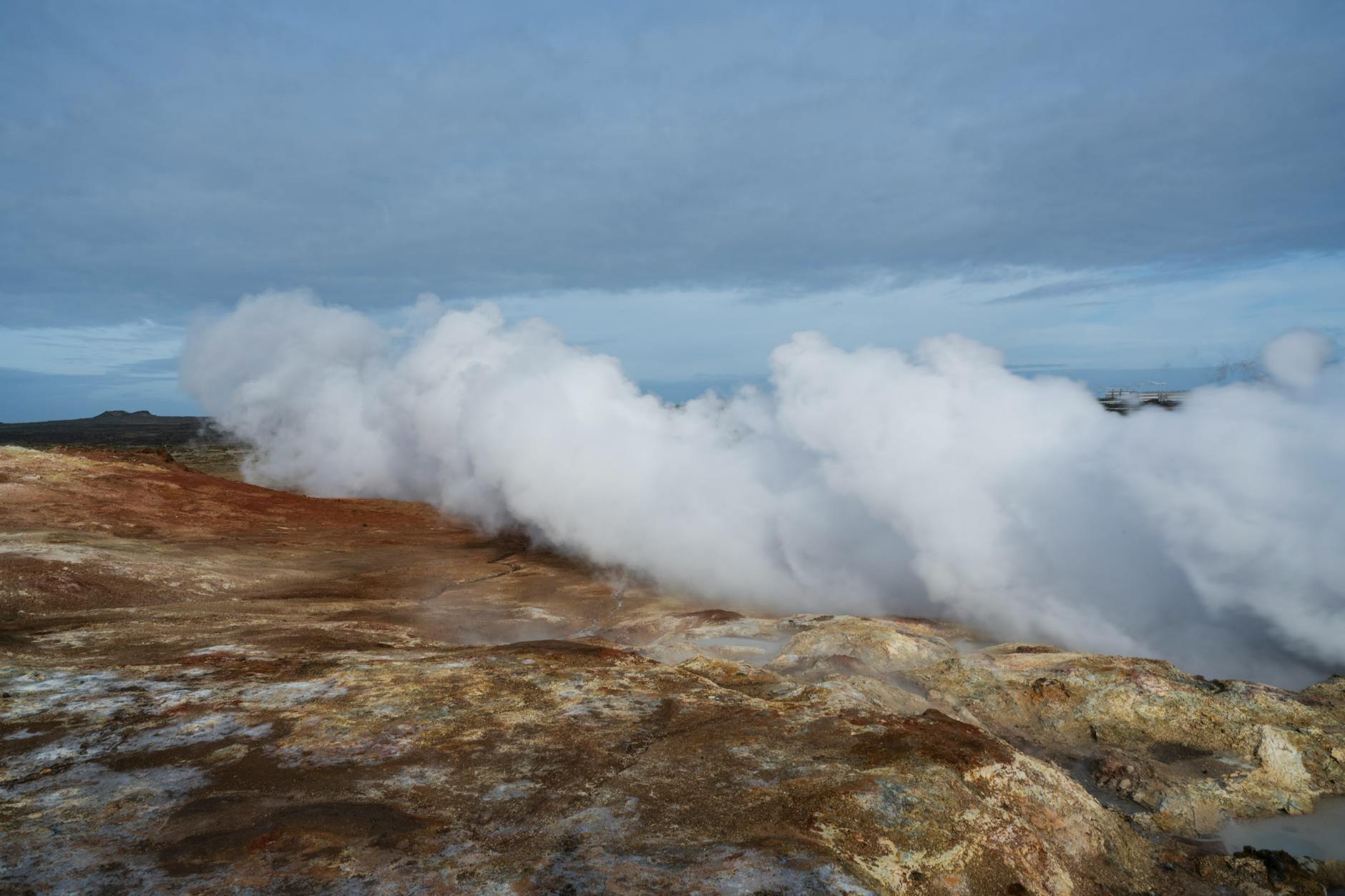
Istria, Croatia: 15 Things to See and Do in 2026

TL;DRIstria, Croatia’s largest peninsula and often dubbed “Croatia’s Tuscany”, comes with 15 suggestions for day trips – from the Venetian architecture of Rovinj with its Church of St Euphemia, to the ancient arena in Pula and the Byzantine Euphrasian Basilica in Poreč. Inland, the hilltop towns of Motovun, Grožnjan and Hum are well worth a detour, known for truffles and art, while down south the wild coastline of Cape Kamenjak nature park has 23 beaches, alongside Brijuni National Park. It’s worth setting aside 5 to 7 days to explore properly. Spring and autumn suit sightseeing and food (truffle season peaks in October), while summer is best for swimming, with temperatures hitting 27 to 30 degrees.

If you’re dreaming of a summer beach holiday or a spring road trip in search of incredible food, Istria, Croatia is a sure bet. This largest Croatian peninsula, sitting between the Gulf of Trieste and the Kvarner Bay, offers a truly unique blend of cultures that will charm you in an instant. Along the coast you’ll find historic towns with Venetian architecture, while inland a rolling landscape of vineyards, olive groves, and medieval hilltop villages awaits.

Thanks to this very interior, Istria is often nicknamed the Croatian Tuscany, and it’s safe to say the comparison is well deserved. The local atmosphere is heavily shaped by Italian culture, something you’ll notice not only in the outstanding cuisine but also in the official bilingualism of the coastal towns. You’ll commonly see signs in both Croatian and Italian, so don’t be surprised when a sign points you toward Rovigno instead of Rovinj.

In this article you’ll find 15 things to see and do in Istria so you can make the most of your holiday. I’ll tell you which towns you simply can’t miss, where to taste the best truffles, and which natural corners are worth exploring. We won’t forget practical info on getting around, choosing accommodation, and tips for the most beautiful beaches either.

TL;DR

  • Most beautiful town: Rovinj is the absolute jewel of the peninsula — don’t miss its old town with narrow lanes and the dominant Church of St. Euphemia.
  • History and antiquity: For Roman monuments head to Pula and its enormous ancient arena, while lovers of Byzantine art will appreciate the Euphrasian Basilica in Poreč.
  • The magic of the interior: Visit the hilltop towns of Motovun, Grožnjan, and Hum, which offer gorgeous views, peace, and an artistic atmosphere.
  • Foodie paradise: Istria is world-famous for its truffles and excellent olive oil — be sure to try the local fuži pasta and Malvazija wine.
  • Natural wonders: In the south of the peninsula, explore the wild coastline of Cape Kamenjak nature park, and the Brijuni National Park is well worth a boat trip.
  • Getting there: The easiest options from the UK are direct flights to Pula Airport, or a flight to Trieste or Venice followed by a short drive. On the peninsula itself you’ll use the Y-shaped motorway.
  • Best time to visit: Spring and autumn are ideal for sightseeing and food, while summer is the obvious choice for swimming — just be ready for the crowds.

When to visit Istria

Choosing the perfect time depends mostly on what you want from your holiday. If your main goal is swimming in the sea and topping up your tan, go in July or August. Air temperatures during this period typically hover around 27 to 30 degrees, the sea is beautifully warm, but you’ll need to be prepared for beaches and historic towns packed with tourists.

For an active holiday full of day trips, May, June, or September are your best bets. Temperatures are very pleasant, usually between 19 and 24 degrees, which is ideal for sightseeing and cycling. By June and September you can usually swim without any problem, but you’ll avoid the peak summer rush and accommodation prices tend to be a touch friendlier.

If you’re mainly drawn by the local food scene, consider a visit in October. This is when the main season for the rarest white truffles peaks, and many inland villages host all sorts of culinary festivals. On top of that, the autumn landscape turns gorgeous warm hues, giving the Croatian Tuscany an incredibly romantic atmosphere.

Where to stay in Istria

💡 Tip for accommodation and experiences: We love searching for places to stay on Booking.com, which usually has the best cancellation policies. For tickets, tours, and activities, it pays to compare and book through GetYourGuide.

Istria offers a huge range of options, so there’s something for every type of traveller. If you’re after romance and don’t mind paying extra for a prime location, stay right in Rovinj or its immediate surroundings. Families, on the other hand, often head for the area around Poreč or the Zelena Laguna resorts, where you’ll find perfect infrastructure, beaches with a gentle slope into the sea, and plenty of kids’ entertainment programmes.

For those wanting to combine swimming with ancient history and wild nature, Pula or the more southerly Medulin and Premantura make a great base. From there, the stunning Cape Kamenjak is just a short hop away. Lovers of peace, wine, and good food should consider staying inland, where you’ll find gorgeous stone villas with pools and authentic agritourism estates surrounded by olive groves.

Here are a few specific accommodation picks you can easily book through Booking:

  • Hotel Lone in Rovinj is a design five-star hotel set right next to the Zlatni Rt forest park. It offers top-class wellness facilities and beautiful pools, making it an ideal choice for a luxurious couples’ getaway.
  • Boutique Hotel Kaštel sits right at the top of the hill in historic Motovun. If you want to experience the authentic atmosphere of the interior, soak up views over the Mirna river valley, and taste truffles, you’ll be thrilled here.
  • Maistra Select Amarin Resort just outside Rovinj is absolutely fantastic for families. You’ll find spacious apartments, several pools, and a pebble beach, plus a regular water taxi runs from here into central Rovinj.

15 things to see and do in Istria

Let’s take a look together at the very best this diverse peninsula has to offer. Whether you love wandering through narrow lanes, hunting for the most beautiful beaches, or looking forward to unforgettable culinary experiences, the following places shouldn’t be missing from your itinerary.

1. Rovinj and the Church of St. Euphemia

Rovinj is without doubt the most photogenic and romantic town in all of Istria. Its old town spreads across a peninsula that was originally an island, connected to the mainland only in the 18th century. Houses here literally rise straight out of the sea, and the narrow cobbled lanes instantly transport you back in time, so you’ll feel more like you’re in a miniature Venice than in Croatia.

The town’s biggest landmark is the Baroque Church of St. Euphemia, perched right at the top of the hill. This 18th-century building houses a sarcophagus with the relics of the town’s patron saint, which according to legend floated in by sea around the year 800. Entry to the church itself is free, but for around €4 you can climb the 60-metre bell tower — a faithful copy of the campanile of St. Mark’s in Venice — and enjoy a breathtaking view over the nearby archipelago.

On the way up to the church, be sure to walk along the famous Grisia Street, lined with little galleries, studios, and ceramic shops. On the second Sunday of every August, this street transforms into a huge open-air exhibition that draws artists from far and wide. Don’t forget to also take in the 17th-century Balbi Arch and soak up the atmosphere in the picturesque fishing harbour, full of traditional boats called batana.

💡 Tip: Cars are banned from the old town, so park at one of the car parks on the edge of the centre. In high season I recommend arriving really early in the morning to avoid the queues and find a free spot.

2. Zlatni Rt Forest Park (Punta Corrente)

Just about a 15-minute walk south of central Rovinj lies the gorgeous Zlatni Rt forest park, also known as Punta Corrente. This protected nature park covering 52 hectares was established back in the late 19th century and offers the perfect escape from the summer heat. You’ll find dense stands of pines, cypresses, and even exotic trees like cedars and ginkgo biloba.

The park is fringed by beautiful coves with pebble and rocky beaches, the most famous being Lone and Škaraba bays. The water here is incredibly clear and turquoise, making the park an ideal spot for a full day of swimming and snorkelling. Thanks to the tall trees, you’ll always find shade easily, so you can even do without a parasol.

Beyond swimming, Zlatni Rt is a paradise for active relaxation. The whole park is laced with wide gravel paths that are perfect for cycling, running, or long walks with a pram. If you enjoy a bit of adrenaline, you’ll even find a former quarry here that today serves as a popular free-climbing spot, with routes of varying difficulty right above the sea.

💡 Tip: Rent a bike in Rovinj and ride the whole coastline of the park all the way to the cape — it’s a great way to discover smaller, more secluded coves where you’ll have more privacy while swimming.

3. Poreč and the Euphrasian Basilica

The town of Poreč has preserved its original Roman urban layout to this day, so you’ll stroll along the main streets of Decumanus and Cardo, just as the ancient Romans did. At the end of the old town you can admire the remains of the ancient Marafor forum and the ruins of the temples of Neptune and Mars. But Poreč is known worldwide above all for one truly exceptional monument.

That is the early Byzantine Euphrasian Basilica from the 6th century, added to the UNESCO World Heritage list in 1997. This complex was built by Bishop Euphrasius, and its greatest treasure is the breathtaking golden mosaics in the main apse. These mosaics depict the Virgin Mary with angels and the bishop himself presenting her with a model of the church, and they rank among the most precious examples of Byzantine art in Europe.

Admission to the whole complex costs around €10 (students usually get a discount) and includes not only a tour of the basilica itself but also the adjacent bishop’s palace, the museum, and a climb up the bell tower. From the top you’ll enjoy a beautiful view over the red rooftops of the old town and the blue sea. In summer it’s open until late evening, but bear in mind that the complex is usually closed to tourists on Sundays and holidays.

💡 Tip: In and around Poreč you’ll also find a huge number of popular holiday resorts, such as Lanterna or Zelena Laguna, which boast beautiful beaches awarded the Blue Flag for cleanliness and quality of service.

4. Pula and its imposing arena

Pula is the largest town on the entire Istrian peninsula, and its atmosphere is markedly different from the charming lanes of Rovinj. This city breathes deep ancient history, and its absolute landmark is the staggering Roman amphitheatre, known simply as the Arena. Built in the 1st century AD, it is one of the six largest surviving Roman arenas in the world and is remarkably well preserved.

Admission to the amphitheatre comes to roughly €10, and you can explore not just the arena floor where gladiators once fought but also the extensive underground spaces. Today the arena comes alive with culture, hosting spectacular summer concerts and a famous film festival. Opening hours vary by month, but in July and August you can visit from 8 a.m. until as late as 11 p.m.

Beyond the arena, Pula offers other significant ancient monuments. As you stroll through the centre you definitely won’t miss the elegant Temple of Augustus on the main square, the richly decorated Arch of the Sergii, or the ancient Hercules Gate. The city feels lively and a little more industrial, but for history lovers a visit is an absolute must.

💡 Tip: If this ancient city has caught your interest and you’d like to learn more details, read our separate article dedicated purely to what to see in Pula.

5. Motovun and the truffle forests

When you head from the coast toward the interior, the landscape changes dramatically into green hills and vineyards. On one of the highest hills, rising steeply above the Mirna river valley, sits the gorgeous fortified town of Motovun. Preserved stone walls run around the entire town, and for a small fee you can walk along them and admire panoramic views in every direction.

But Motovun is famous above all for something hidden deep in the forests below it. The dense Motovun Forest is one of the world’s best sources of truffles. This damp habitat forms the so-called truffle triangle between the towns of Pazin, Buje, and Buzet, where gourmets from all over Europe gather each year. In the local restaurants you can savour fresh truffles in countless forms, and at prices a touch friendlier than in Italy or France.

The town also thrives on culture — for many years it hosted the prestigious Motovun Film Festival. It’s worth noting, however, that since 2023 this festival has moved to the Gorski Kotar region and changed its name, so if you were heading to Motovun primarily for the films, it’s best to check the current details and location in advance. Even without the festival, though, this place has incredible charm.

💡 Tip: You can’t drive all the way into the historic centre. You’ll have to park in the car park below the hill and either tackle the fairly steep climb on foot or use the local shuttle bus.

6. Grožnjan, the town of artists

Not far from Motovun lies another stunning hilltop town called Grožnjan. While Motovun smells of truffles, Grožnjan smells of paint and canvas and breathes incredible artistic energy. This town was almost abandoned in the mid-20th century, but in the 1960s a group of artists discovered it and began restoring the crumbling old houses, turning them into their studios.

Today Grožnjan is rightly called the “town of artists,” and in its narrow stone lanes you’ll find dozens of small galleries, craft shops, and independent boutiques. You can simply wander here for hours, watch the masters at work, and pick up truly original, high-quality souvenirs — from handmade jewellery to beautiful ceramics.

During summer the town also comes alive with music workshops and festivals. The sound of piano, violin, and jazz bands drifts into the streets through the open windows of the old houses, creating an utterly magical backdrop. Sitting in a little café with a view over the surrounding vineyards while listening to live music is the kind of experience you simply don’t forget.

💡 Tip: Grožnjan is very small, two hours will be plenty to explore it, so it’s ideal to combine your visit with a trip to nearby Motovun or Buzet in a single afternoon.

7. Hum and Buzet: the smallest town in the world and the truffle capital

If you love curiosities, you mustn’t miss Hum on your road trip. This charming spot proudly holds the title of the smallest town in the world, as just around 20 permanent residents live here. Despite its tiny size, you’ll find everything a proper town should have — town walls, a gate, a little church, and even a traditional tavern called a konoba where you can taste local specialities.

Hum is also closely tied to the Glagolitic script, an old Slavic alphabet. The famous Glagolitic Alley leads to it — a 7-kilometre trail starting in the village of Roč, lined with eleven large stone monuments dedicated to this script. In Hum itself, don’t forget to try the local speciality called biska, a traditional mistletoe-herb liqueur made to an ancient recipe.

About 14 kilometres from Hum lies the considerably larger Buzet, which proudly calls itself the “town of truffles”. If you arrive in September, you can experience the spectacular Subotina festival, whose highlight is the preparation of a giant omelette made from thousands of eggs and a hefty dose of fresh truffles right on the main square. It’s a great chance to taste this pricey delicacy in a relaxed and festive atmosphere.

💡 Tip: Around Buzet you’ll find a number of family farms and companies that organise truffle hunts. You can head into the forest with specially trained dogs and experience the fascinating process of finding these underground mushrooms firsthand.

lukas a lucka
Lukáš and Lucie recommend
Where to Stay in Istria
4 accommodations — hotels, resorts and other lodging options

8. Istrian gastronomy: truffles, olive oil, and wine

Istria is an absolute paradise for everyone who loves good food and drink. As you already know, truffles are the local treasure. The most expensive white truffles (tuber magnatum) are in season from September to January, peaking in October, while the less aromatic black truffles grow from May to September. They’re most often served grated over traditional hand-made pasta known as fuži or pljukanci — combined with egg or mushrooms, it makes an utterly perfect vegetarian dish.

Another huge draw is the local olive oil. Istria has repeatedly been named the world’s best olive-growing region by the international Flos Olei guide, leaving even the famous regions of Italy and Spain behind. There are dozens of internationally awarded producers here, and I really recommend stopping at one of the family-run olive estates for a tasting, where you’ll discover the enormous difference between fresh premium oil and the supermarket variety.

Excellent local wine is an inseparable part of good food in Istria. The best-known white variety is Malvazija Istarska, which is dry, pleasantly citrusy, and mineral — ideal for hot summer days. Among the reds, the robust and full-bodied Teran reigns supreme. Also worth a mention are the hearty vegetable soup maneštra and traditional dishes made from the local long-horned cattle called boškarin, fish, and dry-cured ham (pršut), which you’ll see on the menu of just about every konoba.

💡 Tip: If you want to buy quality wine straight from the source, visit well-known wineries such as Kozlović in Momjan or Kabola, where the wine matures in amphorae buried in the ground — adding a very unusual dimension to the tour and tasting.

9. Brijuni National Park

The Brijuni archipelago, lying just off the coast near the town of Fažana, is a fascinating place with a very unusual history. It consists of 14 islands in total, of which the largest, Veliki Brijun, is open to the public. This island served for decades as the summer residence of Yugoslav president Tito, who received statesmen and celebrities from around the world here — something the local exhibitions still recall today.

On the island you’ll find a truly unexpected mix of attractions. There’s a sprawling safari park, created thanks to animals gifted by foreign delegations — so you might come across elephants, zebras, or llamas grazing freely in the Croatian countryside. You can also admire the remains of a luxurious Roman villa from the 1st century, Byzantine fortifications, and even a beautifully maintained golf course.

You can only reach Brijuni via an organised boat trip from the harbour in Fažana. The basic package — including a return boat ticket, a roughly hour-long ride on the tourist train around the island, a visit to the safari and the local museums — costs around €35 in season. The whole trip takes about 4 hours and offers a completely different perspective on Croatian history.

💡 Tip: The boats from Fažana are often sold out in the summer months, so reserve your tickets and sailing time well in advance online directly on the national park’s official website. Various boat trips can also be booked easily through portals like GetYourGuide.

10. Lim Bay (Lim Fjord)

Although it’s often called the Lim Fjord, geologically it’s a flooded river valley, or canyon. This roughly 10-kilometre-long, very narrow bay cuts deep into the mainland between the towns of Rovinj and Vrsar. Its steep banks are densely wooded and the whole area feels incredibly calm and almost Nordic, in sharp contrast to the bustling coast.

The water in the bay has a specific composition, as salty seawater mixes with freshwater springs, creating ideal conditions for farming oysters and mussels. You’ll see the breeding beds right on the surface, and on the shore you’ll find several renowned fish restaurants where gourmets flock for the freshest seafood. The bay also hides a famous pirate cave that tempts you to explore.

The most beautiful view of Lim Bay opens up from the deck of a boat. Plenty of excursion boats set sail daily from the harbours in Rovinj or Vrsar, taking you on a roughly four-hour cruise through the entire canyon with a few swimming stops. If you’re travelling by car, you can stop at several proper viewpoints along the road, where you’ll get the best panoramic photos.

💡 Tip: The whole Lim Bay area is a strictly protected nature reserve, so free swimming outside designated spots is prohibited, and likewise motorboats and jet skis are banned, which guarantees wonderful peace and quiet.

11. Cape Kamenjak Nature Park

Right at the very southern tip of the Istrian peninsula, near the little village of Premantura, lies one of Croatia’s most beautiful natural wonders — Cape Kamenjak. This protected nature park, covering roughly 14 square kilometres, offers more than 30 kilometres of stunning, wild, and rugged coastline. You’ll find 23 beaches and coves in total, alternating pebbles with dramatic rocky cliffs and turquoise water.

Kamenjak is an absolute paradise for lovers of active rest and adrenaline. Snorkelling fans will be in their element, as the water here is crystal clear, and so will those who love cliff jumping into deep water. The park is laced with a dense network of dirt tracks, making it the ideal spot for a full-day mountain-bike trip with plenty of swimming stops. Over 600 plant species grow here too, and with a bit of luck you might even spot the protected Mediterranean monk seal.

There’s an admission charge to the park, but you only pay for entry by motor vehicle. In high season, budget around €10 to €15 per car per day. If you decide to explore the park on foot or by bike, entry is completely free. Be sure to visit the iconic Safari Bar, built right in the dense reeds and offering fantastic refreshments in an unusual setting.

💡 Tip: In summer, long queues form at the entry toll gates, so buy your car entry ticket online in advance — you’ll save plenty of time and frustration waiting in the sun. You’ll find more details about visiting in our article on Kamenjak Nature Park.

12. Baredine Cave (Jama Baredine)

If you fancy a break from the scorching Croatian sun, head underground into the karst cave of Baredine. This geomorphological gem is located near the village of Nova Vas, just a few kilometres from Poreč. During the roughly 40-minute guided tour, you’ll descend on safe stairways to a depth of 60 metres, where a pleasant 14 degrees Celsius awaits.

The tour route leads you through five richly decorated halls full of stalactites and stalagmites of every shape and size. You’ll see beautiful stalactites, stalagmites, and mighty dripstone columns, some of which resemble a statue of the Virgin Mary or the Leaning Tower of Pisa. The cave is beautifully lit and the guides give commentary in several languages, so you’ll learn plenty of interesting facts about how this underground labyrinth formed.

At the very bottom of the cave, by a small underground lake, the biggest surprise awaits. A rare endemic amphibian, the olm, lives here — often nicknamed the “human fish” because of its pinkish skin. Admission to the cave, which is open from April to October, comes to €12 for adults, students pay €10, and children aged 5 to 15 get in for €8.50.

💡 Tip: A pleasant complex with a small tractor museum, a restaurant, and outdoor seating has been built around the cave itself, so you can easily spend a whole relaxed afternoon here even with small children.

13. The coastal towns of Umag and Novigrad

On the north-western coast of Istria lie the towns of Umag and Novigrad, which often serve as the first stop for travellers arriving from the north, as they sit closest to the Slovenian border. Umag is a modern resort known above all for sport — it hosts the prestigious ATP Croatia Open tennis tournament every year. The town boasts large marinas full of luxury yachts and excellent facilities for an active holiday.

Novigrad, by contrast, is a little quieter and has retained the charm of a small fishing town. Its historic centre sits on a small peninsula and is still partly enclosed by preserved medieval walls, along which you can take a romantic stroll. The town is renowned for its top-class cuisine and is home to some of the best fish restaurants in all of Istria.

The two towns are linked by a beautiful coastal promenade, ideal for evening walks or a morning run. The beaches in this northern area are mostly concrete platforms or landscaped pebble coves with a gentle slope, which families with younger children will especially appreciate as they look for safe swimming without big waves.

💡 Tip: If the northern Istria area appeals to you and you’re thinking of staying there, check out our detailed guide, where we round up everything you can do in Umag.

14. Opatija and the Lungomare promenade

Even though Opatija sits right on the border between Istria and Kvarner, it definitely shouldn’t be missing from your travel list. This town is nicknamed the “Vienna by the sea” for good reason, as it instantly charms you with its noble atmosphere and gorgeous Habsburg villas. Opatija is in fact the oldest tourist resort in Croatia, where the Austro-Hungarian elite came to relax as far back as the 19th century.

The symbol of the town’s tourism origins is the beautiful Villa Angiolina from 1844, surrounded by a sprawling botanical park full of exotic plants from all over the world. Today the villa houses the fascinating Croatian Museum of Tourism, which charts the development of travel along the Adriatic coast. The whole town feels very elegant, well-kept, and luxurious, full of cafés and top-class hotels.

Opatija’s biggest draw, though, is the famous promenade known as the Lungomare. This paved pedestrian path runs right along the sea for an incredible 12 kilometres and connects the fishing village of Volosko, Opatija itself, and nearby Lovran. Strolling in the shade of century-old oaks and laurels with a constant view of the sea and majestic cliffs is an absolutely breathtaking experience.

💡 Tip: Along the Lungomare promenade you’ll come across plenty of beautiful spots, but be sure to photograph the statue of the Maiden with the Seagull, which stands on a rock right among the waves and has become the most famous symbol of all Opatija.

15. The most beautiful beaches in Istria

Istria isn’t a typical destination with long sandy beaches, but that doesn’t mean you won’t find gorgeous places to swim. The coast is made up mostly of romantic pebble coves, picturesque rocks, and occasional concrete piers, which guarantees incredibly clean and crystal-clear water. Another huge advantage is that many beaches are lined with fragrant pine groves, providing that much-needed natural shade.

So where do you find the very best beaches? The absolute top spots are the hidden rocky coves in Cape Kamenjak nature park, where you’ll feel like you’re on a deserted island. If you prefer better-equipped beaches, head to the resort of Rabac on the eastern coast, which boasts bright white pebbles and several Blue Flags for water quality. The Lone and Mulini coves right in Rovinj’s Zlatni Rt forest park also offer lovely swimming under the trees.

For families with children, the resort of Medulin is the absolute ideal. The local Bijeca beach is sandy and incredibly shallow, so children can safely wade and play in the warm water dozens of metres from the shore. Very popular and well-equipped beaches with a gentle slope and plenty of water attractions can also be found around Poreč, for example at Borik or Brulo beach.

💡 Tip: As beautiful as the pebble beaches are, they can be rather uncomfortable to walk on without water shoes. Be sure to pack a pair, along with a snorkel mask, since Istria’s rocky shores are perfect for snorkelling.

Where to go next from Istria

If you have more time to explore Croatia and don’t want to stay in just one place, Istria is a great springboard for further discovery. You can head further south to explore more of the coast or the islands. To get inspired, I recommend browsing our other detailed guides, which will help you with your planning.

  • If you’re still undecided about a specific destination, read our article on where to go on holiday in Croatia, where we break down the pros of each region.
  • Wondering how it works with accommodation? We’ve got plenty of tips on accommodation in Croatia, from campsites to luxury hotels.
  • And if you’d like to experience the sea from a completely different perspective, we’ve put together a guide on how to enjoy Croatia by boat, even without any previous sailing experience.

Frequently asked questions

What’s the best way to get to Istria from the Czech Republic?

Driving is very comfortable and fast. Most of the route goes through Austria and Slovenia, where you shouldn’t forget about motorway vignettes. At the Croatian border, you’ll cross through the Plovanija or Kaštel border crossings and join the so-called Istrian “Y”, which is the A9 motorway leading all the way down to Pula. By air, you can reach the seasonal airport in Pula, or alternatively use the airport in Trieste, Italy.

Are there motorway tolls in Istria?

Croatia doesn’t have motorway vignettes, tolls are paid in the form of fees at toll gates. An interesting feature of the Istrian motorways A9 and A8 is that a large portion of the sections are toll-free. You only pay for passing through the Učka tunnel and for the Kanfanar–Rogovići section, with the entire A8 route costing a passenger car just under 5 euros.

Are there sandy beaches in Istria?

Istria is known primarily for its pebble and rocky beaches, or concrete platforms, which guarantee crystal-clear water. However, exceptions do exist, the most famous being the sandy beach Bijeca in Medulin, which is hugely popular among families with small children thanks to its shallow entry into the water.

How many days do I need to explore Istria?

For a relaxed vacation where you can visit the most beautiful towns like Rovinj and Poreč, explore the interior with Motovun, and spend a day in nature at Kamenjak, I recommend setting aside 5 to 7 days. Given that distances on the peninsula are measured in tens of kilometers, you can choose one base and take day trips from there.

Where can I taste the best truffles in Istria?

The truffle heart of Istria is the Mirna River valley and the Motovun Forest, located in the triangle between the towns of Pazin, Buje, and Buzet. If you visit in autumn, definitely check out the town of Buzet or the village of Livade, where the renowned Zigante restaurant and shop are located, and where famous truffle festivals and tastings are held in the fall.

Is Istria suitable for cycling?

Absolutely! Istria is crisscrossed with an excellent network of cycling trails, both along the coast and inland. The most famous and most popular route is the so-called Parenzana, which is an amazing cycling trail built on the route of a defunct narrow-gauge railway that runs from Trieste to Poreč and measures over 120 kilometers.

What is boškarin, which is often on the menu?

When reading menus in Istrian restaurants, you’ll often come across the word boškarin. It refers to a traditional breed of Istrian long-horned cattle, which was historically used for working in the fields and is now considered a local gastronomic specialty.

Tips and Tricks for Your Vacation

Don’t Overpay for Flights

Search for flights on Kayak. It’s our favorite search engine because it scans the websites of all airlines and always finds the cheapest connection.

Book Your Accommodation Smartly

The best experiences we’ve had when looking for accommodation (from Alaska to Morocco) are with Booking.com, where hotels, apartments, and entire houses are usually the cheapest and most widely available.

Don’t Forget Travel Insurance

Good travel insurance will protect you against illness, accidents, theft, or flight cancellations. We’ve had a few hospital visits abroad, so we know how important it is to have proper insurance arranged.

Where we insure ourselves: SafetyWing (best for everyone) and TrueTraveller (for extra-long trips).

Why don’t we recommend any Czech insurance company? Because they have too many restrictions. They set limits on the number of days abroad, travel insurance via a credit card often requires you to pay medical expenses only with that card, and they frequently limit the number of returns to the Czech Republic.

Find the Best Experiences

Get Your Guide is a huge online marketplace where you can book guided walks, trips, skip-the-line tickets, tours, and much more. We always find some extra fun there!
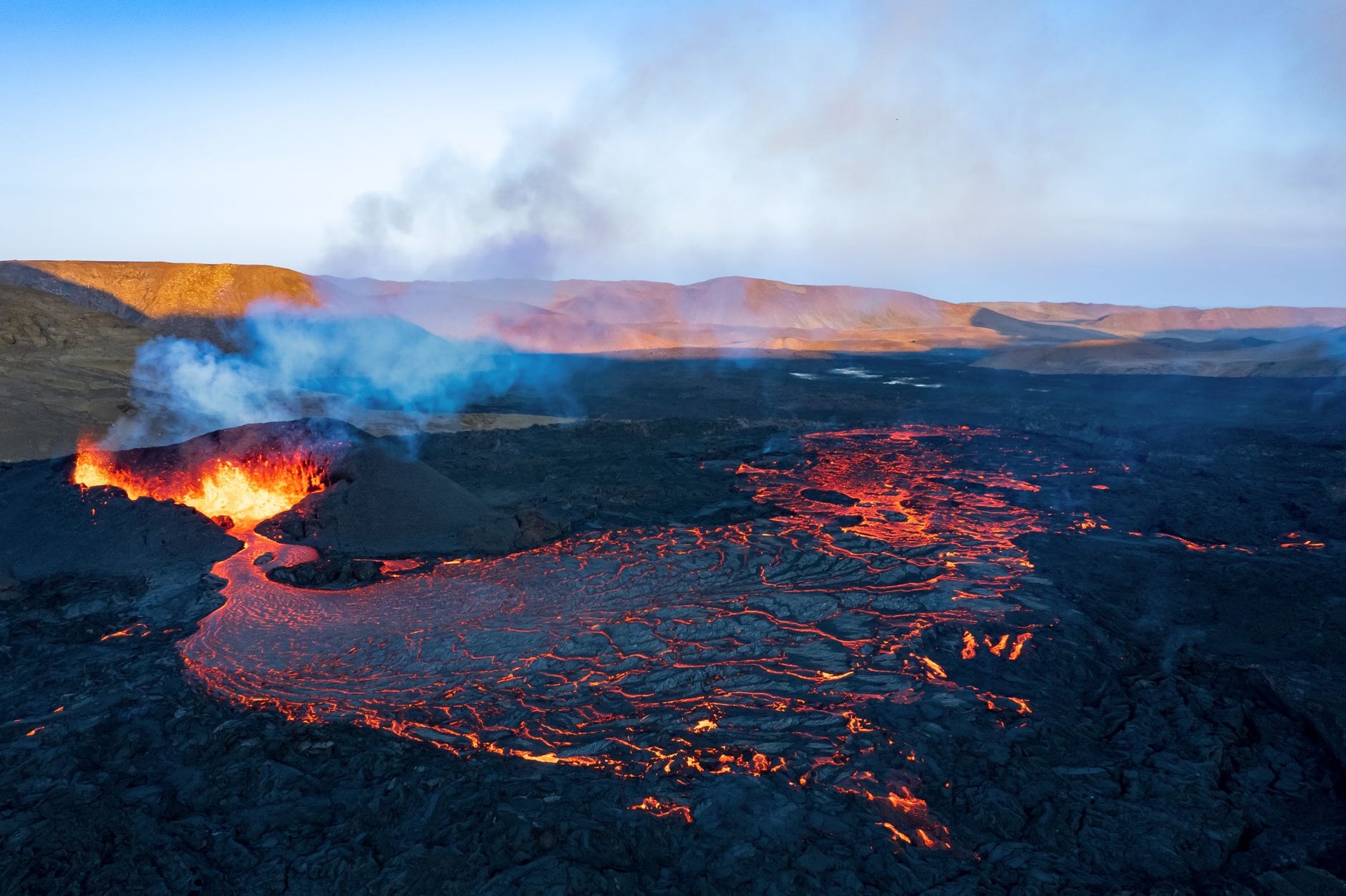
Paris: 40 Best Tips for Your Visit

TL;DRThis complete guide to Paris in 2026 rounds up 38 concrete tips on what to see, from the Eiffel Tower and the Louvre to the reopened Notre-Dame, the Marais district and Sacré-Cœur in Montmartre. The best months to visit are May, September and October, while August is best avoided, as bistros shut and the heat sets in. Three hours is plenty for the Louvre if you go in through the Porte des Lions entrance, Notre-Dame is free to enter, and the Centre Pompidou stays closed until 2030. A 3-day family trip comes to roughly £850–£1,200, while a student weekend for two can be done for around £350. The guide also includes 2–5 day itineraries and warns about common scams, from the gold ring trick to fake Eiffel Tower tickets.

Millions of couples a year head to Paris for long weekends. Paris is one of the most popular tourist destinations. And although it has been called the most romantic city in the world for years, there is something for everyone. Students, families with children and seniors will enjoy a visit to Paris. Let’s take a look at what to see in Paris, the best places to stay and how to skip the ticket lines.

When to go to Paris: weather in Paris

Weather in Paris is not too different from our weather, summers are warm, only winters are a bit milder than here. Generally it does not rain too often here. The hottest months are July and August, the coldest month is January. You can therefore go to Paris in spring, summer and autumn.

Moon Temperature
January6 °C
February8 °C
March12 °C
April15 °C
May20 °C
June23 °C
July25 °C
August25 °C
September21 °C
October16 °C
November10 °C
December7 °C

How to get to Paris

Paris is quite accessible from the Czech Republic and you can choose from several options for travel.

By car to Paris

We don’t recommend travelling by car to Paris because, as in big cities, you will have to deal with parking and quite heavy traffic. It is far more convenient to fly to Paris.

By car from Prague

If you are travelling by car from Prague, you have a choice of the three fastest routes, but they are very similar to each other and merge in certain sections. In all cases, you will go to Nuremberg first.

  1. From Nuremberg you will continue straight on to Heilbronn, Saarbrücken and then on to Reims and Paris. It is the fastest route, taking you 9 hours 27 minutes.
  2. From Nuremberg, you’ll go to Heilbronn and Mannheim again, but in Saarbrücken you’ll turn off to Luxembourg and rejoin the route in Reims. This route is the longest, taking 10 hours and 28 minutes.
  3. The third option is to go from Nuremberg towards Würzburg, Mainz, and then connect again to Saarbrücken. This ride will take 9 hours and 57 minutes.

By car from Brno

If you are coming from Brno, you will have the same options, again you will first head to Nuremberg, then you will choose one of the three routes according to the current situation. The most comfortable and fastest way is to take the motorway from Brno to Prague and from there to Germany.

By bus to Paris

If you don’t have the option (or just don’t want) to drive, RegioJet and Flixbus provide direct bus connections to Paris. A one-way ticket costs on average CZK 1,000, but they can cost less. Buses mostly run overnight and the journey takes on average around 14 hours. Both companies run about twice a week.

By train to Paris

While it is possible to get to Paris by train, it is probably the least convenient option. A one-way ticket costs around CZK 2,000, the journey takes around 16 hours, and you change trains a few times, mostly in Germany. There are no direct train services to Paris.

By air to Paris

On the other hand, it is most convenient to fly to Paris by plane. Paris has three airports that can be reached by direct flight from Prague. To the airport Paris-Charles de Gaulle is served by Air France, Vueling and CSA. Read, how to get cheap flights.

Transavia flies to Paris-Orly airport and if you prefer low cost airlines, then Ryanair flies to Paris-Beauvais airport. The cheapest tickets start at CZK 1,800, but they are usually between CZK 3,000 and 5,000.

Where to stay strategically in Paris

We recommend staying right in the centre so you can walk as much as possible. If you like delicious breakfasts, we recommend a cheaper hotel with smaller rooms from the ibis Paris Bastille Faubourg St Antoine chain. Mary’s Hotel République is also very close to the centre. A short walk from the Louvre, you will find the excellent Maison Armance – Esprit de France.

How to get around Paris

The best way to get around Paris is by metro, but of course there are also buses and taxis.

Public transport tickets and where to buy them

Public transport tickets in Paris are divided by time period and zone, so it’s a good idea to know how often and where you plan to travel in Paris and choose your ticket accordingly. You can then get them e.g. in newsagents or vending machines at metro stations.

In all cases, you can also pay by card. You can also get discount cards that include all public transport and other discounts and good deals. The best value tourist card is the Paris City Pass.

Metro

The most common and fastest way to get around Paris is by metro. The metro takes you everywhere in the city and has stations near all the major sights. The Paris metro has 16 lines in total, but everything is very clear and simple.

Tram

If you only want to move a short distance around the centre, you can also use the trams. They have only 10 lines, designated T1 – T10. However, they don’t currently operate outside of the centre itself and it’s a relatively expensive option to move.

Round

A very common means of transport in Paris is the bicycle, so it would be a shame not to take advantage of this opportunity. Almost the entire city is flat and there is an interesting cycle path around the Seine River. You can also reach all the sights by bike and there are bike rental stations almost all over the city. You can rent a bike through a machine and pay by card. However, all the main sights are very close to each other, so they are also very accessible on foot.

Paris without a tour operator: Historical sights

Paris offers plenty of historical sights you shouldn’t put off visiting. Let’s take a look at what to see in Paris.

1) Eiffel Tower

The most famous symbol of Paris, the Eiffel Tower was built in 1889 and was the largest building in the world until 1930. It stands 324 metres tall and was built to commemorate the centenary of the Great French Revolution. It was originally intended to stand on the site only temporarily, but was eventually left until now.

The tower has a total of three observation platforms, at heights of 57 metres, 115 metres and 276 metres. NThere are stairs, a cable car, and an elevator from the second to the third floor. On the first floor there is a restaurant, a café, a cinema with films about the history of the building and a glass floor.

You can buy tickets to the tower either online in advance or at the door, and prices will vary depending on which floor you plan to ascend, and whether you use the stairs or the lift.

Where to buy tickets for the Eiffel Tower?

We prefer to buy our tickets for attractions through GetYourGuide because everything always works smoothly, you don’t have to queue for tickets anywhere and the price is always the same as when you buy them at the official places.

2) Notre-Dame Cathedral

Another of the symbols of Paris is the Gothic Notre-Dame Cathedral, whose construction lasted from 12. until after the 14th. century. Before the Eiffel Tower was built, the cathedral was the tallest building in France, with towers reaching 69 metres high.

In 2019, the building was engulfed in flames and the fire could not be extinguished for 12 hours. For this reason, the monument is now closed to tourists, but it is worth seeing from the outside.

3) Sainte Chapelle

Another place on the list of things to see in Paris is Sainte Chapelle. The Holy Chapel was built in just seven years and is famous for its beautiful stained glass windows. Each of the fifteen windows is 15 metres high and depicts a total of 1113 biblical scenes. If you want to admire this beauty with your own eyes, you need to make a reservation in advance.

4) Sacré-Cœur Basilica

One of the other symbols of Paris and also a place where there are always a lot of tourists and locals who meet here is the Secré-Coeur Basilica. The “Basilica of the Sacred Heart of Jesus”, whose ground plan is in the shape of a cross, is particularly interesting for its pure white façade. Due to its colour, turrets and domes, it is sometimes referred to as the “meringue”. The basilica is an important pilgrimage site and the surrounding park is ideal for relaxing or picnicking in the grass.

5) Arc de Triomphe

The famous Arc de Triomphe in Paris is one of the most famous in the world. And every other city in Europe has them. :))) This is where the Tour de France cycling race ends every year. He had it built in 19. century Napoleon Bonaparte to celebrate his victory at the Battle of Austerlitz. The arch is decorated mainly with stories from wars and Roman mythology. For a fee, you can enjoy the view from its rooftop.

6) Basilica of Saint Denis

The basilica was built in 1140 and is the first church in the world to be built in pure Gothic style. Formerly used as a burial place for French kings, this church is often called the French necropolis. Here are the remains of all the monarchs who ruled France from the 10th century. until after 18. century.

7) The Sainte-Geneviève Library

The St. Jovefa Library is a state and university library built between 1843 and 1850. The architect of the building was Henri Labrouste, one of the first to use iron as a building material.

The strange thing is that the iron structure was not covered by the wall, but remained uncovered, thus becoming part of the decoration. The interior of the library is also extremely interesting. He has around two million documents in his collection.

8) Bourbon Palace

The palace is the seat of the French National Assembly. It was originally built for the daughter of Louis XIV, but at the end of the 18th century it was confiscated as national property. The palace is interesting for its Corinthian columns and its decoration in the ancient style, which was added during the time of Napoleon Bonaparte.

9) Palais Royal

An important historical monument in Paris is the Palais Royal, or Royal Palace. The original palace dates back to 1622, but today only the south-eastern wing remains. The building became a royal palace in 1643, when Anne of Austria and her son Louis XIV moved to the site. PThe palace burned down several times in the past and was subsequently reconstructed. Today it is the seat of the Council of State and the Constitutional Council, the French Court of Justice and the National Theatre.

10) Disability

The magnificent building was given this special name after its function in the 17th century. century, when King Louis XIV. built as a home for war veterans. In the middle of the building is a church with a dominant dome, which adds to the grandeur of the whole building.

Today it houses a hospital, a retirement home and a museum of the military and the French army. Here you will also find the grave of Napoleon Bonaparte and other important personalities.

11) Conciergerie

Conciergerie means purgatory, originally this palace was used by the steward of the royal palace. During the Great French Revolution, the building was used as a prison with a capacity of 1200 prisoners.

For example, Princess Marie Antoinette and Maximilien Robespierre were imprisoned here . Since 1914, the Conciergerie has been open to the public as a museum.

12) Paris Catacombs

The catacombs of Paris date back to the time of the ancient Romans, who originally created them as stone mines. These mines became a place for the burial of remains only in 1786, since when about 6 million skeletons have accumulated here.

The catacombs consist of 190 km long corridors and are located 20 m underground. Only a fraction of these corridors is open to the public, the walls of which are lined with skulls in this part. Children up to 18 years old are free, adults pay 14 euros. It is open Tuesday to Sunday and although this walk through the corridors will probably be slightly morbid, it is well worth a visit.

13) Basilica of St. Clothilde

The Neo-Gothic church was built in the 19th century. century and is dedicated to St. Clothilde and St. Valeria. The altar dates back to 2007. The two side towers reach a height of 69 metres. The church will amaze you especially with its decoration – stained glass windows, paintings and statues.

If the building reminds you of anything, it is because it served as a model for the Church of the Sacred Heart of Jesus in China, which was built just a few years later.

The best museums to visit in Paris

In Paris you will find the more unknown museums in Paris. If you love art, you’ll definitely want to visit the Louvre and the “little green picture” in the form of the Mona Lisa (evil tongues call it green because it still hasn’t been cleaned and probably won’t be for a long time) by Leonardo da Vinci. But there are also a lot of modern art museums in Paris.

14) Louvre

One of the most famous museums in the world with a total collection of 554,000 exhibits is housed in the Palais de Louvre. It’s a good idea to decide what you want to see at the Louvre before you visit.

It is the most visited and the largest museum in the world. Occasional exhibitions have been held here since 1628, but an official public museum was not opened here until 1793.

From the total collection, there are about 35,000 exhibits divided into several branches, from Egyptian art, through Oriental ceramics to the Modern Age. The biggest attraction are paintings such as the Mona Lisa or the Madonna in the Rocks by Leonardo da Vinci, but also other works by world-famous artists.

Where to buy tickets to avoid long queues

If you want to have enough time to visit the museum, set aside at least one full day. You still won’t get everything done. Buy tickets in advance via GetYourGuide or via tickets-paris or you’ll be standing in a really long line.

15) Museum d’Orsay

If there is one museum I would recommend, it is the d’Orsay, located in the former train station. It is aimed at impressionists. Among the most famous paintings in the collection are undoubtedly works by Vincent van Gogh, Edgar Degas, Paul Gaugin, Paul Cézanne and Claude Monet. The advantage of this museum is that it is not as huge as the Louvre.

16) Musée Rodin

Museum Dedicated to the life and work of the famous artist Auguste Rodin, the museum was founded in 1919. It houses more than 6,000 sculptures, 8,000 paintings, 8,000 photographs and 7,000 other art objects.

The artist’s most famous sculptures are exhibited here, such as. The Thinker, Adam and Eve or The Man with the Broken Nose, but also objects from his personal collection as an art collector. The exhibition also focuses on the work of Rodin’s pupil Camille Claudel.

Where to buy tickets

Like everywhere else, we used GetYourGuide.

lukas a lucka
Lukáš and Lucie recommend
Where to stay in Paris
2 accommodations — hotels and other lodging options

17) The Musée de la Magie

This incredibly interesting museum is not to be missed, as you will learn a lot of interesting facts about the history of magic and illusionism. It is divided into several parts, the first part focuses on the history and important personalities of magic, you will also enjoy a magic performance. You continue on to rooms with magic mirrors and optical illusions. Finally, take a look around the small shop and feel free to purchase a course in the school of magic here.

18) Musée national des Arts asiatiques – Guimet – Guimet Museum

The museum was founded in 1889 by a Lyon manufacturer Émile Guimet for his magnificent collection of Egyptian, Asian and ancient art. Note that the Egyptian part of the collection was eventually moved to the Louvre, so you will find Himalayan, Afghan, Pakistani, as well as Indian and Japanese, Chinese and Korean and many other collections.

18) Centre Pompidou

The Centre Pompidou is one of the most important modern art museums in the world and is housed in a building that is a work of art in itself.

The Musée national d’art moderne is located in the Centre Pompidou, a colourful avant-garde building that is an attraction in itself. The museum’s exhibition is dedicated to art 20. and 21st century and is located in 4. and 5th floor of the building.

Each floor is dedicated to one of two periods (modern and contemporary art). The museum owns more than 70,000 works, including paintings, sculptures, sculptures, video art, design, architecture and film art. This makes it the largest collection of modern art in the world.

17) Palais de Tokyo

Palais de Tokyo is one of the most important contemporary art museums in Paris and has no permanent exhibitions, so always check out what they’re showing. It was opened as early as 1937 as an exhibition pavilion for the world exhibition under the name Palais des Musées d’art moderne.

18) Fondation Louis Vuitton

Fondation Louis Vuitton is one of the newer museums and is housed in a beautiful modern building designed by architect Frank Gehry (and worth a visit for the amazing building alone). There you will find famous paintings by Alex Katz or Andy Warhol.

The best parks and gardens in Paris

When you’ve had enough of the sights and museums, you can head to the local parks and gardens. The Luxembourg Gardens are still one of my favourite gardens in the world. Let’s see where you can go for a romantic walk in nature.

19) Luxembourg Garden

In the middle of Paris you will find a beautiful palace from the 17th century. century, which is now the seat of the French Senate. Around the palace is a large garden with flower beds, statues, water tanks and the famous Medici fountain. It has become a popular resting place for both locals and tourists. It is open to the public free of charge.

20) Jardin des Tuileries

The Tuileries Garden is a French-style public park, formerly the chateau garden of the now demolished Chateau Tulieries. This art garden is a historical monument and you can admire mainly works of art.

In addition to the sculptures of famous artists in the garden itself, there are two galleries. The first of them is located in the former orangery (Musée de l’Orangerie) and is mainly devoted to the works of impressionists and post-impressionists (Matisse, Monet, Cézanne, Picasso and others). The second gallery (Galerie nationale du Jeu de Paume) is located in the former ballroom. Her collection includes works of modern art.

21) The Parc des Buttes-Chaumont

It is the third largest park in Paris, founded in the largest of the local quarries. The park was founded by Napoleon III. and it is important mainly for its plants and birds. Many species of rare trees grow here, e.g. plane tree planted in 1862. If you’re lucky, you may also see a kingfisher on the lake. The park also has a restaurant, a 30-metre cliff and a cave.

22) The Parc Monceau

The beautiful English park in Paris was founded in the 18th century. century and most of the buildings from that time are still in the park today. You will also find a rotunda as a remnant of the city walls. There are also statues of famous personalities, such as French writers and composers.

23) The Parc des Princes

Princes Park is actually a four-star football stadium. It has a seating capacity of 48,712 and is the home stadium of Paris Saint-Germain FC. The stadium has also had the honour of hosting World Cup matches on several occasions.

Shops and markets

Some tourists are more attracted to Parisian shopping than the parks and monuments. There are plenty of shopping malls and streets that attract all shopaholics.

24) Avenue des Champs-Élysées

The “Champs Elysees” is the most famous and expensive street in Paris, yet in 17. century, this place was covered with swamps. The street was founded in 1670 and today is one of the main centres of the city. It ends with a triumphal arch.

Here you will find luxury shops, cinemas, restaurants and cafes, as well as the Elysee Palace – the residence of the President. To celebrate the conquest of the Bastille, the street is annually 14. 6. the French Army’s military parade is taking place. There are also demonstrations and celebrations.

25) Le Marais

Located on the right bank of the Seine, this historic district is full of boutiques, art galleries, hipster cafés and design shops. Although originally a historic Jewish quarter, today it is full of galleries and gay bars. The Centre Pompidou, a modern art gallery, is also located in this district. You can also visit the Museé Victor Hugo (Victor Hugo Museum).

26) Galerie Lafayette

A paradise for all shopping lovers is this historical gallery, which dates back to the reign of Napoleon III. Six floors offer a total of 63 shops, each floor is also divided according to the goods offered by the shops.

You can shop for yourself and for your children, but you can also find party clothes or perfume for your pet. And if you’re not into expensive luxury brands, there’s a flea market on the bottom floor of the gallery.

27) Avenue des Ternes

The street is less than a kilometre long and is full of shops, cafes and restaurants.

27) The Avenue des Gobelins

Avenue des Gobelins is one of the most historically important streets in Paris, and it retains its charm to this day. It is named after the famous tapestry manufactory located at the end of this street. Tapestry is a type of embroidery that has become a symbol of French art and craftsmanship.

If you are an art and history enthusiast, you should not miss a visit to the Musée de la Tapisserie, located near Avenue des Gobelins. This museum will give you more insight into the history of tapestry production.

Do you know the difference between tapestry and tapestry? Every tapestry is a tapestry, but every tapestry is not a tapestry. The tapestry is a tapestry that was woven in the royal Parisian manufactories Les Gobelins, which were founded in. 1664 under the patronage of King Louis XIV. Only works created in these manufactories may be called “Tapestries”.

28) Rue de Rivoli

Rue de Rivoli is one of the most famous and busiest streets in Paris. This elegant avenue stretches along the right bank of the Seine River and offers not only beautiful views, but also a rich history and many interesting places to explore. On this street you will find, among others, many important buildings such as. The tower of Saint – Jacques, the Louvre or the house where Leo Tolstoy lived.

Entertainment and nightlife in Paris

Who hasn’t heard of Moulin Rouge the most famous cabaret in Paris? He is most famous for the 2001 film of the same name starring Nicole Kidman. But of course there is much more in Paris. You can go to the opera and the ballet or to a classic bar.

29) Opéra Garnier

The opera house was founded in 1875 and you can enjoy mainly opera and ballet here. The story of The Phantom of the Opera is also set here. This myth arose mainly from the fear of the mysterious underground labyrinths beneath the building and the mysterious sounds coming from these very places during the first performances.

30) Lido de Paris

The famous Grand Cabaret closed in 2022, but another theatre will soon open there instead. In the original cabaret you could enjoy the performances of dancers dressed in feathers and sequins, from now on there will be only theatrical performances in the original languages. Lido de Paris will be transformed into a Broadway-style venue.

31) The Crazy Horse

If you still prefer cabaret and would like to enjoy its atmosphere, The Crazy Horse is one such place. You can also have a meal before or after the show and if you want to enjoy the show, you need to book a seat on the official website.

32) Moulin Rogue

The most famous cabaret in Paris is located at the foot of Montmartre and was founded in 1889. The business was originally a dance hall, then operettas were performed here and even served as a cinema for a time.

Since the mid-20s. Guests can enjoy a performance during the century, during which there is the possibility to have dinner. Since 1964, an aquarium was placed on the stage, in which nude dancers presented their performances. The company was especially famous for the American film Moulin Rogue.

Modern neighbourhoods in Paris – where to find the locals

If you want to experience Paris the way the locals see it, head to one of Paris’s trendy neighbourhoods. The most famous is certainly La Défense, where the huge Grande Arche arch is located.

33) La Défense

Located on the western outskirts of Paris, it is one of the largest commercial and financial centres in Europe. It is famous for its skyscrapers, modern buildings and the huge Grande Arche arch.

34) Canal Saint-Martin

The Canal Saint-Martin district is very popular with young Parisians. It offers modern cafés, restaurants and shops along the picturesque Saint-Martin Canal.

35) Saint-Germain-des-Prés

This district is known for its fashion boutiques, luxury shops and art galleries. Located on the left bank of the Seine, it is considered the intellectual and artistic centre of the city.

36) Bercy Village

Bercy Village is a former warehouse district that has been transformed into a modern business and entertainment centre. There are shops, restaurants and cinemas.

Paris and children: what to do with children in Paris

If you’re going to Paris with younger children, you’ll probably want to avoid a full day at the Louvre and try to find a fun activity for them to look forward to.

Fortunately, there is a Disneyland in Paris and children and adults will be entertained by the aforementioned Museum of Magic. Don’t forget to buy tickets for sights and attractions in advance so you don’t have to wait in line with the kids. Like us, you can use the GetYourGuide portal.

37) Disneyland Paris

Children love Disneyland, Disneyland Paris was inaugurated in 1992 and receives around 10 million visitors every year. It is 35 kilometres from Paris and can be reached in about 35 minutes from Paris Central Station.

38) Parc des Buttes-Chaumont

Parc des Buttes-Chaumont is practically one big playground where you can escape the hustle and bustle of the city.

39) Les Catacombes


The original catacombs of Paris were built v 17. and the 18th century. They were used to reinforce underground quarries and to pave streets to prevent their collapse.

But then, when there were no burial places in the city, the bones of six million Parisians were brought here. These mysterious tunnels are located up to 20 metres underground and fascinate both locals and tourists, especially the younger ones.

Paris for two: What to do romantic in Paris

If you’d like to do something particularly romantic, you can take a cruise on the Seine River with dinner.

Paris and surroundings: Where to go for a day trip

If you’re spending a week in Paris, take a day trip outside of Paris. You can visit one of the chateaux on the Loire or visit Versailles.

40) Château de Versailles

The castle is definitely worth a visit, especially its stunning gardens, as there are a huge number of tourists (really huge) inside. However, if you go outside the weekend and early, you can also enjoy the beautiful interiors, which are more or less empty, but still spectacular rooms. For those of you who arrive in Versailles in the summer and late, I recommend skipping the interior and concentrating on the gardens.

FAQ – Frequently Asked Questions

How long to go to Paris for?

If you love art, you should give yourself at least 5 days in Paris. For those of you who don’t like art that much, a long weekend will suffice.

Which are the best museums in Paris?

The Louvre, Centre Pompidou and d’Orsay are among the most popular, but it always depends on your preference.

Where to stay in Paris?

Stay ideally in the centre, for example at ibis Paris Bastille Faubourg St Antoine, Mary’s Hotel République or Maison Armance – Esprit de France.

Where to eat in Paris?

If you are looking for a gourmet experience, visit one of the Michelin-starred restaurants. But you’ll need a reservation. These include Accents Table Bourse, Pantagruel and Auberge Nicolas Flamel.

Is there a direct train from Prague to Paris?

Unfortunately, there is currently no direct train connection from Prague to Paris.

Tips and Tricks for Your Vacation

Don’t Overpay for Flights

Search for flights on Kayak. It’s our favorite search engine because it scans the websites of all airlines and always finds the cheapest connection.

Book Your Accommodation Smartly

The best experiences we’ve had when looking for accommodation (from Alaska to Morocco) are with Booking.com, where hotels, apartments, and entire houses are usually the cheapest and most widely available.

Don’t Forget Travel Insurance

Good travel insurance will protect you against illness, accidents, theft, or flight cancellations. We’ve had a few hospital visits abroad, so we know how important it is to have proper insurance arranged.

Where we insure ourselves: SafetyWing (best for everyone) and TrueTraveller (for extra-long trips).

Why don’t we recommend any Czech insurance company? Because they have too many restrictions. They set limits on the number of days abroad, travel insurance via a credit card often requires you to pay medical expenses only with that card, and they frequently limit the number of returns to the Czech Republic.

Find the Best Experiences

Get Your Guide is a huge online marketplace where you can book guided walks, trips, skip-the-line tickets, tours, and much more. We always find some extra fun there!
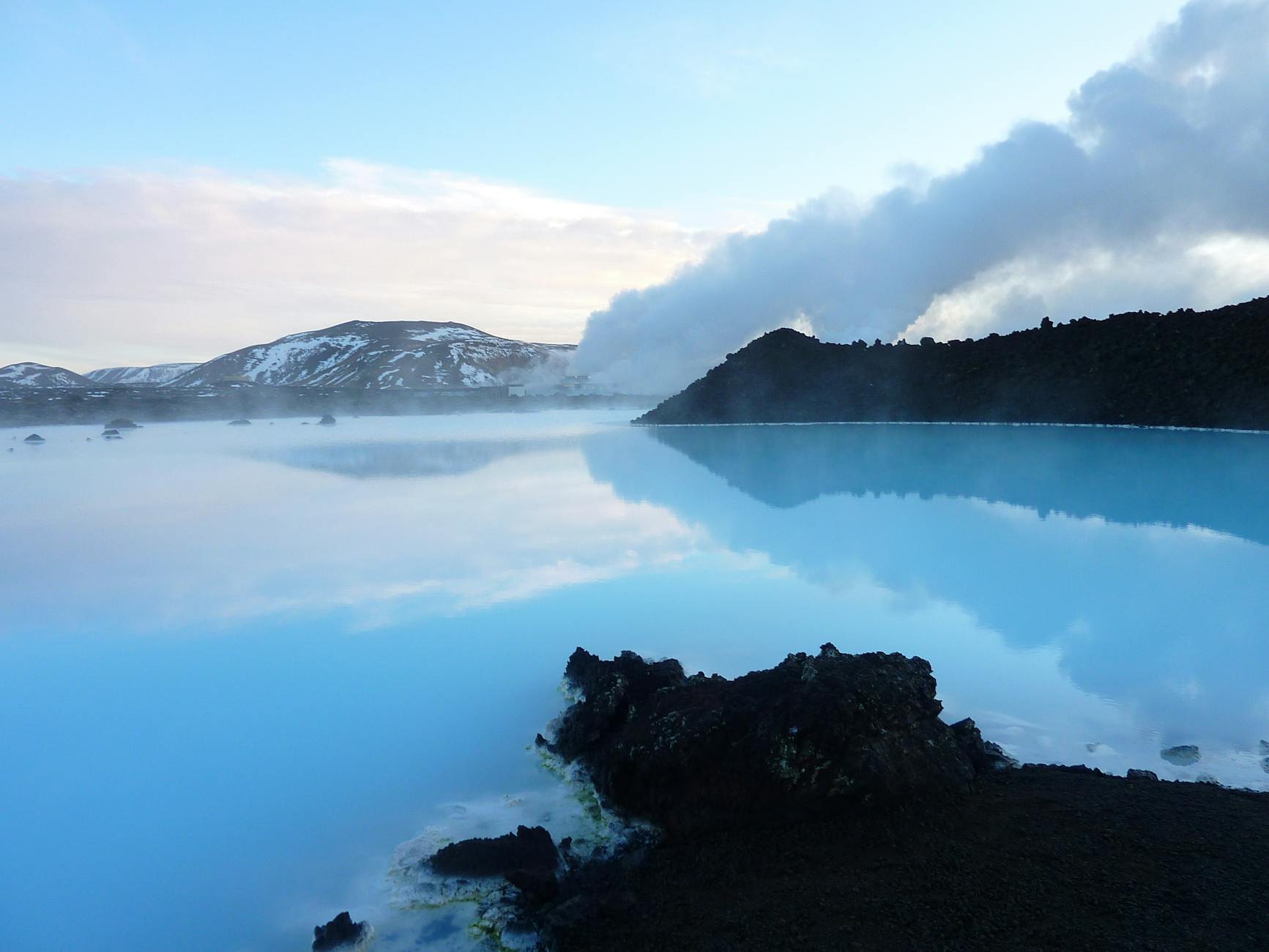
Pag Island, Croatia: 12 Tips + Zrće and Beaches in 2026

TL;DRThe Croatian island of Pag mixes wild scenery, party tourism and history: it’s the country’s fifth-largest island, with the longest coastline, and home to the legendary Zrće beach near Novalja, where clubs Papaya, Aquarius and Kalypso draw the crowds (NOA closed in February 2026). Then there’s the historic town of Pag, famous for its UNESCO-listed lace, plus hidden coves like Ručica, Beritnica, Sveti Duh and Caska. Peak season runs June to September, though late May/early June or September give you warm sea and far fewer people. You can reach the island for free over the Pag Bridge, or take the fifteen-minute Prizna–Žigljen ferry for 17–25 euros per car. There are 12 tips here in all, covering the island’s moon-like landscape, its salt pans, Pag cheese and lamb, and the climb up Sveti Vid (350 m).

As you approach Pag Island in Croatia from the mainland, you might feel like you’re landing on another planet. The bare, sharply carved white landscape without a single plant looks unbelievably mystical. Pag is the fifth largest island in Croatia and boasts the longest coastline of them all, hiding hundreds of gorgeous coves and beaches.

This island is full of extremes and contrasts that will keep you fascinated. On one side you’ll find the legendary Zrće Beach packed with music clubs, while on the other lie quiet historic alleys and centuries-old cheese-making traditions. So within a single holiday, you can experience both a wild party and a complete escape from civilisation into untamed nature.

I’ve put together a detailed guide focusing on what matters most. You’ll discover where to find the most beautiful hidden beaches, where to head for the best sheep’s cheese, and how to actually get to the island. Let’s take a look at everything you need to know before you go.

TL;DR

  • Lunar landscape: Thanks to the powerful bura wind, the eastern side of the island is completely bare and resembles the surface of the Moon.
  • Croatia’s Ibiza: Zrće Beach near the town of Novalja is the heart of European party tourism, with open-air clubs.
  • Cultural heritage: The town of Pag offers a peaceful atmosphere, historic alleys and the famous Pag lace listed by UNESCO.
  • World-famous cheese: Paški sir is a hard sheep’s cheese that gets its unique flavour from herbs and salt carried on the sea wind.
  • Getting to the island: You can reach the south conveniently via the free Pag Bridge, while the fast Prizna–Žigljen ferry runs to the north.
  • Hidden beaches: Beyond the busy resorts, the island conceals wild coves such as Beritnica and Ručica, among the most beautiful in Croatia.

When to visit Pag Island

Choosing the right time is absolutely key when visiting Pag, and it mostly depends on what you actually expect from your holiday. The main summer season runs from June to September, when the whole island springs fully to life and becomes one of the busiest places in all of Croatia. If loud music and huge festivals are your thing, come in July or August, when Zrće Beach is in full swing and the thermometer regularly hits a tropical 35°C in the shade.

For a quieter holiday and exploring the wild nature, late May and early June are absolutely ideal, as is the whole of sunny September. In September the sea is still beautifully warm after the long summer, yet the crowds have long since vanished and you’ll have plenty of that longed-for privacy on the pebble beaches. In autumn the island also hosts various local food festivals and the much-loved olive harvest begins, which is hugely charming and gives you a glimpse into the everyday life of the locals.

When planning your stay, you absolutely have to reckon with one unique local phenomenon that fundamentally shapes life on the island. Pag is regularly lashed by the bura, an extremely strong and cold wind that drops from the monumental mainland Velebit range straight onto the sea surface. In winter months its gusts can exceed 200 km/h, and occasionally, for safety reasons, the main Pag Bridge is temporarily closed because of it, so the only way to reach the island is then by ferry.

Where to stay on Pag Island

💡 Tip for accommodation and experiences: We love searching for places to stay on Booking.com, which usually has the best cancellation terms. For tickets, tours and activities, it pays to compare and book through GetYourGuide.

The decision about the right accommodation will shape your entire holiday, because the island is figuratively split into two completely different and distinctive parts. The northern part around the busy town of Novalja mainly attracts young people, party enthusiasts and lovers of endless nightlife. The southern part around the historic town of Pag, on the other hand, is very peaceful and is the ideal choice for families with younger children or loved-up couples seeking undisturbed seaside romance.

If you want to stay right in the middle of the action and just a short hop from the famous Zrće Beach, a great choice is the modern Liberty Plaza right in Novalja. This stylish complex offers gorgeous views over the open sea, perfect walking distance to the town centre with its restaurants, and tastefully furnished rooms. Most accommodation in this area is easy to book through Booking, but I warmly recommend doing so several months in advance, since in summer Novalja is hopelessly sold out well ahead of time.

For those of you who prefer a more historic atmosphere and long for quiet evenings, the town of Pag itself is a far better choice. A gorgeous, undisturbed stay is promised by the family-run Boutique Hotel Intermezzo, located just a short stroll from the old Renaissance centre, with a very personal and warm approach to all its guests. If you head a little further from the centre towards the quiet coves, you’ll find the very popular Hotel Belveder, where you’ll enjoy fantastic peace and a private beach reserved just for hotel guests.

12 things to see and do on Pag Island

The island offers an endless range of experiences for every type of traveller. I’ve put together a list of twelve places that will show you Pag in all its variety.

1. The fascinating lunar landscape

Looking out from the mainland, you’ll be treated to a view you simply won’t see anywhere else in Croatia, and it might catch you a little off guard at first. The eastern side of the island facing the Velebit range is utterly barren and stony, so at sunset it really does resemble, down to the smallest detail, the inhospitable surface of the Moon. This unique natural phenomenon is caused by the very same dreaded bura wind, which brings huge amounts of salty sea mist from the Velebit Channel and batters the coast with incredible force.

This aggressive salty spray literally scorches almost all ordinary vegetation on this side of the island, leaving behind nothing but bare white rocks. Only the toughest and hardiest plants survive here, mainly aromatic sage, yellow-flowering immortelle and wild island fennel. These unassuming herbs give the whole island a beautiful and highly distinctive spicy scent that you’ll be sure to catch within seconds of stepping out of the car.

I definitely recommend taking time for a slow drive along the eastern coast and stopping at one of the many viewpoints along the winding road. The contrast of bright white stone and the deep blue Adriatic Sea is an absolute paradise for keen photographers. Over the centuries, the locals have also threaded this harsh, inhospitable landscape with hundreds of kilometres of dry stone walls, cleverly used to divide the meagre pastures for the ever-present sheep.

💡 Tip: You’ll capture the best photos of the lunar landscape early in the morning or in the late afternoon, when the lowering sun casts beautiful long shadows across the rocks. During the day, the light reflects very harshly off the white stone and photos often come out overexposed.

2. Zrće Beach and the town of Novalja

The town of Novalja is without doubt the liveliest and loudest spot on the entire island, and the adjacent Zrće Beach is the main reason hundreds of thousands of young people from all over Europe head here every summer. This long pebble beach is rightly nicknamed Croatia’s Ibiza, because it’s home to the best open-air clubs, where life pulses 24 hours a day and electronic music blasts from literally every direction.

If you’re planning to visit in 2026, you need to be aware of one absolutely major change on the local club scene that surprised many fans. The famous NOA Beach Club was permanently closed and completely dismantled in February 2026, even though it had until recently ranked among the world’s ten best clubs. But don’t worry that you’ll miss out on a great party, because legendary venues such as Papaya, Aquarius and Kalypso are still going strong after recent extensive renovations, and modern new clubs like Symbol and Lift are opening too.

Throughout the long summer, the beach hosts a rotation of huge music festivals focused mainly on quality techno and EDM. Among the best-known and most-visited are the Sonus, DropZone and the popular Lunar festivals, which draw enthusiastic fans from around the world. If you’re interested in the exact dates of these summer festivals, be sure to keep an eye on the official site zrce.com, where you’ll always find the most up-to-date information and can safely buy your tickets right there.

💡 Tip: Reliable, regular night buses run from the centre of Novalja to the clubs at Zrće, so you can leave your car parked at your accommodation without a worry and fully enjoy a night of dancing.

3. The historic town of Pag

As a complete and very welcome contrast to the endlessly busy Novalja stands the island’s own main town. The town of Pag is a true oasis of calm and deep history, home to just over two thousand permanent residents who are in no rush at all. Its present-day form dates back to the mid-fifteenth century, and the whole town was cleverly built to a strict Renaissance plan, so you certainly won’t get lost in its logically arranged streets.

On a slow walk through the historic centre, you’ll come across beautifully preserved stone houses, cosy little cafés and remnants of the mighty old walls that once protected the town. The heart of the whole town is the spacious main square with its gorgeous Church of the Assumption of the Virgin Mary, where local families and curious tourists naturally gather every summer evening. The whole town radiates a very slow and pleasantly relaxing atmosphere that immediately makes you slow down and soak up that southern calm.

Don’t forget to stroll along the beautifully maintained seafront promenade, which offers a stunning view over the whole bay and the surrounding bare hills. An evening walk along the softly lit harbour is one of the most romantic experiences you can take home from an island holiday. Throughout the summer, smaller cultural events, music performances and popular markets selling traditional local products are also held here very often.

💡 Tip: The town of Pag is an absolutely great base for your daily trips, as it lies just a short distance from the main bridge connecting the island to the nearby mainland.

4. The famous Pag lace (UNESCO)

This varied island is by no means only about wild nature and sun-drenched beaches; it also rightly boasts a globally unique craft. Pag lace is so exceptional that in 2009 it was proudly inscribed on the UNESCO list of intangible heritage, alongside the famous laces of Hvar Island and the northern Croatian town of Lepoglava. It’s an incredibly intricate needlepoint lace whose rich tradition reaches all the way back to the sixteenth century and the meticulous local Benedictine nuns.

Making a single small piece of this fine lace takes even the most skilled lacemaker several long months of daily painstaking work. The complex pattern is never sketched out on paper; instead, the local women create it purely from memory and pass this rare skill down from generation to generation, as they have done for hundreds of years. Every finished piece is therefore a complete and utterly unrepeatable original, carrying within it a piece of the island’s history.

When you wander through the old town of Pag in the early evening, you’ll surely see older local women sitting on chairs in front of their houses, patiently stitching more intricate patterns. You can buy genuine Pag lace directly from them, which is unquestionably the best and most authentic souvenir from your summer travels. You can also visit a small specialist lace gallery right in the town centre, where you’ll see the most intricate historic patterns from past centuries with your own eyes.

💡 Tip: Watch out for suspiciously cheap imitations in ordinary souvenir shops. Real handmade lace may be pricier, but you’re taking home a genuine work of art of priceless value.

5. The ancient salt pans and the Salt Museum

The traditional production of high-quality sea salt shaped the island’s complex history and overall wealth for many long centuries, and its influence is evident at every turn. Solana Pag spreads across an impressive area of nearly two million square metres and is the largest functioning salt works in all of Croatia. Historical written records of organised salt harvesting here date back as far as the tenth century, which proves its enormous significance.

The production of this valuable commodity is closely tied to the incredibly clean sea, the high number of sunny days per year and the constant drying wind. Since 2019, Pag salt has held the prestigious European Union protected geographical indication, clearly confirming its top culinary quality and unique composition full of healthy minerals. To this day, much of the total production is obtained by traditional natural evaporation in cascading shallow pools.

Right on the edge of the town of Pag you’ll find the old stone salt warehouses, the so-called “magazines”, which are today a protected and highly unique technical monument. One of these enormous historic warehouses now houses the modern Salt Museum, where you’ll learn everything about the history of salt harvesting, the intricate processes and its fundamental importance to the locals, all in an engaging way. A short distance away, a little shop sells the finest coarse salt to take home to your kitchen.

💡 Tip: The salt pans are best seen from the panoramic viewpoint above the town of Pag on the way towards nearby Zadar. From up high they look like a giant watery chessboard lying on the calm surface of the bay.

6. Pag cheese, the king of island gastronomy

If there’s one single thing you simply must taste on the island, it’s undoubtedly the phenomenal local sheep’s cheese. Paški sir is by far the most famous Croatian cheese and has won countless gold medals at the most prestigious culinary competitions in the world. Just like the renowned local salt, this exceptional cheese has held a European Union protected designation of origin since 2019.

Behind its phenomenal and very bold flavour, once again, lies the harsh island nature and the relentless bura wind that coats everything in salt. The Pag sheep graze on bare, stony pastures covered with salty mist and aromatic herbs, above all wild sage. This unique, nutrient-rich diet is naturally reflected in the extraordinary quality and flavour of the milk, from which the hard cheese is then made, maturing for at least sixty days in dark cellars.

The best place for a proper tasting is the small family cheese dairies, found mainly in the hilly surroundings of the village of Kolan. At a traditional tasting, the sliced cheese is served with fresh crusty bread, homemade olive oil and excellent local wine, which together create a perfect harmony of flavours. I warmly recommend buying at least a small wedge of this gastronomic treasure to take home, even though it’s undoubtedly one of the pricier delicacies.

💡 Tip: Remember that the longer the cheese matures, the harder, spicier and, logically, the more expensive it is. Younger cheese, on the other hand, is much milder and pairs beautifully with lighter summer white wines from the local vineyards.

lukas a lucka
Lukáš and Lucie recommend
Where to stay on Pag Island
4 accommodations — hotels and other lodging options

7. Traditional Pag lamb

Closely linked to the extensive grazing of free-roaming sheep is another great speciality of island cuisine, much sought after by lovers of traditional meat dishes. Pag lamb (paška janjetina) even holds its own protected status and has long ranked among the most sought-after culinary delicacies in the entire country. Its great secret lies in exactly the same natural principle as the famous sheep’s cheese.

Young lambs up to forty-five days old drink exclusively the nutritious milk of ewes that graze on local herbs heavily salted by the sea wind from Velebit. Thanks to this specific environment, the meat has an incredibly tender texture, and chefs say it needs no complicated seasoning or lengthy marinating at all. The renowned local restaurants most often prepare it very simply, with just a little coarse sea salt and a drop of quality olive oil.

The most traditional method of island preparation is very slow roasting, either whole on a spit or under a heavy iron bell called a peka, into which potatoes are added. This local speciality is most in demand during the spring months, when the meat is said to be at its most tender. For vegetarians and lovers of meat-free food, however, the island offers plenty of other great and hearty dishes, from delicious pizza and homemade pasta to fresh seasonal roasted vegetables topped with local sheep’s cheese.

💡 Tip: If someone in your group is keen to taste the most authentic version of this dish, seek out the traditional konobas — small family restaurants tucked away in the island’s interior, far from the tourist centres.

8. Beautiful Ručica Beach near Metajna

The whole island hides plenty of beautiful coves, but the locals themselves very often single out the pebble beach of Ručica as the most beautiful and photogenic of them all. It lies near the picturesque little village of Metajna and offers a perfect escape from the noisy world. You can reach the beach by car through a very interesting and completely deserted landscape, and you can park in a designated spot just a few dozen metres from the sea itself.

Ručica is made up of a pleasant mix of coarse sand and small light-coloured pebbles, which contrast sharply with the surrounding bare, parched hills. You’ll find no natural shade or tall trees here, so you absolutely must bring your own sturdy parasol, plenty of sunscreen and lots of drinking water. The crystal-clear water has an amazing turquoise colour, and thanks to the good visibility, it’s absolutely ideal for long snorkelling sessions along the rocks.

Over the past few years this beach has gained enormous popularity, and in peak summer season there are far more people here than before, but it still safely retains its rugged, wild charm. Taking photos in this deserted cove often looks like luxury shots from expensive travel brochures, because the surrounding stony scenery is utterly breathtaking. Don’t forget to bring comfortable water shoes — the pebbles on the seabed can be quite sharp in places.

💡 Tip: During the hot summer, a small makeshift stall with basic refreshments sometimes operates on the beach, but outside peak season you should bring all your food and drink supplies from your accommodation just to be safe.

9. Hidden and wild Beritnica Beach

Just over the next hill from the popular Ručica Beach lies one more, much larger and considerably harder-to-reach natural gem. The gorgeous Beritnica Beach is completely cut off from the outside world and ranks confidently among the most photogenic spots in all of Croatia. Its biggest and most unmistakable feature is the three mighty rock formations that rise majestically straight out of the shallow sea, just a few metres from the pebble shore.

You absolutely cannot reach this stunning beach by car, which is ultimately its greatest advantage and a guarantee of peace. You have to tackle roughly a thirty-minute hike directly from Ručica Beach across sharp stony hills, or rent a small boat with a captain in the nearby village. The path on foot follows the aptly named “Life on Mars” trail, which can be fairly demanding in the summer heat, so set off either early in the morning or late in the afternoon.

Your reward for the physical effort will be complete, undisturbed peace, an empty pebble beach and crystal-clear, waveless water. This remote cove is the perfect spot for all travellers who genuinely can’t stand overcrowded resorts and are deliberately seeking untouched wild nature. The strict rule applies here too: you must carry all your equipment and water supplies on your back, because there’s absolutely nothing built for miles around.

💡 Tip: If you enjoy sport climbing, the very popular and well-visited rock face of Stogaj rises directly above the beach, offering absolutely phenomenal views over the entire cove and the surrounding barren islands from the top.

10. The family-friendly Sveti Duh Beach

While the vast majority of beaches on this island are rather pebbly or downright stony with a steep drop, Sveti Duh Beach offers a very pleasant and safe change. This exceptionally long beach boasts a sandy-pebble bottom and a very gentle entry into the sea, which makes it an absolute paradise for families with small children and for non-swimmers. You’ll find it tucked away in the northern part of the huge, sheltered Bay of Pag.

Because the water here is really very shallow even several dozen metres from the shore, the sea warms up far faster and more intensely than anywhere else on the island. Younger children can play perfectly safely in the warm water and build endless castles out of fine gravel and sand, while you relax peacefully on a blanket and read a book. Right by the beach there’s also a popular campsite, so there are clean basic facilities and the chance for a quick bite to eat in the shade.

The beach is genuinely spacious beyond the norm, so even in the busiest August peak you can usually find a quiet spot for your big towel and parasol without much trouble. Straight from the shore, you also get a gorgeous, undisturbed view of the entire mainland Velebit range, which rises majestically high above the surface of the distant sea. Compared to the utterly wild Beritnica, this is simply a very civilised, safe and easily accessible spot for a laid-back afternoon.

💡 Tip: A smaller, peripheral part of this extensive beach is traditionally and long reserved for naturists. It’s always clearly and visibly marked with signs, so there’s no need to worry about accidentally wandering into the wrong section.

11. The historic Caska Beach near Novalja

Just about three very short kilometres from the constantly busy centre of Novalja lies a very interesting and spacious pebble beach called Caska. This deep cove offers a great compromise between the peace you crave and easy access to services, because you’ll find several pleasant beach bars for refreshment here, yet without the booming electronic music typical of neighbouring Zrće. A huge and not-to-be-overlooked advantage is the large paved car park, which is usually completely free for visitors.

Beyond the fantastic swimming in clean water, this particular spot is hugely fascinating from a rich historical perspective too. Right beneath the calm surface of the sea here lie the remains of the great ancient city of Cissa, which, according to legend, sank to the seabed during a mighty, devastating earthquake in the fourth century AD. If you bring quality diving goggles and swim slowly a little way from the shore, with a bit of luck you can spot the outlines of old walls and amphorae on the seabed.

What’s more, the whole beach is flanked on both sides by old half-ruined stone towers and romantic ruins, lending the whole place a very magical, ancient feel. The seabed here slopes fairly steeply and quickly into the depths, making it the ideal spot for more experienced swimmers who don’t enjoy endless wading through shallow water like at Sveti Duh Beach. The immediate surroundings of the cove are also crossed by several lovely, easy walking trails with amazing views of the open sea.

💡 Tip: The beach is so cleverly oriented geographically that only an absolute minimum of wind blows onto it from the mainland, so the sea here is almost always beautifully calm and as smooth as a mirror — something you’ll appreciate when swimming.

12. The hike up Mount Sveti Vid

If after a few days you grow tired of constantly lying by the sea and have a sporty spirit and a love of active holidays, the island offers surprisingly great hiking options too. The very highest point of this elongated island is the stony summit of Sveti Vid, rising to an impressive height of nearly 350 metres above sea level. On its windswept peak you’ll find just a small, abandoned stone chapel built back in the fourteenth century.

The route to this summit leads directly through the fascinating lunar landscape already mentioned and offers a truly amazing, unforgettable sporting experience. From the top, you’ll then enjoy the absolute best panoramic view over the entire rugged Bay of Pag, the historic town of Pag, the vast salt pans and the monumental mainland Velebit range stretching off into the distance. In really clear weather and good visibility, you can see all the way to the beautiful neighbouring islands of Rab, Lošinj and little Silba.

Two main, well-marked hiking trails lead to the summit, and you can choose between them according to your fitness. One is somewhat steeper and faster and starts near the village of Šimuni, while the other is gentler, longer and starts near the famous cheese-making town of Kolan. In the hot summer months it’s absolutely essential to set off on this demanding hike early in the morning at sunrise, because there’s no shade at all on the route and the sun reflects very strongly off the white rocks. Be sure to wear sturdy hiking boots, as loose stones can be unpleasantly slippery.

💡 Tip: Definitely remember to pack more than enough fluids and sunscreen in your backpack. On this entire bare hill there’s no natural spring, nor the slightest chance to buy drinking water along the way.

Where to go next from Pag Island

If you have more time on your holiday, Pag is a great base for exploring more of the Croatian coast. From the southern part of the island, you can cross the bridge straight into northern Dalmatia. I warmly recommend visiting nearby historic Zadar, famous for its sea organ and fantastic sunsets.

Wondering whether to choose a slightly different style of travel? Read our article about what it’s like to experience Croatia by boat, which lets you discover the most hidden coves without the crowds. If you’re still undecided about your final destination, you’ll find plenty of inspiration in our big guide on where to go on holiday in Croatia. And for tips on the best places to stay, check out our overview of tried-and-tested accommodation in Croatia.

Frequently asked questions

What’s the best way to get to Pag island?

You have two main and very different options. You can reach the southern part of the island via the concrete Pag Bridge completely free of charge and without any queues, which is absolutely ideal when traveling from Zadar. If, on the other hand, you’re heading straight to the north to bustling Novalja, it’s much faster to use the regular Jadrolinija ferry on the short Prizna–Žigljen route.

How much does the ferry to the island cost and how often does it run?

Ferries on line 335 run very frequently during the summer season, up to twenty times a day, and operate almost non-stop, with the crossing itself taking just fifteen minutes. The price for a regular car with driver in 2025 and 2026 is around €17 to €25, while an adult foot passenger pays approximately €2 to €4. A purchased ticket is valid for any departure time on the given day.

Is the island suitable for families with children?

Absolutely yes, very much so. If you avoid the northern party area around Zrće beach, the island offers wonderful and undisturbed peace and quiet for the whole family. The area around the historic town of Pag or the village of Šimuni is absolutely ideal for families, where you’ll find long and very peaceful beaches with safe and gradual entry into the water.

Where’s the best place to shop on the island?

The largest supermarkets and regular grocery stores can be found on the outskirts of the larger towns of Novalja and Pag. For absolutely fresh vegetables, fruit and fantastic local cheeses, however, I recommend visiting the early morning markets right in the center of Pag town, where you can buy fresh produce at great prices directly from local farmers.

Is the popular NOA club on Zrće beach still operating?

No, unfortunately you can no longer visit this famous club. Club NOA was permanently closed in February 2026 and subsequently completely dismantled. However, the party life on Zrće beach naturally continues in full swing at other hugely popular venues, such as the modernized Papaya, Kalypso, or the reopened Aquarius.

Can I travel around the island without a car?

Getting around without your own car is unfortunately quite complicated here and will significantly limit you. Local buses do run occasionally between the main larger towns, but you simply won’t be able to reach the most beautiful remote beaches and viewpoints by regular public transport. If you arrive by ferry without a car, you can rent at least a powerful scooter on site.

What is the bora wind and why is it important?

Bora is an extremely strong and very cold katabatic wind flowing from the mainland Velebit mountain range toward the sea. This aggressive wind creates the typical barren lunar landscape of the eastern part of the island by spraying salty sea mist onto the land. At the same time, it paradoxically gives rise to the unique and distinctive flavor of the local sheep’s cheese.

Can you drink tap water on the island?

Yes, tap water throughout Croatia is completely safe to drink and very tasty. On Pag island, fresh water is reliably supplied directly from the mainland via the main bridge, so it’s of excellent quality and you definitely don’t need to waste money on bottled water in plastic bottles.

Tips and Tricks for Your Vacation

Don’t Overpay for Flights

Search for flights on Kayak. It’s our favorite search engine because it scans the websites of all airlines and always finds the cheapest connection.

Book Your Accommodation Smartly

The best experiences we’ve had when looking for accommodation (from Alaska to Morocco) are with Booking.com, where hotels, apartments, and entire houses are usually the cheapest and most widely available.

Don’t Forget Travel Insurance

Good travel insurance will protect you against illness, accidents, theft, or flight cancellations. We’ve had a few hospital visits abroad, so we know how important it is to have proper insurance arranged.

Where we insure ourselves: SafetyWing (best for everyone) and TrueTraveller (for extra-long trips).

Why don’t we recommend any Czech insurance company? Because they have too many restrictions. They set limits on the number of days abroad, travel insurance via a credit card often requires you to pay medical expenses only with that card, and they frequently limit the number of returns to the Czech Republic.

Find the Best Experiences

Get Your Guide is a huge online marketplace where you can book guided walks, trips, skip-the-line tickets, tours, and much more. We always find some extra fun there!
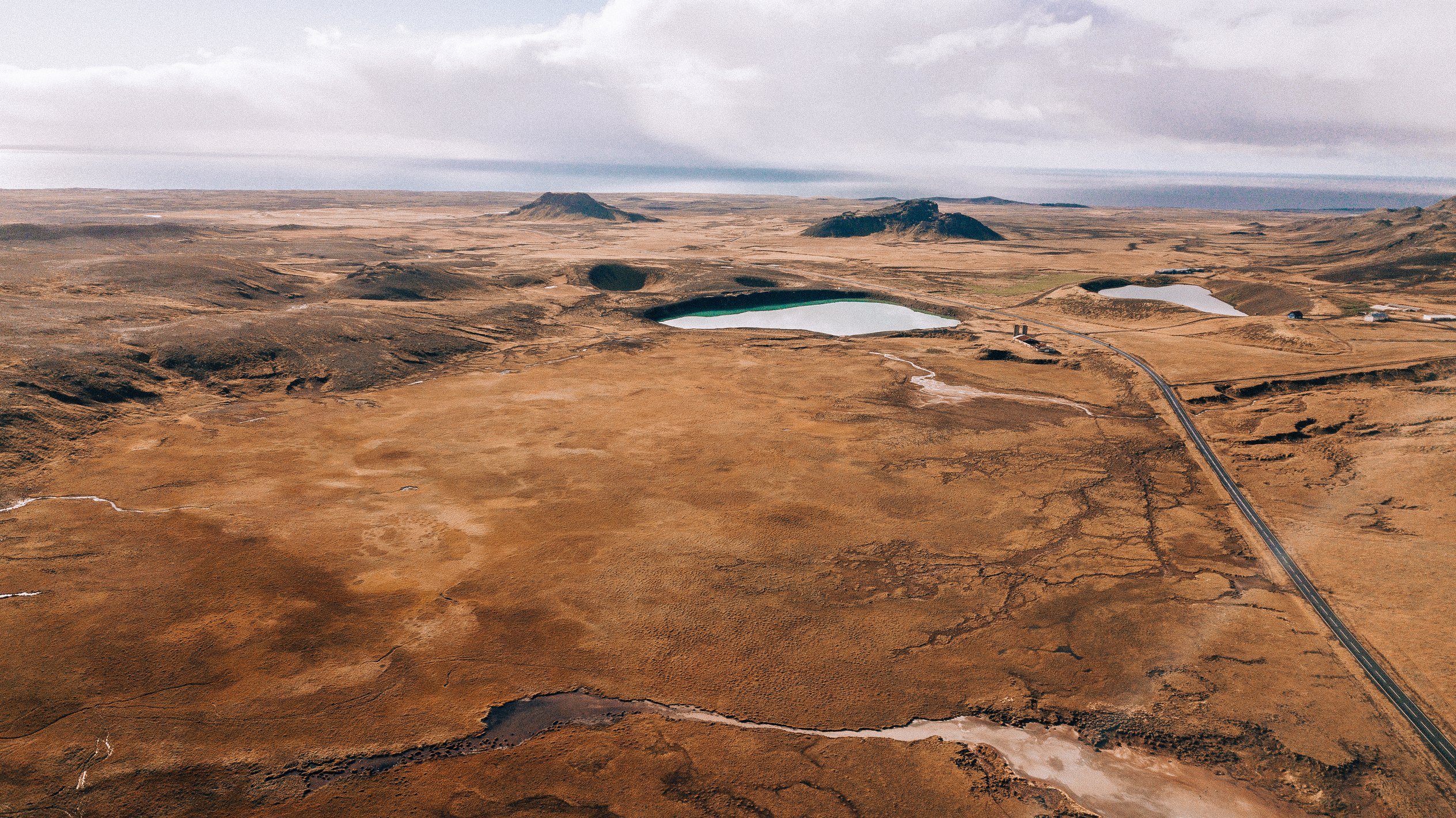
How Much a Trip to Lofoten in Norway Costs: Budget & How to Save in 2026

TL;DRA trip to the Lofoten Islands in 2026 can cost wildly different amounts depending on your travel style: a return flight to Bodø or Narvik runs 6,000–9,000 CZK, and the ferry from Bodø to Moskenes with a car for two people costs around 2,600 CZK. A night in a traditional fishing cabin, a rorbu, comes to 4,300–8,600 CZK, while camping with your own tent is just 650–860 CZK a night. Cooking with shopping from Kiwi or Rema 1000 keeps daily food costs down to 320–430 CZK per person, while a week’s car hire works out at 15,000–21,500 CZK. Norway is pretty much entirely cashless, so a card will get you everywhere you need to go.

If you dream of travelling north of the Arctic Circle, one big question will probably pop into your head pretty quickly. Just how much will a trip to Lofoten in Norway lighten your wallet? Norway has a reputation as one of the most expensive countries on the planet, and the Lofoten archipelago is no exception in this regard.

Still, don’t let that put you off, because this Nordic beauty is absolutely worth it, and with a little planning it doesn’t have to mean personal bankruptcy. Your travel budget depends mainly on what standard of accommodation and dining you ultimately choose.

While sleeping in the iconic red cabins and eating out at restaurants will set you back thousands of pounds, with your own tent and a few supermarket runs you can keep things very reasonable. Let’s take a detailed look at how much a holiday in Lofoten costs in 2026 and where you can cleverly save.

TL;DR

  • Flights and ferries: Return flights from Prague to Bodø or Narvik will cost you roughly 6,000 to 9,000 CZK in 2026. A ferry for a car and two people from Bodø to Moskenes comes to about 1,200 NOK (approx. €110).
  • Accommodation on the islands: A night in a traditional rorbu fisherman’s cabin costs from 2,000 to 4,000 NOK (€175 to €350). Camping is significantly cheaper — a spot for a car and tent will run you 300 to 400 NOK (€26 to €35) per night.
  • Food and cooking costs: If you cook for yourself using groceries from Kiwi or Rema 1000 supermarkets, you can push your daily food budget down to 150 to 200 NOK (€13 to €17) per person.
  • Car rental and transport: A weekly rental of a smaller car in peak season comes to 7,000 to 10,000 NOK (€610 to €880). Also factor in high fuel prices, which hover around 23 NOK per litre (€2).
  • Payments and cash: Norway is an almost entirely cashless society, and you won’t need any physical money at all. You can pay everywhere with an ordinary payment card.

7 Things You Need to Know

Let’s take a closer look at the most important items on your trip.

1. Flights and the Car Ferry

Getting up to the far north of Norway is the first big item in your budget. The most common option is to fly into Bodø or Evenes Airport near Narvik. From London you’ll usually get there with one connection in Oslo, and return flight prices climb towards £320 in peak summer. If you prefer to travel in your own or a rented car from the mainland, you can’t avoid a sea crossing.

The busiest ferry runs the route from Bodø to the port of Moskenes, which sits right at the southern tip of Lofoten. The crossing takes roughly three to four hours and treats you to absolutely breathtaking views of the Lofoten mountain wall as it draws closer. For a standard car and two passengers you’ll pay around £90 one way. If you travel on foot without a car, the ferry is significantly cheaper and often even free, which is a huge advantage for backpackers. The crossing itself is an experience, because the ocean here loves to show its power, so for more sensitive stomachs it’s well worth packing some travel sickness tablets.

💡 Tip: In the summer months ferries are hopelessly sold out. Book your car spot well in advance through the official Norwegian reservation systems so you don’t end up stuck for hours at the port on the so-called standby list. You’ll save yourself a lot of needless stress right at the start of your holiday.

2. Accommodation: Iconic Rorbu vs. Camping

Your wallet will feel the biggest difference right here, when choosing where to stay. Almost every visitor to Lofoten longs to spend at least one night in a traditional red fishermen’s cabin called a rorbu. These cabins stand on wooden stilts right above the water, once served fishermen during the seasonal catch, and today offer a one-of-a-kind romantic atmosphere. Just bear in mind that this is a premium experience that costs between 2,000 and 4,000 NOK for a single night. The big upside of a rorbu, however, is the fully equipped kitchenette, which then saves you huge sums on eating out.

If you’re after a more affordable alternative, Lofoten is an absolute paradise for camping. Norwegian campsites are clean, brilliantly equipped and set in stunning nature, often right beside snow-white beaches. A pitch for a car and a small tent costs a very reasonable 300 to 400 NOK per night. A compromise between a tent and a pricey rorbu can be local hostels or smaller guesthouses, where a bed in a shared room runs around 800 NOK.

If you prefer total freedom, Norway allows the so-called right to roam (allemannsretten). This means you can pitch a tent for free almost anywhere, as long as you keep a minimum distance of 150 metres from the nearest dwelling and don’t camp on cultivated land. Always make sure, though, that you leave no litter behind.

💡 Tip: Most Norwegian campsites have fully equipped shared kitchens and hot showers. Showers are often charged separately using coins or special tokens, so always check the current rules at reception and keep some change or a topped-up card handy.

3. Transport: Car Hire, Tolls and Parking

You’ll explore Lofoten best by car, because public transport here is fairly sparse and won’t get you to the more remote spots or hidden beaches. A weekly car rental in summer season comes to roughly 7,000 to 10,000 NOK in 2026. If you’re hiring a car, watch carefully that you return it with a completely full tank. Otherwise the rental companies charge hefty admin fees that hurt far more than overpriced Norwegian petrol itself.

Tolls apply across the whole of Lofoten, but you needn’t fear any complicated bureaucracy. Most rental cars have a built-in electronic AutoPass box, which registers the fees completely automatically as you drive through the toll gates. The rental company then simply charges the total for your passages to your credit card once you’re back home.

Besides tolls, also be prepared for paid parking at most tourist hotspots. Many trailheads for popular hikes now charge for their car parks so that small villages can cope with the daily flood of visitors. In some places you’ll also come across a so-called beach fee, a small local charge for maintaining the natural sites around popular beaches.

💡 Tip: For quick parking payments, download the EasyPark app as soon as you land. It works reliably all across Norway and will save you a lot of frustration at parking machines, which sometimes refuse foreign cards.

4. Food: Cooking in the Rorbu and Supermarkets

Grocery prices on the islands essentially match those on the Norwegian mainland. In practice that means you should roughly double your usual UK prices. Eating out at restaurants can therefore get expensive very quickly. A plain main course in 2026 will set you back 200 to 400 NOK, which can easily be £30 for a single portion.

That’s why the biggest saving comes from a fully equipped kitchen in your rorbu or at the campsite. If you buy your ingredients yourself, you can bring your daily food costs for one person down to a very acceptable 112 to 195 NOK. Head straight for the green Kiwi supermarkets or the blue Rema 1000 stores, which count as the cheapest chains in the country. In these shops it’s definitely worth hunting out the own-brand ranges, such as Rema’s popular Prima.

A traditional Norwegian breakfast includes caviar paste in a tube or potato flatbreads called lompe, which can even be eaten sweet. A local speciality is the Arctic cod known as skrei, or the famous fish burgers at Anita’s Sjømat on the island of Sakrisøy. If you fancy excellent coffee and a great hipster vibe, head to the Trevarefabrikken in Henningsvær, and for a good dinner you can drop in to the classic Krambua restaurant in picturesque Reine.

💡 Tip: Don’t forget to toss a traditional Norwegian brown cheese, brunost, into your shopping basket. It has a distinctive sweetish caramel flavour and is simply part of a proper Nordic breakfast on fresh bread. Kids usually absolutely adore it!
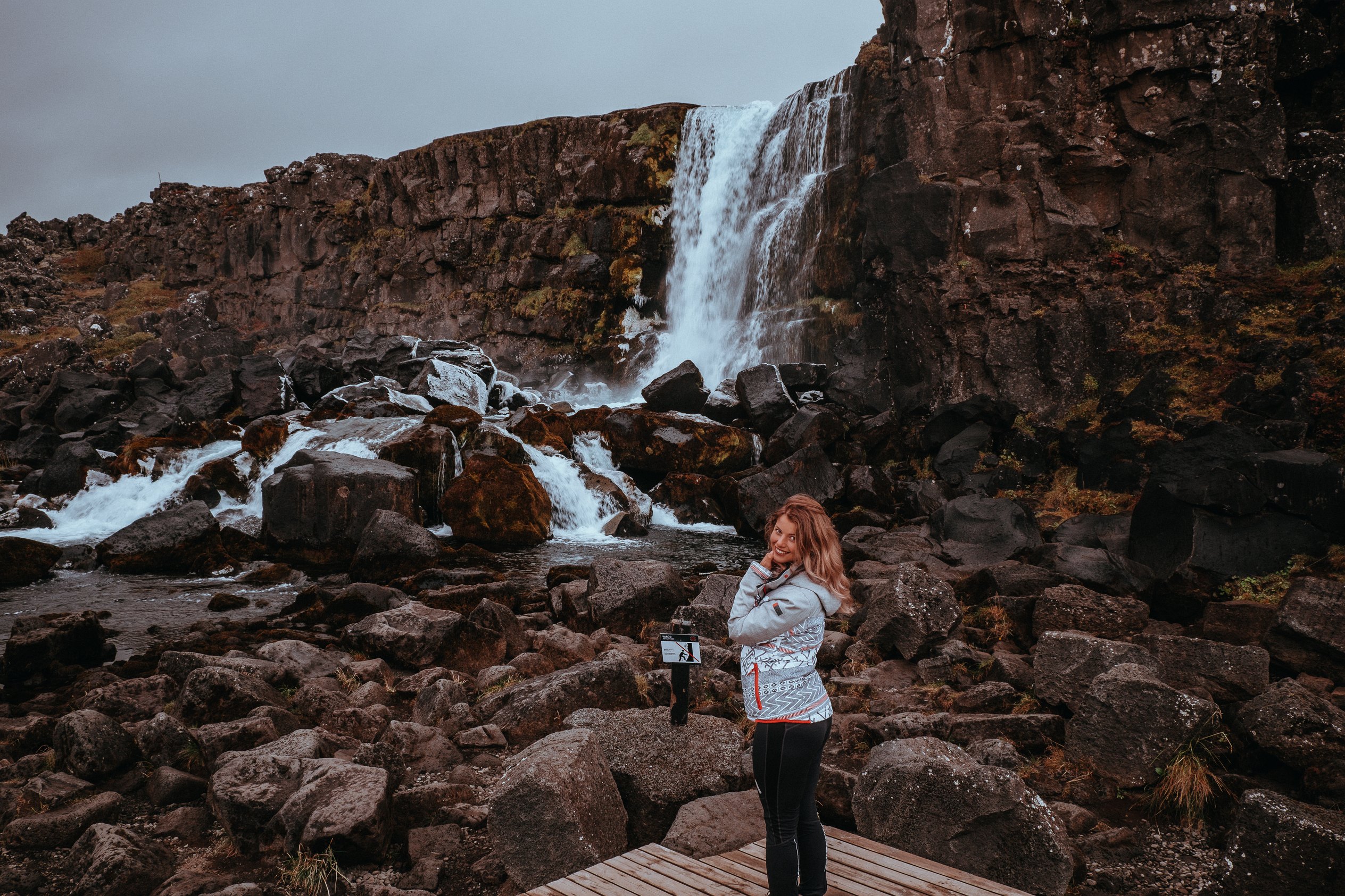
lukas a lucka
Lukáš and Lucie recommend
Where to Stay in Lofoten
1 accommodation — hotels and other lodging options

5. Activities and Museum Admission

The biggest draw of Lofoten is, of course, its rugged nature, which is thankfully completely free for every traveller. You won’t pay a penny for the most beautiful views from the mountain peaks, walks along snow-white beaches and wandering through picturesque fishing villages. Watching the midnight sun in summer or the fascinating northern lights in the winter months won’t cost you anything at all; you just need to find the right spot away from light pollution.

If you want to enrich your itinerary with paid experiences, though, you’ll have to dig deeper into your pocket. A visit to the Lofotr Viking Museum is hugely popular, where a ticket costs around 250 NOK and pulls you perfectly into Nordic history. For various organised cruises, such as a boat trip to the stunning Trollfjord or evening northern lights spotting with a local guide, you’ll typically pay from 900 to 1,500 NOK per person. Trips like these are very easy to find and book through the GetYourGuide platform.

💡 Tip: Don’t plan too many organised activities for one day. The weather on the islands often changes fast, and you may discover that the greatest experience is simply sitting on a wooden terrace with a hot cup of tea, calmly watching the stormy sea.

6. Lofoten Weather and How to Pack for the North

Packing for Lofoten is a bit of a logistical exam. The weather here does whatever it likes, and over a single afternoon you’ll routinely get sunshine, gales and horizontal rain. Even if you set off in the middle of July, the average daytime temperature often hovers between just 12 and 15 degrees Celsius. The yr.no app will become your bible and you’ll check it several times a day; without it, you’d be wise not to head out on longer trips at all.

The secret to surviving in the north is called layering. Forget thick, shapeless winter jackets in which you’ll instantly cook on an uphill climb. You need a system you can smoothly take off and put on as you go. The foundation is good-quality merino wool, which keeps you warm brilliantly even if you happen to sweat or get wet. On top of that goes a light fleece, and over the top a waterproof, windproof hardshell layer. In late July and August the insects can be a nuisance, so definitely pack a good repellent containing DEET to protect you from mosquitoes and midges.

💡 Tip: During the polar day, don’t underestimate sleep. The sun shines even at midnight and your body can get confused. Pack a travel blackout eye mask or special suction-cup blinds for windows. Many accommodations do have blackout curtains, but they let through a surprising amount of light.

7. Money, Health and Safety

Norway runs as an almost entirely cashless society. That means you can pay with a normal card literally everywhere, even for a coffee in the tiniest bakery at the very end of the world in the village of Å, or for parking out in the middle of nature. You don’t need to exchange any physical Norwegian kroner before your trip. You may come across a sign saying Vipps, which is the local equivalent of a payment app, but as a tourist you’ll get by just fine with a standard card terminal. Tipping isn’t usually expected in Norway, as staff are paid very decent wages.

Although Norway isn’t in the European Union, it belongs to the European Economic Area. As a UK traveller, make sure you bring a valid GHIC (Global Health Insurance Card), which covers necessary care under similar terms to those for locals. Note, though, that you’ll still pay the same Norwegian patient contribution (egenandel), which is around 200 to 400 NOK for a standard doctor’s visit. The only full hospital on the islands is in the town of Gravdal, while pharmacies with limited opening hours are found in larger centres such as Svolvær or Leknes. Definitely pack your own first-aid kit with fever medication, antihistamines and travel sickness tablets.

💡 Tip: The GHIC doesn’t cover repatriation home, demanding mountain rescue operations or dental care. Comprehensive commercial travel insurance with high limits is therefore an absolute must for a stay in Norway’s rugged wilderness. For emergencies, save the number 116 117 for the nationwide Norwegian out-of-hours service.

Practical Summary and Approximate Prices

To make budgeting easier, we’ve put together an overview of the average prices you’ll likely come across in Lofoten in 2026. Treat all prices as a rough guide, as they vary depending on the current season.

  • Return flight from Prague: 6,000 – 9,000 CZK
  • Ferry (car + 2 people): 1,200 NOK (approx. €110)
  • Night at a campsite (tent and car): 300 – 400 NOK (approx. €26 – €35)
  • Night in a rorbu for two: 2,000 – 4,000 NOK (approx. €175 – €350)
  • Weekly car rental: 7,000 – 10,000 NOK (approx. €610 – €880)
  • Litre of fuel: 23 NOK (approx. €2)
  • Main course in a restaurant: 200 – 400 NOK (approx. €17 – €35)
  • Coffee in a café: 50 – 70 NOK (approx. €4 – €6)
  • Loaf of bread at the supermarket: 40 NOK (approx. €3.50)
  • Admission to the Viking museum: 250 NOK (approx. €22)

💡 Accommodation and experiences tip: We like to find our accommodation on Booking.com, where the cancellation terms tend to be best. Tickets, tours and activities are then worth comparing and booking through GetYourGuide.

Where to Go Next

If planning a trip north has got you excited and you want to dive even deeper into the preparations, be sure to read our other articles. Check out our big guide to Lofoten, where you’ll discover the most beautiful trips and hikes. For detailed accommodation info, open the article on where to stay in Lofoten, and you’ll definitely find our practical guide on how to get to Lofoten handy too.

Frequently Asked Questions

Are the Lofoten Islands really as expensive as people say?

Yes, Norway is generally one of the most expensive destinations in Europe. The biggest chunk of your budget will go towards services, restaurants, and accommodation in traditional cabins. However, if you choose to sleep in a tent and cook your own meals from supermarket groceries, you can reduce costs to a very reasonable level that’s comparable to a holiday in Western Europe.

Do I need cash in Norway?

Not at all. Norway is a pioneer in cashless payments and you’ll hardly see any paper banknotes there. You can pay for absolutely everything with a regular payment card, from mountain car park tickets to public toilets to ferry tickets. You can safely skip the currency exchange office.

How much does accommodation in a traditional rorbu cost?

The iconic red cabins on stilts over the water are a major attraction, which is reflected in their price. For one night during the peak summer season, you’ll pay on average between €170 and €340. The price varies depending on location and level of luxury, with some modern rorbu even offering their own sauna.

Where can I find the cheapest groceries in Lofoten?

You’ll find the best food prices at the Kiwi and Rema 1000 chains. These shops are scattered throughout the archipelago and offer a wide selection of private label brands that are significantly cheaper than premium products. It’s worth looking for the Prima brand, for example. Avoid small convenience stores and overpriced shops at petrol stations.

How does toll payment work with a rental car?

You don’t need to worry about tolls at all. Cars from Norwegian rental companies are equipped with a small AutoPass box that automatically registers passage through toll gates. After you return the vehicle, the rental company will add up all the charges and deduct them from your credit card.

What clothing should I bring for a summer holiday in the north?

Even in July, you can be surprised by strong winds and rain with temperatures around 10 degrees on the islands. Layering is key. Pack quality merino wool thermal underwear, a warm fleece jumper, and reliable waterproof jacket and trousers. Leave thick winter coats at home—instead opt for multiple thin layers and also bring insect repellent.

Is my Czech health insurance card valid in Norway?

Yes, thanks to membership in the European Economic Area (EEA), your blue EHIC card is valid in Norway too. It guarantees you treatment under the same conditions as Norwegians have, which means you’ll pay the Norwegian co-payment (egenandel). For this reason, it’s essential to also have quality travel insurance.

Tips and Tricks for Your Vacation

Don’t Overpay for Flights

Search for flights on Kayak. It’s our favorite search engine because it scans the websites of all airlines and always finds the cheapest connection.

Book Your Accommodation Smartly

The best experiences we’ve had when looking for accommodation (from Alaska to Morocco) are with Booking.com, where hotels, apartments, and entire houses are usually the cheapest and most widely available.

Don’t Forget Travel Insurance

Good travel insurance will protect you against illness, accidents, theft, or flight cancellations. We’ve had a few hospital visits abroad, so we know how important it is to have proper insurance arranged.

Where we insure ourselves: SafetyWing (best for everyone) and TrueTraveller (for extra-long trips).

Why don’t we recommend any Czech insurance company? Because they have too many restrictions. They set limits on the number of days abroad, travel insurance via a credit card often requires you to pay medical expenses only with that card, and they frequently limit the number of returns to the Czech Republic.

Find the Best Experiences

Get Your Guide is a huge online marketplace where you can book guided walks, trips, skip-the-line tickets, tours, and much more. We always find some extra fun there!