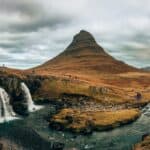
We only made it to Reykjavik, Iceland on the very last day of our two-week autumn road trip around the island. We were chilled to the bone, our hair was sticking out in every direction after soaking in the hot springs, and after two weeks of boiling pasta in the tiny kitchens of our guesthouses and apartments, we were desperate for a bit of civilisation.
Before reaching the city itself, we’d spent a frosty morning hiking 45 minutes up to the Reykjadalur hot river, shivering as we changed outside in the wind. So we appreciated the warmth of that first cosy little café in the centre all the more.
Icelandic coffee may be eye-wateringly expensive, but after days of cold, wind and endless supplies of local liquorice, it tasted like divine nectar.
A lot of people skip the city entirely on their trip, which I think is a real shame. If you’re putting together an itinerary and looking for tips on things to do in Reykjavik, Iceland, you’re in the right place.
It’s a tiny city and a single day is plenty to cover the main sights, but it has an incredible atmosphere. In this article you’ll find my favourite tips for what to see and do in Iceland’s capital, plus our tried-and-tested spots to warm up and eat well without meat.
TL;DR
- Reykjavik isn’t a week-long destination: It’s a compact city, and one day and one night is plenty to explore it. You can visit straight after landing, or save it as a sweet finale at the end.
- You don’t need a car in the city: The Flybus gets you comfortably from the airport into the centre, and you can easily get around the city itself on foot.
- The hot springs are a must: Skip the overpriced Blue Lagoon and head to the classic municipal pools (sundlaug) like the locals do, where entry costs a fraction of the price.
- Watch out for the naked shower rule: Icelandic pools have strict rules — you absolutely must shower completely naked with soap before getting in the water.
- Food is extremely expensive: If you want to save money, your best friends will be the Bónus supermarket and the excellent local bakeries.
The full destination guide: Iceland — guide and what to see
When to Go and How to Get There
The weather in Iceland simply does whatever it wants, and the weather in Reykjavik, Iceland is no exception. We visited at the turn of September and October, and I have to say it was already a properly cold winter, but in return we had incredible luck with the Northern Lights.
It’s warmest here in summer, of course, when you’ll also experience the midnight sun, but be prepared for the biggest crowds of tourists and absolutely astronomical accommodation prices. On top of that, in August 2026 Iceland is in for a rare total solar eclipse, visible right from Reykjavik and lasting just under a minute.
So if you’re planning a trip for that period, arm yourself with plenty of patience, because accommodation in the path of totality is vanishing at lightning speed and prices have shot up to absurd levels. We always hunt for cheap flights on Skyscanner — it’s our favourite tool for catching good deals, and in the summer season you can reach Iceland from London on a direct flight in around three hours.
Outside the high season, expect a standard connection via Amsterdam, Frankfurt or Copenhagen. Just be careful when reading older guidebooks, because the popular budget airline PLAY Airlines has gone under, and you’ll most likely be flying with Icelandair or one of the major carriers from the UK.
The moment you step off the plane at Keflavík International Airport, you’ll feel that typical salty, freezing Icelandic wind. The airport itself sits on the Reykjanes Peninsula about a 45-minute drive from the capital, so if you’re heading straight into the centre and not planning to set off on a big road trip immediately, I’d definitely recommend taking the comfortable Flybus.
For around 3,999 ISK (roughly £24) it takes you directly to the main BSÍ bus terminal. If you’d like to be dropped right outside your hotel, you can pay extra for the Flybus+ option, which works out at 5,199 ISK.
Travelling as a couple or solo, this is by far the cheapest and most sensible option, because a car in the city is just an expensive burden.
But if you know you’ll only be spending a few hours in Reykjavik and will be carrying straight on around the island, it’s worth renting a car right there in the arrivals hall. Lukáš and I have long had a great experience with the DiscoverCars portal, which we use pretty much everywhere in the world.
That said, Iceland is a bit of a wild west when it comes to car hire, and insurance is definitely not the place to skimp. Be sure to pay extra for Gravel Protection, because stones flying up from oncoming cars smash windscreens here on a daily basis.
If you’re heading south, consider Sand and Ash Protection (SAAP) too, since the strong wind can literally sandblast a car down to bare metal. And remember one golden Icelandic rule that no insurance will cover: always hold the car door firmly with both hands when opening it, because the local gales can rip it clean off the hinges for careless tourists in an instant.
From 2026, Iceland has also introduced a new per-kilometre tax of 6.95 ISK per kilometre driven, which the rental company will likely charge to your card when you return the vehicle, so it’s best to factor this extra cost into your travel budget in advance.
Where to Stay and How Much It Costs
Iceland is officially one of the most expensive countries in the whole world, and Reykjavik itself sadly doesn’t escape this merciless rule. If you long to stay right in the heart of the action and soak up that genuine Nordic city atmosphere, look for hotels in the area known as 101.
It’s the very centre of the city, spread between the majestic Hallgrímskirkja church and the glass-fronted Harpa concert hall, and from here you can walk absolutely everywhere with ease. A night here, though, typically costs around £105 (roughly 18,000 ISK) and up.
Accommodation tends to be noticeably cheaper right near the church itself, where you can find rooms even 40 percent cheaper, or in the wider harbour area and the Grandi district.
💡 Specific accommodation tips (check prices and availability via Booking.com, book early — in season and around the 2026 eclipse they sell out months ahead):
- Center Hotels Grandi (Reykjavik)
- Hótel Borg (Reykjavik)
- Kvosin Downtown Hotel (Reykjavik)
If you’re on a limited budget, from personal experience I warmly recommend finding accommodation with at least a small kitchenette. We genuinely saved a lot of money by buying basic groceries and breakfasts at the local Bónus supermarket, which you’ll spot from a distance by its bright yellow logo with a giant pink piggy.
The Krónan or Nettó chains are good alternatives too. A dinner for two in a standard restaurant easily crosses the £100 mark. And if you arrive in the city in a hire car, watch out for the complicated parking zones.
In the very centre (zone P1) you’ll pay around 630 ISK (roughly £3.80) for a single hour, so we always try to find a spot in zone P3 instead, which is much friendlier and costs just 230 ISK for the first two hours. Parking here is also paid for exclusively through handy mobile apps like Parka or EasyPark, so forget about digging for coins in your pockets.
Booking.com is our absolute favourite accommodation search engine, and we often snag cosy apartments there with free parking a little further from the centre, which is priceless. And one more little money-saving tip.
Never buy bottled water — the tap water here is some of the cleanest in the world. Just always run the cold tap, because the hot water is heated geothermally and has a fairly strong smell of sulphur 😅.
Downtown and Icons: 6 Places You Must Visit and What to Do
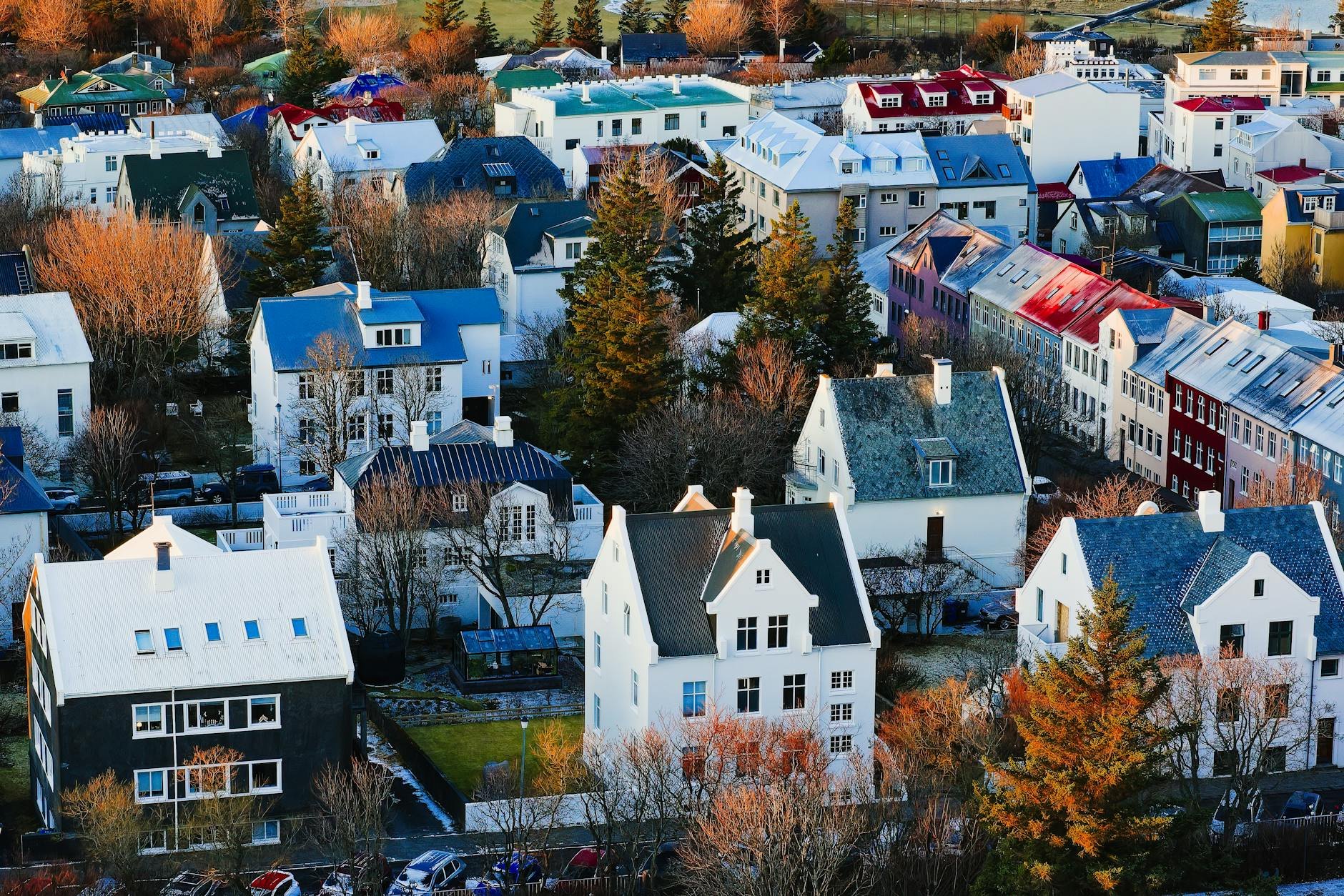
When people hear “the capital of Iceland,” many wrongly picture a small, frozen, grey village somewhere at the end of the world. The real Reykjavik will instantly surprise you with its incredibly vivid colours, stunning Nordic architecture and ever-present creative art.
The houses here are often clad in corrugated iron to defend against the salty wind, but they come in every shade from mustard yellow to brilliant turquoise. Let’s take a look at the very best things you absolutely shouldn’t miss on a walk through the city.
1. Hallgrímskirkja: Church or Concrete Spaceship?
This is without doubt the most famous landmark of the entire city, and I guarantee you won’t miss it, because it rises majestically on a hill and is visible from just about every street.
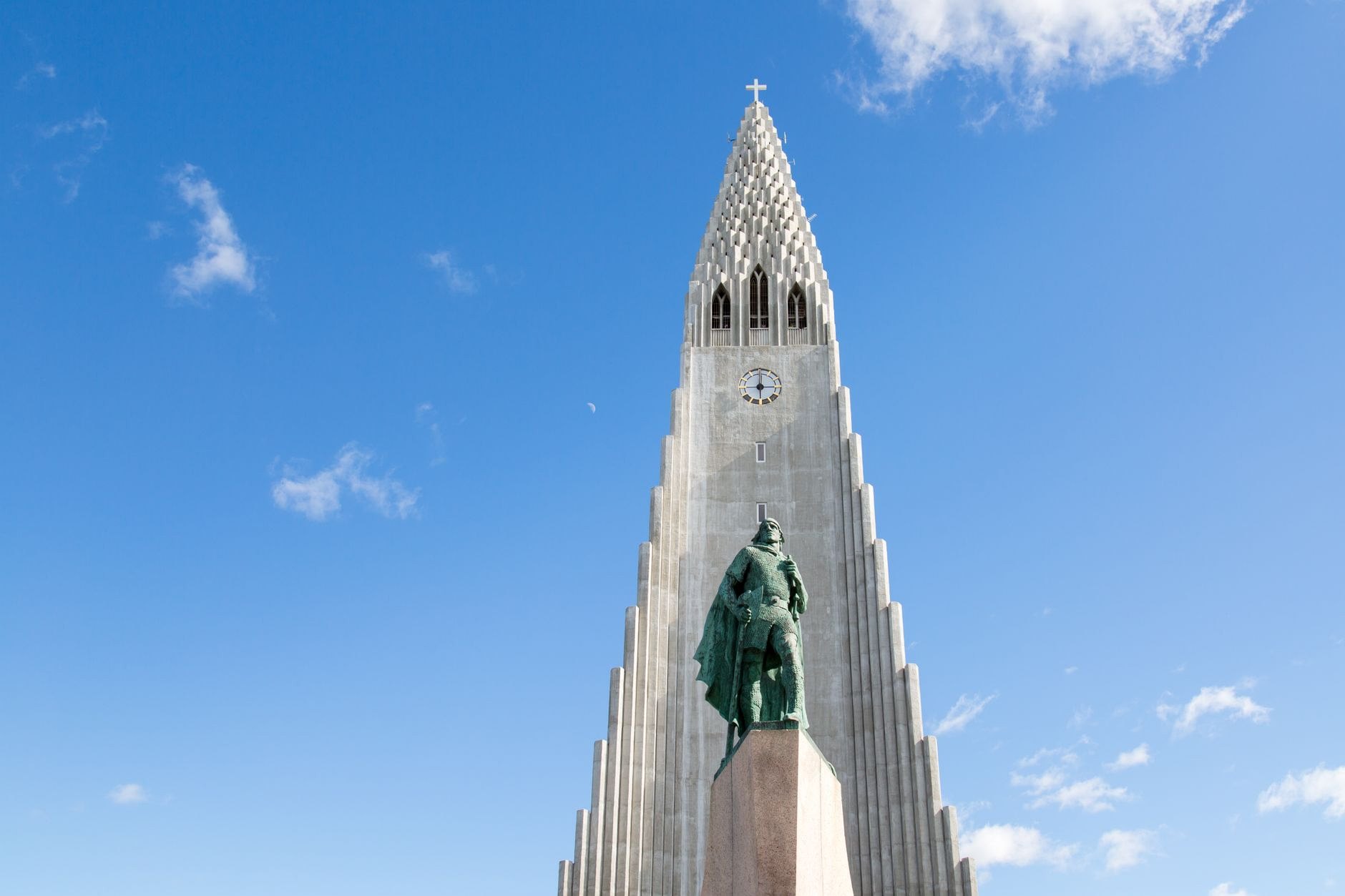
When I first saw this building with my own eyes, it reminded me more of an enormous concrete spaceship ready for launch than a classic Christian church. Its breathtaking shape was actually carefully designed to evoke the regular basalt columns that are so typical of Iceland’s volcanic landscape, which you’ll see in full glory at the famous Svartifoss waterfall, for example.
Entry to the ground floor of the church is completely free, and inside you’ll be captivated by the view of the enormous organ with more than five thousand silver pipes. But definitely don’t miss the chance to buy a ticket to the viewing tower.
You take a small lift up very comfortably, and for 1,500 ISK per adult (roughly £9), 1,000 ISK for students and 200 ISK for children, you’re treated to an absolutely perfect experience.
It’s from this viewing gallery that you’ll get the most beautiful views over the colourful rooftops of the little Nordic houses, while in the distance the cold ocean and the snowy peaks of Mount Esja shimmer.
Booking tickets in advance isn’t possible here, nor is it necessary — you simply walk up to the window, pay, and ride straight up. It does tend to be rather unpleasantly windy up there, though, so don’t forget to pull on a hat and zip up your jacket properly.
2. Laugavegur and the Rainbow Street Skólavörðustígur
If, like us, you love aimless wandering through a city, peering into shop windows and lingering in cafés, the main street Laugavegur will be an absolute paradise for you.
It’s the artery of the whole old town, where in one place you’ll find everything from boutiques selling traditional and outrageously expensive lopapeysa wool jumpers, to quality outdoor shops, to the most charming little spots smelling of freshly roasted coffee.
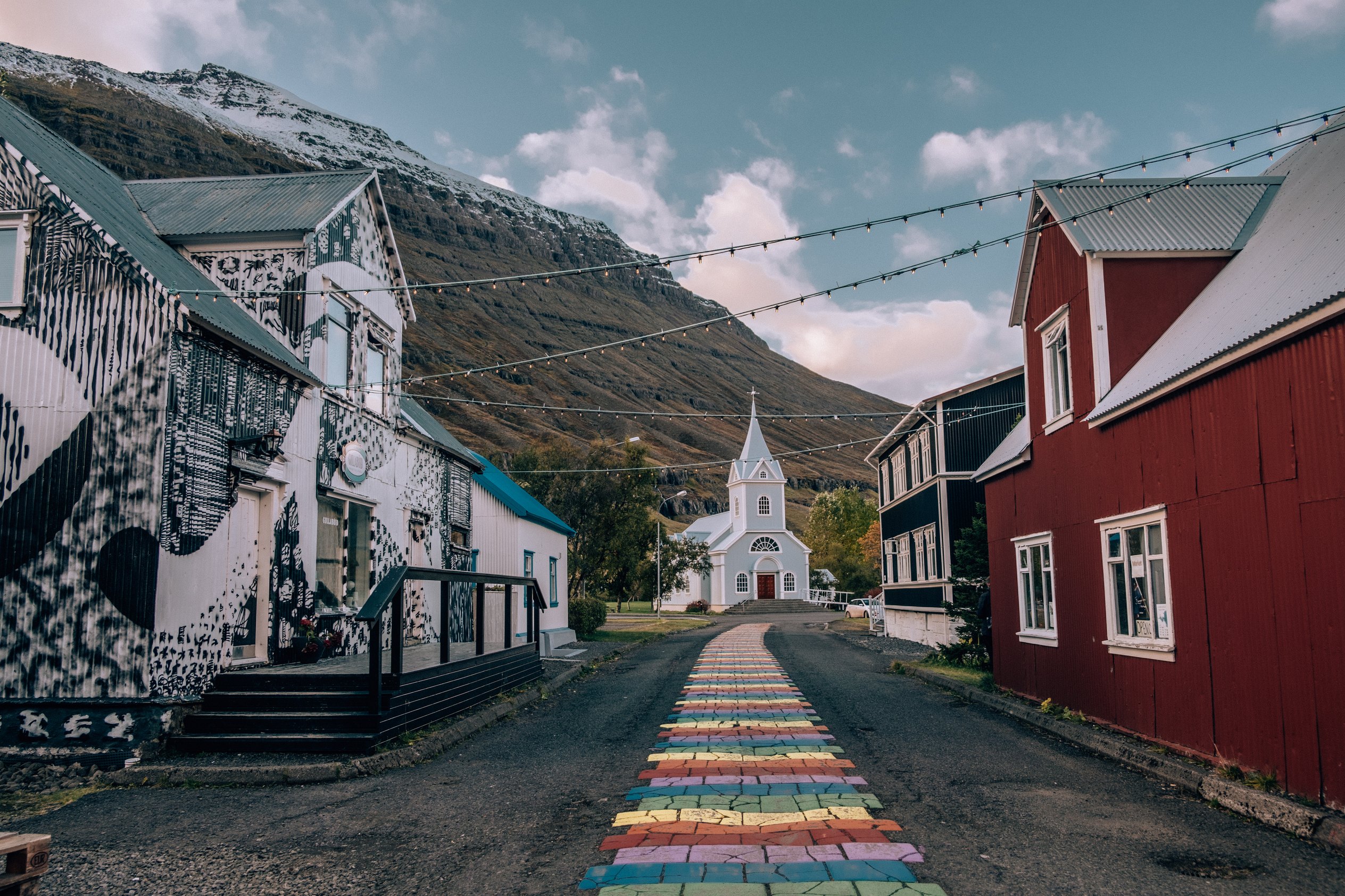
From this street, your walk flows seamlessly onto Skólavörðustígur, which by now just about every tourist and local knows by the nickname Rainbow Street.
This whole long street, which leads gently uphill straight to the main Hallgrímskirkja church, is painted in the vivid colours of the rainbow in clear support of diversity and the local pride community. It’s probably the most photographed spot in the entire country, so you’ll occasionally have to weave a little between people holding up their phones, but that cheerful, positive atmosphere is well worth it.
During the week it’s fairly quiet, but if you find yourself here on a Friday or Saturday evening, the street transforms beyond recognition. This wild weekend bar-hopping is known as the rúntur.
Because alcohol is extremely heavily taxed in Iceland, locals drink at home first as part of the so-called fyrirpartý, then head out into the buzz of the city only around midnight.
If you want to join in without bankrupting yourself, definitely download an app listing the local Happy Hours, which lets you have a beer between four and eight in the evening for a more bearable 1,000 to 1,200 ISK instead of the usual 1,750 ISK.
3. Harpa: A Glass Wonder Right by the Ocean
When you wind your way down the narrow streets from the church towards the harbour, the dazzling Harpa concert and conference hall will instantly catch your eye.
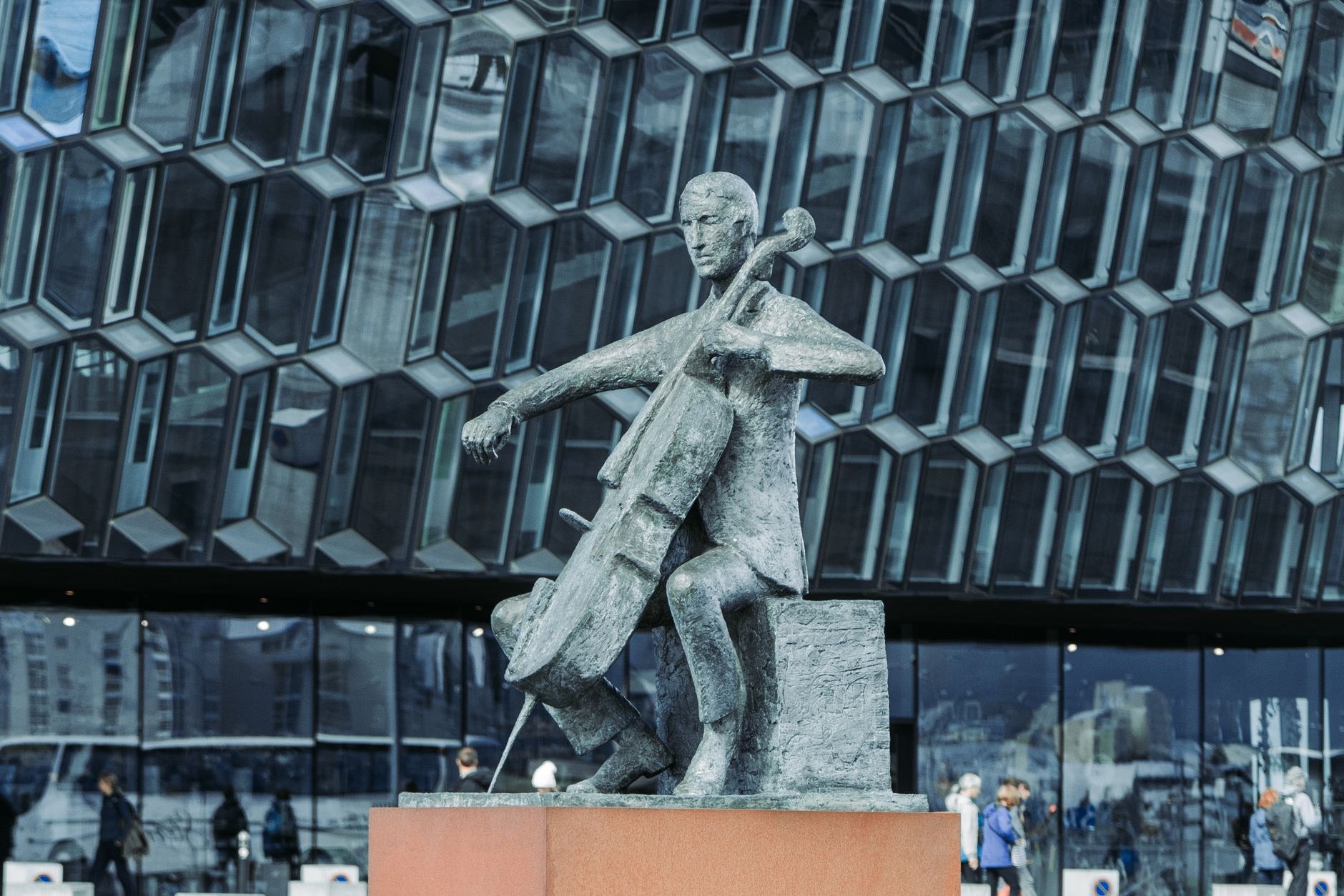
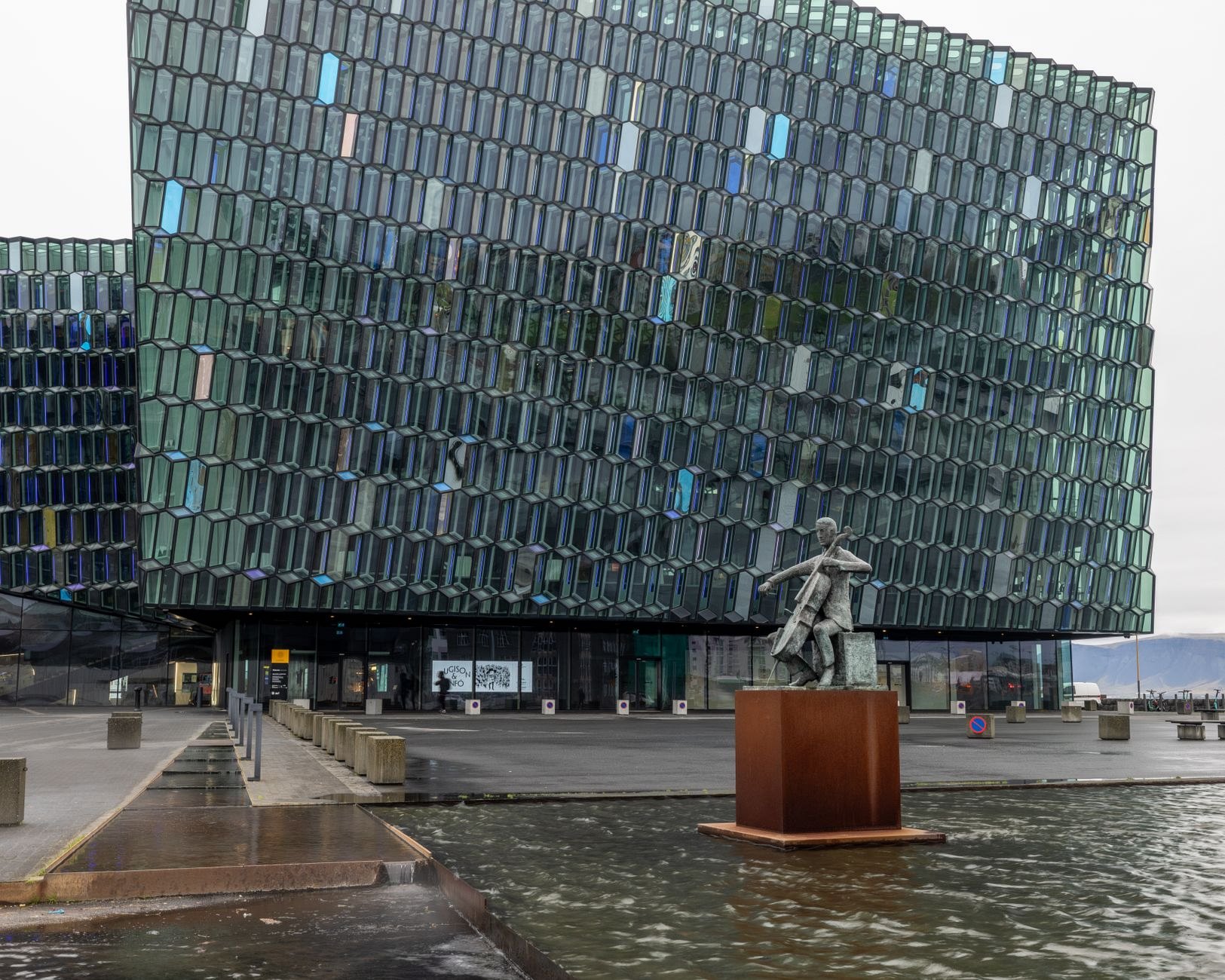
It’s an absolutely stunning piece of architecture, its unique façade made up of thousands of glass blocks resembling a honeycomb. These blocks were so ingeniously designed by the famous Danish-Icelandic artist Ólafur Elíasson that they constantly reflect the changing light of the Nordic sky and the dark colours of the adjacent sea.
The best thing about the whole experience is that you can step into the huge foyer completely free. The interior of the hall is incredibly spacious, full of light, and offers absolutely perfect angles for photos. The play of light and shadow changes here practically by the minute, depending on how the clouds happen to be drifting outside.
It’s also an absolutely ideal and strategic refuge if you get caught out exploring the city by some sudden downpour or snow flurry — which can easily happen to you three times in a single afternoon in Iceland 😅.
Sitting on a bench here, gazing out through those curious glass bubbles at the churning waves while slowly warming my frozen hands, is one of my favourite Icelandic memories.
4. Sólfar, or the Sun Voyager, for the Perfect Photo
Just a short walk from glassy Harpa along the lovely, well-kept coastal promenade, you’ll come across a steel sculpture that at first glance looks like the bleached skeleton of an old Viking ship.
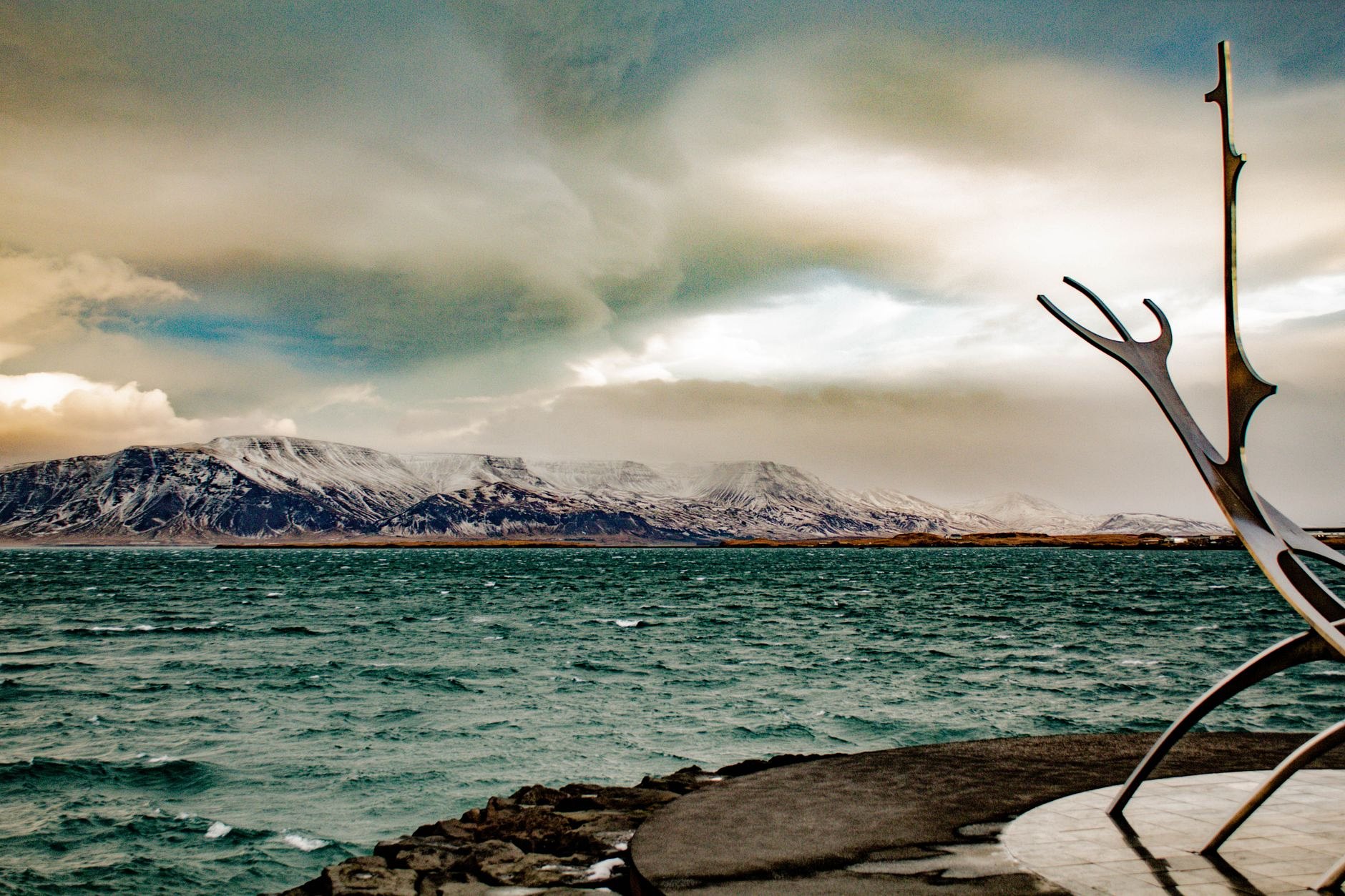
In reality this famous work of art is called Sólfar, or the Sun Voyager, and the artist intended it as a notional dream boat, a magical ode to the sun and a promise of undiscovered territory.
On a warm summer day there’s usually quite a crowd of tourists here, but if you get up a little early or, conversely, arrive when the sun begins to slip slowly towards the horizon, you’ll be rewarded with an incredible, romantic spectacle.
The metal sculpture gleams beautifully in that slanting light, and in the distance, right across the bay, the snowy peaks of the aforementioned Mount Esja rise dramatically.
It’s exactly the right, iconic spot for that typical moody photo every traveller loves to post as proof they really were in Iceland. What’s more, after the photos you can take a long stroll along the clean waterfront and breathe in that crisp, ocean-scented air.
5. The Peaceful Centre by Lake Tjörnin
Right in the heart of the old town you’ll come across a surprisingly large and very tranquil lake that goes by the name of Tjörnin. It’s largely surrounded by old, colourful houses, and at one end stands an interesting modern concrete town hall building that looks as though it’s partly floating right on the surface of the water.
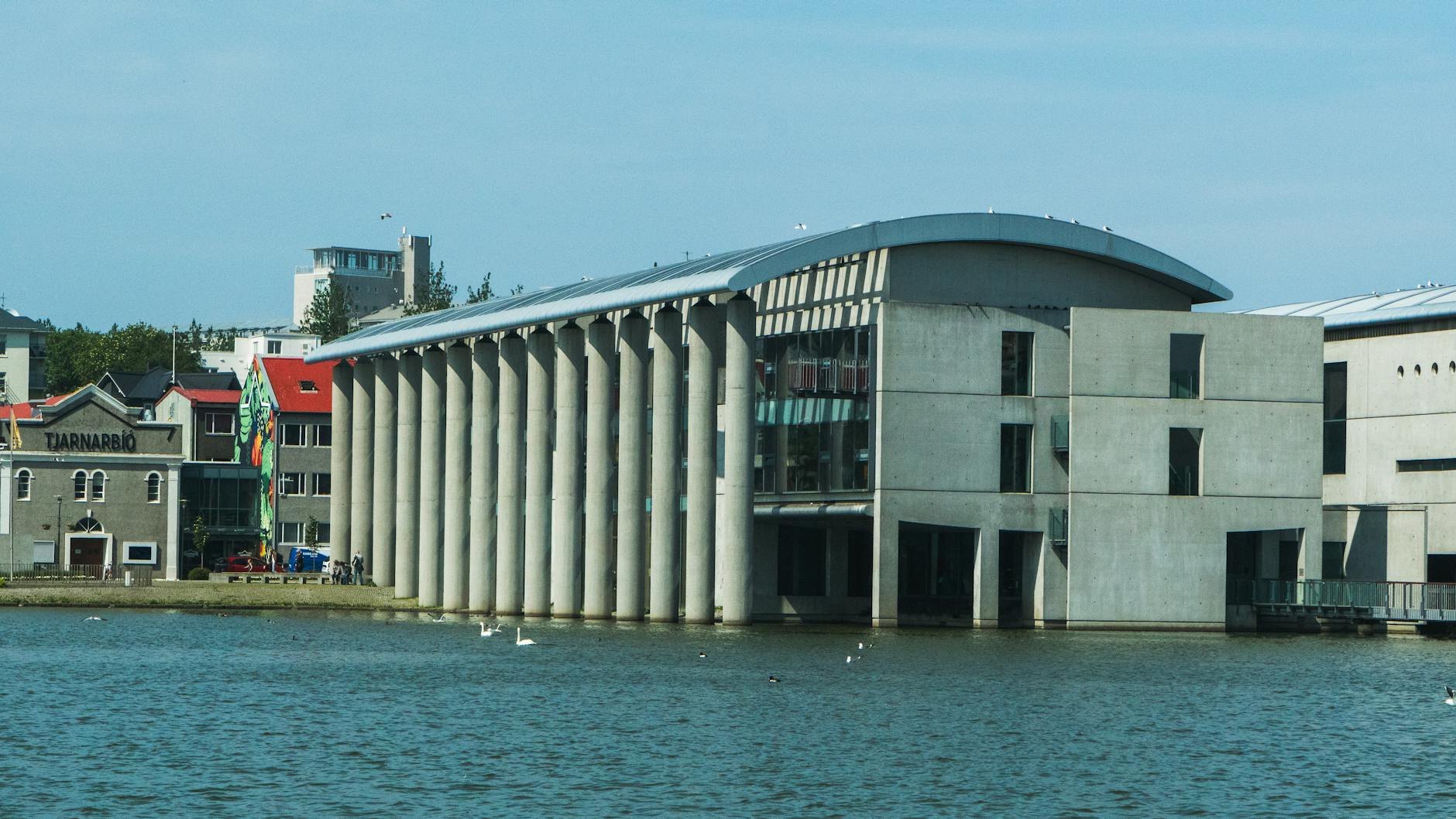
The surface of this lake is always full of elegant swans, ducks and wild geese, which locals and children love to feed from the banks. A slow walk around the water has an incredibly relaxing atmosphere and completely pulls you out of the feeling that you’re actually in the middle of a capital city, just a few steps from the busy streets.
When you arrive in the proper winter months and it’s properly freezing outside, the lake very often gets covered with a thick, solid layer of ice, and this whole beautiful spot transforms overnight into an enormous, cheerful public skating rink for local families.
6. The Grandi District and the Old Harbour
If you want to see how an industrial zone becomes the most hipster spot in the city, you have to head to the Grandi district near the old harbour.
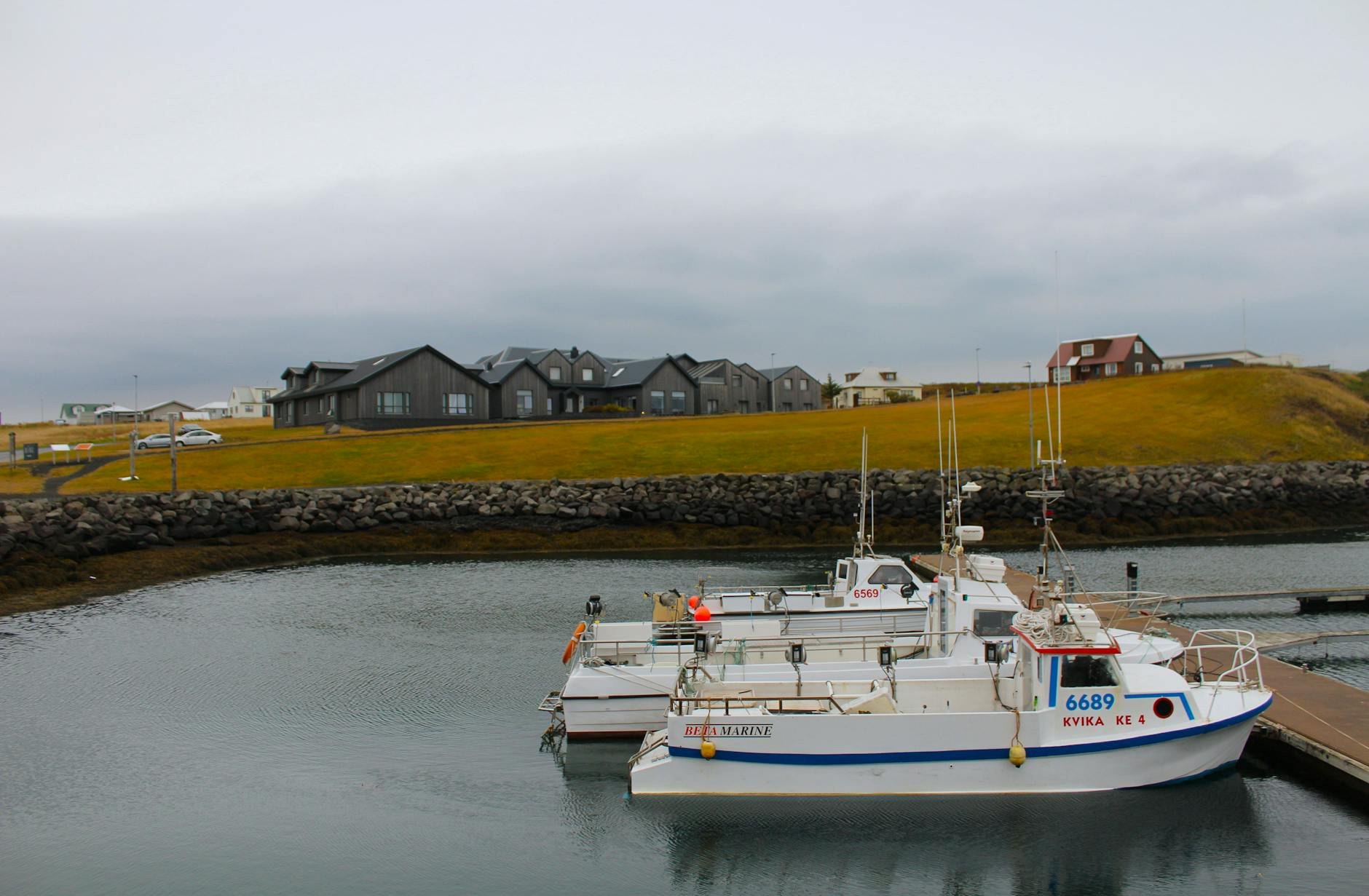
It was originally an area full of smelly fish markets and old shipyards, but today the old hangars are home to the best modern cafés, stylish museums and walls adorned with huge, colourful murals.
One of the district’s big draws is the Whales of Iceland exhibition, where for an entry fee of around 4,300 ISK you can admire enormous life-size models of whales.
It’s a fascinating sight, especially when you’re standing beneath a giant model of a blue whale and realise just how tiny we actually are compared to these creatures.
And if you love sweets as much as I do, you mustn’t skip a visit to the small artisan chocolate factory Omnom Chocolate in the Grandi area.
Their chocolates with quirky flavours, wrapped in gorgeous designer boxes, make an absolutely perfect and delicious souvenir from your travels. You can also peek straight into the production and, of course, taste the chocolate.
Relax and Spas: 4 Tips on How to Warm Up Perfectly
For Icelanders, bathing in hot thermal water isn’t just some ordinary weekend hobby — it’s more of a religion, a daily social necessity and, above all, a way of surviving those long, dark, freezing Nordic winters at all.
Around the city, luxury spas and perfectly ordinary community swimming centres constantly compete for your attention. Wherever you end up sinking into that hot water, a stay in Reykjavik guarantees you’ll climb out of the pool feeling utterly reborn, body and soul.
7. The Municipal Pools (sundlaug): An Authentic Experience for Pennies
If you want to save hundreds in your tight budget and experience something genuinely, one hundred percent authentic, skip all the famous and overpriced lagoons and head off with a towel to an ordinary public pool.
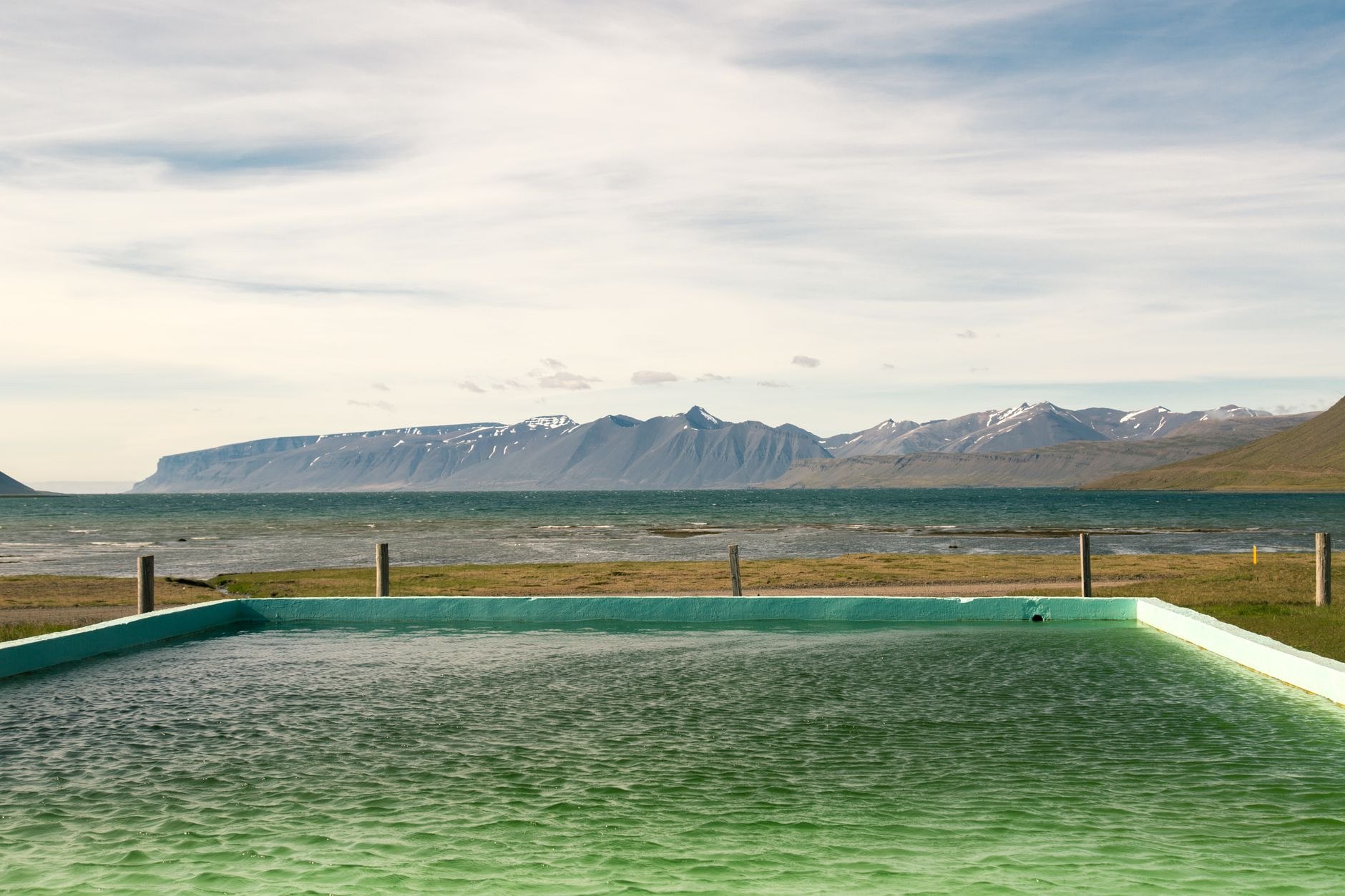
Almost every Icelandic neighbourhood has its own sundlaug, and entry usually costs around 1,430 ISK (roughly £8.60).
The biggest and most popular one is called Laugardalslaug, where you’ll find a classic large swimming pool and, more importantly, several smaller round pools — the so-called hot pots — with water temperatures ranging from 38 to a respectable 44 °C.
It’s right here, in the hot water, that the real, unvarnished Icelandic social life plays out. People come early in the morning or after work to swap the latest gossip, complain about politics and, of course, endlessly discuss the weather.
Sitting outside in almost boiling water while big snowflakes fall on your wet head and a sharp wind blows is incredibly relaxing and addictive.
⚠️ Important warning about local hygiene: Out of sheer ignorance, visitors make one absolutely fatal mistake here. Before you even put your swimsuit on in the changing room, you must shower in the communal showers completely naked and with soap.
There are illustrative posters on every wall showing that you must wash particularly your armpits, groin and feet. The water in the pools here is cleaned by constant flow and contains only the absolute minimum of chlorine, so personal hygiene is treated as utterly sacred.
If you break this important rule and try to shower with your swimsuit on, the locals will sharply and publicly tell you off. So please drop the embarrassment — nobody in those showers has the slightest interest in your body!

8. Sky Lagoon: A Luxurious, Intimate Ritual by the Ocean
If you do want to treat yourself to something special, premium and photogenic for social media, the Sky Lagoon spa is guaranteed to delight you.
This architecturally gorgeous lagoon lies just about 15 minutes’ drive from the city centre and offers a dramatic “infinity” edge, over which the crystal-clear hot water seems to merge optically with the wild, cold Atlantic.
Compared with the more mass-market and famous Blue Lagoon, this place feels a touch more intimate and natural thanks to the black basalt cliffs and the old traditional turf houses that sensitively surround the whole complex. If you head here, I definitely recommend paying extra straight away for the package with the Skjól ritual.
During it you go through seven steps, where you warm up properly in a glass-walled sauna with an epic sea view, then cool off in an icy mist, and finally scrub your body with a fragrant salt scrub.
Admission prices here have risen sharply recently — packages start at around 12,000 to 14,000 ISK (roughly £72 to £84) — but it’s a fantastic, luxurious experience ideal for the very end of your trip. Always buy tickets well in advance online, though, because you most likely won’t get in at the door.
💡 Tip: It’s worth buying tickets and organised tours (Reykjavik and surroundings) ahead of time online on GetYourGuide — in season they fill up fast.
9. The Famous Blue Lagoon and a Bit of Honesty About Volcanic Activity
For many years the Blue Lagoon has probably been the single most famous image of Iceland on the cover of every magazine. Its milky-blue, opaque water at 37–40 °C, set in a harsh black lava field, looks absolutely incredible. You can even smear the silica mud from the bottom straight onto your face as a face mask.
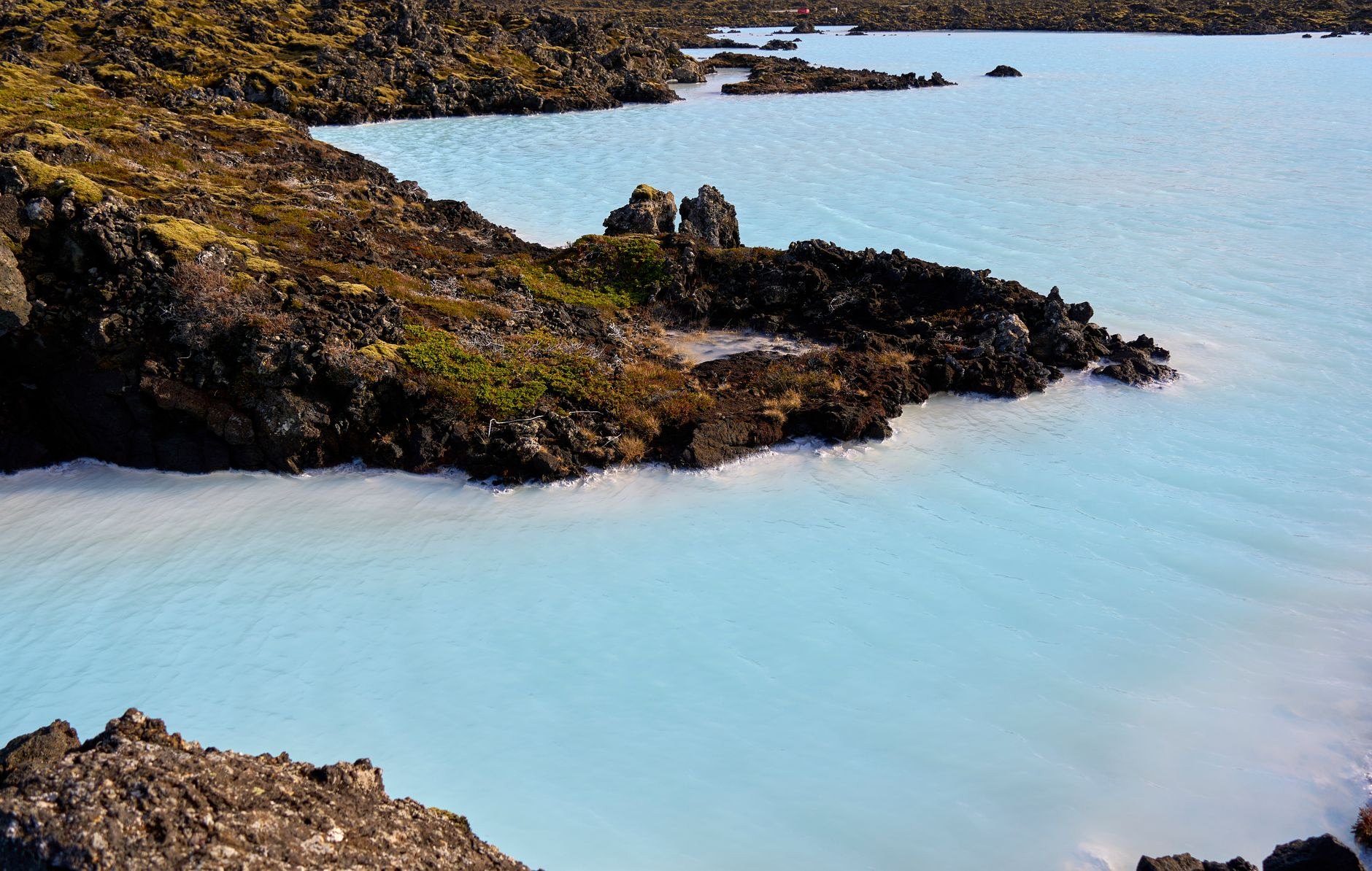
The basic ticket, called Comfort, currently costs around 11,990 ISK, and the Premium version even 14,990 ISK.
We tried this place enthusiastically ourselves back in the day, of course, but these days I’d think twice about this particular outing for two reasons.
The first is the fact that the lagoon lies in the Svartsengi area, which is now extremely volcanically active. Since the end of 2023 there’s been a series of dramatic volcanic eruptions here, and the spa has had to be hastily and chaotically evacuated several times.
The complexes do have a top-notch safety plan and monitor every tremor in the ground, but realistically you risk having your expensive booking cancelled at the last minute.
If you do head here anyway and there’s no threat of an eruption, I have one purely pragmatic and life-saving tip for women. That gorgeous silica water may smooth your skin beautifully, but within ten minutes it will utterly wreck your hair, turning it into hard, unmanageable straw for several days.
So before getting into the water, massage in a huge, thick layer of conditioner, available free in the showers, and pin your hair up tightly. For the latest on operations and any evacuations, always check the official Blue Lagoon website.
10. The Grótta Lighthouse and the Discreet Kvika Footbath
At the very tip of the windy Seltjarnarnes peninsula, just a short drive or longer walk from central Reykjavik, stands the beautiful, solitary lighthouse named Grótta.
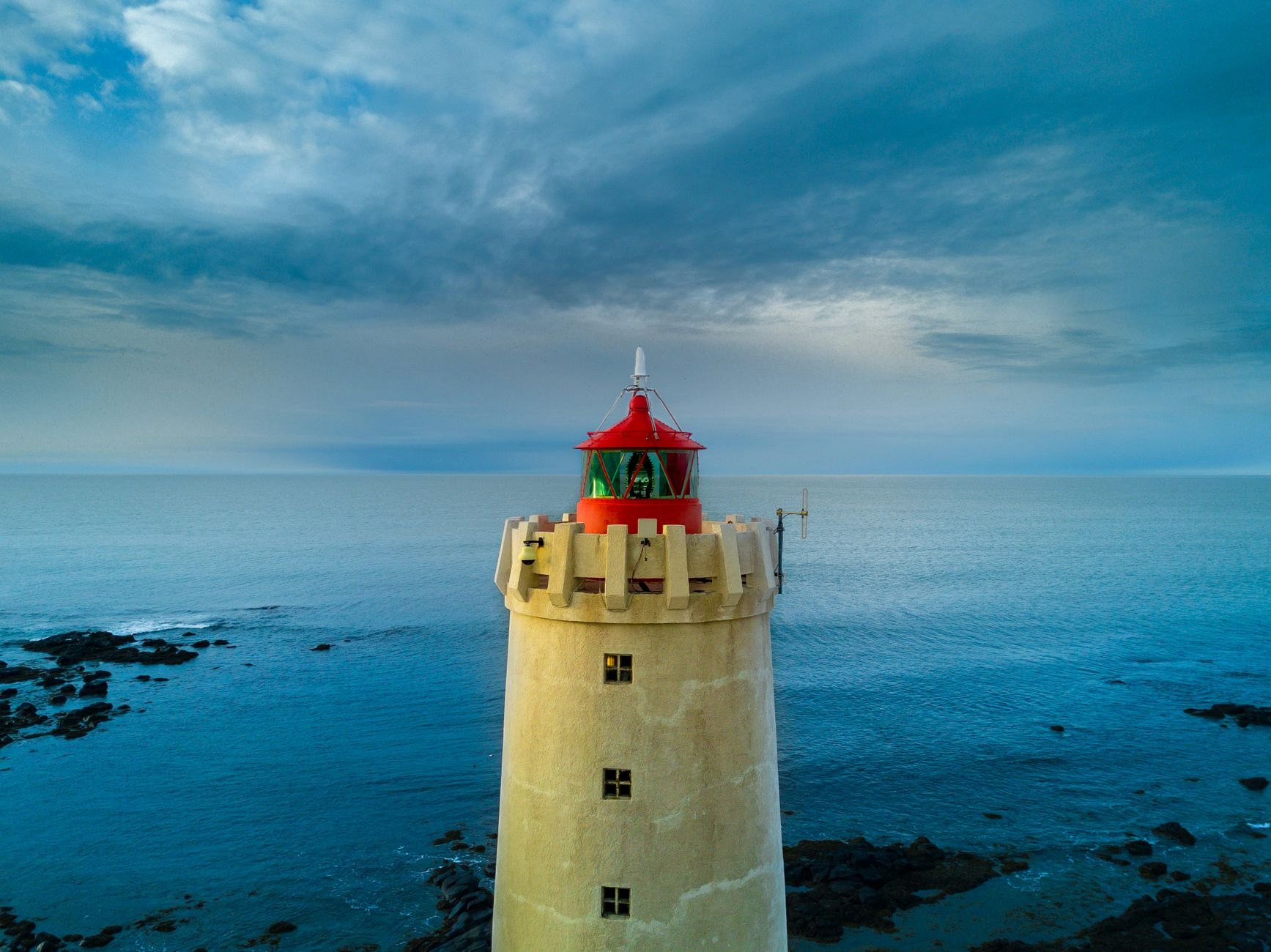
It’s a wonderful, wild spot full of untamed birdlife, reachable along a narrow sand spit only at low tide. Because this headland has almost no strong light pollution from the busy city, it’s absolutely one of the best spots for watching the Northern Lights nearby.
As you walk the coastal path towards this lighthouse, keep your eyes open and look out for an unassuming work of art called Kvika. It’s actually a small, hemispherical stone pool carved straight into the rock, into which wonderfully hot geothermal water flows continuously from a pipe.
Access to this artwork is completely free and open to anyone. You can simply sit on the cold stone, take off your hiking boots and plunge your tired, frozen feet into the hot water with a perfect view of the roaring ocean and distant mountains.
It’s a small, discreet, but immensely romantic and powerful experience, one that ordinary tourists with their giant cameras usually have no idea about and walk straight past without noticing.
Map of points of interest for your phone
Nature and Attractions Nearby: 7 Tips on Where to Head Beyond the City
While Reykjavik itself offers wonderful modern culture and excellent cafés, the true raw heart of the country naturally lies in the wild landscape just outside the city. And you don’t need to drive hundreds upon hundreds of kilometres east at all. Some of the most beautiful and dramatic experiences await you right beyond the notional gates of this Nordic metropolis.
11. Perlan: Fascinating Nature Safely Under a Glass Dome
When you look up at the wooded hill of Öskjuhlíð, you’ll see a strange, futuristic building standing out, looking exactly like an enormous glass pearl set on six massive cylinders.
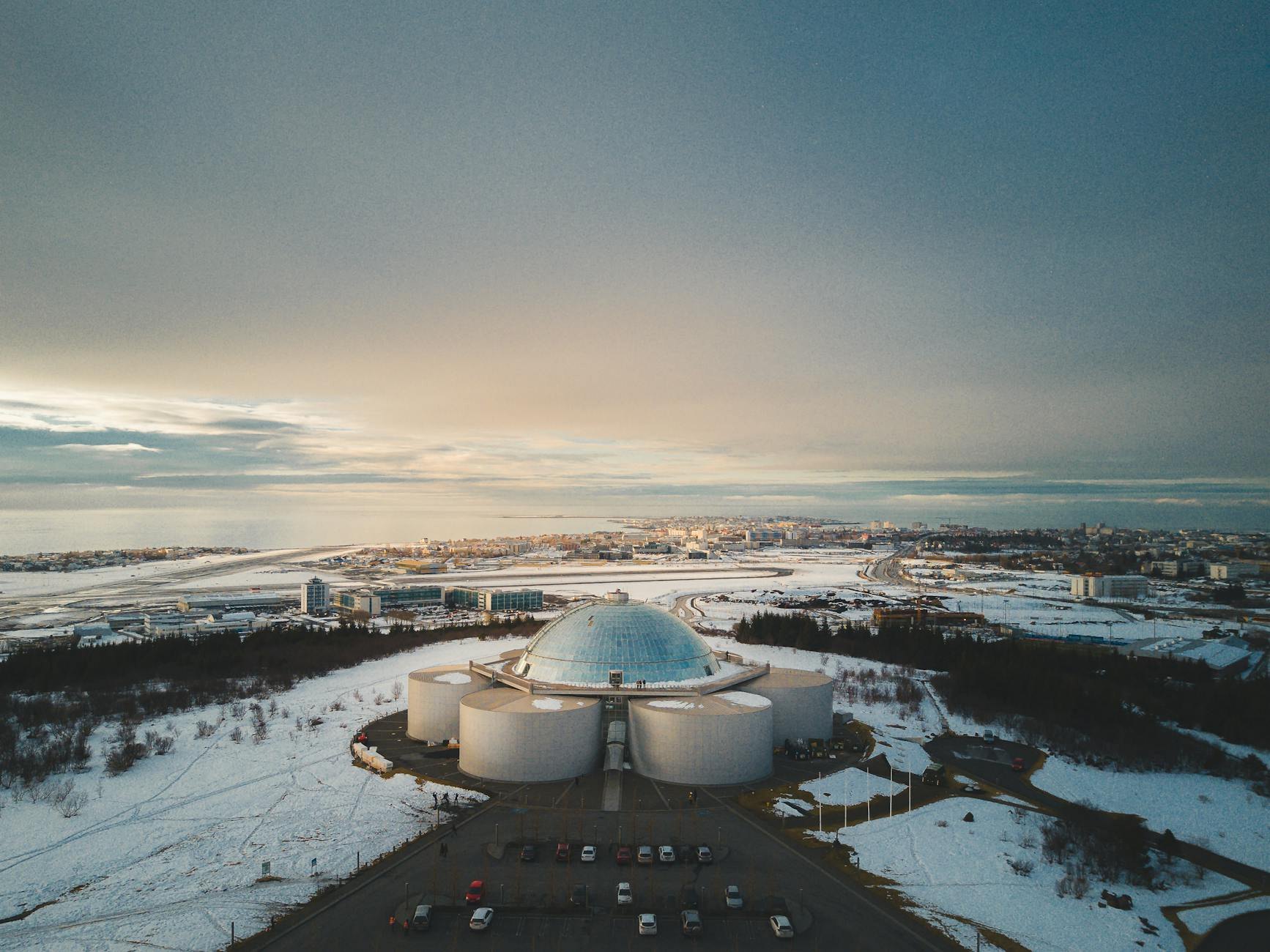
Incidentally, these cylinders originally served as giant hot-water tanks for the whole city, but today this fantastic complex functions as an ultra-modern interactive museum of Icelandic nature called Perlan.
The biggest draw for visitors here is a fully real, ice-cold cave. From more than 350 tonnes of real snow and ice brought down from the mountains, they’ve created a 100-metre-long tunnel inside the building where the temperature stays permanently below freezing, so you can touch a glacier even in the middle of summer.
A ticket to the entire complex costs 6,890 ISK (about £41) if you wisely buy it online in advance. At the desk on site you’ll pay a little more — the ticket works out at 7,290 ISK.
Besides the ice cave, they also have a beautiful, immersive planetarium with the Áróra show, which projects the Northern Lights, and on the building’s roof there’s an amazing circular viewing platform with 360° views of the wide surroundings.
If you’re travelling with small children, this is a place you simply can’t skip, but it also entertains and educates adult travellers brilliantly, especially when it’s downright grim outside and there’s no chance of hiking in the mountains.
12. The Hike to the Reykjadalur Hot River
This particular experience from our last autumn trip is probably the one Lukáš and I remember most vividly, because it was such an enormous extreme. The spot lies about a 40-minute drive from Reykjavik, near the little town of Hveragerði.
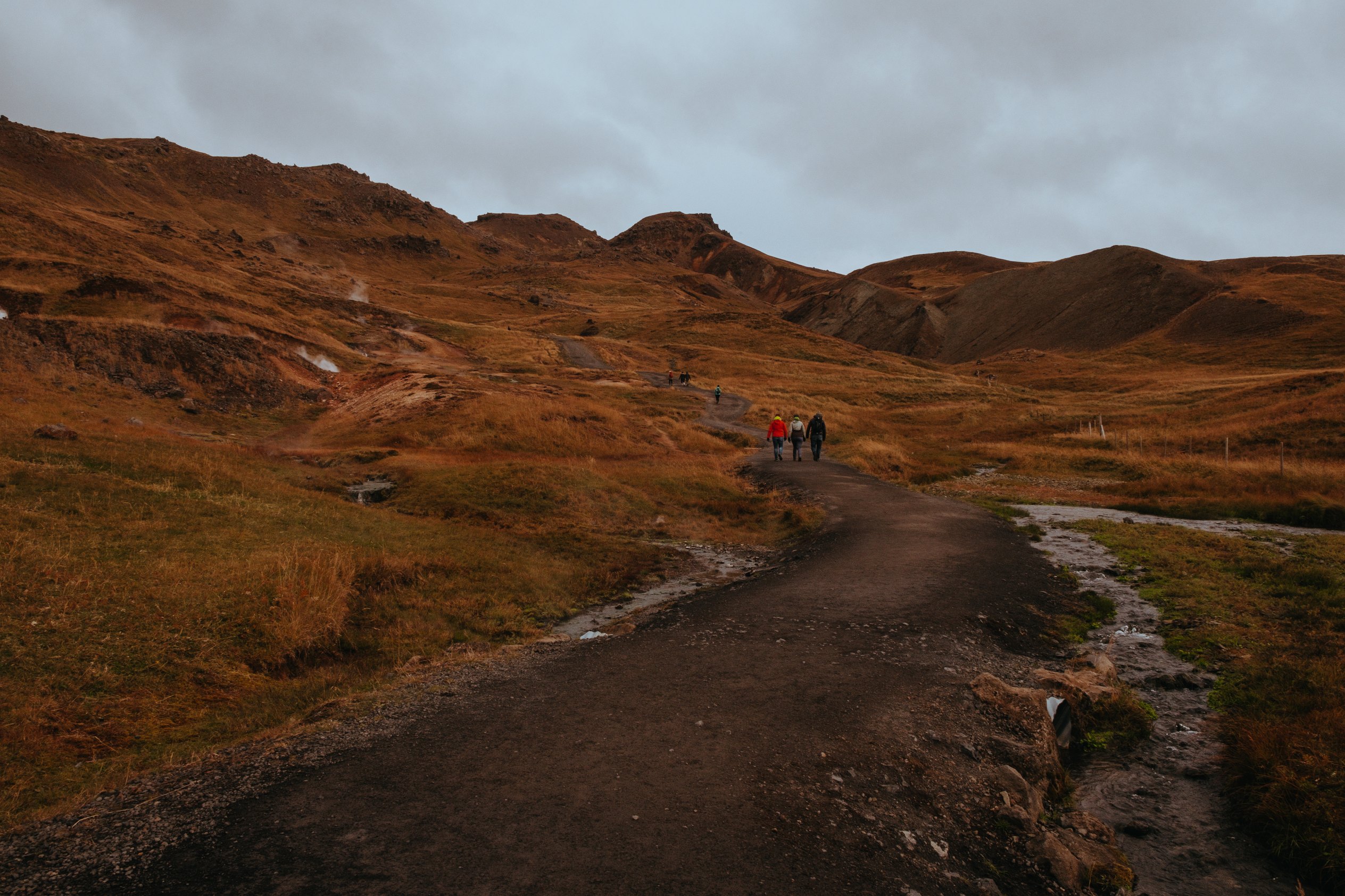
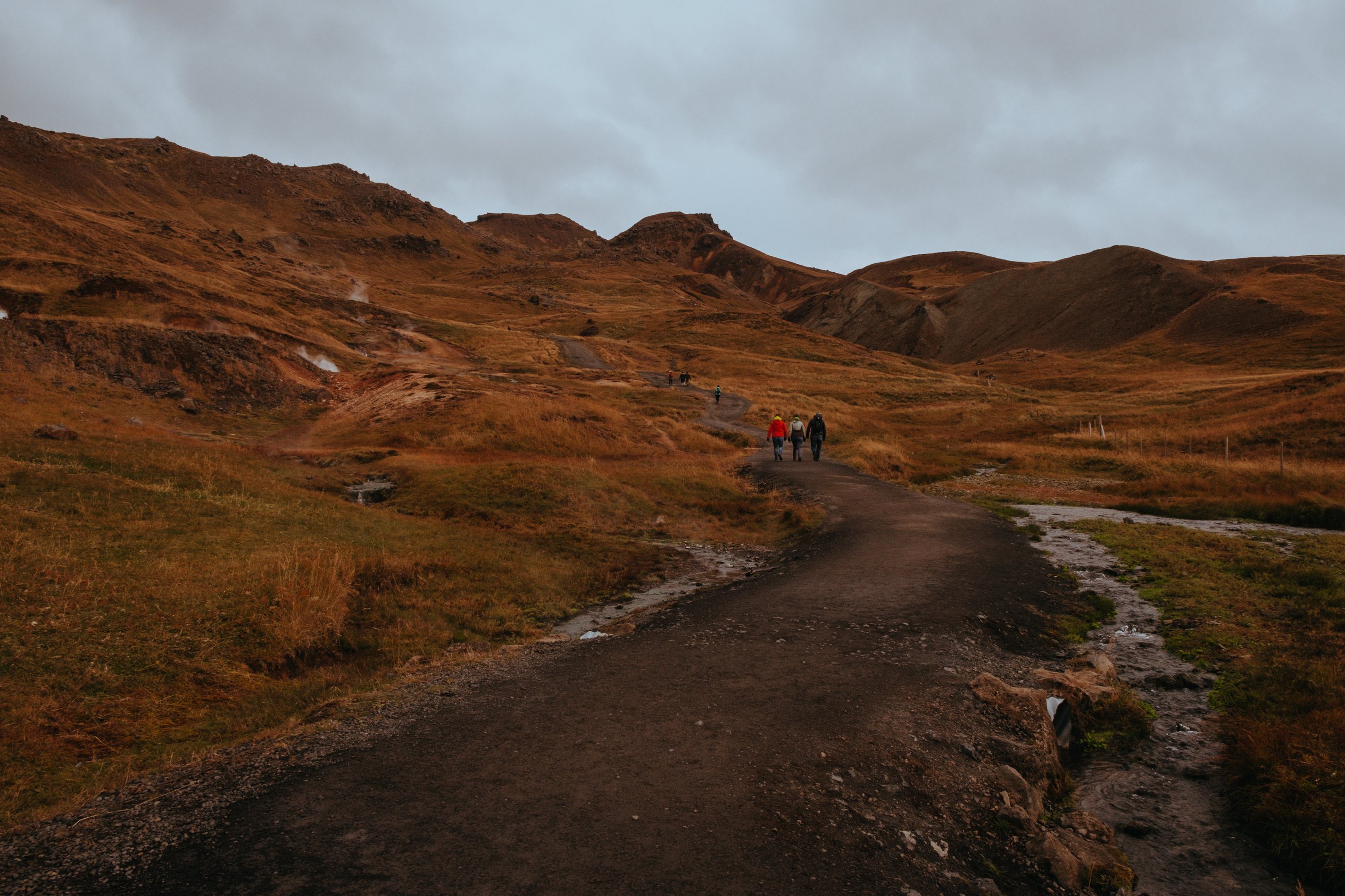
Don’t expect any tidy concrete pools or a reception desk with towels up on the hill. This is an utterly wild river hidden among bare hills, which warms up naturally thanks to strong geothermal activity underground, with steam rising from it far and wide down into the valley.
To reach this river, you have to hike from the central car park for roughly 45 minutes uphill, so you’ll warm up nicely on a chilly morning. Up at the water you won’t find any cosy heated changing rooms — just plain wooden screens behind which the icy wind blows mercilessly.
Changing into our swimsuits in that cold and wind was a real test of our courage; our teeth chattered so loudly it must have been heard all the way down in the valley. But the moment we slipped into that wonderfully hot water with a view of pristine nature and leaned back against the warm stones, all that suffering was instantly forgotten.
I recommend setting off really early in the morning, even right at dawn, before the organised tours arrive and dozens more frozen travellers occupy the river along its whole length. It’s an immensely authentic and one hundred percent natural alternative to those expensive commercial spas.
13. The Legendary Golden Circle
The capital works as an absolutely great and practical base for a day trip along the so-called Golden Circle. This legendary, much-praised route takes in three key natural attractions you can comfortably drive around in a single day without any stress.
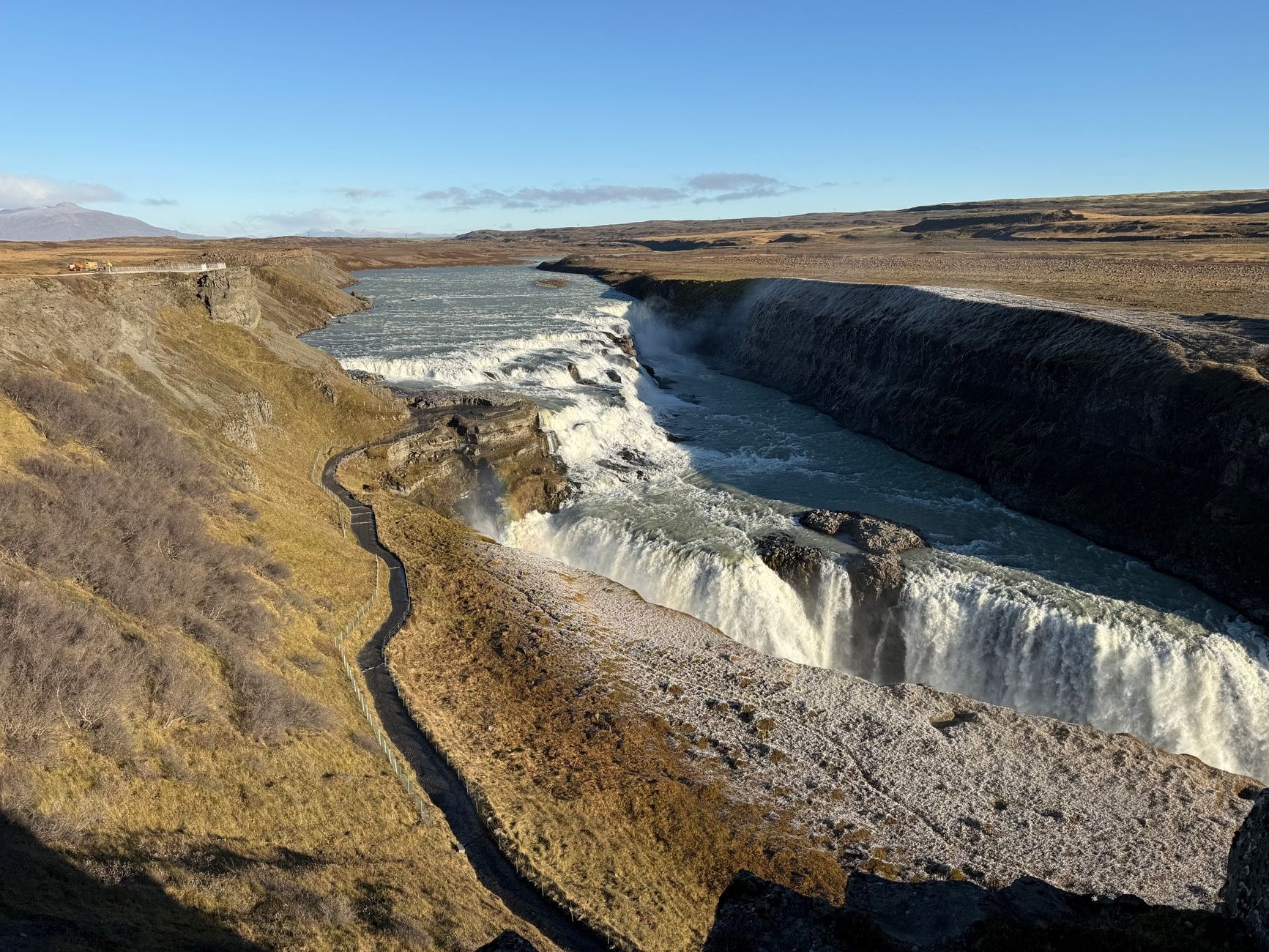
First you’ll visit the historic Þingvellir National Park, where right before your eyes the mighty Eurasian and North American tectonic plates are visibly pulling apart.
Then you’ll cross over to the geothermal area and see the regularly erupting Strokkur geyser, which reliably shoots boiling, bubbling water dozens of metres into the air every few minutes, and finally you’ll stare open-mouthed at the majestic, deafening Gullfoss waterfall, whose power is breathtaking.
If you’d like to add a dose of adrenaline, you can also book tours from the city to descend into the enormous magma chamber of the dormant Þríhnúkagígur volcano.
The Golden Circle is unquestionably the most-visited route in all of Iceland, so you’ll never be completely alone here, but the sites are so epic and monumental that they’re simply worth it despite the crowds of tourists and packed car parks.
14. The Reykjanes Peninsula: An Untamed Geological Laboratory
You might think you have to rush off to the opposite end of the island to the glaciers to see the truly harshest nature, but that’s not true.
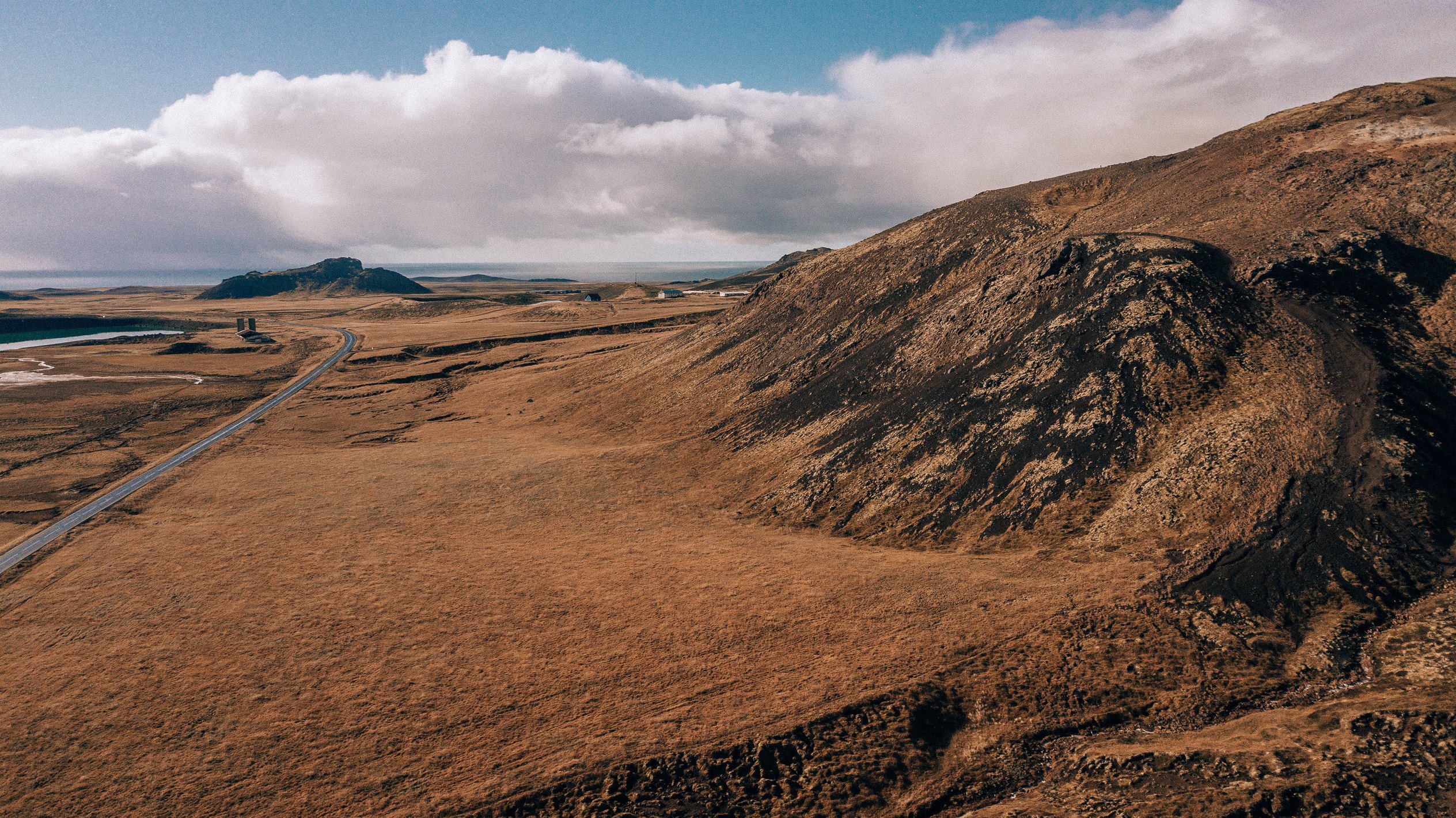
It’s plenty to head back a short way from the centre to the Reykjanes Peninsula, where the aforementioned international airport is also located. The earth here literally cracks, breathes and bubbles, and you’ll find several unusual stops that look like they’re from another planet.
Here you can take a short walk across the small symbolic Bridge Between Continents, which arches in steel directly over a deep tectonic rift, letting you cross from Europe to America in a matter of seconds.
Definitely drive out to the noisy Gunnuhver mud pools too, named after the local angry spirit Gudrun, where such thick clouds of hot steam with a strong sulphurous smell roll out with a menacing roar that you sometimes can’t see a metre in front of you.
And on the way back, also stop in the picturesque Krýsuvík area (Seltún), where wooden walkways guide you through a place where the soil is coloured in incredible shades of yellow, deep red and green.
15. The Magical Northern Lights Dancing Straight from the City
Under the influence of beautiful photos, most people think that to spot the Northern Lights you have to drive long hours far out into the absolute, deserted wilderness.
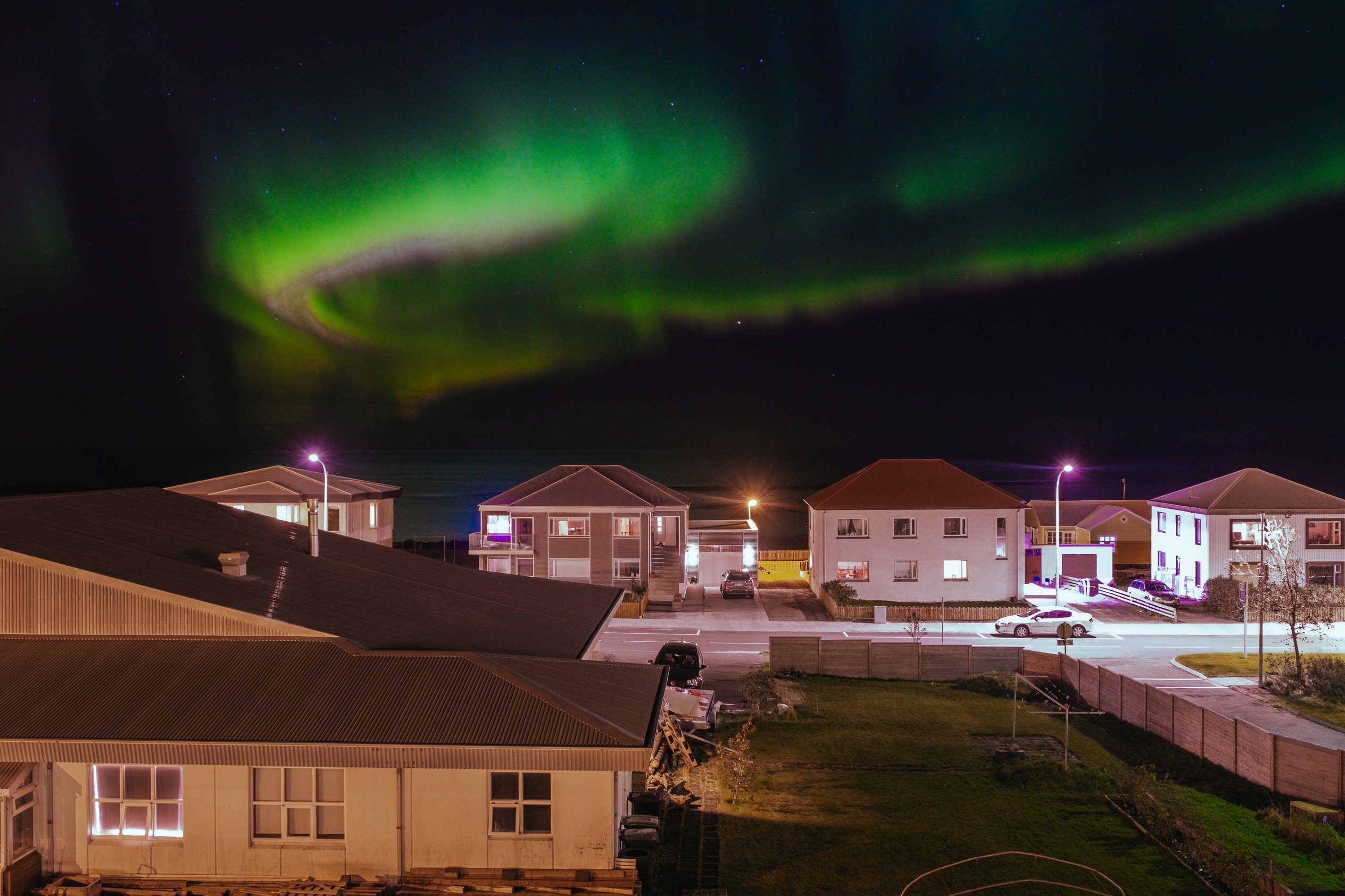
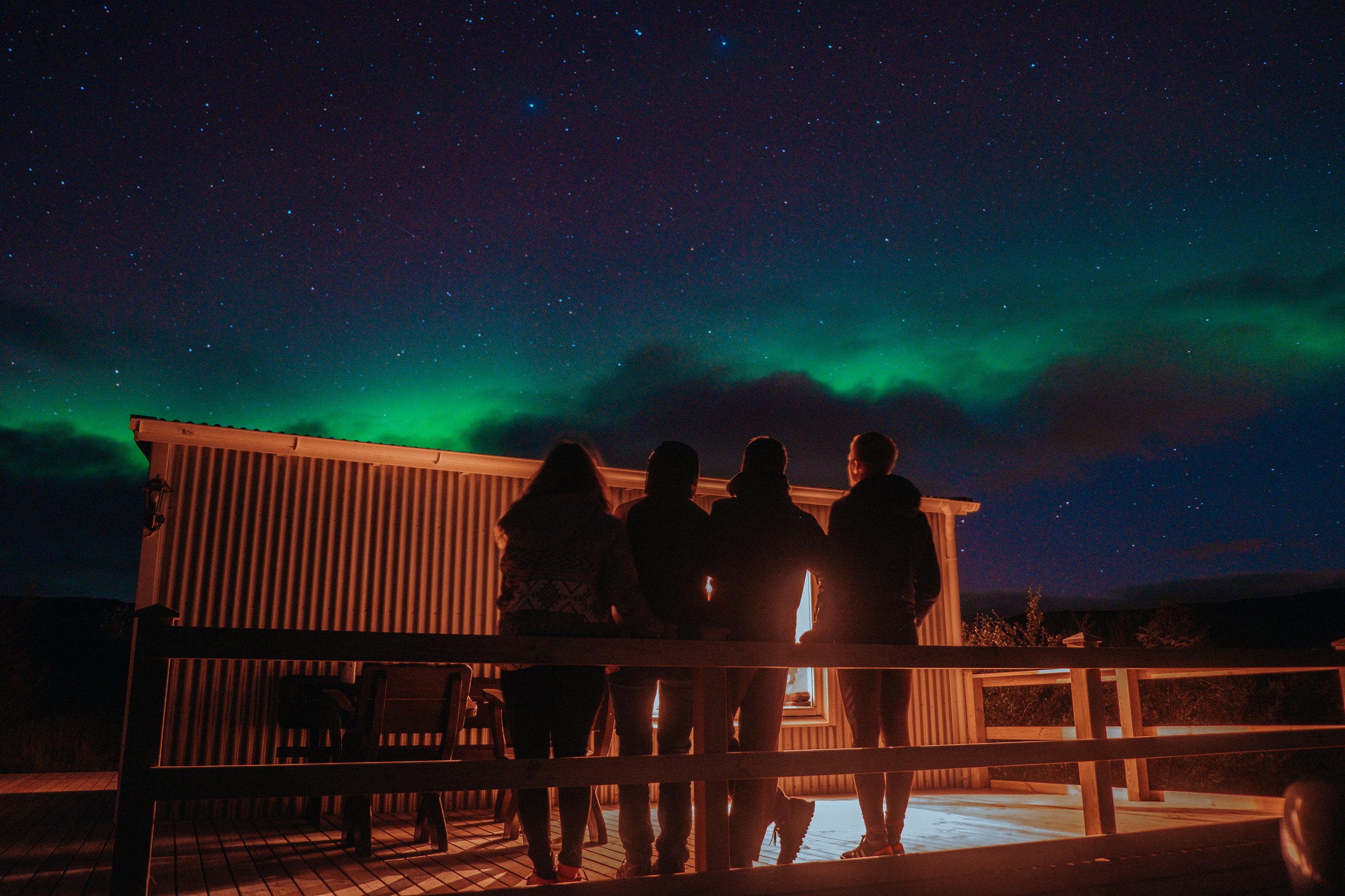
But that’s not quite true — even over brightly lit Reykjavik you can easily catch this green celestial show with a bit of great luck. During our trip we saw it dancing like a green ribbon right over the city’s buildings, from the window of our rented accommodation!
The key to success within the city is to get away from the very strongest public lighting and the neon of the bars. As I mentioned with the tip on the natural spas and relaxation, the absolute ideal is to head by car or on foot to the deserted Grótta lighthouse, or simply move to some much darker city park with a view of the sky.
Always, though, before any night-time hunt, check the detailed forecast for sky clarity and solar activity on the excellent website of the Icelandic Meteorological Office, Vedur.is. Because if it’s overcast with thick clouds over the city, your solar activity can be as high as you like — you’ll simply see nothing at all up there.
16. An Honest Assessment of the Volcanic Situation for 2026
The aforementioned Reykjanes Peninsula has, over the last two years, become one of the geologically most active areas in the whole world, making newspaper headlines.
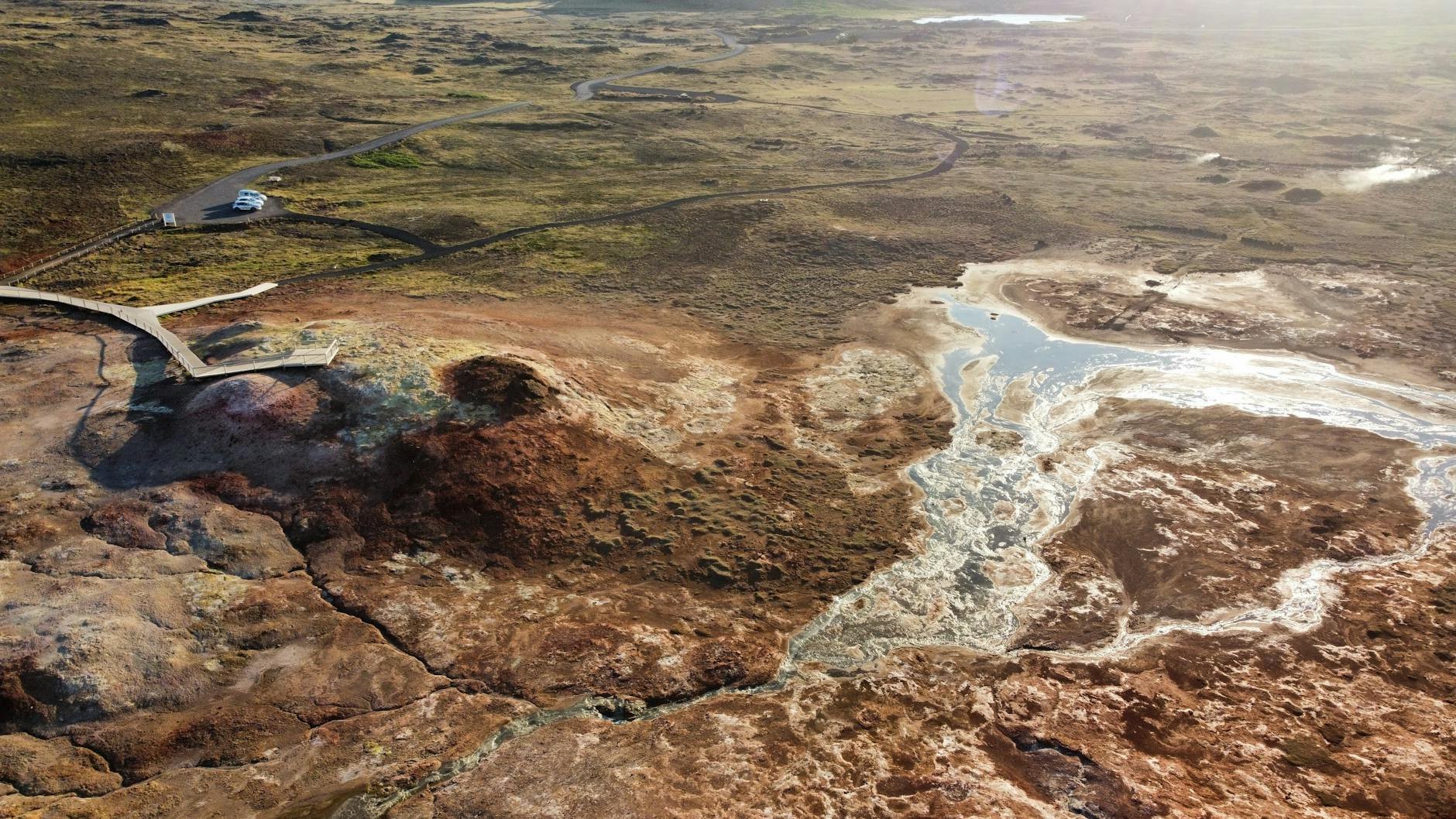
Since 2021 there’s been a series of dramatic eruptions here, and the picturesque little town of Grindavík had to be completely evacuated by the authorities, sadly turning into a ghost town with cracked roads.
The whole area around Mount Svartsengi, beneath which an enormous 26 million cubic metres of magma had accumulated by spring 2026, is the scene of vast natural changes.
But does this mean you should be afraid of your 2026 trip to Iceland and cancel your flights? Not at all! These particular fissure eruptions are what’s called effusive, meaning the lava just flows out relatively calmly from the cracks, with no risk of the huge, massive explosions and ash clouds that would ground all aircraft over Europe, as Eyjafjallajökull did years ago.
Reykjavik itself and Keflavík International Airport are not threatened in any way by these lava streams and are completely safe. There is one absolutely iron-clad rule, though.
Always, but truly always, before any morning trip into nature, check the Safetravel.is website, where the Icelandic rescue services publish all current warnings and unexpected road closures near the volcanoes. Respect them without exception and don’t venture anywhere you’re not meant to go.
Where to Eat in Reykjavik (Not Just for Vegetarians)
When it comes to good food and the harsh local weather in Reykjavik, both can put you through quite a wringer here. Traditional island cuisine was always more about what the harsh, barren landscape and the ocean would actually allow the locals to catch and survive the long winter on.
What’s more, prices in today’s modern restaurants are so dreadfully high that one look at the menu and the bill that follows will make you wince and roll your eyes so far back they won’t want to return.
On top of that, Lukáš and I don’t eat meat at all, which in a Nordic land of fish and ever-present lamb sounds like a genuinely big and unsolvable problem — but Reykjavik has a surprisingly excellent, modern and immensely rich selection of meat-free dishes!
When, during the day while dashing between sights, we needed something quick, really good and above all balanced to eat, we very often headed to the popular bistro Gló. There you’ll find absolutely brilliant, fresh veggie bowls packed with pulses, big stuffed wraps full of flavour, and above all hearty, healthy soups, which hit the spot more than anything after a whole day spent outside in the cold.
We were also very fond of the lovely spot Loving Hut, which you’ll find right on the busy main street Laugavegur at number 164. They have a completely vegan Asian menu, and we eagerly tucked into their excellent hot mushroom pho and rich Asian noodles, at fairly friendly prices that didn’t bankrupt our wallet.
But if you’re after something a bit more upscale and special for the evening, definitely try the award-winning restaurant Vegan World Peace, where their pan-Asian dishes are made so brilliantly and with such sauces that I don’t think even a die-hard, stubborn meat-eater would miss the meat.
For lovers of sweet baking and speciality coffee — which is exactly our style — there’s the perfect artisan bakery Brauð & Co, whose colourful façade is entirely covered in cheerful graffiti.
They bake the unbeatably best and most fragrant giant cinnamon rolls (locally called snúður), which all but melt on your tongue thanks to the butter. An absolutely elegant classic with amazing espresso and cakes is the bakery Sandholt a little further along, which has been running here without interruption since 1920.
And, of course, for completeness I can’t fail to mention the local strange meat phenomena, even though we naturally didn’t taste them in the slightest and gave them a very wide berth.
If you’d like to test your courage in the spirit of the ancient Vikings, the local restaurants offer the so-called hákarl, which is a fermented (or rather slightly rotten) piece of shark, said to reek of ammonia so powerfully that it brings instant tears to your eyes.
It’s then washed down with the local strong spirit Brennivín, very aptly nicknamed Black Death.
And for more ordinary diners, roughly by the harbour you’ll find one unassuming stall called Bæjarins Beztu Pylsur, where, so they say, long queues of locals and tourists form from morning till evening for a classic Icelandic hot dog.
It’s reportedly made from a curious mix of lamb, pork and beef, and at around 820 ISK it’s one of the very cheapest hot meals in this whole expensive city.
If you eat meat, it’s apparently a culinary must for every traveller, ordered, according to the locals, as “eina með öllu” (one with everything), with both crispy and raw onion, sweet mustard and remoulade. We preferred to go and have another excellent cinnamon roll and coffee, and we were absolutely happy ☺️.
Where to Next
If Reykjavik has whetted your appetite with its colours and Nordic calm, it’s time to discover the wild rest of this stunning country too. Take a look at our really big, comprehensive Iceland guide, where we’ve carefully summarised all the practical information you need for planning your trip.
For those of you facing a longer journey who want to drive, we’ve written up our personal Iceland road trip in detail, which will help you plan a flawless route step by step.
More interested in specific stops in nature and don’t know what to choose from such an abundance? Read our personal pick of the most beautiful places in Iceland.
And if, like us, you boundlessly love long soaks in hot springs and pools, definitely don’t miss the article on the 16 best hot springs in Iceland when planning, so you know exactly where you can happily rest your weary bones along the way.
Frequently Asked Questions
Is Reykjavík even worth visiting, or should I head straight from the airport to nature?
In my opinion, it’s definitely worth dedicating at least one full day and evening to it. It’s a surprisingly calm, very colorful city with a great atmosphere, amazing Nordic architecture, and excellent cafés. It’s absolutely ideal as a slow start right after landing and picking up your luggage, or conversely as a very pleasant and cozy end to your trip with a bit of well-deserved luxury after two long weeks of sleeping in a car in winter. However, I wouldn’t sacrifice more days from a packed itinerary.
What’s the best and cheapest way to get from the airport to the city center?
Most people who don’t want to deal with parking take the convenient Flybus; the journey from the airport takes about 45 minutes on a good road, and an adult ticket costs around 3,999 ISK (approximately €25). If you want to be dropped off directly in front of your hotel, you can pay extra for the Flybus+ option for around 5,199 ISK (approximately €35).
Tips and Tricks for Your Vacation
Don’t Overpay for Flights
Search for flights on Kayak. It’s our favorite search engine because it scans the websites of all airlines and always finds the cheapest connection.
Book Your Accommodation Smartly
The best experiences we’ve had when looking for accommodation (from Alaska to Morocco) are with Booking.com, where hotels, apartments, and entire houses are usually the cheapest and most widely available.
 🚗 Car rental on the roadVerified rental cars in Iceland
Search with the DiscoverCars comparison engine — it compares prices from dozens of local and international rental companies, and most bookings come with free cancellation.
Compare car prices in Iceland →Don’t Forget Travel Insurance
Good travel insurance will protect you against illness, accidents, theft, or flight cancellations. We’ve had a few hospital visits abroad, so we know how important it is to have proper insurance arranged.
Where we insure ourselves: SafetyWing (simple monthly subscription) and TrueTraveller (for extra-long trips).
Find the Best Experiences
Get Your Guide is a huge online marketplace where you can book guided walks, trips, skip-the-line tickets, tours, and much more. We always find some extra fun there!