I remember it like it was yesterday, even though it’s been a few years since we first set off for Iceland in late September. We were standing by the geysers, a mad wind was howling, and we decided to climb the nearby little hill of Bjarnarfell to get a better view.
During the twenty minutes it took us to scramble to the top, we got sunshine, a sudden downpour, hail that stung our faces, and then the sun came out again to dry us off a little 😅. That was the moment I understood that in Iceland nature does whatever it pleases, and we’re only there as guests.
If you’re planning a trip to this magical island, the Golden Circle in Iceland will probably be your first big stop. It’s Iceland in a nutshell, where in a relatively small area you’ll see the best of the local landscape, from tectonic rifts to spouting geysers and breathtaking waterfalls.
In this article you’ll find a complete guide for 2026. We’ll look at what to see, how much things cost, where to base yourself smartly, and above all I’ll tell you what to skip so you don’t waste precious time.
TL;DR
- The Golden Circle is a roughly 250 to 300 kilometre route starting and ending in Reykjavík, which you can easily cover in a single day.
- Pure driving time is about 3.5 to 4 hours, but with the main stops and photo breaks set aside a full 6 to 8 hours.
- The main free (or very cheap) stops are Þingvellir National Park, the Geysir geothermal area and the mighty Gullfoss waterfall.
- The roads along the whole route are paved and in excellent condition, so in summer you don’t need a 4×4 car.
- Set off either very early in the morning or late in the afternoon to avoid the crowds who roll in on big tour buses.
The full destination guide: Iceland — guide and what to see
When to go and how to get there
The Golden Circle is easily accessible year-round and thanks to the wonderfully smooth, carefully paved roads you really don’t need to worry about requiring a giant off-road jeep with monster tyres to drive it. Even the most basic and tiniest little car from the rental company will handle this whole route effortlessly in summer, and the journey itself forms a neat loop that starts and ends in Reykjavík.
If you’re heading out to explore the island in the darker winter months, though, keep in mind that the days here are extremely short — in December the sun doesn’t rise until around 11:30 and sets again by 3:30 in the afternoon.
The weather can also be incredibly treacherous, so before you leave your hotel always check websites like Safetravel.is for important safety warnings and the excellent Umferdin.is for completely up-to-date information on icy roads.
Lukáš and I have long had a genuinely good experience with the DiscoverCars search engine, which we use reliably all over the world — just watch out for the new rules and small catches of the local island rental firms. As of January 2026 Iceland has introduced a brand-new per-kilometre tax for all passenger cars up to 3.5 tonnes, set at exactly 6.95 ISK (roughly £0.04) per kilometre driven.
Different rental companies handle this fee in different ways, so some charge a flat daily rate while others deduct the tax straight from your deposit at the end of the trip based on the actual odometer reading — it’s worth budgeting for it in advance. The popular Golden Circle will cost you roughly 2,000 ISK (about £12) in this specific tax, which is fortunately quite nicely offset by the fact that fuel has become cheaper across the board after the previous fees at petrol stations were scrapped.
At the same time, don’t be lulled into a false sense of security just because you’re only taking a relatively short trip on luxurious tarmac — pay real attention to getting the right insurance for your rental car. Basic insurance (often labelled CDW) unfortunately doesn’t come close to covering the typical and very expensive Icelandic damage, and given that a lot of inconspicuous turn-offs to cosy accommodation tend to be dusty or gravel tracks, we warmly recommend paying extra for Gravel Protection.
A chapter all of its own, and a real Icelandic speciality, is the unpredictable local wind, which routinely has such enormous force that it can rip your car door clean off its hinges if you don’t hold it firmly with both hands when opening — and no standard insurance covers that kind of unfortunate damage.
Bear in mind, too, that any off-road driving is strictly and uncompromisingly banned across the entire island, and breaking the rule can land you a fine of up to 500,000 ISK.
Where to stay and how much the Golden Circle costs
Although plenty of people drive this popular loop straight out of Reykjavík and back, a far smarter strategy is to base yourself somewhere along the route itself, which ends up saving you a lot of needless stress and precious time.
You can get up nice and early and set off for the biggest sights well ahead of time, before the first giant buses packed with day-trippers from the capital even arrive — and in the evening you’ve got a slightly better chance of spotting the northern lights you’ve dreamed of right from your window, since you won’t be as bothered by the strong light pollution of the city.
The best and most strategic base for thoroughly exploring the circle is the town of Selfoss, where you can relax in the excellent Hótel Selfoss spa, or the beautifully located Laugarvatn, sitting right in the beating heart of the whole loop on the shore of a peaceful lake.
Lovely accommodation is also on offer in the charming and very popular Flúðir at The Hill Hotel near natural thermal springs, and the absolute top pick for anyone who wants to be first at the sights every time is the slightly more upmarket Hótel Geysir, located literally just a few steps from the bubbling thermal fields. For another solid option right on the route, take a look at the Blue Hotel Fagrilundur – On The Golden Circle.
Accommodation prices in Iceland have not been exactly wallet-friendly for a long time, and you should be prepared to pay, for a fairly ordinary but decent double room, an average of 30,000 to 50,000 ISK (roughly £175 to £290) per single night in the peak summer season.
Beyond the sights and expensive food, don’t forget to factor in small parking fees, which are absolutely everywhere on the island and are handled today almost exclusively and cashlessly through handy mobile apps like Parka or the old familiar EasyPark.
Just watch out carefully for the fact that at the local self-service terminals at petrol stations and at some barriers you’ll always need a physical payment card and its PIN, so relying solely on convenient phone payments via Apple Pay for the whole trip really may not pay off here. Booking.com is our favourite accommodation search engine, and we definitely recommend booking popular hotels many months in advance.
💡 Specific accommodation tips (check prices and availability on Booking, and book early — in season and around the 2026 eclipse they vanish months ahead):
- Hótel Selfoss (Selfoss)
- Héraðsskólinn Hostel (Laugarvatn)
- The Hill Hotel (Flúðir)
- Hótel Geysir (Haukadalur)
Þingvellir National Park: where history and continents were made
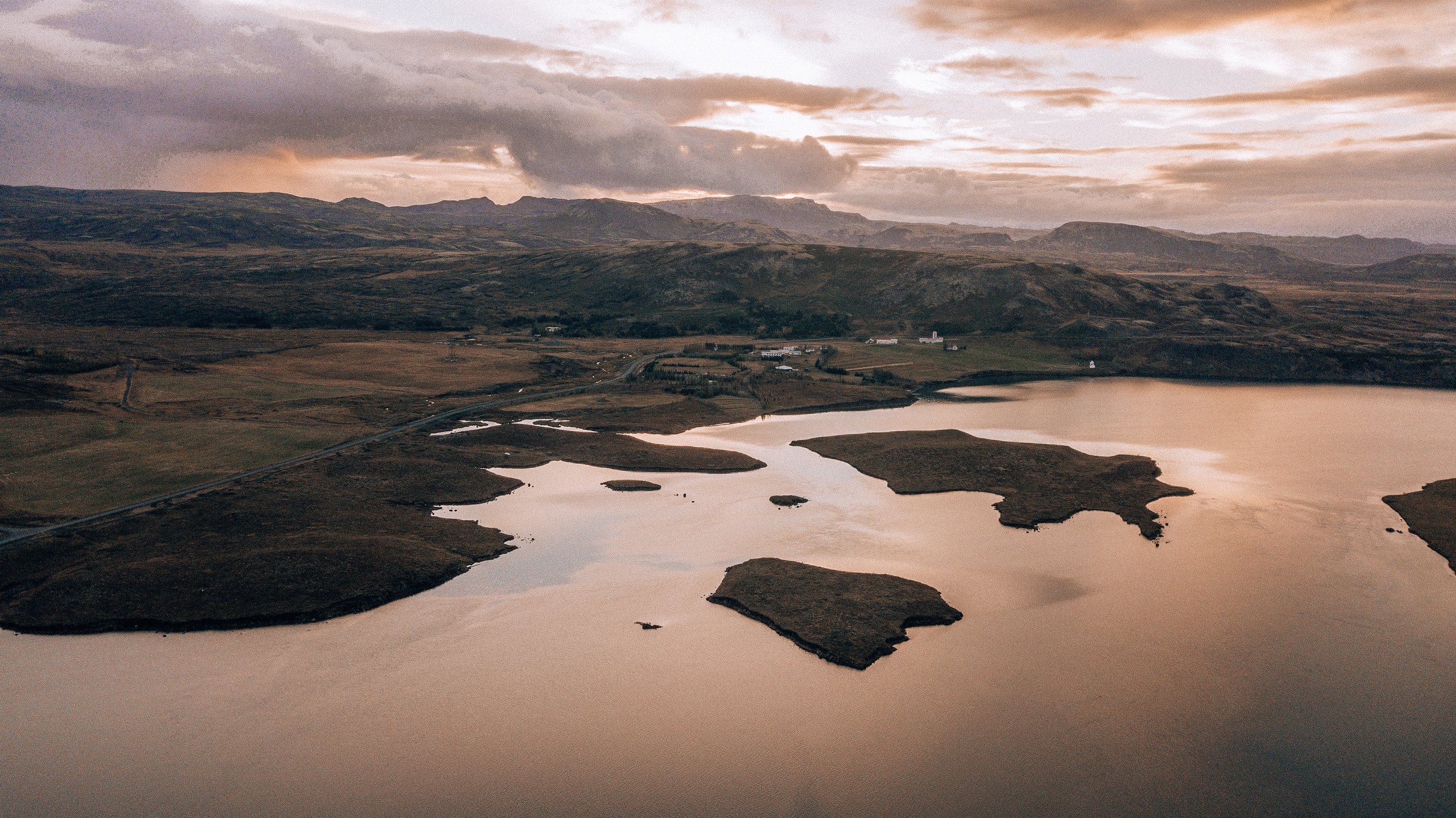
After about forty-five minutes of relaxed driving from central Reykjavík, your first stop awaits — and it’s the geologically most fascinating one of the whole Icelandic adventure. Þingvellir National Park (pronounced softly, like Thingvellir) is quite rightly inscribed on the prestigious UNESCO World Heritage list, and it’s exactly that unique, magical place where, at a rate of roughly two centimetres a year, the enormous North American and Eurasian tectonic plates are slowly and steadily drifting apart.
You can park your car at one of several cleverly arranged car parks labelled P1 to P5, and the daily fee of 1,000 ISK (about £6) is fortunately paid just once via a machine or the Checkit.is app — and the ticket, tied to your number plate, then covers the whole park area.
1. A walk through the Almannagjá rift and Öxarárfoss waterfall
From the large upper car park P1 Hakið, which lies right by the lovely main visitor centre and modern toilets, follow the well-maintained path straight into the huge, majestic Almannagjá rift, where you’ll spend the whole time walking through an extraordinary no-man’s-land set right between two mighty continents.
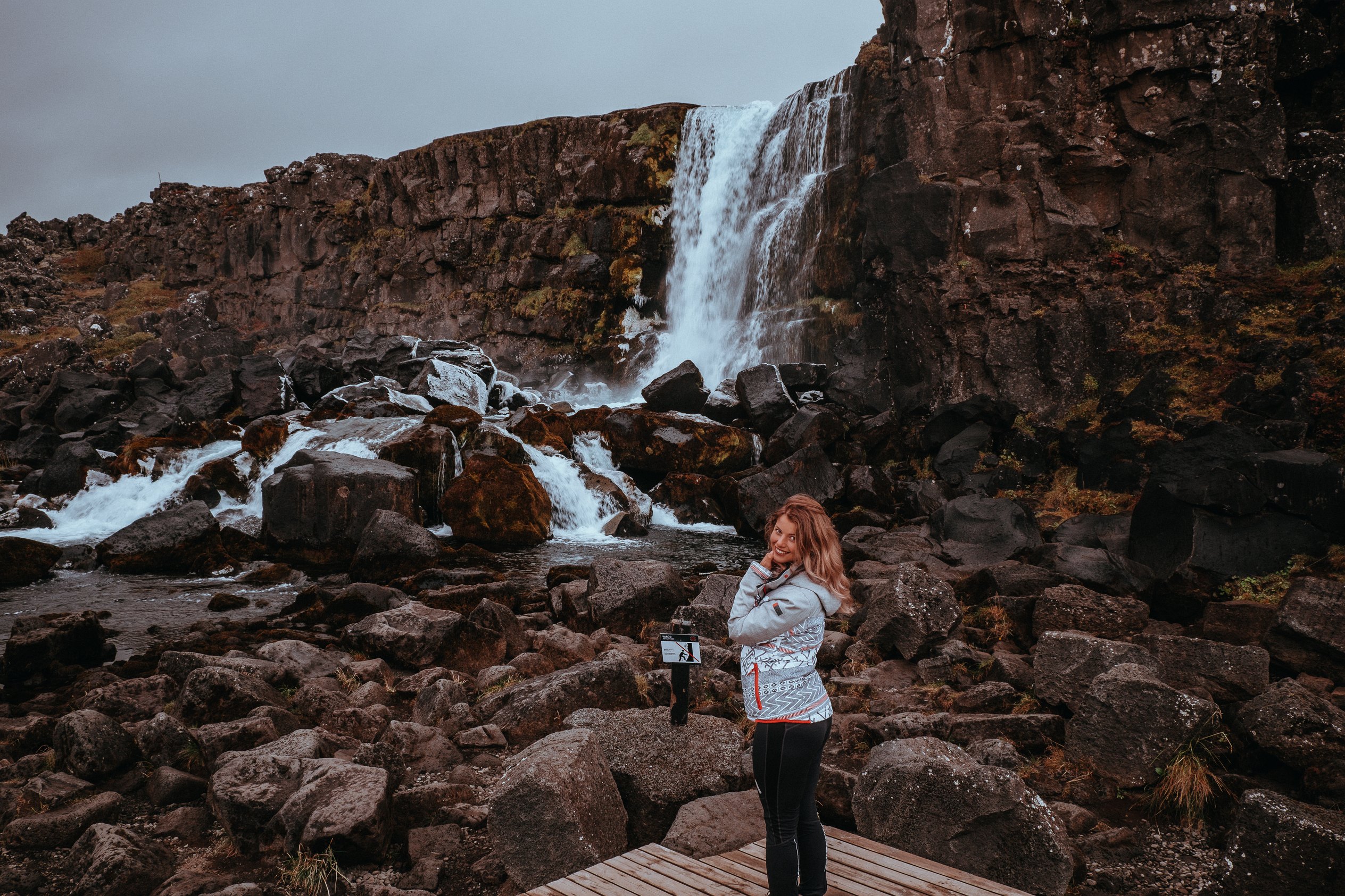
In person, this place has an utterly incredible and at times almost oppressive atmosphere, framed by the steep walls of black volcanic rock — something the sharp-eyed makers of the popular series Game of Thrones duly appreciated, setting the famous Bloody Gate here, very fittingly.
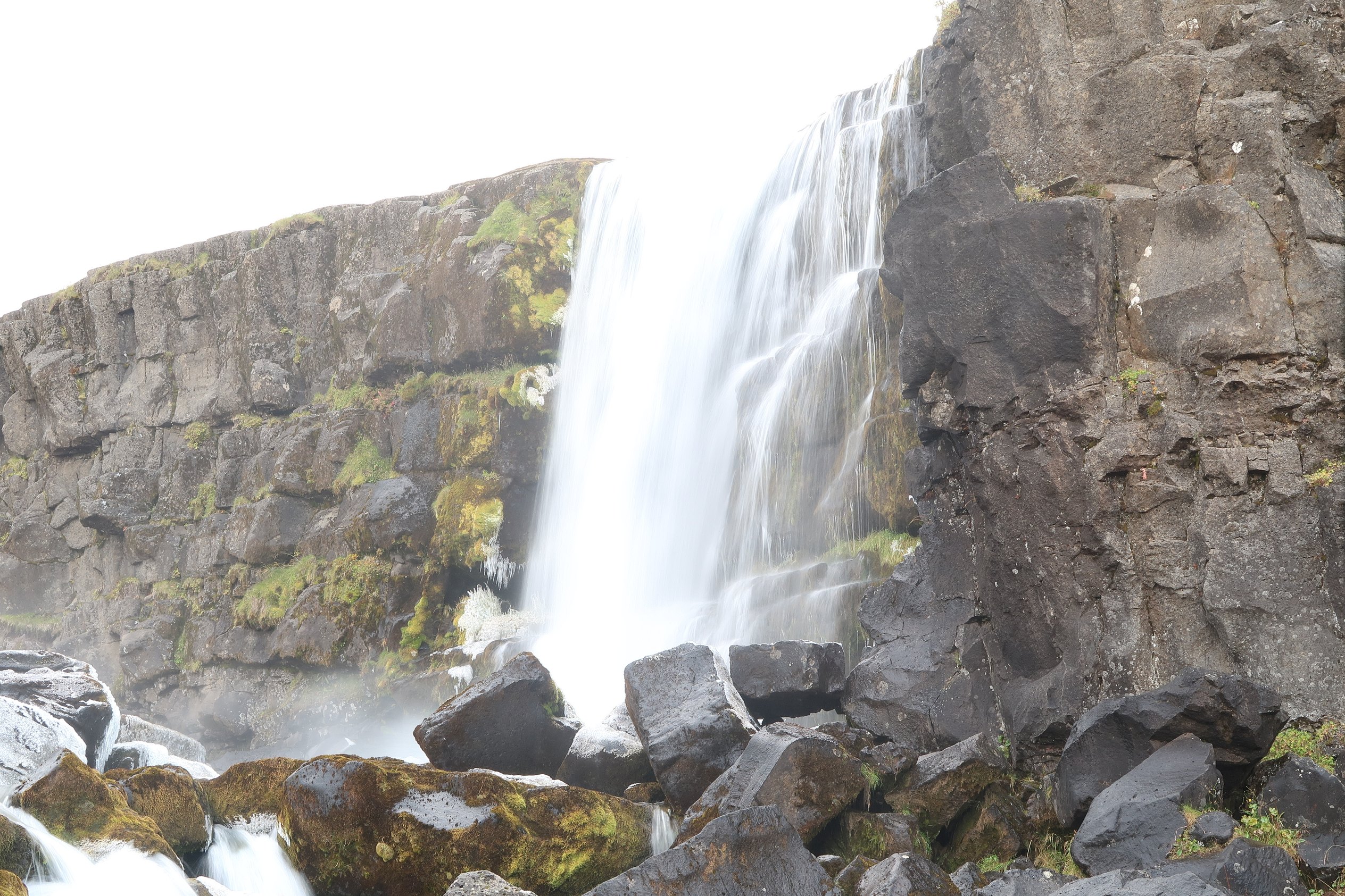
In autumn we took a beautiful and surprisingly peaceful stroll through the narrow canyon here and, without much physical effort, walked along the flat path to the charming Öxarárfoss waterfall, beneath which, incidentally, there’s another very handy car park labelled P2 Efri-Vellir for those who’d rather not walk far.
The walk to the waterfall itself is completely easy and manageable for children without any trouble, as it largely follows comfortable, well-kept wooden boardwalks, and the little waterfall tumbling wildly down the dark basalt cliffs looks fantastic in any weather.
What’s more, it was in this very carefully protected area that some of the most important and fateful moments in the whole rugged island’s history played out, because in the year 930 the powerful and respected Vikings founded the famous Alþingi here, in a perfect natural acoustic amphitheatre by the Lögberg rock.
That makes it one of the oldest functioning parliaments in the entire world, and long ago chieftains from all over Iceland would gather regularly at this sacred place to settle bloody disputes, arrange wealthy marriages and loudly recite brand-new laws before the assembled crowds.
2. Silfra: snorkelling in water with 100-metre visibility
If you really love a slightly more extreme and considerably more unusual experience, just plug the lower car park P5 Valhöll into your sat nav — of all the ones mentioned, it lies by far the closest to the world-famous, flooded Silfra fissure.
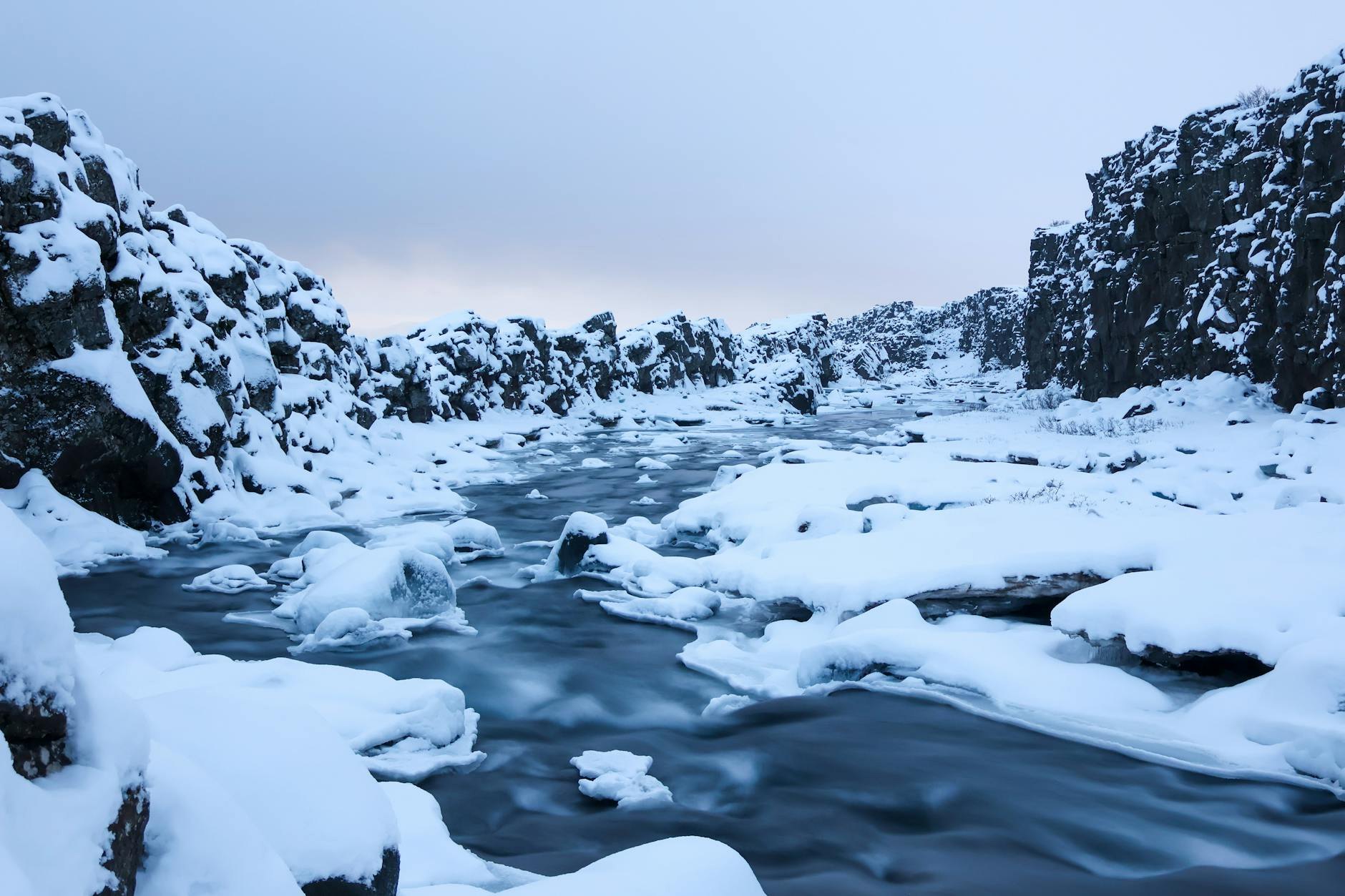
This at-first-glance fairly inconspicuous crack in the earth is filled to the brim with utterly crystal-clear water coming from the enormous Langjökull glacier, which trickles down here very slowly and, over decades, is naturally filtered through the porous underground lava on its way.
The result of this lengthy natural process is breathtakingly transparent water without a single flaw, in which you can see up to a hundred metres underwater without the slightest trouble — and diving or daring snorkelling here quite rightly counts among the great, sought-after wonders of the world.
I have to warn you honestly in advance, though, that this incredibly clean water sits at a chilly 2 to 4 °C year-round. But you really needn’t worry about your health, because professional operators like DIVE.IS, Arctic Adventures or Troll Expeditions first bundle you into an extremely warm undersuit before zipping you into a very thick neoprene drysuit.
You’ll feel a bit clumsy and comical for a while, like the famous Michelin Man, and the thick rubber around your neck may seem a little tight at first, but the moment you first dip your face below the surface and an endless, glowing blue abyss opens up beneath you, you’ll only feel a bit cold on your exposed face and fingertips.
It is, however, a fairly pricey and exclusive treat, as prices for basic snorkelling start at the best agencies at roughly 21,000 ISK (about £125) if you have your own transport, on top of which a further compulsory 1,500 ISK is added on site as a small national park fee per swimmer.
Be sure to book your spot many weeks in advance to be safe, and always keep in mind that to be allowed to dive, you and your children (who must be at least 12) have to meet strict and precisely set weight and height limits, so that the suit seals safely in the water.
💡 Tip: It’s worth buying tickets and organised tours (around the Golden Circle and beyond) in advance online via GetYourGuide — in season they fill up fast.
Geysir and Gullfoss: geothermal theatre and the deafening roar of water
From Þingvellir National Park, an easy, empty road takes us about sixty kilometres further east, straight to the amazing Haukadalur geothermal area, which literally bubbles and hisses underfoot.
Here you’ll see up close, with your own eyes, just how enormous and wild a force this restless land hides just beneath its thin surface, and then, only a few kilometres further downstream, you’ll be utterly deafened by one of the most impressive and mighty waterfalls in all of Europe.
These two stunning stops are really close together, so getting between them takes just a moment and you can focus fully and stress-free on the unbelievable, untamed natural beauty all around you.
3. The Haukadalur geothermal area and the reliable Strokkur
From a fair distance away as you arrive, you’ll safely see mighty columns of hot white steam rising into the sky, and the moment you step out of the car you’ll catch that characteristic sulphurous odour strongly reminiscent of rotten eggs, which somehow belongs inseparably and romantically to Iceland’s raw nature.
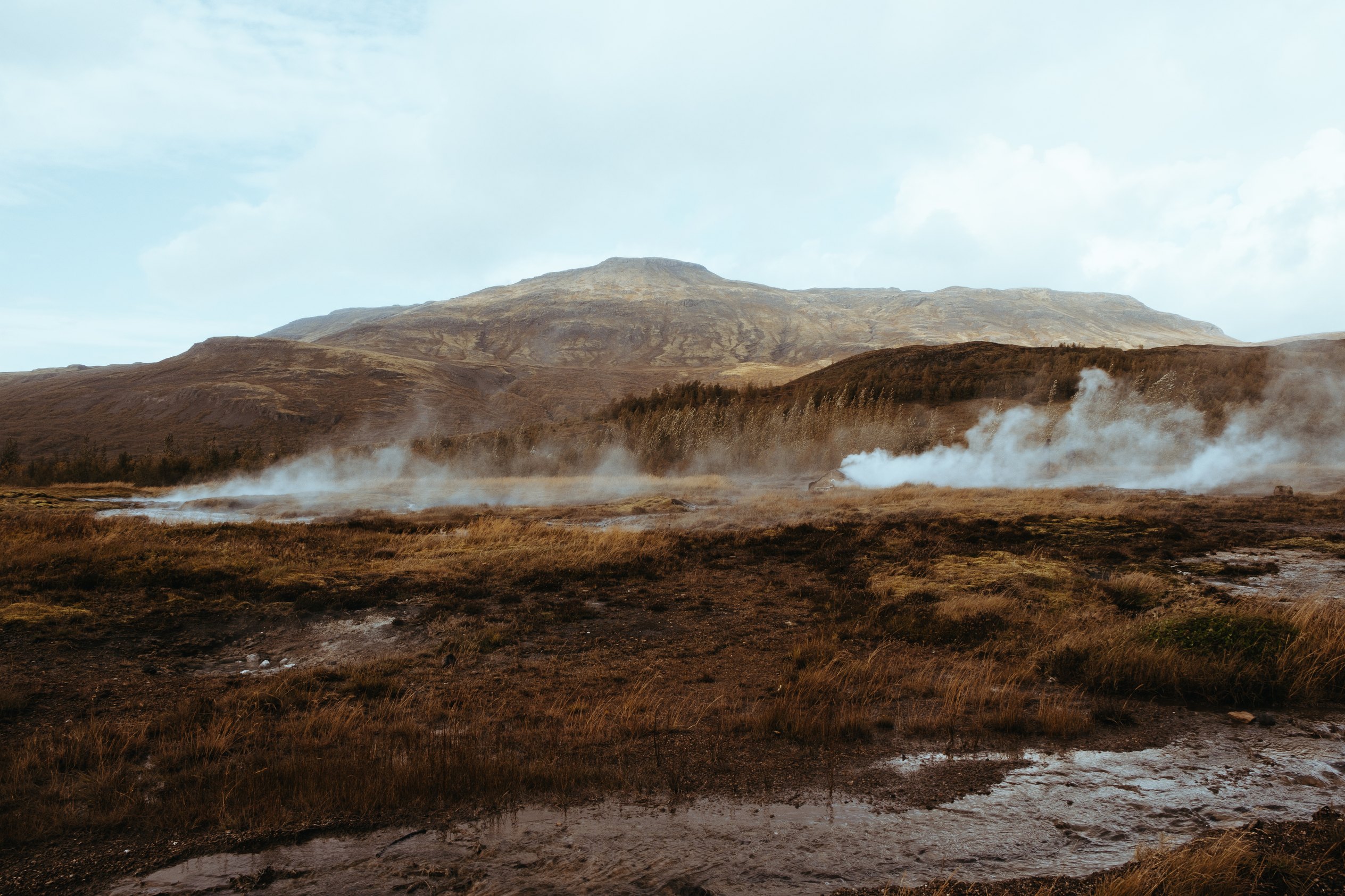
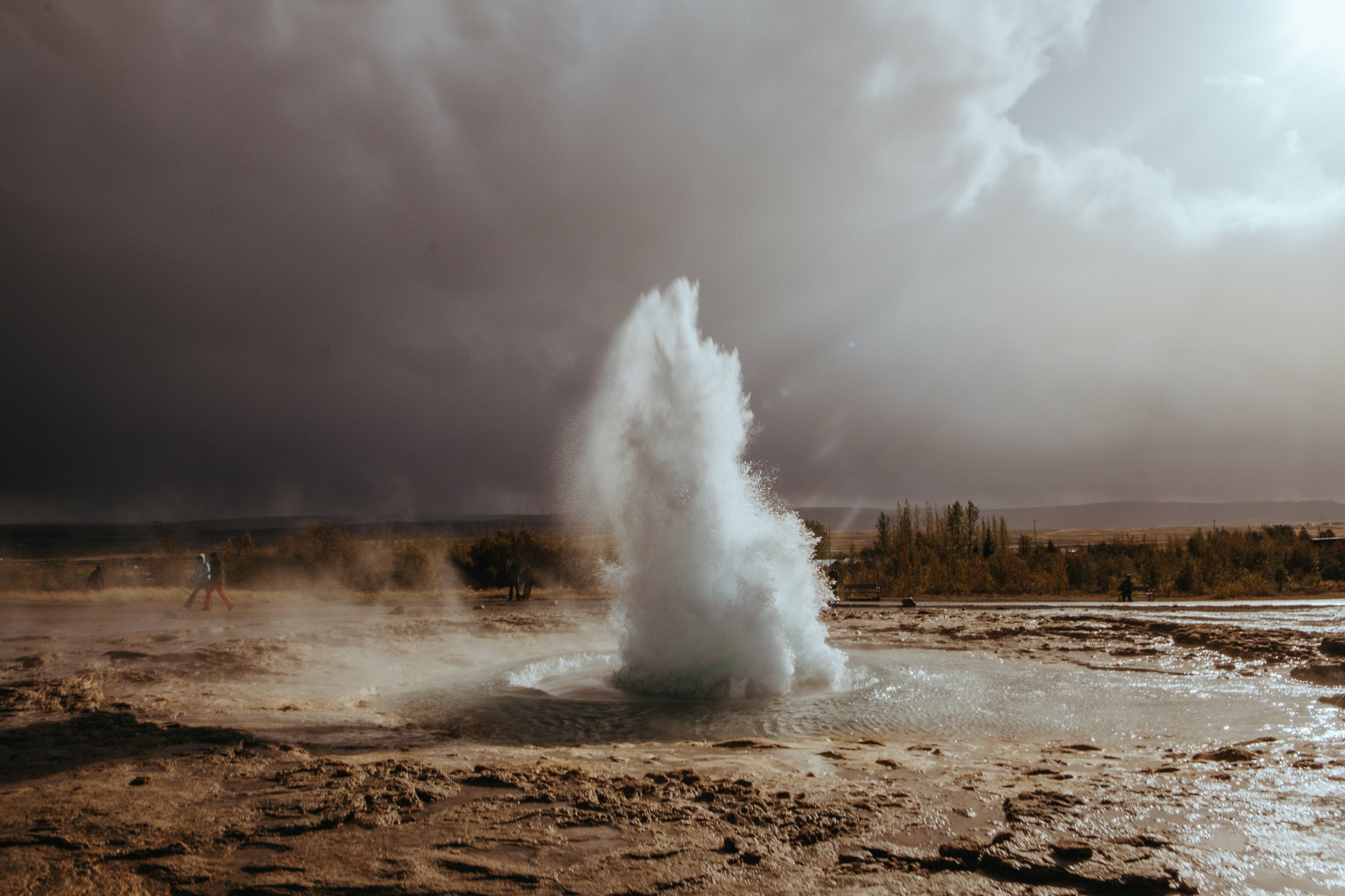
This huge, bubbling, colourful area is the original home of the majestic Great Geysir, which in its best years spouted boiling water to a tremendous height and ultimately gave its proud name to every spouting geyser in the world.
Today, though, this legendary old gentleman rests quietly most of the time, waking from his deep sleep only very rarely and unexpectedly after really large local earthquakes, so the biggest and most photographed star of the whole fenced enclosure is his considerably smaller but all the more reliable and energetic brother named Strokkur.
Strokkur really won’t keep you waiting impatiently for his show, because roughly every five to ten minutes he forms a huge, glowing turquoise bubble in the quiet crater, which then explodes with a tremendous roar and hurls boiling water a full fifteen to thirty metres high into the air, to the amazement of everyone watching.
Be sure to position yourself cleverly and downwind in good time, though, or after a moment you’ll be in for a very unwanted and rather unpleasant hot shower — and please, under all circumstances, properly respect the safety ropes lining all the paths.
The water in the inconspicuous nearby pools routinely reaches temperatures above 80 °C, and the weary local rescuers apparently treat needlessly burned, overly curious tourists here every single year — people who foolishly thought it was a good spot for a quick temperature test with a bare finger.
Parking at the nearby modern visitor centre, as well as access to the viewing area by the springs, are fortunately completely free, no exceptions — just keep a tight grip on your wallet in one of the largest and by far most expensive gift and souvenir shops on the island, which you’re forced to wander slowly through on the way to the warm toilets.
4. Gullfoss, the Golden Waterfall
Just ten minutes of brisk driving from the bubbling geysers, the true and utterly spectacular finale of the classic Golden Circle awaits you obediently — and it’s also my huge, lifelong personal favourite.
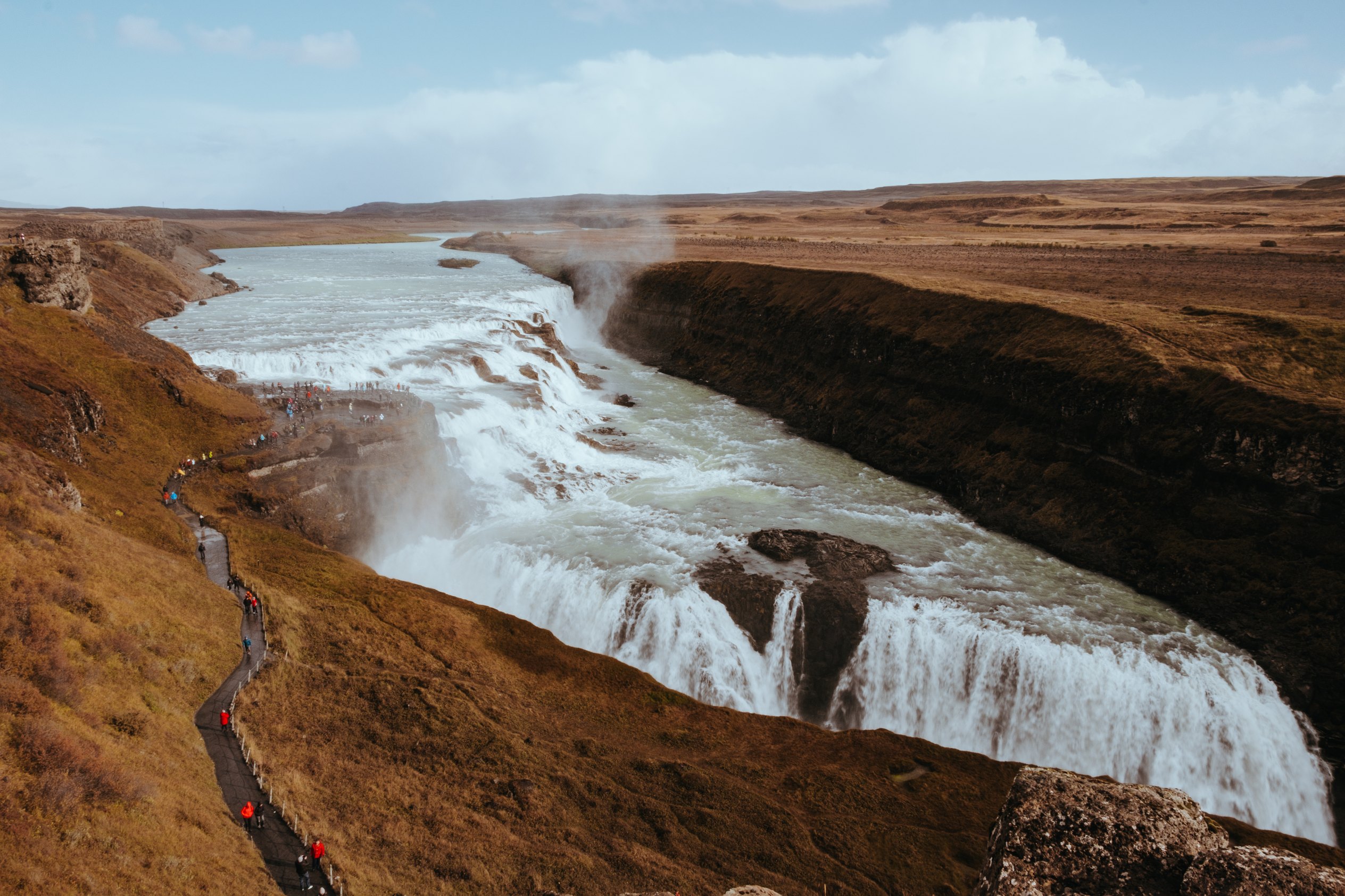
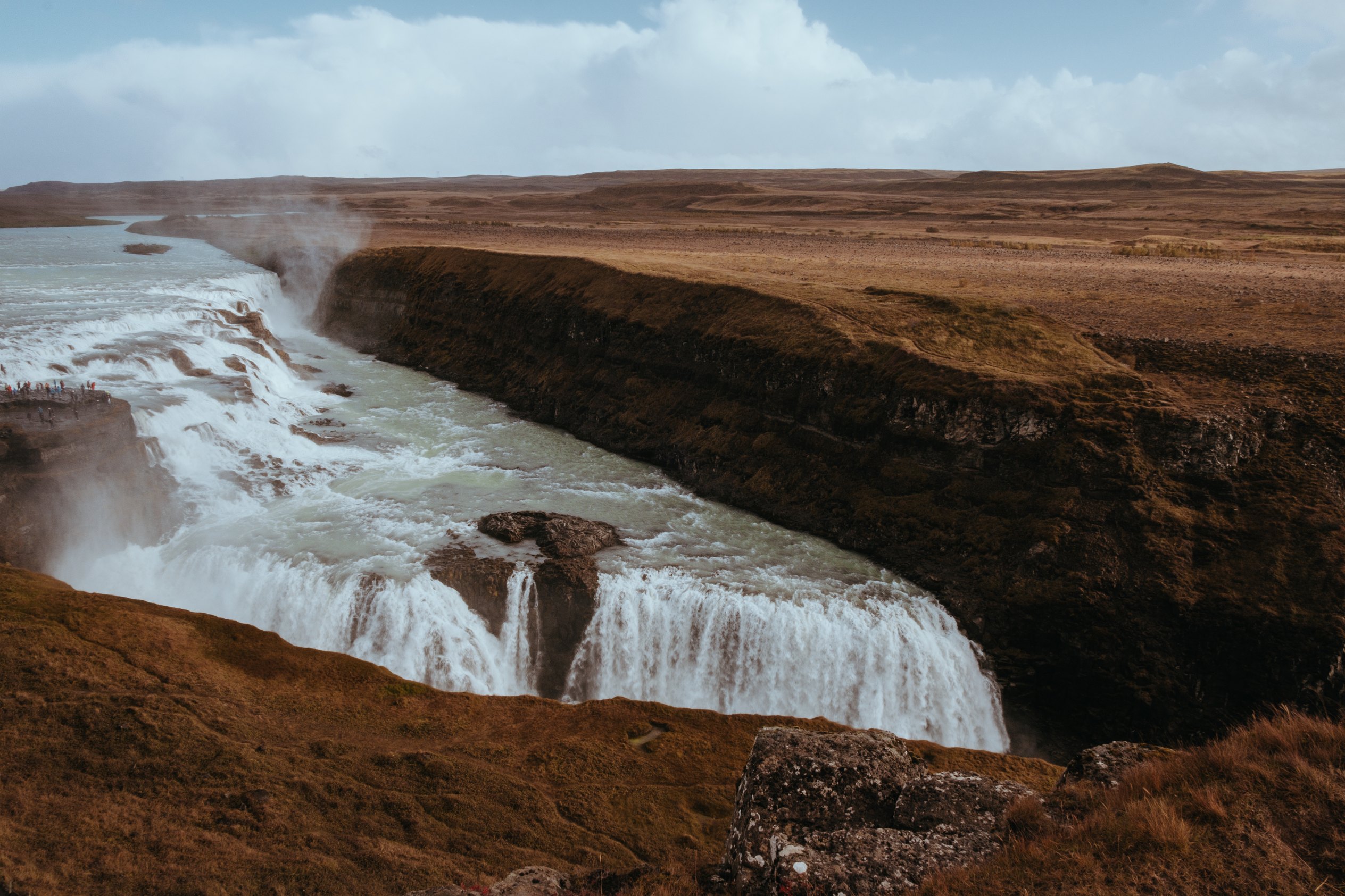
The incredibly mighty and deafening double waterfall Gullfoss, lovingly nicknamed the Golden Waterfall by locals, plunges in two stunning, steep cascades straight into a thirty-two-metre-deep, incredibly narrow rocky canyon carved by the fierce Hvítá river.
The sight, from right up close, of that enormous, unstoppable mass of glacial water — whose monstrous flow reaches an unbelievable and frankly terrifying 140 cubic metres per second in summer — simply takes the breath away from every newcomer.
The air throughout the valley is constantly and densely filled with refreshing spray because of the enormous impact of the water, so a quality waterproof jacket will come in extremely handy even when the sun is shining beautifully (which, incidentally, is why you’ll almost always see a gorgeous, vivid rainbow here through the dense droplets).
When you stand here today in utter awe and feel the whole soaked earth literally vibrating beneath your tired feet, it’s very hard to believe the sad fact that at the very start of the twentieth century, wealthy foreign investors wanted to destroy this unique natural waterfall forever and build a giant, ugly commercial hydroelectric plant here.
It was saved single-handedly by the incredibly brave local farmer’s daughter Sigríður Tómasdóttir, who boldly and loudly threatened to throw herself straight into the roaring, freezing water — and with the expert help of the enthusiastic lawyer Sveinn Björnsson, who, as it happens, eventually became the very first president of an independent Iceland, she miraculously won that long and extraordinarily complex court battle.
Today, two main, well-maintained paths lead very comfortably and safely to the stunning waterfall from two free, spacious car parks. The more comfortable one takes you to a breathtaking upper panoramic viewpoint by the restaurant, while the other, slightly more adventurous one, leads down wet steps right to the very edge of the roaring water, where you’re guaranteed to get a fair bit wetter.
Bonus stops: what else to see when you have time
If you’ve set off on your dream trip really sensibly and smartly, nice and early in the morning, or if you’ve planned a whole long summer day with plenty of daylight for this fantastic excursion, it would be a huge shame to limit yourself to just the famous big three sights.
On the way back to the busy capital you can quite easily add a few more fantastic places to your packed itinerary, where the ubiquitous crowds aren’t nearly so dense and you can enjoy captivating, raw Iceland in much greater, more pleasant peace.
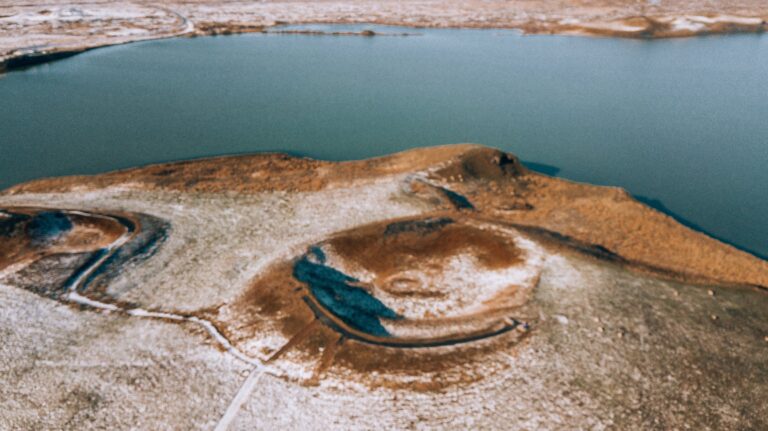
5. The Kerið crater with its turquoise lake
Right by the main, busy road number 35 you’ll come across the utterly stunning, almost three-million-year-old Kerið volcanic crater, which unfortunately, unlike many other natural wonders, isn’t entirely free — but the entry fee fortunately sits at just a symbolic 700 ISK (about £4), which you’ll pay without batting an eye at the little wooden hut by the entrance.
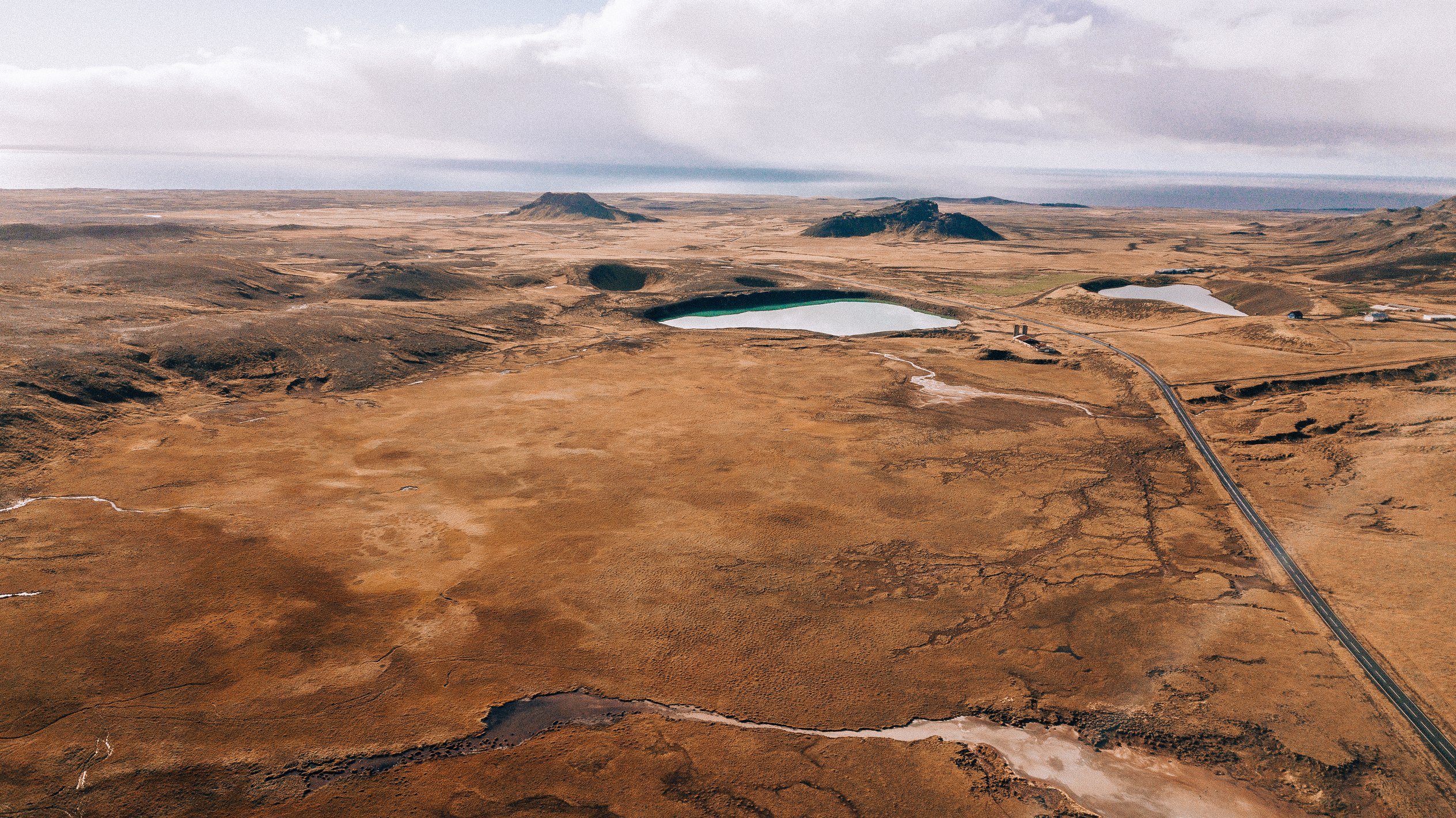
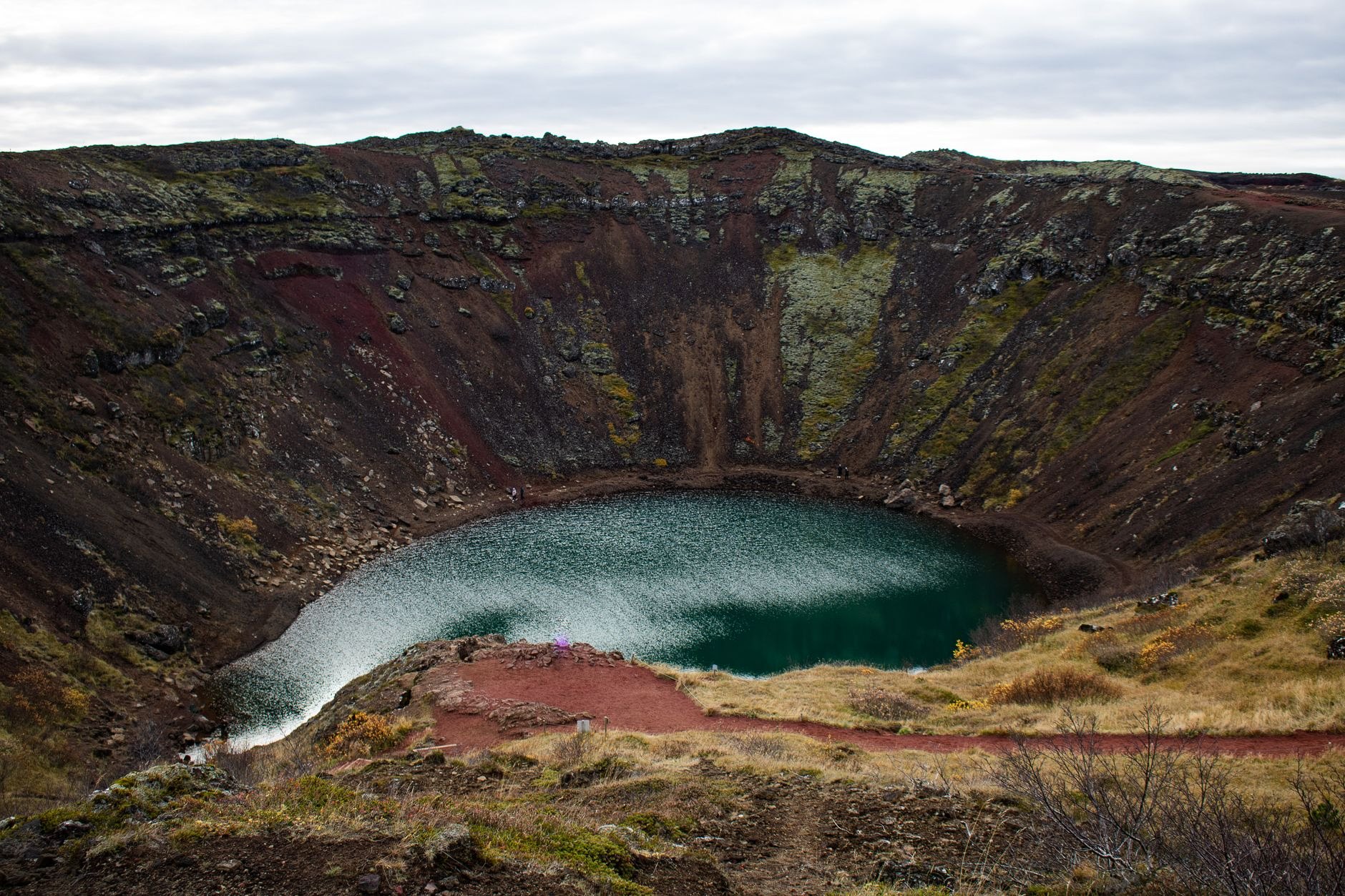
The crater is utterly fascinating and exceptional at first glance because its remarkably deep-red, sharp volcanic walls contrast so strikingly with the deep, completely opaque, aquamarine-blue colour of the still little lake resting peacefully and motionless at its very bottom.
We stopped here with undisguised enthusiasm on the second tiring day of our trip together, and the whole easy, relaxed walk right along the high upper rim of the majestic crater took us about twenty minutes, full of amazing views over the landscape.
Anyone with a much greater urge to explore and who doesn’t mind a bit of effort on the way back can confidently head down the well-maintained wooden steps and go all the way down right to the calm surface of the colourful water.
A hugely interesting and unexpected curiosity of this mystical place is the fact that, thanks to the perfect shape and complete enclosure of the whole space, the acoustics inside are so fantastic and powerful that occasional, very rare chamber concerts are held on the little lake — and in the past, to the great delight of fans, even the famous Björk sang here from a small raft floating right in the middle of the icy water.

6. A soak in the Secret Lagoon or Hrunalaug
Warming your thoroughly chilled, frozen bones after a full day of demanding, exhausting walking in the cold, relentless wind is an absolute evening necessity in Iceland — and instead of the unbelievably overpriced and usually hopelessly overcrowded Blue Lagoon, we warmly and sincerely recommend heading for the inconspicuous little village of Flúðir.
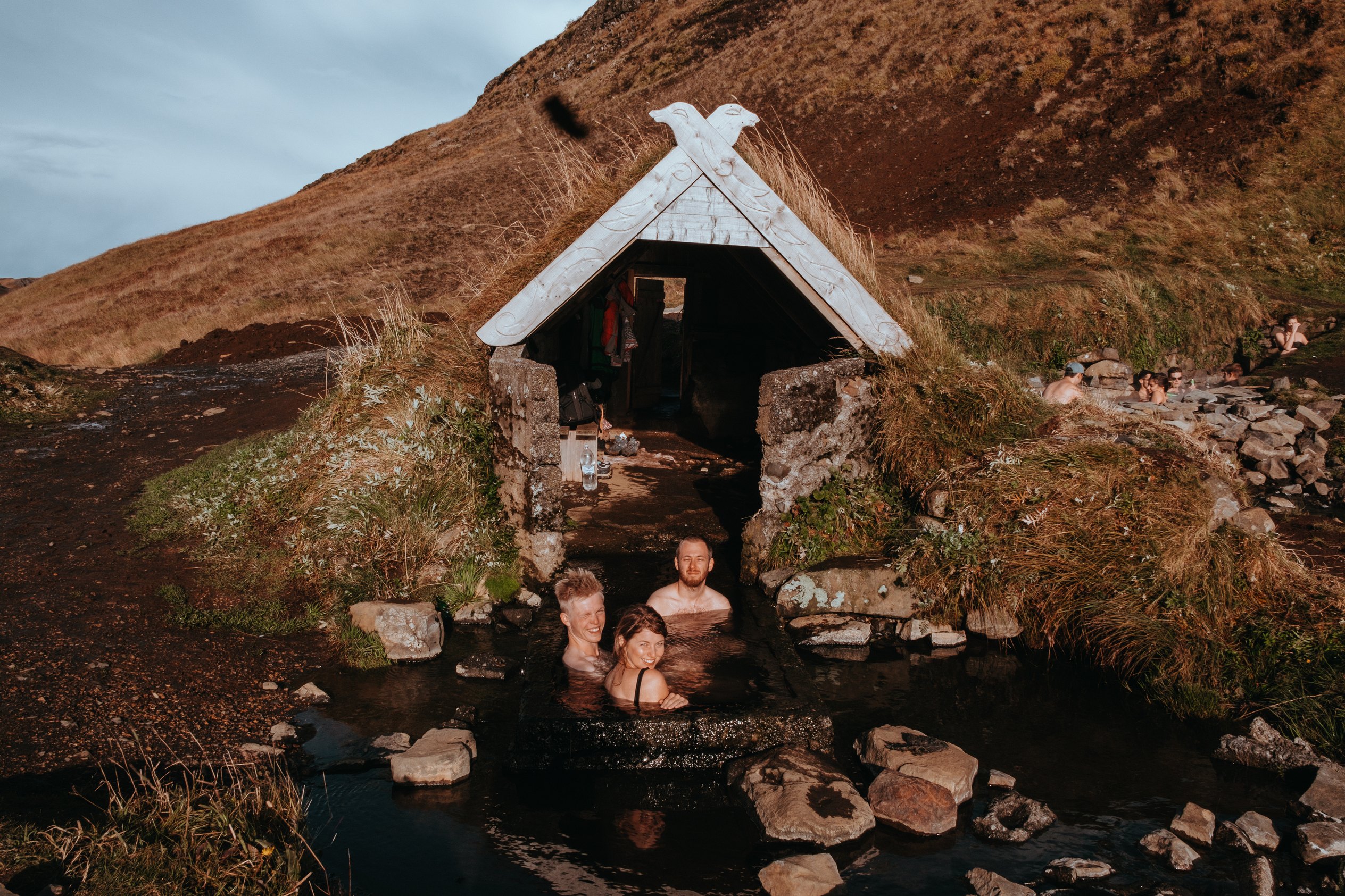
This is where the fantastic Secret Lagoon, or Gamla Laugin, is cleverly hidden — the very oldest swimming pool on the entire island, built from stone way back in 1891, where the crystal-clear water sits at a wonderfully pleasant and relaxing 38 to 40 °C all year round.
Around the large pool, several more very small hot springs — and even one tiny active geyser — bubble away cheerfully and loudly, so it ends up being a far more authentic, calmer and more rustic experience than any sterile, luxurious modern spa on the coast. Entry costs, by Iceland’s hard standards, a pleasant 3,000 to 4,500 ISK, and for children under fourteen it’s completely free — just be sure to buy your tickets in advance on the official Secret Lagoon website.
I just sincerely and urgently ask you to remember carefully, and without any back-talk, that sacred and absolutely unbreakable Icelandic cultural rule known as Sundlaug etiquette, which applies very strictly to all local village pools and hot springs without the slightest exception.
Before you even try to discreetly slip into your favourite swimwear in the corner, it is your absolutely strict and uncompromising duty to shower in the open communal washrooms completely naked and, using plenty of liquid soap, very thoroughly wash your entire body from head to toe — something the rather funny and very explicit diagrams hanging on almost every wall of the damp changing rooms will clearly guide you through at every step.
For the sake of health and nature, Iceland’s traditional pools use the absolute bare minimum of chlorine and chemicals, so the cleanliness of the water depends entirely on the cleanliness of the bathers themselves. If you try to shyly and secretly shower in your swimwear, the ever-vigilant, no-nonsense local lifeguards will mercilessly chase you out, loudly — and you’ll have made an enormous international fool of yourself.
7. Brúarfoss, the bluest waterfall
If you genuinely love a rich turquoise colour and don’t mind sacrificing a little extra walking and time, definitely mark a stop on your downloaded map at the fascinating Brúarfoss waterfall, which is quite rightly and not at all exaggeratedly nicknamed the bluest waterfall in all of vast Iceland.
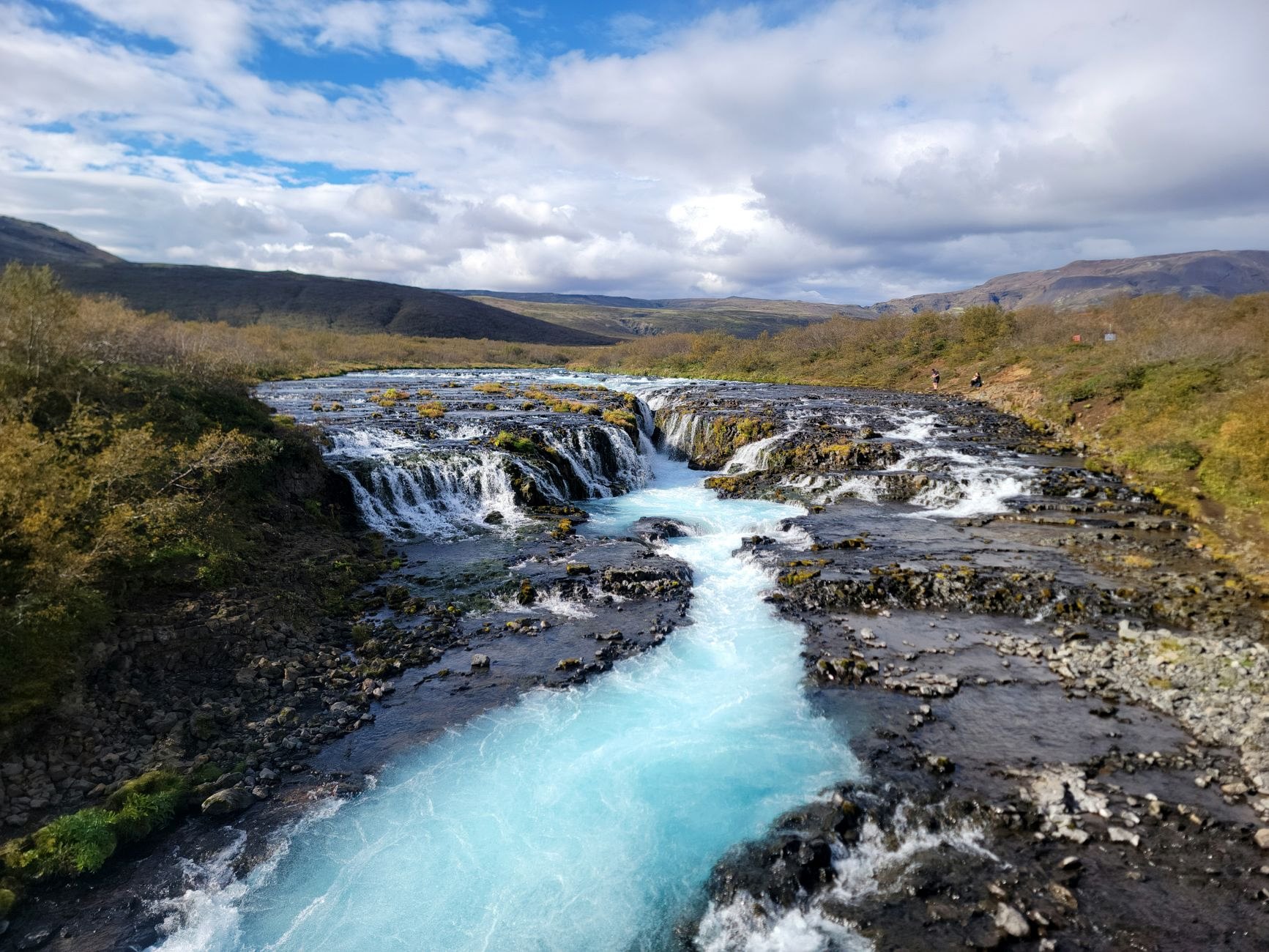
The water here flows incredibly wildly and loudly through a dark, very narrow volcanic rift, and its unusual colour is in fact so incredibly bright and vivid that after watching for a while you might even start to doubt whether someone local has secretly poured in some very strong, toxic chemical dye in the night.
It used to be reached only by a fairly long, roughly three-and-a-half-kilometre route through unpleasant, often muddy terrain, but today there’s fortunately, to the great delight of the lazy, a brand-new and much closer maintained car park, where you’ll pay a small fee of around 750 ISK after parking, but in return you’ll save yourself a huge amount of time and plenty of tired, wet steps.
8. Faxi waterfall and peace without the crowds
Just about twelve kilometres of very easy, flat driving from the enormous and sometimes uncomfortably overcrowded Gullfoss, the lovely and fairly wide Faxi waterfall hides quite inconspicuously. It doesn’t come anywhere close to the staggering dimensions of its far more famous colleague, but it does offer you something much rarer and more beautiful with certainty — wonderful calm and a vast, quiet sense of ease.
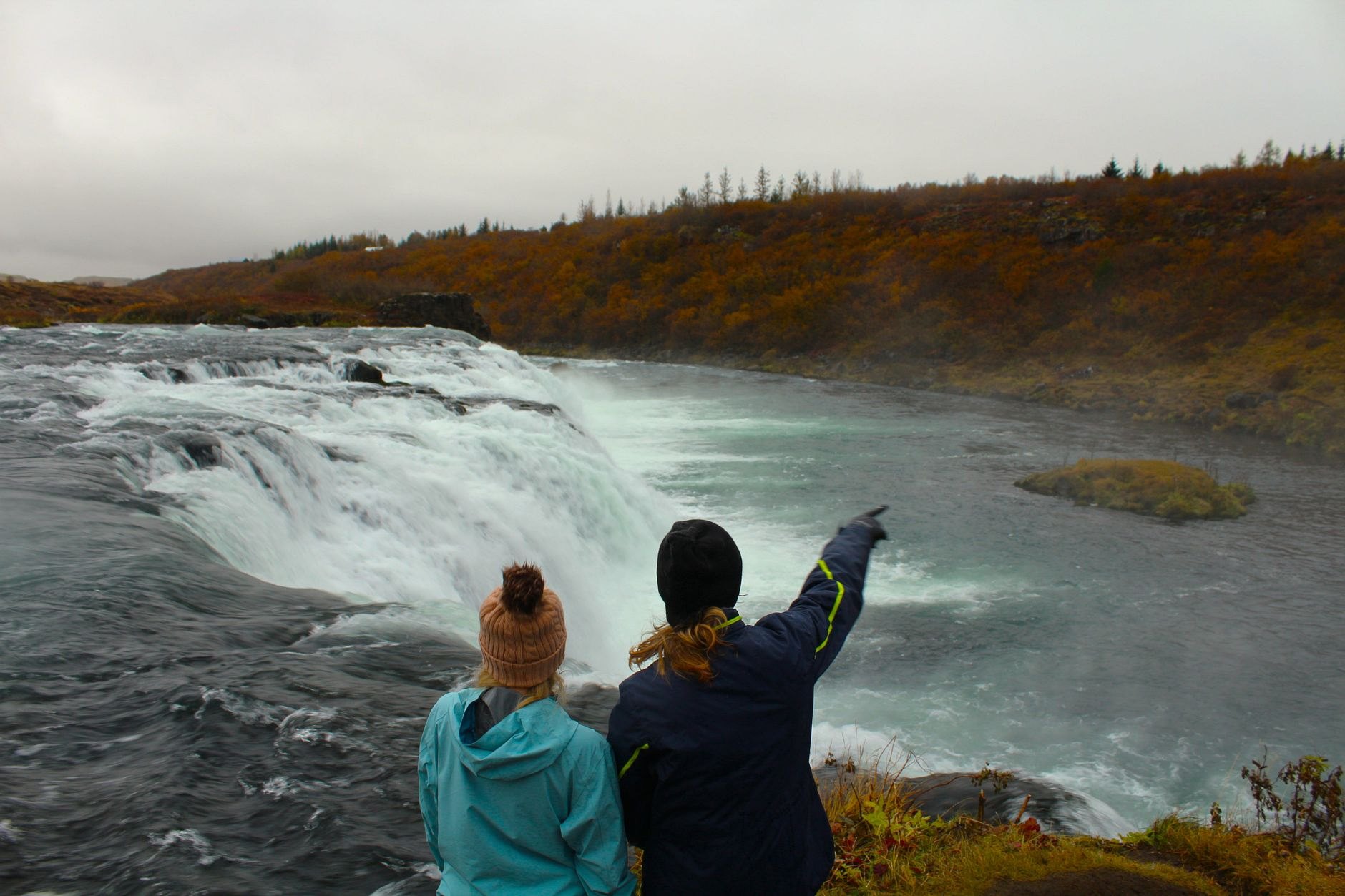
The vast majority of large, time-bound coach tours from Reykjavík completely and gladly ignore this amazing, magical place for timing reasons, so you can stroll the paths here at your own pace and in peace, take gorgeous, original photos from up close, and enjoy the babbling, falling water without anyone constantly and accidentally elbowing you while trying to grab the best possible selfie.
A short stop at the water here will take you barely ten to fifteen relaxed minutes of actual time, and as another huge, not-insignificant bonus you won’t pay any entry fee or annoying parking charge at all — which, in the middle of very expensive Iceland, is always a real pleasure.
9. The Reykjadalur hot river
If at the very end of a long, packed day you still have plenty of energy left in your legs and really don’t fancy paying hefty sums to enter the artificially enclosed, crowded commercial thermal baths with their tiles, you can happily make a fantastic detour a little further to the town of Hveragerði, from where a stunning and at times steep trail leads straight to the wild hot river called Reykjadalur.
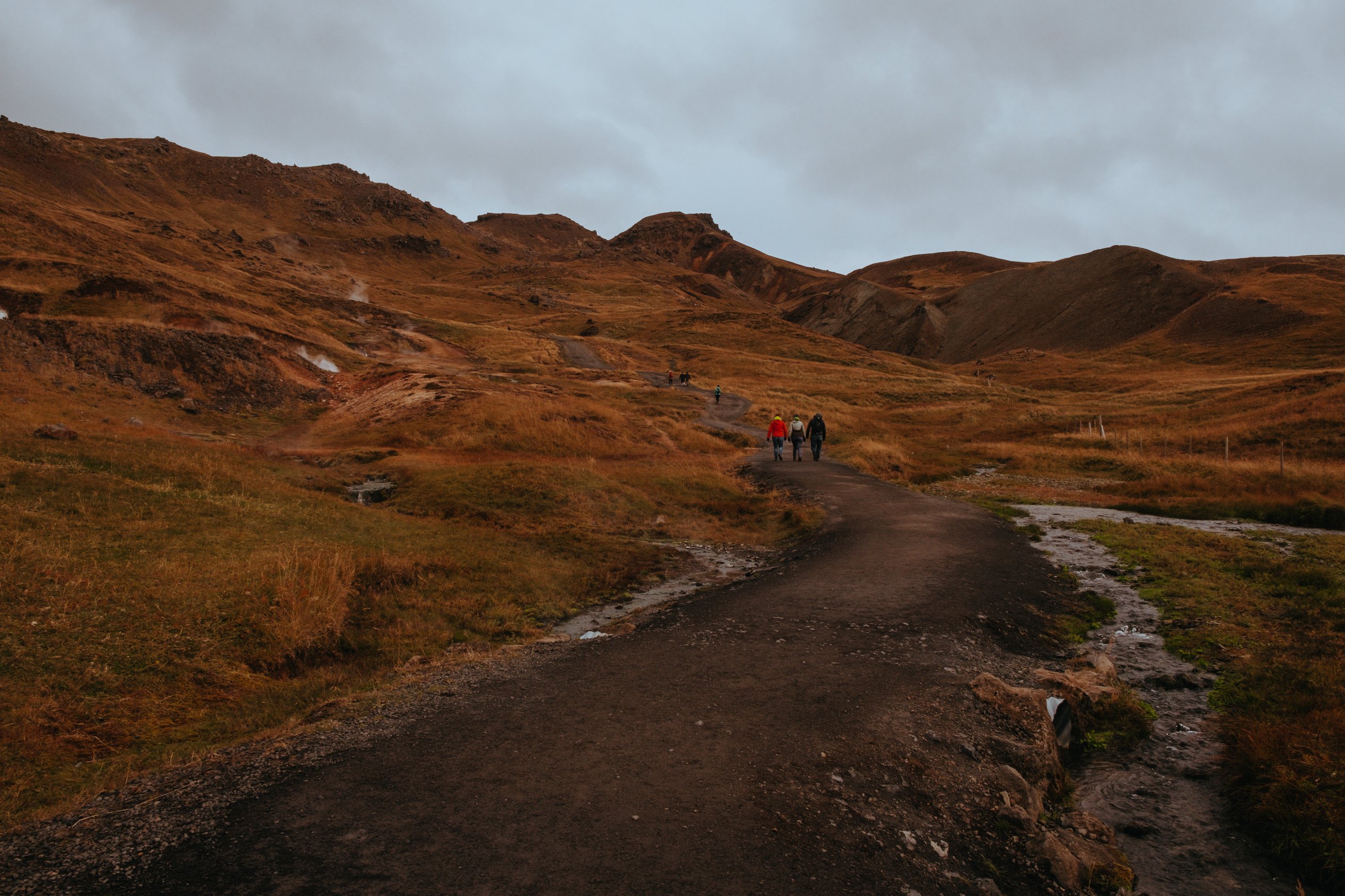
The hike, climbing steadily over picturesque and occasionally windy hills, will reliably take you about an hour and a half of brisk walking one way, but at its very end a genuine, unspoiled natural fantasy awaits you for sure — a wild and beautiful river, steadily and strongly warmed at the bottom by nearby geothermal activity, into which you can plunge completely free of charge any time, without a worry.
Lukáš and I absolutely love and adore that unrepeatable feeling of total freedom when you lie wearily in the hot flowing water right in the middle of endless, deep-green hills with the grey island clouds constantly racing overhead — you just have to brace yourself bravely for the fact that the inevitable change into swimwear happens right outside in the incredibly freezing wind, and the only place to hide is behind some really flimsy, draughty wooden screens.
Map of points of interest for your phone
Where to eat: a paradise for vegetarians and ice-cream lovers
When Lukáš and I were in expensive Iceland for the very first time, we travelled in a really tight low-budget, student mode, and as committed, dyed-in-the-wool vegetarians we cautiously brought a large part of our non-perishable food from home, or happily cooked cheaply for ourselves on long evenings from our modest shopping done right after landing.
Today, though, the amazing and ever-growing food scene along the sprawling Golden Circle offers several absolute culinary gems you mustn’t accidentally miss, which will reliably satisfy both keen lovers of fragrant vegetables and those still vainly searching for those classic meaty delights at an at least somewhat reasonable, acceptable price.
10. The Friðheimar tomato farm
This incredibly fragrant, warm and magical place is simply an utter, genuine gourmet dream for just about every enthusiastic vegetarian travelling the world.
The wonderful family farm Friðheimar grows beautifully juicy, red tomatoes with enormous love and care in vast, gloriously sunlit greenhouses, which in the harsh climate are heated entirely ecologically and cleanly all year round by the ever-present local geothermal energy — and right in the middle of this incredible green paradise the owners have cleverly opened an immensely popular and renowned restaurant.
Their greatest pride and best-known island speciality is the absolutely fantastic, thick homemade tomato soup, which after paying you ladle into bowls completely unlimited and as you please from the constantly bubbling hot buffet, together with incredibly fresh, crusty, fragrant bread, proper homemade butter and a wonderfully refreshing, delicate cucumber salsa.
The two of us simply can’t help ourselves in this place and eat so much of the good stuff with such gusto that we can barely roll ourselves down the path to the car afterwards, because the whole unique feast takes place right among hundreds of grown tomato plants, helpful imported bumblebees occasionally buzz cheerfully and loudly past your head, and that warm, family atmosphere is simply indescribable.
The varied menu naturally also offers plenty of fully vegan and excellent vegetarian options, very delicate and wonderful stuffed ravioli, and for the brave they even make highly unusual desserts from deep-green tomatoes, which taste surprisingly great and fresh.
Just be really careful about the fact that the farm is usually only open for a short window over lunch, from around 11:30 to about 16:00, and without a timely, confirmed reservation sent via their official email you don’t stand the slightest chance of getting a table here in summer, because the greenhouses are constantly bursting at the seams under the onslaught of eager tourists from all over the world.
11. Finishing with homemade ice cream at the Efstidalur farm
Just a short distance from the powerfully bubbling geysers, on a quiet turn-off, lies the incredibly charming and honest family dairy farm called Efstidalur, where you essentially have to drop in for at least a moment if an unconquerable craving for something really, really good and sweet strikes you along the way.
For visitors’ delight, the owners have a lovely, cosy café cleverly connected to a huge transparent glass window in the floor, through which you can watch — completely undisturbed and in the dry, right while sipping your hot coffee — down into the perfectly clean cow barn and amusedly observe the contented local cows chewing their fresh hay.
They make absolutely phenomenal and one hundred percent genuine homemade ice cream there, produced exclusively from their own fresh milk, and trust me, if you happen to be travelling Iceland with tired and grumpy children, after all those dull geological phenomena and roaring cold waterfalls this will clearly and safely be their absolute favourite stop of the whole long day — one they’ll look forward to.
12. Cheap shopping at Bónus and the classic hot dog
For all travellers who want to save at least a little on food during their trip, the absolute and essential basic is the huge and very popular Icelandic supermarket Bónus, which in towns you’ll reliably and instantly recognise from a great distance by its giant bright-yellow logo with the odd pink pig, and where you’ll safely pick up by far the cheapest food supplies on the whole island before you even start the car and set off from Reykjavík.
Ordinary, average main meals at the nice classic restaurants dotted along the sights easily start at unpleasant prices from 2,500 to 4,000 ISK, so your own filled rolls or snacks will save you a really substantial amount of money for your stretched travel budget over the whole trip.
Bear firmly in mind, too, that buying overpriced bottled water in plastic is, from both nature’s and your wallet’s point of view, an absolute and enormous sin in Iceland, because the perfectly ordinary, clear local tap water is perfectly clean, purely glacial and tastes a hundred times better than anything stale you’ll find sitting on the shelves of petrol-station shops.
For meat lovers there’s of course one absolutely classic, very cheap and immensely popular Icelandic island gastronomic experience with a long tradition — the simple, quick hot dog proudly known locally as the pylsa, which here is surprisingly made from a rather interesting mix of proper lamb, pork and beef trimmings.
You can buy it reliably at essentially every larger, busier petrol station of the well-known local N1 chain along your whole route for an agreeable and acceptable 820 ISK or so, and all local connoisseurs, and even foreign guides, unanimously claim it’s best and safest to order it “with everything” (correctly, in Icelandic, “eina með öllu”), which in translation means they’ll generously bury it on the counter under both fried and crunchy raw onion and douse it lavishly and without warning in thick ketchup, spicy remoulade and traditional sweet Icelandic mustard.
13. Warm soup in the warmth at Gullfoss waterfall
When you’ve frozen right through to the bone at the railing while frantically photographing that enormous, icy mass of falling water in the mist, there’s a huge and at first glance very pleasant self-service heated café with a lovely panoramic view right in the large modern visitor centre by the Gullfoss waterfall itself.
In the kitchen they specialise mainly in the very traditional, renowned and very thick Icelandic meat-and-vegetable soup, for which crowds of enthusiastic tourists flock straight in from the cold, but as committed vegetarians we treated ourselves with great joy and gratitude in the corner to at least some fragrant fresh soft bread, a giant cup full of hot tea and absolutely delicious sweet fresh pastries, which instantly and reliably gave us the missing, much-needed energy for further hours of demanding scurrying about outside in the wind.
Where to go next in Iceland
The Golden Circle is a beautiful start and the perfect place to learn how travelling in Iceland works. Once you’ve got it behind you, I recommend heading further south or exploring the capital. Here are some more of our articles that will come in handy:
- What to see in Reykjavík: 15 places worth visiting
- Iceland’s South Coast: what to see and experience
- 16 of the best hot springs in Iceland (that are truly worth it)
- When to go to Iceland? A big guide to the climate
Frequently asked questions
What is the Golden Circle in Iceland?
The Golden Circle is a roughly 250 to 300 kilometer long and incredibly popular tourist route located not far from Reykjavík itself, which combines into one large and neat package three of the most famous attractions including the beautiful and historic Þingvellir National Park, the massive and bubbling geothermally active Geysir area, and the thundering and enormous Gullfoss waterfall.
How long does it take to drive the Golden Circle?
The actual pure drive by car from Reykjavík and safely back takes approximately 3.5 to 4 hours on smooth asphalt without stops. For the three main and most famous stops with walking around, reliably set aside another 5 to 6 hours, and if you like to add some magical bonus spots along the way such as the volcanic Kerið or the hot and relaxing Secret Lagoon, this incredibly rich trip will take you a beautiful and exhausting 8 to 10 hours, making it a full day program.
What is the best order of stops?
The most common and classic order on the map, which almost all huge tour buses mindlessly follow, is to start in the morning at Þingvellir, continue to the Geysir springs, and ceremoniously finish at Gullfoss waterfall. Our great and repeatedly tested tip, however, is to get up very early in the morning and drive the entire circle completely in reverse, so you start from the back at the more distant Gullfoss, where you’ll have the attraction absolutely and entirely to yourself at sunrise, and thus beautifully and elegantly avoid the massive uncompromising crowds from the capital during the day.
Can we manage it in winter and without a 4×4 vehicle?
Yes and absolutely without major concerns, since all main and secondary roads connecting the attractions on the circle are carefully paved and very well maintained by road crews. A big and heavy 4×4 drive really isn’t an absolute and bare necessity here, although it does come in very handy in deep winter for logical reasons. Rather, don’t forget to check the current weather at en.vedur.is and remember that in cold December and January the days are truly incredibly short with only a few hours of precious daylight, and on windy roads, transparent and extremely dangerous black ice often and very quickly forms unnoticed.
How much do basic entries and parking cost?
At the enormous Gullfoss waterfall and in the wide active area of the famous Geysir, the actual pedestrian entry including parking is to the great joy of wallets still completely free. At the majestic Þingvellir National Park, however, you must pay an all-day parking fee for the entire vast territory of 1,000 ISK (approximately €7), entry to the edge of the colorful volcanic Kerið crater costs about a symbolic 700 ISK (approximately €5) per person, a short walk and stop at Brúarfoss waterfall will cost you about 750 ISK (approximately €5) at the parking lot, and the hot Secret Lagoon thermal baths cost depending on age and season roughly around 3,000 to 4,500 ISK (approximately €21-31) per bathing visitor.
Can the circle be combined with a visit to Blue Lagoon in one day?
Theoretically, it is of course feasible and possible from a time and logistics perspective, especially in the bright summer months when clear daylight in Iceland is beautifully visible until late at night, and such a very hectic and accelerated combined car trip takes around 11 demanding hours. However, we happily recommend to all enthusiastic travelers to rather relax in complete peace at the much smaller and considerably quieter countryside Secret Lagoon, which best of all lies absolutely perfectly and conveniently directly on the marked route of your circle tour and is moreover diametrically cheaper and less crowded.
What should we be most careful about on the island and what about accommodation?
The main and most frequent treacherous enemy on the roads across all of wide Iceland isn’t exactly the cold and frost, but rather the completely unpredictable and in places truly extremely strong gusting wind. Therefore, always please hold your doors firmly and with both hands when opening car doors after stopping, so that the wind doesn’t unfortunately rip them straight off the hinges with enormous force, which rental companies unfortunately deal with absolutely every day, and no standard insurance policies usually cover this quite frequent but very costly and extremely dangerous damage at all. The water when diving in the popular Silfra fissure is an icy 2 to 4°C, but with quality clothing this admirable activity after prior booking is very popular, absolutely safe, and can be handled without problems even by enthusiastic swimming children over twelve years old.
Tips and Tricks for Your Vacation
Don’t Overpay for Flights
Search for flights on Kayak. It’s our favorite search engine because it scans the websites of all airlines and always finds the cheapest connection.
Book Your Accommodation Smartly
The best experiences we’ve had when looking for accommodation (from Alaska to Morocco) are with Booking.com, where hotels, apartments, and entire houses are usually the cheapest and most widely available.
 🚗 Car rental on the roadVerified rental cars in Iceland
Search with the DiscoverCars comparison engine — it compares prices from dozens of local and international rental companies, and most bookings come with free cancellation.
Compare car prices in Iceland →Don’t Forget Travel Insurance
Good travel insurance will protect you against illness, accidents, theft, or flight cancellations. We’ve had a few hospital visits abroad, so we know how important it is to have proper insurance arranged.
Where we insure ourselves: SafetyWing (simple monthly subscription) and TrueTraveller (for extra-long trips).
Find the Best Experiences
Get Your Guide is a huge online marketplace where you can book guided walks, trips, skip-the-line tickets, tours, and much more. We always find some extra fun there!