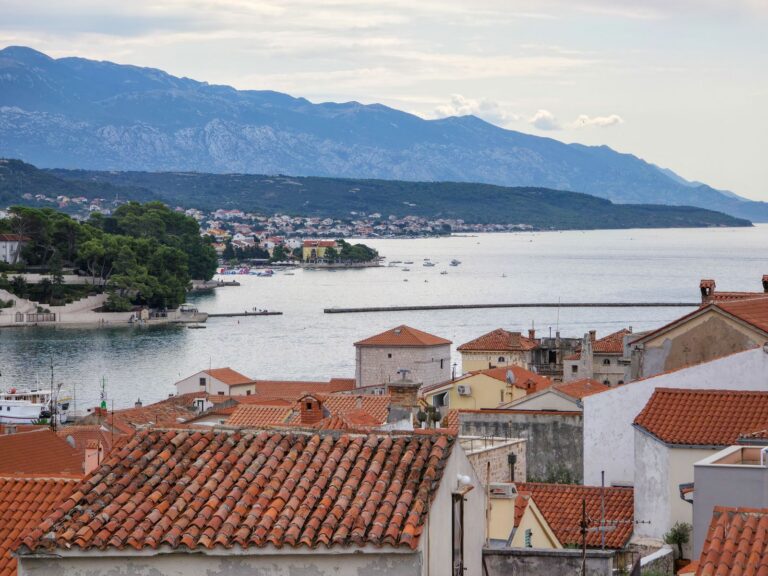
When you picture a summer holiday on the Adriatic, most people immediately think of crowded Split or pricey Dubrovnik, but Zadar in northern Dalmatia often stays a little unfairly in the shadows. And that’s a shame, because this Croatian city is utterly charming, blending three thousand years of history with modern art, and according to the famous director Alfred Hitchcock, you’ll find the most beautiful sunset in the world right here. The historic centre sits on a narrow peninsula ringed by old walls, where you can wander for days along the smooth stone pavement and soak up the laid-back seaside atmosphere.
The destination’s biggest advantage, though, is its strategic location, because the city makes an absolutely ideal base for day trips across the wider region. On a single holiday you can easily cover four breathtaking national parks, picturesque islands and historic towns, so you definitely won’t be bored for a single minute. While you can stroll past Roman ruins in the morning, by the afternoon you might be on a boat in the middle of the sea or hiking through wild mountains.
In this article I’m bringing you a complete guide with 15 things to see and do in Zadar, whether you’re coming for a long weekend or a two-week holiday. I’ll also advise you on where to stay strategically, when the best time to visit is, and how much you’ll pay to enter the most famous landmarks and nature reserves nearby.
TL;DR
- Biggest draws: The city is famous for its modern installations, the Sea Organ and the Greeting to the Sun, which you should ideally experience at dusk.
- Historic centre: It sits on a peninsula and you can walk it in a single day — don’t miss St Donatus’ Church and the Roman Forum.
- Perfect base: Zadar is a crossroads to four national parks, with easy access to Plitvice Lakes, the Krka waterfalls, the Kornati islands and the Paklenica mountains.
- When to go: For sightseeing and trips, May, June or September are best, when you avoid the biggest crowds and the extreme summer heat.
- Getting there: A low-cost airport runs just outside the city with direct flights, but you can also drive here easily via Croatia’s A1 motorway.
- Where to stay: Families with children will love the Borik district near the beaches, while couples will appreciate the romance right in the historic centre.
- Food: Be sure to try the local vegetable risotto and, as a digestif, sample the famous Maraschino cherry liqueur, which has been made here since the 16th century.
The full destination guide: Dalmatia — guide and what to see
When to Visit Zadar
If you’re planning a holiday focused purely on swimming and topping up your tan, then July and August are your best bet, when temperatures climb well above thirty degrees and the sea is beautifully warm. But you’ll need to factor in that this is the absolute peak of the season, which brings packed beaches, long queues for the ferries and the very highest prices for accommodation and services. On top of that, the Zadar weather in the historic streets can be almost unbearably hot during the day, so it’s better to leave sightseeing until late afternoon.
The city offers a far more pleasant atmosphere in May, June or September, when the weather is already gloriously sunny and stable but the tourist crowds are considerably smaller. This period is absolutely ideal for an active holiday, whether you’re heading off on mountain hikes or full-day trips around the national parks. The sea is usually warm enough for a quick dip by early summer, while in September it holds on to the heat it has soaked up over the holidays.
Early spring or autumn can also be a very appealing alternative, because unlike the small resort towns, the historic centre doesn’t go to sleep over winter and you’ll still find cafés and restaurants open. This gives you a unique chance to walk the Roman monuments with hardly anyone around, and you’ll save a fair bit of money too, since the national park entry fees are many times cheaper outside the high season.
Where to Stay in Zadar
💡 Tip for accommodation and experiences: We like to look for accommodation on Booking.com, which tends to have the best cancellation policies. Tickets, tours and activities are then worth comparing and booking through GetYourGuide.
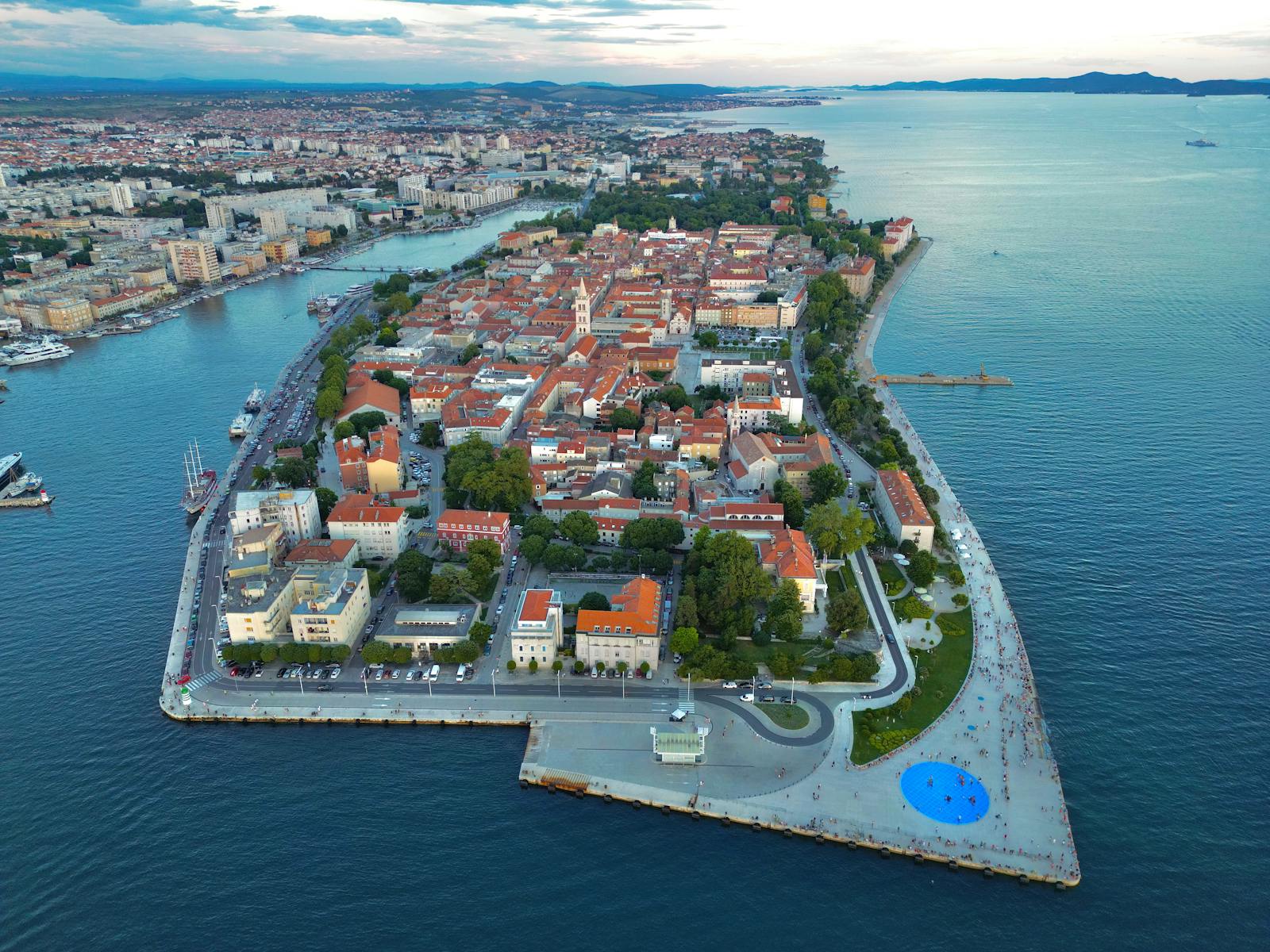
Choosing where to stay depends mainly on how you’re travelling to Croatia and what you expect from your holiday, because each neighbourhood offers a completely different experience. If you’re flying in and planning a shorter stay full of culture and romantic evenings, look for hotels right on the historic peninsula. You’ll be just a few steps from the landmarks, restaurants and the Sea Organ, but bear in mind the centre is largely pedestrianised and it can get fairly lively in the evenings. If you arrive by car, parking near the walls can be expensive and tricky.
For families with children and anyone who wants to spend their days mostly by the sea, the best choice is the Borik district, which lies about four kilometres northwest of the centre. Here you’ll find lovely beaches, a quieter setting, plenty of parking and hotels that often have pools or entertainment programmes. If you’re after a happy medium with friendlier prices, I recommend the Diklo district or traditional Arbanasi, from where you can easily reach the centre by public transport or a pleasant walk. Most accommodation is easy to book through the popular Booking portal.
Among the top-rated places right in the centre is the luxurious Bastion Heritage Hotel, which is literally built into the remains of the old Venetian walls and offers a beautiful spa and a top-class restaurant. If you’re looking for something modern and more affordable right in the heart of the action, the stylish Boutique Hostel Forum is a great choice, offering both shared rooms and lovely private rooms overlooking the Roman monuments. And for a family beach holiday with every comfort, I can warmly recommend the Falkensteiner Club Funimation Borik, with a huge outdoor and indoor water park that kids will absolutely love.
15 Things to See and Do in Zadar
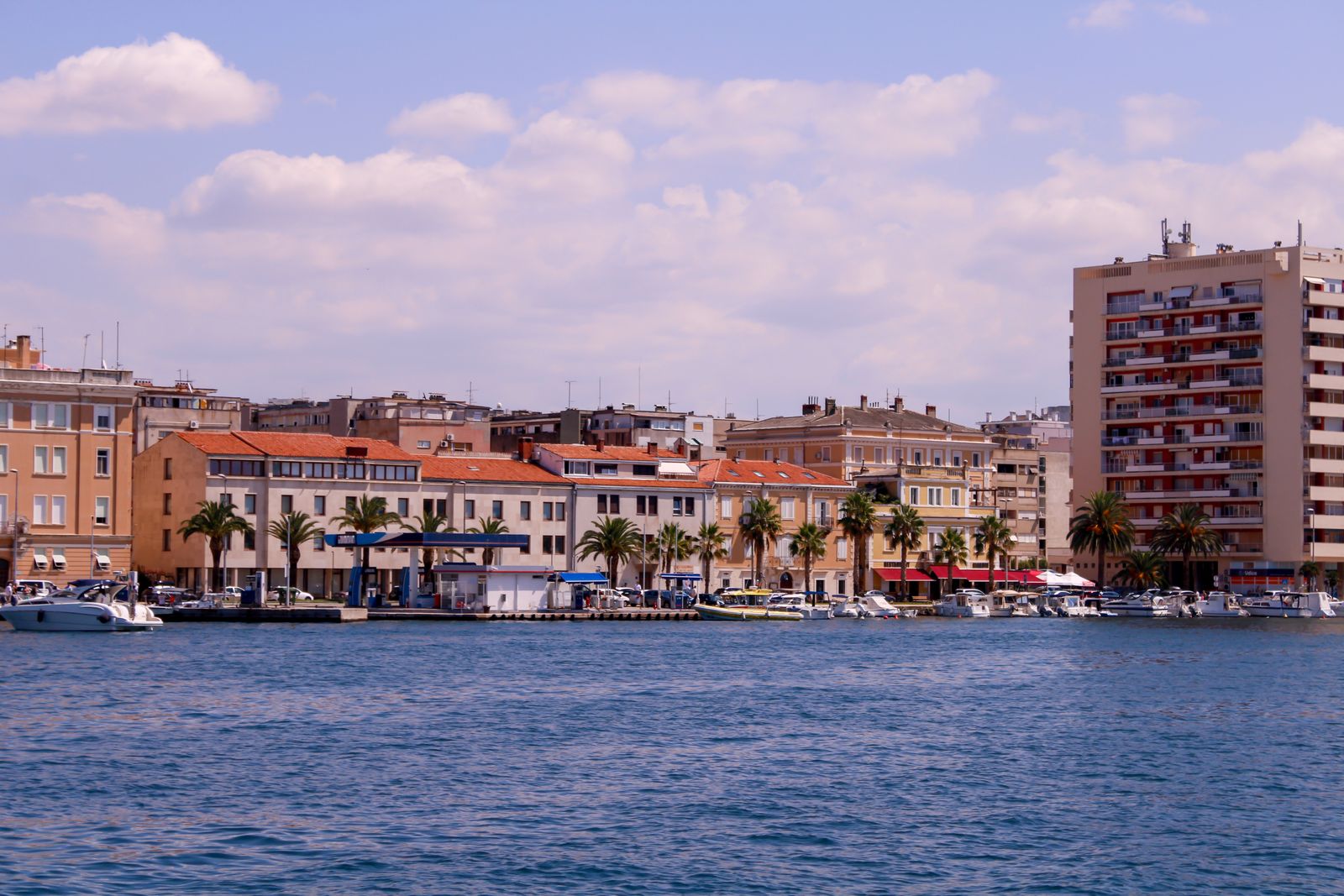
The historic core of the city isn’t huge, so you can easily walk between the most important landmarks in a single afternoon — but I definitely recommend not rushing. The city hides plenty of little details, picturesque lanes and tucked-away squares that are best enjoyed with a scoop of ice cream in hand. Let’s take a look at the best of the city itself and its immediate surroundings.
1. Listen to the Sea Organ
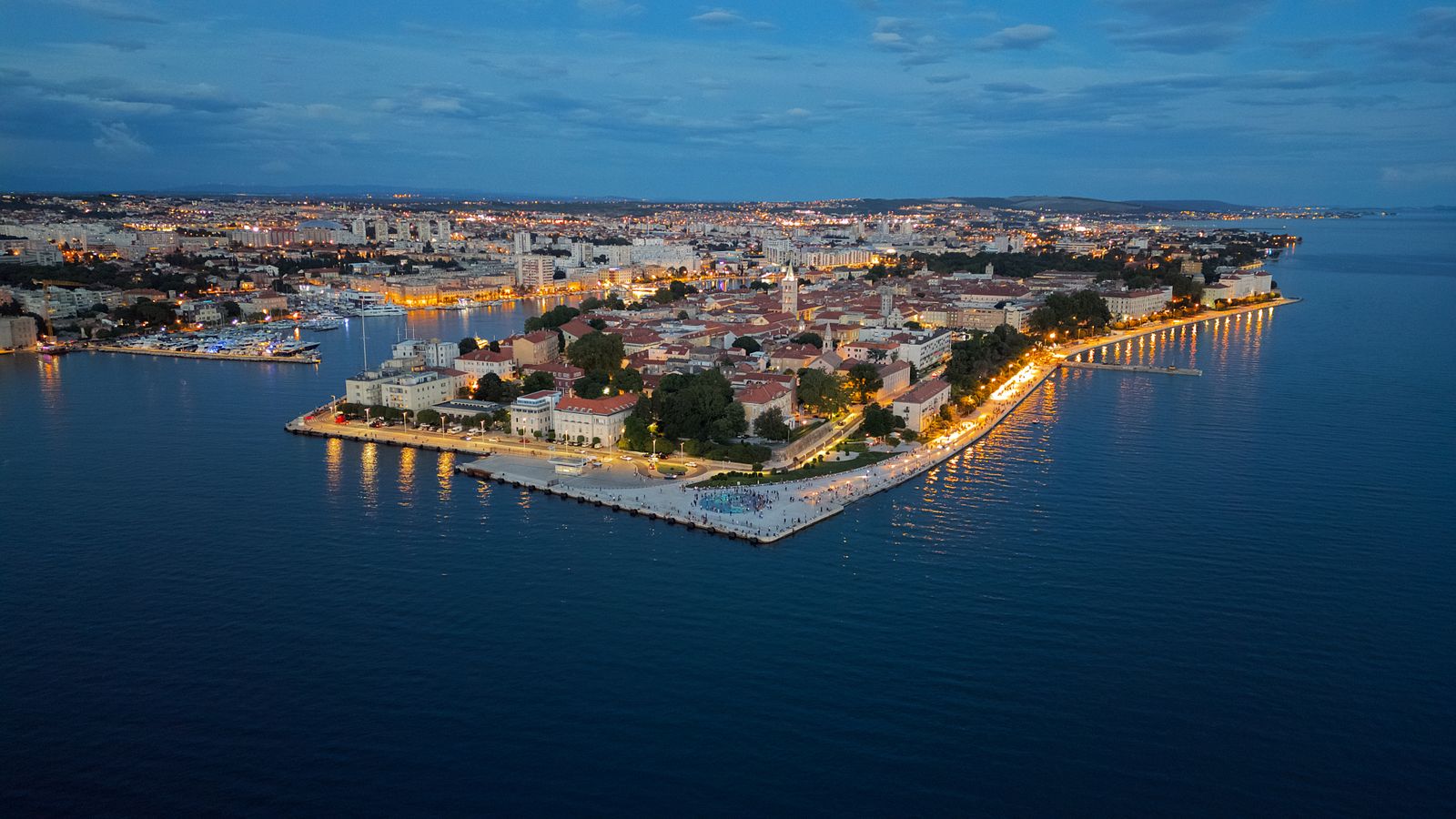
As you stroll along the promenade at the northwestern tip of the peninsula, you’ll come across wide stone steps descending straight into the sea waves, from which deep, melancholic tones constantly emerge. This is the unique Sea Organ (Morske orgulje), a fascinating architectural and sonic work by local architect Nikola Bašić, ceremonially opened in spring 2005. Beneath the unassuming stone steps lies a complex system of thirty-five polyethylene pipes of various lengths and diameters, all connected to the sea.
The whole magic lies in the fact that the music here is made by nature itself, as the energy that sounds the pipes comes from the force of the waves and tide pushing air up through narrow channels. The organ is tuned to seven chords of five tones each, creating a constantly changing, never-ending concert that sounds completely different every time. For this brilliant idea, the city even won the prestigious European Prize for Urban Public Space, and the spot became an instant hit.
The installation stretches around seventy metres, and the loveliest thing is simply to sit on the sun-warmed steps, close your eyes and listen to the power of the sea. Access to the organ is, of course, completely free, and the spot is open twenty-four hours a day.
💡 Tip: The organ’s sound is strongest and most dynamic when larger ferries or boats pass by, churning up big waves.
2. Be Dazzled by the Greeting to the Sun
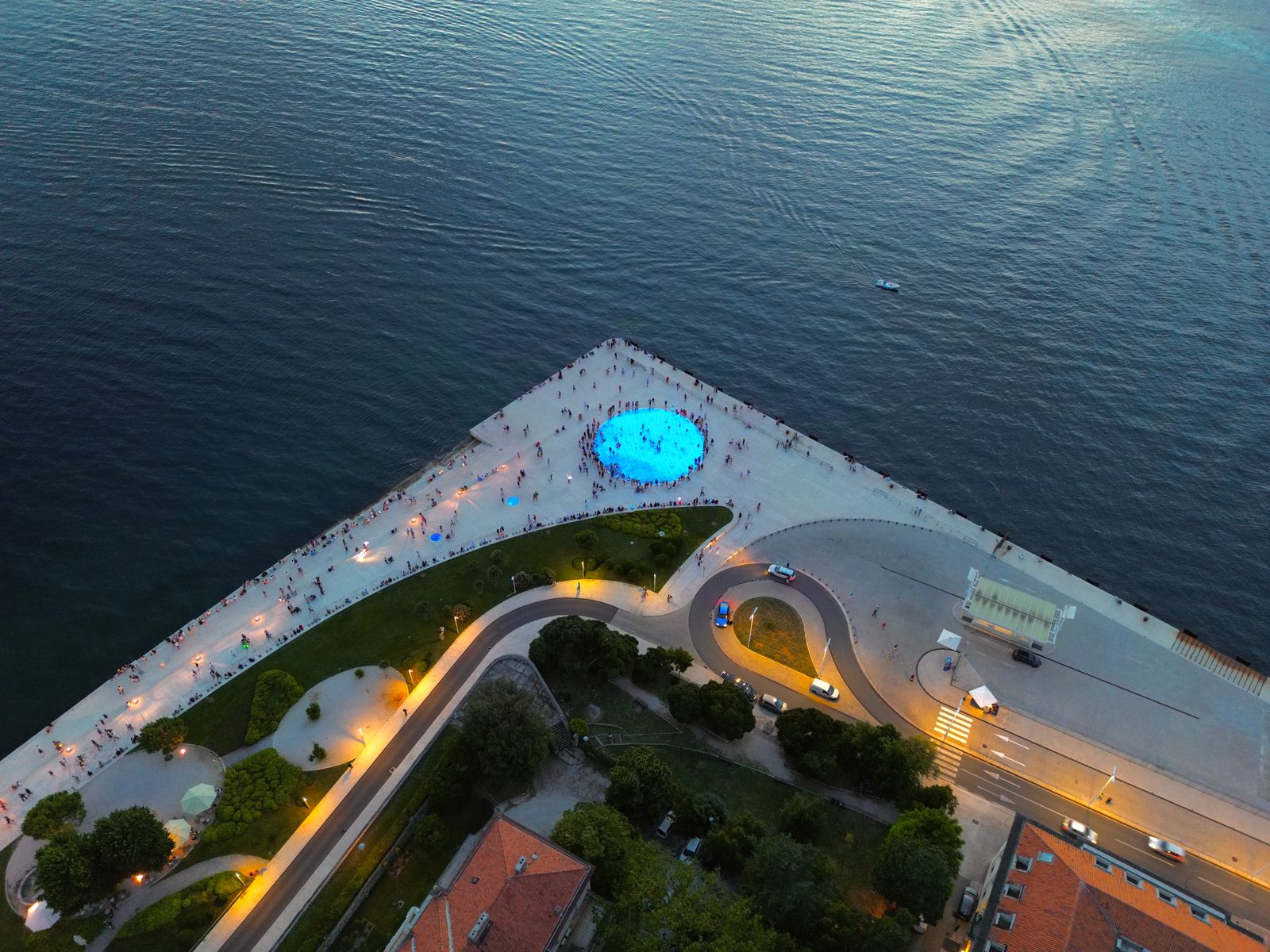
Right next to the Sea Organ, at the very tip of the peninsula, sits a second famous installation by the same architect, in close dialogue with the musical work. The Greeting to the Sun (Pozdrav Suncu) is a huge circle twenty-two metres in diameter set into the stone pavement, made up of three hundred multi-layered glass plates. Beneath these plates hide modern solar panels that soak up energy from the scorching Dalmatian sun all day long.
The real show, however, only begins when the sun sinks below the horizon and dusk falls over the city. The glass circle lights up with thousands of colourful lights that pulse, shift hues and create a hypnotic light show. Interestingly, the rhythm and dynamics of the flashing lights aren’t random but respond to the tones and frequencies of the neighbouring Sea Organ, linking the sound and visual experience into one amazing whole.
If you examine the installation up close in daylight, you’ll notice the names of Zadar’s patron saints and significant saints engraved around the circle, along with the dates of their feast days. This modern monument also works as a small power station, producing an impressive forty-six thousand kilowatt-hours a year — enough to cover roughly half the electricity used for street lighting along the entire waterfront.
💡 Tip: The light circle draws crowds of tourists after dark, so if you want to photograph it without people, come early in the morning before sunrise, when the panels are still glowing faintly.
3. Walk the Riva Waterfront at Sunset
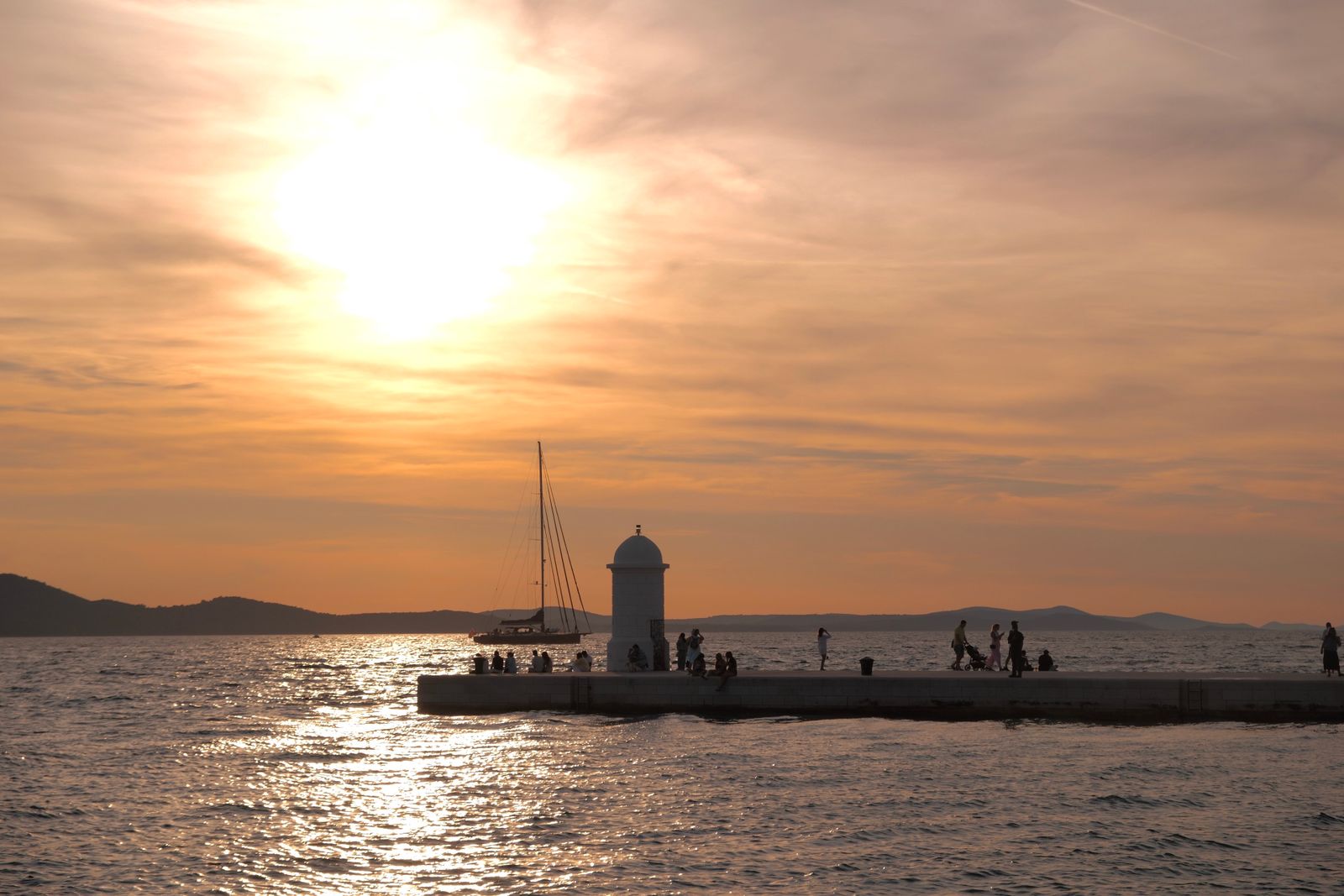
The western shore of the historic peninsula is lined by a beautiful promenade known simply as the Riva, which invites long, undisturbed walks beneath the canopies of mature trees. From the waterfront, a wide view opens up over the open sea and the green hills of the nearby island of Ugljan, served by a constant stream of white passenger ferries. The promenade is bordered by carefully tended parks and lawns where locals and tourists alike love to have afternoon picnics.
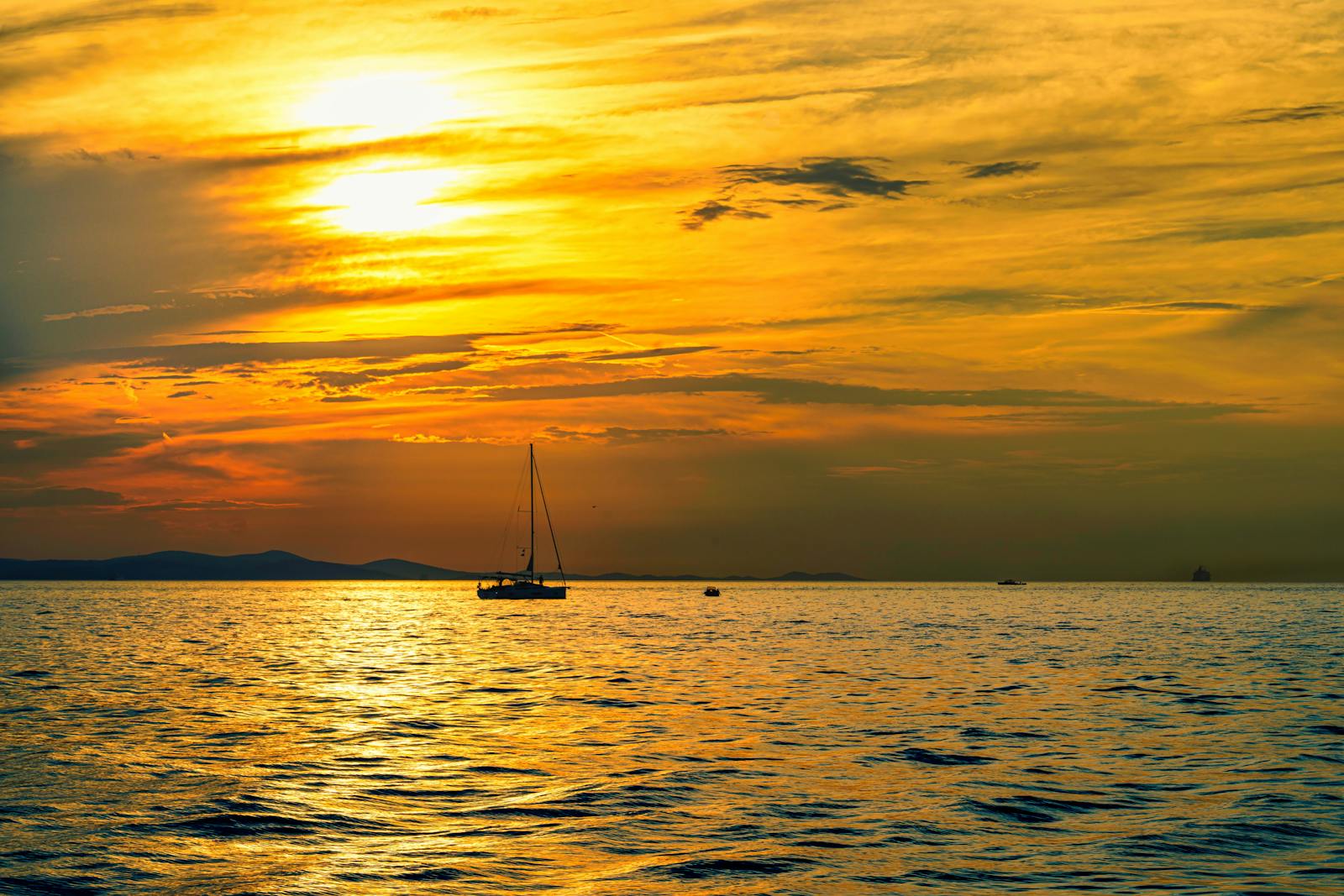
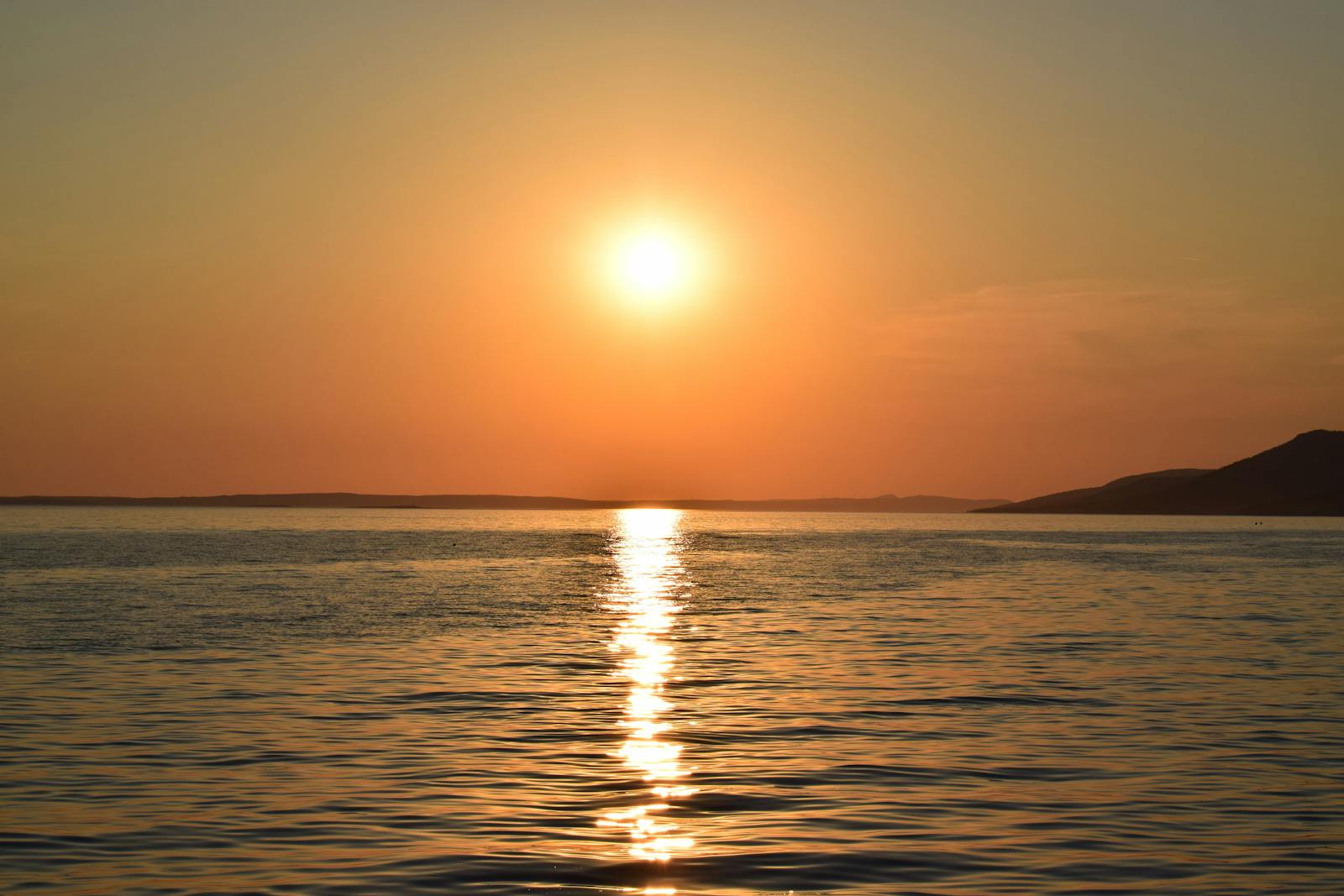
It was from this very spot that one of the most famous quotes about the city came, spoken by the legendary film director Alfred Hitchcock during his visit in May 1964. Looking out of the window of room 204 in what was then the Hotel Zagreb, he was so captivated that he declared the local sunset was far more beautiful than the one in Key West, California, and called it the most beautiful in the entire world. And when the sky starts playing in every shade of orange, pink and purple, you can’t help but agree with him.
The best place to watch this daily light show is the tip of the peninsula by the Sea Organ, where the colours of the sky blend with the music of the waves. The spot has an incredibly romantic atmosphere that practically begs you to slow down for a while and simply take in the beauty of the present moment.
💡 Tip: For the best spot, take a seat on the steps by the organ about thirty to forty-five minutes before sunset, as it really fills up later on.
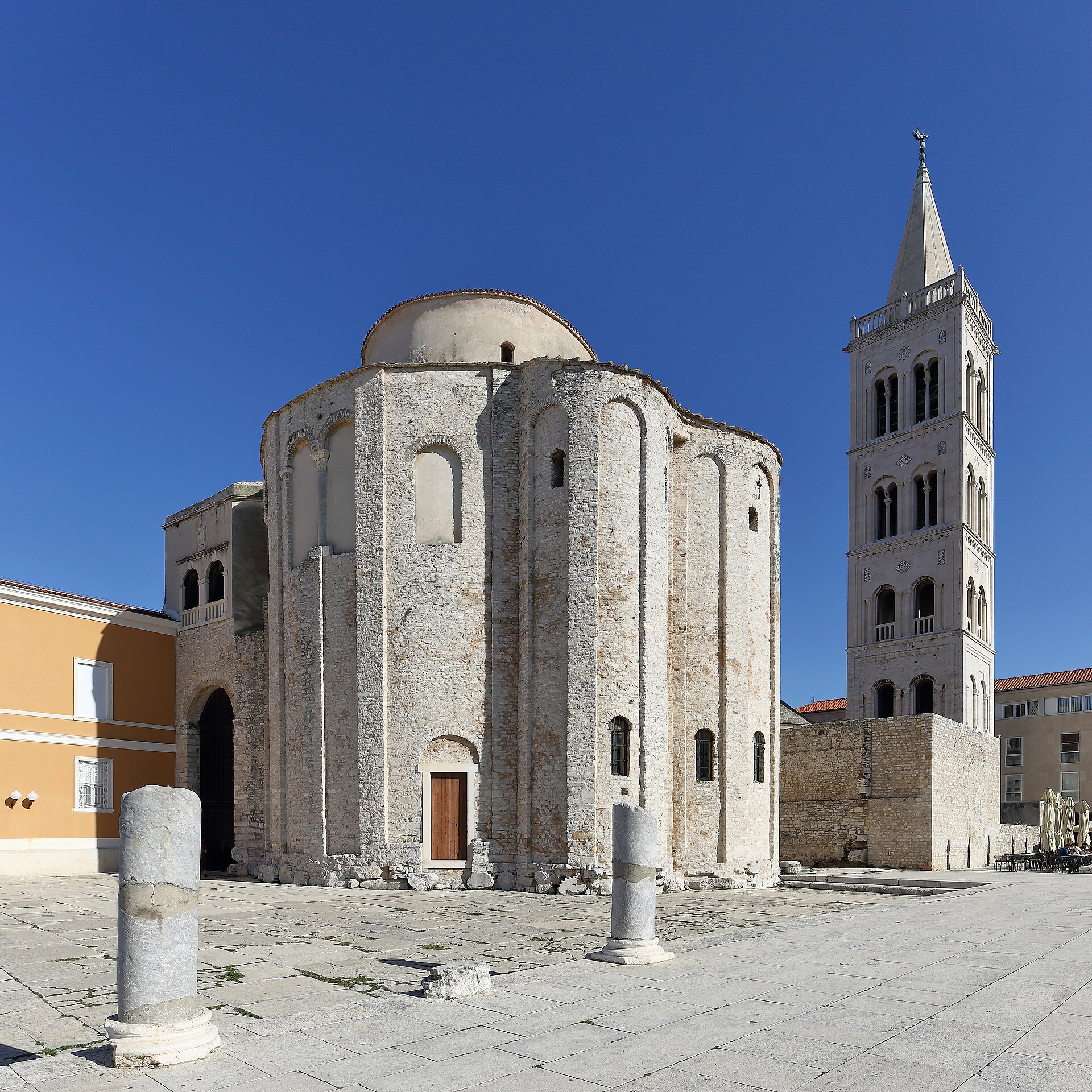
4. Admire the Massive St Donatus’ Church
As you step into the very heart of the old town, your attention is instantly drawn to a monumental circular building that has become the architectural symbol of all Zadar. St Donatus’ Church is a massive pre-Romanesque rotunda dating from the 9th century, rising to an impressive twenty-seven metres and holding the title of the largest building of its kind in all of Croatia. Interestingly, it was originally named the Church of the Holy Trinity, but was later renamed after Bishop Donatus, who probably initiated its construction.
The builders of this unique sanctuary were incredibly pragmatic, as they erected the church directly on the remains of the old Roman square and used ancient columns and huge stone blocks as building material. When you examine the building up close, you can clearly see Roman architectural elements and column capitals built right into the outer walls, creating an utterly fascinating fusion of two different historical eras.
These days the church no longer serves religious purposes, but thanks to its circular shape and high vault it boasts absolutely perfect acoustics. During the summer season it regularly hosts hugely popular evening concerts of classical and Renaissance music, which have an unrepeatable atmosphere thanks to the historic setting.
💡 Tip: Admission to the rotunda’s interior is around five euros — I’d recommend carrying a little cash just in case, as the card terminals here occasionally go down.
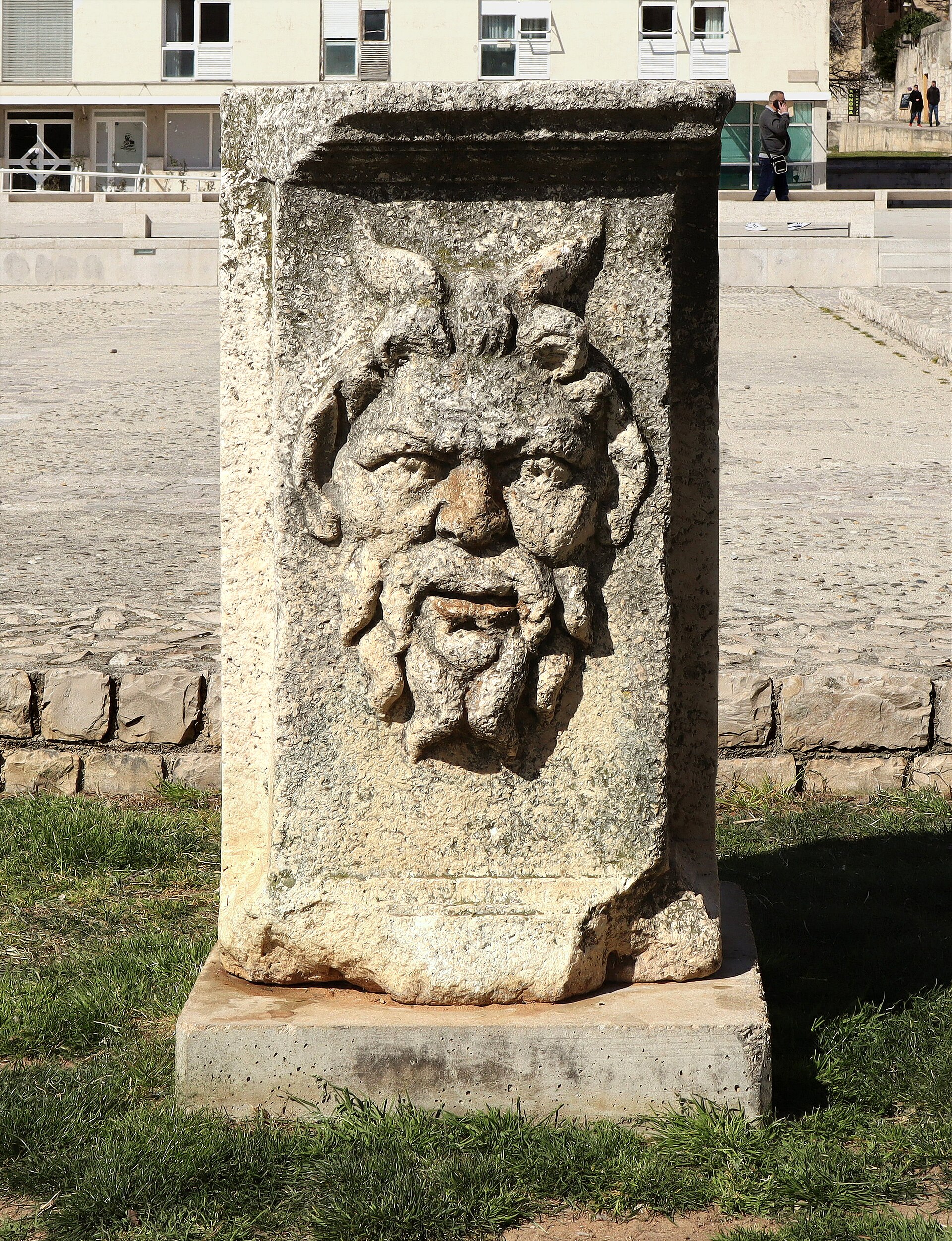
5. Explore the Remains of the Roman Forum
Right in front of St Donatus’ Church spreads a vast open space that, as if by the wave of a magic wand, transports you more than two thousand years back in time. These are the remains of the Roman Forum, founded here by the first Roman emperor Augustus, which served as the main town square from roughly the first century BC until the third century AD. In its day it was a pulsing centre of public, political and religious life, surrounded by magnificent temples and shops.
Today you can wander freely among the surviving foundations of ancient buildings, fragments of Corinthian columns and precisely worked stone blocks that are scattered across the spacious lawn. Unlike many other ancient sites around the world, there are no fences or barriers here, so you can happily sit on the old stones and drink in the history in deep draughts.
One particularly well-preserved monumental column is worth your attention, as it served for centuries as the so-called pillar of shame, or pillory. Right up until the nineteenth century, petty thieves and offenders were tied to it to be exposed to public mockery and humiliation from the townsfolk passing by.
💡 Tip: Visiting the entire Roman Forum area is completely free and unrestricted, and in the evening the ruins are very tastefully illuminated.
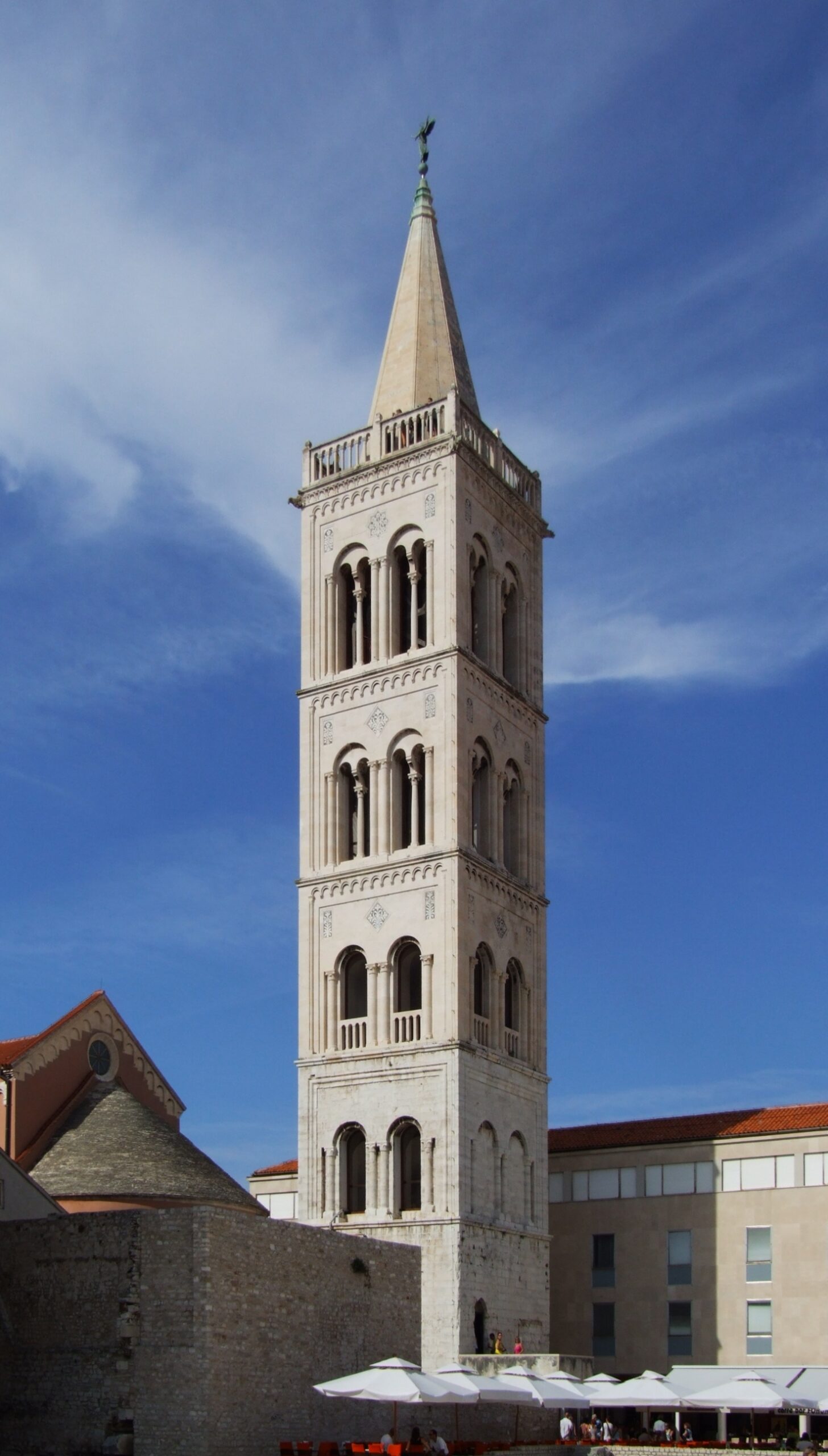
6. Climb the Bell Tower of St Anastasia’s Cathedral
Just a few steps from the St Donatus rotunda, the largest — and according to many visitors the most beautiful — cathedral in all of Dalmatia rises majestically. St Anastasia’s Cathedral (known locally as Sv. Stošija) is a stunning Romanesque basilica whose present form dates mostly from the twelfth and thirteenth centuries. Its richly decorated façade with two enormous rose windows resembles delicate lace carved into pale stone, while the interior hides amazing vaults and rare frescoes.
Entry to the cathedral’s main nave is free, but if you want to experience something truly special, don’t miss the climb up the adjacent landmark bell tower. Construction began as early as the fifteenth century, but the upper floors in neo-Romanesque style weren’t completed until the end of the nineteenth century, by the famous English architect Thomas Graham Jackson.
The way up takes a bit of fitness, as you’ll have to tackle around one hundred and eighty narrow steps, but the reward at the top is more than worth the effort. From the fifty-metre-high tower you get a breathtaking panoramic view over the entire historic centre with its red roofs, the blue surface of the sea and the outlines of the surrounding Dalmatian islands.
💡 Tip: Admission to the bell tower viewpoint is roughly between two and three euros, and tickets are bought right at the foot of the staircase.
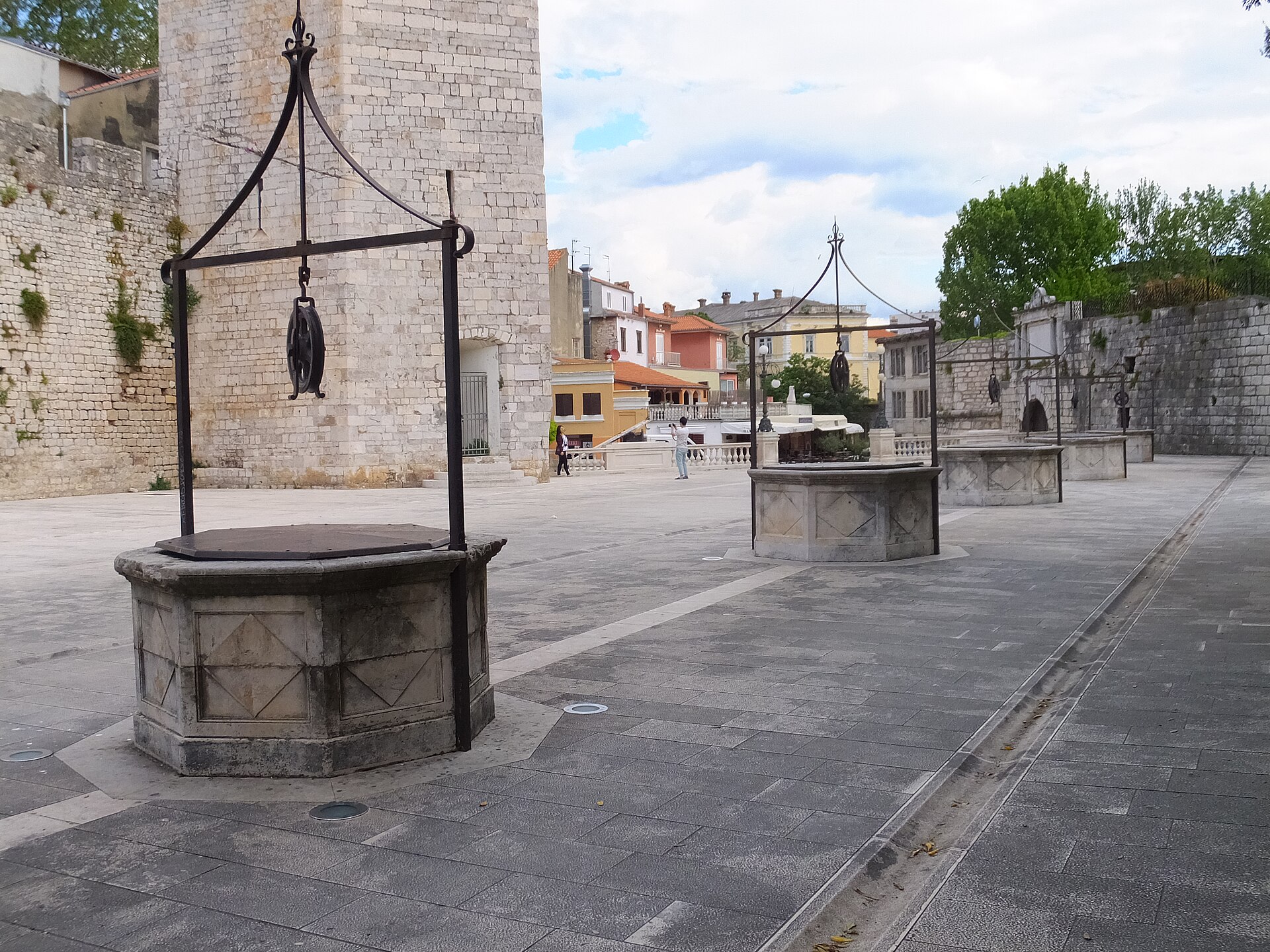
7. Discover the Five Wells Square and the Land Gate
As you explore the southeastern edge of the historic centre, you’ll come across a very picturesque and photogenic open space with a fascinating technical past. The Five Wells Square (Trg pet bunara) takes its name from the five identical stone wells built in one precise row, dating from the sixteenth century during the period of Venetian rule. These wells were connected to a huge underground cistern and served as a key source of drinking water for the whole town until the mid-nineteenth century, when a modern water supply was built.
Right beside the square lies the pleasant Queen Jelena Park, surrounded by mature trees, and the old Captain’s Tower, which offers a lovely view over the harbour. Walk a little further towards the sea and you’ll reach the most impressive entrance to the old town, the monumental Land Gate (Kopnena vrata).
This beautiful structure, resembling a Roman triumphal arch, was designed in 1543 by the famous Venetian architect Michele Sanmicheli. The gate is adorned with a relief of Saint Chrysogonus on horseback, and right above the main arch watches over a large winged Lion of St Mark, the unmistakable symbol of the powerful Venetian Republic, under whose rule the city fell for centuries.
💡 Tip: Pass through the Land Gate beyond the walls and you’ll reach the small, romantic Foša harbour, where traditional fishing boats are moored and you’ll find excellent restaurants.
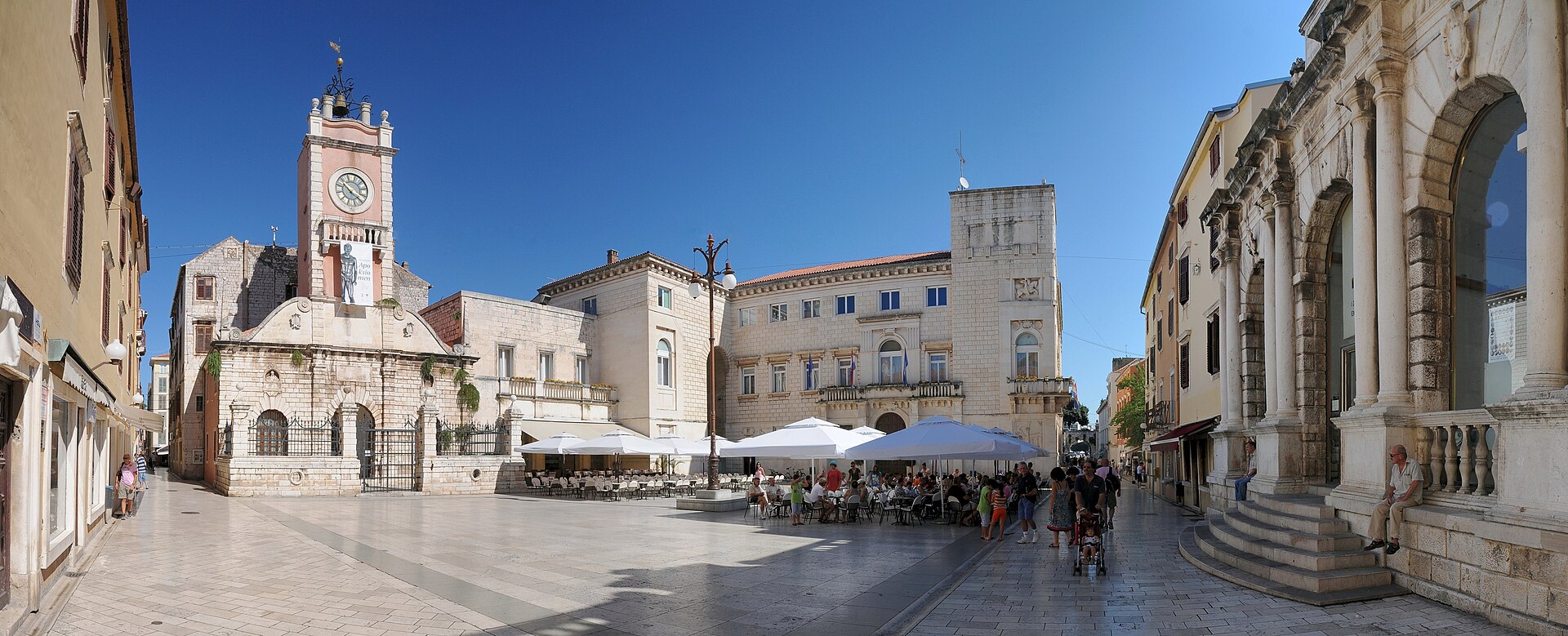

8. Soak Up the Atmosphere on Narodni Trg
While the Roman Forum is the historic heart of antiquity, the real centre of contemporary public life and meeting place for locals is Narodni trg. This cosy square has served as the main gathering point since the Middle Ages, and even today you’ll find the most popular cafés here, where locals quietly enjoy their strong espresso in the morning. It’s the perfect place to sit out on a terrace, soak up the sunshine and watch the lively bustle of a Dalmatian resort waking up.
The square is lined with beautiful historic buildings, dominated above all by the City Loggia from the sixteenth century and the old town hall. But your attention will surely be drawn to the charming city watchtower with its clock and picturesque arcade, dating from the mid-sixteenth century. Right next to it crouches the unassuming but architecturally precious pre-Romanesque little Church of St Lawrence (Sv. Lovre), one of the oldest surviving buildings in the city.
The whole square is paved with gleaming white stone worn perfectly smooth over the centuries, and from every side narrow lanes full of boutiques, bakeries and small craft shops converge on it.
💡 Tip: Try walking across the square early in the morning or at dusk, when the warm stone radiates heat beautifully and the cafés fill with a mix of Croatian and Italian.
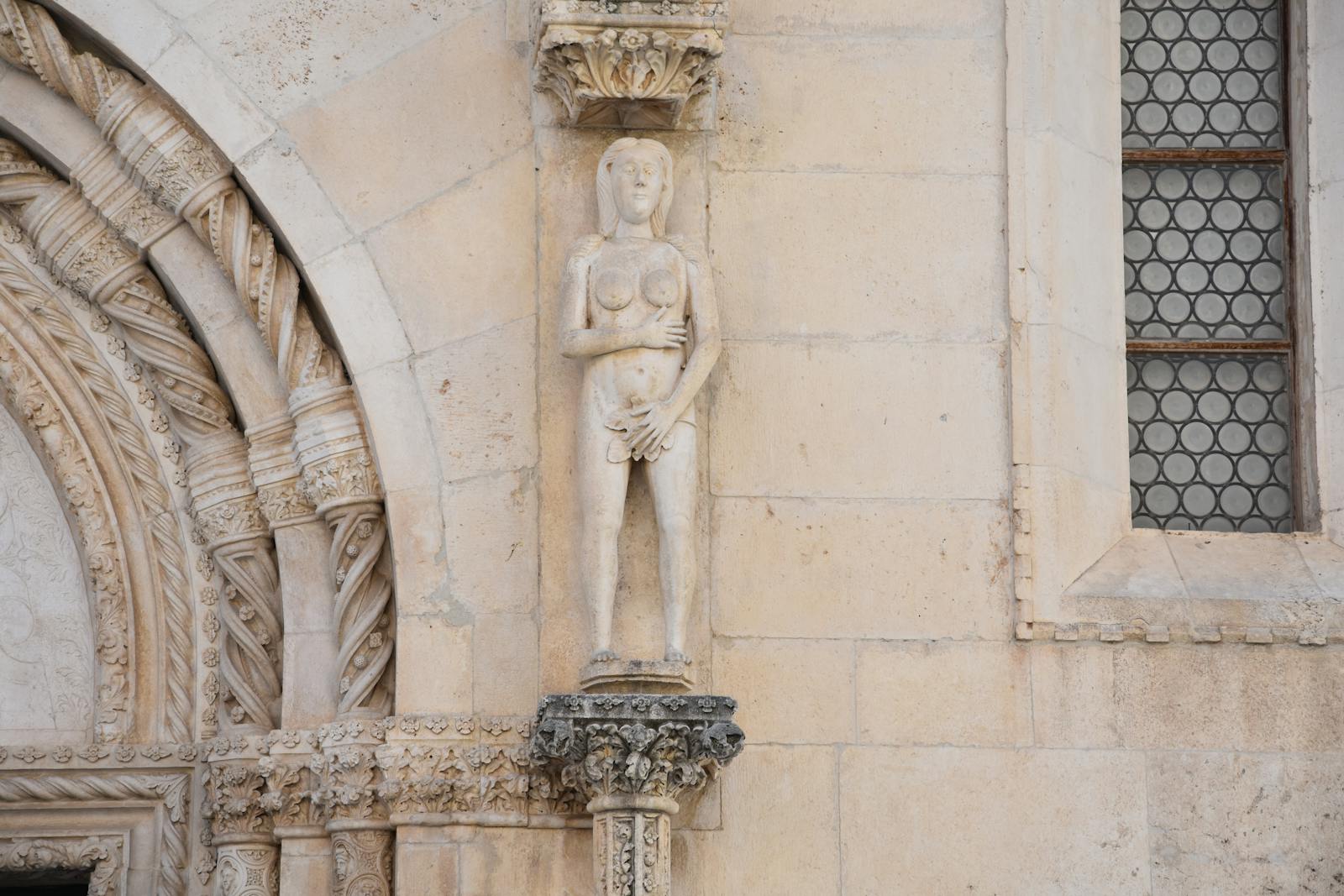
9. Be Dazzled at the Museum of Ancient Glass and the Gold and Silver Exhibition
If you’re a lover of history and the artistic crafts, Zadar offers two utterly unique collections without equal for miles around. The first is housed in the beautifully restored Cosmacendi Palace, home to the specialised Museum of Ancient Glass (Muzej antičkog stakla). Here you’ll find one of the largest collections of ancient glass in Europe, numbering thousands of incredibly fragile flasks, goblets and pieces of jewellery excavated across the Dalmatian region.
Besides the display cases of precious exhibits, a huge draw is the museum’s live workshop, where at regular intervals you can watch local glassmakers at work. Seeing with your own eyes how the glowing mass before the furnace is transformed into an elegant vase using traditional blowing techniques is a fascinating experience for adults and children alike.
The city’s second great pride is the exhibition known as The Gold and Silver of Zadar, tucked away in the rooms of the Convent of St Mary right next to the Roman Forum. This priceless collection of sacred goldwork, reliquaries, crosses and decorated vestments has been carefully looked after for centuries by the local Benedictine nuns, who once even saved these treasures from destruction during the bombing of the Second World War.
💡 Tip: Admission to the Gold and Silver exhibition costs around five euros (prices may vary slightly by season), and I’d definitely recommend dressing modestly with your shoulders covered.
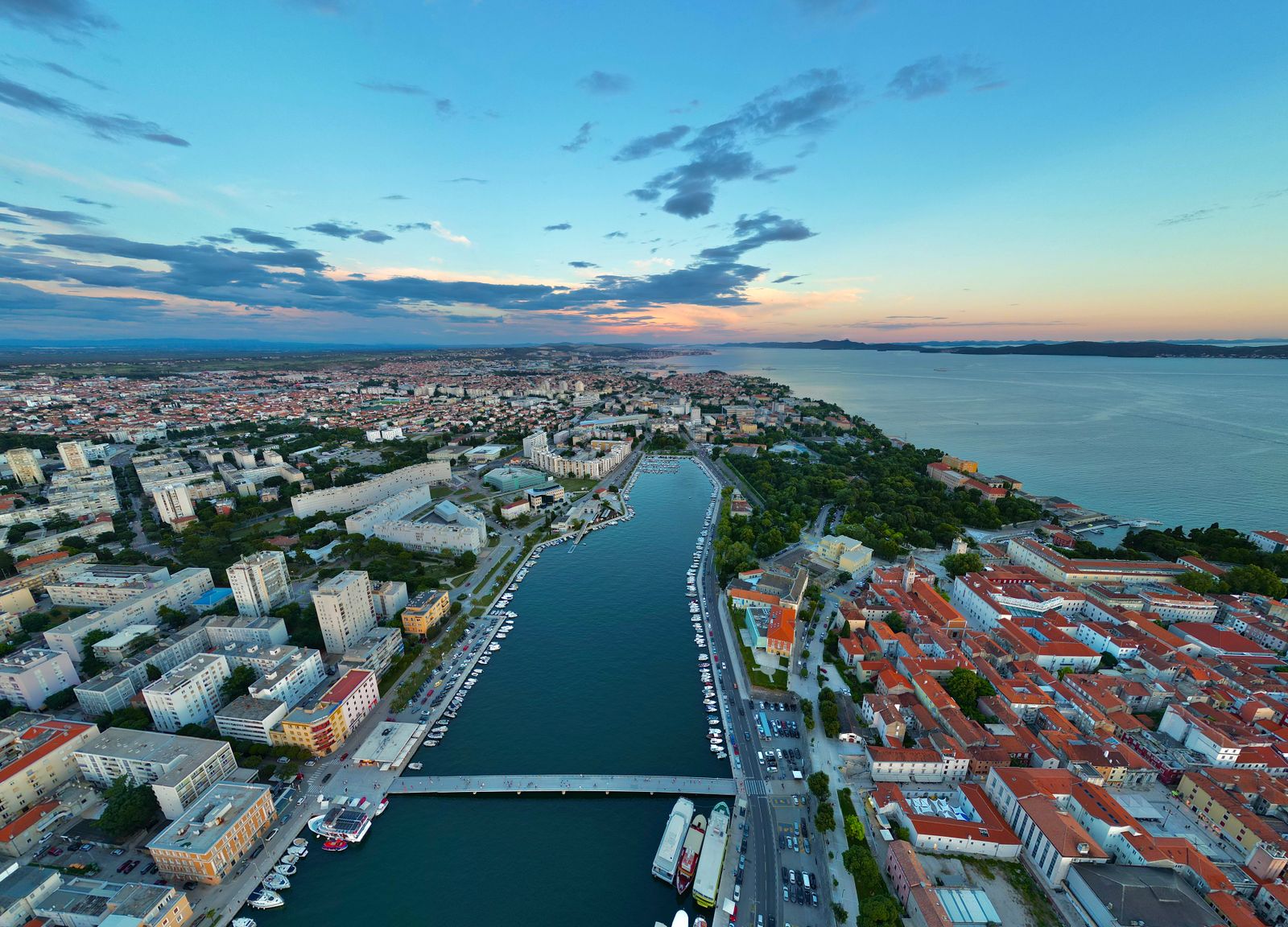
10. Relax on the City Beaches of Kolovare and Borik
After hours spent walking the scorching city pavement, you’re bound to crave a refreshing dip in the salty water, and the beaches right next to the centre are perfect for that. Just south of the peninsula begins the main city beach of Kolovare, stretching for roughly a kilometre and a half. It’s a mix of concrete platforms for comfortable sunbathing and stretches of fine pebbles or sand, and the beach holds a Blue Flag award for cleanliness — you’ll find all the facilities here, including plenty of beach bars.
If you’re looking for the ideal spot for families with younger children, head about four kilometres northwest of the centre to the Borik recreation zone. This sprawling beach offers a lovely gradual entry into the sea and finer gravel that sometimes turns to sand, so children can safely play in the shallows.
The Borik area is also superbly equipped for a full day of fun, with a large outdoor water park with flumes and slides right by the beach. Nearby you’ll also find plenty of parking, snack stands and rental places for pedalos or paddleboards, so it’s easy to keep yourself entertained all day.
💡 Tip: If you’re heading to Borik beach by car, it’s best to arrive first thing in the morning, as in summer the best parking spots in the shade of the pines fill up very quickly.
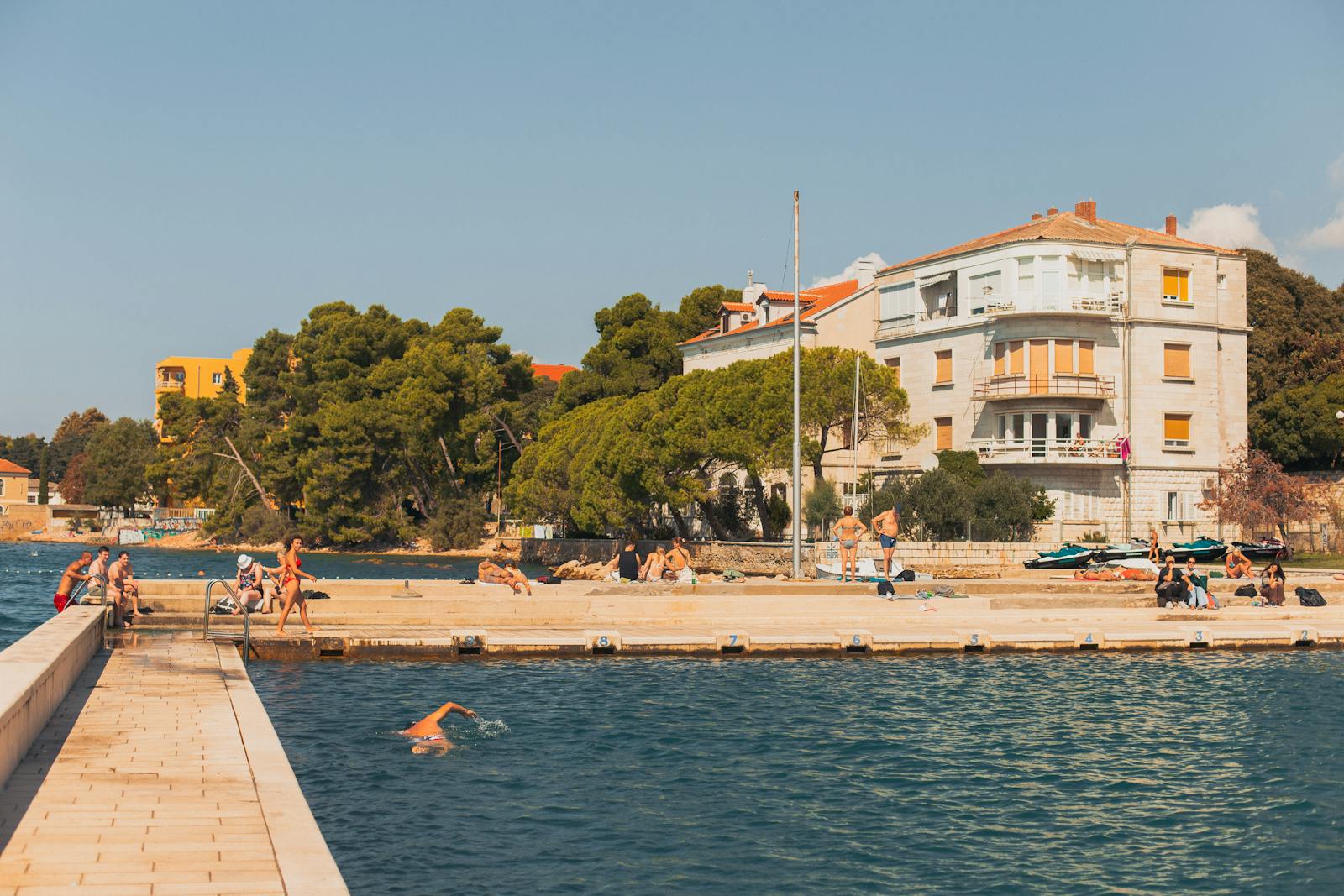
11. Find Peace at the Semi-Wild Punta Bajlo Beach
While Kolovare and Borik tend to be packed with tourists in the summer months and loud music plays from the bars, the locals swear by a small peninsula at the very southern edge of the city. Punta Bajlo beach is a hidden gem surrounded by a dense, fragrant pine grove that provides plenty of welcome natural shade even in the fiercest heat.
The coastline here is a little wilder, made up mostly of gorgeous white rocks from which you can safely jump straight into the crystal-clear deep water. Among the rocks you’ll also find smaller pebble coves that allow for a more comfortable entry into the sea. The whole place has an incredibly relaxed and peaceful atmosphere — the scent of resin in the air and the hum of cicadas.
Despite its semi-wild character, basic comfort isn’t lacking here: there’s a stylish café built right among the trees that makes a great frappé, and just a short walk from the beach you can park for free without any trouble. Punta Bajlo is simply the ideal choice for days when you just want to read a book, swim far from the shore and have complete peace from the bustle of the city.
💡 Tip: The rocky coast can be slippery and sharp in places, so I warmly recommend packing water shoes in your bag to avoid hurting your feet.
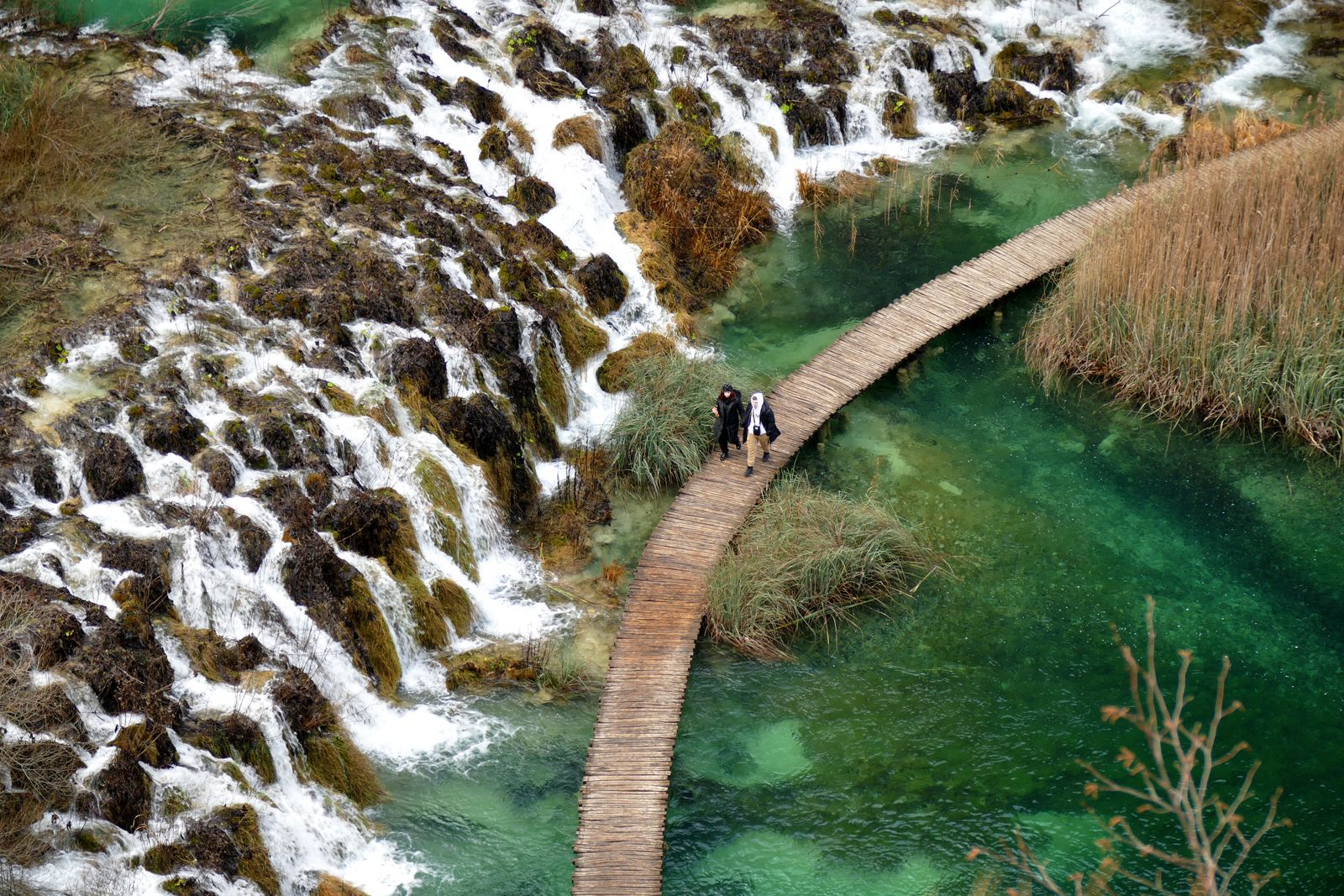
12. Chase Waterfalls at Plitvice Lakes and Krka National Parks
As I mentioned at the start, Zadar lies within ideal driving distance of Croatia’s most famous waterfalls, which you absolutely have to set aside time for. About an hour and a half by car inland sits the famous Plitvice Lakes National Park, a UNESCO World Heritage Site, offering a chain of sixteen emerald lakes connected by beautiful cascades. Ticket prices change dramatically with the season: in winter and spring you’ll pay a very pleasant €10 per adult, while at the peak of summer from June to September entry climbs to as much as €40 (this already includes the sightseeing boat and the little train).
The second fantastic option is Krka National Park, with its Lozovac entrance reachable from Zadar in about an hour. Here you’ll find the stunning, mighty Skradinski buk and Roški slap waterfalls and the picturesque monastery on the islet of Visovac. Just like at Plitvice, the summer entry here is around €40, dropping to €30 after 3 pm.
It’s important to flag one major change that catches a lot of tourists out unpleasantly. Since 2021, there has been a strict swimming ban below the Skradinski buk waterfalls in Krka National Park for nature protection reasons, so the photos of people bathing right beneath the cascades are now definitively a thing of the past.
💡 Tip: You can reach Krka National Park either by driving to the upper Lozovac car park, or by leaving your car in the town of Skradin and being taken to the waterfalls by boat, which is usually included in the ticket price in season.
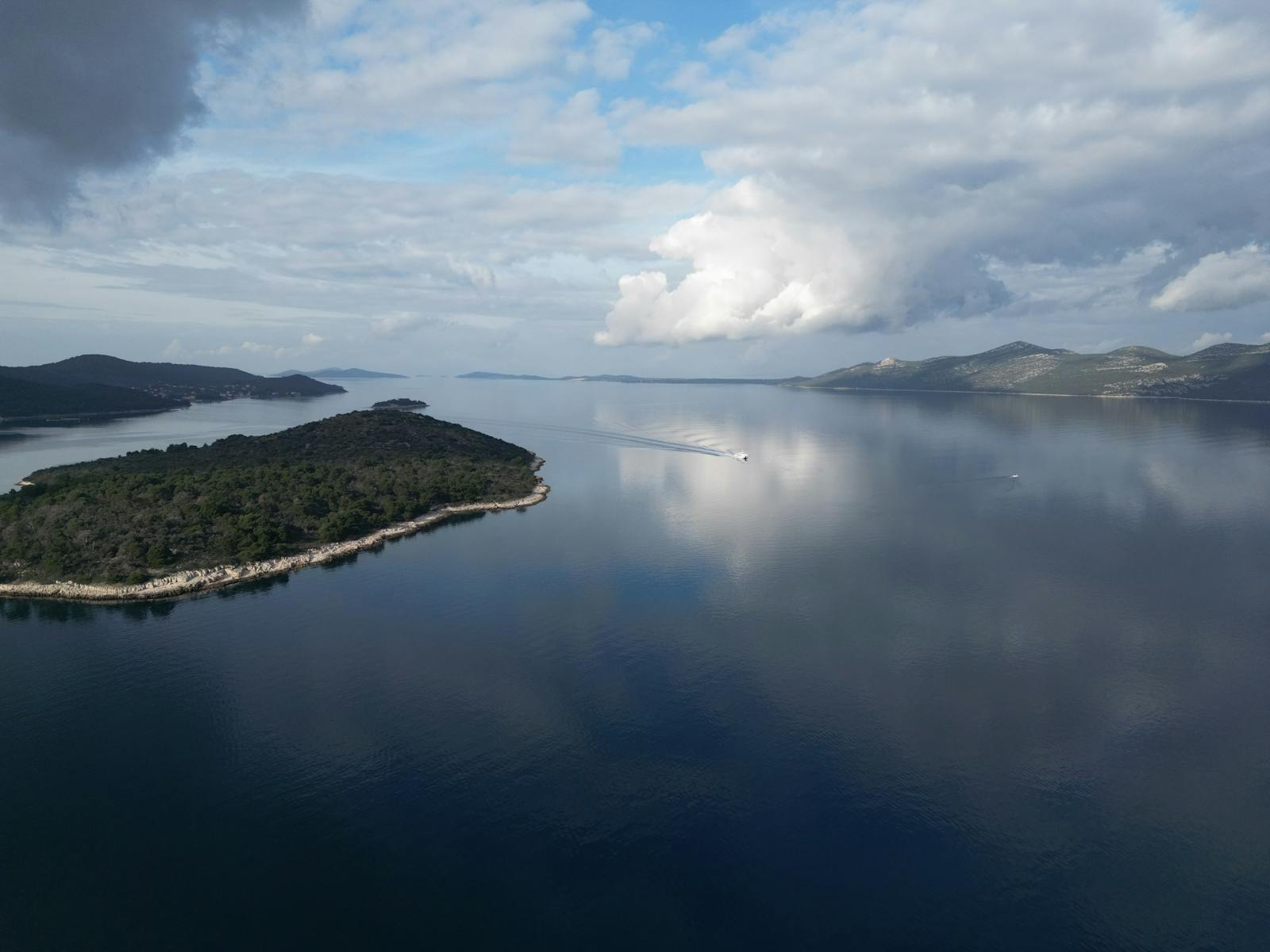
13. Discover Kornati National Park and Telašćica Nature Park by Boat
When you gaze southwest from the Zadar coast, you’ll see dozens of tiny islets on the horizon, forming the densest island labyrinth in the entire Mediterranean. Kornati National Park encompasses around a hundred islands, islets and reefs, distinctive for their utterly bare, white karst surface, which from afar resembles a lunar landscape or huge stone crowns rising from the sea.
There’s no way to reach these uninhabited islands other than by water, so the ideal option is to pay for a full-day organised boat trip with a local guide straight from the harbour. These trips tend to be brilliantly arranged, the national park entry fee is usually already included in the ticket, and during the cruise the crew often prepares a tasty lunch right on deck, with the chance to dive into the water in the middle of the open sea.
Most boat trips combine a visit to the Kornati with a stop on the neighbouring long island of Dugi otok, home to the protected Telašćica Nature Park. The biggest draw here is the staggering cliffs plunging dozens of metres vertically into the sea and the fantastic salt lake Mir, whose warm water is enriched with healing mud you can bathe in.
💡 Tip: On Dugi otok you’ll also find the famous Sakarun beach, with its fine sand and turquoise water, nicknamed the Croatian Caribbean thanks to its incredible colour.
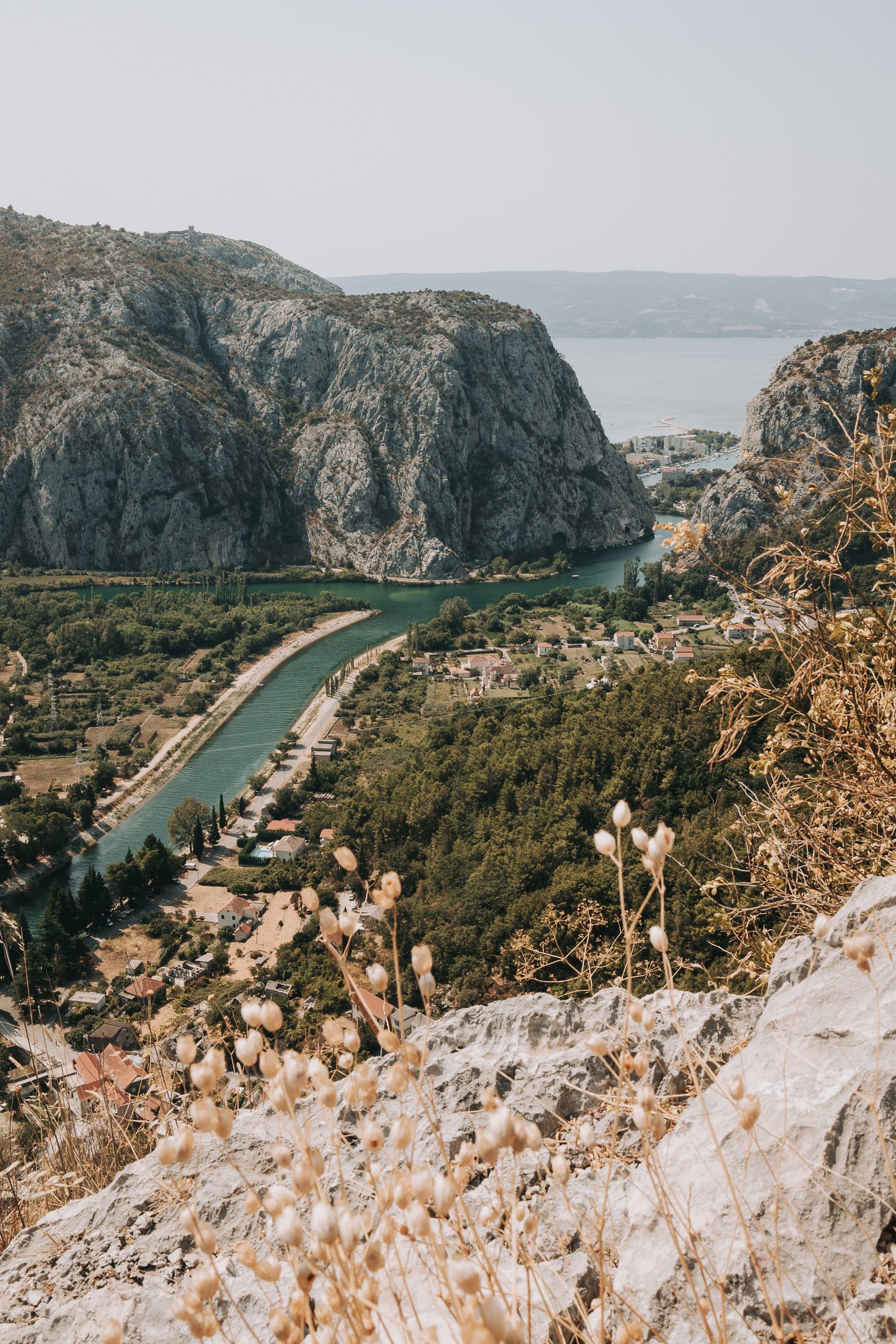
14. Swap the Sea for the Mountains in Paklenica National Park, or Explore Pag Island
If you’ve had enough of lounging on the beach and you’re missing a bit of exercise, all it takes is to hop in the car and after roughly forty-five minutes’ drive north you’ll find yourself in a completely different world. Paklenica National Park, listed as a UNESCO Biosphere Reserve, spreads across the steep slopes of the mighty Velebit mountain range. The main draws here are two huge limestone canyons – Velika and Mala Paklenica – which cut deep into the massif and offer treks from sea level all the way up to over seventeen hundred metres. The place is also an absolute mecca for rock climbers from all over Europe, with entry kept at a friendly €6 to €10 depending on the season.
For lovers of bizarre landscapes, I’d recommend heading a little further northwest, where the incredibly photogenic island of Pag lies. The bonus is that you can reach its southern tip comfortably by car from the mainland via a long bridge, so there are no ferries to worry about.
The landscape on Pag looks utterly barren, scoured by the strong bora wind, but it’s in these harsh conditions that the best local specialities are born. The island is world-famous for its delicate lace and, above all, its excellent Pag cheese (Paški sir), whose distinctive salty taste comes from the fact that the sheep graze on herbs coated in sea salt.
💡 Tip: When hiking in Paklenica, definitely consider visiting the Manita peć stalactite cave, reached by a beautiful, roughly hour-and-a-half climbing trail.
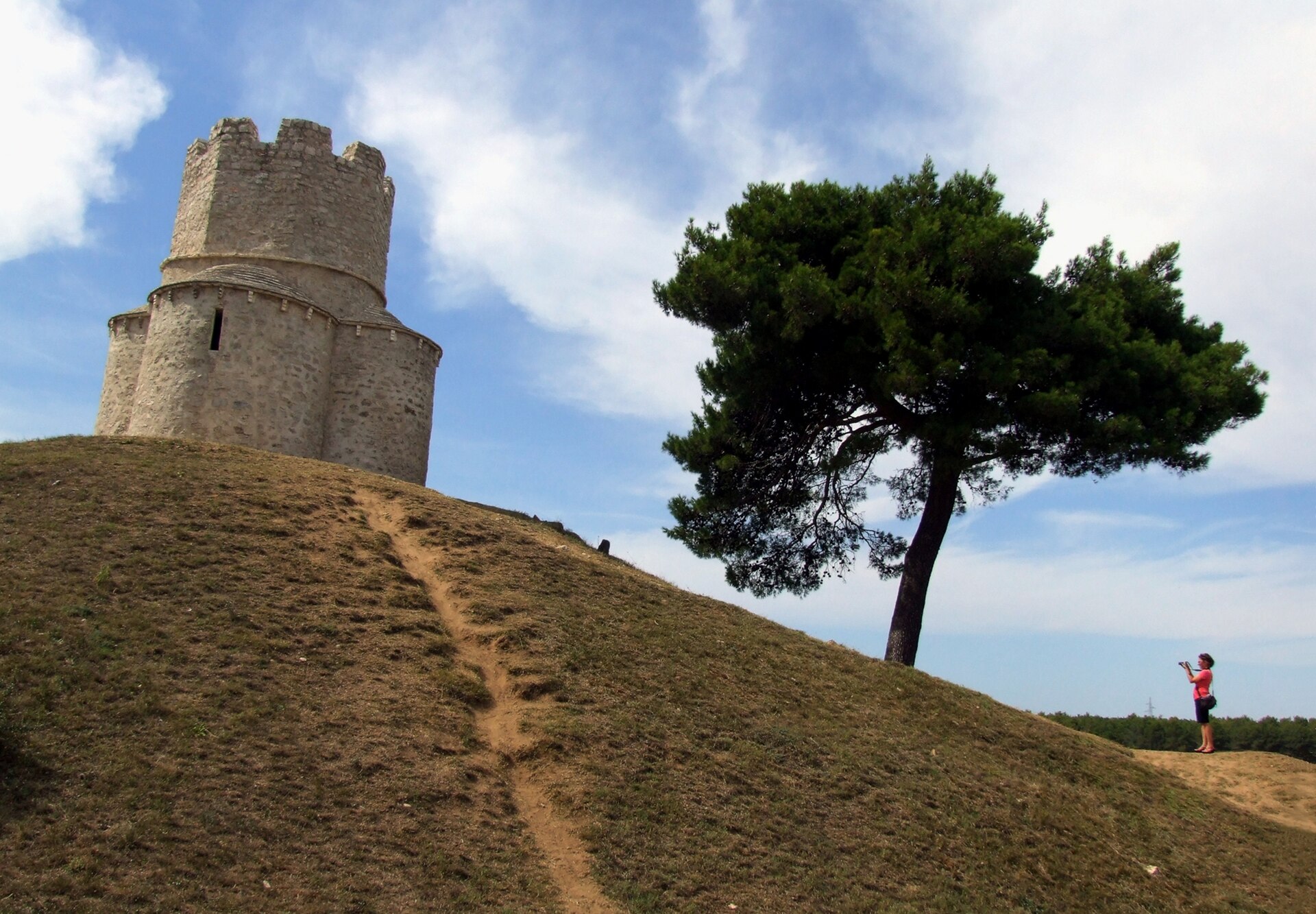
15. Get Muddy in the Royal Town of Nin
About fifteen kilometres north of Zadar lies an unassuming little town of absolutely key importance to Croatian history. Nin is, in fact, the oldest Croatian royal town, once home to the first kings and bishops. Its historic core spreads charmingly across a tiny islet connected to the mainland by two stone bridges, and you’ll also find the adorable pre-Romanesque little Church of the Holy Cross here, which proudly holds the title of the smallest cathedral in the world.
Besides its history, Nin is also famous for two natural curiosities. The first is the vast shallow salt fields (Solana Nin), where sea salt has been harvested in the traditional way with the help of sun and wind for over fifteen hundred years. You can visit the salt museum here and buy excellent fleur de sel as a wonderful edible souvenir to take home.
The second and, for many, the most fun curiosity is the area near the long sandy Queen’s Beach (Kraljičina plaža), where there’s a deposit of healing black mud known as peloid. The water here is shallow and incredibly warm, and you’ll commonly see people smeared from head to toe in the dark mud, said to have beneficial effects on joints and skin problems.
💡 Tip: The sandy Queen’s Beach, with its very shallow water, is an absolutely brilliant spot for families with small children, who can safely play and build sandcastles here.
Map of points of interest for your phone
Where to Go Next from Zadar
If you have a car and want to explore more corners of this beautiful country, Zadar is an absolutely brilliant springboard. If you’re craving more stunning waterfalls and emerald pools, you’ll find detailed information in our article on Krka National Park or in our guide to Plitvice Lakes. About an hour’s drive south along the motorway you’ll reach the historic town of Šibenik with its stunning stone cathedral, and if you go a little further, vibrant Split awaits you with its majestic Diocletian’s Palace.
If you’re drawn more to rugged scenery, read our tips for a trip to the stony island of Pag, where you can taste the finest cheeses. And if you’re still mulling over which route to take to southern Europe at all, check out our article on the beautiful and scenic drive through the Julian Alps to Zadar. You’ll find plenty more inspiration and practical advice in our big complete guide to Croatia.
Frequently Asked Questions
How many days to go to Zadar for?
You can easily walk through the historic center itself in a single day, but it would be a huge shame not to stay longer. If you want to use the city as a strategic base, I recommend setting aside three to five days so you can visit at least two national parks in the area and enjoy swimming at the nearby beaches.
How to best get to the city?
Besides the classic car route along the Croatian A1 motorway (the journey from the Czech Republic takes approximately 9 to 11 hours), a huge advantage is the existence of an international airport (ZAD), which is located just ten kilometers from the center. Low-cost airlines such as Ryanair fly here, and you can comfortably get from the airport to the center by shuttle bus for around four euros, which stops at the main train station and at the port.
Where can you park in the city?
The entire historic center on the peninsula is largely a pedestrian zone or parking is only for residents, so I don’t recommend driving inside. It’s best to leave your car in the large parking lots along the city walls (for example near the Land Gate at Foša harbor), but if you’re planning a longer stay, definitely find accommodation with its own parking in the Borik or Diklo neighborhoods.
Are there sandy beaches in the area?
Right in the city, concrete platforms and fine pebbles prevail (Kolovare, Borik), but if you’re craving real sand, you have two great options. You can head to the stunning Sakarun beach on Dugi otok island with its turquoise water, or to the nearby town of Nin to the shallow sandy Queen’s Beach, which is perfect for families.
What good food can I try here as a vegetarian?
Dalmatian cuisine is full of fish and slow-cooked beef (the local specialty is called pašticada), but as a vegetarian, you definitely won’t suffer. I recommend trying the excellent local vegetable risottos, creamy tomato soups, or the wonderful blitva, which is a traditional side dish made from chard and potatoes drizzled with a generous amount of olive oil. Great veggie food can be found, for example, at The Botanist or Hedonist.
What is Maraschino and what is it made from?
Maraschino is an iconic sweet liqueur that has been inextricably linked to the city’s history since the sixteenth century. It’s made by distilling a special variety of small, bitter Marasca cherries, including their pits and leaves, which gives it a distinctive almond flavor. Definitely have it after dinner as an excellent digestif – vegetarians and vegans can enjoy it without any worries.
Where can I find that famous Hitchcock sunset?
Director Alfred Hitchcock watched the sunset in 1964 from the window of Hotel Zagreb on the Riva waterfront. If you want the best experience, head about half an hour before dusk to the northwestern tip of the peninsula right to the Sea Organ, from where you’ll have a perfect view of the sun dropping below the horizon accompanied by the music of the sea waves.
Tips and Tricks for Your Vacation
Don’t Overpay for Flights
Search for flights on Kayak. It’s our favorite search engine because it scans the websites of all airlines and always finds the cheapest connection.
Book Your Accommodation Smartly
The best experiences we’ve had when looking for accommodation (from Alaska to Morocco) are with Booking.com, where hotels, apartments, and entire houses are usually the cheapest and most widely available.
 🚗 Car rental on the roadVerified rental cars in Croatia
Search with the DiscoverCars comparison engine — it compares prices from dozens of local and international rental companies, and most bookings come with free cancellation.
Compare car prices in Croatia →Don’t Forget Travel Insurance
Good travel insurance will protect you against illness, accidents, theft, or flight cancellations. We’ve had a few hospital visits abroad, so we know how important it is to have proper insurance arranged.
Where we insure ourselves: SafetyWing (simple monthly subscription) and TrueTraveller (for extra-long trips).
Find the Best Experiences
Get Your Guide is a huge online marketplace where you can book guided walks, trips, skip-the-line tickets, tours, and much more. We always find some extra fun there!