If you’re dreaming of a summer beach holiday or a spring road trip in search of incredible food, Istria, Croatia is a sure bet. This largest Croatian peninsula, sitting between the Gulf of Trieste and the Kvarner Bay, offers a truly unique blend of cultures that will charm you in an instant. Along the coast you’ll find historic towns with Venetian architecture, while inland a rolling landscape of vineyards, olive groves, and medieval hilltop villages awaits.
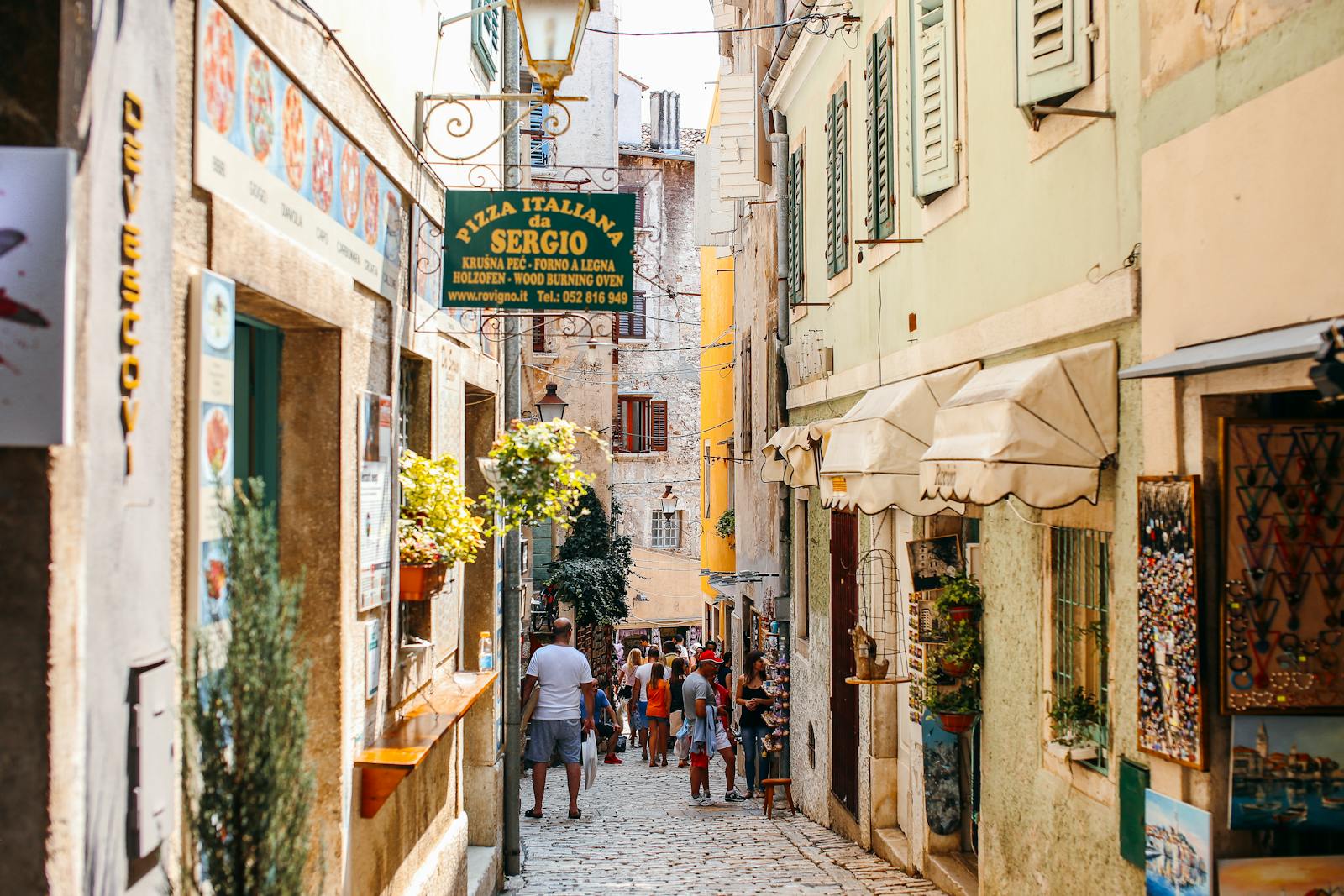
Thanks to this very interior, Istria is often nicknamed the Croatian Tuscany, and it’s safe to say the comparison is well deserved. The local atmosphere is heavily shaped by Italian culture, something you’ll notice not only in the outstanding cuisine but also in the official bilingualism of the coastal towns. You’ll commonly see signs in both Croatian and Italian, so don’t be surprised when a sign points you toward Rovigno instead of Rovinj.
In this article you’ll find 15 things to see and do in Istria so you can make the most of your holiday. I’ll tell you which towns you simply can’t miss, where to taste the best truffles, and which natural corners are worth exploring. We won’t forget practical info on getting around, choosing accommodation, and tips for the most beautiful beaches either.
TL;DR
- Most beautiful town: Rovinj is the absolute jewel of the peninsula — don’t miss its old town with narrow lanes and the dominant Church of St. Euphemia.
- History and antiquity: For Roman monuments head to Pula and its enormous ancient arena, while lovers of Byzantine art will appreciate the Euphrasian Basilica in Poreč.
- The magic of the interior: Visit the hilltop towns of Motovun, Grožnjan, and Hum, which offer gorgeous views, peace, and an artistic atmosphere.
- Foodie paradise: Istria is world-famous for its truffles and excellent olive oil — be sure to try the local fuži pasta and Malvazija wine.
- Natural wonders: In the south of the peninsula, explore the wild coastline of Cape Kamenjak nature park, and the Brijuni National Park is well worth a boat trip.
- Getting there: The easiest options from the UK are direct flights to Pula Airport, or a flight to Trieste or Venice followed by a short drive. On the peninsula itself you’ll use the Y-shaped motorway.
- Best time to visit: Spring and autumn are ideal for sightseeing and food, while summer is the obvious choice for swimming — just be ready for the crowds.
The full destination guide: Istria & Kvarner — guide and what to see
When to visit Istria
Choosing the perfect time depends mostly on what you want from your holiday. If your main goal is swimming in the sea and topping up your tan, go in July or August. Air temperatures during this period typically hover around 27 to 30 degrees, the sea is beautifully warm, but you’ll need to be prepared for beaches and historic towns packed with tourists.
For an active holiday full of day trips, May, June, or September are your best bets. Temperatures are very pleasant, usually between 19 and 24 degrees, which is ideal for sightseeing and cycling. By June and September you can usually swim without any problem, but you’ll avoid the peak summer rush and accommodation prices tend to be a touch friendlier.
If you’re mainly drawn by the local food scene, consider a visit in October. This is when the main season for the rarest white truffles peaks, and many inland villages host all sorts of culinary festivals. On top of that, the autumn landscape turns gorgeous warm hues, giving the Croatian Tuscany an incredibly romantic atmosphere.
Where to stay in Istria
💡 Tip for accommodation and experiences: We love searching for places to stay on Booking.com, which usually has the best cancellation policies. For tickets, tours, and activities, it pays to compare and book through GetYourGuide.
Istria offers a huge range of options, so there’s something for every type of traveller. If you’re after romance and don’t mind paying extra for a prime location, stay right in Rovinj or its immediate surroundings. Families, on the other hand, often head for the area around Poreč or the Zelena Laguna resorts, where you’ll find perfect infrastructure, beaches with a gentle slope into the sea, and plenty of kids’ entertainment programmes.
For those wanting to combine swimming with ancient history and wild nature, Pula or the more southerly Medulin and Premantura make a great base. From there, the stunning Cape Kamenjak is just a short hop away. Lovers of peace, wine, and good food should consider staying inland, where you’ll find gorgeous stone villas with pools and authentic agritourism estates surrounded by olive groves.
Here are a few specific accommodation picks you can easily book through Booking:
- Hotel Lone in Rovinj is a design five-star hotel set right next to the Zlatni Rt forest park. It offers top-class wellness facilities and beautiful pools, making it an ideal choice for a luxurious couples’ getaway.
- Boutique Hotel Kaštel sits right at the top of the hill in historic Motovun. If you want to experience the authentic atmosphere of the interior, soak up views over the Mirna river valley, and taste truffles, you’ll be thrilled here.
- Maistra Select Amarin Resort just outside Rovinj is absolutely fantastic for families. You’ll find spacious apartments, several pools, and a pebble beach, plus a regular water taxi runs from here into central Rovinj.
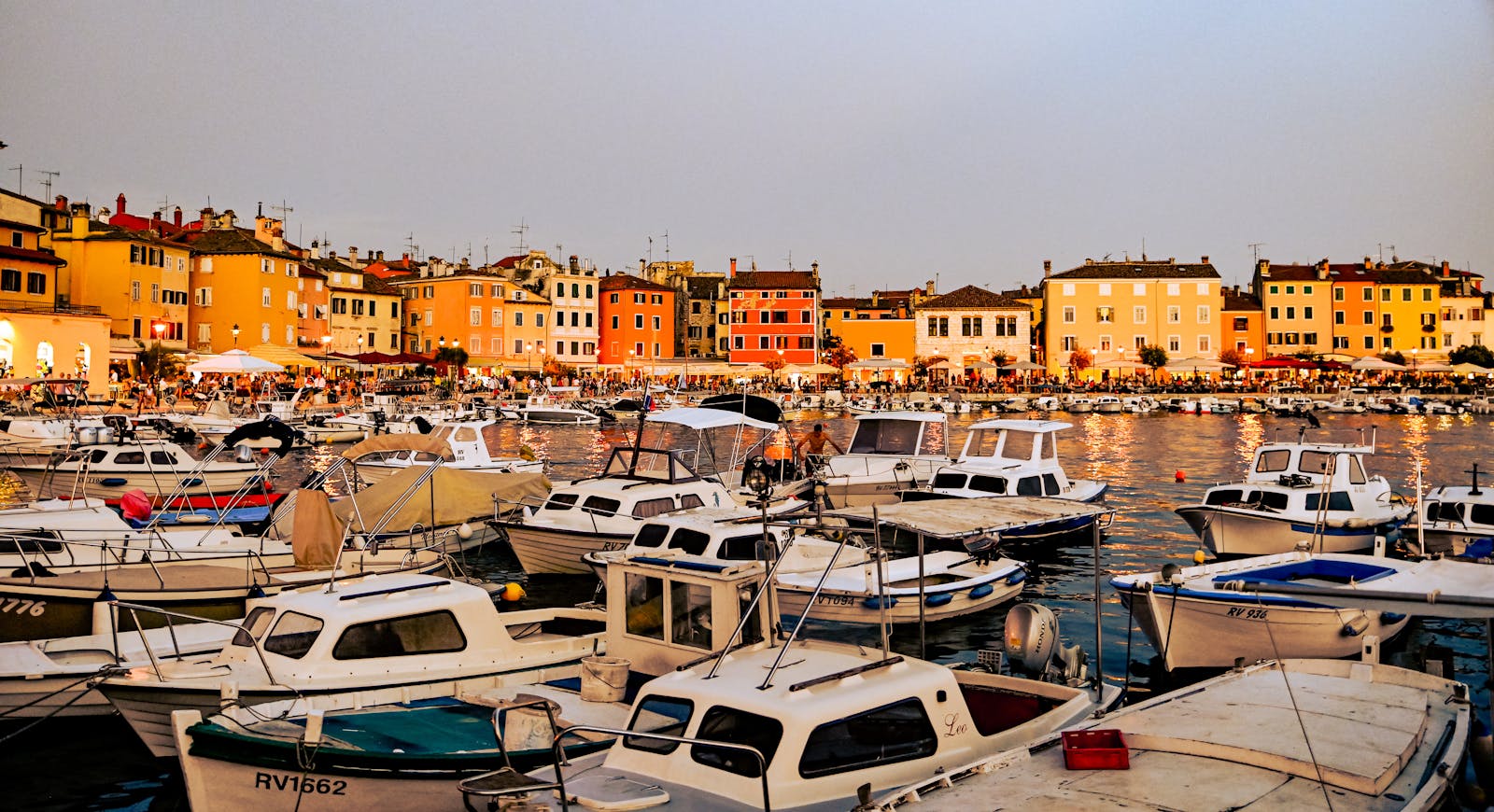
15 things to see and do in Istria
Let’s take a look together at the very best this diverse peninsula has to offer. Whether you love wandering through narrow lanes, hunting for the most beautiful beaches, or looking forward to unforgettable culinary experiences, the following places shouldn’t be missing from your itinerary.
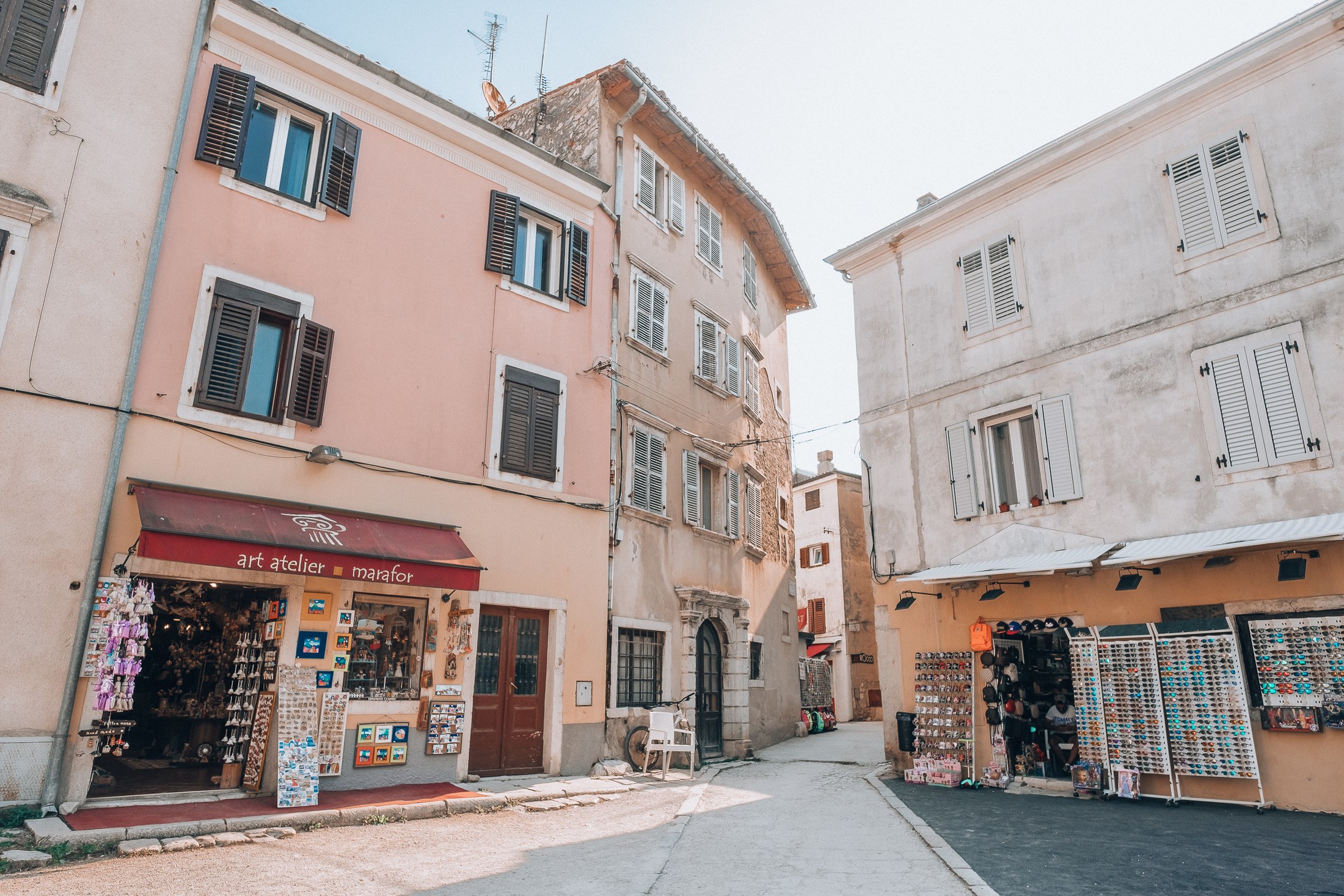
1. Rovinj and the Church of St. Euphemia
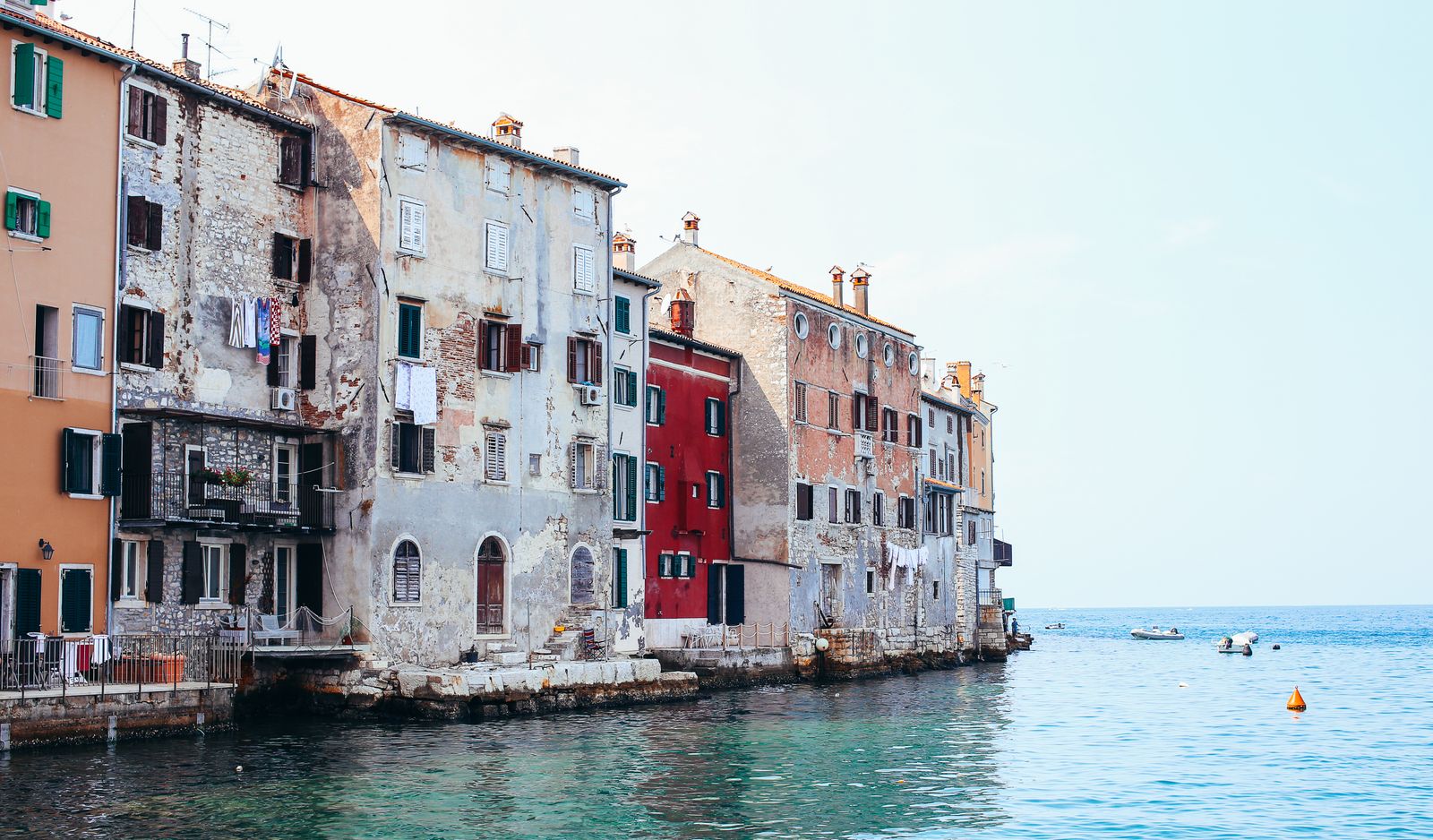
Rovinj is without doubt the most photogenic and romantic town in all of Istria. Its old town spreads across a peninsula that was originally an island, connected to the mainland only in the 18th century. Houses here literally rise straight out of the sea, and the narrow cobbled lanes instantly transport you back in time, so you’ll feel more like you’re in a miniature Venice than in Croatia.
The town’s biggest landmark is the Baroque Church of St. Euphemia, perched right at the top of the hill. This 18th-century building houses a sarcophagus with the relics of the town’s patron saint, which according to legend floated in by sea around the year 800. Entry to the church itself is free, but for around €4 you can climb the 60-metre bell tower — a faithful copy of the campanile of St. Mark’s in Venice — and enjoy a breathtaking view over the nearby archipelago.
On the way up to the church, be sure to walk along the famous Grisia Street, lined with little galleries, studios, and ceramic shops. On the second Sunday of every August, this street transforms into a huge open-air exhibition that draws artists from far and wide. Don’t forget to also take in the 17th-century Balbi Arch and soak up the atmosphere in the picturesque fishing harbour, full of traditional boats called batana.
💡 Tip: Cars are banned from the old town, so park at one of the car parks on the edge of the centre. In high season I recommend arriving really early in the morning to avoid the queues and find a free spot.
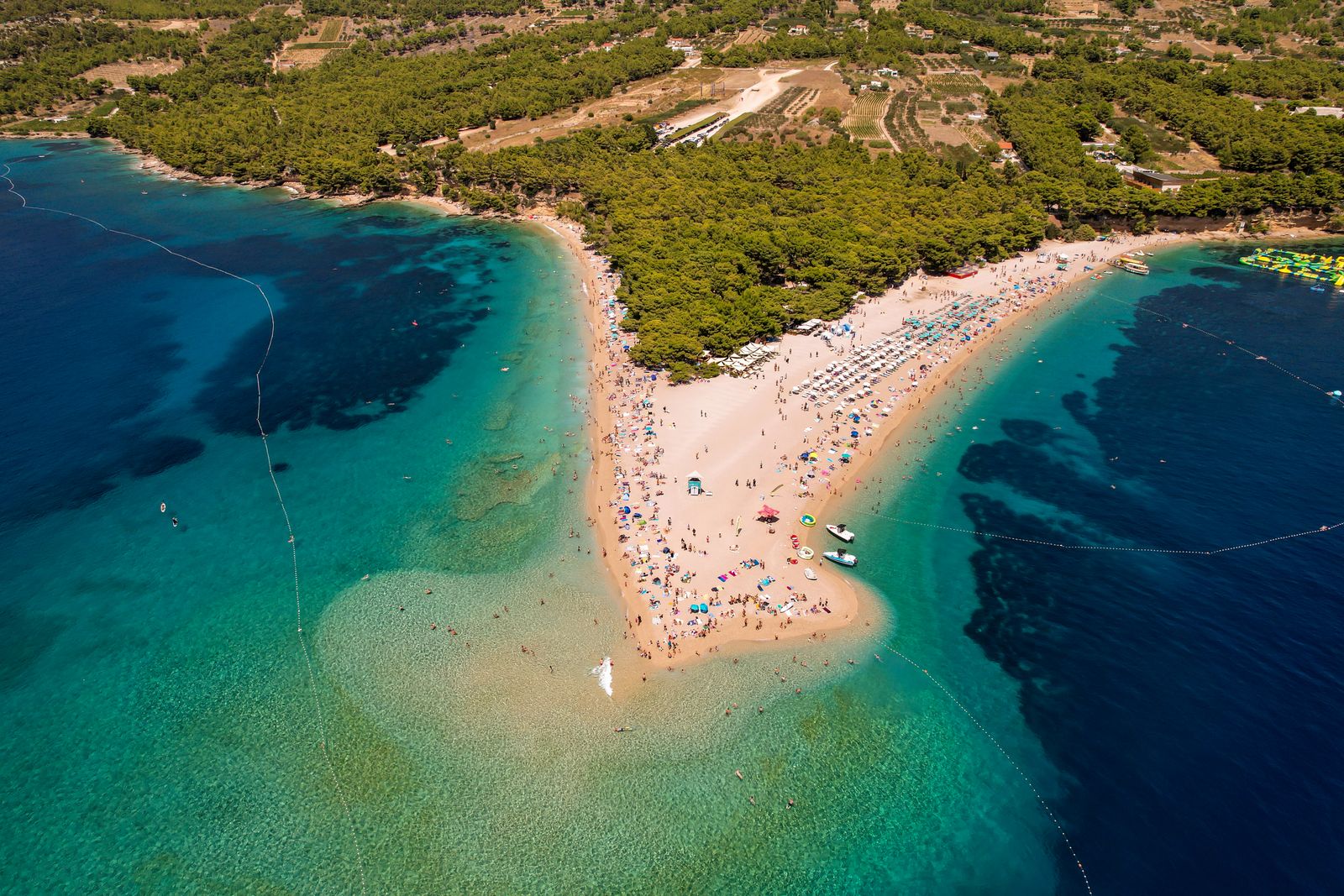
2. Zlatni Rt Forest Park (Punta Corrente)
Just about a 15-minute walk south of central Rovinj lies the gorgeous Zlatni Rt forest park, also known as Punta Corrente. This protected nature park covering 52 hectares was established back in the late 19th century and offers the perfect escape from the summer heat. You’ll find dense stands of pines, cypresses, and even exotic trees like cedars and ginkgo biloba.
The park is fringed by beautiful coves with pebble and rocky beaches, the most famous being Lone and Škaraba bays. The water here is incredibly clear and turquoise, making the park an ideal spot for a full day of swimming and snorkelling. Thanks to the tall trees, you’ll always find shade easily, so you can even do without a parasol.
Beyond swimming, Zlatni Rt is a paradise for active relaxation. The whole park is laced with wide gravel paths that are perfect for cycling, running, or long walks with a pram. If you enjoy a bit of adrenaline, you’ll even find a former quarry here that today serves as a popular free-climbing spot, with routes of varying difficulty right above the sea.
💡 Tip: Rent a bike in Rovinj and ride the whole coastline of the park all the way to the cape — it’s a great way to discover smaller, more secluded coves where you’ll have more privacy while swimming.
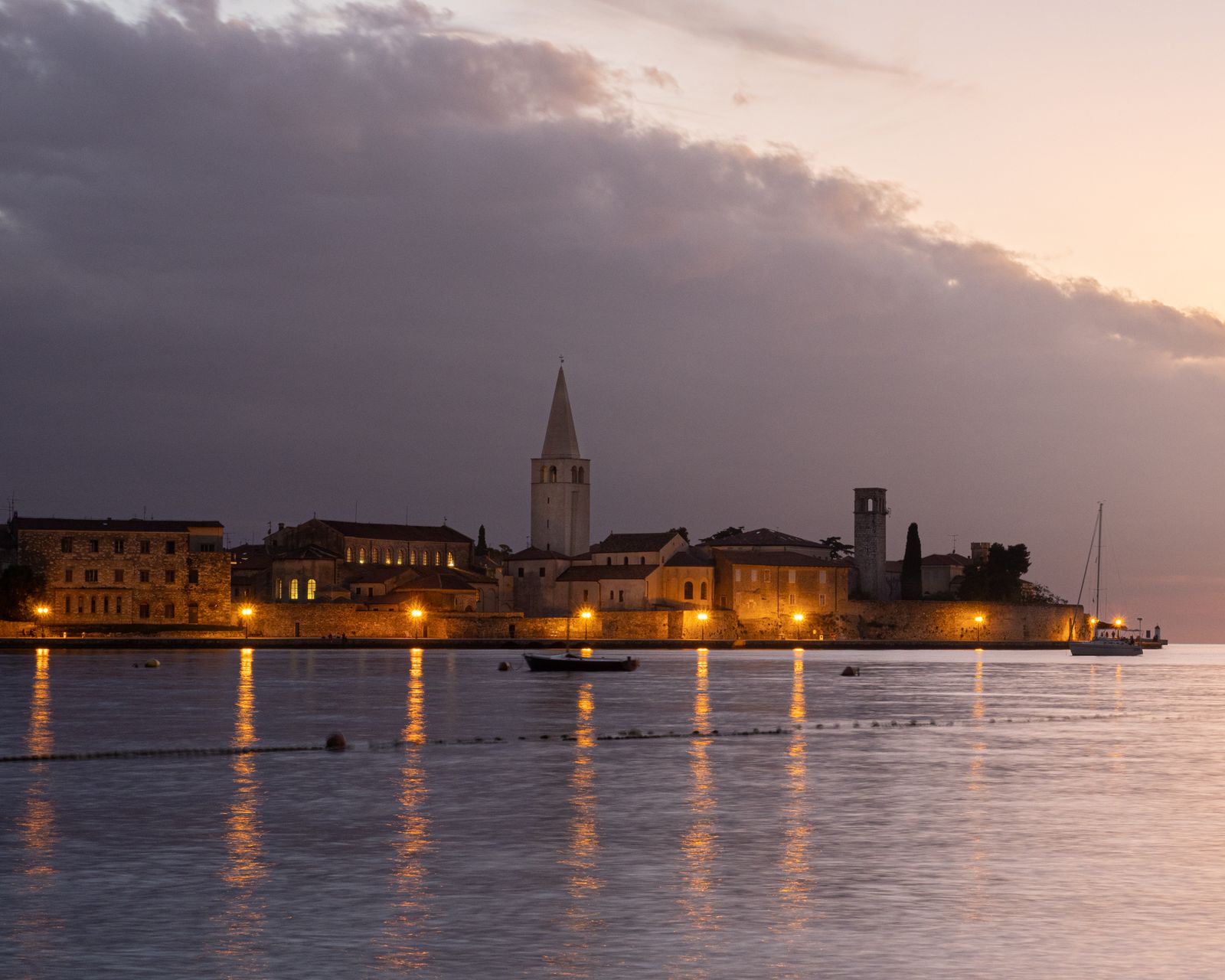
3. Poreč and the Euphrasian Basilica
The town of Poreč has preserved its original Roman urban layout to this day, so you’ll stroll along the main streets of Decumanus and Cardo, just as the ancient Romans did. At the end of the old town you can admire the remains of the ancient Marafor forum and the ruins of the temples of Neptune and Mars. But Poreč is known worldwide above all for one truly exceptional monument.
That is the early Byzantine Euphrasian Basilica from the 6th century, added to the UNESCO World Heritage list in 1997. This complex was built by Bishop Euphrasius, and its greatest treasure is the breathtaking golden mosaics in the main apse. These mosaics depict the Virgin Mary with angels and the bishop himself presenting her with a model of the church, and they rank among the most precious examples of Byzantine art in Europe.
Admission to the whole complex costs around €10 (students usually get a discount) and includes not only a tour of the basilica itself but also the adjacent bishop’s palace, the museum, and a climb up the bell tower. From the top you’ll enjoy a beautiful view over the red rooftops of the old town and the blue sea. In summer it’s open until late evening, but bear in mind that the complex is usually closed to tourists on Sundays and holidays.
💡 Tip: In and around Poreč you’ll also find a huge number of popular holiday resorts, such as Lanterna or Zelena Laguna, which boast beautiful beaches awarded the Blue Flag for cleanliness and quality of service.
4. Pula and its imposing arena
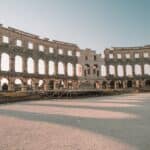
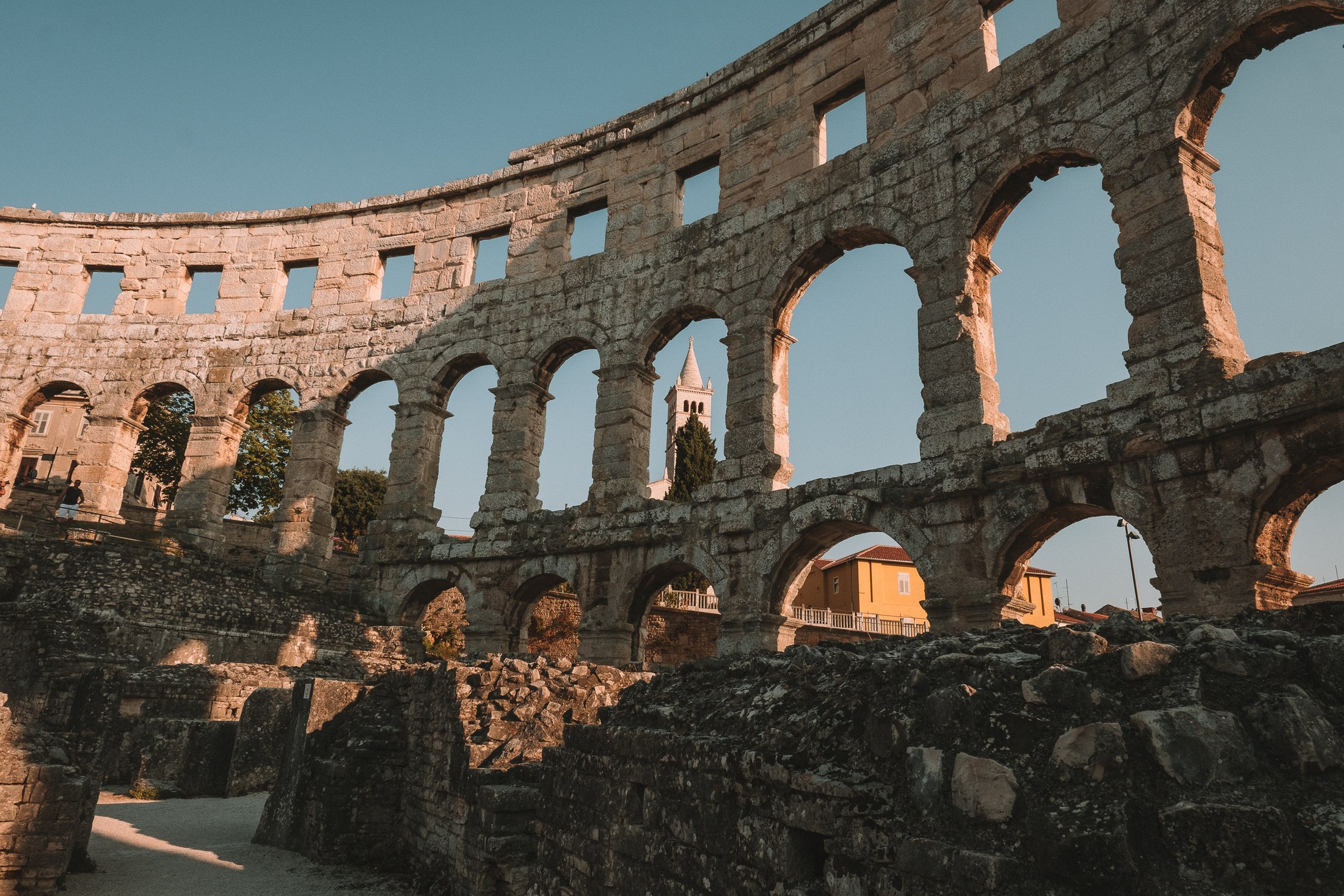
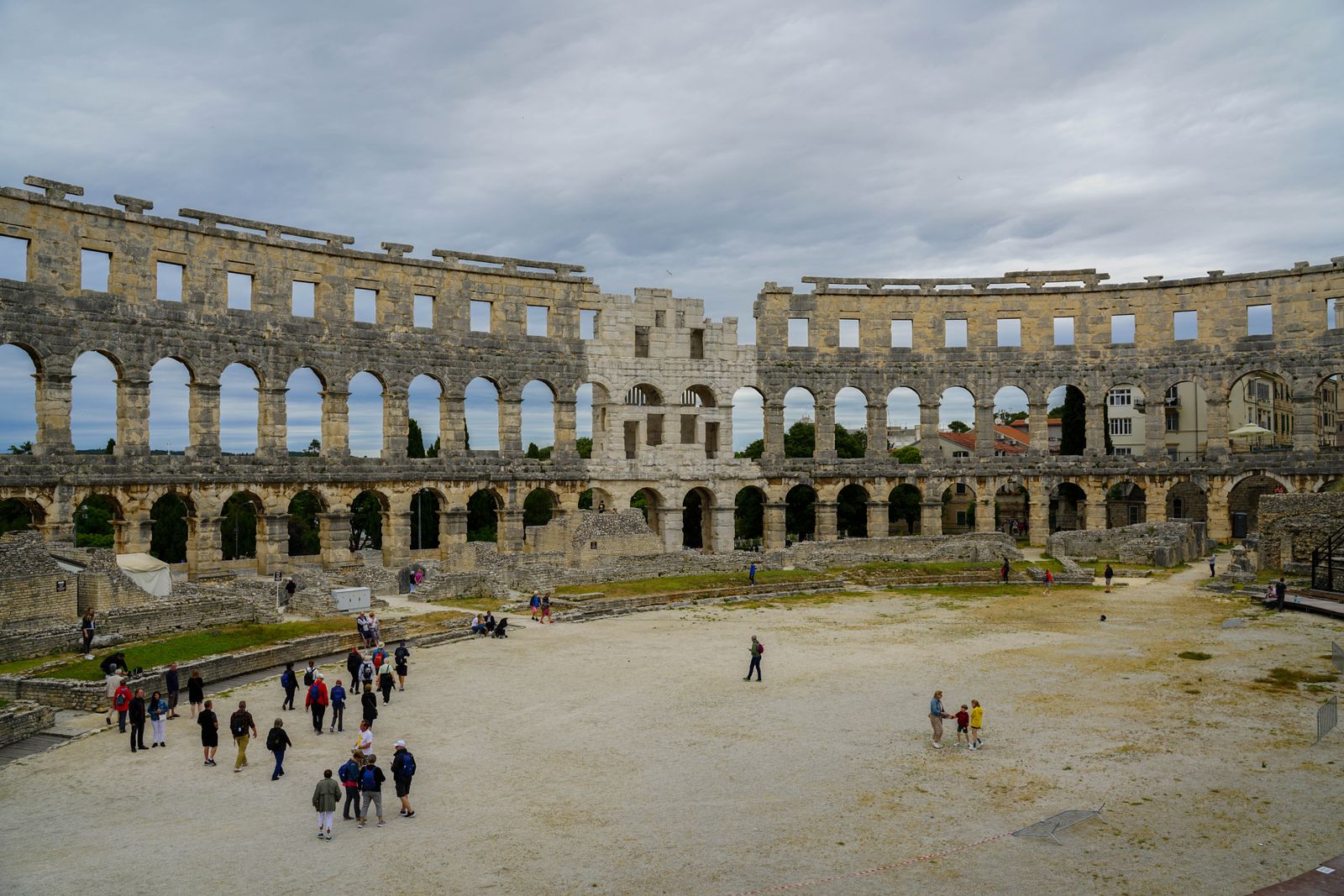
Pula is the largest town on the entire Istrian peninsula, and its atmosphere is markedly different from the charming lanes of Rovinj. This city breathes deep ancient history, and its absolute landmark is the staggering Roman amphitheatre, known simply as the Arena. Built in the 1st century AD, it is one of the six largest surviving Roman arenas in the world and is remarkably well preserved.
Admission to the amphitheatre comes to roughly €10, and you can explore not just the arena floor where gladiators once fought but also the extensive underground spaces. Today the arena comes alive with culture, hosting spectacular summer concerts and a famous film festival. Opening hours vary by month, but in July and August you can visit from 8 a.m. until as late as 11 p.m.
Beyond the arena, Pula offers other significant ancient monuments. As you stroll through the centre you definitely won’t miss the elegant Temple of Augustus on the main square, the richly decorated Arch of the Sergii, or the ancient Hercules Gate. The city feels lively and a little more industrial, but for history lovers a visit is an absolute must.
💡 Tip: If this ancient city has caught your interest and you’d like to learn more details, read our separate article dedicated purely to what to see in Pula.
5. Motovun and the truffle forests
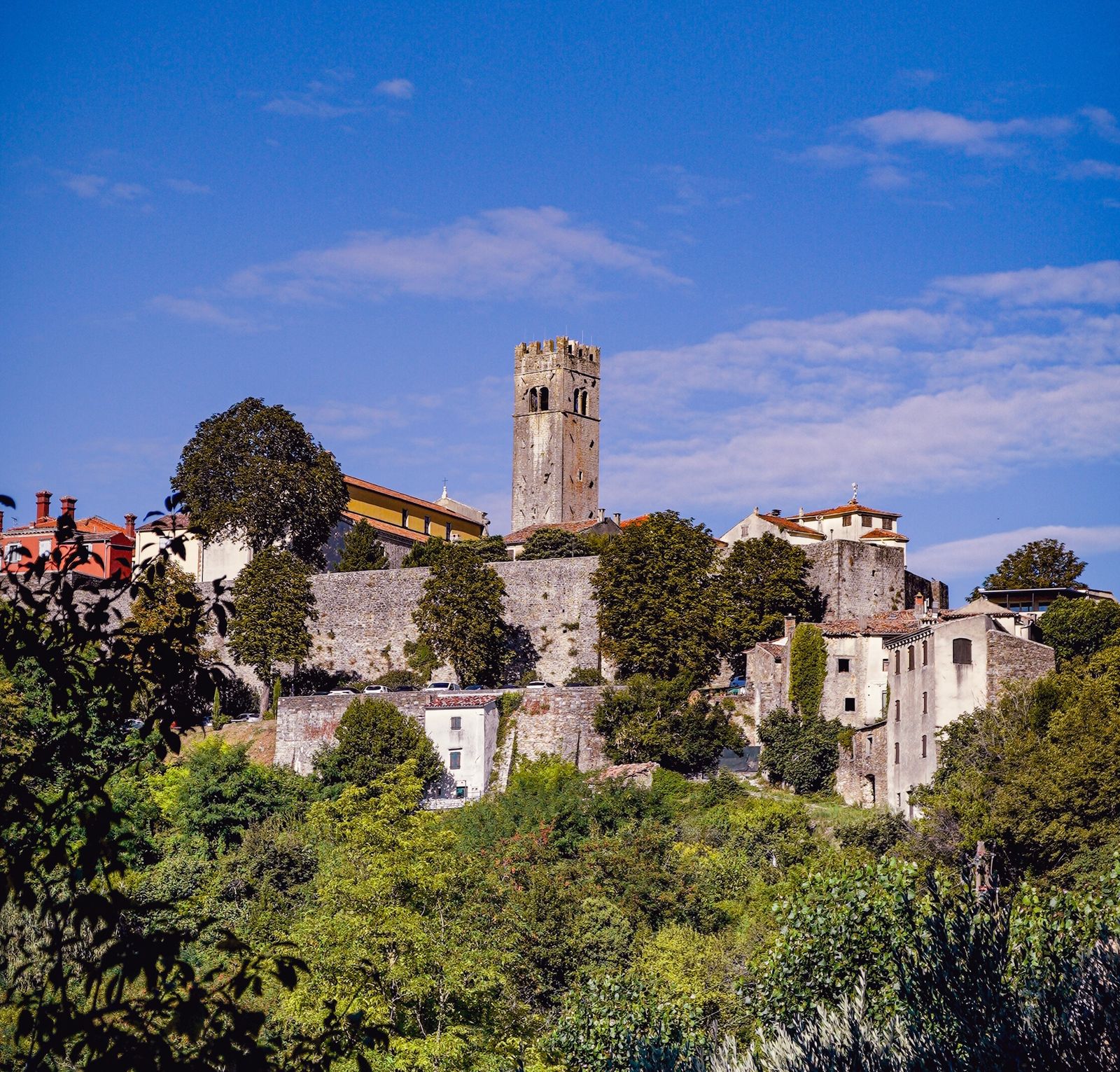
When you head from the coast toward the interior, the landscape changes dramatically into green hills and vineyards. On one of the highest hills, rising steeply above the Mirna river valley, sits the gorgeous fortified town of Motovun. Preserved stone walls run around the entire town, and for a small fee you can walk along them and admire panoramic views in every direction.
But Motovun is famous above all for something hidden deep in the forests below it. The dense Motovun Forest is one of the world’s best sources of truffles. This damp habitat forms the so-called truffle triangle between the towns of Pazin, Buje, and Buzet, where gourmets from all over Europe gather each year. In the local restaurants you can savour fresh truffles in countless forms, and at prices a touch friendlier than in Italy or France.
The town also thrives on culture — for many years it hosted the prestigious Motovun Film Festival. It’s worth noting, however, that since 2023 this festival has moved to the Gorski Kotar region and changed its name, so if you were heading to Motovun primarily for the films, it’s best to check the current details and location in advance. Even without the festival, though, this place has incredible charm.
💡 Tip: You can’t drive all the way into the historic centre. You’ll have to park in the car park below the hill and either tackle the fairly steep climb on foot or use the local shuttle bus.
6. Grožnjan, the town of artists
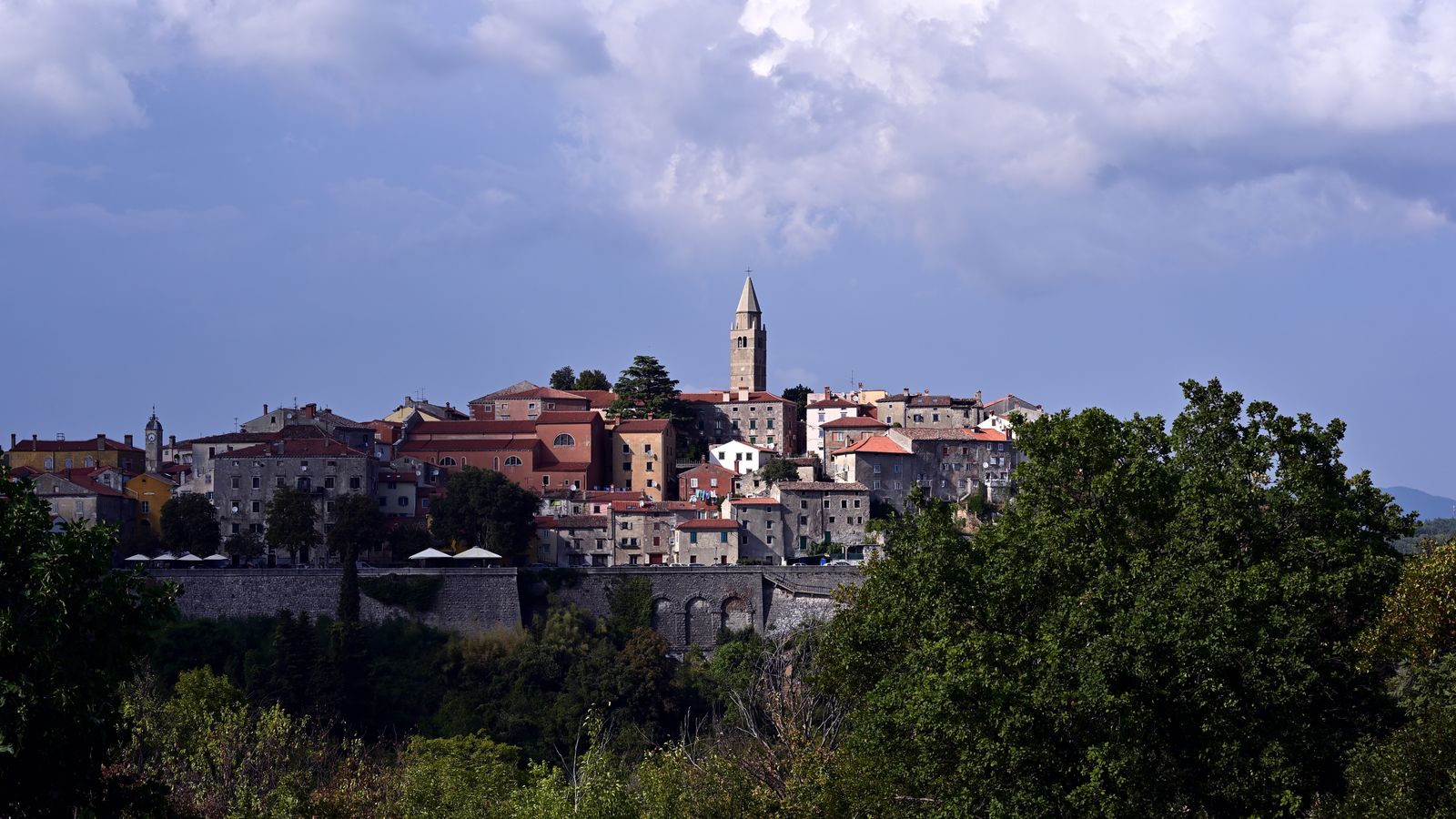
Not far from Motovun lies another stunning hilltop town called Grožnjan. While Motovun smells of truffles, Grožnjan smells of paint and canvas and breathes incredible artistic energy. This town was almost abandoned in the mid-20th century, but in the 1960s a group of artists discovered it and began restoring the crumbling old houses, turning them into their studios.
Today Grožnjan is rightly called the “town of artists,” and in its narrow stone lanes you’ll find dozens of small galleries, craft shops, and independent boutiques. You can simply wander here for hours, watch the masters at work, and pick up truly original, high-quality souvenirs — from handmade jewellery to beautiful ceramics.
During summer the town also comes alive with music workshops and festivals. The sound of piano, violin, and jazz bands drifts into the streets through the open windows of the old houses, creating an utterly magical backdrop. Sitting in a little café with a view over the surrounding vineyards while listening to live music is the kind of experience you simply don’t forget.
💡 Tip: Grožnjan is very small, two hours will be plenty to explore it, so it’s ideal to combine your visit with a trip to nearby Motovun or Buzet in a single afternoon.
7. Hum and Buzet: the smallest town in the world and the truffle capital
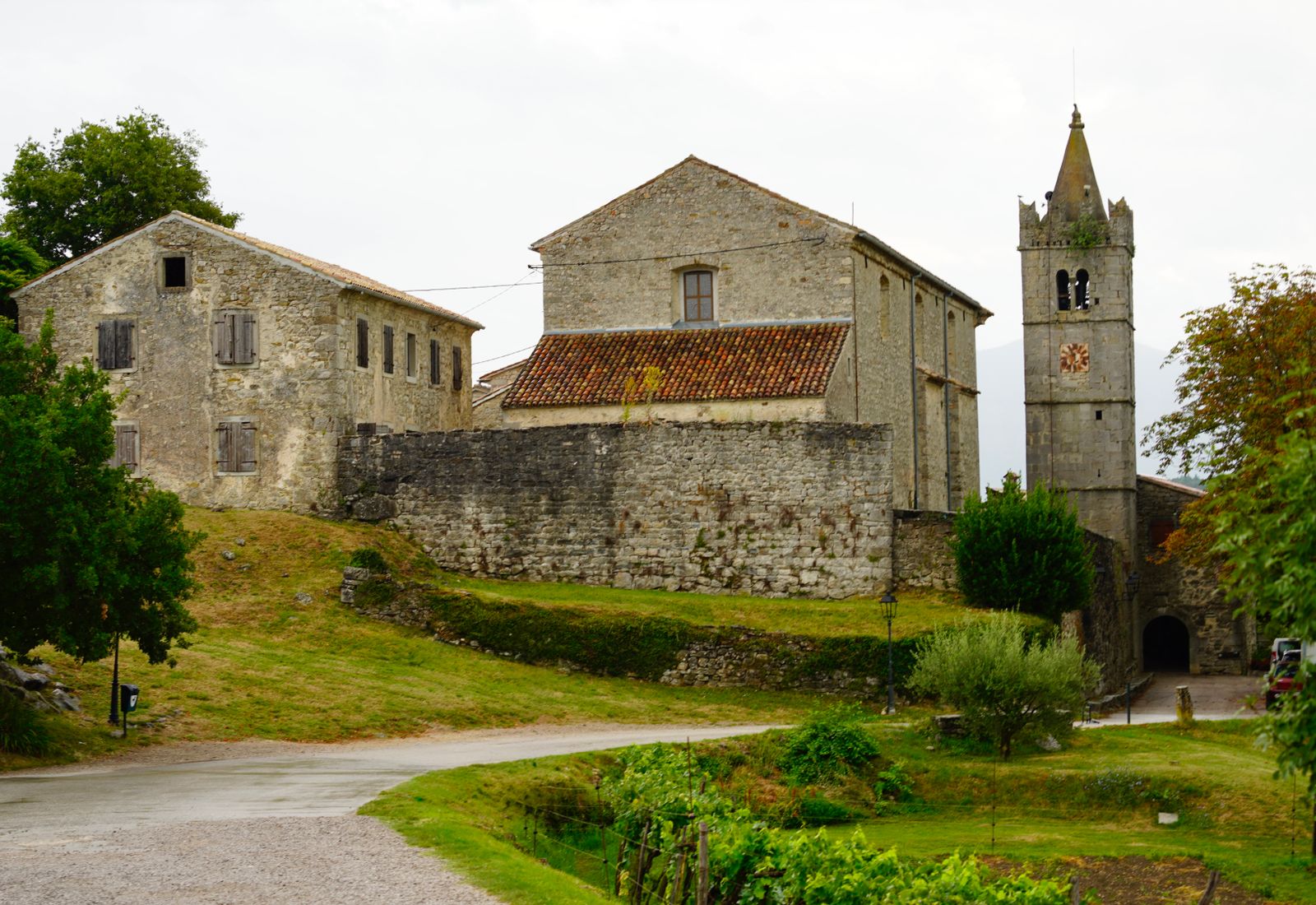
If you love curiosities, you mustn’t miss Hum on your road trip. This charming spot proudly holds the title of the smallest town in the world, as just around 20 permanent residents live here. Despite its tiny size, you’ll find everything a proper town should have — town walls, a gate, a little church, and even a traditional tavern called a konoba where you can taste local specialities.
Hum is also closely tied to the Glagolitic script, an old Slavic alphabet. The famous Glagolitic Alley leads to it — a 7-kilometre trail starting in the village of Roč, lined with eleven large stone monuments dedicated to this script. In Hum itself, don’t forget to try the local speciality called biska, a traditional mistletoe-herb liqueur made to an ancient recipe.
About 14 kilometres from Hum lies the considerably larger Buzet, which proudly calls itself the “town of truffles”. If you arrive in September, you can experience the spectacular Subotina festival, whose highlight is the preparation of a giant omelette made from thousands of eggs and a hefty dose of fresh truffles right on the main square. It’s a great chance to taste this pricey delicacy in a relaxed and festive atmosphere.
💡 Tip: Around Buzet you’ll find a number of family farms and companies that organise truffle hunts. You can head into the forest with specially trained dogs and experience the fascinating process of finding these underground mushrooms firsthand.

8. Istrian gastronomy: truffles, olive oil, and wine
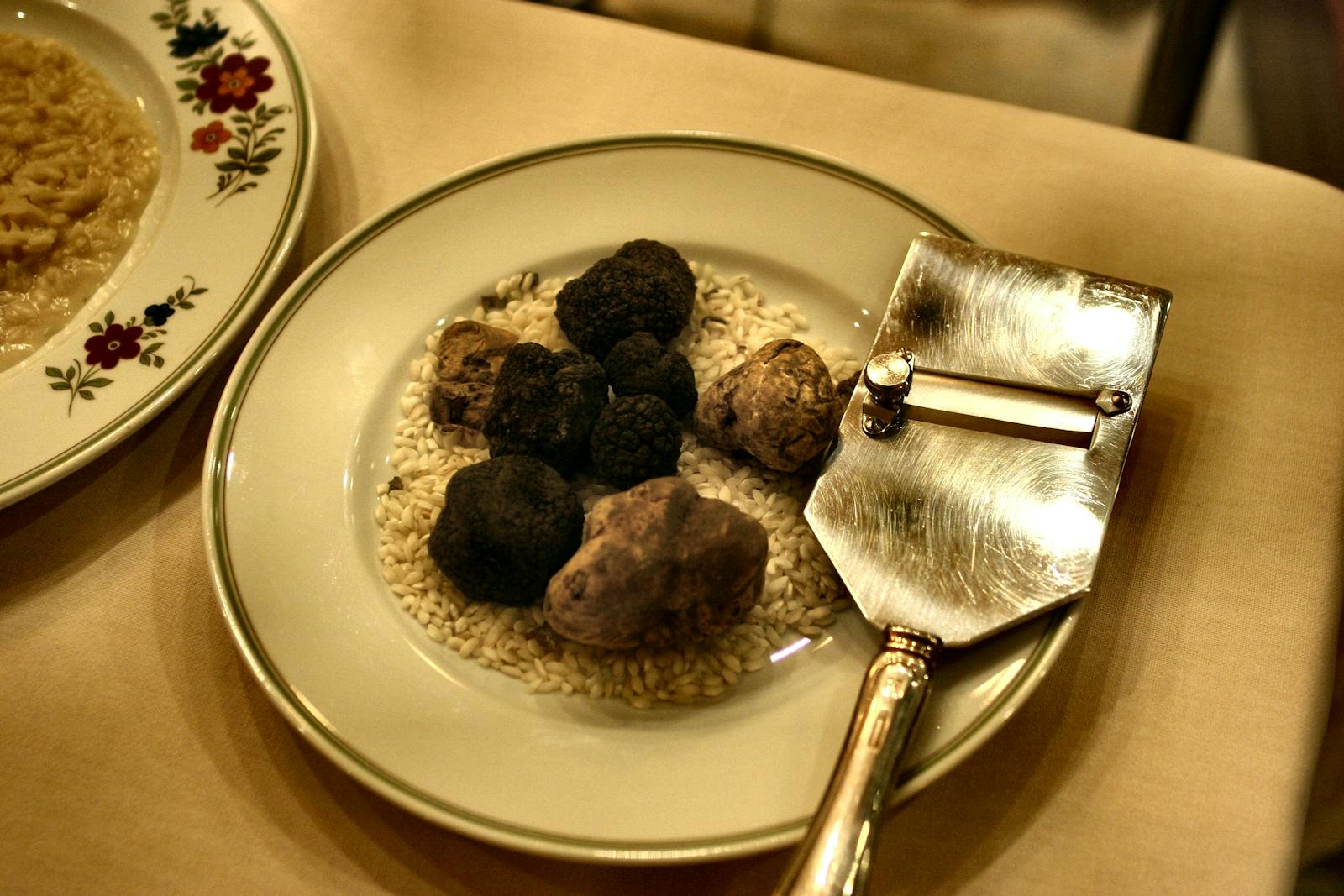
Istria is an absolute paradise for everyone who loves good food and drink. As you already know, truffles are the local treasure. The most expensive white truffles (tuber magnatum) are in season from September to January, peaking in October, while the less aromatic black truffles grow from May to September. They’re most often served grated over traditional hand-made pasta known as fuži or pljukanci — combined with egg or mushrooms, it makes an utterly perfect vegetarian dish.
Another huge draw is the local olive oil. Istria has repeatedly been named the world’s best olive-growing region by the international Flos Olei guide, leaving even the famous regions of Italy and Spain behind. There are dozens of internationally awarded producers here, and I really recommend stopping at one of the family-run olive estates for a tasting, where you’ll discover the enormous difference between fresh premium oil and the supermarket variety.
Excellent local wine is an inseparable part of good food in Istria. The best-known white variety is Malvazija Istarska, which is dry, pleasantly citrusy, and mineral — ideal for hot summer days. Among the reds, the robust and full-bodied Teran reigns supreme. Also worth a mention are the hearty vegetable soup maneštra and traditional dishes made from the local long-horned cattle called boškarin, fish, and dry-cured ham (pršut), which you’ll see on the menu of just about every konoba.
💡 Tip: If you want to buy quality wine straight from the source, visit well-known wineries such as Kozlović in Momjan or Kabola, where the wine matures in amphorae buried in the ground — adding a very unusual dimension to the tour and tasting.
9. Brijuni National Park
The Brijuni archipelago, lying just off the coast near the town of Fažana, is a fascinating place with a very unusual history. It consists of 14 islands in total, of which the largest, Veliki Brijun, is open to the public. This island served for decades as the summer residence of Yugoslav president Tito, who received statesmen and celebrities from around the world here — something the local exhibitions still recall today.
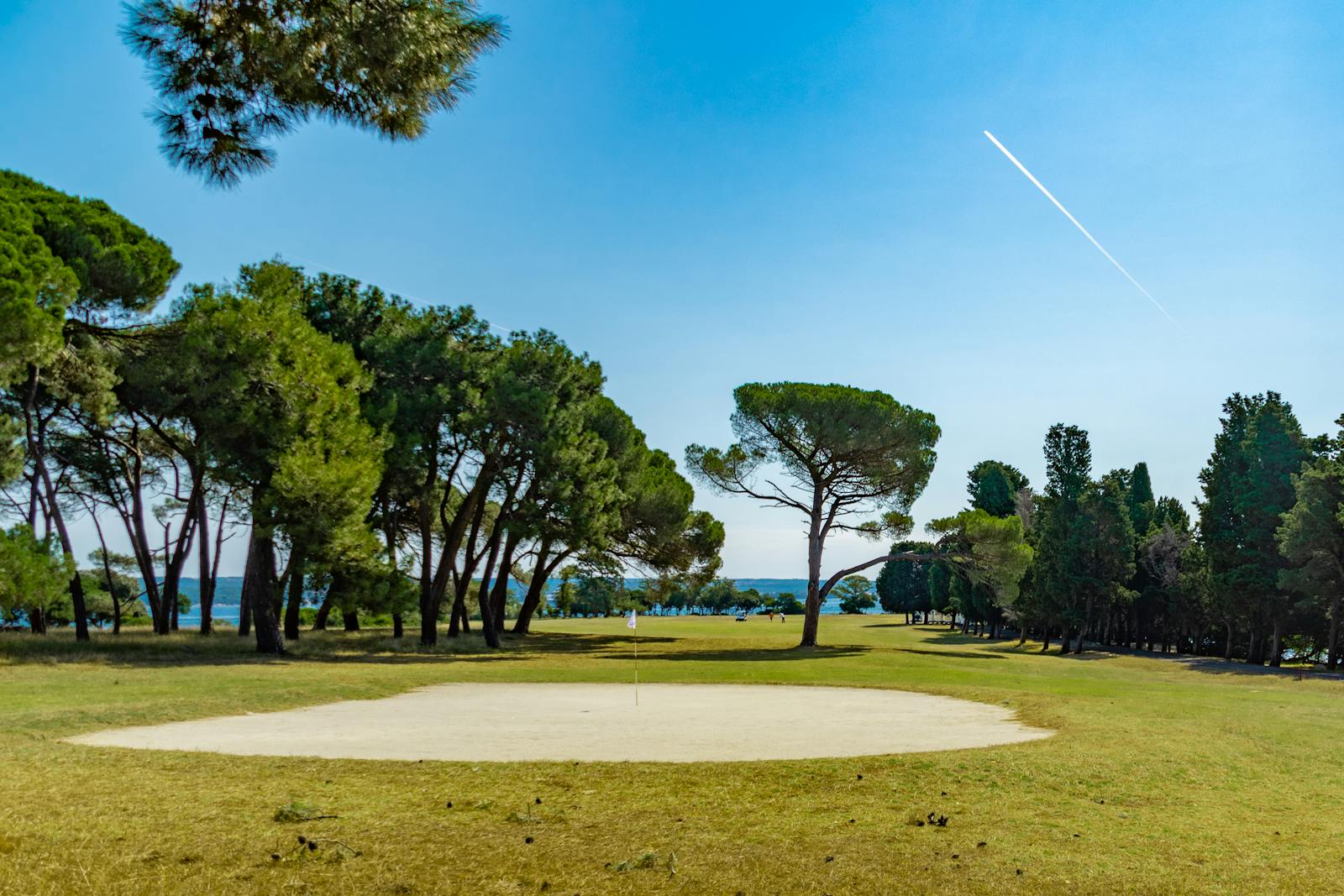
On the island you’ll find a truly unexpected mix of attractions. There’s a sprawling safari park, created thanks to animals gifted by foreign delegations — so you might come across elephants, zebras, or llamas grazing freely in the Croatian countryside. You can also admire the remains of a luxurious Roman villa from the 1st century, Byzantine fortifications, and even a beautifully maintained golf course.
You can only reach Brijuni via an organised boat trip from the harbour in Fažana. The basic package — including a return boat ticket, a roughly hour-long ride on the tourist train around the island, a visit to the safari and the local museums — costs around €35 in season. The whole trip takes about 4 hours and offers a completely different perspective on Croatian history.
💡 Tip: The boats from Fažana are often sold out in the summer months, so reserve your tickets and sailing time well in advance online directly on the national park’s official website. Various boat trips can also be booked easily through portals like GetYourGuide.
10. Lim Bay (Lim Fjord)
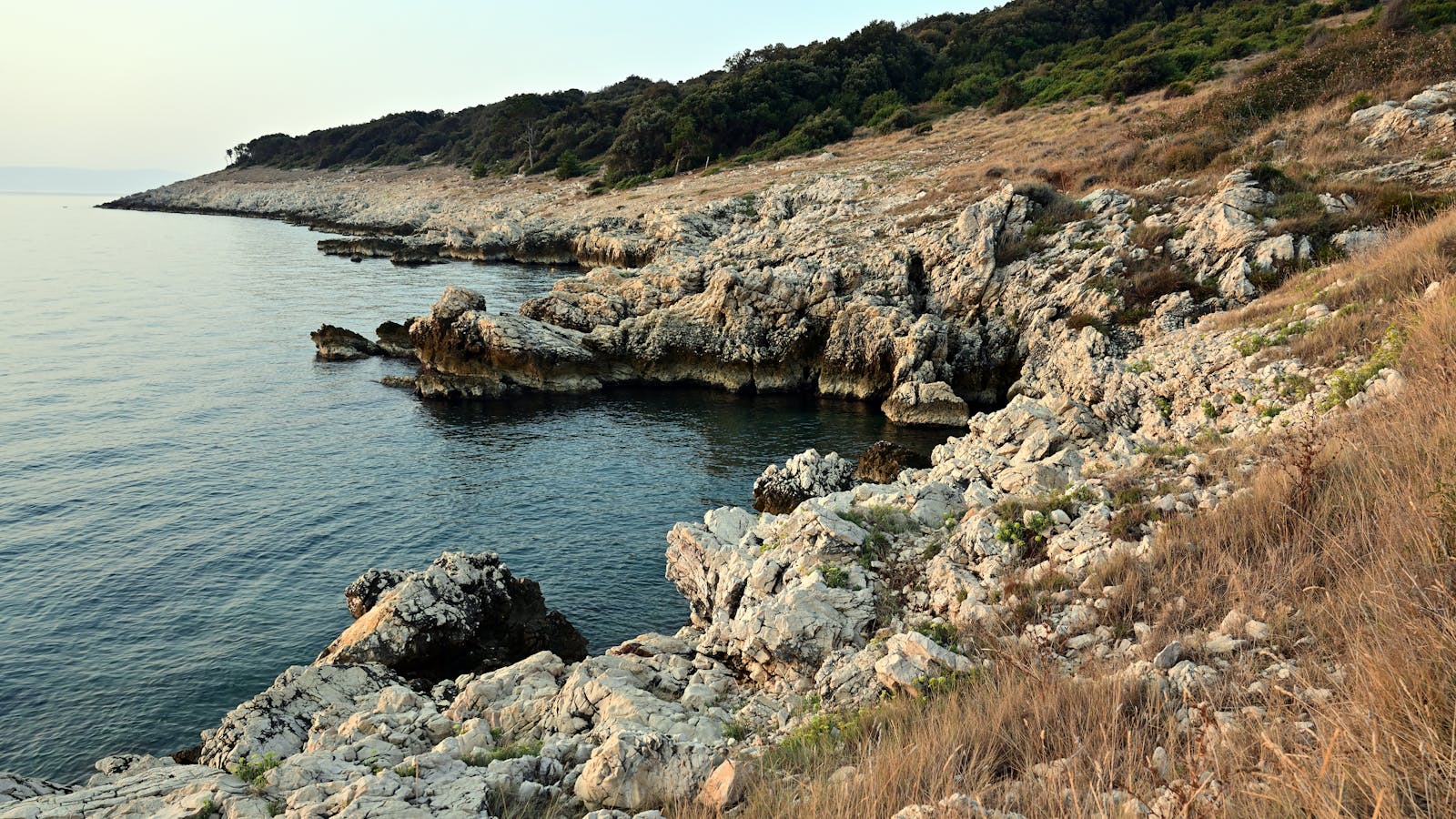
Although it’s often called the Lim Fjord, geologically it’s a flooded river valley, or canyon. This roughly 10-kilometre-long, very narrow bay cuts deep into the mainland between the towns of Rovinj and Vrsar. Its steep banks are densely wooded and the whole area feels incredibly calm and almost Nordic, in sharp contrast to the bustling coast.
The water in the bay has a specific composition, as salty seawater mixes with freshwater springs, creating ideal conditions for farming oysters and mussels. You’ll see the breeding beds right on the surface, and on the shore you’ll find several renowned fish restaurants where gourmets flock for the freshest seafood. The bay also hides a famous pirate cave that tempts you to explore.
The most beautiful view of Lim Bay opens up from the deck of a boat. Plenty of excursion boats set sail daily from the harbours in Rovinj or Vrsar, taking you on a roughly four-hour cruise through the entire canyon with a few swimming stops. If you’re travelling by car, you can stop at several proper viewpoints along the road, where you’ll get the best panoramic photos.
💡 Tip: The whole Lim Bay area is a strictly protected nature reserve, so free swimming outside designated spots is prohibited, and likewise motorboats and jet skis are banned, which guarantees wonderful peace and quiet.
11. Cape Kamenjak Nature Park
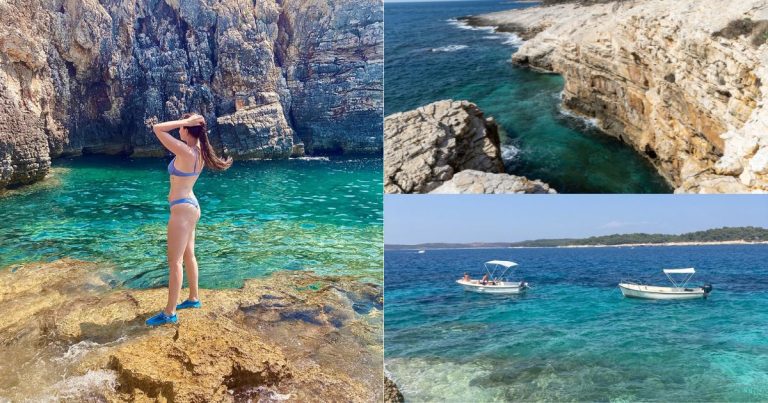
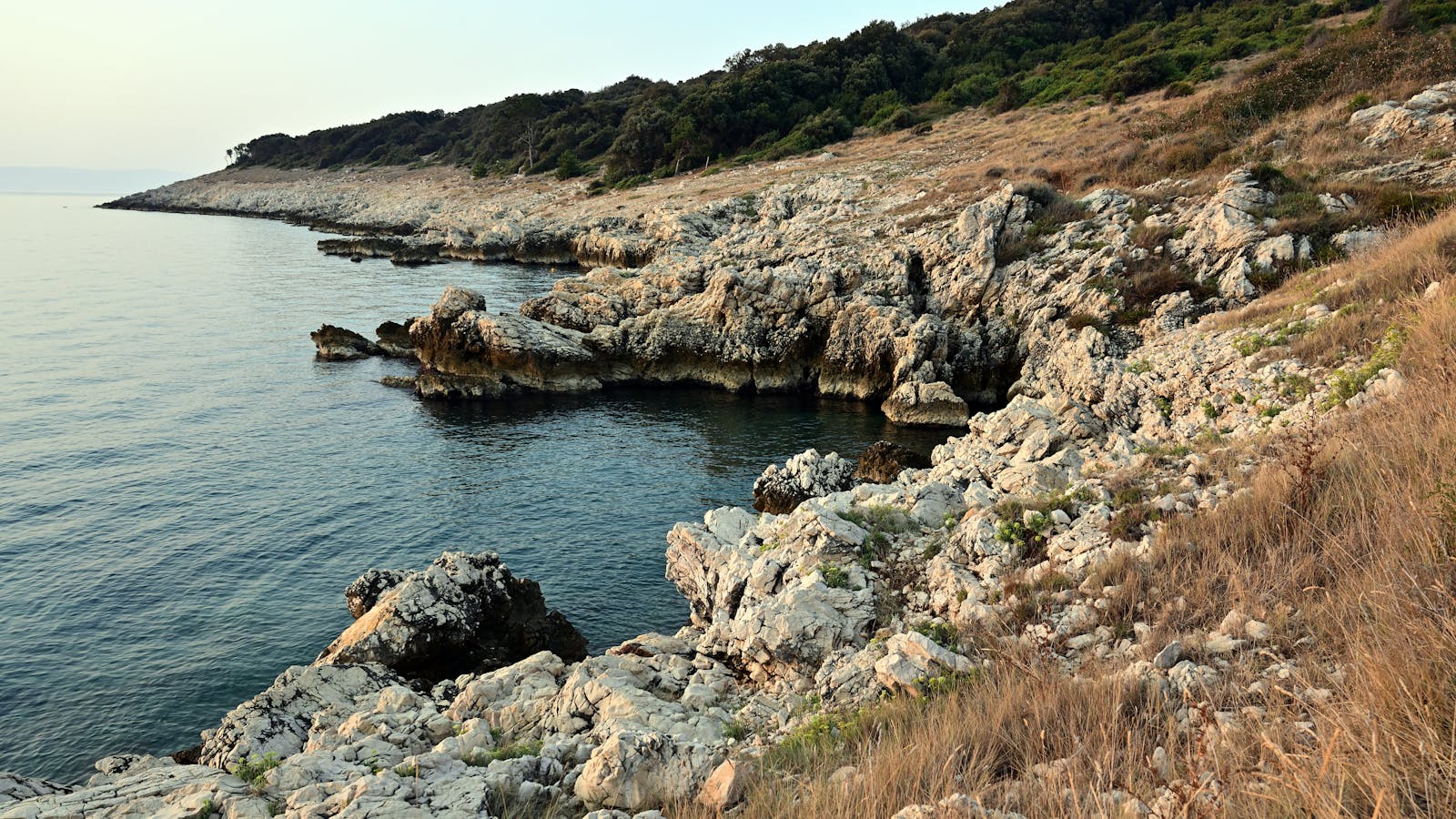
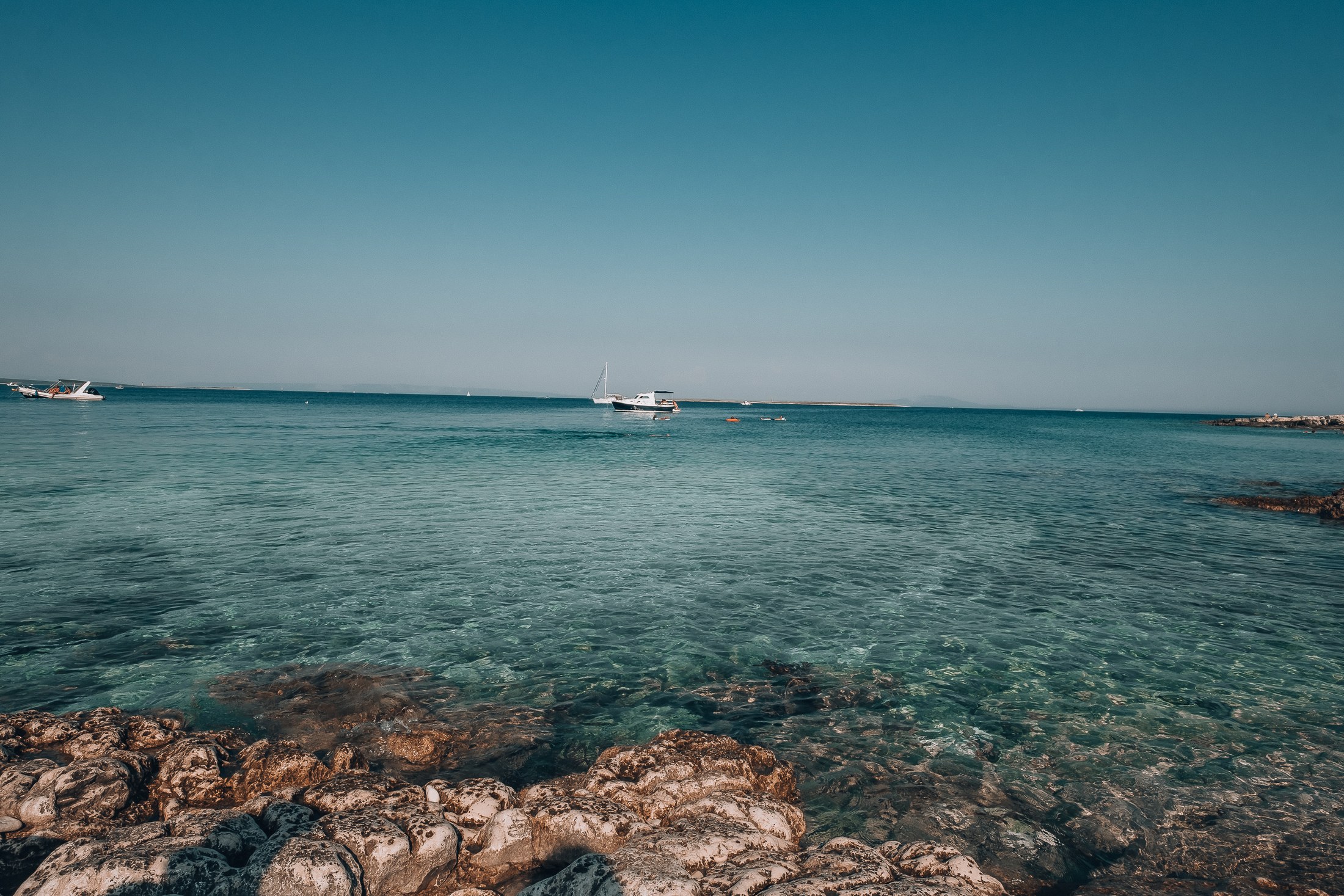
Right at the very southern tip of the Istrian peninsula, near the little village of Premantura, lies one of Croatia’s most beautiful natural wonders — Cape Kamenjak. This protected nature park, covering roughly 14 square kilometres, offers more than 30 kilometres of stunning, wild, and rugged coastline. You’ll find 23 beaches and coves in total, alternating pebbles with dramatic rocky cliffs and turquoise water.
Kamenjak is an absolute paradise for lovers of active rest and adrenaline. Snorkelling fans will be in their element, as the water here is crystal clear, and so will those who love cliff jumping into deep water. The park is laced with a dense network of dirt tracks, making it the ideal spot for a full-day mountain-bike trip with plenty of swimming stops. Over 600 plant species grow here too, and with a bit of luck you might even spot the protected Mediterranean monk seal.
There’s an admission charge to the park, but you only pay for entry by motor vehicle. In high season, budget around €10 to €15 per car per day. If you decide to explore the park on foot or by bike, entry is completely free. Be sure to visit the iconic Safari Bar, built right in the dense reeds and offering fantastic refreshments in an unusual setting.
💡 Tip: In summer, long queues form at the entry toll gates, so buy your car entry ticket online in advance — you’ll save plenty of time and frustration waiting in the sun. You’ll find more details about visiting in our article on Kamenjak Nature Park.
12. Baredine Cave (Jama Baredine)
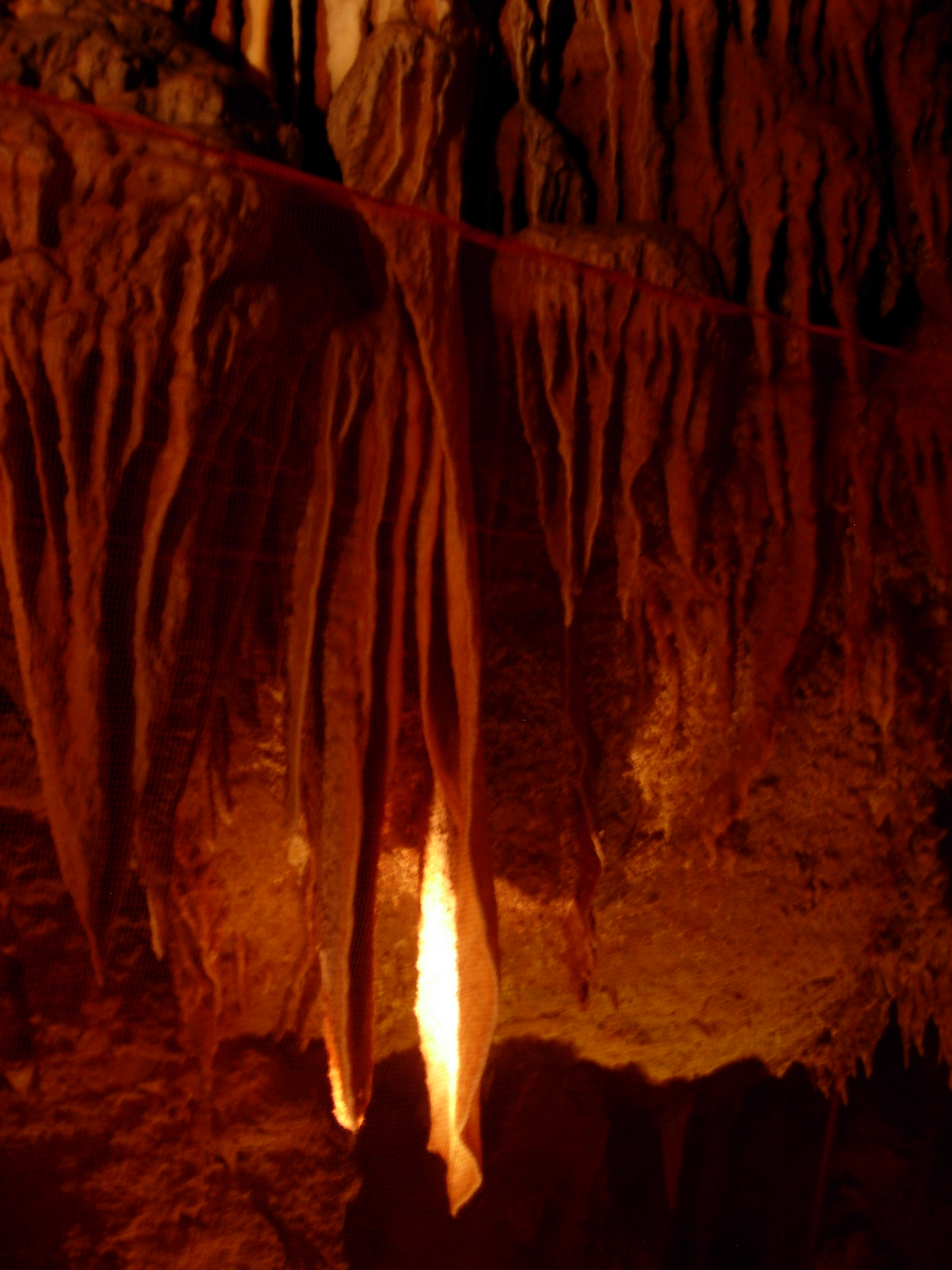
If you fancy a break from the scorching Croatian sun, head underground into the karst cave of Baredine. This geomorphological gem is located near the village of Nova Vas, just a few kilometres from Poreč. During the roughly 40-minute guided tour, you’ll descend on safe stairways to a depth of 60 metres, where a pleasant 14 degrees Celsius awaits.
The tour route leads you through five richly decorated halls full of stalactites and stalagmites of every shape and size. You’ll see beautiful stalactites, stalagmites, and mighty dripstone columns, some of which resemble a statue of the Virgin Mary or the Leaning Tower of Pisa. The cave is beautifully lit and the guides give commentary in several languages, so you’ll learn plenty of interesting facts about how this underground labyrinth formed.
At the very bottom of the cave, by a small underground lake, the biggest surprise awaits. A rare endemic amphibian, the olm, lives here — often nicknamed the “human fish” because of its pinkish skin. Admission to the cave, which is open from April to October, comes to €12 for adults, students pay €10, and children aged 5 to 15 get in for €8.50.
💡 Tip: A pleasant complex with a small tractor museum, a restaurant, and outdoor seating has been built around the cave itself, so you can easily spend a whole relaxed afternoon here even with small children.
13. The coastal towns of Umag and Novigrad
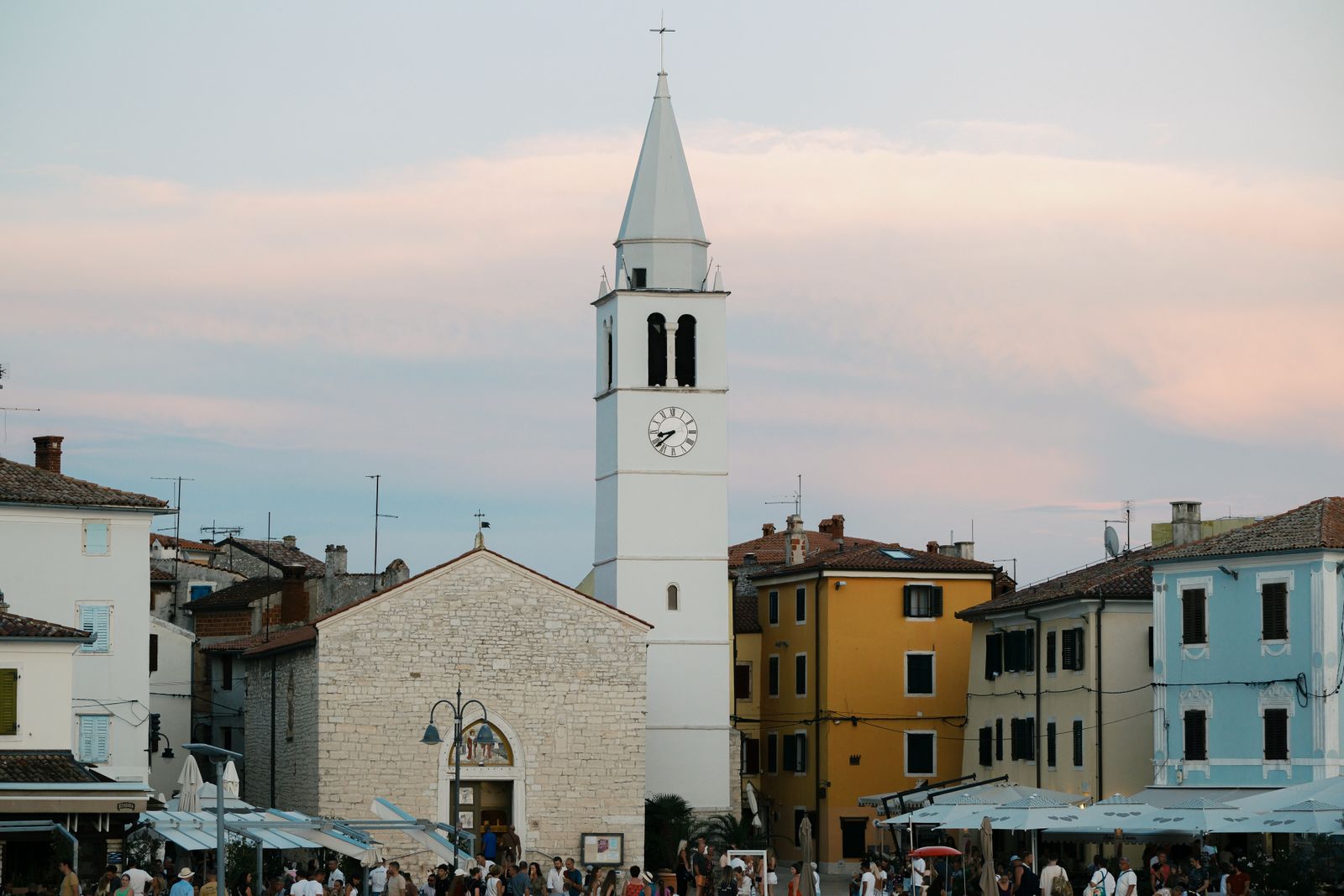
On the north-western coast of Istria lie the towns of Umag and Novigrad, which often serve as the first stop for travellers arriving from the north, as they sit closest to the Slovenian border. Umag is a modern resort known above all for sport — it hosts the prestigious ATP Croatia Open tennis tournament every year. The town boasts large marinas full of luxury yachts and excellent facilities for an active holiday.
Novigrad, by contrast, is a little quieter and has retained the charm of a small fishing town. Its historic centre sits on a small peninsula and is still partly enclosed by preserved medieval walls, along which you can take a romantic stroll. The town is renowned for its top-class cuisine and is home to some of the best fish restaurants in all of Istria.
The two towns are linked by a beautiful coastal promenade, ideal for evening walks or a morning run. The beaches in this northern area are mostly concrete platforms or landscaped pebble coves with a gentle slope, which families with younger children will especially appreciate as they look for safe swimming without big waves.
💡 Tip: If the northern Istria area appeals to you and you’re thinking of staying there, check out our detailed guide, where we round up everything you can do in Umag.
14. Opatija and the Lungomare promenade
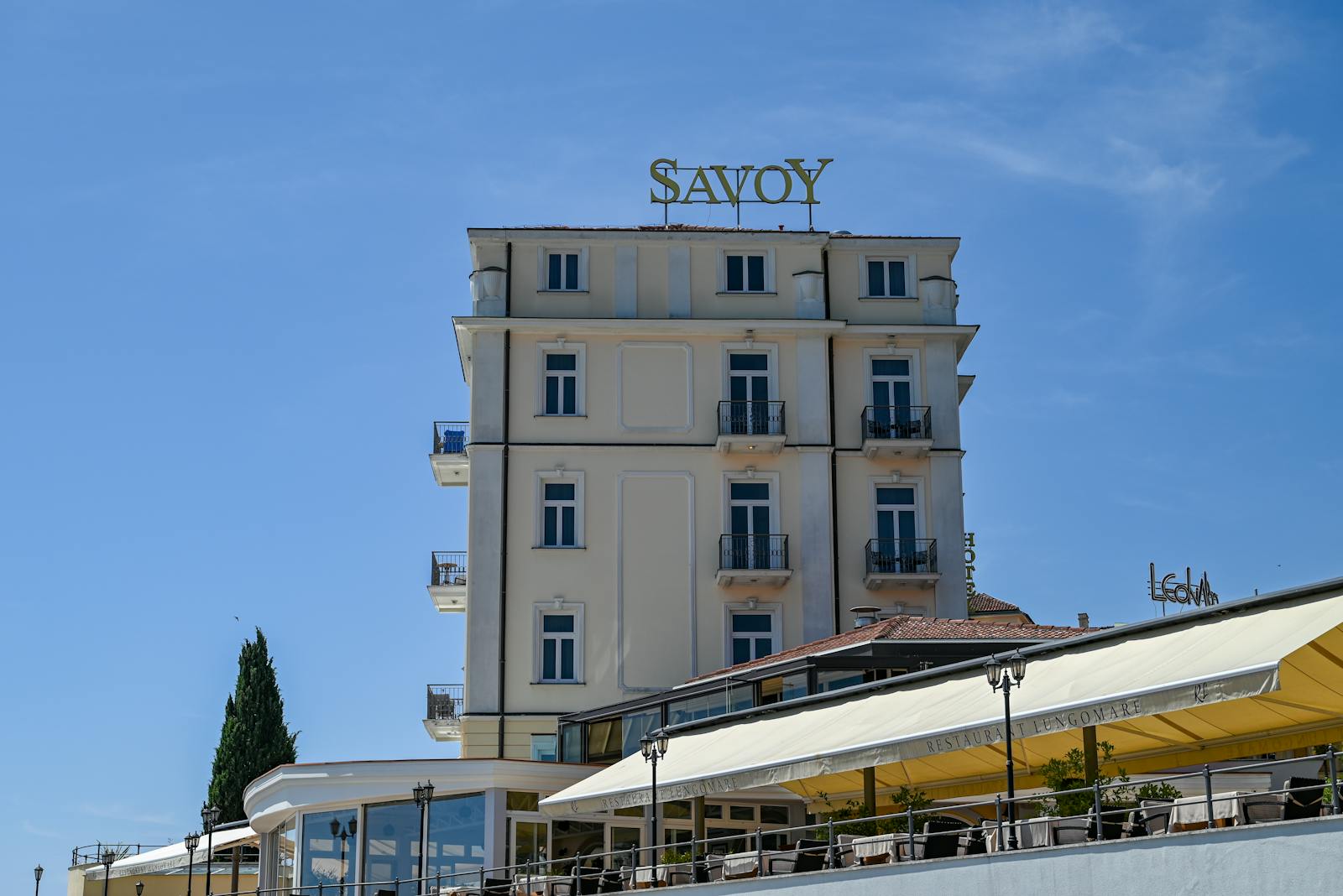
Even though Opatija sits right on the border between Istria and Kvarner, it definitely shouldn’t be missing from your travel list. This town is nicknamed the “Vienna by the sea” for good reason, as it instantly charms you with its noble atmosphere and gorgeous Habsburg villas. Opatija is in fact the oldest tourist resort in Croatia, where the Austro-Hungarian elite came to relax as far back as the 19th century.
The symbol of the town’s tourism origins is the beautiful Villa Angiolina from 1844, surrounded by a sprawling botanical park full of exotic plants from all over the world. Today the villa houses the fascinating Croatian Museum of Tourism, which charts the development of travel along the Adriatic coast. The whole town feels very elegant, well-kept, and luxurious, full of cafés and top-class hotels.
Opatija’s biggest draw, though, is the famous promenade known as the Lungomare. This paved pedestrian path runs right along the sea for an incredible 12 kilometres and connects the fishing village of Volosko, Opatija itself, and nearby Lovran. Strolling in the shade of century-old oaks and laurels with a constant view of the sea and majestic cliffs is an absolutely breathtaking experience.
💡 Tip: Along the Lungomare promenade you’ll come across plenty of beautiful spots, but be sure to photograph the statue of the Maiden with the Seagull, which stands on a rock right among the waves and has become the most famous symbol of all Opatija.
15. The most beautiful beaches in Istria
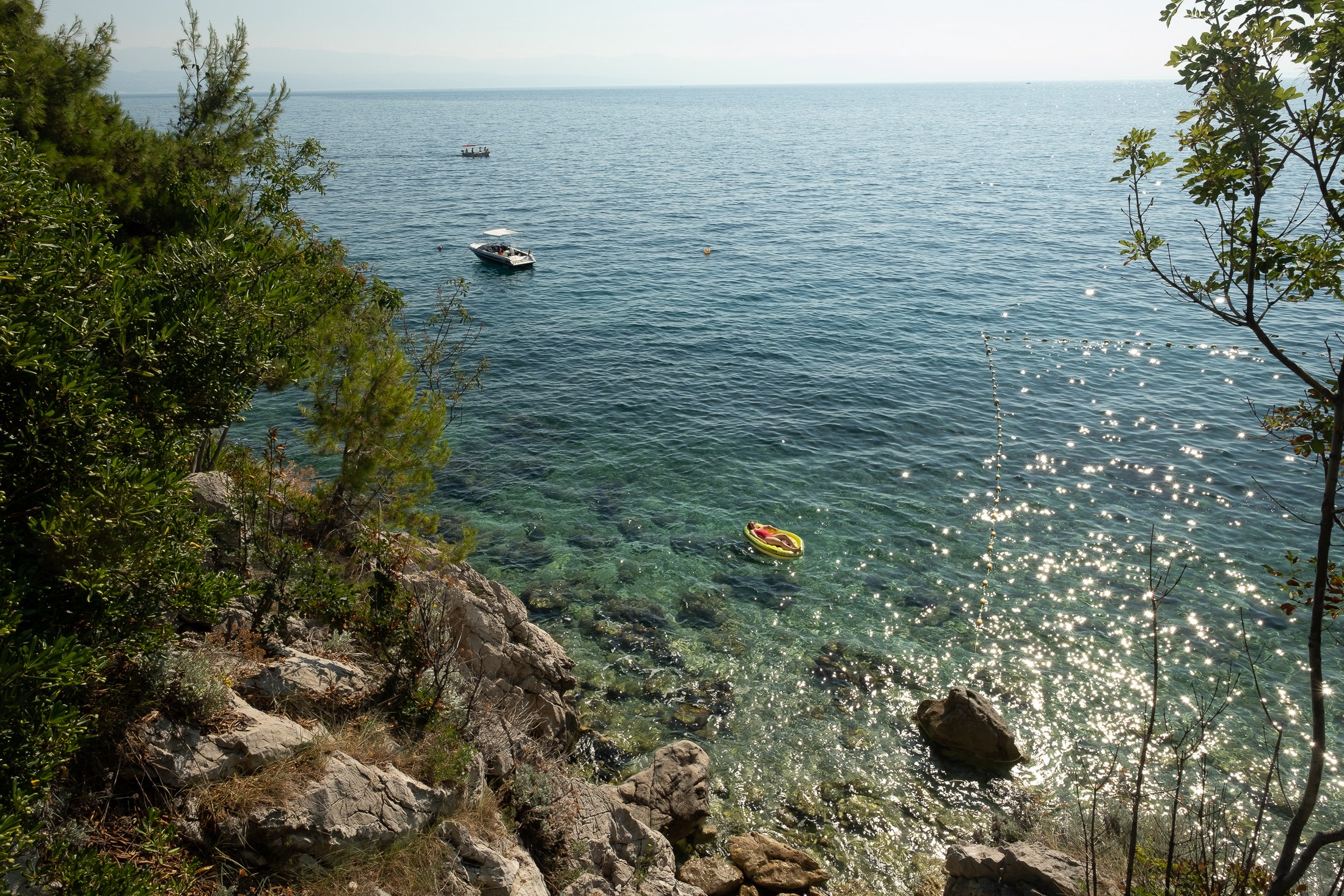
Istria isn’t a typical destination with long sandy beaches, but that doesn’t mean you won’t find gorgeous places to swim. The coast is made up mostly of romantic pebble coves, picturesque rocks, and occasional concrete piers, which guarantees incredibly clean and crystal-clear water. Another huge advantage is that many beaches are lined with fragrant pine groves, providing that much-needed natural shade.
So where do you find the very best beaches? The absolute top spots are the hidden rocky coves in Cape Kamenjak nature park, where you’ll feel like you’re on a deserted island. If you prefer better-equipped beaches, head to the resort of Rabac on the eastern coast, which boasts bright white pebbles and several Blue Flags for water quality. The Lone and Mulini coves right in Rovinj’s Zlatni Rt forest park also offer lovely swimming under the trees.
For families with children, the resort of Medulin is the absolute ideal. The local Bijeca beach is sandy and incredibly shallow, so children can safely wade and play in the warm water dozens of metres from the shore. Very popular and well-equipped beaches with a gentle slope and plenty of water attractions can also be found around Poreč, for example at Borik or Brulo beach.
💡 Tip: As beautiful as the pebble beaches are, they can be rather uncomfortable to walk on without water shoes. Be sure to pack a pair, along with a snorkel mask, since Istria’s rocky shores are perfect for snorkelling.
Map of points of interest for your phone
Where to go next from Istria
If you have more time to explore Croatia and don’t want to stay in just one place, Istria is a great springboard for further discovery. You can head further south to explore more of the coast or the islands. To get inspired, I recommend browsing our other detailed guides, which will help you with your planning.
- If you’re still undecided about a specific destination, read our article on where to go on holiday in Croatia, where we break down the pros of each region.
- Wondering how it works with accommodation? We’ve got plenty of tips on accommodation in Croatia, from campsites to luxury hotels.
- And if you’d like to experience the sea from a completely different perspective, we’ve put together a guide on how to enjoy Croatia by boat, even without any previous sailing experience.
Frequently asked questions
What’s the best way to get to Istria from the Czech Republic?
Driving is very comfortable and fast. Most of the route goes through Austria and Slovenia, where you shouldn’t forget about motorway vignettes. At the Croatian border, you’ll cross through the Plovanija or Kaštel border crossings and join the so-called Istrian “Y”, which is the A9 motorway leading all the way down to Pula. By air, you can reach the seasonal airport in Pula, or alternatively use the airport in Trieste, Italy.
Are there motorway tolls in Istria?
Croatia doesn’t have motorway vignettes, tolls are paid in the form of fees at toll gates. An interesting feature of the Istrian motorways A9 and A8 is that a large portion of the sections are toll-free. You only pay for passing through the Učka tunnel and for the Kanfanar–Rogovići section, with the entire A8 route costing a passenger car just under 5 euros.
Are there sandy beaches in Istria?
Istria is known primarily for its pebble and rocky beaches, or concrete platforms, which guarantee crystal-clear water. However, exceptions do exist, the most famous being the sandy beach Bijeca in Medulin, which is hugely popular among families with small children thanks to its shallow entry into the water.
How many days do I need to explore Istria?
For a relaxed vacation where you can visit the most beautiful towns like Rovinj and Poreč, explore the interior with Motovun, and spend a day in nature at Kamenjak, I recommend setting aside 5 to 7 days. Given that distances on the peninsula are measured in tens of kilometers, you can choose one base and take day trips from there.
Where can I taste the best truffles in Istria?
The truffle heart of Istria is the Mirna River valley and the Motovun Forest, located in the triangle between the towns of Pazin, Buje, and Buzet. If you visit in autumn, definitely check out the town of Buzet or the village of Livade, where the renowned Zigante restaurant and shop are located, and where famous truffle festivals and tastings are held in the fall.
Is Istria suitable for cycling?
Absolutely! Istria is crisscrossed with an excellent network of cycling trails, both along the coast and inland. The most famous and most popular route is the so-called Parenzana, which is an amazing cycling trail built on the route of a defunct narrow-gauge railway that runs from Trieste to Poreč and measures over 120 kilometers.
What is boškarin, which is often on the menu?
When reading menus in Istrian restaurants, you’ll often come across the word boškarin. It refers to a traditional breed of Istrian long-horned cattle, which was historically used for working in the fields and is now considered a local gastronomic specialty.
Tips and Tricks for Your Vacation
Don’t Overpay for Flights
Search for flights on Kayak. It’s our favorite search engine because it scans the websites of all airlines and always finds the cheapest connection.
Book Your Accommodation Smartly
The best experiences we’ve had when looking for accommodation (from Alaska to Morocco) are with Booking.com, where hotels, apartments, and entire houses are usually the cheapest and most widely available.
 🚗 Car rental on the roadVerified rental cars in Istria and Kvarner
Search with the DiscoverCars comparison engine — it compares prices from dozens of local and international rental companies, and most bookings come with free cancellation.
Compare car prices in Istria and Kvarner →Don’t Forget Travel Insurance
Good travel insurance will protect you against illness, accidents, theft, or flight cancellations. We’ve had a few hospital visits abroad, so we know how important it is to have proper insurance arranged.
Where we insure ourselves: SafetyWing (simple monthly subscription) and TrueTraveller (for extra-long trips).
Find the Best Experiences
Get Your Guide is a huge online marketplace where you can book guided walks, trips, skip-the-line tickets, tours, and much more. We always find some extra fun there!