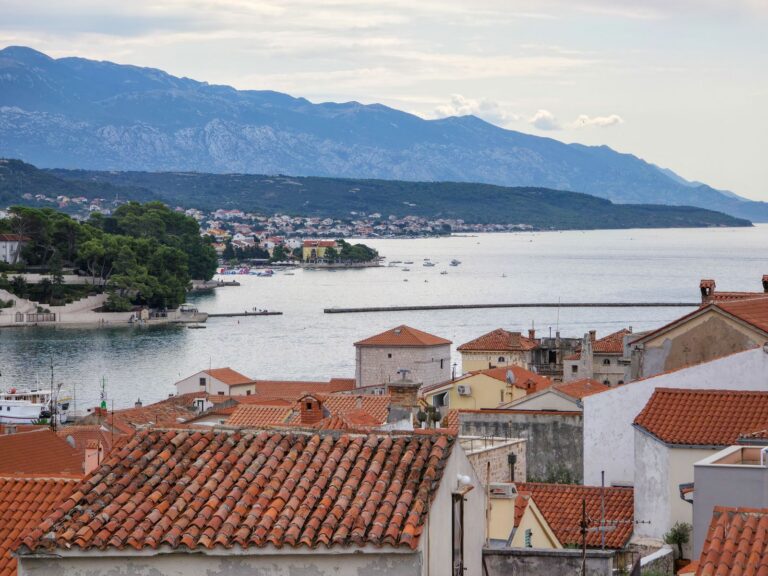
If you’re wondering where to head for a beach holiday this year, Brač island in Croatia should definitely be on your radar, because it offers an utterly unique blend of unspoilt nature and historic little towns. It’s the third largest island in the entire Adriatic and at the same time the most extensive island landmass in Dalmatia, home to just under fourteen thousand permanent residents.
While most tourists head straight for the mainland riviera, life here flows at a far slower pace that instantly makes you leave your worries behind. The island is famous around the world above all for its dazzling white limestone, used to build the most magnificent palaces since Roman times, and for one of the most photographed beaches in Europe.
Whether you’re a fan of active holidays on a windsurf board or you prefer wandering through narrow stone lanes and tasting excellent local olive oil, you’re guaranteed to find your thing on Brač. I’ve put together a detailed guide to help you plan the perfect getaway.
TL;DR
- The iconic Zlatni Rat beach: Located near the town of Bol, its pebbly tip constantly changes shape depending on how the wind blows and the sea currents flow.
- The highest peak in the Adriatic: Vidova gora rises to 778 metres and offers breathtaking panoramic views of the neighbouring islands of Hvar and Vis.
- White Brač stone: This local limestone was used to build the famous Diocletian’s Palace in Split, and legend has it that it even went into the White House in Washington.
- The mysterious Blaca Hermitage: This unique 16th-century monastery complex is set right into a rock face and can only be reached on foot.
- Getting to the island: With a car you’ll need the ferry from Split to the port of Supetar, while without a car you can take a fast catamaran straight to the resort of Bol.
- A windsurfing paradise: Thanks to the regular afternoon maestral wind, the island’s southern coast is one of the best surfing spots in Europe.
The full destination guide: Dalmatia — guide and what to see
When to visit the resorts on Brač
Choosing the right time is absolutely crucial for an island holiday, because each season offers a completely different experience. High summer in July and August is the absolute peak of the tourist season, when the most ferries run and the island truly comes alive. These holiday months are perfect if you’re heading here for windsurfing or kitesurfing. The reason is the regular afternoon maestral wind, which blows along the southern coast with iron regularity almost every day. On the other hand, in summer you have to reckon with prices climbing to their maximum and the most famous spots being packed with people from all over the world.
If you’d rather explore the sights at a calmer pace and go on long hikes, the ideal choice is May, June and September. In spring and early autumn you’ll elegantly dodge the biggest crowds and the scorching summer heat. September in particular is lovely, as the Adriatic has been warmed by the whole summer, so you can swim without a problem, but the sun no longer beats down so hard on demanding climbs into the hills. Accommodation prices ease slightly after the holidays, too, and you’ll find far more of that coveted privacy on the pebble beaches.
When planning an off-season trip, just bear in mind that some fast catamarans only run during the defined summer season. The fast connection from Split straight to the resort of Bol usually only operates from mid-May to roughly the end of September. So if you head to Brač in early spring or late autumn, you’ll have to rely solely on the classic large ferries that run year-round to the northern port of Supetar. From there you can easily reach the rest of the island by car or local bus.
Where to stay on Brač island
💡 Tip for accommodation and experiences: We love searching for places to stay on Booking.com, which usually has the best cancellation terms. For tickets, tours and activities it pays to compare and book through GetYourGuide.
When planning your stay, you’ll probably be choosing between two main hubs: the busier resort of Bol in the south and the practical port of Supetar in the north. Picking the ideal location depends heavily on whether you’re travelling with your own car or relying solely on boat transport and getting around on foot. The differences between the towns are huge, and each has a completely different atmosphere.
If you want the Split ferry right on your doorstep and plan to take day trips around the whole island, Supetar is the most practical base. The town has great infrastructure, plenty of shops, family-friendly beaches, and you’ll find, for example, the excellent Hotel Osam. It’s adults-only, so it offers the perfect peace and quiet to relax after a busy day. For families with children seeking even more calm without the crowds, this northern area also has quieter villages like Sutivan, Milna and the picturesque Postira nearby.
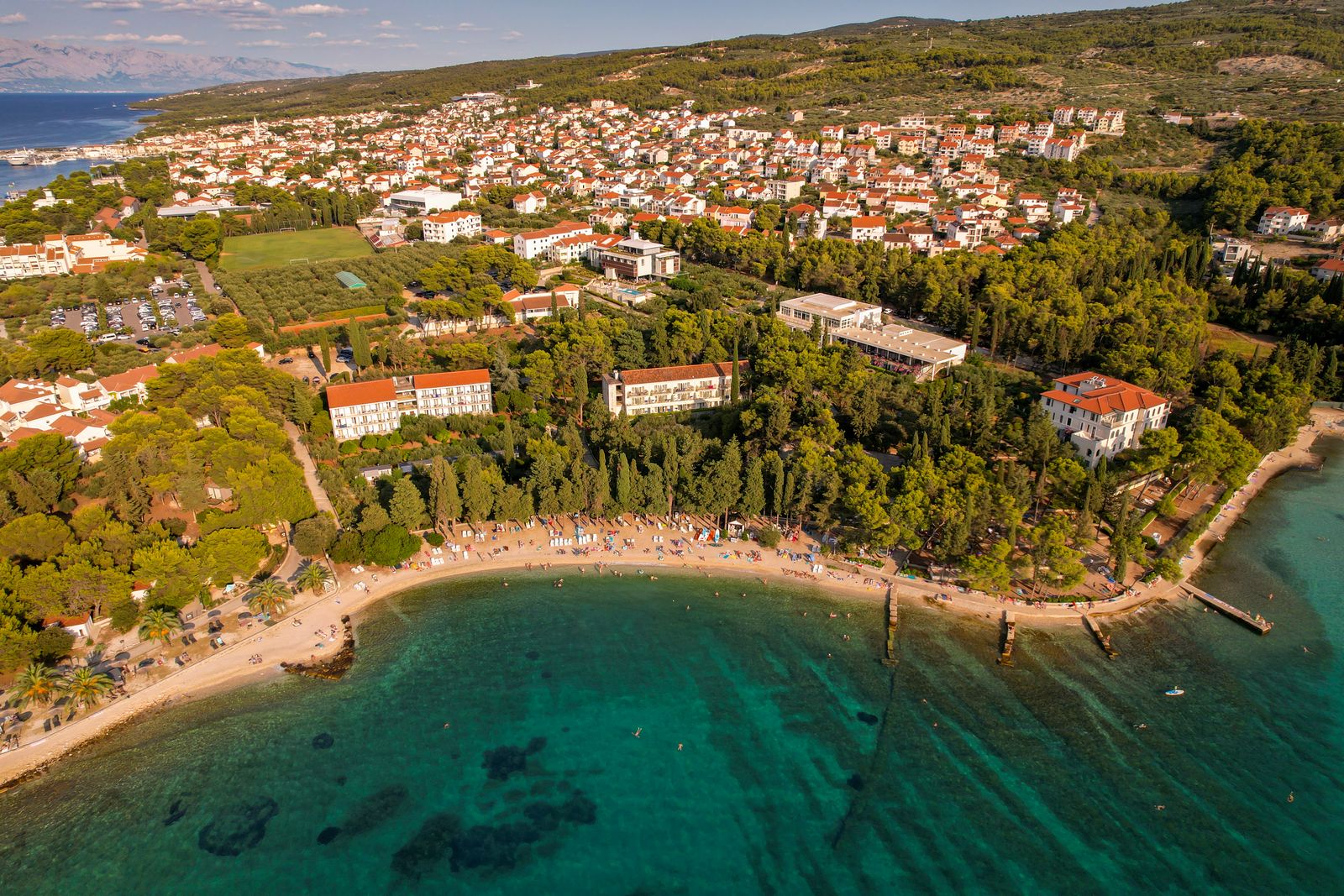
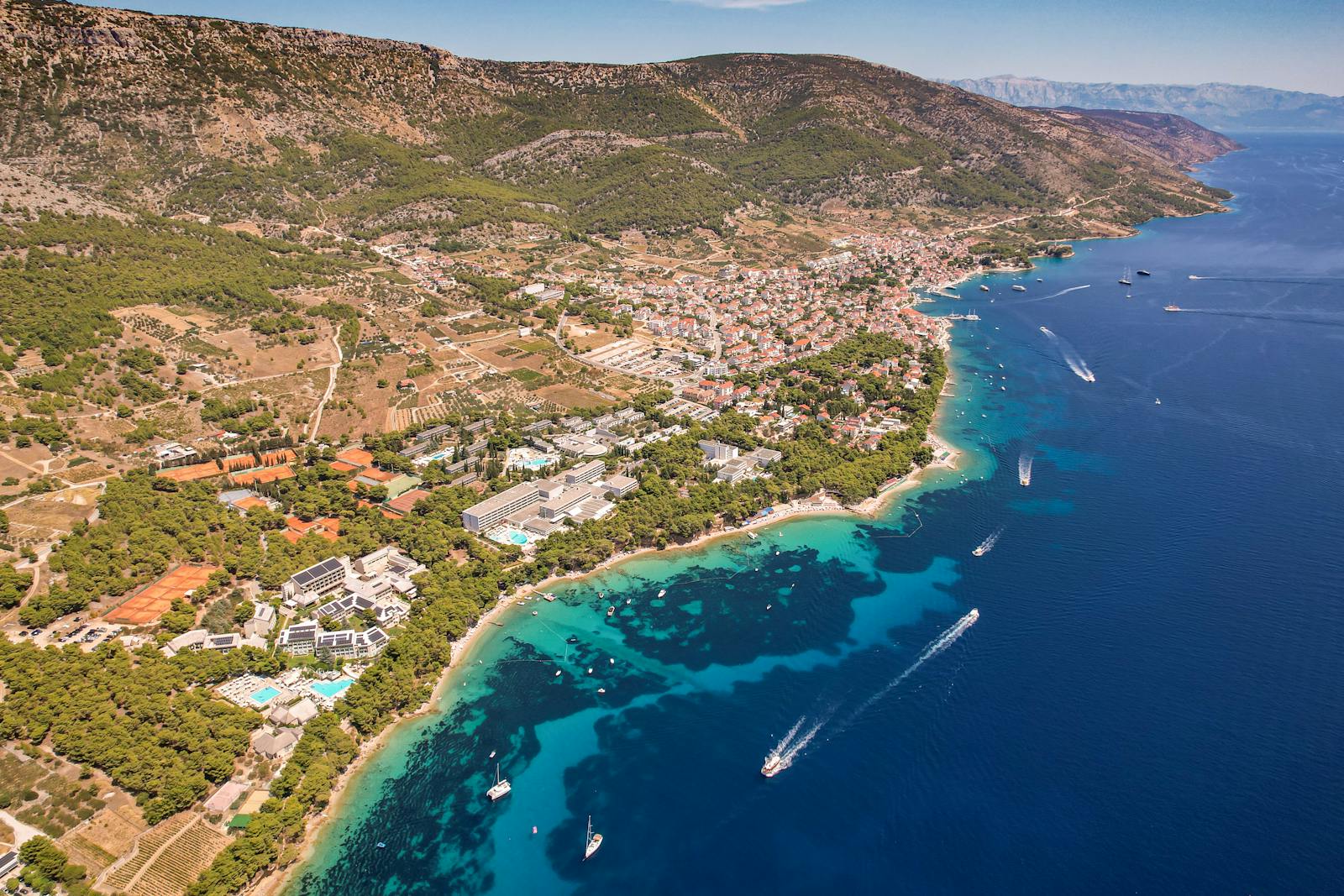
For dedicated water-sports lovers, livelier evening promenades and nightlife, the clear choice is the resort of Bol, which lies right next to the famous Zlatni Rat beach. The atmosphere here is noticeably more touristy and louder, but the gorgeous scenery and huge choice of activities right by the sea more than make up for it. You won’t go wrong by booking a beautiful room well in advance at the design-led Boutique Hotel Bol, which offers truly excellent service. Alternatively, you can pick the very popular and slightly more affordable Villa Daniela, just a few minutes’ walk from the sea.
If you’re after something truly unique and don’t mind a daily drive to go swimming, the inland or the stonemasons’ town of Pučišća also offers a magical and very quiet atmosphere. These more remote spots are ideal for those of you who crave the authentic Dalmatian countryside, love tasting local wine right at the source and don’t need the most famous beaches right outside your window.
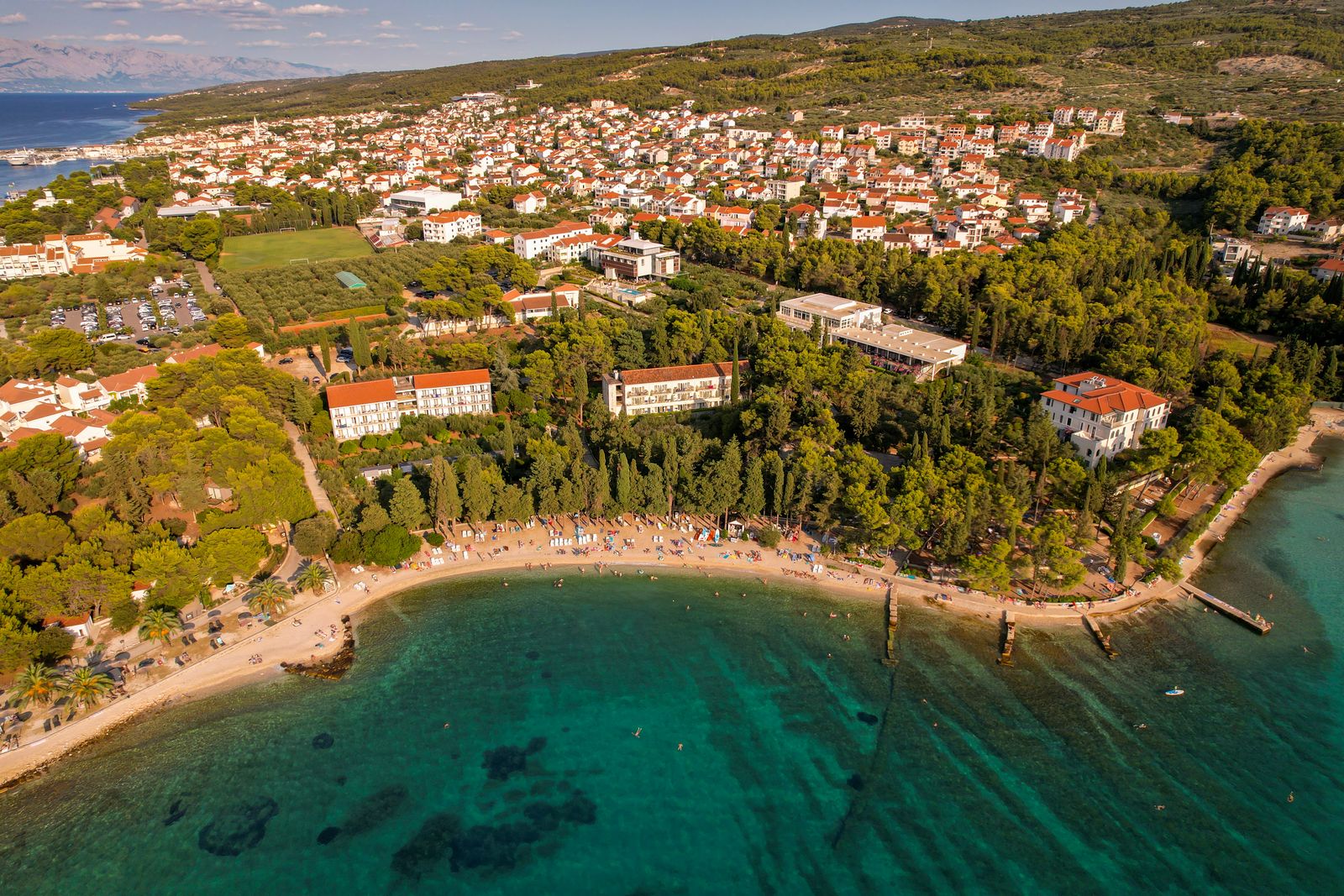
12 things to see and do on Brač island
Whether you decide to lounge on the sun-warmed pebbles or prefer hunting down hidden historic treasures, the island certainly won’t disappoint. Let’s take a detailed look at twelve places and experiences you definitely shouldn’t miss on your visit, so you take home the best possible memories.
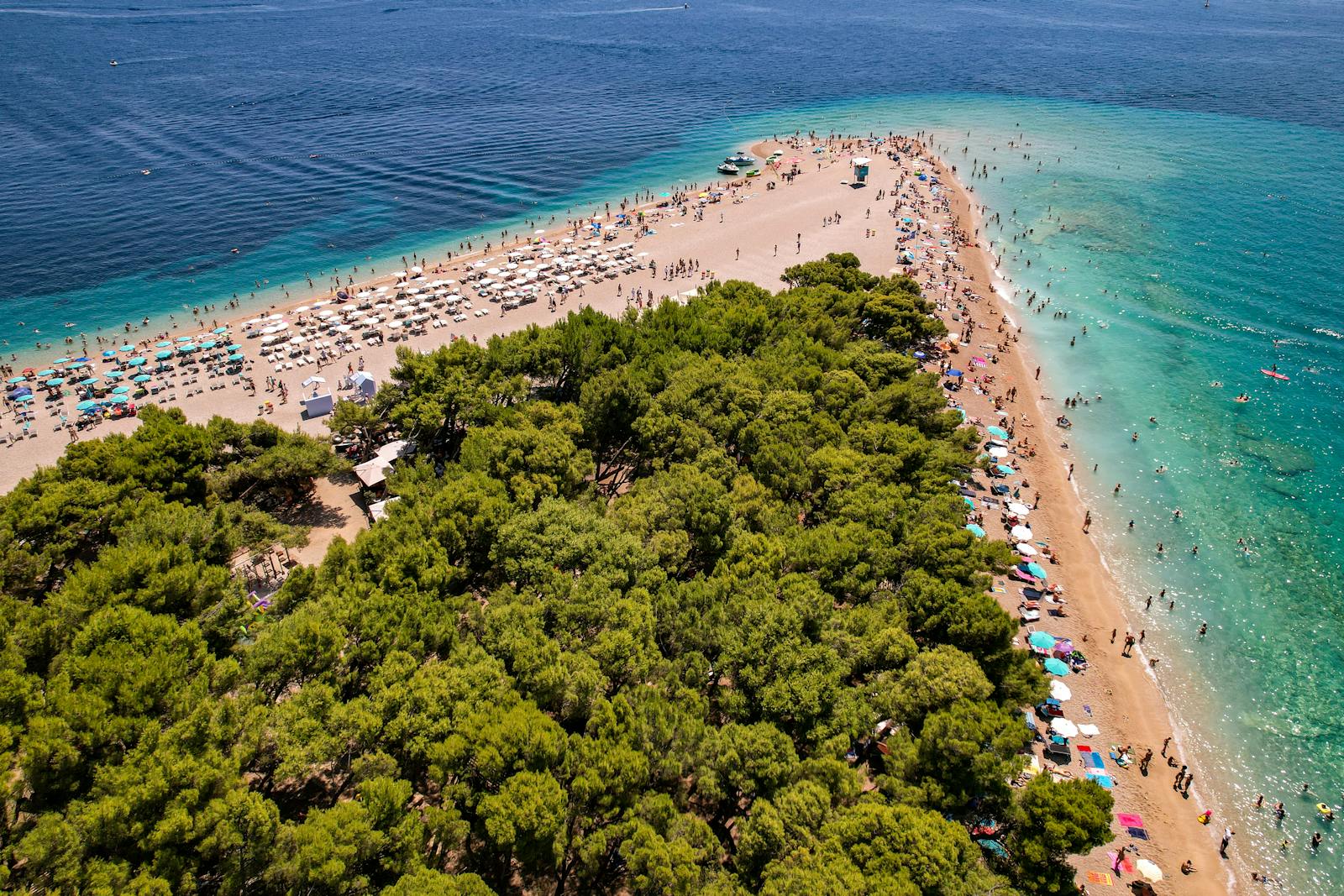
1. The iconic Zlatni Rat beach
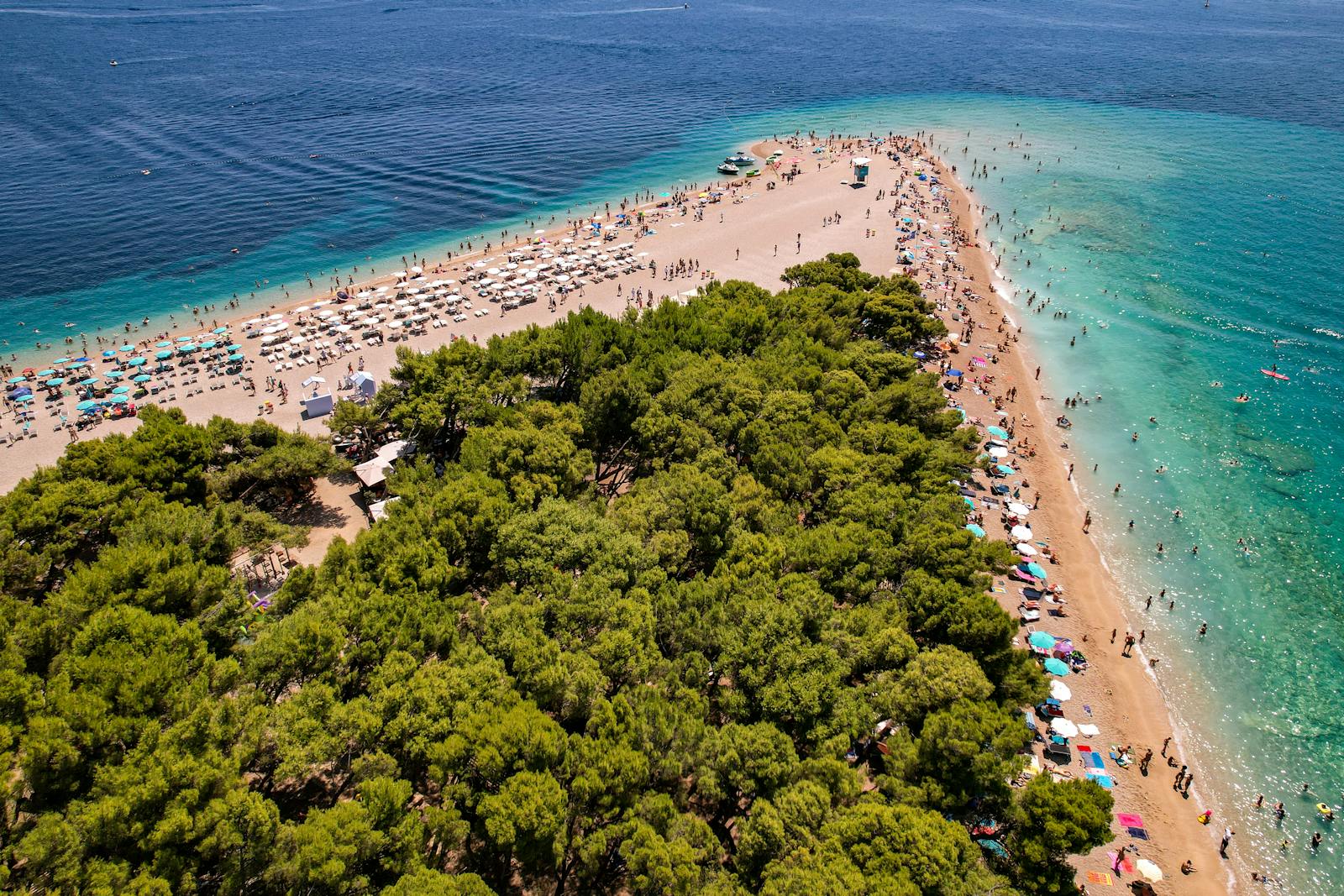
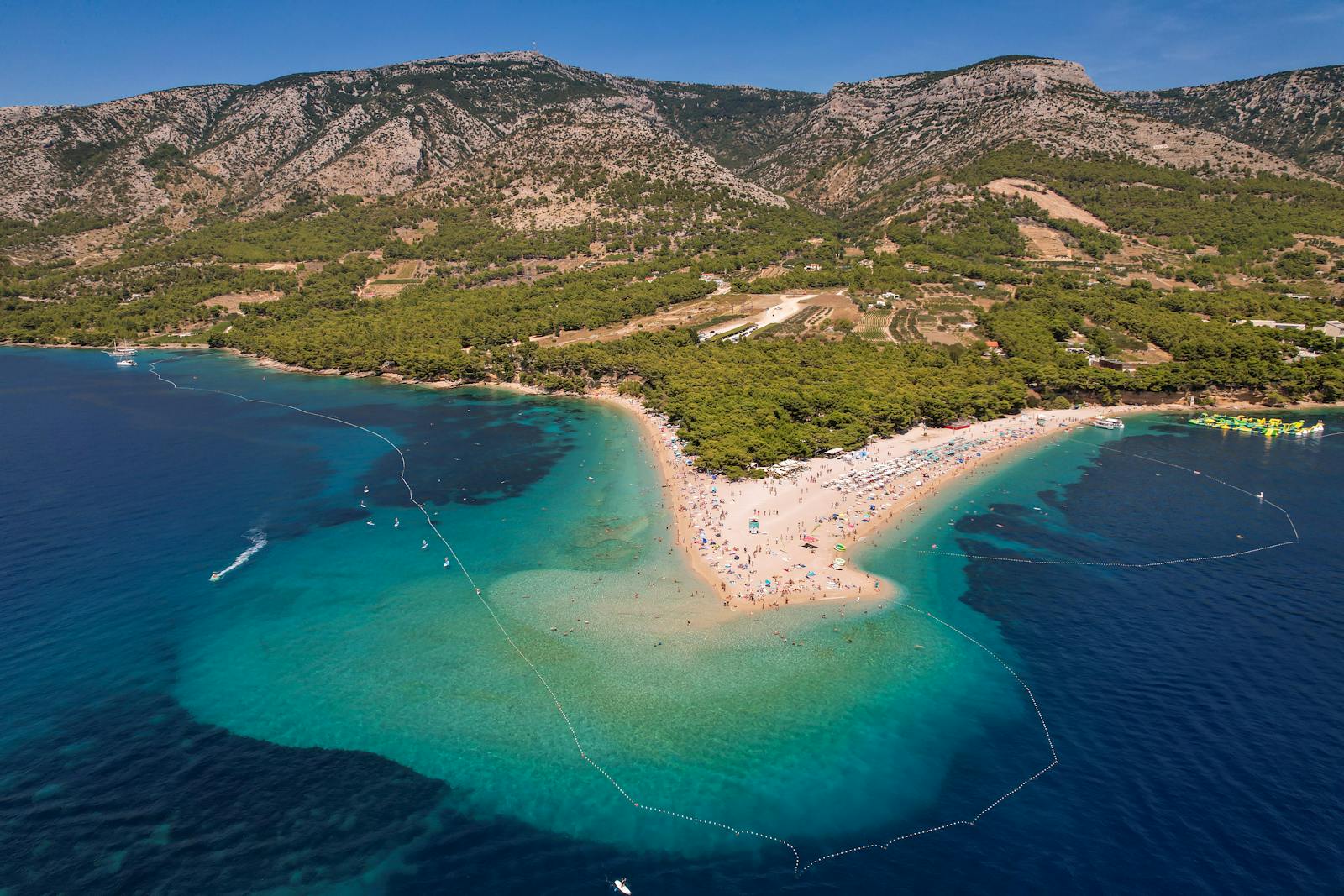
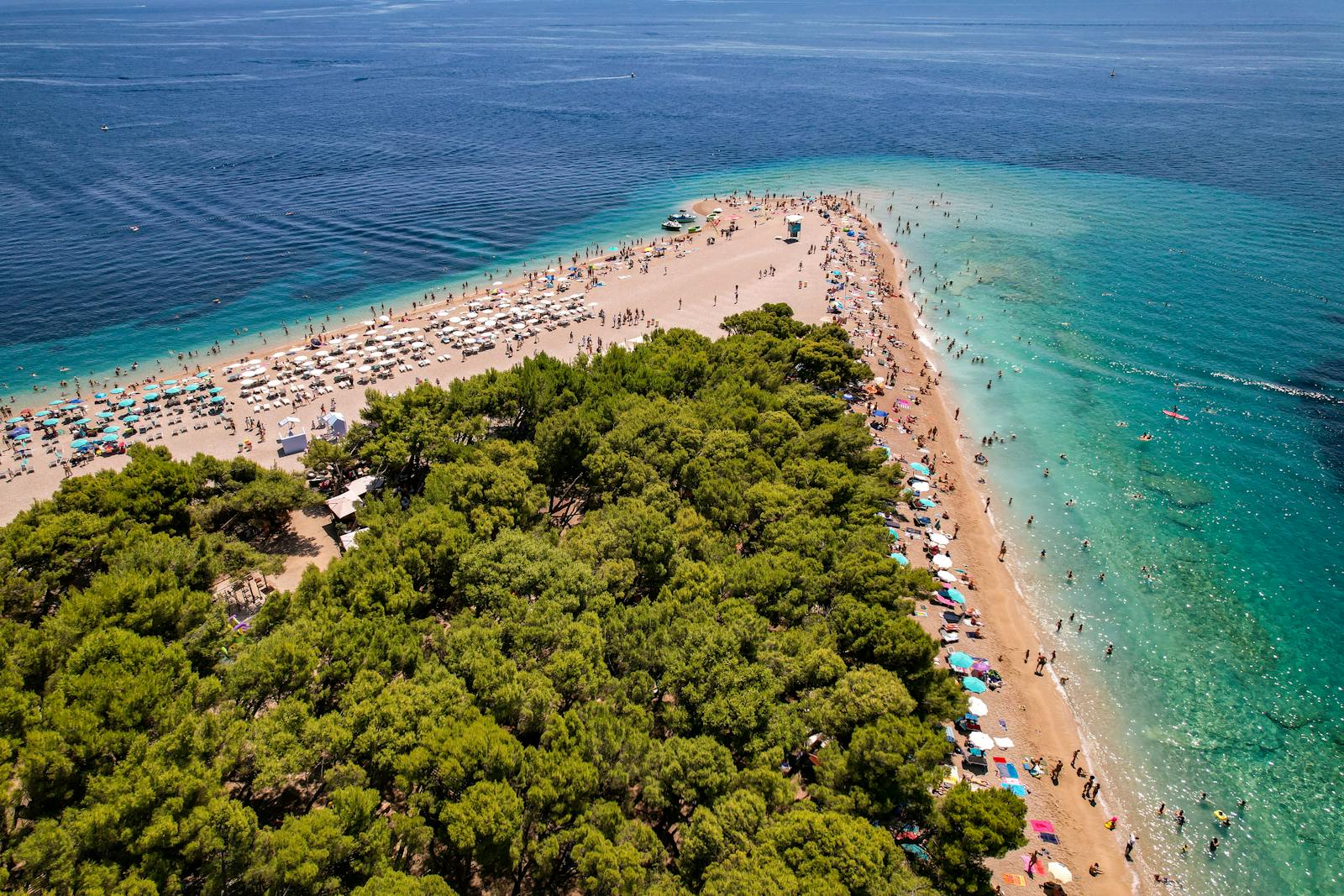
This unique geomorphological landmark is probably the very first thing that springs to mind when you think of the Croatian coast. It’s a vast pebble tongue that juts roughly half a kilometre straight out into the deep blue waters of the Adriatic. Zlatni Rat is utterly fascinating above all because its iconic tip constantly changes shape. It bends one way or the other depending on how the wind is blowing and which direction the strong sea currents are pushing. The beach therefore looks a little different every day and never stops surprising its visitors.
Since this is an absolute symbol of all of Croatia and one of the most photographed beaches in Europe, you have to expect huge numbers of tourists in high season. The big advantage, though, is the sheer size of the beach and the fact that one side is nearly always calmer and nicely sheltered from the wind. You’ll appreciate that especially if you’re travelling with smaller children who wouldn’t manage to swim in big waves. The entry into the water is fairly steep here, the pebbles are beautifully clean and the crystal-clear sea simply invites you to swim all day.
💡 Tip: A beautiful shady promenade lined with tall, fragrant pines leads from the centre of Bol to the beach, and you can get here on a very pleasant walk in under twenty minutes. That way you don’t have to deal with the tricky parking, which in summer is quite expensive right by the beach and, above all, hopelessly full.
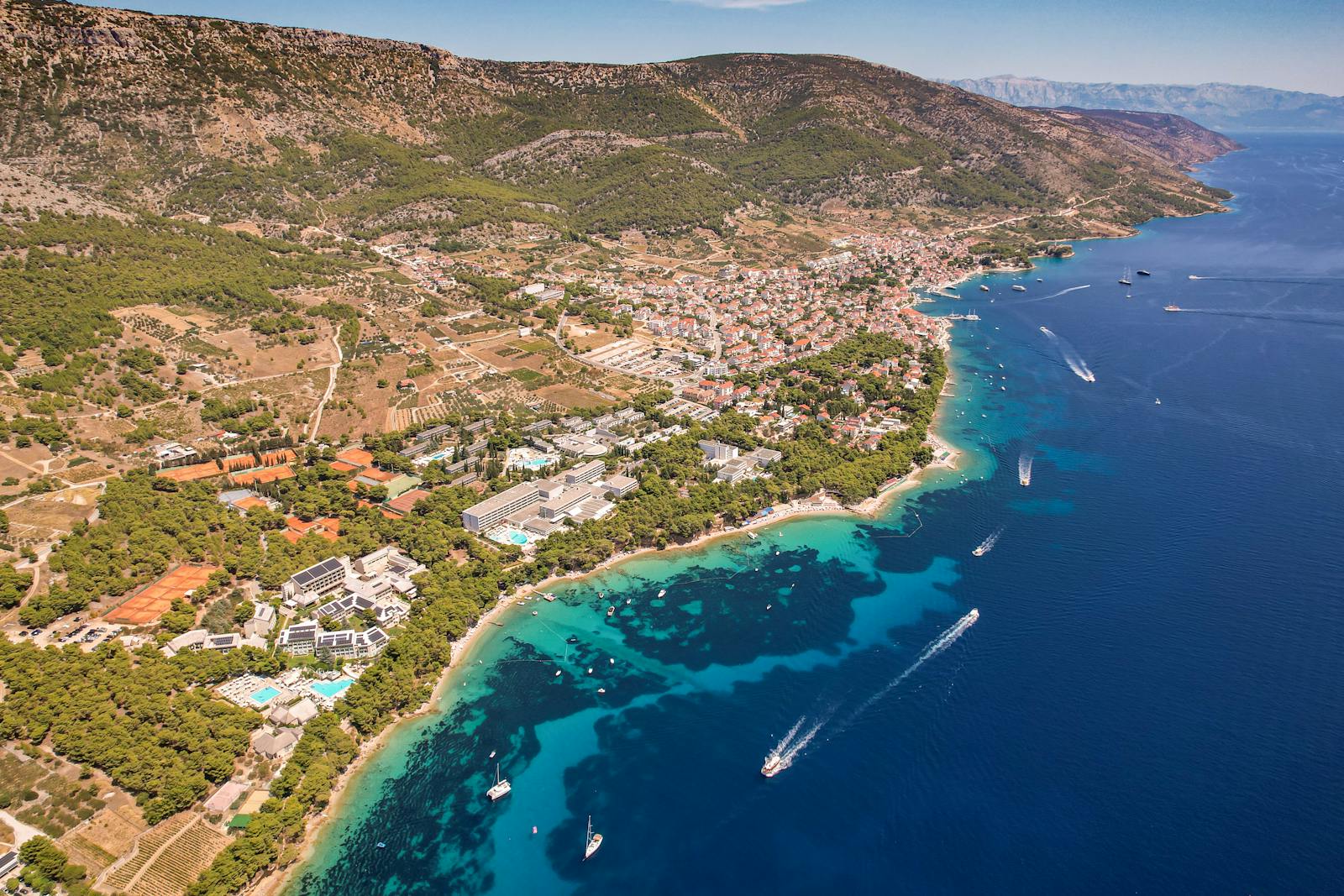
2. The romantic town of Bol
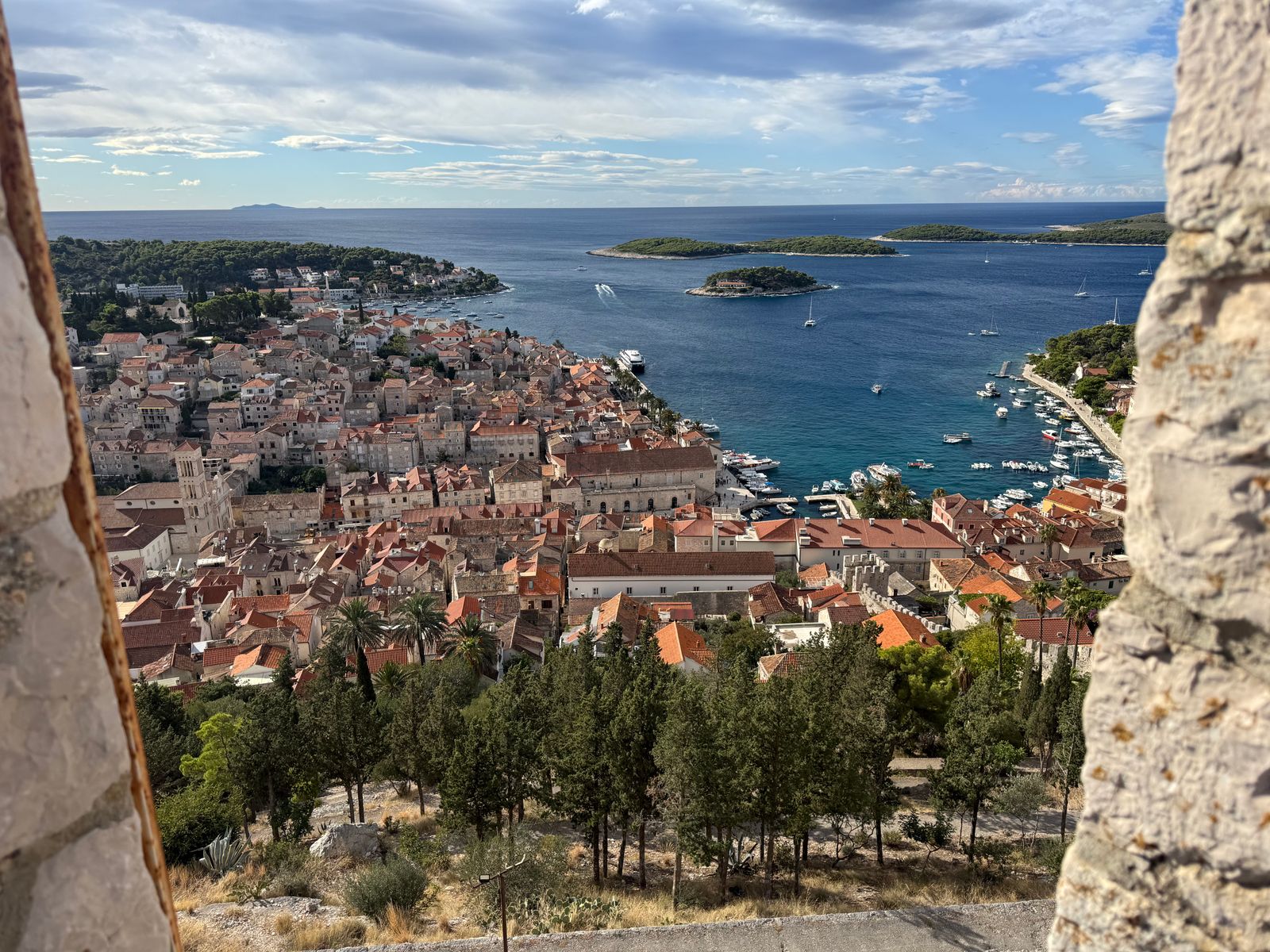
Bol isn’t just a practical starting point for visiting the famous beach, but above all an utterly charming historic resort with an unmistakable Dalmatian atmosphere. Its heart is a picturesque harbour, around which centuries-old narrow stone lanes weave. The local promenade, incidentally, is paved with the renowned Brač stone, so it looks truly majestic and elegant. On evening strolls you’ll come across countless cosy cafés, traditional restaurants known as konobas and small craft shops selling local products.
If you enjoy discovering historic sites and looking for quieter corners, I recommend heading to the picturesque Glavica peninsula. That’s where an ancient Dominican monastery dating back to the fifteenth century proudly stands. Inside its historic walls there’s a valuable museum and even a rare altarpiece attributed to the famous Italian master Tintoretto. From the carefully tended monastery gardens you also get a gorgeous, romantic view of the shimmering sea, best enjoyed at sunset.
💡 Tip: Right next to the Dominican monastery you’ll find the pebble beach of Martinica, which is a markedly calmer alternative to the perpetually busy Zlatni Rat. You won’t find as many facilities or attractions there, but it offers very authentic, undisturbed swimming with a breathtaking historic backdrop.
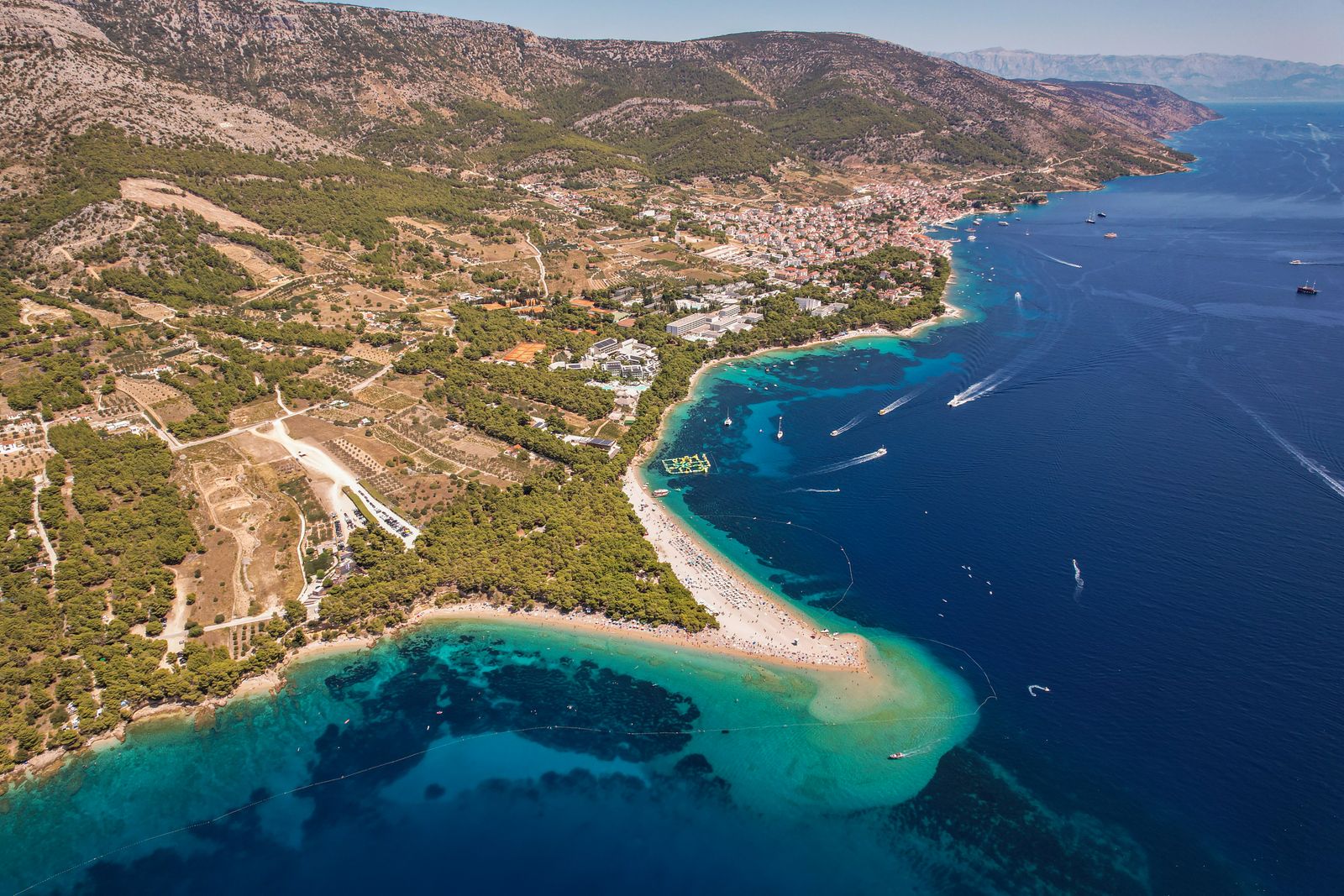
3. Climbing the majestic Vidova gora
At 778 metres above sea level, Vidova gora is not only the highest point on Brač island, but actually the highest peak of all the Adriatic islands. From its bare, very rocky summit you get an absolutely spectacular panoramic view. On a clear summer’s day you’ll see the neighbouring islands of Hvar and Vis beautifully, the Pelješac peninsula, and on truly exceptional days you can even make out the Italian shores. At the top you’ll also find a twelve-metre stone cross and the remains of the medieval Church of St Vitus from the thirteenth century.
The bird’s-eye view straight down onto the sea also reveals the famous Zlatni Rat in all its glory and unusual shape, a visual treat you definitely shouldn’t miss. You can set off for the summit from Bol on foot along a marked hiking trail, a fairly demanding two-hour climb. But if you’re not a fan of mountain hiking in the heat, you can comfortably drive the whole route right up to the transmitter, where there’s a free car park.
💡 Tip: If you choose to walk up, set off really early in the morning, before the merciless summer sun hits the slopes. A large part of the route runs across unshaded terrain without a scrap of shade. Don’t forget to pack plenty of drinking water and good, sturdy footwear for the rocky ground.
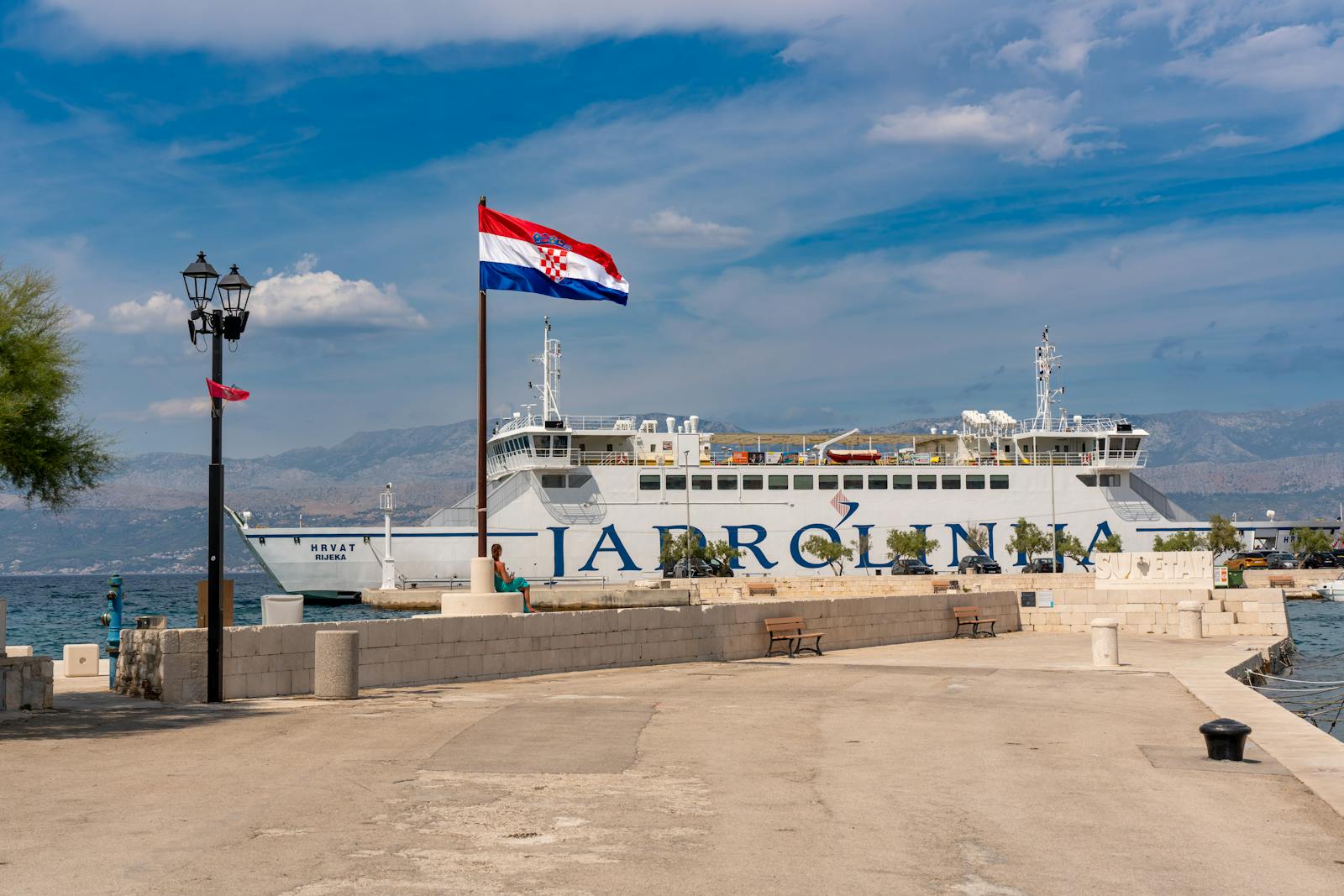
4. Supetar, the main gateway to the island
For the vast majority of travellers who arrive on Brač by car from the mainland, the northern port town of Supetar is the very first place they encounter on the island. With around three and a half thousand permanent residents, it’s the largest settlement on the island, living at its own peaceful pace all year round, not just during the short summer season. It’s a great place for shopping at the local market, evening strolls along the promenade and sampling Dalmatian specialities.
Well worth seeing here is the stunning neo-Byzantine mausoleum of the Petrinović family, dating from 1914. This impressive white-stone structure majestically dominates the local cemetery on the St Nicholas peninsula and is a recognised masterpiece by the renowned sculptor Toma Rosandić. For another cultural experience you can head to the gallery of the famous local-born artist Ivan Rendić. This talented sculptor is considered the founder of modern Croatian sculpture, and his beautiful works now adorn many a significant square across the country.
💡 Tip: From Supetar a beautiful, easy route runs along the northern coast towards the picturesque village of Postira. This roughly seven-kilometre route is perfect for a sea kayak or paddleboard outing, as it takes you past plenty of deserted coves where you can take a private swim break.
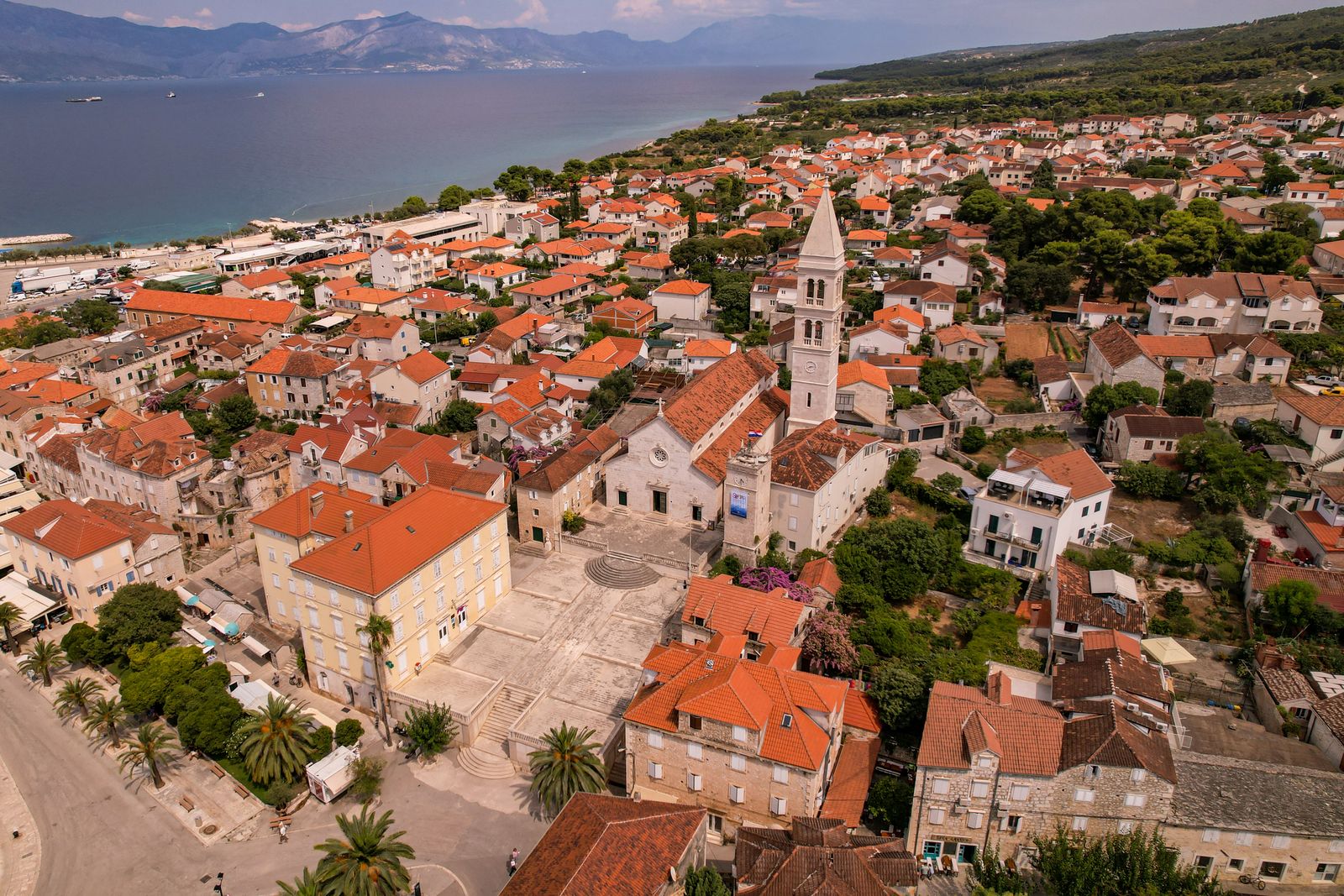
5. The stonemasonry tradition in Pučišća
The picturesque town of Pučišća, nestled deep in a safe, narrow sea bay, is an absolute world treasure thanks to its incredibly long tradition of working limestone. It’s home to the renowned Stonemasonry School, founded back in 1909. To this day it’s the only educational institution of its kind in all of Europe, where students learn to work raw stone exclusively using old hand techniques with traditional tools passed down through generations. Its graduates are then enormously sought after for restoring historic monuments all over the world.
It’s from the massive surrounding quarries that the legendary dazzling-white Brač stone comes, which holds immeasurable value on the island. Historically it was used to build many important structures, including the stunning Diocletian’s Palace in nearby Split. Locals will also proudly tell you that their white stone made it all the way to the façade of the White House in Washington. Although historians still tend to doubt this popular myth and have no proof of it, it takes nothing away from the town’s charm.
💡 Tip: During the summer tourist season the school building is open to the public, and you can take a close look at the stunning sculptures and decorative pieces created by the students themselves. It’s a fascinating sight, an ancient stonemasonry craft brought to life right before your eyes.
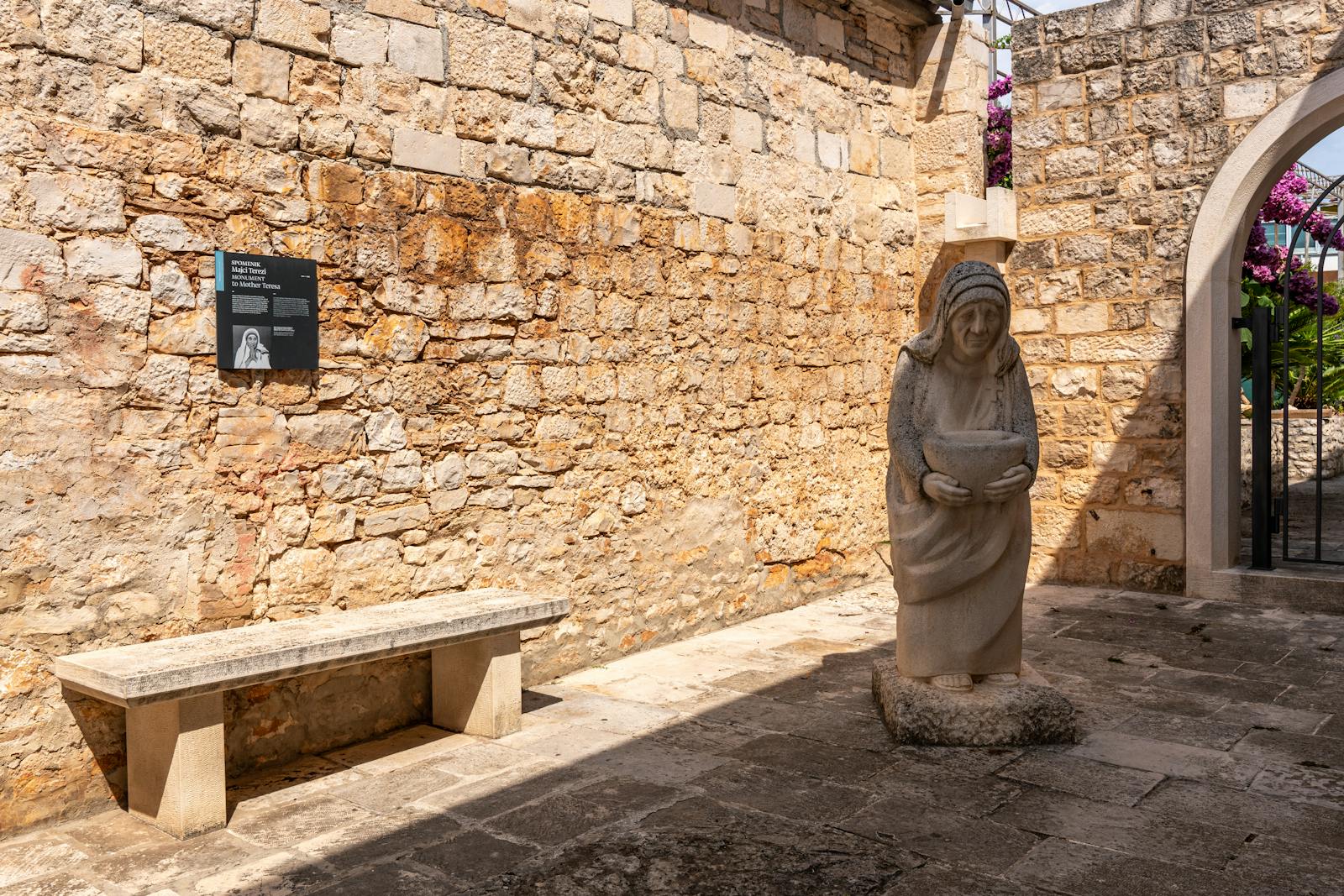
6. The remote Blaca Hermitage
A visit to this fascinating historic monastery complex is without doubt one of the most powerful experiences you can take away from travelling around Croatia. Blaca Hermitage was founded in 1551 by Glagolitic monks who fled here to safety from the harsh Ottoman raids. The whole site is literally carved into and organically clinging to a steep rock face in a deep, very hard-to-reach canyon, which gives it an utterly mystical, mysterious atmosphere.
The monastery operated for an incredibly long time, and the monks only left it in 1963. The people who lived here were highly educated and built not only a respectable library with more than eleven thousand rare volumes, but in the nineteenth century even added a significant astronomical observatory. The facilities they managed to create in such inhospitable conditions are simply breathtaking. Admission to today’s museum is 8 € per adult, and the opening hours vary by season, with the site always closed to the public on Mondays without exception.
💡 Tip: You can only reach the complex from the car park on foot along a roughly two-and-a-half-kilometre rocky goat track, which takes about forty minutes of brisk walking. Sturdy closed-toe shoes and plenty of drinking water are an absolute must for this hike — definitely don’t attempt it in flimsy beach flip-flops.
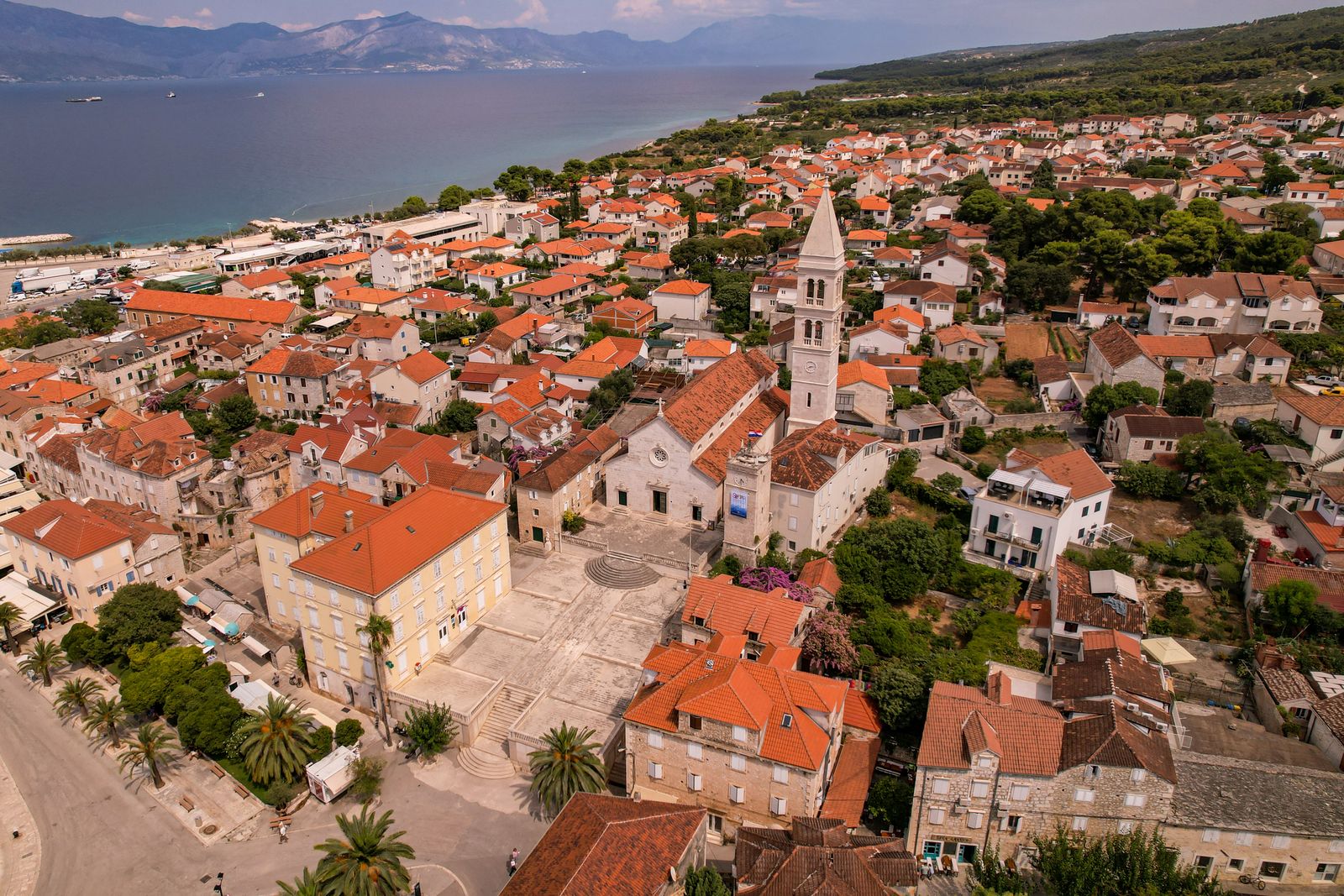
7. Škrip and traces of ancient history
If you want to peek into truly deep history during your holiday, be sure to take a trip to the inland village of Škrip. With a history stretching back an incredible three thousand years, it’s the oldest documented settlement on the entire island. The atmosphere here is utterly magical, incredibly quiet and calm, a huge and very welcome contrast to the bustling coastal promenades full of tourists, loud music and souvenir stalls.
Strolling through the village, you can admire the remains of mighty Illyrian walls dating from around 1400 BC, and you’ll even come across an ancient Roman mausoleum. The biggest historical draw, however, is the Museum of Brač Island, stylishly housed in the historic defensive fortress of Castel Radojković from the seventeenth century. This is where you can take a detailed look at the most valuable archaeological finds from the whole region in one place.
💡 Tip: In the museum’s exhibitions, definitely don’t miss the unique objects from the famous Kopačina cave and the fascinating ancient Roman tombstones, which tell the stories of the island’s first inhabitants. It’s also, by the way, a great place to escape the midday summer sun, as the thick stone walls of the fortress keep it very pleasantly cool inside.
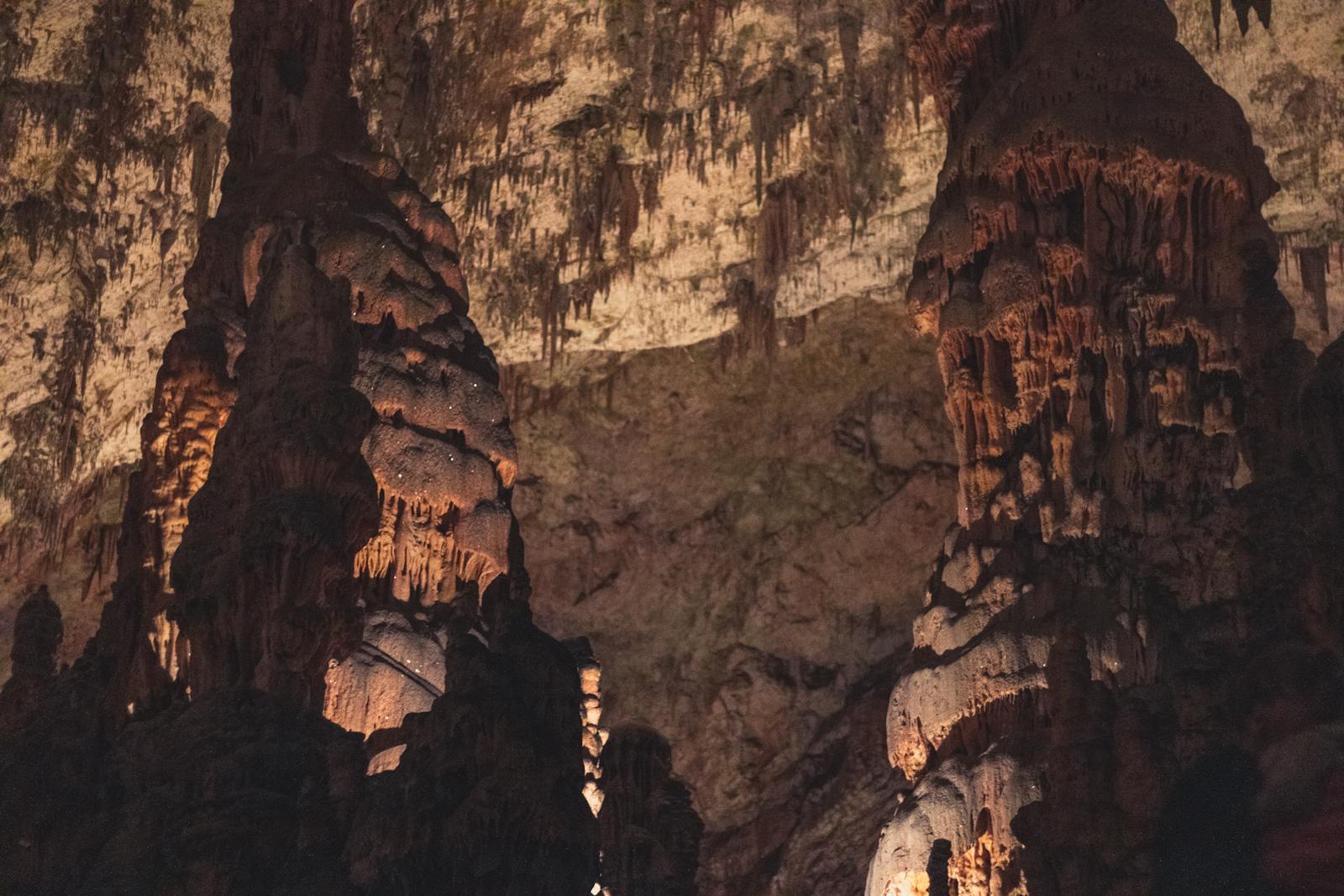
8. The mystical Dragon’s Cave (Zmajeva špilja)
High in the steep limestone slopes above the picturesque village of Murvica, just a short distance from Bol, hides the mysterious Dragon’s Cave. This magical place is a fascinating crossroads of different religions and ancient cultures. In the fifteenth century, Glagolitic monks settled here and gradually carved stunning, highly detailed reliefs into the cave’s soft walls. Their art blends classical Christian symbolism with old Slavic mythology and pagan motifs from ancient times in a truly unique way.
The most striking work in the whole underground space is a huge relief of a menacing dragon, which gave the cave its present name. Access to this protected historic treasure is fairly steep and physically quite demanding. What’s more, you have to bear in mind that you usually can’t enter without a licensed guide for conservation reasons, as the entrance portal is protected by a massive locked metal grille.
💡 Tip: In summer, always book your cave tour well in advance through the local tourist office, as group capacity is strictly limited and demand tends to be high. The climb from the car park in Murvica to the cave itself takes just under an hour, so once again don’t forget good footwear and, above all, a bottle of water.
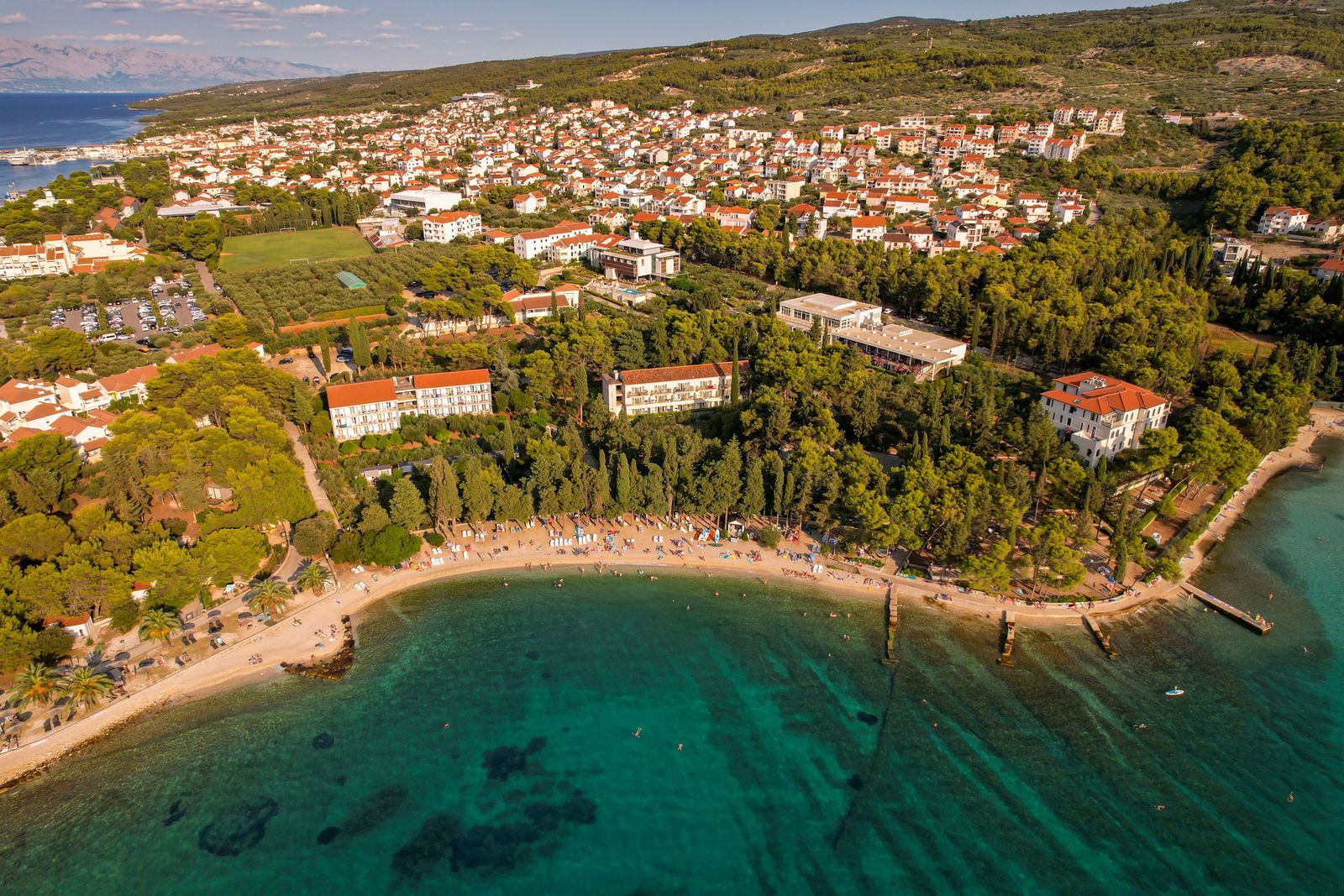

9. The most beautiful beaches on the island
Besides the ever-present and famous Zlatni Rat, the island’s coast offers a huge number of other gorgeous coves, which often provide far more peace and that coveted intimacy. Most of the beaches here are made up of perfectly smooth white pebbles, which is why the water is incredibly clear, turquoise and absolutely ideal for snorkelling and watching marine life. Just don’t forget to pack a good pair of water shoes, which will make the otherwise rather hard, rocky entry into the sea far more comfortable.
If you stay in Supetar in the north, you can visit the very popular and easily accessible town beaches of Tri Mosta or Acapulco. They have every conceivable facility, from sunlounger hire and parasols to great beach bars with ice-cold drinks. If, however, you’re after that rare Croatian sand, be sure to take a day trip to Vela Luka beach, on the western edge of Supetar.
💡 Tip: The aforementioned Vela Luka beach has really fine sand and a beautifully gentle entry into the water, so it’s a perfect and safe choice for families with small children or for non-swimmers. In high season it does get a bit busier here, but the sheer comfort of swimming is definitely worth it.
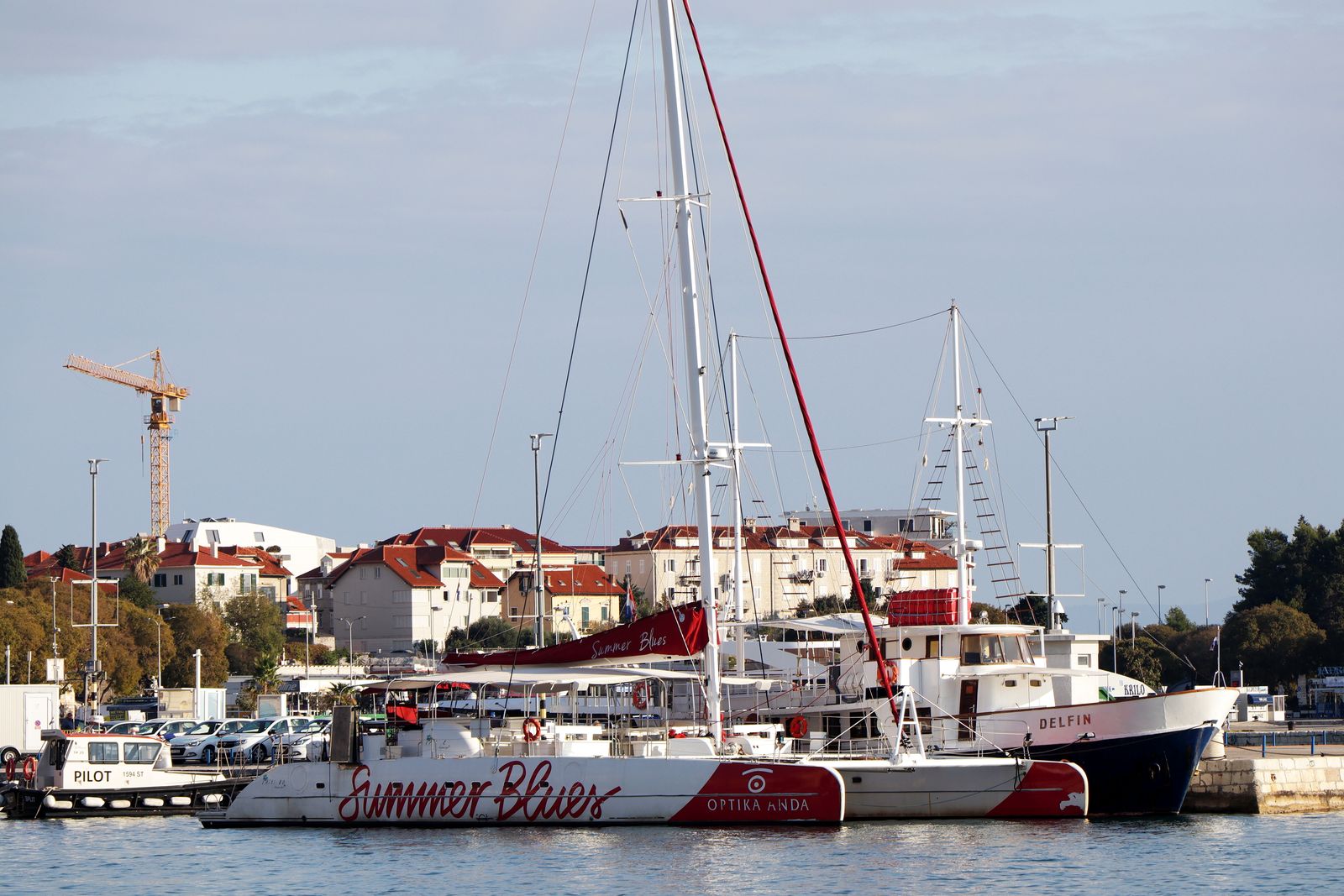
10. How to get to Brač island
Sorting out transport is the most important part of the whole planning process, and your options differ significantly depending on whether you’re travelling with your own car. Cars are carried to the island exclusively by the state-run Croatian company Jadrolinija. Its large, spacious ferries run regularly from mainland Split to the northern port of Supetar, with the comfortable crossing taking about fifty minutes. In high summer the boats shuttle back and forth really often, sometimes up to fourteen times a day. The fare for a passenger car up to five metres long is around 25 € in 2025, while each adult foot passenger pays just over 6 €. Coming from the UK, the easiest route is to fly into Split (direct flights run from London, Manchester and other cities with the likes of British Airways, easyJet and Jet2) and then continue to the port — Split airport is the nearest one for reaching Brač.
If you leave the car at home or parked on the mainland, you can use the much faster and more direct fast catamarans run by Krilo or Kapetan Luka. These modern boats will get you from Split straight to the popular southern resort of Bol in under an hour. One-way tickets usually fall within quite a wide range, roughly from 9 to 25 €, depending heavily on how far in advance you book. Bear in mind, though, that these catamarans are a seasonal affair only.
💡 Tip: In high summer, it’s best to buy your car ferry tickets several days ahead online via the official Jadrolinija website. You’ll save yourself a lot of needless stress and long, exhausting queues at the harbour ticket offices under the blazing sun.
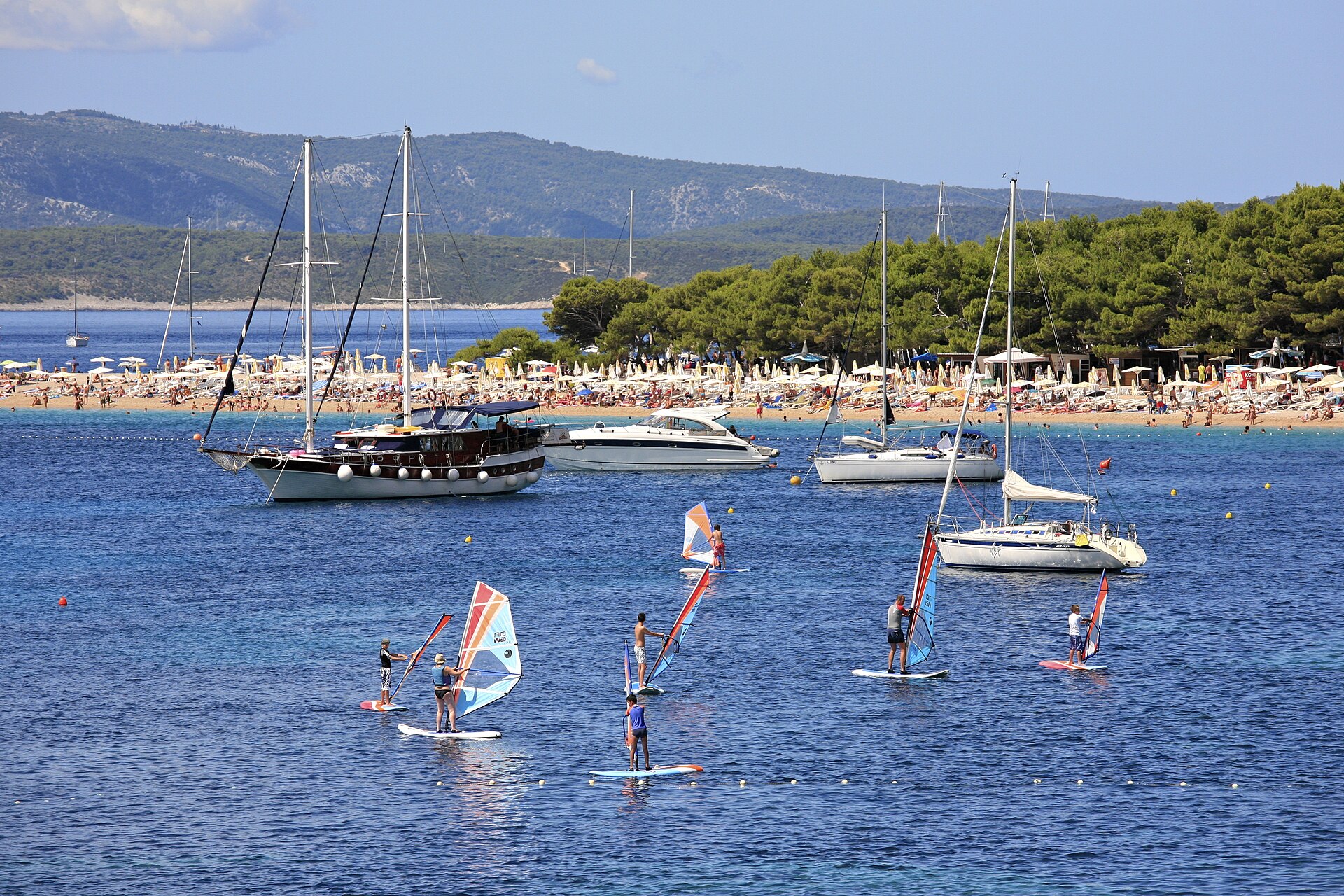
11. Windsurfing and water sports
Thanks to its utterly specific weather conditions, the southern side of the island has long been considered one of the very best spots for water sports in all of Europe. During the summer holiday months, the regular, strong thermal wind known as the maestral takes charge here almost every day. This phenomenon usually starts blowing soon after noon, peaks around two o’clock and creates absolutely perfect conditions for windsurfing and the hugely popular adrenaline-fuelled kitesurfing. The sight of dozens of colourful kites flying over the sea is fascinating even if you just watch from the shore.
Around the famous Zlatni Rat beach you’ll find several professional schools and superbly equipped rental shops for all sorts of activities. Experienced licensed instructors will happily take you on, regardless of whether you’re a complete beginner who’s never stood on a board in your life or a more advanced rider polishing your technique. Various guided tours and sports courses can also be booked very easily and safely online in advance through the GetYourGuide platform.
💡 Tip: If you prefer calmer activities on the water and adrenaline jumps in the waves aren’t your thing, hiring a sea kayak or paddleboard is a great experience for the whole family. Especially early in the morning, while the sea is smooth as a mirror and the maestral isn’t yet blowing, exploring the hidden rocky coves is huge fun.
12. What to taste from the local cuisine
Dalmatian cuisine is renowned far and wide for its wonderful lightness and generous use of fresh local ingredients, which goes double on sunny Brač. The island is a very important grower and producer of quality olives, so be sure to taste and take home some of the local top-class olive oil, which has an incredibly rich flavour. We love it best simply with fresh homemade bread and a bold sheep’s or goat’s cheese from the local fragrant pastures. For a relaxed early-evening sit-down, I warmly recommend ordering a glass of the heavier red wine made from the famous Plavac Mali grape, which thrives on the sun-baked southern slopes and pairs absolutely perfectly with the cheeses.
A traditional local culinary speciality for meat lovers is so-called vitalac. It’s goat or lamb offal skewered on a spit and slowly roasted over hot coals, and this distinctive dish originating from the village of Dol is even listed as protected intangible heritage. Whether you opt for lighter vegetable dishes packed with organic produce from local gardens or the island lamb just mentioned, definitely head out for a meal in the traditional rustic konobas.
💡 Tip: You’ll find an authentic Dalmatian atmosphere and truly excellent food, for example, at the renowned Kopačina restaurant in the picturesque village of Donji Humac or at Konoba Dolac, where a genuine historic atmosphere washes over you and you’ll spend an unforgettable evening.
Map of points of interest for your phone
Where to go next from Brač island
If you’ve set aside more time to explore the gorgeous Dalmatian coast, Brač itself can be just a very pleasant start to your big summer adventure. From the local ports there are countless options for where you can smoothly carry on, either inland or to the neighbouring islands, each of which again has a completely different and unique character.
- You can take a comfortable ferry back and thoroughly explore the historic centre of the city of Split, where the stunning Diocletian’s Palace and the ever-bustling Riva promenade await you.
- If island life still appeals to you, consider hopping over to the neighbouring island of Hvar, known for its fragrant lavender fields and very lively nightlife.
- For a complete overview of the best summer destinations and resorts, be sure to read our big article on where to go on holiday in Croatia.
- If you long for total independence and romance on the waves, explore the options for experiencing Croatia by boat, which lets you discover even the most secluded, tourist-free coves.
- As you plan your next trip, our practical tips on the best accommodation in Croatia will surely come in handy, so you can find the perfect apartment or hotel completely stress-free.
Frequently asked questions
Is the famous Zlatni Rat beach made of sand?
Although it might look that way at first glance in many edited promotional photos, Zlatni Rat is not a sandy beach. It’s entirely made up of very fine and perfectly smooth white pebbles that slope quite steeply straight into deep water. Make sure to bring quality water shoes with you, as walking on hot pebbles can become quite uncomfortable after a while.
Can you get to the island of Brač with your own car?
Yes, traveling around the island in your own car is completely normal and entirely hassle-free. To cross the sea, however, you need to use the large ferry operated by the state company Jadrolinija, which regularly departs from mainland Split and docks at the northern port of Supetar. The fast catamarans sailing to the resort of Bol in the south carry only foot passengers without vehicles.
How much does a ferry ticket from Split cost?
Prices are slightly adjusted each new season, but for 2025 you can expect to pay around 25 euros for a standard passenger car up to five metres in length for a one-way journey. A ticket for an adult foot passenger on the same route works out at approximately just under 7 euros, and I recommend buying tickets online rather than on the day.
Can I make it up to the highest peak Vidova Gora?
The hiking trail from the resort of Bol directly to the summit is marked as moderately difficult and takes about two hours of continuous climbing. The main problem is usually not so much the rocky terrain itself, but rather the scorching summer heat, as a large part of the trail runs in open sun with absolutely no shade. If you don’t feel up to it, you can drive all the way up to the transmitter at the summit quite safely by car.
How long does the catamaran ride to the resort of Bol take?
A fast modern catamaran, operated during the summer season by the popular companies Krilo or Kapetan Luka, covers the route from Split directly to Bol in just under 55 to 60 minutes. It’s undoubtedly the fastest and most comfortable way to get to the island if you’re traveling light without your own car and don’t want to waste time.
When is the best time for windsurfing?
For windsurfing enthusiasts and adrenaline-fueled kitesurfing fans, the main holiday months of July and August are absolutely ideal. During this period, the thermal maestral wind blows with clockwork regularity almost every day. It typically starts to pick up around 2 PM and keeps creating perfect waves until early evening.
Can you drive to Blaca Hermitage by car?
No, this unique and mysterious monastery complex is hidden deep within a rocky canyon and is only accessible on foot. You must leave your car at the designated upper parking lot, and then you’ll face approximately a two-and-a-half-kilometer hike down a very rocky and uneven goat trail, for which you’ll definitely need sturdy closed-toe shoes.
What is this famous Bračský stone?
This is a high-quality and brilliantly white limestone that has been quarried in the local extensive quarries since the times of ancient Rome. Its most famous historical use is undoubtedly the construction of the breathtaking Diocletian’s Palace in nearby Split, and the traditional craft of hand-working this precious stone is still taught today at the renowned school in the town of Pučišća.
Tips and Tricks for Your Vacation
Don’t Overpay for Flights
Search for flights on Kayak. It’s our favorite search engine because it scans the websites of all airlines and always finds the cheapest connection.
Book Your Accommodation Smartly
The best experiences we’ve had when looking for accommodation (from Alaska to Morocco) are with Booking.com, where hotels, apartments, and entire houses are usually the cheapest and most widely available.
 🚗 Car rental on the roadVerified rental cars in Croatia
Search with the DiscoverCars comparison engine — it compares prices from dozens of local and international rental companies, and most bookings come with free cancellation.
Compare car prices in Croatia →Don’t Forget Travel Insurance
Good travel insurance will protect you against illness, accidents, theft, or flight cancellations. We’ve had a few hospital visits abroad, so we know how important it is to have proper insurance arranged.
Where we insure ourselves: SafetyWing (simple monthly subscription) and TrueTraveller (for extra-long trips).
Find the Best Experiences
Get Your Guide is a huge online marketplace where you can book guided walks, trips, skip-the-line tickets, tours, and much more. We always find some extra fun there!