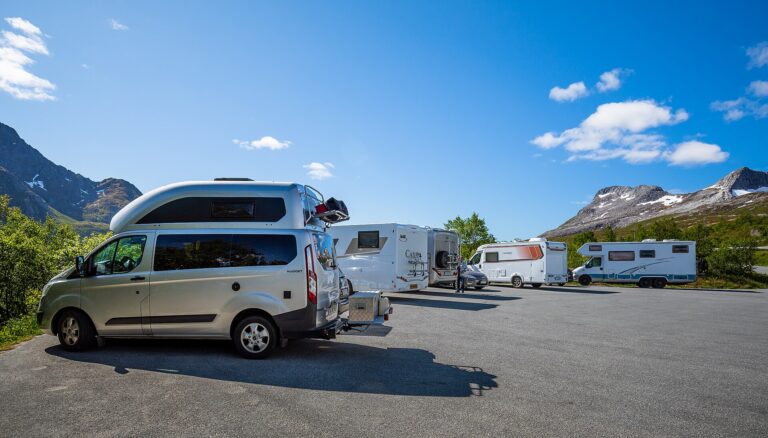
Hallstatt Austria Weather: Monthly Temperatures & Best Time to Visit 2026

TL;DRThe best months to visit Hallstatt are May and September, when the weather’s pleasant and crowds thinner than in summer — even though summer temperatures hover around 19–20°C and that’s when the most rain of the year falls. Annual rainfall runs to about 1800 millimetres, roughly three times what Prague gets, and January is the coldest month, with night-time temperatures dropping to -9°C. Snow right by Lake Hallstatt isn’t guaranteed even during Advent, since it melts fast at 508 metres above sea level. Swimming in the glacial lake only really works in July and August, when the water reaches 20 to 23°C. You can dodge the crowds — up to ten thousand visitors a day in peak season — by turning up before 9am or after 4pm.

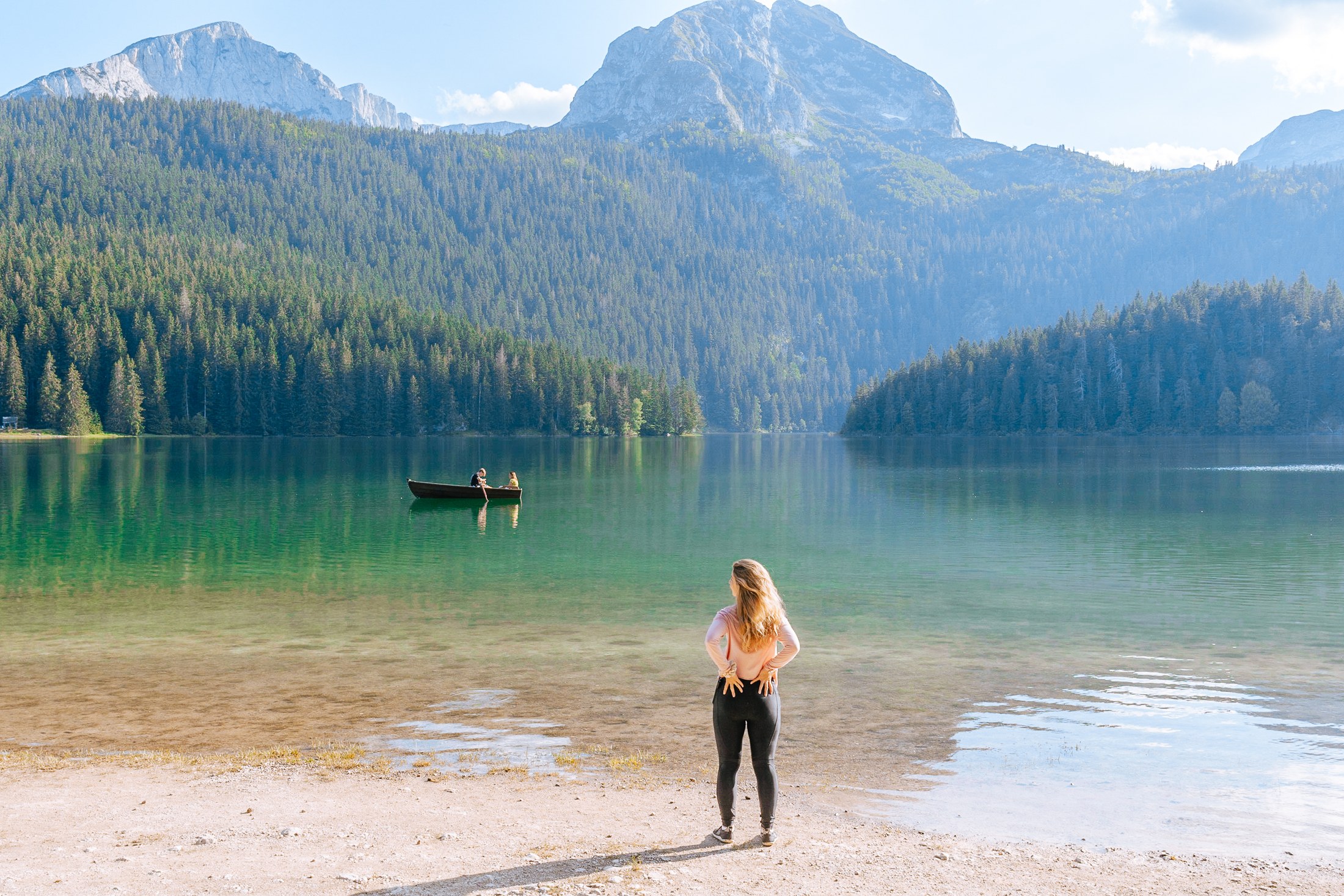
I still remember the moment when Lukáš and I finally dismounted our bikes after a long ride along the lakeshore and this famous Austrian village appeared before us. Hallstatt Austria has a peculiar magic about it that instantly pulls you into a fairy tale — only to snap you right back to reality with hordes of tourists clutching their phones. The quaint wooden houses cling to a narrow strip of land between steep mountains and the dark water surface, and this stunning contrast of rugged Alpine nature and romantic architecture works its charm on absolutely every visitor. When we later tucked into a huge plate of delicious cheesy Käsespätzle at one of the local pubs and watched the bustle outside, I realised just how much this place is at the mercy of the elements — and understanding the Hallstatt Austria weather is key to planning the perfect trip.

We discovered that the weather in Hallstatt can be remarkably unpredictable, and the month you choose for your visit makes a huge difference. Tucking into a hot apple strudel while mysterious fog descends over the lake is incredibly romantic, but getting caught in a summer downpour dampens the excitement somewhat 😅. If you’re planning your dream trip and wondering when to visit Hallstatt so you can enjoy those picturesque lanes at their best while dodging the worst of the crowds, I’m happy to share what I’ve learned first-hand. Let’s take a look at what each season brings, what to pack, and why you should seriously consider staying overnight.

TL;DR

  • The best months for a slightly quieter visit are May and September — the weather is pleasant and the crowds are noticeably thinner than in the height of summer.
  • The local mountain climate is surprisingly rainy, so a waterproof jacket will come in handy even in the middle of July.
  • To dodge the biggest crowds, hit the lanes early in the morning before 9 a.m. or stroll along the waterfront in the late afternoon once the tour coaches have left.
  • A white winter wonderland is by no means guaranteed in the village — snow at this altitude often melts quickly, and there may be none on the ground during Advent.
  • Swimming in the glacial lake is strictly for the hardy, although water temperatures can creep up to a more bearable 20 °C in July and August.
  • Definitely steer well clear of summer weekends around midday, when the tiny village is bursting at the seams with day-trippers.

Hallstatt Austria Weather by Month: Temperatures, Rainfall and Snow

Before you start packing your bags, it’s worth knowing exactly what the Hallstatt weather has in store for you. The local climate is typically Alpine, with an annual average of just 4.6 °C — quite different from what you’d experience in most of the UK. The table below gives you a clear overview of the monthly averages so you can gauge whether you’ll be greeted by warm sunshine or frosty mountain mornings.

MonthDay max °CNight min °CRainfall / rainy daysSun h/daySnow
January-1-9117 mm / 15 days4Snow season, often white
February0-8106 mm / 13 days5Most days with snowfall
March4-5110 mm / 12 days5Snow melting, still present
April8-1120 mm / 12 days6Occasional
May123150 mm / 16 days6No
June187210 mm / 16 days6No
July199190 mm / 17 days6No
August209175 mm / 14 days6No
September155130 mm / 11 days5No
October112110 mm / 9 days4Rarely
November5-2100 mm / 9 days3First snow possible
December0-6115 mm / 13 days2Frequent snowfall

Look a little more closely at the numbers and you’ll probably be surprised by just how rainy this famous village really is. Around 1,800 mm of precipitation falls here each year — roughly three times as much as London — and paradoxically it’s the summer months, particularly June, that tend to be the wettest. Even if you visit in the middle of summer, don’t expect sweltering heat: daily highs in July and August hover around a pleasant 19–20 °C. It’s essentially the perfect Alpine climate for anyone who can’t stand oppressive summer heat, but it does mean you need to be prepared for unexpected rain showers at any time.

Another characteristic phenomenon — and one I personally love watching while travelling — is the thick morning mist that lazily rolls over the lake surface. These mists appear mainly in autumn and winter, creating an absolutely dreamlike atmosphere for your photos, although they can hide the surrounding majestic peaks for several hours. The coldest period is undoubtedly January, when daytime temperatures barely scrape above zero and nights can plunge to minus nine, so seriously warm clothing is an absolute must.

When to Visit Hallstatt by Trip Type

Everyone looks for something slightly different when they travel, so the ideal time to visit Hallstatt largely depends on your personal preferences and planned activities. Some people crave perfect crowd-free photos, while others want a proper mountain hike or to explore the dark caves in the surrounding limestone massifs.

Best Time for Photos and Crowd-Free Strolls

If you want to fully soak up the authentic, undisturbed atmosphere, I’d recommend planning your trip for the quieter off-season — think November, January, February, or early March. During these months the narrow lanes are beautifully deserted and you can admire the carved wooden balconies of the old houses in complete peace, without having to dodge someone at every step. May and September offer an excellent compromise: the weather is pleasant enough for longer spells outdoors, yet you still largely avoid the extreme crowds that the peak summer season inevitably brings.

Best Time for Hiking and Mountain Excursions

Tackling the surrounding mountain trails and discovering the breathtaking natural beauty of the Salzkammergut region is best enjoyed from late May through to September. During this period all local attractions are fully operational, including cable cars and viewing platforms, so you can easily get high above the village and take in spectacular panoramic views. Just always bear in mind that mountain weather can change in a matter of minutes — carry spare dry layers even on days when there isn’t a single cloud in the morning sky.

Winter and Advent in Hallstatt

The winter months have their own unique, unmistakable charm — especially when Christmas is approaching and the streets are filled with the scent of hot punch and freshly baked treats. The busiest Advent day tends to be 8 December, an Austrian public holiday, when a popular Christmas market takes over the village and the whole area turns into one big festive gathering. I do need to warn you about one common misconception, though: a thick blanket of Hallstatt snow by the lake is far from guaranteed. Snow does fall, but at an altitude of around 508 metres it often melts quickly, so those picture-perfect snowy scenes are somewhat down to luck ☺️. If you’re after proper winter sports and want to go skiing, head to nearby Dachstein Krippenstein in Obertraun, just across the lake — home to the longest ski run in all of Austria — since Hallstatt itself isn’t a ski resort.

What to Avoid

I would wholeheartedly advise you to avoid weekends in the middle of July and August, especially between roughly 10 a.m. and 4 p.m. During this window, the tiny Marktplatz square and the main lane become a genuine human traffic jam — at peak times up to ten thousand visitors descend on the village each day, a large proportion of them on organised coach tours stopping for a quick photo. This massive tourism boom is partly fuelled by the popular belief that the fairy-tale village was the inspiration for the kingdom of Arendelle in Disney’s Frozen, which draws endless families and enthusiastic fans from around the world — even though the filmmakers never officially confirmed it.

lukas a lucka
Lukáš and Lucie recommend
Where to stay in Hallstatt
3 accommodations — hotels and other lodging options

How to Avoid Crowds in Hallstatt

Once you’ve decided to visit this absolutely gorgeous place, there are several reliable tricks for enjoying it in relative peace, even during the busier months. The single best strategy is simply to get up early and head out for a long walk before 9 or at the very latest 10 in the morning. At that hour the morning sunshine is just creeping over the majestic peaks, swans glide lazily across the water, and you feel as though the sleepy village belongs entirely to you. As soon as the first huge tour coaches start pulling into the nearby car park, it’s time to retreat — perhaps on a longer hike into the hills, or to a tucked-away restaurant away from the centre for some excellent apricot dumplings.

Your second great chance for quieter lanes is late afternoon, roughly after 4 or 5 p.m., when most organised groups pack up and head off to their next destination. The absolute best option, though — and one Lukáš and I warmly recommend from personal experience — is to book cosy accommodation right in the village and stay overnight. Morning and evening, the place takes on a completely different, incredibly enchanting and peaceful atmosphere that day-trippers simply never get to experience. Weekdays also tend to offer much more breathing room than busy weekends.

Can You Swim in Lake Hallstätter See?

The sight of the crystal-clear turquoise water practically begs you to jump right in, but I should warn you straight away: Lake Hallstätter See is one of the coldest lakes in the entire Alps. It’s constantly fed by meltwater from the Dachstein glacier, so even on the hottest summer days a dip is more of an exhilarating shock than a leisurely swim. Realistically, you can only swim here at the very peak of summer — July and August — when the water temperature may, with a bit of luck, climb to 20–23 °C. Outside these two months the water is so icy that only trained cold-water enthusiasts venture in willingly. The rest of us are better off hiring a wooden boat and admiring the stacked wooden houses from the comfort of the deck, perfectly dry 😁.

What to Pack for Hallstatt

Given that the local Alpine climate is prone to rapid and unexpected shifts, smart layering is the absolute key to a comfortable trip — clothing you can easily peel off and put back on throughout the day. A quality waterproof jacket or poncho should never be missing from your bag, because rainy days are the norm rather than the exception, and getting drenched right at the start of a carefully planned outing would be a real shame. Equally important are sturdy, comfortable shoes: while you can stroll around the village itself in ordinary trainers, any hike into the surrounding countryside or up to the waterfalls demands proper trekking soles. If you’re visiting in the depths of winter, pack seriously warm layers — a thick jumper, gloves, and a hat — because the damp cold rising off the water combined with frosty mountain air has a way of cutting right through you.

When you’re mapping out your daily itinerary, always double-check the current opening hours of popular local attractions, as many of them operate only seasonally. For example, the stunning Dachstein Ice Caves in nearby Obertraun are open to visitors only during the summer season, roughly from May to November, and remain closed throughout the winter months. The same applies to Salzwelten Hallstatt — the historic salt mine with the popular Skywalk viewpoint — so definitely check online before you go. On the other hand, the charming little ferry, the Stefanie, which takes you from the opposite train station directly to the historic centre in just fifteen minutes, runs year-round and connects neatly with train arrivals and departures. Getting to Hallstatt from the UK is easiest by flying into Salzburg (just over an hour’s drive away) — airlines such as easyJet and British Airways operate regular routes from London and other major UK airports.

Where to Stay in Hallstatt

As I mentioned earlier, staying overnight in the village is hands-down the best way to enjoy the most romantic morning and evening hours in complete tranquillity, once the rush of day-trippers has subsided. A beautiful and truly authentic experience awaits at Heritage Hotel Hallstatt, which occupies carefully restored historic buildings and oozes the atmosphere of times gone by. If you’d prefer a quieter retreat with stunning views directly over the dark waters, consider the popular Seehotel Grüner Baum, where you’ll wake each morning to the gentle lapping of the water. You can also browse more Hallstatt Austria hotels on Booking.com to find something that fits your budget and style.

Where to Go Next

Once you’ve explored every nook and cranny of this picturesque village and you’re wondering where to head next, Austria offers a wealth of stunning destinations right on the doorstep. Lukáš and I love uncovering further hidden corners of the Salzkammergut region, where the mountain scenery is, if anything, even more generous with jaw-dropping vistas — you definitely won’t have a dull moment.

  • Hallstatt: what to see and do – Our complete guide to all the sights and attractions you really shouldn’t miss on your visit.
  • Austrian lakes – A big dose of inspiration for further trips to the most beautiful Alpine lakes, where you can truly unwind.
  • Salzburg – Personal tips for visiting nearby Mozart’s city, which will instantly charm you with its baroque architecture and outstanding coffee.

Frequently Asked Questions

When is the best time to visit Hallstatt?

The ideal choice for most travellers are the months of May and September, because the weather in Hallstatt is already quite pleasant for longer walks while you elegantly avoid the biggest summer crowds. If you’re mainly after beautiful photos without throngs of strangers, definitely head out early in the morning, when the village has by far the prettiest and most peaceful atmosphere of any part of the day.

Does Hallstatt get snow and when?

You’ll have the best chance of snowy fun during January and February, when winter precipitation most often falls in white form, but you need to expect that consistent snow cover right by the lake is quite irregular. During the popular December Advent season, snow is more of a very uncertain bonus, so you can never count on that perfect snowy fairy tale like in the movies.

What’s the weather like in December?

In December, daytime temperatures typically hover between zero and three degrees Celsius, and on clear nights it can easily freeze down to minus nine degrees, so you really need to dress warmly and properly. This month unfortunately offers the least sunshine, just two hours per day, and while the first snow is realistically possible, it doesn’t automatically mean you’ll experience a white Christmas.

Can you swim in the lake?

Yes, you can definitely swim here, but you have to keep in mind at all times that it’s a cold glacial lake that warms up to only about 20 to 23 °C even in the height of summer. You can get into the water without wild teeth-chattering only at the very peak of summer in July and August, while in the remaining months swimming is more suited to very keen and well-trained cold-water enthusiasts.

How can I avoid the crowds?

The most reliable method is simply to time your visit for early morning before 9 AM, or alternatively wait until late afternoon after 4 PM when the huge tour buses finally leave. It also helps a lot if you come on a weekday instead of the weekend, or plan your trip during the significantly quieter off-season and decide to stay overnight.

What’s the weather like in summer?

Summer days here are fairly mild and immensely pleasant, with maximum temperatures hovering around 19 to 20 °C, so you won’t face any muggy, tropical heat in the lanes to needlessly wear you out as you walk. At the same time, though, the summer weather is surprisingly rainy, with the most rainfall of the whole year falling in June, so definitely don’t take the rain jacket out of your backpack.

Is a winter/Advent visit worth it?

A winter visit undoubtedly has tremendous and special charm thanks to its cosy, romantic atmosphere, especially during the traditional Christmas markets scented with mulled wine and sweet baked treats. But you have to come to terms in advance with the fact that many of the local natural attractions, including the popular caves, are closed in winter, and, as I said, that real hallstatt snow can take a long time to arrive.

Tips and Tricks for Your Vacation

Don’t Overpay for Flights

Search for flights on Kayak. It’s our favorite search engine because it scans the websites of all airlines and always finds the cheapest connection.

Book Your Accommodation Smartly

The best experiences we’ve had when looking for accommodation (from Alaska to Morocco) are with Booking.com, where hotels, apartments, and entire houses are usually the cheapest and most widely available.

Don’t Forget Travel Insurance

Good travel insurance will protect you against illness, accidents, theft, or flight cancellations. We’ve had a few hospital visits abroad, so we know how important it is to have proper insurance arranged.

Where we insure ourselves: SafetyWing (best for everyone) and TrueTraveller (for extra-long trips).

Why don’t we recommend any Czech insurance company? Because they have too many restrictions. They set limits on the number of days abroad, travel insurance via a credit card often requires you to pay medical expenses only with that card, and they frequently limit the number of returns to the Czech Republic.

Find the Best Experiences

Get Your Guide is a huge online marketplace where you can book guided walks, trips, skip-the-line tickets, tours, and much more. We always find some extra fun there!
Prague Churches and Synagogues: 15 Most Beautiful Sacred Buildings

TL;DRAmong Prague’s 15 most beautiful sacred buildings is the baroque Church of St Nicholas in Malá Strana, with a fresco covering 1,500 square metres and an organ once played by Mozart. Then there’s the Church of Our Lady before Týn, with Tycho Brahe’s tomb, the Basilica of St James with its mummified thief’s hand, and the Church of Our Lady Victorious, home to the Infant Jesus of Prague and its wardrobe of more than a hundred robes. Among the Jewish sites, don’t miss the Old-New Synagogue, the oldest in Europe, the Pinkas Synagogue with nearly 80,000 names of Holocaust victims, and the Moorish-style Spanish Synagogue. A combined ticket to the Jewish Town will cost around 600 CZK in 2026, a tour of the synagogues takes 3 to 4 hours, and April, May and September are the best months to visit.

Prague churches and synagogues could fill an entire encyclopedia, so I’ve picked only the sacred buildings that shaped my own relationship with the city — through their raw history, their architectural genius, or simply the fact that you can duck inside and escape the rattle of the trams for a while. This isn’t just about Gothic vaults and Baroque cherubs. These are also places where modern history was written, and where you can still feel the weight of the past today.

You’ll find out why the Church of St Nicholas feels completely different depending on which bank of the Vltava you’re standing on, where a thief’s severed hand hangs from a chain, and how to plan your route so you don’t miss a single essential landmark.

TL;DR

  • The Church of St Nicholas in the Lesser Town is the absolute pinnacle of Prague Baroque — Wolfgang Amadeus Mozart himself played its organ.
  • The crypt beneath the Church of Sts Cyril and Methodius holds a chilling testament to the last stand of Czechoslovak paratroopers after the assassination of Heydrich.
  • The Infant Jesus of Prague in the Church of Our Lady Victorious draws pilgrims from around the world — its wardrobe holds over a hundred richly decorated outfits.
  • The Týn Church on Old Town Square holds the tomb of the famous Danish astronomer Tycho Brahe.
  • The Basilica of St James the Greater boasts the longest nave in the country and a macabre rarity — a thief’s mummified hand hanging by the entrance.
  • Emmaus Monastery suffered heavy damage in the 1945 bombing; today it’s crowned by its iconic concrete towers with gilded spires.
  • The Old-New Synagogue is the oldest active synagogue in Europe, and legend says the remains of the clay Golem still lie in its attic.
  • The Pinkas Synagogue serves as a Holocaust memorial — its walls are covered with nearly 80,000 hand-written names.
  • The Spanish Synagogue will stun you with its breathtaking Moorish interior full of golden arabesques and superb acoustics.
  • The Jerusalem Synagogue near the main railway station blends Art Nouveau with the Moorish style, forming the youngest — though often overlooked — Jewish house of prayer in the city.

When to Set Out for the Sacred Architecture

I’ll admit I figured this out through trial and error over a few years. Sacred buildings act as natural air conditioning, so in summer they’ll save you from the heat — but in winter, pack a jacket, because those old walls hold the cold just as stubbornly as they hold the warmth. Opening hours also strictly follow the liturgical calendar, so cross Sunday mornings straight off your list: services are underway and tourist access is suspended.

Spring and Summer: A Play of Light and Evening Concerts

April and May offer ideal lighting conditions. The sun isn’t high enough yet to burn out the detail in your photos, and soft rays filter through the stained-glass windows. From June to August, expect queues to form at the entrances to the most famous landmarks.

Keep an eye on the evening programmes — the summer months are peak season for organ concerts. The Spanish Synagogue and the Basilica of St James both host musical evenings that let you experience these spaces with completely different acoustics and without the crowds.

Autumn and Winter: Melancholy and Frosty Vaults

September is, in my view, the best month. The tourist wave recedes, the city settles back into its student rhythm, and the Dvořák Prague festival takes place (5–23 September 2026), often using sacred spaces for its performances.

With the arrival of November, the streets empty out and the cold starts to bite. A winter visit calls for warm clothing, since those thick walls keep the chill locked firmly inside. December then brings the special atmosphere of Advent concerts and nativity-scene exhibitions — for example, the famous straw nativity in the Church of Our Lady Victorious.

Where to Stay

Whenever Lukáš and I come back to Prague, we need a strategic base. With a pushchair and the tiredness that hits by evening, noisy hostels no longer tempt us — we look for peace and top-notch service within walking distance of the centre. Last time we settled at the The Julius Hotel on Senovážné náměstí, and that choice turned out to be a bullseye.

We stayed in a spacious One Bedroom Suite, where Jonáš had plenty of room for his toys and we had a fully equipped little kitchen for making tea in the evenings. As a vegetarian, I was thrilled with their breakfast buffet, which — beyond the obligatory eggs — offers great meat-free spreads, fresh vegetables and speciality coffee. The hotel is perfectly soundproofed and the Jerusalem Synagogue is just three minutes away on foot. Check prices and availability for your dates and book through Booking.com.

Churches in Prague’s Old Town: From Astronomers to Severed Hands

The lanes of the Old Town form a labyrinth where, even after ten years, I can still lose my bearings for a moment. Churches in Prague’s Old Town often blend into the surrounding buildings, and their true size only surprises you the moment you cross the threshold.

The Týn Church (Church of Our Lady before Týn)

Two asymmetrical Gothic spires soaring above Old Town Square serve as a compass for lost tourists. The Týn Church is a masterful display of Gothic architecture with a richly reworked Baroque interior. For me it’s a place tied above all to the figure of Tycho Brahe. This brilliant Danish astronomer, who served at the court of Rudolf II, has a tombstone here carved from genuine marble. If you stand in front of the altar, just look to the right at the first pillar.

Entry to the church is free, or rather by voluntary contribution (around 2 € is suggested). It’s usually open Tuesday to Saturday between 10:00 and 13:00, and then from 15:00 to 17:00. On Sundays, mornings only, from 10:00 to 12:00. Bear in mind you won’t get in with large backpacks, and photography inside is strictly forbidden — something the fairly strict security keeps a close eye on.

💡 Tip: Don’t look for the main entrance directly from the square. You have to pass through the inconspicuous arcade of the Týn School between the restaurants — a narrow lane leads you straight to the portal.

St Nicholas Church in Old Town Square

It’s often confused with its more famous namesake in the Lesser Town, but the St Nicholas Church in the Old Town has an entirely different energy. It was built by Kilián Ignác Dientzenhofer, and its bright white façade today contrasts with the dark Gothic spires of the Týn Church opposite. The interior is dominated by a massive crystal chandelier donated by the Russian Tsar Nicholas II, since the building served the Orthodox Church at the turn of the 20th century. Today it belongs to the Czechoslovak Hussite Church.

Entry is free, and it’s open daily from 10:00 to 16:00 (Sundays from 12:00). The church operates year-round because it’s heated, which makes it a strategic stop on winter walks.

💡 Tip: The acoustics under the dome are so distinctive that it’s worth coming back for an evening classical music concert. They take place here almost daily, and tickets are available right at the entrance for around 20 €.

The Basilica of St James the Greater

Right by the entrance to the Basilica of St James in Prague, high up on the right-hand side, a blackened, shrivelled human hand hangs from a chain — something you can scarcely believe at first glance. According to legend, it belonged to a thief who tried to steal jewels from a statue of the Virgin Mary. The statue gripped his arm so tightly that the executioner’s helpers had to cut it off. Beyond this macabre curiosity, this is the church with the longest nave in Prague and an utterly phenomenal organ dating from 1705.

You’ll find it on Malá Štupartská street, just a few steps from the bustling Republic Square. It’s open daily from 9:30 to 16:00. There’s no admission fee.

💡 Tip: Every year at the turn of summer and autumn, the church hosts the International Organ Festival. The experience of thousands of pipes resonating through that vast space beats any recording hands down.

St Gall’s Church

While outside at the Havel Market the traders are shouting and the tourist trinkets are jingling, inside St Gall’s Church there’s absolute silence. This church was founded by King Wenceslas I and later administered by the Carmelites. It’s significant for Czech history because Jan Milíč of Kroměříž preached here in 1369, and later Jan Hus did too. Inside lies the tomb of the famous Baroque painter Karel Škréta.

Entry is free, and opening hours are irregular — your best chance is in the afternoon between 14:00 and 16:00. It’s a few minutes’ walk from the Můstek metro station.

💡 Tip: The church façade makes a fantastic backdrop for market photos. If you come early in the morning, before the vendors unpack their stalls, you’ll capture the raw atmosphere of a city waking up.

St Giles’ Church

A hidden gem of the Dominican order on Husova street. The massive Gothic building looks unassuming from the outside, wedged so tightly between the surrounding houses that you can barely take it all in from the street. Inside, though, you’ll come across dramatic Baroque frescoes by Václav Vavřinec Reiner. At his own request, Reiner was even buried here after his death. For film fans: Miloš Forman shot some scenes here for his Oscar-winning film Amadeus.

It’s open daily during service times, and often during the day too for quiet prayer and visits. Entry is free.

💡 Tip: Slip through the inconspicuous door into the adjoining monastery courtyard. It’s an oasis of calm where the noise from Karlova street doesn’t reach, and a stress-free spot to catch your breath with a pushchair.

The Lesser Town and New Town: Baroque Drama and Modern History

The moment you cross the bridge, it’s as if the city switches into a different mode. In the Lesser Town you feel as though you’ve stepped inside a Baroque opera, and then suddenly you turn into Resslova street and it’s a completely different film.

St Nicholas Church in the Lesser Town

This is the one. The embodiment of Prague Baroque and my daily backdrop during my secondary-school years. The Church of St Nicholas (often searched for as St Nicholas Church in the Lesser Town) was built by three generations of the Dientzenhofer family. Inside, you’ll be immediately overwhelmed by the ceiling fresco The Apotheosis of St Nicholas, which, at 1,500 square metres, is one of the largest in Europe. In 1787, Wolfgang Amadeus Mozart played the organ here. Even today, whenever I drop in, I’m still fascinated by the opulent parade of marble, gold and larger-than-life statues that look as though they’ve stepped straight out of a theatre production.

Admission costs 6 € (students and seniors 4 €). It’s open daily from 9:00 to 17:00 (in summer until 18:00). It sits right on Lesser Town Square (tram stop for lines 12, 15, 20, 22).

💡 Tip: Pay for entry to the upstairs gallery. You’ll get up close to the ceiling fresco by Jan Lukáš Kracker, and from the walkway you’ll see the whole interior of the church from a completely different, far more dramatic perspective.

The Church of Our Lady Victorious and the Infant Jesus of Prague

This early Baroque building on Karmelitská street might blend in with the other churches were it not for one tiny wax figurine. The Church of Our Lady Victorious is home to the Infant Jesus of Prague (Bambino di Praga), a magnet for pilgrims from Latin America, Spain and the Philippines. It’s fascinating to watch visitors fall to their knees in tears before a figurine barely 47 centimetres tall. The Infant owns over a hundred luxurious little outfits, which are changed according to the liturgical seasons. A silver cradle studded with diamonds and rubies draws particular attention.

Entry to the church and the adjoining museum of outfits is free. It’s open Monday to Saturday 8:30 to 18:00, and Sundays 8:30 to 19:00. It’s a three-minute walk from Lesser Town Square.

💡 Tip: Head straight to the first floor behind the altar, where the museum of the Infant’s outfits is located. You’ll even find one that was hand-embroidered for the figurine by Empress Maria Theresa.

The Church of Sts Cyril and Methodius (The Paratroopers’ Crypt)

From Baroque intoxication to the hard reality of the 20th century. The Orthodox Church of Sts Cyril and Methodius on Resslova street became, in June 1942, the scene of the last stand of seven Czechoslovak paratroopers involved in Operation Anthropoid. The oppressive feeling of the underground crypt hits you within seconds. Seeing with your own eyes the bullet grooves in the window frame and the damp walls where Jozef Gabčík, Jan Kubiš and five other heroes fought against overwhelming SS numbers is an experience you’ll never erase from your mind.

The crypt is open Tuesday to Sunday from 9:00 to 17:00, admission is around 4 €, and from the Karlovo náměstí metro station (line B) it’s about a five-minute walk.

💡 Tip: Stop first outside at the memorial plaque on Resslova street. Even today, you can still clearly see the bullet holes in the plaster around the small ventilation window, left by the submachine guns of the German soldiers.

lukas a lucka
Lukáš and Lucie recommend
Where to stay in Prague
2 accommodations — wellness hotels and other lodging options

Emmaus Monastery (Na Slovanech)

This complex represents an incredible architectural compromise between the medieval and the modern. Emmaus Monastery (also known as Emmaus in Prague) was founded by Charles IV for Slavonic Benedictines. For centuries it had magnificent Gothic paintings in its cloister, but an Allied air raid in February 1945 struck it so hard that only fragments of its former glory remained. In 1968 the monastery acquired its current, unmistakable silhouette. Architect František Maria Černý designed bold concrete shell towers with gilded spires that cross one another, recalling clasped hands. Set against a blue sky, the concrete towers make one of the most rewarding subjects for geometric compositions.

Entry to the grounds and cloisters costs around 3 €. It’s open Monday to Saturday 11:00 to 17:00. The Moráň tram stop lies right below the monastery.

💡 Tip: Don’t rush straight to the modern towers. The cloister hides a cycle of 85 Gothic wall paintings. Though partly damaged, they’re among the rarest treasures of Czech Gothic art.

Prague’s Synagogues: Witnesses of Josefov and the New Town

Only with hindsight do you grasp that what survived here — six synagogues and a cemetery — is actually a miracle, because the entire Jewish Town underwent a brutal slum clearance at the turn of the 20th century. Today it’s one of the most complete Jewish museum complexes in the world. If you want to understand the history of Prague’s Jews in depth, I recommend booking a guided tour through GetYourGuide, where local guides walk you through the context you won’t pick up from the captions.

The Old-New Synagogue

The oldest active synagogue in Europe, built in the early Gothic style around 1270. Its steep gabled roof and brick gables look like an apparition amid the luxury buildings of Pařížská street. For the city, the Old-New Synagogue is firmly bound up with the legend of the Golem, the clay giant said to have been created by Rabbi Löw to protect the Jewish community. According to the tale, the Golem’s remains still lie in the synagogue’s attic, where entry is strictly forbidden.

It’s not part of the basic Jewish Museum circuit — the ticket is bought separately and in 2026 will cost around 10 €. It’s open daily except Friday evenings and Saturdays (Shabbat) and Jewish holidays, from 9:00 to 18:00.

💡 Tip: Men must cover their heads on entry. If you don’t have your own headwear, they’ll lend you a traditional paper kippah (yarmulke) at the entrance.

The Pinkas Synagogue

A place that’s guaranteed to silence you. The Pinkas Synagogue is no longer used for services but serves as a memorial to the Holocaust victims of Bohemia and Moravia. All the interior walls are covered with nearly 80,000 hand-written names of the men, women and children who did not survive the Nazi extermination camps. On the first floor there’s a permanent exhibition of children’s drawings from the Terezín concentration camp. It’s raw, painful and immensely important. It’s a place where it’s worth stopping for a moment and falling silent.

Included in the Jewish Museum ticket (Jewish Town of Prague). Open Sunday to Friday 9:00 to 18:00 (in winter until 16:30).

💡 Tip: Come right at nine in the morning. As soon as the large organised groups arrive, the space loses its reverent intimacy. This memorial demands absolute silence.

The Spanish Synagogue

An unassuming building from the outside that will literally freeze you in your tracks once you step inside. Hardly anyone expects the Moorish interior full of arabesques and golden stucco. The Spanish Synagogue got its name precisely because it draws inspiration from Spain’s Alhambra, and once inside you won’t know where to look first. The exhibition on the first floor charts the modern history of Jews in the Czech lands, from the Josephine reforms right up to the present day.

Included in the Jewish Museum ticket. Open Sunday to Friday 9:00 to 18:00.

💡 Tip: The space has fantastic acoustics and regularly hosts evening concerts of classical music or Jewish melodies. It’s a great chance to see the illuminated golden interior without the tourist crowds.

The Klausen and Maisel Synagogues

Both of these buildings are part of the Jewish Museum tour circuit. The Maisel Synagogue honours the memory of its patron Mordechai Maisel, a banker and mayor of the Jewish town in the 16th century, and today it holds precious silver synagogue objects.

The Klausen Synagogue stands right by the entrance to the Old Jewish Cemetery, and its exhibition is devoted to Jewish traditions, customs and holidays. Here you’ll learn how a bar mitzvah works or what keeping kosher involves. The Klausen Synagogue also tends to be the quietest of them all, because tourists usually rush on to the cemetery and somehow skip this peaceful spot. That’s a shame, really, because the objects on display — the Torahs, for instance — are among the most powerful exhibits on the whole circuit.

Access on the combined ticket; opening hours mirror the other museum sites (Sunday to Friday).

💡 Tip: In the Klausen Synagogue, take a close look at the Torah scrolls on display. They’re originals rescued from various parts of the country during the Second World War.

The Jerusalem (Jubilee) Synagogue

Tourists often pass it by, because it isn’t in Josefov but in the New Town, just a short walk from the main railway station and our favourite The Julius Hotel. The Jerusalem Synagogue is the youngest and at the same time the largest synagogue in Prague. It was built in 1906 to replace the houses of prayer demolished during the slum clearance. The façade is an incredible mix of Viennese Art Nouveau and the Moorish style, with vivid colours and an enormous rose window. The interior is no less ornate, decorated with rich paintings and gold.

Admission costs around 6 €. It’s usually open from April to October, Sunday to Friday 10:00 to 17:00.

💡 Tip: On the first-floor gallery there are often excellent temporary exhibitions dedicated to the history of the Jewish community and the rescue of Jewish heritage after the Second World War.

Where to Eat

After several hours of admiring vaults and frescoes, you get hungry. With Lukáš and Jonáš, we’ve got our tried-and-tested stops where you can not only eat well but also park the pushchair in peace. We steer well clear of tourist traps and prefer to head where they cook honestly and with love.

Around Old Town Square

When we’re wandering around the Týn Church and St Nicholas, our steps almost always lead to the Scout Institute. It’s tucked away right on Old Town Square, but you need to know which door to go through and which courtyard to slip into. Here you can get great coffee, homemade lemonade and a little something to nibble at prices that won’t fleece you. On top of that, it’s an island of calm in the middle of the tourist bustle.

If we fancy something bigger, just a short walk from St James is the excellent vegetarian restaurant Maitrea. It has a lovely feng-shui-inspired interior, and with my meat-free diet it’s always a safe bet for me. Their vegetarian svíčková (a Czech creamy beef-style dish) is great, for instance, and easily rivals the classic version Grandma makes.

In the Lesser Town and Near the Infant Jesus

In the Lesser Town, food can sometimes be a bit of a minefield, but we swear by Café Savoy. Sure, it’s a slightly more upmarket affair and it’s often busy, but their breakfast — or just an afternoon coffee with an éclair after visiting the Infant Jesus — is simply perfect. They’re also very baby-friendly, which with two-year-old Jonáš we appreciate enormously every time.

For a quick soup or a proper sandwich, we love to pop into Roesel – beer & food, just a stone’s throw from Charles Bridge. It’s a hidden little lane you wouldn’t easily stumble upon, they have excellent craft beer and great homemade bread with spreads to go with it.

The Cathedral and the Loreto (Just a Reminder)

This article wouldn’t be complete without mentioning two absolute giants of Prague’s sacred architecture. I cover both in detail in separate texts, though, because a visit to either takes up half a day.

St Vitus Cathedral on the third courtyard of Prague Castle is the spiritual heart of Czech statehood, where the crown jewels and the remains of Czech kings are kept. You’ll find a detailed guide in the article about the Castle.

The Loreto in Hradčany, with its carillon and Holy House, is a unique Baroque complex surrounded by quiet arcades. For more on opening hours and the famous Loreto Treasure, see our Hradčany guide.

Practical Info

  • Synagogue admission: The most popular ticket, “Jewish Town of Prague” (covering the Pinkas, Klausen, Maisel and Spanish synagogues, the Ceremonial Hall and the Old Jewish Cemetery), costs around 24 € in 2026. It’s worth buying online so you don’t queue.
  • Public transport: Most of the churches in the centre are easily reached on foot. If you plan to hop between the New Town, the Lesser Town and Hradčany, buy a 24-hour ticket for around 6 € (or a 72-hour one for about 13 €).
  • Dress code: Although the Czech Republic is a strongly secular country, basic respect is expected when entering working churches. Men should remove their headwear (except in synagogues, where it’s actually compulsory), and everyone should avoid overly revealing clothing (vests, very short shorts, etc.).
  • Photography: Flash and tripods are often banned in churches. Some sites (the Týn Church) prohibit photography altogether. Please respect this.

Where to Next

If you’ve had your fill of sacred architecture and want to explore other layers of the city, take a look at these articles:

Frequently Asked Questions

Which church in Prague is the oldest?

The Rotunda of St. Martin at Vyšehrad, dating from the 11th century, is considered the oldest preserved sacred building in Prague. Among the large churches, St. George’s Basilica at Prague Castle has the oldest roots.

Do I need to cover my shoulders and knees in Prague churches?

Unlike Italy, there aren’t such strict rules with guards at the door, but out of respect for the place, it’s recommended not to wear overly revealing clothing. The dress code for synagogues is somewhat stricter, and men must cover their heads.

Is there an entrance fee for churches in Prague?

It depends on the specific place. Most smaller churches offer free entry or ask for a voluntary donation. The most visited tourist sites charge admission, such as St. Nicholas Church in Malá Strana, St. Vitus Cathedral, or the Jewish Museum complex.

Where is the Infant Jesus of Prague located?

You’ll find the famous wax statue in the Church of Our Lady Victorious in Malá Strana, specifically on Karmelitská Street, a short walk from Malostranské náměstí.

How long does it take to visit the Jewish Quarter?

If you buy a combined ticket to all the synagogues and the Old Jewish Cemetery, allow at least 3 to 4 hours. The Pinkas Synagogue and Spanish Synagogue in particular require more time.

Is it possible to visit the synagogues on Saturday?

No. On Saturdays (during Shabbat) and on Jewish holidays, all sites belonging to the Jewish Museum are closed to tourists. Plan your visit from Sunday to Friday.

Tips and Tricks for Your Vacation

Don’t Overpay for Flights

Search for flights on Kayak. It’s our favorite search engine because it scans the websites of all airlines and always finds the cheapest connection.

Book Your Accommodation Smartly

The best experiences we’ve had when looking for accommodation (from Alaska to Morocco) are with Booking.com, where hotels, apartments, and entire houses are usually the cheapest and most widely available.

Don’t Forget Travel Insurance

Good travel insurance will protect you against illness, accidents, theft, or flight cancellations. We’ve had a few hospital visits abroad, so we know how important it is to have proper insurance arranged.

Where we insure ourselves: SafetyWing (best for everyone) and TrueTraveller (for extra-long trips).

Why don’t we recommend any Czech insurance company? Because they have too many restrictions. They set limits on the number of days abroad, travel insurance via a credit card often requires you to pay medical expenses only with that card, and they frequently limit the number of returns to the Czech Republic.

Find the Best Experiences

Get Your Guide is a huge online marketplace where you can book guided walks, trips, skip-the-line tickets, tours, and much more. We always find some extra fun there!
The Most Beautiful Gardens and Parks in Prague: 15 Tips for a Walk (2026)

TL;DRThere are 15 ideas here for Prague’s loveliest gardens and parks, starting with the baroque Vrtba Garden, which looks out over Malá Strana (admission around 130 CZK), the free Wallenstein Garden with its resident peacocks, and the sprawling, buggy-friendly Stromovka, great for families with prams. The historic palace gardens in Malá Strana and below Prague Castle only open seasonally, from 1 April to 31 October, while the bigger parks — Letná, Riegrovy sady, Petřín — stay open round the clock all year. April and May are the best months to visit, when Petřín is in full bloom, or come in September and October for the golden autumn light over Letná and Riegrovy sady. For something quieter, try Vojan Gardens, Grébovka with its vineyard and grotto, or the wild rock formations and outdoor swimming spot at Divoká Šárka.

When people mention Prague gardens and parks, I always think back to my days at a secondary school in Malá Strana, where we’d sneak out during lunch breaks to wander the surrounding gardens. Prague was never just a city of stone, gothic spires, and cobbled streets for me. It was a tangled web of hidden courtyards, terraced gardens, and sprawling deer parks that formed the natural backdrop of my teenage years and student life.

Later, while studying photojournalism at Charles University, I spent hours waiting for the perfect light in forgotten corners of baroque gardens. With a heavy DSLR around my neck, I documented how shadows shifted across crumbling walls and how wild nature encroached upon meticulously trimmed hedges. That’s when I came to see these green oases from a completely different perspective — not as places for a quick rest, but as distinctive architectural works with their own rules and rhythm.

These days, my husband Lukáš and I return to Prague every year, rediscovering the city at a pace dictated by our two-year-old son Jonáš. I’ve learned that the romantic terraced gardens with dozens of staircases I once loved so much are an absolute nightmare with a pushchair. My view of Prague’s green spaces has changed radically. I’ve started appreciating wide tarmac paths, step-free entrances, and shady spots beneath mature trees where you can spread out a picnic blanket in peace.

Prague’s parks are in a constant state of transformation. Some are undergoing sensitive revitalisation, while others retain that slightly neglected, melancholic charm I’ve known since school. I update this guide every year, and the latest version reflects the state of things as of April 2026. Whether you’re looking for the perfect view of the red rooftops, a quiet spot to read a book, or a space where your kids can safely run around, here’s my list of favourite places that desk-bound guidebook writers often overlook.

TL;DR

  • Most historic palace gardens (including Vrtba Garden and those below Prague Castle) only open their gates during summer season, typically from 1 April to 31 October.
  • For families with pushchairs, the undisputed winner is Stromovka. You’ll find kilometres of smooth paths, modern playgrounds, and plenty of shade. Skip the terraced baroque gardens in Malá Strana if you’ve got a buggy.
  • Vrtba Garden offers what I think is the single most photogenic view of Prague Castle and St. Nicholas Church — without the crowds jostling at the classic viewpoints.
  • Entry to Wallenstein Garden is free. You can admire the monumental sala terrena and free-roaming peacocks — just check opening hours, which depend on Senate sessions.
  • If you want to experience genuine wilderness within city limits, take the tram to Divoká Šárka. Cliffs, forests, and a natural swimming spot will make you forget you’re in a capital city.
  • The best sunsets with a view of Hradčany can be found in Rieger Gardens in Vinohrady. It’s the spot where locals gather at dusk with a bottle of wine and a blanket.
  • Vojan Gardens are a hidden oasis just steps from the busy Malostranská metro station. Silence, benches under fruit trees, and a tranquillity you won’t easily find in the centre.
  • In Havlíček Gardens (Grébovka), you can stroll through a real vineyard and admire the Grotto, an artificial cave that recently underwent a stunning restoration.

When to Visit Prague Gardens and Parks

Prague’s green spaces live by their own calendar, neatly dividing the year into two halves. While large city parks are open year-round and merely change their colour palette with the seasons, historic baroque gardens go into deep hibernation for winter, their heavy wrought-iron gates locked shut.

Spring and Summer: Prague in Full Bloom

Spring is absolutely pivotal in Prague. April and May paint the slopes of Petřín Hill in shades of pink and white, the air is fragrant, and the city shakes off the grey winter. This is the ideal window for visiting gardens — temperatures haven’t yet reached summer extremes and the grass is lush and green. Try getting up early and heading to the gardens right at opening time, around nine in the morning. You’ll have dew on the lawns and empty benches all to yourself.

Come June through August, the streets heat up and shade from mature trees becomes a precious commodity. The historic centre turns into an oven in summer, so escaping to Stromovka or under the plane trees on Kampa Island is a survival necessity. Be prepared for parks bursting at the seams on summer weekends — clusters of students lounging on blankets, and beer garden kiosks running at full capacity.

Autumn and Winter: Melancholy and Calm

September and October are personally my favourite months for long walks. The golden light of Indian summer falls softly on palace façades, and the deciduous trees at Letná and in Rieger Gardens blaze in every shade of yellow and red. Temperatures are pleasant and the tourist crowds thin out noticeably. Just remember that most palace gardens close without exception at the end of October.

November through March limits your options to freely accessible parks. Winter strips the city bare — leafless trees open up new sightlines to architectural gems hidden for the rest of the year. If snow falls, Petřín and Stromovka transform into fairy-tale winter wonderlands where locals flock with sledges and toboggans. It’s a season for introverts who appreciate the quiet melancholy of a frozen city.

Where to Stay

When Lukáš and I last returned to Prague, we spent ages figuring out where to base ourselves. With little Jonáš, we can no longer crash in noisy hostels above a pub like in our student days. We needed peace, space, and the ability to make our own breakfast. We chose The Julius Hotel on Senovážné Square, and it was a brilliant decision.

We stayed in their One Bedroom Suite, which meant a separate bedroom and a fully equipped kitchenette. For us as parents of a two-year-old, this was an absolute lifesaver — we could warm up milk or make a quick dinner when he was too tired for a restaurant. As a vegetarian, I also appreciated their breakfasts, which went far beyond the obligatory eggs and cheese with a great selection of plant-based options. The hotel is just a few minutes’ walk from the Main Railway Station and Wenceslas Square, so we didn’t need to navigate public transport with the pushchair. If you’re looking for stylish accommodation with impeccable design, check prices for The Julius Hotel on Booking.com.

Baroque and Palace Gardens (Where Time Stands Still)

Malá Strana and Hradčany hide their finest treasures behind high walls, and I have to say, every time I step into one of these gardens, I feel like I’ve broken into a private estate. Which is historically quite accurate — these spaces weren’t created for the public but as a lavish display of aristocratic power. Today they’re open to everyone (mostly for an admission fee), and I take full advantage every year. Just remember that their season runs from April to October.

Vrtba Garden

This cascading baroque garden, tucked away in an unassuming courtyard on Karmelitská Street, is my personal favourite. When I spent afternoons here during my photojournalism course, I was captivated by how masterfully architect František Maxmilián Kaňka used the steep slope of Petřín Hill. The garden rises steeply in terraces, each level adorned with original sculptures by Matyáš Bernard Braun. From the highest terrace, a stunning view unfolds across the red-tiled rooftops of Malá Strana and the majestic dome of St. Nicholas Church.

Check the official Vrtba Garden website for the latest info — admission for adults is around 5 € in the 2026 season. They’re open daily from 10:00 to 18:00 (until 19:00 in summer months). You can get here by tram 12, 15, 20, or 22 to the Malostranské náměstí or Hellichova stop. Don’t even attempt this with a pushchair — the staircases are narrow and steep.

💡 Insider tip: The best photos here are taken about an hour before closing, when the sun dips behind Petřín and casts soft, elongated shadows across the sandstone sculptures. By that time, most visitors have left, too.

Wallenstein Garden

Part of the Czech Senate complex, this garden is a huge surprise for anyone stepping through the gate for the first time. Albrecht von Wallenstein wanted his palace and garden to outshine Prague Castle itself, and when you stand before the monumental loggia (sala terrena), you have to admit he very nearly pulled it off. The garden is filled with bronze statues (copies of works by Adriaen de Vries), geometrically clipped hedges, and a large pool with carp. Peacocks roam freely here, including rare white specimens that can make quite a racket.

Admission to the complex (also check the Czech Senate website for any special events) is completely free. The garden is open from April to October (weekdays from 7:30, weekends from 10:00, both extended to 19:00 in summer) and sits right next to the Malostranská metro and tram stop. The paths are covered in fine gravel and perfectly navigable for pushchairs and wheelchair users.

💡 Insider tip: Stop by the artificial stalactite wall in the southern part of the garden. If you look closely and patiently enough, you’ll discover hidden animal faces and strange creatures that the 17th-century builders embedded in the stalactite formations.

Royal Garden of Prague Castle

This Renaissance oasis on the northern edge of Prague Castle was originally established by Ferdinand I for growing exotic plants and keeping rare animals. Today, it’s a spacious, meticulously maintained garden dominated by the Queen Anne’s Summer Palace (Belvedere) and the famous Singing Fountain — its droplets hitting the bronze basin create a sound resembling distant bells. For me, this place holds a special memory: it’s where Lukáš and I had our very first date, strolling here before wandering down to Malá Strana.

Admission is free, but you’ll need to pass through security screening at the Castle entrances (it’s usually quickest coming from the Královský letohrádek tram stop). Open from April to the end of October, 10:00 to 18:00. If you’d like to explore Prague Castle and its gardens in depth with an expert guide, I’d recommend booking a tour through GetYourGuide.

💡 Insider tip: Most tourists enter the Castle from Hradčany Square. If you take tram 22 to the Královský letohrádek stop and start your visit in the Royal Garden, you’ll avoid the worst morning queues at the security checkpoint.

Palace Gardens Below Prague Castle

This is actually a complex of five interconnected historic gardens (Ledeburg, Small and Great Pálffy, Kolowrat, and Small Fürstenberg) that cling to the southern slope beneath the Castle. The terraced architecture — packed with staircases, balustrades, gazebos, and climbing roses — forms one of the most elaborate baroque spaces in Europe. The views from here are phenomenal; you see all of Malá Strana spread out below you.

Admission for the entire complex is around 6 €. Access is from Valdštejnské Square (Valdštejnská street). Open April to October, daily from 10:00 to 18:00. Completely forget about visiting with a pushchair or if you have knee problems — the number of steps you’ll need to conquer runs into the hundreds, and the terrain is physically very demanding.

💡 Insider tip: On the highest terrace of the Ledeburg Garden, there’s a small, often deserted gazebo. It’s an absolutely perfect, quiet spot for reading a book with a view — barely anyone makes it all the way to the top.

Vojan Gardens

The oldest partially preserved garden in Prague lies, paradoxically, just a few dozen metres from the noisy Klárov junction — yet plenty of people have no idea it exists. Originally belonging to a Carmelite convent, today it’s a public park full of old fruit trees, beneath which carpets of snowdrops and daffodils bloom in spring. It’s an enclosed, tranquil world where peacocks wander freely and locals sit on benches with coffees from nearby cafés.

Admission is free and the park is on U Lužického semináře street. It’s open year-round (in winter from 8:00 to 16:00, in summer until 19:00), and the paths are so flat and wide that you’ll have absolutely no trouble with a pushchair. There’s plenty of safe space for children to run around on the grass.

💡 Insider tip: In autumn, when the apples and pears ripen on the old trees, fruit drops freely into the grass. Locals come here with canvas bags and collect the windfalls for strudel — it’s a quiet Malá Strana tradition that nobody officially forbids.

Large City Parks in Prague (Where the Whole City Comes Alive)

While baroque gardens are more like open-air museums, the large parks are the true lungs of the city. They’re open 24 hours a day, 7 days a week. This is where Praguers go running, walk their dogs, play frisbee, drink beer from plastic cups, and spend their weekends.

Petřín Park and the Rose Garden

When you say Petřín, most people picture the funicular and the mini Eiffel Tower. For me, it’s the hill we used to skive off to from school. The sprawling park covers the entire hill and offers countless winding paths. The Rose Garden at the very summit deserves special mention — over ten thousand rose bushes bloom here — along with the Květnice, a small enclosed garden of perennials that feels almost rural.

There’s no charge to enter the park itself — you only pay for the lookout tower or the mirror maze. The Petřín funicular is part of Prague’s public transport system, so a regular ticket or travel pass works (see the Prague City Tourism website for more). For families with children, I’d suggest taking the funicular up and walking down along the tarmac paths, which you can easily manage with a pushchair, though you’ll need to brake on the steeper stretches.

💡 Insider tip: Forget the main tarmac path from the funicular to the tower. Head instead for the Lobkowicz Garden on the eastern slope of Petřín. There are far fewer people, old fruit orchards, and a glorious view of Hradčany through the branches.

Stromovka (Royal Game Reserve)

This is the undisputed king of Prague parks and my current favourite. Ever since Jonáš came along, we practically live here. Stromovka sits in the Holešovice district and is a vast, flat expanse with ponds, wide tarmac paths, and ancient oaks. The former royal hunting ground now serves as the go-to spot for runners, inline skaters, and parents with pushchairs. A recent revitalisation brought new jetties by the ponds and clean public toilets.

Entry is free all year round. The best approach is from the Výstaviště Holešovice area (trams 6, 12, 17). The park is completely step-free. Our favourite stop is by the Vozovna restaurant, which has a brilliant playground, or by the ponds where kids feed the ducks. As a vegetarian, I always manage to find a decent meat-free food truck here.

💡 Insider tip: In the far end of Stromovka towards Císařský Island, there’s a popular children’s playground called Kaštánek. It’s fenced off and shaded by enormous trees, so even in the height of summer it’s bearable and the kids won’t get scorched by the sun.

lukas a lucka
Lukáš and Lucie recommend
Where to stay in Prague
3 accommodations — hotels and other lodging options

Rieger Gardens

“Riegráče,” as locals call it, in the Vinohrady neighbourhood is synonymous with Prague summer evenings. The park sits on a gentle slope, and its main draw is a huge grassy expanse with a view of the Prague Castle panorama. The sunsets here are so popular that on warm evenings, hundreds of people crowd the hillside with picnic blankets, guitars, and bottles of wine. It’s a relaxed, slightly bohemian spot where expats, students, and families with children all mingle.

The park is free and open 24/7. The nearest stop is Jiřího z Poděbrad metro and tram station. Inside the park, you’ll find a massive outdoor beer garden serving draught beer in glasses and takeaway cups, along with classic pub snacks including fried cheese for vegetarians. Pushchairs roll along fine here, though some side paths have rougher gravel.

💡 Insider tip: If you want to catch that famous sunset from the main lawn, arrive at least an hour early in summer. The best spots with a direct view of the Castle get claimed by around seven in the evening.

Letná Park

This green belt stretching along the edge of Letná Hill above the Vltava offers some of the most iconic views of Prague’s bridges. In the 1990s, after the fall of communism, a giant Metronome replaced Stalin’s monument here, and today a skateboarding community gathers around it. Letná is split into two parts: wide open spaces ideal for sport and dog-walking, and paths running along the cliff edge above the river with fantastic panoramas.

Entry is free; you can get here by tram to the Sparta or Letenské náměstí stops. Just like in Rieger Gardens, Letná has its own legendary beer garden at the Letenský zámeček. Lukáš and I once spent an entire afternoon here — mature chestnut trees, a view of the Old Town, and a cold beer. One of those moments when you think: this is why Prague will never stop being brilliant.

💡 Insider tip: Don’t just go to the main viewpoint by the Hanau Pavilion where crowds jostle with cameras. Walk about 300 metres east along the cliff edge to a smaller, less conspicuous wall. The view of the Vltava’s bend is cleaner from here, and you won’t have to fight for a spot.

Kampa Island

Kampa isn’t really a traditional park — it’s more of a large grassy area on an island separated from Malá Strana by the artificial Čertovka canal. It sits directly beneath Charles Bridge, so you won’t escape tourists here, but the place still retains an enormous amount of charm. The big lawn is lined with plane trees and bordered on one side by the Vltava, with cruise boats gliding past.

Access is free year-round — just descend the steps from Charles Bridge or approach from Újezd street. It’s an ideal spot for a quick break during a demanding exploration of the centre. You’ll also find Museum Kampa here, dedicated to modern art, with David Černý’s famous bronze baby sculptures crawling across the lawn outside.

💡 Insider tip: At the southern tip of Kampa, near Sova’s Mills, there’s a narrow strip of riverbank where you can walk right down to the water. It’s a great spot where kids love throwing pebbles into the Vltava and where you can feed swans far from the biggest crowds.

Hidden Green Corners (Where to Escape the Crowds)

If you feel like central Prague is turning into one big tourist stage set, just hop a few tram stops further. There are parks and gardens that have kept their local character, where you’re more likely to bump into neighbours walking dogs than guided tour groups.

Havlíček Gardens (Grébovka)

This sprawling park on the border of Vinohrady and Vršovice is inspired by Italian Renaissance design, and honestly, on my first visit it took my breath away — I wasn’t expecting this kind of grandeur in Vršovice. It was built by industrialist Moritz Gröbe, and the majestic Gröbe Villa still dominates the grounds. The biggest draw, though, is a working historic vineyard on the south-facing slope, where grapes are still cultivated, and the wooden Vineyard Gazebo where you can enjoy a glass of local wine.

Entry is free and the park is open daily, though the gates are locked at night (open from 6:00 to 22:00, in winter until 20:00). The best way to get here is by tram to the Krymská or Nádraží Vršovice stop. The park has quite a bit of elevation change, so you’ll work up a sweat pushing a buggy uphill, but the tarmac paths are good quality.

💡 Insider tip: Don’t miss the artificial Grotto cave in the upper part of the park. After its restoration, it’s open to visitors and you can clamber through its stone corridors and staircases. It’s a truly surreal experience you wouldn’t expect in the middle of Prague.

Kinský Garden

Kinský Garden seamlessly extends from Petřín on the southern, Smíchov side, but has a completely different atmosphere. It’s wilder, steeper, and far less visited. Forest paths wind past sandstone rocks, artificial waterfalls, and small ponds. Halfway up the slope stands the Kinský Summer Palace, now home to an ethnographic museum, and just above it the all-wooden Carpathian Church of St. Michael (which unfortunately burned down a few years ago and awaits reconstruction).

Entry is free, open round the clock. The easiest access is from Kinských Square (Švandovo divadlo or Újezd tram stops). The terrain here is genuinely steep, so for families with small children or pushchairs, it’s more of a fitness workout than a relaxing stroll.

💡 Insider tip: If you want to skip the steep climb, take bus 176 to the Stadion Strahov stop and enter Kinský Garden from the top. You’ll walk comfortably downhill the whole way, enjoying lovely views of Smíchov.

Divoká Šárka

When Lukáš and I need to completely switch off and forget we live in a city of over a million people, we head to Divoká Šárka. This vast nature reserve in the northwest of Prague features a deep valley flanked by sheer cliffs, dense forests, and the meandering Šárecký stream. It’s the perfect destination for a full-day trip, longer hikes, and in summer, even swimming.

Entry to the reserve is free. The best starting point is the terminus of trams 20 and 26, Divoká Šárka stop. The main tarmac path through the valley is perfect for pushchairs and balance bikes, but once you veer off onto forest trails leading to clifftop viewpoints, be prepared for rough terrain with roots and rocks.

💡 Insider tip: In the very heart of the valley, you’ll find the U Veselíka outdoor swimming pool. It’s fed by spring water, so even during the fiercest August heatwave the temperature will reliably cool you down (some might say it’s more ice bath than swimming pool). They also do a cracking lángos.

Franciscan Garden

This is a little miracle right in the beating heart of commercial Prague. Between Wenceslas Square and Jungmann Square, hidden in a courtyard block, lies the garden of a former Franciscan monastery. Around noon, the benches fill up with office workers eating packed lunches, and the rest of the day it’s tourists giving their shopping-weary legs a rest. The garden is known for its herb beds and gorgeous rose-covered arches.

The garden is locked at night; during the day (usually 8:00–19:00) admission is free. You can enter from the Světozor passage, from Jungmann Square, or from Wenceslas Square through the Alfa passage. It’s completely flat, so pushchairs and wheelchairs pass through without any trouble. There’s also a fenced children’s playground in the upper section.

💡 Insider tip: Before you sit down on a bench, pop into the Světozor passage and visit the legendary Ovocný Světozor ice cream shop. Grab a strawberry-banana soft serve to take into the garden. It’s a ritual practically every Praguer observes.

South Gardens of Prague Castle and the Stag Moat

The surroundings of Prague Castle extend far beyond the Royal Garden. The South Gardens (Paradise, Na Valech, and Hartig) stretch in a narrow strip along the Castle’s southern façade and offer some of the most iconic views over the rooftops of Malá Strana. Their current form is partly the work of Slovenian architect Josip Plečnik, whose feeling for detail and stonework is visible at every turn. On the opposite, northern side of the Castle lies the Stag Moat — a deep ravine that once served as a defensive ditch and a place for keeping deer.

Entry to both the South Gardens and the Stag Moat is free (after passing through the Castle security screening). Open only during the summer season, from April to October. The Stag Moat was recently revitalised and a walk through it is quiet and shaded — ideal for hot days. The path down into the moat is fairly steep, so with a pushchair you’ll need a bit of muscle.

💡 Insider tip: In the Stag Moat, don’t miss the tunnel beneath the Powder Bridge, designed by Josip Plečnik himself. It’s a dark, brick-lined space with amazing acoustics that feels almost mystical.

Where to Eat After Your Walk

After spending an entire afternoon in the fresh air, sooner or later hunger strikes. With Jonáš, we’ve learned to always have a breadstick or snack handy, but when Lukáš and I want a proper lunch or coffee, we have a few favourite spots near our favourite parks.

We’re not fans of sterile restaurants, so we usually look for places with a bit of community feel and great atmosphere. Plus, as a vegetarian, I always appreciate when the menu offers something beyond just fried cheese.

My Favourite Bistros and Cafés

Near Stromovka, we swear by Salt’n’Pepa bistro, which does fantastic veggie burgers and chips. It’s tiny but incredibly friendly. If you’re hanging around Rieger Gardens in Vinohrady, try Kavárna Mezi Srnky. They do brilliant brunches, outstanding coffee, and Lukáš and I love popping in for eggs before heading to the park.

And when we come down from Letná towards Strossmayer Square, our obvious choice is Bistro Cobra. At lunchtime they serve superb meals, and in the evening it morphs into a pleasant bar. These places all have that lovely relaxed energy, and even with our little one we’ve always felt welcome.

Practical Info and Tips for Your Visit

A few things I wish someone had told me on my first visit. It would have saved me a wasted afternoon standing in front of a locked gate.

  • Getting around: Prague has one of the best public transport systems in Europe. A tram will take you to most gardens. If you’re planning to hop around intensively, a 24-hour ticket at 6 € is great value. Single 30-minute tickets cost about 1.20 € and you can buy them contactlessly on the yellow terminals inside every tram and bus. Getting to Prague from the UK is easy — direct flights from London operate with carriers like Ryanair, easyJet, and British Airways, taking under two hours.
  • Opening season: Memorise the magic date: 1 April. That’s when the vast majority of palace and castle gardens open their gates. They typically close again on 31 October. City parks like Stromovka and Letná have no restrictions.
  • Picnics and alcohol: In the large public parks (Stromovka, Rieger Gardens, Letná), picnicking on the grass is permitted and perfectly normal. Drinking alcohol in public is technically banned by city ordinance in many parts of Prague, but in parks during a picnic it’s quietly tolerated — as long as you’re not causing noise or mess. In the historic baroque gardens, however, picnicking and sitting on the lawn is strictly forbidden.
  • Dogs: Dogs are welcome in the large parks, which often have designated off-lead areas. In historic gardens (Vrtba, Wallenstein, Prague Castle gardens), dogs are strictly prohibited.

Further Reading

If you’ve ticked off the green spaces and are ready to dive into more city exploring, here are some of our other in-depth guides:

Frequently Asked Questions

Which gardens in Prague are free?

Among the historic ones, the most notable are Valdštejnská zahrada, Královská zahrada, and the Southern Gardens of Prague Castle. All the large city parks like Stromovka, Petřín, Letná, and Riegrovy sady are completely free, of course.

Where are the best views of Prague?

If you want the classic view of the bridges, head to Letenské sady. For a view of the sea of red roofs in Malá Strana, Vrtbovská zahrada or the Palace Gardens below Prague Castle are unbeatable.

Are Prague’s gardens open in winter?

The large parks (Stromovka, Petřín, Grébovka) are open year-round. The Baroque and palace gardens (Vrtbovská, Valdštejnská, the Castle gardens) are closed from November through the end of March.

Which parks can I visit with a stroller?

The absolute best are Stromovka, Letenské sady, and Vojanovy sady, which have wide, flat paths. Avoid Vrtbovská zahrada, the Palace Gardens below the Castle, and the steep sections of Kinského zahrada.

Where can I have a picnic in Prague?

The most popular picnic spots are Stromovka, Riegrovy sady, Letenské sady, and Kampa Island. Sitting on the grass is prohibited in the historic Baroque gardens.

Where can I find restrooms in the parks?

In large parks like Stromovka or Riegrovy sady, there are public restrooms (often for a small fee of around €0.40-0.80, sometimes they accept cards). In historic gardens with paid admission (Vrtbovská), restrooms are included free of charge.

Tips and Tricks for Your Vacation

Don’t Overpay for Flights

Search for flights on Kayak. It’s our favorite search engine because it scans the websites of all airlines and always finds the cheapest connection.

Book Your Accommodation Smartly

The best experiences we’ve had when looking for accommodation (from Alaska to Morocco) are with Booking.com, where hotels, apartments, and entire houses are usually the cheapest and most widely available.

Don’t Forget Travel Insurance

Good travel insurance will protect you against illness, accidents, theft, or flight cancellations. We’ve had a few hospital visits abroad, so we know how important it is to have proper insurance arranged.

Where we insure ourselves: SafetyWing (best for everyone) and TrueTraveller (for extra-long trips).

Why don’t we recommend any Czech insurance company? Because they have too many restrictions. They set limits on the number of days abroad, travel insurance via a credit card often requires you to pay medical expenses only with that card, and they frequently limit the number of returns to the Czech Republic.

Find the Best Experiences

Get Your Guide is a huge online marketplace where you can book guided walks, trips, skip-the-line tickets, tours, and much more. We always find some extra fun there!
Dancing House and Modern Prague: Architecture of the 20th and 21st Century

TL;DRThe Dancing House on Rašín Embankment, finished in 1996 by Vlado Milunić and Frank Gehry, is one of the clearest symbols of Prague’s modern architecture, alongside the New Stage of the National Theatre, the Žižkov Television Tower (216 metres tall, with David Černý’s crawling babies), the brutalist Kotva and Bílá labuť department stores, DOX in Holešovice, and the cubist House of the Black Madonna. Getting up to the Dancing House viewing terrace costs around 300 CZK, or you can skip the fee and have a drink at Glass Bar instead, where the view comes free. April, May, September and October are the best months for photographing both the glass and concrete buildings, though a freezing winter morning with no crowds works just as well. From 15 to 18 October 2026, the Signal Festival also lights up the city with video mapping across its historic and modern facades alike.

When I was given the assignment to photograph contrasts in Prague’s streets during my photojournalism course at Charles University, I already knew that Prague architecture hides far more than just gleaming office towers — so my first steps didn’t lead to the Old Town Square.

With a heavy DSLR around my neck, I stood at Jiráskovo náměstí, watching the morning sun bounce off glass panels and waiting for tram number 17 to pass the building that split Prague into two irreconcilable camps in the nineties. The Dancing House was, for me, the perfect symbol that this city isn’t some frozen open-air museum full of Baroque cherubs and Gothic spires, but a living organism that breathes, grows, and occasionally provokes.

Thanks to years spent at a grammar school in Malá Strana, I knew Prague through the lens of history textbooks. Teachers dragged us around palaces and churches, so I developed a relationship with Renaissance sgraffito while still in my teens. But a real fascination with the city only came when I started discovering its contemporary face. Modern architecture carries a completely different charge in Prague than in Berlin or Rotterdam. Here, every new building must fight a quiet battle with the thousand-year-old history surrounding it. The deconstructivist Dancing House, the glass-clad brutalist Nová Scéna, and the unexpectedly serene cubist villas below Vyšehrad are all shining examples of this tension.

My husband Lukáš and I return to Prague every year, and our routes keep evolving. While we used to spend Friday evenings in half-empty Holešovice galleries debating contemporary art, these days we navigate the city with our two-year-old Jonáš in a pushchair. I’ve discovered that the generous open spaces around brutalist department stores and the accessible riverside embankments are far more family-friendly than the narrow cobbled lanes of Malá Strana. We spend a lot of time along Rašínovo nábřeží in particular — Jonáš watches the boats while we enjoy coffee from the beautifully renovated vaults in the embankment wall.

So come along — from the Dancing House through brutalist department stores to cubist villas where I tried to convince Jonáš that a hexagonal railing is totally an attraction. Together we’ll explore raw brutalism, revitalised public spaces, and art that makes the Czech capital so much more than a backdrop for period dramas.

TL;DR

  • Don’t just admire the Dancing House (officially Ginger & Fred) from the outside — instead of paying the pricey observation deck fee, grab a drink at the Glass Bar on the top floor.
  • The Ginger & Fred restaurant in the Dancing House offers stunning views of Prague Castle, but expect premium prices for the location.
  • The Žižkov Television Tower with David Černý’s crawling babies is the city’s tallest structure and a showcase of high-tech architecture that locals hated for years — and now take for granted.
  • For contemporary art and architecture, head to DOX in Holešovice, where a giant wooden airship called Gulliver perches on the roof.
  • Nová Scéna of the National Theatre by Karel Prager is a fascinating example of glass brutalism, right where modern Czech history was written during the protests on Národní třída.
  • CAMP (Centre for Architecture and Metropolitan Planning) in the Emmaus complex is a brilliant, free venue for understanding how Prague is evolving urbanistically.
  • If you want to see a truly unique Czech architectural phenomenon, explore the cubist buildings — from the House of the Black Madonna to Kovařovic Villa below Vyšehrad.
  • Rašínovo nábřeží (the Náplavka embankment) has undergone a superb modernisation, with old ice cellars in the embankment wall replaced by designer cafés behind unique elliptical glass doors.
  • The Jižní Město (South City) phenomenon reveals the harsh reality of socialist-era panel housing — a massive urban project built for hundreds of thousands of people.

Prague Architecture: When to Visit

Finding the right angles for photographing concrete and glass surfaces demands specific light. Modern buildings in Prague often stand along busy thoroughfares or open plazas, so timing your walk makes a real difference to the overall experience. I’ve learned from personal experience that each season gives these structures a completely different context.

Spring and Autumn: Golden Light and Festivals

April, May, and then September and October are the clear winners in my book. The sharp spring sun reflects beautifully off the glass blocks of Nová Scéna, while the soft autumn light flatters raw concrete like nothing else.

If you’re planning an autumn visit, definitely pencil in the Signal Festival, running from 15 to 18 October 2026. During the festival, both modern and historic façades transform into enormous canvases for light-based video mapping, and the streets come alive with contemporary digital art.

Winter and Early Mornings: The City’s Raw Face

January and February strip the city down to its toughest layer. The tourists vanish and you have space to appreciate the scale of buildings without distractions. Brutalist structures shrouded in freezing fog look exactly as dystopian as their 1970s architects may have intended.

An early morning stroll along the empty embankment, with mist rising from the Vltava and the entire Dancing House scene all to yourself, more than makes up for the biting cold. You can always warm your frozen fingers in one of the many galleries afterwards.

Where to Stay

When Lukáš, little Jonáš, and I were looking for a base last year that would give us comfort, space, and a design aesthetic we’d appreciate, we chose The Julius Hotel on Senovážné náměstí. The hotel occupies a historic building, but the interior was designed by Milan-based studio Matteo Thun & Partners, so inside you’ll find clean, modern, functional design in earthy tones. We stayed in a One Bedroom Suite, which I wholeheartedly recommend for travelling with a toddler. We had a separate bedroom, a fully equipped kitchenette, and a huge bathroom. In the mornings I brewed specialty coffee right in the room while Jonáš explored the plush carpets. The hotel is just a few steps from Masaryk Station, which recently gained a super-modern façade designed by Zaha Hadid — so your Prague architecture tour begins the moment you step out of the lobby. Check prices and availability at The Julius Hotel on Booking.com here.

Where to Eat in Prague

When you’re pushing a buggy around the city admiring concrete curves, sooner or later hunger strikes. Fortunately, Prague has plenty of places where fantastic food meets stunning interiors and design, so you don’t have to interrupt your architectural experience even at lunchtime.

Lukáš is more of a meat person, while I’m a vegetarian looking for something lighter — but in the modern bistros around galleries we always find common ground. Here are a few of my favourite stops where you’ll not only eat well but also sit in a beautiful space.

My Favourite Bistros and Cafés

If you’re exploring around Nová Scéna and the National Theatre, definitely duck into the surrounding streets for lunch. I’m a big fan of the light bistros towards Národní třída, where you’ll often find fantastic vegetarian options and specialty coffee. There’s been a massive leap in Prague’s food scene — even the most unassuming café looks like it belongs in a design magazine.

My second insider tip is to combine a visit to Emmaus and CAMP with a late brunch. The café there is great for a quick espresso, but just around the corner you’ll find loads of brilliant modern restaurants with floor-to-ceiling windows and open kitchens. When we’re sitting there and Jonáš finally dozes off in his pushchair for at least five minutes, that’s my version of Prague nirvana.

Dancing House: From Controversy to Icon

No other contemporary building sparked such passionate debate in Prague. Today we walk past it as if it’s always been there, but I remember older friends telling me about the uproar this deconstructivist curiosity on the riverbank caused when it first appeared.

Architecture and the Story Behind It

On the corner of Jiráskovo náměstí and Rašínovo nábřeží, there once stood a tenement building destroyed by an American bomb in 1945. The gap remained empty for decades until Václav Havel, who lived next door, entered the picture. Together with Croatian-Czech architect Vlado Milunić, he dreamed of a building with cultural significance. Eventually, the world-renowned Canadian-American architect Frank Gehry joined the project, and the building was completed in 1996. Two towers — one static and stone, the other dynamic and glass — symbolise the famous dancing duo Fred Astaire and Ginger Rogers. The contrast between rigid history and dynamic future is tangible in every detail. The building rewards a close exterior inspection — notice the asymmetrical windows protruding from the façade, designed to resemble framed paintings.

Getting here is easy: take a tram to Jiráskovo náměstí or walk along the river from the National Theatre. The exterior is accessible around the clock, and the best photos can be taken from the opposite corner of the square or from the Náplavka embankment below.

💡 Insider tip: The most beautiful light for photographing the glass “Ginger” tower comes in the late afternoon, when the sun setting over Smíchov hits the glass head-on.

Observation Deck and Glass Bar

Many tourists pay the hefty admission just to ride the lift to the top floor and snap a photo. If you want a bird’s-eye view, the Dancing House observation deck offers a panoramic vista of Prague Castle, Petřín Hill, and the Vltava that is genuinely impressive. The rooftop terrace is accessed through the bar on the top floor.

My personal approach to this attraction is a bit different, though. The rooftop entrance costs around 12 €, but I always prefer to invest that money in a drink at the Glass Bar — and get the same view. Buy a drink and access to the outdoor terrace is free. The bar itself has a fascinating interior — you sit beneath the glass dome that forms the imaginary “head” of Fred from the outside. It’s a little cramped, but perfectly fine for a quick coffee or an evening cocktail. Open daily from 10:00 to midnight.

💡 Insider tip: Go just before sunset. The bar fills up quickly, but watching the sky turn crimson over Prague Castle with a drink in hand is worth so much more than ticking off the observation deck at high noon.

Ginger & Fred Restaurant and Gallery

On the seventh floor of the building you’ll find the Dancing House restaurant, officially called Ginger & Fred. It regularly appears in guidebook recommendations, though it doesn’t have a Michelin star (and frankly, I think it does just fine without one). The draw is French and international cuisine paired with a fantastic view. As a vegetarian, I always hold my breath wondering whether upscale restaurants will offer more than overpriced creamy risotto — but here they handle meat-free dishes surprisingly well. Their menu typically features sophisticated seasonal vegetable preparations or truffle pasta.

It’s worth being upfront: the prices clearly reflect the exclusive address. Main courses regularly push towards 32 €, and a tasting menu will set you back several hundred. This is a place for celebrating an anniversary, not for a quick lunch mid-wander.

On the lower floors, the Dancing House Gallery hosts temporary exhibitions focused on design, pop culture, or retrospectives of Czech artists. Gallery admission is around 8 €.

💡 Insider tip: If you want the restaurant’s luxury without blowing your budget, book a table on a weekday at lunchtime — they offer a more affordable set lunch menu.

Modern Art and Brutalism in the Streets

Prague’s modern face has also been shaped by raw concrete structures and provocative art installations that disrupt the historic context with audacious boldness — and that’s exactly what makes them so fascinating.

Žižkov Television Tower and the Babies

If you arrive in Prague by train or car, you’ll spot it from miles away. The Žižkov Television Tower, standing 216 metres tall, is the city’s highest structure and for years comfortably topped polls of the world’s ugliest buildings. Built in the late 1980s in the high-tech architectural style, part of an old Jewish cemetery had to be demolished for its construction. Locals have since warmed to it considerably. Sculptor David Černý played a big part in its rehabilitation when he installed giant fibreglass crawling babies with distorted faces (known as Babies) on its pillars in 2000.

A high-speed lift whisks you to the top for around 14 € (open daily 9:00 to midnight), where you’ll find an observatory with a 360-degree view, a restaurant, and even a single hotel room — the last one always makes me wonder who actually wants to sleep inside a TV tower.

💡 Insider tip: If you want to see the babies up close for free, three bronze casts of the same sculptures lie on the ground in Kampa Park, right next to the Kampa Museum — Jonáš loves climbing all over them.

Nová Scéna of the National Theatre

Right in the heart of the city, standing next to the Neo-Renaissance National Theatre building, is a block assembled from 4,306 glass bricks. Nová Scéna, designed by architect Karel Prager and opened in 1983, is a textbook example of how brutalism can aggressively — yet fascinatingly — insert itself into a historic urban fabric.

During my student years, I walked past it every day and was always struck by how it seems to absorb the noise from bustling Národní třída. It was on the piazzetta beneath this building — today Václav Havel Square — that students gathered during the 1989 protests, so the place carries enormous historical weight. Inside you’ll find the Nona café with views straight onto the street.

💡 Insider tip: The first-floor café has enormous windows directly above Národní třída — grab an espresso, sit down, and simply watch the buzz of the big city beneath you.

lukas a lucka
Lukáš and Lucie recommend
Where to stay in Prague
2 accommodations — hotels and other lodging options

Kotva and Bílá Labuť Department Stores

Discussions about modern architecture in Prague often overlook the buildings that serve everyday needs. The functionalist department store Bílá Labuť (White Swan) on Na Poříčí street was the most advanced of its kind in Central Europe in the 1930s, and even boasted Prague’s first escalator.

A short walk away at náměstí Republiky stands Kotva, an iconic brutalist structure from the 1970s designed by the Machonin couple. Its floor plan resembles a honeycomb. Today these buildings struggle a bit with their identity — unsure whether they’re a shopping centre or a museum — but for me they remain endlessly fascinating, regardless of what’s sold inside.

Jonáš and I sometimes wheel through the wide concrete terraces around Kotva, which offer a surprisingly peaceful space amid the otherwise crowded square. 💡 Insider tip: Try to spot the original details in Kotva’s interior, such as exposed concrete ceilings and massive staircases that have survived every modern refurbishment.

The Panel Housing Phenomenon and Jižní Město

If you want to understand how a large portion of Prague’s residents actually live, you need to leave the centre. Prefabricated panel housing estates represent a defining urban phenomenon of the second half of the 20th century. The biggest of them all is Jižní Město (South City, or “Jižák” in local slang) — a massive complex of concrete blocks that you can reach from the historic core via metro line C (stations Háje or Opatov).

It’s not a tourist attraction in the traditional sense, but from an architectural and urban planning perspective it’s a fascinating case study. What was once a grey concrete jungle has, through thermal insulation upgrades, become a colourful city-within-a-city with its own parks and infrastructure.

💡 Insider tip: Take a stroll through Centrální Park in Jižní Město. You’ll discover that, unlike the cramped centre, the communist planners left enormous green spaces between the buildings — spaces that families with children make full use of today.

Galleries and Revitalised Public Spaces

Holešovice once drew me in with its dark industrial atmosphere, and today it’s proof that an abandoned factory can become the cultural heart of a city — all it takes is a little courage and a good architect.

DOX Centre for Contemporary Art

This place in Holešovice is close to my heart. A former factory has been transformed into a sprawling contemporary art gallery with a clean, industrial design. In 2016, a gigantic wooden airship called Gulliver was added to the roof, serving as a space for literary readings and discussions.

DOX shows how old industrial quarters can be rescued without losing their soul. A ticket costs around 11 €, and it’s closed on Mondays and Tuesdays. From the centre, take a tram to the Ortenovo náměstí stop.

💡 Insider tip: The DOX café has a wonderful summer terrace in the inner courtyard — absolute silence and the perfect place to read the book you just picked up in their superbly stocked design bookshop.

CAMP (Centre for Architecture and Metropolitan Planning)

If you’re curious about how Prague will develop in the future, head to CAMP. It’s housed in the Emmaus Monastery complex, in 1960s buildings designed by Karel Prager. Inside you’ll find a vast hall with a 25-metre-long projection wall showing plans for future Prague neighbourhoods, bridges, and parks.

Admission to exhibitions is free, and it’s open Tuesday to Sunday. The space itself is an architectural experience — exposed concrete and dark wood throughout.

💡 Insider tip: They have one of the best specialty coffee spots near Karlovo náměstí, plus stacks of international architecture magazines you can browse at your table.

Rašínovo Nábřeží and the Náplavka Embankment

The area beneath the Dancing House, right at the Vltava’s waterline, underwent a brilliant architectural transformation a few years ago. The original vaults in the embankment wall — once used as ice storage — were renovated by architect Petr Janda. He fitted them with enormous elliptical glass doors that open by tilting outward.

Today they conceal cafés, bars, galleries, and even public toilets. The architecture here serves people in the most natural way. Náplavka is perfect for a pushchair stroll during the day and transforms into Prague’s biggest outdoor bar by evening.

💡 Insider tip: On Saturday mornings, a farmers’ market takes over the embankment. Buy fresh bread and cheese, sit on the edge with your legs dangling over the Vltava, and enjoy what is quite possibly the best weekend start in Prague.

Cubist Prague and the House of the Black Madonna

Cubist architecture is an absolute world rarity that you won’t find anywhere else outside Czechia. While Picasso was painting cubism, Czech architects like Josef Gočár decided to build it. The House of the Black Madonna on Ovocný trh is the most famous proof.

The façade fractures into crystalline forms, and inside you’ll find the world’s only cubist café, Grand Café Orient, where even the chandeliers and coat hooks have sharp geometric shapes. Another brilliant example is Kovařovic Villa below Vyšehrad, which we often pass on our walks.

💡 Insider tip: In the House of the Black Madonna, don’t miss the view from the ground floor looking up into the stairwell — the railing forms a perfect light-bulb shape. It’s a favourite target for every photographer.

Contrasts in Troja: Château vs. Trojský Most

When you hear “Troja Château,” you picture a gorgeous 17th-century Baroque palace with a monumental staircase. So why am I mentioning it in an article about modern architecture? Because Troja is where you’ll experience one of the city’s finest urban contrasts.

Just a few hundred metres from the Baroque gardens, Trojský Most (Troja Bridge) spans the river — opened in 2014, this network-arch construction without a single pillar in the water is a masterpiece of modern engineering. And if you continue to the nearby zoo, you’ll encounter cutting-edge modern pavilions built in recent years.

💡 Insider tip: The best view of Trojský Most’s clean lines against the Baroque backdrop is from Císařský ostrov (Emperor’s Island) at dusk, when the bridge lights up in white.

Practical Information

Getting around and navigating between architectural highlights takes a bit of planning. Here are the essential practical tips for 2026.

  • Transport and tickets: Most of the interesting buildings sit near tram stops or metro stations. It’s worth buying a 24-hour ticket for around 6 € or a 72-hour one for about 13 €. You can easily purchase tickets in the PID Lítačka app or by contactless payment at the orange terminals inside every tram.
  • MAPY.CZ app: Forget Google Maps if you’re hunting for specific walking routes or building details. The Czech app Mapy.cz has far better coverage of pedestrian paths and shows you every passageway and the exact location of public sculptures.
  • Tickets: For most state and municipal galleries (including those in modern buildings) you can buy tickets on the spot. However, for private venues like DOX or the TV tower observation deck, I’d recommend purchasing online to skip the queues.
  • Coffee and snacks: Modern buildings often host excellent cafés (DOX, CAMP, National Theatre). Most of these now routinely offer oat milk and several vegetarian or vegan sandwiches, so you won’t have trouble finding something to eat.

Further Reading

If you’re interested in more tips on experiencing Prague beyond the main tourist trail, check out my other articles:

Frequently Asked Questions

Who designed the Dancing House?

The building was designed by Croatian-Czech architect Vlado Milunić in collaboration with the famous Canadian-American architect Frank Gehry. The interiors were partially designed by British architect of Czech origin, Eva Jiřičná.

How much does it cost to visit the Dancing House observation deck?

Entry to the rooftop observation deck costs around €12. However, a much better option is to visit the Glass Bar on the top floor, where purchasing any drink gets you free access to the viewing terrace.

Is there a restaurant in the Dancing House?

Yes, on the 7th floor you’ll find the upscale Ginger & Fred restaurant. It offers stunning views of Hradčany and serves international cuisine with French influences. Just be prepared for significantly higher prices.

Where can I find other modern architecture in Prague?

Key modern buildings include the New Stage of the National Theatre, the Žižkov Television Tower, DOX in Holešovice, the CAMP building in Emauzy, and the recently opened ultra-modern complex near Masarykovo nádraží by Zaha Hadid.

What is CAMP and where can I find it?

CAMP is the Centre for Architecture and Metropolitan Planning. It’s located in the Emauzy Monastery complex near Karlovo náměstí. It serves as a venue for public discussions about Prague’s development, and admission to its interactive exhibitions is free.

Where can I find Cubist architecture in Prague?

The most famous Cubist building is the House of the Black Madonna on Ovocný trh in the city center. Other excellent examples include the Kovařovic Villa on Rašínovo nábřeží below Vyšehrad, and the Cubist triple villa also on Rašínovo nábřeží.

When is the best time to photograph modern architecture?

For glass surfaces (like the Dancing House), late afternoon and sunset are ideal. Concrete and Brutalist buildings (like Kotva or the New Stage), on the other hand, look best early in the morning or during foggy winter days, when they take on a raw, atmospheric quality.

Tips and Tricks for Your Vacation

Don’t Overpay for Flights

Search for flights on Kayak. It’s our favorite search engine because it scans the websites of all airlines and always finds the cheapest connection.

Book Your Accommodation Smartly

The best experiences we’ve had when looking for accommodation (from Alaska to Morocco) are with Booking.com, where hotels, apartments, and entire houses are usually the cheapest and most widely available.

Don’t Forget Travel Insurance

Good travel insurance will protect you against illness, accidents, theft, or flight cancellations. We’ve had a few hospital visits abroad, so we know how important it is to have proper insurance arranged.

Where we insure ourselves: SafetyWing (best for everyone) and TrueTraveller (for extra-long trips).

Why don’t we recommend any Czech insurance company? Because they have too many restrictions. They set limits on the number of days abroad, travel insurance via a credit card often requires you to pay medical expenses only with that card, and they frequently limit the number of returns to the Czech Republic.

Find the Best Experiences

Get Your Guide is a huge online marketplace where you can book guided walks, trips, skip-the-line tickets, tours, and much more. We always find some extra fun there!
Sagrada Família: 12 Tips You Need to Know – Tickets, Prices & Visit Guide 2026

TL;DRTickets for the Sagrada Família in 2026 are online-only — there’s no ticket office on site — and they sell out up to two months ahead thanks to the centenary celebrations of Gaudí’s death. Basic entry costs around €26, entry with tower access is €36, and a guided tour comes in at about €40. Set aside 1.5 to 2 hours for the interior, tower and underground museum, and note that you’ll walk down more than 400 steps from the towers, since the lift only goes up. The best months to go are May, June, September and October, when you’ll dodge the summer heat, and the easiest way there is by metro to the Sagrada Família stop (lines L2 and L5). Shoulders need to be covered, as it’s a consecrated church.

When Lukáš and I first stepped out of the metro and looked up, we were completely speechless — because even though we’d seen photos of this architectural marvel a thousand times, nothing truly prepares you for the real thing. The Catalan capital pulses with an energy that’s arguably unmatched anywhere in Europe, where Gothic shadows seamlessly blend into sweeping Art Nouveau boulevards. 2026 is a landmark year for the whole of Spain, marking exactly one hundred years since the tragic death of visionary architect Antoni Gaudí, and his life’s work has finally reached its magnificent completion. In this article, I’m bringing you a complete guide to the Basílica de la Sagrada Família, covering everything about Sagrada Família tickets, prices, and our personal tips for visiting in this extraordinary year. If you arrive prepared with your tickets safely stored on your phone, this building will reward you with an unforgettable atmosphere and architecture that defies every law of gravity and logic.

TL;DR

  • Buy tickets online only: There are no physical ticket offices on-site, and due to the enormous demand in 2026, slots sell out up to two months in advance.
  • 2026 is a once-in-a-lifetime year: This year marks the centenary of Antoni Gaudí’s death, and the basilica — now standing at 172.5 metres — is officially complete and the tallest church in the world.
  • The towers are worth it: Choose between the older Nativity Façade (city views) and the newer Passion Façade (sea views). A lift takes you up, but you must walk down via narrow spiral stairs.
  • Allow plenty of time: For a comfortable visit covering the interior, your chosen tower, and the underground museum, plan for roughly 1.5 to 2 hours.
  • Don’t forget the dress code: This is a consecrated church — shoulders must be covered, and shorts or skirts should reach at least mid-thigh, or security will turn you away without hesitation.
  • Take the metro: Barcelona has strict low-emission zones and parking nearby is a nightmare, so the purple or blue metro line directly to the basilica is your best bet.

When to Visit Sagrada Família

When planning your visit to this architectural masterpiece, timing is absolutely key — sunlight plays a huge role inside the basilica and can elevate your experience to a completely different level. Gaudí designed the stained-glass windows to create a mesmerising light show that shifts throughout the day, transitioning from cooler tones to fiery warm hues. We always try to avoid the biggest tourist crowds by choosing strategic time slots when the atmosphere is calmer and the light is absolutely perfect for photography.

If you head there first thing in the morning at opening time, you’ll dodge the worst of the crowds and enjoy the morning sun filtering through the blue and green stained glass on the eastern Nativity Façade side. This cooler light gives the interior an incredibly calm, almost mystical atmosphere that the two of us always love savouring in relative peace. On top of that, the city hasn’t heated up yet in the early hours, which you’ll really appreciate during summer months when street temperatures quickly climb to uncomfortable levels.

On the other hand, late afternoon offers an entirely different spectacle, as the setting sun hits the western Passion Façade and floods the entire space with fiery shades of red, orange, and gold. This warm light literally sets the stone forest of columns ablaze, and we have to admit it’s probably the most romantic and breathtaking sight you can witness inside. In terms of seasons, the best months for visiting Barcelona are the shoulder months — May, June, September, and October — when you’ll avoid the extreme heatwaves that have increasingly plagued the city in recent years.

Where to Stay Near Sagrada Família

💡 Accommodation & experiences tip: We love searching for places to stay on Booking.com, which usually has the best cancellation policies. For tickets, tours, and activities, it’s worth comparing options on GetYourGuide.

Staying within walking distance of the basilica is incredibly convenient, as the Eixample district where it’s located is full of excellent cafés, wide avenues, and surprisingly peaceful inner courtyards. However, you should be aware that from April 2026 the city has dramatically increased the tourist tax, so you’ll pay an extra €8.40 per person per night at a four-star hotel, which adds up over a longer stay. On top of that, there’s a major crackdown on short-term rentals, so we prefer booking traditional hotels — they’re reliable and often offer unforgettable views.

Our absolute favourite is Sercotel Rosellón, which sits just a stone’s throw from the church and boasts a rooftop terrace with arguably the most iconic view of the towers in all of Barcelona. Staying here means you can enjoy your morning coffee or evening drink with a direct view of Gaudí’s masterpiece — an experience that many people pay premium bar admission for. The rooms are modern and spotless, and the staff are incredibly helpful with questions about getting around or finding vegetarian restaurants nearby.

Another excellent choice is Ayre Hotel Rosellón, which also benefits from a fantastic location and offers very comfortable facilities for exploring the entire city. If you’re after something a bit more intimate, check out listings on Booking where you can find smaller boutique hotels with wonderful character tucked into the surrounding streets of Eixample. Just remember that in 2026 the city is genuinely packed, so book your accommodation ideally six months in advance to have any chance of snagging a reasonable price.

12 Tips You Need to Know Before Visiting Sagrada Família

Let’s dive into twelve specific tips that will help you plan a flawless visit, because with the centenary celebrations and the final completion of the building, Barcelona has become an absolute whirlwind. I’ll walk you through how to navigate the ticket options, what to look out for when choosing a tower, and what you absolutely shouldn’t miss once you’ve cleared the strict security check at the entrance.

1. Buy Your Sagrada Família Tickets Online and Well in Advance

If you take away just one thing from this entire article, let it be this — banking on buying tickets at the door is a surefire way to see this marvel from behind the fence on the pavement. Physical ticket offices simply don’t exist, and all sales have moved exclusively to the official website or verified booking platforms. As soon as you know the exact dates of your trip to Spain, set a reminder in your calendar and grab your tickets the moment they become available.

In 2026, basic admission prices sit at around €26, but if you want to go up one of the towers, expect to pay approximately €36. There are also guided tour options available for around €40, and we can wholeheartedly recommend them to anyone who wants to delve deeper into the incredibly intricate symbolism Gaudí carved into every stone. Tickets are released a maximum of two months ahead, and during peak season from spring to autumn, the best time slots vanish at a staggering pace.

2. How to Choose the Right Tower to Visit

When purchasing the pricier ticket, you’re faced with a crucial decision: do you want to visit the towers on the Nativity Façade side or the Passion Façade side? You can’t visit both on a single entry, so you’ll need to think carefully about what you’re hoping to see from up there. From our experience, it’s always a bit of a gamble depending on the weather and visibility over the city that day.

The towers on the Nativity Façade date back to Gaudí’s own lifetime and offer beautiful views towards the east of the city, plus you get an up-close look at the stunning ceramic mosaics adorning the spire tops. Meanwhile, the towers on the Passion Façade are newer and provide a sweeping panorama westward towards the sea and Barcelona’s city centre. Whichever side you choose, I can guarantee that the view of the city — hemmed in by hills on one side and the Mediterranean on the other — will be utterly unforgettable.

3. Be Prepared to Walk Down on Your Own Two Feet

This is an incredibly important detail that many travellers overlook when buying their tickets, only to face an unpleasant surprise at the bottom of the lift. The lift will comfortably whisk you to the top, so there’s no need to worry about an extreme physical feat on the way up — but getting back to solid ground is entirely on foot. For safety and logistical reasons, the lifts aren’t used for the descent.

What awaits you is a narrow, spiral, and at times rather claustrophobic staircase that winds like a snail shell, with more than 400 stone steps. Lukáš and I actually love these descents, because through the small windows along the way you catch glimpses of architectural details you’d never spot from ground level. However, if you suffer from vertigo or have knee problems, think very carefully before booking the tower visit. Unfortunately, for people with reduced mobility or wheelchair users, tower access is entirely closed off for safety reasons.

4. The Nativity Façade Reveals Gaudí’s Original Vision

When you’re standing in front of the basilica, make sure to spend plenty of time on the eastern side — the Nativity Façade — which is the only part of the building largely completed during Gaudí’s own lifetime. This façade is truly unique: from a distance it looks like a melting candle or a waxy cliff face, but as you get closer, an astonishing wealth of organic detail reveals itself. Gaudí drew his deepest inspiration from nature here, so everywhere you look you’ll spot leaves, animals, and intertwining botanical motifs.

Every single scene on this façade tells the story of the birth and childhood of Jesus — it’s a celebration of life and joy that practically bursts from the stone. A fascinating detail is that Gaudí used real people from Barcelona’s streets, and even animals, as models for the sculptures to achieve maximum realism. If you bring binoculars or zoom in on your phone camera, you’ll spot even the tiniest details, like little tortoises bearing enormous columns on their shells.

5. The Passion Façade Sparks Justified Controversy

When you walk around to the western side, you’ll likely experience a bit of visual shock, because the Passion Façade looks as though it was built by someone else entirely. And in a sense, it was — the sculptural decoration here was created by Josep Maria Subirachs, who chose a radically different, very angular and austere style. The intention wasn’t to create beauty, but rather to evoke pain, suffering, and sorrow — and in our opinion, he absolutely nailed it.

The contrast between the ornate older section and the stark newer one has sparked enormous passionate debate in Barcelona, with some locals even demanding that Subirachs’ work be removed. But we believe it’s precisely this evolution over time — this blending of different artistic visions — that makes the Sagrada Família such a unique building, one that truly has a life of its own. The skeletal figures and sharp geometric column lines will get under your skin and make you think.

6. Inside, a Stone Forest and a Symphony of Light Await

However impressive the exterior may be, I can guarantee that what you see inside will surpass all your expectations — the interior is genuinely otherworldly. Gaudí wanted worshippers to feel as though they were standing in a deep, quiet forest, so he designed colossal columns that branch towards the ceiling like the crowns of enormous trees. This architectural solution isn’t just visually stunning — it cleverly distributes the immense weight of the roof and towers, making it possible to build such an extraordinarily high vault without massive external flying buttresses.

What truly gives the space its magic, though, is the genius use of natural light through the enormous stained-glass windows. There are no specific biblical scenes depicted on them — just pure colour gradients transitioning from cool blues and greens on the east side to intense reds and oranges on the west. Throughout the day, light sweeps across the columns and floor, creating a gorgeous rainbow atmosphere that Lukáš and I could happily sit and absorb in silence for a solid hour.

lukas a lucka
Lukáš and Lucie recommend
Where to stay in Barcelona
3 accommodations — hotels and other lodging options

7. Don’t Miss the Crypt and Museum Beneath the Basilica

Many visitors wander out in a daze after seeing the main nave, never realising that beneath their feet lies another fascinating world well worth exploring. In the basement, you’ll find an extensive museum that meticulously documents the entire epic history of construction from 1882 right through to its completion in 2026. There are original Gaudí sketches, extraordinary plaster models salvaged from his workshop after it was destroyed during the Civil War, and historical photographs from an era when the surrounding area was nothing but open fields.

One level further down lies the crypt itself, which — unlike the rest of the basilica — is built in a much more traditional neo-Gothic style, since construction began before Gaudí took the reins. It’s in this very crypt that Antoni Gaudí is buried, so you can pay your respects to the man who sacrificed his entire life savings and personal life to turn this dream into reality. Access to the crypt is sometimes restricted during Mass services, but even peering down through the glass panels from above is well worth it.

8. Respect the Strict Dress Code

Although Barcelona’s climate practically begs you to wear the lightest clothing possible, and plenty of tourists wander the city in little more than beachwear, you’ll hit a wall at the basilica entrance. The Sagrada Família is still a fully functioning, consecrated Roman Catholic church, which means security at the door will absolutely enforce a proper dress code with zero exceptions. Break the rules and they’ll send you packing with your valid ticket in hand — you’ll lose your timed entry slot.

The rules are thankfully quite straightforward, but you need to think about them when packing your day bag in the morning. Your shoulders must be covered, so spaghetti-strap tops are out — we usually solve this with a light scarf thrown over a T-shirt just before entering. Shorts and skirts must reach at least mid-thigh, and obviously swimwear, see-through clothing, or non-religious head coverings aren’t permitted either.

9. How to Get to the Basilica

Driving around Barcelona has been an absolute nightmare in recent years, and in 2026 it’s doubly so — the entire city operates as a strict low-emission zone (ZBE). Even foreign vehicles must be registered in the system beforehand; otherwise you face fines ranging from €100 to €1,800, handed out mercilessly by the camera network. We left our car well outside the city and relied entirely on Barcelona’s excellent public transport.

The easiest and fastest way to get there is undoubtedly the metro, as Sagrada Família station (lines L2 and L5) is literally steps from the main entrance. When you ride the escalators up to street level, the church looms into view so suddenly and at such scale that it’s guaranteed to take your breath away. Just keep a very close eye on your belongings in the metro and at the exit — this station is unfortunately one of the pickpockets’ favourite hunting grounds.

10. Allow the Right Amount of Time

People often ask us how long the whole visit actually takes so they can plan the rest of their packed Barcelona itinerary. If you have a basic ticket for just the main nave, count on spending at least an hour inside — there’s an incredible amount of detail to take in. We personally recommend setting aside roughly 1.5 to 2 hours for the entire visit, so you don’t have to rush and can truly soak up the atmosphere.

If you’ve got a ticket that includes a tower visit, add another 30 to 40 minutes for queuing at the lift, marvelling at the views, and the slow descent down the spiral staircase. The security check at the entrance also eats into your time — it works much like an airport scanner where bags go through an X-ray machine. It’s definitely not worth trying to squeeze in a visit to Park Güell on the same morning, because the journey across the city and processing all those impressions needs its own space.

11. Photos That Will Make Everyone Jealous

Getting a good photo of such an enormous building hemmed in by Barcelona’s tightly packed city blocks is quite a challenge, because it rarely fits entirely into a single frame. The secret behind those stunning shots you’ve seen on Instagram isn’t right at the entrance — it’s in the nearby parks. Head to the small park called Plaça de Gaudí, located opposite the Nativity Façade.

In the middle of this park there’s a small pond, and if you position yourself on the far side, the entire basilica is beautifully reflected in the water’s surface. This is exactly the spot where those iconic shots are taken, but be prepared to jostle for the prime position on the bank with other keen photographers. For a slightly different perspective, the park on the opposite side — Plaça de la Sagrada Família, facing the Passion Façade — also offers lovely views.

12. Where to Eat Well After Your Visit

The streets surrounding the basilica are absolutely packed with restaurants sporting oversized picture menus, which in most cases are classic tourist traps with inflated prices and mediocre food. We give a wide berth to any place where touts are calling out to you from halfway down the block, and instead walk a few blocks further into the quieter side streets of Eixample. Catalan cuisine is fantastic, so it would be a real shame to ruin it with a reheated paella from a packet.

💡 Local tip: Seek out the tucked-away side streets for excellent tapas. As vegetarians, Lukáš and I always order a generous plate of patatas bravas (crispy potatoes with spicy sauce) and the utterly divine green peppers called pimientos de padrón, simply roasted with coarse salt. Add some local cheeses and olives, and for a sweet finish you can’t miss crema catalana — a gorgeous custard cream with a crunchy caramelised crust. Remember that since 2022, restaurants in Barcelona are required by law to serve free tap water on request, so don’t let anyone pressure you into buying expensive bottled water.

Where to Go Next from Barcelona

Once you’ve explored Barcelona and its Gaudí-esque wonders inside out, Spain offers a wealth of other stunning destinations that are beautifully accessible thanks to AVE high-speed trains. We’ve absolutely fallen in love with travelling around this sun-drenched country, because every region has its own distinct soul. Here are a few ideas for where to head next from Catalonia:

  • In just three hours by high-speed train you can reach the capital, so be sure to check out our tips on what to see in Madrid, where you’ll be wowed by the majestic Royal Palace and world-class museums.
  • If you’re craving true southern passion, head south and draw inspiration from our guide to Seville, the birthplace of flamenco that smells of orange blossoms.
  • For history lovers and fans of breathtaking Moorish architecture, we’ve put together 15 tips for Córdoba, home to the famous Mezquita mosque.
  • And if you’re planning a bigger adventure, you’ll love our itinerary and map of the 20 most beautiful places in Andalusia, taking you from beaches to mountain villages.
  • More interested in the eastern coast? Then don’t miss Valencia, a city of futuristic architecture and the birthplace of traditional paella.
  • Or swot up before your trip on everything you need to taste in our article about typical Spanish food, so you’ll know exactly what to order at the tapas bars.

Frequently Asked Questions

How far in advance do I need to buy tickets?

You should definitely buy them immediately once you know the dates of your Barcelona trip. Tickets are released for online sale about two months in advance, and due to the enormous demand in 2026 when the centenary is being celebrated, the best time slots disappear within just a few hours, especially if you want to go up the towers.

Can I buy tickets on-site?

No, the physical ticket offices in front of the basilica were permanently closed some time ago. All sales are exclusively online through the official website or mobile app. Without a pre-purchased ticket with a specific time slot, security won’t let you through the turnstiles at all.

Is visiting the towers worth the extra money?

We definitely think so, because the view of sprawling Barcelona from above and the detailed exploration of the upper mosaics is an amazing experience. Just be aware that you won’t use the elevator going down—you’ll have to descend about 400 narrow spiral stairs, which isn’t suitable for people with reduced mobility.

Which tower should I choose?

It depends on your preferences. The towers on the Nativity facade offer beautiful views of the eastern part of the city and you can see Gaudí’s original work up close. The towers on the Passion facade face west, so from them you’ll see toward the sea and into the city center itself.

Is there a strict dress code inside?

Yes, dress code rules are enforced very strictly because it’s a consecrated church. All visitors must have their shoulders covered, bare tank tops are not allowed, and shorts or skirts must reach at least mid-thigh. If you violate this, you most likely won’t be allowed inside.

How much time will the entire visit take?

For a leisurely tour of the main nave, soaking in the atmosphere, and taking photos, you’ll need about an hour. If you plan to visit the towers and the underground museum with the crypt as well, we recommend setting aside a total of 1.5 to 2 hours.

Can I bring a backpack and food inside?

A small backpack or purse isn’t a problem, but be prepared to go through security screening with an X-ray machine at the entrance, similar to an airport. Consuming any food or drinks inside the basilica is strictly prohibited, so save your snacks for a park bench outside.

Tips and Tricks for Your Vacation

Don’t Overpay for Flights

Search for flights on Kayak. It’s our favorite search engine because it scans the websites of all airlines and always finds the cheapest connection.

Book Your Accommodation Smartly

The best experiences we’ve had when looking for accommodation (from Alaska to Morocco) are with Booking.com, where hotels, apartments, and entire houses are usually the cheapest and most widely available.

Don’t Forget Travel Insurance

Good travel insurance will protect you against illness, accidents, theft, or flight cancellations. We’ve had a few hospital visits abroad, so we know how important it is to have proper insurance arranged.

Where we insure ourselves: SafetyWing (best for everyone) and TrueTraveller (for extra-long trips).

Why don’t we recommend any Czech insurance company? Because they have too many restrictions. They set limits on the number of days abroad, travel insurance via a credit card often requires you to pay medical expenses only with that card, and they frequently limit the number of returns to the Czech Republic.

Find the Best Experiences

Get Your Guide is a huge online marketplace where you can book guided walks, trips, skip-the-line tickets, tours, and much more. We always find some extra fun there!
Costa Brava: 18 Best Places to See – Stunning Beaches & Charming Towns

TL;DRThe Costa Brava has 18 ideas for the prettiest spots on Catalonia’s coast, from whitewashed Cadaqués and the wild headland of Cap de Creus in the north, through walled Tossa de Mar and the turquoise cove of Cala Aiguablava, to medieval Girona, Peratallada and the Dalí museum in Figueres. The best time to go is late May to June or September into early October, when the sea sits at a warm 23–25°C and you’ll dodge both crowded beaches and the summer water restrictions. Three or four days is enough to tick off the main spots, but give it 7 to 10 days if you want the whole coast, including the Camí de Ronda path. You’ll pretty much need your own car to reach the quieter coves and villages like Begur or Pals.

When people hear Costa Brava, many picture endless concrete hotel complexes and overcrowded beaches — but don’t let those stereotypes fool you. Once you leave the main tourist resorts behind, you’ll discover a region of surprising contrasts that you’ll fall in love with at first sight. In the north, wild waves crash against jagged cliffs, while inland, stunning medieval stone towns brimming with history rise from the landscape.

Exploring this corner of Spain means understanding why locals so fiercely guard their identity and culture. You’ll find hidden coves with turquoise water, pine groves sloping right down to the sea, and the surreal legacy of the genius Salvador Dalí. Let’s take a look at how to plan the perfect holiday in this area and which places absolutely deserve a spot on your itinerary.

TL;DR

  • Renting a car is essential: If you want to explore remote coves and small villages like Cadaqués, getting around the coast without a car is incredibly difficult.
  • Follow in Dalí’s footsteps: Don’t miss the so-called Dalí Triangle, which includes the museum in Figueres and his house in the bay of Port Lligat.
  • History and romance: Stop by medieval towns like Begur and Pals, or the gorgeous historic city of Girona.
  • Coastal hiking: The Camí de Ronda trail connects the most beautiful beaches and offers breathtaking cliff-top views.
  • Watch out for drought: Catalonia has been dealing with extreme drought, so expect water restrictions at beaches during summer.
  • Catalan gastronomy: Sample local specialities starting with the crispy bread pa amb tomàquet and the dessert crema catalana.

When to Visit Costa Brava

When planning a trip to the Catalan coast, keep in mind that the summer months can be scorching hot and extremely busy with tourists. July and August attract hordes of visitors from all over Europe, accommodation prices skyrocket, and on the prettiest small beaches you’ll often struggle to find space for your towel.

Beyond the crowds, there’s an even more serious factor to consider: the Costa Brava weather. Catalonia has been battling extreme heatwaves and historic drought in recent years. During summer, strict water restrictions may be in force, which in practice means bans on filling hotel pools and beach showers being switched off.

The ideal time to visit the coast is therefore late May to early June, or alternatively all of September and early October. During these months, the sea is already warm enough for swimming and there’s plenty of sunshine, but you’ll avoid the worst extremes. For a sightseeing-focused holiday centred on monuments and hiking, you can happily visit in spring too, when temperatures regularly climb to a pleasant twenty degrees.

Where to Stay on the Costa Brava

💡 Accommodation & experiences tip: We usually search for places to stay on Booking.com, which tends to have the best cancellation policies. For tickets, tours, and activities, it’s worth comparing options on GetYourGuide.

Your choice of accommodation largely depends on whether you want to spend your holiday in one spot by the beach, or plan to actively drive around. If you’re road-tripping, I’d recommend splitting your stay into two bases so you don’t spend hours behind the wheel. Set one base in the south and the other closer to the French border.

For the southern stretch of the coastline, romantic Tossa de Mar is an ideal choice, offering beautiful beaches right beneath medieval walls. A great option here is the popular Hotel Delfín, which sits just steps from the sea and has fantastic reviews. For exploring the middle section of the coast and its gorgeous coves, base yourself strategically in the town of Begur, where you’ll find the charming boutique Hotel Aiguaclara.

If you want to soak up the bohemian atmosphere of the north, choose the whitewashed village of Cadaqués as your base. Here you can stay at the lovely Boutique Hotel Villa Gala, which offers views across the entire bay. We typically search for accommodation on Booking.com, where you’ll find the widest selection of apartments and hotels with free cancellation — always handy when planning a road trip.

18 Best Places to See on the Costa Brava

This wild coastline has so many beautiful spots that you could spend a month here and still have more to discover. I’ve put together a selection of the most enchanting coves, historic towns, and cultural landmarks that you absolutely shouldn’t miss.

1. Whitewashed Cadaqués

Right at the northern tip of the coast lies the picturesque fishing village of Cadaqués, which looks like it could have been plucked from a Greek island. Its isolated location behind the mountains means it has preserved an incredibly authentic character, full of white houses and narrow cobblestone lanes.

The road here winds through steep hills and is quite an adventure for less experienced drivers, but the reward is absolutely worth it. This is the town that captivated many artists, including Picasso and Miró, who came here to draw inspiration from the unique local light.

Make sure to take your time for a leisurely stroll along the waterfront promenade, wander over to the beautiful church of Santa Maria, and soak up the relaxed atmosphere at one of the local cafés. Although it does get fairly busy in summer, Cadaqués still holds onto its unmistakable bohemian soul.

2. Casa Salvador Dalí in Port Lligat

Just a short walk from Cadaqués lies the unassuming bay of Port Lligat. This is where Salvador Dalí built his eccentric home, which today serves as a fascinating museum and a window into his extraordinarily creative mind.

The house was created by gradually connecting several old fishermen’s huts, and each room has its own distinctive shape and utterly unique atmosphere. You’ll see the artist’s studio, living spaces filled with bizarre decorations, and a garden with the iconic swimming pool and giant eggs perched on the roof.

💡 Insider tip: You absolutely must book your tickets well in advance online, as tour capacity is very strictly limited due to the cramped spaces. On-the-day tickets are almost never available.

3. Wild Cap de Creus

If you’re in Cadaqués, you simply cannot skip the trip to the nearby headland of Cap de Creus — the easternmost point of the entire Iberian Peninsula. This natural park will blow you away with its harsh, lunar landscape where wind and sea have sculpted the rocks into utterly bizarre shapes.

The terrain here is completely barren, treeless — just rocks plunging steeply into the deep blue sea. You can set off on several hiking trails that lead to deserted coves where, with a bit of luck, you’ll have the sea entirely to yourself.

At the very top of the cliffs stands a lighthouse, next to which there’s a superb restaurant with panoramic views. The vistas from the terrace stretching endlessly over the open sea rank among the most unforgettable experiences you can take home from Catalonia.

4. Tossa de Mar and Its Fortress Walls

Tossa de Mar is an absolute gem of the southern coast and the only fortified coastal town in all of Catalonia. Its crowning glory is the beautifully preserved historic quarter of Vila Vella, dating from the 13th century, which proudly rises on a cliff directly above the main sandy beach.

Inside the walls hides a maze of narrow stone lanes, old houses, and remnants of the original castle. Walking up to the lighthouse at the very top rewards you with fantastic views across the bay, and at sunset the ancient stones take on a stunning golden glow.

Despite its popularity, Tossa de Mar has maintained a wonderfully pleasant, family-friendly atmosphere. Below the walls you’ll find excellent restaurants where you can sample local specialities, or simply sit on the beach and gaze up at the towering towers.

5. Camí de Ronda Coastal Trail

One of the best ways to experience the true beauty of this wild coastline is to lace up your boots and hike the Camí de Ronda trail. This historic route was originally used by coastal guards to watch for smugglers, but today it connects the most beautiful beaches and coves across the entire region.

You don’t have to walk the whole thing — just pick a stretch of a few kilometres. Among the most popular and photogenic sections is the path between the towns of Calella de Palafrugell and Llafranc, or the slightly more challenging cliff-hugging stretch near Begur.

The trail often runs high above the sea through fragrant pine groves and offers an endless procession of viewpoints. Don’t forget to wear comfortable shoes and pack your swimsuit, because you’ll pass plenty of small beaches that practically beg you to jump in.

6. Colonial Begur

The hilltop town of Begur, perched a short distance from the sea, has an entirely different vibe to the typical fishing villages. It’s known for its magnificent colonial mansions, built in the 19th century by the so-called Indianos — locals who made their fortune in Cuba and returned home.

Every September, the town hosts the spectacular Fira d’Indians festival, when the entire place dresses in white, Cuban music fills the streets, and mojitos flow freely. But even outside the festival, Begur will charm you with its elegant lanes and excellent cafés.

Above the town stand the ruins of an 11th-century medieval castle. The walk up from the centre takes just about ten minutes, and from the top you’ll be treated to a stunning panoramic view across the entire coastline and the inland plains.

7. Turquoise Cala Aiguablava

If you’re looking for a beach that feels more Caribbean than Mediterranean, head straight to Cala Aiguablava. Its name literally translates to “blue water,” which perfectly captures the incredible colour of the sea here.

The cove is sheltered from the wind by surrounding pine-clad rocks, and thanks to its soft sand and gentle slope into the water, it’s ideal even for less confident swimmers. The natural scenery contrasting with the turquoise surface is simply breathtaking.

💡 Insider tip: During the summer months, parking is a real headache here and the beach fills up fast. It’s worth arriving first thing in the morning, or alternatively later in the afternoon when the crowds start to thin out.

8. Hidden Coves: Sa Tuna and Sa Riera

Not far from Begur, you’ll find two more enchanting coves that rank among the very best on the Costa Brava. Cala Sa Tuna is a small pebble beach lined with old fishermen’s cottages with colourful doors, preserving an incredibly authentic and peaceful atmosphere.

A little further along lies the larger beach of Sa Riera, which offers softer sand and more space to relax. While it’s slightly more commercial than Sa Tuna, it still retains its original charm — you won’t find any garish mega-hotels here, just small villas tucked into the hillsides.

Both coves are also linked by the Camí de Ronda coastal trail, so you can enjoy a lovely walk from one beach to the other. The route takes roughly an hour and treats you to absolutely spectacular views of the rugged coastline.

lukas a lucka
Lukáš and Lucie recommend
Where to stay on Costa Brava
4 accommodations — wellness hotels, hotels and other accommodation options

9. Romantic Calella de Palafrugell

Of all the coastal villages, Calella de Palafrugell perhaps has the greatest old-world charm. There are no high-rise buildings here — just original white houses with arched arcades, huddled right beside small sandy coves where colourful fishing boats still bob at anchor.

The town is famous for its Havaneres — traditional seafaring songs brought here by sailors returning from the Caribbean. Every summer, a big festival takes place where bands perform right on the beach and the atmosphere is absolutely magical.

Wander along the colonnade, settle into one of the seafront restaurants, and savour that quintessential Mediterranean pace of life. This is exactly the kind of place where time slows down and you forget about all the worries of everyday life.

10. Llafranc and the Sant Sebastià Lighthouse

Right next to Calella sits the slightly smaller but equally gorgeous Llafranc. The bay is fringed by a lovely sandy beach, along which runs an elegant tree-shaded promenade lined with excellent restaurants and cafés with outdoor terraces.

From Llafranc, definitely make the hike up to the Far de Sant Sebastià lighthouse, which perches on a high cliff above the town. The climb is a bit steep, but it only takes about half an hour, and the path winds through pleasant shade beneath the pine trees.

Right by the lighthouse you’ll find an archaeological site of an ancient Iberian settlement, as well as a fantastic viewing terrace. From here, the whole area of Calella de Palafrugell and Llafranc is laid out before you, and on a clear day you can see the coastline stretching for dozens of kilometres.

11. Greco-Roman Ruins of Empúries

Interested in ancient history? Then the ruins of Empúries will absolutely captivate you. This is the only archaeological site on the entire Iberian Peninsula where the remains of both an ancient Greek city and a later Roman town sit side by side.

The site is set in a stunning location right by the sea, so you can enjoy your stroll among ancient columns and mosaics with waves crashing in the background. You’ll see the foundations of old temples, a Roman forum, and well-preserved floor mosaics in original patrician villas.

The entire complex is huge, so set aside at least two hours for your visit. The entry ticket usually includes an audio guide that does a brilliant job of bringing to life how this important trading hub functioned more than two thousand years ago.

12. Teatre-Museu Dalí in Figueres

Although Figueres doesn’t sit directly on the coast, visiting the Dalí Museum is an absolute must for every visitor to the region. It’s a bizarre and mesmerising space filled with optical illusions, dreamlike installations, and incredible ideas that the artist himself designed — and beneath whose dome he is also buried.

The museum is housed in a former municipal theatre, and the facade alone, adorned with giant eggs and golden statues, will hint that something truly extraordinary awaits inside. Highlights include the famous Mae West room and the rainy Cadillac in the courtyard.

While the remote coves are only reachable by car, Figueres is well served by reliable trains, making it easily accessible even for those travelling by public transport. Once again, make sure to buy your tickets well in advance online.

13. Girona: Medieval Labyrinth and Jewish Quarter

Girona draws you in immediately. Its iconic skyline is formed by pastel-coloured houses balancing right above the River Onyar, best photographed from one of the many bridges — including one designed by the famous Gustave Eiffel.

The real treasure, however, lies hidden behind those facades. The historic core with its superbly preserved Jewish Quarter (El Call) is a fascinating labyrinth of narrow cobbled alleyways, steep staircases, and hidden squares where you can practically feel the atmosphere of the distant Middle Ages.

The high-speed train from Barcelona gets you here in under an hour, but it’s definitely worth staying overnight. Once the afternoon tour buses depart, the streets empty out and you can enjoy a glass of wine in peace on one of the quiet squares, blissfully free of crowds.

14. Girona: Game of Thrones Filming Locations

Girona’s raw medieval aesthetic quite naturally attracted the makers of the hit series Game of Thrones. If you’re a fan, the city will feel uncannily familiar, as dozens of key scenes from Season 6 were filmed here.

The monumental Baroque staircase leading to Girona Cathedral served as the backdrop for the famous Great Sept of Baelor in King’s Landing. The Sant Pere de Galligants monastery and the Passeig Arqueològic promenade came to life as the dark alleyways of the free city of Braavos, where Arya Stark trained.

Fans of the show will be thrilled to know that the vast majority of these are ordinary public streets and squares that you can visit completely free of charge. Just pick up a special map from the tourist office marking the filming locations and off you go, following in your favourite characters’ footsteps.

15. Cap Roig Botanical Garden

Between the towns of Calella de Palafrugell and Mont-ras, perched on cliffs above the sea, lies the fantastic Cap Roig Botanical Garden. It’s one of the most beautiful Mediterranean gardens in Europe, where terraces packed with exotic plants alternate with stunning views over the blue water.

The garden was founded in the 1920s by a Russian colonel and his English wife. Today it’s home to more than a thousand plant species from around the world, masterfully integrated into the terrain and complemented by modern sculptures.

During the summer months, the outdoor stage here transforms into the venue for the prestigious Cap Roig music festival. Experiencing a concert under the starry sky with the scent of pine trees and the sound of the sea in the background is a truly unforgettable experience.

16. Medieval Village of Pals

When you fancy a break from the beaches, drive a few kilometres inland to the village of Pals. This meticulously restored medieval settlement on a hilltop is a stunning showcase of historic Catalan architecture, complete with stone houses, archways, and ancient wells.

The village’s landmark is the Torre de les Hores (Tower of the Hours), a remnant of the original castle. From the Josep Pla viewing terrace on the edge of the historic centre, you’ll enjoy a gorgeous view over the surrounding rice paddies, and on a clear day you can see all the way to the Medes Islands.

A walk through the narrow streets full of small galleries and ceramic shops is wonderfully calming. Pop into a local restaurant and try the traditional dish Arròs de Pals — a delicious rice dish prepared with a local variety that has been grown in the area since the 15th century.

17. Stone Beauty of Peratallada

Just a stone’s throw from Pals lies another medieval gem — the tiny village of Peratallada. Its name literally means “carved stone,” which makes perfect sense once you see the deep defensive moats that were cut directly into the solid rock surrounding the village.

Peratallada is often considered one of the best-preserved medieval villages in all of Spain. Houses draped in ivy and bougainvillea create a perfectly romantic setting where you’ll feel as though you’ve stepped back several centuries in time.

Unlike some of the busier spots, absolute tranquillity reigns here. On the main square, Plaça de les Voltes, with its characteristic arcades, you can sit in a little café and simply watch time drift lazily by in this architectural treasure.

18. Savouring Catalan Gastronomy

Catalan gastronomy proudly stands apart from the usual Spanish stereotypes, ingeniously combining the bounty of the sea with the fruits of the mountains. At the heart of everything is the brilliantly simple pa amb tomàquet — crusty rustic bread rubbed with ripe tomatoes, drizzled generously with olive oil, and sprinkled with salt.

If you visit in spring, absolutely try the phenomenon known as calçots. These are sweet spring onions roasted over an open flame until charred, then peeled and dipped into a thick almond-garlic romesco sauce. Seafood lovers should seek out Suquet de peix, a traditional fisherman’s stew fragrant with saffron and a cherished local speciality.

For the sweet finale, you must try the famous crema catalana — Catalonia’s answer to French crème brûlée. It’s a luscious egg-yolk dessert flavoured with cinnamon and lemon zest, topped with a satisfying crackly layer of caramelised sugar. And don’t forget to wash it all down with a glass of superb sparkling Cava.

Where to Go Next from Costa Brava

If you have a car and extra time, Catalonia and the rest of Spain offer an inexhaustible wealth of amazing destinations. From the coast, it’s just a short hop to the buzzing city of Barcelona, where you can marvel at Gaudí’s architecture and soak up the big-city vibe. Getting from the Costa Brava to Barcelona is easy by train or car — it’s roughly 100 km from Girona.

If you’re tempted by other Spanish destinations, consider heading south to the dynamic city of Valencia, or even flying over to the party island of Ibiza. For those who want to experience a completely different yet equally beautiful side of Spain, I’d recommend planning a trip further south to explore the 20 most beautiful places in Andalusia. And to make sure you know what to order in other regions, check out our guide to typical Spanish food.

Frequently Asked Questions

How do I get from Barcelona to Costa Brava?

It depends on exactly where you’re heading. High-speed trains run from Barcelona to Girona and Figueres, making the journey in under an hour. However, if you’re going directly to the coast to small resorts like Tossa de Mar or Begur, you’ll need to take buses that run from both Barcelona airport and the city center, or rent a car.

Do I need a car on Costa Brava?

A car is a huge advantage for exploring the most interesting spots. Public transport along the coast is often infrequent and time-consuming. With a car, you can easily reach hidden coves, the mountains, and remote Cadaqués. However, if you’re just planning to lounge on the beach in one place, you won’t need a car.

How many days should I set aside for a visit?

For a quick taste of the most famous places (Tossa de Mar, Girona, the Dalí museum), 3 to 4 days will suffice. For a leisurely exploration of the entire coast, discovering empty beaches, and hiking along the Camí de Ronda, I’d recommend setting aside at least 7 to 10 days.

Are the beaches on Costa Brava sandy?

You’ll find a bit of everything. Large resorts like Tossa de Mar have beautiful wide beaches with coarse sand. Small coves (calas) around Begur are often pebbly or lined with rocks, while in the north near Cap de Creus, rocky access to the water predominates.

What’s the situation with drinking water and drought in Catalonia?

The region has long struggled with lack of rainfall. During summer months, water conservation measures are often in place, which means beach showers are turned off or private pools can’t be filled. Tap water is generally safe to drink, but due to chlorine, many people prefer bottled water.

Where exactly does Costa Brava start and end?

The Costa Brava coastline (Wild Coast) begins roughly 60 kilometers north of Barcelona in the town of Blanes and stretches for more than 200 kilometers north to the French border at the town of Portbou.

Is the sea warm enough on the northern coast?

The water on Costa Brava is generally a bit cooler than in southern Spain or the Balearic Islands. It reaches a pleasant swimming temperature (around 23–25°C / 73–77°F) typically from mid-June through the end of September. In May or October, swimming is more suitable for hardier souls.

Tips and Tricks for Your Vacation

Don’t Overpay for Flights

Search for flights on Kayak. It’s our favorite search engine because it scans the websites of all airlines and always finds the cheapest connection.

Book Your Accommodation Smartly

The best experiences we’ve had when looking for accommodation (from Alaska to Morocco) are with Booking.com, where hotels, apartments, and entire houses are usually the cheapest and most widely available.

Don’t Forget Travel Insurance

Good travel insurance will protect you against illness, accidents, theft, or flight cancellations. We’ve had a few hospital visits abroad, so we know how important it is to have proper insurance arranged.

Where we insure ourselves: SafetyWing (best for everyone) and TrueTraveller (for extra-long trips).

Why don’t we recommend any Czech insurance company? Because they have too many restrictions. They set limits on the number of days abroad, travel insurance via a credit card often requires you to pay medical expenses only with that card, and they frequently limit the number of returns to the Czech Republic.

Find the Best Experiences

Get Your Guide is a huge online marketplace where you can book guided walks, trips, skip-the-line tickets, tours, and much more. We always find some extra fun there!
Vegan & Vegetarian Prague: 20 Best Spots (2026)

TL;DRPrague’s best vegetarian and vegan spots for 2026: twenty tried-and-tested picks, from cult classics to sleek modern bistros. At the top of the list is Lehká Hlava, tucked away on Boršov lane (mains around 300 CZK, book at least two weeks ahead), and the airy Maitrea near Old Town Square. For something quick, try the Indian buffet Dhaba Beas (roughly 35 CZK per 100g) or the Forky’s and Loving Hut chains, while Café Savoy in Malá Strana does a properly indulgent vegan breakfast. Most places cluster around Vinohrady, Letná and Karlín, where Eska stands out with its Bib Gourmand. Spring and summer are best for eating out thanks to all the terraces, though autumn works too if you time it with Signal Festival (15–18 October 2026).

Looking for the best vegan and vegetarian restaurants in Prague? Years ago, when I was sitting in the classrooms of a grammar school in the city’s Lesser Town and waiting for the bell to ring with my stomach rumbling, being vegetarian in central Prague meant a daily fight for survival. Back then, the gastronomic reality boiled down to fried cheese with tartar sauce in a smoke-filled pub, or overcooked broccoli that the cooks, for some mysterious reason, would smother in mild cheese. The city centre smelled of goulash and roasted pork knuckles, while those of us who didn’t eat meat had to rely on plain cheese rolls from the nearest corner shop. Today, when I wind my way through those same little streets, I feel like I’ve stepped into a parallel universe.

During my studies at Charles University, things slowly began to shift. With a camera around my neck during a photojournalism course, I documented not only the bustle of the streets and the protests, but also the quiet birth of the first alternative bistros. Prague took a deep breath, and the whole plant-based scene took one with it. The old, dark taprooms started giving way to bright spaces where fermented vegetables, tempeh and local ingredients replaced lard. A city that was once a necessary evil for vegetarians turned into a confident European capital that can hold its own against Berlin when it comes to plant-based dining.

I update this article every year, and you’re reading its current version in April 2026. My husband Lukáš and I — we had our first date in Prague — come back here regularly. In recent months, our two-year-old son Jonáš has been discovering the city with us too, which has pushed my perception of Prague’s restaurants to a whole new level. Suddenly I’m not just looking for perfectly seasoned vegan food, but also places you can manoeuvre into with a pram and where the staff don’t roll their eyes when a toddler drops a spoon on the floor.

The selection in front of you isn’t just a list mechanically copied off the internet. These are places where, over my ten years living in Prague, I’ve poured a lot of time and money. From cult institutions tucked away in Renaissance cellars to modern bistros in the Karlín district, where Prague students go for Sunday brunch.

But enough nostalgia. Here are the places we actually go to now, the ones we’ll send you to without hesitation. 😁

TL;DR

  • Highlight: The cult favourites Lehká Hlava and Maitrea remain the absolute top choices for a more special dinner — book days in advance.
  • Highlight: If you’re after honest vegan bistros in Prague, Moment Praha in Vinohrady will save the day with brilliant plant-based takes on classic dishes.
  • Highlight: The Karlín district is the current epicentre of modern dining, and the flexitarian Eska serves fantastic meat-free dishes worthy of its Bib Gourmand.
  • Highlight: For quick vegan fast food, Forky’s works flawlessly, as does the Asian buffet Loving Hut.
  • Highlight: For lovers of Asian flavours, I recommend Pho Vietnam, where they make authentic pho in a purely vegetarian version.
  • Highlight: Surprisingly, the best place for a luxurious breakfast without animal products is the traditional Café Savoy.
  • Highlight: Kro Kitchen may be famous for its chicken, but their work with roasted vegetables and tempeh is a revelation for vegetarians.
  • Highlight: The HappyCow app is exceptionally reliable in Prague — it’s worth having on your phone for quick searches nearby.

When to go on a food trip to Prague

Prague’s food scene runs to its own rhythm, and you’ll enjoy eating here whether it’s freezing outside or the tarmac is melting under your feet. Even so, the character of your culinary wanderings will change noticeably with the seasons. It’s entirely up to you whether you prefer light summer salads on a busy street or heartier autumn sauces in the warmth of an old townhouse.

Spring and summer on the terraces

When it warms up in April and May, Prague moves outdoors. Vegan restaurants and cafés open up their front terraces and courtyards. This is the ideal time to explore Vinohrady and Letná. You can grab vegan wraps or burgers to go and have a picnic in Riegrovy Sady park with a view of Prague Castle. The summer months are great for light plant-based food, but be prepared for a fierce battle over free tables in the fresh air in the city centre.

Autumn and winter feasts

Personally, autumn is my favourite season for a food trip. When the Signal Festival takes place in October (this year 15–18 October 2026), the city goes dark and you have the perfect excuse to shut yourself away in a cosy bistro for a couple of hours. The winter months practically beg for heartier dishes. Prague’s vegan restaurants really excel during this period at preparing plant-based versions of traditional Czech sauces, goulash with dumplings, or rich vegetable broths that will put you back on your feet after a day of walking in the cold.

Where to stay

Since we no longer live in Prague permanently, Lukáš and I had to find a place that offers comfort, a strategic location and ideally some family-friendly facilities too. In recent years we’ve kept coming back to The Julius Hotel on Senovážné Square. It’s just a short walk from the main train station and Wenceslas Square, so you can reach everything on foot. For me, as a vegetarian and the mother of two-year-old Jonáš, it’s absolutely crucial that we chose the One Bedroom Suite with a fully equipped kitchen. When we don’t feel like going out from restaurant to restaurant in the evening, I can quickly cook something for us from local ingredients right in the room. The interior is also beautifully muted and calm, which you’ll appreciate after a day in the noise of the big city. You can check current prices and availability on Booking.com.

Where to eat: the cult institutions where it all began

These places were around before “vegan” was anything other than a punchline in Prague. And they’re still the best. I don’t need to say much more than that.

Lehká Hlava

If there’s one place that could be called the temple of Prague’s vegetarian scene, it’s Lehká Hlava (which means “Clear Head”). It sits in a 15th-century building on the unassuming little Boršov street, just a few minutes from Charles Bridge. Stepping into the restaurant feels like entering another world — the best-known room, with its starry-night ceiling and a fireplace, has an almost mystical air.

They cook exclusively vegetarian and vegan here, and their “Clear Mind” roast with red cabbage and potato dumplings is an absolute legend. Mains cost around €12. They’re open daily, but getting in without a reservation is almost impossible. 💡 Tip: Book a table under the starry ceiling at least two weeks ahead — this room is by far the most sought-after and has no rival in Prague for a romantic dinner.

Maitrea

The younger sister of Lehká Hlava, Maitrea, sits on Týnská street just off Old Town Square. While Boršov is mystical, Maitrea is airy, furnished strictly according to feng shui principles with wooden elements and trickling fountains. The two-storey space is huge, yet it feels incredibly intimate and calm.

Their menu balances brilliantly between Asian inspiration and traditional Czech cuisine in a plant-based form. The vegan svíčková (a creamy root-vegetable sauce served with dumplings) and udon noodles with tempeh are among my personal favourites. Prices are similar to Lehká Hlava. 💡 Tip: On weekday lunchtimes they offer a great-value lunch menu that locals from nearby offices flock to, so I recommend arriving by 11:30.

Dhaba Beas

This isn’t a restaurant for long, lingering meals, but an absolute must for those days when you need quick, hot, reliable food. Dhaba Beas is a chain of vegetarian Indian buffets that you’ll find all over Prague, and my favourite branch is on V Celnici street.

It works simply: you load up a tray with rice, various kinds of sabzi, dal and salads, pay by weight at the till (currently around €1.40 per 100 grams) and you get authentic, always-fresh food that gets you back into shape even after the longest Prague day. 💡 Tip: An hour before closing they discount all buffet food by 50%, which makes Dhaba one of the cheapest yet highest-quality dinners in the wider city centre.

Shromáždiště

If you want to experience the atmosphere of a classic Žižkov pub, but without the smell of burnt fat and with a fully vegan menu, head to Shromáždiště on Krásova street. This place doesn’t pretend to be anything it isn’t. You’ll get a proper beer, “utopenci” pickled sausages made from plant-based cold cuts, excellent burgers and fabulous vegan roast trimmings.

It’s exactly the kind of spot where you take a die-hard meat-eater to make them understand that plant-based food isn’t just about sprouts and salad. Prices here are very friendly, so you’ll get a main for under €10. 💡 Tip: It gets incredibly packed on Friday evenings, when Žižkov students come for beer and meat-free pickled cheese, so arrive in the early afternoon.

Chutnej

The bistro Chutnej started out as a small project, and today it’s a firm fixture on the map for anyone craving vegan comfort food. They focus mainly on pizza and burgers. They let the pizza dough prove for a long time, and the plant-based cheeses melted on top are some of the best I’ve tasted in Prague.

You’ll find them in Vinohrady on Voroněžská street. The atmosphere is completely informal, making it an ideal spot to meet friends over good food. 💡 Tip: Their vegan pizza with “bacon” bits is so authentic that with your first bite you’ll need to double-check with the staff that they really brought you the plant-based version.

Modern plant-based dining

This is where things really get going. The places I’ve included here keep an eye on what’s happening in Copenhagen, London or Berlin, then translate it into the Prague context so naturally that you wonder why it doesn’t work everywhere.

Moment Praha

The café and bistro Moment on Slezská street in Vinohrady is my heart’s choice. I spent hours here poring over my notes back during university. The whole concept is strictly vegan. They do fantastic breakfasts (their scrambled tofu is renowned), a daily lunch menu, and excellent speciality coffee with homemade desserts in the afternoon.

The space is small, often full of freelancers with laptops, but the atmosphere is incredibly friendly. They’re open from morning till early evening. 💡 Tip: If their vegan éclair or “laskonka” (a traditional Czech meringue sandwich) appears on the menu, grab it immediately — they vanish from the display case at lightning speed.

Satsang Grill & Bar

Krymská street in the Vršovice district is an adventure in itself. And somewhere in the middle of that culinary paradise sits Satsang. It’s a vegetarian and vegan restaurant with an industrial interior and exposed brick. They focus on a fusion of flavours from around the world, from pad thai to excellent Beyond Meat burgers.

But what made them most famous are their weekend brunches with bottomless mimosas and coffee. Prices are slightly higher, but they match the premium quality of the ingredients. 💡 Tip: For the Sunday brunch with bottomless mimosas you’ll need to book up to a month ahead — it’s one of the most popular weekend pastimes of Prague’s millennials.

Kala Café

An unassuming gem on the border of Vinohrady and Žižkov. Kala Café on Italská street combines the concept of a speciality coffee shop with a fully vegan bistro. The interior is minimalist, full of plants and natural light, and the atmosphere here is exactly the same.

Add to that excellent breakfast bowls, avocado toasts and a display case full of perfect plant-based cakes that look almost too pretty to eat. It’s the kind of place where you settle in to read a book in peace. 💡 Tip: Their vegan “egg” salad on sourdough tastes better than the original — I recommend it for a late breakfast.

Pho Vietnam

I know what you’re thinking: a Vietnamese bistro in a vegetarian guide? But Pho Vietnam on Jiřího z Poděbrad Square (locally known as “Jiřák”) won me over. They cook an honest vegetable broth with tofu that’s better than most of the “real” pho I’ve eaten.

While meat-free pho used to mean nothing more than a beef broth without the chunks of meat, here they add a heap of fresh herbs. It’s quick, cheap (around €7 for an enormous bowl) and absolutely reliable. 💡 Tip: During the farmers’ markets on Jiřák, grab their tofu spring rolls to go and sit on a bench in front of the Church of the Most Sacred Heart of Our Lord.

lukas a lucka
Lukáš and Lucie recommend
Where to stay in Prague
2 accommodations — hotels and other lodging options

Pastva

In the Smíchov district, near Anděl on Nádražní street, you’ll find the purely vegan Pastva — and honestly, the neighbourhood needed it. There are precisely tuned burgers, salads full of colour, and a rotating lunch menu I’ve never once been disappointed by.

On top of that, they have craft beers from small breweries on tap, so Lukáš doesn’t complain. ☺️ The atmosphere inside is very relaxed and the staff are always lovely. 💡 Tip: Their homemade lemonades made from fresh fruit and herbs are the best refreshment on a busy Smíchov summer’s day.

Vegan fast food and bistros for a quick bite

When there’s no time to linger and you need to top up your energy between the sights, these stops won’t let you down.

Forky’s

The Czech franchise miracle Forky’s has a Prague branch on Veleslavínova street, a short walk from the Staroměstská metro station. The concept is clear: 100% plant-based street food. Their burgers, wraps and not-dog sausages are a hearty hit that’ll keep you full for the rest of the afternoon.

The interior is modern, you order at the counter, and your food is on the table within ten minutes. After a full day of walking around the city, this is exactly what you need to recharge quickly. 💡 Tip: Their sweet potato fries with vegan herb mayo are highly addictive — don’t get the small portion, you’ll regret it.

Loving Hut

The international chain Loving Hut has several branches in Prague, often in shopping centres (e.g. Nový Smíchov or Černá Růže). It offers an Asian vegan buffet that saves the day when you simply don’t have time to study the map.

The quality is rock solid, the food is always hot, and the choice — from fried noodles to sushi to soy “meat” with broccoli — is huge. You pay by weight, and I always underestimate how much I pile onto the tray. 😅 A lifesaver for a quick lunch between shops.

💡 Tip: The Černá Růže branch in the city centre gets besieged by office workers at lunchtime, so go around two in the afternoon, when the biggest rush has passed but the food is still fresh.

Paprika

Although Paprika in Vinohrady (Rumunská street) and at Anděl isn’t strictly vegetarian, 90% of its menu is built on plants. This Mediterranean bistro makes the best hummus, falafel and shakshuka in the city.

The portions are gigantic, they bake fresh pita bread right in front of you, and the atmosphere inside feels like a bustling market in Tel Aviv. We love coming back here mainly for that laid-back vibe.

💡 Tip: Order the “Vegan Shawarma” in pita — the perfectly spiced oyster mushrooms replace meat so well that even committed carnivores come here for it.

Dosa Dosa

If you find yourself in the Holešovice district, you have to drop by Dosa Dosa on Uranie street. This tiny bistro specialises in South Indian street food, specifically dosa. These are thin, crispy pancakes made from fermented rice and lentils, filled with spiced potatoes.

It’s a naturally vegan and gluten-free dish. They serve it with excellent coconut chutney and hot sambar, which warms you up beautifully. 💡 Tip: There are only a few seats here, so get your food to go and eat it in the nearby Stromovka park.

Kofárna

In the Lesser Town, a short walk from Kampa, lies the café Kofárna. It isn’t a purely vegan establishment, but their approach to plant-based food is exemplary. They have great coffee and always several kinds of vegan cakes and sandwiches, so you’re guaranteed to find something.

For me, it’s a strategic stop when Jonáš and I cross Charles Bridge and need to gather our strength before the climb up to the Castle. 💡 Tip: Kofárna is one of the few places in the Lesser Town that hasn’t fallen for tourist traps and has kept normal Prague prices and atmosphere.

Mainstream restaurants where meat is on the menu

These places aren’t primarily vegetarian, but their work with vegetables and meat-free ingredients is so brilliant that it would be a mistake to skip them.

Eska

Eska in Karlín holds a Michelin Bib Gourmand, and it deserves it. It sits in a former factory, where the smell of fresh bread from the oven drifts in from one end and smoke from the open grill from the other. Every time, I’m torn between ordering wine with my meal or just one more slice of butter. 😅

Although they have meat on the menu, their vegetarian dishes are often the most interesting items on it. The potatoes baked in ash with smoked kefir are an absolute classic. Prices here are higher, with a main coming to €16 and up.

💡 Tip: Don’t pay for an expensive breakfast elsewhere — come here at nine in the morning, buy their fresh bread with whipped butter (or vegan spread) and a coffee at the counter, and get a top-tier experience for a fraction of the price.

Alma

In a newly renovated courtyard in the New Town (V Jirchářích), Alma has opened up. It’s an architecturally stunning space that combines a café, a wine bar and a restaurant, so you could easily spend a whole afternoon here.

Their kitchen leans heavily on foraged wild herbs and local suppliers, and believe me, the chefs here do things with vegetables that will make you forget meat even exists. They create absolutely amazing, thoughtful combinations. 💡 Tip: Alma has a beautiful hidden courtyard that’s the perfect escape from the baking streets of the centre in summer — ideal for an early-evening glass of natural wine.

Café Savoy

At first glance it doesn’t make sense. The grand Café Savoy from the Ambiente group on Újezd, with its neo-Renaissance ceiling and waiters in ties, as a tip for vegans? Yes. Their “Vegan Breakfast Savoy” is a masterpiece.

You get plant-based sausages, beautifully seasoned tofu, fresh fruit, a vegan croissant and excellent coffee. Jonáš always gazes up at that painted ceiling in fascination while Lukáš and I have a peaceful breakfast. It is pricey, but every now and then it’s worth it for the experience.

💡 Tip: You won’t stand a chance here on a weekend morning without a reservation, but if you come on a weekday after three in the afternoon, you’ll get a table and enjoy the café at a much calmer pace.

Kro Kitchen

When you say Kro Kitchen (they have branches in Vinohrady, Karlín and Vršovice), most Praguers think of their famous grilled chicken. So why mention it at all? Because their vegetable sides and vegetarian mains with tempeh are simply phenomenal.

Roasted carrots with brown butter, perfectly seasoned potatoes, or their vegetarian combo with pulled tempeh will completely disarm you, and you’ll definitely want to come back.

💡 Tip: Their Vinohrady branch is tiny and often full, so get your food to go and sit on a bench on the nearby Jiřího z Poděbrad Square.

MamaCoffee

The roastery and café chain MamaCoffee (for example on Vodičkova street) was one of the first to bring fair-trade coffee to Prague while also offering proper vegan food. Today it’s a reliable, time-tested classic on the Prague map.

They have excellent vegan pancakes, hummus plates and plenty of sandwiches. It’s an ideal spot for slow mornings when you need to deal with a few emails and have a good coffee with oat milk at no extra charge. 💡 Tip: The Vodičkova branch has an upper floor with large windows overlooking the street — it’s the best spot for people-watching in central Prague when it’s raining outside.

Practical info

  • Transport: Prague has one of the best public transport systems in Europe. Don’t rely on overpriced taxis off the street. Buy a ticket through the PID Lítačka app (a 24-hour ticket currently costs around €6) and you’ll get absolutely everywhere. A tram or metro runs to most of the places mentioned here.
  • Apps: Definitely download the HappyCow app. It’s extremely accurate and up to date in Prague, quickly showing you what’s right around you.
  • Tipping: In Prague restaurants it’s customary to leave a tip of around 10% if you were happy with the service. When you pay by card, the terminal often asks what percentage you’d like to add.
  • Combining with sightseeing: Many great restaurants are close to the main routes. If you’re planning to book a tour of the Jewish Quarter through GetYourGuide, Maitrea is just a five-minute walk away.

Where to go next

Frequently asked questions

Is Prague vegetarian and vegan-friendly?

Absolutely. Prague regularly ranks among the most vegan-friendly cities in Europe. You’ll find everything from vegan fast food to fine dining.

Can you find traditional Czech food in vegan versions in Prague?

Yes, many establishments (like Shromáždiště or Maitrea) serve vegan svíčková, plant-based schnitzel, or goulash. You don’t have to miss out on the local culinary experience.

Where can I get the best vegan breakfast?

For me, Moment Praha in Vinohrady is the clear winner for its relaxed atmosphere, or Café Savoy if you want a luxurious experience in a historic setting.

Do I need to make reservations at Prague’s vegetarian restaurants?

At popular spots like Lehká Hlava, Maitrea, or Eska, reservations for dinner or weekend brunch are practically essential. You can usually get into smaller bistros without one.

Are there surcharges for plant-based milk in coffee in Prague?

It depends on the establishment. Most modern specialty coffee shops and vegan venues offer oat milk at no extra charge. More traditional cafés may still charge around €0.40 to €0.80 extra.

Which neighborhood is best for vegans?

Vinohrady, Letná, and Karlín. These three neighborhoods have the highest concentration of modern bistros, cafés, and fully vegan restaurants within walking distance.

Tips and Tricks for Your Vacation

Don’t Overpay for Flights

Search for flights on Kayak. It’s our favorite search engine because it scans the websites of all airlines and always finds the cheapest connection.

Book Your Accommodation Smartly

The best experiences we’ve had when looking for accommodation (from Alaska to Morocco) are with Booking.com, where hotels, apartments, and entire houses are usually the cheapest and most widely available.

Don’t Forget Travel Insurance

Good travel insurance will protect you against illness, accidents, theft, or flight cancellations. We’ve had a few hospital visits abroad, so we know how important it is to have proper insurance arranged.

Where we insure ourselves: SafetyWing (best for everyone) and TrueTraveller (for extra-long trips).

Why don’t we recommend any Czech insurance company? Because they have too many restrictions. They set limits on the number of days abroad, travel insurance via a credit card often requires you to pay medical expenses only with that card, and they frequently limit the number of returns to the Czech Republic.

Find the Best Experiences

Get Your Guide is a huge online marketplace where you can book guided walks, trips, skip-the-line tickets, tours, and much more. We always find some extra fun there!
Trevi Fountain in Rome: Everything You Need to Know + 10 Tips

TL;DRThe Trevi Fountain, Rome’s most famous, was built by architect Nicola Salvi from white travertine and centres on a statue of the titan Oceanus. From 2 February 2026, a new €2 charge applies for access to the pool area, capped at 400 people at a time. Tradition says you toss a coin with your right hand over your left shoulder, and around €3,000 a day gets collected for the Caritas charity. The best time to visit without the crowds is around seven in the morning or after eleven at night, and October is the ideal month for a trip to Rome, with temperatures around 22 degrees. There are 10 tips here, including a visit to the underground site of Vicus Caprarius, a trip to the Pantheon, and a warning that wading in the fountain will cost you a €450 fine.

As you weave through the narrow, shady lanes of Rome’s historic centre, you genuinely have no idea what’s waiting around the next corner. Lukáš and I were wandering the city just like that when we suddenly heard a thunderous roar of water bouncing off the old ochre palace facades. A few steps further, the alley unexpectedly opened up and we stood there, completely speechless, before a massive wall of gleaming white travertine and turquoise water — the iconic Trevi Fountain in Rome.

The Trevi Fountain is exactly the kind of landmark that utterly disarms you with its grandeur in person, no matter how many Instagram photos you’ve scrolled through. At the same time, though, you’ll likely be unpleasantly surprised by the sheer crowds jostling for the perfect selfie — which is why it’s absolutely essential to know the new rules for 2026.

TL;DR

  • New fees: From February 2026, there’s a 2 € entry charge if you want to walk down to the fountain’s basin.
  • Crowd control: Access to the water is limited to a maximum of 400 people at a time via special turnstiles.
  • Trevi Fountain coin throwing: The traditional ritual is done with your right hand over your left shoulder, and all the collected coins go to charity.
  • Best time to visit: You’ll get the best photos early in the morning around seven o’clock or late at night.
  • Watch out for scams: Highly skilled pickpockets and trinket sellers operate in the crowds around the fountain.
  • Hidden gem: Right next to the fountain you’ll find the underground archaeological site of Vicus Caprarius.
  • Restaurants: Avoid places with touts and picture menus in five languages — they’re tourist traps.

When to Visit Rome and How Many Days You Need

Rome won’t forgive you if you show up unprepared and rely solely on improvisation. The Eternal City is gorgeous, sure, but it’s also a bustling three-million-strong metropolis where ancient history collides with daily traffic jams and millions of fellow tourists. The secret to a successful trip isn’t ticking monuments off a checklist — it’s all about strategic timing and accepting the fact that you simply can’t see everything.

If you’re looking for that magical sweet spot between perfect sunny weather and at least somewhat bearable crowds, aim for October. Temperatures hover around a very pleasant 22°C, the air clears up beautifully, and the whole city is bathed in gorgeous soft autumn light that’s absolutely ideal for photography. May and September are lovely months too, but you’ll need to brace yourself — the city is bursting at the seams and hotels are fully booked well in advance.

Summer in Rome — July and August specifically — is a test of physical and mental endurance. Temperatures routinely climb to 35°C, the humidity turns the streets into a stifling greenhouse, and the sun-baked cobblestones radiate heat long after sunset. If you absolutely must go in summer, set your alarm for six in the morning, hit the main sights before ten, and observe a strict siesta in your air-conditioned hotel over midday — otherwise the city will absolutely flatten you.

After the frantic Holy Year of 2025, when the city was hit by a surge of tens of millions of pilgrims, 2026 brings a degree of relief. Infrastructure has been repaired, scaffolding has come down from the monuments, but crowds at the main icons like the Trevi Fountain will always be a given. For the visit itself, set aside at least four nights so you have time to linger over a morning espresso, sample local vegetarian specialities, and soak up the atmosphere without the constant stress of chasing buses.

Where to Stay in Rome: Picking the Right Neighbourhood

💡 Accommodation & experiences tip: We love searching for places to stay on Booking.com, which usually has the best cancellation policies. For tickets, tours, and activities, it’s worth comparing options on GetYourGuide.

Choosing the right neighbourhood will define your entire experience of the Italian capital, because Rome is enormous and a daily hour-long commute on a packed, un-air-conditioned bus will drain you in no time. We always recommend searching for accommodation on Booking.com, where you can filter by exact location and read real reviews from travellers who’ve already dealt with transport and nighttime noise on the ground.

For most travellers, the Monti neighbourhood is absolutely ideal. It sits strategically right behind the Colosseum and offers the perfect balance between easy access to the sights and an escape from the crowds. It’s a wonderfully bohemian area full of narrow lanes, brilliant little cafés, and vintage shops — and there’s a metro station right there. Highly rated options include the elegant Hotel Artemide or the cosier Salotto Monti, both just a few minutes’ walk from the ancient ruins.

If you’re after that quintessential romantic postcard vibe, you’ll fall in love with Trastevere across the river, where laundry hangs from washing lines and the evenings come alive in dozens of little trattorias. Bear in mind, though, that there’s no metro here at all, so you’ll need to reach the sights on foot or by crowded trams, which can be a bit of a slog first thing in the morning. Worth checking out here is the charming Hotel Santa Maria, tucked inside a former convent with a gorgeous inner courtyard where you can properly unwind after a full day of walking.

For families with children or those seeking peace and quiet, we recommend the elegant Prati neighbourhood near the Vatican. You won’t find winding medieval lanes here, but rather wide, flat boulevards — something you’ll hugely appreciate after a full day pounding Rome’s cobblestones. An excellent choice in this area is the NH Collection Roma Giustiniano, which puts St Peter’s Square just steps away so you can catch an early morning visit to the basilica without the insane queues.

10 Tips for Visiting the Trevi Fountain in Rome and Its Surroundings

Let’s dive into the most important things you should know about Rome’s most famous fountain before you head there. I’ll show you how to avoid the new entry fees, where to find fantastic food without the tourist markup, and which other breathtaking landmarks nearby you absolutely shouldn’t miss.

1. An Architectural Marvel in White Travertine

When you stand right in front of the fountain, its sheer scale is overwhelming — it occupies the entire rear facade of the majestic Palazzo Poli. This masterpiece of Baroque art was designed by architect Nicola Salvi in the eighteenth century, and its construction took an incredible thirty years. Salvi masterfully played with light and shadow on the snow-white travertine, which incidentally is the very same stone used to build the famous Colosseum.

The central figure of the sculptural ensemble isn’t Neptune, as many mistakenly believe, but the Titan Oceanus, standing proudly on a shell-shaped chariot pulled by sea horses. One horse is wild and restless while the other is calm and obedient, intended to symbolise the ever-changing moods of the sea itself. The entire scene feels incredibly dynamic, as if the water and sculptures are constantly surging out of the palace facade right towards you.

💡 Local tip: Look for the large stone vase in the bottom-right corner of the fountain — the Romans call it the Asso di Coppe (Ace of Cups). Legend has it that Salvi placed it there deliberately to block the view of the fountain from a local barber who had relentlessly and rudely criticised his work throughout the construction.

2. New Strict Rules and Turnstiles: Trevi Fountain Rome Tickets (2026)

The extreme crush of tourists forced Rome’s city council to act, and from 2 February 2026 a completely new and very strict regime is in place at the fountain. If you want to walk down the steps right to the marble basin for the best photo, non-residents must pay a fee of 2 €. This designated area is now physically cordoned off and monitored by attendants.

Access down to the water is regulated by special turnstiles that allow a maximum of 400 people into the lower zone at any one time. Entry to this paid section is only possible between 9:00 and 22:00, so you’ll need to plan your visit carefully to avoid getting stuck in a long queue on the steps.

If you’d rather not pay or wait, you can still admire the fountain completely free of charge from the upper level of the piazza and the surrounding streets. Just be prepared that the view over everyone’s heads isn’t ideal, and whistle-blowing police officers will keep ushering you along so you don’t block the way for others.

3. The Traditional Trevi Fountain Coins Ritual and Charity

Tossing a coin into the Trevi Fountain is an absolute must for every traveller — but you’ve got to do it properly, or so the legend goes, the magic won’t work. Stand with your back to the water, take a coin in your right hand, and throw it over your left shoulder. One coin guarantees you’ll return to the Eternal City one day.

Throw two coins and legend says you’ll fall in love with an Italian; three coins supposedly guarantee a wedding in the near future. Whether or not you believe the superstition, your small contribution makes a huge real-world difference. Every single day, an astonishing 3,000 € ends up on the fountain’s floor — adding up to an enormous sum each year.

City workers regularly collect the money using specially designed giant vacuums, then clean and sort the coins. The entire proceeds go to Caritas, a Catholic charity organisation. Your spare change funds food supplies, soup kitchens, and assistance for Rome’s most vulnerable residents. That’s quite the Trevi Fountain meaning beyond the romance, isn’t it?

4. Hunting for the Perfect Crowd-Free Trevi Fountain Photos

Seeing the fountain in peace and quiet, without hundreds of selfie sticks in the frame, takes determination and an early alarm. If you arrive around seven in the morning, the piazza will still be pleasantly sleepy and you’ll hear nothing but the soothing sound of cascading water. At this hour, you’ll also dodge the new paid entry regime, since the turnstiles don’t start operating until nine.

The morning light paints the travertine in gorgeous pastel tones and you’ll have plenty of space to truly soak in the atmosphere. The moment the clock strikes nine, organised tour groups start flooding in and what was a beautiful experience turns into a battle for every square inch of personal space.

The second great option is a late-night visit. After eleven in the evening, most day-trippers are asleep, the fountain is beautifully and dramatically lit up, and the whole place reclaims that magical, cinematic atmosphere you’d struggle to find amid the daytime chaos.

5. Silver Screen Fame and La Dolce Vita

The Trevi Fountain is forever etched into world pop culture thanks to the cult film La Dolce Vita by director Federico Fellini. The scene in which the stunning Anita Ekberg wades through the icy water in a black evening gown, calling out to Marcello Mastroianni, is an absolute icon of Italian cinema.

Many tourists unfortunately try to recreate this famous scene, which is quite possibly the worst idea you could have in Rome. Stepping into the fountain’s basin, dipping your feet, or — heaven forbid — actually bathing is strictly forbidden and heavily penalised.

Local police monitor the piazza constantly, and the moment you so much as try to touch the water, they’ll be on you immediately. Fines for interfering with the monument are eye-watering, starting at 450 €, and in extreme cases you can even receive a temporary ban from entering the entire historic centre.

lukas a lucka
Lukáš and Lucie recommend
Where to stay in Rome
5 accommodations — hotels and other lodging options

6. Defending Yourself Against Pickpockets and Street Sellers

The huge concentration of people in a very small space makes the area around the fountain an absolute paradise for organised groups of pickpockets. The thieves here are incredibly skilled and strike the moment you’re mesmerised by the beauty of the monument with your phone held up for a photo. Always take your backpack off your back and hold it firmly against your chest.

Another nuisance is the ever-present street sellers. They’ll often approach you with a big smile, start complimenting your country, and casually press a rose into your hand or tie a colourful bracelet around your wrist, insisting it’s a gift. Don’t be fooled — seconds later they’ll very assertively demand ten to twenty euros.

The only effective defence is complete indifference and firmness. Don’t make eye contact, keep your hands in your pockets, and if they approach you, say a clear and loud “No, grazie.” The moment you stop to chat out of politeness, it becomes very difficult to shake them off.

7. Secrets Underground: Vicus Caprarius

Most people toss their coin and immediately head off towards the Pantheon, completely unaware that just a few steps away lies a fascinating underground world. In the unassuming alley of Vicolo del Puttignani, you’ll find the entrance to the archaeological site of Vicus Caprarius, also known as the City of Water.

Once you descend below today’s street level, you’ll discover the remains of a luxurious ancient residence and a labyrinth of old passageways. The most remarkable part, though, is the fact that clean water from the two-thousand-year-old Aqua Virgo aqueduct still flows through here to this day — the very same aqueduct that directly feeds the Trevi Fountain above your head.

It’s a perfect — and wonderfully cool — escape from the madness of the crowds above. You’ll hear nothing but drops falling on ancient bricks and get to enjoy a piece of genuine Roman history in complete peace and quiet, which is an enormous rarity in the city centre.

8. Getting to the Trevi Fountain Location in Rome

Rome’s historic centre is, for obvious archaeological reasons, largely cut off from the metro network, so you simply can’t get right to the fountain underground. The nearest stations on the orange Line A are Barberini or Spagna, from where it’s a brisk ten-minute walk through a maze of narrow streets.

Your best friend in this part of the city will be a reliable offline map on your phone and, above all, very good, comfortable footwear. The classic Roman pavement made from black basalt cobblestones, known as sampietrini, is extremely uneven, full of gaps, and will destroy your feet faster than a full day’s hike in the mountains. Forget about heels or flimsy flip-flops.

💡 Local tip: Don’t buy overpriced bottled water from hawkers. Dotted all around the centre are cast-iron drinking fountains called nasoni (big noses). The water is ice-cold, completely safe to drink, and free. Simply block the bottom spout with your finger and a jet of water shoots up from a small hole on top, right into your mouth.

9. The Pantheon and Brilliant Food Without the Tourist Trap

From the fountain it’s just a short walk to the Pantheon, the best-preserved ancient building in the world with its awe-inspiring concrete dome. Be aware, though, that entry is no longer free — it costs 5 € (rising to 7 € from summer 2026), and at weekends advance booking is absolutely essential, otherwise you’ll be stuck in an endless queue in the blazing sun.

A little further on lies the beautiful Baroque square Piazza Navona, which is a visual gem but a genuine minefield when it comes to dining. Restaurants with fountain views where a waiter actively beckons you in and offers a picture menu in English are classic tourist traps where you’ll pay a fortune for mediocre food.

Lukáš and I became big fans of quick lunches at the nearby bakery Forno Campo de’ Fiori, where they bake utterly heavenly pizza bianca (just olive oil and salt) or pizza rossa, served straight into your hand. If you fancy something traditional and vegetarian, duck into a little trattoria in the Jewish Ghetto and order the fried artichokes (Carciofi alla Giudia) or a hearty plate of cacio e pepe pasta.

10. The Spanish Steps and the No-Sitting Rule

If you head north from the Trevi Fountain through the upscale shopping streets, you’ll reach the famous Spanish Steps. Their unique butterfly-wing design has been drawing visitors for centuries, and in spring they’re beautifully decorated with hundreds of blooming azaleas — an absolutely stunning sight in photos.

From a distance the steps look like the perfect spot for a rest, but I strongly advise you: do not sit down on them. The city introduced this ban to protect the historic marble, and police in hi-vis vests actively and uncompromisingly enforce it. The moment you so much as crouch down, you’ll hear a whistle blast and risk a fine of up to 250 €.

Instead of sitting, climb all the way to the top to the Trinità dei Monti church and continue left past the Villa Medici to the Pincio gardens. From there, you’ll be treated to one of the most stunning views of Rome, especially at sunset when the dome of St Peter’s in the distance glows in magnificent golden hues.

Day Trips and What Else to See in Rome

Once you’ve criss-crossed the historic centre and your feet are aching from the cobblestones, it’s time to venture out for more treasures. Rome offers incredible day-trip possibilities, both within the city and just beyond its borders.

Top landmarks within Rome:

  • The Colosseum – The ultimate ancient icon. Don’t forget to buy your tickets exactly 30 days in advance — otherwise you won’t stand a chance of getting in without touts.
  • The Vatican and Vatican Museums – Set aside a full day, get up for a seven o’clock start, and strictly follow the dress code requiring covered shoulders and knees.
  • Castel Sant’Angelo – A fascinating fortress with a secret passageway to the Vatican and fantastic views from the upper terrace.
  • Galleria Borghese – A breathtaking collection of sculptures and paintings in a beautiful park setting. Advance reservation is strictly mandatory here — without one, you won’t get in.
  • Also check out our comprehensive guide to What to See in Rome, with a detailed itinerary and more practical tips.

Great train trips out of the city:

  • Ostia Antica – A remarkably well-preserved ancient port just half an hour by train from the centre. There’s a fraction of the crowds compared to the Roman Forum, and you can wander among the ruins of old shops and bathhouses.
  • Tivoli – A charming hilltop town home to the Renaissance Villa d’Este with its hundreds of enchanting fountains and gardens.
  • Pompeii – If you have more time, hop on a high-speed train to Naples and experience a fascinating walk through the city buried under volcanic ash from Vesuvius two thousand years ago.

Frequently Asked Questions

Where can I find public restrooms near the fountain?

Public toilets are scarce in the historic center and usually require payment. Your best bet is to pop into any small café, buy an espresso at the counter for about 1.20 euros, and politely ask the staff for the restroom. By law, Italian bars must allow paying customers to use their facilities.

Can you drink the water from Fontana di Trevi?

Absolutely not! The water in the fountain basin circulates in a closed loop, is chemically treated, and full of coins, so it’s definitely not suitable for drinking. To refresh yourself and refill your bottles, use the small cast-iron drinking fountains (nasoni) found in nearby squares, which provide excellent, ice-cold drinking water for free.

Is there a strict dress code at the fountain?

Unlike the Vatican or Pantheon, where you’ll be turned away without question for bare shoulders and short shorts, there’s no dress code at the fountain square. It’s a public outdoor space, so you can wear whatever keeps you comfortable in Rome’s hot summer weather.

Can I pay by card at nearby shops?

Italy has made huge strides in cashless payments, and these days you can easily pay by card for a scoop of gelato or a slice of pizza. That said, we always recommend carrying a few small bills in 10 and 20 euro denominations, which come in handy for tossing coins in the fountain, tipping your barista, or buying bottled water at smaller kiosks.

What should I do in central Rome when it starts raining?

Rome’s summer storms can be quite intense, and the basalt paving stones instantly become dangerously slippery. The best experience is to duck into the nearby Pantheon and watch the rain pour directly inside through the 9-meter oculus in the roof onto the marble floor. Avoid the Spanish Steps in the rain—they’re extremely slippery.

How long does it take to visit the fountain?

Simply admiring the monument and tossing a coin will take about twenty minutes. However, if you arrive during peak season in the daytime and want to access the paid lower zone through the turnstiles, expect to spend more than half an hour waiting in line.

Are the new fountain tickets tied to a specific time?

Yes, due to the strict limit of 400 people at any given time, the paid zone operates on a regulated system to prevent dangerous crowding on the slippery marble steps. We always recommend checking the current reservation system on the city’s official website before your trip.

Tips and Tricks for Your Vacation

Don’t Overpay for Flights

Search for flights on Kayak. It’s our favorite search engine because it scans the websites of all airlines and always finds the cheapest connection.

Book Your Accommodation Smartly

The best experiences we’ve had when looking for accommodation (from Alaska to Morocco) are with Booking.com, where hotels, apartments, and entire houses are usually the cheapest and most widely available.

Don’t Forget Travel Insurance

Good travel insurance will protect you against illness, accidents, theft, or flight cancellations. We’ve had a few hospital visits abroad, so we know how important it is to have proper insurance arranged.

Where we insure ourselves: SafetyWing (best for everyone) and TrueTraveller (for extra-long trips).

Why don’t we recommend any Czech insurance company? Because they have too many restrictions. They set limits on the number of days abroad, travel insurance via a credit card often requires you to pay medical expenses only with that card, and they frequently limit the number of returns to the Czech Republic.

Find the Best Experiences

Get Your Guide is a huge online marketplace where you can book guided walks, trips, skip-the-line tickets, tours, and much more. We always find some extra fun there!
Best Museums and Galleries in Prague: 16 Must-See Picks 2026

TL;DRThe best museums and galleries in Prague for 2026 come as 16 recommendations, topped by the National Museum on Wenceslas Square (350 CZK), the Trade Fair Palace with its National Gallery collections (250 CZK) and the National Technical Museum in Letná, a great pick for families (280 CZK). If modern history’s your thing, head to the Museum of Communism (380 CZK) and the Mucha Museum, with its Art Nouveau posters (300 CZK). Hidden gems include the Czech Museum of Music, MeetFactory and the Bedřich Smetana Museum, where entry costs just 50 CZK. Most places close on Mondays, so weekday mornings are your best bet — or come along to Prague Museum Night in June, when admission is free.

When I first started exploring the best museums in Prague during my studies at Charles University, my entire perspective on the city shifted. Instead of chasing tourists at the Astronomical Clock with my heavy DSLR, I spent dozens of hours in the quiet halls of the Trade Fair Palace. I was hunting for the right angles, studying how light played across sculptures, and soaking in a calm that no outdoor stroll could match. I had a similar relationship with the Mucha Museum — Art Nouveau lines fascinated me so much that I spent more time there than in the university library.

These days, I return to Prague with my husband Lukáš and our two-year-old son Jonáš. Seeing Jonáš’s eyes light up at everything new has given my museum adventures a completely different dimension. Suddenly I’m not just evaluating curatorial intent — I’m also checking whether you can safely manoeuvre a pushchair between exhibits and where the nearest changing table is.

Honestly, Prague still surprises me. I remember a time when the National Museum’s display cases were gathering dust and nobody looked back, but today it’s a completely different story. Traditional institutions have been modernised and the newer ones aren’t afraid to provoke. Whether you’re after raw testimonies from the 20th century or want to shelter from the rain among Old Masters’ canvases, you’ve got plenty to choose from. Local curators have finally understood that visitors want interaction and context.

So what’s in store? A few giants you’ll recognise from guidebooks, a few places that don’t appear in any guidebook, and one museum that Jonáš refused to leave for an entire afternoon. 😄 We’ll also look at the powerful stories told at the Museum of Communism in Prague.

TL;DR

  • The National Museum on Wenceslas Square has undergone a massive renovation and its historic domed building is now a visual centrepiece of the city.
  • The Trade Fair Palace houses the National Gallery’s modern art collections — stroll past canvases by Kupka and Picasso in a clean Functionalist space.
  • The National Technical Museum in Letná is an absolute must for families with kids — the enormous transport hall with aircraft and trains will keep them entertained all afternoon.
  • The Museum of Communism offers an unflinching look at recent history — excellent for understanding the Central European context.
  • DOX in Holešovice represents contemporary art, and its wooden airship Gulliver perched on the roof is an architectural one-off.
  • Museum Kampa holds the lifetime collection of patron Meda Mládková — primarily works by František Kupka — in a beautiful riverside setting.
  • The Jewish Museum isn’t one building but a complex of synagogues and an ancient cemetery that meticulously maps the history of Prague’s Jewish community.
  • The Mucha Museum delights Art Nouveau lovers with famous posters for Sarah Bernhardt and personal belongings of Alphonse Mucha.
  • Hidden gems like the Czech Museum of Music or MeetFactory reveal an alternative side of the city — without the tourist crowds.

When to Visit Prague Museums and Galleries

Planning a gallery visit requires a bit of strategy, especially if you hate crowds. Weekends — particularly rainy ones — mean queues at ticket desks and packed cloakrooms. If you can, aim for weekday mornings. Most Prague institutions are closed on Mondays, so watch out for that unless you fancy standing in front of locked doors.

Prague Museum Night and Free Entry Days

Once a year, typically in June, the city comes alive with Prague Museum Night. Entry is free, special buses run between institutions, and the atmosphere is brilliant. Be prepared, though — at the most popular venues, you could easily queue for an hour.

A much quieter alternative are the free-entry days that the National Gallery offers on public holidays or its founding anniversaries. Lukáš and I always plan these in advance, make a lovely afternoon of it, and invest the saved money in a good dinner to celebrate a great day out.

Weather as the Chief Curator

When it’s unbearably hot in Prague in August and Lukáš has been complaining about the heat for three days straight, head for the air-conditioned halls of the Trade Fair Palace — it’s the perfect rescue. It’s a huge space where you can cool down for a good half day.

Conversely, in autumn when fog wraps around the city, I’d recommend the more intimate spaces in Malá Strana. The Franz Kafka Museum, for instance, has just the right brooding atmosphere on a grey November day — something a sunny summer afternoon would simply overpower. We always emerge and head straight to the nearest café for something warm.

Where to Stay

If you’re visiting Prague primarily for its culture, you’ll want a strategic base in the centre — somewhere you can walk everywhere or hop on a tram quickly. On our last family trip, we chose The Julius Hotel on Senovážné Square, and I can wholeheartedly recommend it.

We stayed in a spacious One Bedroom Suite, which was a lifesaver when travelling with a toddler. We had a fully equipped kitchen, so making Jonáš’s morning porridge was no problem. The interior is polished down to the last detail — autumnal tones and oak wood create an incredibly calming feel. It’s also a short walk to the main railway station and Wenceslas Square, so you can reach the National Museum or the Museum of Communism in ten minutes. Check current availability and book your room through Booking.com.

Classic Museums and Galleries: National Treasures

The fundamental pillars of Prague’s culture that define the face of the city. These institutions collect, preserve, and exhibit the most precious things the Czech Republic has to offer.

National Museum

The landmark crowning the upper end of Wenceslas Square is visually stunning after its massive renovation completed in 2018. Even if history isn’t your thing, the Neo-Renaissance building alone is worth seeing. The main pantheon with marble statues and a huge glass dome feels monumental. The natural history exhibition — featuring the legendary blue whale skeleton — has been given modern lighting and interactive elements, so it’s no longer just a dull parade of stuffed animals where kids lose interest at every display case.

Underground, you’ll find a connecting tunnel to the New Building, where fascinating video-mapping projections about Prague’s history are shown. A full visit can easily fill half a day if you want to read the labels. With kids, you can do a faster loop through the animals and minerals — which usually keeps them thrilled.

Standard admission is €14 and covers both buildings. If it’s your first visit, set aside a whole day — there really are that many halls. The easiest way to get here is by metro line A or C to Muzeum station. You’ll find official details on current exhibitions on the National Museum website.

💡 Local’s tip: Buy your ticket online in advance. The queues at the physical ticket desks in peak season are painful and stretch all the way down the front steps.

Trade Fair Palace: National Gallery

This one is close to my heart. The enormous Functionalist building in Holešovice houses collections of modern and contemporary art. I spent countless hours here during my student years wandering between paintings by František Kupka, admiring the French Impressionists, and looking for details in canvases by Gustav Klimt and Pablo Picasso. The space is so vast that it never feels crowded.

Beyond the permanent exhibitions, I come here for temporary shows, which tend to be superbly curated. The building itself, with its sweeping atrium and galleries, is a masterpiece of interwar architecture. Coffee at the ground-floor café is one of my favourite rituals — they serve excellent speciality coffee in a wonderfully calm setting.

A ticket to the permanent collections costs €10; they’re open Tuesday to Sunday from ten. From the centre, take tram 17 to the Veletržní palác stop. And a word of warning — the building is truly enormous, so comfortable shoes aren’t a recommendation, they’re a necessity. 😉 Check the current programme on the National Gallery website.

💡 Local’s tip: On the first Wednesday of each month, the National Gallery offers reduced or free afternoon entry to selected exhibitions — check the latest conditions on their website.

Mucha Museum

Alphonse Mucha is to Prague what Gaudí is to Barcelona. This intimate museum in the Kaunitz Palace near Wenceslas Square focuses on his Parisian period. You’ll find the most famous lithographs and posters he created for actress Sarah Bernhardt. What personally fascinated me during my photography course were his sketches and preparatory photos of models, which are also on display here.

The space isn’t large — you can walk through it in under an hour. It’s an intense dose of Art Nouveau aesthetics, floral motifs, and soft pastel colours. If you love turn-of-the-century design, you’ll be over the moon.

Admission is on the pricey side — in 2026 you’ll pay €12. It’s open daily from 10:00 to 18:00. The address is Panská 7, a short walk from the Můstek metro station.

💡 Local’s tip: Skip the souvenirs in the museum shop — prices for posters and postcards are inflated. You can find similar items in stationery shops around the city for much less.

Museum of Decorative Arts

This museum opposite the Rudolfinum recently underwent a complete renovation, and the result is outstanding. The exhibitions focus on design, glass, fashion, and jewellery. The Czech Republic is a glassmaking powerhouse, and I’d recommend this exhibition even if glass normally bores you to tears. You’ll wander up to the display cases and suddenly find yourself studying the details for half an hour without quite knowing why. Happens to me every single time. 😅 Fashion lovers will appreciate the collection of historical garments showing how Prague’s high society dressed in centuries past.

The interior, with its grand staircase and stained-glass windows, is a work of art in itself. I often pop in just to soak up the quiet, refined atmosphere. On the ground floor there’s a lovely modern café serving excellent vegetarian quiche.

Full admission is €6. They’re open Tuesday to Sunday, 10:00 to 18:00 (Tuesdays until 20:00). It’s on 17. listopadu street, near the Staroměstská metro station.

💡 Local’s tip: Visit on a Tuesday evening. It’s usually deserted, and the extended opening hours give you plenty of peace to examine the Cubist furniture up close.

National Technical Museum

If you’re travelling with kids, do not skip this place. The enormous building in Letná holds everything from vintage cars and steam locomotives to astronomical instruments. The transport hall with aircraft suspended from the ceiling and classic Tatra cars is simply jaw-dropping. Children usually refuse to leave, and you’ll probably have to promise them a return visit.

Beyond transport, there’s a brilliant exhibition on architecture and construction, as well as historical photographic equipment — which, as a former photojournalism student, I spent far more time with than the rest of my family. The exhibitions are playful and many feature interactive elements.

A ticket costs €11. Open Tuesday to Sunday, 9:00 to 18:00. The Letenské náměstí tram stop is about a five-minute walk away.

💡 Local’s tip: The in-house café is mediocre and doesn’t offer much for vegetarians. After your visit, head to nearby Milady Horákové street instead, where you’ll find excellent modern bistros.

The 20th-Century Story: From Art to Totalitarianism

The twentieth century left deep scars on Prague — along with some extraordinary art collections. These institutions will help you understand what the city and its people went through.

Museum of Communism

Located somewhat paradoxically next door to a casino and luxury boutiques on Na Příkopě street. The first time I visited was with a friend from Germany who kept saying she couldn’t believe it. Then she saw the reconstructed secret-police interrogation room and the empty grocery store, and she stopped asking questions. For understanding recent Czech history, this place is absolutely essential.

The texts are written with a touch of cynicism and the dark humour that Czechs are famous for. If you’ve ever wondered why people in this part of Europe carry historical traumas so close to the surface, this is where you’ll start to understand. We sometimes bring visiting friends here, and it always sparks a long evening debate.

A ticket costs €15. They’re open daily from 9:00 to 20:00. You can easily secure your entry in advance — booking through GetYourGuide will save you time at the ticket desk.

💡 Local’s tip: Don’t miss the short documentary screened at the back of the museum. It contains real footage from Prague’s streets during the Soviet invasion of 1968.

DOX Centre for Contemporary Art

DOX in Holešovice is proof that Prague knows how to look forward. A former factory has been transformed into a huge, airy space brimming with contemporary art that frequently responds to current social issues. No permanent historical collections — just dynamic, sometimes provocative exhibitions.

The architectural icon of DOX is the massive wooden airship Gulliver perched on the building’s roof. It serves as a reading room and a venue for literary events. On the ground floor you’ll find an excellent café and a bookshop specialising in design and architecture.

As a vegetarian, I’m thrilled every time I visit. Finally a café where I genuinely have options and don’t have to worry whether the sandwich is just bread and cheese. Admission is €11. Open Wednesday to Sunday, 12:00 to 18:00 (weekends from 10:00). Take a tram to the Ortenovo náměstí stop.

💡 Local’s tip: The airship gets very warm in summer. Pop in as soon as DOX opens, then spend the rest of your time in the air-conditioned exhibition halls.

lukas a lucka
Lukáš and Lucie recommend
Where to stay in Prague
3 accommodations — hotels and other lodging options

Museum Kampa

The collection assembled by patron Meda Mládková is housed in Sova’s Mills right on the bank of the Vltava. Museum Kampa focuses on Central European modern art, with the centrepiece being a fantastic collection of works by František Kupka and sculptures by Otto Gutfreund. It’s here that you’ll truly grasp how pivotal Kupka was in the birth of abstract art.

The building itself, sensitively renovated with glass elements, offers beautiful views of the river and Charles Bridge. The outdoor courtyard is lined with famous yellow penguins that glow at night, and giant baby sculptures by David Černý.

A ticket costs €14. Opening hours are daily from 10:00 to 18:00. From Malostranské náměstí, it’s a ten-minute walk through Kampa Park.

💡 Local’s tip: Buy a ticket that includes access to the museum’s observation tower. It offers an unusual perspective over the Vltava and the rooftops of Malá Strana that you won’t get anywhere else.

Jewish Museum in Prague

This isn’t a single building but an extensive complex of monuments in the Josefov quarter. It includes several historic synagogues, a ceremonial hall, and the world-famous Old Jewish Cemetery. The exhibitions trace the history, traditions, and tragic fate of Prague’s Jewish community. The Pinkas Synagogue, its walls inscribed with the names of Holocaust victims, is a place that silences even the noisiest visitor.

The Spanish Synagogue with its Moorish decoration has recently been restored, and its golden interior is absolutely breathtaking. Touring the entire complex requires time and comfortable shoes.

A combined ticket costs €22 (not including the Old-New Synagogue). It’s open daily except Saturdays and Jewish holidays, from 9:00 to 18:00 (in winter until 16:30). For a stress-free experience, I’d recommend buying tickets through GetYourGuide.

💡 Local’s tip: Start your visit at the Old Jewish Cemetery right at nine in the morning. By eleven, huge organised groups pour in and the narrow paths become impossibly congested.

Hidden Gems: Off the Beaten Track

Places that most tourists walk straight past — but you shouldn’t. They reveal a more specific, often more intimate side of Prague’s history and culture.

Czech Museum of Music

Housed in the former Baroque Church of St Mary Magdalene in Malá Strana. When you step inside, you’re struck by the cavernous hall that once served as the church nave. The collection of historical musical instruments is vast and fascinating even if you don’t play a thing. You’ll find a piano that Mozart himself played during his stays in Prague.

The atmosphere is incredibly peaceful. Occasional concerts are held here, and thanks to the original church architecture, the acoustics are flawless. For me, it’s one of the best places to escape the noise of nearby Charles Bridge.

Admission is €6. Open Wednesday to Monday, 10:00 to 18:00 (closed Tuesdays). The Hellichova tram stop is right outside the building.

💡 Local’s tip: Stand on one of the grand staircases in the atrium and try whispering. The acoustics carry your voice all the way to the other side of the building.

Bedřich Smetana Museum

This small museum occupies a beautiful Neo-Renaissance former waterworks right on the Vltava riverbank, next to Charles Bridge. The location alone, with views from the windows towards Prague Castle, makes it worth a visit. The exhibition is devoted to the life and work of the famous Czech composer — you’ll find his piano, personal correspondence, and period scores.

It’s a tiny institution; you can walk through it in half an hour. But the sound of the Vltava crashing over the weir just below the windows gives Smetana’s music — piped through headphones inside — such a real dimension that half an hour suddenly doesn’t feel nearly enough.

A ticket is a symbolic €2. Open Wednesday to Monday, 10:00 to 17:00. It’s a short walk from the Staroměstská metro station.

💡 Local’s tip: In front of the museum there’s a small terrace with café tables. It’s one of the few spots right in the centre where you can have a coffee at a reasonable price while gazing at Charles Bridge.

Franz Kafka Museum

Dark, psychological, and slightly unsettling — just like Kafka’s novels. Located in Hergetova Cihelna in Malá Strana, the exhibition doesn’t simply present Kafka’s biography. Instead, it explores how Prague shaped his anxieties and literary visions. Audiovisual installations, strange sounds, and a labyrinth of display cases pull you inside the writer’s head.

Even though I’ve never been a huge fan of Kafka’s heavy style, the visual design of this museum always wins me over. Plus, the famous fountain with urinating figures by David Černý stands right outside the entrance.

Admission is €12. Open daily from 10:00 to 18:00. It’s about a seven-minute walk from Malostranské náměstí.

💡 Local’s tip: The exhibition is fairly dark and the texts demand concentration. Don’t come here exhausted at the end of the day, or you won’t get anything out of the existential writings.

MeetFactory

An industrial building in Smíchov, wedged between railway tracks and a motorway, serves as a hub for alternative culture. It was founded by sculptor David Černý, and his trademark red cars dangle from the façade. It’s not a conventional museum but rather a raw contemporary-art gallery, music venue, and artist studios rolled into one.

The vibe is gritty, industrial, and thoroughly informal. I come here for evening openings because the community feel is completely different from the polished centre-city galleries where everyone puts on a serious face. If you want to see how Prague’s art subculture thrives outside the city core, definitely make a stop.

Exhibition entry is often pay-what-you-wish or around €4. The gallery is open daily from 13:00 to 20:00. The nearest tram stop is Lihovar.

💡 Local’s tip: Combine a gallery visit with an evening gig. The space has superb acoustics for electronic and alternative music.

National Agriculture Museum

This is our family staple, because it sits right next to the Technical Museum in Letná and offers a slightly different experience. While next door you’re admiring enormous locomotives, here kids can climb into real vintage tractors. Children go absolutely wild and it can be a real struggle to drag them away in time for dinner. The fishing exhibition with a large aquarium is also really well done, and the whole place has a wonderfully relaxed atmosphere.

For me, though, the biggest draw is the museum’s rooftop. Up there you’ll find a lovely herb garden and stunning views over all of Prague, where you can sit on a bench in peace while bees buzz around from the on-site hives. Admission is €8; open Tuesday to Sunday, 9:00 to 17:00. I’d recommend combining it with a stroll through the nearby Letná Park.

Rudolfinum Gallery

When you fancy a bit of cultural indulgence, head to the Rudolfinum. It’s one of the few galleries in the Czech Republic dedicated exclusively to top-tier contemporary art with no permanent collection of its own. The Neo-Renaissance interior is magnificent, and the curators know how to work with the space brilliantly. Exhibitions tend to be very modern, often provocative, and packed with photography and multimedia installations.

On top of that, the café here is absolutely phenomenal — it looks like it’s been plucked straight from a 1920s film set. Huge mirrors, opulent chandeliers, and excellent coffee make for a perfect experience. Entry to most exhibitions is, thanks to sponsors, often completely free, which is a small miracle these days. Open Tuesday to Sunday from 10:00 to 18:00, and on Thursdays until eight in the evening.

Dancing House Gallery

Everyone recognises the Dancing House on Rašínovo nábřeží from photographs, but few people know there’s a multi-storey gallery inside. It focuses on modern art and design, and frequently hosts retrospective exhibitions by renowned Czech creators. The space is unconventional — walls are curved, windows irregular — giving installations a distinctive dynamic.

Beyond the art, visitors are drawn by the architecture of the building itself, designed by Vlado Milunić and Frank Gehry. A gallery visit is the perfect excuse to see the interior up close.

Exhibition admission is €8. Open daily from 9:00 to 20:00. Take a tram to the Jiráskovo náměstí stop.

💡 Local’s tip: Your gallery ticket automatically includes access to the rooftop terrace and Glass Bar. The view of Prague Castle and the Vltava from up there is among the best in the city.

Where to Eat

After several hours on your feet among display cases, hunger is inevitable. And let’s be honest — museum cafés are sometimes fine for a quick espresso, but they rarely cut it for a proper lunch. During our museum-hopping trips around Prague, we’ve found a few spots that Lukáš, Jonáš, and I love returning to — places where I know we won’t be disappointed.

Whether you’re around Staroměstská or exploring Holešovice, there’s no shortage of options. As a vegetarian, I always make sure we don’t end up in a traditional Czech pub where the only meat-free option is deep-fried cheese.

Our Favourite Spots Nearby

When we’re near the Trade Fair Palace or DOX, we automatically head to Cobra Bistro on Milady Horákové. They have fantastic vegetarian bowls, amazing lemonades, and in the evening it turns into a really pleasant bar. The atmosphere is relaxed, and there’s never been a problem squeezing in with a pushchair — the staff are lovely and welcoming.

In the centre around the National Museum, finding a quiet spot away from crowds is trickier, but we discovered Špejle on Jindřišská street. All the food is served on wooden skewers, so you simply pick different bites and little salads from the counter. Jonáš loved choosing his own skewers, and Lukáš appreciated being able to sample lots of different flavours. You then pay by counting up the collected sticks — a fun little game to end the meal.

Practical Info for Visitors

If you’re planning to visit several institutions over a few days, crunch the numbers and see whether the Prague Visitor Pass is worth it. This city card includes entry to many of the places mentioned above — including the National Museum — and doubles as a public-transport ticket.

The best way to get around Prague is by tram and metro. A basic 30-minute ticket costs €1.20, but for a museum marathon I’d recommend a day pass — the 24-hour ticket is €5. Most galleries offer free cloakrooms or lockers with a small coin deposit. Large backpacks aren’t allowed in exhibition halls, so travel light.

Where to Go Next

Prague offers so many amazing places that squeezing everything into a single trip is nearly impossible. If you’ve had your fill of art and history, take a look at my other guides to help you plan the rest of your stay.

Frequently Asked Questions

Still have questions before your trip? Here are answers to the ones friends ask me most often.

Which museums in Prague have free entry?

Permanently free are, for example, the Žižkov Army Museum and the aviation museum in Kbely. The National Gallery offers free entry to its permanent collections on public holidays and during special anniversaries.

When does Prague Museum Night take place?

It’s usually held on the second Saturday in June. During that evening and night (from 7 p.m. to 1 a.m.), entry to dozens of institutions is free.

Which museum in Prague is best for children?

Without a doubt the National Technical Museum in Letná. The transport hall with planes and cars thrills every child. The Museum of Fantastic Illusions is also great, as is the Agricultural Museum, which has a garden on its roof.

Where can I find the works of Alphonse Mucha in Prague?

You can see his posters and lithographs at the Mucha Museum near Wenceslas Square. His famous Slav Epic has had a complicated fate in Prague and a new pavilion is currently being built for it; from time to time it is temporarily displayed in various places.

How long does a visit to the National Museum take?

If you want to see both buildings (the Historical and the New one) and go through the key exhibitions, set aside at least 3 to 4 hours. A quick run-through with kids takes about an hour and a half.

Can you buy a combined ticket to several museums?

Yes. There’s the Prague Visitor Pass, for example, which covers public transport as well as entry to many sights. The National Museum has a ticket valid across several of its buildings for a few days. The National Gallery offers discounted admission to all of its palaces.

Tips and Tricks for Your Vacation

Don’t Overpay for Flights

Search for flights on Kayak. It’s our favorite search engine because it scans the websites of all airlines and always finds the cheapest connection.

Book Your Accommodation Smartly

The best experiences we’ve had when looking for accommodation (from Alaska to Morocco) are with Booking.com, where hotels, apartments, and entire houses are usually the cheapest and most widely available.

Don’t Forget Travel Insurance

Good travel insurance will protect you against illness, accidents, theft, or flight cancellations. We’ve had a few hospital visits abroad, so we know how important it is to have proper insurance arranged.

Where we insure ourselves: SafetyWing (best for everyone) and TrueTraveller (for extra-long trips).

Why don’t we recommend any Czech insurance company? Because they have too many restrictions. They set limits on the number of days abroad, travel insurance via a credit card often requires you to pay medical expenses only with that card, and they frequently limit the number of returns to the Czech Republic.

Find the Best Experiences

Get Your Guide is a huge online marketplace where you can book guided walks, trips, skip-the-line tickets, tours, and much more. We always find some extra fun there!
Prague 2026: New Attractions and Insider Tips for the Capital City

TL;DRBeyond the classics like Charles Bridge, Prague in 2025 has crowd-free viewpoints worth seeking out: Vítkov (100 CZK), the wooden Doubravka tower (80 CZK) and a free terrace at Ládví. Good spots for a wander include Divoká Šárka, the Prokopské Valley, or the functionalist Baba housing estate, while cheap eats can be had at Žižkov pubs and Vietnamese bistros for under 200 CZK, and coffee runs 60–80 CZK if you skip the centre for Karlín, Vinohrady or Dejvice. The DOX centre and the Apple Museum are worth a look too. April to June and September to October are the best months to come, daily costs work out at 800–1200 CZK, and a 90-minute public transport ticket costs 40 CZK.
Prague is so much more than Charles Bridge and Prague Castle. When it comes to Prague attractions, the capital is constantly evolving — and even if you’ve visited before or come regularly, there’s always something new to discover. Right now, in 2025, Prague is well worth rediscovering — without the tourist crowds and with a fresh perspective.
View of the Old Town and Vltava bridges from Letná Park
View of the Old Town from Letná Park

New Observation Towers with Panoramic Views of Prague

The Petřín Lookout Tower finally has some competition. In recent years, several new observation towers have sprung up across Prague where you can soak in the city panorama without queuing. The Vítkov Tower offers breathtaking views of the historic centre, and admission is just 4 €. Even more interesting is the Doubravka Tower on the outskirts of Prague — a modern wooden structure with stunning views of both the surrounding nature and the city skyline (entry 3 €). Want something truly off the beaten path? Head to Ládví, where the rooftop of a housing block has been turned into a publicly accessible viewing terrace. It’s completely free, and the views over Prague’s residential neighbourhoods and surrounding hills have a charm of their own — especially at sunset.
“Prague from above looks completely different. It’s not a museum — it’s a living organism. You’ll understand once you see it from one of the lesser-known lookout points.”

Where to Find Great Coffee Away from the Centre

The Old Town and Malá Strana are packed with tourists, and a coffee there can easily set you back 4 €. But hop on the metro for a few stops and you’ll find excellent cafés at normal prices (2.50–3.50 € for an espresso). In Karlín, try Proti Proudu or Můj šálek kávy. Over in Vinohrady, Cafe Sladkovský serves wonderful homemade desserts. And if you make it out to Dejvice, be sure to visit Kafe Zity — lovely staff, superb coffee, and prices that feel like a time warp.
  • Espresso in the centre: 3.50–5 €
  • Espresso outside the centre: 2.50–3.50 €
  • Cappuccino at a local café: 3–4 €
  • Dessert on the side: 2.50–3.50 €

Where to Walk Without the Tourist Crowds

Everyone knows Petřín and Stromovka, but Divoká Šárka remains remarkably peaceful despite its beauty. It’s a nature reserve right within Prague, with winding trails, rocky cliffs, and a stream. In summer, you can even take a dip at the natural swimming spot (entry 4 €). Another gem is Prokopské údolí (Prokop Valley) — a romantic gorge with a stream where you’ll forget you’re just a few kilometres from the centre. It’s perfect for a relaxing stroll or a picnic. Access is free and it’s easy to reach by public transport (tram 4, 9 or bus 244). Architecture lovers will treasure the Baba Colony in Hanspaulka — functionalist villas from the 1930s perched on a hillside with gorgeous views. Walking among them feels like stepping into an architecture magazine. And it’s completely free.

Where to Eat Well on a Budget

Lunch in central Prague can easily run you 12–16 €, but locals know where to eat for reasonable prices. Traditional Žižkov pubs like U Vystřelenýho Oka or Havelská koruna (yes, even in the centre!) offer lunch specials for 5–6.50 €. Vietnamese restaurants are fantastic and affordable in Prague — Pho Vietnam Tuan & Lan near Anděl or Banh-mi-ba in Karlín serve authentic cuisine for 4–6 €. And if you’re craving a burger, head to Plan B in Palmovka — arguably the best burgers in town for 7–9 €.

Where to Eat for Under 8 €

  • Lunch specials at pubs: 5–6.50 €
  • Vietnamese food: 4–6 €
  • Burger at a local joint: 7–9 €
  • Pizza at a neighbourhood pizzeria: 6–8 €

Museums and Galleries Worth Your Time

Everyone knows the National Museum, but DOX in Holešovice is in a league of its own. This contemporary art centre occupies an industrial complex and hosts provocative exhibitions alongside a brilliant rooftop café. Admission is 7 €, students 4 €. Every first Thursday of the month they stay open until 9 pm. The Apple Museum in central Prague is a paradise for tech enthusiasts — it houses the world’s largest private collection of Apple products. You can even see Steve Jobs’ personal computer there. At 12 €, admission might seem steep, but you’ll easily spend two hours inside.
“Prague is full of small galleries and museums that most tourists never find. Take the Toy Museum at the Castle or Speculum Alchemiae — a medieval alchemist’s laboratory hidden beneath the Old Town.”

Getting Around Prague (and Saving Money)

Public transport in Prague is excellent and will get you anywhere. A 90-minute ticket costs just 1.60 €, and a day pass is 5 €. If you’re staying for a few days, the three-day pass at 13 € is a real bargain. The Lítačka electronic card works too and is very practical. Taxis are pricey and drivers in the centre can sometimes overcharge — use Uber or Bolt instead (average fare 4–6 € for a ride across the city). Or rent a bike through Rekola (first half hour free, then 1.20 €/30 min) — Prague’s network of cycle paths is growing every year.

Practical Tips for Visiting Prague

  • Best time to visit: April–June and September–October (fewer tourists than summer, lovely weather)
  • Average daily costs: 32–48 € (food, transport, admission fees)
  • Budget accommodation: Hostels from 16 €/night, Airbnb from 32 €/night — or compare deals on Booking.com
  • Tourist information: Prague City Tourism (Old Town Hall) — free maps available
  • Free WiFi: All public transport, most cafés, and central squares
  • Card payments: Widely accepted, but keep some cash handy for smaller pubs and markets
Getting to Prague from London is easy and affordable. Direct flights from London Stansted, Gatwick, and Heathrow operate daily with carriers like Ryanair, easyJet, and British Airways, with flight times around two hours. You can often find return tickets for under £50 if you book early.

What to Skip (and Save Time and Money)

Charles Bridge at midday is a nightmare — wall-to-wall crowds and persistent vendors. Go there early in the morning around six or after dark in the evening. You’ll have it almost to yourself, and it looks even more magical. Also skip the overpriced restaurants on Old Town Square (lunch 20+ €) and tourist traps like “medieval feasts” or “dinner cruises” (120+ € for mediocre quality). Spend your money at local spots a few streets away instead — same Prague, half the price. One final tip: the Prague Card at around 64 € for 2 days only pays off if you plan to visit a lot of monuments and museums. If you’d rather just explore the city and soak up the atmosphere, regular transport tickets and a selective pick of sights will work out cheaper. Prague isn’t just a tourist attraction — it’s a living city with a thousand faces. All you need to do is step off the well-trodden path and you’ll discover places where prices make sense and locals are happy to have a chat. So go on — explore the Prague that tourists don’t know about! And if you want to book tours or activities in advance, check out options on GetYourGuide.
Tips and Tricks for Your Vacation

Don’t Overpay for Flights

Search for flights on Kayak. It’s our favorite search engine because it scans the websites of all airlines and always finds the cheapest connection.

Book Your Accommodation Smartly

The best experiences we’ve had when looking for accommodation (from Alaska to Morocco) are with Booking.com, where hotels, apartments, and entire houses are usually the cheapest and most widely available.

Don’t Forget Travel Insurance

Good travel insurance will protect you against illness, accidents, theft, or flight cancellations. We’ve had a few hospital visits abroad, so we know how important it is to have proper insurance arranged.

Where we insure ourselves: SafetyWing (best for everyone) and TrueTraveller (for extra-long trips).

Why don’t we recommend any Czech insurance company? Because they have too many restrictions. They set limits on the number of days abroad, travel insurance via a credit card often requires you to pay medical expenses only with that card, and they frequently limit the number of returns to the Czech Republic.

Find the Best Experiences

Get Your Guide is a huge online marketplace where you can book guided walks, trips, skip-the-line tickets, tours, and much more. We always find some extra fun there!