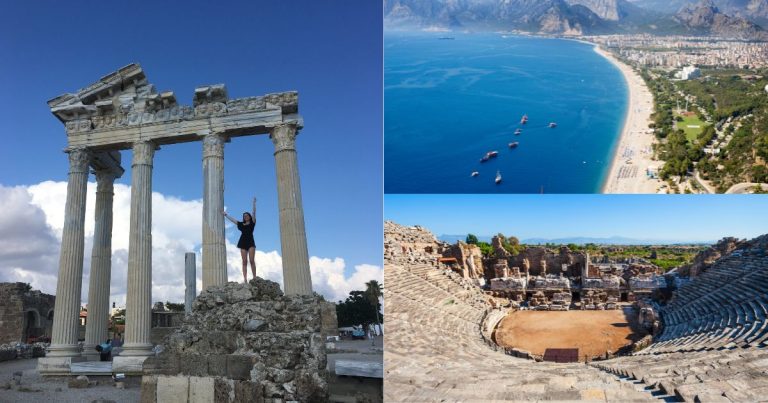
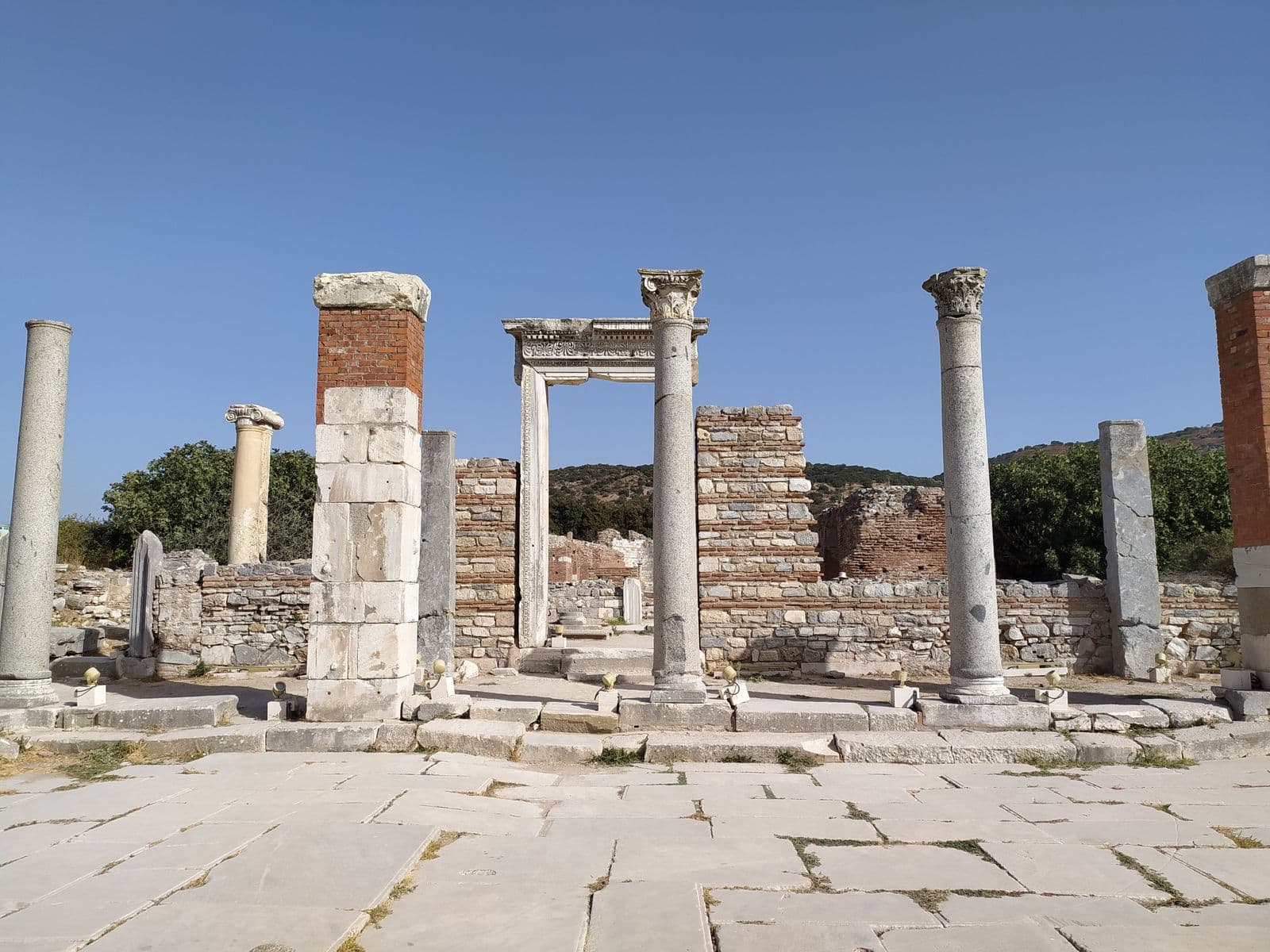
Say “antiquity” and most people picture Greece or Italy. But the best-preserved, most legible traces of the ancient world actually lie along Turkey’s western coast – and their queen is Ephesus, Turkey. This is no pile of rubble you have to imagine into life. Here you’ll walk along broad marble streets, past temples, baths, and public toilets, exactly the way the Romans used them two thousand years ago.
Ephesus sits just outside the little town of Selçuk, which makes the perfect base. Within easy reach you’ll find a vanished wonder of the world in the form of the Temple of Artemis, the pilgrimage site of the House of the Virgin Mary, and a wine-making village in the hills. Add a day trip and you can reach the white terraces of Pamukkale or the steep acropolis of Pergamon.
In this guide you’ll find 13 tips for Ephesus and the surrounding area – from the Library of Celsus and the Terrace Houses to the ancient cities nearby, plus practical advice on when to come, how much admission costs, and how to dodge the crowds from the cruise ships.
TL;DR
- Why come: The best-preserved ancient city in the world – marble streets, the Library of Celsus, a theatre for 25,000 spectators.
- Admission 2026: €40 for Ephesus (now including the Experience Museum), Terrace Houses €15 extra. Consider the Museum Pass Aegean.
- When to arrive: At the gate by 8:00 a.m. or after 3:30 p.m. – you’ll skip the cruise-ship crowds and the worst of the heat.
- Base: Selçuk (authentic, cheap, reachable by train and bus) or Kuşadası (port, beaches, resorts).
- Don’t miss nearby: the Temple of Artemis, the House of the Virgin Mary, the wine village of Şirince.
- Day trips: Pamukkale (white travertines), Pergamon (acropolis above the town).
- What to wear: sturdy shoes (the marble is slippery!), a hat, and litres of water – there’s barely any shade.
The full destination guide: Türkiye — guide and what to see
When to visit Ephesus and how to get there
The Aegean coast is at its loveliest in spring and autumn – that is, in April to June and in September and October. That’s when the surrounding countryside blooms, temperatures hover around a pleasant 25 °C, and you can stroll the ancient sites without suffering. Summer between July and September means 35 to 40 °C and marble that traps heat and radiates it back at you. If you have to go in summer, visit strictly early in the morning or towards the evening.
The nearest airport is in İzmir (ADB), about an hour from Selçuk. From the UK you can fly direct to İzmir with the likes of Pegasus or Turkish Airlines, or connect via Istanbul. From İzmir there’s also a comfortable İZBAN commuter train combined with the line to Selçuk – a cheap, hassle-free option. If you want to string Ephesus together with Pamukkale and the other ancient cities into a loop, the easiest thing is to hire a car; Turkey’s roads are in excellent shape.
💡 Tip: If you fly into İzmir and just want Ephesus without driving, stay right in Selçuk and reach the ruins by minibus (dolmuş) in a few minutes. The gate is only about 3 km away, but in the summer heat walking it is not advised.
⚠️ Watch out for the electronic toll system HGS: Turkey’s motorways and bridges are tolled, and at the toll gates you can’t pay with cash or card. When hiring a car, make sure it has a working HGS chip – otherwise you risk a fine. The toll is usually deducted from the deposit when you return the vehicle.
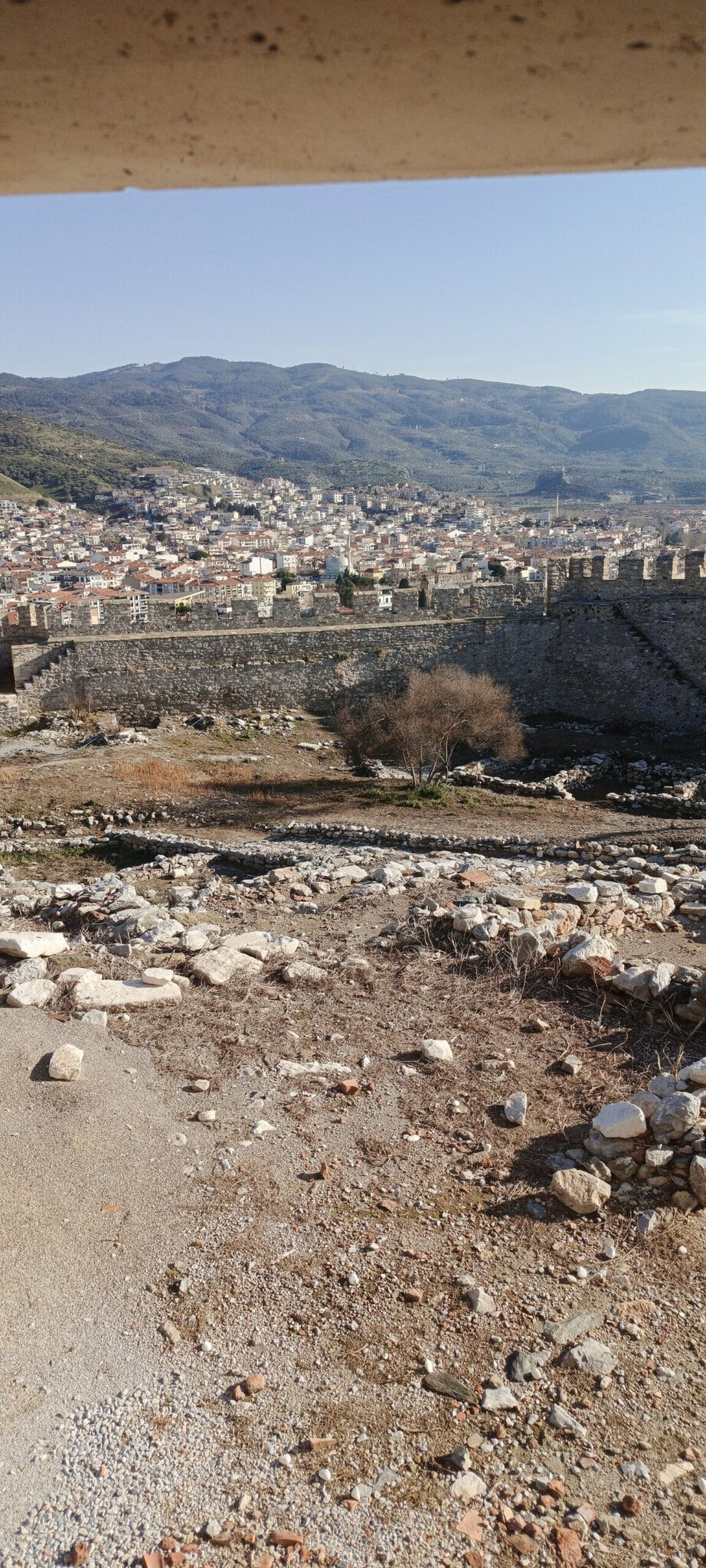
Where to stay near Ephesus
💡 Tip for accommodation and experiences: We love searching for places to stay on Booking.com, which tends to have the best cancellation terms. For tickets, tours, and activities, it pays to compare and book through GetYourGuide.
For visiting Ephesus there are two bases with completely different moods. Selçuk is an authentic inland town right by the ruins – cheap guesthouses, tea gardens, peace and quiet, and everything within walking distance or a short minibus hop. Kuşadası, on the other hand, is a lively seaside resort with a port, beaches, and big resorts; it’s ideal if you want to pair the ancient sites with some swimming, but expect crowds and a longer trip to Ephesus.
Here are some specific tips for tried-and-tested places to stay near Ephesus (you can compare bookings and prices in one click via Stay22, which scans for the best deal across Booking.com, Airbnb, and more):
- Ayasoluk Hotel – a boutique hotel in Selçuk with a celebrated rooftop restaurant a stone’s throw from the Basilica of St. John; atmosphere and top-notch reviews.
- Hotel Kalehan – a traditional hotel with a garden and pool below Ayasuluk Castle; peace and character a few minutes from the ruins.
- Nilya Hotel – a cosy boutique guesthouse in historic stone houses; ideal for couples.
- Hotel Bella – a popular family-run hotel by the Basilica of St. John with Turkish carpets and a rooftop terrace.
- Charisma De Luxe Hotel – a five-star hotel with sea views and pools; for those who want to pair the ancient sites with a beach.
- Korumar Ephesus Beach & Spa Resort – a luxury spa resort right by the sea; for the demanding and for families on the beach.
💡 Tip: For peace and atmosphere choose Selçuk; for beach and all-inclusive go for Kuşadası. Either way, look for a rating of 8.5+ with plenty of reviews and book ahead – in season the best value-for-money places fill up months in advance.
13 tips for things to see in Ephesus and around
Ephesus itself will easily keep you busy for a whole morning, but the area around Selçuk hides so much more that you could happily spend several days here. Here are thirteen things that make it well worth turning the region into a proper stop.
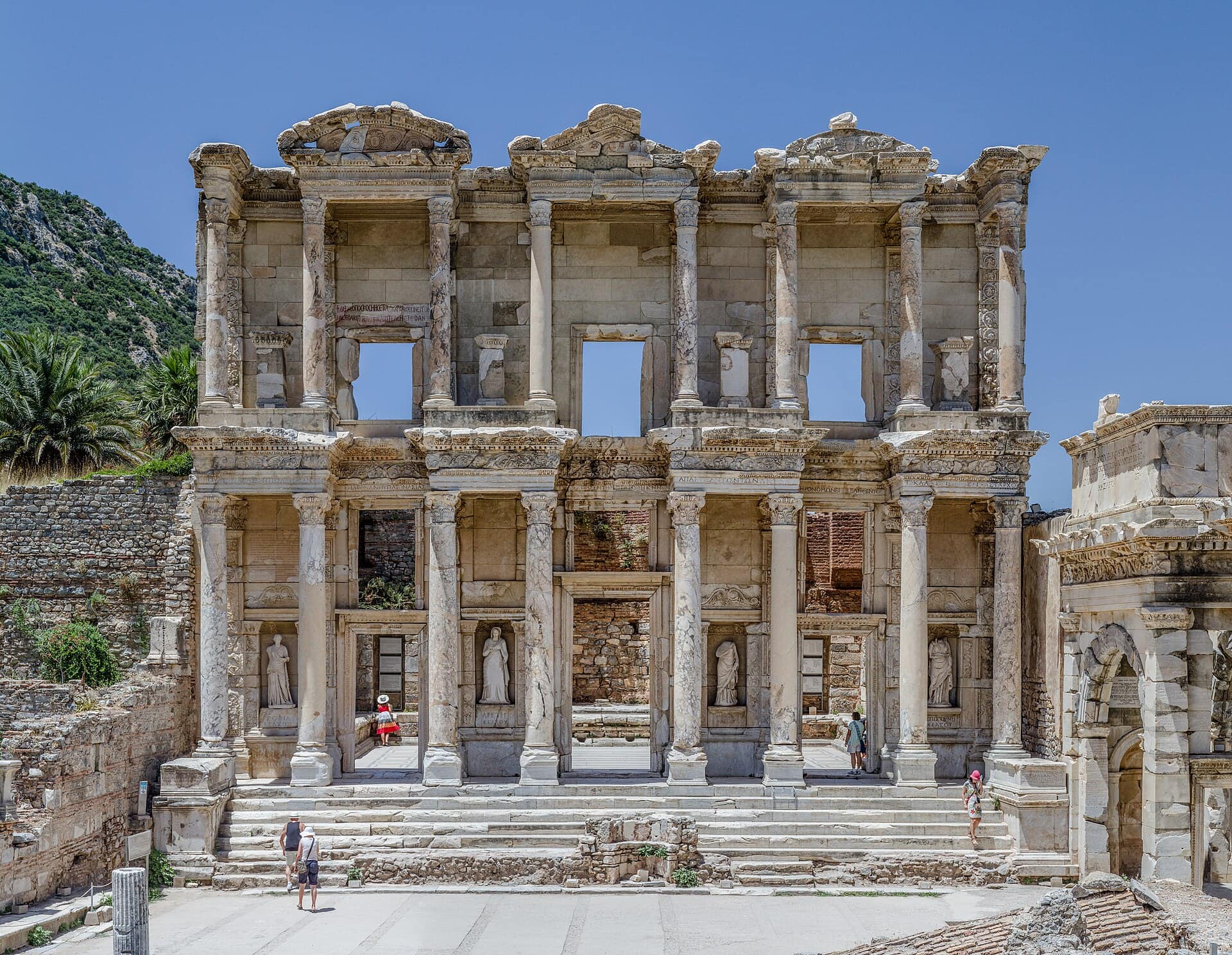
1. The Celsus Library, an icon of all antiquity
The icon of Ephesus and the most photographed spot on the whole Aegean coast is the Library of Celsus (Celsus Library, Ephesus, Turkey). Its two-storey, richly decorated marble façade with columns and statues stands at the end of the main avenue, positioned precisely to take your breath away. Built in the 2nd century AD, it once held some 12,000 scrolls. Come early in the morning – by around ten the plaza in front fills to bursting and you won’t get a people-free shot anymore.
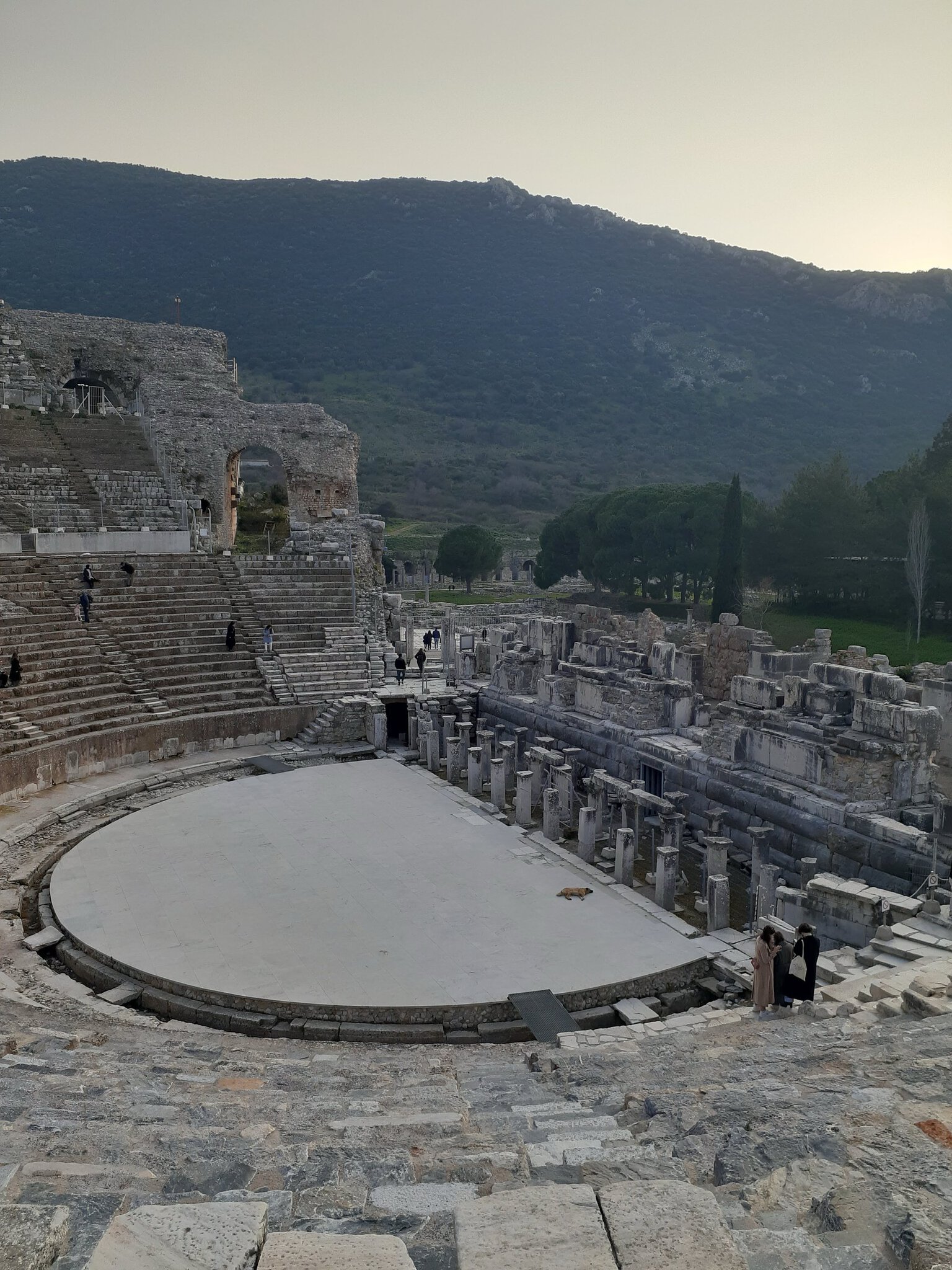
2. The Great Theatre for 25,000 spectators
Just around the corner from the library, the Great Theatre opens up, set into the hillside, with a capacity of an incredible 25,000 spectators. Climb up to the top rows: from here you can see the whole length of the Arcadiane, the marble avenue that once led all the way to the harbour. The spot has a biblical dimension too – according to the New Testament, this is where the apostle Paul preached and stirred up an uproar among the worshippers of the goddess Artemis.
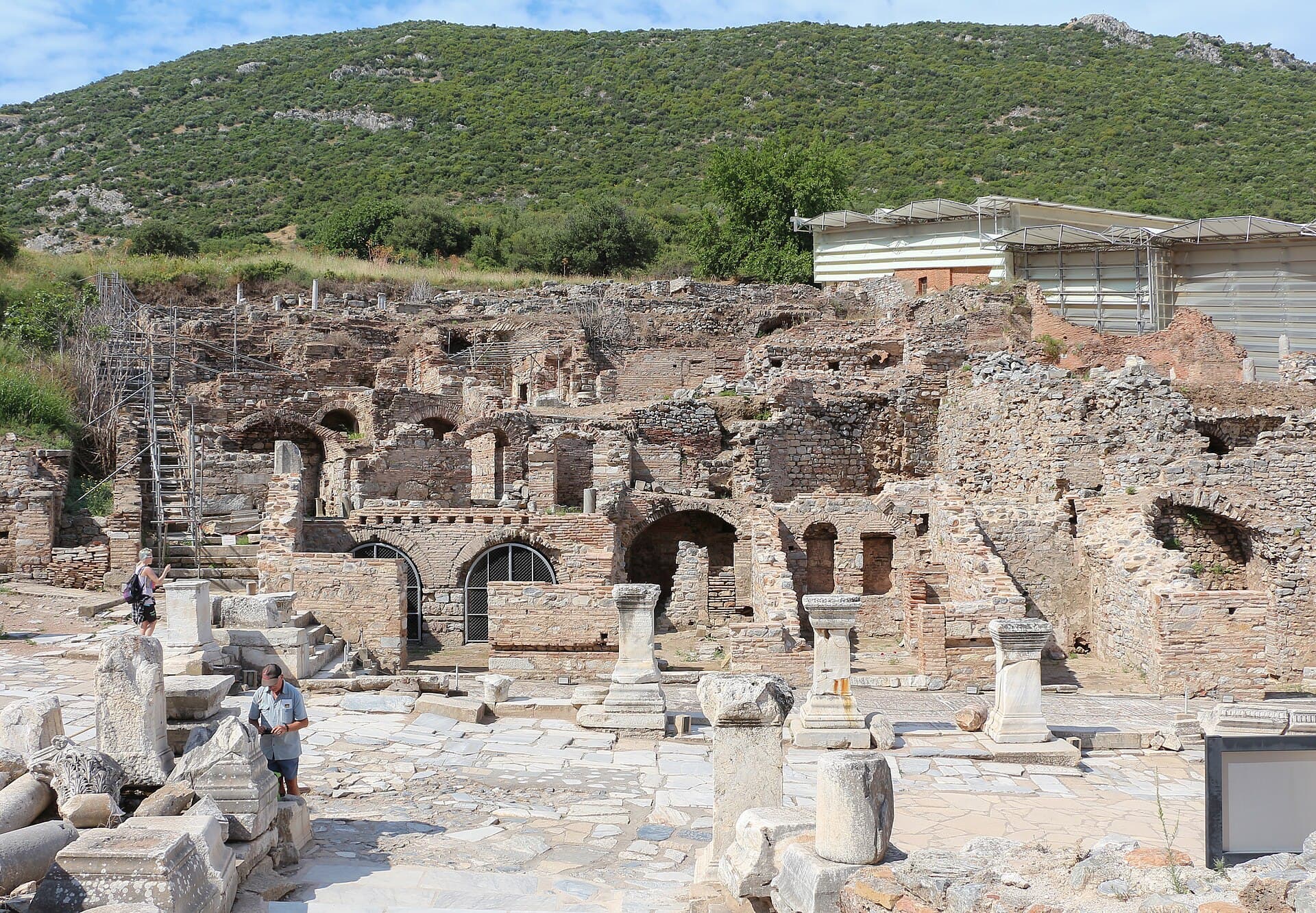
3. The Terrace Houses of the wealthy elite
Opposite the Temple of Hadrian, an unassuming modern roof covers the hillside. Beneath it hide the Terrace Houses – the villas of the Ephesian elite of the day, complete with running water and underfloor heating. Entry is charged separately (€15), but those few extra euros are well worth it. You step into an air-conditioned space where archaeologists are piecing together stunning floor mosaics and wall frescoes – and where the big tour groups don’t come, so you can rest from the noise.
💡 Tip: The Terrace Houses are a great escape zone thanks to the shade and air conditioning. When the midday sun is blazing outside, duck in here for half an hour among the mosaics and let the worst of the heat pass.
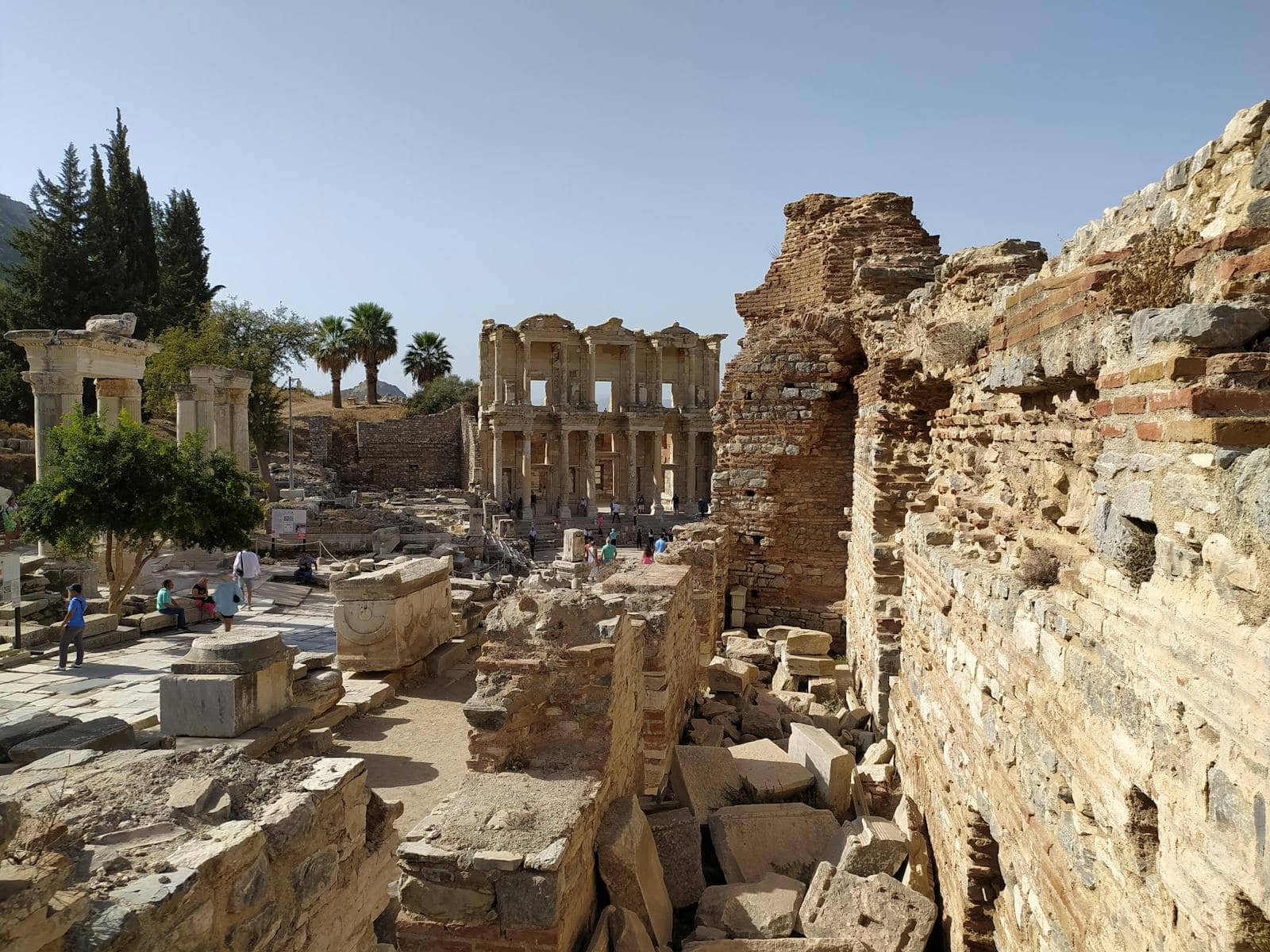
4. Curetes Street, the Temple of Hadrian and the ancient toilets
The backbone of the whole city is Curetes Street, paved with marble and lined with the remains of shops, fountains, and statues. Along the way you’ll pass the elegant Temple of Hadrian, with a relief of the goddess Medusa above the entrance, and nearby one of the great curiosities – the public latrines. The rows of marble seats side by side show that in ancient Rome the toilet was a social occasion, a place for chatting and striking deals.
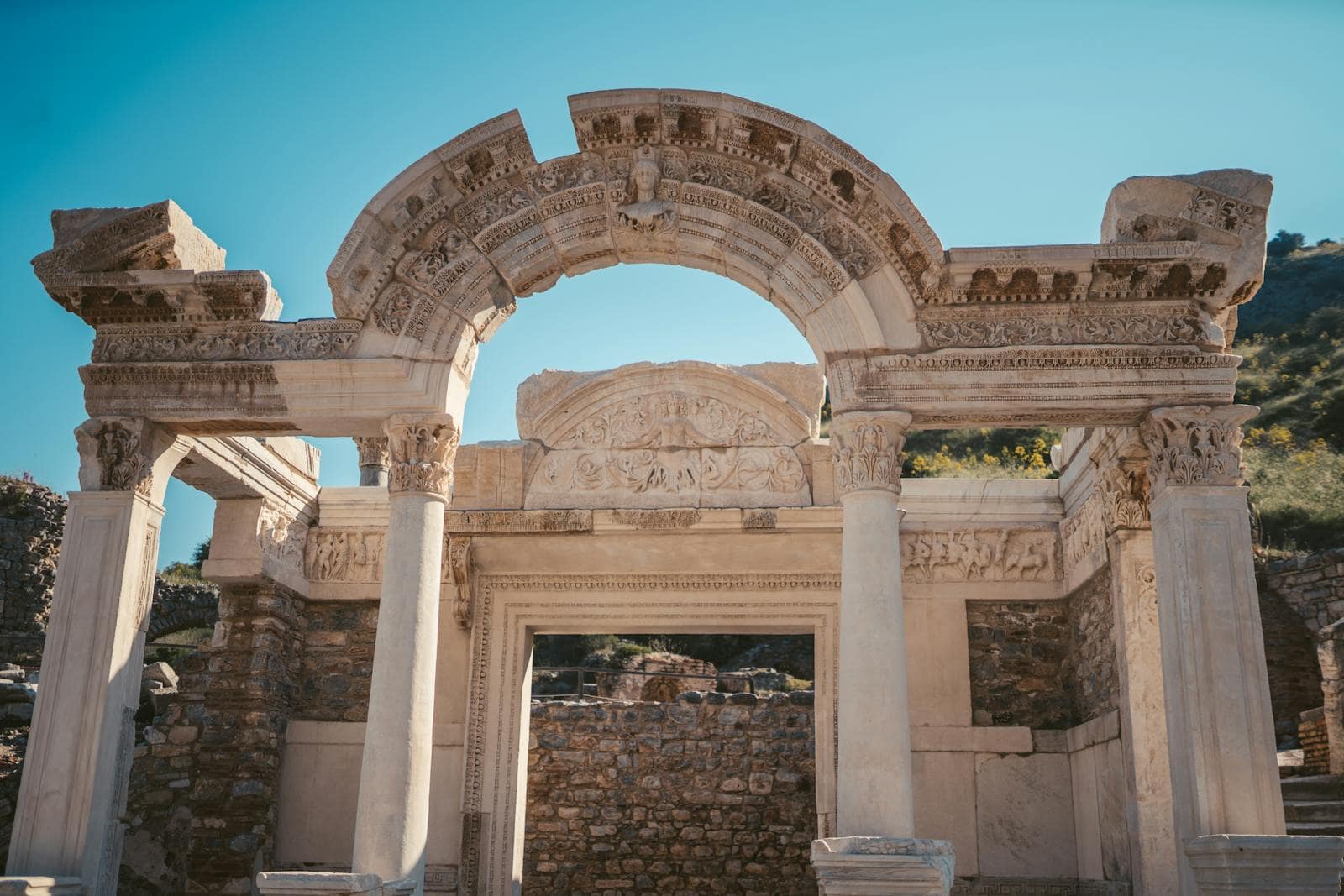
5. Ephesus Experience Museum
Admission to Ephesus now compulsorily includes the Ephesus Experience Museum, a modern multimedia exhibition close to the site. Large-scale projections and animations bring to life how the city looked at the height of its glory – with crowds in the streets, ships in the harbour, and temples in full splendour. It’s a pleasant contrast to the stony reality outside, and children especially love suddenly seeing Ephesus “alive”.
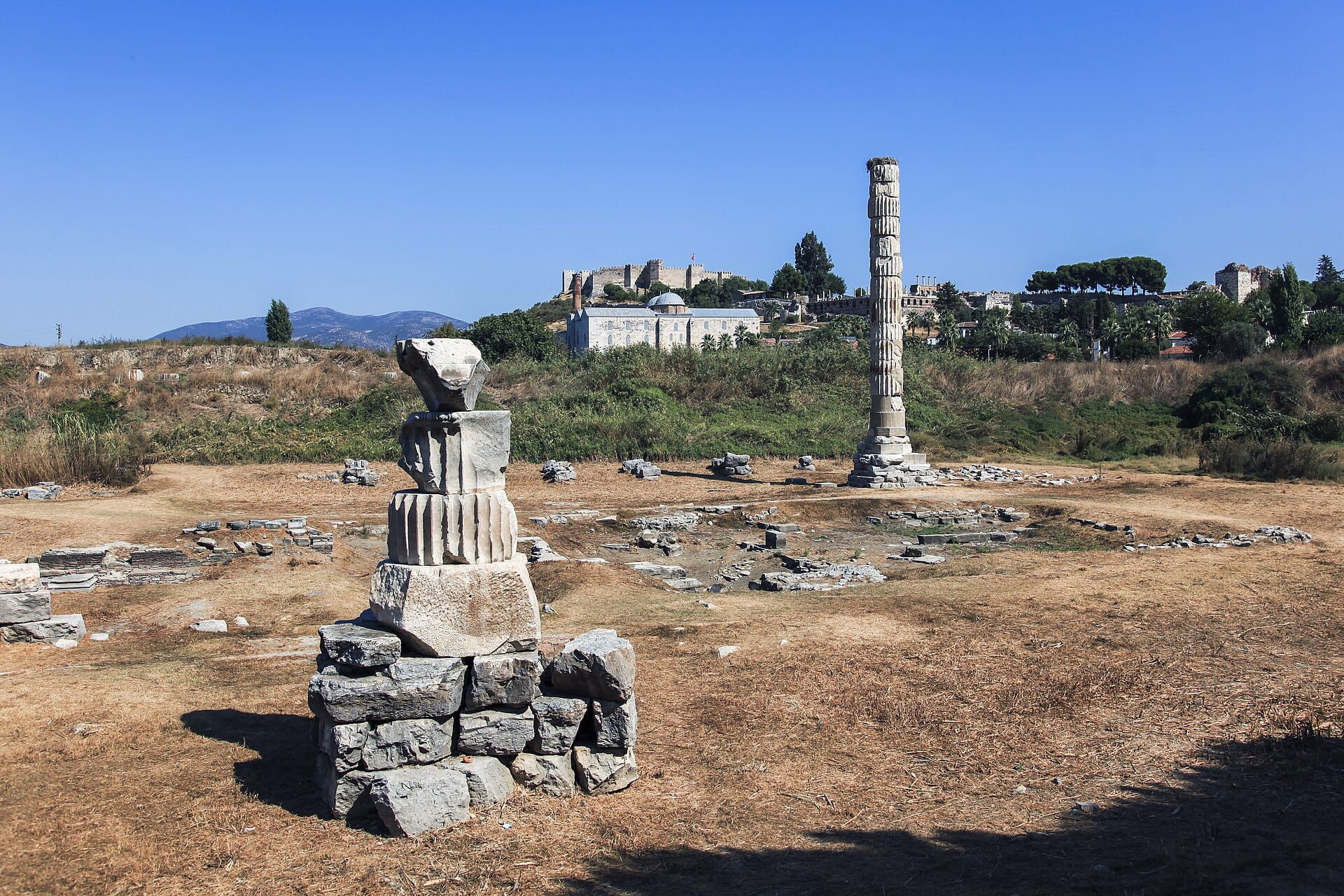
6. The Temple of Artemis, a vanished wonder of the world
Right in Selçuk, a short walk from the ruins, you’ll find the remains of the Temple of Artemis – one of the Seven Wonders of the Ancient World, a structure larger than the Parthenon in Athens. Today, though, what awaits you is a rather melancholy sight: all that’s left of the vast temple is a single lonely column sticking up from a marshy meadow, with storks often nesting on top of it. Even so, it’s worth a stop – entry is free, and you’ll feel a chill realising what once stood here.
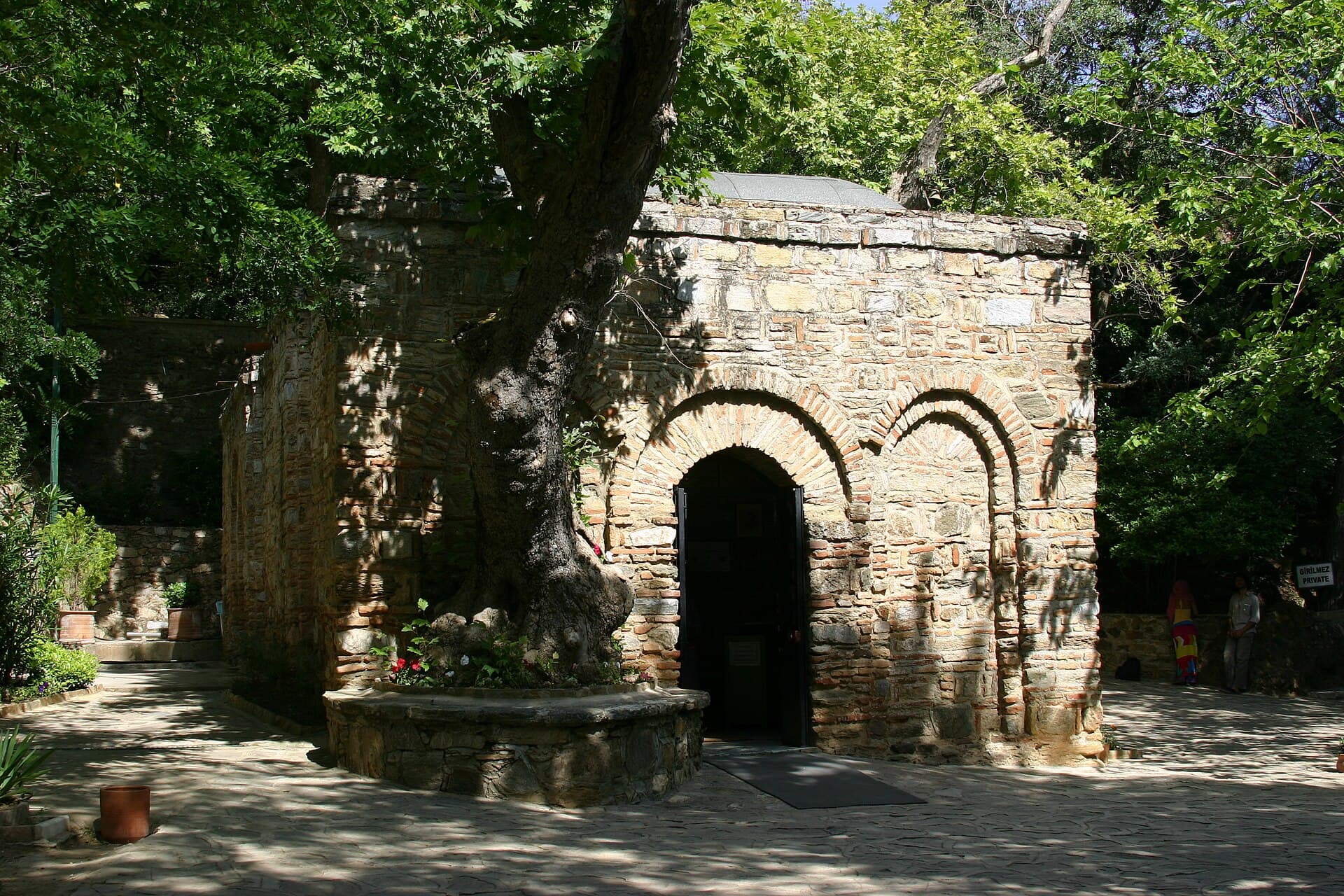

7. The House of the Virgin Mary (Meryem Ana Evi)
On a wooded hill above Ephesus (a taxi will take you up) lies Meryem Ana Evi – the House of the Virgin Mary, a stone building where, according to tradition, the mother of Jesus spent the last years of her life. It’s an important pilgrimage site for both Christians and Muslims, visited by three popes. Even if you’re not religious, the peaceful forest setting, the spring of water, and the wall draped with thousands of wishes from visitors all over the world have a powerful charm of their own.
8. The Basilica of St. John and the İsa Bey Mosque
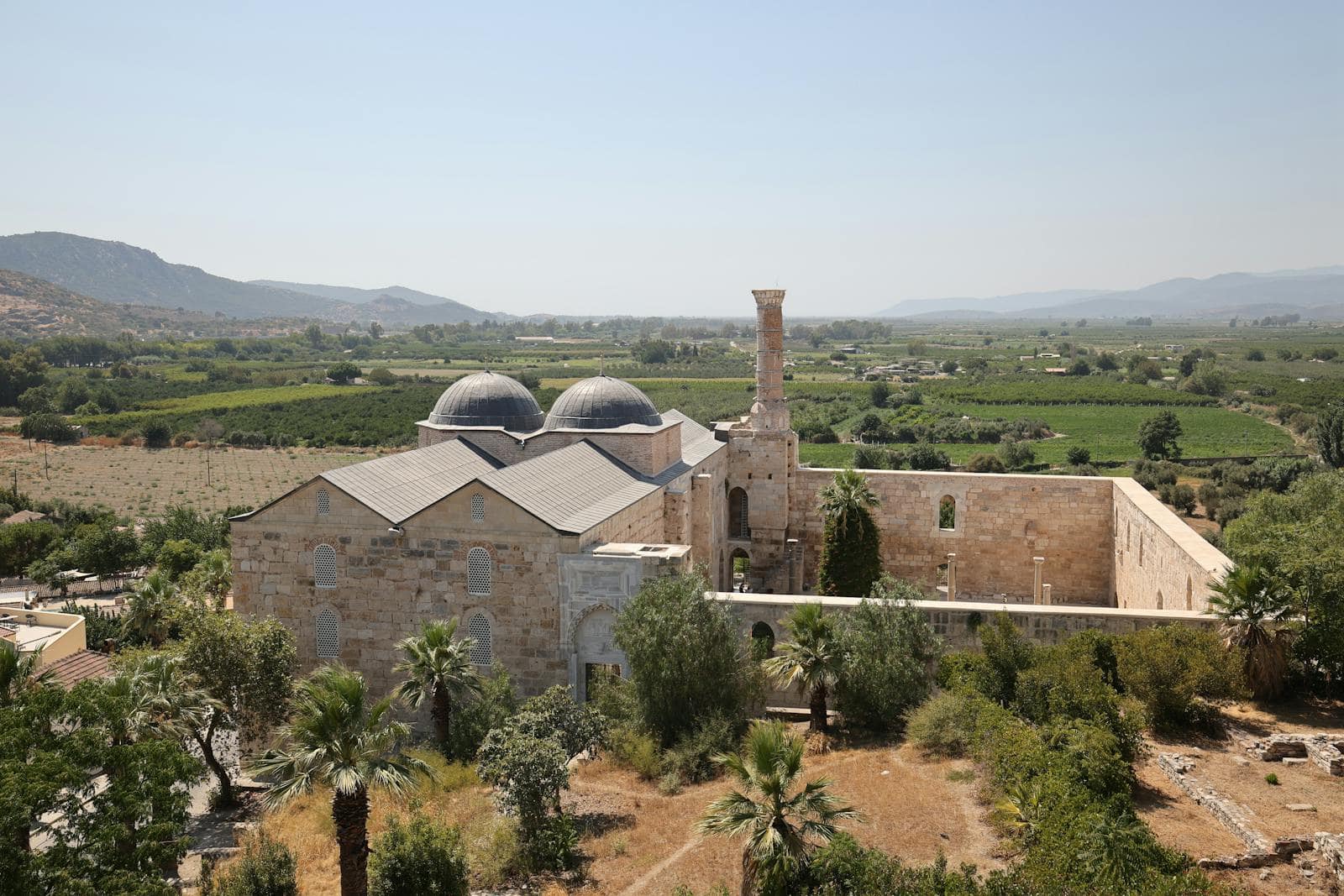
Selçuk itself hides three monuments that together tell the story of three eras. On Ayasuluk Hill stand the remains of the Basilica of St. John, where tradition holds the apostle John is buried, and above them a Byzantine castle. At the foot of the hill spreads the beautiful 14th-century İsa Bey Mosque with its tranquil courtyard. In just a few hundred metres you pass through antiquity, Christianity, and Islam.
9. Şirince, a wine-making village in the hills
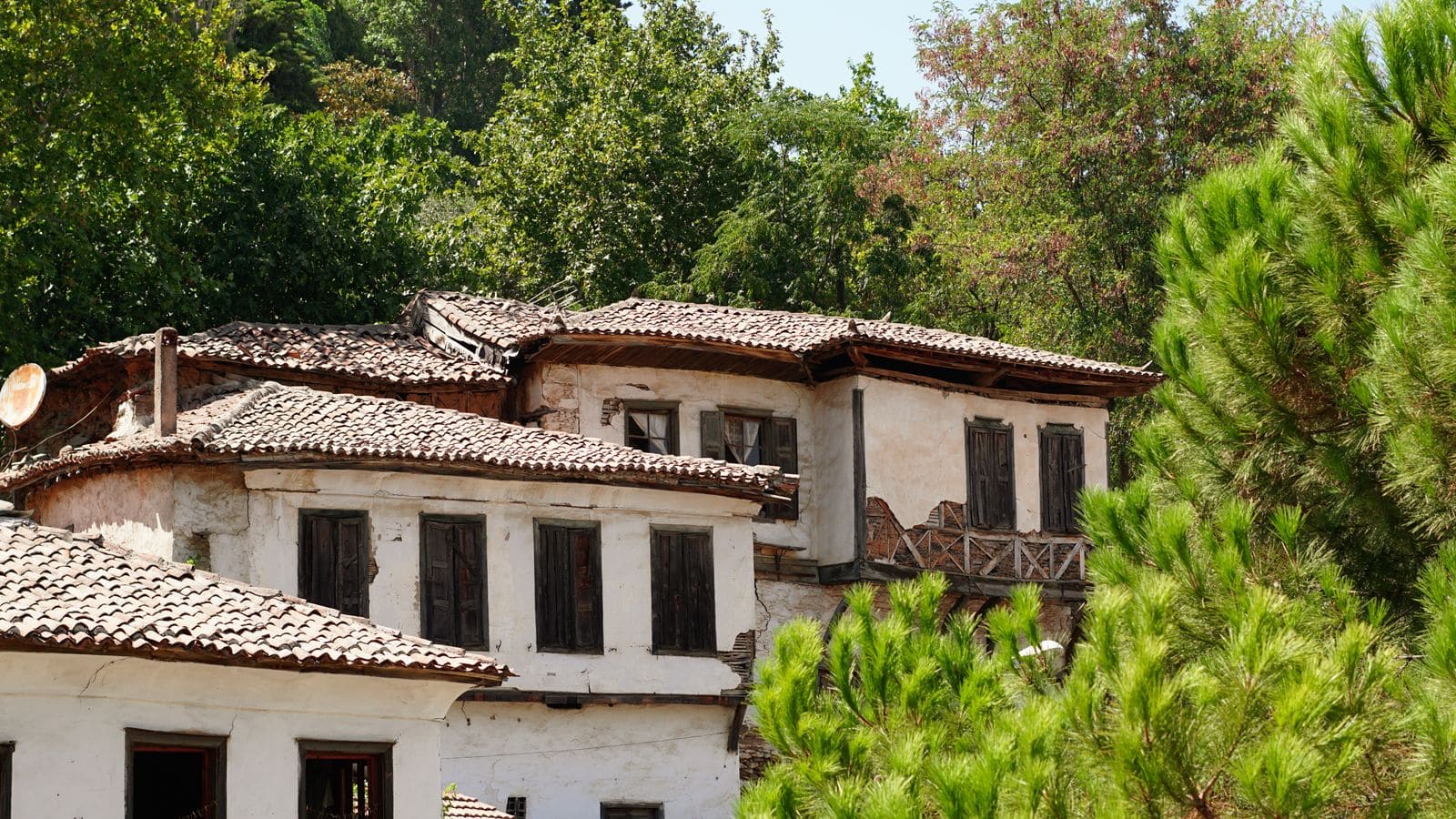
Just a few kilometres above Selçuk, tucked into the green hills, nestles Şirince, a picturesque village of stone houses and narrow lanes once founded by Greek settlers. It’s famous for its fruit wines – you can taste pomegranate, peach, or mulberry varieties here – and for stalls selling local jams, olive oil, and handicrafts. Have a late lunch here with views over the valley; it’s the perfect quiet counterpoint to bustling Ephesus.
💡 Tip: Vegetarians will be more than happy in Şirince and in the Selçuk taverns. Go for meze (cold starters), gözleme (stuffed flatbreads with cheese or spinach), grilled vegetables, and salads with sheep’s cheese. The local fruit wines make a great souvenir.
10. Priene, Miletus and Didyma
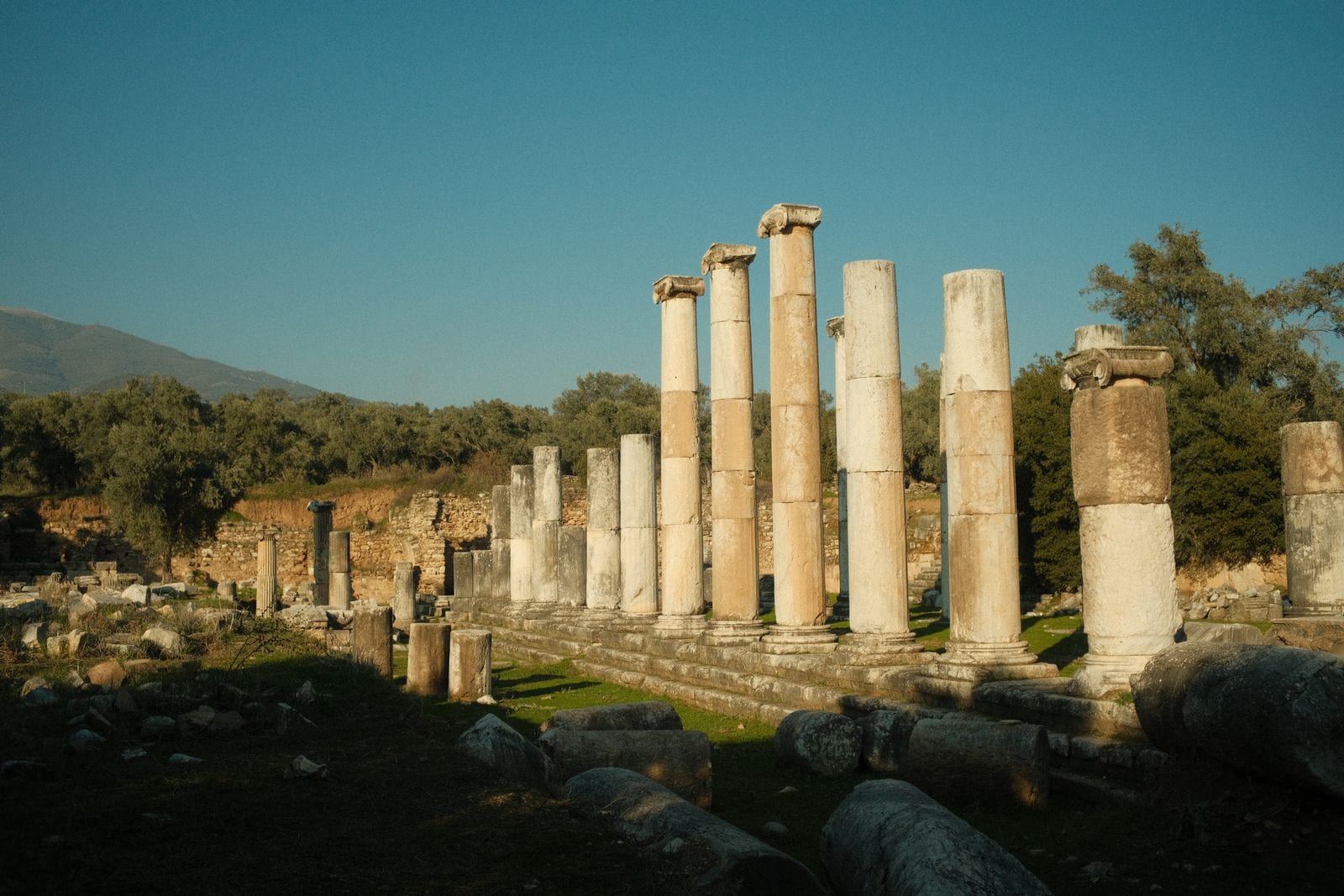
South of Ephesus lies a trio of less-visited ancient cities that make for a brilliant full-day loop. Priene will charm you with its perfectly preserved city plan on the mountain slopes and the photogenic Temple of Athena. Miletus was a powerful port with a giant theatre. And Didyma hides the monumental Temple of Apollo with its gigantic columns, one of the largest ancient sanctuaries of all. You’ll meet a fraction of the crowds here compared with Ephesus.
11. Pamukkale and Hierapolis
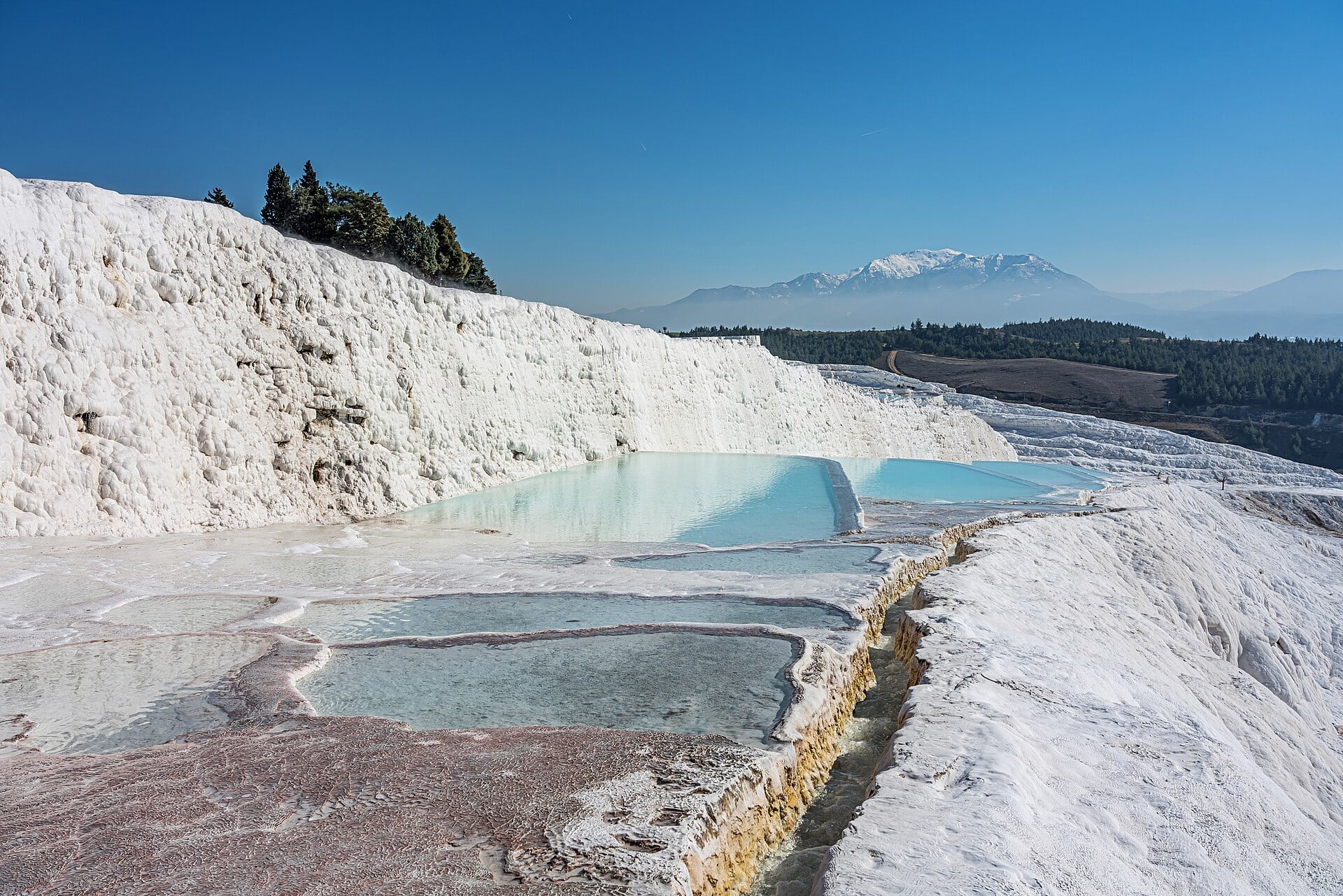
About three hours inland lies another visual icon of Turkey – Pamukkale, the “Cotton Castle”. Brilliant white travertine terraces filled with turquoise thermal water cascade down into the valley, and above them spreads the ancient spa city of Hierapolis with its large theatre and sprawling necropolis. Admission is €30. ⚠️ You can only walk the terraces barefoot (the surface is sharp and slippery in places), and to protect the white colour a large part of the terraces is deliberately kept dry – don’t expect a mountain flooded with water like in the old photos.
⚠️ The famous Cleopatra’s Pool in Hierapolis is closed for swimming in 2026 due to extensive maintenance, and a reopening date has not yet been set. Check before you travel so you’re not disappointed when you arrive.
12. Pergamon, an acropolis in the clouds
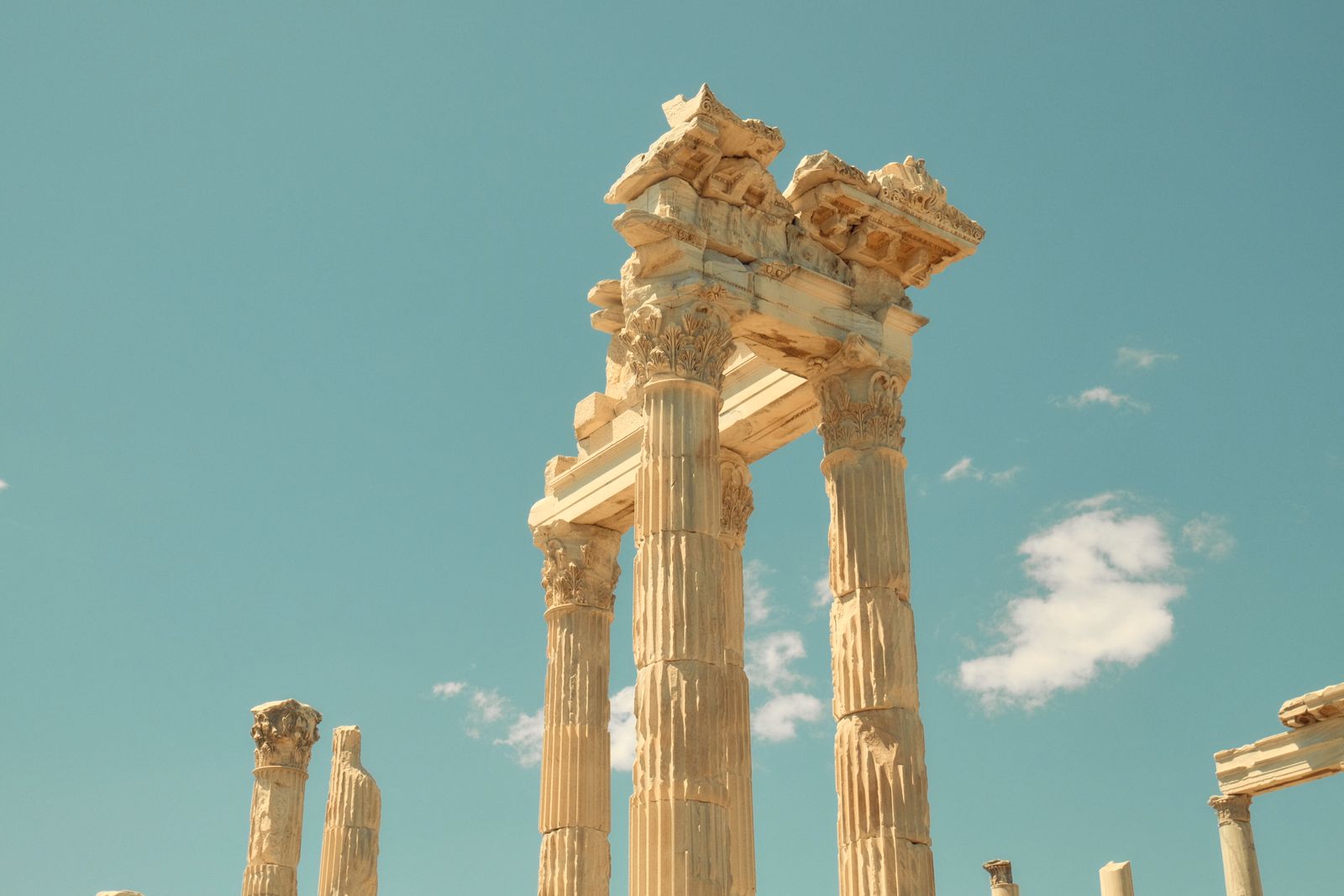
North of İzmir, Pergamon rises on a steep hill above the modern town of Bergama. A cable car carries you to the top, and the views over the countryside are fantastic. The biggest draw is the Pergamon theatre, set into a slope so sheer that the top rows leave anyone with vertigo gasping. Pergamon had the second-largest library of the ancient world after Alexandria, and it was here that parchment was invented.
13. Kuşadası: port, beaches and Pigeon Island
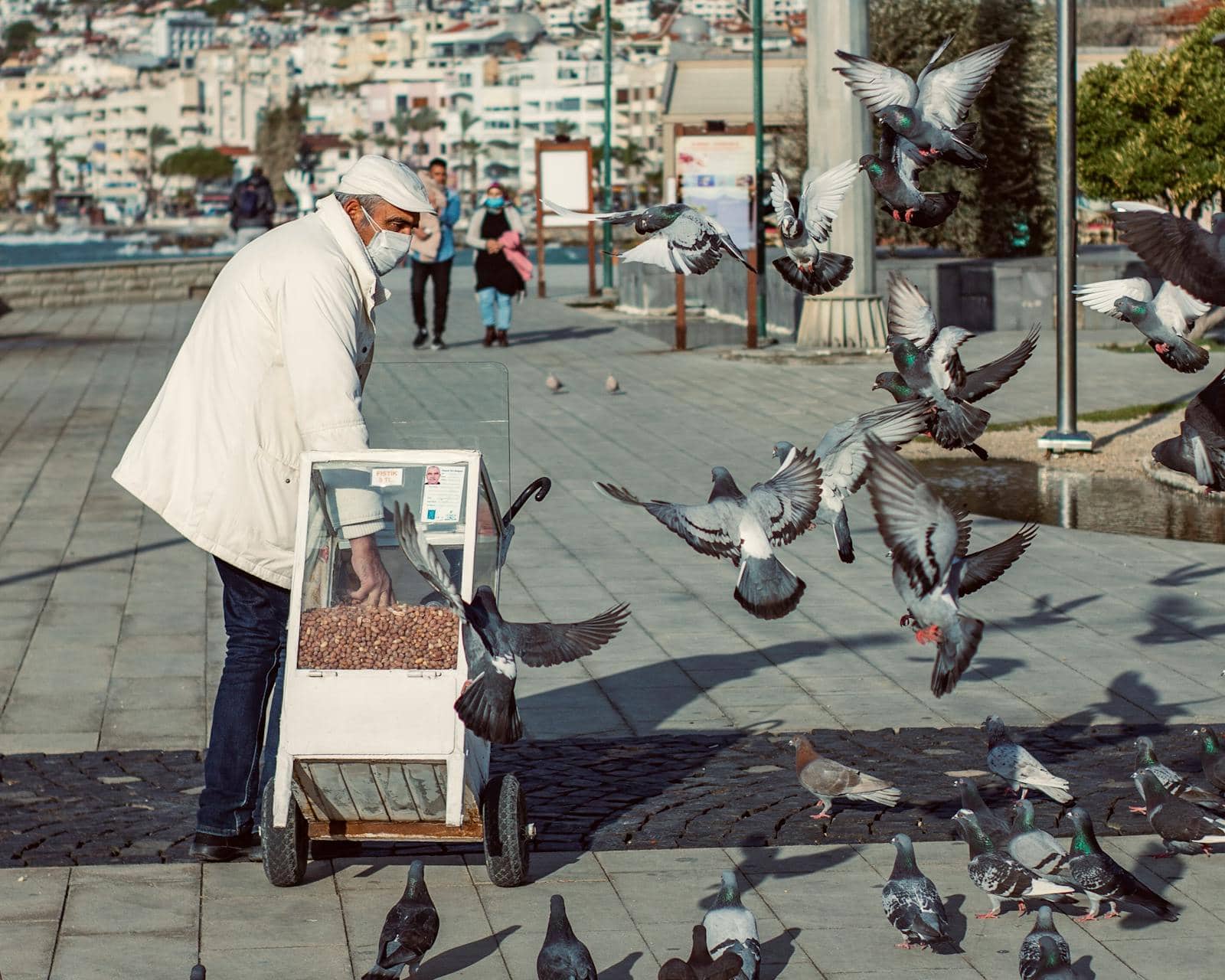
If you’re longing to add some sea to your ancient sights, Kuşadası is the obvious choice. This lively resort serves as the region’s main cruise-ship port and offers long beaches (the popular Ladies Beach), a promenade lined with cafés, and the photogenic Pigeon Island (Güvercinada) with a small fortress linked to the mainland by a causeway. It’s a comfortable swimming base from which you can reach Ephesus and the southern trio of ancient cities by car in no time.
Map of points of interest for your phone
What to taste around Ephesus
Aegean cuisine is a little paradise for vegetarians – it revolves around olive oil, fresh vegetables, herbs, and cheeses. After a demanding day among the marble, don’t miss these classics:
- Meze – a colourful array of cold starters: bean paste, braised cabbage, stuffed vine leaves (yaprak sarma), yoghurt dips. An ideal meat-free dinner to share.
- Gözleme – a thin stuffed flatbread baked on a griddle, most often with cheese, spinach, or potato. The cheap and filling king of street food.
- Çiğ köfte – once meat-based, now commonly served in a meat-free version made of bulgur and spices, in a lettuce leaf with lemon.
- Menemen – scrambled eggs with tomatoes, peppers, and spices, a classic Turkish breakfast scooped up with bread.
- Fruit wines from Şirince with a Turkish coffee or tea to finish – the perfect sweet ending.
Local gastronomy also offers grilled fish and lamb; these are regional specialities for non-vegetarians, while vegetarians will get by handsomely on meze and vegetable dishes.
Practical tips for visiting Ephesus
- Be at the gate by 8:00 a.m. or after 3:30 p.m. Between ten and three, Ephesus is flooded by thousands of passengers from the cruise ships docked in Kuşadası. In the morning head straight for the Library of Celsus; in the afternoon the crowds head back to the port and the sun isn’t so fierce.
- ⚠️ Consider the Museum Pass. If you want to visit more sites, the Museum Pass Aegean (€95) is valid for 7 days and covers over 40 places, including Ephesus, Pergamon, and Pamukkale. It also lets you skip the ticket queues.
- Sturdy footwear is essential. The marble slabs have been polished by millennia of footsteps and are incredibly slippery, and the terrain is uneven. Leave the sandals and heels at the hotel.
- Litres of water and a hat. There’s almost no shade in the site, and the water stalls inside are overpriced. Bring at least 1.5 litres per person from the entrance.
- No dress code. In Ephesus itself you can happily go in shorts and a T-shirt. But for the İsa Bey Mosque and the House of the Virgin Mary, choose clothing that covers your shoulders and knees.
- ⚠️ Watch out for fake guides. They’ll offer their services at the entrance; if you do want a guide, agree on the price in advance and check their official Ministry of Tourism licence.
Where to go next in western Turkey
Ephesus is the pinnacle of Aegean antiquity, but Turkey has so much more to offer. For fairytale rock spires and balloons head to Cappadocia, for a city straddling two continents go to Istanbul, and for beaches and a lagoon make for Fethiye and Ölüdeniz. A short hop from Ephesus lie the white terraces of Pamukkale with ancient Hierapolis; for sun and resorts, head to Antalya.
Frequently asked questions
How much does entrance to Ephesus cost in 2026?
The entrance fee at the main gate costs 40 € and now mandatorily includes the Ephesus Experience Museum. Terrace Houses are paid separately for 15 €. If you want to visit more ancient sites, it’s worth getting the Museum Pass Aegean (95 €) valid for 7 days, which covers Ephesus as well as Pergamon and Pamukkale, plus it saves you from waiting in line.
How to Avoid Crowds in Ephesus?
Be at the gate right when it opens at 8:00 AM and head straight to the Library of Celsus, or arrive after 3:30 PM. Between ten and three o’clock, the site gets flooded with thousands of passengers from cruise ships docking in nearby Kuşadası, and walking among them is significantly less pleasant.
Is it worth paying the extra entrance fee to the Terrace Houses?
Yes. For an extra €15 you’ll get into the air-conditioned space with amazingly preserved mosaics and frescoes from the villas of Ephesus’s wealthy elite. Plus, large tour groups don’t come here, so you’ll get a break from the crowds on the main street – and in the summer heat you’ll also appreciate the shade and air conditioning.
Is it better to stay in Selçuk or in Kuşadası?
It depends on what you expect from the trip. Selçuk is an authentic, affordable and peaceful small town right next to the excavations, ideal for history lovers. Kuşadası is a lively seaside resort with beaches and resorts, suitable if you want to combine ancient sites with swimming. From both places, it’s just a few minutes by car to Ephesus.
How much time to set aside for Ephesus?
For the Ephesus site itself, count on 2 to 3 hours, and with the Terrace Houses and Experience Museum, easily half a day. If you want to explore Selçuk as well (Temple of Artemis, House of the Virgin Mary, İsa Bey Mosque) and the nearby village of Şirince, plan two full days for the region.
Tips and Tricks for Your Vacation
Don’t Overpay for Flights
Search for flights on Kayak. It’s our favorite search engine because it scans the websites of all airlines and always finds the cheapest connection.
Book Your Accommodation Smartly
The best experiences we’ve had when looking for accommodation (from Alaska to Morocco) are with Booking.com, where hotels, apartments, and entire houses are usually the cheapest and most widely available.
 🚗 Car rental on the roadVerified rental cars in Turkey
Search with the DiscoverCars comparison engine — it compares prices from dozens of local and international rental companies, and most bookings come with free cancellation.
Compare car prices in Turkey →Don’t Forget Travel Insurance
Good travel insurance will protect you against illness, accidents, theft, or flight cancellations. We’ve had a few hospital visits abroad, so we know how important it is to have proper insurance arranged.
Where we insure ourselves: SafetyWing (simple monthly subscription) and TrueTraveller (for extra-long trips).
Find the Best Experiences
Get Your Guide is a huge online marketplace where you can book guided walks, trips, skip-the-line tickets, tours, and much more. We always find some extra fun there!