

A campervan trip above the Arctic Circle is a huge travel dream for many of us, something we want to tick off our bucket list at least once. The idea of parking your house on wheels right beside a fjord and waking up to breakfast with a view of majestic mountain peaks is simply irresistible. The Lofoten Islands in Norway are practically made for this kind of adventure, offering some of the most stunning scenery anywhere on the planet.
The reality of 2026, though, is no longer just about endless freedom and camping wherever you please. Norway’s infrastructure runs like a Swiss watch, but thanks to the enormous influx of tourists, you now need to know the new rules of the game and have a really solid plan. This practical guide will show you how to enjoy the trip without stress, fines and, above all, without nasty surprises.
TL;DR
- Wild camping ban: In 2026, strict regulations apply on the Lofoten Islands – overnight stays are mostly allowed only in official campsites and at designated stellplatz spots.
- Ferry reservations are a must: You have to book tickets for the main ferry line from Bodø to Moskenes online several weeks in advance, otherwise you’ll spend hours in the queue.
- Toll registration: Before entering Norway with your own vehicle, it’s absolutely essential to register your license plate in the AutoPass system for automatic toll deductions.
- Slow driving on the E10: The main road is extremely narrow and full of bends, and the average speed of a campervan here is only around 40 to 50 km/h.
- High parking costs: Touristy hotspots like Haukland Beach or Reine charge 100 to 200 NOK (about €9 to €19) per day for campervan parking.
- Apps are essential: To get by smoothly you’ll need the Norwegian apps Yr.no for the weather and Parka or EasyPark for paying for parking.
- German competition: Be prepared to compete for campsite spots with a huge fleet of German campers who flock here in droves during the summer.
The full destination guide: Lofoten — guide and what to see
7 Things You Need to Know
Let’s take a look at 7 things you should know before you set off in a campervan to the Lofoten Islands.
1. Why Lofoten is a campervan paradise – and why the rules are changing
Lofoten offers a unique blend of dramatic mountains that plunge straight into the sea and snow-white sandy beaches reminiscent of the Caribbean. It’s exactly this accessible wilderness that draws lovers of free-spirited travel from every corner of Europe. Add in the midnight sun, which from late May to mid-July never sets at all, and you’ve got the perfect backdrop for a dream road trip.
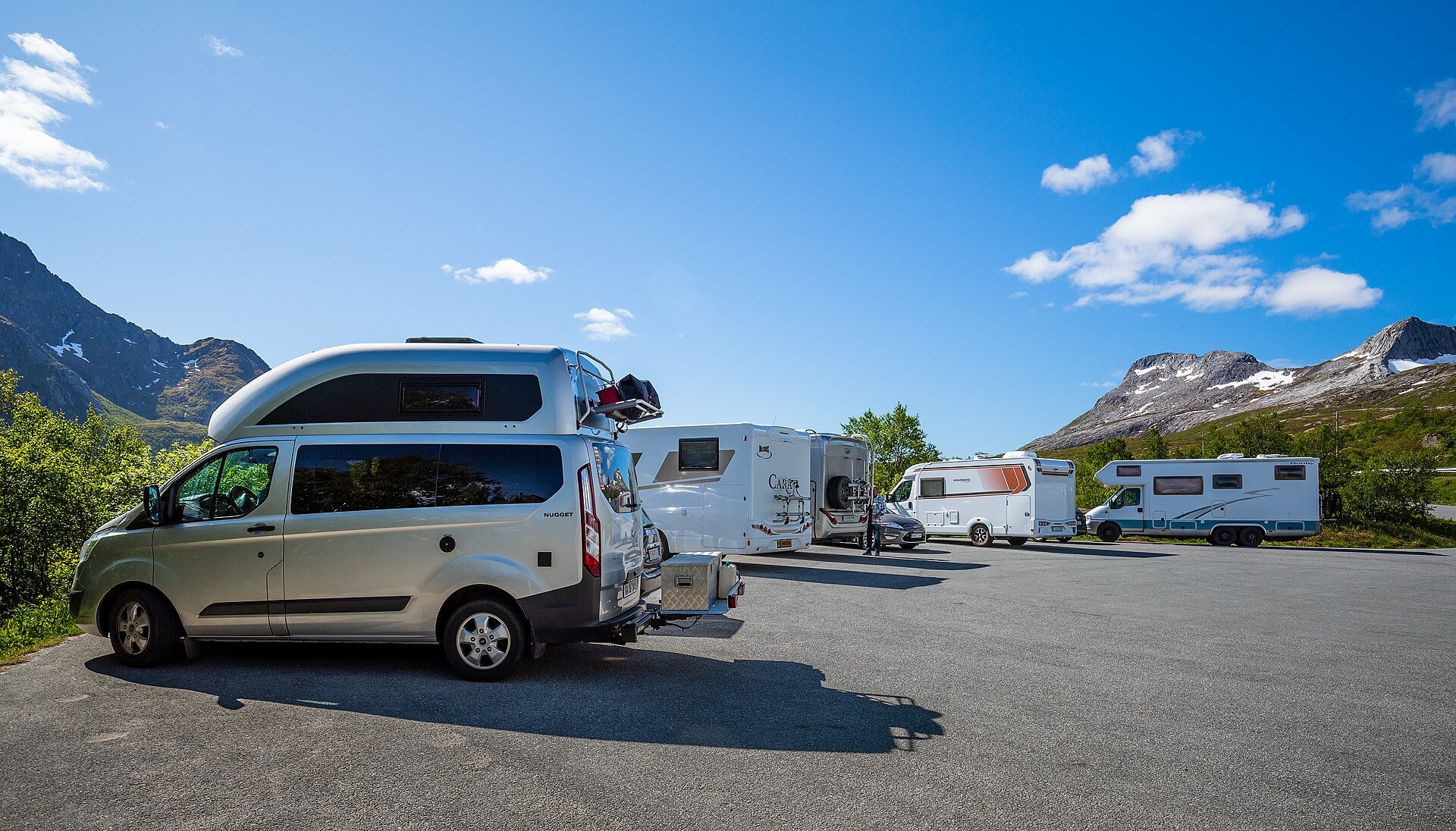
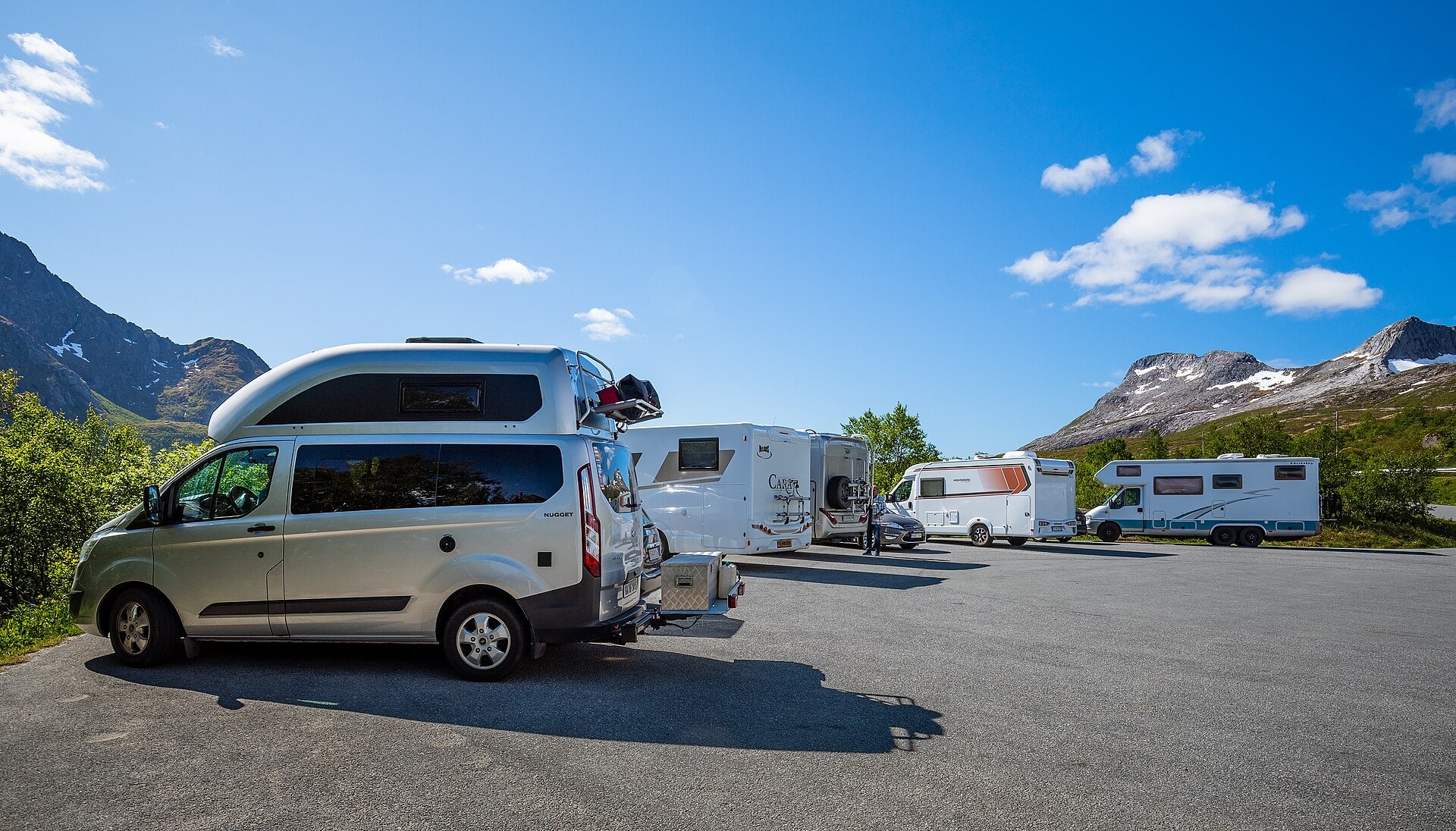
The problem is that the archipelago is home to just around 25,000 locals, while more than a million tourists arrive every year. This enormous pressure of so-called overtourism means that the fragile Nordic landscape simply stopped coping with the onslaught of caravans. In peak summer, campervans occupy every conceivable cove and lay-by, blocking narrow roads, private driveways and passing places meant to keep traffic flowing.
That’s why the local authorities had to take very drastic measures for 2026 and tighten the rules for all motorised visitors. Norway’s goal isn’t to drive tourists away, but to set up a sustainable system that respects the rights of local residents. For you that means just one thing: you have to plan far more carefully than ever before and allow huge time buffers for getting around.
💡 Tip: Don’t rely on old pre-pandemic travel guides, when you could stop a campervan at practically any lay-by. These days such spots are dotted with no-overnight-parking signs, and the fines for breaking the rules are draconian.
2. Rent a campervan on the spot, or bring your own?
The first big decision you’ll face is how to get up to the far north itself. The drive from the UK to Lofoten is roughly 2,500 to 3,000 kilometres one way, which in a large campervan means at least three to four days of pure driving once you’ve crossed the Channel and made your way up through Germany, Denmark and Sweden. That eats more than a week of your holiday just on endless motorway transfers.
If you’ve got a month to spare, the overland route is a wonderful experience, even though you’ll meet huge numbers of German travellers, for whom the summer migration north is something of a national sport. The second and far more efficient option is to fly and rent a vehicle right in Norway. Summer flights from the UK run roughly £250 to £500 per person, often with a connection in Oslo, and you’ve got two main gateways to the north.
An insider tip for a more relaxed start to the trip is to fly into Evenes Airport (EVE) on the mainland, from where you can drive straight onto the main E10 road and skip the ferries entirely. The classic choice is Bodø Airport (BOO), which means you’ll have to transfer to the harbour and sail across the sea. Rental companies offer fully equipped campervans, but ideally you should book half a year in advance.
💡 Tip: If you decide to rent a vehicle locally, prepare a very generous budget. In the summer peak, expect to pay 15,000 to 25,000 NOK per week (roughly £1,100 to £1,800) depending on the size and equipment of the campervan.
3. Ferries and the logistics of reaching the islands
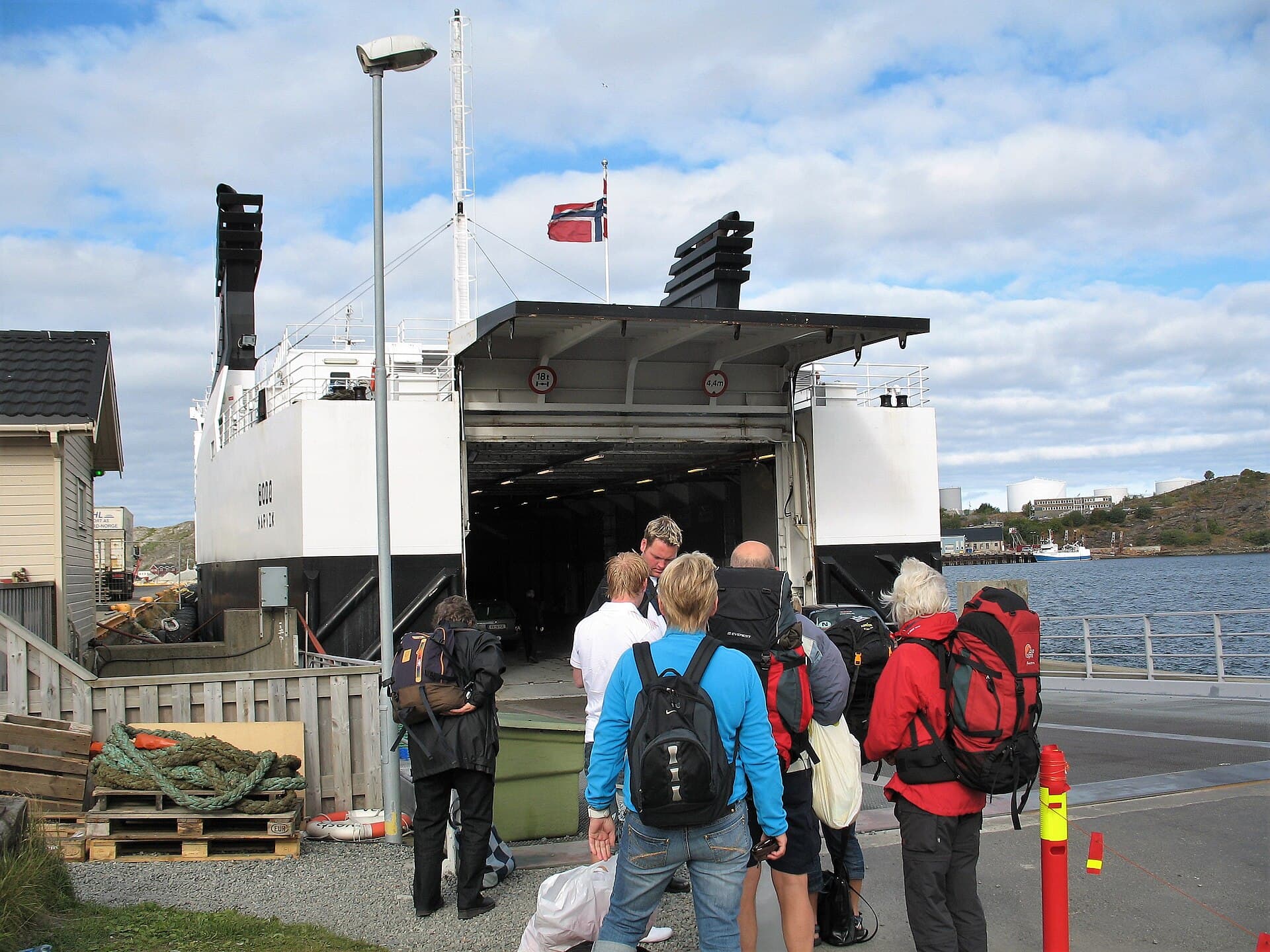
If you don’t choose the northern approach via Evenes Airport, you’ve got a voyage across open sea ahead of you. The most common gateway to Lofoten is the harbour in the town of Bodø, from where Torghatten’s ferries sail to the village of Moskenes at the very southern tip of the archipelago. For campervans, this ferry is an absolutely crucial – but often very stressful – transport hub.
In summer there are up to nine sailings a day, and the fare for a vehicle with passengers ranges between 764 and 1,710 NOK (roughly £55 to £125) one way. But here’s where the fun ends, because exactly 50% of the ship’s capacity can be reserved in advance, while the rest runs on a non-booked lane system. With a campervan you definitely don’t want to play Russian roulette at the harbour and wait all night to board.
Reserve your ticket online as soon as you know your exact flight itinerary. Even with a pre-paid ticket you must be at the pier at least 45 minutes before departure, so the attendants can slot you into the dedicated lane in time. If you do miss the ferry, the Bodø terminal thankfully offers a heated waiting room, and about five minutes’ walk away you’ll find a Coop Extra supermarket and the Kafe Kafka café.
💡 Tip: Download Torghatten’s official app to your phone for easy ticket management. If you turn up without a booking, the harbour queues in July start filling up the night before, and you’ll likely wait another two to three hours for the next sailing.
4. Wild camping vs. official campsites and the new 2026 rules
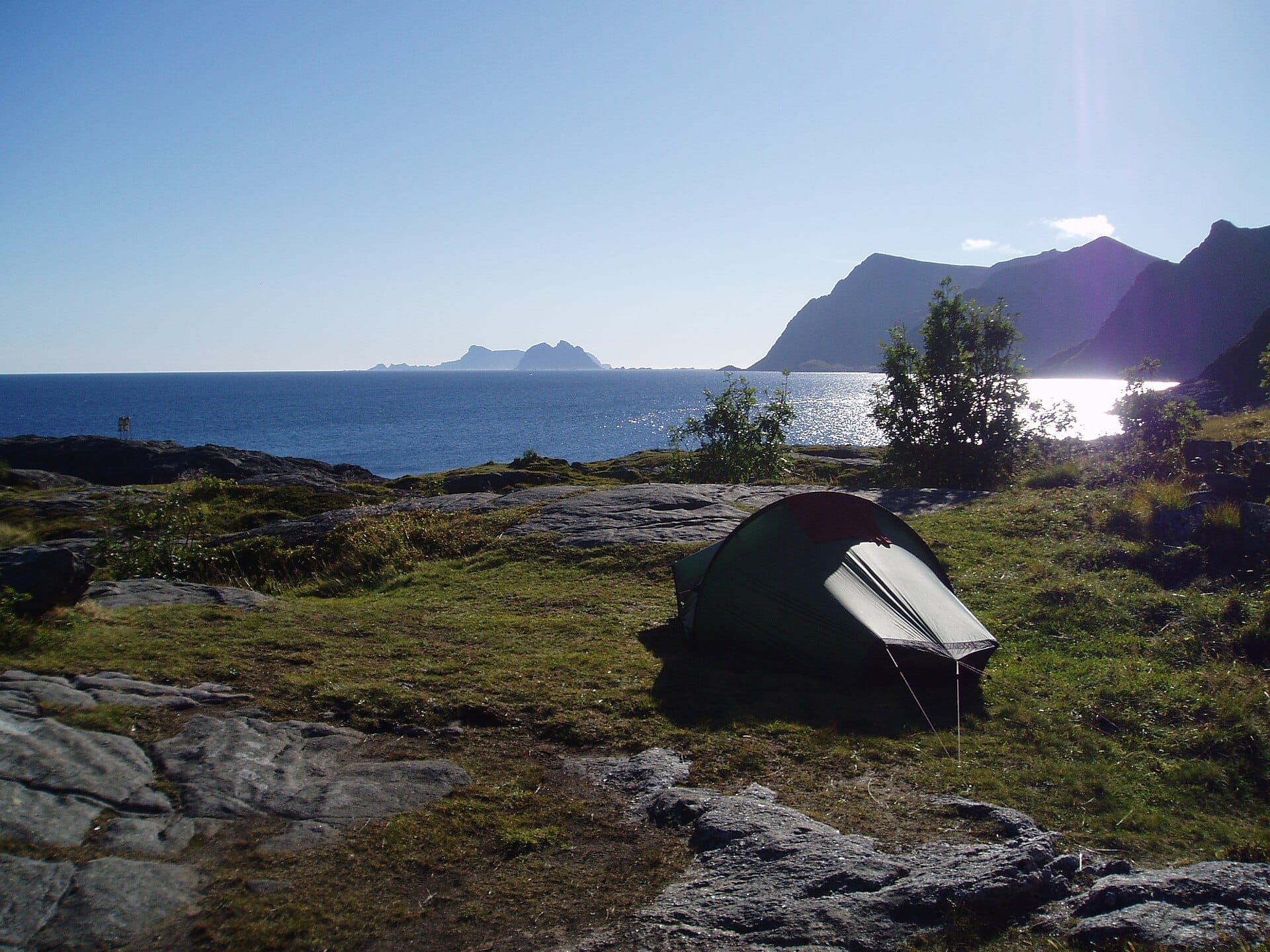
Norway is famous worldwide for its Allemannsretten law, which guarantees the right to roam freely in nature. This law, however, applies primarily to hikers with a tent, not to five-tonne houses on wheels. Many travellers still get this mixed up, which used to cause huge conflicts with local residents whose driveways ended up blocked.
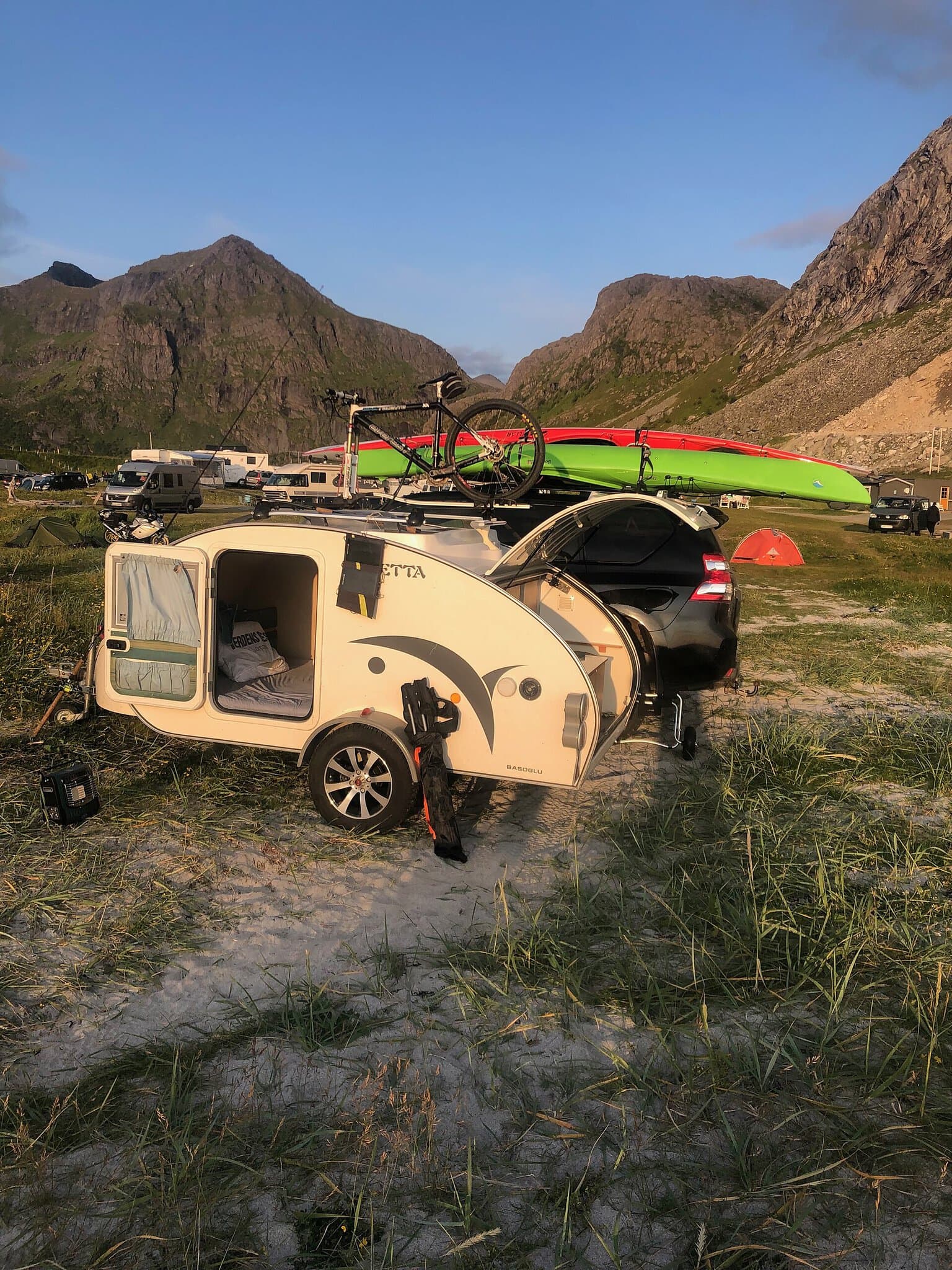
In 2026 the situation is crystal clear and the authorities police it strictly. An overnight parking ban applies to most lay-bys along the E10 road, to cemetery car parks and to private land. Your only legal options are official campsites or designated motorhome stopovers, of which there are dozens across the islands, and they offer fantastic facilities.
A great choice, for example, is Lofoten Beach Camp on Skagsanden beach, where you open the campervan door and can head straight out onto an enormous sandy beach to watch the surfers. Campsite prices range from 350 to 500 NOK (roughly £25 to £37) per night for a vehicle with passengers and an electricity hook-up. In peak season, arrive at campsites ideally by early afternoon, because the best spots with a view disappear in a flash.
💡 Tip: Never park in a way that encroaches onto the road, not even for a moment. Norwegian authorities are extremely protective of nature, and if you block the flow of traffic or access to private land, you can expect an uncompromising and very hefty fine.
5. Campervan servicing: water, electricity and waste disposal
Living in a campervan requires regular maintenance, and Nordic infrastructure is brilliantly set up for it. Look for signs reading “Tømmestasjon”, which mark official campervan service points. You’ll find them at larger petrol stations, in harbours and, of course, at every official campsite.
Emptying grey water and chemical toilets into the open countryside is absolutely forbidden and socially unacceptable. If you want to cook for yourself in the campervan and save on pricey Norwegian restaurants, we recommend shopping at Kiwi or Rema 1000 supermarkets. Prices are roughly two to three times higher than in the UK, but you can easily pick up pasta, vegetables or halloumi cheese for a perfect quick dinner.
For cooking and heating you’ll definitely need plenty of gas. The Norwegian gas bottle system uses different threads and valves from the UK and central European standard, so you won’t be able to swap or refill a typical British bottle at ordinary spots. Topping up drinking water, on the other hand, is easy and free with a hose at most petrol stations, since Norwegian tap water is among the cleanest in the world.
💡 Tip: In the colder Norwegian climate you’ll be heating far more, so always set off from home with full gas bottles. If you run out of gas, you’ll have to buy a new Norwegian bottle along with the appropriate regulator, which can get quite expensive.

6. Driving the E10: narrow roads, tunnels and tolls
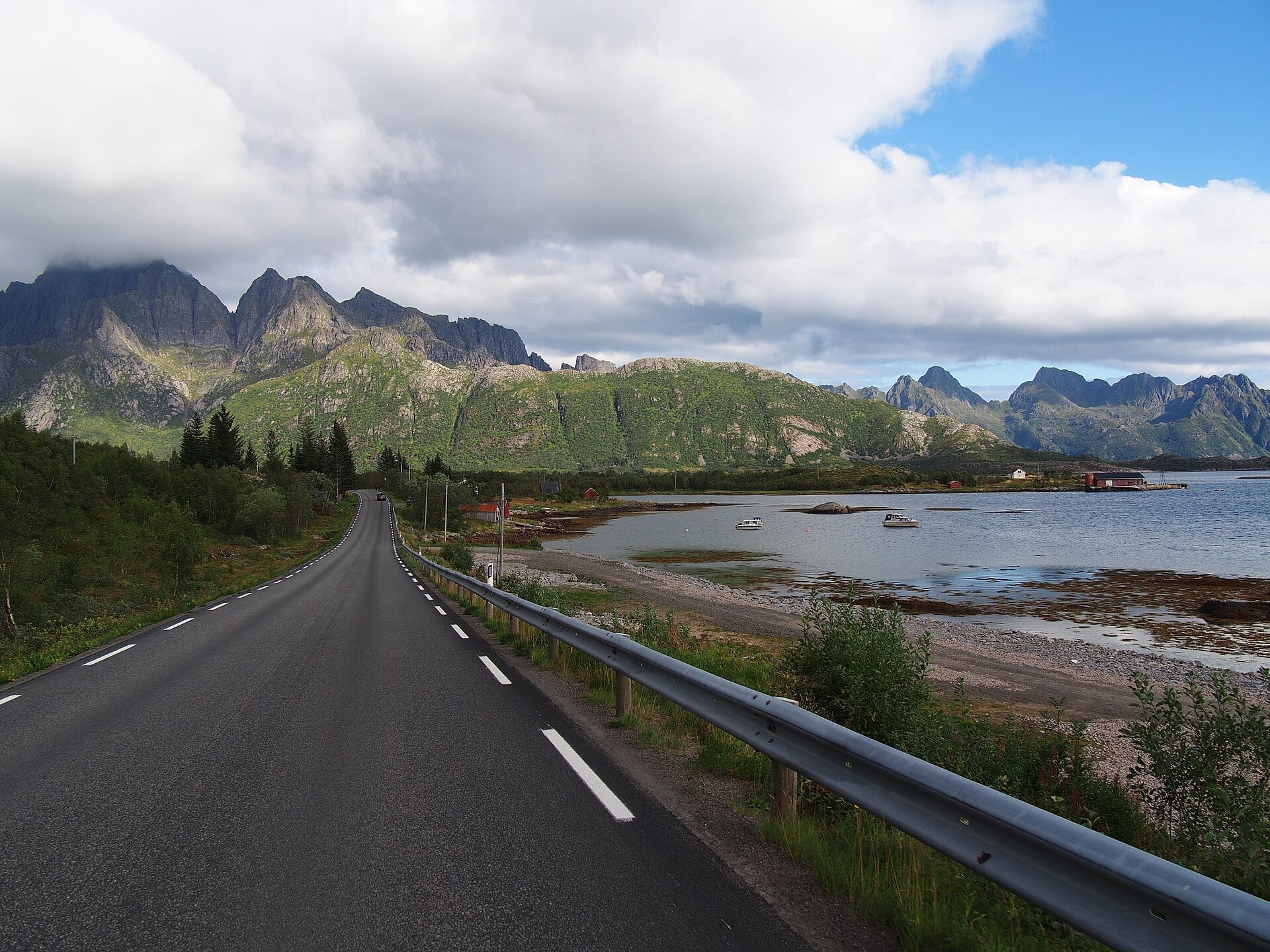
The backbone of the whole archipelago is the legendary E10 road, which links the individual islands via elegant bridges and undersea tunnels. In the summer season, though, it’s often a very congested and demanding route. The road is narrow, full of blind bends, and the average speed here is commonly just 40 to 50 km/h, so a 50-kilometre stretch can easily take you an hour and a half.
The basic rule of Norwegian driving etiquette is not to hold up the flow of traffic. If a queue forms behind you, pull into the nearest passing place (marked with the letter M for Møteplass) and let the faster local drivers safely overtake. Norway is also a one hundred percent cashless society, which applies even to parking in remote spots. Download the EasyPark or Parka apps, which you’ll use at popular places like Haukland Beach (100–200 NOK per day) or Ryten (100 NOK).
Tolls for the new tunnels are paid electronically through the AutoPass system. Rental cars already have the transponder fitted, and the toll is charged to your credit card up to several weeks after you return home. If you’re driving your own vehicle from the UK or central Europe, you need to register an AutoPass account online in advance and link it to your number plate.
💡 Tip: The weather in Lofoten changes minute by minute, so install the Norwegian app Yr.no on your phone, along with the excellent Windy for a detailed wind radar. Checking the wind strength is absolutely vital the moment you open the campervan door, so an unexpected gust doesn’t rip it off its hinges.
7. Winter campervanning: northern lights and black ice
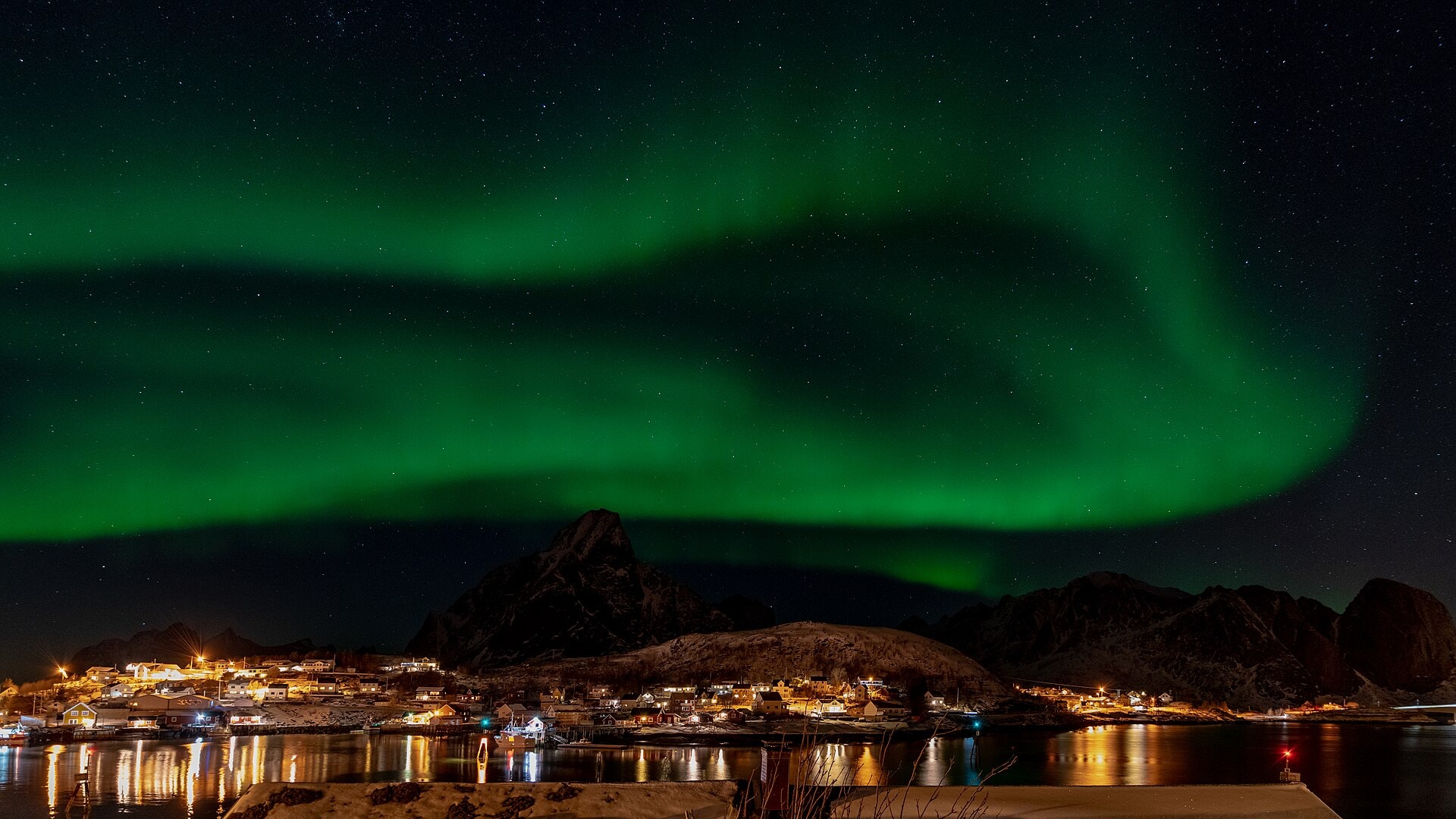
An increasingly popular trend is visiting Lofoten in the winter months, when the sky glows green with the northern lights and the snow-covered landscape feels utterly magical. Winter caravanning, however, demands a perfectly prepared vehicle and considerable experience. The roads are often covered with a solid layer of packed snow, and without quality studded tyres (piggdekk) or snow chains you won’t manage the icy climbs.
Most smaller campsites close over winter, so you’ll have a far smaller choice of safe parking spots. You’ll also constantly have to deal with condensation inside the vehicle and reckon with huge gas consumption for heating, since temperatures can easily plunge well below freezing.
If you find that staying in a freezing caravan is too tough, we recommend seeking out a solid roof over your head for a few nights. Rent a traditional fisherman’s cabin known as a rorbu, for example at the famous Sakrisøy Rorbuer resort or the iconic red cabins of Eliassen Rorbuer in Hamnøy. In winter, prices run around 1,000 to 1,500 NOK per night and you get a fully equipped kitchen, perfect warmth and a fantastic view straight from your bed.
💡 Tip: Winter days in the north are extremely short. You’ll only have a few hours of daylight a day for safe driving, spending most of your time in twilight or complete darkness. Plan your days accordingly and don’t try to cover hundreds of kilometres in one go.
Practical summary and indicative prices
When planning your budget for 2026, keep in mind that Norway is almost entirely a cashless society. You won’t need cash at all – you can pay everywhere by card or phone, even for the smallest items like using a toilet or buying coffee from a machine.
- Official campsite per night: 350 – 500 NOK (about €33 – €47) including electricity and facilities.
- One-off parking at attractions (Reine, Haukland): 100 – 200 NOK (about €9 – €19) per day.
- Bodø – Moskenes ferry (campervan up to 6m): from 1,000 NOK (about €94) one way.
- Diesel (per litre): around 22 – 25 NOK (about €2 – €2.30), prices vary greatly by location.
- Campervan rental for a week (summer): 15,000 – 25,000 NOK (about €1,400 – €2,350).
- Basic grocery shopping: Kiwi or Rema 1000 supermarkets are the cheapest option, but prices are still roughly two to three times higher than in Central Europe.
- Tolls (AutoPass): Automatically deducted for driving through new tunnels and around some cities; the total for a week usually stays under 500 NOK (about €47).
💡 Accommodation & experiences tip: We prefer to look for accommodation on Booking.com, which usually has the best cancellation terms. For tickets, tours and activities, it’s worth comparing and booking through GetYourGuide.
Where to next
If you’re tempted to explore this Nordic gem in more detail and want to make sure you don’t miss a thing, take a look at our big guide to the Lofoten Islands. There you’ll find detailed tips on specific beaches, viewpoints and spots you simply can’t miss.
Not sure about the overall logistics and curious about flight connections? Read our article on how to get to Lofoten, where we break down all the transport options in detail, including the ferries. For those of you who ultimately prefer a car and sleeping under a solid roof, we’ve put together a comprehensive piece on where to stay in Lofoten, plus a practical Lofoten by car itinerary.
Frequently asked questions
Do I need a 4×4 campervan for Lofoty?
For a summer visit, you definitely don’t need four-wheel drive, because all the main roads and routes to tourist destinations have quality asphalt surfaces. In winter the situation is different, where a 4×4 can significantly make your life easier, but for a regular summer road trip a standard motorhome is absolutely sufficient and will save you money at the rental company.
Can I stop and sleep at any rest area with my RV?
In 2026, unfortunately, this is no longer the case and the rules are very strict. The vast majority of bays and rest areas along the E10 have signs prohibiting overnight parking. These spots are exclusively for short breaks or to let oncoming vehicles pass. For the night, you must find an official campsite or designated stellplatz, otherwise you risk a hefty fine.
Where can I best buy groceries?
You’ll find the best value shopping at Kiwi or Rema 1000 supermarket chains, or at Coop Extra stores, which you’ll find in larger centres like Svolvær or Leknes. We recommend doing a big grocery shop right after arrival, as Nordic prices are high and in smaller fishing villages you’ll pay much more for the same products at small convenience stores. If you’re cooking in your caravan, you can easily find excellent cheeses, pasta and fresh vegetables here.
Do I need to buy ferry tickets in advance?
If you’re traveling by motorhome during the summer season (from June to August), advance booking is an absolute necessity. Motorhomes take up a lot of space on the ferry and without a prior online reservation through the Torghatten app, you risk spending a whole day or even night waiting at the Bodø port. Even with a ticket, always be there 45 minutes before departure.
Can you exchange a Czech gas cylinder in Norway?
The Norwegian gas cylinder system uses different threads and valves than the Central European one. You won’t be able to exchange or refill a standard Czech gas bottle at regular places, so it’s absolutely essential to leave home with full supplies, or get special adapters for refilling at selected stations.
Are the roads suitable for very long motorhomes as well?
Yes, local buses and trucks also drive on them, but it requires steady nerves and enormous caution. The E10 road is extremely narrow in many places and meeting a truck on a bend or in a narrow tunnel means having to reverse or manoeuvre with centimetre precision. The average speed here is only around 40 km/h.
How does parking payment work in nature?
Norway has introduced fees even in remote locations to regulate tourist crowds and contribute to infrastructure maintenance. Everything is done electronically through mobile apps. You’ll most commonly use the EasyPark or Parka apps, where you enter your license plate number in advance and link them to your payment card. For example, in Reine, the popular Steffenakken parking lot fills up hopelessly by seven in the morning.
Tips and Tricks for Your Vacation
Don’t Overpay for Flights
Search for flights on Kayak. It’s our favorite search engine because it scans the websites of all airlines and always finds the cheapest connection.
Book Your Accommodation Smartly
The best experiences we’ve had when looking for accommodation (from Alaska to Morocco) are with Booking.com, where hotels, apartments, and entire houses are usually the cheapest and most widely available.
 🚗 Car rental on the roadVerified rental cars in Norway
Search with the DiscoverCars comparison engine — it compares prices from dozens of local and international rental companies, and most bookings come with free cancellation.
Compare car prices in Norway →Don’t Forget Travel Insurance
Good travel insurance will protect you against illness, accidents, theft, or flight cancellations. We’ve had a few hospital visits abroad, so we know how important it is to have proper insurance arranged.
Where we insure ourselves: SafetyWing (simple monthly subscription) and TrueTraveller (for extra-long trips).
Find the Best Experiences
Get Your Guide is a huge online marketplace where you can book guided walks, trips, skip-the-line tickets, tours, and much more. We always find some extra fun there!
More from Lofoten
Full guide →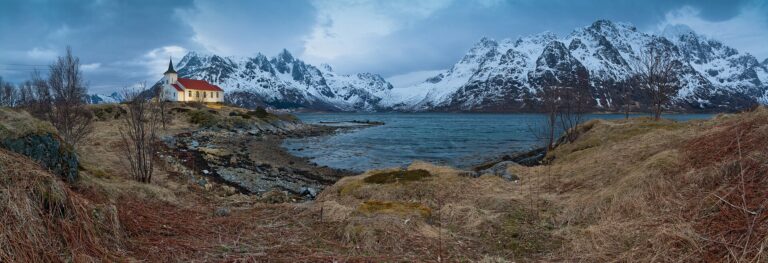 Travel story · most readWhat to Pack for Lofoten, Norway: A Packing List for Every Season
 When to goNorthern Lights in Lofoten: When, Where & How to See Them 2026
 What to seeHenningsvær, Norway: 6 Tips on What to See in the “Venice of the North”
 What to see7 Hidden Gems in the Lofoten Islands: Where Norwegians Go (But Crowds Don’t)
 Getting thereBodø, Norway: Where the Ferry to Lofoten Departs in 2026


