TL;DRRevelstoke is a mountain town in British Columbia, tucked between Mount Revelstoke and Glacier national parks, with an authentic feel that skips the crowds you’d find in Banff or Jasper. Among 12 tips on what to see and do are the Meadows in the Sky Parkway, climbing to 1,938 metres, the 12–14 km hike to Eva Lake, inland rainforests, Rogers Pass, the Halcyon Hot Springs, and the historic Grizzly Plaza. The Revelstoke Mountain Resort ski area has the biggest vertical drop in North America, at 1,713 m. July and August are best for hiking, while ski season runs from late November to mid-April, and from 19 June to 7 September 2026, entry to national parks is free thanks to the Canada Strong Pass.
Say the words mountain town Revelstoke and most travellers won’t picture anything at all. Instead, they fly into Calgary, rent a car and head straight for Banff, convinced they’re discovering the most beautiful corner of Canadian wilderness. It’s a bit of a mistake, though, because the real, wild British Columbia only begins on the far side of Kicking Horse Pass.
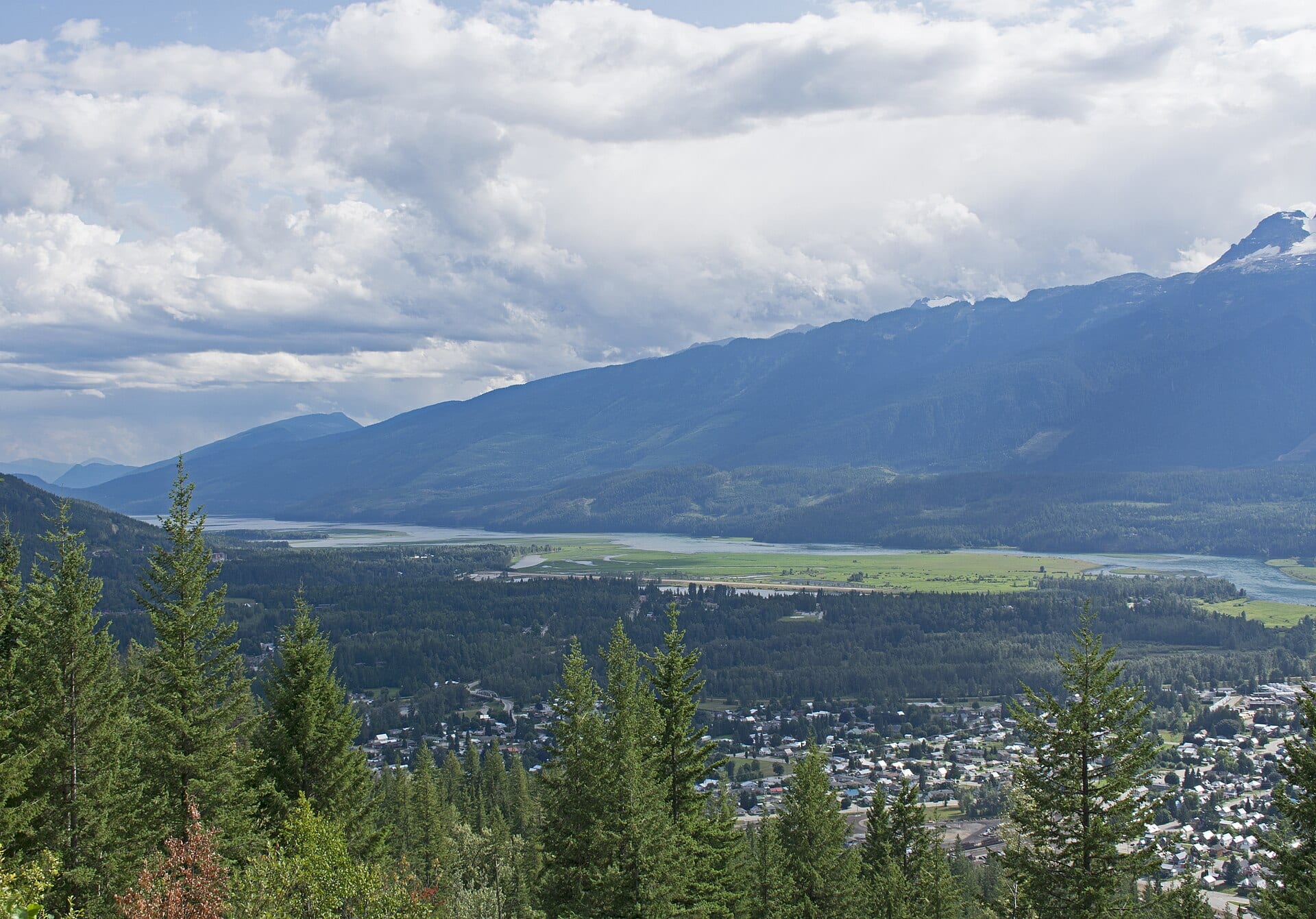
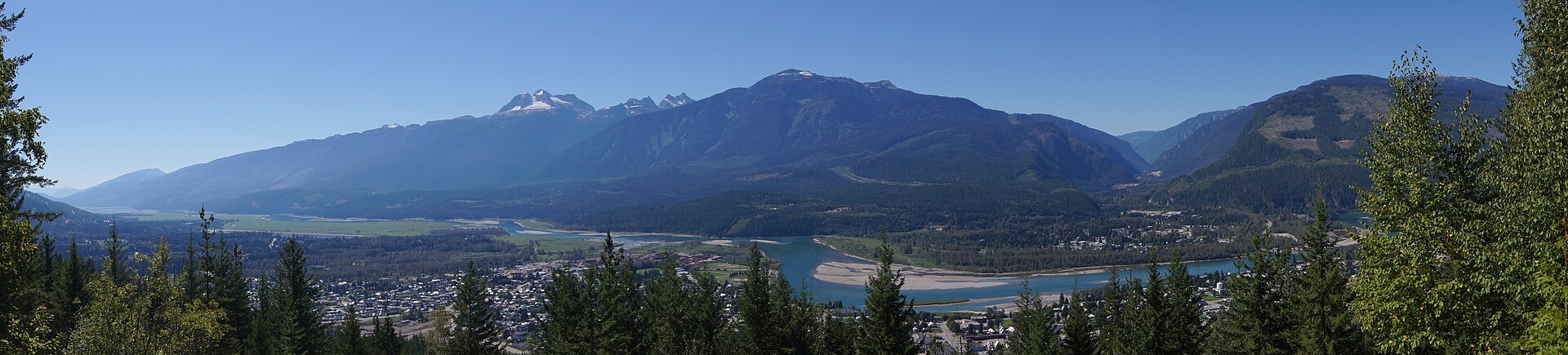
If you keep driving west along the Trans-Canada Highway, you’ll stumble onto a place that’s the exact opposite of an overcrowded tourist resort. This town has held on to its utterly authentic gold-rush and railway-builder atmosphere, and it’s surrounded by some of the rawest, most stunning mountains in North America.
So come along — let me show you why you can happily leave Banff behind and head out for inland rainforest, a blooming subalpine meadow and a hot spring without a single selfie stick in the frame.
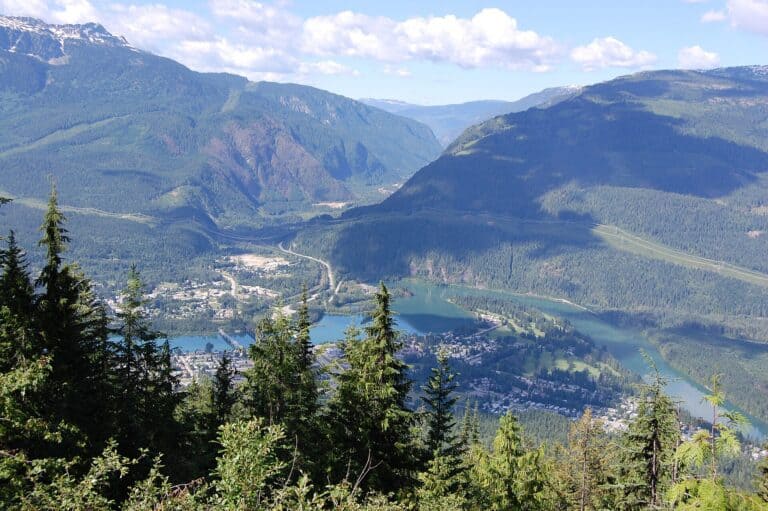
Foto: Darren Kirby / Wikimedia Commons, CC BY-SA 3.0
TL;DR
True Canadian wilderness: Revelstoke sits between Mount Revelstoke and Glacier National Parks, where you’ll find inland rainforests and enormous glaciers.
No tourist crowds: Unlike Banff or Jasper, you won’t be queuing for a photo here, and you’ll soak up a far more authentic mountain atmosphere.
Drive into the clouds: The unique Meadows in the Sky Parkway carries you almost two thousand metres up to gorgeous flowering meadows.
A paradise for skiers: Revelstoke Mountain Resort boasts the greatest vertical drop in all of North America and some of the best freeride conditions around.
Free entry for 2026: Thanks to the Canada Strong Pass initiative, entry to all the surrounding national parks is completely free from 19 June to 7 September 2026.
Watch out for bears: The Rogers Pass area has an extreme density of grizzlies, so you won’t want to be without bear spray.
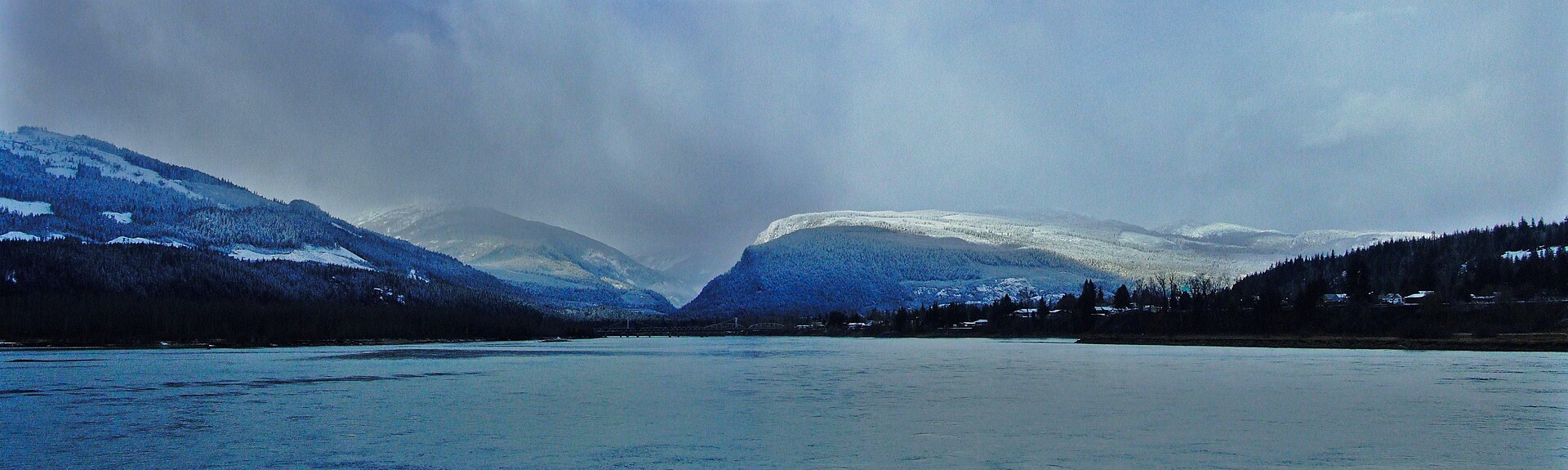
The weather in British Columbia can be wildly unpredictable, and Revelstoke is famous for its extreme precipitation. The valley is far wetter than neighbouring Alberta, with around 1,445 millimetres of rain and snow falling here each year. If you’re coming for winter sports, the ideal window is from late November to mid-April, when the surrounding mountains get buried under an average of more than ten metres of powder. The valley itself tends to be milder, with temperatures around minus five to minus ten degrees, but up on the slopes and out in the backcountry the frosts are serious, so you’ll need to kit yourself out properly.
For regular hiking and road trips, the absolute best months are July and August, when valley temperatures climb to a pleasant twenty to thirty degrees and the days are beautifully long. Just bear in mind that the mountain trails thaw very slowly. If you arrive in June or early July, most of the finest high-alpine treks will still be under snow and the park rangers simply won’t let you onto them.
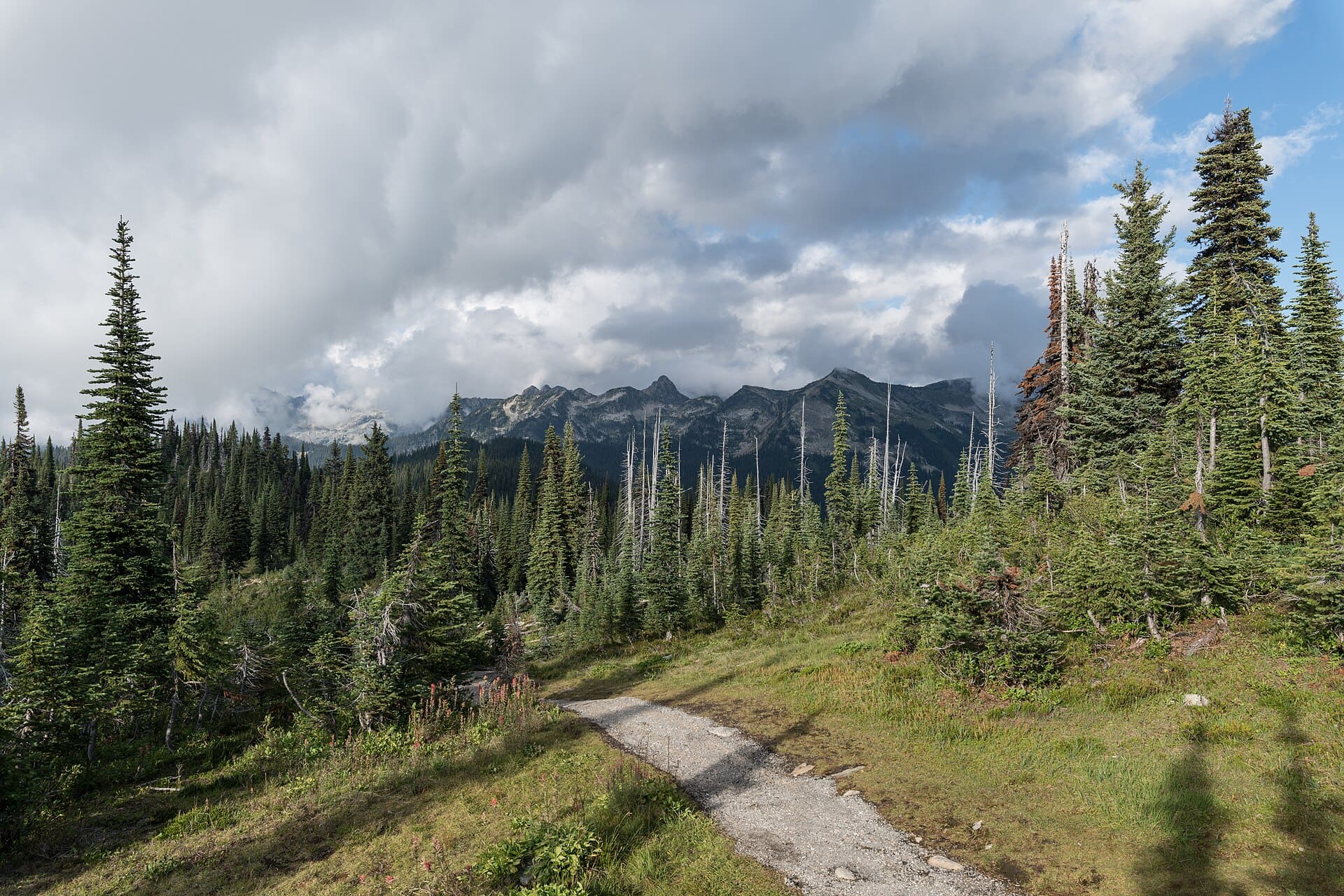
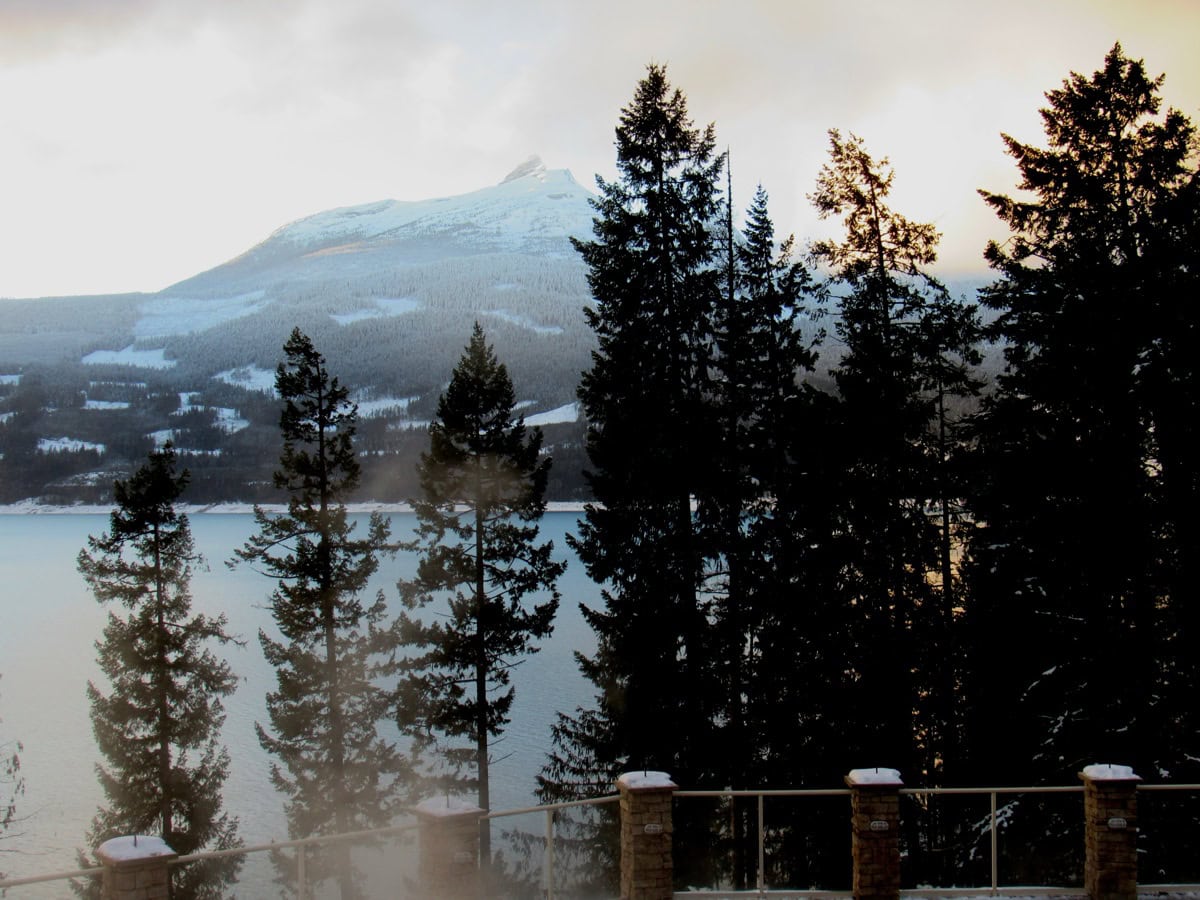
The most spectacular visual experience awaits you around the turn of July and August, when the peaks of Mount Revelstoke National Park burst into bloom with thousands of subalpine flowers and the whole mountain glows with colour. The autumn months offer gorgeous fall foliage, but from 1 October you need to be ready for the legal requirement to fit winter tyres, because the first serious snowstorms never take long to arrive.
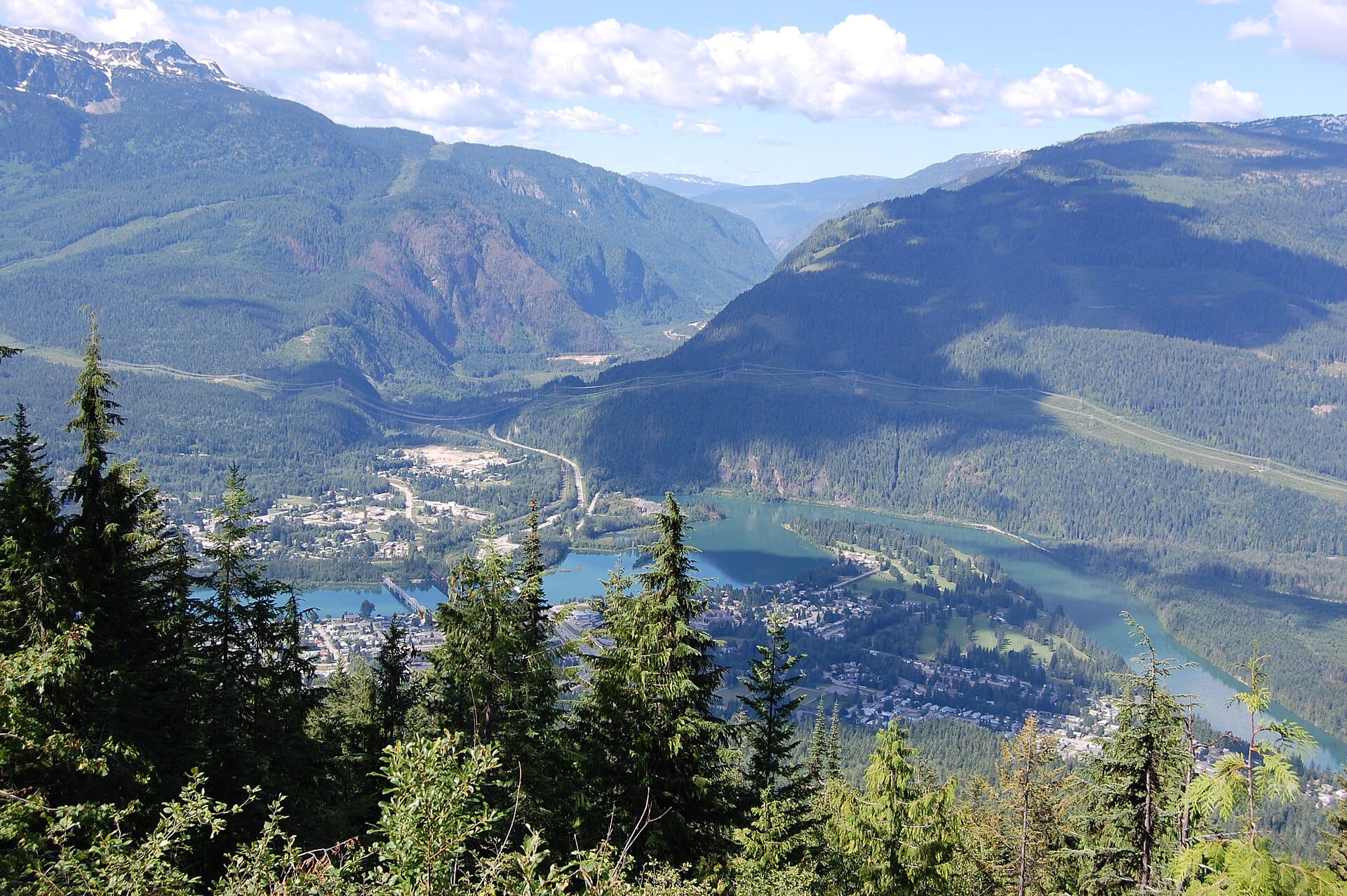
Foto: DXR / Wikimedia Commons, CC BY-SA 4.0
Hotels in Revelstoke, Canada: where to stay
💡 Tip for accommodation and experiences: We like to look for places to stay on Booking.com, which usually has the best cancellation policies. For tickets, tours and activities, it pays to compare and book through GetYourGuide.
The town offers accommodation for every budget, but be aware that during peak ski season (especially February) and the height of summer (July), prices skyrocket. The cheapest stays come up in May, or alternatively in October and November, when prices hit rock bottom and the hotels are practically empty. You can easily book most hotels through Booking, but for summer in particular I’d recommend doing it several months ahead, because capacity is limited.
If you’re after maximum comfort and want to be right by the slopes or the summer attractions, stay at the Sutton Place Hotel, which runs as a ski-in/ski-out property right in the resort’s base village and has an excellent spa for tired muscles. Another great option, with a beautiful view and two outdoor hot tubs, is the Coast Hillcrest Hotel, where a night costs from 160 CAD (around €105), depending on which part of the season you arrive in.
For a mid-range budget and families with kids, the Sandman Hotel Revelstoke is absolutely ideal — it’s closer to the town centre and offers excellent value for money. If you just want a clean place to sleep and you’re keeping a close eye on the budget, try the Swiss Chalet Motel or the Grizz Hotel, where off-peak rates start at a comfortable 100 CAD (around €65) per night.
Camping is hugely popular in Canada, and the local landscape practically begs for it. Just five kilometres from town you’ll find Williamson Lake Campground, which has 44 sites, its own beach and swimming. If you don’t mind driving roughly 25 kilometres south along Highway 23, definitely try Blanket Creek Provincial Park, where a campsite costs 28 CAD (around €18) per night. It has over a hundred sites, an amazing heated lagoon for swimming and, on top of that, a trail leading to the gorgeous Sutherland Falls.
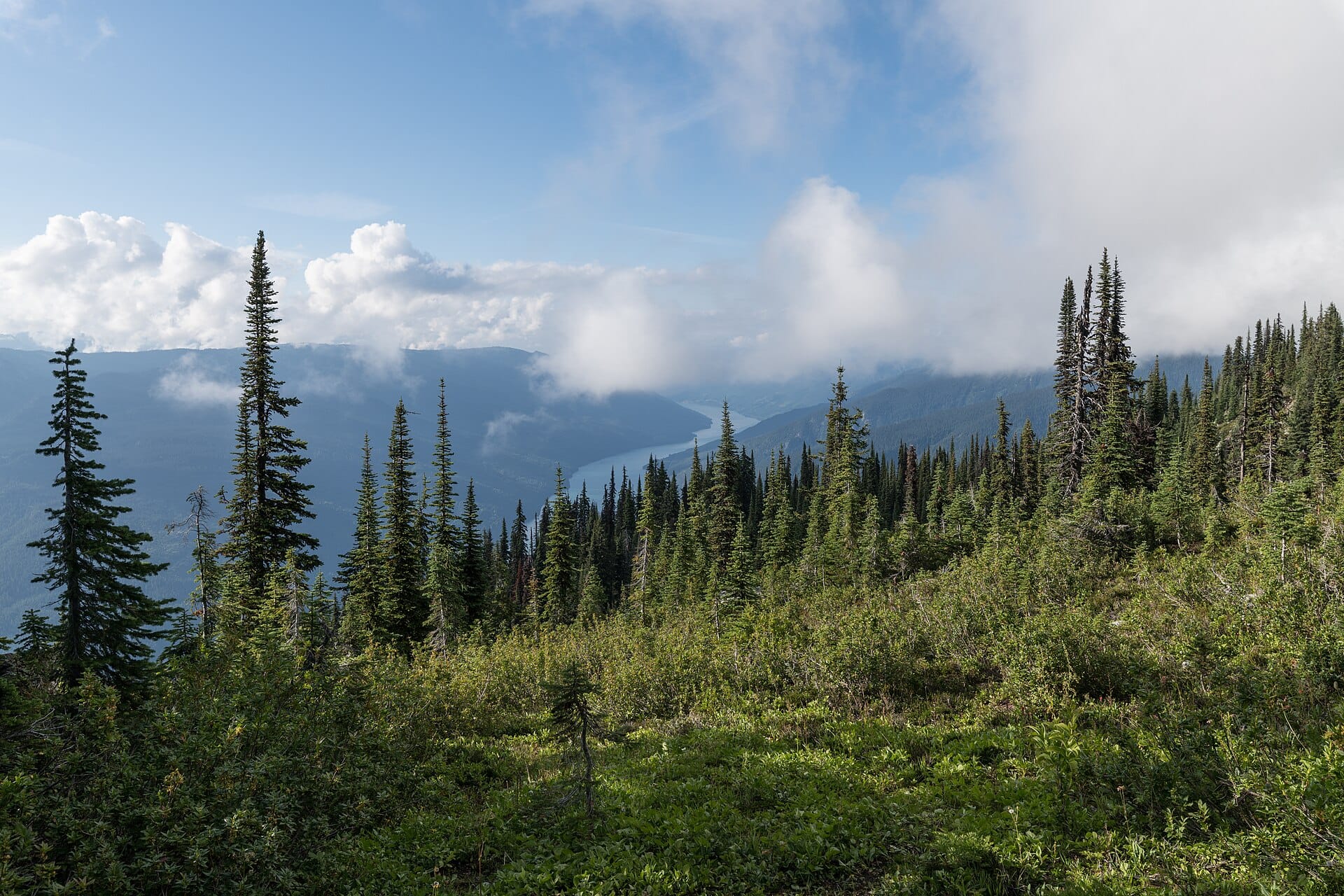
Foto: DXR / Wikimedia Commons, CC BY-SA 4.0
12 things to do in Revelstoke, Canada
The area around this town is rich in natural beauty and technical curiosities alike. Pack sturdy footwear and a good mood, because there are scenes ahead that you’ll be remembering for a long time.
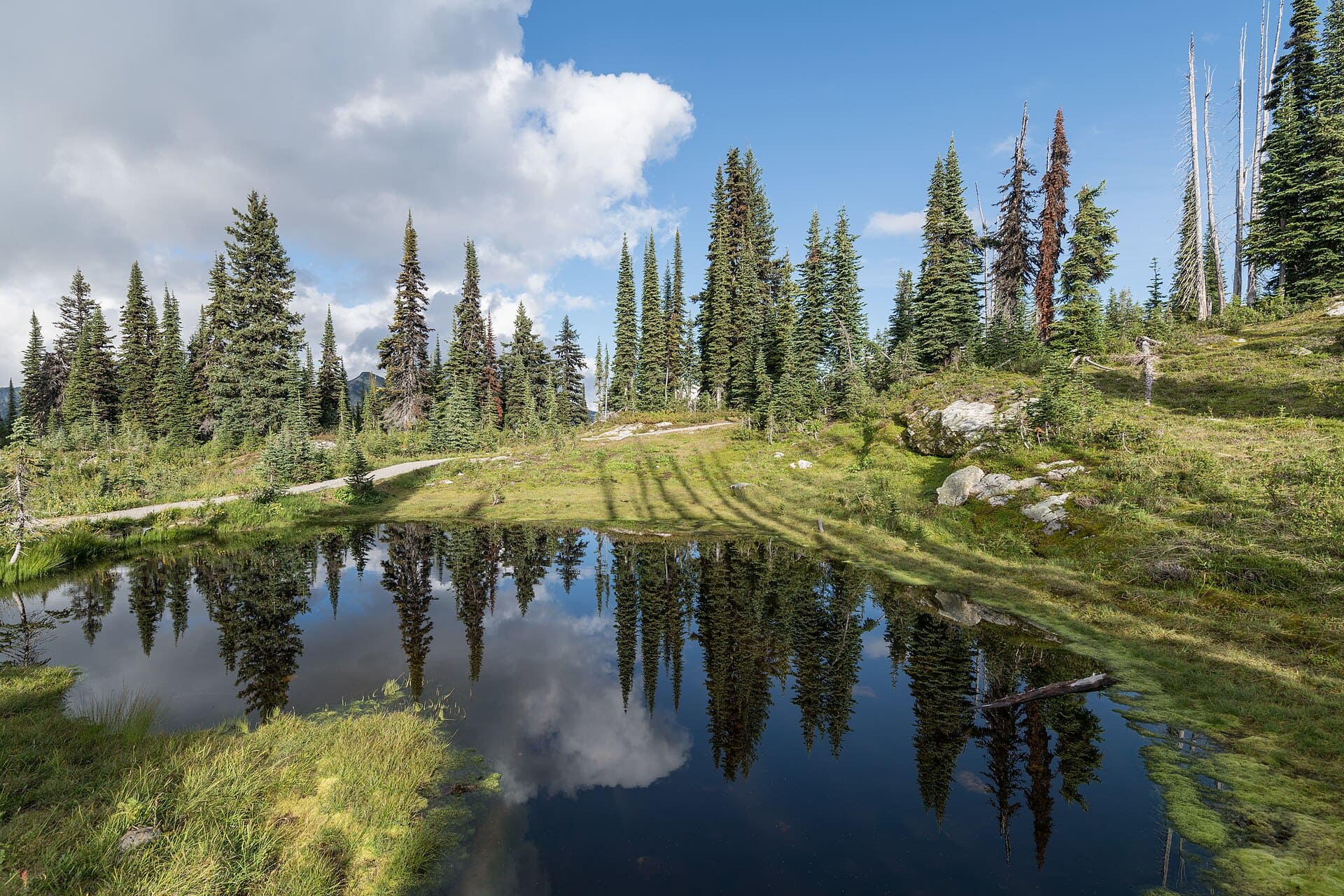
Foto: Ymblanter / Wikimedia Commons, CC BY-SA 4.0
1. Meadows in the Sky Parkway
This is a genuine one-of-a-kind among Canada’s national parks, because it’s the only mountain you can conquer in comfort from the warmth of your own car. Ahead of you lies a 26-kilometre paved road full of tight switchbacks, climbing from the baking valley floor all the way up to an altitude of 1,938 metres.
Along the way you’ll pass through several climate zones, from dense cedar forests full of ferns to open, wind-lashed mountain plateaus. The road is usually fully open only from mid-July, once the deepest winter snow has melted and the rangers have inspected the route.
For the 2026 season, the opening hours are 8:00 to 20:00 during the main summer period. You have to leave your car at the Balsam Lake car park, and a free shuttle bus takes you the final 1.6 kilometres or so to the summit, running roughly every half hour in season.
The park’s biggest draw arrives at the turn of July and August, when the entire summit plateau transforms into a vast, colourful carpet of blooming alpine flowers. Don’t forget that you need a valid Parks Canada pass to drive in. But if you visit between 19 June and 7 September 2026, the Canada Strong Pass initiative means entry to the park is completely free, saving you a lot of money.
💡 Tip: Head to the entrance gate right at eight in the morning. The car park up top has very limited capacity and vehicles longer than seven metres aren’t allowed at all, so by around lunchtime they may not let you up.
Foto: Daniel Kane / Wikimedia Commons, CC BY-SA 3.0
2. The hike to Eva Lake
Once you’ve driven up to the top of Mount Revelstoke, the gateway opens to several gorgeous treks that even occasional hikers can manage. The most popular of all is the moderately challenging trail to Eva Lake, which measures roughly 12 to 14 kilometres round trip with a total elevation gain of 549 metres.
It’s an ideal full-day outing for anyone with at least basic fitness who wants to see true wilderness. The trail leads through stunning scenery full of flowering meadows, ancient trees and mighty boulder fields. The lake itself is an incredibly rich turquoise and lies in a perfectly silent valley ringed by rugged rocky peaks. Unlike the iconic but extremely crowded lakes in Banff, here you won’t be elbowing through tourist crowds, and you may well have all that beauty entirely to yourself.
On the way back you can take a short detour to the neighbouring Miller Lake and Jade Lake, which are no less photogenic. Just be sure to bring plenty of water, insect repellent and good hiking boots, because the terrain can be treacherous and rocky in places, especially after rain.
Foto: Dennis Cambly / Wikimedia Commons, CC BY-SA 3.0
3. Inland rainforests and giant cedars
British Columbia isn’t just about high peaks and frozen glaciers — it’s also home to unique inland rainforests you won’t easily see anywhere else in the world. Right beside Highway 1 you’ll find the Giant Cedars Boardwalk stop, a half-kilometre wooden walkway. It guides you among western red cedars, some of which are more than a thousand years old and have trunk girths that five people linking arms couldn’t reach around.
A little further west lies another short and very interesting stop called the Skunk Cabbage Boardwalk. This loop trail runs about 1.2 kilometres and leads mostly through marshy terrain. In spring, massive yellow plants with enormous leaves bloom here — they got their name from a distinctive odour reminiscent of a skunk, but don’t let that put you off, the atmosphere is magical.
Both stops are perfect for stretching your legs. If you’re travelling with children, the rainforest will reliably wow them, because those thousand-year-old giant cedars make a bigger impression than any museum ever could.
Foto: JERRYE AND ROY KLOTZ MD / Wikimedia Commons, CC BY-SA 3.0
4. Glacier National Park and Rogers Pass
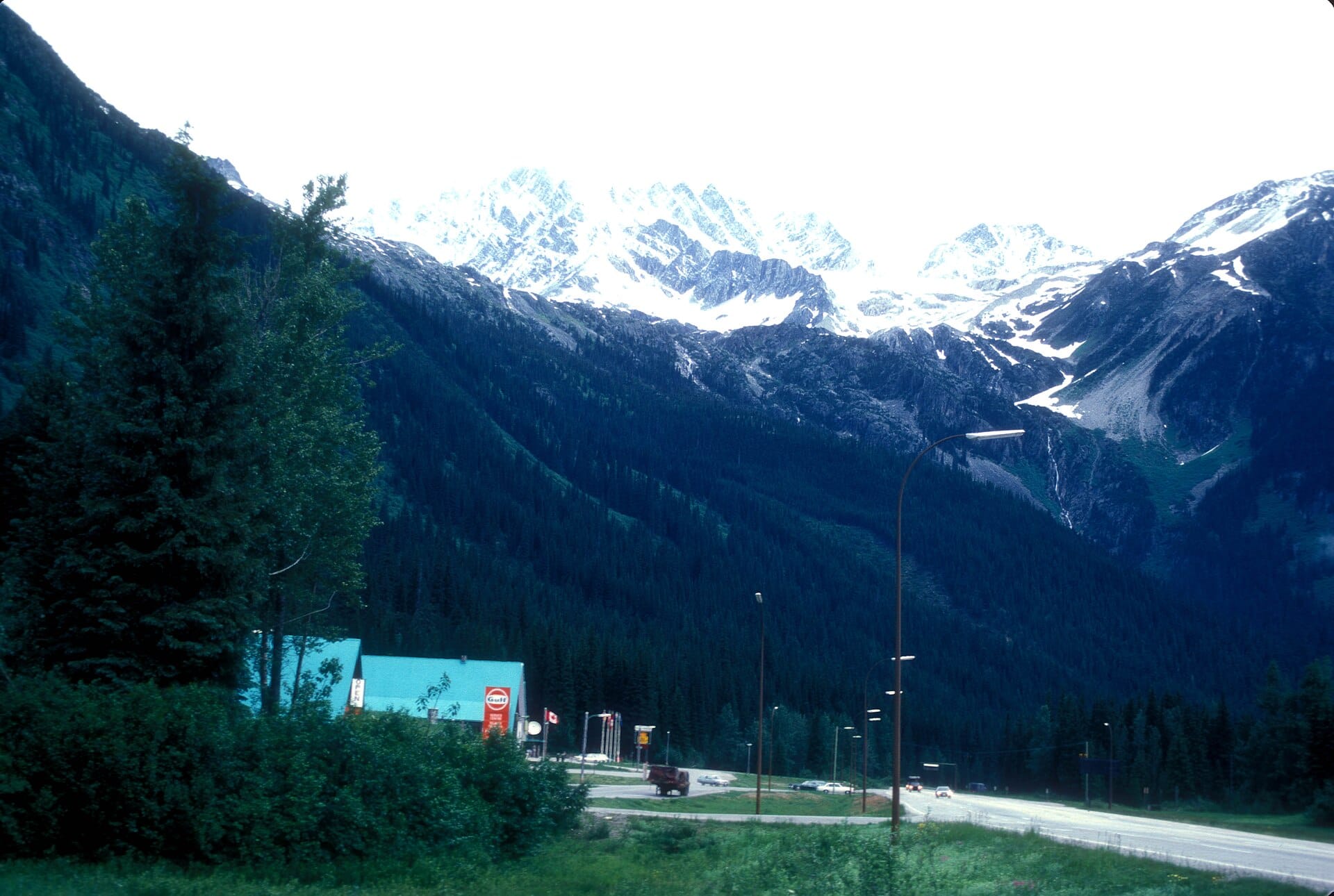
An hour’s drive east and you’re suddenly in a completely different world. Glacier National Park (and not the American one, mind you) is all about extreme weather and majestic glaciers that remind you just how firmly nature is in charge here. At the heart of the park is the dreaded mountain pass of Rogers Pass, where so much snow falls in winter that the Canadian army has to regularly shell the surrounding slopes with howitzers. This triggers controlled avalanches and keeps the only highway passable.
I’d definitely recommend a short stop at the free Rogers Pass Discovery Centre, where you’ll learn utterly fascinating details about the construction of the first transcontinental railway. The exhibition does a great job of charting the struggle between humans and an unforgiving landscape, the history of avalanche engineering, and just how many human lives this harsh country swallowed up.
If you want to see the glaciers really up close and you’re not afraid of climbing, set off on the Balu Pass trek, which measures 10 kilometres round trip with 700 metres of elevation gain. The word “Balu” means bear in Sanskrit, and the name fits perfectly. The area has an extreme density of grizzlies, so park management often enforces a strict rule that you may only enter the trail in a tight group of at least four adults.
5. Revelstoke Mountain Resort (a winter paradise for skiing)
For skiers and snowboarders, Revelstoke is an absolute mecca. The local resort boasts the greatest vertical drop in all of North America, an incredible 1,713 metres from the summit down to the village. That means you’re in for endlessly long descents that will have your thighs burning by the halfway point of the hill.
Daily adult lift passes for the 2025/2026 season run to around 220 CAD (around €145) at peak times, dropping to 199 CAD outside the busiest days. But if you buy your tickets online well in advance, you can easily save up to 35 percent.
You won’t easily find this anywhere else in the world. From a single base you can choose classic chairlifts, cat skiing or outright heli-skiing, so there’s something for everyone. If you have an unlimited budget and want to experience the very best skiing of your life, a single day of heli-skiing will set you back 2,000 to 3,500 CAD (up to roughly €2,300) per person. For that price, though, the helicopter whisks you off to untouched alpine bowls deep in the Selkirk Mountains, where you carve your own line through perfect, light powder — more than ten metres of which falls here each year.
Foto: Darren Kirby / Wikimedia Commons, CC BY-SA 3.0
6. Summer adrenaline at the resort and the Pipe Coaster
Revelstoke Mountain Resort certainly doesn’t sleep in summer — quite the opposite, as the snow melts it turns into a giant outdoor adventure park. The main attraction is the fantastic Pipe Mountain Coaster, which measures 1.4 kilometres and drops 279 metres. You can reach speeds of up to 42 kilometres per hour, and since the coaster is fully steerable you can brake your own speed. A single ride costs 15 CAD (around €10).
The best value and most practical option is to pick up the so-called Adventure Pass, which for summer 2026 costs an adult 85 CAD (around €56), or a little less if you buy online. The price includes a ride up on the main eight-seat Revelation Gondola, one ride on the coaster mentioned above and entry to the huge Aerial Adventure Park ropes course.
Up at the gondola station you can also stroll across the Skywalk suspension bridge, which offers an absolutely breathtaking view over the entire Columbia River valley. And for cycling lovers, there’s the enormous Revelstoke Bike Park with perfectly groomed downhill and enduro trails that will satisfy even the most demanding riders.
Foto: neznámý autor / Wikimedia Commons, CC BY-SA 2.0 ca
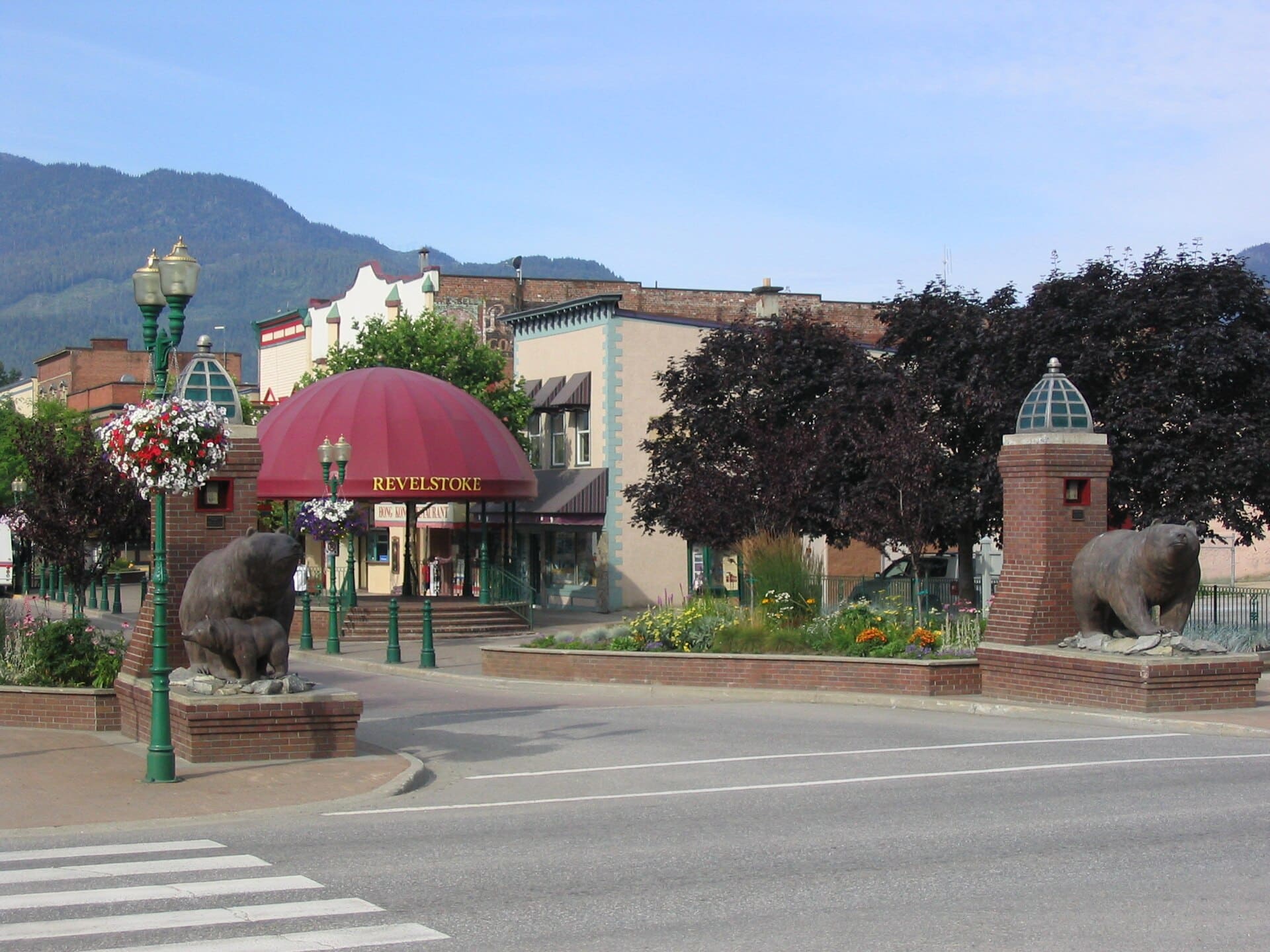
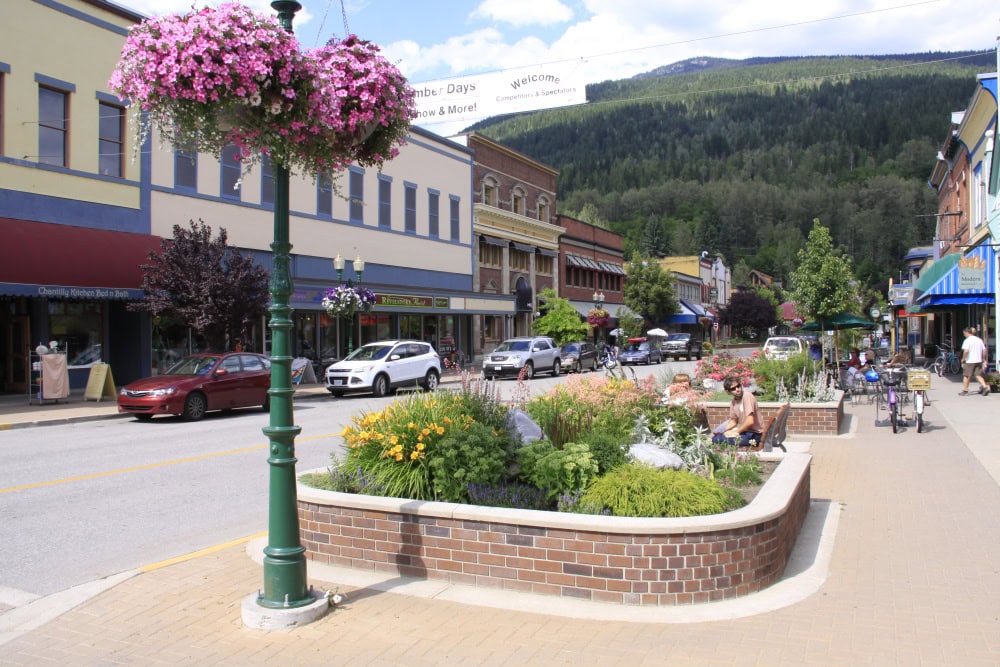
While most mountain towns in Canada feel a bit like artificial tourist sets built purely for Instagram, Revelstoke has kept the soul of a real working town. The heart of all the action is Mackenzie Avenue and, above all, the little square of Grizzly Plaza. These streets are lined with gorgeous, carefully restored brick buildings from the turn of the nineteenth and twentieth centuries.
The atmosphere here is incredibly relaxed and surprisingly calm. You’ll find plenty of independent cafés, small galleries and specialist outdoor-gear shops. In summer, free live music concerts are held on Grizzly Plaza every evening, people lounge on the brewery patios, and a thoroughly neighbourly ease pervades the whole town.
It’s well worth setting aside at least one whole evening just for aimless wandering through the local streets. This is exactly where you’ll fully grasp the huge contrast with the packed streets of Banff, where the endless tourist crowds often mean you can’t even see across to the opposite pavement or a shop window.
💡 Tip: If you love speciality coffee, drop into one of the little cafés right on Mackenzie Avenue. The local community takes its quality caffeine seriously, and the coffee here is a cut above the big chains.
Foto: waferboard / Wikimedia Commons, CC BY 2.0
8. The railway museum and the Last Spike at Craigellachie
Revelstoke as a town would probably never have come into being were it not for the construction of Canada’s first transcontinental railway, which needed a large depot and dispatch centre. If you’re interested in history, you mustn’t miss the Revelstoke Railway Museum, where you can examine a huge steam locomotive up close. You can also step inside a luxurious sleeping car from the days when rail travel represented the pinnacle of social elegance.
Roughly 45 kilometres west of town, right beside Highway 1, lies an unassuming spot called Craigellachie. It was here, on 7 November 1885, that the so-called Last Spike was driven in — the final iron spike that, after an enormous effort, finally joined the eastern and western halves of Canada. Entry to this outdoor monument is completely free, and there’s also a small seasonal café next to it.
This seemingly ordinary stop holds enormous historical significance for Canadians. In November 2025, the whole country also marked the significant 140th anniversary of this event, so the entire site is freshly spruced up, full of new information boards and definitely worth a short stop to stretch your legs.
9. The snowmobile capital of Canada
This may surprise you, but Revelstoke isn’t known around the world only for downhill skiing. The town officially and proudly carries the title of snowmobile capital of Canada, thanks to the highest annual snowfall of any snowmobiling destination in North America. This is exactly where the continent’s best riders gather.
The winter landscape around Boulder Mountain, Frisby and Sale Mountain offers endless kilometres of perfectly groomed trails as well as wild, snowy plains for free riding through deep powder. The local clubs look after every trail meticulously, grooming them, and the whole culture around so-called snowmobiling has a huge, long-standing tradition here.
If you want to try this adrenaline experience for yourself and don’t have your own machine, several pro rental outfits operate in town. They’ll sort you out with complete gear, a snowmobile and, crucially, an experienced guide, without whom you really shouldn’t venture into the backcountry. Otherwise you’d get there only by helicopter, or on foot — but that would take you several days and absolutely wreck your legs 😅
Foto: Jennifer C., CC BY 2.0, Wikimedia Commons
10. Hot springs in the area
After demanding mountain hikes or a full day of freezing skiing, there’s absolutely nothing better than sinking your tired muscles into hot mineral water. Around twenty minutes’ drive (35 kilometres) east of town lies Canyon Hot Springs, very pleasant outdoor pools with water at around 40 degrees that, in summer, also operate as a popular camping resort.
But if you’re after a slightly more luxurious experience and don’t mind driving further, it’s worth heading 69 kilometres south towards Nakusp. Right by Upper Arrow Lake you’ll find the gorgeous Halcyon Hot Springs. The drive takes about an hour and a half, but the result is clearly worth it. A day pass to these springs costs 30 CAD (around €20) plus taxes.
These springs offer several pools of varying temperature, all with a perfect view straight out over the calm surface of the lake and the surrounding snow-capped peaks. You can also stay in the main building or in cabins here, but be aware that rates run somewhere between 250 and 450 CAD per night.
11. The Enchanted Forest and SkyTrek
This tip is an absolute must if you’re travelling with family and small children, though adults will be entertained too. Roughly thirty kilometres west of Revelstoke, right beside Highway 1, the Enchanted Forest sits in the middle of ancient rainforest. You’ll find dozens of little fairy-tale cottages, castles and handmade figures, all woven incredibly sensitively into the wild surroundings.
For older children and adults looking for a bit more action, the SkyTrek Adventure Park is set up right next door. SkyTrek is a highly elaborate system of ropeways, challenging obstacles and fast ziplines strung high in the canopy of giant cedars, where you make your way along suspended trails and bridges up to fifteen metres above the ground — and very quickly find out where you stand on courage 😉
Be aware that leaving in under three hours is almost impossible, especially if you have kids who refuse to let go of the zipline 😁
Foto: Ccyyrree, CC0, Wikimedia Commons
12. Local breweries and great food
At the end of every day spent in the mountains, you need to refuel. Revelstoke has an excellent food scene, ruled without question by the local microbrewery Mt. Begbie Brewing Co., in operation since 1996. They have a beautiful tasting room and a large outdoor patio you can visit with your dog. Locals and travellers alike have grown very fond of their kitchen. If you’re not sure what to order, the kale salad with grilled halloumi or the vegetarian pizza both have great reviews from the locals.
If you want to sample more varieties of beer from across British Columbia in one place, drop into a spot called Craft Bierhaus, which has dozens of different specials on tap and a great rustic atmosphere. It’s often packed to the rafters, so I’d recommend arriving early in the evening.
When you fancy honest Italian cooking with no unnecessary experiments, definitely head to the restaurant Padrino’s. They make superb homemade pasta and beautifully crisp pizza, and they have plenty of great meat-free options on the menu that you’re guaranteed to relish after a day on the trail.
Foto: DXR / Wikimedia Commons, CC BY-SA 4.0
Where to go next from Revelstoke
Revelstoke sits right on the transcontinental highway, so it’s easy to carry on anywhere from here, and the choices aren’t half bad. You’ve got plenty of options to make your Canadian road trip even better:
Head east and explore neighbouring Yoho National Park, which offers the most beautiful waterfalls and turquoise lakes with a tenth of the tourists you’d find in Banff.
Carry on a little further into Alberta and visit the iconic Lake Louise.
If you’re heading west towards the ocean, don’t miss a stop in the Olympic Games host town and visit Whistler.
Get inspired by our complete itinerary for a road trip across western Canada, with a precise day-by-day breakdown of the route.
Frequently asked questions
Planning a trip to Canada can sometimes leave your head spinning. So we’ve put together answers to the most important questions you should know before heading to Revelstoke and its surroundings.
How far is it to Revelstoke from major cities?
If you rent a car at the airport, you’re facing quite long distances. From Vancouver it’s 565 kilometers, which takes about six and a half hours of pure driving. From Calgary you’ll drive 410 kilometers (about four and a half hours) and the nearest international airport in Kelowna is 187 kilometers away, roughly two and a half hours of travel.
Do I need winter tires on the highway?
Yes, it’s a legal requirement in British Columbia. On all mountain sections, including Highway 1 around Revelstoke, you must have tires marked M+S or with the mountain peak and snowflake symbol fitted from October 1st to April 30th. Police conduct random checks and fines are hefty. So it’s better to carefully verify everything at the rental office when picking up your car.
Does it make sense to go to Revelstoke instead of Banff?
Revelstoke isn’t a direct replacement for Banff, but rather a great complement or a quieter alternative. While Banff is full of commercialism and huge crowds, Revelstoke maintains an authentic mountain town atmosphere. The views here are somewhat different (more forests and deep valleys), but the price-to-experience ratio is definitely better. Read more about when to visit Banff.
Do I need a visa for Canada?
The Czech Republic falls under visa-exempt travel, so all you need is an electronic eTA registration. You can process it online exclusively through the official government website, it costs exactly 7 CAD (approximately €4.70) and is valid for five years. However, be extremely careful of fraudulent agencies that pop up in search engines and charge absurd fees of around 50 to 100 dollars for the same form.
Is it safe around here because of bears?
You’re in the wilderness and bears live here quite normally. Especially in the neighboring Rogers Pass, there’s a huge population of grizzlies. The basic rule is to always carry bear spray with you, make noise on the trail and ideally hike in a group. Remember that you can’t take the spray on a plane, not even in checked luggage – you have to buy it on site.
How does health insurance work in Canada?
Medical care in Canada is extremely expensive, and bills for a simple emergency room visit run into thousands of dollars. If a helicopter needs to fly into the mountains for you, the bill can climb up to 50,000 CAD. Under no circumstances travel without quality insurance with a limit of at least €200,000 to €400,000. We’ve had great experience with flexible SafetyWing travel insurance.
Will I have cell phone signal in the mountains?
In the town of Revelstoke you’ll get a signal without any problems, but as soon as you drive onto the highway or head out on a trek, you’ll immediately lose connection with the world. Always download offline maps to your phone (both Google Maps and the hiking app AllTrails). For cheap data in cities, I recommend reading our Holafly eSIM review, so you don’t pay huge amounts for roaming.
Tips and Tricks for Your Vacation
Don’t Overpay for Flights
Search for flights on Kayak. It’s our favorite search engine because it scans the websites of all airlines and always finds the cheapest connection.
Book Your Accommodation Smartly
The best experiences we’ve had when looking for accommodation (from Alaska to Morocco) are with Booking.com, where hotels, apartments, and entire houses are usually the cheapest and most widely available.
Don’t Forget Travel Insurance
Good travel insurance will protect you against illness, accidents, theft, or flight cancellations. We’ve had a few hospital visits abroad, so we know how important it is to have proper insurance arranged.
Where we insure ourselves: SafetyWing (best for everyone) and TrueTraveller (for extra-long trips).
Why don’t we recommend any Czech insurance company? Because they have too many restrictions. They set limits on the number of days abroad, travel insurance via a credit card often requires you to pay medical expenses only with that card, and they frequently limit the number of returns to the Czech Republic.
Find the Best Experiences
Get Your Guide is a huge online marketplace where you can book guided walks, trips, skip-the-line tickets, tours, and much more. We always find some extra fun there!
TL;DRBonifacio, on the southern tip of Corsica, packs in 11 things worth seeing and doing: the old town of Haute Ville with its citadel, the 187 steps down the Escalier d’Aragon, a boat trip to the cliffs and the Grotte de Sdragonato, an excursion to the Lavezzi archipelago or the white-sand beaches of Petit and Grand Sperone, the Campu Romanilu clifftop path, the Bastion de l’Étendard, the Cimetière Marin and the Pertusato lighthouse.
One day is enough for the main centre, but if you want the beaches and a trip to Lavezzi, plan on three days. The best months are May, June and September, with temperatures of 24–28°C, while August is best avoided thanks to the crowds and prices. You’ll need a car to get around, and the ferry from Nice takes 6–7 hours, with tickets costing 40–100 euros without a car.
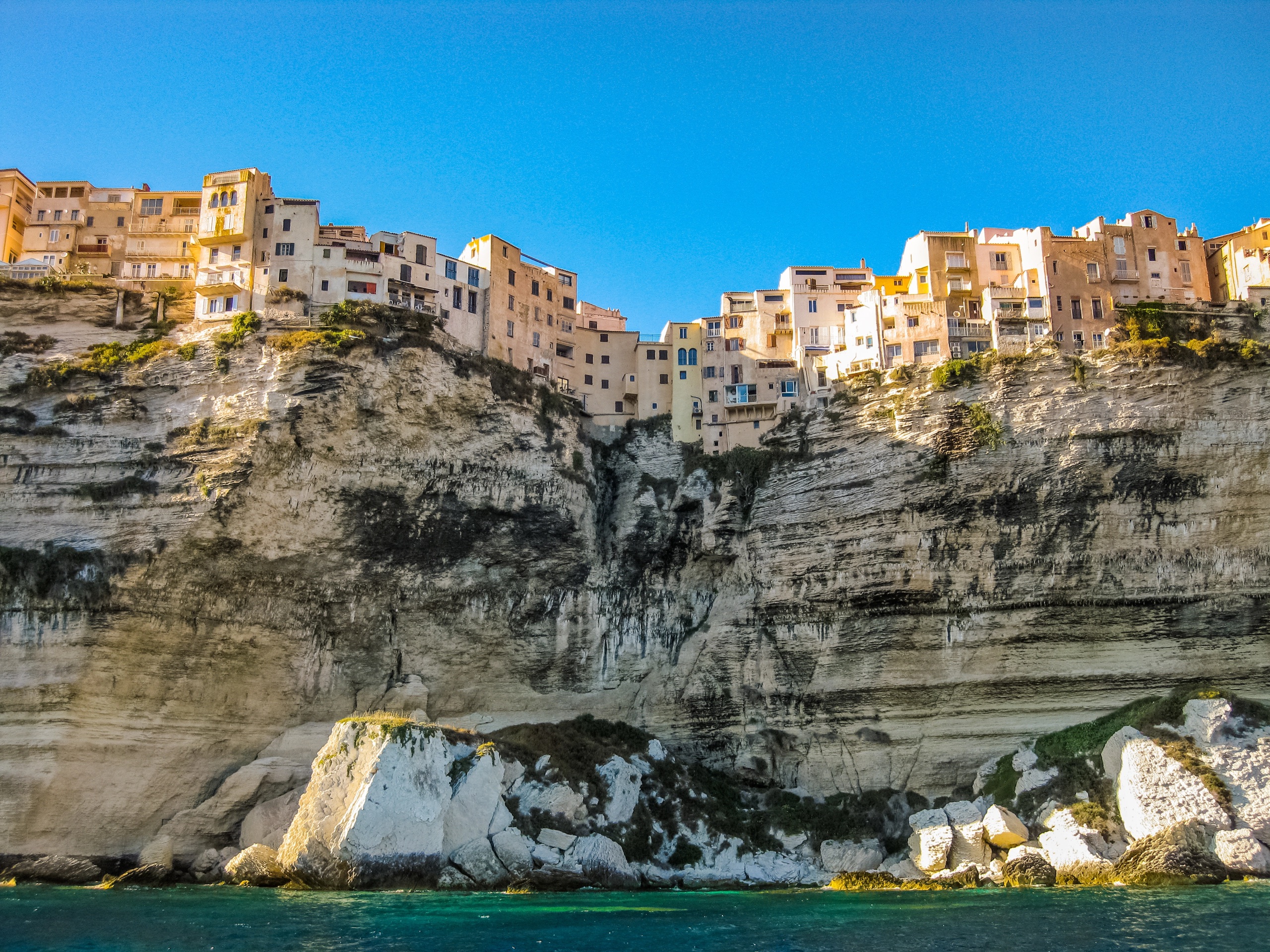
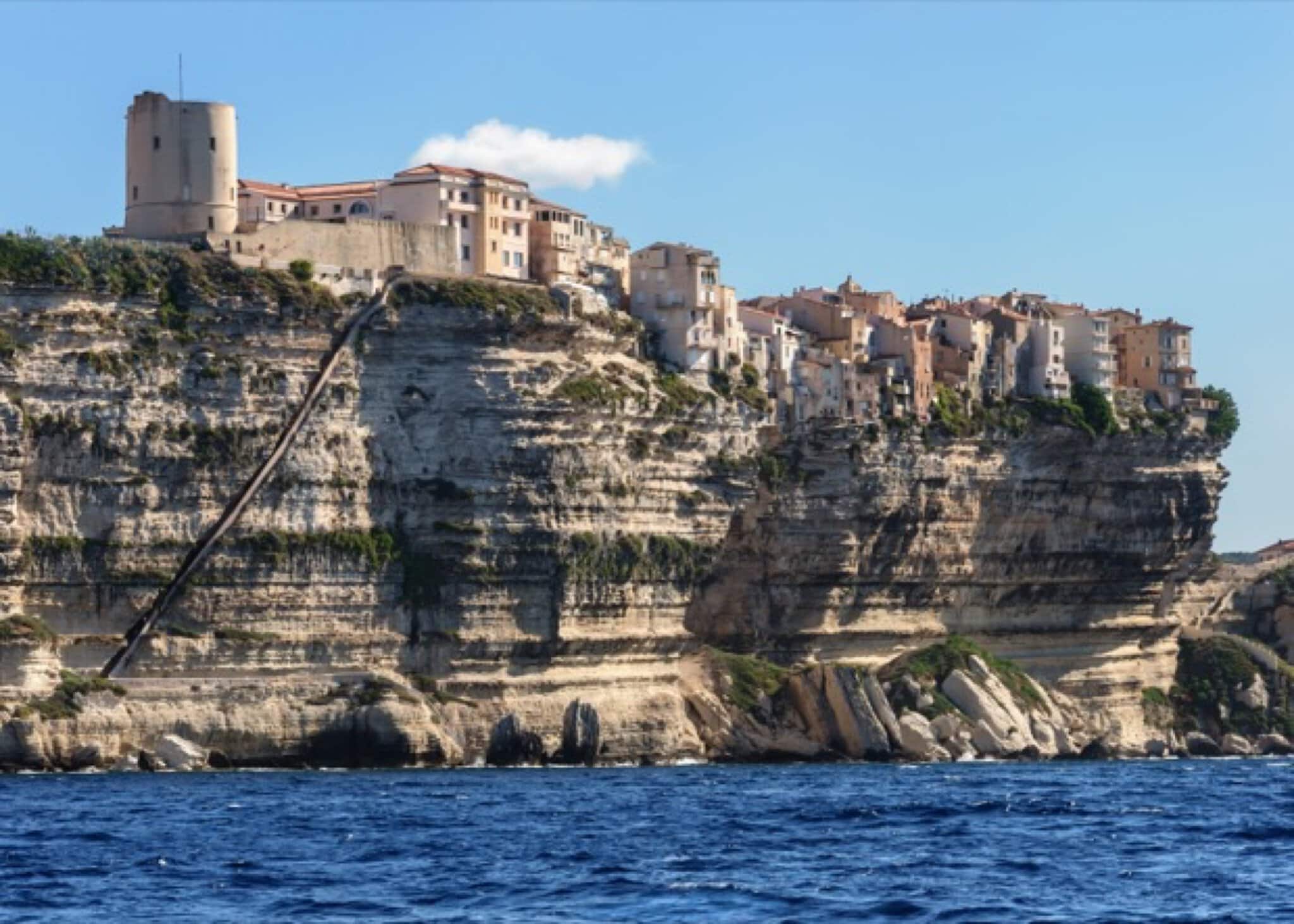
If you’re looking for a place where rugged island romance meets absolutely breathtaking architecture, you need to head all the way south to Bonifacio, Corsica. This town literally defies the laws of gravity, balancing right on the edge of dazzling white limestone cliffs. It looks as though the ancient houses could slide straight into the churning waves of the Mediterranean at any moment.
In this article you’ll find exactly 11 things to see and do in Bonifacio, from exploring the narrow streets of the old town to boat trips along the cliffs and lazy days on the white-sand beaches. I’ll also tell you where to stay strategically, how to dodge the worst of the summer crowds, and what to watch out for when planning your budget for 2026. Get ready to be completely captivated by Bonifacio’s raw beauty — the kind you won’t easily find anywhere else in Europe.
TL;DR
Best views: Walk along the clifftop on the Campu Romanilu trail, where you’ll snap the most iconic photos of the entire town.
Historic experience: Descend the 187 steps of the Escalier d’Aragon, carved directly into the sheer rock face below the citadel.
Best from the water: Take a boat trip along the cliffs — only from the sea will you fully appreciate Bonifacio’s majesty and get a glimpse inside the sea caves.
Caribbean beaches: Make a day trip to the Lavezzi Islands, or head to the mainland beaches of Petit and Grand Sperone with their fine white sand.
When not to go: Avoid August, when the island is bursting at the seams, the roads grind to a halt and accommodation prices soar to absurd heights.
Transport and parking: You can’t get by without a car on Corsica, but in Bonifacio itself it’s best to leave it in a car park near the harbour.
When to visit Bonifacio and how to avoid the crowds
Corsica has a very particular rhythm, and choosing the right month to visit is absolutely key to how much you’ll enjoy your whole holiday. As soon as you step off the ferry, you’ll be hit by the distinctive scent of the maquis — an intoxicating blend of wild thyme, rosemary, myrtle and sun-baked earth. If you can, steer well clear of August, because that’s when the French and Italians take their nationwide holidays and storm the island en masse. During this period there are two to three times as many people in Bonifacio as in July, and accommodation prices shoot through the roof. The narrow Corsican roads turn into one long car park, and finding a parking spot near a beach becomes a superhuman feat.
The ideal time to visit is May, June and especially September, once the worst of the heat has passed. The sea is still beautifully warm after the summer, and daytime temperatures hover around a very pleasant 24 to 28 degrees. That’s perfect weather for combining sightseeing and swimming without being roasted alive. On top of that, you’ll have a far better chance of grabbing a table at a restaurant without booking ahead, and you won’t be queuing at every turn.
Getting to Corsica from the mainland is most often done by Corsica Ferries. The quickest route runs from Nice to Bastia, taking roughly six to seven hours. If you sail from Toulon, expect eight to ten hours, while the route from Marseille is the longest of all, with eleven to fourteen hours on board. A foot passenger pays between €40 and €100 for a ticket, but with a car the price in August can easily climb to as much as €1,000. Travellers from the UK will usually fly into Figari (the airport closest to Bonifacio) or Bastia — there are seasonal direct flights, but you’ll often need to connect via Paris, Nice or Marseille.
Unfortunately, you really can’t manage without a car on the island, as public transport is highly unreliable. Relying on local buses means spending your holiday waiting at stops where the bus may never turn up at all. A car, on the other hand, gives you complete freedom to discover empty coves and mountain passes at your own pace.
💡 Tip: Even outside the peak season, book your ferry tickets well in advance. Ship capacity is limited and last-minute prices rise at an astronomical rate.
Photo: Gianni Careddu / Wikimedia Commons, CC BY-SA 3.0
Where to stay in Bonifacio
💡 Accommodation and experiences tip: We like to look for places to stay on Booking.com, which usually has the best cancellation terms. For tickets, tours and activities, it’s worth comparing and buying through GetYourGuide.
When looking for accommodation in Bonifacio, you’ll have to choose between two main areas, each with its own undeniable pros and cons. The first option is the historic old town (Haute Ville) up on the cliffs, which offers an utterly unique, romantic atmosphere. You’ll have stunning sea views and the best landmarks literally a few steps from your room. The downside, however, is the extremely tricky parking and the need to lug your suitcases up steep cobbled lanes, which is really no fun in the summer heat. What’s more, you shouldn’t drive into the citadel itself without first arranging it with your hotel.
The second and far more practical option is the area down by the harbour (the Marina), where you’ll find plenty of restaurants and cafés. A major plus is the flat terrain with better parking options in large car parks. It’s uphill to the historic centre from here, but you can take the tourist train or simply enjoy a leisurely stroll that takes about fifteen minutes. Explore the options well in advance via Booking, because capacity in Bonifacio is very limited and the best places sell out as early as spring.
Hotel Genovese: A gorgeous luxury hotel right inside the citadel, boasting its own pool overlooking the harbour and top-notch service for a romantic getaway for two.
Hotel Solemare: A great choice right by the harbour, where you’ll have a lovely view of the moored yachts and the old town towering above you, plus much easier access by car.
Santateresa: A popular hotel right on the cliff’s edge in the historic centre, offering rooms with a breathtaking view straight across to Sardinia and the surrounding sea.
💡 Tip: If you’re travelling by car, always check in advance whether the hotel offers its own dedicated parking. Public car parks in Bonifacio can easily cost €25 a day in 2026, and in season they’re hopelessly full.
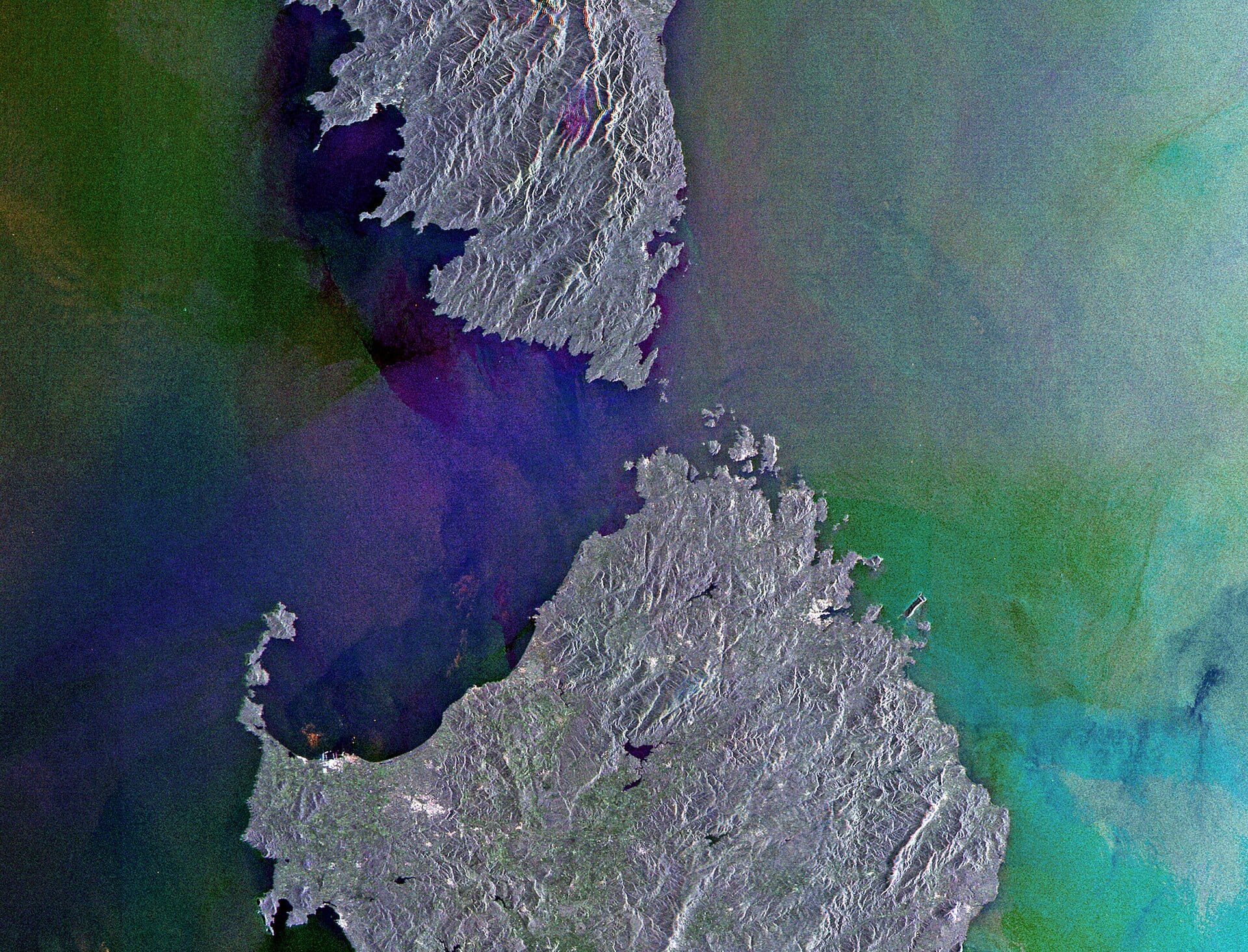
Photo: Envisat satellite / Wikimedia Commons, CC BY-SA 3.0 igo
11 things to see and do in Bonifacio
Let’s take a look together at the best of what this Corsican town has to offer. You’re in for steep cliffs, historic ramparts, Caribbean-style beaches and superb island cuisine.
Photo: Isiwal / Wikimedia Commons, CC BY-SA 3.0
1. The old town (Haute Ville) and the majestic citadel
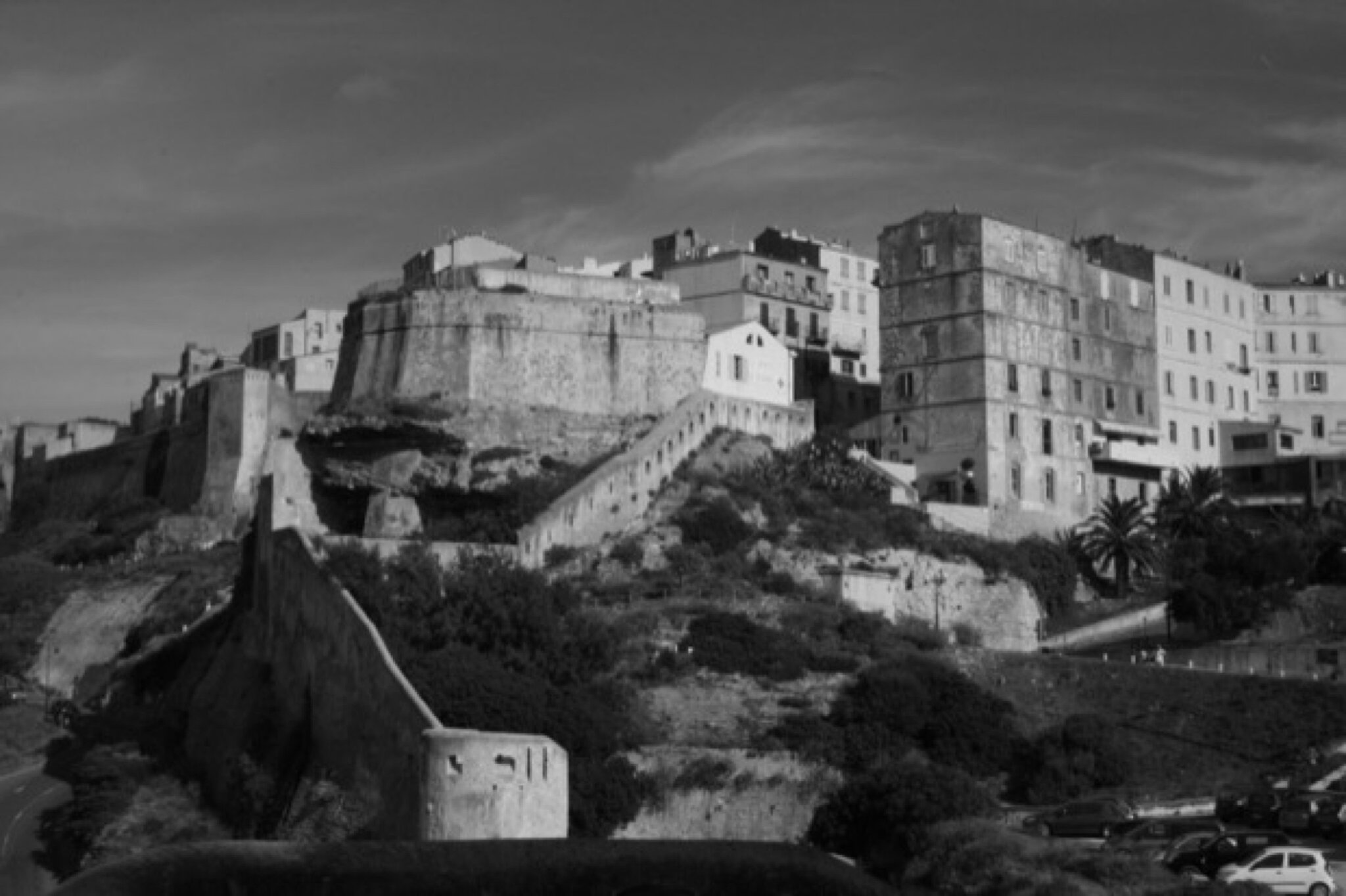
A walk through Bonifacio’s historic core, known as the Haute Ville, is like stepping back in time to the days when the island was ruled by the Republic of Genoa. The whole town is encircled by mighty ramparts, which were originally accessible only via a drawbridge. Inside lies a fascinating maze of narrow, shady lanes that instantly draw you in with their atmosphere. The houses here are built very close together to protect residents from the fierce wind and the summer sun, and many of them are connected by massive stone arches.
It’s in these lanes that you’ll catch the full force of that distinctive Corsican maquis scent. Napoleon Bonaparte once said of this particular fragrance that he could recognise his native island blindfolded thanks to it. Stop at one of the picturesque little squares, where you can enjoy an excellent coffee and soak up the local calm. Don’t miss the chance to try the traditional vegetarian specialities made from chestnut flour or the excellent local cheese, brocciu.
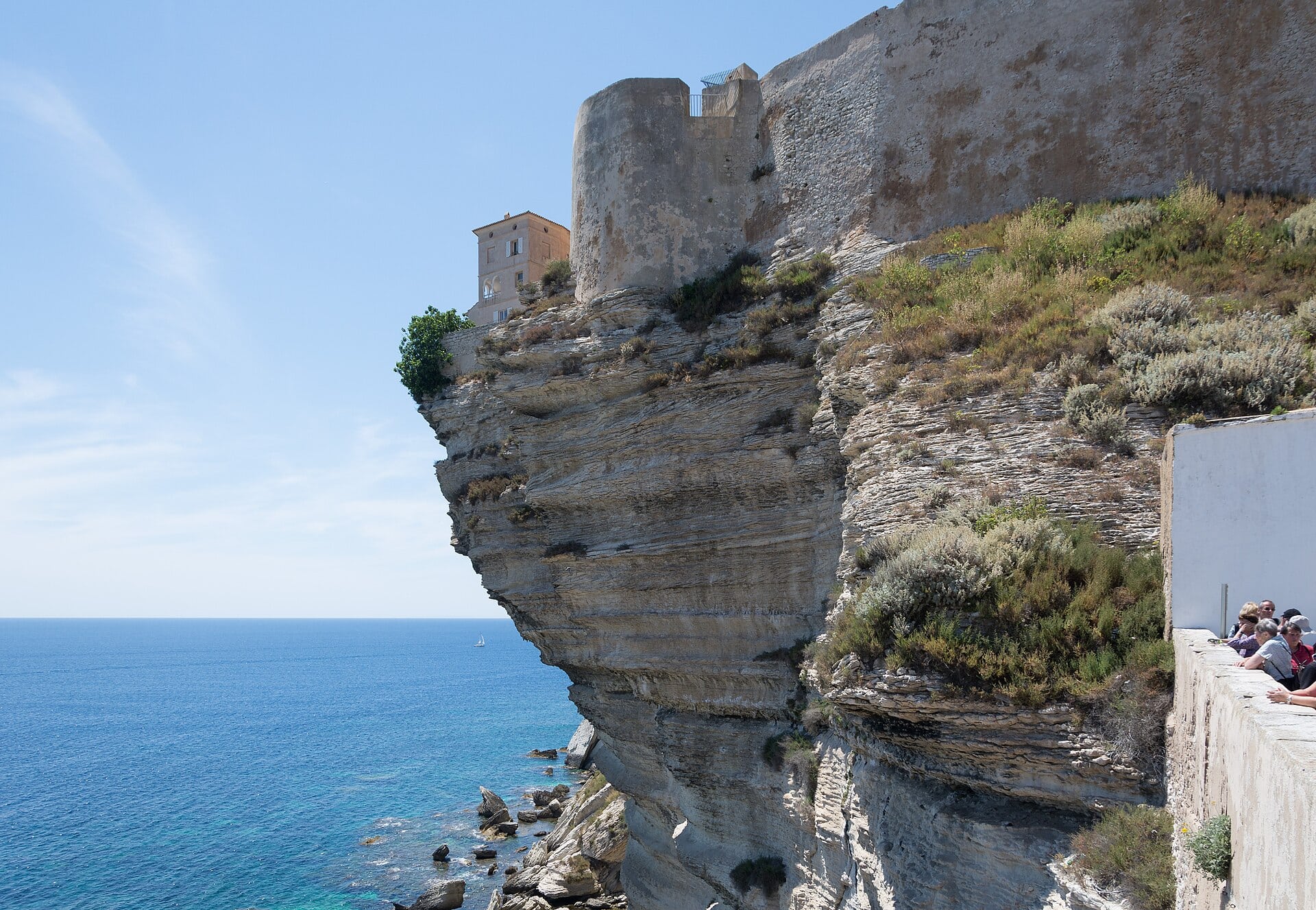
Once you’ve wound your way through the entire old town, don’t forget to walk right to the cliff’s edge behind the church of Sainte-Marie-Majeure. From here you’ll be treated to a vertigo-inducing view straight down onto the churning sea. It’s the spot where you truly grasp just how perilous, yet fascinating, the location Bonifacio was built on really is.
💡 Tip: Head into the old town either early in the morning or in the early evening, when the soft light turns the limestone walls golden. At these times the lanes aren’t nearly as crowded with day-trippers from the cruise ships.
2. The Aragon Steps (Escalier d’Aragon)
If your knees are in good shape and you’re not afraid of a bit of physical effort, this is one legendary experience you definitely shouldn’t skip. The Aragon Steps consist of exactly 187 steps carved into the sheer rock face at an angle of almost forty-five degrees. They lead from the citadel itself all the way down to the sea, and the sight of them commands real respect. A romantic legend claims they were cut by Aragonese soldiers in a single night during a failed siege of the town in 1420.
The reality is rather more modest and less dramatic, though. These steps were in fact built over many years by local Franciscan monks to reach a vital spring of drinking water in the rock. The descent is utterly fascinating, as you head down a narrow gully in the limestone with the sea waves crashing loudly right below you. At the bottom you can see the narrow path just above the water that once served for collecting it.
The climb back up is a proper workout that’s guaranteed to set your thighs burning. But the feeling after conquering the final step is well worth the effort, and the views from halfway up the cliff are absolutely breathtaking. A ticket costs around €6 in 2026, and it’s money well spent.
💡 Tip: For safety reasons, you’re only allowed down in sturdy shoes, so forget the flip-flops. Also avoid visiting at midday, because there’s no shade in the rock gully and the sun beats down with incredible intensity.
3. Boat trip beneath the cliffs and into the sea caves
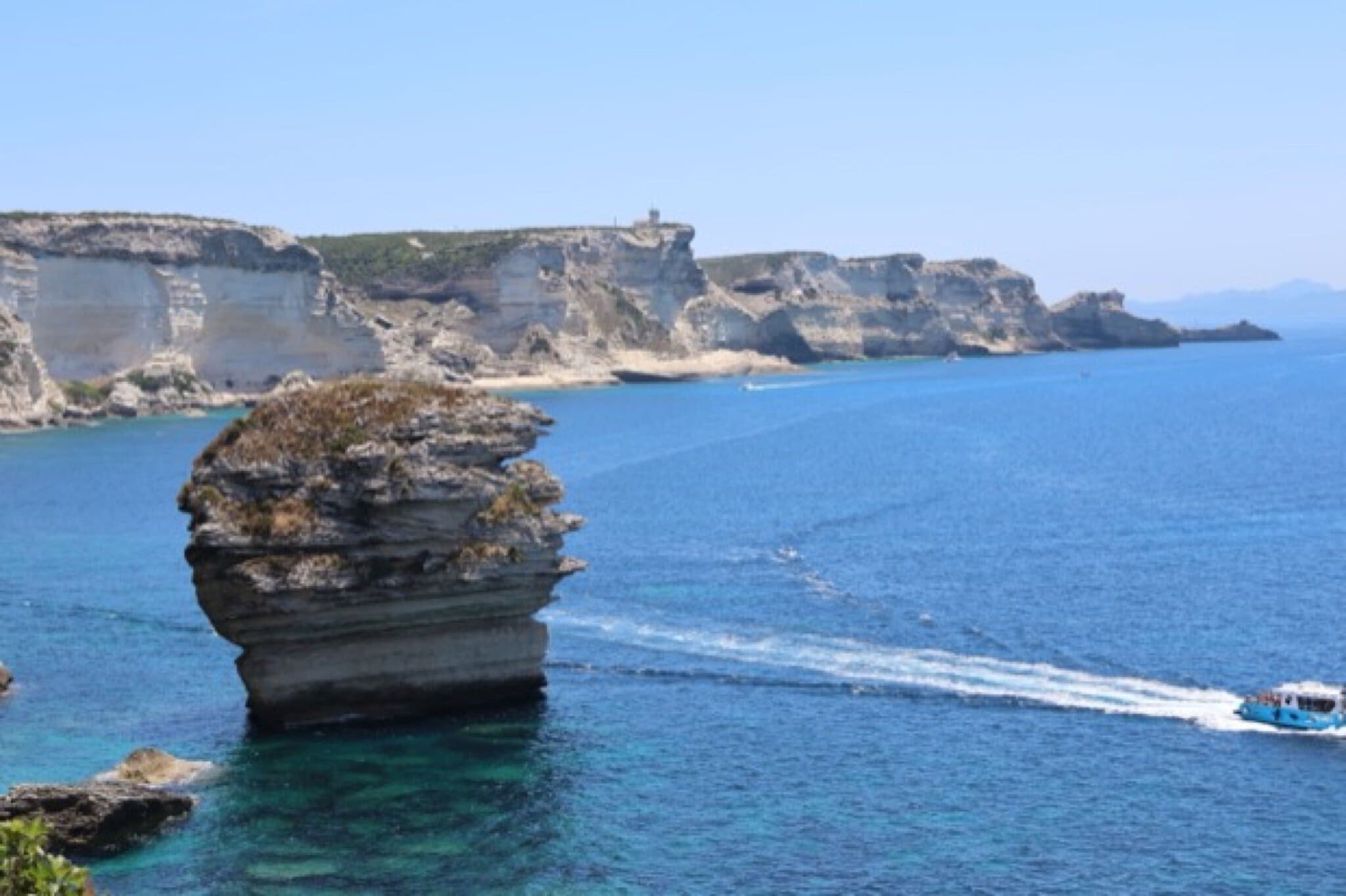
To fully appreciate the sheer scale of Bonifacio, you absolutely must see it from the water. A number of boats set off from the harbour each day on a roughly hour-long cruise that takes you right beneath the dazzling white limestone cliffs. Only from this lower perspective do you truly realise just how close to the precipice the entire old town sits. The houses right on the cliff edge look as though they might slide straight into the waves at any moment — a sight you won’t easily find anywhere else in Europe.
During the cruise the captain also takes you into fascinating sea caves that the water has hollowed out of the limestone over millennia. The most famous of all is undoubtedly the Grotte de Sdragonato, into which the boats carefully glide through a narrow opening. The curious thing about this cave is a large hole in the ceiling whose shape perfectly resembles a map of Corsica. That makes it perhaps the most popular and most photographed moment of the whole trip.
Besides the caves, from the boat you’ll also see the famous Aragon Steps in their full length and discover just how steep they really are. I’d recommend booking tickets for these sightseeing cruises online well in advance, for instance via portals like GetYourGuide. In peak season the best cruise times sell out very quickly.
💡 Tip: Don’t forget to bring a light windbreaker even in the height of summer. The open sea around Bonifacio is often very windy, and the caves themselves can feel distinctly chilly.
4. The harbour and lively marina
While the old town on the cliff exudes deep history, the marina down by the water is the modern, bustling heart of Bonifacio. The harbour cuts deep inland like a Norwegian fjord and is superbly sheltered from strong winds and treacherous sea currents. That has long made it one of the safest and most popular anchorages in the entire Mediterranean. Today, alongside small, weathered fishing boats, the most luxurious millionaires’ yachts from all over the world drop anchor here — worth a closer look in their own right.
The broad promenade along the water is lined with dozens of restaurants, bars and cafés where tourists mingle with locals. Be sure to stop for a while and try a refreshing local Pietra beer, brewed from chestnuts, with its distinctive full flavour. It’s an ideal spot for an evening stroll once the sun has dipped below the horizon. At that moment the entire mighty citadel towering over the harbour is beautifully lit up, creating a magical backdrop for your photos.
You can also come here to shop for local souvenirs, as the area around the marina is full of small boutiques and shops selling Corsican products. They sell excellent cheeses, olive oils and traditional herb blends from the wild maquis.
💡 Tip: Prices at the restaurants right on the waterfront are often steeply marked up. It’s worth heading into the parallel streets a little further from the sea, where you’ll find more authentic spots with delicious vegetarian pizza or pasta at far more reasonable prices.
5. The Lavezzi Islands, a slice of the Caribbean
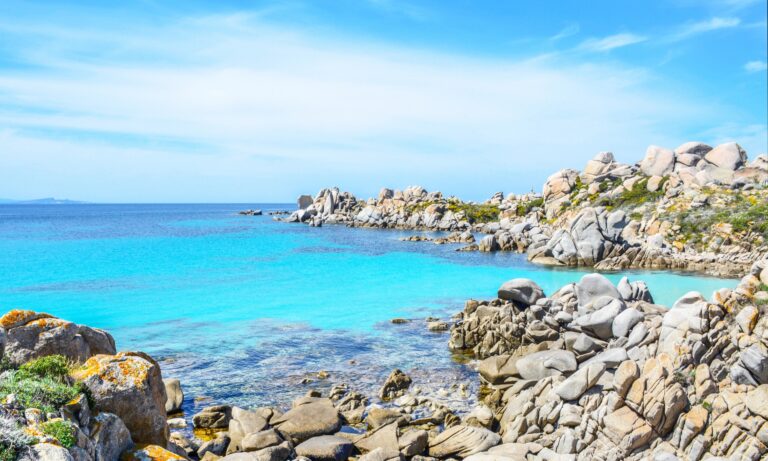
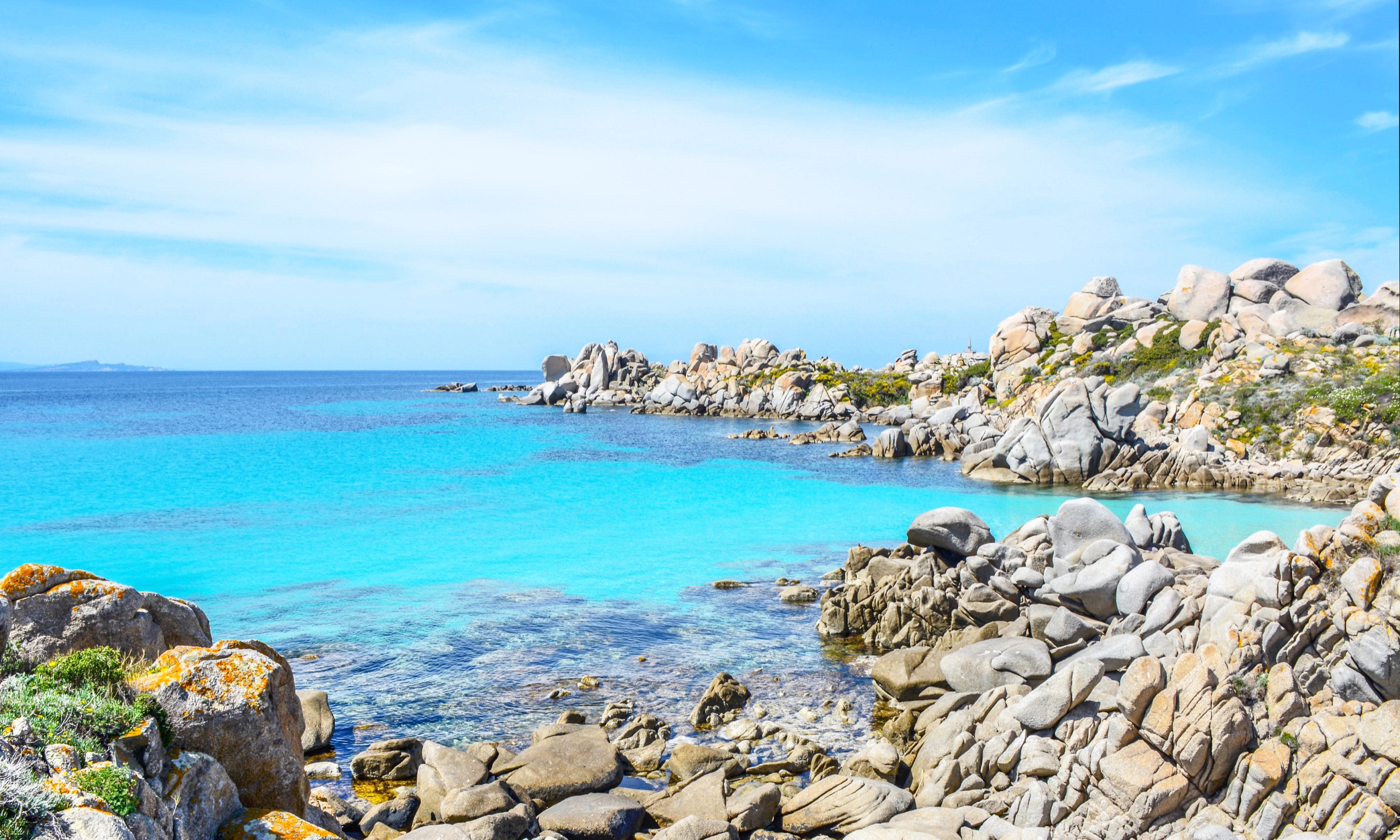
About ten kilometres from Bonifacio lie the Lavezzi Islands, a strictly protected nature reserve and one of the most beautiful spots in the entire Mediterranean. They’re made up of a cluster of smooth granite boulders scattered across crystal-clear azure water. The result is breathtaking scenery that rivals the famous beaches of the Caribbean or the Seychelles. The water here is incredibly clean and teeming with colourful fish, so a snorkel and diving mask are an absolute must to pack.
Boats to the Lavezzi Islands leave the Bonifacio harbour several times a day, and the journey itself takes about thirty minutes. It’s a fantastic day trip for anyone who loves swimming in wild nature far from civilisation. But on the islands, don’t expect any tourist infrastructure whatsoever. There are no restaurants, no drinking-water stalls, no flushing toilets, and you won’t even find any natural shade from mature trees.
It’s simply pure, raw, untouched nature that gives you absolutely nothing for free. But it’s precisely thanks to this absence of commerce that the islands keep their magic and don’t feel like a giant amusement park. You’ll find your own granite boulder to leap from into the crystal water and watch the shoals of fish right beneath you.
💡 Tip: Come prepared as if for a wilderness expedition. Bring a huge supply of drinking water, a sturdy parasol, food for the whole day and good sun cream, because the sun reflects unpleasantly off the granite rocks and burns twice as hard.
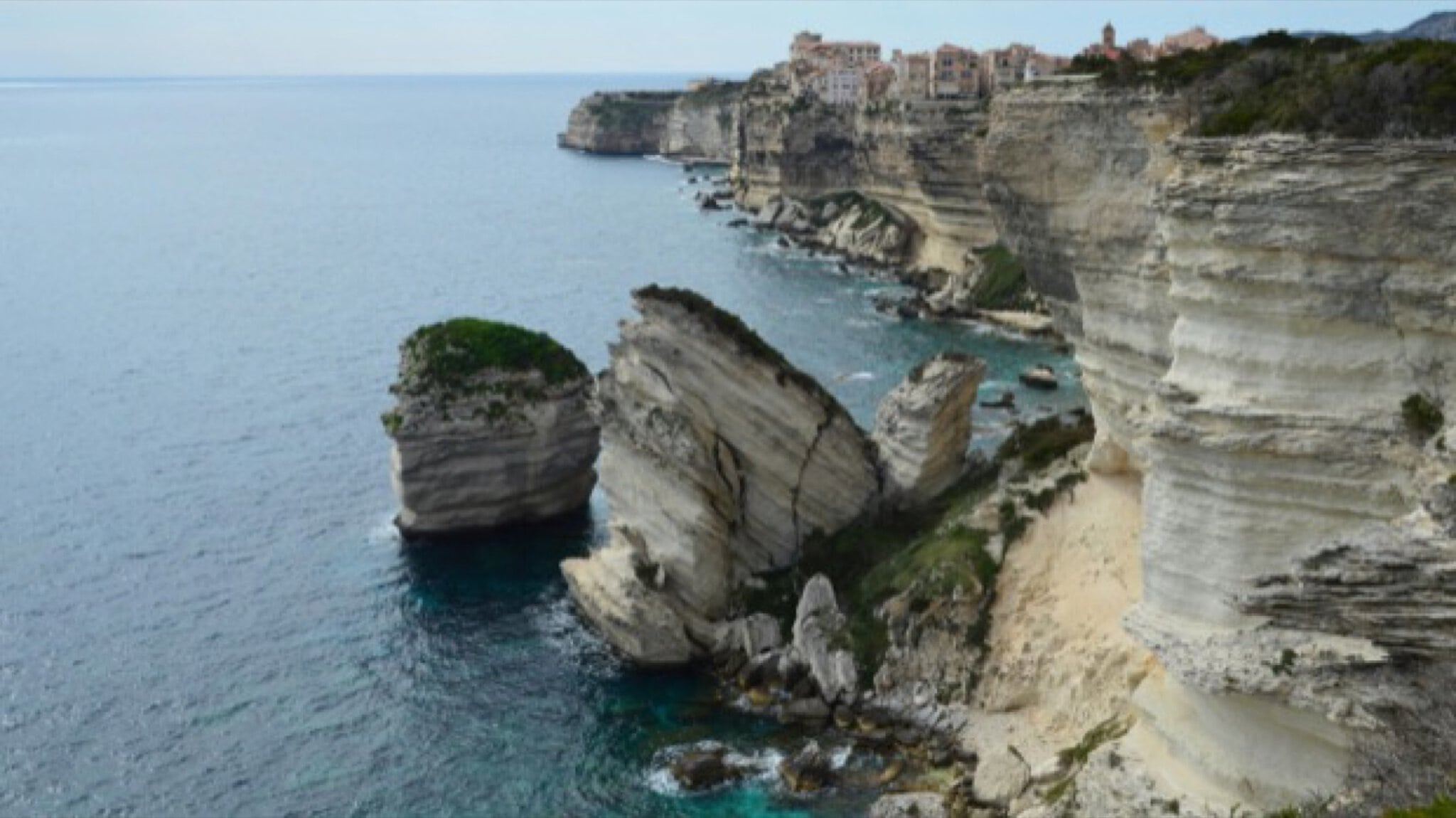
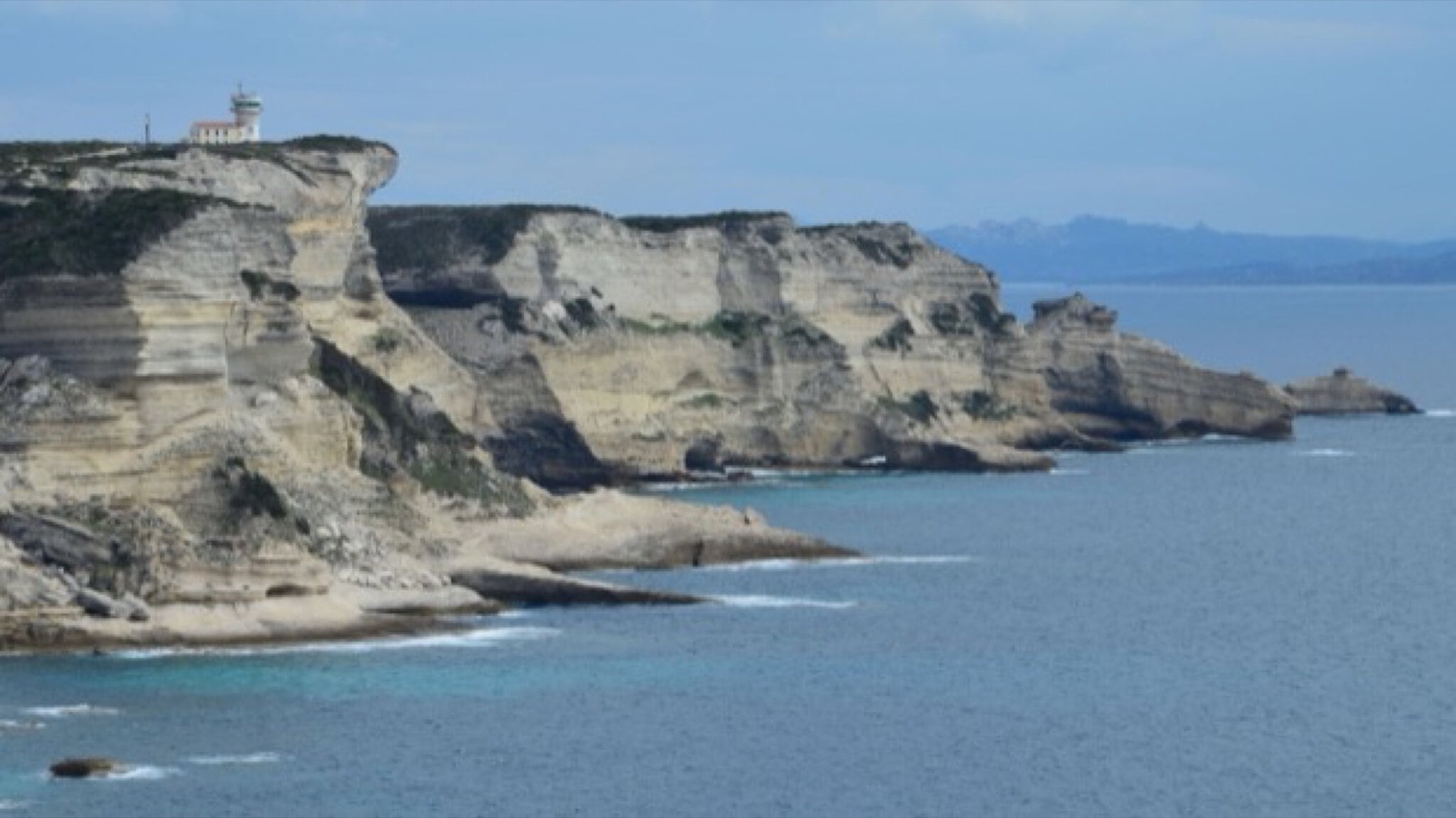
If you’re after that most iconic photo of Bonifacio — the one you surely know from the covers of every guidebook — you need to take a walk along the cliffs opposite the town. The trail begins near the little chapel of Saint-Roch and runs right along the very edge of the dazzling white limestone cliffs towards the nearby lighthouse. It’s from here that you’ll get that absolutely perfect side-on view of the entire citadel and the historic houses, balancing perilously close to the abyss.
The walk itself is fairly undemanding, mostly flat, and with a bit of care even families with children can manage it. But you do have to watch every step extremely carefully, because for obvious reasons the cliffs aren’t protected by any railing and a fall would be fatal. Especially in the strong wind that’s so typical of Bonifacio, it’s best not to get too close to the edge.
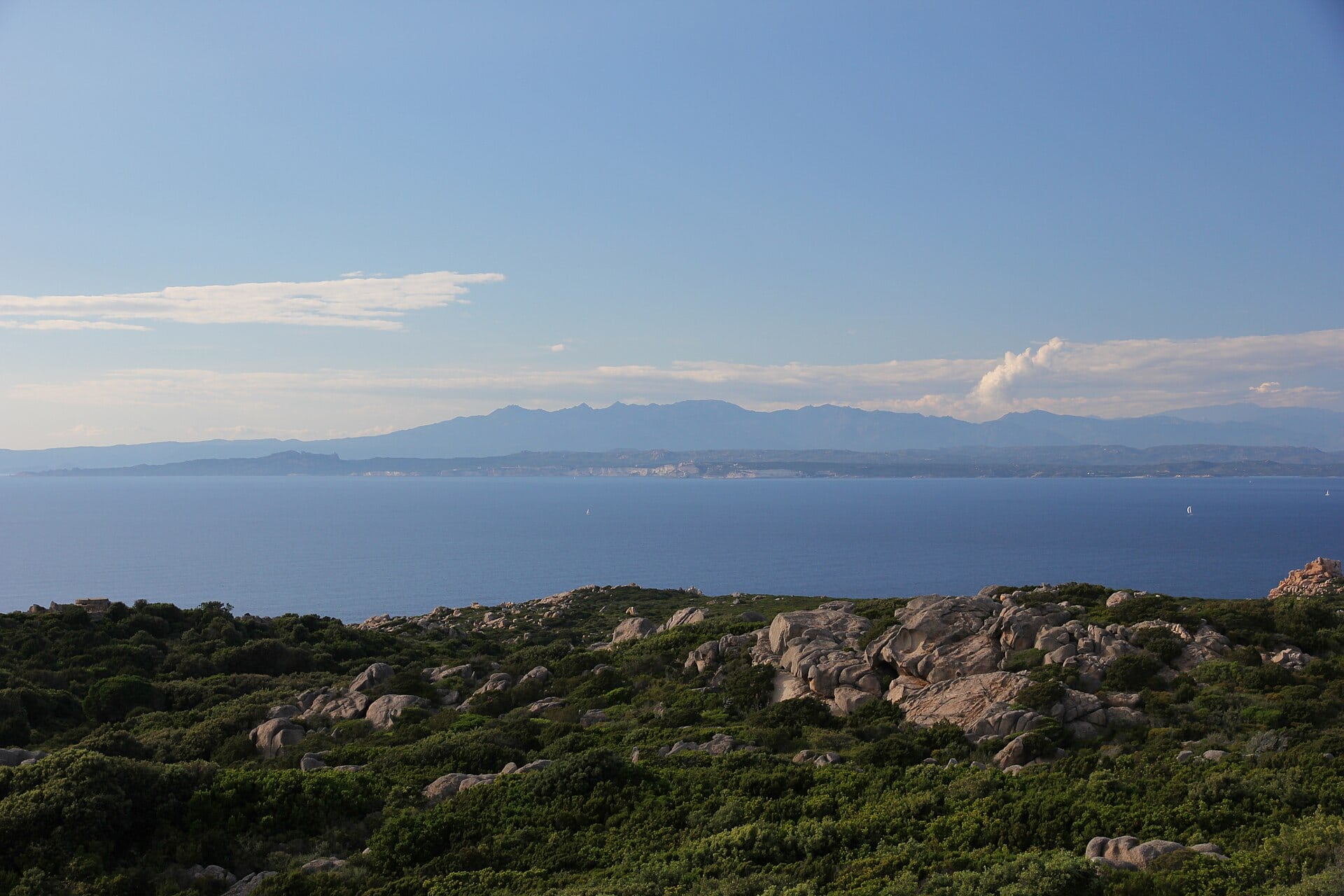
Besides the stunning views of the town itself, you’ll also be treated to a view of the open sea. On a clear day you can see neighbouring Italian Sardinia perfectly clearly from here — just twelve kilometres away across the choppy strait.
💡 Tip: You’ll capture the very best photos here during the so-called golden hour just before sunset. That’s when the cool, white limestone rocks take on an incredibly warm, almost orange glow.
7. Petit Sperone beach
Corsica is famous the world over for its stunning beaches, and the ones in the immediate vicinity of Bonifacio rank among the very best. Petit Sperone is a small, perfectly sheltered cove covered in sand so incredibly fine and white that it feels like smooth flour to the touch. The water here is very shallow, protected from the big waves of the open sea, and in the sunshine it shimmers in every shade of turquoise. That makes it an absolute paradise for anyone who loves endless swimming and lazing in the shallows.
Getting here requires a short walk, which fortunately puts off the lazier tourists for good. You have to leave your car in a dusty car park near Piantarella beach and walk about fifteen minutes along a narrow path past the prestigious golf course. The route isn’t signposted, but just follow the stream of people carrying towels and you can’t go wrong.
Your reward for the short trek is wonderful swimming in a cove that still retains its relatively wild character. There are no noisy beach bars blasting music to spoil it, and not even any sun-lounger rentals. It’s pure nature, where you spread your towel directly on the finest sand.
💡 Tip: Given how genuinely small this beach is, in peak season every free spot fills up very quickly. So I’d recommend heading here early in the morning, around nine o’clock, to bag yourself a good spot.
8. Grand Sperone beach
If Petit Sperone is already too crowded for you and you’re after a bit more peace and quiet, just keep walking for about another ten minutes further south. You’ll reach its bigger sister, Grand Sperone beach. This beach is noticeably wider, far more open and offers incomparably more room to spread out your towels and parasols. The fine white sand and crystal-clear turquoise water are of course still there, but thanks to the more open setting, there’s often a very pleasant breeze that brings welcome relief during the hot summer months.
The views from this beach look straight out at the granite Lavezzi Islands and, clearly outlined in the distance, Italian Sardinia, which lends the whole swimming experience a wonderful holiday vibe. Unlike the smaller beach, the water here slopes off a little more quickly, making it an ideal spot for stronger swimmers. They can give their bodies a proper workout in the crystal-clear sea without having to wade hundreds of metres through the shallows.
Despite being larger, this beach also keeps its hallmark of untouched nature. Once again, don’t expect any service, showers or lifeguards. It’s simply a great stretch of beautiful coastline that has so far escaped mass commercialisation.
💡 Tip: On the way from the car park to these beaches you’ll find absolutely no refreshment stalls or toilets. So you’ll have to carry all your food, and above all plenty of fluids, in your backpack from the car.
9. The Bastion de l’Étendard and the historic ramparts
For lovers of rich island history and great views, a visit to the Bastion de l’Étendard is an absolute must. This mighty sixteenth-century artillery fortress was the town’s main line of defence against devastating attacks from the mainland, and to this day it astounds with its massive stone architecture. For an admission fee of around €5, you can enter the cool vaulted underground halls. Inside there’s a very nicely put-together exhibition on Bonifacio’s turbulent history and its defensive system.
The real highlight, though, is the walk along the upper walkways of the old ramparts. From here you’re treated to gorgeous panoramic views of the harbour far below, the dazzling chalk cliffs and the endless open sea. The grounds around the fortress are also tastefully complemented by a beautiful landscaped garden, the so-called Jardin des Vestiges. There you can rest for a while in the shade of the historic ruins and recharge for more exploring.
From here you’ll also see exactly where enemy ships used to approach and just how advantageous the town’s strategic position was. Thanks to its sheer size, the bastion is impossible to miss and forms the most impressive part of the entire town’s fortifications.
💡 Tip: You can buy a ticket to the Bastion as part of a good-value combo with entry to the Aragon Steps, saving yourself a few euros and gaining a really comprehensive historical experience of the whole town.
10. The marine cemetery (Cimetière Marin)
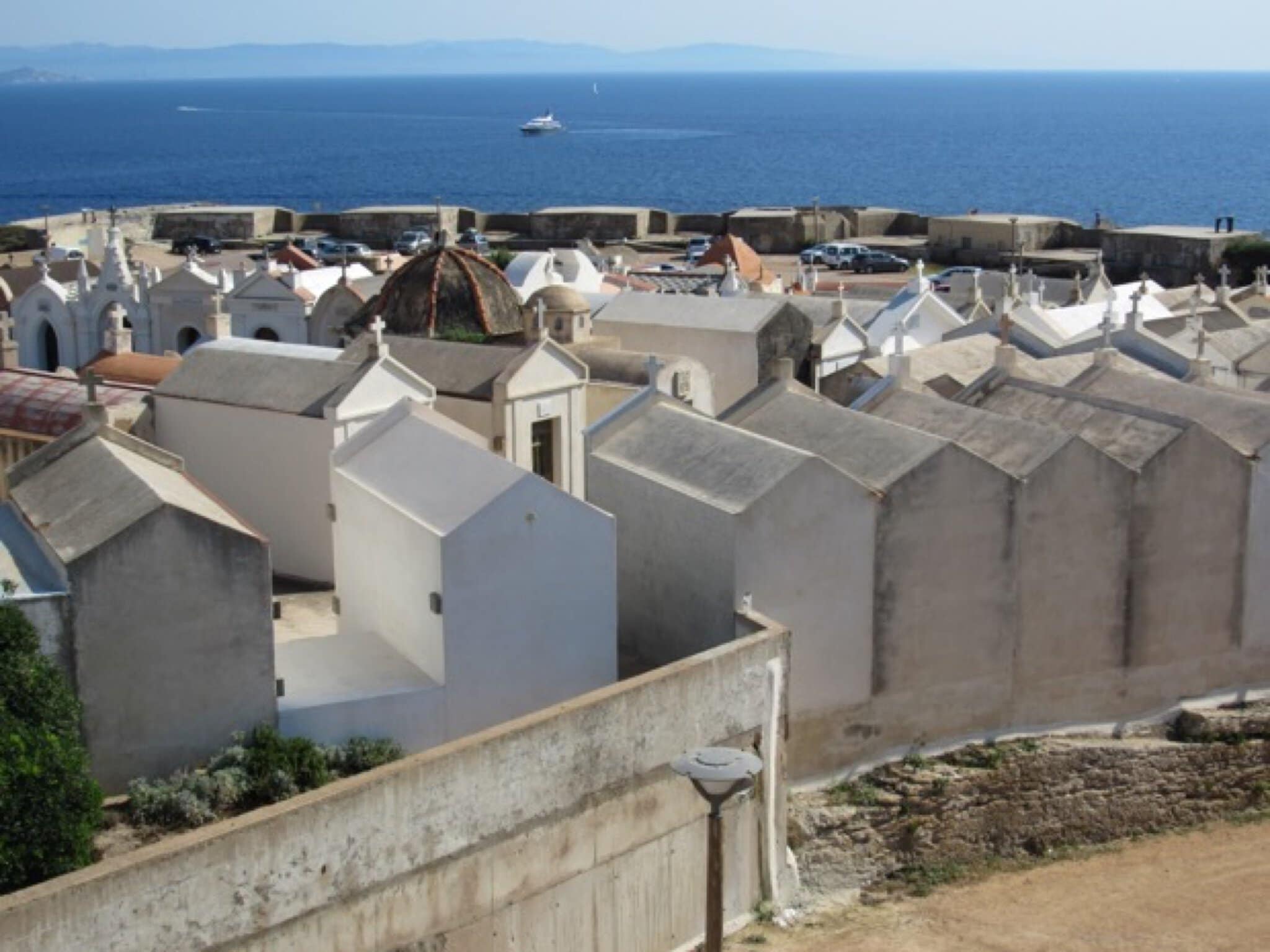
It might seem odd at first glance to include a cemetery among the tourist tips, but the one in Bonifacio is genuinely striking and radiates an incredibly deep sense of calm. It sits at the very end of the limestone peninsula, not far from the old monastery of Saint Francis. It’s made up of hundreds of brilliant-white family tombs and small, richly decorated mausoleums, carefully arranged in neat rows so that it literally resembles a miniature town.
The dazzling white tombs contrast sharply with the deep blue sea behind them, creating in real life an incredibly photogenic yet deeply contemplative atmosphere. You’ll find the tombs of prominent seafaring families who lived in Bonifacio for centuries. The whole place is a powerful reminder of how closely the lives of the local people were always bound to the treacherous, unpredictable sea. A stroll here in the evening sun among the crosses and statues is a wonderfully soothing experience after a busy day in the centre.
The whole cemetery is also set in a very dramatic location right on the cliff’s edge, which adds to its uniqueness. Occasionally local cats stop by, basking on the white marble and completing that quintessential Mediterranean idyll.
💡 Tip: Please behave here with the utmost respect for the local people, for whom it’s still a functioning resting place for their ancestors. Keep completely quiet and don’t photograph anyone who has come here to remember a loved one.
11. The Pertusato lighthouse (Phare de Pertusato) and sunset
If you’re looking for the absolutely perfect place to round off a long day in Bonifacio, take a trip to the Pertusato lighthouse, which stands proudly on the southernmost tip of all Corsica. You can get here either via a longer but exceptionally beautiful hike straight from town along the clifftops, or by driving to a car park and walking just the last part of the way. The landscape in the immediate vicinity of the lighthouse is incredibly rugged, full of limestone fissures and bizarre rock formations, so in many places it feels almost lunar.
Climb carefully all the way down to Saint-Antoine beach, where you’ll find a fascinating cave into which sunbeams pour during the day through a huge opening right in the ceiling. The lighthouse itself then provides an absolutely fantastic backdrop for watching the sunset. At that moment the entire strait between Corsica and Sardinia is bathed in rich gold and purple light and the sea turns the most incredible shades. It’s the best moment to sit down quietly on a sun-warmed rock and simply soak up the raw atmosphere of this amazing island.
It’s a place where you feel the immense power of nature as the waves crash thunderously against the limestone blocks far below you. But be prepared for a strong sea wind that’s almost always blowing here.
💡 Tip: For an evening visit to the cliffs around the lighthouse, be sure to pack a head torch or a good flashlight, because the way back to the car isn’t artificially lit and the limestone terrain is full of treacherous holes and bumps.
Where to go next from Bonifacio
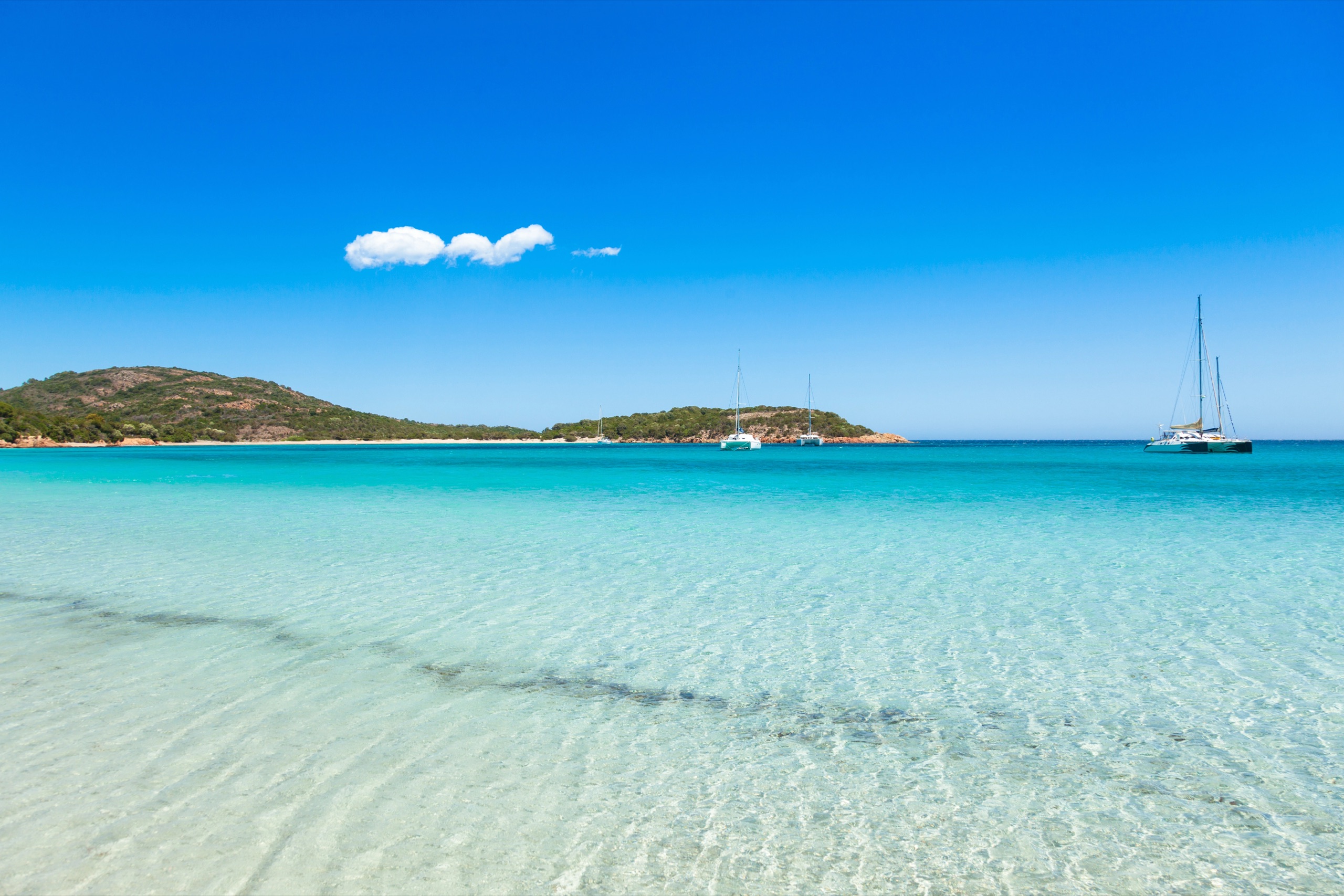
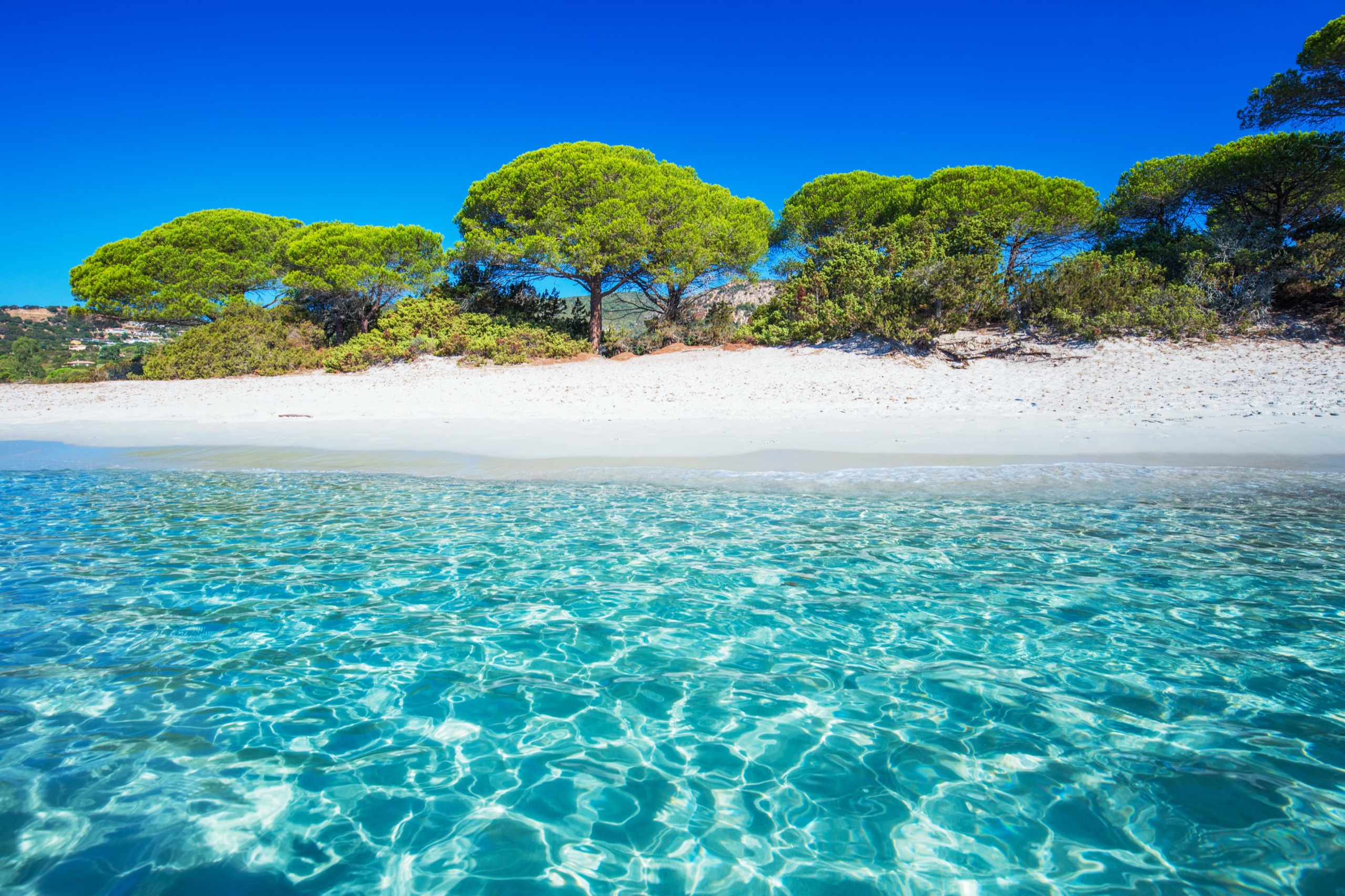
Once you’ve explored Bonifacio and its immediate surroundings, I’d recommend heading further north along the coast. If you love swimming and Caribbean-style scenery, don’t miss the area around Porto-Vecchio and its beaches, where you’ll find the famous Palombaggia bay lined with umbrella pines and red rocks, or the horseshoe-shaped Santa Giulia bay with its incredibly calm lagoon. The nearby Rondinara beach is also worth a stop — thanks to its shell-like shape and shelter from the wind, it’s been ranked among the most beautiful beaches in the world.
If you have a car and crave a bigger adventure, the whole of Corsica offers endless possibilities. Head to the historic mountain town of Corte in the very heart of the island, go and see the blood-red granite cliffs of the Calanques de Piana on the west coast, or take on a stretch of the famous and very demanding GR20 trek. The island is so varied that you won’t be bored for a single moment, and every day you’ll discover a completely different world.
Frequently asked questions
How long does it take to tour Bonifacio?
You’ll need one packed day for the historic center itself with the citadel, harbor, and Aragonese Steps. However, if you want to add a boat trip, explore the surrounding cliffs from the sea, and head out to Sperone beaches or take a full-day boat excursion to the nearby Lavezzi Islands, I recommend setting aside at least three full days for the entire Bonifacio area.
Where can you park in Bonifacio?
Parking is the pain of the entire city. Don’t drive into the citadel itself at all unless you have secured hotel parking there. The best option is to use the large paid parking lots down by the harbour (P1 to P5). In the high season of 2026, expect prices easily around €20–25 per day and the need to arrive really very early in the morning before the capacity fills up completely.
Can I manage the Aragonese Steps with kids?
Physically, older children can handle it without any problems and often have more energy than adults. However, it’s important to hold their hand firmly the entire time and pay attention to safety, because the stairs are very steep and narrow. Entry with small children in a carrier is absolutely not recommended for safety reasons, and a stroller is of course completely out of the question here.
Is Bonifacio an expensive city?
Yes, Bonifacio, together with Porto-Vecchio, is among the absolutely most expensive places in all of Corsica. Accommodation prices in season can be up to double compared to the interior, and the same applies to luxury restaurants in the marina. You can save money by traveling outside the main season and eating in the more tucked-away streets of the historic center, where you’ll find more affordable establishments.
How to get from the airport to Bonifacio?
The nearest airport is Figari (FSC), which is only about 20 kilometres away, roughly half an hour’s drive by car. During the summer season, shuttle buses run from here to Bonifacio, but their frequency isn’t ideal and the connections aren’t entirely reliable. The most convenient solution is to rent a car directly at the airport, or alternatively use local taxis.
Do I need a car in Corsica?
“`html
If you want to see more than just one city and its immediate surroundings, a car in Corsica is an absolute necessity. Public bus transport does exist, but connections are infrequent, often don’t link up with each other, and buses won’t take you at all to the most beautiful remote beaches or to the starting points of hiking trails in the mountains.
“`
When is the best time for a trip to the Lavezzi Islands?
The best option is to catch the very first morning boat that departs from the harbour. This way you’ll avoid the worst midday heat and get a chance to secure a good spot on the beach before the crowds of other tourists arrive from the excursion boats. Don’t forget to check the wind forecast, as boats don’t sail at all for safety reasons when there are strong waves.
Are the beaches around Bonifacio sandy?
Yes, the coastline south of Bonifacio offers some of the best sandy beaches in Europe. Beaches like Petit Sperone, Grand Sperone, or nearby Rondinara have very fine, light sand and shallow entry into the water, while the town of Bonifacio itself is surrounded by rather inaccessible and steep limestone cliffs dropping into the sea.
Tips and Tricks for Your Vacation
Don’t Overpay for Flights
Search for flights on Kayak. It’s our favorite search engine because it scans the websites of all airlines and always finds the cheapest connection.
Book Your Accommodation Smartly
The best experiences we’ve had when looking for accommodation (from Alaska to Morocco) are with Booking.com, where hotels, apartments, and entire houses are usually the cheapest and most widely available.
Don’t Forget Travel Insurance
Good travel insurance will protect you against illness, accidents, theft, or flight cancellations. We’ve had a few hospital visits abroad, so we know how important it is to have proper insurance arranged.
Where we insure ourselves: SafetyWing (best for everyone) and TrueTraveller (for extra-long trips).
Why don’t we recommend any Czech insurance company? Because they have too many restrictions. They set limits on the number of days abroad, travel insurance via a credit card often requires you to pay medical expenses only with that card, and they frequently limit the number of returns to the Czech Republic.
Find the Best Experiences
Get Your Guide is a huge online marketplace where you can book guided walks, trips, skip-the-line tickets, tours, and much more. We always find some extra fun there!
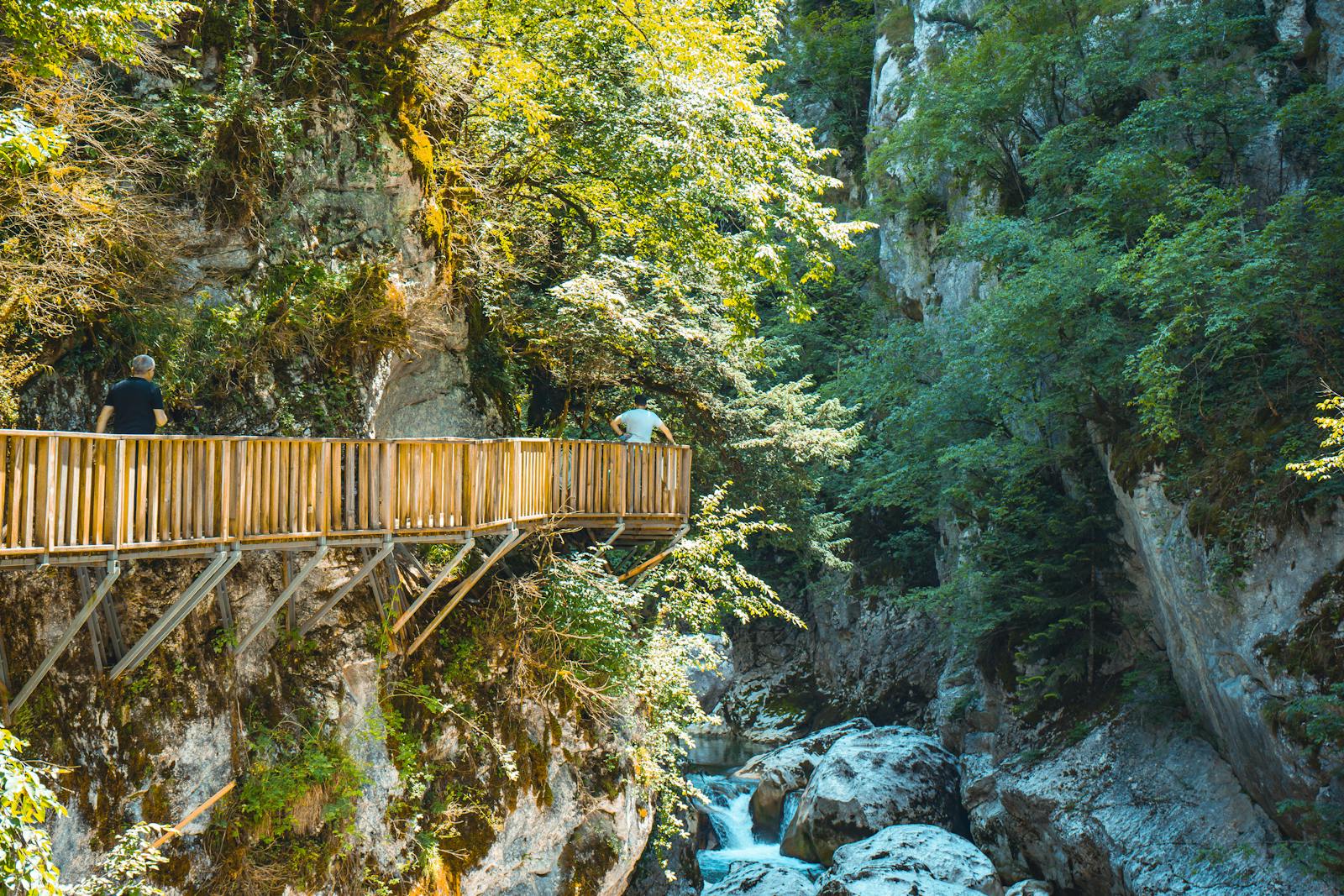
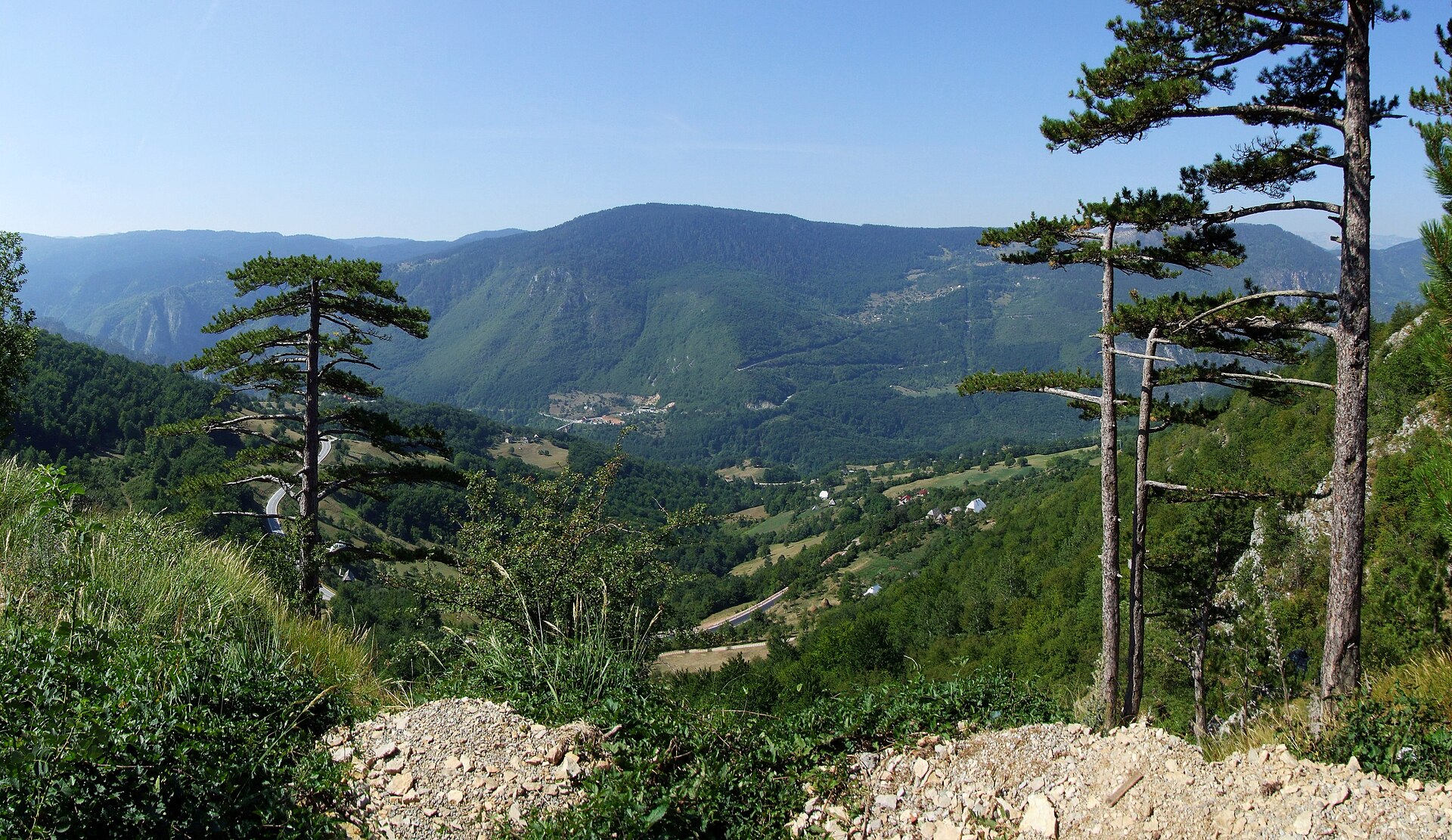
TL;DRThe Tara River Canyon plunges up to 1,300 metres deep, making it continental Europe’s deepest canyon, and it sits on the edge of Durmitor National Park in Montenegro. The main draw is the 365-metre Đurđevića Tara Bridge, free to visit, where a zip-line also kicks off – the shorter 824-metre run starts at €10, while the longer 1,050-metre one costs around €45. The most popular option is a half-day rafting trip from Brstanovica to Šćepan Polje (18 km, €70–75), or you could take on the full-day 33-kilometre expedition from Splavište (€100–150). The best time to visit is April to October, with the strongest rapids in May and June and warmer water in July and August. There are 11 tips here on what to see and do around the canyon, including the Ćurevac viewpoint and Black Lake near Žabljak.
Montenegro hides natural treasures that simply leave you speechless, and the Tara River Canyon is without doubt one of them. If you’re looking for a place where untamed wilderness meets a perfect dose of adrenaline, this mountain region will have you in absolute seventh heaven.
In this guide we’ll take a look at the iconic Đurđevića Bridge, which arches dizzyingly high above the abyss, and we’ll show you the best options for rafting and zip-lining. The Tara Canyon is rightly known as Europe’s deepest river canyon, so you can count on no shortage of breathtaking panoramas and plunging drops.
I’ve put together exactly 11 tips on what to see and do here, along with practical info on indicative prices for 2026. You’ll also find out when the ideal time to go is if you want to enjoy the best rapids, and where to find the cosiest camps for a well-earned rest after a day on the white water.
TL;DR
Đurđevića Tara Bridge: A majestic concrete structure with five arches offering the best views into the canyon, and admission is completely free.
Zip-line over the abyss: You can choose from two cables, with the longest stretching over a kilometre and reaching speeds above 100 km/h.
Rafting on the Tara: The most popular half-day stretch covers 18 kilometres and costs roughly €70 to €75.
Canyon depth: At its lowest points the walls plunge to a depth of 1,300 metres, making it one of the deepest canyons in the entire world.
Accommodation in nature: The best base for river descents is the border area of Šćepan Polje, while for hiking it pays to settle in the mountain town of Žabljak.
Photo: Pudelek (Marcin Szala) / Wikimedia Commons, CC BY-SA 3.0
The main season for visiting the canyon and water sports runs from April to October. If your main goal is to feel proper adrenaline on the white water, the highest water levels and strongest rapids await you in May and early June. During this period the snow melts in the mountains and the river shows its wildest face.
But you have to bear in mind that the water in spring is genuinely freezing, with temperatures hovering between just 6 and 10 degrees Celsius. The wetsuit you’ll get from the organisers is an absolute must in the spring months — without it you’d risk a serious cold shock.
For families with children or beginners, the summer months of July and August are far more suitable. The rapids calm down a little, the water level drops, and the water warms up to a much more pleasant 13 to 17 degrees, so you can occasionally take a worry-free swim in the calmer sections.
Where to stay near the Tara Canyon and in Žabljak
💡 Tip for accommodation and experiences: We prefer to look for places to stay on Booking.com, where the cancellation terms tend to be the best. For tickets, tours and activities, it’s worth comparing and buying through GetYourGuide.
When planning where to sleep, you’ll need to decide based on which activities take priority. If you’re mainly coming for the rafting, look for accommodation in the Šćepan Polje area, which sits right in the lower part of the canyon on the border with Bosnia and Herzegovina.
For paddlers, the absolute classic is Etno Selo Grab (Eco Camp Grab), a charming ethno-village with wooden cabins right beside a private beach on the Tara. An excellent and very budget-friendly alternative in this spot is the guesthouse Rafting Camp Green Tara, which offers a lovely river view and a homely atmosphere.
Another option for nature lovers is the legendary Raft Camp Encijan, which has stylish wooden bungalows and sits on the Bosnian bank surrounded by deep forests. If you’re after a larger camp with full facilities for water sports, definitely check out Highlander Rafting Camp, from where the organisers send out boats every single day. Booking any of these camps and guesthouses is very easy to arrange through the usual Booking.com.
If you want to combine rafting with hiking and exploring the Durmitor National Park, a base in the town of Žabljak will be far more practical. Here I recommend the beautiful Casa di Pino Eco Lodge, which lies just about three kilometres from the famous Black Lake and is renowned for its absolutely fantastic breakfasts. A very pleasant stay is also promised by Guesthouse Durmitor Magic, where you’ll find a shared kitchen and gorgeous balcony views at a very reasonable price.
Photo: Albinfo / Wikimedia Commons, CC BY 4.0
11 things to see and do in the Tara Canyon and surroundings
Let’s take a closer look at the best this area has to offer. I’ll show you how to enjoy the majestic architecture, where to capture the best photos, and which adrenaline experiences you definitely shouldn’t miss.
Photo: Took A Snap / Pexels
1. Walk across the iconic Đurđevića Tara Bridge
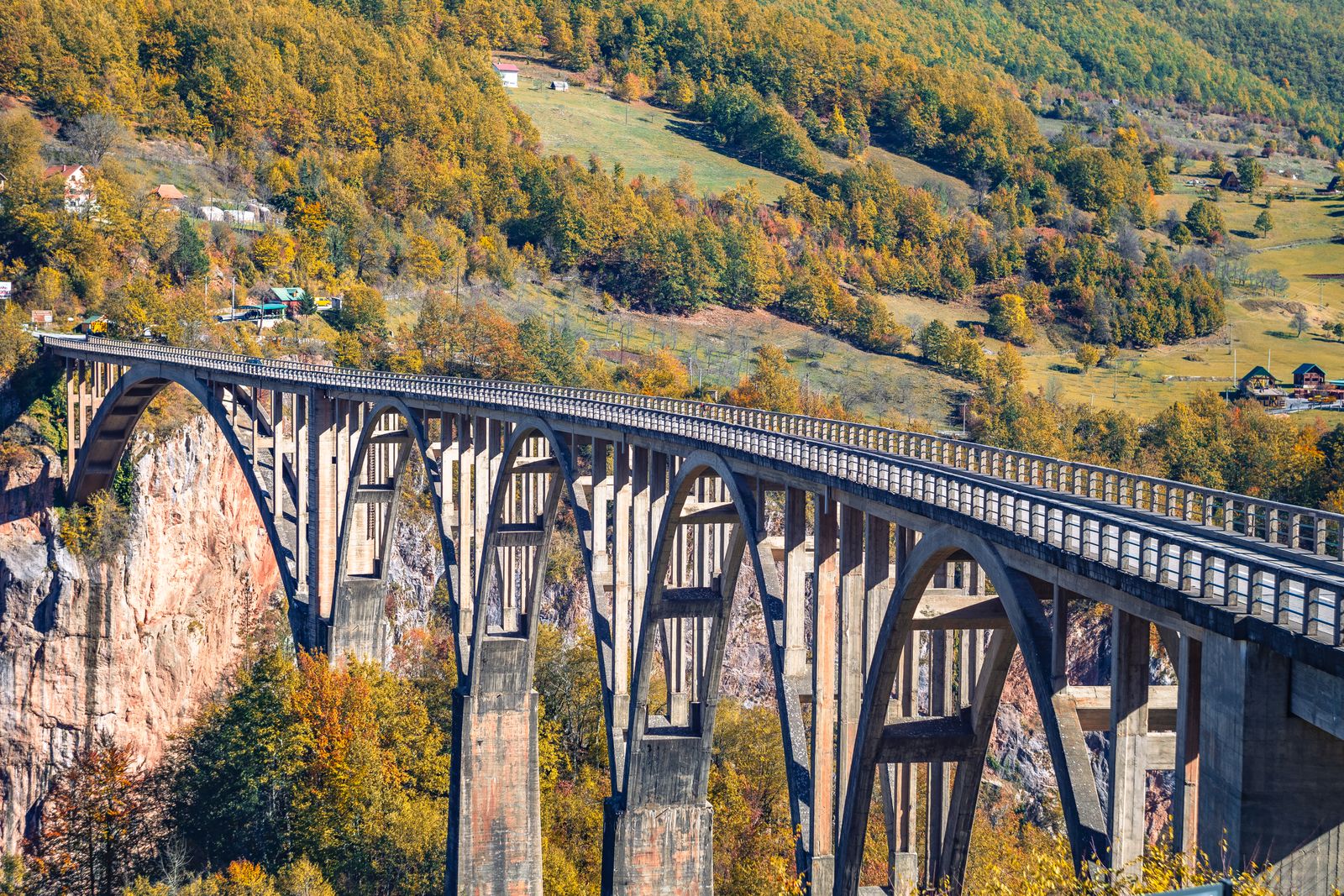
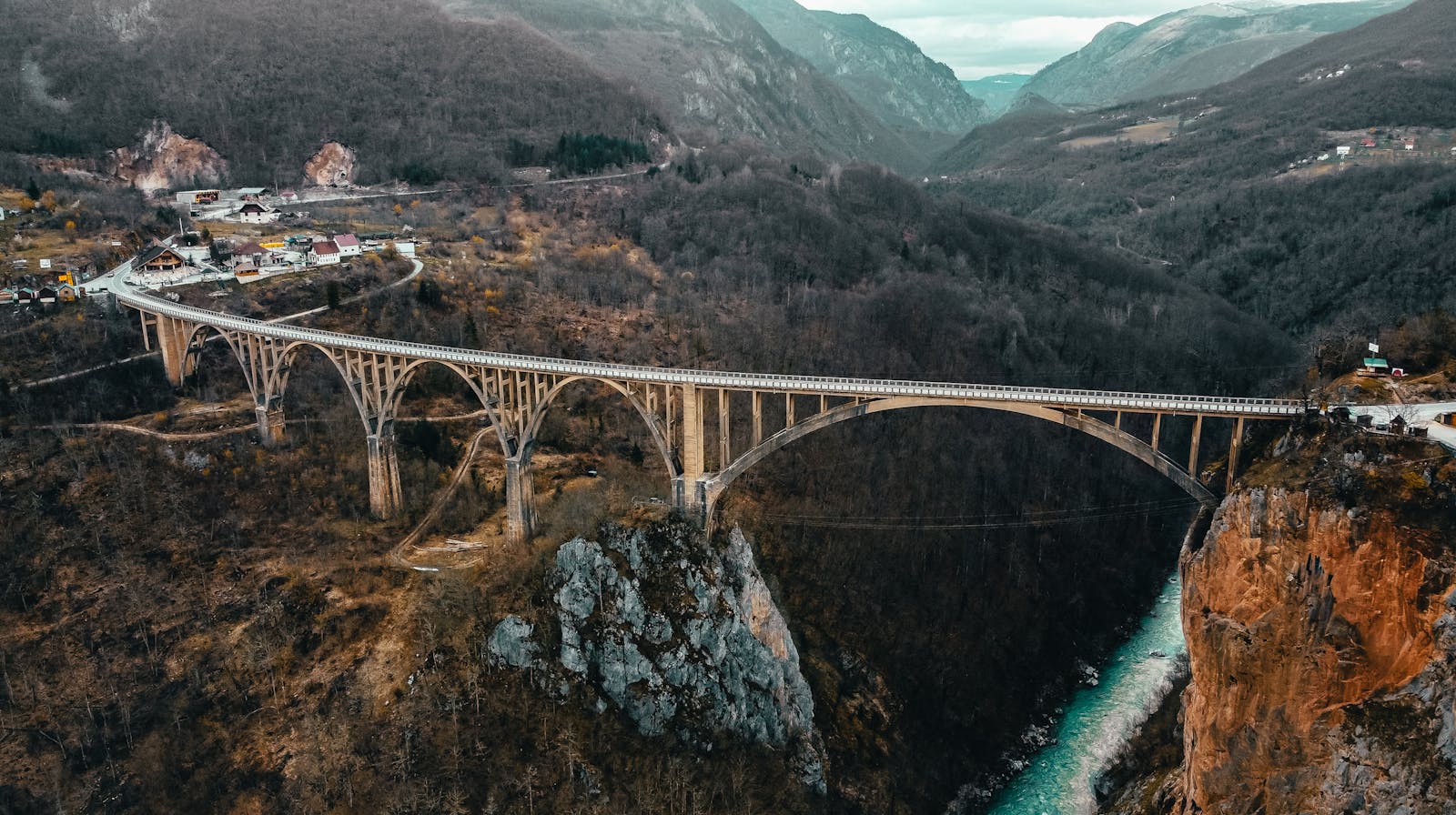
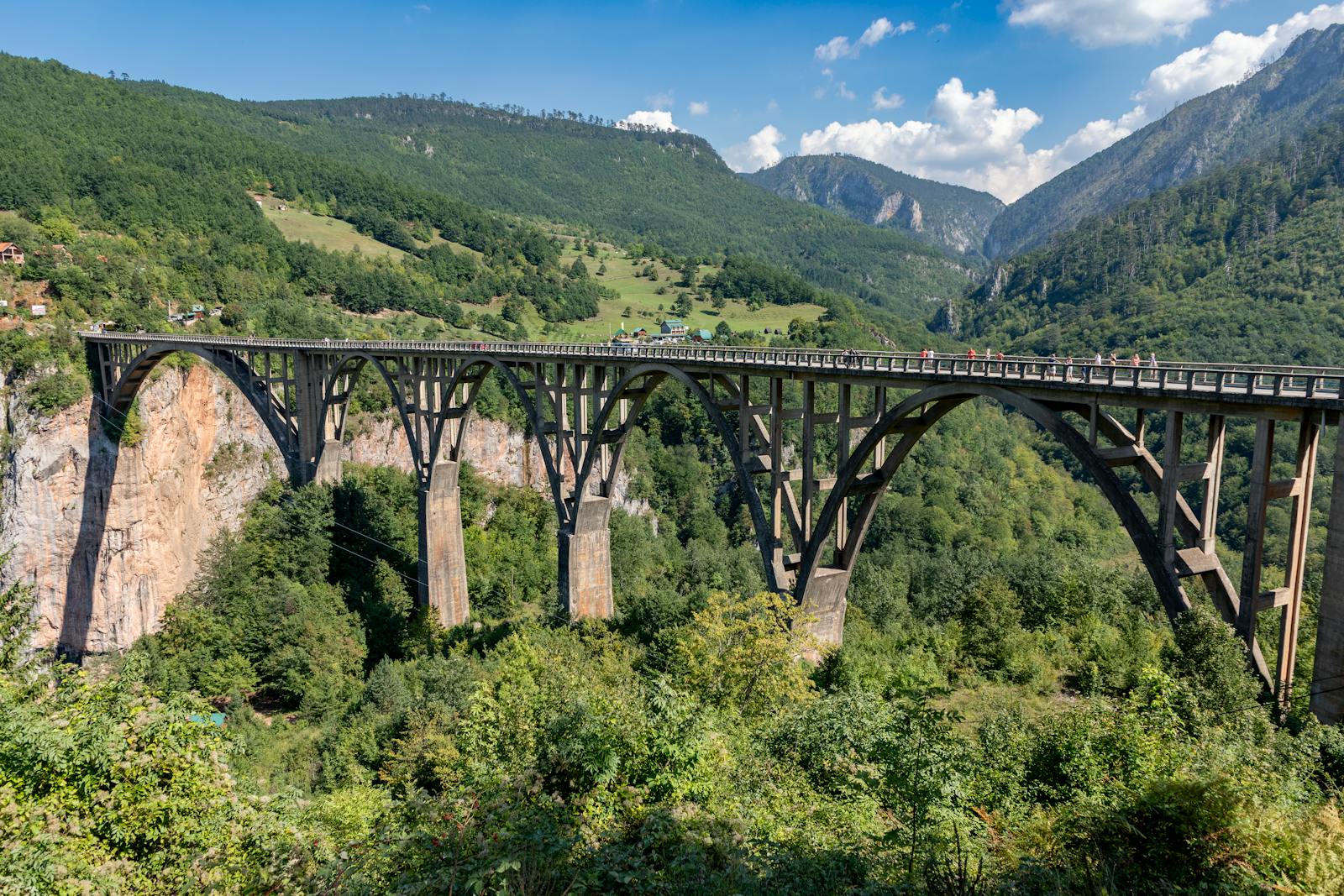
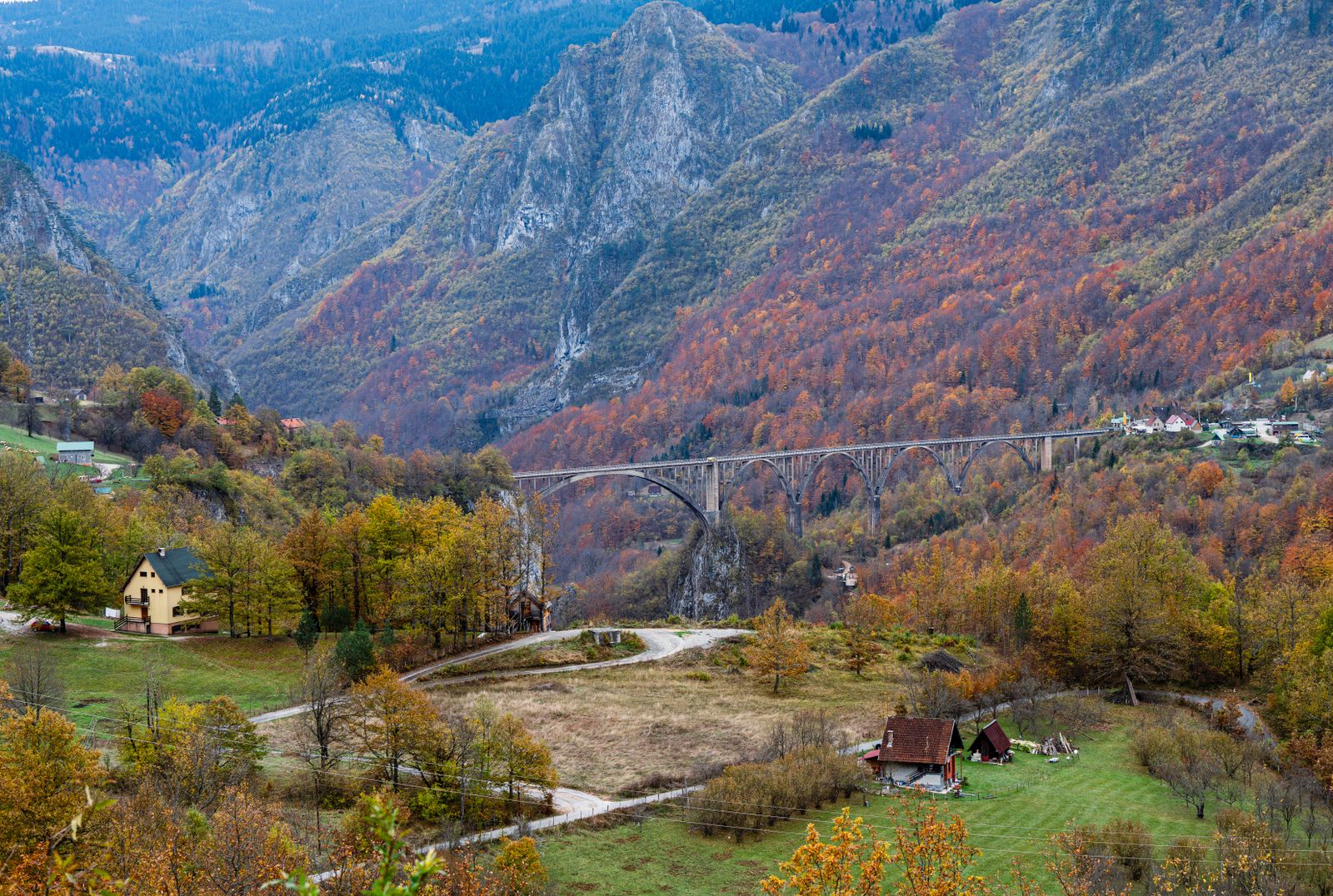
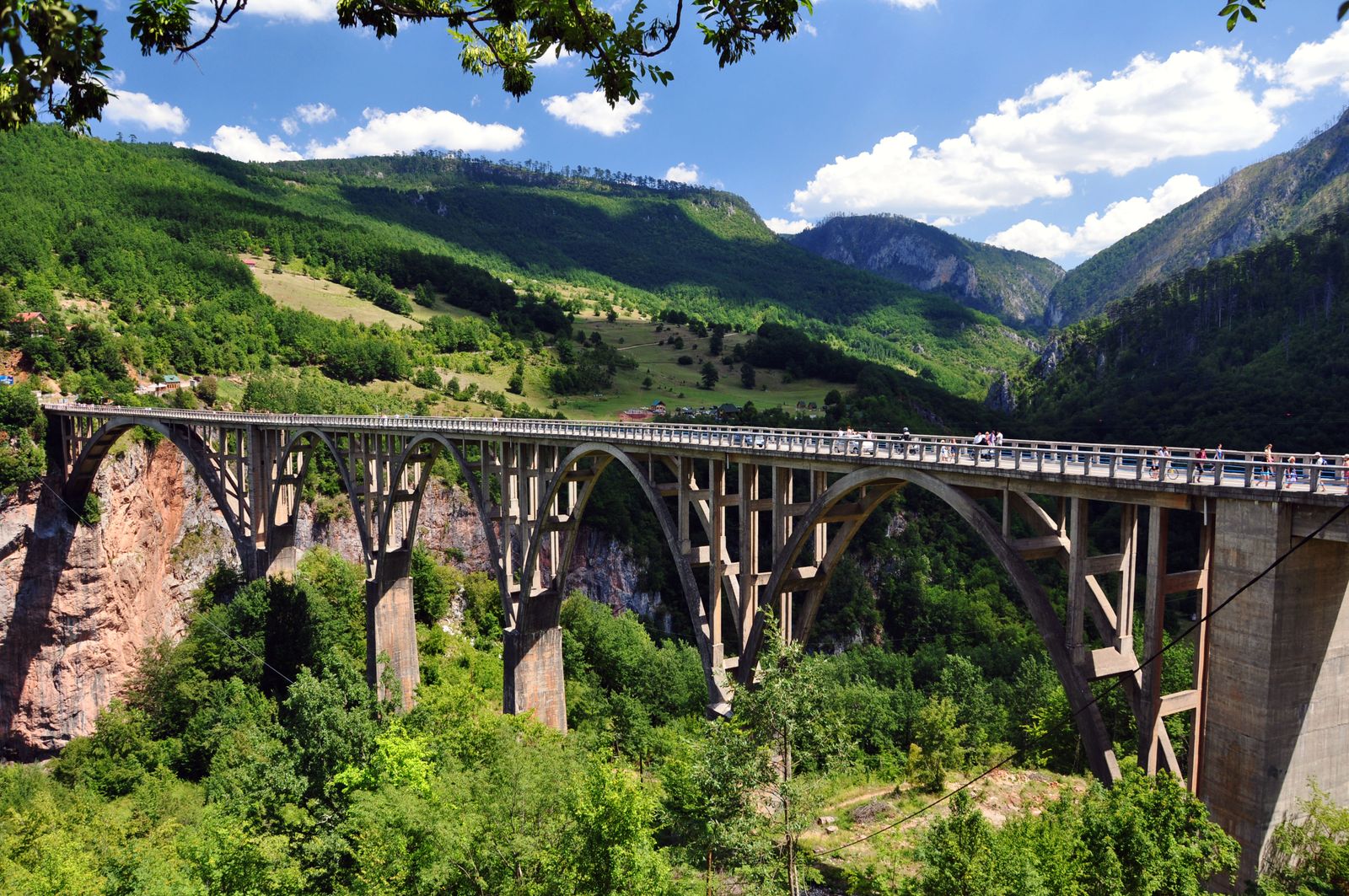
This majestic structure, built between 1937 and 1940, is the absolute symbol of the whole region and can’t be missing from any photo. The bridge is a full 365 metres long, and its five elegant concrete arches span roughly 172 metres above the turquoise surface of the river.
When it was completed it was the largest concrete arch road bridge in Europe, an admirable feat of engineering when you look at the steep canyon walls. Admission to the bridge is completely free, and there’s a dedicated safe walkway for pedestrians from which the depth of the canyon is literally laid out before you.
On both sides of the bridge there are newly built free car parks, so you can leave the car here without any worries. 💡 Tip: After your stroll, be sure to sit down in one of the local cafés perched on the edge of the cliff and savour a coffee with the best panoramic view imaginable.
Photo: Nikola Kojević / Pexels
2. Learn the tragic story of engineer Lazar Jauković
The bridge’s history is tied to a powerful and moving fate that most ordinary tourists sadly know nothing about. During the Second World War, Italian troops occupied the area, and the local partisans decided they had to stop the occupiers’ advance at any cost.
They turned for help to engineer Lazar Jauković, who had himself worked on the construction of this magnificent structure. Jauković devised an ingenious plan and, in 1942, helped blow up one of the south-western arches so skilfully that the bridge could be repaired again after the war while still preventing the enemy from crossing it.
But this heroic act cost him his life — the Italian soldiers soon captured him and executed him in August 1942 right on his own bridge. Today you’ll find a small stone memorial right by the road commemorating this brave builder, and it’s well worth pausing here for a moment.
Photo: Frank van Dijk / Pexels
3. Experience the Tara Canyon zipline over the abyss
If you don’t suffer from vertigo, you mustn’t miss the flight along a steel cable that runs from one side of the canyon to the other. The main centre for the zip-line is located right by the Đurđevića Tara Bridge, so you’ll soar with an amazing view of the concrete arches and the wild river far below you.
You have two basic routes to choose from, differing in both length and price. The shorter yellow cable measures roughly 824 metres and a ticket costs from around €10. For the bravest of all, there’s the long green cable measuring 1,050 metres, which makes it the longest zip-line in all of Montenegro.
On the green cable you’ll reach speeds of up to 120 km/h and fly at a height of around 150 to 170 metres above the canyon floor. For this ultimate experience you’ll pay around €45 in 2026, and for a small surcharge the operators will even take professional photos of your flight.
Photo: Martin Uradnicek / Pexels
4. Set off on a half-day rafting trip from Brstanovica
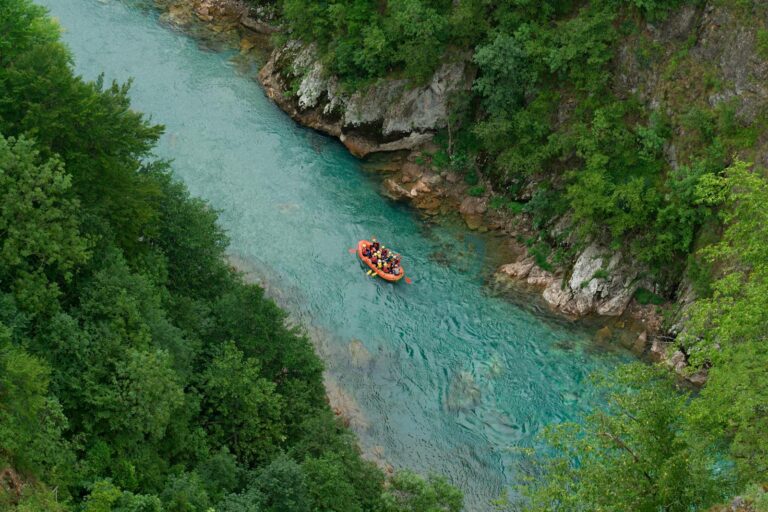
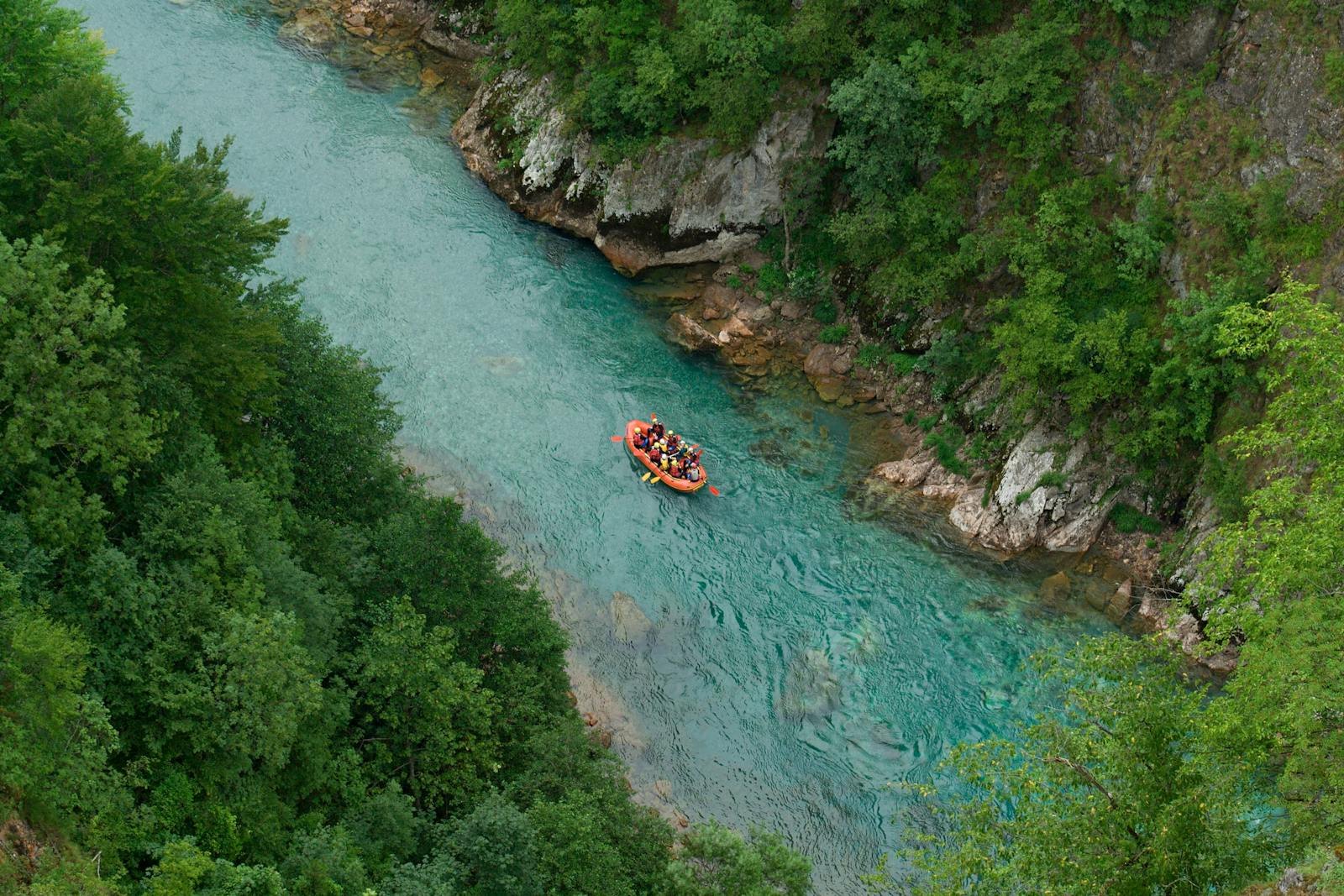
The most popular and most commonly chosen way to get up close to the Tara River is a half-day rafting trip. The standard route runs from Brstanovica in Bosnia to Šćepan Polje in Montenegro and covers approximately 18 kilometres.
This stretch is considered the most beautiful and wildest part of the lower canyon, because this is exactly where you’ll find the strongest rapids and where the surrounding limestone walls reach their greatest heights. You’ll spend roughly two to three hours of actual time on the water, full of fun, splashing and the occasional wilder bounce through the waves.
The price for this half-day experience in 2026 is roughly between €70 and €75 per person. This usually includes complete equipment, the services of an experienced instructor, and transport by off-road vehicle to the starting point.
Photo: Yassen Kounchev / Pexels
5. Tackle the river on a full-day expedition from Splavište
If a couple of hours on the water isn’t enough and you want to penetrate much deeper into the heart of the wilderness, you can book a big full-day tour. This route starts much further upstream at Splavište, just below the great bridge, and again ends at Šćepan Polje.
The total length of this proper descent is a respectable 33 kilometres, and you’ll be paddling for roughly five hours. During the journey you’ll experience calm upper sections ideal for watching pristine nature as well as the wild lower rapids, with a stop always planned along the way for a hearty picnic lunch on the bank.
This more demanding expedition often has an age limit from 14 years and will cost you roughly €100 to €150 per person, depending on whether the price includes two meals and the long transfer from Žabljak. It’s the perfect choice for true enthusiasts who want to spend the whole day on the river.
6. Save with a combo package of zip-line and rafting
If you want to fit in both of the main adrenaline experiences in a single day, the local agencies have a very practical solution ready. Many operators offer combined packages that smoothly link the flight over the abyss with a subsequent descent of the wild river.
From a logistical point of view it’s absolutely ideal, because you start the morning with a stunning zip-line flight right by the bridge, and in the afternoon a van drives you down to the river, where you climb into the inflatable rafts. Everything connects beautifully and you save a lot of time moving between the different sites.
Price-wise, these combined packages run roughly around €85 to €99 per person, which is often better value than buying both activities separately. In the peak summer season I recommend booking this combo well in advance online.
Photo: Lazar Krstić / Pexels
7. Think about safety and the right gear for the raft
Although the rapids on the Tara look daunting, statistically this is one of the safest white-water rivers in Europe. The riverbed here is very wide and deep, so there are always long calm stretches between the individual cascades where, if you fall out of the boat, you can easily swim to safety.
They’ll never let you onto the water without a certified guide, and a mandatory protective helmet and a quality life jacket are an absolute given, included in the base price. Since the water is fairly cold even in summer, the organisers will also always lend you a full-length wetsuit and special neoprene boots.
Pack mainly swimwear to go under the wetsuit and dry clothes with a towel for the camp, which you’ll leave in the car to change into after you return. 💡 Tip: Take sunglasses with a securing strap onto the boat itself, and keep your mobile phone exclusively in a reliable waterproof case around your neck — there’s no avoiding the splashing water.
Photo: From Salih / Pexels
8. Admire the canyon depth from the Ćurevac viewpoint
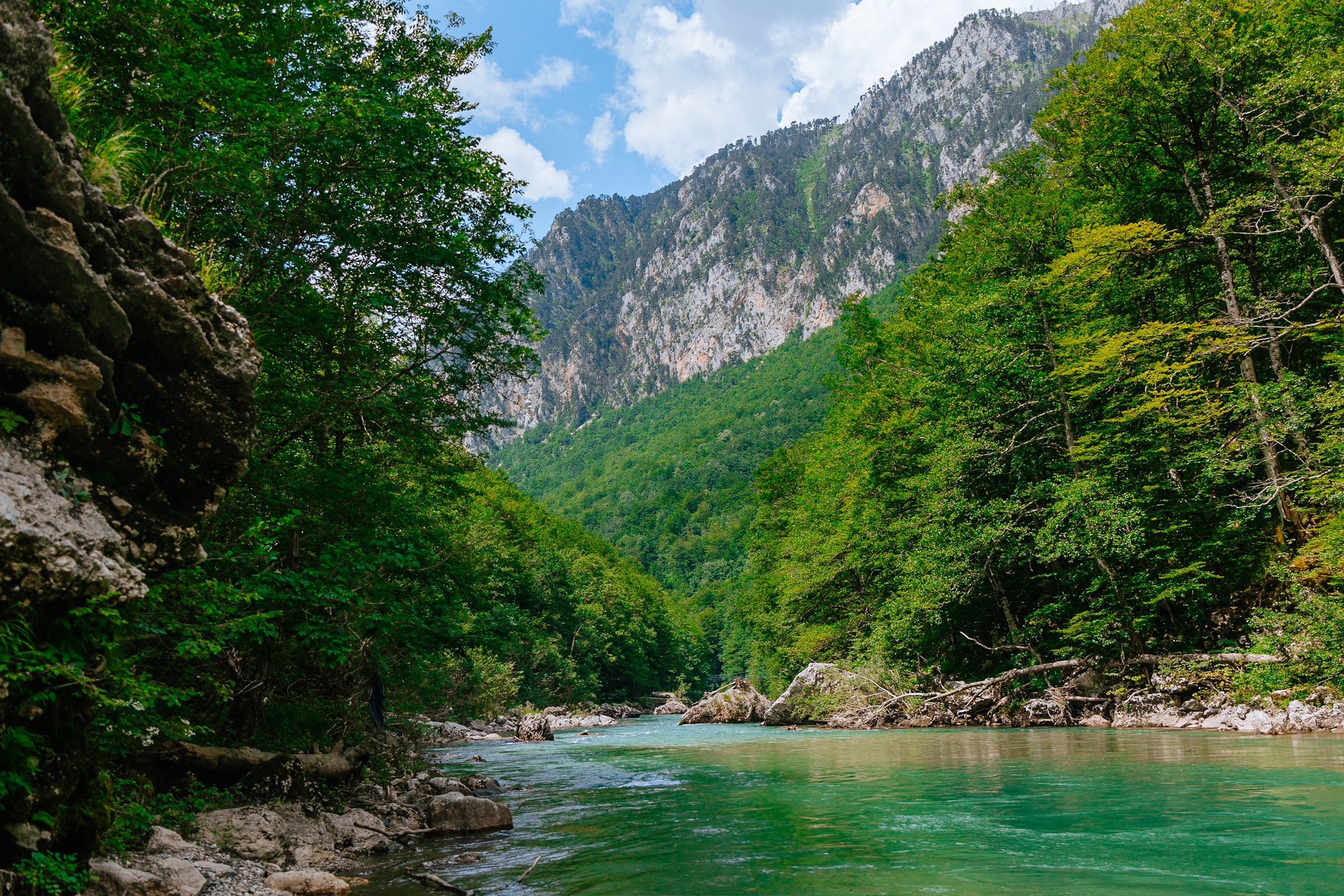
Once you’ve seen the bridge and rafted the river, definitely go and view the canyon from an entirely different perspective. The gorge itself is 82 kilometres long and its maximum depth reaches an incredible 1,300 metres, making the Tara the deepest canyon in continental Europe and one of the deepest in the world.
To fully grasp this staggering abyss, head to the mountain saddle and the Ćurevac viewpoint, which lies roughly 20 kilometres from Žabljak. A short walk on foot awaits you from the car park, and at the end one of the most dramatic panoramic views in the entire Balkans opens up before you.
Looking down from this steep edge to the turquoise ribbon of the river, you may well feel slightly dizzy. It’s an ideal spot for late-afternoon photography, when the setting sun paints the surrounding limestone peaks in rich orange shades and a light mist begins to settle in the valley.
Photo: Rainer Eck / Pexels
9. Combine your trip with a visit to the Black Lake
The Tara Canyon sits right on the edge of the famous Durmitor National Park, so it would be a huge shame not to combine the two locations during your holiday. From the great Đurđevića Tara Bridge it’s just 24 kilometres to the mountain centre of Žabljak, which you can manage by car in a leisurely half hour.
Just beyond Žabljak lies the magnificent Black Lake (Crno jezero), fringed by dense coniferous forests and overlooked by the jagged Medjed peak. This glacial lake consists of two connected bodies of water, and a very pleasant, easy walking trail leads around it.
This way you can easily plan a complete full-day loop: in the morning you tackle the zip-line and a walk across the bridge, at midday you move into the mountains, and in the afternoon you relax on the shore of the crystal-clear mountain lake. It’s an absolutely ideal combination of adrenaline and peaceful nature.
Photo: From Salih / Pexels
10. Try extreme canyoning in the Nevidio gorge
If ordinary rafting feels too commercial to you and you’re looking for a real challenge for fit, sporty types, the Durmitor area hides yet another secret. On the southern slopes of the mountains lies the Nevidio Canyon, an extremely narrow and wild gorge that wasn’t discovered and explored until 1965.
This isn’t about riding in a raft but about pure-blooded canyoning, where you’ll swim in icy water, abseil down waterfalls, and jump into deep pools in places where the gorge is sometimes just 25 centimetres wide. This three-hour battle with nature can only be done with a certified guide and requires very good physical condition.
Interestingly, unlike rafting, which peaks in spring, the Nevidio Canyon is strictly closed in May and June due to dangerously high water levels. The season for this extreme activity only begins in the course of July and lasts roughly until September, when the flow safely drops.
Photo: From Salih / Pexels
11. Be enchanted by the purity of the “Tear of Europe”
The Tara River has earned a beautiful and poetic nickname among the locals — the “Tear of Europe” — and as soon as you see its crystal-clear water, you’ll instantly understand why. In many places the water here is so unbelievably clean and untouched by industry that you can routinely drink it straight from the current.
This unique purity has contributed to the entire canyon being protected not only within the Durmitor National Park but also being listed as a biosphere reserve under the wing of UNESCO. Thanks to this, the surrounding nature retains an utterly pristine and untouched character.
To soak up the right local atmosphere, I recommend visiting one of the traditional ethno-villages on the river banks after your trip. Here you can enjoy an excellent local lunch, sit on the wooden terraces, and simply listen to the endless roar of the wild water, which has been carving its way through here for millions of years.
Photo: Pudelek (Marcin Szala) / Wikimedia Commons, CC BY-SA 3.0
Where to go next from the Tara Canyon
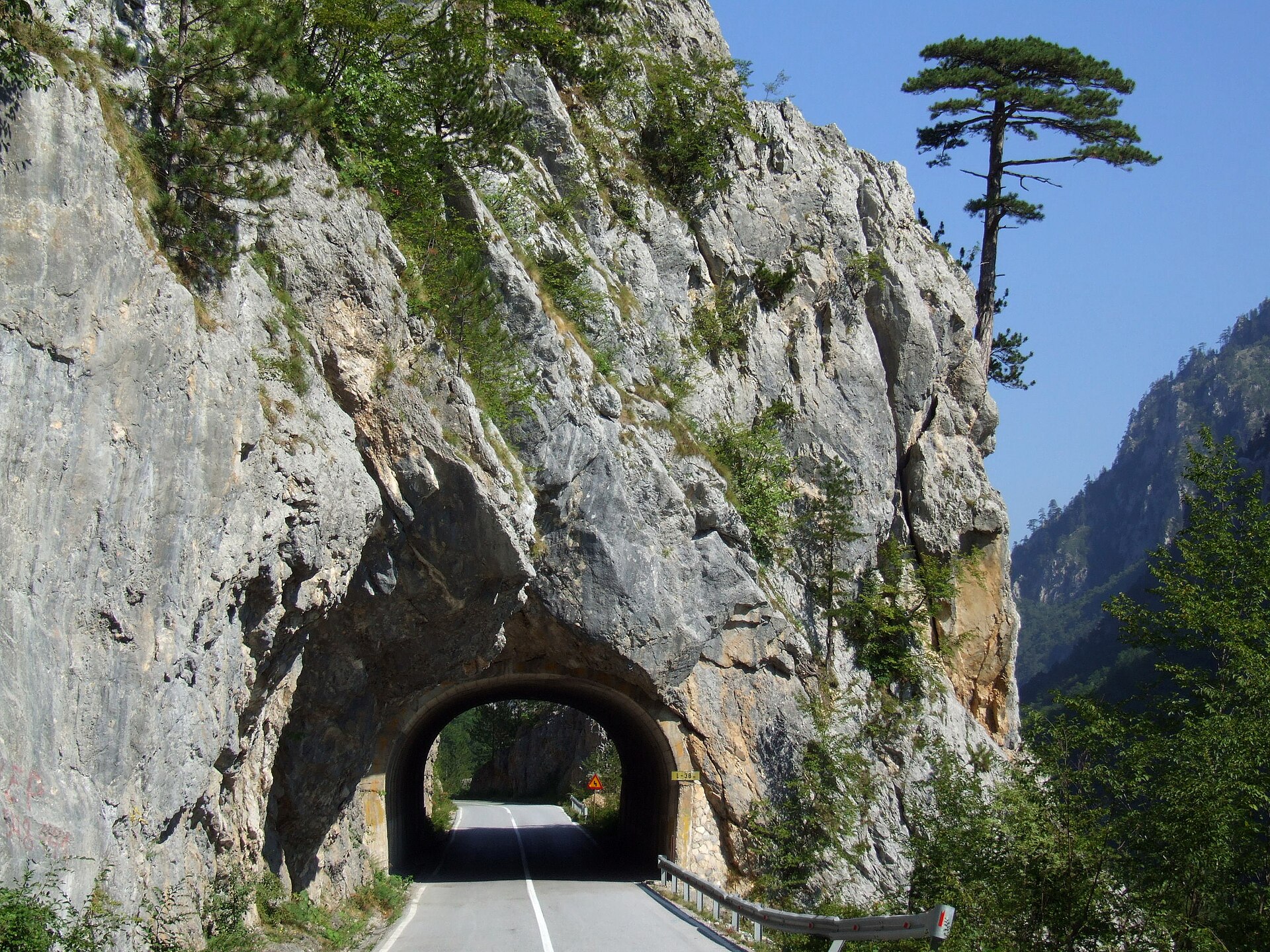
After exploring the wild rapids and deep cliffs, there are several options for where to continue. Most travellers head for the warmth of the Adriatic coast after their days in the mountains, which takes roughly three and a half hours by car from the Žabljak area. On the way down you’ll drive through beautiful mountain hairpin bends that are worth the journey in their own right.
If you want to keep exploring this Balkan gem and you’re looking for inspiration for further stops, definitely take a look at our detailed article Holidays in Montenegro: 15 tips for the sea and the mountains. It’s packed with ideas for elegantly combining mountain hiking with relaxation on the sandy beaches of southern Dalmatia.
Photo: From Salih / Pexels
Frequently asked questions
Is the Tara Canyon really the deepest in Europe?
Yes, with a maximum depth of an impressive 1,300 meters, Tara is the deepest canyon in continental Europe and ranks among the absolutely deepest in the entire world. In many rankings and guides, it is often listed as the second deepest right after the famous American Grand Canyon.
How much does the zip-line over Tara Canyon cost in 2026?
Prices vary depending on which zipline and operator you choose, but as a rough guide you’ll pay from €10 for the shorter zipline (824 meters) up to around €45 for the longest green zipline (1,050 meters). If you want professional souvenir photos of your flight, be prepared to pay an additional €10 or so.
How much does rafting on the Tara cost and how long does it take?
The most popular half-day section from Brstanovice to Šćepan Polje measures about 18 kilometers, takes roughly 2 to 3 hours of pure time on the water and costs approximately 70 to 75 € per person. For a big full-day expedition of 33 kilometers including lunch, you’ll pay approximately between 100 and 150 €, with complete rafting equipment always included in the price.
When is the best time for rafting?
The commercial rafting season runs from April to October, but the highest and wildest water awaits you in May and June, when the snow melts in the mountains. If, on the other hand, you’re traveling with young children or want a calmer experience, head out in July and August instead, when the water level is lower and the water is noticeably warmer.
Is rafting on the Tara safe for beginners and children too?
Absolutely yes, the Tara River is generally considered one of the safest wild rivers in Europe, because long and calm sections always follow between the rapids. You always board the boat with a professional guide, you get a helmet and life jacket, and the summer months with milder water flow are ideal for families with children.
How do I get to Đurđevića Tara Bridge and is entry free?
It’s about 24 kilometers by car from the mountain town of Žabljak to the bridge, which takes approximately 20 to 30 minutes of driving, while from the coast you’ll drive along mountain switchbacks for more than three hours. Entry to the bridge itself for pedestrians is completely free, and both large parking lots at the access roads are now also free of charge.
Can you do zip-lining and rafting in one day?
Yes, both activities can absolutely be combined into one day without any problems and many local agencies offer special combo packages for this (approximately 85 to 99 €). In the morning you’ll zip through a quick zip-line ride right by the bridge and then move with the organizers down to the river for a roughly three-hour rafting trip.
Tips and Tricks for Your Vacation
Don’t Overpay for Flights
Search for flights on Kayak. It’s our favorite search engine because it scans the websites of all airlines and always finds the cheapest connection.
Book Your Accommodation Smartly
The best experiences we’ve had when looking for accommodation (from Alaska to Morocco) are with Booking.com, where hotels, apartments, and entire houses are usually the cheapest and most widely available.
Don’t Forget Travel Insurance
Good travel insurance will protect you against illness, accidents, theft, or flight cancellations. We’ve had a few hospital visits abroad, so we know how important it is to have proper insurance arranged.
Where we insure ourselves: SafetyWing (best for everyone) and TrueTraveller (for extra-long trips).
Why don’t we recommend any Czech insurance company? Because they have too many restrictions. They set limits on the number of days abroad, travel insurance via a credit card often requires you to pay medical expenses only with that card, and they frequently limit the number of returns to the Czech Republic.
Find the Best Experiences
Get Your Guide is a huge online marketplace where you can book guided walks, trips, skip-the-line tickets, tours, and much more. We always find some extra fun there!
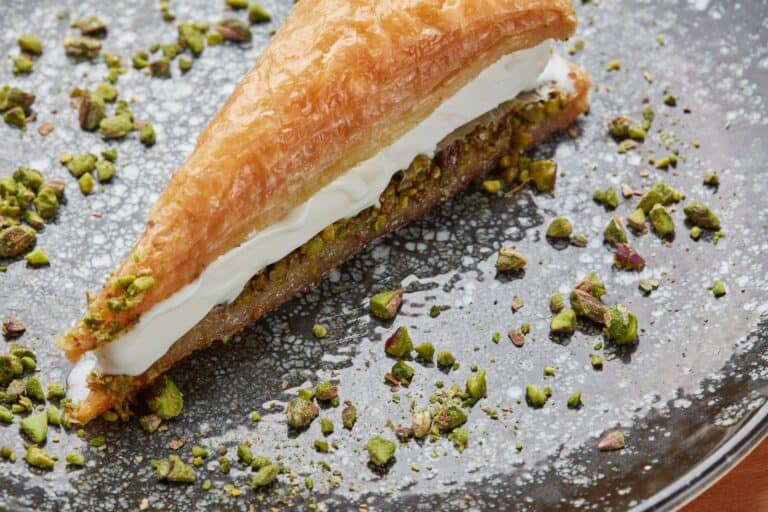
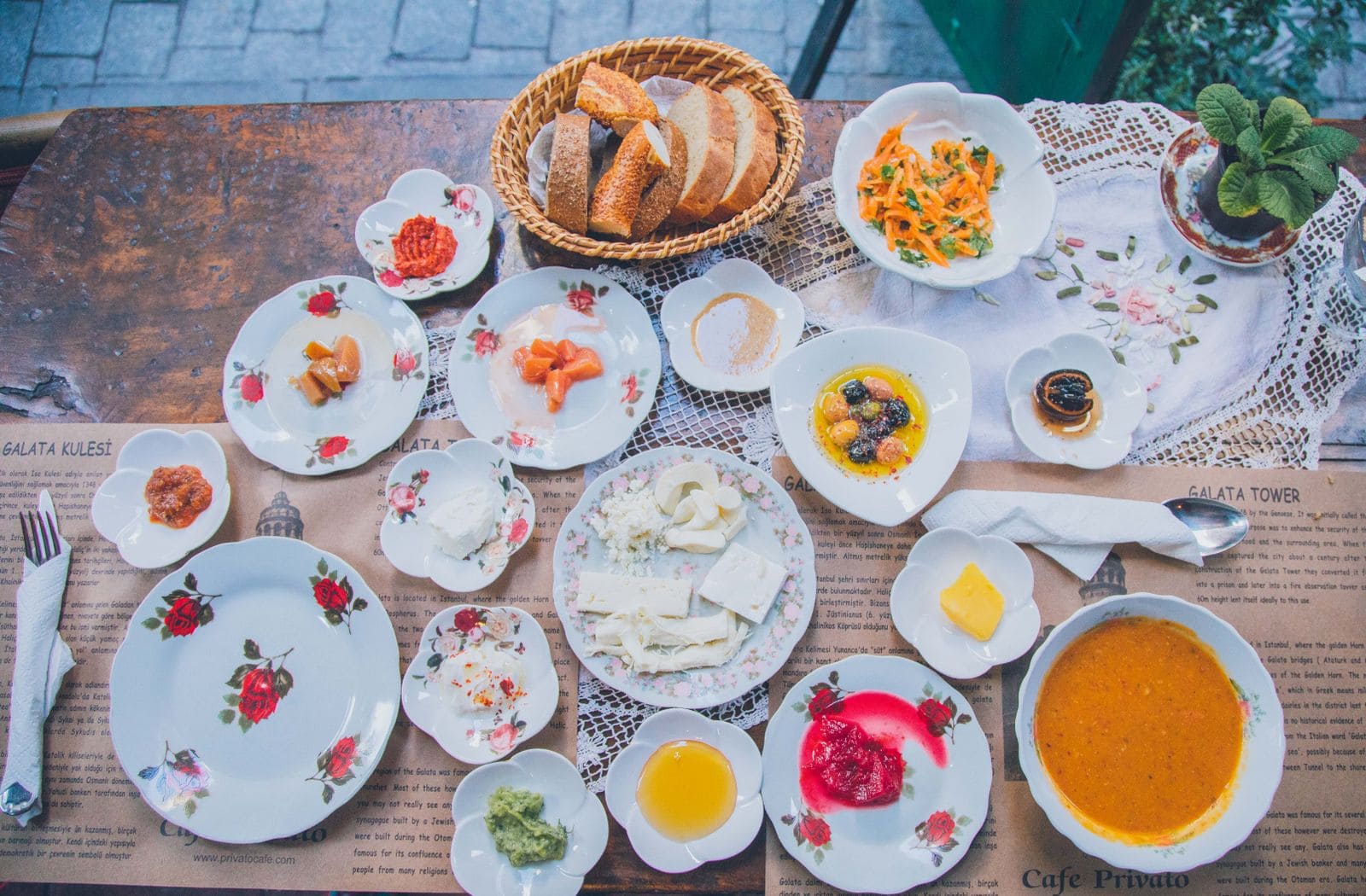
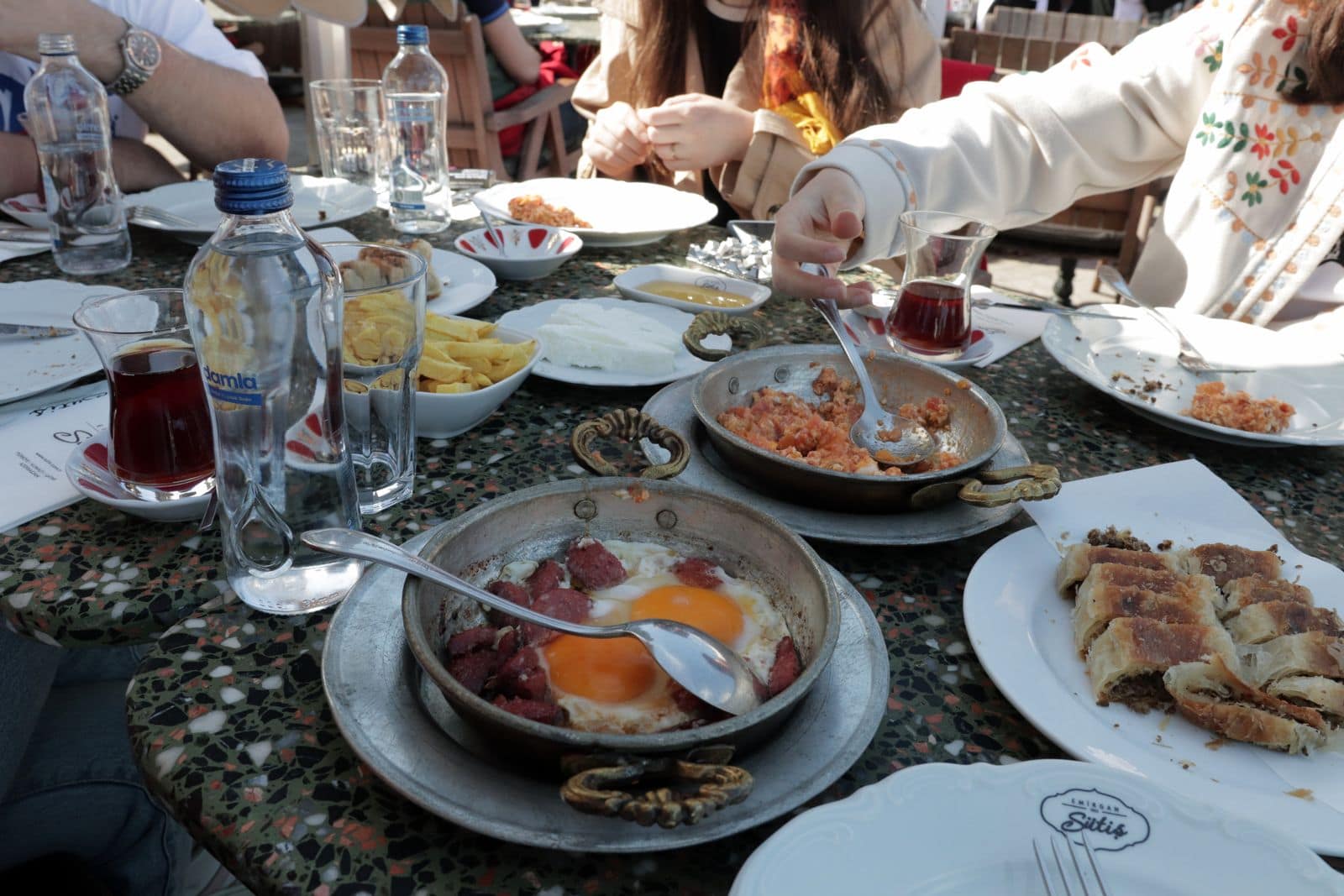
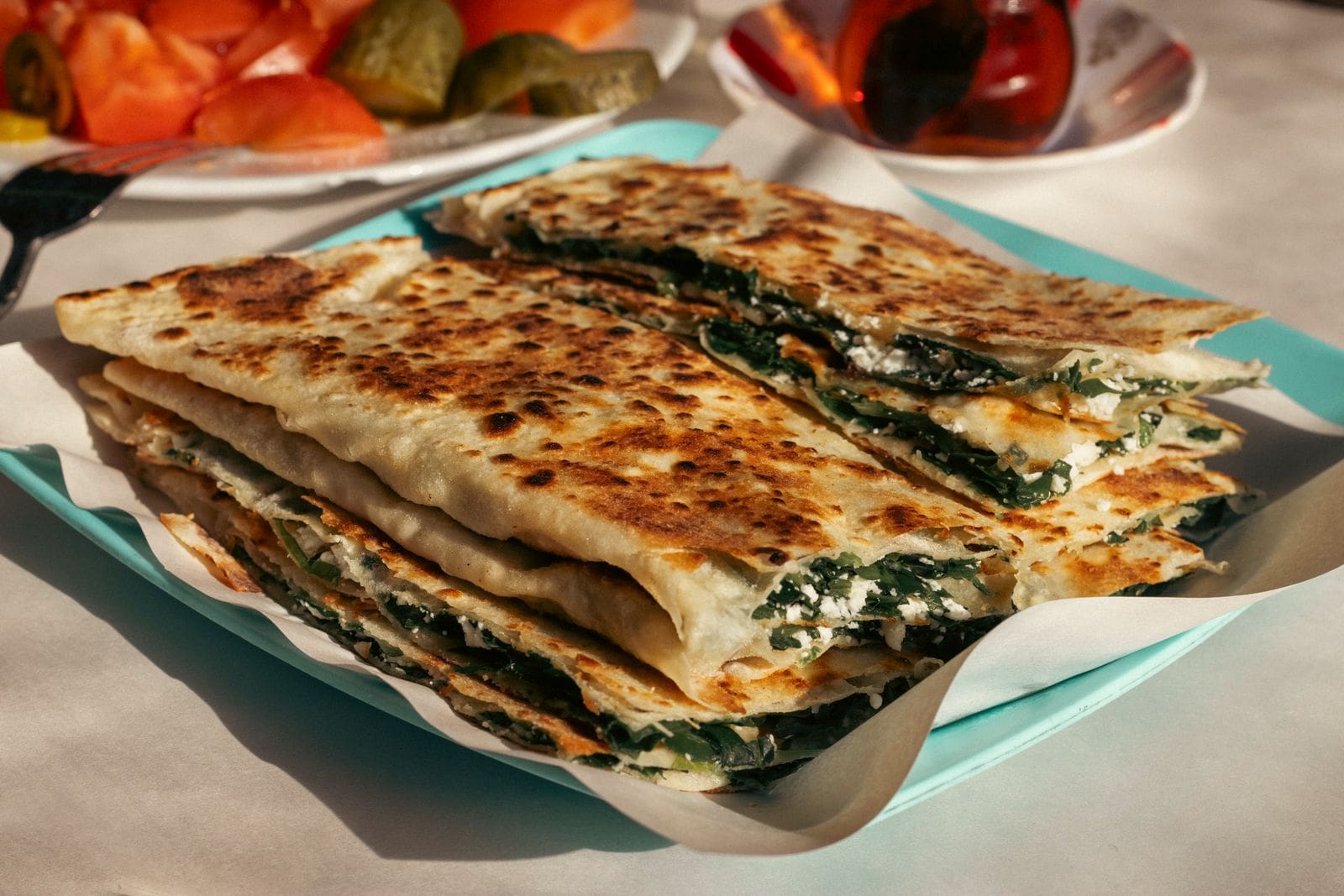
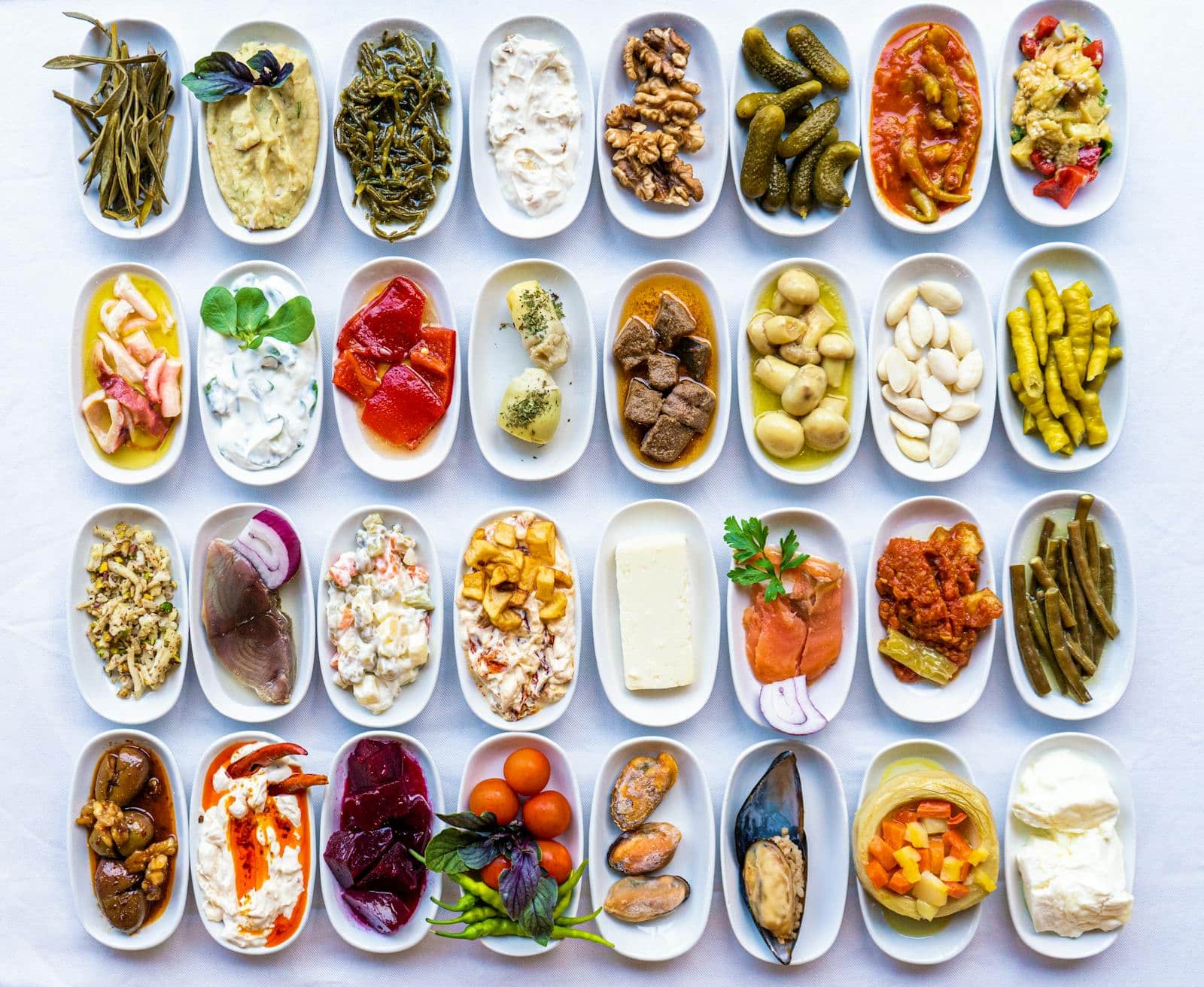
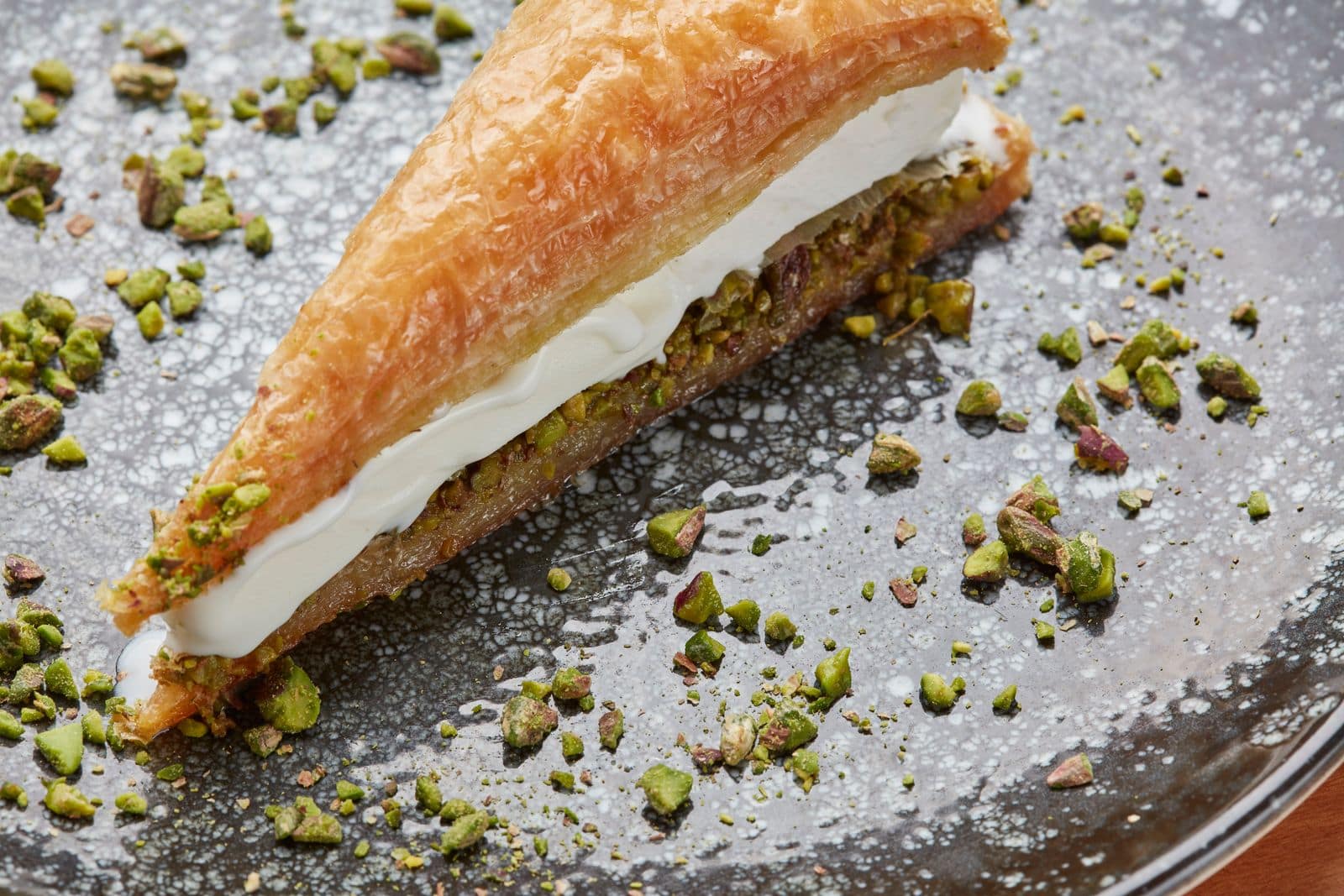
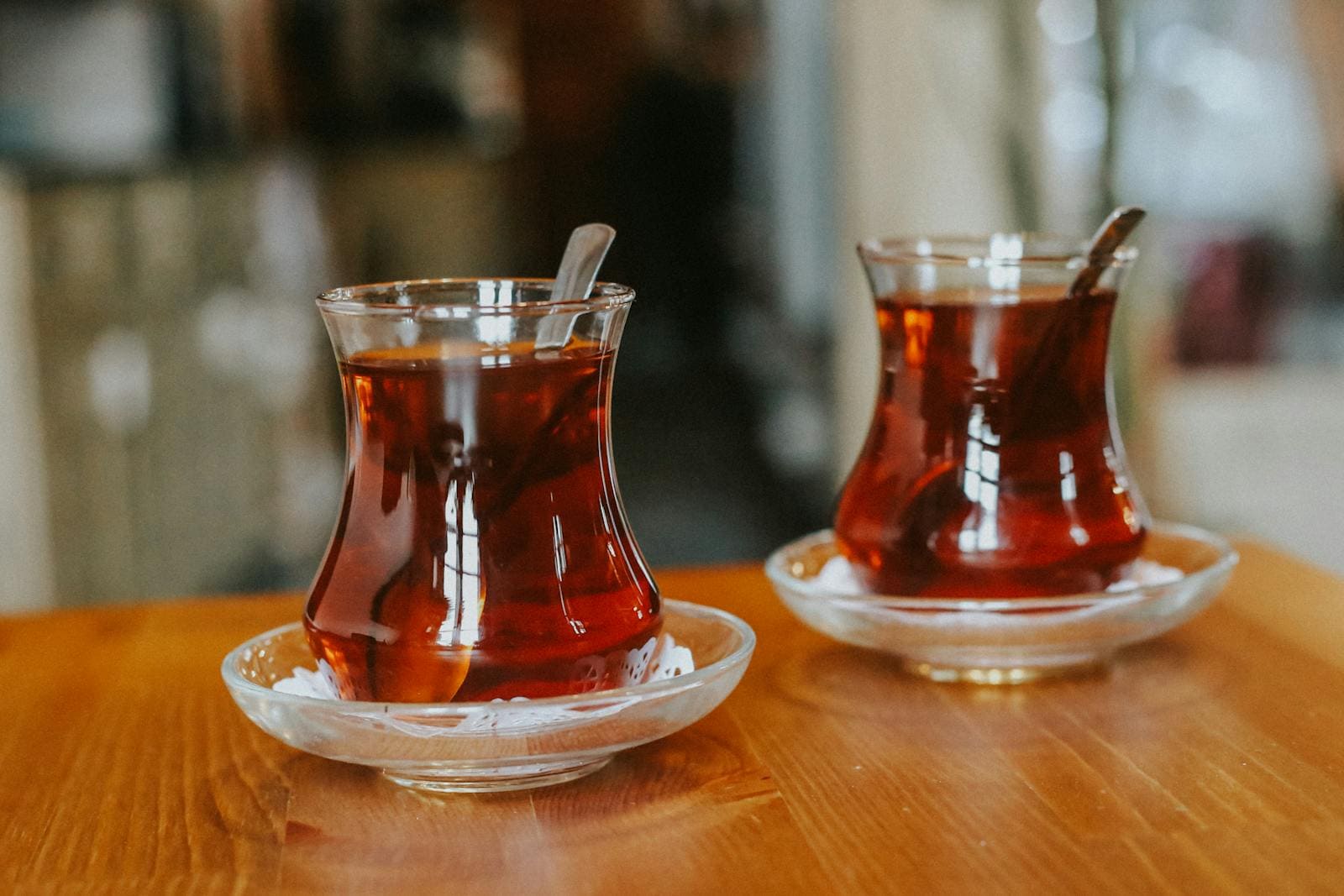
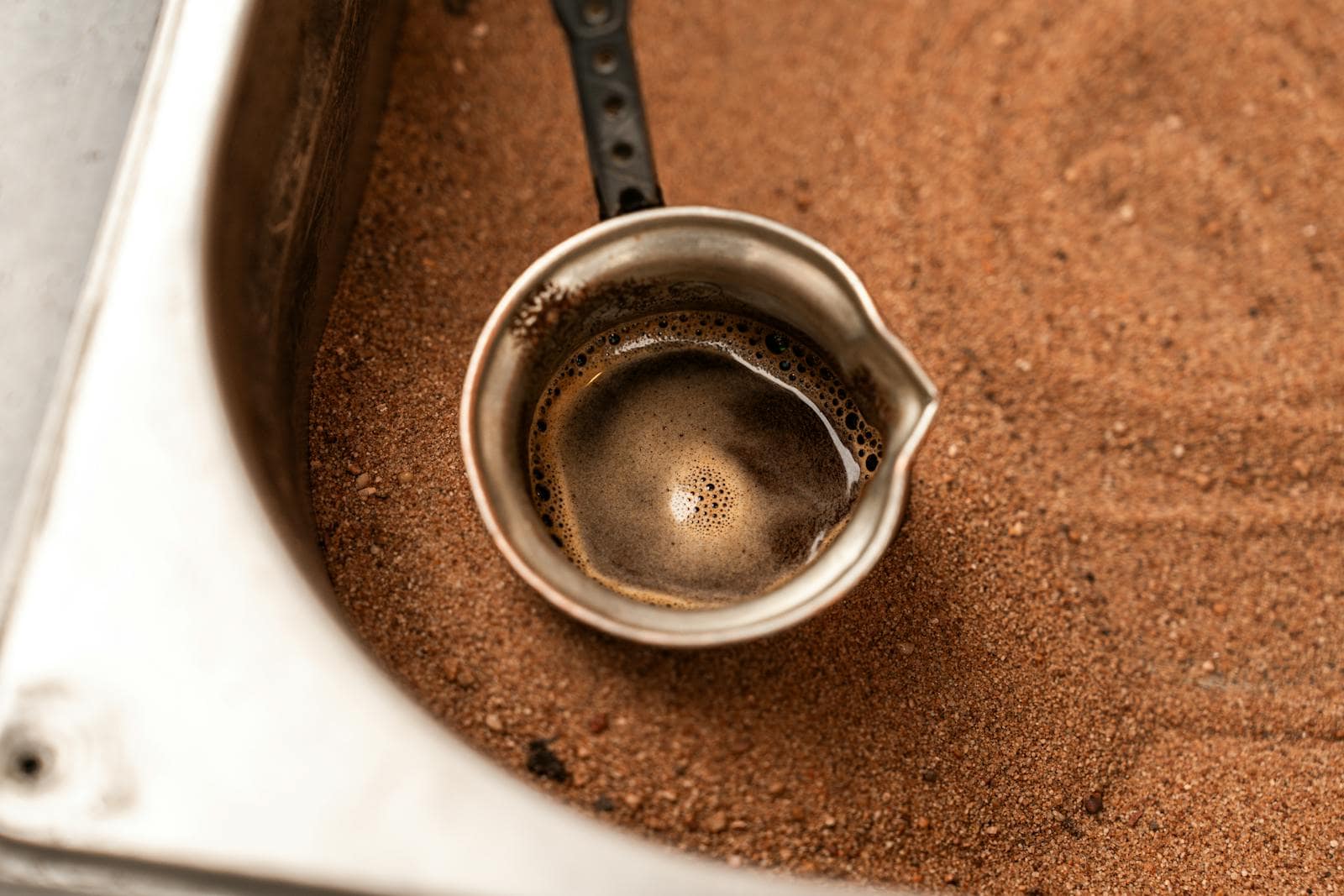
TL;DRTurkish food is so much more than a kebab from a corner shop. Start with breakfast, kahvaltı, a spread of dozens of little dishes — olives, cheeses, honey, kaymak, menemen. In the evening, head to a meyhane tavern for meze, and don’t skip street classics like gözleme and börek. Save room for sweets: baklava (the best comes from Gaziantep), hot künefe, lokum and dondurma ice cream, all washed down with çay tea or Turkish coffee — never stir it, and stop drinking half a minute before the grounds hit the bottom of the cup. Vegetarians will have no trouble here either, as meat-free dishes are everywhere. Thanks to the weak lira, eating out is cheap: a full kahvaltı breakfast runs 180–350 Kč, and tipping (bahşiş) is around 5–10% in cash.
Do you still picture Turkish food as a tired kebab in a wrap from the corner shop? Prepare to be amazed. Turkish cuisine is a global phenomenon – an incredibly diverse crossroads where the influences of opulent Ottoman palaces, the sun-soaked Mediterranean, the spiced Middle East and the rugged Caucasus have mingled for centuries.
Here, food isn’t just a quick way to silence hunger – it’s a ritual and a social event, a symbol of the famous Turkish hospitality. Travellers often come home saying, “I had no idea it would be this good.” And there’s great news for vegetarians: even though Turkish cuisine loves its meat, the choice of meat-free dishes is enormous.
In this guide we’ll take you on a tour of Turkish flavours from the kahvaltı breakfast all the way to baklava – meze, flatbreads, sweets, tea and Turkish coffee. We’ll tell you what to order, what to drink and how to feast if you don’t eat meat.
Photo: Collab Media / Pexels
TL;DR
Breakfast:kahvaltı – a lazy feast of dozens of little bowls (olives, cheeses, honey, kaymak, menemen eggs) that can easily stretch over two hours.
The ritual called kahvaltı: a breakfast that lasts all morning
The word kahvaltı literally translates as “before coffee” – because in Turkey, coffee comes only at the very end, like a full stop after the feast. Turkish breakfast isn’t a roll eaten on the run, it’s a lazy, shared occasion you can happily linger over for two hours.
Within minutes the waiter covers your table with dozens of little dishes: green and black olives, fresh tomatoes and cucumbers, walnuts, homemade jams, honey, several kinds of cheese, butter and a pile of bread crowned by the crunchy sesame ring known as simit. Hot dishes belong here too – it just isn’t breakfast without menemen (scrambled eggs cooked down with tomatoes, peppers and spices). But the real star of the morning is kaymak: an extremely thick cream, similar to clotted cream, which you drench generously in honey and spread on bread.
💡 Tip: If you come across the term serpme kahvaltı, it means a spread-out table piled high with food for the whole group. Don’t expect to finish it all – and it’s the ultimate meat-free feast.
Photo: Zeynep Gül Ceylan / Pexels
Kebabs: a whole different league to your local takeaway
Let’s clear up the terms first. Turks make a strict distinction between a kebap (meat on a skewer or grill) and a döner (meat from a rotating vertical spit) – the word döner comes from the verb “to turn”. For meat eaters, the Turkish grill is an experience in itself: the spicy Adana kebap (hand-kneaded meat on a wide skewer with chilli flakes), its milder sibling Urfa kebap, the classic şiş kebap of marinated cubes over charcoal, or İskender kebap – slices of döner on pide bread, smothered in tomato sauce, yoghurt and sizzling butter.
We mention these dishes descriptively – they’re regional meat specialities that vegetarians will leave to others. The good news: Turkish cuisine isn’t primarily spicy, and most dishes don’t have any heat at all (Adana and the south-eastern specialities being the exception).
Photo: Efe Burak Baydar / Pexels
Street food, meze and comfort food
Turkish streets serve up brilliant quick bites for just a few lira. And a huge proportion of them are meat-free or have a meat-free version:
Gözleme – hand-stretched thin flatbreads cooked on a domed griddle called a sac, filled with spinach and cheese or potato. A meat-free classic that women cook right in front of you at the markets.
Börek – layers of wafer-thin stretched yufka pastry filled with cheese; a hearty breakfast snack.
Pide – an oblong, boat-shaped bread you can order filled with cheese (the vegetarian version). Leave the meat and sausage variants to others.
Mercimek çorbası – a rich lentil soup, an absolute safe bet for vegetarians on the road.
Mantı – tiny pasta dumplings drenched in garlic yoghurt and minty butter; classic Turkish comfort food (traditionally filled with meat, so ask for a meat-free version).
Meat and fish street classics like lahmacun (a thin flatbread topped with minced meat) or balık ekmek (the fish sandwich from Istanbul’s waterfront) are for meat eaters – we mention them just for completeness.
Photo: Emrah Tolu / Pexels
Meyhane and the culture of meze
As the day winds towards evening, it’s time for meze – a selection of cold and hot starters that form the backbone of a traditional Turkish dinner. In the taverns known as meyhane you don’t pick from a menu: the waiter brings round a huge tray full of little plates and you simply point at what you fancy. For vegetarians it’s paradise – aubergine purée, hummus, the spicy tomato salad ezme, stuffed vine leaves, herby yoghurt. The meyhane is an institution, a place to eat, laugh and share late into the night.
Photo: Mohamed Olwy / Pexels
Sweet sins: sugar, pistachios and rose water
Turks adore sweet things and their desserts are world-famous. Almost all of them are vegetarian, making Turkish cuisine desserts a real highlight of any trip:
Baklava – wafer-thin layers of pastry layered with butter and crushed nuts, soaked in syrup. Genuine pistachio baklava (a speciality of the city of Gaziantep) crunches and melts in your mouth – it has nothing in common with the dried-out stuff from the supermarket.
Künefe – a hot dessert made from fine strands of kadayıf pastry filled with unsalted cheese, baked golden and drowned in syrup. Sink your fork in and the cheese stretches beautifully.
Lokum (Turkish delight) – jelly cubes dusted in icing sugar, traditionally flavoured with rose water, today in hundreds of variations with nuts or pistachios.
Dondurma – Turkey’s stretchy ice cream from the Maraş region, thick and chewy thanks to salep and mastic. Buying it is a show in itself: vendors perform tricks with it on a long stick, teasing the cone right under your nose.
Sütlaç – a soothing rice pudding in a clay bowl, often baked until it forms a dark crust.
💡 Tip: Don’t buy lokum and spices as souvenirs on the main tourist drags. Head to the Tahtakale wholesale market near the Spice Bazaar in Istanbul – wider choice, better prices and room to haggle.
What to drink: from ever-present tea to lion’s milk
Photo: betül nur akyürek / Pexels
Çay: the fuel of the Turkish nation
The true ruler of Turkey is tea (çay) – Turks have the highest tea consumption per head in the world. It’s drunk everywhere, all the time: it accompanies haggling at the bazaar, waiting for the ferry and business meetings alike. It’s brewed in a double teapot called a çaydanlık and served in those iconic tulip-shaped glasses, often with two sugar cubes, but never with milk. Offering someone tea here is a way of saying “welcome”.
Photo: Ahmed / Pexels
Türk kahvesi: coffee under UNESCO protection
Turkish coffee is such a one-off that it’s on the UNESCO list. Finely ground coffee is slowly brewed in a copper pot called a cezve so that a thick foam forms on the surface. ⚠️ The key mistake tourists make: don’t stir Turkish coffee – you’ll ruin the foam and cloud the flavour. After it arrives, wait half a minute for the grounds to settle, and don’t drink the thick “mud” at the bottom (it’s there to keep the coffee warm; old aunties read your fortune from it).
Photo: Cihan Çimen / Pexels
Ayran and rakı
Alongside grilled food, or simply as a refreshment, you’ll find ayran – a simple salty drink of whisked yoghurt, water and salt that cools you down a treat. And no long evening in a meyhane is complete without rakı, a strong aniseed spirit. You pour a measure, top it up with water, and it turns milky white – which is why it’s called aslan sütü, lion’s milk. The toast is Şerefe!
Photo: Shameel mukkath / Pexels
Tips for vegetarians in Turkey
You’ll get by as a vegetarian in Turkey without the slightest trouble – the cuisine may love meat, but the range of meat-free dishes here is huge. Reliable safe bets:
Kahvaltı – the whole breakfast is a meat-free feast.
Mercimek çorbası – lentil soup on almost every menu.
Gözleme and börek with cheese or spinach.
Pide with cheese and salads with sheep’s cheese.
Sweets – baklava, künefe, lokum and dondurma are for everyone.
💡 Tip: The phrase “etsiz var mı?” (do you have it without meat?) will open doors; waiters are used to it and happy to advise. Just watch out for hidden meat stock in some soups.
Practical tips for food lovers
Water ⚠️: Don’t drink the tap water, even in the big cities – buy bottled (it costs next to nothing), use it for brushing your teeth too, and be wary of ice and unpeeled fruit from stalls.
Prices ⚠️: Thanks to the weak lira, food and street food are cheap for British wallets, but menu prices shift due to inflation – check the exchange rate before you go.
Paying: In restaurants you can pay by card (in lira, and decline DCC), while at stalls and bazaars you’ll need cash in lira.
Tipping (bahşiş): 5–10% in a restaurant, more in upmarket places – always in cash, as you usually can’t add it on the card terminal.
💡 Accommodation and experience tip: We like to look for places to stay on Booking.com, where the cancellation terms tend to be the best. For tickets, tours and activities, it pays to compare and book through GetYourGuide.
🔗 These are affiliate links — they don't change your price and help us create content. · All experiences →
Frequently asked questions
What to try first in Turkey?
Start with a traditional kahvaltı breakfast (dozens of little bowls with olives, cheeses, honey, kaymak, and menemen eggs) and in the evening have meze at meyhane taverns. For street food, try gözleme and börek, and for sweets baklava and hot künefe. And of course Turkish tea and thick Turkish coffee to go with it.
Is Turkish cuisine suitable for vegetarians?
Yes, absolutely. Even though Turks love meat, there are plenty of meat-free dishes: the entire kahvaltı breakfast, the meze culture (purées, salads, cheeses, stuffed vine leaves), lentil soup, gözleme and börek with cheese or spinach, pide with cheese, and all the sweets. Just ask “etsiz var mı?” (without meat?) and watch out for hidden meat broth.
How to properly drink Turkish coffee?
Turkish coffee should not be stirred – you would destroy the carefully created foam. After it’s brought to you, wait about 30 seconds for the coffee grounds to settle to the bottom, and drink slowly. Don’t drink the thick “sludge” at the bottom of the cup; it’s always served with a glass of water and a piece of Turkish delight.
Is Turkish food spicy?
“`html
Mostly not. Turkish cuisine is bold and spiced, but not primarily spicy-hot. The exception is the piquant Adana kebap and some specialties from the southeast of the country. Most dishes, including meze and flatbreads, aren’t hot at all.
“`
How much does food cost in Turkey?
Thanks to the long-term weak lira, food is very affordable for Czechs – street gözleme or simit costs a few crowns, a full kahvaltı breakfast at a local café is around €7–14. Prices change due to inflation, so check the exchange rate before your trip. Tips are given in cash, 5–10%.
Tips and Tricks for Your Vacation
Don’t Overpay for Flights
Search for flights on Kayak. It’s our favorite search engine because it scans the websites of all airlines and always finds the cheapest connection.
Book Your Accommodation Smartly
The best experiences we’ve had when looking for accommodation (from Alaska to Morocco) are with Booking.com, where hotels, apartments, and entire houses are usually the cheapest and most widely available.
Don’t Forget Travel Insurance
Good travel insurance will protect you against illness, accidents, theft, or flight cancellations. We’ve had a few hospital visits abroad, so we know how important it is to have proper insurance arranged.
Where we insure ourselves: SafetyWing (best for everyone) and TrueTraveller (for extra-long trips).
Why don’t we recommend any Czech insurance company? Because they have too many restrictions. They set limits on the number of days abroad, travel insurance via a credit card often requires you to pay medical expenses only with that card, and they frequently limit the number of returns to the Czech Republic.
Find the Best Experiences
Get Your Guide is a huge online marketplace where you can book guided walks, trips, skip-the-line tickets, tours, and much more. We always find some extra fun there!
TL;DRFor a first visit, the 1st arrondissement (Louvre) or the 4th (Marais) are your best bets. Families will love the 6th (Saint-Germain), home to the Luxembourg Gardens, and the 7th (Invalides) near the Eiffel Tower. Foodies and natural wine fans should head to the 11th (Bastille) and the 10th (Canal Saint-Martin). Steer clear of the area around Gare du Nord and Gare de l’Est, and avoid Pigalle and Barbès in the 18th after dark, where things get chaotic and pickpockets are about. If you’ve got a pushchair, skip Montmartre too — all those steps and cobblestones aren’t worth the hassle. A decent double room in the wider centre starts at around €150 a night in 2026, while a hostel bed comes in at about €40.
Open a map of the French capital, start studying the Paris arrondissements, and try to figure out where to lay your head, and you’ll probably feel a wave of mild panic. Instead of the neat grid we know from American cities, you’re looking at a confused snail. The River Seine twists through the middle, and twenty numbered pieces spiral around it. Suddenly, choosing where to stay feels like an unsolvable puzzle. Lukáš and I have felt exactly this way more times than we can count. Over our travels, we’ve tried staying in the bustling centre, in tucked-away lanes overlooking interior courtyards, and in quiet residential districts full of embassies. And honestly? The neighbourhood you pick will make or break your entire experience of the city.
Paris isn’t one single, unified city. It’s twenty completely different villages that just happened to end up next to each other. Crossing from the bourgeois 16th arrondissement to the multicultural 20th is like crossing a national border. The architecture changes, the smell from the bakeries changes, the pace of the locals’ walk changes, and so does the price of a morning espresso. And when you’ve got a two-year-old toddler in the pushchair and you’re searching for that delicate compromise between romance, easy access to great vegetarian food, and logistical sanity, you have to plan strategically. Staying right under the Eiffel Tower might sound like a dream come true, but when you’re hunting in vain that evening for an ordinary supermarket or a quiet park where your child can run around, the romance fades fast.
Understanding the Paris system of districts, known as arrondissements, is actually quite fun once you play along with their game. It all starts in the very historic heart on the islands and the first arrondissement by the Louvre. From there, the city spirals outward clockwise, further and further. Each arrondissement has its own town hall, its own mayor, and an utterly unmistakable character.
Let me warn you right at the start: this guide is long, because Paris deserves it. We’ll go through all twenty arrondissements, from the royal Louvre to wild Belleville. We’ll look at where to stay with a pushchair, where to eat cheaply and well, and most importantly, where you shouldn’t even stop. Make yourself a coffee, we’re off to pick your temporary Parisian home.
TL;DR
Highlight: Paris is divided into 20 arrondissements that wind into a spiral. The lower the number, the closer you are to the historic centre (and the more you’ll pay).
Highlight: For families with children, the absolute holy grail is the 6th arrondissement (Saint-Germain). It’s completely safe, with wide pavements and a gorgeous park with a puppet theatre.
Highlight: If it’s your first visit and you want to walk everywhere, choose the 1st arrondissement (Louvre) or the 4th arrondissement (southern Marais). But brace yourself for enormous crowds and higher prices.
Highlight: For foodies and lovers of specialty coffee or natural wines, the best choice right now is the 11th arrondissement (Bastille) and the 10th arrondissement (Canal Saint-Martin).
Highlight: Absolutely avoid staying in the immediate area around Gare du Nord and Gare de l’Est stations (northern 10th arrondissement). It’s not safe there at night.
Highlight: With a pushchair, cross Montmartre (18th arrondissement) off your list. It’s romantic, sure, but those endless steps and cobblestones will destroy you.
Highlight:Notre-Dame has finally reopened (hooray!), but Centre Pompidou is closed until 2030. Take it as a fact, not as sad news.
Highlight: Don’t look for hotels right on the Champs-Élysées. It’s expensive, packed with tourists, and the area loses its soul completely once the shops close.
Highlight: The Paris metro has a lot of steps. If you’re travelling with a toddler, look for accommodation near Line 14, the only fully step-free line.
Highlight: Prices for a decent double room in the wider centre start at roughly €150 per night in 2026.
When to Go to Paris and How the Season Affects Your Choice of Neighbourhood
Choosing the right month for your trip is half the battle. Paris changes its entire coat with each season, and what works in spring can be an absolute disaster in summer. Lukáš and I love those moments when you can sit out on a terrace in a light jumper while the city ticks along at its normal, non-touristy pace.
Spring and Autumn as the Safest Bet
May is probably the most beautiful month of the year. The chestnut trees blossom, the days stretch out pleasantly, and you can picnic in the parks without a worry. If you’re travelling in spring, arrondissements with large green spaces work brilliantly, like the 6th arrondissement or the 12th near the Promenade plantée.
September and October are just as magical. The period known as la rentrée (the return after the holidays) brings fresh energy to the streets, exhibitions open, and the city breathes culture. A windbreaker and umbrella always come in handy in autumn, but the atmosphere is worth it. Lukáš and I love visiting Paris most in mid-October, when the tourists have left but we can still sit outside with a glass of wine.
Summer Heatwaves and Winter Illusions
If you can, give August a wide berth. Parisians flee en masse to the coast this month. The city does empty out, but you’ll find a fermeture annuelle (annual holiday) sign on plenty of the best independent bistros and cafés, leaving you stuck with tourist traps.
The tarmac also melts under the heatwaves, and that’s simply something you don’t want to experience with a small child. If you absolutely must go in summer, look for accommodation near water, ideally in the 10th arrondissement by Canal Saint-Martin. Winter has its charm around Christmas, but January and February tend to be damp, grey, and trudging through monuments with a frozen toddler isn’t much fun.
The 2026 Events Calendar That Will Change Your Plans
The Parisian year 2026 is packed with events that will either enrich your itinerary or complicate it a little. The critical date is 12 April 2026, when the Paris Marathon is run and traffic in the city essentially collapses. Another big event is the enormous Nuit Blanche (White Night) on 6 June 2026, full of art in the streets until morning.
If you’re planning an autumn trip, watch out for the weekend of 19 and 20 September 2026. The European Heritage Days (Journées du Patrimoine) take place, and although normally inaccessible palaces open their doors, the famous Monet gardens in Giverny are closed on exactly those two days. Yes, that’s a bit sneaky 😅.
💡 Tip: During the summer months (July and August 2026), after a hundred years it will finally be possible again to swim safely directly in the River Seine in designated zones. If you’re going in summer, pack your swimsuit, it’s a historic moment!
Where to Stay in Paris: Strategy, Budget and Our Favourite Hotels
Accommodation in Paris will painfully strip you of your illusions if you don’t sort out your budget before you leave home. Staying in Paris isn’t cheap, and space is an enormous luxury here. Hotel rooms are often so small you can barely unfold a suitcase, let alone squeeze in a cot. If you’re travelling with family, cross off the cheapest offers in the outer neighbourhoods straight away. The time and nerves you’ll lose commuting in a crowded metro full of steps aren’t worth the few euros you’ll save.
Set your budget realistically. A decent hostel on the edge of the 10th or 11th arrondissement will cost you roughly €40 for a bed in a shared room in 2026. A nice Airbnb for two in the trendy Marais district runs around €140 per night. If you’re after a comfortable family hotel with a lift (which really isn’t standard in historic buildings) and a good breakfast in districts like Saint-Germain or Invalides, expect to pay from €220 to €300 per night.
With Airbnb, watch out carefully for the new rules. Since 2024, Paris has enforced strict regulations. Every legal rental must list an official thirteen-digit registration number in the listing, and owners may only rent out a flat for a maximum of 120 days per year. If the number is missing from the listing, you risk having your accommodation cancelled right before departure because it gets flagged by the city’s inspections.
Here are three specific hotels in different price ranges and neighbourhoods that we’ve tried ourselves, or that our friends recommend long-term:
Hôtel Providence (10th arrondissement): A gorgeous boutique hotel a stone’s throw from Canal Saint-Martin. The rooms have their own little bars, wallpaper by House of Hackney, and the whole atmosphere is wonderfully moody and romantic. Ideal for couples. Prices hover around €180 per night.
Le Pavillon de la Reine (4th arrondissement, Marais): If you’re celebrating an anniversary or have a higher budget, this is an absolute dream. The hotel is tucked away in a private courtyard right on the historic Place des Vosges. They even have family suites and impeccable service. Prices start at €450.
Hôtel des Grands Hommes (5th arrondissement, Latin Quarter): A great compromise for families. It sits directly opposite the majestic Panthéon, you can walk to the Luxembourg Gardens in five minutes, and the staff are incredibly kind to children. A double room comes to roughly €200.
Most people automatically look for accommodation in the very heart of the city, but Lukáš and I prefer to choose cleverly located suburbs like Boulogne-Billancourt. From the boutique hotel Hôbou we reached the Eiffel Tower by metro in twenty minutes and enjoyed the kind of quiet you simply won’t find in the centre. If this approach appeals to you, check out our detailed review, or go straight ahead and check availability.
How the Parisian Snail Works: Rive Droite vs. Rive Gauche
The River Seine doesn’t just divide Paris geographically into north and south. It divides it philosophically, historically, and socially. It’s an age-old rivalry that Parisians can passionately debate for hours over a glass of wine. Before you pick a specific arrondissement, you have to choose your bank.
Left Bank (Rive Gauche): Intellectual Calm and Old Money
The Left Bank to the south is historically home to intellectuals, students, old publishing houses, and literary cafés. Here you’ll find the famous Sorbonne university, the sprawling Luxembourg Gardens, and the iconic Saint-Germain-des-Prés district. The atmosphere flows at a much more relaxed pace, the streets are noticeably cleaner, the façades more ornate, and the property prices astronomical.
The Left Bank stubbornly clings to classic Parisian elegance: it never rushes, it smells of expensive perfume and old paper. If you’re after calm, safety, and that traditional, cinematic Paris, Rive Gauche is your choice.
Right Bank (Rive Droite): Relentless Energy and Trends
The Right Bank to the north has historically been the centre of commerce, power, and money. This is where the banks, the royal Louvre, the Élysée Palace, and the luxury boutiques are based. Today, though, it has also become the epicentre of hipsters, independent specialty coffee roasters, natural wines, and wild nightlife.
Arrondissements like the 10th, 11th, or 20th set the current cultural tone. The Right Bank never sleeps. It pulses, constantly changes, is louder, rawer, and far more dynamic. If you want to experience contemporary, real Paris full of great modern food, head here.
💡 Tip: If you can’t decide, go for the islands in the middle of the Seine (Île de la Cité or Île Saint-Louis). You’re right on the boundary of both worlds and can walk everywhere, but bear in mind that for this luxury you’ll pay roughly 30% more in a hotel than on the mainland.
Top 5 Neighbourhoods Based on Who You’re Travelling With and Why
Twenty arrondissements are quite enough to drive you mad while planning. So let me break it down differently, namely by who you’re going with and why.
Paris with Children and a Pushchair
With Jonáš in the pushchair, we learned one crucial thing. Steps in the metro and crowds of tourists are your biggest enemies. The absolute favourite for families is the 6th arrondissement (Saint-Germain) and the 7th arrondissement (Invalides).
They’re extremely safe, with wide pavements and enormous parks right on your doorstep. A great and slightly cheaper alternative is the quiet 15th arrondissement (Vaugirard) or the green 12th arrondissement (Bercy), from which you’re close to the elevated Promenade plantée trail, where there are no cars at all.
Romance for Couples
If you’re travelling as a two and want to enjoy evening walks and great cocktails, head to the 3rd arrondissement (northern Marais). It’s quiet there but full of wonderful little bistros. Lukáš and I always try to carve out at least one evening just for ourselves.
For lovers of classic elegance, the 9th arrondissement (around the Opéra) works brilliantly, or the quieter lanes in the 4th arrondissement near Place des Vosges. You can wander the evening city, stop for a drink, and feel exactly like you’re in an old French film.
A Paradise for Foodies and Vegetarians
If the main goal of your trip is food, forget the centre and head straight east. The 11th arrondissement (Bastille) is simply the dining room of contemporary Paris. This is exactly where new culinary trends are born and the best bistros open.
The 10th arrondissement (Canal Saint-Martin), full of bakeries and cafés, works brilliantly too, as does the already mentioned 3rd arrondissement (Marais), where you’ll find the best falafel in the city and plenty of purely vegan concepts. For me as a vegetarian, it was a total liberation.
First Visit to the City
When you’re going for the first time, you want to see the Eiffel Tower and the Louvre ideally the moment you wake up. In that case, the 1st arrondissement (Louvre) makes the most sense, as you can cover the most important sights on foot. The 2nd arrondissement (Bourse) is great too, very central but slightly less crowded.
Staying close to the centre saves a lot of time and the stress of commuting. Sure, you’ll pay extra for the location, but you can spend the time you save strolling along the banks of the Seine and soaking up the real atmosphere.
Paris on a Limited Budget
If you’re counting every euro, avoid the western part of the city. You’ll find great accommodation prices in the 14th arrondissement (Montparnasse), which is quiet and well connected to the metro. We used to sleep there regularly back when we still travelled as broke students.
Cheaper hostels and apartments can be found in the laid-back 5th arrondissement (Latin Quarter) thanks to its huge concentration of students, or on the northern slopes of the 18th arrondissement (behind Montmartre). Just take extra care on late-night walks home so you don’t end up on the wrong street unnecessarily.
💡 Tip: If you find suspiciously cheap accommodation in the 8th arrondissement (Champs-Élysées), check whether there’s any construction work nearby. Local hotels often slash prices drastically for rooms with workers jackhammering the road outside the window from six in the morning.
Where to Eat in Paris: Baguettes, Snails and Natural Wine
Paris is undeniably one of the greatest gastronomic paradises on earth, but if you don’t want to pay twenty euros for an average microwaved croque monsieur, you need to know where to go. Most of the best authentic bistros and restaurants have long since moved out of the historic centre. The locals have followed the good food east, specifically to the 11th and 10th arrondissements, where culinary trends are now dictated and natural wine flows freely.
Lukáš and I are always careful not to eat in the immediate vicinity of the big monuments. Just walk two or three streets further and the prices drop by half, while the quality shoots up steeply. If you’re a vegetarian like me, Paris has thankfully changed a lot and plant-based food is now far easier to find than it was five years ago. Just don’t forget to make dinner reservations, the most popular places tend to be booked out weeks in advance.
Markets and Street Food
One of the best ways to taste Paris without emptying your wallet is to head to the local markets. Marché d’Aligre in the 12th arrondissement is an absolute classic, where the scent of ripe cheeses, fresh vegetables, and fresh oysters all blend together. Our favourite thing to do is buy fresh baguettes and grapes and go for a picnic in the park.
Another great option is street food, which is growing in popularity in the city. It’s not just the famous falafel in the Marais, but also the various little bakeries and crêpe stands you’ll find on practically every corner of the Latin Quarter. For a few euros, you can eat like a king.
Cafés and Sweets
What kind of trip would it be if we skipped coffee and something sweet. These days you’ll find plenty of places in Paris serving specialty coffee, which is successfully replacing the traditional, very bitter Parisian classic. Head to the area around Canal Saint-Martin, where these spots are practically swarming.
And of course, the patisserie. Macarons, éclairs, or a perfect pain au chocolat are non-negotiable on your daily menu. Finding a bakery that still bakes by hand is getting easier all the time. Just look for the “Artisan Boulanger” sticker on the door, which guarantees the bread wasn’t simply defrosted somewhere in a factory but baked with love right on the spot.
Where Not to Stay: Neighbourhoods to Avoid
Paris is generally a very safe city, but it has its sore spots. Especially if you’re travelling with family, there are zones where you won’t feel entirely comfortable after dark. It’s not that your life is in danger, but the streets are dirtier, noisier, and there’s a faint sense of chaos.
Around Gare du Nord and Gare de l’Est Stations
The northern part of the 10th arrondissement, immediately around the two enormous train stations, is a notorious haven for pickpockets and street vendors. During the day it’s busy, but at night the streets around the La Chapelle metro station turn into a place where peculiar groups of people hang around.
If you find a gorgeous hotel right opposite the station at a great price, give it a miss. That extra hundred euros you save per night really isn’t worth being afraid to walk back after dark.
Pigalle and Barbès at Night
The southern edge of the 18th arrondissement below Montmartre, especially the boulevards around the Pigalle and Barbès-Rochechouart metro stations, wake up to a very wild life in the evening. It’s a red-light district of cabarets and constant hustling into dodgy clubs.
For young people heading out to party, it can be fun. But pushing a pushchair here at ten in the evening through crowds of noisy tourists and odd characters is simply not something you want. I once got lost there with a map in my hand and it wasn’t exactly a memory for the diary.
💡 Tip: Pickpockets in Paris don’t look like thieves from the movies. They’re often smartly dressed young women holding a clipboard, pretending to collect signatures for charity. Most of them operate on metro Line 1, right at the Louvre-Rivoli station.
Detailed Guide: Paris Arrondissements 1 to 5 (The Historic Heart)
This is where it all began. The first five arrondissements form the absolute historic core of the city. These are the postcard places, full of monumental landmarks, narrow lanes, and, unfortunately, the biggest crowds of tourists too.
1st Arrondissement (Louvre and Les Halles): The Royal Heart
The most central, the oldest, and the most monumental arrondissement of them all. Wide boulevards, the perfect symmetry of the Tuileries gardens, and the ever-present feeling that you’re walking through history. It’s a luxurious, intensely touristy, and architecturally stunning district where you have the biggest draws right around the corner.
Lukáš and I usually head here first thing in the morning, before the city fully cranks up its touristy roar. We grab a coffee to go and simply stroll along the river for as long as we can.
Must-see: The Louvre, of course. For 2026 there’s a strict rule: entry only with an online reservation for a specific time slot at €22. Avoid the main glass pyramid and slip in through the Porte des Lions entrance in the southern Denon wing, which drops you much closer to the Mona Lisa. Don’t miss the stunning Palais Royal courtyard with its black-and-white columns.
Food: You’ll find excellent modern bakeries like Bo&Mie here. For me as a vegetarian, the little spot Maisie Café near the Tuileries is an absolute lifesaver. They make fantastic gluten-free focaccia and cold-pressed juices.
Pushchair rating (4/5): Excellent. The Tuileries gardens are enormous and flat, and the pavements along Rue de Rivoli are nice and wide.
💡 Tip: If you want to see Monet’s famous water lilies at the Musée de l’Orangerie (entry €12.50), book the very first morning slot at 9:00. An hour later there’s no room to move in the oval rooms.
2nd Arrondissement (Bourse and Sentier): Passages and Startups
The smallest Parisian arrondissement is wonderfully dynamic. The former textile district of Sentier has transformed into Paris’s Silicon Valley, full of young startups, while the western part around the old stock exchange holds onto its historic charm thanks to its beautiful covered passages. By day it buzzes with business; at night a pleasant calm settles in.
Unlike the overcrowded first arrondissement, here you have a chance to absorb a bit more of the normal working rhythm of Parisians. We love escaping here with the family when we want to hide from the rain for a while and wander through the wonderful shopping passages.
Must-see: The covered passages (passages couverts) from the 19th century. Take a free walk, starting in Passage Verdeau, continuing through Jouffroy and Panoramas all the way to the gorgeous, mosaic-clad Galerie Vivienne.
Food: The pedestrian Rue Montorgueil is an absolute food paradise. Stop by Stohrer, the oldest Parisian bakery, dating back to 1730. In the evening, have an iconic cocktail at the Experimental Cocktail Club.
Pushchair rating (3/5): The passages tend to be narrow and often have steps at the entrances, but Rue Montorgueil is a car-free pedestrian zone, which is great.
💡 Tip: In the Passage des Panoramas you’ll find lots of small restaurants. If it’s raining, it’s the best place to take the family for a long, dry lunch.
3rd Arrondissement (Northern Marais / Haut Marais): Hipster Elegance
While the southern Marais is bursting at the seams, this northern part is quiet, trendy, and dotted with independent boutiques, galleries, and cafés. The streets are wider here and the atmosphere far more neighbourly than in the south of the Marais. The district feels fashionable, artistic, and carries that slightly self-aware air that’s fashionable in Paris 😉.
For me, this place is an endless well of inspiration. Whenever Lukáš and I head here, we always discover some new shop or gallery we overlooked last time. It’s simply a joy to explore.
Must-see:Musée Picasso in the stunning Hôtel Salé mansion (entry €14). Stop by the iconic concept store Merci (you’ll recognise it by the red Fiat 500 in its little courtyard) and rest in the forgotten oasis of Square du Temple park.
Food: A pure gastronomic paradise. Sort out lunch at the oldest covered market, Marché des Enfants Rouges. Vegans will love Hank Burger or the café Cloud Cakes. Grab great coffee at the tiny Boot Café, housed in a former cobbler’s shop.
Pushchair rating (4/5): The streets are wider than in the south, Square du Temple park has a decent playground, and you can sit outside at the market.
💡 Tip: The famous speakeasy bar Little Red Door (nine times in the world’s top 50 bars) doesn’t take reservations. Arrive exactly at 18:00 when they open, otherwise you’ll queue for an hour.
4th Arrondissement (Southern Marais and the Islands): History and Falafel
This is the real Paris from the movies. Narrow medieval lanes that miraculously survived the great rebuilding of the city, the historic Jewish quarter of Pletzl, and the stunning, symmetrical Place des Vosges. The district lives and breathes history, but on weekends it gets extremely overcrowded.
Even so, we always love coming back, even if it means weaving the pushchair through crowds of tourists. That energy and the smell of fresh food from the little bistros are simply worth it.
Must-see:Notre-Dame Cathedral. After the massive fire it has finally reopened; entry itself is free, but you need to click through an online time reservation. The towers open for a €16 fee. ⚠️ Note that the famous Centre Pompidou is CLOSED from the end of 2025 until 2030 for asbestos removal.
Food: L’As du Fallafel on Rue des Rosiers supposedly makes the most famous falafel in Europe (a pita in hand for roughly €8). The queue stretches halfway down the street, but it moves fast. For ice cream, go to Berthillon on Île Saint-Louis.
Pushchair rating (2/5): Narrow cobbled lanes, crowds everywhere, and on weekends you’ll get completely stuck in the crowd with a pushchair.
💡 Tip: L’As du Fallafel is strictly closed on Saturdays for the Jewish Shabbat. If you’re heading here over the weekend, plan for Sunday.
5th Arrondissement (Latin Quarter): Students and Botany
Home of the old Sorbonne, the majestic Panthéon, and narrow lanes full of cheap crêperies. The Latin Quarter still holds onto a strong intellectual spirit, even though tourist restaurants have long since taken over the main arteries. It feels relaxed and studenty, and you’ll find some great parks here.
Especially in spring, when everything starts to bloom, this place is utterly magical. We often just sit on a bench, drink coffee, and watch the students hurrying off to lectures with their books.
Must-see: The botanical garden Jardin des Plantes (entry to the gardens is free). It also has a small zoo and gorgeous greenhouses. Stop by Place de l’Estrapade, where the Emily in Paris apartment from the show is located, and explore Arènes de Lutèce, a hidden Roman amphitheatre from the 1st century.
Food: The restaurant Les Belles Plantes, right in the botanical garden, offers a children’s menu, high chairs, and, as one of the few in Paris, a baby-changing table! For a proper coffee, head to Strada Café.
Pushchair rating (3/5): It’s quite uphill around the Panthéon and the streets are cobbled, but the botanical garden down by the river is completely flat and perfect.
💡 Tip: Take the lift up to the roof of the Institut du Monde Arabe (9th floor). Entry is completely free and you’ll get one of the most beautiful views of the river and Notre-Dame.
Lukáš and Lucie recommend
Where to stay in Paris
5 accommodations — hotels, wellness hotels and other lodging options
Detailed Guide: Paris Arrondissements 6 to 10 (From Luxury to Hipsters)
The western and northern parts of the wider centre offer the greatest extremes. From quiet streets full of expensive cars and Michelin restaurants to the grittier but all the more authentic surroundings of the water canals.
6th Arrondissement (Saint-Germain-des-Prés): Literary Luxury
Our absolute Parisian favourite. This is where Hemingway, Sartre, and Simone de Beauvoir once wrote in the cafés. You won’t find poor artists here any more; they’ve been replaced by Chanel boutiques and elegant Parisians. The district is bourgeois, intellectually snobbish, immensely clean and beautiful.
If we could pick a single place to spend our time in Paris, it would be right here. Those perfect cafés and wide pavements simply never get old.
Must-see:Jardin du Luxembourg. For a toddler it’s heaven on earth. You’ll find the huge fenced playground Poussin Vert and the famous puppet theatre Théâtre des Marionnettes (shows cost €2.70 and run on Wednesdays and weekends).
Food: The historic cafés Café de Flore and Les Deux Magots are classics, but have your wallet ready (a coffee comes to €8). For a family brunch opposite the Luxembourg Gardens, choose the wonderful spot Treize au Jardin. Buy macarons at Pierre Hermé on Rue Bonaparte.
Pushchair rating (5/5): The holy grail. Wide flat pavements, considerate drivers, and the best park in the city.
💡 Tip: In the Luxembourg Gardens, by the big fountain, you can rent a wooden sailboat with the flag of your country for a few euros and push it across the water with a long stick. It’s been a tradition since 1927 and children love it.
7th Arrondissement (Invalides and the Eiffel Tower): In the Shadow of the Iron Lady
Wide, quiet avenues, ministries, embassies, and families with old money. The seventh arrondissement is monumental, exclusive, and very calm. In the evening it dies down a little and you’ll have to go elsewhere for nightlife, but by day it’s an oasis of calm.
For families with children, this is an absolute luxury. Jonáš can run around on the grass while Lukáš and I simply admire the view of the Eiffel Tower without having to jostle through the crowd.
Must-see: The Eiffel Tower, of course. Book tickets to the top (from €14.80 to €36.70) up to 60 days in advance on the official website. The magnificent Musée d’Orsay (entry €16) is celebrating its huge 40th anniversary in 2026 and offers a major Renoir exhibition in spring. The Musée Rodin, with its gorgeous sculpture-filled garden, is also worth a visit.
Food: ⚠️ For me as a vegetarian, the event of the decade: the legendary three-star restaurant Arpège (chef Alain Passard) has switched to a fully plant-based menu! It’s the only 3-star vegan restaurant in France (lunch comes to roughly €260). For more affordable great coffee, head to Coutume Café.
Pushchair rating (5/5): The Champ de Mars park is the perfect spot for an afternoon picnic and letting your child loose on the grass. The pavements are wide and empty.
💡 Tip: Don’t actually go up the Eiffel Tower at all. It’s expensive, packed with people, and crucially you can’t see the Eiffel Tower itself from it. Better to have a picnic below and enjoy the tower from the outside.
8th Arrondissement (Champs-Élysées): The Golden Triangle
Here you’ll find the Arc de Triomphe, luxury hotels, and the most expensive boutiques on Avenue Montaigne. It’s an arrondissement that Parisians have essentially handed over to wealthy tourists and businesspeople. Lukáš and I once walked the entire Champs-Élysées and felt more like we were in a shop window than on a street.
Even so, it’s a place everyone should see at least once. Just be prepared for your wallet to weep even when buying a perfectly ordinary coffee to go.
Must-see: The Arc de Triomphe (rooftop entry €16) and the magnificent glass palace of the Grand Palais.
Food: An extreme concentration of Michelin stars (Le Cinq, Epicure). If you don’t have a bottomless budget, you’ll mostly come up short gastronomically. The ordinary bistros around the main avenue are often overpriced and the quality lags behind.
Pushchair rating (3/5): Physically you’ll manage easily, but the crowds on the Champs-Élysées are exhausting and parks are rather lacking here.
💡 Tip: Never try to run across the enormous roundabout to reach the Arc de Triomphe, it really is life-threatening. Use the safe underpass, Passage du Souvenir, which leads right to the entrance.
9th Arrondissement (Opéra and SoPi): From Consumerism to Hipsters
The south of the ninth arrondissement belongs to the big department stores and the ornate Opéra Garnier. The northern part below the Montmartre hill, known to locals as SoPi (South of Pigalle), is by contrast full of trendy bars, bakeries, and young professionals.
I love this contrast. You can enjoy a bit of classic consumerism, and just a few streets away you stumble into a completely different, relaxed world where locals chat over a beer on the terraces.
Must-see: The Opéra Garnier building (entry €15) with its phantom chandelier. The department stores Galeries Lafayette and Printemps.
Food: Great coffee at KB Coffee Roasters. The wonderful organic bakery Mamiche (brace yourself for a queue). For vegans I recommend the upscale bistro Le Potager de Charlotte. The 2026 Bib Gourmand award newly went to the excellent spots Adami and Le Coucou.
Pushchair rating (3/5): The northern part already starts climbing uphill and the pavements narrow, but you’ll manage.
💡 Tip: Galeries Lafayette has an enormous terrace on its roof. Entry is completely free and at sunset you get a fantastic view over all of Paris, including the twinkling Eiffel Tower.
10th Arrondissement (Canal Saint-Martin): Water and Wine
The Parisian bohème gathers around Canal Saint-Martin. The locals lounge on the embankment with a bottle of wine, feet dangling over the water, eating cheese. The atmosphere here is bobo (bourgeois-bohème), grittier than in the centre but immensely relaxed and authentic.
We love this rawness. Whenever we want to escape the polished façades of the centre, we grab a blanket and go soak up the atmosphere by the water. It’s a great way to unwind.
Must-see: The Canal Saint-Martin itself, which is 4.5 km long and ideal for a long stroll along the locks. You’ll also find the hidden, huge terrace of Café A in a former monastery here.
Food: The epicentre of natural wines (Le Verre Volé). An absolute must is the old bakery Du Pain et des Idées, where they make a pistachio-and-chocolate snail that’s a city legend. For vegans, there’s the great Ima Cantine.
Pushchair rating (2/5): You have to take extreme care around the water, there are no railings. And as I’ve already mentioned, avoid the northern part by the stations.
💡 Tip: The bakery Du Pain et des Idées doesn’t take cards for small amounts. Have coins ready, otherwise you won’t be able to buy that divine pistachio snail (it costs about €3.50).
Detailed Guide: Paris Arrondissements 11 to 15 (Local Life and Gastronomy)
You won’t find many big monuments here, but you’ll discover all the more real life. These are the arrondissements where Parisians actually live, shop at the markets, and take their children to school.
11th Arrondissement (Popincourt and Bastille): The Dining Room of Paris
The eleventh arrondissement has no famous museums. But it has, without question, the best contemporary gastronomy in the city. This is exactly where the culinary trends are made. The district is informal, full of young people, and lives mostly at night.
I always look forward to discovering new flavours here. There’s nothing better than stumbling into a small spot that hasn’t yet made it into the guidebooks and getting something utterly unforgettable on your plate.
Must-see:Atelier des Lumières (entry €17). The former foundry offers immersive digital projections onto the walls; in 2026 it’s running an exhibition of Renaissance masters. Children love it because they can run around freely in the dark.
Food: This is the domain of the famous chef Bertrand Grébaut and his restaurant Septime (reservations needed a month in advance). Try the modern patisserie Utopie with its black baguettes made from activated charcoal. For raw vegans, the unique spot 42 Degrés works wonders, where nothing is cooked above 42°C.
Pushchair rating (3/5): Standard streets; on weekend evenings it’s quite noisy here.
💡 Tip: Stop by the unassuming Bistrot Melac on Rue Léon Frot. On its façade they have their own grapevine, from which they make about 30 bottles of wine each year.
12th Arrondissement (Reuilly and Bercy): The Green East
I love the twelfth, perhaps precisely because tourists skip it. It’s calm, with plenty of greenery and that pleasant market bustle that died out in the centre long ago. Time flows a little more slowly here, and that’s no exaggeration.
For family holidays it’s a hidden gem. You can spend a whole afternoon here without running into a single souvenir seller, and yet you’re just a few minutes from the centre by metro.
Must-see: The Promenade plantée. This green trail built high on an old railway viaduct is the predecessor of the famous New York High Line and makes for an ideal walking route. Don’t miss the colourful Rue Crémieux with its pastel façades.
Food: Marché d’Aligre. A mix of outdoor and covered market where you can get the cheapest and freshest produce in all of Paris.
Pushchair rating (5/5): An excellent and more affordable alternative for families with children. There are no cars at all on the Promenade plantée, and you’re close to the huge Bois de Vincennes woodland park.
💡 Tip: The residents of the picturesque Rue Crémieux can’t stand influencers with cameras. Behave quietly there, don’t peer into their windows, and respect the no-photography signs in front of specific doors.
13th Arrondissement (Gobelins and Butte-aux-Cailles): The Hidden Village
The thirteenth is primarily known for its modern architecture around the BnF library and as the Asian quarter (Chinatown). But it hides one of Paris’s greatest treasures: the Butte-aux-Cailles neighbourhood, where concrete tower blocks give way to village lanes.
Whenever we walk there, I feel like I’m on another planet. That contrast between cold concrete and picturesque little houses with flowerpots is charming in that typically Parisian way.
Must-see:Butte-aux-Cailles. A micro-neighbourhood on a small hill that looks like a village somewhere in the south of France. Cobbled lanes, fantastic street art, and no multinational chains. Walk through nearby Cité Florale too, lanes with flower names and colourful little houses.
Food: The legendary bistro Chez Gladines rules Butte-aux-Cailles. It serves Basque cuisine, enormous portions, and a wonderfully noisy, homely atmosphere.
Pushchair rating (3/5): Hills and plenty of cobblestones, but the absolute calm makes up for it.
💡 Tip: In Butte-aux-Cailles you’ll find one of the oldest public swimming baths in the city (Piscine de la Butte-aux-Cailles). It has a gorgeous art deco vault and a pool heated to 28°C all year round by warmth from underground springs.
14th Arrondissement (Montparnasse): In the Shadow of the Tower
It was once the epicentre of the art world, where Picasso and Modigliani lounged in the cafés. Today it’s more of a calm, traditional, and slightly nostalgic residential district dominated by the unsightly black skyscraper, the Tour Montparnasse.
Even though it lacks that earlier wild artistic energy, the district has its undeniable charm. What we value most there are the wide boulevards and the calm, which is priceless after a day spent in the centre.
Must-see: The Paris Catacombs (entry €29). Beneath Place Denfert-Rochereau lie the bones of six million Parisians. ⚠️ You must book tickets exactly 7 days in advance online; you can’t buy them on the spot!
Food: The excellent vegetarian restaurant Slow with a constantly changing seasonal menu. You can buy great natural wines at the little shop La Cave des Papilles.
Pushchair rating (4/5): Wide boulevards and calm, but for understandable reasons they won’t let you into the catacombs with a pushchair (there are narrow spiral stairs).
💡 Tip: The locals hate the black Tour Montparnasse skyscraper, but paradoxically it offers a better view than the Eiffel Tower (entry €21). Why? Because you can see all of Paris from it, and crucially you have the Eiffel Tower itself in the frame!
15th Arrondissement (Vaugirard): The Family Fortress
The largest and most populous arrondissement in all of Paris. You’ll find almost no tourists here, just the everyday life of Parisians. The district is modern, very safe, but hand on heart, I’d start getting bored after two days myself 😅. It’s not bad here, there’s just not much to experience.
On the other hand, if you have small children and want complete calm, it’s an ideal choice. Space, safety, and good connections to the centre are sometimes worth far more than monuments outside your window.
Must-see: Parc André Citroën with its enormous hot-air balloon, in which you can rise above the city in good weather (a flight costs €20).
Food: More local bistros and great Sunday markets. A rarity here is the Chat Mallows Café, one of the few cat cafés in the city.
Pushchair rating (5/5): Great. Wide streets, modern buildings with spacious lifts, and lots of locals with children.
💡 Tip: From the 15th arrondissement you get a lovely view of the river and the Statue of Liberty (yes, Paris has its own scaled-down copy on the island of Île aux Cygnes). The walk to it is absolutely ideal with a pushchair.
Detailed Guide: Paris Arrondissements 16 to 20 (The Edges Full of Surprises)
These districts lie at the very outer edge of the spiral. You’ll find extreme wealth here as well as raw immigrant neighbourhoods.
16th Arrondissement (Passy and Bois de Boulogne): Discreet Luxury
This is where the wealthiest live. And it’s obvious at first glance: quiet avenues, private villas with security, and cars parked along the pavement whose price you’d rather not guess. Lukáš and I felt like we were on another planet here.
The district is aristocratic, very conservative, and absolutely silent in the evening. Coming here does mean admiring luxury, but for the average tourist it’s pretty dead after a few hours.
Must-see: With a toddler it’s an absolute must: the amusement park Jardin d’Acclimatation in the Bois de Boulogne (entry €7, or €46 for an unlimited rides pass). You’ll find a small Normandy farm, boats, a playground, and carousels. For grown-ups, there’s the stunning glass Fondation Louis Vuitton.
Food: Classic bourgeois elegance with expensive tea at Carette on Place Trocadéro.
Pushchair rating (5/5): Maximum safety and an enormous woodland park for walks.
💡 Tip: The Musée Marmottan Monet is located here (entry €14). There are far fewer people than at the Musée d’Orsay, yet it holds the largest collection of Monet paintings in the world, including the famous work Impression, Sunrise.
17th Arrondissement (Batignolles): Two Faces
The western part by the Arc de Triomphe is formal and expensive. The eastern part, the Batignolles neighbourhood itself, is by contrast very hip, family-friendly, and feels more like a laid-back village somewhere in Brittany.
I love this duality. You can choose which face of Paris you want to see right now, and all it takes is crossing a few streets. It’s an ideal place for slow weekends.
Must-see: Parc Clichy-Batignolles, a modern park surrounded by new sustainable architecture.
Food: The great organic market Marché Batignolles. The new 2026 Michelin Bib Gourmand went to the local bistro À L’Improviste.
Pushchair rating (4/5): The eastern part is a great compromise for families, offering a relaxed atmosphere but the safety of the west.
💡 Tip: Find the little square Place du Docteur Félix Lobligeois. Plenty of bakeries and bistros cluster around it, you can sit outside, and it’s an absolute local dream without a single tourist.
18th Arrondissement (Montmartre): Romance and Rawness
The hill everyone knows from photos. At the top, Montmartre keeps its romantic, artistic (and heavily touristy) face, while down below the hill it’s a raw, multicultural working-class district. Visually it’s stunning, but physically quite demanding.
When we come here, we strictly do it without the pushchair. The view from the basilica is gorgeous, but weaving through the narrow lanes and constantly stepping around people takes a firm will and good shoes.
Must-see: The dazzling white basilica of Sacré-Cœur (entry to the main nave is free). Walk along the prettiest street, Rue de l’Abreuvoir, with its pastel houses, and photograph the pink restaurant La Maison Rose.
Food: A crucial rule: avoid all the restaurants right on Place du Tertre, they’re overpriced tourist traps serving reheated food. There’s a great vegan patisserie, VG Pâtisserie, below the hill. You can manage a calm lunch with a child at La Recyclerie, a bistro in an old railway station with a very family-friendly atmosphere.
Pushchair rating (1/5): Pure hell. Endless steps, steep hills, and large cobblestones.
💡 Tip: Hidden on the slope of the hill is the Clos Montmartre. It’s the last and only active vineyard in Paris. The grapes are harvested every autumn and the town hall makes its own local wine from them.
19th Arrondissement (Buttes-Chaumont and La Villette): The Green Northeast
An arrondissement defined by two enormous parks. It’s a multicultural, rapidly gentrifying district full of young people driven out of the centre by high rents. It’s cheaper here and very green.
If you want to experience how the young Parisian generation lives today, head here. It’s not exactly the postcard Paris, but it has incredible buzz and dynamism that simply pulls you in.
Must-see: The dramatic Parc des Buttes-Chaumont with cliffs, a waterfall, and a suspension bridge. And the huge futuristic Parc de la Villette to the north. ⚠️ Note that the popular children’s centre Cité des Enfants in La Villette is closed for renovation for children aged 2 to 7 until 9 June 2026!
Food: Around the Canal de l’Ourcq you’ll find plenty of cheap bistros, like the Paname Brewing Company brewery right on the water.
Pushchair rating (4/5): Parc Buttes-Chaumont is very hilly, but the paths are paved and La Villette is completely flat.
💡 Tip: In Parc Buttes-Chaumont, climb up to the little Temple de la Sibylle at the very top of the cliff. The sunset from there is unreal and you’ll only run into locals.
20th Arrondissement (Belleville and Ménilmontant): Street Art and Immigrant Cuisine
The twentieth is wild, colourful, and unpolished, full of street art, cheap Asian and African restaurants, and artists driven out of the centre by rents. Don’t expect any luxury here, but I always come away feeling more energised than after a trip to the Eiffel Tower.
It’s an arrondissement you go to for an authentic experience. You don’t come here to admire history, you come to absorb the energy of the people who make the city so incredibly diverse.
Must-see: The Père-Lachaise cemetery (free entry), where Edith Piaf, Jim Morrison, and Oscar Wilde rest. Also walk through La Campagne à Paris, a small working-class colony from the 20th century that looks like country cottages with front gardens.
Food: The best cheap Chinese dumplings and Vietnamese soups (Pho) are found down on Boulevard de Belleville.
Pushchair rating (2/5): The arrondissement sits on a hill and the pavements are often broken or full of parked scooters.
💡 Tip: You don’t have to squeeze onto Montmartre. Climb up the hill to Parc de Belleville. From the upper terrace there’s a fantastic panoramic view of all of Paris, including the Eiffel Tower, completely free and without the tourists.
Practical Info: Transport, Safety and Scams 2026
Paris can sometimes catch you out unpleasantly if you don’t know the basic survival rules. It’s nothing dramatic, it’s just good to be prepared.
The Golden Bonjour Rule
This is the absolute basic without which you’ll fail in Paris: every single time you enter a shop, a bakery, or a restaurant, you must greet them out loud and with eye contact: “Bonjour”. If you just walk in and start ordering straight away, a Parisian takes it as a rude insult and will treat you accordingly.
Honestly, just this one word and suddenly they become the kindest people under the sun. Lukáš and I now joke about it and bellow “Bonjour” the moment we step through the door, and it always works like a magic spell.
Travelling with a Pushchair and the Navigo Pass
The Paris metro is old and full of steps. Lifts rarely work. If you’re travelling with a toddler, remember one number: Line 14. It’s fully automated, super modern, and the only line in the entire network that’s completely step-free from start to finish. For other journeys with a pushchair, rely instead on the dense bus network, from which you also get to see the city. Definitely pack a baby carrier for days when you head to Montmartre or the catacombs.
For transport, it’s worth getting a Navigo Découverte card (a weekly pass costs a little over €30 in 2026). You’ll need a small passport-style photo for it (just print it out at home beforehand), which you stick onto the card.
Watch Out for Tourist Scams
Paris is full of petty scammers, and although the city tries to fight them, they’re still on every corner by the main monuments. They’re not out to hurt you, they just want to confuse you out of a few dozen euros before you even realise what’s happening.
Here are the most common tricks you must ignore the moment you spot them:
1. The Gold Ring: Someone in front of you on the street (often near the Louvre) “finds” a thick gold ring. They ask if it’s yours. When you say no, they offer it to you for a small fee, claiming they don’t need gold. It’s worthless brass. Just keep walking. 2. Friendship Bracelets: Groups of men hang around on the steps below Sacré-Cœur on Montmartre. They’ll try to suddenly tie a string around your wrist. Once they tighten it, they aggressively demand money for the “bracelet”. Keep your hands in your pockets and say a firm “Non”. 3. Fake Petitions: Near the Eiffel Tower and the Louvre, young women operate pretending to be deaf-mute. They shove a clipboard with a petition under your nose and ask for a charity donation. While you read the paper, their accomplice rummages in your bag. 4. Fake Tickets: Remember that entry to Notre-Dame Cathedral is FREE. Don’t buy any overpriced “skip-the-line” tickets to get inside from anyone on the street.
Where to Next
If you’ve already chosen your neighbourhood, it’s time to start planning what exactly you’ll do and how to fit it all into a sensible itinerary. I’ve prepared more detailed guides for you:
If you need a comprehensive overview of all the sights, take a look at our big article What to See in Paris.
Only have a long weekend in the city? Open the ready-made itinerary Paris in 3 Days.
For families who don’t want to deal with logistical dramas, I’ve put together special tips in the article Paris with Children.
Frequently Asked Questions
Where is the best place to stay in Paris for the first time?
“`html
For a first visit, the 1st arrondissement (Louvre) or the 4th arrondissement (Marais) is best, as you can cover most of the main sights on foot. A great and slightly cheaper option is the 2nd arrondissement (Bourse), which is still very close to the center.
“`
Which Parisian districts are dangerous?
“`html
Paris is generally safe, but after dark it’s better to avoid the northern part of the 10th arrondissement (the immediate vicinity of Gare du Nord and Gare de l’Est stations) and the southern edge of the 18th arrondissement around Pigalle and Barbès stations. Pickpockets operate here and there’s a chaotic atmosphere.
“`
Can You Handle Paris with a Stroller?
Yes, but it requires planning. Choose accommodation in flat districts with wide sidewalks (e.g. 6th or 7th district). In the metro, expect stairs, so it’s better to use buses or the accessible metro line number 14. Definitely bring a baby carrier.
How much does accommodation in Paris cost?
In 2026, you’ll pay around €40 for a hostel bed. A nice smaller apartment via Airbnb in the Marais district will run you approximately €140, and a comfortable family hotel with breakfast in the quiet 6th arrondissement starts at €220 per night.
Is it better to stay near the Eiffel Tower or in Marais?
It depends on your priorities. The area around the Eiffel Tower (7th arrondissement) is incredibly quiet, exclusive and safe, ideal for families. Le Marais (3rd and 4th arrondissements), on the other hand, is full of narrow streets, independent boutiques, great street food and buzzes with energy late into the night.
Where to find cheap accommodation in Paris?
You’ll find the best value for money in the 14th arrondissement (Montparnasse), which is quiet and well connected to public transport. Alternatively, look on the northern slopes of the 18th arrondissement behind Montmartre, or in the laid-back 13th arrondissement around Butte-aux-Cailles.
How does the Paris metro work?
The network is huge and will get you everywhere. Tickets are now loaded onto a rechargeable Navigo Easy card or into your phone via the Bonjour RATP app. A single ride costs €2.15. Just a reminder, the metro has loads of stairs, so if you’re traveling with heavy luggage, look for hotels near stations with escalators.
Do I need to speak French?
Not at all, in tourist areas and hotels you’ll communicate in English without any problems. However, you must follow basic etiquette: every conversation and every entry into a shop MUST begin with the French greeting “Bonjour”. Without it, you’ll be considered rude.
Tips and Tricks for Your Vacation
Don’t Overpay for Flights
Search for flights on Kayak. It’s our favorite search engine because it scans the websites of all airlines and always finds the cheapest connection.
Book Your Accommodation Smartly
The best experiences we’ve had when looking for accommodation (from Alaska to Morocco) are with Booking.com, where hotels, apartments, and entire houses are usually the cheapest and most widely available.
Don’t Forget Travel Insurance
Good travel insurance will protect you against illness, accidents, theft, or flight cancellations. We’ve had a few hospital visits abroad, so we know how important it is to have proper insurance arranged.
Where we insure ourselves: SafetyWing (best for everyone) and TrueTraveller (for extra-long trips).
Why don’t we recommend any Czech insurance company? Because they have too many restrictions. They set limits on the number of days abroad, travel insurance via a credit card often requires you to pay medical expenses only with that card, and they frequently limit the number of returns to the Czech Republic.
Find the Best Experiences
Get Your Guide is a huge online marketplace where you can book guided walks, trips, skip-the-line tickets, tours, and much more. We always find some extra fun there!
TL;DRAlong Sognefjord, Norway’s longest fjord at 204 kilometres and up to 1,308 metres deep, the star attraction is the UNESCO-listed Nærøyfjord. Don’t miss the village of Flåm, home to the famous Flåm Railway, and the Stegastein viewpoint, perched 650 metres above Aurlandsfjord. Round things off with the Njardarheimr Viking settlement in Gudvangen, the Urnes and Borgund stave churches, and the Nigardsbreen glacier. The ferry from Gudvangen to Flåm takes about two hours and costs 400–500 NOK. Summer, from June to August, is the best time to come, when all the mountain roads and ferries are running — though you’ll need to book hotels like the Fretheim or Kviknes months ahead.
Norway is packed with jaw-dropping natural wonders, but one of them towers above all the rest. Sognefjord in Norway is the uncrowned king of the country’s fjords, its mighty arms cutting deep into the Norwegian mainland. This is exactly where you’ll find the most iconic Nordic scenery — the kind you know so well from photographs and travel magazines.
While the main channel of the fjord is impressive on its own, the real magic hides in its narrower branches, such as Nærøyfjord and Aurlandsfjord. In this article I’ll walk you through eight specific places and experiences you definitely shouldn’t miss when planning your Norwegian getaway.
I’ll also help you with the practical stuff that trips up plenty of travellers. You’ll find out where to park near the UNESCO sites, when’s the best time to visit and how to plan an efficient route. Let’s take a look together at the very best of wild Norway.
TL;DR
Sognefjord is the longest and deepest fjord in Norway, stretching 204 kilometres.
The narrowest branch, Nærøyfjord, is on the UNESCO list and offers the most beautiful boat cruises.
The historic village of Flåm is the starting point for the famous Flåm Railway and peaceful fjord cruises.
The Stegastein viewpoint delivers breathtaking views over Aurlandsfjord from a height of 650 metres.
Norway in a Nutshell is the most popular combined ticket, linking trains and ferries across the region.
The main season runs from June to August, when all the mountain roads and ferry timetables are fully operational.
Book your accommodation months ahead, as picturesque hotels like Kviknes or Fretheim tend to sell out fast.
If you take a look at a map of western Norway, you’ll immediately spot a vast body of water reaching deep inland. Sognefjord measures an incredible 204 kilometres and proudly holds the title of the longest fjord in the country. It also breaks the depth record, as its floor plunges to 1,308 metres below sea level, making it the deepest fjord in Norway.
What’s more, this giant waterway gradually branches off into smaller and far more dramatic arms that wind their way between steep mountains. Offshoots like Nærøyfjord, Aurlandsfjord and Lustrafjord draw the most travellers. The main gateway to the whole region is the lovely city of Bergen, from where you can easily reach the fjord by car or public transport.
Photo: Rino Adamo / Pexels
When to visit Sognefjord and Nærøyfjord
Norwegian nature is gorgeous all year round, but there are pretty clear rules when it comes to visiting the fjords. The best time is undoubtedly summer — the period from June to August. During these months you get the longest days, pleasant temperatures and every tourist service running at full capacity.
Spring has its own enormous charm too, especially throughout May and early June. The mountain snow starts to melt, which means all the local waterfalls are huge and bursting with water. On top of that, you’ll dodge the biggest holiday crowds, so you can enjoy the scenery in greater peace.
If you’re considering a winter trip, be prepared for major restrictions. Mountain roads are often completely closed under snow, so you won’t be able to drive the famous Aurlandsvegen Snow Road, for instance. Outside the season the ferry connections are also very limited, which can seriously complicate any day-trip planning.
Photo: Sharon Green / Pexels
Where to stay around Sognefjord
💡 Tip for accommodation and experiences: We love searching for places to stay on Booking.com, which usually has the best cancellation terms. For tickets, tours and activities, it pays to compare and book through GetYourGuide.
Finding a bed near Norway’s most famous fjords takes some early planning. Capacity in the small villages is limited and the best hotels disappear from booking sites as early as spring. A night for two typically costs between 1,500 and 2,800 NOK (roughly 130 to 240 €), and in peak season prices can climb even higher.
In the village of Flåm you’ll find the gorgeous Fretheim Hotel, which has a rich history and sits right by the water, just a short walk from the famous railway station. It’s an absolutely ideal strategic base for day trips around the area. If you prefer more peace and the authentic atmosphere of a smaller settlement, look out for smaller family-run guesthouses in Aurland.
Another fantastic choice is the picturesque little town of Balestrand, set right on the shore of the main Sognefjord. Here you’ll find the stunning wooden Kviknes Hotel, which oozes old-world romance and historic elegance. Always be sure to check and book your accommodation through Booking well in advance, so you can be certain of a free room.
The most beautiful arms and picturesque villages
Western Norway offers an incredible amount of natural beauty, but the very best scenery hides in the side branches of the big fjords. The landscape is far wilder here and the mountains rise more steeply towards the sky. In this section we’ll focus on the areas that form the very core of every traveller’s itinerary.
Get your cameras ready and free up plenty of space on your phone, because every bend here reveals a stunning new view. From narrow gorges protected by UNESCO to modern architectural viewpoints. Let’s introduce the first four spots you definitely can’t skip.
Photo: Kjetil Hope / Pexels
1. Nærøyfjord and the boat cruise
Of all the arms of the enormous Sognefjord, Nærøyfjord is the most dramatic and visually stunning. It has rightly earned a spot on the prestigious UNESCO World Heritage list and proudly holds the title of the narrowest fjord in all of Europe. In some places its banks close in to a mere 250 metres apart, which is hugely impressive from the deck of a boat.
Steep rock walls rise as high as 1,400 metres above the water’s surface. Wild waterfalls tumble down these sheer cliffs into the valley, and you’ll often spot patches of snow on the peaks even in the middle of a hot summer. The fjord’s water is frequently completely still and acts as a perfect mirror for the majestic mountains all around.
The absolute classic is the Sognefjord cruise between Gudvangen and Flåm, which takes around two hours and shows you the best of the entire strait. Tickets for this route usually cost about 400 to 500 NOK (roughly 35 to 43 €) depending on the type of boat and the season. I’d definitely recommend staying outside on deck the whole time, so you don’t miss a single view.
💡 Tip: Cruise boats fill up quickly in the summer months, so it’s best to buy your tickets in advance through GetYourGuide or the official Norwegian portals. That way you’ll avoid the disappointment of a sold-out harbour.
2. Aurlandsfjord and the Stegastein viewpoint
Another incredibly picturesque arm is Aurlandsfjord, which curves southward and ends at the famous village of Flåm. Its banks are lined with small farms and green pastures high on the slopes. But the best possible view of all this splendour comes not from a boat — it comes from a bird’s-eye perspective.
Just drive up the winding road above the little town of Aurland and you’ll come across an architectural gem. The Stegastein viewpoint forms an elegant wooden platform that juts 30 metres out into the void, right above the abyss. You’re standing a full 650 metres above the fjord, and thanks to the glass railing at the end of the platform, you feel like you’re floating in mid-air.
This viewpoint is part of the renowned Aurlandsvegen Snow Road, which links Aurland and Lærdal over a high mountain pass. Driving this road is an experience in itself, as you’ll see huge walls of snow lining the tarmac even at the start of the summer holidays. Just bear in mind that this mountain route is completely closed during winter.
3. Flåm and the Flåm Railway (Flåmsbana)
At the very end of Aurlandsfjord lies the small settlement of Flåm, which has become one of the most important tourist hubs in all of Norway. Although the village itself has only a few hundred permanent residents, in summer it buzzes with incredible life. Giant cruise ships moor in the harbour and a constant stream of buses arrives full of eager travellers.
The main draw here is without a doubt the famous Flåm Railway, or Flåmsbana. This historic line connects the mountain station of Myrdal with the village of Flåm at sea level and ranks among the steepest standard-gauge railways in the world. Over a short twenty-kilometre route, the train climbs an altitude difference of nearly nine hundred metres.
During the slow journey through the valley you’ll admire deep ravines, old farms and above all the mighty Kjosfossen waterfall, where the train makes a special photo stop. It’s such a rich and beautiful experience that it deserves far more space to explain. You’ll find detailed information and tips in our separate article on the Flåm Railway.
Photo: Pavel Danilyuk / Pexels
4. The Njardarheimr Viking Village in Gudvangen
If you love Nordic history and fancy something a little different, be sure to make a stop at the very end of Nærøyfjord. The village of Gudvangen is home to a fascinating Viking settlement called Njardarheimr, which takes you on a journey a thousand years back in time. And this is no cheap theme park — it’s a very careful, historically faithful reconstruction.
Inside the village you won’t meet actors in costume, but genuine enthusiasts of the Viking way of life who actually live and work here during the season. You can watch skilled craftsmen working with wood, a blacksmith hammering away at red-hot iron, or try your hand at shooting a traditional bow. The locals are also happy to describe the details of their everyday life in the era.
The place is ideal for families with children, but its authenticity will delight adult visitors too. During the summer months there are also various themed events and markets where you can buy beautiful handmade souvenirs. Tickets can be bought right on site, and the visit takes you roughly two hours of relaxed wandering.
The Sognefjord region isn’t just about steep cliffs and deep water. This area is woven through with rich history and unique cultural landmarks you won’t easily find anywhere else in Europe. And if you’re craving a bit of adventure, you’ll find monumental glaciers and fantastic opportunities for sport here too.
The following four tips will take you into the quiet lanes of historic towns, to wooden churches with dragon heads, and right to the edge of eternal ice. When planning your itinerary, leave yourself plenty of time for the transfers, because distances in the Norwegian mountains can look shorter on a map than they actually are.
Photo: Susanne Jutzeler, suju-foto / Pexels
5. Lærdal and the Lærdal Tunnel
The picturesque little town of Lærdal sits on another arm of Sognefjord and offers a completely different atmosphere to bustling Flåm. Its historic centre, known as Gamle Lærdalsøyri, is a protected heritage zone, and you’ll find over 160 well-preserved wooden houses here from the eighteenth and nineteenth centuries. A stroll through these quiet lanes is balm for the soul and a wonderful rest from the natural extremes.
Just outside town, however, you’ll come across a genuine technical marvel of our age. The Lærdal Tunnel links Lærdal with Aurland, and at 24.5 kilometres long it holds the title of the longest road tunnel in the world. Driving through the dark tube takes about twenty minutes, and it really is a strange feeling to know you have hundreds of metres of solid rock above you.
To keep drivers from nodding off during the long, monotonous journey, the engineers came up with an ingenious solution. The tunnel is divided by huge cavern halls, lit with a mystical blue and yellow glow that resembles a sunrise. In these widened spaces you can safely pull over, take a break and snap some truly unique photos from deep within the earth.
6. The Urnes and Borgund stave churches
When people think of Norwegian architecture, most picture the famous wooden stave churches, known as stavkirke. In the Sognefjord region you have a unique chance to admire two of the absolute most significant ones. Urnes Church sits on the shores of Lustrafjord and is the oldest surviving church of its kind, which has earned it a well-deserved place on the UNESCO list.
Its construction dates all the way back to the twelfth century, and it’s adorned with beautiful wood carvings blending Christian motifs with Viking animal patterns. Reaching it requires a short ferry ride from the little village of Solvorn, but that small effort is absolutely worth it. The atmosphere of a place surrounded by orchards is one of a kind.
If you’d rather not travel too far from the main road, stop by Borgund Church, located just beyond the Lærdal Tunnel. Of all the Norwegian stavkirke, this is the best-preserved and most photogenic. Its roofs are topped with fierce dragon heads, meant to ward off evil spirits, and the whole structure has an incredibly mystical feel to it.
Photo: Igor Passchier / Pexels
7. The Jostedalsbreen glacier and the Nigardsbreen arm
Sognefjord reaches its branches so deep into the mainland that it brushes up against another natural giant. Jostedalsbreen is the largest mainland glacier on the European continent, and its size is hard to comprehend. Although the main mass of ice hides high in the mountains, numerous glacial arms flow down from the plateau into the valleys.
One of the most accessible and most beautiful tongues is Nigardsbreen, which you can easily reach by turning off from the Lustrafjord area. Just the sight of a huge river of blue ice cutting into a green valley is a staggering experience. If you enjoy being active, you can pay for an organised glacier hike here with a professional guide.
💡 Tip: Never venture onto a glacier on your own without equipment and experience. The ice is constantly moving, crevasses are often hidden under snow, and walking along marked and secured routes under the watch of local experts is the only safe choice.
Photo: Sandy Carr / Pexels
8. A fjord cruise and sea kayaking
Watching the fjord from the shore is wonderful, but you only truly grasp the scale of the whole landscape once you find yourself right out on the water. Alongside the large cruise ferries, you now have far more modern and intimate ways to explore the waters. Aurland and Flåm are home to modern electric boats that make no noise at all, so they don’t disturb the valley’s calm atmosphere.
These vessels glide across the water in complete silence, so you stand a great chance of spotting seals or porpoises, which often come right up to the boat. For lovers of a more active break, there’s one more perfect option. Hire a sea kayak and paddle along the steep walls of Nærøyfjord entirely on your own.
The view from a tiny kayak of a 1,400-metre rock wall rising straight out of the water is unreal. Most local rental shops offer both solo hire for more experienced paddlers and safe, guided trips with an instructor for complete beginners. It’s one of the best ways to truly connect with Norwegian nature.
How to get to Sognefjord and Nærøyfjord
Getting to Norway’s longest fjord is surprisingly easy, as the whole area is perfectly connected to the main transport routes. The most common starting point is the city of Bergen, from where you can reach the water by car in under three hours. Just follow the signs to Gudvangen and Flåm, and the road will reliably guide you through picturesque mountain passes. From Britain, the easiest approach is to fly directly into Bergen — there are regular connections from London and other UK airports — and then continue by car or train.
If you’re not planning to rent a car, the best option is the famous Norway in a Nutshell package. It’s a cleverly assembled tour combining an express train ride from Oslo or Bergen, a transfer to the Flåm Railway and a subsequent boat cruise along Nærøyfjord. You don’t have to fiddle about buying tickets from various operators — everything is sorted in a single booking and the connections link up perfectly. This is also a great answer if you’re searching for the classic Norway train journey from Bergen to Sognefjord.
For longer car journeys, be prepared to frequently use the local car ferries. The fjords are enormous and building bridges across them is often impossible, so short crossings over the water become a routine part of your travels. Be sure to download the local transport apps to your phone so you can keep on top of the timetables.
Where to go next from Sognefjord
Norway’s west coast is vast, and Sognefjord is just one of many amazing pieces of the puzzle. Once you’ve explored all the viewpoints and glaciers, I’d definitely recommend heading south to the historic city of Bergen, which is full of colourful wooden houses and great markets. Take a look at our tips in Bergen: what to see.
If you want to take a broader view of your Norwegian trip and you’re after inspiration for the days ahead, have a read of our extensive article Norway: 50 things to see. It’s packed with ideas, from the southern beaches all the way to the rugged north beyond the Arctic Circle.
And for those of you who’ve fallen for the deep valleys and salty water cutting into the mountains, we’ve put together a complete guide to the Norwegian fjords. There you’ll learn about other famous areas too, such as the nearby Hardangerfjord or the breathtaking Geirangerfjord.
Frequently asked questions
What’s the difference between Sognefjord and Nærøyfjord?
While Sognefjord is the main, longest and mightiest fjord in Norway, Nærøyfjord is just one of its smaller arms. However, it is much narrower, enclosed by steeper mountains and thanks to its exceptional beauty has made it onto the UNESCO World Heritage list.
How to get to Sognefjord and Nærøyfjord?
You can get here most easily by car or train from the city of Bergen. If you don’t want to drive, the ideal solution is to purchase the combined Norway in a Nutshell circuit, which cleverly connects train travel with a fjord cruise into one smooth experience.
Is the cruise from Gudvangen to Flåm worth it?
Definitely yes. This is the most beautiful and photogenic part of the entire waterway system and you’ll see the narrowest sections of the fjord directly from the deck. A ticket for this approximately two-hour cruise will cost you around 400 to 500 NOK.
What is Norway in a Nutshell?
This is the most popular travel package in Norway. It combines a ride on the main Bergensbanen railway, a transfer to the steep Flåm Railway, and a subsequent scenic cruise across the Nærøyfjord. It can be done as a day trip from both Bergen and Oslo.
When is the best time to visit the Norwegian fjords?
The greatest certainty of favorable weather and fully open services is during the summer months from June to August. It’s beautiful here in spring too, when thanks to melting snow from the mountains, the mightiest and wildest waterfalls cascade down.
Is the Flåm Railway Worth It?
Definitely yes, it’s a technical marvel and one of the steepest railway lines in the world. The views into the deep valley and the close passage around the Kjosfossen waterfall are so unique that we’ve dedicated a completely separate article to this railway line.
Where to stay around Sognefjord?
The best starting points for your trips are the village of Flåm, the quieter Aurland, or the picturesque Balestrand. Be prepared, however, that popular accommodations such as the historic Fretheim Hotel or Kviknes Hotel tend to sell out very quickly in summer.
Tips and Tricks for Your Vacation
Don’t Overpay for Flights
Search for flights on Kayak. It’s our favorite search engine because it scans the websites of all airlines and always finds the cheapest connection.
Book Your Accommodation Smartly
The best experiences we’ve had when looking for accommodation (from Alaska to Morocco) are with Booking.com, where hotels, apartments, and entire houses are usually the cheapest and most widely available.
Don’t Forget Travel Insurance
Good travel insurance will protect you against illness, accidents, theft, or flight cancellations. We’ve had a few hospital visits abroad, so we know how important it is to have proper insurance arranged.
Where we insure ourselves: SafetyWing (best for everyone) and TrueTraveller (for extra-long trips).
Why don’t we recommend any Czech insurance company? Because they have too many restrictions. They set limits on the number of days abroad, travel insurance via a credit card often requires you to pay medical expenses only with that card, and they frequently limit the number of returns to the Czech Republic.
Find the Best Experiences
Get Your Guide is a huge online marketplace where you can book guided walks, trips, skip-the-line tickets, tours, and much more. We always find some extra fun there!
TL;DRNorway’s most famous fjord, the Geirangerfjord, comes with eight essential tips: the Dalsnibba viewpoint (1,500m above sea level, entry around 160 NOK), Flydalsjuvet and the Ørnesvingen hairpin bends looking out over the Seven Sisters waterfall, the hike up to the abandoned farm at Skageflå, a walk to the Storseterfossen waterfall, a 90-minute fjord cruise (300–400 NOK), and kayaking right beneath the Seven Sisters and the Suitor waterfalls. The best time to visit is June to August, when the mountain roads are open — go early morning or evening if you want to dodge the cruise-ship crowds. Accommodation in Geiranger is worth booking up to six months ahead; a double room in high season runs to roughly 2,500–3,500 NOK.
If you’re looking for a place that defines flawless Nordic nature, Geirangerfjord in Norway will absolutely take your breath away. This fifteen-kilometre arm of the Storfjord is rightly listed as a UNESCO World Heritage Site and forms the most iconic Norwegian scenery, drawing travellers from every corner of the planet.
Steep green slopes plunging straight into dark water and mighty waterfalls crashing against the rocks look even more dramatic in person than on any postcard. The moment you first peer over the edge of a cliff down onto the winding surface below, you’ll understand why this place is nicknamed the king of all Norwegian fjords.
I’ve put together eight specific tips on what to see and do in the area so you can get the absolute most out of your visit. I’ll tell you which viewpoints give you the best photos, how to avoid the biggest crowds, and how much to budget for boat tickets.
TL;DR
Bird’s-eye viewpoints: Don’t miss the Dalsnibba and Flydalsjuvet viewpoints and the Ørnesvingen hairpin bends, where the valley spreads out below you.
The view from the water: The best way to appreciate the majesty of the cliffs is a classic boat trip or a more adventurous kayak rental.
Famous waterfalls: From the deck of the boat you’ll see the famous Seven Sisters and the Suitor waterfalls, which shine brightest during the spring melt.
Hiking to the old farms: Set off on the trek to the abandoned Skageflå farm, which offers quite possibly the finest view of the surrounding mountains.
When to go: The best weather is in summer, but for a calmer experience get up early or head to the viewpoints in the late evening.
Where to stay: Book hotels around Geiranger well in advance — accommodation here disappears at lightning speed.
The Norwegian winter is long and harsh, which is why the main tourist season has shrunk to the period from June to August. During these months you have the best chance of pleasant weather and, crucially, all the mountain roads in the area are fully open.
The summer months do come with one huge drawback, though: the enormous cruise ships docking right in Geiranger. As many as five can arrive in a single day, and the tiny village then has to cope with a massive influx of thousands of tourists who clog up the local cafés and the paths to the waterfalls.
If you want to enjoy nature in peace, I’d recommend planning your visit to the popular viewpoints for the early morning, before ten o’clock, or for the late evening. Travelling at the edge of the season in May or September will also reward you with far emptier roads, although there’s a risk of colder weather and snow showers on the peaks.
Photo: Nils R / Pexels
Where to stay in Geiranger
💡 Tip for accommodation and experiences: We like to look for accommodation on Booking.com, where the cancellation policies tend to be the best. For tickets, tours and activities, it pays to compare and book through GetYourGuide.
The little village at the very end of the fjord may be small, but it caters to every type of traveller. Given the extreme popularity of the spot, I’d recommend booking your accommodation through Booking up to six months ahead, because the best places sell out unbelievably fast.
For ultimate comfort and a touch of luxury, choose the iconic Hotel Union Geiranger, which offers a fantastic view over the water and a lovely spa centre with pools. A night in a double room here costs roughly 2,500 to 3,500 NOK (around €215 to €300) in season — which is well worth it for the comfort after a full day of hiking.
Right by the harbour, in the very heart of the action, you’ll find the hugely popular Hotel Geiranger, from which the boat trips are just a few steps away. It’s a little more wallet-friendly, and the water-facing rooms offer a wonderful morning wake-up with a view of the docked ships.
If you prefer to be closer to nature and you’re travelling on a smaller budget, head to the Geirangerfjorden Feriesenter campsite. They have very cosy cabins right by the water, where in the evening you can cook dinner, sit out on the terrace and watch the calm surface of the fjord as the sun goes down.
Photo: Gerd Grimm / Pexels
The best viewpoints and waterfalls
The surrounding mountains rise to staggering heights and offer dozens of kilometres of hiking trails and lookout points. It’s from a bird’s-eye perspective that the dramatic contrast between the deep blue water and the sheer cliffs — with old wooden cabins balanced on them — really comes into its own.
Some spots are easy to reach straight from the comfort of your car, while others require a proper, lung-busting Norwegian climb. Either way, both options guarantee gorgeous panoramas and scenery you simply have to photograph.
Photo: Pixabay / Pexels
1. Dalsnibba viewpoint (Geiranger Skywalk)
If you want to see the whole valley from the highest possible vantage point, definitely make your way up Mount Dalsnibba. The viewing platform sits at an impressive 1,500 metres above sea level and offers an uninterrupted view of the fjord and the surrounding snow-capped peaks.
The viewpoint is reached via the toll mountain road Nibbevegen, which is a driving experience in its own right. Entry by car costs roughly 160 NOK (about €14), which is absolutely worth the investment for that breathtaking spectacle.
💡 Tip: The road up to Dalsnibba is usually only open during the summer season from June to October, and the wind at the top is very strong. Even when it’s hot down in the village, be sure to pack a warm jacket and a hat, because the temperature difference can be dramatic.
Photo: Peter Holmboe / Pexels
2. The Ørnesvingen hairpins (the Eagle Road)
Driving into the village from the north, you’ll meet the legendary Eagle Road, known locally as Ørnevegen. This engineering marvel is made up of 11 sharp hairpin bends that drop down the steep cliff face straight to the water’s edge.
At the highest bend you’ll find the beautifully landscaped Ørnesvingen viewpoint, which offers a fantastic view of the Seven Sisters waterfall. There’s a small car park at the platform, but in the height of the summer rush it can be tricky to find a free space.
I’d recommend stopping here either very early in the morning or in the late evening, when the light is much softer and there are no coach crowds jostling for space. The bends are fairly narrow, so while driving, keep a close eye out for oncoming campervans and cyclists.
Photo: Chuck Henjes / Pexels
3. Flydalsjuvet viewpoint
This is exactly the spot where all those classic postcard photos of Geirangerfjord come from. Flydalsjuvet is just a few minutes’ drive above the village and splits into two separate viewing platforms connected by a short path.
From the upper platform you get a stunning view over the edge of the abyss, where the world’s largest cruise ships often dock. It’s here that the sheer scale of the surrounding nature really stands out, when a giant ocean liner looks like a tiny plastic toy on the water far below.
The spot is hugely popular and every single tour coach stops here. If you want a photo on the famous overhanging rock (be aware that, for safety reasons, stepping onto it is officially forbidden), you’ll need to get here right at sunrise.
Photo: Enrique / Pexels
4. The abandoned Skageflå mountain farm
If you’re after a more active experience, lace up some sturdy boots and head for the historic Skageflå farm. This wooden farmstead clings to a steep cliff some 250 metres above the water and, according to many travellers, offers quite simply the most beautiful view of the entire fjord.
There are two ways to get here. You can either tackle the steep trail from Geiranger over the mountain, which takes roughly two to three hours one way, or you can use a clever little shortcut. You can buy a boat ticket (a so-called boat drop-off), get dropped at a small jetty directly below the cliff, and climb the steep path up to the farm from there.
You then return to the village on foot along the contour of the hillside. The path is fairly exposed in places and requires a sure footing, but the views of the waterfalls across the way are absolutely fantastic — and crowd-free.
There are thousands of waterfalls in Norway, but only a handful you can safely walk behind. Storseterfossen is a wonderful natural phenomenon, reached by a very pleasant and undemanding trail from the Vesterås farm above Geiranger.
The climb up takes roughly 45 minutes and is manageable even with older children, as the path is well maintained and partly paved with stone steps. After a while of climbing through the forest, you’ll hear the powerful roar of the water and arrive right at a narrow ledge.
The trail is secured with a railing and leads right behind the falling curtain of water, which is an incredibly refreshing and noisy experience. Be sure to wear a waterproof jacket for this hike, because the spray flies everywhere and you won’t stay completely dry.
Photo: Barnabas Davoti / Pexels
Experiences on the water
While the valley looks majestic from the shore and the viewpoints, it’s only from the water that you truly feel the immense power and energy of nature. When hundreds of metres of sheer vertical walls tower over you and you hear the waterfalls thundering down, it’s a completely different dimension of experience.
You can choose between a comfortable sightseeing ferry or a more adventurous kayak trip. Each has its own appeal, and the ideal approach is to combine the classic view from above with a trip out on the water, so you get the full picture.
Photo: Chuck Henjes / Pexels
6. A Geirangerfjord cruise from Geiranger
The most accessible way to explore the area is to hop aboard one of the many tourist boats. Sightseeing cruises depart from the harbour several times a day, last around 90 minutes, and take you to the most famous waterfalls and old farms.
Tickets for a classic boat cost roughly 300 to 400 NOK (around €26 to €35), and you can easily book them in advance through platforms like GetYourGuide or buy them directly at the kiosk by the harbour. There’s usually a snack bar on board, so you can enjoy a warm coffee and Norwegian waffles while you snap photos.
An alternative to the tourist boats is the regular scheduled ferry, which runs the route between Geiranger and the little village of Hellesylt. This roughly hour-long crossing is a fully worthwhile experience in its own right, and the boat even broadcasts information about the surrounding landscape over the loudspeakers in several languages.
Photo: Nils R / Pexels
7. The Seven Sisters and the Suitor waterfalls
During the cruise you’ll come across the main stars of the whole fjord — its iconic waterfalls. The Seven Sisters waterfall (De syv søstre) is made up of seven separate streams that cascade elegantly down the dark rock straight into the salt water.
Directly opposite, on the other bank, roars the broader and more powerful waterfall known as the Suitor (Friaren). An old Norwegian legend tells how the Suitor is forever trying to charm the sisters across the water, but they keep rejecting him — and out of heartbreak he took to drink, which is supposedly why the waterfall’s shape resembles a bottle.
💡 Tip: For the waterfalls to show their full force, the best time to see them is early summer, in June, when huge amounts of snow are melting in the mountains. By late August, after a dry summer, some of the sisters can run dry, leaving just damp streaks on the rock.
Photo: Sandy Carr / Pexels
8. Kayaking right under the waterfalls
If you prefer silence to the hum of boat engines, rent a sea kayak. There are several rental places right in the village, where you can hire equipment for a few hours or for the whole day.
Paddling across the calm surface of the fjord is the most intimate way to become one with Norwegian nature. As you glide beneath the enormous rock walls in a tiny kayak and draw closer to the falling water of the Seven Sisters, you feel a profound respect for the landscape around you.
And there’s no need to worry if you don’t have much paddling experience. You can book a trip with a local instructor who will teach you the basics, show you a safe route, and share fascinating facts about the history of the local farms that you’d never spot from a large boat.
Photo: Mark König / Pexels
How to get to Geiranger
Most travellers head here by car, and the journey itself is one of the greatest driving experiences in the Nordics. If you’re coming from the north-west, from the beautiful Art Nouveau town of Ålesund, the trip takes roughly two hours of driving through picturesque countryside. From the UK, the simplest approach is to fly to Ålesund (with connections via Oslo) and pick up a hire car there, or to bring your own vehicle over on a North Sea ferry if you fancy a full road trip.
Far more popular, though, is arriving from the north, combining the famous Trollstigen mountain road with the subsequent descent down the Ørnevegen hairpins straight into the centre of the village. This breathtaking route is only open in the summer months and demands nerves of steel as you squeeze past wide motorhomes.
A fantastic alternative when coming from the south is to take the public ferry from the town of Hellesylt, which functions as an ordinary part of the Norwegian road network. During the hour-long crossing, with your car safely parked below deck, you essentially get a full sightseeing trip without having to buy any extra pricey tourist tickets.
Where to go next from Geiranger
Once you’ve explored all the waterfalls and viewpoints, definitely don’t stop there — carry on discovering more pristine nature. Norway is enormously varied, and every new bend in the road hides fresh surprises, lakes and mountain peaks.
Take a look at our comprehensive article Norway: 50 Tips on What to See, where you’ll find plenty of inspiration for planning your whole itinerary. If you want to focus more on similar watery scenery and mountain valleys, read our detailed Norwegian Fjords — Guide.
We describe a beautiful architectural gem and the ideal starting point for further travels in our guide Ålesund — Gateway to Geiranger. And if you love driving and winding roads, don’t miss the article The Atlantic Road and Trollstigen, which will safely guide you along the most iconic Nordic roads.
Frequently asked questions
When is the best time to visit Geirangerfjord?
The best conditions are in summer from June to August, when the Dalsnibba viewpoint is open and all boat routes are operating. However, due to huge crowds from large cruise ships, I recommend heading to the viewpoints early in the morning or later in the evening, when the valley is beautifully quiet.
How to best get to Geiranger?
You can arrive by car from the northwest from the town of Ålesund via the Eagle Road, or combine the journey with the famous Trollstigen road. From the south, an amazing experience is to take the ferry from the town of Hellesylt, which sails through the entire fjord.
Is a boat trip worth it, or is a car enough?
Definitely I recommend doing both, as you’ll get a completely different perspective. From the car you’ll enjoy dramatic views from above and the overall panorama, while from the boat deck you’ll see the waterfalls up close and fully experience the height of the surrounding rock walls.
How much does a boat trip on the fjord cost?
“`html
A classic tourist cruise lasting about an hour and a half costs approximately 300 to 400 NOK (roughly 27 to 37 EUR). Tickets can be purchased directly at the harbor, but during peak season it’s wiser to book them a few days in advance online.
“`
Where is the best view from?
For the view from the highest point, head to the toll road to Mount Dalsnibba, from where you can see the wide surroundings. Classic postcard photos with the excursion boat in the valley can be taken from the Flydalsjuvet viewpoint, while the Ørnesvingen hairpin bends offer a beautiful view of the waterfalls.
Can you kayak Geirangerfjord?
Yes, there are several good rental shops right in the village where you can rent stable sea kayaks and life jackets. You can set off on your own, or pay for a trip with a local guide, which is a much safer option for complete beginners.
Is Geiranger very overcrowded with tourists?
Unfortunately yes, in the summer season it’s one of the most visited places in the country, mainly due to the giant cruise ships. If you want to avoid the crowds, get up before ten in the morning, or head out on more challenging hikes where most cruise ship passengers don’t go.
Tips and Tricks for Your Vacation
Don’t Overpay for Flights
Search for flights on Kayak. It’s our favorite search engine because it scans the websites of all airlines and always finds the cheapest connection.
Book Your Accommodation Smartly
The best experiences we’ve had when looking for accommodation (from Alaska to Morocco) are with Booking.com, where hotels, apartments, and entire houses are usually the cheapest and most widely available.
Don’t Forget Travel Insurance
Good travel insurance will protect you against illness, accidents, theft, or flight cancellations. We’ve had a few hospital visits abroad, so we know how important it is to have proper insurance arranged.
Where we insure ourselves: SafetyWing (best for everyone) and TrueTraveller (for extra-long trips).
Why don’t we recommend any Czech insurance company? Because they have too many restrictions. They set limits on the number of days abroad, travel insurance via a credit card often requires you to pay medical expenses only with that card, and they frequently limit the number of returns to the Czech Republic.
Find the Best Experiences
Get Your Guide is a huge online marketplace where you can book guided walks, trips, skip-the-line tickets, tours, and much more. We always find some extra fun there!
TL;DRThe Golfo di Orosei on Sardinia’s east coast is home to 10 of the island’s most stunning coves, including the iconic Cala Goloritzé with its Punta Caroddi rock spire, Cala Mariolu with pink-and-white pebbles, and Cala Luna with its sea caves, alongside Cala Sisine, Cala Biriola and Cala Fuili, which you can reach by car.
Most of these beaches are only reachable by boat from the harbour at Cala Gonone, or via a tough hike — the walk down to Cala Goloritzé from the Golgo plateau takes about ninety minutes, with a daily cap of 250 visitors and a €7 entry fee.
June and September are the best months to come, when the sea sits around 24 degrees and you’ll dodge both the August crowds and the higher prices. Book your boat tickets 48 hours ahead and entry permits 72 hours ahead.
If you’re heading to Sardinia, Italy imagining you’ll simply drive right up to every beach, unfold your sun lounger and be done with it, I have to set the record straight from the start. The absolute most beautiful beaches and coves of eastern Sardinia — the ones that look like they were lifted from a Caribbean brochure rather than snapped in Europe — have to be earned. The Golfo di Orosei is fringed by wild limestone cliffs, and you can reach the vast majority of these spots only by sea or via a demanding trek through the mountains.
But it’s precisely this inaccessibility that makes the whole Ogliastra region and the neighbouring Supramonte range one of the most magical places in the entire Mediterranean. Sharp white cliffs plunge straight into impossibly turquoise water, the beaches are carpeted with tiny marble pebbles, and the air is heavy with the scent of wild rosemary and oleander. Travellers love this place so much that many return again and again — because there’s simply no way to explore all the caves and hidden lagoons in a single day.
In this guide you’ll find 10 tips on what to see and do in the Golfo di Orosei. We’ll look at iconic beaches like Cala Goloritzé and Cala Mariolu, I’ll help you make sense of the boat trips, we’ll peek at the best treks and, of course, we won’t skip the practical info on where to base yourself strategically and what to watch out for with bookings, which are absolutely essential during the summer season.
A beach in Sardinia
TL;DR
Base for trips: The best starting point is the little port town of Cala Gonone, where boats set off daily. Another option is the mountain village of Baunei to the south.
Getting to the beaches: Most coves (Cala Mariolu, Cala Luna, Cala Biriola) are reachable only by boat or, for fit hikers, by a tough trek from inland.
Limited capacity: The prettiest beaches have strict daily caps. At Cala Goloritzé, for example, only 250 people are allowed at once and you must book your spot via the Heart of Sardinia app.
When to go: June or September are ideal, when the sea is already pleasantly warm but you avoid the August madness (Ferragosto) and sky-high prices.
Mind the wind: Boat trips are weather-dependent. If a strong mistral blows, the boats don’t sail at all, so build some slack into your itinerary.
When to visit the Golfo di Orosei and how to do the boat trips
The Golfo di Orosei is fairly unique in how completely everything here bends to the will of nature and the weather. The main tourist season runs from June to September, when temperatures climb well into the thirties and the water is beautifully warm for swimming. If you can, though, I’d strongly recommend avoiding August, when Italians take their nationwide holidays, the beaches are bursting at the seams and accommodation prices shoot through the roof. A far more pleasant experience awaits at the end of June or, ideally, in September, when the crowds have thinned out but the sea still holds a temperature of around 24 °C.
The absolute hub of all the action and the main port is the town of Cala Gonone, from which dozens of boats set off every morning. You can choose whether to join a large excursion boat or (if you’re up for it) rent your own little motorised dinghy, the so-called gommone. Whatever you decide, book your boat tickets or dinghy rental at least 48 hours in advance, because there may well be nothing left if you just turn up. Eastern Sardinia is said to be a touch more sheltered than the west, but even so you need to keep a close eye on the Windfinder app and watch the wind. When a strong mistral picks up, the waves rise and skippers cancel all sailings for safety reasons.
If you’re considering a trip outside the main season — from November to April — bear in mind that eastern Sardinia is a fairly remote area. Most restaurants, hotels and boat companies close down completely over winter and the whole region slips into a deep hibernation. That can be fine for sightseeing and the landmarks themselves, but if you’re dreaming of the sea and lively little cafés, definitely aim your trip at the summer or early-autumn months. You can check current information about the region on the official tourism site Sardegna Turismo.
Where to stay near the Golfo di Orosei
When planning a holiday in this area, picking the right base is absolutely crucial, because driving along the twisting local mountain roads eats up a surprising amount of time. The most practical choice is probably to stay right in Cala Gonone, where you’ll be just a few steps from the boats in the morning and can pop out for a great dinner in the evening. If you prefer views and don’t mind the commute, though, the mountain town of Baunei offers an incredibly authentic atmosphere and makes the ideal launch pad for all the hikes to the south of the gulf.
Eastern Sardinia is wild and remote, and out of season plenty of businesses close, so choose your base wisely. The most practical option is to settle in Cala Gonone — boats to the prettiest coves leave from here and you’ll be among the first at the sea each morning. Anyone craving authentic Sardinia can head a little way inland:
💑 For couples and gulf views:Hotel Costa Dorada(Cala Gonone) — palm-filled gardens above the Cala Gonone bay and views that keep travellers coming back.
👨👩👧 For families close to the beach:Parco Blu Club Resort(Cala Gonone) — a family resort with a pool just steps from the sea and a handy starting point for boat trips to the coves.
💰 For good value for money:Hotel Nuraghe Arvu(Cala Gonone) — a pleasant family-run hotel with its own garden a short walk from the beach, with reasonable rates even outside peak season.
✨ For a one-of-a-kind inland experience:Su Gologone Experience Hotel(Oliena) — the legendary art hotel beneath the Supramonte; authentic mountain Sardinia, yet only a short hop from the sea.
💡 One last tip: you can book most hotels through Booking.com with free cancellation, so you can reserve your favourite spot right away and decide later at your leisure. Just don’t wait too long — the most sought-after seaside addresses sell out for July and August up to six months ahead, and peak-season prices climb tens of percent higher.
The most beautiful coves of the Golfo di Orosei
Let’s finally take a look at the most beautiful coves of eastern Sardinia, the very reason everyone comes here. Each beach has its own unique character — and often its own specific rules that it pays to prepare for in advance, so you’re not caught out once you arrive.
1. Cala Goloritzé
This place is a true gem and reputedly the most photographed beach in all of Sardinia. Cala Goloritzé even holds the title of World’s Best Beach for 2025, and once you see the photos you’ll understand why instantly. The cove is dominated by an incredible 100-metre rock pinnacle, Punta Caroddi, and a massive stone arch that curves right down into the sea. The most important thing to know about this beach, though, is that there’s a strict ban on motorboats coming ashore, so you can only reach it on foot or by swimming in from a boat.
1. Cala Goloritzé
If you choose to walk, you’re in for roughly a one-and-a-half-hour descent from the Golgo plateau near the village of Baunei. The way down is fairly pleasant, but don’t forget you’ll then have to scramble all the way back up in the summer heat. Conservation comes first here, so for the current season expect a strict limit of 250 people at once. You have to reserve your spot no more than 72 hours in advance through the official Heart of Sardinia app, and entry costs €7. The trail itself is usually open only between 7:30 and 14:00, so make sure you get an early start.
2. Cala Mariolu
While Goloritzé lures you in with its cliffs, Cala Mariolu will utterly disarm you with the colour of its water. The combination of the limestone seabed and tiny pink-and-white pebbles creates a sea so unbelievably blue that, according to many travellers, it looks more like a giant natural swimming pool. The pebbles are also beautifully smoothed by the sea, so you can lie on them quite comfortably even without a thick mat.
Cala Mariolu beach with pink-and-white pebbles
This beach is reached in the overwhelming majority of cases only by boat, and here too there are strict rules to protect the coastline. The daily limit is set at 700 visitors, and to access the beach you’ll need a special QR code, which carries a fee of around €1. This charge also applies to those who arrive under their own steam, so be sure to check the current rules and reservation requirements for the season on the official Cala Mariolu website.
3. Cala Luna
Cala Luna is probably the great classic of the whole gulf, and you’ll recognise it at first glance by the enormous sea caves lining the back of the beach. These caves offer blessed natural shade on hot summer days, which plenty of visitors are grateful for. Behind the beach there’s also an intriguing freshwater lagoon, surrounded by dense bushes of fragrant pink oleander.
3. Cala Luna
You can get here in two ways. The easier one is, of course, a boat ticket from Cala Gonone harbour, with boats shuttling back and forth several times a day. But if you love walking and have good sturdy footwear, you can set off on foot along the cliffs from Cala Fuili beach. The trek takes about two hours, offers stunning views over the whole coastline, and locals warmly recommend it to anyone who wants to combine a swim with a bit of active exercise.
4. Cala Gonone and Cala Fuili
Although Cala Gonone serves primarily as the tourist hub and the launch port for all the gulf sailings, you’ll also find a few lovely beaches right here that are perfect for relaxing days. The town has a really pleasant promenade, lots of excellent restaurants and a laid-back summer atmosphere. I just have to warn you that if you’re coming for a quick visit, set off really early in the morning, because the parking spaces by the harbour vanish at lightning speed.
The seaside town of Cala Gonone, the starting point for boat trips
A short way south of the town lies the wonderful Cala Fuili cove, which has one huge advantage. As one of the very few in the entire Golfo di Orosei, it’s actually reachable by car. Just drive to the end of the asphalt road, park up (if you’re lucky enough to find a spot) and walk down the stone steps to the sea. The beach is on the smaller side and made up of larger stones, but the water here is absolutely crystal clear and framed by steep cliffs.
5. Cala Sisine
If you book a full-day boat tour around the gulf, Cala Sisine will almost certainly be one of your stops. Unlike the previous beaches, which tend to be narrow and hemmed in by cliffs, this cove is much wider and more spacious. It was formed at the end of a deep valley, and the beach is made up mostly of small light-coloured stones.
Cala Sisine cove in the Golfo di Orosei
The great thing about Cala Sisine is that even in peak season it doesn’t feel as crowded as its more famous neighbours. There’s also a small bar behind the beach, where you can take cover from the sun and grab a chilled drink — something of an exceptional luxury at these remote coves. A trekking trail through the mountains leads here too, but be prepared for a long and physically fairly demanding walk.
Cala Biriola is something of an unassuming treasure in the northern part of the gulf. Above the narrow strip of pebble beach rise majestic cliffs densely covered with fragrant juniper and oak woodland. The contrast of deep green trees, white limestone rock and turquoise sea creates a scene you’ll want to spend hours just photographing.
Cala Biriola cove with turquoise sea
The water at Cala Biriola is often a little calmer, which makes it a fantastic spot for snorkelling. Beneath the surface hides a rugged seabed teeming with fish and marine life. As with the other beaches, the easiest access is by boat, and the beach is a popular stop for the smaller excursion boats.
The sea caves and canyons of the Supramonte
The area around the Golfo di Orosei isn’t just beaches, though. The entire interior is made up of the wild limestone Supramonte massif, which conceals some of the most remarkable geological formations in Italy. If you want a break from sunbathing on the beach, definitely set off to discover its fascinating cave systems and deep canyons.
7. Grotta del Bue Marino
This sprawling sea cave is wrapped in countless legends and, until quite recently, was home to rare monk seals, after which it ultimately took its name (Bue Marino translates as “sea ox”). The seals have sadly disappeared from here due to tourist traffic, but the cave itself remains an absolutely breathtaking experience.
The Grotta del Bue Marino sea cave
Inside, a captivating tour awaits through richly decorated chambers, where you can marvel at huge stalactites and underground pools. You can only reach the cave on an excursion boat from Cala Gonone, and the entry fee isn’t usually included in the basic boat ticket price, so don’t forget to bring some extra euros. I recommend checking tickets and current tour information on the official Cala Gonone website.
8. Gola Su Gorropu
It would be a sin to visit eastern Sardinia and skip one of the deepest canyons in all of Europe. Gola Su Gorropu is a vast cleft in the Supramonte massif, where sheer limestone walls rise to a staggering height of 500 metres. When you’re standing down on the canyon floor among the enormous white boulders, you feel utterly tiny next to that gigantic mass of rock.
8. Gola Su Gorropu
The trek into the canyon is an unforgettable experience, but be warned, it’s no walk in the park. To reach the entrance you have to descend a fairly steep, rocky trail, and moving around inside the canyon itself involves clambering over boulders. The whole area is managed by the excellent Cooperativa Gorropu, which charges an entry fee and whose guides will happily explain all the safety rules and geological highlights.
Treks and activities on the water
If you’re one of those active travellers who can’t lie still in one spot for long, the Golfo di Orosei offers so many experiences you won’t know where to start. From extreme multi-day expeditions to leisurely exploring the coast with a paddle in hand, this area is tailor-made for outdoor lovers.
💡 Tip: Tickets, boat trips and organised tours fill up fast in season, so it pays to buy them ahead online on GetYourGuide.
9. Selvaggio Blu
This one really is only for the most experienced. Selvaggio Blu — the “Wild Blue” trek — has a reputation as one of the most demanding treks in Europe. It’s a multi-day expedition running along the gulf’s steepest cliffs, and it’s certainly no tourist highway. The path often disappears entirely into dense scrub, navigation is extremely tricky, and on many sections you can’t manage without climbing gear and abseiling.
The Pedra Longa rock pinnacle near Baunei at the start of the Selvaggio Blu trek
Tackling this adventure on your own amounts to an enormous risk, which is why this trek is done almost exclusively with experienced local guides, who know every rock and will sort out water supplies for you along the way — supplies that can’t be replenished anywhere in the mountains.
10. A boat trip or kayak around the whole gulf
For us mere mortals, though, by far the best way to explore is to rent a small rubber dinghy, which Italians call a gommone. For many of them you don’t even need a boat licence, and the rental places in the harbour will explain how to handle the dinghy in about ten minutes. Having your own boat gives you that incredible freedom to stop at the beaches early in the morning, before the giant excursion boats arrive, and to discover little hidden caves at your own pace.
Limestone cliffs along the Golfo di Orosei coastline
If you enjoy a workout and want to experience the coast in total silence, head out on a sea kayak. With a kayak you can slip into even the tightest sea caves, where motorboats simply won’t fit. You just need to pace yourself and remember that strong sea currents can form along the cliffs.
What to taste in Ogliastra
Sardinian cuisine in the interior and mountain areas is very different from what you might expect of a Mediterranean island. It’s a traditional shepherds’ cuisine, built on simple ingredients, strong cheeses and local vegetables. If you find yourself here, the traditional culurgiones are an absolute must. These are beautifully hand-pleated pasta parcels, filled with a mixture of potatoes, sharp pecorino cheese and fresh mint. It might sound unusual, but it tastes absolutely fantastic.
With every meal you’ll be brought pane carasau, an extremely thin, crispy shepherds’ bread that stays fresh for months on end. To finish, don’t miss the dessert called seadas — large fried pasta parcels filled with fresh cheese, generously drizzled while still warm with bittersweet strawberry-tree honey. And what to wash it all down with? Locals swear by their full-bodied red Cannonau wine, which they claim is the elixir of their famed longevity.
Although eastern Sardinia is known more for its mountain cooking — such as the classic roast suckling pig (porceddu) or all manner of cured meats — in the port towns you’ll naturally come across classic seaside dishes too. A traditional coastal speciality is bottarga, for instance, the dried roe of grey mullet used to flavour pasta, or fregola with a rich seafood sauce.
Where to next
If you’ve already mapped out the Gulf of Orosei and are wondering where to point your steps next in Sardinia, be sure to check out our other guides to help with your planning:
Which are the most beautiful bays in Golfo di Orosei?
Among the absolutely most beautiful and famous are Cala Goloritzé with its iconic rock needle, the pebbly Cala Mariolu with incredibly blue water, and Cala Luna, which is adorned with massive sea caves right on the beach. Definitely worth seeing are also Cala Biriola or the more easily accessible Cala Fuili.
How to get to Cala Goloritzé?
There is a strict ban on boats entering this beach. You can either swim here from a boat anchored at a permitted distance, or take a hiking trek from the Golgo plateau above the village of Baunei. The way down takes about an hour and a half, and to enter you must book a spot in advance through the Heart of Sardinia app.
Do I need a boat for the beaches in Golfo di Orosei?
“`html
Yes, to most of the most beautiful beaches. Coves like Cala Mariolu, Cala Sisine or Cala Biriola are surrounded by steep mountains and the best, and often the only practical way to reach them, is by sea. An exception is, for example, Cala Fuili, which you can reach by car.
“`
Where to book a boat trip around Golfo di Orosei?
The main hub for all boat trips is the port town of Cala Gonone. You can arrange tickets for large excursion boats as well as rentals of small motorboats directly at the booths by the harbor, but during summer season I recommend making a reservation at least 48 hours in advance online.
Is Cala Luna accessible on foot?
Yes, you can reach Cala Luna on foot. You’ll find the trailhead at Cala Fuili beach (just outside Cala Gonone) and the trek takes approximately two hours one way. The path runs along the cliffs and offers stunning views, but requires sturdy footwear and plenty of water.
What is the Su Gorropu Canyon?
“`html
Gola Su Gorropu is a massive limestone gorge in the Supramonte mountains and ranks among the deepest canyons in Europe, with its walls reaching heights of up to 500 meters. It’s a popular hiking destination that you should set aside most of the day for.
“`
Where to stay for trips to Golfo di Orosei?
Strategically, the best location is the port of Cala Gonone, from where all the boats depart every morning and you’ll find all the tourist facilities. If you prefer a more authentic experience high in the mountains and are planning mostly hiking treks, the village of Baunei is an excellent choice.
Tips and Tricks for Your Vacation
Don’t Overpay for Flights
Search for flights on Kayak. It’s our favorite search engine because it scans the websites of all airlines and always finds the cheapest connection.
Book Your Accommodation Smartly
The best experiences we’ve had when looking for accommodation (from Alaska to Morocco) are with Booking.com, where hotels, apartments, and entire houses are usually the cheapest and most widely available.
Don’t Forget Travel Insurance
Good travel insurance will protect you against illness, accidents, theft, or flight cancellations. We’ve had a few hospital visits abroad, so we know how important it is to have proper insurance arranged.
Where we insure ourselves: SafetyWing (best for everyone) and TrueTraveller (for extra-long trips).
Why don’t we recommend any Czech insurance company? Because they have too many restrictions. They set limits on the number of days abroad, travel insurance via a credit card often requires you to pay medical expenses only with that card, and they frequently limit the number of returns to the Czech Republic.
Find the Best Experiences
Get Your Guide is a huge online marketplace where you can book guided walks, trips, skip-the-line tickets, tours, and much more. We always find some extra fun there!
TL;DRNew York is safe for tourists, and in 2025 the subway logged its lowest crime rate in 16 years. Violent crime is concentrated well away from the tourist trail, in areas like Brownsville, East New York, Hunts Point and Mott Haven — easy enough to steer clear of. The real risk comes from petty scams: costumed characters on Times Square who expect tips, street vendors pushing CDs into your hands, fake monks with bracelets, dodgy Statue of Liberty ticket sellers near Battery Park, and overpriced taxis from JFK (the official flat rate is $70 plus surcharges, but you’ll often end up paying $85–$115). At night on the subway, stick to the lit-up middle carriage where the conductor is based. Good travel insurance is a must, since healthcare in the US is eye-wateringly expensive. The trick to staying safe is simple: be assertive and turn down anything a stranger on the street offers you for free.
The year 2025 brought the New York subway its lowest crime rate in sixteen years. Yet many travellers still arrive in the United States with a slight knot in their stomach. TV news and Hollywood thrillers paint a picture of dark alleys where danger lurks on every corner. You’ve probably invested a fair bit of money in your flights and you’re looking forward to the trip of a lifetime, so don’t let needless worry spoil the fun. People often ask whether New York is safe for the average tourist, and New York safety is one of the most common concerns before a first visit.
The answer is a clear yes. The American metropolis ranks among the safest big cities in the USA for tourists. Violent crime exists, but it’s concentrated in specific areas well away from the tourist trail. It very rarely affects ordinary visitors. You’re far more likely to come across skilled pickpockets in a crowd or street hustlers trying their luck on inattentive foreigners.
I’ve put together a clear, fact-based guide for you. You’ll get practical advice on how to move around the city, what to watch out for and how to protect your belongings. The aim is to give you the confidence to focus purely on exploring the wonders of Manhattan and the surrounding boroughs.
New York is safe for tourists (photo: Fletcher6, Wikimedia Commons, CC BY 4.0)
TL;DR
New York ranks among the safest large American cities and violent crime stays away from tourists.
Watch out for pickpockets in crowds and street scammers on Times Square.
Never take anything “for free” from strangers and never give your name to street sellers.
The subway runs around the clock and in 2025 reported the lowest crime rate in 16 years.
At night, board the well-lit middle car where the train conductor sits.
Tourists have no reason to visit neighbourhoods like Brownsville, East New York, Hunts Point or Mott Haven.
Healthcare in the USA costs astronomical sums, so always travel with quality insurance.
When you step off the plane, you might subconsciously brace for the tense atmosphere you’ve seen in films. You’ll quickly discover, though, that the streets buzz with ordinary life, people rushing to work and tourists photographing skyscrapers. Manhattan feels more like a giant living beehive than a danger zone. The city’s tourist core is patrolled by large numbers of police, and cameras monitor most public spaces. Any sense of threat soon gives way to awe at the architecture.
The statistics back up the experiences of millions of visitors. Violent crime is concentrated in specific gang conflicts on the city’s edges. Ordinary tourists are not affected by violence. The media often pick out the most shocking cases and play them on a loop, which leaves you with a distorted view of everyday life in the city. The real problem for visitors tends to be losing a wallet through a moment of carelessness.
It pays to keep the same common sense you’d use in London or any other European capital. Don’t carry more cash than you need and don’t flash expensive valuables in quiet places. If you stick to the areas meant for visitors, you’ll have a calm and trouble-free stay. The city never sleeps, which brings the advantage of constant eyes on the streets.
On Times Square, watch mainly for pickpockets and scammers
The Most Common Scams and How to Avoid Them
Local scammers rely on your politeness and your reluctance to start a confrontation. They target confused visitors who can’t say no quickly and firmly enough to unwanted attention. Assertiveness is your best defence. You don’t have to respond to every greeting from a stranger on the street. Here’s my list of the most common tricks you’re very likely to encounter during your stay.
Fake Characters on Times Square
As you stroll beneath the glowing neon of Times Square, you’ll meet dozens of people in costume. Elmo, Spider-Man or Minnie will wave cheerfully and lure you in for a photo together. But the moment you press the shutter, the friendly mood vanishes. The characters start aggressively demanding a hefty tip for the snapshot. They’ll often surround you in a group, creating uncomfortable psychological pressure.
⚠️ Warning: These people don’t work for the city or any official studio. If you do want a photo, always agree on an exact price beforehand. If you’re not interested, simply don’t pose with them and don’t give them any attention. That way you’ll save yourself a ruined afternoon.
CD and Mixtape Sellers
You’re walking along the pavement when a smiling young man unexpectedly presses a CD into your hand. He asks for your name, which he then writes straight onto the case with a marker. At that point he tells you that you have to pay for the signed CD, because he can’t sell it to anyone else now. Out come the arguments about supporting local artists, and the pressure builds.
💡 Tip: Never take anything from a stranger’s hand. Keep your hands by your sides or in your pockets. If someone does manage to force a disc on you, put it down on the ground and walk away. Above all, never give your name to strangers on the street.
Fake Monks With Bracelets
In parks and on busy avenues you may come across men dressed in traditional robes. They look peaceful and, with a smile, hold out a small beaded bracelet or a gold medallion. If you accept the gift, they immediately pull out a notebook and demand a donation for their temple. They often show you large sums supposedly given by people before you.
This is an organised scam. Real Buddhist monks never aggressively demand money on the street. Ignore their outstretched hands and keep walking. There’s no need to feel guilty about turning down a “holy man”.
Fake Tickets for the Statue of Liberty
Around Battery Park in Lower Manhattan, dozens of sellers in vests hang about. They offer ferry tickets to the Statue of Liberty and claim the official ticket office is sold out. In reality, they sell you overpriced tickets for boats that never actually dock at the island and only circle it from a distance. You lose your money and your precious time.
Buy tickets for the official cruise only from Statue City Cruises. You can also use trusted platforms like GetYourGuide. Give the touts hanging around the park a wide berth.
Airport Taxis and the So-Called Flat Rate
After a tiring flight into JFK, helpful men in the arrivals hall will offer you a ride. They promise an attractive fixed rate with no waiting. They lead you to an unmarked car, and at the end of the journey they demand several times the amount they promised. The official yellow cabs have a fixed base fare of $70 from JFK to Manhattan, plus tolls and airport fees. The realistic final price comes to somewhere between $85 and $115.
Watch out: Ignore the touts in the hall. Head outside the terminal and join the queue at the official taxi stand. A dispatcher will assign you a licensed car. You can also safely use the well-known ride-hailing apps.
There’s one simple golden rule for all street interactions. If someone offers you something “for free” and won’t take no for an answer, walk away immediately. In these situations, you have to leave your politeness aside.
New York Subway Safety and Travelling at Night
The subway is the artery of the entire city, running reliably twenty-four hours a day, seven days a week. Although the stations can sometimes look grimy and uninviting, the statistics are clear. The year 2025 brought the lowest subway crime rate in 16 years. During the day, thousands of ordinary New Yorkers pack into the carriages, and a ride is a safe and quick way to get around. Just watch out for pickpockets, especially during the morning and evening rush hours when people are squeezed together.
At night and in the early morning, travelling underground calls for a little more attention. Platforms empty out and the gaps between trains grow longer. Always stand back from the platform edge and keep an eye on your surroundings. Don’t get absorbed in your phone screen. Take your backpack off your shoulders and hold it firmly in front of you. That way you’ll prevent anyone from snatching it the moment the doors close.
💡 Tip: On night rides, board only well-lit cars where other passengers are already sitting. The ideal choice is the middle car, where the conductor sits. You can spot where this car stops by the distinctive black-and-white striped sign hanging above the platform.
The subway is safe and runs 24/7 (photo: Martin David, Unsplash)
The vast majority of places your guidebook will send you to pose no risk at all. Manhattan and the main tourist parts of Brooklyn and Queens are patrolled by police and the streets stay safe. There are, however, specific neighbourhoods that struggle with higher crime. Luckily, a tourist has no reason whatsoever to travel there, since they offer no sights or attractions. Just remember these names and don’t book accommodation in them.
In Brooklyn, steer clear of the residential areas of Brownsville and East New York. These neighbourhoods have long struggled with social problems and gangs. In the South Bronx, skip Hunts Point and Mott Haven. If you’re heading to the Bronx for a Yankees baseball game or the famous zoo, you’ll be in safe zones. The problem areas lie well off those routes.
Manhattan itself is safe, but in the evening I’d suggest extra caution on the outer streets of Hell’s Kitchen towards the Hudson River. The long avenues by the water empty out quickly after dark, and they lack the natural buzz of shops and restaurants. It’s better to stick to the main thoroughfares closer to the centre of the island, where crowds keep flowing well into the small hours.
Practical Safety Tips for New York City
Prevention solves most unpleasant situations before they even arise. A little preparation before you fly and a few simple habits on the ground will save you plenty of trouble. Focus on protecting your documents, your money and your health. Here are the concrete steps every responsible visitor to the United States should follow.
Travel Insurance Is a Must
Healthcare in the USA is among the most expensive on the planet. Even a routine treatment or a short ambulance ride can climb into the thousands of dollars. Never travel to New York without quality insurance with a high coverage limit. A broken leg without a policy could leave you in financial ruin for years. For US trips I recommend SafetyWing travel insurance, which is designed with American healthcare costs in mind.
Protecting Your Money and Documents
Pickpockets love tourist crowds on Times Square, outside Rockefeller Center or while boarding the ferries. Don’t keep all your money and cards in one place. Split your cash across several pockets. Never leave your wallet in your back pocket, and in a dense crowd it’s best to take your backpack off and hold it in front of you. Don’t pull out big wads of notes on the street just to pay for a coffee.
Document Copies and the Hotel Safe
Before you fly, photograph your passport, your ESTA authorisation and your travel insurance on your phone. Email the copies to yourself. If you lose your documents, this will speed up dealing with the authorities considerably. Keep your passport and any larger sum of money locked in the hotel safe. For everyday walks around the city, an ID card or a copy of your passport and one payment card are all you need.
The 911 Emergency Line
If you find your health at risk, become the victim of a crime or witness a fire, call the universal number 911. The operators are used to dealing with foreigners and can arrange an interpreter if needed. For non-urgent reports or general questions about the city, there’s the 311 information line.
Tips and Traveller Experiences
When we ask our readers and seasoned travellers about their impressions after returning from the USA, the answers are strikingly similar. Their original fears from films dissolve within the first day. New York is far safer than it looks on TV. People enjoy evening walks and feel relaxed.
Travellers confirm that in tourist areas they feel comfortable even alone and after dark.
The most common real experience is minor scams on Times Square, which you can simply ignore and walk past.
On the subway, they’ve learned to keep an eye on their phone and bag, especially near the carriage doors.
Everyone we asked strongly recommends taking out travel insurance, because the peace of mind is well worth those few extra euros.
Your trip should be about discovery, great food and unforgettable views. Follow the basic rules and you won’t run into any trouble. For more verified information about the city, current events and official advice for visitors, I recommend following the official NYC tourism website.
Where to Stay (Safe Neighbourhoods)
Choosing the right area for your hotel or apartment plays a big part in how you feel about the city overall. Most of Manhattan offers a great and safe base. Tourists most often choose Midtown, which sits right in the heart of the action close to the main attractions. The streets here are alive well into the night and you’ll meet people everywhere.
If you’re after a quieter residential vibe with beautiful architecture, look at the Upper West Side or Upper East Side lining Central Park. These neighbourhoods are home to families, everything is orderly and you’ll find excellent cafés. Greenwich Village, with its narrow tree-lined streets, is another great choice where you’ll feel very relaxed and safe.
Got the safety questions sorted and ready to start planning your actual itinerary? I’ve put together detailed guides to help you build the perfect plan for your trip. Get inspired by my tips and discover the best places in the city.
“`html
Yes, New York is among the safest major cities in the USA. Violent crime rarely affects tourists and main tourist areas are safe even in the evening. The main risk is pickpockets and scammers, not violence.
“`
Is it safe to ride the New York subway?
“`html
Yes. The metro runs 24/7 and in 2025 recorded the lowest crime rate in 16 years. At night we recommend boarding a lit carriage with people, the middle carriage near the conductor, and keeping an eye on your backpack and phone.
“`
What scams to avoid in New York?
Pay extra attention to fake mascots in Times Square (Elmo, Spider-Man), CD and mixtape sellers, men in yellow robes forcing bracelets on you, and fake Statue of Liberty ticket sellers at Battery Park. A simple rule applies: refuse anything offered for free by a stranger who won’t take no for an answer, and keep walking.
Which neighborhoods in New York should you avoid?
As a tourist, there’s no reason to visit Brownsville and East New York in Brooklyn or Hunts Point and Mott Haven in the South Bronx. Manhattan and the main tourist areas of Brooklyn and Queens are safe.
Is New York safe at night?
In main tourist areas, yes. Times Square, Midtown, Greenwich Village and Brooklyn Bridge area are lively even late in the evening and safe. We recommend sticking to well-lit streets and avoiding remote docks and dark alleys on the outskirts.
Do I need travel insurance for New York?
Travel insurance is practically a necessity in the USA. American healthcare is among the most expensive in the world — even a simple ambulance ride can cost thousands of dollars. Insurance with coverage of at least €40,000 for medical care and repatriation is an absolute must.
Tips and Tricks for Your Vacation
Don’t Overpay for Flights
Search for flights on Kayak. It’s our favorite search engine because it scans the websites of all airlines and always finds the cheapest connection.
Book Your Accommodation Smartly
The best experiences we’ve had when looking for accommodation (from Alaska to Morocco) are with Booking.com, where hotels, apartments, and entire houses are usually the cheapest and most widely available.
Don’t Forget Travel Insurance
Good travel insurance will protect you against illness, accidents, theft, or flight cancellations. We’ve had a few hospital visits abroad, so we know how important it is to have proper insurance arranged.
Where we insure ourselves: SafetyWing (best for everyone) and TrueTraveller (for extra-long trips).
Why don’t we recommend any Czech insurance company? Because they have too many restrictions. They set limits on the number of days abroad, travel insurance via a credit card often requires you to pay medical expenses only with that card, and they frequently limit the number of returns to the Czech Republic.
Find the Best Experiences
Get Your Guide is a huge online marketplace where you can book guided walks, trips, skip-the-line tickets, tours, and much more. We always find some extra fun there!
TL;DRPravčická brána is the largest sandstone rock arch in Europe, spanning 26.5 metres with an opening 16 metres high. You haven’t been allowed onto the arch itself since 1982, but the views from the surrounding rock platforms are even better anyway. You can only reach it on foot – either a steep 4-kilometre climb from Hřensko (about an hour), or the gentler Mlýnská cesta from Mezní Louka (3.5 km), since Gabrielina stezka is closed after a fire. Entry to the site costs 125 CZK for adults and 50 CZK for children, students and seniors, cash only. Below the arch stands Sokolí hnízdo, a historic little chateau from 1881 with a restaurant, where parts of The Chronicles of Narnia were filmed. Reckon on 3 to 4 hours for the whole round trip, up and back down.
Bohemian Switzerland is an absolute favourite of mine, and Pravčická Brána in Czechia is its ultimate symbol. It’s no wonder, really, because this massive stone arch towering high above the forests is simply a fascinating sight. Lukáš and I have been coming here for years, and it always surprises us anew just how enormous it actually is. If you’re planning a trip to the north of the Czech Republic, a visit to the largest sandstone rock arch in Europe and an icon of Bohemian Switzerland is something you definitely shouldn’t skip.
Right off the bat, though, I have to be honest about one really important thing. The national park was hit by two forest fires in recent years (a large one near Hřensko in 2022 and a smaller one near Jetřichovice in May 2026). Thankfully, the arch itself and the fairy-tale Falcon’s Nest château were spared — the fire missed them, and the landmark is open as usual. The photos in this article, however, are still from the green forest before the first fire, so the surroundings look a little different today. That said, it takes nothing away from the magic of the place, and nature is already slowly beginning to recover.
Let’s take a look together at the most important things you need to know before you go. I’ll tell you where to park, which way to head up, and what to watch out for.
TL;DR: what to expect at Pravčická Brána
A European gem: It’s the largest natural sandstone arch in Europe, with an impressive span of over 26 metres and an opening 16 metres high.
No climbing on the arch: Since 1982, walking directly up onto the arch has been banned for conservation reasons, but the views from the surrounding rock platforms are well worth it.
A fairy-tale setting: Right beneath the sandstone nestles the historic Falcon’s Nest excursion château from 1881, which also houses a period restaurant.
Fire aftermath: The landmark remained untouched, but some access routes — including the popular Gabriela Trail — are currently closed due to the risk of falling trees.
Getting to the arch: You have to walk up; the car stays down below. Be ready for a proper climb from Hřensko or a gentler route from Mezní Louka.
Film location: The famous Chronicles of Narnia were filmed at Pravčická Brána, where the arch played the part of a stone bridge.
If you want to see Pravčická Brána in all its glory, it pays to plan your visit a little. This area is extremely popular, with over 200,000 visitors a year. Personally, we love late spring and early autumn best, when the temperatures are just right for hiking and you don’t bump into such big crowds.
The main tourist season runs from March to October. During these months the site is open daily from 10:00 to 18:00. If you’d like to come in winter, between November and March, you’ll need to plan your trip for a Friday or the weekend, when it’s open from 10:00 to 16:00. I’d definitely recommend setting off right as it opens, or — on the flip side — saving your visit for late afternoon. On summer weekends especially, the arch and the restaurant get genuinely packed around midday.
Entry to the national park itself is free, but there’s a charge to enter the Pravčická Brána site. For 2026, the price list has adults paying 125 CZK (around €5), while children aged 6 to 14, students and seniors get a reduced rate of 50 CZK (around €2). Children under 6 enter completely free. Here’s one huge warning from experience: you can’t pay by card up top, and you’d search in vain for an ATM nearby, so bring plenty of cash so you don’t have to turn back from the ticket booth empty-handed.
Before any trip, I’d also recommend checking the latest closures on the official website of the Bohemian Switzerland National Park Administration. After the 2022 and 2026 fires, the situation in the forest can change, and it’s best to have fresh information straight from the source.
How to get to Pravčická Brána and where to park
Pravčická Brána lies deep in the forest, and no car or bus will take you right up to it. So a walk awaits you — but it’s absolutely worth it. You have two basic routes to choose from; each has its own appeal and they differ in difficulty.
The first and probably best-known route leads from Hřensko, which, incidentally, is the lowest-lying village in the Czech Republic. The path is roughly 4 kilometres long, and you should reckon on about an hour of solid uphill climbing. The route is a touch more demanding and follows a forest trail, so it’s better to wear sturdy shoes. In Hřensko you can park at several paid car parks. Prices are around 30 CZK (€1.20) per hour or roughly 120 CZK (€5) for the whole day. You can occasionally find a free spot by the local petrol station, but those fill up fast in the early morning.
The second option leads from Mezní Louka. Originally you’d walk from here along the famous Gabriela Trail, but that has been closed since the big fire. I’ll write more about it a little further down. As an alternative route, you can now use the so-called Mill Path (Mlýnská cesta). From Mezní Louka it’s about 3.5 kilometres to the arch, and the climb is much gentler, so even families with children or less fit walkers can manage it. Parking in the large car park at Mezní Louka costs around 100 CZK (€4) per day, and there’s usually more space here than in overcrowded Hřensko.
If you’re travelling from the UK, the easiest way in is to fly into Prague — there are plenty of direct flights from London, Manchester and other UK airports with carriers like Ryanair, easyJet and British Airways. From Prague, the drive along the D8 motorway takes about an hour and a half, covering roughly 135 kilometres. The great news is you can reach the area easily without a car too. Comfortable direct trains run from Prague to Děčín (the journey takes about an hour and a half). Right outside Děčín railway station you then hop on bus number 434, which takes you either to Hřensko or all the way to Mezní Louka. In summer, you can even set off from Děčín on an excursion boat along the Elbe, which is an experience in itself.
Where to stay nearby
If you want to spend several days in Bohemian Switzerland and make sure you reach the arch early in the morning before the main crowds, staying right in the area is absolutely ideal. I’m happy to recommend a few specific places that have great reviews and a strategic location.
Closest to the arch and other tourist spots (such as the gorges) is Hotel Mezní Louka. It’s a hugely practical spot — you’re a short hop from the start of the Mill Path, the hotel has its own restaurant, a sauna for relaxing after your hike, and, crucially, hassle-free parking for guests.
If you prefer the buzz of a little town and want to sleep right in Hřensko, try the historic Hotel Praha Hřensko. It offers a beautiful setting and a very pleasant wellness area, which you’ll certainly appreciate after a full day of climbing among the rocks.
A great family-friendly alternative is also Pension Klepáč Hřensko. The guesthouse sits right on the path towards Pravčická Brána and just a short walk from the bus stop, which makes it a perfect choice for those of you travelling by public transport from Děčín.
What to see and do at Pravčická Brána
The site itself isn’t just about a single viewpoint. Up top you’ll find several points of interest, so set aside half a day if you can. Let’s take a look at the 6 main highlights you mustn’t miss during your visit.
1. Pravčická Brána itself
When you stand before it for the first time, it rather takes your breath away. The dimensions of this natural wonder are genuinely impressive. The span of the arch at its base is 26.5 metres, the height of the opening reaches 16 metres, and the summit platform sits a full 21 metres above the floor of the arch. It’s a formation of Cretaceous sandstone, shaped by erosion over millions of years. Since 1992 it has held the status of a national natural monument.
You might be surprised that climbing onto the arch itself is forbidden. This ban has been in place since 1982 and for a very good reason. Sandstone is a soft rock, and the huge crush of tourists was causing erosion and dangerous cracks in the vault. So today you only walk beneath the arch, enjoying the views from the rock platforms opposite — from where you actually get a far better view of the arch anyway.
2. The Falcon’s Nest château and restaurant
Just beneath the rock arch, as if straight out of a fairy tale, the Falcon’s Nest excursion château emerges (Sokolí hnízdo in Czech, Falkennest in German). It was built in 1881 at the behest of Prince Edmund Clary-Aldringen and ranks among the very first tourist attractions of its kind in Europe.
Originally it served as accommodation for the family’s distinguished guests, and one fascinating detail is that all the building material had to be carried up by hand or with the help of mules. Today, the ground floor of the château houses a stylish period restaurant with beautiful wooden interiors and an outdoor terrace from which you have Pravčická Brána literally at your fingertips.
Lukáš and Lucie recommend
Where to stay near Pravčická brána
4 accommodations — hotels and other lodging options
For decades, the Gabriela Trail was the most beautiful and most popular access route. It was a classic traverse winding along the sandstone massifs from Mezní Louka all the way to the arch. Unfortunately, this trail has been closed since the devastating fire in 2022. In our photos in this article you can still see it full of life, but right now it really isn’t walkable.
The reason for the closure is the enormous risk of charred trees and unstable rock blocks falling onto the path. The park administration promises to assess the situation in 2027 at the earliest, so until then we’ll just have to wait. As a great alternative, though, the aforementioned Mill Path will get you safely to your destination.
4. The rock viewpoints and Růžovský vrch
Since you can’t go up onto the arch, the surrounding viewpoints make up for it. Around the Falcon’s Nest, steps carved into the rock and narrow little paths lead up to several secured rock platforms. The climb up gives your legs a bit of a workout, but the views from the top are simply phenomenal.
As well as the arch itself, which you can photograph from the best angles here, you’ll see the deep forests of the national park, and on a clear day the majestic Růžovský vrch rises on the horizon. Thanks to its volcanic origin, it creates a beautiful, striking contrast against the sandstone landscape.
5. The nature trail and the forests around the arch
You can also explore the Pravčická Brána area along a nature trail called “Around Pravčická Brána”. This trail forms a loop roughly 6 kilometres long and takes you through the most interesting sections in the immediate vicinity of the landmark.
Along the way you’ll come across several information panels that teach you plenty about the geological development of the sandstone, the local flora and fauna, and the history of tourism in the region. Despite the aftermath of the fires, it’s fascinating to watch how nature finds a way and how new green life slowly sprouts from the charred trunks.
6. Pravčická Brána on film
If you love film locations, you’ll be thrilled. Pravčická Brána has a Hollywood past, too. In 2005 it starred in the famous fantasy film The Chronicles of Narnia: The Lion, the Witch and the Wardrobe.
It served the filmmakers as the magical, snow-dusted stone bridge across which the young heroes flee. Because of the strict conservation rules, no filming took place directly on the vault — the shots were created beneath the arch and with the help of movie magic, so that the precious landmark wouldn’t be damaged in any way.
💡 Tip: For more practical advice on trips in the area, you can read our detailed guide to Bohemian Switzerland, where we cover plenty of other beautiful spots nearby.
Where to eat
After the climb uphill, you’re guaranteed to work up an appetite. Right up top in the site you’ll find a beautiful historic restaurant inside the Falcon’s Nest château. During the summer season there’s also an outdoor refreshment stand near the viewpoints, where you can grab basic quick food and drinks.
The restaurant in the Falcon’s Nest is renowned for classic Czech mountain cuisine, and the menu features traditional Czech specialities that many tourists make a point of coming here for.
As vegetarians, Lukáš and I went for the meat-free classic and ordered smažený sýr (fried cheese) with chips, plus a large coffee. Sitting with a warm drink on the terrace of the Falcon’s Nest, silently gazing at the enormous rock arch in front of you, is an experience we’ll remember for a long time. Price-wise, reckon on a higher tourist mark-up, but you’re mainly paying for the unique location and the view. Don’t forget to have cash ready.
Where to go next in Bohemian Switzerland
Bohemian Switzerland offers far more than just one sandstone arch. If you’re spending a weekend or a whole holiday here, be sure to add a few more gorgeous places to your itinerary. Most of them are easily reached by car or by the local buses.
The Wild Gorge on the Kamenice River: A romantic little boat ride with the ferryman’s witty commentary is an absolute classic. The gorge is normally in operation and complements a trip to the arch.
The Tisá Rocks: A stunning rock labyrinth full of weird and wonderful shapes. Incidentally, this is where the winter part of Narnia was filmed, when the heroes wander through the snow.
The Jetřichovice viewpoints: The climb up to Mariina skála (Mary’s Rock) or Vilemínina stěna (Wilhelmina’s Wall) offers some of the most beautiful sunsets in the Czech Republic.
Hřensko: Take a stroll through the lowest-lying village in the country, full of half-timbered houses, and along the Kamenice River.
Bastei (Germany): Just over the border in Saxon Switzerland lies the breathtaking Bastei stone bridge, towering high above the Elbe valley.
And if you’re heading to the capital as well, you’ll definitely appreciate our tips on what to see in Prague.
💡 GetYourGuide tip: If you’d rather not deal with transport and planning, you can use an organised tour through GetYourGuide, which picks you up in Prague and takes you around Pravčická Brána and the gorges in a single day.
Yes, both Pravčická brána itself and the Sokol’s Nest château survived both fires (2022 and 2026) unharmed and are fully accessible to tourists. Only some hiking trails in the surrounding area are closed, especially the burned-out Gabriela Trail.
Can I bring a dog on the trip?
Yes, you can head to the Pravčická brána area with your four-legged companion. Just remember that you’re in a national park, so your dog must be kept on a leash at all times without exception.
Can you pay by card at the top?
Unfortunately not. Entrance to the complex and expenses at the restaurant in Falcon’s Nest must be paid in cash. There are no ATMs nearby, so make sure to withdraw money beforehand down in Hřensko or even at home.
Is the route to the gate suitable for strollers?
It definitely isn’t. The path up from Hřensko is quite steep and full of stones and roots. The area around the gate itself is also full of stairs and narrow rocky paths. For families with small children, I recommend a baby carrier or backpack carrier.
Why can’t you walk to the gate itself?
“`html
Entry to the arch has been prohibited since 1982. The reason is nature protection, as thousands of tourists per year were causing severe erosion of the soft sandstone and the arch began to crack dangerously. However, the views from neighboring viewpoints are actually better anyway.
“`
How long will a visit to Pravčická brána take me?
Plan on spending at least half a day for this trip. The hike up from Hřensko will take you about an hour, at the top you’ll need around an hour and a half to two hours to check out the viewpoints and grab some refreshments, and the way back down takes just under an hour. All in all, set aside about 3 to 4 hours.
Tips and Tricks for Your Vacation
Don’t Overpay for Flights
Search for flights on Kayak. It’s our favorite search engine because it scans the websites of all airlines and always finds the cheapest connection.
Book Your Accommodation Smartly
The best experiences we’ve had when looking for accommodation (from Alaska to Morocco) are with Booking.com, where hotels, apartments, and entire houses are usually the cheapest and most widely available.
Don’t Forget Travel Insurance
Good travel insurance will protect you against illness, accidents, theft, or flight cancellations. We’ve had a few hospital visits abroad, so we know how important it is to have proper insurance arranged.
Where we insure ourselves: SafetyWing (best for everyone) and TrueTraveller (for extra-long trips).
Why don’t we recommend any Czech insurance company? Because they have too many restrictions. They set limits on the number of days abroad, travel insurance via a credit card often requires you to pay medical expenses only with that card, and they frequently limit the number of returns to the Czech Republic.
Find the Best Experiences
Get Your Guide is a huge online marketplace where you can book guided walks, trips, skip-the-line tickets, tours, and much more. We always find some extra fun there!