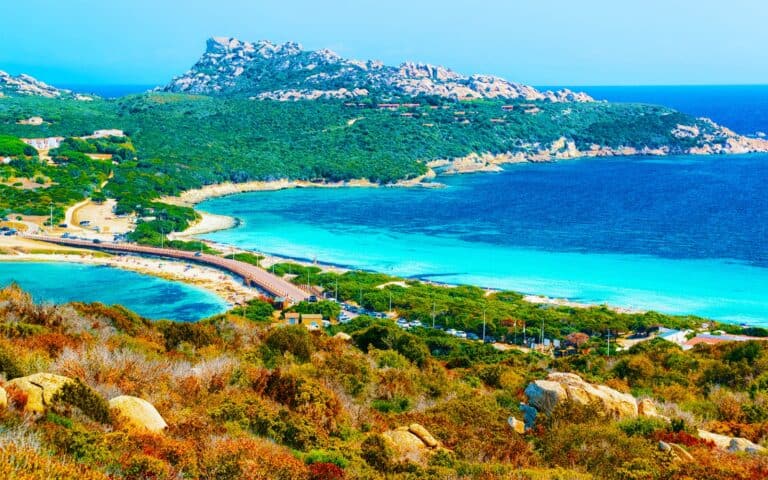
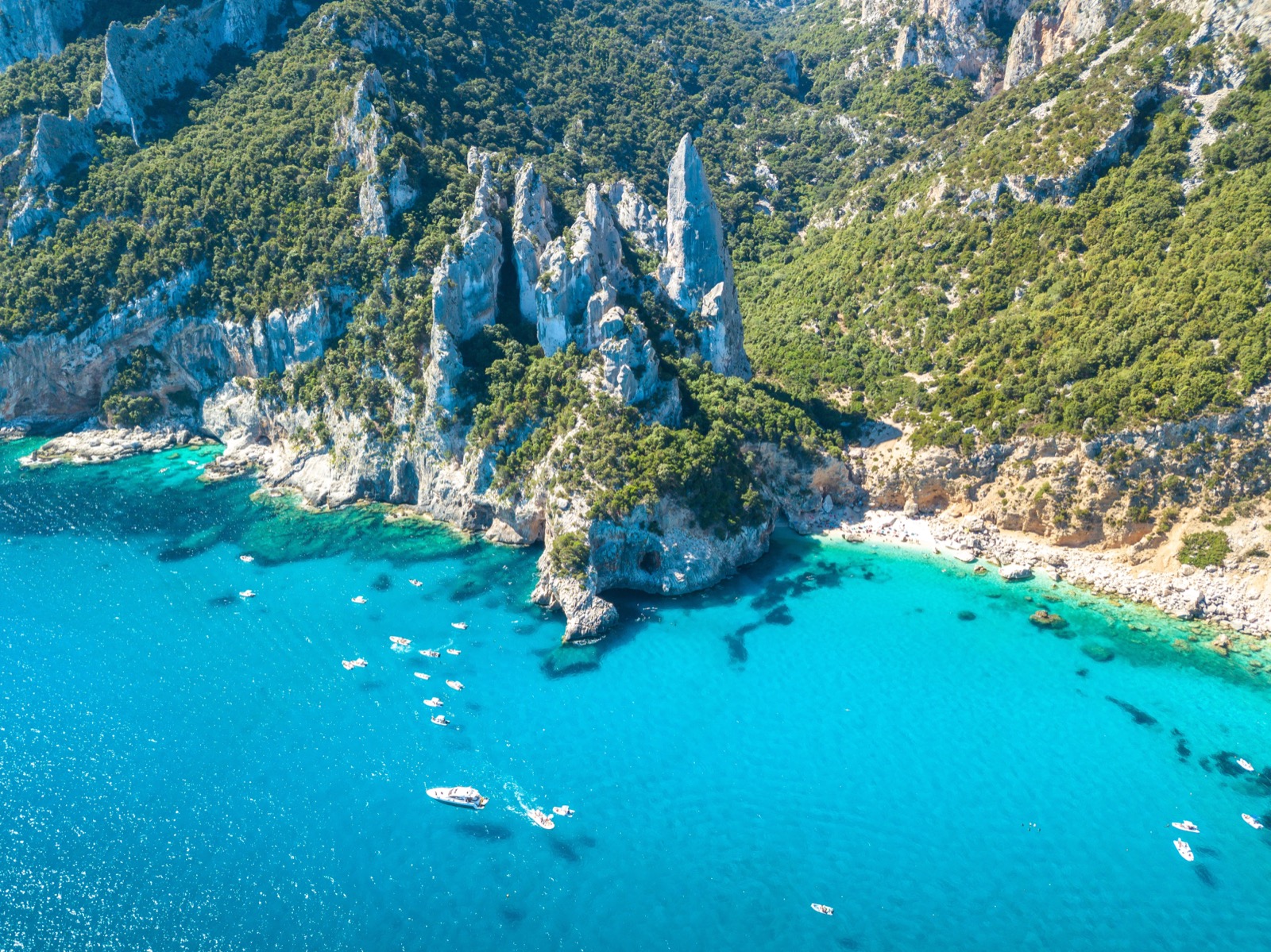
If you’re heading to Sardinia, Italy imagining you’ll simply drive right up to every beach, unfold your sun lounger and be done with it, I have to set the record straight from the start. The absolute most beautiful beaches and coves of eastern Sardinia — the ones that look like they were lifted from a Caribbean brochure rather than snapped in Europe — have to be earned. The Golfo di Orosei is fringed by wild limestone cliffs, and you can reach the vast majority of these spots only by sea or via a demanding trek through the mountains.
But it’s precisely this inaccessibility that makes the whole Ogliastra region and the neighbouring Supramonte range one of the most magical places in the entire Mediterranean. Sharp white cliffs plunge straight into impossibly turquoise water, the beaches are carpeted with tiny marble pebbles, and the air is heavy with the scent of wild rosemary and oleander. Travellers love this place so much that many return again and again — because there’s simply no way to explore all the caves and hidden lagoons in a single day.
In this guide you’ll find 10 tips on what to see and do in the Golfo di Orosei. We’ll look at iconic beaches like Cala Goloritzé and Cala Mariolu, I’ll help you make sense of the boat trips, we’ll peek at the best treks and, of course, we won’t skip the practical info on where to base yourself strategically and what to watch out for with bookings, which are absolutely essential during the summer season.
TL;DR
- Base for trips: The best starting point is the little port town of Cala Gonone, where boats set off daily. Another option is the mountain village of Baunei to the south.
- Getting to the beaches: Most coves (Cala Mariolu, Cala Luna, Cala Biriola) are reachable only by boat or, for fit hikers, by a tough trek from inland.
- Limited capacity: The prettiest beaches have strict daily caps. At Cala Goloritzé, for example, only 250 people are allowed at once and you must book your spot via the Heart of Sardinia app.
- When to go: June or September are ideal, when the sea is already pleasantly warm but you avoid the August madness (Ferragosto) and sky-high prices.
- Mind the wind: Boat trips are weather-dependent. If a strong mistral blows, the boats don’t sail at all, so build some slack into your itinerary.
The full destination guide: Sardinia — guide and what to see
When to visit the Golfo di Orosei and how to do the boat trips
The Golfo di Orosei is fairly unique in how completely everything here bends to the will of nature and the weather. The main tourist season runs from June to September, when temperatures climb well into the thirties and the water is beautifully warm for swimming. If you can, though, I’d strongly recommend avoiding August, when Italians take their nationwide holidays, the beaches are bursting at the seams and accommodation prices shoot through the roof. A far more pleasant experience awaits at the end of June or, ideally, in September, when the crowds have thinned out but the sea still holds a temperature of around 24 °C.
The absolute hub of all the action and the main port is the town of Cala Gonone, from which dozens of boats set off every morning. You can choose whether to join a large excursion boat or (if you’re up for it) rent your own little motorised dinghy, the so-called gommone. Whatever you decide, book your boat tickets or dinghy rental at least 48 hours in advance, because there may well be nothing left if you just turn up. Eastern Sardinia is said to be a touch more sheltered than the west, but even so you need to keep a close eye on the Windfinder app and watch the wind. When a strong mistral picks up, the waves rise and skippers cancel all sailings for safety reasons.
If you’re considering a trip outside the main season — from November to April — bear in mind that eastern Sardinia is a fairly remote area. Most restaurants, hotels and boat companies close down completely over winter and the whole region slips into a deep hibernation. That can be fine for sightseeing and the landmarks themselves, but if you’re dreaming of the sea and lively little cafés, definitely aim your trip at the summer or early-autumn months. You can check current information about the region on the official tourism site Sardegna Turismo.
Where to stay near the Golfo di Orosei
When planning a holiday in this area, picking the right base is absolutely crucial, because driving along the twisting local mountain roads eats up a surprising amount of time. The most practical choice is probably to stay right in Cala Gonone, where you’ll be just a few steps from the boats in the morning and can pop out for a great dinner in the evening. If you prefer views and don’t mind the commute, though, the mountain town of Baunei offers an incredibly authentic atmosphere and makes the ideal launch pad for all the hikes to the south of the gulf.
Eastern Sardinia is wild and remote, and out of season plenty of businesses close, so choose your base wisely. The most practical option is to settle in Cala Gonone — boats to the prettiest coves leave from here and you’ll be among the first at the sea each morning. Anyone craving authentic Sardinia can head a little way inland:
💑 For couples and gulf views: Hotel Costa Dorada (Cala Gonone) — palm-filled gardens above the Cala Gonone bay and views that keep travellers coming back.
👨👩👧 For families close to the beach: Parco Blu Club Resort (Cala Gonone) — a family resort with a pool just steps from the sea and a handy starting point for boat trips to the coves.
💰 For good value for money: Hotel Nuraghe Arvu (Cala Gonone) — a pleasant family-run hotel with its own garden a short walk from the beach, with reasonable rates even outside peak season.
✨ For a one-of-a-kind inland experience: Su Gologone Experience Hotel (Oliena) — the legendary art hotel beneath the Supramonte; authentic mountain Sardinia, yet only a short hop from the sea.
💡 One last tip: you can book most hotels through Booking.com with free cancellation, so you can reserve your favourite spot right away and decide later at your leisure. Just don’t wait too long — the most sought-after seaside addresses sell out for July and August up to six months ahead, and peak-season prices climb tens of percent higher.
The most beautiful coves of the Golfo di Orosei
Let’s finally take a look at the most beautiful coves of eastern Sardinia, the very reason everyone comes here. Each beach has its own unique character — and often its own specific rules that it pays to prepare for in advance, so you’re not caught out once you arrive.
1. Cala Goloritzé
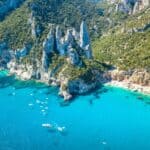
This place is a true gem and reputedly the most photographed beach in all of Sardinia. Cala Goloritzé even holds the title of World’s Best Beach for 2025, and once you see the photos you’ll understand why instantly. The cove is dominated by an incredible 100-metre rock pinnacle, Punta Caroddi, and a massive stone arch that curves right down into the sea. The most important thing to know about this beach, though, is that there’s a strict ban on motorboats coming ashore, so you can only reach it on foot or by swimming in from a boat.
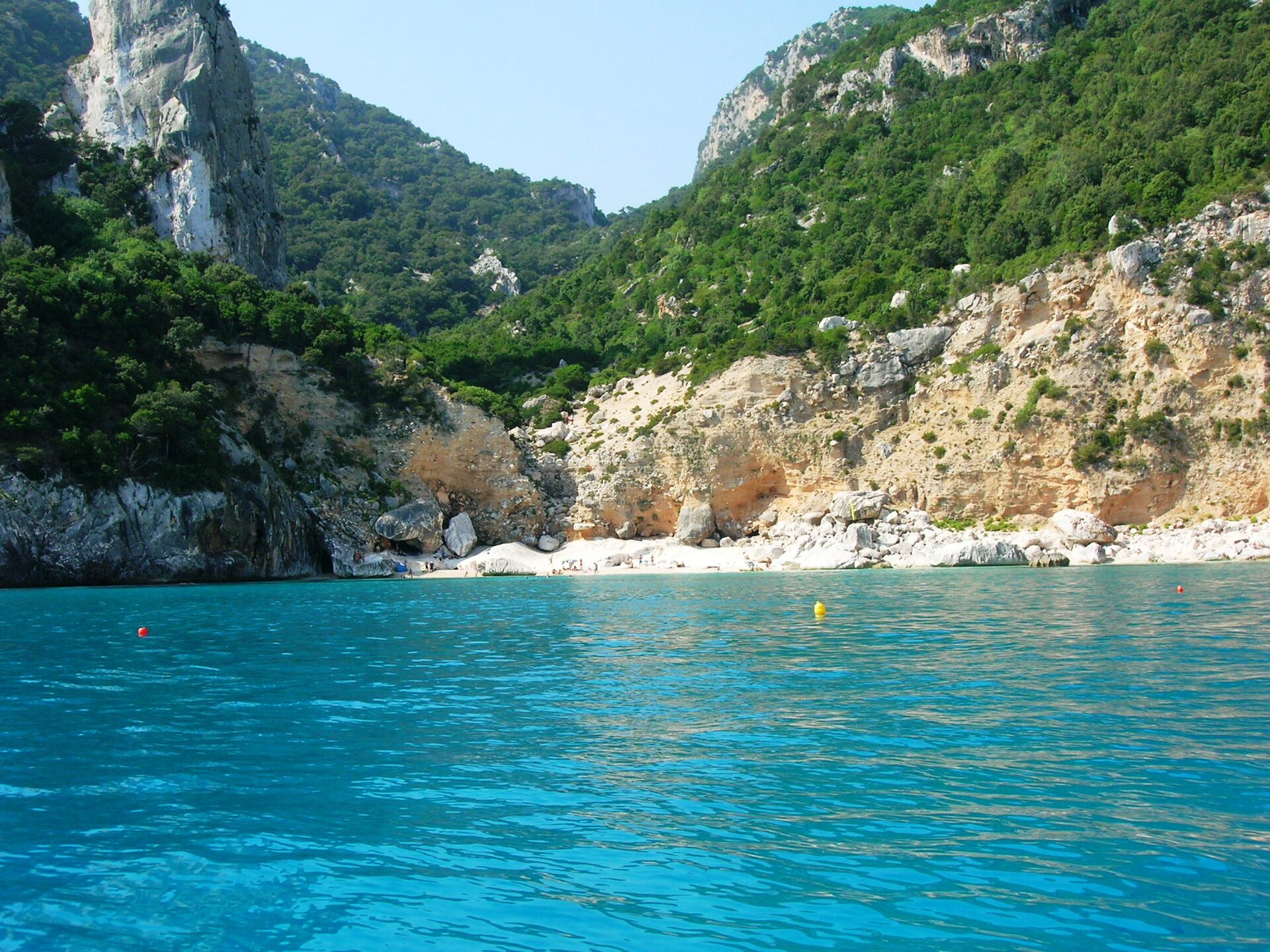
If you choose to walk, you’re in for roughly a one-and-a-half-hour descent from the Golgo plateau near the village of Baunei. The way down is fairly pleasant, but don’t forget you’ll then have to scramble all the way back up in the summer heat. Conservation comes first here, so for the current season expect a strict limit of 250 people at once. You have to reserve your spot no more than 72 hours in advance through the official Heart of Sardinia app, and entry costs €7. The trail itself is usually open only between 7:30 and 14:00, so make sure you get an early start.
2. Cala Mariolu
While Goloritzé lures you in with its cliffs, Cala Mariolu will utterly disarm you with the colour of its water. The combination of the limestone seabed and tiny pink-and-white pebbles creates a sea so unbelievably blue that, according to many travellers, it looks more like a giant natural swimming pool. The pebbles are also beautifully smoothed by the sea, so you can lie on them quite comfortably even without a thick mat.
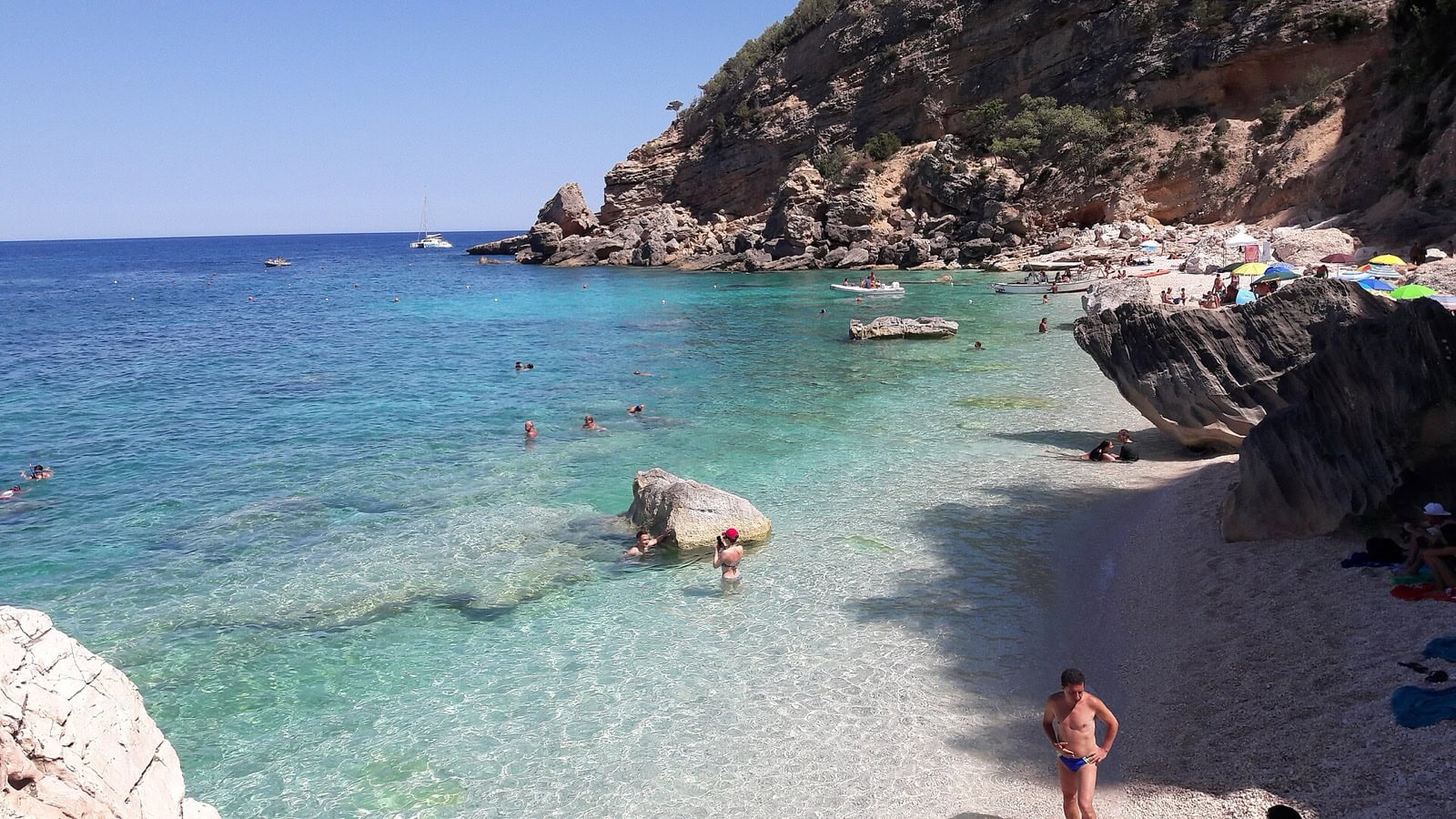
This beach is reached in the overwhelming majority of cases only by boat, and here too there are strict rules to protect the coastline. The daily limit is set at 700 visitors, and to access the beach you’ll need a special QR code, which carries a fee of around €1. This charge also applies to those who arrive under their own steam, so be sure to check the current rules and reservation requirements for the season on the official Cala Mariolu website.
3. Cala Luna
Cala Luna is probably the great classic of the whole gulf, and you’ll recognise it at first glance by the enormous sea caves lining the back of the beach. These caves offer blessed natural shade on hot summer days, which plenty of visitors are grateful for. Behind the beach there’s also an intriguing freshwater lagoon, surrounded by dense bushes of fragrant pink oleander.
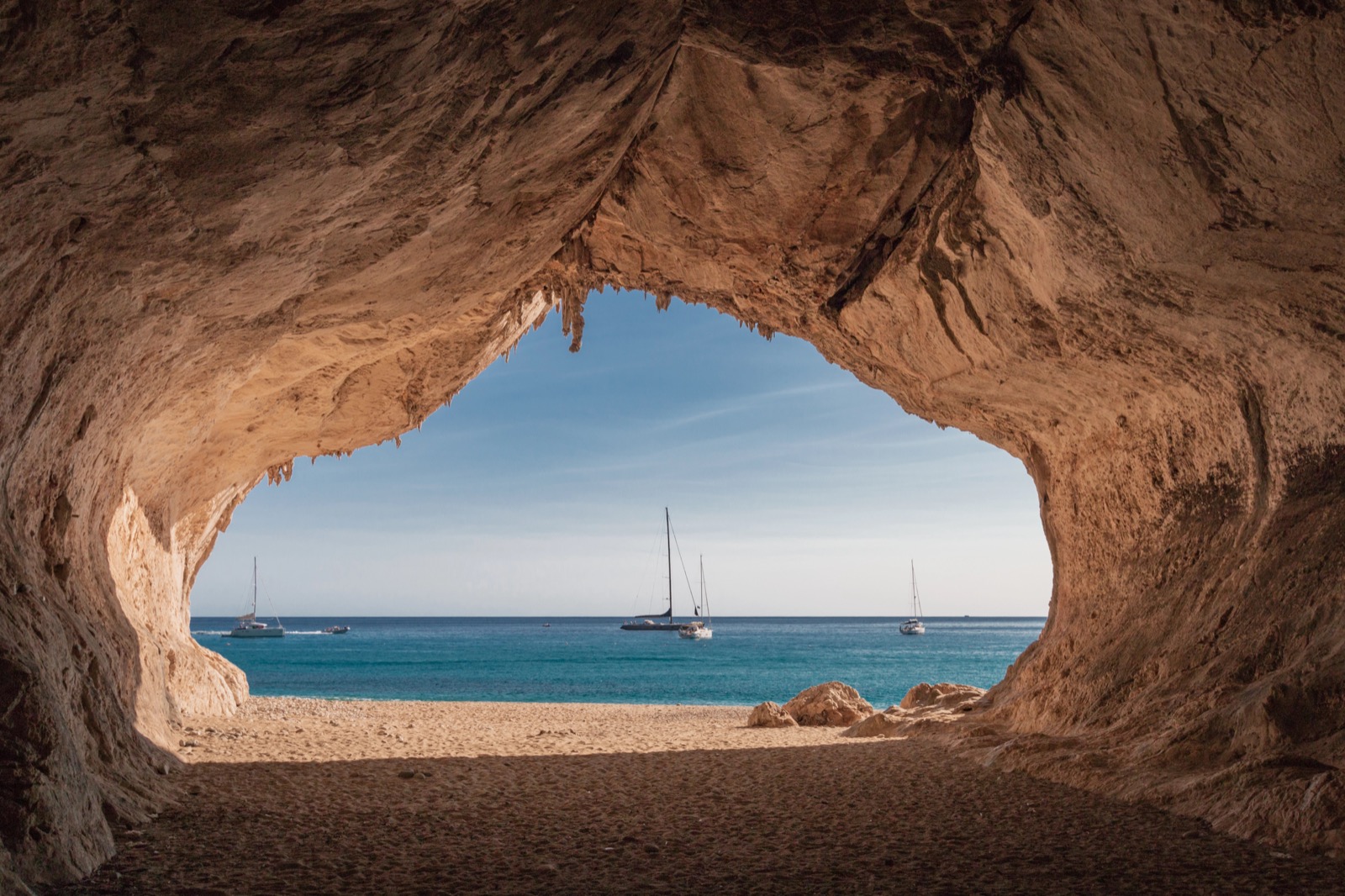
You can get here in two ways. The easier one is, of course, a boat ticket from Cala Gonone harbour, with boats shuttling back and forth several times a day. But if you love walking and have good sturdy footwear, you can set off on foot along the cliffs from Cala Fuili beach. The trek takes about two hours, offers stunning views over the whole coastline, and locals warmly recommend it to anyone who wants to combine a swim with a bit of active exercise.
4. Cala Gonone and Cala Fuili
Although Cala Gonone serves primarily as the tourist hub and the launch port for all the gulf sailings, you’ll also find a few lovely beaches right here that are perfect for relaxing days. The town has a really pleasant promenade, lots of excellent restaurants and a laid-back summer atmosphere. I just have to warn you that if you’re coming for a quick visit, set off really early in the morning, because the parking spaces by the harbour vanish at lightning speed.
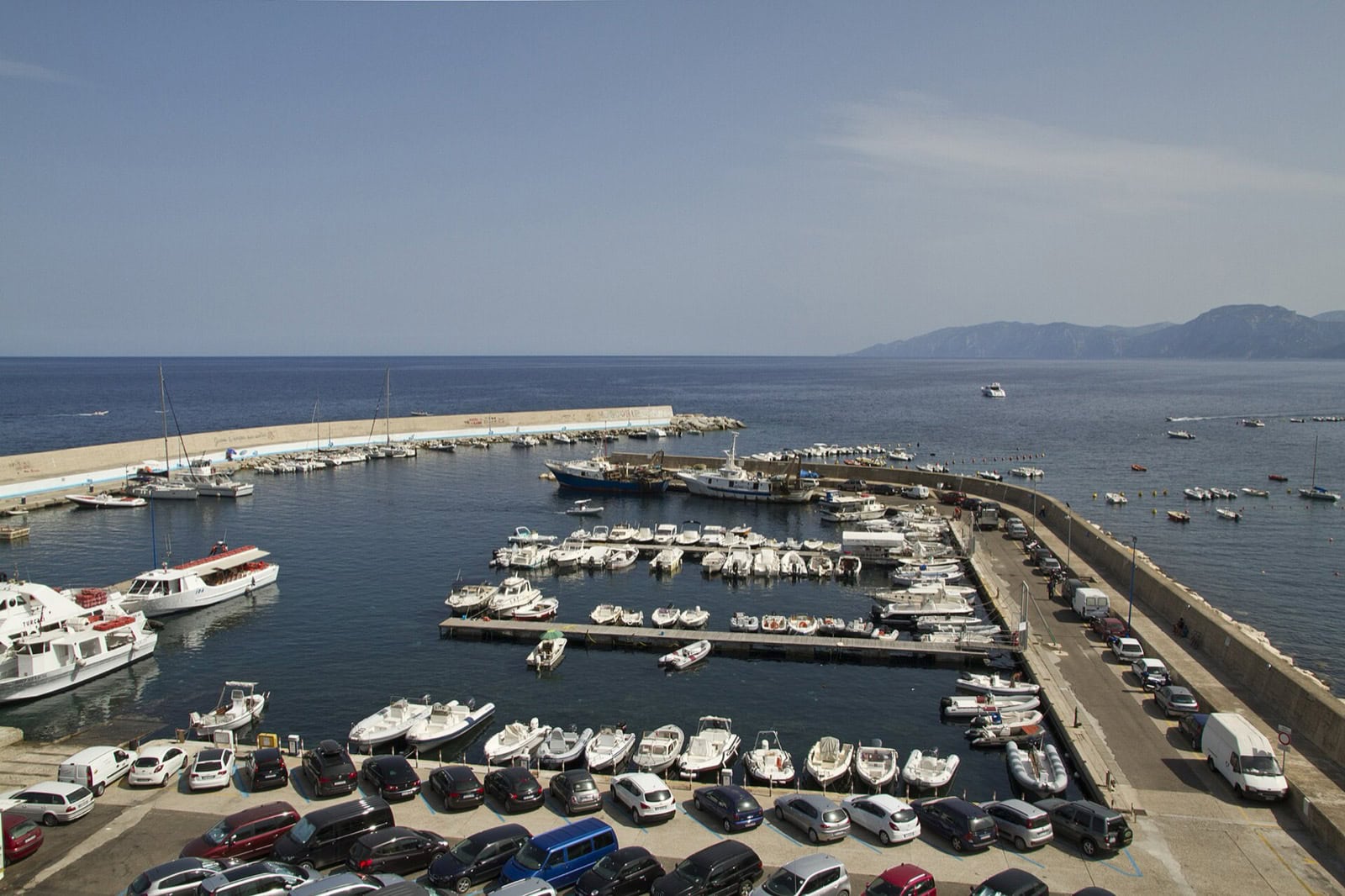
A short way south of the town lies the wonderful Cala Fuili cove, which has one huge advantage. As one of the very few in the entire Golfo di Orosei, it’s actually reachable by car. Just drive to the end of the asphalt road, park up (if you’re lucky enough to find a spot) and walk down the stone steps to the sea. The beach is on the smaller side and made up of larger stones, but the water here is absolutely crystal clear and framed by steep cliffs.
5. Cala Sisine
If you book a full-day boat tour around the gulf, Cala Sisine will almost certainly be one of your stops. Unlike the previous beaches, which tend to be narrow and hemmed in by cliffs, this cove is much wider and more spacious. It was formed at the end of a deep valley, and the beach is made up mostly of small light-coloured stones.
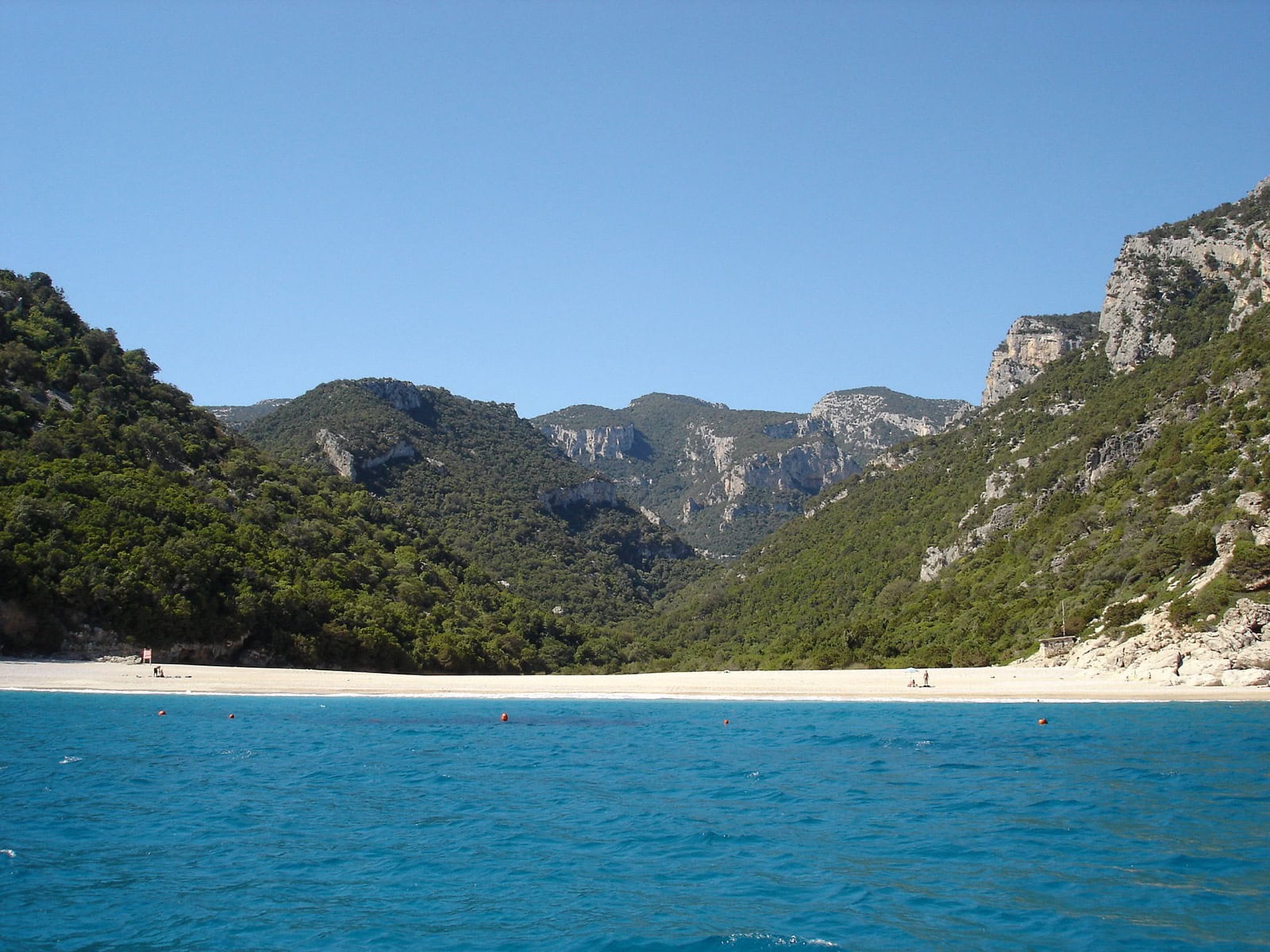
The great thing about Cala Sisine is that even in peak season it doesn’t feel as crowded as its more famous neighbours. There’s also a small bar behind the beach, where you can take cover from the sun and grab a chilled drink — something of an exceptional luxury at these remote coves. A trekking trail through the mountains leads here too, but be prepared for a long and physically fairly demanding walk.

6. Cala Biriola
Cala Biriola is something of an unassuming treasure in the northern part of the gulf. Above the narrow strip of pebble beach rise majestic cliffs densely covered with fragrant juniper and oak woodland. The contrast of deep green trees, white limestone rock and turquoise sea creates a scene you’ll want to spend hours just photographing.
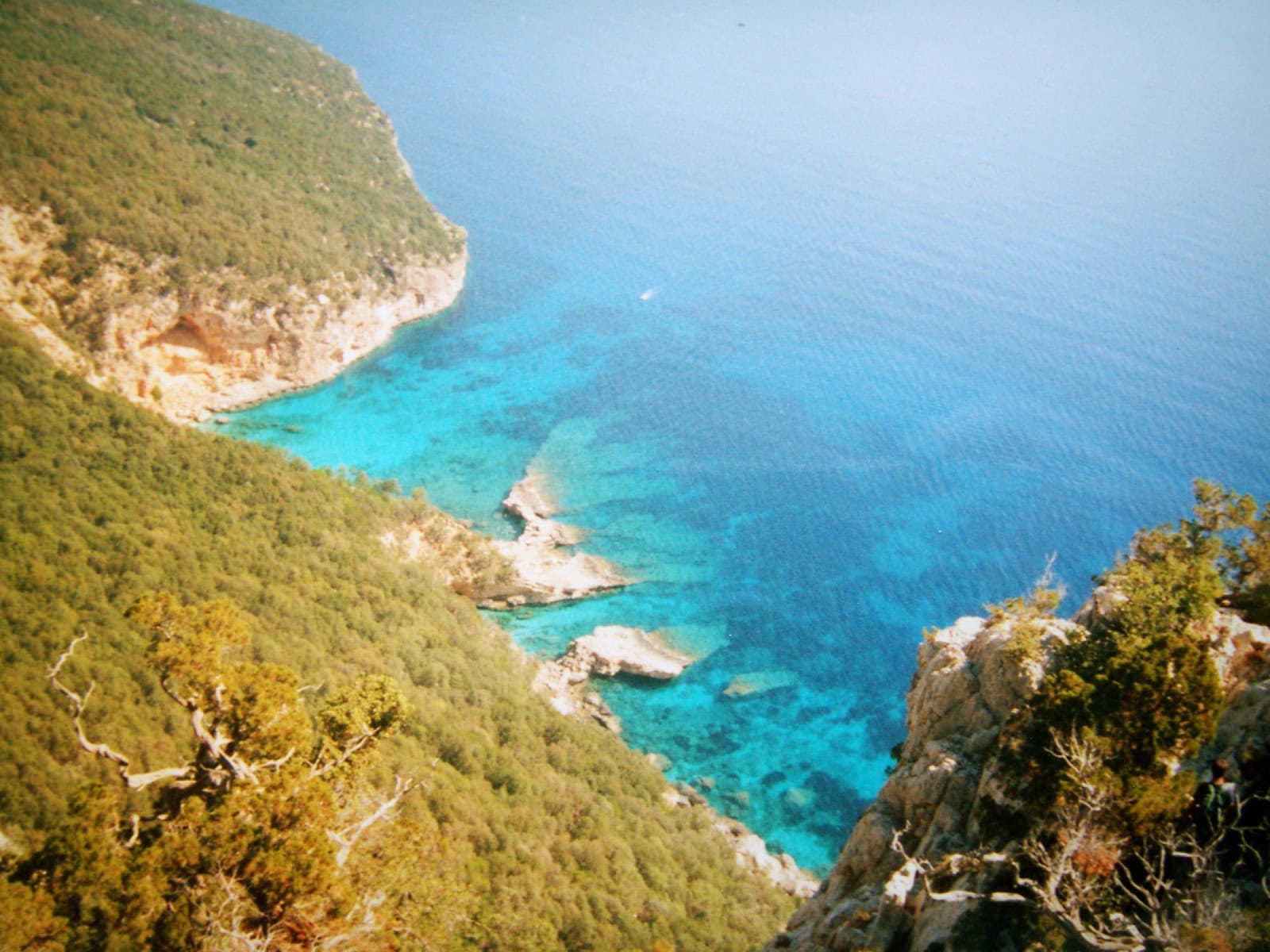
The water at Cala Biriola is often a little calmer, which makes it a fantastic spot for snorkelling. Beneath the surface hides a rugged seabed teeming with fish and marine life. As with the other beaches, the easiest access is by boat, and the beach is a popular stop for the smaller excursion boats.
The sea caves and canyons of the Supramonte
The area around the Golfo di Orosei isn’t just beaches, though. The entire interior is made up of the wild limestone Supramonte massif, which conceals some of the most remarkable geological formations in Italy. If you want a break from sunbathing on the beach, definitely set off to discover its fascinating cave systems and deep canyons.
7. Grotta del Bue Marino
This sprawling sea cave is wrapped in countless legends and, until quite recently, was home to rare monk seals, after which it ultimately took its name (Bue Marino translates as “sea ox”). The seals have sadly disappeared from here due to tourist traffic, but the cave itself remains an absolutely breathtaking experience.
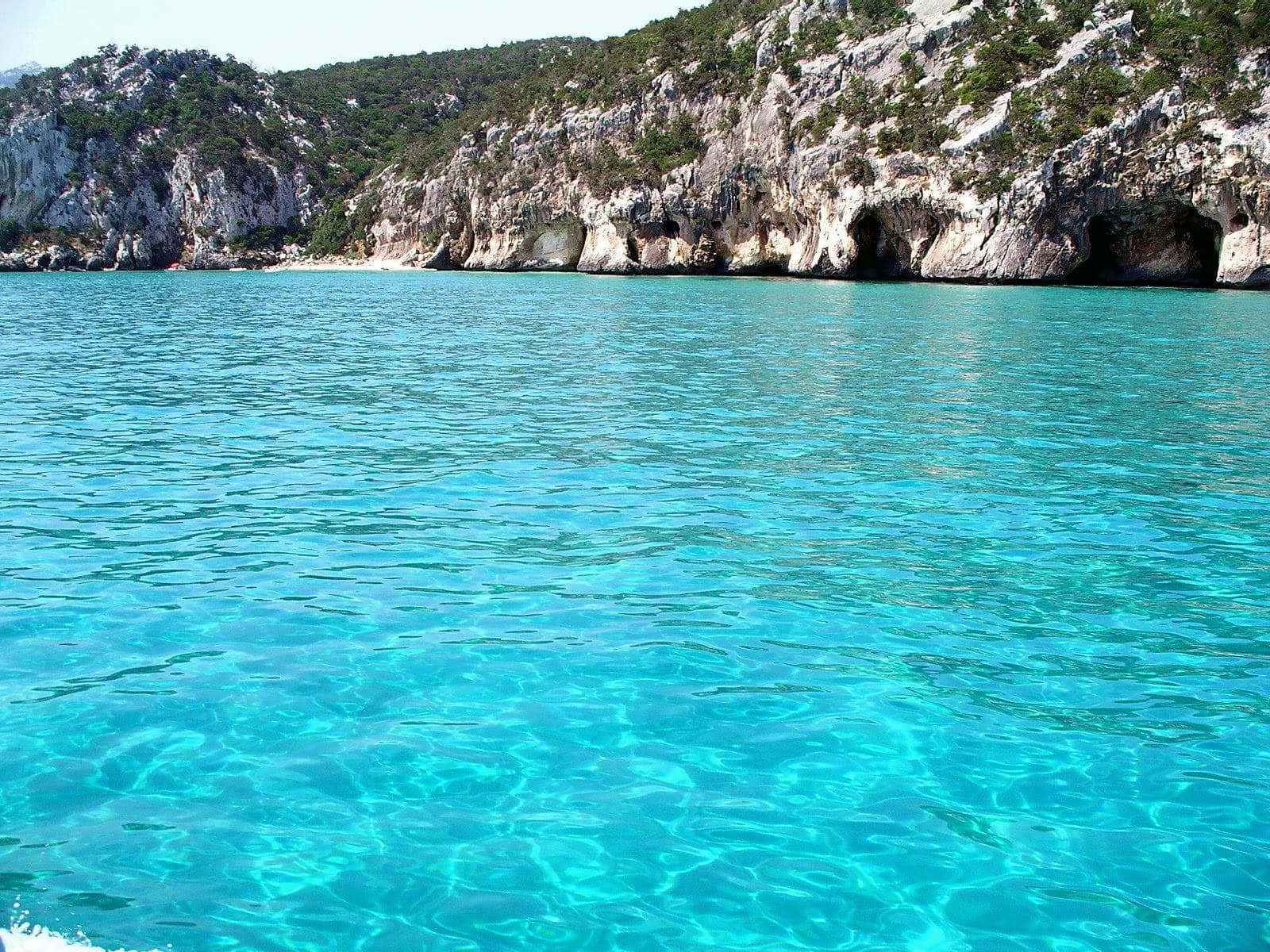
Inside, a captivating tour awaits through richly decorated chambers, where you can marvel at huge stalactites and underground pools. You can only reach the cave on an excursion boat from Cala Gonone, and the entry fee isn’t usually included in the basic boat ticket price, so don’t forget to bring some extra euros. I recommend checking tickets and current tour information on the official Cala Gonone website.
8. Gola Su Gorropu
It would be a sin to visit eastern Sardinia and skip one of the deepest canyons in all of Europe. Gola Su Gorropu is a vast cleft in the Supramonte massif, where sheer limestone walls rise to a staggering height of 500 metres. When you’re standing down on the canyon floor among the enormous white boulders, you feel utterly tiny next to that gigantic mass of rock.
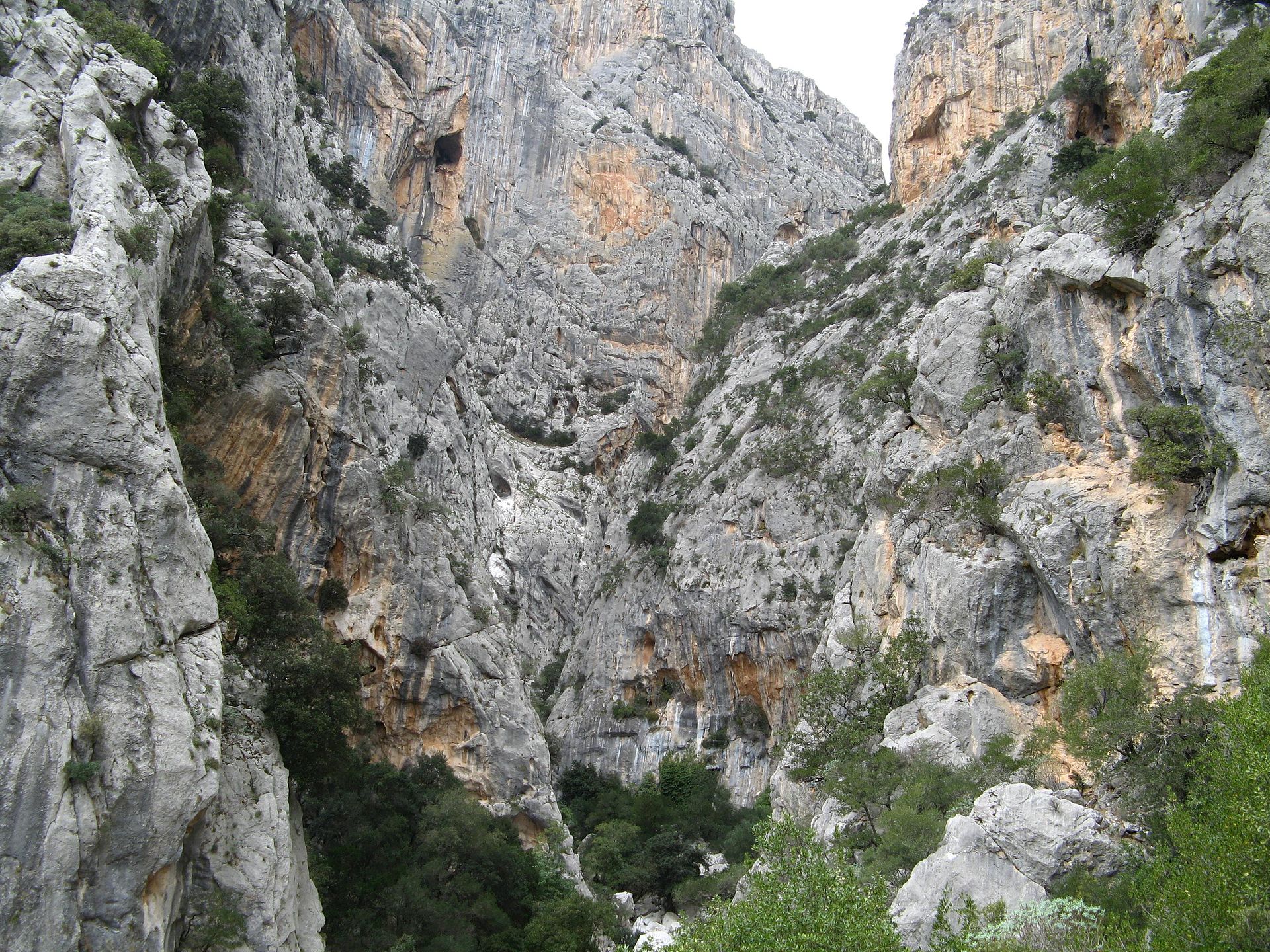
The trek into the canyon is an unforgettable experience, but be warned, it’s no walk in the park. To reach the entrance you have to descend a fairly steep, rocky trail, and moving around inside the canyon itself involves clambering over boulders. The whole area is managed by the excellent Cooperativa Gorropu, which charges an entry fee and whose guides will happily explain all the safety rules and geological highlights.
Treks and activities on the water
If you’re one of those active travellers who can’t lie still in one spot for long, the Golfo di Orosei offers so many experiences you won’t know where to start. From extreme multi-day expeditions to leisurely exploring the coast with a paddle in hand, this area is tailor-made for outdoor lovers.
💡 Tip: Tickets, boat trips and organised tours fill up fast in season, so it pays to buy them ahead online on GetYourGuide.
9. Selvaggio Blu
This one really is only for the most experienced. Selvaggio Blu — the “Wild Blue” trek — has a reputation as one of the most demanding treks in Europe. It’s a multi-day expedition running along the gulf’s steepest cliffs, and it’s certainly no tourist highway. The path often disappears entirely into dense scrub, navigation is extremely tricky, and on many sections you can’t manage without climbing gear and abseiling.
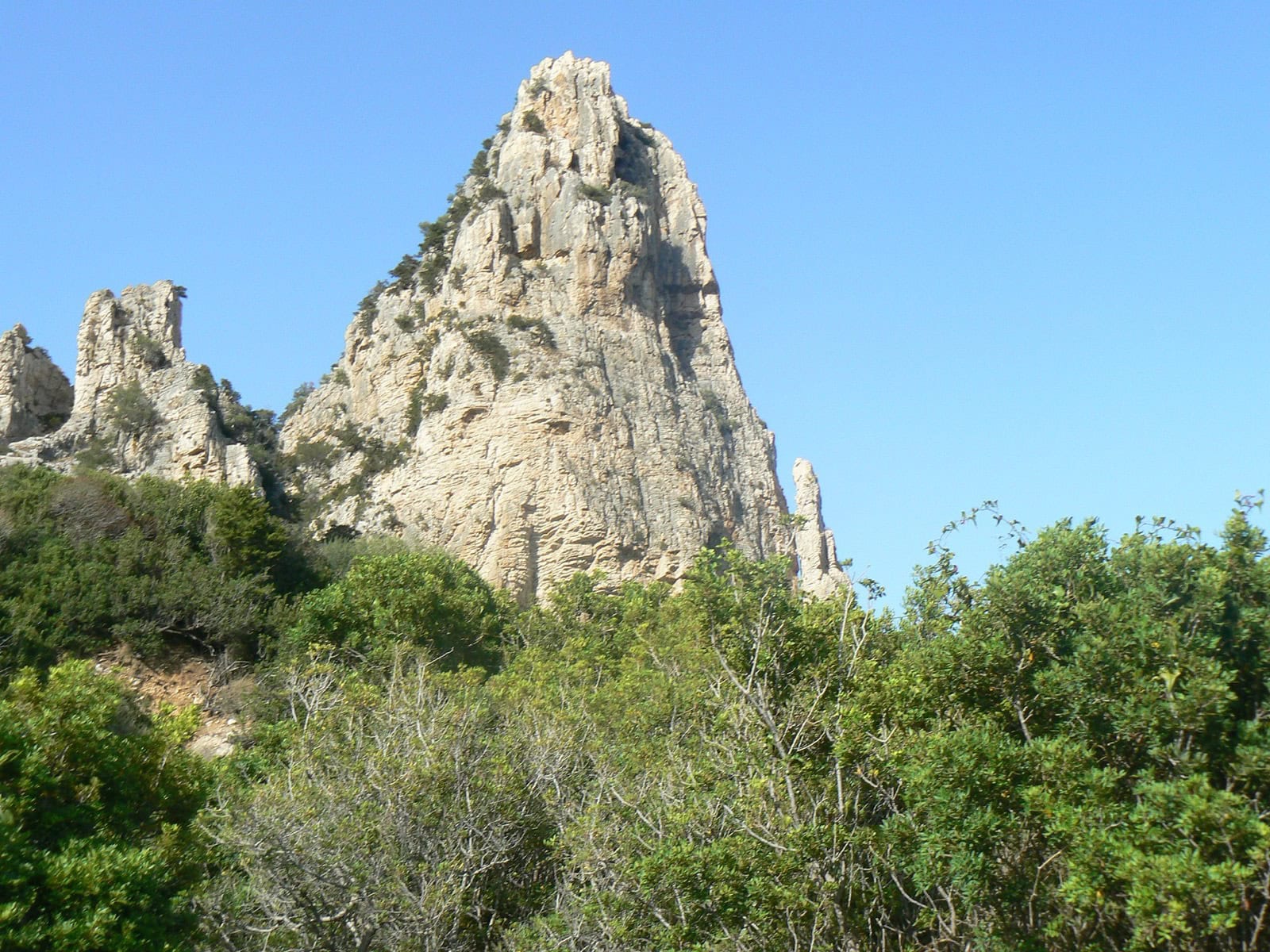
Tackling this adventure on your own amounts to an enormous risk, which is why this trek is done almost exclusively with experienced local guides, who know every rock and will sort out water supplies for you along the way — supplies that can’t be replenished anywhere in the mountains.
10. A boat trip or kayak around the whole gulf
For us mere mortals, though, by far the best way to explore is to rent a small rubber dinghy, which Italians call a gommone. For many of them you don’t even need a boat licence, and the rental places in the harbour will explain how to handle the dinghy in about ten minutes. Having your own boat gives you that incredible freedom to stop at the beaches early in the morning, before the giant excursion boats arrive, and to discover little hidden caves at your own pace.
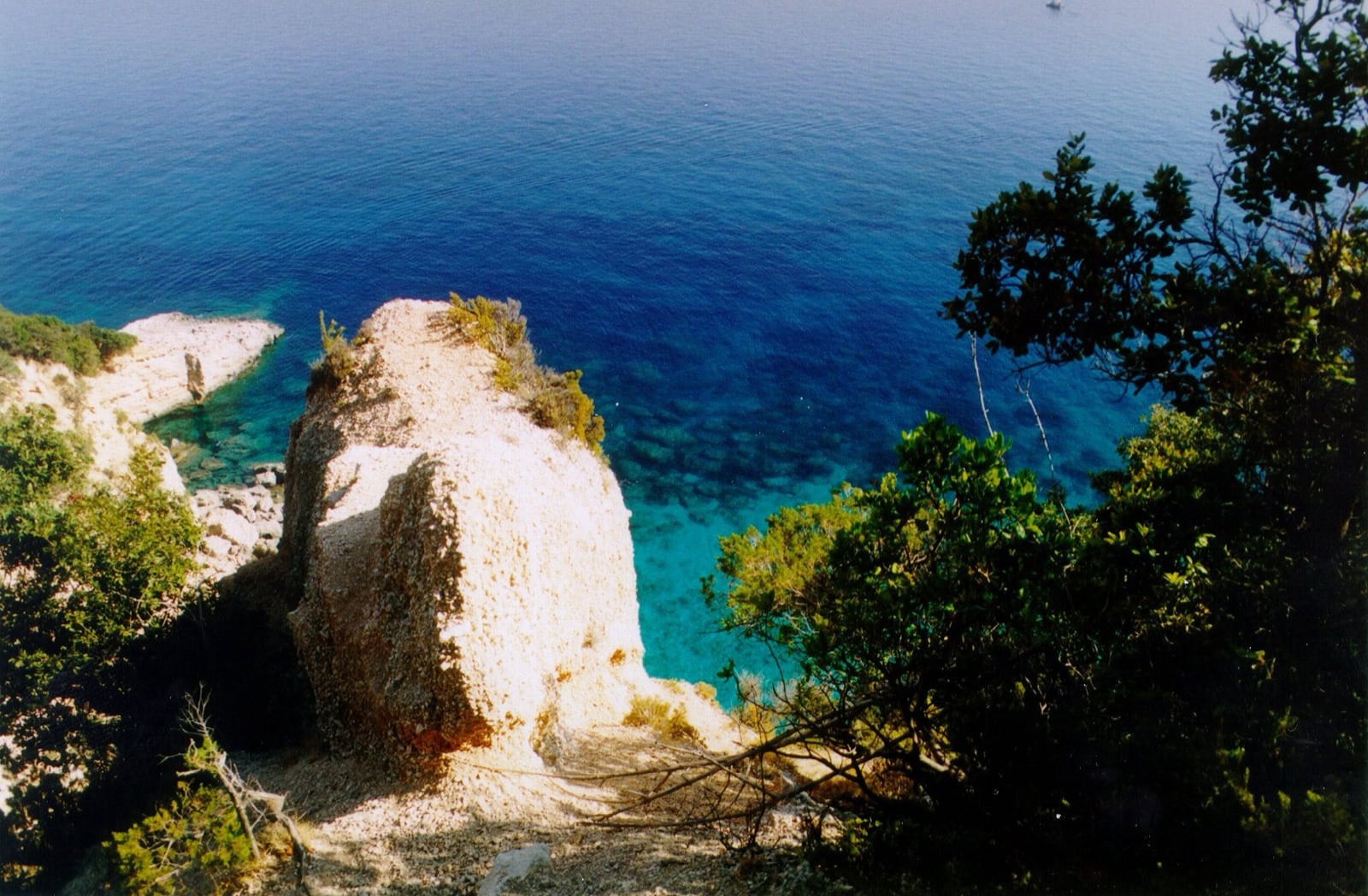
If you enjoy a workout and want to experience the coast in total silence, head out on a sea kayak. With a kayak you can slip into even the tightest sea caves, where motorboats simply won’t fit. You just need to pace yourself and remember that strong sea currents can form along the cliffs.
What to taste in Ogliastra
Sardinian cuisine in the interior and mountain areas is very different from what you might expect of a Mediterranean island. It’s a traditional shepherds’ cuisine, built on simple ingredients, strong cheeses and local vegetables. If you find yourself here, the traditional culurgiones are an absolute must. These are beautifully hand-pleated pasta parcels, filled with a mixture of potatoes, sharp pecorino cheese and fresh mint. It might sound unusual, but it tastes absolutely fantastic.
With every meal you’ll be brought pane carasau, an extremely thin, crispy shepherds’ bread that stays fresh for months on end. To finish, don’t miss the dessert called seadas — large fried pasta parcels filled with fresh cheese, generously drizzled while still warm with bittersweet strawberry-tree honey. And what to wash it all down with? Locals swear by their full-bodied red Cannonau wine, which they claim is the elixir of their famed longevity.
Although eastern Sardinia is known more for its mountain cooking — such as the classic roast suckling pig (porceddu) or all manner of cured meats — in the port towns you’ll naturally come across classic seaside dishes too. A traditional coastal speciality is bottarga, for instance, the dried roe of grey mullet used to flavour pasta, or fregola with a rich seafood sauce.
Where to next
If you’ve already mapped out the Gulf of Orosei and are wondering where to point your steps next in Sardinia, be sure to check out our other guides to help with your planning:
💡 Keep exploring Sardinia: the main Sardinia guide, the most beautiful beaches, Costa Smeralda, La Maddalena.
Frequently asked questions
Which are the most beautiful bays in Golfo di Orosei?
Among the absolutely most beautiful and famous are Cala Goloritzé with its iconic rock needle, the pebbly Cala Mariolu with incredibly blue water, and Cala Luna, which is adorned with massive sea caves right on the beach. Definitely worth seeing are also Cala Biriola or the more easily accessible Cala Fuili.
How to get to Cala Goloritzé?
There is a strict ban on boats entering this beach. You can either swim here from a boat anchored at a permitted distance, or take a hiking trek from the Golgo plateau above the village of Baunei. The way down takes about an hour and a half, and to enter you must book a spot in advance through the Heart of Sardinia app.
Do I need a boat for the beaches in Golfo di Orosei?
Yes, to most of the most beautiful beaches. Coves like Cala Mariolu, Cala Sisine or Cala Biriola are surrounded by steep mountains and the best, and often the only practical way to reach them, is by sea. An exception is, for example, Cala Fuili, which you can reach by car.
Where to book a boat trip around Golfo di Orosei?
The main hub for all boat trips is the port town of Cala Gonone. You can arrange tickets for large excursion boats as well as rentals of small motorboats directly at the booths by the harbor, but during summer season I recommend making a reservation at least 48 hours in advance online.
Is Cala Luna accessible on foot?
Yes, you can reach Cala Luna on foot. You’ll find the trailhead at Cala Fuili beach (just outside Cala Gonone) and the trek takes approximately two hours one way. The path runs along the cliffs and offers stunning views, but requires sturdy footwear and plenty of water.
What is the Su Gorropu Canyon?
Gola Su Gorropu is a massive limestone gorge in the Supramonte mountains and ranks among the deepest canyons in Europe, with its walls reaching heights of up to 500 meters. It’s a popular hiking destination that you should set aside most of the day for.
Where to stay for trips to Golfo di Orosei?
Strategically, the best location is the port of Cala Gonone, from where all the boats depart every morning and you’ll find all the tourist facilities. If you prefer a more authentic experience high in the mountains and are planning mostly hiking treks, the village of Baunei is an excellent choice.
Tips and Tricks for Your Vacation
Don’t Overpay for Flights
Search for flights on Kayak. It’s our favorite search engine because it scans the websites of all airlines and always finds the cheapest connection.
Book Your Accommodation Smartly
The best experiences we’ve had when looking for accommodation (from Alaska to Morocco) are with Booking.com, where hotels, apartments, and entire houses are usually the cheapest and most widely available.
 🚗 Car rental on the roadVerified rental cars in Sardinia
Search with the DiscoverCars comparison engine — it compares prices from dozens of local and international rental companies, and most bookings come with free cancellation.
Compare car prices in Sardinia →Don’t Forget Travel Insurance
Good travel insurance will protect you against illness, accidents, theft, or flight cancellations. We’ve had a few hospital visits abroad, so we know how important it is to have proper insurance arranged.
Where we insure ourselves: SafetyWing (simple monthly subscription) and TrueTraveller (for extra-long trips).
Find the Best Experiences
Get Your Guide is a huge online marketplace where you can book guided walks, trips, skip-the-line tickets, tours, and much more. We always find some extra fun there!