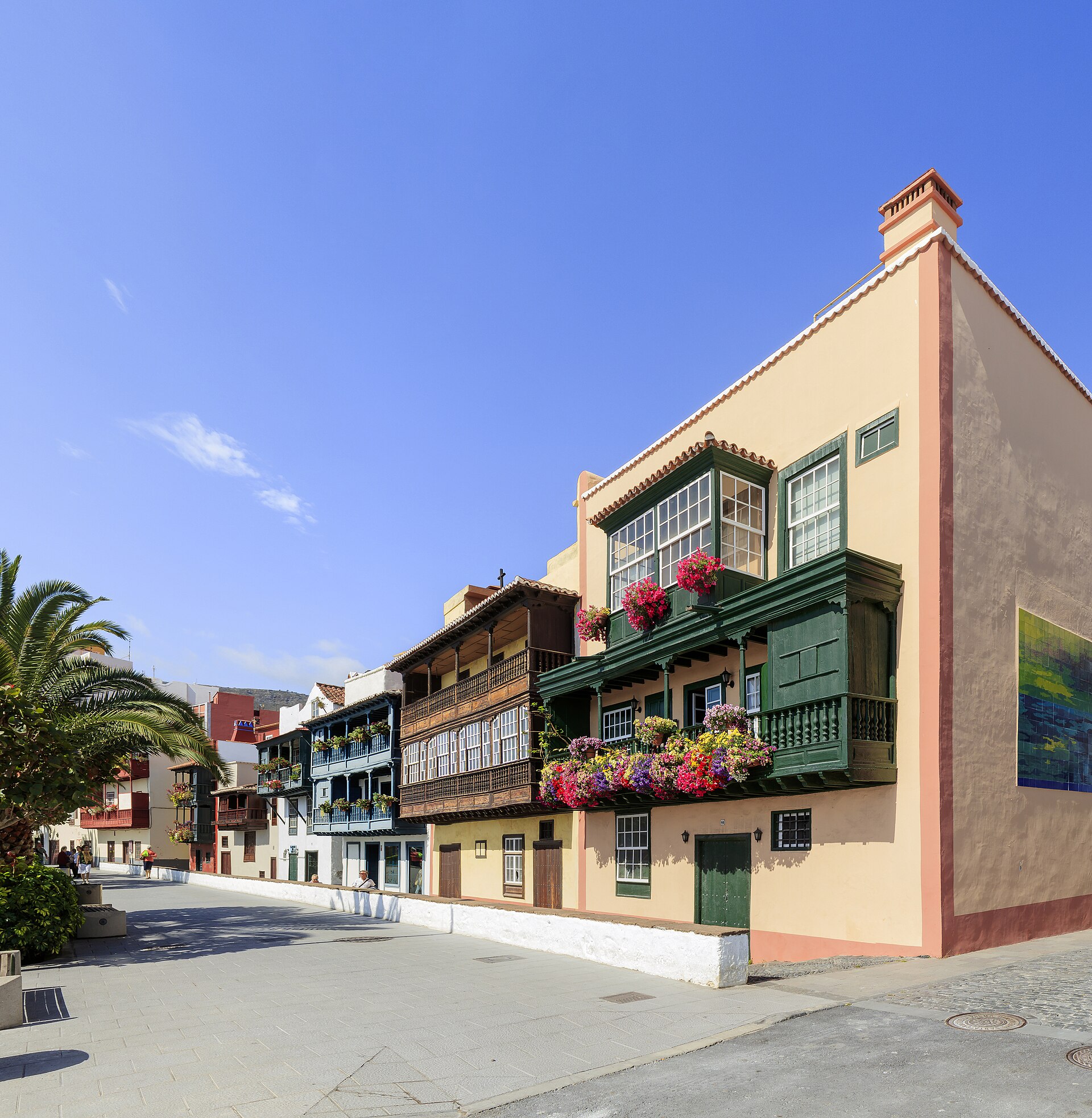
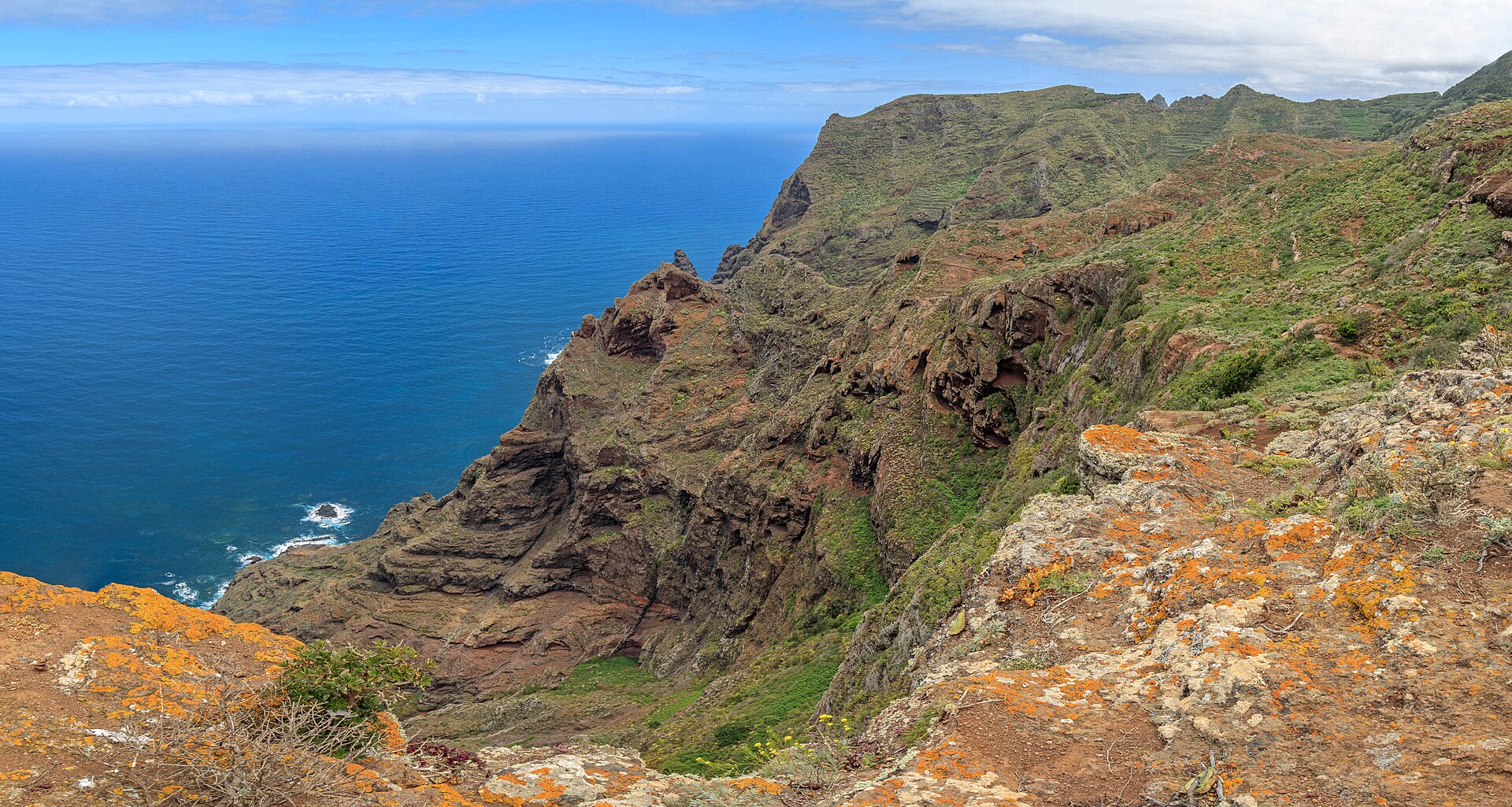
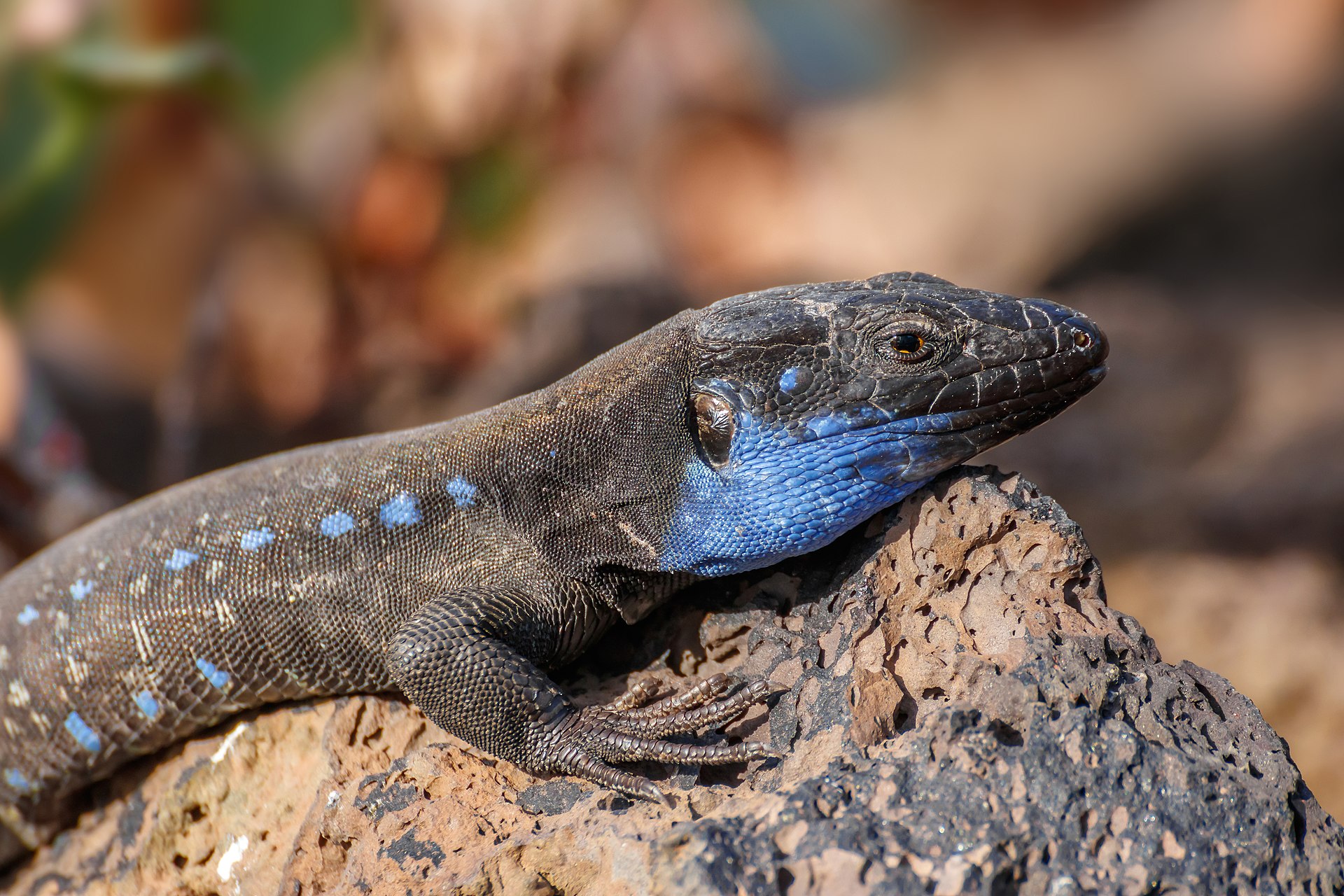
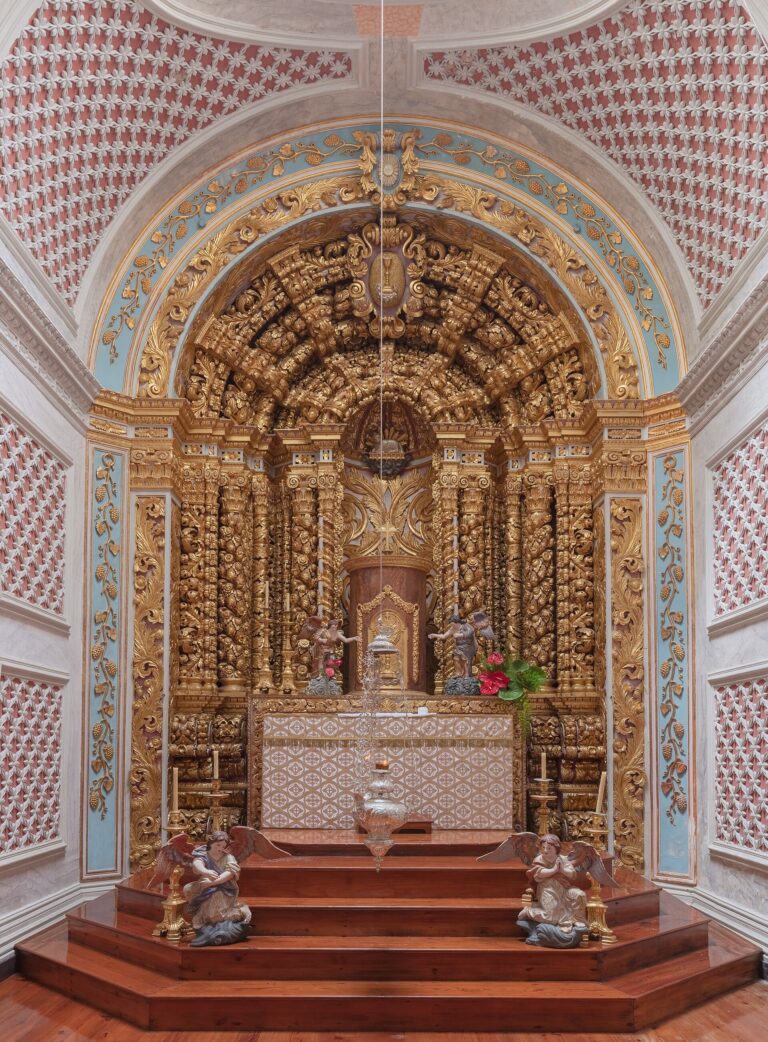
TL;DRTenerife and Gran Canaria are the best pick for a first trip to the Canary Islands, thanks to a solid mix of beaches, mountains and infrastructure – Tenerife has the Teide volcano (3,718 m) and that contrast between the green north and sunny south, while Gran Canaria works like a “mini continent”, with the Maspalomas dunes and the city of Las Palmas. Fuerteventura wins on beaches and watersports, with steady wind and endless stretches of sand like Jandía and El Cotillo, while Lanzarote draws you in with the volcanic scenery of Timanfaya and César Manrique’s architecture. Three to seven days is the ideal stretch on any one island, temperatures sit between 20 and 28°C year-round, and ferries from Fred Olsen and Naviera Armas link the islands – Fuerteventura to Lanzarote, for instance, takes 25 minutes and starts at €20.
Picture this: mainland Europe is shivering under a grey blanket of clouds, but you’re strolling along a beach in a light t-shirt, soaking up the sun. The Canary Islands are exactly that kind of seemingly unattainable paradise — and yet they’re only about four and a half hours’ flight from London. While politically and culturally they’re very much a part of Spain, geologically the archipelago rises from the African continental shelf and lives by its own rhythm of eternal spring. If you’re thinking about where to escape for some winter warmth, you’ll face one crucial decision, because each of the seven main islands has an entirely different DNA. You could stand on the rim of a smoking volcano on Tenerife, push through a mystical cloud forest on La Gomera, tame Saharan winds on a board off the coast of Fuerteventura, or lose yourself in the cosmopolitan crowd of digital nomads on Gran Canaria.
In this guide, we’ll help you figure out which island is the perfect match for your holiday. We’ll explore the most beautiful beaches, break down the logistics of island-hopping, and unravel the quirks of the local microclimates. You’ll find tips on where to stay strategically and what to watch out for, so you can make the most of your island escape without any unnecessary stress.
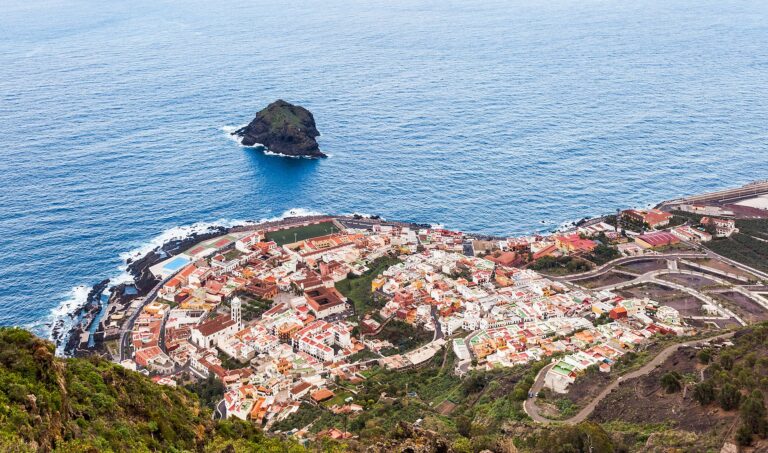
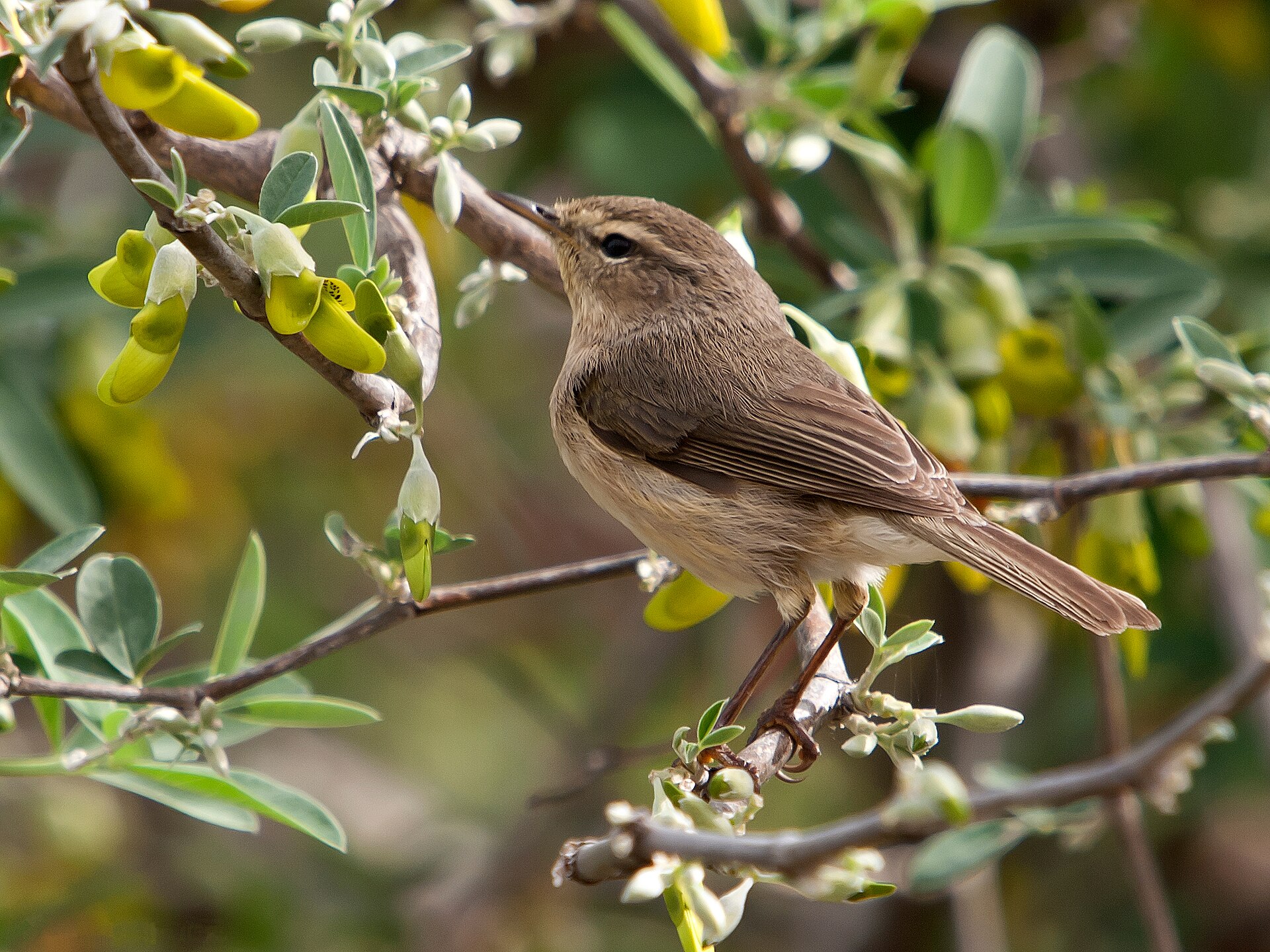
Photo: Diego Delso / Wikimedia Commons, CC BY-SA 3.0
TL;DR
Tenerife is an island of contrasts: It offers a lush green north steeped in colonial history, a sun-drenched south for beach lovers, and the majestic Mount Teide volcano right in the middle — with strict rules for reaching the summit.
Gran Canaria is like a miniature continent: Within a single hour’s drive, you can swap the sand dunes of Maspalomas for cool pine forests and the buzzing metropolis of Las Palmas.
Lanzarote feels like another planet: A mesmerising volcanic landscape free of high-rise buildings blends with the unique architecture of César Manrique and outstanding wine grown in volcanic ash.
Fuerteventura is the kingdom of wind and sand: Home to hands-down the most stunning and longest beaches in the entire archipelago, beloved by surfers and water sports enthusiasts from around the globe.
La Palma and La Gomera are oases of calm: These green gems on the edge of the archipelago lure visitors with challenging treks, cloud forests, and starlit skies — all without mass tourism.
Ferries are fast and efficient: Fred Olsen and Naviera Armas operate between islands, with the crossing from Fuerteventura to Lanzarote taking just 25 minutes.
Don’t try to cram in too many islands: During a single week, focus on one main island and perhaps add a quick day trip to a neighbouring one.
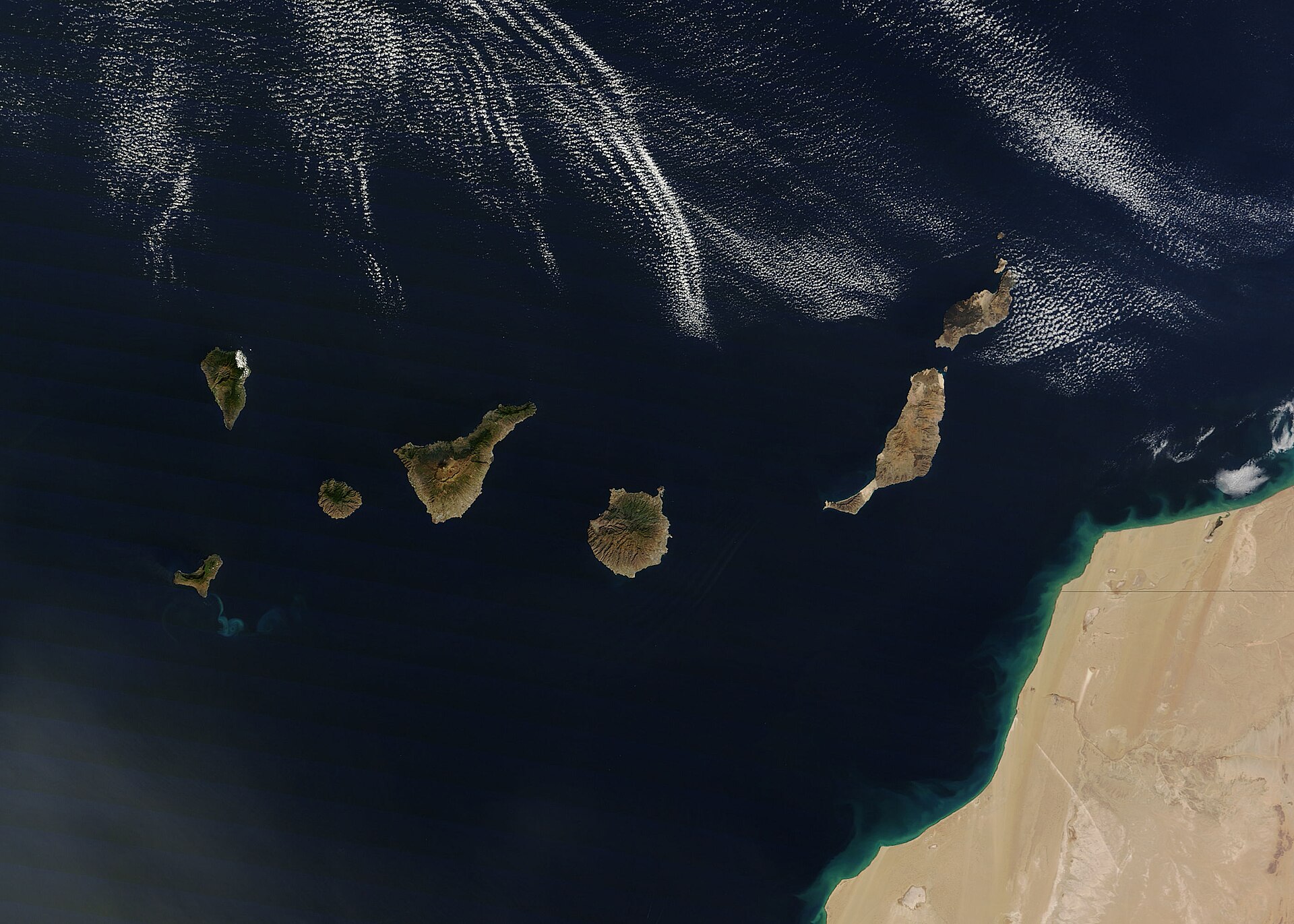
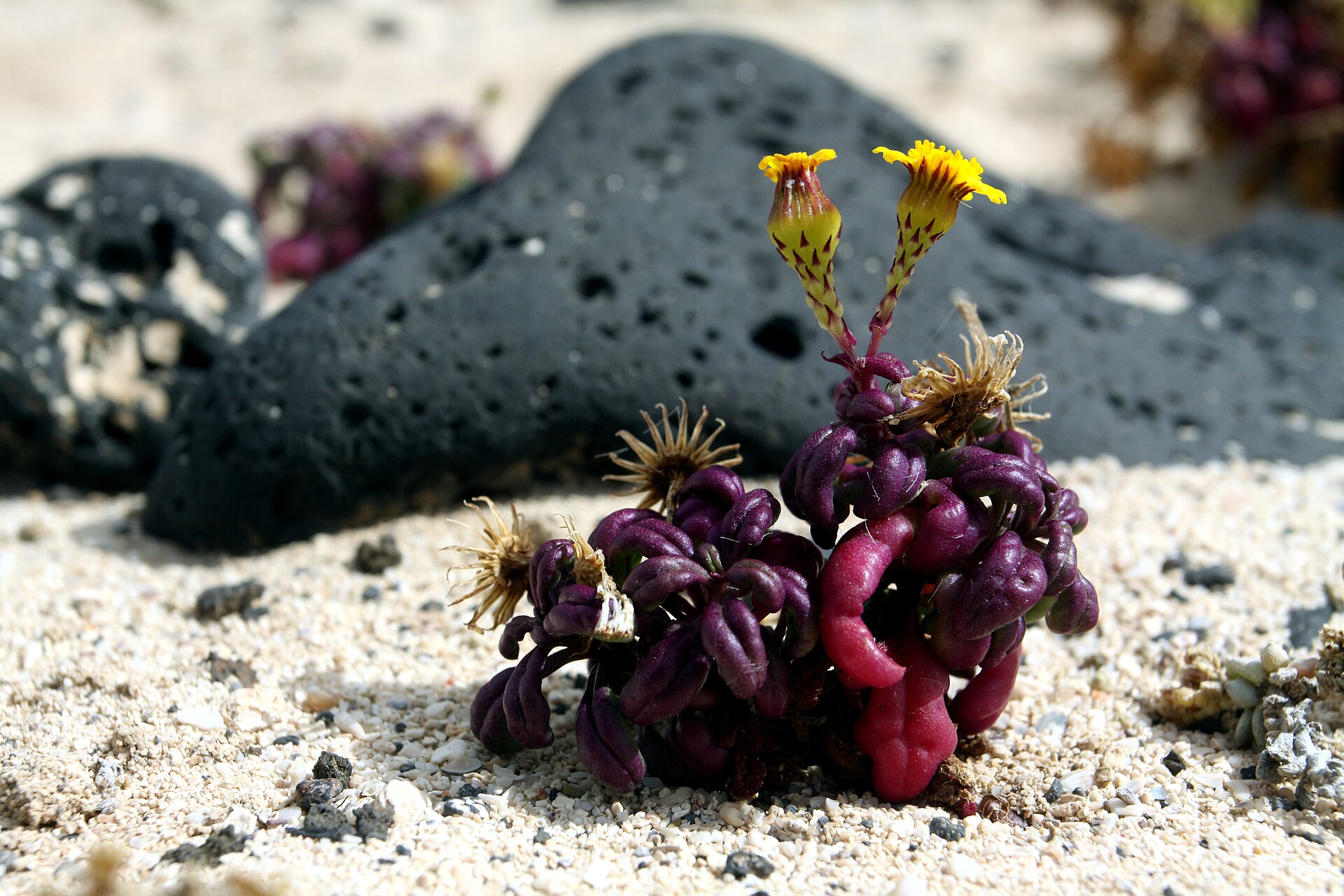
Photo: NASA Goddard Space Flight Center from Greenbelt, MD, USA / Wikimedia Commons, Public domain
You can visit the Canary Islands any of the twelve months of the year with a clear conscience — there’s simply no dead season here. Air temperatures hover in a wonderfully comfortable range of 20–28 °C year-round, making these islands the only truly reliable winter sun destination on the European continent. The winter months around January and February are the absolute peak for visitors fleeing the European cold. Bear in mind, though, that flight and accommodation prices shoot up steeply during this period.
Interestingly, even the summer months are surprisingly pleasant on the islands. Thanks to cooling ocean currents and constant trade winds, you’ll rarely experience the scorching 40 °C heatwaves that regularly paralyse mainland Andalusia in August. The ocean temperature stays at a swimmable 18–24 °C even in the coldest winter months, so hardier souls can take a dip at any time of year.
When planning your trip, you also need to factor in the specific microclimates of individual islands, which can be quite deceptive. As a general rule, the south side of each island is always sunnier and drier, while the northern coasts are often shrouded in clouds and receive more rainfall. This contrast is most striking on Tenerife and Gran Canaria, where a half-hour drive can mean a difference of ten degrees Celsius.
Photo: Richtr Jan / Wikimedia Commons, CC BY-SA 4.0
Where to Stay in the Canary Islands
💡 Accommodation & experiences tip: We love searching for places to stay on Booking.com, which typically offers the best cancellation policies. For tickets, tours, and activities, it’s worth comparing options on GetYourGuide.
Choosing the right location for your accommodation is absolutely key and depends entirely on which island and what atmosphere you’re after. If you’re heading to Tenerife for sunshine and carefree relaxation, pick a resort on the south coast such as Costa Adeje, where you’ll find excellent tourist infrastructure. For lovers of authentic character and history, I’d recommend the green north around Puerto de la Cruz or the university town of La Laguna — the boutique hotels here have incredible charm.
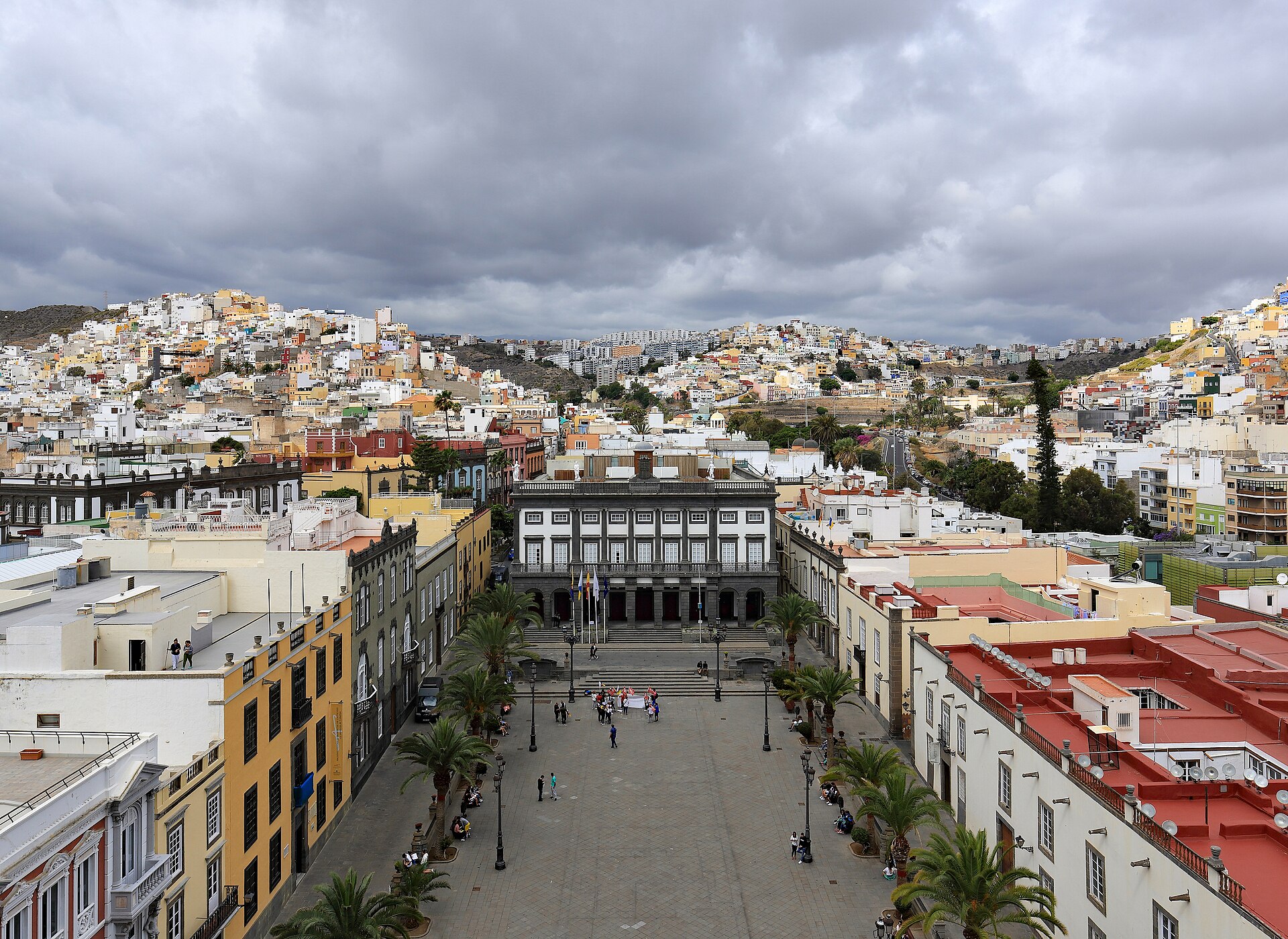
On Gran Canaria, most beach resorts cluster at the far south around the breathtaking Maspalomas dunes and the Meloneras resort area. But if you’re working remotely as a digital nomad or craving a city buzz, the capital Las Palmas on the north coast is the obvious choice. Lanzarote offers a more tranquil vibe, with lovely accommodation in whitewashed houses around the Playa Blanca resort. On Fuerteventura, surfers flock north to the town of Corralejo, while the south around the Jandía peninsula boasts some of the most luxurious beach resorts.
Always book your accommodation well in advance via Booking.com, as the best hotels vanish incredibly quickly during winter season. A wonderful experience on Tenerife is the historic Iberostar Heritage Grand Mencey hotel, which transports you back to the era of colonial luxury. On Gran Canaria, the architecturally striking Lopesan Baobab Resort with its African inspiration stands out, and on Lanzarote, the Princesa Yaiza Suite Hotel Resort with its perfect beach access will enchant you.
Photo: Juan Emilio from Las Palmas de Gran Canaria, España / Wikimedia Commons, CC BY-SA 2.0
12 Tips: Which Canary Island to Choose and What to Do
Let’s take a detailed look at what each island has to offer and which spots you absolutely shouldn’t miss. I’ll guide you to the best beaches, explain how transport works, and help you pick the perfect destination to suit your style.
Photo: Chmee2 / Wikimedia Commons, CC BY-SA 3.0
1. Tenerife: Climbing the Majestic Mount Teide
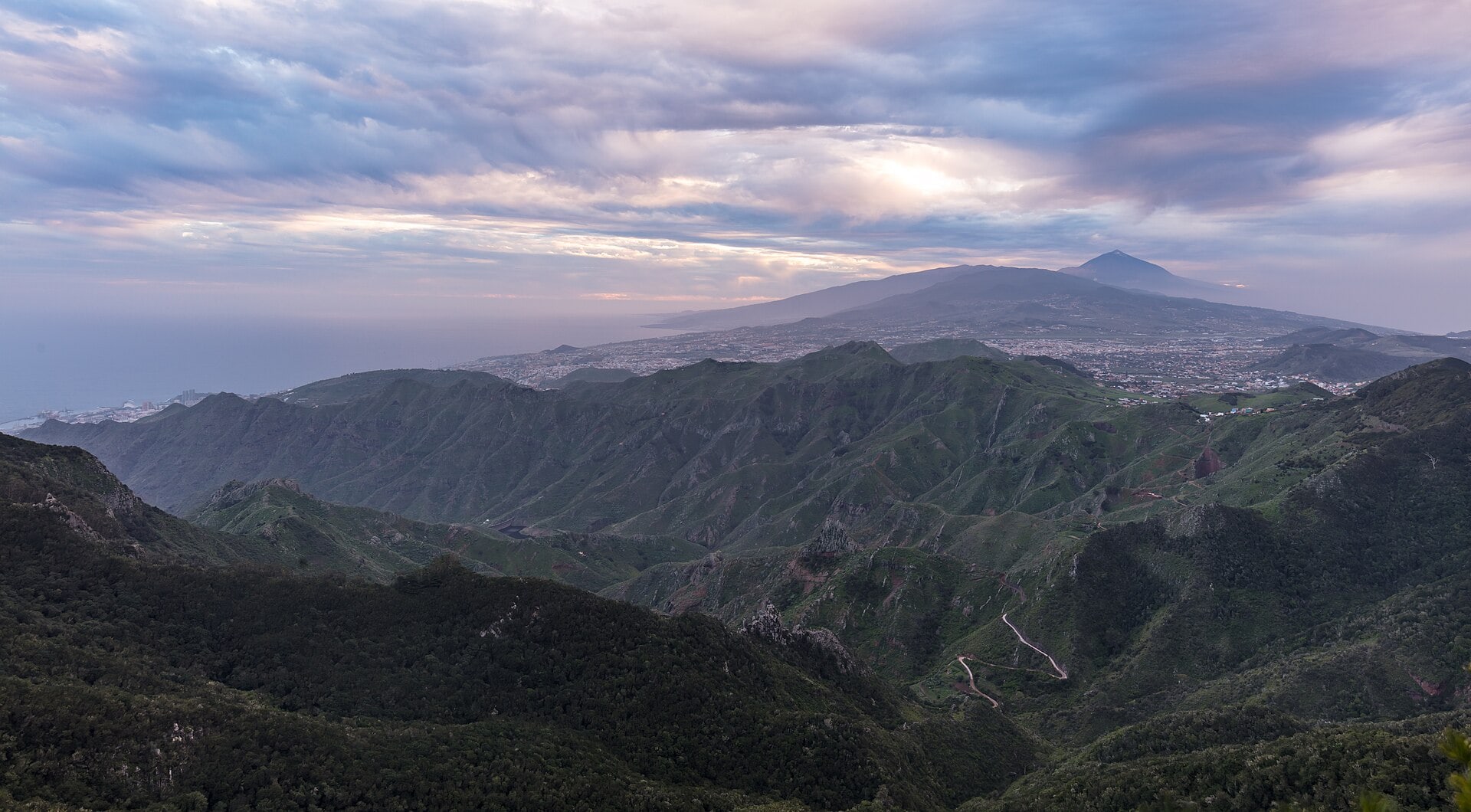
The largest island in the archipelago commands respect from the moment you land, because Tenerife is essentially one enormous mountain rising from the ocean depths. It’s dominated by Teide National Park, and the summit of Pico del Teide reaches 3,718 metres, making it the highest peak in all of Spain. The landscape transformation during the drive from the coast to the volcano is breathtaking — you pass through banana plantations, dense pine forests, and finally emerge onto a lunar plain scattered with solidified lava.
Most visitors opt for the cable car to conquer the dramatic elevation gain, whisking you up to 3,555 metres in just eight minutes. But here’s where things get tricky: since January 2026, strict regulations govern the final ascent to the actual summit. You now need a special permit and must pay a fee to access the PNT 10 trail, as the park authority works to protect the fragile volcanic ecosystem.
💡 Insider tip: Permit slots get snapped up at lightning speed months in advance, so search for “Teide permit” and book it the very same day you purchase your flights. Without a permit, you simply won’t be allowed near the crater and will have to settle for the views from the upper cable car station.
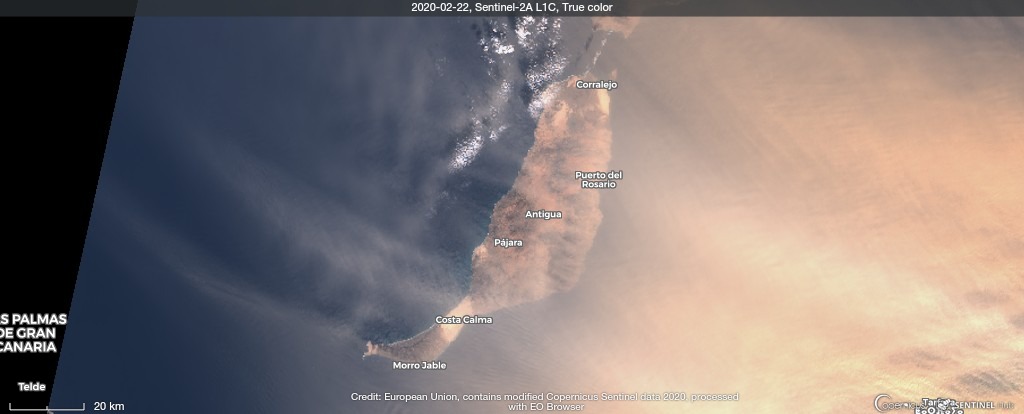
Photo: ESA sentinel satellite via sentinel-hub / Wikimedia Commons, Attribution
2. Tenerife: The Contrast Between the Green North and Sunny South
Tenerife thrives on sharp contrasts, offering two completely different worlds. The south, represented by resorts like Costa Adeje and Playa de las Américas, is parched, sun-baked, and fully geared towards mass tourism. This is where families head for all-inclusive packages and guaranteed winter sunshine by sprawling pools.
The north around Puerto de la Cruz and the historic town of La Laguna paints an entirely different picture, breathing authentic Canarian atmosphere. It’s beautifully green, considerably wetter, and often draped in romantic clouds. Here you’ll find stunning colonial architecture, colourful houses, and cosy local taverns tucked into narrow cobblestoned lanes.
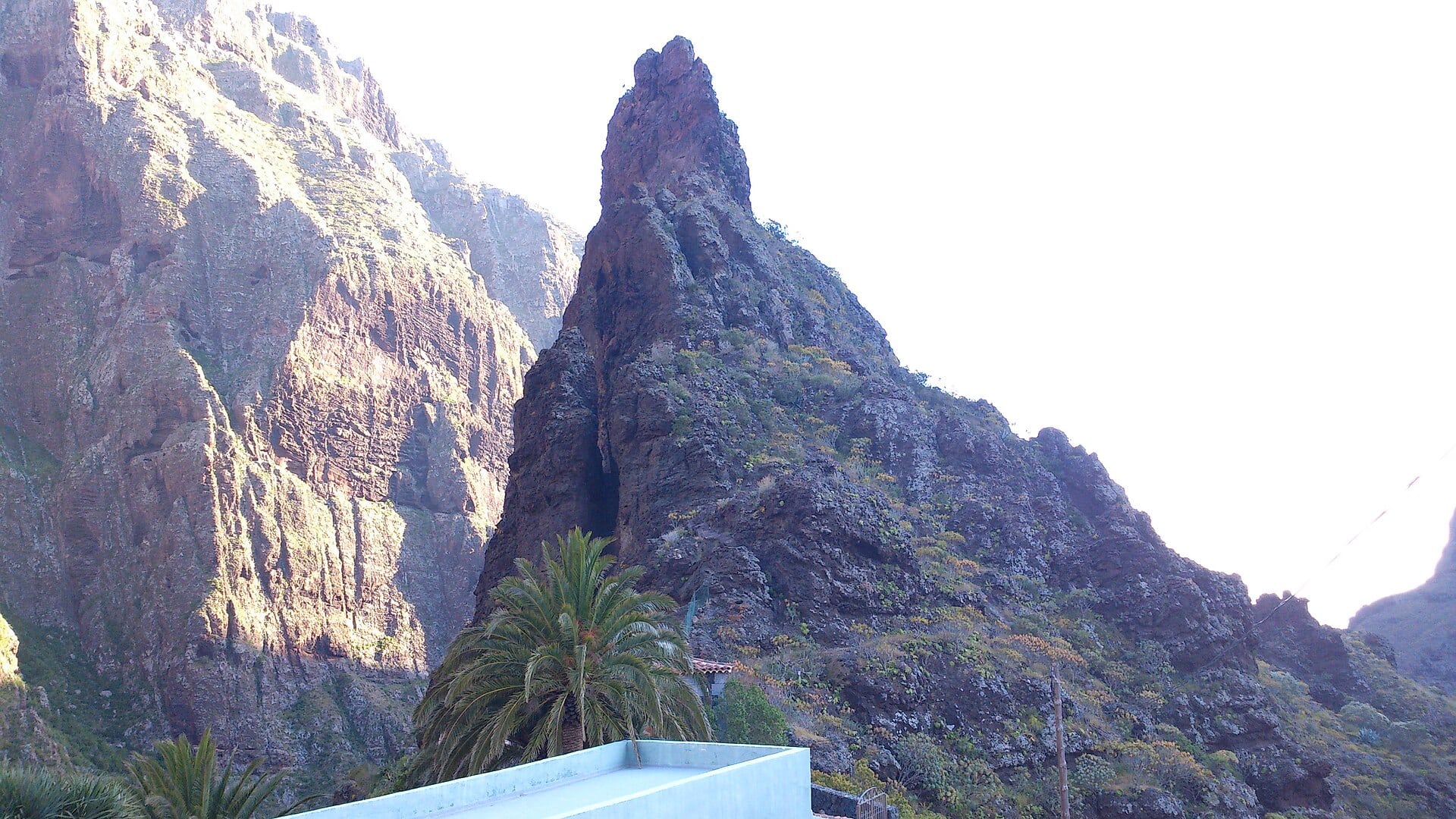
💡 Insider tip: Don’t miss the mountain village of Masca, nestled at the bottom of a deep gorge in the Teno massif. The drive along narrow, steep switchbacks will thoroughly test your nerves behind the wheel, but the dramatic views are absolutely worth the adrenaline.
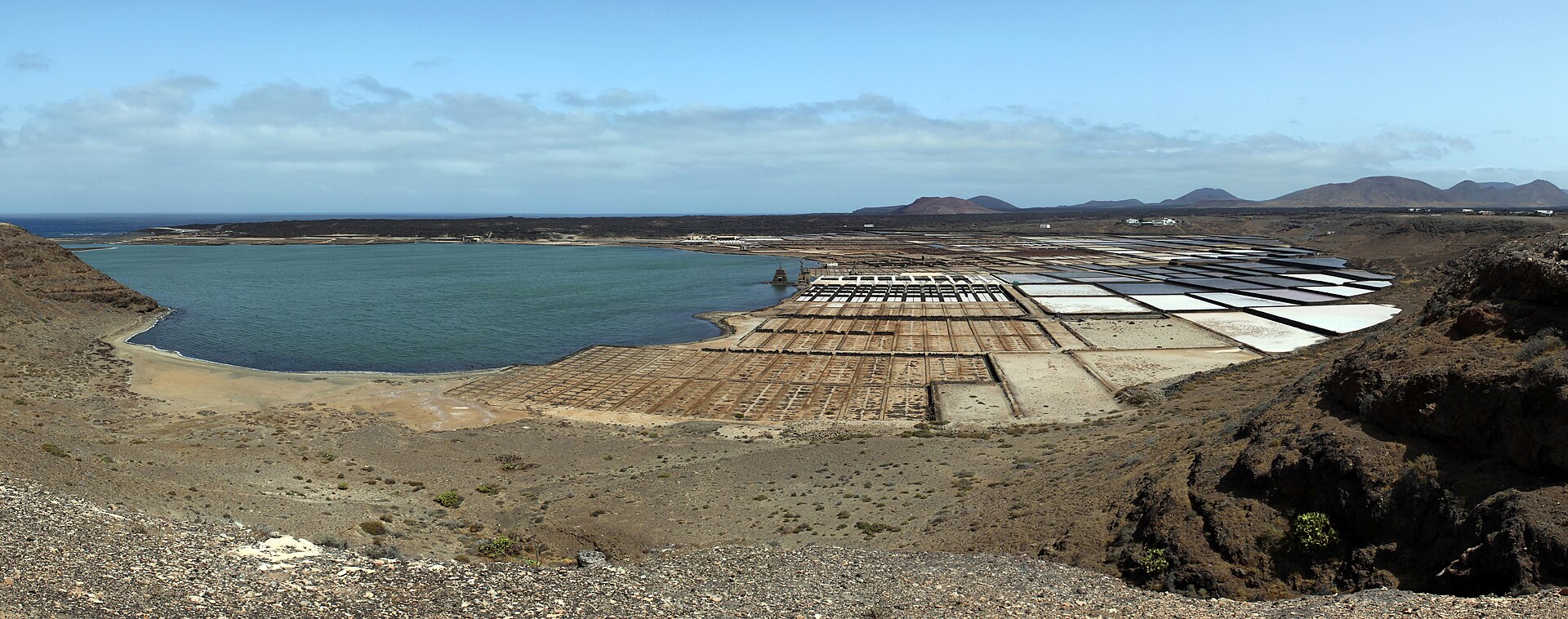
Photo: Alchemist-hp (talk) (www.pse-mendelejew.de) / Wikimedia Commons, CC BY-SA 3.0
3. Gran Canaria: Sand Dunes in Maspalomas
If you’re after maximum diversity packed into the smallest possible area, Gran Canaria is the clear winner. The island has rightly earned its nickname “miniature continent”, offering everything from beaches and deep canyons to high mountains. Within a single hour’s drive, you can swap Saharan-style dunes for cool pine forests hidden in the central volcanic highlands.
The absolute icon of the island is the awe-inspiring Maspalomas dunes at the far south. This protected nature reserve features kilometres of undulating golden sand that tumbles dramatically straight into the Atlantic waves. A walk among the dunes at sunset is one of the most beautiful experiences you can bring home from the Canary Islands.
💡 Insider tip: Head to the dunes first thing in the morning, when the sand is still cool and unmarked by hundreds of tourist footprints. You’ll get perfect photos of pristine sand ripples that genuinely resemble the real African desert.
Photo: Martin Falbisoner / Wikimedia Commons, CC BY-SA 4.0
4. Gran Canaria: A Paradise for Digital Nomads in Las Palmas
Photo: Sergio Martin Laura / Wikimedia Commons, CC BY 3.0
While the south is dominated by sprawling beach resorts, the north is ruled by Las Palmas — a genuine, buzzing Spanish city. It boasts an excellent several-kilometre-long urban beach called Las Canteras, lined by a long promenade packed with cafés and restaurants. The place really comes alive in the evenings, offering rich cultural and nightlife scenes.
In recent years, Las Palmas has also established itself as Europe’s premier winter hub for digital nomads. The infrastructure matches the hype, with dozens of modern co-working spaces offering fast internet and a thriving cosmopolitan community of creative people from all over the world. Many of them come here to spend the entire winter, escaping the grey European skies.
💡 Insider tip: If you’re planning to work remotely long-term, look into the conditions for Spain’s digital nomad visa, known as the Spain DNV 2026. It’s tied to a minimum provable income and allows you to legally work with an ocean view. As a UK citizen, this is particularly useful for extended stays post-Brexit.
5. Lanzarote: Timanfaya National Park and the Land of Fire
Photo: European Space Agency / Wikimedia Commons, Attribution
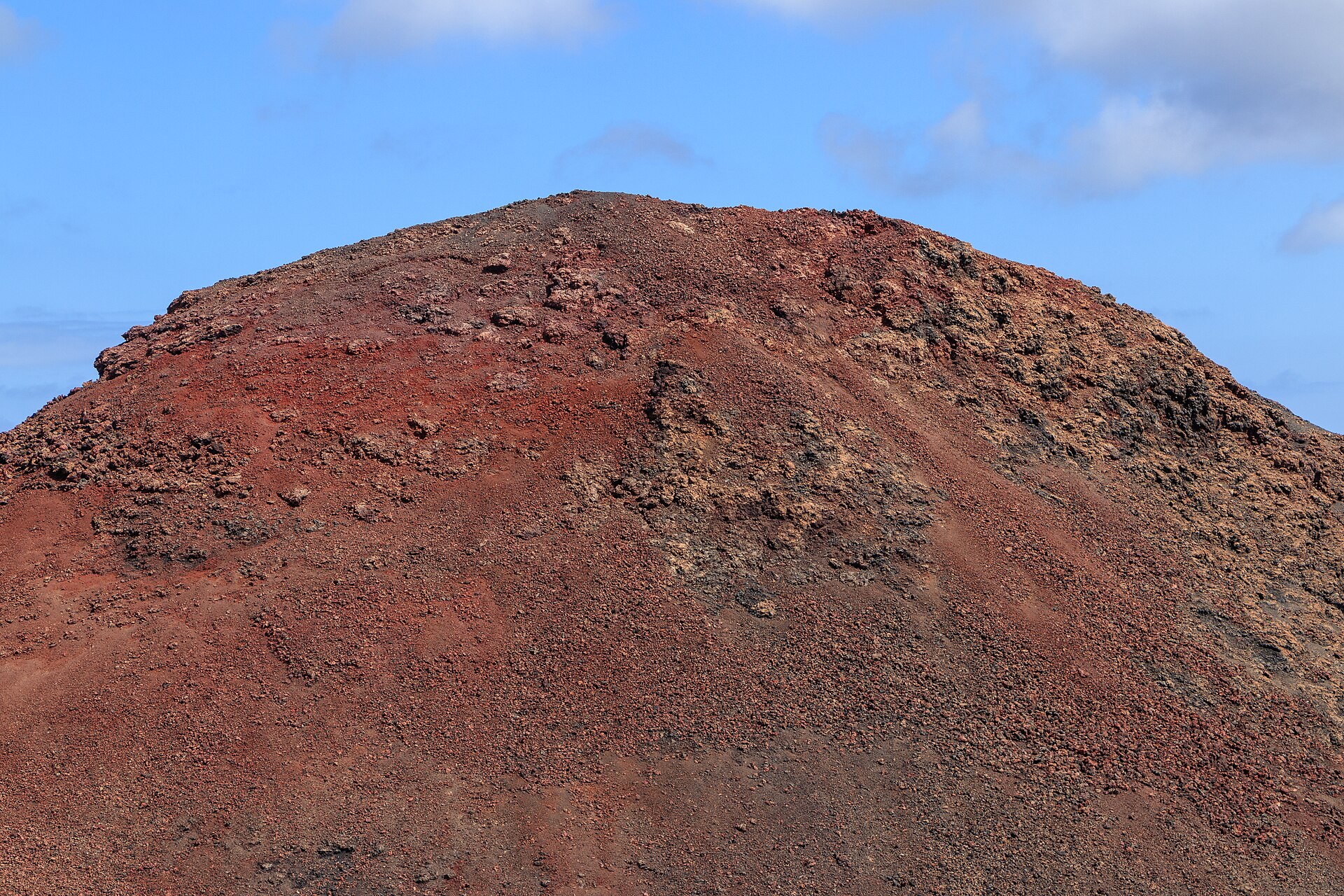
From the very first moment on Lanzarote, you’ll feel as though you’ve landed on a different planet. In the eighteenth century, the island was ravaged by massive volcanic eruptions that changed its face forever. What was born is a dramatic black-and-red lunar landscape where you’d be hard-pressed to find a single tall tree or patch of green grass.
At the heart of this fascinating devastation lies Timanfaya National Park, where active volcanic forces still simmer just below the surface. Guides love to demonstrate the earth’s power with dramatic live shows. They toss dry brushwood into shallow holes where it instantly bursts into flame, or pour water into pipes driven into the ground, which then erupt with a mighty geyser of hot steam.
💡 Insider tip: You can’t explore the park freely on foot — you must take the official bus tour, which is included in the admission price. The buses squeeze through lava corridors so narrow that they practically scrape against the sharp black rocks.
Photo: H. Zell / Wikimedia Commons, CC BY-SA 3.0
6. Lanzarote: César Manrique’s Architecture and Volcanic Wine
Thankfully, Lanzarote never succumbed to visual clutter or the construction of towering high-rise hotels. It owes this to one man — local-born artist and architect César Manrique. He championed strict building regulations requiring low white houses with green or blue shutters, saving the aesthetic identity of the entire island.
Manrique himself also created fascinating installations that fuse raw nature with modern design, including the cultural space Jameos del Agua built inside a lava tunnel. The locals have also brilliantly turned volcanic destruction to their advantage in the La Geria region. Vines are grown in deep funnel-shaped pits dug into the black ash, giving the local Malvasia wine a completely unmistakable mineral profile.
💡 Insider tip: Stop at one of the local wineries (bodegas) along the road through La Geria and treat yourself to a guided tasting. The sight of green vine bushes sheltered by semicircular stone walls against the wind, standing in a sea of black volcanic ash, is utterly unforgettable.
Photo: H. Zell / Wikimedia Commons, CC BY-SA 3.0
7. Fuerteventura: Endless Beaches and the Kingdom of Wind
Fuerteventura lies closest to the African coast of all the islands, and its character is defined by two main features: endless pale beaches and relentless strong wind. While neighbouring islands lure visitors with dramatic mountain peaks and volcanoes, Fuerteventura is considerably flatter and drier overall.
This minor landscape shortcoming is more than compensated by what are hands-down the best, longest, and whitest beaches in the entire Canary Islands. The water is an incredible shade of turquoise and the sand is as fine as flour. The sprawling beaches in the south around the Jandía peninsula are particularly gorgeous — even in peak season, you can easily find a huge stretch of sand all to yourself.
💡 Insider tip: If water sports aren’t your thing and you need shelter from the wind, build yourself a small enclosure from collected black lava stones on the beach. Locals call them corralitos and they do a brilliant job of protecting you from blowing sand.
Photo: H. Zell / Wikimedia Commons, CC BY-SA 3.0
8. Fuerteventura: Wave Riders and Surf Culture
The strong, steady wind blowing from the nearby Sahara has crowned Fuerteventura as the unofficial European capital of kiteboarding, windsurfing, and classic surfing. Especially in the north around the fishing village of El Cotillo, colourful kites and sails constantly criss-cross the sky against a backdrop of wild waves.
According to experts, the local conditions for water sports genuinely rival those of Hawaii. This creates an utterly laid-back tempo and a distinctive surf culture, complemented by stylish cafés serving excellent vegan treats and specialty coffee. You’ll find branded surf gear on every corner.
💡 Insider tip: Even if you’ve never stood on a board in your life, book yourself a half-day taster lesson at one of the many local surf schools. The instructors will take you to safe beaches with gentle waves, and you’ll have a brilliant time in a wetsuit.
Photo: H. Zell / Wikimedia Commons, CC BY-SA 3.0
9. La Palma: Starry Skies and the Green Isla Bonita
On the far western edge of the archipelago, La Palma awaits as the perfect refuge for travellers craving total disconnection and physical activity. Mass tourism simply hasn’t reached here, so don’t go looking for enormous hotel resorts or thumping nightclubs. What you will find is peace and a deep respect for nature.
La Palma is rightly nicknamed Isla Bonita — the Beautiful Island — because it’s the greenest and steepest corner of the entire Canaries. It’s tailor-made for demanding treks and long hikes through pine forests. Thanks to strict regulations and virtually zero light pollution, it’s also ideal for stargazing. Perched on its highest point, Roque de los Muchachos, sits one of the world’s most important astronomical observatories.
💡 Insider tip: Join an organised night-time stargazing excursion with an astronomical guide. They’ll kit you out with warm blankets and professional telescopes, through which you’ll see Saturn’s rings and lunar craters with a clarity you’ve never experienced before.
10. La Gomera: The Mystical Laurel Forest of Garajonay
Neighbouring La Gomera is easily and quickly accessible by a short ferry from the south of Tenerife, and it hides a true natural treasure at its heart. Garajonay National Park is a fascinating remnant of a Tertiary-era laurel forest that feels as if it belongs to another prehistoric world entirely.
Trees covered in thick green moss and lichen are bathed in perpetual dense fog, creating a mystical backdrop for dozens of kilometres of perfectly waymarked hiking trails. The air is damp, cool, and carries the scent of decaying leaves and herbs. It’s an utterly different experience from the parched sand dunes on the eastern islands and showcases the incredible diversity of the archipelago.
💡 Insider tip: On La Gomera, you’ll encounter a unique cultural phenomenon called silbo gomero. It’s a whistling language that local shepherds used to communicate across deep valleys, and it’s still a compulsory subject in the island’s primary schools to this day.
11. Logistics: How to Island-Hop by Ferry
If you decide not to stay put on just one island, a reliable and fairly speedy network of modern ferries operates between them. The market is firmly dominated by two major companies: Fred Olsen and Naviera Armas. Their fleet of fast catamarans provides highly efficient transfers across the water, including for passengers travelling with a hire car.
The crossing from Fuerteventura to neighbouring Lanzarote takes just 25 minutes, with foot passenger tickets starting from around €20. The longer route connecting Gran Canaria and Tenerife takes roughly an hour and a half, with prices from around €49. For more distant islands, it makes sense to use domestic flights operated by Binter Canarias or Canaryfly, which typically take under an hour.
💡 Insider tip: Book your ferry tickets in advance online through the aggregator Ferryhopper, where you can see neatly compared times and prices from both main operators. And don’t forget to bring a warm jumper on board — the air conditioning always seems to be cranked up to the max.
12. Who Each Island Suits and How to Combine Them Smartly
A common rookie mistake is trying to squeeze too many islands into a single holiday. The Canaries aren’t a small Greek island chain — the distances and island sizes here are considerably larger. The golden rule is crystal clear: allocate 3 to 7 full days per island. During a week-long holiday, focus entirely on one main destination so you don’t waste half your time packing and travelling between islands.
Families with children most often choose Tenerife and Gran Canaria for their massive water parks and calm beaches. Surfers and sports enthusiasts head straight for Fuerteventura and its wild waves. If you prefer aesthetics and tranquillity, book your flights to Lanzarote — it’s visually absolutely stunning.
💡 Insider tip: A brilliant logistical combo is big Tenerife paired with little La Gomera, where you can pop over for just two days of nature. Equally, it makes perfect sense to combine Lanzarote and Fuerteventura on a ten-day trip, since ferries between them run constantly.
Where Else to Go in Spain
If you love Spanish culture and are thinking about exploring the mainland, Spain offers an endless wealth of experiences. Architecture fans will fall in love with Barcelona, where you can admire Gaudí’s masterpieces, or the magnificent royal capital of Madrid.
If you enjoy modern architecture blended with history, head to Valencia. For outstanding gastronomy and rolling green hills, the northern Basque Country beckons — particularly the elegant San Sebastián and artistic Bilbao. If you’re drawn to the Balearic beaches, Ibiza isn’t just about parties — it also hides gorgeous secluded coves. And wherever you end up, be sure to read up on which traditional Spanish dishes are worth trying.
Frequently Asked Questions
Which Canary Island should I choose for my first visit?
For complete beginners, Tenerife or Gran Canaria are your safest bets. They offer the most balanced mix of long beaches, high mountains, beautiful historic towns, and excellent tourist infrastructure with direct flights from all over Europe.
Is it really warm enough to swim in the Canaries during winter?
Yes, air temperatures in winter stay around a very pleasant 20 to 24°C. The ocean is a bit cooler at 18 to 20°C, but on sunny days you can definitely swim without any problems. It’s the warmest winter destination in Europe.
Do I need a permit for Teide volcano in 2026?
Yes, as of January 2026, there’s a strict permit system for climbing to the actual summit of Pico del Teide via trail PNT 10. The permit now comes with a fee and you’ll need to book it through the official system several months in advance, as slots disappear incredibly fast.
Which island has the best beaches?
Fuerteventura is the clear winner when it comes to beaches. It offers dozens of kilometers of endless beaches with fine white sand and turquoise water that rival the Caribbean, where you can easily find a quiet spot all to yourself.
How does transport between islands work?
Inter-island travel is handled by fast and reliable ferries operated by Fred Olsen and Naviera Armas, which also carry cars. The shortest route between Fuerteventura and Lanzarote takes just 25 minutes, while longer journeys take about an hour and a half. Local airlines fly between the more distant islands.
Is there good vegetarian food in the Canary Islands?
While Spanish cuisine is quite meat-heavy, you can eat really well in the Canaries without it. An absolute classic is papas arrugadas—small potatoes boiled in seawater served with spicy mojo rojo and mojo verde sauces. Grilled padrón peppers and local goat cheeses are also excellent. Fresh fish dishes are on every menu, but they’re easy to avoid.
How many days do I need for a Canary Islands vacation?
The ideal length for visiting one main island is seven to ten days. If you only have a long weekend, it’s not really worth flying here given the five-hour journey. If you want to combine two islands, set aside at least ten to fourteen days so you’re not constantly rushing around.
Tips and Tricks for Your Vacation
Don’t Overpay for Flights
Search for flights on Kayak. It’s our favorite search engine because it scans the websites of all airlines and always finds the cheapest connection.
Book Your Accommodation Smartly
The best experiences we’ve had when looking for accommodation (from Alaska to Morocco) are with Booking.com, where hotels, apartments, and entire houses are usually the cheapest and most widely available.
Don’t Forget Travel Insurance
Good travel insurance will protect you against illness, accidents, theft, or flight cancellations. We’ve had a few hospital visits abroad, so we know how important it is to have proper insurance arranged.
Where we insure ourselves: SafetyWing (best for everyone) and TrueTraveller (for extra-long trips).
Why don’t we recommend any Czech insurance company? Because they have too many restrictions. They set limits on the number of days abroad, travel insurance via a credit card often requires you to pay medical expenses only with that card, and they frequently limit the number of returns to the Czech Republic.
Find the Best Experiences
Get Your Guide is a huge online marketplace where you can book guided walks, trips, skip-the-line tickets, tours, and much more. We always find some extra fun there!
TL;DRFor a first trip to the Azores, São Miguel is the best pick — it’s got the widest range of things to do and the best infrastructure. Give it 7 to 10 days. The big draws are the crater lakes Lagoa das Sete Cidades and Lagoa do Fogo, the thermal baths and food in the Furnas valley (don’t miss the famous Cozido das Furnas), and the Chá Gorreana tea plantations. Weather’s most reliable from June to August, with highs around 25°C, while the best time for whale watching is during the spring migration in April and May. Book a hire car around six months ahead, since cars run out fast on the islands in summer. For island-hopping, it’s worth combining ferries around the Triangle (Pico, Faial, São Jorge) with Azores Airlines flights.
If you’re thinking of swapping a classic beach holiday for something a bit more adventurous this year, the Azores Portugal will absolutely blow you away. But forget about tropical white-sand beaches and coconut cocktails — this archipelago is definitely not the “European Hawaii” that glossy travel brochures love to claim. It’s a destination that’s far rougher, greener, wetter, and above all incredibly authentic. Picture a fascinating cross between Iceland, Ireland, and Jurassic Park, dropped right in the middle of the unpredictable Atlantic Ocean. In this article, we’ll look at which of the nine volcanic islands to choose, explore the main island of São Miguel in detail, and help you avoid the most common logistical mistakes.
Photo: Diego Delso / Wikimedia Commons, CC BY-SA 4.0
TL;DR
Best island for first-timers: If you only have a week to ten days, stick to São Miguel — it offers a bit of everything and has the best infrastructure.
The weather is wildly unpredictable: Standard weather apps are useless here, so always check current conditions via webcams in the SpotAzores app.
Book your car immediately: During summer, rental cars on the islands simply run out, so arrange your hire ideally six months in advance.
Ferries vs. flights: Only use ferries within the central “Triangle” (Pico, Faial, São Jorge); for longer distances, stick exclusively to flights with Azores Airlines.
The last-day rule: Never schedule a flight from a smaller island back to São Miguel on the same day as your return flight to the UK — fog or wind can easily leave you stranded.
When to go for whales: The best time for spotting massive cetaceans is during the spring migration in April and May.
Photo: José Luís Ávila Silveira/Pedro Noronha e Costa / Wikimedia Commons, Public domain
Choosing the right time to visit the Azores is absolutely crucial, though you should accept from the start that guaranteed good weather simply doesn’t exist here. The climate is mild and humid year-round — temperatures rarely drop below 13 °C and seldom climb above 26 °C in summer. However, it rains a lot and the strong Atlantic wind can change your plans from one minute to the next. It’s perfectly normal to experience four seasons in a single day — scorching sunshine on the south coast while horizontal rain batters the north.
Peak season runs from June to August, when the weather is most stable and temperatures hover around a pleasant 25 °C. During this period, the ubiquitous hydrangeas are in full bloom and the islands burst with colour, but you’ll also need to brace yourself for crowds and soaring car rental prices. For a quieter experience, consider visiting in April or May when nature is awakening, everything is in flower, and — most importantly — you have the best chance of spotting migrating whales. Autumn months like September and October offer surprisingly warm ocean temperatures around 22 °C, though from late October onwards there’s a risk of severe storms and cancelled flights. Travelling in winter from November to March is really for true adventurers who want to spend their days soaking in hot thermal springs and don’t mind the cold and fierce winds that frequently bring ferry services to a standstill.
Photo: Eduardo Manchon / Wikimedia Commons, CC BY-SA 3.0
Where to Stay in the Azores
💡 Accommodation and activities tip: We love searching for accommodation on Booking.com, which usually offers the best cancellation policies. For tickets, tours, and activities, it’s worth comparing and booking through GetYourGuide.
Where you base yourself depends primarily on how much time you have and what you want to experience. The archipelago is divided into three distinct groups and the distances between them are genuinely significant, so trying to cram all the islands into two weeks will only cost you nerves and money on inter-island flights. Also expect that due to new EU legislation from 2024 (Regulation 2024/1028 on short-term rentals), cheap unofficial accommodation options are gradually disappearing, pushing the market towards traditional guesthouses and turismo rural — charming rural cottages.
If it’s your first trip to the Azores, your base should be São Miguel island, which serves as the gateway and offers the most varied experiences. For exploring the western and central parts of the island, it’s strategic to stay in the capital Ponta Delgada, from where all main roads radiate outwards. An excellent upscale choice is the Grand Hotel Açores Atlântico, which boasts breathtaking ocean views and easy access to restaurants. For exploring the eastern part of the island, home to the hot springs, move to the Furnas area, where I’d recommend the sought-after Octant Furnas, which grants unlimited access to thermal pools. I strongly recommend booking all hotels and guesthouses well in advance through Booking to secure flexible cancellation terms, as availability on the islands is hopelessly sold out in summer.
Photo: Ravi Sarma / Wikimedia Commons, CC BY 2.0
18 Things to See and Do in the Azores Portugal
Let’s dive into the best that these magical islands have to offer. We’ll start with a detailed exploration of the main island of São Miguel and then move on to other fascinating spots across the archipelago.
Photo: Diego Delso / Wikimedia Commons, CC BY-SA 4.0
1. Stunning Viewpoint over Lagoa das Sete Cidades
This is exactly the view you’ll find on every Azores postcard. A pair of enormous volcanic lakes — one tinted blue, the other green — sits at the bottom of a massive crater on the western side of São Miguel. Head to the famous Boca do Inferno viewpoint, where you’ll be rewarded with the most iconic panorama in all of the Azores, one that will genuinely take your breath away. The path from the car park takes just a short walk and leads you through lush, almost rainforest-like vegetation.
💡 Insider tip: Check the webcams first. Sete Cidades is notoriously shrouded in thick, impenetrable fog. Before heading out in the morning, check the SpotAzores app — if all you see is a wall of white, save yourself the trip and reschedule for another day.
Photo: Diego Delso / Wikimedia Commons, CC BY-SA 4.0
2. Wild and Untamed Lagoa do Fogo
While Sete Cidades is beautifully manicured, Lagoa do Fogo — the Fire Lake — retains a completely wild and untouched character. It sits much higher in the mountains in the central part of São Miguel, which means there’s an even greater chance of fog and strong winds. But if you catch a clear day, you’ll see a stunningly blue surface framed by steep green slopes.
You can simply enjoy the view from several roadside viewpoints above, but if you’re up for some exercise, descend the steep trail all the way down to the beach. The walk down takes about half an hour and rewards you with blissful solitude, as most visitors stay up by their cars.
Photo: Diego Delso / Wikimedia Commons, CC BY-SA 4.0
3. Bubbling Earth in the Furnas Valley
The Furnas Valley on the eastern side of São Miguel is a place where you can literally feel the planet alive beneath your feet. Even as you arrive in the small town, you’re greeted by the pervasive smell of sulphur and clouds of steam rising straight from the ground. You’ll find dozens of fumaroles and bubbling thermal springs, with boardwalks built around them.
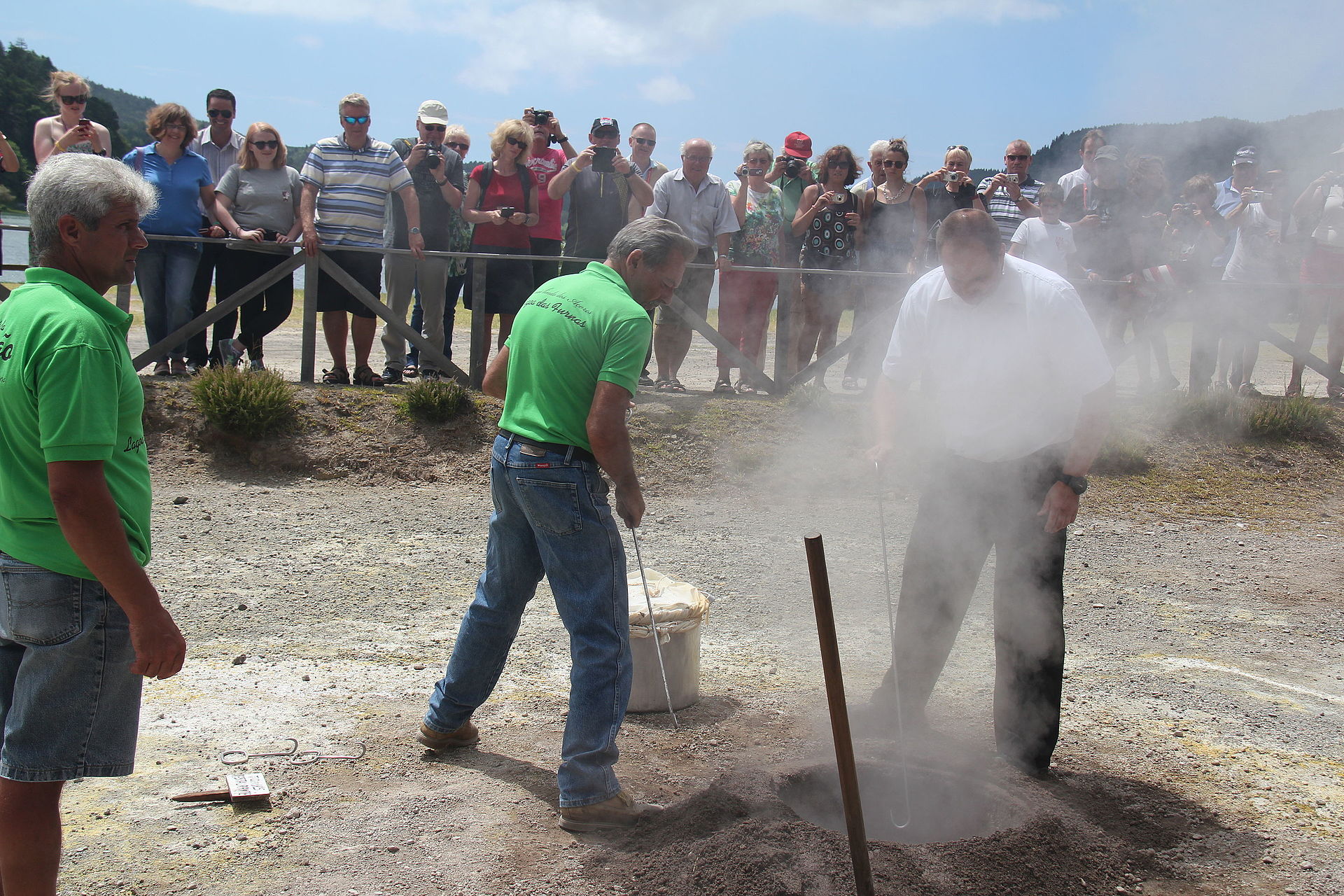
This geothermal activity makes for an absolutely fascinating spectacle. The local springs vary in temperature and chemical composition, and at some of them you can even try cooking an egg or a cob of corn. Don’t miss a walk around Furnas Lake itself, where you’ll find the area known as Caldeiras — the very spot where famous local dishes are cooked underground.
Photo: Diego Delso / Wikimedia Commons, CC BY-SA 4.0
4. Bathing at Terra Nostra and Dona Beija Hot Springs
When it rains in the Azores — and rain it will — the best rescue plan is to sink into hot water. In Furnas, you have two absolutely phenomenal bathing options. The first is the historic Terra Nostra Park, at the centre of which lies an enormous pool tinted a deep rust-orange thanks to its high iron content. Soaking in the warm ochre water surrounded by a botanical garden is an unforgettable experience.
The second, more modern option is the Poça da Dona Beija complex, which features several smaller pools at varying temperatures. These baths stay open until late in the evening, making a nighttime soak under the stars one of the best rituals on the island.
💡 Insider tip: Bring old swimwear. The iron-rich water in Furnas will reliably stain any light or new swimsuit a permanent shade of orange. That colour will never wash out, so dark clothing is a must.
Photo: Sara Araújo Marques / Wikimedia Commons, CC BY-SA 4.0
5. How Cozido das Furnas Is Cooked
Photo: Sara Araújo Marques / Wikimedia Commons, CC BY-SA 4.0
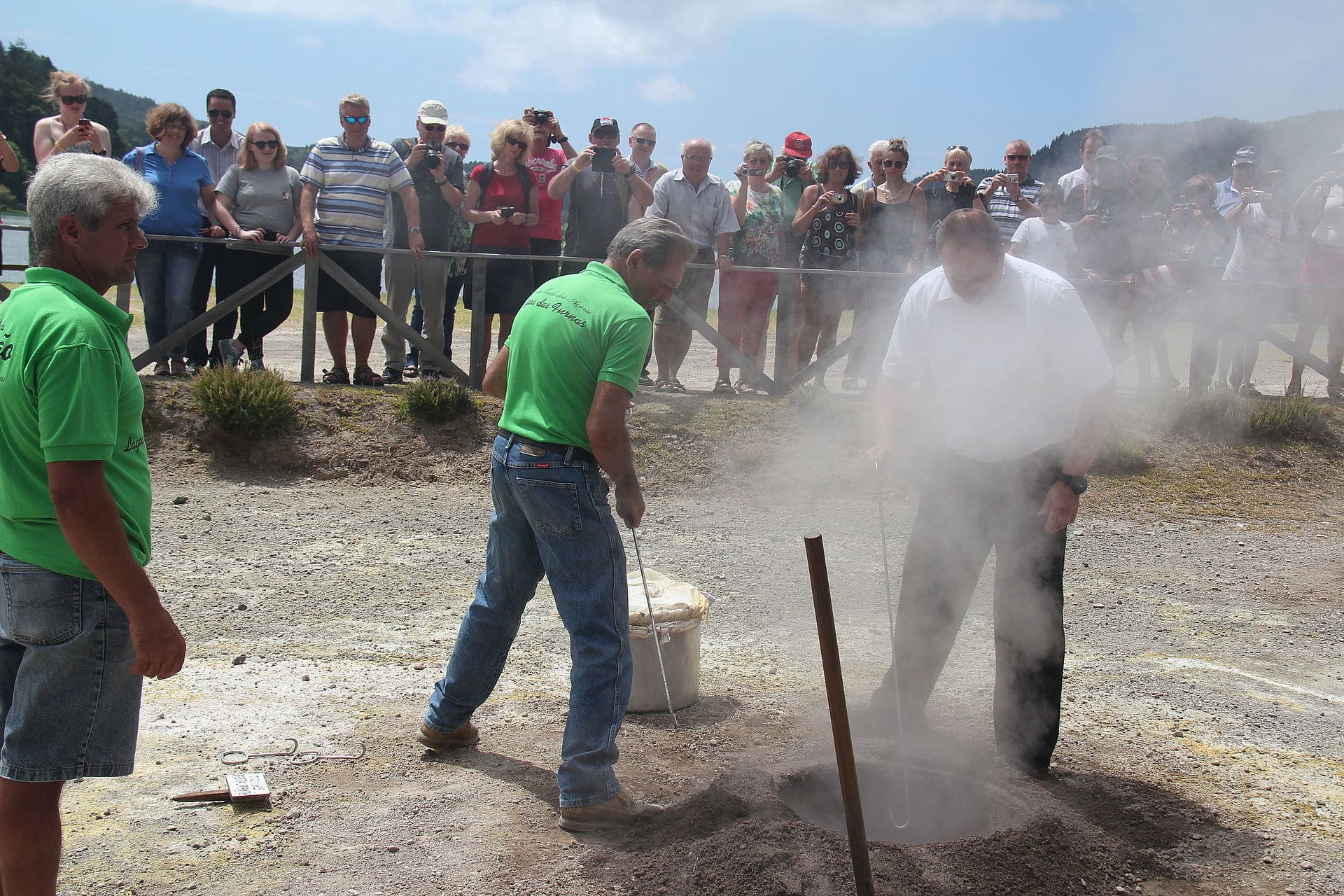
The undisputed culinary symbol of São Miguel is Cozido das Furnas, a dish whose preparation is utterly unique. Early each morning, restaurants load ingredients into large sealed pots, transport them to Furnas Lake, and bury them directly in the hot volcanic earth. The food then slow-cooks using nothing but geothermal energy for around six to seven hours.
The traditional version is a massive meat-and-vegetable stew containing beef, pork, chicken, sausages, and heaps of local vegetables. For vegetarians and those who don’t eat meat, plenty of restaurants in Furnas now offer excellent vegetarian versions of cozido, where beautifully seasoned root vegetables, cabbage, and sweet potatoes take centre stage — the slow volcanic cooking gives them a wonderfully earthy, slightly sulphurous flavour.
Photo: Diego Delso / Wikimedia Commons, CC BY-SA 4.0
6. A European Rarity: Gorreana Tea Plantation
Did you know the Azores are the only place in Europe where tea is commercially grown? On the northern coast of São Miguel, you’ll find the historic Chá Gorreana tea factory, which has been in continuous operation since 1883. Visiting the factory itself is free, and you can watch the old, whirring machines processing the leaves.
But the best part awaits outside. You’ll find yourself in a landscape that looks like a slice of Sri Lanka dropped into the middle of the Atlantic. Hiking trails weave between neatly trimmed rows of tea bushes, offering gorgeous views straight out to the wild ocean. At the end of your visit, you can sample both black and green tea for free at the on-site café.
Photo: Diego Delso / Wikimedia Commons, CC BY-SA 4.0
7. Exploring the Capital: Ponta Delgada
Photo: Diego Delso / Wikimedia Commons, CC BY-SA 4.0
Although most people come to the Azores for nature, the capital city Ponta Delgada deserves at least a full day of your attention. It’s a pleasant, surprisingly cosmopolitan town characterised by its distinctive black-and-white architecture, where pale rendered walls contrast strikingly with dark volcanic stone.
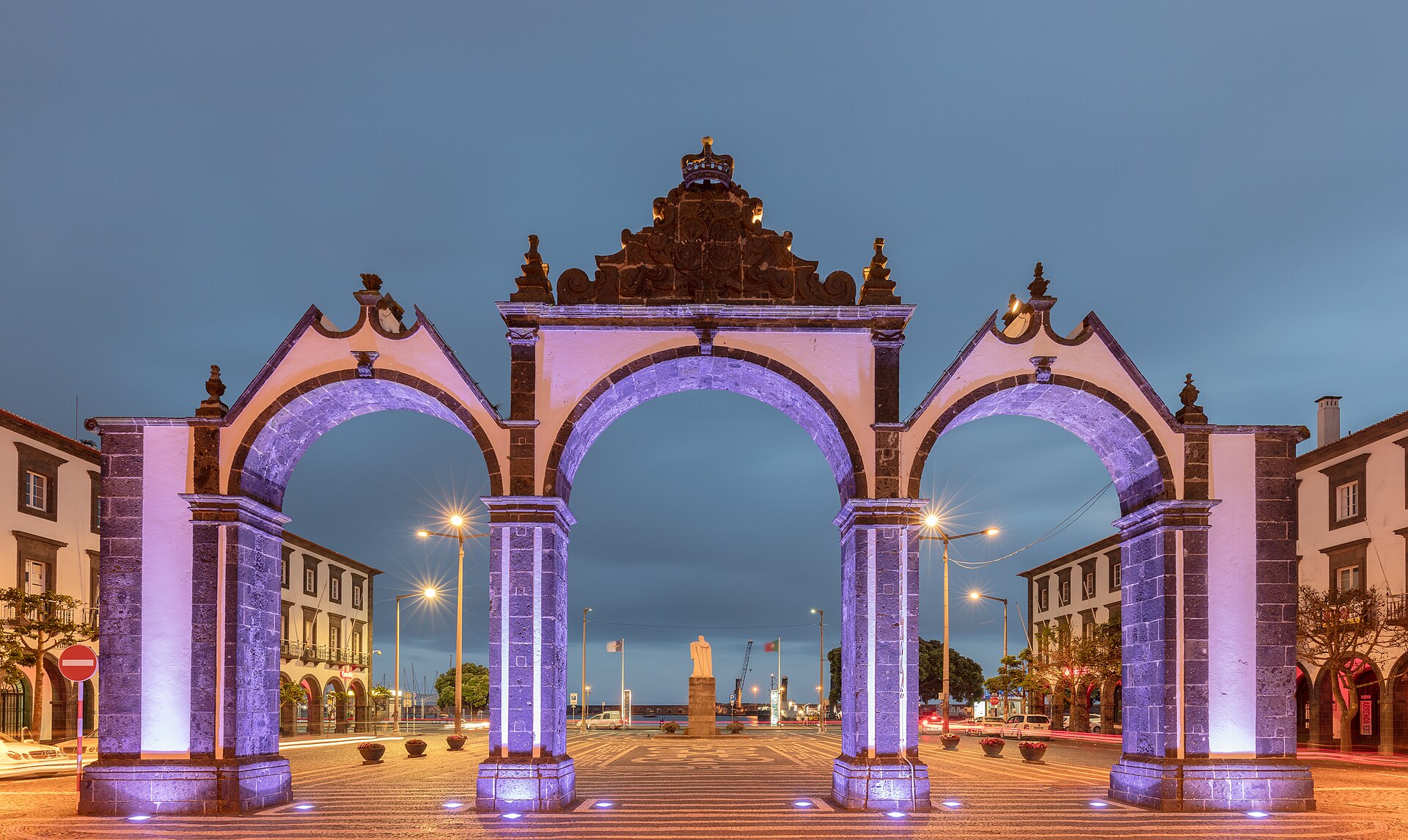
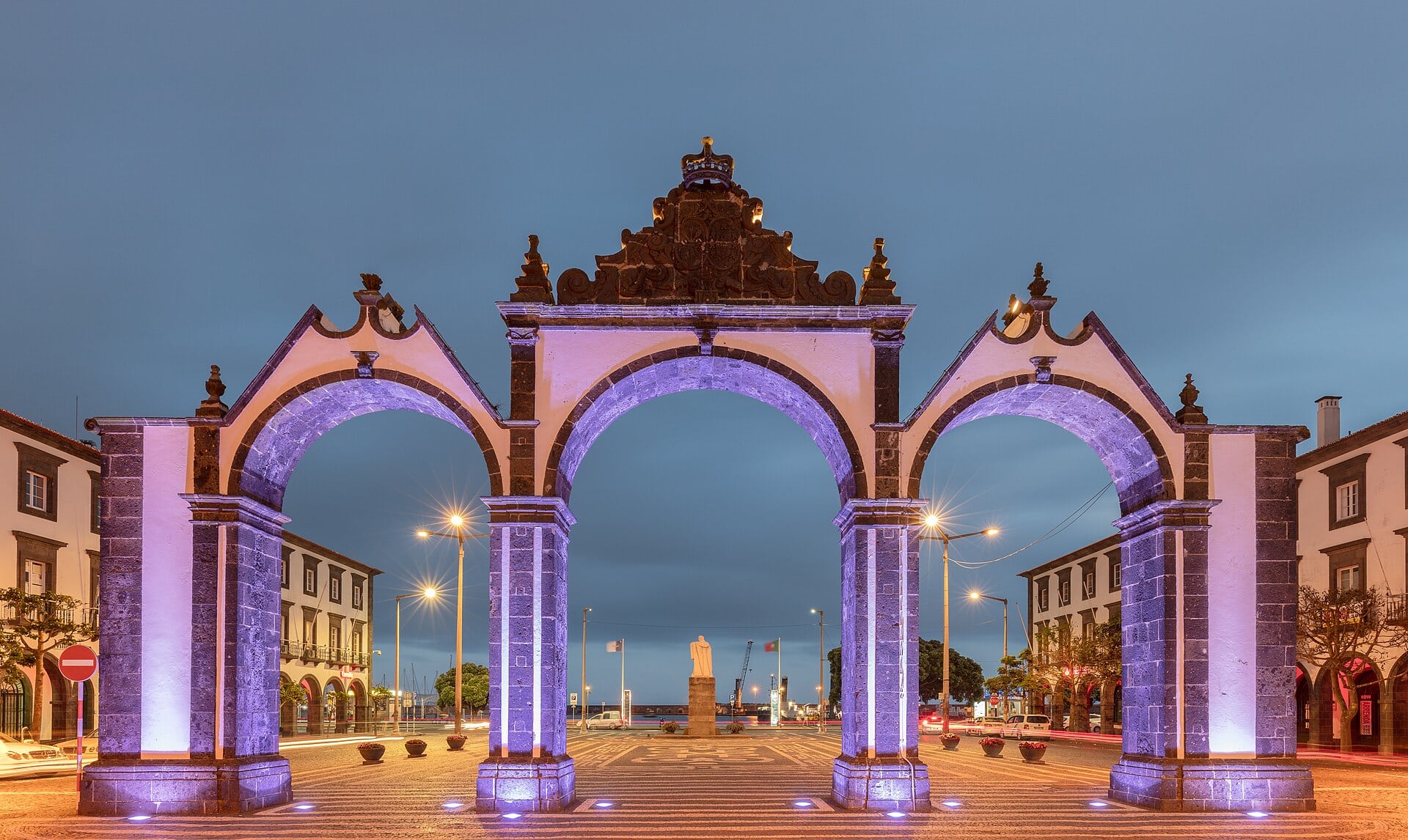
Stroll along the waterfront promenade, stop at the iconic Portas da Cidade gateway, and be sure to visit the local Mercado da Graça market. It’s at the market where you’ll find the finest local produce, including enormous sweet pineapples grown on the island in special greenhouses that have an incredibly intense flavour.
Photo: Diego Delso / Wikimedia Commons, CC BY-SA 4.0
If you venture to the central island group, the skyline will be dominated by the monumental Ponta do Pico volcano on the island of the same name. Standing at 2,351 metres above sea level, it’s the highest mountain in all of Portugal, and the ascent is definitely no Sunday stroll. It’s a very steep, rocky trek that demands proper hiking boots and a solid level of fitness.
The climb is also strictly regulated. Capacity on the mountain is limited, so registrations can sell out weeks in advance. You can go up independently or with a local guide — an organised ascent costs roughly €60 to €80. Your reward is the feeling of standing on the very rooftop of the Atlantic with views stretching across the surrounding islands.
Photo: Diego Delso / Wikimedia Commons, CC BY-SA 4.0
9. UNESCO-Protected Lava Vineyards
Pico island isn’t just about mountain hiking — it’s also home to a completely unique winemaking tradition that has earned a spot on the UNESCO World Heritage list. Locals grow grapevines in so-called currais — small enclosures built from black lava stone that protect the plants from the destructive salty ocean winds.
Thanks to this ancient method and the black volcanic soil, which absorbs heat during the day and releases it back to the vines at night, Pico wine has a distinctly mineral and characterful taste. Visit one of the local wineries for a tasting and wander through the maze of dark stone walls that stretch all the way to the coast.
10. The Yachting Atmosphere of Horta Harbour
Just a short ferry ride from Pico lies the island of Faial, whose capital Horta is a legendary crossroads of the world’s oceans. The harbour has been a key stopover for sailors making the gruelling transatlantic crossing since time immemorial. The cosmopolitan and adventurous vibe here is absolutely palpable.
The harbour’s greatest curiosity is its very walls and pavements. They are covered in thousands of colourful paintings and messages left by crews of boats that have docked here. Seafaring superstition has it that any boat that fails to leave its mark in Horta will never safely reach its destination.
11. The Lunar Landscape of Capelinhos Volcano
On the western tip of Faial, you’ll feel as though you’ve landed on another planet. In 1957, a massive underwater eruption took place here, lasting over a year and creating entirely new land that merged with the existing coastline. Today, the area is known as Vulcão dos Capelinhos.
The landscape here genuinely looks like Mars. Nothing but black and red volcanic ash and dust stretches out before you, with the half-buried roof of an old lighthouse poking through — a survivor of the eruption. Inside the lighthouse, there’s an excellent underground museum that walks you through the dramatic geological history of this extraordinary place.
12. Extreme Cliff-Edge Hikes on São Jorge
The long, narrow island of São Jorge is a paradise for hardcore hikers. It’s characterised by its sheer cliffs, below which you’ll find so-called fajãs — small coastal platforms formed by landslides or solidified lava flows. Life here plays out literally on the edge between mountains and the raging ocean.
The island is criss-crossed by some of the best — and most challenging — hiking trails in the entire Azores. One hugely popular route is the descent to Fajã da Caldeira de Santo Cristo, which can only be reached on foot or by quad bike, and where you’ll find an isolated community with no mobile signal.
13. Pungent Queijo São Jorge Cheese
After all those demanding hikes, you’ll need to refuel, and São Jorge has the perfect answer. The island produces the most famous Azorean cheese, Queijo São Jorge, which you’ll encounter not just across the archipelago but throughout mainland Portugal too. The cows graze year-round on green hillsides kissed by salty sea air, which gives the milk a distinctive character.
This hard, aged cow’s milk cheese has a slightly spicy and peppery profile. It’s matured for several months and the locals love to serve it simply with quality bread and a local jam chutney. Don’t forget to buy at least a small wedge as an edible souvenir to take home.
14. The Historic Gem of Angra do Heroísmo
While most islands draw visitors primarily with their natural beauty, Terceira serves as the cultural and historical heart of the Azores. The star attraction is undoubtedly the port town of Angra do Heroísmo, which earned its place on the UNESCO World Heritage list thanks to its exceptionally well-preserved Renaissance architecture and grid-pattern streets.
Wandering through the town, you’ll discover grand palaces, old fortresses, and colourful houses with wrought-iron balconies. The town exudes a distinctly noble and elegant atmosphere that contrasts sharply with the wild volcanic landscape surrounding it. It’s well worth climbing Monte Brasil for a panoramic view that lays the entire town out before you.
15. Untamed Waterfalls at the Edge of the World
If you’re seeking absolute isolation and nature at its most raw, you need to fly to the western fringe of the archipelago. The islands of Flores and Corvo are the most remote, the wettest, yet also by far the greenest and wildest. They actually sit on the North American tectonic plate.
On Flores, you’ll find literally hundreds of jaw-dropping waterfalls cascading from sheer green cliffs straight into the ocean or into deep lakes. The most famous is the monumental Poço do Bacalhau. There’s one major catch, though — the weather here is so extremely unreliable that you must factor in a high risk of cancelled flights and relentless rain.
16. World-Class Whale and Dolphin Watching
The Azores rightly rank among the absolute best places on Earth for watching wild cetaceans. The ocean floor around the islands plunges steeply to enormous depths, creating ideal, food-rich hunting grounds for marine life. While sperm whales and various dolphin species are present year-round, if you want to see enormous blue whales, you’ll need to visit during the spring migration in April or May.
You can head out to sea in two ways. A large catamaran is more stable and ideal if you’re prone to seasickness, though it can’t get as close to the animals. The other option is a small, fast inflatable boat called a Zodiac, which bounces across the waves for a truly exhilarating experience — though it’s definitely not recommended if you have back problems.
TL;DRCuenca, in central Spain, is famous above all for its 14th-century Casas Colgadas (Hanging Houses), whose wooden balconies jut out over the Huécar gorge, and the best view of them is from the 40-metre steel Puente de San Pablo. The UNESCO-listed town is under an hour from Madrid or Valencia on the AVE high-speed train, and while you can cover the main sights in a day, it’s worth staying at least one night to see them lit up after dark. Spring and autumn are the best times to visit, since summer temperatures climb past 40°C and winter turns properly cold. Among the other 13 tips are the cathedral, Plaza Mayor, the Museum of Spanish Abstract Art housed right in the Hanging Houses, the underground tunnels of Alfonso VIII, and a trip out to the rock formations of Ciudad Encantada, about half an hour’s drive away.
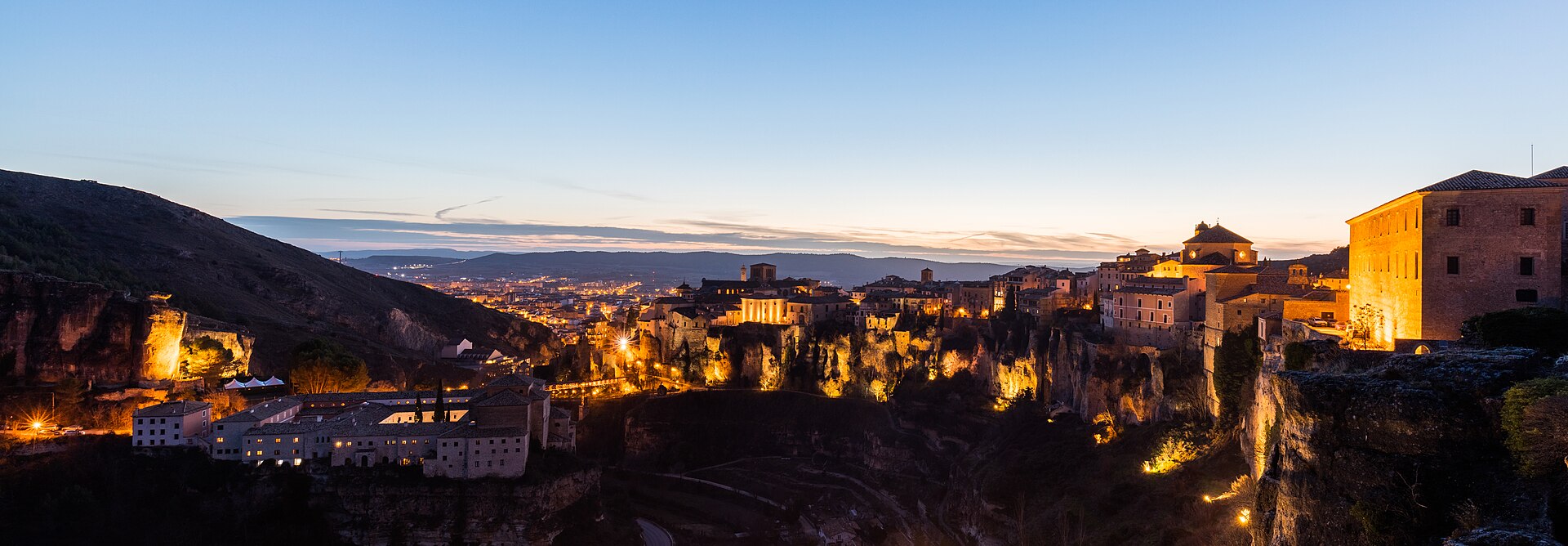
If you’re planning a trip to central Spain and your route takes you between Madrid and Valencia, you absolutely shouldn’t miss one of the most fascinating cities on the entire Iberian Peninsula. Cuenca Spain will stop you in your tracks from the very first moment – its historic centre quite literally balances on the edge of sheer limestone cliffs. The city is surrounded by deep gorges carved over millennia by the Júcar and Huécar rivers, creating a truly unique landscape you won’t find anywhere else in Spain. It’s no wonder this extraordinary place has earned a prestigious spot on the UNESCO World Heritage List.
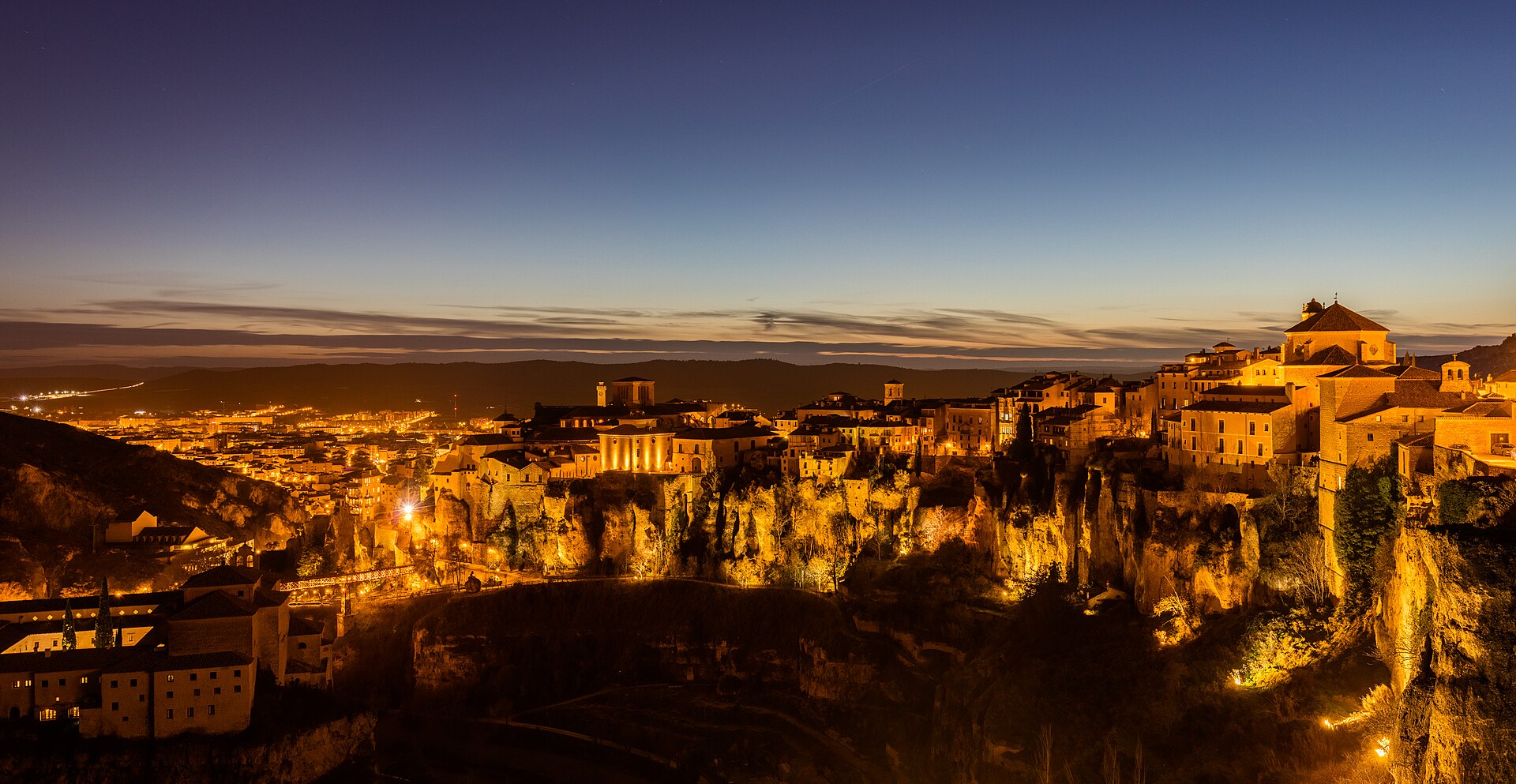
Unlike bustling Madrid or sun-drenched Barcelona, Cuenca has held on to its quiet, slightly sleepy Castilian atmosphere that instantly transports you back several centuries. Medieval lanes wind steeply uphill, ancient stone facades greet you around every corner, and the views into the deep canyons will have you reaching for your camera non-stop. While many visitors come just for a quick day trip, the real magic of the city reveals itself after sunset, when the historic walls and famous hanging houses are beautifully illuminated and the daytime crowds have headed back to the big cities. Let’s take a closer look at how to plan your visit to this fairy-tale destination and what awaits you here.
Photo: Diego Delso / Wikimedia Commons, CC BY-SA 4.0
TL;DR
Main attraction: The most famous landmark is the Casas Colgadas (Hanging Houses), whose wooden balconies literally hang over a sheer drop into the gorge below.
Getting there: The city sits on the AVE high-speed rail line, so you can reach it from Madrid or Valencia in under an hour. From London, fly to Madrid or Valencia and catch the train onwards.
Best photos: For the absolute best shot of the city, take a walk across the iron Puente de San Pablo footbridge – the views are genuinely breathtaking.
Physical demands: Be prepared for the fact that the old town (Casco Antiguo) is full of steep hills, staircases, and cobblestones – comfortable shoes are an absolute must.
Hidden gem: Inside the medieval hanging houses you’ll find a surprisingly fantastic Museum of Spanish Abstract Art, creating a perfect contrast to the historic architecture.
Nature: If you enjoy walking, don’t miss the trails along the bottom of both river gorges, where you’ll find welcome shade and peace away from the bustle of the old town.
Because Cuenca sits in the very heart of Castile on a plateau nearly a thousand metres above sea level, the weather in Cuenca Spain is shaped by a rather harsh continental climate. Locals often joke, with only slight exaggeration, that they get nine months of winter and three months of hell – which sums up the temperature extremes pretty accurately. Winters can be bitterly cold, frequently accompanied by biting winds and the occasional snowfall, while summer temperatures routinely soar past a punishing 40°C. The heat in July and August is so exhausting that trudging up and down the baking stone lanes becomes more of an ordeal than a pleasure.
The best time to visit is undoubtedly spring or autumn, when temperatures are far more pleasant and the surrounding gorges burst with colour. If you come in April or May, you’ll catch the river valleys in bloom and enjoy ideal weather for hiking in the nearby nature parks. Another particularly interesting time to visit is during Holy Week (Semana Santa), which is celebrated in Cuenca with tremendous pomp – the city’s processions are among the most renowned in all of Spain. Just bear in mind that during this festive period, hotels get booked up well in advance and accommodation prices shoot up steeply.
Where to Stay in Cuenca
💡 Accommodation & experiences tip: We usually search for accommodation on Booking.com, which tends to have the best cancellation policies. For tickets, tours, and activities, it’s worth comparing options on GetYourGuide.
When looking for accommodation, you’ll quickly notice that the city is divided into two very distinct parts: the modern lower town and the historic upper town known as Casco Antiguo. If you want to soak up the authentic medieval atmosphere and have all the main sights within walking distance, I’d recommend looking for accommodation right in the Cuenca Spain old town up on the hill. Just be prepared for the fact that hauling heavy suitcases up steep cobbled streets is no fun at all – travelling light with a backpack is the way to go. The lower town does have more modern hotels and easier parking, but you’ll have to hike uphill for every attraction or rely on the local bus service.
The ultimate splurge is the famous Cuenca Parador Spain – the Parador de Cuenca – housed in a beautifully restored 16th-century Dominican convent directly opposite the hanging houses. While it’s certainly the pricier option, the views of the illuminated city across the deep gorge are simply unbeatable, and a stay here is a once-in-a-lifetime experience. A superb and slightly more affordable alternative right in the historic heart is the Hotel Leonor de Aquitania, which offers wonderfully authentic rooms in a historic building and an excellent location just a stone’s throw from the main square. You can easily compare and book all these charming hotels on Booking.com, where you’ll often find great deals outside the peak summer season.
13 Best Things to See and Do in Cuenca Spain
Let’s dive into the best of what this dramatic medieval city has to offer. From architectural marvels teetering on cliff edges to mysterious underground tunnels, Cuenca is packed with surprises just waiting to be explored.
1. Casas Colgadas (Hanging Houses of Cuenca Spain)
Photo: Diego Delso / Wikimedia Commons, CC BY-SA 4.0
The symbol of the entire city and the main reason most travellers head here are the iconic Casas Colgadas – the hanging houses of Cuenca Spain. These incredible 14th-century structures are distinguished by their wooden balconies that literally jut out into thin air over the sheer drop of the Huécar gorge. Looking up from below, they seem to defy every law of gravity and could come crashing down at any moment – yet thanks to the ingenuity of medieval builders, they’ve stood firm for hundreds of years. In the past, similar houses lined the entire cliff edge, but only three of the most significant buildings have survived to this day.
Today you can not only photograph these architectural gems from outside but also step inside to explore their labyrinthine interiors. One of the houses is home to an excellent traditional restaurant, while the other two contain an art museum we’ll cover in the next section. The best photos of the hanging houses are taken in the late afternoon, when the setting sun bathes the sandstone walls and wooden beams in a gorgeous golden glow. Make sure to return after dark, too – the subtle evening illumination gives the whole scene a wonderfully dramatic and slightly mysterious feel.
💡 Local tip: If you want to capture the hanging houses with a bit of wild nature in the frame, head down the narrow steps along the walls towards the river. You’ll get a brilliant angle without the crowds of other tourists.
2. Puente de San Pablo (Saint Paul’s Bridge)
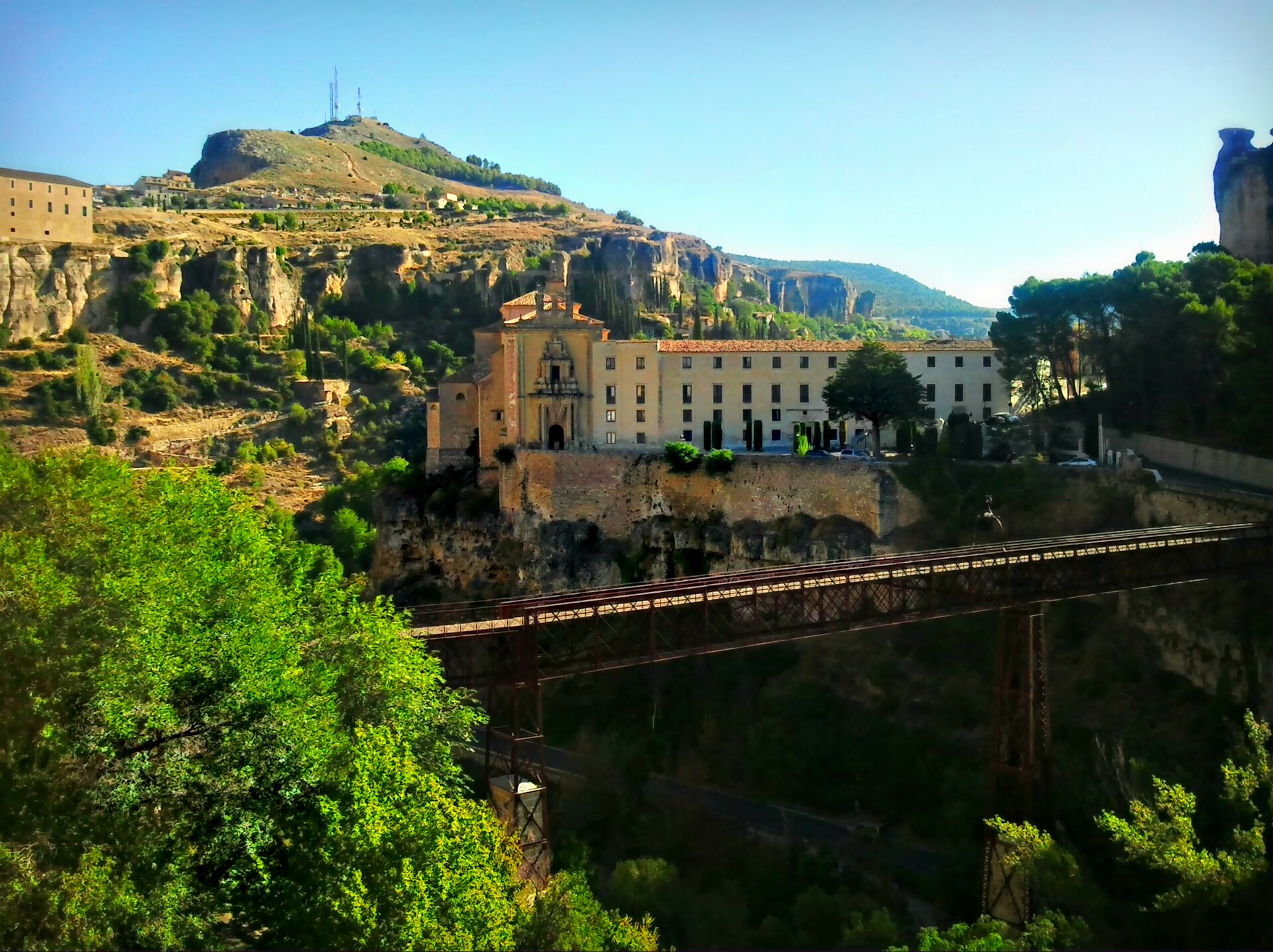
Photo: carrodeguas / Wikimedia Commons, CC BY-SA 3.0
If you don’t suffer from vertigo, crossing the Puente de San Pablo will be one of the highlights of your entire visit. This narrow steel footbridge spans the deep Huécar gorge and towers an impressive forty metres above the riverbed. Originally, a massive stone bridge built in the 16th century stood in its place, but unstable ground caused it to deteriorate and eventually collapse. In the early 20th century, it was replaced by the current steel structure with wooden planks that flex slightly underfoot and vibrate gently in the wind.
It’s roughly halfway across this bridge that you’ll get the absolute best and most photographed view of the Casas Colgadas in all their glory. This is the spot where you truly appreciate just how bold those medieval architects must have been, choosing to build a city on such an inhospitable and precipitous rock. Crossing the bridge is completely free and connects the historic centre with the former Convent of Saint Paul on the opposite cliff. Even if you feel a little wobbly at first, the views down into the green valley below are more than worth the mild rush of adrenaline.
💡 Local tip: Head to the bridge early in the morning, before the tour coaches arrive. Morning mist rising from the gorge gives the entire valley an utterly mystical atmosphere.
3. Cuenca Cathedral Spain
Right in the heart of the old town on the main square stands the monumental Cuenca Cathedral, one of the most important religious buildings in the country. Construction began at the end of the 12th century, and here’s a fascinating fact: it’s the very first Gothic cathedral built in Spain. This architectural first came about thanks to King Alfonso VIII’s wife, the English princess Eleanor Plantagenet, who brought skilled Norman architects from France. As a result, the interior has a distinctly French – or even English – feel, which is highly unusual for this part of Spain.
The cathedral’s façade underwent extensive restoration in the early 20th century after the original bell tower collapsed and damaged the main frontage. From the outside it looks rather neo-Gothic, but the moment you step inside, you’re engulfed by an authentic medieval atmosphere of mighty pillars and magnificent ribbed vaults. The stunning stained glass windows are also worth noting – some are modern creations that bring an unexpected splash of abstract colour to the ancient interior. Don’t miss the adjoining cloister, either, which offers surprising views down into the deep gorge at the back.
💡 Local tip: When buying your cathedral ticket, I’d recommend adding the audio guide. The history of each chapel is incredibly intricate, and without context you’ll miss a wealth of fascinating details from the Reconquista era.
4. Plaza Mayor (Main Square)
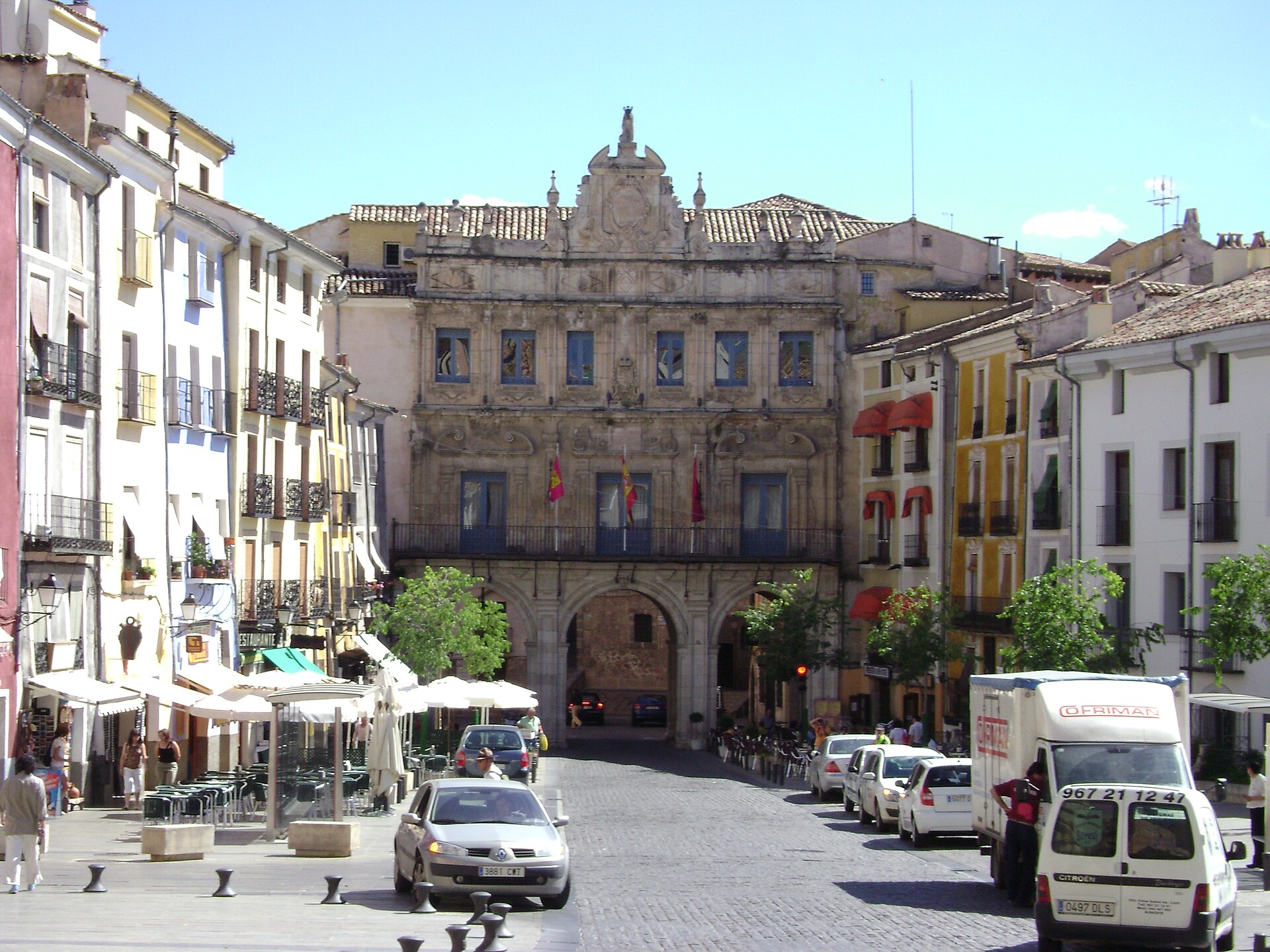
Photo: Xoan de Pez / Wikimedia Commons, CC BY-SA 3.0
Every Spanish city has its Plaza Mayor, and Cuenca is no exception – although its main square has a very unconventional shape. Due to the lack of flat ground on top of the rocky ridge, the square is elongated and irregular, which actually gives it an incredibly intimate and homely charm. The space is dominated not only by the striking cathedral façade but also by the lovely baroque town hall built on three grand arches, beneath which the main street passes. Surrounding it all are colourful historic houses with the best local cafés and restaurants on their ground floors.
It’s the perfect spot to catch your breath after the strenuous climb up the steep streets. Grab a seat at one of the terraces, order a glass of good La Mancha wine, and watch the world go by. If you’re feeling peckish, I’d recommend trying some excellent local vegetarian tapas – the traditional pisto manchego (a stew of mixed vegetables with tomatoes) or the superb local sheep’s cheese are both fantastic. In the evening, the square is beautifully lit up and becomes the main gathering point for locals of all ages.
💡 Local tip: If you want coffee on the square, expect slightly higher prices than in the tucked-away backstreets. But the view of the cathedral and the buzz of city life is absolutely worth the small premium.
5. Museum of Spanish Abstract Art
You might not expect a world-class modern art gallery in a conservative medieval city, but that’s exactly what makes Cuenca so extraordinary. The Museo de Arte Abstracto Español is housed right inside the famous Hanging Houses, creating an absolutely fascinating contrast. The museum was founded in the 1960s by Filipino-Spanish artist and collector Fernando Zóbel, who was searching for the perfect space to display the work of his contemporaries. He succeeded in creating a unique collection that is still considered one of the finest collections of abstract art in Europe.
As you wander through the exhibition, you’ll admire not only canvases and sculptures by renowned Spanish artists like Antoni Tàpies and Eduardo Chillida, but also the architecture of the building itself. Exposed wooden beams, bare stone walls, and small windows looking out over the sheer drop heighten the impact of every single work on display. The experience of seeing rugged medieval masonry married with the clean lines of abstract painting is truly powerful – and it wins over even those who wouldn’t normally give modern art a second glance. Entry is often free for EU citizens, or available for a purely nominal fee.
💡 Local tip: Don’t rush through – make sure to explore the upper floors. It’s from their small windows that you’ll get the most interesting and least-seen views down to the San Pablo bridge.
6. Walking the Hoz del Huécar Gorge
Once you’ve had your fill of views from above, it’s time to explore the city from an entirely different perspective. The Huécar river has carved a deep canyon into the limestone bedrock, and a very pleasant, easy walking trail runs along the bottom. As you stroll alongside the gentle river, you can marvel at the monumental rock walls rising vertically above you and admire the historic centre from a frog’s-eye view. It’s from down here that you truly appreciate just how incredibly high those historic houses are built and how seamlessly they merge with the natural rock.
The path through the gorge is lined with lush vegetation, old mills, and small vegetable plots that locals have been tending for centuries. During the summer months, you’ll find much-needed shade and blissful coolness that’s sorely lacking in the baking streets of the upper town. The trail is well-maintained, clearly marked, and perfectly manageable in ordinary walking shoes. Along the way, you’ll come across several nice rest areas and benches where you can enjoy a little picnic with views of the dramatic cliffs towering high above your head.
💡 Local tip: The trail is especially beautiful in early autumn, when the trees in the valley turn rich yellows and reds, creating a stunning colour contrast against the grey sandstone cliffs.
7. Hoz del Júcar & the Shrine of San Julián
While the Huécar gorge is more famous thanks to the Hanging Houses, the gorge of the second river – the Júcar – is equally impressive and noticeably greener. This side of the city has a much wilder, more natural feel, with dense pine forests climbing the steep slopes. A beautiful walking trail follows the river, leading you to several scenic viewpoints and spots where you can hire a canoe and explore the calm waters of the Júcar right from the surface. It’s a fantastic activity if you want a break from sightseeing and fancy some active relaxation in nature.
If you enjoy longer walks with a touch of mystery, follow the path to the Ermita de San Julián el Tranquilo. This small chapel is tucked deep into the rock face and is associated with the legend of the city’s patron saint, who supposedly retreated here for quiet prayer and basket weaving. The climb up requires a bit of fitness as it’s a steep ascent, but the reward is complete tranquillity and a gorgeous view of the meandering river far below. Along the way, keep your eyes peeled for griffon vultures soaring majestically above the surrounding limestone cliffs.
💡 Local tip: Don’t forget to pack a water bottle and sturdy shoes for the Júcar trails – some sections leading to the viewpoints can be quite slippery after rain and full of loose stones.
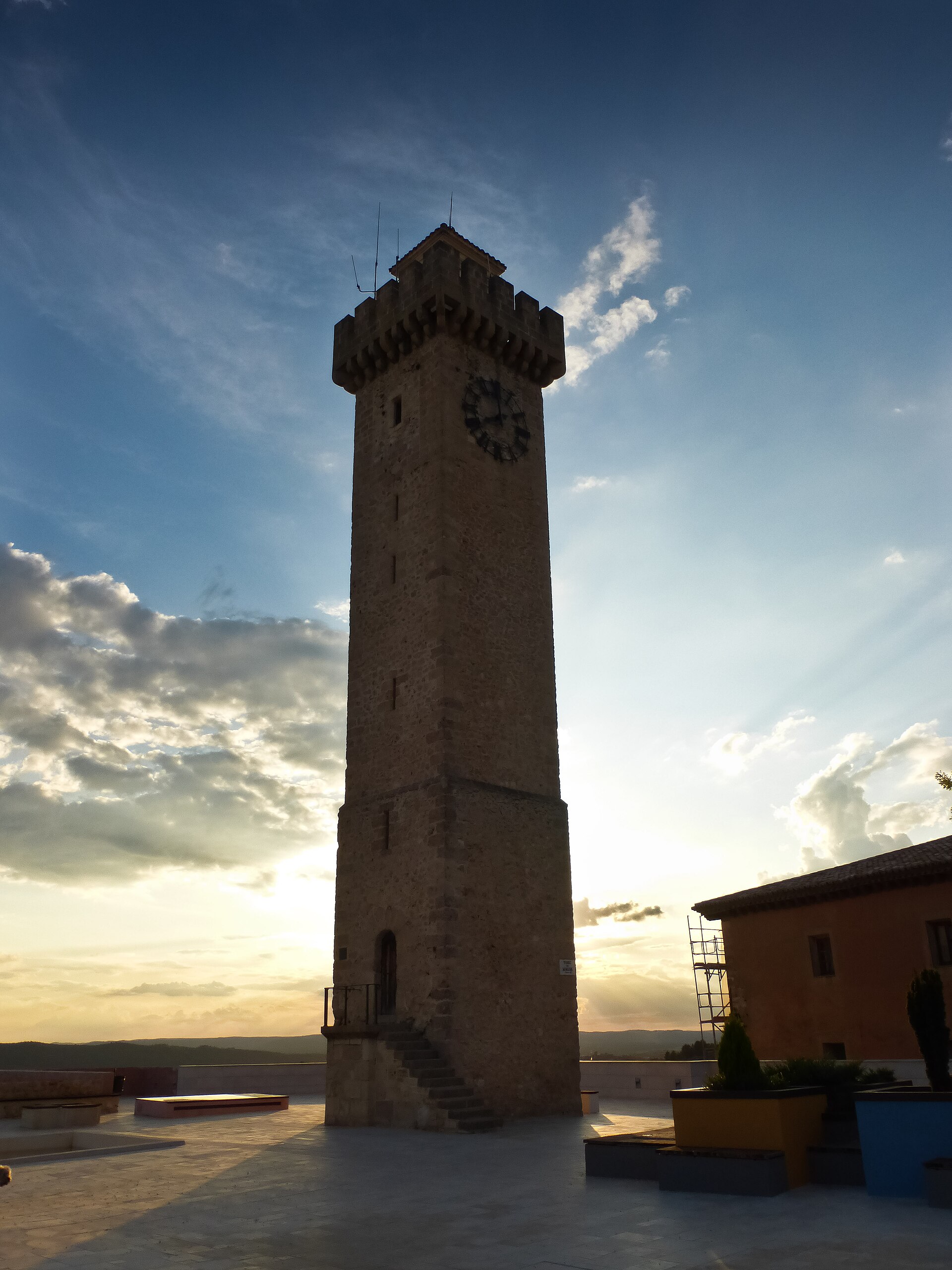
Photo: D.Rovchak / Wikimedia Commons, CC BY-SA 4.0
As you wander through the old town, you can’t miss the square clock tower rising above the surrounding rooftops. Torre de Mangana stands on the site of the original Moorish fortress that once guarded the city against Christian armies. The tower itself has undergone numerous drastic renovations over the centuries, and its current, somewhat neo-Mudéjar appearance dates from the mid-20th century. Despite that, it serves as the city’s main landmark, and its bell, which chimes the hour regularly, can be heard echoing through every winding lane of the historic centre.
The real highlight of visiting this spot isn’t the tower itself, but the expansive Plaza de Mangana on which it stands. Archaeological excavations here have uncovered the foundations of an old synagogue and Moorish walls, which you can view through glass floors and freely accessible ruins. On top of that, from the edge of this square you get absolutely fantastic panoramic views of the modern lower town and the vast plains of the Castilian countryside stretching deep into the horizon. It’s an ideal place for a moment of reflection, watching how the city expanded into the valley over the centuries.
💡 Local tip: The square beneath the tower is usually far less crowded than the area around the cathedral, so you can sit quietly on the edge of the old walls and enjoy long, uninterrupted views across the landscape.
9. Former Convento de San Pablo
Once you cross the iron San Pablo bridge, you’ll find yourself right at the gates of a monumental 16th-century convent. The Convento de San Pablo was originally home to Dominican monks, who chose this isolated spot on the cliff for its utter peace and seclusion from the secular world. Today, this beautifully restored building houses the prestigious Parador de Cuenca – part of Spain’s network of state-run hotels set in historic landmarks. Even if you’re not staying here, you’re welcome to step inside and admire the stunning architecture of the glass-roofed cloister courtyard.
I’d recommend settling into the hotel’s café, ordering a coffee or tea, and soaking up the wonderfully grand atmosphere. The former convent church now serves as a modern art gallery and multifunctional cultural space, which is often free to enter. From the Parador’s outdoor terraces, you’ll also get a completely unique view of Cuenca’s historic centre and the Hanging Houses – this time from the exact opposite side to where most visitors snap their photos. In the evening especially, when the convent is magically lit up, the whole scene looks like something out of an epic period film.
💡 Local tip: The Parador’s café is a brilliant refuge when you’re caught out by an unexpected rain shower or the biting cold wind that whips through the valley with surprising frequency.
10. Barrio del Castillo & the Highest Viewpoints
Photo: Juan Luis Jiménez Lillo / Wikimedia Commons, CC BY-SA 3.0 es
If you’ve got enough energy and don’t mind a steep climb, head uphill from the main square along Calle Trabuco until you reach the highest part of the city, known as Barrio del Castillo. A mighty castle and extensive fortifications once stood here, guarding the narrowest point of the rocky spur. Today only ruins remain, but the area’s standout feature is the handsome stone arch called Arco de Bezudo, through which cars still drive to enter the old town from the north. Right beside the arch stands a preserved tower you can climb via its internal staircase.
From this highest point in the city, all of Cuenca spreads out before you. You’ll enjoy breathtaking views into both gorges simultaneously – the Júcar valley on one side and the Huécar on the other – and you’ll see how the historic houses grip the rocky ridge like an enormous stone crown. This neighbourhood is also much quieter than the area around the cathedral, with small local bars and narrow lanes full of flower pots. It is, without question, the absolute best spot in the city to watch a fiery sunset over the Castilian mountains.
💡 Local tip: If you can’t face walking all the way to the top, take the local bus (line 1 or 2) from the lower town – it’ll drop you right at the little square by the castle, and you can take a leisurely stroll downhill instead.
11. Túneles de Alfonso VIII (Underground Tunnels)
Cuenca isn’t only fascinating above ground – it hides enormous secrets deep beneath the surface too. Under the main street of the historic centre lies a complex network of underground passages and galleries that locals have built and used for a variety of purposes over many centuries. Originally, these spaces served as aqueducts and water reservoirs for the medieval city, later functioning as wine cellars and cold stores for food. Their darkest chapter, however, came during the brutal Spanish Civil War in the 20th century.
During the bombing of the city, these damp, dark tunnels served as vital air-raid shelters for thousands of Cuenca’s residents. Today, part of this extensive underground labyrinth beneath Calle Alfonso VIII has been carefully restored and opened to the public. You can only enter on a guided tour, which lasts approximately one hour. Walking through the cramped corridors filled with echoes and dim light is a profoundly moving and educational experience that helps you understand the difficult, often turbulent history of the entire region.
💡 Local tip: It’s cool and damp underground year-round, with temperatures hovering around 15°C. Even if it’s a scorching 40°C outside, make sure to bring a light jumper or hoodie for the tunnel tour.
12. Museo Paleontológico de Castilla-La Mancha (MUPA)
Photo: PePeEfe / Wikimedia Commons, CC BY-SA 4.0
This one will thrill anyone travelling with children – though it’s guaranteed to captivate adults too. The province of Cuenca happens to be one of the most significant dinosaur fossil sites in all of Europe. The modern palaeontological museum, known by its acronym MUPA, sits on Cerro del Socorro hill just outside the city and offers a fantastic interactive exhibition. Here you’ll learn all about the prehistoric life that took place in this area millions of years ago, when today’s arid plains were covered in lush tropical forests.
The star of the museum is the unique predatory dinosaur Concavenator corcovatus, affectionately nicknamed Pepito by locals. This theropod had a curious hump on its back and was discovered at the nearby Las Hoyas site. Surrounding the modern museum building is an expansive park filled with dozens of enormous, realistically crafted life-size dinosaur models. From the museum’s outdoor terraces, you also get one of the best overall views of old Cuenca – so even if dinosaurs aren’t really your thing, the trip is worthwhile for the panoramic photos alone.
💡 Local tip: If you don’t have a car, you can reach the museum on a pleasant, if slightly steep, walk from the lower town. The uphill trek takes about 20 minutes and rewards you with quiet far from the bustling centre.
13. Day Trip: Ciudad Encantada (The Enchanted City)
Photo: Rafa Esteve / Wikimedia Commons, CC BY-SA 4.0
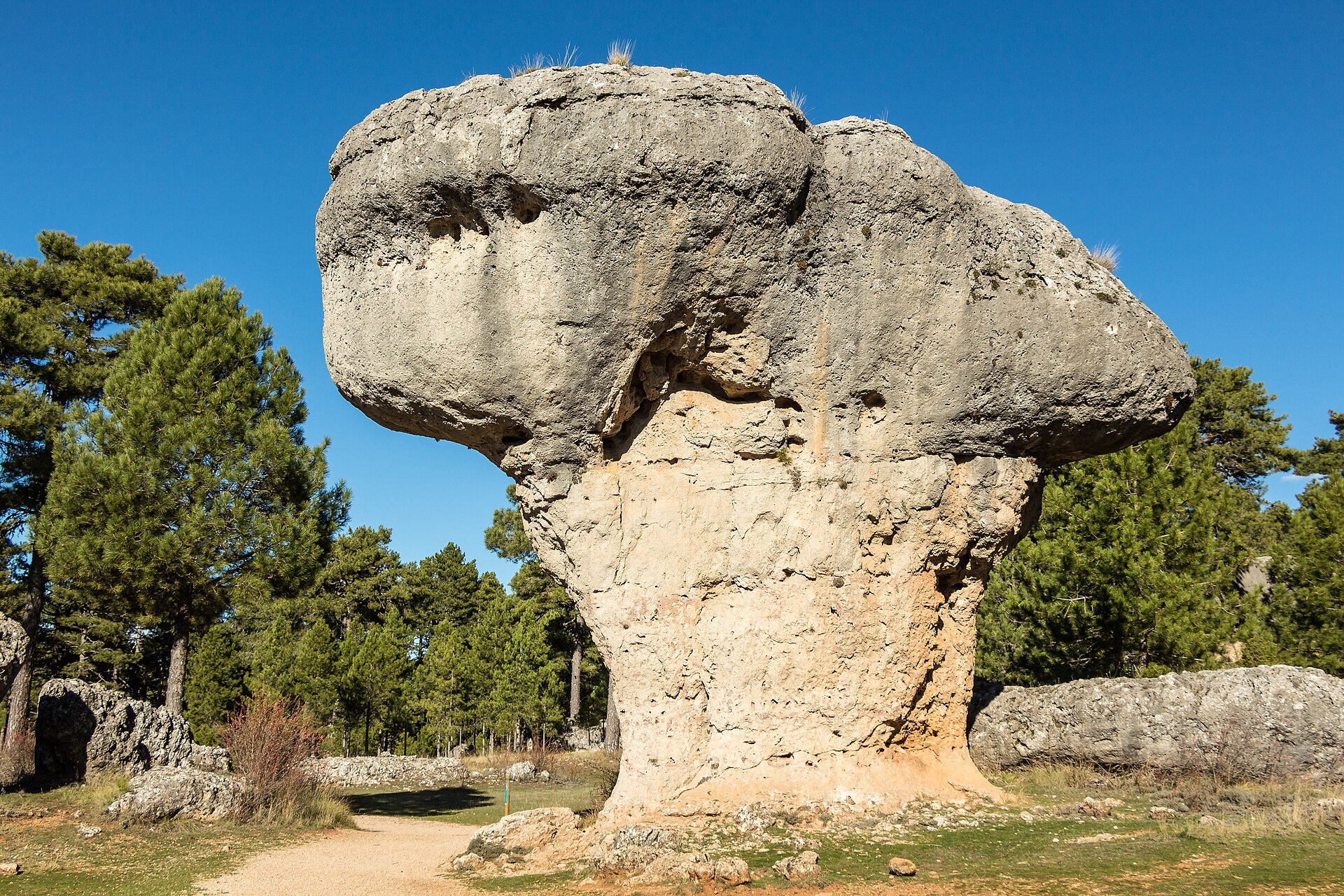
If you’re planning to spend more than just one day in Cuenca and have a hire car at your disposal, you absolutely must venture beyond the city limits to a nearby nature park. About half an hour’s drive along winding mountain roads lies the fascinating karst landscape known as Ciudad Encantada – the Enchanted City. Over millions of years, water, wind, and ice have sculpted the limestone rocks into utterly bizarre and fantastical shapes resembling all sorts of animals, objects, and faces. This geological park is so unique that it was declared a protected natural monument back in the 1920s.
A well-marked circular trail of roughly three kilometres leads you through a pine forest past enormous mushroom-shaped rocks and massive natural stone bridges. Information boards reveal that you’re looking at formations with names like the Sea of Stone, the Wrestling Bears, the Turtle, and the Roman Bridge. It’s an absolutely ideal spot for a family outing – the terrain is very gentle, and kids will love guessing what each rock formation looks like. The surrounding nature is fragrant with pine needles and wild thyme, making it the perfect escape from the stony lanes of the historic city into the embrace of wild Castilian countryside.
💡 Local tip: Tickets to the Enchanted City can be bought at the gate, but at weekends I’d recommend arriving right at opening time so you can enjoy the most spectacular rock formations all to yourselves, before the crowds descend.
Where to Go Next from Cuenca
Thanks to excellent connections on Spain’s AVE high-speed rail network, Cuenca works perfectly as a stopover on a longer journey through the country. If you’re heading inland, the obvious next step is magnificent Madrid, reachable by train in under an hour. From there, you can explore more gems of central Spain at your leisure. If sun and sea breezes are calling your name instead, hop on a train in the opposite direction and in roughly the same time you’ll arrive in gorgeous Valencia, where stunning beaches and striking modern architecture await.
For road-trippers keen to explore the eastern coast in more depth, it makes perfect sense to continue south towards sun-soaked Alicante, with its beautiful castles and wonderful seaside promenades. Whichever direction you choose, be sure to seize every opportunity to sample more regional specialities along the way. If you’re curious about what to try across Spain, have a look at our guide to typical Spanish food, where you’ll find plenty of meat-free inspiration for your continued gastronomic adventures.
Frequently Asked Questions
How do you get to Cuenca from Madrid?
The fastest and most comfortable option is definitely the AVE high-speed trains, which depart from Madrid’s Atocha station. The journey takes just under an hour and trains run several times daily. However, be aware that the high-speed train station (Cuenca-Fernando Zóbel) is located a few kilometers outside the city, so you’ll need to take bus number 1 or a taxi to reach the historic center.
Is one day enough to see Cuenca?
If you get an early start, you can cover the main sights like the Hanging Houses, the cathedral, and the San Pablo bridge in one intensive day. However, I’d recommend staying at least one night. The city has an absolutely magical and unique atmosphere after sunset, when the old walls and cliffs are illuminated and the day-trippers disappear from the streets—it would be a real shame to miss it.
Is the city suitable for people with limited mobility?
The historic center (Casco Antiguo) sits on a very steep hill, the streets are paved with uneven cobblestones, and many monuments require climbing lots of stairs. For people with limited mobility or families with strollers, it can be quite challenging. However, the city bus makes things much easier—you can take it all the way up to the castle at the top and then just slowly make your way down from there.
What local dishes should we try?
Castilian cuisine can sometimes be challenging for vegetarians, but in Cuenca you’ll definitely enjoy the excellent pisto manchego, a hearty vegetable medley with tomatoes, peppers, and zucchini, often served with a fried egg. Don’t miss the wonderful local sheep’s cheeses from the La Mancha region either. For meat lovers, the most typical local specialty is morteruelo, a traditional warm meat pâté served with bread. After your meal, be sure to try resoli, an herbal liqueur with coffee and orange peel that’s often sold in bottles shaped like the Hanging Houses.
Where can you park in the city?
Parking directly in the historic center is a nightmare—the streets are extremely narrow and spaces are reserved for residents only. Your best strategy is to leave your car at the large free parking lot in the lower town near the river and head up on foot or by bus. Another option is to drive all the way up past the Arco de Bezudo arch (Barrio del Castillo neighborhood), where there’s a spacious public parking lot with relatively reasonable rates.
Do you have to pay to enter the Hanging Houses?
You can view the Hanging Houses themselves from outside and from the bridge completely free all day long. However, if you want to look inside and see the original wooden balconies up close, you’ll need to visit the Museum of Abstract Art, which is housed within them. Entry to this museum is often completely free for EU citizens, or there’s just a very nominal fee of a few euros.
When are the monuments open and do I need to worry about siesta?
As everywhere in Spain, in Cuenca you’ll need to account for the traditional afternoon siesta. Many smaller shops, churches, and occasionally some museums close roughly between 2:00 PM and 5:00 PM. However, this rule usually doesn’t apply to major monuments like the cathedral or large museums. During siesta, it’s best to follow the locals’ example—find a shady restaurant and leisurely enjoy a long Spanish lunch.
Is it safe to drink tap water in Cuenca?
Yes, tap water is completely safe to drink and of very good quality. Thanks to a recent law, all Spanish restaurants and bars are now required to offer guests free tap water, so don’t hesitate to confidently ask for it. You’ll save money and avoid unnecessary plastic bottles, which definitely comes in handy on hot summer days.
Tips and Tricks for Your Vacation
Don’t Overpay for Flights
Search for flights on Kayak. It’s our favorite search engine because it scans the websites of all airlines and always finds the cheapest connection.
Book Your Accommodation Smartly
The best experiences we’ve had when looking for accommodation (from Alaska to Morocco) are with Booking.com, where hotels, apartments, and entire houses are usually the cheapest and most widely available.
Don’t Forget Travel Insurance
Good travel insurance will protect you against illness, accidents, theft, or flight cancellations. We’ve had a few hospital visits abroad, so we know how important it is to have proper insurance arranged.
Where we insure ourselves: SafetyWing (best for everyone) and TrueTraveller (for extra-long trips).
Why don’t we recommend any Czech insurance company? Because they have too many restrictions. They set limits on the number of days abroad, travel insurance via a credit card often requires you to pay medical expenses only with that card, and they frequently limit the number of returns to the Czech Republic.
Find the Best Experiences
Get Your Guide is a huge online marketplace where you can book guided walks, trips, skip-the-line tickets, tours, and much more. We always find some extra fun there!
TL;DRSitges is a Catalan seaside town just thirty-five minutes by train from central Barcelona, a calmer alternative to the crowds at Sagrada Família. It has over seventeen beaches of fine golden sand, a historic old quarter called Casc Antic, the striking Sant Bartomeu i Santa Tecla church perched on a cliff, and museums like Cau Ferrat and Museu Maricel tied to Catalan modernism. The article rounds up fourteen specific tips on what to see and do, including visiting Casa Bacardí, taking a trip to Garraf Natural Park, and trying Crema catalana or Pa amb tomàquet. The best time for swimming is June to mid-September, when temperatures top thirty degrees, though late May to early June or September work well too. October brings the film festival, and February the famous carnival, which draws up to three hundred thousand visitors a year. Sitges is also known as one of Europe’s most LGBT-friendly destinations.
If you’re craving a sun-drenched escape to Catalonia and want to leave the crowds swarming the Sagrada Família behind, Sitges Spain is an absolute winner. This charming seaside town offers the perfect cocktail of historic architecture and laid-back beach vibes. You’ll find yourself in a place where time pleasantly slows down the moment you step off the train. Get ready for whitewashed alleys bursting with flowers, the scent of sea salt, and an energy that sweeps you up instantly.
Catalonia stretches far beyond the boundaries of Barcelona’s suburbs, and this region is full of surprising contrasts. Exploring the coastal corners of Spain means understanding why the locals so fiercely guard their unique identity and culture. You’ll discover that Sitges hides an enormous wealth of experiences, whether you’re after art, endless parties, or simply a quiet spot on the beach with a good book. In this article, you’ll find fourteen carefully selected things to see and do in Sitges so you can take home the very best memories.
Photo: G.M. Kowalewska / Wikimedia Commons, CC BY 3.0
TL;DR
Easy to reach: Sitges is just thirty-five minutes by comfortable train directly from central Barcelona.
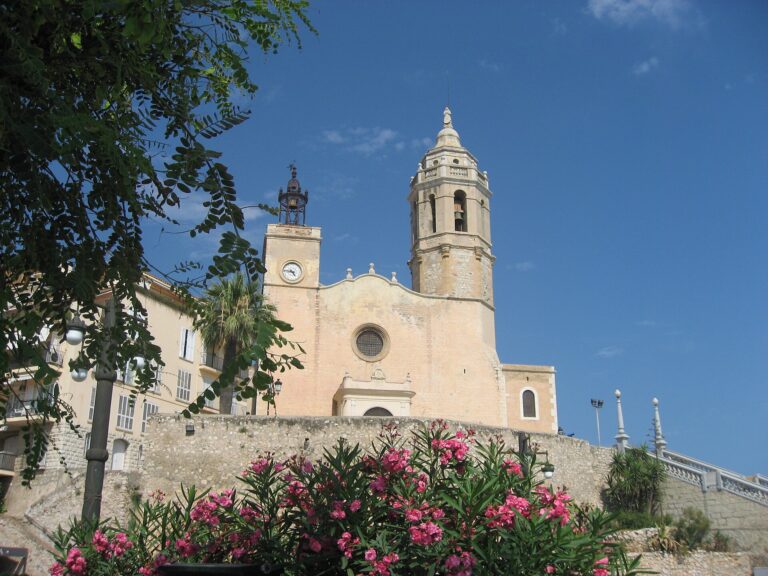
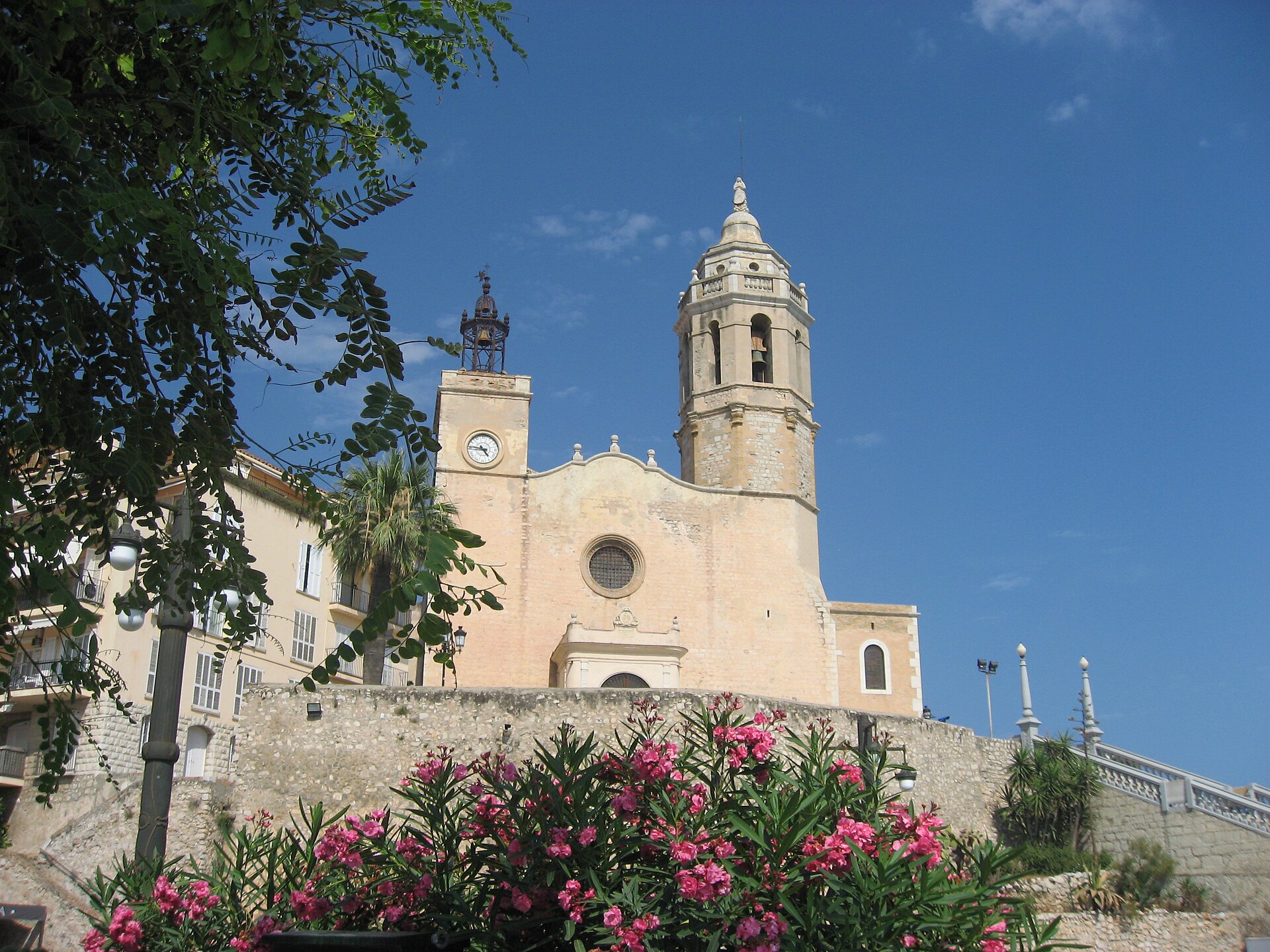
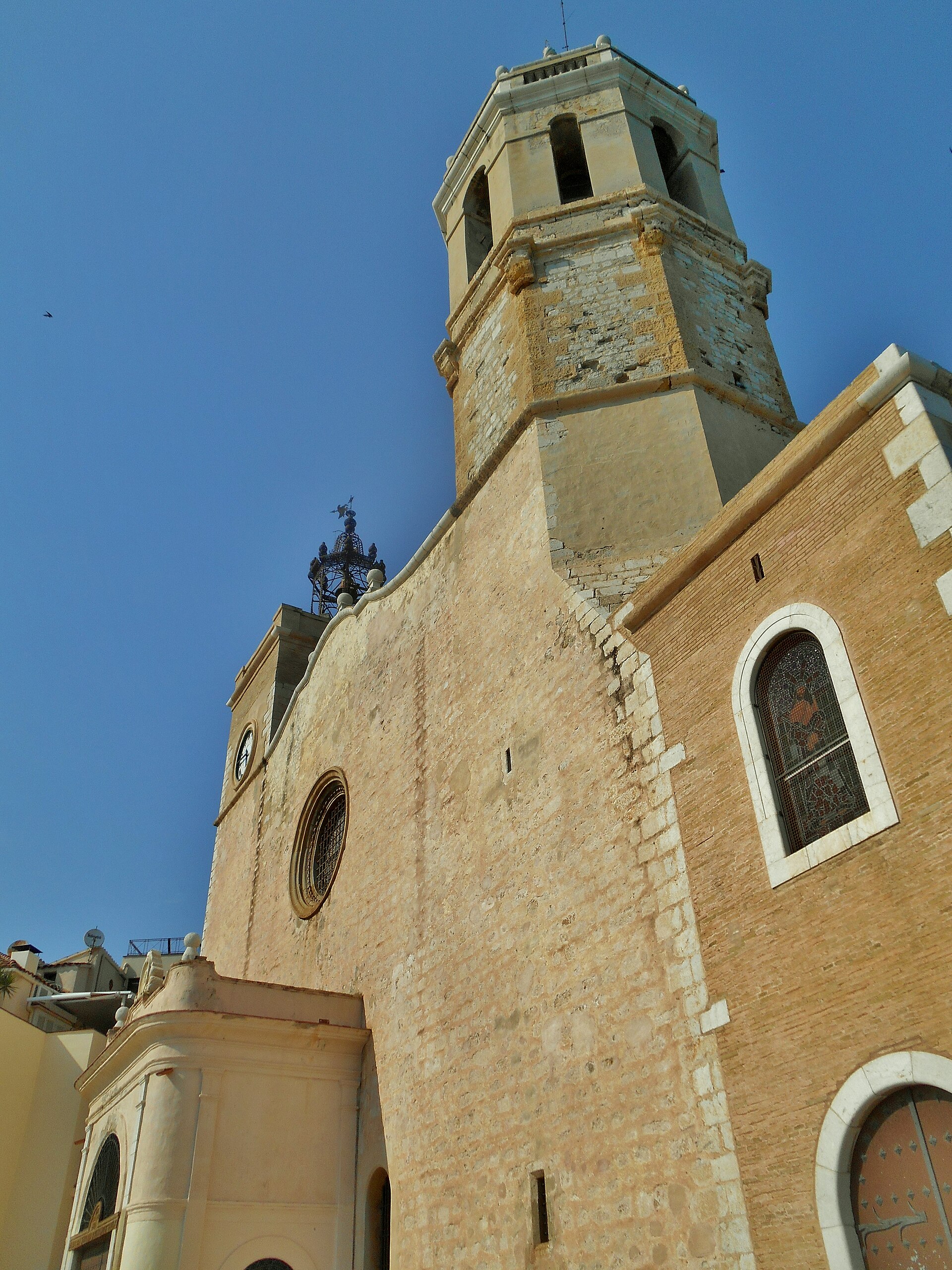
Iconic landmark: The town’s crowning jewel is the stunning Sant Bartomeu church, perched on a rocky cliff above the waves.
Beach paradise: More than seventeen diverse beaches await you, with fine sand and gentle slopes into the sea.
Artistic soul: The town is a cradle of Catalan modernism, home to breathtaking museums like Cau Ferrat.
World-class festivals: The local film festival and February carnival draw hundreds of thousands of enthusiastic visitors from around the globe.
Open atmosphere: The town is globally renowned as one of the most welcoming LGBT destinations in Europe.
Superb gastronomy: You absolutely must try the traditional toasted bread with tomato and the famous Crema Catalana dessert.
The ideal time to visit depends entirely on what you’re hoping to get out of your holiday. If swimming and sunbathing top your list, the best conditions run from June through mid-September. Do bear in mind, though, that the town gets packed with tourists during peak summer and accommodation prices soar to their highest. Temperatures in July and August regularly exceed thirty degrees, practically begging you to spend the entire day in the water.
Catalonia has unfortunately been grappling with extreme heatwaves and historic drought in recent years. During the height of summer, strict water restrictions may be in force, leading to limitations on beach showers or bans on filling public pools. That’s why late May to early June makes a brilliant alternative, as does September, when the sea is still beautifully warm and the streets are far less crowded.
For culture lovers and party-goers, it makes perfect sense to visit outside the main summer season. October belongs to the famous film festival, which cloaks the town in a delightfully spooky and thoroughly entertaining atmosphere. Late February or early March is carnival time, when the streets come alive with colour and music well into the small hours. Winters here are mild, so even a January stroll along the empty promenade has its own unmistakable charm.
Where to Stay in Sitges
💡 Tip for accommodation and experiences: We like to search for places to stay on Booking.com, which tends to have the best cancellation policies. For tickets, tours, and activities, it’s worth comparing options on GetYourGuide.
Choosing the right neighbourhood will make or break your entire experience. If you want to be in the thick of things with every restaurant within arm’s reach, look for accommodation right in the old town, known as the Casc Antic. The boutique hotels here ooze charm, but expect a livelier nightlife scene, particularly around the so-called Street of Sin.
For families with children and those who love peace and quiet, the Vinyet neighbourhood is absolutely ideal. It’s just a short walk west of the centre, the streets are lined with mature trees, and everything feels wonderfully relaxed. If you’d rather be surrounded by luxury yachts and sea views, head for the area around Port Aiguadolç, where you’ll find excellent seafood restaurants and gorgeous scenery. I’d recommend booking your Sitges Spain hotel well in advance, as the best options disappear remarkably fast.
Among the most popular hotels is the stylish ME Sitges Terramar, located at the quieter end of the promenade with a stunning beach club. Also worth mentioning is the Hotel Platjador in the very heart of town, from which the sea is literally just a few steps away. For those seeking a good balance between price and quality, the mid-sized Hotel Galeón offers excellent service, lovely breakfasts, and a beautiful indoor pool.
14 Best Things to See and Do in Sitges Spain
Let’s dive into the details and explore the very best this Catalan gem has to offer. Here are fourteen specific places and experiences that deserve a spot on your holiday itinerary. You’ll discover that the town offers so much more than just sunbathing, and you’ll come away with a wealth of cultural and culinary memories.
1. Sant Bartomeu i Santa Tecla Church
Photo: Enrique Íñiguez Rodríguez / Wikimedia Commons, CC BY-SA 4.0
This asymmetrical church perched on the rocky headland known as La Punta is the undisputed symbol of the entire town. Its silhouette separates the main town beach from Platja de Sant Sebastià, creating a panorama you’ll spot on every other postcard. A broad staircase leads up to the church, and you absolutely must walk all the way to the main entrance, where a fantastic view of the open sea unfolds before you.
Inside the seventeenth-century church, you’ll find beautiful baroque altarpieces that stand in striking contrast to the rather austere exterior. Pause for a moment by the organ and soak up the peaceful atmosphere of this sacred space. You’ll notice that even at high noon it’s pleasantly cool inside, making the church a perfect refuge from the summer sun.
💡 Local tip: The most stunning photos of the church are captured at sunset from the breakwater near Platja de la Fragata. The golden hour bathes the stone walls in deep orange hues, giving you a shot worthy of a professional photographer.
2. A Stroll Along the Passeig Marítim Promenade
This nearly three-kilometre promenade lined with towering palms ranks among the most beautiful in all of Spain. It stretches from the Sant Bartomeu church all the way to the luxury Hotel Terramar, offering the ideal setting for a morning jog or an evening promenade. Along the way, you’ll pass dozens of stunning colonial villas built here at the turn of the nineteenth and twentieth centuries by wealthy returnees from Cuba and Puerto Rico.
The entire route is immaculately maintained and dotted with plenty of benches and beach bars known as chiringuitos. These little wooden shacks right on the sand serve chilled drinks and light snacks, so you can stop for a break whenever you fancy. The promenade is also fully accessible, which is a bonus not just for families with pushchairs but also for inline skaters and cyclists.
💡 Local tip: Hire a pedal-powered quadricycle for an hour — you’ll find several rental spots along the promenade. It’s an incredibly fun way to cruise the entire coastline from end to end without getting sore feet.
3. Discovering the Diverse Beaches
Sitges boasts more than seventeen different beaches, so there truly is something for everyone. Right in the centre beneath the church lies the popular Platja de la Ribera, which tends to be the busiest and offers every comfort imaginable, including sunbed hire. Slightly quieter is the picturesque Platja de Sant Sebastià on the eastern side of the headland, surrounded by cosy restaurants with outdoor terraces.
The Mediterranean waters in this area are surprisingly clean, with a very gentle slope into the sea, making it paradise for non-swimmers and small children. Most of the town’s beaches regularly earn Blue Flag awards for cleanliness and quality of services. If you wander further from the centre, you’ll come across nudist beaches and hidden coves offering much greater privacy.
💡 Local tip: Head to the secluded Platja de l’Home Mort if you’re after absolute tranquility and don’t mind a short hike. This cove tucked behind the cliffs offers crystal-clear water and a true escape from the central crowds.
4. Getting Lost in the Old Town Alleys
The historic centre known as the Casc Antic is a genuine labyrinth of whitewashed lanes winding their way up the hill behind the main church. The houses here have characteristically white façades accented with blue window frames and plenty of blooming geraniums on the balconies. I’d suggest putting the map away and simply wandering without any particular destination, because a lovely surprise awaits around every corner.
As you stroll, you’ll stumble upon old fishermen’s cottages alongside grand palaces, testifying to the town’s rich history. Don’t forget to look down as well as around — you’ll often spot beautiful ceramic tiles underfoot. Hidden within the narrow, shaded lanes are some of the best independent boutiques, where you can pick up original handmade souvenirs, linen clothing, and locally crafted ceramics.
💡 Local tip: Pop into Carrer d’en Bosc, the oldest surviving street in the entire town. Its rough stone walls and remnants of the old town fortifications will instantly transport you several centuries back in time.
5. The Cau Ferrat Art Museum
This unique museum is an absolute must for every art lover. It was originally the home and studio of the celebrated artist and writer Santiago Rusiñol, who brought a wave of Catalan modernism to the town. The interior has been preserved almost exactly as Rusiñol left it, and it feels incredibly authentic.
Inside, you’ll find a fascinating collection of paintings, ceramics, and wrought ironwork that Rusiñol passionately amassed throughout his life. On the walls hang not only his own canvases but also early works by Pablo Picasso and paintings by El Greco. Your eyes will dart between the blue-painted walls crowded with rare artefacts, which together create a truly mesmerising visual experience.
💡 Local tip: Buy a combined ticket that covers both the Cau Ferrat museum and the neighbouring Maricel museum. You’ll save a few euros, and the two institutions are connected, making the transition between them wonderfully seamless.
6. The Architectural Gem of Palau de Maricel
The Maricel Palace is one of the most beautiful buildings on the entire coast, and visiting it will genuinely take your breath away. It was commissioned by American millionaire and art collector Charles Deering in the early twentieth century, with the help of architect Miquel Utrillo. You’ll find that the building masterfully blends different historical styles, from Gothic through Renaissance to then-modern elements.
The most striking part of the palace is the so-called Golden Hall and the stunning blue courtyard, which opens onto panoramic views of the churning sea. The entire complex served as a luxury residence for hosting distinguished guests and displaying art collections. Today, it’s frequently used for wedding ceremonies and prestigious cultural events, further underscoring the exclusivity of this place.
💡 Local tip: Check the guided tour schedule in advance, as the palace isn’t open to the public at all times. Tours run only on certain days, and slots tend to sell out quickly during the peak season.
7. Museu Maricel and Its Collections
Photo: Jordiferrer / Wikimedia Commons, CC BY-SA 4.0
Right across from the palace sits the museum of the same name, which traces the evolution of Catalan art from the medieval period to the present day. The museum spaces underwent extensive renovation a few years ago and now offer top-notch exhibition halls with perfect lighting. The displays take you chronologically through Romanesque frescoes, Gothic altarpieces, and captivating maritime paintings that reflect the region’s history.
Beyond the artworks themselves, you’ll be enchanted by the architecture of the building, which stands right on the clifftop above the sea. Some halls have enormous windows overlooking the waves, giving the impression that the ocean is part of the exhibition itself. There’s also a superb section dedicated to realist sculpture, dominated by works from local nineteenth-century masters.
💡 Local tip: Set aside an entire morning for both museums so you can take in the exhibits at a leisurely pace. Afterwards, I’d recommend sitting down for a coffee at the nearby little square and letting all those artistic impressions settle in.
It might surprise you, but the founder of the world-famous rum brand, Facundo Bacardí Massó, was born right here. The historic building of the old Mercat Vell market now houses a visitor centre that engagingly tells the story of his life and journey to Cuba. You’ll learn how a young emigrant worked his way up from nothing and created a drink that conquered the world.
During the interactive tour, you’ll pick up all sorts of fascinating facts about the rum-making process and the significance of the iconic bat logo. Bats lived under the roof of the first distillery in Cuba, and Mrs Bacardí considered them a symbol of good luck. The tour wraps up with a fun cocktail-making workshop where, under the guidance of a professional bartender, you’ll mix your very own perfect Mojito.
💡 Local tip: Book the tour well in advance online, as groups are small and slots fill up fast. Don’t forget to bring photo ID — the tasting is, naturally, only available to adults.
9. The Welcoming Atmosphere of an LGBT-Friendly Destination
The town is globally celebrated as one of the safest and most welcoming LGBT destinations in Europe. This tradition of tolerance dates back to the 1960s, when artists and bohemians fled here seeking freedom in an otherwise conservative Spain. Today, the atmosphere is completely relaxed and inclusive, where everyone can feel free to be themselves regardless of orientation.
The heart of the nightlife is the famous Carrer 1er de Maig, colloquially known as the Street of Sin, or Calle del Pecado. You’ll find dozens of buzzing bars, clubs, and cafés here where the fun kicks off at sundown and doesn’t stop until dawn. During summer, a fantastic Pride festival takes over the streets, bringing colourful parades, outdoor concerts, and an enormous dose of positive energy.
💡 Local tip: Pop into one of the local clubs for a drag queen show, even if you’re not part of the LGBT community. These shows are packed with razor-sharp humour, fabulous costumes, and guarantee an unforgettable night of laughter.
10. The Sitges Film Festival — Full of Thrills
Photo: Joana.solanell / Wikimedia Commons, CC BY-SA 4.0
Every October, the town transforms into the world capital of fantasy and horror cinema. The prestigious Festival Internacional de Cinema Fantàstic de Catalunya attracts film stars, directors, and thousands of devoted fans from all over the globe. If you visit during this period, you’ll experience the town in an entirely different light, filled with movie posters and themed decorations.
The biggest attraction on the fringe programme is the legendary Zombie Walk, where hundreds of people dress up as the undead and stumble through the streets. Films are screened in several gorgeous cinemas, including the historic Cine Prado. You’ll find that the festival atmosphere is impossibly infectious, and even a simple walk through town becomes a cultural experience.
💡 Local tip: Buy tickets for the main evening screenings the moment they go on sale — they literally vanish within minutes. If you miss out, don’t despair: plenty of smaller screenings and outdoor events are completely free.
11. The Wild February Carnival
While the rest of Europe shivers in February, Sitges enjoys the hottest days of the year thanks to its famous carnival. This event ranks among the biggest and most outrageous in Spain, attracting up to three hundred thousand visitors every year. You’ll find that for one whole week all inhibitions are thrown to the wind and the streets flood with thousands of people in extraordinarily elaborate costumes.
The highlight of the entire week is two grand parades of allegorical floats, known as the Rua de la Disbauxa and the Rua de l’Extermini. Music blasts from the floats, dancers perform fantastic choreographies, and confetti fills the air. The whole town turns into one enormous dance floor, where local families, tourists, and pensioners in the most extravagant outfits all celebrate together.
💡 Local tip: If you’re planning to come for carnival, book your hotel up to six months ahead. The town’s capacity is stretched to breaking point during this week, and securing a train ticket back to Barcelona in the early hours requires sharp elbows.
12. A Day Trip by Train to Barcelona
Thanks to excellent rail connections, a day trip to Gaudí’s city is an obvious choice. Commuter trains on the R2S line depart from the main station roughly every twenty minutes, and the journey to Barcelona’s Sants or Passeig de Gràcia stations takes just thirty-five minutes. You’ll find that travelling by Spanish trains is clean, reliable, and very affordable, so you can happily leave the car behind.
In Barcelona, you can marvel at the unfinished Sagrada Família, stroll down the bustling La Rambla, or lose yourself in the Gothic Quarter. The beauty of basing yourself in Sitges is that you get to enjoy the buzz of the big city by day, but return to a peaceful seaside town in the evening, far from the tourist hordes and the noise of city traffic.
💡 Local tip: Get a Zone 3 ticket, which covers the return journey. If you’re planning to travel multiple times or in a group, it’s worth buying an integrated T-Casual card for ten trips, which significantly cuts the price per journey.
13. An Escape into Nature at Garraf Park
Just behind the town rise the limestone hills of Parc del Garraf natural park, forming a dramatic backdrop to the entire coastline. This dry, rocky landscape is crisscrossed with dozens of kilometres of hiking trails and cycling routes of varying difficulty. Be prepared for the fact that the views from the hilltops across the endless Mediterranean are absolutely breathtaking and worth every drop of sweat.
Hidden in the heart of the park lies a massive surprise in the form of the Sakya Tashi Ling Buddhist monastery, housed in a gorgeous modernist mansion. The contrast of Asian spirituality and Catalan architecture in the middle of rugged wilderness is utterly fascinating. The monastery offers guided tours, and you can even join meditation workshops that will beautifully calm your mind.
💡 Local tip: Head into the hills first thing in the morning, especially during the summer months. The limestone rocks fiercely reflect the sun’s rays during the day, shade is scarce, and temperatures can climb to dangerous levels.
14. Tasting Catalan Gastronomy
Catalan cuisine proudly stands apart from the usual Spanish stereotypes and delivers fantastic culinary experiences for everyone. The cornerstone is the iconic Pa amb tomàquet — crusty rustic bread rubbed with the flesh of ripe tomatoes, generously drizzled with premium olive oil, and sprinkled with sea salt. You’ll find that this simple delicacy is utterly addictive, and you’ll get it as a starter in virtually every local restaurant.
If you visit in spring, be sure not to miss the phenomenon known as Calçots. These are sweet spring onions grilled over an open flame, peeled by hand, and dipped into a thick romesco sauce made from almonds, hazelnuts, and garlic. Local fishermen love to prepare a rich fish stew called Suquet de Peix, fragrant with saffron, though you’ll also find plenty of superb vegetarian tapas. For a sweet finale, there’s the traditional Crema Catalana, an egg custard dessert with cinnamon and a crisp caramelised crust, best paired with a glass of local sparkling Cava wine.
💡 Local tip: At lunchtime, seek out restaurants offering the Menú del Día, or daily set menu. For a fraction of the evening price, you’ll typically get a three-course meal including a drink and coffee — not only economical but also a wonderfully authentic experience.
Where to Go Next from Sitges
If you have more time in Spain, this region offers endless possibilities for further excursions. The obvious first step is a thorough exploration of Barcelona, whose Gaudí masterpieces you simply must see with your own eyes at least once in a lifetime. If you prefer smaller historic towns with a cinematic atmosphere, hop on the high-speed train to Girona, whose medieval lanes served as filming locations for Game of Thrones.
Lovers of wild nature and hidden coves should head further north to the Costa Brava, where pine forests tumble steeply into turquoise waters. In the opposite direction, just south of Sitges, lies the ancient city of Tarragona with its breathtaking Roman amphitheatre right on the beach. If you’re curious about what to fill your stomach with on your travels, check out our article on typical Spanish food. For those planning a longer road trip along the coast, consider continuing south to sun-drenched Valencia or all the way to the resort town of Alicante.
Frequently Asked Questions
How do I get from Barcelona airport to Sitges?
The easiest option is to take the MonBus airport bus, which runs directly from Terminal 1 and takes about thirty minutes. If you arrive at Terminal 2, you can take the train to the El Prat de Llobregat station and conveniently change there onto the R2S line, which will take you all the way to your destination.
Is Sitges an expensive destination?
Compared to the smaller villages in southern Spain, it ranks among the slightly pricier resorts, as it benefits from its proximity to Barcelona and its exclusive reputation. Accommodation in the summer season tends to be costly, but food prices in ordinary restaurants and supermarket shopping stay at a standard European level.
Do I need a car in town?
You definitely don’t need a car for a stay in the town itself, and it would more likely just get in your way. The historic centre is a pure pedestrian zone, the beaches are within walking distance, and parking is very expensive and complicated everywhere. For day trips around the area, the trains will serve you perfectly reliably.
Is the town suitable for families with children?
Even though the destination is known for its nightlife, it’s absolutely ideal and very safe for families with children. You’ll find kilometres of flat promenades perfect for pushchairs, and in most places the sea has a very gentle and safe entry, guaranteeing carefree swimming even for the littlest ones.
What language do they speak here?
The official languages are Catalan and Spanish, with locals switching fluently between them. But thanks to the strong international tourism, you’ll have absolutely no trouble getting by in English, even in smaller shops and restaurants.
Are the local beaches sandy or pebbly?
All the town beaches are covered in beautiful, very fine golden sand that’s perfect for walking barefoot. Most of them are regularly cleaned and maintained, so you definitely won’t need water shoes here, unless you’re planning to explore the rocky coves outside the town.
Are there any restrictions in summer due to drought?
Yes, Catalonia occasionally faces a shortage of rainfall, and during the hot summer months the authorities may introduce water-saving measures. In practice, for tourists this most often means that the showers and foot rinses on the beaches may be switched off as a precaution, which is worth bearing in mind in advance.
Is the tap water drinkable?
The mains water is completely safe and you can drink it without worry. However, it does have a fairly strong chlorine and mineral content, so its taste may not suit everyone, which is why many tourists and locals prefer to buy bottled water.
Tips and Tricks for Your Vacation
Don’t Overpay for Flights
Search for flights on Kayak. It’s our favorite search engine because it scans the websites of all airlines and always finds the cheapest connection.
Book Your Accommodation Smartly
The best experiences we’ve had when looking for accommodation (from Alaska to Morocco) are with Booking.com, where hotels, apartments, and entire houses are usually the cheapest and most widely available.
Don’t Forget Travel Insurance
Good travel insurance will protect you against illness, accidents, theft, or flight cancellations. We’ve had a few hospital visits abroad, so we know how important it is to have proper insurance arranged.
Where we insure ourselves: SafetyWing (best for everyone) and TrueTraveller (for extra-long trips).
Why don’t we recommend any Czech insurance company? Because they have too many restrictions. They set limits on the number of days abroad, travel insurance via a credit card often requires you to pay medical expenses only with that card, and they frequently limit the number of returns to the Czech Republic.
Find the Best Experiences
Get Your Guide is a huge online marketplace where you can book guided walks, trips, skip-the-line tickets, tours, and much more. We always find some extra fun there!
TL;DRFátima is Portugal’s great pilgrimage site, where the Virgin Mary appeared to three children in 1917 on the spot now marked by the Chapel of the Apparitions (Capelinha). Millions of pilgrims still come from all over the world. Don’t miss the vast Esplanade (twice the size of St Peter’s Square), the neo-baroque Basilica of Our Lady of the Rosary, where the three shepherd children are buried, and the modern Basilica of the Holy Trinity, which seats 8,500. Entry to every church is free, and seeing the main sights takes 3–4 hours — a full day with the evening candlelit procession means staying overnight. April, June and September are the quietest months to visit, while 13 May and 13 October bring the biggest crowds. From Lisbon, take the long-distance coach (about 90 minutes) rather than the train, since the station is more than twenty kilometres from the centre. It’s easy to combine the trip with Batalha Monastery or the castle at Tomar.
Portugal is home to many magical places, but few possess the intense, almost tangible atmosphere of Fatima Portugal. Whether you’re a devout pilgrim or simply someone fascinated by history and unexplained events, this town will draw you into its extraordinary story. In 1917, the Virgin Mary reportedly appeared to three young shepherd children on a remote hillside, and ever since, this once-sleepy village has transformed into one of the world’s most important pilgrimage sites. Today, millions of visitors flock here each year, seeking peace, hope, or simply wanting to witness the place where modern history was shaped.
If you’re planning a trip to central Portugal, Fatima absolutely deserves a spot on your itinerary, as it offers a completely different experience from the bustling coastal cities. Prepare yourself for vast open squares, the quiet reverence of thousands of people from every corner of the globe, and architecture that spans from traditional Neo-Baroque to stark modernism. Let’s take a closer look at how to plan your visit to this unique destination so you can make the most of it and avoid any unnecessary stress.
Photo: Francisco Antunes from London, United Kingdom / Wikimedia Commons, CC BY 2.0
TL;DR
The heart of the entire complex is the Chapel of the Apparitions (Capelinha), which stands on the exact spot where the Virgin Mary appeared to three young shepherds in 1917.
The biggest influx of pilgrims arrives on 13 May and 13 October each year, when the main anniversary pilgrimages take place and accommodation sells out months in advance.
The sanctuary complex is enormous, and entry to all basilicas and chapels is completely free, so there’s no need to book any tickets beforehand.
To get here from London, fly to Lisbon and take a long-distance bus rather than the train, because the Fátima railway station is more than twenty kilometres from the actual town centre.
A visit to Fatima pairs perfectly with a day trip to the nearby Batalha Monastery or the castle in Tomar, creating an ideal full-day programme.
Don’t forget to dress appropriately — this is a sacred site, and covered shoulders and knees are required when entering the churches.
Getting the timing right is absolutely crucial when visiting Fatima, because the town’s atmosphere changes dramatically depending on the season and the specific date. If you want to experience the incredible mass of people and the overwhelming religious energy, plan your trip around 13 May or 13 October. These dates commemorate the first and last apparitions — the sanctuary is bursting at the seams, and the evening candlelight processions are utterly breathtaking. Bear in mind, though, that accommodation prices skyrocket during these periods and restaurants are hopelessly packed.
For a calmer visit without the crowds, aim for spring or autumn instead — specifically April, June, or September. The weather during these months is ideal for long walks around the sprawling complex, and you won’t be suffering under the scorching sun typical of summer. During July and August, the enormous paved esplanade turns into a baking hot furnace with absolutely no shade, so if you do visit in summer, plan to arrive early in the morning or late in the afternoon. Winter, on the other hand, brings a very quiet Fatima with frequent rain and cold winds — which might actually suit those seeking space for quiet contemplation.
Where to Stay in Fatima
💡 Accommodation & experience tip: We usually search for places to stay on Booking.com, which tends to have the best cancellation policies. For tickets, tours, and activities, it’s worth comparing options on GetYourGuide.
If you don’t want to treat Fatima as just a quick day trip, I’d highly recommend staying at least one night so you can experience the magical atmosphere of the evening candlelight procession. The town is perfectly set up for visitors and offers a huge range of hotels in every price bracket, all clustered within easy walking distance of the main sanctuary. Most of them are easy to find and book through Booking.com — just make sure you reserve well in advance during major feast days and weekends.
An excellent choice is Hotel Santa Maria, located just steps from the main esplanade, offering elegant, peaceful rooms with outstanding breakfasts. If you’re after somewhere with exceptional views, try Steyler Fatima Hotel, which boasts beautiful gardens and an incredibly serene, relaxing atmosphere. For travellers on a tighter budget, Hotel Fatima is a great option — it may feel a touch more traditional, but it more than makes up for it with a perfect location right at the entrance to the complex and wonderfully friendly staff.
12 Things to Do in Fatima Portugal
The sprawling sanctuary complex and its surroundings offer far more than just one main building. Let’s walk through the most interesting spots you absolutely shouldn’t miss during your visit.
1. The Enormous Sanctuary Esplanade (Esplanada)
The moment you step into the main complex, you’ll likely be stunned by its sheer scale — the esplanade is actually twice the size of the famous St. Peter’s Square in Vatican City. This vast paved expanse forms the heart of Fatima, connecting the old basilica at one end with the modern one at the other. During the major anniversary pilgrimages, this space fills with hundreds of thousands of worshippers singing and praying together.
In the middle of the square, you’ll notice a marble pathway that leads straight across to the Chapel of the Apparitions. Many pilgrims travel this route on their knees as an act of penance — it’s an incredibly powerful and emotional sight regardless of your own beliefs. If you’re visiting on a hot summer day, make sure you bring a hat and a bottle of water, because there is absolutely no shade anywhere on the square.
💡 Insider tip: The best photos of the entire complex are taken from the steps of the old basilica, where you’ll have a sweeping view across the whole Esplanade with the modern church opposite — especially stunning just before sunset.
2. The Chapel of the Apparitions (Capelinha das Aparições)
Photo: Julian Lupyan / Wikimedia Commons, CC0
This unassuming open-air chapel is the most important and sacred spot in all of Fatima, standing on the exact location where five of the six Marian apparitions took place in 1917. The original small structure was built in the 1920s, following instructions the children reportedly received. Today, the chapel is sheltered under a large modern canopy, beneath which regular masses are held in numerous languages.
Inside the chapel, you’ll see a glass-enclosed pedestal with a statue of Our Lady of Fatima, which marks the precise spot where a small holm oak tree once stood — the tree above which the apparitions occurred. Embedded in the statue’s crown is a bullet that was removed from Pope John Paul II’s body after the assassination attempt in 1981, as the Pope believed that Our Lady of Fatima in Portugal had saved his life. Pause here for a moment and soak in the incredibly concentrated energy that people from across the world bring to this place.
3. Basilica of Our Lady of the Rosary
Photo: Wilfredor / Wikimedia Commons, CC0
This beautiful Neo-Baroque structure of white limestone, which dominates the entire complex, began construction in 1928, and its bell tower soars to an impressive sixty-five metres. The Basilica of Our Lady of the Rosary (Basílica de Nossa Senhora do Rosário) will captivate you at first sight with its elegant colonnades that connect it to the adjacent buildings, lending the whole place a majestic, almost regal air. Inside, you’ll find a richly decorated interior with stunning stained-glass windows depicting detailed scenes from the apparitions.
The most significant features, however, are found in the side naves, where you’ll discover the tombs of all three young shepherds — Francisco, Jacinta, and Lúcia. While Francisco and Jacinta died very shortly after the apparitions during the Spanish Flu pandemic, Sister Lúcia lived as a nun in a convent and passed away in 2005 at the age of 97. Steady streams of visitors file past their tombs, so arm yourself with patience if you want to get a closer look.
4. The Modern Basilica of the Holy Trinity
Photo: Lucie Dohnálková / Wikimedia Commons, CC BY-SA 3.0 cz
At the opposite end of the vast square stands a building that represents a complete architectural contrast to the old basilica. The Basilica of the Holy Trinity (Basílica da Santíssima Trindade) was completed in 2007 to address the constant capacity shortage caused by ever-growing crowds of pilgrims. From outside, it looks like an enormous, low concrete disc that deliberately hugs the ground so as not to obstruct the view of the old sanctuary.
Step inside, however, and you’ll be overwhelmed by its gigantic circular interior, which can seat an incredible 8,500 people. The design is intentionally stark and minimalist, playing with natural light to create a truly unique atmosphere for quiet reflection. Don’t miss the massive golden mosaic behind the main altar and the beautiful bronze doors adorned with biblical scenes.
5. The Story of the Apparitions and the Museum (Museu do Santuário)
To fully understand what Fatima is all about, you need to know the fascinating story from 1917, when a radiant figure appeared to three young children. It all began in May and continued on the thirteenth of each month through to October, when the famous Miracle of the Sun — the Fatima Portugal miracle — was witnessed by tens of thousands. During these encounters, the children received three secrets, the last of which, concerning the attempted assassination of the Pope, wasn’t revealed by the Vatican until the year 2000.
If you want to delve deeper into this history, head to the sanctuary’s museum, where you’ll find the permanent exhibition “Fatima: Light and Peace.” It houses the most precious gifts donated to the shrine by pilgrims and world leaders, including the stunning golden crown of Our Lady. You’ll learn details about the harsh lives of the village children at the time and how the Catholic Church was initially deeply sceptical about the apparitions.
If there’s one experience that makes staying overnight in Fatima absolutely worthwhile, it’s the nightly Rosary prayer combined with the candlelight procession. This tradition takes place from spring through autumn every evening around half past nine, and thousands of people take part. Everyone gathers at the Chapel of the Apparitions, lights thin wax candles, and the square is instantly transformed into a shimmering sea of flickering lights.
After the communal prayer, which is recited alternately in many different languages, a silent procession carrying the statue of Our Lady moves across the entire esplanade. Even if you’re not religious, this moment will likely move you deeply with its serene, mystical energy. Candles with paper wind-guards can be purchased for a small donation right on the square from special stands.
💡 Insider tip: Position yourself roughly halfway across the square, close to the marked procession route — you’ll have a perfect view of the approaching procession and the glow of candlelight from both sides.
7. The Village of Aljustrel and the Shepherds’ Birthplaces
Photo: Berthold Werner / Wikimedia Commons, CC BY-SA 4.0
About two kilometres from the main sanctuary lies the tiny hamlet of Aljustrel, where all three children were born and raised. This village has retained the charm of early twentieth-century Portuguese countryside, even though it’s naturally been adapted for tourist traffic. You can reach it on a pleasant walk, or hop on the small tourist train that regularly shuttles between Fatima’s centre and the village.
The biggest draw here are the original homes of Sister Lúcia and her cousins, which are open to the public and free to enter. Inside, you’ll see period furniture, old farming tools, and the humble conditions in which the young shepherds lived. It provides a wonderful contrast to the grand basilicas in the centre and helps you better imagine the real lives of the story’s main characters.
8. The Stations of the Cross to Valinhos (Via Sacra)
The path the children regularly walked from the village of Aljustrel to graze their sheep on the pastures near Fatima has been transformed into a beautiful and peaceful Way of the Cross. The route winds through shady olive and oak groves, with fifteen small chapels spaced along it — funded by Hungarian Catholic refugees after the Second World War. It’s the perfect escape from the bustle of the main square and ideal for a quiet stroll in nature.
Just off this path lies a place called Valinhos, where the fourth apparition of the Virgin Mary took place in August 1917. The children came here because, on the usual day of the apparition, the local mayor had imprisoned them — he didn’t believe their story and tried to force them into admitting they’d made the whole thing up. Today, the spot is marked by a simple stone monument surrounded by mature trees, and an incredible silence reigns here.
9. Loca do Cabeço and the Angel of Peace
Even before the Virgin Mary appeared to the children, they reportedly experienced a series of other supernatural encounters in 1916. On a rocky hillock near the village of Aljustrel called Loca do Cabeço, the so-called Angel of Portugal, also known as the Angel of Peace, allegedly appeared to them three times. The angel was said to have been preparing the children for the events that would unfold the following year.
Today, you’ll find a striking life-size sculpture group here that depicts the children kneeling before the radiant angel among large limestone boulders. The location is slightly off the main tourist trail, so you’ll often find only a handful of quiet pilgrims here. Ancient olive trees tower around the statues, and the atmosphere feels perhaps even more authentic than on the paved square in the town centre.
10. Grutas da Moeda Stalactite Caves
If you need a break from the religious theme for a while, head to the stunning limestone caves of Grutas da Moeda, just a few minutes’ drive from Fatima’s centre. These caves were discovered in 1971 by two local hunters chasing a fox, who stumbled upon an extensive underground system full of spectacular stalactite formations. The caves are now beautifully illuminated and open to the public.
The tour route stretches just under four hundred metres and takes you down to a depth of forty-five metres below the surface. You’ll see pools, massive stalactites, and formations that locals have given poetic names like the Shepherd’s Room or the Fountain of Tears. The temperature inside stays around eighteen degrees year-round, making a visit to the caves a very welcome cool retreat on a sweltering summer day.
11. Strategic Day Trip: Combining Fatima with Batalha and Tomar
Fatima has the enormous advantage of being situated close to several other Portuguese historical gems, making it a perfect base for exploring the wider region. Just a short drive away you’ll find the Batalha Monastery, a masterpiece of late Gothic architecture and a UNESCO World Heritage Site that will leave you in awe with its Unfinished Chapels and intricate stone lacework. It’s an absolute architectural wonder that you simply must see with your own eyes.
Another nearby stop is the town of Tomar, home to the monumental Convent of the Order of Christ, which was once the seat of the legendary Knights Templar. Combining Fatima, Batalha, and Tomar creates a perfect historical triangle that, with a well-planned itinerary, can even be covered in a single packed day. If you don’t have your own car, there are plenty of organised tours that regularly link all three destinations.
12. Where to Eat (Vegetarian Survival Guide)
Traditional Portuguese cuisine leans heavily on meat and seafood, which can be a bit of a challenge in Fatima with its classic pilgrim dining halls. Don’t worry, though — local cafés and pastelarias offer plenty of excellent meat-free options. Be sure to try the local sheep’s cheese, a hearty vegetable soup called sopa de legumes, or traditional omelettes, which any decent bistro will happily prepare for you.
You absolutely must not leave without trying the traditional sweets, crowned by the famous flaky pastry cups filled with egg custard known as pastéis de nata. You’ll find dozens of brilliant bakeries where you can pair this treat with excellent Portuguese coffee and recharge after a long day of walking around the complex. The cafés around the main square tend to be pricier, so don’t be afraid to wander into the side streets where you’ll find much more authentic and affordable spots.
Where to Go from Fatima
Once you’ve soaked up the atmosphere of this unique place, central and southern Portugal has plenty more fantastic destinations to offer. Fatima sits right on the motorway corridor connecting the country’s two largest cities, so it’s very easy to head north from here and explore Porto, or venture into the stunning Douro Valley for some wine tasting. If you’re heading back south instead, our comprehensive Lisbon Guide will help you lose yourself in the winding alleys of Alfama.
Fancy some ocean breeze and wild nature? Set your sights on the western coast. In no time you’ll reach the town of Nazaré, famous for its giant waves and surfing records. You’ll also find surfers and hip cafés in the charming town of Ericeira. If you prefer history and fairy-tale architecture, don’t miss the palaces and castles of Sintra, or the medieval walls and cherry liqueur of Óbidos. And for those who love sun-drenched sandy dunes, we’ve compiled a guide to the Most Beautiful Beaches in Portugal, whether you’re heading down to the Algarve to Sagres or to the cliffs near the village of Carrapateira. And before your next adventure, make sure to read up on the Typical Portuguese Food you absolutely need to try.
Frequently Asked Questions
Is there an entrance fee to visit Fátima?
No, the entire sanctuary complex, including both main basilicas and the Chapel of the Apparitions, is completely free to enter. There are no tickets or time slots required. You’ll only need to pay a small admission fee if you want to visit some of the specific museums and exhibitions in the surrounding area.
What’s the best way to get to Fátima from Lisbon?
I’d definitely recommend taking the Rede Expressos long-distance buses, which depart from Lisbon’s Sete Rios terminal. The journey takes about ninety minutes and drops you off right in the town center, just a short walk from the sanctuary.
Why shouldn’t I take the train to Fátima?
Although there is a Fátima train station on the map, it’s actually located more than twenty kilometers from the pilgrimage site itself, out in the middle of nowhere. You’d have to take an expensive taxi from the station, which doesn’t make sense either time-wise or budget-wise.
Is there a dress code at the sanctuary?
Yes, this is a sacred site with great religious significance. Modest clothing is required, which in practice means you should have your shoulders covered and ideally your knees as well. Avoid short shorts, miniskirts, and low-cut tank tops, or you may not be allowed inside the basilicas.
How much time should I set aside for visiting Fátima?
If you just want to see the main square, both basilicas, and the Chapel of the Apparitions, three to four hours should be enough. However, if you want to soak up the atmosphere, visit the village of Aljustrel, or experience the evening candlelight procession, plan on spending a full day with an overnight stay.
Are all parts of the complex wheelchair accessible?
Yes, Fátima is very well equipped and nearly the entire main complex, including both basilicas, is barrier-free and easily accessible. The smooth, level surfaces of the square and the presence of ramps make this a very friendly destination for people with reduced mobility.
Is Fátima interesting for people who aren’t religious?
Absolutely. Even if you’re not religious, the enormous scale of the square, the architectural contrast of the buildings, and especially the incredibly powerful atmosphere of thousands of people united by a single purpose will leave a deep impression on absolutely everyone.
Where can I buy souvenirs or candles?
You can get wax candles for the evening procession or as an offering directly in the complex at special stands for a voluntary donation. Traditional souvenirs, rosaries, and figurines can be found in dozens of shops lining the streets in the immediate vicinity of the main sanctuary.
Tips and Tricks for Your Vacation
Don’t Overpay for Flights
Search for flights on Kayak. It’s our favorite search engine because it scans the websites of all airlines and always finds the cheapest connection.
Book Your Accommodation Smartly
The best experiences we’ve had when looking for accommodation (from Alaska to Morocco) are with Booking.com, where hotels, apartments, and entire houses are usually the cheapest and most widely available.
Don’t Forget Travel Insurance
Good travel insurance will protect you against illness, accidents, theft, or flight cancellations. We’ve had a few hospital visits abroad, so we know how important it is to have proper insurance arranged.
Where we insure ourselves: SafetyWing (best for everyone) and TrueTraveller (for extra-long trips).
Why don’t we recommend any Czech insurance company? Because they have too many restrictions. They set limits on the number of days abroad, travel insurance via a credit card often requires you to pay medical expenses only with that card, and they frequently limit the number of returns to the Czech Republic.
Find the Best Experiences
Get Your Guide is a huge online marketplace where you can book guided walks, trips, skip-the-line tickets, tours, and much more. We always find some extra fun there!
TL;DRTarifa sits at the southern tip of Spain, where the Mediterranean and Atlantic physically meet off the little island of Isla de las Palomas, and a ferry to Tangier in Morocco takes under an hour from here. It’s Europe’s kitesurfing capital, with Playa de Valdevaqueros, about 10 kilometres from town, as the main beach for it. The Strait of Gibraltar is a great spot for whale watching too, along with dolphins and orcas, and the season peaks in July and August. Two to three days is enough for the old town, Castillo de Guzmán and a whale-watching trip. If you want to fit in kitesurfing, Tangier and Bolonia beach with its Roman ruins at Baelo Claudia, give yourself 5–7 days. Summer (June–August) is peak season, or come in May, September or October for a quieter trip.
Picture a place where you can stand on a narrow strip of land with the warm, calm Mediterranean Sea on your left and the wild waves of the Atlantic Ocean crashing against your right. That’s exactly what Tarifa Spain offers — the southernmost tip of mainland Europe, where Africa is closer than the nearest major Spanish city. This magical little Andalusian town wins you over instantly with its incredibly laid-back atmosphere, blending traditional Spanish temperament with the boundless freedom of its surf community. Salt and wind hang permanently in the air, drawing adrenaline junkies from every corner of the globe. If you’re looking for a destination that combines pristine white beaches, fascinating Moorish history, and whale watching in the wild, you’ve just found it. I’ve put together a detailed guide to help you make the absolute most of your Tarifa holidays.
Photo: Jelger Groeneveld / Wikimedia Commons, CC BY 2.0
TL;DR
Southernmost point: On the small island of Isla de las Palomas, the Mediterranean Sea physically meets the Atlantic Ocean.
City of wind: Tarifa is Europe’s kitesurfing mecca — the main beach for the sport is nearby Playa de Valdevaqueros.
Day trip to Africa: From the local port, a ferry to Tangier in Morocco takes just one hour.
Historic centre: The old town, enclosed by medieval walls, is a maze of narrow whitewashed streets and superb tapas bars.
Whale watching: The Strait of Gibraltar is one of the best spots in Europe for seeing whales and dolphins in the wild.
Playa de Bolonia: Just a few kilometres outside town, you’ll find a massive sand dune and some of the best-preserved Roman ruins in Spain.
Practical tip: Watch out for the strong easterly wind called Levante — it can turn a beach day into an involuntary sand-blasting session.
Planning a trip to Tarifa revolves around one absolutely crucial factor: the local wind. Ask any long-time resident and they’ll immediately launch into a lecture about the two dominant winds that shape life along this coast. Levante is a strong, warm easterly wind that can whip sand off the beach with such force that sunbathing becomes impossible. Poniente, on the other hand, blows from the west off the Atlantic — it’s cooler, refreshing, and brings ideal conditions for a classic beach day. Thanks to the ocean, Tarifa Spain weather is far more pleasant and bearable in summer than the scorching Andalusian interior.
If kitesurfing or windsurfing is your main goal, the summer months from June to August are a safe bet. During this period the town is buzzing, cafés overflow with tanned athletes, and the nightlife is in full swing. Summer also gives you the best chance of spotting orcas in the Strait of Gibraltar. For regular travellers who’d rather explore the sights and enjoy emptier beaches, I’d recommend visiting in May, September, or October. Temperatures hover around a very comfortable 23–26 °C, and you’ll dodge the biggest crowds.
The winter months from November to February are very quiet in Tarifa and popular with digital nomads. Temperatures rarely drop below 15 °C, making it ideal for beach walks in a light jacket. Just bear in mind that many beach bars and smaller restaurants close and the town essentially hibernates. The sea at this time of year is really only for the hardiest souls, as Atlantic currents reliably cool the water down.
Where to Stay in Tarifa
💡 Accommodation & experiences tip: We usually search for accommodation on Booking.com, which tends to have the best cancellation policies. For tickets, tours, and activities, it’s worth comparing options on GetYourGuide.
Your choice of accommodation in Tarifa largely determines what kind of holiday you’ll have. Most travellers opt for the historic centre (Casco Antiguo), which is absolutely charming. Everything is within arm’s reach — from morning coffee on a tiny square to evening drinks in tucked-away bars. The downside of the old town is tricky parking and nighttime noise, so if you’re a light sleeper, look for hotels on the edge of the centre instead. If you’re heading to Tarifa primarily for sport and the ocean, I’d recommend staying along the long stretch of Playa de los Lances.
When searching on Booking.com, you’ll find everything from budget surf hostels to gorgeous boutique hotels. A brilliant choice for anyone wanting to experience an authentic Moorish atmosphere is The Riad Tarifa. Hidden right in the historic centre, it features a beautiful inner courtyard with traditional Moroccan tiles and a fantastic rooftop terrace. The rooms are decorated with incredible attention to detail — you’ll feel more like you’re in nearby Tangier than in Spain.
If you prefer something more modern and luxurious with sea views, check out Hotel Tarifa Lances. It’s a short walk from both the beach and the centre, and offers a lovely rooftop pool and designer rooms. For backpackers and solo travellers, La Cocotera Boutique Hostel is an absolute legend, with a wonderful family-like vibe. They also have a great co-working space, making it an ideal base if you need to crack open a laptop and tackle some emails while on the road.
14 Best Things to See and Do in Tarifa Spain
Let’s dive into the best that this Andalusian gem has to offer — from historic alleyways and adrenaline-pumping watersports to day trips to the African continent. I’ll tell you what deserves your time and where to find the most fascinating spots that will make your holiday truly unforgettable.
1. Isla de las Palomas and Where Two Seas Meet
Photo: Manželé Ebrovi (crop by Insider) / Wikimedia Commons, CC BY 3.0
If there’s one place in Tarifa you absolutely cannot miss, it’s the small island of Isla de las Palomas. It’s connected to the mainland by a long, man-made causeway, and as you walk along it, you have the Mediterranean on your left and the wild Atlantic on your right. The difference in colour, temperature, and wave behaviour on each side is utterly fascinating. At the very start of this causeway, you’ll find the famous signpost marking the southernmost point of mainland Europe.
Getting that perfect photo by the marker can be a bit of a battle, as small queues of tourists tend to form in high season. The island itself was a military zone for many years and access was strictly forbidden. Today, restrictions have gradually eased, but you can still only get beyond the gate as part of an organised guided tour. Even just walking along the causeway to the gate is well worth it, though — especially when the wind is howling and waves crash against the stone barriers.
💡 Local tip: Head to the signpost early in the morning or just before sunset. Not only will you avoid the queues for a photo, but the light hitting the surrounding sea will be absolutely magical. If the Levante wind is blowing hard, be prepared — the sand can sting your legs quite unpleasantly.
2. Castillo de Guzmán el Bueno
Photo: Josep Serra i Porsón / Wikimedia Commons, Public domain
This majestic 10th-century fortress dominates Tarifa’s entire waterfront and is one of the best-preserved Moorish monuments in all of Andalusia. It was built on the orders of Caliph Abd ar-Rahman III to defend the city against pirates and attacks from North Africa. The castle is best known for the dark yet heroic legend of Alonso Pérez de Guzmán, who in 1292 chose to sacrifice his own son’s life rather than surrender the fortress to the besieging Moors. According to legend, he even threw down a dagger from the ramparts — the very weapon used to execute his son.
Today, the castle is open to the public and a visit takes roughly an hour. The main draw isn’t so much the bare interior rooms but rather the breathtaking panoramic views from the battlements. On a clear day, you can see not just the entire port and old town, but also the Moroccan coast and the Rif mountains rising just beyond the Strait of Gibraltar. You’ll feel as though you could almost reach out and touch Africa.
💡 Local tip: Admission to the castle is a modest €4, but every Sunday afternoon, entry is completely free. The rampart walkways are fairly narrow and windy, so even in summer it’s worth bringing a light jumper or scarf — it can get seriously breezy up there.
3. Puerta de Jerez and the Old Town
Photo: Diego Delso / Wikimedia Commons, CC BY-SA 4.0
Tarifa’s historic centre is ringed by remnants of old walls, entered through the imposing 13th-century Puerta de Jerez gate. Above the arch, you’ll notice a plaque commemorating the Christian reconquest of the town. The moment you step through it, you’re instantly transported to another world — one of narrow alleyways, whitewashed houses, and wrought-iron balconies that unmistakably betray a strong Arabic influence.
The heart of the old town revolves around the little Plaza de San Hiscio and its surrounding labyrinth of streets. During the day, it’s a perfect spot for browsing small boutiques selling surf wear, handmade jewellery, and leather goods. You’ll also find dozens of tiny cafés and bakeries wafting the scent of fresh pastries into the street. Don’t miss the church of San Mateo, built on the foundations of a former mosque and blending Gothic, Renaissance, and Baroque elements.
💡 Local tip: The old town is at its most atmospheric early in the morning, around nine o’clock. Most tourists and surfers are still asleep, so you’ll have the sun-drenched white alleyways practically to yourself and a handful of locals heading out for their morning coffee.
4. Whale and Dolphin Watching in the Strait
The Strait of Gibraltar acts as a natural funnel between the ocean and the sea, making it a fantastic hub for marine life. Shoals of fish pass through here, attracting cetaceans from far and wide. On a two-hour boat trip, you have an almost guaranteed chance of seeing several species of dolphins and pilot whales, which live in the strait year-round. Most companies even guarantee that if you don’t spot a single animal, they’ll give you a ticket for another trip free of charge.
The biggest draws, however, are the orcas and sperm whales. Sperm whales mainly pass through in spring, while orca season peaks in July and August. The orcas arrive in summer to hunt endangered bluefin tuna migrating into the Mediterranean to spawn. Watching a massive dorsal fin surface just a few dozen metres from your boat is an absolutely spine-tingling experience you’ll remember for the rest of your life.
💡 Local tip: Several companies operate out of Tarifa, but I always recommend choosing organisations certified for ethical whale watching (such as FIRMM or Turmares). Their boats maintain a strict distance from the animals and avoid causing unnecessary stress. Book tickets online at least a week ahead during summer!
5. Kitesurfing at Playa de Valdevaqueros
If there’s one place that defines Tarifa as the kitesurfing capital of Europe, it’s Valdevaqueros beach. Located about 10 kilometres from town, you can spot the sky dotted with hundreds of colourful kites from a distance. The beach is wide, sandy, and thanks to its shape, offers relatively safe conditions even for those just getting started with this demanding sport.
You don’t have to be an adrenaline junkie to fall in love with this spot. Plenty of people come just to sit on the sand, sip a drink at one of the legendary beach bars, and watch in awe as experienced riders pull acrobatic tricks several metres above the waves. Dozens of surf schools line the beach where you can book an afternoon lesson and find out what it’s like to tame the Andalusian wind.
💡 Local tip: If you just want to watch and soak up the atmosphere, head to the famous chiringuito Tumbao. It’s a bar right on the beach with a huge lawn, great music, and they mix the best mojitos on the entire coast. It does get pretty packed in the afternoon, though, so arrive early.
6. Playa de Bolonia and the Monumental Sand Dune
Photo: El Pantera / Wikimedia Commons, CC BY-SA 4.0
About twenty kilometres west of Tarifa hides one of the most beautiful Tarifa Spain beaches — and indeed one of the finest in the whole country. Bolonia is a bay with incredibly fine white sand and crystal-clear water that has kept its wild character because there are no massive concrete hotels in sight. At the western end of the beach towers the enormous Duna de Bolonia sand dune, over 30 metres high and constantly being pushed inland by the wind, gradually swallowing the neighbouring pine forest.
Climbing to the top of the dune is a real workout in the soft sand, especially under the midday sun, but the reward is well worth the effort. From the summit you get a gorgeous view across the entire bay and the African coast in the distance. Bolonia is also known for its completely relaxed relationship with nature — local cows regularly wander across the beach in the most nonchalant fashion, cooling off by the water’s edge. It’s a wonderfully surreal sight.
💡 Local tip: During summer weekends, the narrow road to Bolonia often gets completely gridlocked and car parks are full by ten in the morning. Visit on a weekday right after breakfast, bring plenty of water, and don’t forget sunscreen — there’s very little shade.
Photo: Axel Cotón Gutiérrez / Wikimedia Commons, CC BY-SA 4.0
Right next to Bolonia beach lies a treasure that will thrill any history lover. Baelo Claudia is a remarkably well-preserved ancient city dating from the late 2nd century BC. Its seaside location is no coincidence — the Romans built a massive fish-processing centre here for producing garum, a fermented fish sauce that was a prized luxury in the Roman Empire and was exported from this very spot across the ancient world.
As you stroll through the archaeological park, you’ll see not just the fish-processing factories but also a beautifully preserved theatre, the remains of a forum, thermal baths, and temples dedicated to Jupiter, Juno, and Minerva. Walking among ancient columns with the azure sea as your backdrop is an experience that rivals far more famous excavation sites in Italy. The complex also includes a modern museum that helps you imagine what life here looked like two thousand years ago.
💡 Local tip: If you’re an EU citizen, entry to the entire Baelo Claudia archaeological site is completely free. Simply show a valid ID or passport at the entrance. The site is closed on Mondays, so plan your visit for another day.
8. Ferry to Tangier in Africa
Being this close to another continent and not visiting would be a sin. Fast ferries operated by FRS or Inter Shipping depart several times daily from Tarifa’s port and whisk you to a completely different world in under an hour. Tangier, Morocco, is a city bursting with colour, the scent of spices, market haggling, and the narrow alleys of the old medina. Even the crossing itself through the Strait of Gibraltar is a brilliant experience — it’s one of the easiest ways to do the popular Tarifa Spain to Morocco day trip.
You can book an organised day trip where a guide takes care of everything, or go independently. If you’re heading over on your own, brace yourself as soon as you step off the boat — dozens of self-appointed guides and taxi drivers will descend upon you. In the old medina, make sure to walk up to the Kasbah fortress, sip a traditional super-sweet mint tea at the legendary Café Hafa overlooking the sea, and soak up the incredible oriental atmosphere.
💡 Local tip: Passport control for Morocco takes place right on board the ferry during the crossing. As soon as you board, go and queue up at the immigration officer who stamps your passport. You won’t be allowed on the ferry without a passport — a national ID card isn’t enough to cross into Africa! British passport holders don’t need a visa for short visits to Morocco.
9. Playa de los Lances
Photo: Isiwal / Wikimedia Commons, CC BY-SA 4.0
This is Tarifa’s main and longest beach, stretching over ten kilometres northwest from the town. Despite being close to the centre, its sheer size means it never feels overcrowded. It’s divided into several zones — the section closer to town is designated for swimmers and families with children, while further out the kitesurfers take over.
The beach is lined with a lovely wooden boardwalk that leads all the way to the Paraje Natural Playa de los Lances nature reserve. Small lagoons and wetlands form here that are an important stopover for thousands of migratory birds on their journey between Europe and Africa. It’s a fantastic spot for an evening walk, when golden light from the setting sun bounces off the ocean.
💡 Local tip: During a strong Levante wind, spending time on Los Lances can be pretty miserable as sand blows everywhere. On those days, you’re better off retreating to the sheltered coves closer to town — for example, the small Playa Chica, right next to the causeway to Isla de las Palomas, which is shielded from the wind.
10. Views of Africa from Mirador del Estrecho
If you want the most iconic view of the Strait of Gibraltar without scaling a castle, you need to head just outside town. About six kilometres east of Tarifa along the N-340 road, you’ll find the Mirador del Estrecho viewpoint. The strait at this point is only about 15 kilometres wide, and on a clear day you can see the Moroccan coast in such detail that you can make out individual buildings and roads on the other side.
The standout feature on the horizon is the majestic Moroccan mountain Jebel Musa (851 m). Together with the Rock of Gibraltar on the European side, it forms the famous Pillars of Hercules, which in ancient times symbolised the edge of the known world. There’s a small café at the viewpoint where you can grab a coffee, buy postcards, and peer through coin-operated telescopes at the giant cargo ships passing through the strait.
💡 Local tip: Stop here when you’re leaving Tarifa heading towards Gibraltar or Málaga — the viewpoint is right on the main road and parking is free. Keep an eye on your belongings, though. During summer, the occasional pickpocket takes advantage of distracted, awestruck tourists.
11. Andalusian Tapas and Local Specialities
Southern Spanish cuisine is incredibly rich, and Tarifa is no exception. If you lean towards meat-free dishes, Andalusian tapas bars are paradise. I’d definitely recommend trying salmorejo — a thick, cold tomato soup with garlic and olive oil (just remember to tell the waiter “sin jamón” so they don’t top it with ham). Another fantastic local classic is espinacas con garbanzos (spinach with chickpeas and Moorish spices) or pimientos de Padrón — small green peppers fried in coarse salt.
If you’re travelling with someone who loves fish, know that the absolute star of this region is red tuna caught using the traditional almadraba method. Locals swear by this delicacy, and every spring Tarifa and neighbouring Zahara de los Atunes host huge gastronomic festivals dedicated to the tuna catch. Restaurants in the old town compete to see who can offer the most creative tuna tapas.
💡 Local tip: For the most authentic atmosphere, head to El Francés bar on Calle Sancho IV el Bravo. It’s always packed, noisy, the waiters shout orders across the room, and the tapas are phenomenal. Get there right when they open around eight in the evening, though — otherwise you won’t find a seat.
12. Nightlife and Sunset at the Chiringuitos
Tarifa has a reputation for having some of the best nightlife on the Andalusian coast — but it’s a far cry from the polished luxury clubs of Marbella. Here, the vibe is bohemian, relaxed, and just a touch hipster. It all kicks off at dusk in the beach bars known as chiringuitos. People drift in straight from the sand, with gritty feet and salt-crusted hair, to watch the sun sink into the ocean over a glass of tinto de verano.
Among the most iconic sunset spots are Arte Vida and Waikiki on Playa de los Lances. Live DJs often play chilled-out tunes and the atmosphere is wonderfully infectious. Later in the evening, the action shifts into the old town’s alleyways. Cafés morph into buzzing bars and the little squares fill with people hopping from one venue to the next well into the small hours.
💡 Local tip: In Spain, everything happens much later than you might be used to. The real nightlife in the old town doesn’t kick off until midnight. If you show up at a bar at ten, you’ll probably be sitting there on your own. Enjoy a long dinner and don’t rush — the night is young.
13. Hiking in Parque Natural del Estrecho
The area around Tarifa isn’t all about watersports and beaches. The natural park surrounding the Strait of Gibraltar offers fantastic hiking with absolutely jaw-dropping views. One of the most beautiful trails is the Colada de la Costa route, which follows the clifftops directly above the sea towards the town of Algeciras. It’s a wild, wind-battered landscape fragrant with wild thyme and rosemary.
Along the cliffs you’ll stumble upon several old military bunkers from the Spanish Civil War and World War II. General Franco had them built out of fear of an Allied invasion from nearby Gibraltar. Exploring these abandoned concrete fortifications lends the walk a slightly mysterious edge. The terrain isn’t particularly challenging, but be prepared for relentless wind and fierce sun with little escape.
💡 Local tip: If you hit the trail in the early spring months, you’ll find the entire coastline carpeted in wild flowers. Wear sturdy footwear as the paths are often rocky, and bring plenty of water — there’s nowhere to refill along the way.
14. Day Trip to Cádiz and the Costa de la Luz
Tarifa is a superb base for exploring the wider Costa de la Luz (Coast of Light). Unlike the overcrowded Mediterranean shores, here you’ll find mile after mile of unspoilt Atlantic beaches. Hire a car and head northwest. Make sure to stop in the gorgeous whitewashed village of Vejer de la Frontera, perched on a hilltop and regarded as one of the most beautiful towns in all of Spain.
Your final destination should be Cádiz, a city sitting on a narrow peninsula jutting out into the ocean. It’s the oldest continuously inhabited city in Europe, founded by the Phoenicians over three thousand years ago. Compared to Tarifa, Cádiz has a much grander feel, boasting a stunning cathedral with a golden dome and a tangled maze of weathered yet incredibly photogenic streets. It makes for a perfect full-day trip that shows you yet another face of Andalusia.
💡 Local tip: The drive from Tarifa to Cádiz takes about an hour and a half, mostly along toll-free roads. Avoid travelling on Sunday evenings, though — that’s when thousands of Spaniards head back inland from their weekend on the coast, and the N-340 grinds to a standstill.
Where to Go Next from Tarifa
If you have more time in Spain, it would be a shame to stick only to the south. Andalusia is beautiful, but the rest of the country is well worth exploring too. Heading east, you could discover Valencia or the popular resort of Alicante. Another great stop along the sun-soaked coast is Benidorm.
If culture and big cities are more your thing, don’t miss the capital Madrid or Catalonia’s pride and joy, Barcelona. From there, it’s just a short hop to the rugged Costa Brava coastline and the historic city of Girona or the seaside town of Sitges.
If you’re passionate about Spanish gastronomy, check out our article on traditional Spanish food. And for history buffs considering a trip to the northwest, I’d recommend our guide to the pilgrimage city of Santiago de Compostela or the port city of Vigo.
Frequently Asked Questions
How do I get from the airport to Tarifa?
The nearest major airports are in Málaga and Seville. Direct buses run from both cities to Tarifa, taking approximately 2.5 to 3 hours. However, the most convenient option is renting a car right at the airport, which allows you to easily explore the more remote beaches in the area.
Is the wind in Tarifa really that bad?
It depends on which wind is blowing. The Poniente from the west is pleasant and refreshing, but when the easterly Levante picks up, it can blow at speeds over 40 knots. On those days, lying on the beach feels like a sand exfoliation treatment, and it’s better to hide in sheltered coves or head inland for a day trip.
Do I need a passport for a trip to Tangier?
Yes, Morocco is not in the European Union or the Schengen Area. To cross the border you absolutely need a valid passport; a national ID card alone won’t be enough. Passport control takes place right on board the ferry during the crossing.
How many days do I need for Tarifa?
If you only want to see the historic centre, the castle and fit in a whale-watching trip, 2 to 3 days will do. But if you’re planning to try kitesurfing, take a trip to Tangier or Cádiz and enjoy some beach time, I’d recommend setting aside at least 5 to 7 days.
What’s the sea temperature like?
Since the Mediterranean Sea mixes with the Atlantic here, the water is cooler than on the popular Costa del Sol. During the summer months (July and August), water temperatures hover around 20–22°C, which is very refreshing. For longer swims or water sports, a wetsuit is absolutely essential.
Can you pay by card everywhere?
Most hotels, larger restaurants and supermarkets accept payment cards without any problems. But in Tarifa there are plenty of small tapas bars, chiringuitos on the beach and market traders where you’ll need cash in euros. Always keep at least some small change on you for coffee or parking.
Is Tarifa suitable for families with children?
Absolutely! Shallow beaches like Los Lances are great for kids, and a dolphin-watching trip will be an incredible experience for young travelers. Just be careful of strong Atlantic currents in summer, and make sure to protect children thoroughly from both sun and wind.
Tips and Tricks for Your Vacation
Don’t Overpay for Flights
Search for flights on Kayak. It’s our favorite search engine because it scans the websites of all airlines and always finds the cheapest connection.
Book Your Accommodation Smartly
The best experiences we’ve had when looking for accommodation (from Alaska to Morocco) are with Booking.com, where hotels, apartments, and entire houses are usually the cheapest and most widely available.
Don’t Forget Travel Insurance
Good travel insurance will protect you against illness, accidents, theft, or flight cancellations. We’ve had a few hospital visits abroad, so we know how important it is to have proper insurance arranged.
Where we insure ourselves: SafetyWing (best for everyone) and TrueTraveller (for extra-long trips).
Why don’t we recommend any Czech insurance company? Because they have too many restrictions. They set limits on the number of days abroad, travel insurance via a credit card often requires you to pay medical expenses only with that card, and they frequently limit the number of returns to the Czech Republic.
Find the Best Experiences
Get Your Guide is a huge online marketplace where you can book guided walks, trips, skip-the-line tickets, tours, and much more. We always find some extra fun there!
TL;DRVigo is a port city in Galicia, in north-west Spain, and it’s best known as the gateway to the Cíes Islands, home to Rodas beach, once named the most beautiful in the world by The Guardian. There are 14 tips here on what to see in and around Vigo, from the old town of Casco Vello and the Monte do Castro viewpoint to Samil beach, plus day trips to Santiago de Compostela (under an hour away) and the Rías Baixas wine region. You’ll need to sort out a permit in advance for the Cíes Islands, as only around 2,000 visitors are allowed per day, and the ferry takes about 40 minutes. The best time to visit is May to the end of October, with swimming best from June to September — Atlantic water temperatures sit around 15–18°C. One day is enough for Vigo itself; set aside a whole extra day for the islands.
If your image of Spain is all sun-scorched plains, endless fiestas along the sun-drenched coast, and heat shimmering off the tarmac, the northwestern region of Galicia will quickly set you straight. Instead of parched landscapes, you’ll find lush green scenery more reminiscent of Ireland, mysterious mist rising from eucalyptus forests, and cold Atlantic waves crashing relentlessly against jagged cliffs. It’s in this distinctive corner of the Iberian Peninsula — where the local language is closer to Portuguese than Castilian Spanish — that you’ll find Vigo Spain. This port city might underwhelm at first glance with its slightly industrial exterior, but give it a chance and it reveals a charming historic centre, fantastic viewpoints, and above all serves as the main gateway to the paradise-like Cíes Islands, whose beaches regularly rank among the most beautiful in the world.
Photo: Luis Miguel Bugallo Sánchez (Lmbuga) / Wikimedia Commons, CC BY-SA 4.0
TL;DR
The Cíes Islands are a must: If you visit Vigo, a trip to this national park with the Caribbean-looking Rodas Beach is absolutely essential — but you’ll need a permit in advance.
History in Casco Vello: The old town will charm you with its winding granite lanes, cosy taverns, and authentic Galician atmosphere.
Views from Monte do Castro: A former fortress rising right above the city offers the best panoramic views of the entire bay and spectacular sunsets.
A foodie paradise (not just) for seafood lovers: Rías Baixas is the epicentre of the finest seafood in Spain, but wine lovers will also be thrilled thanks to the superb Albariño grape.
A brilliant base: Vigo works perfectly as a launchpad for day trips to nearby Santiago de Compostela or for exploring the wild coastline.
Pack a rain jacket: Galicia is beautifully green for a reason — even in summer, it’s worth having a lightweight waterproof tucked into your bag.
The climate in northwestern Spain is dictated entirely by the Atlantic Ocean, which means the rules here are completely different from the south of Andalusia. Winters tend to be fairly mild — temperatures rarely drop to freezing — but they are extremely rainy and damp, making it far from ideal for long strolls around town. If you want to enjoy the city at its best rather than spending your days sheltering in cafés, choosing the right time of year is crucial.
The only reliably dry and warm window for visiting Galicia opens from May to the end of October, when the city comes alive and the sun finally gains the upper hand over the clouds. For swimming in the ocean and making the most of the coastline, June to September is best — though even in the height of summer, expect the Atlantic water to be bracing and nowhere near as warm as the Mediterranean. If you want to dodge the biggest crowds of domestic tourists who flock here in August to escape the inland heat, plan your trip for June or September, when the weather is still lovely but the beaches and streets are noticeably quieter.
Where to Stay in Vigo
💡 Accommodation & experiences tip: We usually search for places to stay on Booking.com, which tends to have the best cancellation policies. For tickets, tours, and activities, it’s worth comparing options on GetYourGuide.
Vigo is a fairly sprawling city set across hilly terrain, so picking the right neighbourhood can save you a lot of legwork and sweaty shirts. The best choice for a short stay is the historic centre of Casco Vello or the adjacent Centro district, putting you just a short walk from the main sights, the harbour, and the ferries heading to the islands. If you prefer a quieter vibe and don’t mind travelling into the centre, consider looking for accommodation near Samil Beach, where you can enjoy morning ocean views and long promenade walks.
There’s plenty of accommodation in the city, but the best options disappear incredibly fast during the summer months. A great starting point is NH Collection Vigo, which offers the perfect balance between modern comfort and immediate proximity to the old town and harbour. If you’re looking for something truly special with a touch of luxury and history, take a look at Hotel Pazo Los Escudos Spa & Resort — a beautifully restored traditional Galician manor house right by the sea. You can easily compare all available options and current prices on Booking.com, where you’ll also find plenty of cosy apartments with their own kitchenette.
14 Things to See and Do in Vigo Spain
1. The Cíes Islands and Rodas Beach
The Islas Cíes archipelago is without a doubt the biggest tourist draw of the entire region and the reason so many travellers make their way to Vigo. This protected national park — Parque Nacional Marítimo-Terrestre das Illas Atlánticas de Galicia — offers unspoilt nature with no cars or hotels, where pine forests, sheer cliffs, and incredibly white sand take centre stage. There are three islands in total, with the two main ones — Monteagudo and Faro — connected by an iconic beach.
That beach, Praia de Rodas, is the very spot that The Guardian once named the best beach in the world, and the moment you first lay eyes on its pristine white sand contrasting with turquoise water, you’ll understand why. The water is freezing — only the hardiest swimmers venture in — but simply walking along the shore or hiking up to the Faro de Cíes lighthouse for views of the open ocean is worth every minute of your time.
💡 Top tip: The islands have strict daily visitor limits, so you’ll need to secure a permit from the Galician government (an “autorización”) and then book your ferry tickets well in advance — in summer, sometimes a month or more ahead.
2. Casco Vello Historic Centre
Photo: Zarateman / Wikimedia Commons, CC0
The heart of every Spanish city is its old quarter, and Vigo is no exception — even though its Casco Vello has undergone a massive revitalisation in recent years. Winding lanes paved with hefty granite slabs weave between old stone buildings, many of which are adorned with traditional enclosed glass balconies known as galerías, originally designed to shield residents from the frequent rain and wind. The whole neighbourhood buzzes with life today, and you’ll find dozens of independent boutiques and artisan workshops seamlessly interspersed with picturesque cafés and small tapas bars.
Lose yourself in the maze of alleyways and let your senses guide you — sooner or later, you’ll stumble upon the neighbourhood’s centrepiece, the neoclassical Co-Cathedral of Santa María de Vigo. This majestic building, which locals simply call La Colegiata, houses the famous Cristo de la Victoria (Christ of Victory), credited with saving the city from Napoleon’s troops. The atmosphere is at its best in the early evening, when the lanes fill with people and the scent of freshly prepared tapas drifts through the air.
3. Monte do Castro Fortress and Park
Photo: Lameiro / Wikimedia Commons, CC BY-SA 4.0
If you want to get the full picture of how Vigo sits within its landscape, you absolutely need to climb Monte do Castro, the hill rising right in the middle of the city. This green hilltop is essentially the birthplace of Vigo itself — the very first traces of settlement, dating back to hill-fort communities (known as castros) from the third century BC, were discovered here. The walk up requires a bit of fitness, as you’ll face a fairly steep climb, but the reward at the top is simply priceless.
At the summit, you’ll find the remains of the 17th-century Castillo del Castro fortress, which once served to defend the city against persistent attacks by the British Navy. Today it’s a beautifully maintained park full of exotic plants, benches, and shady corners, offering a spectacular panoramic view over the entire Ría de Vigo bay, the modern port, and the silhouette of the Cíes Islands in the distance. At sunset especially, when the sky turns orange and reflects off the water, this spot has an utterly magical atmosphere.
4. The Harbour and Fishing Heritage
Vigo wouldn’t be Vigo without its massive harbour, one of the most important and largest fishing ports in all of Europe. The docks and cargo terminals themselves have a distinctly industrial feel with lorries coming and going constantly, but along the waterfront you’ll find a well-maintained promenade that’s perfect for an afternoon stroll. The deep inlets of Rías Baixas, where salty Atlantic water mixes with fresh river water, create a perfect ecosystem for marine life.
Thanks to this unique environment, the region is quite literally the epicentre of the finest seafood in all of Spain. An absolute legend among locals is pulpo a la gallega — octopus traditionally boiled in a copper pot until perfectly tender, then served on a wooden board drizzled with olive oil. The Mercado da Pedra market is a showcase for other oceanic treasures, including the famous percebes (goose barnacles) — tiny crustaceans that grow on sharp, exposed rocks, and whose dangerous harvesting makes them a highly prized luxury delicacy.
5. Samil Beach
Photo: juantiagues / Wikimedia Commons, CC BY-SA 2.0
When locals think of a city beach in Vigo, Praia de Samil springs instantly to mind — it’s the main hub for summer recreation across the wider area. Stretching over a kilometre in length, this beach boasts incredibly fine, pale sand that contrasts sharply with the blue waters of the bay. Unlike the wild beaches on the islands, Samil is kitted out with superb infrastructure: public showers, well-maintained toilets, playgrounds, and even several free swimming pools for those who find the ocean a bit too chilly.
A wide paved promenade lined with trees runs the entire length of the beach, ideal for a morning jog, rollerblading, or just a lazy afternoon stroll with a coffee in hand. You’ll find dozens of restaurants, cafés, and ice cream stalls that are packed during the summer months, but the generous space means the crowds spread out reasonably well. A huge bonus of Samil Beach is the direct view of the Cíes Islands, behind which the sun sets dramatically every evening.
6. Rúa das Ostras (Oyster Street)
If you want to experience the true culinary pulse of the city, you simply must visit Rúa Pescadería — known to locals by no other name than Rúa das Ostras, or Oyster Street. This short lane on the very edge of the old town near the Mercado da Pedra is a world-famous hub for selling and eating fresh oysters, brought in from nearby farming beds in the bay.
It works like perfectly choreographed street theatre: skilled vendors known as ostreiras shuck oysters at astonishing speed on stone counters right before the eyes of hungry customers. Tourists and locals alike come from across Spain to buy a dozen freshly shucked oysters, squeeze on some lemon, and savour them right there on the street at small tables. Even if you’re a committed vegetarian, the atmosphere alone — the shouts of vendors and the buzz of the street — makes this a fascinating cultural experience that’s utterly inseparable from Vigo.
7. Pazo de Castrelos Gardens (Museo Quiñones de León)
Photo: juantiagues / Wikimedia Commons, CC BY-SA 2.0
When you need a break from the bustling streets and ocean winds, head to the outskirts of the city and the sprawling Parque de Castrelos. Its crown jewel is the historic country estate Pazo de Quiñones de León, a stunning example of traditional 17th-century Galician architecture. Today the building houses a city museum with engaging exhibits on local history, archaeological finds, and an excellent collection of Galician painting — and entry to the museum is completely free.
What truly makes this place exceptional, though, are the expansive surrounding gardens — a masterpiece of landscape architecture. The gardens are divided into a French section with meticulously trimmed hedges and geometric patterns, and a wilder English-style park filled with ancient oaks, chestnut trees, and camellias that bloom beautifully in early spring. It’s the perfect oasis of calm, where you can have a picnic on the grass, read a book on a bench by the fountain, or simply wander and admire the historic statues dotted throughout the grounds.
Every Spanish city has its main square, and in Vigo the beating heart of the old town is undoubtedly Praza da Constitución. This wonderfully photogenic little square is lined with historic stone buildings featuring the typical enclosed glass balconies and arcades that once sheltered market traders from the Galician rain. In the centre of the square — on the spot where the first town hall once stood — you’ll now find elegant street lamps and plenty of outdoor terraces.
The square comes alive especially in the late afternoon and evening, when it fills with locals heading out for an after-work drink and tourists admiring the historic architecture. It’s the perfect spot to settle into one of the many cafés, order a superb Spanish coffee or an evening drink, and watch the typically relaxed southern buzz unfold around you. Several of the most interesting lanes of the old town branch off from the square, making it a handy landmark to orient yourself.
9. Albariño Wine Trip to the Rías Baixas Region
Photo: Re Fresh Vigo / Wikimedia Commons, CC BY-SA 3.0
Galicia isn’t just about the ocean and history — it’s also home to outstanding wine that has been produced here since the days of the Roman Empire. Vigo is an excellent base for exploring the Rías Baixas wine region, which has gained worldwide fame for its superb white Albariño wines. This crisp, mineral white with delicate notes of peach and citrus pairs perfectly with local cuisine, and its heartland is the charming historic town of Cambados, less than an hour’s drive away.
As you drive through the Galician countryside towards the vineyards, you’ll inevitably notice strange stone structures raised on pillars that look strikingly like tiny narrow chapels. These are hórreos — traditional Galician granaries whose elevated design with flat stone slabs reliably protects the stored harvest from ground moisture and hungry rodents. A visit to one of the local wineries (bodegas) combined with a tasting is an experience you really shouldn’t miss in northwestern Spain.
10. Dinoseto and the Modern Side of Vigo
Photo: Roi González Villa (Vivaelcelta) / Wikimedia Commons, CC BY-SA 4.0
Vigo has a playful side and doesn’t always take itself too seriously, as proven by one of the city’s most bizarre symbols in recent years. In Praza da Princesa, you’ll come face to face with Dinoseto — a huge hedge sculpted into the shape of a Tyrannosaurus rex. It was originally meant to be a temporary installation, but locals fell in love with this green dinosaur so much that it became a permanent fixture. Today you’ll even spot a little dinosaur egg with a baby dino beside it. Getting a photo with Dinoseto has become almost as obligatory for visitors as seeing the cathedral.
Beyond green dinosaurs, the city also boasts a thriving contemporary art and architecture scene that contrasts sharply with the old granite buildings. If you’re into art, head to MARCO (Museo de Arte Contemporánea de Vigo), created through a brilliant conversion of a former city prison. This light-filled space now hosts top-notch exhibitions by Spanish and international contemporary artists, and since it sits right on the main shopping street, you can easily combine a visit with a stroll through the centre.
11. Rúa do Príncipe Shopping Street
When you’ve had your fill of historic sights and fancy treating yourself to a bit of retail therapy, make your way to Rúa do Príncipe. This wide, entirely pedestrianised avenue is the main shopping artery of Vigo, stretching from Porta do Sol square to the MARCO museum. The street was named in honour of the son of Queen Isabella II, and since the 19th century it has been the most prestigious address in town, where luxury meets everyday local life.
You’ll find branches of all the well-known Spanish and international fashion brands, elegant jewellers, and shops selling traditional local products and handcrafted goods. But Rúa do Príncipe isn’t just about shopping — it’s also the main promenade where locals head for an afternoon stroll, catch up with friends, and listen to street musicians. The street is particularly enchanting during the Christmas season, when it’s decked out with spectacular light installations that have made Vigo one of the most visited winter destinations in Spain in recent years.
12. Day Trip to Santiago de Compostela
Being in Galicia and not visiting Santiago de Compostela would be a real shame, especially when you can get there from Vigo by train or car in under an hour. All roads in this sacred city lead to the vast Praza do Obradoiro, where hundreds of exhausted but elated pilgrims arrive every day at the end of their journey. Many lean on their trekking poles, tears of emotion streaming down their faces, in front of the monumental baroque façade of the cathedral, which according to centuries-old tradition houses the remains of the Apostle St James the Great in the crypt beneath the high altar.
The entire historic centre of Santiago, a UNESCO World Heritage Site, is an incredible web of granite arcades, narrow lanes, and ancient monasteries. It’s worth noting that 2027 is a Holy Year (Ano Xacobeo), which occurs when the feast day of St James falls on a Sunday. During a Holy Year, visitor numbers surge by 50 to 80%, so 2026 is shaping up to be the ideal window for a visit — you’ll experience the authentic atmosphere just before the region is flooded by the extreme crowds that come with the jubilee and the opening of the Holy Door.
13. A Stop at Praia do Vao
If you find the main Samil Beach too crowded and hectic, just shift a little further along the coast and you’ll discover Praia do Vao. This beach is significantly quieter — it’s favoured mainly by local families and young people from Vigo who prefer a more laid-back vibe and more space on the sand. The beach offers the same gorgeous white sand and crystal-clear water as Samil, but without the massive commercial ring around it, giving it a much more natural feel.
An interesting feature of this beach is that a bridge leads from it to the small private island of Toralla, dominated by a towering apartment block that remains a subject of architectural and political debate among locals to this day. Praia do Vao is an ideal spot for long walks at low tide, when a large stretch of seabed is exposed and you can watch tiny crabs and collect washed-up shells. Right next door, there’s also a small but fascinating archaeological site, Villa Romana de Toralla, offering a glimpse into how the ancient Romans lived here.
14. The Lighthouse and Museo del Mar de Galicia
Photo: Luis Miguel Bugallo Sánchez (Lmbuga) / Wikimedia Commons, CC BY-SA 4.0
As you wander along the coastline on the edge of the city, don’t miss a visit to the Galician Maritime Museum (Museo del Mar de Galicia). The museum building itself, designed by the renowned architect Aldo Rossi and completed by César Portela, is a fascinating architectural gem built on the remains of an old fish processing factory. The exhibits inside are modern, interactive, and do a brilliant job of explaining Galicia’s deep connection with the ocean — from the history of fishing to naval battles and shipwrecks lying at the bottom of the bay.
The complex also includes a small aquarium showcasing local marine fauna and flora, but the most photogenic element is the exterior. A long pier stretching far out into the sea is topped with a modern lighthouse, and walking along this pier in a strong wind is an incredibly invigorating experience. From here, you get some of the best off-the-beaten-track views of Vigo itself, the surrounding cliffs, and — inevitably — the silhouette of the nearby Cíes Islands.
Where to Go from Vigo
Galicia is stunning but fairly remote. If you’re travelling around Spain for a longer period, Vigo offers great onward options for continuing your exploration of the Iberian Peninsula — whether by plane (Vigo has its own airport with connections to London) or by high-speed train.
Santiago De Compostela – As mentioned above, this magical pilgrimage city with its breath-taking cathedral is less than an hour from Vigo and an absolute must-visit.
Madrid – Thanks to the recently launched AVE high-speed train line, you can reach Spain’s buzzing capital from Vigo in just over 4 hours, making it a brilliant next stop on your itinerary.
Barcelona – If you fancy swapping the chilly Atlantic for the warm Mediterranean, you can fly direct to the Catalan capital and soak up Gaudí’s architecture.
Traditional Spanish Food – If you’re curious about what other delicacies you can sample on your travels across Spain — from vegetarian tapas and tortilla to cheeses — check out our food guide.
Frequently Asked Questions
How do I get to the Cíes Islands?
You can only reach the islands by ferry from the ports in Vigo, Cangas, or Baiona (the journey takes about 40 minutes). However, before buying your boat ticket, you’ll need to obtain a free official authorization from the Galician government (Xunta de Galicia) for a specific date, as daily visitor numbers are strictly limited to around 2,000 people.
Is the ocean water around Vigo really that cold?
Yes, even during the warmest summer months, the Atlantic water temperature around Vigo typically ranges between 15 and 18 degrees Celsius (59-64°F). Swimming is really more for the hardy types and a quick refreshing dip on hot days—it’s nothing like the warm waters of Andalusia.
How many days do I need to visit Vigo?
For the city of Vigo itself—including the historic center, Monte do Castro, and the waterfront promenades—one full day is plenty. However, you should definitely set aside another full day for a trip to the Cíes Islands, and ideally a third day to explore the surrounding villages in Rías Baixas or nearby Santiago.
Can I get by with English in Vigo?
In tourist areas, hotels, and larger restaurants, you’ll manage fine with English. However, Vigo isn’t as heavily affected by mass international tourism as Barcelona or southern Spain, so in smaller establishments and at markets, at least basic Spanish (or Galician) will be very helpful.
Is Vigo a safe city?
Vigo is among the safest Spanish cities with low crime rates. You can walk around without worry even after dark, though in busy tourist areas (like the market, Casco Vello, and the port), it’s wise to keep an eye on your belongings due to potential pickpockets—as is common in any larger city.
Where’s the best place to park if I’m driving?
Vigo is very hilly and street parking in the historic center is nearly impossible. Your best bet is to use the paid underground parking garages, of which there are plenty in the center (such as Parking Rosalía de Castro or under the A Laxe shopping center). Expect to pay around €15-20 per day.
When are the main city celebrations?
Vigo’s biggest festival is the Reconquista, celebrated annually around March 28th. The entire historic center transforms, with people dressed in period costumes from the 19th century, streets filled with markets, music, and food, and reenactments of the historic expulsion of French troops from the city.
How do I get around the city itself?
The city center and Casco Vello are easily walkable, though you’ll work up a sweat due to the steep hills (the city has been installing escalators on the steepest streets in recent years). For more distant beaches like Samil, you can easily take the reliable city buses (operated by Vitrasa)—tickets can be purchased directly from the driver.
Tips and Tricks for Your Vacation
Don’t Overpay for Flights
Search for flights on Kayak. It’s our favorite search engine because it scans the websites of all airlines and always finds the cheapest connection.
Book Your Accommodation Smartly
The best experiences we’ve had when looking for accommodation (from Alaska to Morocco) are with Booking.com, where hotels, apartments, and entire houses are usually the cheapest and most widely available.
Don’t Forget Travel Insurance
Good travel insurance will protect you against illness, accidents, theft, or flight cancellations. We’ve had a few hospital visits abroad, so we know how important it is to have proper insurance arranged.
Where we insure ourselves: SafetyWing (best for everyone) and TrueTraveller (for extra-long trips).
Why don’t we recommend any Czech insurance company? Because they have too many restrictions. They set limits on the number of days abroad, travel insurance via a credit card often requires you to pay medical expenses only with that card, and they frequently limit the number of returns to the Czech Republic.
Find the Best Experiences
Get Your Guide is a huge online marketplace where you can book guided walks, trips, skip-the-line tickets, tours, and much more. We always find some extra fun there!
TL;DRPamplona, capital of Navarre in northern Spain, is famous for the running of the bulls during San Fermín (6–14 July), but there’s much more here — Renaissance walls, the Gothic cathedral of Santa María la Real and the star-shaped Citadel. There are 14 specific tips in the article, including Plaza del Castillo, the Café Iruña, the church of San Saturnino and the pintxos streets of Estafeta and San Nicolás, both tied to Ernest Hemingway. Two full days are enough to see the old town and main sights, and everything’s within walking distance. May, June or September are the best months to visit outside festival time, with pleasant weather and fewer crowds.
When people hear the name Pamplona, most immediately picture the adrenaline-fuelled running of the bulls through narrow cobblestone streets. But this proud capital of the Navarra region in northern Spain has far more to offer than a single wild July festival. The historic centre is encircled by some of the best-preserved Renaissance walls in Europe, and the streets are filled with the irresistible aroma of pintxos. Pamplona Spain also serves as the first major stop for pilgrims on the famous Camino de Santiago, giving the city an incredibly cosmopolitan and welcoming atmosphere. You’ll quickly discover that the city Ernest Hemingway loved so dearly wins you over with its green parks, majestic architecture, and wonderfully relaxed pace of life.
Photo: EEIM / Wikimedia Commons, CC BY-SA 3.0
TL;DR
Main event: The San Fermín festival takes place every year from 6–14 July and attracts millions of visitors.
Pintxos culture: The old town is packed with bars serving fantastic bite-sized tapas skewered on toothpicks.
History and landmarks: Don’t miss the Gothic cathedral, the star-shaped citadel, and a walk along the beautifully preserved city walls.
Hemingway connection: The city is steeped in references to the famous writer who put Pamplona on the map with his novel The Sun Also Rises.
Walkability: All the main sights are within easy walking distance, so you can happily leave the car parked up.
Recommended time: Two full days is plenty to see the main highlights.
Timing plays an absolutely crucial role when planning your trip, because Pamplona during the festival and outside it are two completely different cities. If you want to experience the San Fermín festival with its famous bull run, you need to go precisely between 6 and 14 July. During this period the city transforms into one enormous non-stop party — accommodation sells out months in advance and prices skyrocket.
For a calmer exploration of the sights and a chance to soak up the local atmosphere, May, June, or September are ideal windows. The weather in Pamplona Spain during these months is pleasantly warm, and you’ll avoid the scorching summer heat that often grips inland Spain in August. Spring and autumn are also when the biggest wave of Camino pilgrims passes through, giving the streets a special kind of energy.
Winters in Navarra can be fairly cold, and you’ll often encounter rain or even snow. On the plus side, the winter months bring significantly lower accommodation prices and empty lanes in the historic centre. If you don’t mind packing a warmer coat and occasionally ducking into a cosy bar for a coffee to escape a shower, a winter visit has its own unique charm.
Where to Stay in Pamplona
💡 Tip for accommodation and experiences: We love searching for places to stay on Booking.com, which tends to have the best cancellation policies. For tickets, tours, and activities, it’s worth comparing options on GetYourGuide.
The best area to base yourself is without a doubt the historic centre known as Casco Viejo. This is where you’ll find the prettiest lanes, most of the landmarks, and the very best pintxos bars. From the old quarter you can easily walk everywhere, though be aware that some streets can get a little noisy in the evenings.
A great alternative is the elegant Ensanche district, which seamlessly borders the old town. It offers wider boulevards, more upmarket boutiques, and noticeably quieter nights, while the main square Plaza del Castillo is still only a five-minute walk away. Most hotels can be easily booked through Booking, where I’d recommend checking the location ratings.
If you’re after specific recommendations, the absolute legend is Gran Hotel La Perla, which sits right on Plaza del Castillo and where Ernest Hemingway regularly stayed. For a more modern and budget-friendly experience, try the popular Hotel Maisonnave, just a few steps from the town hall. If you prefer a blend of history and tranquillity, you’ll love the Pamplona Catedral Hotel, cleverly set within a renovated former convent right next to the cathedral.
14 Tips: What to See and Do in Pamplona Spain
1. The San Fermín Festival and Its Atmosphere
Although the feast day is dedicated to Saint Fermín, for most of the world it’s synonymous with an endless celebration. The festival officially kicks off on 6 July at noon, when a rocket called the chupinazo is fired from the town hall balcony. At that moment, thousands of people in the square tie a traditional red scarf around their necks and the city plunges into nine days of revelry filled with music and dancing.
Even if you don’t make it to Pamplona in July, reminders of this festival are everywhere you look. Souvenir shops sell the iconic white shirts and red scarves — the unofficial festival uniform — all year round. The locals are immensely proud of their tradition and will happily regale you with stories of how their grandparents celebrated San Fermín decades ago.
💡 Local tip: Try learning a few words of Basque, as Navarra has very close ties to Basque culture. A simple greeting like “Kaixo” or a thank-you “Eskerrik asko” will instantly earn you extra smiles from the bar staff.
2. The Bull Run and the Ethics Question
The famous morning bull run, known as the encierro, takes place every morning at eight o’clock during the festival. The route is exactly 825 metres long and runs from the corrals at Santo Domingo to the city’s bullring. Hundreds of daring participants try to sprint ahead of six massive animals through the narrow streets, which frequently results in injuries and, tragically, has led to fatalities throughout history.
In recent years, this tradition has become a major target of criticism from animal rights groups. After the run, the bulls are driven into the arena where a traditional bullfight awaits them in the evening. Many international and Spanish organisations highlight the enormous stress and suffering inflicted on the animals, so you’ll need to decide for yourself where you stand on this controversial event.
If you’re curious about the bull run route without any bloodshed, you can walk the entire course at your own pace any time of year. It starts below the hill at the town hall, continues along the famous Calle Estafeta, and ends at the monumental Plaza de Toros. Along the way, you’ll notice wooden posts where safety barriers are slotted in during the festival.
3. Plaza del Castillo
Photo: Krzysztof Golik / Wikimedia Commons, CC BY-SA 4.0
This vast square lined with arcades serves as the true living room of the entire city. From morning until late at night, families, groups of friends, and lone pilgrims stroll through, enjoying a coffee or an evening drink. In the centre stands a beautiful bandstand that lends the whole space a romantic, elegant air.
The square’s biggest draw is the famous historic Café Iruña, which has preserved its original Art Nouveau interior dating from 1888. Mirrors, ornately decorated ceilings, and antique lamps instantly transport you back over a century. It’s the perfect spot to sit down with a book and simply watch the world go by.
💡 Local tip: Don’t be put off by the café’s grand appearance — prices for a coffee or glass of wine are very reasonable. Order a cortado and savour the atmosphere of a place where literary history was made.
4. Santa María la Real Cathedral
Photo: Zarateman / Wikimedia Commons, CC0
When you first approach the cathedral’s main façade, you might be surprised by its stern neoclassical appearance. Don’t be fooled, though — inside lies an absolute Gothic gem dating from the fourteenth and fifteenth centuries. The monumental naves and stunning stained-glass windows create a mesmerising play of light and shadow that forces you to slow down and quietly admire the work of medieval craftsmen.
The greatest treasure of the entire complex is the fantastically preserved Gothic cloister. It ranks among the finest in all of Europe, featuring delicately carved stone arches that look more like stone lace. In the nave, King Charles III of Navarre and his wife rest in a magnificent alabaster mausoleum.
Your ticket also includes access to the acclaimed Occidens exhibition. Using modern technology and holograms, it takes you through the history of Western civilisation from Navarra’s perspective. It’s a surprisingly contemporary and engaging experience set right within the cathedral’s ancient spaces.
5. In the Footsteps of Ernest Hemingway
American writer Ernest Hemingway first visited Pamplona in 1923 and immediately fell under the spell of the San Fermín festival. He poured his experiences into the famous novel The Sun Also Rises, introducing this previously unknown Spanish city to the world. The locals deeply appreciate his influence and have named a street after him and erected a monument in his honour outside the bullring.
During his many visits, Hemingway grew fond of several establishments that still trade on his legacy today. Alongside the already mentioned Hotel La Perla and Café Iruña, he was a regular at Bar Txoko right on Plaza del Castillo. You can create your own literary walking tour, tracing all the places where this Nobel Prize winner sipped wine and sought inspiration.
Although he stayed away from the city for a while after the Civil War, his spirit remains very much alive here. In many bars you’ll still find old black-and-white photographs of the smiling writer with locals, proof that Hemingway wasn’t just a famous guest — he felt truly at home.
6. The Citadel and Pamplona’s Green Lungs
Photo: Julio Ruiz de Alda Miqueleiz / Wikimedia Commons, Public domain
Pamplona boasts an extraordinary amount of greenery, and the enormous star-shaped Citadel from the sixteenth century is its most striking landmark. Originally built under the reign of Philip II to defend against the French, it now serves as a vast and beautifully maintained public park called Vuelta del Castillo. Only the massive walls and moats hint at its former military purpose.
The entire complex is perfect for an afternoon picnic, a jog, or simply lounging on the grass. Inside the old military buildings and armouries, you’ll now find modern exhibition halls and art galleries, most of which offer free admission. Contemporary sculptures by various artists dot the green lawns, creating a lovely contrast with the ancient stonework.
💡 Local tip: Head to the Citadel just before sunset. The stone walls glow an incredibly rich orange and locals flock here for their evening dog walks — it’s a gorgeous time to visit.
7. The City Walls and Portal de Francia
The historic centre is encircled by a five-kilometre ring of walls, making Pamplona one of the best-fortified cities in northern Spain. The most impressive entrance is the Portal de Francia gate, which still retains its original drawbridge and chain mechanism. This is the traditional entry point for pilgrims arriving from France.
A beautiful panoramic walking route called the Paseo de Ronda runs along the ramparts. From the elevated bastions you’ll enjoy breathtaking views of the River Arga and the green hills beyond. Along the way you’ll pass old watchtowers and information panels detailing how the city defended itself against invaders over the centuries.
At the end of this walk, don’t miss the Baluarte del Redín viewpoint. It’s one of the most photogenic spots in all of Pamplona, where old stone houses perch picturesquely right on the edge of the mighty fortifications. In summer, an outdoor bar — a chiringuito — often sets up here, where you can enjoy a cold drink with a view.
8. Pintxos Culture on Calle Estafeta and Calle San Nicolás
Gastronomy in northern Spain revolves around bite-sized snacks called pintxos. They differ from traditional tapas in that they’re typically skewered on a piece of bread with a toothpick and presented as tiny works of art. The two main streets for the ultimate culinary experience are Calle Estafeta and Calle San Nicolás.
While locals swear by cured meats and the regional sausage chistorra, the selection of vegetarian pintxos is absolutely fantastic. I’d highly recommend trying the classic tortilla de patatas, which here tends to be beautifully soft in the middle, or fried pimientos de Padrón peppers sprinkled with coarse salt. The creamy croquetas filled with wild mushrooms are superb too, as are slices of the excellent Idiazabal sheep’s cheese.
The golden rule is that you never stay in one bar all evening. Locals practise what’s called txikiteo — you have one pintxo and a small glass of wine or beer in one place, then immediately move on to the next. Bars tend to be packed to the rafters, so don’t be shy about elbowing your way to the counter and ordering with confidence.
9. The Camino de Santiago in Pamplona
Pamplona is the first major city on the so-called French Way (Camino Francés), by far the most popular branch of the Camino de Santiago. Many pilgrims begin their journey in the French town of Saint-Jean-Pied-de-Port, and it’s here in Pamplona that they enjoy their first well-earned rest day after crossing the gruelling Pyrenees. As a result, the city is full of shops selling trekking gear and pharmacies stocked with blister plasters.
The statistics speak for themselves about the route’s popularity. In 2025, over 530,000 registered pilgrims arrived in Santiago, and roughly a third of them passed through Pamplona. On the streets you’ll regularly spot people with backpacks and walking sticks following the ubiquitous yellow arrows and bronze scallop shells set into the pavement.
The essential item on the Camino is the pilgrim passport called a credencial, in which pilgrims collect stamps. Even if you’re not walking the pilgrimage yourself, you can pop into one of the local hostels (albergues) or visit the pilgrim centre by the Puente de la Magdalena bridge, where you’ll soak up the unique atmosphere of solidarity and shared determination.
10. The Town Hall and Its Baroque Façade
The town hall building (Ayuntamiento) stands on the spot that in medieval times formed the boundary between three feuding city quarters. It was built here precisely to symbolically unite the divided Pamplona into one whole. Its façade facing Plaza Consistorial is a masterful example of late Baroque with neoclassical touches.
The frontage is adorned with beautiful statues representing virtues, Hercules, and the goddess Fame blowing her trumpet. The balconies feature exquisite ironwork, and it’s from the central one that the rocket is fired each year to launch the San Fermín festival. The square in front is almost always buzzing with life — you’ll often come across street musicians or clusters of tourists.
💡 Local tip: If you head here early in the morning, you’ll avoid the tourist crowds and get the best photographs of the building bathed in morning light. The square is fairly small, so without people it feels far more intimate and photogenic.
11. The Romantic Taconera Park
Taconera is hands down the oldest, most beautiful, and most romantic park in all of Pamplona. It was established in 1830 in a classic French style, so expect meticulously trimmed hedges, symmetrical flower beds, and shady tree-lined avenues. It’s the perfect refuge on hot summer days when you need to escape the scorching stone of the old town.
The park’s most unusual feature is a small zoo set right inside the castle moat. From the walls above you can watch deer, ducks, swans, and freely roaming peacocks that aren’t the least bit afraid of visitors. Children absolutely love this stop, and for adults it’s a delightful surprise on a stroll.
Don’t miss the lovely Mariblanca statue and the cosy Café Vienés, which does an excellent hot chocolate. It’s a little piece of Central European elegance nestled right in the middle of Spanish greenery.
12. Museum of Navarra
Photo: José Antonio Larrasoaña Zunzarren from Pamplona, Navarra / Wikimedia Commons, CC BY 2.0
If you want to understand the complex and rich history of this border region, the Museum of Navarra is an absolute must. It’s housed in a beautifully restored sixteenth-century former hospital near the River Arga. The collections take you chronologically from prehistoric times right through to twentieth-century modern art.
The museum’s crowning glory is a set of fantastically preserved Roman mosaics unearthed in surrounding villages. You’ll also find stunning Romanesque column capitals from the destroyed old cathedral and Islamic ivory caskets that testify to the cross-pollination of cultures. The pinnacle of the art collection is a magnificent portrait of the Marquis of San Adrián, painted by none other than Francisco Goya.
Admission is completely free on Saturday afternoons and Sunday mornings, making it a brilliant tip for budget travellers. The building also has a lovely courtyard, and the upper floors offer a nice view over the northern part of the city.
13. Church of San Saturnino
Photo: Millars / Wikimedia Commons, CC BY-SA 4.0
The Church of San Saturnino, also known as San Cernin, looks at first glance more like a hulking military fortress than a place of worship. Its tall brick towers and thick walls date from the thirteenth century, a time when the city was plagued by frequent neighbourhood disputes and churches had to double as defensive strongholds. One of the towers still carries a clock that marks time for the entire quarter.
An interesting fact: Saint Saturninus is actually the true patron saint of the city, not the more famous Saint Fermín, as many people mistakenly believe. According to legend, Saint Saturninus baptised over forty thousand people in Pamplona, including Fermín himself. The baptism supposedly took place at a well near the church, now marked by a small commemorative plaque on Calle Mayor.
Inside the church you’ll be surprised by the magnificent ribbed vaults and the Baroque chapel of the Virgin Mary. The contrast between the austere exterior and the richly decorated interior is truly striking. Occasional evening organ concerts are held here, and the outstanding acoustics make for an unforgettable experience.
14. Day Trips: Wineries and Natural Parks
It would be a real shame to limit the Navarra region to its capital alone. If you have a car or don’t mind using local buses, venture out to explore the incredibly diverse landscapes nearby. Just beyond the city, sprawling vineyards produce excellent Navarran wines, with the local speciality being fresh, fruity rosé (rosado).
For nature lovers, I’d recommend the stunning Foz de Lumbier gorge, carved out by the River Irati. An easy trail follows an old railway line, flanked by towering limestone cliffs above which dozens of enormous griffon vultures circle. It’s a visual spectacle that rivals some of the world’s most famous canyons.
History buffs, meanwhile, simply can’t miss the fairy-tale castle in the town of Olite, which looks like it jumped straight out of a Disney film. Its turrets, battlements, and secret passages make it one of the most impressive Gothic palaces in all of Spain, and it’s less than an hour’s drive south of Pamplona.
Where to Go Next from Pamplona
Pamplona has a wonderfully strategic location for exploring both northern and central Spain. If you’ve been charmed by Basque culture and fancy some ocean, head north to the coastal gem of San Sebastián, famous for its La Concha beach and quite possibly the best pintxos on the planet. Nearby lies the modern city of Bilbao with its iconic Guggenheim Museum.
For lovers of wild nature and mountains, the obvious choice is heading west to the breathtaking Picos de Europa national park. Along the way you could stop in the inland city of León or explore the northern coast with the historic city of Santander. If you’d like to follow the pilgrim trail all the way to the finish, trains and buses will easily get you to Santiago de Compostela in Galicia.
If you’d rather chase sunshine and big-city buzz, high-speed trains will whisk you south to the capital Madrid or east to vibrant Barcelona. History fans should consider a stop on the way to Madrid at Segovia with its colossal Roman aqueduct, or the picturesque Toledo.
Frequently Asked Questions
How long does a tour of Pamplona take?
For the historic centre itself, the parks and the main sights, two days will be more than enough. The city is fairly compact and you can walk everywhere. If you also want to take trips to the surrounding nature parks or wineries in Navarre, set aside at least three to four days.
Is it safe to take part in the running of the bulls?
Quite honestly, it’s definitely not safe. Every year there are dozens of injuries, and not just from the bulls themselves but above all from falls and being trampled in the crowd of panicked runners. A much safer option is to rent a spot on one of the balconies above Estafeta street, from where you get a great view without the risk.
What should I wear to the San Fermín festival?
The traditional outfit consists of plain white trousers, a white shirt and a striking red scarf (pañuelo) tied around the neck, often complemented by a red sash too. You can buy this set in Pamplona on literally every corner for a few euros, so there’s no need to bring it from home. Just bear in mind that the white won’t stay clean for long after a few hours in the crowd and being doused in wine.
Is Pamplona an expensive destination?
During the San Fermín festival in July, accommodation prices are utterly astronomical and food in restaurants tends to be pricier too. For the rest of the year, though, it’s a completely average Spanish city where you can eat and sleep more cheaply than in nearby San Sebastián or in Barcelona. On top of that, there’s an inexpensive infrastructure here for backpackers thanks to the Camino de Santiago.
Can I visit Pamplona in winter too?
Yes, but you have to bear in mind that Navarre lies inland and close to the mountains, so winters here tend to be fairly cold, rainy, and temperatures can drop to around freezing. The city is very calm and quiet during this period, which you’ll appreciate if you’re looking to escape the tourist crowds and want to spend your time in museums and cosy cafés.
What’s the best way to get to Pamplona?
The city has a small airport with domestic flights, but the most common choice is to travel by train or bus. Reliable, fast RENFE trains run here from both Madrid and Barcelona. There are also excellent bus connections with nearby Bilbao and San Sebastián, from where the journey takes about an hour and a half.
Is the city suitable for vegetarians?
Although the region is famous for its cured meats, vegetarians definitely won’t go hungry here. In the pintxos bars you can easily find options with grilled vegetables, cheeses, mushrooms, or a delicious Spanish potato omelette. Many of the modern restaurants in the centre now routinely offer full vegetarian and vegan menus.
Tips and Tricks for Your Vacation
Don’t Overpay for Flights
Search for flights on Kayak. It’s our favorite search engine because it scans the websites of all airlines and always finds the cheapest connection.
Book Your Accommodation Smartly
The best experiences we’ve had when looking for accommodation (from Alaska to Morocco) are with Booking.com, where hotels, apartments, and entire houses are usually the cheapest and most widely available.
Don’t Forget Travel Insurance
Good travel insurance will protect you against illness, accidents, theft, or flight cancellations. We’ve had a few hospital visits abroad, so we know how important it is to have proper insurance arranged.
Where we insure ourselves: SafetyWing (best for everyone) and TrueTraveller (for extra-long trips).
Why don’t we recommend any Czech insurance company? Because they have too many restrictions. They set limits on the number of days abroad, travel insurance via a credit card often requires you to pay medical expenses only with that card, and they frequently limit the number of returns to the Czech Republic.
Find the Best Experiences
Get Your Guide is a huge online marketplace where you can book guided walks, trips, skip-the-line tickets, tours, and much more. We always find some extra fun there!
TL;DRZaragoza offers fifteen top tips on what to see and do — from the twin cathedrals on Plaza del Pilar (Basílica del Pilar and La Seo) to the Moorish Aljafería palace, the Roman remains along the Caesaraugusta route, the tapas quarter of El Tubo and the Museo Goya. The city sits roughly halfway between Madrid and Barcelona, with the AVE high-speed train getting you there from either in about an hour and a quarter. One packed day is enough to cover the sights, though two days is better. The best time to visit is spring (April, May) and autumn (September, October), with temperatures around 20–25°C, while summer highs push past 40°C. Early October is also worth considering, when the Fiestas del Pilar festival takes over the city.
Spain is packed with iconic destinations, but if you’re looking for a city that combines breathtaking history with an authentic local vibe, Zaragoza, Spain will absolutely win you over. The country’s fifth-largest city sits strategically halfway between Madrid and Barcelona, making it an ideal stop on your journey across the Iberian Peninsula. Zaragoza is a place where monumental Christian cathedrals stand alongside elegant Moorish architecture, and where the remnants of ancient Rome still slumber beneath the cobblestone streets. The atmosphere is incredibly warm, the streets buzz with life, and the tapas bars are bursting at the seams. Although you won’t find the hordes of international tourists you’d encounter in Andalusia, this city delivers an unforgettable experience you’ll be talking about for years. I’ve put together a detailed guide to walk you through the greatest treasures of this Aragonese gem.
Photo: Diego Delso / Wikimedia Commons, CC BY-SA 3.0
TL;DR
Two stunning cathedrals: Zaragoza boasts two majestic places of worship on a single square — the famous Basílica del Pilar and the older La Seo cathedral.
AVE high-speed rail stop: The city sits right on the high-speed train line, with journeys from both Madrid and Barcelona taking just over an hour.
Roman heritage: Explore the unique Caesaraugusta route, which takes you through an ancient theatre, forum, and Roman baths.
Aljafería Moorish Palace: The northernmost example of Islamic architecture in Spain, rivalling Granada’s Alhambra in beauty.
Birthplace of Francisco Goya: The legendary painter was born nearby, and you can admire his early frescoes and famous prints at several locations throughout the city.
A tapas lover’s paradise: The El Tubo quarter offers the finest culinary experiences in narrow alleyways lined with traditional bars.
The city’s location in the Ebro river valley has blessed it with a rather extreme climate. Locals in Spain’s interior often joke that Zaragoza has nine months of winter and three months of hell. Summers here are genuinely scorching, with temperatures in July and August regularly exceeding 40°C, which makes sightseeing a rather exhausting affair. Winters can be surprisingly chilly, made worse by the strong, cold northwesterly wind known as the Cierzo.
The best time to visit is unquestionably spring or autumn. During April, May, September, and October, you’ll enjoy pleasant temperatures of around 20–25°C. If you’re after a truly unique experience, plan your trip for the first half of October. That’s when the famous Fiestas del Pilar festival takes over the city, transforming it into one enormous fiesta filled with flowers, traditional costumes, music, and dancing. Bear in mind, though, that accommodation prices skyrocket during this period, and you’ll need to book months in advance.
Where to Stay in Zaragoza
💡 Tip for accommodation and experiences: We love searching for places to stay on Booking.com, which tends to have the best cancellation policies. For tickets, tours, and activities, it’s worth comparing options on GetYourGuide.
Zaragoza is a city made for exploring on foot, so definitely stay in the historic centre (Casco Antiguo). This puts all the main sights and the evening buzz of the El Tubo quarter within easy walking distance. If you’re driving, watch out for low-emission zones (ZBE) that Spanish cities are gradually introducing. Entering the centre in an unregistered vehicle can land you a fine, so it’s far more practical to arrive by train or leave your car at a park-and-ride facility.
An excellent accommodation choice is Hotel Catalonia El Pilar, housed in a gorgeous early 20th-century modernist building. It’s just steps from the main square and offers a perfect blend of historic charm and modern comfort. Another great option is INNSiDE by Meliá Zaragoza, featuring stylish rooms and a fantastic rooftop pool with city views. Both are easy to book through platforms like Booking.com, where you’ll often find great deals for off-season stays.
15 Best Things to See and Do in Zaragoza
Zaragoza hides so many fascinating places that you won’t be bored for a single minute. Here are fifteen specific tips to help you uncover the greatest treasures of this ancient city.
1. Basílica del Pilar and Goya’s Frescoes
This monumental Baroque church rises on the banks of the River Ebro and forms the unmistakable centrepiece of the entire city. According to legend, the Virgin Mary appeared to the Apostle James on this very spot and left him a jasper pillar (pilar), around which the basilica was gradually built. Inside, you can see this sacred pillar, though it’s largely covered by an ornamental mantle whose colour changes according to the liturgical calendar.
When exploring the interior, don’t forget to look up. The vaults and domes feature magnificent frescoes by the great Francisco Goya, who left his early masterpieces here. The basilica also harbours a curious relic — two unexploded bombs from the Spanish Civil War. They still hang from one of the pillars as a reminder of what locals consider a miracle, since both pierced the roof yet neither detonated.
💡 Top tip: Buy a ticket for the lift to one of the basilica’s towers. For just a few euros, you’ll reach a viewing platform that offers the absolute best views of the church’s colourful domes and the meandering River Ebro.
2. La Seo Cathedral (Catedral del Salvador)
Photo: Fernando / Wikimedia Commons, CC BY-SA 4.0
Although the Basílica del Pilar draws most of the attention, Zaragoza has another cathedral on the very same square that’s arguably even more fascinating. La Seo was built on the site of the former main mosque, and its architecture is an incredible blend of styles. You’ll find Romanesque, Gothic, Renaissance, Baroque, and Mudéjar elements all rolled into one. It’s the Mudéjar style — combining Islamic geometric patterns with Christian architecture — that earned the cathedral a spot on the UNESCO World Heritage List.
Walking around the exterior, you’ll immediately be struck by the northwestern façade. Its brickwork is lavishly decorated with colourful ceramic tiles forming intricate geometric patterns. The cathedral’s interior feels dark and majestic, with the highlight being the breathtaking Gothic altarpiece carved from alabaster.
💡 Top tip: Your cathedral ticket also includes access to the Tapestry Museum (Museo de Tapices). The collection of Flemish tapestries from the 15th to 17th centuries ranks among the finest in the world, and their intricate detail will genuinely leave you speechless.
3. Aljafería Moorish Palace
Photo: José Luis Filpo Cabana / Wikimedia Commons, CC BY 4.0
If you’ve ever dreamed of visiting Granada’s Alhambra but don’t fancy travelling all the way to southern Spain, the Aljafería will absolutely enchant you. This 11th-century fortified palace is the most significant example of Islamic architecture in northern Spain. It originally served as a summer residence for Muslim rulers, was later used by the Catholic Monarchs, and even housed the feared Spanish Inquisition.
The moment you step into the Santa Isabel courtyard, you’ll feel like you’ve walked into a tale from the Arabian Nights. A garden brimming with orange trees and trickling fountains is framed by arcades with delicate, lace-like carved arches. The later Christian additions — particularly the Catholic Monarchs’ throne room with its stunning coffered ceiling — add yet another layer of fascinating history.
💡 Top tip: The palace currently serves as the seat of the Aragonese parliament, so always check the opening hours in advance. Admission is very affordable, and on Sunday mornings, entry is often completely free.
4. Roman Theatre (Teatro Romano de Caesaraugusta)
Zaragoza was founded by Emperor Augustus, and its original Latin name Caesaraugusta gradually morphed into its modern form over the centuries. The legacy of ancient Rome is still strongly felt here, and the most impressive relic from this era is undoubtedly the Roman theatre. It was discovered relatively recently, in 1972, during routine excavation work.
In its heyday, this was a gigantic structure seating up to 6,000 spectators, making it one of the largest theatres in all of Hispania. Today, you can explore the uncovered foundations of the auditorium and stage from elevated walkways. The site also includes a modern museum where interactive models and archaeological finds reveal fascinating details about cultural life in antiquity.
💡 Top tip: If you’re planning to visit several Roman sites, it’s worth buying the combined ticket (Bono 4 Museos). This gives you access not just to the theatre, but also to the forum, river baths, and the port museum.
5. The Forum and Heart of the Ancient City (Museo del Foro)
Photo: Campeones 2008 / Wikimedia Commons, CC BY-SA 3.0
The next stop on the Roman trail is the Forum Museum, hidden underground directly beneath the Plaza de La Seo. The forum was the beating heart of every Roman city, and Caesaraugusta was no exception. This is where all political, religious, and commercial life of the ancient community took place.
In the dimly lit underground space, you can examine the remains of the original paving, drainage channels, and foundations of ancient shops. Audiovisual projections brilliantly enhance the atmosphere, casting scenes of everyday life directly onto the age-old walls. It’s truly humbling to realise you’re walking on the very same stones that Roman merchants trod two thousand years ago.
💡 Top tip: A visit to the forum takes no more than an hour, so you can easily squeeze it in between visits to the two main cathedrals, which stand literally a few metres above your head.
6. The River Port and Roman Baths
Zaragoza owed much of its prosperity to the River Ebro, which served as the main trade artery for the entire region. At the River Port Museum (Museo del Puerto Fluvial), you’ll discover the remains of ancient docks and enormous amphorae used to transport wine, oil, and grain. You’ll learn fascinating details about river trade in antiquity and the ingenious system the Romans built.
Just a short walk away is the Public Baths Museum (Museo de las Termas Públicas). Although only fragments of the original pools and heating systems survive, the exhibition brilliantly brings to life the Roman culture of hygiene and relaxation. The baths weren’t just about cleanliness — they were social hubs where politics were debated and deals were struck.
💡 Top tip: These two smaller museums are often overlooked, which means you’ll encounter virtually no queues. They offer a peaceful escape from the midday sun and perfectly complement the bigger picture of life in the Roman era.
7. The Stone Bridge over the River Ebro (Puente de Piedra)
The most beautiful view of the city awaits you on a stroll across the historic Stone Bridge. This engineering marvel dates back to the 15th century and for hundreds of years was the only permanent crossing over the wild River Ebro. Bronze lion statues greet you at both ends of the bridge — the heraldic symbol of Zaragoza since time immemorial.
It’s from the middle of this bridge that you’ll capture the most iconic photographs. The sight of the endless row of Basílica del Pilar domes reflected in the river’s surface is simply magical. The best light is just before sunset, when the entire scene is bathed in warm, golden tones.
💡 Top tip: Set aside time for a stroll along the riverside promenade towards the more modern Puente de Santiago. You’ll find even more fantastic photo angles and enjoy a quieter atmosphere away from the main traffic.
Photo: Diego Delso / Wikimedia Commons, CC BY-SA 4.0
Francisco Goya, one of Spain’s most brilliant painters, was born in the village of Fuendetodos just a short distance from Zaragoza. The city is justifiably proud of its famous son and has dedicated a beautiful museum to him in a 16th-century Renaissance palace. The Museo Goya houses the complete collection of his celebrated print series, widely regarded as the pinnacle of his artistic output.
While Madrid’s Prado focuses primarily on his large-scale canvases, here you’ll delve deeper into the painter’s mind. The Disasters of War (Los Desastres de la Guerra) series reveals a dark, raw, and unflinching portrayal of human suffering, while Los Caprichos skewers Spanish society with razor-sharp satire. The prints are displayed in subdued lighting to prevent damage, lending the exhibition a wonderfully intimate atmosphere.
💡 Top tip: Book your tickets in advance during peak season. The museum also offers excellent audio guides that help you decode the hidden meanings and symbolism behind Goya’s dark visions.
9. Central Market (Mercado Central)
If you want to soak up the true rhythm of a Spanish city, head to the local market. Zaragoza’s Mercado Central occupies a stunning modernist building from 1903 that recently underwent a sensitive restoration. The iron framework filled with glass windows and ornate details is reminiscent of the famous Parisian market halls from the turn of the century.
Inside, you’ll be met by an explosion of colours and aromas. Locals come here to shop for fresh fruit, vegetables, cheeses, olives, and bread. While plenty of stalls specialise in traditional cured meats and fresh fish, you’ll also find loads of excellent vegetarian options. I’d especially recommend stopping at the local Aragonese cheese stalls and stocking up for an evening picnic.
💡 Top tip: The market isn’t just for shopping — it’s also great for a quick bite. In the middle, you’ll find several tapas bars where you can grab an excellent coffee, fresh pastries, or a portion of the beloved Spanish tortilla.
10. The Hidden Courtyard: Patio de la Infanta
This spot is the perfect example of a hidden gem that most tourists have no idea about. The Patio de la Infanta is a gorgeous Renaissance courtyard that paradoxically sits inside a modern office building belonging to the Ibercaja bank. It was originally part of a 16th-century palace, but after the building was demolished, the courtyard was dismantled, sold to France, and only returned to Zaragoza in the mid-20th century.
The courtyard’s architecture is absolutely unique. The columns are lavishly decorated with reliefs featuring astrological and mythological motifs, reflecting the era’s fascination with the cosmos and hermetic sciences. The contrast between the modern glass atrium of the bank and the ancient carved stone creates an utterly memorable visual experience.
💡 Top tip: The courtyard is open to the public for a token fee, but you’ll need to enter through the bank’s regular entrance. Don’t be put off by the corporate reception — the real treasure is just around the corner.
11. Cable Car and Expo 2008 Water Park
Photo: Diego Delso / Wikimedia Commons, CC BY 3.0
In 2008, Zaragoza hosted the international Expo focused on water and sustainable development. Thanks to this event, a brand-new, futuristic quarter packed with bold modern architecture sprang up on the city’s outskirts. Although the area isn’t as bustling as it was during the exhibition, it’s definitely worth a wander.
The biggest draw is the Telecabina — a cable car that whisks you across the River Ebro with stunning views of the modern pavilions. The centrepiece of the whole area is the Water Tower (Torre del Agua), a gigantic glass structure shaped like a water droplet. The entire site is surrounded by the sprawling Luis Buñuel Water Park, which is perfect for a lazy afternoon.
💡 Top tip: The Expo grounds are quite spread out and there’s little shade in summer. Head there in the late afternoon, when the futuristic buildings look spectacular bathed in the light of the setting sun.
12. Evening Tapas in El Tubo
No visit to Spain is complete without an evening tapas crawl, and in Zaragoza, the legendary El Tubo quarter is where it all happens. This maze of narrow, winding alleyways in the historic centre comes alive around eight in the evening. The concept is simple: don’t linger in one place — have a drink, order a tapa or two, then move on to the next spot.
Zaragoza is famous for its hearty dishes and traditional cured jamón, which you’ll see hanging from the ceiling of almost every bar. But if you prefer meat-free options, you’ll be well catered for too. Make sure you visit Bar Champi, which specialises in one thing only — perfectly grilled mushrooms skewered on a stick and drizzled with garlic oil. They’re absolutely divine. Pair them with classic patatas bravas in spicy sauce or refreshing pimientos de Padrón.
💡 Top tip: Since 2022, Spanish restaurants are legally required to offer tap water free of charge. Don’t be shy about asking for “un vaso de agua del grifo” — you’ll get a refreshing drink alongside your wine at no extra cost.
13. Plaza del Pilar
Photo: Ymblanter / Wikimedia Commons, CC BY-SA 4.0
The beating heart of Zaragoza is the enormous Plaza del Pilar, affectionately nicknamed “El Salón de la Ciudad” (the City’s Living Room) by locals. It’s one of the largest pedestrian squares in all of Europe, and its sheer scale is truly impressive. One side is flanked by both cathedrals, while the other is lined with the historic City Hall and the Renaissance-era La Lonja exchange building.
At the western end of the square, don’t miss the striking water feature — the Fountain of Hispania (Fuente de la Hispanidad). Built in honour of the explorers, its cascading waterfall, when viewed from a distance, perfectly mirrors the shape of a map of Latin America. The square is always teeming with people, street performers, and playing children, giving it a fantastic, laid-back atmosphere.
💡 Top tip: If you want that classic photo with the ZARAGOZA letters, you’ll find them right in the middle of the square. Be prepared, though — you might have to queue for a bit to get that perfect shot.
14. Pablo Gargallo Museum
Zaragoza brilliantly blends classical history with modern art, and the Pablo Gargallo Museum is a perfect example. This avant-garde sculptor was a contemporary and friend of Pablo Picasso, and he became renowned for his innovative sculptures crafted from wrought iron and bronze. He worked with negative space so masterfully that his sculptures feel incredibly light and dynamic.
The museum building itself, the Palacio de los Condes de Argillo, is a late-Renaissance masterpiece. The contrast between the modern, cubist-inspired sculptures and the historic courtyard with its massive stone columns works absolutely beautifully. In the centre of the courtyard stands one of Gargallo’s most celebrated works, The Great Prophet, which immediately commands your attention with its sheer monumentality.
💡 Top tip: This museum is one of the quieter attractions, making it an easy escape from the city buzz. Plus, admission is completely free on the first Sunday of each month.
15. A Green Oasis: Parque José Antonio Labordeta
When you need a break from the cobblestone streets and historic buildings, head to Parque José Antonio Labordeta, still fondly known by locals as Parque Grande. This expansive green space on the south side of the city is a favourite retreat for families, joggers, and anyone seeking shade during the sweltering summer days.
Broad avenues lined with towering plane trees run through the park, and you’ll find a lovely botanical garden as well as several cafés. Be sure to climb the monumental staircase to the statue of King Alfonso I the Battler. From this elevated terrace, you’ll enjoy gorgeous views across the entire park and a long promenade with fountains that are colourfully illuminated in the evening.
💡 Top tip: The park is so vast that it’s worth hiring a bike or a pedal cart to explore it properly. Rental outlets are right by the main entrance, and it’s great fun if you’re travelling in a group or with kids.
Day Trips and Onward Travel from Zaragoza
Thanks to its strategic location, Zaragoza makes an absolutely ideal base for exploring more of Spain. As I mentioned, the AVE high-speed trains whisk you to other major cities in no time. If you’re flying from the UK, Zaragoza Airport has limited connections, but you can easily fly into Madrid or Barcelona and catch a quick train onwards.
East to the coast: In roughly an hour and a half, you can reach the Catalan capital by train. Check out our detailed guide on what to see in Barcelona. If you’re craving sun-drenched beaches and paella, the wonderful Valencia lies a bit further south.
West to the heart of Spain: The high-speed train will take you straight to the country’s capital in the opposite direction. Get inspired by our guide to Madrid and discover royal palaces and world-class art collections. Just outside the capital, you’ll find the historic gems of Toledo and Segovia with its magnificent Roman aqueduct.
North for food lovers: If you have a car, head north to the Basque Country. Cities like Bilbao and San Sebastián represent the absolute culinary pinnacle of Spain. And if you love mountains, don’t miss the stunning Picos de Europa national park.
Frequently Asked Questions
Is Zaragoza worth visiting?
Absolutely. Unlike overcrowded Barcelona or Madrid, Zaragoza maintains a very authentic Spanish atmosphere. It offers world-class monuments ranging from Roman excavations to Moorish palaces and Baroque cathedrals, all with minimal foreign tourists.
How many days do I need to explore Zaragoza?
You can cover the main highlights in one packed day, but I’d recommend setting aside two days for the city. This gives you time to leisurely visit museums, enjoy the evening atmosphere in tapas bars, and avoid rushing around.
How does the train connection from Madrid and Barcelona work?
The city lies on the main high-speed rail route (AVE, Ouigo, and Iryo trains). The journey from both capitals takes roughly 1 hour and 15 minutes. I recommend buying tickets well in advance online—thanks to market liberalization, you can find them at very reasonable prices.
Is it safe to drink tap water in Zaragoza?
Yes, tap water is completely safe and drinkable. What’s more, since 2022, Spanish restaurants are required to serve guests free tap water with meals, so don’t hesitate to ask for it.
Can I find vegetarian food in tapas bars?
While Aragonese cuisine is quite meat-heavy, you definitely won’t go hungry as a vegetarian. Every bar will offer classic potato tortilla, patatas bravas, grilled mushrooms, Padrón peppers, or cheese croquettes.
When is the best time to visit?
Spring (April, May) and autumn (September, October) are ideal, with pleasant temperatures. In summer, the city turns into a furnace with temperatures exceeding 40°C (104°F), while winter can be punishing with cold winds. The Fiestas del Pilar takes place in October, which is an incredible experience, but accommodation becomes very expensive.
How do I get from Zaragoza-Delicias train station to the city center?
Delicias station is quite sprawling and sits a bit outside the historic center. The easiest option is to take city buses (lines 34 or 51), which will get you directly to Basílica del Pilar in about 15 minutes. Alternatively, you can use the ubiquitous taxis.
Tips and Tricks for Your Vacation
Don’t Overpay for Flights
Search for flights on Kayak. It’s our favorite search engine because it scans the websites of all airlines and always finds the cheapest connection.
Book Your Accommodation Smartly
The best experiences we’ve had when looking for accommodation (from Alaska to Morocco) are with Booking.com, where hotels, apartments, and entire houses are usually the cheapest and most widely available.
Don’t Forget Travel Insurance
Good travel insurance will protect you against illness, accidents, theft, or flight cancellations. We’ve had a few hospital visits abroad, so we know how important it is to have proper insurance arranged.
Where we insure ourselves: SafetyWing (best for everyone) and TrueTraveller (for extra-long trips).
Why don’t we recommend any Czech insurance company? Because they have too many restrictions. They set limits on the number of days abroad, travel insurance via a credit card often requires you to pay medical expenses only with that card, and they frequently limit the number of returns to the Czech Republic.
Find the Best Experiences
Get Your Guide is a huge online marketplace where you can book guided walks, trips, skip-the-line tickets, tours, and much more. We always find some extra fun there!
TL;DRLeón, in Spain, is home to the Gothic Santa María de Regla cathedral with almost 1,800 m² of stained glass, and the Romanesque San Isidoro basilica, whose frescoes are dubbed the Sistine Chapel of Romanesque art. Add in Gaudí’s Casa Botines and the Barrio Húmedo, where every drink comes with a free tapa. Among the other 15 tips are the San Marcos monastery, the Roman walls, Plaza Mayor and a trip out to the UNESCO-listed Las Médulas mines, about 90 minutes’ drive away. Two days is enough for the centre, or three to four if you add the day trip. The best time to visit is May to October, when you’ll dodge both the harsh Castilian winters and the 30-degree summer heat.
If you’re looking for authentic Spain without the endless crowds of tourists, the northwestern interior will absolutely enchant you. León, Spain is exactly the kind of city you might overlook in the guidebooks at first glance, but the moment you step inside, it wins you over with its incredible atmosphere. The historic centre breathes the Middle Ages, at every turn you meet pilgrims heading towards Santiago de Compostela, and the local food scene with its tradition of free tapas is simply phenomenal.
In this guide, we’ll go through all the practical information you need to plan the perfect trip. I’ll help you choose where to stay, talk you through the ideal time of year to visit, and most importantly, walk you through a complete list of the very best things this Castilian gem has to offer. You’ll discover that you don’t need the sea or crowded beaches at all to have a perfect Spanish holiday.
Photo: Deivid51667 / Wikimedia Commons, CC BY-SA 4.0
TL;DR
The Gothic Cathedral in León boasts some of the most beautiful and extensive stained glass windows in the world, letting in breathtaking coloured light.
The city is famous for the Barrio Húmedo district, where every drink you buy comes with a generous portion of tapas completely free of charge.
Worth seeing is Casa Botines, one of only three buildings outside Catalonia designed by the genius architect Antoni Gaudí.
The Royal Pantheon in the Basilica of San Isidoro hides perfectly preserved Romanesque frescoes, nicknamed the Sistine Chapel of Romanesque Art.
León is a major stop on the Camino de Santiago, so you’ll meet plenty of pilgrims and soak up a unique international atmosphere.
For a day trip nearby, don’t miss Las Médulas, the fascinating ancient Roman gold mines listed by UNESCO.
The best time to visit is from May to October, when you avoid the harsh Castilian winters and enjoy pleasant temperatures.
The climate in the province of Castile and León, Spain is distinctly continental, which means very cold winters and, conversely, hot summers. The best time to visit is spring and autumn, specifically the months of May, June and September, when temperatures sit at very pleasant levels and the city comes beautifully to life. During these months you can comfortably explore the sights on foot without having to hide from the scorching midday sun that’s typical of July and August.
If you decide to come in the middle of summer, be prepared for afternoon temperatures that regularly top thirty degrees. In that case, the best thing to do is adopt the local rhythm of life: have a proper siesta in the shade after lunch and only head out into the streets in the early evening, when the heat drops and the squares fill with people. Winter in León tends to be fairly harsh, with temperatures often dipping below freezing, and thanks to the higher altitude, snow isn’t unusual either. It gives the city a romantic touch, but it’s not exactly ideal for long walks.
It’s also worth tailoring your travel plans to the calendar of the Camino de Santiago, since León lies on the main Camino Francés route. 2027 will be a so-called Holy Year, which means a huge surge in the number of pilgrims, so if you’re after a quieter atmosphere, 2026 is an absolutely ideal window for a visit. During Easter, or Semana Santa, the city also turns into the stage for fascinating processions, but at that time you’ll need to factor in significantly higher prices and the need to book accommodation well in advance.
Where to Stay in León
💡 Tip for accommodation and experiences: We prefer to look for accommodation on Booking.com, which usually has the best cancellation terms. It pays to compare tickets, tours and activities on GetYourGuide.
Choosing the right location is key to enjoying the city exactly the way you want, because each district offers a completely different atmosphere. The absolute heart of the action is Barrio Húmedo, which you’ll appreciate especially if you want the best tapas bars literally a few steps from your bed. Just bear in mind that this is a very noisy district where the nightlife only winds down in the small hours, so if you’re a light sleeper, it’s better to avoid this area when booking a place to stay.
A much quieter, yet still very central, alternative is the charming Barrio Romántico, which lies just a short walk from the main sights and offers plenty of greenery and great restaurants with a more laid-back vibe. Another excellent choice is the area around Plaza de San Marcos, which feels very elegant, sits within walking distance of the historic core, and offers peaceful nights with a view over the beautiful promenade along the Bernesga river.
When searching for the ideal place to sleep, it’s definitely worth exploring the offers on Booking, where you’ll find everything from modest pilgrim hostels to luxury hotels in historic palaces. A real one-off is the Parador de San Marcos, a five-star hotel set in a stunning Renaissance monastery that offers a once-in-a-lifetime experience and, despite the higher price, is worth at least one night. If you’re looking for the golden middle ground with modern facilities, a great choice is the NH Collection León Plaza Mayor, located right on the main square with the perfect base for exploring the city. For lovers of smaller, more characterful spaces, I recommend the Hotel Camarote Romántico, tucked away in a quieter part of the historic centre and boasting a gorgeous rooftop terrace with views of the cathedral.
15 Best Things to See and Do in León
Let’s take a look at the most interesting things this Castilian city has to offer, from breathtaking Gothic architecture to endless evenings in tapas bars. You’ll find that León is incredibly compact, so you can comfortably walk to most of these spots.
1. Santa María de Regla Cathedral
Photo: Random username 083794703875938 / Wikimedia Commons, CC0
The Gothic Cathedral in León, often nicknamed Pulchra Leonina (the Beauty of León), is without doubt the city’s biggest draw and a masterpiece of French Gothic on Spanish soil. Its greatest pride is nearly 1,800 square metres of medieval stained glass, which lets in a flood of coloured light and creates an utterly mystical atmosphere. When you step into the main nave on a sunny day, you’ll feel as though you’re standing inside an enormous gemstone, because the walls seem to be made entirely of glass and light.
Construction of this architectural pearl began in the thirteenth century, and its builders pushed right to the very limits of structural possibility to achieve maximum light inside. It’s definitely worth buying a ticket for the cloister and the adjoining museum too, where you’ll find wonderful examples of sacred art and woodcarving. Admission to the cathedral itself costs around seven euros, but the experience of watching the light refract on the ancient stone columns is absolutely priceless.
💡 Tip: The best time to visit is late afternoon, ideally an hour before sunset. The low sun rays passing through the western rose window paint the whole interior in incredible shades of red and blue.
2. Basilica of San Isidoro and the Royal Pantheon
Photo: Luis Miguel Bugallo Sánchez (Lmbuga) / Wikimedia Commons, CC BY-SA 3.0
At first glance, this unassuming Romanesque building might not seem as grand as the Gothic cathedral, but inside it hides one of the greatest historical treasures in all of Spain. The Royal Pantheon holds the tombs of more than twenty kings and queens of León, making it one of the most important burial sites of medieval Europe. The eleventh-century basilica itself is a beautiful example of massive Romanesque architecture that instantly transports you a thousand years back in time.
The real reason to visit, though, is the perfectly preserved twelfth-century frescoes that adorn the vaults of the pantheon, and which have rightfully earned this place the nickname the Sistine Chapel of Romanesque Art. The paintings depict not only biblical scenes and the life of Christ, but also a unique calendar of agricultural work, showing in detail the everyday life of the peasants of the time. After centuries, the colours are still incredibly vivid, and the detailed rendering of faces and animals will absolutely amaze you.
To protect these precious paintings, access to the pantheon is only possible as part of a guided tour, which in high season is best booked at least a day in advance. The tour usually also includes the fascinating monastery museum, where you can see richly decorated medieval reliquaries and chalices, including the famous Chalice of Doña Urraca, which some historians believe could be the legendary Holy Grail.
3. Casa Botines and Gaudí’s Legacy
As you stroll through the historic centre, you’ll come across a building that stands completely apart from its surroundings, looking more like a fairy-tale neo-Gothic castle than an ordinary town house. Casa Botines is one of just three rare works by Antoni Gaudí located outside Catalonia, and it’s a fascinating example of his early work from the end of the nineteenth century. The building was originally commissioned by local textile merchants as their headquarters and warehouse, but Gaudí gave it an unmistakable character full of symbolism, turrets and elegant lines.
If you look more closely at the main façade, you’ll spot a statue of Saint George slaying the dragon, beneath which the architect hid a lead box with the original building plans, only discovered several decades later. Today the interior functions as a museum, where you’ll learn plenty of details not only about the building itself and Gaudí’s innovative techniques, but also see a fine collection of nineteenth and twentieth-century Spanish art.
Admission costs around eight euros, and I definitely recommend climbing up to the attic spaces, where Gaudí’s characteristic work with wood and light comes beautifully into its own. Right in front of the building, on Plaza de San Marcelo, you’ll also find a bronze statue of the architect himself sitting on a bench, practically begging for a souvenir photo.
4. Barrio Húmedo and the Free Tapas Culture
Photo: Arturo Castro from León, España / Wikimedia Commons, CC BY 2.0
If there’s one thing that makes León an absolute paradise for lovers of food and good times, it’s without doubt the Barrio Húmedo district, which translates as the Wet Quarter. This maze of narrow medieval streets is literally dotted with hundreds of small bars, all of which uphold one wonderful and increasingly rare Spanish tradition. With every drink you buy, whether it’s a glass of local wine or a small beer, you get a generous portion of tapas completely free.
And we’re not talking about ordinary nuts or olives here, each bar specialises in something different and proudly serves up its signature delicacies. You can try everything from spicy patatas bravas, through delicious mushroom croquettes, to a tasty potato tortilla or grilled mushrooms. A local speciality you’ll see on every corner in León is cecina (traditional cured beef) or morcilla (a particular kind of blood sausage), which locals love to enjoy with heavier red wines.
💡 Tip: The secret to proper tapeo lies in constant movement. Stop at one bar for a drink and one tapas, then move straight on to the next place. That way you’ll spend the evening discovering different flavours and soaking up the lively atmosphere, which peaks around ten o’clock at night.
5. The Monastery and Plaza de San Marcos
Photo: Bjørn Christian Tørrissen / Wikimedia Commons, CC BY-SA 3.0
When you reach the edge of the historic centre by the Bernesga river, a sprawling square opens up before you, complete with one of the most remarkable façades in Spain. The former San Marcos monastery is a masterpiece of the Plateresque style, a specific Spanish Renaissance movement characterised by incredibly fine and lavish stone decoration reminiscent of a goldsmith’s work. The building originally served as a hospital and shelter for pilgrims heading to Santiago, so it has deep historical roots tied to the Camino de Santiago.
Over the centuries, this monumental complex has been through many dark periods, and during the Spanish Civil War it even served as one of the harshest concentration camps. Today the building functions partly as the luxury Parador hotel and partly as a museum open to the public. Even if you’re not staying at the hotel, you can peek into the beautiful cloister and visit the adjoining church with its impressive choir of carved walnut wood.
Sunset on the square in front of the monastery is one of the most beautiful moments you can experience in León. The light falling on the ornate façade incredibly highlights all the carved details, and you can sit calmly on a bench, watch the passing pilgrims and admire the skill of the medieval stonemasons.
6. The Atmosphere of the Camino de Santiago
León is one of the most important and beautiful stops on the Camino Francés route, which gives the whole city a very distinctive, cosmopolitan atmosphere. Roughly a third of all pilgrims pass through this very city, so the streets are constantly full of people with backpacks and the typical scallop shells dangling from their straps. The entire historic centre is laced with yellow arrows and brass shells set right into the paving, unerringly pointing the way to the coveted destination in Galicia.
If the phenomenon of the Camino de Santiago appeals to you, you can pick up a credencial, the official pilgrim’s passport, at local churches or tourist offices. During the Holy Year, which falls in 2027, the number of pilgrims traditionally rises by fifty to eighty percent, so the city turns into one giant international festival of walking. The Pilgrim’s Office regularly reports growing popularity, and these days you’ll routinely meet people from all corners of the world along the route, coming to clear their heads and enjoy a digital detox.
Even if you’re not about to walk hundreds of kilometres, it’s worth spending a while near one of the historic hostels and watching the constant cycle of farewells and welcomes. The evening Mass with a blessing for pilgrims in the Basilica of San Isidoro has enormous power, and the emotion in the eyes of people who already have hundreds of kilometres in their legs from the French border is utterly contagious.
While Barrio Húmedo is synonymous with wild parties and noisy tapas bars, the neighbouring Barrio Romántico offers a much calmer and more elegant alternative. This district stretches north of Calle Ancha and is full of beautiful, well-kept parks, old trees and small cafés with outdoor seating. It’s an ideal place for a slow afternoon with a good coffee and a book, far from the heaviest tourist bustle.
The heart of this district is the spacious Parque del Cid, which offers welcome shade on hot summer days, and where you’ll even find the remains of an ancient Roman aqueduct. The standard of food in this area is very high, and the bars here focus more on a modern, sophisticated take on tapas rather than on quantity. You’ll definitely find plenty of places offering creative vegetarian bites using local cheeses, grilled vegetables and fresh herbs.
💡 Tip: Take a walk along Calle Cervantes, where you’ll come across the best independent cafés serving speciality coffee in the whole city. It’s a great refuge for a morning breakfast before you set off on your round of the sights and dive into the history.
8. Plaza del Grano
Photo: David Perez / Wikimedia Commons, CC BY 4.0
If you’re after the absolute most photogenic and authentic spot in all of León, your steps must lead to Plaza del Grano. This picturesque square is the only one to have kept its original medieval paving of rounded river stones, which aren’t exactly the easiest to walk on, but which give the whole space an incredible charm. Traditional grain markets used to be held here, which is how the square got its name.
In the middle of the square stands a stone cross and a beautiful fountain representing the confluence of the local rivers, where you can take a great rest after a long day. The atmosphere is completed by old houses with wooden arcades and the lovely church of Santa María del Camino that dominates the square. In the early evening, the little café terraces here fill with locals and you’ll experience that genuine Castilian ease, far from the noisy tourist crowds.
9. The Roman Walls (Murallas de León)
The city’s history reaches all the way back to ancient Rome, when the famous Seventh Legion (Legio VII Gemina) was based here, and to this day you’ll find fascinating remnants from that period. Mighty stone walls line a large part of the historic centre and in many places have survived in absolutely stunning condition. They were originally over three kilometres long and protected the Roman military camp against attacks from the north.
The best stretch for a walk is along Avenida de los Cubos, where mighty semicircular bastions rise up, still looking very impregnable to this day. At night, the whole walls are beautifully illuminated, creating a great contrast between the ancient stone and the modern life pulsing in the surrounding streets. Stop by Puerta Castillo too, the only one of the city’s original entrance gates to survive to the present day.
10. Plaza Mayor and Traditional Markets
Photo: David Perez / Wikimedia Commons, CC BY-SA 4.0
Every proper Spanish city has its main square, and León is certainly no exception. Its Plaza Mayor will immediately catch your eye with its Baroque architecture and beautiful arcades that line the whole perimeter of the square and provide welcome shade in the hot summer months. The main landmark is the old town hall building (Consistorio Viejo) with its characteristic turrets and clock, which once served for watching bullfights and major celebrations.
If you want to experience the square at its very best, plan your visit for a Wednesday or Saturday morning, when traditional fresh-food markets are held here. Local farmers bring in the best cheeses, enormous tomatoes, fresh vegetables and fragrant spices, so you can stock up beautifully on local produce. You’ll also find excellent homemade bread and great vegetarian empanadas filled with peppers and tomatoes.
11. A Trip to Las Médulas (UNESCO)
Photo: Rafael Ibáñez Fernández / Wikimedia Commons, CC BY-SA 3.0
If you have a car available in León, you absolutely mustn’t miss a full-day trip to the Las Médulas area, which lies roughly an hour and a half’s drive to the west. This fascinating natural and historical wonder, listed by UNESCO, is the remains of the largest open-cast gold mine in the entire Roman Empire. Using an ingenious system of water channels and controlled collapses, the Romans literally tore the mountains apart to get at the precious metal.
Today the area looks like something out of a sci-fi film, because sharp towers of red sand rise out of the green chestnut and oak forests. Several superbly marked walking trails of varying difficulty run through the area, taking you right into the heart of the ancient tunnels and caves. Don’t forget to climb up to the Mirador de Orellán viewpoint, which gives you the absolute best panoramic view over the whole mining area bathed in afternoon sun.
12. MUSAC (Museum of Contemporary Art)
Photo: Joselodos / Wikimedia Commons, CC0
Lovers of modern architecture will be in their element in León with a visit to the Museum of Contemporary Art of Castile and León, located about a twenty-minute walk from the historic core. The museum building itself is an architectural gem, its main façade made up of thousands of coloured glass panels. In designing it, the architects drew direct inspiration from the colour palette of one of the oldest stained glass windows in León’s Gothic cathedral, ingeniously linking history with the present.
Inside, you’ll find vast, light-filled spaces that host top-class temporary exhibitions by Spanish and international artists. The museum focuses mainly on works created after 1992 and places great emphasis on connecting art with current social themes. Admission is very reasonable (around three euros), and on Sunday afternoons entry is even completely free, which is a great chance to discover modern culture.
13. Palacio de los Guzmanes
Right opposite Gaudí’s famous Casa Botines stands a majestic Renaissance palace, built in the sixteenth century by one of the wealthiest and most influential families in the entire region. The Palacio de los Guzmanes stands out with its austere, elegant façade, decorated with richly carved balconies and a corner portal. Today the building houses the provincial government, but a large part of the spaces is regularly open to the public on guided tours.
The true jewel of the palace, though, is its inner courtyard, surrounded by two-storey glazed arcades and a beautiful stone well. On the tour of the interiors, you’ll peek into richly decorated council chambers with original wooden ceilings and learn plenty of interesting facts about the power struggles that shaped the history of all of Castile. It’s a great and often overlooked stop that will take you around an hour.
14. The Calle Ancha Pedestrian Artery
If you want to get your bearings quickly in the historic centre, all you need to remember is Calle Ancha. This wide pedestrian zone forms the main spine of the entire old town and naturally separates the lively Barrio Húmedo from the calmer Barrio Romántico. The street starts at the Palacio de los Guzmanes and climbs gently uphill right up to the magnificent façade of the Gothic cathedral.
During the day, the street is constantly full of people, street musicians and the buzz from dozens of shops and traditional bakeries. Be sure to stop at one of the local patisseries and try mantecadas, traditional buttery cakes baked here to recipes that go back centuries. Calle Ancha is also the ideal place for buying souvenirs and local delicacies that you can take home as a reminder of Castilian gastronomy.
15. Casona de Puerta Castillo and the Roman Trail
On the very edge of the historic centre, right next to the only surviving Roman gate, you’ll find an excellent interpretation centre dedicated to the city’s earliest history. The exhibition at the Casona de Puerta Castillo guides you in a very interactive way through the life of the Roman legionaries who founded a military camp here two thousand years ago. You’ll learn plenty of details about the military tactics of the time, the soldiers’ daily routine, and how the military base gradually grew into a prosperous city.
The tour also includes access to the adjoining archaeological site and the chance to climb a small preserved stretch of the walls, from where there’s a nice view of the northern part of the city. Entry to this museum is also completely free, which makes it a perfect and very educational stop if you’re interested in ancient history and want to understand the very foundations on which today’s León stands.
Where to Go Next from León
Its location in northwestern Spain makes León an absolutely ideal base for further exploration of the Iberian Peninsula. If rugged nature and high mountains appeal to you, head north and explore the breathtaking Picos de Europa national park, which offers some of the best mountain treks in all of Europe. Just beyond the mountains lies Asturias with its capital Oviedo, where you can taste traditional apple cider and admire pre-Romanesque architecture.
If you want to follow in the footsteps of thousands of pilgrims, head west into Galicia and end your journey at the magnificent cathedral in Santiago de Compostela. Along the way you can stop in the elegant port city of Santander, which will charm you with its beaches and royal palace.
Heading south, on the other hand, the old Roman road Via de la Plata takes you to the university city of Salamanca, whose sandstone buildings turn beautiful golden shades at sunset. And if you have more time and want to experience the contrast between the peaceful north and the fiery south, you can hop on a high-speed train and travel via Madrid to discover the Moorish monuments of Andalusian Granada or the stunning Seville.
Frequently Asked Questions
How many days do I need to explore León?
For the historic center itself and the main sights, two full days will be more than enough. The city is very compact and you can easily walk everywhere. However, if you also want to take a trip to the Las Médulas gold mines or the nearby mountains, I recommend setting aside at least three to four days so you can enjoy the area at a relaxed pace without rushing.
Are tapas with drinks in León really free?
Yes (and it’s absolutely brilliant). In the Barrio Húmedo and Barrio Romántico neighborhoods, you’ll get a generous portion of food completely free with every glass of wine or beer you order. Each bar has its own specialty (from croquettes to potato tortillas) and the price of the drink doesn’t climb to dizzying heights—you’ll usually pay around two to three euros.
Is tap water in León drinkable?
Absolutely yes, tap water throughout northern Spain is completely safe and very high quality. What’s more, there’s a law in Spain that requires every restaurant or bar to bring you a jug of free tap water upon request, so you don’t have to constantly buy overpriced bottled water.
When is the best time to set out on the Camino de Santiago from León?
The ideal window for walking opens from May through the end of October. Spring and early autumn offer pleasant temperatures for all-day hiking. Avoid the winter months, when it regularly snows in the mountains beyond León and many pilgrim hostels (albergues) remain closed.
Is the city safe for solo travelers?
León is among the safest cities in all of Spain and solo travelers have nothing to worry about. Thanks to its strong pilgrim tradition, the city is accustomed to people traveling on their own and locals are very welcoming. Even at night in the crowded streets of Barrio Húmedo, there’s a friendly and relaxed atmosphere.
What’s the parking situation like in the historic center?
Driving directly into the historic core is very complicated and completely prohibited in many places. Your best option is to use the underground paid car parks on the edges of the center (for example, near Plaza Mayor or the San Marcos monastery), or find accommodation that offers its own dedicated parking for guests.
How far are the Las Médulas gold mines?
The ancient Roman mines of Las Médulas are located in the western part of the province near the town of Ponferrada, and the drive from León takes about an hour and a half on the motorway. You definitely can’t get there easily by public transport, so having your own rental car is essential for this trip.
Tips and Tricks for Your Vacation
Don’t Overpay for Flights
Search for flights on Kayak. It’s our favorite search engine because it scans the websites of all airlines and always finds the cheapest connection.
Book Your Accommodation Smartly
The best experiences we’ve had when looking for accommodation (from Alaska to Morocco) are with Booking.com, where hotels, apartments, and entire houses are usually the cheapest and most widely available.
Don’t Forget Travel Insurance
Good travel insurance will protect you against illness, accidents, theft, or flight cancellations. We’ve had a few hospital visits abroad, so we know how important it is to have proper insurance arranged.
Where we insure ourselves: SafetyWing (best for everyone) and TrueTraveller (for extra-long trips).
Why don’t we recommend any Czech insurance company? Because they have too many restrictions. They set limits on the number of days abroad, travel insurance via a credit card often requires you to pay medical expenses only with that card, and they frequently limit the number of returns to the Czech Republic.
Find the Best Experiences
Get Your Guide is a huge online marketplace where you can book guided walks, trips, skip-the-line tickets, tours, and much more. We always find some extra fun there!