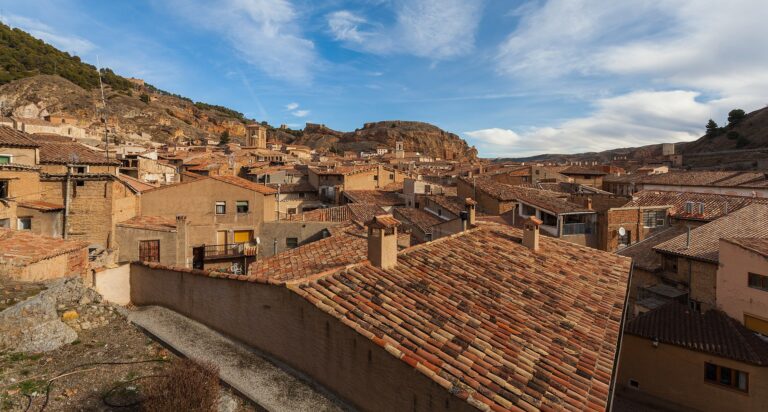
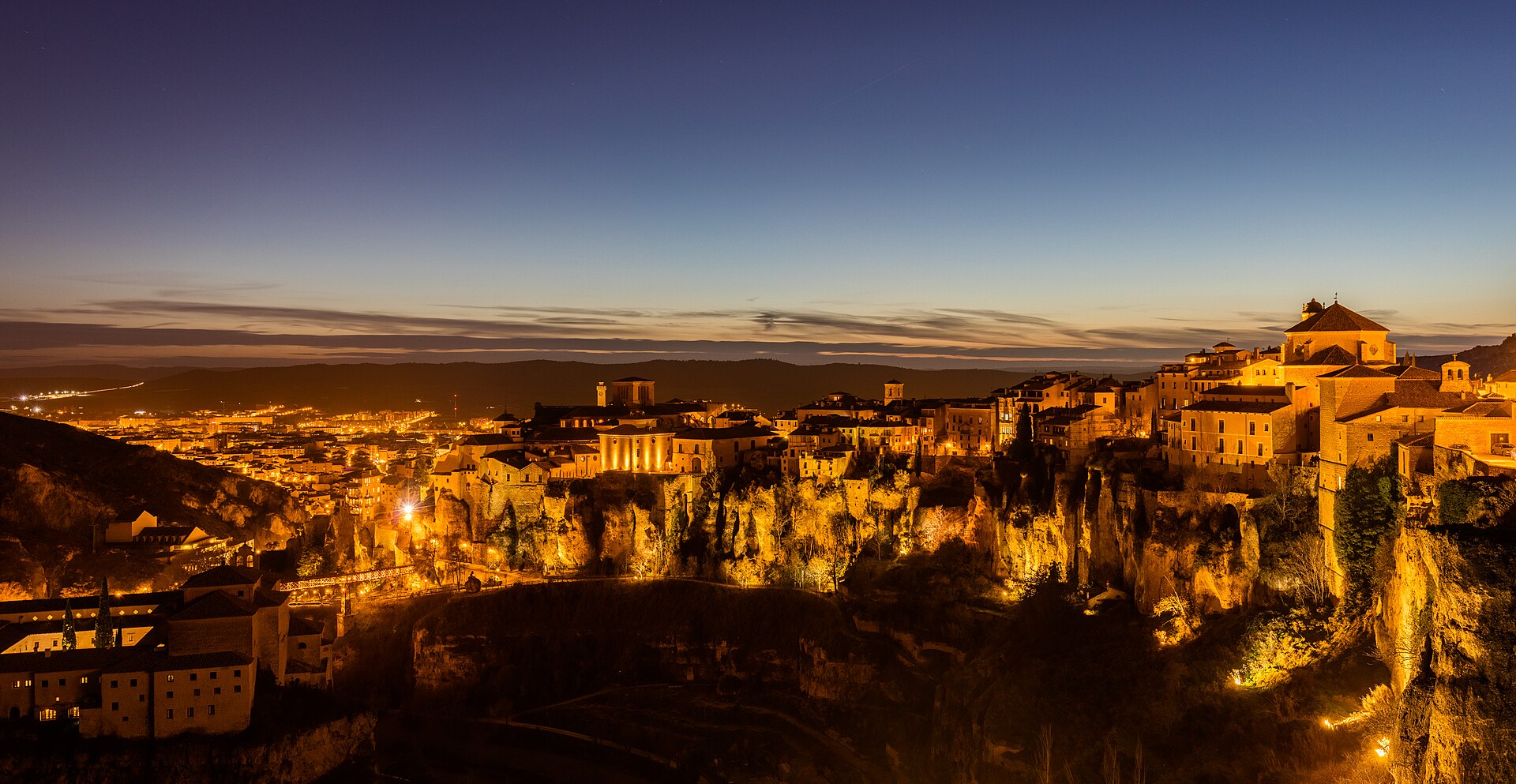
If you’re planning a trip to central Spain and your route takes you between Madrid and Valencia, you absolutely shouldn’t miss one of the most fascinating cities on the entire Iberian Peninsula. Cuenca Spain will stop you in your tracks from the very first moment – its historic centre quite literally balances on the edge of sheer limestone cliffs. The city is surrounded by deep gorges carved over millennia by the Júcar and Huécar rivers, creating a truly unique landscape you won’t find anywhere else in Spain. It’s no wonder this extraordinary place has earned a prestigious spot on the UNESCO World Heritage List.
Unlike bustling Madrid or sun-drenched Barcelona, Cuenca has held on to its quiet, slightly sleepy Castilian atmosphere that instantly transports you back several centuries. Medieval lanes wind steeply uphill, ancient stone facades greet you around every corner, and the views into the deep canyons will have you reaching for your camera non-stop. While many visitors come just for a quick day trip, the real magic of the city reveals itself after sunset, when the historic walls and famous hanging houses are beautifully illuminated and the daytime crowds have headed back to the big cities. Let’s take a closer look at how to plan your visit to this fairy-tale destination and what awaits you here.
TL;DR
- Main attraction: The most famous landmark is the Casas Colgadas (Hanging Houses), whose wooden balconies literally hang over a sheer drop into the gorge below.
- Getting there: The city sits on the AVE high-speed rail line, so you can reach it from Madrid or Valencia in under an hour. From London, fly to Madrid or Valencia and catch the train onwards.
- Best photos: For the absolute best shot of the city, take a walk across the iron Puente de San Pablo footbridge – the views are genuinely breathtaking.
- Physical demands: Be prepared for the fact that the old town (Casco Antiguo) is full of steep hills, staircases, and cobblestones – comfortable shoes are an absolute must.
- Hidden gem: Inside the medieval hanging houses you’ll find a surprisingly fantastic Museum of Spanish Abstract Art, creating a perfect contrast to the historic architecture.
- Nature: If you enjoy walking, don’t miss the trails along the bottom of both river gorges, where you’ll find welcome shade and peace away from the bustle of the old town.
The full destination guide: Castile and central Spain — guide and what to see
When to Visit Cuenca Spain
Because Cuenca sits in the very heart of Castile on a plateau nearly a thousand metres above sea level, the weather in Cuenca Spain is shaped by a rather harsh continental climate. Locals often joke, with only slight exaggeration, that they get nine months of winter and three months of hell – which sums up the temperature extremes pretty accurately. Winters can be bitterly cold, frequently accompanied by biting winds and the occasional snowfall, while summer temperatures routinely soar past a punishing 40°C. The heat in July and August is so exhausting that trudging up and down the baking stone lanes becomes more of an ordeal than a pleasure.
The best time to visit is undoubtedly spring or autumn, when temperatures are far more pleasant and the surrounding gorges burst with colour. If you come in April or May, you’ll catch the river valleys in bloom and enjoy ideal weather for hiking in the nearby nature parks. Another particularly interesting time to visit is during Holy Week (Semana Santa), which is celebrated in Cuenca with tremendous pomp – the city’s processions are among the most renowned in all of Spain. Just bear in mind that during this festive period, hotels get booked up well in advance and accommodation prices shoot up steeply.
Where to Stay in Cuenca
💡 Accommodation & experiences tip: We usually search for accommodation on Booking.com, which tends to have the best cancellation policies. For tickets, tours, and activities, it’s worth comparing options on GetYourGuide.
When looking for accommodation, you’ll quickly notice that the city is divided into two very distinct parts: the modern lower town and the historic upper town known as Casco Antiguo. If you want to soak up the authentic medieval atmosphere and have all the main sights within walking distance, I’d recommend looking for accommodation right in the Cuenca Spain old town up on the hill. Just be prepared for the fact that hauling heavy suitcases up steep cobbled streets is no fun at all – travelling light with a backpack is the way to go. The lower town does have more modern hotels and easier parking, but you’ll have to hike uphill for every attraction or rely on the local bus service.
The ultimate splurge is the famous Cuenca Parador Spain – the Parador de Cuenca – housed in a beautifully restored 16th-century Dominican convent directly opposite the hanging houses. While it’s certainly the pricier option, the views of the illuminated city across the deep gorge are simply unbeatable, and a stay here is a once-in-a-lifetime experience. A superb and slightly more affordable alternative right in the historic heart is the Hotel Leonor de Aquitania, which offers wonderfully authentic rooms in a historic building and an excellent location just a stone’s throw from the main square. You can easily compare and book all these charming hotels on Booking.com, where you’ll often find great deals outside the peak summer season.
13 Best Things to See and Do in Cuenca Spain
Let’s dive into the best of what this dramatic medieval city has to offer. From architectural marvels teetering on cliff edges to mysterious underground tunnels, Cuenca is packed with surprises just waiting to be explored.
1. Casas Colgadas (Hanging Houses of Cuenca Spain)
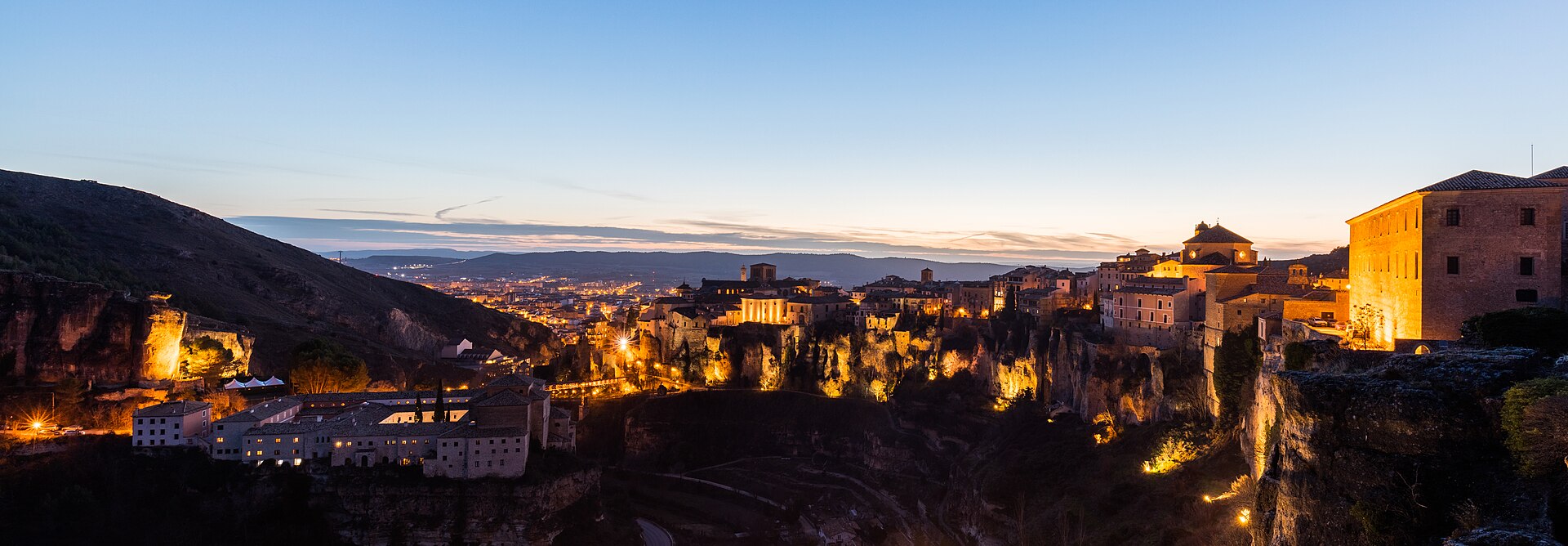
The symbol of the entire city and the main reason most travellers head here are the iconic Casas Colgadas – the hanging houses of Cuenca Spain. These incredible 14th-century structures are distinguished by their wooden balconies that literally jut out into thin air over the sheer drop of the Huécar gorge. Looking up from below, they seem to defy every law of gravity and could come crashing down at any moment – yet thanks to the ingenuity of medieval builders, they’ve stood firm for hundreds of years. In the past, similar houses lined the entire cliff edge, but only three of the most significant buildings have survived to this day.
Today you can not only photograph these architectural gems from outside but also step inside to explore their labyrinthine interiors. One of the houses is home to an excellent traditional restaurant, while the other two contain an art museum we’ll cover in the next section. The best photos of the hanging houses are taken in the late afternoon, when the setting sun bathes the sandstone walls and wooden beams in a gorgeous golden glow. Make sure to return after dark, too – the subtle evening illumination gives the whole scene a wonderfully dramatic and slightly mysterious feel.
💡 Local tip: If you want to capture the hanging houses with a bit of wild nature in the frame, head down the narrow steps along the walls towards the river. You’ll get a brilliant angle without the crowds of other tourists.
2. Puente de San Pablo (Saint Paul’s Bridge)
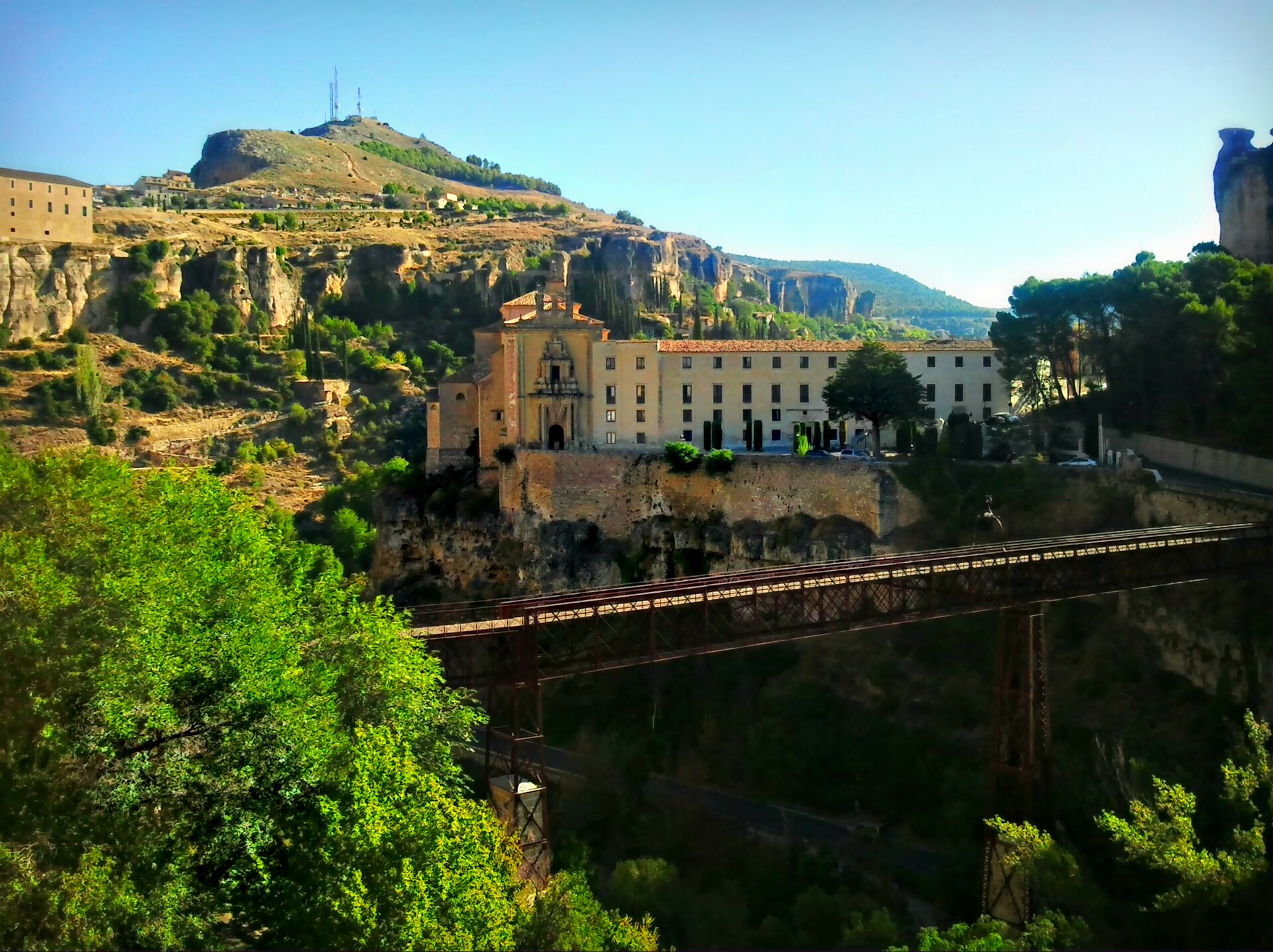
If you don’t suffer from vertigo, crossing the Puente de San Pablo will be one of the highlights of your entire visit. This narrow steel footbridge spans the deep Huécar gorge and towers an impressive forty metres above the riverbed. Originally, a massive stone bridge built in the 16th century stood in its place, but unstable ground caused it to deteriorate and eventually collapse. In the early 20th century, it was replaced by the current steel structure with wooden planks that flex slightly underfoot and vibrate gently in the wind.
It’s roughly halfway across this bridge that you’ll get the absolute best and most photographed view of the Casas Colgadas in all their glory. This is the spot where you truly appreciate just how bold those medieval architects must have been, choosing to build a city on such an inhospitable and precipitous rock. Crossing the bridge is completely free and connects the historic centre with the former Convent of Saint Paul on the opposite cliff. Even if you feel a little wobbly at first, the views down into the green valley below are more than worth the mild rush of adrenaline.
💡 Local tip: Head to the bridge early in the morning, before the tour coaches arrive. Morning mist rising from the gorge gives the entire valley an utterly mystical atmosphere.
3. Cuenca Cathedral Spain
Right in the heart of the old town on the main square stands the monumental Cuenca Cathedral, one of the most important religious buildings in the country. Construction began at the end of the 12th century, and here’s a fascinating fact: it’s the very first Gothic cathedral built in Spain. This architectural first came about thanks to King Alfonso VIII’s wife, the English princess Eleanor Plantagenet, who brought skilled Norman architects from France. As a result, the interior has a distinctly French – or even English – feel, which is highly unusual for this part of Spain.
The cathedral’s façade underwent extensive restoration in the early 20th century after the original bell tower collapsed and damaged the main frontage. From the outside it looks rather neo-Gothic, but the moment you step inside, you’re engulfed by an authentic medieval atmosphere of mighty pillars and magnificent ribbed vaults. The stunning stained glass windows are also worth noting – some are modern creations that bring an unexpected splash of abstract colour to the ancient interior. Don’t miss the adjoining cloister, either, which offers surprising views down into the deep gorge at the back.
💡 Local tip: When buying your cathedral ticket, I’d recommend adding the audio guide. The history of each chapel is incredibly intricate, and without context you’ll miss a wealth of fascinating details from the Reconquista era.
4. Plaza Mayor (Main Square)
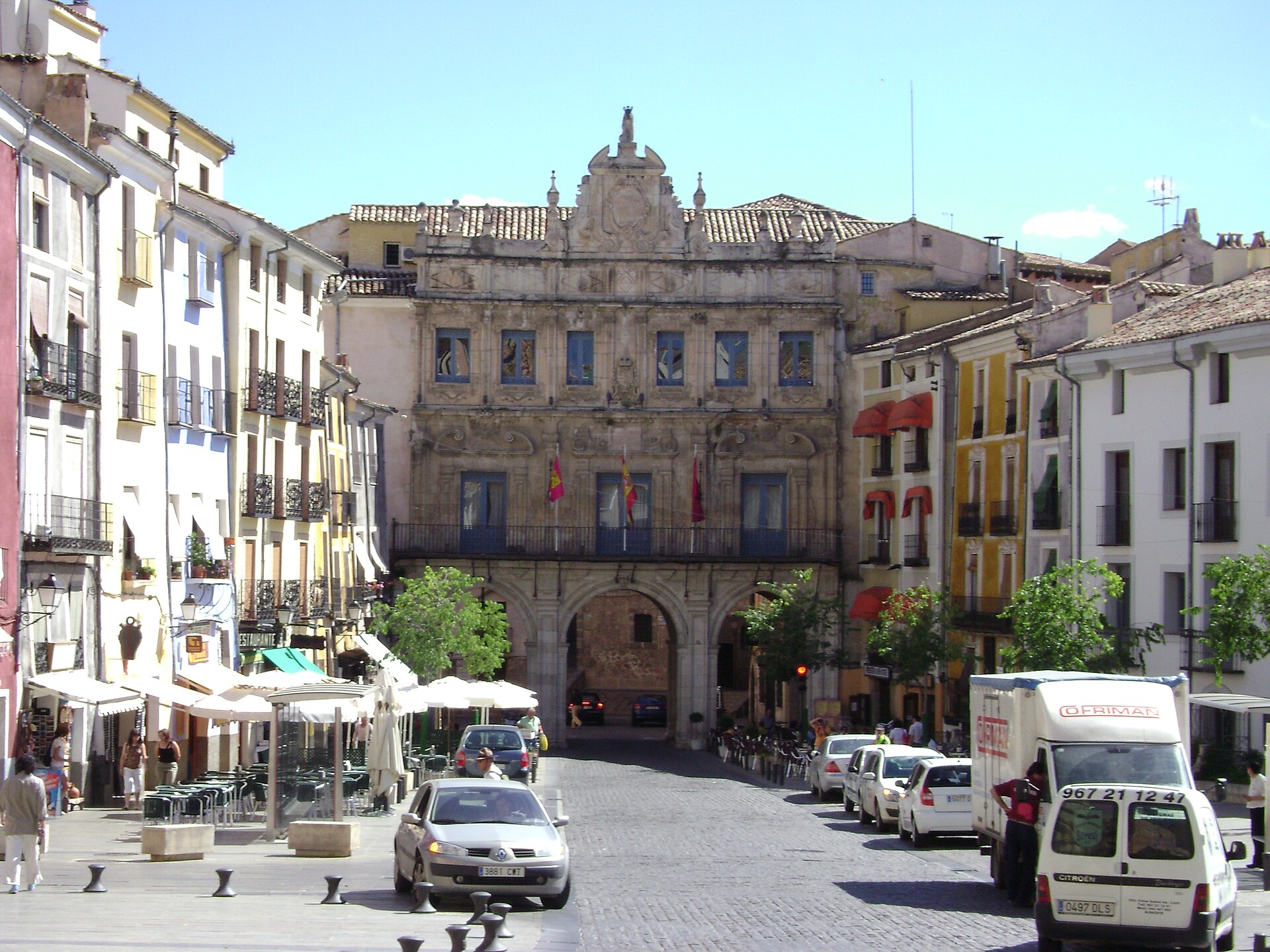
Every Spanish city has its Plaza Mayor, and Cuenca is no exception – although its main square has a very unconventional shape. Due to the lack of flat ground on top of the rocky ridge, the square is elongated and irregular, which actually gives it an incredibly intimate and homely charm. The space is dominated not only by the striking cathedral façade but also by the lovely baroque town hall built on three grand arches, beneath which the main street passes. Surrounding it all are colourful historic houses with the best local cafés and restaurants on their ground floors.
It’s the perfect spot to catch your breath after the strenuous climb up the steep streets. Grab a seat at one of the terraces, order a glass of good La Mancha wine, and watch the world go by. If you’re feeling peckish, I’d recommend trying some excellent local vegetarian tapas – the traditional pisto manchego (a stew of mixed vegetables with tomatoes) or the superb local sheep’s cheese are both fantastic. In the evening, the square is beautifully lit up and becomes the main gathering point for locals of all ages.
💡 Local tip: If you want coffee on the square, expect slightly higher prices than in the tucked-away backstreets. But the view of the cathedral and the buzz of city life is absolutely worth the small premium.
5. Museum of Spanish Abstract Art
You might not expect a world-class modern art gallery in a conservative medieval city, but that’s exactly what makes Cuenca so extraordinary. The Museo de Arte Abstracto Español is housed right inside the famous Hanging Houses, creating an absolutely fascinating contrast. The museum was founded in the 1960s by Filipino-Spanish artist and collector Fernando Zóbel, who was searching for the perfect space to display the work of his contemporaries. He succeeded in creating a unique collection that is still considered one of the finest collections of abstract art in Europe.
As you wander through the exhibition, you’ll admire not only canvases and sculptures by renowned Spanish artists like Antoni Tàpies and Eduardo Chillida, but also the architecture of the building itself. Exposed wooden beams, bare stone walls, and small windows looking out over the sheer drop heighten the impact of every single work on display. The experience of seeing rugged medieval masonry married with the clean lines of abstract painting is truly powerful – and it wins over even those who wouldn’t normally give modern art a second glance. Entry is often free for EU citizens, or available for a purely nominal fee.
💡 Local tip: Don’t rush through – make sure to explore the upper floors. It’s from their small windows that you’ll get the most interesting and least-seen views down to the San Pablo bridge.
6. Walking the Hoz del Huécar Gorge
Once you’ve had your fill of views from above, it’s time to explore the city from an entirely different perspective. The Huécar river has carved a deep canyon into the limestone bedrock, and a very pleasant, easy walking trail runs along the bottom. As you stroll alongside the gentle river, you can marvel at the monumental rock walls rising vertically above you and admire the historic centre from a frog’s-eye view. It’s from down here that you truly appreciate just how incredibly high those historic houses are built and how seamlessly they merge with the natural rock.
The path through the gorge is lined with lush vegetation, old mills, and small vegetable plots that locals have been tending for centuries. During the summer months, you’ll find much-needed shade and blissful coolness that’s sorely lacking in the baking streets of the upper town. The trail is well-maintained, clearly marked, and perfectly manageable in ordinary walking shoes. Along the way, you’ll come across several nice rest areas and benches where you can enjoy a little picnic with views of the dramatic cliffs towering high above your head.
💡 Local tip: The trail is especially beautiful in early autumn, when the trees in the valley turn rich yellows and reds, creating a stunning colour contrast against the grey sandstone cliffs.
7. Hoz del Júcar & the Shrine of San Julián
While the Huécar gorge is more famous thanks to the Hanging Houses, the gorge of the second river – the Júcar – is equally impressive and noticeably greener. This side of the city has a much wilder, more natural feel, with dense pine forests climbing the steep slopes. A beautiful walking trail follows the river, leading you to several scenic viewpoints and spots where you can hire a canoe and explore the calm waters of the Júcar right from the surface. It’s a fantastic activity if you want a break from sightseeing and fancy some active relaxation in nature.
If you enjoy longer walks with a touch of mystery, follow the path to the Ermita de San Julián el Tranquilo. This small chapel is tucked deep into the rock face and is associated with the legend of the city’s patron saint, who supposedly retreated here for quiet prayer and basket weaving. The climb up requires a bit of fitness as it’s a steep ascent, but the reward is complete tranquillity and a gorgeous view of the meandering river far below. Along the way, keep your eyes peeled for griffon vultures soaring majestically above the surrounding limestone cliffs.
💡 Local tip: Don’t forget to pack a water bottle and sturdy shoes for the Júcar trails – some sections leading to the viewpoints can be quite slippery after rain and full of loose stones.

8. Torre de Mangana (Mangana Tower)
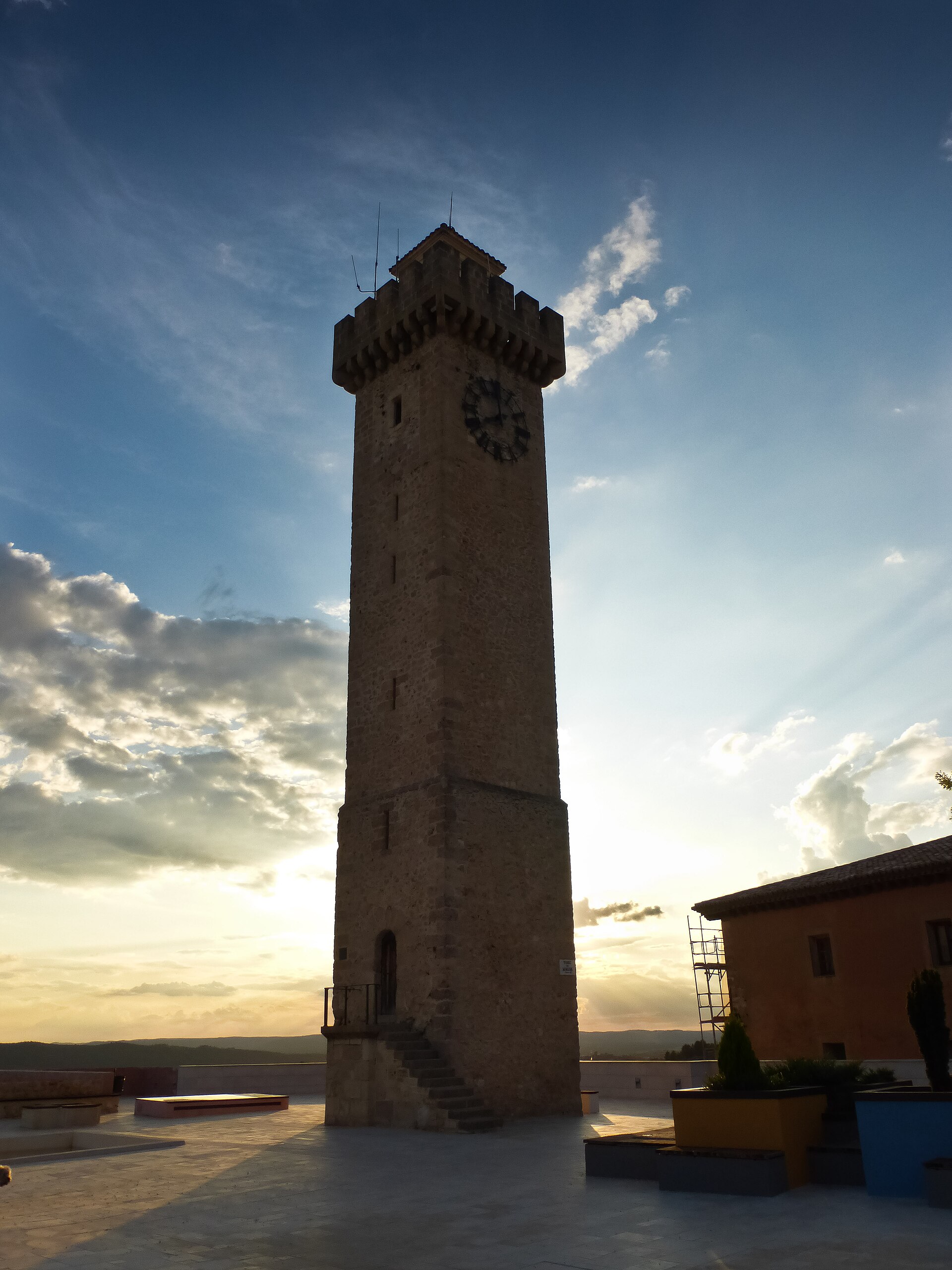
As you wander through the old town, you can’t miss the square clock tower rising above the surrounding rooftops. Torre de Mangana stands on the site of the original Moorish fortress that once guarded the city against Christian armies. The tower itself has undergone numerous drastic renovations over the centuries, and its current, somewhat neo-Mudéjar appearance dates from the mid-20th century. Despite that, it serves as the city’s main landmark, and its bell, which chimes the hour regularly, can be heard echoing through every winding lane of the historic centre.
The real highlight of visiting this spot isn’t the tower itself, but the expansive Plaza de Mangana on which it stands. Archaeological excavations here have uncovered the foundations of an old synagogue and Moorish walls, which you can view through glass floors and freely accessible ruins. On top of that, from the edge of this square you get absolutely fantastic panoramic views of the modern lower town and the vast plains of the Castilian countryside stretching deep into the horizon. It’s an ideal place for a moment of reflection, watching how the city expanded into the valley over the centuries.
💡 Local tip: The square beneath the tower is usually far less crowded than the area around the cathedral, so you can sit quietly on the edge of the old walls and enjoy long, uninterrupted views across the landscape.
9. Former Convento de San Pablo
Once you cross the iron San Pablo bridge, you’ll find yourself right at the gates of a monumental 16th-century convent. The Convento de San Pablo was originally home to Dominican monks, who chose this isolated spot on the cliff for its utter peace and seclusion from the secular world. Today, this beautifully restored building houses the prestigious Parador de Cuenca – part of Spain’s network of state-run hotels set in historic landmarks. Even if you’re not staying here, you’re welcome to step inside and admire the stunning architecture of the glass-roofed cloister courtyard.
I’d recommend settling into the hotel’s café, ordering a coffee or tea, and soaking up the wonderfully grand atmosphere. The former convent church now serves as a modern art gallery and multifunctional cultural space, which is often free to enter. From the Parador’s outdoor terraces, you’ll also get a completely unique view of Cuenca’s historic centre and the Hanging Houses – this time from the exact opposite side to where most visitors snap their photos. In the evening especially, when the convent is magically lit up, the whole scene looks like something out of an epic period film.
💡 Local tip: The Parador’s café is a brilliant refuge when you’re caught out by an unexpected rain shower or the biting cold wind that whips through the valley with surprising frequency.
10. Barrio del Castillo & the Highest Viewpoints
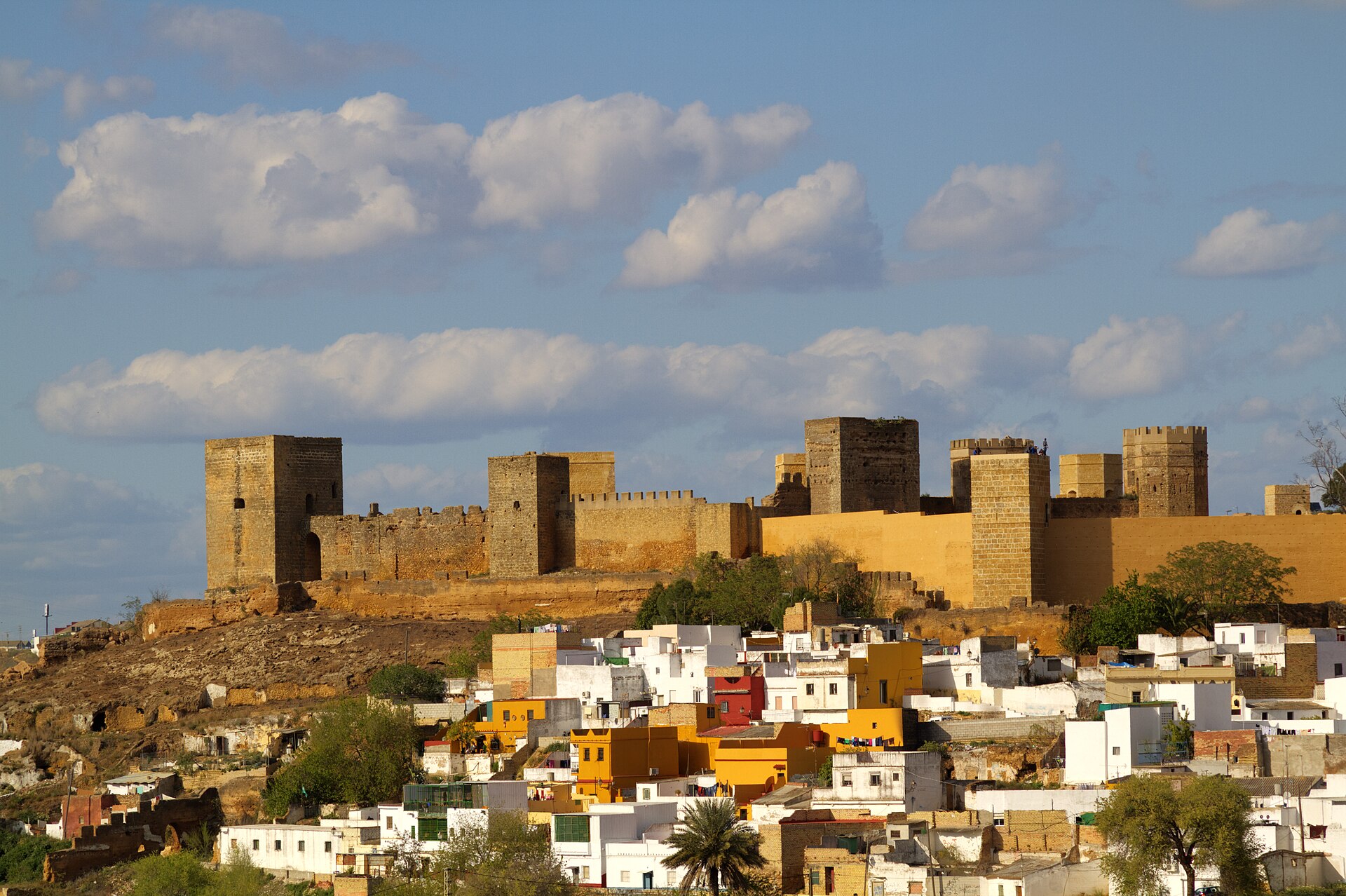
If you’ve got enough energy and don’t mind a steep climb, head uphill from the main square along Calle Trabuco until you reach the highest part of the city, known as Barrio del Castillo. A mighty castle and extensive fortifications once stood here, guarding the narrowest point of the rocky spur. Today only ruins remain, but the area’s standout feature is the handsome stone arch called Arco de Bezudo, through which cars still drive to enter the old town from the north. Right beside the arch stands a preserved tower you can climb via its internal staircase.
From this highest point in the city, all of Cuenca spreads out before you. You’ll enjoy breathtaking views into both gorges simultaneously – the Júcar valley on one side and the Huécar on the other – and you’ll see how the historic houses grip the rocky ridge like an enormous stone crown. This neighbourhood is also much quieter than the area around the cathedral, with small local bars and narrow lanes full of flower pots. It is, without question, the absolute best spot in the city to watch a fiery sunset over the Castilian mountains.
💡 Local tip: If you can’t face walking all the way to the top, take the local bus (line 1 or 2) from the lower town – it’ll drop you right at the little square by the castle, and you can take a leisurely stroll downhill instead.
11. Túneles de Alfonso VIII (Underground Tunnels)
Cuenca isn’t only fascinating above ground – it hides enormous secrets deep beneath the surface too. Under the main street of the historic centre lies a complex network of underground passages and galleries that locals have built and used for a variety of purposes over many centuries. Originally, these spaces served as aqueducts and water reservoirs for the medieval city, later functioning as wine cellars and cold stores for food. Their darkest chapter, however, came during the brutal Spanish Civil War in the 20th century.
During the bombing of the city, these damp, dark tunnels served as vital air-raid shelters for thousands of Cuenca’s residents. Today, part of this extensive underground labyrinth beneath Calle Alfonso VIII has been carefully restored and opened to the public. You can only enter on a guided tour, which lasts approximately one hour. Walking through the cramped corridors filled with echoes and dim light is a profoundly moving and educational experience that helps you understand the difficult, often turbulent history of the entire region.
💡 Local tip: It’s cool and damp underground year-round, with temperatures hovering around 15°C. Even if it’s a scorching 40°C outside, make sure to bring a light jumper or hoodie for the tunnel tour.
12. Museo Paleontológico de Castilla-La Mancha (MUPA)
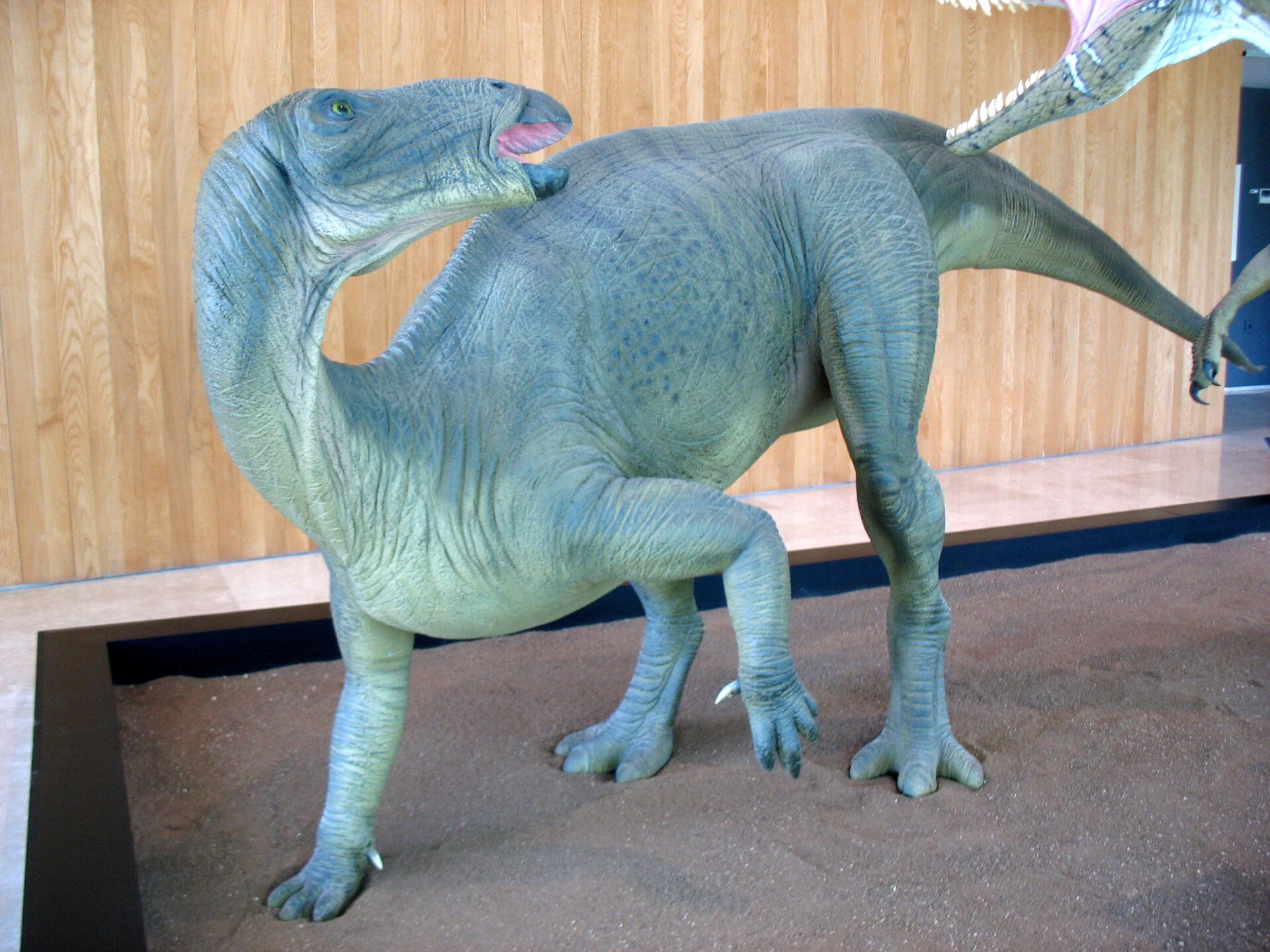
This one will thrill anyone travelling with children – though it’s guaranteed to captivate adults too. The province of Cuenca happens to be one of the most significant dinosaur fossil sites in all of Europe. The modern palaeontological museum, known by its acronym MUPA, sits on Cerro del Socorro hill just outside the city and offers a fantastic interactive exhibition. Here you’ll learn all about the prehistoric life that took place in this area millions of years ago, when today’s arid plains were covered in lush tropical forests.
The star of the museum is the unique predatory dinosaur Concavenator corcovatus, affectionately nicknamed Pepito by locals. This theropod had a curious hump on its back and was discovered at the nearby Las Hoyas site. Surrounding the modern museum building is an expansive park filled with dozens of enormous, realistically crafted life-size dinosaur models. From the museum’s outdoor terraces, you also get one of the best overall views of old Cuenca – so even if dinosaurs aren’t really your thing, the trip is worthwhile for the panoramic photos alone.
💡 Local tip: If you don’t have a car, you can reach the museum on a pleasant, if slightly steep, walk from the lower town. The uphill trek takes about 20 minutes and rewards you with quiet far from the bustling centre.
13. Day Trip: Ciudad Encantada (The Enchanted City)
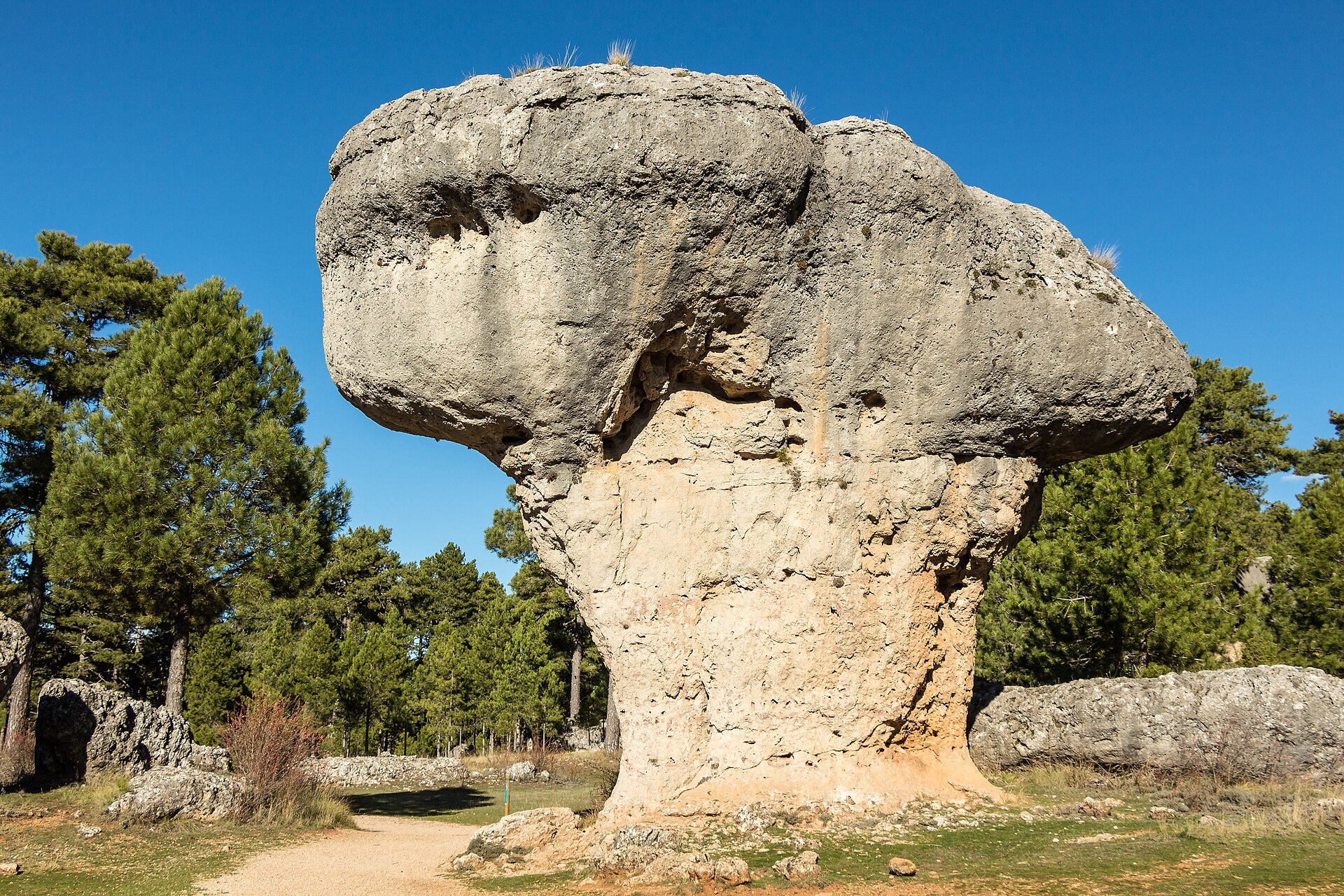
If you’re planning to spend more than just one day in Cuenca and have a hire car at your disposal, you absolutely must venture beyond the city limits to a nearby nature park. About half an hour’s drive along winding mountain roads lies the fascinating karst landscape known as Ciudad Encantada – the Enchanted City. Over millions of years, water, wind, and ice have sculpted the limestone rocks into utterly bizarre and fantastical shapes resembling all sorts of animals, objects, and faces. This geological park is so unique that it was declared a protected natural monument back in the 1920s.
A well-marked circular trail of roughly three kilometres leads you through a pine forest past enormous mushroom-shaped rocks and massive natural stone bridges. Information boards reveal that you’re looking at formations with names like the Sea of Stone, the Wrestling Bears, the Turtle, and the Roman Bridge. It’s an absolutely ideal spot for a family outing – the terrain is very gentle, and kids will love guessing what each rock formation looks like. The surrounding nature is fragrant with pine needles and wild thyme, making it the perfect escape from the stony lanes of the historic city into the embrace of wild Castilian countryside.
💡 Local tip: Tickets to the Enchanted City can be bought at the gate, but at weekends I’d recommend arriving right at opening time so you can enjoy the most spectacular rock formations all to yourselves, before the crowds descend.
Map of points of interest for your phone
Where to Go Next from Cuenca
Thanks to excellent connections on Spain’s AVE high-speed rail network, Cuenca works perfectly as a stopover on a longer journey through the country. If you’re heading inland, the obvious next step is magnificent Madrid, reachable by train in under an hour. From there, you can explore more gems of central Spain at your leisure. If sun and sea breezes are calling your name instead, hop on a train in the opposite direction and in roughly the same time you’ll arrive in gorgeous Valencia, where stunning beaches and striking modern architecture await.
For road-trippers keen to explore the eastern coast in more depth, it makes perfect sense to continue south towards sun-soaked Alicante, with its beautiful castles and wonderful seaside promenades. Whichever direction you choose, be sure to seize every opportunity to sample more regional specialities along the way. If you’re curious about what to try across Spain, have a look at our guide to typical Spanish food, where you’ll find plenty of meat-free inspiration for your continued gastronomic adventures.
Frequently Asked Questions
How do you get to Cuenca from Madrid?
The fastest and most comfortable option is definitely the AVE high-speed trains, which depart from Madrid’s Atocha station. The journey takes just under an hour and trains run several times daily. However, be aware that the high-speed train station (Cuenca-Fernando Zóbel) is located a few kilometers outside the city, so you’ll need to take bus number 1 or a taxi to reach the historic center.
Is one day enough to see Cuenca?
If you get an early start, you can cover the main sights like the Hanging Houses, the cathedral, and the San Pablo bridge in one intensive day. However, I’d recommend staying at least one night. The city has an absolutely magical and unique atmosphere after sunset, when the old walls and cliffs are illuminated and the day-trippers disappear from the streets—it would be a real shame to miss it.
Is the city suitable for people with limited mobility?
The historic center (Casco Antiguo) sits on a very steep hill, the streets are paved with uneven cobblestones, and many monuments require climbing lots of stairs. For people with limited mobility or families with strollers, it can be quite challenging. However, the city bus makes things much easier—you can take it all the way up to the castle at the top and then just slowly make your way down from there.
What local dishes should we try?
Castilian cuisine can sometimes be challenging for vegetarians, but in Cuenca you’ll definitely enjoy the excellent pisto manchego, a hearty vegetable medley with tomatoes, peppers, and zucchini, often served with a fried egg. Don’t miss the wonderful local sheep’s cheeses from the La Mancha region either. For meat lovers, the most typical local specialty is morteruelo, a traditional warm meat pâté served with bread. After your meal, be sure to try resoli, an herbal liqueur with coffee and orange peel that’s often sold in bottles shaped like the Hanging Houses.
Where can you park in the city?
Parking directly in the historic center is a nightmare—the streets are extremely narrow and spaces are reserved for residents only. Your best strategy is to leave your car at the large free parking lot in the lower town near the river and head up on foot or by bus. Another option is to drive all the way up past the Arco de Bezudo arch (Barrio del Castillo neighborhood), where there’s a spacious public parking lot with relatively reasonable rates.
Do you have to pay to enter the Hanging Houses?
You can view the Hanging Houses themselves from outside and from the bridge completely free all day long. However, if you want to look inside and see the original wooden balconies up close, you’ll need to visit the Museum of Abstract Art, which is housed within them. Entry to this museum is often completely free for EU citizens, or there’s just a very nominal fee of a few euros.
When are the monuments open and do I need to worry about siesta?
As everywhere in Spain, in Cuenca you’ll need to account for the traditional afternoon siesta. Many smaller shops, churches, and occasionally some museums close roughly between 2:00 PM and 5:00 PM. However, this rule usually doesn’t apply to major monuments like the cathedral or large museums. During siesta, it’s best to follow the locals’ example—find a shady restaurant and leisurely enjoy a long Spanish lunch.
Is it safe to drink tap water in Cuenca?
Yes, tap water is completely safe to drink and of very good quality. Thanks to a recent law, all Spanish restaurants and bars are now required to offer guests free tap water, so don’t hesitate to confidently ask for it. You’ll save money and avoid unnecessary plastic bottles, which definitely comes in handy on hot summer days.
Tips and Tricks for Your Vacation
Don’t Overpay for Flights
Search for flights on Kayak. It’s our favorite search engine because it scans the websites of all airlines and always finds the cheapest connection.
Book Your Accommodation Smartly
The best experiences we’ve had when looking for accommodation (from Alaska to Morocco) are with Booking.com, where hotels, apartments, and entire houses are usually the cheapest and most widely available.
 🚗 Car rental on the roadVerified car rentals in Castile
Search with the DiscoverCars comparison engine — it compares prices from dozens of local and international rental companies, and most bookings come with free cancellation.
Compare car prices in Castile →Don’t Forget Travel Insurance
Good travel insurance will protect you against illness, accidents, theft, or flight cancellations. We’ve had a few hospital visits abroad, so we know how important it is to have proper insurance arranged.
Where we insure ourselves: SafetyWing (simple monthly subscription) and TrueTraveller (for extra-long trips).
Find the Best Experiences
Get Your Guide is a huge online marketplace where you can book guided walks, trips, skip-the-line tickets, tours, and much more. We always find some extra fun there!