If you’ve been thinking about swapping the scorching beaches of Andalusia for something a bit more dramatic, Picos de Europa Spain will absolutely blow you away. The moment you cross into the region known as Green Spain, the landscape changes radically. The parched plateau gives way to lush greenery, the air thickens with ocean moisture, and towering limestone peaks appear, plunging almost vertically into the waves of the Bay of Biscay.
Picos de Europa National Park (literally “Peaks of Europe”) is a true paradise for mountain lovers, keen drivers and foodies alike. It got its name from sailors returning from America, for whom these summits were the first land they spotted on the horizon. It’s a truly unique corner of Europe where raw mountain wilderness meets the elegance of nearby coastal towns.
In this article, you’ll find 14 detailed tips on what to see and do in Picos de Europa. I’ll help you navigate the logistics around mountain lakes, advise on where to strategically base yourself, and reveal the best time to visit so you can enjoy the mountains without fog and rain.
TL;DR
- Transport is key: Exploring Picos de Europa is virtually impossible without a hire car – public transport to the mountain passes is extremely limited.
- Ideal weather: The best window for visiting is June to September, when you’ll avoid heavy rainfall and enjoy pleasant temperatures around 24 °C.
- Base camps: The towns of Potes in Cantabria and Cangas de Onís in Asturias serve as the best starting points for trips into the national park.
- Top attractions: The Fuente Dé cable car and Covadonga glacial lakes are absolute must-sees, but in summer expect private car restrictions on the access roads.
- Hiking for everyone: Head out on the famous Ruta del Cares, which offers breathtaking views into a deep gorge without extreme elevation gain.
- Local gastronomy: Make sure you try the renowned Cabrales blue cheese, aged in natural limestone caves.
- Time needed: A quick tour of the highlights takes two days, but to explore the villages and do some serious hiking, allow five to seven days.
The full destination guide: Northern Spain — guide and what to see
When to Visit Picos de Europa
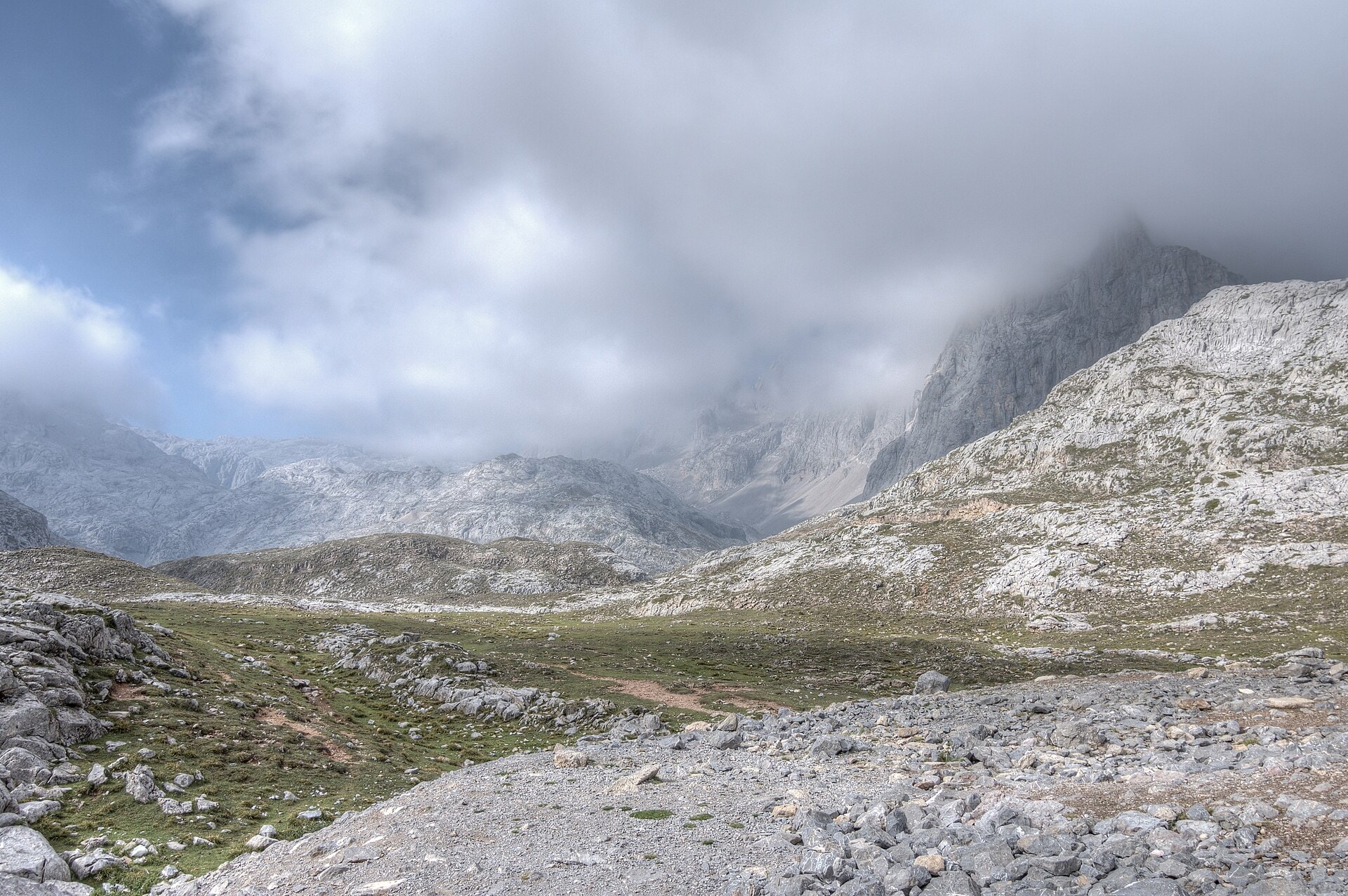
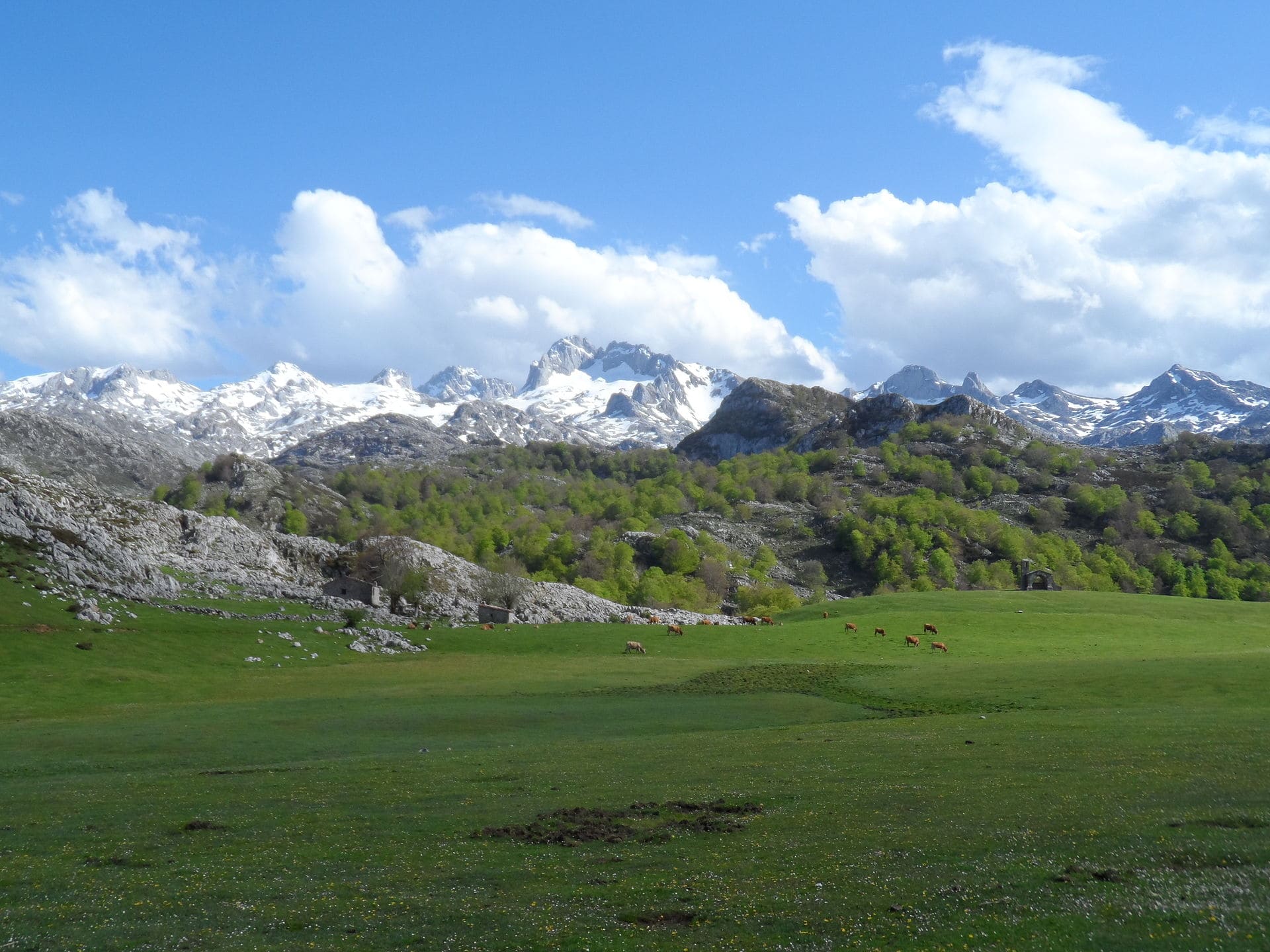
Unlike southern Spain, where summer heatwaves make visiting a bit of a gamble, the northern coast has an entirely different climate rhythm. The proximity of the ocean and the high mountains mean frequent rain, fog and strong winds. But it’s precisely these conditions that keep the entire region so dazzlingly green – it looks more like Scotland than stereotypical Spain.
The only reliable window of relatively dry and sunny weather runs from June to the end of September. Even in the hottest August days, temperatures hover around a very pleasant 22 to 26 °C, creating ideal conditions for hiking. If you’re planning more demanding treks, I’d recommend coming at the turn of August and September, when the biggest rush of domestic tourists has subsided.
Outside the summer season, be prepared for the fact that many mountain roads may be in poor condition and numerous services reduce their operations. Winter in Picos de Europa is harsh – the peaks are blanketed in thick snow and the cable car and lake access roads are often closed. Spring brings highly changeable weather, where sunshine can give way to a torrential downpour within the hour.
Where to Stay in Picos de Europa
💡 Accommodation & experiences tip: We usually search for accommodation on Booking.com, which tends to have the best cancellation policies. For tickets, tours and activities, it’s worth comparing options on GetYourGuide.
The national park spans three regions: Cantabria, Asturias and León. Choosing the right base is absolutely crucial for exploring the mountains, so you don’t waste hours driving along winding mountain roads. Most travellers opt for accommodation on the edges of the park, using it as a hub from which to make day trips in different directions.
On the south-eastern Cantabrian side, the most popular choice is the mountain town of Potes. It’s a gorgeous historic settlement full of cobblestone lanes, offering great amenities, plenty of restaurants and excellent access to the Fuente Dé cable car. A great place to stay is the popular Hotel Valdecoro, which has lovely views of the river and mountains.
If your main goals are the lakes and the northern part of the mountains, I’d recommend the town of Cangas de Onís as your base. Located in Asturias, it has all the amenities you’ll need, including large supermarkets. A great option here is Hotel Los Lagos Nature right in the centre. All accommodation can be easily and securely booked through Booking.com, ideally several months in advance.
14 Best Things to See and Do in Picos de Europa
The national park offers an enormous range of experiences, from easy strolls to high-mountain expeditions. I’ve put together a detailed list of 14 places that should definitely feature on your itinerary if you want to discover the true face of Green Spain.
1. Fuente Dé Cable Car
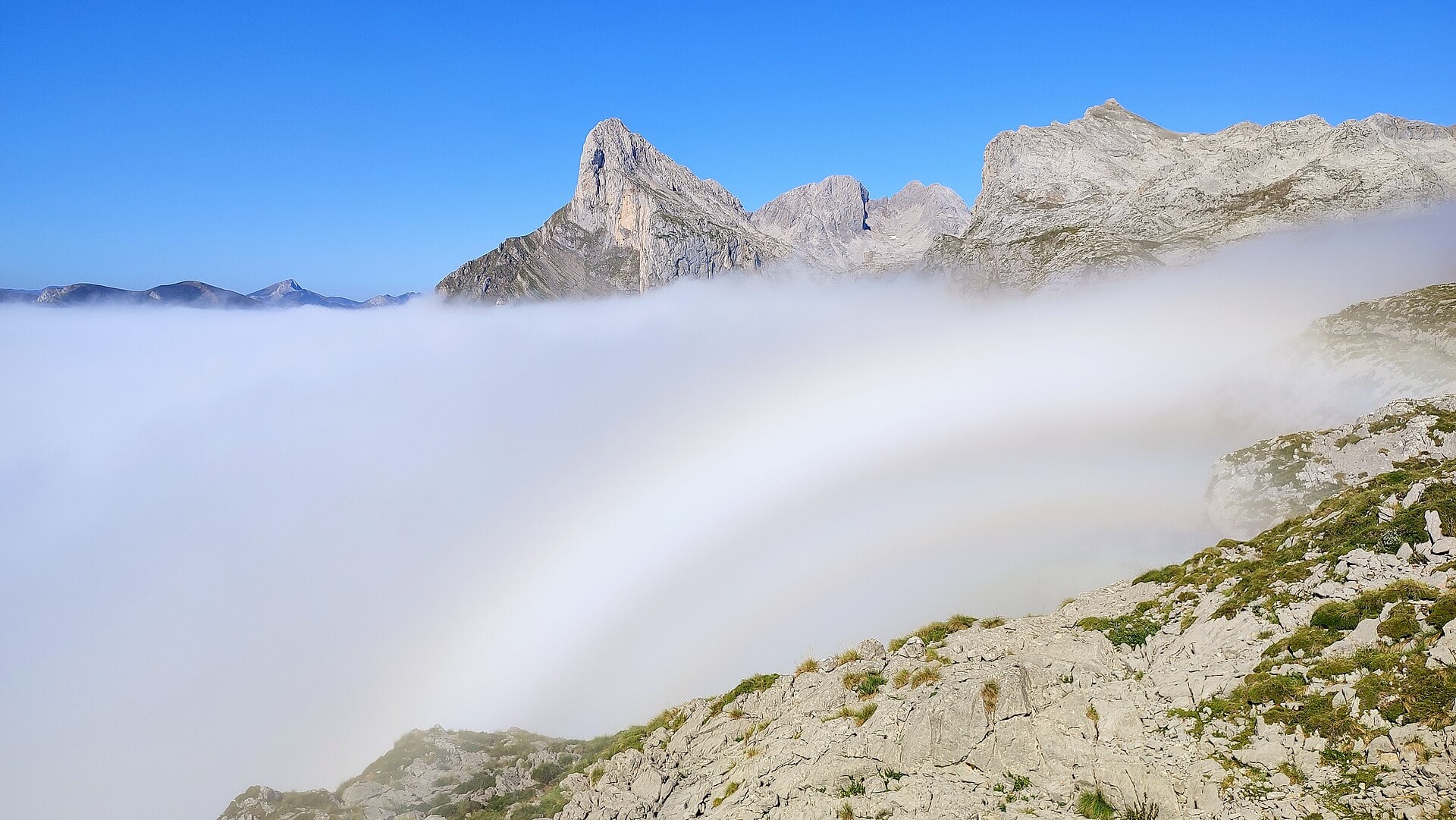
This is an absolute feat of engineering and probably the biggest draw of the southern massif. The Fuente Dé cable car is the longest single-span cableway in Europe, whisking you in just under four minutes from an altitude of 1,070 metres to the upper station at El Cable, sitting at 1,823 metres. It conquers over 750 metres of elevation without a single support pillar, so the cabin literally hangs in mid-air right in front of a sheer rock face.
The ride itself is truly breathtaking, and the upper viewing platform offers an unforgettable panorama of the entire Liébana Valley. A return ticket costs around 17 euros, and during peak season it’s absolutely essential to buy your tickets online well in advance – otherwise you’ll spend hours queuing.
From the upper station, several stunning hiking trails lead directly into the heart of the central massif. If you enjoy longer hikes, I’d recommend skipping the return ticket and walking down through the valley via the hamlet of Espinama. It’s a full-day descent, but you’ll be rewarded with some of the most spectacular scenery Cantabria has to offer.
2. Covadonga Glacial Lakes
On the opposite, north-western side of the mountain range, you’ll find the iconic glacial lakes of Enol and Ercina, known as the Lagos de Covadonga. Sitting at over 1,000 metres above sea level, the scenery surrounding them is nothing short of magical. Vivid green pastures contrast sharply with grey limestone peaks, and cows graze freely right on the lakeshores, their bells adding to the unique mountain atmosphere.
A narrow, very winding and occasionally steep mountain road leads up to the lakes – a driving experience in its own right. Several easy circular trails loop around the lakes, manageable even without top-end hiking gear. Don’t miss climbing up to the Mirador de Entrelagos viewpoint, where you’ll have both lakes spread out below you like a postcard.
⚠️ Logistics warning: During the summer peak from June to September and on public holidays, the road to the lakes is completely closed to private cars during the day. The only way up is by shuttle bus from the large car parks in the valley near Cangas de Onís. A return bus ticket costs around 9 euros, and I’d strongly recommend catching the first morning service before the valley fills up with day-trippers.
3. The Sacred Sanctuary of Covadonga
On your way up to the lakes, you’ll pass through a place of enormous historical and spiritual significance for all Spaniards. The Sanctuary of Covadonga is carved directly into a steep cliff face above a thundering waterfall. It was here, in 722 AD, that the Visigothic nobleman Pelayo defeated the Moorish army, sparking the Reconquista – the centuries-long campaign to reclaim the Iberian Peninsula.
Inside the small cave of Santa Cueva, you’ll find a chapel with a statue of the Virgin of Covadonga and the tomb of King Pelayo himself. The place feels incredibly mystical, especially when shrouded in the morning mist so typical of the Asturian mountains. A staircase leads up to the cave from the valley, and legend has it that if you climb it, your secret wish will come true.
Right beside the cave stands a majestic basilica built from pink limestone, creating a stunning contrast against the deep green forests behind it. Entry to the entire site is free, but bear in mind that parking nearby is very limited and fills up quickly in season.
4. The Famous Ruta del Cares Gorge
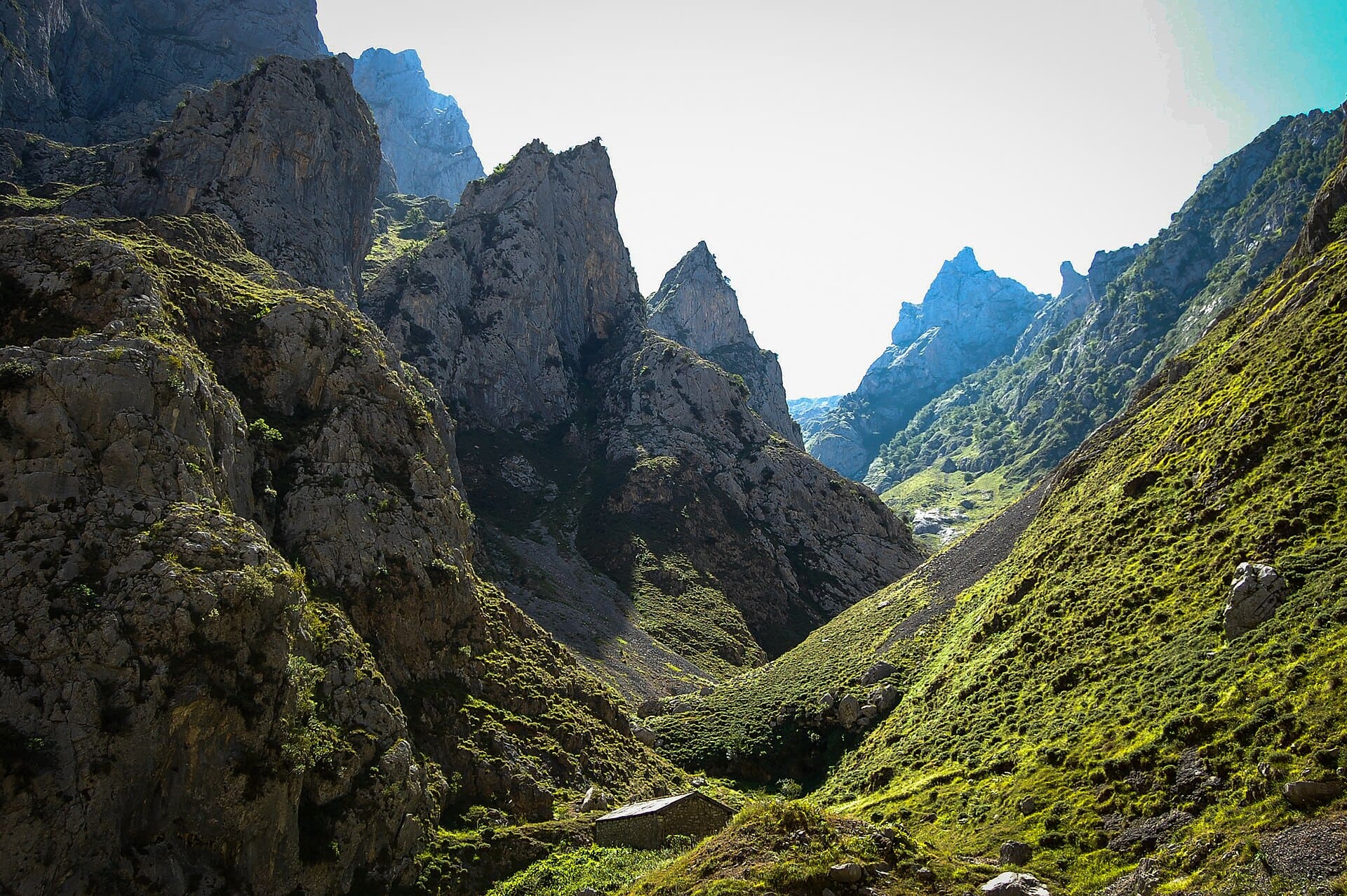
If you could only choose one single trek in the entire national park, it has to be the Ruta del Cares. It’s arguably the most famous and most spectacular hiking trail in all of Spain. The route stretches roughly 11 to 12 kilometres one way, connecting the Asturian village of Poncebos with the León hamlet of Caín.
The trail is literally carved into the sheer rock face and follows the River Cares through a deep, narrow gorge nicknamed the Divine Gorge. The views down into the depths and across the vertical limestone cliffs are absolutely jaw-dropping. The huge advantage is that the path follows an old maintenance canal, so there’s virtually no elevation change – making it manageable even for less experienced walkers.
💡 Insider tip: The trail isn’t a loop. Most people walk from Poncebos to Caín, grab lunch at a local taverna, and retrace their steps – totalling over 22 kilometres of walking. I’d recommend setting off really early in the morning, because by midday the narrow gorge gets packed with crowds, and the heat reflecting off the rock walls can be exhausting.
5. The Mountain Town of Potes
Potes is without a doubt one of the most beautiful historic towns in all of Cantabria. It serves as the main gateway to the eastern part of Picos de Europa and is well worth at least a half-day visit in its own right. Sitting at the confluence of several mountain rivers, its old streets are threaded with medieval stone bridges.
The town’s landmark is the massive 15th-century defensive tower, the Torre del Infantado, which offers gorgeous views of the surrounding mountains and the red rooftops below. Potes is known for its traditional architecture, where stone meets dark timber, and the narrow lanes are dotted with dozens of small shops selling local products.
The town is also a great place to stock up before heading into the mountains, with an abundance of restaurants to choose from. In the evenings it really comes alive – the smell of cooking wafts from the bars and locals sit on terraces with views of the majestic peaks. It’s the perfect spot to unwind after a full day’s hiking over a glass of good wine.
6. The Remote Village of Bulnes
Deep in the mountains, in the central massif, lies the tiny village of Bulnes, which has preserved its incredible authenticity to this day. Until 2001, there was no road leading here at all, and the village was only accessible via a demanding hiking trail through the mountains. Even today, there are no cars here and life moves at its own unhurried pace.
Nowadays, you can reach Bulnes via an underground funicular that runs through the rock from the village of Poncebos. The ride takes about seven minutes and a return ticket costs around 22 euros. If you’re reasonably fit, I’d recommend hiking up through the beautiful Canal del Tejo valley instead – it takes just under two hours of fairly steep climbing.
The village itself is split into two parts and offers a glimpse of traditional mountain architecture with its stone cottages. Just above the village there’s a viewpoint that opens up one of the finest views of the famous peak Picu Urriellu. It’s an ideal spot for a moment of peace away from the biggest tourist crowds. ☺️

7. Cangas de Onís and the Roman Bridge
While Potes dominates the east, Cangas de Onís is the beating heart of the western Asturian side of the park. This lively town was the very first capital of the Kingdom of Asturias after the victory over the Moors, and it still carries its proud and storied history. It’s a fantastic base if you’re planning to explore the Covadonga lakes.
The town’s most famous landmark is the beautiful stone bridge over the River Sella, known as the Puente Romano. Although its current form dates from the Middle Ages, it stands on original Roman foundations. Hanging from the central arch is a replica of the Cross of Victory (Cruz de la Victoria), the symbol of all Asturias.
On Sunday mornings, don’t miss the traditional market on the main square. Farmers from across the region gather here to sell fresh vegetables, homemade bread, artisan crafts and a huge variety of local cheeses. It’s a wonderful way to soak up the local culture and support small-scale producers.
8. Famous Cabrales Cheese and the Limestone Caves
The Picos de Europa area is world-famous for its unique cheesemaking tradition. The undisputed king of local gastronomy is Cabrales blue cheese, made from a blend of cow’s, sheep’s and goat’s milk. It has a very strong, sharp and pungent flavour and an unmistakable aroma that fills every mountain village.
The secret lies in the ageing process. The cheese matures for several months in natural limestone caves high in the mountains, where humidity stays constant at around 90% and the temperature holds between 8 and 12 °C. It’s the specific Penicillium moulds that occur naturally in these caves that give the cheese its blue veining and intense taste.
The local culinary scene often revolves around hearty mountain dishes that were traditionally meant to sustain shepherds in harsh conditions. In restaurants, you’ll commonly find fabada, a rich bean stew with various types of sausage and smoked meat. For vegetarians, the star of the show is undoubtedly the Cabrales cheese itself, which locals spread on bread or turn into fantastic creamy sauces.
9. The Iconic Peak of Picu Urriellu (Naranjo de Bulnes)
For all climbers and mountain enthusiasts, Picu Urriellu is nothing short of a holy grail. This limestone monolith, standing at 2,519 metres, rises like a giant tooth from the central massif. Although it isn’t the highest peak in the range, its vertical, almost smooth walls – over 500 metres high – make it one of Spain’s most significant alpine challenges.
The name Naranjo de Bulnes (the “Orange Tree of Bulnes”) comes from the distinctive orange hue that the limestone takes on at sunset. The actual summit climb is reserved for experienced mountaineers with proper climbing gear, but the trek to its base is a popular goal for fit hikers.
The finest views of this iconic mountain can be enjoyed from viewpoints near the villages of Sotres, Bulnes, or from the Mirador del Pozo de la Oración near the town of Arenas de Cabrales. If you’re into photography, make sure you wait for the evening light at these viewpoints, when the mountain literally glows.
10. The Futuristic Mirador del Fito
If you fancy a quick break from deep gorges and want to see the landscape from a bird’s-eye perspective, head for the Mirador del Fito. This unique concrete viewing platform from 1927 looks like a flying saucer and perches above a mountain pass in the Sierra del Sueve, just north of the national park boundary.
It’s one of the few places where you can take in both the rugged peaks of Picos de Europa and the endless blue of the Atlantic in a single glance. On a clear day, you’ll see dozens of kilometres of coastline with sandy beaches on one side and a wall of limestone mountains on the other. The contrast between these two worlds is utterly mesmerising.
You can drive right up to the viewpoint, with a car park just a few metres from the platform itself. Bear in mind, however, that the pass often acts as a barrier for ocean clouds, so you might drive up only to find yourself engulfed in thick fog. It’s worth keeping an eye on the weather forecast.
11. The Highest Village: Sotres
For those craving genuine mountain isolation and tranquillity, Sotres is the perfect choice. At an altitude of 1,050 metres, it’s the highest village in all of Asturias. The road up is a dramatically carved route full of hairpin bends that will put your driving skills to the test.
Sotres is an absolute haven for hikers and serves as a starting point for treks into the central massif. From here you can head to the Refugio de Áliva mountain hut, or tackle more demanding ascents towards Picu Urriellu. Unlike bustling Potes or Cangas de Onís, you’ll find just a handful of rustic houses, small guesthouses, and silence broken only by the bleating of sheep.
💡 Insider tip: The village has several small family-run cheesemakers who offer tours of their ageing caves. It’s a far more intimate and authentic experience than visiting the commercial operations down in the valley, and you can buy the cheese directly from the farmer’s hands.
12. Driving Through the Desfiladero de la Hermida Gorge
It’s not just the hiking – the driving itself is an incredible experience in Picos de Europa. The Desfiladero de la Hermida is the longest gorge in Spain, stretching an impressive 21 kilometres and connecting the Cantabrian coast with the mountain town of Potes. It was carved by the erosive power of the River Deva, which cut an astonishingly narrow channel through the limestone.
The N-621 road that runs through the gorge twists beneath sheer rock walls that reach up to 600 metres in places. Due to the narrow valley profile, sunlight only penetrates for a few hours a day. The road is perfectly maintained but very winding, so expect an average speed of around 40 km/h.
Roughly halfway through the gorge, you’ll find the village of La Hermida, famous for its natural thermal springs. The springs bubble directly into the River Deva at a pleasant 60 °C. You can pay for entry to the luxury spa, or hunt out the natural pools beneath the bridge where you can bathe for free.
13. Hiking and Trekking in the Macizo Central
The central massif, also known as the Urrieles massif, is the highest and wildest part of the entire national park. This is where you’ll find the highest peak, Torrecerredo (2,650 m), and the iconic Picu Urriellu. The landscape here resembles a lunar surface, full of sharp limestone karren, deep chasms and steep scree slopes.
For regular hikers, I’d recommend the circuit around the Áliva lakes, which links up beautifully with the Fuente Dé cable car ride. It’s a wide, relatively comfortable path that takes you through expansive pastures where wild horses, sheep and cattle roam. Along the way, you’ll pass several mountain huts (refugios) where you can stop for refreshments.
If you’re looking for a full-day challenge, try the trek to the Refugio Vega de Ario. The route starts at the Covadonga lakes and crosses limestone plateaus to reach the hut, which commands one of the most extraordinary views of the entire central massif. Make sure to carry plenty of water, as surface springs are virtually non-existent in the karst terrain.
14. Visiting the Coast: Where Mountains Meet the Ocean
It would be a huge mistake to visit Picos de Europa and not stop at the stunning coastline, which lies barely thirty minutes’ drive from the mountains. The Cantabrian and Asturian coast is full of dramatic cliffs and hidden sandy coves, forming a perfect contrast to the limestone peaks.
On the Cantabrian side, don’t miss the historic fishing town of San Vicente de la Barquera. It offers an iconic view where, beyond the old stone bridge and the boat-filled bay, you can see the snow-capped summits of Picos de Europa rising in the distance. It’s a scene straight off a postcard that you simply won’t find anywhere else in the world. 😅
In Asturias, I’d recommend visiting the town of Llanes and the phenomenon known as the Bufones de Pría. These are natural sea blowholes where the ocean surf shoots through narrow fissures in the cliffs high into the air. During strong swells, it’s a deafening, majestic natural spectacle.
Map of points of interest for your phone
Where to Go Next from Picos de Europa
While Picos de Europa can keep you busy for many days, the green north of Spain and its neighbouring regions beckon for further exploration. If you have a hire car, the possibilities are endless.
- Food lovers should definitely head to the Basque Country, specifically San Sebastián and Bilbao, where the stunning Guggenheim Museum and the pintxos culture await.
- Curious about authentic Spanish food from different regions? Check out our article on Typical Spanish Food.
- If you want to swap the rainy north for warmth and architecture, consider a flight to Barcelona in Catalonia or the buzzing capital of Madrid.
- Drawn to the sun-drenched south full of Moorish heritage? Get inspired by our guides to Andalusia, whether it’s Seville, picturesque Córdoba, mystical Granada, or the dramatic cliffside town of Ronda.
- For adventurers who loved the Cares Gorge, the famous Caminito Del Rey trail in the south makes a fantastic follow-up.
- Want the full picture of southern Spain? Check out our comprehensive Itinerary and Map of the Most Beautiful Places in Andalusia.
Frequently Asked Questions
How many days do I need for Picos de Europa?
If you only want to ride the Fuente Dé cable car, see the Covadonga lakes, and drive the scenic roads along the edge, two full days will do. But if you’re planning more serious hiking, the trek through the Cares Gorge, or you want to explore the remote mountain villages at a leisurely pace, set aside ideally five to seven days.
Do I have to rent a car?
Yes, exploring this region without your own car is nearly impossible. Public transport between the larger towns (Potes, Cangas de Onís) is limited, and buses often don’t reach the trailheads for hikes into the mountains at all. An EU driving licence is perfectly sufficient, and the state motorways in the north are free.
Do I need to buy tickets for the Fuente Dé cable car in advance?
During the summer months (June to September) and on weekends, buying tickets online is an absolute must. The cable car’s capacity is limited, and if you turn up without a reservation, you risk waiting several hours, or not making it up at all that day.
Is the national park suitable for families with children?
Definitely. Although the mountains are wild, you’ll find plenty of easy-going activities here. The loops around the Covadonga lakes, the Fuente Dé cable car ride, or walks along the river in the Liébana valley are all manageable even for younger kids. The terrain on most trails, however, isn’t suitable for families with strollers.
Is there an entrance fee for the national park?
Entry to the Picos de Europa National Park itself is completely free. You only pay for additional services, such as the Fuente Dé cable car ride, the underground funicular to the village of Bulnes, or the shuttle buses to the Covadonga lakes during the summer season.
What should I pack for the mountains?
The basics are quality waterproof clothing and sturdy hiking boots. Even in summer the weather can change dramatically within an hour, from azure skies to thick fog with pouring rain. Don’t forget plenty of water and sunscreen, because the mountain sun can be very deceptive.
Are the mountain roads safe?
The main routes around the national park are in very good condition, but the roads to the more rugged areas and small villages are narrow, steep, and full of blind bends. They require focused driving and caution, especially when passing oncoming cars or buses.
Tips and Tricks for Your Vacation
Don’t Overpay for Flights
Search for flights on Kayak. It’s our favorite search engine because it scans the websites of all airlines and always finds the cheapest connection.
Book Your Accommodation Smartly
The best experiences we’ve had when looking for accommodation (from Alaska to Morocco) are with Booking.com, where hotels, apartments, and entire houses are usually the cheapest and most widely available.
 🚗 Car rental on the roadVerified rental cars in northern Spain
Search with the DiscoverCars comparison engine — it compares prices from dozens of local and international rental companies, and most bookings come with free cancellation.
Compare car prices in northern Spain →Don’t Forget Travel Insurance
Good travel insurance will protect you against illness, accidents, theft, or flight cancellations. We’ve had a few hospital visits abroad, so we know how important it is to have proper insurance arranged.
Where we insure ourselves: SafetyWing (simple monthly subscription) and TrueTraveller (for extra-long trips).
Find the Best Experiences
Get Your Guide is a huge online marketplace where you can book guided walks, trips, skip-the-line tickets, tours, and much more. We always find some extra fun there!