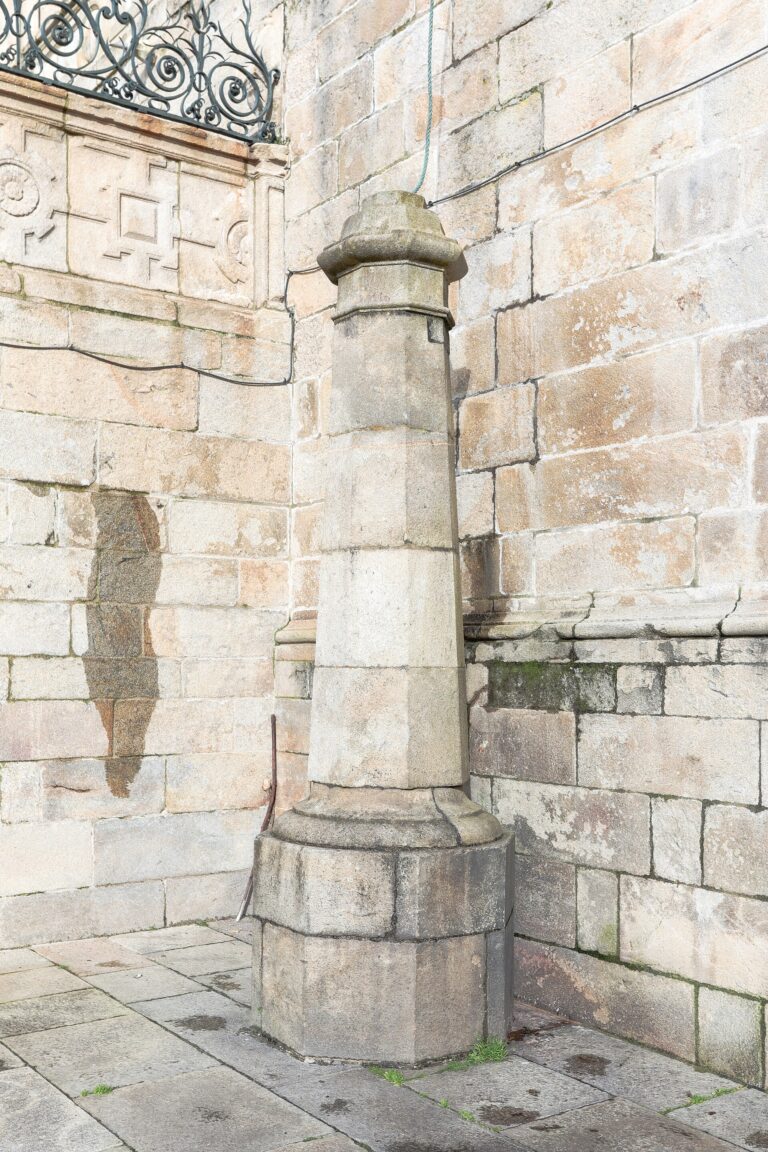
The green northwest of Spain is deceptively different from the rest of the country, and you might be surprised to find that Santiago de Compostela, Spain looks nothing like the sun-scorched plains you’d expect. Instead of parched landscapes and blazing heat, you’re greeted by rolling hills reminiscent of Ireland or the Scottish Highlands, where mist lazily rises from eucalyptus forests and the sound of bagpipes drifts from local taverns. Galicia operates as a world unto itself, with its own rules, deep Celtic roots, and a language far closer to Portuguese than to standard Castilian Spanish. For millions of people around the world, however, this region represents one ultimate destination — because this is where one of the planet’s most famous walking trails comes to an end.
Whether you’ve got hundreds of kilometres in your legs with a rucksack on your back, or you’re arriving comfortably by train while exploring northern Spain, Santiago de Compostela will instantly draw you in with its unmistakable atmosphere. Around the monumental cathedral, a historic centre of granite arcades, narrow lanes, and ancient monasteries has preserved its medieval character beautifully. Even in the rain — very typical for this part of Spain — the city feels utterly magical, as the wet stone glistens under the glow of street lamps, lending the whole place a wonderfully romantic air.
Let’s take a look at everything you absolutely shouldn’t miss in this fascinating city. I’ve put together a detailed guide that will take you from the famous cathedral through bustling markets all the way to day trips to the very end of the world. You’ll also find out when the best time to visit is, and why you really shouldn’t wait too long to start planning your trip.
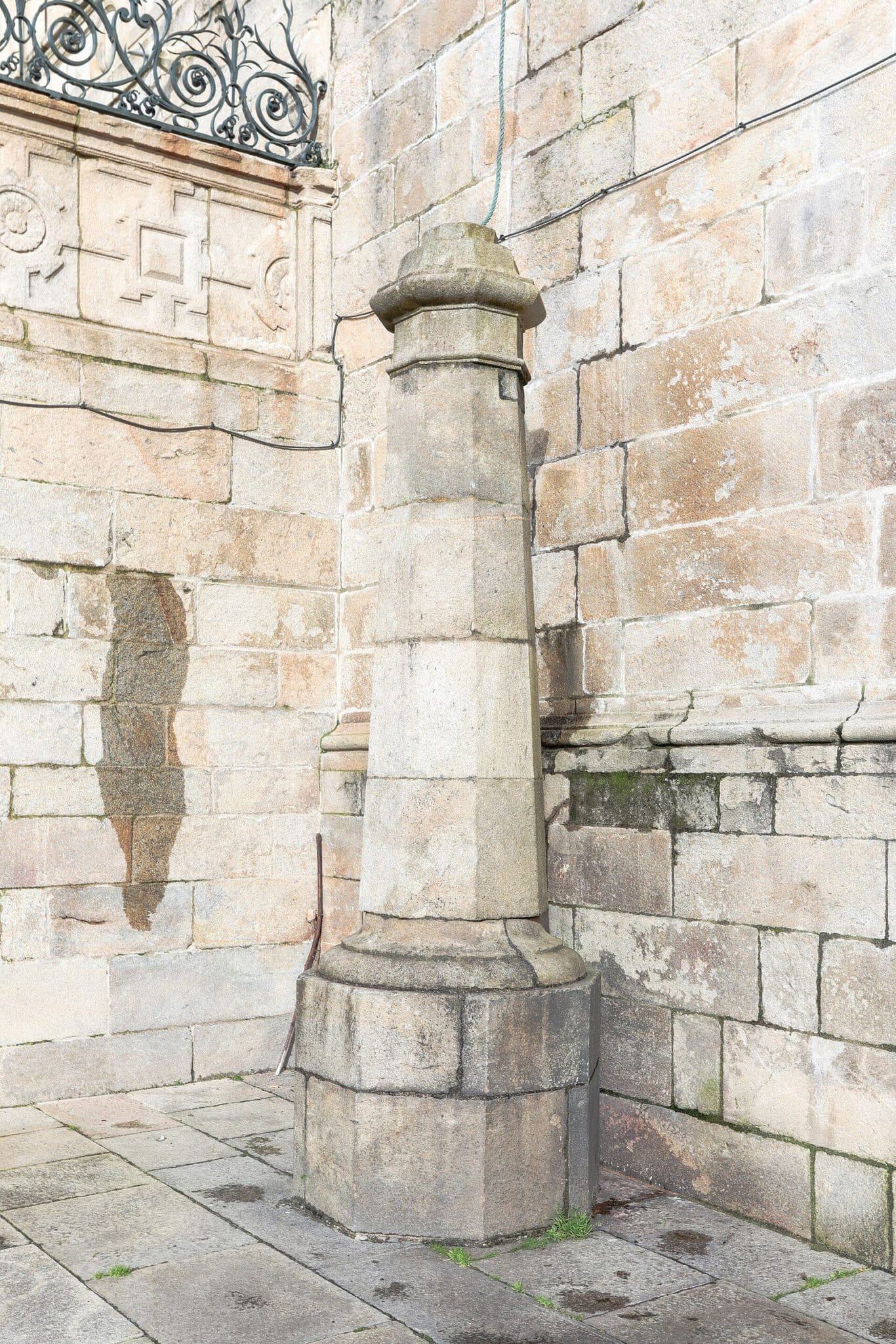
TL;DR
- Main attraction: The Cathedral of Saint James is the absolute centrepiece of the city, with the remains of the Apostle James the Great resting beneath its high altar.
- Best time to visit: Ideally head there in 2026 between May and October, as 2027 is the so-called Holy Year and the city will be bursting at the seams.
- Historic centre: The entire Santiago de Compostela old town is a UNESCO World Heritage Site, featuring charming granite lanes filled with cafés, tapas bars, and street musicians.
- Culinary highlights: The city is famous for its markets (Mercado de Abastos) and Galician cuisine, inseparable from the crisp, mineral white wine Albariño.
- Practical tip: Don’t limit yourself to the city — set aside at least one day for a trip to Cape Finisterre on the coast, nicknamed “the end of the world.”
The full destination guide: Northern Spain — guide and what to see
When to Visit Santiago de Compostela
The weather in Santiago de Compostela, Spain is firmly dictated by the cool Atlantic, so you need to accept that conditions here are far more unpredictable than in southern Spain. Winters are relatively mild temperature-wise, but they tend to be extremely rainy and damp — hardly ideal for sightseeing on foot. The only reliably dry and pleasantly warm window for visiting Galicia stretches roughly from May to the end of October.
If you’re planning to explore the coast and perhaps take a dip in the ocean — which stays refreshingly brisk even in the height of summer — aim for June through September. Bear in mind, though, that August is peak season for both tourists and pilgrims. Accommodation sells out well in advance and prices naturally climb to their highest, so early booking is absolutely essential during this period.
When planning your trip, there’s one hugely important factor to consider. 2027 is a Holy Year (Año Xacobeo), which occurs whenever the Feast of Saint James falls on a Sunday. During a Holy Year, pilgrim numbers traditionally surge by fifty to eighty percent, the Holy Door of the cathedral is opened, and the city experiences absolute pandemonium. That makes 2026 the ideal window for a more peaceful visit, when you can soak up the authentic atmosphere just before the region is engulfed by the extreme crowds that come with the jubilee.
Where to Stay in Santiago de Compostela
💡 Accommodation & experience tip: We usually search for Santiago de Compostela, Spain hotels on Booking.com, which tends to have the best cancellation policies. For tickets, tours, and activities, it’s worth comparing options on GetYourGuide.
Choosing the right location for your stay can make a huge difference to your trip, as the city is compact but quite hilly. The most popular choice is naturally the historic centre itself (Casco Histórico), where you’ll have all the main sights, tapas bars, and romantic narrow lanes literally just steps from your bed. Do expect, however, that accommodation right in the centre tends to be pricier, and early morning deliveries or late-night pilgrim celebrations can occasionally be a bit noisy.
If you’re after somewhere quieter and often more budget-friendly, look at accommodation around the Alameda park or towards the train station. From there, it’s a pleasant ten-to-fifteen-minute stroll to the cathedral, you’ll avoid the biggest crowds, and it’s much more convenient for parking if you’re travelling by hire car. For finding places to stay, we’ve consistently had the best experience with Booking.com, where you’ll find everything from modest guesthouses to luxurious boutique hotels.
- Luxury experience: For something truly extraordinary — budget permitting — book a stay at the historic Parador de Santiago (Hostal dos Reis Católicos) right on the main square, one of the oldest and most beautiful hotels in the world.
- Best value: Excellent value for money can be found at Hotel Compostela, set in a stunning historic building just a few minutes’ walk from the cathedral, offering superb comfort.
- For atmosphere lovers: The boutique San Francisco Hotel Monumento is also hugely popular, housed in a beautifully restored 18th-century Franciscan monastery with an unbeatable sense of place.
14 Best Things to See and Do in Santiago de Compostela, Spain
The city offers far more than just one famous cathedral, though that obviously takes centre stage. Set aside ideally two full days to explore the city itself, giving you enough time not only for the sights but also for unhurried café sessions and soaking up the local atmosphere.
1. Praza do Obradoiro
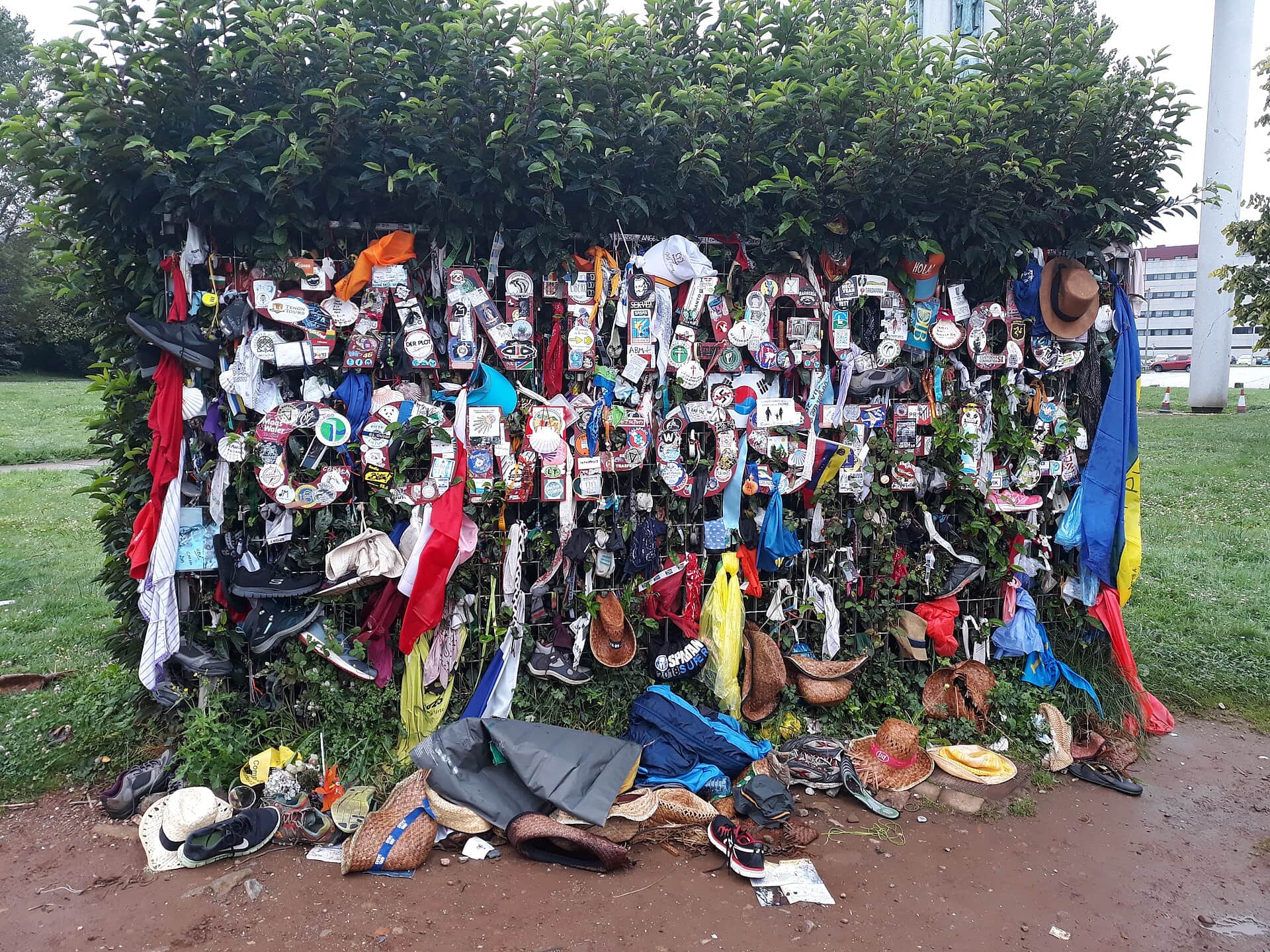
All roads in Galicia lead to this vast square, which forms the true architectural and emotional heart of the city. It’s right here, in front of the cathedral’s monumental Baroque façade, that hundreds of exhausted pilgrims arrive every single day — dusty boots, trekking poles in hand, and many of them openly weeping with emotion.
It’s an incredibly powerful experience to simply sit on the edge of the square and watch people completing their hundreds-of-kilometres-long pilgrimage. The square is flanked on all four sides by significant historic buildings representing four pillars of power: religion (the cathedral), monarchy (the Parador), education (the College of San Jerónimo), and civil governance (the Rajoy Palace, today the city hall).
💡 Local tip: The best light for photographing the cathedral façade from this square comes in the late afternoon, when the setting sun bathes the granite stones in gorgeous golden hues.
2. Cathedral of Saint James and the Tomb
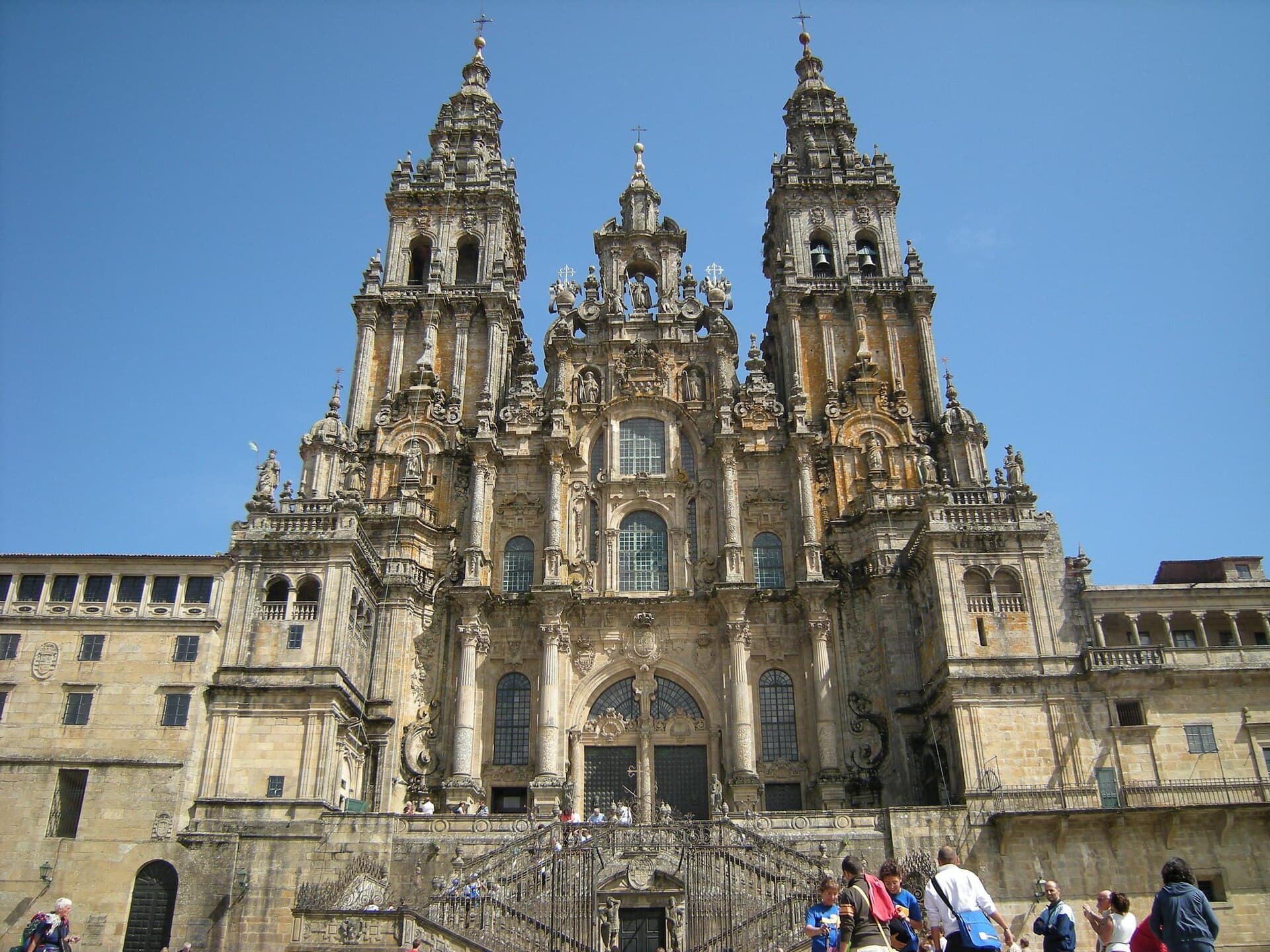
The cathedral itself is a breathtaking architectural masterpiece, its core a majestic Romanesque basilica that builders gradually wrapped in ornate Gothic and Baroque layers over the centuries. According to centuries-old tradition, the crypt beneath the high altar holds the remains of the Apostle James the Great — which is why Santiago de Compostela is important to Christianity and became one of the three foremost pilgrimage destinations in the medieval world, alongside Rome and Jerusalem.
When visiting the interior, don’t miss the magnificent Pórtico de la Gloria (Portico of Glory), a masterwork of Romanesque sculpture by Master Mateo, though you’ll need to purchase a timed-entry ticket in advance. The traditional ritual for all visitors used to be embracing the statue of Saint James at the high altar, although the rules around this have changed frequently in recent years for safety and hygiene reasons.
Entry to the cathedral nave itself is completely free, and it’s open from early morning until evening. However, if you want to visit the museum, the crypt, or walk on the cathedral rooftops, expect to pay admission and book ahead.
3. The Giant Incense Burner: Botafumeiro
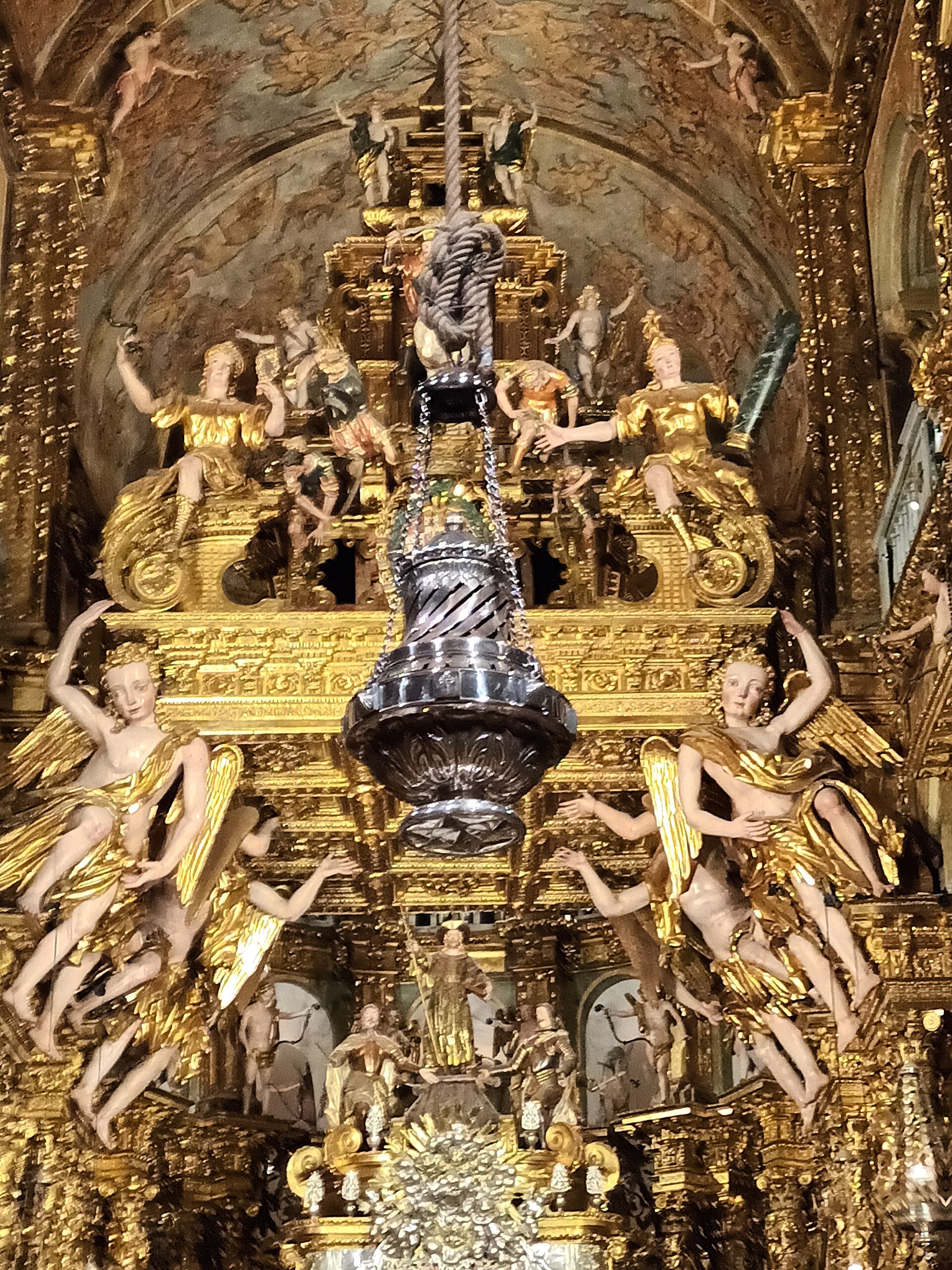
One of the most iconic and most-photographed attractions in the entire cathedral is undoubtedly the Botafumeiro — a massive silver incense burner that hangs on a thick rope directly from the main dome. This extraordinary object weighs over fifty kilograms and stands an impressive metre and a half tall. Its original medieval purpose was to mask the smell of hundreds of unwashed pilgrims who used to sleep inside the cathedral.
When the Botafumeiro is set in motion, it takes eight strong men known as tiraboleiros to swing it up to an incredible speed of 68 kilometres per hour, sending it soaring almost to the ceiling of the transept. It’s an absolutely jaw-dropping spectacle, filling the entire space with the scent of incense and the sound of the rope whistling through the air.
💡 Local tip: Seeing the Botafumeiro in action requires a bit of luck, as it doesn’t fly at every mass. You’re guaranteed to see it during major religious feast days, or if a generous group of pilgrims has paid for a special swinging (which costs several hundred euros).
4. Wandering the Old Town (Casco Histórico)
Once you step out of the cathedral, plunge into the maze of narrow lanes that make up the Santiago de Compostela old town — a UNESCO World Heritage Site in its entirety. The main arteries are Rúa do Franco and Rúa do Vilar, lined with massive granite arcades that once sheltered merchants from the ever-present rain.
While Rúa do Franco is today best known as the main foodie street, packed with tapas bars and restaurants, Rúa do Vilar offers more elegant boutiques, silversmiths, and beautiful historic palaces. Keep your eyes peeled for the details on building façades, gargoyles shaped like fantastical creatures, and tiny hidden squares that appear out of nowhere around every other corner.
The entire old town is a strictly pedestrianised zone, so you can wander safely for hours, soaking up the atmosphere and listening to street musicians who often play traditional Galician bagpipes (gaitas).
5. Mercado de Abastos
If you want to feel the real pulse of the city and see how locals live, you absolutely must visit the main municipal market, Mercado de Abastos. It’s the second most visited spot in the city after the cathedral, set in beautiful stone halls fragrant with fresh herbs, cheese, and flowers.
The biggest buzz is traditionally on Saturday mornings, when the stalls groan under the weight of all manner of cheeses shaped like a woman’s breast (tetilla cheese), fresh vegetables, artisan bread, and a staggering array of seafood. The market is divided into several halls by product type, and the atmosphere is wonderfully lively, noisy, and completely authentic.
💡 Local tip: Right inside the market, you’ll find a small eatery called Mariscomanía, where you can bring the ingredients you’ve just bought from the stalls and they’ll expertly cook and serve them for you for a small fee.
6. Parador Hostal dos Reis Católicos
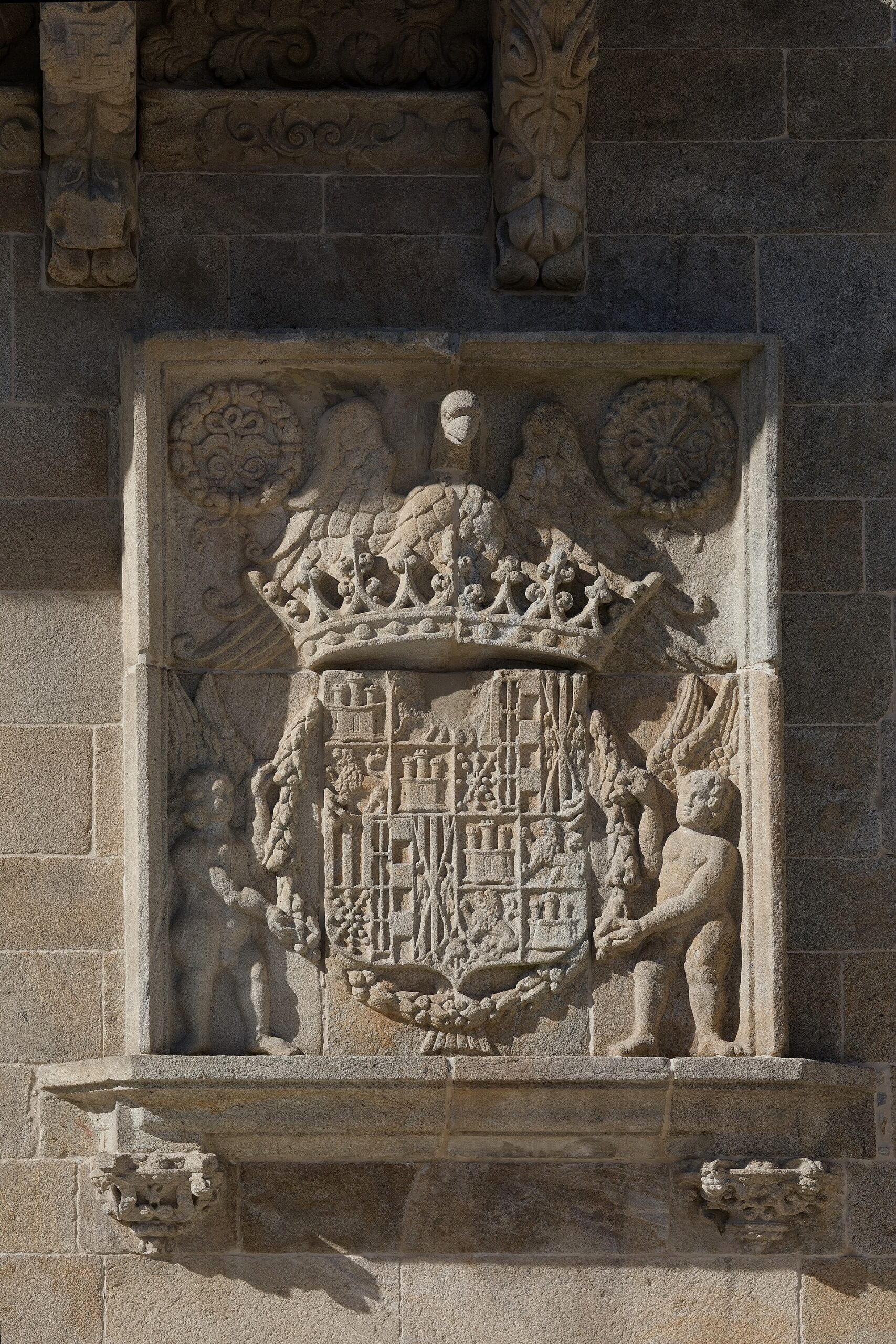
Right on the main square opposite the cathedral stands a magnificent building that holds the title of the oldest continuously operating hotel in the world. It was originally commissioned in the late 15th century by the Catholic Monarchs (Queen Isabella and King Ferdinand) as a lavish royal hospice to provide shelter, care, and medical help to weary pilgrims.
Today this grand edifice operates as a five-star hotel in the Parador chain, but its historical value has been fully preserved. The building conceals four stunning inner courtyards (patios), ornate cloisters, and richly carved stone details reflecting Renaissance and Plateresque styles.
Even if you’re not staying here, you can book a guided tour of the interior, or at the very least pop in for a coffee or a glass of wine at the hotel café to soak up a bit of that stately historic atmosphere.
7. Sweet Treat: Tarta de Santiago
As you wander around the city, you’ll spot bakery windows on every corner proudly displaying round cakes dusted with icing sugar bearing the distinctive silhouette of the Cross of Saint James. This is the famous almond cake Tarta de Santiago, an absolute icon of local pâtisserie and a perfect choice for vegetarians and anyone with a sweet tooth.
This traditional dessert is made exclusively from ground almonds, eggs, and sugar. It contains no flour whatsoever (making it naturally gluten-free) and is often lightly flavoured with lemon zest or a splash of sweet wine. It has a dense, moist texture and tastes absolutely divine alongside a quality espresso or afternoon tea.
💡 Local tip: Don’t buy the cakes from supermarkets or souvenir shops. Instead, head to the traditional convent bakeries where local nuns still bake them following centuries-old secret recipes.

8. Exploring Traditional Galician Cuisine
Galicia is renowned across Spain for its distinctive and wonderfully rich gastronomy, which differs significantly from what you might know from the south or east of the country. The undisputed queen of the local menu is Galician-style octopus (pulpo a la gallega), boiled in large copper pots until perfectly tender, then served on a wooden board drizzled with olive oil and sprinkled with coarse salt and smoked paprika.
Another extraordinary local speciality is percebes, or goose barnacles — small crustaceans that grow on sharp cliff faces battered by ocean waves. Harvesting them is extremely dangerous, which naturally drives up their price, and locals consider them the ultimate delicacy with the pure taste of the sea. You’ll also commonly encounter empanadas — traditional savoury pies filled with everything from tuna and meat to vegetables.
If you prefer meat-free eating, be sure to try Pimientos de Padrón — small green peppers fried in olive oil and scattered with coarse salt. They’re utterly addictive, and the famous saying goes that “some are hot and some are not,” making every bite a little gastronomic game of roulette. You can read more about the variety of local dishes in our article on typical Spanish food.
9. Tasting Mineral Albariño Wine
Exceptional food naturally calls for exceptional wine, and northwest Spain certainly delivers on that front. Galicia is home to the celebrated Albariño grape, which produces fantastic, refreshing, and highly mineral white wine with delicate notes of peach, apple, and citrus.
The damp, cooler Atlantic influence gives this wine a perfect acidity that makes it an absolutely ideal pairing with local tapas and vegetable dishes. The vines are often grown on special pergolas to protect the grapes from excessive ground moisture and improve air circulation.
Virtually every bar on Rúa do Franco will happily pour you a glass of this local treasure. If you’re keen to dive deeper into the world of wine, ask the bartenders about wines from the Ribeiro or Mencía regions — two more fascinating local appellations that are well worth exploring.
10. Monastery of San Martiño Pinario
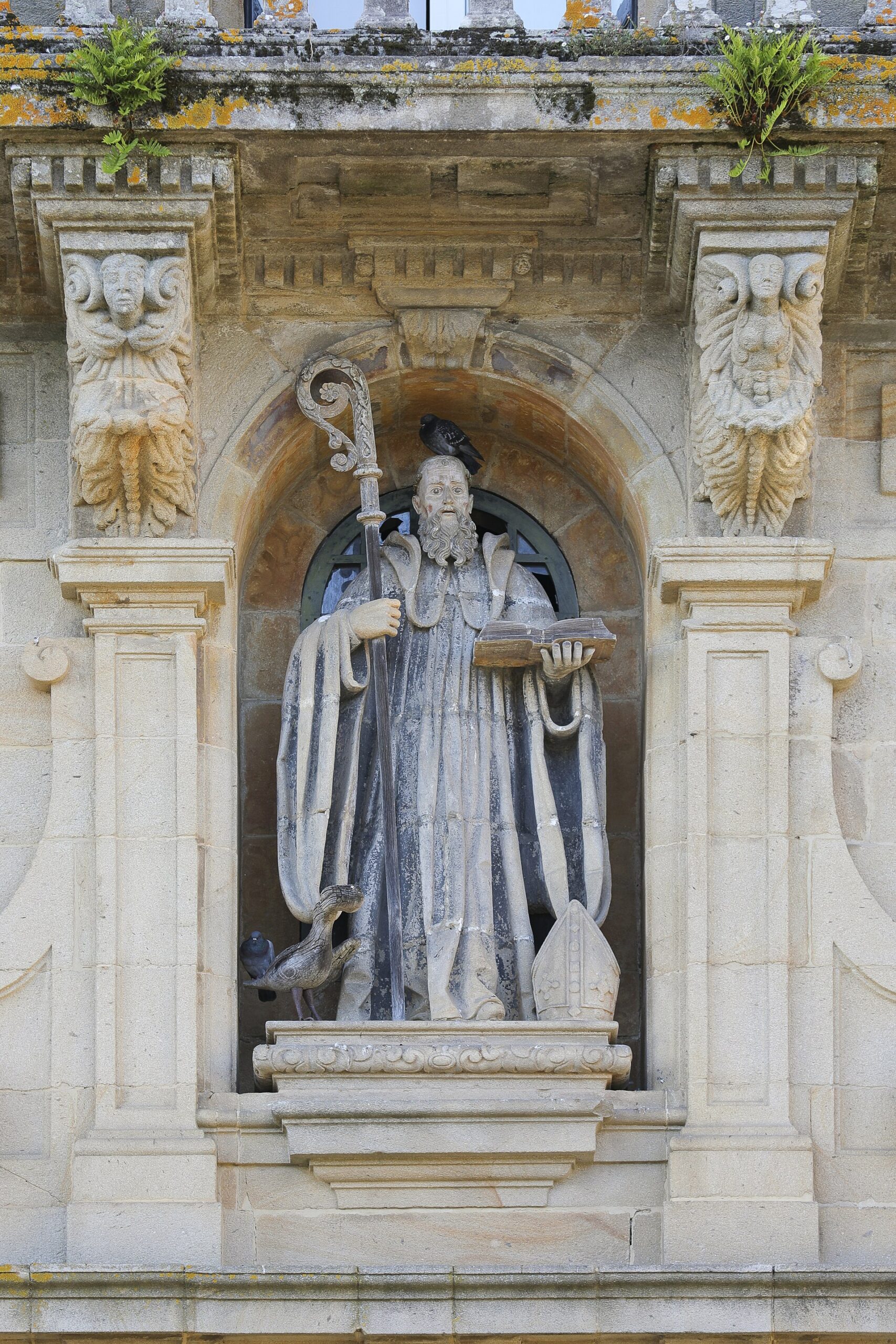
Just opposite the cathedral’s northern façade sprawls another architectural giant that you really shouldn’t miss. The Benedictine Monastery of San Martiño Pinario is the second-largest religious building in all of Spain (after El Escorial Palace near Madrid), and its sheer scale is genuinely staggering.
The monastery church façade is a fine example of Galician Baroque, but the real surprise awaits inside. The incredibly ornate main altarpiece and the breathtaking walnut choir stalls represent the pinnacle of 17th-century woodcarving artistry and will quite literally take your breath away with their intricate detail.
💡 Local tip: Today, part of this vast complex functions as a seminary and student halls, but the church and museum are open to the public for a very modest admission fee that’s absolutely worth paying.
11. Alameda Park and City Viewpoint
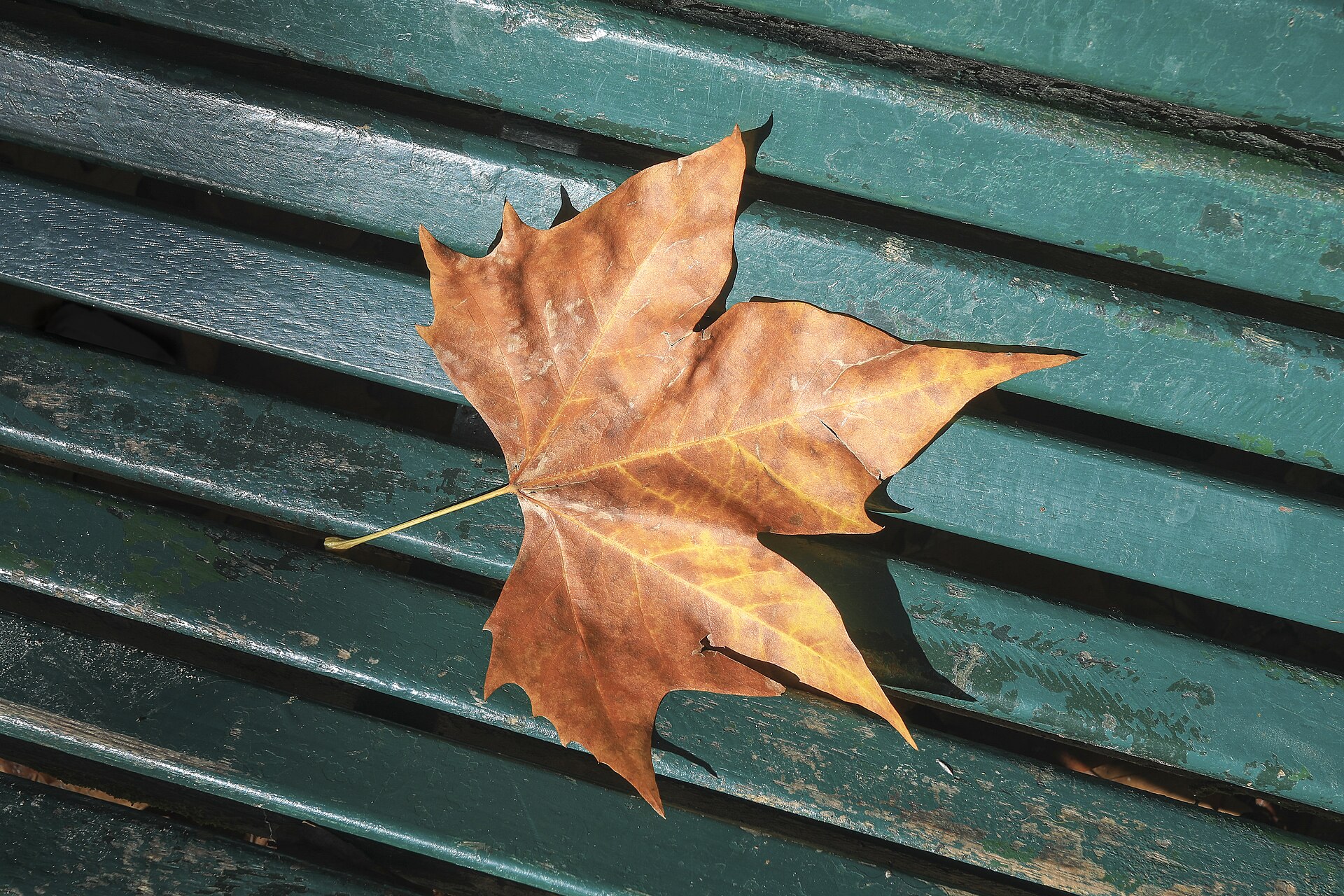
When you need a break from the stone lanes and the bustle of the centre, head southwest to Alameda Park. This sprawling and beautifully maintained green space dates back to the 19th century, and locals love it for regular Sunday strolls beneath the shade of mature oaks, chestnuts, and enormous eucalyptus trees.
It’s from this park, specifically from the Paseo da Ferradura promenade, that you get the most beautiful and most iconic view of the cathedral towers — the one you’ve seen on every postcard. It’s especially magical in the early evening as the city starts to light up, making it an incredibly romantic spot.
At the main entrance to the park, don’t forget to say hello to the colourful statue of Las Dos Marías (The Two Marys). This monument honours two real local sisters who became city legends in the mid-20th century. Every day at two o’clock in the afternoon, they would dress up flamboyantly, apply dramatic make-up, and stroll through the park flirting with students — their own quiet act of defiance against the strict Franco regime.
12. Museo das Peregrinacións (Pilgrimage Museum)
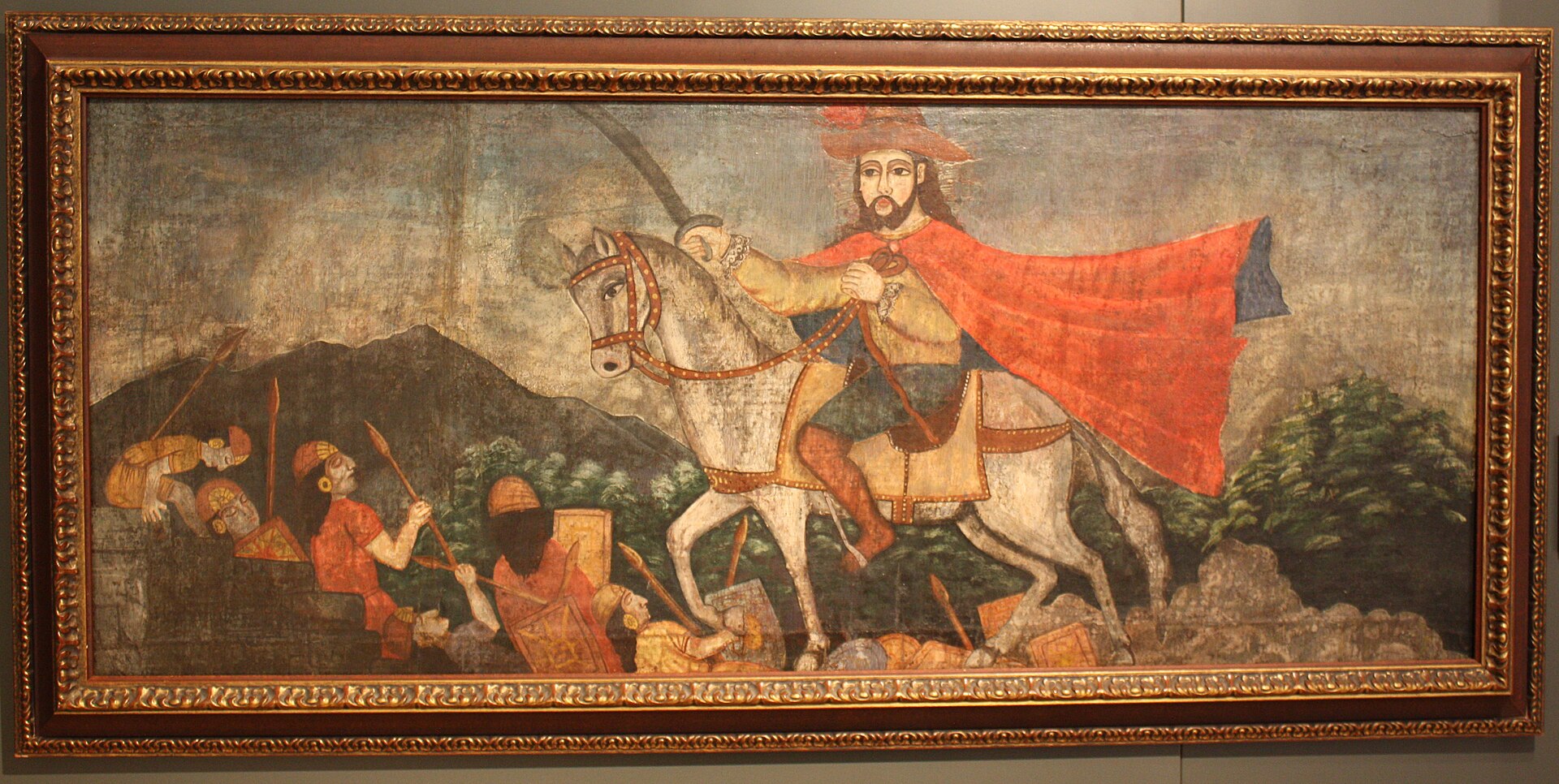
To truly understand the enormous significance and history of the Santiago de Compostela pilgrimage, I’d highly recommend visiting the Pilgrimage Museum, housed in a stylishly renovated building near the cathedral. The exhibits trace the history of pilgrimages from the Middle Ages right through to the present day.
You’ll learn fascinating details about how pilgrims’ motivations have evolved over the centuries, what hardships they once had to endure, and how the very existence of the pilgrimage route shaped the architecture, culture, and economy of an entire continent. You’ll see historical maps, ancient pilgrim badges from various corners of the world, and captivating artworks connected to the cult of Saint James.
From the top floor of the museum, with its large glass windows, you’ll also get an unusual close-up view of the clock tower (Torre de la Berenguela) and part of the cathedral’s rooftops.
13. Day Trip to Cape Finisterre (End of the World)
Limiting your visit to this region to the city of Santiago alone would be a huge mistake, so definitely set aside a day for a trip to the coast. Your destination should be the iconic Cape Finisterre, whose name derives from the Latin Finis Terrae, literally meaning “the end of the world.”
For many pilgrims, the journey doesn’t end at the cathedral — they continue walking for another three to four days to reach this very spot and gaze out over the endless waters of the Atlantic. There was once a tradition where pilgrims would burn their worn-out boots and clothing on the cliffs as a symbol of purification and a fresh start, though this is now strictly forbidden for environmental and safety reasons.
If you don’t have a hire car, no worries. There are plenty of organised coach excursions running daily from the city that will take you not only to the lighthouse on the cliff but also show you the stunning coastline of the Rías Baixas inlets and picturesque fishing villages along the way. You can easily book these full-day trips through local tour offices or on GetYourGuide.
14. Shopping for Souvenirs and Silver Jewellery
To round off your stay, you’ll no doubt want to take home a tangible memento. The traditional souvenir shops around the cathedral offer an endless variety of items, but if you’re after something truly typical and worthwhile, focus on traditional Galician jewellery.
Local artisans have been master silversmiths for centuries, working with a distinctive black stone called azabache (jet) — a rare form of fossilised wood. The most popular motif is naturally the scallop shell (the symbol of Saint James), which you can pick up as delicate earrings, pendants, or elegant bracelets.
💡 Local tip: If you’d like to bring something back for a foodie, great options include quality tinned tuna, tetilla cheese, or a bottle of local Orujo liqueur — a spirit made from pressed grape skins, often infused with herbs or coffee beans.
Map of points of interest for your phone
Where to Go Next from Galicia
If you’re lucky enough to have more time, northern and central Spain offer endless possibilities for further exploration. You could hire a car and drive along the wild northern Atlantic coast eastward into the Basque Country. Stop in the modern city of Bilbao, where the famous Guggenheim Museum will blow you away, then continue to the elegant resort town of San Sebastián, widely regarded as the culinary capital of Europe.
If you’re more drawn to the inland and big-city buzz, hop on a high-speed train that will whisk you to Madrid in just a few hours. From there, you can easily continue to the vibrant east coast and the pulsating city of Barcelona, or explore other stunning destinations like sunny Valencia. The possibilities in Spain are truly endless.
Frequently Asked Questions
How do I get my certificate of completion for the pilgrimage (Compostela)?
To receive the official Latin certificate, you need to walk into Santiago and prove that you’ve completed at least the last 100 kilometers on foot (or 200 kilometers by bike or horse). The proof is your pilgrim’s passport (credencial), which must have at least two stamps per day for the final 100 kilometers. You can collect these stamps at hostels, churches, or cafes along the way.
How many days should I set aside to explore the city itself?
For Santiago de Compostela and its historic center alone, two full days will be plenty. However, if you want to soak up the atmosphere at a more relaxed pace, visit museums, and take a day trip to the ocean at Cape Finisterre, I’d recommend setting aside at least three to four days.
Is Galicia an expensive destination compared to the rest of Spain?
Actually, quite the opposite. Galicia is one of the more budget-friendly regions in Western Europe, largely thanks to its extensive pilgrim infrastructure. While a typical budget traveler in southern Spain might easily spend around 80 euros per day, a more frugal pilgrim in the north can keep daily costs under 50 euros by taking advantage of the set lunch menus (menú del día) at local taverns.
Can I safely drink tap water in Spain?
Yes, tap water throughout northern and northwestern Spain is completely safe, drinkable, and often very tasty. What’s more, since 2022, restaurants are legally required to offer you a jug of free tap water with your meal—just ask for ‘agua del grifo.’
Do I need a car to travel around the region?
If you’re planning to stay in the city or take the high-speed train to larger cities like A Coruña, you won’t need a car. But if you want to discover hidden beaches in the Rías Baixas, remote lighthouses, and tucked-away fishing villages in the countryside, renting a car is absolutely essential, as public transportation in these areas is very limited.
Is the city safe at night?
Santiago de Compostela is one of Spain’s safest cities with very low crime rates. The historic center stays lively well into the night, with streets full of people, students, and pilgrims, so you can walk around after dark without worry. That said, do keep an eye out for pickpockets in areas with high tourist concentrations.
Do people speak Spanish in the region?
Yes, everyone speaks Spanish (Castilian) perfectly, but their primary and beloved language is Galician (galego). You’ll see this language on all road signs, menus, and information boards. It’s very similar to Portuguese, but with basic English and a smile, you’ll have no trouble getting by.
Tips and Tricks for Your Vacation
Don’t Overpay for Flights
Search for flights on Kayak. It’s our favorite search engine because it scans the websites of all airlines and always finds the cheapest connection.
Book Your Accommodation Smartly
The best experiences we’ve had when looking for accommodation (from Alaska to Morocco) are with Booking.com, where hotels, apartments, and entire houses are usually the cheapest and most widely available.
 🚗 Car rental on the roadVerified rental cars in northern Spain
Search with the DiscoverCars comparison engine — it compares prices from dozens of local and international rental companies, and most bookings come with free cancellation.
Compare car prices in northern Spain →Don’t Forget Travel Insurance
Good travel insurance will protect you against illness, accidents, theft, or flight cancellations. We’ve had a few hospital visits abroad, so we know how important it is to have proper insurance arranged.
Where we insure ourselves: SafetyWing (simple monthly subscription) and TrueTraveller (for extra-long trips).
Find the Best Experiences
Get Your Guide is a huge online marketplace where you can book guided walks, trips, skip-the-line tickets, tours, and much more. We always find some extra fun there!