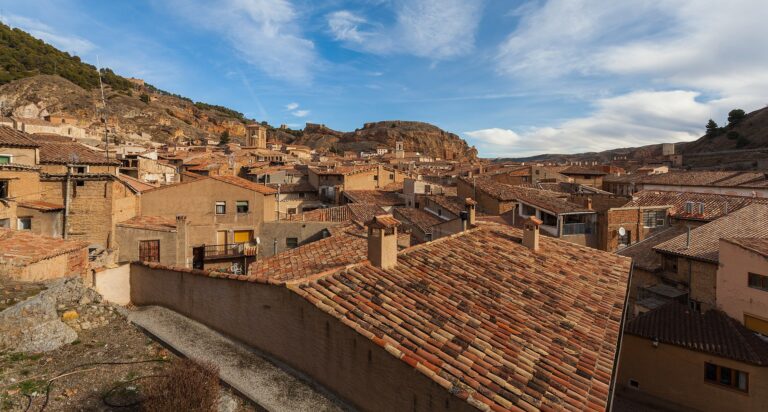
If you’re looking for a place that instantly transports you several centuries back in time, Toledo Spain is an absolutely perfect choice. This stunning historic city sits perched on a rocky promontory, encircled on three sides by the River Tagus, and looks like a flawless film set. It’s a magical place where the fates of Christians, Muslims, and Jews intertwined for centuries, earning it the proud nickname — the City of Three Cultures.
Thanks to high-speed trains, it’s just a stone’s throw from the capital, making it an ideal day trip if you’re spending your holiday in central Spain. Be prepared, though — the old town is one giant labyrinth of narrow alleyways where you’re guaranteed to get lost sooner or later. But that’s precisely where the magic lies, because around every corner you’ll discover an ancient mosque, a Gothic chapel, or a charming little square brimming with cafés.
Let’s take a look together at the most beautiful sights and experiences you absolutely shouldn’t miss during your visit. You’ll find out where to catch the best views, which churches are worth the admission fee, and why you shouldn’t leave without a box of traditional sweet pastries. ☺️
TL;DR
- Main highlight: Toledo is a breathtaking medieval city inscribed on the UNESCO World Heritage List, where Gothic cathedrals, ancient mosques, and richly decorated synagogues stand side by side.
- Getting there from London: Fly from London to Madrid (around 2.5 hours with British Airways, Iberia, or Ryanair), then catch the AVE high-speed train from Madrid Atocha station — just 33 minutes — making it a perfect destination for a day trip or weekend getaway.
- Must-sees: The enormous Gothic Primate Cathedral, the Alcázar fortress towering over the city, and the old Jewish Quarter with its stunning synagogues.
- Getting around: The historic centre is very hilly, but thankfully there are free outdoor escalators that whisk you up from the car parks below straight into the heart of town.
- Local souvenirs: The city is famous for its Damascene steelwork and for baking the finest marzipan in all of Spain.
- Tourist wristband: If you’re planning to visit multiple monuments, grab the Toledo Monumental wristband, which gives you access to seven major historic buildings for a single price.
The full destination guide: Castile and central Spain — guide and what to see
When to Visit Toledo
Central Spain has a very specific and rather harsh climate, which locals jokingly describe as nine months of winter and three months of hell. The best time to visit is undoubtedly spring or autumn, when temperatures are perfect for long strolls through the city. In April, May, September, and October, you can expect a lovely 20–25 °C.
If you’re heading here in summer, brace yourself for genuinely extreme heat. During July and August, temperatures in this part of Spain regularly exceed 40 °C in the shade, and Toledo’s stone alleyways turn into a furnace. In that case, I’d recommend hitting the streets early in the morning, taking a long siesta in your air-conditioned hotel over midday, and venturing out again only as the sun sets.
Winters here, on the other hand, can be surprisingly cold and damp. In January and February, morning temperatures can hover near freezing, so you’ll definitely need a warm jacket and a decent hat. On the bright side, during the winter months you’ll have the historic monuments practically to yourself — which has its own undeniable charm. 😅
Where to Stay in Toledo
💡 Accommodation & experiences tip: We love searching for places to stay on Booking.com, which usually offers the best cancellation policies. For tickets, tours, and activities, it’s worth comparing options on GetYourGuide.
Choosing the right location is absolutely crucial in this city, because constantly trudging up steep hills with heavy suitcases could put a real damper on the start of your holiday. The best strategic base is around the main square, Plaza de Zocodover, which is easily reachable by bus from the train station and puts you within walking distance of all the major sights.
If you’re after truly beautiful accommodation with character, definitely check out Boutique Hotel Adolfo, which sits right in the heart of the historic centre and offers gorgeous views from its windows. Another excellent choice is Sercotel Alfonso VI, where the rooms are very comfortable and the staff are happy to help you plan excursions around the area.
The old Jewish Quarter is also a very popular area to stay, and it’s a touch quieter than the main square surroundings. When booking via Booking.com, always carefully check whether the hotel has its own parking if you’re arriving by car. Most of the historic centre is completely closed to regular vehicles, so you’ll need to park in the car parks below the city walls.
15 Best Things to See and Do in Toledo Spain
This city is absolutely bursting with history, and around every corner you’ll stumble upon something fascinating. I’ve put together a list of fifteen incredible places and experiences that will help you fully soak up the unique atmosphere of the former capital of the Spanish kingdom.
1. Toledo Cathedral (Primate Cathedral)
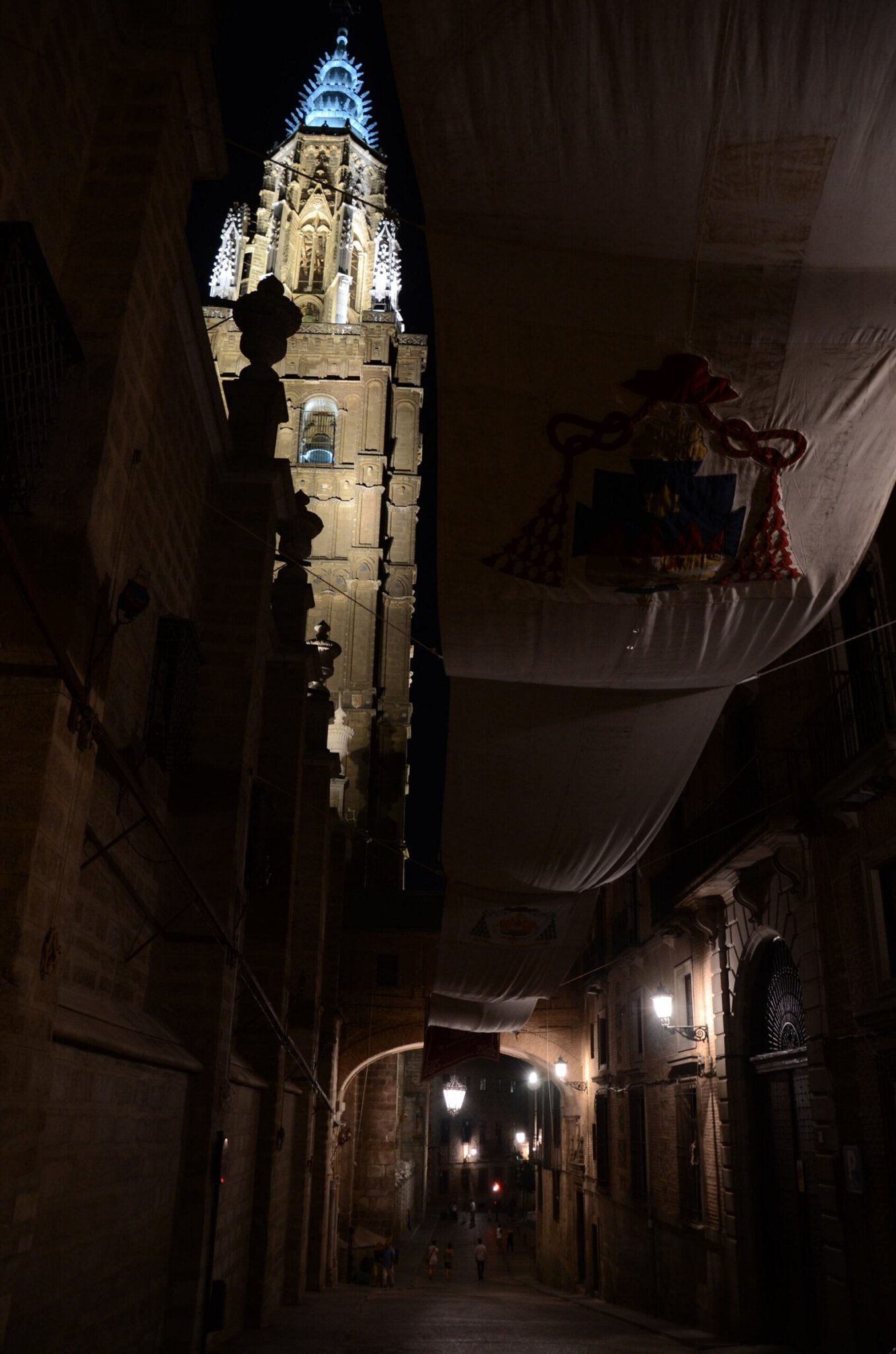
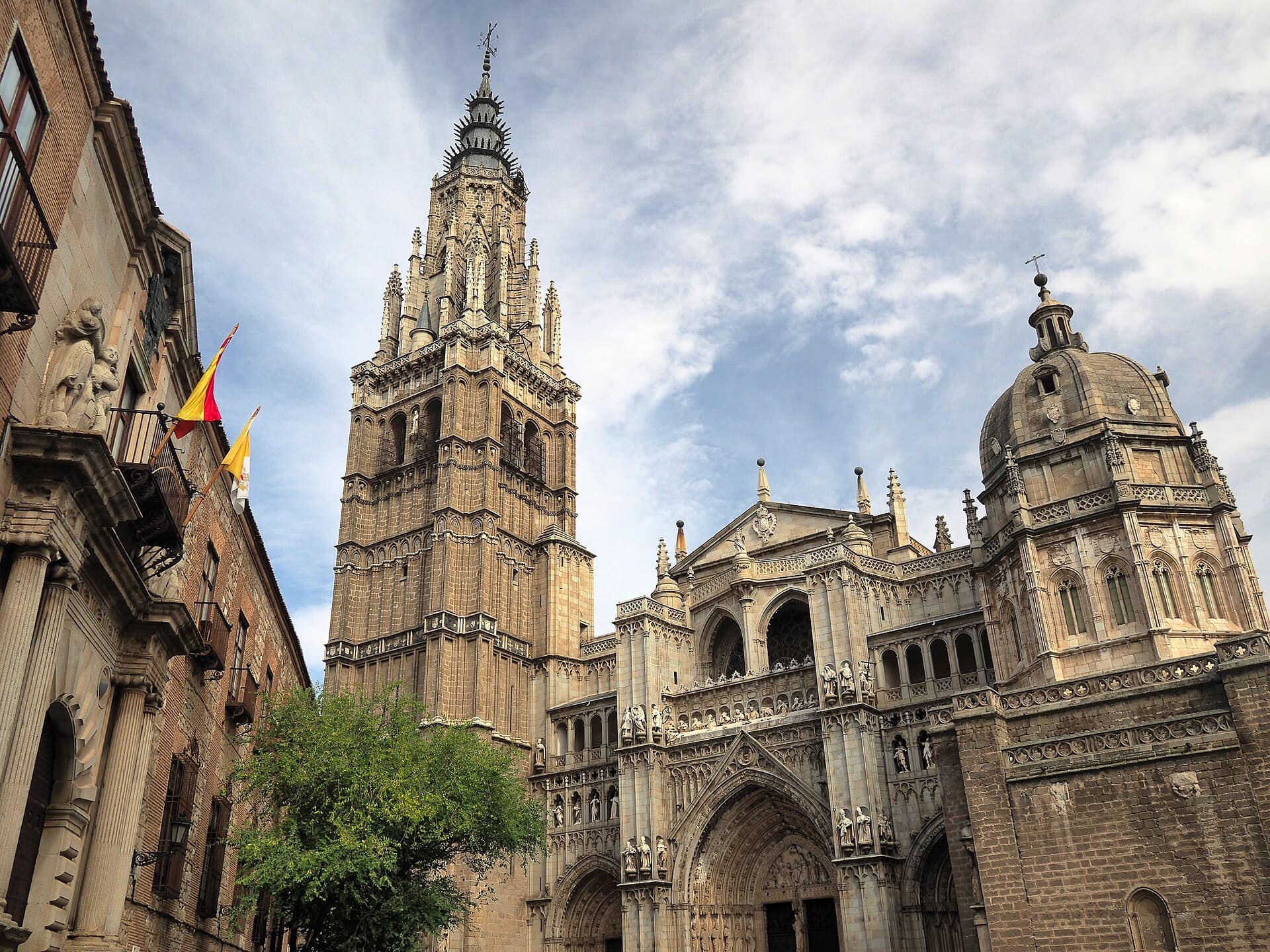
This jaw-dropping building is without question the main landmark of the entire city and ranks among the most beautiful Gothic cathedrals in the world. Its construction took nearly three centuries, which accounts for the incredible wealth of architectural detail waiting for you both inside and out. The main portal alone, with its rich sculptural decoration, is enough to leave you awestruck.
Once you step inside, you’ll gasp at the vast space illuminated by hundreds of magnificent stained-glass windows. Don’t miss the main altarpiece, which is incredibly intricately carved from wood and lavishly gilded. It depicts scenes from the New Testament and is a masterpiece of late Gothic art, crafted by dozens of artists.
The visit also includes the treasury and sacristy, which today functions more like a world-class art gallery. You’ll find original paintings by masters such as El Greco, Goya, Titian, and Caravaggio. I’d strongly recommend buying your tickets online in advance to avoid the long queues that build up here, especially on weekends and public holidays.
2. The Alcázar Fortress
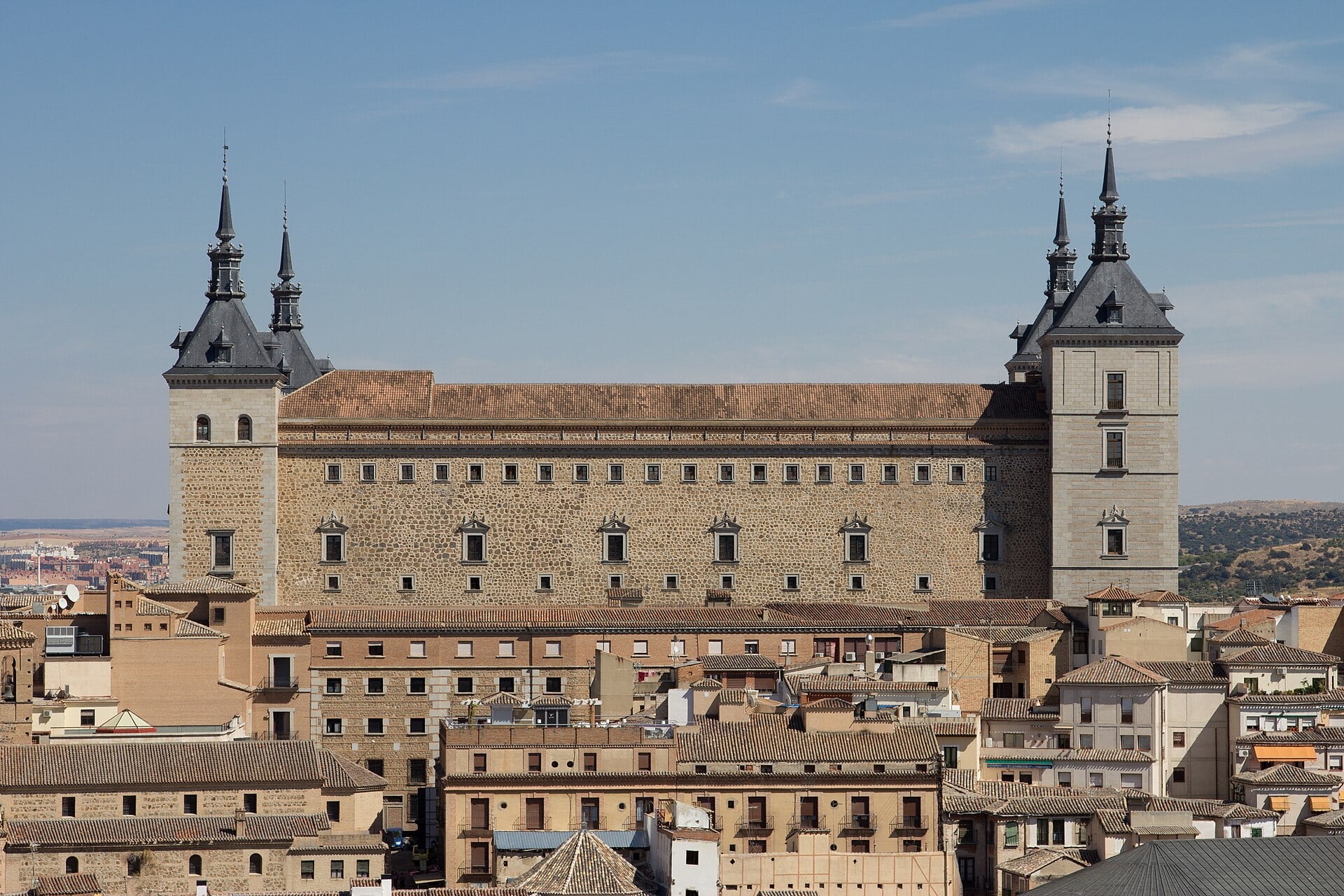
Right after the cathedral, this massive square structure with four towers is the most prominent feature of the entire Toledo skyline. The Alcázar stands on the highest point of the city, from where its defenders had a commanding view over the surrounding landscape, and its history stretches all the way back to Roman times. Over the centuries, the building has served as a royal palace, a military academy, and a fortress.
The structure has endured a turbulent history and was destroyed several times by fire or war. It suffered the most severe damage during the Spanish Civil War, when it was nearly razed to the ground after a prolonged siege. Today it has been beautifully restored to its appearance from the era of King Charles V and cuts a truly majestic figure.
Inside, you’ll now find the extensive Army Museum (Museo del Ejército), which chronicles the entire military history of Spain. More interesting than the weapon exhibitions themselves, however, is the architecture of the inner courtyard and, above all, the breathtaking views from the palace windows. Allow at least two hours for your visit, as the complex is genuinely huge.
💡 Local tip: The best photos of the Alcázar can be taken from the opposite bank of the river or from the outdoor terrace of the nearby library, which is completely free to enter — plus you can grab an excellent coffee there.
3. Synagogue of Santa María la Blanca
When you step inside this building, you’ll probably feel as though you’ve wandered into a beautiful mosque somewhere in Andalusia. Gleaming white walls and horseshoe arches supported by elegant columns are a textbook example of the Mudéjar style. And yet this is actually one of the oldest surviving synagogues in all of Europe, built at the end of the 12th century.
This building perfectly illustrates why Toledo is called the City of Three Cultures. The synagogue for the Jewish community was designed and built by skilled Moorish architects on Christian territory. It’s precisely this blending of influences that creates an utterly unique atmosphere you won’t experience anywhere else in the world. The columns are adorned with detailed stucco work featuring pine cone and plant motifs.
At the beginning of the 15th century, the building was unfortunately confiscated and converted into a Christian church, which gave it its current name — Santa María la Blanca (Saint Mary the White). Today the monument no longer serves a religious purpose but functions as a museum and is one of the most popular spots in the entire old Jewish Quarter.
4. Synagogue of El Tránsito and the Jewish Quarter
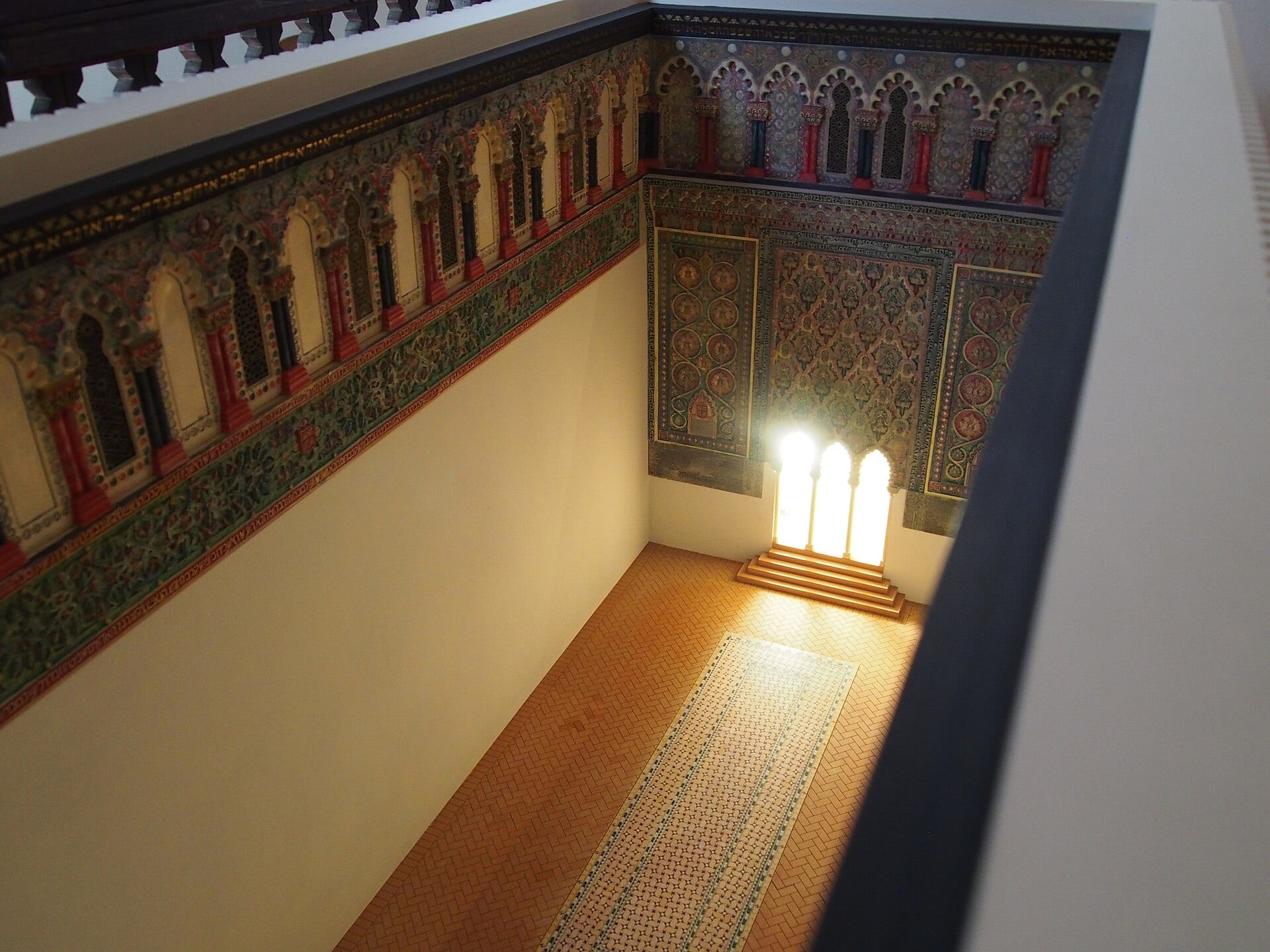
Just a few steps from the previous monument, you’ll find another incredible gem of Sephardic history. The Synagogue of El Tránsito was built in the 14th century, and its main prayer hall is something that will literally take your breath away. The cedarwood coffered ceiling is a masterwork of woodcarving, and the walls are adorned with beautiful Hebrew calligraphic inscriptions interwoven with floral motifs.
The building now houses the fascinating Sephardic Museum (Museo Sefardí), which traces the history of Jews on the Iberian Peninsula from Roman times through to their expulsion in 1492. You’ll learn a wealth of information about their culture, customs, and the enormous influence they had on the development of Spanish society, science, and commerce.
After visiting the museum, I’d recommend simply wandering the narrow lanes of the old Jewish Quarter (Judería). You’ll find plenty of small shops, artisan workshops, and cosy little cafés. If you look carefully at the pavement, you’ll also spot small ceramic tiles bearing the menorah symbol or the Hebrew word Sefarad (Spain), marking the boundaries of this historic neighbourhood.
5. Monastery of San Juan de los Reyes
This beautiful Franciscan monastery was commissioned by the famous Catholic Monarchs, Isabella of Castile and Ferdinand of Aragon, as a symbol of their victory at the Battle of Toro. It was originally intended to serve as their royal burial place, but they ultimately chose to be interred in Granada Cathedral instead. Even so, it remains one of the most significant monuments in the city.
From the outside, you’ll likely be struck by a rather eerie detail on the church facade. Dozens of rusty iron shackles and chains hang from the walls, said to have belonged to Christian prisoners freed from Moorish captivity during the conquest of Andalusia. The monarchs had them hung here as a symbol of Christianity’s triumph, and they still make quite an unsettling impression to this day.
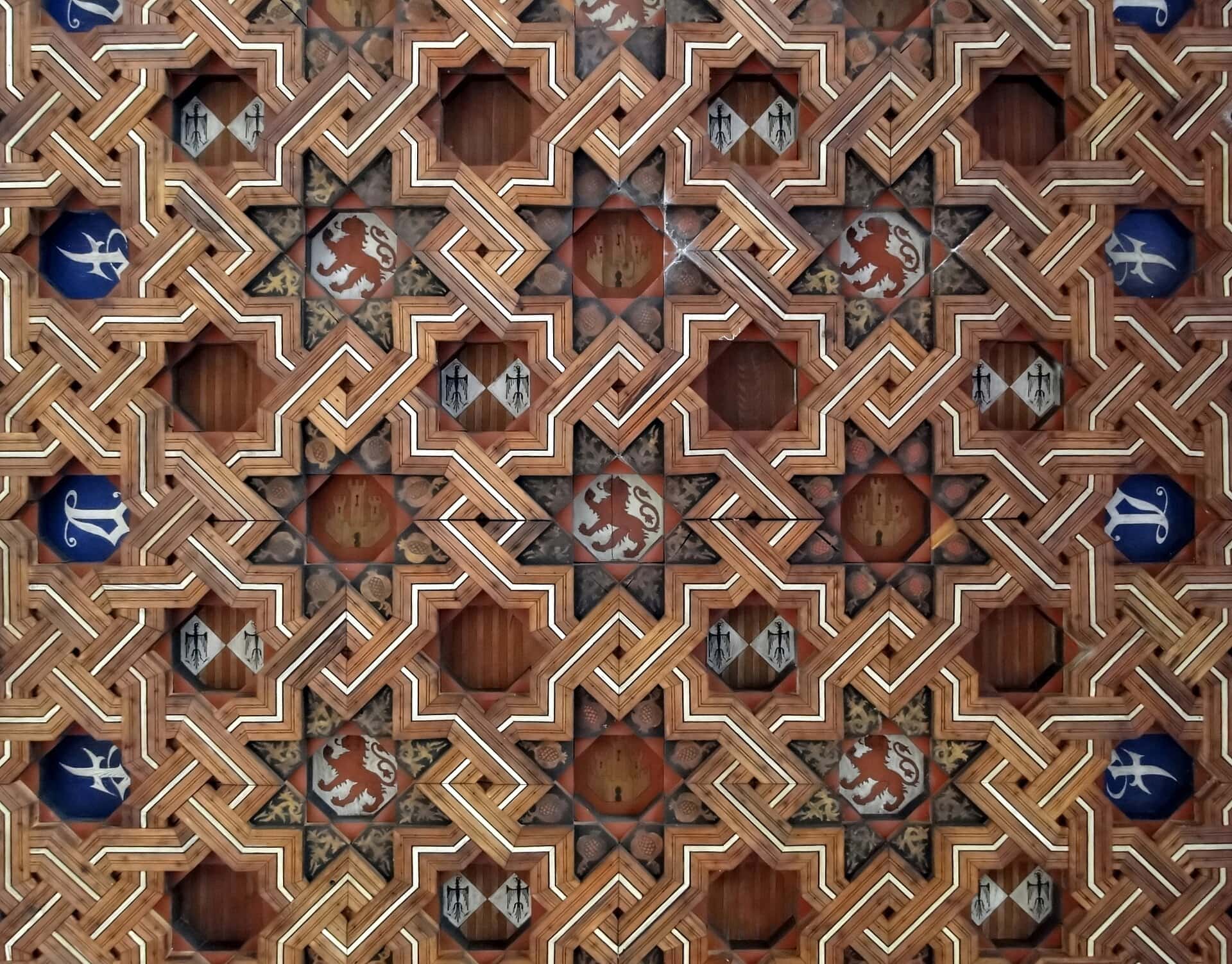
The real beauty, however, lies hidden inside the monastery. I highly recommend visiting the cloister, which is an absolutely stunning example of late Gothic architecture filled with intricate stone tracery and gargoyles. On the upper level you’ll find a gorgeous Mudéjar wooden ceiling. The entire place radiates incredible peace and harmony, especially if you sit on a bench in the garden courtyard surrounded by orange trees.
6. Museo del Greco (El Greco’s House)
Few artists are as closely associated with Toledo as the celebrated Cretan-born painter Doménikos Theotokópoulos, known the world over simply as El Greco. This brilliant artist spent much of his life in the city, and it was right here that he created his most iconic works — full of elongated figures and dramatic colours.
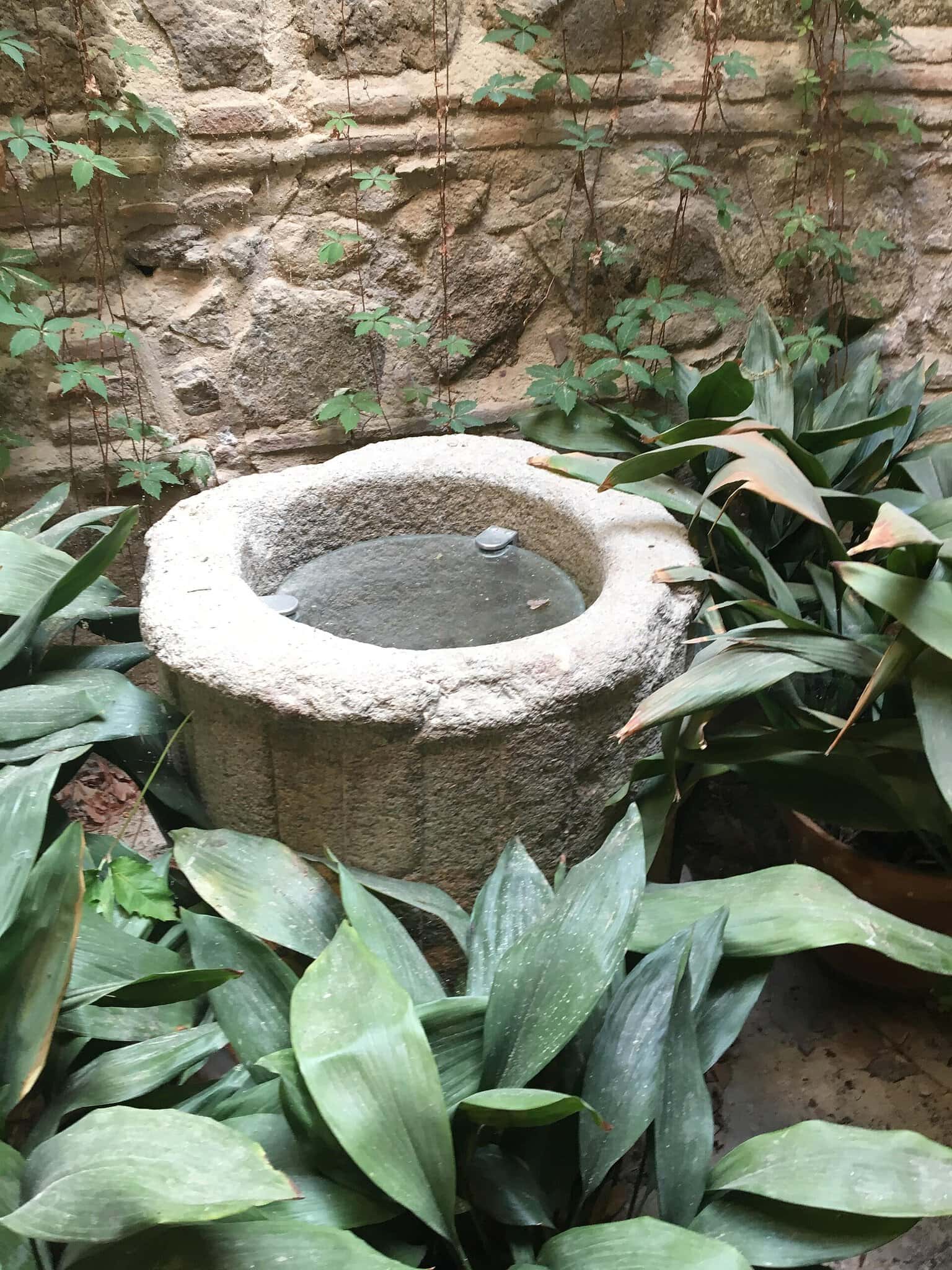
Although the museum is called El Greco’s House, it isn’t actually the building where the artist lived — his real home burned down long ago. In the early 20th century, however, a meticulous reconstruction of a period nobleman’s residence was created here, giving you a glimpse of what life in 16th-century Toledo was like. You’ll find period furniture, a lovely courtyard, and an old kitchen.
The main draw, of course, is the art collection itself. The museum displays a fine selection of original canvases from the artist’s later period, including the famous series of portraits of the twelve apostles. The paintings are beautifully lit, and without throngs of tourists, you can examine every brushstroke of this visionary painter up close.
7. The Burial of the Count of Orgaz at Santo Tomé
Speaking of El Greco, one of his most famous works of all doesn’t hang in some grand museum but in the rather unassuming church of Santo Tomé. The monumental canvas titled The Burial of the Count of Orgaz draws art lovers from around the world to Toledo and represents the absolute pinnacle of Spanish Mannerism.
The painting is split into two halves and depicts a local legend about how Saints Stephen and Augustine themselves descended from heaven to attend the funeral of a generous benefactor. The lower half shows the earthly realm filled with realistic portraits of Toledo’s high society, while the upper half portrays the celestial sphere with El Greco’s signature elongated figures and swirling clouds.
Be prepared to arm yourself with a little patience for viewing this masterpiece. The church is often packed with tour groups, and it gets quite crowded in front of the painting. I’d definitely recommend going first thing in the morning right when it opens, or just before closing time, when it’s a bit quieter and you can take in the canvas in relative peace.
💡 Local tip: If you look carefully at the figures in the earthly part of the painting, the man looking directly at you is believed to be the artist El Greco himself. The small boy in the foreground is thought to be his son, Jorge Manuel.

8. Mosque of Cristo de la Luz
This unassuming brick building is one of the best-kept secrets in the entire city, and it’s guaranteed to enchant you. It’s the oldest standing monument in Toledo, built back in 999 AD during the Cordoban Caliphate. It has survived centuries of war and architectural change, and still stands today in almost its original form.
From the outside, the building looks like a small fortress, but inside hides a tiny architectural miracle. A space measuring just eight by eight metres is divided by slender columns and nine different vaults, each with a completely unique geometric pattern. It’s astonishing how the Moorish builders managed to create such an interplay of light and shadow in so compact a space.
After the Christian reconquest, the mosque was converted into a chapel, as evidenced by the well-preserved Romanesque frescoes on the apse walls. This monument is a perfect example of cultural fusion, with Islamic architecture meeting early Christian art under a single roof. Outside, you’ll also find a small manicured garden with lovely views over the northern part of the city.
9. Mirador del Valle Viewpoint
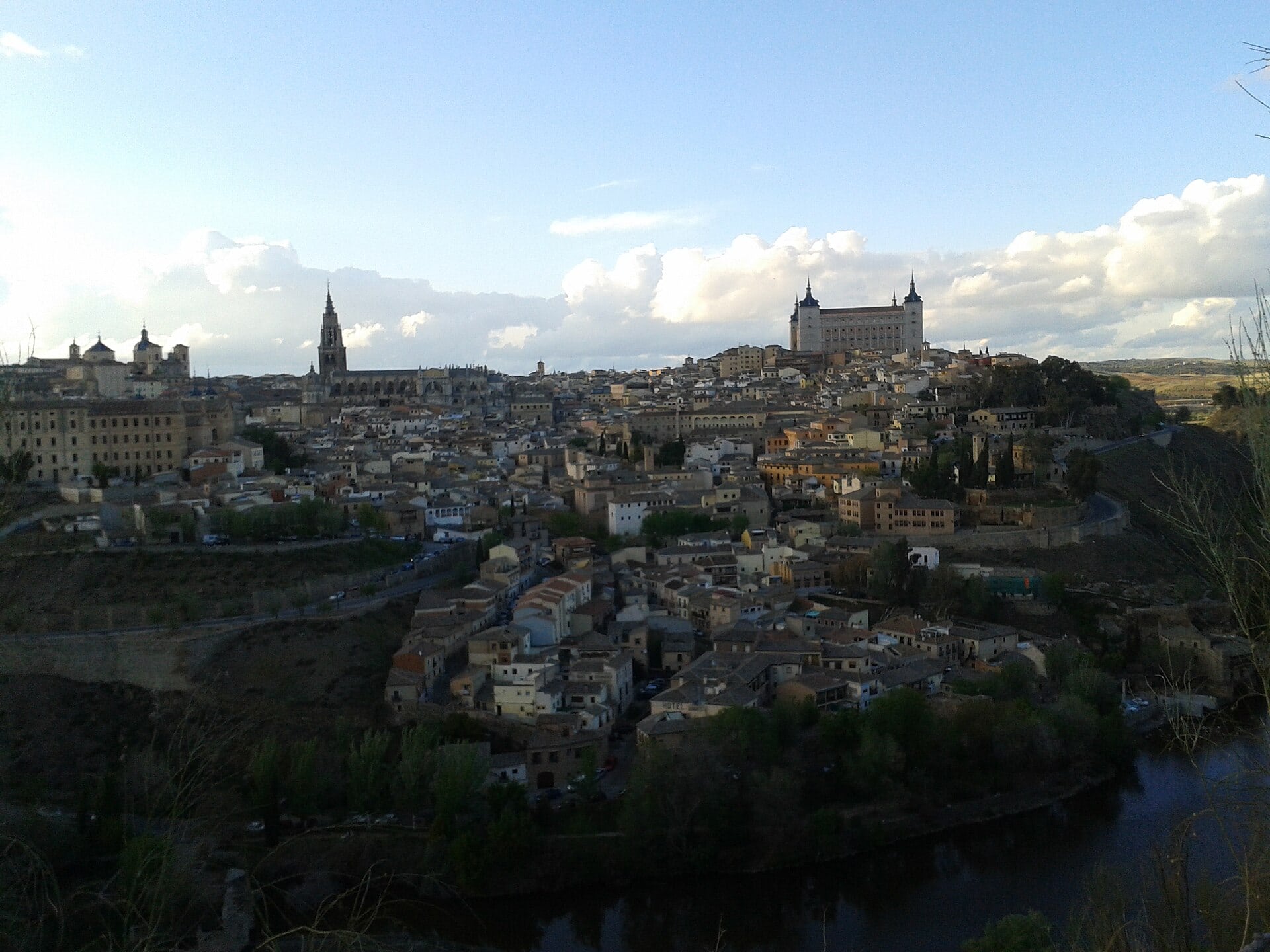
If you want the most iconic photo of your entire trip, you need to venture beyond the city walls to the opposite hillside and the Mirador del Valle viewpoint. This is where that famous panorama of Toledo unfolds — the very one that inspired El Greco himself. You’ll see the River Tagus curving around the old town, the commanding Alcázar, and the cathedral towers rising above the skyline.
The walk from the centre is quite steep, and I wouldn’t exactly recommend it in the summer heat. A far more comfortable option is the tourist train, which departs from Plaza de Zocodover and takes you on an hour-long ride around the entire city, with a brief stop at this very viewpoint. Alternatively, just grab a taxi from the centre — it’ll only cost a few euros.
The most beautiful light here comes in the late afternoon just before sunset. The golden rays illuminate the stone facades and lend the whole city an incredible romantic atmosphere. If you have time, stay until dusk when all the main monuments are dramatically lit up and Toledo looks like a glowing jewel set in the dark Castilian landscape.
10. Puente de Alcántara (Roman Bridge)
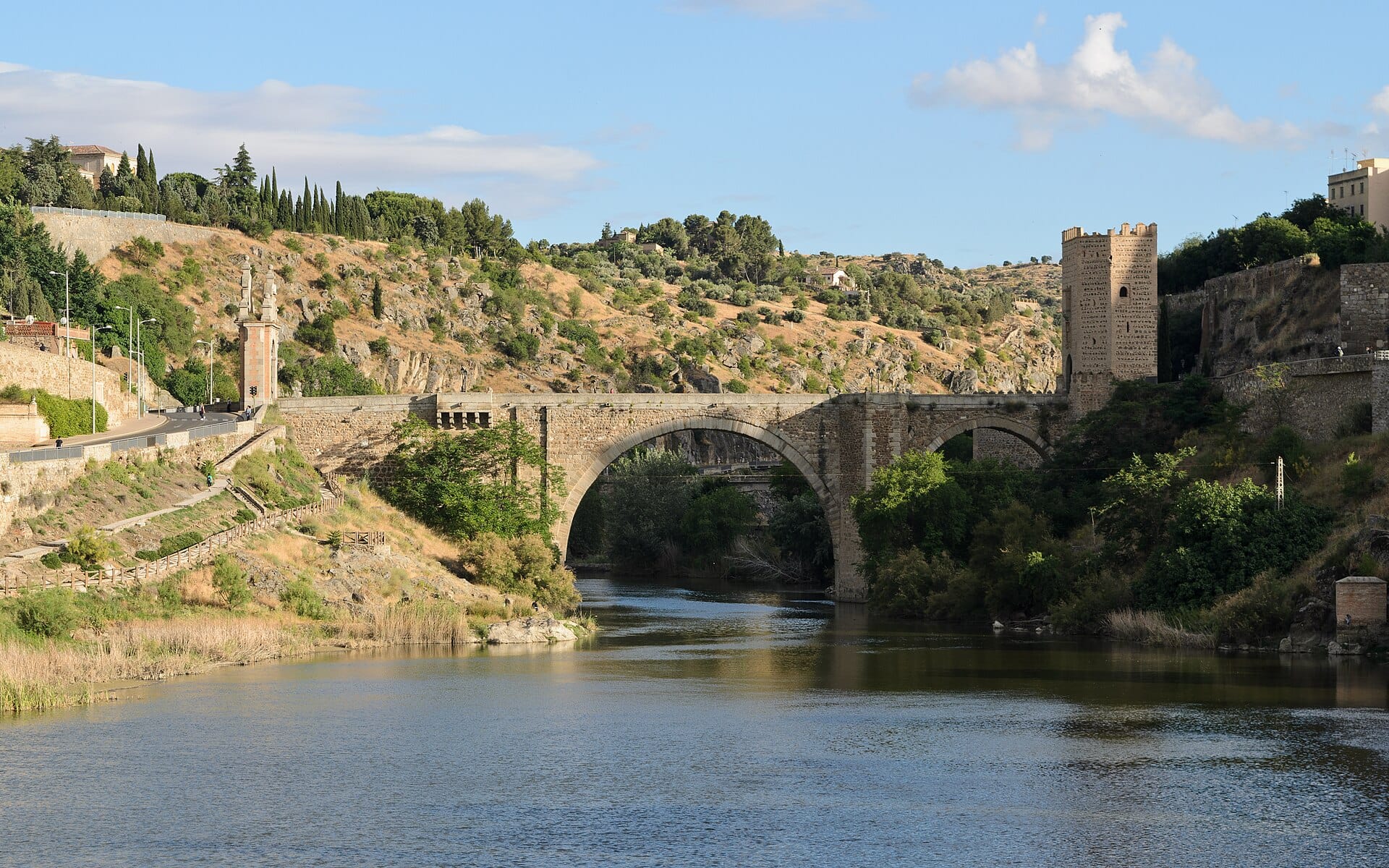
For centuries, the fortified city could only be reached via a handful of bridges, and the most important one on the eastern side was the Puente de Alcántara. Its foundations date back to the days of the Roman Empire, though its current appearance is largely medieval. The bridge’s name comes from the Arabic word al-qantarah, which simply means “the bridge.”
The structure arches high above the deep gorge of the River Tagus, protected at both ends by massive defensive towers. Walking across this bridge is an absolutely fascinating experience, as you realise just how impregnable the city must have seemed to potential attackers in medieval times. The views of the river and the surrounding walls from here are truly breathtaking.
Below the bridge, you can spot the remains of old mills and waterwheels that once supplied the city with water and ground grain. I’d recommend coming here early in the morning, when a light mist rises from the river and the bridge is still free of camera-toting crowds. It’s the ideal spot for a peaceful start to your day of exploration.
11. Puente de San Martín (Western Bridge)
While the Alcántara guarded the city from the east, the Puente de San Martín served as the main gateway for travellers arriving from the west. This stunning 14th-century Gothic bridge boasts five elegant arches, with the central one spanning an impressive forty metres. Legend has it that the builder discovered an error in his calculations, so his wife crept out at night and set the bridge ablaze to save him from public humiliation.
From the bridge, you get wonderful views of the Monastery of San Juan de los Reyes and the steep cliffs plunging down to the river. If you’re a bit of an adrenaline junkie, right next to the bridge you’ll find an attraction called Fly Toledo — the longest urban zipline in Europe, letting you soar over the River Tagus on a steel cable with the historic city as your backdrop.
This bridge is also a popular spot for evening strolls among locals. When the sun sets and the lanterns flicker on, the atmosphere takes on an incredibly romantic feel. Be sure to stop here if you’re walking back along the riverside path (Senda Ecológica) that skirts the city on three sides.
12. Plaza de Zocodover
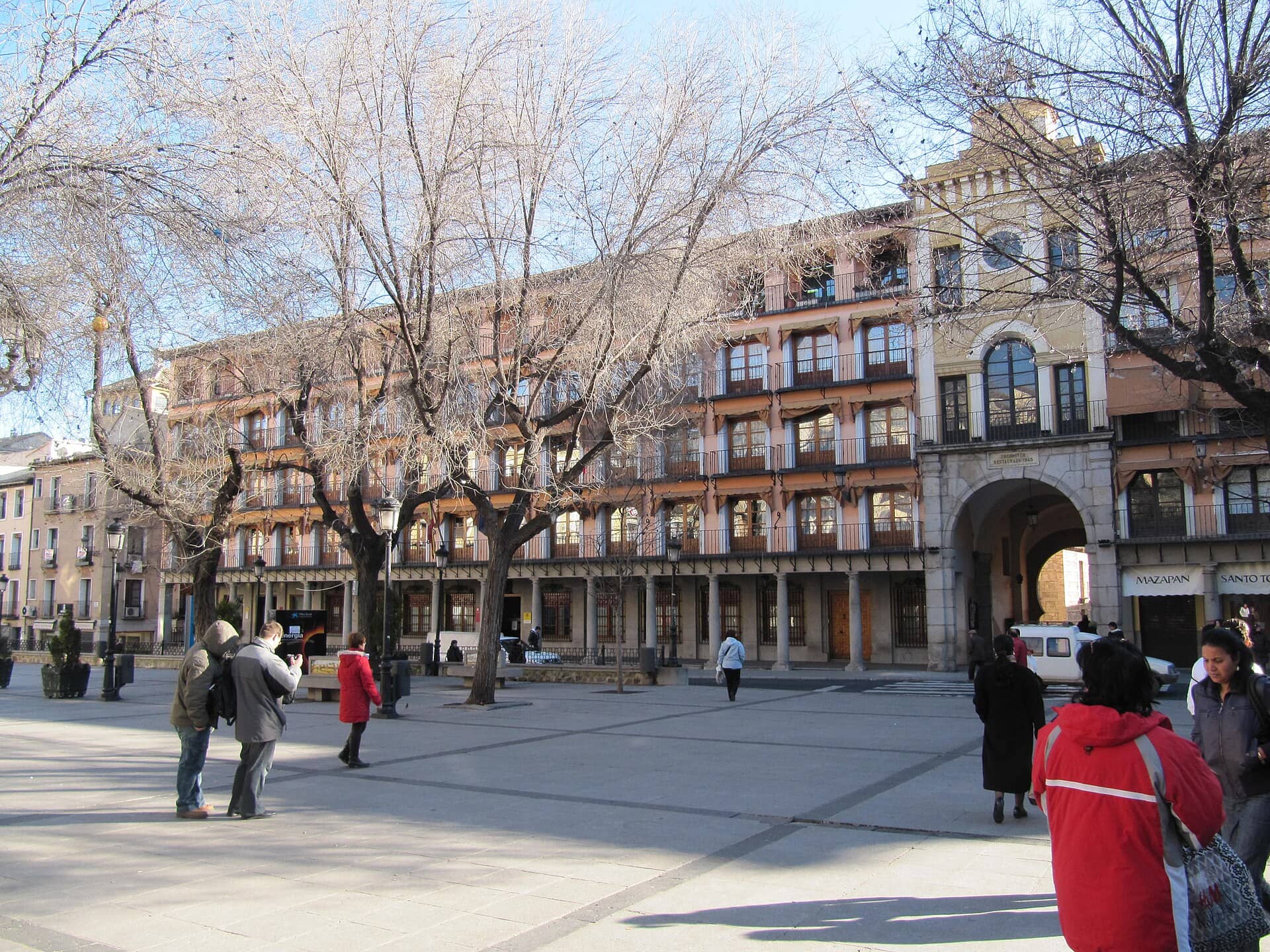
No matter where you wander in the city, all roads will eventually lead you to the Plaza de Zocodover. This is the absolute heart of Toledo, where all of the city’s social life unfolds — locals and tourists mingle here, and you’ll find plenty of cafés. The name comes from Arabic and means “market of draught animals,” which perfectly describes its original purpose.
In the past, however, it wasn’t just ordinary markets held here. The square served as a venue for bullfights, public celebrations, and even the grim executions ordered by the Spanish Inquisition. Fortunately, these days it’s a far cheerier place with lovely trees, benches, and typical architecture lined with arcades where you can shelter from the blazing sun.
The main tourist information centre is also located on the square, and popular walking tours of the city start from here. Be sure to sit down for a coffee or a drink, even though prices are a touch higher than elsewhere in town. Watching the bustling scene and street musicians is well worth those extra euros.
13. Toledo Swords and Damascene Steel
As you stroll through the historic centre, you simply can’t miss the dozens of shop windows gleaming with swords, daggers, and jewellery. For centuries, Toledo was renowned across Europe as the centre for crafting the finest and sharpest blades. Even today, Toledo swords are used as props in Hollywood films and as ceremonial weapons at military academies.
Alongside weaponry, a specific art form known as Damascene work (Damasquinado) developed here. This technique involves inlaying gold or silver threads into grooves etched in steel, creating stunning geometric and floral patterns. Skilled artisans still produce these ornaments by hand right before customers’ eyes in small workshops scattered throughout the city.
If you’d like to take home a truly valuable souvenir — a beautiful pendant or a pair of earrings, for instance — be very careful about which shop you choose. Don’t buy cheap imitations from souvenir shops, where the goods are often nothing more than machine-printed tin from China. Genuine handcrafted jewellery will come with a certificate of authenticity and, naturally, a price to match.
14. Tasting Famous Toledo Marzipan
The food scene in the city is rich, but if there’s one thing you absolutely must do, it’s sampling the local sweet treasure. Toledo marzipan is famous throughout Spain, and its recipe dates back to the time of Moorish rule. It’s made from only the finest almonds, sugar, and honey — and is naturally gluten-free and vegetarian.
The most famous place to buy this delicacy is the traditional confectionery Santo Tomé on Plaza de Zocodover, which has been in business since 1856. They sell marzipan in every shape imaginable — from classic crescents and little figurines to beautifully decorated boxes that make a perfect edible souvenir for your family and friends back home.
For an even more authentic experience, though, buy your marzipan directly from the nuns. Some enclosed convents in the city (such as the Convento de San Clemente) sustain themselves by selling these baked goods. The purchase often takes place through a torno — a rotating wooden drum built into the wall — meaning you never actually come face to face with the nuns at all.
15. Getting Lost in the Winding Alleyways
The monuments are amazing, but the very best experience of the entire city comes when you simply ditch the map or your phone’s navigation. The old town is one glorious labyrinth of narrow cobbled lanes, staircases, and passageways that follow no logical order. This is where you’ll discover the raw, authentic atmosphere of medieval Toledo.
As you wander, you’ll inevitably stumble upon hidden terraces, tiny squares with fountains, or ancient stone gateways that don’t even appear in the guidebooks. I’d urge you to veer off the main tourist arteries linking the cathedral to Plaza de Zocodover. Just turn down two or three side streets and you’ll suddenly find yourself in complete silence, far from the crowds.
When your legs start to ache and you feel like you can’t take another step, don’t despair. The city is fitted with a system of hidden outdoor escalators (Remontes Mecánicos) that carry you comfortably — and completely free of charge — from the lower areas near the river back up to the centre. It’s a brilliant example of how modern infrastructure can be sensitively integrated into a historic environment.
Map of points of interest for your phone
Where to Go from Toledo
As I mentioned at the beginning, Toledo has absolutely brilliant transport connections thanks to its high-speed trains. You can get back to Madrid in just thirty minutes, so if you were only here for a quick visit, I’d definitely recommend also checking out our tips on what to see in neighbouring Madrid. From Madrid’s Atocha station, the doors to the rest of Spain swing wide open.
If you love Moorish architecture and Toledo has captured your imagination, you’ll absolutely fall head over heels for southern Spain. Have a read of our detailed Guide to Andalusia for inspiration on your next holiday. You could head off to marvel at the spectacular Alhambra palace, for which you’ll find all the essential info in our Granada Guide.
For more unique monuments where Islamic and Christian influences blend together, make your way to the city famed for its awe-inspiring mosque — read all about it in our article Córdoba: 15 Things to See. And if you’re after romance with the scent of orange blossoms, you’ll be enchanted by Andalusia’s capital, covered in our Seville Guide.
Frequently Asked Questions
How many days do I need to visit Toledo?
You can tour the main sights during one packed day, which makes the city an ideal destination for a day trip from Madrid. But if you want to enjoy the romantic evening atmosphere without crowds of tourists and soak up the city’s calmer pace, I warmly recommend staying here at least one night.
What’s the best way to get from Madrid to Toledo?
By far the best choice is the high-speed AVE train, which departs from Madrid’s Puerta de Atocha station. The journey takes just 33 minutes and the trains run very frequently. But be sure to buy your tickets several days in advance online through the carrier Renfe’s website, because the connections often sell out.
Is the city suitable for people with limited mobility?
The historic center is built on a steep hill and the streets are paved with cobblestones, which can be demanding. But the city has built a system of modern outdoor escalators (Remontes Mecánicos) that carry you comfortably from the lower parking lots all the way up to the center, so you can avoid the worst climbs.
Can I drive into the historic center by car?
Access to the historic center for non-residents is heavily restricted and the streets are extremely narrow. The best option is to park at the large free Safont parking lot near the bus station, from where you can walk to the escalators leading up to Zocodover square.
Where to look for vegetarian food?
Although the Castile region is known more for its meat dishes, you’ll find plenty of vegetarian tapas here, such as patatas bravas (roasted potatoes with spicy sauce), tortilla de patatas (potato omelet) or fried eggplant with honey. Plus you can sample the excellent local Manchego cheese.
Is there a tourist card for the sights?
Yes, it’s definitely worth getting the so-called tourist bracelet (Pulsera Turística Toledo). It costs only around 12 euros and grants you entry to seven significant monuments (including the Monastery of San Juan de los Reyes and both synagogues). If you plan to visit at least three of them, the bracelet already pays for itself financially.
When is the best time to photograph the city from afar?
You’ll get the most beautiful shots from the Mirador del Valle viewpoint on the opposite hill in the late afternoon and at sunset. The light beautifully illuminates the buildings, and after dark the whole city, including the cathedral and the Alcázar, lights up in a gorgeous golden glow.
Tips and Tricks for Your Vacation
Don’t Overpay for Flights
Search for flights on Kayak. It’s our favorite search engine because it scans the websites of all airlines and always finds the cheapest connection.
Book Your Accommodation Smartly
The best experiences we’ve had when looking for accommodation (from Alaska to Morocco) are with Booking.com, where hotels, apartments, and entire houses are usually the cheapest and most widely available.
 🚗 Car rental on the roadVerified car rentals in Castile
Search with the DiscoverCars comparison engine — it compares prices from dozens of local and international rental companies, and most bookings come with free cancellation.
Compare car prices in Castile →Don’t Forget Travel Insurance
Good travel insurance will protect you against illness, accidents, theft, or flight cancellations. We’ve had a few hospital visits abroad, so we know how important it is to have proper insurance arranged.
Where we insure ourselves: SafetyWing (simple monthly subscription) and TrueTraveller (for extra-long trips).
Find the Best Experiences
Get Your Guide is a huge online marketplace where you can book guided walks, trips, skip-the-line tickets, tours, and much more. We always find some extra fun there!