When people hear the name Pamplona, most immediately picture the adrenaline-fuelled running of the bulls through narrow cobblestone streets. But this proud capital of the Navarra region in northern Spain has far more to offer than a single wild July festival. The historic centre is encircled by some of the best-preserved Renaissance walls in Europe, and the streets are filled with the irresistible aroma of pintxos. Pamplona Spain also serves as the first major stop for pilgrims on the famous Camino de Santiago, giving the city an incredibly cosmopolitan and welcoming atmosphere. You’ll quickly discover that the city Ernest Hemingway loved so dearly wins you over with its green parks, majestic architecture, and wonderfully relaxed pace of life.
TL;DR
- Main event: The San Fermín festival takes place every year from 6–14 July and attracts millions of visitors.
- Pintxos culture: The old town is packed with bars serving fantastic bite-sized tapas skewered on toothpicks.
- History and landmarks: Don’t miss the Gothic cathedral, the star-shaped citadel, and a walk along the beautifully preserved city walls.
- Hemingway connection: The city is steeped in references to the famous writer who put Pamplona on the map with his novel The Sun Also Rises.
- Walkability: All the main sights are within easy walking distance, so you can happily leave the car parked up.
- Recommended time: Two full days is plenty to see the main highlights.
The full destination guide: Northern Spain — guide and what to see
When to Visit Pamplona
Timing plays an absolutely crucial role when planning your trip, because Pamplona during the festival and outside it are two completely different cities. If you want to experience the San Fermín festival with its famous bull run, you need to go precisely between 6 and 14 July. During this period the city transforms into one enormous non-stop party — accommodation sells out months in advance and prices skyrocket.
For a calmer exploration of the sights and a chance to soak up the local atmosphere, May, June, or September are ideal windows. The weather in Pamplona Spain during these months is pleasantly warm, and you’ll avoid the scorching summer heat that often grips inland Spain in August. Spring and autumn are also when the biggest wave of Camino pilgrims passes through, giving the streets a special kind of energy.
Winters in Navarra can be fairly cold, and you’ll often encounter rain or even snow. On the plus side, the winter months bring significantly lower accommodation prices and empty lanes in the historic centre. If you don’t mind packing a warmer coat and occasionally ducking into a cosy bar for a coffee to escape a shower, a winter visit has its own unique charm.
Where to Stay in Pamplona
💡 Tip for accommodation and experiences: We love searching for places to stay on Booking.com, which tends to have the best cancellation policies. For tickets, tours, and activities, it’s worth comparing options on GetYourGuide.
The best area to base yourself is without a doubt the historic centre known as Casco Viejo. This is where you’ll find the prettiest lanes, most of the landmarks, and the very best pintxos bars. From the old quarter you can easily walk everywhere, though be aware that some streets can get a little noisy in the evenings.
A great alternative is the elegant Ensanche district, which seamlessly borders the old town. It offers wider boulevards, more upmarket boutiques, and noticeably quieter nights, while the main square Plaza del Castillo is still only a five-minute walk away. Most hotels can be easily booked through Booking, where I’d recommend checking the location ratings.
If you’re after specific recommendations, the absolute legend is Gran Hotel La Perla, which sits right on Plaza del Castillo and where Ernest Hemingway regularly stayed. For a more modern and budget-friendly experience, try the popular Hotel Maisonnave, just a few steps from the town hall. If you prefer a blend of history and tranquillity, you’ll love the Pamplona Catedral Hotel, cleverly set within a renovated former convent right next to the cathedral.
14 Tips: What to See and Do in Pamplona Spain
1. The San Fermín Festival and Its Atmosphere
Although the feast day is dedicated to Saint Fermín, for most of the world it’s synonymous with an endless celebration. The festival officially kicks off on 6 July at noon, when a rocket called the chupinazo is fired from the town hall balcony. At that moment, thousands of people in the square tie a traditional red scarf around their necks and the city plunges into nine days of revelry filled with music and dancing.
Even if you don’t make it to Pamplona in July, reminders of this festival are everywhere you look. Souvenir shops sell the iconic white shirts and red scarves — the unofficial festival uniform — all year round. The locals are immensely proud of their tradition and will happily regale you with stories of how their grandparents celebrated San Fermín decades ago.
💡 Local tip: Try learning a few words of Basque, as Navarra has very close ties to Basque culture. A simple greeting like “Kaixo” or a thank-you “Eskerrik asko” will instantly earn you extra smiles from the bar staff.
2. The Bull Run and the Ethics Question
The famous morning bull run, known as the encierro, takes place every morning at eight o’clock during the festival. The route is exactly 825 metres long and runs from the corrals at Santo Domingo to the city’s bullring. Hundreds of daring participants try to sprint ahead of six massive animals through the narrow streets, which frequently results in injuries and, tragically, has led to fatalities throughout history.
In recent years, this tradition has become a major target of criticism from animal rights groups. After the run, the bulls are driven into the arena where a traditional bullfight awaits them in the evening. Many international and Spanish organisations highlight the enormous stress and suffering inflicted on the animals, so you’ll need to decide for yourself where you stand on this controversial event.
If you’re curious about the bull run route without any bloodshed, you can walk the entire course at your own pace any time of year. It starts below the hill at the town hall, continues along the famous Calle Estafeta, and ends at the monumental Plaza de Toros. Along the way, you’ll notice wooden posts where safety barriers are slotted in during the festival.
3. Plaza del Castillo
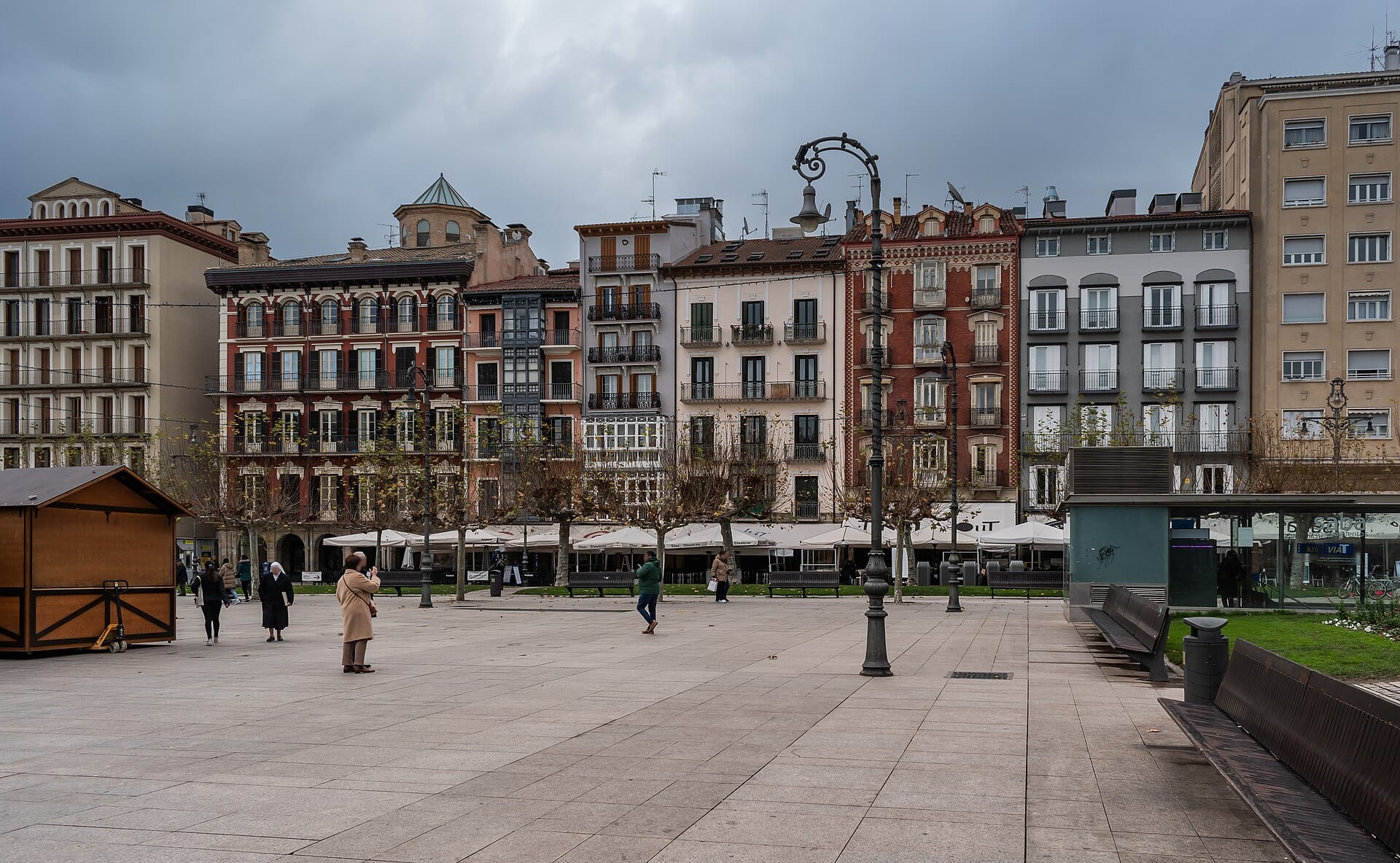
This vast square lined with arcades serves as the true living room of the entire city. From morning until late at night, families, groups of friends, and lone pilgrims stroll through, enjoying a coffee or an evening drink. In the centre stands a beautiful bandstand that lends the whole space a romantic, elegant air.
The square’s biggest draw is the famous historic Café Iruña, which has preserved its original Art Nouveau interior dating from 1888. Mirrors, ornately decorated ceilings, and antique lamps instantly transport you back over a century. It’s the perfect spot to sit down with a book and simply watch the world go by.
💡 Local tip: Don’t be put off by the café’s grand appearance — prices for a coffee or glass of wine are very reasonable. Order a cortado and savour the atmosphere of a place where literary history was made.
4. Santa María la Real Cathedral
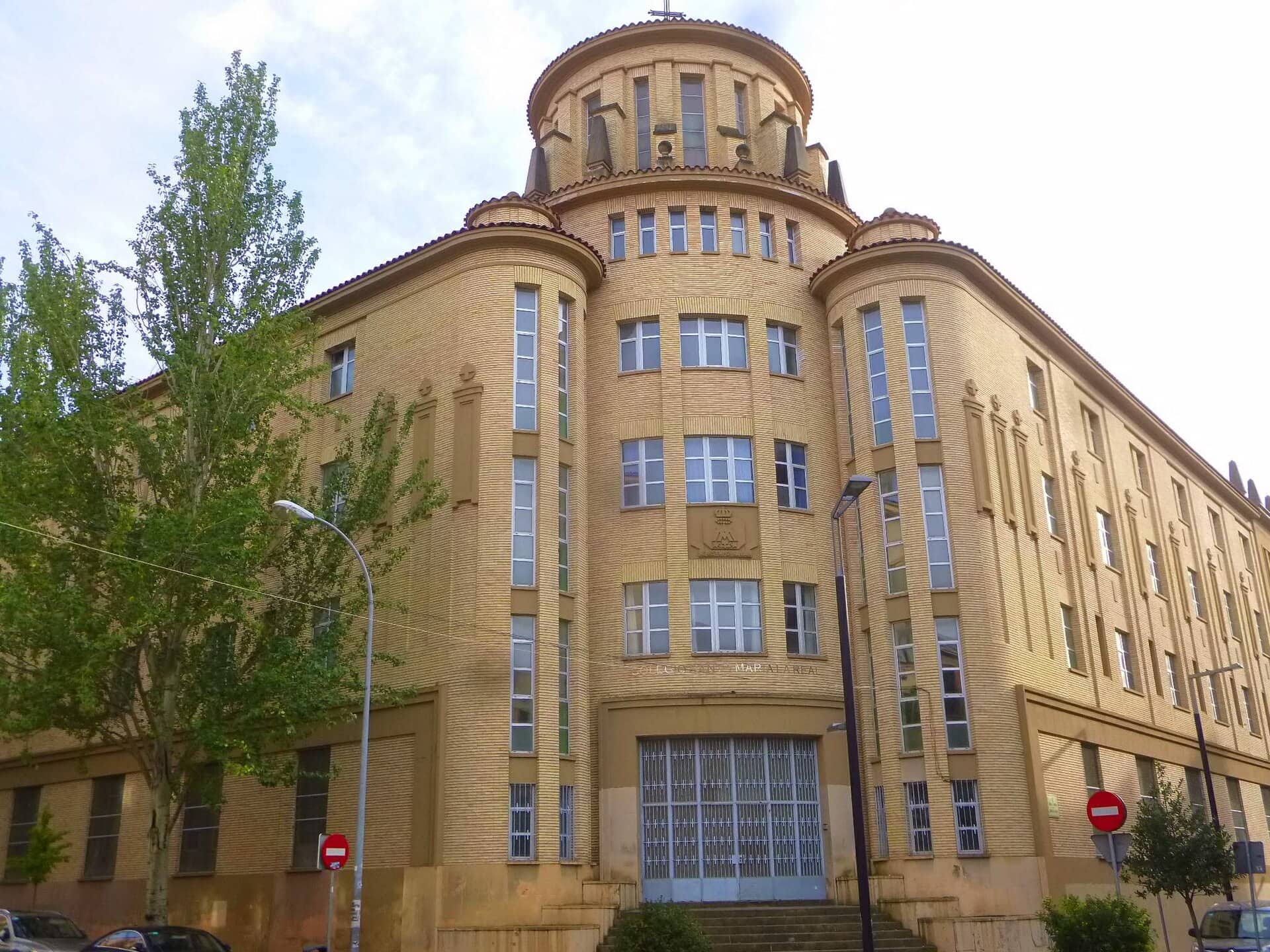
When you first approach the cathedral’s main façade, you might be surprised by its stern neoclassical appearance. Don’t be fooled, though — inside lies an absolute Gothic gem dating from the fourteenth and fifteenth centuries. The monumental naves and stunning stained-glass windows create a mesmerising play of light and shadow that forces you to slow down and quietly admire the work of medieval craftsmen.
The greatest treasure of the entire complex is the fantastically preserved Gothic cloister. It ranks among the finest in all of Europe, featuring delicately carved stone arches that look more like stone lace. In the nave, King Charles III of Navarre and his wife rest in a magnificent alabaster mausoleum.
Your ticket also includes access to the acclaimed Occidens exhibition. Using modern technology and holograms, it takes you through the history of Western civilisation from Navarra’s perspective. It’s a surprisingly contemporary and engaging experience set right within the cathedral’s ancient spaces.
5. In the Footsteps of Ernest Hemingway
American writer Ernest Hemingway first visited Pamplona in 1923 and immediately fell under the spell of the San Fermín festival. He poured his experiences into the famous novel The Sun Also Rises, introducing this previously unknown Spanish city to the world. The locals deeply appreciate his influence and have named a street after him and erected a monument in his honour outside the bullring.
During his many visits, Hemingway grew fond of several establishments that still trade on his legacy today. Alongside the already mentioned Hotel La Perla and Café Iruña, he was a regular at Bar Txoko right on Plaza del Castillo. You can create your own literary walking tour, tracing all the places where this Nobel Prize winner sipped wine and sought inspiration.
Although he stayed away from the city for a while after the Civil War, his spirit remains very much alive here. In many bars you’ll still find old black-and-white photographs of the smiling writer with locals, proof that Hemingway wasn’t just a famous guest — he felt truly at home.
6. The Citadel and Pamplona’s Green Lungs
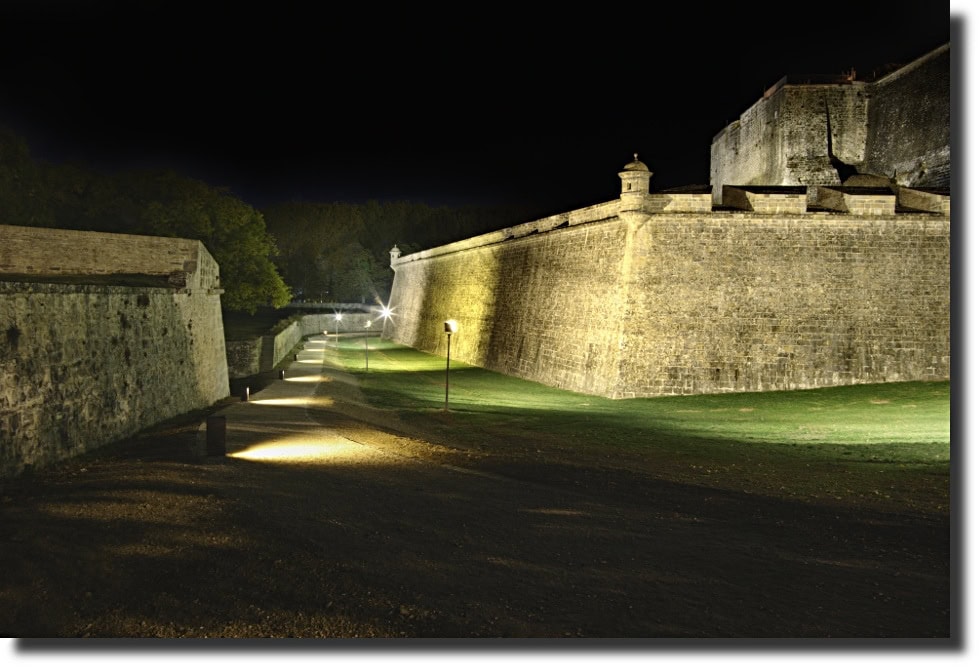
Pamplona boasts an extraordinary amount of greenery, and the enormous star-shaped Citadel from the sixteenth century is its most striking landmark. Originally built under the reign of Philip II to defend against the French, it now serves as a vast and beautifully maintained public park called Vuelta del Castillo. Only the massive walls and moats hint at its former military purpose.
The entire complex is perfect for an afternoon picnic, a jog, or simply lounging on the grass. Inside the old military buildings and armouries, you’ll now find modern exhibition halls and art galleries, most of which offer free admission. Contemporary sculptures by various artists dot the green lawns, creating a lovely contrast with the ancient stonework.
💡 Local tip: Head to the Citadel just before sunset. The stone walls glow an incredibly rich orange and locals flock here for their evening dog walks — it’s a gorgeous time to visit.
7. The City Walls and Portal de Francia
The historic centre is encircled by a five-kilometre ring of walls, making Pamplona one of the best-fortified cities in northern Spain. The most impressive entrance is the Portal de Francia gate, which still retains its original drawbridge and chain mechanism. This is the traditional entry point for pilgrims arriving from France.
A beautiful panoramic walking route called the Paseo de Ronda runs along the ramparts. From the elevated bastions you’ll enjoy breathtaking views of the River Arga and the green hills beyond. Along the way you’ll pass old watchtowers and information panels detailing how the city defended itself against invaders over the centuries.
At the end of this walk, don’t miss the Baluarte del Redín viewpoint. It’s one of the most photogenic spots in all of Pamplona, where old stone houses perch picturesquely right on the edge of the mighty fortifications. In summer, an outdoor bar — a chiringuito — often sets up here, where you can enjoy a cold drink with a view.

8. Pintxos Culture on Calle Estafeta and Calle San Nicolás
Gastronomy in northern Spain revolves around bite-sized snacks called pintxos. They differ from traditional tapas in that they’re typically skewered on a piece of bread with a toothpick and presented as tiny works of art. The two main streets for the ultimate culinary experience are Calle Estafeta and Calle San Nicolás.
While locals swear by cured meats and the regional sausage chistorra, the selection of vegetarian pintxos is absolutely fantastic. I’d highly recommend trying the classic tortilla de patatas, which here tends to be beautifully soft in the middle, or fried pimientos de Padrón peppers sprinkled with coarse salt. The creamy croquetas filled with wild mushrooms are superb too, as are slices of the excellent Idiazabal sheep’s cheese.
The golden rule is that you never stay in one bar all evening. Locals practise what’s called txikiteo — you have one pintxo and a small glass of wine or beer in one place, then immediately move on to the next. Bars tend to be packed to the rafters, so don’t be shy about elbowing your way to the counter and ordering with confidence.
9. The Camino de Santiago in Pamplona
Pamplona is the first major city on the so-called French Way (Camino Francés), by far the most popular branch of the Camino de Santiago. Many pilgrims begin their journey in the French town of Saint-Jean-Pied-de-Port, and it’s here in Pamplona that they enjoy their first well-earned rest day after crossing the gruelling Pyrenees. As a result, the city is full of shops selling trekking gear and pharmacies stocked with blister plasters.
The statistics speak for themselves about the route’s popularity. In 2025, over 530,000 registered pilgrims arrived in Santiago, and roughly a third of them passed through Pamplona. On the streets you’ll regularly spot people with backpacks and walking sticks following the ubiquitous yellow arrows and bronze scallop shells set into the pavement.
The essential item on the Camino is the pilgrim passport called a credencial, in which pilgrims collect stamps. Even if you’re not walking the pilgrimage yourself, you can pop into one of the local hostels (albergues) or visit the pilgrim centre by the Puente de la Magdalena bridge, where you’ll soak up the unique atmosphere of solidarity and shared determination.
10. The Town Hall and Its Baroque Façade
The town hall building (Ayuntamiento) stands on the spot that in medieval times formed the boundary between three feuding city quarters. It was built here precisely to symbolically unite the divided Pamplona into one whole. Its façade facing Plaza Consistorial is a masterful example of late Baroque with neoclassical touches.
The frontage is adorned with beautiful statues representing virtues, Hercules, and the goddess Fame blowing her trumpet. The balconies feature exquisite ironwork, and it’s from the central one that the rocket is fired each year to launch the San Fermín festival. The square in front is almost always buzzing with life — you’ll often come across street musicians or clusters of tourists.
💡 Local tip: If you head here early in the morning, you’ll avoid the tourist crowds and get the best photographs of the building bathed in morning light. The square is fairly small, so without people it feels far more intimate and photogenic.
11. The Romantic Taconera Park
Taconera is hands down the oldest, most beautiful, and most romantic park in all of Pamplona. It was established in 1830 in a classic French style, so expect meticulously trimmed hedges, symmetrical flower beds, and shady tree-lined avenues. It’s the perfect refuge on hot summer days when you need to escape the scorching stone of the old town.
The park’s most unusual feature is a small zoo set right inside the castle moat. From the walls above you can watch deer, ducks, swans, and freely roaming peacocks that aren’t the least bit afraid of visitors. Children absolutely love this stop, and for adults it’s a delightful surprise on a stroll.
Don’t miss the lovely Mariblanca statue and the cosy Café Vienés, which does an excellent hot chocolate. It’s a little piece of Central European elegance nestled right in the middle of Spanish greenery.
12. Museum of Navarra
If you want to understand the complex and rich history of this border region, the Museum of Navarra is an absolute must. It’s housed in a beautifully restored sixteenth-century former hospital near the River Arga. The collections take you chronologically from prehistoric times right through to twentieth-century modern art.
The museum’s crowning glory is a set of fantastically preserved Roman mosaics unearthed in surrounding villages. You’ll also find stunning Romanesque column capitals from the destroyed old cathedral and Islamic ivory caskets that testify to the cross-pollination of cultures. The pinnacle of the art collection is a magnificent portrait of the Marquis of San Adrián, painted by none other than Francisco Goya.
Admission is completely free on Saturday afternoons and Sunday mornings, making it a brilliant tip for budget travellers. The building also has a lovely courtyard, and the upper floors offer a nice view over the northern part of the city.
13. Church of San Saturnino
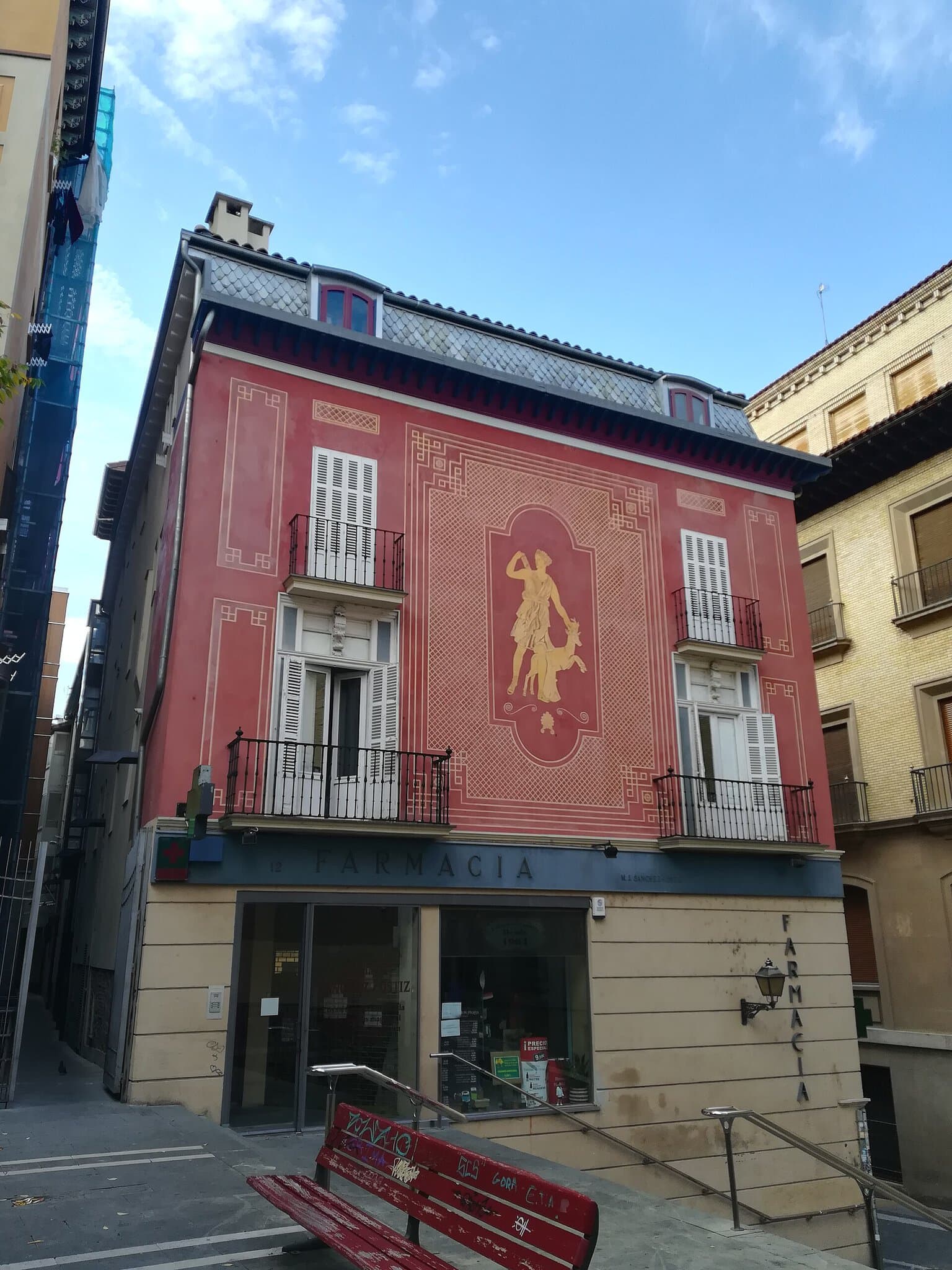
The Church of San Saturnino, also known as San Cernin, looks at first glance more like a hulking military fortress than a place of worship. Its tall brick towers and thick walls date from the thirteenth century, a time when the city was plagued by frequent neighbourhood disputes and churches had to double as defensive strongholds. One of the towers still carries a clock that marks time for the entire quarter.
An interesting fact: Saint Saturninus is actually the true patron saint of the city, not the more famous Saint Fermín, as many people mistakenly believe. According to legend, Saint Saturninus baptised over forty thousand people in Pamplona, including Fermín himself. The baptism supposedly took place at a well near the church, now marked by a small commemorative plaque on Calle Mayor.
Inside the church you’ll be surprised by the magnificent ribbed vaults and the Baroque chapel of the Virgin Mary. The contrast between the austere exterior and the richly decorated interior is truly striking. Occasional evening organ concerts are held here, and the outstanding acoustics make for an unforgettable experience.
14. Day Trips: Wineries and Natural Parks
It would be a real shame to limit the Navarra region to its capital alone. If you have a car or don’t mind using local buses, venture out to explore the incredibly diverse landscapes nearby. Just beyond the city, sprawling vineyards produce excellent Navarran wines, with the local speciality being fresh, fruity rosé (rosado).
For nature lovers, I’d recommend the stunning Foz de Lumbier gorge, carved out by the River Irati. An easy trail follows an old railway line, flanked by towering limestone cliffs above which dozens of enormous griffon vultures circle. It’s a visual spectacle that rivals some of the world’s most famous canyons.
History buffs, meanwhile, simply can’t miss the fairy-tale castle in the town of Olite, which looks like it jumped straight out of a Disney film. Its turrets, battlements, and secret passages make it one of the most impressive Gothic palaces in all of Spain, and it’s less than an hour’s drive south of Pamplona.
Map of points of interest for your phone
Where to Go Next from Pamplona
Pamplona has a wonderfully strategic location for exploring both northern and central Spain. If you’ve been charmed by Basque culture and fancy some ocean, head north to the coastal gem of San Sebastián, famous for its La Concha beach and quite possibly the best pintxos on the planet. Nearby lies the modern city of Bilbao with its iconic Guggenheim Museum.
For lovers of wild nature and mountains, the obvious choice is heading west to the breathtaking Picos de Europa national park. Along the way you could stop in the inland city of León or explore the northern coast with the historic city of Santander. If you’d like to follow the pilgrim trail all the way to the finish, trains and buses will easily get you to Santiago de Compostela in Galicia.
If you’d rather chase sunshine and big-city buzz, high-speed trains will whisk you south to the capital Madrid or east to vibrant Barcelona. History fans should consider a stop on the way to Madrid at Segovia with its colossal Roman aqueduct, or the picturesque Toledo.
Frequently Asked Questions
How long does a tour of Pamplona take?
For the historic centre itself, the parks and the main sights, two days will be more than enough. The city is fairly compact and you can walk everywhere. If you also want to take trips to the surrounding nature parks or wineries in Navarre, set aside at least three to four days.
Is it safe to take part in the running of the bulls?
Quite honestly, it’s definitely not safe. Every year there are dozens of injuries, and not just from the bulls themselves but above all from falls and being trampled in the crowd of panicked runners. A much safer option is to rent a spot on one of the balconies above Estafeta street, from where you get a great view without the risk.
What should I wear to the San Fermín festival?
The traditional outfit consists of plain white trousers, a white shirt and a striking red scarf (pañuelo) tied around the neck, often complemented by a red sash too. You can buy this set in Pamplona on literally every corner for a few euros, so there’s no need to bring it from home. Just bear in mind that the white won’t stay clean for long after a few hours in the crowd and being doused in wine.
Is Pamplona an expensive destination?
During the San Fermín festival in July, accommodation prices are utterly astronomical and food in restaurants tends to be pricier too. For the rest of the year, though, it’s a completely average Spanish city where you can eat and sleep more cheaply than in nearby San Sebastián or in Barcelona. On top of that, there’s an inexpensive infrastructure here for backpackers thanks to the Camino de Santiago.
Can I visit Pamplona in winter too?
Yes, but you have to bear in mind that Navarre lies inland and close to the mountains, so winters here tend to be fairly cold, rainy, and temperatures can drop to around freezing. The city is very calm and quiet during this period, which you’ll appreciate if you’re looking to escape the tourist crowds and want to spend your time in museums and cosy cafés.
What’s the best way to get to Pamplona?
The city has a small airport with domestic flights, but the most common choice is to travel by train or bus. Reliable, fast RENFE trains run here from both Madrid and Barcelona. There are also excellent bus connections with nearby Bilbao and San Sebastián, from where the journey takes about an hour and a half.
Is the city suitable for vegetarians?
Although the region is famous for its cured meats, vegetarians definitely won’t go hungry here. In the pintxos bars you can easily find options with grilled vegetables, cheeses, mushrooms, or a delicious Spanish potato omelette. Many of the modern restaurants in the centre now routinely offer full vegetarian and vegan menus.
Tips and Tricks for Your Vacation
Don’t Overpay for Flights
Search for flights on Kayak. It’s our favorite search engine because it scans the websites of all airlines and always finds the cheapest connection.
Book Your Accommodation Smartly
The best experiences we’ve had when looking for accommodation (from Alaska to Morocco) are with Booking.com, where hotels, apartments, and entire houses are usually the cheapest and most widely available.
 🚗 Car rental on the roadVerified rental cars in northern Spain
Search with the DiscoverCars comparison engine — it compares prices from dozens of local and international rental companies, and most bookings come with free cancellation.
Compare car prices in northern Spain →Don’t Forget Travel Insurance
Good travel insurance will protect you against illness, accidents, theft, or flight cancellations. We’ve had a few hospital visits abroad, so we know how important it is to have proper insurance arranged.
Where we insure ourselves: SafetyWing (simple monthly subscription) and TrueTraveller (for extra-long trips).
Find the Best Experiences
Get Your Guide is a huge online marketplace where you can book guided walks, trips, skip-the-line tickets, tours, and much more. We always find some extra fun there!