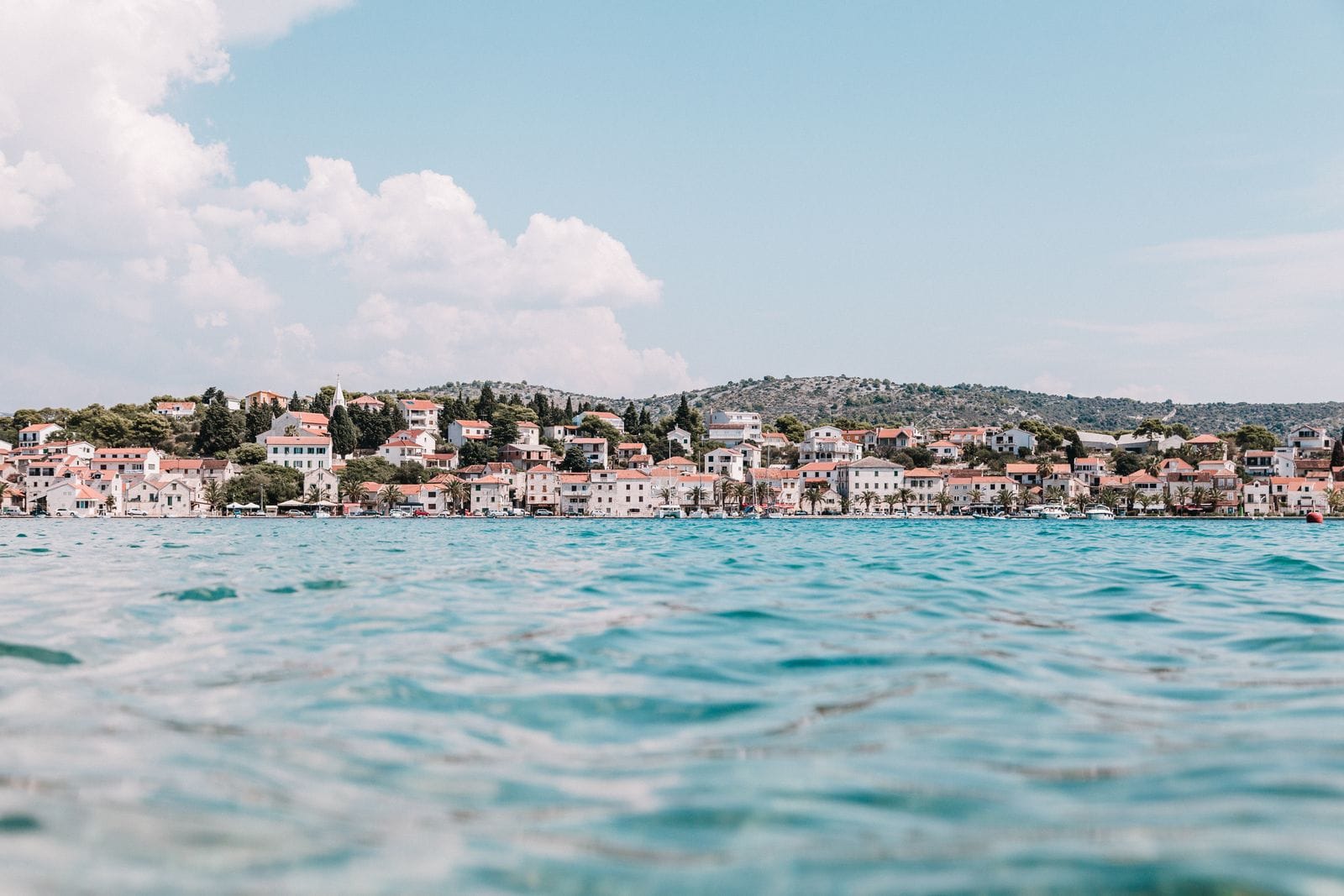
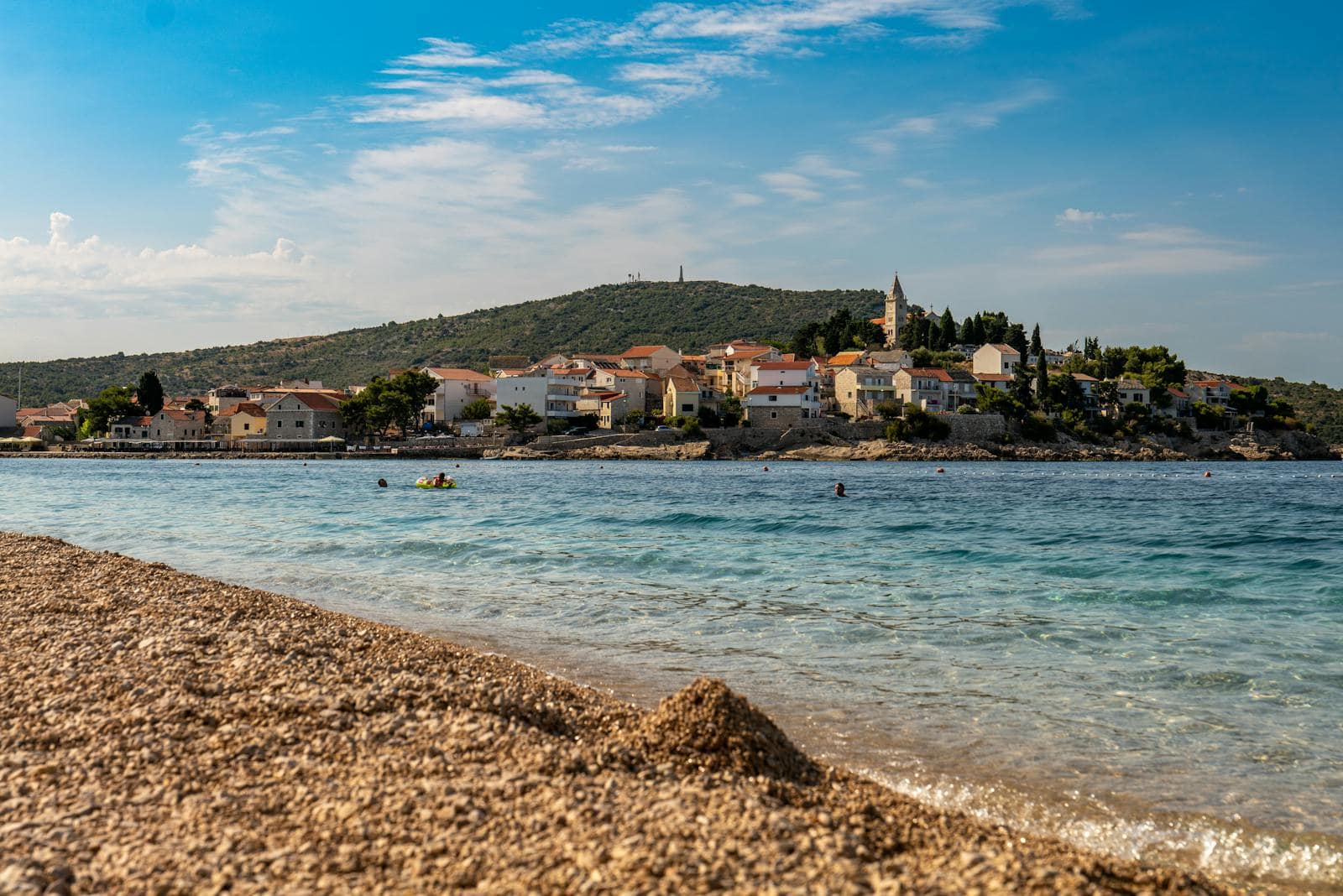
TL;DRThe best months for the sea in Croatia in 2026 are August and September — August brings the annual peak of 25 to 26°C, while September holds at 23 to 24°C with milder air and fewer crowds. Swimming’s comfortable from June to September, when the water tops 20°C, but in May it’s only around 18°C, better suited to Plitvice Lakes or Krk. Southern Dalmatia (Split, Dubrovnik) stays warmer year-round than northern Istria and Kvarner, and the sea there cools more slowly. The sunniest spot is the island of Hvar, with up to 2760 hours of sunshine a year, while the wettest month down south is November, with up to 145mm of rain in Dubrovnik.
Planning a trip to the Adriatic this year and wondering which month will be the best for your journey? For many of us Croatia feels almost like a second home, but the Croatia weather is definitely not the same everywhere or all year round. While in southern Dalmatia you can still sunbathe well into October, the mountainous inland areas may already surprise you with the first frosts. Whether you’re longing for a warm sea above twenty-five degrees, or you’re after ideal conditions for strolling through historic towns without a drop of sweat on your brow, getting the timing right is absolutely key to success. I’ve put together a detailed guide to the Croatia weather for 2026, where we’ll take a close look at both air and sea temperatures month by month. You’ll discover when to avoid the crowds, which winds might complicate your ferry crossing, and which month is that famous golden middle ground for a perfect and cheaper holiday.
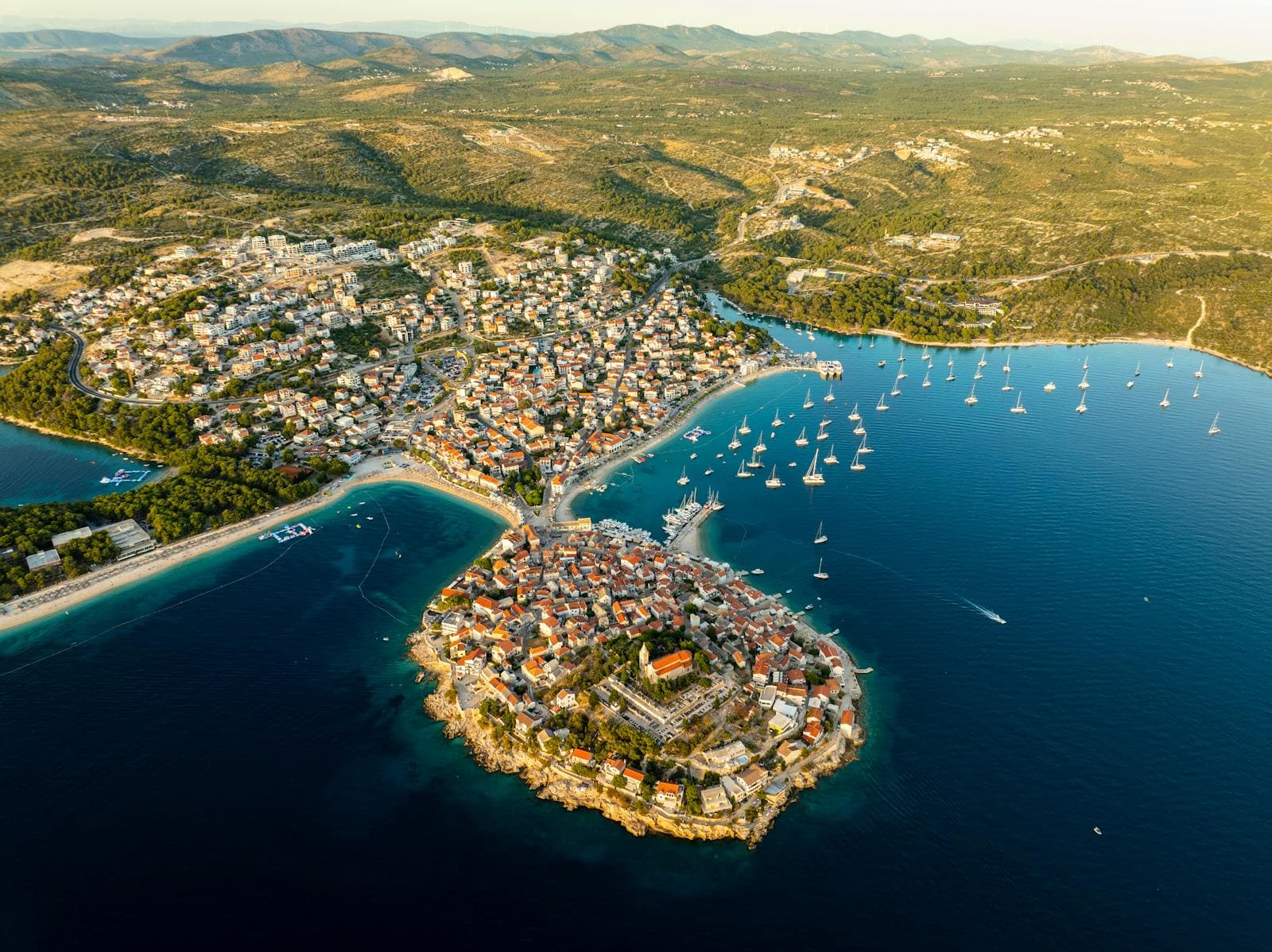
Photo: Vladimir Srajber / Pexels
TL;DR
The sea is warmest in August: Water temperatures along the whole coast climb to 25 to 26 °C, which is ideal for families with children and warmth-lovers.
September is the best compromise: You still get a lovely warm sea around 23 to 24 °C, far fewer tourists and much friendlier accommodation prices.
The south is warmer than the north: If you want to extend your summer, head to southern Dalmatia (Dubrovnik), where you can swim later than in northern Istria.
May is for hardy swimmers only: The sea is only around 18 °C, but it’s an absolutely fantastic time to visit national parks and historic sights.
Hvar offers the most sunshine: This island boasts more than 2,700 hours of sunshine a year, making it one of the sunniest spots in Europe.
Watch out for autumn rain in the south: In November, Dubrovnik gets the most rainfall of the entire year, so it’s not the ideal time for coastal walks.
The bora wind can bring transport to a halt: Especially in winter and spring, this cold, powerful wind can cancel ferries to the islands.
If you want to get the absolute most out of your Croatian holiday, you need to understand how the local climate actually works. It’s not just about checking the average temperature on an app — you need to know the specifics of each region and the tricky nature of the local winds. Let’s take a look at nine absolutely essential facts that will help you plan your trip exactly the way you want and avoid any nasty surprises.
Photo: Julian Brzakala / Pexels
1. Climate Differences Between North, South and Inland
Croatia definitely doesn’t have one single, universal weather pattern — it splits into two completely different climate zones. While the coast enjoys a classic Mediterranean climate with hot, dry summers and mild winters, the inland region just behind the majestic Velebit mountain range has a continental climate. There the winters are very cold, snowy, and the year-round temperature swings are far more dramatic.
Even along the coast itself, you’ll notice huge differences depending on whether you head to northern Istria or all the way south to Dalmatia. Istria and Kvarner are a touch milder, which you’ll appreciate in the sweltering summer, but the sea here cools much faster in autumn and drops to a mere ten degrees in winter. That means a noticeably shorter swimming season around Pula or Rovinj.
Central and southern Dalmatia around Split and Dubrovnik, on the other hand, is the warmest part of the whole country. Summer temperatures here regularly reach thirty-one degrees, and the sea keeps its wonderfully pleasant warmth well into October. In southern Dalmatia you’ll be able to swim considerably longer and with far greater certainty of clear skies.
💡 Tip: If you’re planning your holiday for late September or early October, definitely head as far south into Dalmatia as possible, where you have the best chance of sunshine and a warm sea.
Photo: Peter Fazekas / Pexels
2. Winds That Can Cross Your Plans
Coastal winds are an absolute phenomenon in Croatia, and locals literally run their daily lives by them. The most respected is the infamous bora (bura in Croatian), a very cold, dry, gusty wind blowing from the northeast over the mountain massifs towards the sea. It’s strongest in winter and spring, when its gusts can occasionally exceed a barely believable 200 kilometres per hour. It whips up sharp waves and regularly cancels ferries run by the state company Jadrolinija as well as the smaller fast catamarans.
Another notable wind is the jugo, or sirocco, which comes from the south straight off the African continent. It brings enormous heat, high humidity, often heavy rain and sometimes even fine Saharan dust. The jugo raises long, rolling swells and can blow for several days on end. According to old local legends, it apparently brings bad moods, fatigue and headaches to the residents.
In summer you’ll thankfully most often encounter the pleasant wind known as the maestral, which blows from the west to northwest. It’s a typical thermal wind that starts up in the late morning and reaches a strength of two to five on the Beaufort scale. In the afternoon it beautifully cools hot summer days and dies down again towards evening, creating absolutely ideal conditions for yachting and sailing.
Photo: Gutjahr Aleksandr / Pexels
3. When You Can Realistically Swim and the Sea Temperature
Many travellers mistakenly assume that the warmest air automatically means the warmest sea, but water has huge thermal inertia. That’s why the sea in August is noticeably warmer than in July, reaching its absolute annual peak of around 25 to 25.5 °C. In the south, in enclosed shallow coves, the water at the end of summer can even hit a glorious twenty-six degrees.
Along the whole coast, the water temperature climbs over the magic twenty-degree mark from mid-June, and the Adriatic holds onto this pleasant warmth all the way through to late October. For families with small children or more sensitive types, though, the comfort threshold is usually around twenty-two degrees. That reliably narrows the true, carefree swimming season down to the months from June to September.
Paradoxically, the Adriatic is coldest in February and March, when the water in the north drops to a mere ten or eleven degrees and in the south hovers around thirteen. In May the surface slowly starts to wake up under the spring sun. But with an average temperature of around eighteen degrees, it’s really only fun for the hardiest of swimmers.
💡 Tip: If you’re chasing the warmest water in all of Croatia, head in August to the shallow, sheltered coves in the south of the islands, where the sea temperature can locally climb to an incredible 26 °C.
Photo: Vladimir Srajber / Pexels
4. Shoulder Season in May and June
The spring months in Croatia are a time of nature’s beautiful awakening and absolute calm before the main summer storm. May offers wonderful daytime temperatures between 22 and 24 °C, creating absolutely fantastic conditions for hiking, cycling and exploring historic centres. The narrow streets of the old towns are still half-empty, and you can wander around the sights for hours without swimming in your own sweat. The sea is only eighteen degrees, but the sun already packs a real punch and you can sunbathe beautifully on empty beaches.
June already brings full-blown summer weather with more than ten hours of sun a day and an absolute minimum of rainfall. Air temperatures on the coast rise to a summery 27 to 28 °C, and the sea gradually warms to a comfortable twenty-two degrees. So from mid-June you can reliably and very pleasantly swim throughout the country.
The biggest advantage of this shoulder season is the modest crowds and considerably friendlier prices for accommodation and restaurant service. You get a completely authentic experience, you can sit down at the famous spots without a prior reservation, and the staff will have far more time for you. The vegetables at the markets are fresh and the whole country feels beautifully well-rested.
This spring time is ideal for visiting the famous national parks of Plitvice Lakes or Krka. In spring, the majestic waterfalls here are full of crystal-clear meltwater from the mountains and the surrounding scenery glows in every shade of fresh green. In the summer months, these natural gems often turn into dried-up trickles surrounded by an impenetrable throng of people, but May and June show them off in full glory.
Photo: Ramon Karolan / Pexels
5. Peak Season in July and August
July and August are the months when the Croatian coast is literally bursting at the seams and the sun beats down with the greatest possible intensity. The air stays steadily between 29 and 31 °C, while inland the summer temperatures can commonly reach an extreme thirty-three degrees and more. The sea in July is a lovely twenty-five degrees, and in August it reaches its annual peak, creating absolutely perfect conditions for spending all day in the water.
During this period there’s an absolute minimum of rainfall, the sky is almost constantly azure blue and the days are very long. In Dubrovnik, for example, July sees on average just around thirty millimetres of rain. Occasionally a quick, very intense summer storm may appear, but it tends to pleasantly clear the air. The cooling maestral wind helps disperse the afternoon heat on the beaches, making even these tropical temperatures quite bearable.
The price for perfect beach weather, though, is the maximum crowds, full car parks and the very highest prices of the whole year. For visiting historic sights and long town explorations, these holiday months are genuinely very demanding. That’s why I recommend heading out into the city streets either very early in the morning at sunrise, or late in the evening when the heat lets up a little.
💡 Tip: If you want to go on the popular boat trips, snorkelling excursions or try evening wine tastings in summer, you have to plan well ahead. The best activities tend to sell out, so it’s better to secure your tickets and tours in advance through trusted platforms like GetYourGuide. That way you’ll avoid disappointment on the spot and long queues at the ticket office.
Photo: Gutjahr Aleksandr / Pexels
6. Late Season in September and October
September is considered the absolute holy grail of Croatian holidays among seasoned travellers, and once you try it, you won’t want to go at any other time. It offers the best possible compromise between beautiful weather and total tranquillity. Air temperatures in September drop to a very pleasant 24 to 26 °C, but the sea, after the hot summer, is still fantastically warm at a wonderful 23 °C. In the mornings the water is often even warmer than the air.
In September the beaches slowly empty out, children go back to school, and you can enjoy swimming and sightseeing in complete peace. In October things start to slowly shift. While the first half of the month very often still offers a lovely, warm Indian summer, in the second half you simply have to prepare for more frequent cloud and shorter days.
October still has around twenty degrees in both the air and water, but the risk of heavy rain showers rises significantly, especially in southern Dalmatia. While in summer it barely rains at all in the south, the autumn months here are among the wettest in the whole country. In Dubrovnik, October can see up to 130 millimetres of rainfall, so a light rain jacket is a must.
This autumn time is absolutely perfect for lovers of quality wine and local gastronomy. The whole country is in the midst of a lively grape harvest, the gradual olive harvest begins, and the atmosphere in the local family taverns is wonderful. You can savour a great pizza topped with fresh truffles or excellent homemade pasta in complete peace, without a tired waiter breathing down your neck for the next waiting reservation.
Photo: Vladimir Srajber / Pexels
7. Winter and Off-Season Months
From November to April, coastal Croatia falls into a deep winter slumber, which has its own distinctive, very melancholy charm — but it’s definitely not the time for summer fun. Sea temperatures fall to 11 to 17 °C, so you can forget about swimming with absolute certainty. Most hotels, restaurants and small shops on the islands and in the smaller resorts are completely closed throughout winter, and the streets are deserted.
The weather on the coast in winter tends to be relatively mild, but very often surprisingly rainy and extremely windy. In Dubrovnik, for example, November sees roughly 145 millimetres of rainfall, making it the wettest month of the year. On top of that, the icy bora can push the felt temperature well below zero even on days when the bright sun is shining. A warm, waterproof jacket is an absolute necessity in this period.
Boat services and ferries switch to a very limited winter schedule and are extremely prone to cancellation due to bad weather and big waves. If you decide to head out to the islands in winter, you need a very flexible itinerary and to accept that you might not get back to the mainland for a few days.
Winter, on the other hand, is an absolutely wonderful time for visiting the big historic towns without a single tourist. Walking the deserted medieval walls of Dubrovnik or the quiet Diocletian’s Palace in Split is a magical, lifelong memory. You can also head inland to the famous, beautifully decorated Christmas markets in Zagreb, or warm up in one of the many excellent thermal spas near the capital.
Photo: Gutjahr Aleksandr / Pexels
8. When to Go Depending on Your Goal
Choosing the right month should depend entirely on what exactly you want to do on holiday and what your priorities are. For classic beach lounging and daily swimming, the months from June to September are the obvious choice. The absolute optimum for families with small children who need the water like their morning coffee is the warm month of August.
If your main goal is exploring beautiful historic towns and wandering through national parks, plan your trip for May, June or the turn of September and October. In these months the weather is wonderfully bearable and you’ll safely avoid the hellish summer heat that turns walking across the sun-baked stone in town centres into real torture.
For lovers of active holidays, such as keen cyclists or hikers and trekkers, very similar rules apply. The ideal window for physical exertion is the months of April to June, followed by September and October. On the hills you won’t be scorched by the aggressive sun, and nature offers its most beautiful and freshest colours.
And if you’re looking for a smart way to save significantly and get the cheapest possible holiday, keep an eye out for dates in May and October. Outside the main holiday months, prices for lovely accommodation often fall to half of the summer rates. That way you can afford considerably more luxury, an apartment right by the beach or a better view for a mere fraction of the cost.
Photo: Carel Voorhorst / Pexels
9. Where to Find the Best Sunshine and Avoid the Rain
If you want to be almost one hundred percent sure your dream holiday won’t be rained out, you should know that rainfall in Croatia is spread very unevenly. Summer along the whole coast brings an absolute minimum of rain, the days are long and full of sun. In Dubrovnik, for example, July sees on average just thirty millimetres of rain, which is an absolute minimum.
Autumn and winter, by contrast, are considerably wilder and, paradoxically, the wettest month on the whole southern coast is November. So if you’re going to explore the towns outside the main season, a light waterproof jacket and a decent little umbrella definitely shouldn’t be missing from your suitcase.
The absolute king of sunny weather and blue skies is the famous island of Hvar. This gorgeous piece of land boasts an incredible 2,718 to 2,760 hours of sunshine a year and offers around three hundred sunny days annually. That makes it not only the sunniest island in all of Croatia, but one of the very sunniest places in all of Europe.
💡 Tip: If you’re heading to the coast any time from June to September, don’t forget to pack a good pair of water shoes. Most Croatian beaches are made of fine pebbles or sharp rocks where walking barefoot hurts. What’s more, the crystal-clear waters here are full of sea urchins, which can very quickly and painfully ruin an entire holiday for a bare foot.
Photo: Vladimir Srajber / Pexels
Practical Summary and Approximate Prices
To make your planning for 2026 as easy as possible, I’ve put together a clear table of average temperatures. Remember that the northern coast (Istria and Kvarner) is always a little cooler than the southern coast (the Dalmatia region), which shows mainly in the sea temperature during the fringe months of the season.
Month
Air North (°C)
Air South (°C)
Sea North (°C)
Sea South (°C)
What to expect
:—
:—
:—
:—
:—
:—
January
9.8
12.6
12.5
14.0
Winter, windy, frequent bora. Only good for crowd-free towns.
February
10.7
13.0
11.0
14.0
Shortest, very cold days. The sea is at its annual low.
March
13.9
15.2
11.5
14.0
Spring slowly wakes up, great for cycling and treks.
April
17.8
18.2
14.0
15.0
Pleasantly warm in the sun, but the sea is still icy.
May
22.3
22.8
18.0
18.0
Lovely and warm for trips, swimming only for the hardy.
June
26.8
26.9
22.5
22.0
Shoulder season. Summer begins, the sea is fine, few people.
July
29.5
29.7
25.0
24.5
Peak season. Hot, minimal rain, packed beaches.
August
29.4
30.1
25.5
25.0
Warmest sea. Maximum crowds, highest resort prices.
September
24.3
26.2
23.0
23.5
Ideal compromise. Water is warm, air bearable.
October
19.4
21.9
20.0
20.5
End of season. The south turns rainy, but it’s fine in the sun.
November
14.8
17.5
16.5
17.5
Wettest month in the south. Everything closes and goes quiet.
December
11.1
13.8
14.5
15.5
Christmas markets in the towns, cold wind on the coast.
Note: The values represent long-term averages of maximum daily air temperatures and average water temperatures. During extreme summer heatwaves, daytime temperatures can rise well above 33 °C.
💡 Accommodation and experiences tip: We prefer to look for accommodation on Booking.com, which tends to have the best cancellation terms. For tickets, tours and activities, it’s worth comparing and buying through GetYourGuide.
Photo: Vladimir Srajber / Pexels
Where to Go Next
If you’re already clear on when to go, take a look at some more practical articles that will help you put together the perfect itinerary for your Adriatic journey.
Discover the heart of Dalmatia in our guide to Split.
Head to the pearl of the Adriatic with our tips for Dubrovnik.
Photo: Vladimir Srajber / Pexels
Frequently Asked Questions
When is the sea warmest in Croatia anyway?
You’ll find the warmest water always in August, when the sea temperature, thanks to its enormous thermal inertia, reaches an average of 25 to 25.5 °C along the entire coast. In the sheltered shallow bays of southern Dalmatia, the water can even approach an amazing 26 °C by the end of August, which is especially appreciated by families with small children and people who simply don’t like any temperature shocks when entering the water.
Can you swim in the sea already at the beginning of May?
Unfortunately, in May in Croatia only the truly hardcore cold-water swimmers will take a dip. The water temperature during this spring month averages only around 18 °C, which is really quite chilly for casual recreational swimming. However, May is absolutely fantastic for sunbathing on empty beaches and long hikes in national parks, where you definitely won’t be bothered by the oppressive summer heat.
Where should I go to have the best chance of warm weather?
If you’re looking for the longest summer and highest temperatures, head to the very south to Dalmatia. The area around Split and Dubrovnik is noticeably warmer year-round than northern Istria and Kvarner. The sea cools down much more slowly here in autumn, so in southern Dalmatia you can often still enjoy a very comfortable swim in early October, when the north is already getting colder.
Does it rain in Croatia during summer vacation?
During July and August, the Croatian coast receives an absolute minimum of precipitation, so a classic all-day rain is extremely rare here in summer and the days are full of sunshine. However, a short and very intense summer storm may appear, which passes quickly and beautifully clears the air and provides a refreshingly cool break for a moment.
What is the bora wind and how will it affect my vacation?
Bora (bura) is a very cold and fierce northeasterly wind that comes from the inland across mountain massifs. It can blow in gusts at tremendous speeds and ferries and fast catamarans to the islands often stop running because of it. Bora is strongest in the winter months and spring, but it can surprise you locally even in the middle of summer.
Why does everyone say September is the best time to go?
September offers the best balance between great weather and comfort. After August, the sea is still wonderfully warm at around 23 to 24 °C, but the air no longer has that killer thirty degrees and you can actually breathe normally. Add to that the fact that the beaches clear of crowds of families with school-age children and accommodation prices drop noticeably.
What shoes should I pack for the beach?
Whether you’re traveling in any month from May to October, definitely bring water shoes with you. The Croatian coastline consists mostly of pebble and rocky beaches, where walking barefoot isn’t very pleasant, and moreover there are lots of sea urchins beneath the surface that you definitely don’t want to step on, as that can ruin your entire vacation.
Do ferries to the islands run year-round?
Yes, the main transport routes operate year-round, but from November to April, Jadrolinija switches to a very limited winter schedule. Connections don’t run as frequently and moreover are very prone to cancellation due to strong winds during the winter months, so you always need to leave a large time buffer for your return to the mainland to avoid missing your journey home.
Tips and Tricks for Your Vacation
Don’t Overpay for Flights
Search for flights on Kayak. It’s our favorite search engine because it scans the websites of all airlines and always finds the cheapest connection.
Book Your Accommodation Smartly
The best experiences we’ve had when looking for accommodation (from Alaska to Morocco) are with Booking.com, where hotels, apartments, and entire houses are usually the cheapest and most widely available.
Don’t Forget Travel Insurance
Good travel insurance will protect you against illness, accidents, theft, or flight cancellations. We’ve had a few hospital visits abroad, so we know how important it is to have proper insurance arranged.
Where we insure ourselves: SafetyWing (best for everyone) and TrueTraveller (for extra-long trips).
Why don’t we recommend any Czech insurance company? Because they have too many restrictions. They set limits on the number of days abroad, travel insurance via a credit card often requires you to pay medical expenses only with that card, and they frequently limit the number of returns to the Czech Republic.
Find the Best Experiences
Get Your Guide is a huge online marketplace where you can book guided walks, trips, skip-the-line tickets, tours, and much more. We always find some extra fun there!
TL;DRMaafushi is a cheap local island in the Maldives, a great first stop for budget travellers. A shared speedboat from Velana Airport takes about 45 minutes and costs around $30. Three to four days is the sweet spot here, and out of fifteen tips, the highlights are swimming at Bikini Beach, snorkelling with turtles, a trip to the sandbank, or swimming with nurse sharks. Worth a visit too is the floating bar Kaani Princess, given the island’s local alcohol ban. For somewhere to stay, there’s the more upmarket Kaani Grand Seaview from $105, mid-range options like Arena Beach Hotel from $90, or the budget-friendly Palmcasa from $50 a night. February and March are the best months to go, when the weather’s driest — though the island gets busy with tourists and prices climb to their highest.
The Maldives stopped being an unreachable dream reserved for millionaires a long time ago, and a holiday in Maafushi Maldives is living proof of that. This local island opens the gates to a tropical paradise even for those who don’t want to blow an entire month’s salary in a single week.
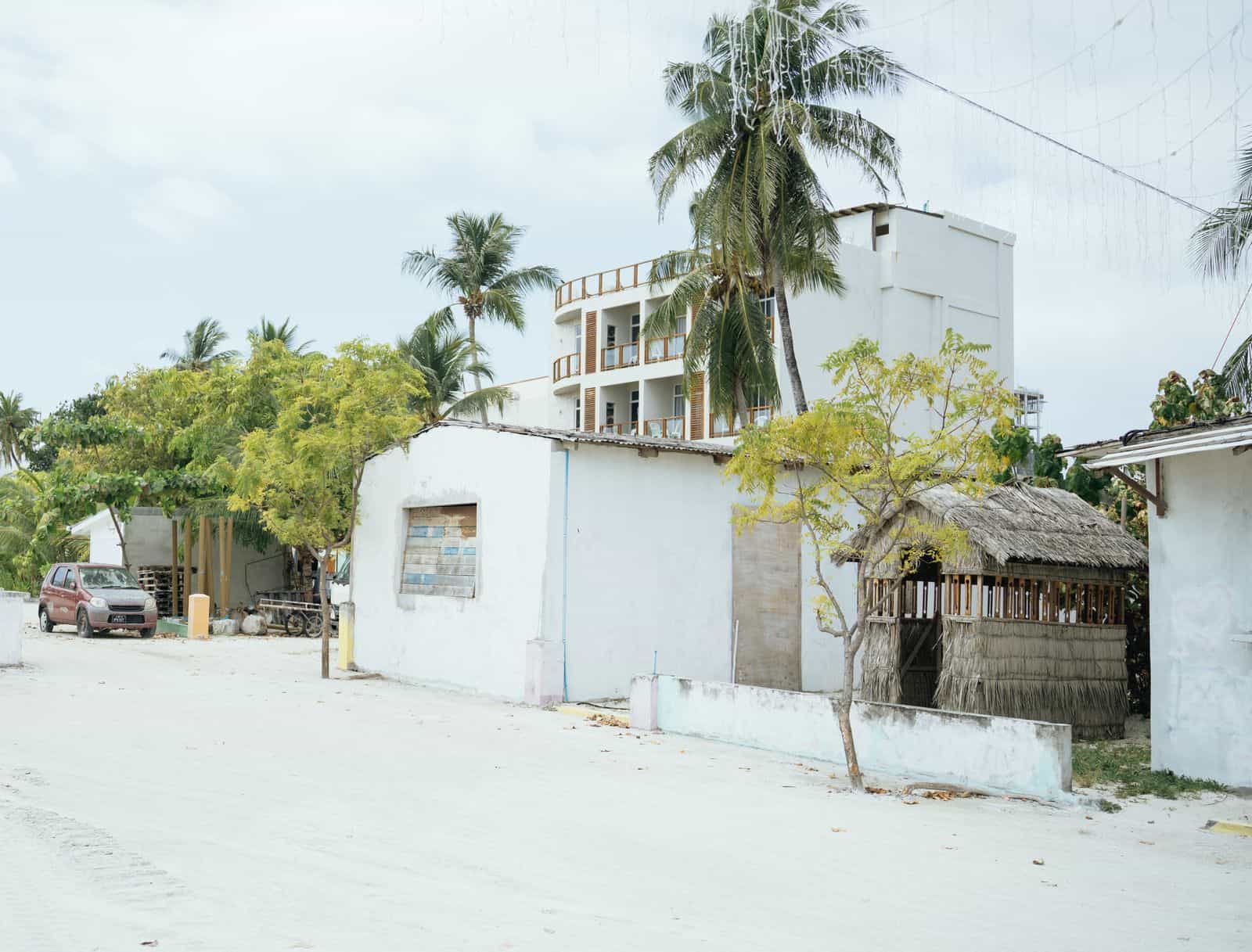
But I have to warn you right off the bat, so you don’t arrive with completely rose-tinted glasses. Maafushi is a fairly busy place full of contrasts, where on one side you’ll find powder-white sand, while on the other you might be surprised by early-morning noise from a construction site or the sight of a smouldering rubbish dump on the eastern shore.
Even so, this place has enormous charm, because it offers the cheapest and easiest start for your first Maldivian trip. You’ll find plenty of great cafés, affordable excursions, and above all the chance to experience the local culture up close, something no glossy luxury resort can ever give you.
Photo: Sarita Mittal / Pexels
TL;DR
Getting there: From the airport in Malé you can reach the island very easily by shared speedboat in roughly 45 minutes, which makes it an ideal first stop.
Bikini Beach: Swimming in a bikini or swimsuit is only allowed on one designated beach, which gets very crowded in high season, so get there early.
Snorkelling: Unfortunately the island has no coral reef accessible from the shore, so all underwater adventures are reached by boat.
Tours: The varied selection of cheap excursions (sharks, mantas, sandbanks) is the main reason travellers from all over the world head here.
Alcohol: Prohibition applies on the island, but you can have a drink at the so-called floating bar, a yacht anchored just off the shore.
Ideal length of stay: Stay for about three to four days and then head off to explore other, quieter local islands or treat yourself to a night in a luxury resort.
The weather in the Maldives is beautifully warm all year round and temperatures stay steadily around 30 degrees, so you’ll be able to use your swimsuit absolutely any time. The deciding factor when planning your trip is the rainy and monsoon season, which affects not only rainfall but also accommodation prices.
The main and driest season runs from December to April, when you can expect azure skies and minimal rain. February and March tend to be the very best months to visit, but bear in mind that the island will be packed with tourists and prices shoot up.
From May to November, on the other hand, the monsoon arrives, bringing occasional tropical showers and more cloud. But these aren’t days-long downpours; usually it rains for an hour and then the sun is back out again. On top of that, hotel prices during this period often drop by as much as forty percent, and thanks to the plankton there are more mantas in the sea.
Photo: Musaddek Sayek / Pexels
Maafushi Maldives Hotels: Where to Stay
💡 Tip for accommodation and experiences: We love searching for places to stay on Booking.com, which tends to have the best cancellation policies. Tickets, tours and activities are then worth comparing and booking through GetYourGuide.
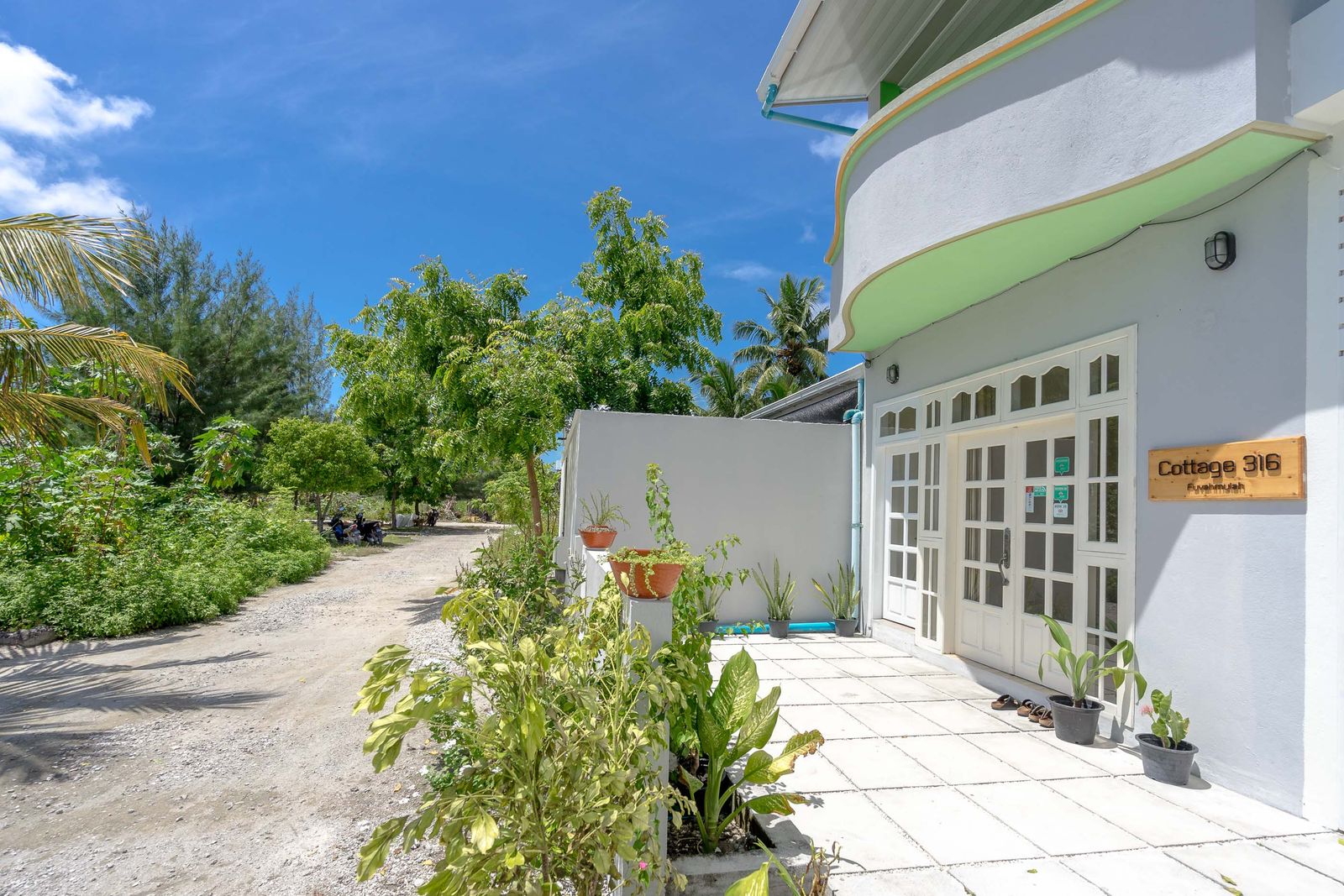
Maafushi offers the largest concentration of accommodation of any local island, so there’s something here for backpackers and more demanding travellers alike. Most guesthouses and hotels are clustered in the northern part of the island near the tourist beach, while the south is quieter and home to the local prison, which as a tourist you’ll never even notice.
When choosing accommodation, always make sure the hotel has good reviews and genuine photos, because it sometimes happens that certain websites show pictures from completely different islands. I’d recommend sorting your booking well in advance through classic Booking.com, where you have certainty and often the option of free cancellation.
Hotel
Segment
From per night
Ideal for
:—
:—
:—
:—
Kaani Grand Seaview
Upper class
€97
Demanding couples and view lovers
Arena Beach Hotel
Mid-range
€83
First-time travellers and breakfast lovers
Kaani Village & Spa
Mid-range
€83
Families with children (has a pool and spa)
Palmcasa
Budget
€46
Couples looking for great value for money
Kaani Beach Hotel
Budget
€30
Divers and active travellers
If you’re after a touch of that imaginary resort luxury on a local island, take a look at Kaani Grand Seaview, which is among the very best on the island. It boasts a gorgeous rooftop pool overlooking the ocean and sits right by Bikini Beach, so the water is just a few steps away.
The golden middle ground and an absolute hit is Arena Beach Hotel, which lies right on the beach and is hugely praised by travellers for its generous breakfast buffet. It’s an absolute classic for anyone visiting the Maldives for the first time who wants the reassurance of quality service and well-organised tours booked straight from reception.
For those of you on a tighter budget, Palmcasa is an absolutely brilliant choice, offering fantastic value for money and holding top ratings. Another very popular cheaper option is Kaani Beach Hotel, which even has its own dive centre, something active sports lovers will especially appreciate, or Stingray Beach Inn for undemanding travellers.
Photo: Musaddek Sayek / Pexels
15 Things to See and Do in Maafushi
This little island offers surprisingly a lot, you just need to know what you’re getting into. I’ll show you how to avoid the crowds, where to save money and which excursions you definitely shouldn’t miss.
Photo: Mr Befour / Pexels
1. Getting to the Island the Smart Way
Your journey begins at Velana International Airport near the capital Malé, from where you basically have two main transport options. The first and most popular is the shared speedboat, which gets you to the island in roughly forty-five minutes and costs around thirty US dollars per person. If you’re flying in from the UK, most travellers connect via the Middle East (Emirates, Qatar Airways or Etihad) from London, so you’ll likely land tired and this quick transfer is very welcome.
The second option is the MTCC public ferry, which costs only about three dollars but takes an hour and a half and doesn’t leave directly from the airport but from the harbour in Malé itself. So you first have to reach it via the airport shuttle boat, which can be a little exhausting after a long flight from Europe.
💡 Tip: If you arrive on a Friday, forget the cheap public ferry altogether, because these boats don’t run at all on the Muslim holy day. Fortunately the shared speedboats operate normally every day, you just want to book them in advance through your accommodation.
Photo: Asad Photo Maldives / Pexels
2. A Day at Maafushi Beach and the Local Dress Code
Since the Maldives is a strictly Muslim country, dress rules apply on the local islands and you can’t just stroll around the village in your swimwear. For tourists, a special Bikini Beach is set aside on the northern tip of the island, where swimming in bikinis and regular swimwear is entirely legal and tolerated.
In high season it fills up very quickly, so if you want a good spot (or at least a chance of grabbing a sunbed for five dollars), head to the water right around eight in the morning.
Outside this designated zone, that is in the village streets, in shops and restaurants, you need to observe a respectful dress code. This means covered shoulders and knees for both men and women, which in practice is easily solved with an ordinary short-sleeved T-shirt and light linen trousers or a longer skirt.
Photo: David Willis / Pexels
3. Half-Day Snorkelling Trip to See Turtles
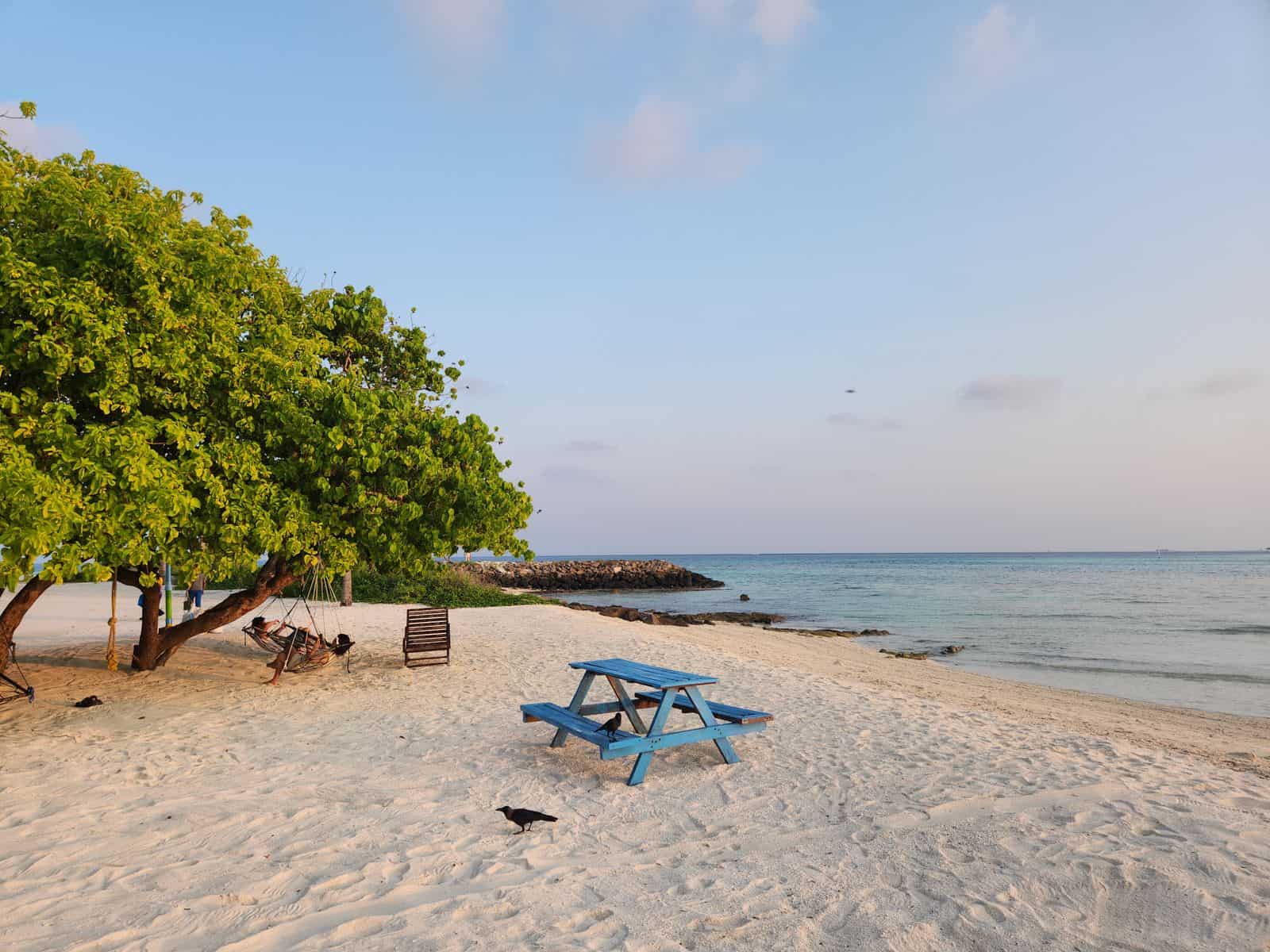
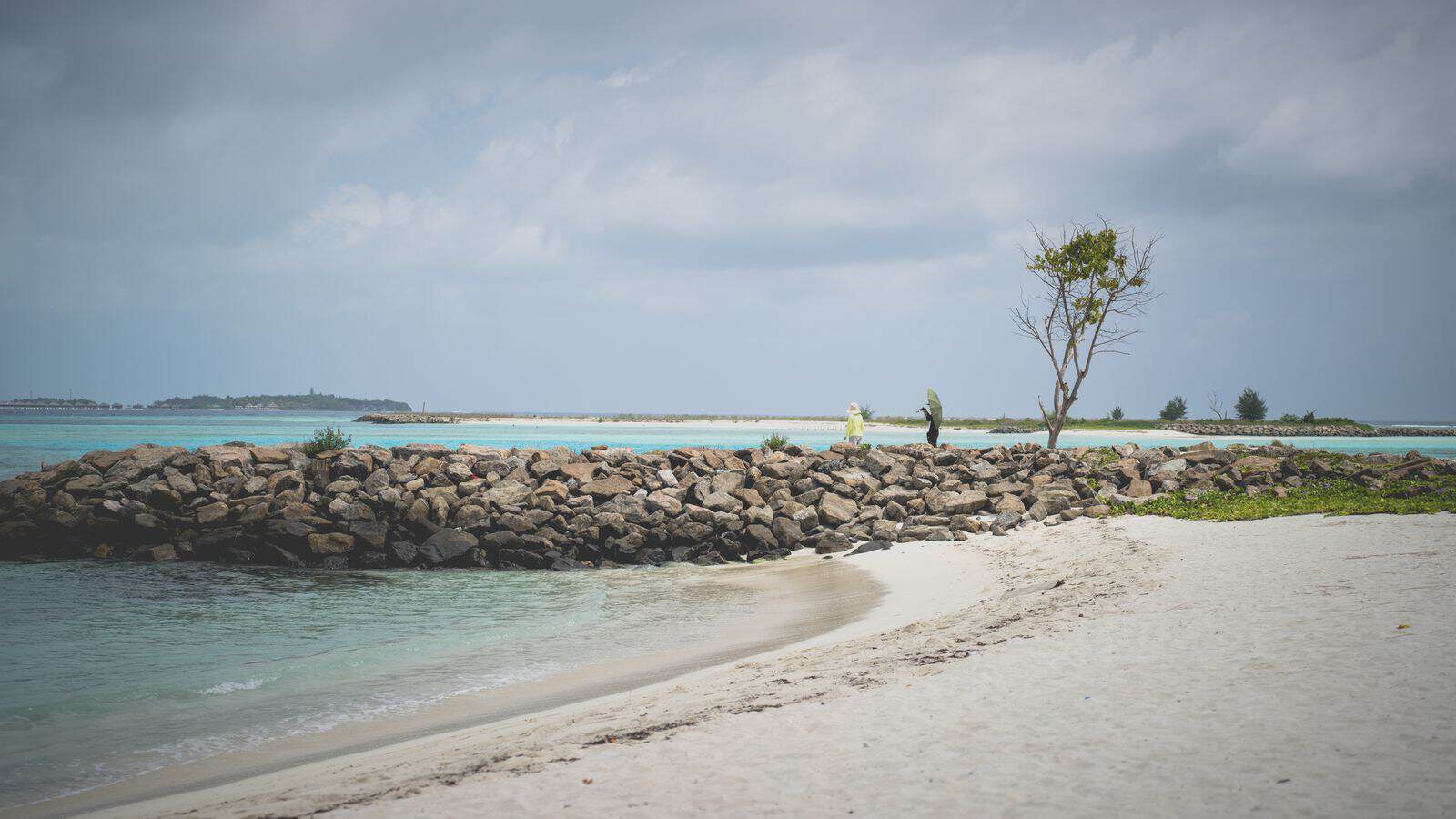
One of the biggest surprises for many travellers is the fact that Maafushi has no quality coral reef directly accessible from the shore. The water by the beach is beautifully clear for swimming, but if you want to see the colourful underwater life, you have to head out on an organised boat trip.
The best introductory experience is the half-day snorkelling trip, which lasts about four to five hours and costs a very reasonable twenty-five to fifty dollars. During this morning they’ll take you to three different spots, where you’ll have a huge chance to swim alongside sea turtles and explore a nearby shipwreck.
You can arrange these trips at almost any hotel or at the small agencies on the main street. I always recommend taking an evening walk around town, comparing prices with several vendors and booking your trip for the next day on the spot, which tends to be significantly cheaper than reserving in advance online.
Photo: Sofiia Asmi / Pexels
4. Romance at a Sandbank Picnic
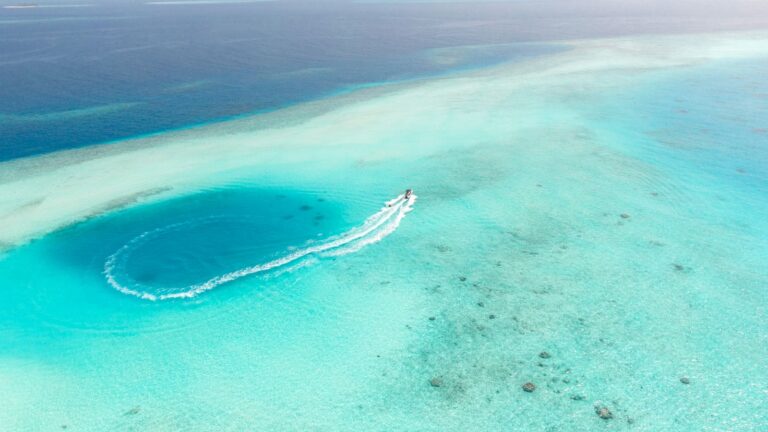
If you’re looking for that absolutely perfect postcard Maldivian experience, you definitely can’t skip the so-called sandbank picnic. It’s a trip to a deserted sandbar that rises just a fraction above the ocean surface, with nothing all around but endless blue.
The boat ride from the island takes just about fifteen minutes and this experience is often part of snorkelling packages, or you can buy it separately for around thirty dollars. The crew will set up a parasol for you on the white sand, prepare some light refreshments, and you’ll have time for swimming and taking photos.
💡 Tip: The sun here is truly relentless and there’s no natural shade whatsoever on the sandbar. Be sure to bring a hat, a rash vest and a good reef-safe sunscreen, so you don’t come home from your romantic trip with sunstroke.
Photo: Elgin Renz Rocili / Pexels
5. Swimming with Whale Sharks (the Honest Reality)
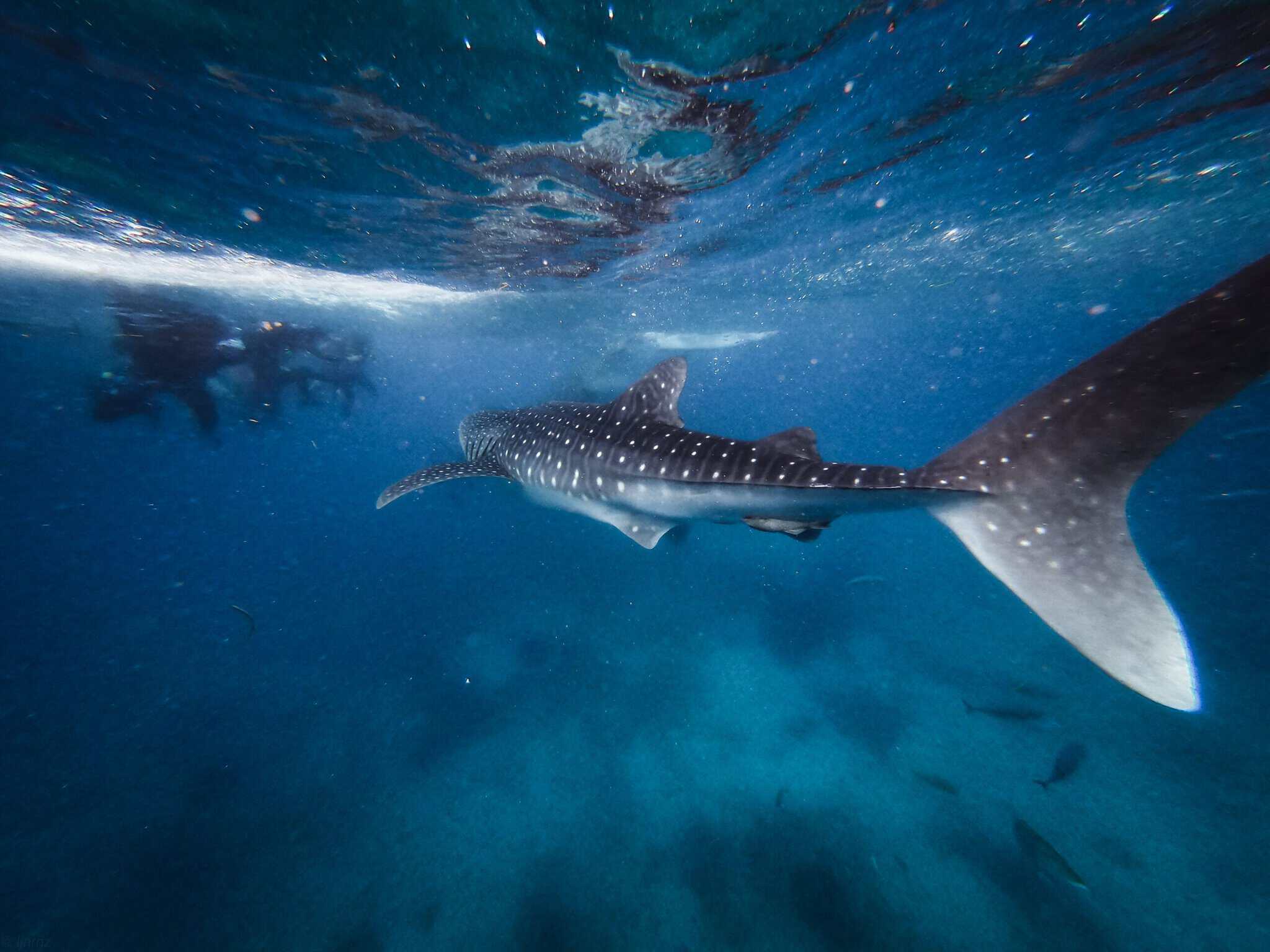
Seeing the largest fish on the planet with your own eyes is a huge dream, but we need to be completely honest about this trip from Maafushi. Whale sharks stay year-round in the protected South Ari Atoll area, where the speedboat journey takes over an hour and a half each way, so you’re in for a demanding full-day trek.
The encounter with the animal itself then unfortunately often resembles a hectic zoo, because more than twenty boats can converge on a single shark and a hundred people jump into the water. It’s sad, but better to know beforehand.
If it’s your lifelong dream, be sure to choose ethical operators with clear rules of conduct and ask about group size. But honestly, for a calmer and more intimate shark encounter it’s far better to stay on the islands of Dhigurah or Maamigili, which lie right in that area, so you avoid the long commute.
Photo: Tom Nagel / Pexels
6. Night Adventure with Stingrays and Nurse Sharks
A far more reliable and often more fun alternative for lovers of large sea creatures is a trip to see the so-called nurse sharks. These peaceful creatures grow up to three metres long, pose no danger to humans, and swimming with them is an utterly fascinating experience.
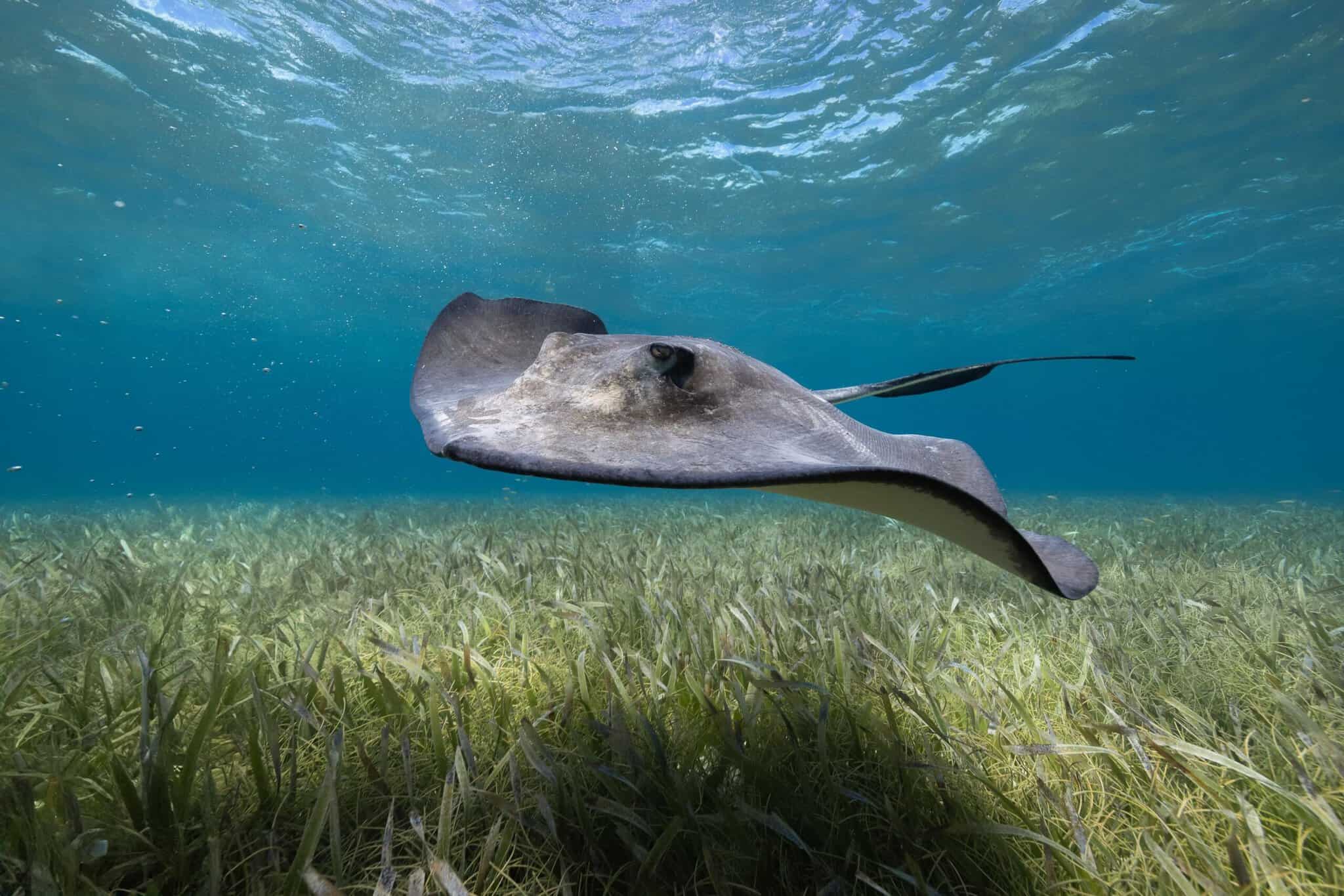
This trip often takes place at dusk or at night and costs around thirty dollars. The operators know exactly where to take the boat, and you’ll find yourself in water full of dozens of these elegant creatures, often joined by enormous stingrays hunting for food in the sand.
Even though these animals are used to the presence of people, remember the basic rule: never touch them and never block their path. Just float calmly on the surface and let them swim up to you on their own, which they usually do without any shyness.
Photo: drB drB / Pexels
7. Relaxed Dolphin Cruise at Sunset
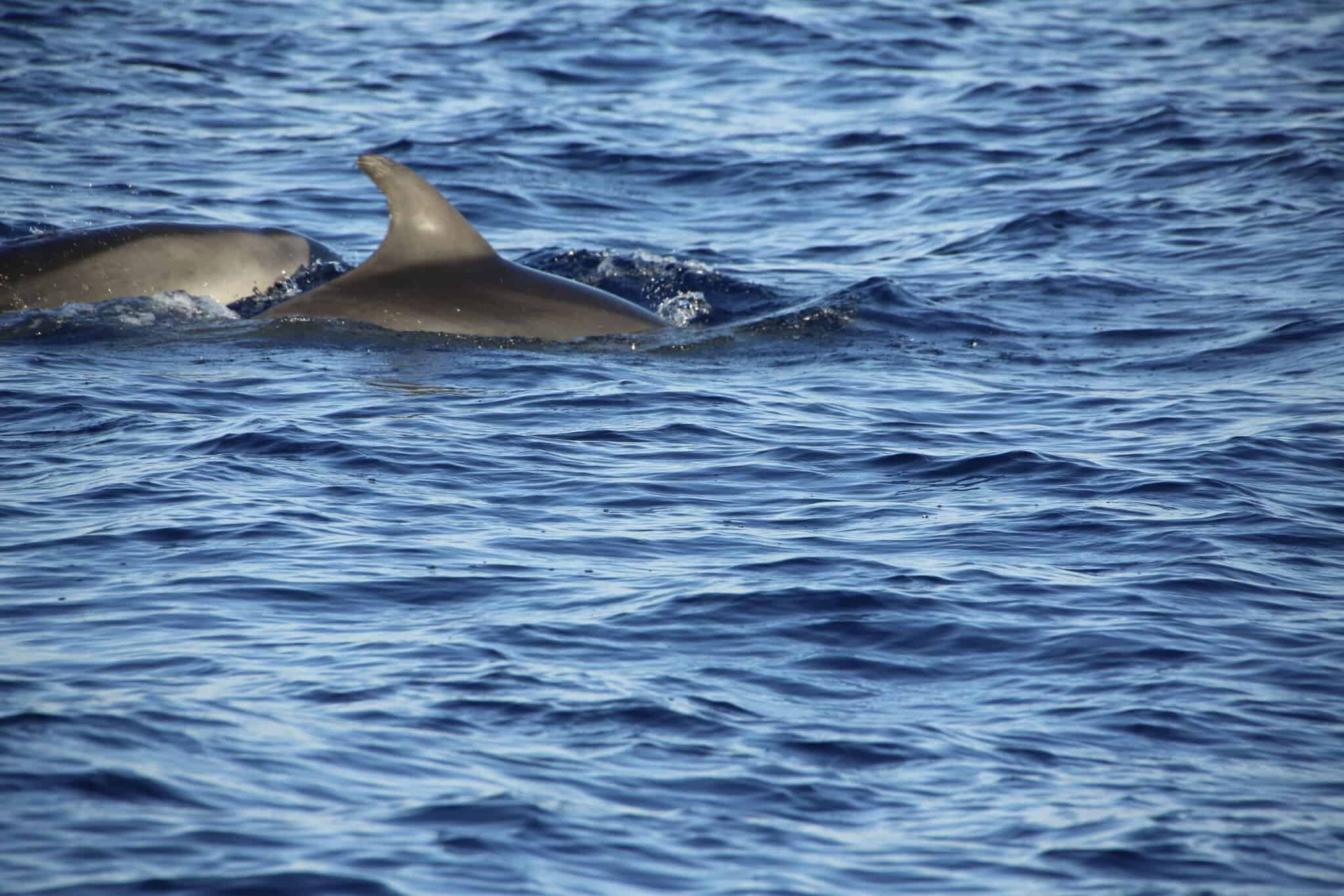
If adrenaline-fuelled dives don’t appeal to you and you’d rather stay on deck, treat yourself to a so-called sunset cruise. During the roughly hour-and-a-half voyage the captain takes you out to open sea, where you’ll have a huge chance to watch whole pods of wild dolphins leaping above the surface.
The experience is heightened by the fact that it takes place exactly when the sun begins to paint the sky in incredible shades of orange and pink. Dolphins love swimming right alongside the boat and often perform incredible acrobatic tricks that will completely win you over.
The trip usually costs around thirty dollars and is a great choice for families with children or as a relaxed activity for your last evening on the island. I’d recommend bringing a light jumper, because once the sun dips below the horizon it can get a bit breezy out on the open sea.
Maafushi is an absolutely ideal place for your first diving steps, because there are several excellently rated certified centres here, such as Maafushi Dive & Water Sports. The instructors are used to nervous beginners and will explain everything calmly and in detail.
You don’t have to do a full course right away, it’s enough to pay for a so-called discover scuba dive for beginners, which costs around seventy-five dollars. You get complete gear, go through a short training session in shallow water, and then head off with your instructor to a safe depth, where you’ll see the marine world from a completely new perspective.
Experienced divers will find plenty to enjoy too, because the surrounding atolls offer dozens of stunning sites full of life, colourful corals and underwater caves. Diving on a local island is also significantly cheaper than at the resorts, where entry into the bubble costs more than an entire flight.
Photo: Qeis Ismail / Pexels
9. Water Sports and a Little Adrenaline
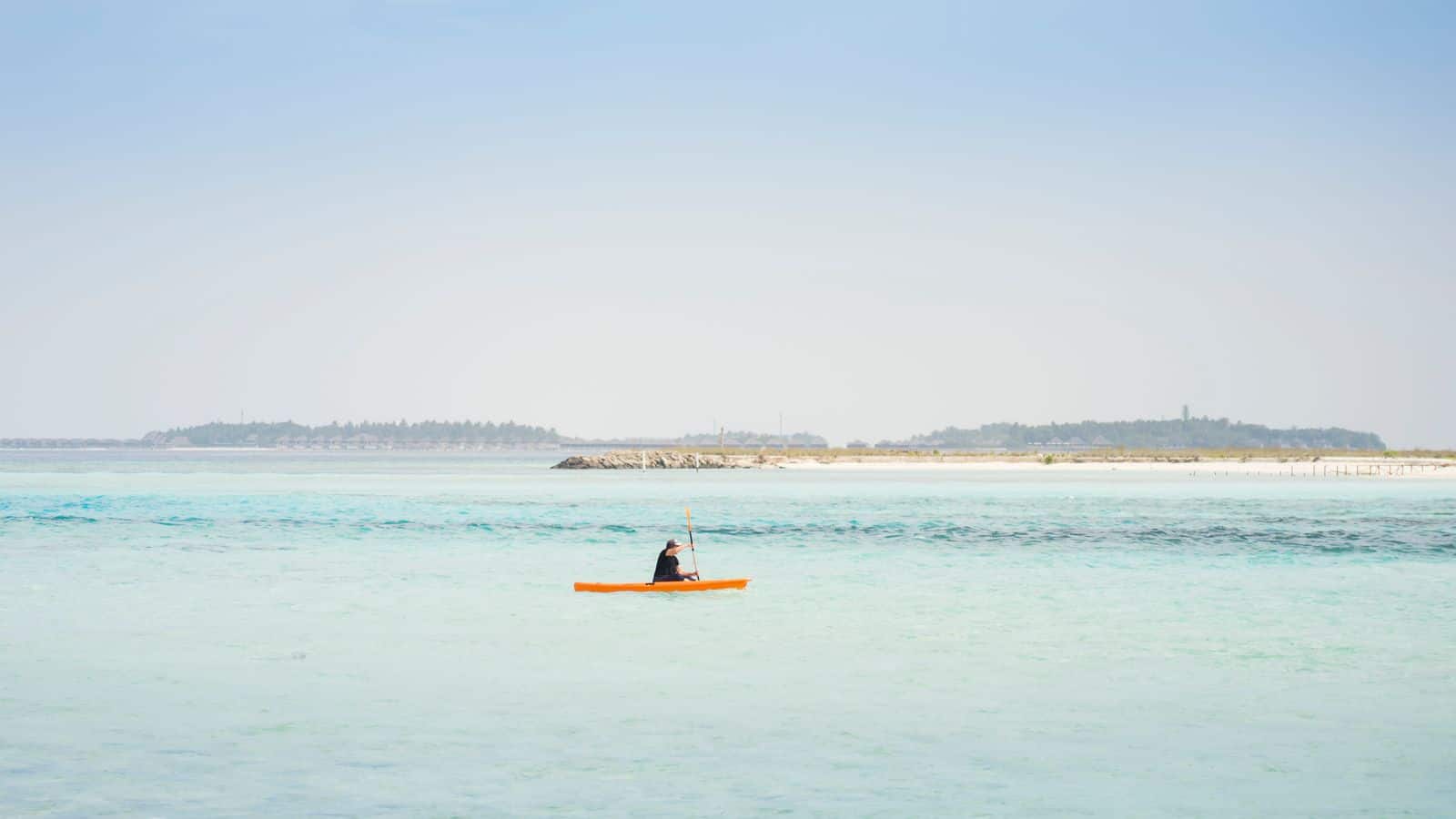
When you get tired of lounging peacefully on a sunbed, you can try a whole range of water fun offered by the centres scattered along the beach. Very popular is renting a paddleboard or kayak, for which you’ll pay around ten dollars an hour, and they let you admire the island nicely from a distance.
For lovers of faster fun they’ve got jet ski rides, banana boat tows or parasailing on offer, where the parachute lifts you high above the surface. The view from up there over the turquoise lagoons and surrounding islets is something that will stick in your memory for a very long time.
You’ll find sporting activities on land too, the locals love playing beach volleyball and often invite tourists to join in. It’s a brilliant way to work up a sweat and connect with the locals, who by the way play really well.
Photo: ripe mango studio / Pexels
10. The Floating Bar, or How to Get Around the Alcohol Ban
As I mentioned, the Maldives is an Islamic republic and the sale and consumption of alcohol are strictly forbidden on inhabited islands. You won’t find it in any restaurant, you can’t buy it in a shop, and you can’t even bring it in your suitcase from home, because they’d confiscate it right at the airport.
But enterprising locals came up with a brilliant loophole and created the so-called floating bars. These are large yachts anchored about a kilometre from the shore, which formally aren’t subject to island rules, so alcohol can be served on them legally. The most famous establishment is the Kaani Princess boat, which stays open until one in the morning.
Getting there is very easy, a small speedboat ferries you over for free from the harbour, the only condition usually being that you buy something on board. But have a well-stocked wallet ready, because an ordinary beer here costs around six dollars and a cocktail can easily set you back ten, so it pays to keep an eye out for deals like happy hour.
Photo: Darrell Fraser / Pexels
11. A Resort Day Pass as a Taste of Luxury
Would you like to experience that genuine postcard luxury, sipping drinks by the pool and strolling along endless beaches, but without paying thousands of dollars a night for it? The solution is the so-called resort day pass, a one-day permit to a nearby luxury island that lets you use their facilities from morning until late afternoon.
These trips usually cost from thirty-five to around one hundred and eighty dollars depending on the resort’s exclusivity and what the package includes. Very popular, for example, is the nearby island of Biyadhoo, which you can reach for just under seventy dollars including lunch, and where you’ll also find a fantastic coral reef.
💡 Tip: Arrange these trips on the spot through your accommodation or local offices, definitely not through big international intermediaries like GetYourGuide, where prices tend to be needlessly inflated by huge commissions. On a local island you can also compare the offers nicely.
Photo: Nadja M / Pexels
12. Where and What to Eat (Not Only) Meat-Free
The food on the island is surprisingly varied and, thanks to the strong Indian and Sri Lankan influence, the local cuisine is absolutely ideal for vegetarians too. For vegetarians it’s almost a fairytale. There’s excellent dhal, vegetable curry, fresh roshi flatbreads and tropical fruit on every corner.
Among the most popular places are Symphony Lagoon, which sits just by the water and offers a lovely atmosphere, or Stingray Cafe, which does fantastic Indian vegetarian and vegan specialities. Prices here are very reasonable, a hearty buffet dinner costs around twelve dollars, and a good cappuccino about three.
Traditional local cuisine otherwise revolves mainly around fish, so the classic island breakfast hit is mas huni, a mix of smoked fish, coconut and onion, or garudhiya, a strong fish broth. These dishes are happily served in almost every guesthouse, where they’ll also gladly prepare a purely meat-free version on request.
13. Money, Cash Machines and Hidden Taxes
When it comes to paying in the Maldives, the US dollar is absolute king, accepted practically everywhere and in many ways more practical than the local rufiyaa. Be sure to bring plenty of dollars in cash, ideally in smaller notes, because breaking a hundred for a coffee can be a problem.
There is a Bank of Maldives cash machine on the island, but it charges a fee of over six dollars per withdrawal and only dispenses the local currency, which you then can’t use anywhere else in the world. You can pay by card in larger hotels and centres, though they often add a surcharge of around three percent, while small cafés only take cash.
Watch out carefully for the price tags, because most listed amounts have hefty taxes and fees automatically added, known as “++”. This is a seventeen percent tourist tax, a ten percent service charge, and on top of that an ecological Green Tax of six dollars per person per night.
14. The IMUGA Electronic Visa and Getting Online
Before you even head to the airport, you have to sort out one essential administrative duty, and that’s completing the electronic IMUGA declaration. This form is completely free, is filled in a maximum of ninety-six hours before both arrival and departure, and make sure you don’t use some fraudulent website that will try to charge you money. As a UK passport holder you then get a visa free of charge on arrival for thirty days.
While in luxury resorts hotel Wi-Fi will do, on a local island you’ll definitely find your own mobile data handy for navigation or translation. The signal here is excellent and local operators offer reliable 4G coverage.
The simplest solution is to get a prepaid eSIM from Dhiraagu or Ooredoo, which you download to your phone while still at home and connect to right away on arrival. Alternatively, a hassle-free option is a travel eSIM from Holafly, which you set up before you fly out. A standard tourist plan with twenty gigabytes of data a month costs you around forty dollars.
15. How to Combine the Island Cleverly
Maafushi is a beautiful place, but let’s be honest, you can walk the island from one end to the other at a slow pace in about twenty minutes. Many travellers agree that after three or four days a case of island fever sets in and you get the feeling you’ve already seen everything and been everywhere.
So the best strategy is to combine the island with other places and not stay here for two whole weeks. You can move on to much quieter, sleepier local islands like Guraidhoo or Gulhi, where you’ll discover a slightly different, more authentic face of the Maldives without the big hotels.
💡 Tip: But remember one important logistical thing, there’s no direct connection between the more distant atolls. If you wanted to go, for example, from Maafushi to the popular island of Thoddoo, you always have to take the boat back to the airport in Malé and continue from there on another connection, which takes quite a bit of time.
Where to Go Next from Maafushi
Photo: Nattu from Male’, Maldives / Wikimedia Commons, CC BY 2.0
The Maldives are magical, but once you start travelling like this it’s hard to stop, so here are a few tips on where to head next time.
If you want to explore other atolls too and are after comprehensive information, read our complete guide to the Maldives, where you’ll find plenty of practical tips.
Tempted by an island that offers not just beaches but also stunning mountains, waterfalls and national parks? Then you might be interested in a holiday in Mauritius.
For those who want to combine cheap travel, wild nature, tea plantations and amazing food, green Sri Lanka is an absolutely ideal choice.
And if you’re looking for African exotica with spiced aromas and fascinating history, be sure to get inspired by our article on what Zanzibar is like.
Frequently Asked Questions
Planning your trip and still have a few practical details buzzing around your head? I’ve put together the most common questions so you can have complete peace of mind before you fly.
How much does a vacation in Maafushi cost?
The budget depends on your requirements, but it can be done very cheaply. A night in a decent guesthouse can be found from fifty dollars per room, food in a local restaurant costs five to twelve dollars, and a full-day trip costs around fifty dollars. A week-long stay without flights can be managed for five hundred to eight hundred dollars per person.
How many days to stay on the island?
“`html
The ideal duration is three to four days, during which you can try out the best excursions, relax on the beach, and soak up the local atmosphere. After that, it’s great to move on to another, quieter island, because Maafushi is really small and you might get bored quickly.
“`
How to get from the airport to the island?
“`html
The best and fastest option is a shared speedboat, which costs around thirty dollars and will get you there in forty-five minutes. They run several times a day and it’s a good idea to book in advance through your accommodation.
“`
Does the ferry go to the island on Friday too?
No, the cheap public ferry operated by MTCC doesn’t run at all on Fridays because it’s a Muslim day of prayer. If you arrive on Friday, your only transport option is a private or shared speedboat.
Can you wear a bikini on the island?
The user wants me to translate Czech text to English in a travel-blog tone while preserving all HTML tags. Let me translate the visible text:
“Ano, ale pouze na jedné jediné vyhrazené pláži zvané Bikini Beach na severu ostrova. Kdekoliv jinde, tedy ve vesnici, v obchodech nebo na jiných částech pobřeží, musíte mít zahalená ramena a kolena.”
Translation:
“Yes, but only at one single designated beach called Bikini Beach in the north of the island. Anywhere else, meaning in the village, in shops or on other parts of the coast, you must have your shoulders and knees covered.”
There are no HTML tags, attributes, or URLs in this text, and no CZK to convert to EUR.
Yes, but only at one single designated beach called Bikini Beach in the north of the island. Anywhere else, meaning in the village, in shops or on other parts of the coast, you must have your shoulders and knees covered.
Can I buy alcohol on the island?
“`html
There’s strict prohibition on the island itself and you can’t buy alcohol anywhere. However, you can take advantage of the free shuttle to the so-called floating bar, which is a yacht anchored at sea just off the coast, where alcohol is legally sold.
“`
When is the best chance to see whale sharks?
“`html
Whale sharks are present in the South Ari Atoll area year-round, but they have the most food (plankton) during the monsoon season from May to November. Meeting them from Maafushi means a full-day trip to the sea and success is never one hundred percent guaranteed.
“`
Does Maafushi have a nice beach and coral reef?
“`html
Bikini Beach is nice, but quite small and tends to get very crowded during the season. Unfortunately, the island doesn’t have its own coral reef accessible from the shore, so for proper snorkeling you always have to pay for a boat trip.
“`
Can you go to the island with kids?
Definitely yes, the island is absolutely safe, the water at the beach is shallow and calm, and you’ll find plenty of family-run guesthouses. Kids will be thrilled with dolphin trips and snorkeling with turtles, just keep in mind the longer boat journey.
Tips and Tricks for Your Vacation
Don’t Overpay for Flights
Search for flights on Kayak. It’s our favorite search engine because it scans the websites of all airlines and always finds the cheapest connection.
Book Your Accommodation Smartly
The best experiences we’ve had when looking for accommodation (from Alaska to Morocco) are with Booking.com, where hotels, apartments, and entire houses are usually the cheapest and most widely available.
Don’t Forget Travel Insurance
Good travel insurance will protect you against illness, accidents, theft, or flight cancellations. We’ve had a few hospital visits abroad, so we know how important it is to have proper insurance arranged.
Where we insure ourselves: SafetyWing (best for everyone) and TrueTraveller (for extra-long trips).
Why don’t we recommend any Czech insurance company? Because they have too many restrictions. They set limits on the number of days abroad, travel insurance via a credit card often requires you to pay medical expenses only with that card, and they frequently limit the number of returns to the Czech Republic.
Find the Best Experiences
Get Your Guide is a huge online marketplace where you can book guided walks, trips, skip-the-line tickets, tours, and much more. We always find some extra fun there!
TL;DRA classic JR Pass usually isn’t worth it for a first trip to Japan – after the autumn 2023 price hike, the seven-day version costs 50,000 JPY (roughly £280), and it only pays off if you’re taking around eight longer bullet train journeys in a week. The Tokyo–Kyoto–Hiroshima–Tokyo route works out at about 44,180 JPY on individual tickets. Regional passes tend to be better value, like the Kansai-Hiroshima Area Pass at 17,000 JPY for five days. For payments, a digital Suica card in Apple Wallet is handy, and it’s worth carrying 10,000 JPY in cash for the countryside and smaller shops. The new JESTA electronic visa won’t launch before fiscal year 2028, so until then a valid passport is all you need. The best months to visit are March, April, October and November.
Japan is an utterly fascinating country that will pull you in with its contrasts, but it can also give an unprepared traveller a real run for their money. If you’re heading to the Land of the Rising Sun for the very first time, chances are your head is spinning with unanswered questions about the complicated transport system, how money works, and the strict local customs. The good news is that thanks to the currently exceptionally favourable exchange rate of the Japanese yen, travelling around the islands is far more affordable than it was in past years. So let’s take a look together at everything essential you need to know before you fly, so you can enjoy your holiday without needless stress and avoid costly beginner mistakes.
Photo: Manishprabhunejapan / Wikimedia Commons, CC BY-SA 4.0
TL;DR
The JR Pass has become drastically more expensive and usually isn’t worth it. A 7-day pass costs a flat 50,000 JPY (roughly £250) in 2026, so for the classic Tokyo–Kyoto round trip it’s cheaper to buy individual tickets.
The JESTA law needn’t worry you just yet. Although the new electronic authorisation gets a lot of buzz, the system won’t launch before fiscal year 2028, and until then you travel visa-free with just your passport.
Digitise your wallet with Apple Wallet. If you have an iPhone, download a virtual Suica card and tap to pay for the metro and small shops without even unlocking the screen.
Large luggage on the train needs a reservation. If your suitcase exceeds 160 cm total across its three sides, you must book a special seat with luggage space on the shinkansen bullet trains in advance (for free), or you risk an unpleasant fine.
Cash is still king in the countryside. Even though things have improved dramatically in cities since the pandemic, always carry at least 10,000 JPY in banknotes when visiting smaller temples or remote villages.
Never leave a tip, anywhere. In Japanese culture, tipping is seen as insulting, and staff would likely chase you down the street to hand the money back.
Download an offline dictionary and maps. English won’t save you outside the main tourist hubs and big stations, so a translator that can photograph text will be your best friend every single day.
Photo: Basile Morin / Wikimedia Commons, CC BY-SA 4.0
Let’s dive into the most important things you should know before your first visit to Japan.
1. JR Pass: How Much It Costs and When It Pays Off
Just a few years ago the Japan Rail Pass was an absolute must for every tourist, but in autumn 2023 the price shot up by nearly 70 percent. Today you’ll pay 50,000 JPY (roughly £250) for the standard 7-day version, 80,000 JPY for the 14-day option, and a three-week pass will set you back 100,000 JPY. If you fancy the more luxurious first-class travel known as the Green Car, budget 70,000 JPY for a week, which is a serious dent in any travel fund.
For most ordinary tourists, this nationwide pass simply isn’t worth it. The break-even point for the 7-day ticket only comes once you take around eight longer bullet-train journeys within a single week. If you’re only planning the popular basic route from Tokyo to Kyoto, then on to Hiroshima and back to Tokyo, individual tickets will cost you around 44,180 JPY, so buying the pass would actually lose you money. On top of that, the pass still doesn’t cover the very fastest Nozomi and Mizuho services without a hefty surcharge.
The JR Pass only makes sense if you’re planning some seriously frantic long-distance dashing about. It can suit travellers who want to squeeze Tokyo, Kyoto, Hiroshima and Kanazawa into a single week and still get back again, but for more relaxed exploration it’s far wiser to pay for each journey separately or use smaller regional alternatives.
💡 Tip: Although another price adjustment from overseas sellers is expected in autumn 2026, the official japanrailpass.net site should hold current prices, so it’s recommended to buy the pass exclusively through it and skip the middlemen.
Photo: 貴彦 佐藤 / Pexels
2. Regional Rail Passes as a Smarter Alternative
Once the national ticket no longer pays off, the so-called regional passes step onto the stage, offered by the individual branches of Japan’s railways. These passes are often a hidden lifesaver for your budget, because they focus only on specific islands or prefectures and their price is disproportionately lower. If, for instance, you’re mainly planning to explore the area around Tokyo and head north in search of snow, the JR East Pass for the Tohoku or Nagano region will be ideal.
The very best-value offer for tourists heading west is currently the Kansai-Hiroshima Area Pass from JR West. It costs an excellent 17,000 JPY, is valid for a full five days, and covers unlimited travel between Kyoto, Osaka, Himeji, Hiroshima, and even the ferry to the sacred island of Miyajima. A single return bullet-train trip from Osaka to Hiroshima alone usually costs more than the pass itself, so this investment pays for itself almost instantly.
Another great option is the Kansai Wide Area Pass, which starts at around 12,000 JPY and is more than enough for thoroughly exploring the wider surroundings of Osaka, Kyoto and Nara. I always recommend keeping Google Maps to hand, simulating your planned journeys in the public transport tab, and simply adding up what ordinary tickets would cost compared to the price of your chosen regional pass.
💡 Tip: Regional passes can usually be picked up directly at major stations, but buying online in advance on the carriers’ official sites often earns you a small discount and saves you time spent queuing.
Photo: Mr.ちゅらさん / Wikimedia Commons, CC BY-SA 4.0
3. Suica and Pasmo IC Cards: Pay by Tapping Your Phone
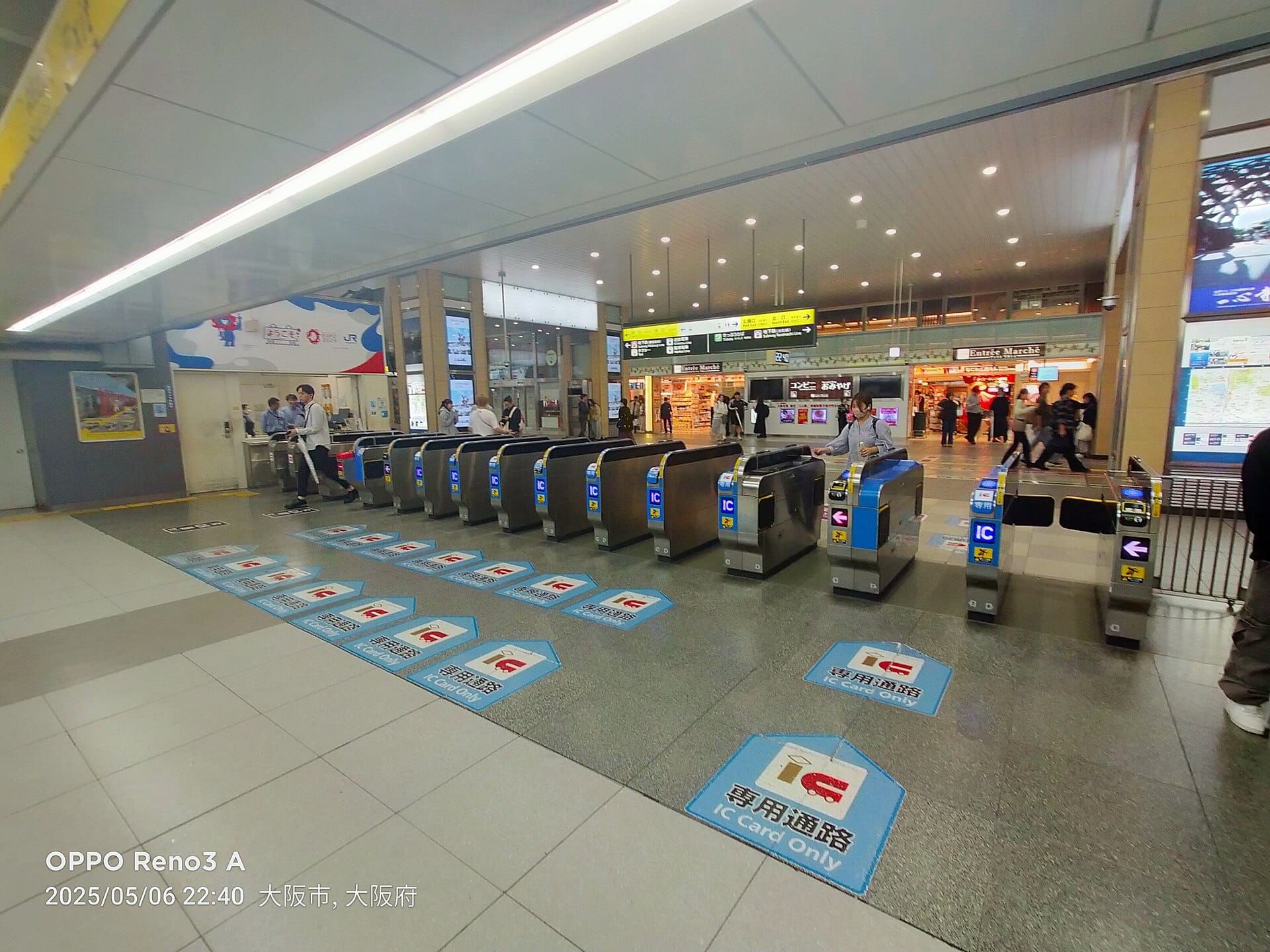
In Japan you’ll come across a system of rechargeable smart cards called IC cards, the best known being Suica, Pasmo and Icoca. These cards were originally created for paying metro and commuter-train fares, but today they work as a universal electronic wallet that lets you pay in supermarkets, vending machines and some restaurants right across the country, no matter which city you bought it in.
The absolute game-changer for 2026 is the ability to add a Suica card directly to Apple Wallet on your iPhone. The whole process takes a few seconds, you top the card up with your UK bank card via Apple Pay, and thanks to Express Mode you then just tap your locked phone at the metro gates. It’s incredibly convenient and neatly solves the shortage of physical smart cards that Japan has been struggling with in recent years due to the global semiconductor shortage.
If you use an Android phone or simply prefer a physical card, you can pick up a special tourist version called the Welcome Suica at the airports. It requires no initial deposit, has a lovely cherry-blossom design, and is valid for exactly 28 days from activation, which is plenty for most holidays. Bear in mind, though, that no IC card can be used to travel on the long-distance shinkansen bullet trains between different regions — they’re strictly for local and commuter transport.
💡 Tip: Try adding the mobile Suica card to your iPhone before you even leave the UK — topping up with European Visa cards can occasionally play up, whereas transactions with Mastercard go through completely smoothly.
Photo: Robert Montgomery / Wikimedia Commons, CC BY 2.0
4. Shinkansen: Seat Reservations and Strict Luggage Rules
A journey on the Japanese bullet train, or shinkansen, is a huge experience, but it comes with its own specific rules. You can reserve seats on most trains completely free of charge, up to a month in advance, through the official smartEX app, on the website, or right at the station using the self-service machines. Although the trains also offer non-reserved cars for those who decide to travel last-minute, during Japanese holidays or peak tourist season booking a specific seat is an absolute must.
The most important change of recent years is the strict rules for travelling with oversized luggage. If your suitcase measures between 160 and 250 centimetres across all three sides combined (height, width, depth), you’re required to reserve a special seat in the last row of the car on the busiest Tokaido, Sanyo and Kyushu lines. This reservation is free, but the spots are limited and vanish quickly. If you board with a large suitcase without this special reservation, the conductor will hit you with an uncompromising 1,000 JPY fine and move your case to another car.
There’s a perfect culture of consideration and quiet on the trains. Making phone calls at your seat is an absolute taboo — for calls you must always step out into the vestibule between cars. Eating, on the other hand, is more than welcome, and buying a traditional train lunchbox called an ekiben, packed with local specialities, is one of the essential rituals of any longer journey, so don’t forget to leave yourself time at the station to pick out the nicest snack.
💡 Tip: While waiting for the shinkansen, look out for the markings on the platform floor that show exactly where your car’s doors will be. People here line up in perfectly orderly queues and nobody jumps the line.
Photo: Syced / Wikimedia Commons, CC0
5. Visas and the Bogeyman Called JESTA
For UK citizens, travelling to Japan is very pleasant from a bureaucratic point of view, because you don’t need any traditional visa. You can spend up to 90 days there under the visa-free tourist scheme, and all you need is a valid passport. The only condition is that your passport be valid for at least the full duration of your planned stay in the country — you don’t need the famous extra six months of validity required in some Asian states.
Lately there’s been a lot of chatter online about the new electronic authorisation system called JESTA, which is meant to work much like the American ESTA. This law was recently passed, but the Japanese government has announced that it plans to launch it in earnest no earlier than fiscal year 2028. That means for trips in both 2026 and 2027 this newcomer needn’t worry you at all, and you’ll fly to Japan the old-fashioned way without filling in online forms.
Before you fly, though, be sure to fill in the online form on the Visit Japan Web portal. It generates QR codes for immigration control and customs declaration, which you then simply show on your phone screen at the airport in Tokyo or Osaka. It significantly speeds up your passage through the airport and spares you the tedious paper cards in the arrivals hall after a long flight.
💡 Tip: Even though JESTA is still a thing of the future, immigration officers at the desk may ask you to prove you have accommodation booked for the first few days and a return flight, so keep these documents printed out or saved offline on your phone.
Photo: Qing Luo / Pexels
6. Money and ATMs: Japan Still Loves Cash
Although we all picture Japan as a country from the future, full of robots, when it comes to money time has stood still and cash is still hugely important. In big cities, modern hotels and chains you can pay by card or phone without any trouble these days, but the moment you head into small family-run restaurants, buy tickets to historic temples, or set off to explore the countryside, you simply can’t manage without those rustling banknotes.
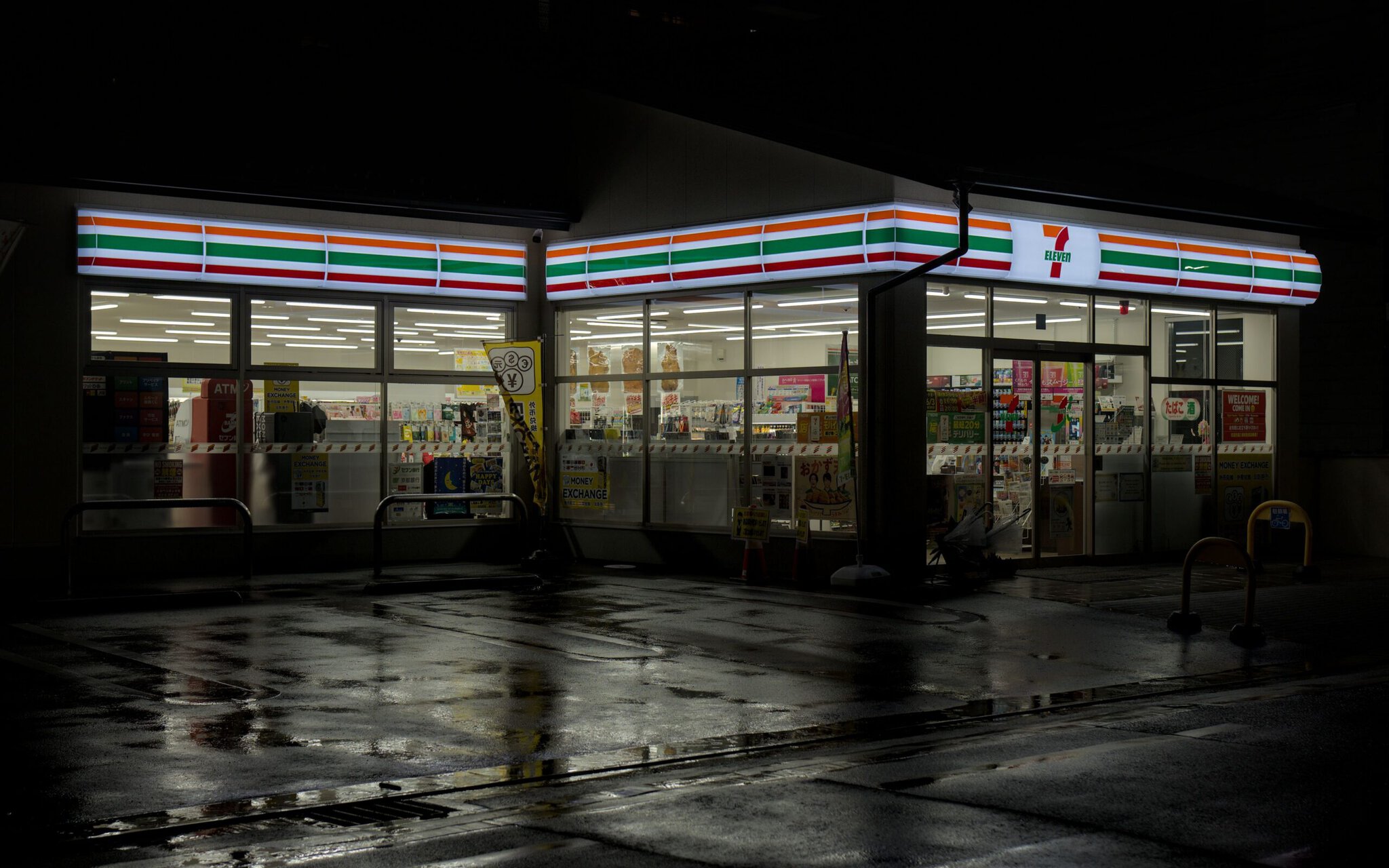
Your best mate for withdrawing money will be the Seven Bank ATMs, which you’ll find in every 7-Eleven convenience store. They’re open 24 hours a day, have an excellent English menu, and happily accept the vast majority of European cards. The limit for a single withdrawal is usually around 100,000 JPY. Another reliable alternative are the ATMs at Japanese post offices (JP Post Bank), where the limit is set at 50,000 JPY per transaction.
The golden rule when withdrawing from an ATM or paying by card at a terminal is to always choose to be charged in the local currency, i.e. in Japanese yen. Never accept the DCC (Dynamic Currency Conversion) service that offers to convert straight into pounds, because that exchange rate is extremely unfavourable and you’d needlessly lose money on fees.
💡 Tip: Try to keep a reserve of around 10,000 JPY in cash on you at all times, just in case — it’ll save you in situations where you suddenly find yourself in a wonderful tucked-away spot that stubbornly refuses cards.
Photo: Vojta Kovařík / Pexels
7. Mobile Internet: eSIM vs. Pocket Wi-Fi
Being in Japan without an internet connection is like trying to navigate a maze blindfolded. Relying on public Wi-Fi networks in cafés or at stations is very frustrating, as they often require a complicated registration in Japanese or are incredibly slow. For individuals or couples, the clear choice in 2026 is getting an electronic SIM card, or eSIM, which you download to your phone while still at home and which activates itself the moment you land.
The advantage of an eSIM from providers like Holafly, Yesim or Ubigi is enormous flexibility. A weekly package with plenty of data can be had from around £3 to £12, and once your trip is over there’s nothing to return anywhere. Before buying, you just need to check that your smartphone supports eSIM technology and that it isn’t locked to a specific carrier, which thankfully is already standard on modern devices.
Renting the traditional Pocket Wi-Fi box, which once ruled the tourist market, only makes sense today for larger groups or families of three or more. The box creates a hotspot for everyone, so the cost is shared, but you have to accept that you must constantly charge it, lug it around in your backpack, and remember to return it at the airport or post it back to the operator at the end of your holiday.
💡 Tip: If you opt for an eSIM, download it to your phone at home over fast Wi-Fi and only activate it on the plane before landing, so you have data ready as soon as you step off for navigating to your hotel.
8. Etiquette, Onsen and Why You Should Never Tip
Japanese society runs on firm rules of consideration, and as tourists you should respect them. The basics come down to taking your shoes off. You’ll be taking off your shoes practically everywhere except modern hotels and shops — when entering temples, in traditional ryokan inns, and often in smaller restaurants too. Watch for the raised step at the entrance called the genkan; that’s a clear signal to remove your footwear. Take particular care with tatami mats, which you must not step on even in slippers, only in clean socks.
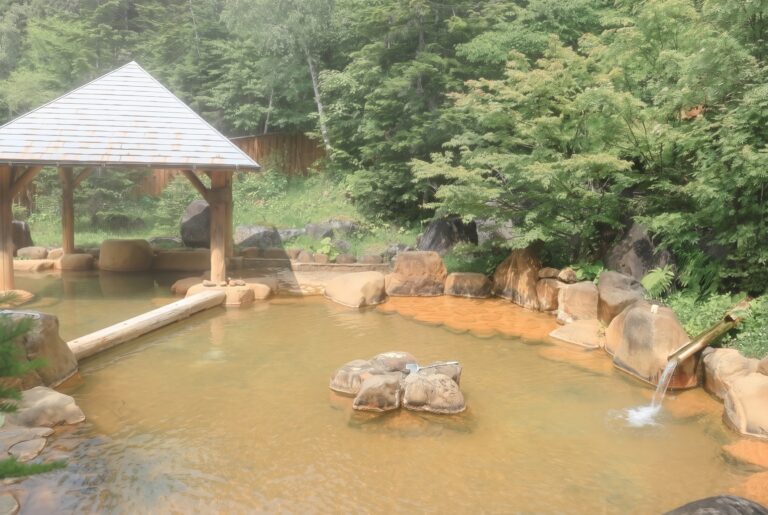
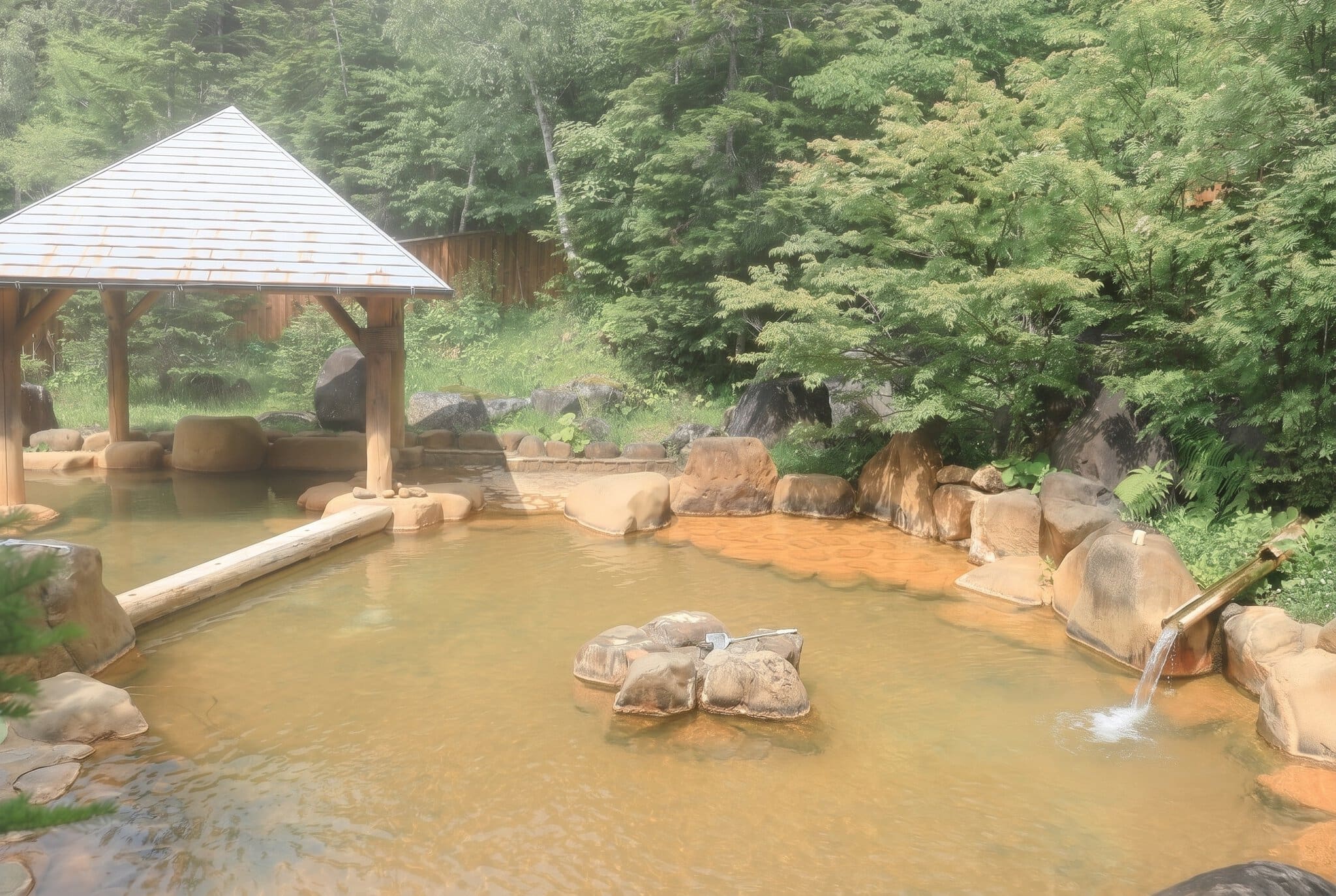
Visiting a traditional onsen hot spring also comes with its strict rules. You go into the water strictly without a swimsuit, so men and women have separate sections. Before you even step into the hot spring, you must wash thoroughly with soap on the little stools in the shower area. Never take your towel into the water; the Japanese usually fold it on top of their head to keep it dry. If you have a tattoo on your body, most public baths won’t let you in at all, so you’ll have to seek out special tattoo-friendly establishments or rent a private bath called kashikiri.
Another huge culture shock is the whole system of rewarding staff. In Japan you never, under any circumstances, leave a tip. Not in restaurants, not in taxis, not for the hotel cleaners. Good service is considered a given here, and an attempt to tip is seen as a rude insult, as it implies the employer pays their people poorly.
💡 Tip: Equally strict rules apply to a simple runny nose. Blowing your nose into a tissue in public is considered extremely rude — locals would rather keep sniffling constantly or slip off to the toilet.
Photo: Basile Morin / Wikimedia Commons, CC BY-SA 4.0
9. The Language Barrier and How to Get By
Be prepared for the fact that the level of English in Japan is surprisingly low. With the exception of major rail hubs, premium hotels and the best-known tourist attractions in Tokyo or Kyoto, you’ll run into a strong language barrier. Locals will try their hardest to help you, but it often ends in nothing more than awkward smiles and vigorous gesturing.
Your main survival weapon will be the Google Translate app, specifically its camera photo function. You’ll use it daily to scan illegible menus in restaurants, food labels in supermarkets, or the complicated buttons on the air-conditioning remote in your hotel room. Don’t forget to download the Japanese dictionary to your phone for offline use, because in basement restaurants the mobile signal often drops out.
Even with technology at your fingertips, learning a few basic phrases will win over the hearts of the locals. The single most important word is Sumimasen, which means both “excuse me” and “sorry”, and you’ll use it when squeezing through a crowd or calling over the staff in a restaurant. The thank-you Arigatō gozaimasu will bring a smile to any shopkeeper’s face, and when paying at an establishment the phrase O-kaikei onegai shimasu will come in handy.
💡 Tip: Many restaurants have display cases at the entrance with perfect plastic models of the dishes on offer. If you can’t read the menu, simply take the staff member outside, point at the model you’ve chosen, and say “Kore onegai shimasu” (This one, please).
Photo: Julien / Pexels
10. Sockets, Adapters and the Saviour Called Konbini
Your UK chargers won’t work in Japan. The country uses type-A electrical sockets with two flat pins, the kind you know from the United States, and on top of that the voltage is only 100 V. To charge your phone or laptop, all you’ll need is a cheap little plastic adapter, since modern electronics handle the lower voltage without any trouble (look for the “100–240 V” label on your charger). If you’re planning to bring more powerful appliances from home, though, they’ll need a heavy, expensive voltage converter, so it’s better to leave them behind.
A cornerstone of Japanese society are the round-the-clock convenience stores known as konbini, the best-known chains being 7-Eleven, Lawson and FamilyMart. These shops glow on every corner and will quite literally save your life. You can buy fantastic, cheap food, grab plasters, clean socks or an umbrella, withdraw cash from the ATM, or print out your attraction bookings. Their standard is incomparably higher than any European corner shop.
A fascinating feature of the streets are also the vending machines you’ll come across even in the most unlikely places, the middle of a forest included. In them you can buy not only cold but also hot drinks (marked in red), which is an absolute lifesaver in the winter months. What’s more, most modern machines happily accept payment with your Suica IC card, so you won’t have to fish around for loose change.
💡 Tip: If you buy a lunchbox (bento) or the popular rice triangle (onigiri) at a konbini, the staff will automatically ask whether you’d like the food heated in the microwave and will throw in a set of disposable chopsticks too.
Photo: Chen Te / Pexels
11. Apps That Will Save Your Life
A smartphone loaded with the right apps turns a complicated trip around Japan into a smooth, hassle-free experience. The absolute essential is Google Maps, which works here at an incredibly detailed level. When looking up a route by public transport, it shows you exactly how much the journey will cost, which platform you need, and even advises which metro car is best to board so you’re closest to the escalators for your transfer.
For planning longer rail journeys, I recommend downloading the excellent Japan Travel by NAVITIME app. You can set which specific rail passes you hold, and the app finds the exact routes and connections your passes cover, saving you from unpleasant surcharges. It also includes offline metro maps of major cities, which you’ll appreciate underground with no signal.
Besides the aforementioned Google Translate, many travellers also swear by the DeepL app, which often handles the tricky nuances of Japanese better when translating whole sentences into text. For convenient bullet-train bookings, download the smartEX app, where you can pick your seats from the comfort of your hotel bed and then simply link your ticket to your IC card for easy passage through the gates.
💡 Tip: Google Maps can even navigate you through the enormous underground complexes of Japanese stations, so switch it on the moment you step off the train to find the right exit onto the street from the maze of corridors.
Photo: AKS.9955 / Wikimedia Commons, Public domain
12. Budget: How Much Japan Costs per Day
Japan has long boasted a reputation as one of the most expensive destinations in the world, but thanks to recent economic shifts and a weak yen it’s now exceptionally affordable for us. If you travel as a modest backpacker, sleep in hostels and eat at quick noodle joints, your daily budget can comfortably be squeezed down to 10,000–15,000 JPY, not counting intercity travel. Travellers looking for a happy medium with nice 3-star hotels and dinners at classic establishments should reckon on roughly 20,000–35,000 JPY per person per day.
Vegetarians will have a slightly harder time with both the budget and finding food. Japanese cuisine is heavily built on dashi fish stock, which is hidden absolutely everywhere, even in seemingly meat-free noodles. The HappyCow app becomes a veritable holy grail for vegetarians — with it you’ll find modern spots serving vegan ramen or traditional Buddhist shojin ryori cuisine in Kyoto’s temples. In a pinch, an onigiri from the convenience store filled with pickled umeboshi plum or seaweed will save you.
Don’t forget to factor the small hidden fees into your plans, either. The government has newly introduced a departure tourist tax of 1,000 JPY (which is usually already cleverly hidden in the price of your flight ticket), and some popular attractions and temples are slowly starting to experiment with so-called dual pricing, where foreign tourists pay a slightly higher admission than local residents.
💡 Tip: A great way to keep your budget in check is the set lunch menus in restaurants known as teishoku. While you might leave thousands of yen in an establishment in the evening, at lunchtime you’ll get an enormous tray with a main dish, rice, soup and salad for just a few hundred.
Practical Summary and Rough Prices
To give you a better idea of what budget to prepare for your trip, here’s a table of average prices for common items in 2026. Prices can of course vary slightly depending on whether you’re in the centre of Tokyo or in the more remote countryside.
Bottle of water from a vending machine: 110–150 JPY
Coffee at Starbucks: around 450 JPY
A bowl of ramen at an ordinary spot: 800–1,200 JPY
Onigiri (rice triangle) at a convenience store: 120–160 JPY
A single metro ride in Tokyo: from 180 JPY depending on distance
Admission to a major temple: 500–1,000 JPY
A night in a decent business hotel for two: 8,000–14,000 JPY
A pint of local draught beer (nama biru): 500–700 JPY
🔗 These are affiliate links — they don't change your price and help us create content. · All experiences →
Frequently Asked Questions
When is the best time to visit Japan?
Japan is beautiful year-round, but the most popular tourist months are March and April due to the famous cherry blossom season, and then late October to early November, when the trees turn vibrant autumn colors. It’s best to avoid the summer months, as the humidity is unbearable, temperatures climb to extreme values, and there’s also the risk of typhoons.
Can I rent a car in Japan with a Czech driver’s license?
Unfortunately no, the standard international driver’s license issued in the Czech Republic (under the Vienna Convention) is not valid in Japan, because the Japanese exclusively recognize the Geneva Convention of 1949. If you wanted to drive here, you would need to arrange an official certified translation of your Czech license directly at the embassy or through the Japanese Automobile Federation JAF, which is a process requiring time and patience.
Is Japan safe for tourists?
Japan has long been considered one of the absolutely safest countries on the entire planet. The street crime rate here is almost zero, people commonly leave their laptops on café tables when they go to the bathroom, and even nighttime walks through Tokyo’s dark alleyways pose no security risk.
Is tap water drinkable?
Yes, tap water throughout Japan is completely safe, very clean, and suitable for drinking. In parks and train stations, you’ll even find special drinking fountains, so definitely bring a reusable bottle with you and save money on constantly buying bottled water from vending machines.
What should I do in case of an earthquake?
Japan is located in a seismically very active area and minor tremors are a daily occurrence. If you feel a stronger earthquake, stay completely calm, take cover under a sturdy table, protect your head and wait until the shaking passes. Modern buildings are constructed to withstand massive movements, and the Japanese are perfectly trained for these situations, so just follow their behavior.
How is it with using drones?
The rules for flying drones in Japan are extremely strict. Flying is broadly prohibited in densely populated areas, over parks, landmarks, and near airports, which covers practically all the places you’d want to film. Unless you’ve obtained complex special permits from the authorities, I recommend leaving your drone safely tucked away at home in the cupboard.
Where can I best get tickets for attractions?
The most popular attractions like teamLab Planets, Tokyo Skytree, or Universal Studios in Osaka tend to sell out weeks in advance. The easiest solution for tourists is to purchase e-tickets through platforms like GetYourGuide or Klook, where you have everything clearly laid out in English and you simply load your tickets into the mobile app without needing to print anything.
Tips and Tricks for Your Vacation
Don’t Overpay for Flights
Search for flights on Kayak. It’s our favorite search engine because it scans the websites of all airlines and always finds the cheapest connection.
Book Your Accommodation Smartly
The best experiences we’ve had when looking for accommodation (from Alaska to Morocco) are with Booking.com, where hotels, apartments, and entire houses are usually the cheapest and most widely available.
Don’t Forget Travel Insurance
Good travel insurance will protect you against illness, accidents, theft, or flight cancellations. We’ve had a few hospital visits abroad, so we know how important it is to have proper insurance arranged.
Where we insure ourselves: SafetyWing (best for everyone) and TrueTraveller (for extra-long trips).
Why don’t we recommend any Czech insurance company? Because they have too many restrictions. They set limits on the number of days abroad, travel insurance via a credit card often requires you to pay medical expenses only with that card, and they frequently limit the number of returns to the Czech Republic.
Find the Best Experiences
Get Your Guide is a huge online marketplace where you can book guided walks, trips, skip-the-line tickets, tours, and much more. We always find some extra fun there!
TL;DRThe State Rooms at Buckingham Palace only open to the public from 9 July to 27 September 2026, with advance tickets at £33 for an adult, and the tour takes 2–2.5 hours. The famous Changing the Guard is free, running Monday, Wednesday and Friday at 11am and Sunday at 10am, but at the main railings you’ll mostly see the backs of people’s heads – the steps of the Victoria Memorial or Wellington Barracks give you a much better view. The Royal Day Out combined ticket (palace, Royal Mews and King’s Gallery) comes to £65.70. Check the flag above the palace to know if the King’s home: the Royal Standard means he’s in, the Union Jack means he’s away.
Say the word London and most of us instantly picture Buckingham Palace, the residence of the British monarch and one of the most famous buildings in the world. We first came to London years ago after a year spent in Canada, back when we were cycling around the whole city and watching every penny. Paid tours weren’t on the agenda, but the palace has this magic where its sheer majesty hits you the moment you approach the main gate.
While planning our next trip, though, I discovered that visiting the palace comes with strict rules, and if you don’t do your homework beforehand you can end up pretty disappointed on the spot. Most people have no idea that the famous Changing of the Guard is actually really hard to see from the main railings, or that you can only get inside during the summer. There are simply a lot of myths swirling around the whole residence.
That’s why I’ve put together this ultimate guide for you. You’ll find everything that matters here, from exact ticket prices and the best photo spots to fascinating stories about how an intruder once broke into the Queen’s bedroom. Grab your notes, let’s start planning so you can get the absolute most out of the royal residence.
The facade of Buckingham Palace (Photo: Diego Delso, CC BY-SA 4.0, Wikimedia Commons)
TL;DR
Inside only in summer: The State Rooms are open to the public for roughly ten weeks a year, this year from 9 July to 27 September.
Changing of the Guard isn’t daily: The ceremony takes place on Monday, Wednesday and Friday at 11:00 and on Sunday at 10:00. It can be cancelled at the last minute in heavy rain.
Avoid the railings: From the main gate during the Changing of the Guard you’ll mostly see the backs of other tourists’ heads. The steps of the Victoria Memorial or the nearby barracks offer a much better view.
Watch the flag: If the colourful Royal Standard is flying above the roof, the King is home. If you see the British flag (the Union Jack), the monarch is away.
Buy tickets in advance: On-the-day tickets are pricier and sell out very fast. Booking online is an absolute must.
For families with kids: The lengthy Changing of the Guard often bores children, who’ll be far more thrilled by the royal carriages in the Royal Mews.
Buckingham Palace tickets and opening hours in 2026
This is absolutely key information: the interiors, known as the State Rooms, are open to the public ONLY in summer, from 9 July to 27 September 2026. For the rest of the year you’re simply out of luck, because the palace is in full working order and the King is in residence. If you come outside this main summer season, you’ll have to settle for a photo through the fence.
Fancy seeing the rooms where state visits are received? The tour is set out as a self-guided route lasting around 2 to 2.5 hours, and a fantastic audio guide is already included in the ticket price. Tickets bought on the day are always a little pricier and, more importantly, they sell out in a flash. So it’s better to buy them online well in advance, so you don’t come away empty-handed.
Category
Advance
On the day
Adult (25+)
£33
£37
Young person (18–24)
£21.50
~£23–25
Child (5–17)
£16.50
~£18–20
Under 5
free
– (booking required)
If you’re travelling to London with kids, the official website sometimes offers better-value family tickets. Their exact price and conditions do tend to change, though. For that reason it’s best to check directly in the basket on the official site before you pay.
The palace also has other attractions that come at an extra cost. Separate admission to the Royal Mews will set an adult back £18. A ticket to The King’s Gallery costs £22, and this year it’s hosting a unique exhibition on the life of Elizabeth II. If you want to see absolutely everything and spend the whole day here, go for the combined Royal Day Out ticket at £65.70.
Fascinated by the famous balcony where the royal family regularly waves? There’s now a premium guided East Wing tour you can pay extra for, which lets you see the Centre Room right behind the balcony. The ticket costs roughly a generous £93, but to be safe check the current price on rct.uk. As a small point of interest, Britons on certain benefits are entitled to tickets for a symbolic £1.
You’re always admitted in precise fifteen-minute slots, so there’s no need to fear endless crowding. You’ll meet the fewest people if you snag that very first morning entry.
Dates
Opening hours
9 Jul – 31 Aug 2026
daily 9:30–19:30
1 Sep – 27 Sep 2026
shorter days (exact last-entry times on rct.uk)
💡 My tip: Buy State Rooms tickets exclusively on the official Royal Collection Trust website. Through GetYourGuide, though, you can grab great sightseeing tours and combos with other London attractions.
When to visit London and the palace
If you want to see the interiors, you really have no choice and must go in the summer months. At this time the royal family heads off to Balmoral Castle in Scotland and the palace opens to the public for about ten weeks. That does mean, however, that you’ll be dealing with the biggest tourist crowds, so a healthy dose of patience is genuinely called for here.
For a simple look from the outside, spring or autumn is ideal. The surrounding London parks are beautifully coloured and the temperatures are pleasant for long walks. The Changing of the Guard happens all year round, but in winter the soldiers wear grey coats, which don’t look as striking in photos as the traditional summer red tunics.
I’d recommend arriving at the gate itself early in the morning or, conversely, later in the afternoon. During the late morning the crowds pour in for the Changing of the Guard and the square in front of the palace is bursting at the seams. In the evening light, on the other hand, you can photograph the building in relative calm and with a far nicer atmosphere.
Changing of the Guard: where to stand so you don’t just see backs
The famous Changing of the Guard is an absolute London classic. A huge bonus is that this spectacle is completely free and you don’t need any ticket for it. You just have to show up in the right place at the right time. But there’s one enormous catch that trips up plenty of tourists.
A sentry at the palace gate (Photo: Carlos Delgado, CC BY-SA 3.0, Wikimedia Commons)
Most guides forget to tell you the most important thing. If you stand at the front railings of the palace, you’ll most likely see just the backs of the people in front of you and the massive gate. The ceremony itself takes place quite far behind the fence in the inner courtyard. Anyone who doesn’t arrive at least 90 minutes early usually leaves feeling seriously let down.
So where’s the best spot? Head straight for the steps of the Victoria Memorial, which stands right in front of the palace. It’s raised ground, so you get a lovely view over the heads of the crowd of both the palace itself and the arrival and departure of the guards. The best view is from the side of the memorial facing the palace, but it fills up the fastest, so in the summer months be there by around 10:15.
What’s more, the schedule changed a little in 2026 and the Changing of the Guard no longer happens every day. On Monday, Wednesday and Friday everything starts at 11:00, while on Sunday the format of the ceremony changes and it kicks off as early as 10:00. The whole ceremony takes roughly 45 minutes. Always check the specific date on the official calendar, though, because plans do like to change.
English weather can throw a spanner in the works, so in heavy rain the ceremony is cancelled without mercy. The decision sometimes comes literally at the last minute, potentially as late as 10:45. That’s why it pays to have a backup plan in reserve in case it’s chucking it down.
If you can’t stand huge crowds, there are far smarter alternatives. Try heading to the Wellington Barracks on Birdcage Walk at around 10:45. Here you can watch the forming-up and inspection of the New Guard from up close and without the crush, before they even set off on the march. The wide avenue of The Mall also offers a fabulous spectacle, where the guards march to music and you have them right in front of you.
Another absolutely brilliant option is the changing ceremony at Horse Guards Parade. It’s a slightly shorter ceremony lasting about 30 minutes, but there are hardly any tourists here. It’s plenty to arrive ten minutes before the start and you’ll still have a luxurious front-row spot. That way you dodge the worst of the madness that reigns at the main palace.
This, by the way, is a genius tip for families with children. For little ones, being crushed in the crowd at the main gate of Buckingham Palace is pure frustration, because they simply can’t see anything past the adults. At Horse Guards or Wellington Barracks, on the other hand, they’ll come away with a great experience and you’ll save your nerves.
Where to stay near Buckingham Palace
Staying within walking distance of the British monarch’s residence means you’re in the most prestigious districts of London, such as Westminster or St James’s. Prices are logically higher here, but then you save loads of time on Tube commuting and the main sights are literally around the corner.
If you’re after true luxury with a sense of history, book a night at The Goring. This iconic hotel sits just a few steps from the palace and even holds a Royal Warrant. It was a favourite of the Queen Mother, and Princess Kate spent the night before her wedding here. Another fantastic choice for the discerning is The Rubens at the Palace, which stands directly opposite the Royal Mews and offers rooms with a breathtaking view of the palace walls.
For lovers of modern elegance blended with the classic, I’d recommend the Sofitel London St James or the nearby Conrad London St James. Both hotels offer first-class service and are within a pleasant walking distance of The Mall and the surrounding parks. A great boutique experience is provided by the tucked-away St. James’s Hotel and Club, which boasts a fantastic restaurant and an incredibly peaceful atmosphere.
If you’re on a tighter budget but still want to stay strategically close, take a look at the Premier Inn London Victoria. This hotel offers clean, modern rooms at a reasonable price, sits right by Victoria station, and you can stroll to the palace comfortably in under ten minutes. I always recommend booking hotels well in advance via Booking.com, because capacity in central London disappears at lightning speed.
10 tips on what to see and do at Buckingham Palace
1. Changing of the Guard without disappointment or crowds
The Changing of the Guard is probably the most sought-after event in all of London. Everyone wants to see the soldiers in red tunics with their huge bearskin caps. The reality, though, is that most visitors who stand right at the main railings of the palace leave disappointed. From this spot you’ll mostly see the backs of other people’s heads, a chunk of the iron gate, and the ceremony itself takes place too far away in the courtyard.
Seasoned travellers therefore advise picking a more strategic spot. The best is the steps of the Victoria Memorial right opposite the palace. Here you’re raised above the crowd and have a lovely overview of the guards arriving and the goings-on behind the fence. But you need to get here around 10:15 to bag a good spot. Once the ceremony begins, you won’t be able to wriggle out of the crowd.
💡 Tip: If you hate crowds, skip the palace and head to the nearby Wellington Barracks on Birdcage Walk. At around 10:45 you’ll see the forming-up and inspection of the New Guard nicely up close and with far fewer tourists. An even better alternative is the ceremony at Horse Guards Parade, which lasts just thirty minutes, isn’t as packed, and the soldiers are literally within arm’s reach.
Also remember that the changing ceremony at the palace doesn’t happen every day. The current schedule for this year is Monday, Wednesday and Friday at 11:00 and Sunday at 10:00. On top of that everything can change, and in heavy rain the event is cancelled without mercy, potentially as late as 10:45. So before your trip always check the current calendar on the official Household Division website.
2. How to tell whether the King is home
This is one of those super practical details you can use to impress your travel companions. Lots of people think that when they arrive at the palace, the King will be waving to them from a window. In reality, whether the monarch is physically present in the building can be told with a single glance at the roof.
If the colourful Royal Standard, studded with lions and the Irish harp, is flying on the main flagpole, it means Charles III is home right now. Incidentally, this flag is never lowered to half-mast, not even on the death of a monarch, because the throne is never empty.
When the King goes off to another estate or abroad, the classic British flag flies over the palace, namely the well-known Union Jack. Interestingly, this custom with the national flag was only introduced in 1997. Before that, when the monarch wasn’t home, the flagpole simply stood empty.
3. Visiting the State Rooms
As I’ve already mentioned, the palace interiors only open for a short summer period. This year that falls on the dates 9 July to 27 September. You’ll walk through nineteen stunning rooms used for official state visits and ceremonies. You’ll see the famous Throne Room with its dramatic arch, the enormous Ballroom, and the Picture Gallery with works by Rembrandt and Rubens.
Admission for an adult costs £33 in advance, young people up to 24 pay £21.50 and children £16.50. Tickets on the day are a few pounds pricier, but above all they’re usually hopelessly sold out. The tour itself is self-guided with no live guide, but the price includes an excellent audio guide and it’ll take you roughly two to two and a half hours.
💡 Booking tip: Lots of people buy tickets through resellers, which makes sense for various combined tours. But if you just want a basic ticket, first check the official Royal Collection Trust website. For other activities in London, you can then use GetYourGuide, where you’ll find great tips for river cruises or trips out of town. Photography inside the rooms is usually strictly limited or completely banned, so bear in mind that you’ll mostly be storing the experiences in your memory.
4. The East Wing and the famous balcony known the world over
The East Wing with that famous balcony actually wasn’t part of the original building. It was added only in the mid-19th century at the request of Queen Victoria, because the palace was simply too small for her growing family. The balcony was designed by Prince Albert himself, and Queen Victoria first waved to the crowds from it in 1851 at the opening of the Great Exhibition.
Since then it has become a symbol of the British monarchy. It was here that the historic moment of 8 May 1945 played out, when King George VI, Queen Elizabeth and the then-young princesses stepped out before a cheering crowd to celebrate the end of the war in Europe. On that day they appeared on the balcony no fewer than eight times, once even alongside Prime Minister Winston Churchill.
Today the balcony is mainly used for royal weddings, jubilees and the June birthday celebrations. Since 2024, moreover, there have been special guided tours of the East Wing, which also include a visit to the so-called Centre Room. It’s from this room that you step onto the balcony itself, so you can look out onto The Mall through the same eyes as members of the royal family. These tours are more expensive, though, and disappear very quickly.
5. The Royal Mews and the stunning gold coach
If you’re travelling with kids, the Changing of the Guard itself will probably bore them after a few minutes. A far better experience for them will be the royal stables known as The Royal Mews. These are working stables where the horses are cared for and all those magnificent historic carriages we see on TV at ceremonial occasions are kept.
The Gold State Coach in the Royal Mews (Photo: APK, CC BY 4.0, Wikimedia Commons)
The absolute highlight of the tour is the Gold State Coach, an enormous golden carriage over 260 years old. It’s been used at every coronation since the days of George IV, and seeing it in the flesh is a real treat. In real life it’s surprisingly huge and the detailed decoration is breathtaking. On top of that, children will find interactive corners with a wooden pony and colouring pages here.
Admission to the stables costs £18 for an adult and they’re open from March to November. Families can check the current price packages directly on the official website. Just remember one honest warning: these are working stables, so the horses may not actually be there during your visit if they happen to have other duties.
6. The King’s Gallery and its artistic treasures
Right next to the palace you’ll find The King’s Gallery, formerly known under the Queen’s name. This gallery hosts regularly changing exhibitions of artworks from the vast Royal Collection. It’s an ideal place for art lovers who head to London outside the summer season, when the main State Rooms are closed.
This year offers a fascinating exhibition devoted to the life and style of Elizabeth II. You’ll see hundreds of objects here, many of them presented to the public for the very first time. An adult ticket costs £22, young people pay £14 and children £11.
The advantage of the gallery is that the price includes a multimedia guide and the spaces aren’t so enormous, so the visit won’t completely wear you out. If you’re planning to visit the State Rooms, the stables and the gallery in a single day, it’s worth buying the combined Royal Day Out ticket, which costs just under £66 and saves you a lot of money.
7. The royal garden and vegetarian treats in the Garden Café
The garden of Buckingham Palace covers an incredible 39 acres (about 16 hectares) and is thus the largest private garden in all of London. It’s literally an oasis in the middle of the city, where you’ll find over a thousand trees, a huge lake and a tennis court. In the past a colony of pink flamingos even lived by the lake, until the whole flock was sadly wiped out by a fox in 1996.
An interesting fact is that on a small island in the middle of the lake stand four beehives. The local Italian bees produce roughly 160 jars of golden honey a year, which goes straight to the royal kitchen. During summer, when the State Rooms are open, at the end of the tour you walk through part of this very garden.
There’s also a seasonal Garden Café on the terrace by the exit, where you can rest with a view over the lawn. I warmly recommend trying their fantastic “Plant Power” salad with quinoa and lentils or the Mediterranean vegetable quiche. They also do great coffee, and for those with a sweet tooth they scoop excellent plant-based vanilla ice cream. In short, the ideal way to round off a royal visit.
8. The story of the intruder in the bedroom (fact vs. legend)
Countless incredible tales are tied to the palace, but the one from 9 July 1982 sounds like a film script. A certain Michael Fagan climbed the four-metre-high wall, shinned up a drainpipe and got all the way into the bedroom of the sleeping Queen Elizabeth II. A motion sensor did trigger the alarm, but the police considered it faulty and muted it.
For years the legend circulated that Fagan sat on the edge of the Queen’s bed and they had a long chat until help arrived. Fagan himself, however, debunked this myth in later interviews. In reality the Queen didn’t wait for anything, quickly left the room barefoot and called security.
The most bizarre thing about it all is that it wasn’t Fagan’s first break-in. A month earlier he had already broken into the palace, eaten some cheese and biscuits, drunk a bit of wine and left again unnoticed. The laws of the time didn’t classify breaking into the palace as a criminal offence, so he was only charged with the theft of that wine. In any case, the whole incident led to a huge overhaul of royal security.
9. The palace during the Second World War
The history of this building isn’t tied only to pompous parties. During the Second World War the palace fell victim to German bombing and was hit by bombs no fewer than nine times. The worst attack came in September 1940, when a bomb completely destroyed the palace chapel at the very moment King George VI and his wife were nearby in the residence.
The royal couple refused to leave London at the time, even though their daughters were sheltering in safer Windsor. After the chapel was destroyed, Queen Elizabeth (the later Queen Mother) uttered her now legendary line: “I’m glad we’ve been bombed. Now I feel I can look the East End in the face.”
It was precisely this decision to stay in the battered city and share the wartime fate with ordinary Londoners that hugely boosted the popularity of the monarchy. The spot where the destroyed chapel once stood was rebuilt after the war, and today it houses the very Queen’s Gallery, now The King’s Gallery.
10. Fascinating numbers and the great renovation
Reading various guides you’ll often come across the outdated figure that the palace has roughly 660 rooms. The official numbers are far more impressive, though. Buckingham Palace hides a total of 775 rooms, of which 19 are state rooms, 52 royal bedrooms and an incredible 78 bathrooms. To that add 1,514 doors and 760 windows, which have to be cleaned every six weeks.
Gilded details of the palace gate (Photo: Cristian Bortes from Cluj-Napoca, Romania, CC BY 2.0, Wikimedia Commons)
To keep this enormous machinery running, a huge ten-year programme called Reservicing is currently underway. It began in 2017 and its completion is planned for exactly 2027. The aim is a complete replacement of the outdated electrical wiring, pipes, lifts and boilers, many of which dated back to the 1950s.
This mega-project will swallow an astronomical £369 million, which sparked some fairly heated debates in Britain. For you as a visitor it means one thing: some parts of the palace may be hidden under scaffolding during your trip. Definitely don’t let that put you off, though—despite the ongoing works the building retains its unmissable majesty.
How to tell whether the King is home
A flag always flies over the palace, and it’s that flag that reveals whether the monarch is inside. Whenever you see the colourful Royal Standard (with its lions and harp) on the flagpole, it means the reigning King is home right now. It’s an old rule that used to mean that when the monarch was away, the flagpole stood empty.
A guard in front of Buckingham Palace (Photo: Carlos Delgado, CC BY-SA 3.0, Wikimedia Commons)
That changed in 1997 after the death of Princess Diana, though. Since then, when the King is away from the palace, the British national flag flies over it, namely the famous Union Jack. What’s more, the Royal Standard is never lowered to half-mast, because historically the throne is never empty.
It’s only a visual detail, but in London it never fails to delight. Children especially adore this detail and eagerly study from afar which fabric is fluttering in the wind. So you can easily play at being true experts in court etiquette with them.
How to get to Buckingham Palace
Getting to the palace is dead easy, and the best way is to come by ordinary Tube. Get off at Green Park station, from where an eight-minute and very pleasant walk straight through the greenery awaits you. Other logical options are the nearby Victoria station or the St James’s Park stop. Always look up the connection in advance via the official Transport for London website.
The Mall leads straight to the palace (Photo: Peter S, CC BY-SA 2.0, Wikimedia Commons)
I’d recommend treating the palace visit as a wider walking loop, because it combines beautifully with the surroundings. In one relaxed morning you can stroll the legendary red avenue of The Mall and both adjoining parks. There’s no rush, and along the way you’ll meet loads of cheeky squirrels and waterfowl.
💡 I’ve got a secret photo tip for you too. The very nicest view of the palace supposedly isn’t from the front through the railings, but from the little lake in St James’s Park. Across the water you’ll see the Victoria Memorial framed perfectly between the trees, and no crowds of tourists will ruin your photo.
If you have tickets inside to the State Rooms, watch out for the size of your luggage. All backpacks or bags larger than A4 size must be left at the cloakroom right at the entrance. Luckily it’s available completely free of charge, so you needn’t fear any further unpleasant fees.
The stories the palace hides
The man who woke up next to the Queen
In 1982 one of the most bizarre security blunders in British history played out. A certain Michael Fagan climbed the palace wall and, despite the patrols, slipped unnoticed all the way into Queen Elizabeth II’s personal bedroom. It sounds like a scene from a madcap comedy, but the residence’s security simply failed completely back then.
For years a popular legend then circulated among people that the monarch kept a cool head and had a long chat with the intruder on the edge of the bed. Fagan himself, however, admitted in a 2012 interview that the reality was far more prosaic.
According to him, the Queen didn’t wait for anything and quickly ran out barefoot to summon help in the corridor. This cheeky morning visit meant, in any case, that the palace’s security measures had to be overhauled and tightened from the ground up.
The balcony known the world over
When the palace was radically rebuilt in 1847 under Queen Victoria, Prince Albert came up with the idea that the building should have a central balcony. Originally there was only an open courtyard here, which was closed off by the very construction of the new East Wing. It’s from this balcony that the royal family waves today at all the important events, from weddings to the June parade of Trooping the Colour.
The famous balcony during Trooping the Colour (Photo: Lewis Clarke, CC BY-SA 2.0, Wikimedia Commons)
One of the most powerful moments Britons experienced here was at the end of the Second World War in May 1945 during the so-called VE Day. The royal family appeared before the cheering crowd no fewer than eight times that day. At one of these historic appearances they were joined by none other than Prime Minister Winston Churchill.
For the ordinary mortal, the balcony itself is logically off-limits. But if you pay for the most expensive premium tour of the interiors in summer, you’ll at least get a peek into the so-called Centre Room, which lies exactly behind it.
The palace in wartime
Buckingham Palace really took it hard during the night-time bombing of London and suffered a total of nine direct hits. One of the devastating bombs even razed the palace chapel to the ground.
King George VI and Queen Elizabeth refused to flee to safety at the time and, despite the huge personal risk, stayed in the capital. They wanted to show ordinary people that in the worst suffering they were all in the same boat.
The Queen then uttered a famous and very powerful line that went down in British history books. She declared that she was actually glad about the bombing, because now she could finally look the shattered East End straight in the eye.
The secret garden behind the palace
Right behind the enormous building hides the largest private garden in London, which spreads across a respectable 39 acres. In it you’ll find not only a huge manicured lawn for the famous garden parties, but even a large private lake with two islands.
For long years this green oasis in the middle of the metropolis was adorned by a flock of pink flamingos, who gave the place a decent touch of the exotic. In 1996, sadly, a hungry fox found its way in and killed every last bird.
Today it’s a little safer on the island in the middle of the lake, and the bees have the final say here. The royal gardeners diligently tend four hives, from which they harvest around 160 jars of exclusive homemade honey a year.
Where to eat near the palace
If you have tickets inside, you’ll find the summer Garden Café on the terrace overlooking the lake. For us it’s absolutely crucial that it offers great vegetarian food, so we won’t go hungry. They take real care over plant-based treats, from the quinoa and lentil salad through the Mediterranean quiche to vanilla ice cream free of palm oil. On the other hand, if you’re travelling with someone who’s partial to a classic afternoon tea with meat or fish sandwiches, those are of course on the menu too.
Anyone admiring the palace only from the street has endless swathes of parkland all around, perfect for lunch on the grass. Just buy some food to go and find a quiet spot in neighbouring St James’s Park. If you’d rather sit somewhere warm, head to the adjacent district of Victoria. You’ll find plenty of nice cafés and restaurants there where you can rest your legs after a long walk.
Practical tips that will save you disappointment
You won’t see the King. The palace serves primarily as a workplace and office, not as a space for meeting the monarch. Anyone who arrives at the railings hoping for a royal selfie will simply be disappointed.
The State Rooms only open in summer. You can only look inside during a limited window, specifically from 9 July to 27 September 2026. The rest of the year you can only admire the palace from the outside through the fence.
The balcony is off-limits. You can’t photograph up close the spot from which the family waves to the crowds. You can only glimpse the famous room behind it if you pay extra for the premium East Wing tour.
Changing of the Guard isn’t daily. In 2026 it takes place only on Monday, Wednesday, Friday and Sunday, so it’s best to check the schedule on the official website. In heavier rain the ceremony is cancelled without mercy.
Photography inside the State Rooms is usually limited. The rules change quite a bit over time, so it’s always best to ask staff about the current instructions. Definitely forget about using flash or a tripod, though.
Renovation is underway. The palace is going through a huge ten-year restoration known as Reservicing, due to finish in 2027. Bear in mind that part of the space may be covered up and not entirely photogenic.
Arrive early. Securing a good spot for the Changing of the Guard means arriving at least 45 to 90 minutes early. If you’re after the best view from the steps of the Victoria Memorial, you’ll have to come even earlier.
Where to go next from Buckingham Palace
Once you’ve photographed the palace and strolled through the adjacent park, London is at your feet. Just a short way off begins the Westminster area, full of other historic gems. If you’re looking for more inspiration, read our detailed article on what to see and do in London.
A stone’s throw from Parliament stands Westminster Abbey — the site of coronations and royal tombs, which you can even get into for free at Evensong.
Love history and art? Then don’t miss the British Museum — entry is free, and in our guide you’ll find what not to skip in a couple of hours.
And right next to the fortress stands the famous Tower Bridge — in our guide you’ll find when the bridge lifts and whether the paid exhibition with the glass floor is worth it.
And if you want to see London from up high, check out our guide to the London Eye observation wheel — we’ll advise whether it’s worth it or whether the free Sky Garden is a better bet.
Lovers of darker history will surely be thrilled by the fortress on the banks of the Thames that we write about in our guide to the Tower of London. For families with children, a trip in search of magic is an absolute must — take a look at our tips for the Harry Potter Studio London. And if you have a car available or you’re planning longer trips outside the capital, you’ll definitely be intrigued by mystical Stonehenge or, further north, the gorgeous Edinburgh.
Frequently asked questions
Can you go inside Buckingham Palace year-round?
No, the interiors or State Rooms are open to the public only during the summer months, roughly from July to the end of September. For the rest of the year, the royal family actively uses the palace for work and residence.
How much does the palace entrance fee cost?
In 2026, a basic ticket to the State Rooms for an adult costs £33 when pre-booked online. Tickets at the door are slightly more expensive and very often sell out in advance. Children and students receive discounts.
When does the changing of the guard take place and how much does it cost?
The Changing of the Guard ceremony is completely free and you don’t need any ticket for it. However, it doesn’t take place every day – in 2026 it occurs on Mondays, Wednesdays and Fridays at 11:00 AM and on Sundays at 10:00 AM.
Does the king live in the palace?
Yes, it is the official London residence of the British monarch. Whether the king is physically inside the building can be determined by the Royal Standard, which flies from the roof when he is present.
Where is the best spot for photographing the changing of the guard?
“`html
Definitely don’t stand right at the palace railings, you’ll only see other people’s backs. The best view is from the elevated steps of the Victoria Memorial, but you need to arrive about three-quarters of an hour early.
“`
Is photography allowed in the palace?
Photography is traditionally strictly forbidden inside the State Apartments, although the rules occasionally change slightly. To be safe, always check the current conditions at the entrance. Outside in the garden, you can take photos without restrictions.
How do I best get to the palace?
The easiest way is by tube. You can get off at Green Park station, from where you’ll walk across the park in eight minutes. Other great options are Victoria or St James’s Park stations, both located very close by. EXCERPT: Heading to Buckingham Palace? Find out which tickets to buy, when to go and from which spot you’ll get the best view of the famous Changing of the Guard.
Tips and Tricks for Your Vacation
Don’t Overpay for Flights
Search for flights on Kayak. It’s our favorite search engine because it scans the websites of all airlines and always finds the cheapest connection.
Book Your Accommodation Smartly
The best experiences we’ve had when looking for accommodation (from Alaska to Morocco) are with Booking.com, where hotels, apartments, and entire houses are usually the cheapest and most widely available.
Don’t Forget Travel Insurance
Good travel insurance will protect you against illness, accidents, theft, or flight cancellations. We’ve had a few hospital visits abroad, so we know how important it is to have proper insurance arranged.
Where we insure ourselves: SafetyWing (best for everyone) and TrueTraveller (for extra-long trips).
Why don’t we recommend any Czech insurance company? Because they have too many restrictions. They set limits on the number of days abroad, travel insurance via a credit card often requires you to pay medical expenses only with that card, and they frequently limit the number of returns to the Czech Republic.
Find the Best Experiences
Get Your Guide is a huge online marketplace where you can book guided walks, trips, skip-the-line tickets, tours, and much more. We always find some extra fun there!
TL;DRThe best adults-only hotels in the Algarve are Falésia Hotel and Vila Galé Collection Praia (both 16+), while TUI BLUE Falésia (16+, rated 8.7) leads the pack for all-inclusive stays. For the strictest adults-only calm, go for Rocamar Exclusive Hotel and Spa (18+). Of the 11 picks here, most cluster around Albufeira (Olhos d’Água, Santa Eulália), with more near Tavira in the east and Lagos and Portimão in the west — the boutique Palmares Beach House, with just twenty rooms, stands out there. For honeymoons, the historic Bela Vista Hotel and Spa (13+) with its Michelin-starred restaurant is a great match. May, June, September and October are the best months for a romantic break, with prices dropping by up to 30% compared with August — book boutique hotels 6 to 8 months ahead.
The Algarve in Portugal holds a special place in our hearts. We’ve been coming here regularly since 2020, and every single time this Portuguese gem surprises us with something new. If you’re planning a romantic getaway for two and craving total peace and quiet without kids splashing around the pool, adults-only hotels are the best choice for a truly relaxing break.
A child-free holiday in the south of Portugal has an incredible charm, whether you’re after luxurious wellness treatments or quiet morning coffees with ocean views. The range of accommodation labelled “adults only” has grown beautifully here over the past few years, so you can choose from boutique residences and large resorts offering full service.
Just watch out for one thing you’ll often come across. Not every hotel with the “adults only” label is genuinely for adults only. That’s why for each recommendation we list the exact age limit (16+, 18+, or simply “adults friendly”), so you know exactly what you’re getting into.
Before you dive into picking a specific place to stay, it helps to understand exactly what those Portuguese hotel terms mean. The most common category in the region is the 16+ label, which admits only older teenagers and adults, guaranteeing a very calm poolside atmosphere. If you want a rock-solid guarantee of a completely adult environment, you’ll need to hunt for strict 18+ hotels, which are a little rarer here but offer the highest standard of undisturbed peace. On the other hand, terms like Adults Friendly, 14+ or 13+ mean the hotel primarily targets couples, but older children or minors accompanied by parents are allowed to some extent.
In terms of location, you’ll find by far the highest concentration of adults-only hotels around Albufeira, specifically in the Olhos d’Água and Santa Eulália areas, where luxury complexes rise up right above the cliffs. This stretch of coast is ideal for those who want to combine hotel relaxation with evening strolls into the livelier centre, so take a look at Albufeira hotels for wider context.
If you’re after more authenticity and calm, the eastern Algarve around the town of Tavira is an absolute gem, where boutique hotels hide in historic lanes or near the Ria Formosa nature reserve. The western part around Lagos and Portimão, meanwhile, tempts with designer boutique stays and golf resorts that appeal to discerning travellers looking for fine dining and proximity to iconic beaches.
When to go and when to book
For a romantic break for two, spring and autumn are absolutely ideal, specifically from May to June and then again in September and October. During these months the ocean is already pleasantly refreshing (or still warm from summer), the sun feels lovely, but you’ll dodge the fiercest summer heat and the crowds of tourists. September and October dates have the added bonus that prices for luxury stays can drop by as much as thirty percent compared to the August peak.
If you’re planning to stay in smaller boutique hotels with maybe just twenty or forty rooms, I’d recommend booking six to eight months ahead. Rooms with a direct sea view vanish at breathtaking speed in the best resorts, especially if you’re planning a stay tied to an anniversary or a honeymoon. Summer months guarantee hot weather, but adults-only hotels in this period are a literal oasis of calm away from the otherwise very busy beaches.
11 best adults-only hotels in the Algarve
Photo: Falésia Hotel – Adults Only / Google Maps
1. TUI BLUE Falésia (16+)
You’ll find this stunning resort in the popular Olhos d’Água area near Albufeira, and it’s an absolute top pick for lovers of a carefree holiday. The hotel accepts guests aged sixteen and over only, and its biggest asset is its fantastic setting right on the edge of the region’s signature red cliffs, with breathtaking views over the Atlantic. The gardens are beautifully kept, and wooden steps take you straight down to one of the longest beaches in the region.
The dining here is of a very high standard, and you can opt for the popular all-inclusive package, which isn’t exactly standard at adults-only hotels in Portugal. Its Booking rating consistently hovers around a brilliant 8.7, with guests praising above all the calm atmosphere free of kids’ entertainment programmes, plus the top-notch staff.
💡 Tip: Don’t confuse this hotel with the similarly named Falésia Hotel — they’re two entirely separate, independently run complexes, even though both target an adult clientele.
Photo: Falésia Hotel – Adults Only / Google Maps
2. Falésia Hotel (16+)
While the resort mentioned above sits right on the cliff, this gem lies roughly eight hundred metres from the beach and offers a slightly different kind of experience. The age limit here is also set at sixteen, but the grounds boast incredibly spacious, quiet gardens that feel like balm for the soul. It’s one of the best-rated spots in the area (its Booking score often tops 9.2 from thousands of reviews), and guests love coming back time and again.
The distance from the ocean is no problem at all, because the hotel runs a regular and very reliable beach transfer, so you don’t have to worry about a thing. For couples looking for genuine relaxation surrounded by greenery, with the chance to enjoy an evening on the terrace over a glass of wine to the sound of live music, this is a truly phenomenal choice with excellent value for money.
💡 Tip: Book rooms with a garden and pool view — they’re noticeably quieter than those facing the driveway, and they give you that proper romantic backdrop.
Photo: Marcel Tr / Google Maps
3. Palmares Beach House (Adults Only)
If your dream is total intimacy and modern design, you need to head to the Meia Praia area near Lagos. This five-star boutique hotel has just twenty rooms, making it one of the most exclusive and peaceful spots on the entire coast. There’s no messing about with 16+ or 18+ age limits — the whole concept is built strictly for adult guests seeking a premium experience from the ground up.
The hotel is set right on a prestigious golf course, and every room opens onto a breathtaking panorama of the Lagos bay. There’s no all-inclusive, but the on-site à la carte restaurant cooks absolutely fantastically and prides itself on fresh local ingredients. It’s an ideal hideaway for discerning couples who want to play golf during the day or explore the secret beaches of the west coast.
💡 Tip: Be sure to read our article on luxury resorts, where you’ll find more inspiration: luxury resorts in the Algarve.
Photo: Hotel Vila Galé Collection Praia / Google Maps
4. Vila Galé Collection Praia (16+)
This lovely boutique project near Albufeira proves that the Vila Galé brand can also do very intimate, personal stays. With just forty rooms and a minimum age of sixteen, you get the reassurance that you won’t be squeezing into a crowd by the pool and will always find a free sunbed for your afternoon siesta. Guest ratings consistently sit around an excellent nine, which only confirms the quality of the service on offer.
Right on the grounds you’ll find a well-equipped wellness centre, perfect for unwinding after a long day of excursions. The location just a short walk from the centre is very strategic, because you keep your private calm while still being able to head off on foot to the evening buzz or to the popular local cafés and restaurants whenever you like.
💡 Tip: Make use of the spa zone in the early evening too — it’s usually completely quiet, and the dimly lit atmosphere is wonderfully romantic for couples.
Photo: Bela Vista Hotel & SPA – Relais & Châteaux / Google Maps
5. Bela Vista Hotel and Spa (13+)
When it comes to finding the perfect honeymoon spot, you’ll struggle to find anything more iconic than this historic mansion from 1918 on Praia da Rocha beach. In fairness, we should point out that the hotel has an age limit of 13+, so it’s not a strict adults-only with no exceptions, but the atmosphere here is so refined and grown-up that it would be a huge shame to leave it out. The mansion belongs to the prestigious Relais & Châteaux network, and the designer interiors will whisk you straight into the era of The Great Gatsby.
The biggest draw is undoubtedly the hotel’s Michelin-starred restaurant, VISTA, which offers an amazing tasting menu including sophisticated vegetarian options. Add to that a luxurious spa using L’Occitane products, and you’ll understand why this place is considered the absolute pinnacle of romance in the region.
💡 Tip: Book a table for a sunset dinner well in advance, even if you’re staying at the hotel, because the food here is in enormous demand among foodies.
Photo: Jupiter Marina Hotel – Couples & Spa / Google Maps
6. Jupiter Marina Hotel – Couples and Spa (16+)
The name alone hints that this four-star gem in Portimão was designed exclusively with couples in mind. Entry is permitted only to those aged sixteen and over, and the whole concept revolves around shared relaxation, wellness treatments and a laid-back atmosphere. The hotel isn’t right on the beach but by a modern marina, which gives it a very stylish, slightly urban feel full of chic design.
The absolute highlight is the amazing rooftop bar with an infinity pool, offering the perfect view over the Arade River and the surroundings. The large spa centre here offers special couples’ packages, so if you’re planning a holiday focused mainly on pampering and recharging your batteries, you’ll be in the best hands.
💡 Tip: Evening drinks on the rooftop overlooking the lit-up city are among the best memories guests take away, so definitely plan at least one romantic evening up there.
Photo: Jupiter Marina Hotel – Couples & Spa / Google Maps
If you don’t want to make any compromises whatsoever and demand a hundred-percent guarantee of a child-free environment, this is your final destination. The hotel has a strict 18+ age limit, placing it among the most rigorously reserved adult zones in all of Albufeira. Architecturally, the building is very intriguingly set right into the cliff, which means it offers dramatic ocean views from practically every corner.
Guests here hugely appreciate the calm adult wellness and the quiet atmosphere on the sun terraces, where nothing will disturb you but the sound of the waves. It’s an excellent choice for older couples or travellers who want to treat themselves to a mental detox in beautiful surroundings after a demanding year at work.
💡 Tip: Check the room type when booking via Booking — investing in the variant with a direct ocean view is genuinely worth every penny here, thanks to the clifftop location.
Photo: AP Maria Nova Lounge Hotel | Tavira / Google Maps
8. AP Maria Nova Lounge (16+)
The eastern Algarve has a completely different, far more authentic vibe than the bustling west, and this hotel in the historic town of Tavira is a lovely example. With an age restriction of sixteen and over, it provides a refuge for travellers who want to explore the charm of the old lanes by day and return to a modern, peaceful setting in the evening. Its rating on booking portals consistently sits just below the nine mark.
A big plus is the excellent rooftop bar called Nomad, where you have the town laid out before you and they mix fantastic evening cocktails. The hotel isn’t banking on a beachfront location (in Tavira you take a little boat to reach the ocean) but rather on sophisticated calm, excellent breakfasts and perfect access to traditional local cafés.
💡 Tip: Tavira is a great base for trips to the east — definitely check out our roundup of the best hotels in the Algarve, where you’ll find tips for other spots in this quieter part of the coast.
Photo: AP Cabanas Beach & Nature | Tavira / Google Maps
9. AP Cabanas Beach and Nature (14+)
We’ll stay in the east near Tavira for a moment longer, where this modern, eco-minded resort sits beside the gorgeous Ria Formosa nature reserve. Here you’ll need to reckon with a 14+ age limit, so it’s not a pure adults-only hotel, but the atmosphere is very laid-back and focused on being at one with nature. It’s one of the few options in this area where you can enjoy quality service without small children around.
A huge advantage for many couples is that the resort offers a very generous all-inclusive package, letting you switch off completely and not worry about daily food expenses. Getting to the beach involves a short, romantic ride on a solar-powered boat across the lagoon, which lends the whole stay a wonderful touch of adventure and exclusivity.
💡 Tip: Set aside time for walks through the nature reserve — you’ll appreciate the local flora and fauna most in the early morning, when there’s blissful quiet and beautiful light for photos.
Photo: Velamar Boutique Hotel / Google Maps
10. Velamar Boutique Hotel (Adults Friendly)
This smaller, very likeable hotel in Olhos d’Água is a perfect choice for couples looking for beautiful surroundings on a slightly tighter budget. It operates on an Adults Friendly basis, which in practice means the hotel primarily targets adults, but minors can come if accompanied by their parents. Thanks to this approach and the overall calm concept, though, you won’t typically bump into families with small children here.
The rooms have recently undergone a very tasteful renovation, and the upper floors open onto a stunning panorama of the Atlantic Ocean. The location is excellent for coastal walks, and some of the most beautiful clifftop scenery, which you simply mustn’t miss, starts just a short way away.
💡 Tip: Some of the most famous beaches are just a short distance away — read our guide and discover everything hidden at Praia da Marinha and its surroundings.
Photo: Aqua Pedra dos Bicos Design Beach Hotel / Google Maps
11. Aqua Pedra dos Bicos Design Beach (Adults Friendly)
This design hotel in the Santa Eulália area near Albufeira lures you in with modern architecture set among a pine grove just a few steps from the beach. I do have to give you a firm heads-up about one thing regarding its age policy, because although the hotel often advertises an 18+ status, Booking currently lists it only as Adults Friendly, and guests occasionally report the presence of children in their reviews. I’d therefore recommend verifying their current rules before making a final booking, so you’re not caught out on arrival.
If this slight compromise doesn’t bother you, your reward will be gorgeous accommodation with a very strong emphasis on aesthetics and design. The restaurant serves excellent local specialities (including tasty meat-free options), and the outdoor pool surrounded by mature trees creates the perfect illusion of a private oasis in the middle of an otherwise fairly lively resort town.
💡 Tip: Verify the current conditions directly with the hotel or via a booking message if the complete absence of children is an absolutely critical requirement for a successful holiday for you.
How to choose the right hotel
Your decision gets easier if you clearly define your main expectations in advance. If you just want to lie around and not worry about your wallet, go for resorts with an all-inclusive package, like the flagship TUI BLUE Falésia or AP Cabanas in the east. These complexes have everything thought out to the last detail, and you needn’t set foot outside them all week.
On the other hand, for lovers of intimacy and excellent evening dining, the clear choice is smaller boutique hotels without meal plans, where the focus is on the quality of the à la carte restaurants. I’d recommend considering Palmares near Lagos or the historic pearl Bela Vista. If you’re planning to explore the area and hire a car, look for accommodation more on the outskirts of towns or in the resort of Vilamoura, so you don’t get stuck in traffic in the narrow resort centres every day.
Finally, here are the answers to the questions you most often have about an adults-only stay in the Algarve.
What is the best adults-only hotel in the Algarve?
Among the absolute top with the best ratings are Falésia Hotel (16+) thanks to its beautiful gardens and the boutique Vila Galé Collection Praia (16+). If you’re looking for all-inclusive, the clear winner is TUI BLUE Falésia. For the most discerning couples and honeymooners, I recommend Bela Vista (13+) or Palmares Beach House.
Where are the most adults-only hotels in the region?
The highest concentration of these resorts can be found around Albufeira, specifically in the areas of Olhos d’Água and Santa Eulália. The east around the towns of Tavira and Cabanas is also very popular, where a much calmer and more authentic atmosphere prevails. Boutique options can then be found near Lagos and Portimão.
Is the TUI BLUE Falésia hotel really adults-only?
“`html
Yes, this popular clifftop resort is strictly reserved for guests aged sixteen and over. Children are not accepted here, so you’re guaranteed a very peaceful environment. The hotel offers all-inclusive and maintains an excellent rating of around 8.7 points.
“`
Do adults-only hotels offer all-inclusive dining?
It’s not a universal rule, most smaller boutique hotels focus on breakfast and quality evening restaurants. If you specifically prefer all-inclusive, I recommend booking the flagship TUI BLUE Falésia near Albufeira or the more eco-friendly AP Cabanas (14+) in the east near Tavira.
What’s the difference between 16+, 18+, and Adults Friendly?
Terms 16+ and 18+ indicate a strict age limit, below which guests are not permitted to enter the hotel at all. The Adults Friendly designation (often also 14+ or 13+) means that the hotel is primarily aimed at adult couples, but older minors may be accommodated under certain conditions or when accompanied by parents.
Which hotel is best for a honeymoon?
For the perfect romance and luxury, I recommend the historic Bela Vista manor house (13+) with its Michelin-starred restaurant. The boutique Palmares Beach House near Lagos with just twenty rooms is also stunning, as is Jupiter Marina with its excellent spa. For absolute peace without compromise, choose Rocamar (18+).
When is the best time to take a vacation for two?
The ideal period is the months of May and June, or alternatively September and October. You’ll avoid the main school holidays, the weather is beautifully warm, and prices at the best hotels are often significantly more friendly than in overcrowded August. EXCERPT: Looking for the perfect peace and quiet for a holiday for two? Discover the 11 best adults-only hotels in the Algarve, from luxury boutiques to romantic all-inclusive resorts.
Tips and Tricks for Your Vacation
Don’t Overpay for Flights
Search for flights on Kayak. It’s our favorite search engine because it scans the websites of all airlines and always finds the cheapest connection.
Book Your Accommodation Smartly
The best experiences we’ve had when looking for accommodation (from Alaska to Morocco) are with Booking.com, where hotels, apartments, and entire houses are usually the cheapest and most widely available.
Don’t Forget Travel Insurance
Good travel insurance will protect you against illness, accidents, theft, or flight cancellations. We’ve had a few hospital visits abroad, so we know how important it is to have proper insurance arranged.
Where we insure ourselves: SafetyWing (best for everyone) and TrueTraveller (for extra-long trips).
Why don’t we recommend any Czech insurance company? Because they have too many restrictions. They set limits on the number of days abroad, travel insurance via a credit card often requires you to pay medical expenses only with that card, and they frequently limit the number of returns to the Czech Republic.
Find the Best Experiences
Get Your Guide is a huge online marketplace where you can book guided walks, trips, skip-the-line tickets, tours, and much more. We always find some extra fun there!
TL;DRA week in the Maldives can work out at $1,150–$1,300 per person including flights, if you skip the pricey private resorts for a guesthouse on a local island like Maafushi, Gulhi, Thoddoo or Dhigurah. The trick is combining cheap accommodation from $40 a night, public ferries at $2 instead of $25–$35 speedboats, meals at local hotaa canteens for $2–$9, and booking excursions on the spot where you can haggle. Low season, from May to November, is the cheapest time to go, with prices dropping 25 to 50%, and November tends to be the cheapest month of all. A classic resort stay with a water villa, on the other hand, will set you back $3,800–$10,500 per person a week.
If you think a holiday in paradise with dazzling white sand and turquoise water is only for the chosen few, let me happily prove you wrong. A Maldives budget holiday is no longer a contradiction in terms, and how much such a trip actually costs might pleasantly surprise you. I’ve done the research, and I can tell you the Maldives are absolutely not just for millionaires — you can pull it off comfortably on a completely ordinary budget. The trick is to skip the overpriced private resorts and head instead to the so-called local islands, where you’ll find a lovely guesthouse and the whole holiday ends up costing an unbelievable fraction of the price. A week-long stay, including flights from the UK, can realistically be arranged from around £950 to £1,100 per person — a sum that wouldn’t even buy you two nights in one of those catalogue luxury water villas.
Foto: Musaddek Sayek / Pexels
TL;DR
The big difference is accommodation: Local islands with guesthouses can easily be five times cheaper than private resorts — you’ll find bed and breakfast from just $40 (roughly £32).
Cheapest time to go: If you travel in the low season from May to November, you’ll save 25 to 50% on both accommodation and flights compared with the winter months.
Getting around the islands: The public ferry costs a mere $2, whereas a shared speedboat will set you back $25 to $35 per one-way trip.
Eating for pennies: Meals at local eateries (known as hotaa) cost a fraction of hotel prices — a hearty vegetarian curry with rice will only run you around $5 to $10.
Trips and haggling: Buy activities like snorkelling or dolphin watching strictly on the spot at reception, where you can negotiate the price far lower than online.
Alcohol and luxury: Strict prohibition applies on local islands, but the solution is buying a one-day pass to a luxury resort for $120 to $150.
Hidden fees: To every restaurant or accommodation price you must add hidden taxes of roughly 28%, plus a mandatory Green Tax.
What you won’t get for the minimum: The budget option means simpler accommodation, swimming only on designated beaches, and no catalogue water villa perched over the ocean.
Planning your dream holiday without pouring five years of savings into it might sound like science fiction at first, but it genuinely works. All you need to do is adjust your expectations a little, steer well clear of the priciest catalogue temptations, and know exactly where to look.
Here are the nine most essential tricks and rules for slashing your costs to the bare minimum and enjoying the Maldives without any needless worry lines on your forehead.
Foto: Asad Photo Maldives / Pexels
1. A local island instead of a resort
If you want to cut costs to the absolute minimum, you have to cross private resorts off your list and head to islands where local people actually live. This is where the one saving that truly transforms the whole trip is hiding. While a night at the cheapest resort starts at $250 and can easily climb to $800 per person, a decent guesthouse on a local island will cost you $40 to $130, even with a generous breakfast. One traveller, for instance, paid a total of $271 for five nights in guesthouses, but left an unbelievable $2,040 behind for just two nights in a resort.
Your choice of island then shapes both your overall budget and the memories you’ll take home, so it pays to do a bit of digging. I’ve put together specific tips on which islands and guesthouses to head for in a separate section below. There are many local islands, and each one offers a slightly different atmosphere, from a busier tourist hub to an utterly peaceful agricultural paradise.
💡 Tip: When choosing a guesthouse on Booking, always check the distance to the so-called Bikini Beach carefully. On local islands you aren’t allowed to swim in a swimsuit anywhere else other than these strictly designated tourist beaches.
Foto: Asad Photo Maldives / Pexels
2. Low season from May to November
The timing of your trip determines the final price more than you might think, so it pays to skip the winter dates. The Maldives sees the main tourist rush from December to April, when the price of everything shoots up. But if you travel in the low season, from May to November, accommodation and flight prices drop by 25 to 50%. Historically, the cheapest month to visit tends to be November, when you can bag the very best deals.
Of course, there’s a catch in the form of the weather, since this period carries a higher risk of rain and overcast skies. The Maldives lie in the tropical belt, and rain here usually means a short but very intense afternoon shower, after which the sun comes back out and everything dries quickly. Air and ocean temperatures stay constant at around 30°C all year round, so you certainly won’t be cold even during the monsoon season.
💡 Tip: If you’re worried about your whole holiday being rained out, try aiming for the turn of October and November. The sea is full of plankton at that time, which attracts huge schools of giant manta rays and whale sharks, so despite the odd cloud you’ll experience the very best diving.
Foto: Geek Wandering / Pexels
3. Public ferry instead of a speedboat
Transport from the airport in Malé to your island is one place where a lot of money can be needlessly burned, yet all you need is to know one thing. By far the cheapest option is the public ferry (known as a dhoni), which costs a laughable $2 for a one-way trip. The journey to popular Maafushi, for example, takes about an hour and a half by ferry and saves you a fortune. For comparison, a trip by shared speedboat to the same island costs $25 to $35 per person, so for a return journey for a couple, the difference can easily reach $100.
Public ferries have some very strict quirks that you must factor into your planning, though. The most important rule is that ferries don’t run at all on Fridays (the Muslim holy day). What’s more, they have fixed departure times, usually only once or twice a day, so if you land in the afternoon you’ll probably miss the ferry and have to spend a night in Malé. Always check the timetables in advance on the official website of the carrier, MTCC.
💡 Tip: If you’re flying in for a shorter stay and don’t want to lose time on complicated logistics, a shared speedboat is the ideal happy medium. It runs several times a day, cuts the journey to a third of the time, and compared with a private transfer or seaplane it’s still a very cheap affair.
Foto: Matheus Bertelli / Pexels
4. Where to eat: guesthouse with breakfast and meals at a local hotaa
When booking accommodation on a local island, don’t be lured by offers of half board or even all-inclusive packages. It’s perfectly enough to take a guesthouse with breakfast only, which is usually already included in the base price and consists of eggs, toast, sausages and fresh fruit. If you spot the traditional Maldivian breakfast called Mashuni on the menu, definitely try it — it’s a refreshing mix of tuna, coconut, onion and chilli served with flatbreads. Sort out lunches and dinners on your own, because hotel food is needlessly overpriced and a tourist menu will cost you $8 to $15 per person.
A far bigger experience — and above all a saving — is eating at the so-called hotaa, which are small local eateries aimed primarily at local residents. Here you’ll eat for an incredible $2 to $9 and taste authentic cuisine that’s heavily influenced by Indian and Sri Lankan traditions. On the popular island of Maafushi, be sure to pop into the well-known restaurant Hot Bite or the eatery Mr. Octopus, where they prepare excellent fresh fish at very reasonable prices. For vegetarians it’s an absolute paradise, because everywhere you’ll come across delicious lentil dhal, spicy vegetable curry with coconut milk, or traditional roshi flatbreads. So food will cost you at most around £10 to £20 per day.
💡 Tip: Local restaurants automatically charge extra fees on every meal, usually 10% for service and 16 to 18% state tax. So always check the menu to see whether prices are listed with tax included, or you’ll face an unpleasant bump of more than a quarter when you come to pay.
Foto: Alfred Franz / Pexels
5. Buy trips on the spot and haggle
You can save a surprising amount on trips, but only if you resist the temptation to book everything in advance from the comfort of home. Online prices tend to be inflated and offer no room for negotiation. A far better strategy is to wait until you arrive, walk around a few guesthouses in your area and see what prices they’re offering at reception.
On local islands the accommodation owners compete fiercely, which is why they’re very willing to knock the price down. A half-day of snorkelling typically costs $25 to $50, a trip to a deserted sandbank runs around $25 to $40, and a dolphin-watching cruise comes to $25 to $35. If you’re heading out to see giant whale sharks, the price depends on your starting location. From the nearby island of Dhigurah you’ll pay $50 to $70, but from popular Maafushi the same trip costs $90 to $120 due to the longer boat journey. Just remember that the underwater world here is breathtaking, but the corals are sadly losing their colour due to ocean warming, so expect huge schools of fish and turtles rather than vividly coloured gardens.
💡 Tip: Haggling is completely normal, especially if you buy several trips at once or travel in a larger group. Children usually get a 50% discount on most boat trips too, so don’t forget to actively ask about it.
Foto: Darrell Fraser / Pexels
6. A resort day-pass instead of an expensive night
Staying on a local island has one big drawback, and that’s total prohibition. Strict Islamic law rules in the Maldives, so you won’t buy a beer at your guesthouse or the local restaurant, let alone a mixed cocktail. But there’s a completely legal and very clever workaround for enjoying luxury and legal alcohol without having to pay thousands of dollars for accommodation. That workaround is the so-called day-pass, or one-day entry to a nearby luxury resort.
Most resorts offer tourists from local islands the chance to spend a whole day with them. The price of such a pass ranges from $35 to $180, but you’ll typically pay around $120 to $150 per person. This price usually includes a return boat transfer, unlimited food, full access to the luxury beaches, pools, a fantastic house reef and, above all, unlimited drinks including alcohol. In the evening the boat takes you back to your cheap guesthouse.
💡 Tip: Trips to resorts run every day from the island of Maafushi and the choice is enormous. Before you buy a day-pass, check how much time you’ll actually spend at the resort and whether the price really includes everything, alcoholic drinks included.
Foto: Musaddek Sayek / Pexels
7. Combine islands and avoid Christmas
Spending a full ten days on one tiny island you can walk across in twenty minutes might sound romantic, but the reality is often different. After three or four days, most travellers are struck by the so-called “island fever” — cabin fever from being in a small space. That’s why I recommend combining at least two different islands during a single holiday. The ideal approach is to start on busier Maafushi, full of trips and restaurants, and then move to quieter Dhigurah or agricultural Thoddoo for the perfect wind-down.
When planning your dates, give the Christmas and New Year holidays a wide berth — specifically the period from 15 December to 15 January. During this time there are absolutely no discounts whatsoever and the price of everything hits its annual peak. Guesthouses and resorts also often require a minimum length of stay and force guests to pay for compulsory gala dinners, after which there’ll be nothing left in your wallet at all.
💡 Tip: Transfers between local islands don’t necessarily have to go via the capital, Malé. Ask your guesthouse about the options for local atoll ferry lines, which connect neighbouring islands for a couple of dollars and save you a lot of time.
Foto: Vladimir Konoplev / Pexels
8. Save on flights by comparing London airports
The biggest line item in the budget of any trip to the Maldives is usually transport. A standard return flight from London to Malé with one stopover typically ranges between £550 and £850 if you fly with a quality airline. But if you want to push the price as low as possible, it pays to compare departures across London’s airports and nearby hubs — flying from Manchester or Gatwick rather than Heathrow, for example, can save you £30 to £100 on a single ticket, which is already a very noticeable amount for a couple. It’s also worth regularly monitoring deals on portals like Google Flights, or keeping an eye on the newsletters of your favourite carriers, such as Qatar Airways or Emirates.
Direct flights from the UK to Malé, which take roughly 10 hours with carriers like British Airways, do exist, but they book up fast and prices climb in peak season. If you’re flying independently, come to terms with the fact that you’ll usually have a stopover in Doha, Istanbul or Dubai. Most layovers are fortunately fairly quick and comfortable.
💡 Tip: Buy your Maldives flights well in advance, ideally three to five months ahead. You’ll find the cheapest fares in the months outside peak season, that is from May to October, when airlines cut prices across the board.
The Maldives have a very specific taxation system that many tourists end up paying for unpleasantly. For every price, whether for accommodation, food or trips, you must factor in hidden fees of roughly 28%. This charge is made up of a 17% goods and services tax (TGST) and a 10% service fee. On top of that comes the mandatory environmental tax, the so-called Green Tax, which amounts to $6 per person per night in a guesthouse — nearly £35 for a week-long stay.
You’ll also save a fortune by bringing plenty of things from home. Definitely pack quality reef-safe sunscreen (reef-safe SPF 50) and a long swim top (a rash guard) for snorkelling. The prices of these items on the islands are many times higher than back home. It also pays to bring some basic medicines, because pharmacies on local islands have a very limited range.
💡 Tip: Even plain bottled water can push up your budget. On local islands a bottle costs about $1, but luxury resorts charge as much as $8 to $12. So bring an empty filter bottle from home for the start of your trip.
Foto: Asad Photo Maldives / Pexels
Where to Stay
💡 Tip for accommodation and experiences: We prefer to look for accommodation on Booking.com, which tends to have the best cancellation terms. Tickets, trips and activities are then worth comparing and booking through GetYourGuide.
Now that we’ve established local islands are the right route to a cheap holiday, let’s look at specific places. Your choice of island fundamentally determines what your holiday will ultimately be like. You can have hustle and bustle with plenty of trips, or total peace and quiet with agricultural bliss.
Foto: Musaddek Sayek / Pexels
Popular Maafushi and Gulhi
The cheapest and most tourist-developed spots are Maafushi or neighbouring Gulhi, where you’ll find accommodation without any trouble at all and at the very lowest prices. Rooms start at around $38 to $45 per night. If you’re looking for tried-and-tested accommodation, a great choice is the guesthouse Palmcasa, priced from $50 per night. From there it’s a short walk to the beach and to all the trip stalls. There are more tourists on these islands, but on the flip side you’ll find the greatest competition here, and therefore the best prices for boat trips and services.
Foto: Asad Photo Maldives / Pexels
Agricultural Thoddoo and peaceful Dhigurah
The island of Thoddoo, on the other hand, is known for its sprawling agricultural plantations, an abundance of fresh papaya and an utterly gorgeous beach. The highly rated guesthouse Holiday Cottage offers lovely rooms here from just $60 per night. Fans of whale sharks and beautiful untouched nature, meanwhile, very often head to the more remote and noticeably quieter Dhigurah. Here you can stay at the pleasant Whaleshark Beach from roughly $100 per night. Any of these islands will offer you a slightly different but guaranteed amazing experience — you just need to pick the one closest to your heart.
Practical Summary and Guide Prices
To give you a better idea of how much the whole thing will cost, I’ve prepared model budgets for a week-long stay (7 nights) for one person. These calculations assume a departure from London with one stopover, outside the main tourist peak. I’m using an approximate rate of £0.79 to one US dollar.
Holiday level
Accommodation
Island transport
Food per week
Trips
TOTAL incl. flight
:—
:—
:—
:—
:—
:—
Ultra-budget (Maafushi/Gulhi, public ferry, 1–2 basic trips)
Comfort (5 nights local island + 2 nights beach resort with half board, speedboat)
guesthouse and resort mix
speedboat (no seaplane)
local hotaa and resort mix
3×
~£1,720
For comparison, if you chose a classic catalogue resort with a water villa on stilts over the ocean, you’d pay roughly £3,000 to £8,500 per person for a week. That it can be done cheaply is proven by real traveller reports from forums: one couple, for example, spent two weeks travelling around six local islands and spent a combined total of just $1,818 for both of them (excluding flights). A week on popular Maafushi averages $640 to $930 without counting the flight.
What you won’t get for the budget price
A holiday for £1,000 won’t look like something out of a Bounty advert — and that needs to be said straight away. For this price you won’t get any romantic water villa, but you’ll stay in a simpler, albeit clean, air-conditioned room. You’ll also have to accept that there’s no alcohol on local islands, and you can only swim in a swimsuit on the designated Bikini Beach — elsewhere you must keep your shoulders and knees covered. If you pick the cheapest Maafushi, expect a busier, densely built-up island whose small beach tends to be packed with tourists; you’ll occasionally come across litter at the ends of the island, and crucially it has no house reef of its own, so every bit of snorkelling requires a paid boat trip. During Ramadan, also bear in mind that all local restaurants will be closed during the day.
Watch out for money traps
The Maldives hide several pitfalls that can turn a cheap holiday into a financial nightmare. A major trap is the forced seaplane transfer to remote resorts, which will cost you $300 to $600 per person, and easily over a thousand dollars in the luxury version. So always opt for islands reachable by speedboat. Watch out too for half-board accommodation where no drinks are included in the price — a couple can spend hundreds of dollars just on drinks with dinner. Another popular trap is “guaranteed” shark trips. No fair operator will guarantee you a wild animal, so it’s better to pay for ethical guides. Finally, I want to warn you about scam websites for filling in the IMUGA arrival declaration. Completing it on the official portal is always entirely free (at most 96 hours before arrival).
Package deal or going it alone?
If you’re after the absolute cheapest option and don’t mind sorting out transfer logistics and keeping an eye on Friday ferry cancellations, definitely go it alone. You buy your flight, a guesthouse via Booking, arrange trips on the spot, and you’ll come in at £850 to £1,350. A package holiday, on the other hand, makes a lot of sense if you’re craving carefree luxury, want a direct winter flight with no stopovers, and require an all-inclusive resort. Packages from tour operators with a direct flight and all-inclusive start at roughly £1,700. A simple rule applies: the more luxurious the resort and the more remote the atoll you choose, the more a package with a negotiated transfer pays off; the more you want flexibility and local experiences, the more you should travel independently.
The price depends on your travel style. A week on a local island including flights, accommodation, food and basic excursions will cost you roughly €1,200 to €1,800 per person. A week in a luxury resort with full board starts at €3,600 and can climb up to around €10,000.
Can you go to the Maldives for under 30 thousand?
Yes, it can be done, but it requires discipline. You need to get an off-peak flight (for example from Vienna around €640), stay in a budget guesthouse on Maafushi or Gulhi island (from 38 USD per night), use only public ferries at 2 USD and eat at local hotaa restaurants.
When is the cheapest time to go?
“`html
The cheapest period is the so-called low season, which runs from May to November. During these months, prices for flights and accommodation drop by up to half compared to the winter peak. However, you must expect a higher risk of short intense downpours, as this is the monsoon season.
“`
Is it better to stay at a resort or a local island?
It depends on your budget and expectations. The resort offers absolute privacy, luxury water villas, unlimited alcohol, and its own coral reef, but it’s extremely expensive. A local island is five times cheaper, you’ll experience the local culture, but you’ll need to follow Muslim rules, there’s no alcohol, and beaches tend to be more crowded.
How to get from the airport to the island on the cheap?
The absolutely cheapest option are the public ferries, so-called dhoni, which cost around 2 USD. However, they only run at certain times and on Fridays they’re completely shut down due to prayers. The happy medium are shared speedboats, which cost from 25 to 35 USD per one-way trip.
How to eat cheaply in the Maldives?
The best and cheapest option are local eateries called hotaa, which are primarily intended for locals. Excellent vegetarian curry, lentil dhal with rice or roshi flatbreads can be had here for just 5 to 10 USD, while in tourist restaurants you’ll pay at least double for a regular meal.
Is all inclusive worth it in the Maldives?
“`html
On local islands, all-inclusive isn’t offered at all – breakfast will be enough. In resorts, it only pays off for those planning to drink a lot of alcohol. The break-even point is usually around three to four alcoholic cocktails per day – if you drink less, you’ll likely lose money on the all-inclusive package.
“`
Should I choose a package tour or travel on my own?
“`html
Going independently is significantly cheaper and more flexible, ideal for staying on local islands. Choose a package tour through a travel agency when you want to fly with a comfortable direct charter from Prague and are planning a stay at an expensive resort where you already have the complex seaplane transfer sorted out in the package.
“`
What doesn’t the budget accommodation option offer?
When traveling on a budget, you’ll have to forgo the typical wooden villa on stilts over the water and romantic dinners with a glass of wine, as prohibition is enforced on local islands. You’ll be sharing a designated beach with other tourists, accommodation will be rather basic, and you’ll need to dress modestly when off the beach.
Tips and Tricks for Your Vacation
Don’t Overpay for Flights
Search for flights on Kayak. It’s our favorite search engine because it scans the websites of all airlines and always finds the cheapest connection.
Book Your Accommodation Smartly
The best experiences we’ve had when looking for accommodation (from Alaska to Morocco) are with Booking.com, where hotels, apartments, and entire houses are usually the cheapest and most widely available.
Don’t Forget Travel Insurance
Good travel insurance will protect you against illness, accidents, theft, or flight cancellations. We’ve had a few hospital visits abroad, so we know how important it is to have proper insurance arranged.
Where we insure ourselves: SafetyWing (best for everyone) and TrueTraveller (for extra-long trips).
Why don’t we recommend any Czech insurance company? Because they have too many restrictions. They set limits on the number of days abroad, travel insurance via a credit card often requires you to pay medical expenses only with that card, and they frequently limit the number of returns to the Czech Republic.
Find the Best Experiences
Get Your Guide is a huge online marketplace where you can book guided walks, trips, skip-the-line tickets, tours, and much more. We always find some extra fun there!
TL;DRThere are 26 tips here on what to see and do in London, from Buckingham Palace, Big Ben and Tower Bridge to free museums like the British Museum, National Gallery and Tate Modern, plus less obvious spots such as Camden, Shoreditch and the Sky Garden. Three days is enough if you split it into Westminster and Big Ben, the City and Tower, then museums or Camden. Getting around works best with a contactless card, capped at £8.90 a day, while a single bus fare is a flat £1.75. The weather’s at its best from May to September, when rainfall is lowest and temperatures peak. From 25 February 2026, though, you’ll also need a UK ETA travel permit, which costs £20.
We rolled into London, England at the end of a year spent in Canada, with a seriously thin wallet and a single plan: to see the city by bike. Looking back, it was the best idea of the whole trip. You can get from Millennium Bridge to the Tower in ten minutes, and you never have to worry about how much the Tube costs today.
But something else surprised us too. A lot of the best things London offers don’t cost a single pound. The British Museum, the National Gallery, Tate Modern, a stroll through the parks. We were even shown around the Harry Potter film locations by a guide you simply tipped at the end whatever you thought was fair.
We’ve put together 56 things to see and do in London — from Big Ben and Camden to corners tourists don’t usually reach. Plus a practical section: when to go, how to get there, how much transport really costs today, and where to stay so you don’t spend half your holiday riding the Tube.
Things to do in London
TL;DR
When to go: It’s nicest from May to September, but London works year-round — December for the decorations, January for the prices.
Transport: Just pay with a contactless card or your phone — by far the easiest option. A bus is a flat £1.75, the Tube in the centre starts from £3, and thanks to the smart daily cap you’ll never be charged more than £8.90 a day.
Free: The British Museum, the National Gallery, Tate Modern and most of the big museums have permanent collections with free entry.
Don’t forget: From February 2026 international visitors need a UK ETA for £20. Sort it out well before your trip — without it you won’t even be allowed to board.
For three days: Day one Westminster and Big Ben, day two the City and the Tower, day three museums or Camden. Don’t try to squeeze in more.
Accommodation: It’s worth paying more for a spot close to the centre — the time you save on transport is priceless.
If you’re after the ideal compromise between price and proximity to the centre, take a look at The Z Hotel Trafalgar. Thanks to its great Tube and bus links, you can easily reach the more far-flung corners of the city from here too.
If you don’t have to count every pound, you might like The Cavendish London. And for an even more luxurious experience, we recommend the highly rated Middle Eight – Preferred Hotels and Resorts.
The rumours about it raining a lot in London are, sadly, true. From November to January you’ll run into pretty raw weather, and expect some attractions to be closed too. If you want the best possible weather, go in late spring or summer. July and August also see the fewest raindrops.
Month
1
2
3
4
5
6
7
8
9
10
11
12
6 °C
6 °C
8 °C
10 °C
13 °C
16 °C
19 °C
19 °C
16 °C
12 °C
9 °C
7°C
How to Get to London
UK ETA Travel Authorisation (required for international visitors from 2026)
Before you start packing, watch out for one crucial change. From 25 February 2026 most international travellers need an electronic ETA (Electronic Travel Authorisation) to enter the UK. Without this approval, the airline may not let you board, so make sure you sort it out in good time.
The permit costs £20, is valid for two years and allows repeated stays of up to six months. Bear in mind that every traveller needs one, including children. You can apply in a couple of minutes through the official “UK ETA” app or on gov.uk, but don’t leave it to the last minute — apply at least three working days before your trip. Watch out for unofficial websites so you don’t pay a hefty markup for nothing.
Driving to London
If you’re driving from mainland Europe, be ready for a long haul — from a hub like Prague it’s roughly 1,270 km and more than 13 hours on the road. Whichever route you choose, you always have to reach France first, from where the final leg into England is by ferry or the Eurotunnel.
The northern route runs via Dresden, Dortmund and Antwerp to Calais or Dunkirk.
The alternative heads via Nuremberg, Frankfurt am Main, Cologne, Brussels and again Calais or Dunkirk. This is the fastest possible route.
Wherever you set off from, the routes stay essentially the same — your main target on the continent is France either way.
From France you then have two options:
The ferry from the ports of Calais or Dunkirk makes for a pretty pleasant change of pace. You’ll bob along the waves for about 1.5 to 2 hours depending on exactly where you set sail from. Trust us, it pays to book tickets well in advance so you’re not left waiting on the shore.
The Eurotunnel runs from Calais in France to Folkestone in England. You’ll be on the other side in 35 minutes.
By Bus to London
You can also reach England by bus with companies like FlixBus. Bear in mind the journey takes around 20 hours, so it’s usually done overnight — we’d recommend bringing a comfy travel pillow. A return ticket from Central Europe typically costs from around €60 to €120, more in peak season. Coaches pick up passengers from a wide range of cities across the continent.
By Train to London
Coming from Central Europe by train takes more than 17 hours with plenty of changes. You can also use the Eurostar high-speed train, which runs through the Eurotunnel, but it only departs from Paris and Brussels.
By Plane to London
From our experience, London is most accessible by plane. If you prefer full-service airlines, look at British Airways, Lufthansa or Austrian Airlines. If you’d rather save with a budget carrier, Ryanair and easyJet serve London from all over Europe, and Wizz Air can drop you at Luton.
Flights typically cost around €60 to €120, but if you get lucky with the budget airlines you can grab them for as little as €20. Check out our blog, where we share tips on how to find cheap flights.
Driving in England
If you decide to drive, pack an international driving permit and valid insurance (a green card). Above all, don’t forget they drive on the left here, so it’s better to hire a British car with the steering wheel on the opposite side.
Getting Around London
The best way to get around London is public transport. Alongside the usual options, you can also use some uniquely London ways of travelling.
A route 72 double-decker on the Strand
Double-Decker Buses
The classic red double-decker bus is one of London’s many symbols. They run very often and can take you absolutely everywhere, since they operate on the regular bus routes. Look out for routes 9, 12, 15, 49, 74 and 453. The fare is flat: £1.75 per ride, whether you go two stops or halfway across the city — there are no zones to worry about here. And if you change to another bus within the hour, the second ride is free thanks to the so-called Hopper fare. You’ll never pay more than £5.25 a day on the buses. The driver won’t take cash — you can only pay by card, phone or Oyster.
Double-decker bus
By Train Around London
Look for tickets and train connections on the National Rail website. Buy them in advance so you don’t end up stuck on the platform without a seat. Trains in England are a touch pricier than buses, so they’re better suited to longer trips between cities.
By Boat Around London
The boats here don’t work as a ferry from one bank to the other — they carry you along the river between different parts of London. These Thames riverboats are called the River Bus, and your regular public transport ticket won’t cover them. They set off every 20 minutes, and right from the deck you’ll take in views of Parliament, the Tower of London or Greenwich.
Taxi
In London you can hail a classic black cab. Just wave at the driver and they’ll pull over. It’s not a cheap affair, though: the minimum fare is £4.40, and the meter then adds roughly £2.50 per kilometre, more in the evening and at night. A short hop across the centre will typically cost you £15 to £25.
Classic black cabs on London’s streets
How to Buy Public Transport Tickets
Contactless Card Payment
If you’ve got a contactless payment card in your wallet, you’re sorted — you can use it as your ticket on any form of public transport. Just tap it at the gate when you get on, and don’t forget to tap out again when you get off.
How much it costs: a Tube ride in central Zone 1 costs £3.10 at peak times and £3.00 off-peak; across Zones 1–2 you’ll pay £3.60 or £3.10 respectively. Peak times are weekdays from 6:30 to 9:30 am and in the afternoon from 4:00 to 7:00 pm. The best part is the daily cap of £8.90 — once you hit it, the rest of the day in those zones is free and you don’t have to keep track of anything.
Oyster Card
This famous “oyster card” works on a pay-as-you-go credit system that gets deducted at the yellow gates. A ride costs the same as with your payment card, but for the Oyster card itself you’ll pay a £10 fee you won’t see again. For us and most tourists it’s no longer worth it today: a plain card on your phone has the same fares and daily caps, and you avoid the non-refundable fee. It only really pays off if you’re travelling with children, who get cheaper fares on an Oyster Card, and it gets you a discount on the River Bus.
How public transport works in London
What to See in London: The Most Famous Landmarks
There really is a huge amount to see in London, and few people manage all of it in a single visit. So we’ve picked out the landmarks you shouldn’t miss — plus a few places the guidebooks don’t write about so much.
1. Buckingham Palace
Buckingham Palace is one of London’s greatest symbols and the official residence of the British monarch, where the most important state occasions take place. To picture its enormous scale: it holds a total of 775 rooms. It was originally built in 1703 as nothing more than a private residence for the Duke of Buckingham and Normanby.
It wasn’t until 1826 that the building was rebuilt into a palace, and it became the main royal residence in 1837 during the reign of Queen Victoria. During the Second World War, Buckingham Palace became a target of air raids — seven times, no less. You can’t normally go inside, so you’ll have to make do with the traditional Changing of the Guard at the gates. The exception is the period from August to September, when the palace’s west wing is open to the public and an army of around 200 guides will show you around.
Buckingham Palace
2. Big Ben
We all call the whole tower Big Ben, but it’s actually just the name of the Great Bell hidden inside Elizabeth Tower, which is part of the Palace of Westminster. It’s the very largest of the five bells hanging in this 96-metre-tall 19th-century tower by architect Augustus Pugin. It’s exactly 334 steps to the top, but don’t forget to look at the details of the façade from the outside too, where you’ll find the symbols of all four nations of the United Kingdom.
Big Ben
3. London Eye
The London Eye, another of the city’s many iconic symbols, opened in 1999. Until 2006 it was the largest observation wheel in the world. It stands 135 metres tall, has a total of 32 capsules, and one rotation takes 30 minutes. From the top you’ll get a breathtaking view over the city. Tickets bought online start at around £29, while on the spot you’ll pay closer to £39 — and you’ll queue on top of that.
London Eye
4. Tower Bridge
The iconic suspension bascule bridge Tower Bridge has spanned the River Thames since 1894, and more than 40,000 vehicles cross it every day. Inside its two massive towers you’ll find an exhibition with a permanent display that walks you through the history of this famous structure. If you’re also curious about the technical side, head to the tour of the old engine rooms — but you have to buy that ticket separately.
Tower Bridge
5. Palace of Westminster
Rising majestically on the bank of the Thames is a historic palace that today houses the Parliament of the United Kingdom — the House of Lords and the House of Commons. Until the 16th century it served as a royal residence, but its oldest part dates all the way back to 1097. You can’t normally go inside, as the palace is only open to the public during the parliamentary recess.
The Palace of Westminster with Big Ben
6. Westminster Abbey
This imposing Gothic church, which belongs to the Church of England, serves as the final resting place of monarchs, and since 1066 it has hosted the coronations of every English king and queen. It was in these monumental surroundings that Queen Elizabeth II said her vows to the Duke of Edinburgh, Philip. As you admire the interior, look carefully around — you’ll even find a memorial dedicated to the Czechoslovak soldiers who fought during the Second World War.
Westminster Abbey
7. Greenwich Observatory
The Royal Observatory in Greenwich, founded in 1675 on the orders of King Charles II, once served as home to the Royal Astronomer. Today you’ll find a fantastic museum inside, full of old astronomical and navigational instruments, and it offers a beautiful view over the surroundings too. Among the exhibits is a historic chronometer that once belonged to John Harrison.
8. Trafalgar Square
The square took its name from the famous Battle of Trafalgar in 1805, when the British navy triumphed in the Napoleonic Wars. Its current appearance dates from as far back as 1845, and trust us, it hasn’t changed much visually since then. Right in the middle rises Nelson’s Column, surrounded by fountains and four bronze lions. Once you’ve photographed it all, you can head straight into the National Gallery on the north side.
Trafalgar Square
9. Downing Street
A short walk from the Palace of Westminster lies Downing Street, which is probably the single most famous little street in central London. Everyone knows the address 10 Downing Street as the official residence of the British Prime Minister, but other important institutions are based here too, such as the Cabinet Office and the Treasury.
10 Downing Street (Photo: Sergeant Tom Robinson RLC, OGL v1.0, Wikimedia Commons)
10. Churchill War Rooms
These sprawling underground spaces were created in 1938 to provide a safe refuge for the deliberations of the British government. Although the bunker rooms were designed for maximum protection, today only part of the complex is open to the public. The heart of the whole complex remains the Cabinet Room, where the key deliberations of Churchill’s government took place behind closed doors.
Churchill’s telephone room in the war bunker (Photo: Pouazity3, CC BY-SA 4.0, Wikimedia Commons)
The whole museum is arranged so that an authentic period atmosphere washes over you, right down to the original maps hanging on the walls. The Churchill Museum itself then walks you through this statesman’s fascinating life. Entry costs £33 to £34 depending on the season, and children under five get in free. Remember that tickets are sold online only for a specific time slot — you won’t get anywhere at the box office on the spot.
11. The Monument to the Great Fire
The Monument is a 62-metre-tall tower built as a reminder of the Great Fire, which in 1666 destroyed a significant part of London. You can climb the 311 steps to the top of the tower. It stands near London Bridge.
The Monument (Photo: Fred Romero from Paris, France, CC BY 2.0, Wikimedia Commons)
12. The Globe Theatre
Today’s Globe Theatre is a fine reconstruction of the original, where the plays of William Shakespeare were once performed. You’ll find it right on the bank of the Thames, and if you come in summer you might catch the famous Shakespeare festivities. Besides the performances, the largest Shakespeare museum in the world awaits you here too.
Globe Theatre
13. Camden
Camden Town is a district full of nightlife, jazz bars, old-world pubs and cheap restaurants. Above all it’s a haven of alternative culture, and if you’re after an unconventional experience, be sure to visit the local markets. We’ve written a separate guide with 12 tips on what to see and taste in Camden.
Camden Market (Photo: Mr Ignavy, CC BY-SA 2.0, Wikimedia Commons)
14. Baker Street
Just about all of us associate this famous street in Westminster with the character of Sherlock Holmes. According to the books, the brilliant detective lived here, specifically at the then non-existent number 221B. Today, of course, the address is home to the stylish Sherlock Holmes Museum, which delights every fan.
Baker Street — Sherlock Holmes’s address (Photo: mattbuck (category), CC BY-SA 3.0, Wikimedia Commons)
🔗 These are affiliate links — they don't change your price and help us create content. · All experiences →
Modern Buildings and Neighbourhoods in London
15. The Shard
The name of this London skyscraper translates fittingly as “shard”, and at 310 metres it’s the tallest building in the United Kingdom, holding seventh place in the global rankings. Inside the structure by architect Renzo Piano are offices and apartments, but what will interest you most is the viewing gallery right at the top. Tickets start at around £22 and, depending on the time, can climb to £32. Our advice, though, is to save and head to Sky Garden instead — the view there is free, just don’t forget to grab your free booking in good time.
The Shard
16. Piccadilly Circus
This popular square, named after its distinctive shape, elegantly links the busy shopping streets of Regent Street and Piccadilly. As you stroll around, the giant neon adverts will grab your eye, but the Shaftesbury Memorial Fountain and the London Pavilion are worth a look too.
17. Soho
Soho in Westminster is a name to know — a place where former pastures gave way to a multicultural district pulsing with colourful nightlife. You’ll find everything here from cosy little cafés and restaurants to cinemas and independent theatres. The area once became famous for its wild past linked to the adult industry, but these days things are firmly under control. Lovers of alternative culture and independent film will feel right at home.
Soho (Photo: Philafrenzy, CC BY-SA 4.0, Wikimedia Commons)
Part of the district is Chinatown, the centre of London’s Chinese community. Here you can visit plenty of Chinese restaurants and shops and admire the decorations. Every year the area hosts Chinese New Year celebrations.
18. Shoreditch
Shoreditch today is an incredibly lively area full of painted buildings, creative artists and designer restaurants. As far back as the 19th and 20th centuries it functioned as an artistic hub surrounded by theatres and concert halls. If you enjoy nightlife, culture and street art everywhere you look, put this place on your list — or better yet, stay here.
Street art in Shoreditch (Photo: Loco Steve from Bromley, UK, CC BY-SA 2.0, Wikimedia Commons)
19. Harrods
A short walk from Hyde Park in central London stands what is arguably the most famous and longest-running luxury department store in the world, with a shopping floor covering over a million square feet. You can find practically anything here, from perfumes and wedding dresses to a yacht, a plane, a medical clinic or even a funeral. Its history is fascinating — A. A. Milne bought the original Winnie the Pooh here, and President Ronald Reagan even bought a baby elephant. You simply have to see this opulent “city within a city” with your own eyes — and you can eat pretty well here too.
Harrods (Photo: Dietmar Rabich, CC BY-SA 4.0, Wikimedia Commons)
What to Visit in London: The Best Museums
20. The British Museum
Located in Camden, it’s one of the most significant museums in the world, with a collection containing several million pieces. The exhibition maps the history of humanity, divided into several sections by period and place. Here you’ll find, for example, the mummy of Cleopatra, Michelangelo’s drawings or a Moai statue from Easter Island. Entry is free.
The Great Court at the British Museum (Photo: Diliff, CC BY-SA 3.0, Wikimedia Commons)
🔗 These are affiliate links — they don't change your price and help us create content. · All experiences →
21. Tate Modern – Museum of Modern Art
If you count yourself among fans of contemporary art, your steps will most likely lead to Tate Modern. The network of galleries was founded in 1897 by Henry Tate, and today it’s one of the most popular art stops in the world, with Tate Britain functioning as another branch. Here you’ll find works by masters such as Moore, Dalí, Picasso, Monet and Mondrian. What we love about it is the industrial setting itself, because this building once served as a power station.
22. Brixton Academy
Wild concerts are still held to this day in this hall with a capacity of 5,000 people. In the past, the likes of Green Day and Madonna whipped the crowds into a frenzy here. Since 2009 this legendary building has borne the official name O2 Academy Brixton.
Brixton Academy (Photo: Ewan Munro from London, UK, CC BY-SA 2.0, Wikimedia Commons)
23. The National Gallery
The fifth most-visited museum in the world holds a collection of more than 2,000 paintings from 1250 to 1900. Completely free of charge, you can view canvases by Piero della Francesca, Leonardo da Vinci, Velázquez and Rembrandt. But the biggest draw is without doubt the Sunflowers by Vincent van Gogh, along with brilliant works by other Impressionists.
The National Gallery (Photo: Carlos Delgado, CC BY-SA 3.0, Wikimedia Commons)
What to See in London: Parks and Nature
St James’s Park — a view across the lake to the London Eye
24. Hyde Park
This royal giant in central London is one of the biggest green oases in the city. Last century you could even hear free live concerts here from legends like The Rolling Stones and Queen. Today Hyde Park is above all a great place for a peaceful stroll and to stretch your legs, complete with the famous Marble Arch.
The Serpentine in Hyde Park (Photo: Ermell, CC BY-SA 4.0, Wikimedia Commons)
25. Regent’s Park
Regent’s Park is another of the royal parks, where you’ll find carefully manicured flower gardens, sports pitches, a lake and a zoo.
The Triton Fountain, Regent’s Park (Photo: Mike Peel (www.mikepeel.net), CC BY-SA 4.0, Wikimedia Commons)
26. Sky Garden
This garden in the clouds sits at a height of 140 metres, more precisely on the 36th floor of the Fenchurch Building skyscraper. Among the exotic plants you’ll find restaurants and cosy cafés, and thanks to the glass walls you’ll get one of the most beautiful views over the whole of London.
Sky Garden — a free viewpoint (Photo: Colin, CC BY-SA 4.0, Wikimedia Commons)
🔗 These are affiliate links — they don't change your price and help us create content. · All experiences →
Things to Do in London: Viewpoints
Besides popular classics like the London Eye, The Shard, Sky Garden or the Observatory, you can enjoy plenty of other viewpoints in London:
Oxo Tower – a brilliant view over the city, waiting for you in the South Bank area.
Parliament Hill – this 98-metre-high summit lies right in Hampstead Heath park and gives you London laid out like the palm of your hand, nicely from a distance.
St Paul’s Cathedral – the celebrated panorama is hidden right up in its dome, but be warned you’ll have to earn it by climbing 530 steps.
Primrose Hill hides a 64-metre-high summit right in the centre of the park. If you climb this little hill, you’ll be rewarded with more brilliant views over the city.
Horizon 22 is the highest free viewpoint in London, tucked away on the 58th floor of a skyscraper on Bishopsgate. You won’t pay a single pound for entry, but keep an eye on booking ahead.
At Lift 109 (Battersea Power Station) a glass lift takes you 109 metres up, right inside the chimney of the iconic former power station. Get ready for a fantastic 360-degree view over the whole city.
Things to do in London
Harry Potter – Places to Visit in London
London and Harry Potter belong together — after all, the whole wizarding world was born right here. As a proper fan, you have to follow in its footsteps. If you speak English, we recommend one of the walking tours. Lukáš and I went on one for free and had an absolute blast.
🔗 These are affiliate links — they don't change your price and help us create content. · All experiences →
Platform 9¾
At London’s King’s Cross station, right between platforms 9 and 10, you’ll find the secret entrance to Platform 9¾. It was from here that Hogwarts students set off for school each year. Feel free to step up to the trolley sticking out of the stone wall and test whether you can pass through it, or whether you’ll stay just an ordinary Muggle.
Lukáš and Lucie recommend
Where to stay in London
3 accommodations — wellness hotels, hotels and other accommodation options
This street near Trafalgar Square served as the model for the Muggle street with the Leaky Cauldron. It was here that Hagrid first took Harry shopping in Diagon Alley. In the real world, though, instead of spells and magic you’ll mostly find plenty of bookshops and second-hand booksellers.
Foyles on Charing Cross Road (Photo: Chris Sampson, CC BY 2.0, Wikimedia Commons)
The Reptile House
Remember the start of the first film (Harry Potter and the Philosopher’s Stone), when Harry goes to the zoo with the Dursleys and gets chatting with a snake in the reptile house? That famous scene was filmed right at the zoo in Regent’s Park.
The Reptile House at London Zoo (Photo: Elliott Brown, CC BY 2.0, Wikimedia Commons)
Millennium Bridge
This bridge was impossible to miss in the films. In Harry Potter and the Half-Blood Prince, Voldemort’s Death Eaters dramatically destroyed it. In reality it’s the Millennium Bridge across the River Thames, and despite its cinematic destruction, you can walk across it in peace.
Millennium Bridge with St Paul’s Cathedral in the background — and our bike
12 Grimmauld Place
It’s at this very address that the ancient house of the Black family stands, where members of the Order of the Phoenix built their secret refuge. The building only reveals itself if you’ve been invited by a member of the Order, but it’s worth a walk all the same. You’ll find the film location at 23–29 Claremont Square.
Diagon Alley
To ordinary mortals, Leadenhall Market is just a photogenic arcade, but wizards see in it Diagon Alley full of wands, cauldrons and books. Right here, at the entrance to the optician’s in Bull’s Head Passage, you’ll find that famous entrance to Diagon Alley from the Leaky Cauldron.
Leadenhall Market — the film’s Diagon Alley (Photo: Diliff, CC BY 2.5, Wikimedia Commons)
Piccadilly Circus
It was to this square that Harry, Ron and Hermione Apparated from Bill and Fleur’s wedding, fleeing the Death Eaters after the fall of the Ministry of Magic. The scene was originally meant to be filmed elsewhere, but in the end the filmmakers chose this location.
Privet Drive
4 Privet Drive in Little Whinging is the famous address of the Dursleys’ house, where Harry spent his childhood. In reality you’ll find this unremarkable little house at 12 Picket Post Cl, Winkfield Road.
Gringotts Bank
When you run out of Galleons, head to Gringotts Bank. You can admire it from the outside at Australia House, right in the centre of London. But bear in mind that, as ordinary Muggles, they unfortunately won’t let you inside.
Things to do in London
Warner Bros. Studio
This studio is entirely devoted to the world of Harry Potter, and as a fan you simply can’t miss it. You’ll walk down Diagon Alley, peek into the Great Hall and Dumbledore’s office (no secret password needed), then explore the house common rooms and get an up-close look at original props, including the actors’ costumes.
Warner Bros. Studio Tour (Photo: Mike Peel (www.mikepeel.net), CC BY-SA 4.0, Wikimedia Commons)
The Play Harry Potter and the Cursed Child
The play The Cursed Child was written by Jack Thorne and John Tiffany under the close watch of J. K. Rowling. If you speak English, catch it at The Palace Theatre. We do have to warn you honestly, though, that last-minute tickets without much notice can easily swallow more than £400.
🔗 These are affiliate links — they don't change your price and help us create content. · All experiences →
Harry Potter “Tour”
Want to see all the wizarding locations, but dread the planning? Lukáš and I went on a free city walk, but you can also pay for an organised “Harry Potter tour”. It’s entirely up to you whether you choose the Warner Bros. studios, a Harry Potter tour for Muggles, or a private taxi tour around the elite Harry Potter spots.
Back then we went on a free tour — the guide walked us around the film locations and at the end we tipped whatever we thought was fair. That’s how the likes of Strawberry Tours or London with a Local work, meeting in front of the Palace Theatre by Leicester Square. Budget £5 to £15 per person as a tip — still a fraction of the price of paid tours.
A tip from us: once you get home, we bet you’ll get the urge to binge the whole film series again. Just check your usual streaming platforms to see where it’s available right now.
🔗 These are affiliate links — they don't change your price and help us create content. · All experiences →
Things to Do Near London: Day Trips
London works as a great base for day trips around the region. Don’t fancy planning everything yourself? Check out GetYourGuide and let someone else handle the hassle. We’d especially recommend exploring these places:
Windsor: Hop on a train and in just an hour you’re stepping off in a town dominated by the iconic Windsor Castle.
Oxford: The famous university city is also just an hour from London by train. It’ll win you over with its beautiful historic architecture and famous colleges, led by Christ Church College, which is exactly where the Harry Potter filmmakers took their inspiration.
Stonehenge and Salisbury: This famous prehistoric monument hardly needs an introduction. It lies roughly two hours from London, and it’s best combined with the nearby town of Salisbury. You’ll find all the practical info on admission and transport in our separate guide, Stonehenge: admission and tips for the area.
Cambridge: About an hour’s journey from London you’ll come across this picturesque university city. Wander the historic colleges, led by the famous King’s College, and don’t miss punting along the River Cam on a traditional flat-bottomed boat.
Brighton: As soon as you crave some sea air, hop on a train and in an hour you’re stepping off in Brighton. The town will charm you with its colourful Lanes and the iconic Brighton Pier.
The Cotswolds: This gorgeous rural region lies about two hours’ drive from London and is famous for its enchanting villages with honey-coloured stone cottages. Take a trip to Castle Combe, say, or to Bibury, which is often said to be the most beautiful village in all of England.
Harry Potter Studio (Warner Bros.): At the studios in Leavesden, where all eight films were made, the heart of every wizard will leap. Here you can walk through the Great Hall, peek into Diagon Alley and admire the detailed model of Hogwarts. We tell you more in our article Harry Potter Studio London.
Edinburgh and Scotland: From London you also have the brilliant option of hopping on a train or plane and extending your trip all the way to Scotland. Our guides to Edinburgh and Scotland will help you plan such a trip.
London landmarks
London Itinerary: What to See in London in 3 Days
On a three-day trip to London you can comfortably tick off the most iconic sights and still soak up a bit of ordinary local life.
Day one should belong to the historic centre. In the morning head to Buckingham Palace for the Changing of the Guard, then walk through St James’s Park all the way to Westminster Abbey. History washes over you here, as coronations and royal funerals have been held here for centuries. On the way, don’t skip a stop at Big Ben and the Houses of Parliament.
In the afternoon, cross the river to the London Eye, from where you’ll have the city laid out before you. In the evening go and sit in Covent Garden, which is always buzzing thanks to the restaurants, bars and playful street performers.
Save day two for East London. Start at the Tower of London with the Crown Jewels, Tower Bridge, and take a walk along the South Bank, where you can grab a coffee with a view of the Thames. Along the way pop into the Tate Modern gallery with its world-class art, and take a look at Shakespeare’s Elizabethan-era Globe Theatre. In the afternoon, wander over to Borough Market for great food from all over the world, or hop on a boat trip along the Thames.
On day three, slip into the British Museum with its stunning collections from all over the world. An alternative is the Natural History Museum or the Victoria and Albert Museum, after which you can easily catch your breath on the grass in Hyde Park or Regent’s Park. If you love a bohemian atmosphere, head to the Notting Hill district to explore the colourful houses and tucked-away shops. In the evening, air out your wallet on Oxford Street, or drop into one of the restaurants and bars in lively Soho.
🔗 These are affiliate links — they don't change your price and help us create content. · All experiences →
What to See in London in 4 Days
If you have 4 days in London, try our itinerary:
Day 1: Classic London
Buckingham Palace and the Changing of the Guard (morning)
A walk through St James’s Park
Westminster Abbey and Big Ben
A ride on the London Eye (view over the city)
An evening stroll along the South Bank (e.g. to Tower Bridge)
Day 2: History and Culture
Tower of London (tour of the Crown Jewels)
Tower Bridge (visit the viewing gallery)
Borough Market (lunch and market atmosphere)
Tate Modern (modern art, free entry)
St Paul’s Cathedral
Day 3: Royal Gardens and Museums
Hyde Park and Kensington Gardens (visit Kensington Palace)
Natural History Museum or Science Museum (free entry)
Victoria and Albert Museum (art and design, free)
A walk along Oxford Street or Regent Street (shopping)
An evening in Covent Garden (theatres, street performers)
Day 4: Alternative London
Camden Market (an unconventional market and street art)
A walk along Regent’s Canal
A visit to Primrose Hill (a beautiful view over the city)
British Museum (history, free entry)
Chinatown and Soho (dinner and evening entertainment)
London itinerary
What to See in London in 2 Days
If you only have 2 days in London, you can manage these sights:
Day 1: The Most Famous Landmarks
Buckingham Palace and St James’s Park
Westminster Abbey and Big Ben
A ride on the London Eye
Tower of London and Tower Bridge
An evening walk along the South Bank
Day 2: Museums and the City’s Atmosphere
Hyde Park and Kensington Gardens
Natural History Museum or Victoria and Albert Museum
A walk along Oxford Street or Regent Street
Covent Garden and Soho
What to See in London in 1 Day
Only got one day in London? Don’t despair, you’ll still enjoy the city no end. Definitely visit:
Buckingham Palace (from the outside)
A walk through St James’s Park to Westminster Abbey and Big Ben
A ride on the London Eye
Tower of London and Tower Bridge (exteriors only)
A short stop in Covent Garden or Soho for dinner
Free Things to See in London
London may rank as one of the most expensive cities on the planet, but luckily it hides plenty of places where you won’t spend a single pound. Start, say, with the world-famous museums with free entry. Among the biggest draws are the British Museum, the Natural History Museum and Tate Modern.
When you want a break from the buzz of the big city, slip into the famous parks like Hyde Park, Regent’s Park or Greenwich Park. In Hyde Park you’ll find the Serpentine Lake, while from Observatory Hill in Greenwich Park you’ll have the city laid out before you. The Sky Garden – a high-rise building with a beautiful view over London, which lets you in free with a booking in advance – also offers an amazing spectacle.
If you enjoy street art, head to the Shoreditch district, where you’ll find famous murals on the walls, including pieces by Banksy. You can then soak up a great bohemian atmosphere full of fashion and art stalls at nearby Camden Market. For live music, go to Covent Garden, where local street musicians take care of the entertainment.
What to see in London
London: Off-the-Beaten-Track Places
Most tourists often miss St Dunstan in the East – a romantic garden hidden in the ruins of a bombed-out church, where climbing plants creep up the walls and there’s no admission fee. A short walk from Covent Garden you’ll come across Neal’s Yard, a tiny photogenic courtyard bursting with all the colours of the rainbow. And for lovers of new things, in 2026 a brand-new London Museum opens in Smithfield (a former meat market, by the way), walking you through the city’s history.
When you want to escape the crowds with cameras, even London hides places with a far more authentic atmosphere. Start, say, in the Hackney district, which will charm you with its independent cafés, galleries and busy local markets, led by Broadway Market.
In the Walthamstow area hides God’s Own Junkyard, a crazy gallery of neon signs and lights you won’t forget in a hurry. Architecture enthusiasts, meanwhile, will be delighted by the Barbican Centre – a massive brutalist structure functioning as a cultural centre, where alongside concert halls and galleries you’ll even find a surprising conservatory.
If you’re missing some greenery, head to Epping Forest, an amazingly sprawling forest park in the north-east of London. For a slightly more mysterious atmosphere, visit the ancient Highgate Cemetery, where famous figures rest, including Karl Marx.
For a slightly unconventional London experience, visit Little Venice. In this picturesque area woven through with canals, you’ll take in colourful houseboats and enjoy an unexpectedly peaceful atmosphere.
If you’re looking for an unusual experience, try exploring London’s underground secrets in the form of abandoned Tube stations. The Old Operating Theatre Museum is also worth a visit, where the faintly chilling history of medicine washes over you.
Where to Watch Football in London
You can’t go to a game of Quidditch here, sadly, but England does have brilliant football teams. If sport is even a little bit your thing, don’t miss a local match and go and cheer from the stands! Which clubs can you support?
Many films and series have been shot in London, some of which are internationally famous and iconic. Here are a few examples:
Harry Potter – the filmmakers used a whole host of London streets and buildings, with the biggest draw remaining King’s Cross Station and its famous Platform 9¾.
Bridget Jones’s Diary – the main characters live right in London, and the filmmakers set plenty of iconic scenes at Borough Market or by Tower Bridge.
Paddington – the story of the adorable bear is set in London, so on screen you’ll easily recognise Paddington Station or the colourful Portobello Road.
James Bond – many scenes from various films were shot in London, including action scenes on Tower Bridge and at the MI6 building.
Sherlock Holmes – the legendary detective roams the streets of London, and you’ll find plenty of film shots scattered right around the historic city centre.
Notting Hill – the famous romantic comedy with Julia Roberts takes you to the colourful Portobello Road and the picturesque surroundings nearby.
V for Vendetta – this gritty film was partly shot in London and offers gripping action scenes from Trafalgar Square and the dark setting of the Underground.
Where to Eat in London
London’s food scene is one of the most diverse in the world, and you can eat here from literally every corner of the planet. We’ll say one thing straight away, though: we don’t eat meat, so take the tips below in that spirit. With the vegetarian spots we speak from our own experience; with the meat ones we’re just summing up what Londoners themselves recommend.
London is also a European powerhouse of speciality coffee. If you want a really good flat white, we’ve put together a list of the best cafés in London — only those rated above 4.6 on Google.
Luxury Restaurants in London
For modern European cuisine with 2 Michelin stars, head to The Ledbury.
Top-notch modern British cuisine with 3 Michelin stars awaits you at Core by Clare Smyth.
We’ll send carnivores to the Hawksmoor chain, which specialises in steaks and meat dishes in London.
The Palomar – Israeli cuisine.
For modern Chinese cuisine in an elegant setting, head to Hakkasan.
St. John tempts with traditional British cuisine, where they take pride in seasonality and the quality of ingredients.
The playful Sketch takes you through several colourful rooms, each with a different design and food offering.
At The River Cafe you’ll have Italian cuisine along with a beautiful view of the Thames.
Lovers of Indian cuisine will enjoy the luxurious setting at Gymkhana.
What to do in London
Cheap but Excellent Restaurants in London
You can eat cheaply in London, you just need to know where. The prices below are rough guides and are constantly rising, so take them with a pinch of salt.
Vegetarian noodles in Chinatown on Gerrard Street
💡 Tip: The cheapest and best we ate was in Chinatown on Gerrard Street. A bowl of noodles with vegetables and tofu there costs a few pounds, and you sit under red lanterns right on the street. It also works brilliantly as an escape from the rain.
Reasonable prices and brilliant Indian cuisine are on offer at Dishoom, with several branches across London.
At the pizzeria Franco Manca prices start from as little as £5, and you’ll come across several of its branches around London.
Bao – a Taiwanese bistro with several London branches, where you’ll find great vegetarian and meat dishes.
Honest Burgers – specialises in burgers, with several branches in London.
Homeslice – a decent pizzeria with several London branches, where one portion will cost you from just £4.
Flat Iron – a place with several London branches that specialises in steaks priced around £10.
Padella – honest Italian cuisine focused on pasta and risotto with very friendly prices starting from just £5.
The Breakfast Club – for a traditional breakfast or a hearty brunch at around £10, drop into one of their many branches.
The Regency Cafe – a traditional London café where people go for classic English breakfasts and other dishes with a price tag around £5.
KaoSarn – if you fancy Thai cuisine, you can eat at their several London branches from just £7.
10 Things to Do in London with Kids
It always depends on how old the children with you are, but luckily London hides plenty of activities for everyone. If you’re raising little Harry Potter fans at home, the film locations mentioned above are simply not to be missed.
London Zoo – plan a trip to Regent’s Park and explore one of the oldest and largest zoos in the world.
Natural History Museum draws you into a world of fascinating exhibits, where you can explore giant dinosaur fossils and meteorites with your own eyes.
Science Museum – a fun and interactive museum for all little science enthusiasts.
Madame Tussauds – children love the waxwork museum; I remember it from my own first visit to London.
From the London Eye, the tallest Ferris wheel in Europe, you’ll get an unforgettable panoramic view over the whole city.
If you love the bespectacled wizard, don’t miss the Harry Potter Studio Tour, as the interactive tour of the famous film sets promises a magical experience.
During the Warner Bros. Studio Tour London – The Making of Harry Potter, you’ll explore the actual studios where the Harry Potter films were made and take a close look at the original costumes, props and sets.
As a famous historic fortress, the Tower of London hides plenty of dark and fascinating stories and legends that will reliably amaze the kids.
Try popping into Hamleys with the children, the largest toy shop in Europe, where a whole heap of attractions and fun activities await.
About an hour’s drive from the city lies the famous Legoland Windsor, where children can let loose on dozens of rides inspired by the legendary Lego bricks.
What to Do in London When It Rains
It drizzles now and then in London, so don’t let a bit of light rain throw you at all. But when it really pours, take cover in one of the museums mentioned — Lukáš and I swear by the British Museum, Tate Modern and the National Gallery. Anyone who’s comfortable with English can book tickets in the evening for a theatre performance at a West End show.
A heated igloo — London’s answer to rain and cold
A rainy day is also ideal for Madame Tussauds. I was there as a child, and I mostly remember one thing: queues for hours. Today you can avoid that — you buy a ticket online from around £29 for a specific time slot, while on the spot you’ll pay around £39 to £42 and still queue. It’s the same with the British Museum: entry is free, but from April to August it’s better to reserve a free timed ticket, otherwise you can easily spend three-quarters of an hour in the queue.
Map of points of interest for your phone
London: Fun Facts
Beneath London Lies a Huge Network of Disused Tunnels
Beneath the busy streets hides an enormous network of abandoned tunnels, Tube stations and bunkers. During the Second World War people sheltered in them; at other times they served as secret escape routes or plain storage. If you love history, you’ll enjoy the Mail Rail, a secret underground railway that once carried post around London.
London Has More Indian Restaurants Than Delhi
British cuisine has soaked up influences from all over the world, but nothing is as popular here as Indian food. London even has more Indian restaurants than Delhi in India itself. Among Britons and tourists, chicken tikka masala is the undisputed leader — a dish that, according to some theories, was invented right in Britain.
The Famous Red Phone Boxes Have Their Own Scent
The classic red phone boxes look great in photos, but in reality they have a pretty distinctive odour. The mix of old metal, faded paper and ever-present damp is so strong here that they even created a perfume based on it for a British national gallery of scents. Lukáš and I wouldn’t want to wear it, but there’s something to it.
The iconic red K6 phone boxes
“Mudlarks” Appear on the Thames
One of the more bizarre London pastimes is so-called mudlarking, which is nothing other than digging around in the mud by the Thames and hunting for historic treasures. Whereas in the Victorian era it was a harsh means of survival, today people enthusiastically pull old coins, exposed bones or even centuries-old weapons from the riverbanks.
London Once Had Its Own Polar Bears
The Tower of London was once home to exotic animals given as gifts to English kings. In the 13th century the King of Norway gave England a polar bear, which was even allowed to swim in the Thames on a chain.
London Has Secret Bars You Can Only Find with a Password
The hidden culture of speakeasy bars from the days of American Prohibition lives on here and has a great atmosphere. Some places only let you in with a special password, or you have to know exactly which buzzer to press. If you like a mystery, try the bar Evans & Peel Detective Agency, which from the outside looks like an inconspicuous detective office.
Is London the Rainiest City? Not a Chance!
Despite its reputation as a rainy city, London gets less rainfall than, for example, Rome, Sydney or New York. The rain is frequent, sure, but more often in the form of gentle drizzle than heavy downpours.
London Has the Oldest Underground in the World, but Not the Deepest
The London Underground can boast of being the first in the world when it opened in 1863. Despite this distinction, though, it isn’t the deepest — its lowest-lying station, Hampstead, sits “only” 58 metres below the surface. For comparison, the metro in North Korea runs to an incredible depth of 110 metres.
London Has More Trees Than People
Even though it’s a huge city, London is full of greenery – it has more than 8 million trees, which is more than its number of inhabitants. As a result, it’s classified as a “forest city” by the UN.
London has more trees growing than it has inhabitants
Frequently Asked Questions
Where to Next: Our Detailed Guides to Britain
It doesn’t end with London. If you’re planning a longer trip or want to look at a particular place in real depth, check out our other guides.
London Eye — admission, when to go for the sunset and whether it’s worth it, or better to head to Sky Garden for free.
Buckingham Palace — admission to the State Rooms, where to stand for the Changing of the Guard, and the stories of the balcony and the secret garden.
Tower of London — admission, the Crown Jewels, the ravens and 12 tips on what not to miss inside. The most-visited fortress in London.
Harry Potter Studio London — tickets, prices and how to get to the studios. The best experience for fans of the saga.
Stonehenge — check out our overview of admission, transport from London and tips on what else to see nearby.
Edinburgh — head north with our 31 tips on what’s worth seeing in the Scottish capital.
Holiday in Scotland — you’ll find 30 tips with us on what to see and where to go, from the Highlands to the islands.
Camden Market and Camden Town: 12 tips for London’s most famous market — street food, the Amy Winehouse statue and a canal cruise.
When is the best time to visit London?
The ideal time to visit London is in spring or autumn, when the weather is pleasant and there are fewer tourists. The Christmas period is also popular thanks to the festive atmosphere and Christmas markets.
What type of travel card is best value?
The simplest option is to pay with an ordinary contactless card or phone — the fares and daily caps are the same as with Oyster, but it costs nothing extra. An Oyster card now costs £10 as a non-refundable fee and is no longer worth it for most tourists. It mainly makes sense for children aged 11 to 15.
What should I try in London?
Classics include fish and chips, a full English breakfast, and afternoon tea with scones. We’re vegetarians though, so from that trio we recommend from our own experience mainly afternoon tea — and along with that, Indian cuisine, which is exceptionally good and affordable in London.
Tips and Tricks for Your Vacation
Don’t Overpay for Flights
Search for flights on Kayak. It’s our favorite search engine because it scans the websites of all airlines and always finds the cheapest connection.
Book Your Accommodation Smartly
The best experiences we’ve had when looking for accommodation (from Alaska to Morocco) are with Booking.com, where hotels, apartments, and entire houses are usually the cheapest and most widely available.
Don’t Forget Travel Insurance
Good travel insurance will protect you against illness, accidents, theft, or flight cancellations. We’ve had a few hospital visits abroad, so we know how important it is to have proper insurance arranged.
Where we insure ourselves: SafetyWing (best for everyone) and TrueTraveller (for extra-long trips).
Why don’t we recommend any Czech insurance company? Because they have too many restrictions. They set limits on the number of days abroad, travel insurance via a credit card often requires you to pay medical expenses only with that card, and they frequently limit the number of returns to the Czech Republic.
Find the Best Experiences
Get Your Guide is a huge online marketplace where you can book guided walks, trips, skip-the-line tickets, tours, and much more. We always find some extra fun there!
TL;DRArctic Lapland (Rovaniemi and the surrounding area) calls for proper layering: merino thermals, then fleece or a jumper, then a waterproof winter jacket with insulated trousers, plus a hat that covers your ears, a neck gaiter, mittens and wool socks with boots a size up. Temperatures in Rovaniemi typically sit between −5 and −20°C, dropping below −30°C in January and February, though the cold is dry and much easier to handle than damp winter chill. Thermal suits for husky safaris, snowmobiling, reindeer farms and aurora hunting are all rented on site, in kids’ sizes too, so there’s no need to buy your own. You’ll also want swimwear for the sauna, a heavy-duty face cream for the cold, sunglasses, a head torch and a power bank, since the cold drains batteries fast. It’s worth building a full checklist for 4–6 days around one checked bag for two people — summer trips need a completely different kit, with repellent and a sleep mask instead.
Minus twenty-five degrees. That number scares off most people planning their first trip above the Arctic Circle, and pushes them into buying a polar expedition kit worth thousands. So let’s get this straight in the very first sentence: you don’t need that much new gear. The dry Arctic cold is surprisingly easy to handle, the key is proper layering, and the most important item (the thermal overalls for safaris) is provided on the spot anyway. This Lapland packing guide will show you exactly how. ☺️
In this guide you’ll find a complete packing list for Lapland: how the layering system works in extreme cold, what to actually buy and what to borrow, how to protect your hands, feet and face, what to do with electronics in the freeze, and how to pack for summer. After you get back, you’ll realise that half your fear of the Arctic winter was for nothing.
The basics = 3 layers: merino thermal base layer (plus a spare set), fleece or wool, a waterproof insulated jacket and trousers.
The details that matter most: a hat that covers your ears, a neck gaiter instead of a scarf, mittens (plus thin gloves underneath), wool socks and winter boots one size up.
Thermal overalls for husky, snowmobile and reindeer tours are provided on the spot, even in children’s sizes. Don’t buy them.
Don’t forget: swimwear (sauna!), a rich cold-weather face cream, sunglasses, a headlamp, a thermos and a power bank, as the cold eats batteries.
Summer is a whole different story: layers, a waterproof jacket, sturdy boots and, above all, mosquito repellent.
Before we dive into the list, a quick reality check. In Rovaniemi, winter temperatures usually range between −5 and −20 °C, and in January and February they can drop below −30 °C (you’ll find the current forecast at the Finnish Meteorological Institute). It sounds brutal, but there’s one big BUT: Lapland’s cold is dry. Without humidity, and often without wind, −15 °C is easier to handle than a damp, drizzly −3 °C back home.
The second bit of good news: in Lapland you move between heated interiors and short spells outdoors far more than you’d expect. Trouble only strikes if you work up a sweat (wet layers get icy cold) or if you underestimate your hands, ears and feet. That’s exactly what the system below is built to handle.
Layering: 3 layers that cover everything
Forget about one “mega jacket”. In Arctic cold, what works is a three-layer system that you add and remove depending on your activity and the weather.
1. Base layer (next to skin): thermal underwear, ideally merino, a long-sleeve top and bottoms. It keeps you warm, wicks away sweat and doesn’t smell. Bring two sets, one for activities and a dry one for the evening. Avoid cotton, it gets cold when wet.
2. Insulating layer: a fleece hoodie, a wool jumper or a light down jacket. In the coldest weather, feel free to layer two thinner ones, the air trapped between them insulates.
3. Outer layer: a waterproof, windproof winter jacket (ideally a longer one that covers your bum) and insulated waterproof trousers. A ski outfit does the job perfectly, no need to buy anything special.
💡 Tip: The golden rule is don’t over-layer. If you sweat while walking, that wet clothing will chill you fast in the cold. Better to set off feeling “a little chilly”, after a few minutes of moving you’ll be just right.
Head, hands, feet: where the cold is won or lost
Ninety percent of discomfort in the cold comes down to three spots: your ears, your fingers and your feet. This is where it pays not to cut corners.
Head: a warm hat that covers your ears, plus a neck gaiter (a multifunctional buff or fleece tube) that you can pull up over your chin and nose. A scarf comes loose and lets the wind sneak underneath.
Hands:mittens keep you far warmer than fingered gloves. Wear thin gloves underneath so you can snap photos of the aurora without exposing bare fingers. A spare pair is handy, wet gloves = end of the fun.
Feet:wool socks (not three pairs of cotton socks piled on!) and winter boots one size up with a good sole. Air around your toes insulates, cramped toes freeze. For town, quality winter boots are enough; snow boots with a membrane are a bonus.
Face: a rich cold-weather cream (water-free base) for adults and children alike. And sunglasses, the March sun on the snow is blinding.
What’s provided on the spot (so you don’t need to buy it)
This is the single most important tip in the whole article: on organised activities you get the polar gear on site. Husky safaris, snowmobiles, reindeer farms and aurora hunts, all of them typically include an Arctic thermal overall, winter boots, mittens and a balaclava or helmet in the price, even in children’s sizes. You can check this yourself in the activity descriptions on Visit Rovaniemi.
So your own gear really only needs to cover everyday walking around town, Santa Claus Village and evening aurora watching. The layers described above are more than enough for that. And if you’re missing anything, Finnish shops (even ordinary supermarkets) sell good, affordable winter clothing, so you can pick it up locally.
The complete winter packing list for Lapland
Here’s the full list for a 4–6 day trip in one place, so you’ve got something to tick off:
medication, travel insurance, a card plus some euros in cash (though almost everything is paid by card)
optional: sleep mask, hot water bottle, heated boot insoles, a tripod for aurora photography
💡 Tip: How to fit all of this into your luggage without paying baggage fees is something I cover in detail in the article on cabin baggage and backpacks for flights. Winter gear is bulky, so for Lapland it usually pays off to share one checked bag between two people.
Lukáš and Lucie recommend
Where to Stay in Lapland
4 accommodations — resorts, wellness hotels and other lodging options
Your choice of accommodation affects your packing too. At a city-centre hotel like Santa’s Hotel Santa Claus in Rovaniemi, city gear and swimwear for the sauna will do. At out-of-town resorts like Apukka Resort, an extra headlamp comes in handy (for evening walks between cabins), and for glass igloos, such as at Kakslauttanen Arctic Resort, pack a sleep mask for the brighter nights at the start and end of the season. You’ll find a complete overview of accommodation in the articles on what to see in Rovaniemi and glass igloos in Lapland.
Electronics and photography in the cold
The cold is a battery killer. A phone that lasts all day at home will drain in an hour or shut off entirely in the freeze. Keep it in an inside pocket close to your body, take it out only for photos, and pack a power bank (also kept warm). For a camera in the cold, spare batteries kept close to your body help, and for the northern lights don’t forget a tripod, I explain how to set it up in the article on the northern lights in Lapland.
Watch out for condensation: when you come in from −20 °C into a warm room, let your camera acclimatise inside your backpack or a sealed bag, otherwise it will fog up inside. And if you’re driving in winter, remember that the rental company provides the extra gear (an ice scraper, cables), more in my Lapland itinerary.
And what about summer? A completely different list
Summer in Lapland (June to August) has temperatures of 15 to 20 °C and you pack for it much like an autumn trip in the mountains: layers, a waterproof jacket, sturdy boots for trekking in the national parks, and swimwear for the lakes.
Two summer specials: mosquito repellent (in June and July there are hordes of them, especially near water) and a sleep mask, because the midnight sun never sets and the bright nights can throw off your sleep more than the cold ever will. You’ll find exactly when summer and the midnight sun peak in the article on when to go to Lapland.
Where next: more articles to read
All packed? Then it’s time to sort out the plan and the dates:
Frequently asked questions about packing for Lapland
What to bring to Lapland in winter?
The base is three layers: merino thermal underwear (2 sets), fleece or jumper and a waterproof winter jacket with insulated trousers. Add a hat that covers your ears, a neck warmer, mittens, wool socks, winter boots one size larger, swimsuit for the sauna, rich moisturizer for the cold, headtorch and power bank.
Do I need to buy special polar clothing?
No. For organized activities (huskies, snowmobiles, reindeer, northern lights hunting), they’ll lend you thermal overalls, boots and mittens on site, even for children. Your gear only needs to cover regular walking around town, for which a quality ski outfit and layers are sufficient.
How to dress for −30 °C?
Layering: merino thermal underwear, two insulating layers (fleece + lightweight down jacket), waterproof outer layer, mittens with thin gloves underneath, hat over ears, neck warmer over nose, and wool socks in boots one size larger. And most importantly, don’t overdress – sweat gets cold in freezing temperatures.
Why bring a swimsuit to Lapland?
Because of the sauna, it belongs to Finland just like snow. Lots of hotels have sauna included in the price and a classic is avanto, a dip into a cut hole in a frozen lake. Without a swimsuit (and quick-dry towel) you’d miss out on a big part of the Finnish experience.
How to protect your phone and camera in the cold?
The cold quickly drains batteries: keep your phone in an inner pocket close to your body, spare batteries and power bank somewhere warm. After returning to warmth, let your devices acclimatize in your backpack, otherwise they’ll fog up inside. For photographing the Northern Lights, a tripod and thin gloves under mittens come in handy.
What to pack for Lapland in summer?
Summer has 15 to 20 °C, pack like for the mountains: layers, waterproof jacket, sturdy boots, swimsuit. Two specialties: repellent (mosquitoes in June and July) and sleep mask, because the midnight sun doesn’t set and the bright nights mess up sleep.
Is a carry-on enough for Lapland?
For a winter trip it’s tough, layers and boots are bulky. A proven model is one checked bag for two people plus carry-on backpacks. Have the bulkiest items (jacket, boots) on you in the plane and take advantage of the fact that activity overalls are available for rent on site.
Tips and Tricks for Your Vacation
Don’t Overpay for Flights
Search for flights on Kayak. It’s our favorite search engine because it scans the websites of all airlines and always finds the cheapest connection.
Book Your Accommodation Smartly
The best experiences we’ve had when looking for accommodation (from Alaska to Morocco) are with Booking.com, where hotels, apartments, and entire houses are usually the cheapest and most widely available.
Don’t Forget Travel Insurance
Good travel insurance will protect you against illness, accidents, theft, or flight cancellations. We’ve had a few hospital visits abroad, so we know how important it is to have proper insurance arranged.
Where we insure ourselves: SafetyWing (best for everyone) and TrueTraveller (for extra-long trips).
Why don’t we recommend any Czech insurance company? Because they have too many restrictions. They set limits on the number of days abroad, travel insurance via a credit card often requires you to pay medical expenses only with that card, and they frequently limit the number of returns to the Czech Republic.
Find the Best Experiences
Get Your Guide is a huge online marketplace where you can book guided walks, trips, skip-the-line tickets, tours, and much more. We always find some extra fun there!
TL;DRThe best time to travel to Japan is spring (March to May) and autumn (October and November), when temperatures are at their most pleasant — but so are the crowds and prices. Cherry blossom season is expected earlier this year: Tokyo should see its first blooms around 19 March, with full bloom between 26 and 31 March, so the sweet spot for a visit is 29 March to 7 April. Autumn maples (momiji) peak in Kyoto and Tokyo from late November into early December, roughly between 20 November and 5 December, around temples like Tofuku-ji, Arashiyama and Kiyomizu-dera. Seasoned travellers swear by the shoulder season — the second half of May and pretty much all of October — with temperatures around 23–25°C and lower prices. One thing to avoid at all costs is Golden Week, from 29 April to 6 May, when trains and hotels are hopelessly booked out.
Japan is exactly the kind of destination where the timing of your trip decides whether you come home utterly delighted or simply sweaty and exhausted. If you’re wondering when to visit Japan, the answer depends entirely on what you want to see. In spring the whole country turns a delicate shade of pink, in autumn it blazes with the rich colours of maple leaves, while the summer months can be brutal with extreme humidity, and winter transforms the northern islands into a paradise for lovers of deep powder snow. Let’s take a look together at the best time to go so you can enjoy the Land of the Rising Sun exactly the way you imagine it. In this practical guide you’ll find a detailed overview of the weather, cherry blossom dates and Japanese holidays that are best avoided altogether.
Photo: Midori / Wikimedia Commons, CC BY 3.0
TL;DR
Best time to visit: Spring (March to May) and autumn (October and November) offer the most pleasant temperatures and stunning scenery, but expect the biggest crowds and higher prices.
Cherry blossoms 2026: An earlier bloom is expected — in Tokyo the first flowers will probably appear around 19 March, with full bloom between 26 and 31 March.
Autumn maples (momiji): The peak of autumn colours in popular Kyoto and Tokyo usually runs from late November to early December.
Summer extremes: June and July bring the rainy season known as tsuyu, followed in August by exhausting heat, high humidity and the risk of typhoons — though the spectacular summer festivals make up for it.
Winter fun: From December to February Japan is a paradise for skiers, and the northern island of Hokkaido in particular offers legendary powder snow and bathing in hot springs surrounded by snow.
When not to go: Avoid Japanese public holidays, especially the so-called Golden Week at the turn of April and May, when millions of locals travel and everything is hopelessly booked out.
If you want to plan your trip really well, there are a few key factors to consider. Japan stretches thousands of kilometres from north to south, so climatic conditions can differ dramatically on any given day.
1. Sakura: Hunting Cherry Blossoms and Dodging the Crowds
Cherry blossom season is without doubt the most iconic time to visit Japan. The cherry blossom front (known as sakura zensen) moves from the warm south towards the cooler north. While the first flowers appear on the southern island of Kyushu as early as mid-March, in Tokyo and Kyoto the main season usually falls around the turn of March and April. If you’re heading to the northern island of Hokkaido and the area around Sapporo, you’ll have to wait for the pink spectacle until the first half of May.
For the 2026 season, meteorologists are forecasting a fairly early bloom thanks to a warmer February and March. In Tokyo the first flowers should appear around 19 March, with the truly spectacular full bloom (mankai) expected around 26 to 27 March. In historic Kyoto you’ll wait just a touch longer — the first flowers open around 24 March and full bloom arrives in the final days of the month. The safest all-round window for visiting the major cities is therefore roughly 29 March to 7 April.
It’s crucial to understand, though, that the beauty of the sakura is fleeting. Each tree blooms for around ten to fourteen days, but the absolute peak lasts just five to seven days, and if heavier spring rain or wind rolls in, the petals can fall in a single night. This spectacle also coincides with the absolute peak of the tourist season. Accommodation is at its most expensive all year and the shinkansen bullet trains are often booked solid.
💡 Tip: Keep a close eye on Japanese weather forecasts, such as sites like the Japan Meteorological Corporation (JMC), which update their estimates every week. Book accommodation for late March and early April a good six to eight months in advance. It’s worth checking availability early on Booking.com.
2. Momiji: When the Autumn Maples Turn Crimson
While spring belongs to delicate pink, autumn is all about rich reds, oranges and golds. Autumn leaf viewing, for which the Japanese use the terms momiji or koyo, is just as popular in the country as the spring sakura, but it moves in exactly the opposite direction, from north to south. The leaves begin to change at the highest altitudes and gradually descend into the lowlands and more southerly prefectures.
In northern Hokkaido around Sapporo the autumn show begins as early as mid-September and lasts until early October. The stunning Japanese Alps and the Kamikochi area reach their peak roughly from early to mid-October. The famous historic region of Nikko turns colour from late October to mid-November, while in Tokyo and Kyoto autumn peaks right at the very end of November and often spills into the first days of December.
Kyoto in particular is an absolute gem for an autumn visit. Warm years can shift the main season, but the ideal window for visiting the Tofuku-ji temples, the popular Arashiyama district or the famous Kiyomizu-dera temple is usually between 20 November and 5 December. In Tokyo, don’t miss the traditional Rikugien garden, which is beautifully illuminated after dark at this time of year.
💡 Tip: Head to Kyoto’s most popular temples ideally right at opening time, around six or seven in the morning. On autumn weekends there are so many people in Kyoto that queues form just to get into the temple gardens.
3. Spring in General and Nature Waking Up
Spring in Japan isn’t only about the cherry blossoms. The months from March to May offer generally very pleasant, mild weather that’s absolutely ideal for long walks around the cities and trips into nature. Temperatures in April and May most often range between 15 and 25 °C in central Japan, which means a lighter jacket or jumper will be all you need on your travels.
Once the cherry blossoms have fallen, the season of fresh greenery begins, when nature finally awakens after winter. The parks are full of blooming azaleas, wisteria and tulips. It’s also a brilliant time to explore the local food scene, especially if you have a sweet tooth. Cafés and traditional tea houses serve all kinds of matcha-flavoured desserts and traditional spring sweets called wagashi, beautifully shaped like flowers and completely free of animal ingredients, so vegetarians can enjoy them too.
The spring months are also ideal for visiting rural areas, where you can watch the traditional planting of rice in flooded fields that mirror the sky. The weather at this time is fairly stable with less rainfall, which makes spring a safe bet for anyone visiting Japan for the first time.
💡 Tip: May, right after Golden Week ends, is an absolute hidden gem. The weather is beautifully warm by then, the crowds of cherry blossom hunters are long gone and nature is gloriously fresh and green.
4. Summer Brings Tsuyu, Typhoons, Heat and Spectacular Festivals
The summer months in Japan are fairly distinctive and call for good preparation. From roughly mid-June to mid-July comes the rainy season known as tsuyu. It doesn’t mean it rains non-stop from morning to night, but the days are often overcast and humid, and frequent showers will force you to keep an umbrella on you at all times. Temperatures hover between 22 and 28 °C, and during this damp period the blue and purple hydrangeas bloom beautifully.
The real extreme, however, arrives at the turn of July and August, at the peak of the summer heat. Temperatures in Tokyo and Kyoto regularly hit 35 °C, but because of the enormous air humidity of between 78 and 83 %, it feels much hotter. Being outside around midday can be utterly exhausting and there’s a genuine risk of heatstroke. August and September are also the main typhoon season, hitting Okinawa, Kyushu and Shikoku in particular. These powerful storms can easily disrupt your plans, as they often cause flights and train services to be cancelled.
So why go in summer at all? The answer lies in the fascinating summer matsuri festivals and hanabi fireworks. July belongs to the famous Gion Matsuri in Kyoto, in August the northern city of Aomori comes alive with giant illuminated floats during the Nebuta festival, and Osaka celebrates on the river during Tenjin Matsuri. Summer evenings spent in a yukata (a light cotton kimono) watching enormous fireworks displays simply have an unrepeatable atmosphere.
💡 Tip: If you’re travelling in summer, pack some good technical base layers and be sure to try the traditional summer treat kakigori. It’s very finely shaved ice topped with sweet syrups that will cool you right down in the Japanese heat.
Photo: Kelly Drewett / Wikimedia Commons, CC BY-SA 4.0
5. Winter of Skiing, Onsen and Snow Monkeys
If you’re not a fan of the heat, a Japanese winter might just win you over. While winters in Tokyo and the central part of the country are cold but very dry and sunny, the mountain regions and northern islands get enormous quantities of snow. From December to March Japan turns into a global winter-sports powerhouse, with the main ski season and the best snow peaking in January and February.
Legendary resorts such as Niseko on Hokkaido, Hakuba in Nagano or the Niigata region are world-famous for the bulletproof quality of the local powder. Even if you don’t ski, winter offers wonderful experiences. The best of them is so-called yukimi-buro — bathing in outdoor hot springs (onsen) surrounded by snow. The contrast of hot water and freezing air is absolutely blissful.
In Nagano you can also visit Jigokudani Park from December to March, where wild macaques do exactly the same thing as people and warm their bones in hot pools. Admission costs around 800 Japanese yen (roughly 5 €) and the sight of monkeys with snow-covered heads is unforgettable. Cities like Tokyo and Osaka, meanwhile, come alive in winter with huge light installations and winter illuminations, of which the best known are the Marunouchi and Midtown areas.
💡 Tip: Book at least one night in a traditional ryokan with its own outdoor onsen. And in early February, don’t miss the giant Sapporo Snow Festival on Hokkaido, where artists build gigantic sculptures out of snow and ice.
6. Japanese Holidays You Must Avoid at All Costs
One of the most important things when planning a trip to Japan is checking the local holiday calendar. There are three periods in the year when the entire country travels at once, prices for everything soar and the crowds at stations and attractions become practically unbearable.
The worst period for a foreign tourist is the so-called Golden Week, which usually runs from 29 April to 6 May. It’s a cluster of four public holidays packed into one week. The Japanese take time off and head out to visit family or go on trips. The shinkansen bullet trains are often booked out down to the last standing spot, hotel prices multiply and endless queues form at the sights.
The second risky period is the summer holiday of Obon, which falls roughly on 13 to 16 August. This is a Buddhist festival honouring ancestors, associated with mass movements of people from the big cities back to their home provinces. The third tricky period is the New Year celebration, roughly from 29 December to 4 January. There aren’t such crowds in the streets at this time, but most shops, restaurants, museums and temple gardens are simply closed, so as a tourist you won’t have much to do in the cities.
💡 Tip: If your trip falls exactly on these dates and you can’t change them, book your train tickets and all accommodation many months in advance and prepare a good dose of patience for navigating the crowds.
7. Month-by-Month Overview of Weather and Temperatures Across the Regions
To make planning easier, we’ve put together a rough table of average daily maximum temperatures. It clearly shows the enormous differences between northern Hokkaido (Sapporo), central Japan (Tokyo, Kyoto/Osaka) and the subtropical south (Okinawa).
Month
Tokyo
Kyoto/Osaka
Sapporo (Hokkaido)
Okinawa (South)
January
10 °C
9 °C
-1 °C
19 °C
February
10 °C
10 °C
0 °C
19 °C
March
13 °C
14 °C
4 °C
21 °C
April
19 °C
20 °C
11 °C
24 °C
May
23 °C
25 °C
17 °C
27 °C
June
25 °C
28 °C
21 °C
30 °C
July
29 °C
33 °C
25 °C
31 °C
August
31 °C
34 °C
26 °C
31 °C
September
27 °C
30 °C
22 °C
30 °C
October
21 °C
23 °C
16 °C
28 °C
November
17 °C
17 °C
8 °C
25 °C
December
12 °C
11 °C
1 °C
21 °C
The table makes it clear just how varied Japan’s climate zones really are. While in Kyoto you’ll be bathing in your own sweat at 34 °C in August, northern Hokkaido enjoys a very pleasant 26 °C, making Sapporo the perfect escape from the summer heat. Okinawa, by contrast, is warm all year round and even in January the temperatures don’t drop below a pleasant 19 °C.
💡 Tip: Japan really is very long, so it can easily happen that while you’re still skiing in deep powder on snowy Hokkaido, you could already be sunbathing on a beach in subtropical Okinawa.
8. Shoulder Season: Revealing the Very Best Time to Go
When we put it all together, something interesting emerges. The absolute peak of the season is April with its sakura and November with its red maples, but these months come at a great cost in the form of extreme numbers of tourists and high accommodation prices. On the flip side are June and July with the unpleasant tsuyu rains, followed by August and September full of exhausting heat and looming typhoons.
The real secret of experienced travellers is therefore the so-called shoulder season — the fringe of the main season, which offers the very best balance between nice weather, bearable prices and reasonable crowds. Those months are above all the second half of May and almost all of October.
In May (strictly after Golden Week ends), nature is beautifully green, the days are long and temperatures hold around an ideal 23 to 25 °C. Autumnal October, by contrast, brings relief after the summer heat, the humidity finally drops and the sky is often gloriously blue and clear. In both of these months the risk of services being cancelled due to typhoons drops significantly and hotels offer far friendlier prices than during the April or November peak.
💡 Tip: According to many travellers, October is the single best month to visit all of Japan, as it offers ideal conditions for long city walks and more demanding mountain hikes alike.
Practical Summary and Rough Prices for 2026
When planning your budget, it’s essential to know that the timing of your trip has a huge impact on your spending. Below are the rough price differences by season:
Accommodation in high season (April, November): A room in a decent three-star hotel in Tokyo or Kyoto will cost you roughly 100 to 160 € per night. Ryokan can run to 240 € or more.
Accommodation off-peak (June, February, edges of the season): You can often get the same room 30 to 40 % cheaper, typically around 60 to 90 € per night.
Flights: Flight prices depend more on global trends, but flights over the holidays (Christmas, New Year) and just before the sakura season tend to be the most expensive (often over 1,000 €). Autumn or winter dates, on the other hand, can be picked up with a bit of luck for under 700 €. From the UK, direct routes with British Airways or Japan Airlines out of London Heathrow are the most convenient, though connecting flights are usually cheaper.
Food and transport: These stay stable all year round. A bowl of excellent noodle soup will set you back around 6 to 10 €, while train tickets and temple admission don’t change seasonally.
One practical thing to sort before you fly: staying connected. Instead of pricey roaming, an eSIM like Holafly or Yesim lets you have data ready the moment you land — invaluable for checking train times and cherry blossom forecasts on the go.
Where to Next
If you already know when you’re going, take a look at our other articles that will help you plan the rest of your trip and get to grips with the local transport:
🔗 These are affiliate links — they don't change your price and help us create content. · All experiences →
Frequently Asked Questions
When is the absolute best time to visit Japan?
“`html
The best weather with pleasant temperatures and minimal extremes can be experienced in spring (April to May) and autumn (October to November). These months offer stunning natural scenery, but you’ll need to account for larger crowds of tourists and higher prices.
“`
When exactly does the sakura bloom in 2026?
A relatively early bloom is expected. In Tokyo, the first blossoms should emerge around March 19th, with peak bloom occurring between March 26th and 31st. In Kyoto, the situation will be very similar, with the ideal window for visiting roughly from March 29th to April 7th.
Is it safe to travel to Japan in summer during typhoon season?
Yes, traveling is safe, Japanese infrastructure is excellently prepared for typhoons. However, you need to be aware that a strong typhoon in August or September can lead to cancellation of domestic flights and suspension of bullet train services, which can unpleasantly disrupt your itinerary.
What is Golden Week and why should I avoid it?
Golden Week is a series of national holidays at the turn of April and May (roughly from April 29th to May 6th), when most Japanese people take vacation. This means extremely crowded trains, hopelessly sold-out hotels, and endless queues at all major sights.
When is the rainy season in Japan?
“`html
The rainy season, known as tsuyu, occurs in most areas (with the exception of northern Hokkaido) roughly from mid-June to mid-July. It’s not continuous downpours, but days are often overcast, very humid, and showers are the order of the day.
“`
How far in advance do I need to book accommodation for cherry blossom season?
“`html
For the April season, we recommend booking accommodation in Tokyo and Kyoto at least six months in advance. If you want to be sure of a good location and reasonable prices, feel free to start looking for hotels as early as the previous fall.
“`
Where is the best place to see autumn maples?
The absolute highlight is historic Kyoto with its stunning temple gardens (for example the Tofuku-ji temple), the Nikkō region not far from Tokyo, and the wild nature around the Japanese Alps. The leaves change color gradually from north to south throughout October and November.
What are onsens and when is the best time to visit them?
Onsens are traditional Japanese baths using natural hot springs of volcanic origin. You can visit them year-round, but the best experience by far is during the winter months (December to February), when you can bathe in hot water outdoors with snow all around you.
Tips and Tricks for Your Vacation
Don’t Overpay for Flights
Search for flights on Kayak. It’s our favorite search engine because it scans the websites of all airlines and always finds the cheapest connection.
Book Your Accommodation Smartly
The best experiences we’ve had when looking for accommodation (from Alaska to Morocco) are with Booking.com, where hotels, apartments, and entire houses are usually the cheapest and most widely available.
Don’t Forget Travel Insurance
Good travel insurance will protect you against illness, accidents, theft, or flight cancellations. We’ve had a few hospital visits abroad, so we know how important it is to have proper insurance arranged.
Where we insure ourselves: SafetyWing (best for everyone) and TrueTraveller (for extra-long trips).
Why don’t we recommend any Czech insurance company? Because they have too many restrictions. They set limits on the number of days abroad, travel insurance via a credit card often requires you to pay medical expenses only with that card, and they frequently limit the number of returns to the Czech Republic.
Find the Best Experiences
Get Your Guide is a huge online marketplace where you can book guided walks, trips, skip-the-line tickets, tours, and much more. We always find some extra fun there!
TL;DRThere are two lists of seven wonders of the world: the ancient one and a new version from 2007. Of the ancient wonders, only Egypt’s Great Pyramid of Giza still stands — the rest, including the Hanging Gardens of Babylon, the Statue of Zeus at Olympia, the Temple of Artemis at Ephesus, the Mausoleum at Halicarnassus, the Colossus of Rhodes and the Lighthouse of Alexandria, were lost to earthquakes, fires or the scavenging of building materials over the centuries. The modern seven wonders of the world came from a New7Wonders Foundation poll involving around a hundred million voters, and include the Great Wall of China, Petra, Christ the Redeemer, Machu Picchu, Chichén Itzá, the Colosseum and the Taj Mahal. The Giza pyramids were given honorary status and sat outside the 2007 vote.
Enormous marble columns soaring into the heavens, majestic pyramids rising from the middle of an endless desert, or colossal statues guarding ancient harbours. The human urge to create something that goes beyond ordinary comprehension is absolutely fascinating and has inspired awe for thousands of years.
Even the ancient Greeks carefully compiled lists of the most breathtaking human creations that every educated traveller ought to see at least once in a lifetime. And although only a single one of the original ancient wonders of the world survives today, a few years ago humanity chose seven new wonders that travellers still admire and journey to. These are the seven wonders that continue to capture our imagination.
TL;DR
How many wonders of the world are there really, and what exactly does the term mean? Historically there are two main lists, each counting seven monumental structures. Of the original seven wonders of the ancient world, only the Egyptian Great Pyramid has survived to the present day. Then in 2007 a massive global vote took place, from which emerged the seven new wonders of the world, including for example Italy’s Colosseum and the Inca site of Machu Picchu.
Photo: PIERRE ANDRE LECLERCQ, CC BY-SA 4.0, Wikimedia Commons
Summary
The only surviving ancient wonder: the Great Pyramid of Giza (Egypt) is the sole one to have endured the centuries and still takes visitors’ breath away.
7 new wonders of the world: the Great Wall of China, the rock city of Petra, the statue of Christ the Redeemer, the fortress of Machu Picchu, the pyramid of Chichén Itzá, the Colosseum and the Taj Mahal.
An honorary member in Egypt: the Pyramids of Giza ultimately didn’t take part in the modern vote at all, because as the sole surviving ancient wonder they were granted special honorary status.
The mystery of the Hanging Gardens: the Hanging Gardens of Babylon are the only ancient wonder whose actual existence historians still doubt to this day, as archaeological evidence is missing.
The new selection isn’t official: the 2007 vote was organised by a private foundation and UNESCO distanced itself from it, yet this new list caught on worldwide.
💡 Tip for travellers: for the busiest modern wonders, always book your tickets several months in advance.
The 7 Wonders of the Ancient World
Let’s dive together into deep history and explore the original list of ancient wonders, which once served as a kind of ancient tourist guide. Most of these incredible architectural gems were relentlessly swept away by time, devastating earthquakes or fires, but their legends live on and never cease to inspire builders all over the world.
1. The Great Pyramid of Giza (Egypt)
Photo: Ad Meskens, CC BY-SA 3.0, Wikimedia Commons
This fascinating architectural marvel stands on the edge of present-day Cairo and is an absolute rarity, as it is the only one of the seven ancient wonders to survive to the present day. The pyramid was built for Pharaoh Khufu (also known as Cheops) around 2560 BC, and its construction took an incredible twenty years.
Originally it rose to a height of nearly 147 metres and for more than three thousand years proudly held the title of the tallest structure in the world. It’s made up of an estimated two million heavy stone blocks and was once clad in smooth, gleaming limestone — which was, however, stripped away in the Middle Ages for buildings in the nearby city.
Today the pyramid is naturally a little lower and has that characteristic stepped surface we all know from photos. Even so, it remains one of the most visited monuments on the planet, and the sight of its perfect symmetry leaves many a visitor breathless.
2. The Hanging Gardens of Babylon
Photo: František Kupka, public domain, Wikimedia Commons
The story of breathtaking tiered terraces overflowing with lush greenery and exotic trees is one of the most romantic of all — but there’s one significant catch. This is the only ancient wonder whose actual existence is highly disputed, and it still keeps many archaeologists up at night.
According to ancient Greek legends, this paradisiacal spot was built by the Babylonian king Nebuchadnezzar II for his wife, who missed the green mountains of her homeland. Other tales attribute the gardens to the semi-mythical Queen Semiramis, yet no trace of any irrigation systems has ever been found in the region of ancient Babylon in what is now Iraq.
The main historical theories therefore lean towards the idea that this was either a mere literary myth or that the gardens stood somewhere else entirely. A respected British historian put forward the claim that the magnificent gardens were actually located in the Assyrian city of Nineveh.
3. The Statue of Zeus at Olympia (Greece)
Photo: Joseph2302, CC BY-SA 4.0, Wikimedia Commons
Something utterly extraordinary once stood in the famous sanctuary at Olympia in Greece. Inside the enormous Temple of Zeus sat a colossal statue of the god Zeus on a richly decorated throne, created around 435 BC by the brilliant sculptor Phidias.
The statue stood over twelve metres tall and was made using an incredibly expensive technique. Its creators attached plates of pure gold and finely carved ivory panels to a wooden frame, so that the thunder god literally shone throughout the entire temple space.
The demise of this magnificent work is surrounded by uncertainty. According to some sources the statue burned along with the temple in the early fifth century, while others state it was taken to Constantinople, where it was ultimately consumed by a devastating palace fire. Today at Olympia you can see only the sacred archaeological site and the remains of Phidias’s workshop.
4. The Temple of Artemis at Ephesus (Turkey)
Photo: University of California San Diego, public domain, Wikimedia Commons
On the territory of present-day western Turkey stood a temple that easily outshone even the famous Athenian Parthenon in sheer size and splendour. This sprawling marble shrine dedicated to Artemis, goddess of the hunt, was financed among others by the fabulously wealthy Lydian king Croesus.
The temple was adorned with over a hundred and twenty majestic columns, each eighteen metres high, and inside it concealed masterful works of art. Its fate, however, is tied to a most unfortunate event. In 356 BC it was deliberately set alight by a man named Herostratus, who sought immortal fame through this mad act.
Incidentally, this is where the term “Herostratic fame” comes from, used for people who become famous through some heinous deed. The temple was subsequently rebuilt on a grand scale, but in the fourth century AD it was destroyed for good. On the original site at Ephesus, only a single re-erected column stands today, a sad reminder of glory long past.
5. The Mausoleum at Halicarnassus (Turkey)
Photo: Deutsche Fotothek, public domain, Wikimedia Commons
We all know the word “mausoleum” today as a term for a large, ornate tomb, but few people realise that the word itself was born thanks to the fifth wonder of the world. It was built by Artemisia for her husband and brother in one, the Persian ruler Mausolus, in the city of Halicarnassus — today’s popular resort of Bodrum.
The structure was completed around 350 BC and rose to a respectable height of forty-five metres. Its façade was richly decorated with hundreds of magnificent statues, worked on by the finest Greek sculptors of the time, and the very summit was crowned by a massive marble sculpture of a chariot drawn by four horses.
The tomb successfully withstood time for almost sixteen hundred years before it was sadly torn apart by a series of powerful earthquakes. At the site in Turkey today you’ll find only the foundations, but some of the precious statues and reliefs can be admired during a visit to the British Museum in London.
6. The Colossus of Rhodes (Greece)
Photo: Maarten van Heemskerck, public domain, Wikimedia Commons
The inhabitants of the Greek island of Rhodes once fended off a heavy military siege, and out of gratitude they decided to build an enormous bronze statue of the sun god Helios. The work of the sculptor Chares of Lindos measured an incredible thirty-three metres and thus became the tallest statue of all antiquity.
Many people still believe that this huge figure stood with its legs spread wide directly over the harbour entrance, and that ships had to sail beneath its legs. This is, however, a very popular historical myth, because structurally such a construction would have been utterly impossible, and no contemporary sources back it up either. The statue most likely stood on a solid pedestal somewhere in the immediate vicinity of the harbour.
It’s a huge shame that this masterpiece adorned the island for a mere fifty-four years. Around 226 BC a crushing earthquake swept through the island, the statue snapped at the knees, and the enormous bronze ruins lay on the ground for another eight hundred years before conquerors of the time finally carted them away.
7. The Lighthouse of Alexandria (Egypt)
Photo: Віщун, CC BY-SA 4.0, Wikimedia Commons
Picture a huge tower rising to a height of more than a hundred metres, with a bright fire blazing at its very top. The light of this fire was further amplified by a giant mirror, so that it could be safely seen for dozens of kilometres out across the open sea. That’s exactly how the most famous lighthouse of all time worked, near the Egyptian city of Alexandria.
It was built by a ruler of the Ptolemaic dynasty in the third century BC on a small island called Pharos. Incidentally, it’s from this very name that the word for lighthouse comes in many world languages. It was one of the tallest creations of its age and an engineering marvel of its time.
As with so many other ancient monuments, devastating earthquakes proved fatal, reducing it to ruins in the Middle Ages. Today the mighty Citadel of Qaitbay stands on its site, but archaeologists and divers still keep finding enormous stone blocks in the adjacent bay that toppled to the seabed hundreds of years ago.
The 7 New Wonders of the World
Because time really hasn’t spared many of the ancient monuments, a massive worldwide vote took place in 2007 to determine the new wonders of the world. These fascinating structures are scattered across various continents, and the best part of all is that you can easily plan a trip to every single one of them and experience their magic first-hand. What’s more, the Egyptian Pyramids of Giza were awarded special honorary member status so that, as the only surviving ancient wonder, they wouldn’t have to compete for votes with younger buildings.
1. The Great Wall of China (China)
Photo: Jakub Hałun, CC BY-SA 3.0, Wikimedia Commons
This staggering defensive system winds across northern China and its total length reaches a hard-to-believe twenty-one thousand kilometres. While the oldest sections date back deep into the centuries BC, the best-known and best-preserved parts with their massive watchtowers were built by the famous Ming dynasty.
Although the popular legend that the wall is clearly visible from space with the naked eye is often repeated, this is in fact a frequently debunked myth. That doesn’t change the fact, however, that it’s one of the most imposing structures human hands have ever touched.
When planning your trip, the sections near Beijing are the most commonly visited. If you want to avoid the biggest crowds, head instead to the Mutianyu section, which you can reach comfortably by cable car — and you can even spice up the journey down with a fun toboggan ride.
2. Petra (Jordan)
Photo: Graham Racher, CC BY-SA 2.0, Wikimedia Commons
Deep in the Jordanian desert lies an absolute treasure that was carved into pinkish sandstone rock more than two thousand years ago by the skilful Nabataeans. Once it was an incredibly wealthy crossroads of caravan routes, but today travellers from all over the world head here mainly to admire the flawless rock-cut architecture.
When you walk through the narrow, dramatic Siq gorge and, at its end, the thirty-nine-metre-high façade of the so-called Treasury suddenly appears before you, it’s a moment you simply never forget. The structure’s original name is just a later legend and it was probably a royal tomb, but that takes nothing away from its beauty.
💡 Tip: If you’re heading to Jordan, it’s definitely worth buying the handy Jordan Pass in advance. It includes both the fairly pricey visa and the entrance ticket to Petra itself.
3. Christ the Redeemer (Brazil)
Photo: Arne Müseler, CC BY-SA 3.0, Wikimedia Commons
An enormous statue of Jesus Christ with arms flung wide open watches over the pulsating Brazilian metropolis of Rio de Janeiro from the summit of Corcovado mountain. It was ceremonially unveiled in 1931, making it by far the youngest representative on the entire list of modern wonders.
The whole work measures thirty-eight metres including its massive pedestal and weighs an incredible six hundred and thirty-five tonnes. An interesting fact is that, due to its exposed position, the statue is very frequently struck by lightning, and experienced restorers have to repair it regularly after strong storms.
Visitors most often reach the monument itself aboard a charming cog railway, which slowly climbs the steep hill straight through the beautiful Tijuca national park. The views from the upper observation deck over all of sun-baked Rio and the beaches below are absolutely phenomenal.
4. Machu Picchu (Peru)
Photo: PIERRE ANDRE LECLERCQ, CC BY-SA 4.0, Wikimedia Commons
High in the majestic Peruvian Andes hides a magical Inca citadel, built in the fifteenth century by the powerful ruler Pachacuti. Because it sits on a truly hard-to-reach mountain ridge, it once escaped the destructive Spanish conquest and remained perfectly untouched for centuries.
The Western world had no idea about this place until 1911, when it was rediscovered for the public by the American explorer Hiram Bingham. Today, walking among the precisely fitted stone terraces and temples is one of the greatest travel dreams of all.
If you want to tick this unique experience off your list, though, you’ll need to plan everything very carefully. Tickets are sold exclusively through the official government websites and, in peak season, they’re often sold out months in advance.
5. Chichén Itzá (Mexico)
On the parched Mexican peninsula of Yucatán the ancient Maya left behind a whole host of fascinating cities, but this archaeological site is without doubt the most famous of them all. The greatest landmark of the entire sprawling complex is the stepped pyramid of El Castillo, which conceals enormous astronomical symbolism.
If you add up all the steps on the four sides of the pyramid and add the topmost one, you arrive at exactly the number three hundred and sixty-five, which corresponds to the number of days in the solar year. For safety reasons and to protect the monument, climbing the pyramid has been forbidden since 2006.
The most visitors of all, however, flock here during the spring and autumn equinox. On those days the setting sun casts an absolutely perfect shadow pattern onto the main staircase, resembling the serpent Kukulkán slithering down from the heavens to the ground.
6. The Colosseum (Italy)
This iconic Roman amphitheatre was built by emperors of the Flavian dynasty in the first century AD, and in its time it was an absolute triumph of ancient engineering. The enormous structure could hold an estimated fifty to eighty thousand spectators, who came here to be entertained by bloody gladiatorial combat and spectacular hunts of exotic animals.
When Lukáš and I stood inside this vast arena, the raw and magnificent history simply washed over us. Next to those massive stone walls you feel positively tiny, and we couldn’t help imagining just how incredibly loud and tense the atmosphere must have been during the greatest ancient games.
It’s one of those monuments you simply have to see with your own eyes to grasp its true scale. I’d definitely recommend booking your tickets well in advance, though, because the queues at the ticket offices can be truly endless on hot summer days.
7. The Taj Mahal (India)
Photo: Yann, CC BY-SA 4.0, Wikimedia Commons
In the northern Indian city of Agra, on the bank of the Yamuna river, stands what is probably the most beautiful celebration of love humanity has ever created. The Mughal emperor Shah Jahan had this snow-white marble mausoleum built in the seventeenth century as an eternal memorial to his beloved late wife Mumtaz Mahal.
The perfect symmetry of the whole structure, the beautiful water channels and the façade delicately inlaid with semi-precious stones make this tomb an absolute masterpiece. It’s fascinating to watch how the white marble changes its shade according to the time of day, from a rosy hue at dawn to a dazzling white at high noon.
If you ever make it here, bear in mind that the complex is always closed to the public on Fridays for regular prayers. An early morning visit right at sunrise, on the other hand, promises an unforgettable experience — and you’ll avoid the biggest crowds of tourists.
How Both Lists Came About
You might be wondering why we actually talk about seven wonders specifically, and who even decides which structures deserve this prestigious title. The history of both lists is full of fascinating twists, legends and modern marketing that managed to captivate millions of people all over the world.
The ancient list became established as far back as Hellenistic Greece, and its main authors are usually considered to be the scholars Philo of Byzantium and Antipater of Sidon. They didn’t choose the number seven by chance — for the ancient Greeks it represented a symbol of completeness and perfection. Interestingly, the original versions by both men featured the mighty walls of Babylon instead of the Lighthouse of Alexandria, and the list only evolved into its present form much later.
The modern selection of 2007 was the initiative of the entrepreneur Bernard Weber and his New7Wonders foundation. It was an absolutely gigantic campaign, in which roughly one hundred million votes were cast from all over the world. Although it was a commercial project and UNESCO officially distanced itself from it, the title caught on globally. Incidentally, the same foundation a few years later also announced seven new natural wonders, into which the Amazon rainforest and the Iguazú Falls, among others, made their way.
A Clear Comparison Table
If you like to keep track of things and want all the key data neatly to hand, I’ve prepared a table of the seven new wonders of the world for you. In it you’ll quickly find which country to book your flights to and from which period these fascinating architectural treasures actually date.
Wonder
Country
Built
Great Wall of China
China
oldest sections 7th–3rd century BC; main parts 15th–17th century
Petra
Jordan
approx. 1st century AD (Nabataeans)
Christ the Redeemer
Brazil (Rio de Janeiro)
completed in 1931
Machu Picchu
Peru
15th century (during the reign of the Inca ruler Pachacuti)
Chichén Itzá
Mexico
main structures 9th–12th century AD (Maya)
Colosseum
Italy (Rome)
AD 70–80 (Flavian dynasty)
Taj Mahal
India (Agra)
1632–1653 (Shah Jahan)
Where to Next
Tempted to set off and discover one of these architectural gems on your own and experience its unmistakable atmosphere? Whether you’re planning to uncover the hidden beauties of Maya culture or you’d rather follow in the footsteps of Roman gladiators, be sure to check out our detailed travel guides. In them you’ll find plenty of practical advice, personal tips and complete itineraries that will make planning your whole trip significantly easier.
If you’re heading to Italy, read our article What to See in Rome, which of course also includes the enormous Colosseum and plenty of other ancient monuments. Lovers of the exotic and of ancient civilisations will surely appreciate our guide to the Maya city of Chichén Itzá, where you’ll learn everything important about the magical El Castillo pyramid.
🔗 These are affiliate links — they don't change your price and help us create content. · All experiences →
Frequently Asked Questions
When planning trips to the planet’s most iconic monuments, travellers really do very often ask about all sorts of practical and historical details. So I’ve picked out the most common questions about the wonders of the world and written short, clear answers to them, which might also clear up a few long-held historical myths for you.
How many wonders of the world are there in total?
There are two recognized lists, each containing seven structures. There is the ancient classical list and then a new list from 2007. To this is often added the selection of the seven natural wonders from 2011 and, of course, plenty of unofficial local variants.
Why are there exactly seven wonders?
Number seven held enormous symbolic value for the ancient Greeks, as it represented completeness and absolute perfection. The modern-day vote from 2007 deliberately adopted the number seven primarily to naturally follow on from this ancient tradition.
Is there still any ancient wonder standing?
Yes, but unfortunately only one. To this day, the Great Pyramid in Egyptian Giza still stands, which coincidentally is the oldest and at the same time the only one to have survived the centuries. The other six monuments were irretrievably destroyed by earthquakes, devastating fires, or dismantled for new building materials.
Did the Hanging Gardens of Semiramis Really Exist?
It’s not certain at all. They are absolutely the only ancient wonder whose actual existence is still debated to this day, because archaeological evidence and contemporary Babylonian texts are missing. According to one recognized theory, they may have even stood in Assyrian Nineveh, not in Babylon.
Did the Colossus of Rhodes stand straddling the harbor?
No, that’s just a very popular later myth. Structurally, such a position would have been completely impossible with the technology of that time, and moreover, no period sources confirm it. The statue most likely stood on a solid pedestal somewhere near the harbor.
Who chose the new seven wonders of the world?
They were selected through a massive worldwide public vote via web and phone, organized by the New7Wonders Foundation led by Bernard Weber. Approximately one hundred million people participated, but UNESCO distanced itself from the entire commercial project.
Why Giza isn’t among the new seven wonders
“`html
The Egyptian government strongly protested at the time against the only surviving ancient wonder having to compete in a humiliating vote. The Pyramids therefore withdrew from the main competition and were granted the exclusive status of a so-called honorary wonder.
“`
Is the Taj Mahal a tomb or a palace?
“`html
This is a mausoleum, a magnificent tomb. The mighty Mughal Emperor Shah Jahan had it built as a monumental resting place for his prematurely deceased wife Mumtaz Mahal.
“`
Can you climb the pyramid at Chichén Itzá?
No, unfortunately that’s not possible anymore. Climbing the steep stairs of El Castillo pyramid has been strictly forbidden since 2006 for safety reasons and to protect this precious Mayan monument from damage.
Are the new wonders of the world official?
“`html
They are not official in any institutional sense. This is purely the result of a popular voting project by a private foundation, not a formal UNESCO list. Nevertheless, this prestigious title has become widely accepted worldwide and is frequently used in tourism.
“`
Tips and Tricks for Your Vacation
Don’t Overpay for Flights
Search for flights on Kayak. It’s our favorite search engine because it scans the websites of all airlines and always finds the cheapest connection.
Book Your Accommodation Smartly
The best experiences we’ve had when looking for accommodation (from Alaska to Morocco) are with Booking.com, where hotels, apartments, and entire houses are usually the cheapest and most widely available.
Don’t Forget Travel Insurance
Good travel insurance will protect you against illness, accidents, theft, or flight cancellations. We’ve had a few hospital visits abroad, so we know how important it is to have proper insurance arranged.
Where we insure ourselves: SafetyWing (best for everyone) and TrueTraveller (for extra-long trips).
Why don’t we recommend any Czech insurance company? Because they have too many restrictions. They set limits on the number of days abroad, travel insurance via a credit card often requires you to pay medical expenses only with that card, and they frequently limit the number of returns to the Czech Republic.
Find the Best Experiences
Get Your Guide is a huge online marketplace where you can book guided walks, trips, skip-the-line tickets, tours, and much more. We always find some extra fun there!