When we arrived in London after a year spent in Canada, we crisscrossed the city on bikes and tried to save literally every pound. Lukáš and I were grateful back then for any tip on how to get to know the British capital on a tight budget. That’s exactly when I discovered that even the most iconic landmarks can be experienced cleverly, and Westminster Abbey is certainly no exception.
This place is the absolute heart of the British monarchy, where history was made. Westminster Abbey has functioned as a sacred space for over a thousand years and to this day it remains a living, working church. This is where the most important royal ceremonies take place, from grand coronations through fairytale weddings to state funerals.
In this article I’ll show you how to get the most out of your visit. Together we’ll walk through the biggest highlights inside, I’ll point out one surprising Czech connection, and above all we’ll share a secret tip on how to get in completely free. You’ll also learn how much a standard ticket costs and why it pays to buy in advance.
A quick summary for those who don’t have time to read the whole article
- A thousand years of history: The church on this site was consecrated by Edward the Confessor back in 1065, and since 1066 (William the Conqueror) every coronation has taken place here.
- Royal tombs and legends: Over 3,300 notable figures are buried or commemorated inside, including Elizabeth I, Charles Darwin and Charles Dickens.
- Tickets 2026: A standard adult ticket costs £31 (about €36), but over the summer a temporary discount brings it down to £27.13.
- Photography is allowed: The photo ban was lifted in 2018, and pictures are only forbidden in three specific sacred zones.
- How to go for free: Every evening a sung Evensong service is held, and entry is completely free with no ticket (though you can’t walk around the church during it).
- Closed on Sundays: Remember that on Sundays the Abbey is closed to ordinary tourists for regular services.
The full destination guide: United Kingdom — guide and what to see
When to visit Westminster Abbey
Planning a visit to Westminster Abbey takes a bit of strategy, because it’s one of the most visited landmarks in all of England. It’s often packed with huge crowds inside, and on busy days you can find yourself shuffling through in a slow line. The best strategy is to book tickets for the very first morning slot around 9:30 am, when it’s still relatively breathable inside.
When putting together your itinerary, pay close attention to the days of the week. The Abbey functions primarily as an Anglican church, which means it’s strictly closed to tourists on Sundays. Services take place throughout Sunday, and while you’re welcome to attend them, a standard guided or audio tour isn’t possible. Tourist days run Monday to Saturday, with the last entry usually about an hour before closing (around 2:30 pm).
London’s weather mostly matters while you’re queuing before you go in. The tour itself takes place indoors and will take you roughly 1.5 to 2 hours. If you decide to visit the adjoining galleries and museum too, plan for three hours of actual time. The Abbey occasionally closes at short notice for state or church events, so always check the current calendar on the official website before you go.
Where to stay near Westminster
The area around Westminster is the absolute centre of London, which is naturally reflected in accommodation prices. But staying right here means the biggest landmarks are literally around the corner, and you’ll save plenty of time and money on public transport. I’ve put together some tips for specific hotels with great reviews. I recommend sorting out your booking through Booking well in advance.
If you’re after pure luxury and flawless service, check out The Corinthia London. It’s one of the most prestigious hotels in the city, with amazing views and breathtaking interiors. Another fantastic premium choice right by St James’s Park is Conrad London St James, which offers a calm atmosphere just steps from the Abbey.
A happy middle ground with lovely boutique design is The Trafalgar St. James, from where you’re close not only to Parliament but also to the famous Trafalgar Square. Excellent value for money is offered by DoubleTree by Hilton London Westminster, which delights with comfortable beds and modern amenities.
For families with children or travellers on a more sensible budget, a huge hit is the Park Plaza Westminster Bridge London. It sits right across the river and often gives you a direct view of Big Ben. If you’re looking for a reliable standard at a reasonable price, you also won’t be disappointed by Premier Inn London Westminster, one of the most popular choices for a practical stay in the centre.
8 things to see and do at Westminster Abbey
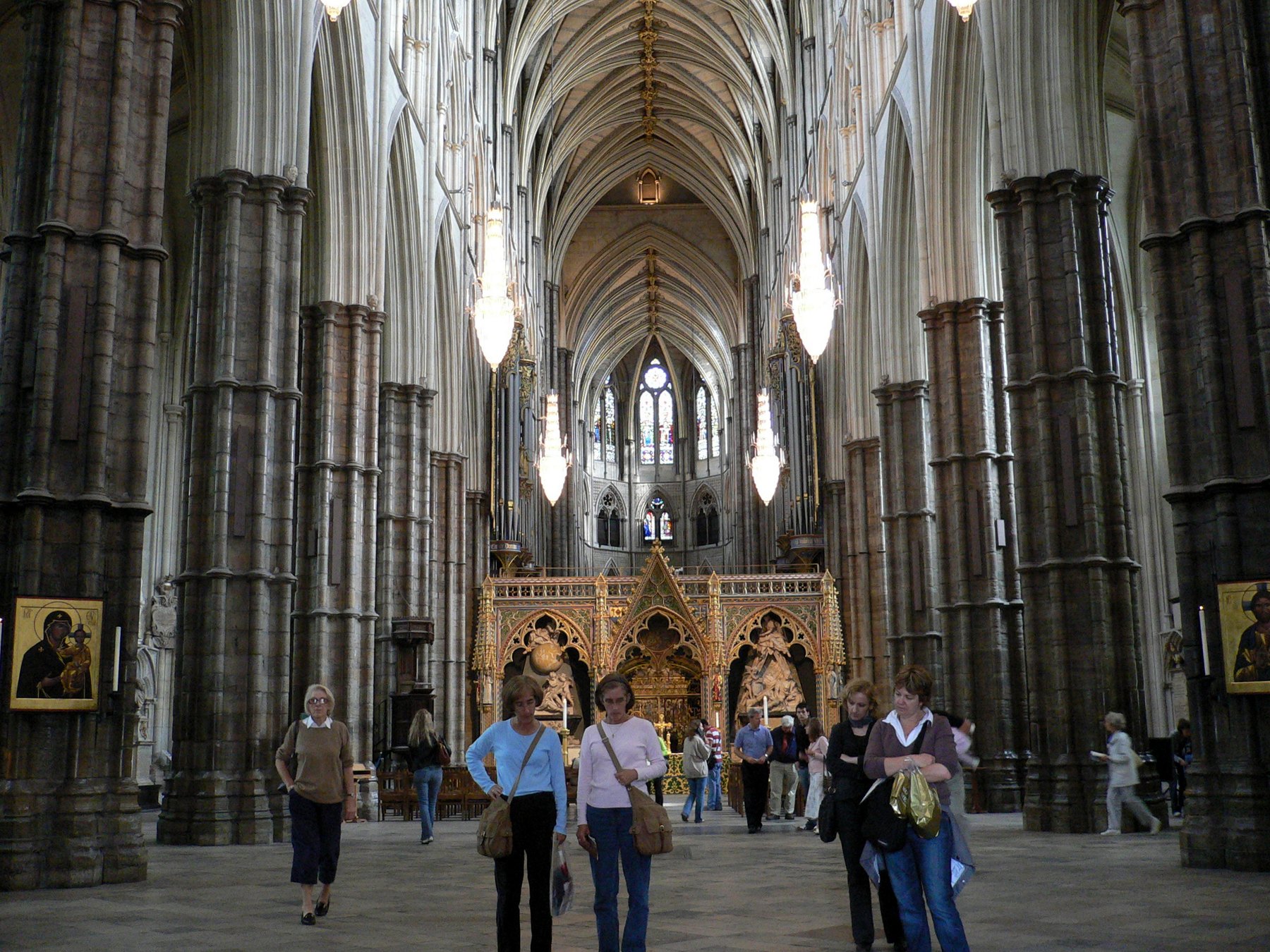
Once you’ve cleared security and find yourself beneath the huge vault of the main nave, you may not know where to look first. I’ve put together a list of the eight biggest highlights that would be a sin to miss.
1. The Coronation Chair and the seat of kings
As soon as you get your bearings, head straight for the famous Coronation Chair. This unassuming but historically priceless piece of wooden furniture was commissioned by King Edward I back in 1296. The chair was originally designed to hold the legendary Stone of Scone beneath it, which the English had brought back at the time as spoils of war from Scotland.
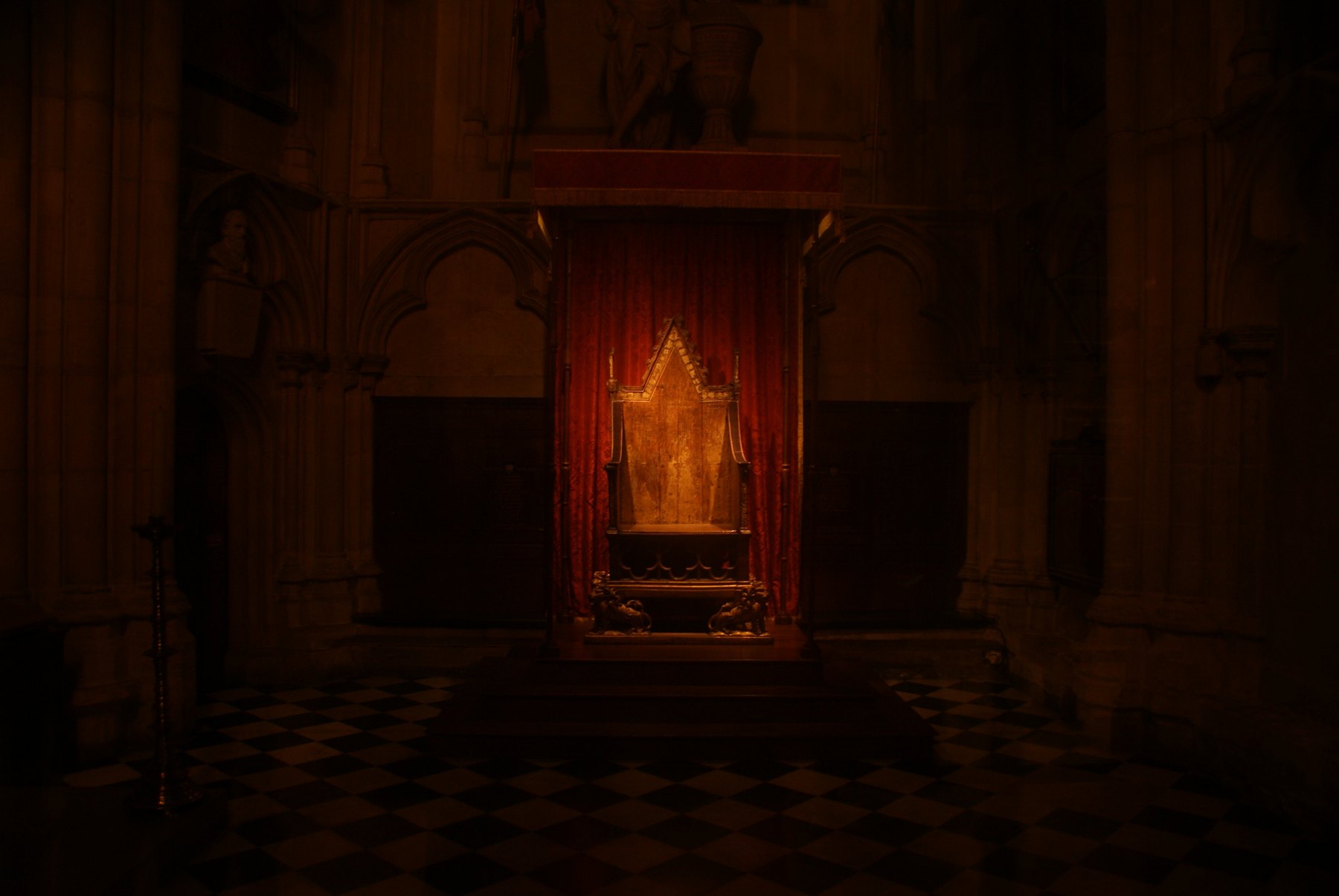
It’s said to be the oldest piece of English furniture still used for its original purpose. Every British monarch has been crowned in this chair since the 14th century. In May 2023 the closely watched coronation of Charles III took place here, for which the Scottish stone was ceremonially lent to London for a few days.
2. The Henry VII Chapel and its breathtaking fan vault
At the eastern end of the Abbey is a space that many call the most beautiful part of the whole building. The Henry VII Chapel (often called the Lady Chapel) is an absolute masterpiece of late English Gothic. When you raise your eyes upward, you’ll see an architectural wonder in the form of the so-called pendant fan vault.
This vault looks as if it defies gravity, and the stone decoration resembles delicate lace. Many monarchs are buried here, including Henry VII himself and his wife Elizabeth of York, who have gorgeous gilded effigies. 💡 Tip: this part tends to be very crowded, so I recommend stopping, taking a breath and looking mainly upward so you can soak in the beauty in peace.
3. Royal tombs: Elizabeth I and Mary, Queen of Scots
The Abbey hides incredible stories, and the one about two feuding sisters is among the most powerful. In the north aisle of the Lady Chapel you’ll find a magnificent tomb where Queen Elizabeth I and her half-sister Mary I (known as Bloody Mary) rest together. Although in life they stood against each other religiously and politically, today their lead coffins are stacked on top of one another. Only the effigy of the Protestant Elizabeth, however, is visible.
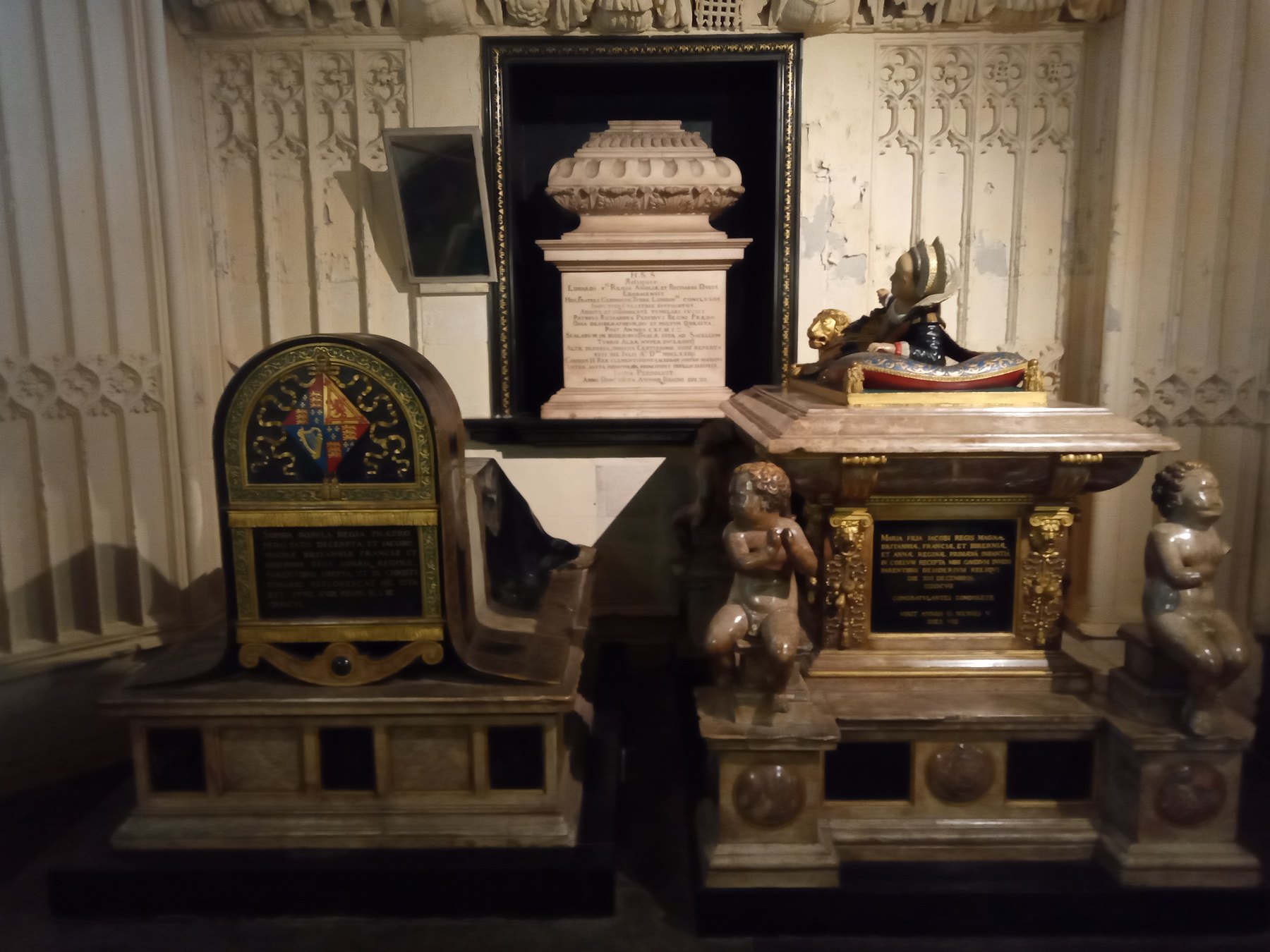
Directly opposite, in the south aisle, rests Mary, Queen of Scots. She was executed on the orders of Elizabeth I herself, but her son James I had his mother’s remains ceremonially moved to Westminster. This created the paradoxical situation of a son burying his mother just a few metres from the woman who signed her death warrant.
4. The scientists’ corner and the ashes of Stephen Hawking
Many tourists assume that Britain’s famous scientists lie alongside the writers, but in fact they have their own place of honour right in the main nave. This space is nicknamed Scientists’ Corner. The most striking feature here is the huge, ornate monument to Isaac Newton, who was buried in the Abbey in 1727.
Nearby also rests the father of evolutionary theory, Charles Darwin. But what stirs the strongest emotion in many visitors is an unassuming slab in the floor, under which the ashes of Stephen Hawking were placed in June 2018. His grave lies exactly between Newton and Darwin, and it’s engraved with his famous equation for the entropy of a black hole.
5. Poets’ Corner: a place for literary giants
If you love classic literature, your heart will leap in the south transept, which for centuries has been called Poets’ Corner. The tradition began in 1400 with the burial of Geoffrey Chaucer, author of The Canterbury Tales. Ever since, more literary giants who shaped world culture have been added here.
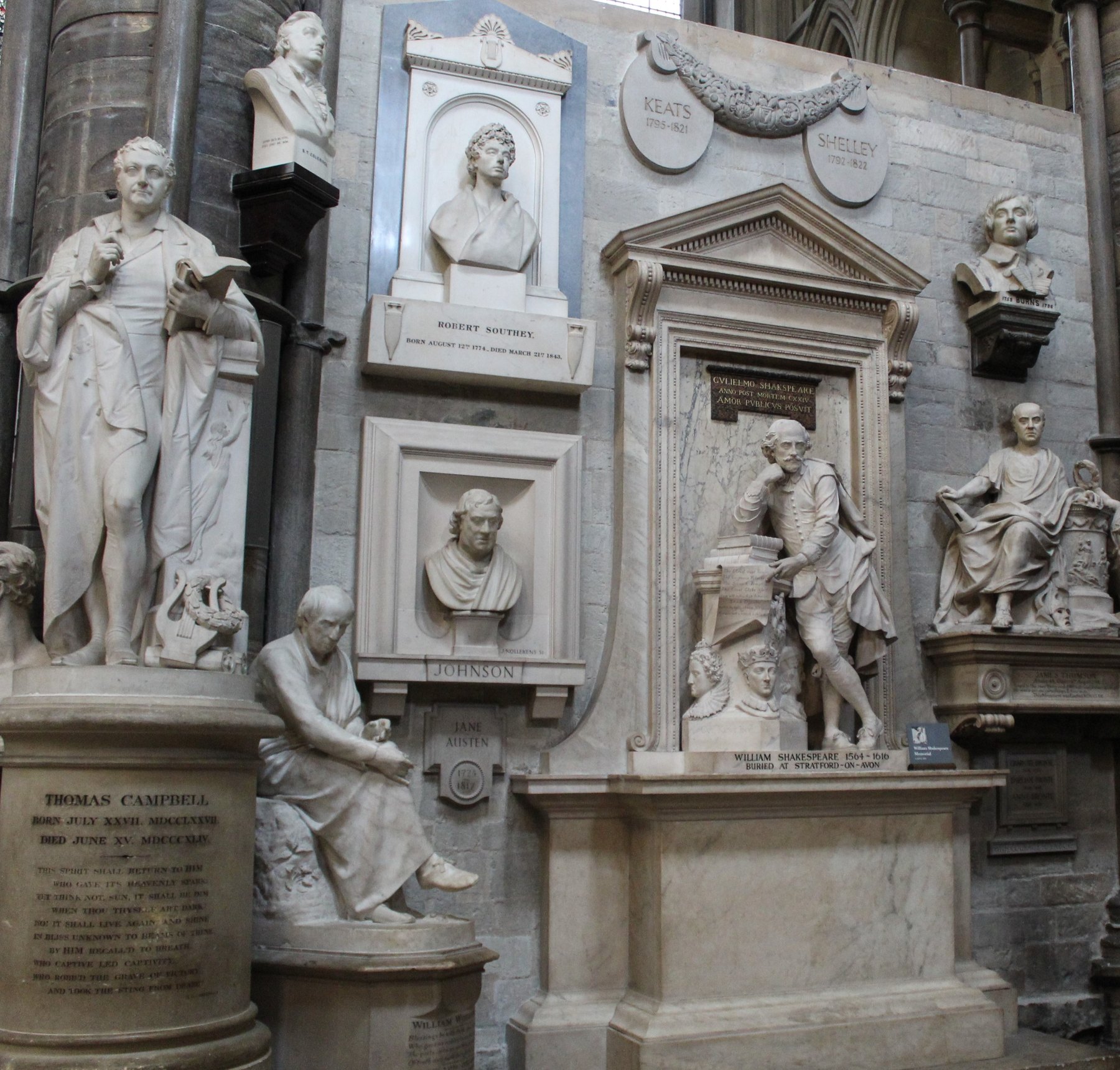
Here you’ll find the graves of greats such as Charles Dickens and Rudyard Kipling. But not everyone with a memorial here is actually buried here. William Shakespeare, Jane Austen and the Brontë sisters, for example, have their unmissable monuments here even though their remains rest elsewhere in England.
6. The Tomb of the Unknown Warrior
Right by the main west entrance to the Abbey, set into the floor, is a grave that holds a truly unique place in British society. The Tomb of the Unknown Warrior holds the body of an unidentified British soldier brought back from the battlefields of the First World War. He was buried here on 11 November 1920 amid enormous public attention.
Interestingly, it’s the only grave in the entire Abbey that must not be walked over. While tourists routinely tread on the tombstones of kings and scientists, this space is reverently roped off. There’s also a custom that royal brides lay their wedding bouquet on this tomb. Princess Kate did so in 2011.
7. The Czech connection: Anne of Bohemia and the “ragged regiment”
You might not expect it, but Westminster Abbey also hides a fascinating Czech connection. In the new museum space, the Queen’s Diamond Jubilee Galleries (set high up in the triforium), there’s a collection of the so-called “ragged regiment”. These are historic funeral effigies, realistic wax or wooden figures of monarchs that were carried in funeral processions.
Among these rare exhibits is a likeness of Anne of Bohemia. She was the beloved daughter of the Czech emperor Charles IV and the first wife of the English king Richard II. For Czech travellers it’s a lovely detail and a hidden gem that most international tourists have no idea about.
8. The Cloisters, an oasis of calm
After touring the darker aisles and monumental tombs, don’t miss the outdoor covered walkway known as the Cloisters. This square courtyard lined with Gothic arcades once served the monks for meditation and walks. It has kept a beautifully peaceful atmosphere that contrasts sharply with the bustle of London’s streets.
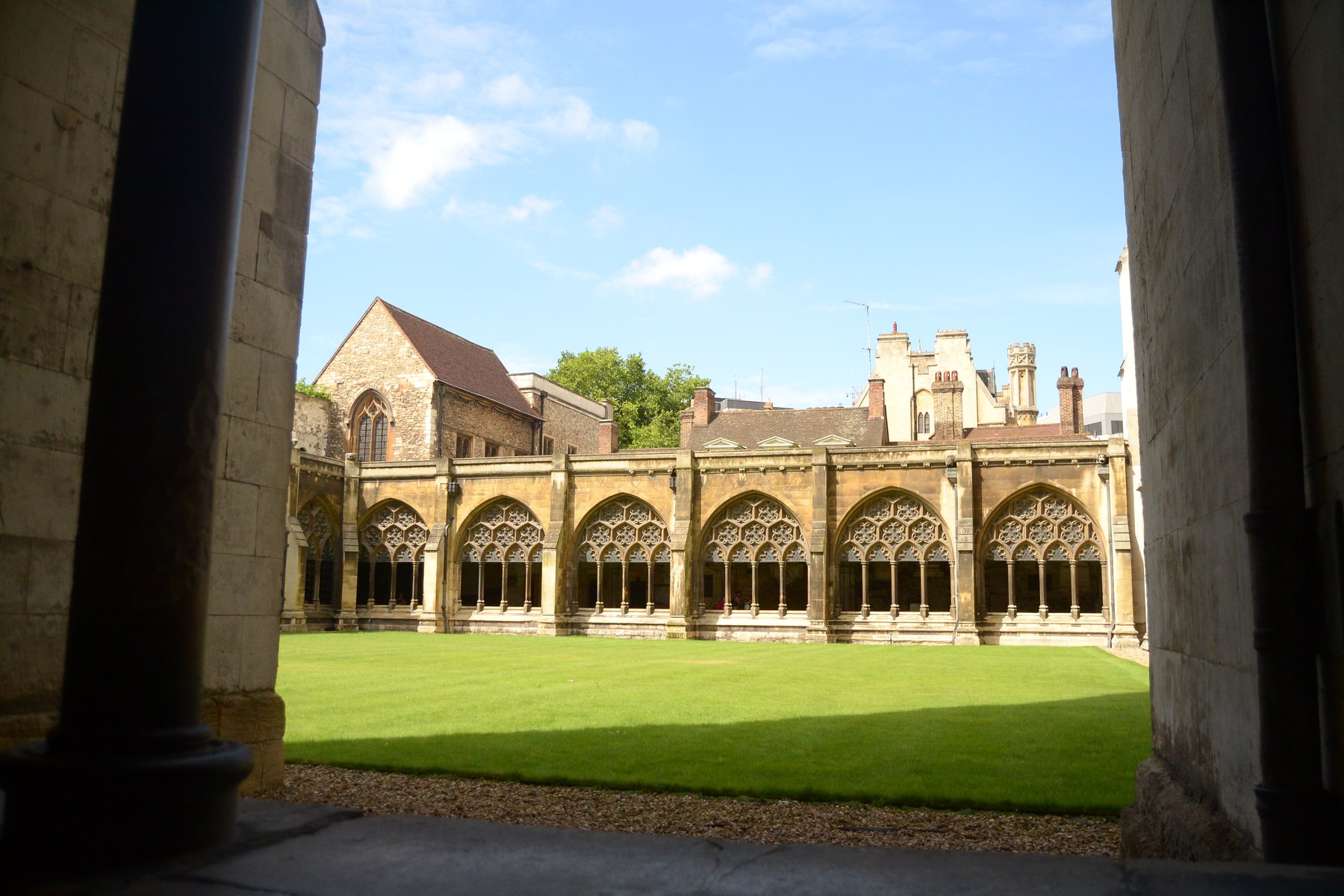
From the Cloisters you can also reach the Chapter House and the College Garden, said to be the oldest continuously cultivated garden in England. 💡 Tip: if you want to take really beautiful photos without crowds in the background, the Cloisters are the ideal spot, because the light beautifully catches the shadows of the Gothic arches here.

Westminster Abbey tickets and opening times
Don’t forget that this is, first and foremost, a working Anglican church. Tourist tours have their designated times and follow the current schedule of services. The great news, though, is that the price of every ticket includes a multimedia audio guide. It handles 14 languages, and you can either borrow it on the spot or simply download it to your phone.
Basic adult admission comes to £31. For summer 2026, though, the British have prepared a pleasant surprise in the form of a temporarily reduced VAT, so from late June to early September you’ll save. In any case, one crucial rule applies. Always buy tickets online in advance, otherwise you’ll spend ages in a crazy queue at the box office and lose a lot of time.
| Category | Price 2026 | Summer discount (25 Jun–1 Sep) |
|---|---|---|
| Adult | £31 (~€36) | £27.13 |
| Senior 65+ and student | £28 (~€33) | £24.50 |
| Child 6–17 | £14 (~€16) | £12.25 |
| Child under 5 | free | free |
As for opening times, don’t plan your visit for a Sunday. That’s when the church is completely closed to tourists and only those attending services can get inside. The last entry for tourists is possible roughly an hour before closing time, so don’t leave it until the very last minute.
| Day | Open |
|---|---|
| Monday–Friday | 9:30 am–3:30 pm |
| Saturday | 9:30 am–3:00 pm |
| Sunday | CLOSED to tourists (services only) |
The Abbey is regularly closed on Christmas Day and Boxing Day (25 and 26 December). It can also happen that the doors close for a sudden state ceremony or a special event. So always check the current calendar right before your trip, so you’re not left staring disappointedly at closed gates.
💡 One final tip: the cheapest and, in my opinion, the most beautiful option of all is the evening Evensong service, which you can attend completely free (I explain it all in detail a little further down). You can get standard paid tickets for the tourist tour directly on westminster-abbey.org or conveniently through GetYourGuide.
How to get to Westminster Abbey
Westminster Abbey sits right in the vibrant heart of the city. You’ll find it right next to Parliament and the famous Big Ben, so you definitely won’t miss it while wandering the centre. The best option is to take the Underground to Westminster station, from where it’s about a 4-minute walk to the main entrance. Another good alternative is St James’s Park station, which is just a touch further away.
A visit combines beautifully with a classic London loop. You can take a walk straight across Parliament Square, check out the Thames embankment and soak up that true British atmosphere. For planning your Underground journey, be sure to use the official TfL website. It’s the most reliable companion for all of London’s public transport.
And how long will you actually spend here? For the main route and the best-known tombs, roughly 1.5 to 2 hours will be enough. But if you’re a history lover who won’t skip even the triforium galleries, set aside a good 3 hours. Keep this in mind so you don’t end up with a rumbling stomach frantically hunting for some emergency sandwich!
How to get into Westminster Abbey for FREE: Evensong
This is the promised tip for everyone who wants to soak up the atmosphere of this magical place but doesn’t want to pay the fairly steep admission. Every evening the Abbey holds a so-called Evensong, a sung evening service. Entry to this event is completely free, you don’t need any ticket, and everyone is welcome regardless of faith.
Evensong is usually held Monday to Saturday at 5:00 pm and on Sunday at 3:00 pm. It lasts about three quarters of an hour, sung by the resident choir, which ranks among the world’s best. You enter the Abbey through the main Great West Door, and I definitely recommend arriving at least 20 to 60 minutes early, because capacity is limited and it’s first-come, first-served.
There’s one big catch, though. During the service the stewards guide you along a precisely marked route to the pews. It’s not a tourist tour, so you can’t wander freely around the church, examine the tombs in the side chapels or take selfies. Photography is strictly forbidden at this time. But the experience of the wonderful music echoing off the Gothic vault is absolutely magical, and it gives you an authentic sense of what the Abbey has served for a thousand years.
Practical info: tickets, photography and opening times in 2026
Admission to the Abbey may seem quite expensive at first glance. A standard adult ticket costs £31 (about €36), students and seniors over 65 pay £28, and children aged 6 to 17 pay £14. The youngest children under five get in free. The price of the ticket automatically includes a very high-quality multimedia audio guide, available in 14 languages.
But I have good news for this summer. As part of a government campaign, temporarily reduced prices thanks to lower VAT apply from 25 June to 1 September 2026. During this period an adult pays a discounted amount of around £27.13. You can conveniently secure your tickets through the GetYourGuide comparison site, or find them on the official website. Definitely buy online in advance to avoid the queues at the box office.
So what about all that much-debated photography? You may have read in some older guide that pictures aren’t allowed inside. That’s no longer true. Since 2018 personal photography has been permitted, though with clear rules. You can’t use flash, tripods or selfie sticks. A complete photo ban applies only in three specific zones: the Shrine of St Edward, St Faith’s Chapel and the Diamond Jubilee Galleries museum.
Historically, the building is inextricably linked with King Edward the Confessor, who consecrated the original church at the end of 1065. Its present Gothic form was begun by King Henry III in 1245, because he wanted to rival France’s famous cathedrals. Getting here is dead easy. The nearest Underground stations are Westminster or St James’s Park, both less than a five-minute walk from the entrance. If you need to sort out London transport, it’s worth checking the official Transport for London website.
Stories hidden beneath the stone vault
The sisters who lie in one grave
It gives me chills how history can toy with human fates. Picture the Protestant Queen Elizabeth I and her Catholic half-sister Mary I, better known as “Bloody Mary”. In life they stood on opposite sides of the barricade and religious disputes tore them apart.
Today these two women lie in a single tomb in the north aisle of the Henry VII Chapel. Their coffins are stacked on top of each other, with only the effigy of Elizabeth visible, resting on top.
The inscription on their shared resting place is almost eerily reconciliatory. It proclaims that the sisters, united by throne and grave, await the resurrection here. Death simply wiped away all the bloody scores they never managed to settle in life.
The queen moved by her rival’s son
This is perhaps the most fascinating paradox of the whole Abbey. Mary, Queen of Scots was executed on the orders of Elizabeth I after a long imprisonment. She would have remained buried in oblivion had her own son, King James I, not come to the English throne.
He decided to put things right and had his mother’s remains ceremonially moved to Westminster. He commissioned an utterly magnificent marble tomb for her to show everyone her importance.
And the final irony? She lies in the south aisle, just a stone’s throw from the woman who sent her to the scaffold. If those two meet somewhere in the afterlife, the conversations probably aren’t exactly calm chats over tea.
Scientists among the saints
Most guides will steer you towards the so-called Poets’ Corner, but I find the scientific one in the main nave more exciting. This is where Isaac Newton and Charles Darwin lie, giants who rewrote our understanding of the world. Despite the disputes over evolution, they rest right in the heart of the Anglican church.
It completely floored me to learn that in 2018 the ashes of Stephen Hawking were added here. They placed him exactly between the graves of Newton and Darwin.
On his memorial slab you won’t find any religious verses, but the famous equation describing the entropy of a black hole. It’s a perfect illustration of how Britain knows how to honour brilliant minds regardless of exactly what they believed.
The grave you’re not allowed to walk over
The Abbey’s floor is literally strewn with memorial slabs and names that thousands of tourists tread on every day. But there’s one absolute exception that everyone must give a wide berth. It’s the Tomb of the Unknown Warrior from the First World War, laid here in 1920.
It embodies the memory of all the ordinary lads who fell in the senseless trenches and never came home. Stepping on this grave is an absolute taboo, and the Abbey’s stewards watch over it very strictly.
There’s one more beautiful tradition tied to it, introduced by the Queen Mother. When Princess Kate married here in 2011, she laid her wedding bouquet upon it. A small connection between grand royal joy and quiet respect for the fallen.
Where to go next from Westminster
Once you’ve got the tour behind you, you’ll find yourself in the epicentre of British politics. Literally across the street stands the Houses of Parliament with its iconic Big Ben tower. If you’re just working out how to build your itinerary, take a look at our detailed article with tips on what to see and do in London.
Just cross the bridge and directly opposite you’ll find the famous observation wheel, the London Eye. If you’re more drawn to royal history, you can walk through a lovely park all the way to Buckingham Palace. Anyone who prefers darker tales full of intrigue and executions shouldn’t miss the fortress of the Tower of London. And for a rainy afternoon, the magnificent British Museum is a safe bet.
Frequently asked questions
How much does admission to Westminster Abbey cost?
Standard admission for an adult is £31 (approximately €37). Students and seniors pay £28, children aged 6 to 17 pay £14. During summer 2026, a temporary discount applies, bringing the adult ticket to around £27. A multimedia audio guide is always included in the price.
Can you go inside for free?
Yes, if you attend the choral service called Evensong. It usually takes place Monday through Saturday at 5:00 PM and on Sunday at 3:00 PM. Entry is free without a ticket, but you cannot freely explore the monuments or take photos during the service.
Can I take photos inside the Abbey?
Yes, personal photography has been allowed since 2018. However, you may not use flash, tripods, or selfie sticks. Photography is still prohibited in three zones: at the shrine of Edward the Confessor, in St Faith’s Chapel, and in the upper galleries.
Who founded the Abbey?
The original church on this site was built and consecrated by English King Edward the Confessor in December 1065. The current Gothic structure was then begun by King Henry III in 1245.
Where exactly are Stephen Hawking and the scientists buried?
Stephen Hawking’s ashes were interred in 2018 in the main nave of the Abbey in the so-called Scientists’ Corner. His grave is located directly between the tombs of Isaac Newton and Charles Darwin.
Is it open on Sundays?
For tourists, the Abbey is strictly closed on Sundays. As a functioning church, this day is reserved exclusively for worship services, which you may attend, but tourist visits are not possible.
How long does a visit take?
Most visitors spend approximately 1.5 to 2 hours inside. If you decide to explore the Diamond Jubilee Galleries museum and take your time walking through the outdoor cloister, plan for three hours instead.
Which Underground station is closest?
The closest station is Westminster (Jubilee, District, and Circle lines), about a 4-minute walk away. Alternatively, St James’s Park station is just a little bit further.
Tips and Tricks for Your Vacation
Don’t Overpay for Flights
Search for flights on Kayak. It’s our favorite search engine because it scans the websites of all airlines and always finds the cheapest connection.
Book Your Accommodation Smartly
The best experiences we’ve had when looking for accommodation (from Alaska to Morocco) are with Booking.com, where hotels, apartments, and entire houses are usually the cheapest and most widely available.
 🚗 Car rental on the roadVerified rental cars in Great Britain
Search with the DiscoverCars comparison engine — it compares prices from dozens of local and international rental companies, and most bookings come with free cancellation.
Compare car prices in Great Britain →Don’t Forget Travel Insurance
Good travel insurance will protect you against illness, accidents, theft, or flight cancellations. We’ve had a few hospital visits abroad, so we know how important it is to have proper insurance arranged.
Where we insure ourselves: SafetyWing (simple monthly subscription) and TrueTraveller (for extra-long trips).
Find the Best Experiences
Get Your Guide is a huge online marketplace where you can book guided walks, trips, skip-the-line tickets, tours, and much more. We always find some extra fun there!