Everyone will tell you that this road, also known as Highway 93, is simply something you have to see with your own eyes. When I first drove the Icefields Parkway with my mum, I knew instantly I had to come back — it’s hands down the most beautiful road I’ve ever driven. It’s also one of the reasons we kept making the trip from Banff to Jasper just to go to the cinema (even though Banff has its own). Sweeping curves beneath massive snow-capped peaks, wild turquoise lakes that force you to pull over because your brain simply can’t process that intense colour, and enormous glaciers creeping down from the mountains. The entire landscape is so epic that you sometimes feel like you’ve stepped right into a nature documentary.
I know, I know — the internet is absolutely brimming with Icefields Parkway guides. But none of them will walk you through this road as thoroughly as ours. 😁 Every stop from the iconic must-sees to the hidden gems where Lukáš and I had the place completely to ourselves. Accommodation, fuel, crowds, hikes, what to watch out for, and why the Snocoach left us a little disappointed. You’ll find that those 232 kilometres can easily fill an entire day — and you still won’t have had enough. ☺️
TL;DR
- Where is it: Highway 93 (Icefields Parkway) connects the Canadian national parks of Banff and Jasper in the province of Alberta.
- Length and time: It’s 232 kilometres long. The drive alone takes roughly 3 hours, but with viewpoints and hikes, set aside a full day (ideally 8 to 10 hours).
- Key rule: There’s zero mobile signal along the route and only one single petrol station with a hefty mountain surcharge. Fill up in Banff or Jasper before you set off.
- Wildlife: You’re in bear country. Bear spray is an absolute must, even if you’re only stepping out for a short viewpoint.
- Route highlights: The turquoise Peyto Lake, the thundering Athabasca Falls, the mighty Athabasca Glacier, and our favourite hike Wilcox Pass, where you’re virtually guaranteed to spot bighorn sheep.
The full destination guide: Rocky Mountains — guide and what to see
When to Drive the Icefields Parkway and Essential Info
Highway 93 Icefields Parkway is open year-round, but if you want to enjoy all the hikes and see the lakes in their most dazzling turquoise, plan your trip squarely for the summer months. Even so, be prepared for the fact that the Canadian Rockies play by their own rules — the weather here can flip on a dime. Sunshine can give way to a heavy downpour within ten minutes, and Lukáš and I quickly learned that keeping a rain jacket within arm’s reach is the absolute foundation of a successful day out.
The best time to visit is from late June to early September. But I do need to warn you about something we experienced first-hand. Even in the middle of July you can get hit by a sudden snowstorm. During our summer road trip, we had mornings where we were scraping ice off the windows of our beloved van Chiquita with chattering teeth, only to be sweating in a t-shirt by the lake that afternoon, desperately seeking shade. Lukáš and I quickly became disciples of the layering system — you simply can’t function here without it. Winter tyres are mandatory from November to April, but in winter the road is often closed due to avalanche risk and conditions are only suitable for very experienced drivers accustomed to unpredictable mountain blizzards.
One more thing you absolutely cannot forget: the entire highway lies within national park territory, so without a valid park pass they won’t let you through. You’ll be checked at the toll gate just past Lake Louise or past Jasper, and you can buy your pass in advance online through the official Parks Canada website. There is absolutely no mobile signal along the entire length of the road, so I strongly recommend downloading offline maps to your phone (many people search for “icefields parkway google maps” for offline use) or grabbing the official “icefields parkway map pdf” directly from the Parks Canada website so you know exactly which kilometre to stop at. If you want to stay connected, consider picking up an eSIM with a Canadian data plan from Holafly or Yesim before your trip — though keep in mind that coverage along the parkway itself is essentially nonexistent regardless of provider.
Where to Stay and How Much It Costs
Finding accommodation directly on the Icefields Parkway is quite a challenge, because you’re in the middle of protected wilderness with an absolute minimum of commercial buildings. Most people solve it by setting off early in the morning from Lake Louise (or Banff) and driving through to Jasper, where they spend the night. From our own experience, this is the most sensible option — unless you’re sleeping in your car or a tent like we did.
If you’re travelling with a rental car and looking for hotels, brace yourself for seriously high prices. The Canadian Rockies are an expensive destination, and during peak summer season prices routinely climb to 200–320 € per night for two people. It’s the price you pay for the staggering beauty all around you, so it’s worth factoring this in when you’re building your budget.
Accommodation tips along the route and nearby:
- On the route itself: There are essentially just a handful of options. One is The Crossing Resort, roughly halfway along the route near the petrol station — very handy when you’re tired from driving. A more luxurious option is Glacier View Lodge right at the Columbia Icefield, where you’ll pay a premium but wake up to spectacular views of the ice from your room.
- In Lake Louise (start): We can recommend the stunning and historic Fairmont Chateau Lake Louise if you fancy treating yourself to pure luxury, or the more budget-friendly Mountaineer Lodge.
- In Jasper (finish): At the end of the road, the choice is much wider. A lovely option with a cosy log-cabin feel is Becker’s Chalets right by the river, where you can fall asleep to the sound of rushing water.
If you’re camping like we did, you’ll find several “first come, first served” campgrounds along the route (popular ones include Waterfowl Lakes Campground and the picturesque Wilcox Creek). This means whoever arrives first gets a spot — no reservations, even though the Parks Canada system normally loves bookings. In peak season, this means getting there ideally before 2 PM, otherwise you’ll very likely be out of luck and have to drive on to the next one, which in the wilderness with no signal can be pretty stressful.
A pitch at one of these beautiful backcountry campgrounds without services (you’ll find a pit toilet, a fire ring, and a stack of firewood) costs around 16–20 CAD (roughly 11–14 €) per night. I still remember how we held our breath at one of those campsites when a massive elk strolled past right next to our van. It’s pure, unadulterated romance with nature — just make sure you meticulously store absolutely all food and scented toiletries in your car or in the special bear-proof lockers overnight, because bears have an incredible sense of smell and you definitely don’t want to share your breakfast with one. I recommend reading up on the camping rules on the official Banff National Park website.
Icefields Parkway: 14 Stops You Can’t Miss
Let’s walk through the full itinerary of stops, running south to north — from Lake Louise towards Jasper. This is exactly how the vast majority of travellers do it, and it makes the most sense from a photography perspective too: with the morning sun behind you, your photos will be far more striking. Get your cameras ready, brew some coffee for your thermos, and make sure you’ve got a full tank — we’re heading out. For each stop, I’ve included the approximate kilometre from the toll gate at Lake Louise so you can easily find your way even without the internet.
1. Crowfoot Glacier (km 33)
Just past the 33-kilometre mark, we pulled over for the first time to gaze at Crowfoot Glacier — a glacier shaped like a crow’s foot. You can park right by the road, so you don’t technically even need to get out of the car, though of course you’ll want to. The glacier got its name because it once had three enormous ice tongues that faithfully resembled a giant crow’s talon dug into the rock.
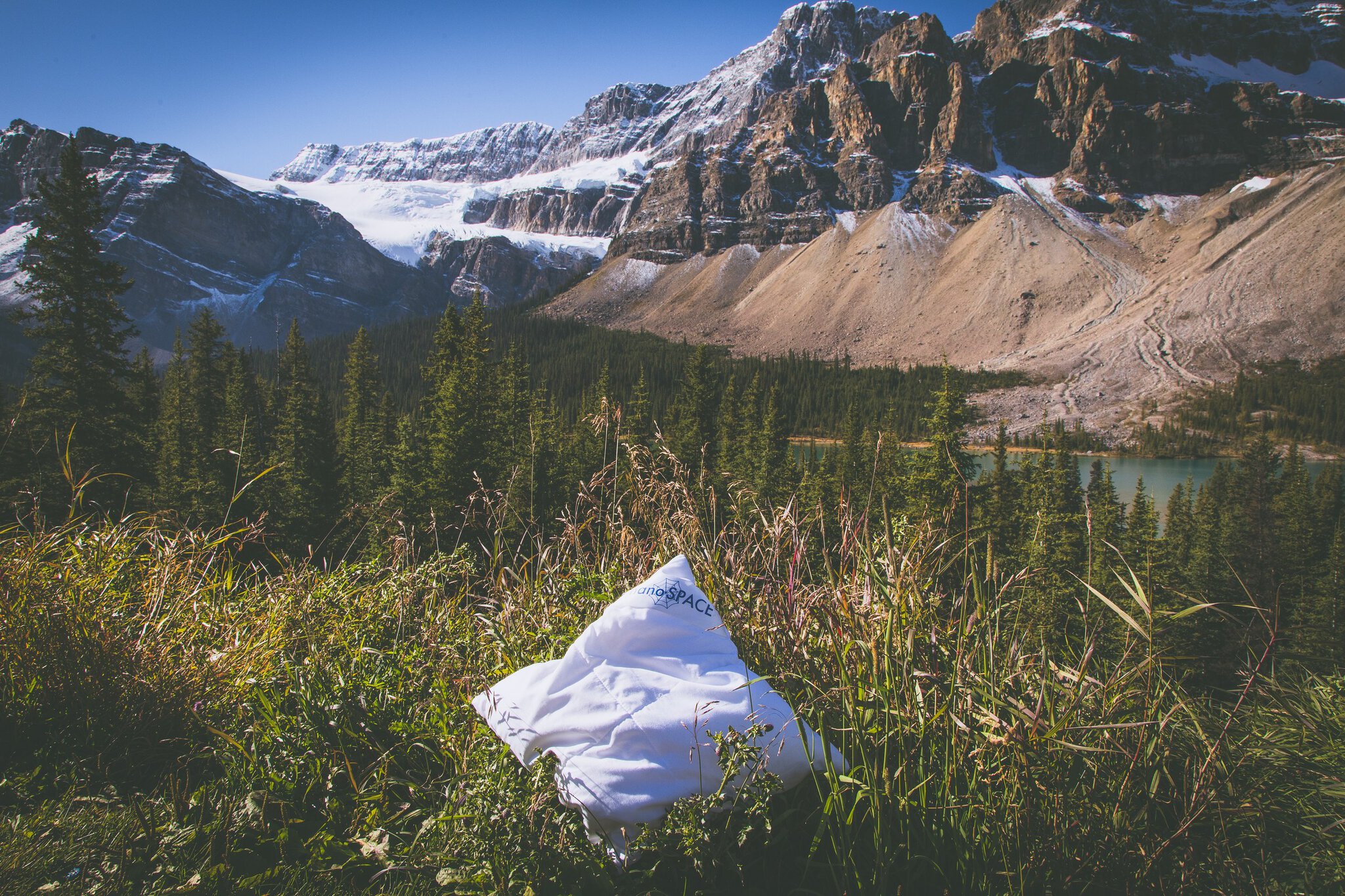
Sadly, global warming has taken a harsh toll — the lowest “toe” has already melted away and disappeared for good. There’s something genuinely poignant about looking at that exposed rock, because you’re witnessing climate change in real time. Even so, it’s a fantastic first taste of what awaits you on this glacier road trip. It tends to be quite windy here thanks to Hector Lake sitting right below in the valley, so grab your windbreaker for this very first stop.
2. Bow Lake and Num-Ti-Jah Lodge (km 39)
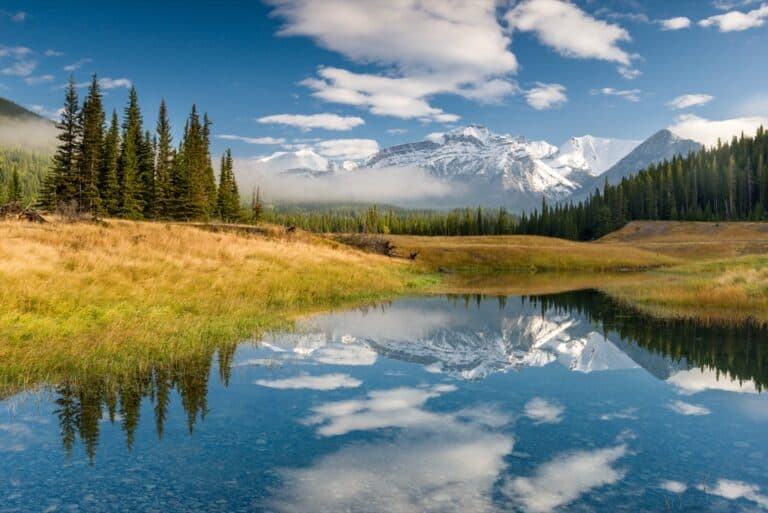
Just a short distance further, you’ll come across Bow Lake — one of the largest and, in my opinion, most gorgeous lakes along the entire route. The water is so incredibly blue and freezing that even if you just dip your fingers in during summer, they go numb instantly. Behind it, the massive Bow Glacier rises majestically, feeding the lake with the rock flour that gives it that surreal turquoise colour — creating a scene that looks like it’s been ripped straight from a postcard you’d secretly envy on Instagram.
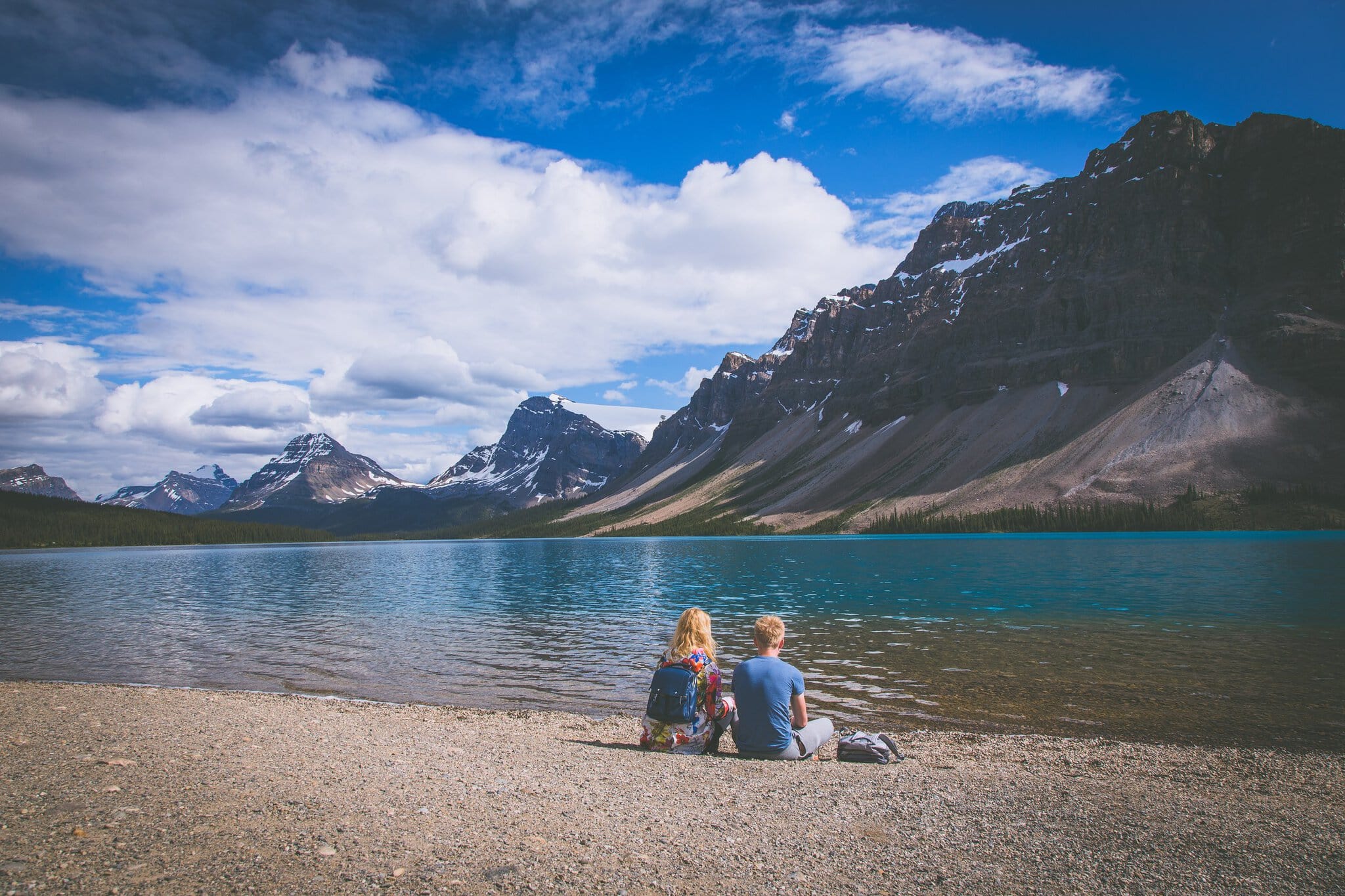
On the lakeshore, you’ll spot the iconic wooden Num-Ti-Jah Lodge with its distinctive red roof, beautifully contrasting against the blue water. It was built by legendary mountain guide Jimmy Simpson in the early 20th century and radiates a wonderfully old-world wilderness atmosphere. It’s a perfect spot for a short stroll along the shore and some stunning reflection photos with the mountains mirrored on the surface. If you have more time and fancy a proper hike, a roughly 9-kilometre trail leads from here to the waterfalls right beneath the glacier itself — but most people spend about half an hour here before pressing on to the next adventure. (We wrote more about the lakes in this area in our Lake Louise guide.)
3. Peyto Lake from Bow Summit Viewpoint (km 40)
This is an absolute classic that you simply cannot skip, even though it does feel a bit like organised chaos at first glance. ☺️ Peyto Lake is probably the most photographed lake along the entire route, and the moment you look down from the viewpoint, you’ll instantly understand why. It has a perfect wolf-head shape (or a dog, as Lukáš insists) and a blazing turquoise colour so vivid it looks almost unreal. Lukáš and I stood up there holding hands, just silently staring, because the view completely disarms you.
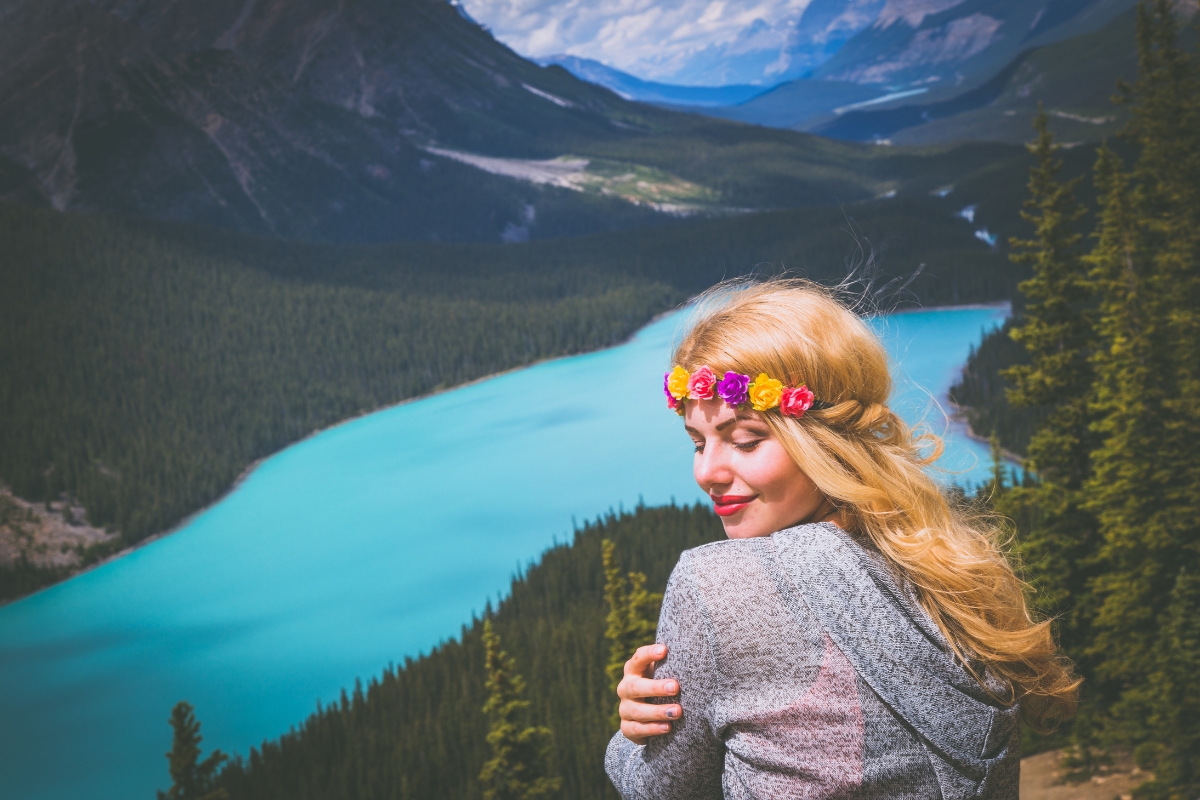
From the large car park at Bow Summit (which, by the way, is the highest point on the entire highway at 2,067 m above sea level), you’ll face a short but fairly steep climb to a wooden viewing platform — about ten minutes of brisk walking. Because it’s a massive tourist magnet from around the world, the platform gets besieged by tour buses in summer and you’ll hear dozens of different languages. Lukáš and I got crafty about it — we wandered along an unassuming beaten path a little further into the forest, where the crowds magically vanished and we finally had the wolf-shaped lake all to ourselves, free to photograph it without stray elbows in every shot.
4. Mistaya Canyon (km 71)
After roughly another half hour of relaxed driving, I’d definitely recommend stopping at Mistaya Canyon. From an unassuming gravel car park, a short trail winds downhill through the forest to the river — barely fifteen minutes of easy walking. Then suddenly a narrow, deep rock gorge opens up before you, where a glacial river surges through with incredible force, carving the pale limestone into amazingly smooth, sculpted shapes that look like works of art.
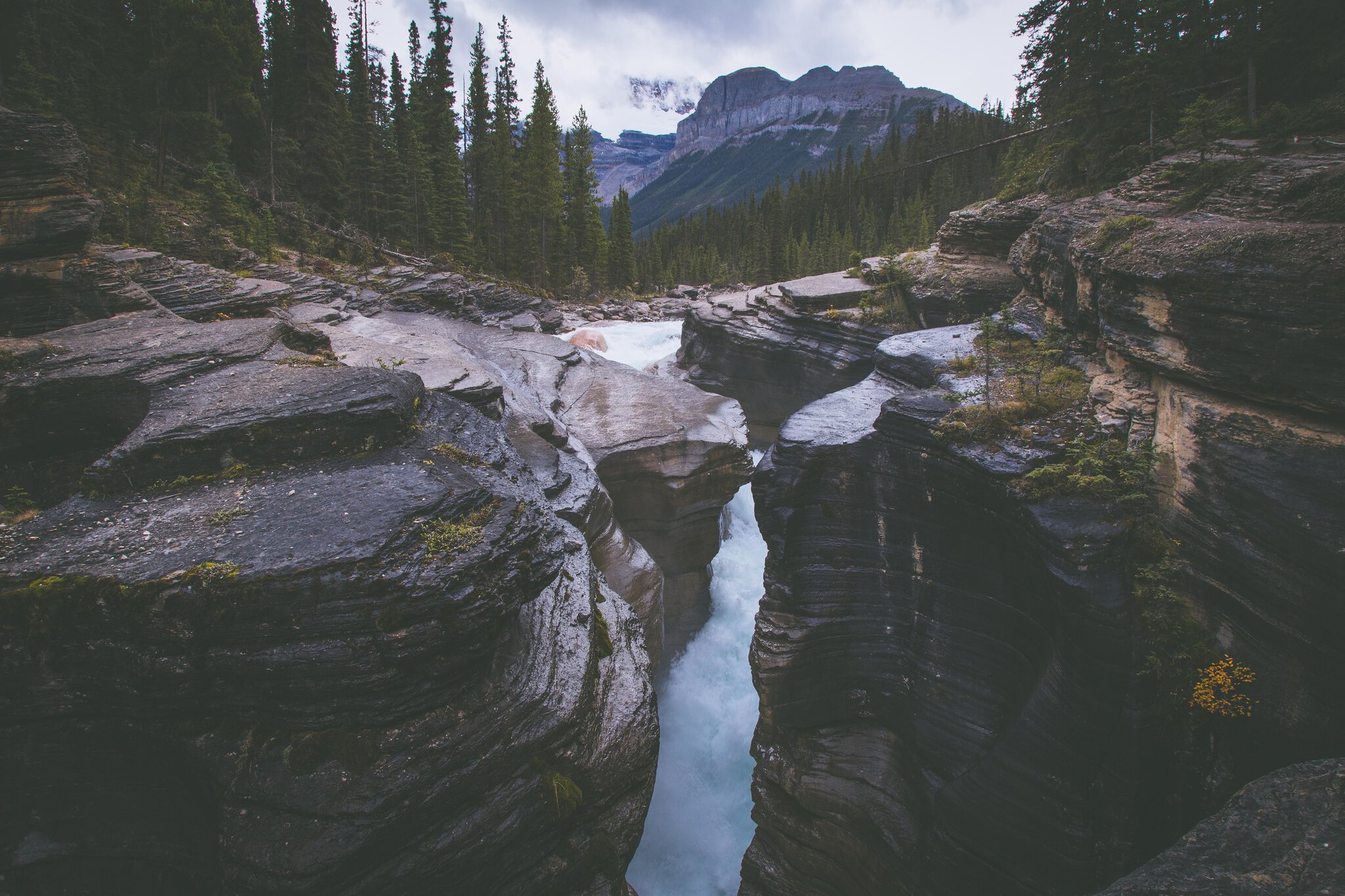
The roar of the wild water is so deafening that you can barely hear each other even when shouting. But please be extremely careful and don’t approach the slippery, wet edges of the rocks — and absolutely don’t try to step over the safety railings for a better photo. The water here is so mercilessly fast and cold that a fall would give you no chance whatsoever. That said, it’s a mesmerising display of raw Canadian nature at its most untamed, and we sat on a safe boulder for a very long time just taking it all in.
5. Saskatchewan Crossing (km 77): A Practical Pitstop
This isn’t so much a natural landmark as an absolutely crucial waypoint where Highway 93 intersects with Highway 11. Saskatchewan Crossing is the only place along the entire 232 kilometres where you can buy fuel, use a proper flushing toilet in a restaurant, or grab something hot to eat. It’s a little island of civilisation in the middle of endless coniferous forests, where everyone pauses to catch their breath.
I do need to give you an honest heads-up about one thing that’ll probably catch you off guard. Prices for absolutely everything — especially fuel — are eye-wateringly high here. The owners know perfectly well that a desperate tourist with an empty tank will pay whatever it takes to avoid being stranded in bear-filled wilderness, so a litre of fuel here routinely costs up to 50% more than in the towns. That’s exactly why we told you at the start to fill up in Banff. When we stopped here back in 2017, we just grabbed an overpriced coffee for the thermos, soaked in a bit of the petrol station ambience, and bolted back towards the mountains.
6. Weeping Wall (km 106)
The Weeping Wall is a massive limestone face on Cirrus Mountain that, during spring and early summer when the snow melts, releases so many cascading streams that the mountain genuinely looks like it’s weeping from dozens of eyes — and you can see the whole show right from your car window. Those tears of water slowly trickle down the grey rock, forming a beautiful web of tiny streams that catch little rainbows in the sunlight.
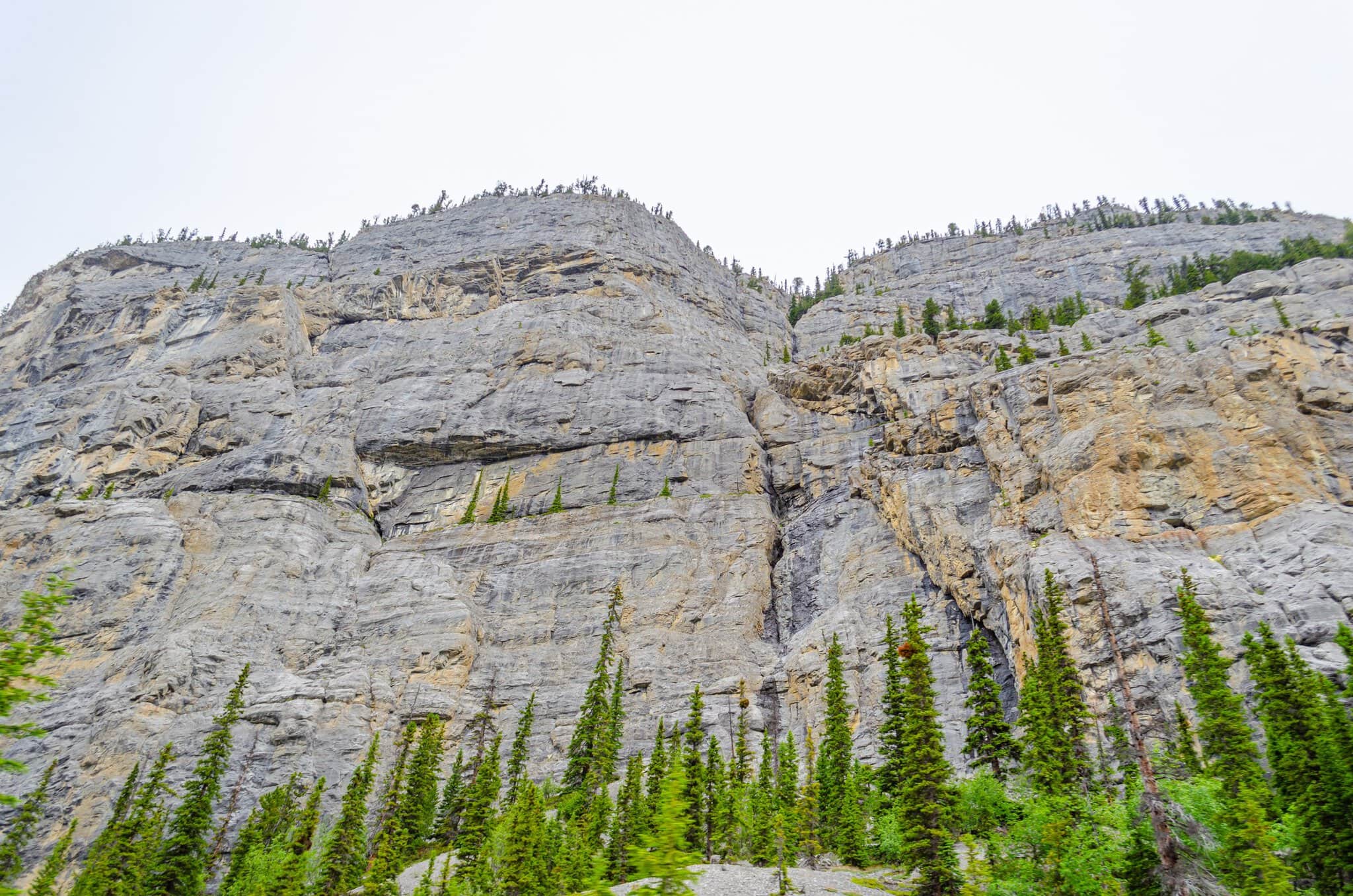
In summer it makes for a lovely, quick stop, but the real magic — and a touch of madness — happens in winter. When all those delicate streams freeze solid and form enormous ice organ pipes, the cliff becomes a world-famous ice-climbing wall, drawing daring climbers with ice axes from across the globe to test their limits. In summer, you’ll at least enjoy a pleasant chill radiating off the rock that gives you a brief respite from the heat.
7. Big Bend and the Summit Viewpoint (km 115)
Just past the Weeping Wall, the road starts climbing sharply and relentlessly, twisting into an enormous U-shaped hairpin aptly called Big Bend. I still remember our beloved old van Chiquita wheezing up this brutal hill in second gear while Lukáš and I sat in tense silence, eyes glued to the temperature gauge, wondering if the poor thing would actually make it to the top without steam pouring from under the bonnet. 😅
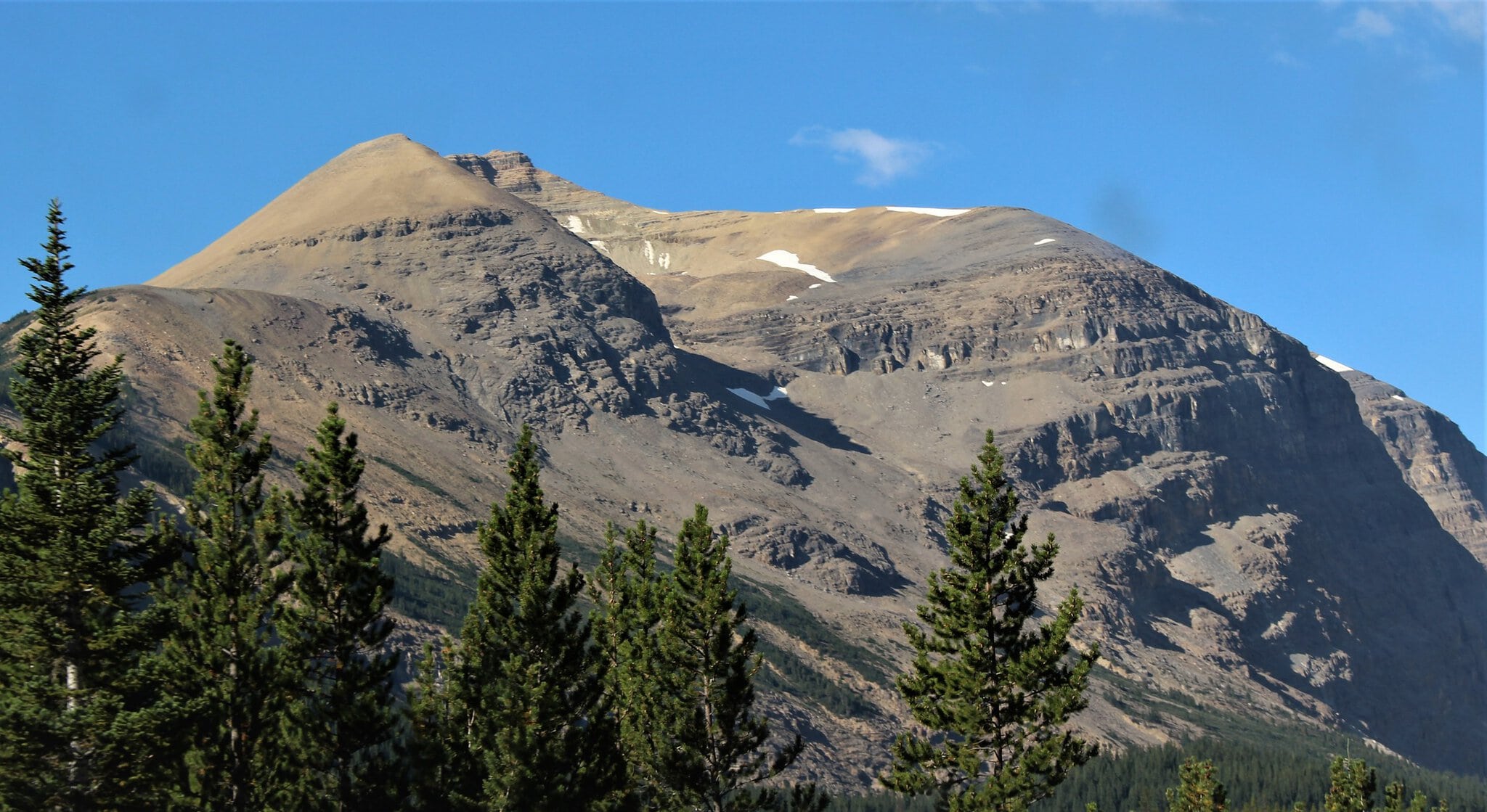
Once you finally crest that seemingly endless hairpin and the engine gets a breather, a small pull-off to a viewpoint car park appears on the right. Definitely stop there. The sweeping view back down the broad Saskatchewan River valley, with its deep, endless forests framed by sheer rock walls, is precisely the kind of jaw-dropping vista that makes people google whether this drive is actually worth it. It absolutely is — and this is where you’ll snap some of the best panoramic photos of the entire trip.
8. Parker Ridge Hike (km 120)
Parker Ridge is exactly the kind of hike that makes you wish you’d planned a whole week here. If you have the time and fancy a proper leg-stretch after hours in the car, this is an outstanding choice. It’s roughly a 5-kilometre return trail with about 250 metres of elevation gain. The narrow path climbs fairly steeply via switchbacks, quickly rising above the treeline to open up brilliant views — and at the very end, an absolute showstopper awaits.

When you finally crest the barren ridge, a fierce cold wind hits you in the face and suddenly a vast panoramic view of the longest glacier tongue in the Rockies — the Saskatchewan Glacier — unfolds before you. You’ll definitely want sturdy footwear for this one; even in mid-July there are treacherous snow patches and it can get quite slippery. Luckily, we never go anywhere without proper hiking boots, which have kept us steady on many a Canadian trail.
9. Columbia Icefield and Athabasca Glacier (km 127)
This is the beating heart of the entire Icefields Parkway. Columbia Icefield is a colossal ice field that’s said to be roughly the size of Vancouver, feeding rivers that flow into three different oceans. I couldn’t fathom that statistic at the time, but once you’re standing there scanning the horizon in every direction, you begin to grasp the sheer scale. What you see from the road is actually “just” one of its tongues — the famous Athabasca Glacier. This is also where you’ll find the main visitor centre, where you can warm up with a hot soup after a breezy afternoon, buy a pair of warm socks, and use the only Wi-Fi for miles around. More official information about activities can be found on the Columbia Icefield website.
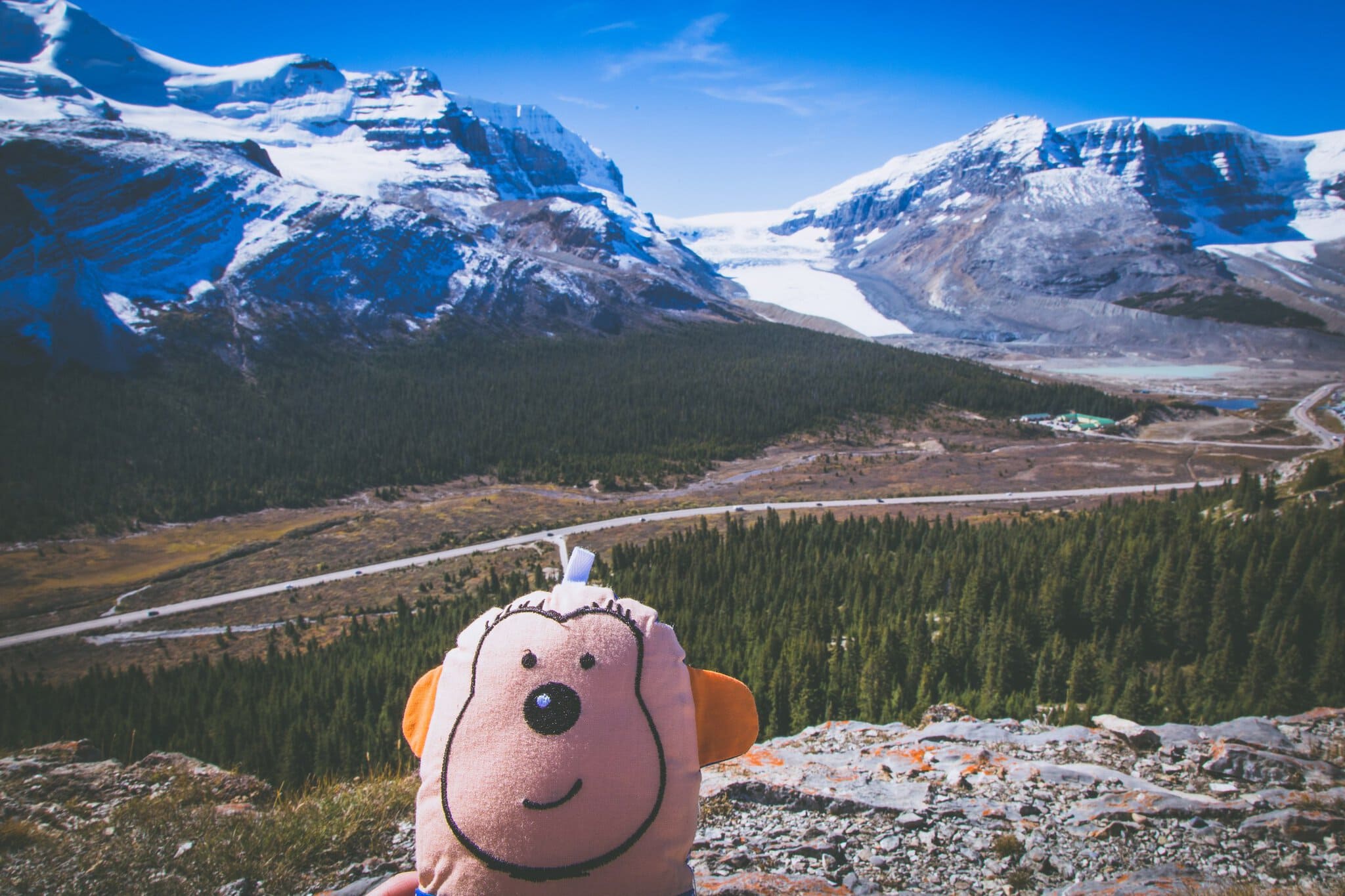
This is also where they sell tickets for the popular “Snocoach” or Ice Explorer — massive buses on monstrous wheels that drive you right up onto the glacier itself, where you then get about 20 minutes to walk around on the ice alongside dozens of other visitors. It costs a fair bit — around 119 CAD (about 80 €) per person. I’ll be honest with you though: for us, it felt a bit like a tourist trap, and the crowds with clicking cameras are truly enormous. Lukáš and I both agreed that a far better and more authentic experience of the raw landscape is to simply walk up to the glacier’s toe on foot, completely free of charge (just park in the lower car park and hike about a kilometre uphill on a steep trail) — though of course you must not step onto the blue ice itself without a mountain guide due to extremely dangerous crevasses.

10. Wilcox Pass Hike: Better Than the Skywalk (km 127)
If you’re craving the absolute best view of Athabasca Glacier and the sprawling Columbia Icefield, skip the pricey commercial attractions for once and join us on the Wilcox Pass hike. You’ll find a small car park tucked right by the road just before the visitor centre. It’s roughly an 8-kilometre return trail that takes about 3 to 4 hours at a comfortable pace, with around 400 metres of elevation gain — enough to work up a good sweat.
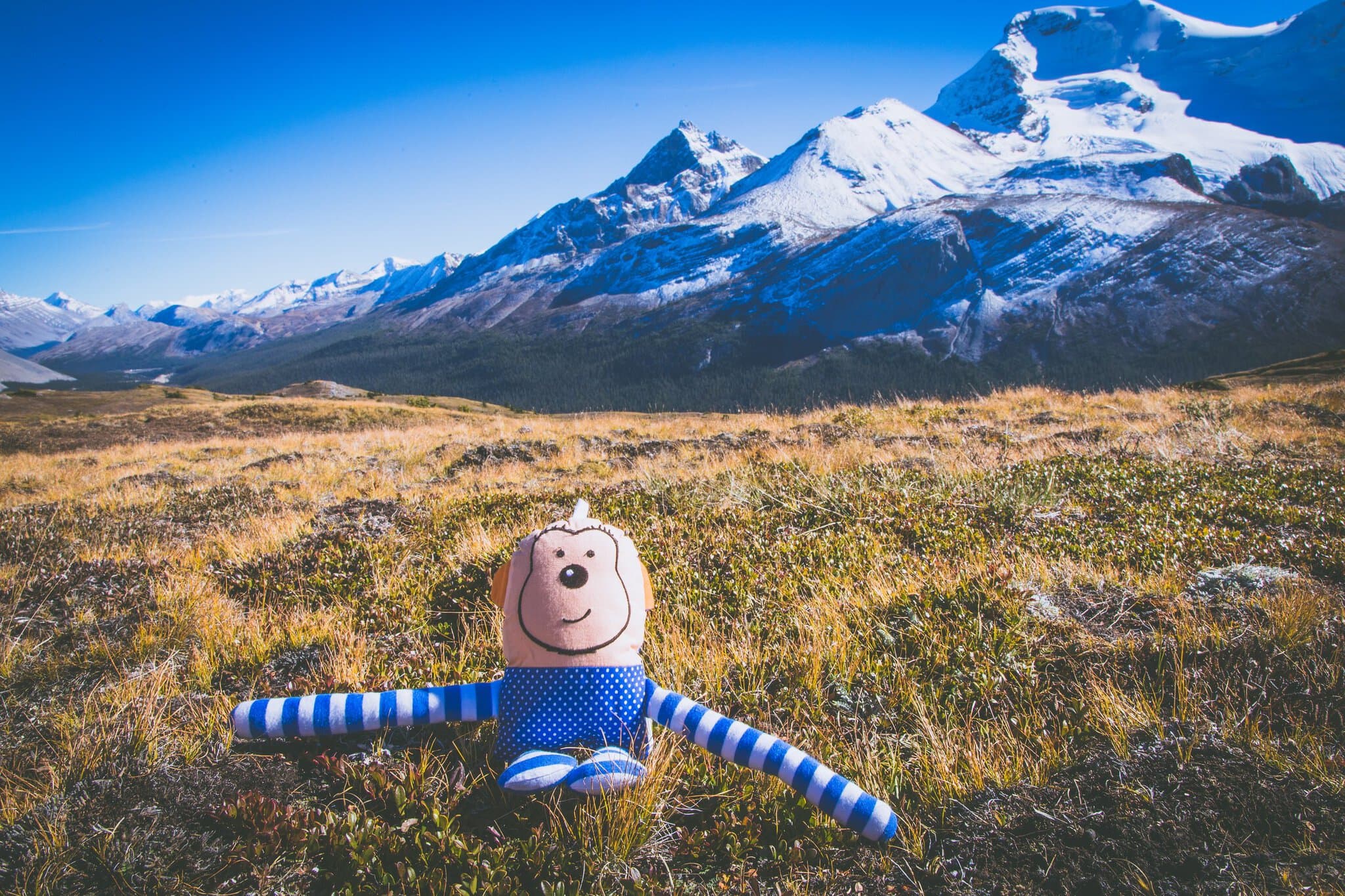
This is probably our single favourite hike in the entire area, and we still think about it to this day. A beautiful forest trail gradually leads you up to vast green alpine meadows. Here you can sit down in the famous red Adirondack chairs, pull out your snacks, and take in the entire white glacial expanse from a stunning bird’s-eye perspective. And what’s the very best part? You’ll almost always spot herds of wild bighorn sheep, peacefully grazing and occasionally fixing you with a curious stare. It’s a quintessentially Canadian experience that won’t cost you a single extra dollar — and it puts every overpriced commercial viewpoint to shame.
11. Glacier Skywalk (km 135)
A few kilometres further on, you’ll find the Glacier Skywalk — a horseshoe-shaped glass walkway cantilevered out over the Sunwapta River valley. Tickets cost around 39 CAD (roughly 27 €), and you can only reach the platform by shuttle bus from the visitor centre — private cars aren’t allowed. For anyone who loves modern architecture, a touch of adrenaline, and the thrill of peering through a transparent glass floor straight down to a 280-metre drop below, it’s certainly a memorable experience that’ll make more than a few heads spin.
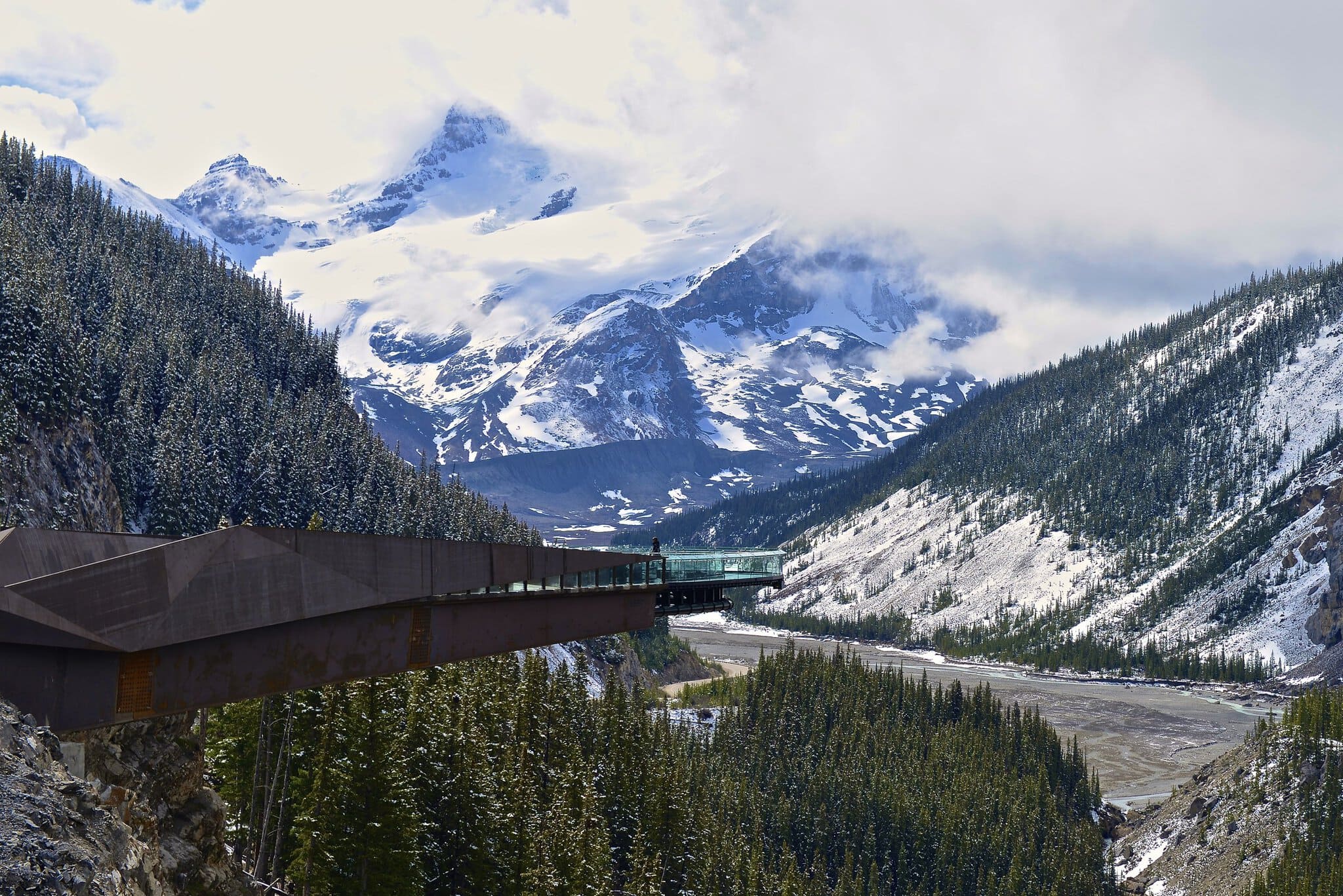
However, if you’ve just come down from Wilcox Pass all sweaty and happy, I’d honestly give the Skywalk a miss with a clear conscience. The views from our hike felt far more dramatic, more expansive, and above all more natural than this somewhat artificial scrum on a glass walkway where you’re constantly waiting for your turn at the railing.
12. Sunwapta Falls (km 175)
As the road gradually draws closer to Jasper, the landscape outside the window begins to subtly transform — the trees grow noticeably taller, the air feels warmer, and the wide valleys open up even more. Take a short break here and stop at Sunwapta Falls, a gorgeous set of thundering waterfalls on the river of the same name. The main upper falls with its iconic little island of green conifers right in the middle of the raging channel is less than a five-minute walk from the car park, so absolutely everyone can manage it.
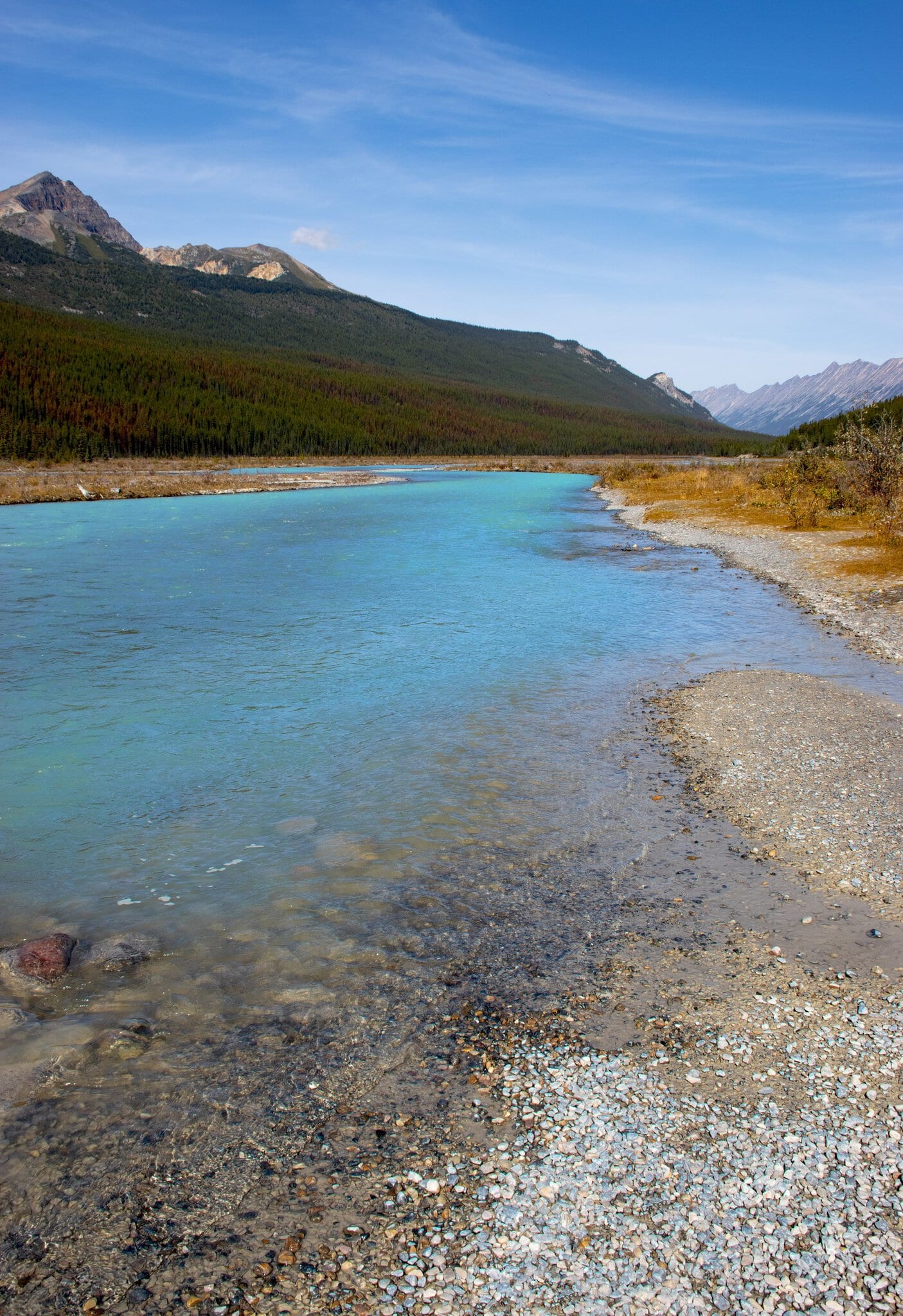
💡 My little tip: Most tourists hop out of the car, snap a photo of the upper falls by the railing, and immediately drive off again. Do yourself a huge favour and follow the lovely, gentle forest trail about two more kilometres downhill to the Lower Sunwapta Falls. You’ll have the place 99% to yourselves and can soak up the muted power of the cascading water and the enchanting beauty of the wild, mossy old-growth forest all around, fragrant with resin and damp pine needles.
13. Goats and Glaciers Viewpoint (km 188)
This is just a subtle, quick roadside stop about 40 kilometres before Jasper itself, one that plenty of cars simply blow past without noticing. The road here runs alongside the turquoise Athabasca River, and a short pull-off to a small gravel car park leads you in a few steps to a viewpoint on a steep bank with a gorgeous panorama.
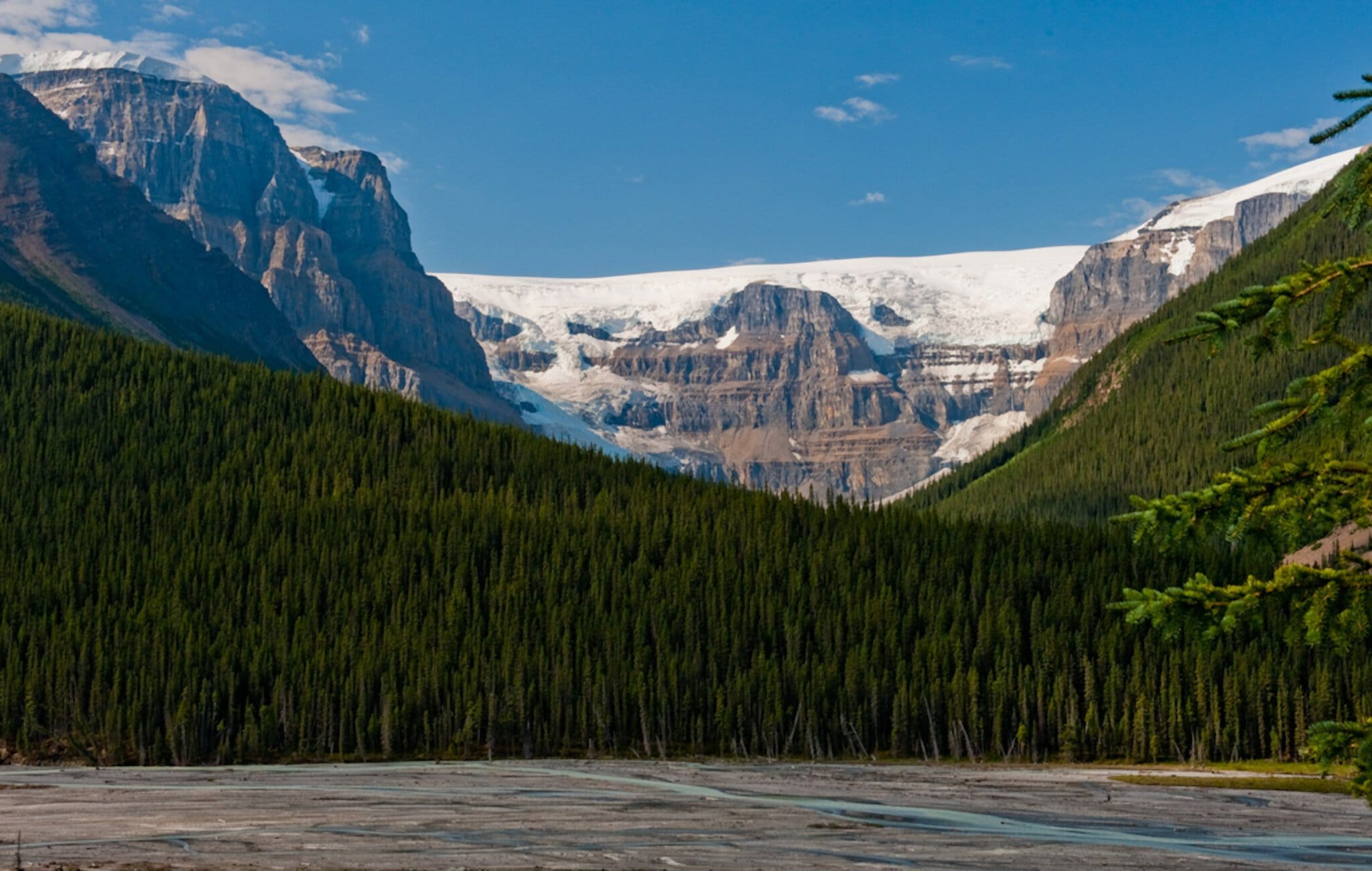
The sand and soil on these cliffs are packed with minerals, making them act like a giant natural salt lick — mountain goats regularly flock here in whole herds, though sometimes you’re out of luck and won’t spot a single one. But when you do catch them clambering around in their signature white coats with little black horns, it’s a wonderful spectacle. Even if the goats don’t show, the calming view of the broad river with majestic Mt. Kerkeslin in the background is always worth the quick leg-stretch.
14. Athabasca Falls (km 199)
Our very last major stop before you finally roll into the destination town of Jasper is the mighty Athabasca Falls. They’re not particularly tall — just over 20 metres — but the sheer volume and raw power of the water forcing itself through a narrow gorge carved from incredibly hard quartzite is absolutely staggering. You can feel the vibrations through the soles of your feet.
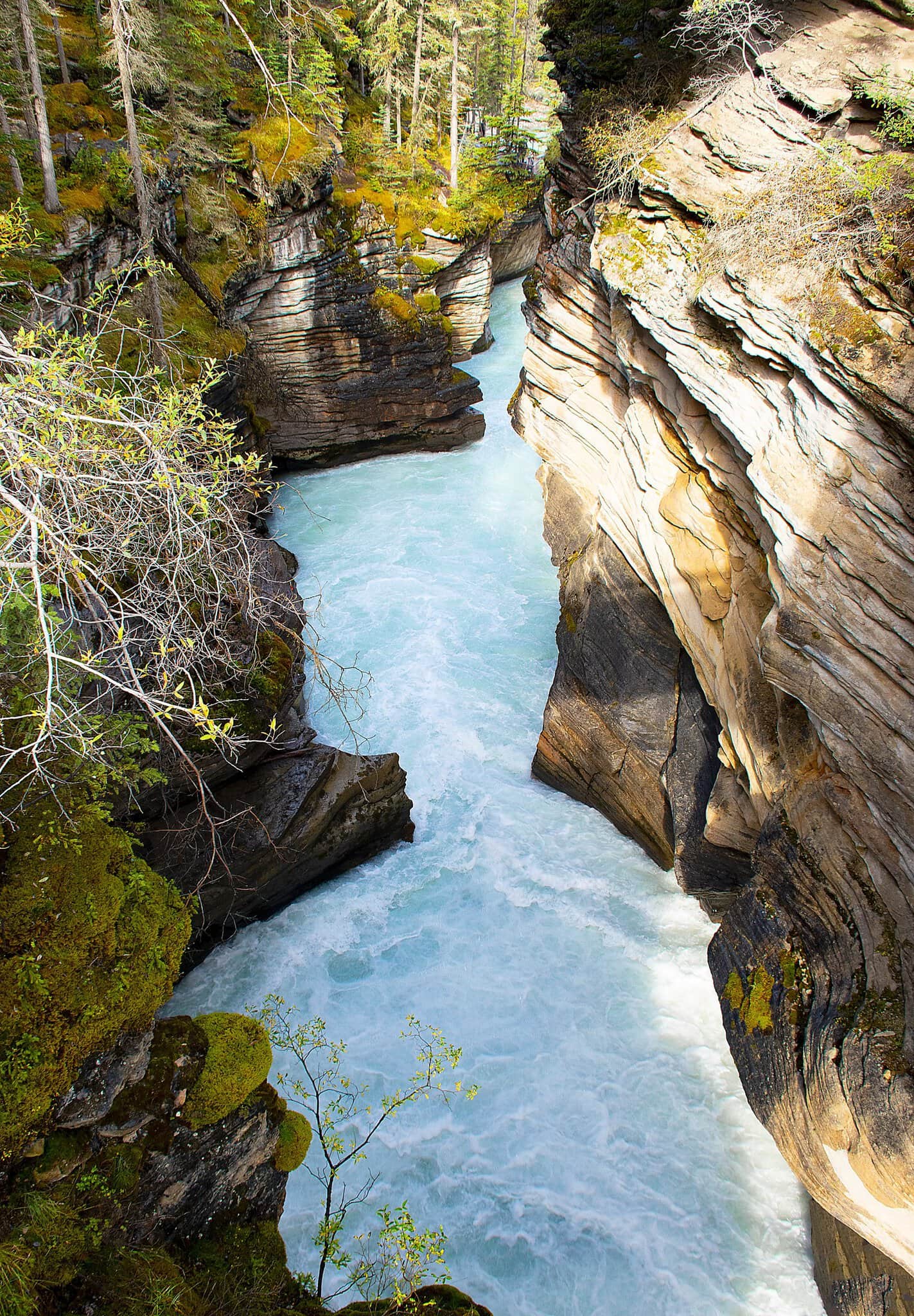
A fairly extensive network of safe walkways and bridges has been built around the falls, so you can photograph them from loads of great angles. But the same rule applies here as at Mistaya Canyon: never, ever climb over the stone barriers chasing a better selfie. The rocks are slippery all around, and falling into this churning cauldron would mean a swift and certain end. That aside, the atmosphere here is simply fantastic — fine mist swirls everywhere, refreshing your face on a hot day, and on sunny afternoons rainbows of all sizes form constantly above the canyon. (More tips from the destination itself can be found in our article about Jasper, Canada, or check out the official Jasper National Park website.)
Map of points of interest for your phone
Food and Drink on the Road
Food along the route? Well, how do I put this nicely. Options are minimal, and what is available will leave your wallet stinging long after you get home. At the visitor centre near Columbia Icefield, you can grab a mediocre and fairly pricey burger with chips in a pinch, and the same goes for the restaurant at The Crossing Resort, where prices are even steeper.
The smartest and most enjoyable approach is to stock up on a big supply of food the day before at a supermarket. ☺️ You’ll have a much better time eating your own packed lunch at a scenic pull-off, and you’ll save a decent chunk of cash for an evening pint in Jasper. If you’re a coffee lover, a portable coffee maker like Outin is a game-changer for brewing a proper cup at any viewpoint along the way.
Where to Go Next
The Icefields Parkway is just one stunning leg of a wider road trip through Alberta and British Columbia. Check out our other articles:
- Plan the start of your trip with our guide to Banff National Park or our article on what to see around Lake Louise.
- At the other end of the route, read our guide to Jasper National Park after the 2024 fire.
- If you’re looking for a quieter base than Banff, check out our comparison of Canmore vs. Banff.
 🚗 Car rental on the roadVerified car rentals in the Rocky Mountains
Search with the DiscoverCars comparison engine — it compares prices from dozens of local and international rental companies, and most bookings come with free cancellation.
Compare car prices in the Rocky Mountains →FAQ — Frequently Asked Questions About the Icefields Parkway
I’ve gathered the most common questions from readers planning a trip along the Icefields Parkway. If there’s anything I haven’t covered, feel free to drop me a message.
How long is the Icefields Parkway and how long does it take to drive?
The Icefields Parkway (Highway 93N) stretches 232 kilometers between Lake Louise and Jasper. Without stops, you could technically drive it in about 3 hours, but honestly — you’d be missing out on everything you came here for. Plan for at least a full day from dawn to dusk, or ideally split the route over two days with an overnight in Jasper or somewhere along the way.
Do I need a national park pass?
Yes. The Icefields Parkway runs through Banff and Jasper National Parks, so you’ll need a valid Parks Canada day pass (around 11 CAD per person per day). If you’re traveling around Canada for longer, the annual Discovery Pass at roughly 75 CAD is worth it. You can buy the pass at the toll gate near Lake Louise, at visitor centers, or online.
When is the best time to drive the Icefields Parkway?
Peak season runs from June through the end of September. In July and August, the lakes are at their most brilliant turquoise and all stops are open, but it’s also the busiest. Mid-September to early October is gorgeous with golden larches and fewer crowds. In winter, much of the route is closed or extremely challenging for safety reasons — I wouldn’t recommend it for regular tourists.
Can you drive the Icefields Parkway without your own car?
Technically yes — there are organized tours from Banff and Jasper (like Brewster Express or SunDog Tours), but they have fixed itineraries and short stops. If you want to really experience the route properly, a rental car is unbeatable. Public transportation is virtually non-existent here.
Is there cell phone signal on the Icefields Parkway?
Almost none. Outside of Lake Louise, The Crossing Resort midway along the route, and Jasper, expect zero signal for the entire 200 kilometers. Download offline maps (both Google Maps and Maps.me), contacts, and everything you need beforehand — and if your car breaks down, be prepared to wait for a passing driver.
Where should I fill up with gas?
Fill up your tank completely in Lake Louise or Banff. The second (and last) gas station on the route is at The Crossing Resort roughly halfway through. Prices there are extremely high, so treat it as an emergency backup only. In Jasper at the end of the route, there are more gas stations and prices return to normal.
Can I encounter bears on the Icefields Parkway?
Yes, and fairly often! The park is home to both black bears and grizzlies. You’ll frequently see them grazing right by the roadside — if that happens, never get out of your car, take photos through the window, and slowly drive past. If you’re hiking on trails, always carry bear spray and make noise.
Tips and Tricks for Your Vacation
Don’t Overpay for Flights
Search for flights on Kayak. It’s our favorite search engine because it scans the websites of all airlines and always finds the cheapest connection.
Book Your Accommodation Smartly
The best experiences we’ve had when looking for accommodation (from Alaska to Morocco) are with Booking.com, where hotels, apartments, and entire houses are usually the cheapest and most widely available.
Don’t Forget Travel Insurance
Good travel insurance will protect you against illness, accidents, theft, or flight cancellations. We’ve had a few hospital visits abroad, so we know how important it is to have proper insurance arranged.
Where we insure ourselves: SafetyWing (simple monthly subscription) and TrueTraveller (for extra-long trips).
Find the Best Experiences
Get Your Guide is a huge online marketplace where you can book guided walks, trips, skip-the-line tickets, tours, and much more. We always find some extra fun there!