Bastia and Cap Corse, Corsica: 11 Tips for 2026

TL;DRNorthern Corsica around Bastia and the Cap Corse peninsula comes with 11 ideas for a trip, from the old port and Terra Nova citadel in Bastia to the Cap Corse loop road and the village of Nonza with its black beach, plus the Patrimonio wine region. May, June and September are the best months to visit — better to avoid August, when the crowds and traffic jams take over. A car is an absolute must here, and the ferry from Nice to Bastia takes 6 to 7 hours, with a return ticket for two people plus car costing 250 to 1000 euros. Plan on 2 to 3 nights in Bastia, while the Cap Corse loop itself takes 3 to 4 hours to drive, ideally spread over a full day.

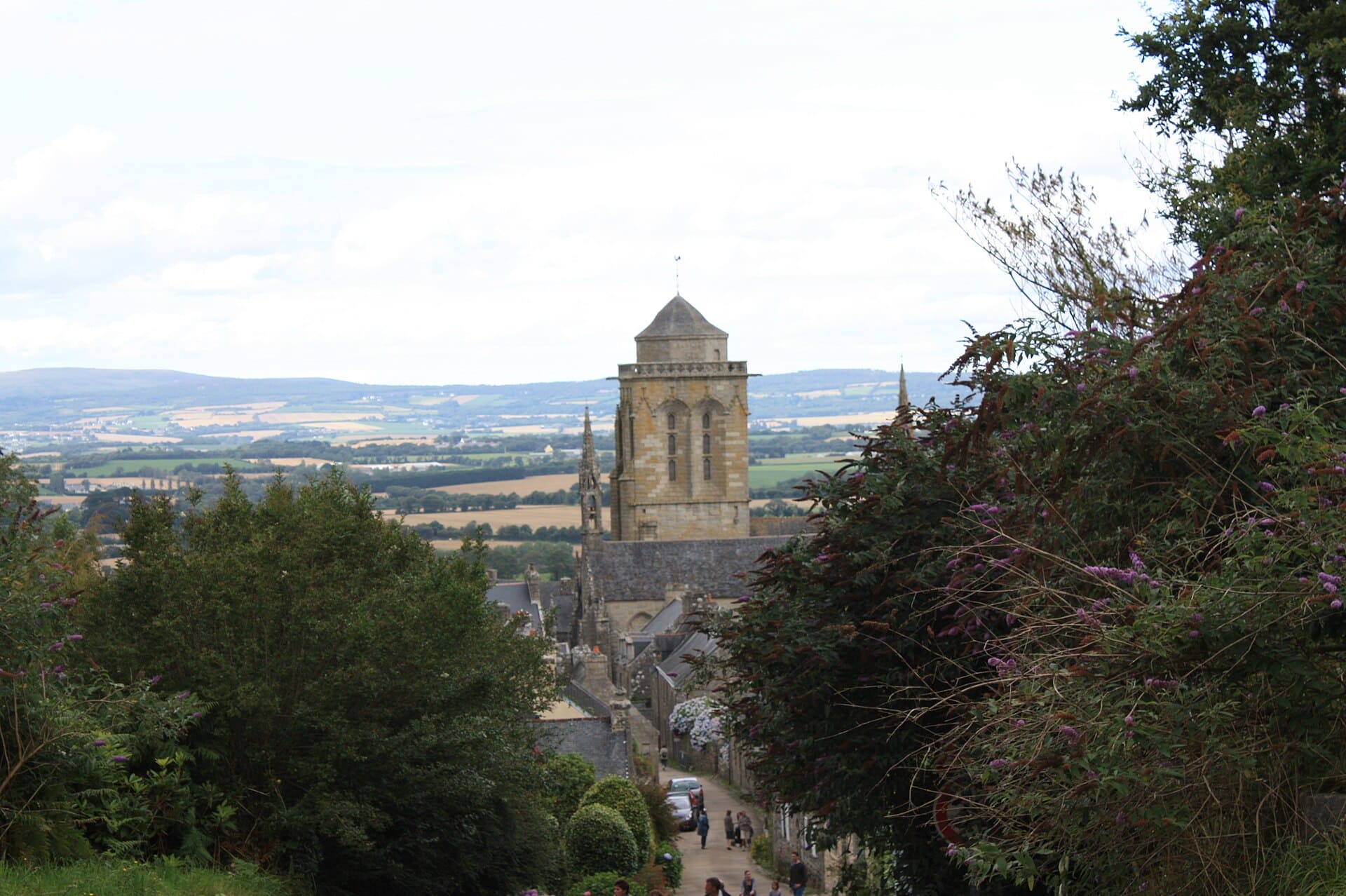
If you’re after a destination where you can scramble around ancient fortresses in the morning and swim in picture-perfect coves in the afternoon, Bastia, Corsica and the wild north of the island will absolutely win you over. The moment you step off the ferry and take your first deep breath, you’ll catch the unmistakable scent of wild thyme, rosemary and sun-baked earth. Locals call this wild vegetation maquis, and the story goes that Napoleon Bonaparte could have recognised his home island blindfolded, purely by this unique aroma.

Don’t expect a polished French Riviera with flawless promenades, though — Corsica is wilder, rougher and prouder than that. The roads here twist high above sheer drops, and the sea is often the kind of colour you’d usually associate with brochures of the distant Caribbean. In this article we’ll explore the port city of Bastia and the rugged Cap Corse peninsula, which on the map looks like a raised finger pointing towards Genoa in Italy. I’ll tell you which places not to miss, where to base yourself, and what to watch out for when planning your trip.

TL;DR

  • You’ll need a car: Public transport on the island is very unreliable, so a car is absolutely essential for exploring the north.
  • Avoid August: In August the island is bursting at the seams, prices skyrocket and the roads turn into car parks.
  • Bastia’s Old Port: The most charming part of the city, with tall colourful houses and plenty of great restaurants.
  • The Cap Corse loop: A breathtaking road trip along narrow cliffside roads — I recommend driving anti-clockwise.
  • The village of Nonza: A dramatic cliffside village with an iconic black beach created from a nearby quarry.
  • The Patrimonio wine region: A paradise for wine lovers with the finest Corsican varieties.

When to visit Bastia and Cap Corse

The basic rule for planning your trip couldn’t be clearer: skip August altogether if you can. It’s the month when the French and Italians descend on the island en masse, with two to three times more people than in July. The roads around Cap Corse turn into impassable traffic jams, accommodation prices climb to absurd heights, and the best little coves are hopelessly packed. For a relaxed holiday full of discovery, it really isn’t the best time.

The ideal months to visit are without a doubt May, June and September. In autumn the sea is still beautifully warm from the summer, and the narrow mountain roads are far easier to breathe on and navigate safely. The spring months, on the other hand, bring nature in full bloom, and the island is intoxicating with the scent of wild maquis herbs. Spring temperatures hover around a pleasant 20 to 25 degrees, which is absolutely perfect for hiking and wandering through the towns, even if the sea may still feel a touch refreshing.

As for getting there, without a car you’re completely stuck in Corsica, because public transport here is very unreliable and often non-existent. From the UK, the easiest option is to fly into Bastia–Poretta Airport — there are seasonal direct flights to Bastia, Corsica from London and other UK airports, and you can pick up a hire car right at the airport. Alternatively, many travellers reach the island with their own car via one of the big ferries operated by companies like Corsica Ferries from the French mainland. Ticket prices vary a lot depending on the season and how far in advance you book. Expect a return ticket for two people with a car to cost anywhere between €250 and €1,000. The quickest crossing runs from Nice straight to Bastia and takes roughly 6 to 7 hours. From Toulon, allow 8 to 10 hours, and from Marseille the journey stretches to a long 11 to 14 hours.
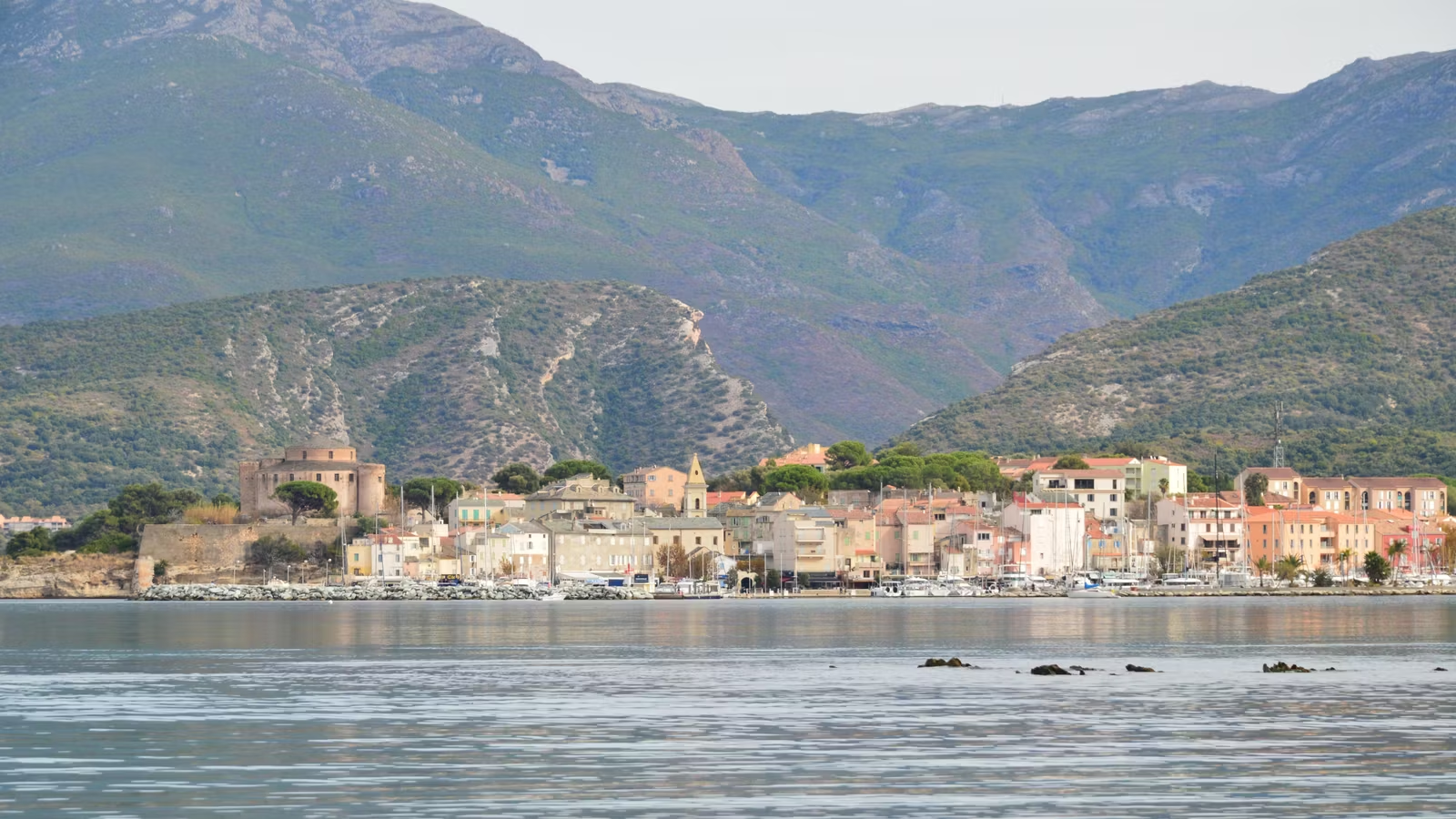
Where to stay in Bastia and the surrounding area

💡 Tip for accommodation and experiences: We love searching for places to stay on Booking.com, which tends to have the best cancellation policies. For tickets, tours and activities, it’s worth comparing and booking through GetYourGuide.

Bastia is the perfect base for exploring the north, and I’d recommend spending at least two or three nights here. The city isn’t huge, but it has a wonderful, slightly faded atmosphere that you’ll soak up best early in the morning or late in the evening, once the crowds from the cruise ships have left. The best area to stay is around the old port or close to the sprawling Place Saint-Nicolas, from where all the sights are just a few steps away. Parking in the historic centre is quite a headache, so it’s handy to use the huge underground car park right beneath the square, where you’ll pay around €20 per day.

For a truly unforgettable stay, take a look at the Hôtel Des Gouverneurs, set right inside the historic Terra Nova citadel. It offers stunning sea views, an indoor pool and elegant rooms that make you feel like you’ve stepped into a fairy tale. In season, prices here start at around €180 per night. If you’re after something more budget-friendly right in the centre, the very popular Hôtel Port Toga is a great shout. It has a fantastic location a stone’s throw from the ferry terminal, modern facilities and a lovely rooftop terrace where you can enjoy an evening drink, all for around €110 per night.

If you’d rather escape the busy city for some real peace and quiet, the Cap Corse peninsula offers some charming places to stay in tiny fishing villages. A gorgeous choice is the Hôtel Castel Brando in the village of Erbalunga, set in a 19th-century noble residence with a beautiful shady garden and a pool. I’d strongly recommend booking your Corsica accommodation well in advance through Booking, because the best small hotels and guesthouses are usually hopelessly sold out for the main summer season as early as the start of spring.
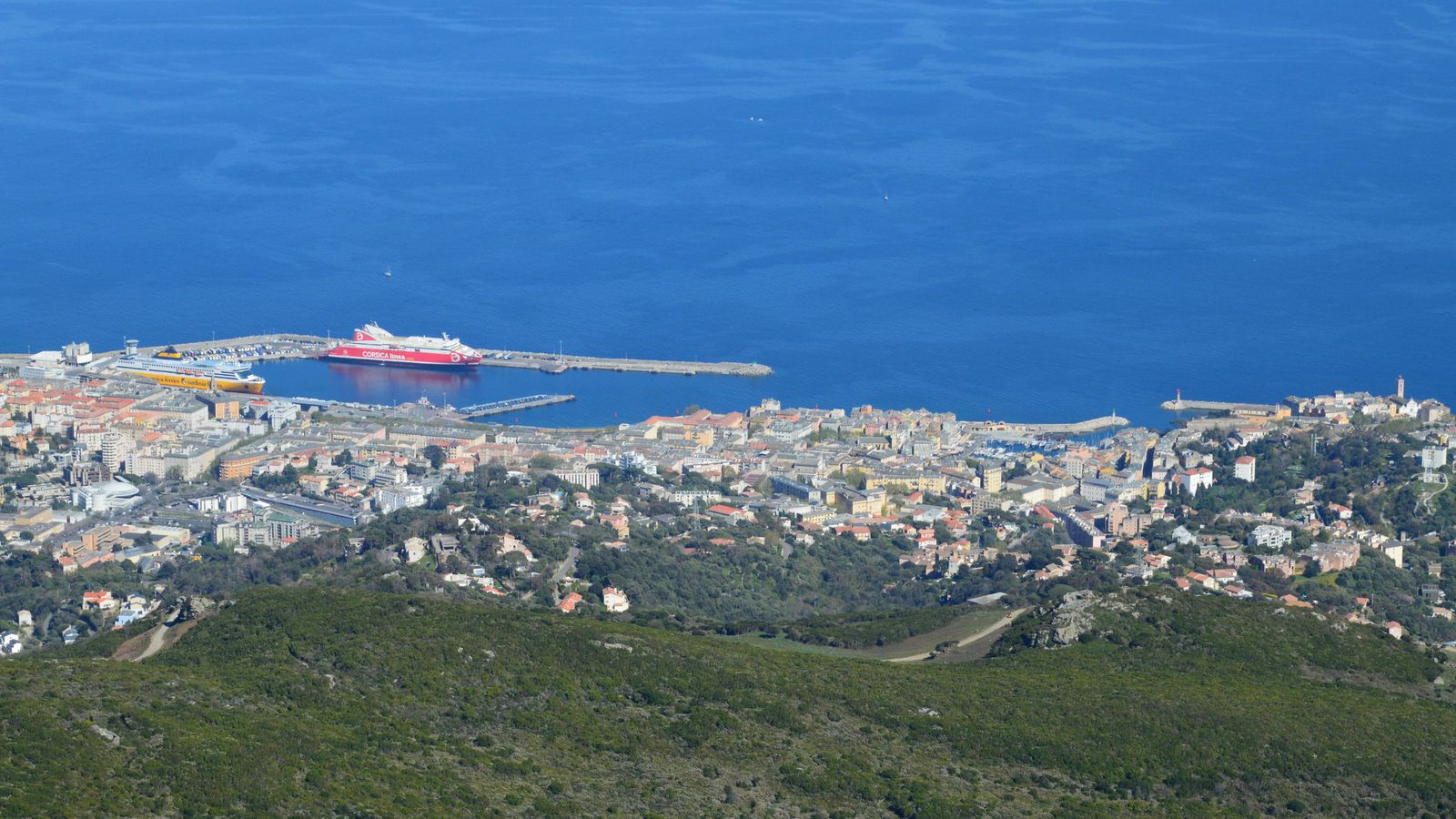
11 things to do in Bastia and Cap Corse

Compared with other Corsican towns, Bastia is far more authentic, a little more weathered and rougher around the edges. The narrow lanes here smell of the sea, freshly baked bread and local cheeses. The Cap Corse peninsula, meanwhile, is like Corsica in miniature, packing mountains, cliffs, watchtowers and hidden beaches into a small space. Let’s take a look at the places that definitely shouldn’t be missing from your itinerary. You can also conveniently book activities and boat trips in advance through GetYourGuide.
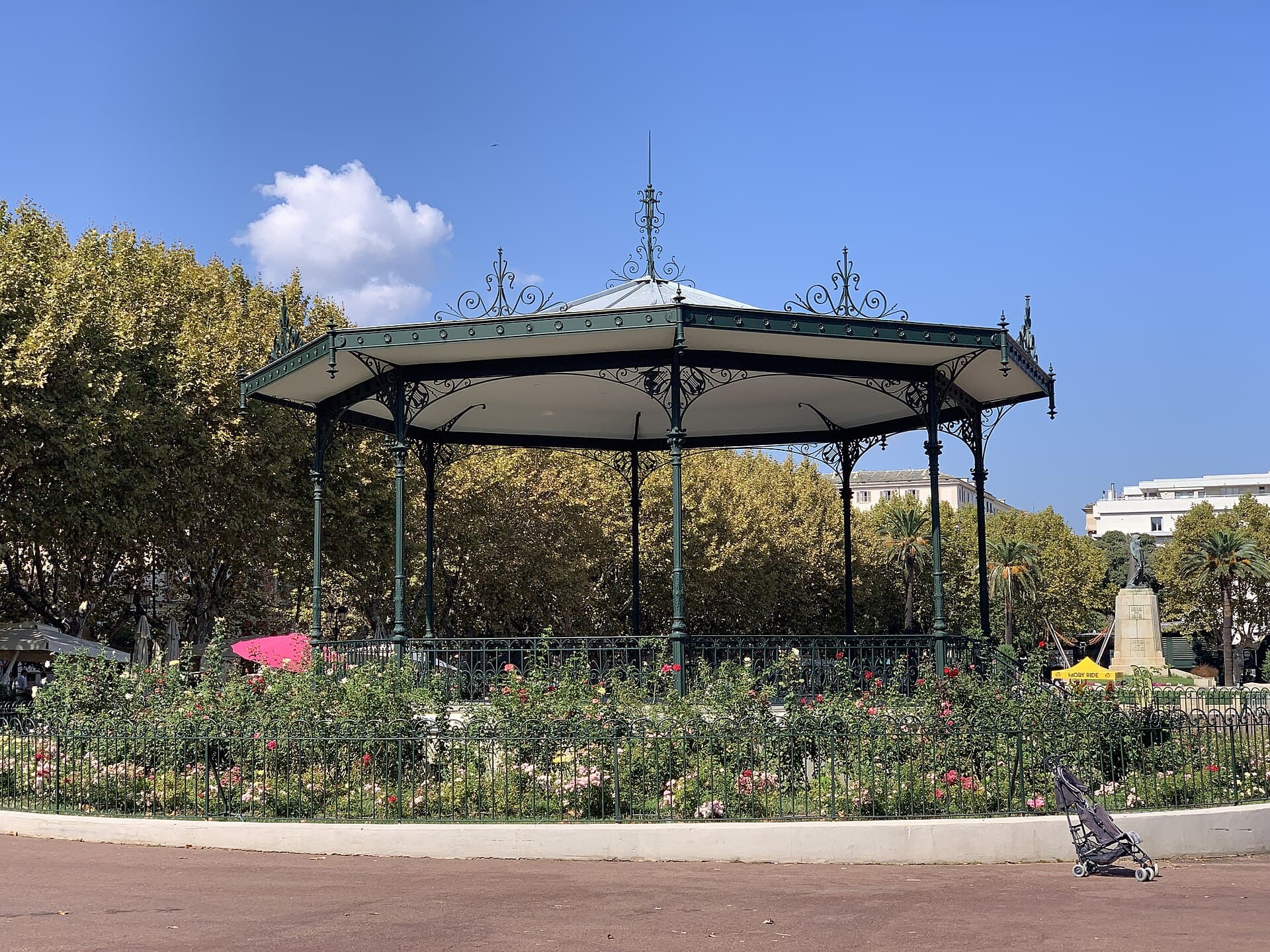
1. Place Saint-Nicolas and a morning coffee

Your tour of the city should begin at the enormous Place Saint-Nicolas, which forms the true heart of Bastia. At nearly 300 metres long, this square is one of the largest in all of France, lined along its entire length with towering palms and centuries-old plane trees. In the hot summer months these provide much-needed shade and create the perfect promenade. It’s exactly the kind of place where locals come to read the paper, chat with neighbours and watch the huge yellow Corsica Ferries vessels that arrive at the nearby port every so often.

Settle into one of the many pleasant café terraces, order a strong morning espresso and a fresh, crisp croissant. The atmosphere here is wonderfully lazy and nobody’s in any hurry. On the square you’ll also find a majestic statue of Napoleon Bonaparte, depicted in a Roman toga. Locals tend to have rather lukewarm feelings about him, though, as his home town of Ajaccio lies on the opposite side of the island and there’s a long-standing historical rivalry between the two.

💡 Tip: In the afternoon, I’d recommend swapping the coffee for a great local beer, Pietra, brewed from a blend of malt and chestnut flour. It has a completely distinctive, slightly sweet and full-bodied flavour. Every Sunday morning the square also hosts a popular flea market full of antiques and local treats.
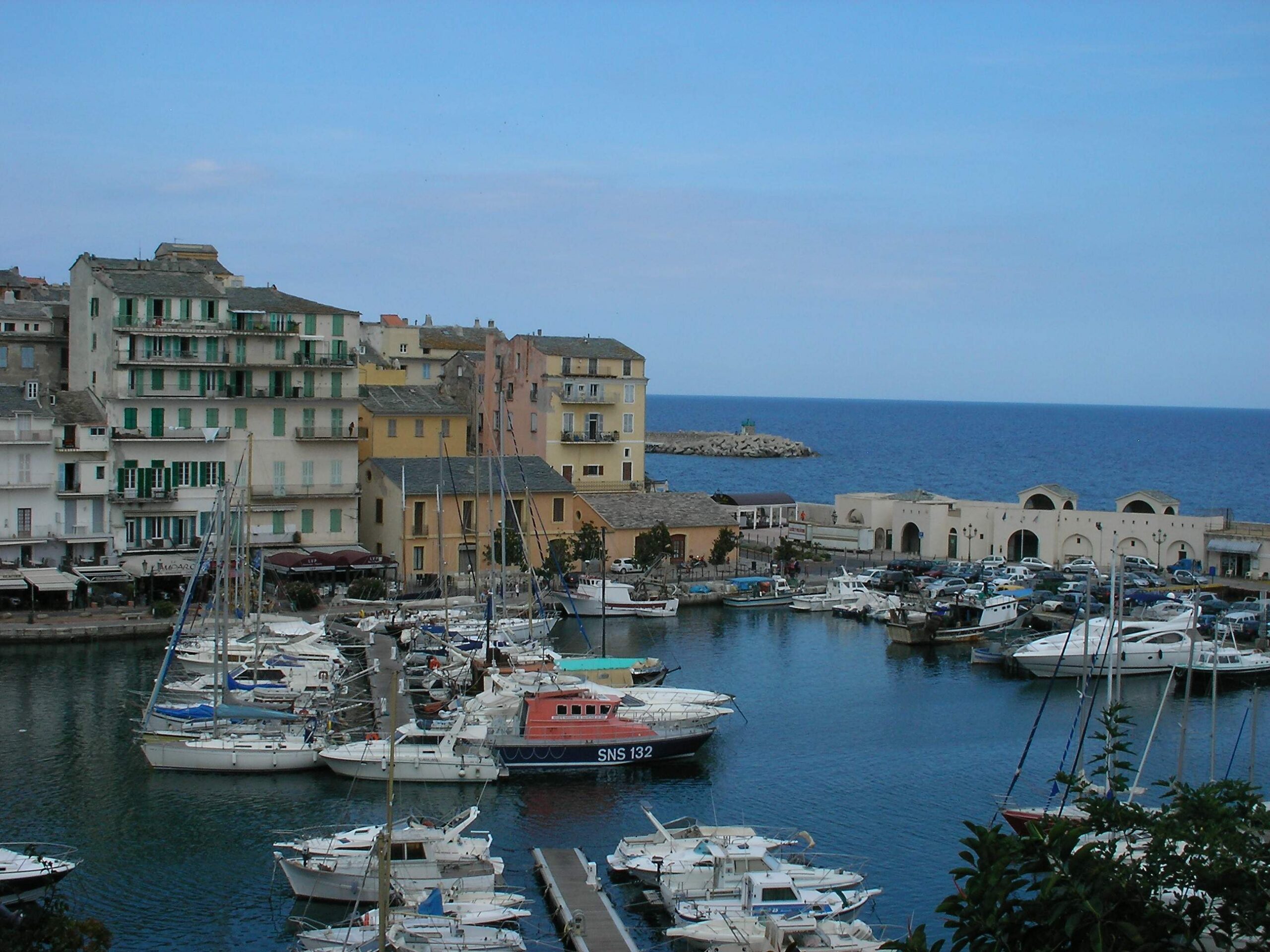
2. The Old Port (Vieux Port)

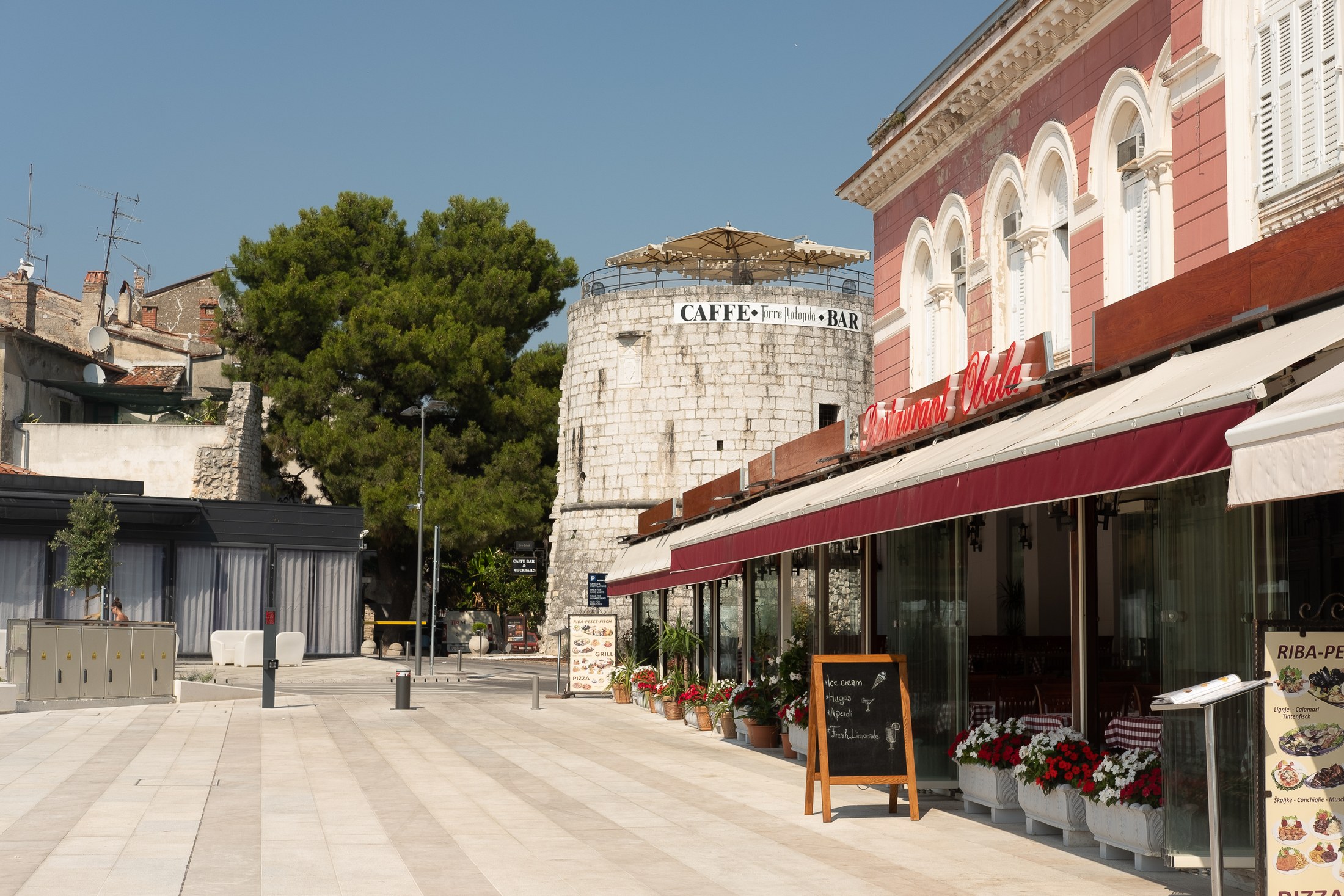
From the big square it’s just a few steps to the old port, which is without doubt the most photogenic part of the whole city. The horseshoe-shaped bay is full of small wooden fishing boats and more modern yachts, gently bobbing on the waves to create the perfect Mediterranean backdrop. The port is hemmed in on all sides by incredibly tall, slightly crumbling houses with pastel-coloured shutters, exuding that genuine, unspoilt Corsican atmosphere.

It’s right here on the waterfront that you’ll find the best restaurants and little traditional cafés, from which you can watch the bustle by the water. Try grabbing lunch here and sampling the excellent local vegetarian specialities. The delicious pasta filled with fresh Corsican brocciu cheese is an absolute must, as is the traditional hearty chestnut-flour polenta, which is guaranteed to fuel you up for more exploring. In the evening the whole port lights up beautifully with the yellow glow of the lamps and becomes the main hub of the nightlife, with the bars buzzing well into the small hours.

💡 Tip: The waterfront gets very busy around lunchtime. Try slipping into the narrow lanes just behind the first row of houses, where you’ll find smaller family bistros cooking for the locals at considerably friendlier prices.

3. The Church of St John the Baptist

As you stand in the old port and look around, your gaze will inevitably be drawn to the monumental Church of St John the Baptist (Église Saint-Jean-Baptiste). Its two strikingly tall bell towers form the city’s most iconic landmark and appear on just about every postcard you can take home from Bastia. It’s the largest church on the whole of Corsica, and its majestic late-16th-century neoclassical façade looks truly grand and imposing when viewed from the sea.

I’d definitely recommend popping inside too, as the interior is richly decorated in an opulent Baroque style, with beautiful marble altars, rare frescoes and a huge organ. The church itself is tucked into the maze of narrow lanes in the old working-class quarter of Terra Vecchia. In this part of the city you can simply wander without a map, discovering hidden little squares and soaking up the laid-back atmosphere of the old town. More often than not, freshly washed laundry will be hanging overhead, strung between the windows, which only adds to the authenticity of the place.

💡 Tip: For the best photos of the church and the old port, I’d recommend heading out for a stroll just before sunset, when the whole bay takes on an incredibly golden, warm glow.
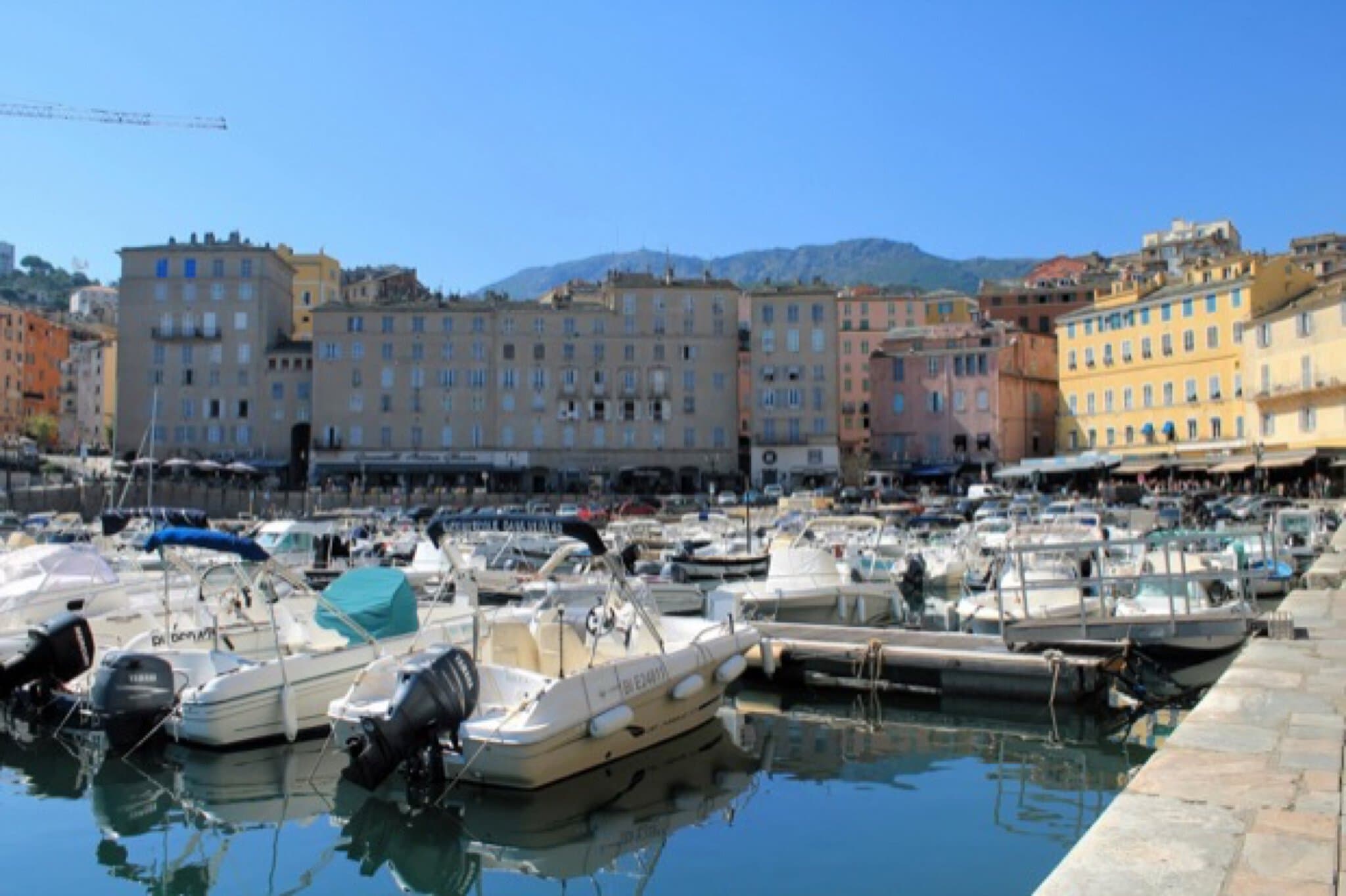
4. The Terra Nova citadel and views over the city

High above the old port stands the proud historic Terra Nova citadel, built by the Genoese rulers in the 14th and 15th centuries as their seat of power. The best way up is a pleasant walk through the terraced Romieu gardens, full of greenery, flowering shrubs and very welcome shade. The climb uphill can be a bit of a slog on a hot summer’s day, but those fantastic panoramic views over the entire city and the sweeping bay are well worth the effort.

Within the mighty stone walls hides a self-contained little town of narrow cobbled lanes and picturesque pastel houses, once home exclusively to the Genoese elite. You’ll also find the restored Governor’s Palace, which today houses an interesting museum charting the rich history of Bastia and the whole island. The atmosphere in the citadel is noticeably calmer and more refined than down in the noisy port, making it the perfect spot for a romantic early-evening stroll, once the day-trippers have left the streets.

💡 Tip: The winding lanes of the citadel hide several excellent little bistros with cosy outdoor seating, where they bake absolutely fantastic vegetarian pizza and serve it with excellent local wine from the nearby Cap Corse vineyards.
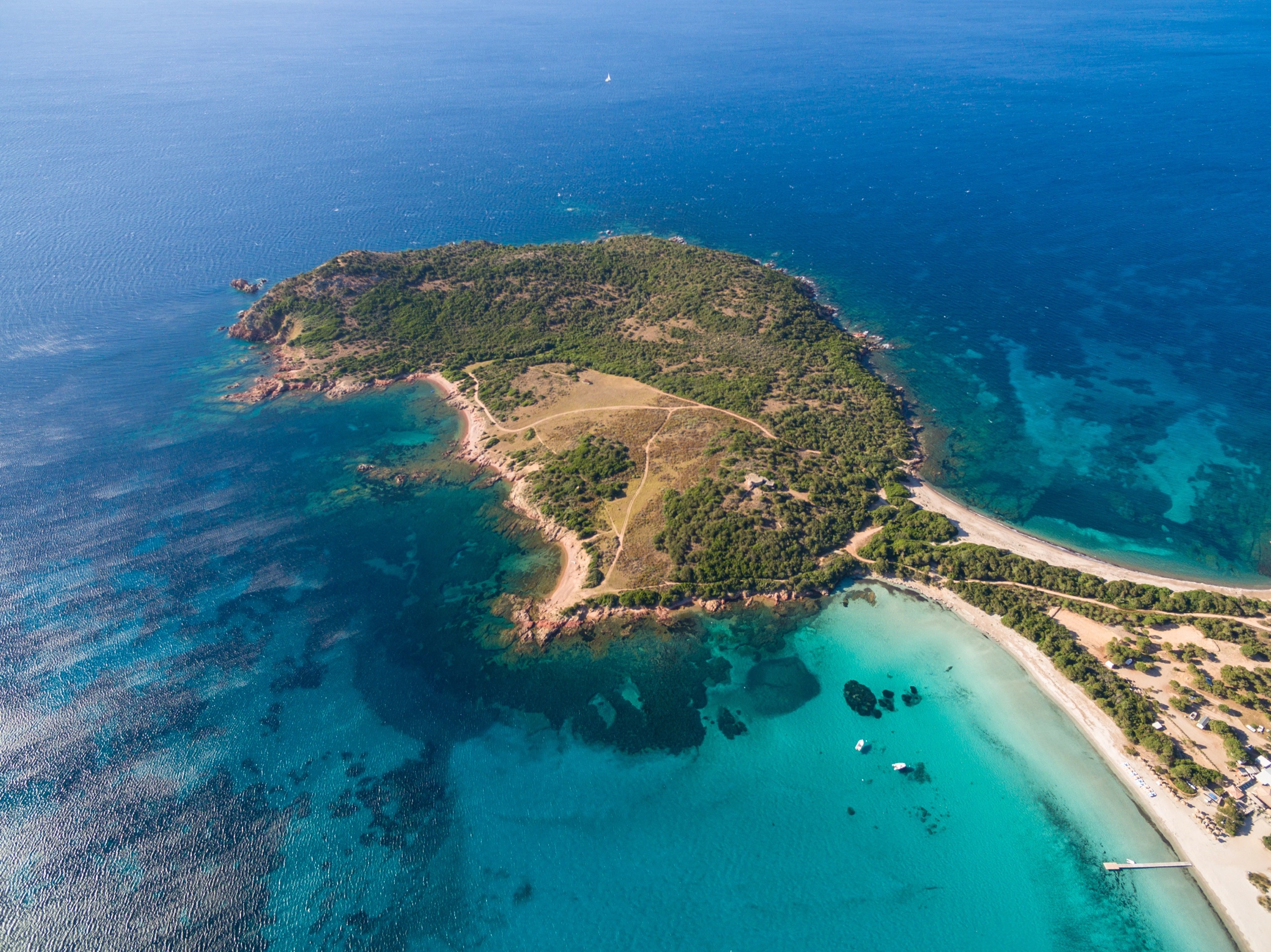
5. A road trip around the Cap Corse peninsula

Once you’ve explored every nook and cranny of Bastia, it’s time to head straight north and drive the legendary Cap Corse peninsula. This roughly thirty-kilometre-long and fifteen-kilometre-wide spit of land offers some of the most beautiful coastal scenery in all of Europe. The narrow D80 road twists wildly high above the sea, cutting straight into the steep rock, and around absolutely every bend a new, breathtaking view of the crashing waves and old watchtowers awaits.

The key piece of advice for this road trip is clear, so do remember it: always drive anti-clockwise. That means setting off from Bastia up the east coast heading north, and returning down the west coast back south. This way you’ll stay in the lane nearer the sea the whole time, guaranteeing the best possible views and far easier stops at the clifftop viewpoints. The roads here are genuinely extremely narrow, passing oncoming buses takes nerves of steel, and you’ll routinely come across free-roaming cows or goats, so definitely don’t rush.

💡 Tip: Set aside at least a full day for the whole loop. The drive itself takes around 3 to 4 hours of actual driving time, but you’ll want to stop constantly to take photos and soak up the picturesque villages.

lukas a lucka
Lukáš and Lucie recommend
Where to Stay in Bastia and Cap Corse
4 accommodations — hotels and other lodging options

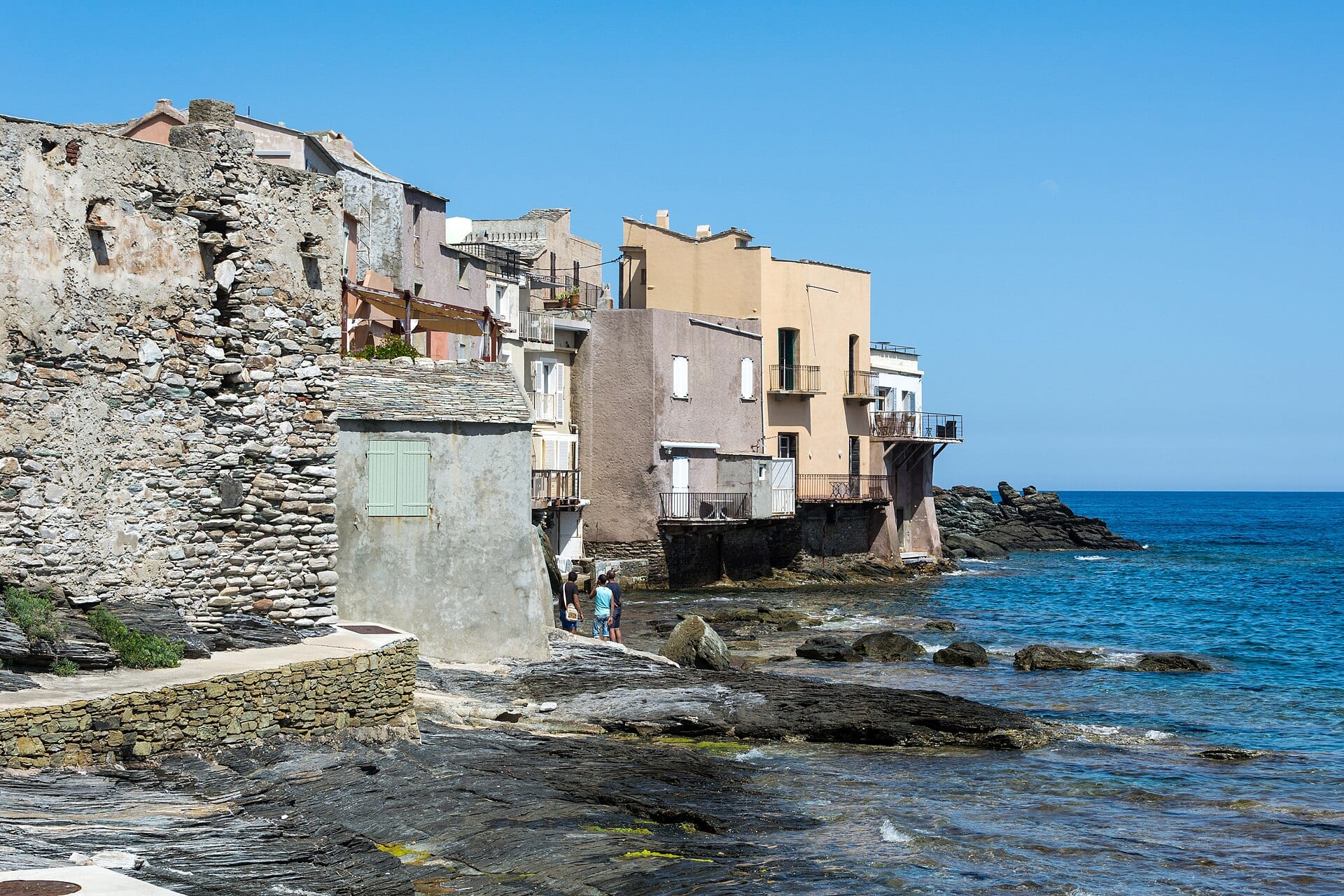
6. The fishing village of Erbalunga

The first major stop on the east coast of the peninsula should be the charming fishing village of Erbalunga, which lies just ten kilometres north of Bastia. The entire historic part of the village is strictly closed to car traffic, so you’ll have to leave your car in the paid car park by the main road and continue on foot. The narrow lanes are paved with rough stone and lined with old stone houses topped with slate roofs, which in many places look as if they’re literally growing straight out of the waves.

On a small rocky outcrop at the very end of the village stand the photogenic ruins of an old 16th-century Genoese watchtower, against which the sea waves break dramatically. You’ll see dozens of similar towers along Corsica’s rugged coastline — they once served as an ingenious early-warning system against devastating pirate raids. Erbalunga has a wonderfully calm and inspiring atmosphere, and it’s no surprise that in the past it drew a whole host of French and Corsican painters in search of inspiration.

💡 Tip: On the small shady square right by the harbour you’ll find several great family-run restaurants, where you can enjoy a wonderful chestnut-flour dessert with a perfect view of the sea and the bobbing boats.
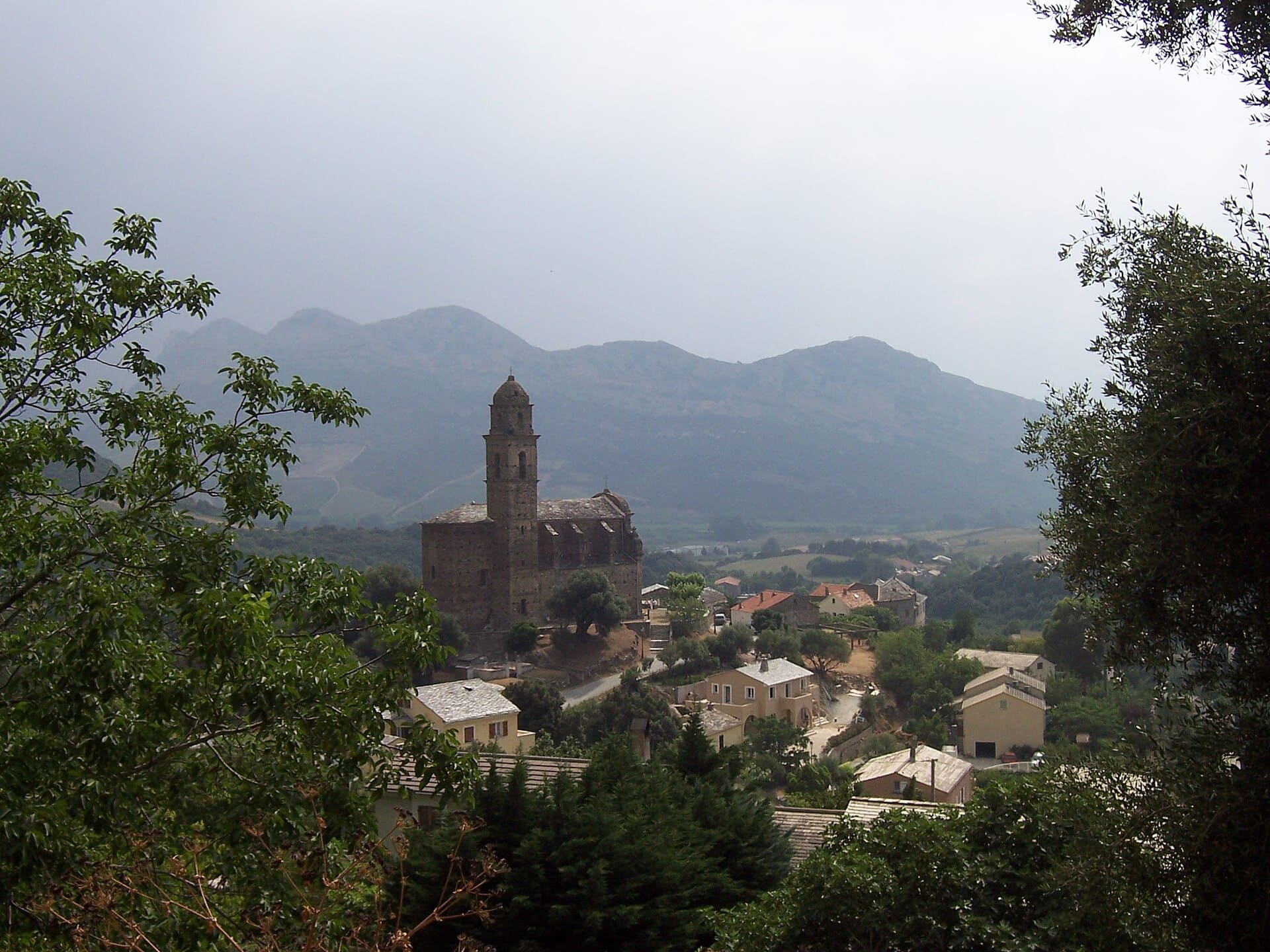
7. The Patrimonio wine region

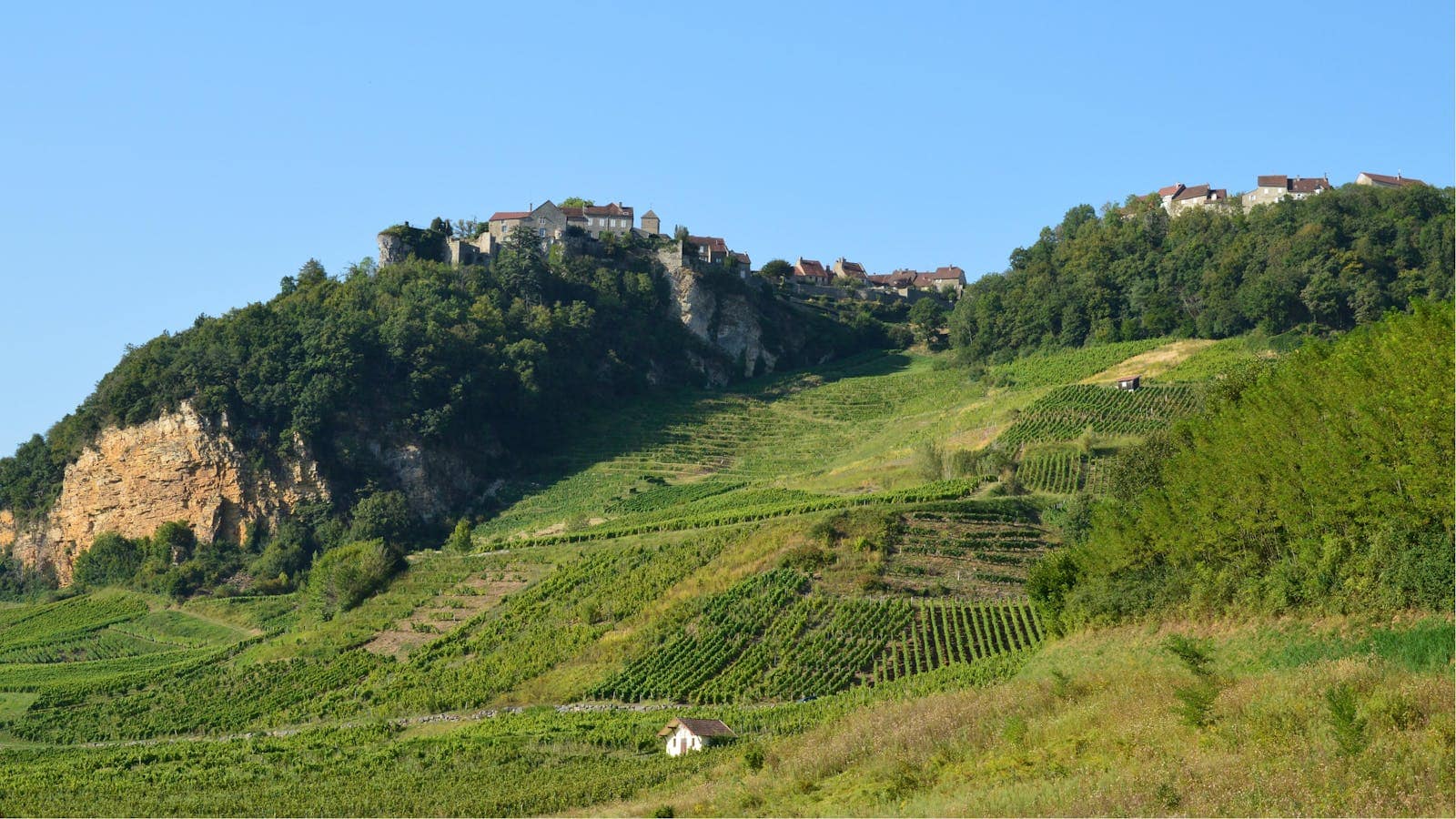
As you leave the Cap Corse peninsula along its steep western side, you’ll reach the famous, sun-drenched Patrimonio wine region. Green vineyards roll over gentle hills here, stretching from the inland down to the coast itself and creating an absolutely gorgeous colour contrast with the deep blue of the nearby Gulf of Saint-Florent. It was the very first region on all of Corsica to be awarded the prestigious AOC designation of origin, back in 1968 — a clear testament to the exceptional quality and tradition of the wines here.

I’d definitely recommend stopping off, even briefly, at one of the dozens of local family wineries for a guided tasting. Above all, try the wines from the traditional Corsican Nielluccio grape, which produces very full-bodied reds and excellent, refreshing rosés. If you prefer white varieties, the fresh and pleasantly mineral Vermentino is sure to win you over. Most of the local winemakers are very friendly and will proudly show you their old cellars and tell you about the quirks of the local soil.

💡 Tip: Buying wine directly from the producers in Patrimonio is often significantly cheaper than at supermarkets or wine shops in Bastia. Plus, you’ll be supporting local farmers directly and taking home the best possible souvenir.
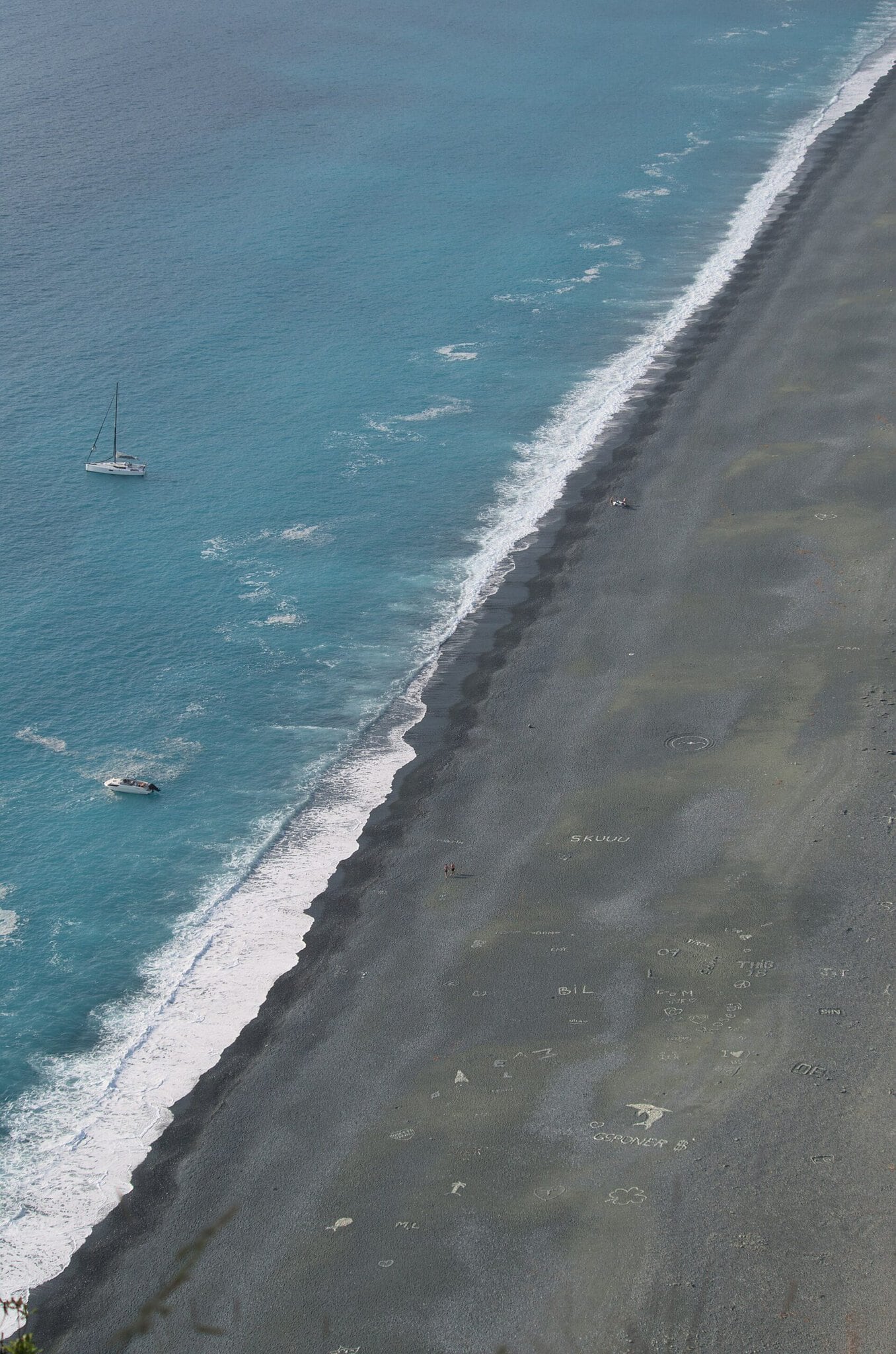
8. The dramatic village of Nonza and its black beach

On the steep west coast of Cap Corse you’ll find a place you’ll remember forever — the incredibly dramatic village of Nonza. It’s literally clinging to a steep rocky cliff high above the sea, and from a distance it looks utterly impregnable. The village’s landmark is the well-preserved old Tour Paoline, an 18th-century tower reached by a short climb from the church, from where an absolutely fantastic, completely unobstructed view opens up over the entire west coast.

Far below the village’s cliffs lies an enormous, wide beach of dark grey to black sand, creating a stunning visual contrast with the turquoise sea. Surprisingly, though, the colour of the sand isn’t volcanic in origin. It comes from an old asbestos quarry that once operated a little further north and was finally closed in 1965. Today the whole area is carefully monitored by the authorities and swimming here is perfectly safe. The beach is often empty, because the only way down is via very long, steep steps straight from the village.

💡 Tip: The climb back from the beach up to the village is hard work in the afternoon sun. Don’t forget to bring sturdy footwear and plenty of drinking water, as there’s no shade or refreshments at all on the beach.
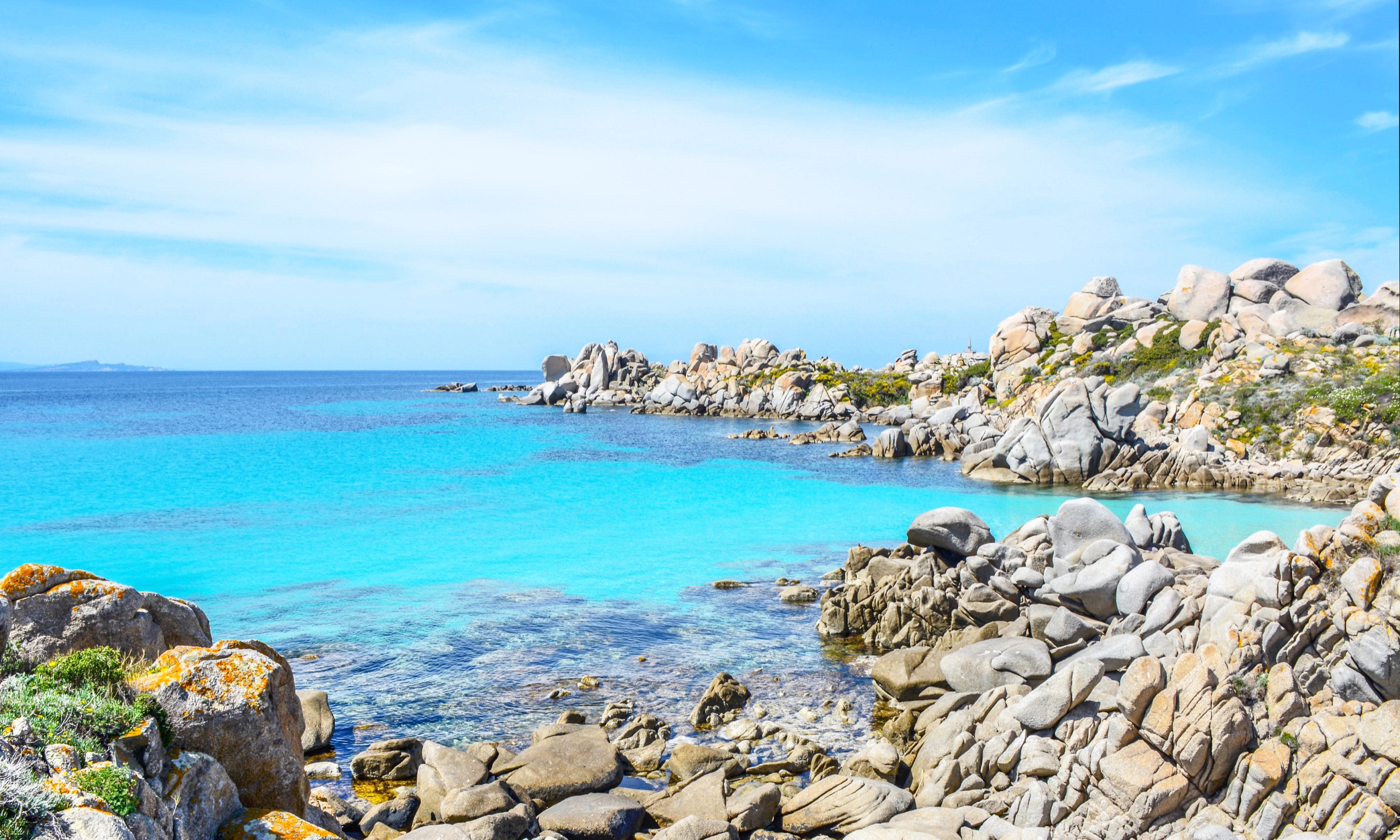
9. The Customs Officers’ Path (Sentier des Douaniers)

At the very northern tip of the peninsula, near the little port town of Macinaggio, begins the famous Customs Officers’ Path, the Sentier des Douaniers in French. This popular hiking trail follows the island’s northernmost coast exactly and takes you to wild spots you’d have absolutely no chance of reaching by car. The path is beautifully lined with fragrant maquis shrubs and rare protected plants, and offers incredible views of hidden turquoise coves and small islets.

The whole route from Macinaggio to the picturesque fishing village of Centuri takes around 8 hours of solid walking, but you can of course just walk a shorter, less demanding stretch and then retrace your steps. The trail isn’t extremely physically demanding, but it runs mostly over rocky, uneven terrain, so good sturdy shoes are an absolute must for safe footing. Don’t forget to bring plenty of drinking water and a packed lunch for the day, as you won’t come across a single shop along the way.

💡 Tip: If you set off on the trail in the hot summer months, start really early, right at sunrise. There’s practically no shade on the path, and the midday sun on the open coast is utterly merciless and dangerous.
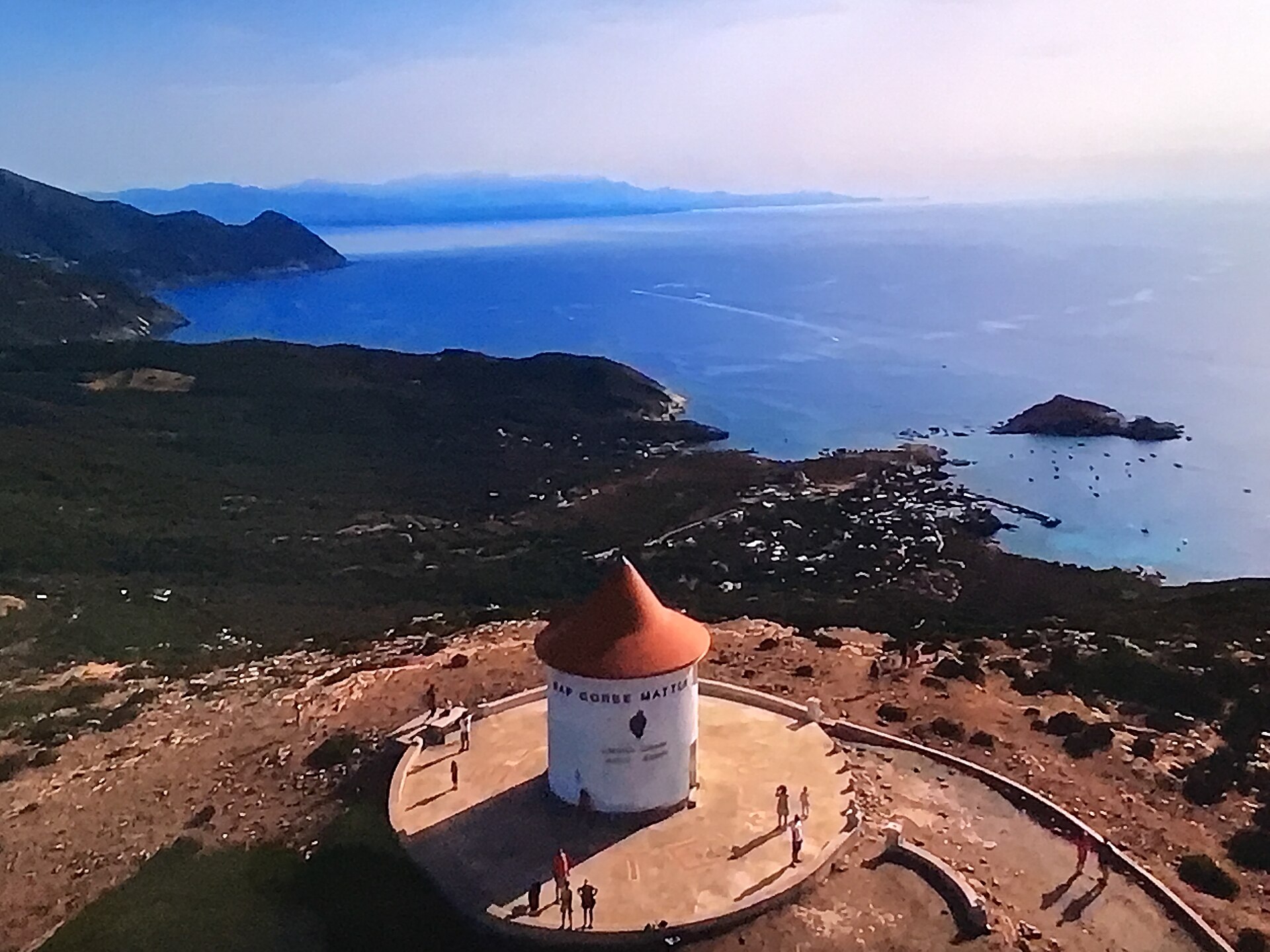
10. The Moulin Mattei windmill viewpoint

As you cross from the northern tip from the eastern side to the western one, you’ll pass through the Col de la Serra mountain pass, where at 365 metres above sea level you’ll find the beautifully restored white Moulin Mattei windmill. From the small parking area by the main road, it’s about a ten-minute easy walk uphill to the windmill itself. Along the way you’ll very likely be accompanied by the curious glances of free-roaming Corsican cows, which often wander here in search of food.

From the top by the windmill you get one of the very best panoramic views of the whole of Cap Corse. You can see both sides of the peninsula at once, from the dramatic, steep western cliffs plunging into the sea to the slightly gentler east coast. On a very clear day you can even make out the outlines of mainland Italy and the neighbouring island of Capraia on the distant horizon. It’s an absolutely ideal spot for a short rest stop.

💡 Tip: At the top by the windmill there’s almost always a very strong wind, regardless of the weather down by the sea. Be sure to pack a light jacket or jumper so you don’t get cold up here.
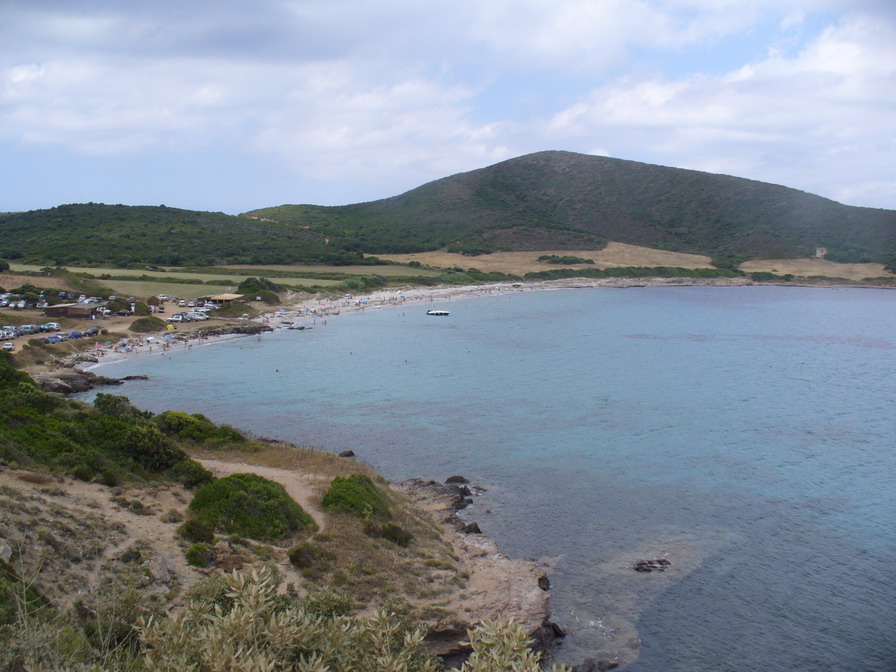
11. The hidden Tamarone beach

If, after a full day of travelling, you’re looking for the perfect spot to relax by the water, head to the beautiful and slightly hidden Tamarone beach. It lies a little north of Macinaggio, and you can reach it either on foot along the opening section of the Customs Officers’ Path mentioned above, or by car along a fairly dusty, bumpy unpaved track. It’s precisely thanks to this slightly trickier access that you’ll never find the same unpleasant crush of people here as on the famous beaches in the south of the island around Porto-Vecchio.

Unlike most of the pebble beaches in the north, Tamarone beach has fine, light sand, and the water here is beautifully shallow and crystal clear. That makes it an absolutely ideal and safe spot for families with younger children, or for anyone who just wants to laze about in the shallows. In the peak summer season there’s also a small wooden beach bar where you can buy chilled drinks, coffee and simple vegetarian snacks like salads. The bay is very well sheltered from the strong wind, so the sea surface here is usually lovely and calm on most days, perfect for swimming.

Where to go next from Bastia

Once you’ve explored the north, Corsica offers countless more options for where to head next. If you’re craving mountains and wilder scenery, drive to the inland town of Corte, surrounded by high peaks and deep chestnut forests. For more detailed planning of your whole trip, be sure to read our big Corsica guide, where you’ll find plenty more useful tips.

If you decide to continue down the west coast heading south, you’ll come across the stunning red rocks of the Calanques de Piana, and later reach the island’s capital. Take a look at our article on what to see in Ajaccio, the birthplace of Napoleon himself, where the atmosphere is noticeably more relaxed, with an almost quintessentially French café culture.

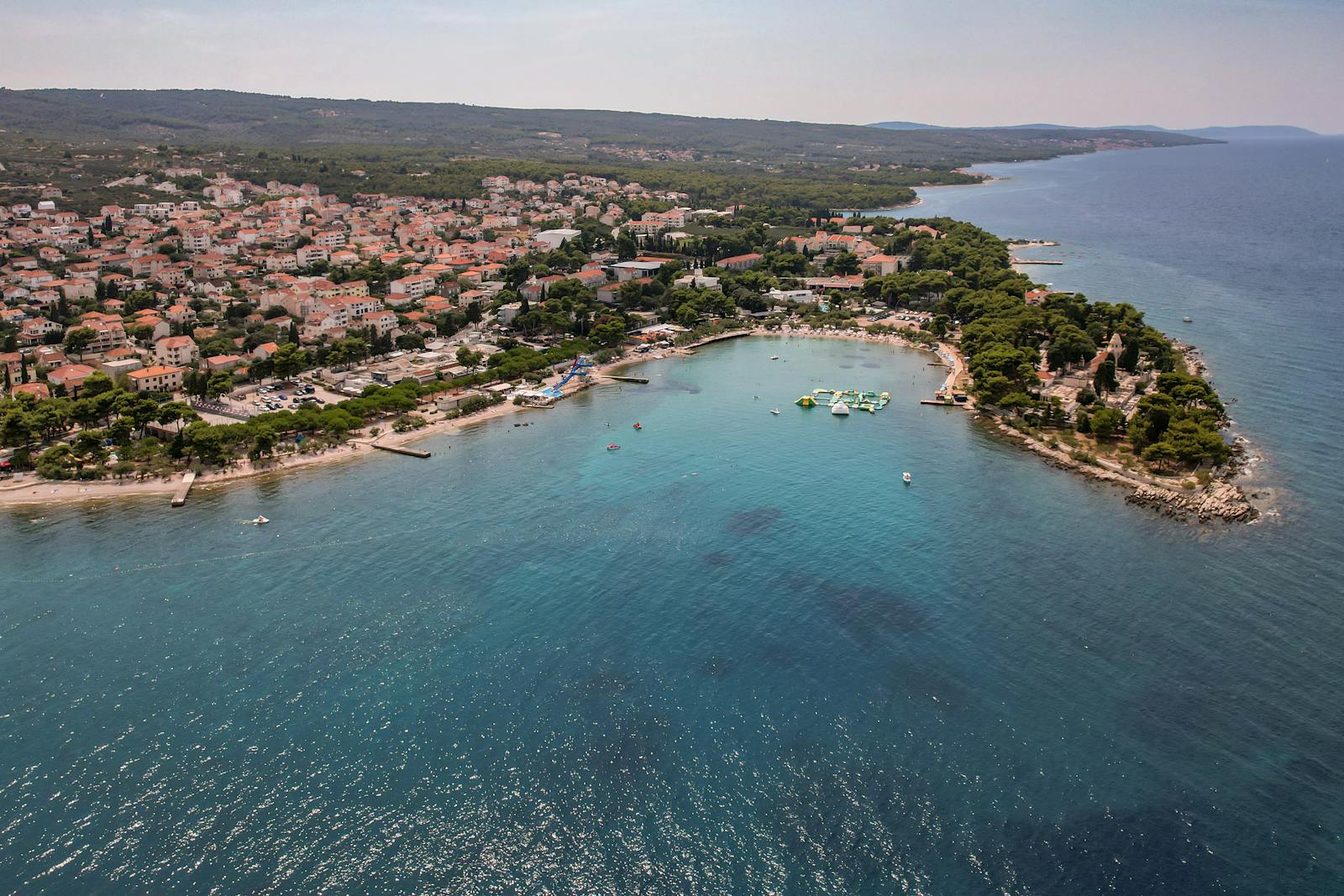
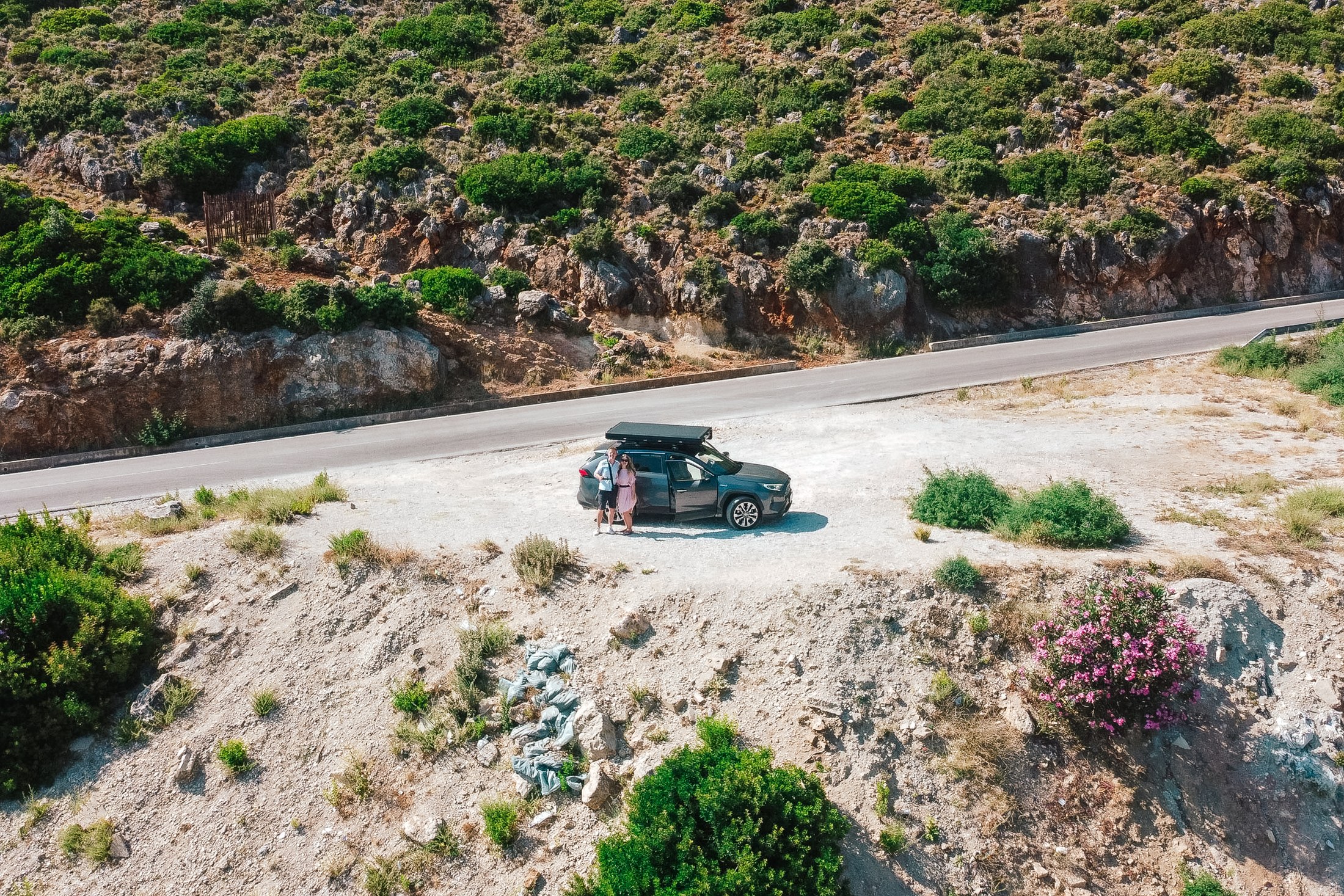
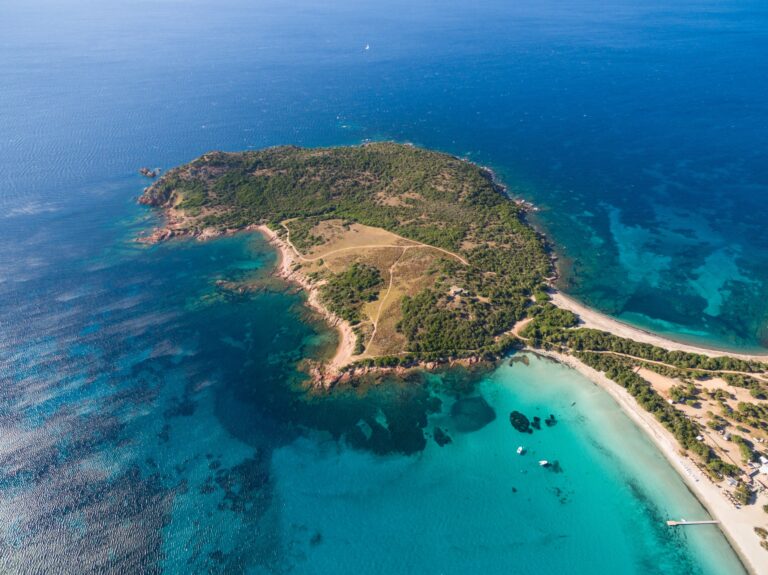
Letecký pohled na poloostrov s tyrkysovou zátokou na Korsice 🚗 Car rental on the road Verified rental cars in Corsica

Search with the DiscoverCars comparison engine — it compares prices from dozens of local and international rental companies, and most bookings come with free cancellation.

Compare car prices in Corsica →
DiscoverCars comparison✓ free cancellation on most bookings✓ no hidden fees

Frequently asked questions

How long does it take to drive around Cap Corse?

The drive itself around the Cap Corse circuit takes roughly 3 to 4 hours of pure driving time. However, I recommend setting aside a full day for the trip, so you have plenty of time for stops in the villages, taking photos at the old Genoese towers, short hikes to viewpoints, and a pleasant lunch somewhere by the sea overlooking the cliffs.

Is driving in Corsica dangerous?

Driving requires full concentration and a great deal of patience, but it’s not outright dangerous if you drive carefully and don’t rush. Roads are often very narrow and full of sharp bends, guardrails are frequently missing, and you’ll commonly encounter freely grazing cows, goats, or wild boars on the road. Definitely avoid driving at night.

What’s the typical food in the north?

Corsican cuisine is very hearty and rustic. Be sure to taste everything containing the local fresh cheese brocciu, whether it’s stuffed pasta, savory pies, or desserts. Also very popular are filling dishes made from chestnut flour, which makes excellent polenta, and for drinks try the refreshing chestnut beer Pietra.

Are there sandy beaches on Cap Corse?

Most beaches on the peninsula are rather pebbly or rocky, but this guarantees beautifully clean and crystal-clear water ideal for snorkeling. You’ll find a beautiful sandy beach with shallow water in the north at Tamarone Bay, or a bit further along the eastern coast near the quiet village of Pietracorbara.

Can Kids Handle the Customs Officers’ Path?

Yes, shorter sections of the Customs Officers’ Path are relatively easy and can be easily managed even by active families with older children. The initial route from Macinaggio to Tamarone beach takes only about 45 minutes and follows more even terrain. However, definitely don’t come here with a stroller – the path is very rocky and dusty.

How is parking in Bastia?

Parking directly in the historic center and narrow streets is quite a challenge and there are very few spots for non-residents. The best option is to use the huge underground car park beneath Place Saint-Nicolas square, which is paid (around 20 euros per day), but you’re guaranteed to park safely right in the heart of the action.

Is the black beach in Nonza safe for swimming?

Yes, swimming at the black beach is completely safe. Although the sand comes from a nearby asbestos quarry, which was permanently closed in 1965, authorities regularly and very strictly test the area. The quality of both the water and the sand itself has long met all the strictest health and environmental standards.

Tips and Tricks for Your Vacation

Don’t Overpay for Flights

Search for flights on Kayak. It’s our favorite search engine because it scans the websites of all airlines and always finds the cheapest connection.

Book Your Accommodation Smartly

The best experiences we’ve had when looking for accommodation (from Alaska to Morocco) are with Booking.com, where hotels, apartments, and entire houses are usually the cheapest and most widely available.

Don’t Forget Travel Insurance

Good travel insurance will protect you against illness, accidents, theft, or flight cancellations. We’ve had a few hospital visits abroad, so we know how important it is to have proper insurance arranged.

Where we insure ourselves: SafetyWing (best for everyone) and TrueTraveller (for extra-long trips).

Why don’t we recommend any Czech insurance company? Because they have too many restrictions. They set limits on the number of days abroad, travel insurance via a credit card often requires you to pay medical expenses only with that card, and they frequently limit the number of returns to the Czech Republic.

Find the Best Experiences

Get Your Guide is a huge online marketplace where you can book guided walks, trips, skip-the-line tickets, tours, and much more. We always find some extra fun there!
Trogir, Croatia: 12 Best Things to See and Do in 2026

TL;DRTrogir is a compact, UNESCO-listed old town on a tiny island, just five kilometres from Split airport — perfect for the first or last day of a trip. Highlights include St Lawrence’s Cathedral with Radovan’s portal, the climb up the 47-metre bell tower, and the Venetian fortress of Kamerlengo; two to three hours is enough to see the sights. For a swim, head to the neighbouring island of Čiovo and Okrug Gornji beach, from where you can take a boat trip to the Blue Lagoon off Drvenik Veli. May, June and September are the best months to visit, with fewer crowds and cheaper accommodation. Bus number 37 runs from the airport into the centre, while cars have to park on the mainland side before the bridge.

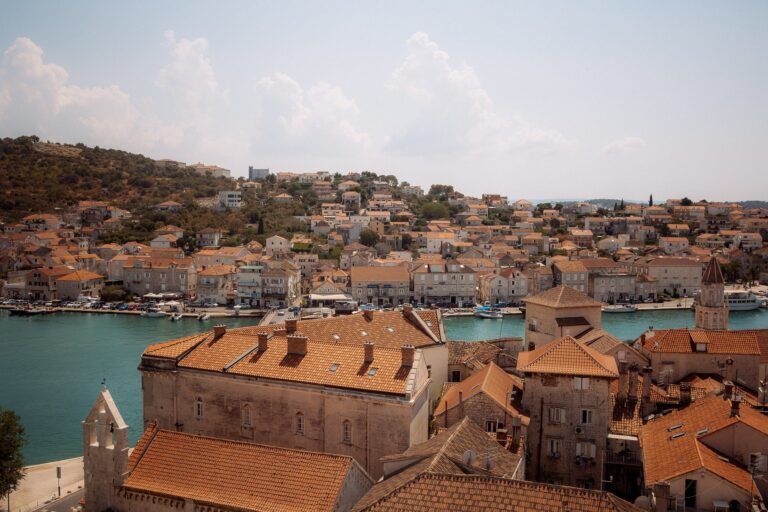
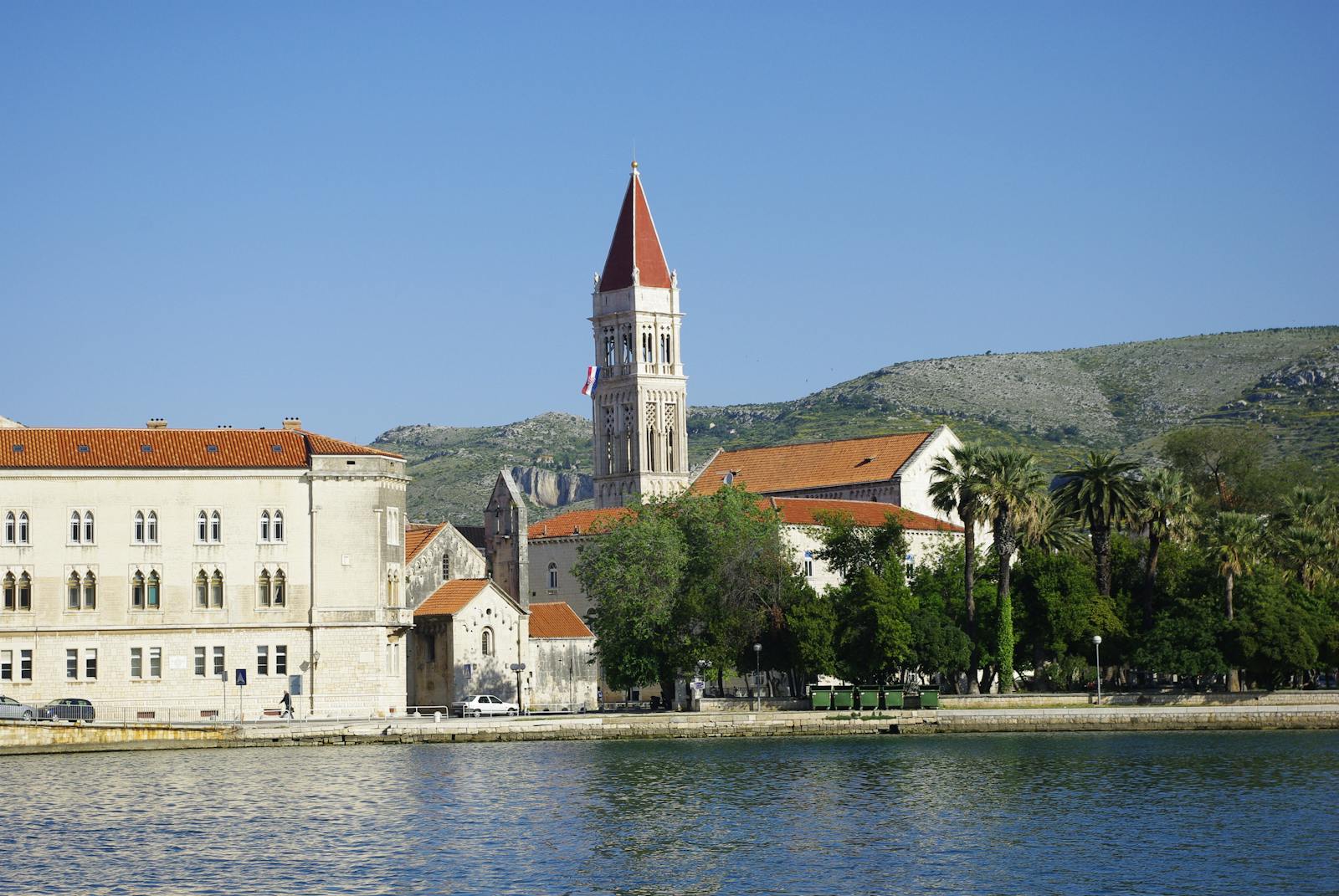
If you’re looking for the perfect Croatian town that has held onto its authentic historic character, Trogir in Croatia will win you over in an instant. This remarkably compact centre sits on a tiny islet linked by bridges to both the mainland and a neighbouring island, and it’s rightly listed in its entirety as a UNESCO World Heritage Site.

Its huge strategic advantage is the fact that it lies just five kilometres from Split International Airport. That makes it an absolutely ideal stop for your first day after landing, or for that very last holiday afternoon before heading home.

I’ve put together a detailed guide with 12 specific tips on sights and trips to help you get the most out of your visit. I’ll also walk you through the logistics — where best to park and how to cleverly dodge the biggest crowds of day-trippers who pour in from far and wide.

TL;DR

  • Transport and parking: From the airport or from Split you can easily get here on local bus number 37. If you’re driving, park only on the mainland side before the bridge — cars aren’t allowed into the historic core.
  • Main sights: Don’t miss the magnificent Cathedral of St Lawrence with its famous Radovan Portal, and the Venetian Kamerlengo fortress at the end of the promenade.
  • When to come: The town has its best atmosphere early in the morning or in the late afternoon, when the big organised tours from Split leave and the lanes empty out pleasantly.
  • Swimming and beaches: You can’t swim in the historic centre itself, but just cross the bridge to the island of Čiovo, where the popular Okrug Gornji beach awaits.
  • Boat trips: Trogir is a perfect launch point for popular snorkelling trips to the nearby Blue Lagoon off the island of Drvenik Veli.
  • How long to stay: Two to three hours are enough for the sights themselves, but add lunch and a swim and you’ll easily spend a whole wonderful day here.

When to Visit Trogir: Weather in Trogir, Croatia

If you want to enjoy the most pleasant atmosphere and avoid the punishing heat, the best months to visit are May, June and September. The weather in Trogir, Croatia, is beautifully summery by then (or still is), the sea is comfortably warm, and you can stroll the old town’s lanes without constantly hunting for shade. In these shoulder months you’ll also find accommodation at far friendlier prices and enjoy plenty of personal space on the beaches.

During the peak summer season in July and August, be prepared for temperatures that regularly climb well above thirty degrees, with the stone town heating up considerably. On top of that, between ten in the morning and three in the afternoon, crowds of day-trippers and organised tours stream in from neighbouring Split, so the narrow lanes get truly packed. For that reason I recommend planning your visit to the best-known sights for eight in the morning, when the town is just waking up and you’ll have the loveliest views all to yourself.

Whatever month you arrive, Trogir is at its most magical at dusk and after dark. As the sun sets, the centuries-old stone paving takes on a gorgeous golden glow, restaurant lights flicker on beneath the tall palms along the promenade, and you can soak up genuine Dalmatian romance without the crush. By then most day visitors have long since driven back to their mainland hotels. An evening stroll along the waterfront with an excellent Italian gelato in hand, watching the luxury yachts moored in the local marina, is one of the most beautiful experiences a summer holiday in Croatia can offer.

Where to Stay in Trogir

💡 Tip for accommodation and experiences: We like to look for places to stay on Booking.com, which usually has the best cancellation terms. For tickets, tours and activities, it pays to compare and book through GetYourGuide.

Choosing where to stay depends mostly on whether you’re after evening romance right in the heart of the action, or you’d rather have peace and quiet and be a stone’s throw from the beaches. The historic core on the islet itself offers gorgeous boutique hotels in authentic stone houses, but bear in mind you can’t drive there and the evenings can get fairly lively thanks to the bars and restaurants.

If you fancy old-world luxury and don’t mind a slightly higher price point, a fantastic choice is the Boutique Hotel Monika, set right in the labyrinth of ancient lanes with fantastic breakfasts and a beautiful terrace. Another popular spot right in the centre is the traditional Hotel Tragos, housed in a carefully restored eighteenth-century baroque palace, from which all the sights are literally just a few steps away. Staying in the heart of town is absolutely ideal for your first or last night in Croatia, since you can reach Split International Airport by car or bus in just ten minutes.

For families with children or travellers who mainly want to enjoy the sea and save a chunk of the budget, I recommend looking for accommodation on the neighbouring island of Čiovo, specifically in the resorts of Okrug Gornji or Slatine, where you’ll find a wide range of affordable apartments and smaller guesthouses. A lovely compromise between the beach and easy access to the historic centre is the quieter mainland district of Seget Donji. Here you’ll find, for example, the fantastic design-led Brown Beach House, which sits on the mainland just by the bridge and boasts an absolutely iconic pool with sea views. I always recommend booking your accommodation well in advance through Booking, because capacity in this hugely popular region disappears in a flash over summer, and only the priciest options are left at the last minute.

12 Best Things to See and Do in Trogir, Croatia

Let’s take a look together at the most interesting things this unique Dalmatian town has to offer. The historic centre is so compact that you can easily walk the whole thing, and getting your bearings is a breeze thanks to the regular grid of lanes that has survived here since the days of the ancient Greeks.

1. Cathedral of St Lawrence and the Radovan Portal

The most important building in the whole town is undoubtedly the monumental Cathedral of St Lawrence, which locals call Sveti Lovre. Its construction spanned an impressive 370 years, from the thirteenth to the sixteenth century, and it rose on the foundations of a destroyed ancient temple. Thanks to this long build, you can admire a fascinating blend of Romanesque, Gothic and Renaissance styles that harmoniously merge into one stunning architectural whole.

An absolute artistic gem is the main entrance gate, the so-called Radovan Portal from 1240, one of the most significant Romanesque sculptural works in Central Europe. On it, Master Radovan carved in incredible detail not only biblical scenes — led by Adam and Eve standing on lions — but also the motifs of the individual months of the year and the traditional farming tasks tied to each one.

Inside the cathedral itself, your attention will certainly be drawn to the masterful Renaissance Chapel of St John of Trogir, the work of the finest sculptors of their time, as well as the nearby fifteenth-century baptistery by the builder Andrija Aleši. Basic admission to the cathedral is around €5, but I warmly recommend paying a little extra for the combined ticket at €10, which opens the doors to every part of the complex, including the baptistery and bell tower. During the season it’s usually open Monday to Saturday from eight to six, and from noon on Sundays.

💡 Tip: If you want to study the portal’s details in peace and without shadows, come first thing at eight when the cathedral opens and the sun hits it at the best possible angle.

2. Climbing the Bell Tower for a Breathtaking View

An integral part of the cathedral is its forty-seven-metre bell tower, dating from the fourteenth to sixteenth century, which forms the town’s main and far-visible landmark. Interestingly, two towers were originally meant to stand by the cathedral, but due to a lack of funds and constant historical upheavals only the southern one was ever finished — which gives the whole structure its characteristic asymmetric look.

If you don’t suffer from vertigo and don’t mind a bit of physical effort, definitely don’t miss the climb of roughly a hundred steps to the very top of this historic tower. The way up the stone — and later metal — staircase is rather narrow and steep in places, but once you reach the upper gallery beneath the four statues by the famous Venetian sculptor Alessandro Vittoria, all your tiredness vanishes at once.

From up high you’ll be treated to an unbeatable panoramic view of the old town’s red roofs, the crystal-clear channel, the moored luxury yachts and the green island of Čiovo opposite. It’s from this bird’s-eye perspective that you’ll best understand how cleverly the entire historic settlement is laid out on its little islet, and just how close the open sea really is.

💡 Tip: The combined ticket for the cathedral and bell tower costs around €10. The staircase is genuinely very narrow and passing people coming the other way is tricky, so if you can, avoid the climb around midday when the cruise-ship crowds pack in.

3. The Venetian Kamerlengo Fortress

When you head through the labyrinth of lanes towards the very western tip of the island, you’ll come to a massive stone structure that once protected the town from surprise attacks by sea. The Kamerlengo fortress dates from the fifteenth century, specifically around 1420, and was built by the mighty Venetian Republic shortly after it took its long-lasting control over all of Dalmatia.

Within the walls themselves there are no extensive historical exhibitions or period furniture, but a walk along the mighty fortifications is a huge experience all the same. From the top of the main polygonal tower a beautiful view opens over the promenade, and from this bird’s-eye perspective you can study in detail the photogenic bay full of luxury cruise boats and small fishing vessels that give the town its unmistakable maritime character.

During the warm summer months, the fortress’s empty central courtyard transforms into an amazing open-air cultural venue. Evening concerts by local bands are held here regularly, along with theatre performances and summer cinema screenings, lending the ancient historic walls a unique and very relaxed evening atmosphere.

💡 Tip: Admission to the fortress costs around €5 in season. Right next to it you can also take in the circular St Mark’s Tower during your walk — it was once firmly joined to the fortress by walls and together they formed the town’s impenetrable defensive shield.

4. A Stroll Along the Charming Riva Promenade

The southern shore of the town’s islet is lined by a wide promenade called the Riva, which runs along the entire sea channel and forms the social heart of the whole town. This broad boulevard, shaded by dozens of tall palms, offers a perfect visual contrast to the narrow, shady lanes of the historic core and exudes that quintessential Mediterranean ease all day long.

On a leisurely walk along the waterfront, you’ll have the tempting summer terraces of local cafés and restaurants on one side, while on the other, boats of every kind bob on the water’s surface. A major draw is the neighbouring ACI Marina Trogir on the far bank, where the world’s most luxurious yachts and sailing boats moor in summer, contrasting sharply with the thousand-year-old stone walls of the old town.

The Riva comes alive above all at sunset, when locals and tourists alike head out for the traditional evening corso. It’s absolutely the best spot to grab a delicious gelato, settle onto one of the benches and simply watch the lively bustle on the water and the colourful mix of passers-by enjoying the balmy summer evening.

💡 Tip: Small water taxis set off regularly from the waterfront and will whisk you, for a small fee, reliably and very quickly to the popular beaches of the neighbouring island of Čiovo — without having to wrestle with tricky parking in the summer heat or queue in traffic on the bridge.

5. The Cipiko Palace and Venetian Gothic

Directly opposite the cathedral’s main entrance stands a beautiful complex of historic buildings that once belonged to one of the most influential noble families in the whole Dalmatian region. The Large and Small Cipiko Palaces are an absolutely masterful example of Venetian Gothic and early Renaissance from the mid-fifteenth century, and form an inseparable part of the main town square.

The Cipiko family were extremely wealthy and hired the finest available artists of their time to decorate their residence, as the stunning stone façade clearly attests. You’ll be most captivated by the richly decorated grouped Gothic windows, the so-called triforia, the work of the famous builder Nikola Firentinac, who also played a major part in many other architectural treasures around the town.

Although the palace’s lavish interior is sadly off-limits to the general public, viewing it from the outside is one of the absolute highlights of a visit to the historic centre. The palace’s private courtyard also holds an intriguing wooden statue of a rooster, which family members supposedly brought back as celebrated war booty from one of their successful naval battles against the powerful Turks.

💡 Tip: Try photographing the palace from beneath the arcade of the Town Loggia opposite, which gives you a wonderful angle and lets you frame the most beautiful architectural details of those richly decorated windows without distracting elements or passing tourists.

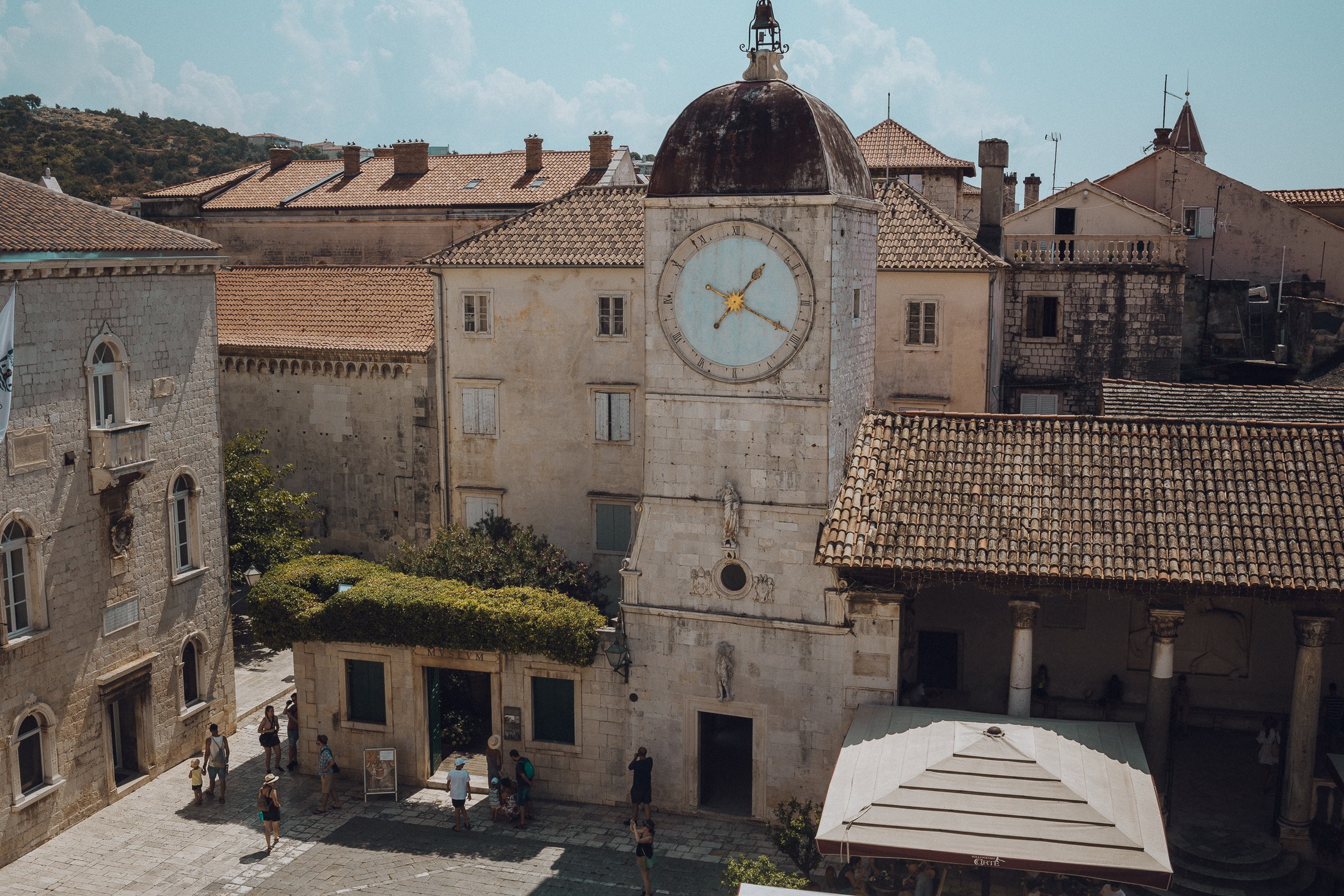
6. The Town Loggia and the Clock Tower

Right next to the cathedral on the main square of Pope John Paul II stands an unmissable structure with an open colonnade, which once played an enormously important role in the life of every resident. This Town Loggia, dating from the thirteenth to fifteenth century, served in the Middle Ages as a court of law and the place where important laws were publicly announced, major trade contracts were signed and all manner of public disputes were settled.

If you look carefully inside the loggia, you’ll spot beautiful stone reliefs on the rear wall, dominated by the typical winged lion of St Mark — the ever-present symbol of Venice’s long rule over the town. You’ll also find an interesting statue of Justice by Nikola Firentinac, firmly holding the scales in her hands and symbolically reminding every visitor of the original strict judicial purpose of this open space.

Right next to the loggia rises the photogenic clock tower, which is actually the only remnant of the former Church of St Sebastian. This church was built in the fifteenth century as a thanksgiving for the town’s miraculous deliverance from the plague, its greatest architectural quirk being that, instead of a classic bell tower, it was endowed with a striking blue clock.

💡 Tip: On hot summer days the stone Town Loggia provides wonderful, much-sought-after shade. It’s a perfect spot to sit down for a moment, rest and soak up the magical atmosphere of this unique historic square.

7. The North and South Town Gates

Originally the entire town was tightly enclosed within massive defensive walls, which could be entered only through two strictly guarded gateways. From the north, on the mainland side, you’re greeted by the beautiful Land Gate, which in its current form dates from the seventeenth century and above whose stone arch watches a statue of St John of Trogir, the town’s main patron and protector.

When you cross the town through its narrow lanes to the waterfront, you’ll come to the second, slightly older Sea Gate from the end of the sixteenth century. Its massive wooden doors finished with iron fittings survive to this day in their original state, and right beside it you can see a small loggia that once served as a safe refuge for travellers who arrived after the gates closed for the evening and had to wait here until dawn.

Remnants of the walls themselves are today visible above all in the western and southern parts of the islet, where they seamlessly connect with the Kamerlengo fortress. A walk between these two historic gateways takes barely ten minutes at a normal pace, which just goes to show how incredibly tiny and compact this UNESCO-listed historic centre really is.

💡 Tip: At the Land Gate, don’t forget to notice the original architectural details, where you can still clearly see the deep grooves in the masonry for lowering the heavy portcullis that uncompromisingly protected the town from unwelcome guests and raiders.

lukas a lucka
Lukáš and Lucie recommend
Where to Stay in Trogir
4 accommodations — hotels, wellness hotels and other accommodation options

8. Relaxing on the Beaches in Trogir, Croatia (Čiovo Island)

Since you can’t swim in the historic centre ringed by stone walls, you’ll need to head just beyond the town gates for some time in the water. The most accessible and liveliest of the beaches in Trogir, Croatia, is the so-called Trogir Copacabana — the more than two-kilometre-long pebble beach of Okrug Gornji on the neighbouring island of Čiovo, around three kilometres from the core and lined with dozens of beach bars and restaurants.

If you prefer a quieter setting and the natural shade of trees over pulsing music, head instead to the opposite side, to Medena beach in the Seget area. This three-kilometre pebble beach on the mainland side is fringed by a fragrant pine forest, with a huge range of water sports, inflatable attractions and pleasantly calm corners that are absolutely ideal for families with smaller children.

For lovers of pure nature and crystal-clear Adriatic water, I recommend going deeper onto Čiovo to the smaller hidden coves. Duga beach, for example, offers gorgeous natural scenery and is home to renowned local taverns where you can refuel beautifully and at reasonable prices during a full day of basking in the sun.

💡 Tip: In peak summer season the bridges linking the mainland to Čiovo are often clogged with cars. The most comfortable way to reach Okrug Gornji beach is therefore to use the regular boat lines that depart straight from the Riva promenade and work as reliable water taxis.

9. A Boat Trip to the Turquoise Blue Lagoon

One of the absolute most popular experiences in the whole Dalmatian region is a boat visit to the nearby Blue Lagoon, also known by its local name Krknjaši. This incredibly shallow bay with turquoise water and a light sandy bottom lies just about six nautical miles off the coast near the island of Drvenik Veli and is a genuine paradise for snorkelling and carefree swimming.

Thanks to its strategic location, Trogir is the best possible starting point for this boat trip. Along the entire promenade and by the Kamerlengo fortress you’ll find dozens of moored boats offering half- and full-day cruises, which very often include a so-called three-island circuit, with a stop in the picturesque fishing village of Maslinica on the neighbouring island of Šolta.

Thanks to the white seabed, the water in the lagoon is unbelievably transparent and its vivid colours bring to mind the exotic Caribbean rather than the classic Adriatic coast. Don’t forget to pack quality snorkelling gear — beneath the surface you can watch shoals of tiny fish, crabs and varied marine life in its completely natural environment.

💡 Tip: Trips to the Blue Lagoon can — and very sensibly should — be booked online in advance, for example through the trusted GetYourGuide portal. In the busy summer months this secures your spot on the boat and often a better price than haggling on the scorching pier.

10. Tasting Dalmatian Cuisine

It would be a huge shame not to visit at least one of the traditional Dalmatian konobas tucked away in the narrow, romantically lit stone lanes. Dalmatian cuisine is built primarily on exceptionally good olive oil, fresh vegetables and fragrant herbs, so you’ll find plenty of excellent options even if you’re after lighter fare and aren’t much of a meat-eater.

While the classic local specialities for meat lovers are aged pršut (prosciutto), traditional beef pašticada and freshly grilled fish, vegetarians are in for a real culinary heaven here. I recommend trying the fantastic creamy risottos, homemade pasta with fresh black truffles imported from nearby Istria, the famous cheeses from the island of Pag, or simply but perfectly prepared grilled vegetables, which taste utterly divine thanks to the local sun.

Among the very best-rated establishments in town is the renowned Konoba TRS, which has even featured in the famous Michelin guide and will gladly and professionally prepare excellent meat-free and gluten-free dishes on request. You’ll also find a very pleasant atmosphere and a shady outdoor terrace with a rich choice of excellent dishes at the reliable and well-frequented restaurant Konoba Fortin.

💡 Tip: Restaurants located right on the main Riva promenade by the sea tend to be noticeably pricier and often more focused on quickly turning over tourists. If you want a more authentic atmosphere, better service and friendlier prices, wander deeper into the side lanes near the historic walls.

11. The Monasteries of St Dominic and St Nicholas

If you love quiet, peaceful places that breathe centuries of history and offer an escape from the busy streets, be sure to give the local sacred buildings some attention. On the waterfront just by the fortress stands the fourteenth-century Monastery of St Dominic, which will capture you with its plain yet very striking interior and beautiful painted wooden ceiling. The real historic treasure, though, lies a little further on in the lanes — in the women’s Benedictine Monastery of St Nicholas.

The nuns here carefully guard a precious marble relief of the god Kairos, the ancient Greek god of the fleeting opportune moment. This stunning work dates all the way back to the third century BC and is one of the very most valuable relics from the era of the original Greek settlement, when the town bore the name Tragurion.

Legend has it that the god Kairos has wings on his feet and flies incredibly fast. To catch him by his lock of hair means to seize your life’s opportunity, which is why this unique ancient symbol is today considered the unofficial mascot of the whole town. While strolling the old centre you’re sure to spot him depicted on many local souvenirs, from small jewellery to hand-painted ceramics.

💡 Tip: The collection at the Monastery of St Nicholas is fairly small, but for lovers of ancient history it’s an absolute must. Entry to the small exhibition hall costs just a symbolic few euros, and you’ll also cool off nicely here on hot days.

12. Ancient Salona and Klis Fortress (Game of Thrones)

Once you’ve thoroughly explored the town itself, consider a shorter half-day trip into the immediate surroundings, which are literally dotted with further historic gems. Just about twenty minutes’ drive away lie the stunning ruins of ancient Salona near the present-day town of Solin. This place was once the capital of the Roman province of Dalmatia and could boast a huge amphitheatre seating a staggering fifteen thousand spectators. A walk among the remains of ancient temples, age-old baths and early Christian basilicas is a fascinating journey back in time.

Thanks to the far smaller number of tourists, you’ll enjoy the sights in complete peace here, without the usual crowds you know from the big Croatian resorts. Admission to this remarkably sprawling archaeological park is around €10, and the whole visit takes roughly two hours.

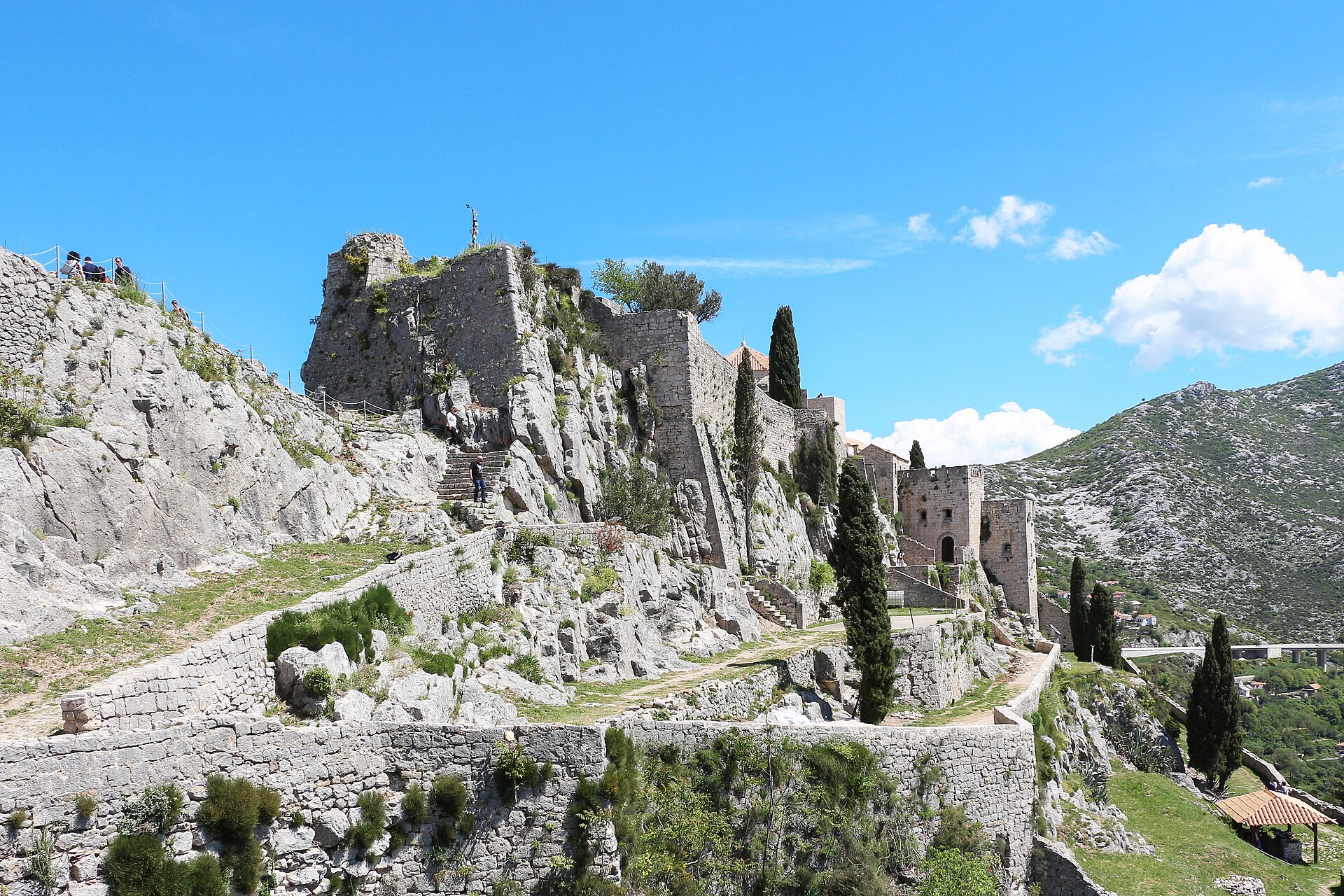
You can very easily combine this trip to Salona with a visit to the nearby hilltop Klis fortress, which rises majestically on a steep rocky crag above Split. This striking medieval structure shot to enormous worldwide fame thanks to the series Game of Thrones, where on screen it played the fictional city of Meereen. Admission to the fortress is likewise around €10, and as a bonus you’ll get probably the very most beautiful views over the entire Dalmatian coast and its islands.

💡 Tip: The Salona site is genuinely vast and offers almost no natural shade. If you visit in the hot summer months, don’t forget to bring plenty of drinking water and a hat, and ideally arrive first thing after opening.

Where to Go Next from Trogir

Thanks to its strategic location halfway along the coast, this place is a perfect springboard for exploring more of Croatia’s beauty. If you’re looking for inspiration for further travels, be sure to check out our big overview article packed with tips on where to go on holiday in Croatia.

Just around the corner awaits the buzzing Split with its unique Diocletian’s Palace, connected to Trogir by convenient bus and boat services. If you prefer nature, I recommend heading northwest to the gorgeous Krka National Park, where you can stroll along wooden boardwalks past the thundering Skradinski Buk waterfalls.

On the way north it’s well worth stopping in the ancient town of Šibenik with its stunning stone cathedral, or you can travel a little further to hear the famous Sea Organ in enchanting Zadar. And if you still haven’t sorted your accommodation, take a look at our tips for trusted accommodation in Croatia.

Trogir s terakotovými střechami u moře 🚗 Car rental on the road Verified rental cars in Croatia

Search with the DiscoverCars comparison engine — it compares prices from dozens of local and international rental companies, and most bookings come with free cancellation.

Compare car prices in Croatia →
DiscoverCars comparison✓ free cancellation on most bookings✓ no hidden fees

Trogir also appeared in Game of Thrones as the trading city of Qarth. If you’re drawn to filming locations, check out our Game of Thrones locations itinerary.

Frequently Asked Questions

Where is the best place to park?

Driving into the historic center on the island is strictly prohibited for all cars. It’s best to use the large paid parking lots on the mainland side, right across from the wooden bridge, such as the popular Travarica parking lot. Prices during the peak summer season range from around 3.5 to 4 euros per hour, with all-day parking costing you approximately 35 to 40 euros. You can conveniently pay in cash or by card at the parking machines.

How do I get from Split Airport to Trogir?

Transport from the airport is absolutely hassle-free, cheap and very fast. Local bus number 37 operated by Promet Split departs right from the airport terminal and takes you to the bus station in Trogir in about ten minutes. A one-way ticket costs 2.50 euros and during peak times the buses run every twenty minutes, from early morning right up until a quarter past eleven at night.

How much time do I need to explore the city?

The UNESCO-protected historic centre itself is truly tiny and very compact. A leisurely stroll through all the streets and viewing the main sights from the outside will take you two to three hours. However, if you’re planning to tour the cathedral interior, climb the bell tower, have lunch at one of the local traditional taverns and enjoy an afternoon coffee on the promenade, it’s better to set aside a relaxed half-day for your visit.

Can you pay by card in the center?

Most decent restaurants, hotels and larger souvenir shops nowadays commonly accept standard payment cards. However, for buying small souvenirs at markets, ice cream on the promenade or tickets for smaller water taxis, always carry cash in euros. Smaller local vendors very often don’t have payment terminals and rely exclusively on cash transactions.

Where are the nearest nice beaches?

You unfortunately can’t swim right at the historic walls of the old town. The most popular choice is the over two-kilometer-long pebble beach Okrug Gornji on the neighboring island of Čiovo, which you can easily reach on foot from the center or even better by quick water taxi. Another great beach alternative is the expansive Medena beach on the mainland side towards Seget, which offers pleasant natural shade from pine trees.

Is the tap water drinkable?

Yes, water from regular tap water here, just like in the rest of Croatia, is completely safe and drinkable without any problems. During your vacation, you don’t need to waste money buying heavy bottled water in plastic. It’s more than enough to bring a reusable bottle with you and simply refill it with fresh water at your accommodation.

When is the best time to visit the monuments?

If you want to reliably avoid long queues at the cathedral and unpleasant crowding in the narrow streets, head out to explore the city early in the morning between eight and ten o’clock. At the stroke of ten, large tour buses and excursion boats with groups from neighboring Split start arriving en masse, and the city fills up heavily until late afternoon.

Tips and Tricks for Your Vacation

Don’t Overpay for Flights

Search for flights on Kayak. It’s our favorite search engine because it scans the websites of all airlines and always finds the cheapest connection.

Book Your Accommodation Smartly

The best experiences we’ve had when looking for accommodation (from Alaska to Morocco) are with Booking.com, where hotels, apartments, and entire houses are usually the cheapest and most widely available.

Don’t Forget Travel Insurance

Good travel insurance will protect you against illness, accidents, theft, or flight cancellations. We’ve had a few hospital visits abroad, so we know how important it is to have proper insurance arranged.

Where we insure ourselves: SafetyWing (best for everyone) and TrueTraveller (for extra-long trips).

Why don’t we recommend any Czech insurance company? Because they have too many restrictions. They set limits on the number of days abroad, travel insurance via a credit card often requires you to pay medical expenses only with that card, and they frequently limit the number of returns to the Czech Republic.

Find the Best Experiences

Get Your Guide is a huge online marketplace where you can book guided walks, trips, skip-the-line tickets, tours, and much more. We always find some extra fun there!
Rab Island, Croatia: 11 Best Things to See and Do in 2026

TL;DRThe island of Rab in the Kvarner Gulf combines sandy beaches (a rarity in otherwise pebbly Croatia), dense Mediterranean scenery and centuries of history — this guide rounds up 11 things to see and do. The star attraction is Paradise Beach in the resort of Lopar, stretching over 1.5 kilometres and reckoned to be Croatia’s longest sandy beach, backed up by around 22 smaller sandy coves nearby. The historic town of Rab, with its four old bell towers and the Cathedral of the Assumption, is easily covered in an afternoon. The island gets more than 2,600 hours of sunshine a year, and the best time to visit is June to September. The ferry from Stinica takes just 15 minutes, and the island has over 100 kilometres of cycling trails.

Do you know that feeling when you’re hunting for the perfect summer destination and just can’t decide between rich history, untouched nature and flawless swimming? Rab in Croatia, tucked away in the Kvarner Gulf, gives you a little of everything and throws in one huge bonus on top: soft sandy beaches everywhere you look. Sand is incredibly rare along the otherwise pebbly Croatian coast, which turns this place into an absolute paradise.

Add dense pine and oak forests to those sandy coves and you’ll understand why Rab is so often nicknamed the emerald or green island. You can look forward to more than 2,600 hours of sunshine a year, which all but guarantees gorgeous weather for your holiday. The north-eastern side of the island is fairly bare thanks to the strong bora wind, but as soon as you cross over to the south-west you’re surrounded by lush Mediterranean vegetation.

In this guide we’ll explore the most beautiful spots and the practical tips that make planning your trip a breeze. We’ll show you where to find the best beaches for families with children as well as the hidden coves for those craving peace and quiet. Get your notebooks ready, because Rab has plenty to offer and a single week might not even be enough to explore it all.

TL;DR

  • Sandy paradise: Rab is unique for its many sandy beaches, crowned by the famous Paradise Beach in Lopar, which stretches for more than 1.5 kilometres.
  • Historic town: You’ll recognise the main town of Rab from afar thanks to its iconic silhouette of four ancient bell towers.
  • Green island: You’ll find sprawling protected forests here, such as Komrčar park or Kalifront, offering blessed shade.
  • Ferry travel: The quickest way to reach the island is by ferry from the mainland port of Stinica, or via the longer route from the island of Krk.
  • Local cuisine: You absolutely must try the traditional Rab cake, a delicious dessert made from almonds and Maraschino liqueur.
  • Active holiday: The island is criss-crossed by over 100 kilometres of marked cycling and hiking trails of varying difficulty.
  • Cradle of naturism: Rab has a huge tradition of FKK (nudist) beaches, made famous here in the 1930s by a British king.

When to visit Rab in Croatia

If you want to enjoy carefree swimming in a warm sea, the best time to visit is from June to September. The island boasts more than 2,600 hours of sunshine a year, so you’re all but guaranteed glorious weather. During the peak summer months of July and August, air temperatures usually hover around 28 to 30 degrees Celsius and the sea sits at a pleasant 25 degrees. Just bear in mind that August brings the biggest crowds of tourists and accommodation prices peak.

For a noticeably calmer holiday, I’d recommend heading over at the turn of May and June or later on between September and early October. During this period the sea is still warm enough for swimming and the sun is strong, but the beaches and the historic lanes are practically empty. That way you can soak up the authentic atmosphere without queuing in restaurants and save a fair bit on accommodation. These months are also far more pleasant for exploring the local cycle paths and hiking trails.

Outside the main tourist season, especially from November to April, the island is very quiet and most services, restaurants and hotels close their doors. November also tends to be statistically the rainiest month of the year, so for a winter escape to warmth I’d opt for more exotic destinations instead. Throughout the year it’s also worth remembering that the north-eastern side of the island is exposed to the strong, cold bora wind, which leaves that part of the coast fairly bare. But if you’re after complete solitude for long walks along an empty shoreline on the sheltered south-western side, the spring months and their reawakening nature will certainly win you over.

Where to stay on Rab island

💡 Accommodation and experiences tip: We prefer searching for accommodation on Booking.com, which usually has the best cancellation terms. For tickets, tours and activities it pays to compare and book through GetYourGuide.

Choosing the right base for your stay depends mainly on the type of holiday you prefer and exactly who you’re travelling with. The historic town of Rab and its immediate surroundings are absolutely ideal for those of you who want excellent restaurants, cafés and romantic evening strolls through cobbled lanes right on your doorstep. A great choice here is, for example, the upmarket Imperial Valamar Collection Hotel, which sits right by the town’s Komrčar park and offers a perfect base for more demanding travellers.

lukas a lucka
Lukáš and Lucie recommend
Where to stay on Rab Island
3 accommodations — wellness hotels, resorts and other accommodation options

If you’re travelling with small children and your main goal is sandy beaches and shallow sea, definitely look for accommodation in the resort of Lopar on the island’s northern tip. This is home to the famous Paradise Beach and a huge range of family attractions. Very popular in this area is the San Marino Resort, made up of several smaller hotels and located literally a few steps from the finest sand. It’s a vast, brilliantly equipped complex where you’ll find everything you need, from shops to a variety of sports facilities.

For lovers of complete peace, wild nature and the shade of mature trees, I’d recommend the Suha Punta area or the village of Kampor, where you’ll be surrounded by dense pine forests and small pebbly coves. A golden compromise could be the Banjol or Barbat area, dotted with countless smaller family-run apartments set among fertile gardens and vineyards. From these resorts it’s also just a short walk along the sea into the main town. Always book your accommodation well in advance through the popular Booking.com, because in the summer season the best and best-value places vanish at an incredible rate.

11 best things to see and do on Rab in Croatia

Let’s take a look together at the specific places and experiences you really shouldn’t miss during your holiday. The island offers a fascinating combination of medieval architecture and wild nature, so history lovers and dedicated beach loungers alike will find something to fall for.

1. The historic town of Rab and its iconic bell towers

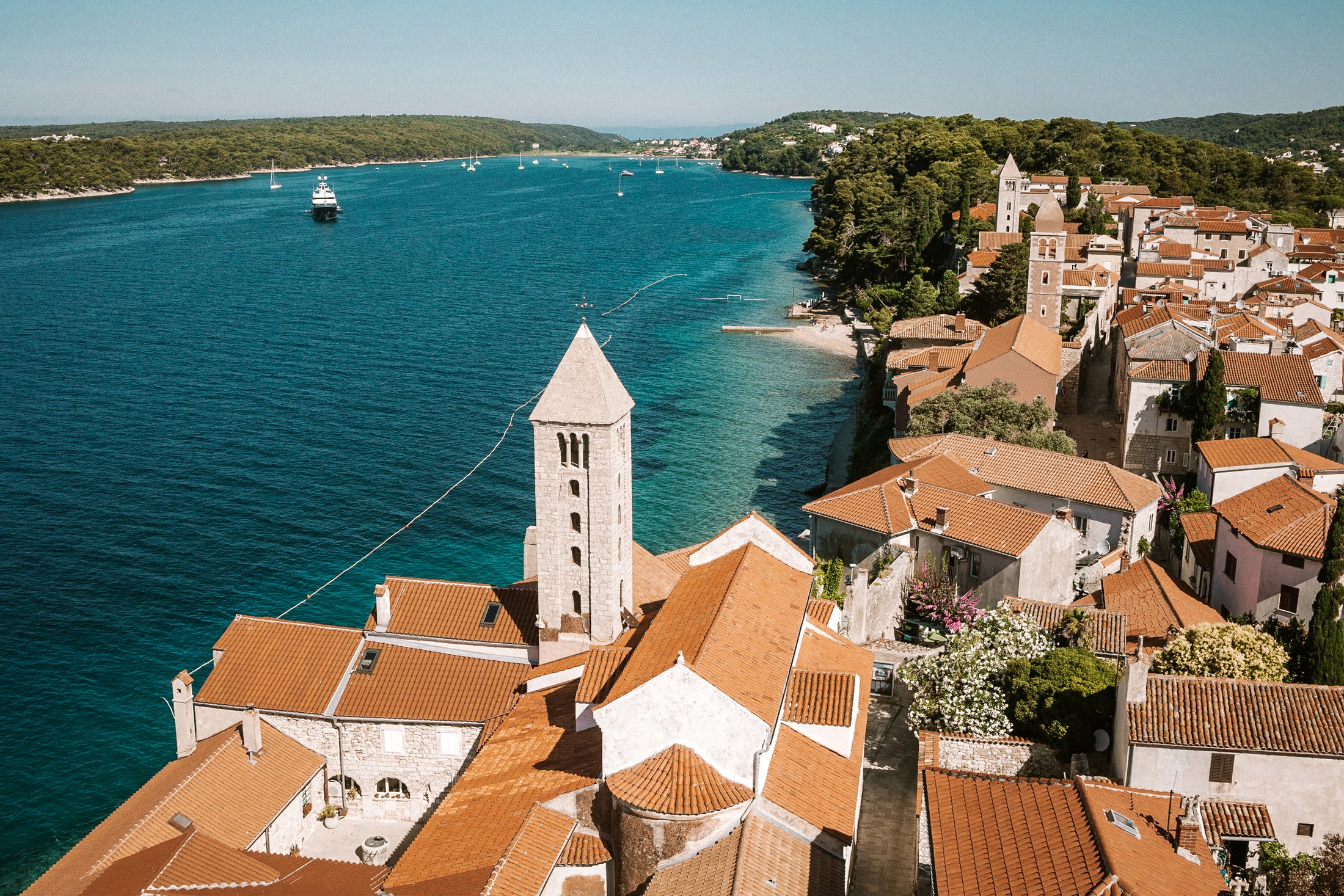
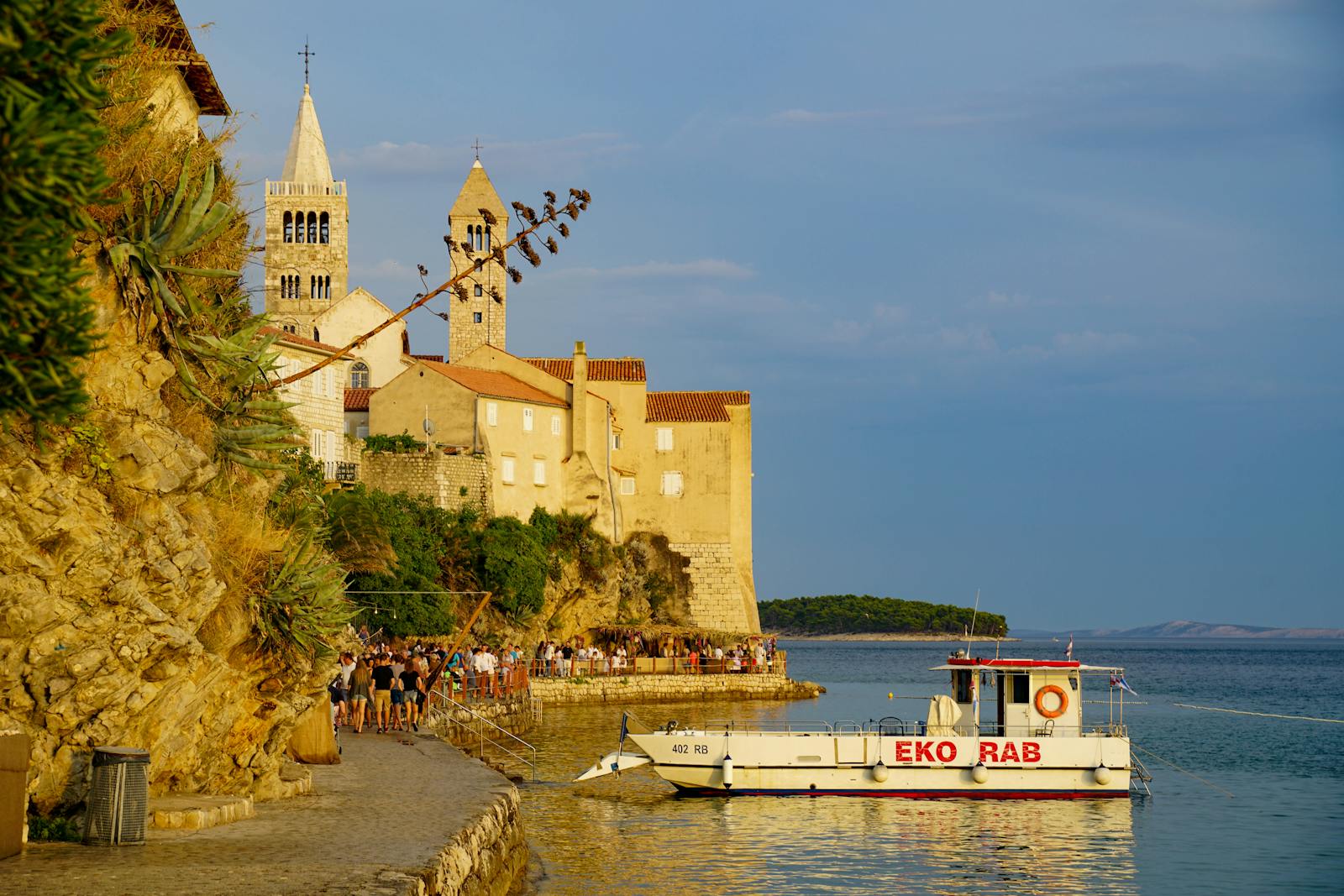
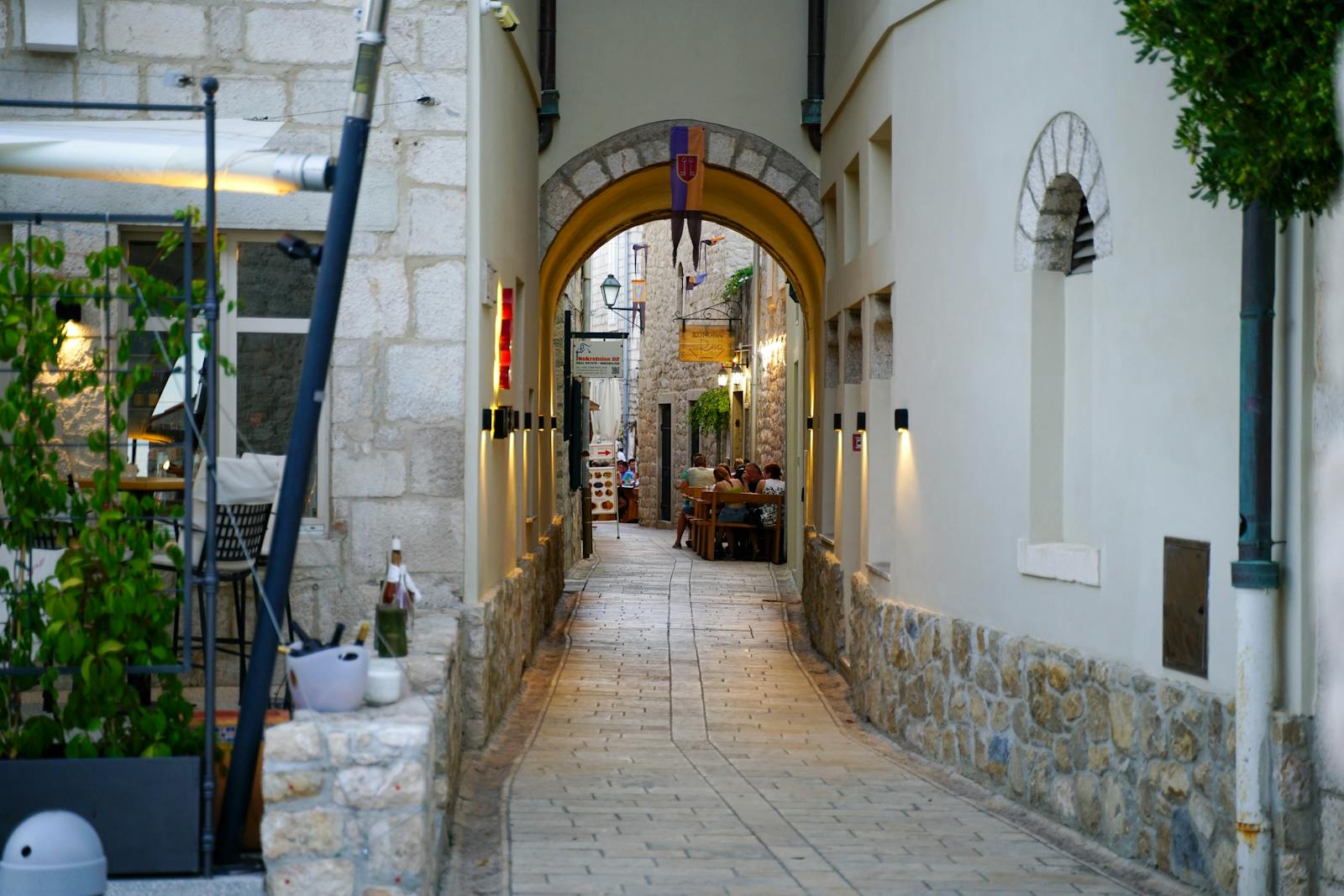
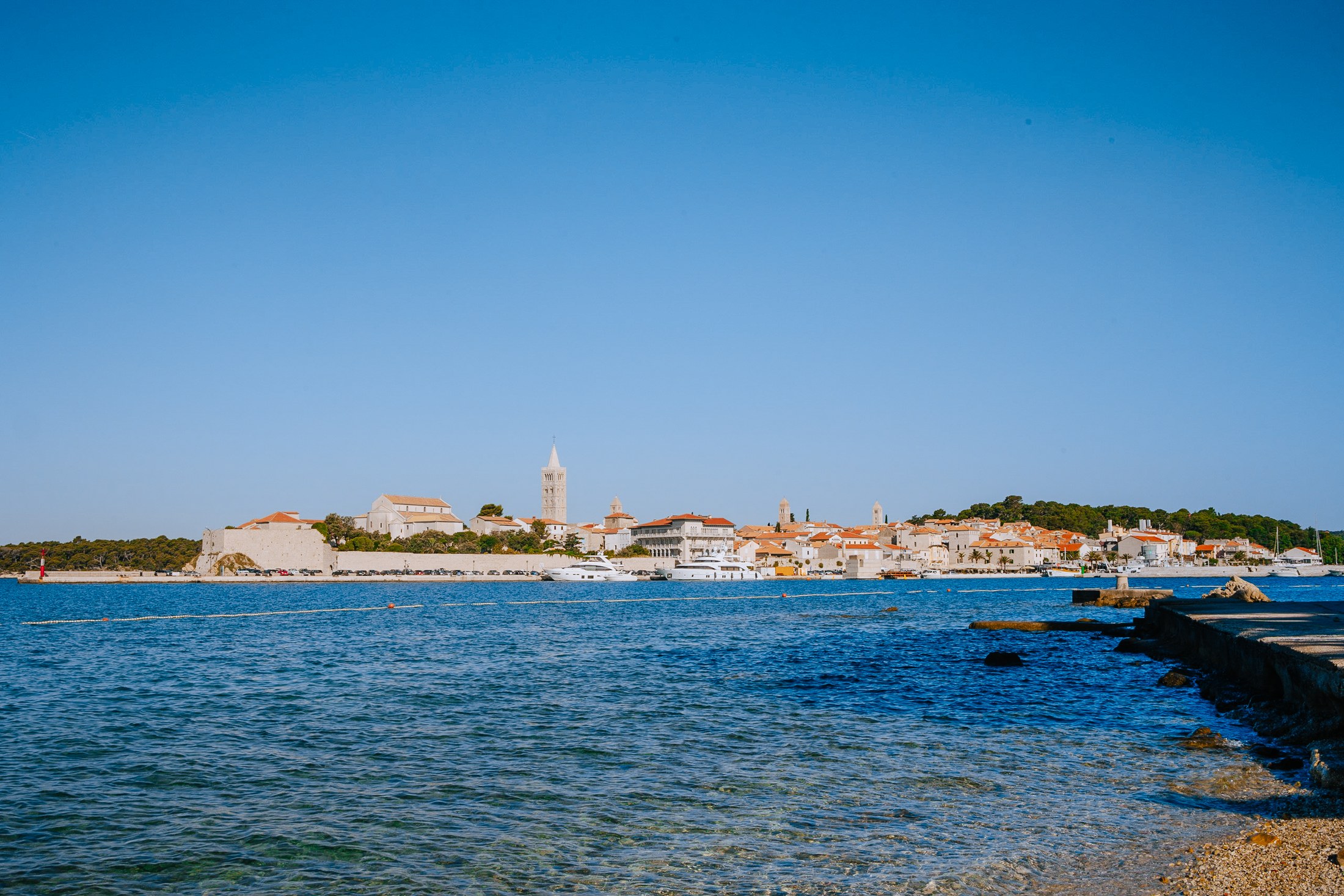
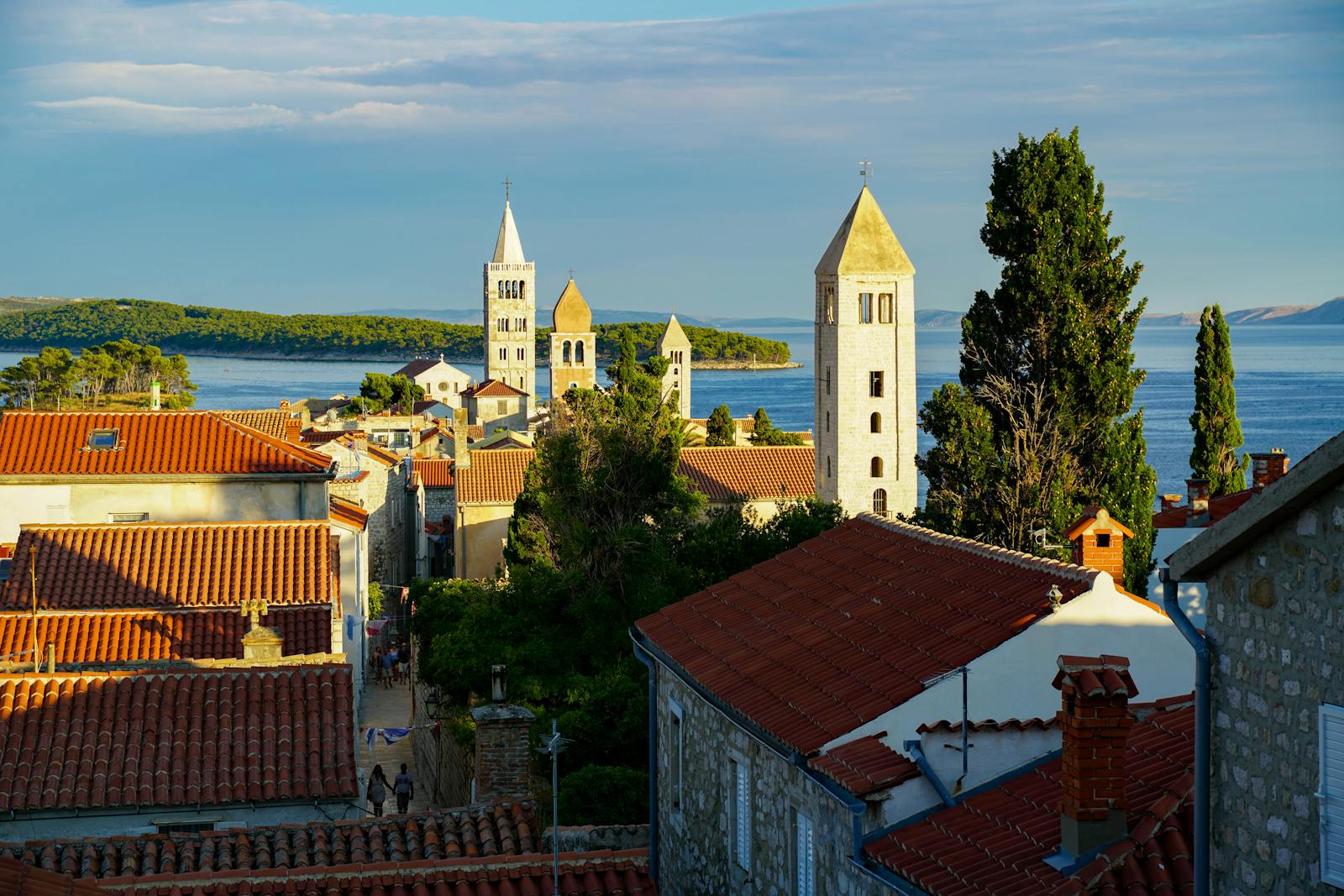
The island’s main town is a true architectural gem, spread across a narrow peninsula and, from a distance, resembling a huge sailing ship with four masts. Those masts are four ancient bell towers that form the town’s unmistakable silhouette and give it a romantic medieval character. Specifically, they belong to the Cathedral of St Mary the Great, the Church of St John the Evangelist, the Church of St Andrew and the Church of St Justine. Walking along the shore, you’ll come across the remains of mighty 12th- and 13th-century walls that reliably protected the town from seaborne raids.

Be sure to head into the maze of narrow cobbled lanes that bear the historic names Donja, Srednja and Gornja ulica — that is, Lower, Middle and Upper Street. Beautifully preserved stone princely palaces, small monasteries and cosy little squares full of cafés rise up around them. Don’t forget to pass through the historic Sea Gate, which once served as the main, heavily guarded entrance to the town from the old harbour.

The centre itself is fairly small, so you can comfortably walk it in a single afternoon, but I’d recommend getting lost in it without a map and simply soaking up the local atmosphere. In the evening, when the sun sets and the period street lamps light up, the town takes on an incredibly romantic feel. You’ll best enjoy this magical spectacle with a glass of good local wine or a traditional herbal liqueur in one of the local taverns.

2. The Cathedral of the Assumption and a climb into the clouds

Right at the end of the narrow peninsula, directly above steep cliffs plunging into the waves, stands the beautiful Romanesque Cathedral of the Assumption of the Virgin Mary, known to locals more simply as the Church of St Mary the Great. According to surviving historical records, it was consecrated in 1177 by Pope Alexander III himself, who stopped on the island during his long voyage. At first glance its interior may seem fairly austere, but the fine details on the stone columns and the main altar are an absolute masterpiece of medieval island stonemasons.

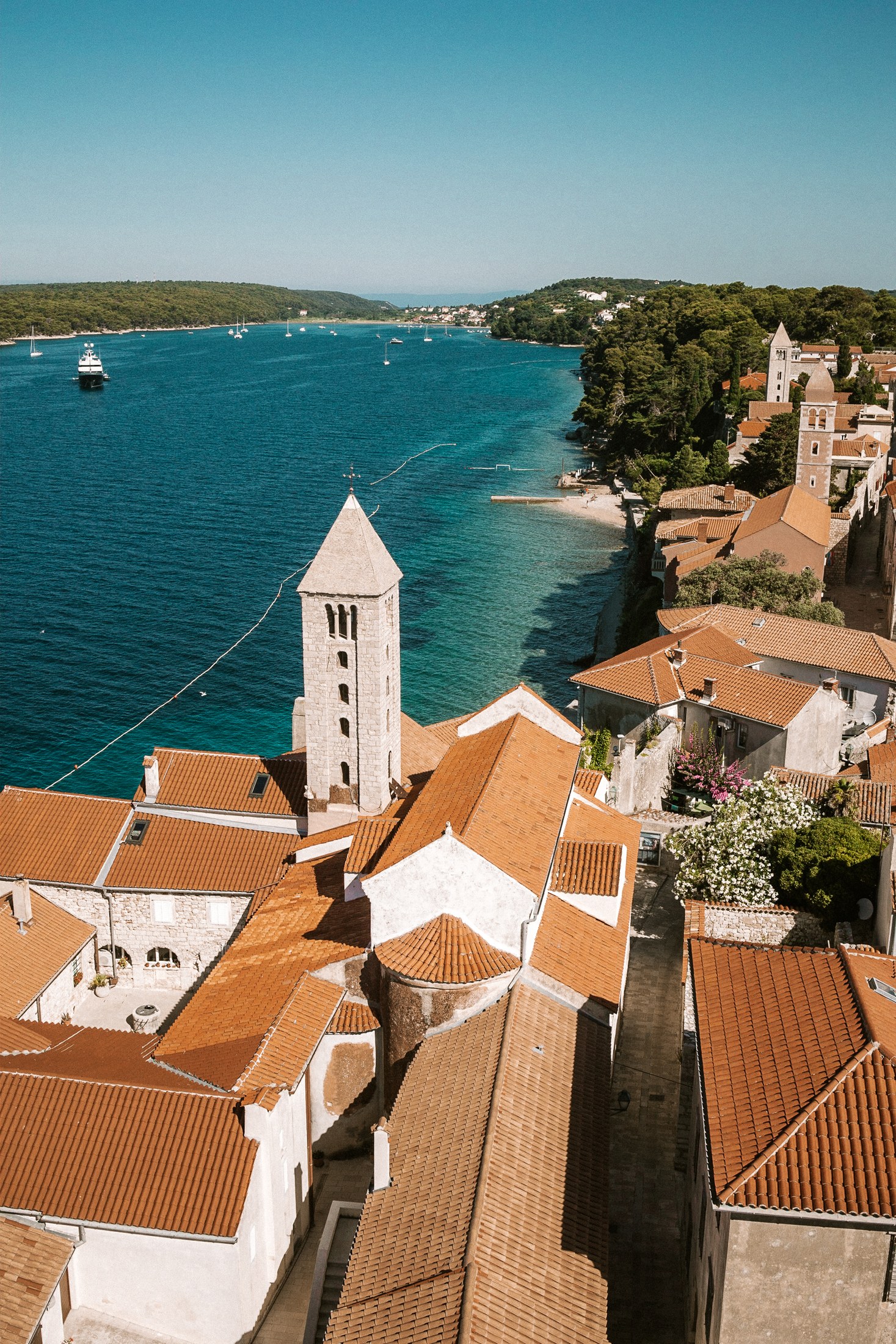
Right next to the cathedral, its greatest pride rises majestically in the form of an octagonal Romanesque bell tower, or campanile. At a respectable 26 metres tall, it dominates the entire surrounding area and forms the highest point of the town’s skyline. Built back in the 12th century in the shape of a perfect octagonal pyramid, it rightly ranks among the most beautiful structures of its kind along the entire Adriatic coast. If you don’t suffer from vertigo, I’d definitely recommend climbing the steep wooden staircase all the way to the top.

The views from the campanile are absolutely breathtaking and richly reward you for every single step. You’ll see the bright red roofs of the historic townhouses, the endless blue of the Adriatic and, on a clear day, all the way across to the mainland. Admission and exact opening hours can change often during the summer season, so it’s always best to check the current details on the spot at the tourist information centre or at the tower entrance.

3. Paradise Beach in Lopar, made for families

If there’s one particular spot that draws families with small children to Rab from all over Europe, it’s undoubtedly the famous Paradise Beach, known in Croatian as Rajska plaža. It lies in the northern part of the island near the popular resort of Lopar and boasts an incredible length of over 1.5 kilometres, which reliably makes it the longest sandy beach in all of Croatia. It has even earned the prestigious Blue Flag award for its exceptional water cleanliness, and years ago CNN ranked it among the world’s 100 best beaches.

The biggest advantage of Paradise Beach is its wonderfully fine sand and very shallow sea, which deepens only incredibly gradually. Even tens of metres from the shore the water will reach no higher than your knees, so you don’t need to worry about the safety of your smallest travellers, who can build sandcastles here completely carefree. Thanks to that minimal depth the water also warms up very quickly, so its temperature feels more like a pleasantly warm bath at home.

The facilities at this renowned beach are absolutely perfect and you’ll find everything you could possibly think of during a summer day. From small snack stalls to clean showers and toilets, and the option to hire comfortable sunbeds with parasols. For the more active there’s a large floating water park right out on the water, beach volleyball courts on the shore, or you can try adrenaline-pumping parasailing and pedal boats with a little slide.

4. Hidden sandy beaches and the tradition of naturism

While the long Paradise Beach is by far the most famous, the resort of Lopar itself conceals around twenty-two more smaller sandy coves that offer considerably more privacy and the peace you’re after. If you want to avoid the very biggest crowds, head for the beautiful beaches of Livačina, Stolac or Mel, which share a similar sandy character but a much more intimate atmosphere. Many of these smaller beaches are only accessible on foot through fragrant pine forests, which makes them perfect hidden retreats for every romantic soul.

Rab is also very well known around the world as one of the main cradles of naturism on the entire Adriatic. This tradition dates back to August 1936, when the British King Edward VIII is said to have bathed completely naked in the secluded Kandarola bay with his controversial partner Wallis Simpson. Today, the most famous naturist beach is the gorgeous Sahara, which you have to reach on foot over a wooded hill, but your well-earned reward is complete peace and crystal-clear water.

If carefree FKK bathing appeals to you, besides the famous Sahara and historic Kandarola you can also head to the renowned Ciganka beach, which wonderfully combines fine sand with interesting rock formations. Respecting the rules of naturist beaches is taken for granted here, and the local authorities mark these designated zones very carefully, so there’s no danger of stumbling onto one by accident in your regular swimwear.

5. Refreshing shade in the Komrčar forest park

Just beyond the ancient walls of the main town stretches the beautiful wooded park of Komrčar, which in the summer months makes an absolutely perfect escape from the scorching sun. This sprawling park of roughly eight hectares didn’t appear on the island by chance — it was very carefully and deliberately planted at the end of the 19th century. Back then the enthusiastic local forester Pravdoje Belia decided to transform the original bare pastures into a lush green oasis. Today it’s one of the very most popular places for long, peaceful walks.

Strolling along the beautifully maintained, shady gravel paths you’ll marvel at the huge stone pines, centuries-old oaks, tall cypresses and spiny agaves, which mingle quite naturally here with Mediterranean palms and cacti. The air is incredibly clean and intensely infused with the soothing scent of pine needles and evaporating sea salt. Several winding trails run through the park, lined with dozens of well-kept benches inviting you to a pleasant rest with a good book in hand.

💡 Tip: From the highest upper section of the sprawling park you get lovely panoramic views over the old town, and if you follow the paths downhill you’ll come out right onto the landscaped seafront promenade with smaller beaches. It’s an absolutely ideal spot for a morning run or a romantic evening stroll, when the tall trees cast long shadows and the whole area takes on the magical golden glow of the setting sun.

6. A sweet finish in the form of Rab cake

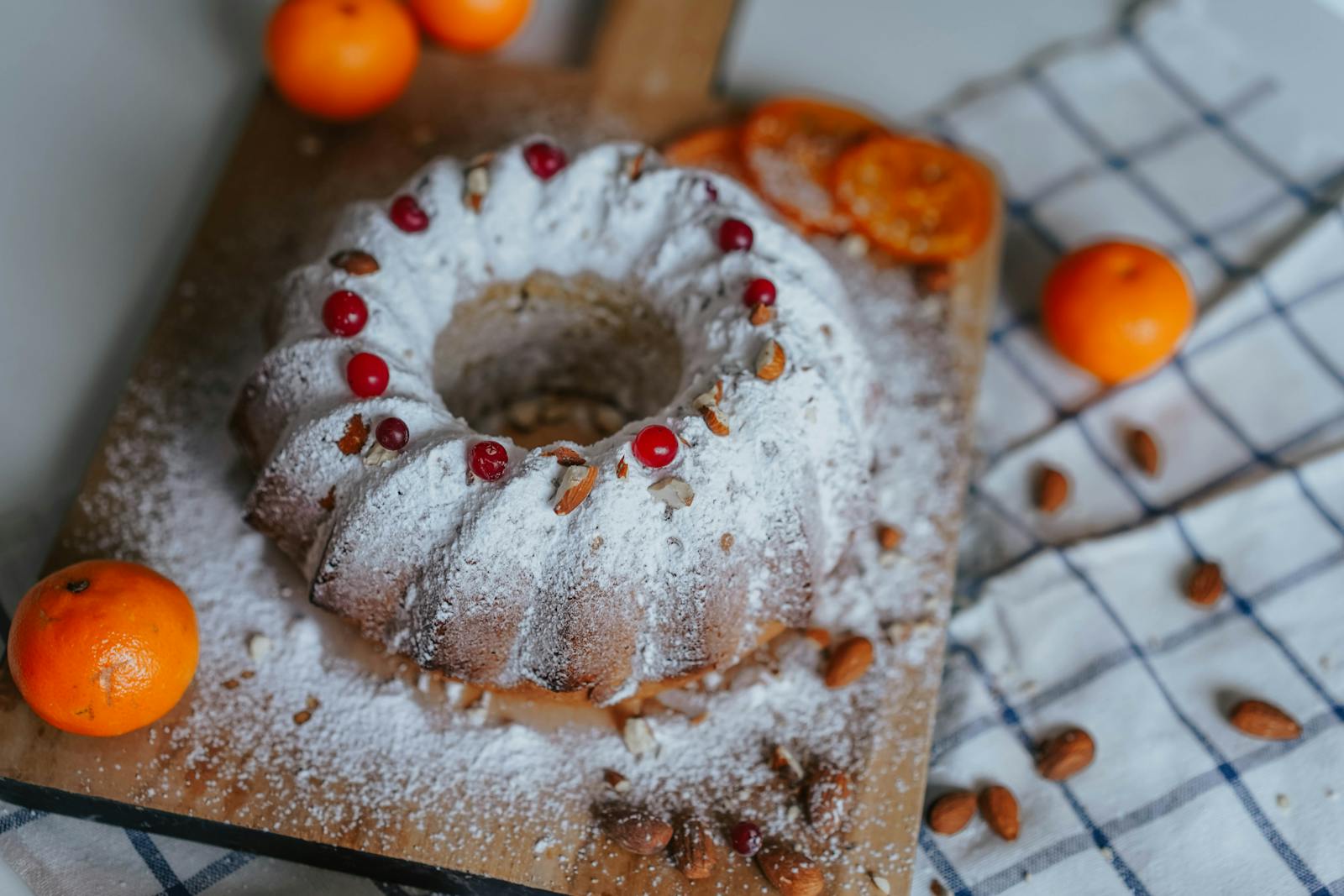
During your visit to the island it would be an absolute sin not to taste the local culinary wonder that is the traditional, world-renowned Rab cake. Don’t expect a classic soft sponge with fluffy cream, though — it’s more of an exceptionally delicious, crisp pastry coiled into the shape of a shell or spiral, with a rich history reaching back to the 12th century. An old legend has it that this unique dessert was baked by skilful local Benedictine nuns for none other than Pope Alexander III in 1177, and its original recipe was a strictly guarded island secret for centuries.

The base of this luxurious delicacy is quality peeled almonds, fresh eggs, sugar and, above all, strong Maraschino liqueur rounded off with grated citrus zest. The resulting flavour is quite reminiscent of good marzipan; the cake is generously dusted with icing sugar on top and crunches beautifully with every bite. Because it contains absolutely no meat or animal gelatine, it’s a perfect treat for all vegetarians, best enjoyed with an afternoon coffee.

If you want to see with your own eyes how this island speciality is made, stop by a shop called Kuća rabske torte right in the centre of the old town. As for other main dishes, fans of meat-free food are sure to be spoilt for choice in the local restaurants thanks to excellent Mediterranean salads, fresh grilled vegetables, local cheeses and great pasta or pizza. Traditional local restaurants and konobas naturally also serve popular Kvarner fish, octopus, fresh seafood and golden roast lamb, which forms the very backbone of Croatian island cuisine.

7. The tranquil fishing village of Kampor

On the island’s north-western coast lies the picturesque Kampor, considered by locals and tourists alike to be the best-preserved traditional fishing village on all of Rab. The island atmosphere here is far slower, calmer and more authentic than in the bustling beach resorts, which you’re sure to appreciate especially at the height of summer. The village is surrounded on all sides by fertile fields, old olive groves and small vineyards that perfectly round off its unmistakable rural character.

Kampor’s main landmark and by far its most important monument is the ancient Franciscan monastery of St Euphemia, dating from the end of the 15th century. Its cool stone interior holds a rare library of historical manuscripts as well as a very interesting ethnographic collection that maps in detail the hard everyday life of the islanders in centuries past. Visiting this quiet monastery is an extremely pleasant cultural change of pace on hot summer days.

From Kampor it’s only a short hop to many beautiful natural beaches and hidden coves, and several superbly marked cycle paths start right here. You can enjoy a wonderfully peaceful afternoon, take a long walk along the rugged coastline, watch little fishing boats bobbing lazily on the waves and, come evening, drop into one of the local family-run taverns. These often feature live traditional music, serve great local wine and have a thoroughly relaxed, friendly mood.

8. On foot and by bike across the green island

Rab is by no means just a destination for all-day lounging on the beach — it also offers great conditions for an active break. The island is literally laced with more than a hundred kilometres of brilliantly marked hiking and cycling routes, with the total length of all the smaller trails exceeding an incredible 340 kilometres. The routes wind through deep pine forests, past hidden coves and over small hills, so there’s genuinely something for every recreational athlete and family with children.

One of the most popular, physically undemanding routes runs from the town of Rab along the rugged coast all the way to the village of Kampor and on to Dumići bay. It measures roughly 14 kilometres, comfortably passes the old monastery of St Euphemia along the way, and you can cool off in the sea whenever you like. For far more seasoned hikers I’d recommend the climb to the highest mountain ridge of Kamenjak, from which absolutely fantastic panoramic views open up over the whole of Kvarner and the mighty Velebit mountain range on the mainland.

If you don’t have your own bike, no problem at all, because there are plenty of quality rental shops in both the main town of Rab and the resort of Lopar, where you can easily get hold of classic mountain bikes as well as the ever more popular e-bikes. On a hired e-bike you can comfortably cover the whole island in a single day and even reach the most remote coves on the Kalifront peninsula, where no asphalt road leads and where finding a parking space by car would be a real struggle.

9. The wild nature of the Kalifront peninsula and Suha Punta

The Kalifront peninsula, on the western side of Rab, is by far the greenest and least populated part of the entire island. It’s a true paradise for everyone who loves untouched nature, because it’s home to the strictly protected Dundo forest. This unique woodland is one of the very last preserved forests of native holm oak in the whole Mediterranean, and a long walk beneath the mighty crowns of these ancient trees has an utterly unrepeatable, almost magical charm.

On the edge of this wooded peninsula lies the very popular tourist area of Suha Punta, which offers a completely different type of swimming from sandy Lopar in the north. Here you’ll find mostly small pebbly and romantic rocky beaches that slope very steeply into incredibly clean, crystal-clear water. Thanks to the rocky bottom and the absence of drifting sand, conditions here are absolutely ideal for snorkelling and for fascinating observation of the rich underwater life full of colourful fish and tiny crabs.

💡 Tip: Head along the narrow forest trails a little further from the main beach resorts and discover the small hidden coves, where you can have the sea all to yourself even in the middle of August. The whole Kalifront peninsula is also densely criss-crossed with a network of very well-kept gravel paths, making it the ideal terrain for a brisk mountain-bike ride in the full shade of mature oaks and pines, places you wouldn’t easily reach on a regular road bike.

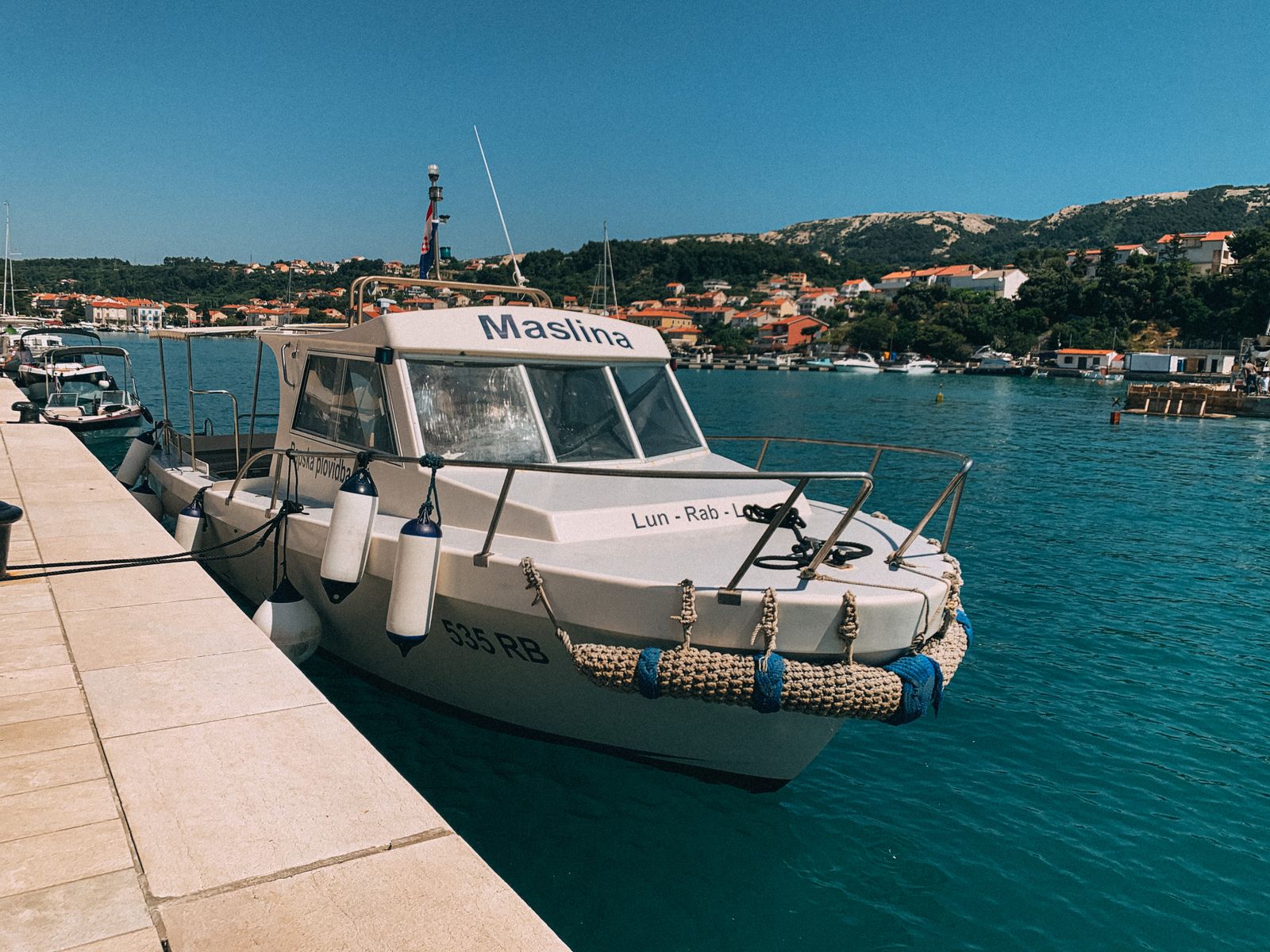
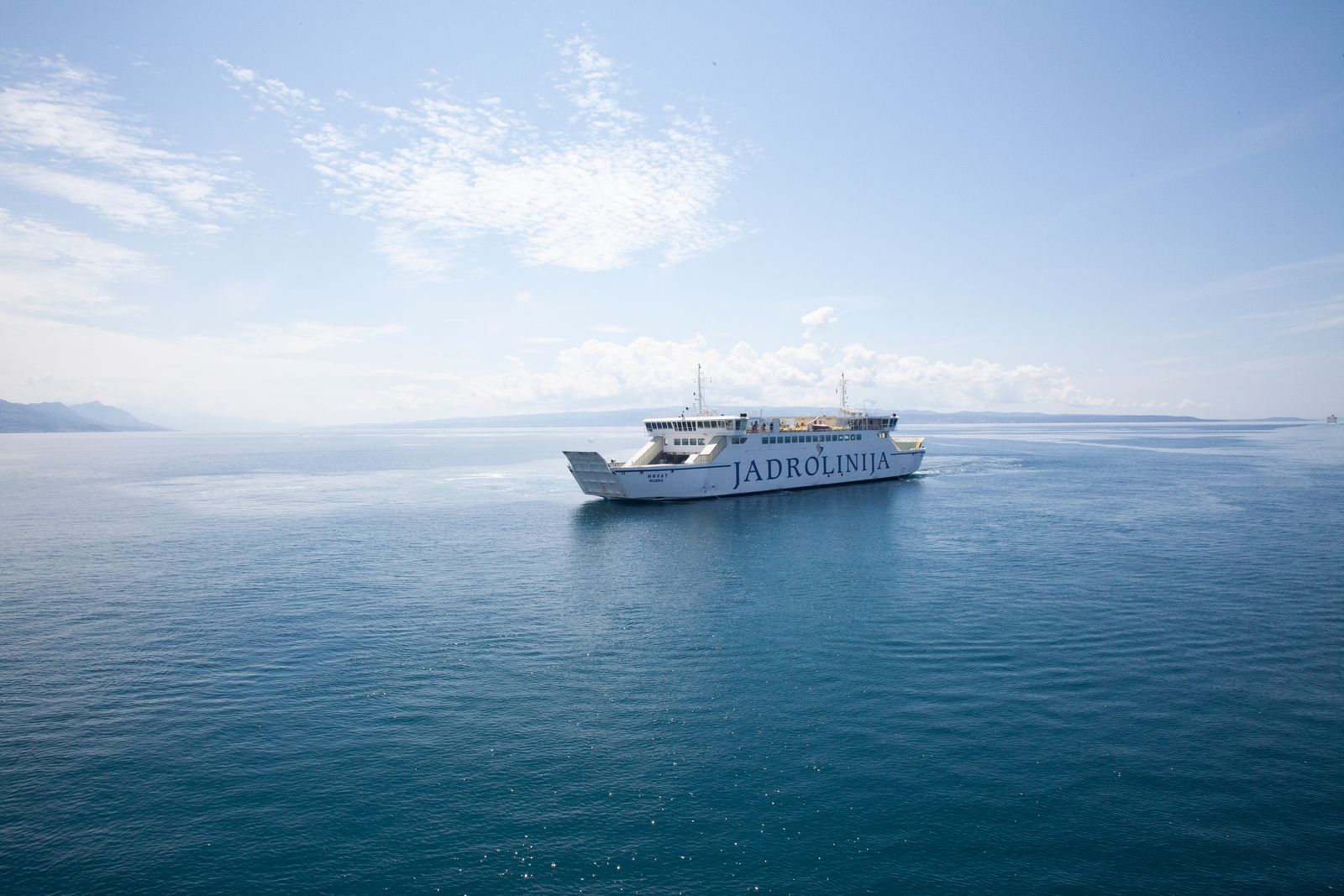
10. How to get to Rab and travelling by ferry

Since Rab is a classic island with no direct bridge link to the mainland, your summer holiday inevitably begins with a romantic ferry crossing. The island is served exclusively by spacious car ferries; there are no fast passenger catamarans for foot travellers operating here as a rule. You have two main routes to choose from, and by far the quickest and most frequently used runs from the mainland port of Stinica, which sits right beneath the majestic Velebit massif, to the island port of Mišnjak in the south of Rab.

This busy line is run by the local company Rapska plovidba and the crossing across the strait takes only about 15 minutes. In the summer season the boats shuttle back and forth up to seventeen times a day, from early morning until half past eleven at night. The price for a car with driver during peak season ranges from around 18 to 27 euros, with an extra fee of about 4 euros per adult passenger. In the summer months, though, queues of several hours form here, so it’s hugely important to consider booking your tickets in advance on the official website ferryrab.com.

The second, noticeably longer option is the ferry from the port of Valbiska on the neighbouring island of Krk, which sails directly to the northern resort of Lopar. This line is operated by the state company Jadrolinija, the crossing takes roughly 80 minutes and is pricier — for a car with driver you’ll pay around 33 to 46 euros. This option, however, pays off enormously if you’re coming from the north and want to take the convenient route over the Krk bridge, saving yourself the long, tiring kilometres of driving along the winding coastal road.

💡 Travelling from the UK? The most practical way to reach the Kvarner region is to fly into nearby Rijeka, Pula or Zadar — there are seasonal flights from several UK airports — and then hire a car for the short drive to the Stinica ferry port. Alternatively, fly into Zagreb year-round and drive down towards the coast. Wherever you land, factor in time for that ferry queue at the height of summer.

11. Boat trips around the area and Kandarola bay

One of the very best ways to discover the true, untouched beauty of the Adriatic coast is the view from the deck of a boat. Right in the main harbour in Rab and in Lopar to the north, you’ll find dozens of tempting offers for half-day and full-day boat trips that reliably take you to the hardest-to-reach beaches. There are frequent sailings, for example, to the neighbouring islands of Goli otok or Sveti Grgur, which have a very dark history as former brutal political prisons but today offer interesting historical tours and beautiful swimming in crystal-clear water.

If you’d like to make a private trip at your own pace, you can hire a small motorboat — but only if you hold the relevant skipper’s licence. Otherwise I’d recommend using the so-called taxi boats that routinely moor in the harbours. For a small fee they’ll take you, for instance, to the well-known wooded peninsula of Frkanj, which lies just opposite the historic centre of the town of Rab. It’s on this quiet peninsula that you’ll find countless small, romantic coves with crystal-clear water.

The most famous bay on Frkanj is the historic Kandarola mentioned earlier, which to this day operates as a very popular naturist beach with excellent facilities including a small restaurant and beach bar. But even if you’re not exactly a fan of swimming without swimwear, the peninsula has plenty of regular textile beaches hidden in the shade of mighty pines. The boat ride itself from the town harbour takes only a few minutes and makes an extremely pleasant refreshment on a sweltering summer day.

Where to go next from Rab

If you have more time and enjoy hopping from place to place on holiday, the Kvarner region offers plenty of other options to set your sights on. A very popular choice is to combine your visit to Rab with the neighbouring island of Krk, easily reached by direct ferry from Lopar, where you can spend several more wonderful days discovering wine cellars and historic little towns.

If you’re interested in planning a trip south in general, be sure to read our comprehensive article full of tips on where to go on holiday in Croatia, where you’ll find a comparison of the best regions from Istria to Dubrovnik. To make finding a place to sleep easier, we’ve also put together a detailed guide to accommodation in Croatia, which will advise you on what to watch out for when booking. And if you dream of spending your whole holiday on the waves, don’t miss our piece on what it’s like to experience Croatia by boat.

Frequently asked questions

How to best get to the island of Rab from the Czech Republic?

The fastest and most popular car route from the Czech Republic leads classically through Austria and Slovenia towards the Croatian mainland port of Stinica, from where a regular and fast ferry runs to the port of Mišnjak in the south of the island. This crossing takes just 15 minutes. The second, albeit slightly more expensive option, is to cross the bridge to the island of Krk and take the approximately 80-minute ferry from the port of Valbiska directly to the resort of Lopar.

Are there really sandy beaches on the island of Rab?

Yes, and that’s actually the main reason why the island of Rab is so unique and sought-after among tourists. While most of Croatia offers mainly sharp pebbles or concrete platforms, on Rab – and especially around the northern resort of Lopar – you’ll find more than twenty natural sandy beaches. The absolutely largest and most famous is Paradise Beach with very fine sand and an exceptionally shallow seabed.

Is the island suitable for families with small children?

“`html
Rab Island is an absolutely ideal destination for families with small children, probably one of the very best islands in all of Croatia. The shallow sea at the famous Paradise Beach in Lopar slopes so incredibly gently that even the smallest children can swim and play completely safely in the warm water. Moreover, there is plenty of natural shade in many places thanks to the mature pine forests.
“`

Do I need to book the ferry in advance?

Outside the main summer season, booking tickets in advance is definitely not necessary. However, if you’re traveling during the busy months of July or August, especially on holiday weekends, I strongly recommend buying your ferry tickets well in advance online through the official websites of Jadrolinija or Rapska plovidba. This will save you a lot of unnecessary stress and long hours waiting in car queues at the scorching hot port.

Where are the naturist beaches located on Rab?

Rab Island has a huge and long-standing tradition of naturism (FKK), dating back to the 1930s. Among the most famous naturist beaches are the beautiful sandy Sahara near the resort of Lopar, the historic Kandarola bay located on the forested Frkanj peninsula, and also the lovely Ciganka beach. These designated zones are always very well and visibly marked, so you don’t have to worry about stumbling upon them by accident.

How’s the drinking water situation on the island?

The tap water across the entire island of Rab is perfectly drinkable and hygienically safe, so you really don’t need to constantly buy expensive bottled water in single-use plastic bottles. The island is reliably connected to a large mainland water supply system, which ensures stable and trouble-free delivery of high-quality drinking water even during the driest summer months when the most tourists arrive.

Are there cycling paths on the island of Rab?

Yes, the island of Rab is incredibly cyclist-friendly for all fitness levels. You’ll find over 100 kilometers of excellently marked cycling trails of varying difficulty and surfaces. You can ride along flat asphalt paths along the coast, or head out with a mountain bike on more challenging gravel routes to the Kamenjak ridge or into the forests of the Kalifront peninsula. In the main resorts, there are plenty of well-equipped rental shops for both classic and modern electric bikes.

Tips and Tricks for Your Vacation

Don’t Overpay for Flights

Search for flights on Kayak. It’s our favorite search engine because it scans the websites of all airlines and always finds the cheapest connection.

Book Your Accommodation Smartly

The best experiences we’ve had when looking for accommodation (from Alaska to Morocco) are with Booking.com, where hotels, apartments, and entire houses are usually the cheapest and most widely available.

Don’t Forget Travel Insurance

Good travel insurance will protect you against illness, accidents, theft, or flight cancellations. We’ve had a few hospital visits abroad, so we know how important it is to have proper insurance arranged.

Where we insure ourselves: SafetyWing (best for everyone) and TrueTraveller (for extra-long trips).

Why don’t we recommend any Czech insurance company? Because they have too many restrictions. They set limits on the number of days abroad, travel insurance via a credit card often requires you to pay medical expenses only with that card, and they frequently limit the number of returns to the Czech Republic.

Find the Best Experiences

Get Your Guide is a huge online marketplace where you can book guided walks, trips, skip-the-line tickets, tours, and much more. We always find some extra fun there!
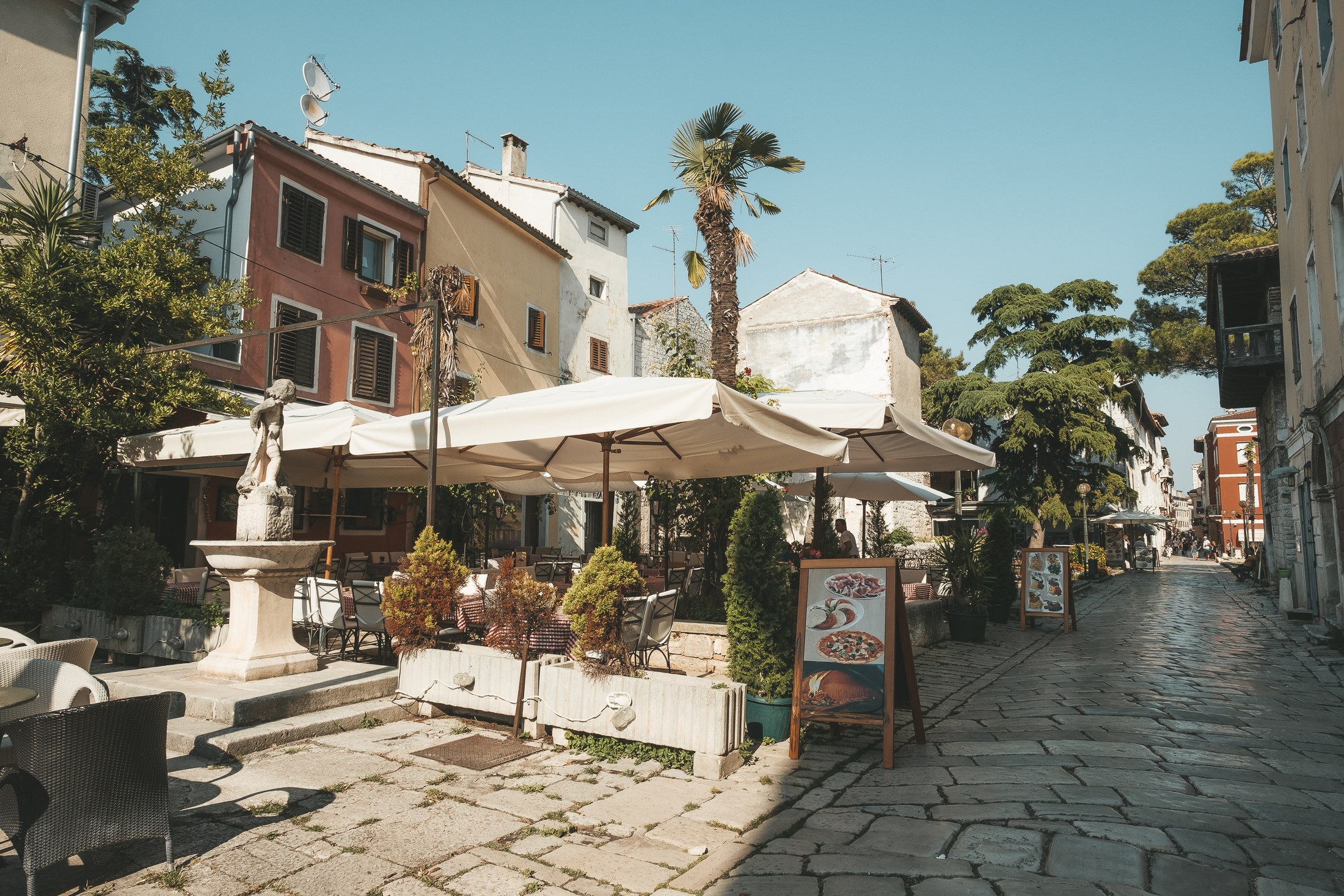
Vlora, Durrës and Albania’s Adriatic Coast: 8 Things to See and Do

TL;DRThe Adriatic coast of Albania around Vlora and Durrës mixes sandy beaches, ancient ruins and nature reserves — here are eight ideas to get you started. The beaches at Golem, Kavajë and Lalzit Bay suit families, while Durrës has a Roman amphitheatre (entry 300 ALL). Divjaka-Karavasta National Park is home to flamingos, and the ancient site of Apollonia near Fier costs 600 ALL (closed Mondays). Vlora comes with the Zvernec Monastery nearby, boat trips run out to Haxhi Ali Cave and Sazan Island, and the new Llogara Tunnel cuts the drive to the Riviera down to 7 minutes for 250 ALL. May, June and September are the best months, with temperatures around 25–28°C, while July and August push past 35°C and the beaches get packed. Swimming right in Durrës itself isn’t a great idea — the water there is polluted.

If you’re planning a trip to Albania and looking for the perfect place to unwind, the Adriatic coast and the region of central Albania offer exactly what you need. Unlike the steep cliffs further south, this stretch of the Albania coast is lined with kilometres of long sandy beaches that slope gently into the sea. That’s exactly why families with young children — and travellers who want to combine lazy days by the water with visits to nearby historical sites — head here most often.

The Land of the Eagles is changing right before our eyes, and in 2026 that’s truer than ever. Be prepared: thanks to a strong lek exchange rate, with 1 EUR hovering around 95 ALL, Albania is no longer the ultra-cheap destination it was a decade ago. Huge investments are pouring into the region, new resorts are springing up, and the infrastructure is scrambling to keep pace with the record numbers of foreign tourists — over twelve million arrive here each year.

Despite this breakneck development, the region keeps its enormous charm and a variety that’s bound to win you over. In a single holiday you can explore the mysterious underground of ancient ruins, glide by boat across a still lagoon full of pink flamingos, and then stroll along revamped promenades where modern cafés sit beside centuries-old mosques.

TL;DR

  • Sandy beaches for families: The best facilities with a shallow entry into the water are in the resorts of Golem, Kavajë and the cleaner Lalzit Bay.
  • Historic Durrës: This port town hides a vast Roman amphitheatre, but it’s best to skip swimming on the city beach itself because of poor water quality.
  • A birdwatcher’s paradise: Divjaka-Karavasta National Park is home to thousands of flamingos and rare Dalmatian pelicans.
  • Ancient Apollonia: Fascinating Greek and Roman ruins near Fier — just remember the archaeological park is closed on Mondays.
  • Where two seas meet: The city of Vlora offers rich history, the island monastery of Zvernec, and marks the line where the shallow Adriatic gives way to the deeper Ionian Sea.
  • The Llogara tunnel: Since July 2024 it has cut the journey to the riviera to just 7 minutes; in 2026 there’s a toll of 250 ALL.
  • Boat trips: From Vlora you can sail out to the giant Haxhi Ali cave and to the mysterious island of Sazan, dotted with hundreds of bunkers.

When to visit the Adriatic coast and Vlora

If you want to enjoy the sea, the sights and nature without exhausting heat, spring and autumn are ideal. May, June and then September bring very pleasant temperatures of around 25 to 28 degrees, which is just perfect for combining swimming with day trips. You’ll also dodge the biggest tourist crowds that flood the coast during the peak summer season.

July and August on the Albanian coast mean genuinely high temperatures and packed resorts. The thermometer regularly climbs above 35 degrees and the popular sandy beaches in Golem and Durrës are bursting at the seams. If you’re tied to the school holidays, I’d suggest getting up early to tour the sights before the midday heat, then simply relaxing in the shade by the water in the afternoon.

For nature lovers and photographers, spring has one more huge bonus. The months from March to May are the best time for spotting flamingos and pelicans in the Karavasta lagoon. The water is calm, the birds are very active, and the morning mists create an utterly magical atmosphere over the wetlands that you simply won’t get in the summer heat.

Where to stay: from resorts to boutique hotels

💡 Tip for accommodation and experiences: We like to look for our stays on Booking.com, which usually has the best cancellation terms. For tickets, tours and activities, it pays to compare and book through GetYourGuide.

Choosing where to stay along the coast mostly comes down to the kind of holiday you prefer, because each area offers a slightly different experience. While the area around Durrës is packed with large family complexes, Vlora and its surroundings deliver a mix of city life and smaller hotels. Before you start searching, decide whether you want everything within reach on an all-inclusive basis, or whether you’d rather head out to a different traditional tavern every evening.

Here are some specific tips for tried-and-tested places to stay across all categories (you can compare prices and availability with a single click via Stay22, which finds the best deal across Booking.com, Airbnb and others):

If Vlora is your destination, a great choice for families is the Nuna Hotel & Apartments, which scores 9.2, sits just steps from the beach and offers very spacious rooms. Right in the heart of town you’ll find the lovely Valza Boutique Hotel with a more intimate feel. For a quieter stay by the pebble beach just south of the city, be sure to check out the popular family-run Tirana Resort Radhime.

If you’re after a classic beach holiday on shallow sand near Durrës, head to the resorts of Golem or Lalzit Bay. Luxurious facilities with pools and a kids’ club are provided by the five-star Grand Blue Fafa Resort & Spa. An even cleaner beach and a more modern setting come courtesy of the Mövenpick Hotel Lalez Durres complex in Lalzit Bay.

In the city of Durrës itself, choose carefully because of the bathing water quality. If you want to base yourself here for the history, a strategic spot in the centre is the Grand Duka Hotel & Spa. And if you insist on five-star luxury right by the sea, the renovated Adriatik Hotel BW has a private beach and impeccable service that completely shields you from the busy city.

8 things to see and do on Albania’s Adriatic coast

Whether you’re planning to spend your entire holiday on the beach or to set out on an active road trip, central Albania serves up a surprising number of contrasts. Let’s take a look together at eight specific places and experiences you definitely shouldn’t miss when you visit this region.

1. Durrës: a Roman amphitheatre and a treacherous city beach

The port city of Durrës is the oldest settlement in the entire country, already flourishing in Roman times under the name Dyrrhachium. The biggest draw here is the monumental Roman amphitheatre from the 2nd century, which once held up to 20,000 spectators. Admission is a pleasant 300 ALL (roughly €3), and your ticket also covers the nearby Archaeological Museum. It’s open daily from 9:00 to 19:00, and you can even walk through the dark underground tunnels where gladiators once made their entrance.

As for swimming in the city itself, I have to be honest with you. The water quality on the main city beach has worsened significantly in recent years, and official measurements show that much of the coast right by Durrës isn’t suitable for bathing at all. In the summer months the city struggles with overloaded infrastructure — tap water often flows for just 13 hours a day — and unfortunately huge amounts of untreated sewage end up in the sea.

💡 Tip for vegetarians: If you stop for lunch in town and are after quality meat-free food, head to the Dyrrah Mare Restaurant. They have clearly marked vegetarian options and do a brilliant job with traditional stuffed peppers (speca të mbushura) or excellent grilled vegetables.

2. The sandy resorts of Golem and Lalzit Bay

If you’re looking for easy, relaxed swimming with the family, the solution is to drive a little way out of central Durrës. Heading south, the resorts of Golem and Kavajë stretch out, where kilometres of resorts line the wide sandy shoreline. The sea here is incredibly shallow, so even small children can safely splash about tens of metres from the shore, and the whole area buzzes with that classic holiday energy of promenades and beach bars.

If you have a car and prefer somewhere a bit quieter, I’d recommend heading north of Durrës to Lalzit Bay. This area started developing a little later, the beaches here are noticeably cleaner, and you’ll find more modern resorts that don’t feel as crowded. It’s the ideal compromise between comfort and clean Adriatic water.

💡 Tip: If you’re not staying in a resort with a private beach, bear in mind that renting two sunbeds and a parasol will set you back roughly 1,000 to 1,500 ALL (about €10–16) a day in these resorts in 2026. Free public stretches are dwindling year on year.

3. Divjaka-Karavasta National Park: a flamingo paradise

About halfway between Durrës and Vlora lies a place that feels like balm for the soul. Divjaka-Karavasta National Park protects the largest lagoon in Albania and ranks among the most significant Ramsar wetlands in Europe. Here, concrete hotels give way to dense pine forests and quiet water channels that are home to an astonishing 230 species of birds.

The main magnet for visitors is the huge flocks of pink flamingos and, above all, the colony of rare Dalmatian pelicans. Around 6% of the entire European population of this majestic bird nests in this single lagoon. The best way to explore the lagoon is to hire a small wooden boat with a local guide.

💡 Tip: Come here as early in the morning as you can, when the birds are most active and the light for photography is absolutely ideal. You’ll find references to trips into this area on portals like GetYourGuide, but it’s easy enough to arrange and pay for a boat on the spot at the visitor centre.

lukas a lucka
Lukáš and Lucie recommend
Where to stay in Vlora, Durrës and on Albania’s Adriatic coast
6 accommodations — hotels, resorts and other lodging options

4. Ancient Apollonia near Fier

Just outside the industrial town of Fier, a vast archaeological treasure hides among gently rolling hills. The ancient city of Apollonia was founded by the Greeks back in 588 BC, and in its day it was such a prestigious centre of learning that even the young Octavian — the future first Roman emperor, Augustus — came here to study. You can wander among the ancient columns of the portico and admire the restored odeon.

In the middle of the complex stands the beautiful Byzantine Monastery of St Mary from the 13th century, which today houses a fairly rich archaeological museum. The whole site is very spread out, so set aside at least two hours to see it, and don’t forget to bring plenty of water — there isn’t much shade around here.

💡 Visiting tip: The entrance fee was recently revised, and an adult ticket costs 600 ALL (just under €6.50), while students pay 180 ALL and children get in free. Just be very careful when planning your itinerary — the park is always closed on Mondays.

5. Vlora: where the Adriatic becomes the Ionian Sea

Vlora acts as the symbolic gateway to the south, and it’s the exact spot where the long Adriatic shallows give way to the deeper, pebbly Ionian Sea. The city holds enormous historical importance, because it was here, on 28 November 1912, that Albania declared its independence from the Ottoman Empire. The interesting Independence Museum charts this event, with a symbolic entrance fee of around 300 ALL.

Also worth seeing is the newly restored old town with its picturesque lanes, crowned by the historic Muradie Mosque from 1537. It was designed by the celebrated Ottoman architect Mimar Sinan. In the evening, be sure to head out onto the long Lungomare seafront promenade, lined with palm trees and cafés — after sunset it comes incredibly alive.

💡 Tip for vegetarians: If you’re after excellent meat-free food right in Vlora, I warmly recommend La Loggia, where they make great vegetable smoothies and falafel. For a completely traditional experience, visit Taverna Te Lilo, where they’ll serve you perfect spinach or cheese byrek and a delicious fërgesë me perime (a meat-free mix of peppers, tomatoes and cheese). The local coast is famous for fish and seafood, of course, but you can happily leave those to everyone else.

6. Zvernec Island and the Narta lagoon

Just north of Vlora you’ll find a spot that looks like something off a postcard. In the sprawling Narta lagoon, surrounded by pines, lies the little island of Zvernec, home to a picturesque Byzantine Monastery of the Virgin Mary from the 13th century. Even getting there is an experience, as you have to walk to the island across a roughly 250-metre-long wooden bridge.

The whole area is incredibly photogenic. The bridge arches just above the shallow water, and entry to the island is completely free. Flocks of flamingos often gather in the surrounding lagoon, flying in to feed.

💡 Tip: If you love photography, head to the bridge early in the morning at sunrise. The surface of the lagoon is usually perfectly still at that hour and works as a flawless mirror reflecting the surrounding trees and the wooden walkway.

7. A boat trip to the Karaburun peninsula and Sazan Island

Boats set out every day from the port in Vlora to the country’s only protected marine park. The destination is the wild Karaburun peninsula and, above all, the fascinating Haxhi Ali cave — the largest sea cave in Albania, with an entrance over 60 metres high. The boats often sail right inside, where you can admire the incredibly emerald colour of the water and even go snorkelling.

These trips usually include a stop on Sazan Island, which for many years served as a strictly secret military base. Today you can stroll among the abandoned barracks and explore some of its more than 3,600 bunkers. Group boat trips (run here by the likes of Boat Vent Tours) usually cost around €30 to €50 per person and are easy to book through GetYourGuide or directly at the kiosks along the promenade.

💡 Tip and context for 2026: Sazan Island recently found itself in the global spotlight. A company linked to Jared Kushner plans to build a luxury resort here worth $1.6 billion. In June 2026 this sparked mass protests in Tirana under the slogan “Albania is not for sale”, and the SPAK anti-corruption prosecutor’s office launched an investigation into the whole land-sale process. So on your visit you’ll be looking at a place whose future is currently the subject of a major political battle.

8. Llogara: the new tunnel versus the epic old pass

As soon as you head south from Vlora towards the riviera, the majestic Ceraunian mountain massif rises up in your path. Until recently there was only one way to cross the mountains — the old SH8 road climbing to over 1,000 metres. In July 2024, though, the situation changed dramatically with the opening of the nearly six-kilometre Llogara tunnel, the longest in the entire country.

The tunnel is a huge relief for locals and tourists rushing to the beach alike, as it cuts the journey from Dukat to Palasë from the original 45 minutes to just 7. After an introductory free period, however, from 2026 the tunnel carries a toll. A car pays 250 ALL for a one-way trip, or 500 ALL for a return ticket.

💡 Tip: Even though the tunnel is super fast, I’d recommend driving the old SH8 pass at least one way. The route through the pine forests of Llogara National Park is full of wild hairpin bends, and at the top you’ll be rewarded with some of the most beautiful views of the Ionian Sea in all of Europe. You can stop for a coffee and watch the paragliders who launch from the mountains and fly all the way down to the beach.

Where to go next from the Adriatic coast

Although central Albania has plenty to offer, most travellers use it as a springboard for further adventures. If you love history and wild stories, definitely consider a trip to the town of Krujë, the seat of national hero Skanderbeg, or take inspiration from our broader guide What to See in Albania. You should also explore the nearby, pulsating capital — you’ll find tips in our article Tirana: what to see in the capital.

If, on the other hand, you’re longing for the most beautiful beaches after passing through Vlora, your route leads south. Read our article Albania by the sea: where to go on holiday, which will point you in the right direction. You’ll learn how Saranda and the Ionian riviera differ from the more northerly resorts, and why the area around the town of Ksamil is nicknamed the Albanian Maldives.

On the way south you can also turn inland from the coast to visit the fascinating Gjirokastër: the stone city, a UNESCO World Heritage Site. And if you’ve had enough of the sea altogether, the rugged Accursed Mountains: Theth and Valbona in the north of the country make a complete contrast to the hot coast.

Frequently asked questions

When will Vlora Airport open and can you fly there?

Although the new Vlora Airport (code VLO) is already built and test flights have taken place, in 2026 it still doesn’t operate commercial flights. Due to missing certification and various disputes, airlines had to cancel their plans. For traveling to the coast, you still need to use the airport in Tirana (transfer takes about 2.5 to 3 hours) or fly to Greek Corfu and cross by ferry to the south.

Is the sea clean for swimming right in Durrës?

Unfortunately, it’s not. Due to the enormous pressure from tourism and insufficient infrastructure, a large amount of untreated sewage flows into the sea at the city beach and the water quality here is rated as very poor. If you want to swim in this area, it’s better to head north to Lalzit Bay, or alternatively south towards the resorts near Golem.

How much does it cost to pass through the Llogarë tunnel?

The new tunnel, nearly 6 kilometers long, which significantly speeds up the journey from Vlora to the southern riviera, is after an initial period subject to a toll of 250 ALL (approximately 2.5 EUR) per car in one direction. The return journey will therefore cost you 500 ALL. The old scenic route over the mountain pass remains toll-free.

Is payment in resorts more common in euros or Albanian lek?

In tourist areas like Durrës or Vlora both currencies are commonly accepted. However, due to the strong exchange rate, where you get only around 95 ALL for 1 EUR, it often pays to pay in local currency to avoid losing out on unfavorable conversion rates in restaurants. You can pay by card in larger hotels and supermarkets, but cash is still a necessity in the Balkans.

Is the Adriatic coast suitable for a vacation with small children?

Definitely yes. Unlike the southern pebble riviera, the area around Golem and Kavajë offers long sandy beaches with a very gradual entry into the sea. The water is warm here, the sandy bottom is safe, and you’ll find plenty of all-inclusive resorts that are specifically tailored for families with children.

How do I get to Sazan Island and Haxhi Ali Cave?

The best way is to take group boat tours that depart daily from the port in Vlorë (often leaving at 9:00, 11:00, and 1:00 PM). Tickets cost approximately 30 to 50 EUR per person. You can arrange the tours either directly on the waterfront promenade at local agency stands, or book them online in advance.

What good things can I try from the local cuisine if I don’t eat meat?

Albanian cuisine is very vegetarian-friendly. Definitely try the traditional byrek filled with cheese or spinach, which is great as a quick snack. In restaurants, look for fërgesë me perime (a thick mix of peppers, tomatoes and cheese), speca të mbushura (peppers stuffed with rice) or the hearty bean soup fasule.

Tips and Tricks for Your Vacation

Don’t Overpay for Flights

Search for flights on Kayak. It’s our favorite search engine because it scans the websites of all airlines and always finds the cheapest connection.

Book Your Accommodation Smartly

The best experiences we’ve had when looking for accommodation (from Alaska to Morocco) are with Booking.com, where hotels, apartments, and entire houses are usually the cheapest and most widely available.

Don’t Forget Travel Insurance

Good travel insurance will protect you against illness, accidents, theft, or flight cancellations. We’ve had a few hospital visits abroad, so we know how important it is to have proper insurance arranged.

Where we insure ourselves: SafetyWing (best for everyone) and TrueTraveller (for extra-long trips).

Why don’t we recommend any Czech insurance company? Because they have too many restrictions. They set limits on the number of days abroad, travel insurance via a credit card often requires you to pay medical expenses only with that card, and they frequently limit the number of returns to the Czech Republic.

Find the Best Experiences

Get Your Guide is a huge online marketplace where you can book guided walks, trips, skip-the-line tickets, tours, and much more. We always find some extra fun there!
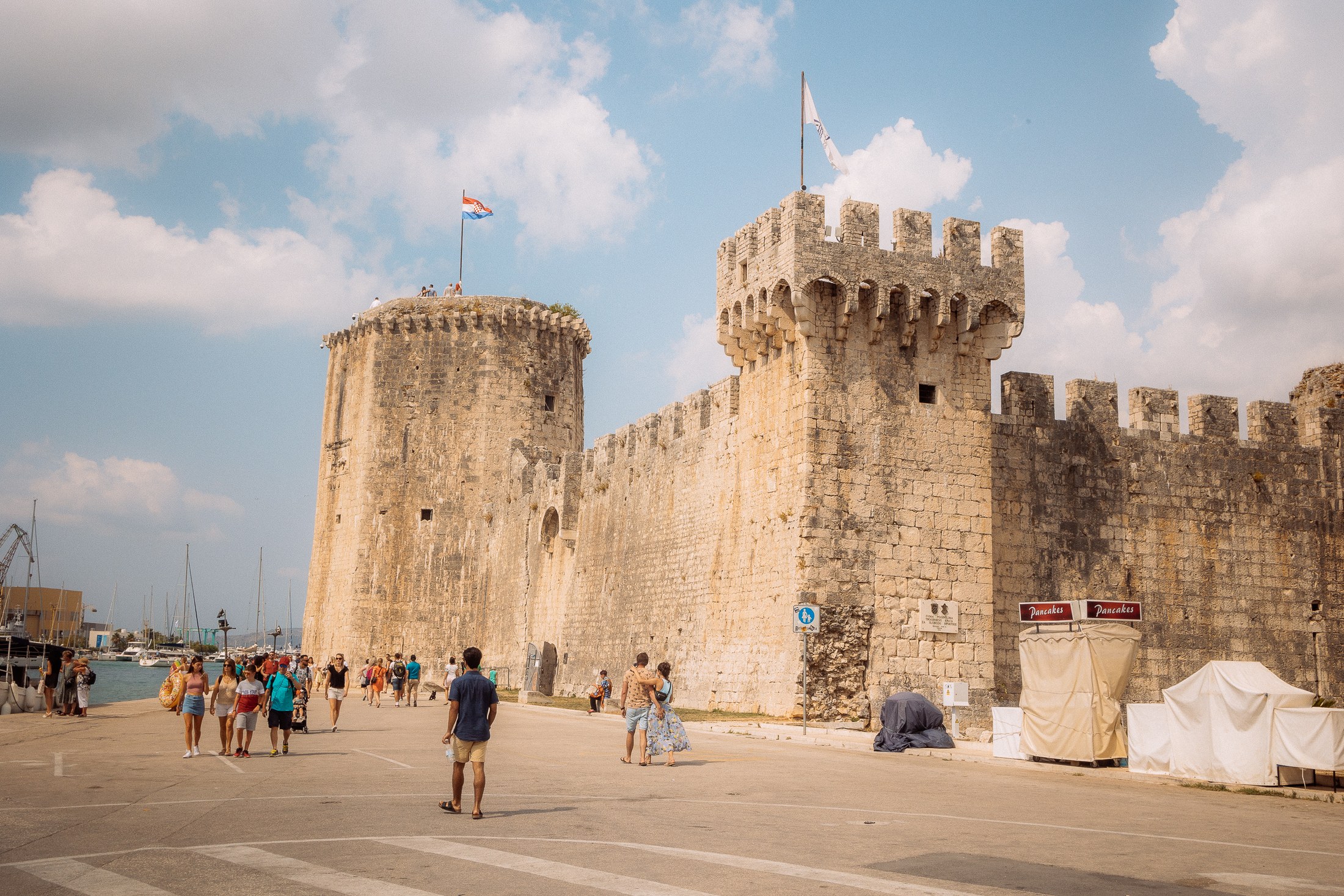
Accursed Mountains Albania: 10 Tips for Theth, Valbona & the North 2026

TL;DRThe Accursed Mountains in northern Albania are built around a dozen key tips centred on the villages of Theth and Valbona, with Shkodra as your base and a ferry ride across Lake Koman. The best time to visit is mid-June to the end of September, when the trails are safe underfoot. The highlight is the hike over the Valbona Pass, 17 kilometres that takes 6 to 8 hours and climbs to 1,800 metres. Local guesthouses with half board cost €15–€25 a person, and the Berisha ferry from Koman is €9 booked online, leaving at 9:00. Up in the mountains, it’s cash only, in Albanian lek.

If you’re thinking about heading to Albania, chances are you’re being lured by the sun-soaked beaches of the south. But trust me, it’s the mountainous north that will completely win you over. The Accursed Mountains in Albania — often nicknamed the Albanian Alps for their sheer majesty — are the perfect, peaceful counterpoint to the crowded Ionian Riviera, where in the summer months you sometimes end up fighting for every free patch of sand.

While the south is all about the typical beach buzz, up here you’re greeted by a spellbinding alpine landscape, deep glacial valleys and old stone villages where time seems to have stood still. For active travellers, this wild region is the undisputed highlight of any itinerary, offering not just pristine nature with bears and wolves, but also an incredibly warm local culture.

In this article I’ve got 10 tips for Theth, Valbona and the north, so you can plan a truly perfect mountain adventure. I’ll show you how to make sense of the tricky ferry timetables across Lake Koman, where to find the best family-run guesthouses with outstanding food, and how to prepare as well as possible for the famous trek over the Valbona Pass.

TL;DR

  • Shkodra as your base: This pleasant, bike-loving town is the ideal starting point for stocking up on supplies, withdrawing cash and arranging a morning transfer into the mountains.
  • Getting to Theth: The road from Shkodra to the village of Theth is now fully paved, so in the summer season you can easily reach it even in an ordinary car.
  • The Koman ferry: The most popular boat, Berisha, departs Koman at 9:00 am, and in summer you absolutely must book car tickets online well in advance.
  • The famous trek: The crossing between Theth and Valbona is roughly 17 kilometres and takes 6 to 8 hours of walking through gorgeous mountain terrain.
  • Cash is king: Across the whole mountain region rely solely on cash in Albanian lek, as ATMs and card terminals are practically non-existent here.
  • Vegetarian feasts: Be sure to try the local meat-free specialities, like the layered fli pie with kajmak or the delicious baked vegetables, tavë me perime.

When to visit the Accursed Mountains

If you’re planning to hike and want to enjoy the views without any danger, the best time to visit is from mid-June to the end of September. During these summer months the weather is at its most stable and the mountain trails are safely passable — though you can still work up a serious sweat on the climbs during the day.

Travellers often make the mistake of heading into the mountains too early in spring, but in May or early October you need to bear in mind that deep snow can still lie at higher altitudes. In these shoulder periods the Valbona Pass becomes treacherous, and the route is often completely impassable or requires proper winter gear.

In peak summer — July and August — the villages buzz with life and you’ll meet plenty of people on the trails. If you prefer a bit more peace and quiet, September is the ideal compromise: temperatures are still very pleasant for walking, the crowds slowly thin out, and nature begins to turn those beautiful autumn shades.

Where to stay in northern Albania

💡 Tip for accommodation and experiences: We like to look for our stays on Booking.com, where the cancellation terms tend to be the best. For tickets, tours and activities, it pays to compare and buy through GetYourGuide.

Accommodation in the Accursed Mountains runs primarily on the agritourism model, which adds enormous charm to the whole experience. Local family-run guesthouses offer you not just a clean, cosy bed but above all honest home cooking, served in generous portions. A night with half board usually costs between €15 and €25 per person, which is a fantastic deal for such enormous hospitality.

Where to stay in Theth: The village of Theth offers beautiful hideaways with views of those majestic peaks, and I’d recommend booking well ahead, because the best guesthouses are often sold out by May for the summer. Travellers rave about Serenity Guesthouse, which stands out for the family’s personal touch and absolutely fantastic homemade breakfasts on the terrace. Another great choice is the renovated Guesthouse Gjoni with excellent food, or Marash Rrgalla Guesthouse, where you’ll be treated to their own dairy products and hearty portions. If you’re after something right in the centre of the village with a friendly atmosphere, definitely check out Guesthouse Kujtimi.

Here are some specific tips for verified accommodation across categories (you can compare prices and availability with a single click via Stay22, which searches for the best deal across Booking.com, Airbnb and others):

  • Serenity Guesthouse – A family guesthouse with a personal touch, views of the peaks and fantastic homemade breakfasts on the terrace.
  • Guesthouse Gjoni – A newly renovated guesthouse right in the village; guests praise the hearty home cooking.
  • Marash Rrgalla Guesthouse – Big portions of fresh food and their own dairy products in the heart of the mountain hamlet.
  • Guesthouse Kol Gjoni – The top-rated guesthouse in Valbona, with warm hosts and honest mountain cooking.
  • Guesthouse Mountain – Terraces overlooking the valley, ideal for families and couples after a long trek.
  • Shkodra Guest House – A great base before the mountains; the owners help with morning minibuses and ferry tickets.
  • The Wanderers Hostel – A top-rated hostel where travellers plan their mountain crossings together.

Where to stay in Valbona: Valbona spreads across a broad valley, and you’ll find guesthouses tucked right by the river as well as higher up on the slopes. According to guest reviews, the absolute pick of the bunch is Guesthouse Kol Gjoni, which draws people in with its incredibly warm hosts and wonderful local cuisine. Families and couples will love Guesthouse Mountain, where you can rest up on terraces overlooking the valley after a long trek. Also worth considering is Guesthouse Skender Selimaj, offering newly renovated rooms and gorgeous balconies facing straight onto the 2,000-metre peaks.

Where to stay in Shkodra (your base before the mountains): Shkodra is where you’ll most likely spend the night before heading up, and where you can leave your large luggage. Shkodra Guest House offers great facilities for trekkers, with owners who’ll happily help arrange morning minibuses and ferry tickets. If you prefer a livelier atmosphere and want to meet fellow travellers, head to The Wanderers Hostel, a top-rated spot famous for guests planning their mountain crossings together.

10 things to see and do in the Accursed Mountains and around

Let’s take a look together at the very best northern Albania has to offer — from historic landmarks in Shkodra and epic boat journeys across the lake, to demanding but stunning hikes in the very heart of the Albanian Alps.

1. Shkodra, the surprisingly laid-back gateway to the north

Most travellers treat the town of Shkodra (sometimes spelled Shkodër) as just a necessary transit hub, but I’d recommend setting aside at least half a day for it. Don’t expect the wild Balkan chaos of the capital Tirana — Shkodra has a strong Italian flair, reflected in the pastel facades of its houses and wide pedestrian zones full of cafés. Catholics live here in close, friendly neighbourliness with Muslims, and the whole town breathes a very relaxed, almost Mediterranean atmosphere.

But what really catches your eye is the sheer number of bicycles — everyone here cycles, from small children to elderly gentlemen in smart suits. Stroll down the main avenue, Kole Idromeno, grab an excellent coffee, and use the town to buy your last supplies before heading into the mountains, because you won’t find any proper supermarkets up there.

2. Rozafa Castle and a dark Balkan legend

The town’s main historic landmark is the mighty Rozafa fortress, towering on a steep cliff right above the confluence of the Buna and Drin rivers. The view from its ramparts over the town, the surrounding mountains and the vast expanse of the lake is absolutely phenomenal, and the best photos here are taken in the late-afternoon light, when the sun bathes the landscape in gold. Inside the sprawling complex you’ll find historic ruins, a small museum and a little café where you can take a break. Admission to the fortress currently runs around 200 to 400 Albanian lek.

The castle is tied to one of the best-known and darkest legends in all the Balkans, the tale of three brother builders. Whatever they built by day mysteriously collapsed by night, until an old sage advised a cruel solution. For the walls to stand, they had to immure whichever of their wives brought them lunch the next day. The choice fell on Rozafa, the youngest brother’s wife, who accepted her fate heroically on one condition: the right side of her body had to be left poking out of the wall, so she could keep nursing and soothing her little son.

3. Lake Skadar and a birdwatcher’s paradise

Just beyond the town spreads the vast Lake Skadar, which Albania shares with neighbouring Montenegro and which forms the largest freshwater body in the Balkans. It’s a genuine paradise for nature lovers, full of blooming water lilies and rare birds, including majestic pelicans. If you want to escape the bustle of the town, it’s the ideal spot for a peaceful afternoon.

Pop over to the quiet lakeside villages of Shiroka or Zogaj, just a few kilometres from Shkodra, with their lovely waterfront promenades. You can settle into one of the local taverns with views across to the Montenegrin shores and soak up the tranquil atmosphere of this unique aquatic ecosystem, protected as a national park.

4. The ferry across Lake Koman

If there’s one logistical puzzle in Albania that regularly leaves travellers baffled, it’s the ferry across the Koman reservoir. The boat ride along this narrow, winding lake carved between steep 2,000-metre peaks is rightly billed as one of the most beautiful boat journeys in the world, often nicknamed the Norwegian fjords of the Balkans. It’s also the most popular and picturesque way to get from Shkodra to Valbona National Park.

The most common choice is the Berisha company, whose boat departs the southern port of Koman heading north to Fierzë at 9:00 am, with the crossing taking about two and a half hours. A passenger ticket costs €9 online or €10 in cash on the spot, but if you’re driving, you pay roughly €7 per square metre depending on the size of your vehicle. In summer the ferry is hopelessly booked out, so you absolutely must reserve a car spot on the official website well in advance.

💡 Tip for travelling without a car: If you don’t have your own vehicle, your best bet is the morning shared minibuses (furgon), which leave Shkodra around 6:00 am and cost roughly €8. The journey to Koman port takes a while, as the last thirty kilometres run along a very rough, narrow road, so arm yourself with patience.

lukas a lucka
Lukáš and Lucie recommend
Where to stay in Theth, Valbona and northern Albania
6 accommodations recommended for your holiday
lukas a lucka
Lukáš and Lucie recommend
Where to stay in Theth, Valbona and northern Albania
6 places to stay recommended for your trip

5. The Shala River, or Thai beaches in Europe

People very often confuse the transit ferry to Valbona with the day trip to the Shala River, but these are actually two different things. The Shala is a wild mountain tributary that flows into Lake Koman from a side valley, and you can’t reach it by car, only by boat. The water here is so incredibly clean and turquoise that the place has earned the nickname the Maldives of Europe — or the Thailand of Europe.

This trip deserves a full day to itself, and you can do it either from Koman port in a small boat for roughly €17 to €20, or by buying a complete package from Shkodra for around €40. The Shala River boat trip is easy to book through GetYourGuide, and on arrival you’ll find pebble beaches, swimming in icy water and the chance to rent canoes. Bear in mind, though, that in summer huge numbers of people descend on the spot, and it loses a little of its original calm.

6. Theth National Park and the blood-feud tower

The village of Theth lies deep in a valley, hemmed in by an impenetrable wall of steep peaks, and for many decades it was cut off from the world. Just a few years ago you could only reach it by 4×4 along a treacherous gravel road, but today the road over the Qafa e Thores pass is completely paved. The journey from Shkodra takes about two and a half hours, offers fantastic views, and in the summer season you can make it even in an ordinary two-wheel-drive car — and entry to the national park is completely free.

The village’s iconic symbol is a small stone church, and just a short walk away stands the Kulla e ngujimit tower, which served as a refuge from blood feuds. This dark structure is a relic of the old customary law known as the Kanun, under which men protecting their lives from revenge would lock themselves away in these towers for many long months. Today the tower works as a unique museum, and the local guides’ tales of the harsh history of the mountain people are guaranteed to give you goosebumps.

7. A walk to the Grunas Waterfall

Once you’ve settled into Theth and soaked up the village atmosphere, definitely head out to explore the immediate surroundings. Your first target should be the Grunas Waterfall, reached by a very pleasant, easy walk that takes roughly thirty minutes from the centre of the hamlet, following the river. It’s the ideal afternoon activity after you arrive.

Here the water tumbles from an impressive height of twenty-five metres down a steep limestone wall, creating a cooling mist below. On hot summer days especially it’s an absolutely fantastic way to cool off, and the surrounding lush greenery makes the perfect backdrop for photos — so don’t forget to bring a charged phone and comfortable shoes.

8. The mountain Blue Eye and an icy dip

Another big draw in the area is the Blue Eye of Theth, which you should definitely not confuse with the more famous, more crowded Blue Eye down south near Saranda. This northern mountain eye is a beautiful karst spring with deep, intensely blue-green and icy water, hidden among the forests and surrounded by pale rocks. Entry to the spring itself is free in 2026, so don’t be thrown off by older information about fees.

If you set off on foot straight from Theth, you’re looking at a full-day loop of 6 to 7 hours of walking there and back. A much more popular option, though, is to drive up to the hamlet of Nderlysaj, where you’ll pay about 150 to 200 lek for parking, and from there it’s just 40 to 50 minutes of pleasant walking to the eye. Swimming in the spring is allowed, but even in mid-August the water sits just above freezing, so only the hardiest will brave it.

9. Valbona and the taste of true mountain countryside

On the other side of the high mountains lies Valbona Valley National Park, which, unlike the tightly enclosed Theth, takes the form of a much wider, more open glacial valley. A beautiful pale-turquoise river runs through it, and the whole area feels a touch more peaceful, while the deep surrounding forests are still home to brown bears and wolves. Most travellers reach Valbona by boat across Lake Koman, followed by a connecting minibus from Fierzë port.

Beyond its nature, this region is hugely rich in culinary experiences, and I’d recommend trying the local vegetarian specialities, which will completely win you over. The absolute classic is fli, a layered pie baked over an open fire and served with fresh homemade kajmak or honey. On guesthouse tables you’ll also often find the excellent baked vegetable dish tavë me perime, crispy cheese-filled byrek, and a strong homemade brandy called rakia. Meat dishes like lamb or grilled qofte meatballs are an important part of the region’s pastoral heritage, but even without meat you’ll eat like royalty here.

10. The famous trek over the Valbona Pass

This is the main reason active travellers from all over Europe head to the north of Albania. The hike over the Valbona Pass connects the Theth and Valbona valleys and is an absolute bucket-list experience that shows you the purest, wildest scenery in all the Balkans. The route is roughly 17 kilometres long and, depending on your fitness, takes 6 to 8 hours of walking through fairly demanding but well-marked terrain.

The elevation gain is seriously impressive, as you have to climb roughly 900 metres from the valley up to the pass itself, which sits at 1,800 metres above sea level, before a long descent back down again. The golden safety rule is to set off early in the morning and be at or beyond the pass by 2:00 pm at the latest, to avoid the dangerous afternoon storms that often build up in the mountains. The views from the highest point over the jagged grey peaks are utterly breathtaking, and they’ll make it perfectly clear why this range is called the Accursed Mountains.

Where to go next from northern Albania

If you’ve got the mountain adventure behind you and you’re wondering where to head next in the land of the eagles, the options are plentiful. Albania is hugely varied, and after the cool mountains you might fancy a bit of warmth and some historic sights.

Frequently asked questions

Is the road to Thethu safely paved?

Yes, the new SH21 road leading from Shkodra through the Qafa e Thores pass directly to the village of Theth is now fully paved and the journey takes just over two hours. During the summer season, you can easily get here even in a regular rental car without any problems, and four-wheel drive is no longer necessary.

Can you use credit cards in mountain villages?

In the Accursed Mountains, you need to rely exclusively on cash, as payment terminals and ATMs are virtually non-existent here. It’s ideal to have enough Albanian lek (ALL) with you to pay for accommodation, food at guesthouses, furgons, and beer at mountain huts.

Do I need a mountain guide for the Theth-Valbona trek?

“`html
You definitely don’t need a guide for this crossing, as the route is very well marked, well-trodden, and during summer season you’ll meet plenty of other tourists. All you need is good physical fitness, sturdy footwear, an offline map on your phone, and enough drinking water for the journey.
“`

How much does the ferry across Lake Koman cost and do I need to book it?

The personal ticket for the Berisha ferry costs 9 euros when purchased online and 10 euros in cash on site. However, if you’re planning to transport a car, the price is calculated according to the vehicle’s size (approximately 7 euros per square meter) and during summer months it’s absolutely essential to make a reservation well in advance through the official website, otherwise you won’t get on the ferry.

Is it safe to drink water from springs in the Accursed Mountains?

The water from mountain springs and wells is generally very clean and locals drink it regularly, however for travelers with more sensitive stomachs I always recommend using a travel bottle with a filter. On the trek you’ll come across several places where you can refill your water, or alternatively you can buy it in small cafés along the route.

Can I do the Theth-Valbona trek with small children?

The crossing over Valbona Pass is quite challenging, 17 kilometers long and includes steep ascents, so I recommend it only for older children who are used to full-day mountain hiking. For families with small children, shorter walks in the Theth valley are much more suitable, for example to Grunas waterfall or to the Blue Eye.

What do van abbreviations mean and how do they actually work?

Furgon is the local term for shared vans and minibuses that form the backbone of public transport in Albania. They don’t have fixed stops or official nationwide timetables online, they usually depart early in the morning when full, and accommodation providers in Shkodër will happily reserve you a seat the day before.

Can you eat well without meat in northern Albania?

Yes, as vegetarians you’ll eat absolutely brilliantly here and you definitely won’t go hungry. Local agritourism is built on excellent homemade dairy products, strong cheeses, baked vegetables in clay pots, and traditional savory pastries byrek, which will reliably fill you up after a long trek.

Tips and Tricks for Your Vacation

Don’t Overpay for Flights

Search for flights on Kayak. It’s our favorite search engine because it scans the websites of all airlines and always finds the cheapest connection.

Book Your Accommodation Smartly

The best experiences we’ve had when looking for accommodation (from Alaska to Morocco) are with Booking.com, where hotels, apartments, and entire houses are usually the cheapest and most widely available.

Don’t Forget Travel Insurance

Good travel insurance will protect you against illness, accidents, theft, or flight cancellations. We’ve had a few hospital visits abroad, so we know how important it is to have proper insurance arranged.

Where we insure ourselves: SafetyWing (best for everyone) and TrueTraveller (for extra-long trips).

Why don’t we recommend any Czech insurance company? Because they have too many restrictions. They set limits on the number of days abroad, travel insurance via a credit card often requires you to pay medical expenses only with that card, and they frequently limit the number of returns to the Czech Republic.

Find the Best Experiences

Get Your Guide is a huge online marketplace where you can book guided walks, trips, skip-the-line tickets, tours, and much more. We always find some extra fun there!
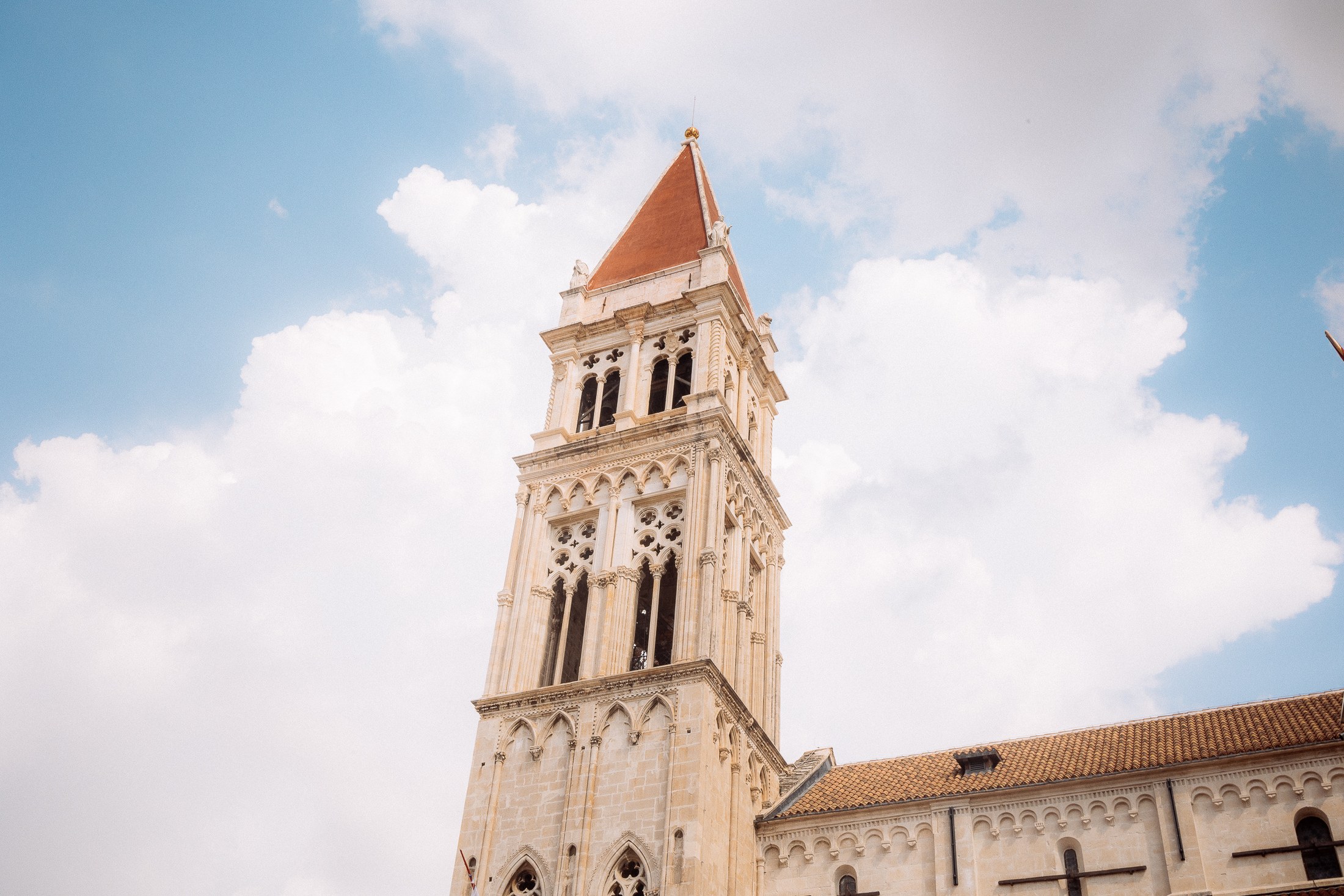
All-Inclusive in Turkey: How to Choose a Riviera Resort in 2026

TL;DRPicking the best resort on the Turkish Riviera comes down to distance from Antalya airport, beach type and how “all-inclusive” the all-inclusive really is. Lara and Belek are closest to the airport (15–45 minutes) and offer the most luxury, Side and Çolaklı give you the best value with sandy beaches, while Alanya is cheapest but means a 120-minute transfer. The key difference is ultra all-inclusive – on top of the standard package, you get imported spirits, a restocked minibar and unlimited à la carte restaurants. Book first minute in January or February and you’ll save 45–50%; a decent week in a 5-star resort in peak season otherwise costs 20,000–25,000 Kč per person. September and October give you the best mix of warm sea (25–27°C) and lower prices.

When you step out of the air-conditioned terminal at Antalya Airport after a roughly four-hour flight from London and the humid, hot slap of a Mediterranean summer hits you in the face, you’ll understand why hundreds of thousands of holidaymakers head here every year. The Turkish Riviera is the king of family holidays and one of the most popular summer destinations for anyone looking for all-inclusive in Turkey.

The reason is simple maths: where in Croatia or Italy you’d pay for an average B&B with breakfast, Turkey serves you up a five-star resort with an ultra all-inclusive programme, water slides and its own private beach. It’s a world where you lock your wallet in the room safe on day one and only pull it back out when it’s time to leave.

This guide will tell you what ultra all-inclusive actually means, which Riviera resorts to choose, what to watch out for (food, distance to the beach, pebbles) and when to book your holiday for the lowest price.

TL;DR

  • Why go: a 5* resort for the price of a guesthouse elsewhere, a short flight, perfect for families.
  • Where: Lara/Belek (closest to the airport, luxury), Side (the golden middle ground), Alanya (lively, cheap, far away), Kemer (mountains, pebbles).
  • Ultra AI: imported alcohol, à la carte restaurants, restocked minibar – a big step up from standard AI.
  • Watch out ⚠️: “the food gets samey after a few days”, the beach can be far away or reached by shuttle, pebbles instead of sand, morning battles for sunloungers.
  • When to book: early-bird deals in January–February (45–50% off, kids go free); the best hotels sell out by April.
  • When to fly: September–October = warm sea (25–27°C), fewer crowds, lower prices.
  • Money ⚠️: bring euros for the resort area, pay by card in lira (TRY) in shops, use an eSIM instead of roaming.

What ultra all-inclusive actually means

The phrase “all-inclusive” carries more weight in Turkey than in the rest of Europe. Whereas in Spain it often just means full board and a local lager, the Turkish 5* standard is a universe of its own. The basics cover dining from the morning buffet through lunches, afternoon snacks (gözleme, ice cream, waffles) to lavish dinners and midnight soups, plus unlimited drinks, a free private beach, a spa, water parks and entertainment programmes for both kids and adults.

If you pay a little extra for ultra all-inclusive, a whole new level opens up: premium imported alcohol (genuine brands instead of local knock-offs), a minibar restocked daily in your room, and unlimited reservations at the hotel’s à la carte restaurants (Italian, Asian, seafood), where you’re waited on just like in a proper restaurant.

💡 Tip: Turkish AI works brilliantly for vegetarians – the buffets are packed with salads, vegetables, cheeses, meze, lentil soup and gözleme flatbreads. Leave the meaty specialities to everyone else’s plates.

Where to plant your parasol: the Riviera resorts

Choosing the right resort is absolutely crucial – each one has a different beach, a different vibe and, most importantly, a different distance from the airport. After a night flight with a tired toddler, the last thing you want is to spend another two hours on a transfer bus.

ResortTransfer from airport (AYT)BeachBest for
Lara / Kundu15–20 minfine sandfamilies with young kids, big resorts
Belek35–45 minsand, shallow entryluxury, golfers, the discerning
Kemer / Beldibi45–70 minpebbles and shingleactive types, mountain lovers
Side / Çolaklı60–75 minsand, pebbles in placesfamilies, history fans
Okurcalar / Türkler90–110 minsandpeace and quiet, isolated 5* resorts
Alanya120 minsand (Cleopatra Beach)younger crowds, couples, lower budgets, nightlife

Lara and Belek are all about speed and luxury – Lara sits right by the airport, while Belek is home to the country’s priciest resorts and the giant Land of Legends theme park. Side and Çolaklı are long-standing favourites for families: excellent value for money, sandy beaches with a gentle entry into the water, and an ancient theatre right in the town itself (Side). Alanya is the liveliest and cheapest, but also the furthest (Alanya). Kemer pairs the beach with pine-covered mountains (you’ll need water shoes to get in the sea, though).

What to watch out for when choosing a resort

Reviews of Turkish hotels make for a fascinating read. Alongside the glowing praise, five complaints crop up with iron regularity – and those are exactly the things to keep an eye on when you’re choosing.

1. “The food gets samey after a few days”

By far the most common complaint. Even the biggest buffet starts to feel repetitive after five days. ⚠️ In weaker hotels you’ll see grumbles along the lines of “14 lunches, 14 plates of meatballs”. The fix: choose hotels with several à la carte restaurants and rotate between them, and read the reviews specifically about the food.

2. The beach is far away, or you have to take a bus

The brochure promises “a beach near the hotel”, but the reality can be a kilometre across a road with a shuttle minibus. Some resorts don’t even have their own beach, so guests are crammed into a designated strip. Always check the map to see exactly where the hotel stands.

3. We expected sand and got pebbles

Mismatched expectations ruin holidays. If pebbles bother you, cross Kemer off the list and read the descriptions for Side and Alanya carefully – water shoes are a must in many parts of Turkey.

4. Queues and operational quirks

Huge hotels with a thousand guests have their limits: the hot water can run low in the afternoon, mornings turn into battles for poolside loungers, and there are queues to book the à la carte restaurants.

5. Noisy entertainment

Turkish hotels thrive on entertainment. If thumping poolside music from morning onwards and evening shows in the amphitheatre aren’t your thing, look for “Adults Only” hotels or ones with a clearly separated “Relax” zone.

lukas a lucka
Lukáš and Lucie recommend
Where to stay on the Turkish Riviera
6 accommodations — wellness hotels, resorts and other lodging options

Where to stay: tried-and-tested resorts

💡 Tip for accommodation and experiences: We like to search for places to stay on Booking.com, where the cancellation policies tend to be the most generous. For tickets, day trips and activities, it’s worth comparing and booking through GetYourGuide.

If you want a sure thing, go for the proven resorts that British and German travellers rave about time and again. We’ve picked the cream of the crop across every category:

Here are some specific tips for tried-and-tested resorts across all categories (you can compare prices and availability in a single click via Stay22, which finds the best deal across Booking.com, Airbnb and others):

💡 Tip: Aim for a rating of 8.5+ and a large number of reviews, and read the comments about the food and beach distance in particular. In high season the best family hotels sell out as early as April – book the early-bird deals.

Day trips from the resort: organised tour or on your own?

Tired of a week by the pool? Every resort runs day trips. The most popular are Pamukkale and Hierapolis (white terraces and ancient ruins, Pamukkale), rafting in the Köprülü canyon, relaxed boat trips along the Manavgat river (Manavgat) and the Demre–Myra–Kekova combo with a cruise over a sunken ancient city.

The classic dilemma “rep or local agency?” has a clear answer: with a tour operator you’re paying for convenience and peace of mind (an English-speaking guide, a guarantee you’ll make it back for your flight), while local agencies save you a fair bit of cash. For anything adrenaline-fuelled (rafting) go with the operator; for a simple boat trip, feel free to use a local seller.

When to book and how much it costs

Turkey sells in waves. Early-bird sales peak in January and February, when tour operators offer 45–50% off, kids often fly free and deposits are minimal. These perks end the moment March arrives. ⚠️ Waiting for last-minute deals in July and August is a gamble – the best family hotels sell out by April, leaving only the ones with some kind of issue or the most expensive options.

Rough prices for 2026: last-minute deals to weaker hotels start just over 400 € per person, while a quality seven-night stay at a 5* resort in high season works out at 800–1,000 € per person. The best balance of price and experience is in September and October (sea at 25–27°C, fewer crowds, lower prices). More on timing in our article on when to go to Turkey.

Practical tips

  • Flights: Antalya is well connected from the UK – airlines like Jet2, easyJet, TUI and Pegasus fly there from London, Manchester, Birmingham and other regional airports, often as part of a package.
  • Money ⚠️: Bring euros for the resort area (day trips and souvenirs), pay by card in lira (TRY) at supermarkets and markets, and decline DCC conversion at the till.
  • eSIM ⚠️: Turkey isn’t in the EU, so your usual roaming won’t apply. Sort out a data eSIM before you leave to avoid a nasty bill. Our guide on what to pack for a holiday in Turkey will help too.
  • Water: Don’t drink from the tap – bottled water is everywhere for next to nothing (for kids too).
  • Tipping: A couple of euros to the barman on the very first evening works wonders for your service all holiday; leave a euro a day for the cleaner.

Where to next

The main hub holidays in Turkey, timing in when to go to Turkey, the resorts of Antalya, Side, Alanya and Manavgat, the Aegean alternatives Bodrum and Fethiye with Ölüdeniz, plus ancient sites Pamukkale and Ephesus.

Frequently asked questions

What does ultra all-inclusive mean in Turkey?

Ultra all-inclusive is an upgrade from regular AI: in addition to unlimited food and drinks, it also includes premium imported alcohol (original brands), a daily refilled minibar in your room, and unlimited reservations at the hotel’s à la carte restaurants. Turkish 5* standard typically also offers its own beach, aquapark, and well-developed entertainment programs.

Which resort on the Turkish Riviera is best for families?

For families with small children, Lara (15–20 min from the airport, fine sand) or Side and Çolaklı (sandy beaches with gradual entry and ancient ruins right in town) are ideal. Belek is a luxury choice with water parks and Land of Legends. Avoid Kemer if you want sand – it’s all pebbles there.

When is it cheapest to buy a package holiday to Turkey?

The most advantageous is first minute in January and February with discounts of 45–50% and children for free. The best family hotels sell out as early as April, so waiting for last minute in high season is risky. If you want to combine low prices with warm sea, fly in September or October.

Is Turkish food in all-inclusive suitable for vegetarians?

Yes, no problem at all. The buffets are full of salads, vegetables, cheeses, meze, lentil soup and gözleme flatbreads. Vegetarians will always find plenty to choose from at a Turkish resort, and the à la carte restaurants (Italian, Asian) offer even more options.

Is water and food in Turkish resorts safe?

In 5* hotels, hygiene is at a high standard and “Turkey tummy” is much less common here than in Egypt. However, the golden rule applies: never drink tap water (bottled water is available everywhere for just a few cents, even for children) and watch out for ice and unpeeled fruit from street stalls.

Tips and Tricks for Your Vacation

Don’t Overpay for Flights

Search for flights on Kayak. It’s our favorite search engine because it scans the websites of all airlines and always finds the cheapest connection.

Book Your Accommodation Smartly

The best experiences we’ve had when looking for accommodation (from Alaska to Morocco) are with Booking.com, where hotels, apartments, and entire houses are usually the cheapest and most widely available.

Don’t Forget Travel Insurance

Good travel insurance will protect you against illness, accidents, theft, or flight cancellations. We’ve had a few hospital visits abroad, so we know how important it is to have proper insurance arranged.

Where we insure ourselves: SafetyWing (best for everyone) and TrueTraveller (for extra-long trips).

Why don’t we recommend any Czech insurance company? Because they have too many restrictions. They set limits on the number of days abroad, travel insurance via a credit card often requires you to pay medical expenses only with that card, and they frequently limit the number of returns to the Czech Republic.

Find the Best Experiences

Get Your Guide is a huge online marketplace where you can book guided walks, trips, skip-the-line tickets, tours, and much more. We always find some extra fun there!
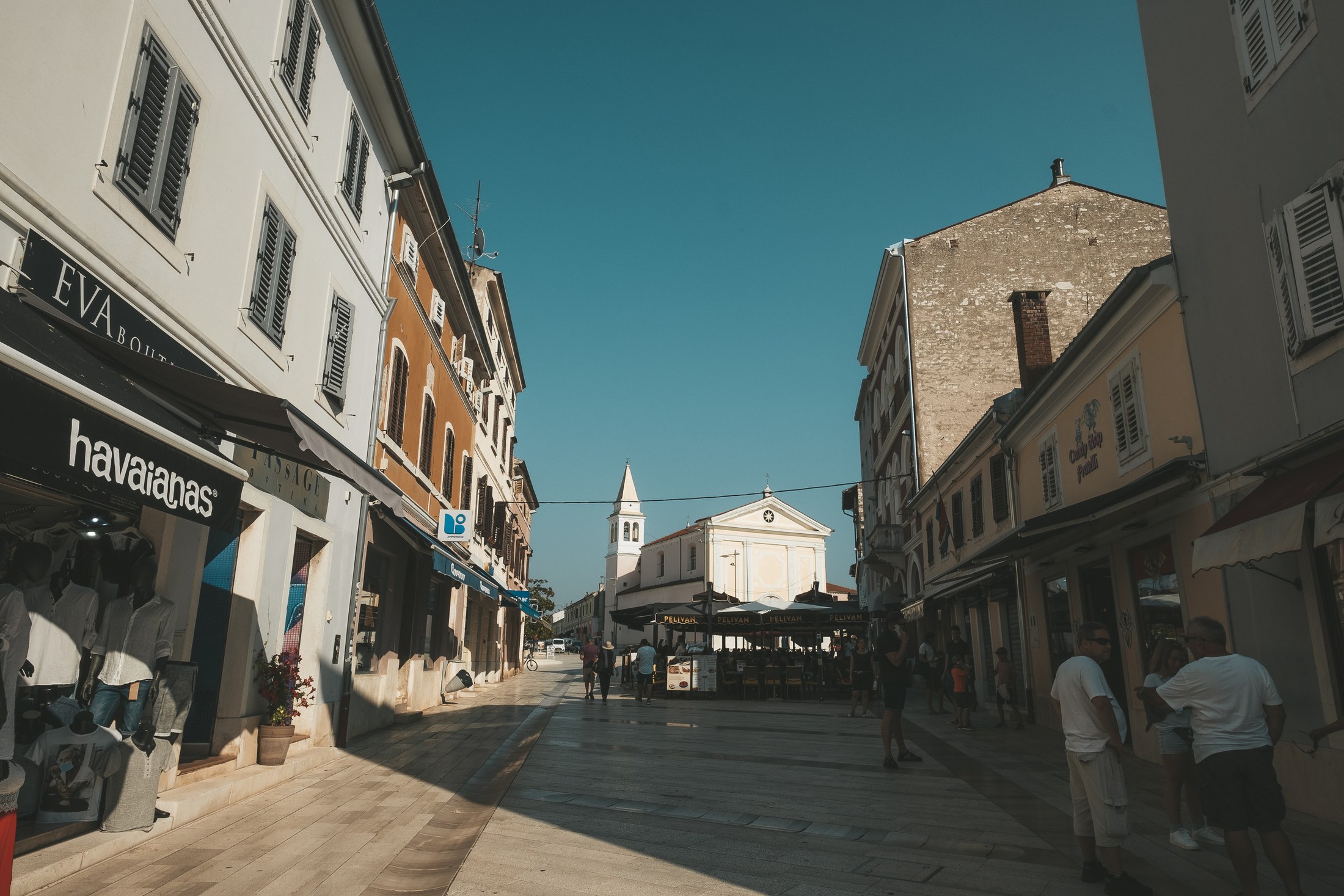
Berat, Albania: The City of a Thousand Windows (UNESCO) — 11 Tips for 2026

TL;DRBerat is Albania’s UNESCO-listed “town of a thousand windows”, named for its cascades of white Ottoman houses with dark-framed windows in the Mangalem and Gorica districts. There are 11 tips here, including the still-lived-in Kala fortress, the Onufri Museum, Çobo winery, Osum Canyon and the sacred Mount Tomorr. May, June and September–October are the best months, and it’s worth staying at least a full day and night. By car, Berat is under two hours from Tirana, 2.5–3 hours from Gjirokastër and about three hours from Sarandë; without a car, local minibuses (“furgons”) cover the route.

Forget for a moment about the crowded beaches of the Ionian Riviera and the busy boulevards of Tirana. If you want to understand the true soul of the Albanian interior, you need to head into the mountains – and your first stop should be Berat, Albania, an architectural gem inscribed on the UNESCO World Heritage List.

As you arrive in Berat through the valley of the River Osum, you’ll understand its nickname at first glance. Hundreds of white Ottoman houses with striking dark-framed windows cling to the steep hillside in a cascade. They look as if they’re standing on each other’s shoulders, all gazing down toward the river. Hence the nickname: the city of a thousand windows.

In this guide you’ll find 11 tips for Berat and the surrounding area – from the living Kala fortress to the picturesque Mangalem and Gorica quarters, a family-run winery, the dramatic Osum Canyon and the sacred Mount Tomorr. We’ll also help you figure out when to come, where to stay and how to combine Berat with the rest of southern Albania.

TL;DR

  • Why come: The city of a thousand windows on the UNESCO list – Ottoman architecture, a living castle and the calm of the Albanian interior.
  • When to come: May, June and September–October (pleasant temperatures for walking uphill). Summer in the valley can be hot.
  • How to get there: By car from Tirana ~2 h, from Gjirokastra ~2.5–3 h, from Saranda ~3 h; without a car, use local minibuses (furgon).
  • Don’t miss: Kala castle (still inhabited today), the Mangalem and Gorica quarters, the Onufri Museum.
  • Stay overnight: In the evening, when the day-trip crowds leave and the lanterns light up, the town takes on a magical atmosphere.
  • Nearby: The Çobo winery, the dramatic Osum Canyon and sacred Mount Tomorr.
  • Money ⚠️: Pay in lek (ALL) and carry cash for entry fees; beware – a nod of the head here means NO!

When to visit Berat and how to get there

Berat is best explored in spring and autumn, namely in May, June and from September to October, when temperatures are pleasant for the climb up to the castle and through the steep lanes. In summer the Osum valley really heats up and walking on the scorching cobbles can be tough; if you arrive in July or August, plan the castle for early morning or late afternoon.

Berat lies in central Albania and combines perfectly with other stops. By car from Tirana you can reach it in under two hours on a good road, from Gjirokastra it’s roughly 2.5–3 hours and from Saranda on the coast around three hours. If you don’t have a car, rely on the local minibuses known as furgon – they’re cheap and run often, but they don’t always follow a fixed timetable (they leave once the vehicle fills up) and you may sometimes need to change in the town of Fier.

💡 Tip: Berat deserves at least one full day and one night. During the day the historic centre fills with tourists on day trips from Tirana and the coast, but in the evening, when the crowds depart and the yellow lanterns glow above the river, the town takes on a completely different, magical atmosphere.

Hotels in Berat, Albania: where to stay

💡 Tip for accommodation and experiences: We prefer to find our accommodation on Booking.com, which usually has the best cancellation terms. For tickets, tours and activities, it’s worth comparing and booking through GetYourGuide.

Here’s a simple rule: skip the modern hotels on the outskirts and find a traditional guesthouse right in the historic centre. Staying in one of the stone houses in the Mangalem or Gorica quarter (or even inside the castle grounds, if you don’t mind dragging your luggage over bumpy cobbles) is half the experience. Family-run guesthouses also still honour the sacred Albanian concept of hospitality, mikpritja – don’t be surprised if, on arrival, they sit you down on the terrace and bring you a welcome of homemade raki and coffee.

Here are some specific tips for trusted accommodation in Berat across all categories (you can compare prices and availability with one click via Stay22, which searches for the best deal across Booking.com, Airbnb and others):

  • Hotel Mangalemi – an iconic Ottoman house right in the Mangalem quarter, with a traditional restaurant and the famous river view; the most atmospheric choice in town.
  • Rezidenca Desaret – a family guesthouse in Mangalem with a panoramic terrace and homemade breakfast; excellent value for money.
  • Hotel Belagrita – a modern 4* near the centre with a rooftop terrace and pool; for couples and anyone after a bit of comfort.
  • Hotel Klea – accommodation right inside the walls of the Kala fortress – peace and a thousand years of history on your doorstep; for romantics.
  • White City Hotel – a spacious hotel with a pool a short distance from the centre; ideal for families and road trips.
  • Berat Backpackers Hostel – a popular hostel in stone-built Gorica with a garden and a community atmosphere; for backpackers and solo travellers.

💡 Tip: Choose guesthouses with a view of the river or the quarter opposite – morning coffee on the terrace looking out over the white houses of Mangalem is unforgettable. Go for a rating of 9.0+ and plenty of reviews; the best guesthouses fill up months in advance in high season.

11 things to do in Berat, Albania and the surrounding area

Berat is a town where the day isn’t measured in hours but in cups of strong coffee. Here are eleven things that make it worth slowing down here for at least two days.

1. The Mangalem quarter, the heart of the city of a thousand windows

Below the castle on the right bank of the River Osum lies the Muslim quarter of Mangalem – the very cascade of white houses with their dozens of dark-framed windows that made Berat famous. Lose yourself in its labyrinth of narrow cobbled lanes, peek into the courtyards and snap the iconic view from down by the river, where the houses look as if they’re propping each other up. The light is loveliest for photos in the morning and early evening.

2. Kala castle in Berat, Albania: a fortress that’s still alive

High above Mangalem rises the Kala fortress – and unlike most European castles, this is no dead open-air museum. Inside the old walls hides an entire living quarter: people still live here, hang their washing between medieval walls, grow vines, and elderly women sell crocheted tablecloths and homemade fig jams in the passageways. You’ll find a tangle of lanes, ruined mosques and rare Byzantine churches – plus views over the valley that make the climb worthwhile.

⚠️ The climb from the centre to the main gate is steep and over smooth, slippery stones, so wear sturdy shoes. Entry fees in Albania change quickly; it used to be around 300 ALL (roughly €3), but since summer 2025 there have been reports that entry to the grounds may be free. Check on site and, to be safe, carry some small change.

3. The Onufri Iconographic Museum

Within the walls stands the Church of the Dormition of St Mary, which houses the National Iconographic Museum Onufri. It’s named after the famous 16th-century fresco painter who blended a distinctive vivid red colour into his works – a recipe whose exact composition he took to the grave. Even if religious art isn’t normally your thing, the intricate detail of the icons here and the beautifully carved wooden iconostasis will leave you stunned. It’s one of the most valuable sacred collections in the country.

4. The Gorica quarter and the Gorica Bridge

On the left bank of the River Osum, opposite Mangalem, lies the Christian quarter of Gorica. The two quarters are linked by an elegant arched stone bridge – Berat is, after all, a textbook example of Albanian religious tolerance, where Muslims and Christians have lived side by side for centuries. Gorica also offers the loveliest view of illuminated Mangalem and the castle above it, so come here mainly in the evening.

5. Çobo Winery and a raki tasting

Berat is the centre of one of Albania’s finest wine regions – the sunny slopes here suit local grape varieties. Just outside town lies the family-run Çobo Winery, which hosts guided tastings. You’ll sample a full-bodied red made from the local Kallmet grape, as well as strong homemade raki (the classic grape Raki Rrushi or the unusual mulberry Raki Mani), served alongside local cheeses and olives. A lovely stop and a great souvenir to take home.

lukas a lucka
Lukáš and Lucie recommend
Where to stay in Berat
6 accommodations — hotels and other lodging options

6. The evening xhiro along the boulevard

When you head back into town in the evening, join the locals on the main pedestrian zone, Bulevardi Republika. Around six o’clock the traditional xhiro begins – an evening social stroll when the whole town comes out, walking up and down, chatting and sipping coffee. Grab a seat on a terrace, order an espresso or a cold beer and soak up the rhythm of southern Albania; this is where Berat shows its very best self.

7. The Ethnographic Museum

A beautiful Ottoman house in Mangalem is home to the Ethnographic Museum, which takes you back into Berat life in the 18th and 19th centuries. The house itself is an exhibit – you’ll see traditional wooden ceilings, separate spaces for men and women, period household furnishings, craftsmen’s workshops and an olive oil press. It’s the best way to understand how people actually lived in those photogenic houses with their thousand windows.

8. Mosques and the tekke below the castle

Berat boasts a rich Ottoman heritage down in the town below the castle, too. Don’t miss the Lead Mosque (Xhamia e Plumbit) with its characteristic lead-covered dome, the King Mosque (Xhamia Mbret) and especially the adjacent Halveti Tekke – a dervish-order prayer house with a beautifully decorated carved and painted ceiling. These jewels are often missed by tourists rushing straight up to the castle, yet they’re among the loveliest things in town.

9. Osum Canyon

About an hour’s drive from Berat, the dramatic Osum Canyon (Kanioni i Osumit) cuts into the landscape – kilometres of deep rock walls, waterfalls and a turquoise river. In spring (roughly April–June), when there’s plenty of water, you can go rafting and canyoning here; in summer the water level drops and you can wade through the canyon on foot. It’s an ideal full-day trip for nature lovers and a perfect counterpoint to the urban architecture.

10. Sacred Mount Tomorr

Above Berat rises the mighty massif of Mount Tomorr (Mali i Tomorrit), a celebrated national park and at the same time Albania’s most sacred mountain. For Bektashi Muslims it’s a pilgrimage site – at the end of August a great pilgrimage heads here to the tekke of Saint Abbas Ali. Even outside the pilgrimage season, it’s worth driving up or coming with a guide for the breathtaking views over the whole of central Albania and the sense of touching the country’s living spiritual tradition.

11. A trip to stone-built Gjirokastra

If you have more time, pair Berat with Albania’s other UNESCO gem – Gjirokastra. While Berat is elegant and white, Gjirokastra is rugged, steep and carved from grey stone, with its trademark slate roofs and an enormous fortress above the old bazaar. The journey between the two towns (roughly 2.5–3 hours) runs through the heart of southern Albania and logically continues on to the sea at Saranda.

What to eat in Berat

Central Albania is heavily influenced by Balkan and Greek cuisine, so there’s plenty here for vegetarians – fresh vegetables, olive oil, cheeses and herbs. These classics are well worth a try:

  • Fërgesë – a rich baked mix of peppers, tomatoes and the local curd cheese gjizë, served with a heap of fresh bread for dipping. A vegetarian classic of central Albania.
  • Byrek – crispy layered pastry filled with cheese or spinach, the cheap and filling king of street food (around 100–150 ALL, roughly €1–1.50).
  • Local cheeses and olives – the ideal pairing with a glass of Berat wine.
  • Salads with cheese (salcë kosi) and grilled vegetables – refreshing in the heat.
  • Tavë kosi – the national classic of lamb baked in yoghurt with eggs; this one is a meaty speciality for non-vegetarians, so vegetarians can leave it to the others.

To finish, have a strong Turkish coffee or a homemade raki – it belongs to a Berat evening just as much as the view of illuminated Mangalem.

Practical tips for Berat

  • Pay in lek (ALL). Euros are accepted in many places, but at an unfavourable rate. Always carry cash for entry fees, guesthouses and the winery – cards are far from accepted everywhere.
  • ⚠️ Watch the body language! In Albania, a nod of the head often means NO, while shaking your head from side to side means YES. Until you get used to it, this leads to plenty of comic situations – to be safe, stick to the words po (yes) and jo (no).
  • Sturdy shoes are a must. The steep cobbled lanes and the climb to the castle are slippery over smooth stones, so leave the flip-flops at the guesthouse.
  • Don’t refuse hospitality. When your hosts offer you a welcome raki and coffee, it’s not done to refuse – mikpritja is sacred here.
  • Berat is no longer dirt cheap. The Albanian lek has been strengthening for a while, but compared with Western Europe you still get excellent value for food and family guesthouses (a meal in a mid-range restaurant runs around 600–1,000 ALL, roughly €6–10).

Where to go next in southern Albania

Berat is the perfect stop on a journey across Albania. From here you can head to stone-built Gjirokastra and then on to the sea – you’ll find an overview of the loveliest coastline in our guide to the best beach holidays in Albania, head to Ksamil for the most beautiful beaches, and choose Saranda as your base on the southern riviera. Before you set off south, take a look at the buzzing capital, Tirana, too.

Frequently asked questions

Why is Berat called the city of a thousand windows?

The nickname city of a thousand windows originated from the characteristic architecture of the Mangalem quarter below the castle. On the steep slope, hundreds of white Ottoman houses cascade together, their facades literally studded with many large windows with dark frames. When viewed from below by the river, the houses appear to support each other and all the windows seem to look down – hence the poetic name.

Is Berat worth visiting and how much time should you set aside?

Definitely yes – Berat is one of the most beautiful cities in Albania and part of the UNESCO list. It’s ideal to spend at least one full day and one night here. During the day, the centre fills up with day-trippers, but in the evening, when the crowds leave and the lanterns light up, the city takes on a magical atmosphere. With trips to the surrounding area (Osum Canyon, Mount Tomorr) you can easily spend two days here.

How do I get to Berat?

The most comfortable option is by car: from Tirana you’ll get here in under two hours, from Gjirokaster in 2.5–3 hours, and from Saranda by the sea in about three hours. Without a car, rely on local minibuses called furgons – they’re cheap and run frequently, but without a fixed timetable and sometimes with a transfer in Fier.

How much does entrance to Berat Castle cost?

The situation regarding entrance fees in Albania is changing rapidly. Previously, around 300 ALL (approx. 3 €) was collected at the gate, but since summer 2025, information has emerged that entry to the castle grounds itself may be free. The Onufri Museum inside the walls is charged separately. Verify the current situation on site and have some small change with you.

When is the best time to go to Berat?

Best in spring or autumn – in May, June and September to October, temperatures are pleasant for hiking up to the castle and through the steep lanes. In July and August the valley gets properly hot, so plan the castle for morning or early evening. If you want to experience the Osum Canyon with water for rafting, head here in April to June.

Tips and Tricks for Your Vacation

Don’t Overpay for Flights

Search for flights on Kayak. It’s our favorite search engine because it scans the websites of all airlines and always finds the cheapest connection.

Book Your Accommodation Smartly

The best experiences we’ve had when looking for accommodation (from Alaska to Morocco) are with Booking.com, where hotels, apartments, and entire houses are usually the cheapest and most widely available.

Don’t Forget Travel Insurance

Good travel insurance will protect you against illness, accidents, theft, or flight cancellations. We’ve had a few hospital visits abroad, so we know how important it is to have proper insurance arranged.

Where we insure ourselves: SafetyWing (best for everyone) and TrueTraveller (for extra-long trips).

Why don’t we recommend any Czech insurance company? Because they have too many restrictions. They set limits on the number of days abroad, travel insurance via a credit card often requires you to pay medical expenses only with that card, and they frequently limit the number of returns to the Czech Republic.

Find the Best Experiences

Get Your Guide is a huge online marketplace where you can book guided walks, trips, skip-the-line tickets, tours, and much more. We always find some extra fun there!
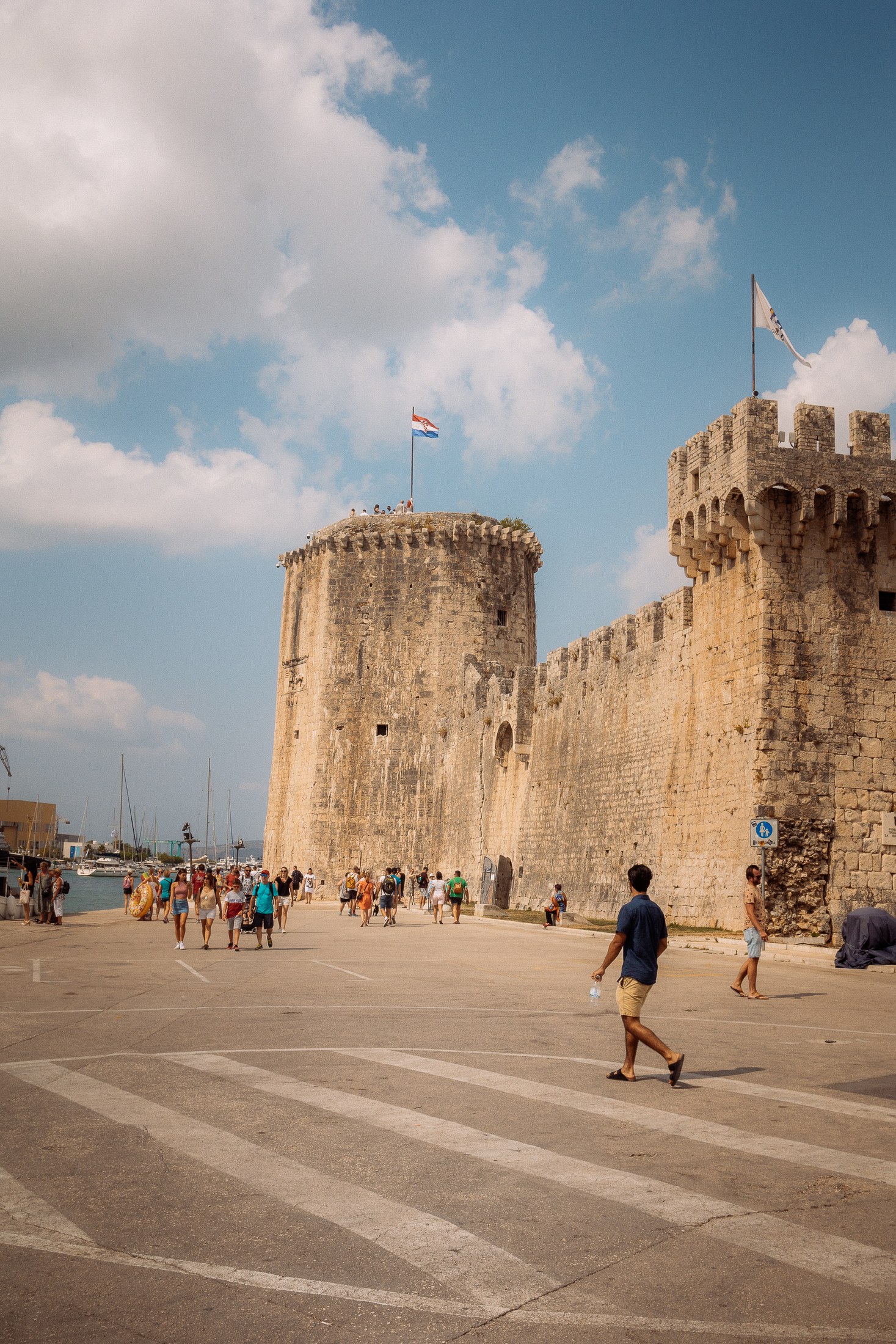
Rocamadour, France: 11 Tips + Gouffre de Padirac in 2026

TL;DRRocamadour is a vertical pilgrimage village in France’s Périgord, built into a limestone cliff across three levels, where 216 steps up the Grand Staircase (or a paid lift) lead to the shrines of the Black Madonna. There are 11 concrete tips here on what to see and do, from the castle ramparts to the Rocher des Aigles eagle park, plus advice on an evening stroll once the coach crowds clear out after six. The nearby Gouffre de Padirac, about 25 minutes’ drive away, lets you take a boat trip along an underground river 75 metres down, where it’s a steady 13°C. Tickets for 2026 cost €22.50 in peak season and €18 off-peak; the site opens on 28 March 2026 and you’ll need to book online in advance. The best time to visit is May, June, September or October, and three to four hours is plenty for exploring Rocamadour itself.

Picture a village that completely defies the laws of gravity, hanging not on a grassy hill but literally glued to a sheer limestone cliff above a deep canyon. That is exactly what Rocamadour in southwest France looks like, and it ranks among the most remarkable places in all of Europe. If you’re planning a trip to the nearby Dordogne valley, this is one place you simply have to see with your own eyes, because photographs can’t capture its true majesty. In this article you’ll find 11 tips on what to see and do in Rocamadour, and we’ll also take a look at the fascinating Gouffre de Padirac chasm nearby.

I’ll show you how to cleverly avoid the unpleasant tourist crowds, where to base yourself strategically, and how to plan the whole thing so you come away with nothing but the best memories. You’ll also find all the current prices and conditions for 2026, because the rules for entry at the region’s biggest attractions have changed quite strictly, and without preparation you might not get in at all. Take a deep breath, because a journey into the Middle Ages and deep into the heart of the earth awaits.

TL;DR

  • Rocamadour is a vertical pilgrimage village made up of three tiers, and to reach the main sanctuaries you have to climb the famous Grand Staircase (or take the paid lift).
  • Its greatest treasure is the Black Madonna statue, to which kings and ordinary peasants from all over Europe made pilgrimages for centuries.
  • In summer the place is bursting at the seams, so come either early in the morning before nine o’clock, or stay overnight and enjoy the magical evening atmosphere without the crowds.
  • The Gouffre de Padirac chasm is an absolute must — a huge hole into the centre of the earth where you’ll glide along an underground river in little boats.
  • Tickets to Padirac for 2026 cost €22.50 in high season, and it’s absolutely essential to book online weeks in advance.
  • The local cuisine is extremely meat-heavy (duck and goose), but vegetarians will survive thanks to the excellent Rocamadour goat’s cheese and dishes with truffles or walnuts.

When to visit Rocamadour and the Lot river valley

Getting the timing right is absolutely key to your overall experience here. July and August are a real test of nerves, because after Mont-Saint-Michel and Carcassonne, Rocamadour is one of the most visited monuments in all of France. Temperatures during this period regularly climb above thirty degrees, the narrow main street becomes completely clogged with people, and finding a free spot in the huge car parks feels like a fight for survival. The French also have long summer holidays, and this is one of their favourite domestic destinations. Definitely avoid the weekend around the first of August, which the locals call chassé-croisé. On these days July and August holidaymakers swap over en masse and the roads turn into one giant, motionless car park.

If you’re flying in from the UK, the most convenient option is a flight to Bordeaux or Toulouse. From London, direct connections run with airlines like easyJet and British Airways, with Bordeaux being the handier gateway. From the airport you simply pick up a hire car and within about two and a half hours you’ll be admiring the views of the limestone cliffs. Bear in mind that French motorways are excellent but you’ll need to budget for the pricey tolls, which work out at roughly €9.50 per hundred kilometres. If you fancy a longer road trip, the drive down through France is scenic — just allow plenty of time and keep that toll budget in mind.

If you have the choice, the ideal time to visit is May, June and September. The weather is already very pleasant, you can wander the narrow medieval lanes at your own pace, and you can explore the monuments without constantly jostling other visitors. October offers a lovely atmosphere too, when the surrounding oak forests turn beautiful shades of autumn and the local restaurants kick off the mushroom and truffle season. Keep in mind, though, that from November to Easter plenty of smaller hotels, restaurants and tourist attractions across the region — including the nearby castles — close their doors. A winter visit therefore requires much more careful planning and checking of opening hours on official websites.

Where to stay in Rocamadour and the surrounding area

💡 Tip for accommodation and experiences: We like to find our accommodation on Booking.com, which tends to have the best cancellation terms. For tickets, tours and activities, it pays to compare and book through GetYourGuide.

Finding the ideal accommodation here comes with one big quirk that many travellers forget. Most tourists arrive just for a day trip from nearby Sarlat or the Dordogne valley and leave again in the evening. I’d recommend, though, that you spend at least one night right in Rocamadour or its immediate surroundings, because once the tour coaches leave the valley at dusk, the village takes on an utterly indescribable, mystical atmosphere. Staying right in the historic centre on the cliff is enormously romantic, but bear in mind you’ll be hauling your suitcases up steep steps. Far more practical is to choose accommodation on the upper plateau of L’Hospitalet, which gives you the most beautiful view over the whole village and keeps your car just a few steps away.

A great choice with a gorgeous view is Hôtel Les Esclargies, set just a short distance from the edge of the cliff in a peaceful oak grove with a lovely pool. If you’re after something right in the heart of the medieval town and don’t mind a few steps, take a look at Hôtel Beau Site, with a terrace carved straight into the rock. For lovers of more modern comfort tucked away in nature, Le Bois d’Imbert works beautifully, lying a little outside town and offering complete peace away from the tourist bustle.

lukas a lucka
Lukáš and Lucie recommend
Where to stay in Rocamadour
4 accommodations — hotels and other lodging options

If you’re planning to explore the wider area and don’t want to pack up every day, the ideal base is the nearby town of Sarlat-la-Canéda, which is itself one of the most beautiful in France. Here you can rent a traditional country house, known locally as a gîte, or stay in a charming family-run guesthouse called a chambre d’hôtes. The small, quiet villages within about fifteen kilometres of Sarlat are excellent — places like Vézac, Vitrac or Saint-Cybranet. You’ll enjoy absolute peace, hassle-free free parking, and you can reach the heart of all the action in the river valley by car in just ten minutes.

11 tips on what to see and do in Rocamadour and the surrounding area

Now let’s take a detailed look at the best of what this fascinating corner of France has to offer. You’ll discover that Rocamadour isn’t just about one pretty viewpoint, but that it holds within it centuries of pilgrimage history, architectural marvels, and some of the country’s finest natural wonders right on its doorstep.

1. Stroll along the main street, Rue de la Couronnerie

Your visit will most likely begin in the lower tier of the village, which historically belonged to the working folk and merchants. The only artery of this part is Rue de la Couronnerie, which winds along the cliff and is lined with beautiful medieval houses. The whole vertical village is built on three terraces, which once precisely mirrored the social hierarchy of the time. The lower level belonged to the craftsmen, the middle to the clergy, and the very top boasted an impregnable castle reserved exclusively for the nobility.

As you walk along this street, be sure to notice the stunning architecture, which had to bend completely to the harsh natural conditions. The houses are built from honey-coloured limestone and their roofs are covered with heavy stone tiles called lauzes, which are absolutely typical of this southwestern region. While today you’ll mostly hear a babble of world languages from hundreds of tourists, and the shop windows display modern souvenirs, it would have buzzed in exactly the same way back in the twelfth century. The only difference being that, instead of fridge magnets, the pilgrims of the day bought lead badges as tangible proof of their gruelling journey, which they would then show off back home.

💡 Tip: If you arrive here at scorching midday in summer, the street will probably be impassable and full of noisy tour groups. Try to walk it either very early in the morning before nine o’clock, or sit down at one of the many restaurants with a terrace overhanging the canyon. That way you can enjoy a coffee in peace and watch the tourist madness from a perfectly safe distance.

2. Climb the Grand Staircase (Grand Escalier)

Once you pass through the lower village, you’ll reach an absolutely iconic spot that has defined the entire history of Rocamadour for over a thousand years. Before you appear 216 steep stone steps, which connect the secular part with the sacred sanctuaries on the middle tier. For pilgrims on the Camino de Santiago, this majestic staircase represented the final test of their resolve, faith and physical stamina.

For centuries it was the custom for devout pilgrims to ascend these steps on their knees, reciting a Rosary prayer on each individual step and begging forgiveness for their sins. Although today the vast majority of visitors choose to walk on their feet, the climb is still fairly demanding, especially when the midday August sun beats down on the limestone rock. Every step, though, brings you closer to the very spiritual heart of this incredible place, and the views into the canyon keep improving the higher you go.

If you have trouble with your knees, are travelling with small children in a pushchair, or simply aren’t in the mood for athletic feats, there’s no need to worry at all. You can use the handy public lift, which is carved straight into the heart of the limestone rock. For a small fee, it whisks you from the lower street right up to the square by the sanctuaries, saving you plenty of precious energy for exploring the historic monuments in the upper tiers of the village.

3. Explore the Sanctuaries and the Notre-Dame chapel

Once you’ve conquered the staircase or stepped out of the lift, you’ll find yourself on a small paved square called the Parvis des Sanctuaires, literally wedged into the overhanging rock. Here stand seven historic chapels and churches, which together form one of the most sacred sites in all of France. The moment you step inside, the atmosphere noticeably calms, and even in the peak of summer people instinctively lower their voices.

The most significant building is without doubt the Notre-Dame chapel, which partly merges with the rock itself, with the cliff forming one of its interior walls. The walls of this chapel are literally blackened by the thick smoke from candles that devout pilgrims have been lighting here for more than a thousand years. Notice too the remnants of old, faded frescoes adorning the outer walls of the chapels, and the ancient iron sword embedded high in the rock directly above your heads.

Legend firmly holds that this is the fabled sword Durandal belonging to the famous knight Roland. He supposedly hurled it here magically from a vast distance, so that his sacred weapon wouldn’t fall into the hands of the advancing enemy. Whether you believe in old medieval legends or not, the sight of that massive rusty blade jutting out of the sheer cliff has something deeply epic about it, and it makes you wonder how many generations have already gazed up at this place.

4. Stop by the mysterious Black Madonna

Inside the blackened Notre-Dame chapel you’ll find the single main reason why Rocamadour was so immensely famous throughout the Christian world for centuries. On a modest altar sits a small wooden carved statue of the Black Madonna, probably dating from the twelfth century. It was carved from very hard walnut wood, which over time, with age and the ever-present candle smoke, acquired its characteristic dark colour.

This fascinating statue is associated with hundreds of documented miracles, especially the rescue of desperate sailors caught in fierce storms on distant oceans. High in the vault directly above the statue hangs an ancient bell from the ninth century, about which a wonderful tale is told in the region. The bell has no rope, yet it supposedly rings entirely of its own accord whenever the Black Madonna miraculously saves someone on a stormy sea.

Even if you aren’t religious at all and take it merely as a historical curiosity, the presence of this statue in the dark chapel is enormously powerful. People from all over the world still come here to leave notes with their pleas or thanks. Try sitting for a moment in the old carved wooden pews and simply take in the immense weight of centuries-old history that radiates from this small, silent space.

5. Climb up to the castle and enjoy the view

At the very top of the limestone cliff, on the third and highest tier of Rocamadour, a medieval castle stands proudly. This tier once belonged exclusively to the local nobility and served to protect the immensely valuable sanctuaries from enemy raids, which is why the castle retains a rather austere, defensive character to this day. The castle’s interior is not open to the public, as it currently serves as private quarters for the local clergy.

What is definitely open, and worth every euro spent, is the castle rampart called the Remparts, for which you can buy a ticket at the entrance. From here you’ll be treated to an absolutely breathtaking panoramic view into the deep canyon of the Alzou river and over the historic tiled roofs of the sanctuaries far below. It’s probably the very best spot for photographing the whole stunning scene, because you have the entire village laid out at your feet.

From the sanctuaries you reach the castle via a steep, zig-zagging Stations of the Cross path shaded by tall oaks, which is a very pleasant walk especially on hot summer days. But if you really don’t fancy trudging uphill after a whole day, there’s another very handy inclined lift up here too, which elegantly links the sacred tier with the upper car park and spares you a lot of sweat.

Experiences & tickets
traveler-rated · GetYourGuide
Chambord: Entry Ticket to the Castle
★★★★★ 4.6 · 1 994 reviews
from €21
I want this experience →
🔗 These are affiliate links — they don't change your price and help us create content. · All experiences →

6. Experience a magical evening walk without the crowds

This is possibly the single most important tip for planning your visit, if you want to come away with a truly unforgettable experience. As six o’clock in the evening approaches, the last giant coaches packed with tourists from around the world finally leave the deep valley. Rocamadour suddenly falls incredibly quiet, empties out and transforms back into the mystical medieval village it was hundreds of years ago, when only solitary pilgrims streamed in.

I’d recommend setting out on a slow stroll through the narrow paved lanes just before sunset. The houses carved into the limestone rock take on an incredible golden colour and the shadows begin to lengthen romantically across the canyon. Once full darkness falls, the entire sheer cliff with its sanctuaries and castle lights up beautifully, creating a scene before you that looks like the perfect backdrop from an expensive period film. You’ll hear only the wind in the valley and your own footsteps on the old paving.

💡 Tip: The best view of a floodlit Rocamadour at night comes from the opposite side of the canyon, in the area called L’Hospitalet. There you’ll find a small viewing terrace from which you can see the whole vertical village glowing into the dark like an absolute apparition. It’s precisely for this perfect photographic moment that it really pays to stay overnight in the area rather than fleeing off with the other tourists.

7. Visit the eagle park Rocher des Aigles

If you need a break from the heavy church history and medieval architecture for a while, head just past the castle on the upper plateau to the eagle park Rocher des Aigles. It’s a specialised rescue centre and sprawling park for birds of prey, which is absolutely fantastic not only for families with children, but for every enthusiastic lover of nature, animals and perfect flying displays.

Several times a day there are guided flying displays that take place right on the steep edge of the limestone cliff. You’ll see majestic eagles, vultures, falcons and huge condors fly freely over the deep canyon and then return elegantly and with perfect precision to the leather gloves of experienced falconers. This is no cheap circus show for tourists, but a highly educational performance with a huge emphasis on protecting these endangered species in their natural environment.

Outside the flying display times you can wander the whole expansive forest grounds at your own pace and view dozens of species of birds of prey really up close. The birds here live in excellent, spacious conditions and the park itself does an incredible amount of commendable work towards their gradual breeding and return to the wild. You simply buy tickets right at the ticket office on site, and the visit will take you around two very pleasant hours.

8. Head to the Gouffre de Padirac chasm

Just about twenty-five minutes’ drive from Rocamadour lies a place that would be a huge and unforgivable mistake to skip on your trip. The Gouffre de Padirac is by a huge margin the most visited underground system in France and offers an experience that completely transcends ordinary visits to classic tourist caves. It all begins outside at a huge circular hole in the ground, 33 metres in diameter and plunging to an incredible depth of 75 metres, so it looks as though hell itself has caved in here.

You can ride down in a comfortable modern lift, but I warmly recommend walking down the wonderful steel staircase, designed by none other than the famous Gustave Eiffel himself. During the slow descent you physically feel the climate change quickly, the air growing heavy with moisture, and the temperature dropping to a constant 13 °C, so be sure to bring a warm jumper even in the middle of scorching August.

At the bottom of the chasm your adventure has only just begun, because you’ll board a small metal boat steered by an experienced boatman. You’ll glide about half a kilometre along an incredibly clear underground river in complete silence, broken only by the gentle splash of the oars and drops of water falling from the ceiling. This is followed by a stunning walking loop through the underground domes, where you enter the Hall of the Great Dome, which boasts a stalactite ceiling at an incredible height of 94 metres and resembles a giant underground cathedral.

9. Practical information for Padirac in 2026

If you’re planning to visit this fascinating chasm in the upcoming season, you must know a few absolutely crucial rules, otherwise you sadly won’t get underground at all. The Gouffre de Padirac opens its gates for the new season on exactly 28 March 2026, and demand for tickets is so enormous every year that the entire booking system has moved completely online, with the on-site ticket office now operating more symbolically than anything.

You absolutely must buy your tickets in advance for a specific date and time, exclusively through their official website gouffre-de-padirac.com. In high summer season the best slots around midday sell out even several weeks in advance, so definitely don’t count on turning up randomly on site and sorting out tickets somehow — it simply doesn’t work that way, and you’d leave empty-handed.

Prices for 2026 are set at €22.50 for an adult in high summer season, while off-peak in spring and autumn you’ll pay a slightly friendlier €18. Tours in foreign languages can easily be handled with the audio guides provided, which is incredibly practical for non-French-speaking visitors. The time you book is the precise time of your descent into the chasm, so arrive at the huge car park well in advance so you don’t needlessly miss your slot.

10. Get to grips with the local cuisine (and how to survive as a vegetarian)

Southwest France, and this particular region especially, is famous the world over for its very heavy, rustic and strongly meat-based cooking. The foundation of everything here is duck and goose fat, on which absolutely everything is cooked, including plain roast potatoes. For the locals, confit duck and the fattened liver foie gras are practically a religion, and you’ll find them on the menu of literally every traditional restaurant, where they form a proud part of the cultural heritage.

If you don’t eat meat, however, it might seem at first glance that you’ll starve here — but fortunately the opposite is true. The Lot river valley is also a renowned region for excellent walnuts and rare truffles. In many restaurants they’ll very happily prepare you a perfect fluffy omelette with fresh truffles or a rich vegetable salad with nuts and honey. Just watch out in summer, when cheaper summer truffles flavoured with synthetic truffle oil are often used — the real culinary experience with the black diamonds of Périgord is a winter affair.

Other great vegetarian options include creamy soups made from local vegetables or pasta with a rich mushroom sauce, which will reliably fill you up for the whole afternoon. And a little practical tip on paying that will save you some confusion: a service charge of 15% is always automatically included in the price of your meal in France by law. So extra tipping isn’t compulsory, but if you were very happy with the service, it’s a nice custom to leave one or two euros in coins on the table, since you usually can’t add it to your card payment on French terminals.

11. Taste Rocamadour cheese and walnut wine

And since we’re on the subject of those wonderful cheeses and nuts, we definitely can’t leave out the fantastic local treasures you simply must try on your trip. Rocamadour cheese, with its prestigious AOP certification, is a small, round goat’s cheese that has been traditionally produced in this stony area since the fifteenth century. It’s very creamy, delicate on the surface, and with increasing age and ripening gradually takes on a much more intense, slightly nutty flavour.

You’ll find it at all the local markets, but the best way to enjoy it is right in a restaurant, melted on warm crispy toast in combination with local honey and a fresh salad. This popular dish is called salade au chèvre chaud and makes the absolutely ideal light lunch on a hot summer’s day. A completely unforgettable experience is offered by the picturesque country restaurants known as ferme auberge, which cook exclusively from the ingredients they grow and produce themselves on their own farm.

The excellent cheese and salad pair beautifully with another renowned local speciality, namely the sweet, strong walnut wine vin de noix. It’s usually served well chilled as a traditional aperitif before a meal and has an unmistakable earthy flavour. Local farmers often sell it at small stalls along country roads or at the morning markets in Sarlat, so be sure to buy a bottle to take home — it’s quite simply the very best liquid souvenir from this wonderful area.

Where to go next from Rocamadour

Once you’ve explored Rocamadour and descended into the depths of Padirac, a huge range of further options opens up before you. The whole area lies on the edge of one of the most beautiful French regions, where you should definitely head for the next days of your trip.

I’d recommend hopping in the car and setting off northwest into the historic province of Périgord. If you love medieval towns, stunning castles perched on cliffs and prehistoric caves with paintings thousands of years old, be sure to read our detailed article Dordogne and Périgord, where you’ll find a complete itinerary and tips for breathtaking Sarlat or a kayak trip beneath the Beynac castle.

Frequently asked questions

How much time do I need to visit Rocamadour?

For the village itself, climbing the stairs and visiting the sanctuaries, you’ll need about three to four hours. However, if you’re also planning to visit the eagle park, want to go up to the castle walls, or wish to enjoy a long lunch on the terrace above the canyon, set aside a full day for the place without rushing.

How is parking in Rocamadour?

There are several parking lots down in the canyon by the river, but they fill up quickly and it’s harder to climb uphill from there. The best option is to use the large central car parks up on the L’Hospitalet plateau (look for signs to Car Park P2 or P3), from where you can either walk down on foot or use the paid lift. Parking is of course subject to a fee during the summer season.

Is Rocamadour suitable for people with reduced mobility?

The village is built on a steep vertical cliff, so it’s not exactly an ideal destination for strollers and wheelchairs. However, thanks to a clever system of two paid elevators, you can easily get from the lower street up to the sanctuaries and castle without having to climb hundreds of stairs. The lower street, Rue de la Couronnerie, is flat but paved with historic stones.

Do I need to buy tickets to Gouffre de Padirac in advance?

Yes, for 2026, online booking is absolutely essential. Tickets are virtually impossible to get on-site, and without a reservation for a specific time slot, you won’t be allowed into the gorge at all. Book them ideally several weeks before your trip on the official website, as popular times around lunchtime disappear very quickly during the summer season.

What is the temperature in Padirac Cave?

The underground maintains a constant temperature of 13°C year-round and very high humidity, so it can feel even colder. Even if it’s scorching hot outside in August with temperatures around 30 degrees, definitely bring long trousers and a warmer sweater or light jacket for the descent into the abyss and the boat ride.

Can you get to Rocamadour by train?

Yes, but it’s quite complicated and time-consuming. Rocamadour-Padirac train station is located about 4 kilometers from the village itself up on the hill. From the station you have to either walk or take an expensive taxi, because regular bus connections practically don’t exist here. A car is absolutely essential for exploring this rural region.

When is the best time to photograph the village?

If you want to capture the houses carved into the rock in all their glory, the best light is early in the morning or late afternoon before sunset, when the limestone rock catches warm golden hues. Don’t forget to photograph the village after dark from the opposite viewpoint in L’Hospitalet – it’s a magical experience.

Are there any vegetarian restaurants in the area?

There are virtually no purely vegetarian restaurants in this traditional duck region, practically none. However, every regular restaurant will offer you excellent meat-free alternatives, most commonly in the form of delicious truffle omelettes, salads with warm goat cheese, or pasta with mushrooms. Just ask the waiter about meat-free options and they’ll be happy to help.

Tips and Tricks for Your Vacation

Don’t Overpay for Flights

Search for flights on Kayak. It’s our favorite search engine because it scans the websites of all airlines and always finds the cheapest connection.

Book Your Accommodation Smartly

The best experiences we’ve had when looking for accommodation (from Alaska to Morocco) are with Booking.com, where hotels, apartments, and entire houses are usually the cheapest and most widely available.

Don’t Forget Travel Insurance

Good travel insurance will protect you against illness, accidents, theft, or flight cancellations. We’ve had a few hospital visits abroad, so we know how important it is to have proper insurance arranged.

Where we insure ourselves: SafetyWing (best for everyone) and TrueTraveller (for extra-long trips).

Why don’t we recommend any Czech insurance company? Because they have too many restrictions. They set limits on the number of days abroad, travel insurance via a credit card often requires you to pay medical expenses only with that card, and they frequently limit the number of returns to the Czech Republic.

Find the Best Experiences

Get Your Guide is a huge online marketplace where you can book guided walks, trips, skip-the-line tickets, tours, and much more. We always find some extra fun there!
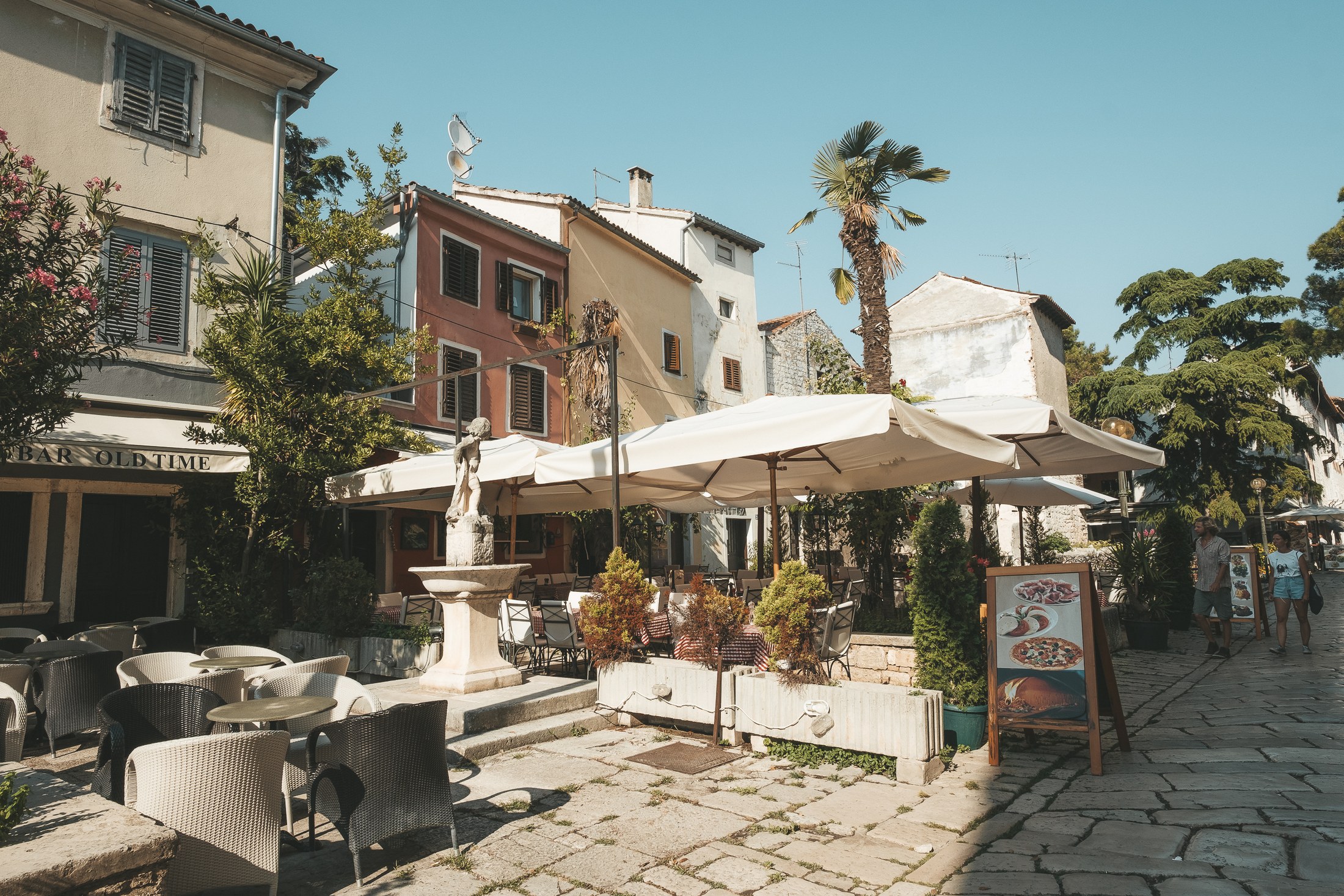
The Most Beautiful Villages of France: 15 Tips for Les Plus Beaux Villages in 2026

TL;DRSince 1982, the Les Plus Beaux Villages de France association has certified over 170 villages, each with under 2,000 residents and at least two protected monuments. This roundup covers 15 of them, including Provence’s Gordes and colourful Roussillon, the Alsace village of Riquewihr, castle-topped Beynac-et-Cazenac and La Roque-Gageac in the Dordogne, the pilgrimage site Rocamadour, red-stone Collonges-la-Rouge, and Èze, perched over 400 metres above the French Riviera. May, June and September into mid-October are the best months to go — in July and August, temperatures in the south hit 35 to 43°C, and car parks at the popular villages fill up before nine in the morning. You’ll pretty much need a car to reach most of these places, so factor in toll charges and a Crit’Air sticker.

You know that idyllic vision of the perfect French countryside, the one we all recognise from old films. A narrow road winds between endless vineyards, the sun beats down on ancient limestone walls, and suddenly a cluster of stone houses with terracotta roofs appears around the bend. A thin wisp of smoke curls up from a chimney, old men play pétanque under a mighty plane tree on the village square, and the air smells of rosemary and freshly baked bread. It’s precisely this French dream of the slow life that drives millions of people out of overcrowded cities and into the countryside each year — and the most beautiful France villages are right at the heart of that dream.

The French know perfectly well what an incredible treasure they have in their countryside and historic heritage. That’s why, back in 1982, the Les Plus Beaux Villages de France association (The Most Beautiful Villages of France) was founded, with the goal of protecting the most precious jewels. This isn’t some random marketing slogan aimed at tourists — it’s a strict and respected certification. To earn the coveted red sign with the logo, a village must meet tough criteria: it can’t have more than 2,000 inhabitants, and there must be at least two protected historic monuments within its boundaries.

Today this label is a huge tourist phenomenon that draws travellers from all over the world. People literally plan entire multi-week road trips across regions following the map of the most beautiful villages. That red sign at the edge of the village guarantees there’s no ugly industrial estate waiting for you, but rather pure, concentrated historic beauty. There is, however, one big catch: in the summer months, hundreds of thousands of other people have exactly the same idea as you.

If you don’t want to spend hours frustratingly hunting for a parking spot and elbowing through crowds with cameras, you need to plan your trip cleverly. In high season, the overflow car parks outside these popular villages are often hopelessly full before nine in the morning. In this article you’ll find 15 tips on the absolute most beautiful villages you shouldn’t miss. I’ll also advise you on how to dodge the biggest crowds, where to base yourself strategically, and how to get around the French countryside by car.

TL;DR

  • A mark of quality: Only just over 170 villages hold the Les Plus Beaux Villages de France title — they must have under 2,000 inhabitants and at least two historic monuments.
  • When to go: Avoid July and August because of the extreme heat (up to 43 °C in the south) and enormous crowds. May, June and September are ideal.
  • Getting around: You can’t reach most villages without a car. Expect paid motorways (toll gates) and the need for a Crit’Air clean-air sticker in cities.
  • The golden rule of parking: For the most famous villages (Gordes, Rocamadour) you need to arrive by 8:30 a.m. at the latest, or you won’t get a space.
  • Regional variety: Every region offers something different. Provence tempts you with stone and lavender, Alsace with half-timbered houses, and Brittany with granite and the ocean.
  • Good manners: Always enter every shop or bakery with a clear, audible “Bonjour!”. Without a greeting, you’ll be ignored.
  • Book in advance: If you want to stay right in the historic village centres, book your accommodation on Booking up to six months ahead.

When to Visit the France Villages

Getting the timing right is absolutely critical when visiting the French countryside, and it’ll decide whether you come away with a romantic memory or sheer frustration. The south of France routinely reports extreme temperatures of 35 to 43 °C in July and August, which turns strolling along baking stone lanes into more of a fight for survival. The ideal months for exploring villages in Provence, Occitanie or the Dordogne are therefore May, June, and then September through mid-October.

If you’re tempted to combine a visit to the Provençal villages with the blooming purple fields, you’ll need to plan with surgical precision. The main lavender season runs from mid-June to the end of July, with the absolute peak at lower altitudes arriving around the turn of June and July. But watch out for summer festivals. The hugely popular celebrations in Valensole, for example, always fall on the third Sunday in July, and many fields can be completely harvested right afterwards. Your saving grace is then the higher ground around Sault and the Plateau d’Albion, where the lavender easily holds its colour until mid-August.

If you have to travel to France during the summer holidays, your only option is to completely adjust your daily routine. Arrive in the village either right at sunrise, when the lanes are empty and the light is perfect for photos, or instead late in the afternoon, around five o’clock. Entirely different rules apply to northern and eastern France. If you head to Brittany, the weather is the biggest barrier here, and wind and rain can catch you out even in mid-August. Alsace, on the other hand, experiences its absolute peak in November and December during Advent. The Christmas markets in the certified villages are gorgeous, but expect an absolutely massive wave of tourists. Pay special attention to driving too, because in 2026 a very strict low-emission zone comes into force in Marseille and its wider surroundings — without the correct Crit’Air clean-air sticker, you won’t be allowed in at all.

Where to Stay in the French Countryside

💡 Tip for accommodation and experiences: We like to look for places to stay on Booking.com, which usually has the best cancellation terms. For tickets, tours and activities, it pays to compare and book through GetYourGuide.

The basic rule for relaxed exploring is to choose one strategic base and set off on day trips from there. Changing hotels every day will only slow you down and wear you out unnecessarily. Staying in the historic villages themselves is incredibly romantic, but bear in mind that prices tend to be higher and parking can be quite complicated, as car access to many historic centres is strictly prohibited.

If you’re heading to Provence and want to explore the Luberon area, the ideal base is the town of Apt or the larger Aix-en-Provence. For absolute luxury right in the village of Gordes, I recommend booking the Airelles Gordes, La Bastide hotel, with breathtaking views over the valley. If you’re after something more affordable with an authentic Provençal atmosphere, try the family-run guesthouse Le Mas des Romarins right in neighbouring Gordes, which is easy to find on the popular Booking.com portal. In the Dordogne region, it’s worth staying close to the river, ideally near the town of Sarlat-la-Canéda, which lies right in the heart of the greatest concentration of castles and villages.

If you want to experience the mystical atmosphere of the pilgrimage site of Rocamadour without the crowds, the only solution is to stay right there, for example at the Hôtel Beau Site. A great tip for the Occitanie region is to stay inside the medieval walls of the giant fortress of Carcassonne. During the day the city is bursting at the seams, but once the coach tours leave in the afternoon, you’ll have the empty lanes all to yourself. For visiting the Alsace Wine Route, the town of Colmar is a fantastic choice, working as a perfect transport hub. And right in the fairytale village of Riquewihr there’s the charming Hôtel De La Couronne, set in a historic 16th-century building. All these places to stay in the most beautiful villages tend to sell out months in advance in high season, so don’t put off booking. This is especially true for Alsace, where the famous Christmas markets begin on 23 November in 2026.

15 of the Most Beautiful Villages in France to See and Explore

Let’s take a look together at 15 specific villages that represent the very best of the French countryside. From sun-drenched Provence through the valley of castles in the Dordogne to the dramatic coast of Brittany, each one has its own utterly unique character. Get your comfortable shoes ready, because these stone lanes were definitely not built for heels.

1. Gordes: The King of Provençal Villages

When someone says “Provençal village”, most people picture the Luberon region and its iconic settlement of Gordes. This is where you’ll find the most beautiful so-called hilltop villages, proudly gazing down into the valley from high crags. The view of Gordes from the approach road is so perfect it looks like a carefully arranged theatre set. Stone houses of pale limestone rise in cascades up the steep slope all the way to the mighty Renaissance château at the very top.

This place is objectively stunning, but in high season it gets extremely overloaded with tourists from all over the world. If you’re coming by car, you ideally need to arrive before eight in the morning, otherwise you simply won’t get a space in the cascading overflow car parks below the village and you’ll waste a lot of time circling around in frustration. The centre itself is full of narrow cobbled lanes known as calades, small art galleries and cosy cafés with fantastic views over the whole Luberon valley. A short distance away lies the slightly quieter, elongated village of Ménerbes, made famous worldwide by writer Peter Mayle in his novel A Year in Provence.

💡 Tip: A short way from Gordes is the famous Sénanque Abbey with its iconic lavender field. If you don’t have your own car, portals like GetYourGuide list plenty of organised half-day tours that set off from nearby Avignon and conveniently combine both sites.

2. Roussillon: A Village in the Colours of Fire

Just a short hop from grey-and-white Gordes lies Roussillon, which instantly grabs your eye with its incredible colour. The village sits on massive deposits of ochre, and the house façades flow seamlessly from rich yellow through orange to blood red. The green crowns of the pines and the deep blue Provençal sky heighten this fascinating colour contrast even further, creating a scene you won’t see anywhere else in France.

I’d recommend exploring not just the village itself, but also the so-called Ochre Trail (Le Sentier des Ocres), which starts right behind the village. Admission costs just a few euros, and the walk through the former ochre quarries feels more like a visit to Mars or the American canyons than sunny southern France. Inside the village you’ll come across plenty of craft shops selling all kinds of natural pigments, which you can use to mix your own paints at home.

💡 Tip: Definitely don’t wear white shoes or light clothing for the ochre quarry walk. The fine red dust gets absolutely everywhere very quickly, and it’s extremely difficult to wash out of some fabrics.

3. Eguisheim: The Alsatian Snail Shell

In eastern France lies a completely different universe, where instead of yellow limestone you’ll find colourful half-timbered houses and windows overflowing with geraniums. Eguisheim is an absolute classic of the popular Alsace Wine Route, which dates back to 1953 and connects the most picturesque spots in the whole region along roughly 170 kilometres. The layout of this village is utterly unique, as it’s built in three perfect concentric circles around the central castle and square.

Wandering the narrow cobbled lanes of Eguisheim is like winding your way through a colourful snail shell. Every house is painted a different pastel colour, which in the past supposedly helped tipsy winemakers find their way safely home. The region is, incidentally, very famous for its distinctive cuisine. Forget light Mediterranean fare — here the rich, aromatic Munster cheese reigns supreme, along with traditional savoury pretzels and the popular onion tart tarte flambée, which most restaurants will happily make in a purely vegetarian version with mushrooms and cheese.

💡 Tip: If you visit in autumn, don’t miss tasting the local wines. Eguisheim is home to excellent white varieties, and a glass of chilled Gewürztraminer or sparkling Crémant on the little square is an absolute must.

4. Riquewihr: A Perfectly Preserved 16th Century

A little further north on the same wine route lies Riquewihr. This place had incredible good fortune in the midst of misfortune, because unlike many surrounding towns it miraculously survived both devastating world wars without a single scratch. Within its perfectly preserved town walls some 40 historic monuments are crammed together, and the atmosphere of the 16th century is almost tangible here. The same trio of the most beautiful villages in the area also includes nearby Kaysersberg, through which the wild little Weiss river runs.

Riquewihr is world-famous for its magnificent Christmas decorations and markets, which draw enormous crowds of visitors to the village. If you’re planning a visit during Advent, be prepared for the fact that the La Magie de Noël festivities in nearby Colmar will run from 23 November to 29 December in 2026, and the crowds immediately spill over into Riquewihr too. Weekends here are literally fit to burst, so I’d recommend planning your visit for a Tuesday or Wednesday instead.

💡 Tip: The main street, Rue du Général de Gaulle, is often packed, but as soon as you turn into any side lane you’ll find yourself in complete silence among old winemakers’ courtyards with ancient wooden presses.

5. Beynac-et-Cazenac: Medieval Drama Above the River

When we move southwest to the Dordogne département, we find ourselves in a land of deep forests, prehistoric caves and hundreds of majestic castles. Right above the Dordogne river, on a steep vertical cliff, rise the castle and the rugged medieval village of Beynac-et-Cazenac, which looks exactly the way you’d imagine a grand setting for a historical film.

Exploring the village means a constant climb up cobbled paths all the way to the castle itself. On the opposite bank of the river, Castelnaud castle proudly defies it, and these two fortresses glared at each other across the river throughout the entire Hundred Years’ War. To this day the place retains its slightly impenetrable and very authentic medieval character, heightened even further by the massive slate roofs of the local houses.

💡 Tip: The best way to grasp the majesty of Beynac and the whole region is from the surface of the river. Hire a kayak in nearby Vitrac and paddle the roughly sixteen-kilometre stretch down to Beynac. It’s perfectly safe even for complete beginners, because the river flows very lazily here and the most dramatic scenery you’d never see from a car will rise above you.

6. La Roque-Gageac: Wedged Between Cliff and Water

Just a few kilometres further downstream on the Dordogne you’ll come across another incredible scene. The houses of La Roque-Gageac, with their typical honey-yellow façades and steep roofs, are literally squeezed into a narrow strip between a vertical limestone cliff and the river. Thanks to the southerly orientation of the rock, a very specific microclimate forms here, and so in the village you’ll see palms, banana plants and bamboo growing freely.

The walk along the river is very pleasant, but don’t miss the narrow staircase that climbs high up the slope to a little church and the remains of the old fortifications. If you’re looking for a beautiful view over the whole area, head to the nearby village of Domme, a traditional fortified town with a regular grid layout that offers a fantastic panorama. The local specialities you’ll find on every menu are excellent dishes made with walnuts and the famous black truffles, for which the entire historic Périgord region is world-renowned. You should also try the local Cabécou goat’s cheese, often served warm on a fresh salad.

💡 Tip: Traditional wooden boats called gabares set off from the village landing. They once carried wine and timber, but today they offer a roughly one-hour guided cruise — perfect for photographing the surrounding castles from the water.

7. Rocamadour: The Vertical Pilgrimage Town

Although it formally lies just over in the Lot département, Rocamadour is an inseparable part of the same touring circuit. It’s not a classic village but rather a vertical pilgrimage site of incredible scale, glued in cascades to the sheer wall of the deep canyon of the Alzou river.

Rocamadour suffers from extreme crowds, because for centuries it has drawn pilgrims to the statue of the Black Madonna, and today it adds thousands of ordinary tourists to that. During the day in high season it’s more of a fight for survival, pushing through masses of people. If you want to enjoy its mystical atmosphere, arrive by nine in the morning at the latest, or plan your visit for late evening, when the whole cliff is beautifully lit up against the dark.

💡 Tip: A short way from Rocamadour you’ll find the famous Gouffre de Padirac chasm with its underground river, which you sail on little boats. In 2026 the cave opens at the end of March, and booking tickets, which cost around €22.50, is absolutely mandatory online in advance. Nearby Lascaux IV, a perfect replica of the famous prehistoric cave, is also well worth a visit.

lukas a lucka
Lukáš and Lucie recommend
Where to stay in the most beautiful villages of France
5 accommodations — wellness hotels, hotels and other accommodation options

8. Saint-Cirq-Lapopie: A Jewel Above the Lot Valley

Once you’re in the Lot département, you absolutely mustn’t miss picturesque Saint-Cirq-Lapopie. This village confidently balances on a cliff a hundred metres high directly above a meander of the Lot river, and it repeatedly wins French television polls for the country’s favourite village. Its setting is so dramatic that the view from the valley will take your breath away.

The entire centre is a strict pedestrian zone, which means absolutely unlimited scope for wandering between houses dating from the 13th to 16th centuries with their dark brown roofs. You’ll find plenty of small art and craft workshops here, because the village has attracted painters and poets since the early 20th century. If you love French literature, the famous surrealist poet André Breton lived here, and publicly declared that once he discovered this place, he never wanted to live anywhere else.

💡 Tip: Park down by the river and head up to the village along the old towpath called the Chemin de halage, which is partly carved straight into the rock above the water. It’s a beautiful walk of about an hour before you climb up to the village itself.

9. Conques: A Stop on the Way to Santiago

If we move deeper into the Aveyron region, we come across the hamlet of Conques, one of the most important points on the historic pilgrimage route to Santiago de Compostela. The village lies hidden in a deep green valley and resembles a perfectly preserved medieval time capsule, where time has stopped and the modern world hasn’t yet managed to break in.

The dominant feature of the whole village is the stunning Abbey Church of Sainte-Foy, which houses an incredible treasury of rare relics. Be sure to notice the magnificent tympanum above the main entrance, which depicts the Last Judgement in fine detail, as well as the modern stained-glass windows that create a beautiful play of light inside. There’s an admission charge to the lanes only if you want to visit the treasury itself; otherwise, a walk among the ancient stone and half-timbered houses with their split-slate roofs is completely free and open to anyone.

💡 Tip: Try to time your visit for around eight in the evening, when organ concerts or special floodlighting of the tympanum often take place. The atmosphere of this place, once the daytime bustle dies down and the lanes empty out, is absolutely unforgettable.

10. Collonges-la-Rouge: An Entirely Red Village

While most French villages play tones of yellow limestone or grey granite, Collonges-la-Rouge in the Corrèze region is a complete one-off. Every single house, church and wall in this village is built from rich red sandstone, giving it an incredibly warm and photogenic appearance. Incidentally, this is exactly where, in 1982, the original idea for founding the entire Les Plus Beaux Villages association was born.

The contrast of the dark red façades with the blue-grey slate roofs and green climbing plants is especially stunning just before sunset, during the so-called golden hour. The streets are full of little shops selling ceramics, craft goods and local delicacies. I’d recommend tasting the local mustard made from a purple grape variety, or the excellent walnut liqueur, which are absolutely typical and very popular souvenirs from this characterful region.

💡 Tip: The village is fairly small and very compact. About two hours is plenty to explore it, so it makes an ideal afternoon stop on a longer drive south through France.

11. Minerve: History in a Deep Canyon

Occitanie is regarded as the underrated and far more authentic brother of neighbouring Provence, and its villages often have a much harsher history. Minerve sits on a mighty limestone spur high above the confluence of two rivers, which have carved deep natural bridges into the rock here. Access to the village is across a narrow bridge spanning the dizzyingly deep canyon, which leaves a very powerful impression.

Minerve was one of the main centres of Cathar resistance in the Middle Ages, and the history of the siege is still strongly present here. If you’re interested in this part of French history, definitely make a trip to the nearby Cathar castles such as Peyrepertuse, where a more demanding climb awaits you, but your reward will be endless views all the way to the Pyrenees. The surrounding landscape, dotted with vineyards and dry scrub, tends to be scorched in the summer months by temperatures reaching close to 40 °C, so head here in spring or autumn instead.

💡 Tip: The biggest tourist magnet in the whole region is the enormous medieval fortress of Carcassonne. Entry to its lanes is completely free; you only pay for the castle tour, which costs €19. If you’re heading here on 14 July, brace yourself for utter madness, as hundreds of thousands of spectators watch the traditional fireworks.

12. Èze: An Eagle’s Nest Above the Riviera

A short distance from the busy coast of the French Riviera, right between the resort of Nice and luxurious Monaco, you’ll find picturesque Èze. This little village rises like an impregnable eagle’s nest on a steep rock more than 400 metres above the Mediterranean. Its dramatic position makes it one of the absolutely most photographed spots on the entire Côte d’Azur.

The narrow lanes are full of arched passages, boutiques and small art studios. At the very top of the village you’ll find a beautiful exotic botanical garden called Le Jardin Exotique — there’s a small admission charge, but it offers absolutely unbeatable panoramic views over the entire coastline. It’s an ideal place to escape the bustle of the cities below, though in high summer you’ll naturally come across a fair number of day-trippers from the nearby seaside resorts.

💡 Tip: If you’re in good physical shape, you can descend to the sea along the so-called Nietzsche Path (Chemin de Nietzsche). The descent takes about an hour and offers breathtaking views — just don’t forget sturdy footwear and plenty of water.

13. Yvoire: The Flower Pearl of Lake Geneva

On the shores of vast Lake Geneva, right on the border with Switzerland, lies the medieval fishing village of Yvoire. Thanks to its beautiful waterside location and more than 700 years of history, this place has retained the atmosphere of an ancient harbour, above which the massive square tower of the local 14th-century castle rises majestically.

Yvoire is internationally renowned for its incredible floral displays, thanks to which it regularly wins all sorts of European gardening competitions. The streets, balconies and waterfront literally overflow with colour. I’d definitely recommend visiting the Garden of the Five Senses (Jardin des Cinq Sens), cleverly designed as a living labyrinth full of medicinal, aromatic and historic plants that you can touch and smell.

💡 Tip: Although the region is famous for its freshwater fish dishes, vegetarians won’t miss out either. In the small, cosy crêperies by the lake you’ll find delicious savoury pancakes filled with local cheeses and fresh vegetables, which you can wash down with chilled cider.

14. Locronan: The Granite Heart of Brittany

In the northwest of France, in the rugged and windy region of Brittany, a completely different architecture dominates. Locronan is a village built entirely from dark grey granite, giving it a very distinctive, slightly melancholy yet immensely elegant appearance. In the past, this place grew enormously wealthy from making high-quality canvas for the sails of the royal navy of the day.

The central square, with its imposing church and old stone well, has served as the perfect backdrop for dozens of period films. In Brittany you always have to reckon with the distinctive weather, so a good windproof jacket is an absolute must even in the summer months. Your reward for the cooler climate, though, will be the finest authentic Breton savoury pancakes called galettes, made from buckwheat flour and traditionally washed down with rich apple cider served in ceramic cups.

💡 Tip: Take a trip to the famous Côte de Granit Rose coast at nearby Ploumanac’h too. The contrast of the huge pink granite boulders, ground into bizarre shapes by the sea, with the deep blue Atlantic is absolutely breathtaking.

15. Château-Chalon: Guardian of the Yellow Wine

Our final tip takes us to eastern France, to the quiet, forested Jura mountains. The village of Château-Chalon confidently balances on the edge of a steep cliff and looks down on the carefully tended vineyards far below. Compared with hectic Alsace or crowded Provence, absolute calm reigns here, and you’ll come across the merest handful of foreign tourists.

The village is literally the cradle of the famous yellow wine known as vin jaune. This unique wine ages in barrels under a layer of special yeasts for exactly six years and three months, which gives it an unmistakable flavour reminiscent of walnuts and curry spices. The local countryside smells not only of wine but also of cheese. The excellent Comté cheese from the local mountain dairies is an absolute delicacy you can buy in the little shops right on the village square and turn into a great picnic at a viewpoint.

💡 Tip: The picturesque Jura Wine Route runs through the village, covering roughly 80 kilometres. If you have a car or an e-bike, it’s a fantastic, as-yet-undiscovered loop for slow travel through the French countryside.

Where to Go Next from the French Countryside

If you’re planning a more extensive road trip and want to link these picturesque villages into a meaningful itinerary, you have several great options. From the south you can smoothly continue on to larger cities and natural wonders, while from the east there’s the chance to move into the mountains.

Try putting your trip together using our detailed guides to the individual regions:

  • If the lavender fields and limestone towns like Gordes charmed you, take a look at our big guide to the Provençal countryside and cities.
  • If you’re more drawn to medieval castles, prehistoric caves and kayaking, you mustn’t miss the Dordogne and Périgord region, where a vast concentration of historic gems is hidden.
  • And for lovers of half-timbered houses, top-class cuisine and Christmas atmosphere, there’s the beautiful Alsace Wine Route, which you can drive even in a long weekend.

Frequently Asked Questions

What exactly does the Les Plus Beaux Villages label mean?

It’s an official independent certification awarded by a special association. To receive it, a village must have fewer than 2,000 inhabitants, contain at least two protected national monuments, and demonstrate commitment to community development and preservation of its rural character. So it’s not just attractive marketing, but a real guarantee of preserved historical architecture.

Do I have to pay an entrance fee to enter these villages?

“`html
No, entry to the villages themselves and walking through their streets is always completely free, as they are regularly inhabited settlements. You only pay for entry to specific castles, museums, caves, or private gardens located within their territory.
“`

How is it with parking and how much does it cost?

Most certified villages have historic centers closed to regular traffic. You need to use park-and-ride facilities on the outskirts of the village. Parking usually costs between 4 and 8 euros per day, and in some smaller villages it’s even free outside the summer season. In July and August, you need to arrive at the parking lot early in the morning, otherwise you won’t find a space.

Can you get to the villages by public transport?

It’s very complicated. The French railway (SNCF) can get you to larger regional towns, but the villages themselves often lie off the main routes. Bus connections to more remote places are usually very infrequent, typically running one service in the morning and one in the afternoon, and often not running at all on weekends. For exploring the countryside, having your own car or a rental is practically a necessity.

How does the toll system work on French highways?

In France, there’s no classic highway vignette. You pay at toll gates (péages) based on kilometers driven, which works out to an average of just under 10 euros per 100 kilometers. In February 2026, there’s also a slight toll increase, and the so-called Free-Flow system is becoming increasingly common (for example, on highways A4, A13, or A79), where there are no barriers and you must pay the toll online within a few days using your license plate number.

Do I need an environmental sticker when driving to the countryside?

Yes, I recommend getting one. The environmental sticker (Crit’Air) is mandatory primarily for entering low-emission zones in major cities (ZFE), but when traveling to the countryside, you often can’t avoid these zones if you’re passing through cities like Marseille, Aix-en-Provence, or Strasbourg. The vignette costs just under €5 online and is valid for the entire lifetime of the vehicle; without it, you risk a €68 fine.

Is tipping mandatory in countryside restaurants?

No, in French cafés and restaurants, service is already included by law in the total price (service compris). If you were satisfied, it’s polite to leave some small change and round up the bill by 1 to 2 euros. Remember that when paying by card, you usually can’t add a tip through the terminal, so you need to inform the waiter of any additional amount beforehand, or leave cash on the table.

Is it really that hot in the south of France in summer?

Yes, summer temperatures in the Provence, Occitanie and Dordogne regions regularly climb to around 38 to 40 °C. The historic stone streets soak up the heat during the day and radiate it even at night. Walking around monuments in the midday heat is very unpleasant, so I recommend planning visits to castles and villages for early morning and spending the afternoon by the water or in the shade.

Tips and Tricks for Your Vacation

Don’t Overpay for Flights

Search for flights on Kayak. It’s our favorite search engine because it scans the websites of all airlines and always finds the cheapest connection.

Book Your Accommodation Smartly

The best experiences we’ve had when looking for accommodation (from Alaska to Morocco) are with Booking.com, where hotels, apartments, and entire houses are usually the cheapest and most widely available.

Don’t Forget Travel Insurance

Good travel insurance will protect you against illness, accidents, theft, or flight cancellations. We’ve had a few hospital visits abroad, so we know how important it is to have proper insurance arranged.

Where we insure ourselves: SafetyWing (best for everyone) and TrueTraveller (for extra-long trips).

Why don’t we recommend any Czech insurance company? Because they have too many restrictions. They set limits on the number of days abroad, travel insurance via a credit card often requires you to pay medical expenses only with that card, and they frequently limit the number of returns to the Czech Republic.

Find the Best Experiences

Get Your Guide is a huge online marketplace where you can book guided walks, trips, skip-the-line tickets, tours, and much more. We always find some extra fun there!
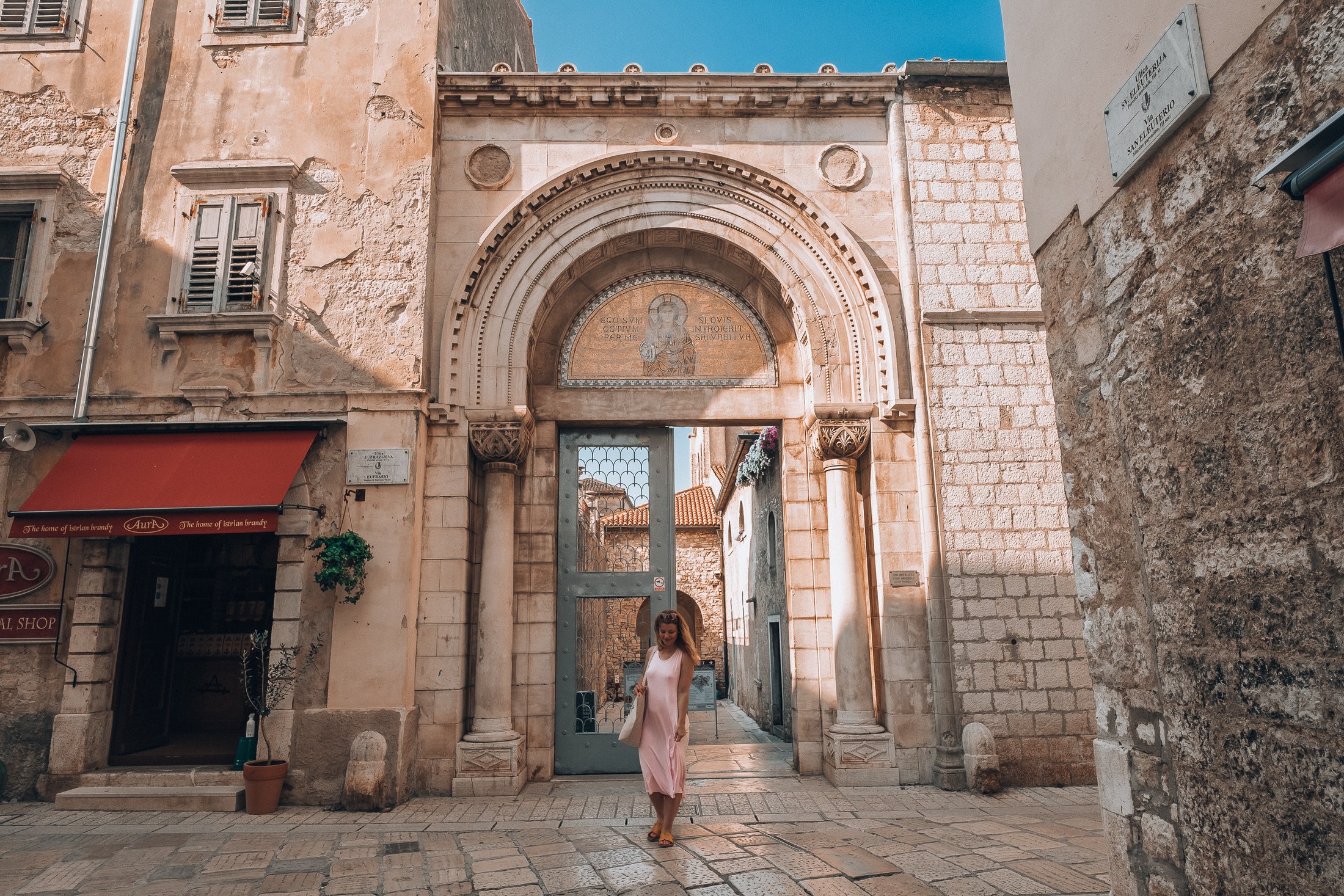
Cappadocia, Turkey: 13 Things to See & Do (Balloons, Göreme, Cave Hotels)

TL;DRCappadocia comes with 13 essential tips, from a sunrise balloon flight to the Göreme Open Air Museum and the underground cities of Derinkuyu and Kaymaklı, plus Love Valley, Rose Valley and the monastery at Selime in the Ihlara canyon. A balloon flight costs €80–300 per person depending on the season and basket size, so it’s worth setting aside 3 days in the area in case wind cancels your flight. The best time to go is spring (April–June) or autumn (September–October), and it’s worth booking a cave hotel in Göreme or Uçhisar. From Istanbul you can fly in 1.5 hours to Kayseri or Nevşehir airport, or take a night bus that takes 10–12 hours.

The alarm goes off at 4:30 a.m. It’s still dark outside and the air on the central Anatolian plateau bites unpleasantly. You step out onto the terrace of a hotel that’s half carved into the rock, and far below in the valley you hear a deep, rhythmic roar. It sounds like the breath of a giant dragon, but it’s actually propane burners. Over the next half hour the sky turns a pastel pink and a hundred hot-air balloons rise above the bizarre rock towers. Welcome to Cappadocia, Turkey — one of those rare places that genuinely lives up to the hype.

This is Cappadocia (Kapadokya in Turkish), a place whose photos flood social media so relentlessly you feel like you already know it. But standing on the edge of the Göreme valley, in total silence, while a basket full of people drifts past just a few dozen metres above the ground — that’s an experience that never gets old. Cappadocia is far more than a pretty backdrop – it’s a geological wonder shaped by millions of years of erosion of soft volcanic tuff and by thousands of years of human labour, when people carved homes, monasteries and entire underground cities into the yielding rock.

In this guide you’ll find 13 things to do in Cappadocia – from a balloon flight and rock-cut churches to underground cities and cave hotels. We’ll tell you how much a balloon flight costs in 2026, where to stay, how to get here from Istanbul and how to avoid having your experience ruined by a cancelled flight.

TL;DR

  • How many days: Ideally 3 days – the balloon is often cancelled because of wind, so you’ll want spare mornings.
  • Where to stay: In a cave hotel in Göreme or Uçhisar; for shooting the morning balloons, pick a hotel with a terrace on the right slope.
  • Balloon flight ⚠️: €80–300 and up depending on season and basket size, paid in euros. Book it for your first morning.
  • Don’t miss: The balloon flight, Göreme Open Air Museum, an underground city, Uçhisar Castle and a walk through Love or Rose Valley.
  • Getting here: From Istanbul by plane (1.5 h to Kayseri or Nevşehir airport) or by overnight bus (10–12 h).
  • Money: Food is cheap by UK standards, but the balloon and admission fees are charged in euros and aren’t cheap. Carry both card and cash.
  • ⚠️ Claustrophobia: The underground cities are cramped and damp; sensitive travellers should skip them (Kaymaklı is airier than Derinkuyu).

When to go, how to get there and how many days to plan

Cappadocia is at its best in spring (April–June) and autumn (September–October), when the weather is pleasant for walking and balloons fly most often. Summer is hot and dusty, while winter offers magical snow-dusted fairy chimneys and the lowest flight prices – just expect freezing mornings and more frequent cancellations due to the weather.

Cappadocia sits in the middle of Turkey, and there are two sensible ways to get here from Istanbul. Flying is the quickest: the flight takes about 1.5 hours, with Turkish Airlines, Pegasus and AJet all serving the route. You’ll land either at the larger Kayseri airport (ASR), with a transfer to Göreme of around 60 minutes, or at the smaller Nevşehir (NAV), just 35 minutes from Göreme. Book a few weeks ahead and you’ll pay a friendly £25–60. The overnight bus is cheapest (£20–35) but takes 10–12 hours; it leaves Istanbul’s terminals around 10 p.m. and drops you straight in Göreme in the morning. If you’re flying from the UK, the easiest route is a direct flight to Istanbul with Turkish Airlines or Pegasus and then a domestic hop to Kayseri or Nevşehir.

How many days? The consensus among seasoned travellers is three days: one for the balloon and Göreme, one for an underground city and the Ihlara valley, and a third as a buffer in case flights are cancelled on the first morning. With four or five days you can slow the pace and venture into hidden corners where you won’t bump into crowds with cameras.

💡 Tip: The Turkish lira has been weakening for years, so food and everyday purchases work out cheap. The state and private operators have responded, however, by pricing admission fees and balloon flights firmly in euros. Don’t underestimate your experiences budget.

Where to stay: sleeping in a cave is an experience in itself

💡 Tip for accommodation and experiences: We like to look for places to stay on Booking.com, which usually has the best cancellation policies. Tickets, tours and activities are then worth comparing and buying through GetYourGuide.

Sleeping in a cave might sound like a step back into prehistory, but in Cappadocia it’s a byword for luxury and a genuine bucket-list item. The towns of Göreme and Uçhisar are dotted with boutique cave hotels – rooms carved directly into the soft rock. They stay pleasantly cool in summer and warm up easily in winter, the walls have the rough texture of tuff, hand-knotted rugs cover the floors, and the bathrooms often hide a big tub or a private jacuzzi.

Prices vary wildly: a simpler cave guesthouse can be had off-season for around €60–80 a night, mid-range runs €120–250, and luxury hotels with views over the whole valley and a heated pool start in the hundreds of euros.

Here are some specific cave hotels by budget, chosen from genuine reviews (on Booking, look for ratings of 8.5+ and plenty of reviews):

  • Budget cave guesthouse: Terra Cave Hotel (Göreme) – a simpler cave hotel with valley views and great value for money, popular with backpackers.
  • Couples and a balloon terrace: Kelebek Special Cave Hotel (Göreme) – a boutique cave hotel with a terrace ideal for shooting the morning balloons, one of the best-rated addresses in Göreme.
  • Iconic Instagram terrace: Sultan Cave Suites (Göreme) – the famous rooftop terrace with rugs and clay jugs; this is where most of the iconic balloon photos come from.
  • Romance with a jacuzzi: Cappadocia Cave Suites (Göreme) – cave suites for couples with a jacuzzi and cosy décor, a popular honeymoon spot.
  • Luxury with views over the whole valley: Museum Hotel (Uçhisar) – the most luxurious address in the area, with a heated pool and a panorama of all of Cappadocia.

💡 Tip: If you want to shoot the balloons from your hotel terrace in the morning, check in advance that the hotel sits on the right slope in Göreme and has an accessible terrace. You won’t be alone – there’s a quiet battle among guests with phones for the best spot on the edge of the terrace, so be up early.

13 Things to Do in Cappadocia

From the bucket-list balloon flight to quiet walks among the fairy chimneys – here are thirteen experiences that draw people to Cappadocia.

1. A balloon flight at dawn

For most travellers, flying over Cappadocia in a balloon is the main reason to make the journey. It’s a slickly run business, but also a logistical lottery. Prices for 2026 range from €80 to €300 per person (more at the absolute peak) and are set in euros according to season and basket size: a standard flight means a basket for 20–28 people, while more comfortable and deluxe options take smaller groups and give you more room to shoot. The price usually includes a morning hotel transfer, a light breakfast, a roughly hour-long flight, insurance and a traditional toast with a certificate after landing.

⚠️ Expect cancellations. The Turkish aviation authority closely monitors the wind and grounds all flights when conditions aren’t suitable. You’ll be refunded or rescheduled, but if you only have a single day in the area, you’ll leave empty-handed. That’s why you should set aside three days and book for the very first morning. Since 2026 there have also been stricter rules, clearly defined flight zones and new altitude limits – more safety, but also a higher chance the flight gets cancelled because of wind.

💡 Booking tip: Flights sell out a week ahead in season, so book as soon as your hotel is confirmed. The easiest way to compare and book verified operators with reviews and fair cancellation terms is online via GetYourGuide. Pick the very first morning of your stay — if wind grounds the flight, you’ll still have the remaining days as backup.

2. Göreme Open Air Museum and the rock-cut churches

Just outside town lies the UNESCO-listed Göreme Open Air Museum. It’s a complex of early Christian monasteries and churches carved straight into the rock faces, with incredibly well-preserved Byzantine frescoes from the 10th to 12th centuries inside. The most famous is the Dark Church (Karanlık Kilise) – there’s a separate fee to enter, but it’s precisely the lack of daylight that has kept its paintings so vivid. Admission is charged in euros and has been rising sharply in recent years, so have your card ready.

3. Stay in a cave hotel

Even the accommodation is an experience in Cappadocia. Waking up in a room carved into the rock, stepping out onto the terrace with a coffee and watching the balloons rise over the valley is something you won’t forget. Many travellers come here for honeymoons and romantic getaways thanks to the terraces with jacuzzis, the lamplight and the views. Treat it as part of the itinerary, not just a place to sleep.

4. Uçhisar Castle: the highest point in Cappadocia

While Göreme sits in a hollow, nearby Uçhisar towers over the landscape. Its castle is essentially a giant honeycombed rock and the highest point in the whole area, with phenomenal views over all the surrounding valleys. The best time to come is before sunset, when the tuff glows orange.

5. Ortahisar Castle

A slightly less-visited but similarly striking landmark is the rock castle of Ortahisar. The town of the same name feels more authentic and calmer than tourist-packed Göreme, making it a pleasant stop when you want to escape the crowds for a moment and soak up the everyday pace of Cappadocia.

lukas a lucka
Lukáš and Lucie recommend
Where to stay in Cappadocia
6 accommodations — wellness hotels, hotels and other accommodation options

6. The underground city of Derinkuyu or Kaymaklı

When the above-ground valleys became dangerous because of raids, locals retreated underground. Over thirty underground cities have been discovered in Cappadocia, and two are masterpieces of ancient engineering. Derinkuyu is the deepest, reaching eight storeys below ground, with stables, wine presses, storerooms, dining halls and chapels, plus the massive round stone doors that could seal off the tunnels from inside. Kaymaklı is the second largest, wider and airier.

⚠️ Claustrophobia warning: If you don’t cope well with cramped spaces, damp and crowds in narrow tunnels, it’s best to skip the underground city. If you have to choose, Kaymaklı is airier than Derinkuyu, which also fills with organised tours around midday.

7. Love Valley

The most iconic of all the valleys. The rock formations, dozens of metres tall, unmistakably resemble phalluses in shape, which makes Love Valley a photographic (and comedic) magnet. A pleasant hiking trail runs through it, and it’s at its loveliest in the morning light, when balloons drift overhead.

8. Rose Valley

Rose Valley takes its name from the rocks tinted pink, whose shade shifts with the daylight. It’s an ideal spot for sunset, and along the way you’ll come across old rock-cut churches hidden in the walls. The trail combines nicely with neighbouring Red Valley.

9. Pigeon Valley

Pigeon Valley connects Göreme and Uçhisar, and its rocks are riddled with hundreds of small dovecotes. For centuries locals collected pigeon droppings here as valuable fertiliser for their vineyards. Today it’s an easy walk with pretty views and a photogenic “wishing tree” hung with blue glass beads to ward off the evil eye.

10. Devrent Valley (Imagination Valley)

In Devrent Valley you won’t find any churches or long trekking routes – it’s a game of the imagination. The rocks here have eroded into animal shapes, the most famous of which resembles a camel. You stop for a few minutes, snap the bizarre formations and move on; it pairs perfectly with nearby Avanos.

11. Ihlara Valley and Selime Monastery

About an hour from Göreme lies the green Ihlara canyon with the Melendiz River, its walls hiding dozens of chapels. It’s the most refreshing walk in the area, especially in summer when you’ll appreciate the shade and the water. At the end of the canyon rises the enormous rock-cut Selime Monastery, the largest of its kind in Cappadocia – a carved complex of corridors, halls and kitchens hewn straight into the rock.

12. Horse riding at sunrise

The word Cappadocia is said to come from the Old Persian Katpatuka, meaning “Land of Beautiful Horses”, and horse riding is hugely popular here. The most beautiful are the morning rides at dawn, when you weave between the fairy chimneys with balloons floating overhead. If you prefer the smell of petrol, quad bikes (ATVs) are everywhere too – just be aware that their noise and dust can seriously spoil the day for walkers.

13. Avanos and pottery on the Red River

For a calmer experience, head to the town of Avanos on the banks of the Red River (Kızılırmak). The river provides the locals with red clay, which is why pottery has flourished here since the days of the Hittites. In traditional workshops you can sit down at an old kick wheel and try throwing your own bowl – and take home a souvenir you won’t find anywhere else.

What to eat in Cappadocia

Central Anatolia is hearty, rural and, surprisingly, also wine country – Cappadocia is one of the oldest wine regions in the world, and local wineries (Turasan or Kocabağ, for example) offer tastings of wines made from native Anatolian grapes. As for food, you’ll find honest home cooking that even vegetarians can enjoy.

  • Gözleme – a thin stuffed flatbread cooked on a griddle; the cheese, spinach or potato versions are a great vegetarian classic.
  • Pide – Turkish “pizza” shaped like a boat; the cheese (peynirli) or vegetable versions are meat-free and filling.
  • Mercimek çorbası – creamy lentil soup, available practically everywhere and a perfect warmer on a chilly morning.
  • Dolma and yaprak sarma – stuffed peppers and vine leaves with rice and herbs, often prepared meat-free.
  • Testi kebabı – the famous local speciality: meat (often lamb) stewed in a clay jug that’s smashed open at the table. It’s a meat dish, so vegetarians can pass it on – but the show alone is worth seeing.

To finish, have a Turkish coffee or some sweet apricots and dried fruit – the area around Avanos produces excellent ones.

Safety, prices and practical tips

Cappadocia is a safe and tourist-friendly region. Two things deserve particular attention. First, the balloon flight: despite the accidents that make headlines, the accident rate is very low (roughly one accident per ten thousand flights), and the key is to choose a reputable company and respect the decision to cancel due to wind. Second, the terrain: for hikes among the fairy chimneys, bring sturdy footwear, plenty of water and sun cream, because there’s no shade in the valleys and the sun on the plateau is fierce.

As for money, food and transport are cheap by UK standards, but the balloon, museum admission and cave hotels are charged in euros and are definitely not cheap. Cards are accepted almost everywhere, while cash (lira) comes in handy for small purchases, markets and tips. A local eSIM (such as Holafly or Yesim) is worth sorting before you arrive so you can navigate the valleys and book transfers on the go.

How to do Cappadocia in 3 days

Day 1: A balloon flight in the morning, the Göreme Open Air Museum before noon, and an afternoon exploring Love or Rose Valley on foot, finishing with sunset.

Day 2: A rental car or an organised “Green Tour” to the south – the Derinkuyu underground city, a walk through the Ihlara canyon and the giant Selime Monastery.

Day 3: A buffer in case flights were cancelled on the first morning. If the balloon went ahead, spend the day at Uçhisar Castle, the pottery workshops in Avanos or a morning horse ride.

Where to go after Cappadocia

Cappadocia pairs brilliantly with Turkey’s other icons. Most journeys here pass through Istanbul, so leave a few days for the city straddling two continents. For the white travertine terraces, head to Pamukkale, and for beaches and ancient sites on the coast, to Antalya. You’ll find more inspiration on where to go in our Turkey holiday tips.

Frequently asked questions

💡 Experiences tip: The balloon flight, organised Red and Green Tours (underground city, Ihlara valley), and horse and quad-bike rides can all be compared and booked in advance online via GetYourGuide – in high season the balloons sell out several days ahead.

How much does a hot air balloon ride in Cappadocia cost?

The prices for 2026 range from roughly €80 to €300 per person and are charged in euros. Outside the season (November–April) you’ll find flights cheaper (€80–150), while in high season and in smaller, more comfortable baskets prices climb to €200–300 and higher. The price typically includes morning transfer, light breakfast, roughly an hour-long flight, insurance, and a toast with certificate.

How many days to allow for Cappadocia?

Ideal is three days. One for a balloon flight and Göreme, a second for the underground city and Ihlara Valley, and a third as a backup, because balloon flights are often cancelled due to wind and you want to have spare mornings. With four to five days you’ll also manage the more hidden valleys and quieter villages.

How do I get from Istanbul to Cappadocia?

The fastest way is by air – the flight takes about 1.5 hours and you’ll land at Kayseri airport (transfer to Göreme approx. 60 minutes) or Nevşehir (35 minutes). A ticket purchased a few weeks in advance will cost you 30–70 USD. A cheaper but more time-consuming option is the overnight bus (10–12 hours), which will take you from Istanbul directly to Göreme.

Is it worth visiting the underground city if I have claustrophobia?

Not really. Underground cities like Derinkuyu and Kaymaklı are cramped, humid and the narrow tunnels get crowded. If you don’t handle confined spaces well, feel free to skip them – Cappadocia offers plenty of experiences above ground. If you want to give it a try, choose Kaymaklı, which is more airy than the deep Derinkuyu.

Is a hot air balloon ride in Cappadocia safe?

Statistically, yes. With roughly 37,500 flights per year, there’s approximately one accident per ten thousand flights, and from 2026 stricter rules, designated flight zones and altitude limits apply. The key is to choose a vetted company and take seriously the decision to cancel a flight due to wind – it’s precisely the attempt to fly at any cost that’s behind most incidents.

Tips and Tricks for Your Vacation

Don’t Overpay for Flights

Search for flights on Kayak. It’s our favorite search engine because it scans the websites of all airlines and always finds the cheapest connection.

Book Your Accommodation Smartly

The best experiences we’ve had when looking for accommodation (from Alaska to Morocco) are with Booking.com, where hotels, apartments, and entire houses are usually the cheapest and most widely available.

Don’t Forget Travel Insurance

Good travel insurance will protect you against illness, accidents, theft, or flight cancellations. We’ve had a few hospital visits abroad, so we know how important it is to have proper insurance arranged.

Where we insure ourselves: SafetyWing (best for everyone) and TrueTraveller (for extra-long trips).

Why don’t we recommend any Czech insurance company? Because they have too many restrictions. They set limits on the number of days abroad, travel insurance via a credit card often requires you to pay medical expenses only with that card, and they frequently limit the number of returns to the Czech Republic.

Find the Best Experiences

Get Your Guide is a huge online marketplace where you can book guided walks, trips, skip-the-line tickets, tours, and much more. We always find some extra fun there!