The aircraft registered ZK-NZC is the only surviving example of the eight DC-8s that once made up Air New Zealand’s long-haul fleet, reports the National Transport and Toy Museum Wānaka. For the last two decades it has been slowly decaying in the Amazon of Brazil, at the airport in Manaus. It was built by the Douglas factory in Long Beach, California, and the airline took delivery of it in September 1965.
Air New Zealand retired the aircraft from service in 1981. It then changed hands several times before ending up with the Brazilian cargo carrier TCB, which ceased operations in 2006. Since then the plane had been left to deteriorate at Manaus-Eduardo Gomes Airport.
A Legend That Flew the Queen
This particular aircraft has a piece of history to its name. On 30 January 1974 it carried Queen Elizabeth II, Princess Anne and Mark Phillips from Rarotonga to Christchurch, reports the Otago Daily Times. A few days later, the Queen opened the British Commonwealth Games at Christchurch’s QEII Park.
According to Paul Brennan, founder of the Bring Our Birds Home charity, it was this very type of aircraft that played a key role in helping Air New Zealand transform into a full-fledged international airline, the Otago Daily Times notes.
The Journey Home Across the Ocean
The dismantling of the aircraft is due to begin on 1 September 2026. The plane will be cut into sections (the fuselage, wings split for container transport, and the tail surfaces) and shipped by sea to the port of Timaru on the South Island.
It is expected to arrive there before the end of this year, report the Brazilian outlets AeroJota and Rondônia ao Vivo.
An empty DC-8-52 weighs around 60 tonnes, measures 45.9 metres in length and has a wingspan of 43.4 metres. According to the same source, the logistics are being handled by airport operator VINCI Airports and Freightplus, a company specialising in heavy international cargo.
The costs are being covered by anonymous donors. On top of that, the Bring Our Birds Home charity has spent nine years raising money on the Givealittle platform, and as of August 2026 it had collected NZD 40,035 from 467 donors.
What It Means in Practice
If you’re planning a trip to New Zealand’s South Island, once the restoration is complete you’ll be able to see this piece of aviation history at the National Transport and Toy Museum in Wānaka. The museum sits right next to the airport and is normally open to the public.
You can also follow the dismantling and the sea voyage online. The charity is documenting it as it happens through its Givealittle campaign and on social media.
This move has no impact on flights to Brazil or on operations at Manaus airport. It’s simply a one-off removal of a retired airframe.
If you’re only just starting to plan a trip to New Zealand, bear in mind that the aircraft is due to reach Timaru by the end of 2026, and it will only make it to the museum in Wānaka after further restoration.
Tips and Tricks for Your Vacation
Don’t Overpay for Flights
Search for flights on Kayak. It’s our favorite search engine because it scans the websites of all airlines and always finds the cheapest connection.
Book Your Accommodation Smartly
The best experiences we’ve had when looking for accommodation (from Alaska to Morocco) are with Booking.com, where hotels, apartments, and entire houses are usually the cheapest and most widely available.
Don’t Forget Travel Insurance
Good travel insurance will protect you against illness, accidents, theft, or flight cancellations. We’ve had a few hospital visits abroad, so we know how important it is to have proper insurance arranged.
Where we insure ourselves: SafetyWing (best for everyone) and TrueTraveller (for extra-long trips).
Why don’t we recommend any Czech insurance company? Because they have too many restrictions. They set limits on the number of days abroad, travel insurance via a credit card often requires you to pay medical expenses only with that card, and they frequently limit the number of returns to the Czech Republic.
Find the Best Experiences
Get Your Guide is a huge online marketplace where you can book guided walks, trips, skip-the-line tickets, tours, and much more. We always find some extra fun there!
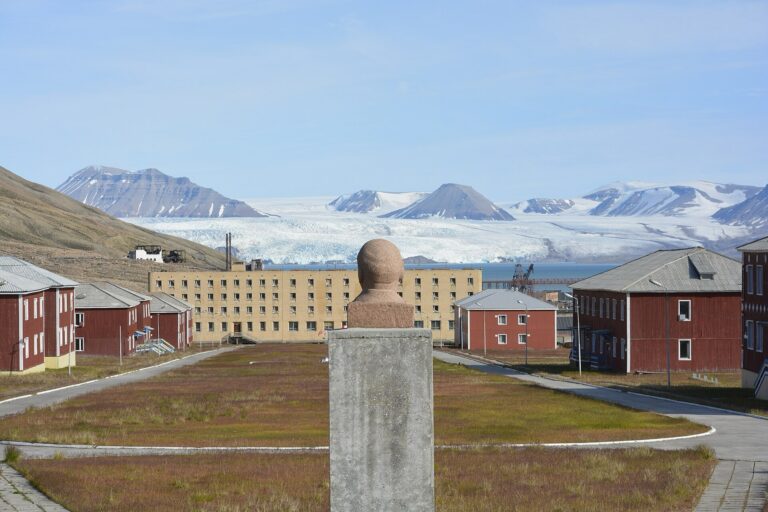
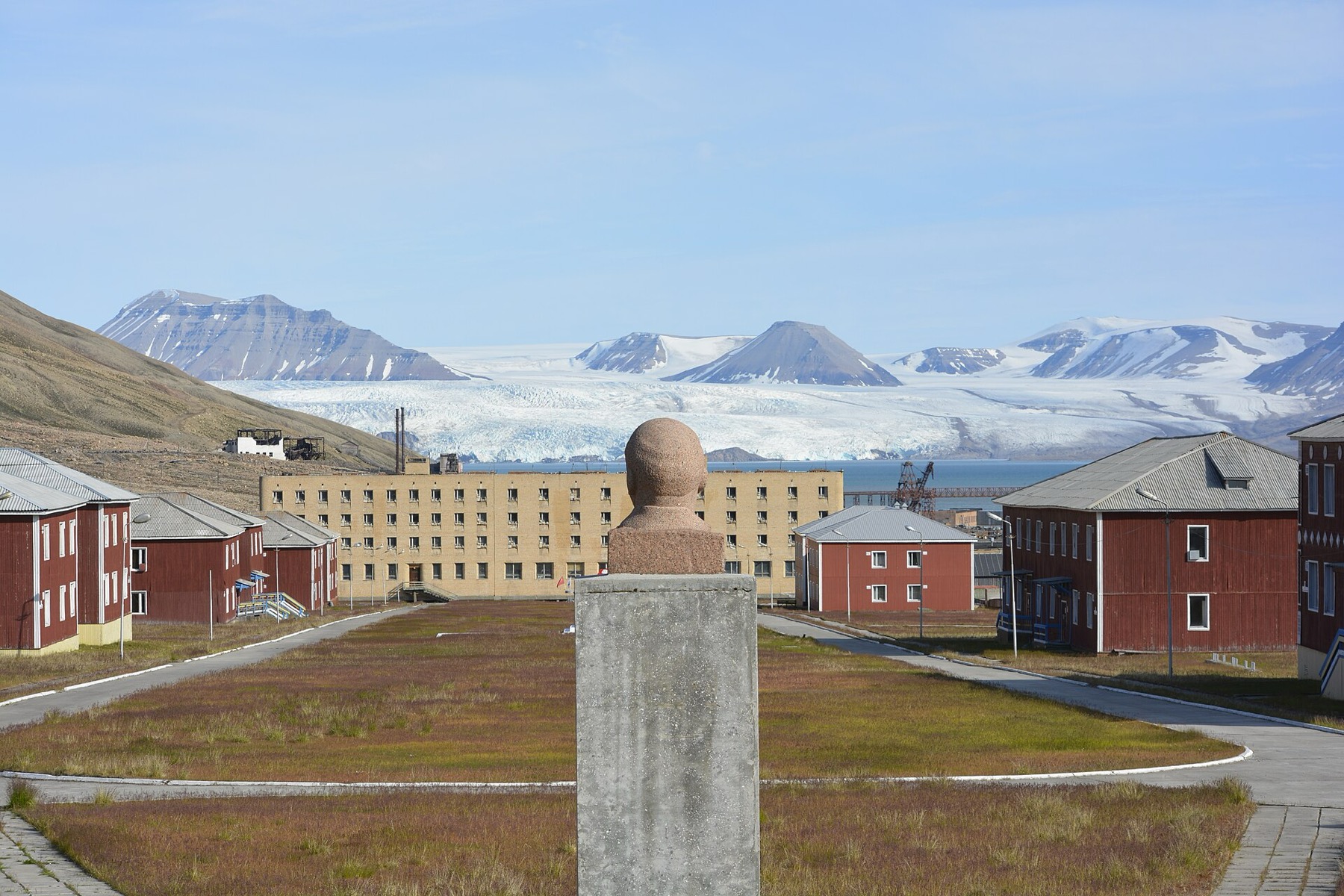
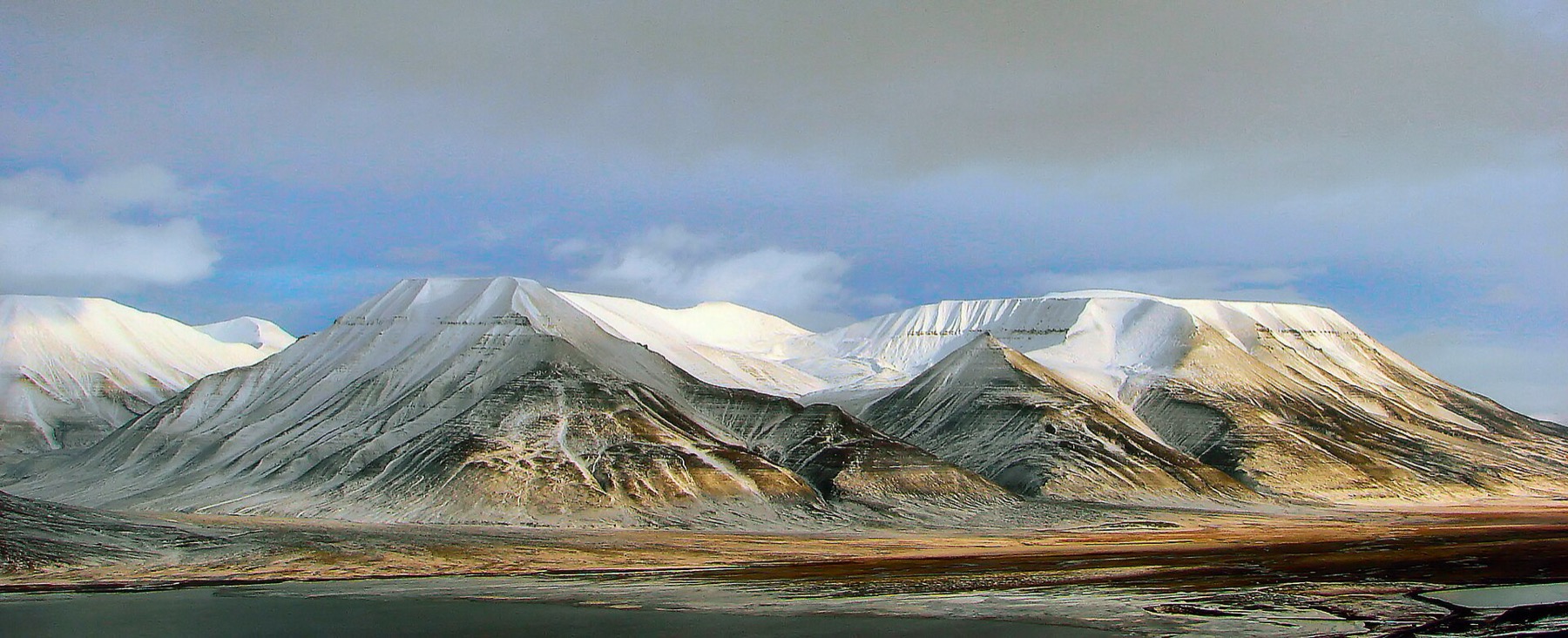
Pyramiden and Barentsburg, the haunting and isolated Soviet towns on Norway’s Svalbard, will instantly transport you decades back in time. These Svalbard ghost towns are home to the northernmost statue of Lenin on Earth, gazing across a frozen fjord straight at a majestic glacier. It’s a bizarre scene in an abandoned town where time stopped in 1998 and apartment keys still hang in the locks. This utopia, together with nearby Barentsburg, forms a truly one-of-a-kind spectacle you won’t find anywhere else on the planet.
On this Norwegian archipelago you’ll find coal-mining towns that have been legally operating here for almost a hundred years. While Pyramiden is today an abandoned open-air museum, where in summer you’ll meet only a handful of caretakers, Barentsburg is still a functioning mining settlement home to just under four hundred residents. It’s a world of enormous contrasts, rugged Nordic nature and an ever-present Soviet aesthetic that will have you staring in disbelief at times.
We’ve put together ten things worth knowing before you set off — from how to even get there, through the moral dilemma of the Russian till, right down to what you can (and can’t) slip into your pocket from the street. You’ll learn where to rest your head safely and how the current geopolitical situation has reshuffled the deck for the ordinary traveller. Trust me, Lenin staring out into the empty Arctic wilderness is not something you’ll forget in a hurry. 😅
Photo: Mozzihh / Wikimedia Commons, CC BY-SA 4.0
TL;DR
Two Russian settlements: Norway’s Svalbard is home to the abandoned Pyramiden and the still-living Barentsburg, both run by Russia’s Trust Arktikugol.
Access depends on the season: In summer you reach the settlements by boat from Longyearbyen; in winter you go on multi-day snowmobile trips.
A geopolitical dilemma: Norwegian tourism agencies boycott the Russian state services, so Norwegian boats only take you for a look around with no spending on the spot.
A town frozen in time: Pyramiden was abandoned in 1998, yet the cultural centre, swimming pool and Hotel Tulpan still stand — and you can even stay overnight.
The last living settlement: Barentsburg has around 300 residents, a working coal mine, an Orthodox chapel and the northernmost Russian brewery.
Strict protection: Everything dating from before 1946 is a strictly protected heritage item and must not be touched at all.
Photo: Aris Martz / Pexels
When to visit the Russian settlements on Svalbard
Planning a trip to Svalbard follows completely different rules than the rest of Europe, because the seasons here dictate how you can travel. You can only reach the archipelago by plane from Oslo or Tromsø, with flights operated exclusively by SAS and Norwegian. A return ticket from Oslo usually costs around €250, though you can sometimes grab it cheaper in a sale. Don’t forget your passport, because Svalbard lies outside the Schengen area and there’s a passport check waiting for you at the airport.
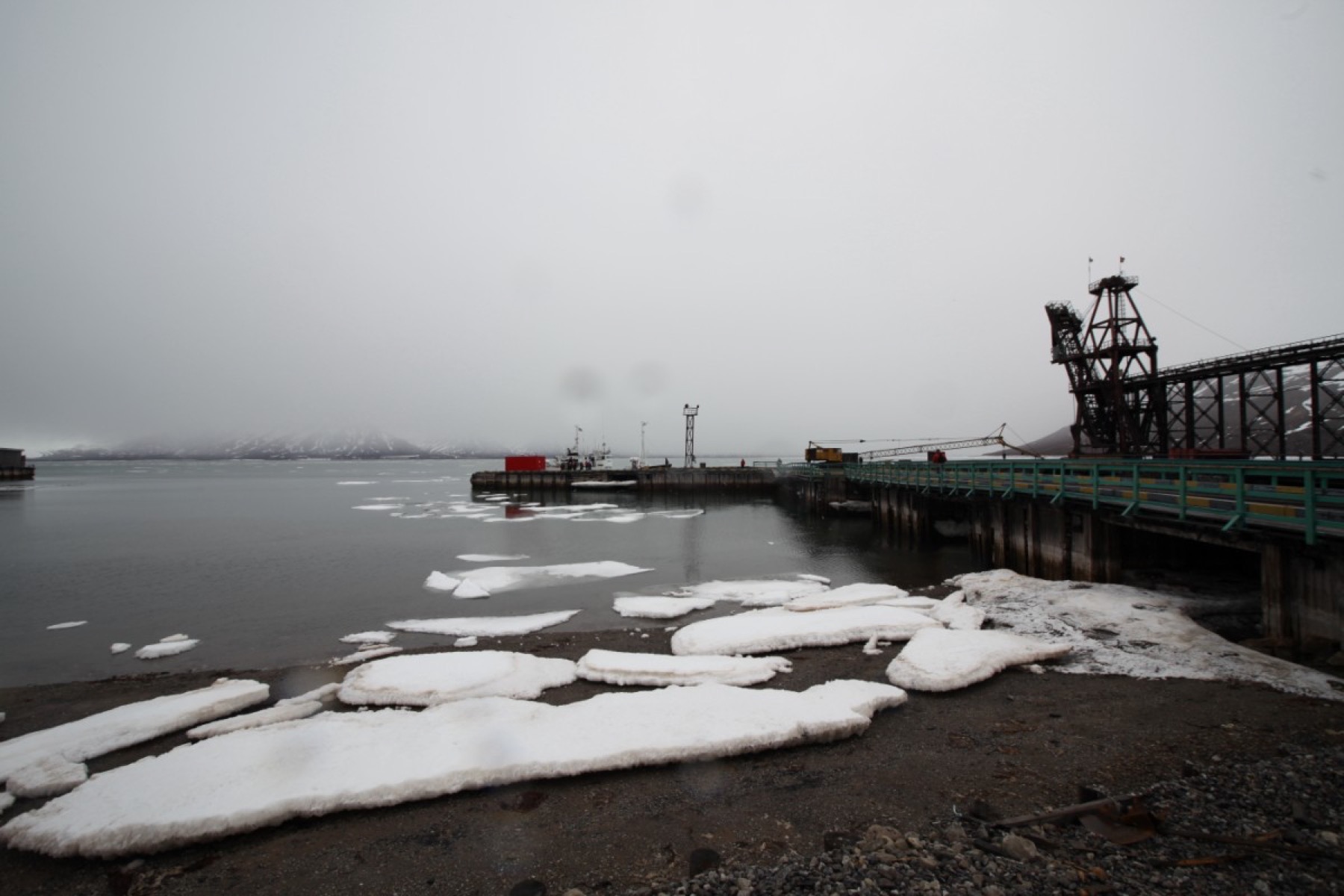
If you want to see both Soviet towns from the deck of a boat, the ideal time is from late May to October. This is when the sea ice in the fjords melts and excursion boats from Longyearbyen can safely dock at the piers in Pyramiden and Barentsburg. During the Arctic summer you’ll enjoy the phenomenon of the midnight sun, with 24-hour daylight from late April to the end of August. Temperatures in July and August hover around 5 to 8 °C, which sounds mild, but the Arctic wind pushes the perceived temperature much lower. Woollen thermal underwear, a good windproof jacket and mittens instead of gloves will be your best friends. ☺️ Bear in mind, too, that the summer tundra can get properly waterlogged and muddy, so there’s no way around good waterproof boots.
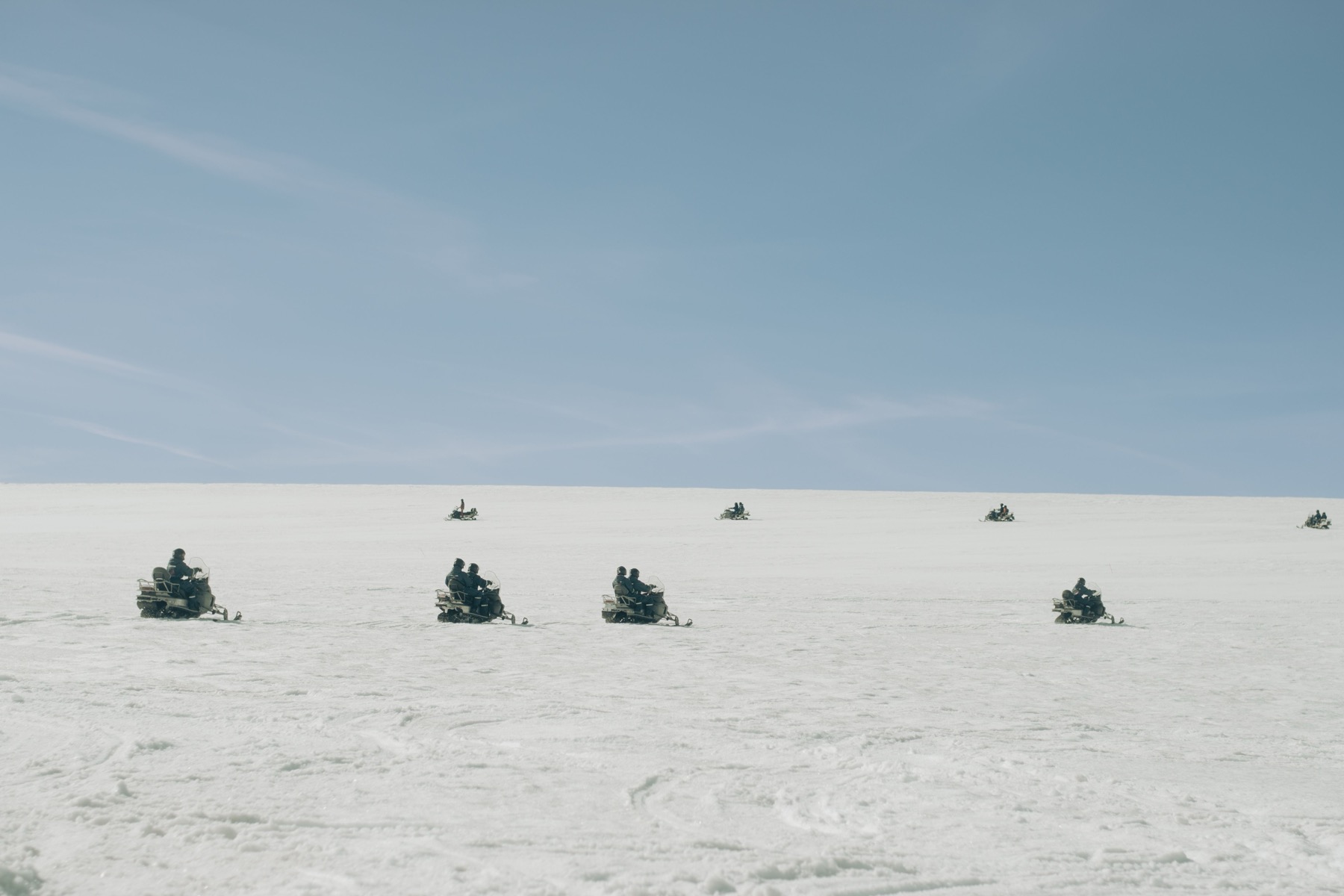
A winter visit from February to early May, on the other hand, promises a tougher Arctic adventure. The fjords are firmly frozen and you reach the settlements on multi-hour snowmobile trips. The turn of February and March is extremely popular, when a gorgeous blue light returns to the landscape and photographers get their money’s worth — but temperatures routinely drop to around -20 °C. Since 2025, very strict nature-protection rules have also applied across the whole archipelago. Excursion boats in protected areas may carry a maximum of 200 passengers, and the mandatory distances from wildlife have grown considerably. Boats may approach polar bears no closer than 300 metres, and in the spring months as much as half a kilometre away, so a good pair of binoculars is now an absolute must.
Photo: Kawon Kez Sel / Wikimedia Commons, CC0
Where to stay on Svalbard and in the settlements
💡 Accommodation and experiences tip: We prefer to look for accommodation on Booking.com, which usually has the best cancellation policies. For tickets, tours and activities, it’s worth comparing and booking through GetYourGuide.
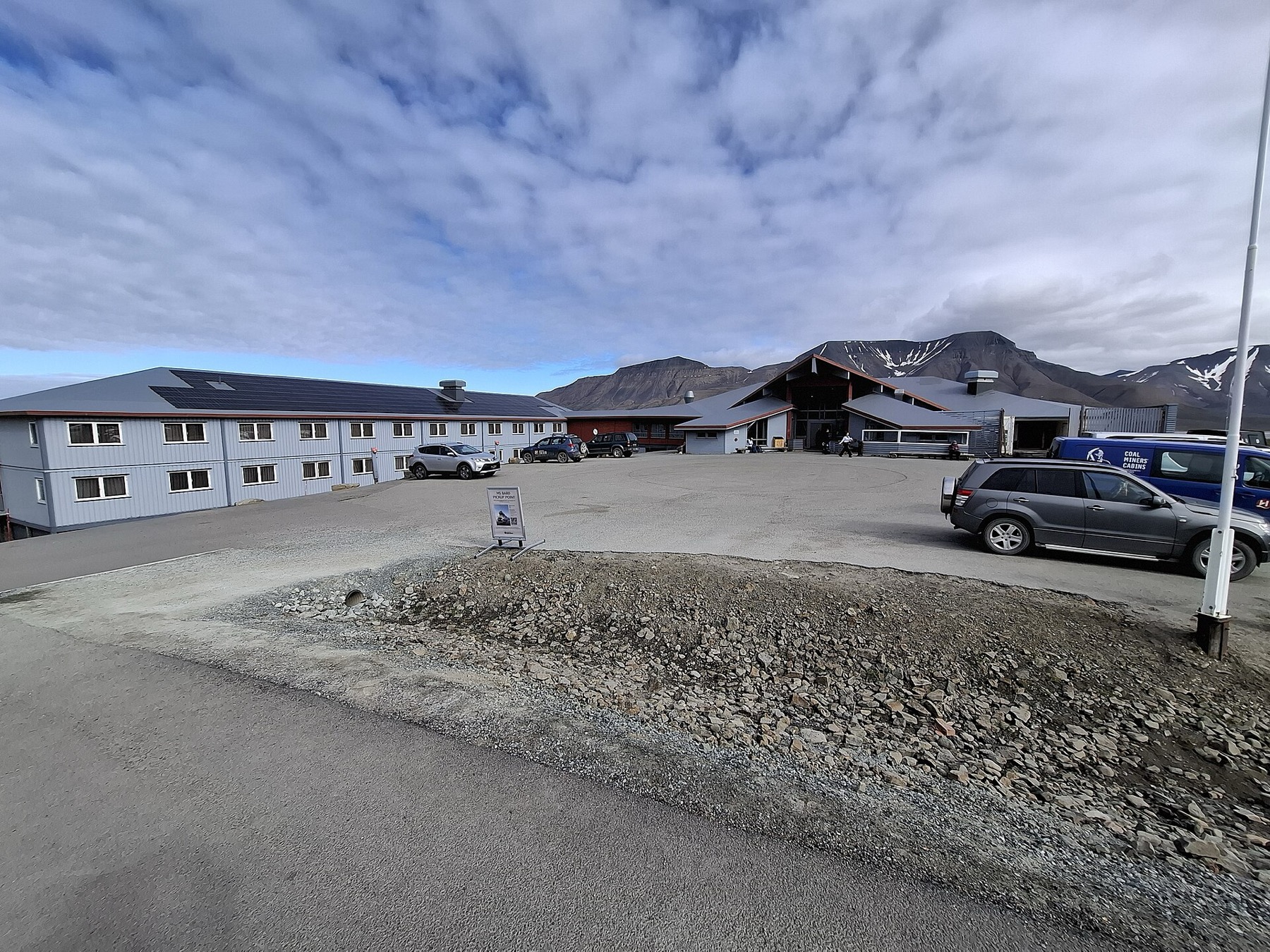
Most travellers choose the Norwegian town of Longyearbyen as their main base, setting off on day trips into the surrounding area from there. Longyearbyen has plenty to offer — from cosy hostels in converted miners’ quarters to hotels where you can soak in a hot tub with a view of the fjord. Prices reflect all this, so book well in advance and choose carefully. High season, from March to August, tends to sell out in a flash.
For maximum comfort, a great choice is the Radisson Blu Polar Hotel Spitsbergen, right in the town centre. Its outdoor hot tubs offer incredible views of the fjord, and a night in a double room usually comes to around €260 to €350. If you’re after an unforgettable trapper atmosphere, check out the Basecamp Hotel, built from driftwood and old seal skins. It’s a stunning design gem where you’ll feel like a real polar explorer, though it sits a notch higher price-wise.
For travellers on a tighter budget, locals often recommend Gjestehuset 102 in the Nybyen valley. It’s about a thirty-minute walk from the centre, which can be quite a challenge in a blizzard, but the atmosphere of an old miners’ lodge has enormous charm. A bed in a shared room here starts at around €60 a night, which is an almost unbelievable price by Arctic standards — that won’t even buy you a taxi to the airport around here. The shared kitchen is also a great spot to swap stories with other adventurers in the evening.
If you long for a truly isolated experience, you can even stay overnight directly in the Russian settlements. Pyramiden has the summer-only Hotel Tulpan, which is very spartan, but spending the night in an abandoned ghost town is said to be a spine-tingling experience. In livelier Barentsburg, you’ll find the renovated Hotel Barentsburg with far more modern facilities. You won’t find rooms in these Russian settlements on the usual booking portals, though, and reservations are now handled exclusively and directly with the local Russian operator.
Photo: Ssu / Wikimedia Commons, CC BY-SA 4.0
10 tips and facts about Pyramiden and Barentsburg
These two Arctic settlements aren’t just an ordinary trip beyond the Arctic Circle. They’re places where rugged Nordic nature meets history and some very complicated politics head-on. As you walk the abandoned streets, you feel the weight of the past at every step, while gulls scream overhead and a glacier cracks in the distance.
We’ve picked out the most important things you need to know before your trip, whether you’re interested in forgotten Soviet architecture or wondering whether it’s even ethical to travel here these days. Get ready — Svalbard will show you a world you truly won’t see anywhere else.
Photo: Francesco Ungaro / Pexels
1. Why are there Russian towns on Norwegian territory?
You may be wondering how it’s even possible for entirely Russian coal-mining settlements to operate legally on sovereign Norwegian territory. The answer lies in the famous Svalbard Treaty of 1920, which came into force five years later. It granted Norway full sovereignty over the archipelago, but at the same time guaranteed the citizens of all signatory states absolutely equal rights to reside and do business there. The islands had to remain permanently demilitarised, and all taxes collected must be reinvested back into the harsh local infrastructure.
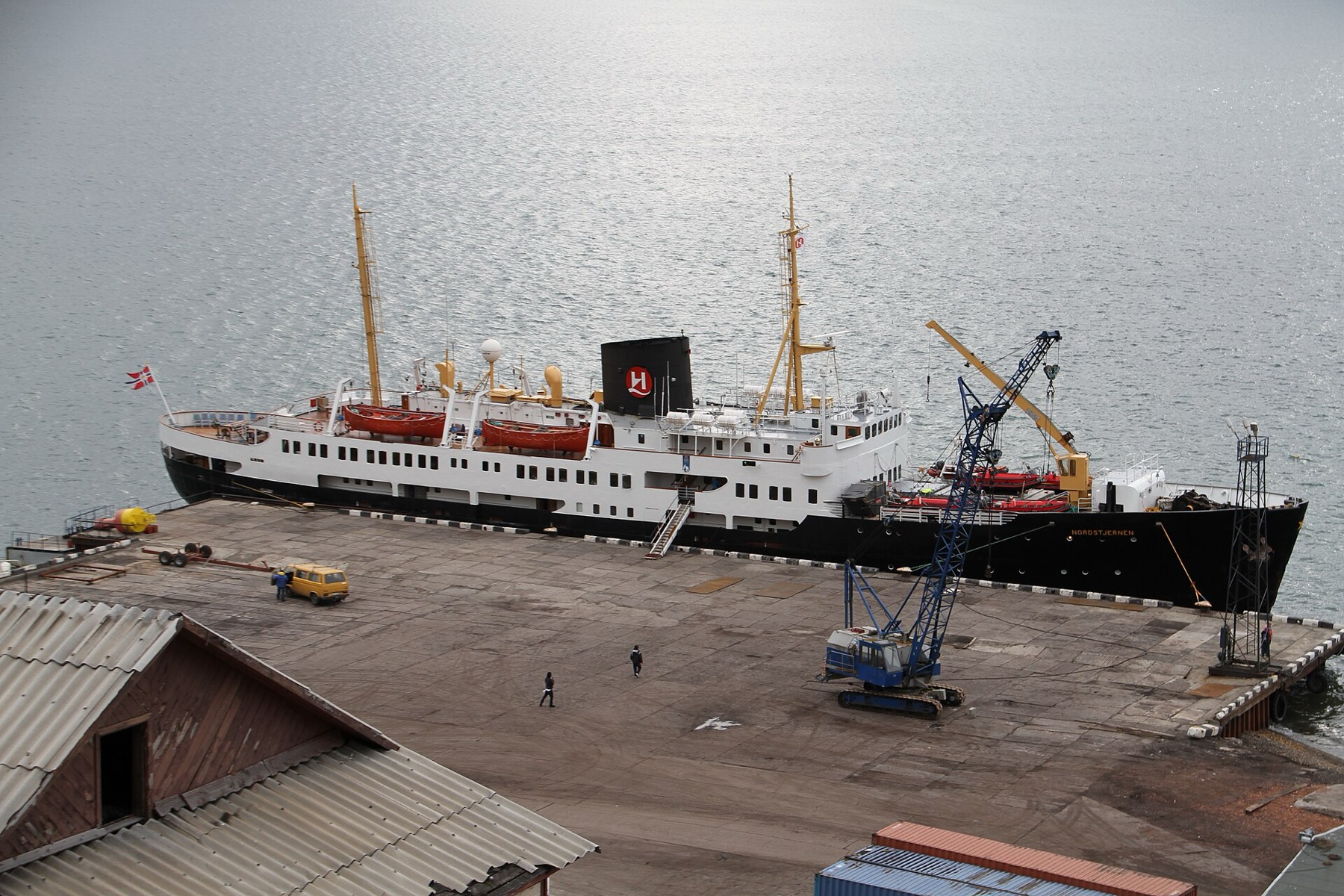
The Soviet Union took advantage of this unique geopolitical loophole and in 1932 bought Pyramiden from its original Swedish owners. Since then, both towns have been administered by the Russian state Trust Arktikugol, which built its own self-contained world here, independent of the Norwegians. It’s a curious fact that Czechoslovakia joined the treaty as early as 1930, and these rights carried over to the Czech Republic too. As a result, a wide range of nationalities can legally live, work and run a business on Svalbard entirely without needing a visa, which makes the islands one of the freest places on the planet.
Photo: Buiobuione / Wikimedia Commons, CC BY-SA 4.0
2. Pyramiden as the Soviet Union’s showcase town
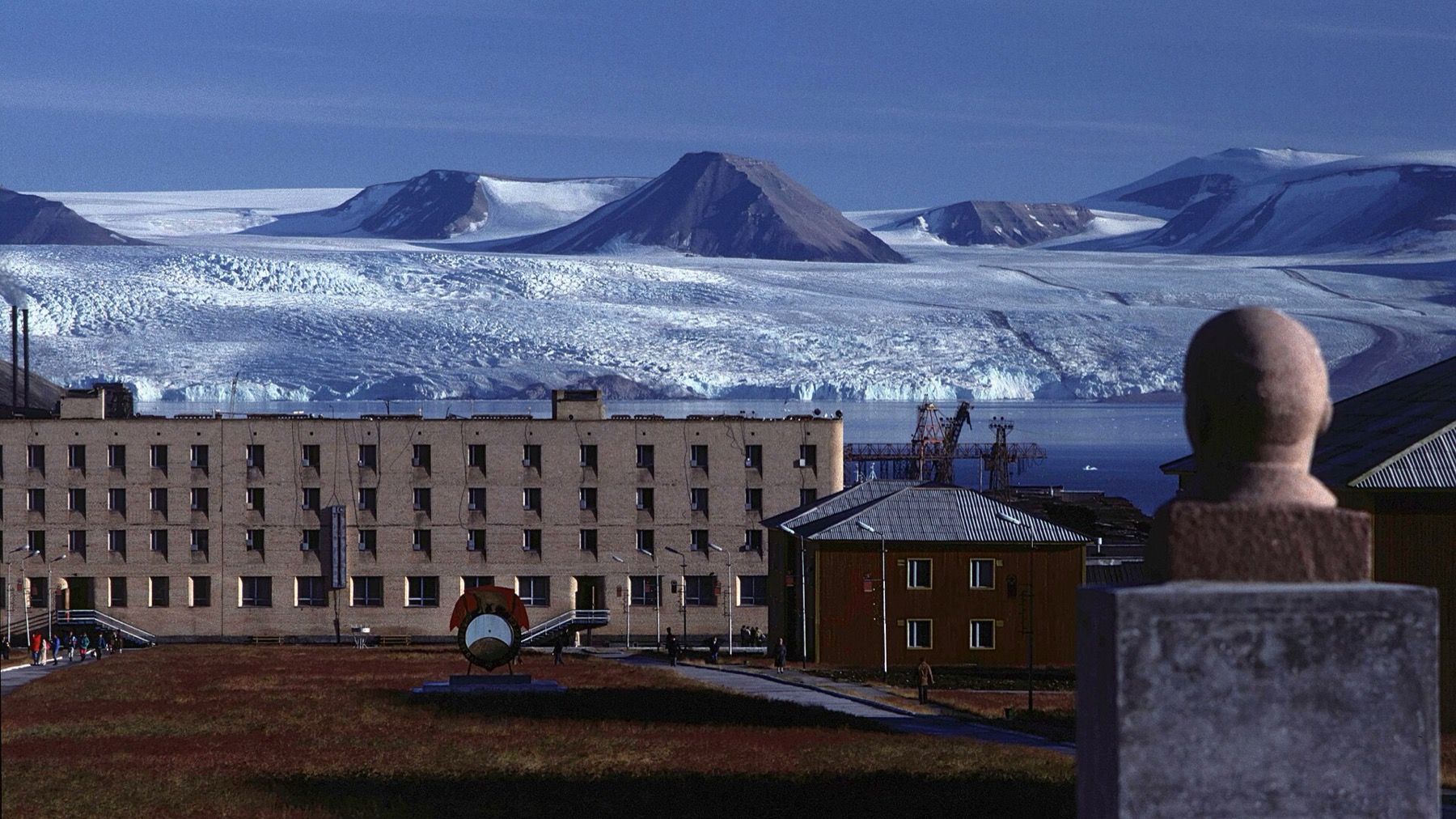
In its golden era in the 1970s and 1980s, Pyramiden was no ordinary coal camp but a genuine Arctic utopia. Incidentally, the town got its name from the pyramid-shaped mountain that towers directly above it. More than a thousand people lived here permanently, enjoying incredible luxury and comfort in the middle of an icy wasteland. The Soviet Union poured enormous subsidies into it to show the Western world just how well and how modern life could be even deep beyond the Arctic Circle. It was, in short, a showcase town for the communist regime, built in the absolute harshest of climatic conditions.
The local miners and their families had access to a beautiful cultural palace with a large concert hall, where an abandoned piano still stands on the stage to this day. There was also a fully heated swimming pool, a spacious gymnasium with a sports floor shipped all the way from distant Siberia, and even heated greenhouses for growing fresh vegetables. They even kept livestock so residents had milk. Those who remember it recall that people flocked here from the mainland as if on a gold rush, drawn by significantly better pay, fresh milk and vegetables that were otherwise hard to come by in the Soviet supply chain.
Photo: Dmitrii Rusanov / Wikimedia Commons, CC BY-SA 4.0
3. The northernmost Lenin gazing at a glacier
When you arrive in Pyramiden today, the first thing to catch your eye is probably the world’s northernmost bust of Vladimir Ilyich Lenin. This majestic monument stands on an empty square in front of the cultural centre, its gaze directed straight across the frozen fjord towards the gorgeous Nordenskiöldbreen glacier. The contrast is so absurd and visually striking that photographers from all over the world come here on full-day trips just for this single shot.
The town breathes a strange emptiness: the boulevards are silent, plaster peels from the apartment blocks, and somewhere between the buildings polar bears roam freely, entirely uninterested in your arrival. Visitors describe the atmosphere as deeply unsettling — you get the feeling the residents just popped out and will be back any moment, except they haven’t returned since 1998. It’s precisely because of the ever-present bears that you may only move around the town accompanied by an armed guide carrying a rifle and a flare gun. Since 2025, a strict rule has also required you to keep at least 300 metres from the bears, so you’ll need a serious telephoto lens for detailed animal photos.
Photo: Zairon / Wikimedia Commons, CC BY-SA 4.0
4. A night in the ghost zone: Hotel Tulpan
For many years after the town was abandoned, it was impossible to officially stay overnight in Pyramiden — tourists came from Longyearbyen only for a few-hour turnaround. That changed in 2013, when Trust Arktikugol partially renovated and reopened Hotel Tulpan. Today, around ten to twenty staff live here during the summer season, keeping the hotel running, maintaining the huge diesel generators and guiding the handful of adventurers who decide to stay the night. The boat trip here costs roughly 2,800 to 3,900 Norwegian kroner (about €240–330) depending on the operator.
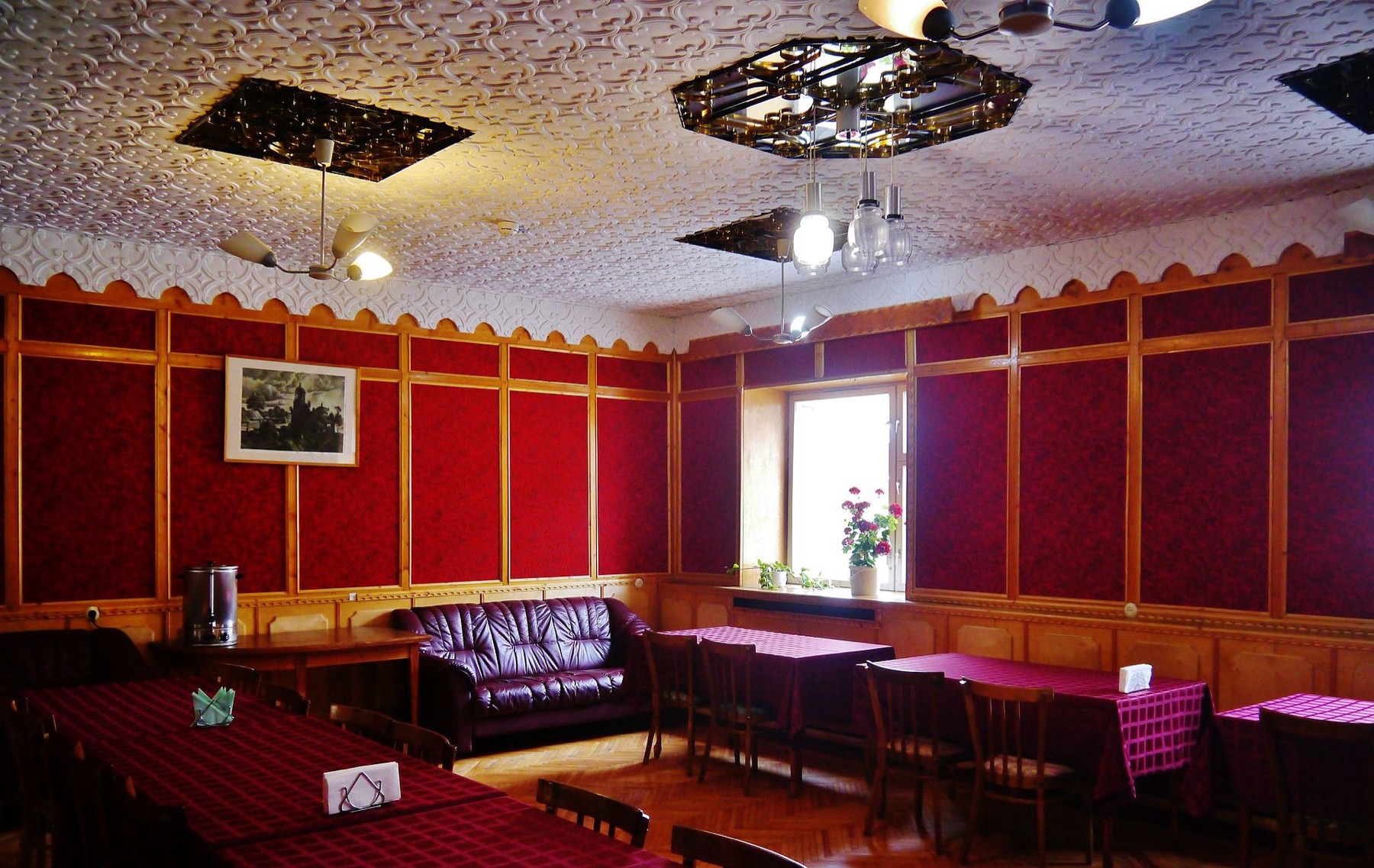
Don’t expect any luxury spa, though. The accommodation is very plain and spartan, the rooms are more like a decent 1970s hostel and the hot water only runs occasionally. The hotel does have a small bar and a little souvenir shop, where you can buy original Soviet badges that are hard to find anywhere else. Travellers on forums point out that services run in a somewhat retro mode and cash payment is often required. Even so, a night-time walk through the abandoned town — when the excursion-boat engines fall silent and an absolute Arctic stillness takes over — is said to be an utterly fascinating experience you won’t get anywhere else in the world.
Photo: Bjørn Christian Tørrissen / Wikimedia Commons, CC BY-SA 3.0
So what caused such a prosperous, heavily subsidised town to turn into an abandoned ghost town? The beginning of the end was a huge aviation tragedy on 29 August 1996. A Russian Tupolev Tu-154 carrying miners and their families from Moscow back to the Svalbard mines crashed into Mount Operafjellet near Longyearbyen in bad weather. All 141 people on board died, and it remains the worst aviation disaster in the history of Norway to this day.
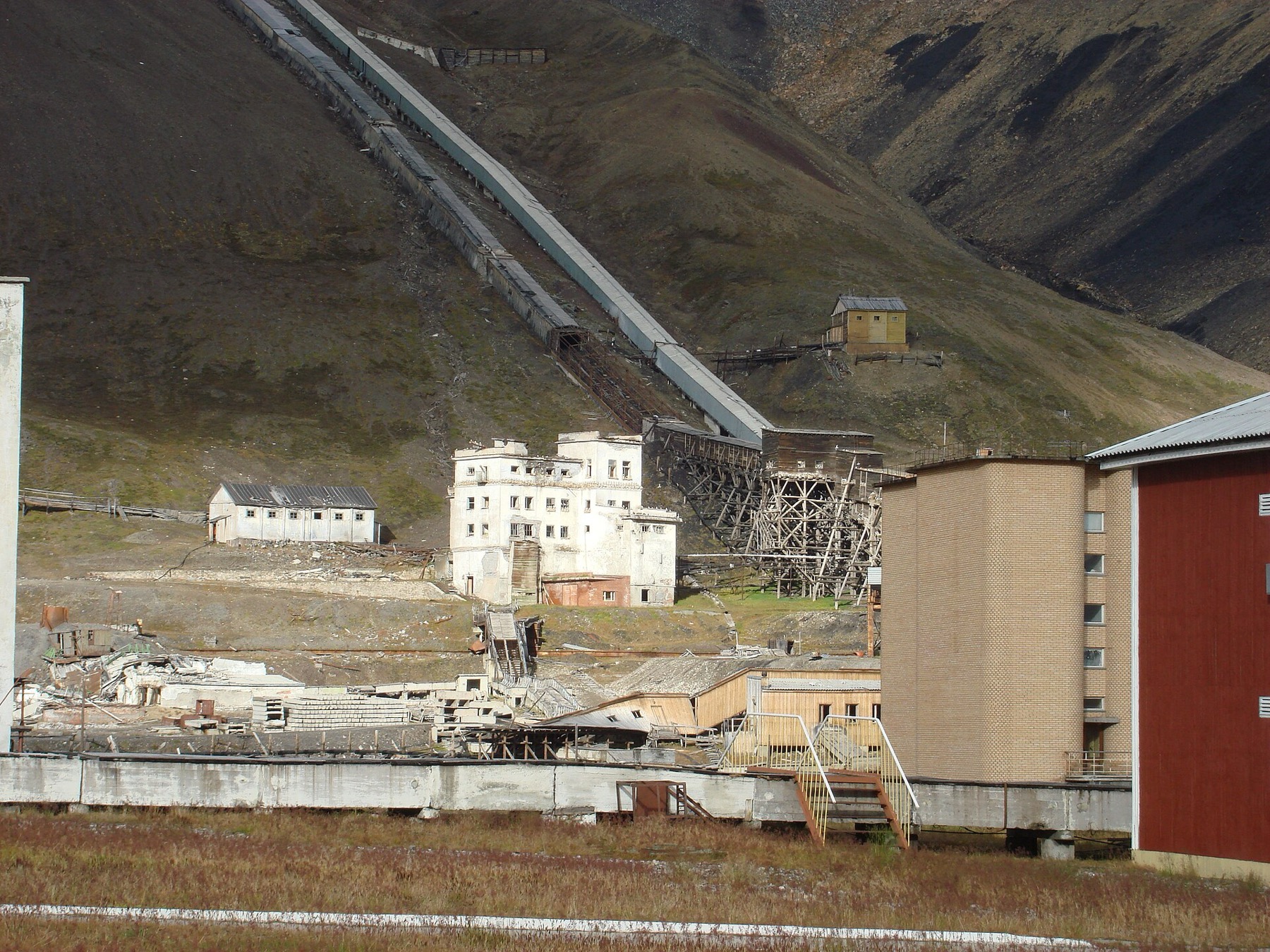
The event dealt the Russian community on Svalbard an enormous psychological and economic blow. Mining in Pyramiden was also becoming unprofitable, and maintaining two fully functioning settlements was completely unsustainable for the struggling Russian economy of the 1990s. So the final decision was made to evacuate the town entirely. Over the course of a few months in 1998, people packed only the essentials, locked their apartments and left the town at the mercy of the Arctic cold, which perfectly preserved it for future generations.
Photo: Bjørn Christian Tørrissen / Wikimedia Commons, CC BY-SA 4.0
6. Barentsburg: the last living Russian settlement
While Pyramiden fell asleep, Barentsburg still lives on and mines coal. According to the latest statistics, just over three hundred people currently live here permanently, mostly miners from Russia and Tajikistan. When you arrive by boat, you’ll be greeted by a far livelier atmosphere, even though the ever-present coal dust and smoke from the chimneys make it clear this is an exceptionally tough industrial place. The local coal mine still produces roughly 100,000 tonnes of coal a year, even today.
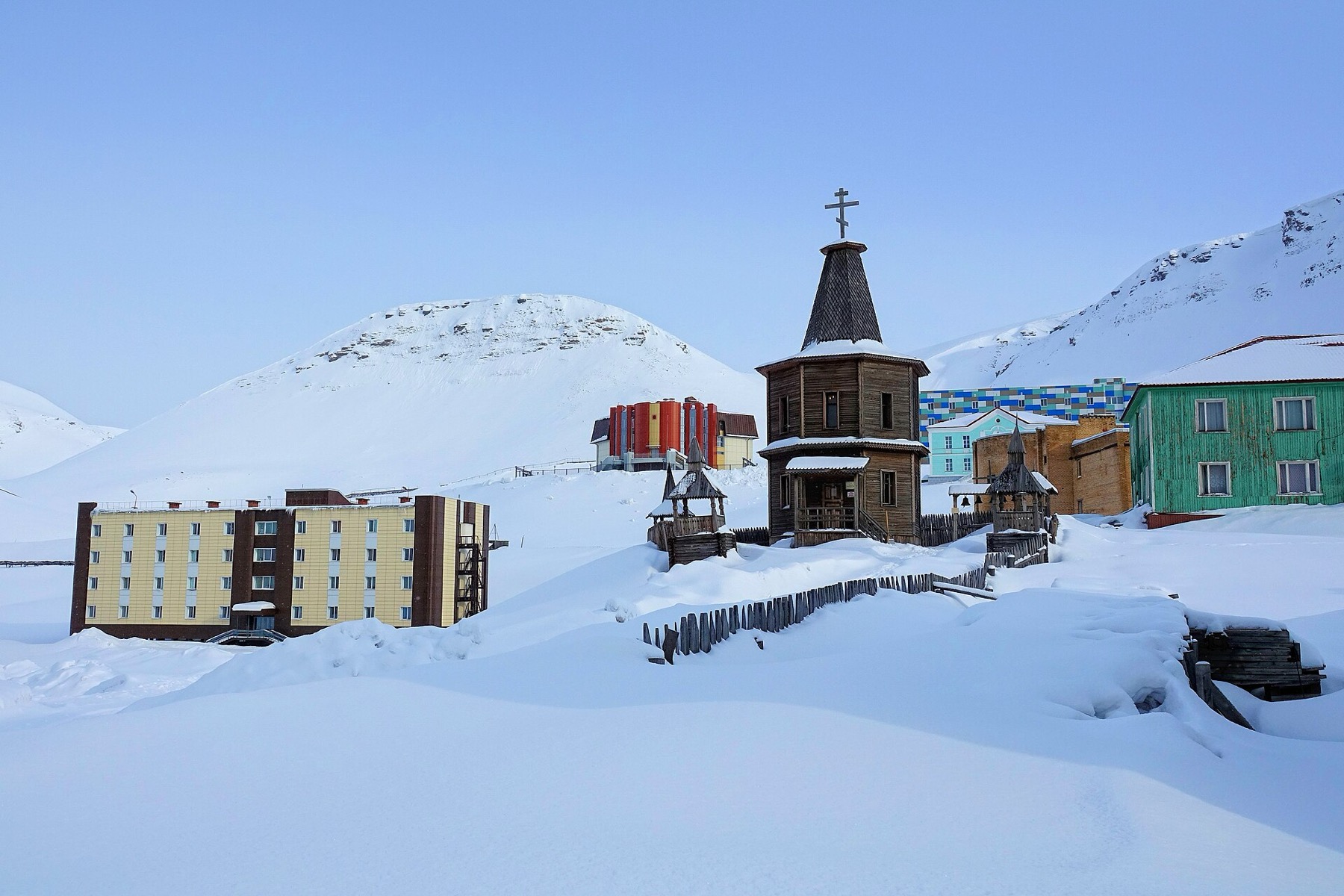
The settlement’s history is a turbulent one — during the Second World War it was practically levelled by the German battleships Tirpitz and Scharnhorst. Most of today’s buildings therefore date from the post-war reconstruction. As you walk around, you’ll be stopped in your tracks by the Soviet mosaics on the building facades, celebrating the conquest of the Arctic and looking surprisingly unweathered. Right next door stands a wooden Orthodox chapel that feels almost poetic amid all the industrial scenery. You’ll also find an interesting museum dedicated to the history of the old Russian hunters and even a fully functioning Russian consulate, whose presence in the middle of an icy wilderness feels utterly surreal. Barentsburg has recently upgraded its services, so in many cases you can now pay by card, and there’s even a small post office where you can send a postcard home with a Russian stamp.
Photo: Ssu / Wikimedia Commons, CC BY-SA 4.0
7. Where to eat: the northernmost brewery and traditional borscht
💡 Tip: If you make it to Barentsburg, don’t miss the Krasny Medved brewery, which holds the title of the world’s northernmost Russian brewery. The local craft beer is brewed from pure glacier water and is guaranteed to put you back on your feet after a freezing walk around town. You could write novels about alcohol on Svalbard, because a strict rationing system applies across the whole archipelago. Local residents may buy a maximum of 24 beers and two bottles of spirits per month. As a tourist, you can only buy alcohol in the shops if you show your return flight ticket at the till.
The brewery complex also includes a traditional restaurant serving classic Russian and Ukrainian dishes. According to traveller reviews, they make excellent hot borscht and traditional pelmeni here, and there are meat-free options on the menu too. The food is hearty, filling and perfectly suited to the harsh Arctic climate. And you appreciate it all the more when you realise that every single one of those potatoes had to travel halfway across the Arctic to get here.
Photo: Bjoertvedt / Wikimedia Commons, CC BY-SA 3.0
8. Geopolitics and the traveller’s moral dilemma
Visiting the Russian settlements has come with one big moral catch since the start of 2022. After the Russian invasion of Ukraine, the Norwegian tourist board Visit Svalbard decided to completely boycott the state-run Trust Arktikugol, which operates both towns. Products of the Russian tourism arm Grumant have therefore vanished entirely from all official Norwegian booking portals, so you simply can’t reserve them the usual way through the Norwegian info centre.
As a traveller, you’re faced with a difficult choice. You can go with a Norwegian shipping company such as Henningsen, which will take you to the settlements but, for ethical reasons, enforces a strict ban on any spending on the spot. So you can only walk around and take photos. Or you can buy a full-day experience directly through the Russian operators, for which you’ll pay around 3,900 Norwegian kroner (about €330), knowing that your money flows straight into the Russian state coffers. It’s a very sensitive topic that’s hotly debated on travel forums, and everyone has to answer it for themselves.
Photo: Estonian Stalker / Pexels
9. The situation in 2026 and the environmental ultimatum
And what’s the current state of the settlements? According to official statistics from the Norwegian authority, at the start of 2026 a combined 392 people lived in Barentsburg and Pyramiden, a fairly significant drop compared to the pre-war years. The Norwegian government is also trying to strengthen its own influence in the region and closely monitors all activities of the Russian mining company. A telling contrast: the Norwegians ceremonially closed their last coal mine, Gruve 7, in the summer of 2025, while just a little further away Russian mining calmly carries on.
During recent inspections, the Norwegian authorities also discovered serious environmental failings, particularly regarding hazardous leaks from old fuel tanks. Trust Arktikugol was therefore given a tough ultimatum by the local governor and an environmental deadline to put things right by October 2026. If it fails to fix these massive shortcomings in time, it faces astronomical fines and a possible dramatic reduction of operations. The future of both Russian settlements is thus currently very uncertain, and it’s possible we’re standing on the threshold of their end.
Photo: Al83tito / Wikimedia Commons, CC0
10. Strict rules and untouchable heritage
If you set off to Pyramiden or Barentsburg, you absolutely must respect the local cultural heritage protection laws. One fascinating rule applies across the whole of Svalbard: all objects and structures dating from before 1946 are automatically protected heritage. This covers old rusty barrels, abandoned wooden huts and even whale bones on the beach. What’s more, a strict 100-metre protective zone applies around all these historical relics.
So you must not take absolutely anything away from Pyramiden — not even the tiniest forgotten screw or a lump of coal from the street. Since 2025, a strict ban on flying drones has also applied in all national parks and reserves, so you can forget about aerial footage. There’s also an absolute ban on entering abandoned buildings without an official local guide. The old, dilapidated structures can be very unstable and there’s a real risk of injury, so always stick to the marked routes and follow your guide’s instructions.
Photo: Wikimedia Commons
Where to head next from Svalbard
If you’re planning a trip into this amazing Arctic wilderness, don’t miss our other guides that will help you prepare. For a general overview of how to pack and what to expect, check out our article Svalbard: what to see and do at the end of the world. For a detailed exploration of the Norwegian base, read our tips for Longyearbyen: what to see.
If you’re looking for concrete inspiration for activities outside the towns, we’ve got a detailed rundown in Trips and cruises on Svalbard. And if you’re more into local curiosities and want to know why there’s an alcohol ration here or why cats aren’t allowed to live here, take a look at Fun facts about Svalbard.
Frequently asked questions
Can you actually visit Pyramiden?
Yes, the abandoned town can be legally visited, either by summer excursion boats or in winter by snowmobile from Longyearbyen. However, you must always move only in the company of an armed guide, as polar bears occasionally roam among the buildings.
Is it safe there?
Safety is an absolute priority in Svalbard. There is no crime risk in the settlements themselves; the main hazards are the Arctic weather and wildlife. Organized tours always have guides equipped with a rifle and flare gun in case of an encounter with a bear. Entering dilapidated buildings without supervision is forbidden for safety reasons.
Can you go there in winter too?
Winter visits are possible and popular among adventurers, but physically much more demanding, as you travel to the settlements across frozen fjords by snowmobile. During the polar night period (until February), tours are rarely organized; the main season runs from March to early May, when daylight returns and conditions for travel are absolutely ideal.
Are you allowed into the old buildings in Pyramiden?
The basic rule is that independent entry into any abandoned building is strictly forbidden. Dilapidated ceilings and floors can be dangerous. However, official guides will safely take you inside the cultural center, swimming pool, or old canteen during the tour, where the condition of the buildings is regularly monitored.
How many people actually live there today?
According to official Norwegian statistics, at the beginning of 2026, exactly 392 people lived in Barentsburg and Pyramiden combined. Most of them live permanently in Barentsburg, while only seasonal staff of about 10 to 20 people reside in Pyramiden, taking care of maintenance and tourists.
Why does Russia still stay there when it’s unprofitable?
For the Russian Federation, the settlements in Svalbard have enormous geopolitical and strategic significance. Maintaining an active community, mining operations, and their own consulate guarantees them a legal physical presence in the Arctic directly on the territory of a NATO member state. Coal mining is thus more of a cover for maintaining power and influence in the region.
Can you really spend the night in Pyramiden?
Yes, although it sounds incredible, overnight stays are possible at Hotel Tulpan, which has been partially renovated after years of abandonment. Don’t expect any luxury—the rooms are very basic and hot water only runs occasionally, but the opportunity to spend the night in the absolute silence of an Arctic ghost town is sought after by photographers from all over the world.
Tips and Tricks for Your Vacation
Don’t Overpay for Flights
Search for flights on Kayak. It’s our favorite search engine because it scans the websites of all airlines and always finds the cheapest connection.
Book Your Accommodation Smartly
The best experiences we’ve had when looking for accommodation (from Alaska to Morocco) are with Booking.com, where hotels, apartments, and entire houses are usually the cheapest and most widely available.
Don’t Forget Travel Insurance
Good travel insurance will protect you against illness, accidents, theft, or flight cancellations. We’ve had a few hospital visits abroad, so we know how important it is to have proper insurance arranged.
Where we insure ourselves: SafetyWing (best for everyone) and TrueTraveller (for extra-long trips).
Why don’t we recommend any Czech insurance company? Because they have too many restrictions. They set limits on the number of days abroad, travel insurance via a credit card often requires you to pay medical expenses only with that card, and they frequently limit the number of returns to the Czech Republic.
Find the Best Experiences
Get Your Guide is a huge online marketplace where you can book guided walks, trips, skip-the-line tickets, tours, and much more. We always find some extra fun there!
If you’re booking a Black Sea holiday, there’s one absolutely crucial thing you need to know from the start. Bulgaria all inclusive holidays aren’t a single thing but four different tiers, and the gap between the cheapest and the most expensive option is enormous. Often you only find this out on the spot, when the bar refuses to pour you anything other than a local, syrupy soft drink.
Since 1 January 2026, Bulgaria has officially adopted the euro, which has made price comparisons far easier for tourists. You no longer have to fiddle around converting leva — you just glance at the price list and immediately know where you stand. On top of that, the country remains one of the most affordable destinations in Europe, despite steadily improving hotel services.
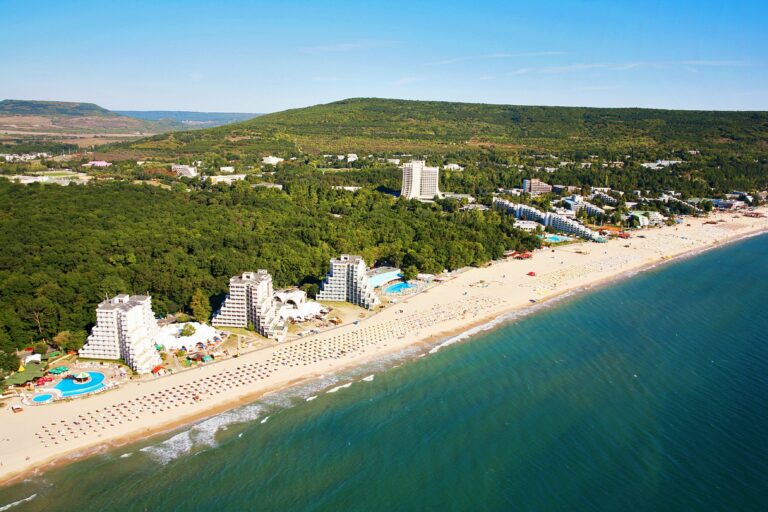
Scrolling through hundreds of reviews on Booking and travel forums, one thing is crystal clear: the key to a great holiday is choosing the right resort and hotel based on exactly who you’re travelling with. Families with toddlers will appreciate the shallow beaches in Albena, teenagers will love the giant waterparks in Sunny Beach, and couples should look for peace and quiet in boutique hotels. And that’s exactly what we’ve done for you. Here are 22 resorts that guests simply can’t stop praising in their reviews.
Foto: www.bdmundo.com / Wikimedia Commons, CC BY-SA 2.0
TL;DR
There are 4 catering tiers: From the stripped-down “Light” to the generous “Ultra”, which even includes branded spirits and food throughout the day.
Beach loungers usually aren’t included: The beaches are run by concessionaires, so you’ll normally pay extra for a parasol by the sea — only the poolside ones are free.
Watch out for tricks in the names: If a hotel has “Free Beach” in its name, it paradoxically means that most of the others charge for the beach.
Waterparks are often extra: Even if the slides are right there in the hotel grounds, the basic all inclusive package often doesn’t cover them.
Adults only doesn’t always mean quiet: In Bulgaria you’ll find adults-only hotels that operate as loud party oases for young people.
September is a bargain: If you can travel outside the main summer holidays, hotel prices drop by 30 to 40%.
How much it costs: A week off-season starts at roughly €245 per person, while luxury resorts run to around €1,050.
When the season starts: The official beach season with lifeguards runs from exactly 1 June to 30 September.
You’re travelling…
Our resort pick
Location
Rating
:—
:—
:—
:—
With small children
Hotel Gergana
Albena
8.7/10 (Ultra AI)
For the water slides
Aqua Paradise Resort & Aqua Park
Nesebar
9.3/10 (AI)
As a couple, for peace
Hotel Marina Palace
Nesebar
9.2/10 (Adults Only)
For absolute luxury
Astor Garden Hotel
St. Constantine and Helena
9.4/10 (Premium)
For the best price
Hotel Continental
Golden Sands
9.4/10 (Budget AI)
What all inclusive means in Bulgaria: four tiers
A lot of people assume all inclusive is the same everywhere, just like in Turkey or the Caribbean. In Bulgaria it really doesn’t work that way, and you’ll find that out before you’ve even unpacked your suitcase. Here the offer is strictly divided into four categories, which decide whether you’ll be served premium gin or just coloured water from a machine.
Tier
What you actually get in the price
:—
:—
All Inclusive Light
Just the main meals and dispensed local drinks within a narrow time window. Outside breakfast, lunch and dinner times, you get nothing.
All Inclusive
The classic standard. Breakfast, lunch and dinner as a buffet, plus drinks during the bars’ opening hours. Usually local production.
All Inclusive Plus / Premium
A wider drinks selection, generous snacks between the main meals, and often one free dinner in an à la carte restaurant.
Ultra All Inclusive
Includes branded imported alcohol, à la carte restaurants in the price, and snacks available even outside the main set times.
In reviews on travel portals, guests at the cheaper hotels very often complain about so-called “fountain drinks” — cheap, tasteless dispensed beverages. If you want to treat yourself to a decent cocktail on holiday, you need to look for hotels labelled Ultra All Inclusive, as they’re the only ones that guarantee imported alcohol.
There are also complete exceptions on the market, such as the “24 Hours Ultra All Inclusive” option, offered by a handful of premium resorts with round-the-clock bar service. Another interesting speciality is the resort of Albena with its “dine around” programme, which lets you pop over for dinner at other hotels’ restaurants within the same resort during a longer stay.
What is NOT included (and people expect it)
The most common disappointment stems from confusing what a hotel has on offer with what’s actually included in the price. It’s absolutely standard along the Bulgarian coast that beach loungers and parasols are charged separately. The beaches don’t belong to the hotels — they’re managed by private concessionaires who set their own prices.
In 2026, prices for beach service range from €0.60 per item north of Burgas up to €6 in Golden Sands. On the popular Sunny Beach you’ll pay over €5 for a single lounger. If your hotel says the poolside loungers are free, that definitely doesn’t mean the same applies at the sea.
Fortunately, Bulgaria has a law requiring that at least 50% of the beach area must remain a free zone. So you can happily spread out your own blanket or towel for free, even right in front of the most luxurious five-star hotel.
The second big catch is hotel waterparks. Even if you see huge slides right there in the hotel’s photos, entry to the waterpark is often for a hefty surcharge. To be on the safe side, look for hotels that have the magic words “Free Aquapark” or “Free Beach” right in their official name.
For families with small children
Travelling with small children up to age six calls for specific conditions, above all a very gentle entry into the sea and calmer surroundings without night-time discos. In this category, resorts like Albena stand out, as do smaller towns such as Kranevo, where the beaches are wide and sandy and the water stays shallow for a long way out. Parents simply can’t stop praising the following hotels in their reviews.
Foto: KAWENY DENYELE / Pexels
1. Sunny Castle Hotel – All Inclusive, Beach and Free parking
You’ll find this very pleasant Sunny Castle Hotel in the quiet resort of Kranevo, strategically set between the busier Golden Sands and peaceful Albena. On Booking it boasts a brilliant 9.2 rating from more than 500 reviews. From off-season prices of €133 a night, you get accommodation that’s just a few steps from the beach.
What parents praise most here is the intimate atmosphere and the seasonal pool, where there’s no scramble for loungers. A huge bonus for anyone travelling in their own car or a rental is the safe, completely free parking. It’s an ideal spot if you’re after relaxation without noisy entertainment programmes.
💡 Tip: Kranevo has a gorgeous, wide and very long beach, along which you can take a calm stroll with a pram all the way to neighbouring Albena.
Foto: Boby Dimitrov from Sofia, Bulgaria / Wikimedia Commons, CC BY-SA 2.0
If you want the best swimming in all of Bulgaria for your toddler, head to Albena. Hotel Gergana offers full-fledged Ultra All Inclusive, meaning quality food and drink all day long, at prices starting from €127 outside the peak. A rating of 8.7 from nearly 300 reviews shows how satisfied guests are.
The hotel sits right on the beach and, on top of that, borders the beautiful Baltata nature reserve. Albena in particular is renowned for having by far the most gradual entry into the sea on the whole coast, so small children can splash about safely in the shallows.
💡 Tip: Most of the Albena resort is closed to regular car traffic in high season, which makes it an incredibly safe zone for children running around.
3. Selena Beach Family Hotel – All Inclusive Light
This hugely popular Selena Beach Family Hotel lies in the historic town of Sozopol, just 50 metres from the beloved Bamboo beach. With a fantastic rating of 9.4 from over a thousand reviews, it’s one of the most popular family choices, especially thanks to its friendly off-season price from €67 a night. Parents here love the well-equipped playground and the safe children’s pool.
But you have to be very careful about one key thing that guests often overlook. The hotel offers catering in the All Inclusive LIGHT format, which means you get excellent main meals with drinks to go with them, but don’t count on an unlimited supply of cocktails and ice cream all afternoon.
💡 Tip: Sozopol has a gorgeous historic centre full of wooden houses, where you can nip off for an afternoon stroll when you get bored of sitting by the pool.
A long-standing favourite in Primorsko, a spot travellers have been happily returning to for decades. The Perla Plaza Hotel has an excellent 9.1 rating from 340 reviews, and off-season you’ll stay here from roughly €117. It offers classic and very honest all inclusive catering that guests hardly ever complain about in reviews.
The beautiful North Beach is just a four-minute walk away, which you’ll definitely appreciate with small children and bags full of beach toys. On top of that, the hotel grounds are surrounded by a well-kept garden with a seasonal pool, providing much-needed shade during hot afternoons.
💡 Tip: Primorsko is generally cheaper than the northern resorts and it’s a family-friendly, laid-back town — great for kids who make friends easily on the playground.
Foto: Dimitǎr Boevski / Wikimedia Commons, CC BY-SA 4.0
You’ll find this superbly rated Paraiso Beach hotel (9.1 from 250 reviews) in the resort of Obzor. It stands in the front row right by the beach, so you can get from your room to the sea in about a minute. Off-season prices start from €118 a night, while in July and August you’ll need to allow for a marked increase.
For families with children there’s one absolutely key draw here: professional kids’ entertainment and a huge indoor play area. You’ll appreciate the indoor spaces for children the moment the weather turns or it gets too hot to be outside around midday.
💡 Tip: Obzor lies exactly halfway between Varna and Burgas and has a long, fairly quiet sandy beach that doesn’t suffer the same overcrowding as the giant resorts nearby.
When you head to the sea with a ten-year-old or a bored teenager, shallow water and a bucket for sand no longer interest anyone. At this age, what matters is water slides, huge pools and a constant supply of fun. This is where the big hotel complexes in Sunny Beach and Nesebar come into play, competing to see who can build the bigger waterpark.
Foto: Vika Glitter / Pexels
6. Aqua Paradise Resort & Aqua Park
The absolute best pick for families with older children lies near historic Nesebar. Aqua Paradise Resort, with a fantastic rating of 9.3 from more than 500 reviews, ranks among the very best you can book in Bulgaria. Prices start at €162 a night, which is a very fair offer for a complex with this kind of facilities.
The biggest draw is, of course, the huge waterpark located right on the grounds, which hotel guests can access for free. Your kids will keep busy for whole days on dozens of slides and flumes, while you make use of the classic all inclusive services.
💡 Tip: The historic UNESCO centre of Nesebar is just a short taxi ride away, an ideal lifesaver for an early-evening outing.
This massive SOL by Meliá Luna Bay Resort in Obzor holds a brilliant 9.3 rating from more than 600 reviews, and off-peak you can stay here from €120. For teenagers there’s a dedicated waterpark, which is completely free for guests, plus a system of indoor and outdoor pools.
Reviewers on Booking constantly highlight the professional entertainment programmes and stunning gala evenings, which keep older children and adults alike entertained. Unlike at many other hotels, the evening entertainment here doesn’t feel cringeworthy — it’s genuinely high quality.
💡 Tip: The Meliá brand has long prided itself on a high standard of dining, so even in standard all inclusive mode you can expect above-average buffet quality.
8. SH Dolce Vita – All Inclusive – Free Aquapark & Beach
This giant SH Dolce Vita complex in Golden Sands is one of the most thoroughly reviewed hotels in the country, as proven by more than 1,500 reviews with a solid average of 8.7. The price from €113 is very attractive given the services on offer. As the name suggests, you’ll find everything in one place here.
This hotel is brilliant in that, as one of the few, it offers not only its own waterpark for free but also a private beach with loungers included. That saves you the unpleasant daily payments to the concessionaires by the sea, which can add up nastily on a family budget.
💡 Tip: Golden Sands is set in a hilly nature park, so the hotel’s surroundings are beautifully green, but bear in mind you’ll sometimes be heading downhill to the sea.
A very popular hotel, Diamant Residence sits on the edge of bustling Sunny Beach and boasts a 9.1 rating from an impressive 919 reviews. With off-season prices from €89, it’s one of the most affordable quality complexes for older children. You do have to walk about 450 metres to the beach, but the hotel makes up for it with its facilities.
According to guest feedback, there’s an absolutely exceptional entertainment team here, capable of getting even the grumpiest teenagers involved. A huge central pool forms the heart of the whole resort, with something always going on around it.
💡 Tip: Sunny Beach is the largest and noisiest resort in Bulgaria, but this hotel lies on its outer edge, so you’ll have peace and quiet for sleeping at night.
Foto: Ali Burçin Titizel / Wikimedia Commons, CC BY 2.0
This Topola Skies Resort complex lies well away from the classic mass-tourism resorts, in the small village of Topola between Balchik and Kavarna. With a rating of 8.8 from 900 reviews and a price from €147, it offers a completely different experience from the hotels in the south. The resort stands high on a cliff with a breathtaking view of the sea.
Within the sprawling grounds you’ll find an extensive waterpark of its own, an excellent spa centre and even the option of golf. It’s an absolutely ideal retreat for families who want top-notch attractions for the kids but dread the overcrowded promenades full of stalls and discos.
💡 Tip: Given its remote clifftop location, this hotel is the best choice for travellers planning to hire a car and who don’t want to spend every day just lying on the beach.
For couples and adults: adults only and quiet resorts
The “Adults Only” concept is still a real rarity in Bulgaria, and along the entire coast you’ll find only a handful of such hotels. And most importantly, you have to be extremely careful about what you’re buying. Adults-only in Bulgaria doesn’t automatically mean quiet romance. A great real-life example is the popular Sunny Beach Club – Adults Only, which may not let children in but operates as a loud party oasis for Gen Z, with music until dawn and crowds of teenagers. If you’re after peace and quiet, choose carefully from the following tried-and-tested spots.
Foto: Castorly Stock / Pexels
11. Hotel Marina Palace, Affiliated by Meliá (Adults Only & All Inclusive)
This renovated Marina Palace hotel in Nesebar is, according to the reviews, the very best choice for couples seeking real peace and quiet. With a rating of 9.2 from more than 400 guests and a price tag starting at €194, it promises a premium experience. It has an adults-only policy and stands just 50 metres from the sea.
In their reviews, people rave about the designer rooms after the recent renovation and the fantastic rooftop pool, which offers a gorgeous view of the sea and the old town. This isn’t a place for wild parties but a retreat for adults who want to unwind from a year’s stress over a glass of wine.
💡 Tip: If you’re looking for romance on the Black Sea, historic Nesebar with its cobbled lanes and wooden houses is the best possible backdrop.
Another gem in Nesebar, the Bilyana Beach Hotel is intended exclusively for adult guests and holds a brilliant score of 9.2 from 217 reviews. Off-season prices start at roughly €211 a night. The hotel lies right on the beach and has its own separate access to it, ensuring you maximum privacy.
Guests praise the combination of an indoor and outdoor pool as well as the fitness centre, which is included in the price. The biggest asset, though, is the atmosphere. Quiet, refined, the staff know you by name, and the evenings drift by slowly with a view of the waves and a glass in hand.
💡 Tip: Thanks to the quality indoor pool and spa facilities, this hotel is a great choice even for early June or late September, when the sea might not yet be fully warmed up.
13. HVD Club Bor Ultra All Inclusive – Private Beach & Free Parking
Although the HVD Club Bor hotel doesn’t carry the official adults-only label, it functions as an absolutely peaceful enclave in the middle of the noisiest resort in the country. Located in Sunny Beach, it has a superb 9.2 rating from just under 300 reviews and prices from €159. For that money you get Ultra All Inclusive right away.
It’s more of a boutique hotel, offering its own private beach and guaranteed parking, which is a huge luxury on overcrowded Sunny Beach. According to guests, people come here for the exceptional food and premium alcohol, available to you all day long.
💡 Tip: The HVD brand is among the absolute top for dining in Bulgaria, so if you enjoy discovering new flavours at generous buffets, you won’t go wrong here.
This palatial Rome Palace Deluxe hotel in Sunny Beach, with a rating of 9.2 from more than 600 reviews, offers an upgraded Premium catering programme. You can book a room here off-peak from around €200 a night. It’s located in the eastern, considerably quieter part of the resort.
The hotel is about a 15-minute pleasant walk from the busy centre. For couples it’s an ideal compromise: by day you get complete peace by the pool with premium drinks, and when you fancy some lively nightlife in the evening, you can stroll into the centre on foot.
💡 Tip: Premium catering here means you have significantly better snacks available between the main meals than at ordinary hotels, including excellent coffee and desserts.
If you want a standard comparable to five-star resorts in Western Europe and compromises aren’t for you, we’re in the world of Ultra All Inclusive — and the price tag reflects it. In these resorts, branded imported alcohol, top-notch design and perfect beach service are absolutely standard.
Foto: Kritzolina / Wikimedia Commons, CC BY-SA 4.0
15. Astor Garden Hotel
The Astor Garden hotel is an absolute institution. It lies in the oldest and greenest resort, St. Constantine and Helena, near Varna. It has earned a phenomenal 9.4 rating from more than 1,600 reviews, and prices here start at €204. This is a place you come to for perfect relaxation.
It also ranks among the elite TOP 10 best spa hotels in all of Bulgaria. The resort is famous for its healing thermal springs and is two classes quieter and more refined than neighbouring Golden Sands. The food and services here are genuinely at an exceptional level, and the staff look after you as if you were the only guests in the hotel.
💡 Tip: If you’re looking for luxury combined with genuine rest and wellness care, this is currently the best the Bulgarian coast has to offer.
16. Effect Algara Beach Resort – Ultra All Inclusive
In the quiet town of Kranevo lies this huge Effect Algara Beach Resort complex, with a rating of 9.3 from nearly 1,800 reviews. The grounds stretch across an impressive 85,000 square metres and offer a top-class Ultra All Inclusive programme. The hotel boasts a huge park that reaches all the way to the sea.
There’s one huge plus for guests here that’s definitely not common in Bulgaria. The hotel has its own extensive private beach where the loungers and parasols are completely free. Add imported premium drinks all day long and free parking, and you have a carefree oasis of luxury.
💡 Tip: The Effect brand is known for its beautifully landscaped gardens, so you’ll feel more like you’re in a vast botanical park than at a classic hotel.
This newer gem in Kranevo, the Aquamarine hotel, holds the highest possible score among large hotels in the country — an incredible 9.6 from more than 500 reviews. Off-season you’ll pay from €219 a night here. The wide, sandy beach is exactly a two-minute leisurely walk from the entrance.
In their reviews, guests don’t hold back on the superlatives, especially about the incredibly clean spa centre and the professional staff who remember your favourite morning drink. It’s pricier, but an absolutely flawless choice for the most demanding travellers.
💡 Tip: Kranevo is overall a very quiet resort, so even if you’re staying at such a large and luxurious complex, you won’t be disturbed at night by any thumping bass from nearby discos.
This top-class Astoria by Astoria Collection hotel in Golden Sands holds a strong 9.1 rating from more than a thousand reviews. From off-season prices of €183, you get access to a private beach club. It’s a huge, modern and architecturally very well-designed building.
What fundamentally sets this hotel apart from the competition is the standard of dining. In the price of the basic package you actually get free access to an Italian and a Bulgarian à la carte restaurant, which usually comes with a hefty surcharge at ordinary hotels. So you can swap the buffet queues for proper served dinners.
💡 Tip: This hotel’s private beach club is among the best-rated in all of Golden Sands, with perfectly clean sand and comfortable mattresses on the loungers.
Bulgaria is renowned for the fact that you can get a holiday here for a fraction of the price compared to Western destinations. The trouble is that the cheapest hotels often suffer from awful food and poor hygiene. Finding a clean, decent hotel for under €80 a night for two is an art, but according to guest reviews it’s still possible. These four hotels prove that even on a limited budget you can have a lovely holiday.
Foto: karel291 / Wikimedia Commons, CC BY 3.0
19. Hotel Continental
This unassuming Hotel Continental in Golden Sands is the absolute winner for value for money in all of Bulgaria. With a fantastic 9.4 rating from an incredible 3,076 reviews and a price from €71 a night, it has no rival. It has the highest score of all the hotels that have crossed the thousand-review mark.
You won’t find it right on the beach — it’s about a 9-minute pleasant walk to the centre and the sea — but that’s precisely why it keeps its prices so low. The hotel is renowned for perfect cleanliness and even offers special rooms for allergy sufferers. The buffets may not wow you with luxury prawns, but the food is always fresh and tasty.
💡 Tip: The short walk to the sea pays off handsomely, because with the money you save you get services on a par with much pricier competitors right on the beachfront.
Another very budget-friendly choice in Golden Sands. The Madara Park Hotel, with a rating of 8.3 from more than 2,500 reviews and a price tag starting at just €63, offers classic, honest all inclusive. The hotel’s main appeal is what guests call “peace and greenery in the heart of the resort”.
It’s surrounded by mature trees, which provide gorgeous natural shade and an escape from the summer heat. The services here are absolutely basic — don’t expect any luxury — but the rooms are clean, the staff smile, and there’s always plenty of room in the pool for everyone.
💡 Tip: Golden Sands is known for its hilly terrain, so you’ll head downhill to the sea and work up a bit of a sweat on the way back to the hotel, which is common at the cheaper hotels in this resort.
This large Arena Mar hotel in Golden Sands has been rated by almost 1,500 people with an average score of 8.4. The off-season price starts at an unbelievable €55. For such a cheap hotel, it offers surprisingly good facilities for when the weather turns bad.
Inside you’ll find a very decent heated indoor pool and several saunas, which are accessible to guests. That makes it well worth booking this hotel even for early May or late September, when outdoor swimming would still be for the hardy few.
💡 Tip: At very cheap all inclusive hotels, expect the alcoholic drinks to be local production only, and the coffee is often from powdered-mix machines.
Foto: Andrei Dan Suciu / Wikimedia Commons, CC BY 3.0
The very cheapest decently rated all inclusive hotel in our selection can be found in the town of Balchik. The Ahilea Hotel, with a rating of 8.1 from more than 300 reviews and an extremely low price from €40 a night, is an ideal choice for undemanding travellers. The name “Free Pool Access” makes it clear that the pool is included.
Balchik is a very distinctive, quiet and hilly little town dominated by the gorgeous palace of the Romanian Queen Marie, surrounded by a botanical garden. Don’t expect any endless sandy dunes here, but rather smaller beaches and cliffs. It’s a calm alternative to the overcrowded resorts in the south.
💡 Tip: If you’re on a strict budget, Balchik is generally very cheap even in the local shops and taverns outside the hotel.
The answer to the money question is far more pleasant than for most European destinations. Bulgaria has long been the cheapest country in the EU when it comes to hotels and restaurants. Prices are roughly half the European average, which in practice means that for the price of an average room-only night in Croatia you get a decent all inclusive for two here. The introduction of the euro in 2026 has made everything more transparent, but the country still keeps a huge price gap from overpriced Croatia or Greece.
The prices given are approximate for high season in July and August. If you set off in September, prices drop by 30 to 40%.
Accommodation type and budget
Price per night (2 people)
Week for a couple
Week for a family (2+2)
:—
:—
:—
:—
Budget (cheaper 3–4-star hotels)
€70 – 90
€490 – 630
€750 – 950
Happy medium (quality 4-star)
€120 – 160
€840 – 1,120
€1,300 – 1,700
Luxury and Ultra AI (top 5-star)
€220 – 300
€1,540 – 2,100
€2,400 – 3,200
While in Greece you’ll happily fork out €140 for an ordinary three-star room without meals in season, in Bulgaria the same money will often get you a very decent all inclusive for two right by the sea. For families with children, it’s currently the most sensible choice for not spending your whole holiday counting every euro spent on ice cream.
Is all inclusive even worth it?
This is a question travellers on forums debate endlessly. When you honestly add up the costs, you discover something interesting. A week of all inclusive works out at an average of €245 to €1,050 per person. If instead you take a nice apartment at the peak of the season (roughly €55–80 a night) and eat exclusively at local mehanas (traditional restaurants), you’ll pay roughly €15 to €30 per person a day for food.
For families with children and anyone who just wants to switch off by the pool, all inclusive is the obvious choice. You don’t have to worry about where to have lunch, and the soft drinks flow all day. On the other hand, for a couple who want to travel around every day, explore the surroundings and taste local food in the taverns, full board hardly pays off, because you’ll simply miss most of the lunches you’ve paid for.
And if you’re worried you’ll be stuck with nothing but heavy meals, don’t be. Bulgarian hotel buffets are famous for the fact that fresh vegetables, cheeses and salads are always available in huge quantities. You’ll commonly come across the traditional shopska salad with Balkan cheese, the refreshing cold tarator soup made from yoghurt and cucumber, layered savoury banitsa or the vegetable dish mish-mash. And for meat lovers, the local classics are grilled kebapche and kyufte patties, whose aroma wafts far and wide from the buffet grills.
When to book and when to go
If you want the best family hotels with waterparks, you have to book well in advance. The most popular resorts are usually sold out for July and August as early as February. The official beach season itself, when lifeguards are on duty, runs from exactly 1 June to 30 September.
Sea temperatures in Bulgaria are a bit deceptive. In June the water is still fairly refreshing (around 20.5 °C), and it’s warmest, as usual, in August (25–26 °C). The absolute secret tip, though, is to travel in September. The September sea, at 22–23 °C, is warmer than in June, the resorts are beautifully empty, and hotel prices are a third cheaper than during the summer holidays.
It’s the highest level of board. The key difference compared to standard all inclusive is that branded imported alcohol is included in the price, you can dine in specialized à la carte restaurants, and food and drinks are available outside the main designated times.
Are beach sunbeds included in the price?
In the vast majority of cases, no. Beaches are managed by private concessionaires and you’ll pay approximately €3 to €12 per day for a set of two sunbeds and an umbrella, depending on the specific resort. They’re only free at the most expensive ultra all inclusive resorts.
How much does a week of all inclusive cost?
Outside peak season, cheaper three-star hotels start at around €490 for two people per week. A quality four-star hotel will cost a couple approximately €840 to €1,120. During the peak summer holiday season, expect prices to be 30 to 40% higher.
Which resort is best for families with small children?
According to reviews, the best choice is the peaceful resort of Albena, specifically hotels like Gergana. The reason is the extremely gentle entry into the sea, wide sandy beaches, and the fact that the resort is largely closed to cars during the main season.
Are there adults only hotels in Bulgaria?
Yes, but there are few and you need to choose carefully. Some adults-only hotels operate as loud party zones for young people. If you’re looking for peace and quiet, proven choices are Marina Palace or Bilyana Beach in Nessebar.
Is all inclusive worth it?
For families with children and people who want to mainly relax by the pool, it’s definitely worth it because you’ll save a lot of money on drinks. However, if you plan to rent a car and explore new places every day and dine in town, a hotel with breakfast will be more than sufficient.
When is it cheapest?
Definitely in September. The official beach season with lifeguards runs until September 30th, the sea is beautifully warm after summer (around 22–23 °C), and accommodation prices drop by 30 to 40% compared to the holiday months.
Is the aquapark included in the price?
Not always. Many hotels have giant water slides right on their premises, but with basic all inclusive packages you need to pay extra for entry. Look for hotels that have “Free Aquapark” in their name.
What’s the food like in Bulgarian hotels?
In budget hotels, expect rather average quality and repetitive offerings. In four-star and five-star resorts, the food is excellent, buffets are full of fresh vegetables, Balkan cheeses, and local specialties are prepared on the grills.
Can I get vegetarian food?
No problem. Bulgarian buffets are full of vegetables, cheeses and salads. You’ll always find the traditional Shopska salad, cold yogurt soup tarator, savory pastry banica or vegetable mish-mash, so you definitely won’t go hungry.
Tips and Tricks for Your Vacation
Don’t Overpay for Flights
Search for flights on Kayak. It’s our favorite search engine because it scans the websites of all airlines and always finds the cheapest connection.
Book Your Accommodation Smartly
The best experiences we’ve had when looking for accommodation (from Alaska to Morocco) are with Booking.com, where hotels, apartments, and entire houses are usually the cheapest and most widely available.
Don’t Forget Travel Insurance
Good travel insurance will protect you against illness, accidents, theft, or flight cancellations. We’ve had a few hospital visits abroad, so we know how important it is to have proper insurance arranged.
Where we insure ourselves: SafetyWing (best for everyone) and TrueTraveller (for extra-long trips).
Why don’t we recommend any Czech insurance company? Because they have too many restrictions. They set limits on the number of days abroad, travel insurance via a credit card often requires you to pay medical expenses only with that card, and they frequently limit the number of returns to the Czech Republic.
Find the Best Experiences
Get Your Guide is a huge online marketplace where you can book guided walks, trips, skip-the-line tickets, tours, and much more. We always find some extra fun there!
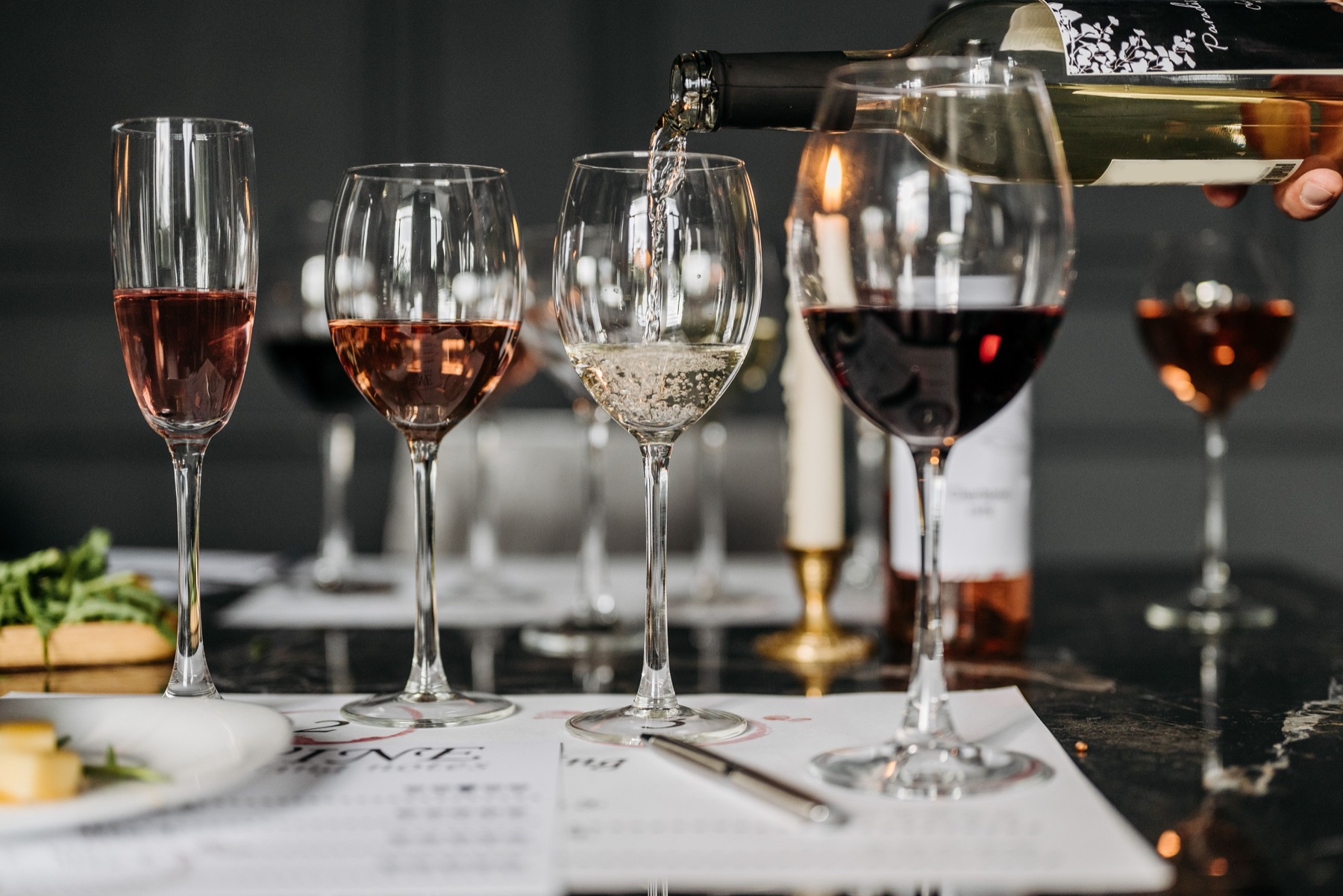
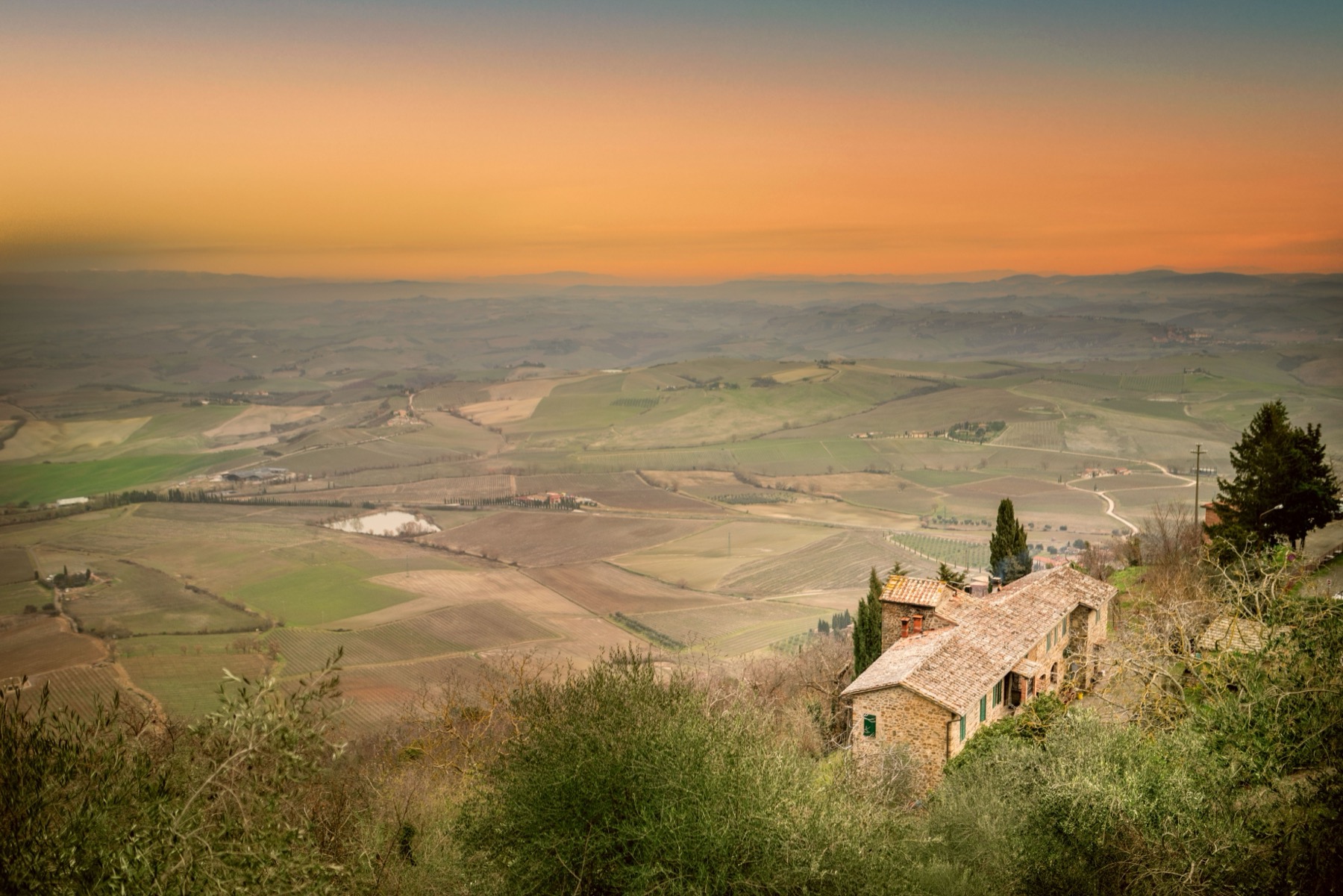
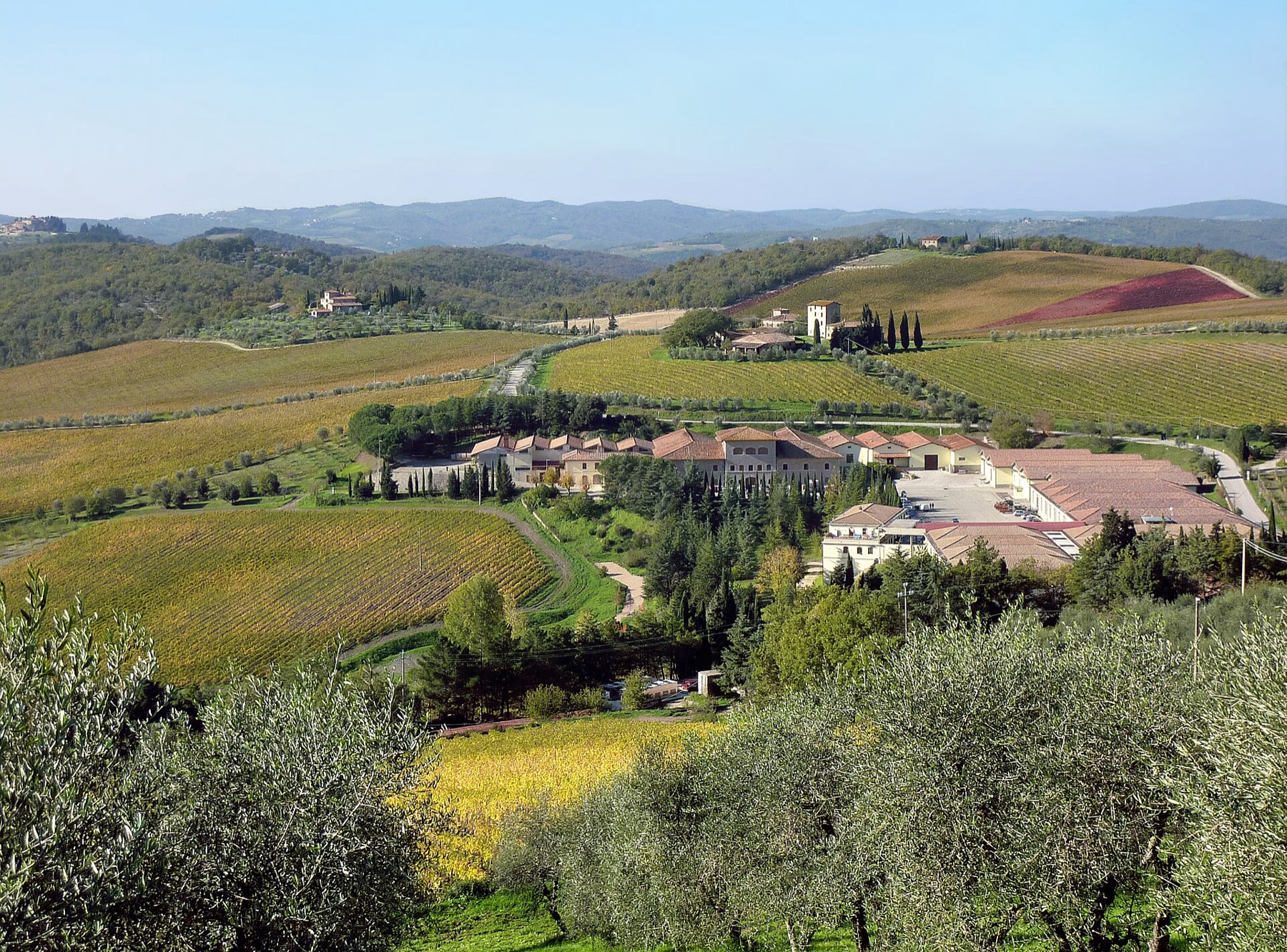
When you think of wine tasting, many of us picture carefree strolls through country wine cellars where you simply walk in off the street and the winemaker pours you a glass with a smile. But wine tasting in Tuscany works a little differently, and almost everywhere you’ll need to book in advance — otherwise you simply won’t get in. Anyone who shows up on the off chance usually ends up in a touristy enoteca on the town square, which is fine, but you’ll miss out on the real experience.
I’ll help you get to grips with the difference between a cantina and an enoteca, point you to specific places that are worth it, and we’ll also cover one thing a lot of people underestimate — drinking and driving. Italian rules on this are no joke.
Photo: Francesco Sgroi / Wikimedia Commons, CC BY 2.0
TL;DR
Booking is essential: You can’t just turn up at a traditional winery (cantina) unannounced — reserve your spot ideally days or even weeks ahead.
Tasting prices: They vary wildly, from basic tours around €10 to premium experiences that will set you back €100 and more.
Drinking and driving: Italy has a 0.5‰ limit, but drivers with less than three years’ experience have a strict zero-tolerance rule.
When to go: The most beautiful time is the grape harvest in September and October, though some places limit visits then — while August is often closed altogether.
Cantina vs. enoteca: A cantina means a guided tour with commentary, while an enoteca is more of a wine bar in town for a quick tasting.
Where to taste without a booking: If you’re short on time, town wine bars will save the day — for example the excellent Enoteca la Fortezza right in Montalcino.
Top tip: Stay at an agriturismo with its own vineyard — this solves the driving problem and lets you enjoy the wine in total peace in the evening.
Photo: Robert Schrader / Pexels
Cantina, enoteca, or agriturismo? Three different things
Before you dive into planning your trip, it’s worth getting clear on the Italian terminology. The local names often get confused and mean completely different experiences, so you know exactly what you’re getting into. Italian wine culture is very specific and runs on different rules than we’re used to elsewhere. Take a look at this simple overview that will make it easier to navigate what’s on offer.
Where you are
What it actually is
Booking needed
Cantina
The winery itself — a cellar tour and a guided tasting await you
Almost always required
Enoteca
A town wine bar, tasting by the glass, often serving food too
Usually not needed
Agriturismo with a vineyard
Farm stay where you taste the estate’s own wine in the evening
Arranged as part of your stay
A visit to a classic cantina will reliably take you an hour and a half to two hours — you’ll walk among the vines, hear about the winemaking, see historic and modern cellars, and finally enjoy a guided tasting, which is usually the real highlight of the whole program. That’s exactly why a reservation is needed here — these are working agricultural estates, and the staff can’t just drop their work in the fields to look after random passers-by.
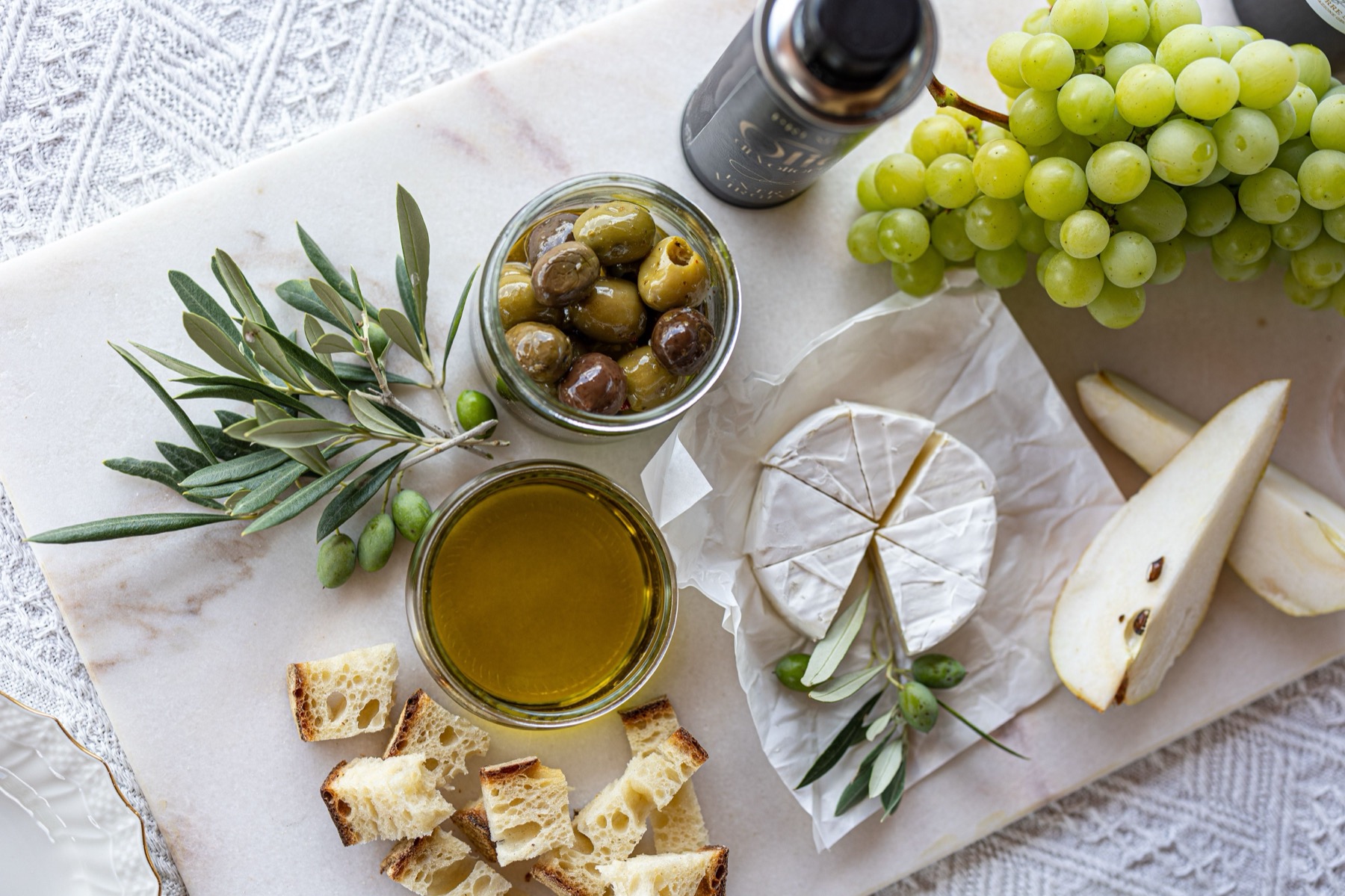
During the tasting itself in a cantina, you’re usually served three to six different samples, along with neutral homemade bread, excellent local olive oil, and pieces of mature pecorino cheese. It’s all beautifully organised and, thanks to the small groups, you have plenty of room to ask anything you’re curious about.
An enoteca, on the other hand, is essentially a specialist town wine bar that you’ll find in just about every Tuscan town, right on the main square. Here you can sit down at a table without any booking, order a glass of anything from the list, and add a plate of cheese or some olives. It’s an ideal solution for a spontaneous afternoon when you don’t feel like spending two hours on an organised tour but still want a taste of the local atmosphere.
The third option is an agriturismo, a classic Italian farm stay. Plenty of these farms have their own smaller vineyards and automatically host evening tastings for their guests. It’s probably the most comfortable way to discover Italian flavours, because you don’t have to worry about driving anywhere — you can savour the wine in complete peace with a view of the setting sun.
💡 TIP: If you only have a few days in Tuscany, I’d recommend booking one big cantina for the morning and then spending the afternoon freely exploring smaller enotecas in the historic town centres.
Photo: Pavel Danilyuk / Pexels
How much wine tasting in Tuscany costs
Your tasting budget can vary a lot depending on exactly where you go and how exclusive an experience you’re after. Always keep in mind that the prices below are only a guide and wineries may change them over the course of the season. So always check the current amounts directly on their official website, where you’ll find the freshest info and can book your slot right away.
Winery and type of experience
What’s included
Approx. price
Badia a Coltibuono
Basic tour with a tasting of 2 wines
from €10
Badia a Coltibuono
Romantic picnic right in the vineyards
€65
Castello di Brolio
Classic tour, 2 hours, held in the morning
€28
Castello di Brolio
Vineyard tour, 2 hours, Thursday afternoon
€45
Castello di Brolio
Entry to the gardens and museum including a small tasting
€8
Antinori nel Chianti Classico
Standard estate tour with a tasting
from €35
Biondi-Santi
Premium and highly exclusive tastings
from €100 ⚠️
Organised tours from Florence
Half-day group tour with transport
from €70
Organised tours from Florence
Private tour with your own driver
up to €600
If you’re looking for budget-friendly options, you’ll be pleased to know that basic tours start at a very reasonable €10. For this price you’ll usually get a shorter walk around the estate and a tasting of two samples, which is perfect for beginners. The happy middle ground then sits somewhere between €25 and €45, where you get a full two-hour excursion, a visit to historic cellars, and a richer tasting rounded off with local nibbles.
It’s important to realise that at some places you pay everything upfront when you book, which is typical for the popular Badia a Coltibuono winery, for example. That way they know for sure you’ll actually turn up and won’t needlessly block spots for other visitors. At the most famous names, like the legendary Biondi-Santi in Montalcino, you’ll need to book anywhere from two to six months ahead — and you’ll pay €100 and up for this prestigious experience. On top of that, they won’t let ordinary mass tour operators in at all, which is how they guard their exclusivity.
If you’d rather not deal with transport and complicated planning, you can take an organised tour straight from Florence or Siena. Group minibus tours start at around €70 and usually include a visit to two wineries plus a light lunch. For more demanding travellers there are private tours with your own driver — these can cost up to €600, but you get maximum flexibility and total comfort without a single worry.
💡 TIP: Be very careful when planning a summer holiday, because in August and on public holidays many premium estates are closed entirely.
Photo: Piotr Arnoldes / Pexels
Tuscany’s wine regions
Tuscany is vast, and each part has its own character, history, and the grape varieties that do best there. So you don’t get lost among all those bottles, I’ve put together an overview of the zones that are definitely worth your attention. Each region offers a slightly different atmosphere and set of flavours, so there’s genuinely something for everyone, whether you prefer light whites or heavy, age-worthy reds.
Wine region
Main wine
What it’s known for
Chianti Classico
Chianti Classico DOCG
Lies between Florence and Siena; its symbol is the gallo nero (black rooster)
Montalcino
Brunello di Montalcino DOCG
Long-aged Sangiovese, the absolute top of the whole region
Montepulciano
Vino Nobile di Montepulciano DOCG
Wows with its stunning historic cellars right beneath the town
San Gimignano
Vernaccia di San Gimignano DOCG
First Italian wine with a DOC (1966), the only Tuscan white with DOCG
Bolgheri
Super Tuscans
Bordeaux varieties, the famous iconic cypress avenue
Maremma
Morellino di Scansano
The far south, more affordable and altogether less touristy
Elba
Aleatico Passito DOCG
Sweet wine, the first DOCG of the whole Tuscan Archipelago
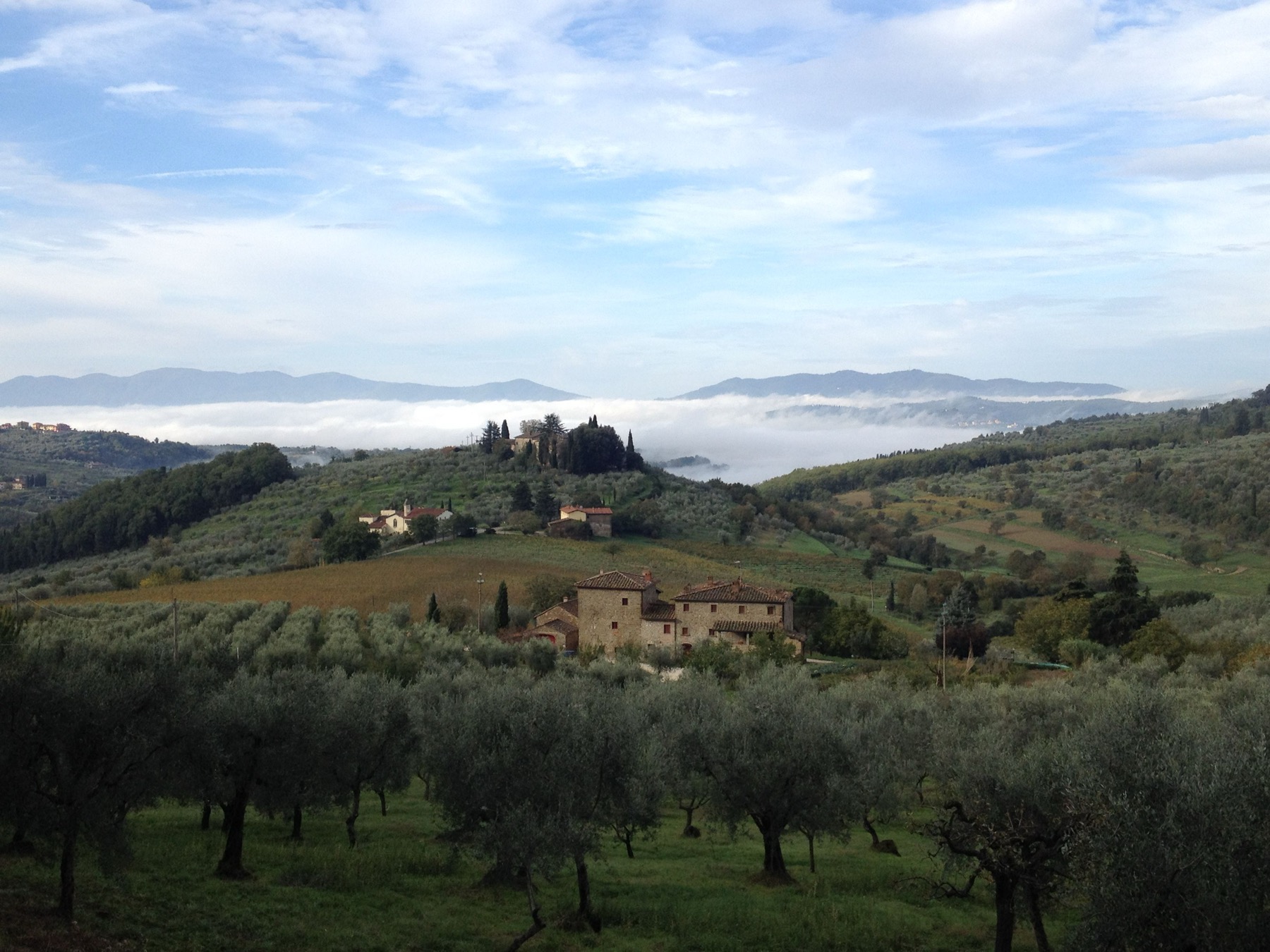
If it’s your first time in Italy for this, I’d recommend starting with the classic: Chianti Classico, which stretches across the gorgeously rolling countryside between Florence and Siena. You’ll spot it reliably by the fact that every certified bottle carries the black rooster on its neck, the historic symbol of the area. For true connoisseurs looking for the most complex flavours, on the other hand, it’s an absolute must to head further south to the area around Montalcino. The famous Brunello there ages for many years in enormous barrels and ranks among the very best wines you can taste anywhere in the world.
White wine lovers should definitely not miss the area around San Gimignano, home to the wonderful Vernaccia. It’s a huge rarity, because it’s historically the very first Italian wine to earn the prestigious DOC designation, back in 1966, and to this day it’s the only Tuscan white with the highest DOCG status. If you’re after something more modern and daring, on the other hand, head west towards the coast to the Bolgheri area, which made its name with the so-called Super Tuscan wines produced from French Bordeaux varieties.
For travellers on a tighter budget, the southern Maremma region is an absolutely fantastic choice. It’s nowhere near as busy with tourists as central Tuscany, you’ll find beautiful wild nature here, and the local Morellino di Scansano wine will delight you not only with great taste but with a very friendly price tag too.
💡 TIP: Always plan your visits around where exactly you’ve got your accommodation. Distances in Tuscany can look small on the map, but the winding country roads often make the journey a lot longer.
Photo: Adbar / Wikimedia Commons, CC BY-SA 3.0
11 wineries worth visiting in Tuscany
Finding your way among thousands of producers can be a real headache, so I’ve picked places that have great ratings and a reputation for being worth the trip. Don’t forget to check availability for all of them in advance and secure your booking through their websites in good time, so you know for certain you’ll get in.
Photo: Argentieri.Andrea / Wikimedia Commons, CC BY-SA 4.0
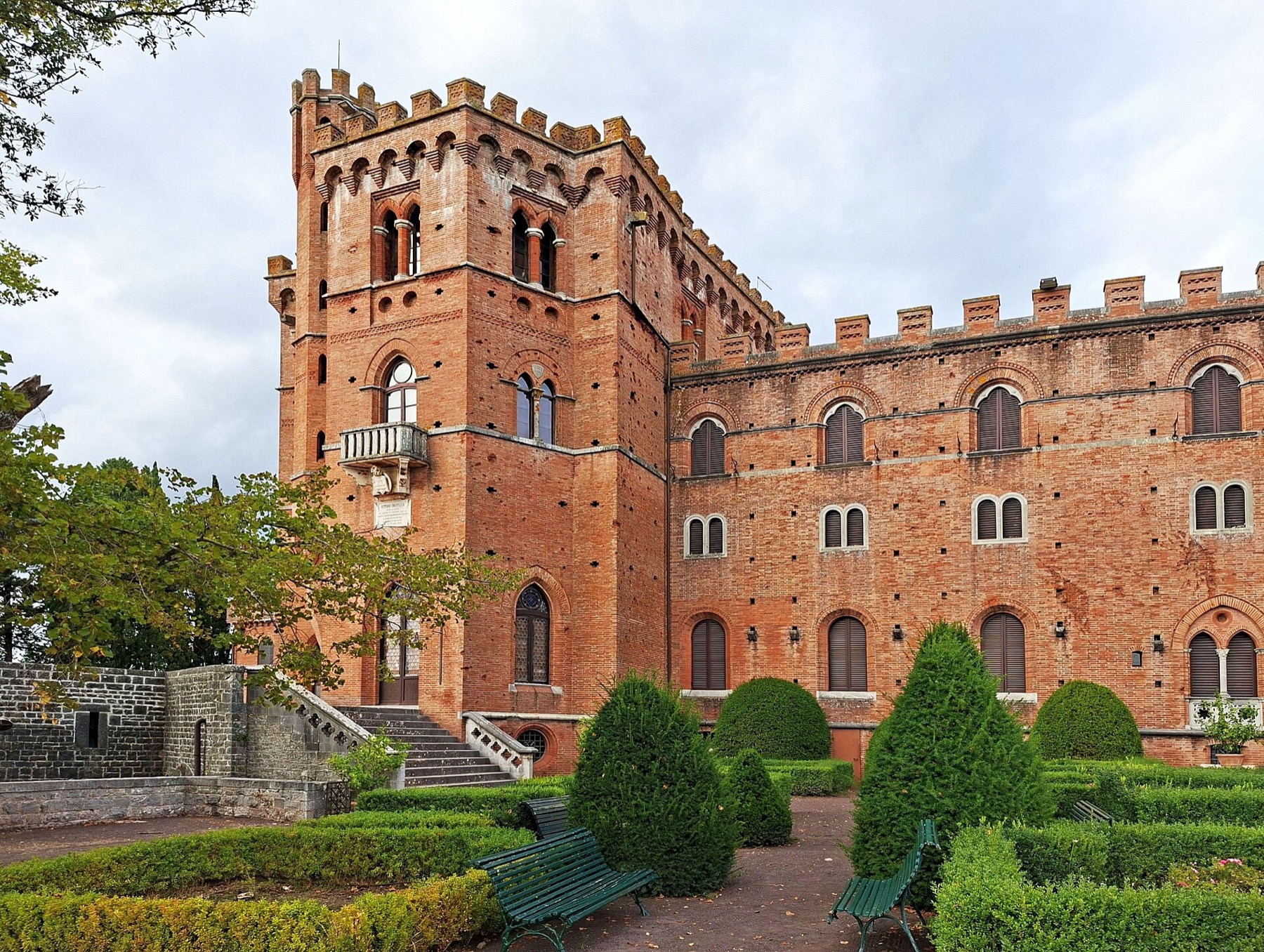
1. Brolio Castle (Castello di Brolio)
If you want to soak up some real history, you can’t miss this majestic castle, Castello di Brolio, in the Gaiole in Chianti area. It boasts an outstanding reputation and a 4.6-star rating from more than 3,300 visitors. This is where, thanks to the famous Ricasoli family, Chianti Classico itself was born, so you’ll be walking the very ground where the winemaking history of all of Tuscany began. It’s an estate that impresses from the gate onwards, whether it’s the castle itself, the cellars, or the views over the surrounding countryside.
Alongside the gorgeous views of the rolling landscape, it offers several types of tour to suit every visitor. The basic Classic tour runs in the morning and costs €28, while the Thursday afternoon Vineyard tour comes to €45. On these tours you’ll go straight into the historic cellars and find out exactly how the best wine is made from the Sangiovese grape.
For those of you who are in a hurry and don’t have time for a full guided tour, there’s a great option of entry to the gardens and museum with a small tasting for just €8. I’d definitely recommend at least walking around the outdoor areas, because that view of endless rows of vines and the surrounding hills really is worth it.
💡 TIP: Don’t forget to book your tour well in advance on their official website, because capacity tends to fill up very quickly in high season.
Photo: kay de vries / Pexels
2. Antinori nel Chianti Classico
This place is an absolute dream for all lovers of modern architecture and design, because the futuristic building from 2012 is sensitively set right into the hillside and almost blends into the surrounding nature from a distance. You’ll find the Antinori winery in the San Casciano area, and with a rating of 4.5 from more than 2,300 reviews it ranks among the most sought-after destinations in the whole region. It’s a huge contrast to the old stone farms you’re used to in Italy.
Inside you’ll find a winery with gravity-fed grape processing, a modern art collection, and a rooftop restaurant with a view that draws some visitors here with no interest in wine whatsoever. The standard estate tour with a tasting starts from €35, and given the enormous popularity of this place, I warmly recommend not leaving your booking to the last minute.
The tasting itself usually takes place in glass-walled rooms that seem to float above the barrels of maturing wine. During the tasting, the guides will explain in detail the differences between the individual appellations and vintages.
💡 TIP: Even if you’re not planning a paid tour underground, you can visit the estate, wander the freely accessible parts, and admire that incredible building from the outside.
Photo: trukdotcom / Wikimedia Commons, CC BY-SA 3.0
3. Tenuta Torciano Cantina & Ristorante
A short drive from the famous town of towers, San Gimignano, sits this family winery, Tenuta Torciano, which has by far the largest number of reviews in our list — over 3,200, with a gorgeous 4.7 rating. It’s a hugely popular and lively spot that combines a classic cantina with an excellent restaurant, so you can easily spend a whole afternoon here and truly unwind.
The big advantage is that alongside the great wine you also get to taste local culinary specialities, from excellent pecorino sheep’s cheese to fresh homemade pasta and truffle oil. The experience here is very much focused on traditional Italian hospitality and warmth, so get ready for a fairly loud, cheerful, and unforgettable atmosphere that’s guaranteed to sweep you along.
You’re also in the zone where the Vernaccia grape is grown. This is the first Italian wine ever to earn the prestigious DOC designation, and also the only Tuscan white with the highest DOCG status. Definitely have some poured for you to taste — it has a beautifully fresh, lightly mineral profile.
💡 TIP: If you’re travelling with a bigger group of friends, this place is an absolutely ideal choice, because you’ll love the owners’ family-run, laid-back approach.
Photo: Vignaccia76 / Wikimedia Commons, CC BY 3.0
4. Badia a Coltibuono
Looking for something truly special with an enormous sense of place and deep history? Then head to the Gaiole in Chianti area to this former abbey, Badia a Coltibuono, which boasts Renaissance gardens and breathtaking frescoed halls. Travellers have taken to it warmly, as shown by the lovely 4.6 rating from just under four hundred people, who especially appreciate the incredible calm of the whole estate.
They have a perfectly preserved monastery and gorgeous historic cellars that are worth a detailed look in their own right. You’ll learn just how enormous an influence the monks once had on cultivating the vine and developing all of Tuscan agriculture. The basic tasting of two wines starts at a very friendly €10, which is a great price for this area.
If you want a little more and you’re planning a trip for two, you can treat yourself to a wonderful romantic picnic right in the vineyards for €65, where you’ll get a basket full of local goodies. But remember one important thing: here all services are paid for upfront when you book, so choose your date carefully.
💡 TIP: Try to plan your visit for the spring months, when these Renaissance gardens are in full bloom and make a fantastic backdrop for photos.
Photo: Graeme Maclean from Glasgow, UK / Wikimedia Commons, CC BY 2.0
5. Castello Banfi Il Borgo
We’re moving south to the picturesque surroundings of Montalcino, where the landscape is dominated by this beautiful, sprawling complex, Castello Banfi. It belongs to an American company that once played a key role in putting the name Brunello on the world map. It’s a truly meticulously run estate that has long held a fantastic 4.8-star rating from more than 650 visitors.
The setting here is very elegant, you could even say luxurious, and the whole estate feels like it’s been carefully arranged for a period film. Definitely walk around the castle and stop by the local shop — the peaceful atmosphere that reigns here is absolutely characteristic of southern Tuscany, and you’ll tell it apart from the busier north instantly.
The tours here focus on explaining in detail what Brunello di Montalcino actually is. You’ll learn that it’s made from one hundred percent Sangiovese and that it has to age for many years in enormous oak barrels before it can even leave the winery gates. It’s a great school for anyone who wants to get to grips with the secrets of premium wines.
💡 TIP: The estate is also home to a wonderful museum of glass and bottle history, which you definitely shouldn’t skip — entry is often part of the tour route.
Photo: Rob & Lisa Meehan / Wikimedia Commons, CC BY 2.0
6. Azienda Agricola Podere Bucine
If you prefer smaller estates over big, famous names, this little family winery in Greve in Chianti will completely charm you. It holds the highest rating in our entire selection — a full 5.0 stars based on more than 450 reviews. That alone speaks to exceptional quality and huge guest satisfaction.
You won’t find any mass tourism here — instead, a very personal approach and the owners’ full attention, and they’ll happily look after you with a smile. It’s exactly at these intimate places that you often learn the most interesting details of a farmer’s everyday life and taste wines they’ve poured their whole heart into.
What’s more, you’re in the very heart of the Chianti Classico region, which you can tell from the fact that every certified bottle from this zone carries the black rooster symbol on its neck, the so-called gallo nero. During the tasting, fresh bread dipped in their own olive oil will be waiting for you, which pairs absolutely fantastically with the wine.
💡 TIP: The route to the farm can be a bit more of an adventure and runs along dirt tracks, so drive carefully and don’t let the sat-nav put you off.
Photo: Ivanna Di Lorenzo / Pexels
7. Cantalici Winery L’Antica Fornace di Ridolfo
Another hidden gem sits in the Castagnoli area near the little town of Gaiole in Chianti and boasts an almost perfect rating of 4.9 from more than 300 people. It’s exactly the place to go when you want a calmer atmosphere far from the biggest crowds and want to enjoy honest Tuscan craftsmanship in the gorgeous setting of an old brickworks.
The rooms here have a very rustic, authentic feel that contrasts beautifully with the more modern super-wineries like Antinori. The cellar tours are led very engagingly, and the guides will explain the whole process of ageing wine in traditional wooden barrels as well as modern stainless-steel tanks.
I recommend planning your trip here ideally in the spring months or at the start of autumn, when the surrounding countryside is beautifully coloured and you can savour that easy pace to the full. Ask the staff which vintages still need time — they’ll happily advise you on what to open right away and what to tuck away in the cellar.
💡 TIP: If you’re after a small family estate where a genuine Tuscan tradition washes over you, with none of the unnecessary commercial gloss, you definitely won’t put a foot wrong here.
In the heart of the wonderful Greve in Chianti area lies this likeable and very photogenic winery, which has earned a solid 4.6 rating from more than two hundred reviews. The estate offers gorgeous views over rolling hills full of vineyards, exactly the sight that makes us all so happy to come to Italy.
The tours here tend to be led very clearly, in a relaxed and engaging way, so you’ll learn plenty of interesting facts about the local grape varieties without it sounding like a dull school lecture. The guides take you right among the vines, where they’ll show you how the vine is pruned and just how much influence the local soil has on the final taste of the wine in your glass.
Definitely leave yourself plenty of time so that after the guided tasting you can wander the whole estate at your leisure and take a few lovely photos to remember it by. They also have a beautiful outdoor seating area, where time somehow flows more slowly and you can fully enjoy the Italian la dolce vita.
💡 TIP: The wines from here are known for their excellent value for money, so definitely leave some room in your case for a few bottles to take home.
Photo: Leander / Pexels
9. Rocca di Frassinello
This place is something completely different and will thrill lovers of modern design and architecture above all. You’ll find it in the south, in the Maremma area near the town of Giuncarico, and it stands out for its stunning modern architecture, designed by the famous architect Renzo Piano. That has earned it an excellent rating of 4.7 stars from nearly three hundred visitors.
The Maremma region is generally less touristy and a little more affordable than central Tuscany, so here you’ll experience a completely different, wilder face of the region. The wines here are full of sunshine and, thanks to the proximity of the sea, have a very specific and unmistakable character that’s sure to pleasantly surprise you. The main grape grown here is Sangiovese under the local name Morellino di Scansano.
The whole winery building is designed as an enormous amphitheatre, in the middle of which the barrels of wine rest majestically. It’s an incredibly photogenic space that combines industrial elements with traditional winemaking, and a tour of this underground is an experience in itself.
💡 TIP: Because you’re fairly close to the coast, you can perfectly combine a visit here with an afternoon swim in the sea.
Photo: Type17 at English Wikipedia / Wikimedia Commons, CC BY 2.5
10. Enoteca la Fortezza di Montalcino
This isn’t a classic cantina surrounded by vineyards, but it simply belongs on our list because it’ll save you in a situation where you haven’t got anything arranged. This excellent enoteca is housed right inside the historic fortress in Montalcino and, with a rating of 4.3 from a respectable 900 people, ranks among the absolute most popular stops in the whole town.
The main advantage is that here you can taste the famous Brunello with no reservation at all — you simply walk in off the street, look over the wine list, and pick whatever you fancy at the bar. It’s an ideal solution for spontaneous day-trippers who don’t want to be tied to exact tour times but still long to sample the best of the local production.
The rooms of the old fortress give the tasting a wonderful historic atmosphere. They’ll happily serve you excellent sheep’s cheeses, olives, and fresh bread with your wine, so you can sort out a light lunch here in peace too. The staff are very knowledgeable and will gladly recommend a wine to match exactly what you like.
💡 TIP: Once you’ve finished your glass, definitely pay for entry onto the fortress ramparts. They offer a fantastic panoramic view over the entire Val d’Orcia valley.
Photo: The original uploader was Type17 at English Wikipedia. / Wikimedia Commons, CC BY-SA 2.5
11. Biondi-Santi
Finally, we have an absolute legend from Montalcino that every true wine lover should know. Although they don’t have a public rating on Google, their significance for the whole region is fundamental. It was on this very estate that the famous Brunello di Montalcino was historically created in 1888. It’s a very prestigious affair for genuine enthusiasts who want to taste wine with the deepest possible tradition.
Getting here, though, is by no means easy and takes a huge amount of planning. You have to book your slot anywhere from two to six months ahead, because interest from all over the world is enormous. On top of that, these premium and highly exclusive tastings start at €100 and up per person, so it’s an investment in a truly exceptional experience.
They won’t let ordinary mass tour operators in at all, which is how the winery keeps its intimate character. Visits are strictly Monday to Friday only, so you won’t get anywhere with a weekend trip here. If you’re planning a journey for the end of summer, be very careful, because in August they’re closed entirely and absolutely no one gets in.
💡 TIP: Brunello from this estate is renowned for its incredible longevity. If you take a bottle home, you can easily cellar it for several decades.
Photo: lebəˈ nēz / Pexels
Tasting and driving: how not to get it wrong
This is where a lot of people come unstuck, which is why I want to look at it in more detail. In Italy the drink-driving limit is 0.5‰, which sounds fairly generous, but for drivers with less than three years’ experience there’s a strict zero-tolerance rule. A standard tasting includes three to six generous samples, so you’ll reliably exceed the limit after even a single visit. The local police, the so-called carabinieri, tend to be especially active during the autumn harvest, and checks on country roads are completely routine.
So how do you avoid landing yourself with a huge fine and a ruined holiday? The first option is to have a designated driver in your group who only sniffs the wine, rolls it around on the tongue, and then spits it out. Every tasting has special spittoons ready for this, and believe me, it’s not rude at all — winemakers fully expect it. It may feel a bit odd to us, but in the professional wine world it’s a completely standard procedure.
The second, far more relaxed option is to pay for an organised tour with a driver, for example from Florence or Siena. Group minibus tours start at around €70 and usually cover transport, a visit to two wineries, and a light lunch. If you like your privacy and want to set your own route, you can hire a private car with a driver, but you’ll pay up to €600 for that. Another popular solution is to use a town enoteca, which you simply walk to on foot from your apartment while your car stays safely parked.
The most elegant route of all, and the one I personally recommend most, is to stay right at a winery or an agriturismo that makes its own wine. In the evening you simply sit down on the terrace, taste everything their vineyard has to offer with the owners, and then take just a few steps straight to bed. You save yourself a load of logistical hassle and get the most authentic Italian experience.
Photo: Gonzalo Acuña / Pexels
When to go for a wine tasting
If you have the chance and want to experience the most authentic winemaking atmosphere, head to Italy in September or October, during the so-called vendemmia — the grape harvest itself. It’s absolutely the most beautiful season, full of golden and red colours, and you’ll catch the typical sweetish smell of fermenting must in the air everywhere. But you’ll need to bear in mind that wineries are extremely busy at this time, and some places significantly limit tourist visits during the harvest, simply because they have to work on the crop first and foremost.
A calmer alternative — and, in my view, an absolutely brilliant one — is the spring months from April to June, when the whole landscape wakes up and the vineyards are gorgeously fresh and green. In this period it’s generally much easier to get reservations even at the most sought-after places, and the weather is already very pleasant for long walks outside without roasting in 40-degree heat. A spring visit also has the advantage that winemakers have more time to look after you personally and answer all your curious questions.
But be very careful about August, when lots of Italians take their holidays because of the well-known Ferragosto holiday, and many businesses are simply closed entirely. As I mentioned, the famous Biondi-Santi winery, for example, doesn’t operate for the whole of August and absolutely no one gets in. As for winter, operation is a little more limited and the landscape feels a touch sleepy, but cellars generally stay open, everything is significantly cheaper, and you certainly won’t be squeezed in among annoying crowds of tourists. It’s the ideal time for those who are after peace and quiet and want the guide all to themselves.
Photo: kasia kurosz / Pexels
Practical tips worth knowing
A few things that seem like trifles at first glance, but ultimately decide whether you’ll remember the trip as brilliant or as a lesson for next time. They’re seemingly small details, but they make an enormous difference to how much you end up enjoying the whole trip.
The single most important thing is planning and communicating in good time. Reserve your spots in advance, ideally by email, and at the truly top estates go ahead and book long months ahead. And if you’re trying to fit in as many places as possible in one day, hold on. Don’t do more than two tastings a day. Partly for safe drinking, and partly because after the third visit you won’t be able to tell anything apart properly anyway, and all the samples will start blurring into one.
Before the cellar visit itself, be careful with cosmetics and ideally don’t put on any perfume at all. A strong cologne or perfume will instantly overpower the delicate aroma of the wine for you and everyone around you, which can ruin the whole tasting. During the tasting it also pays to shop smart, because buying bottles right there on the spot tends to be noticeably cheaper than in a regular shop. Very often they’ll also offer you special vintages that never make it into standard worldwide distribution.
If you buy a larger quantity of bottles and don’t want to lug them around in the boot, don’t be shy about asking to have the wine shipped home. Larger producers routinely send insured deliveries abroad, so you don’t have to haul anything around. If you’re flying, remember the airlines’ strict security rules. ⚠️ You simply can’t take wine in your carry-on, so you’ll need to allow for a checked bag or use professional shipping. For travelling around the region itself, follow the brown signs reading Strade del Vino — these are the officially marked wine routes, which work as a great, logical framework for planning your whole day out.
Photo: Mone Kostner / Pexels
Where to stay among the vineyards
💡 Accommodation and experiences tip: We prefer to look for accommodation on Booking.com, which usually has the best cancellation terms. For tickets, tours, and activities, it pays to compare and book through GetYourGuide.
As I mentioned when it came to the driving problem, the best solution to the whole logistical puzzle is to choose the right accommodation. When you pick a stylish agriturismo or a working winery with its own guest rooms, you save yourself a lot of stress and get the real Italian experience. During the day you can explore historic sights in peace, and once you’re back at your room, all you have to do is head downstairs, order a board of local cheeses, have some local wine poured, and enjoy the sunset.
Prices in Tuscany vary enormously by location and level of luxury, so there really is something for everyone. You can get an ordinary family agriturismo off-season for roughly €80 to €145 per night for two people, while a stay in historic castles and luxury boutique hotels can easily set you back €330 and more per night. Always choose your accommodation based on which wine region you want to explore, so you don’t waste hours in the car on gruelling drives along country roads.
If you’re after specific inspiration, take a look at these highly rated options that have delighted plenty of travellers:
In the Gaiole in Chianti area: A wonderful experience is offered by Castello di Tornano, where you sleep right inside a medieval castle and the pool is set into the former castle moat. Rated 4.5 out of 5 on Google by 210 guests.
Around Siena: A great choice for food lovers is Agriturismo Villa il Castagno Wine Resort, a wine resort with vineyard views, its own restaurant, and a pool a short drive from Siena. Rated 4.6 out of 5 on Google by 198 guests.
Right in Montalcino: For those looking for the absolute top and who don’t mind paying extra, there’s the stunning Castello Banfi – Il Borgo. A luxury boutique hotel right on the famous wine estate, from which you’ll never want to leave.
In Greve in Chianti: You’ll get gorgeous views over the vineyards at the elegant Borgo del Cabreo, which combines traditional Tuscan architecture with modern comfort, a pool, and a terrace. Rated 4.9 out of 5 on Google by 259 guests.
If you don’t know exactly where to start your search, I’d recommend taking a look at our detailed article Agriturismo in Tuscany: 20 tips, prices, and how to choose, where you’ll find plenty more inspiration. For a broader overview of the various price categories, definitely check out our guide Accommodation in Tuscany: 30 tips from cheap to luxury. Sleeping right in the middle of green slopes is simply something you definitely shouldn’t miss on your Italian journey.
Where to next
If you’re still getting ready for Italy and fine-tuning the details, you’ll definitely find these other handy articles from our blog useful for planning an unforgettable trip.
Tuscany has its own rules, and for a lot of travellers a first visit to the local vineyards can be a little confusing. That’s why I’ve put together answers to the most common questions I get from you about Italian tastings.
Whether you’re working out the ideal budget, transport, or how it all actually works with reservations, you’ll find everything neatly in one place here. It’ll help you get your bearings before you even set off.
Do I always need a reservation for a tasting?
At a traditional cantina, almost always yes, and well in advance – for famous estates, sometimes months ahead. However, if you just pop into a city enoteca, you won’t need any reservation and you can drop in spontaneously straight from the street for a glass and some good cheese to nibble on.
How much does an average tasting actually cost?
Prices start at a very pleasant €10 for the simplest tours, but most commonly you’ll find prices between €28 and €45 for a full two-hour experience. However, if you’re aiming for the absolute top tier and exclusive premium experiences with rare vintages, you can easily pay €100 or more per person.
How best to handle driving on a wine tour?
The safest option is to designate one driver who will only sniff and spit the samples into the containers provided, which is completely common and respected practice at wineries. Another great option is to book an organized tour with transport included, or cleverly stay overnight right at the winery, so you won’t be driving anywhere in the evening.
When exactly does the famous Italian harvest take place?
The famous vendemmia, as Italians call the harvest, takes place mainly during September and October. It’s a beautiful time full of colors and the distinctive aroma of fermenting must, but remember that winemakers have their hands full, so some estates prefer to limit tourist visits during this period.
Which winery should I visit for the first time?
If you’re going to Tuscany for this purpose for the first time, the ideal choice is the Chianti Classico area, which is perfectly accessible from Florence and Siena. Try starting at the stunning Castello di Brolio or the more peaceful historic monastery of Badia a Coltibuono, where you’ll experience the true Italian atmosphere. These are safe bets that are guaranteed to enchant you.
What is gallo nero?
Translated, it means black rooster, and it’s the official and very strictly protected symbol used to mark bottles of authentic Chianti Classico. If you see this symbol on the neck of the bottle, you have absolute certainty that you’re holding a certified, high-quality bottle from the finest historic zone lying between Florence and Siena.
Can you taste Brunello without a reservation?
Yes, you can definitely manage it, although a traditional cantina most likely won’t let you in without notice. A great solution is to head to Enoteca la Fortezza, which is housed right in the imposing fortress in Montalcino, where they’ll pour you excellent Brunello without any reservation right at the bar.
Is it worth buying wine directly at the winery?
Absolutely yes, buying directly at the source is usually noticeably cheaper than in regular shops or commercial wine stores. Plus, the staff there will often offer you exclusive limited-edition vintages for sale that never make it into standard worldwide distribution, so you’ll bring home a truly unique souvenir.
Tips and Tricks for Your Vacation
Don’t Overpay for Flights
Search for flights on Kayak. It’s our favorite search engine because it scans the websites of all airlines and always finds the cheapest connection.
Book Your Accommodation Smartly
The best experiences we’ve had when looking for accommodation (from Alaska to Morocco) are with Booking.com, where hotels, apartments, and entire houses are usually the cheapest and most widely available.
Don’t Forget Travel Insurance
Good travel insurance will protect you against illness, accidents, theft, or flight cancellations. We’ve had a few hospital visits abroad, so we know how important it is to have proper insurance arranged.
Where we insure ourselves: SafetyWing (best for everyone) and TrueTraveller (for extra-long trips).
Why don’t we recommend any Czech insurance company? Because they have too many restrictions. They set limits on the number of days abroad, travel insurance via a credit card often requires you to pay medical expenses only with that card, and they frequently limit the number of returns to the Czech Republic.
Find the Best Experiences
Get Your Guide is a huge online marketplace where you can book guided walks, trips, skip-the-line tickets, tours, and much more. We always find some extra fun there!
Marrakech in Morocco is a city that either completely sweeps you off your feet or has you wanting to flee after just a few hours. When Lukáš and I set off here in December on our big Moroccan road trip, it threw us straight into unbelievable chaos. Exotic spices scent the air everywhere, vendors call out to you from every corner, and scooters weave through the narrow alleys so tightly that you have to keep jumping out of the way.
Choosing the right accommodation is absolutely key here, because after a day packed with impressions you need a calm refuge. Back then, as backpackers, we went for the budget Riad Sijane. Today the choice of riads is far wider, though, and for reasonable money you can even get a quieter spot with a little pool. In this article I’ll show you in detail which neighbourhoods make sense for different types of travellers, and together we’ll pick out the most beautiful riads, from cheap to genuinely luxurious.
If you’re planning to rent a car right at the airport, let me honestly warn you that driving in the centre really is a test of nerves. We handled traffic in Uganda and Thailand without a scratch, but this one gave us a serious run for our money. So consider staying somewhere on the edge of town instead, because untangling yourself from the historic centre can easily take an hour.
TL;DR
💡 Tip: You can compare accommodation in Marrakech all in one place — check availability and prices in Marrakech. It pays to book well ahead, as the best value-for-location spots disappear first.
Best budget stay right in the heart of the action: Riad Bibazia
Ideal for travellers with a car, away from the crazy traffic: Hôtel Toulousain
For no-frills backpackers and solo travellers: Riad Sijane
Which area to choose
Marrakech is split into several very different parts, and each one offers a completely different experience. Inside the old walls you’ll travel back several centuries in time, while just outside them you’ll find modern cafés and wide boulevards. Your choice of neighbourhood will shape your whole holiday, so it’s worth thinking it through carefully.
The Medina (old town) is the most classic choice for a first visit, because this is where you’ll find the famous Jemaa el-Fnaa square, the Koutoubia Mosque and endless souks full of colourful goods. Life here plays out on rooftop terraces over sweet mint tea rather than in noisy bars, which has an incredible charm. But I have to warn you firmly that the medina is dangerous for tourists at night. After dark it’s best to stick to the main routes, and women should definitely not walk here alone at night.
Guéliz (the new town) was built by the French during the colonial era and at first glance feels more like southern Europe. You’ll find wide tree-lined avenues, modern shops and upscale restaurants with a Western standard. It’s a great choice for those who don’t want to step out of their comfort zone or simply worry about getting lost in the tangled old town. The downside is that, compared to the medina, this quarter lacks a bit of that true oriental soul, and you won’t experience that typical Moroccan chaos here.
Hivernage is the absolute byword for luxury resorts and elegant nightlife. During the day it’s perfectly peaceful for relaxing by the pool, but in the evening the whole quarter comes alive with music and lights from its famous venues. It’s the ideal compromise, because you’re still very close to the old town while enjoying every conceivable comfort.
Palmeraie lies a short drive out of the city and works as a huge oasis full of towering palm trees. It’s home to the most luxurious palace resorts, though prices here far exceed the level of a lovely riad in the centre. If you’re after absolute privacy, golf courses, and don’t mind commuting into the centre by taxi, you’ll be thrilled here.
When to go and when to book — Marrakech Morocco weather
Marrakech is undoubtedly a year-round destination, but spring and autumn mark the absolute peak of the tourist season. In March, April, October and November the temperatures are at their most pleasant, around 25 degrees, so you can stroll among the sights beautifully without dripping with sweat after five minutes of walking. In these months, however, you need to book accommodation at least three months in advance, because the best and most photogenic riads vanish at incredible speed.
Lukáš and I set off to Morocco in December, and you have to reckon with fairly big temperature swings. During the day it was a lovely 18 degrees, absolutely ideal for sightseeing, but at night temperatures dropped to around 5 degrees. If you travel in winter as we did, definitely check in advance that your riad has working heating in the room, or air conditioning with a heating function. Old Moroccan houses work like a fridge.
As for a rough budget for 2026, the price differences here are absolutely enormous and there’s genuinely something for everyone. A bed in an ordinary hostel in the medina will cost you roughly €12 to €18 a night. A small, simple riad will set you back €40 to €70 and give you a lovely private room. For a really nice riad with a little pool you’ll pay €50 to €120, while premium mid-range runs between €80 and €220. The most luxurious riads with views of the Atlas Mountains then start at €300 and climb easily to €700 a night.
Our eight-day Moroccan road trip cost the two of us a total of around €950, though it’s true we stuck mostly to the cheaper accommodation options.
Overview of accommodation in Marrakech. Prices are indicative and change with the season.
14 best hotels and riads in Marrakech, Morocco
Let’s take a look at specific tips on where to rest your head. We’ve carefully mapped the market for you and picked the most interesting options for every conceivable budget.
Photo: El Fenn Hotel, Restaurant and Rooftop Bar / Google Maps
1. El Fenn
This boutique riad ranks among the absolute best of what you can experience in Marrakech, and if you have an unlimited budget it definitely won’t disappoint. It’s a complex of several connected historic houses that together form a huge labyrinth full of amazing art and gorgeous rich colours. There are several pools tucked away in the shade of exotic plants, where guests enjoy complete calm far from the noisy markets. Every room is a total one-off, and inside you’ll feel like you’re in a luxury gallery.
In their reviews, guests most love the amazing rooftop terraces, where fantastic, generous breakfasts are served. The view from the terrace straight onto the snowy peaks of the Atlas Mountains is said to be absolutely breathtaking, and towards evening it turns into pure romance. Price-wise you’re in the highest luxury category here, so count on roughly €400 to €700 a night, and it’s often sold out months ahead.
💡 Tip: If you’re not actually staying here, at least try to book a table at the rooftop bar, where they serve great drinks at sunset.
Photo: La Sultana Marrakech / Google Maps
2. La Sultana Marrakech
Right next to the famous Saadian Tombs hides this incredibly luxurious palace with 28 uniquely furnished rooms. La Sultana offers stunning architecture full of carved wood and intricate multicoloured mosaics that instantly transport you into the tales of the Arabian Nights. The whole property is designed to offer maximum privacy, which makes it a very sought-after place for a peaceful holiday. The rooms are huge and full of antique furniture from local workshops.
Inside the palace you’ll find a first-class spa where you can treat yourself to a traditional Moroccan hammam at the very highest level. The rooftop restaurant offers a beautiful panoramic view over the whole city, which you’ll appreciate especially at romantic dinners under the stars. The price level for this five-star experience runs between €300 and €600 a night.
💡 Tip: This hotel is reportedly ideal for honeymooning couples, because the staff can arrange incredibly romantic surprises with rose petals right in your room.
Photo: Angsana Riads Collection Morocco / Google Maps
3. Angsana Heritage Collection
If you love deep history combined with top-notch Asian service, this collection of restored historic buildings from the Banyan Tree group will completely win you over. Each house in the collection has its own unique story and has been very sensitively renovated by local craftsmen to keep its authentic soul. The buildings are scattered across the medina, so you can stay in exactly the part of the old town that suits you best.
The rooms are decorated in a darker, very elegant traditional style with heavy curtains and wrought-iron lamps. Guests especially appreciate the incredible calm that reigns here even though you’re just a short walk from the busy markets and honking scooters. For a night in this quiet luxury you’ll pay from €300 upwards, with flawless personal service included.
💡 Tip: Be sure to try their renowned massages, as the therapists are trained directly at Banyan Tree’s Thai academies and blend Moroccan traditions with Asian techniques.
Photo: L’Hôtel Marrakech / Google Maps
4. L’Hotel
Behind this incredibly stylish 19th-century project stands British designer Jasper Conran, who created a true oasis of taste here. L’Hotel offers just six exclusive suites, laid out around a beautiful central courtyard with a large heated pool. Thanks to such a small number of rooms, the atmosphere is wonderfully intimate, and you often have the whole pool to yourself, which is a huge luxury in Marrakech.
The interiors masterfully combine genuine Moroccan craftsmanship with antique furniture brought in from all over Europe, creating a very sophisticated atmosphere. It’s a perfect choice for lovers of refined design who are after a calm setting without crowds of other tourists. Prices match this high exclusivity and start at roughly €400 a night.
💡 Tip: On cooler autumn and spring evenings you can have a fire lit in a classic fireplace, which is part of some of the more luxurious suites.
Photo: Riad BE Marrakech / Google Maps
5. Riad BE Marrakech
This riad in the southern part of the medina is one of the most photographed places on the entire internet, and you’ve surely seen it somewhere already. It went through a very sensitive and incredibly colourful renovation that leaves it feeling amazingly fresh, clean and youthful. The green turquoise tiles around the main plunge pool are simply iconic and contrast beautifully with the surrounding plants and clay walls.
It’s an absolutely fantastic choice for travellers looking for affordable luxury and a gorgeous setting for their photos. Breakfast is served on the amazing rooftop terrace and, according to many reviews, it’s huge, varied and utterly delicious. Price-wise you’ll comfortably fit into a very reasonable €120 to €220 a night.
💡 Tip: The riad even runs its own yoga studio, so you can start your day full of walking with a morning stretch and a breathtaking view over the waking city.
Another internet legend, made famous by its gorgeous emerald-green pool with a large painted symbol on the bottom. This boutique riad offers just ten cosy rooms, which guarantees guests a very personal, friendly approach from the welcoming owners. Each room is named after a different Moroccan region and has its own specific colour palette, so you can keep coming back and experience something a little different each time.
The atmosphere is beautifully rounded out by mature orange trees and comfy padded loungers set around the water. It’s an absolutely ideal spot for couples in love looking for a romantic hideaway from the bustle and dust of the noisy medina. A night here will cost you roughly €80 to €150, which is a very fair price for such beauty.
💡 Tip: They have an adorable cat called Bowie who reportedly loves to get cuddles from guests over the morning coffee.
Photo: Franck Nado / Google Maps
7. Riad Shama Suites
If you’re travelling with kids or in a larger group of friends, this riad is an absolutely fantastic and practical choice. The rooms here are unusually generous and spacious, which is certainly not the rule in the medina’s cramped old buildings. Families will appreciate that a cot fits comfortably in the rooms, with plenty of space left over for all your suitcases and toys.
In the middle of the large, bright courtyard there’s a beautifully clean pool you can happily plunge into after a full day of walking. The whole place is very calm and pleasantly quiet, so you and your kids will sleep wonderfully after a demanding day. Price-wise this spot falls into the mid-range with very good value for money.
💡 Tip: The staff are reportedly very accommodating when it comes to special kids’ meals and will gladly help you organise family day trips to the surrounding area.
Photo: Hussain Al gullan / Google Maps
8. Riad Dar El Bahja & Spa
This traditional riad sits in a very strategic location, with all the main sights relatively close by. It offers a very authentic and warm Moroccan experience with beautiful carved doors, wrought-iron chandeliers and colourful mosaics at every turn. From the outside it looks like an ordinary wall, but as soon as you step inside, a calm space full of greenery opens up before you.
The riad also includes a small but very pleasant spa where you can rest after a long day of walking on the paving. Guests particularly praise the very clean rooms and the ever-smiling staff, who are happy to help you find your way through the winding alleys of the old town. Price-wise it’s a very comfortable middle ground.
💡 Tip: Be sure to order the traditional super-sweet mint tea as soon as you arrive; it’ll help you switch beautifully into slow Moroccan mode.
Photo: Riad Alia / Google Maps
9. Riad Alia
A beautiful and reliable choice in the mid-price category that certainly won’t let you down with its service. Riad Alia cleverly combines traditional Moroccan architecture with modern amenities, so you won’t be missing anything from the usual European standard you’re used to. The walls are decorated with traditional stucco and the floors are covered with hand-woven Berber rugs that lend the place warmth.
The inner courtyard is full of lush greenery and hides a small plunge pool that literally saves lives on scorching summer afternoons. The breakfasts served here are fresh and incredibly generous, full of warm homemade pastries, jams and fresh fruit bought at the morning market.
💡 Tip: Rooms on the upper floors get a bit more daylight than those on the ground floor, so when booking try asking for a room upstairs.
Photo: Lumarie / Google Maps
10. Maison Dar Saada
For travellers on a tighter budget, this cosy accommodation is a real hidden gem. Maison Dar Saada lies right in the very heart of all the action, so the main Jemaa el-Fnaa square and the best-known sights are just a few minutes’ walk away. That means you don’t have to spend money on taxis and can explore most of the city comfortably on foot.
Despite the significantly lower price, the house keeps a wonderful authentic atmosphere and the owners look after it with love and care. There’s no unnecessary luxury or big pool here, but you’ll find comfortable beds, clean, well-kept bathrooms and a huge dose of genuine Moroccan hospitality.
💡 Tip: An excellent choice for those who want to spend most of the day exploring the city and soaking up the atmosphere, and only come back to their accommodation to sleep.
Photo: RIAD BIBAZIA / Google Maps
11. Riad Bibazia
This cheaper riad is a huge surprise, because for little money you get a lot of bang for your buck and great service. It sits in a very safe and quiet alley, so in the evenings you don’t have to worry about street noise or pushy vendors disturbing your sleep. The interior is bright, clean and very tastefully furnished with respect for local traditions.
The biggest asset of this place is the incredibly welcoming staff, who will happily help you with everything and even arrange an airport transfer. The riad is smaller but very cosy, and they even have a lovely little rooftop terrace for evening lounging under the stars. In Morocco we followed a rule from the English-language travel forums and ate where the locals eat, which guaranteed us great food.
💡 Tip: Ask the staff to recommend where to eat well and cheaply nearby; they have great tips for local spots away from the pricey tourist traps.
Photo: Riad dada messouda & spa / Google Maps
12. Riad Dada Massouda Spa
A great compromise for those who want to save on accommodation but also like to treat themselves to a little relaxation and pampering. Despite its low price, this riad offers its own spa facilities, which is a huge and very welcome rarity in this affordable price category. You can enjoy traditional treatments without ever leaving the comfort of your hotel.
The rooms are furnished fairly simply but very tastefully, with a huge emphasis on everyday cleanliness. The atmosphere here is more homely and relaxed, so you’ll quickly feel like you’re visiting distant relatives rather than staying at an impersonal hotel chain.
💡 Tip: Book a relaxing hammam with them for your very first evening; it’ll help you beautifully wash away the fatigue of the journey and all the stress from the airport.
Photo: Hotel Toulousain / Google Maps
13. Hôtel Toulousain
If you’re travelling around Morocco by car, give the medina a wide berth and stay here instead. This hotel is in the modern Guéliz quarter, which means you can drive here in peace without losing your mind in the narrow alleys between donkey carts. We had a little rented Fiat Panda and got pretty sweaty in the traffic. Over five days, by the way, the police stopped us something like twenty times, so be ready for frequent checks and arm yourself with patience.
Hôtel Toulousain offers a very pleasant standard, a beautiful tropical garden and, above all, the calm you need from the street chaos. You’ll be a short walk from modern cafés and the big shopping avenues, while the old town is a pleasant stroll of about twenty minutes away.
💡 Tip: An ideal base if you want to set out from Marrakech on day trips towards the Atlas Mountains or the Ouzoud Waterfalls. When we headed to the waterfalls, we found that the classic tourist route is actually calmer than the “non-touristy” one people try to push on you.
Photo: Riad Sijane / Google Maps
14. Riad Sijane
Our own personal pick from the days when we travelled through Morocco on a very tight belt, counting every dirham. It’s a classic hostel right in the busy medina, offering bunks in shared rooms at truly unbeatable prices in the range of €12 to €18. The location is absolutely fantastic, because the famous Jemaa el-Fnaa square is just a stone’s throw away and you can wander there until late.
The facilities here are very simple and you have to be ready for the typical backpacker buzz and a little less privacy. Don’t forget to bring your own towel, because it definitely isn’t included in the cheapest beds and you’d have to rent one for a fee. But the rooftop atmosphere is absolutely great and you’ll meet interesting travellers from all over the world.
💡 Tip: At reception they’re brilliant at advising on cheap buses to other Moroccan cities, which comes in super handy if you’re not travelling by your own car.
How to choose the right hotel
When choosing accommodation in Marrakech you’ll run into a fundamental difference between a classic hotel and a traditional riad. A riad is a historic house with no windows facing the street; instead, all the rooms face an inner open courtyard, which often has a fountain or a small pool. It’s beautifully authentic and photogenic, but bear in mind that inside you can hear a bit more noise from the other rooms, and less daylight reaches the ground floor.
If you fly to Morocco in the winter months, be really careful when booking. The nights here can be unexpectedly freezing, so always check whether your chosen riad has heating or air conditioning with a heating function. Old houses have thick walls that keep things pleasantly cool in summer, but in December they turn into a fridge, and you probably don’t want to sleep in a jacket. 😅
Families with small children should consider staying on the edge of the centre instead. Getting through the medina with a stroller is a total extreme, because the alleys are narrow and full of people, honking scooters and animals. It’s better to pick a more spacious hotel in the Hivernage quarter, where the kids will have peace and a big pool, and just take a taxi into the centre for sightseeing.
Let me mention safety and getting around town one more time, because it’s crucial for your peace of mind. In the centre absolutely nobody carries a classic backpack on their back, even though they’re sold on every corner at the markets. We ourselves used a small padlock on our backpack and, to be safe, kept nothing valuable in the front pocket. If you arrive from the airport by car, really don’t book a riad deep in the medina, because you simply can’t drive there and you’ll drag your suitcases through a maze of people on foot.
Unfortunately not, the medina is rather dangerous for tourists after dark. Women in particular should definitely not walk here alone at night, and even in pairs it’s better to stick to the main, well-lit streets around the central square of Jemaa el-Fnaa. It’s best to avoid the forgotten dark alleyways altogether.
What exactly does riad mean?
A riad is a traditional Moroccan house oriented inward. From the outside you only see an unassuming wall and ordinary door, but inside there’s a courtyard with plants and a fountain, which all the room windows face. Historically this served to maintain coolness and protect the entire family’s privacy from the street view.
Should I bring a backpack or suitcase to Marrakech?
We definitely don’t recommend a backpack for the city center. Locals don’t wear them here at all and in crowds you become a very easy target for pickpockets, so it’s smarter to go for a practical chest crossbody bag. Wheeled suitcases are fine, but keep in mind that the bumpy cobblestones in the medina will make for quite a rattling ride.
Where should I park my car when staying in the medina?
You can’t drive directly to most riads because the alleyways are too narrow. You must park in paid, guarded parking lots near the large gates to the old city and walk the rest of the way to your accommodation, or hire a local porter with a cart who will take your luggage for a small fee.
Can I handle driving in central Marrakech?
It’s really only for the most hardened and experienced drivers. Traffic here is absolutely chaotic, rules are largely ignored, and pedestrians, donkeys, and scooters are everywhere, cutting you off from all directions. If you can, save your car rental for the day you leave Marrakech for a road trip.
Is there a city tax at hotels?
Yes, most accommodation in Morocco charges a tourist tax for each night stayed. It’s usually around €2 to €3 per person per night, and very often it’s paid on-site in cash. It’s best to factor this amount into your travel budget in advance.
Will I eat well in a riad if I don’t eat meat?
Moroccan cuisine is unexpectedly friendly to vegetarians and you don’t need to worry at all. Riads will commonly prepare an amazing vegetable tagine full of local spices or excellent couscous, and we genuinely enjoyed the local meat-free cuisine incredibly during our trip.
What’s the situation with alcohol in riads?
Morocco is a Muslim country, so alcohol isn’t commonly available on every corner in supermarkets. The more expensive and luxurious riads often have their own bar, but in cheaper establishments and traditional local eateries you won’t find alcohol at all and it’s strictly forbidden to consume it there.
Do I need a power adapter for Morocco?
Usually not, so you can leave adapters at home. Morocco uses standard Type C and E sockets with 220 V voltage, which is the same standard used throughout continental Europe. Your regular phone and laptop chargers will work without any problems.
Tips and Tricks for Your Vacation
Don’t Overpay for Flights
Search for flights on Kayak. It’s our favorite search engine because it scans the websites of all airlines and always finds the cheapest connection.
Book Your Accommodation Smartly
The best experiences we’ve had when looking for accommodation (from Alaska to Morocco) are with Booking.com, where hotels, apartments, and entire houses are usually the cheapest and most widely available.
Don’t Forget Travel Insurance
Good travel insurance will protect you against illness, accidents, theft, or flight cancellations. We’ve had a few hospital visits abroad, so we know how important it is to have proper insurance arranged.
Where we insure ourselves: SafetyWing (best for everyone) and TrueTraveller (for extra-long trips).
Why don’t we recommend any Czech insurance company? Because they have too many restrictions. They set limits on the number of days abroad, travel insurance via a credit card often requires you to pay medical expenses only with that card, and they frequently limit the number of returns to the Czech Republic.
Find the Best Experiences
Get Your Guide is a huge online marketplace where you can book guided walks, trips, skip-the-line tickets, tours, and much more. We always find some extra fun there!
When Lukáš and I first drove into Marrakech, Morocco, in a Fiat Panda rented from the local AirCar agency, we assumed that after driving in Uganda and Thailand nothing could possibly surprise us anymore. The reality of the local traffic quickly proved us wrong, and it still holds true that driving in Marrakech will test even the most hardened drivers, so if you’re planning to come here by car, arm yourself with enormous patience. Even so, the city is absolutely stunning, full of dazzling colours, the scent of spices and historic palaces that instantly transport you to a completely different world.
Our trip took place in December, which turned out to be an absolutely ideal choice for exploring the sights and wandering the alleys without exhausting summer heat. During the day, temperatures hovered around a very pleasant 18 °C, though the nights were cooler and the thermometer dropped to around five degrees. If you head here, be prepared for the fact that Marrakech is a gorgeous but incredibly intense city that calls for a little caution and common sense.
In this article we’ll look together at 25 tips on what to see and do in Marrakech, so you can get the very most out of your visit without needless stress. We’ll walk through the most beautiful palaces, I’ll show you where to stay strategically, and we’ll break down in detail the most common tourist traps and scams you really need to watch out for.
Photo: Ben Bender / Wikimedia Commons, CC BY-SA 3.0
TL;DR
Main square: Jemaa el-Fnaa is the heart of the city — by day you’ll find market traders here, and in the evening it turns into a giant open-air canteen.
Best sights: Don’t miss the gorgeous Bahia Palace, the fascinating Ben Youssef Madrasa and the Jardin Majorelle garden.
Safety at night: The medina itself is harder to navigate after dark and can be dangerous — women shouldn’t walk here alone at night.
Transport and taxis: Petits taxis are legally required to use the meter — always insist on it before getting in, otherwise you’ll pay ten times as much.
Watch out for scams: Refuse “free henna”, don’t let fake guides lead you off, and don’t believe claims that your street is closed.
Car rental: If you’re renting a car, make sure you have a credit card in the driver’s name (we ran into big trouble putting down the deposit with a debit card).
Day trips: Marrakech is a great base for trips to the Atlas Mountains, the Ouzoud waterfalls or even the Sahara.
When to visit Marrakech: weather and the best time to go
Choosing the right season is absolutely key for a trip to Morocco, because the local climate can be very unforgiving. The best times to visit are the spring months (March to May) and autumn (September to November), when you can expect pleasant temperatures ideal for exploring the city all day long. In these months you avoid the extremes, the days are beautifully sunny and the evenings bring a pleasant cool-down. In summer, Marrakech turns into a scorching oven, with temperatures routinely climbing well above 40 °C. Walking through the narrow, airless alleys of the medina then becomes more a battle for survival than a pleasant holiday experience.
We set off to Morocco in December, and for sightseeing it was absolutely ideal, because daytime temperatures stayed around a lovely 18 °C. For a full day of walking around the sights, that’s the most comfortable weather of all — you don’t sweat and you manage to see far more in a day than in the summer heat. You do need to bear in mind, though, that nights in winter are genuinely cold and temperatures drop to around 5 °C, so definitely pack some warmer clothing in your suitcase. A warm jacket and layering will save you, especially on early-morning walks to breakfast.
If you’re planning to spend just a long weekend in Marrakech, set aside ideally two to three full days for the city itself, which will be plenty for all the main sights and soaking up the atmosphere. But if you also want to head out on day trips such as the Atlas Mountains, the Ouzoud waterfalls or the coast, definitely extend your stay to five to seven days. Morocco is a huge country full of contrasts, and having enough time for everything means sparing yourself a lot of unnecessary stress.
Photo: Moussa Idrissi / Pexels
Where to stay in Marrakech, Morocco
💡 Tip: You can compare accommodation options in Marrakech all in one place — check availability and prices in Marrakech. It pays to book ahead, as the best value-for-location spots go first.
💡 Tip for accommodation and experiences: We prefer to look for accommodation on Booking.com, which usually has the best cancellation terms. For tickets, tours and activities, it’s worth comparing and booking through GetYourGuide.
When choosing accommodation in Marrakech, you’ll mostly be deciding between three main districts, each offering a completely different experience. The most authentic choice is staying right in the medina (the old town), where most of the sights, the traditional markets and Jemaa el-Fnaa square are located. Life here plays out on the beautiful rooftop terraces of hidden riads — traditional Moroccan houses built around an inner courtyard. These homes offer an incredible oasis of calm amid the urban chaos and deliver the true Moroccan experience you’ll remember for a long time.
If, like us, you’re planning to rent a car straight at the airport, we strongly recommend staying outside the medina centre itself. We really struggled to drive through the narrow, chaotic alleys. For drivers, a far better choice is the modern Guéliz district, built by the French, with wide streets, hassle-free parking and plenty of modern cafés. A third option is the upscale Hivernage district, home to the best resorts and elegant restaurants, where it stays perfectly quiet during the day.
Whichever district you choose, definitely book a traditional riad for at least a couple of nights, because it’s simply part of a visit to Morocco. Prices for a nice mid-range riad typically run around €80 to €220 per night, while the most luxurious palaces climb into the hundreds of euros. If you’re after a cheaper option in the medina, the more modest Riad Sijane is very popular, for example. Here are some more specific accommodation tips with excellent reviews:
Riad BE Marrakech: A beautifully renovated riad in the southern part of the medina, famous for its stunning indoor pool and breathtaking décor (price around €120–220).
Riad Yasmine: One of the most photogenic riads in the city, with just 10 rooms, a gorgeous green pool with an orange tree and a wonderfully personal touch (price around €80–150).
Riad Dar El Bahja & Spa: Traditional accommodation offering a very pleasant setting close to the main action and great value for money.
El Fenn: If you’re after absolute luxury, this complex of interconnected riads offers several pools, rooftop terraces and amazing art collections (price from €400 and up).
Photo: IslandHopper X / Pexels
You’ll find a detailed overview of the districts and specific riads in our separate article Where to stay in Marrakech, which has 14 tips from hostel to luxury palace, including guide prices.
25 things to do in Marrakech, Morocco
Marrakech is a city of huge contrasts, where deep history mingles with bustling modern life. Let’s take a look at 25 specific tips and places you definitely shouldn’t miss during your visit, along with detailed advice on how to avoid needless hassle.
Photo: Jorge Láscar from Australia / Wikimedia Commons, CC BY 2.0
1. Jemaa el-Fnaa square during the day
The heart of all Marrakech is the huge Jemaa el-Fnaa square, which serves as the main landmark of the entire medina. During the day there’s an incredible buzz here — you’ll find dozens of stalls selling freshly squeezed orange juice for a few dirhams, along with sellers of spices, nuts and traditional Moroccan sweets. It’s a place where something is always happening and where, sooner or later, every single visitor to the city ends up, map or no map.
The square is, by the way, a UNESCO-listed site, and by day it also serves as the main gathering point for all sorts of performers, musicians and entertainers. A walk here is a real assault on all the senses, as someone is calling out to you from every direction, trying to grab your attention. 💡 Tip: Watch the goings-on from a distance instead. Sit down in one of the many rooftop cafés (Café de France is a popular choice, for example), from where you’ll have a perfect view over all the organised chaos and no one will keep approaching you.
Photo: Andrzej Kosiński / Wikimedia Commons, CC BY-SA 3.0
2. The evening transformation of Jemaa el-Fnaa
Once the sun sets, Jemaa el-Fnaa square undergoes an absolutely incredible transformation that you simply have to see with your own eyes. The whole space fills up with dozens of giant mobile food stalls, thick smoke rising from the hot grills, and the square instantly turns into the biggest open-air restaurant under the stars. Traditional music plays everywhere, drummers set the rhythm, and the overall atmosphere is simply magical and utterly captivating.
If you head here for dinner, be very cautious with the local restaurants right on the square, because the touts can be unbelievably persuasive. The moment you sit down, the waiters automatically bring you bread, olives and little bowls of various starters. Keep in mind, though, that these starters are definitely not free and will unfailingly appear on your bill at the end. The best defence is to have everything you didn’t order yourself taken away immediately, and always ask clearly about the price of any dish in advance.
Photo: Viault / Wikimedia Commons, CC BY-SA 4.0
3. Jardin Majorelle garden and the legacy of Yves Saint Laurent
Jardin Majorelle is one of the most beautiful and most visited attractions in all of Marrakech, and it definitely shouldn’t be missing from your itinerary. This stunning botanical garden lies a short walk outside the main centre (about 45 minutes on foot from the medina) and is a perfect oasis of calm. It’s full of exotic plants, giant cacti and ponds, all dominated by the iconic cobalt-blue colour that became known as “Majorelle blue”.
The garden was originally created by the French painter Jacques Majorelle, but it was later saved from destruction by the famous fashion designer Yves Saint Laurent, whose ashes were even scattered here after his death. 💡 Tip: Given the enormous popularity of this spot, buy your tickets (which cost around 150 MAD) online well in advance. Ideally arrive right at opening time, otherwise you’ll be pushing through crowds of tourists and queuing endlessly for every photo.
Photo: Val Traveler / Wikimedia Commons, CC BY-SA 4.0
4. The gorgeous Bahia Palace
The Bahia Palace is an absolute masterpiece of late-nineteenth-century Moroccan architecture and a showcase of the incredible wealth of that era. Admission is 100 MAD (roughly €9) for an adult, while children under seven get in completely free. It’s open every day from 8:00 to 17:00, and this sprawling complex offers dozens of beautifully decorated rooms, huge courtyards with marble fountains and shady gardens.
The palace’s name translates as “Brilliant”, and its builders had one clear goal: to create the most magnificent palace of its time. Walking through the empty halls with their incredibly detailed carved cedar ceilings and zellige mosaic floors is an experience you really mustn’t miss. Once again, the golden rule here is to arrive as early in the morning as possible, before the big organised tour groups from the coastal resorts turn up.
Photo: DimiTalen / Wikimedia Commons, CC0
5. The fascinating Ben Youssef Madrasa
The Ben Youssef Madrasa was once the largest Islamic university in all of Morocco, and to this day it rightly ranks among the absolute gems of Islamic architecture in Marrakech. After a fairly extensive and demanding renovation, this fourteenth-century historic school has reopened to visitors, and its intricate details will literally take your breath away. The main courtyard, with its large shallow pool, is surrounded by walls covered in complex geometric patterns, wood and stucco.
You can also take a detailed look at the tiny student cells on the upper floors, where up to 900 students of the Quran once lived and studied diligently. The contrast between the utterly silent, sacred atmosphere inside the madrasa and the bustling souk right outside its walls is truly fascinating. 💡 Tip: Combine a visit to the madrasa with a stroll around the surrounding markets and the nearby photography museum, giving you a great programme for a whole morning.
Photo: Jakub Hałun / Wikimedia Commons, CC BY 4.0
6. El Badi Palace and a magical sunset
While the nearby Bahia Palace reliably impresses with its perfectly preserved details, the El Badi Palace is today more of a monumental ruin — yet one that clearly hints at its former, enormous glory. This sixteenth-century palace was built by Sultan Ahmad al-Mansur and was generously financed at the time with gold from Sudanese conquests. Today you can wander among the massive earthen walls and vast empty courtyards.
Perhaps the most interesting thing about the whole palace today is that dozens of storks have settled on its high walls, building their huge nests and circling above the ruins. 💡 Tip: Come here in the late afternoon just before closing time. From the palace terrace you’ll get an absolutely fantastic view of the city at sunset, when the brick walls take on an incredibly rich red-orange colour and the photos from here look amazing.
Photo: Baca12 / Wikimedia Commons, CC BY-SA 4.0
7. The majestic Koutoubia Mosque
The Koutoubia Mosque is without doubt the best-known landmark and main reference point of all Marrakech, by which you can always reliably get your bearings. Its almost seventy-metre-tall minaret rises proudly above the city and is visible from just about every rooftop terrace in the wider area. The mosque’s name originally derives from the word for booksellers, because in the past dozens of stalls with historic manuscripts stood in its immediate vicinity.
It’s very important to know that only practising Muslims are allowed inside the mosque, so as an ordinary tourist you can admire this imposing twelfth-century structure only from the outside. The best thing to do is stroll through the beautifully kept rose-filled gardens surrounding the mosque and listen from there to the deafening yet incredibly captivating call to prayer, which echoes across the whole city and lends it that true oriental atmosphere.
Photo: Angeline A. van Achterberg / Wikimedia Commons, CC BY-SA 4.0
8. The labyrinth of souks in the medina
Getting lost in Marrakech’s souks (markets) isn’t just highly likely — it’s practically inevitable, and it’s one of the main and best experiences the whole city has to offer. The souks form a huge labyrinth of narrow, partly covered alleys boasting more than three thousand years of history, logically divided by individual crafts. You’ll find lanes full of leather goods, hand-hammered lamps, carpets, painted ceramics and colourful spices.
The atmosphere here is incredibly dense and all-enveloping at every turn. From every corner someone calls out to you offering the guaranteed best price, you constantly have to dodge passing scooters weaving inexplicably through metre-wide gaps between people, and the strong scent of mint tea drifts in from all sides. Don’t be afraid to get lost and put your map away for a while, because in the end every larger alley will sooner or later spit you back out onto the central square.
Photo: Margo Evardson / Pexels
9. The art of haggling and how to do it
Shopping in Morocco has its clear, unchanging rules, and haggling here is an absolute necessity, not just an optional choice for the brave. If you see goods without a price tag, expect the first price the vendor confidently quotes to be heavily inflated — often three or even four times over. So never accept the first offer, or you’d be offending the trading spirit of the local sellers.
The basic rule for a successful purchase is this: offer roughly 30% of the originally requested amount and work your way, with a smile and some joking, towards a mutual compromise. 💡 Tip: If the price still seems too high, use the very effective walk-away technique. Thank them with a smile and start slowly leaving the shop. In nine out of ten cases the seller will immediately call after you with a much better offer.
Photo: Pablo RAMON / Pexels
10. A traditional cleanse at the hammam
If you want to experience something genuinely local while also resting after a demanding day walking around the city, a visit to a traditional Moroccan hammam (public bathhouse) shouldn’t be missing from your list. The experience involves a longer stay in a hot steam room, followed by an incredibly thorough full-body scrub using a special black soap paste (known as savon noir) and a rough scrubbing mitt called a kessa.
You essentially have two main ways to approach it. Either you head to an authentic local hammam where ordinary Moroccans go (it’s very cheap, but you only get a plastic bucket and have to bring your own soap and towel), or you pay a bit more for a tourist spa hammam. There, the staff take care of you, you get a lovely massage and everything takes place in a luxurious setting. For your very first visit, we’d recommend the second option.
Photo: C messier / Wikimedia Commons, CC BY-SA 4.0
11. The mysterious Saadian Tombs
The Saadian Tombs are a fascinating and beautiful monument from the late sixteenth century, which were completely forgotten for hundreds of years and hermetically walled up by one of the later rulers who wanted to erase the legacy of his predecessors. They were rediscovered entirely by chance in 1917, during aerial photography of the city by the French army. Today you can calmly admire the beautifully decorated mausoleums here.
The most famous and by far the most beautiful part of the whole complex is the so-called Hall of the Twelve Columns, where the powerful Sultan Ahmad al-Mansur is buried. The room is decorated with incredibly precise stucco and zellige tiles, supported by massive columns of pure Carrara marble. The complex itself isn’t particularly large and you’ll walk through it fairly quickly, but the decorative details rank among the finest in all of Morocco.
12. Maison de la Photographie (Museum of Photography)
This wonderful museum is a real hidden gem of Marrakech that a lot of tourists completely forget about, which is a huge shame. The Maison de la Photographie is housed in a beautifully renovated traditional riad and holds a stunning collection of historic photographs of Morocco from 1870 to 1950. The photos on display beautifully and rawly document how the local culture, the Berber tribes and the city itself gradually evolved over the decades.
Beyond the exhibition itself, the museum has one more huge draw that makes paying the entrance fee well worth it. On its roof there’s one of the best cafés in the medina, offering a fantastic panoramic view over the whole city and, in the distance, the snow-capped peaks of the Atlas Mountains. It’s an absolutely ideal spot to enjoy a refreshing sweet mint tea after your visit and relax for a while in the shade.
Photo: Andre Manuel / Pexels
13. Safety in the medina after dark
Although Marrakech is bustling by day and, in terms of personal safety, a relatively reliable place, after dark the atmosphere in the narrow medina alleys changes significantly. During our trip we very quickly confirmed that finding your way through the dark alleys is far more difficult, and the medina itself can be dangerous at night. The crowds vanish quickly, and you can very easily end up in empty, dark corners with no way to get help.
Special, heightened caution applies especially to women. Women should definitely not walk around the medina alone at night. If you’re heading back to your riad after dinner once it’s dark, stick to the main, well-lit routes, don’t take any dodgy shortcuts, and ideally always have someone from the hotel staff accompany you. For detailed information on overall safety in the country, be sure to read our extensive article Morocco safety: 18 things to watch out for.
Photo: Brahim FARAJI / Wikimedia Commons, CC BY-SA 4.0
14. Scam: Watch out for “free henna” on the square
One of the most common and most insidious scams tourists will almost certainly encounter in Marrakech plays out right on the central Jemaa el-Fnaa square. Local women grab your hand out of nowhere and start rapidly painting a henna pattern on it, telling you it’s “free” or a welcome gift. But as soon as the pattern is done, they immediately and very aggressively demand amounts in the range of 200 to 500 MAD, making a huge scene.
And it’s not just about the wasted money and a spoiled mood — there’s also a huge health risk involved that many people forget about. Many of these women use so-called “black henna”, which contains the toxic substance PPD. It can cause severe allergic reactions, burns and, in rare cases, even permanent scarring. 💡 Tip: If someone approaches you with henna, hide your hands behind your back and say very firmly “La, shukran” (No, thank you).
Photo: Philipp Martin / Pexels
15. Scam: Animals as photo props
Walking across Jemaa el-Fnaa square, you’ll unfortunately keep seeing plenty of men with small monkeys on chains or snake charmers sitting on carpets. These animals are often kept in absolutely appalling conditions and serve purely as visual props for the amusement of naive tourists. It often happens that they suddenly plonk a monkey on your shoulder or drape a snake around your neck without you asking for it at all.
Once you’ve photographed the animal, or they’ve photographed you with it, they immediately start demanding absurdly high amounts for the photo and can be very unpleasant about it. For ethical reasons and to protect the animals, we strongly recommend paying no attention whatsoever to these attractions. Don’t make eye contact with these people, and definitely don’t photograph the animals, even from a great distance. Any pointed camera is an instant signal to them to ask for money.
Photo: Fabnel LDN / Pexels
16. Scam: Fake guides and “helpers”
In the bustling medina, it’s practically a certainty that sooner or later some stranger will attach themselves to you. Local young men start walking casually beside you, pointing you towards the sights or eagerly explaining the city’s history. At the end of this unsolicited tour they’ll of course very bluntly ask for money, even though at the start they kept insisting they only wanted to help you find your way in a friendly, selfless manner.
Remember very well that official licensed guides always carry a visible ID badge, and you have to arrange a tour with them in advance on top of that. You must refuse any self-appointed guide on the street within the very first seconds — politely but absolutely firmly. If they keep sticking to you and talking, just ignore them and step into the nearest shop or café until they leave.
Photo: Moussa Idrissi / Pexels
17. Scam: “You can’t go this way, the street is closed”
This is perhaps the oldest and most-used trick in the book of Marrakech street con artists. As you try to find your way to your riad with navigation in hand, someone with a serious face approaches you claiming that your street is closed today, blocked off, or that an important prayer is happening there right now. They’ll then of course helpfully offer to lead you along another, supposedly “better” route.
But this other route almost always ends with them leading you somewhere completely different, pushing you into a friend’s shop, or taking you to your destination via a huge detour and then aggressively demanding a hefty payment for the navigation. 💡 Tip: Download offline maps before you leave home and remember that streets in the medina are almost never closed. Just thank them with a smile and keep walking confidently in your original direction.
Photo: Bernard Gagnon / Wikimedia Commons, CC BY-SA 3.0
18. Scam: Redirection to the tanneries
This very common scam is often closely linked to the previous point about closed streets. Con artists deliberately stop you on your way to a major sight (most often the palaces or the madrasa) and sadly inform you that “the site is unfortunately closed to all tourists today”. In the same breath, though, they add that today, exceptionally, a big Berber market is being held at the tanneries and that they’d be delighted to take you there.
The tanneries in Marrakech do genuinely exist and are visually interesting, but this trick serves only to pressure you into buying overpriced leather goods in a particular friendly shop from which your fake “guide” gets a big commission. Always verify the opening hours of the sights from official sources and don’t believe anyone who tries to convince you otherwise on the street.
Photo: Michal Osmenda from Brussels, Belgium / Wikimedia Commons, CC BY-SA 2.0
19. How to handle taxis and meters
Getting around the city can be a huge test of the nerves, not just behind the wheel but also on a seemingly simple taxi ride. The small city taxis, the so-called “petits taxis”, are legally strictly obliged to always run the meter. Unfortunately, the reality is that as soon as the driver sees a tourist, he’ll immediately declare that “the meter is broken”, or straight through the rolled-down window offer you an absurdly high flat fare for the trip.
The real difference in price is absolutely enormous. A normal ride across the city on the meter costs around 15 to 20 MAD, whereas tourists are routinely offered a ride for 100 to 200 MAD. 💡 Tip: Always firmly insist on switching on the meter before you even get into the car. If the driver refuses, simply thank him, slam the door and flag down the next one. Thousands of taxis run in Marrakech, and sooner or later you’ll come across an honest driver.
Photo: Angeline A. van Achterberg / Wikimedia Commons, CC BY-SA 4.0
20. Watch out for backpacks and pickpockets
In the packed souks and on the central Jemaa el-Fnaa square, conditions are absolutely ideal for skilled pickpockets, who perfectly exploit the confusion and close contact in the crowd. During our trip we very quickly noticed one crucial thing: in the centre of the medina none of the locals carry a backpack, even though they’re sold there in huge quantities on every corner. Wearing a backpack simply makes you an instant target for thieves.
We ourselves handled the safety of our belongings by using a small lock on the backpack and carrying absolutely nothing valuable in the front, easily accessible pocket. If you can, better not take a classic backpack into the medina at all and go for a small bum bag or a trusty crossbody bag that you’ll keep in front of you on your chest at all times, under complete control.
Photo: Loubna Belmekki / Pexels
21. Police checks and driving in Morocco
If, like us, you decide to drive through Morocco in a rental car, be ready for very frequent encounters with the local traffic police. In just five days the police stopped us about twenty times, often just a routine check at the entrances to bigger cities. An important note for renting a car: you must have a credit card in the driver’s name. We only had an ordinary debit card and then had a huge problem putting down the deposit with our AirCar rental agency.
On one trip we unfortunately overtook across a poorly visible solid line, and the police stopped us immediately (they’d probably been watching the whole thing from a distance with binoculars). They wanted a €40 fine on the spot, i.e. about 400 MAD. In the process, though, we discovered a very useful thing: it paid off enormously not to speak French and to stubbornly refuse to communicate in it at all. Trying to sort it out in English led nowhere, so the whole situation just dragged on into a long five minutes of arguing.
Photo: Zak Chapman / Pexels
22. Vegetarian food and restaurants (and one big mistake)
Moroccan cuisine is full of incredible flavours, and although it’s generally quite meat-heavy, there are luckily plenty of genuinely great options for vegetarians. Local restaurants routinely and lovingly prepare an excellent vegetable tagine (stewed vegetables with potatoes and spices served in the typical clay pot), vegetable couscous or fresh Moroccan salads. The golden rule we read about in English-language forums and stuck to strictly is: “eat where the locals eat”. It always paid off wonderfully — we ate brilliantly and for next to nothing.
Unfortunately, we broke this rule just once and really regretted it afterwards. On a trip to the Ouzoud waterfalls we gave in to the temptation of a quick lunch with a lovely view in a clearly touristy, over-polished restaurant. It was disproportionately expensive and was the only meal in all of Morocco we genuinely didn’t enjoy at all. So better stick to the inconspicuous local eateries that lie off the main tourist trails.
Photo: Moussa Idrissi / Pexels
23. Marrakech with kids
Visiting Marrakech with small children is possible, but it definitely calls for a very specific approach and extremely steady nerves from everyone involved. The city is extremely noisy, chaotic and dusty, which can be very tiring and stressful for smaller children after a few hours. Walking through the old medina with a classic pushchair is practically impossible because of the narrow alleys, steps and constantly passing scooters, so a baby carrier or sling is an absolute must here.
If you’re heading here with kids anyway, definitely invest in accommodation in a quiet riad with an indoor pool or a hotel outside the busy medina with large gardens. After a few hours in the hustle and bustle of the city, children will inevitably need a calm refuge where they can rest and safely cool down. It also proved very worthwhile to avoid the afternoon rush at the markets and explore the city early in the morning, when relative calm reigns.
Photo: Freepius / Wikimedia Commons, CC0
24. Prices and budget in Morocco
Morocco is generally a very affordable and welcoming destination, but in Marrakech itself prices can vary dramatically depending on how much you give in to the ever-present tourist traps. To give a clear idea of overall travel costs: our entire eight-day road trip through Morocco (including car rental, accommodation, food and petrol) came to around €950 for two people. In Marrakech you can live very cheaply if you eat at local eateries (where a meal costs around 30–50 MAD) and sleep in ordinary riads outside the luxury districts.
On the other hand, entry to popular sights, luxury rooftop cafés and dinners at touristy restaurants with music can drain your budget very quickly. The key to a smooth trip is always having enough cash on you (the Moroccan dirham, MAD for short), because even though better hotels and restaurants now commonly accept cards, at the markets, small stalls and for taxis you’ll always pay in cash and cash only.
Photo: Dennis Kemmerling / Pexels
25. Etiquette and local customs: the right hand rules
Respecting long-standing local customs will open plenty of doors for you in Morocco and is guaranteed to save you many an unpleasant look from locals. A key, very practical rule you need to remember even before you fly out is that you must always pay, hand things over and eat exclusively with your right hand. In Muslim culture, the left hand is traditionally considered unclean. If you hand money to a vendor with your left hand, they may take it as a serious personal insult. On top of that, we deliberately didn’t bring back any dyed minerals or fake fossils from the markets, which are everywhere by the ton, because they’re simply not worth it.
Also don’t forget appropriate, modest clothing. Although Marrakech has long been used to floods of tourists, you’re still in a deeply conservative Islamic country. Bare shoulders, plunging necklines or overly short shorts aren’t suitable for men or women. Dress lightly but modestly instead — that way you show the much-needed respect for the local culture, which Moroccans really appreciate.
Where to go next from Marrakech
Marrakech is an absolutely ideal base for exploring other corners of Morocco. During our week of travelling, we set off from the city on a superb road trip, whose complete outline and map you’ll find in the article Morocco road trip: a 7–9 day itinerary. Here are the best day-trip tips:
Before you start planning your programme, sort out where to sleep: in the article Where to stay in Marrakech we compare the medina, Guéliz and Hivernage and recommend specific riads by budget.
Ouzoud waterfalls: Gorgeous cascades lying about 2.5 hours from the city. 💡 Tip: On site, locals kept pushing a so-called “non-touristy back route” on us. We found, though, that the normal “tourist” route actually had far fewer people, so don’t be fooled and take the classic trail.
Aït Benhaddou: A famous earthen kasbah (fortified village) where Gladiator and Game of Thrones were filmed. Getting here from Marrakech is a gorgeous drive over the Atlas Mountains.
Expedition to the Sahara (Merzouga): If you have more days, head for the sand dunes at Merzouga. We rode camels through a great company called Mohou Tours. The owner was, in our opinion, probably the kindest Moroccan we met at all, and the desert trip cost only a brilliant €25.
Frequently asked questions
Is Marrakech a safe city for tourists?
Yes, during the day the city is very safe, but you must be very careful of the ubiquitous pickpockets in crowds and expect pushy street vendors and various scams. The medina itself is harder to navigate at night and women should definitely not walk around alone. Always stay alert and use common sense.
What’s the best clothing for Marrakech?
Choose primarily light and breathable clothing that fully respects the local culture. Both women and men should keep their shoulders and knees covered at all times. Ideal choices are loose linen trousers, long skirts and shirts. In winter months, don’t forget to pack a warm sweater or jacket for the evening, when temperatures drop sharply after sunset.
Can I drink tap water in Marrakech?
We definitely don’t recommend drinking tap water in Morocco, as you could get very unpleasant stomach problems that would ruin your entire holiday. Always buy bottled water and use it to be safe even for brushing your teeth. Also watch out for ice in drinks you order from street stalls.
Do I need a visa for Morocco?
Most international visitors don’t need a visa for regular entry to Morocco if their tourist stay doesn’t exceed 90 days. However, your passport must be valid for at least 6 months after your date of entry into the country, so carefully check this requirement before departure.
How do I get from Marrakech airport to the city center?
The cheapest and fairly reliable option is airport bus number 19, which runs every 20 to 30 minutes and a single ride costs 30 MAD. The alternative is of course taxis, but you must negotiate the price before getting in. The standard price to the center should be around 70 to 100 MAD, although drivers will certainly ask for much more at first.
Can you easily buy alcohol in Marrakech?
Morocco is an Islamic country, so alcohol is not commonly sold in ordinary shops or in most traditional restaurants. However, you can find it in licensed international hotels, better tourist restaurants in the Guéliz district and in specially separated sections of large supermarkets, such as Carrefour.
What money should I take to Morocco?
The local currency is the Moroccan dirham (MAD), which cannot be easily or favorably purchased abroad. Take euros or dollars with you and exchange them on site at official exchange offices (but definitely avoid the unfavorable rate at the airport), or withdraw dirhams directly from reliable local ATMs.
Tips and Tricks for Your Vacation
Don’t Overpay for Flights
Search for flights on Kayak. It’s our favorite search engine because it scans the websites of all airlines and always finds the cheapest connection.
Book Your Accommodation Smartly
The best experiences we’ve had when looking for accommodation (from Alaska to Morocco) are with Booking.com, where hotels, apartments, and entire houses are usually the cheapest and most widely available.
Don’t Forget Travel Insurance
Good travel insurance will protect you against illness, accidents, theft, or flight cancellations. We’ve had a few hospital visits abroad, so we know how important it is to have proper insurance arranged.
Where we insure ourselves: SafetyWing (best for everyone) and TrueTraveller (for extra-long trips).
Why don’t we recommend any Czech insurance company? Because they have too many restrictions. They set limits on the number of days abroad, travel insurance via a credit card often requires you to pay medical expenses only with that card, and they frequently limit the number of returns to the Czech Republic.
Find the Best Experiences
Get Your Guide is a huge online marketplace where you can book guided walks, trips, skip-the-line tickets, tours, and much more. We always find some extra fun there!
Overcast skies, a sharp wind off the sea, and then, within ten minutes, bright sunshine lighting up the jagged mountain peaks again. The weather above the Arctic Circle is famously unpredictable, which is exactly why live webcams are the best helper for anyone travelling to Lofoten in Norway. Whether you’re packing your backpack for a hike or just sitting at home on the sofa with a hot cup of tea, dreaming of the Norwegian wilderness.
Thanks to these online streams you can watch in real time the ferry queues, whether snowy roads are passable, and even whether the northern lights happen to be shimmering above those iconic red cabins right now. I’ve put together an up-to-date list of the most reliable sources you can rely on before your trip.
While older guides often link to dead pages, here you’ll find only verified cameras that are currently broadcasting. Let’s take a look at everywhere you can peek in and how to read the most important information for your Norwegian adventure straight off the screen.
Photo: Eric Kilby / Wikimedia Commons, CC BY-SA 2.0
Quick answer
The best live webcams from Lofoten are on the SkylineWebcams platform, which offers the iconic stream from Hamnøy and Henningsvær harbour. For practical traffic monitoring and the summer ferry queues (for example in Moskenes), the official map from the Norwegian Public Roads Administration, Statens vegvesen, is absolutely essential. For the northern lights, it’s worth watching specialised aurora cameras with an archive, like the one from Arctic Campers in Tromsø.
Photo: User:Sveter (Please credit as “Petr Šmerkl, Wikipedia” in ca / Wikimedia Commons, CC BY-SA 3.0
TL;DR
The most famous shot: The camera at Hamnøy shows the famous red cabins and dramatic Reinefjorden in real time.
Traffic and ferries: The Statens vegvesen cameras on the E10 road reveal the ferry queue in Moskenes and the current condition of the bridges.
Northern lights from the sofa: Specialised cameras in Tromsø and on Austvågøya offer a 24-hour time-lapse archive for aurora hunters.
The longest history: A private camera in Lillevik on the island of Gimsøy has been photographing the sky regularly since 2015.
Watch out for old links: The once-popular cameras on yr.no were shut down, so always rely on updated directories.
Weather before a hike: Local cameras in harbours and villages tell you more about low cloud than an ordinary weather forecast.
Midnight sun: From late May to mid-July you can watch the sun even at midnight on north-facing cameras.
Photo: Mirko Bellmann / Pexels
12 best webcams in Lofoten, Norway, and nearby
Finding a working, high-quality stream isn’t always easy, because URLs change often and some smaller projects disappear for good. That’s why you’ll find twelve reliable, verified cameras here that will make planning your trip easier — or simply brighten your day with a beautiful northern view.
Photo: Tomáš Malík / Pexels
1. Hamnøy and Reinefjorden (Eliassen Rorbuer)
This is an absolute classic and probably the most famous webcam in all of Norway. Two cameras mounted on the roofs of the famous red rorbu cabins at Eliassen Rorbuer point straight at Reinefjorden and the pointed summit of Olstinden. The image runs as a smooth video stream, so you can watch every ripple and every dramatic change of light.
💡 Tip: You’ll find the stream on SkylineWebcams (look for the Hamnøy camera), but it also runs as a live broadcast on YouTube, which is ideal if you want to play it as a moving backdrop on your TV.
An interesting quirk is that the second camera is called “Reine”, even though it physically stands on the nearby islet of Hamnøy too. There is actually no public camera in the village of Reine itself, so this is the best possible view of the fairy-tale scenery here.
Photo: Bjørn Christian Tørrissen / Wikimedia Commons, CC BY-SA 4.0
2. Henningsvær harbour
The fishing village of Henningsvær is often nicknamed the Venice of Lofoten, and thanks to this camera you can watch the lively bustle of its harbour live. The stream is once again provided by SkylineWebcams and is one of the most watched of all, with over 14 million views to its name.
The camera is angled so cleverly that the operators themselves promote it as an ideal spot for watching the northern lights. During the winter months that green spectacle above the moored boats is fairly common here and creates an incredible atmosphere.
💡 Tip: You can switch on the live harbour stream at this link and check what the weather is doing before you arrive.
Photo: Diego Delso / Wikimedia Commons, CC BY-SA 4.0
3. Kabelvåg and Sørvågen
If you want an overview of the weather across the whole archipelago, it’s worth watching live streams from both the eastern and western parts of Lofoten. The camera in Kabelvåg, which lies just five minutes’ drive from Svolvær, offers a gorgeous panorama of the village and the Vestfjorden bay towards the island of Skrova.
At the opposite end of the archipelago you’ll find the camera in Sørvågen at the Lofoten Planet BaseCamp accommodation. It shows a peaceful bay and mountains a short drive from the popular village of Å at the very end of the E10 road.
💡 Tip: The Sørvågen camera occasionally drops out for a while, but it usually comes back online soon. It’s a great tool when you need to find out whether low cloud is hanging over the west.
This is quite possibly the most useful camera for all summer travellers. If you don’t have a reservation for the ferry from Moskenes to Bodø, you simply have to rely on squeezing into the lane for unbooked vehicles. And that’s exactly what the official traffic cameras are for.
The camera at Moskenes ferjekai shows the entire boarding area in real time. From the comfort of your accommodation you can easily check how long the queue of campervans and cars already waiting there is.
💡 Tip: The images update roughly every minute and include a precise time stamp. It’s ideal to combine this view with the timetable of the ferry company Torghatten Nord.
In winter the main E10 road is often battered by strong winds and snowstorms, which leads to unexpected closures. That’s why the Norwegian Public Roads Administration has placed strategic cameras at the most important bridges so drivers know what to expect.
You can check whether the stretch in western Lofoten is passable via the Kåkern bru bridge. Even more important, though, is the view of the bridge over Gimsøystraumen, one of the windiest spots of all, which is very often closed in winter for safety reasons.
💡 Tip: The addresses of individual cameras occasionally change in the system, so your safest bet is always the official map at vegvesen.no/trafikk, where you just tick the webcam layer.
Photo: Marie Čcheidzeová / Wikimedia Commons, CC BY-SA 4.0
6. Mainland ferries – Bodø ferjekai
The journey to the islands usually starts on the mainland, and here too it helps to know what you’re heading into. The traffic camera in Bodø watches the opposite direction of the most important ferry line.
It shows you the exact state of the queue at the port in Bodø, which saves you plenty of stress when planning your arrival at the boat. The image updates very frequently again and provides sharp static shots with a time stamp.
💡 Tip: If you’re still waiting for the ferry or travelling on the famous Hurtigruten line, the port authority also runs several live streams straight from Bodø, where you can follow the movement of the ships in detail.
Photo: Arnstein Rønning / Wikimedia Commons, CC BY-SA 3.0
7. Leknes, Ballstad and Svolvær harbours
Ordinary tourist maps won’t tell you what it currently looks like in the local fishing harbours, but luckily the cameras of the port authorities and boat clubs work brilliantly here. You can, for example, check the cruise ship berth in Leknes.
The same site also offers a view of the fishing village of Ballstad, which by the way is the largest fishing village in the area. Older guides often link to the SkylineWebcams camera in Svolvær, but unfortunately it’s frequently out of service and doesn’t work.
💡 Tip: As a more reliable substitute for Svolvær, I recommend the cameras of the local boat club VBSF, which capture the piers right in the town centre and update diligently every minute. (Just remember that we recommend booking accommodation in Lofoten’s larger towns really well in advance.)
This is an absolute one-off and a labour of love for anyone who adores Lofoten weather. The private camera at the Lillevik Lofoten accommodation on the island of Gimsøy is the longest-running webcam in the whole region.
It points west towards the mountain Middagstind and has run non-stop since 2015. Its biggest advantage is a huge archive of static shots, which lets you compare in detail what winter or the midnight sun looked like in previous years.
💡 Tip: The Lillevik camera page also works as an absolutely superb local directory of other sources, and you’ll find precise current weather data there too.
Watching the northern night sky from the warmth of home is a fascinating experience, and that’s exactly what specialised cameras are for. One of the best sits on the island of Austvågøya at the design cabin Black Aurora Nook.
This camera is aimed directly at capturing the aurora and the dark night sky. In the summer months you logically won’t see much because of the midnight sun, but from September to March it’s an absolutely fantastic source.
💡 Tip: Reliable access to the live image, along with a record of older shots, is provided by this European aggregator, which is far more stable than direct links.
10. Arctic Campers Tromsø (the best aurora archive)
Although the popular Tromsø doesn’t lie directly in Lofoten, it’s the main gateway to northern Norway and this camera is an absolute gem for every aurora hunter. It sits at a well-known campervan rental and points at the sky with a wide angle.
Its main and unbeatable advantage is a replayable 24-hour history. You can play back the whole past night as a fast-forward film and see exactly when the aurora was strongest in the sky.
💡 Tip: On the Arctic Campers camera page you’ll find, alongside the stream itself, a local scientific aurora forecast.
Photo: Ximonic (Simo Räsänen) / Wikimedia Commons, CC BY-SA 4.0
11. Senja and the midnight sun in Laukvik
If you’re planning a wider Norwegian road trip, you’ll definitely make use of the cameras in the surrounding area too. On the nearby island of Senja there’s a live stream from the campsite in Silsand, as well as a great weather station in the village of Mefjordvær, which is absolutely ideal for checking the cloud cover before a hike up the famous Segla mountain.
Back in Lofoten, I definitely recommend a peek at the camera in Laukvikon the northern coast. It points across the open sea towards the neighbouring Vesterålen archipelago.
💡 Tip: Because Laukvik offers an utterly clear view of the northern horizon, it’s a perfect place to watch the midnight sun during the long summer months.
The neighbouring Vesterålen archipelago mainly draws travellers with its unique whale safaris, but finding a working webcam here is quite a challenge. Unfortunately, there’s currently no stable public camera broadcasting in the popular port of Andenes itself.
The best alternative is therefore the traffic camera on the Fv82 road in the Hestvika area on the picturesque island of Andøya. It gives you at least a basic overview of the weather in this northern region right now.
💡 Tip: You can reach this camera via the official maps of the Norwegian Public Roads Administration, or with the archive included via this reliable aggregator.
For quick orientation on which camera to open right now, I’ve put together this simplified overview. You’ll find the most important cameras sorted by what they’ll serve you best for.
Camera and location
Operator
What makes it special
Best used for
Hamnøy / Reinefjord
SkylineWebcams
Iconic view of the rorbu cabins
Checking light and weather
Moskenes ferjekai
Statens vegvesen
Shot straight at the boarding area
Monitoring ferry queues
Arctic Campers Tromsø
Arctic Campers
24-hour time-lapse sky archive
Aurora hunting from the sofa
Lillevik Gimsøy
Private camera
Image archive since 2015
Midnight sun and history
E10 Gimsøystraumen
Statens vegvesen
The most critical bridge on the route
Checking winter road conditions
Photo: Mænsard vokser / Wikimedia Commons, CC BY-SA 4.0
Tips and records
Before you head off to explore the northern wilderness, it’s good to know how to work with online streams properly and what to watch out for in practice. The technology on the islands changes very fast, and a lot of older information is long out of date.
Photo: Francesco Ungaro / Pexels
What no longer works and what to watch out for
If you read older travelogues, you’ll often come across enthusiastic links to yr.no webcams. This meteorological service is still a world leader in forecasts, but it shut down all its webcams some time ago. Likewise, avoid aggregators like livetraffic.eu, which often use old, dead links to Norwegian roads, so they’ll show you a year-old shot in the belief that it’s current. Unfortunately, the popular Svolvær stream and the seasonal camera in Rotsund tend to be non-functional as well.
Photo: stein egil liland / Pexels
Directories that will save you
Because URLs change like the fickle spring weather, the best strategy is to use the main directories for checking. For any car journey, the official website vegvesen.no/trafikk is an absolute must, where you simply switch on the camera layer. The global portal Windy.com also does great work, linking thousands of cameras directly to its visual weather forecast, as does the local list on the Lillevik accommodation site.
Lofoten has such a specific microclimate that the weather can differ from valley to valley. When planning a hike, it’s not enough to glance at the little sun icon in a mobile app. Check the surrounding cameras to see whether low cloud is clinging to the peaks. If you can’t see the mountain tops on the camera at Reinefjorden, there’s no point scrambling up the popular Reinebringen, because at the top you’d just be staring into thick white fog.
Photo: Wikimedia Commons
Where to go next
Lofoten is a destination that really pays to prepare for carefully. If you’re after more practical information or looking for inspiration for specific trips, take a look at these more detailed articles, where you’ll find everything you need.
Getting your bearings with online streams from the far north can be a little confusing at first. I’ve put together answers to the most common questions travellers wrestle with before setting off for Norway.
Is there a public webcam in the village of Reine?
There is currently no public camera broadcasting directly from the centre of Reine village. The nearest and by far the best view of this area is offered by the stream from the neighbouring islet of Hamnøy, which perfectly captures the rorbu cabins and the adjacent Reinefjorden with majestic mountains.
Where can I watch the ferry queue in Moskenes?
Ferry queues from Moskenes to Bodø are reliably monitored by the official traffic camera of the Norwegian Road Administration, Statens vegvesen. You’ll find it on their map under the name Moskenes ferjekai. Images are updated approximately every minute and clearly show the occupancy of the boarding lanes.
Can the Northern Lights be watched online?
Yes, the Northern Lights can be very conveniently watched via specialised aurora cameras. The best option is the Arctic Campers camera in Tromsø, which has an excellent playback archive. Directly on Lofoten, there’s for example the Black Aurora Nook camera on the island of Austvågøya.
Why are the old yr.no camera links not working?
The Norwegian meteorological portal yr.no completely discontinued its popular webcam service some time ago. Old addresses therefore return errors everywhere. For current footage, it’s better to use the Vegvesen traffic maps, the Windy platform, or the SkylineWebcams portal.
Which cameras are best for checking road conditions in winter?
For safe winter travel on the E10 road, monitor the cameras managed by the Statens vegvesen authority. The most critical points are the long bridges Gimsøystraumen and Kåkern bru, as well as mountain passes near the Swedish border, which are often closed due to strong winds.
When will I see the midnight sun on the cameras?
You can observe the midnight sun on Lofoten cameras approximately from 26 May to 17 July. However, you need a camera facing north with an unobstructed horizon, such as the one in the town of Laukvik or on the island of Gimsøy.
Do Lofoten cameras have an archive of historical images?
Most regular cameras only offer the last twenty-four hours. A wonderful exception, however, is the private camera in Lillevik on the island of Gimsøy, which has been carefully storing static images at regular intervals since 2015.
Can I watch what’s happening on Lofoten via YouTube?
Absolutely, the most famous Lofoten stream from the islet of Hamnøy near the red cabins of Eliassen Rorbuer also runs as a continuous live broadcast directly on the YouTube platform. It’s an absolutely ideal solution if you want to let the Norwegian landscape run as a relaxing backdrop on your TV.
Tips and Tricks for Your Vacation
Don’t Overpay for Flights
Search for flights on Kayak. It’s our favorite search engine because it scans the websites of all airlines and always finds the cheapest connection.
Book Your Accommodation Smartly
The best experiences we’ve had when looking for accommodation (from Alaska to Morocco) are with Booking.com, where hotels, apartments, and entire houses are usually the cheapest and most widely available.
Don’t Forget Travel Insurance
Good travel insurance will protect you against illness, accidents, theft, or flight cancellations. We’ve had a few hospital visits abroad, so we know how important it is to have proper insurance arranged.
Where we insure ourselves: SafetyWing (best for everyone) and TrueTraveller (for extra-long trips).
Why don’t we recommend any Czech insurance company? Because they have too many restrictions. They set limits on the number of days abroad, travel insurance via a credit card often requires you to pay medical expenses only with that card, and they frequently limit the number of returns to the Czech Republic.
Find the Best Experiences
Get Your Guide is a huge online marketplace where you can book guided walks, trips, skip-the-line tickets, tours, and much more. We always find some extra fun there!
If you’re planning to drive through Austria on your way to the sea, or you’re heading to the Alps for a ski trip, the Austria vignette is an absolute must-have that you need to sort out before you cross the border. Whether you’re going skiing in the Alps in winter or on a summer road trip to Croatia or Italy, Austrian motorways simply have to be paid for, and Austrian police show no mercy. The system is superbly organized and the motorways are in perfect condition, but there are a few pitfalls hidden in it that can end up costing you a pretty penny.
On top of that, the rules have changed slightly again for 2026, and a huge milestone is coming, because sticker vignettes are being phased out for good. From 2027 there’ll be nothing to stick on your windscreen at all, and everything will run purely digitally. In this guide we’ll take a detailed look at how much the Austria vignette costs, where you can safely buy it without nonsensical surcharges, and what traps to watch out for.
The big topic here is above all the 18-day waiting period when buying online, because of which your new vignette may not be valid immediately, and then there’s section tolling too. Austria has plenty of tunnels and mountain passes where a standard motorway vignette simply isn’t enough and you’ll have to reach for your wallet again. Better to go through it all now in the comfort of your home than nervously at the border. 😉
Photo: Naturpuur / Wikimedia Commons, CC BY-SA 4.0
TL;DR
Base prices for 2026: An annual vignette for a car costs €106.80, the two-month one €32, the 10-day one €12.80 and the 1-day one will set you back €9.60.
1-day vignette: You can only buy it digitally — a physical sticker for a single day doesn’t exist at all.
End of stickers: 2026 is the absolute last year for the classic stick-on vignettes; from 1 February 2027 the system will be 100% digital.
Watch out for the 18-day rule: If you buy an annual or two-month vignette online as an ordinary consumer, it only becomes valid after 18 days. There is a legal way around it, though.
Draconian fines: If you’re caught without a valid vignette, you’ll pay the so-called substitute toll of €200 on the spot (this figure went up in 2026).
Section tolls: For passing through major tunnels (Tauern, Brenner, Arlberg, Karawanken) you pay extra fees on top of the regular vignette.
Winter tyres: They’re mandatory from 1 November to 15 April whenever wintry conditions prevail on the road (snow, ice), and must have a tread depth of at least 4 millimetres.
Photo: Rolf Kranz / Wikimedia Commons, CC BY-SA 4.0
12 Things You Need to Know About the Austria Vignette
Before you hit the road, it’s good to know a few basic rules. The Austrian system may be top-notch, but it has its quirks that can cost you money for nothing. We’ve put together the most important things to watch out for.
Photo: Oliver Schröder / Pexels
1. Complete Austria vignette price list for 2026
Austria offers four validity options for cars up to 3.5 tonnes. The most commonly bought 10-day vignette costs €12.80. If you’re going on a longer holiday and only coming back after a fortnight or so, it’s worth getting the two-month vignette for €32. The annual vignette costs €106.80 and has one huge advantage — it’s valid for a full 14 months (from 1 December of the previous year until 31 January of the following year).
A great recent addition is the 1-day motorway vignette for €9.60. You’ll appreciate it especially when you’re just transiting through Austria on your way south and returning by a different route, or when you’re just popping into Vienna and back. With the 1-day vignette, though, remember that it only exists in digital form, so you won’t find it as a sticker at a petrol station. Motorcyclists naturally get lower prices — €5.10 for ten days and €42.70 for the annual vignette.
Prices for 2026 have risen by 2.9 percent compared to the previous year due to indexation based on the consumer price index. The good news is that the digital and classic sticker vignettes cost exactly the same, down to the cent. If you’re wondering how much the vignette will cost in 2027, you’ll have to wait until autumn. ASFINAG usually publishes these amounts in November, but you can expect another modest increase of a few percent.
💡 Tip: Always double-check the complete, up-to-date price list before your trip on the official ASFINAG website, where you’ll find the exact amounts for motorcycles too.
Photo: Gülsüm Şener / Pexels
2. The definitive end of sticker vignettes is near
If you’re one of those drivers who like to collect motorway stickers on their windscreen like trophies from their travels, 2026 is your last chance. Austria is scrapping sticker vignettes and switching to a purely digital system from 1 February 2027. This year’s physical vignette (fiery red for 2026) will be on sale until the end of January 2027 and its validity will expire exactly on 31 January 2027.
This makes sense — the digital vignette is simply more practical. It’s tied to the number plate, so there’s no more of that annoying scraping off of the old sticker with a razor blade and removing leftover glue. Plus, you don’t have to worry about windscreen damage (if a stone flies into it, for example), which would otherwise make you lose the physical vignette for good.
Don’t be misled by the term “digital”, though. The fact that the vignette will only be electronic from 2027 doesn’t mean you need the internet to buy it. Just like today, you’ll still be able to buy it physically at the till of a petrol station or at a newsagent’s. The clerk simply enters your number plate into the system and you get a paper receipt as confirmation.
💡 Tip: If you have cars in the family with so-called interchangeable plates (which works in Austria), one digital vignette covers up to three vehicles. And in some cases a vignette can be transferred within your customer account when your plate formally changes.
Photo: Arne Müseler / Wikimedia Commons, CC BY-SA 3.0 de
3. The biggest tourist trap: the 18-day rule
This is probably the most important point of the whole article, and it’s where a huge number of people get caught out. When you buy a digital vignette online, the two-month and annual versions aren’t valid immediately. Due to European consumer protection laws, they only become valid on the eighteenth day after purchase. You have fourteen days to withdraw from a distance contract, plus three days added on for postal delivery.
So if you bought a two-month vignette online from your sofa on 1 July and set off on holiday the very next day on 2 July, you’d be driving without a valid vignette and asking for a hefty fine. Luckily, this legislative trap doesn’t apply to the 1-day and 10-day vignettes. For these short-term versions you can choose immediate validity in the basket and hit the road in five minutes if you like.
But what should you do if you urgently need an annual or two-month vignette with immediate validity? You have two legal options. The first is to stop at a petrol station or a special machine and buy it physically. A physical purchase isn’t governed by the online sales rules, so the vignette is valid right away. The second option is to tick the box during online purchase that says you’re buying as a business (VAT registered). Companies don’t have the right to withdraw from the contract, so the vignette is active immediately.
💡 Tip: If you’re buying an annual vignette online for the next year and want it to follow on seamlessly, you must complete the purchase by 14 January at the latest. Only then will the 18-day period elapse by 31 January, when the old vignette expires.
Photo: Dušan Cvetanović / Pexels
4. Where to buy safely and avoid resellers
The best and by far the safest place to buy is the official ASFINAG online shop (shop.asfinag.at). The site is available in English, so you don’t need to worry about not understanding something. The whole process takes about two minutes. You enter the country where the vehicle is registered, your number plate, choose the vignette type, enter an email for the confirmation and pay by card.
Online, though, you’ll come across a huge number of unofficial sellers. When you type “Austria vignette” into a search engine, you’ll often get sites that look very professional and pose as official. The problem is that they add a hidden intermediary fee to the base price of the vignette. A 10-day vignette can end up costing you several euros more than the usual sub-€13.
If you’re not sure, always check that you’re really on a site ending in asfinag.at. A great alternative is also the official ASFINAG mobile app, which I recommend having downloaded on your phone. Not only can you easily buy the vignette through it, but you’ll also find live traffic information, road closures and views from motorway cameras.
💡 Tip: After buying, always carefully check the number plate you entered on the confirmation email. If you make a typo, the system will treat you as a car without a vignette and any fine will be on you.
Photo: Asurnipal / Wikimedia Commons, CC BY-SA 4.0
5. Buying the vignette physically on the road
If you don’t want to deal with online purchases, Austria won’t let you down: there are over six thousand sales points, so it’s almost harder not to bump into one. These include practically all petrol stations in Austria, newsagents, branches of the Austrian motoring clubs ÖAMTC and ARBÖ, and even special self-service machines at rest areas.
A big advantage is that you can easily get the vignette right before the border as well. Most large petrol stations near the Austrian border routinely sell Austrian vignettes. If you’re paying in a foreign currency, watch out for the exchange rate the seller uses. It’s always better to pay by card with a good rate than to hand over cash.
If you come across a yellow ASFINAG self-service machine, the purchase is very intuitive. You switch the menu to English, tap in your number plate on the touchscreen, pay contactlessly by card and the machine prints out a paper confirmation. Honestly, anyone can do it and it takes no longer than a minute.
💡 Tip: Always keep the paper confirmation of your digital vignette purchase, or the bottom part of the sticker, at least until the validity ends. It’s your only proof in case something goes wrong with the camera system.
Photo: User:My Friend / Wikimedia Commons, CC BY-SA 3.0
6. Section tolls: where the vignette won’t be enough
This is one thing that can unpleasantly surprise a lot of travellers. You buy a motorway vignette, cruise along the motorway, and suddenly toll gates with a barrier appear in front of you. Austria has several extremely pricey sections (mainly the long alpine tunnels) that a regular motorway vignette doesn’t cover, and you have to pay the so-called section toll (Streckenmaut) for them.
This applies to the busiest routes. If you’re heading to Croatia or to Salzburg for skiing, you can’t avoid the A10 motorway and, with it, the tolled Tauern and Katschberg tunnels. Driving through this section will cost you €15. If you’re heading via Innsbruck to Italy, you’ll pay €12.50 for the Brenner Pass on the A13 motorway. The Arlberg passage on the S16 road costs €13, and the Karawanken tunnel on the border with Slovenia (A11 motorway) will set you back €9.
You can pay these fees in cash or by card right there at the toll gate. But if you want to avoid the summer queues, I recommend using the digital section toll service. You pay for the passage online in advance against your number plate, then simply drive through a special lane (marked green), where a camera reads your plate and the barrier opens automatically.
💡 Tip: For frequent travellers there’s a service called FLEX. You register your number plate and link it to a payment card. Then you just drive through the green lanes without stopping and the toll amount is deducted from your card automatically after you pass.
Photo: Kyah117 / Wikimedia Commons, CC BY 4.0
7. Increased fines and the substitute toll
The Austrian enforcement system is merciless. The toll operator ASFINAG uses a system of automatic cameras that constantly change their positions, plus dozens of mobile patrols operate in the field. If you drive onto a tolled section without a valid vignette, the system will catch you sooner or later. Trying to sneak through without paying really doesn’t pay off here.
What’s more, from 1 January 2026 the fines got a lot tougher. Without a valid vignette you’ll face the so-called substitute toll (Ersatzmaut), and heads up — from 2026 it has climbed to €200 for cars (the €120 you may read on older websites hasn’t applied for a long time). Paying it closes the whole matter and you avoid further hassle.
But if you didn’t pay the substitute toll (whether to the patrol on the spot or after receiving a letter from Austria), the whole thing moves into administrative proceedings. And that’s where the fun really ends — the fine in administrative proceedings can climb as high as €3,000, which is a hefty price for the €13 you saved on a 10-day vignette. Also watch out that if you have a sticker vignette applied incorrectly (say on a tinted strip of the glass or just taped on), you’re treated as if you had no vignette at all.
💡 Tip: Thanks to European agreements, the Austrian authorities have access to foreign vehicle registers. A letter demanding payment will arrive at your home address, and ignoring it is the worst thing you can do.
Photo: Taxiarchos228 / Wikimedia Commons, FAL
8. Four sections where you don’t need a vignette at all
It might surprise you, but in Austria there are four specific motorway sections that are completely exempt from tolls. As a rule, you need a motorway vignette on all motorways (marked with the letter A) and expressways (marked with the letter S). This exemption came about mainly to prevent drivers from dropping down into small villages just past the border and clogging up the local roads.
The first toll-free section is a stretch of the A1 Westautobahn from the German border (Walserberg) to the Salzburg-Nord exit. The second is a very popular section on the A12 Inntalautobahn from the border (Kiefersfelden) to the Kufstein-Süd exit. The third exception is on the A14 Rheintal/Walgau motorway from the border (Hörbranz) to Hohenems. The last exception is the still-unfinished A26 motorway in Linz.
On all other first-class roads (Landesstraße) you pay nothing at all and, in theory, you could cross the whole of Austria on them for free. In practice, though, it doesn’t make sense: you’ll lose a huge amount of time, you have to drive through dozens of villages with speed cameras, and in winter you’ll also face mountain passes that can be dangerous or completely closed.
💡 Tip: Even though you don’t need a vignette on these four sections, keep a very close eye on the exits. If you drive past the sign marking the end of the toll-free section and a camera catches you, you won’t escape a fine.
Photo: Sabina Kallari / Pexels
9. Winter tyres and rules for the winter season
If you’re heading to Austria for skiing or perhaps for the Advent markets, you need your car flawlessly prepared. Austrian laws on winter equipment are strict. Winter tyres are mandatory from 1 November to 15 April, but note that this applies on a situational basis. You must have them fitted whenever wintry conditions prevail on the road, which means snow, ice, slush or frost.
There’s one crucial trap hidden here. In Austria, a tyre is only considered a winter tyre if it has a minimum tread depth of 4 millimetres. If your tread bears the M+S mark or the snowflake symbol but is worn down to, say, 3 millimetres, the Austrian police treat it as a summer tyre. And driving on summer tyres in wintry conditions means a fine of at least €35, or thousands of euros if you block traffic or cause an accident.
An alternative is snow chains fitted on the drive axle, but you may only use them where the road is continuously covered in snow or ice, otherwise you’d damage the asphalt. In mountain areas you’ll also come across round blue signs that make chains mandatory for absolutely everyone, no matter how good your tyres are.
💡 Tip: Police in the alpine regions routinely stop cars and measure tyre tread. If you don’t meet the 4-millimetre limit, they can ban you from driving on until conditions ease, which will reliably ruin your whole holiday.
Photo: Lucas Pezeta / Pexels
10. Mandatory equipment and speed limits (watch out for IG-L)
When packing the car, don’t forget the mandatory equipment, because the Austrians like to check that too. A warning triangle and a first-aid kit are a given. A key point to remember is the high-vis vest. In Austria, the reflective vest must be within reach from the driver’s seat — you can’t have it buried at the bottom of the boot under your luggage. If you have to leave the vehicle in an emergency on the motorway, you must put it on before you even get out.
As for alcohol, Austria is a little more lenient and tolerates 0.5 per mille of alcohol in the blood. If you’re a novice driver, however, and have held your licence for less than two years, a strict limit of 0.1 per mille applies to you. The general speed limits are the usual ones: 130 km/h on the motorway, 100 km/h outside built-up areas and 50 km/h in built-up areas.
On motorways, though, watch out very carefully for the electronic signs marked IG-L. You’ll find them very often on the A12 and A13 motorways in Tyrol or around Salzburg. They stand for “Immissionsschutzgesetz-Luft”, i.e. the air pollution control act. When they show 100, you must slow down to 100 km/h because of emissions. Fines for speeding in an IG-L zone are extremely high — they’re not treated as a mere traffic offence, but as an environmental damage offence. In other words: this really isn’t a place where you want to push your luck.
💡 Tip: Modern navigation apps like Waze or Google Maps usually warn you about IG-L zones, but it’s always best to watch the illuminated signs above the motorway. Speed in these sections is measured by a dense network of fixed cameras.
Photo: ClickerHappy / Pexels
11. How much you’ll pay on the way to the slopes or the sea
To show it in practice, let’s work out how much the fees add up to on the most common routes. If you’re heading to the popular Ski amadé, Obertauern or Katschberg area in winter, you’ll take the A10 motorway. In that case you’ll pay €12.80 for a 10-day vignette plus €15 for passing through the Tauern tunnels. All in all, the trip there will cost you around €28 in motorway fees; on the way back you’ll pay another €15 for the tunnel if you don’t return the same day.
If you’re going skiing in the Zell am See or Kaprun area, you can avoid the tolled Tauern section. Just leave the A10 motorway at the town of Bischofshofen. This detour is a fair bit slower, though, and runs on ordinary roads, which can be unpleasant in heavy snowfall. So it’s up to you whether you’d rather save fifteen euros or pay extra for the comfort and speed of the motorway.
In summer, when driving to Italy and the sea via the Brenner, be prepared: you won’t dodge the fees at all. On top of the €12.80 10-day vignette you have to add €12.50 for the Brenner Pass (A13 motorway). If you’re heading to Croatia via Slovenia (towards Ljubljana), on top of the Austrian vignette there’s a €9 fee for the Karawanken tunnel.
💡 Tip: If you’re going on holiday to Croatia for the classic 7 nights (say Saturday to Saturday), the 10-day vignette will comfortably cover your trip there and back.
Photo: User:My Friend / Wikimedia Commons, CC BY-SA 3.0
12. How to check validity and what to do when your plate changes
It often happens that you’re not sure whether your digital vignette is still valid, or whether you made a mistake in the number plate when buying. ASFINAG offers a very handy tool for exactly this. Right on their website you’ll find a “Validity query” (Gültigkeitsabfrage) tab. There you simply enter your number plate and the system instantly shows you whether you have a valid motorway vignette and, if so, until when. It’s anonymous and quick.
If you’re buying a used car and the previous owner bought an annual Austrian vignette for it, we have good news: the digital vignette is tied to the number plate, so it passes seamlessly to you along with the car and there’s nothing extra to sort out. The problem arises the moment you get a new number plate when re-registering the car.
If your number plate changes (for example due to plate theft, loss, or when you re-register the car), the annual motorway vignette can be transferred to the new plate. You have to apply for this through your customer account on the ASFINAG website and provide the necessary documents from the police or the authorities. For short-term vignettes (10-day, two-month) no transfer is unfortunately possible.
💡 Tip: If you buy a digital vignette in advance but then change your mind about the trip or swap cars, you can change the number plate in the system free of charge before its validity begins. Once the vignette becomes valid, though, it simply can’t be done.
Photo: Michael Kabus / Pexels
Practical Summary and Guide Prices
For quick orientation before your trip, let’s sum up the most important amounts for 2026 (prices are for cars up to 3.5 tonnes and apply to both the digital and physical form). If you’re going on holiday, always add a few extra euros to your budget for section tolls.
1-day vignette: €9.60 (digital only, great for transit)
10-day vignette: €12.80 (the most common option for a standard holiday)
2-month vignette: €32.00 (worth it for trips longer than 14 days)
Annual vignette: €106.80 (valid for a full 14 months from December to January)
Substitute toll (on-the-spot fine): €200.00 (applies from 1 January 2026)
A10 Tauern tunnel: €15.00 (extra fee on the way to Salzburg/Croatia)
A13 Brenner Pass: €12.50 (extra fee on the way to Italy)
Where to Next
If you’ve already sorted out your vignette and you’re getting ready to hit the road, be sure to check out our other practical articles on the blog. We’ll help you plan your trip and remember what not to forget.
🔗 These are affiliate links — they don't change your price and help us create content. · All experiences →
Frequently Asked Questions
We’ve prepared answers to the most common questions we get about motorway vignettes in Austria.
Where can I buy an Austrian motorway vignette without markup?
The cheapest way, with absolutely no hidden fees, is to buy it at the official e-shop shop.asfinag.at, in their mobile app, at Austrian petrol stations, at ASFINAG vending machines, or at ÖAMTC automobile club branches. Avoid unofficial resellers online who charge unnecessary handling fees.
When are winter tyres mandatory in Austria?
The obligation to have winter tyres fitted applies from 1 November to 15 April, but only when winter conditions are present on the road (snow, ice, slush). Crucially, winter tyres in Austria must have a tread depth of at least 4 millimetres, otherwise they are considered summer tyres.
Why isn’t my online annual vignette valid immediately?
This is due to the European consumer protection law, which gives you 14 days to withdraw from a distance purchase contract (plus 3 days for delivery). If you need your annual or two-month vignette to be valid immediately, you must buy it physically at a petrol station, or when purchasing online, tick the box indicating that you are buying as a business (with a company registration number).
How much does an Austrian motorway vignette cost in 2026?
The basic prices for cars up to 3.5 tonnes are: 10-day for €12.80, 2-month for €32, annual for €106.80, and the new 1-day digital vignette for €9.60. Prices for 2027 will be published by ASFINAG during autumn.
Does the classic adhesive motorway vignette still exist?
You can still buy it for 2026 (it’s red in colour), but it’s absolutely the last time. From 1 February 2027, Austria will definitively abolish adhesive vignettes and switch exclusively to a digital system linked to licence plates.
What is the fine for driving without a motorway vignette in Austria?
If you are stopped by a mobile patrol or photographed by a camera without a valid vignette, you must pay a so-called substitute toll of €200 (the amount increased from the previous €120 in 2026). If you don’t pay this substitute toll, the case goes to administrative proceedings, where the fine can reach up to €3,000.
Does the motorway vignette cover the Tauern and Brenner tunnels?
No, the standard vignette is not sufficient for the major Alpine tunnels. Austria has introduced section tolls (Streckenmaut). For passage through the Tauern Tunnel on the A10 motorway, you’ll pay an additional €15, and for the Brenner Pass on the A13 motorway, expect to pay €12.50.
Tips and Tricks for Your Vacation
Don’t Overpay for Flights
Search for flights on Kayak. It’s our favorite search engine because it scans the websites of all airlines and always finds the cheapest connection.
Book Your Accommodation Smartly
The best experiences we’ve had when looking for accommodation (from Alaska to Morocco) are with Booking.com, where hotels, apartments, and entire houses are usually the cheapest and most widely available.
Don’t Forget Travel Insurance
Good travel insurance will protect you against illness, accidents, theft, or flight cancellations. We’ve had a few hospital visits abroad, so we know how important it is to have proper insurance arranged.
Where we insure ourselves: SafetyWing (best for everyone) and TrueTraveller (for extra-long trips).
Why don’t we recommend any Czech insurance company? Because they have too many restrictions. They set limits on the number of days abroad, travel insurance via a credit card often requires you to pay medical expenses only with that card, and they frequently limit the number of returns to the Czech Republic.
Find the Best Experiences
Get Your Guide is a huge online marketplace where you can book guided walks, trips, skip-the-line tickets, tours, and much more. We always find some extra fun there!
Most people assume they’ll find the warmest sea in Europe in the middle of July, but the Bulgaria weather on the coast reliably shatters that widely held belief. The warmest water here is actually recorded in August, and if you know how to read weather statistics, you’ll discover that even the September sea is noticeably warmer than the June one. Anyone who understands these small climatic nuances can save a good chunk of money and dodge the biggest summer crowds.
On top of that, Bulgaria is a land of huge extremes, where you can enjoy a pleasant sea breeze on the beach while inland in Plovdiv the thermometers happily flirt with 40 °C. Let’s take a look together at when to go, whether you’re planning to catch a tan on Sunny Beach, explore ancient monuments, or conquer the snow-capped peaks of the Rila and Pirin mountains. I’ve put together a detailed month-by-month weather guide so you know exactly what you’re getting into.
Foto: No machine-readable author provided. Harrieta171 assumed (ba / Wikimedia Commons, CC BY-SA 3.0
TL;DR
When to head to the sea: The main beach season runs from July to August, but the smart and cheaper compromise is the whole of September.
When the sea is warmest: Clearly in August, when the average water temperature reaches a gorgeous 25 to 26 °C.
The September trick: The autumn sea cools down slowly, so the water in September is warmer than in early summer in June.
When to head to the mountains: Plan high-mountain hikes exclusively for July to September, because snow lies on the ridges until June.
When to ski: The ski season in the mountain resorts runs from December to mid-April.
When to visit the cities: You’ll enjoy sightseeing in Sofia or Plovdiv best in May, June, September and October.
I want…
Ideal period
Swimming and guaranteed warmth
July, August, September
Empty beaches and discounts
June, September
To conquer mountain peaks
July, August, September
To ski in the resorts
December to March
To explore history and cities
May, June, September, October
Foto: Andrew Zorin / Wikimedia Commons, CC BY-SA 3.0
Weather by the Sea: Month by Month
If you’re heading primarily for a swim, the resorts on the shore of the Black Sea will interest you most. The following table shows the detailed climate normals for Varna, which serve as a great springboard for understanding the local weather and planning your ideal summer holiday.
Month
Max °C
Min °C
Sea °C
Rain mm
Rainy days
Sun h/day
January
6.7
−2.6
8
50
6
3
February
7.5
−2.1
7
35
5
4
March
12.1
1.3
7.5
50
7
4.5
April
16.8
5.2
10
40
6
6.5
May
22.5
10.2
15.5
40
7
8
June
27.2
14.6
20.5
50
6
9
July
29.7
16.9
24
50
5
10
August
30.2
17.1
25
30
3
10
September
24.8
12.7
22
55
6
8
October
19.1
8.2
18
60
6
5
November
14.1
4.5
13.5
55
6
3.5
December
9.0
−0.3
10
50
7
3
Looking at the numbers, you might be surprised how much the Bulgarian coast differs from typical Central European conditions. With just 516 millimetres of rain a year, Varna is in fact the driest big city in all of Bulgaria. Winter overnight lows in the city itself hover safely around zero, even though at the nearby airport the thermometers occasionally slide a few degrees below freezing. The coast is generally incredibly sunny, and Varna boasts more than 2,300 hours of sunshine a year, making it one of the sunniest spots in the whole Balkans — an argument that’s hard to ignore.
If you’re heading further south to the popular area around Burgas (you’ll find more tips on the Burgas tourist portal), the climate conditions differ only very slightly, but you would find a few small differences. The local winters are a touch milder, with January lows just below freezing (around −0.1 °C), while at the summer peak the sea here tends to be roughly half a degree warmer than in the north. In July you’ll enjoy a fantastic 10.5 hours of pure sunshine a day in Burgas, so definitely don’t bury your SPF 50 at the bottom of your suitcase.
A big advantage of a summer holiday by the sea is the pleasant sea breeze, which quite reliably tempers even the most brutal heat imaginable. While the interior can bake in extreme temperatures in July and August, bearable low-30s prevail on the beaches. Interestingly, August is the driest month of the entire coast, when only around 24 to 30 millimetres of rain fall over a mere three rainy days. A cloudy sky in the middle of summer is therefore a rare sight that definitely won’t ruin your day for long.
The rainfall pattern on the coast simply works quite differently from what you might expect at home. While inland Bulgaria (and much of Europe) sees the most rain in spring and summer in the form of thunderstorms, autumn on the Black Sea coast is rainier than spring. October around Burgas can bring as much as 65 millimetres of rain, making it the wettest month in the region and definitively ending all beach fun. And that’s something that can unpleasantly surprise you when planning your trip if you don’t know about it in advance.
Foto: Dimitǎr Boevski / Wikimedia Commons, CC BY-SA 4.0
When You Can Swim in Bulgaria
Planning a holiday by the water revolves mainly around the sea temperature, which in this part of Europe follows a fairly slow but all the more interesting trajectory. The swimming season realistically lasts from June to the end of September, because in October the water quickly drops towards 18 °C, which suits hardy souls and winter-swimming enthusiasts more than anyone else. The Black Sea is at its very coldest in February, when its temperature hovers around a pretty brutal 6 to 7 °C, so you can forget about swimming entirely.
A very important factor for families with children is the official beach season with lifeguards on duty, which is set precisely from 1 June to 30 September. Outside these dates, be aware that beaches operate at your own risk and the popular beach bars tend to have their parasols rolled up. While at the start of June the water sits at a fairly refreshing 20.5 to 21 °C, by July it reliably jumps to a very pleasant 24 °C (even to 24.5 °C in Burgas).
The real temperature peak, however, only arrives at the end of the summer holidays, and plenty of travellers are honestly surprised by this fact. You’ll enjoy the warmest sea of all in August, when the Black Sea finally warms up to a fantastic 25 to 26 °C. So if you love bath-warm water and don’t want your teeth chattering as you step into the waves, don’t go in June or early July — wait for hot August, when the sea is like coffee and the sun blazes from morning to night.
This brings us to the most important insight for smart travellers, one that people very often forget when buying flights. The sea in September, at an average of 22 to 23 °C, is warmer than in June, because the enormous mass of salt water cools down only very slowly after a hot summer. Autumn swimming therefore feels much more pleasant than spring swimming, when the water is only sluggishly coming back to life after a cold winter. This is exactly why it’s worth heading to the beaches in late summer rather than at the start of the season.
Foto: Denitsa Kireva / Pexels
September: The Smartest Month for the Bulgarian Sea
The period just after the summer holidays is very often called the so-called velvet season in the Balkans, and it’s without doubt the best time to visit the coast. The water holds a lovely 22 to 23 °C, while the air offers a very pleasant 25 degrees. That’s an absolutely ideal combination for sun-drenched days without the suffocating heat, when you can stroll along the beach for hours without immediately looking for shade or breaking a sweat at the slightest effort.
The biggest draw of a September holiday, though, is the dramatic drop in crowds and the very steep fall in accommodation prices that comes with it. Hotels often cut prices by an incredible 30 to 40 percent, and the local press likes to write that in September you get three nights for the price of two in August. What’s more, since 1 January 2026 Bulgaria uses the euro, so you can easily work out all your expenses without any fiddly conversion of the old lev and immediately see exactly how much you’ve saved compared with the main summer peak.
💡 TIP: If you’re keen to know in detail how much such a late-season holiday costs and what the current spending on food or transport looks like, I recommend taking a peek at our detailed article on prices in Bulgaria after the switch to the euro. You’ll find plenty of practical tricks there for travelling smart and not needlessly losing money.
The only small downside of late summer is the naturally shortening days and the sun that no longer scorches as aggressively as in July. Morning and evening temperatures do drop faster, and you’ll probably appreciate a light sweater for the evening promenade, but during the day you can still enjoy the sea to the full. You also have to keep the official end of season in mind, because lifeguards and many beach establishments pack up their gear uncompromisingly on exactly 30 September, so an October holiday already has a rather melancholy and very deserted feel.
Foto: Jocelyn Erskine-Kellie from London, UK / Wikimedia Commons, CC BY-SA 2.0
Inland Weather: Sofia and Plovdiv
The climate in inland Bulgaria works completely differently from the coast, because there’s simply no huge body of water here to even out the year-round temperature extremes. The capital, Sofia — which you can learn more about via the official Visit Sofia website — lies at a fairly high altitude of between 550 and 600 metres and is also surrounded by mighty mountains. That makes it a place with a harsher winter full of frost and snow, where temperatures commonly stay below zero and snow falls on around thirty days a year, with a total of about 98 centimetres.
If you head to Sofia in winter, you have to reckon with a very unpleasant climatic speciality of the local basin. The city is often plagued by a strong winter inversion combined with thick smog, and you’ll enjoy a mere miserable 69 hours of sunshine here over the whole of December (for comparison, in July it’s a full 312 hours). The capital’s historical temperature records are, incidentally, absolutely fascinating: the thermometers have in the past dropped to −31.2 °C and in summer, conversely, shot up to an incredible +40.2 °C.
Summer in Sofia is overall fairly pleasant, with average highs of around 27.8 °C in July, but you have to prepare for surprisingly heavy rain. The peak of inland rainfall actually falls in May and June, when strong heat thunderstorms regularly form in the afternoon and as much as 81.6 millimetres of water falls in June alone. If you venture a little further south to Plovdiv (I recommend exploring the Visit Plovdiv tourist website), you’ll run into probably the hottest corner of the whole country, with a completely different microclimate that’s more reminiscent of the Greek interior and can really wear you down.
In July and August, Plovdiv turns into a genuine scorching furnace where average summer highs climb towards 33 °C, while the absolute historical record stands at a terrifying 45.0 °C. Heatwaves flirting with 40 °C are no exception here, and the concrete city radiates heat well into the night, so plan your visit of the old town strictly for early morning or late evening — otherwise the baking streets will exhaust you before you even reach the first square. The most pleasant conditions for exploring Bulgaria’s cities are therefore logically found exclusively in spring (May and June) or in autumn in September and October.
Foto: Eli Velikova Maytham / Pexels
The Mountains: Hikes in Summer, Skiing in Winter
Bulgaria’s mountains are among the highest and harshest on the entire Balkan Peninsula, which is logically and very strongly reflected in their distinctive high-mountain weather. Snowfields on the ridges of the Rila and Pirin mountains quite commonly lie until June, so spring hikes to higher altitudes are out of the question without ice axes and quality winter gear. Beneath the majestic peak of Vihren, for instance, three metres of snow can happily lie in the spring months (and that’s no metaphor).
A chapter of its own is Mount Musala, at 2,925 metres, which is considered the coldest place far and wide across the entire Balkans. Snow cover holds here for an impressive eight to nine months a year (roughly 200 days), and average temperatures stay below freezing all the way from November to May. High-mountain trips, including the Seven Rila Lakes that you simply must see, should therefore be planned exclusively for the short window from July to September, when the terrain is finally safely passable.
In these summer months, very pleasant daytime temperatures of between 23 and 27 °C prevail in the mountain valleys, while the nights stay beautifully refreshing. Even in the height of summer, though, never forget to pack a good waterproof jacket in your backpack, because the weather at altitudes above two thousand metres can change within minutes and morning sunshine guarantees nothing. Winter-sports lovers, on the other hand, will get their money’s worth in Bulgaria’s renowned ski resorts, where for a fraction of Alpine prices you get solid slopes and excellent conditions.
The ski season in resorts like Bansko (more on the official Bansko resort website) or Borovets (1,315 to 2,550 metres) usually starts in early or mid-December and reliably lasts until mid-April. If you stay right in the town of Bansko down in the valley, expect average highs of around 3.1 °C in January and overnight frosts dropping to −5.7 °C. If you’re looking for a more relaxed ski trip with younger children, try the Pamporovo resort, considered the sunniest and mildest mountain resort in the whole country.
Foto: Avishai Teicher / Wikimedia Commons, Public domain
When to Go for What: Overview Table
So you don’t get lost in all those temperatures and climatic extremes while planning your trip, I’ve prepared a simple overview table for you. In it you can easily find the best window for your dream type of holiday, so you don’t accidentally head to the mountains to wade through spring snow or, conversely, to the sea to freeze on deserted beaches with no lifeguards.
Type of holiday
Best months
What to avoid
Swimming by the sea
July, August, September
October to May (sea below 19 °C)
Peace and low prices by the sea
first three weeks of September, June
July and August (crowds, highest prices)
High-mountain hikes (Rila, Pirin)
July to September
hikes until June (snow on the ridges)
Skiing
December to March (until mid-April)
autumn and late spring
Cities (Sofia, Plovdiv)
May, June, September, October
July and August (heat in Plovdiv, winter smog in Sofia)
Rose Valley (Kazanlak)
mid-May to mid-June
the rest of the year (roses not in bloom)
If you’re planning a holiday focused purely on lounging on the beach with a book and guaranteed warmth, July and August definitely won’t let you down, but September is the absolute winner in terms of value for money. Watch out mainly for sightseeing in Plovdiv in the middle of summer (at 33 °C and above it’ll knock you out before you even reach the first hill).
An entirely separate category is the famous Rose Valley near the town of Kazanlak, where thousands of travellers gather every year for stunning photos and the intoxicating scent of the renowned oil. The roses here bloom only in an exceptionally short window from mid-May to mid-June, so if you want to experience this fragrant phenomenon with your own eyes, you have to watch the calendar carefully. Outside this dedicated spring period you’ll see only ordinary green fields, without that magical flood of rose blossoms everyone comes for.
Where to Next
Want to know even more about Bulgaria? Here are some articles that will definitely come in handy. Don’t miss our big guide, where you’ll find the 30 most beautiful places for a holiday in Bulgaria, thanks to which you’ll discover even lesser-known corners.
If you’re drawn to the busiest part of the coast, I’ve written up 15 tips for Sunny Beach, where you’ll find out everything this giant resort has to offer. Before you fly off, also check what to pack for a holiday in Bulgaria, so you don’t forget anything important. And if you’re still hesitating over the timing, get inspired by our overview of where to go on holiday in September, where you’ll also find other great destinations for autumn trips.
🔗 These are affiliate links — they don't change your price and help us create content. · All experiences →
Frequently Asked Questions
If you’re still unsure exactly when to head to Bulgaria, I’ve prepared a quick overview of the most common questions for you. In it you’ll find everything essential for stress-free planning, whether you’re going to the water or into the mountains.
When is the sea warmest in Bulgaria?
You’ll enjoy the warmest water on the Bulgarian coast surprisingly in August, when the average temperature of the Black Sea reaches a gorgeous 25 to 26 °C. The water warms up slowly during the hot summer, so swimming in August is much more pleasant and warmer than in July, making it the ideal time for lovers of warm water. For comparison, in February the water is a very chilly 6 to 7 °C.
Can you swim in June?
Yes, you can definitely swim in June, but the water is still quite refreshing. At the beginning of the month, sea temperatures hover around 20.5 to 21 °C, which may be a bit cool for some, but by the end of June the water starts to warm up quickly. By the way, the official beach season with lifeguards begins on June 1st, so you can count on basic safety and beach services.
What’s the weather like in September?
September is the so-called velvet season, when the water remains beautifully warm at 22 to 23 °C, which is actually more than in June. The air stays at a pleasant twenty-five degrees, the tourist crowds disappear and the sun is no longer so aggressively hot, though you need to bear in mind that the days are gradually getting shorter. Lifeguards then finish on the beaches on September 30th.
When is a seaside holiday cheapest?
You’ll save the most if you go just after the end of the main summer holidays in the first half of September. Hotels typically discount by 30 to 40 percent during this period and you’ll often find great package deals offering three nights for the price of two, while the weather and sea remain fantastic. From January 1, 2026, Bulgaria will also use the euro, making it easy to calculate your expenses.
When does it rain the most in Bulgaria?
The rainfall pattern varies greatly by location. Inland, it rains the most in May and June, when frequent afternoon thunderstorms can occur. On the coast, however, the rainiest period paradoxically comes in autumn with a maximum in October (Burgas gets up to 65 millimeters). August is the driest month at the seaside beaches, with just three rainy days and around 24 to 30 millimeters of precipitation.
Is it extremely hot in Bulgaria in summer?
While on the coast you’ll be cooled by a pleasant sea breeze and temperatures stay around a bearable thirty degrees, inland it can be extremely hot. The city of Plovdiv in particular turns into a blazing furnace in July and August with average highs around 33 °C and occasional heat waves that can quite commonly reach forty degrees.
When can you ski in Bulgaria?
The ski season in renowned winter resorts like Bansko, Borovets or Pamporovo typically runs from early December until mid-April. If you’re looking for guaranteed snow and the best conditions for downhill skiing, the ideal time to visit the mountains is January, February and March. Bansko, by the way, offers excellent slopes rising to an altitude of 2,530 meters.
When should you head to Musala and the Seven Rila Lakes?
Plan high-mountain hikes to altitudes above two thousand meters exclusively for July, August and September. Snow on the ridges of the Rila and Pirin mountains commonly lies until June, so earlier spring ascents of the highest peak in the Balkans are dangerous without proper winter equipment. Musala itself has average temperatures below zero from November through May and snow lies here even 200 days a year.
When do the roses bloom in Kazanlak?
The famous Valley of the Roses bursts into color and fragrance only in a relatively short window from mid-May to mid-June. If you want to see this natural phenomenon with your own eyes and experience the traditional harvest celebrations, you need to plan your trip precisely for these spring weeks, otherwise you’ll only see ordinary green bushes on site.
Tips and Tricks for Your Vacation
Don’t Overpay for Flights
Search for flights on Kayak. It’s our favorite search engine because it scans the websites of all airlines and always finds the cheapest connection.
Book Your Accommodation Smartly
The best experiences we’ve had when looking for accommodation (from Alaska to Morocco) are with Booking.com, where hotels, apartments, and entire houses are usually the cheapest and most widely available.
Don’t Forget Travel Insurance
Good travel insurance will protect you against illness, accidents, theft, or flight cancellations. We’ve had a few hospital visits abroad, so we know how important it is to have proper insurance arranged.
Where we insure ourselves: SafetyWing (best for everyone) and TrueTraveller (for extra-long trips).
Why don’t we recommend any Czech insurance company? Because they have too many restrictions. They set limits on the number of days abroad, travel insurance via a credit card often requires you to pay medical expenses only with that card, and they frequently limit the number of returns to the Czech Republic.
Find the Best Experiences
Get Your Guide is a huge online marketplace where you can book guided walks, trips, skip-the-line tickets, tours, and much more. We always find some extra fun there!
A hanging baby cot, better known as an airplane bassinet, is a lifesaver on long flights, but airlines never guarantee it automatically. It attaches to the bulkhead wall in the front rows, and every plane carries only a limited number of them, so parents have to actively request one.
Whether you can use one is limited by strict weight and length rules, which usually hover around ten kilograms and seventy centimetres. If you mostly fly around Europe with budget carriers like Ryanair or Wizz Air, you won’t find a bassinet on board at all.
I’ve put together a guide on how and when to request a bassinet so you have the best possible chance of getting one. You’ll also learn the exact differences between airlines and what age a bassinet actually makes sense for.
The bassinet rows are right behind the bulkhead, at the front wall of the cabin.
TL;DR
A bassinet is an airplane cot that clips onto the fixed bulkhead wall in front of the first row of seats once you’re airborne.
Getting one isn’t always free, because airlines often charge heavily for those extra-legroom seats (with Turkish Airlines, for example, you can easily pay 160 USD extra).
Budget carriers like Wizz Air and Vueling don’t offer bassinets at all, and you won’t even find them on European flights with British Airways.
During any turbulence the baby has to come out of the bassinet immediately, so on a bumpy transatlantic flight parents usually don’t get much rest.
Weight and length limits vary — KLM, for instance, allows a maximum of 10 kg and 65 cm, while British Airways goes up to 12.5 kg.
Inflatable beds and JetKids suitcases are banned by many airlines (Emirates and Lufthansa, for example), so always check with your carrier in advance.
Melatonin has no place for children under two, and for older kids you must always run it by your paediatrician first.
10 Things You Need to Know About an Airplane Bassinet
1. What a Bassinet Actually Is and What It Looks Like
💡 Tip: Don’t expect a classic canopy cot — it’s a very specific and fairly small airplane tray-cot.
When parents start planning their first flight with a baby, most of them immediately search for the word bassinet. Keyword tools even show that this English term gets a huge number of searches, but the vast majority of people are looking for an ordinary home crib. Actual demand for the airplane version is much smaller, and many parents have no idea that such a thing even exists on board a plane, or they confuse it with a regular child car seat.
Physically, it’s a special hanging cot that the cabin crew attaches to the fixed bulkhead wall in front of the first row of seats once you’ve taken off. It’s the absolute holy grail for parents flying long-haul with a small baby for the first time. The baby lies in it comfortably, can sleep, and you finally have your hands free for the whole flight. There’s just one crucial catch you usually won’t read about in a travel agency brochure.
On short European routes you generally won’t find these cots at all. If you’re flying to the coast with a typical budget airline, forget this luxury right away, because carriers like Wizz Air and Vueling don’t have them on any of their routes. Even traditional British Airways offers them exclusively on long-haul routes, and on short European hops they simply aren’t available. The bassinet is really the domain of wide-body aircraft and long transoceanic or exotic flights.
2. Airplane Bassinet Weight Limit and Length Rules
For the smallest babies, breastfeeding or a bottle works best for their ears.
💡 Tip: Every airline has completely different cots, so always check the exact centimetres and kilograms in advance.
It’s not just about your child’s weight, but above all their overall body length. As soon as the child exceeds the set limit, the crew simply won’t assign you a bassinet for safety reasons. The Dutch carrier KLM, for example, sets its limit at a maximum of 10 kg and a length of just 65 centimetres. Air France also allows 10 kg, but the child can be up to 70 centimetres long.
British Airways is fairly generous in this regard. It offers a classic carrycot for babies up to 8 kg, but also has a special seat for children up to a respectable 12.5 kg. Qatar Airways allows a weight up to 11 kg and a length of 71 centimetres, with a firm safety cap of a maximum of four bassinets per cabin. Emirates limits the use of its cot by age — roughly up to eight months and a weight of 11 kg.
If your child is right at the edge of these dimensions, don’t count on the flight attendants turning a blind eye. Experiences from discussion forums clearly show that cabin crew are very strict and uncompromising here. If they see the child’s legs clearly sticking out of the cot, they’ll unclip the bassinet on the spot and carry it away.
3. The Hidden Cost of a “Free” Bassinet
💡 Tip: Airlines often don’t charge for the cot itself, but for the seat next to it.
This is the single most important thing you need to know before you even start planning the whole family trip. Loaning the cot itself is completely free with the vast majority of carriers. The problem is that the cot can only be attached to the fixed bulkhead in the so-called bulkhead row, which is the first row of a given section. And those extra-legroom seats are something airlines charge for very heavily as premium spots.
The biggest trap for families here is the popular Turkish Airlines. It’s the only Middle Eastern carrier that charges a drastic surcharge for access to the bulkhead row where the bassinets are physically located. They charge anywhere from 19 to 249 USD per person per flight segment, with the amount typically landing between 80 and 160 dollars per passenger.
Picture a real scenario where you’re flying as an ordinary family of four with one small baby. For the whole family to sit together by a single bassinet, you could pay 320 to 640 dollars extra just for seat selection. With SWISS the bassinet is free, but the airline charges 99 dollars per flight segment for each additional passenger on your booking who wants to sit in the same row.
Fortunately, there are also bright exceptions that will seat you at the cot without any painful extra costs. These include Qatar Airways and TAP Air Portugal, where you won’t face any financial surcharge for that specific seat. With carriers like British Airways or Air France the cot itself is free, but I’d always recommend verifying the premium bulkhead-seat fee policy directly with their customer line.
4. How to Book a Bassinet Seat on an Airplane and What to Do If You Don’t Get One
💡 Tip: You never buy a bassinet as a sure thing — you only request and reserve it with the airline.
Many parents live under the mistaken impression that once they tick the cot in the booking system, it’s one hundred percent guaranteed. The reality is that its availability on board is never fully guaranteed. By law, passengers in wheelchairs or with other medical needs always have priority for the bulkhead seats. In that case, the airline will reseat you without mercy and you simply won’t get the bassinet, even if you had it confirmed months in advance.
The way you reserve one also differs quite significantly between airlines. While with Qatar Airways you can easily click through to it in the manage-booking section of the website, with Air France or KLM you have to call the customer line directly. With Lufthansa, for instance, you absolutely must make the reservation at least 52 hours before your scheduled departure, otherwise the crew simply can’t arrange and prepare a cot on board for you at all.
An even bigger lottery awaits you with US carriers like American Airlines or Delta. There the bassinets are assigned right at the departure gate, on a first-come, first-served basis. You have absolutely no way to secure one ahead of time, so your only option is to reach the airport staff as early as possible. If there’s no cot left for you, unfortunately you’ll have to prepare for holding the baby on your lap the whole way.
5. Turbulence and Safety Rules During the Flight
During turbulence, the baby has to be back on your lap.
💡 Tip: A bassinet is not a safe car seat — the baby lies in it essentially completely free, without any straps.
Another hard reality check comes during the transoceanic flight itself. Because the baby isn’t secured in the cot in any way, a strict, absolute safety rule applies on board. The baby must be taken out of the bassinet during every taxi, take-off, landing, and above all during any turbulence.
As soon as the fasten-seatbelt sign lights up above your head, a flight attendant will come over immediately and tell you to take the sleeping baby out of the cot. If you’re flying across the Atlantic and hit rough air, you could be waking and lifting the baby out five times in a single night. That reliably wrecks any baby’s sleep cycle, and the dream of a restful flight turns into a fairly demanding night shift for both parents.
The only bright exceptions here are Virgin Atlantic and Australia’s Qantas. They use special cot types with a restraining safety net, so under certain conditions the baby can stay safely inside even during milder turbulence. With all other carriers, though, the crew won’t let you take the risk, and safety always takes uncompromising priority over peaceful sleep.
6. Bassinet Versus Own Seat and the Flight Bassinet Age Limit Trap
💡 Tip: Once your child reaches the crawling stage, a bassinet stops making any sense for them.
One mum on the British forum Mumsnet summed up flying with small children perfectly when she wrote she’d choose travelling with a baby over a toddler any day of the week. As long as you have a small, immobile baby, the bassinet works brilliantly, because the white noise of the engines lulls them to sleep beautifully and quickly. But as soon as the child starts crawling and curiously exploring the world, it becomes real chaos on board.
Parent discussions make it clear that at the crawling stage the child usually no longer physically fits properly in the cot. And even if they did squeeze in, they usually refuse to lie still in such a cramped space. On top of that, at this age children are much more prone to unpleasant motion sickness. One mother’s story from an online forum says it all — she described spending a twelve-hour flight covered in vomit because her eight-month-old started throwing up intensely right after take-off.
If you already have an older toddler, it’s far safer and more comfortable to just buy them their own seat. The US FAA even explicitly states that the safest place for a child is an approved restraint system, i.e. a certified car seat. The child is used to it from the car, knows its shape, knows they normally sleep in it, and most importantly they’re firmly and safely secured for the entire flight. The NTSB adds that an adult simply isn’t physically capable of holding a child on their lap during strong turbulence.
If you’re counting on new legislation to help you with kids on board, here’s an important heads-up. Although the revision of EU Regulation 261/2004 was approved back on 13 July 2026, because of a long transition period it won’t actually apply until mid-2027. Among other things, it promises that airlines will have to seat children up to fourteen next to a parent completely free, which will save family budgets a great deal in the future.
7. Alternatives for Older Kids and JetKids Suitcases
💡 Tip: Inflatable footrests and seat cots are strictly banned by many airlines.
Once your child is too big for a bassinet, or you’re flying with a budget carrier that doesn’t have one, you’ll probably start looking for other options. A huge trend these days are clever products like the JetKids BedBox by Stokke, Fly Tot or Plane Pal. These popular gadgets smartly fill the legroom space between your seat and the one in front of you, creating a flat surface where a toddler can comfortably stretch out.
Sounds like the perfect solution for long flights, right? Unfortunately, the airline industry is brutally divided on these devices. Many major carriers strictly ban them on board for safety reasons. This includes giants like Emirates, British Airways, Air Canada, Air France, Qantas, Qatar Airways, Lufthansa, and the American Delta and United. If you try to use one with them, the crew will uncompromisingly make you deflate it and stow it in the overhead bin immediately.
Fortunately, there are also airlines that go the extra mile for families and officially allow these handy gadgets on their flights. Among the more accommodating ones are KLM, Singapore Airlines (who even sell them on board themselves), Virgin Atlantic and American Airlines. A simple rule always applies: whoever bans JetKids suitcases usually bans all inflatable footrests too, so check your carrier’s policy carefully before buying your ticket.
As for the popular ride-on kids’ suitcases like Trunki, Ryanair officially accepts them as free hand luggage for children aged 2 to 11 — even though their rounded shape doesn’t meet the exact rectangular dimensions of a small bag. In practice, though, airport staff often have no idea about this exception, so always keep the official airline page ready on your phone as proof.
8. How to Survive a Night Flight and Your Child’s Sleep by Age
On a night flight a bassinet is priceless, but you have to book it in advance. Photo: Adriaan Ploegh / Pexels
💡 Tip: Breastfeeding or bottle-feeding during take-off and descent reliably helps equalise the pressure in a child’s ears.
Sleeping on board is a discipline that changes radically with every extra year of your child’s age. When you’re flying for the very first time with a small baby, you’re actually at a relative advantage, because little babies love white noise, and a plane is basically one giant humming box. The key is constant swallowing, so try to time feeds so the baby drinks exactly when the plane is climbing or descending, which is always much worse for the ears. If they happen not to fall asleep in the bassinet, an ergonomic baby carrier is an absolute lifesaver on board. When the baby is restless, you just strap them on and walk around the back of the plane near the toilets until they settle.
With older preschoolers and school-age kids, peaceful sleep is mostly saved by modern technology and quality gear. Invest in noise-cancelling headphones and pack a favourite travel pillow. Many parents feel needlessly guilty about letting a child stare at a tablet for eight hours straight, but the American Academy of Pediatrics notes that there is no research whatsoever proving screens are harmful during long journeys. The tried-and-tested parent rule is beautifully simple: download four times more content than you think you’ll need, but don’t pull out the tablet at the first sign of unhappiness.
Any ear pain, which reliably ruins sleep, is very often caused by a simple runny nose, so if your child has a blocked nose, parents on forums recommend using a nasal spray before take-off and again before descent. ⚠️ Always run any specific medicines and dosages by your paediatrician first, though, so you don’t accidentally harm your child. Nasal spray will normally pass through security fine, but remember that liquid limits above 100 ml apply at some airports only in newer terminals with the latest scanners — many airports, including the ones budget carriers like Ryanair and Wizz Air often fly from, still enforce the strict 100 ml limit. Baby food and milk fortunately have a blanket exemption and follow the airport’s more lenient rules.
9. Melatonin and Sleep Aids: What Does the Science Say?
💡 Tip: Messing with your child’s sleep cycle on your own can backfire on you very quickly while travelling.
On long flights to exotic destinations, the inevitable question of jet lag and sleep aids sooner or later comes up. ⚠️ But you need to be extremely careful here, because the common practice of parents on online forums very often clashes fundamentally with official medical advice. While melatonin has very strong evidence of effectiveness in adult travellers, in typically developing children the scientific support is very weak to none at all. That’s why the IPSA clearly and firmly recommends that melatonin should not be given to children under two at all.
In older children, its use should be limited to specific diagnoses such as autism or ADHD, and always only after prior consultation with your paediatrician. In some children, melatonin also has an unpleasant paradoxical effect, so it actually completely disrupts sleep and you end up with a hyperactive child somewhere over the Atlantic. If you’re still considering it for an older child, always test it at home first in minimal doses, so you don’t discover a bad reaction inside a sealed aircraft cabin.
The first choice for adjusting a child’s sleep should always be natural light and a proper daily routine. Afternoon sun works wonderfully when travelling west, while morning light will save you when returning from the east. So never recommend or give classic sleep aids to children just to make a tiring flight easier for yourself. When you accept as a parent that you simply won’t sleep well for one night, you’ll both handle it much better in the end and with far less overall stress.
10. A Travel Cot at Your Destination — Bring It or Leave It at Home?
Hotels often provide a cot for free — you just need to request it in advance.
💡 Tip: Before you decide to lug your own bulky cot halfway across Europe, first ask your accommodation whether you can borrow one.
The final piece of the logistics puzzle is sleeping at the holiday destination itself, because most airlines are surprisingly generous to families. Ryanair, for example, will happily let you take two pieces of baby equipment per child for free, so you can check in a pushchair plus a travel cot. Wizz Air, meanwhile, allows a folding pushchair, a pram, a folding travel cot or a car seat free of charge into the hold, and even up to your child’s fourteenth birthday.
easyJet explicitly lists a travel cot among the items it allows for free, while Smartwings checks in both a car seat and a cot for free without you having to declare it in advance. The real question, though, isn’t whether you can take the cot for free, but whether you actually need to drag it the whole way. A travel cot is very bulky, heavy, and drains a lot of your energy during airport transfers.
You have to carry it to the desk, hand it over as oversized baggage, usually wait a long time for it at the special baggage claim at your destination, and then wrestle it into a taxi boot. If you’re travelling with just a cabin bag under the seat, where ⚠️ from August 2025 Ryanair enforces a new 40 × 30 × 20 cm standard for adults, every free hand really counts. So always message the hotel or apartment first, because the vast majority of accommodations will happily set up a baby cot in your room. We prefer to look for accommodation on Booking.com, where you can easily filter properties that offer a cot.
Practical Summary and Rough Prices
To give you a quick overview of how much tickets for a baby and a possible bassinet will cost, I’ve put together a clear table with specific data valid for 2026. Remember that with traditional carriers the bassinet itself is usually free, but you often pay for the expensive premium bulkhead seat.
Airline
Infant fee (1 segment)
Bassinet available
Bassinet weight / length limit
:—
:—
:—
:—
Ryanair
25 EUR / 25 GBP
No
Not on any route
Wizz Air
Approx. 27 EUR
No
Not on any route
KLM
10% of adult fare
Yes (long-haul)
Max. 10 kg / 65 cm
Air France
10% of adult fare
Yes (long-haul)
Max. 10 kg / 70 cm
British Airways
10% of adult fare
Yes (long-haul only)
Max. 12.5 kg (seat)
Turkish Airlines
10% of adult fare
Yes (long-haul)
Up to 160 USD seat surcharge
Emirates
10% of adult fare
Yes (long-haul)
Max. 11 kg / up to 8 months
If you’re dealing with regular baggage and gear for the hold, there too the differences between carriers are huge and can make your holiday surprisingly pricey. Budget carriers are stricter on cabin baggage, but paradoxically very accommodating when it comes to checking in pushchairs.
Airline
Free baby equipment
Baggage for a lap infant
:—
:—
:—
Ryanair
2 pieces (e.g. pushchair, car seat)
Bag up to 5 kg (45 × 35 × 20 cm)
Wizz Air
Pushchair / cot / car seat
⚠️ Small piece up to 10 kg (40 × 30 × 20 cm)
Smartwings
Pushchair, car seat, cot
Food on board, otherwise per fare
easyJet
2 pieces (including carrier backpack)
Extra changing bag
Norwegian
1 pushchair and 1 car seat
Max. 5 kg checked bag
Where to Next
If you’ve already sorted out safe sleeping for your baby and want more practical airport details, be sure to check out our other comprehensive guides, which will definitely help you plan your family trip.
🔗 These are affiliate links — they don't change your price and help us create content. · All experiences →
Frequently Asked Questions
Do low-cost carriers like Ryanair and Wizz Air have bassinets?
Unfortunately not. Low-cost airlines flying primarily within Europe don’t offer bassinets on board at all, because their aircraft aren’t equipped for them. A child under two must therefore sit on your lap throughout the entire flight, secured with a special infant belt, or you must buy them their own expensive seat.
How much does an infant ticket actually cost?
With traditional airlines like Lufthansa or KLM, you’ll pay around 10% of the adult ticket price for a lap infant. With low-cost carriers it’s a fixed fee, where Ryanair charges €25 per flight segment and Wizz Air approximately €27, which can paradoxically be significantly more expensive than the adult ticket itself.
Where do I have to sit when I have a child on my lap?
With low-cost carriers like Ryanair, a strict safety rule applies: an adult with an infant on their lap must always sit by the window. It’s purely for safety reasons, because only above window seats is there a sufficient number of emergency oxygen masks for both the adult and the small child.
Can I get a bassinet for free?
The bassinet itself is free with most traditional airlines, but you very often pay a high fee for the premium bulkhead seat where the bassinet attaches. For example, with Turkish Airlines this seat can cost up to $160 extra per segment, even though the crew will lend you the bassinet itself free of charge.
What happens to the bassinet when turbulence starts?
As soon as the Fasten Seatbelt sign lights up on board, you must immediately take your child out of the bassinet and secure them firmly on your lap. Bassinets don’t have any fixed safety belts, so during stronger turbulence there’s a risk of injury. On a bumpy transatlantic flight, you can easily end up waking and removing your child several times in a single night.
Will baby formula get through security?
Yes, baby food, prepared formula and water for infants are exempt from strict liquid limits and you can carry them in containers over 100 ml. Airport staff will simply subject them to a special scanner test. ⚠️ Always remove them from your bag and alert the staff before going through the airport X-ray machine.
Am I allowed to bring a JetKids suitcase on board?
It depends entirely on the specific airline, because the rules vary enormously. While KLM or American Airlines officially allow these children’s ride-on suitcases and inflatable bed boxes, carriers like Emirates, Lufthansa, British Airways or Air France strictly prohibit their use on board for safety reasons.
Tips and Tricks for Your Vacation
Don’t Overpay for Flights
Search for flights on Kayak. It’s our favorite search engine because it scans the websites of all airlines and always finds the cheapest connection.
Book Your Accommodation Smartly
The best experiences we’ve had when looking for accommodation (from Alaska to Morocco) are with Booking.com, where hotels, apartments, and entire houses are usually the cheapest and most widely available.
Don’t Forget Travel Insurance
Good travel insurance will protect you against illness, accidents, theft, or flight cancellations. We’ve had a few hospital visits abroad, so we know how important it is to have proper insurance arranged.
Where we insure ourselves: SafetyWing (best for everyone) and TrueTraveller (for extra-long trips).
Why don’t we recommend any Czech insurance company? Because they have too many restrictions. They set limits on the number of days abroad, travel insurance via a credit card often requires you to pay medical expenses only with that card, and they frequently limit the number of returns to the Czech Republic.
Find the Best Experiences
Get Your Guide is a huge online marketplace where you can book guided walks, trips, skip-the-line tickets, tours, and much more. We always find some extra fun there!