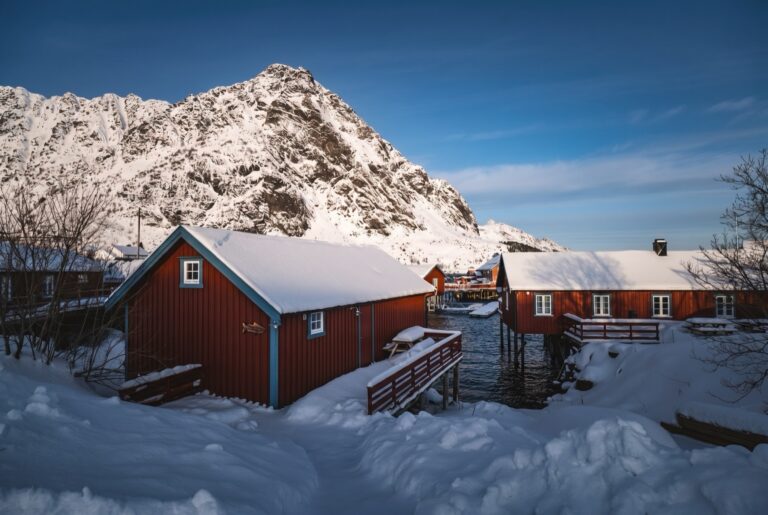
Pyramiden and Barentsburg, the haunting and isolated Soviet towns on Norway’s Svalbard, will instantly transport you decades back in time. These Svalbard ghost towns are home to the northernmost statue of Lenin on Earth, gazing across a frozen fjord straight at a majestic glacier. It’s a bizarre scene in an abandoned town where time stopped in 1998 and apartment keys still hang in the locks. This utopia, together with nearby Barentsburg, forms a truly one-of-a-kind spectacle you won’t find anywhere else on the planet.
On this Norwegian archipelago you’ll find coal-mining towns that have been legally operating here for almost a hundred years. While Pyramiden is today an abandoned open-air museum, where in summer you’ll meet only a handful of caretakers, Barentsburg is still a functioning mining settlement home to just under four hundred residents. It’s a world of enormous contrasts, rugged Nordic nature and an ever-present Soviet aesthetic that will have you staring in disbelief at times.
We’ve put together ten things worth knowing before you set off — from how to even get there, through the moral dilemma of the Russian till, right down to what you can (and can’t) slip into your pocket from the street. You’ll learn where to rest your head safely and how the current geopolitical situation has reshuffled the deck for the ordinary traveller. Trust me, Lenin staring out into the empty Arctic wilderness is not something you’ll forget in a hurry. 😅
TL;DR
- Two Russian settlements: Norway’s Svalbard is home to the abandoned Pyramiden and the still-living Barentsburg, both run by Russia’s Trust Arktikugol.
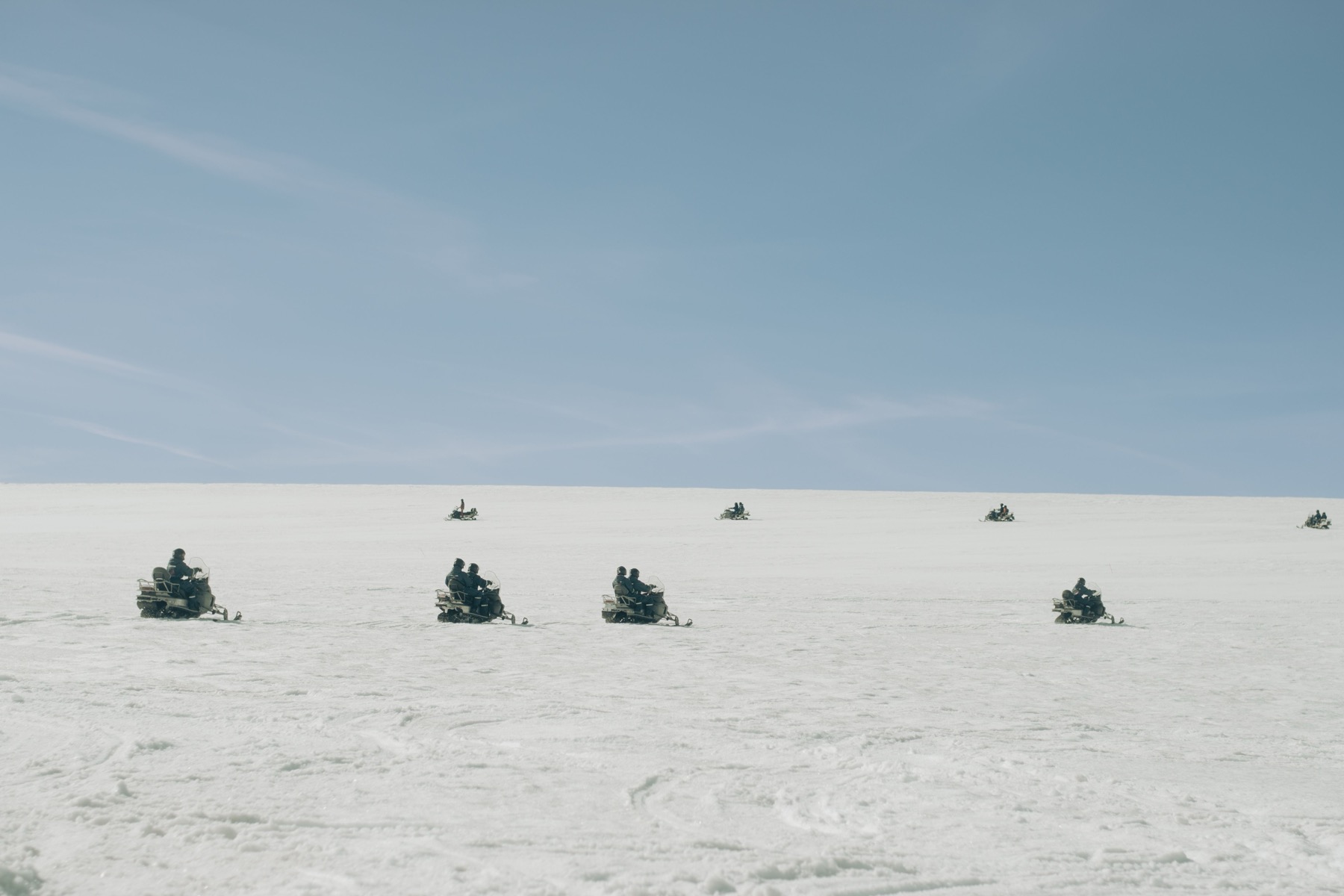
- Access depends on the season: In summer you reach the settlements by boat from Longyearbyen; in winter you go on multi-day snowmobile trips.
- A geopolitical dilemma: Norwegian tourism agencies boycott the Russian state services, so Norwegian boats only take you for a look around with no spending on the spot.
- A town frozen in time: Pyramiden was abandoned in 1998, yet the cultural centre, swimming pool and Hotel Tulpan still stand — and you can even stay overnight.
- The last living settlement: Barentsburg has around 300 residents, a working coal mine, an Orthodox chapel and the northernmost Russian brewery.
- Strict protection: Everything dating from before 1946 is a strictly protected heritage item and must not be touched at all.
The full destination guide: Norway — guide and what to see
When to visit the Russian settlements on Svalbard
Planning a trip to Svalbard follows completely different rules than the rest of Europe, because the seasons here dictate how you can travel. You can only reach the archipelago by plane from Oslo or Tromsø, with flights operated exclusively by SAS and Norwegian. A return ticket from Oslo usually costs around €250, though you can sometimes grab it cheaper in a sale. Don’t forget your passport, because Svalbard lies outside the Schengen area and there’s a passport check waiting for you at the airport.
If you want to see both Soviet towns from the deck of a boat, the ideal time is from late May to October. This is when the sea ice in the fjords melts and excursion boats from Longyearbyen can safely dock at the piers in Pyramiden and Barentsburg. During the Arctic summer you’ll enjoy the phenomenon of the midnight sun, with 24-hour daylight from late April to the end of August. Temperatures in July and August hover around 5 to 8 °C, which sounds mild, but the Arctic wind pushes the perceived temperature much lower. Woollen thermal underwear, a good windproof jacket and mittens instead of gloves will be your best friends. ☺️ Bear in mind, too, that the summer tundra can get properly waterlogged and muddy, so there’s no way around good waterproof boots.
A winter visit from February to early May, on the other hand, promises a tougher Arctic adventure. The fjords are firmly frozen and you reach the settlements on multi-hour snowmobile trips. The turn of February and March is extremely popular, when a gorgeous blue light returns to the landscape and photographers get their money’s worth — but temperatures routinely drop to around -20 °C. Since 2025, very strict nature-protection rules have also applied across the whole archipelago. Excursion boats in protected areas may carry a maximum of 200 passengers, and the mandatory distances from wildlife have grown considerably. Boats may approach polar bears no closer than 300 metres, and in the spring months as much as half a kilometre away, so a good pair of binoculars is now an absolute must.
Where to stay on Svalbard and in the settlements
💡 Accommodation and experiences tip: We prefer to look for accommodation on Booking.com, which usually has the best cancellation policies. For tickets, tours and activities, it’s worth comparing and booking through GetYourGuide.
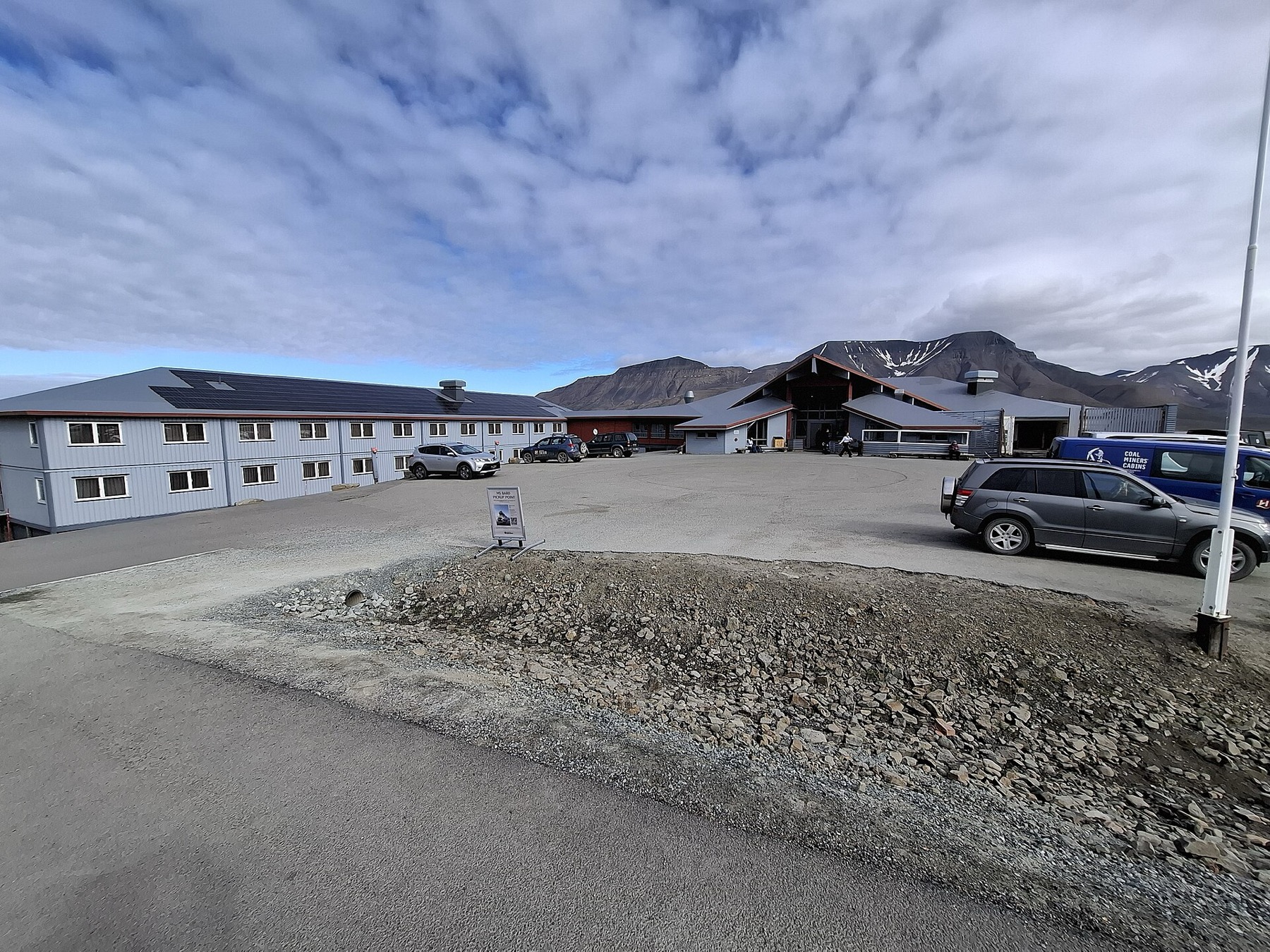
Most travellers choose the Norwegian town of Longyearbyen as their main base, setting off on day trips into the surrounding area from there. Longyearbyen has plenty to offer — from cosy hostels in converted miners’ quarters to hotels where you can soak in a hot tub with a view of the fjord. Prices reflect all this, so book well in advance and choose carefully. High season, from March to August, tends to sell out in a flash.
For maximum comfort, a great choice is the Radisson Blu Polar Hotel Spitsbergen, right in the town centre. Its outdoor hot tubs offer incredible views of the fjord, and a night in a double room usually comes to around €260 to €350. If you’re after an unforgettable trapper atmosphere, check out the Basecamp Hotel, built from driftwood and old seal skins. It’s a stunning design gem where you’ll feel like a real polar explorer, though it sits a notch higher price-wise.
For travellers on a tighter budget, locals often recommend Gjestehuset 102 in the Nybyen valley. It’s about a thirty-minute walk from the centre, which can be quite a challenge in a blizzard, but the atmosphere of an old miners’ lodge has enormous charm. A bed in a shared room here starts at around €60 a night, which is an almost unbelievable price by Arctic standards — that won’t even buy you a taxi to the airport around here. The shared kitchen is also a great spot to swap stories with other adventurers in the evening.
If you long for a truly isolated experience, you can even stay overnight directly in the Russian settlements. Pyramiden has the summer-only Hotel Tulpan, which is very spartan, but spending the night in an abandoned ghost town is said to be a spine-tingling experience. In livelier Barentsburg, you’ll find the renovated Hotel Barentsburg with far more modern facilities. You won’t find rooms in these Russian settlements on the usual booking portals, though, and reservations are now handled exclusively and directly with the local Russian operator.
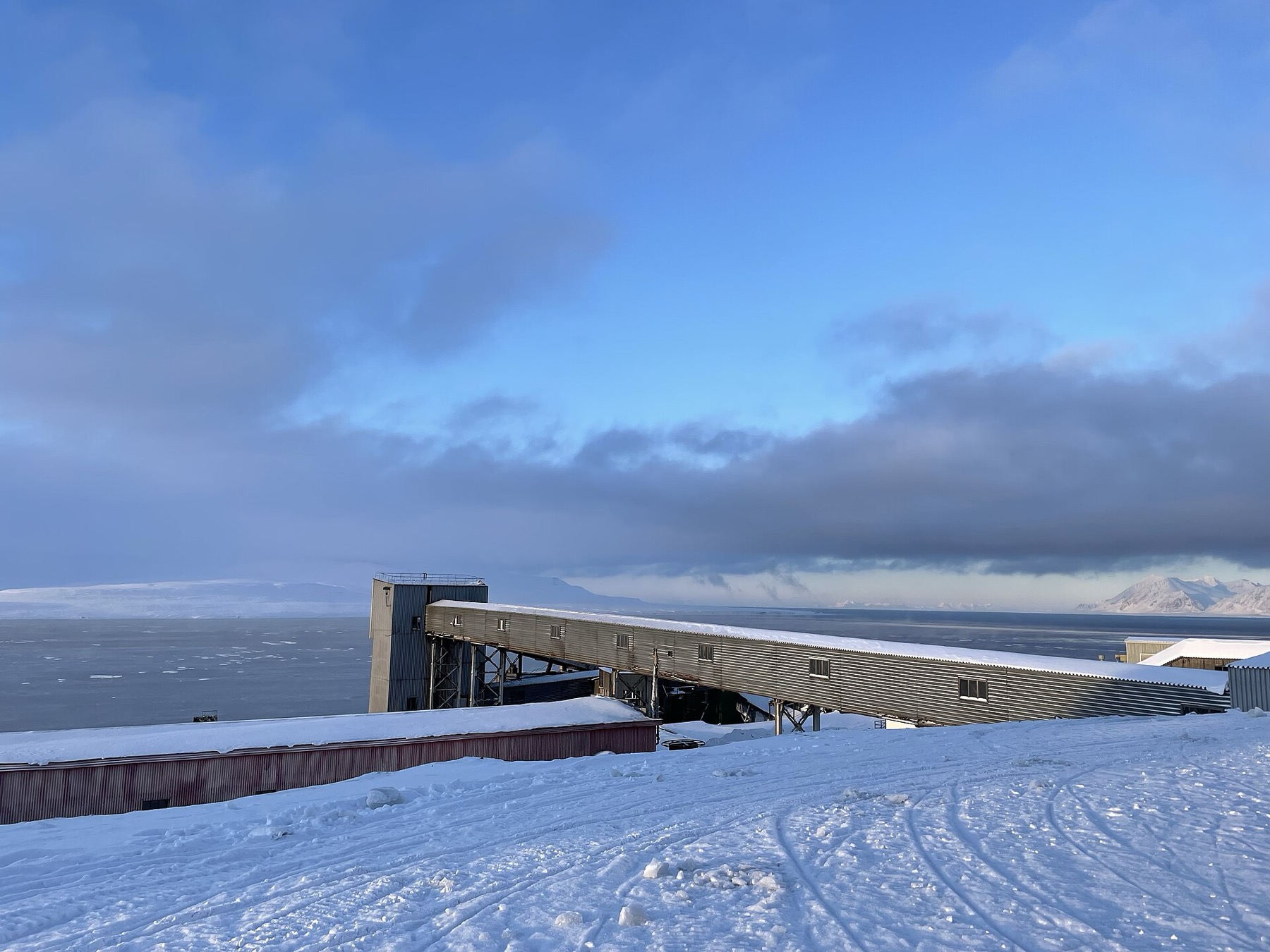
10 tips and facts about Pyramiden and Barentsburg
These two Arctic settlements aren’t just an ordinary trip beyond the Arctic Circle. They’re places where rugged Nordic nature meets history and some very complicated politics head-on. As you walk the abandoned streets, you feel the weight of the past at every step, while gulls scream overhead and a glacier cracks in the distance.
We’ve picked out the most important things you need to know before your trip, whether you’re interested in forgotten Soviet architecture or wondering whether it’s even ethical to travel here these days. Get ready — Svalbard will show you a world you truly won’t see anywhere else.
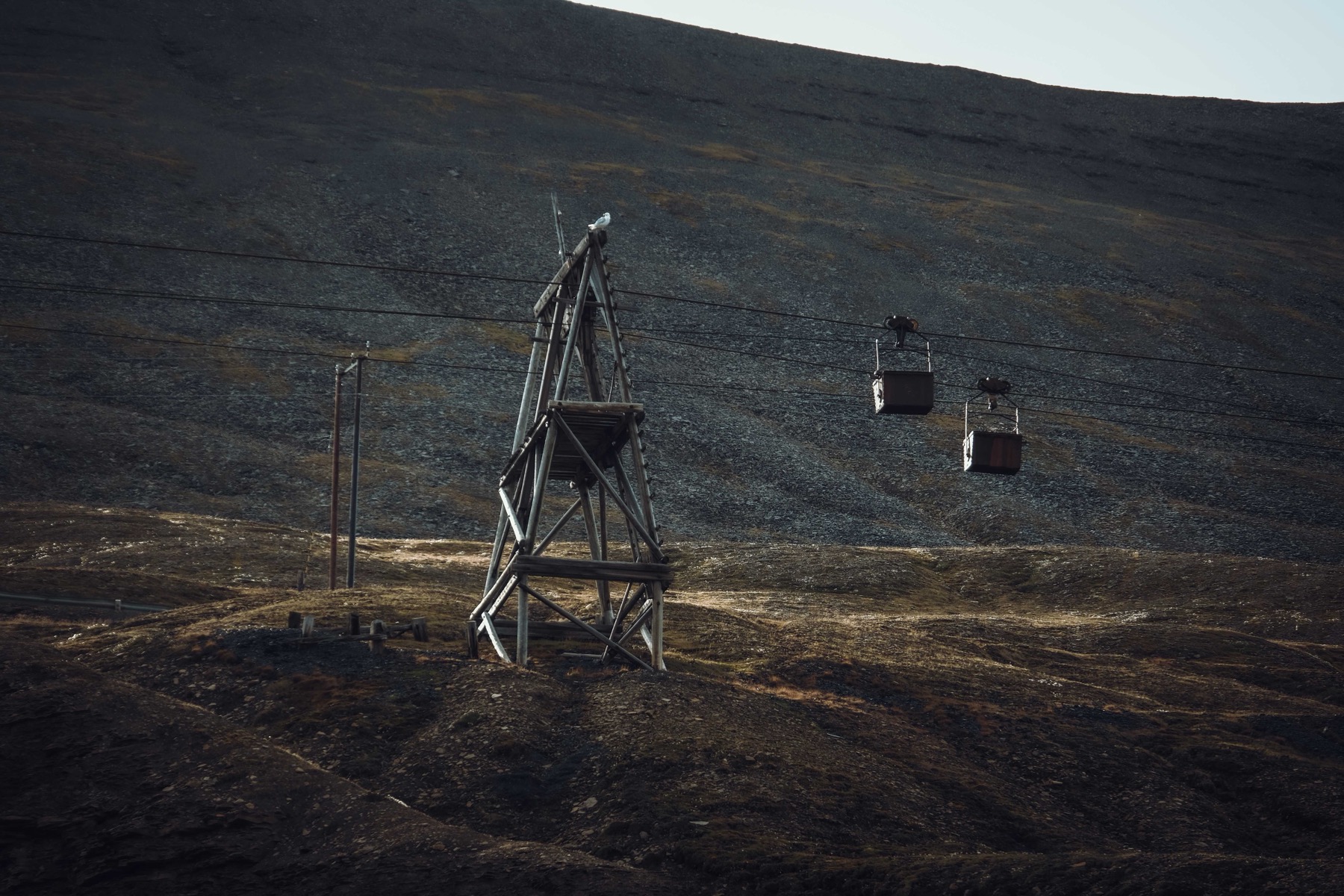
1. Why are there Russian towns on Norwegian territory?
You may be wondering how it’s even possible for entirely Russian coal-mining settlements to operate legally on sovereign Norwegian territory. The answer lies in the famous Svalbard Treaty of 1920, which came into force five years later. It granted Norway full sovereignty over the archipelago, but at the same time guaranteed the citizens of all signatory states absolutely equal rights to reside and do business there. The islands had to remain permanently demilitarised, and all taxes collected must be reinvested back into the harsh local infrastructure.
The Soviet Union took advantage of this unique geopolitical loophole and in 1932 bought Pyramiden from its original Swedish owners. Since then, both towns have been administered by the Russian state Trust Arktikugol, which built its own self-contained world here, independent of the Norwegians. It’s a curious fact that Czechoslovakia joined the treaty as early as 1930, and these rights carried over to the Czech Republic too. As a result, a wide range of nationalities can legally live, work and run a business on Svalbard entirely without needing a visa, which makes the islands one of the freest places on the planet.
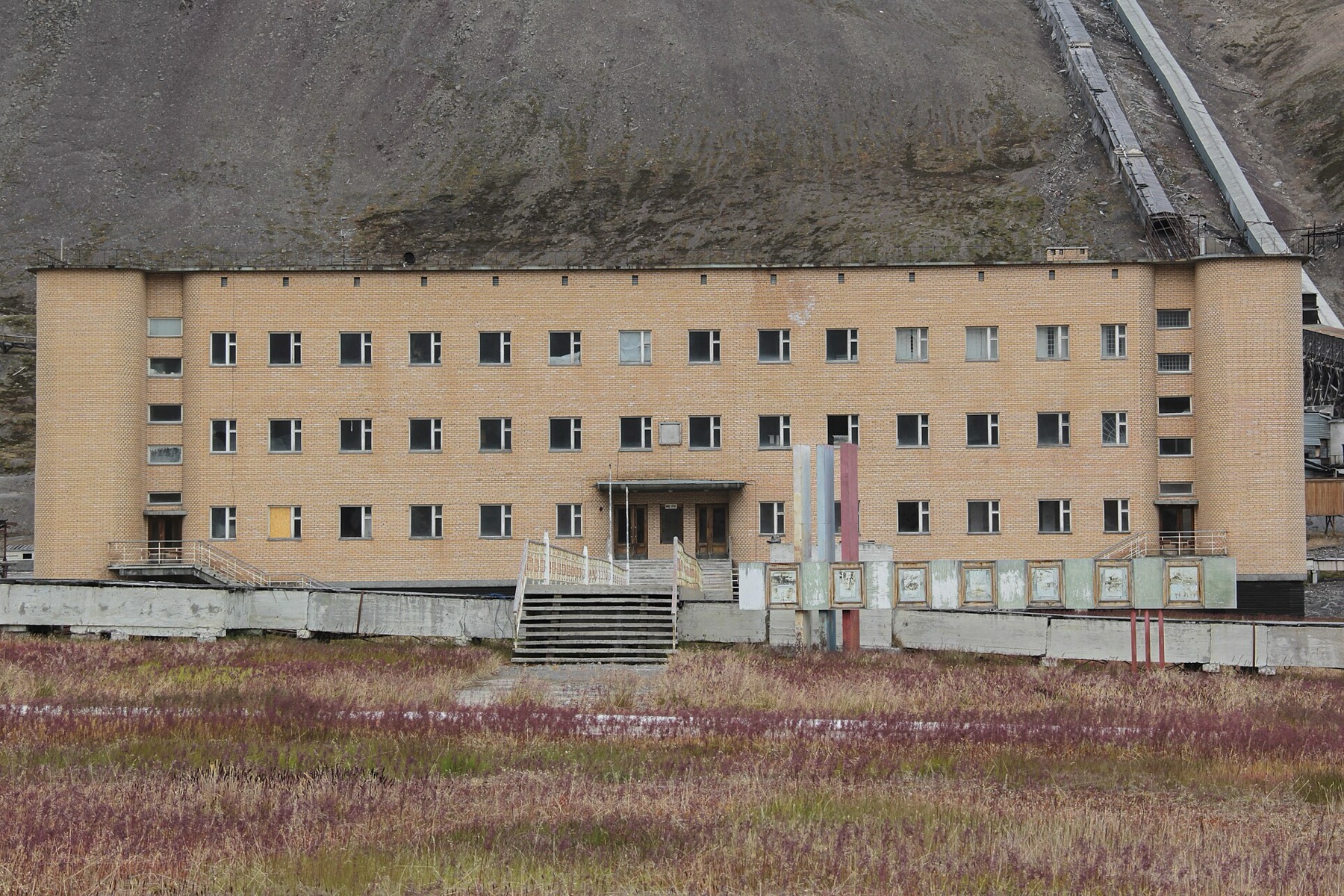
2. Pyramiden as the Soviet Union’s showcase town
In its golden era in the 1970s and 1980s, Pyramiden was no ordinary coal camp but a genuine Arctic utopia. Incidentally, the town got its name from the pyramid-shaped mountain that towers directly above it. More than a thousand people lived here permanently, enjoying incredible luxury and comfort in the middle of an icy wasteland. The Soviet Union poured enormous subsidies into it to show the Western world just how well and how modern life could be even deep beyond the Arctic Circle. It was, in short, a showcase town for the communist regime, built in the absolute harshest of climatic conditions.
The local miners and their families had access to a beautiful cultural palace with a large concert hall, where an abandoned piano still stands on the stage to this day. There was also a fully heated swimming pool, a spacious gymnasium with a sports floor shipped all the way from distant Siberia, and even heated greenhouses for growing fresh vegetables. They even kept livestock so residents had milk. Those who remember it recall that people flocked here from the mainland as if on a gold rush, drawn by significantly better pay, fresh milk and vegetables that were otherwise hard to come by in the Soviet supply chain.
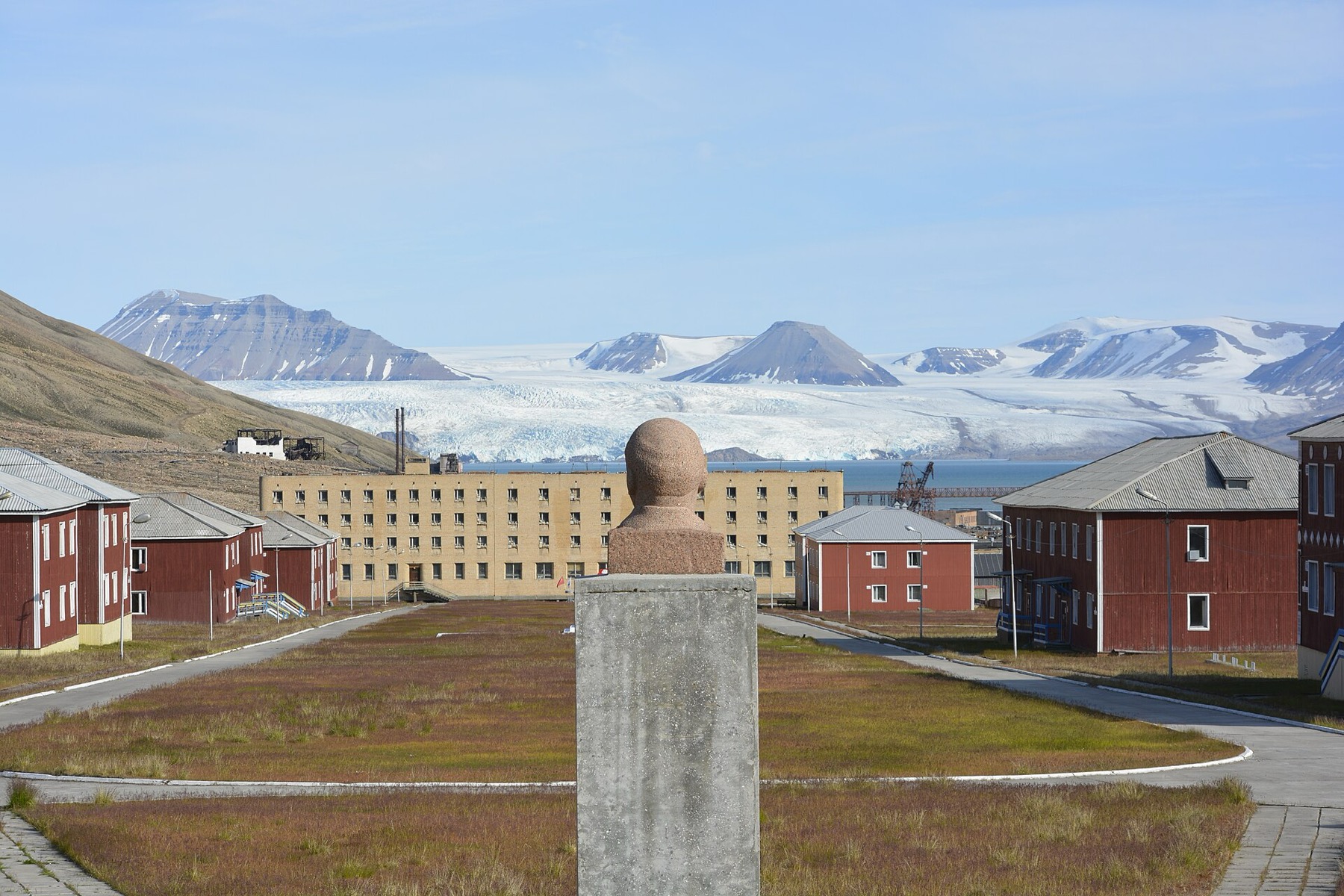
3. The northernmost Lenin gazing at a glacier
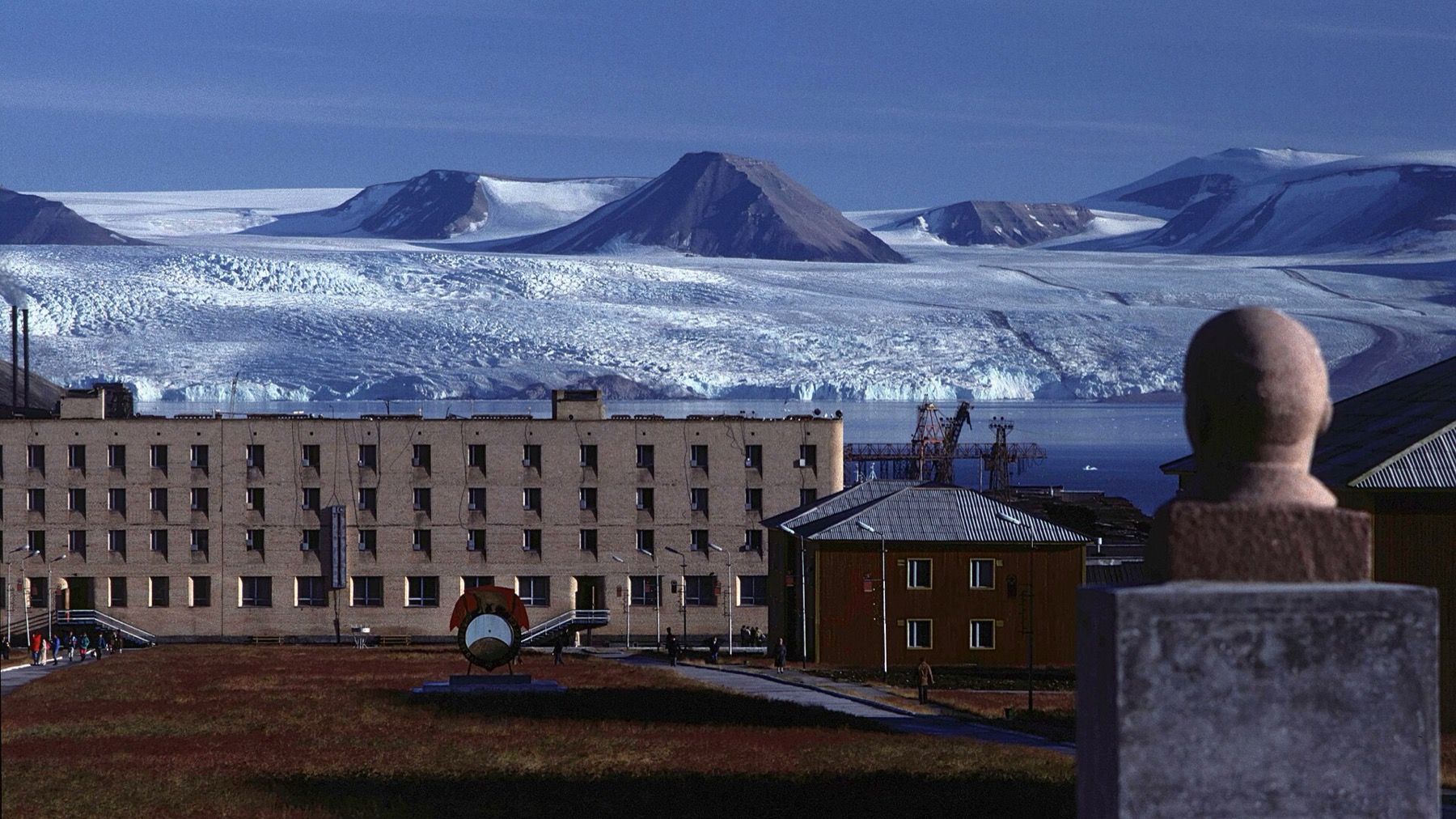
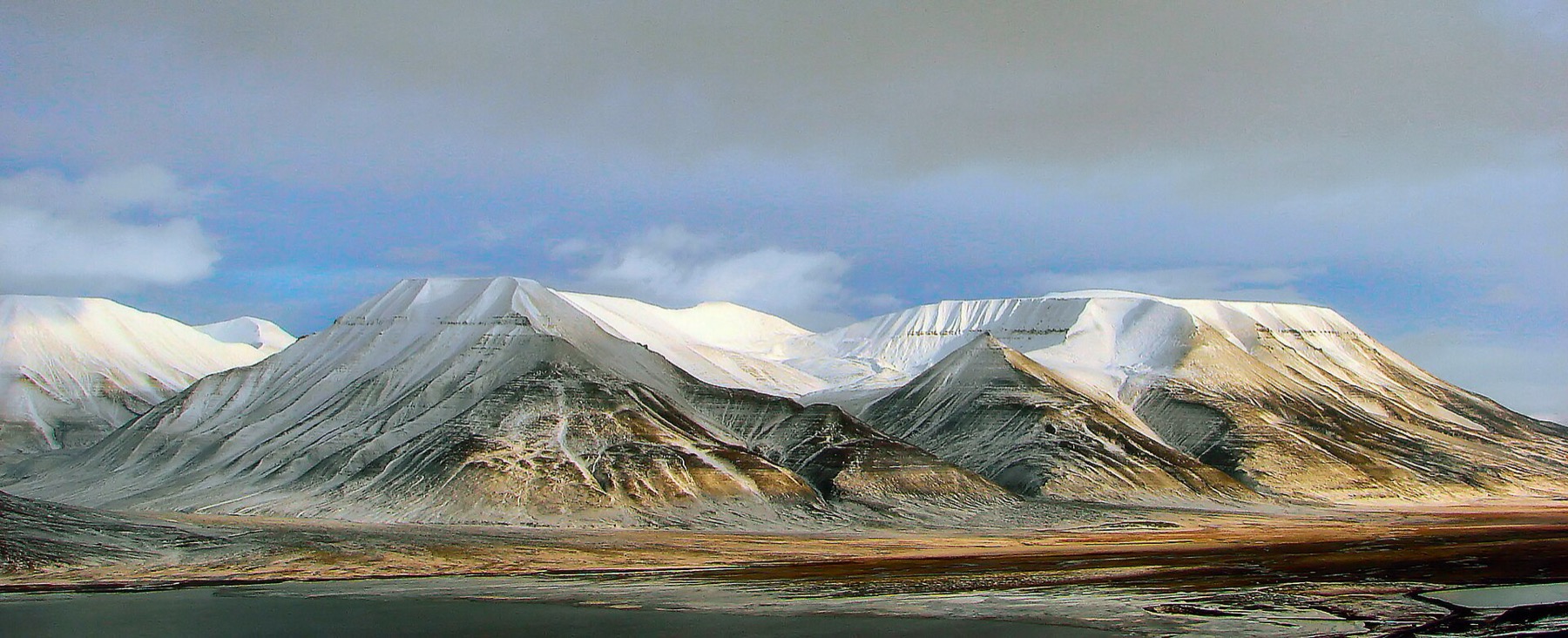
When you arrive in Pyramiden today, the first thing to catch your eye is probably the world’s northernmost bust of Vladimir Ilyich Lenin. This majestic monument stands on an empty square in front of the cultural centre, its gaze directed straight across the frozen fjord towards the gorgeous Nordenskiöldbreen glacier. The contrast is so absurd and visually striking that photographers from all over the world come here on full-day trips just for this single shot.
The town breathes a strange emptiness: the boulevards are silent, plaster peels from the apartment blocks, and somewhere between the buildings polar bears roam freely, entirely uninterested in your arrival. Visitors describe the atmosphere as deeply unsettling — you get the feeling the residents just popped out and will be back any moment, except they haven’t returned since 1998. It’s precisely because of the ever-present bears that you may only move around the town accompanied by an armed guide carrying a rifle and a flare gun. Since 2025, a strict rule has also required you to keep at least 300 metres from the bears, so you’ll need a serious telephoto lens for detailed animal photos.
4. A night in the ghost zone: Hotel Tulpan
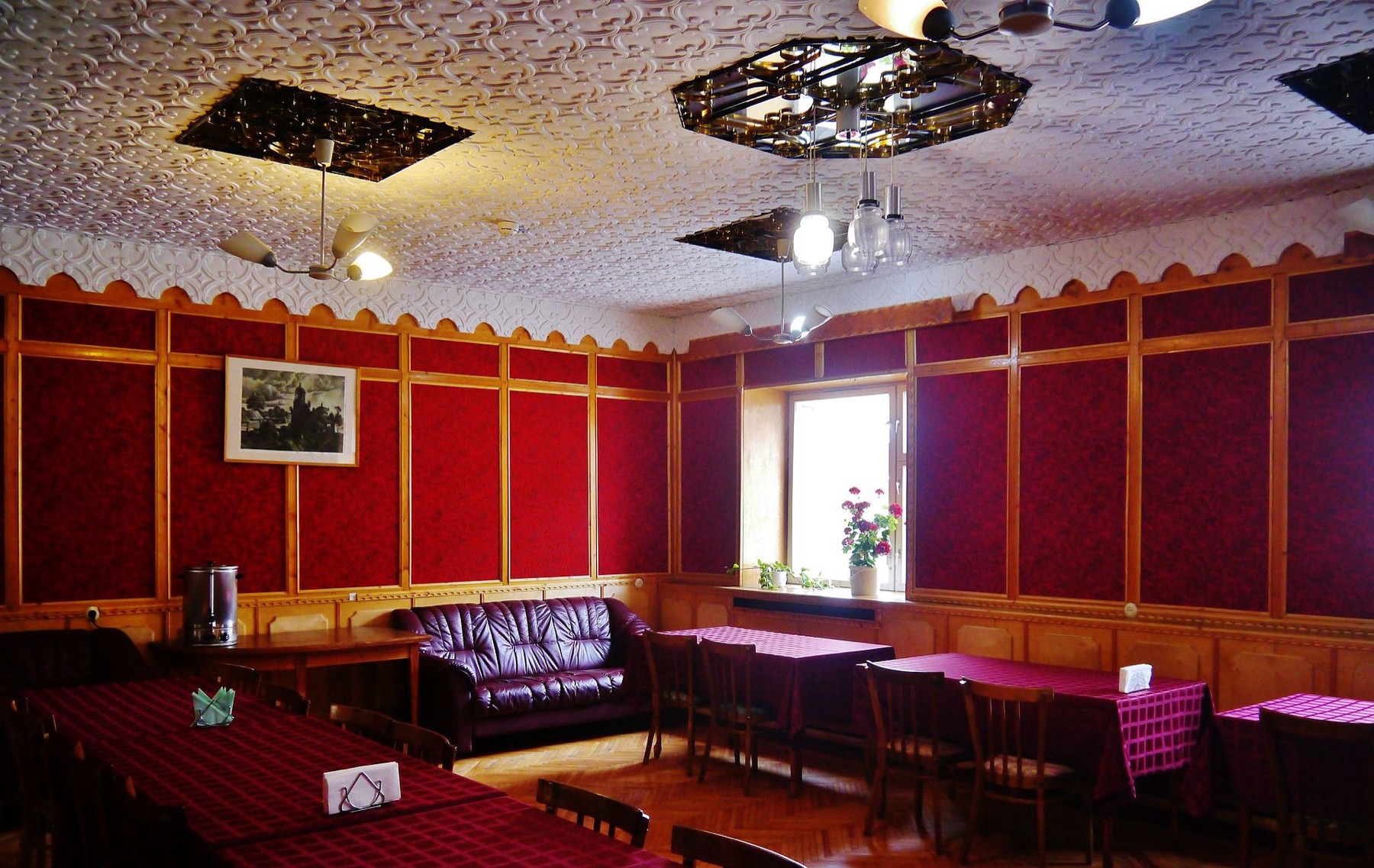
For many years after the town was abandoned, it was impossible to officially stay overnight in Pyramiden — tourists came from Longyearbyen only for a few-hour turnaround. That changed in 2013, when Trust Arktikugol partially renovated and reopened Hotel Tulpan. Today, around ten to twenty staff live here during the summer season, keeping the hotel running, maintaining the huge diesel generators and guiding the handful of adventurers who decide to stay the night. The boat trip here costs roughly 2,800 to 3,900 Norwegian kroner (about €240–330) depending on the operator.
Don’t expect any luxury spa, though. The accommodation is very plain and spartan, the rooms are more like a decent 1970s hostel and the hot water only runs occasionally. The hotel does have a small bar and a little souvenir shop, where you can buy original Soviet badges that are hard to find anywhere else. Travellers on forums point out that services run in a somewhat retro mode and cash payment is often required. Even so, a night-time walk through the abandoned town — when the excursion-boat engines fall silent and an absolute Arctic stillness takes over — is said to be an utterly fascinating experience you won’t get anywhere else in the world.
5. The Operafjellet tragedy and the end of an era
So what caused such a prosperous, heavily subsidised town to turn into an abandoned ghost town? The beginning of the end was a huge aviation tragedy on 29 August 1996. A Russian Tupolev Tu-154 carrying miners and their families from Moscow back to the Svalbard mines crashed into Mount Operafjellet near Longyearbyen in bad weather. All 141 people on board died, and it remains the worst aviation disaster in the history of Norway to this day.
The event dealt the Russian community on Svalbard an enormous psychological and economic blow. Mining in Pyramiden was also becoming unprofitable, and maintaining two fully functioning settlements was completely unsustainable for the struggling Russian economy of the 1990s. So the final decision was made to evacuate the town entirely. Over the course of a few months in 1998, people packed only the essentials, locked their apartments and left the town at the mercy of the Arctic cold, which perfectly preserved it for future generations.
6. Barentsburg: the last living Russian settlement
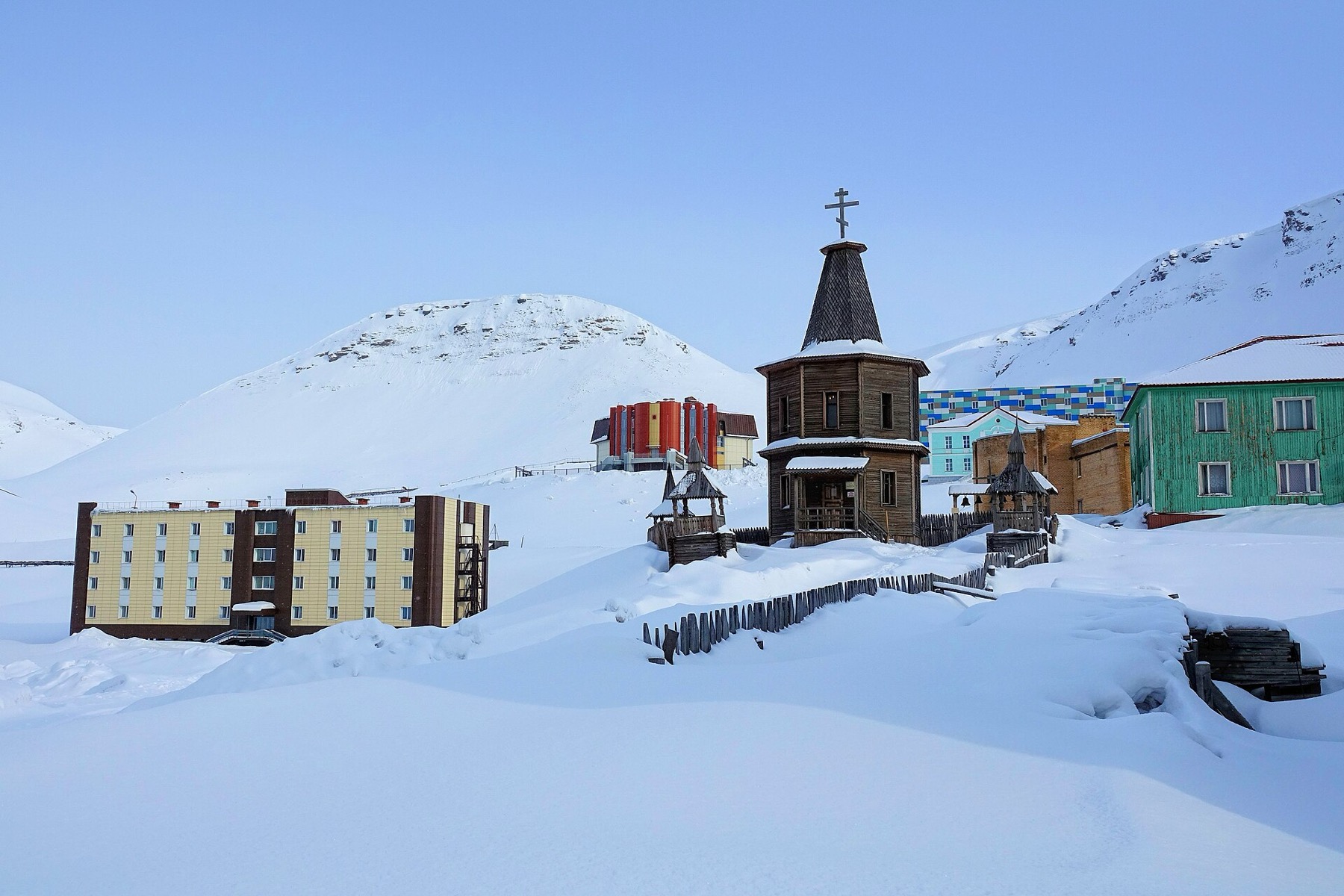
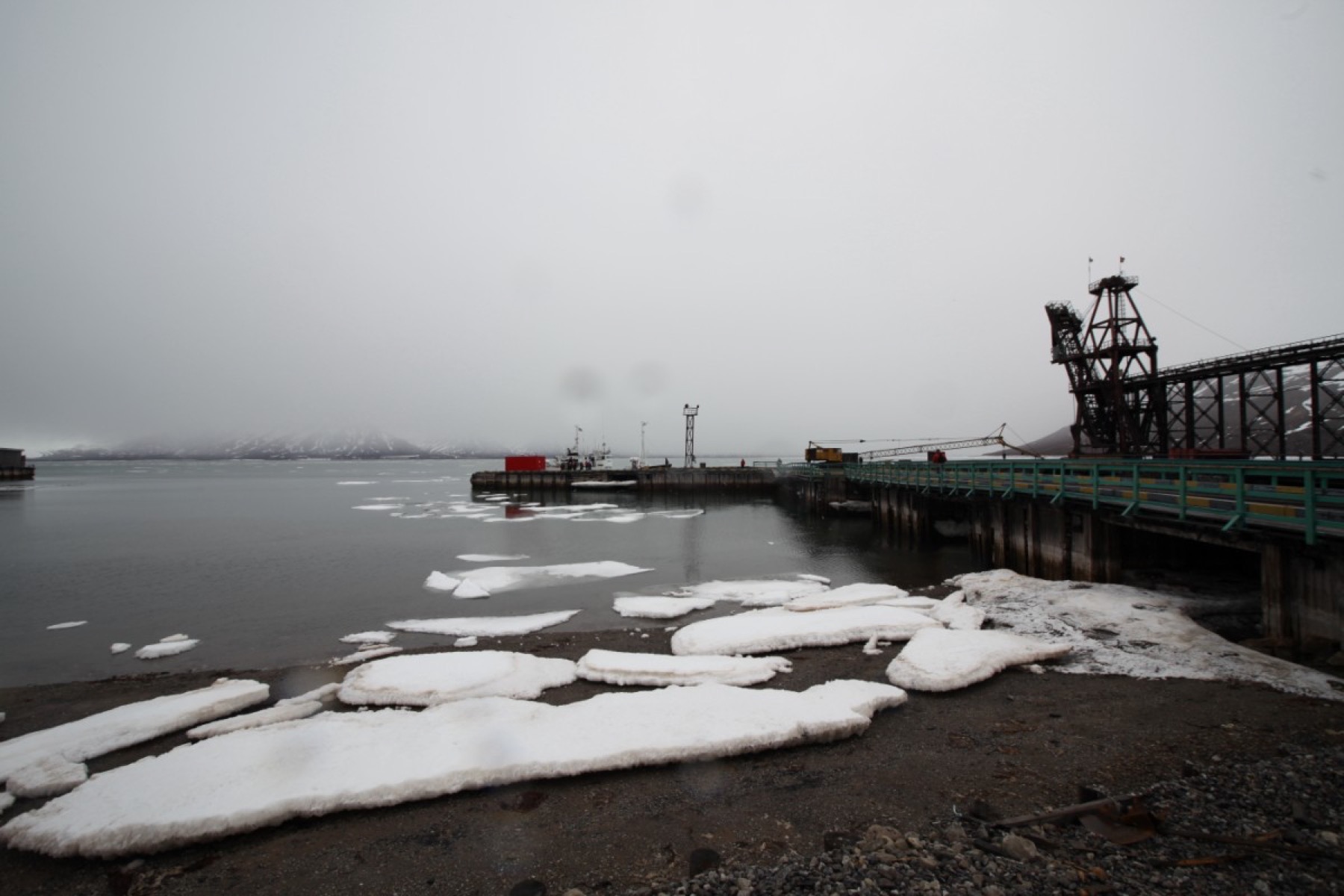
While Pyramiden fell asleep, Barentsburg still lives on and mines coal. According to the latest statistics, just over three hundred people currently live here permanently, mostly miners from Russia and Tajikistan. When you arrive by boat, you’ll be greeted by a far livelier atmosphere, even though the ever-present coal dust and smoke from the chimneys make it clear this is an exceptionally tough industrial place. The local coal mine still produces roughly 100,000 tonnes of coal a year, even today.
The settlement’s history is a turbulent one — during the Second World War it was practically levelled by the German battleships Tirpitz and Scharnhorst. Most of today’s buildings therefore date from the post-war reconstruction. As you walk around, you’ll be stopped in your tracks by the Soviet mosaics on the building facades, celebrating the conquest of the Arctic and looking surprisingly unweathered. Right next door stands a wooden Orthodox chapel that feels almost poetic amid all the industrial scenery. You’ll also find an interesting museum dedicated to the history of the old Russian hunters and even a fully functioning Russian consulate, whose presence in the middle of an icy wilderness feels utterly surreal. Barentsburg has recently upgraded its services, so in many cases you can now pay by card, and there’s even a small post office where you can send a postcard home with a Russian stamp.
7. Where to eat: the northernmost brewery and traditional borscht
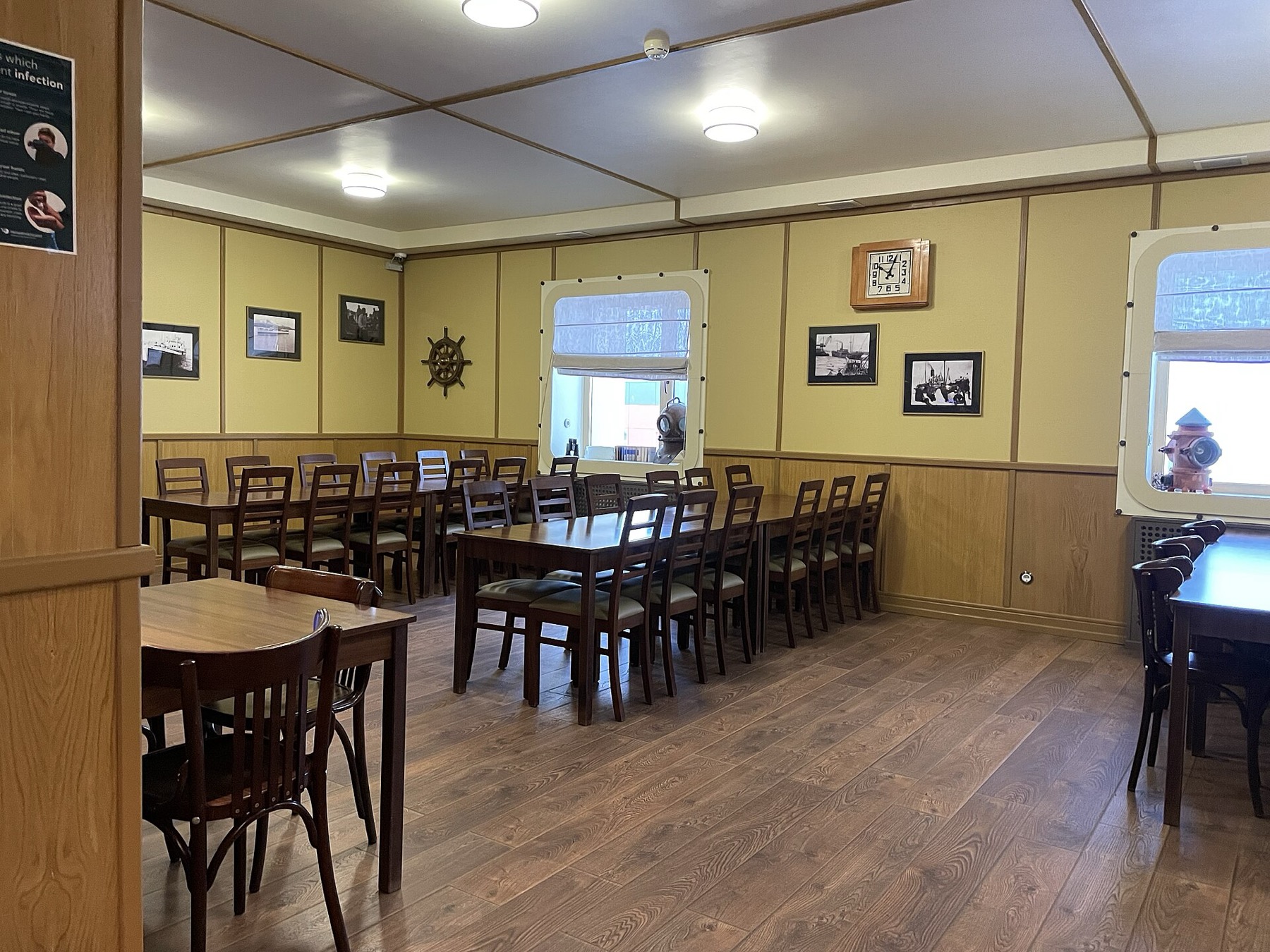
💡 Tip: If you make it to Barentsburg, don’t miss the Krasny Medved brewery, which holds the title of the world’s northernmost Russian brewery. The local craft beer is brewed from pure glacier water and is guaranteed to put you back on your feet after a freezing walk around town. You could write novels about alcohol on Svalbard, because a strict rationing system applies across the whole archipelago. Local residents may buy a maximum of 24 beers and two bottles of spirits per month. As a tourist, you can only buy alcohol in the shops if you show your return flight ticket at the till.
The brewery complex also includes a traditional restaurant serving classic Russian and Ukrainian dishes. According to traveller reviews, they make excellent hot borscht and traditional pelmeni here, and there are meat-free options on the menu too. The food is hearty, filling and perfectly suited to the harsh Arctic climate. And you appreciate it all the more when you realise that every single one of those potatoes had to travel halfway across the Arctic to get here.
8. Geopolitics and the traveller’s moral dilemma
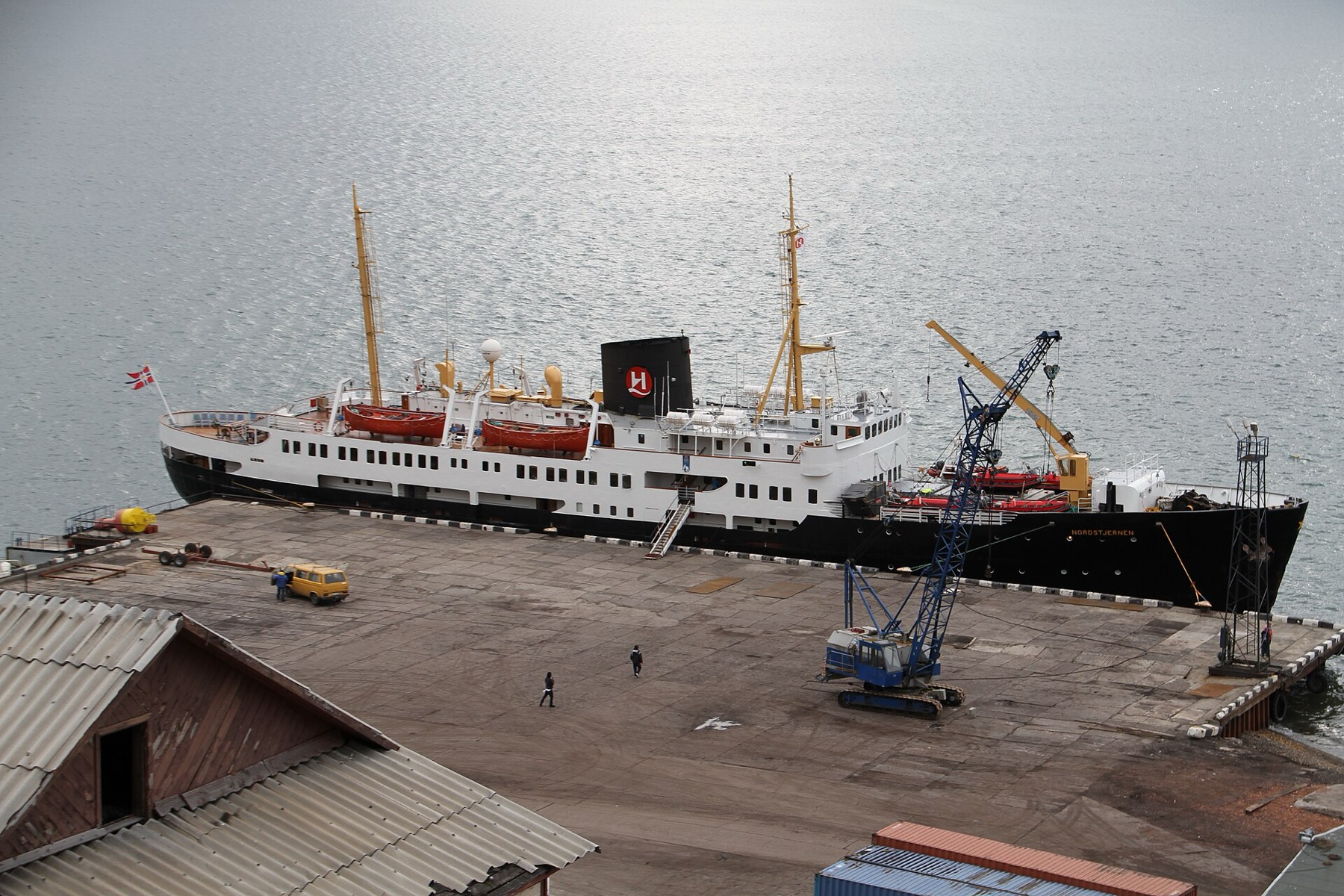
Visiting the Russian settlements has come with one big moral catch since the start of 2022. After the Russian invasion of Ukraine, the Norwegian tourist board Visit Svalbard decided to completely boycott the state-run Trust Arktikugol, which operates both towns. Products of the Russian tourism arm Grumant have therefore vanished entirely from all official Norwegian booking portals, so you simply can’t reserve them the usual way through the Norwegian info centre.
As a traveller, you’re faced with a difficult choice. You can go with a Norwegian shipping company such as Henningsen, which will take you to the settlements but, for ethical reasons, enforces a strict ban on any spending on the spot. So you can only walk around and take photos. Or you can buy a full-day experience directly through the Russian operators, for which you’ll pay around 3,900 Norwegian kroner (about €330), knowing that your money flows straight into the Russian state coffers. It’s a very sensitive topic that’s hotly debated on travel forums, and everyone has to answer it for themselves.
9. The situation in 2026 and the environmental ultimatum
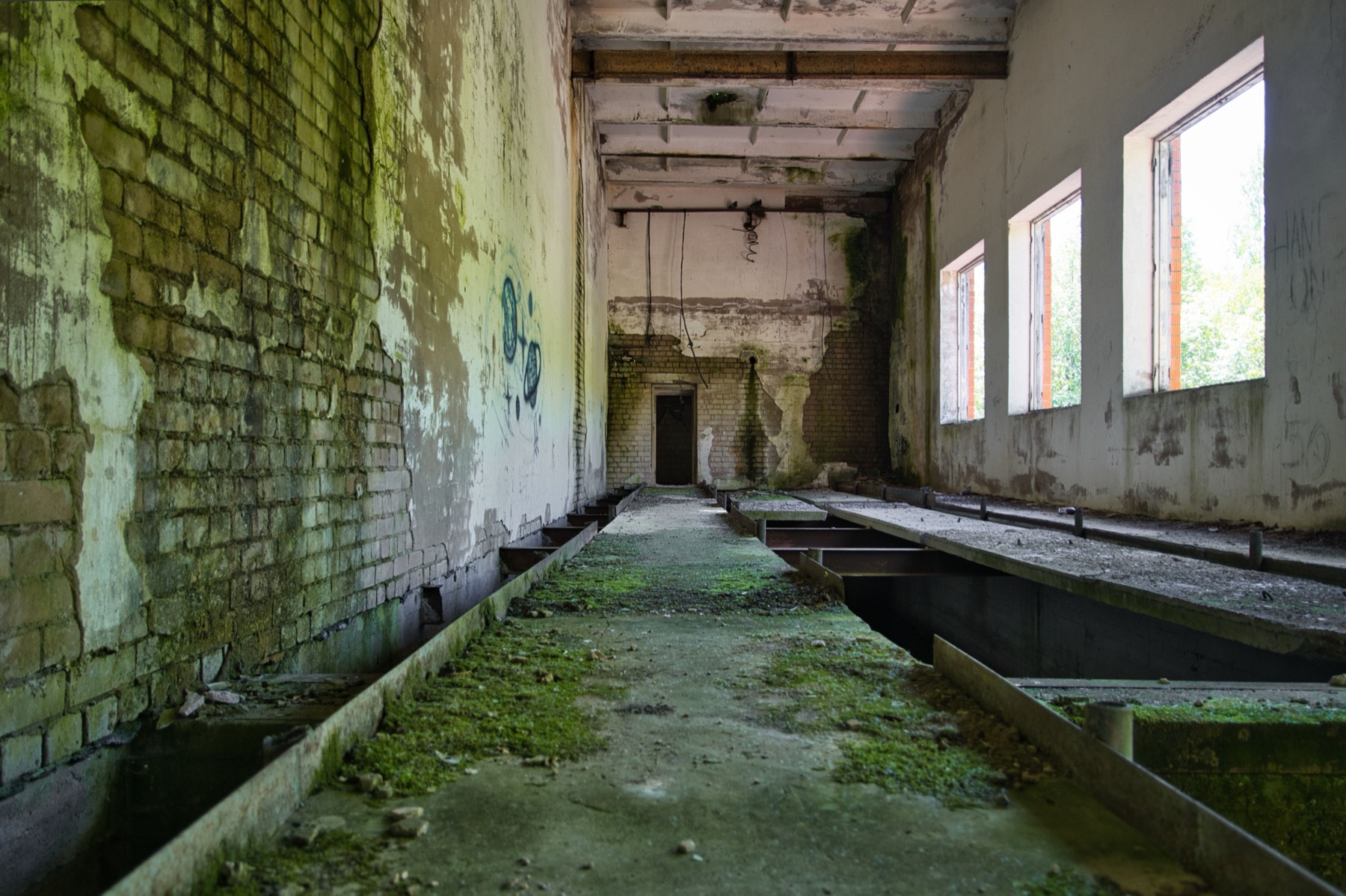
And what’s the current state of the settlements? According to official statistics from the Norwegian authority, at the start of 2026 a combined 392 people lived in Barentsburg and Pyramiden, a fairly significant drop compared to the pre-war years. The Norwegian government is also trying to strengthen its own influence in the region and closely monitors all activities of the Russian mining company. A telling contrast: the Norwegians ceremonially closed their last coal mine, Gruve 7, in the summer of 2025, while just a little further away Russian mining calmly carries on.
During recent inspections, the Norwegian authorities also discovered serious environmental failings, particularly regarding hazardous leaks from old fuel tanks. Trust Arktikugol was therefore given a tough ultimatum by the local governor and an environmental deadline to put things right by October 2026. If it fails to fix these massive shortcomings in time, it faces astronomical fines and a possible dramatic reduction of operations. The future of both Russian settlements is thus currently very uncertain, and it’s possible we’re standing on the threshold of their end.
10. Strict rules and untouchable heritage
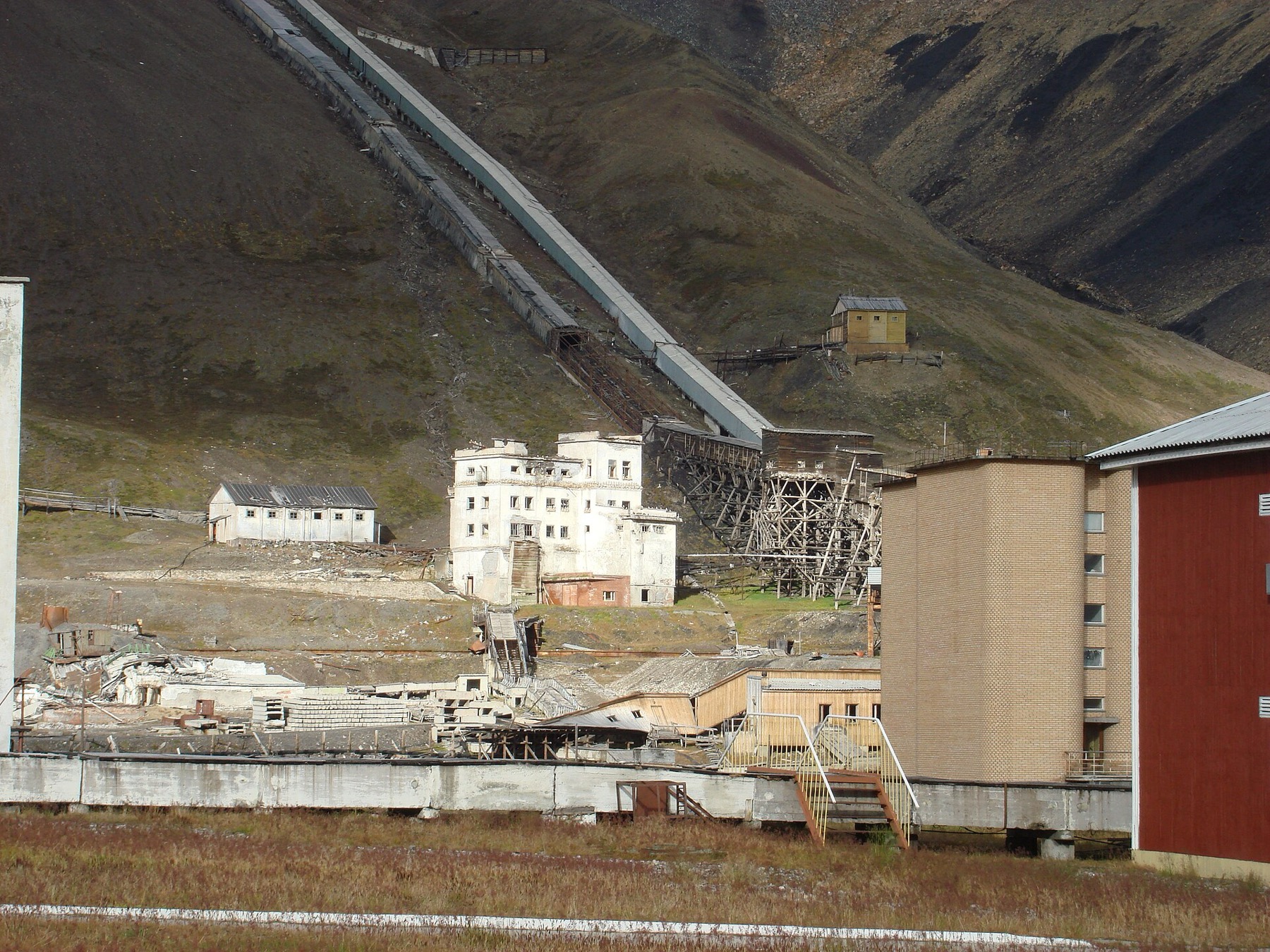
If you set off to Pyramiden or Barentsburg, you absolutely must respect the local cultural heritage protection laws. One fascinating rule applies across the whole of Svalbard: all objects and structures dating from before 1946 are automatically protected heritage. This covers old rusty barrels, abandoned wooden huts and even whale bones on the beach. What’s more, a strict 100-metre protective zone applies around all these historical relics.
So you must not take absolutely anything away from Pyramiden — not even the tiniest forgotten screw or a lump of coal from the street. Since 2025, a strict ban on flying drones has also applied in all national parks and reserves, so you can forget about aerial footage. There’s also an absolute ban on entering abandoned buildings without an official local guide. The old, dilapidated structures can be very unstable and there’s a real risk of injury, so always stick to the marked routes and follow your guide’s instructions.
Where to head next from Svalbard
If you’re planning a trip into this amazing Arctic wilderness, don’t miss our other guides that will help you prepare. For a general overview of how to pack and what to expect, check out our article Svalbard: what to see and do at the end of the world. For a detailed exploration of the Norwegian base, read our tips for Longyearbyen: what to see.
If you’re looking for concrete inspiration for activities outside the towns, we’ve got a detailed rundown in Trips and cruises on Svalbard. And if you’re more into local curiosities and want to know why there’s an alcohol ration here or why cats aren’t allowed to live here, take a look at Fun facts about Svalbard.
Frequently asked questions
Can you actually visit Pyramiden?
Yes, the abandoned town can be legally visited, either by summer excursion boats or in winter by snowmobile from Longyearbyen. However, you must always move only in the company of an armed guide, as polar bears occasionally roam among the buildings.
Is it safe there?
Safety is an absolute priority in Svalbard. There is no crime risk in the settlements themselves; the main hazards are the Arctic weather and wildlife. Organized tours always have guides equipped with a rifle and flare gun in case of an encounter with a bear. Entering dilapidated buildings without supervision is forbidden for safety reasons.
Can you go there in winter too?
Winter visits are possible and popular among adventurers, but physically much more demanding, as you travel to the settlements across frozen fjords by snowmobile. During the polar night period (until February), tours are rarely organized; the main season runs from March to early May, when daylight returns and conditions for travel are absolutely ideal.
Are you allowed into the old buildings in Pyramiden?
The basic rule is that independent entry into any abandoned building is strictly forbidden. Dilapidated ceilings and floors can be dangerous. However, official guides will safely take you inside the cultural center, swimming pool, or old canteen during the tour, where the condition of the buildings is regularly monitored.
How many people actually live there today?
According to official Norwegian statistics, at the beginning of 2026, exactly 392 people lived in Barentsburg and Pyramiden combined. Most of them live permanently in Barentsburg, while only seasonal staff of about 10 to 20 people reside in Pyramiden, taking care of maintenance and tourists.
Why does Russia still stay there when it’s unprofitable?
For the Russian Federation, the settlements in Svalbard have enormous geopolitical and strategic significance. Maintaining an active community, mining operations, and their own consulate guarantees them a legal physical presence in the Arctic directly on the territory of a NATO member state. Coal mining is thus more of a cover for maintaining power and influence in the region.
Can you really spend the night in Pyramiden?
Yes, although it sounds incredible, overnight stays are possible at Hotel Tulpan, which has been partially renovated after years of abandonment. Don’t expect any luxury—the rooms are very basic and hot water only runs occasionally, but the opportunity to spend the night in the absolute silence of an Arctic ghost town is sought after by photographers from all over the world.
Tips and Tricks for Your Vacation
Don’t Overpay for Flights
Search for flights on Kayak. It’s our favorite search engine because it scans the websites of all airlines and always finds the cheapest connection.
Book Your Accommodation Smartly
The best experiences we’ve had when looking for accommodation (from Alaska to Morocco) are with Booking.com, where hotels, apartments, and entire houses are usually the cheapest and most widely available.
 🚗 Car rental on the roadVerified rental cars in Norway
Search with the DiscoverCars comparison engine — it compares prices from dozens of local and international rental companies, and most bookings come with free cancellation.
Compare car prices in Norway →Don’t Forget Travel Insurance
Good travel insurance will protect you against illness, accidents, theft, or flight cancellations. We’ve had a few hospital visits abroad, so we know how important it is to have proper insurance arranged.
Where we insure ourselves: SafetyWing (simple monthly subscription) and TrueTraveller (for extra-long trips).
Find the Best Experiences
Get Your Guide is a huge online marketplace where you can book guided walks, trips, skip-the-line tickets, tours, and much more. We always find some extra fun there!