Data Restart 2022: The Data Apocalypse and How to Deal With It

TL;DRData Restart 2022, a conference run by Taste Academy, laid out a concrete plan for tackling the data drop-off caused by cookie banners and the blocking of third-party cookies — a shift that’s cost media outlets up to 20% of their data and online shops as much as 50%. The fix is a combination of tools: a properly working cookie banner (such as Cookiebot, priced at up to $50 a month), Google Analytics 4, Google Consent Mode, Enhanced Conversions, Facebook Conversion API, Server Side Google Tag Manager, and tracking your Consent Rate. In the Czech Republic, Seznam and CPEx are also building an alternative called Czech Ad ID, which targets users through hashed email addresses instead of cookies. The ePrivacy law, meant to replace cookie banners with settings built directly into the browser, won’t come into force before 2025 at the earliest, so it’s worth building up your own CRM and customer database in the meantime.

Last year, we were all scrambling to implement a functional cookie consent banner and dealing with the resulting data loss. Larger companies invested in data analytics and worked on modelling the missing data, while the rest of us either didn’t enable the banners at all or simply accepted that Google Analytics could no longer be trusted. Here’s our takeaway from Data Restart 2022 — the leading data analytics conference — and what you can do about the cookie apocalypse right now.

Over the past 12 months, a number of ways to tackle the data drop have emerged and improved. Google Analytics 4, Server-side Google Tag Manager, Consent Rate measurement, Enhanced Conversions and Consent Mode for Google Ads, Conversion API for Facebook, and more.

Just when we e-shop managers started to breathe a little easier, data analysts began sounding the alarm again: for roughly the next three years, there will be a vacuum in which 3rd-party cookies (which we all rely on for ad targeting) disappear from browsers, while no systemic solution is ready to replace them — one that would let us keep serving relevant ads that customers appreciate and that generate revenue.

The ePrivacy Regulation, which is supposed to eliminate cookie banners and allow users to set preferences directly in their browser, won’t come into force until at least 2025.

That’s why I headed to Data Restart — organised by Taste Academy — as I do every year, to hear how the best data analysts in the Czech Republic are preparing for the data apocalypse.

I’m not a data analyst myself, and I’m not a developer either. I’m writing this summary for everyone in a similar position to mine. You’re responsible for online marketing and the performance of your entire marketing mix, but you don’t have developers on hand or the budget to hire a team of data analysts. Yet you still need to keep things running, because your business depends on online.

So let’s dive in 🙂

Less Customer Data, More Estimates

For the past 20 years, online marketers and data analysts have revelled in a data jungle. We measured everything, everyone, everywhere. There was so much data that you could easily create a campaign offering a free coffee with cake to all secondary school students who walked within 100 metres of your shop between Monday and Friday. We knew about our customers:

  • which websites they visited
  • what they did on those websites
  • what they purchased
  • what topics they liked reading about
  • which devices they used to visit us
  • what electronics they owned
  • where they worked
  • which shops and stores they visited
  • what they did in their spare time
  • ….

Those days are over (and, frankly, that’s a good thing). Since 2022, users have the right to choose whether we can track them on our websites or not. This simple mechanism means that media houses, despite their best efforts, are losing roughly 20% of their data, while e-shops can easily lose 50%.

Users express their preference via the so-called “cookie banner,” though soon it won’t just be about cookies — because their days are numbered too.

Technological Changes in Browsers — The End of Cookies

It started with ad blockers, which simply strip ads from websites and block the storage of 3rd-party cookies in the browser. Users install ad blockers proactively, and data professionals have more or less learned to live with them.

💡 What are 3rd-party cookies? Third-party cookies are cookies stored in your browser by a website other than the one you’re currently visiting. For example, cookies from advertising platforms (like Google) that use the cookie to track your activity across the websites where they run ads.

But browsers themselves have also started blocking 3rd-party cookies, which makes the problem much bigger. Firefox and Safari block 3rd-party cookies by default — this currently affects roughly 30% of web traffic, and that number will only grow, because it’s just a matter of time before other browsers, including Google Chrome, follow suit.

Due to the blocking of 3rd-party cookies, we’re losing data for remarketing, customer segmentation, and other marketing tools — without which, under the current setup of ad platforms, we should expect a significant drop in revenue.

Google Privacy Sandbox

Google keeps delaying the rollout of cookie blocking in Chrome because it’s searching for a replacement solution. In simple terms: how to continue profiling users without needing 3rd-party data. One of the approaches being considered is Google Privacy Sandbox in Google Chrome. The browser itself will continue collecting data, but it won’t send all of it to ad platforms. Instead, it will only provide them with a user profile (e.g. that the user is interested in Apple iPhones).

Czech Ad ID

In the Czech Republic, an alternative approach to profiling users without cookies is emerging. Two major Czech digital players — Seznam and CPEx — have jointly created and launched the Czech Ad ID project, which enables ad targeting without the need for cookies. Instead, matching will be based on email addresses. Sounds like 2000 all over again? And what about GDPR?

Anyone can join Czech Ad ID; the only requirement is to use one-way email hashing. You hash the customer’s email on your end and send it to Czech Ad ID, which stores the hash in a database. Over time, this builds up a customer profile that can be targeted through programmatic advertising.

Just as with other forms of tracking, you’ll still need the user’s consent for processing their data for marketing purposes (Hello, cookie banner!).

How to Tackle the Data Loss Right Now

As the volume and reliability of your data decline, your ad performance will drop too (at least according to the reports from ad platforms) — regardless of where or how much you’re spending. Let’s look at what you can do to rescue your data right now (apologies to the analysts out there, but no, the average e-shop definitely hasn’t deployed this full tool stack yet 🙃).

Deploy a Functional Cookie Banner

Let’s be honest: you don’t have a functional cookie banner, we don’t have a functional cookie banner… Until now, data was far too valuable to voluntarily give up by deploying a banner that users mindlessly dismiss.
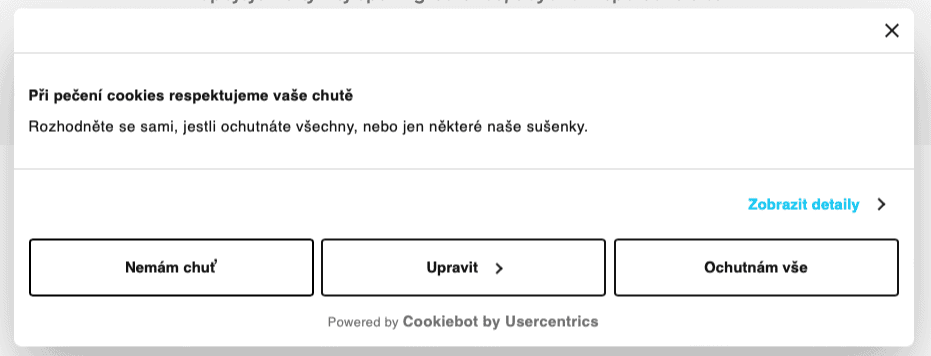
A functional cookie banner means that no tracking fires on the website until the user explicitly gives their consent. We don’t track even when the user doesn’t refuse (i.e. they close the banner or ignore it).

Ad platforms are starting to require a functional banner, and you simply can’t get by without one anymore. At the conference, I heard several stories about Google blocking an entire Ads account because the e-shop wasn’t collecting user consents.

If you’re deploying Google Enhanced Conversions, Google now explicitly asks you to set up Google Consent Mode, which requires a properly implemented cookie banner.

💡How to deploy a cookie banner? Try Cookiebot. It costs around $50/month at most and includes everything you need. It’s what we use.

Set Up Google Ads Enhanced Conversions

If you’re using Shopify, WooCommerce, or another off-the-shelf e-commerce solution, setting up Google Enhanced Conversions is straightforward — you just need to add a token to the plugin. So what does it actually do?

Your e-shop sends hashed 1st-party data (customer information provided during checkout) to Google, which then matches it against its own data to calculate additional conversions. The result is a so-called lift — a percentage showing how many extra conversions Google attributed to your Google Ads campaigns.

The outcome is more accurate reporting, better conversion attribution, and improved data-driven ad optimisation. Use Enhanced Conversions alongside your standard Google Analytics tracking.

💡How to set up Google Enhanced Conversions? For example, via GTM.

Set Up Google Consent Mode

When you deploy a cookie banner, you should also set up Google Consent Mode at the same time. It’s an open API from Google that receives information about users’ consent or refusal of tracking. It can even utilise anonymised data from users who declined tracking. While you won’t see this data in Google Analytics, Google uses it for further modelling and data estimation.

💡How to set up Google Consent Mode? Check out this guide series from H1.cz (in Czech).

Deploy Facebook Conversion API

If you advertise on Facebook, make sure you’re using their Conversion API. It works similarly to Google Enhanced Conversions. You send order information to Facebook via an alternative route, independent of browser settings. This helps Facebook better attribute and calculate conversions.

CAPI is designed as a complement to the Meta Pixel, so ideally you should be sending data through both channels.

💡 How to deploy Facebook Conversion API? Read the article on cernovsky.cz (in Czech).

Measure Your Consent Rate

Deploying a cookie banner isn’t the end of the story. You need to measure the number of consents, the number of refusals, and the number of people who fall into the grey zone (neither consenting nor refusing). Together, these make up your Consent Rate.

You compare the number of page views with consent and divide it by the total number of page views. This tells you exactly how much data you’re actually losing in your analytics.

💡How to set up Consent Rate measurement? The team at Taste can help — they already have a ready-made tool for this.

Start Using Google Analytics 4

Yes! Deploy Google Analytics 4 (GA4) as soon as possible. You can run Universal Analytics (the current version of Google Analytics) and GA4 side by side, but start learning the new platform.

As of July 2023, Universal Analytics is being sunset and you’ll have no choice but to use GA4. GA4 takes a fundamentally different approach to measurement, and at first glance it may seem like you can’t find the information you’re used to seeing in UA. That’s partly true. Some data you see in UA simply won’t be measurable in the future, and GA4 doesn’t even account for it.

On the other hand, GA4 is designed to work with incomplete data. It uses algorithms to automatically model and estimate missing data. Once you’ve deployed a cookie banner, you’ll actually have higher-quality data in GA4 than you ever had in UA.

💡 How to get started with Google Analytics 4? Ideally, attend a training course. One of the best options is the GA4 Masterclass by Czech analytics expert Jan Tichý.

Deploy Server-Side Google Tag Manager

This option is more suited to those running e-shops on custom platforms with server access. By using Server-Side GTM, you theoretically don’t lose data due to cookie restrictions, because everything is tracked on the server side and isn’t dependent on browser settings.

Server-side data collection helps with modelling, because you can compare it against data captured by client-side tracking codes in Google Analytics. But remember — even for server-side tracking, you still need user consent, regardless of whether you’re sending the data anywhere or not.

Make Logging In More Attractive

The data you collect about customers in your own CRM system will become increasingly valuable, and you’ll need to feed it into advertising platforms (like Czech Ad ID or similar initiatives). Your job is to figure out how to encourage users to hand over their contact details (email or phone number). You want as many people as possible to log in on your website. Here are a few ideas:

  • a shopping basket that syncs across devices
  • saved sizes on fashion e-shops
  • members-only sections with exclusive content or offers

CRM in a Cookieless World

Customer data has always been important, but measurement challenges (and the rising ad costs that come with them) are pushing marketers to embrace the “less glamorous” communication channels — especially working with their customer database. Honestly, when was the last time you called a customer to thank them for their order?

💡What is CRM (= Customer Relationship Management)? A CRM is any tool where you collect customer data. It could be a spreadsheet, your e-commerce platform, an email marketing tool…

Your CRM is a goldmine of information waiting to be tapped. If you connect the data correctly, you can find out — even without cookies:

  • Which channels are bringing in new customers
  • What made customers register with you
  • Who your most loyal customers are
  • Why customers leave, and what to offer them

Within your CRM, you can segment customers (by purchased items, purchase frequency, order value, etc.) and create audiences from those segments that you can target with specific campaigns (display advertising, email marketing, phone outreach, etc.).

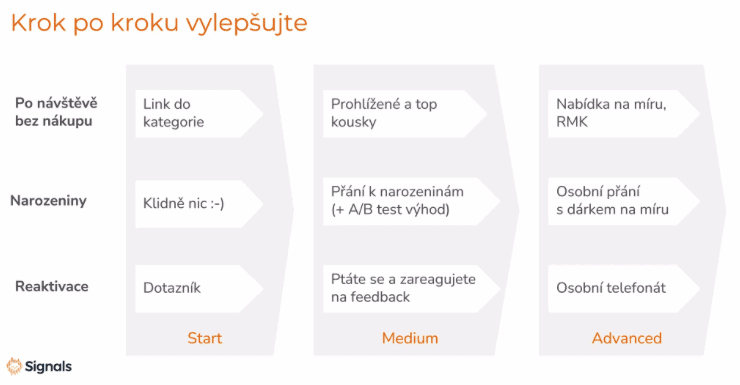
  • I’d recommend starting with an audit of your email marketing, which I consider a low-hanging fruit for most e-shops — an opportunity to earn more money with minimal effort.
  • To evaluate an email campaign, you don’t need to rely on web analytics. Discount coupon usage can be reliably measured within your CRM database.
  • Have a reactivation email campaign but people aren’t opening the emails? Take that segment, export the data to Facebook/Google, and try delivering the same message via paid advertising.
  • Look after your top customers. You can personally call them on their birthday and ask what would make them happy.
  • You can call customers who haven’t bought from you in over a year — not to sell, just to ask why they stopped shopping with you.
  • Set up email automation (or make phone calls) targeting customers who placed a high-value order but haven’t collected it from the pickup point, risking a return.
List and Measure All Customer / Subscriber Sources

You’ll probably be surprised by the sheer number of ways customers and contacts end up in your database. Write down all the sources, review them, and optimise where possible (add incentives, etc.). Here are the typical ways customers enter the system:

During a website visit

  • newsletter sign-up in the footer
  • newsletter sign-up via pop-up
  • newsletter sign-up from a promotional offer

During checkout

  • guest checkout with newsletter opt-in
  • account registration during purchase

From campaigns

  • newsletter sign-up from a Facebook campaign

Offline

  • in-store registration
  • sign-up via offline competition at a trade fair

There are many more registration methods, and you’ll work with each source differently. Next, find out how you’re currently handling each group and whether anything can be improved. For example:

  • Are you tagging the source of each contact in your database?
  • What newsletters are they receiving?
  • What onboarding campaigns are running for them?
  • Do they have their own sales funnel?
  • What do you want to do with them going forward?

Consolidate All Your Data in One Place

Choose a system where you’ll centralise your data. I use Ecomail for this, for example. What do you know about your customers that you can leverage in campaigns? Things like:

  • gender
  • name
  • email
  • phone number
  • name day, birthday
  • registration date
  • registration source
  • reason for registration
  • product categories purchased
  • specific products purchased
  • purchase frequency
  • order value
  • email engagement, etc.

And then experiment. ☺️ The possibilities for leveraging your database are practically endless. You’ll find plenty of tips in our Ecomail review and in our article with 18 practical email campaign tips.

There was much more covered at the conference. For those interested, I’ve included a list of all the presentations available for download below. Don’t forget to sign up for next year’s edition 😉

Conference Presentations

Summaries From Other Sources and Agencies

Tips and Tricks for Your Vacation

Don’t Overpay for Flights

Search for flights on Kayak. It’s our favorite search engine because it scans the websites of all airlines and always finds the cheapest connection.

Book Your Accommodation Smartly

The best experiences we’ve had when looking for accommodation (from Alaska to Morocco) are with Booking.com, where hotels, apartments, and entire houses are usually the cheapest and most widely available.

Don’t Forget Travel Insurance

Good travel insurance will protect you against illness, accidents, theft, or flight cancellations. We’ve had a few hospital visits abroad, so we know how important it is to have proper insurance arranged.

Where we insure ourselves: SafetyWing (best for everyone) and TrueTraveller (for extra-long trips).

Why don’t we recommend any Czech insurance company? Because they have too many restrictions. They set limits on the number of days abroad, travel insurance via a credit card often requires you to pay medical expenses only with that card, and they frequently limit the number of returns to the Czech Republic.

Find the Best Experiences

Get Your Guide is a huge online marketplace where you can book guided walks, trips, skip-the-line tickets, tours, and much more. We always find some extra fun there!


18 Tips For Email Marketing: How To Make Millions

TL;DREffective email marketing comes down to 18 concrete steps, starting with picking the right tool (the author’s had the best experience with the Czech platform Ecomail, where 30,000 contacts costs 3,750 CZK a month). Then there’s abandoned cart automation, which saved one client over 1,100 orders in a year, plus segmentation, personalisation, A/B testing and pruning inactive contacts. Across the agency’s clients, email marketing makes up 15-30% of total revenue, and for an online shop with 40,000 active customers it can generate tens of millions of crowns in sales. Key tactics include action words and numbers in the subject line, emojis (which can boost open rates by up to 57%), red CTA buttons, and reactivation campaigns targeting customers who haven’t bought anything in six months to a year.

Although email marketing is not as sexy and trendy as, for example Influencer marketing , it still proves to be one of the most stable and profitable tools that any business or brand should invest in.

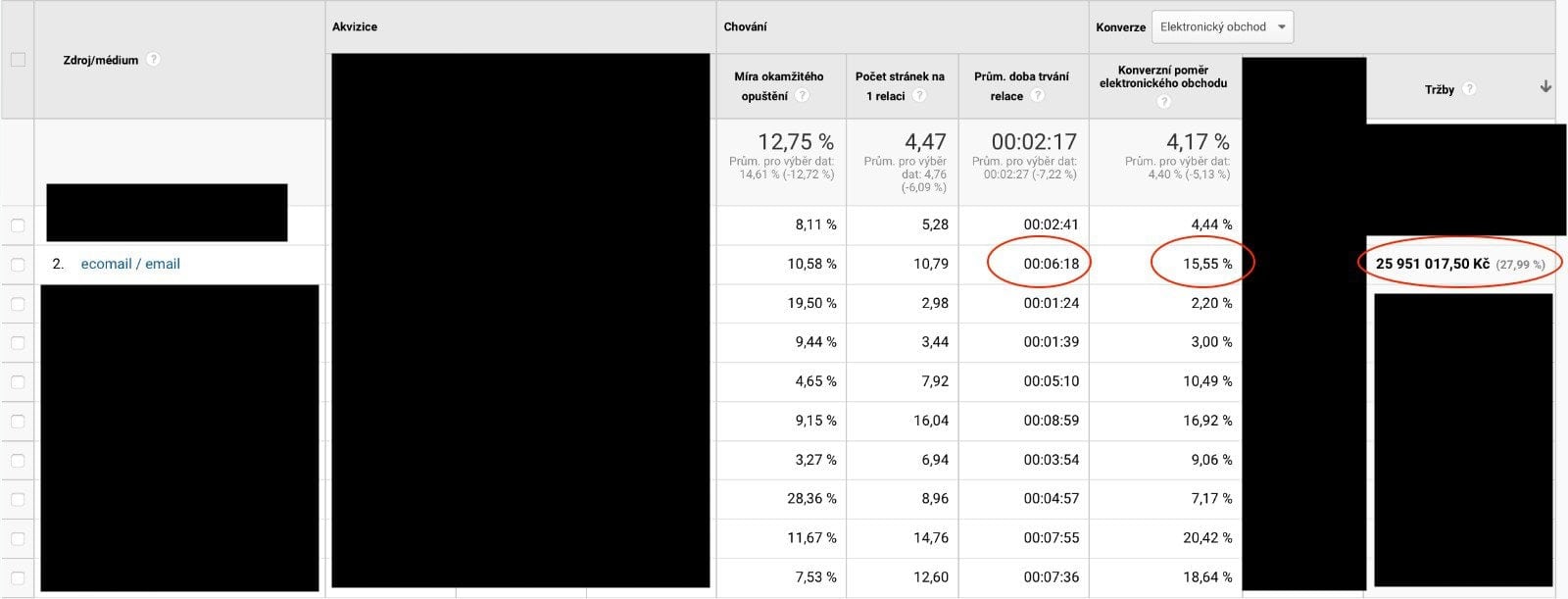
Why? Email is one of the best and cheapest ways to communicate with your customers. Looking at our client statistics, email marketing has long been the most effective remarketing tool, costing the company only our time and earning clients millions per month.

A marketing channel for a few thousand that makes millions

For our clients, email marketing accounts for 15-30% of their total turnover. It is no exception that in an e-shop with 40,000 active customers, we can achieve tens of millions of CZK in turnover through mailing. It all depends on the number of customers (e-mailing is mainly a remarketing tool) and the segment of products the e-shop offers.

The big advantage over PPC ads, product comparators or social media ads is that the financial investment in functional emailing is negligible compared to the revenue generated.

💡 We have the best experience with the Czech tool Ecomail which is quite affordable. You pay only for the number of active contacts, in the case of a 30,000 database it comes out to 3,750 CZK per month, without limitation on the number of sent emails.

Whereas with PPC and other ads you have to pay for the specialist’s time and the cost of the ad, with e-mail marketing you only pay for the specialist’s time and any marketing promotions, such as a 100 CZK discount on the first purchase. This means that Email marketing, which can earn you several million a month, can cost you only a few thousand crowns.

How to do effective email marketing

Now we’ll look at the tips and tricks that can make your email marketing the most profitable sales channel for your online store, business or brand.

1) Properly selected email sending tool

Using the right tool for sending emails is absolutely key. You should choose a tool that can be well connected with your e-shop, Facebook but also Google Analytics. Without a good connection to your e-shop you won’t be able to create the most important mail campaign, the abandoned cart. Without proper measurement, you can’t evaluate whether your campaigns are effective.

The tool should be able to A/B test both subject and content and create automated campaigns. We’ve tried a number of tools, such as Mailchimp and Active Campaign, but in the end we’re moving all our clients to Ecomail.

If you’re hesitant to make the switch, go for it, you won’t regret it. We also consider it a great advantage that Ecomail is Czech and therefore has available technical support during working hours.

2) Actively collect contacts in accordance with the law

The most important thing is to collect new contacts and the most effective way is to contact for a discount (for example, a discount of 100 CZK on the first purchase) or for downloading the so-called. magnet. A magnet can be a PDF with a cookbook, for example, or a guide to building a home hydroponics system.

Of course, you also collect contacts when you place orders in the e-shop, but the buyer must agree to receive marketing communications.

There are also more sophisticated ways of collecting emails that can bring you more relevant leads. For example, if you sell things for the garden, you can entice people to sign up for a multi-week email course on gardening, growing vegetables, propagating houseplants, etc. If you sell marketing courses, you can offer an email course on Facebook advertising.

3) Set up your most important automation – abandoned cart

The basic automation is an abandoned cart. We recommend setting it up directly in Ecomail or in another emailing tool, rather than directly in the e-shop (Shoptet can do this, for example). Abandoned basket set up in Ecomail has saved us more than 1100 orders for one client in one year.

4) Send newsletters regularly, but don’t overwhelm

Only send newsletters when you have something to say and never overwhelm your contacts. What should you write to people? You should definitely not forget to send news, monthly promotions or weekly discounts if you run them on your e-shop. Send newsletters in accordance with your content strategy .

5) Only send people content that interests them

Create automations with content that specific people are interested in. Segment your people based on their interests and behaviour on your e-commerce site so that you only send them content that they might be interested in.

For example, don’t forget to automatically send a reminder to customers when it’s time to get spare parts for a device they’ve purchased. If you are selling more complex products, please remember to send instructions by email.

If they buy garden tools or seeds from you, send them tips on what to plant when. Do they buy cosmetics? Create emails with tips on how to take care of your skin.

6) Create meaningful automations and update them according to results

The biggest power in email marketing is in the automations because you only set them up once. Then you just edit them according to how people react to them. You can do automations on people who buy products for bodybuilders, for yogis or for coffee lovers, depending on what e-shop or website you run.

If you create interesting content, people will not only read it, but they will also build a better relationship with your brand and are more likely to purchase the products you recommend in the email.

7) Use verbs or action words in the subject

The subject should be strong enough to attract attention. Thus, it is recommended to use verbs that evoke emotion or action, such as “buy”, “end”, “don’t miss”, “won’t” and “congratulations”. Action words such as “today only”, “discount” and ” important also work .

8) Try emoticons 😍

Although many email marketing experts try to avoid emoticons because they can reduce deliverability, they can increase open rates by up to 57%. It is therefore a good idea to experiment with emoticons in the A/B test, but always test the version with emoticons and the version without to see how much it changes deliverability and open rate.

9) Experiment with numbers and statistics

People love statistics and numbers. So put numbers and statistics in the subject line whenever you can.

  • 25% discount today only.
  • 90% of people love this coffee.

10) Try to arouse people’s curiosity

People are naturally curious and you can take great advantage of this in email marketing. Just lure them in and don’t give away the point in the introductory text, for example:

  • “Reproducing a monster is easier than you thought.”
  • “You probably didn’t know that about poodles.”
  • “Danger to children lurking in your home”.

11) Use preview text

Most email clients display not only the subject, but also the so-called. “preview text” or preview text. If you are using Ecomail, it is very easy to edit this text to add information to the object. So don’t forget to make the most of it.

12) Don’t forget the CTA – call to action button

There should always be at least one call-to-action button(buy, download, read) in the email. Buttons should be red. Don’t experiment, red works best according to all studies. Use the red buttons on banners and in emails. They work better. Period.

When we have a brandbook developed for clients, we always want to develop a red one to use for CTA buttons and actions. The red one simply attracts people the most, and those who don’t have it lose out.

13) Write simply and clearly – good copy is essential

Proper copy is essential, sell with a story or a joke, but be clear, understandable and concise. People are not supposed to read long texts. Therefore, at the beginning, in the first paragraph, say the most important thing. Write texts in accordance with your Tone of Voice .

14) Personalise your content

Refer to people by the first name under which they registered for your e-shop. This can be done very easily in Ecomail , but also with other email marketing tool providers. Send different offers to men and women. Create mailings based on what they click on and what they buy from your e-shop.

15) Test your email subject line and content

A/B testing is extremely important when creating an email. Try different verbs or test the use of emoticons in the subject. Never send an email without testing the subject line or another content option.

16) Control what you send

One of the biggest mistakes is sending an email without first checking how it looks on both desktop and phone. Check the functionality of links, loading images and other elements, and formatting.

17) Set up reactivation campaigns

Set up a reactivation campaign for customers who haven’t purchased in a long time. Haven’t they bought from you in six months or a year? Send them a discount automatically.

18) Lubricate dead contacts

Haven’t purchased from you in a year, haven’t clicked or opened any emails, and haven’t responded to your reactivation campaign? Delete them. There’s no point in paying for a contact (you pay email marketing tools by the number of contacts or emails sent) who doesn’t respond. Seriously, don’t worry about it and don’t spend more than you have to.

Need help with email marketing?

Contact us . Although we cannot guarantee that we will have the space to take you on as a new client, we are always happy to find time for a consultation. We’ll be happy to review your current emailing and suggest automations or ways to collect new leads.

(function (w,d,s,o,f,js,fjs) { w[‘ecm-widget’]=o;w[o] = w[o] || function () { (w[o].q = w[o].q || []).push(arguments) }; js = d.createElement(s), fjs = d.getElementsByTagName(s)[0]; js.id = ‘4-f67e22c6c3dacfc9b77b6b40399abc16’; js.dataset.a = ‘lkmedia’; js.src = f; js.async = 1; fjs.parentNode.insertBefore(js, fjs); }(window, document, ‘script’, ‘ecmwidget’, ‘https://d70shl7vidtft.cloudfront.net/widget.js’));

Tips and Tricks for Your Vacation

Don’t Overpay for Flights

Search for flights on Kayak. It’s our favorite search engine because it scans the websites of all airlines and always finds the cheapest connection.

Book Your Accommodation Smartly

The best experiences we’ve had when looking for accommodation (from Alaska to Morocco) are with Booking.com, where hotels, apartments, and entire houses are usually the cheapest and most widely available.

Don’t Forget Travel Insurance

Good travel insurance will protect you against illness, accidents, theft, or flight cancellations. We’ve had a few hospital visits abroad, so we know how important it is to have proper insurance arranged.

Where we insure ourselves: SafetyWing (best for everyone) and TrueTraveller (for extra-long trips).

Why don’t we recommend any Czech insurance company? Because they have too many restrictions. They set limits on the number of days abroad, travel insurance via a credit card often requires you to pay medical expenses only with that card, and they frequently limit the number of returns to the Czech Republic.

Find the Best Experiences

Get Your Guide is a huge online marketplace where you can book guided walks, trips, skip-the-line tickets, tours, and much more. We always find some extra fun there!
Ecomail: A Power User’s Review in 2026

TL;DREcomail is a Czech email marketing tool the author has used for years, running everything from small blogs to online shops with hundreds of thousands of customers, sending millions of emails that generated tens of millions of crowns in sales. There are three plans, Profi, Marketer+ and CDP, priced by contact count (5,000 contacts comes to €33, €49 or €119 a month respectively on annual billing), and it’s free up to 200 contacts. Key features include automation, A/B testing, discount coupons, SMS campaigns from €0.05 per message, and integrations with Facebook, Sklik, and most CMS and e-commerce platforms like Shoptet or WooCommerce. Since June 2026 every plan also includes the AI agent EMA, which drafts a template in Czech, picks the segment and builds a whole automation scenario, and you can connect your account to ChatGPT or Claude via MCP. The big draws are Czech-language support, a simple interface, and solid deliverability to Czech inboxes — the main weak spot is less sophisticated user-data analytics on the entry-level plans.

There are plenty of email marketing tools out there, but only one truly stands out for me. That tool is Ecomail, a Czech email marketing platform I’ve been using for years across a wide range of projects — from small blogs to large e-commerce stores with hundreds of thousands of customers. This Ecomail review breaks down exactly why.

I’ve sent millions of emails through Ecomail and generated e-commerce conversions worth tens of millions. It was Ecomail that made email marketing an integral part of our marketing strategies (which Lucka and I develop through LK Media), and I consider Ecomail one of the most valuable tools we pay for on an ongoing basis.

Why is Ecomail my go-to tool for email campaigns, what can it do, and what is it best suited for? Let’s dive into this comprehensive review.

What Is Ecomail and What Is It Used For

Ecomail is a Czech email marketing tool. It integrates with a wide range of e-commerce solutions and CMS platforms (Shoptet, WordPress, etc.), pulling in data about your customers and readers and storing it in its own database.

Ecomail’s core function is sending email campaigns (newsletters) — either to your entire database or selectively to specific customer groups that you can easily filter.

You design your emails directly in the app using a convenient editor and send them either as one-off campaigns or through automations.

Where Ecomail really shines is in its automations, which are brilliantly designed and easy to manage. For example, at nanoSPACE, we make heavy use of automations for sending post-purchase guides, discount coupons for specific products, and reminders to reorder replacement parts.

Ecomail can also send SMS campaigns, integrates with Facebook and Sklik (a Czech PPC platform), and features a well-built tracker that monitors user behaviour on your website.

Key Pros and Cons of Ecomail

The current Ecomail logo after the rebrand

A major advantage is that Ecomail is a Czech product. Their tech support works in CET hours and is available when you need it. The app is available in Czech (and English), and as one of the few mailing platforms, it’s fully compliant with Czech and EU legislation. It also boasts excellent deliverability to Czech email addresses.

You can connect Ecomail to most CMS solutions without any coding knowledge — most platforms have a free plugin available.

The app is incredibly easy to use and anyone can set it up, yet Ecomail also packs plenty of advanced features that you can gradually unlock as you grow.

You can try Ecomail for free — with up to 200 contacts.

That said, the app could use better analytics built on top of the user data it collects — there’s potential there that isn’t being fully tapped yet.

Ecomail ProsEcomail Cons
✅ Czech app❌ Risky e-shops get moved to IP pools with a worse reputation
✅ Easy connection to CMSs and e-shops❌ Advanced analytics and RFM analysis only in the priciest CDP plan
✅ Flexible pricing❌ The AI agent EMA currently speaks only Czech and Slovak
✅ Easy to use, advanced features
✅ Fast, well-informed support
✅ AI right in the editor and the Czech AI agent EMA
A table of Ecomail’s pros and cons

How Much Does Ecomail Cost

Ecomail offers three plans – Profi, Marketer+ and CDP – and the price of each depends on the number of active contacts you have in your database. You can also buy credits to avoid a monthly payment (5,000 emails for €65, 200,000 emails for €490), but that only makes sense if you plan occasional campaigns without advanced features.

As a general rule, the Profi plan is for smaller websites that mainly need to send newsletters, Marketer+ is for e-shops (it adds integrations, an API and behaviour-based automations), and CDP is for those who want to get the most out of their data – it also includes RFM analysis, smart product recommendations and advanced analytics. I recommend at least the Marketer+ plan to every e-shop, and I’ve yet to see a case where Ecomail didn’t pay for itself with the very first campaign.

Number of contacts / PlanProfiMarketer+CDP
up to 200freefree
up to 500€6€8€82
2,000€16€20€94
5,000€33€49€119
20,000€82€123€193
40,000€127€190€303
Monthly prices of Ecomail plans with annual billing (verified in September 2026)

On top of any plan, you can also buy AI credits, which are used up by the AI features in the app. A thousand credits cost less than €0.05, so in normal use it’s an item you’ll practically never spot on your invoice.

💡 TIP: If you’re planning to use an integration (Shoptet, Prestashop, etc.), reach out to their support after registering. Here’s a little insider tip — you can get 14 days of free access to any plan for testing purposes 😉

Ecomail Features

Ecomail offers a solid range of useful features without being overwhelmingly complex like some competing tools (looking at you, ActiveCampaign 👀). You can find your way around Ecomail within minutes and start creating right away.

Here’s an overview of Ecomail’s basic and advanced features, along with real-world examples of how I use them.

Artificial Intelligence in Ecomail: the EMA agent, AI in the editor, and connecting to ChatGPT or Claude

The biggest change since I first wrote this review is artificial intelligence. Thankfully, Ecomail didn’t just slap it onto the app as a marketing sticker – when I’m preparing a campaign, it genuinely takes work off my plate.

AI right in the editor

The feature I use most often is generating the email subject line and preheader. I type what the campaign is about, Ecomail spits out variants, and I send two of them straight into an A/B test – that’s exactly the kind of work people used to put off until the last minute.

Above the text in a template, you’ll then find the Improve, Rephrase, Lengthen and Shorten actions. I use shortening the most – when the text doesn’t fit into a block and you need to trim it by a couple of sentences without losing the point.

Creating subject lines and editing text are available on all plans, including the cheapest one, while AI chat for a longer conversation about your text is only available on the Marketer+ and CDP plans.

The AI agent EMA

In June 2026, Ecomail added its own AI agent, EMA. It speaks Czech, is part of every plan, and unlike text chatbots it reaches right into your account. It can:

  • design a newsletter template in your brand colours, with your logo and font,
  • pick the segment the campaign should go out to,
  • build an entire automation flow including triggers, conditions and individual emails,
  • prepare both an email and an SMS campaign,
  • summarise campaign results (open rate, click-throughs) and tell you what to change next time,
  • go through your database and deliverability and suggest next steps.

I treat it as a quick first draft, not finished work. I always go through the flow EMA builds and reconfigure it – with more complex post-purchase automations (like the spare-parts one I describe below), there’s no way around knowing your own data anyway. The same goes for copy: the output is usable, but I rewrite it into the brand’s tone myself. Where EMA saves the most time is the routine stuff – the first version of a template, a segment proposal and a report summary.

You have to confirm every change to your account, EMA only works with your data, and that data isn’t used to train models.

Connecting your account to ChatGPT, Claude or Cursor (MCP)

The new feature that probably pleased me the most: Ecomail launched an MCP server, which lets you connect your account to ChatGPT, Claude or Cursor and ask about your data in natural language – no clicking through the app and no exports to Excel.

This practically works around even the analytics gripe I have in this review – whatever you can’t click your way to in the interface, you simply ask about. The connection runs via OAuth, so you don’t hand your login credentials to the AI tool, and when you connect it you can see which data you’re giving it access to. The MCP server itself is included in the free plans; you only pay for the AI tool you use.

Bulk One-Off Campaigns

The most fundamental feature is the ability to send bulk one-off campaigns. You create an email in the app, select your recipients (the entire database or a specific segment), schedule the send, and wait for results.

Bulk Campaign Example

At nanoSPACE, we hold an annual event called Nanoday every September — on 10 September, we run a major sale that we support with a mass email campaign.

We designed the email in the editor (preview here — we’ll take a closer look at the editor further below) and ran an A/B test with two subject lines:

  • Nanoday: 25% off everything
  • 😍 25% off everything

Email marketing specialists will tell you that emojis in subject lines hurt deliverability and produce worse results. That was indeed the case here (though based on our experience, it’s not always true) — people were more likely to open the email with the subject Nanoday: 25% off everything. Ecomail tested on a 20% sample and determined that this variant performed better, then sent the winning version to the remaining 80% of contacts. Here are the results:

Ecomail one-off campaign results
One-off campaign results in Ecomail

As you can see, Ecomail provides fairly detailed campaign analytics. You’ll find:

  • Open rate,
  • Click rate,
  • Number of bounced emails,
  • Number of unsubscribes,
  • Revenue generated from that email (this tends to be lower than what Google Analytics shows, as Ecomail only tracks revenue for registered and logged-in customers),
  • Click map,
  • Campaign performance over time,
  • Mobile vs. desktop open ratio,
  • Demographic data (if you collect order information),
  • And more.

Each campaign and its results stay in your campaign overview, where you can also compare campaigns against each other.

A/B Testing

When setting up a campaign, you can choose from several A/B test options. You can test the sender name, subject line, and content. I always recommend testing just one variable at a time.

Before sending the campaign, Ecomail asks what percentage of your database you’d like to use for the A/B test. If you choose 20%, Ecomail sends version A to 10% of your database and version B to the other 10%. It then waits for a set period (say, 2 hours) and sends the winning variant to the rest of your contacts.

Automations

Ecomail comes with several pre-built automations that essentially require zero effort — just switch them on (and optionally customise their emails to match your brand). These include:

  • Thank-you email after subscribing to the newsletter.
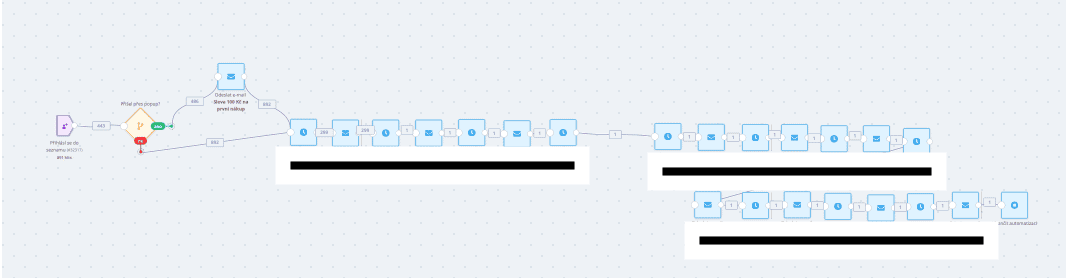
  • First-purchase discount after signing up.
  • Abandoned cart reminder.
  • Reactivation campaign for e-commerce.
  • Name day greeting.
  • Birthday greeting.
  • First-purchase anniversary.
  • E-book download.

Of course, you can also create fully custom automations tailored to your needs.

Automation Example

At nanoSPACE, we sell air purifiers that come with replacement parts needing periodic swaps. Customers can easily forget about this, simply not bother, or — worst case — buy the parts from a competitor.

So we built an automation that monitors orders. Whenever someone purchases one of these products, it starts a countdown (typically set to 80% of the replacement part’s lifespan) and once the timer expires, it automatically sends the customer an email reminding them to buy a new filter — complete with a discount coupon.

An automation like this can be as simple or as complex as you need — it all depends on how granular you want to get. We have a separate email for each air purifier model, since each one requires different replacement parts.

Discount Coupons

Ecomail handles discount coupons brilliantly and can manage any quantity. Across our own and client projects, we’ve distributed hundreds of thousands of coupons. You upload them to Ecomail via CSV or simply copy-paste, and there’s no limit on how many you can use.

Here’s a screenshot from the admin panel showing several types of discount coupons. We use unique coupons exclusively, which are inserted dynamically into emails using merge tags.

This means you can send unique, single-use discount coupons through automations — for example, as a reward when a customer reaches 200 € in total order value.

SMS Campaigns

Planning a larger marketing push? You can back it up with an SMS campaign directly within Ecomail. As long as you have consent from your customers to send promotional SMS messages and you’re passing phone numbers into Ecomail, you’re good to go.

Ecomail can send SMS messages to a wide range of countries, though for us the Czech Republic is what matters most. The price of a single SMS to the Czech Republic is about €0.05, to Slovakia around €0.05, to Poland about €0.05 and, say, to Germany around €0.09 – with SMS the pricing varies from country to country, and credits are bought separately.

By default, the sender name shows up as a generic label on recipients’ phones, but you can pay extra to display your brand name instead — for example, NANOSPACE.

Ecomail’s Facebook Integration

Ecomail’s Facebook integration is solid, and I’d recommend it for any larger project.

Facebook Lead Ads

You can use Ecomail to collect contacts from Facebook campaigns. Facebook Lead Ads can push collected emails directly into Ecomail. Using automations, you can then immediately reach out to these contacts with a welcome offer and add them to your regular mailing list.

Custom Audiences from Your Contact Database

Right inside Ecomail, you can define dynamically generated audiences that are automatically synced to your Facebook Custom Audiences (the audiences you target with ads). Ecomail tracks every contact, and when one meets your defined conditions, it’s automatically added to the audience and pushed to Facebook. Likewise, contacts are removed when they no longer qualify — for example, after they make a purchase.

Facebook Ads from Ecomail

I don’t use this feature much personally, but I can see plenty of use cases. You can create Facebook ads directly from Ecomail based on defined conditions. For example, you send a campaign but only 10% of contacts open it (while your usual open rate is around 20%), and the email contains a discount coupon. In Ecomail, you can then create a Facebook ad targeting those who didn’t open the newsletter, boosting the reach of your message.

Ecomail’s Sklik Integration

Just like with Facebook, Ecomail can also integrate with Sklik (a Czech PPC platform similar to Google Ads), though the functionality is limited to creating user audiences for advertising.

ContactSpotlight

This is a premium service available on top of your plan, but it’s well worth using at least once. Your contact database can contain entries of varying quality, and so-called spam traps can easily sneak in — these are addresses designed to detect whether you’re sending unsolicited emails. Unfortunately, even legitimate businesses can get caught, simply because they don’t use double opt-in verification.

ContactSpotlight scans your entire database (or an uploaded spreadsheet) and identifies all invalid, non-existent, inactive addresses, spam traps, and hard bounces. You’ll want to remove those promptly.

Drag & Drop Email Editor

Ecomail is constantly improving its email editor, so the screenshots below may already look different by the time you read this.

The editor automatically creates responsive versions of your emails, so you only need to design one variant and Ecomail takes care of proper display on mobile devices. The Preview function shows you exactly how your email will look, and you can also send yourself a test email (handy if you’re testing merge tags, for instance).

You don’t need to know any code to create beautiful emails — Ecomail includes a library of attractive templates that you can customise in just a few clicks.

The editor also offers a range of pre-built content blocks and natively supports columns (something many editors struggle with). You can even save your custom blocks and reuse them later.

TIP: If you’re stuck with a template or want to make more significant changes but don’t have a developer, reach out to Ecomail’s support. They offer a paid service where, depending on the package, they can take over the creation of your emails and automations.

Product and Data Feeds

To insert products into your campaign and automation emails, you can use product feeds. Ecomail works with feeds from comparison shopping engines like Heureka or Zboží.cz (popular in the Czech market).

More advanced users will appreciate the ability to upload custom data feeds. These have no strict structural requirements, so you can essentially push any data into Ecomail and automatically output it in your emails.

Personalisation

Thanks to the wealth of user data Ecomail collects, you have powerful personalisation capabilities at your fingertips. Using merge tags, you can send automated emails with dynamic content based on conditions you define. Here are some examples:

  • A customer browses products in category A — you send them an email highlighting the two best-selling products in that category.
  • A customer places an order with a delivery address near your physical store or pickup point — you send them an email inviting them to visit the shop.
  • A customer buys a product from category A — a week later, you send them recommendations for related products from the same category.

Working with Contacts

Contact management in Ecomail is straightforward and intuitive. Even advanced segmentation is just a matter of a few clicks and selecting conditions. The hardest part is figuring out which conditions to use for the segment you need.

Collecting Contacts

You can collect contacts in Ecomail through plugins, API, or sign-up forms. For the latter, there’s a drag & drop editor that can automatically tag collected contacts based on where they signed up.

You can also import contacts manually, but I wouldn’t recommend this — except perhaps for initial setup. Manually imported contacts lack all the accompanying data.

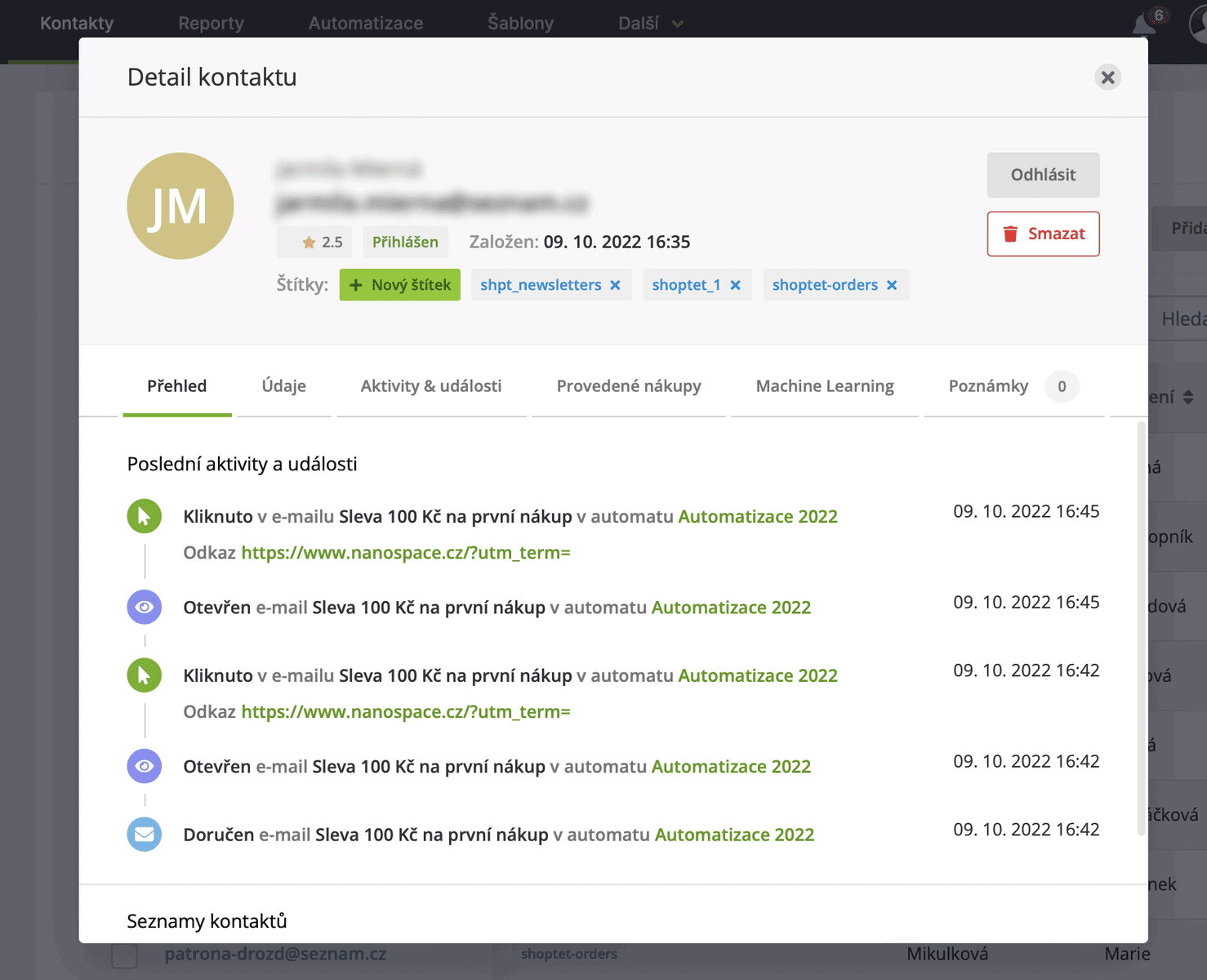
When using the API or a plugin that sends complete data, a user profile can look like this — including a full order history:

Segmentation

Customer segmentation is where Ecomail’s real power lies. Email marketing experts have been saying for a while now that it’s time to move away from mass sends (which statistically produce the worst results) and focus on smaller, more targeted campaigns. That’s exactly what segmentation is for.

Segmentation lets you filter customers using rules, then use those lists in automations or campaigns. For example:

  • Active, frequent buyers get emails more often — likely featuring new arrivals and product launches.
  • Customers who haven’t purchased in the last 6 months receive a discount coupon to encourage a new order.

You can segment by contact properties and contact activity.

Contact Properties

Contact properties are mostly static and don’t change over time — they’re primarily used to distinguish by gender, age, location, or registration date. We use them to split campaigns between men and women, for geolocation-based campaigns (e.g., targeting only Prague), or for sending birthday and name-day coupons.

Contact properties also include tags and contact source. I rely heavily on tags within automations — tagging contacts that have already gone through an automation (so they don’t get pulled back in immediately). Contact source is also great for automations, since you can set up different welcome emails for each source (website registration / purchase / partner site / Facebook ad).

Contact Activities

Contact activities are where you’ll trigger most of your automations and segmentations. They show how a customer behaves within a campaign, an automation, or on your website.

  • For campaigns, activities show whether a contact opened the email, clicked on anything, and whether they made a purchase.
  • For automations, they show whether a contact entered the automation, clicked on something, opened an email, and whether they’ve completed the automation.
  • Website tracking enables segmentation based on what a customer viewed, whether they bought, what they bought, how much they spent, how many orders they have, what their order status is, and so on.

Segmentation Example

Here’s an example of creating a customer segment to send a small reward via email to people who purchased respirators from us and also made more than 2 orders:

What You Can Integrate Ecomail With

Ecomail comes with over forty ready-made integrations and add-ons for a range of systems, and if you don’t find yours on the list, you can connect via the API. You’ll find the complete documentation here.

  • Shoptet
  • Prestashop
  • WooCommerce
  • Oxyshop
  • Webareal
  • Shopify
  • WordPress
  • Magento
  • Fastcentrik
  • Raynet
  • Make
  • Zapier
  • Shopsys
  • Simpleshop
  • Upgates
  • Redbit
  • Dativery
  • And more

Different integrations unlock different capabilities. Here’s what’s possible:

  • Transfer subscribed contacts to Ecomail (from forms or purchases) including personal data.
  • Transfer complete order contents including prices and categories.
  • Track user behaviour on your website (logging every page visited).
  • Transfer shopping cart contents to Ecomail including product categorisation.
  • Handle transactional emails through Ecomail.

Learn on Your Own and Share with Others

An active community has grown up around Ecomail (primarily Czech-speaking), and you’re welcome to join. Members share their experiences and help each other with more complex challenges. You can find this group on Facebook.

Beyond the community, Ecomail maintains an extensive library of resources to help you get started and master advanced automations:

Conclusion

In the hands of a marketer and email enthusiast, Ecomail is a seriously powerful weapon. I recommend it to anyone who sells anything online — or is planning to. It’s never too late to start building your email list.

Over the years I’ve been keeping this review updated, Ecomail has moved forward mainly in two directions: it added the CDP data plan for those who want to go really deep with segmentation, and AI, which cuts out most of the routine in preparing a campaign. But the core of the app has stayed just as simple as it always was – and that’s the best thing about it.

Today, everyone’s obsessed with building company Instagram, TikTok, and Facebook accounts. These channels certainly have their place in the marketing mix, but take one look at how social media has evolved over the past five years and you’ll realise that marketing strategies built solely on social platforms are standing on shaky ground.

People are creatures of comfort. While they’ll hop between social networks like they change socks — following whatever’s trending — they won’t give up their personal email for anything. Why? Because your email address is like your home address — changing either one is an absolute nightmare.

Want to Try Ecomail?

Interested in giving Ecomail a go? You can jump right in — it’s completely free for up to 200 contacts.

Need Help with Email Marketing?

💡 Check out our 18 tips for email marketing that generates millions in revenue.

Want to get started with email campaigns and automations but don’t know where to begin? Or are you unhappy with the results of your current campaigns? I’d love to help. You can find my contact details right here.

Ecomail Email Marketing Tool Review

Lukáš Konečný

Ease of Use
Core Features
Advanced Features
Pricing
Customer Support
Customer Segmentation
Automations

Summary

I consider Ecomail to be top-tier among affordable email marketing tools. I’ve successfully deployed Ecomail on projects with annual revenues ranging from €120,000 to €6 million, and I can say one thing for certain: the investment paid for itself many times over after the very first month.

5

Tips and Tricks for Your Vacation

Don’t Overpay for Flights

Search for flights on Kayak. It’s our favorite search engine because it scans the websites of all airlines and always finds the cheapest connection.

Book Your Accommodation Smartly

The best experiences we’ve had when looking for accommodation (from Alaska to Morocco) are with Booking.com, where hotels, apartments, and entire houses are usually the cheapest and most widely available.

Don’t Forget Travel Insurance

Good travel insurance will protect you against illness, accidents, theft, or flight cancellations. We’ve had a few hospital visits abroad, so we know how important it is to have proper insurance arranged.

Where we insure ourselves: SafetyWing (best for everyone) and TrueTraveller (for extra-long trips).

Why don’t we recommend any Czech insurance company? Because they have too many restrictions. They set limits on the number of days abroad, travel insurance via a credit card often requires you to pay medical expenses only with that card, and they frequently limit the number of returns to the Czech Republic.

Find the Best Experiences

Get Your Guide is a huge online marketplace where you can book guided walks, trips, skip-the-line tickets, tours, and much more. We always find some extra fun there!

11 Tips for Creating an Effective Content Marketing Plan

TL;DRA working content marketing plan comes together in 11 steps: sorting out key products and seasonality, setting a theme for the month and each week, then slotting your blog, PR, PPC, email marketing, affiliates, influencers, guest posts and other campaigns into one calendar covering the whole year. Unlike a social media publishing schedule, a content plan pulls together every one of your company’s communication channels at once. It’s worth publishing themed blog posts 2 to 4 weeks ahead of your other channels, so they have time to rank in search, and briefing copywriters a month in advance works well too. You can put together a content plan template yourself in 1–2 hours, or buy a ready-made one for 59 Kč.

Many beginner marketers confuse a content marketing plan with a social media publishing schedule. While a publishing schedule is essentially a simple calendar where you log planned social media posts, a content marketing plan is a comprehensive year-round calendar where you plan content creation across all your company’s communication channels (both online and offline).

What’s included in a complete content marketing plan

  • Topics you’ll cover each month.
  • Products you’ll focus on each week and month.
  • Publishing schedule for blog posts.
  • PR – press releases and PR activities.
  • PPC campaigns broken down by month.
  • Email marketing – themed campaigns.
  • Social media – topics for each month and week.
  • Affiliate marketing – campaigns planned month by month.
  • Guest posts – articles published on other websites.
  • Influencer campaigns.
  • Paid marketing campaigns.
  • Events relevant to your company’s focus.

Why having a content marketing plan matters

A content marketing plan stems from your content strategy and ensures that all your communication channels promote the same topics during the same periods (a period can mean a month or a week, depending on your brand’s needs).

With a solid plan in place, you always know what topics you’ll be working on, so you’ll never find yourself stuck wondering what to brief your copywriter on next.

A content marketing plan also ensures you’re covering topics that are relevant to a given time of year and are backed by keyword research. This means you won’t end up publishing content on your website that nobody is searching for or cares about.

On top of that, the plan is essential for evenly distributing campaigns throughout the year. Without it, you might end up running three sales events and six influencer campaigns in one month — and nothing at all the next.

TIP 💡: Want to learn how to write articles that generate traffic and revenue, step by step — plus get a sample brief for copywriters? Read more on our Patreon.

How to create a content marketing plan

Personally, I’ve been using a template in shared Google Sheets for several years now. This way, I can access it anywhere, anytime — and even when multiple people are working on it simultaneously, it’s always up to date. You can easily build your own content marketing plan template in an hour or two, or you can grab ours for the price of a coffee — buy it here. A content marketing plan is essentially your content strategy translated into a calendar format.

1) Do your prep work

Before you start filling in the content plan template, jot down the following:

  • Your most important products to promote (best sellers and highest-margin items).
  • Product seasonality (pool cleaning tablets probably won’t sell much in winter, for example).
  • Key events coming up this year – Christmas and Easter are obvious, but if you make grooming products, Movember matters too. Perhaps you attend trade shows or host your own events.
  • The most important topics for your brand – this doesn’t just mean trending subjects like sustainability. For instance, you might know that your customer support team is overwhelmed with installation queries for certain products, and you need to create more content to reduce those support tickets.

💡 We’ve already covered how to properly prepare content topics in detail in our article on content marketing.

2) Products to promote

Once your prep work is done, fill in the products you want to promote for each month. Use seasonality as your starting point and layer in your best-selling and most attractive products. Prioritise those with the highest margins.

Monthly theme and weekly topics

Based on the products you’ll be promoting each month and their seasonality, define your monthly themes and weekly topics.

Example: July

  • Product of the month: Cashew nuts
  • Monthly theme: Cashews and summer recipes

Weekly topics

  1. Storing cashews, fun facts about cashews, types of cashews
  2. Cashew butter and cashew milk
  3. Sweet cashew recipes (smoothie bowls, chia with cashews, cashew ice cream)
  4. Savoury cashew recipes (summer salad dressing, cashew cheese)

3) Plan your blog posts

This section is driven by keyword research from your SEO specialist, who should also suggest the best topics to start with. We schedule blog posts based on two criteria:

  • They’re relevant to the monthly theme and feature the product of the month.
  • They have strong SEO potential.

If you want to be ready for a seasonal peak from an SEO perspective, it’s better to publish themed articles 2–4 weeks ahead of the rest of your channels. This gives your content time to start appearing in organic search results (i.e. to rank). Here’s why:

If your December plan is to talk about baking a traditional Christmas cake across all channels and you publish the recipe on 15 December, by the time it starts ranking in search, Christmas will be long gone.

We brief copywriters a full month in advance to make sure articles are ready on time. Keep your blog plan in a separate spreadsheet tab where you track the status of each blog post — when it was briefed and when it’s scheduled for publication.

4) Events

This is where you log all events happening each month. Think Valentine’s Day, Christmas, Easter, shopping events (Amazon Prime Day, etc.), sales events (Black Friday), anniversaries tied to your brand, company events (exhibitions, conferences), and so on. This gives you a full-year overview and ensures you never forget to work these events into your publishing schedule, PR activities, and email marketing in time.

5) Email marketing

In the email marketing section, note down email campaigns linked to events or other marketing activities (shopping days, Black Friday, Valentine’s Day, etc.). You can also include automations that only run during specific periods — for example, Christmas recipes, pool maintenance tips, autumn film roundups, or holiday-themed playlists.

6) PR activities

PR activities need to be planned well in advance, and it’s crucial to factor them into all your outputs because other marketing activities may build on them. That’s exactly why they need a dedicated spot in your content marketing plan.

7) PPC campaigns

This section is particularly important for larger businesses that use PPC advertising beyond simply supporting existing e-shop promotions. If you’re not planning any larger themed PPC campaigns just yet, feel free to skip this part entirely.

8) Affiliate marketing

Most larger e-commerce businesses already run affiliate programmes, but few go beyond the basics. Yet affiliate marketing can drive surprisingly impressive revenue, and it’s entirely possible to plan dedicated campaigns specifically for your affiliate partners.

9) Influencers

The penultimate section of the content marketing plan covers planned influencer campaigns. Although you’ll certainly track influencer marketing in more detail elsewhere, it’s extremely important to make sure campaigns don’t overlap with other major initiatives.

For example, if your e-shop is running a birthday celebration with a flat 15% discount on everything, your influencer shouldn’t be running a campaign with the same discount at the same time. Why? It can skew the results of both campaigns. However, you could arrange for the influencer to promote your birthday sale instead.

10) Guest posts

Guest posts are typically blog articles you publish on partner or related websites. This section will mainly be useful for larger businesses or those with a more robust content marketing strategy.

11) Other marketing campaigns

This is the catch-all category for any remaining marketing campaigns that don’t fit under the sections above.

Content marketing plan template to download

Does all this sound great, but you’re not sure how to put a marketing plan together? Grab the plan we’ve been using and refining for years. For the price of a coffee, you’ll get a ready-made template — all you need to do is fill it in.

💡 If you need help putting together a marketing plan, don’t hesitate to get in touch at info@lkmedia.cz. You can find our pricing here.

Tips and Tricks for Your Vacation

Don’t Overpay for Flights

Search for flights on Kayak. It’s our favorite search engine because it scans the websites of all airlines and always finds the cheapest connection.

Book Your Accommodation Smartly

The best experiences we’ve had when looking for accommodation (from Alaska to Morocco) are with Booking.com, where hotels, apartments, and entire houses are usually the cheapest and most widely available.

Don’t Forget Travel Insurance

Good travel insurance will protect you against illness, accidents, theft, or flight cancellations. We’ve had a few hospital visits abroad, so we know how important it is to have proper insurance arranged.

Where we insure ourselves: SafetyWing (best for everyone) and TrueTraveller (for extra-long trips).

Why don’t we recommend any Czech insurance company? Because they have too many restrictions. They set limits on the number of days abroad, travel insurance via a credit card often requires you to pay medical expenses only with that card, and they frequently limit the number of returns to the Czech Republic.

Find the Best Experiences

Get Your Guide is a huge online marketplace where you can book guided walks, trips, skip-the-line tickets, tours, and much more. We always find some extra fun there!
What Is Brand Voice (Tone of Voice) and How to Define It

TL;DRTone of Voice (also called Brand Voice) is how a company talks to customers and suppliers — not what it says, but how it says it and the impression that leaves behind. It’s set out as part of a brand manual and content strategy, covering things like formal versus informal address, slang, emojis, punctuation and capital letters. Without a marketing specialist on hand, you can nail down your tone in three steps: work out who you’re talking to (people over 45, for instance, generally don’t want to be addressed informally), decide on the character of your communication, and pick the right language level. nanoSPACE offers a good real-world example — its Tone of Voice is built on clarity, authenticity and politeness, steering clear of jargon.

Brand voice — also known as Tone of Voice or Brand Tone — is simply a term for how your brand speaks. While it might sound trivial, and it’s something smaller brands (and honestly, even many larger ones) often overlook, your brand voice is an integral part of branding and an incredibly practical tool for unifying your company’s communication.

Your brand voice is essentially the personality of your brand. It’s not about what your brand says — it’s about how it says it and the impression it leaves on your audience.

Why Is a Well-Defined Brand Voice Important?

Every person you know has their own way of speaking. We’re all unique in the way we express ourselves. Whether we’re hyper-correct, use lots of pet names, or pepper our texts with emojis — it all leaves a certain impression on others.

And every brand wants to leave a lasting impression on its audience too. The way your brand communicates shapes how people perceive you. A distinctive communication style sets you apart from the competition and makes you far more memorable.

What Does a Brand Voice Document Look Like?

Your brand voice is part of your brand book (brand manual) and is created as a component of your content strategy. It’s a standalone strategic document that every employee should be familiar with. This document serves as a guide for how to communicate with customers and suppliers alike.

It covers aspects like formality level, how you address customers, the use of emojis, punctuation conventions, the use of slang and jargon, and other specific communication characteristics.

More thorough documents include real-world examples from customer support interactions, supplier communications, social media posts, presentations, and more. They often also outline how to write and reference your brand name correctly.

How Do You Set Up a Brand Tone of Voice?

  • First, a marketing specialist audits your communication channels and evaluates the current state of your messaging. (You’ll also fill out a detailed questionnaire together.)
  • You write down how you want your brand to be perceived. You may already have this covered in your brand manual.
  • You identify your core customer demographics (for example, if your primary audience is 45+, you’ll likely opt for a more formal tone).
  • Based on all of the above, the marketing specialist crafts your Tone of Voice document.

How to Define Your Brand Voice Without a Marketing Specialist

Complete the first three steps above, and then — based on your target customers and the way you want your brand to be perceived — decide on the following:

Formal or Informal?

Only a handful of brands dare to take a casual, first-name approach with their audience. It’s bold, it’s risky, but it’s highly memorable. This approach works best for brands that want to appeal to a younger demographic and come across as edgy and fresh.

What Will Your Communication Style Be?

Will you lean formal or casual? Will you aim to be witty and playful, or will you always stay professional and authoritative?

Brand voice example from the Tone of Voice guide of nanoSPACE:

How Do We Communicate?

  • Simply and clearly.

We value our customers’ time, so we communicate in a straightforward, clear, and concise way — no filler words or unnecessary fluff.

  • We’re translators.

We can explain complex technologies in simple terms that anyone can understand. We use relatable comparisons and simplify information without distorting it.

  • We’re authentic.

We grew from a very small company, and even though we now have hundreds of thousands of customers, we still remember the days when we shipped just a few packages a day. We genuinely value our customers, listen to their concerns, and do our best to help.

  • We’re kind and polite.

We’re customer-first. We enjoy communicating with our customers, we strive to understand their issues, and we do everything we can to help. That’s why we always communicate courteously and with a smile.

End of example.

What Kind of Language Will You Use?

Decide whether you’ll stick to standard, polished English in your communications or allow slang and colloquialisms. If your brand aims to evoke strong emotions, you’ll likely permit expressive language and a more conversational register.

This section also addresses the use of jargon and technical terms. For instance, nanoSPACE advises its employees to avoid technical language whenever possible and to always communicate in a way that anyone can easily understand.

Emoji Usage

It might sound amusing, but emoji usage is now commonly regulated within companies. Emojis convey emotions, which is why brands define which emojis are allowed and how many can be used across different types of communication.

Some companies ban emojis in their communications entirely, while others permit only a select few that align with their brand identity.

Use of Colours, Punctuation, and Capital Letters

Just like emojis, punctuation is regulated in brand communications. Most companies clearly state that you cannot use more than one punctuation mark in a row (e.g. multiple full stops or exclamation marks).

It’s also standard practice to regulate WRITING IN ALL CAPS, unless it’s a product or company name. All caps can come across as shouting at your customers — and that’s never a good look.

Some companies also prohibit using any colour other than black in email communications, or specify exactly how important information should be highlighted for the customer.

Need help setting up your brand’s Tone of Voice? Don’t hesitate to get in touch with us at info@lkmedia.cz.

Tips and Tricks for Your Vacation

Don’t Overpay for Flights

Search for flights on Kayak. It’s our favorite search engine because it scans the websites of all airlines and always finds the cheapest connection.

Book Your Accommodation Smartly

The best experiences we’ve had when looking for accommodation (from Alaska to Morocco) are with Booking.com, where hotels, apartments, and entire houses are usually the cheapest and most widely available.

Don’t Forget Travel Insurance

Good travel insurance will protect you against illness, accidents, theft, or flight cancellations. We’ve had a few hospital visits abroad, so we know how important it is to have proper insurance arranged.

Where we insure ourselves: SafetyWing (best for everyone) and TrueTraveller (for extra-long trips).

Why don’t we recommend any Czech insurance company? Because they have too many restrictions. They set limits on the number of days abroad, travel insurance via a credit card often requires you to pay medical expenses only with that card, and they frequently limit the number of returns to the Czech Republic.

Find the Best Experiences

Get Your Guide is a huge online marketplace where you can book guided walks, trips, skip-the-line tickets, tours, and much more. We always find some extra fun there!

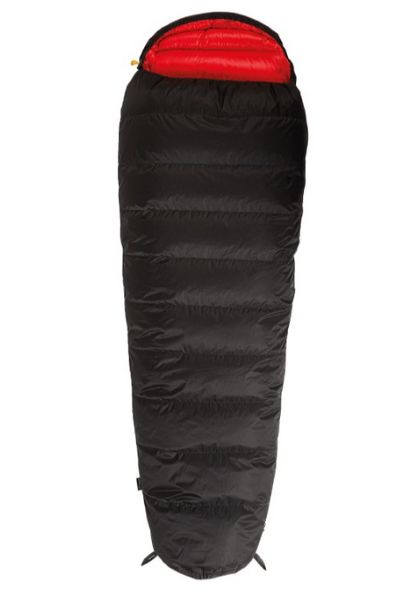
How to Choose a Sleeping Bag – The Ultimate Guide

TL;DRChoosing a sleeping bag comes down to four things: temperature rating (summer, three-season, winter), fill (synthetic or down), shape (mummy or rectangular) and length for your height. Summer bags weigh under 1 kg and suit temperatures above 5°C, three-season bags (1–2 kg) cover roughly -5°C to 25°C and are the most versatile, while winter bags (1.7–3 kg) keep you comfortable down to -10°C or lower. Down fill insulates better than synthetic, and it’s lighter and longer-lasting, but it costs more and needs more careful care – you can judge quality by fill weight (200–400 g for summer, 400–800 g for three-season, over 800 g for winter) and fill power (600 CUIN is standard, 800+ CUIN is top-end). The bag should be about 30 cm longer than you are. Recommended Czech brands include Pinguin, Kwak and Husky.

Choosing a sleeping bag is a science in itself — mainly because different activities call for different bags, and the range on the market is enormous. Whether you’re gearing up for long-distance cycle touring or sleeping under a tent, I wrote this article for everyone choosing their first sleeping bag or anyone who’s struggling to decide. In about 20 minutes, you’ll learn everything you need to pick the right sleeping bag. Let’s dive in!

What to Think About Before You Start Shopping

There’s a huge variety of sleeping bags on the market, and telling them apart isn’t easy. That’s why it helps to start by answering a few key questions — they’ll quickly narrow your options down to a manageable shortlist.

  1. Who is the sleeping bag for? Is it for you, your partner, or your child?
  2. When will you be using it? Summer only, or spring and autumn too — maybe even winter?
  3. How will you be travelling? Is low weight and small pack size important to you?
  4. Where do you plan to sleep? Under the stars, in a tent, or in a cabin?
  5. What’s your budget?

For every combination of answers, there’s an ideal sleeping bag out there.

Before you dive into the specifics of each type, here’s a quick overview of the most common use cases and which bags to buy:

💡 As a general rule, it’s worth buying from a reputable specialist brand that also offers after-sales service, including repairs and gentle cleaning. Look for established European manufacturers with a proven track record in quality down sleeping bags.

Types of Sleeping Bags

Sleeping bags are categorised (and usually filtered on retailer websites) by several criteria. The main ones are:

  • Temperature rating (summer, 3-season, winter)
  • Gender and body size (men’s/unisex, women’s, children’s)
  • Shape
  • Insulation type (synthetic, down)
  • Activity (camping, cycling, backpacking, etc.)

How to Choose a Sleeping Bag by Temperature Rating

The key question is where and when you’ll be using your sleeping bag. Will you be sleeping under the stars, or are you planning an expedition to Mt. Everest? Heading out for a summer hike, or crossing the Scottish Highlands in September?

Summer Sleeping Bags

Summer sleeping bags are the lightest (under 1 kg) and perfect for warm summer nights — think campfire evenings or sleeping in festival tents. However, they’re not suited for cooler temperatures. If nighttime temps drop to around 5 °C, you’ll start feeling cold. We once camped with ultralight summer bags in September in the Dolomites, and temperatures near 0 °C were really uncomfortable in a summer sleeping bag.

They’re also cheaper than 3-season bags because they use less insulation material, which makes up a significant portion of a sleeping bag’s price. The price range is quite broad because summer sleeping bags include specialist subcategories like ultralight sleeping bags, which start at just 600 g.

Summer sleeping bags are ideal for casual hiking and cycle touring. The most common fill is synthetic, while the better ones use down insulation, which is lighter.

Pros of summer sleeping bagsCons of summer sleeping bags
✅ Low weight❌ Lowest temperature comfort
✅ Lower price (less insulation)❌ Only suitable for summer
✅ Small packed volume❌ Smaller selection than 3-season bags

Essentially, you can choose from three types of summer sleeping bags: 👇

synthetic summer sleeping bag

For casual users — heavier bags with fewer features, but the most affordable option.

down summer sleeping bag

Go for down if you want to save every gram and pack size matters — no compromises here.

how to choose a sleeping bag

For occasional overnight stays in a cabin, or on warm summer nights.

3-Season Sleeping Bags

3-season sleeping bags are the most popular category because they can be used for most of the year. They typically weigh between 1 kg and 2 kg and will keep you comfortable even when temperatures dip slightly below freezing. Most are rated for use from around -5 °C to 25 °C. Prices vary widely — from around €30 to several hundred euros — primarily depending on the type of insulation.

3-season sleeping bags are also recommended for people who always feel cold. If you’re the type who sleeps with socks on even in a heated flat during winter, a 3-season bag is your best bet. It’s far better than buying a summer bag and then having to add liners and extra layers.

Pros of 3-season sleeping bagsCons of 3-season sleeping bags
✅ Best value for money❌ More expensive than summer bags
✅ Usable for most of the year❌ Not warm enough for proper winter
✅ Widest selection available

When it comes to 3-season bags, we wouldn’t recommend rectangular sleeping bags at all. If you’re buying a 3-season bag, you’re planning to be more active, and hauling around a heavy, bulky rectangular bag just doesn’t make sense.

synthetic 3-season sleeping bag

Heading out on a trek or a wild camping trip? Go for a synthetic fill — at around 1.5 kg to 2 kg, you’ll have a solid, reliable sleeping bag.

down 3-season sleeping bag

A quality down sleeping bag weighs under 1 kg and will serve you for years. If you’re serious about sleeping outdoors, go for down.

Winter Sleeping Bags

Winter sleeping bags are designed specifically for cold conditions, so they’re well insulated and offer the best thermal comfort. They typically weigh between 1.7 kg and up to 3 kg. Standard winter bags have a comfort rating down to about -10 °C, but there are also specialist expedition bags that will keep you warm in extreme sub-zero temperatures.

Winter sleeping bags are generally heavier due to the amount of insulation. Even in deep frost (down to -30 °C), down sleeping bags maintain their performance — at those temperatures, moisture is barely an issue.

Pros of winter sleeping bagsCons of winter sleeping bags
✅ Maximum warmth❌ Only for winter — you’ll overheat in summer
✅ No-compromise sleeping bag❌ High price

Just like with 3-season bags, we wouldn’t recommend rectangular sleeping bags for winter use either. For winter sleeping bags, down is the way to go. Synthetic winter bags are simply too heavy and only really make sense in extremely cold and humid environments where a down bag might struggle.

synthetic winter sleeping bag

Synthetic fill doesn’t insulate as efficiently, making winter synthetic bags unnecessarily heavy. Only worth it in extremely wet conditions.

down winter sleeping bag

A proper down sleeping bag is the best choice for winter. Ideally, pick one with a water-resistant nanomembrane shell — it won’t absorb any moisture at all.

Sleeping Bag Temperature Ratings Explained

Every sleeping bag comes with standardised temperature ratings:

  • Maximum temperature (MAX)
  • Comfort temperature (COM)
  • Limit temperature (LIM)
  • Extreme temperature (EXT)

This classification is based on the European standard EN13537 (or the newer EN23537) and is mainly used for comparing sleeping bags against each other. Bags are tested in laboratory conditions on a special mannequin, so the ratings don’t account for how you personally feel the cold, your habits, or other individual factors.

Maximum Temperature

The maximum temperature rating isn’t particularly important. It simply tells you at what temperature you’ll start sweating. But unlike cold conditions, when it’s warm you can easily unzip the bag or just sleep on top of it.

Comfort Temperature

The comfort temperature indicates at how many degrees Celsius a 25-year-old woman can sleep without feeling cold.

Limit Temperature

The limit temperature is the same concept but measured for a 25-year-old man. Since men generally generate more body heat, the limit temperature is typically a few degrees lower than the comfort rating.

Extreme Temperature

The extreme temperature theoretically indicates the point below which you risk serious harm (hypothermia, etc.). You should never base your purchase on this number, and ideally you should never come anywhere close to your bag’s extreme rating.

On top of that, everyone perceives cold differently. How much heat your body generates changes depending on whether you’ve eaten, whether you’re healthy or under the weather, and just your general sensitivity to cold.

So at most, use the extreme rating to compare bags against each other — but never rely on it when planning your trips.

How to Choose the Right Sleeping Bag Length

Different sleeping bags for men, women, and children mainly differ in length and the placement of insulation — women’s bags, for example, tend to have extra insulation in key areas. As a general rule, buy a sleeping bag that’s about 30 cm longer than you are.

Unisex / Men’s Sleeping Bags

Unisex or men’s sleeping bags are the longest available on the market. They’re typically manufactured in lengths from 210 cm to 230 cm. Don’t be confused — a sleeping bag is always a bit longer than the person it’s designed for. Some manufacturers state the overall length, others the user height, and some list both.

Women’s Sleeping Bags

Women’s sleeping bags are shorter than unisex models and tend to have more insulation around the feet and hips. They also tend to come in more varied colour options.

Children’s Sleeping Bags

Children’s bags are shorter than women’s and often feature a handy trick — they can be shortened or extended. These are known as growing sleeping bags. They’re particularly good for younger children who grow quickly, saving you from buying a new bag every year.

Sleeping Bag Shapes

This one’s straightforward. You can get either a rectangular sleeping bag or a mummy bag.

Rectangular Sleeping Bag

A rectangular sleeping bag is a true weekend warrior’s choice. You get plenty of room inside and good comfort, but these bags are bulky, heavy, and rarely designed with finer details in mind.

  • Generous interior space
  • Fits virtually anyone
  • Can be fully unzipped and used as a blanket
  • Heavy
  • Bulky
  • Generally poor thermal efficiency

Mummy Sleeping Bag

The mummy shape is the most popular and is used for everything from casual hiking bags to professional-grade sleeping bags. Thanks to its tapered shape, it uses less material and wraps more closely around your body, which means it warms up faster and the insulation works more effectively.

Mummy bags also pack down smaller and weigh less.

  • Uses heat from your whole body efficiently
  • Lower weight, smaller pack size
  • Better thermal comfort

Choosing a Sleeping Bag by Insulation Type

The type of fill directly affects both the price and performance of a sleeping bag. Fills are divided into synthetic and natural, where synthetic options include hollow fibre and microfibre, while natural insulation is predominantly goose or duck down.

Synthetic Insulation

As a rule, synthetic materials don’t perform as well as down, but they’re easier to care for and considerably cheaper.

Synthetic fills work by trapping air within the fibres to create insulation. You can pick up a synthetic sleeping bag from around €40 (e.g. with Hollowfiber fill) up to around €160 for one with premium microfibre insulation.

Synthetic sleeping bags aren’t sensitive to moisture, but with regular use the fibres tend to compress over time. Compressed fibres trap less air and gradually lose their insulating ability.

When choosing a synthetic sleeping bag, pay close attention to the quality of the fill material, as it largely determines the price. A no-name hollow fibre in a budget bag will insulate far worse than premium Climashield fibre in a mid-range sleeping bag.

Hollow Fibre

Hollow fibre is made from recycled plastic and is mainly used in sleeping bags where performance isn’t the top priority. It’s the cheapest fill available, has a shorter lifespan than other options, and weighs the most. It’s primarily used in summer and rectangular sleeping bags.

A hollow fibre sleeping bag is fine for cabin stays or occasional car camping, but it’s definitely not suited for longer treks or multi-day expeditions in demanding conditions.

Microfibre

Microfibre is a synthetic alternative to hollow fibre. It offers better thermal insulation, is less bulky and lighter, though it costs a bit more. Unlike hollow fibre, microfibre is also used in more affordable 3-season and winter sleeping bags.

Down Sleeping Bags

Down sleeping bags are in a league of their own. Down insulates better than any other material and offers the best ratio of warmth, compressibility, weight, and longevity.

There are various types of down, and sleeping bags use either duck or goose down, or a blend of both. The quality of the down (and the specific parts used) determines its performance and price, but as a general rule, down is the highest-quality fill available and has no rival when it comes to heat retention.

Sleeping bags with duck down are cheaper, but duck down tends to release ammonia when damp, which causes an unpleasant smell. Goose down doesn’t have this issue.

In the past, down sleeping bags suffered from losing their warmth when they got wet (the feathers would clump together and stop insulating). That’s no longer a problem — you can now find sleeping bags with a water-repellent treatment on the shell that prevents moisture from reaching the down at all.

Down Fill Specifications

Fill Weight

With down sleeping bags, you can use the fill weight as a reliable guide to what season a bag is designed for. Here’s a rough breakdown:

  • 200 g to 400 g – summer sleeping bag
  • 400 g to 800 g – 3-season sleeping bag
  • over 800 g – all-year / winter sleeping bag
  • over 1200 g – specialist winter sleeping bag

Fill Power

Down sleeping bag manufacturers list fill power. The higher the fill power, the more air the down can trap, and the better it insulates. Fill power is measured in cubic inches (CUIN):

  • Standard fill power: 600 CUIN
  • Very good fill power: 650 – 750 CUIN
  • Premium fill power: 800+ CUIN

Down-to-Feather Ratio

Down is processed in various ways — sorted, clipped, and blended for optimal performance. For best results, sleeping bags use a mix of down clusters and small feathers, each serving a different purpose. Down clusters trap air and insulate, while feathers provide structure (loft) and help maintain the longevity of the down. The most common ratios are:

  • 85:15
  • 90:10
  • 95:5

The ideal ratio is generally considered to be 90:10.

Sleeping Bag Care and Maintenance

Down sleeping bags generally need a bit more TLC, but synthetic bags benefit from proper care too.

No matter what any salesperson tells you, don’t keep your sleeping bag in a compression sack any longer than absolutely necessary. Store it loosely — ideally hanging on a hanger, or loosely rolled in a cupboard.

If your sleeping bag gets damp, let it air out for several days. In summer, hang it outside; in winter, spread it out on the floor indoors. Any moisture left inside is a problem. It reduces insulation performance and can lead to mould growth.

If at all possible, avoid washing your sleeping bag. Washing damages synthetic materials, and frequent washing isn’t great for down either. Sleeping bags lose loft (fluffiness) with each wash, which means less insulation. If you really need to wash your bag, take it to a specialist cleaner or thoroughly research the correct process. Using the wrong detergent can ruin down fill permanently.

Final Tips

Take your time when choosing a sleeping bag. With the right choice and proper care, a good sleeping bag can last 10 years or more. Pay careful attention to the materials used, as they have an enormous impact on performance.

Ideally, buy your sleeping bag from a reputable specialist brand that offers after-sales service, including help with maintenance and cleaning. Well-known quality brands include Rab, Sea to Summit, Mountain Equipment, and Kwak, among others.

There’s a huge selection of sleeping bags out there, and you can often find quality bags in end-of-season sales. If you’re not in a rush, it’s worth waiting for a good deal. Retailers like Cotswold Outdoor, Go Outdoors, and Decathlon regularly have great offers.

If you’re after a sleeping bag for bike touring, look for a specialist bikepacking sleeping bag. And don’t forget a decent outdoor jacket to go with it.

Tips and Tricks for Your Vacation

Don’t Overpay for Flights

Search for flights on Kayak. It’s our favorite search engine because it scans the websites of all airlines and always finds the cheapest connection.

Book Your Accommodation Smartly

The best experiences we’ve had when looking for accommodation (from Alaska to Morocco) are with Booking.com, where hotels, apartments, and entire houses are usually the cheapest and most widely available.

Don’t Forget Travel Insurance

Good travel insurance will protect you against illness, accidents, theft, or flight cancellations. We’ve had a few hospital visits abroad, so we know how important it is to have proper insurance arranged.

Where we insure ourselves: SafetyWing (best for everyone) and TrueTraveller (for extra-long trips).

Why don’t we recommend any Czech insurance company? Because they have too many restrictions. They set limits on the number of days abroad, travel insurance via a credit card often requires you to pay medical expenses only with that card, and they frequently limit the number of returns to the Czech Republic.

Find the Best Experiences

Get Your Guide is a huge online marketplace where you can book guided walks, trips, skip-the-line tickets, tours, and much more. We always find some extra fun there!
12 Best Social Media Management Tools in 2026

TL;DRThere are 12 tools worth knowing here: Buffer, Hootsuite, Loomly, Zoho Social, Sprout Social, Later, SocialBee, Sendible, Semrush, Tweetdeck, ContentCal (Adobe Express) and Planoly. Buffer and Zoho Social stand out for being affordable if you’re just starting out or freelancing, Hootsuite and Sprout Social are built for big companies and agencies, and Later and Planoly are the go-to picks for Instagram influencers. Prices range from free (Tweetdeck) to hundreds of dollars a month — Sprout Social costs $89–$279, while Semrush starts at $199. Most tools give you a two-week free trial, so you can test 2–3 likely candidates before committing. A cheaper route is a one-off purchase through AppSumo, starting at $59.

There’s a huge number of social media management tools on the market today. They differ not only in price and the number of social networks you can schedule posts to, but also in user interface and advanced analytics capabilities. In this article, we’ll take a look at the 12 best social media management tools available right now and help you pick the one that’s right for you.

Why Use Social Media Management Tools?

It’s simple — they save you a ton of work. Through a single piece of software (most of them also have a mobile app), you can schedule posts across multiple social networks at once. They’re well worth the investment whether you’re a freelancer juggling several clients or a business. For marketing agencies, these tools are an absolute must.

Small businesses and beginner freelancers usually start with Zoho Social (great value for money), while influencers tend to go for Planoly or Later. Agencies most often choose Sendible, and larger agencies opt for Sprout Social, as it’s the most established player on the market. That said, I’d recommend trying out several tools since most offer a free trial — making it easy to find what works best for you. At the end of this article, you’ll also find a tip on where to buy social media management tools on the cheap. So keep reading! 😊

What to Look for When Choosing a Social Media Management Tool

  • Price,
  • Number of supported social networks,
  • User interface,
  • Integration with other apps,
  • Analytics.

How to Choose the Right Tool for You?

I’d recommend picking 2–3 tools from our list that fit your budget and support the social networks you need, then taking them for a spin to see how they feel. All the tools offer a FREE trial period, during which you should test which one works best for you or your team.

Do You Have a Social Media Content Calendar?

The following tools will help you manage and schedule your posts, but they won’t create the content for you. Creating posts becomes much easier when you have a content calendar and a long-term strategy in place.

We’ve written a dedicated article about creating a content calendar. Building a template will take you 1–2 hours depending on how familiar you are with Google Docs or spreadsheets, and whether you know how to use ChatGPT or not 😅. If you’d rather jump straight in, we’ve prepared a ready-made template in Excel and Google Docs.

The template is designed so you can start using it right away with minimal modifications. ☺️

12 Best Social Media Management Tools for Scheduling

Consistent scheduling and content analysis are the keys to social media success. Fortunately, there are plenty of excellent tools that let you schedule posts in bulk and provide detailed analytics to track your performance.

1) Buffer

  • Best for: Beginners / small businesses
  • Price: Free plan available, then from $5
  • Mobile app: YES
  • Supported networks: Instagram, TikTok (new), Facebook (pages & groups), Twitter, LinkedIn (pages & profiles), Pinterest.

Buffer offers a free plan for beginners — you can schedule up to ten posts across three social media channels. The free plan also includes a calendar view, the buff.ly link shortener, and hashtag suggestions. The paid version with analytics starts at $5 per month, and you can try it free for 14 days. Buffer is also great for beginners because it has one of the most user-friendly interfaces out there.

2) Hootsuite

  • Best for: Larger businesses and agencies
  • Price: Free plan available, $49 – $599 per month
  • Mobile app: YES
  • Supported networks: Instagram, TikTok, Facebook, Twitter, LinkedIn, Pinterest.

Hootsuite is one of the most comprehensive social media management tools out there — and possibly the most widely used worldwide. Like its competitors, Hootsuite lets you schedule content, recommends optimal posting times, offers robust analytics, and integrates with a range of team collaboration and customer support apps. This means you can handle almost all your communication through a single dashboard.

Hootsuite also offers online training and webinars for its customers.

3) Loomly

  • Best for: Larger businesses and agencies
  • Price: Free trial, $35 – $359 per month
  • Mobile app: YES
  • Supported networks: Instagram, TikTok, Facebook, Twitter, LinkedIn, Pinterest.

Loomly aims to compete with Hootsuite — not just on price, but also through its app integrations, robust analytics, and excellent customer support in the form of webinars and online training. Loomly is considerably more user-friendly, making it a better choice for teams that aren’t used to working with these kinds of marketing tools.

What’s it like working in Loomly? Watch the video.

4) Zoho Social

  • Best for: Small businesses, freelancers
  • Price: Free trial, $10 – $330 per month
  • Mobile app: YES
  • Supported networks: Facebook (groups & pages), Twitter, Instagram, LinkedIn (profiles & pages), YouTube Channels, Google My Business listings, Pinterest

Zoho Social may not match Loomly or Hootsuite feature for feature, but its excellent price-to-performance ratio earns it a well-deserved fourth spot. If you only need basic analytics and don’t require integrations with every app under the sun, you should definitely give Zoho Social’s trial a go. It’s ideal for anyone who’s outgrown Buffer’s free plan but needs to start managing social media more professionally.

5) Sprout Social

  • Best for: Large businesses and agencies
  • Price: Free trial, $89 – $279 per month
  • Mobile app: YES
  • Supported networks: Facebook (groups & pages), Twitter, Instagram, LinkedIn (profiles & pages), YouTube Channels, Google My Business Messages, Pinterest, WhatsApp, TikTok

Sprout Social focuses exclusively on large enterprises, and the pricing reflects that. This tool is used by some of the world’s leading brands and agencies (Hyatt, Ogilvy, Leo Burnett, Evernote, Microsoft). Sprout Social offers similar services to Loomly and Hootsuite, but its biggest advantage is a flawless user interface that makes working in it incredibly fast and efficient. It integrates with Reddit, Slack, and other internal communication tools.

Sprout Social’s most popular plan is the Professional tier at $149 per month (billed annually). It allows users to post across ten social media profiles and includes powerful analytics.

Like Hootsuite, Sprout Social also offers online training, webinars, and a range of educational resources and videos.

6) Later

  • Best for: Freelancers, influencers, and small businesses
  • Price: Free trial, $0 – $49 per month
  • Mobile app: YES
  • Supported networks: Facebook, Twitter, Instagram, LinkedIn, Pinterest, TikTok

Later is hugely popular among younger users thanks to its highly visual interface, and it’s widely used by influencers for scheduling Instagram content. While it can’t compete with tools like Sprout Social, if you’re looking for your first social media scheduling tool, Later is an excellent choice. It’s also great for smaller businesses that just need the ability to schedule posts, access basic analytics, and collaborate with a team.

7) SocialBee

  • Best for: Freelancers and small businesses
  • Price: Free trial, $19 – $379 per month
  • Mobile app: YES
  • Supported networks: Facebook (groups & pages), Twitter, Instagram, LinkedIn (pages & profiles), Pinterest, TikTok, Google My Business
What does SocialBee look like? Watch the video.

SocialBee’s UI design isn’t as polished as some other tools, but its layout is extremely intuitive.

At the top you’ll find a navigation bar with quick-access buttons for creating and switching between workspaces, adding new posts, configuring settings, and viewing notifications about the latest app updates. A standout feature is the built-in Canva integration, along with the ability to schedule evergreen content and connect an RSS feed for automated posting.

8) Sendible

  • Best for: Large businesses and agencies
  • Price: Free trial, $29 – $399 per month
  • Mobile app: YES
  • Supported networks: Facebook (groups & pages), Twitter, Instagram, LinkedIn (pages & profiles), Pinterest, WordPress, Google My Business, YouTube

Like the previous tool, Sendible also has built-in Canva support. It’s absolutely ideal for agencies — you can create teams, assign tasks to each other, and of course track results. Beyond standard features like hashtag suggestions and advanced analytics, Sendible offers several functions you won’t find in other social media management tools, such as the ability to create custom reports and send bulk messages to followers.

9) Semrush

  • Best for: Freelancers and small businesses
  • Price: Free trial, from $199 per month (includes SEO tools)
  • Mobile app: YES
  • Supported networks: Facebook (groups & pages), Twitter, Instagram, LinkedIn (pages & profiles), Pinterest, Google My Business.

Semrush is better known as a leading SEO tool, but it also includes a social media scheduling and analytics feature as part of its paid plans. This makes it an ideal choice if you’re looking for both an SEO tool and a social media scheduler in one package. Semrush offers similar features to most of the tools mentioned above, has fairly clear analytics, and lets you connect an RSS feed and create shortened UTM links.

10) TweetDeck

  • Best for: Twitter accounts
  • Price: FREE
  • Mobile app: No
  • Supported networks: Twitter

TweetDeck is the perfect solution for anyone who needs a tool specifically for scheduling tweets. It’s completely free, and you can connect as many accounts as you like.

11) ContentCal – Adobe Express

  • Best for: Freelancers, small businesses
  • Price: $9.90
  • Mobile app: Yes
  • Supported networks: Facebook, Twitter, Instagram

ContentCal was acquired by Adobe and folded into their Adobe Express application. It’s ideal for anyone looking for a straightforward scheduling tool for Instagram, Facebook, and Twitter at an affordable price.

12) Planoly

  • Best for: Freelancers, small businesses, and influencers (ideal for Instagram)
  • Price: $9.90
  • Mobile app: Yes
  • Supported networks: TikTok, Pinterest, Instagram

Planoly belongs in the same category as Later and Buffer — it’s a tool that has been and continues to be extremely popular among influencers and Instagram and Pinterest users (Planoly is an official Pinterest partner). It has built-in basic analytics, it’s easy to use, and it’s a solid choice if you’re just getting started with social media content creation or simply need a no-fuss tool.

How to Buy Social Media Management Tools on the Cheap

When we first started managing social media, we were looking for a tool we could buy once and never have to pay a monthly subscription for. That’s when we discovered Amplifr on AppSumo, where you can grab apps and tools for just a few dozen dollars from up-and-coming startups.

If you don’t mind using a tool from a company that’s just starting out, it’s worth checking AppSumo for social media scheduling tools. Even as I’m writing this article, there’s a social media scheduling tool available on AppSumo for just $59 with lifetime access.

Key Takeaways

  • There’s no single perfect social media management tool. It’s worth trying 2–3 before you commit to one.
  • Most tools offer a free trial for about 2 weeks.
  • Hootsuite and Loomly are best suited for larger businesses or agencies, while Later and Buffer are great for beginners, small businesses, or freelancers.
  • For influencers and Instagram scheduling, Later or Planoly are your best bets.
  • TweetDeck is a free tool dedicated to scheduling tweets.
  • Semrush is primarily an SEO tool that also lets you schedule social media posts.
  • If you only need to schedule Instagram posts, give Later a try.
  • You can find great deals on tools at AppSumo, but keep in mind they’re typically from startups.

Tips and Tricks for Your Vacation

Don’t Overpay for Flights

Search for flights on Kayak. It’s our favorite search engine because it scans the websites of all airlines and always finds the cheapest connection.

Book Your Accommodation Smartly

The best experiences we’ve had when looking for accommodation (from Alaska to Morocco) are with Booking.com, where hotels, apartments, and entire houses are usually the cheapest and most widely available.

Don’t Forget Travel Insurance

Good travel insurance will protect you against illness, accidents, theft, or flight cancellations. We’ve had a few hospital visits abroad, so we know how important it is to have proper insurance arranged.

Where we insure ourselves: SafetyWing (best for everyone) and TrueTraveller (for extra-long trips).

Why don’t we recommend any Czech insurance company? Because they have too many restrictions. They set limits on the number of days abroad, travel insurance via a credit card often requires you to pay medical expenses only with that card, and they frequently limit the number of returns to the Czech Republic.

Find the Best Experiences

Get Your Guide is a huge online marketplace where you can book guided walks, trips, skip-the-line tickets, tours, and much more. We always find some extra fun there!

30 Content Marketing Tips to Boost Your Strategy

TL;DRThis piece rounds up 30 practical tips for content marketing that actually works – covering content strategy and tone of voice, customer personas, keyword and competitor research, link-building, email automation, content recycling and smart promotion. It suggests publishing 2–4 blog posts a month; one client in the health food sector grew site traffic from 50,000 visitors in year one to almost 470,000 by year three doing just that. Results from content marketing often take around six months to show, so that’s the point at which you should judge whether it’s working. The focus throughout is on content strategy, strong headlines, internal linking, and repurposing one piece of content across several channels – blog, video, podcast and social media.

Back in 1996, Bill Gates famously declared that “content is king.” Nearly three decades later, that statement rings truer than ever. High-quality content marketing is one of the best investments you can make for your brand. It increases brand awareness, builds credibility, and — most importantly — great content marketing tips put into practice will generate more revenue than any paid advertising campaign.

A well-crafted blog post or informational video can keep earning for years without requiring ongoing investment. Let’s dive into what content marketing really involves and how to do it effectively.

What Is Content Marketing?

Content marketing is a marketing strategy focused on creating, publishing, and distributing relevant, valuable content for a target audience. The ultimate goal, of course, is to increase sales or other conversions that the marketer is tracking.

Content marketing encompasses not just the creation of quality content, but also its planning and distribution across all marketing channels.

Content marketing is used to acquire new customers, expand brand awareness, and naturally boost conversions. Through content marketing, you build a customer base and increase customer loyalty. It’s also a brilliant tool for establishing brand credibility.

Types of Content Marketing

  • Blog articles
  • Informational websites
  • Product and informational videos
  • Infographics
  • Podcasts
  • Social media posts
  • Newsletters
  • E-books and books
  • Informational brochures
  • Influencer marketing (partially)

Why Should You Invest in Content Marketing?

You might be wondering — is content marketing really worth the effort? In 2019, we took on a client in the health and nutrition space. Without spending a single penny on PPC or Facebook ads, we managed to drive 50,000 visitors to their website in the first year of creating quality content alone. That’s modest, sure — but look at what happened next: in the second year, traffic jumped to 350,000 visits, and by the third year, the company blog was pulling in nearly 470,000 visitors. How many blog posts did we produce? Just 2–4 per month, sometimes even fewer.

Of course, creating content that actually gets read isn’t easy. You also need to understand the basics of copywriting, SEO, and link building. Writing a high-quality article is usually just the first of several steps you need to take to lay the groundwork for organic traffic.

TIP 💡: Want to learn how to write articles that earn money and drive traffic, step by step — plus get a sample brief for copywriters? Check it out on our Patreon.

30 Content Marketing Tips for a Winning Strategy

Creating content sounds simple enough, but if you do it without a clear plan, you can end up spending a fortune on copywriters and social media specialists with nothing to show for it. Here are 30 content marketing tips to keep in mind when building your strategy.

1) Develop a Content Strategy

Creating a solid content strategy should be the springboard for effective content marketing. It’s typically the first thing we build with our clients. For it to work well, it needs input from company leadership, an SEO specialist, and a content marketing specialist.

A content strategy lays out a thematic plan (blog, newsletters, social media), outlines the topics you should cover, and tells you which channels to use for each.

It also includes a publishing calendar with key dates, seasonal topics, and events. With a well-crafted content strategy, you should never find yourself stuck wondering what to write about or what content to create.

If you’re putting together a content strategy for the first time, tools like ChatGPT can also lend a hand.

2) Set Realistic Goals

With content marketing, the results of some activities won’t show up immediately — it can take several months. While the ultimate goal is usually to increase conversions or traffic, a better initial target is to define the path you want to take rather than fixating on a specific number that would be more guesswork than a realistic estimate.

For example, you might decide that:

  • You want to publish 35 articles according to your thematic plan over the next year,
  • Create two email automations focused on the core topics of your business,
  • And produce four informational videos that help people solve the problems they most commonly face.

3) Define Your Brand’s Tone of Voice

Tone of voice refers to the way your brand communicates. Smaller companies often overlook this, thinking it’s unnecessary because everyone already knows how the brand sounds.

Setting a consistent communication tone is a foundational pillar of content strategy and is crucial for building a unified brand identity. A consistent tone of voice should run through customer support, email marketing, social media, and blog posts alike. It helps align your advertising copy with what you write on your website and how you interact with customers. Everyone in your organisation should know your tone of voice.

4) Conduct a Content Audit

Before you start creating content based on your new strategy, run a content audit. This means evaluating the content you already have. Find out what’s working, what just needs a refresh, and what hasn’t delivered results. A content audit gives you specific recommendations for improving or reworking your texts, videos, social media posts, and web pages. This will help you work much more efficiently.

5) Create Buyer Personas

A persona represents your ideal customer. You need to identify what problems your customer is trying to solve. Where do they typically live, what are their hobbies, what’s their income, and what do they want your products to deliver? If you sell a fairly wide range of products, you may have several different personas.

You might have passionate mountaineers who research every piece of gear down to the last detail and compare every specification. But you might also have busy city professionals who hit the mountains a few times a year and don’t want to wade through specs — they just want to buy the best gear that also looks great.

If you have a wide product range, one of your customer segments might also include those who love the outdoors but need the most affordable gear, whether because they’re thrifty or simply can’t justify the cost of premium equipment.

These personas don’t need to be deeply complex, but they help you step into your typical customers’ shoes. How do you figure them out? By analysing the questions people ask your customer support team, what they search for (via SEO analysis), and even through UX analysis that reveals how they navigate your e-shop or what they look for on your blog. Smartlook is a fantastic tool for this.

Marketing textbooks often make persona creation sound like a deep, involved process where you need to imagine your ideal customer’s dreams, appearance, and wardrobe.

Some people even like to sketch their persona. Sure, go ahead — but what really matters is knowing who your customer is (outdoor enthusiast / stay-at-home parent) and what problems your typical customer most commonly faces (I have allergies — what’s the best air purifier?). Where they work may not be relevant (allergy sufferers work in offices, warehouses, and boardrooms alike). Unless, of course, you sell workwear or professional tools.

6) Do a Competitor Analysis

Competitor analysis doesn’t just mean browsing your competitors’ websites and social media to see what content they’re producing. A thorough competitor analysis also includes an SEO component, typically prepared by an SEO specialist, that tells you which keywords your competitors are ranking for in search engines.

7) Involve Your Customer Support Team

When building your content strategy, make sure to involve your customer support team. This means your support staff should be logging the questions (along with answers) that people ask — particularly those whose answers can’t be found on your website. It’s also worth tracking frequently asked questions (though we don’t mean things like “when will my parcel arrive”).

Both types of queries can uncover interesting topics for content creation, and sometimes they even reveal poor website structure.

8) Work With Keyword Research

Keyword research is a content strategist’s best friend. Just keep in mind that whoever works with the keyword data should understand how to use it and how it was compiled.

“We had keyword research done by this SEO specialist, but it was a complete waste of money” — that’s the kind of review you’ll find online, and it’s exactly why some SEO specialists, ourselves included, refuse to deliver keyword research without a training session on how to use it.

Getting a list of keywords related to your business from an SEO specialist is just the starting point. Simply stuffing them everywhere on your site probably won’t make any difference.

After keyword research, you need to develop a content plan and a publishing schedule. The content plan may include suggestions on where and how to incorporate keywords (for example, by rewriting product descriptions), while the publishing schedule tells you which topics to cover in articles or video content.

9) Prioritise Content With the Greatest Business Potential

When creating content, always remember to prioritise the topics that can generate the most revenue.

Choose based on three criteria. If you’re creating content to sell products, the primary criterion should be profit margin (how much you earn per sale).

The second is search volume for relevant keywords, and the third factor is how competitive the topic is. Or, as an SEO specialist would put it: “How difficult is it to rank for this particular phrase?” In other words, how strong is the content your competitors have already published on this topic.

10) Keep a Functional Marketing Calendar

It’s essential to have a functional marketing calendar. Personally, after years of working in this field, the tool that’s served me best is a marketing calendar in Google Sheets. I have a slightly different version for each client, tailored to their needs. The key is that everyone on the team can understand it.

I’ve tried several — perhaps even dozens — of paid tools before ultimately coming back to good old shared spreadsheets. I’ve been using them since at least 2017 and have gradually moved all my marketing activities into them.

💡 You can create your marketing calendar (content plan) from scratch, or save 1–2 hours and download the template we’ve prepared for you.

11) Keep Your Content Simple and Clear

Even if you’re an expert in your field, never forget that whatever you create — whether it’s a blog post, video, or podcast — should be understandable to everyone. Create content like a journalist: clear and straightforward, so that anyone can grasp your message. Keep this in mind every single time you produce content.

12) Invest in Link Building

Link building is the practice of acquiring links to your website from other websites. In SEO jargon, these are called backlinks.

Earning backlinks from high-quality websites can pass authority to your site and help you rank higher on search engine results pages (SERPs).

Advanced link building often requires hiring a specialist, but you can secure plenty of links on your own.

Sometimes it’s as simple as reaching out to your suppliers and asking if they can add a link with your logo to their website. You can also provide content for other websites in exchange for backlinks.

Link building is extremely important for search engines because Google and Bing (among others) use backlinks to assess which pages are relevant and trustworthy. The more authoritative pages can then rank higher in search results.

However, be cautious when hiring a link builder. Some link-building tactics provide zero benefit and can actually harm your site’s performance in search engines. Search engines can detect artificially created backlinks to a certain extent, and their official guidelines recommend against actively acquiring links. Fortunately, a good SEO specialist can assess this for you.

13) Set Up Email Automations

Email remains one of the most powerful remarketing tools out there. For our clients with 60,000–70,000 contacts in their database, we can easily generate monthly revenue well above €40,000 through email marketing alone.

With email automations, you can take things even further.

If you sell vinyl records, for instance, you could create an email automation for fans of 70s music (specifically those who’ve already purchased this type of music from you), sending them interesting facts about Led Zeppelin, Pink Floyd, The Who, and Queen. Alongside the engaging content — period photographs, behind-the-scenes stories, and even stats — you’d also include tips on vinyl records they can buy.

You can build dozens of email sequences like this. If you sell garden tools, you can send seasonal tips on how to care for the garden.

The beauty of email automations is that once you set them up properly, they run virtually forever. We’ve tested numerous mailing tools, and among the best are:

  • Mailchimp (a solid all-rounder),
  • Ecomail (great for the European market),
  • MailerLite (especially good for bloggers),
  • and ActiveCampaign, which is excellent too, though it can be quite robust for smaller businesses.

14) Brainstorm as a Team

As the saying goes, two heads are better than one — and your employees and colleagues are a goldmine of topics and insights. During regular team meetings, discuss the topics planned for the coming month and invite opinions. Encourage your colleagues and team members to get involved in brainstorming content ideas. You’ll be surprised at how many article and video ideas suddenly surface.

15) Update Your Existing Content

Some topics will be more crucial for your business than others. Focus on those, and if your content isn’t performing, try updating it. Did you write a guide on how to fix a washing machine a year ago, but nobody’s reading it?

Try refreshing it. Run a competitor analysis, review the keyword research with an SEO specialist, and get advice on what you could improve.

Perhaps your guide is too brief, has an unappealing headline, or your competitors simply have far more backlinks pointing to their version.

16) Conduct Interviews

When you’re running low on topic ideas, start doing interviews with people in your industry. You can also interview your own employees.

If you sell outdoor clothing, for example, you could interview one of your cycling experts about what to look for when choosing a tent, sleeping bag, and other gear for a multi-day bikepacking trip.

Nanopodcast from nanospace.cz – a podcast about nanotechnology
An example from our project nanospace.cz — we run a podcast about nanotechnology

17) Create Webinars

Do you have a digital product — like an online course? Host webinars where you teach people one chapter from the course, for example. Always pick one of the most compelling topics to attract the largest audience possible. Record your webinar with a quality camera and microphone so you can repurpose the content on YouTube later.

18) Interlink Your Content

Whatever type of content you create, don’t forget to include links to other relevant pages, articles, and products. If you’re writing about how to choose a tent and you have an e-shop selling tents, make sure to link from your products to that article. Don’t forget to add links within the article to other relevant pieces too — like a guide to choosing a sleeping bag or a fascinating interview with someone who climbed Mount Everest.

Likewise, from a video about choosing a tent, always link not just to your tents but also to any related article. Some people watch the video but then want to read more. And of course, the reverse is true as well.

19) Repurpose One Piece of Content Across Multiple Channels

Written a detailed article about how to replace a vacuum filter? Don’t forget to turn that content into a video as well. You could also create a simple photo-based graphic for Pinterest. Then you might shorten the article into an email automation for everyone who’s purchased that vacuum, timed to land in their inbox exactly when it’s time to replace the filter.


If you’ve written an article on how to save money while travelling, you can turn the text into a video, record an audio version for a podcast, and then cut the video into shorter clips for social media.

20) Spend Time on Your Headlines

The title of a video, article, or email (subject line) is the very first thing people notice. That’s why it’s extremely important to craft a headline that grabs attention. Instead of “Summer Tents,” try using a verb or a number in your headline — for example, “10 Tips for Choosing the Perfect Summer Tent.

21) Structure Your Content

Whether you’re creating a social media post, blog article, or video, always aim to structure your content well.

On social media, you can use emojis for this. In articles, don’t forget a table of contents, and on YouTube, use video chapters.

In Facebook groups and on your website, you can also use bold text to make content more scannable for readers.

22) Put Effort Into Metadata and Descriptions

Writing a quality article, creating an infographic, shooting a photo series, or producing a video is really just the first part of the job. The tasks that follow often take even longer.

For articles, never forget to fill in the social sharing fields on your website. For photos, take time to name image files according to what they depict and add alt descriptions.

On social media, use relevant hashtags and location tags. On YouTube, don’t forget to add cards and other elements that help interlink your content.

It might seem like tedious work, and it probably annoys many of you — but these are precisely the details that can make a difference in search engine rankings.

23) Don’t Forget Quality Visuals and Photos

Once you’ve prepared great content, make sure you also create compelling visuals to go with it. This means preparing a cover image for your YouTube video, a featured image for your article, and images optimised for sharing on social media.

Don’t forget to break up longer articles and guides with quality photographs — this is standard practice nowadays, and without it, your content may not perform as well as it should. Over the past year, Instagram has dominated social media, and Pinterest is one of the fastest-growing platforms — both channels that thrive on strong visuals.

24) Leverage User Reviews

Do you have glowing reviews for your services or products? Use them in articles, email marketing, and social media posts. Reviews also work brilliantly in ads and Pinterest pins.

25) Choose the Right Button Colours

I’ll keep this simple: if you’re adding a call-to-action button to an article or email (e.g. “Buy Now” or “Read More”), make it red.

According to every study we’ve come across, red significantly outperforms other colours. When your designer is working on your brand identity, make sure they create an ideal shade of red that complements your brand colours.

26) Be Honest About Negatives Too

Do your services have downsides? Is there something users should watch out for when using your product? Don’t shy away from the negatives when creating content. People appreciate honesty about a product.

27) Evaluate Your Results

As we mentioned earlier, some activities won’t show results for several months. So if you’ve started creating content for your website, wait at least six months before evaluating its effectiveness.

Email sequences are a different story — there, it depends more on the size of your database, or whether you decide to promote the content through PPC advertising. If you find that you’ve written 20 articles but only three are driving meaningful traffic to your site, that’s perfectly normal.

Just make sure to audit the underperforming articles and try to optimise them. Consistent, dedicated effort always pays off in the long run.

28) Monitor Your Content and Links

There are tools that can help you check whether your pages contain broken links. Even so, you should periodically review older content and update it where needed. You can do this as part of your regular content interlinking routine.

29) Recycle Your Content

Keep track of which content performed well and don’t be afraid to recycle it — whether in email campaigns or on social media.

Very few people remember content they saw on social media a year ago, and if it was successful, there’s no need to reinvent the wheel. For your own peace of mind, you can tweak it slightly. But never write a brand-new article on the same topic — instead, expand and improve the original.

30) Promote Your Content Smartly

Written a brilliant piece about how to choose a lawnmower, but can’t wait until winter for it to start ranking? Don’t beat yourself up for not writing it last winter — instead, coordinate with a PPC specialist to start promoting it now.

Sure, that means the traffic won’t be free, but for content that has the potential to generate revenue, paid promotion makes perfect sense.

Tips and Tricks for Your Vacation

Don’t Overpay for Flights

Search for flights on Kayak. It’s our favorite search engine because it scans the websites of all airlines and always finds the cheapest connection.

Book Your Accommodation Smartly

The best experiences we’ve had when looking for accommodation (from Alaska to Morocco) are with Booking.com, where hotels, apartments, and entire houses are usually the cheapest and most widely available.

Don’t Forget Travel Insurance

Good travel insurance will protect you against illness, accidents, theft, or flight cancellations. We’ve had a few hospital visits abroad, so we know how important it is to have proper insurance arranged.

Where we insure ourselves: SafetyWing (best for everyone) and TrueTraveller (for extra-long trips).

Why don’t we recommend any Czech insurance company? Because they have too many restrictions. They set limits on the number of days abroad, travel insurance via a credit card often requires you to pay medical expenses only with that card, and they frequently limit the number of returns to the Czech Republic.

Find the Best Experiences

Get Your Guide is a huge online marketplace where you can book guided walks, trips, skip-the-line tickets, tours, and much more. We always find some extra fun there!

6 Travel Cosmetics Essentials You Actually Need

TL;DRSix skincare essentials cover you for any trip: a cleanser, toner, moisturiser, SPF 50+ sun cream, lip balm and a sheet mask. The idea is to keep your kit minimal enough for hand luggage only, handy now flight prices keep climbing and packing light matters more than ever. A two-step cleanse works fine with just one product, such as micellar water, though you’ll still need to rinse it off afterwards. If there’s room, add a serum with hyaluronic acid or niacinamide and an eye cream, while for make-up a concealer, plus maybe powder and blusher, will see you through.

Keeping your skin healthy matters no matter where you are in the world. But do you really need to fill up precious luggage space with a 20-step skincare routine? We’ll show you how to build a minimalist travel cosmetics kit that’s easy to pack — even when you’re travelling with just a carry-on.

With flight prices climbing even on budget airlines like Ryanair and easyJet, more and more of us prefer to travel light with only hand luggage. But fitting everything you want into a small bag isn’t always easy. That’s where a minimalist mindset comes in. Try cutting down the amount of cosmetics you bring along. So what travel cosmetics do you actually need on the road?

  1. Cleanser. Whether it’s a foam, micellar water, cleansing gel, or another makeup-removing product — a good cleanser is non-negotiable in your travel cosmetics bag. It removes all impurities, excess oil, and makeup. Look for one that’s suitable for both the eye and lip area and is non-comedogenic (won’t clog your pores). Even on holiday, stick to a proper double-cleanse method — first remove your makeup, then cleanse again. You don’t need two separate products for this; one will do the job. If you’re using micellar water, though, always rinse your face afterwards — even if the label says you don’t have to.
  2. Toner. In spray or facial mist form, a toner doubles as a refreshing and hydrating pick-me-up for your skin. Try rose water, for instance — it gives your complexion a fresh, radiant glow. It also helps reduce redness and irritation, making it an ideal travel companion for summer holidays.
  3. Moisturiser. You can never have too much hydration, and you shouldn’t skip it even in summer. Always pack a moisturiser — not just for your face, but for your hands too. After a full day in the sun, your skin will also thank you for a good body lotion. Go for lightweight formulas that won’t feel heavy or greasy on your skin.
  4. Sunscreen. No packing list is complete without SPF — and we mean for both your body and your face. Reach for a sunscreen with SPF 50+ so you can be confident you’re properly protected against harmful UV rays. On holiday, toss it in your day bag so it’s always within reach for regular reapplication. A sunscreen spray is ideal for this — it’s easy to use anytime, anywhere, even over makeup.
  5. Lip balm. There’s nothing worse than dry, cracked lips with nothing to soothe them. Thankfully, lip balms are tiny and fit into any handbag or pocket. We recommend choosing one with SPF for extra protection. Hydrating formulas are great too. And if you go for a tinted version, you’ll add a touch of colour — no lipstick needed.
  6. Sheet mask. One of the best ways to combat dry skin is treating yourself to a face mask. For travel, sheet masks are your best bet — they take up barely any space, they’re incredibly easy to apply, and you can even use them on the plane.

Beyond these essentials, you can of course also pack your favourite serum if space allows. Serums with hyaluronic acid or niacinamide are brilliant choices. An eye cream is another worthwhile addition. As for makeup, less is definitely more. Think about where you’re going and what you’ll be doing — a full face of foundation isn’t much use if you’re spending entire days in the water.

Instead, just pack the bare necessities — a concealer, maybe some powder and blush, and if you must, a mascara and a brow pencil or gel. Try to minimise products that require brushes. The absolute best options are multi-purpose products in stick form or cream-based formulas that you can easily apply with your fingers.

Tips and Tricks for Your Vacation

Don’t Overpay for Flights

Search for flights on Kayak. It’s our favorite search engine because it scans the websites of all airlines and always finds the cheapest connection.

Book Your Accommodation Smartly

The best experiences we’ve had when looking for accommodation (from Alaska to Morocco) are with Booking.com, where hotels, apartments, and entire houses are usually the cheapest and most widely available.

Don’t Forget Travel Insurance

Good travel insurance will protect you against illness, accidents, theft, or flight cancellations. We’ve had a few hospital visits abroad, so we know how important it is to have proper insurance arranged.

Where we insure ourselves: SafetyWing (best for everyone) and TrueTraveller (for extra-long trips).

Why don’t we recommend any Czech insurance company? Because they have too many restrictions. They set limits on the number of days abroad, travel insurance via a credit card often requires you to pay medical expenses only with that card, and they frequently limit the number of returns to the Czech Republic.

Find the Best Experiences

Get Your Guide is a huge online marketplace where you can book guided walks, trips, skip-the-line tickets, tours, and much more. We always find some extra fun there!

What to See in Barcelona Spain 2026: 25+ Must-Do Experiences

TL;DRBarcelona, the capital of Catalonia, wins you over with Gaudí’s architecture, tapas bars in the Gothic Quarter, beaches, and the views from Bunkers del Carmel. The unmissable Sagrada Família is being finished after 144 years, plus there’s Park Güell, Casa Batlló, and the lively La Rambla. Whether you have a day, three days, or a week, you can tailor your trip. The best time to visit is spring and early autumn. This guide has over 25 tips on sights and experiences, 1–3 day itineraries, and advice on transport, food, and budget.

Barcelona, Spain, is a city that grabs you at first sight. Gaudí’s architecture, tapas bars in the narrow lanes of the Gothic Quarter, the views from Bunkers del Carmel, and the beaches of the Mediterranean — it’s all waiting for you in the capital of Catalonia. And in 2026 Barcelona is especially remarkable — after 144 years the Sagrada Família basilica is being completed, a historic moment drawing more visitors here this year than ever before.

Lukáš and I visited Barcelona in early March and fell in love with it — just as you probably will too. Whether you have 1 day, 3 days, or a whole week in Barcelona, this guide will help you plan a trip that fits. You’ll find over 25 tips on sights and experiences, detailed 1- to 3-day itineraries, practical advice on transport, food, and budget, plus our map with all the points of interest.

When is the best time to visit Barcelona?

Barcelona is the sixth most popular city in Europe, and the timing of your visit can shape your whole experience. The city gets packed with tourists in high season, so it’s worth thinking about when to head to this Catalan gem. The weather in Barcelona, Spain, also plays a big role in what you can do.

We were there in early March, when temperatures hovered around 18 degrees, and we enjoyed Barcelona with only a handful of tourists around. Even so, we set out for some attractions first thing in the morning, because lines started forming later in the day.

  • High season (June–August): Festivals, long sunny days, swimming in the sea. But accommodation sells out well in advance, prices double, and lines at attractions start early.
  • Shoulder season (March–May, September–October): Ideal for sightseeing. Mild, sunny weather, smaller crowds. Watch out for Easter — the city fills up again.
  • Off-season (November–February): Best for budget travellers. Prices at their yearly lowest, streets empty, but the weather can be chilly (7–13 °C).
BARCELONA Weather

Where to stay in Barcelona

Budget stay: Try the stylish Hostal Portugal, a short walk from La Rambla and 13 minutes on foot from the beach. If it’s full, a great alternative is the bohemian Sant Jordi Hostels Gracia.

Best value for money: Hotel Granvia sits in a gorgeous 19th-century building that’s been tastefully and modernly renovated.

Best view: We chose Hotel Gaudí, which has a stunning rooftop view of Palau Güell. The rooms themselves are small, but they were fine for sleeping, and that rooftop terrace more than makes up for it.

25+ Best Things to See and Do in Barcelona

Barcelona is the capital of Catalonia, and its present-day look was shaped above all by famous 20th-century artists — especially Picasso and Antoni Gaudí, who designed the most famous buildings that made Barcelona what it is. Let’s take a look at all the places you shouldn’t miss in Barcelona.

1. Sagrada Família — the symbol of Barcelona

Perhaps the most magnificent temple in the world, unlike any other religious building. You don’t have to be a believer to be struck by the grandeur of the Sagrada Família, given its form by Antoni Gaudí. The most extraordinary part is the interior play of light created by the stained-glass windows — it literally sends shivers down your spine.

The Sagrada Família has three main façades representing the birth, suffering, and resurrection of Jesus Christ. Twelve towers symbolise the apostles, the tall tower embodies Jesus Christ, surrounded by the four evangelists.

The final piece of the Jesus Christ tower was installed on 20 February 2026, bringing the basilica to its full height of 172.5 metres (some sources give 176 m including the terrain elevation). It’s the tallest church in the world, and on 10 June 2026, exactly one hundred years after Gaudí’s death, the tower was blessed by Pope Leo XIV. It’s still not finished, though — the Glory Façade is due to be completed around 2034 to 2035.

Tickets are sold online only — you can’t buy one on site. 2026 prices: €26 basic, €30 with a guide, €36 with the tower lift, and €40 with both a guide and the tower. Book at least two weeks ahead, three for the towers. Note that on Saturdays it closes at 18:00 year-round. You can’t yet go up the Jesus Christ tower; the Nativity and Passion façade towers are open. All the details are in our article about the Sagrada Família.

2. Park Güell

One of the most popular spots, and it’s worth going first thing in the morning to avoid the crowds. Don’t worry about getting up extremely early — the park doesn’t open until 9:30. Park Güell sits on the Turó del Carmel hill and is one of the best-known works of the architect Antoni Gaudí.

From this park, covered in colourful mosaics and sculptures, there are stunning panoramic views over the whole of Barcelona — the ones you probably know from photos. Park Güell has been on the UNESCO list since 1984. Tickets are bought online only for a specific time slot; there are no on-site ticket offices. Entrance fee: €18, children 7–12 and seniors 65+ €13.50.

Beware of the widespread myth that most of the park is free. The paid Monumental Zone covers 12 hectares, while the freely accessible natural part is only 8 — so the paid section is the larger one. If you’re mainly after the view and don’t want to pay, head to Turó de les Tres Creus, the highest point of the park outside the paid zone. All the details are in our article about Park Güell.

3. Casa Batlló

This apartment building, another of Gaudí’s works, was created by remodelling an existing house at the turn of the 20th century. Uneven lines, colourful mosaics, and unusual shapes connect all of Gaudí’s buildings, but this one is considered one of the strangest structures in Europe.

Casa Batlló boasts a unique shimmering façade made of colourful mosaics, with unusually protruding windows in strange arched shapes. Touring the interior, you’ll be captivated by the play of light and shadow that’s one of Gaudí’s specialities. You’ll also find original false ceilings and staircases decorated with images of octopuses and starfish. Entrance fee: €25.

4. Casa Milà (La Pedrera)

Another Gaudí gem on Passeig de Gràcia, just a few minutes’ walk from Casa Batlló. La Pedrera (literally “the quarry”) earned its nickname thanks to its unusual wavy façade that looks carved from stone. The rooftop with its smoke-stack chimneys shaped like warriors is one of the most iconic sights in Barcelona.

If you only have time for one Gaudí house, pick according to your mood — Casa Batlló is more colourful and playful, La Pedrera is more monumental with that amazing rooftop. The evening rooftop tour of La Pedrera with projections and live music is an unforgettable experience. Entrance fee: from €25 (daytime) / from €35 (night tour).

5. The Gothic Quarter (Barri Gòtic)

The heart of the old town, with narrow medieval lanes where you’ll discover something new around every corner — a little gallery, a café with local wine, or a square full of street musicians. Set aside at least 2 hours for a wander with no plan, because that’s exactly how you’ll experience the Gothic Quarter best.

Don’t miss Pont del Bisbe (the Bishop’s Bridge) — one of the most photogenic corners of Barcelona. On Plaça Reial, with its palm trees and lanterns designed by Gaudí, grab a drink on a terrace and watch the city go by. And near the cathedral you can find remains of the old Roman walls — Barcelona was originally called Bàrcino. Access to the quarter is free.

6. Catedral de Barcelona

It may not be as flamboyant as the Sagrada Família, but it’s a stunning, enormous Gothic cathedral, with bars and restaurants out front where you can sit comfortably and take in this magnificent building.

The cathedral stands on the site of a Roman temple that stood here around 2,000 years ago. Today the cathedral is officially called the Cathedral of the Holy Cross and Saint Eulalia, honouring Eulalia, a local girl who refused the demand of the Roman emperor Diocletian to renounce her Christian faith. Inside you can take a lift up to a viewpoint — it is worth it.

7. La Rambla

La Rambla is Barcelona’s famous boulevard, running from Plaça de Catalunya down to the Columbus Monument. It’s the city’s main promenade, lined with restaurants, shops, and — in warm weather — street performers.

Football fans might like to know that at one of the lampposts (Font de Canaletes) near Plaça de Catalunya, every FC Barcelona victory is celebrated. What caught our eye more was the famous local market with fresh fruit, vegetables, and fish — La Boqueria. But honestly, I have to say — don’t eat at the restaurants on La Rambla. The prices are inflated and the quality is far worse than two streets over.

8. La Boqueria

Are you one of us who loves browsing local markets full of fresh fruit and vegetables? Then be sure to stop at La Boqueria for a fresh smoothie or to stock up on exotic fruit. You’ll also find meat, seafood, fish, cured meats, eggs, dairy products, and cheeses.

You might be interested to know it’s the oldest market of its kind in Barcelona — meat was already being sold here in 1217, and the tradition became so established that from 1470 a proper meat market operated here, then known as Mercat Bornet.

9. El Born and the Basilica of Santa Maria del Mar

El Born is probably our favourite neighbourhood in Barcelona. A hipster vibe, independent boutiques, cafés serving an excellent flat white, and tapas bars where locals mingle with travellers. Wander the lanes around Passeig del Born and you’ll understand why people keep coming back.

The neighbourhood’s landmark is the 14th-century Gothic Basilica of Santa Maria del Mar. For €10 you can go up onto the roof for a beautiful view over the surrounding rooftops. And if you love history, nearby you’ll find the ruins of the medieval city beneath the El Born CCM cultural centre — free entry.

10. Bunkers del Carmel — the best free view

The best free view over all of Barcelona. These former anti-aircraft bunkers from the Civil War offer a 360° panorama from the Sagrada Família to the sea. This spot is an absolute must-see, especially at sunset, when locals come up here with a bottle of wine and a picnic.

Take the metro to Alfons X station, then walk 15 minutes uphill. The climb is a bit of a slog, but the view — there are no words. You just have to see it with your own eyes.

11. Montjuïc — the cable car, castle, and magic fountain

You reach Montjuïc hill by cable car from the port (€13 return), and the view during the ride is worth it in itself. At the top you’ll find the medieval Castell de Montjuïc, the Fundació Joan Miró museum, and a beautiful botanical garden.

In the evening, head to the Magic Fountain (Font Màgica) — the light and music show is free and a genuinely mesmerising sight. The show runs on Fridays and Saturdays (from 21:00 in summer, from 20:00 in winter). Plan a whole afternoon and evening for Montjuïc — there’s a lot to see.

12. The Picasso Museum

Picasso moved to Barcelona as a boy of fourteen and returned here often and happily throughout his life. The museum is vast, spread across five palaces. On the ground floor there’s a courtyard and Gothic arches leading into white studios that illuminate his works. But if you’re expecting Picasso’s greatest hits, you may be disappointed — Guernica is in the Reina Sofía in Madrid, and The Weeping Woman is at the Tate Modern in London.

Even so, we think the museum is worth a visit. In chronological order it shows every brushstroke (all 4,251 works) of how a classically trained painter became a pioneer of Cubism. There are also lesser-known Picasso works here, such as his ceramics.

13. The Fundació Joan Miró modern art museum

For all the art lovers like me, here’s one tip. On Montjuïc hill you’ll find the Fundació Joan Miró museum, dedicated to the Catalan abstract artist Joan Miró. It’s housed in a snow-white modern building with a wonderful view over Barcelona. Entrance fee: €15.

14. Hospital de Sant Pau

An Art Nouveau hospital on the UNESCO list, just 10 minutes’ walk from the Sagrada Família — and yet plenty of tourists miss it. That’s a shame, because the breathtaking mosaic interiors and the garden between the pavilions are one of the most beautiful places in all of Barcelona.

Tip: Combine it with the Sagrada Família and walk along Avinguda de Gaudí, which connects the two landmarks — it’s a lovely pedestrian promenade. Entrance fee: €15, with audioguide €17.

15. Palau de la Música Catalana

An Art Nouveau concert hall and another UNESCO site in Barcelona. The stained-glass skylight on the ceiling is an artistic experience beyond words — you have to see for yourself how daylight streams through that incredible mosaic.

Guided tours from €20, but the best thing is to catch a concert (tickets from €15). If you love classical music, this hall is one of the most beautiful places to experience it.

16. Poble Espanyol

An open-air architecture museum with replicas of buildings from every Spanish region. It’s a bit like a miniature Spain in one place — and it works surprisingly well. Great for families with kids and craft lovers alike, since you’ll find workshops of glassblowers, potters, and other artisans here.

Entrance fee: €14, children under 4 free. Poble Espanyol is on Montjuïc, so ideally combine it with a visit to the hill.

17. The beaches of Barcelona

Barcelona’s seafront promenade stretches for several kilometres. Walking from Barceloneta to Diagonal Mar takes a good hour, but it’s a walk that fills in the atmosphere of the whole city.

The westernmost beaches, like Sant Sebastià, are busier and more touristy. Once you move along the waterfront past the Olympic port, you reach the stretch where the locals gather. We recommend Bogatell beach (cleaner, calmer) or Mar Bella (sports facilities, beach bars) — both are 10–15 minutes’ walk from Barceloneta and have far more space.

18. Camp Nou — the largest football stadium in Europe

Even though Lukáš and I are absolute football ignoramuses, even we couldn’t miss the pride of the proud Catalans — the stadium of their most famous football club, FC Barcelona. Be aware, though, that the vast majority of older articles about Camp Nou are now out of date. The stadium has been undergoing a huge rebuild since 2023 and doesn’t work the way you might remember it from photos.

Barcelona returned to Camp Nou on 22 November 2025 after two seasons spent at the Olympic stadium on Montjuïc. In March 2026 a capacity of around 62,650 spectators was approved; the third tier is due to open to the public no earlier than the first quarter of 2027, and the roof even later. The target capacity of around 105,000 will make it the largest football stadium in Europe, but only once it’s finished.

The classic tour with access to the pitch, dressing rooms, and tunnel doesn’t exist yet — it’s been replaced by the Barça Immersive Tour, i.e. a museum, an immersive 360° room, and a viewpoint over the ongoing construction. Budget roughly €28 to €31, and bear in mind that with reduced capacity, match tickets are far harder to get than before. I go into all the details in a separate article about the Camp Nou tour.

19. The triumphal arch — Arc de Triomf

Barcelona has its own triumphal arch too, built in 1888 when the city hosted the World’s Fair. The arch was built as the gateway to the fair, which was held in Parc de la Ciutadella. Today it’s one of the city’s iconic landmarks and a great spot for a photo.

20. Parc de la Ciutadella

A green oasis in the city centre with a fountain, a boating lake, and Barcelona’s zoo. Ideal for a picnic or a rest between sightseeing. In the park you’ll meet locals walking their dogs, doing yoga, or simply relaxing on the grass. Access to the park is free.

The Cascada Monumental — the monumental fountain in the northern part of the park — is, incidentally, the work of a young Gaudí, who contributed to it as a student. So there’s a piece of his genius waiting for you here too.

21. Tibidabo — the best view over Barcelona

Lukáš and I originally wanted to drive up here on our way into the city, but in the reviews we read that cars are often broken into here (the last two reviews were photos of cars with smashed windows). In the end we skipped this viewpoint, and given the bad weather we never made it back up from the city. But if the weather is on your side, our research suggests it’s one of the best views over the city.

At the top of the hill stands the beautiful Sagrat Cor church and a popular amusement park. If you go on foot, on the way up you’ll pass through one of Barcelona’s wealthiest and most enviable neighbourhoods. Entrance to the park: €12.

22. A flamenco show

Although flamenco comes from Andalusia, you’ll find great performances in Barcelona. It’s one of those experiences that simply belong to Spain. The energy of the dancers and guitarists pulls you in, even if you thought it wouldn’t interest you — trust me. 😅

We recommend Tablao Cordobes on La Rambla (yes, for once there’s something on La Rambla that’s worth it) or the intimate Jazz Sí Club in El Raval. Prices from €25.

Lucie a Lukáš
Lukáš and Lucie recommend
Where to stay in Barcelona
5 accommodations — hotels and other lodging options

23. The secret bar Paradiso

You enter this bar through a fridge door in the display of a panini shop — so the experience starts the moment you walk in. The bar was named the 20th best bar in the world in 2019, and in 2022 the best bar in the world.

It’s usually open from 21:00 to 3:00 and entry is FREE. But watch out — there’s often a queue, so we recommend arriving shortly after opening. The cocktails are creative and excellent, if on the pricier side (around €15–18).

24. Mercat de Santa Caterina

If La Boqueria feels too touristy to you (and it will), head to Mercat de Santa Caterina in the El Born neighbourhood. This market has a gorgeous wavy, colourful roof, and inside you’ll find local vendors where mostly locals shop. Smaller crowds, a more authentic atmosphere, and excellent tapas bars right inside the market.

25. Barcelona at night — rooftop bars and views

Barcelona at night is a completely different city. The Spanish eat dinner around 21:00–22:00, and the city comes alive just when you might normally be heading to bed. If you want to experience Barcelona’s nighttime magic, head to one of the rooftop bars with a view over the city.

We recommend the Terraza del Hotel Majestic on Passeig de Gràcia (view of Casa Batlló and La Pedrera) or The Roof at the Ohla Barcelona hotel with a view over the Gothic Quarter. And if you don’t want to splurge on cocktails, just wander the lit-up lanes of El Born or sit on the beach — Barcelona at night is magical for free too.

Where to eat tapas and what to try in Barcelona

Barcelona is a paradise for foodies. Beyond the classic tapas and paella, you should try these Catalan specialities:

  • Patatas bravas — fried potatoes with a spicy sauce (supposedly the best are at Bar Tomás in Sarrià; we didn’t make it there, but the locals swear by it)
  • Bombas — a Barcelona speciality, fried potato balls filled with meat
  • Pa amb tomàquet — Catalan bread with tomato and olive oil (it looks simple, but with good olive oil it’s pure poetry)
  • Crema catalana — the local take on crème brûlée, lighter and with a citrus flavour
  • Fideuà — like paella, but using short noodles instead of rice

Best tapas bars: El Xampanyet (El Born — authentic atmosphere, great cava), Bar Cañete (near La Rambla — higher price range, but excellent cuisine), La Pepita (Gràcia — creative tapas, local vibe). And one important rule: avoid the restaurants right on La Rambla — overpriced and the quality is mostly poor.

Itinerary: What to see in Barcelona in 1, 2, or 3 days

What to see in Barcelona in 1 day

Only have one day in Barcelona? No problem — you can fit in surprisingly a lot. Here’s our suggested plan:

  • Morning (9:00): Sagrada Família — book tickets for 9:00, when it’s least busy and the light through the stained glass is at its most beautiful
  • Late morning (11:00): Hospital de Sant Pau — just 10 minutes’ walk from the Sagrada, gorgeous Art Nouveau architecture
  • Lunch (12:30): Take the metro to Passeig de Gràcia, see Casa Batlló and La Pedrera from the outside, and have tapas in El Born (El Xampanyet)
  • Afternoon (14:30): The Gothic Quarter — the cathedral, Pont del Bisbe, Plaça Reial
  • Early evening (17:00): La Rambla down to the port, La Boqueria (closes at 20:30)
  • Evening: A stroll along Barceloneta, dinner by the sea

What to see in Barcelona in 2 days

Day 1: See the one-day itinerary above.

Day 2:

  • Morning (8:30): Park Güell — book for 8:30, when the park is quietest
  • Late morning: The Gràcia neighbourhood — cafés and local atmosphere, La Pepita for tapas
  • Afternoon: Montjuïc by cable car from the port, the castle, Fundació Joan Miró
  • Early evening: Bunkers del Carmel at sunset (the view is unforgettable)
  • Evening: The Magic Fountain (Fri–Sat), or a drink in El Born

What to see in Barcelona in 3 days

Days 1 and 2: See above.

Day 3:

  • Morning (10:00): The Picasso Museum
  • Late morning: El Born, Santa Maria del Mar, Parc de la Ciutadella
  • Lunch: Mercat de Santa Caterina
  • Afternoon option A: A day trip to Montserrat (1 hour by train) — the monastery, hiking, views
  • Afternoon option B: Camp Nou Experience + Poble Espanyol
  • Evening: A flamenco show or a rooftop bar

Day trips from Barcelona

If you’re flying into Barcelona for several days, we recommend heading out on some day trips too. Let’s take a look at the best of them:

Costa Brava

Head out kayaking or snorkelling at one of the Costa Brava beaches. If neither appeals to you, you can use the trip to visit a water park or simply laze by the sea. Among the most popular resorts here is Lloret de Mar.

Girona

Girona is a hidden gem between the Pyrenees and the Costa Brava. You’ll find a Salvador Dalí museum, a Jewish Quarter that’s one of the oldest and best-preserved in Europe, and if you love Game of Thrones, you’ll be pleased to know many scenes from the show were filmed here. Just wander the lanes and discover the various passageways and gardens, and Girona is sure to charm you.

Montserrat

Want something a little different from cities and beaches? Head to the Montserrat mountains, where you’ll find the monastery of the same name — the most sacred site in Catalonia. This trip is better suited to autumn or spring, since you’ll need to be ready for a hike, but one that rewards you with wonderful views of the surroundings.

If you like, you can then take the funicular down to Santa Cova, the famous spot where La Moreneta, the Black Madonna, was found. Don’t forget to walk up to the Sant Jeroni summit afterwards, where there’s a beautiful view over the valley.

Transport from the airport and around the city

From El Prat airport you can reach the centre of Barcelona in several ways:

  • Aerobus — from 1 March 2026 it costs €7.45 one-way and €12.85 return, running to Plaça Catalunya (25 to 35 minutes). The most convenient option.
  • Metro L9 Sud — €5.90 (Bitllet Aeroport). Note that a regular ticket and the T-casual are NOT valid at the airport stations, and contactless card payment doesn’t work here.
  • RENFE train — €4.60, running to Passeig de Gràcia and Sants (the cheapest option).
  • Taxi — roughly €35–45 to the centre, worth it if you’re travelling in a group. Don’t rely on Uber or Bolt in Barcelona — the number of licences was cut from around 900 to 300, and rides have to be booked two hours in advance.

Around the city: A basic ticket costs €2.90, and the T-casual (10 journeys) is €13. But it has a major catch — it’s personal and non-transferable, so a couple has to buy two. For a couple on a two- or three-day trip, the T-familiar at €11.50 often works out better — it’s valid for 8 journeys and can be shared. Most guides don’t mention this detail at all.

An alternative is the Hola Barcelona Travel Card, which now starts with the 24-hour version from €12.50 and includes one metro journey from the airport and back. We mostly got around Barcelona on foot — most attractions are within walking distance, and it’s the best way to get to know the city. You’ll find a complete breakdown in our article about transport in Barcelona.

Is the Barcelona Card worth it?

The Barcelona Card (around €57 for 3 days) includes unlimited public transport and discounts to museums and attractions. It’s worth it if you plan to visit 3 or more paid attractions a day. If not, the cheaper option is Hola BCN just for transport, and buying tickets individually online at a discount.

What’s changed in Barcelona in 2026

Barcelona has been through several changes this year that can seriously shake up your budget and your day plan. Most older articles haven’t caught up with them yet, so let’s go through them one by one.

The tourist tax nearly doubled on 1 April 2026. It’s charged per person per night, for a maximum of seven nights, and on Booking you usually don’t see it at the time of reservation. A five-star hotel is €12, a tourist apartment €9.50, a four-star hotel €8.40, other accommodation €7, and a hostel €6. So a family of 2+2 on five nights pays an extra €240 or so they hadn’t counted on.

A new public conduct bylaw has been in force since 15 February 2026 (ordenança de civisme). Drinking alcohol in the street can cost up to €3,000, and walking around without a shirt off the beach €120 to €300. Non-residents also pay the fine on the spot. It’s not a bogeyman, just something worth knowing before you crack open a beer on some steps.

Short-term rentals are being phased out. The city is scrapping all 10,101 tourist-apartment licences by November 2028, and it’s already pushing hotel prices up. The average hotel room price in March 2026 was €188.50, a record. In practice this means one thing: book as early as you can. Where exactly, we break down in our article on where to stay in Barcelona.

And one bit of good news to finish. There was no mass anti-tourism demonstration in Barcelona this year, the movement has weakened, and 73.4% of residents rate tourism positively. What bothers them is over-tourism, not tourists. What can disrupt your day plan, though, are teachers’ strikes — on 18 May they closed the Sagrada Família, and on 2 June Casa Batlló.

Barcelona: practical tips and advice

Buy your tickets in good time and in advance. If you can’t do it through the official sites, we usually go through GetYourGuide (no extra fee, always reliable, and you can pay online without any hassle). Through GetYourGuide we skipped the lines several times in Spain, because we didn’t have to wait to buy a ticket.

Safety in Barcelona

Barcelona has the unfortunate nickname of the pickpocket capital, so stay alert during your visit. The good news for 2026 is that pickpocketing on public transport dropped by around 40% in the first half of the year thanks to the police operation Pla Kanpai, with 85 repeat offenders arrested — four times as many as the year before.

But the cliché that you just need to avoid crowds doesn’t hold up. The peak of thefts isn’t at night, but during the morning and afternoon crush, roughly between 8:00 and 9:30 and then between 17:00 and 20:00. And phone snatching is on the rise — a pair rides past on an electric scooter, which is silent and coasting, so you don’t hear it coming. Don’t be scared, but follow a few rules:

  • Watch out for pickpockets: Keep an eye on your things especially on the metro and in busy spots like La Rambla. We recommend wearing your backpack on your front or using a bum bag.
  • Don’t keep your valuables in one place — split up your cash and documents.
  • Avoid leaving bags or backpacks on chairs in restaurants.
  • On the metro, petty theft is common, especially while getting on and off the trains.
  • Don’t take valuables to the beach. If you plan to swim, bring a waterproof case for your documents and keys.
  • If someone approaches you offering anything on the street (e.g. “event tickets” or “guides”), it’s better to decline.
  • Don’t hold your phone in your hand by the road or on an empty street — this is where visitors get caught out more than in a crowd.
  • Beware of scams involving bird droppings, a spilled drink, a carnation forced on you near the Sagrada, and fake police who want to check your wallet.
  • Emergency line: 112 (shared line for police, ambulance, and fire), police: 092

Map of points of interest for your phone

FAQ — Frequently asked questions about Barcelona

What to see in Barcelona in one day?

In one day you can cover Sagrada Família (morning, book for 9:00 AM), Hospital de Sant Pau, Casa Batlló from the outside, the Gothic Quarter with the cathedral, La Rambla with La Boqueria market, and an evening stroll along Barceloneta. The key is to buy tickets in advance and start early in the morning.

What to see in Barcelona in 2 days?

In two days, add to the one-day itinerary Park Güell (morning), the Gràcia neighbourhood, Montjuïc with the cable car and castle, Bunkers del Carmel at sunset, and the Magic Fountain in the evening. Two days is the ideal minimum for Barcelona.

What to see in Barcelona in 3 days?

In 3 days you can cover everything from the first two days plus the Picasso Museum, the El Born neighbourhood with Santa Maria del Mar, Parc de la Ciutadella, and a trip to Montserrat or Camp Nou. You can also dedicate the third day to a tapas tour or flamenco show.

How many days is enough for Barcelona?

Ideally 3-4 days. In 2 days you can manage the main sights, in 3 days also museums and trips to the surroundings. If you want to really experience Barcelona including the food, beaches, and nightlife, plan 4-5 days.

Will the Sagrada Familia be completed in 2026?

Yes, in 2026 the Sagrada Familia basilica will be completed after 144 years of construction. The main Tower of Jesus Christ (172.5 m) will make it the tallest church in the world. Buy tickets at least 2-3 weeks in advance, as demand in the year of completion is enormous.

When to visit Barcelona?

Spring (March-May) or autumn (September-October) are ideal. The weather is pleasant and crowds are smaller than in summer. In high season (June-August) it’s hot and overcrowded. Off-season (November-February) has the lowest prices, but the weather can be dreary.

Is the Barcelona Card worth it?

The Barcelona Card (from €55 for 3 days) is worth it if you plan to visit 3+ paid attractions daily and use public transport frequently. Otherwise it’s cheaper to buy a Hola BCN card for transport and individual tickets online with discounts.

Is Barcelona expensive?

Barcelona is more expensive than some European cities, but cheaper than Paris or London. Daily budget: budget traveler €50-70 (hostel, tapas, public transport), mid-range €100-150 (hotel, restaurants, tickets), luxury €250+. Accommodation and attraction tickets are usually the biggest expenses.

How to get around Barcelona?

You can cover most attractions on foot. For longer distances use the metro (T-Casual card: 10 rides for €11.35) or the Hola BCN card for unlimited travel (from €16.40 for 48 hours). From the airport, the most convenient option is the Aerobus (€7.75).

What to taste in Barcelona?

Typical Catalan dishes include patatas bravas, bombas (fried potato balls), pa amb tomàquet (bread with tomato), fideuà (noodle paella), crema catalana, and of course tapas. Best tapas bars: El Xampanyet in El Born, Bar Cañete near La Rambla, and La Pepita in Gràcia.

Is Barcelona safe?

Barcelona is safe, but watch out for pickpockets, especially on the metro and on La Rambla. Wear your backpack in front, leave valuables at the hotel, and watch your belongings at the beach. Emergency line: 112, police: 092.

What currency is used in Barcelona?

Spain is part of the eurozone, so euros are used here. You can pay by card almost everywhere, but it’s good to have some cash for markets and smaller establishments.

Where next: all our Barcelona guides

This article is a hub. For every topic we only touch on here, we have a dedicated guide with up-to-date prices and figures for 2026.

Where to go on holiday in Spain?

Lukáš and I love Andalusia, where you’ll find breathtaking cities like Córdoba, Seville, and Granada. If you want the sea, head to Málaga, where the water is warm and calm.

Tips and Tricks for Your Vacation

Don’t Overpay for Flights

Search for flights on Kayak. It’s our favorite search engine because it scans the websites of all airlines and always finds the cheapest connection.

Book Your Accommodation Smartly

The best experiences we’ve had when looking for accommodation (from Alaska to Morocco) are with Booking.com, where hotels, apartments, and entire houses are usually the cheapest and most widely available.

Don’t Forget Travel Insurance

Good travel insurance will protect you against illness, accidents, theft, or flight cancellations. We’ve had a few hospital visits abroad, so we know how important it is to have proper insurance arranged.

Where we insure ourselves: SafetyWing (best for everyone) and TrueTraveller (for extra-long trips).

Why don’t we recommend any Czech insurance company? Because they have too many restrictions. They set limits on the number of days abroad, travel insurance via a credit card often requires you to pay medical expenses only with that card, and they frequently limit the number of returns to the Czech Republic.

Find the Best Experiences

Get Your Guide is a huge online marketplace where you can book guided walks, trips, skip-the-line tickets, tours, and much more. We always find some extra fun there!