SEO Restart 2023: Is SEO Dying? Key Takeaways

TL;DRSEO isn’t dying, but the SEO Restart 2023 conference showed it’s shifting hard towards artificial intelligence and a return to quality link-building. In Václav Brynda‘s talk, 2023 link-building goes back to basics – brand mentions, topical articles and trust badges. Vojtěch Fiala demonstrated practical uses for tools like ChatGPT in content and metadata creation. Milan Zeman‘s case studies from mytimi.cz show real results from B2B SEO strategies: traffic up 173%, acquisition costs down 80%, a 500% return on investment, and in one case yearly visits climbing from 60,000 to 150,000.

Disclaimer: This article is an experiment. It was entirely written by ChatGPT 4, with images generated in Midjourney v5. The speakers’ presentations and photos were used as source material. Only one prompt was used per presentation. If a speaker’s PDF was too brief or full of images, they didn’t make it into this article 😎

SEO Restart 2023 focused on AI, content generation, and the evolution of linkbuilding. Four talks stood out to me the most, and I’ve put together summaries of each one for you here. A big thanks to all the speakers — it was a brilliant conference!

Václav Brynda: Linkbuilding in 2023: Back to Basics?

In today’s digital world, linkbuilding remains an essential part of any SEO strategy. Václav Brynda’s talk explored how linkbuilding strategies have evolved for 2023 and why it might be time to get back to the fundamentals of the discipline.

What Changed in 2023?

Václav Brynda focused on the following key areas of linkbuilding strategies for 2023:

  1. Discussions with brand mentions.
  2. Blogging without the use of artificial intelligence (AI).
  3. Topical and technical articles.
  4. Quality badges.
  5. Paid articles and guest posting.

Discussions and NoFollow Links

The value of NoFollow links lies in driving traffic, generating brand mentions, earning organic backlinks, and building domain authority. Václav stressed the importance of working through your own accounts, avoiding spammy link-filled posts, and evaluating results after 30 days.

Blogging and Brand Mentions

Blogging serves to generate organic traffic, increase brand awareness, create brand mentions, and build author authority.

Topical and Technical Articles

Václav recommended focusing on topical and technical articles, which can attract links from genuinely authoritative websites. The key is to leverage your contacts and offer exclusive information or expert-level content.

Quality Badges

Quality badges can be earned through reviews, mystery shopping, or by cultivating the right relationships and connections.

Paid Articles and Guest Posting

Václav Brynda emphasised the importance of finding websites with genuine traffic potential and working effectively with editorial teams. He recommended focusing on SEO-driven articles rather than PR pieces, which tend to be more expensive.

What Does a Typical Day in Linkbuilding Look Like?

Václav outlined the following methods for acquiring links:

  1. Link exchanges.
  2. Guest posts.
  3. Purchased articles.
  4. Offline linkbuilding.
  5. Interviews.
  6. Sponsorships.

It’s important to acquire links from a variety of sources — branded anchor text on homepages, naked URLs, and cited articles all play a role. Link exchanges, guest posting, and paid articles remain popular methods, but offline linkbuilding, interviews, and sponsorships also open up new opportunities.

Václav also highlighted the importance of 3-way and 4-way link exchanges, which should be implemented with expansions of at least 60 characters — not just at the point where the link appears. Citations and article updates can add further value for the linking page.

What Not to Forget

Václav Brynda stressed the importance of continuous improvement and learning from mistakes, as linkbuilding strategies are constantly evolving. Keeping up with current trends and adapting your strategy to the specific needs and goals of each project is essential.

Conclusion

Linkbuilding is a crucial part of SEO, and in 2023 it’s time to go back to basics — focusing on valuable content, link diversity, and brand mentions. Václav Brynda shared his proven methods and approaches that could serve as inspiration for your own projects. If you’d like to learn more about his work, you can reach him at Vasek.Brynda997@gmail.com or by phone at 731340322.

Vojtěch Fiala: Practical Uses of AI in SEO for Beginners and Intermediate Users

There are currently plenty of AI-powered tools available, including OpenAI, ChatGPT for Sheets, Jasper, AIPRM, Adcreative.ai, and more. These tools help with a range of tasks — from understanding your target audience and identifying suitable topics, to preparing article structures, FAQs, estimating user intent, crafting metadata, and writing regular expressions.

Understanding Your Target Audience

AI can help you understand your target audience by analysing their needs, interests, and preferences. This enables you to better tailor your website content to meet your visitors’ expectations.

Identifying Suitable Topics

AI can identify the right topics for your articles by focusing on the problems and questions your target audience is searching for. This allows you to create content that’s both relevant and engaging for your readers.

Content Hub

AI can help you build a content hub — a cohesive body of interconnected content that provides real value to users. This can improve your site’s SEO and boost its authority in the eyes of search engines.

Preparing Article Structure

AI can suggest an optimal article structure that’s easy to read while incorporating the keywords and phrases that matter for SEO.

Preparing FAQs

AI can also assist with creating FAQ sections on your website by analysing the questions and answers most relevant to your target audience. This helps you provide valuable content while simultaneously improving your SEO.

Estimating User Intent

Artificial intelligence can help estimate user intent by analysing visitor behaviour on your site and identifying patterns. This allows you to better understand what users expect and adapt your content to meet their needs.

Preparing Metadata

AI can also help prepare metadata — titles, descriptions, and keywords that are critical for SEO. Optimising metadata can significantly improve your website’s visibility in search results.

Writing Regular Expressions

Artificial intelligence can simplify the process of writing regular expressions, which can be incredibly useful when analysing and filtering data for SEO purposes.

Watch Out For

When using AI in SEO, it’s important to be aware of potential pitfalls — such as relying on external connections, blindly copying and pasting text, working with outdated information, or accepting definitive answers without proper context.

Key Resources

If you want to stay up to date with the latest news and trends in AI and SEO, follow key sources such as company profiles on LinkedIn (OpenAI, GenerativeAI, GPTAI) and industry experts.

Conclusion

AI offers a wealth of opportunities for improving SEO strategies, whether you’re a beginner or an intermediate user. Leveraging artificial intelligence in SEO can help you better understand your target audience’s needs, identify the right topics, create effective content, and optimise metadata. However, don’t forget to stay cautious and watch out for potential pitfalls when using AI in your SEO workflow.

Martina Zrzavá Libřická: Challenges and Obstacles in the World of SEO: How to Overcome Difficulties and Succeed

At SEO Restart, Martina discussed the challenges and obstacles that SEO professionals face in their day-to-day work. Her talk focused on practical solutions that can help you achieve success in the SEO field.

Hard Skills vs. Soft Skills

Hard skills — such as technical SEO, content marketing, keyword analysis, image optimisation, link building, and more — are essential for SEO success. On the other hand, soft skills like integrity, reliability, effective communication, teamwork, and problem-solving are equally important for achieving your goals.

How to Keep Up with Industry Developments

SEO is an ever-changing field, so staying informed is crucial. To keep pace, it’s important to continuously educate yourself, plan and organise your work, automate processes where possible, and learn to delegate tasks effectively.

One-Wo(man) Show

Many SEO professionals work solo — either in-house at companies or as freelancers. It’s important to find a community of peers where you can share experiences, advice, and support. Additionally, finding a mentor can prove invaluable for your personal and professional growth.

Balancing Tasks

Solid project management is key to running successful SEO campaigns. You need a clear task hierarchy, proper resource allocation, and strict deadline adherence. SEO project management also involves providing clear reports for managers and ensuring smooth collaboration between teams.

Building Trust

Trust is fundamental to SEO success. You need to build trust with your clients, colleagues, and managers. This means analysing the organisational structure, finding allies, and developing relationships with key stakeholders.

How to Stay Sane

  • Accept the situation Recognise what you can’t control and focus on what you can.
  • Plan ahead Create plans and have backup strategies for different scenarios.
  • Adapt Be flexible and willing to adjust to changes and new situations.
  • Communicate Maintain open communication with your team and clients.
  • Keep learning Follow industry trends and continuously educate yourself so you’re ready for change.
  • Learn to say no You don’t have to take on every task or project. Learn to say no when something exceeds your capacity.
  • Manage your emotions Learn to handle stress and frustration so you can better cope with situations beyond your control.

Milan Zeman: SEO Done 3 Different Ways: Case Studies with Real B2B Business Impact

Let’s look at three fascinating case studies from Milan Zeman of mytimi.cz, who shared his perspective on SEO and content marketing. These studies demonstrate how different SEO strategies and tactics can deliver significant results for B2B businesses.

1. Case Study: B2B Lead Generation

Goal: Increase organic traffic by 20%.

Strategy: Milan Zeman designed a strategy based on consistent content creation and acquiring 3 to 4 backlinks per month. The core components included opportunity research, keyword analysis, content gap analysis, distributing content to industry, technology, and business websites, and regularly publishing blog articles.

Results: This strategy led to a 33% increase in organic traffic, an 11% rise in conversions, and an 18% decrease in the conversion rate.

2. Case Study: The Highest-Performing Blog

Goal: Improve blog metrics.

Strategy: Achieving this goal required several foundational fixes — repairing the sitemap, resolving 404 errors, optimising metadata, and implementing a linkbuilding system. Beyond that, article fine-tuning was needed, which involved internal linking, creating specialist info boxes, and establishing an article update process.

Results: After implementing these changes, annual visits grew from 60,000 to 150,000, annual leads increased from 67 to 200, monthly newsletter subscribers went from 0 to 20, and the number of first-page keywords jumped from 80 to 500.

3. Case Study: Optimising Acquisition Costs

Goal: Increase organic traffic, reduce acquisition costs, and achieve a 2x return on investment within 2 years.

Strategy: This included an SEO audit, supporting main service pages through backlinks, optimising meta descriptions, creating educational content across 4 key areas on the website, and establishing a blog publishing schedule. A critical component of the strategy was also improving the conversion performance of product pages.

Results: This strategy delivered remarkable improvements — organic traffic surged by 173%, customer acquisition costs dropped by 80%, and ROI reached 500%. An interesting side effect was also increased search visibility for unsolicited call-related queries.

Conclusion

The three case studies presented by Milan Zeman demonstrate that SEO and content marketing can have a real, tangible impact on B2B business. The keys to success are a well-thought-out strategy, consistent content creation and optimisation, and thorough implementation of SEO fundamentals.

These examples show that SEO isn’t just about driving the highest possible number of visits — it’s also about conversions and return on investment. Successful SEO strategies therefore require a holistic view of the entire process and its connections to other aspects of the business.

If you want to improve your B2B business through SEO and content marketing, finding the right partner to help design and implement an effective strategy is essential. We hope these case studies provide you with ideas and inspiration for your own business.
Links to All Speakers and Their Presentations:

Space for Links to Other SEO Restart Summaries:

Tips and Tricks for Your Vacation

Don’t Overpay for Flights

Search for flights on Kayak. It’s our favorite search engine because it scans the websites of all airlines and always finds the cheapest connection.

Book Your Accommodation Smartly

The best experiences we’ve had when looking for accommodation (from Alaska to Morocco) are with Booking.com, where hotels, apartments, and entire houses are usually the cheapest and most widely available.

Don’t Forget Travel Insurance

Good travel insurance will protect you against illness, accidents, theft, or flight cancellations. We’ve had a few hospital visits abroad, so we know how important it is to have proper insurance arranged.

Where we insure ourselves: SafetyWing (best for everyone) and TrueTraveller (for extra-long trips).

Why don’t we recommend any Czech insurance company? Because they have too many restrictions. They set limits on the number of days abroad, travel insurance via a credit card often requires you to pay medical expenses only with that card, and they frequently limit the number of returns to the Czech Republic.

Find the Best Experiences

Get Your Guide is a huge online marketplace where you can book guided walks, trips, skip-the-line tickets, tours, and much more. We always find some extra fun there!

Itinerary: 7-day Roadtrip Through the Algarve in Portugal

TL;DRThis seven-day road trip round the Algarve runs from Sagres and Cabo de São Vicente through Lagos, with its Ponta da Piedade viewpoint, then on to Carvoeiro and Praia da Marinha, up into the Monchique hills to the Fóia summit (922 m) and the castle at Silves, before finishing via Albufeira, Tavira, Faro and Loulé. The route strings together the region’s best beaches — Praia do Camilo, Praia da Dona Ana and Praia do Amado — with pottery workshops (Porches Pottery, Olaria Pequena) and wine tasting near Silves. The best months to go are May, June, October and November, when the weather’s lovely and the crowds thin out; high season runs from July to mid-September. If you’re just sightseeing and skipping the beach time, 7 days is plenty, but if you want to add some beach lounging in summer, plan on 10–14 days — or if you’re pushed for time, you can hit the best spots in as little as 5 days.

If you’re considering a holiday in Portugal, be prepared to fall in love with this earthly paradise! Since our first visit in 2020, the charm of Algarve has captivated us so deeply that we’re now looking to buy a house there.

To share our experience, we’ve crafted a 7-day road trip itinerary showcasing the stunning beauty of southern Portugal. From pristine white beaches and majestic cliffs to historic castles and exquisite traditional ceramics, this journey offers a rich tapestry of experiences. We’ve included our top picks for tours, accommodations, dining, and cafes, confident that you’ll be as enchanted by Portugal as we are.

The Best Time to Visit Portugal

Peak tourist season in Portugal spans from July to mid-September, ideal for beachgoers as the ocean is at its warmest. In the Algarve, water temperatures vary; in the east near Tavira, they can reach up to 26 degrees Celsius in summer, while towards the west near Sagres, they’re cooler, often below 20 degrees.

For those more interested in exploring than swimming, the Algarve is welcoming almost year-round. The region enjoys sunny weather even during January and February, with temperatures pleasantly hovering between 17-20 degrees Celsius. We usually spend February in Algarve, enjoying the mild climate. May, June, and the months of October and November are particularly delightful, offering beautiful weather with fewer tourists.

Car Rental in the Algarve

Our go-to for car rentals has been DiscoverCars, a reliable service we’ve used worldwide. Cars can be rented directly at Lisbon or Faro Airports, providing easy access for your travels.

Where to stay in Algarve

The compact nature of the Algarve means you can comfortably base yourself in one location for your entire stay. Recommended spots include Carvoeiro, Portimao, or Albufeira.

Staying in Carvoeiro

A top choice in Carvoeiro is Quinta Nova Vale Del Rey, known for its stunning pool and delightful breakfast. It’s conveniently located near Praia da Marinha, one of the Algarve’s most picturesque beaches.

Staying in Albufeira

For a distinctive experience, consider The Homeboat Company Albufeira, which offers charming houseboat stays.

Beachside and Luxurious Options in Portimao

In Portimao, the Cozy beachfront apartment offers a stay right by the sea. Alternatively, for a more secluded retreat, Villa Moments – Guest House is an exquisite villa with a pool, located a short distance from the beach.

Ideal Duration for a Portugal Trip

A summer visit ideally spans 10-14 days, allowing a mix of sightseeing and beach relaxation. Outside the peak season or for those focusing solely on exploration, a 7-day trip suffices. While a 5-day itinerary is feasible, it may require a more fast-paced schedule or skipping certain attractions.

Exploring Portugal’s Best: A Tailored Itinerary

Our itinerary is designed for efficiency, whether starting from Faro or Lisbon, minimizing travel time. However, the sites we suggest are also great for day trips if you prefer to stay in one spot. This approach is perfect for those who wish to balance relaxation with exploration.

Day 1. Sagres and surroundings

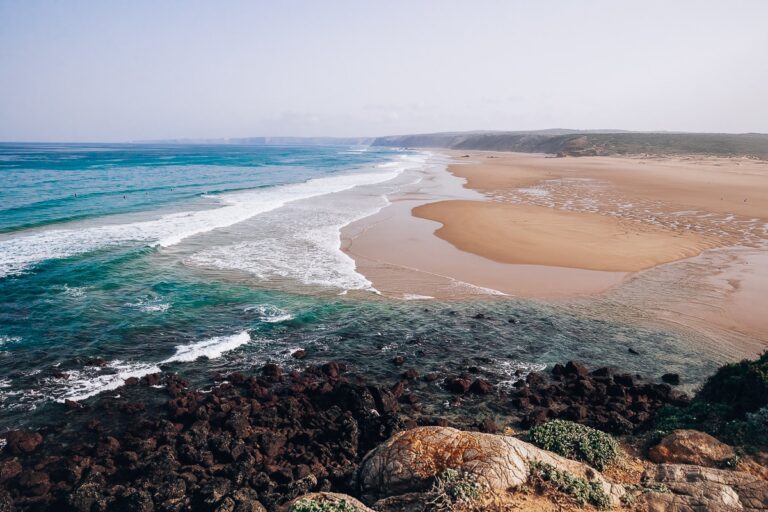
Head first thing in the morning to one of the wildest beaches on the Algarve’s west coast – Bordeira Beach. Huge waves, surfers and beautiful dunes are all to be found on this breathtaking beach.

From here, head to Pondal da Carrapateira, and along the way you’ll encounter a number of viewpoints that you may or may not want to stop at. See how much time you have. ☺️Na Pondal da Carrapateira has beautiful views of the cliffs, although it is tempting to walk, the day will be long, so I don’t recommend going too far.

Your last stop before lunch will probably be one of Portugal’s most beautiful beaches – Praia do Amado. Again, this is a beach that is very popular with surfers.

For lunch, head to Sagres, either to Arte Bianca (Italian) or Three Little Birds bistro, if you love Indian, we can recommend Holi Diwali, even though it’s a bit of a dive, they cook very well. 😅

In Sagres, the Sagres Fortress is a popular tourist destination (it’s probably a crowd frenzy), the inside is not worth a visit, personally I would only look at the fortress from the outside and not go inside. You can get a better view from Cabo de Sao Vicente, or rather from anywhere and for free.☺️ After lunch you can relax on Praia da Mareta beach or go to the slightly wilder and less visited Praia do Telheiro beach .

If you like ceramics, visit Cerámica Paraiso. For sunset, head to Cabo de Sao Vicente. This cape is the extreme southwestern tip of the European continent, and the sunsets here are especially beautiful.

Where to stay in Sagres and surroundings:

Stay at Praia da Luz, for example at Casa Rosa Montes or Vila Luz.

Day 2. Lagos

Head to the beautiful Praia da Luz beach and boardwalk for a great breakfast or brunch at Endless Summer Beach Bar & Pizza and a sumptuous lunch at Boaty’s Tapas Cafe. Take a stroll along the short boardwalk or go for a swim. Enjoy the southern air and white sands of the Algarve to the full.

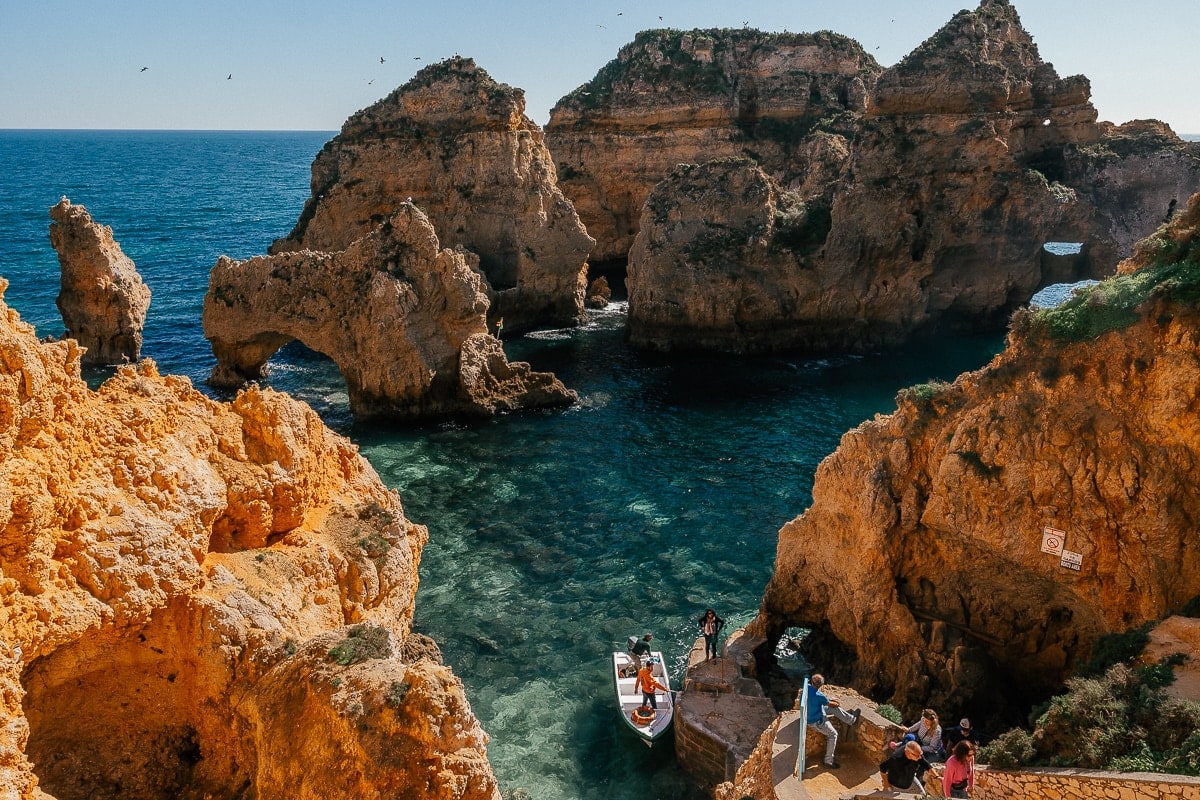
From here, we’ll head to one of the best views of Ponta da Piedade, where you’ll want to give yourself plenty of time to walk and photograph the view.

From Ponta da Piadade we will head towards Lagos and visit two more beautiful beaches on the way, namely Praia do Camilo, which you will know from the photos, and Praia de Dona Ana.

If you’re in Portugal during the warm spring days or summer, we recommend taking a kayak or boat trip from Lagos. Do book well in advance (especially in the summer season), below I’ll throw in some trip tips that can be easily booked through GetYourGuide.

Spend at least an hour in the afternoon walking around Lagos, which is a small city, but the old town is well worth a visit. Those of you who love fine coffee can visit Black and White Coffee Shop or The Studio – Coffee Roasters.

For sunset, head to Portimao on Praia da Rocha (beware, there are more under this name in Portugal).

Where to stay in Portimao:

In Portimao, stay either by the beach in a Cozy beach front apartment or a little further away from the beach in a beautiful villa with a pool , Villa Moments – Guest House.

Day 3. Carvoeiro

Head to the centre of Carvoeiro, where Praia de Carvoeiro beach is located. If you’re in the mood for a fine coffee, there’s a restaurant right by the beach called Levels that makes the best cappuccino in town (I’m not saying it’s the best cappuccino in the world, but you can’t get better in Carvoeiro😅). Levels also has excellent brunches, but for lunch, head to Earth Café or Chef’s Kitchen. If you’re in the mood for Indian, they’re all great (yes, we’ve been to all of them).

From Carvoeiro you can also go to Grutas – the caves. You can book your trip in advance through GetYourGuide or directly in Carvoeiro. I recommend booking in advance, though, as they were often full even in February when the weather was nice, so it can be a problem in the summer.

Depending on when you travel, make sure to check out Carvoeiro and the surrounding area. Just above the beach in Carvoeiro, climb the stairs and walk up to the Caminho do Algar Seco promenade , where the views are breathtaking and you can walk all the way to Algar Seco.

There really are a lot of beautiful places around Carvoeiro and you will see what you can do with a trip. I recommend several beaches, namely Praia do Vale Covo, Praia do Vale Centeanes and Praia do Carvalho, which you can reach by walking along the cliffs from Miraduoro to Vale Suspenso.

For sunset, head to Marinha Beach or if you fancy a glass of wine, head to the restaurant right on Praia do Vale Centeanes Beach .


Where to stay in Carvoeiro:

Stay at Quinta Nova Vale Del Rey, where they have a beautiful pool and great breakfast. The hotel is close to one of the most beautiful beaches in the Algarve – Praia da Marinha.

Day 4. Carvoeiro

I recommend staying in Carvoeiro for two days because you may not be able to do everything in one day. In the morning, go and explore Praia da Marinha beach properly, where you can walk up along the cliffs, but in the morning I recommend going to the beach first, which fills up quickly.

If you missed the walk from the lighthouse from Miraduoro to Vale Suspenso to Praia do Carvalho, now is your chance. You can also use this day for kayaking or relaxing.

We are staying in Carvoeiro.

Day 5. Silves and Monchique

We will leave the beaches for a day (unless you go to the beach first thing in the morning ☺️) and go to the local mountains, or rather hills, don’t imagine any Dolomites. Specifically, you’ll be going to the small town of Monchique, which lies amidst beautiful unspoilt countryside full of green between the two highest peaks of the Algarve.

In Monchique you will find the Igreja Matriz Church, Igreja de Sao Sebastiao and the small art gallery Santo António. For views, head to the top of Fóia, which sits at 922m and is the highest point of the Serra de Monchique. You can walk or drive there.

All the way from Monchique you can stop for local wines at Queinta do Francês Winery. Next stop is the city Silves, whose massive landmark is a huge castle from the fourth century. Definitely worth a visit.

There are also a number of excellent restaurants in Silves where you can have lunch or dinner, our favourite being Café Inglés, which often has live music. In Silves you will also find the beautiful Cathedral and the Archaeological Museum. A short distance from the town is the Queinta do Frances Vineyard.

Where to stay in Silves:

We recommend staying right in the centre of Silves – for example at the Mosaiko 5 Suites – or staying in the same place as the previous days in Carvoeiro.

Day 6. Ceramic workshops and Albufeira

A visit to the Algarve would not be complete without a visit to the ceramic workshops. At the very least, visit the traditional Porches Pottery, where you can see how typical Portuguese pottery is made and have a coffee in the summer.

If we had to pick another workshop not to be missed, it would be Olaria Pequena, where the pottery is made by a father and daughter and we have several pieces from them at home and regularly leave a lot of money there. 😁Be warned, this pottery is not traditional.

The cheapest ceramics can probably be found at Casa Grade – Artesanatos.

Once you’ve done your shopping, taken your photos and had your fill of ceramics, we’ll return to exploring the beaches. You can visit, for example, Praia de Armacao de Pera or Praia Grande de Pera and combine it with birdwatching at Lagos dos Salgados.

A very popular beach (and no wonder) is Praia da Coelho and Praia da Rocha Rota. If you want, you can also go to the beach right in Albufeira(Praia do Tunel) and check out the marina there(Marina de Albufeira).

Albufeira also has a little “The Strip” like Las Vegas (The Strip in Las Vegas is home to many of the largest hotels, casinos and entertainment resorts in the world, making it one of the most iconic tourist destinations), a boulevard where you’ll find neon signs, lots of hotels and restaurants. Well, it’s a long way from Las Vegas, but it’s famous here, so we’ll mention it… 😅

Not far from Albufeira, you’ll also find the vineyard of British singer Cliff Richard, just behind Algarve Shopping. From Albufeira, there are also dolphin watching trips.

Where to stay

You can try accommodation directly in the houseboat: The Homeboat Company Albufeira or you can stay again in Carvoeiro.

Day 7. Loule, Tavira and Faro

Spend your last day exploring towns that are often overlooked by tourists. Start with beautiful and romantic Tavira, one of the few that still retains its non-touristic character. Here you will find the remains of a castle with a beautiful garden and a church with a huge clock. There are reportedly dozens of churches here. You’ll probably be most enchanted by the cute Portuguese streets full of typical Portuguese architecture with azulejos (tiles).

Another town to visit is Faro, famous for its beautiful Sé Cathedral, which is in the square where the orange trees that line it always smelled on our visits. Faro has a pleasant historic centre and there are often markets by the harbour in the park where you can buy a souvenir.

Loule is a pleasant town that is popular especially during the carnival season. Some of the biggest festivals are held here. It is also popular for its markets where you can get herbs, cheese, chili peppers, as well as marzipan cakes or honey. They also have fish and flower markets. The town is dominated by the castle, which was reconstructed in 19. century.

Where to stay on the last day:

If you are leaving from Lisbon, I would stay in Carvoeiro again or go straight to Lisbon, depending on what time you are flying. For those of you flying in from Faro, I recommend staying in Faro itself, at the Lemon Tree Stay or the stylish Casa da Madalena Backpackers Hostel .

Map with points of interest in the Algarve for your phone

Save a map of the most interesting places in the Portuguese Algarve directly to your phone. After purchase, you will receive a link to a non-public Google Map that you can open or print at any time on your phone. All recommended ones are clearly marked on the map:

  • Cities (9x)
  • Viewpoints and places of interest (13x)
  • Recommended accommodation (6x)
  • Beaches (16x)
  • Restaurants and cafes (11x)
  • Shops and ceramic workshops (4x)

What to see in the Algarve in 5 days?

If you have less time, I would definitely check out Sagres, Lagos and Carvoeiro and the surrounding areas. If there was time, I would definitely go to Silves and the ceramic workshops.

lukas a lucka
Lukáš and Lucie recommend
Where to stay in Algarve
6 accommodations — hotels and other lodging options

What to see in the Algarve in 3 days?

Three days in the Algarve is quite a few, so I would only focus on Sagres, Lagos and Carvoeiro.

Tips and Tricks for Your Vacation

Don’t Overpay for Flights

Search for flights on Kayak. It’s our favorite search engine because it scans the websites of all airlines and always finds the cheapest connection.

Book Your Accommodation Smartly

The best experiences we’ve had when looking for accommodation (from Alaska to Morocco) are with Booking.com, where hotels, apartments, and entire houses are usually the cheapest and most widely available.

Don’t Forget Travel Insurance

Good travel insurance will protect you against illness, accidents, theft, or flight cancellations. We’ve had a few hospital visits abroad, so we know how important it is to have proper insurance arranged.

Where we insure ourselves: SafetyWing (best for everyone) and TrueTraveller (for extra-long trips).

Why don’t we recommend any Czech insurance company? Because they have too many restrictions. They set limits on the number of days abroad, travel insurance via a credit card often requires you to pay medical expenses only with that card, and they frequently limit the number of returns to the Czech Republic.

Find the Best Experiences

Get Your Guide is a huge online marketplace where you can book guided walks, trips, skip-the-line tickets, tours, and much more. We always find some extra fun there!
Complete Guide to Venice: 40+ Travel Tips

TL;DRThis complete guide to Venice rounds up 40 tips on sights, food and things to do across the city’s 118 islands, and reckons 3–4 days is enough, though the authors themselves spent a full week there. Key sights include St Mark’s Square, St Mark’s Basilica, the Doge’s Palace, the Ponte di Rialto and the Ponte dei Sospiri, plus the islands of Murano, Burano and Torcello. April, May, September or October bring the best weather and fewer crowds, while carnival season falls in February. Since 2023, day-trippers have had to pay an entry fee of 3–10 euros, a vaporetto ticket costs 9.50 euros for 75 minutes, and parking on Tronchetto island comes to 22 euros a day.

We have prepared a detailed guide to Venice for you. Venice, a city floating on water, is one of the most romantic cities in Europe. Most of us remember the typical Venetian boats sailing along the canal. But Venice is full of charming streets, beautiful architectural treasures and art.

But Venice is also extremely popular and touristy, so it’s important to book accommodation early and ideally book tickets online for some of the sights. Read our article to the end and find out when to go to Venice, where to stay and what to see in our article.

When to go to Venice: Weather in Venice

If you want to avoid the biggest crowd of tourists, but want pleasant weather, go in autumn – in September or October, or in spring – in April or May. If you want to see the carnival, you will have to choose a colder month – namely February. In summer, you can escape the heat on one of the local beaches.

Moon

Average air temperature

Average water temperature

January

6 °C

11 °C

February

8 °C

10 °C

March

12 °C

10 °C

April

16 °C

12 °C

May

21 °C

17 °C

June

24 °C

20 °C

July

27 °C

22 °C

August

27 °C

25 °C

September

23 °C

24 °C

October

18 °C

20 °C

November

11 °C

17 °C

December

7 °C

14 °C

How to get to Venice

Venice is easily accessible by car, train, bus or plane.

By car to Venice

It’s relatively easy to get from Prague to Venice:

  1. Take the A10 road through České Budějovice and then Austria. It’s a bumpy journey, taking just over 9 hours.
  2. Along the E45 road, past Pilsen to Germany and then through Austria to Italy. It’s a bit of a detour and you’ll spend almost 10 hours in the car.

By car from Brno you have three options:

  1. You’ll be there in 7 hours and 49 minutes on the A23, the fastest way to get there.
  2. The second option is not the fastest, but it is the most advantageous. It takes you along the S Autobahn via Vienna and Maribor, and you’ll be in Venice in less than 8 hours.
  3. You go to Vienna, then turn towards Salzburg. However, the journey is the longest, taking more than 9 hours.

Parking is forbidden in Venice: where to leave the car?

You cannot drive into Venice, so you must leave your car in one of the car parks listed below:

  1. On the island of Tronchetto – it is an artificial island with the largest number of parking spaces in Venice. You can always find a free parking space here and it is one of the cheaper options. All-day parking costs 22 euros.
  2. Garage in Piazzale Roma – it’s close to the centre, which you can walk to after parking. It’s best to book a garage in advance; all-day parking costs around 45 euros. For short-term parking, the S. Andrea Parking House is ideal, with a charge of 7 euros for every two hours.
  3. Suburbs of Mestre – you can park very cheaply, often for free, on the outskirts of Mestre. The downside is that it is quite far from the historic centre and you will have to use public transport, such as the train.

By train to Venice

From Prague or Brno it is best to go to Munich or Vienna, from where there are direct trains to Venice to the main station Santa Lucia. It takes approximately seven hours by train from both cities, or you can take the night trains and spend a few hours longer on the way.

By bus to Venice

You can also take a bus to Venice. Direct connections are offered by RegioJet, the journey from Prague takes 12.5 hours and tickets cost between CZK 1,200 and 2,000. The journey from Brno takes 9.5 hours. The company FlixBus offers connections with one transfer, the prices per ticket range from CZK 1,200 to CZK 3,000.

By plane to Venice

Direct flights from Prague to Venice are offered by Wizz Air and Ryanair. You can fly to one of two airports near Venice, Marco Polo and Treviso. Tickets cost on average 2 500 CZK. How to get airline tickets read here.

The Alilaguna line connects Venice with Marco Polo Airport and the journey will cost you 15 euros.

Transportation around Venice

Trains, buses and trams run between the centre of Venice and the suburb of Mestre. Venice itself, however, is on the water and no similar facilities are available. The centre of Venice can be conveniently explored on foot, but you can also use the city’s special transport – boats. These water buses are called vaporettos. For a truly authentic experience, you can also use a classic gondola.

Where can I get tickets for the vaporetto?

Tickets for all transport are available from the ferryman, ticket machines or newsagents. The Venezia Unica Card is a good value if you plan to spend several days in Venice. This card gives you a 72-hour pass for all water transport and buses, as well as access to selected museums and monuments.

Accommodation in Venice

Hotel in the historic centre of Venice

For exploring Venice, it’s definitely most convenient to stay in the centre itself. If price is your main concern, Residenza Ca’ San Marco and Casa Fenice are among the cheapest but still fairly well rated.

Those of you who prefer hotels with breakfast will probably choose Hotel Sant’Antonin or Ca’ Dei Dogi . The Londra Palace Venezia is one of the most luxurious accommodations in the city centre.

Cheap accommodation near Venice – Mestre

Mestre is in all respects cheaper than the centre of Venice, both in parking, travel and accommodation. If you want the easiest possible access to the centre and are only using Mestre for overnight stays, then find a hotel near the station – Hotel Trieste, for example .

Accommodation in Venice by the beach

Venice’s beaches aren’t usually the main tourist destination, but if you’re planning to swim in the sea and don’t want to go too far to the beach, look for hotels near Lido di Venezia or Lido di Jesolo. For example, check out the Almar Jesolo Resort & Spa or the cheaper Hotel & Residence Venezia 2000.

Accommodation in the Venetian Islands

Another option for accommodation is the Venice Islands. They are beautiful islands with an authentic atmosphere, while avoiding the busy centre. Among the best-rated hotels in Murano is the NH Collection Murano Villa. Beautiful hotels can also be found on the island of Burano, such as Casa sul Cielo di Burano.

How accommodation prices in Venice change throughout the year

Accommodation prices in Venice vary a lot throughout the year. The Venetian Carnival is held every February and all prices are significantly higher during this month, including accommodation. If the carnival itself isn’t your destination, then choose a different month of the year.

During the summer, mostly in July and August, prices can go up by almost half, as this is high season and Venice is visited not only by tourists from all over the world, but also by Italians. Another Venetian event is the Venice Film Festival held in August and September, so prices for services and accommodation are again higher. The cheapest accommodation in Venice is from October to the end of January.

Entrance fee to Venice

If you don’t stay in Venice itself, from 2023 onwards you will have to pay an entrance fee, which ranges from 3 to 10 euros, depending mainly on the season.

How long to go to Venice for?

You should go to Venice at least for a long weekend. We spent a whole week in Venice and we couldn’t say that we were bored. After you have visited all the sights and museums, you can explore the islands, as well as the local beaches.

Map of Venice

Guide to Venice: what to do in the city?

Venice is a city where you won’t be bored, you can explore the beautiful architecture, explore the islands, and even go to the beach. But be sure to take a ride on the canal The famous Venetian boats, gondolas and vaporettos are a symbol of Venice for many tourists. These iconic boats play an important role in transport and tourism in this unique city on the water.

Gondolas are probably the most famous Venetian boat, symbolizing the romance and beauty of the city. These long and narrow boats with elegant curves were originally designed for water transport. Today they are mainly used for tourist purposes and offer romantic rides on the canals of Venice. The gondolier who drives the gondola usually still sings or plays the accordion. 🙂

Another type of boat is the Vaporetto. This boat is large and comfortable and offers transport around the entire lagoon, including the outermost islands such as Burano or Murano.

Although gondolas and vaporettos are perhaps the most famous boats in Venice, the city also has many other traditional boats, such as the “traghetto”, small gondolas that carry people across the Grand Canal, or the “bragozzo”, fishing boats used for catching fish in the lagoon. All these boats are an important part of Venetian culture and history and a visit to Venice would not be complete without a ride on one of these traditional boats.

The most beautiful places and monuments in Venice

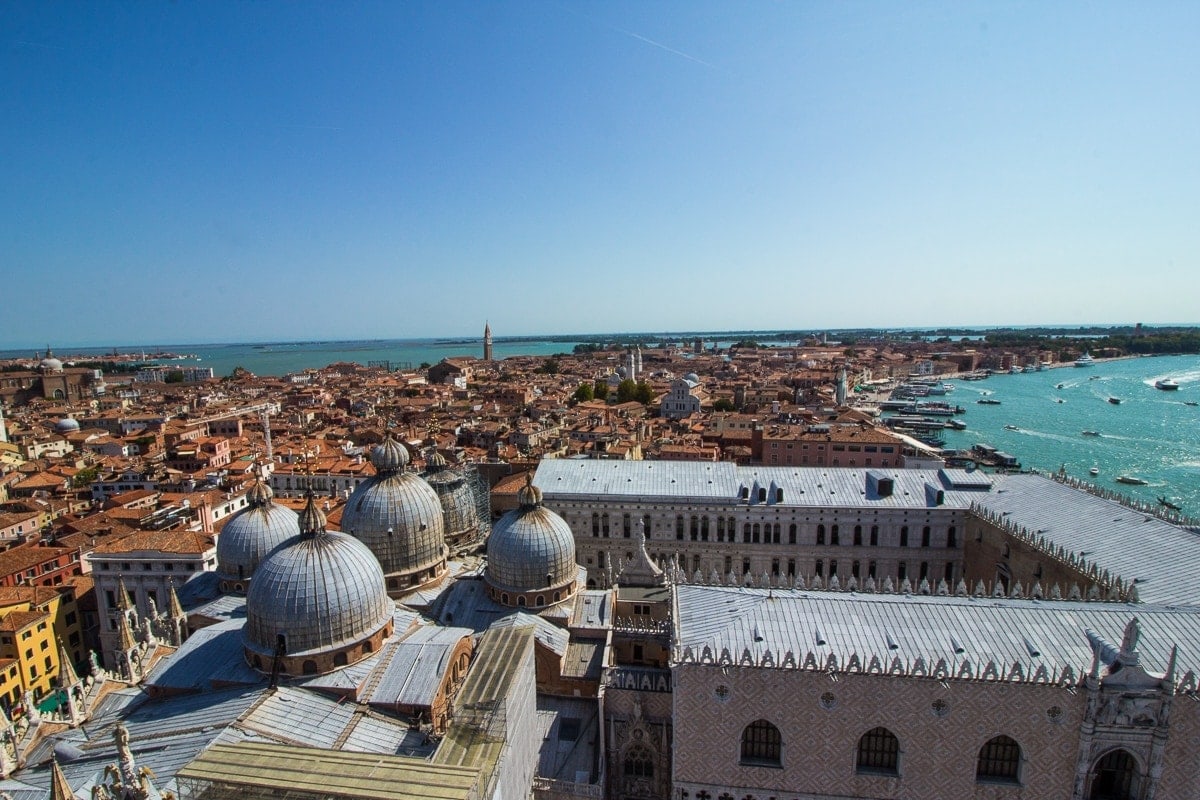
Venice is an urban complex consisting of 118 islands connected by bridges and canals. The influence of European, Byzantine and Oriental art and architecture mixes here, creating a unique atmosphere and a perfect symbiosis of all these elements. Let’s see what you shouldn’t miss here.

Ponte di Rialto

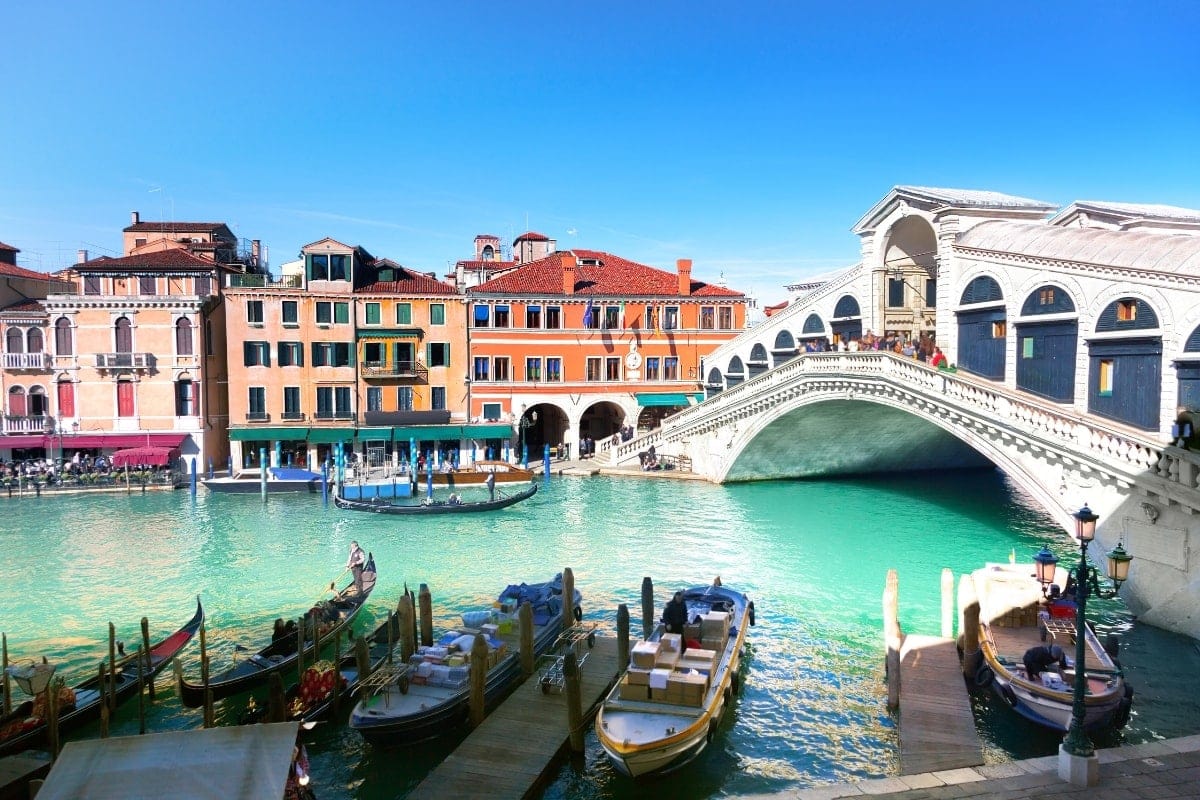
Even those who have never been to Venice will remember the typical local historic bridges. Ponte di Rialto is the oldest and most famous of them all. In its present form it has existed since 16th century. The Grand Canal flows directly below it. In the arcade on the bridge, you can buy souvenirs from the trip in the many shops. The shops were established in the 15th century. century on the original wooden bridge, which later collapsed. Ponte di Rialto also appeared in the film Spiderman.

St. Brand

The main centre Venice is St. Brandfrom where you can reach all the most important sights. It is often the victim of floods, which are not uncommon in Venice. The square was named after the evangelist Mark, who became the patron saint of Venice.

Basilica of St. St. Mark’s – Temple of Gold

The most important monument of this town is the Basilica of St. Mark’s Church, Italian Chiesa (or also Basilica) di San Marco. It was built in the 9th century. century, when Venetian merchants buried the relics of St. Make. The church was later burnt down during the 976 uprising and a monumental basilica was built on its site a century later.

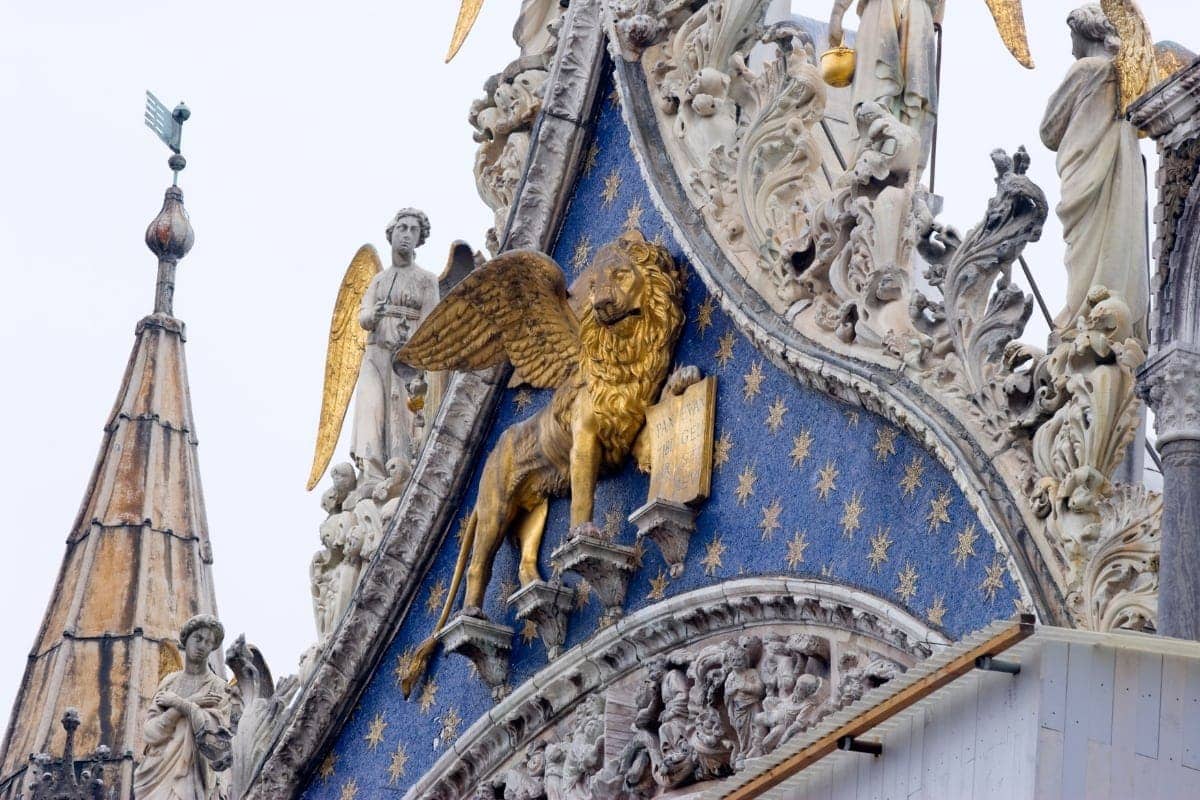
It was built in the Byzantine style, including later modifications from the 13th century. century. The basilica is decorated with many statues and columns, which came as booty from the Crusade of 1204. The façade is made up of five arches decorated with statues, ancient columns and rich mosaic decoration. Another important feature is the roof with five large domes.

Not only the exterior is so richly decorated, the interior of the basilica is also impressive. Here you can admire a truly rich decoration of sculptures, paintings and mosaics. It is not for nothing that the basilica is nicknamed the “Temple of Gold”. If you want to make sure you get into the basilica, book your ticket in advance. We recommend using GetYourGuide like everywhere in Italy, where you can also use the “Skip the line” ticket that allows you to skip the queue.

The bell tower of St. St Mark’s (Campanile di San Marco)

Another monument named after the patron saint of Venice, the bell tower of St. Mark’s Basilica, standing right next to the basilica itself. It rises to a height of almost 99 metres, making it a landmark of Venice and hard to miss. The tower looks the same as in 16. century, but the original one collapsed and the current tower was built in 1912.

On the roof there is a statue of the archangel Gabriel. In addition to the five bells, there is also an observation deck at a height of about 60 metres, from which you can enjoy a breathtaking view of the whole of Venice. Above it is a stone lion – an attribute of St. Make.

Doge’s Palace – Italian Palazzo Ducale

Another monument near St. St. Mark’s is the Doge’s Palace. The palace is built in the Venetian Gothic style, combining elements of both Byzantine and Gothic architecture. The interior is decorated with frescoes, ceiling paintings and Venetian furniture. The palace was built in 14. century and served as the residence of the Venetian rulers, or Doges. As with the Basilica, we recommend buying your ticket in advance via GetYourGuide.

The Venetian island of Murano

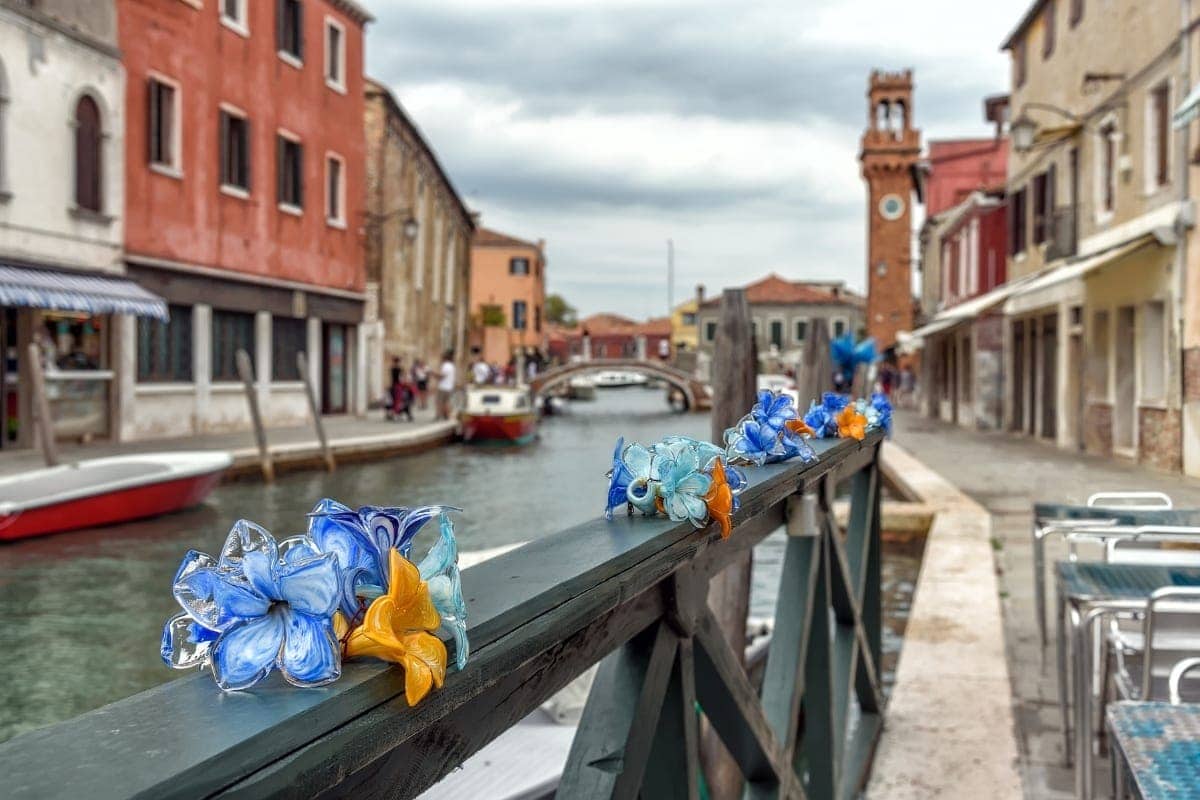
Murano is famous for its glass products. Glass has been produced here since 10. century, was part of the international trade of Venice. The glassmaking tradition in Murano continues to this day, and you can buy many interesting glass souvenirs here. Glassworks are part of the family homes as small family businesses. The Museum of Glass is worth a visit.

The Venetian island of Burano

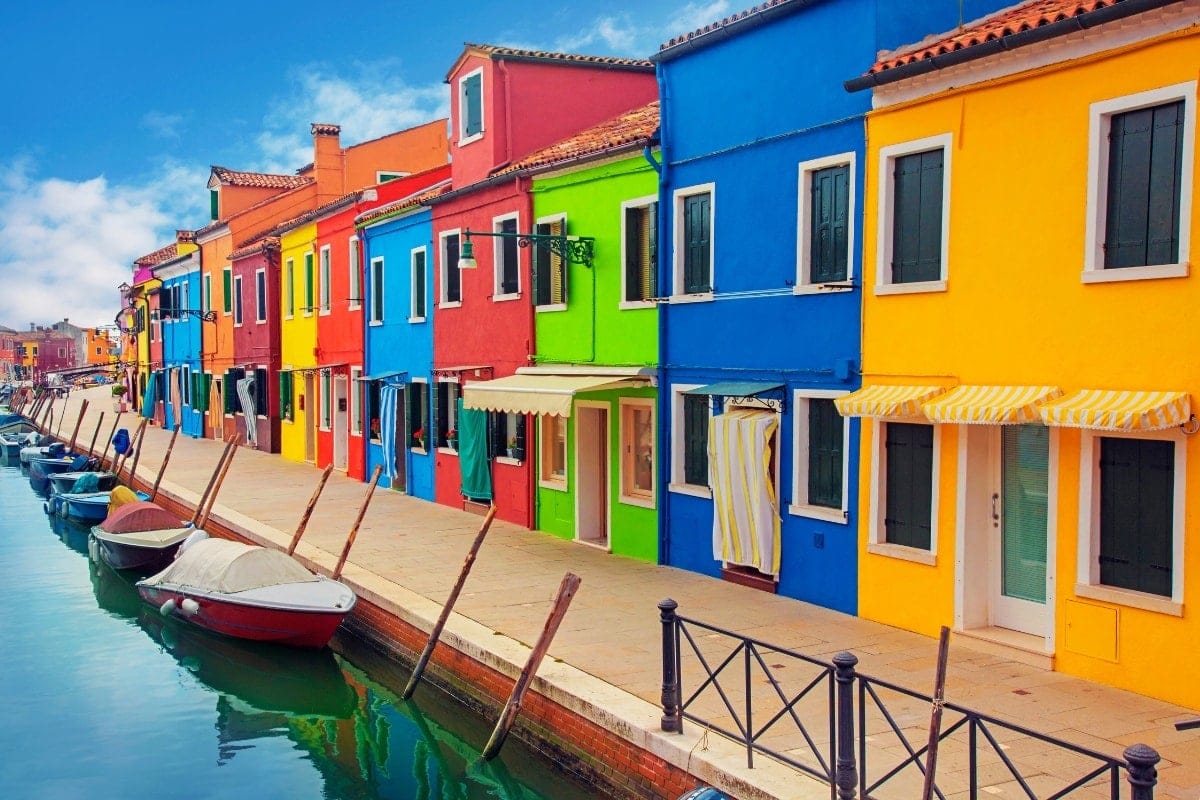
Burano is best known for its colorful houses. According to the locals, this colouring of houses was introduced so that fishermen could easily find their homes after returning from the sea. Today, Burano is a popular tourist attraction and is also home to many fine lace-making workshops. You can visit the lace museum and see how lace is made, or buy some of the handmade lace as a souvenir.

Island of San Giorgio Maggiore

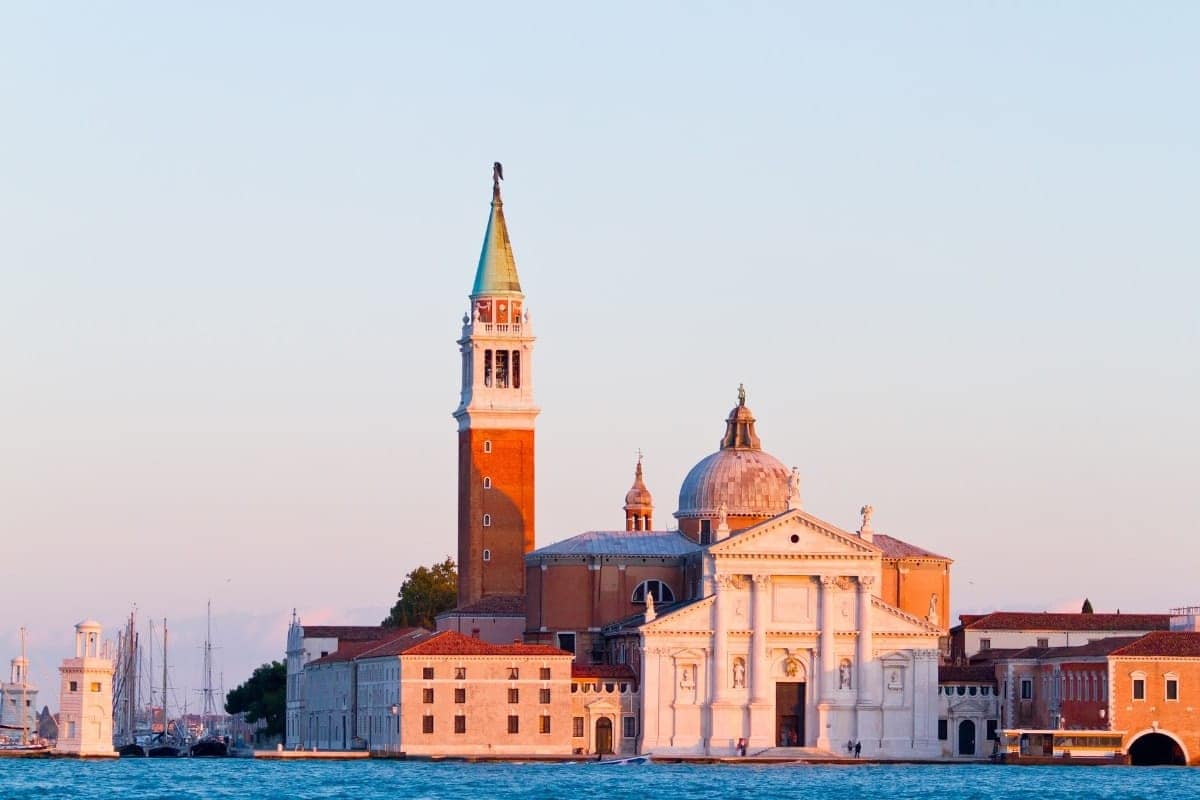
San Giorgio Maggiore is another island belonging to Venice. You can see the basilica of the same name standing on it from afar. Especially interesting is the bell tower, which looks the same as the slightly higher bell tower of St. Make. The architect of the basilica was Palladius, who completed the building in 1566. The building strongly resembles the ancient style.

The interior of the basilica, decorated by the famous painter Tintoretto, is worth mentioning. To the west of the basilica stands a monastery from the 13th century. century. V 19. century, the monks were expelled from the monastery and had to leave the whole island at the same time, and the monastery became a military barracks and a weapons depot. It took almost a hundred years before the building was restored to its original owners.

Island of San Michele

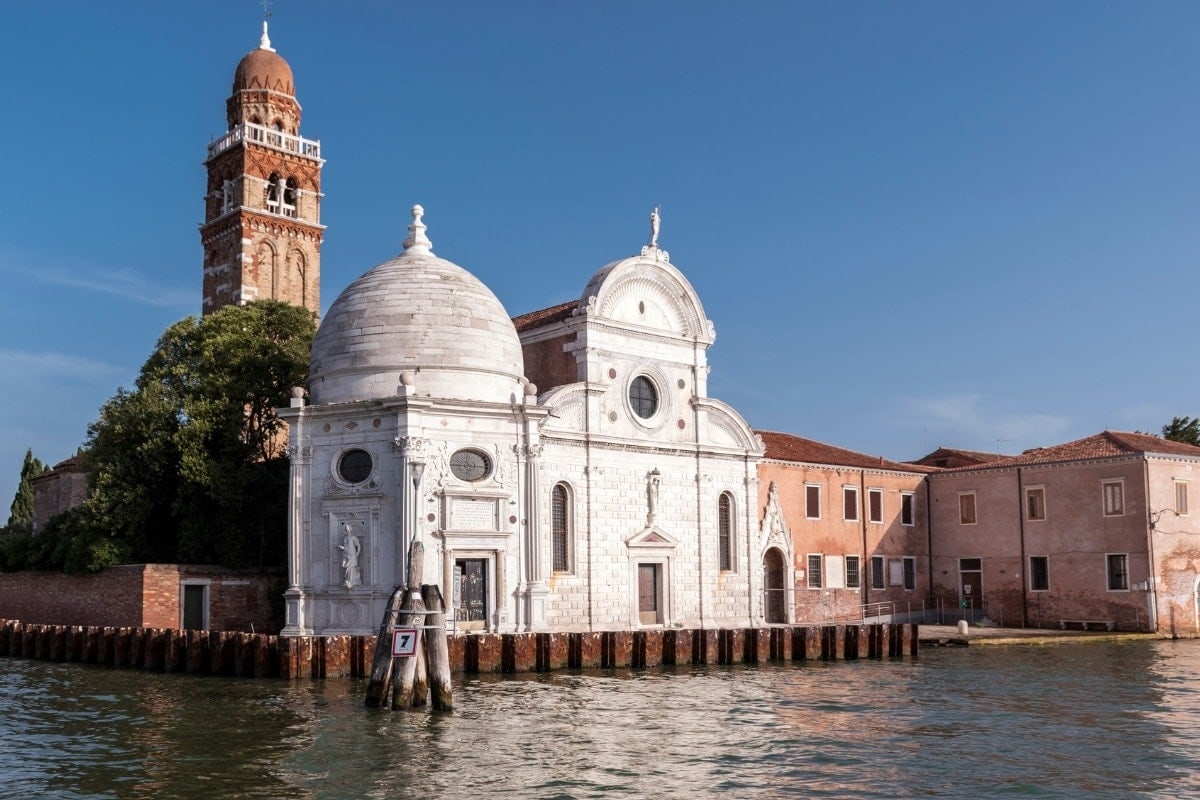
If you’re wondering where the dead are buried in a crowded Venice of stone streets and canals, the answer is on the island of San Michele. It serves as the only cemetery for the inhabitants of Venice. The island was first used as a burial place in the 15th century. century.

At first glance, it may not seem like an interesting stop on a trip to Venice, but it’s worth a short walk. From afar you will see the island surrounded by a thick wall, but inside you will find really beautiful buildings.

Grand Canal

The Grand Canal in Venice serves as a kind of “main road”, on which all public transport and cargo boats move. It is four kilometres long and can be crossed by four bridges, the most famous of which is the Ponte di Rialto bridge described above. KIf you look at the Grand Canal from a bird’s eye view, you’ll see that it is shaped like the letter S and stretches all the way through Venice.

Basilica dei Frari

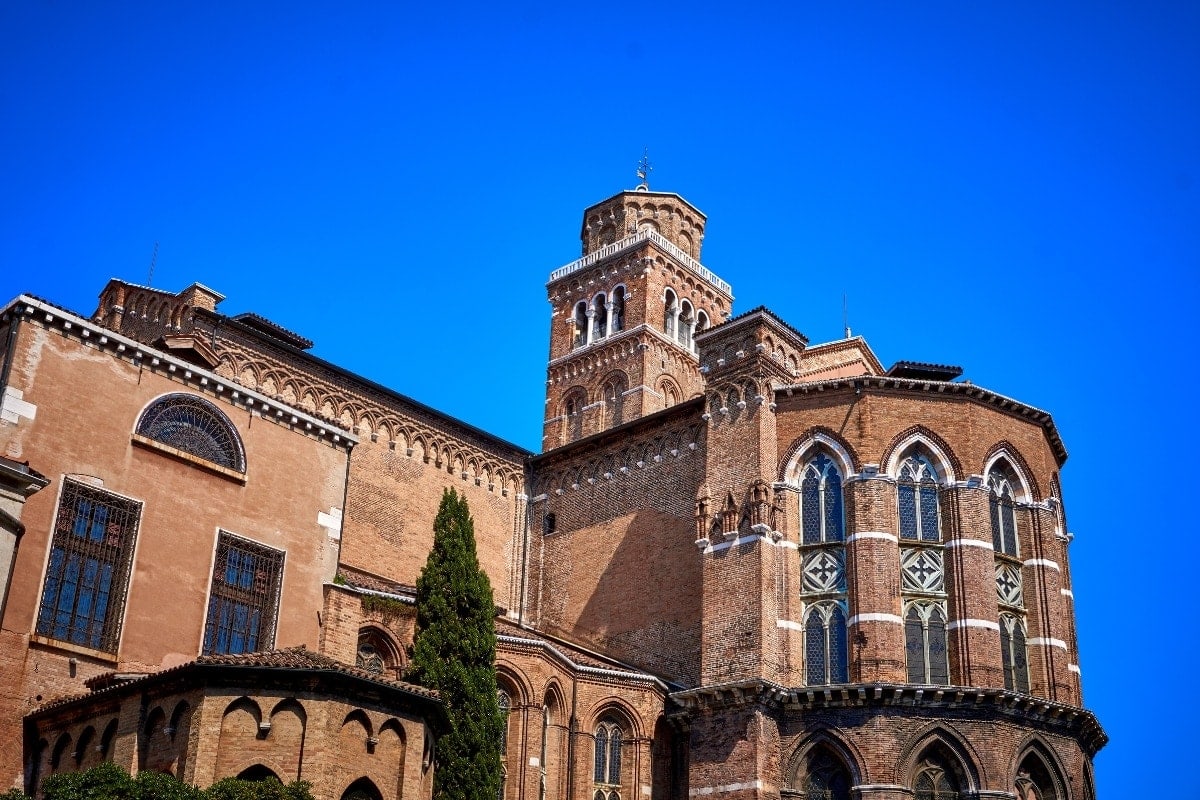
At first glance, the church, which may seem austere, hides its richness especially inside. The façade is certainly not comparable to the richly decorated Basilica of St. Mark, but the interior attracts tourists with other riches. For example, the relics of several important personalities, such as Canova, Titian and the Venetian Doge Francesco Foscari, are kept here. But you will also find frescoes and paintings by artists such as the aforementioned Titian and Bellini.

Santa Maria della Salute

Another Venetian basilica is Santa Maria della Salute near the Grand Canal. The basilica dates back to the 17th century. century and captivates every passer-by with its beauty. The two domes, one larger and one smaller, are made of white marble. The ceiling inside the basilica is decorated with paintings by Titian. The church is dedicated to the Virgin Mary and is one of the plague churches, it was built as a thanksgiving to the Virgin Mary after Venice was hit by a very strong and devastating plague epidemic.

The beaches in Venice can be found on the island of Lidio di Venezia

An island near Venice where you can find accommodation, supermarkets and restaurants. The main destination is, of course, the beaches. Here you can take a break from the constant hustle and bustle, the tourists and the high prices, but still see Venice and the Tower of St. Make. If relaxing on the sandy beaches gets too much for you, you can always simply take a trip to the historic town.

Ponte dei Sospiri

It is a small, 11-metre long bridge made of white limestone. Ponte dei Sospiri means “Bridge of Erections” after the sound made by convicts heading to the prison, which is connected to the Doge’s Palace on the other side of the canal. This name was given to the bridge in the 19th century. century, although the building itself was built as early as 1574.

Teatro la Fenice

At first glance, the theatre is not very striking and in fact hides one of the most famous scenes in the world. Well-known operas such as La Traviata, La Boheme, The Fallen Angels and Trancedi were premiered here. The scene was founded in 1755, the current building dates from 1792.

Palace – Golden House of Ca´d´Oro

The Golden House, Ca’ d’Oro, is one of the oldest Venetian palaces dating from the 15th century. century. Today it serves as an art gallery 15. – 18. century. Here you can see works by Antoine van Dyck, Andrea Mategna, Giovanni Bellini, Titian and others.

The tiny island of Torcello

Torcello is a tiny island, a 40-minute boat ride from the centre of Venice. But if you plan to spend a few days in Venice, don’t miss your trip. Today, about 30 people live in what was once the main centre of Venice. And you will find two main sights here:

  • Cathedral of Santa Maria Assunta – dating back to the 7th century. century, inside the cathedral you will find beautiful Byzantine mosaics.
  • Church of Santa Fosca – a beautiful Byzantine church from the 12th century. century.

Ponte dell Accademia

Ponte dell Accademia is a wooden bridge over the Grand Canal. It connects the central part of Venice with the southern part. The original bridge was demolished and the current wooden bridge was rebuilt in 1933.

Palazzo Contarini del Bovolo

The palace is located in the very centre of Venice and is one of the most interesting sights. You can climb the spiral staircase to the tower and enjoy the view of the city.

lukas a lucka
Lukáš and Lucie recommend
Where to stay in Venice
6 accommodations — hotels, wellness hotels and other accommodation options

The most interesting museums in Venice

There are a number of museums in Venice that are well worth a visit, including:

Peggy Guggenheim Museum

If you know a bit about art, you’ve probably heard the name Peggy Guggenheim. Art collector Peggy Guggenheim’s gallery is one of the world’s most famous. The exhibition includes works of American and European art of the 20th century. century, e.g. Picasso, Pollock or Dali.

Museum in the Doge’s Palace

This imposing palace, which we have already mentioned above, was once the seat of the government of the Venetian Republic and today serves as a museum. In the palace you can see works of art, historical objects and visit rooms where important political decisions were made.

Accademia Gallery

This museum is home to the largest collection of Venetian art in the world, including works by Titian, Veronese and Canaletto. It is located in an impressive building by the Grand Canal.

Museo Correr

This museum is located in the building opposite the Doge’s Palace and contains collections that trace the history of Venice. Among the objects on display are religious artefacts, historical maps and portraits of Venetian rulers.

Palazzo Grassi Museum

Located in a beautiful palace on the Grand Canal, this museum contains collections of modern and contemporary art, including works by artists such as Andy Warhol and Damien Hirst.

Museo d’Arte Orientale

Located in a building near the Doge’s Palace, this museum houses a collection of Asian art. Among the objects on display are Japanese swords, Buddhist sculptures and ceramics from China.

What to bring back from Venice – souvenirs

  • Lace – Venice is famous all over the world for its lace. You can see this traditional craft at the museum in Burano and then buy handmade lace in many shops around the city.
  • Glassware – Head to the Venetian island of Murano and buy traditional glass beads, vases, figurines and more made by local glassmakers.
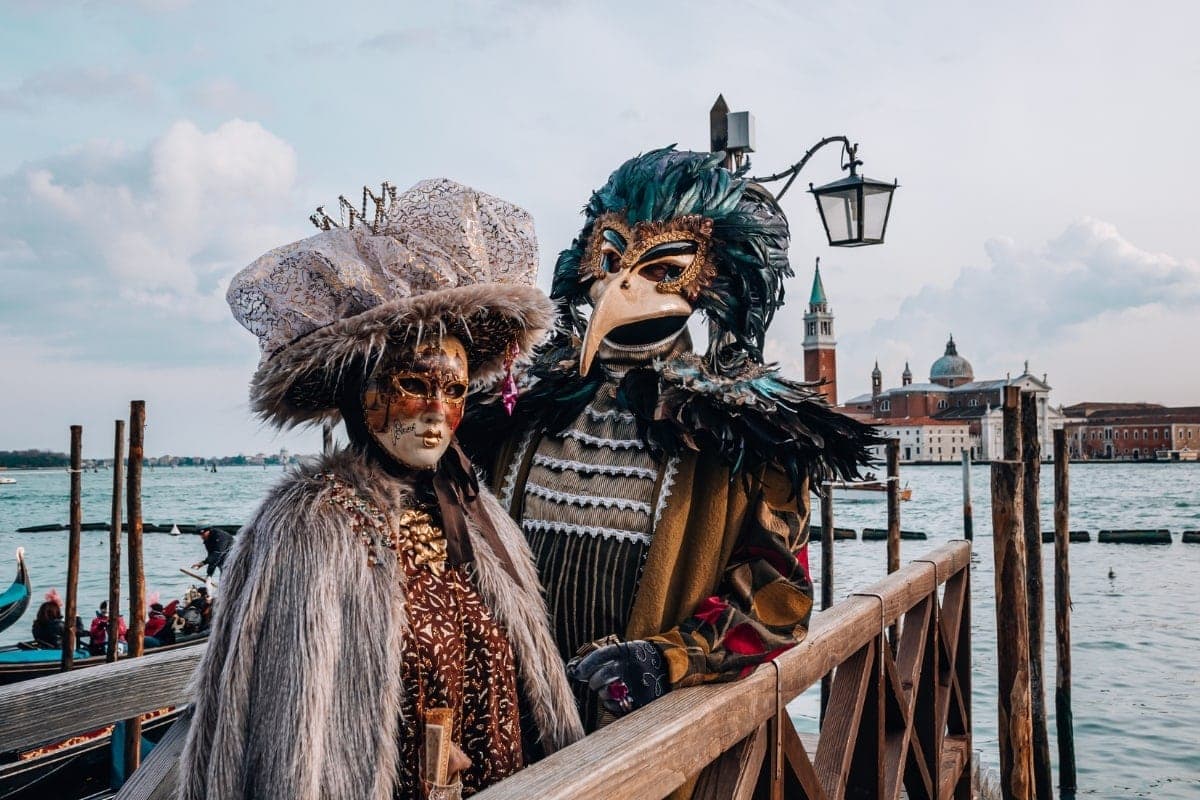
  • Typical Venetian masks – Venice is also famous for its carnival masks, which come in many shapes, sizes and colours. These masks are considered a symbol of the city and can be purchased in many shops throughout the city.
  • Bitter Orange Marmalade – This marmalade is made from bitter oranges that grow on trees in Venice (but are also popular in Spain). It is a traditional Venetian dessert served with crackers or cooked meat.
  • Mosaics – Venice is famous for its traditional mosaics, so you can buy tiles, decorative panels and other items with mosaics as souvenirs.
  • Coffee – Venice has a rich coffee culture, so you can buy local coffee in many cafes and specialty shops.

What to taste in Venice – typical Venetian specialities

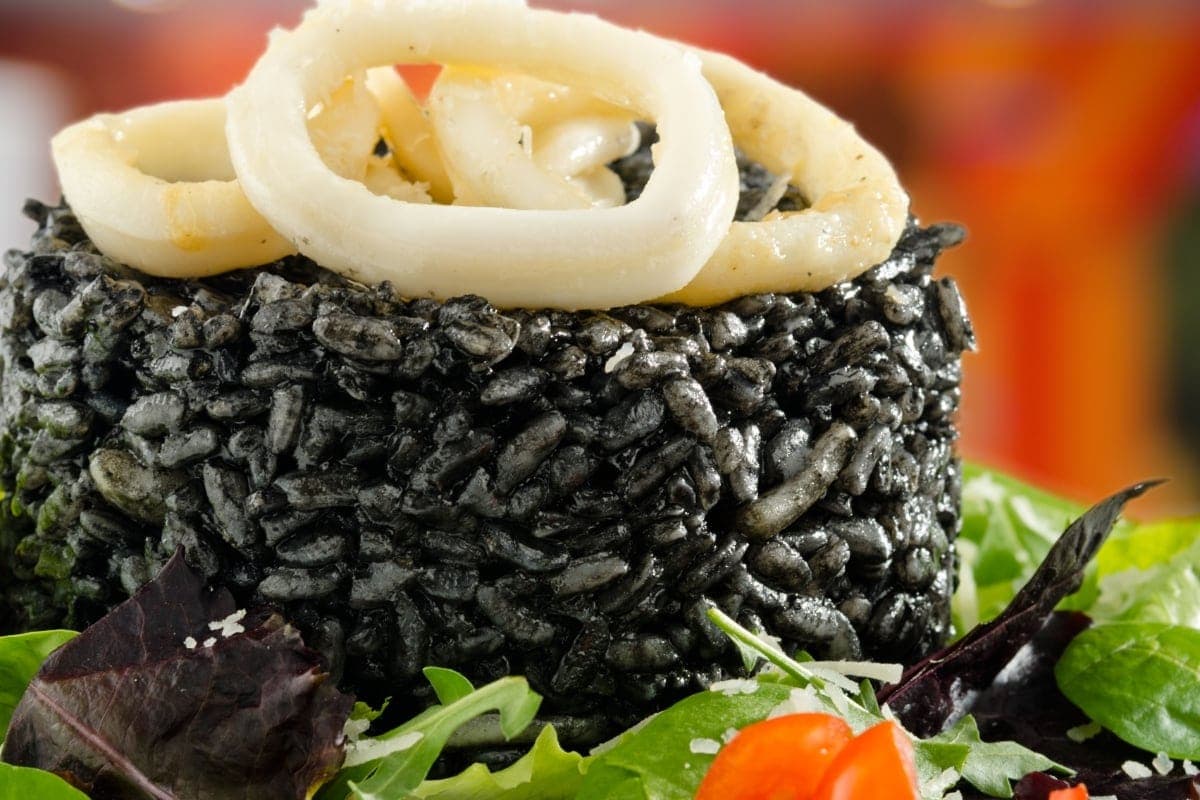
One of the most famous Venetian dishes is “risotto al nero di seppia”, which is rice cooked with black cuttlefish, which gives this dish its typical dark colour. This dish is traditionally served with white wine and is one of the most popular dishes in Venice.

Another traditional dish is‘fegato alla veneziana’, liver pate with caramelised onions, served with polenta or rice. This dish is traditionally eaten for breakfast or lunch.

Venice is also famous for seafood such as prawns, mussels and octopus. Again, they are most often served with white wine and are cooked with olive oil, garlic and herbs to preserve as much of their natural flavour as possible.

The last traditional dish worth mentioning is“bigoli in salsa”, which is pasta with a sauce of onions, sardines and black olives. It is popular especially at Easter and during the carnival season.

Festivals and events in Venice

Carnival – its origins date back to the 11th century. century, it takes place during February and includes a ball in St. Make. The Venice Carnival is one of the most beautiful in the world.

The Bienalle di Venezia exhibition. It is a biennial art show. Here you can admire contemporary art, not only fine art.

Another regularly held event is the Venice Film Festival, where the Golden Lion has been awarded since 1932. It takes place at the Palazzo del Cinema at the end of August and the beginning of September .

What films were shot in Venice?

  • One Flew Over the Cuckoo’s Nest – Some scenes were filmed at the Gritti Palace Hotel in Venice.
  • Casino Royale – Bond film from 2006, in which Daniel Craig first appeared as James Bond. There are several scenes filmed in Venice, including the famous scene where Bond destroys the Venedig house.
  • Thieves or Two (The Tourist) – a 2010 romantic thriller starring Angelina Jolie and Johnny Depp, set in Paris and Venice.
  • My Friend Monica (My Own Private Idaho) – a 1991 film directed by Gus Van Sant, set in the US and Europe, and including many scenes filmed in Venice.
  • The Italian Job – a 1969 action film starring Michael Caine and Noel Coward, with some scenes filmed in Venice.

Tips and Tricks for Your Vacation

Don’t Overpay for Flights

Search for flights on Kayak. It’s our favorite search engine because it scans the websites of all airlines and always finds the cheapest connection.

Book Your Accommodation Smartly

The best experiences we’ve had when looking for accommodation (from Alaska to Morocco) are with Booking.com, where hotels, apartments, and entire houses are usually the cheapest and most widely available.

Don’t Forget Travel Insurance

Good travel insurance will protect you against illness, accidents, theft, or flight cancellations. We’ve had a few hospital visits abroad, so we know how important it is to have proper insurance arranged.

Where we insure ourselves: SafetyWing (best for everyone) and TrueTraveller (for extra-long trips).

Why don’t we recommend any Czech insurance company? Because they have too many restrictions. They set limits on the number of days abroad, travel insurance via a credit card often requires you to pay medical expenses only with that card, and they frequently limit the number of returns to the Czech Republic.

Find the Best Experiences

Get Your Guide is a huge online marketplace where you can book guided walks, trips, skip-the-line tickets, tours, and much more. We always find some extra fun there!
What to see in Vienna: 35 tips for sights and museums

TL;DRIn Vienna, don’t miss St. Stephen’s Cathedral, the Hofburg, Schönbrunn Palace and the Belvedere with Klimt’s The Kiss — ideally on a 2–3 day itinerary with a side trip to the Wachau valley or Bratislava (1 hour by train). There are over 50 tips here, plus a handy map and itineraries for 1, 2 or 3 days: 2 days covers the main sights, while 3–4 days lets you fit in museums and the Heurigen wine taverns. Entry to St. Stephen’s tower costs €6, the Schönbrunn Grand Tour €29, the Belvedere’s Upper Palace €16.70, and a 48-hour Vienna City Card €25. The best months to visit are April–June and September–October, when the weather’s mild and the Heurigen in Grinzing and Nussdorf are open for business.

The Austrian capital is one of the most popular cities in Europe. No wonder Vienna is beautiful. As a great lover of the history of the Habsburg monarchy, I loved Vienna for its rich history and later for its amazing galleries. If you’ve just seen the new Sissi series on TV or Netflix, you definitely need to visit at least the Hofburg. But Vienna is also ideal for trips with children. Let’s take a look at what you shouldn’t miss in Vienna.

When to go to Vienna: Weather in Vienna

When is the best time to go to Vienna in terms of weather? The weather there is about the same as here. The hottest month is usually July, when maximum temperatures reach an average of 25.6°C. On the other hand, January is the coldest month, with maximum temperatures of about 0.1°C. The best time to visit Vienna is therefore between April and October.

Personally, I would choose April, May or September to avoid too high temperatures but also the risk of being cold. But with Vienna being so close to the Czech Republic, you just have to look at the weather and go.

Moon

Minimum temperature

Average temperature

Maximum temperature

January

-2°C

0,1°C

2,9°C

February

-0,9°C

1,6°C

5,1°C

March

2,4°C

5,7°C

10,3°C

April

5,8°C

10°C

15,2°C

May

10,5°C

15,2°C

20,5°C

June

13,5°C

18,2°C

23,4°C

July

15,4°C

20,2°C

25,6°C

August

15,3°C

19,8°C

25,4°C

September

11,7°C

15,3°C

20,3°C

October

7,0°C

9,9°C

14,2°C

November

2,4°C

4,6°C

7,5°C

December

0,5°C

1,5°C

4,0°C

Weather in Vienna

How to get to Vienna

How to get from the Czech Republic to Vienna? There are many options, the most convenient of which is your own car, but you must choose accommodation that has parking. And it’s usually not free. However, Vienna can also be easily reached by train and bus.

By car to Vienna

By car from Prague

If you are leaving Prague, you have three options to get to Vienna:

  1. Theoretically, the fastest way is on D1 through Brno. You will drive about 333 km and the journey will take you 3 hours and 35 minutes if you don’t encounter traffic jams.
  2. You can also turn off the D1 onto the 38 road towards Jihlava and take it through Znojmo straight to Vienna. It’s only 292 km, but the journey will take you 3 hours and 45 minutes.
  3. Another option is to go around České Budějovice via Třeboň. This is the longest route, 309 km can be done in about 4 hours.

By car from Brno

Again, there are three options:

  1. The fastest way is via Mikulov, in case of quiet roads you will be there in less than two hours.
  2. The next route is via Hustopeče and then Břeclav, along the D2 and A5 roads. You’ll get about 10 kilometres more mileage and sit in the car for ten minutes longer.
  3. If you don’t want to pay the toll, take the B46, but the journey will take about 2.5 hours.

Parking in Vienna

If you’re coming to Vienna by car, find out where you’ll be parking in advance. If you deal with it on the spot, it could cost you a lot more money. Ideal is accommodation with parking, or use P+R parking, guarded garages near public transport stops. They will also cost you much less.

List of P+R garages in Vienna:

  • Erdberg (transfer to zone U3)
  • Spittelau (zone U4,U6)
  • Hütteldorf (U4)
  • Ottakring (U3)
  • Heiligenstadt (U4)
  • Aderklaaer Straße (U1)
  • Leopold (U1)
  • Donaustadtbrucke (U2)
  • Siebenhirten (U6)
  • Liesing (S1)
  • Perfektastraße (U6)

Map of all P+R car parks:

By train to Vienna

The other option is the train. How to get to Vienna by train? From Prague hl. The station is served by direct RegioJet trains to Wien Hauptbahnhof, Vienna Central Station. The train journey takes 4.5 hours.

From Brno hl. The station is served by direct RegioJet or Vindobona trains to Vienna, a journey time of 1 hour 30 minutes.

By bus to Vienna

For example, RegioJet or FlixBus buses run to Vienna. If you want to find the best connection, use the Omio portal, where you can compare all connections.

By plane to Vienna

You can also fly to Vienna from Prague or Ostrava. Direct flights are operated by Austrian Airlines and can also be searched in the Vienna Airport app.

💡 TIP: In our article you will learn how to get cheap airline tickets .

From the airport to the city

From the airport you can easily reach the centre by taxi, bus or train. Trains and buses run at very short intervals and take you directly to the centre without stops, so you’ll be there in minutes. You can buy tickets either at the Tourist-Info stand or at the ticket machines, all of which can be found directly at the airport.

Transportation around Vienna

The best way to get around Vienna is by public transport. This will get you everywhere. If you want to use public transport, the app will be a big help. Wien mobile . It will find all the connections you need in no time, and it will also show you everything on the map so you don’t get lost.

  • Underground – the underground makes it easy to get almost anywhere in Vienna. It runs from 5:00 am until midnight and has 5 lines (U1, U2, U3, U4 and U6).
  • S-Bahn – the oldest public transport system in Austria. These trains run only within the capital.
  • Trams and buses – Vienna is also served by the A and B bus lines, and in 1. urban district called. City Bus, which comfortably passes through all narrow streets. You can also use one of the 28 tram lines.
  • Night transport – getting around Vienna is no problem even at night, there are night lines for that. The metro runs 24 hours a day on public holidays or on Fridays and Saturdays. Night bus lines are available from 0:30 to 5:00. Even the trains don’t sleep at night, arriving at their stops every 15 minutes.

Public transport tickets and where to buy them in Vienna

Public transport tickets are valid on all means of public transport, including night lines. The type of ticket you choose depends on how long you plan to visit Vienna. So you can either buy a single ticket or choose a ticket for a longer period of time: 24 hours, 48 hours, 72 hours or a week. Children up to 6 years of age ride for free and it is also good to know that during school holidays, public holidays and every Sunday, children up to 15 years of age ride for free.

Where to buy tickets for public transport? You can pay directly at the machines in the metro lobbies (where you can also pay by card), at newsagents or on the Wiener Linien website. You can also buy a single ticket with a surcharge on the tram, and you can buy a single ticket or a day ticket via SMS.

Vienna City Card – is it worth it?

TheVienna City Card is the official card of Vienna. It is very affordable and valid as a ticket for all public transport (except airport public transport). On top of that, you get 210 different discounts and benefits. You can buy it in hotels, at tourist information centres (e.g. at the airport), at the information shops of the Wiener Linen public transport system, or on the Vienna City Card app.

Our tip – Vienna City Pass – skip the sightseeing queues and save money

If you’re going to visit a lot of sights, be sure to check out whether to get Vienna City Pass . This card does not include public transport this time, but you can enjoy our popular Hop-On Hop-Off sightseeing bus tour, a guided day and night tour of Vienna and free entry to more than 60 interesting sights.

In particular, if you plan to visit in the summer months, you can skip the queues for sightseeing with this card. This card is also available at hotels, information centres, the Vienna City Card app and at Big Bus Vienna outlets.

Where to stay in Vienna

  • If you’re looking for something luxurious, be sure to check out the Small Luxury Hotel Altstadt Vienna.
  • For budget travellers, there is the popular JO&JOE Vienna hostel or Hotel Am Brillantengrund.
  • We consider BASSENA Wien Messe Prater or Hotel Schani Wien to be the golden mean.

The most beautiful places: What to see in Vienna in 2-3 days

Vienna is a beautiful historic city full of sights that are definitely worth seeing. And what should you definitely not miss?

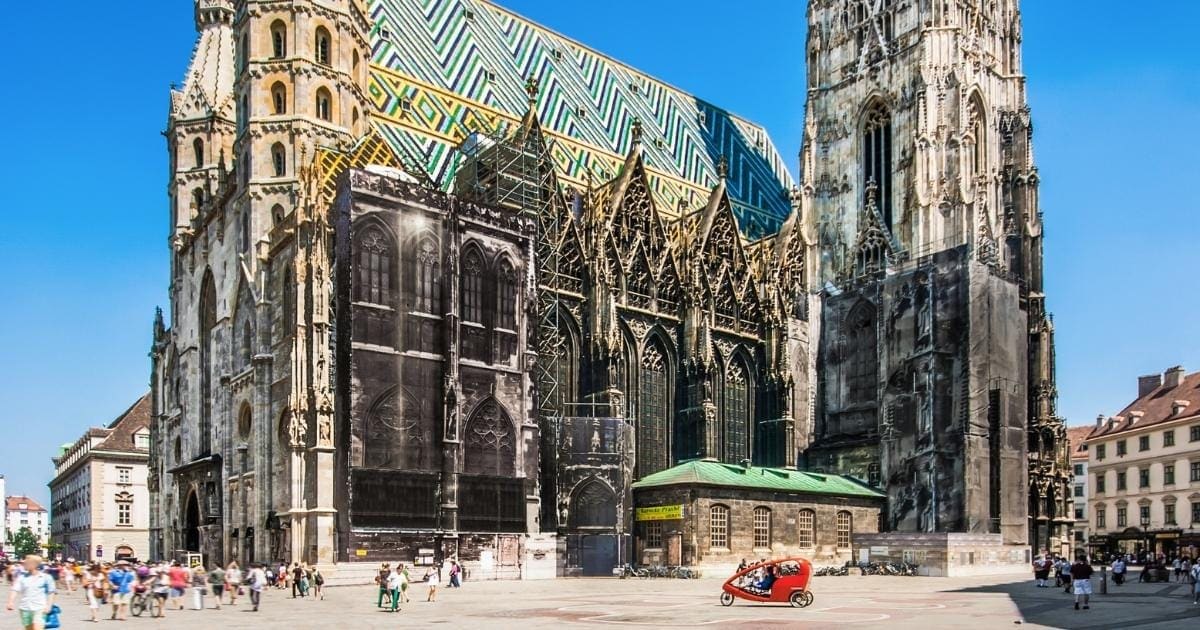
1) Symbol of Vienna: St. Stephen (Stephansdom)

The greatest symbol of Vienna is St. Stephen of 12. century. You don’t have to visit it on your own, just join one of the regular guided tours of the temple and catacombs. Children will not be deprived of the experience either, a special tour is also on offer for them. If you climb the 343 stairs, you will also have an amazing view of Vienna.

In addition to the view, you can admire the decoration and thoughtful details, both from the outside and from the inside. The church also houses the remains of important historical figures such as Frederick III. or Rudolf IV.

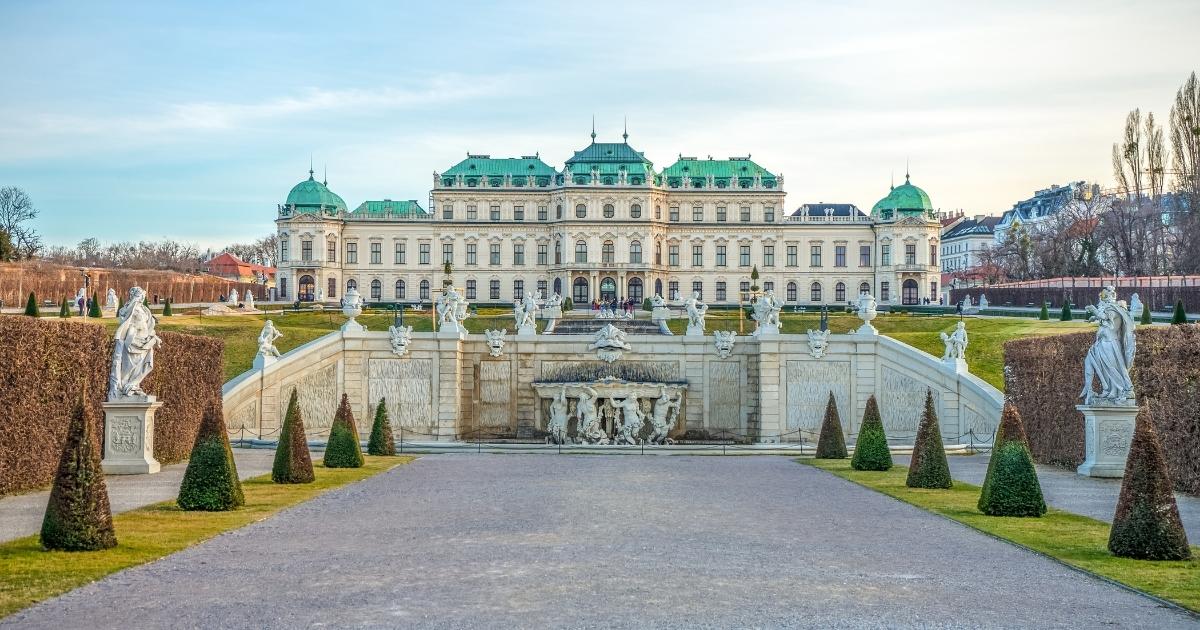
2) Belveder Castle

The Belveder Castle is worth a visit and today serves as a museum with works by world-famous artists from the Middle Ages to the present day. The castle is divided into the Upper Belvedere, where the permanent exhibition is located, and the Lower Belvedere with occasional exhibitions.

You can admire up to 420 works in the Upper Belvedere, including Gustav Klimt’s The Kiss. The chateau garden is also beautiful with the Mirror Pond, which got its name because the chateau itself is reflected on its surface.

3) Central Cemetery

Although it may not seem like it at first, a walk through the Central Cemetery is truly magical. Here you can admire the tombstones of famous personalities, e.g. Beethoven, Mozart or Austrian presidents.

The cemetery is located in a park full of greenery, beautiful architecture and animals and is perfect for long walks and afternoon relaxation. And if you are really interested in the cemetery, then visit the Museum of Funerals on its premises.

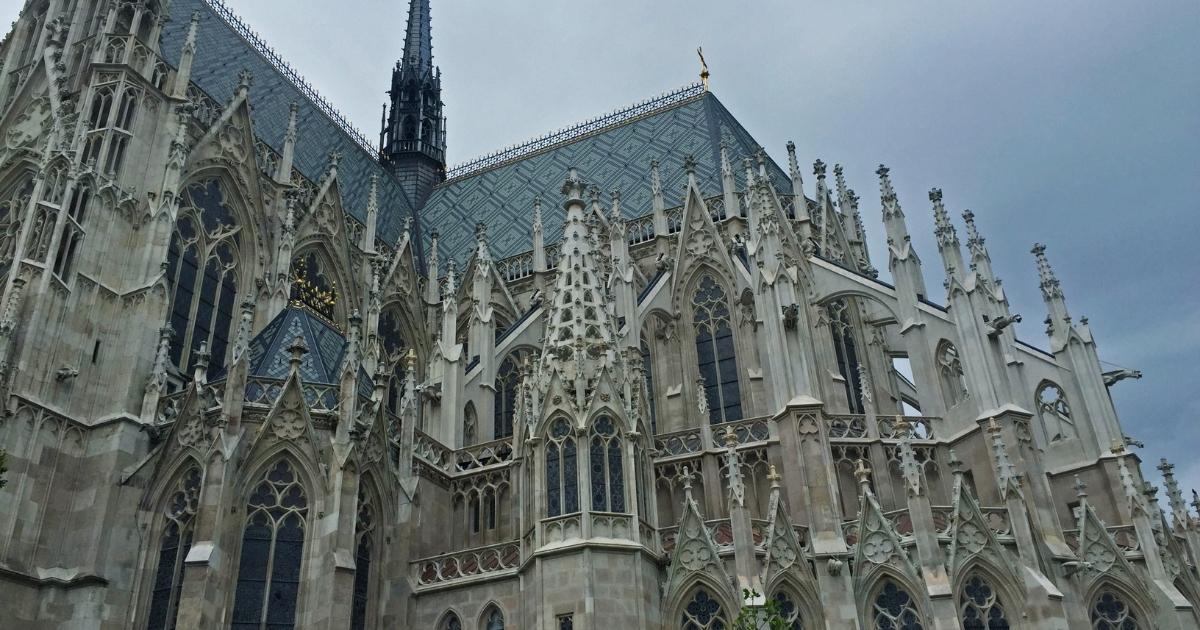
4) Votive church

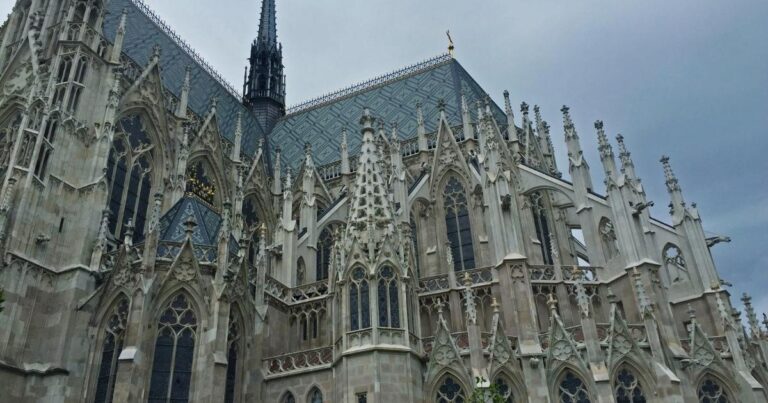
The votive church on the Ringstrasse is a magnificent spectacle. The church was built to thank God that the assassination of Franz Joseph I failed, hence its name. The two typical towers are worth a visit, the mosaic windows will certainly take your breath away. In addition, there is another museum with important works of art.

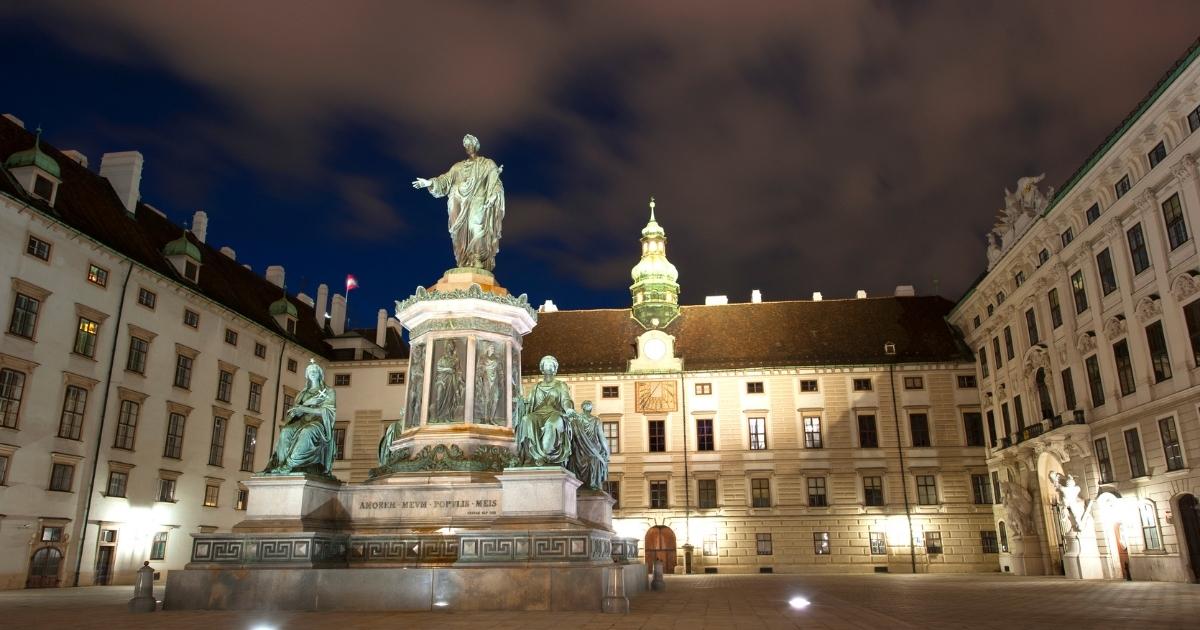
5) The largest palace complex in the world: the Hofburg

The Hofburg used to be the seat of the Habsburg Imperial Family, but today it is the official residence of the Austrian President. This palace complex comprises 17 courtyards, making it the largest building complex in the world with its 300,000m2 of floor space. Today, you can explore the imperial chambers and jewellery room, learn about the story of the Empress in the Sissi Museum, or enjoy tours of the important museums and collections.

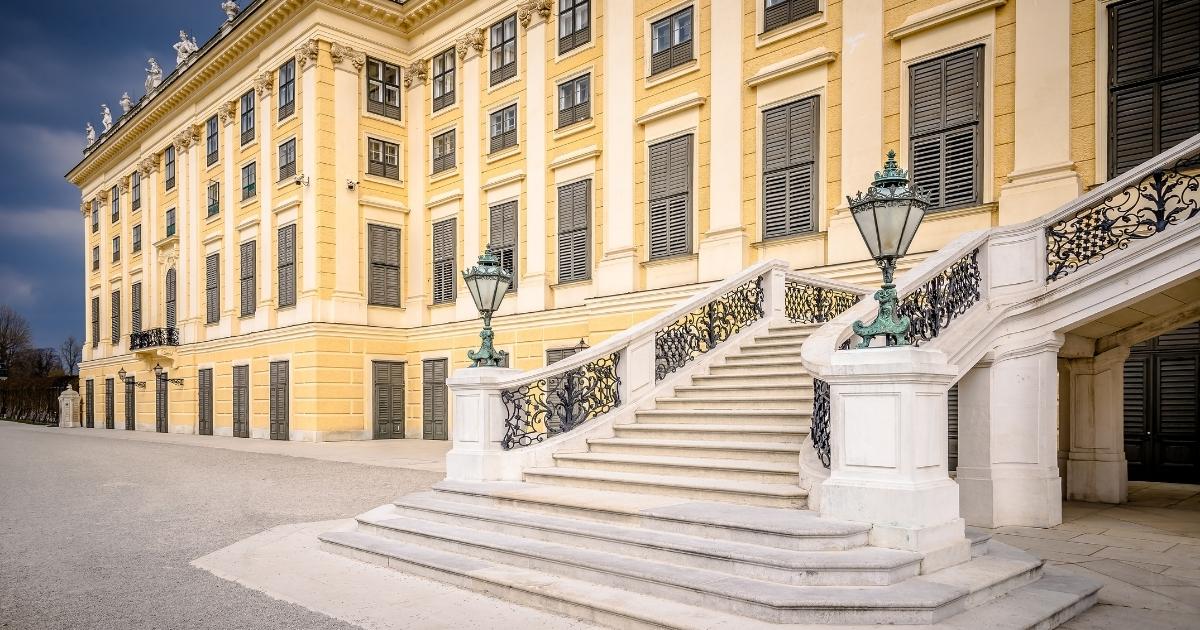
6) Habsburg summer residence: Schönbrunn

Schönbrunn used to be the summer residence of the Habsburgs, serving as home to Maria Theresa, Emperor Franz Joseph II. or Empress Sissi. Today it is a UNESCO World Heritage Site and one of Austria’s most visited monuments.

If you visit the castle, you will have the opportunity to go back in time for half an hour, thanks to digital glasses and 3D animations in viral reality. In summer, we recommend buying tickets in advance, for example via GetYourGuide, which means you don’t have to queue.

7) Art History Museum with Raffaello’s Madonna

For every art lover or admirer, it is a must to see the collection in the art history museum. Here you will find the largest collection of Brueghel paintings in the world or the Benevuto Cellini glass, which was stolen in 2003 and then recovered.

But you can also see Rubens’ Venus Celebration, Raffael’s Madonna in Green, Velázquez and his infanta Marguerite Teresa in pink and blue dresses, Rembrandt’s portraits and much more.

8) Natural History Museum – suitable for the whole family

The tour of the Natural History Museum will be interesting for the whole family. There are exhibits from different historical periods, the almost 30,000-year-old Willendorf Venus, a hall of dinosaurs, a collection of meteorites and stuffed animals belonging to extinct and endangered species.

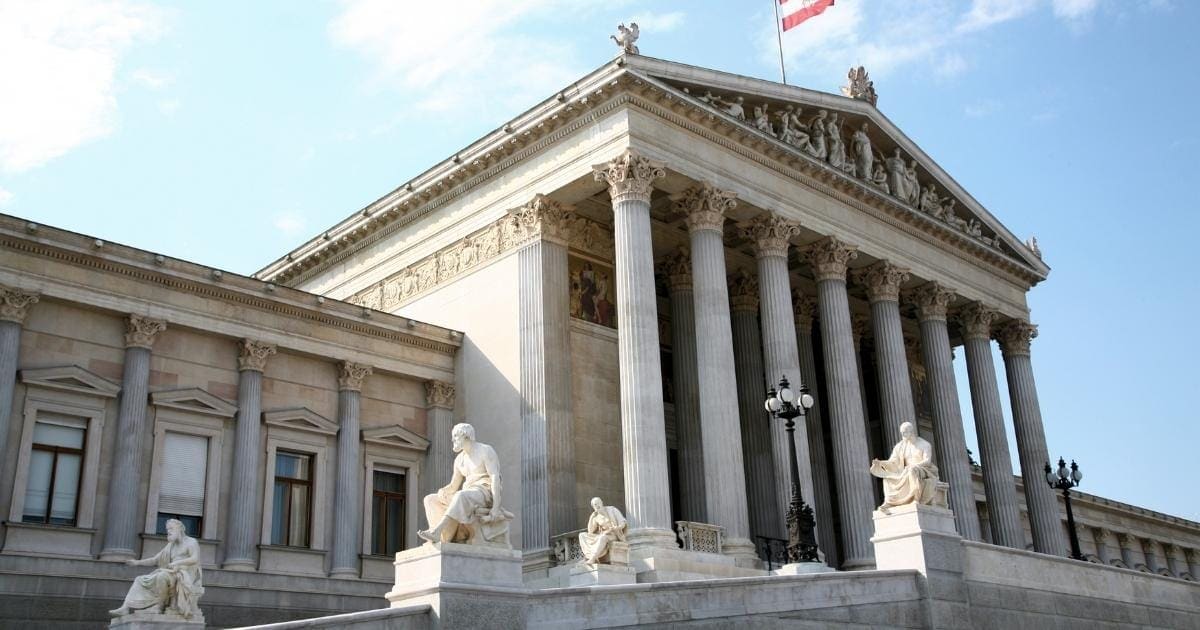
9) Parliament Building – Austria’s most important building

One of the most important buildings in Austria is the Parliament building. It is now open to the public, or rather you can visit its Demokratikum centre. Here you will find more than 20 interactive stands on the history of Austrian democracy. Through the glass galleries you can watch the National and Federal Council meetings. You can choose from a wide range of guided tours depending on the topic you are interested in.

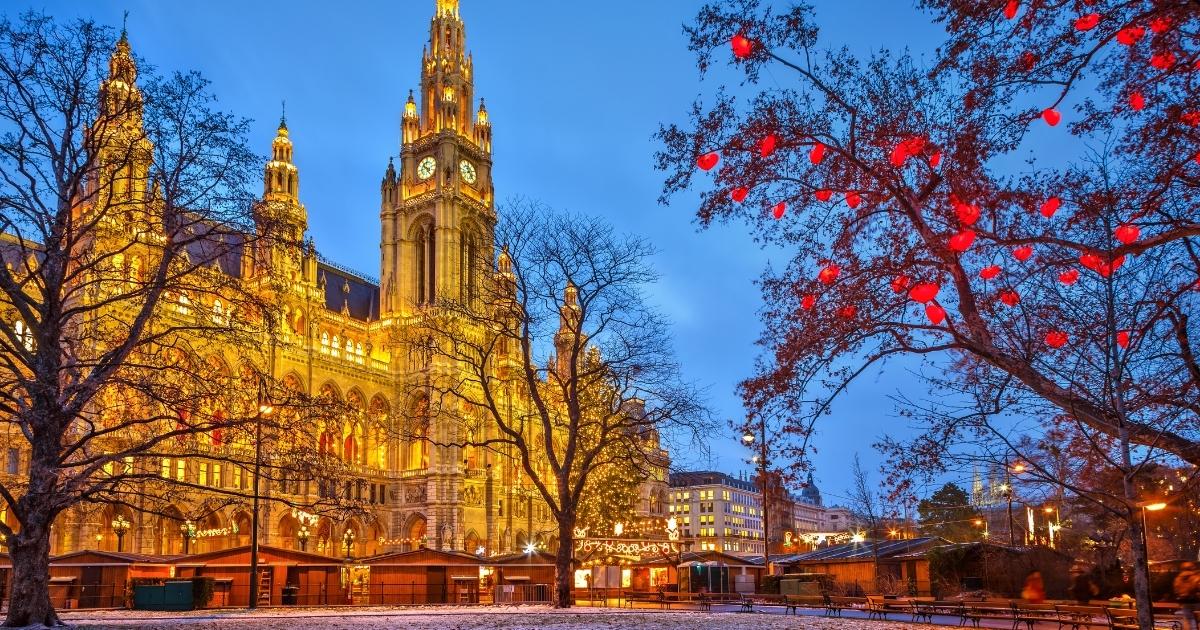
10) Vienna City Hall

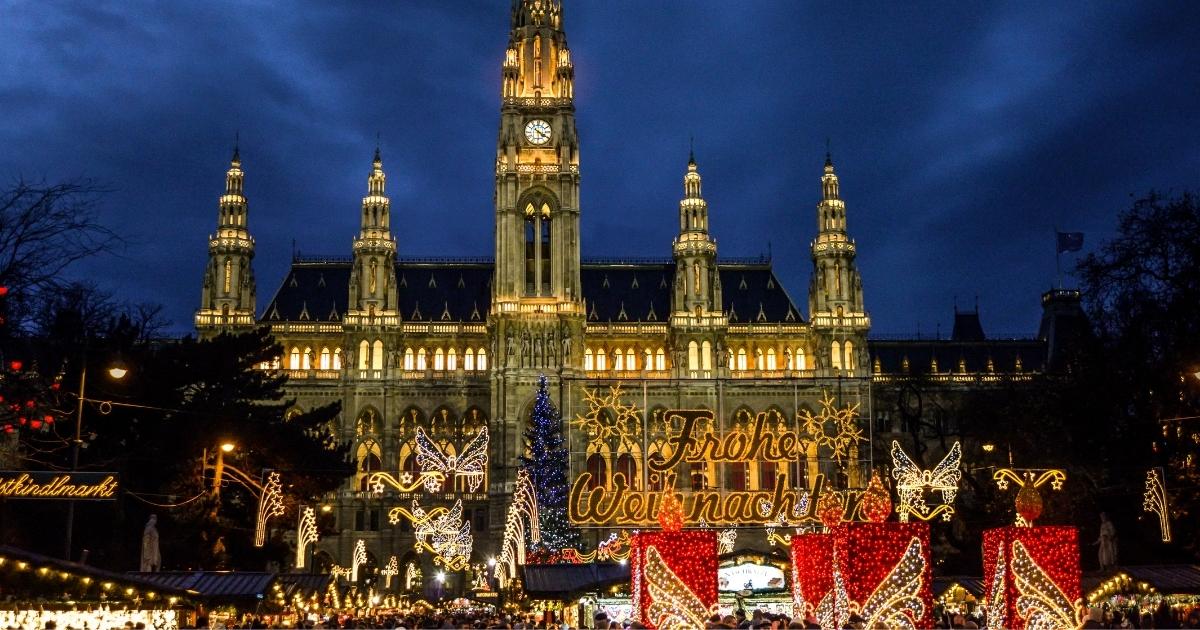
An architectural gem is the Vienna Town Hall from the 19th century. century. The building is guarded by a statue called the “Iron Town Hall Man”, almost 3.5 metres high. Today, the town hall hosts various social events such as balls, film festivals and, in winter, Advent markets.

11) Art Nouveau Pavilion

The Art Nouveau building became a symbol of Art Nouveau thanks to its dome. In its time, this dome was ironically nicknamed “cabbage head”, which it has remained to this day. The architect of the building was the Czech artist Josef Maria Olbrich and he created his work for the Vienna Art Nouveau Association, which was founded by Gustav Klimt together with other artists.

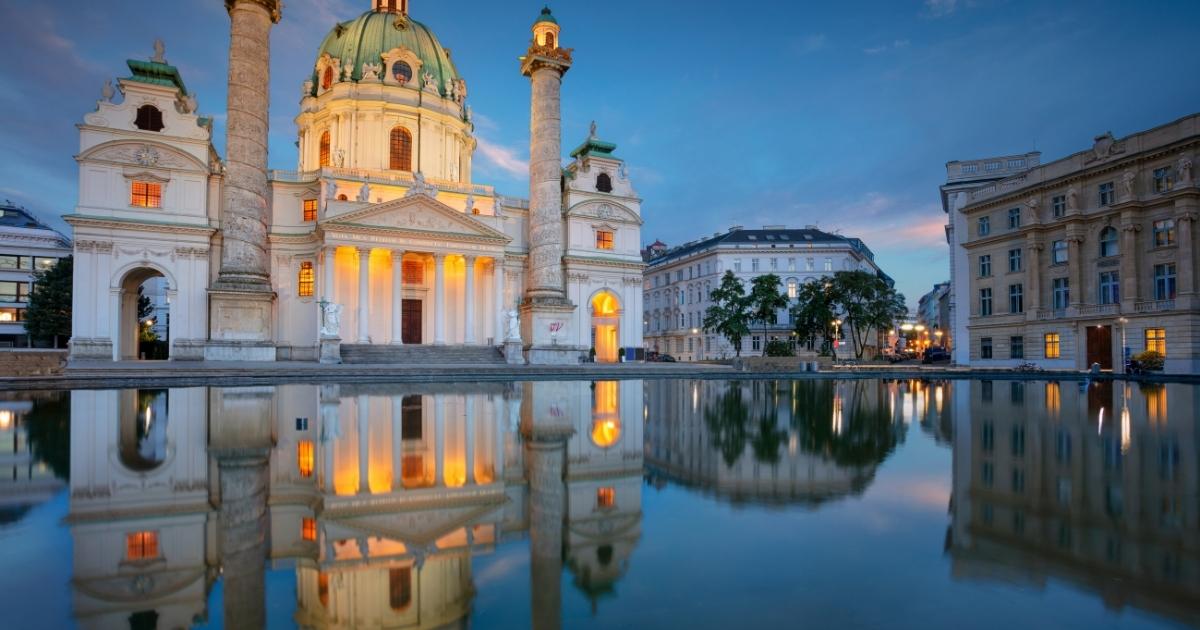
12) Karlskirche Church

The church is located on Charles Square and belongs to the Roman Catholic Church. It was built in 18. century during the reign of Charles VI. Today it attracts visitors with its monumental beauty. On the ceiling of the dome, you can admire artistic frescoes thanks to the panoramic lift.

13) National Theatre of Vienna Burgtheater

The Burgtheater, Vienna’s national theatre, was the wish of Maria Theresa and was built in 1741. The premieres were held here, for example. Mozart’s operas or Beethoven’s Symphonies. V 19. century, the theatre was moved to a new building designed by Gottfried Semper and Karl von Hasenhauer.

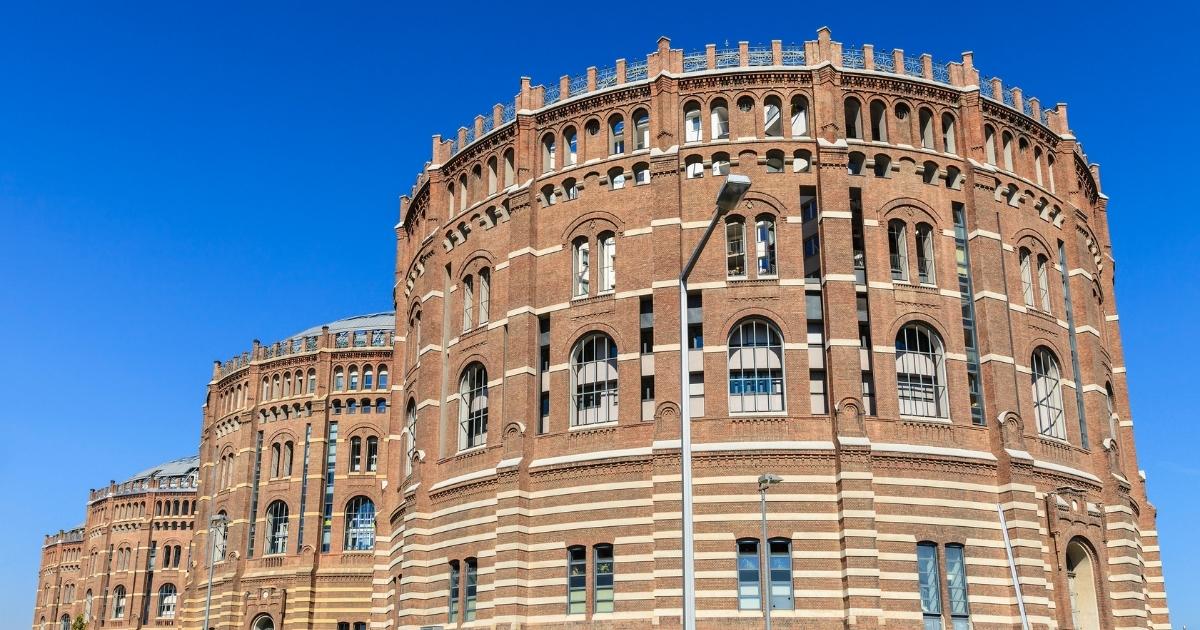
14) Gasometer

Although it may not seem so at first glance, the gasometers of Vienna are of great historical interest. The four original gas houses are now used for housing and commercial services, so the average visitor cannot get inside. Still, this monument is worth a visit at least from the outside.

15) Church of St. Leopold at Steinhof

Church of St. Leopold’s church is, in the true sense of the word, more of a house of prayer. It stands in the middle of the grounds of a psychiatric hospital in the Penzing district. It is dedicated to the patron saint of Austria, Saint Leopold. The entire work, whether the architecture itself or its decoration, was created by members of the Vienna Art Nouveau Association.

16) Ringstrasse

Many of the sights mentioned above are located on the Ringstrasse. It is a 5.3 kilometre long track along which stand important monumental buildings. This trail was built by the Austrian Emperor Franz Joseph in 1857. In addition to private palaces, you will also find:

  • State Opera
  • Parliament building
  • Town Hall
  • National Theatre Burgtheater
  • University of Vienna
  • Museum of Applied Arts, Art History Museum and Natural History Museum
  • Votive temple

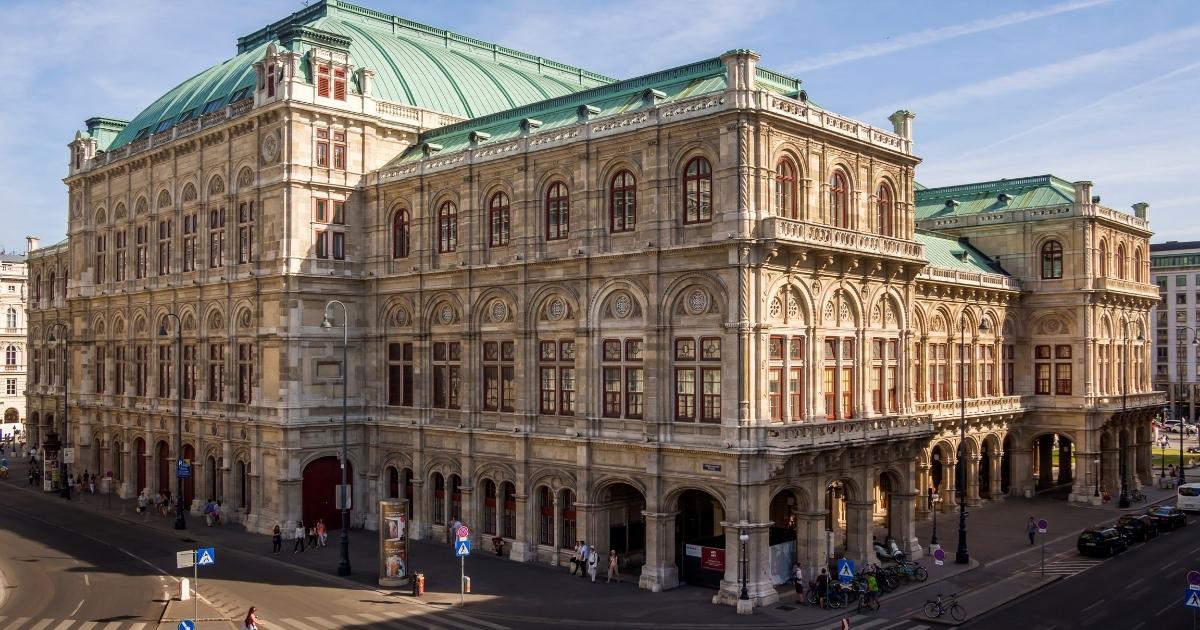
17) State Opera

Whether you go to a subtitled opera or just take a guided tour of the building, you shouldn’t miss a visit to this landmark.

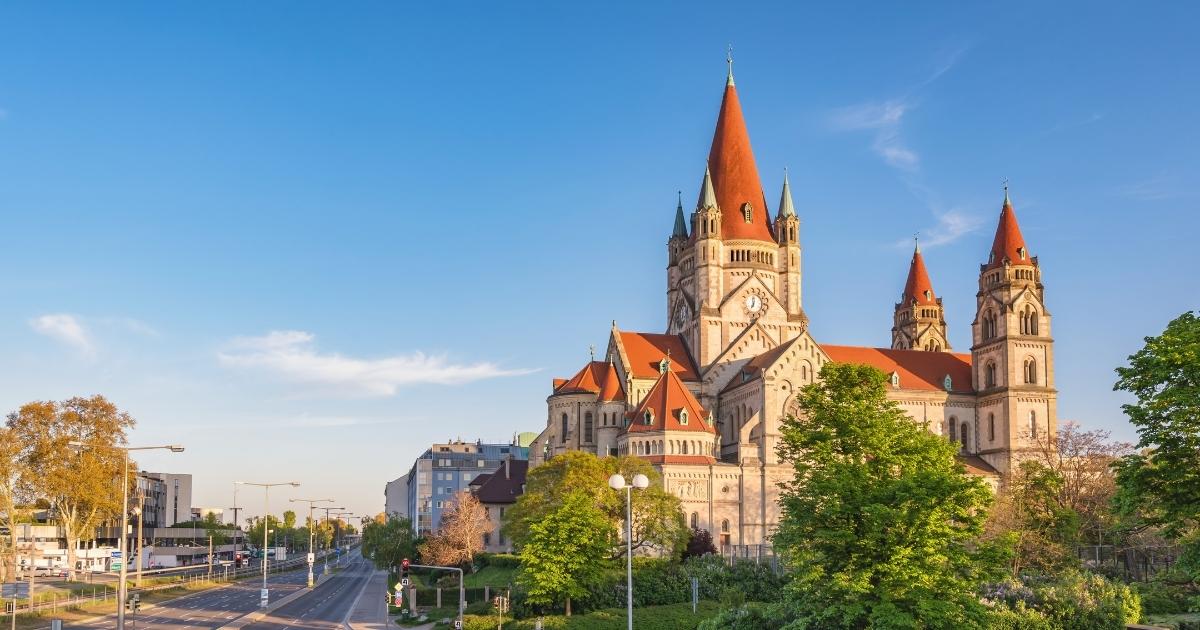
18) Church of St. Francis of Assisi

The Art Nouveau building on the Mexikoplatz was completed at the beginning of the 20th century. century.

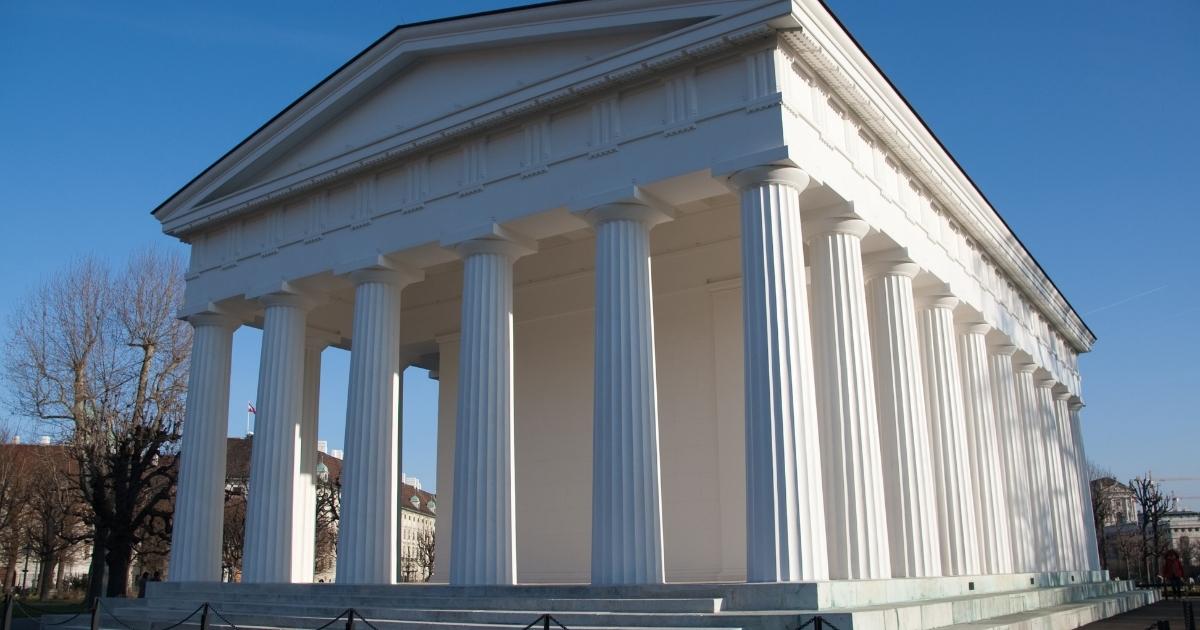
19) Temple of Theseus

The Temple of Theseus in the Volksgarten is a replica of the Temple of Hephaestus in Athens. Here you can see Thése’s statue of the famous artist Antonio Canova.

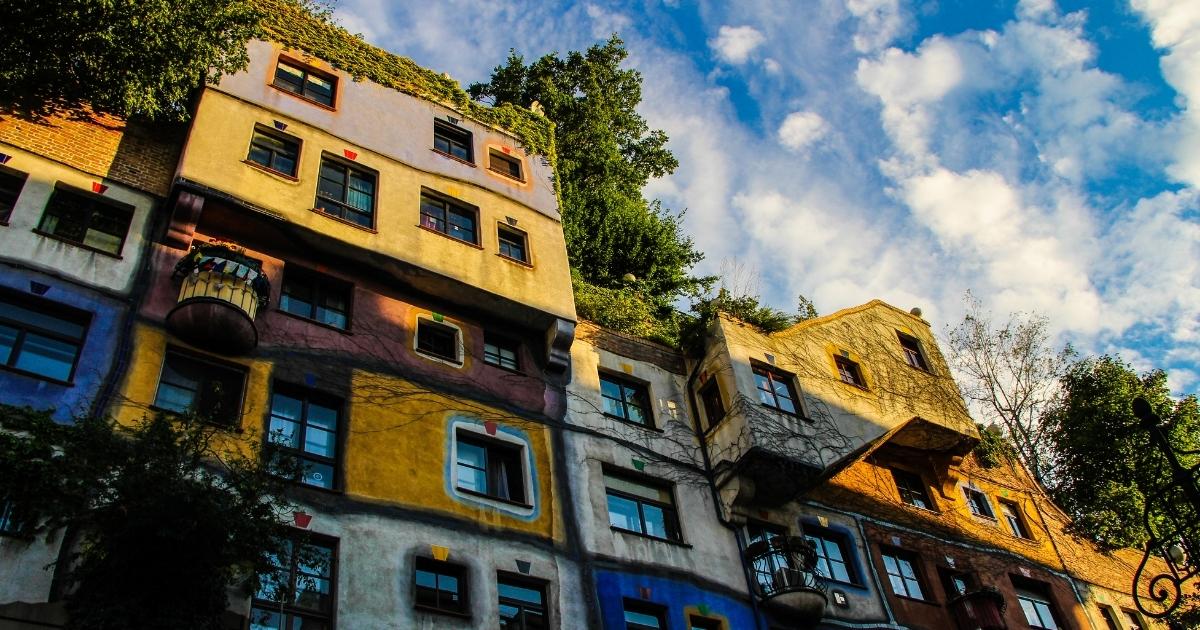
20) Hundertwasserhaus

If you love Gaudí, you must visit the Hundertwasserhaus. This building in Vienna is one of the most famous works of the architect, painter and sculptor Friedensreich Hundertwasser, unfortunately this building can only be admired from the outside.

21) Madame Tussauds

If you go to enjoy the giant wheel in Prater, don’t forget to visit the wax museum in the park. It is a world-famous museum with more than 70 mannequins of famous personalities.

22) Haas-House

Architecturally very interesting postmodern building in the city centre. Today, the inside houses restaurants, shops and more.

Viewpoints in Vienna – the best sunrise and sunset spots

If you love sightseeing or are looking for the perfect sunset spot, you should visit:

23) Giant Eye Prater – a huge theme park in the centre

This symbol of Vienna is 65 metres high, weighs 430 tonnes and rotates at a speed of 2.7 km/h, so you can enjoy the view not only of the park but also of beautiful Vienna at its top. The bicycle was built in 1897 and is the oldest surviving Russian bicycle in the world. You’ll find it in the Prater, a huge theme park in the city centre.

24) Donauturm

The best view is from the Donauturm tower. Overall, it rises to a height of 252 metres, but the observation deck is slightly lower, at 155 metres. If you are already counting down the stairs in your mind with dread, there is no need. Two lifts take you up to the tower in just 35 seconds.

25) Gloriette in the gardens of Schönbrunn

The Gloriette can be found in the gardens of Schönbrunn on the hill, where there is also a café. In the café, you can sample traditional Viennese cuisine while watching the sunset.

What to do in Vienna when it rains

Fortunately, there are plenty of sights to visit in Vienna when it rains. If you’ve already gone through everything we’ve mentioned above, don’t despair. There is much more:

26) Kunsthistorisches Museum

The Kunsthistorisches Museum is one of the most impressive art museums in the world, housing many art treasures acquired by the Habsburgs. Highlights include the world’s largest collection of Bruegel and works by a number of masters, including Canaletto, van Dyck and Rubens.

The building is as distinctive as the artworks it houses. Granite, marble and stucco interior, interspersed with with murals by Gustav Klimt and Hans Makart, distills the best of 19th century Austro-Hungarian design. century.

27) Jewish Museum

The oldest Jewish museum in the world was founded in Vienna in 1895, but was closed and looted by the Nazis in 1938. It was reopened 50 years later and now occupies two locations – on Dorotheergasse and Judenplatz.

28) Beethoven Museum

The Beethoven Museum is located in the building where the world-famous composer wrote his letter “Heiligenstadt Testament”, in which he lamented his hearing loss and failing health. Beethoven increasingly relied on letters and notes as his deafness worsened, meaning that much of his personal life and work is documented in extraordinary detail. The most curious object in the exhibition is a lock of his hair, which helped reveal the probable cause of his death in 2007.

29) Albertina – from Leonardo Da Vinci to Oskar Kokoschka

The Albertina offers one of the world’s finest collections of art, and one of the highlights of the Albertina is Albrecht Dürer’s sketch of a hare, which is so fragile that the original is only exhibited once every ten years. Be sure to check out the current exhibitions.

30) Sigmund Freud Museum

Sigmund Freud lived at 19 Berggasse for 47 years before fleeing to London to escape the Nazis. The site is now a carefully curated museum where a range of personal objects, archival footage and letters tell the story of the founder of psychoanalysis.

31) Empress Sissi Museum

If you’ve been watching the new Sissi series on Netflix or TV, or if you’re a big Habsburg lover like me, you can’t miss this museum. The museum offers a fascinating glimpse into her life through an array of personal objects, poems, portraits, wooden exercise equipment, her death mask and more.

32) Demel Café and Chocolate Factory

Empress Sissi is said to have ordered sweets from this café. If you want to have the ultimate Vienna experience, this is the place to be. While drinking coffee and tasting desserts, you can watch through the glass into the kitchen as the desserts are made.

33) Wine tasting

Don’t you like museums and have you been to a chocolate factory? How about a wine tasting?

34) Taste regional beers

If you’re not a wine drinker, it’s okay, you can also go for a tasting of regional beers. For example, head to AmmutsØn Craft Beer Dive, where they have up to 12 local beers. Beaver Brewing Company, Mel’s Craft Beer and Diner and Fassldippler are also very popular.

Map with points of interest on your phone

Save a map of the best places in Vienna directly to your phone. After purchase, you will receive a link to a non-public Google Map that you can open or print at any time on your phone. All of them are clearly marked on the map:

  • Hotels mentioned
  • The mentioned monuments
  • The aforementioned museum
  • The aforementioned P+R car parks

Romantic cruises on the Danube

If you love cruises, you can also take a romantic cruise on the Danube in Vienna.

35) Danube cruise with 3-course dinner

Via GetYourGuide you can go on a boat cruise on the Danube with a three-course menu. Small children are free and the cruise takes about 3 hours.

What to see in Vienna in one day: top 5 sights

From the Czech Republic you can take a day trip to Vienna. In this case, you will not have time to visit all the important sights. So here is a list of the most interesting, or TOP 5 sights to see if you are in Vienna for just one day:

  1. Cathedral of St. Stephen
  2. Hofburg
  3. Town Hall
  4. Schonbrunn
  5. Natural History Museum.

Christmas markets in Vienna

One very common reason to visit Vienna is the Christmas markets. They are usually held from mid-November to Christmas, some of them extend into January.

Vienna’s Christmas Dream Rathausplatz offers many attractions for children and adults alike. These include not only a carousel and reindeer train, but also a Christmas ice dream – an ice track through the park on which you can skate.

Christmas Village on Maria-Theresien-Platz offers up to 70 different stalls with traditional products and culinary delights.

Another Christmas village is located in campus of the University of Vienna which is why it’s mostly students who visit every year. But apart from them, families with children will also find something to do there. They can ride a train or a carousel.

The Christmas market in Freyung Square is certainly worth mentioning ; it’s a good dose of Christmas tradition, and not just because of the large Christmas egg in the middle of the square. The first markets were held here as early as 18. century and the stalls feature traditional cribs, ceramics and other products.

Castle Christmas Market

Christmas markets are also held in front of Vienna’s castles:

Art Christmas Market

At the art Christmas markets you will find lots of arts and crafts, but also an exhibition of artworks or demonstration workshops. Such markets are held at Charles Square or in Spittelberg.

Other interesting Christmas markets

lukas a lucka
Lukáš and Lucie recommend
Where to stay in Vienna
6 accommodations — wellness hotels, hotels and other accommodation options

What to visit in Vienna with children

The children mostly love Pratr, they like the local zoo and enjoy visiting the Natural History Museum. Be sure to take the Hop on Hop off buses with the kids so they don’t get tired on the long marches and visit the aforementioned Demel Chocolate Factory, where you can sample treats that the Empress herself used to eat.

Tips and Tricks for Your Vacation

Don’t Overpay for Flights

Search for flights on Kayak. It’s our favorite search engine because it scans the websites of all airlines and always finds the cheapest connection.

Book Your Accommodation Smartly

The best experiences we’ve had when looking for accommodation (from Alaska to Morocco) are with Booking.com, where hotels, apartments, and entire houses are usually the cheapest and most widely available.

Don’t Forget Travel Insurance

Good travel insurance will protect you against illness, accidents, theft, or flight cancellations. We’ve had a few hospital visits abroad, so we know how important it is to have proper insurance arranged.

Where we insure ourselves: SafetyWing (best for everyone) and TrueTraveller (for extra-long trips).

Why don’t we recommend any Czech insurance company? Because they have too many restrictions. They set limits on the number of days abroad, travel insurance via a credit card often requires you to pay medical expenses only with that card, and they frequently limit the number of returns to the Czech Republic.

Find the Best Experiences

Get Your Guide is a huge online marketplace where you can book guided walks, trips, skip-the-line tickets, tours, and much more. We always find some extra fun there!
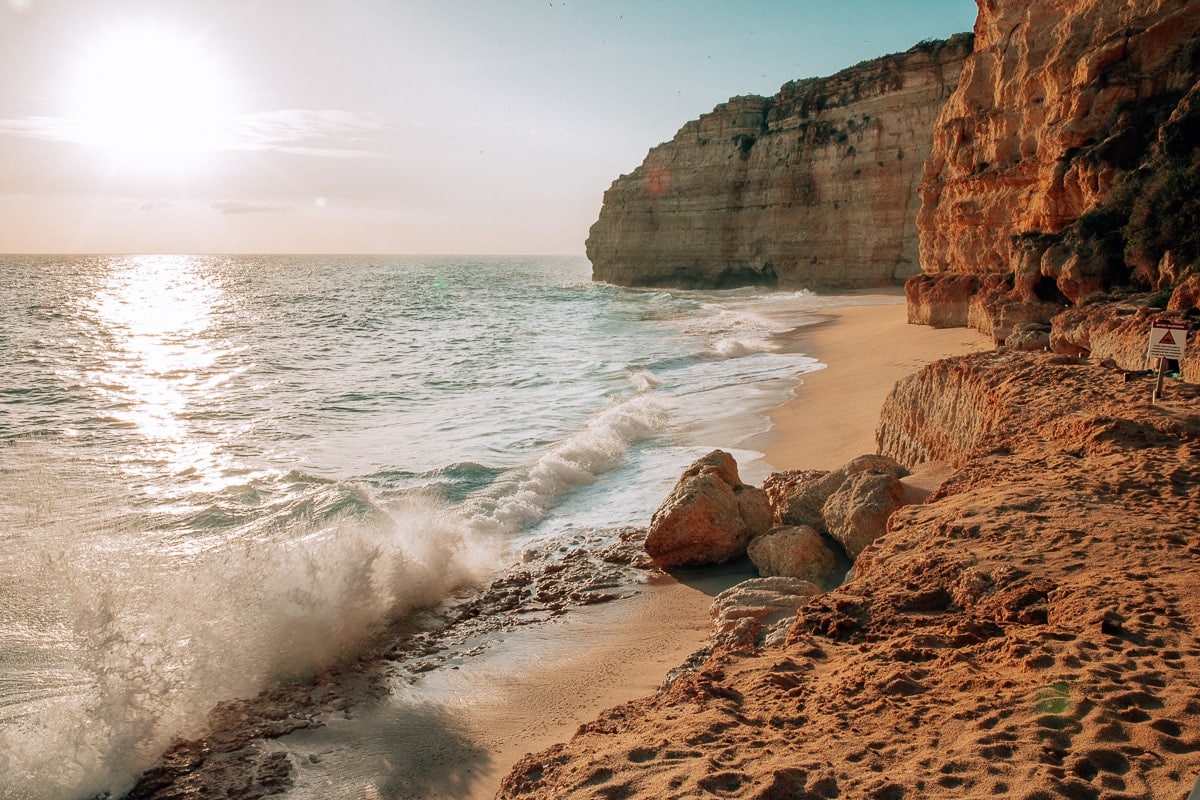
Dolomites Italy: 15 Most Beautiful Places + Complete Guide (2026)

TL;DRThe Dolomites are a mountain range in the Italian Alps, famous for jagged dolomite rock towers and turquoise lakes. At sunrise and sunset the peaks glow pink, a phenomenon known as enrosadira, which is why UNESCO added them to its World Heritage list. Getting there involves a long drive, so flying and picking up a hire car is usually the easier option. Affordable prices, great Italian food and easy access to the peaks make this a great fit for couples, families and older travellers alike. The guide covers 17 of the most beautiful spots and a 5–7 day itinerary. Summer and early autumn are the best time to go.

We consider the Dolomites the most beautiful mountains in Europe — and after several visits, we’re more convinced than ever. Their towering peaks of dolomite limestone and turquoise lakes have amazed countless travellers. Combined with relatively affordable prices, superb Italian cuisine, and easily accessible summits, the Dolomites Italy are an ideal destination for couples, families with children, and seniors alike. In this guide, you’ll find the 15 best places in the Dolomites Italy, a practical 5–7 day itinerary, and everything you need to know before heading to the Italian Alps.

The Dolomites are one of the mountain ranges within the Italian Alps, stretching across the northern part of Italy. From London, the easiest way to get here is by flying into Innsbruck, Venice, or Verona and renting a car, though you can also reach the Dolomites by train or bus. The drive from Venice takes around 2 hours, from Innsbruck about 1.5 hours.

Best places in the Dolomites Italy. Most beautiful spots in the Italian Alps. Best hikes in the Dolomites.

Why the Dolomites Are Different from “Ordinary” Alps

The Dolomites aren’t just another Alpine mountain range. They are vertical rock towers made of dolomite limestone that glow pink and orange at sunrise and sunset — a phenomenon called enrosadira, and one of the reasons UNESCO inscribed the Dolomites as a World Heritage Site in 2009.

Unlike the Swiss or Austrian Alps, you’ll find dramatic contrasts here: jagged rock walls rise directly from green meadows, turquoise lakes sit in corridors surrounded by vertical cliffs, and instead of glacial valleys, there are narrow mountain passes with panoramic views in every direction. The Dolomites mountains in Italy span two regions — Trentino-Alto Adige and Veneto. People speak both Italian and German here, the food combines Alpine cuisine with Italian, and the atmosphere is completely unlike anywhere else in the Alps.

When to Visit the Dolomites for Hiking

The main season runs from July to the end of September, when the weather in the Dolomites is most favourable and the days are long and ideal for exploring the mountains. During summer, expect the Italian Alps to be packed with tourists, and accommodation — including campsites — needs to be booked well in advance, especially if you’re travelling with a campervan.

May and June are an interesting alternative — the meadows burst into incredible colours, there’s a fraction of the tourist crowds, and accommodation prices are significantly lower. Bear in mind, though, that higher trails (above 2,500 m) may still have snow, and some mountain huts don’t open until mid-June. Daytime temperatures hover around 15–20 °C in the valleys, considerably less in the mountains.

Summer in the Dolomites

July and August are also ideal for camping. If you’re planning to camp in September or October, make sure to bring a sufficiently warm sleeping bag and ideally pack an extra blanket too. When we camped at the beginning of September, nighttime temperatures dropped to minus four, and with our summer sleeping bags it was far from ideal. In summer, valley temperatures range around 25–30 °C, but in the mountains it can be just 10–15 °C even during the day.

Autumn in the Italian Alps

September in the Dolomites is gorgeous — you’ll encounter far fewer tourists, most huts and restaurants are still open, and prices in some areas start to drop. We’re actually longing to go even later next year, in October, because that’s when the larches turn golden. October has its challenges, though — don’t count on every mountain hut being open for lunch or espresso. Some campsites close in October as well, and the sun sets early, especially in the Dolomites where it dips behind the peaks.

Italian Dolomites, South Tyrol, Lago di Braies.
Lago di Braies – Italian Dolomites

Dolomites with Kids and Dogs

The Dolomites are perfect for families with children. Cable cars take you to the top of many peaks, so you can stick to easy walks with minimal elevation gain. Seiser Alm, Lago di Braies, and the area around Cortina are made for families — cable cars whisk you up, flat walks with views await below, and mountain huts serve food so you don’t need to carry a heavy backpack. Head out camping and you’ll create memories your kids will cherish for a lifetime. We especially recommend the area around Ortisei, from where you can easily reach Seiser Alm and Seceda.

Dogs are welcome on all the hikes we did. They were also allowed on every cable car, so our dog Kája came absolutely everywhere with us — except to Lago di Sorapis, where we didn’t take him because he’s a bit clumsy and it’s not an ideal hike for smaller dogs.

Where to Stay in the Dolomites?

If you want to visit the places we recommend, the best approach is to start in Cortina d’Ampezzo, where you’ll spend 4–5 days, and then move on for 2–3 days to Ortisei. As a third base, consider Val Pusteria (Pustertal) — it’s an ideal starting point for Lago di Braies and Tre Cime, and Dolomites Italy hotels here are often cheaper than in Cortina.

Budget guide: In peak season, expect to pay €80–150 per night for a double room (mid-range). Luxury hotels in Cortina cost €200–400+, while campsites run €25–45 per night. Off-season (June, October) prices are 20–40% lower.

Cortina d’Ampezzo

Cortina d’Ampezzo is a famous ski resort in the Italian Alps that offers breathtaking views of the surrounding mountains. It’s also an excellent base for hiking. From Cortina, it’s not far to the popular Tre Cime di Lavaredo, the stunning turquoise Lago di Sorapis, or Lago Federa. Most of our recommended hikes are easily reachable from Cortina, including Cinque Torri and Passo Giau.

Our accommodation tips in Cortina:

  • If you’re looking for more affordable dog-friendly accommodation, we really enjoyed B&B Hotel Passo Tre Croci Cortina — excellent breakfast, right next to the Lago di Sorapis trailhead, and dogs are welcome for a small fee.
  • One of the top-rated apartments is Dolomiti Sweet Lodge, and Hotel Villa Gaia is also well worth mentioning.
  • Those of you looking for a more luxurious romantic stay shouldn’t miss HOTEL de LEN.

Ortisei

If you’re heading to the Dolomites with kids or aren’t experienced mountain hikers, you’ll find much more comfortable walks near Ortisei, from where it’s easy to reach the famous Seceda or Seiser Alm.

Our accommodation tips in Ortisei:

lukas a lucka
Lukáš and Lucie recommend
Where to Stay in the Dolomites
6 accommodation options — wellness hotels, hotels, and more

15 Best Places in the Dolomites Italy

Let’s look at the places you absolutely shouldn’t miss in the Italian Alps. We’ve ordered them as you’ll encounter them if you follow our itinerary — from the Cortina area through the mountain passes to Val Gardena.

1. Trek Around Tre Cime di Lavaredo

  • 3.5–4 hours, 400 m elevation gain, 9.5 km

The most iconic trek in the Italian Alps is undoubtedly Tre Cime di Lavaredo (Drei Zinnen / Three Peaks), whose imposing trio of rocky summits you’ve surely seen in photographs. The full circuit takes 3.5–4 hours including lunch at one of the huts along the way. In total, you’ll walk 9.5 km with just under 400 m of elevation gain.

This is a very easy hike that you can do either as a loop or turn around at Rifugio Antonio Locatelli / Dreizinnenhütte, which offers the most stunning views, and head back the same way. The trek starts at Rifugio Auronzo, which you can reach by car — parking costs €30 for a car and €45 for a campervan. If you’re staying in Cortina, you can also take a bus here for just a few euros. For current prices and timetables, we recommend visiting the information centre in Cortina town centre.

2026 Update: Since summer 2025, there’s a new reservation system for the access road to Tre Cime. During peak season (July–September), you must pre-book a time slot to drive on the toll road to Rifugio Auronzo. Without a reservation, you won’t be allowed on the road — especially on weekends and during peak hours (9:00–11:00). We recommend booking at least 2–3 days ahead, and in August even a week in advance. Alternatively, you can hike to Tre Cime from Lago di Misurina (about 2 extra hours), where no reservation is needed.

The most iconic trek in the Italian Alps is undoubtedly Tre Cime di Lavaredo (Drei Zinnen)

2. Cadini di Misurina — Hidden Gem Near Tre Cime

Cadini di Misurina is a group of rock towers and spires that look like a natural cathedral. Most tourists pass them on the way to Tre Cime, but that’s exactly why you’ll find peace and quiet here — an authentic mountain experience that’s hard to come by at Tre Cime during the season.

The best view of Cadini is from Rifugio Auronzo (the same starting point as for Tre Cime) — just turn around and look the other way. For a closer look, hike to Rifugio Fonda Savio (2–3 hours return, moderate difficulty). We went there in the morning before setting off on the Tre Cime circuit, and the view of the needle-like rock towers in the morning light was well worth the early start.

3. Hike to Lago di Sorapis

  • 4–6 hours, 725 m elevation gain, 13.5 km

One of the most beautiful spots is the incredibly turquoise Lago di Sorapis, but you’ll have to earn it with a proper hike. The trail is 13.5 km with 725 m of elevation gain.

It’s not a difficult trek, but it’s the only hike we’d strongly advise against for families with small children — and we didn’t take our dog either, because he’s a bit clumsy. Parts of the trail run close to a drop-off, there are sections with stairs and fixed cables, and if there’s a lot of water you’ll need to wade through a stream. If you’re not great with heights, this might not be the ideal choice either. I hope I haven’t scared you off, though — Lukáš and I have done this trek several times and there’s really nothing to worry about.

The best time to visit Lago di Sorapis is early summer, when the water level is at its highest. By late September the experience may not be as spectacular, as the lake gradually dries up. Just before the lake, there’s a turn-off to a hut where you can grab lunch, use the toilet, or have an espresso during the season. It was still open in early October when we last visited.

One of the most beautiful places is the incredibly turquoise Lago di Sorapis, which you'll have to earn with a hike.
The turquoise Lago di Sorapis — you’ll have to earn this view with a hike.

4. Trek to Lago Federa

  • 3–4 hours, 400 m elevation gain, 8.4 km

You can hike to Lago Federa directly from the campsite in Cortina, but we wouldn’t recommend it. It’s a very demanding climb that might excite some seasoned hikers, but you walk through forest the entire time and don’t see much. The shortest and most popular route is from Ponte di Rocurto. From there, it takes about 1.5–2 hours to reach the lake. It’s quite uphill, but there’s a hut by the lake where you can enjoy a good lunch.

Lago Federa near Cortina in the Italian Alps.
Lago Federa is stunning in spring, summer, and autumn.

5. Passo Giau

You can reach Passo Giau from Cortina by car or bus, and if you’re not in the mood for a trek, you don’t need to lift a finger for breathtaking views. Just park up and look around. From Cortina, it’s also a brilliant cycling route that winds steadily uphill — after 2 hours of climbing, you’ll have earned a hearty plate of Tyrolean dumplings. Or rent an e-bike and get here in 45 minutes.

Passo Giau is a stunning spot in the Italian Dolomites. The photo also shows e-bikes.
You can cycle up to Passo Giau, but expect a proper workout.

6. Passo Sella — Mountain Pass with Views of Sassolungo

Passo Sella (2,240 m) is one of the iconic Dolomite mountain passes and part of the famous Sella Ronda circuit. From the pass, you get a direct view of the imposing Sassolungo (Langkofel) massif towering right above you — a sight that will take your breath away, even if it’s your third time in the Dolomites.

The pass is an ideal stop on the road between Val Gardena and Val di Fassa. You can park here, grab a coffee with a view, and set off on a short hike to Rifugio Salei (45 minutes) or a longer loop around Sassolungo (5–6 hours, more challenging). In winter, the Sella Ronda is one of the best ski circuits in the Alps — 40 km of slopes connected by lifts, making the Dolomites Italy ski scene truly world-class.

7. Trek to Cinque Torri

  • 3–4 hours, 583 m elevation gain, 10 km

This trail is one of our absolute favourites. We always start at Passo Giau and stroll at a very relaxed pace along the rocky trail towards Cinque Torri. You have unreal views the entire time — I think we’ve been here three times, maybe even four, and it never gets old.

It’s gorgeous in any season, and even though you climb nearly 600 m in elevation, the ascent is gradual and manageable for almost anyone. There are two huts along the way where you can stop for lunch or a snack.

The trail to Cinque Torri, Italian Alps, Dolomites.
The hike to Cinque Torri is one of our all-time favourites.

8. Most Beautiful Lake in Italy: Lago di Braies

What would a visit to the Dolomites be without a stop at the most famous lake? Be warned: arrive early, because even outside peak season, the number of tourists can catch you off guard — and you might not even find a parking spot. That happened to us at the end of October last year. Yes, the end of October, when everywhere else was completely empty. Everyone was apparently at Lago di Braies. At the lake, you can hire a rowing boat or take a short walk around the shore.

Tip for 2026: In summer, advance booking for a parking space or shuttle bus ticket at Lago di Braies is mandatory. Without a reservation, you can’t reach the lake by car. The system works similarly to Tre Cime — it’s best to book your spot online in advance.

Most beautiful lake in Italy: Lago di Braies
The most beautiful lake in the Italian Alps: Lago di Braies

9. Lago di Carezza (Karersee) — Emerald Lake Beneath Latemar

Lago di Carezza is a small but incredibly colourful lake beneath the Latemar massif. The water shifts from emerald green to turquoise, and sunken tree trunks are visible on the bottom — it almost looks like an underwater landscape. We actually stopped here by chance the first time, on our way from Bolzano, and we’ve been coming back every time since.

Unlike Lago di Braies or Sorapis, Carezza is easily accessible: you park right by the road and walk to the lake in 5 minutes along a paved path. It’s a perfect stop on the drive from Bolzano towards the mountain passes. The lake looks its best in the morning, when the peaks of Latemar are reflected in the water.

Note: The lake is fairly small and can get very crowded in peak season. If you want peace and quiet, arrive early in the morning or visit outside July–August.

10. Walk to Lago Limides

You can easily reach Lago Limides from the car park at Passo Falzarego, which also serves as the starting point for the ascent of Mount Lagazuoi. This lake is particularly beautiful in spring when it’s full of water.

It’s usually very calm, with gorgeous Alpine peaks reflected in its surface. In summer, however, it’s more of a large puddle and not really worth the trip. Unfortunately, autumn is often similar.

Lago Limides in the Dolomites, Italy.
In summer and autumn, Lago Limides is more of a large puddle.

11. Cable Car to the Summit of Lagazuoi

You can take a cable car to this summit and I’d strongly recommend it. We hiked up on foot, which is essentially scrambling up a fairly steep slope.

Maybe it was because we were hungry, but it felt endless, and there really aren’t any interesting views along the way up. If you do decide to make the climb, there’s a restaurant at the top where you can reward yourself.

Lagazuoi in the Italian Dolomites, Alps.
The summit of Lagazuoi is one of those places best visited by cable car.

12. Most Beautiful Meadow in South Tyrol: Seiser Alm (Alpe di Siusi)

Who hasn’t seen photos from the most famous Alpine meadow, Seiser Alm? You ride the cable car up, and then you can simply stroll across gentle slopes, taking in the soothing scenery and listening to the sound of grazing cattle. Or just have an espresso at one of the local restaurants. Even that alone will be an unforgettable experience.

Practical info: In summer, private cars are banned from Seiser Alm (9:00–17:00). You can get up by cable car from Ortisei (Seiser Alm Bahn) or by bus from Compatsch. The cable car costs around €25 return for an adult — consider the Dolomiti Supersummer Card if you’re planning to use multiple cable cars.

Most beautiful meadow in South Tyrol: Seiser Alm (Alpe di Siusi). The photo shows a cockapoo dog with stunning Tyrolean Alps peaks behind.
The most beautiful spot in South Tyrol: Seiser Alm (Alpe di Siusi)

13. Breathtaking Views from Seceda

You can reach Seceda by cable car from Ortisei–Furnes–Seceda, and then it’s just a 10-minute walk to the summit. If you fancy a longer walk, take the cable car to Col Raiser instead and do a 3–4 hour circuit. It’s a relatively easy hike with absolutely stunning viewpoints.

Seceda is arguably the most beautiful cable car summit in the Italian Alps. Dolomites, Italy.
Views like this — and you can get here by cable car.

14. Val di Funes (Villnöß) — Most Photographed Valley in the Dolomites

Val di Funes is the valley you’ve seen in every other Instagram post about the Dolomites — the little Church of St. Johann in Ranui with the jagged Odle/Geisler peaks as a backdrop. And rightly so: this view really is as beautiful as it looks in photographs. Lukáš and I stood there in the evening light and neither of us wanted to leave.

The best time for photography is early morning or late afternoon, when the sun illuminates the Odle peaks. From the village of Santa Maddalena, an easy stroll leads to the church (20 minutes). For a more challenging hike, continue on the Adolf Munkel Weg trail beneath the Odle walls — 3–4 hours, minimal elevation gain, maximum views.

Practical info: Parking in Santa Maddalena is limited; in season we recommend arriving before 9:00. In summer, a shuttle bus runs from Bressanone.

15. Cortina d’Ampezzo — Queen of the Dolomites

Cortina d’Ampezzo isn’t just a base for sleeping — it’s a fully-fledged destination in its own right. The town hosted the 1956 Winter Olympics and is co-hosting events in 2026, which has brought extensive infrastructure upgrades. Corso Italia is an elegant pedestrian zone with cafés and shops where you can easily spend a pleasant afternoon.

From Cortina, cable cars run to Tofane (Freccia nel Cielo — views from 3,244 m), Faloria, and Cristallo. For families, we recommend the Adventure Park on the outskirts of town. And above all, Cortina is the ideal base for day trips to Tre Cime, Lago di Sorapis, and Cinque Torri — everything is within 30–45 minutes by car.

If you’re planning a Dolomites Italy holiday and looking for a challenge, don’t miss the ascent of Marmolada, known as the “roof of the Dolomites.” This majestic mountain offers unforgettable views and is a popular goal for many hikers and mountaineers. For more about this incredible route, check out the article Marmolada: Ascent to the Roof of the Dolomites, where you’ll find detailed information about the climb, safety tips, and recommendations for making the most of the experience.

When and Where to See Golden Larches in the Dolomites?

We’ve been chasing golden larches in the Dolomites for several years. They’re golden for only a very short window before the needles fall. And unfortunately, it’s a bit different every year. They can start turning gold as early as late September. The best time to visit the Dolomites for autumn colours is therefore early October. If you want to see them in all their glory, head to Lago Federa.

How to Plan the Dolomites: 5–7 Day Itinerary

The most common question we get: “How many days do I need in the Dolomites?” Our answer: a minimum of 5 days, ideally 7. The Dolomites are vast and driving between spots takes time — the roads are mountainous, winding, and packed during the season.

Day 1–2: Cortina d’Ampezzo area
Arrive, acclimatise. Tre Cime di Lavaredo (full day — don’t forget to book!), Lago di Sorapis (full day — note: more challenging hike). Evening stroll through Cortina and a lovely dinner on Corso Italia.

Day 3: Cinque Torri and surroundings
Morning: Cinque Torri (from Passo Giau, our favourite route). Afternoon: Lago Federa or Lago Limides. Both are relatively close and can be combined.

Day 4: Transfer to Val Gardena / Seiser Alm
Stop at Passo Giau and Passo Sella on the way (photos, short walk, coffee with views of Sassolungo). Afternoon arrival in Ortisei or Santa Cristina. If there’s time, catch Seceda at sunset.

Day 5: Seiser Alm (Alpe di Siusi)
A full day on Europe’s largest high-altitude meadow. Cable car up, walk across the meadow, lunch at a mountain hut. Perfect for kids — flat terrain, views of Sassolungo at every turn.

Day 6: Val di Funes and surroundings
Morning photos of St. Johann church in the early light, Adolf Munkel Weg hike beneath the Odle walls. Afternoon: Lago di Carezza on the way south — a quick stop, but well worth it.

Day 7: Lago di Braies, departure
Visit Lago di Braies (leave early in the morning!) or a scenic drive across the mountain passes. Departure via the Brenner Pass.

Tip: Don’t be afraid to adjust your plan based on the weather. Conditions in the Dolomites change fast — always have a backup activity for rainy days (museum in Cortina, wellness, shopping in Bolzano).

Getting to the Dolomites by Car: What You Need to Know

From the UK: The most common approach is to fly into Innsbruck, Venice, or Verona and pick up a hire car. If you’re driving from the UK, the quickest route goes through France, Switzerland, or Austria via the Brenner Pass. Note that you’ll need a digital motorway vignette for Austria (bought online) and a toll for the Brenner Pass (~€10 for a car). If driving from London, the total journey is around 12–14 hours, so we’d recommend breaking it up with an overnight stop.

Parking in the Dolomites: This is probably the biggest challenge during the season. Most popular spots have paid car parks that fill up fast. Key rules:

  • At Lago di Braies, advance booking for a parking space or shuttle bus ticket is mandatory in summer
  • Tre Cime — new reservation system since 2025 (see above)
  • Seiser Alm — private cars banned in summer (9:00–17:00); you must use the cable car from Ortisei or take a bus
  • Everywhere: the earlier you arrive in the morning, the better

Dolomiti Supersummer Card: If you’re planning to use cable cars, consider buying the regional card. It covers dozens of cable cars and public transport in the area. The price is around €50–70 for 3 days. It’s worth it if you’re taking at least 2 cable cars per day.

For a trip to the Dolomites, we recommend travel insurance — even on easy trails, anything can happen, and a helicopter rescue in Italy costs thousands of euros. We use SafetyWing, which covers mountain activities too. Make sure to bring at least a 3-season sleeping bag if you’re planning to camp — in the mountains, nights can get seriously cold even in summer.

Tip: Read our guide on how to choose a sleeping bag.

Frequently Asked Questions About the Dolomites

Things to Do in the Dolomites with Kids?

The Dolomites are fantastic for families with children, as many of the most beautiful spots are accessible by pushchair and cable car. With kids you can go hiking, but also horse riding or visit adventure parks like Adventure Park Colfosco — making a Dolomites Italy holiday truly unforgettable for all ages.

Dolomites: weather by month

🌡️ Warmest: July (daytime 21 °C) · ☔ Least rainfall: February

MonthDayNightRainy days
January2 °C-7 °C7
February5 °C-4 °C6
March6 °C-3 °C9
April8 °C-1 °C12
May13 °C4 °C23
June20 °C10 °C23
July21 °C11 °C24
August21 °C12 °C22
September17 °C8 °C16
October13 °C5 °C12
November7 °C-1 °C10
December3 °C-5 °C9

Source: climate normal 2019–2024 (Open-Meteo, measured data)

Tips and Tricks for Your Vacation

Don’t Overpay for Flights

Search for flights on Kayak. It’s our favorite search engine because it scans the websites of all airlines and always finds the cheapest connection.

Book Your Accommodation Smartly

The best experiences we’ve had when looking for accommodation (from Alaska to Morocco) are with Booking.com, where hotels, apartments, and entire houses are usually the cheapest and most widely available.

Don’t Forget Travel Insurance

Good travel insurance will protect you against illness, accidents, theft, or flight cancellations. We’ve had a few hospital visits abroad, so we know how important it is to have proper insurance arranged.

Where we insure ourselves: SafetyWing (best for everyone) and TrueTraveller (for extra-long trips).

Why don’t we recommend any Czech insurance company? Because they have too many restrictions. They set limits on the number of days abroad, travel insurance via a credit card often requires you to pay medical expenses only with that card, and they frequently limit the number of returns to the Czech Republic.

Find the Best Experiences

Get Your Guide is a huge online marketplace where you can book guided walks, trips, skip-the-line tickets, tours, and much more. We always find some extra fun there!
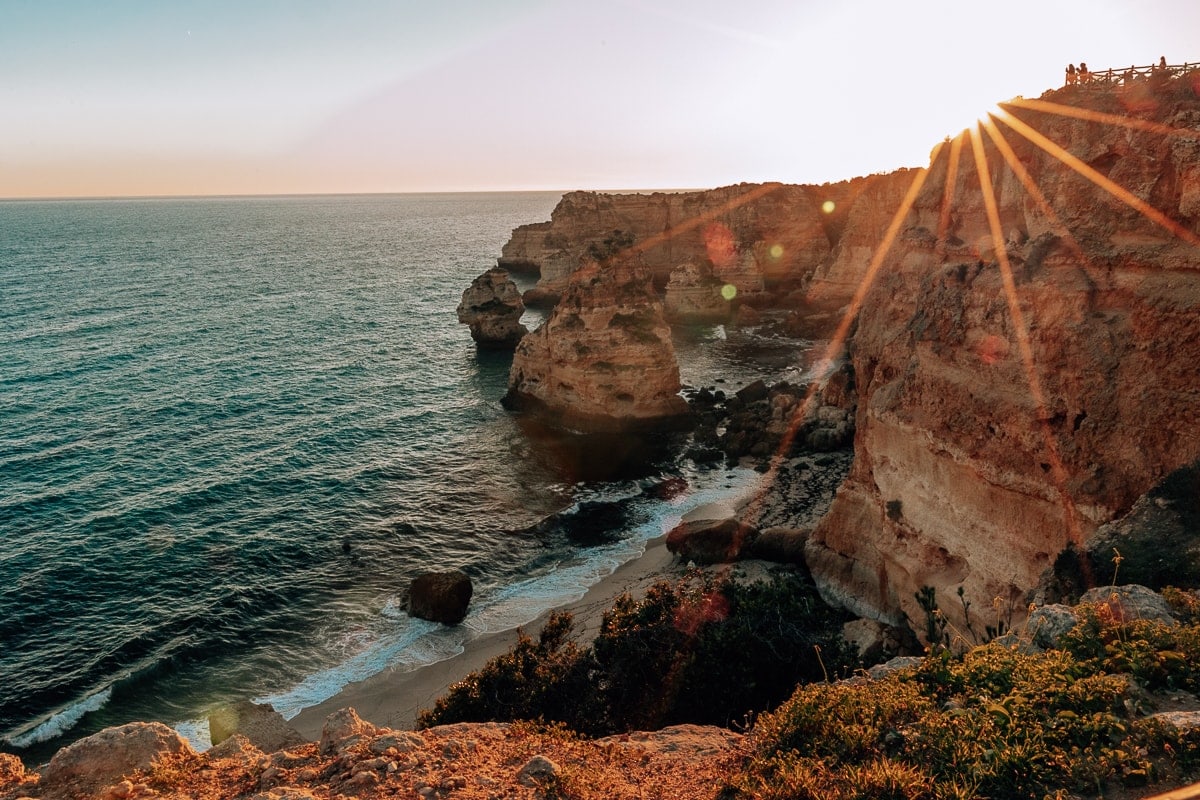
10 Best Czech Cosmetics Brands You Should Know

TL;DRCzech skincare brands are worth seeking out if you want natural ingredients backed by real science, all with an eco-conscious streak. Look for biodegradable formulas, skip anything with microplastics, and go for preservative-free products like dry nanofibre face masks. Packaging matters too — plain white plastic is actually the most recyclable option, even if it doesn’t look like the greenest choice at first glance.

There are thousands of cosmetics brands on the market, but you might be surprised to learn that some of the most innovative Czech cosmetics brands – built not just on natural ingredients but also on cutting-edge science – come from the Czech Republic. Let’s take a look at ten Czech beauty brands you should know about. We’re confident some of them will genuinely surprise you.

Why “Natural” Doesn’t Always Mean the Best

Personally, I’m not a fan of buying everything that has “natural” or “organic” slapped on the label. Some natural substances aren’t actually suitable for your face or body, yet they frequently appear in natural cosmetics. Lavender oil and lemongrass, for instance, aren’t ideal for facial skin – but you’ll still find them in plenty of products.

There are quite a few natural ingredients whose use puts a strain on the environment and can trigger inflammatory or allergic reactions. That’s why it’s more important to look for cosmetics that are gentle on your skin, grounded in scientific research, and don’t harm the environment – ideally, they should be highly biodegradable.

What Does Biodegradable Actually Mean?

This term describes a material or substance’s ability to break down biologically. If something is fully biodegradable, it can be completely decomposed through natural processes – for example, through composting.

How to Choose Quality Czech Cosmetics

As I mentioned, I always look for cosmetics that are science-based and eco-friendly. I’m interested in whether a product is circular (meaning it uses waste materials in production – like coffee grounds or used cooking oil), or whether it uses biodegradable materials (materials that are completely biologically decomposable), whether its production is zero-waste (and nanofibre applications are leading the way here), and what kind of packaging it uses.

Packaging is actually a huge topic. Most people assume that paper, glass, or aluminium packaging is the most eco-friendly. In reality, however, it turns out that white plastic is actually the most recyclable. It doesn’t look “green” enough at first glance, so most companies avoid it for marketing reasons.

Bioplastics are problematic too – most current recycling technologies can’t properly recycle them yet.

Avoid Microplastics in Your Cosmetics

Conventional cosmetics are packed with microplastics. That’s why I’m particularly impressed by a Czech invention that tackles this issue head-on: a natural polymer called P3HB, which replaces synthetic substances that produce microplastics in cosmetics. The P3HB polymer is made from bacteria, making it fully biodegradable.

Choose Dry, Preservative-Free Cosmetics

One of the biggest problems in cosmetics is preservatives. Most products simply must contain them. That’s what makes dry products so interesting – for example, nanofibre face masks that are completely preservative-free. How is that possible?

They’re dry, which means they don’t need any preservatives at all. Nanofibre face masks are a real game-changer – they contain only spun active ingredients and nothing else. What’s more, nanofibre masks were originally developed from wound-healing technology, making them many times more effective than conventional face masks.

The application process is wonderful too: simply dampen your face thoroughly, apply the mask, and it dissolves right into your skin. If you’re a fan of sheet masks, you really should give these a try. I’d personally steer clear of regular “wet” sheet masks – the liquid they’re soaked in is full of the preservatives and microplastics mentioned above, and those are things you definitely don’t want on your skin.

10 Best Czech Cosmetics Brands

Now let’s dive into the most interesting Czech cosmetics brands on the market.

1) Nafigate – Science-Based Skincare from the Czech Republic

The Czech cosmetics brand NAFIGATE has been developing and producing skincare products since 2015. It became famous for its nanofibre under-eye mask, which reduces up to 75% of visible wrinkles.

Personally, I’m also a big fan of their creams – they’re fragrance-free, affordable, and genuinely effective. They offer an excellent day cream and night cream, an acne cream, and a hyaluronic serum. Their products are made from 100% biodegradable ingredients and packaged in recyclable containers.

Czech cosmetics brand Nafigate. Pictured: eye cream, face mask, and under-eye mask for instant wrinkle reduction.
Czech brand Nafigate

2) nanoBeauty Nanofibre Masks – A Revolution in Face Masks

Arguably the biggest beauty hit of recent years, these dry nanofibre masks are truly something special. They’re based on technology originally developed for wound healing, which means they genuinely deliver results. The production process is zero-waste, and the masks consist purely of spun active ingredients. Unlike conventional masks, they contain absolutely no preservatives!

What you’ll love most, though, is how easy they are to use. Just dampen your face, apply the mask, and it dissolves right into your skin. Regular wet sheet masks never really worked for me – the liquid gets everywhere, they’re freezing cold in winter, and they’re loaded with preservatives. Nanofibre masks have one more advantage: they only need 8 minutes to work (compared to 15–20 for standard masks – who has time for that?).

nanoBeauty nanofibre mask, Czech cosmetics brands
nanoBeauty nanofibre mask

3) nanoSPACE Cosmetics – The Popular Natural Whitening Toothpaste Brand

Vegan, natural, and microplastic-free. That’s the Czech cosmetics brand nanoSPACE Cosmetics. It gained popularity mainly thanks to its flagship product: the Vegan Natural Whitening Toothpaste. It’s fluoride-free, sweetener-free, and suitable even for sensitive teeth. And yes, it actually whitens.

nanoSPACE Cosmetics whitening toothpaste
This toothpaste is a staple in our household

4) Naturetics: A Czech Brand Pioneering Circular Cosmetics

Naturetics is a globally recognised brand that creates natural products from waste materials. The brand won first place in the Green Award category at the InCosmetics Global trade fair in Paris.

Their sun butter is extremely popular, along with their natural deodorants and coffee-ground peelings. This brand uses only natural ingredients, biodegradable materials, and is completely microplastic-free.

Czech cosmetics brand Naturetics

5) Havlíkova Přírodní Apotéka

Havlíkova Apotéka has been on the market since 2014 and is known for blending time-honoured herbal traditions with modern cosmetic innovations. They grow local herbs themselves in their eco-gardens in the Czech countryside, while sourcing exotic ingredients (that don’t grow in Central Europe) from certified suppliers at the highest possible quality.

6) Zahir – The Czech King of Moroccan Oils

Zahir Cosmetics is a Czech family-run business that specialises in argan oil and Moroccan clay. Everything is imported directly from Morocco, where the oil is processed using traditional methods. If you’re looking for top-quality argan oil, Zahir is a Czech brand well worth checking out.

7) Renovality – Czech Experts in Every Kind of Oil

Renovality is a Czech brand by the company Pharmafit Czech s.r.o., and these days their portfolio extends well beyond oils. In the Czech Republic, they pioneered the use of facial oils even for oily skin and debunked numerous myths about oil-based skincare.

8) Saloos – One of the Best-Known Czech Cosmetics Brands

If you’re looking for affordable organic cosmetics, you may have already come across Saloos without realising it’s a Czech brand. On the market since 1993, Saloos today offers plant oils, facial oils, make-up removing oils, floral waters, solid shea balms, body and massage oils, coconut oils, body peelings, bath oils, and essential oils.

9) Nobilis Tilia – The Aromatherapy Cosmetics Brand

The Czech cosmetics brand Nobilis Tilia has been on the market since 1994, specialising in aromatherapy-based cosmetics. If you’re passionate about aromatherapy, this should be your go-to brand.

10) Naturinka – Natural Handmade Soaps

If you love natural soaps, take a look at the Czech brand Naturinka, which has been specialising in handmade natural soaps since 2013. Naturinka is a traditional soap maker that produces soaps from goat’s milk and propolis, but you’ll also find their popular lavender natural soap and a soap for itchy skin. Their sea buckthorn lip balms and soap shavings for laundry are excellent too.

Czech handmade soap brand Naturinka.
These products make wonderful little gifts – who could resist that packaging?

Another interesting alternative is CBD cosmetics, which has been growing in popularity recently.

TIP: Don’t forget to complement your skincare routine with essential oils for aromatherapy.

Key Takeaways

  • “Natural” doesn’t always mean quality.
  • Choose cosmetics that are science-based and eco-friendly.
  • The most exciting current products are dry nanofibre masks, made purely from active ingredients, so they contain zero preservatives.
  • Avoid microplastics and opt for cosmetics containing the natural polymer P3HB, which replaces synthetic substances.
  • Circular cosmetics are products made from waste materials (such as used cooking oil or coffee grounds).
  • Biodegradability of packaging or cosmetic ingredients is a property that defines their complete biological decomposability.

Also read: 25 Tips for Czech Fashion Brands.

Tips and Tricks for Your Vacation

Don’t Overpay for Flights

Search for flights on Kayak. It’s our favorite search engine because it scans the websites of all airlines and always finds the cheapest connection.

Book Your Accommodation Smartly

The best experiences we’ve had when looking for accommodation (from Alaska to Morocco) are with Booking.com, where hotels, apartments, and entire houses are usually the cheapest and most widely available.

Don’t Forget Travel Insurance

Good travel insurance will protect you against illness, accidents, theft, or flight cancellations. We’ve had a few hospital visits abroad, so we know how important it is to have proper insurance arranged.

Where we insure ourselves: SafetyWing (best for everyone) and TrueTraveller (for extra-long trips).

Why don’t we recommend any Czech insurance company? Because they have too many restrictions. They set limits on the number of days abroad, travel insurance via a credit card often requires you to pay medical expenses only with that card, and they frequently limit the number of returns to the Czech Republic.

Find the Best Experiences

Get Your Guide is a huge online marketplace where you can book guided walks, trips, skip-the-line tickets, tours, and much more. We always find some extra fun there!
Kutaisi Georgia: Practical Tips for your Trip

TL;DRKutaisi, Georgia’s third-largest city and former capital of the Georgian Kingdom, only needs half a day for the sights themselves, but the surrounding area deserves at least a full day on top. Spring (April to June) or autumn (September to October) are your best bet, with temperatures around 20–25°C, while summer gets hot and humid and winter turns cold and rainy. The main highlights include Bagrati Cathedral, the Colchis Fountain with its 30 statues, the futuristic Georgian Parliament building, and Gelati Monastery, a UNESCO World Heritage Site since 1994. Further afield, you can head to Motsameta Monastery, 6 km from the city, or explore Prometheus Cave, the Martvili and Okatse canyons, and the striking Katskhi Pillar rock formation. From Kutaisi Airport, a shuttle bus or taxi gets you into the centre in about 30 minutes.

Kutaisi is one of the oldest cities in Europe, culturally the second most important city in Georgia and the third largest in terms of population. The historical importance of Kutaisi stems from the Middle Ages, when it was the capital of the Georgian Kingdom.

Today it is the seat of the Georgian Parliament and for some time was largely neglected by tourists. Compared to Tbilisi, it has a completely different atmosphere; unlike the Georgian capital, you feel like you are back in the past.

While most tourists used to skip Kutaisi, nowadays it is starting to attract interest again. The latter is a way mainly by low-cost airlines that fly into the local airport. But that doesn’t change the fact that Kutaisi certainly has a lot to offer. There are great restaurants, a beautiful fountain and the futuristic Georgian Parliament building. In addition, Kutaisi is a great base for exploring the surrounding area.

What to see in Kutaisi – the best places

Half a day will be enough for the city itself. Take a stroll around Kutaisi Park, where you will find the city’s most important buildings. There are the theatre, the opera house and the beautiful Colchis fountain on Tsentraluri moedani square.

Fountain Colchis

This fountain celebrates the ancient kingdom of Colchis, which had in 2. millennium before Christ resided right here in Kutaisi. It was built in 2011 and consists of 30 statues of horses, deer and lions. They are copies of statues that were found in the Colchis Plain between the Greater and Lesser Caucasus.

Cathedral Bagrati

The most beautiful building in the city is definitely Bagrati Cathedral which was built in the 11th century. century and is one of the symbols of Kutaisi. The cathedral is named after King Bagrat III. From 1994 to 2017 it was on the UNESCO list, from where it was unfortunately removed after a poorly executed reconstruction.

Parliament of Georgia

If you like futuristic buildings, you shouldn’t miss the new Georgian Parliament building, designed by Spanish architect Alberto Domingo Cabe.

If you are in the city centre, you can also take a tour. However, this building has a very sad history. The Parliament was built in 2012 on the initiative of the then President of Georgia Mikheil Saakashvili on the site of a memorial to Soviet soldiers from the Second World War. The memorial was blasted with explosives to make way for construction in December 2009. But two people were killed in the blast, a mother and daughter.

Moreover, as of 2019, the parliament has moved back to the capital and no longer sits in this building.

Street art

If you love graffiti, Kutaisi may disappoint you slightly. Unlike Tbilisi, you will rarely come across street art here. One piece of art is worth mentioning, though, and it’s this beautiful painting by a French artist who signs her name as Vinie.

Food in Kutaisi

If Kutaisi is known for anything, it’s great food. It is said that it could also compete with Tbilisi in this respect. We don’t know what the truth is. We didn’t spend enough time here. But what I can tell you is that we liked everything we tasted. Try the world-famous khachapuri , khinkali or lobio .

What to see around Kutaisi?

Although the city itself can be walked in a morning, but for trips around the surrounding area, reserve at least one full day. And one day probably won’t be enough.

Gelati Monastery

Not far from Bagrati is another medieval pearl, built by King David IV, nicknamed “The Builder of the Crowd”. Gelati Monastery originally served as one of the first educational institutions and included an academy. It has been a UNESCO World Heritage Site since 1994.

Motsameta Monastery

This beautiful monastery is not as popular as Gelati, yet I would venture to say that it is perhaps even more beautiful. It is located 6 km from Kutaisi and is built on a cliff. Its name means “place of martyrs” and is associated with the brothers Constantine and David of the noble Argveti family, who staged an unsuccessful revolt against the Arabs in the eighth century. After the uprising was put down, they were tortured and eventually killed. Their bodies were thrown into the river, which is said to have been dyed red by their blood, which is why the river that flows through here is called the “Red River”.

Prometheus Caves / Kumistavi Cave

Opinions to Prometheus’ cave is different. Some say it is the most beautiful cave in Georgia, but there are those who call it a tourist trap. It’s true that is very popular, so you have to count on the fact that you will definitely not enjoy yourself. Plus, they only go once every half hour as an organized Hike. Thus, 60 people can pile into the cave at once. But if more people you don’t mind and you can let go of it, make sure you come here. The cave is huge and beautiful. The only thing they don’t charge extra for is the boat, it’s not worth it at all. it’s not worth it. Oh, not at all.

Martvili Canyon

One of other popular trips from Kutaisi. The nobility used to go there to bathe, today it is a very touristy place, which is worthwhile by local standards (and almost ours) a lot of money. The canyon itself is nice, but it’s small for the price and The boat ride takes about 10 minutes.

Okatse Canyon

Read more a very touristy place is Okatse Canyon. But it is famous for the beautiful views of the landscapes from the long footbridge over the canyon. In season you can also kayak here.

Katskhi Pillar

One of the geological wonders of Europe is located just outside Kutaisi. Katski Pillar is a sandstone pillar on which the monastery is located. But to go up, you have to get special permission from the parish priest Maxim, who lives here. And so most of us are dependent on the view from below.

Chiatura

One from places we didn’t have time for. Still, we’ve read quite a bit about him, and so I’ve decided to include it here and invite you to include it for us they’ve explored!

Thanks to its rich natural resources, Chiatura was an economically important industrial area during the Soviet era. This area is one of the largest manganese deposits in the world. But that’s not the most interesting thing about Chiatura. Many mines are located on the rocky cliffs around the town. Stalin ordered cable cars to be built to them and today you can ride them! There used to be 17 of them, now only a fraction are functional. If you make your way here, be sure to let us know if it was worth it!

Where to eat in Kutaisi

Georgian cuisine is renowned all over the world. We visited several places in Kutaisi and enjoyed all of them. Try, for example, traditional khinkali or khachapuri.

You can try Sesame, Papavero, Prague or Sapere. If you’re a café loafer like us, Kutaisi might be a bit of a let down. We didn’t come across a proper cafe, but they have decent coffee at Coffee Bean or Our Cafe. For tea, go to the Foe-Foe Tea House.

lukas a lucka
Lukáš and Lucie recommend
Where to Stay in Kutaisi
4 accommodations recommended for your holiday

Where to stay in Kutaisi

Whatever your accommodation in Georgia looks like, 99% of the time you’ll be staying with locals. And that’s whether it’s labelled as a hotel, hostel or apartment. Also pay attention to the equipment. 99% of the places don’t have what they say on the booking. So if you choose your accommodation based on a washing machine or a hairdryer, don’t rely on it.

  • Kutaisi Best Guesthouse – A very nice apartment that is a few steps from the Colchis Fountain. You have your own kitchen and washing machine, and when we were there they had an incredibly cute cocker spaniel puppy in the garden.
  • Four Season in Kutaisi – Very nice accommodation at a great price, where you can sit in the garden on warm days. It is 2 km from Colchis Fountain and is one of the best-rated accommodations in Kutaisi.
  • Rustaveli 106 – If you are planning a trip to Georgia with a large group of people, check out this beautiful spacious five bedroom apartment at an absolutely great price.

Tips and tricks for travelling in Georgia

What to pack

Take a look at our travel packing guide to help you prepare. Choose the right travel backpack, check out the travel gadgets and don’t forget anything important at home.

Where to get tickets

Search for cheap airline tickets at Kiwi , they’re our favourite portal. Be sure to read our instructions how to get cheap airline tickets.

Car rental

We commonly use a grader DiscoverCars.com to help us choose a car provider.

Reservation of accommodation

Booking.com is our most popular hotel search engine. We always compare hotels with local apartments and rooms on Airbnb ( 725 CZK discount ). Read, how we find cheap accommodation .

Don’t forget about insurance

Travel insurance is an absolute must. For shorter journeys we choose AXA ( 50% discount ) and for longer journeys the British insurer True Traveller or SafetyWing . Take a look at comparison of all insurance companies and choose the one that suits you best. For longer stays, get long-term travel insurance .

Tips and Tricks for Your Vacation

Don’t Overpay for Flights

Search for flights on Kayak. It’s our favorite search engine because it scans the websites of all airlines and always finds the cheapest connection.

Book Your Accommodation Smartly

The best experiences we’ve had when looking for accommodation (from Alaska to Morocco) are with Booking.com, where hotels, apartments, and entire houses are usually the cheapest and most widely available.

Don’t Forget Travel Insurance

Good travel insurance will protect you against illness, accidents, theft, or flight cancellations. We’ve had a few hospital visits abroad, so we know how important it is to have proper insurance arranged.

Where we insure ourselves: SafetyWing (best for everyone) and TrueTraveller (for extra-long trips).

Why don’t we recommend any Czech insurance company? Because they have too many restrictions. They set limits on the number of days abroad, travel insurance via a credit card often requires you to pay medical expenses only with that card, and they frequently limit the number of returns to the Czech Republic.

Find the Best Experiences

Get Your Guide is a huge online marketplace where you can book guided walks, trips, skip-the-line tickets, tours, and much more. We always find some extra fun there!
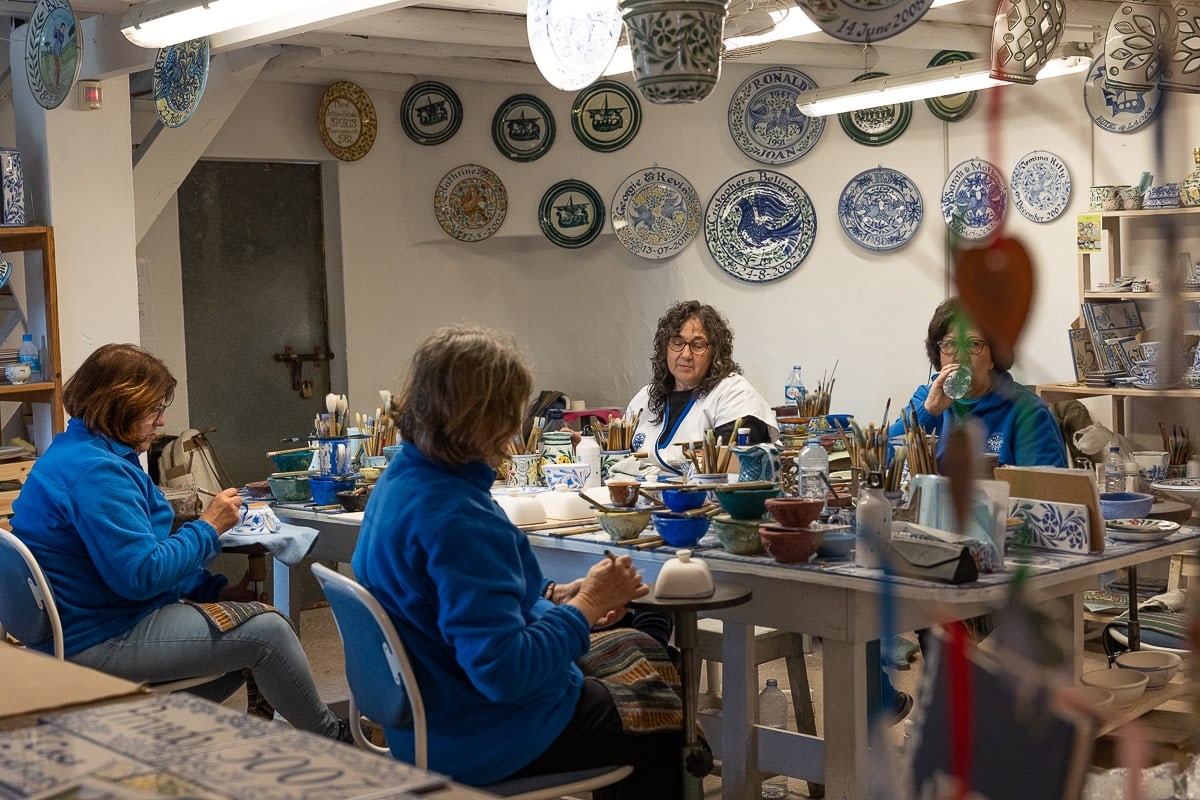
How to Make Sense of Your Business Data? Get Proper Data Training

TL;DRThe most effective way to get fluent in company data is a dedicated Business Intelligence course, like the one run by Přemek Horáček called “Take Your Data Analysis Beyond Excel” – it runs 8 hours and covers the basics of tools such as Keboola, Google BigQuery, PowerBI and Looker. The key skill is linking up scattered data sources (think Shoptet, Flexibee, Google Analytics, Facebook Ads) into one reporting system using SQL or R, both of which get covered on the course, and you’ll walk away with a handy command cheat sheet. That means you can build reports like RFM analysis, a cashflow dashboard or margin calculations for individual orders, without needing to become a programmer.

I don’t attend training sessions often. Spending eight hours locked in a classroom is something I’d normally consider a waste of time. But that doesn’t apply to specialised data training that solves a concrete problem — and I definitely had one of those.

My Problem: Loads of Business Data, No Idea How to Work With It

At nanoSPACE, our entire company is stitched together from dozens of separate tools — we don’t have a centralised system (like an ERP) running the show. This patchwork approach works well, handling tens of thousands of orders per month at a fraction of the cost of heavyweight solutions, but it comes with its own headaches.

The biggest one is data fragmentation. Orders land in Shoptet, returns go into Retino, email campaigns are sent via Ecomail, accounting documents flow into Flexibee, Amazon is managed through Expando, project management runs through Freelo, B2B orders are split between Shoptet and direct invoicing… I could keep going for a while.

And that’s without mentioning that Shoptet has no suitable module for deeper analysis of order or customer data — we can forget about RFM analysis entirely.

All of this makes evaluating overall company performance incredibly difficult, and it’s led to us having at least a hundred Excel and Google Sheets files where we track various performance metrics separately, then painstakingly try to connect the dots.

After the last COVID wave, when things calmed down a bit, I had more time for analytics and started digging deeper into various reports, including:

  • Revenue / profit per marketing channel, adjusted for returns and refunds
  • Tracking margin trends over time, down to individual product level
  • Automated allocation of discount coupons and performance tracking
  • RFM analysis, customer segmentation, cohorts
    • Identifying traffic builders, etc.
  • Financial analysis, cost breakdown, cash flow monitoring and forecasting (e.g. automatically calculating the value of delivered but not yet paid cash-on-delivery orders)

Every single report meant hours of exporting and merging mismatched data in Excel — and even then, I couldn’t fully trust the results. I knew there was a proper way to build this from the ground up: connect data from all systems, clean out outliers, and report into PowerBI or Looker. But how on earth do you actually do that?

Business Intelligence: Running a Company Based on Data

Right around that time, an invitation landed in my inbox for a data training course called Take Your Data Analysis Beyond Excel. The course promised I’d finally learn how to bring order to my business, marketing, customer, and financial data. So off I went 😎

The training was spot-on for me! I’m not a complete data novice — we already have our own data warehouse, and we’d already built a few custom reports with Digitální architekti. What I was missing was the bigger picture: an overview of what’s actually possible with the data flowing through our systems. And that’s exactly what I got from the course.

The training is led by Přemek Horáček, a seasoned Business Intelligence specialist. He makes a living connecting data sources for companies and uncovering the relationships hidden within them, helping his clients shift from gut-feeling decisions to data-driven management.

Keboola: A Data Extractor for Any System

If I could take away just one thing from the training, it would be this: sign up for Keboola! Keboola is the tool I’d been searching for. It allows you to regularly pull data from virtually any source. Here’s what I connected:

  • Google Analytics
  • Google Ads
  • Facebook Ads
  • Sklik
  • Shoptet
  • Flexibee
  • Marketing Miner
  • Google Sheets

Keboola connects to each source via API and pulls the data you need.

Once inside Keboola, you can transform the data (using SQL or R — Přemek covers the basics during the training) and then save or export it to a storage solution. I export to Google BigQuery, but Google Sheets works too.

Transformations might include cleaning out extreme values (removing test orders, one-off orders worth €20,000, etc.), joining data from different tables using a shared ID, or any other manipulation your dataset needs.

What can you use it for?

For preparing data for virtually any report you can imagine. Here’s what I’ve done or have planned:

  • Cleaning ad platform data by removing cancelled / returned orders
  • Building an automated coupon report that calculates actual discounts given and resulting margins
  • Calculating margins per order and bucketing them (grouping orders by size / profitability)
  • RFM analysis on customer data pulled from Shoptet
  • A cash flow dashboard enriched with cash-on-delivery data

The training also covers Google BigQuery, a similar tool for data extraction and transformation. It may be better suited for certain use cases, but it’s not as intuitive for the average user.

How do you transform the data?

Unfortunately, there’s no avoiding a bit of coding. Big data means big tables, so you’ll need at least basic SQL or R skills. Both are covered during the training, and afterwards we received a handy cheat sheet of essential commands. I have no ambition to master these languages in depth, but thanks to the course I now have enough understanding to know what to ask our data analysts for — and what’s realistic.

Keboola is also preparing templates for easy data extraction. This feature is still in beta, but it already offers several basic schemas for merging data from ad platforms and sending it to Google Sheets or PowerBI. For the most common use cases, you won’t need any coding at all in the near future.

How to Visualise Your Data?

Once your data is prepped, you’ll want to visualise it — that’s the whole point, after all. Marketers will likely know Looker (formerly Google Data Studio), which I use extensively for all sorts of marketing reports.

What impressed me more, though, was PowerBI, which I’d successfully ignored until now (mostly because it doesn’t run natively on Mac 😎). After the training, I realised that Looker is essentially a demo version of PowerBI. While both platforms are constantly converging, PowerBI still has the edge.

I spent a total of 8 hours at the data training, and I consider it a solid investment. I walked away with a completely new perspective on business data and how to work with it. In my spare time, I’ve been experimenting with building my own reports and gradually preparing a new brief for Digitální architekti, because I can feel it’s time to take our analytics to the next level 😎

Links

Tips and Tricks for Your Vacation

Don’t Overpay for Flights

Search for flights on Kayak. It’s our favorite search engine because it scans the websites of all airlines and always finds the cheapest connection.

Book Your Accommodation Smartly

The best experiences we’ve had when looking for accommodation (from Alaska to Morocco) are with Booking.com, where hotels, apartments, and entire houses are usually the cheapest and most widely available.

Don’t Forget Travel Insurance

Good travel insurance will protect you against illness, accidents, theft, or flight cancellations. We’ve had a few hospital visits abroad, so we know how important it is to have proper insurance arranged.

Where we insure ourselves: SafetyWing (best for everyone) and TrueTraveller (for extra-long trips).

Why don’t we recommend any Czech insurance company? Because they have too many restrictions. They set limits on the number of days abroad, travel insurance via a credit card often requires you to pay medical expenses only with that card, and they frequently limit the number of returns to the Czech Republic.

Find the Best Experiences

Get Your Guide is a huge online marketplace where you can book guided walks, trips, skip-the-line tickets, tours, and much more. We always find some extra fun there!
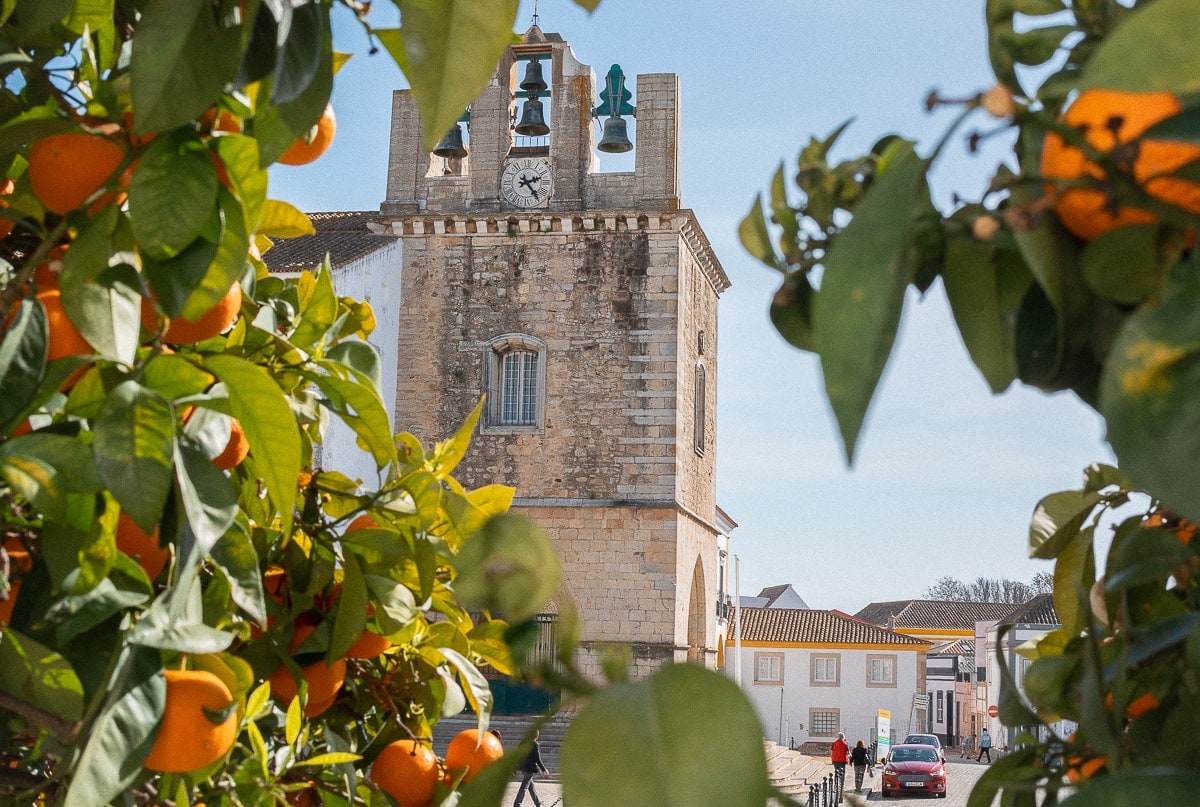
Canva: Detailed Review From Avid User [2023]

TL;DRCanva is an online design tool built for graphic novices, businesses, freelancers and students alike, letting you knock out banners, presentations, social media videos, business cards or wedding invitations using templates and a simple drag&drop editor. There’s a free version (over 250,000 templates, 5GB storage) and Canva Pro (610,000 templates, 100 million elements, 1TB storage), which costs $119 for individuals and $149 for teams. Canva Pro also throws in one-click background removal for photos and videos, custom fonts and team project sharing. You can also learn Canva through an online course on Kurzeo.cz, which packs in 21 lessons totalling 3 hours 30 minutes, three editable templates and a downloadable 30-day study plan.

Canva is currently the most popular online graphic tool for “non-graphic artists”. This tool is used to create visuals of all types, from simple banners for the web, to visuals for social networks, but you can also create presentations or even edit videos. Today, we’ll look at what you can create, give you tips on where to learn Canva and whether the Canva Pro version is worth it.

What are the biggest advantages of Canva?

Certainly in templates that make you a graphic designer in five seconds. But Canva also offers an amazing database of photos, graphics, videos and audio tracks that you can use. The range of usable features depends on whether you have the free or PRO version. The main advantages include:

  • Easy to use without any knowledge of graphics.
  • Templates for all most used formats.
  • Database of photos, music, videos and graphic elements.
  • FREE and PRO versions.
  • Ability to share graphic designs in a team (Pro version).
  • Lze exportovat i s tiskovými značkami pro kvalitní tisk materiálů.
  • Easy image editing including background removal in one click (Canva PRO).
  • Czech.
  • Option to insert clickable links.
  • Custom fonts can be uploaded (Canva PRO).
  • Desktop version and phone app.

For whom is Canva suitable

  • For companies.
  • Entrepreneurs.
  • Individuals.
  • Freelancers.
  • Marketing agencies.
  • Students.

What you can create in Canva:

  • Invitations,
  • wedding announcements,
  • leaflets,
  • social media posts, including video posts,
  • banners,
  • Presentations,
  • business cards,
  • book covers,
  • Infographics,
  • the menu for the restaurant,
  • and other visual elements.

How does Canva work?

You can use Canva in the browser or directly in the app on your computer or mobile phone. Personally, I prefer to use the desktop version, but for quick creation of visuals, the smartphone app is also sufficient.

3 key elements offered by Canva

  • Templates – templates of various formats made by graphic designers. Do you want a YouTube cover? Just put Youtube cover in the search bar. Templates are also available for different ad formats or for visuals on social networks.
  • Elements Database – a database of photos, graphic elements, videos and audio for free (limited use) and a robust database within Canva Pro.
  • Drag&Drop editor – (drag and drop) graphical user interface, which can be used by everyone.

Is it hard to learn with Canva?

It’s not. Unlike Photoshop or Lightroom , Canva is absolutely intuitive and simple to use. Plus, with preset templates, the hardest work is done for you – you don’t even have to figure out what fonts and graphics go together. Most of the time you just need to replace the text and possibly the photo and you can use a template directly from Canva.

We use Canva PRO for our clients and appreciate especially the fact that we can create our own templates for the formats we need and create banners for our clients in a few clicks.

Are there Czech courses that will teach you quickly?

If you’re looking to educate yourself on Canva, I recommend this course on Kurzeo, which will not only show you the best tips and tricks for using Canva, but also walk you through all the features from A to Z. Below you will find a short introduction to Canva.

How to use Canva step by step: Instructions

When you log into Canva, the tool asks you what you’re going to design. You can choose from the options right away, and if you can’t find what you need, you can expand other options or use the search box. Once you’ve chosen what you’re going to design, you can instantly choose one of the templates on offer.

Youcan then edit the templatevery simply by clicking on the individual elements and modifying them according to your requirements. You can change colours, fonts, replace photos and if you have made a mistake, you can even change the size.

When addingphotos, graphics and videos, you can either use the gallery provided directly by Canva or upload your own visuals.

Canva is really easy to use, and because it’s in English, it’s accessible to everyone. Canva allows anyone to create designs even without knowledge of advanced tools like Photoshop, InDesign or Illustrator.

Photo editing in Canva

Canva also offers a very limited photo editor, you can edit basic photo properties such as brightness, contrast, saturation, etc. Personally, I don’t use these features in Canva at all because I edit the photos before I even upload them to Canva. I prefer editing photos in RAW format in Lightroom . For lightening or darkening a photo, however, Canva is sufficient.


What I use in Canva is background removal, which is often very effective. You can remove the background with one click. If the subject is photographed against a monochrome background, removing the background with Canva is often sufficient. This feature is only available in Canva PRO.

I also make extensive use of photo cropping in Canva. Therefore, I recommend always uploading photos in their original format to Canva.

In Canva, you can also use some preset filters and effects and make other very basic adjustments like flipping photos.

Very popular is the insertion of photos into the so-called. frames, which Canva uses to indicate a box in various shapes into which a photo, video or graphic can be inserted. You can paste the photo into your computer/phone for example or just into a round shape.

Editing videos in Canva

I’ve been using the video editing option in Canva a lot lately. Again, it’s no substitute for advanced programs like Filmora Wondershare, which we use for editing longer videos, but for simple creation of Instagram Reels, Stories or short video ads it’s excellent, and most importantly very fast compared to other tools.

You can upload your own videos to Canva or record video directly using a webcam. But you can also use Canva’s database. If you have Canva PRO, you can also remove the background from the video with one click and replace it with another.

You can also easily move static images, texts and other graphic elements in Canva.

Creating presentations and reports in Canva

You can also create very nice presentations in Canva. If you need to impress someone, Canva is a great tool for creating presentations. What is always a surprise to many people when training Canva is that you can also create charts in Canva.

What we really like about Canva is that you can film yourself in Canva talking about your presentation and share the link to the video with others.

Export images, videos and other graphics from Canva

Once you’ve created your first design in Canva, you’ll want to export it. Canva offers export to several formats:

  • PNG
  • JPG
  • PDF (normal and print quality).
  • SVG
  • MP4
  • GIF
  • PPTX (via app)

Ensuring brand consistency

Canva offers plenty of tools to create great marketing materials. But how do you guarantee to be consistent?

Either you already have a brand identity that you need to stick to, or you can create one in Canva. You can upload your current brand identity to Canva.

In Canva, you can define a color palette that defines your brand, upload a font, and create a separate database of visual elements.

Working on one project with colleagues

In Canva, you can create folders to store your projects. You can then share the entire folder with your colleagues in Canva PRO. For example, you can create a template to create a Pinterest post, share it with your colleagues, who can just change the text and photos and keep the individual style.

In Canva, you can of course also share individual designs, even outside your team. You can share a project in progress with an outsourcer or send a presentation to your client.

Is Canva PRO worth it?

If you’re a business or a freelancer in marketing, Canva PRO will save you a lot of money. I’m not exaggerating. In our opinion, it’s one of the few tools that delivers more value than what you pay.

If you create blog posts, banners, social media videos or presentations on a daily basis, Canva PRO offers an incredible database of graphics, sounds, photos and videos. Last time I looked at the number of elements available to Canva PRO users, it was just over 100 million. Since we have Canva PRO, we don’t have to use other databases.

The 1TB of cloud storage you get from Canva is also incredible. You can upload entire folders of photos to Canva so they’re always available when you go to create.

What Canva PRO offers in addition:

  • 610 thousand templates.
  • 100 million elements (photos, videos, graphics, audio).
  • Unlimited features.
  • Possibility to upload your own font.
  • The entire Brand Identity can be uploaded for faster work with Canva (colors, logo, fonts).
  • Creating folders for specific projects and sharing within the team.
  • One-click background image removal.
  • 1 TB cloud storage.
  • Unlimited changes in design sizes.

How much does Canva cost?

Canva is FREE for limited use. The non-paid version offers almost all features, more than 250,000 templates, hundreds of thousands of images and photos, and 5GB of cloud storage.

But if you want to do graphics for a company or are a freelancer in marketing, it’s worth investing in Canva PRO. Practically, you’ll get an immediate return on your graphic designer. Not only will you save on the graphic designer, but also on paid databases of videos, sounds and images. Canva PRO is $119 for individuals and $149 for teams.

Course on using Canva

Using Canva is easy, but if you don’t want to learn on your own, use the online Canva course from Kurzeo.cz. A detailed review of the Canva course can be found here . The course includes:

  • 21 lessons (3h 30min content)
  • 3 editable Canva templates
  • 30-day learning =schedule download

For whom the course is intended

  • For complete beginners in graphic design
  • For advanced Canva users who want to make sure they are using Canva efficiently and to the maximum
  • Small or start-up entrepreneurs
  • Creative souls who want to turn a hobby into a business and gradually build their own brand
  • Business owners who want to train their employees and keep up with the latest social media trends
Kurzeo square

Tips and Tricks for Your Vacation

Don’t Overpay for Flights

Search for flights on Kayak. It’s our favorite search engine because it scans the websites of all airlines and always finds the cheapest connection.

Book Your Accommodation Smartly

The best experiences we’ve had when looking for accommodation (from Alaska to Morocco) are with Booking.com, where hotels, apartments, and entire houses are usually the cheapest and most widely available.

Don’t Forget Travel Insurance

Good travel insurance will protect you against illness, accidents, theft, or flight cancellations. We’ve had a few hospital visits abroad, so we know how important it is to have proper insurance arranged.

Where we insure ourselves: SafetyWing (best for everyone) and TrueTraveller (for extra-long trips).

Why don’t we recommend any Czech insurance company? Because they have too many restrictions. They set limits on the number of days abroad, travel insurance via a credit card often requires you to pay medical expenses only with that card, and they frequently limit the number of returns to the Czech Republic.

Find the Best Experiences

Get Your Guide is a huge online marketplace where you can book guided walks, trips, skip-the-line tickets, tours, and much more. We always find some extra fun there!

5 Online Graphic Tools That Will Make You a Designer Overnight

TL;DRYou don’t need a design degree to create professional visuals — five online tools do the heavy lifting. Canva offers thousands of free fonts, photos and templates, plus a PRO version with video and mockups. Piktochart is great for stylish presentations and infographics, free of charge. Looka lets you design a custom logo and export it for $20. Infogram is built for infographics and reports, with a free tier available. Bannersnack can churn out up to 20 PPC banner sizes at once, including animated HTML banners. If you want to properly master Canva, there’s an online course with 21 lessons totalling 3 hours and 30 minutes, spread over a 30-day study plan.

No eye for design, and your Photoshop skills begin and end with resizing a photo? Have you ever gazed enviously at a beautifully designed presentation, or spent way too long trying to put together a decent infographic? If you’re still drawn to the idea of creating great visuals, you’re in the right place — today we’re showing you how to produce on-trend graphics for your website and social media using online graphic tools, even if you have zero design background.

I’ve been working in Photoshop for over 16 years (yes, roughly since I was fourteen) and I swear by Lightroom — but here’s the honest truth: knowing Photoshop and Lightroom inside out doesn’t automatically make you a good designer.

You need an idea, an instinct for aesthetics, and the skill to pull it all together. And some days, all three of those are in short supply. So let’s look at how to create cool visuals even when you feel like you have no idea what you’re doing — ideally for free.

What Is Graphic Design?

Graphic design is a broad term covering the creation, manipulation, and presentation of visual elements — think images, illustrations, photography, animation, and layout design. At its core, it’s the art and craft of visual communication, delivered through a wide range of media and tools.

What Are Graphic Designing Tools?

Graphic designing tools include everything from image editors and vector software to animation platforms and photo retouching apps. Some of the most widely used professional tools include Adobe Photoshop, Adobe Illustrator, CorelDRAW, GIMP, and Inkscape — but these have a steep learning curve.

These tools let you create and edit visual elements such as images, logos, icons, web graphics, animations, posters, and flyers. They offer features like drawing, colour adjustment, layers, filters, object transformation, and text effects — all the things that help creatives bring their ideas to life with precision.

Professional graphic designing tools are essential for designers, artists, photographers, and marketers. They help produce unique, polished, and professional visuals for everything from advertising campaigns and web design to print media and social content. Without them, achieving that level of creative output and precision would be near impossible — which is exactly why the free online alternatives we’re about to cover are such a game-changer for beginners.

1) Canva – Graphic Design in a Few Clicks

One of our absolute favourite tools — used by enthusiasts and professionals alike all over the world. With Canva, you get access to thousands of fonts, photos, and ready-made designs for free. The app is completely intuitive, and new templates are added all the time. Some designs and features do require a paid plan, but most of us can get by comfortably on the free tier — at least to start with.

💡 Read our in-depth Canva review.

These days we pay for the PRO version — because honestly, nothing else comes close. Every member of our team can use Canva with ease, which has saved us a significant amount in designer fees. With the PRO plan, you unlock a full media library of videos, photos, and other visuals, plus audio — music and sound effects included. You can also edit video and create mockups directly inside Canva.

Here’s what you can create in three minutes:

Canva – graphic design tool for beginners

And imagine what you could do if you spent six minutes on it.

Canva Course for Beginners

Canva is easy to pick up on your own, but if you’d rather follow a structured path, there are plenty of online Canva courses available on platforms like Udemy and Skillshare. A good beginner course typically covers:

  • 20+ lessons of step-by-step video content
  • Editable Canva templates to practise with
  • A downloadable learning plan to keep you on track

Who Is a Canva Course For?

  • Complete beginners with no graphic design background
  • Existing Canva users who want to make sure they’re using it to its full potential
  • Small business owners and solo entrepreneurs
  • Creative people who want to turn a hobby into a brand or side business
  • Business owners who want to upskill their team and stay current with social media trends
Canva beginner course banner

2) Piktochart – Stylish Presentations and Infographics

If you’re after a simple tool for putting together presentations, Piktochart is well worth a look. It’s equally intuitive, offers a wide range of templates, and best of all — it’s free. The results look genuinely impressive too — see for yourself. All you need to do is fill in your content. Piktochart also has a paid tier with significantly more features if you need to go further.

3) Looka – Affordable Logo Creation

Most people assume that getting a decent logo without a big budget is basically impossible. But there are tools out there that can seriously reduce what you’d normally spend. One worth trying is Looka. Simply choose your preferred colours, logo styles, and icon types, and it generates a custom logo for you. You can then tweak it to your liking and export the final version for $20.

4) Infogram – Free Tool for Creating Infographics

Need to put together a polished infographic or a data report? Give Infogram a go — it has a solid free plan. Again, it’s a very intuitive tool with plenty of templates, where you simply swap in your own text and update the graphics or images as needed. Exporting does require a paid plan, but if you don’t need a PDF, a good old screenshot works just fine. 😎

5) Bannersnack – Easy PPC Banner Creation

Tired of building PPC ad banners one size at a time and looking for a smarter way to handle it? Bannersnack is my second most-used graphic design tool after Canva. It’s perfect for producing PPC banners quickly and efficiently — you can generate up to 20 different banner sizes in one go. It even supports animated HTML banners. 😎 The investment paid for itself within the first month. Professional banner design doesn’t come cheap, so having a tool like this in your kit is a real money-saver.

Tips and Tricks for Your Vacation

Don’t Overpay for Flights

Search for flights on Kayak. It’s our favorite search engine because it scans the websites of all airlines and always finds the cheapest connection.

Book Your Accommodation Smartly

The best experiences we’ve had when looking for accommodation (from Alaska to Morocco) are with Booking.com, where hotels, apartments, and entire houses are usually the cheapest and most widely available.

Don’t Forget Travel Insurance

Good travel insurance will protect you against illness, accidents, theft, or flight cancellations. We’ve had a few hospital visits abroad, so we know how important it is to have proper insurance arranged.

Where we insure ourselves: SafetyWing (best for everyone) and TrueTraveller (for extra-long trips).

Why don’t we recommend any Czech insurance company? Because they have too many restrictions. They set limits on the number of days abroad, travel insurance via a credit card often requires you to pay medical expenses only with that card, and they frequently limit the number of returns to the Czech Republic.

Find the Best Experiences

Get Your Guide is a huge online marketplace where you can book guided walks, trips, skip-the-line tickets, tours, and much more. We always find some extra fun there!