Caravan Travel Abroad: A Practical Guide for Europe

TL;DRTaking a motorhome abroad means renting from a specialist company that keeps its fleet well maintained, plus sorting the paperwork: a category B licence for vehicles up to 3.5 tonnes, the vehicle’s logbook, insurance and possibly a rental agreement. You’ll also need to know local rules on parking and camping. Most motorhomes sleep 4 to 6 people, fuel consumption runs at 10 to 12 litres per 100 kilometres, and a fully charged battery with solar panels lasts 2 to 3 days. Wild camping is allowed in France and parts of Austria, but it’s banned outside designated sites in Slovenia, Montenegro, Belgium and Italy. Popular routes include the Dolomites, the Germany–France–Spain–Portugal run, and Croatia’s islands, which you reach by ferry. Check tolls.eu for current motorway charges for motorhomes.

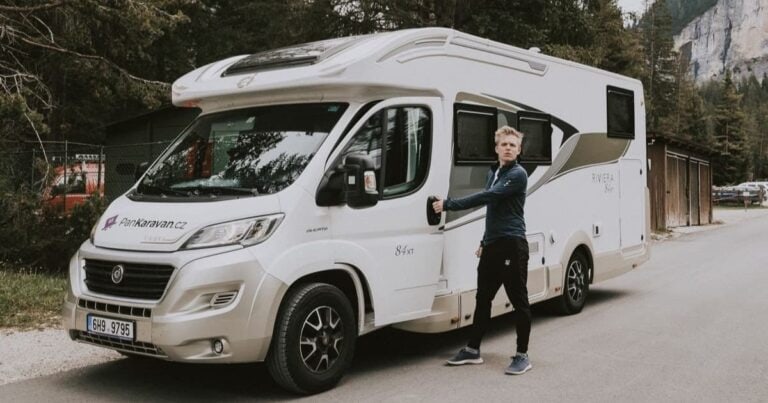
Thinking about your next holiday and fancy hiring a motorhome? Caravan travel is something you can absolutely do without any prior experience, but if you’re heading abroad, it pays to be prepared. Read our practical guide to motorhome travel in Europe — so nothing catches you off guard on the road.

Where to hire a caravan

Since the pandemic, the number of motorhomes available for hire has exploded online. While that means more choice, it also means you need to be more careful. Many private owners may not keep their vehicles in top condition, or might not have adequate insurance — the kind where you won’t end up paying a €1,200 excess for every little scratch.

If you’re taking a motorhome abroad, you need to be confident you’re hiring a well-maintained, quality vehicle. That’s best done through specialist rental companies. We’ve travelled around both the UK and mainland Europe several times with rented motorhomes from reputable hire firms. Look for companies with strong reviews and transparent insurance terms — it makes all the difference.
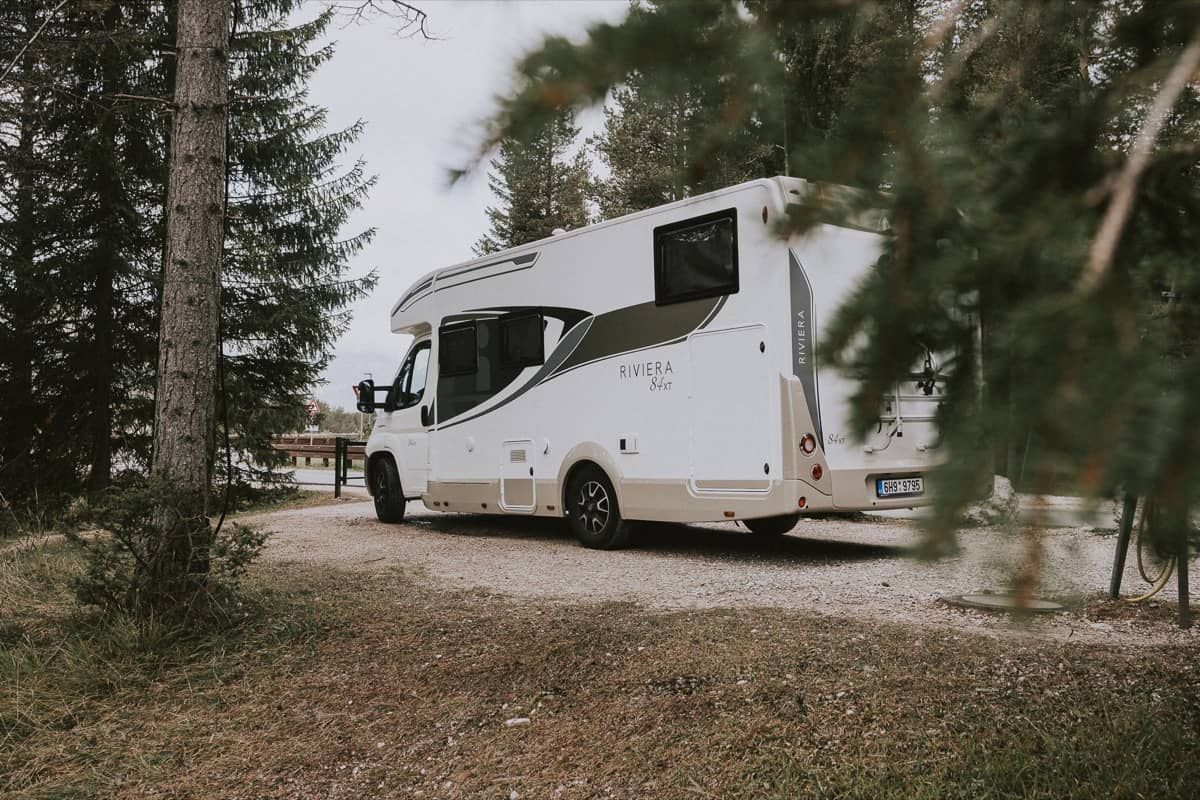
Caravan travel across Europe
Motorhome travel across Europe

What type of caravan to choose

Choosing the right motorhome is just as important as choosing the right hire company. I’m no expert when it comes to recommending the most reliable make and model, but you should know that motorhomes come with varying levels of equipment and differ in how many people they can sleep.

Most motorhomes carry and sleep 4 people, but it’s not hard to find 6-berth vehicles. For maximum comfort, look for recently manufactured models with the following features:

  • chemical toilet (tablet-based)
  • fridge with a dual power source (switching between gas and electricity to prevent outages)
  • shower with adjustable water heating (you don’t want to waste electricity when wild camping)
  • at least a small bathroom (usually combined with the toilet)
  • kitchen with gas burners
  • solar panels (for charging batteries during the day)
  • diesel or gas heating
  • engine-powered air conditioning

If you’re planning to bring bikes along, check that the motorhome has a bike rack, or that there’s room in the so-called “garage” — the storage area at the rear where you’d typically keep folding chairs, a table, and other gear.

It’s also worth considering whether you need an awning. An awning provides shade from the sun and shelter from the rain, and it’s much easier to set up than an add-on tent. If you’re planning to stay in one spot for a while, you might also want a drive-away awning that attaches to the motorhome and effectively creates an extra room — perfect for a week-long base.
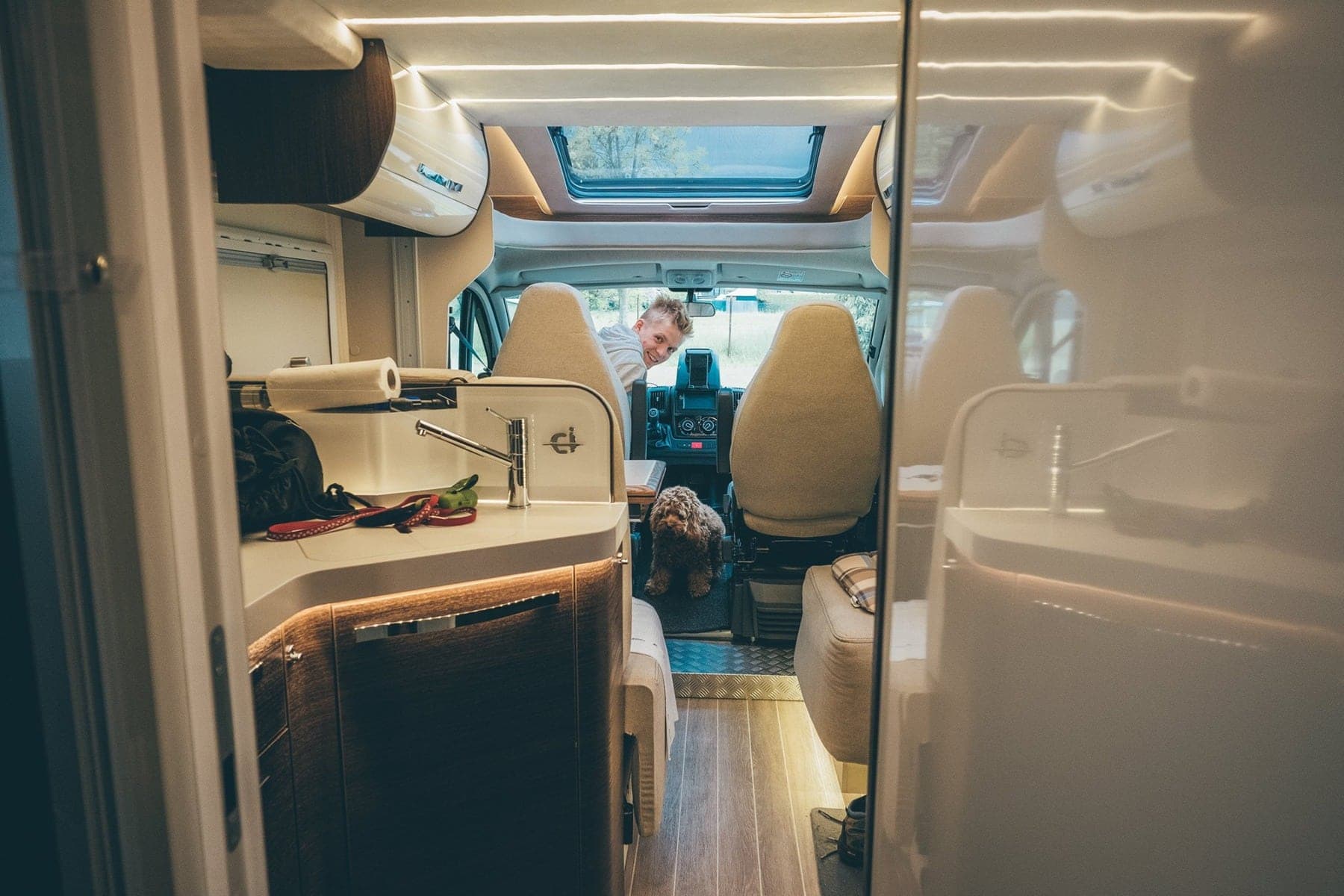
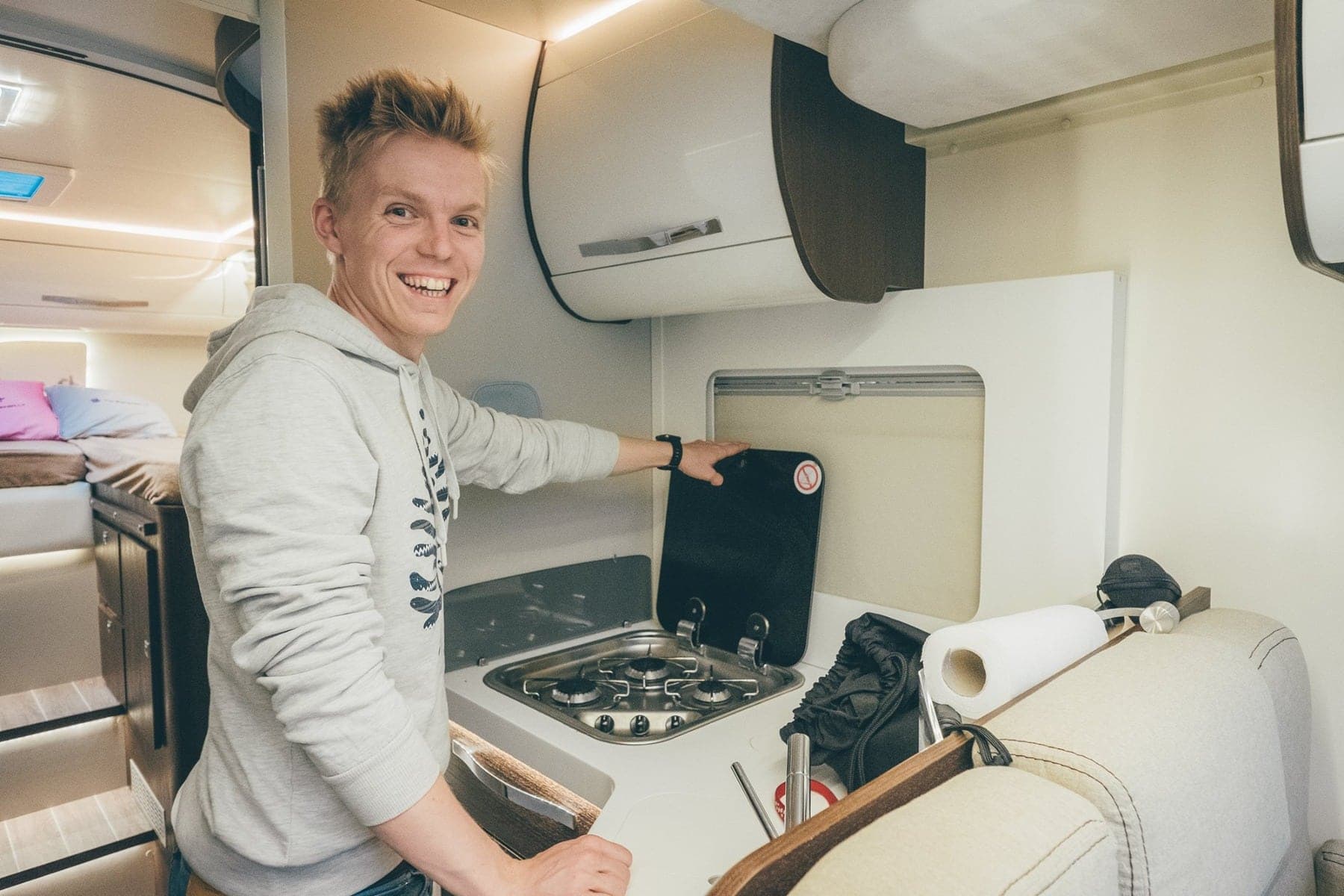
Inside a motorhome rental
Motorhome kitchen area
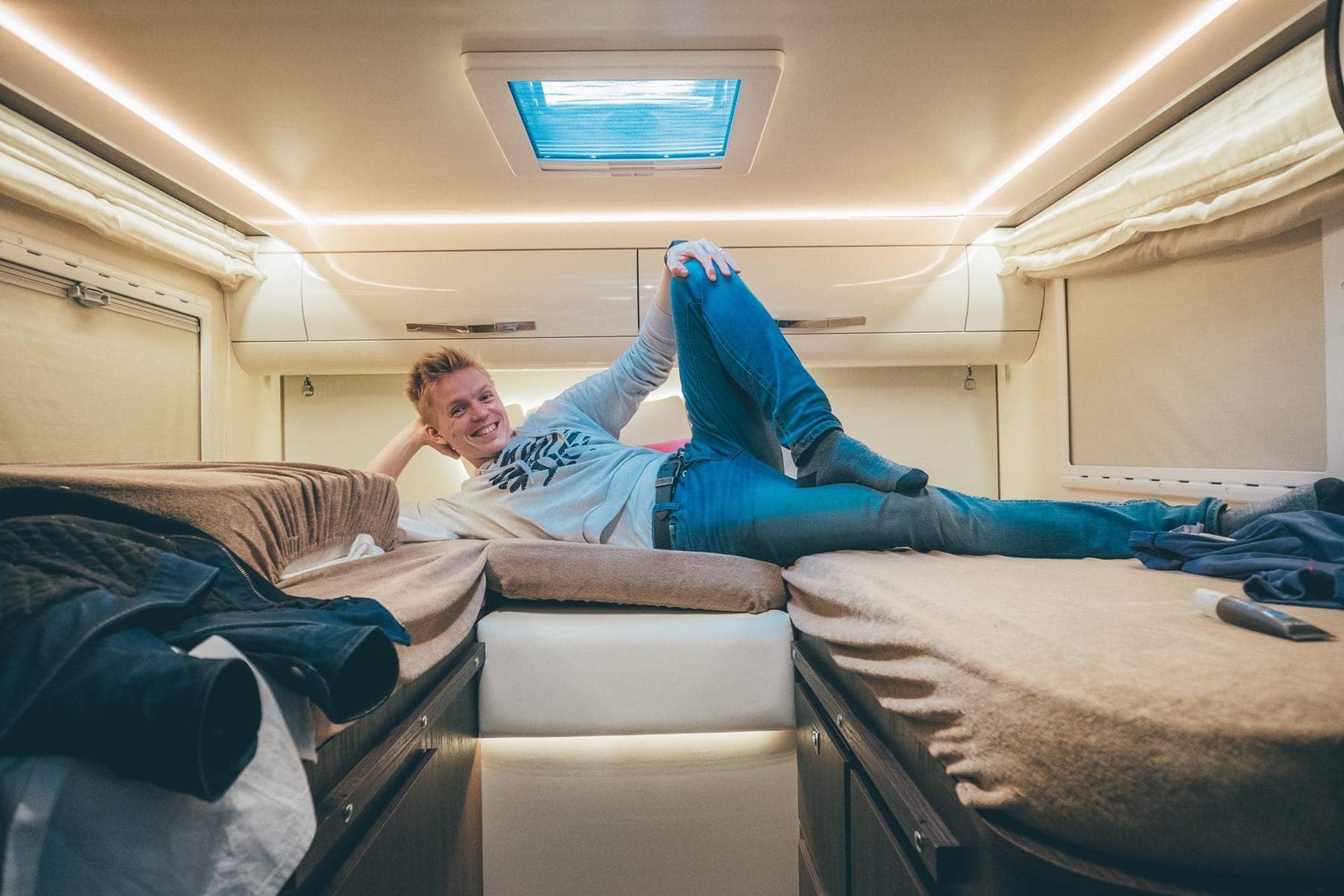
Motorhome sleeping area

Everything you need to know about caravan travel

Before hitting the road, make sure you get a thorough walkthrough on how to properly handle the following:

Emptying the chemical toilet

You can’t just dump a chemical toilet anywhere down a drain. Campsites have designated disposal points for this. In the UK, these aren’t always easy to find outside of campsites, but across mainland Europe, many petrol stations also have disposal facilities.
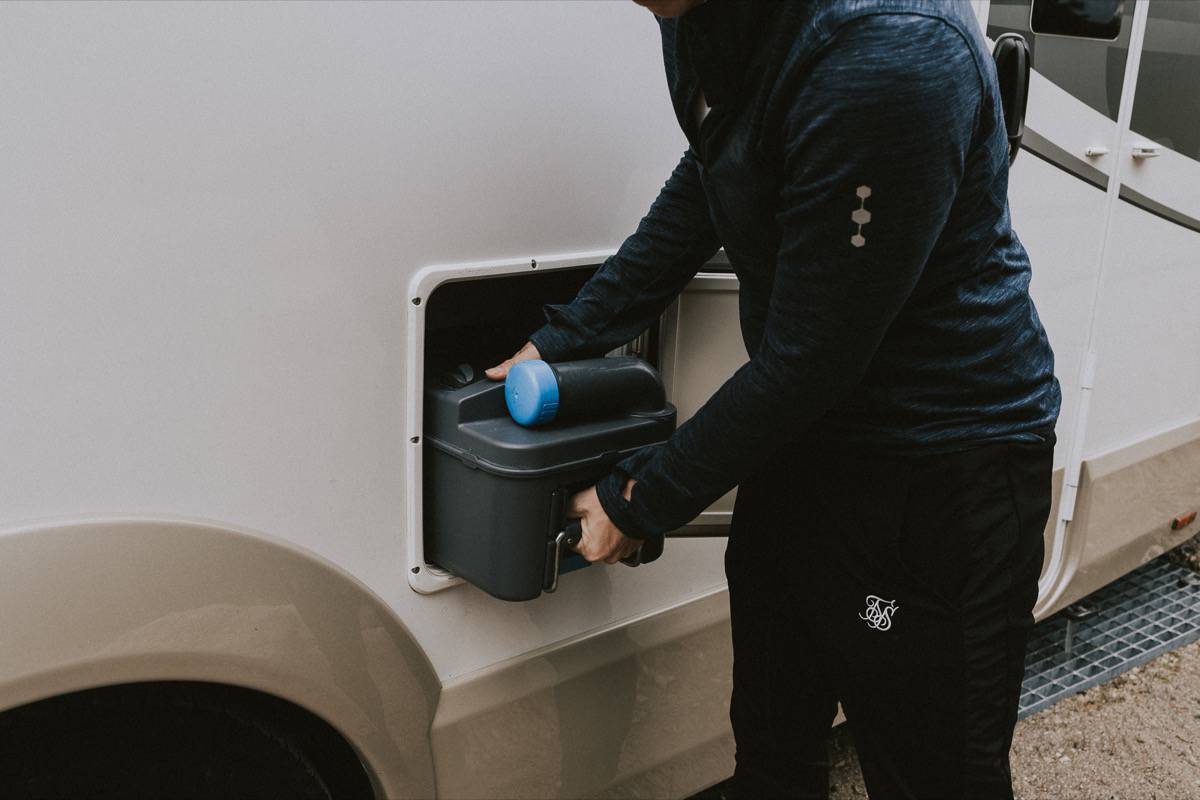
Chemical toilet — a compact waste cassette

Draining grey water

Motorhomes have two water tanks — one for fresh water and one for grey water (from the shower, taps, etc.). Grey water is drained via a valve on the underside of the vehicle into a designated drain. If it’s your first time, get your passenger to guide you as you position the valve over the drain. You need to hit it spot on! If you pull the valve while you’re not lined up, the water will splash everywhere — and I can guarantee you’ll end up with soaked shoes. 🙂
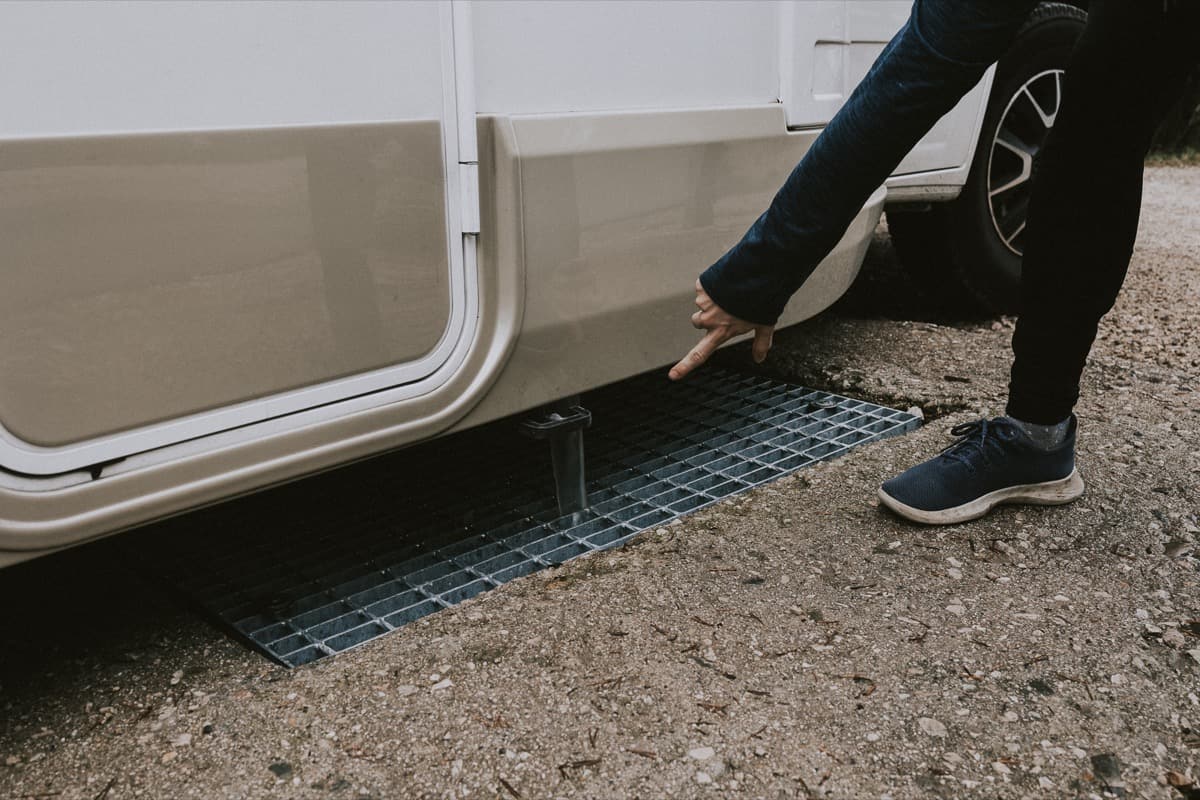
Draining grey water is an essential part of caravan travel
Draining grey water

Refilling fresh water

Fresh water is refilled via a hose through an inlet on the side of the motorhome. Always ask whether the water is potable when refilling. It’s not always clearly marked at campsites and petrol stations whether the water is safe for drinking.
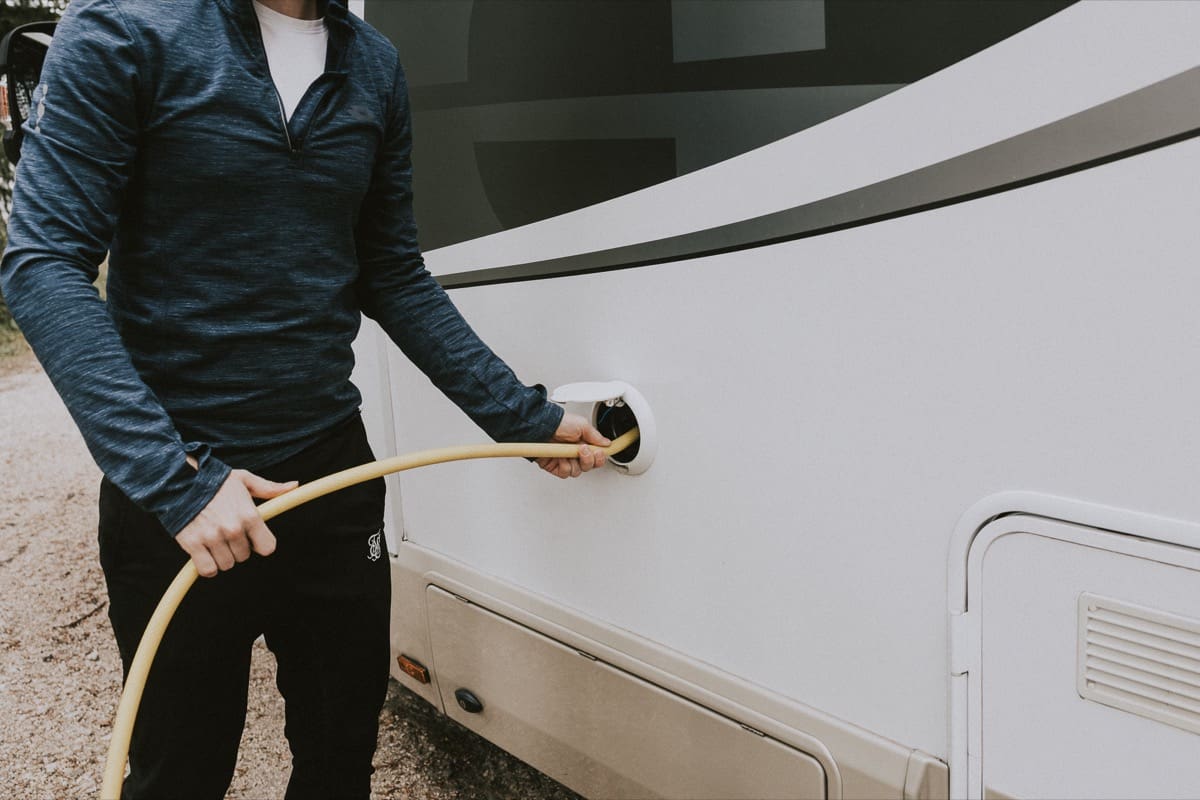
Refilling fresh water at a motorhome service point
Refilling fresh water

Hooking up to electricity

A motorhome with solar panels and appliances set to eco mode (fridge, water heater) will last 2–3 days before the batteries run flat. At campsites and stellplätze (motorhome service areas) near motorways, there’s usually an electric hook-up available (often included in the pitch fee). I’d recommend plugging in wherever you can — you’ll be able to switch on all the lights, properly heat the water, and if you’ve got electric heating, run it through the night without worrying.
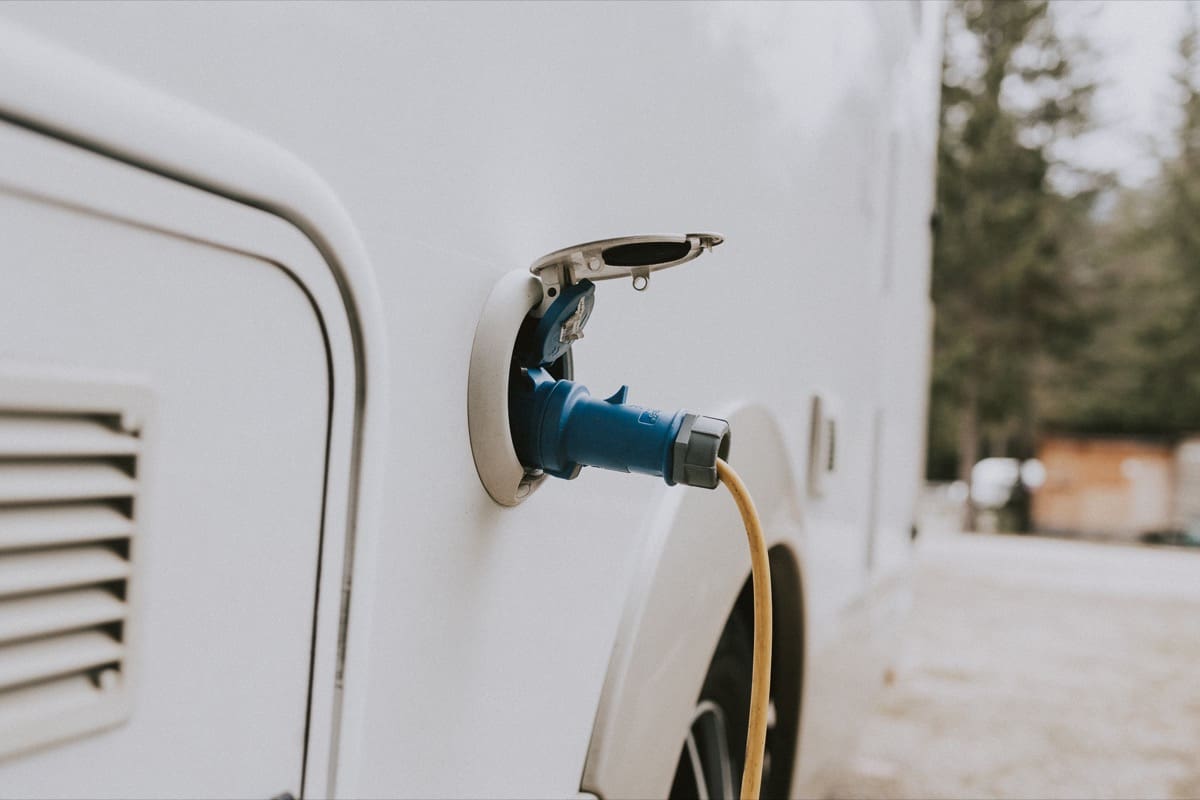
Hooking up a motorhome to electricity at a campsite
Hooking up to electricity

Replacing the gas bottle

Always make sure the hire company hands over the vehicle with a full gas bottle. Swapping the bottle is straightforward enough, but motorhomes rarely come with a spare. For someone unfamiliar with gas systems, hunting down a replacement bottle and fitting it can quickly turn into an unwelcome holiday chore.

Do I need a special driving licence for a motorhome?

The vast majority of motorhomes fall under 3.5 tonnes and can be driven with a standard Category B driving licence. You only need a higher category licence for the really large motorhomes that are more like coaches.

What documents do you need for caravan travel in Europe?

For motorhomes weighing up to 3.5 tonnes (the vast majority of campervans), a standard Category B driving licence is all you need. You should also carry the vehicle registration document (V5C or equivalent) and proof of insurance. If the vehicle is hired, take the rental agreement with you — ideally in both English and the local language. Don’t forget your passport, and if you’re driving from the UK to mainland Europe, you may also need a GB sticker or appropriate number plate markings.

Motorway tolls and road charges

Caravan travel in Europe is generally more expensive than travelling by car. On top of higher fuel consumption, you need to factor in steeper motorway tolls and road charges. Many countries have separate tariffs for motorhomes under 3.5 tonnes. Tunnel crossings tend to be pricier too, especially through the Alps.

Very occasionally, you might get asked to have your motorhome weighed. In Austria, for example, police sometimes weigh motorhomes and issue fines for exceeding the permitted gross vehicle weight.

You can find up-to-date toll charges for all European countries on the website tolls.eu. Vignettes (motorway stickers) can almost always be purchased at petrol stations before the border, or online.

I’d recommend buying vignettes online and in advance. In Portugal, for instance, it’s not straightforward to buy a vignette outside the internet — you need to borrow a small box with an electronic chip. If you don’t enter Portugal via a main border crossing, you might not be able to get one at all.

Motorhome fuel consumption

A typical motorhome uses between 10–12 litres per 100 kilometres (roughly 23–28 mpg). Keep this in mind when budgeting for your trip — fuel costs add up quickly on longer European road trips.

What it’s like to drive a motorhome

If you’ve ever driven a large van, you won’t be surprised. And if you haven’t, don’t worry — you’ll manage. I’d strongly recommend choosing a motorhome with a reversing camera, or at the very least parking sensors. That way, you won’t end up picking bits of broken indicator lens off the ground, like I did. 🤡

Parking a motorhome in cities

Driving a motorhome comes with its limitations, and you’ll feel them most in busy cities, where finding a parking spot can be a real headache. I’d recommend searching online in advance for a suitable parking spot, or even booking one ahead of time.

💡 A safe bet is to always look for larger paid car parks — the kind where you can see vans parked on Google Street View.

You won’t get a motorhome into almost any underground car park, as they typically have a height restriction of around 2.2 metres, and motorhomes are at least 3 metres tall (plus aerials, roof windows, etc.).

Taking a motorhome on a ferry

Generally speaking, you can take a motorhome on any ferry in Europe. This is particularly appealing in Croatia, where you can comfortably island-hop. Ferry fares are based on the length of your vehicle, and several islands have campsites with motorhome pitches right by the port. If you’re heading to the continent from the UK, you can also take ferries from Dover, Portsmouth, or other south coast ports.

Travelling with a dog in a motorhome

A motorhome is ideal for travelling with dogs — during the day we usually keep our dogs outside next to the vehicle, and we bring along a portable dog pen. Planning a caravan holiday with your furry companion? Make sure your pet has a valid pet passport, is microchipped, and has up-to-date rabies vaccinations — these are essential for travelling between the UK and European countries.

Best destinations for a caravan holiday

We fell in love with the Dolomites, which are absolutely perfect for motorhomes. We went in autumn, so we had no trouble finding space at campsites. If you’re after a longer road trip, a brilliant route is through France into Spain and on to Portugal — the Channel Tunnel or a ferry from Dover gets you to France, and from there the road south is spectacular.

Parking outside campsites — wild camping

Wild camping rules vary from country to country. So what are the regulations in Europe’s most popular destinations?

TIP: Try the Camperguru app, where you’ll find an overview of the best campsites and wild camping spots across the whole of Europe.

Austria by motorhome

Throughout Austria, it’s legal to park at designated motorhome areas, known as Stellplätze. You can find them on a map using the Stellplatz-Radar mobile app.

Wild camping is only permitted in four Austrian federal states:

  • Upper Austria
  • Styria
  • Vorarlberg
  • parts of Salzburg.

Slovenia by motorhome

Unfortunately, wild camping is not allowed in Slovenia. You’ll need to stick to Stellplätze, official campsites, or arrange to stay on private land with the owner’s permission.

Montenegro by motorhome

Wild camping outside designated areas is also illegal in Montenegro.

Belgium by motorhome

Wild camping isn’t allowed in Belgium either. Due to the country’s dense population, you’d struggle to find a remote spot anyway. Belgium has Stellplätze, and you’re generally allowed to park overnight in any car park as long as there’s no sign prohibiting it.

Germany by motorhome

In Germany, you’re allowed to park for one night in any car park where there’s no explicit prohibition. The Germans love their motorhomes, and you’ll find Stellplätze even in the middle of cities — Munich alone has several with a total capacity of hundreds of spaces.

France by motorhome

Wild camping isn’t explicitly banned in France. However, you must not camp near monuments, along the coastline, or in protected natural areas.

Camping in Italy — what to know about motorhome travel

In Italy, camping is only permitted at designated, registered campsites. Wild camping is illegal — both on public land and on private property.

Tips and Tricks for Your Vacation

Don’t Overpay for Flights

Search for flights on Kayak. It’s our favorite search engine because it scans the websites of all airlines and always finds the cheapest connection.

Book Your Accommodation Smartly

The best experiences we’ve had when looking for accommodation (from Alaska to Morocco) are with Booking.com, where hotels, apartments, and entire houses are usually the cheapest and most widely available.

Don’t Forget Travel Insurance

Good travel insurance will protect you against illness, accidents, theft, or flight cancellations. We’ve had a few hospital visits abroad, so we know how important it is to have proper insurance arranged.

Where we insure ourselves: SafetyWing (best for everyone) and TrueTraveller (for extra-long trips).

Why don’t we recommend any Czech insurance company? Because they have too many restrictions. They set limits on the number of days abroad, travel insurance via a credit card often requires you to pay medical expenses only with that card, and they frequently limit the number of returns to the Czech Republic.

Find the Best Experiences

Get Your Guide is a huge online marketplace where you can book guided walks, trips, skip-the-line tickets, tours, and much more. We always find some extra fun there!
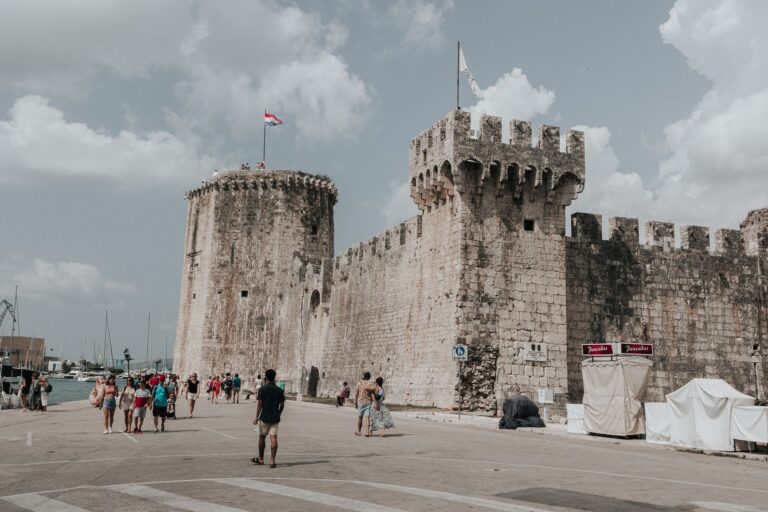

Dalmatia, Croatia: 10 Best Places for Your Holiday

TL;DRTen of Dalmatia’s most beautiful spots include Dubrovnik with its walled old town, Split with Diocletian’s Palace (UNESCO since 1979), Šibenik with St James’s Cathedral (UNESCO since 2000), Trogir (UNESCO since 1997), the islands of Korčula and Hvar, the little town of Omiš on the Cetina river, Klis Fortress, Punta Planka headland and Krka National Park with its waterfalls spread across 142 km². Game of Thrones fans can visit filming locations for King’s Landing, Qarth, Meereen and Braavos. Korčula island is just under 30 km long and 5 km wide. It’s best to head to Split early in the morning, and get to Krka right when it opens.

In this guide I will share with you Dalmatia, Croatia: 10 Best Places for Your Holiday. Dalmatia is one of the most popular vacation destinations in Croatia. There you will find beautifully clear beaches, romantic medieval towns, and numerous national parks to explore. In recent years, Game of Thrones fans have flocked here, as you can find filming locations for King’s Landing, Qarth, Meereen, and Braavos. Let’s now look at what to do in Dalmatia, where to stay, and what to see.

where to Stay in Dalmatia

In Croatia, you will find many beautiful hotels and pleasant apartments, if you prefer more privacy or prefer to cook for yourself. However, it is often important to book accommodation in advance, as the best options go quickly.

  • Budget: Hostel Scala in Šibenik
  • Mid-range: Guest House Bakica in Trogir, Apartments Silver Beauty in Rogoznica
  • Luxury Accommodation: 🥇 Bifora Heritage Hotel, Dubrovnik President Valamar Collection Hotel

lukas a lucka
Lukáš and Lucie recommend
Where to stay in Dalmatia
6 accommodations — wellness hotels, hotels and other accommodation options

Dalmatia, Croatia: 10 Best Places for Your Holiday

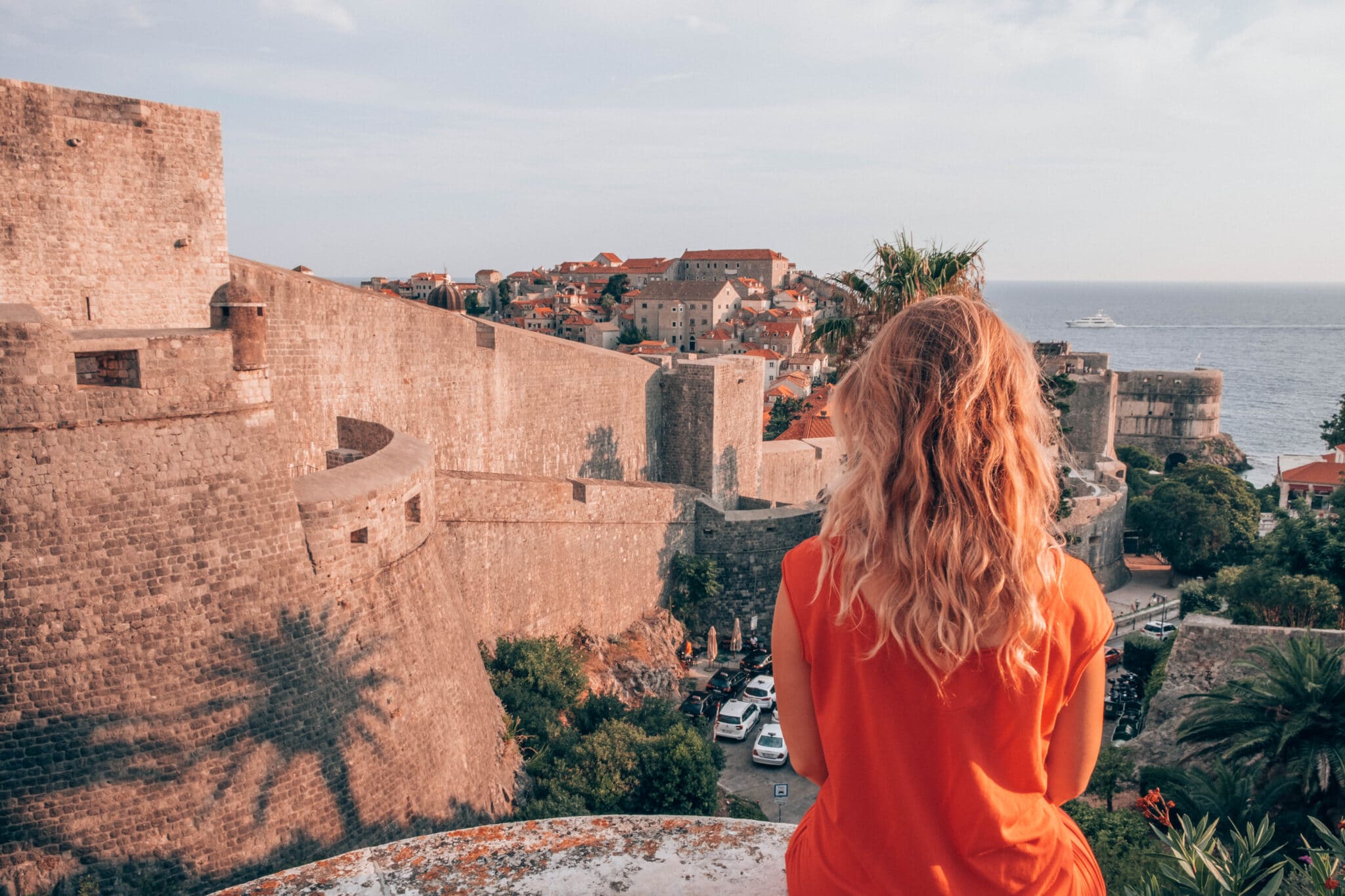
1) Dubrovnik

Dubrovnik is one of Croatia’s most beautiful cities, located in southern Dalmatia, and boasts a magnificent historic core surrounded by mighty fortifications. In recent years, it has become a highly visited destination for Game of Thrones fans, who can find locations of famous scenes from King’s Landing, the capital of the Seven Kingdoms, in Dubrovnik. Read more in our article about Dubrovnik.

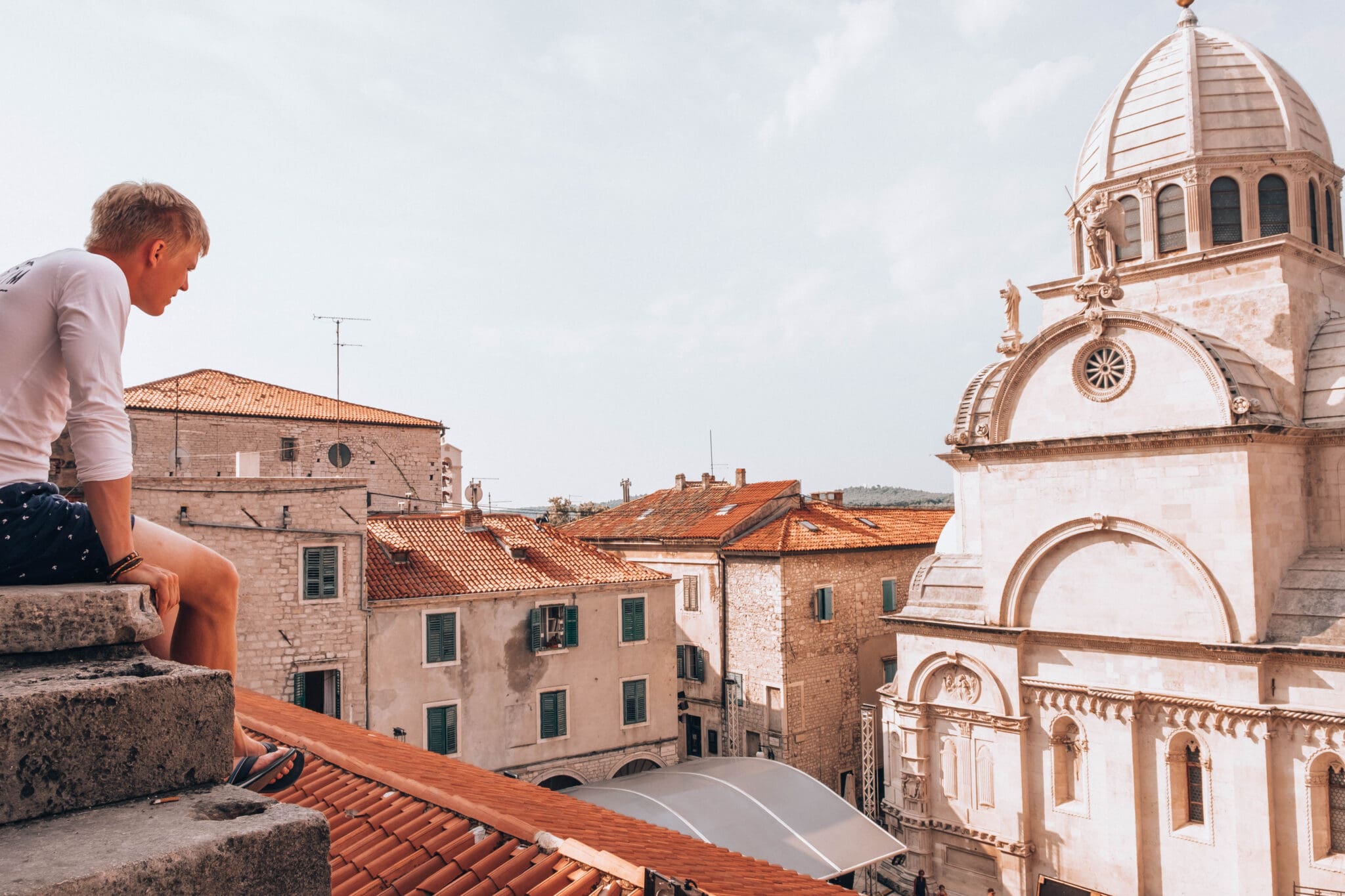
2) Šibenik

Šibenik is one of my favorite cities in Croatia, as it has a beautiful historic center that isn’t as crowded with tourists as Split or Dubrovnik. At the same time, there are many pleasant restaurants, cafes, and the narrow streets provide much-needed shade even at midday in the middle of a hot summer.

The historic town and port of Šibenik is located in northern Dalmatia, in the rugged and picturesque Šibenik Bay, into which one of the most beautiful karst rivers, Krka, flows. Šibenik is known as the city of fortresses; you’ll find four of them here.

The center of Šibenik is not large, but you will find many romantic historic streets and buildings here, the most iconic and valuable of which is Cathedral of St. James , which has been on the UNESCO World Cultural Heritage list since 2000.

3) Split

Head to Split early in the morning, otherwise you’ll be jostling among hundreds of other tourists. Split has an ideal location for exploring the surrounding area, which is why it is the most frequent destination for tourists. It lies on a peninsula between Kaštela Bay and the Split Channel, bordered on the west by the forested Marjan hill.

Split is not a small town; 180,000 inhabitants live here, and outside the historic center, there is growing modern development. Split has a history almost two thousand years old, which you can discover in the Old Town. In Split, you will find an extraordinary number of cultural monuments, among the most famous of which is the ancient Diocletian’s Palace, which was added to the UNESCO cultural heritage list in 1979.

If you are staying in smaller resorts, you will certainly be pleased by the wide range of restaurants. You’ll find everything from Asian cuisine to smaller vegan bistros and cafes with specialty coffee.

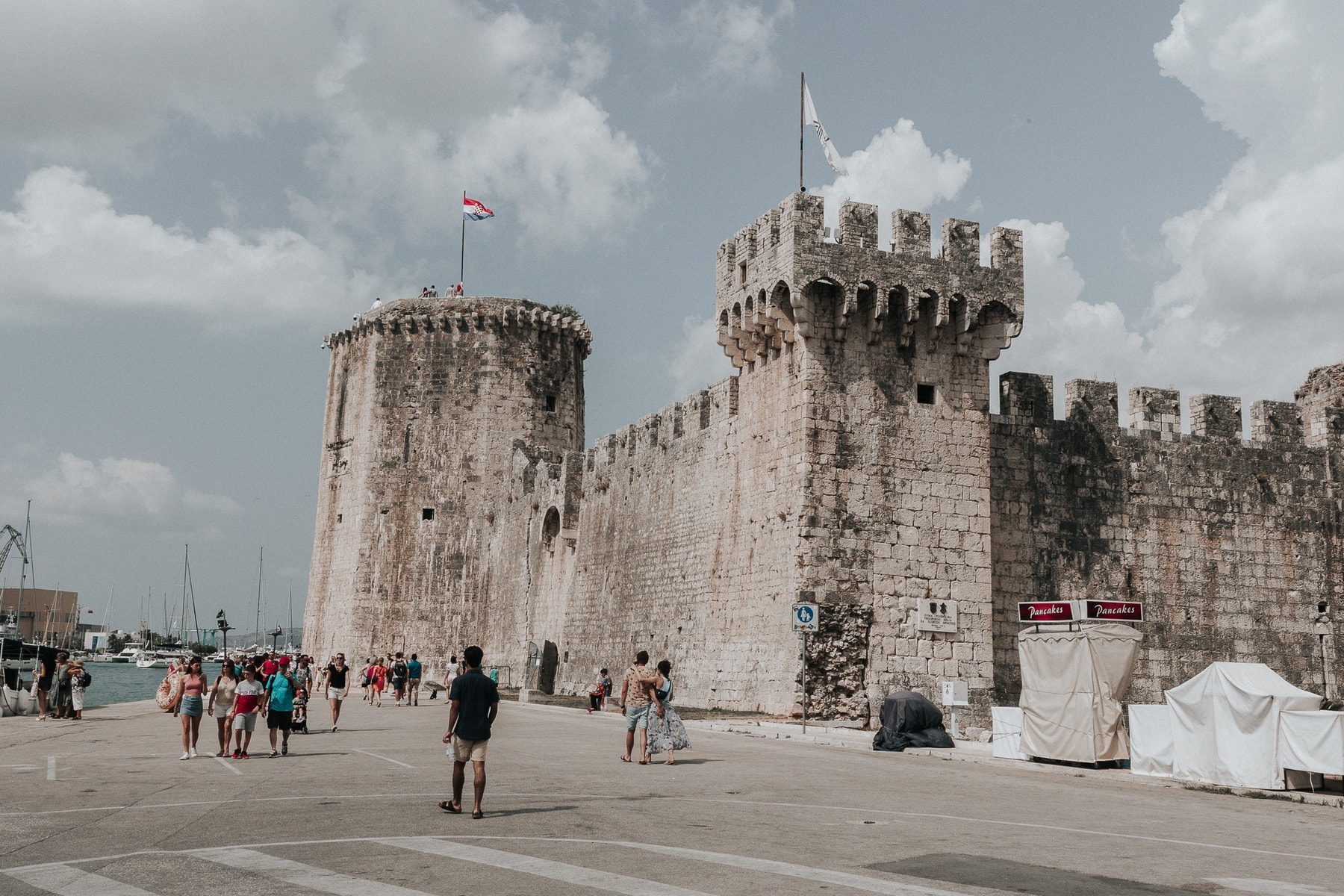
4) Trogir

Trogir is an example of a typical historic town in Dalmatia. It has a charming small historic center where you’ll find many boutiques and shops selling local jewelry. You’ll find artists selling original products and paintings, and just outside the historic center, there’s usually a fish and fruit market. The dominant feature is the local Cathedral of St. Lawrence with a tower, which you can climb for a small fee.

Since 1997, Trogir has been inscribed on the UNESCO World Cultural Heritage list. In 2018, the Trogir Soline ferry port was opened at the Soline location (west of the old town towards Seget Donji), serving transport to the islands of Drvenik Veli and Drvenik Mali.

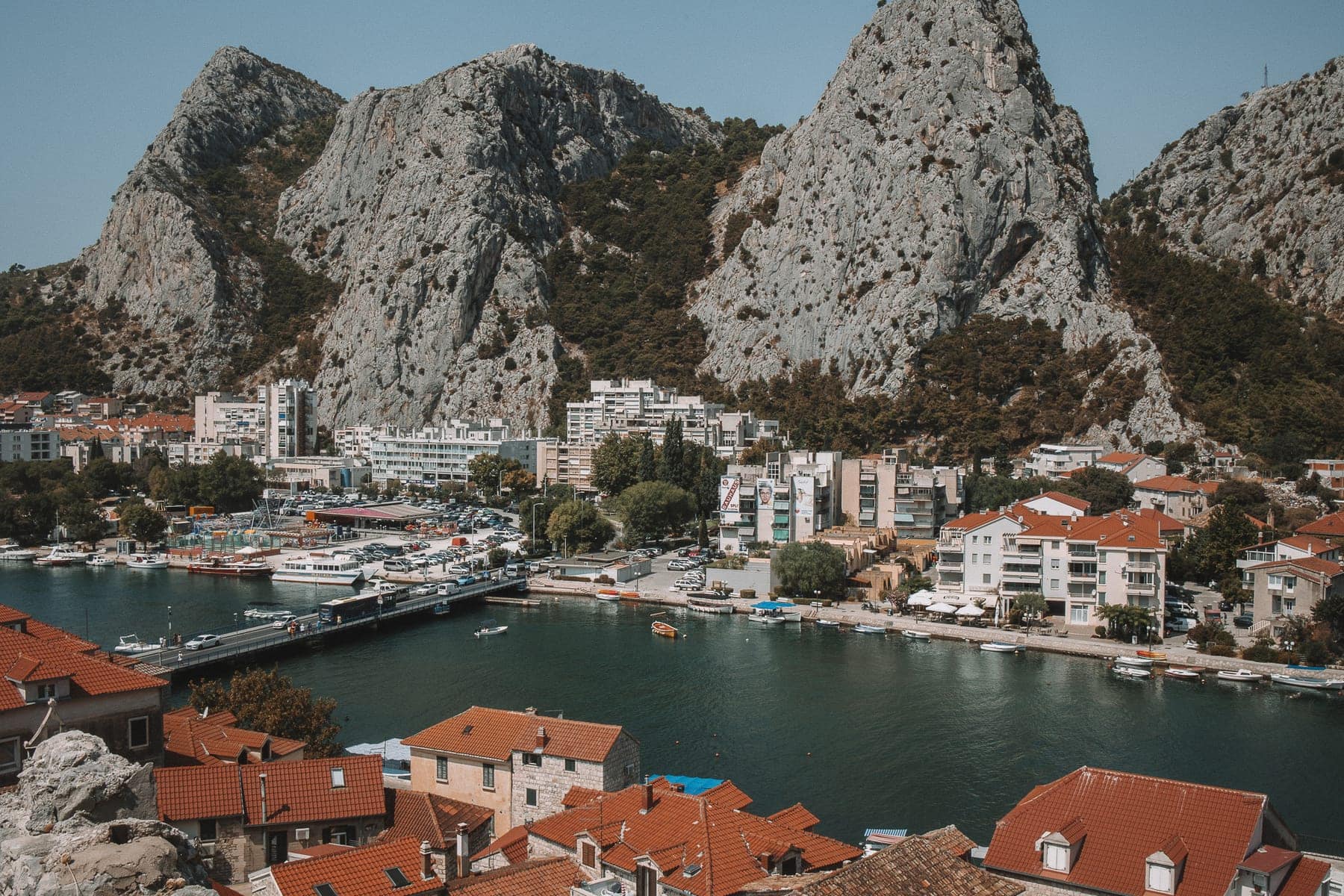
5) Omiš

This peaceful town nestled in the rocks is somewhat different from other towns in Dalmatia. At first glance, you’ll be captivated by the gorge where the turquoise Cetina River winds. In Omiš, you’ll also find sandy beaches, a small ancient center, and a wild pirate past. It’s definitely worth heading to one of the viewpoints above the town to enjoy a breathtaking view of the bay. The diverse terrain will be enjoyed by adrenaline sports enthusiasts and families with children alike; you can go hiking or take a boat trip.

6) Korčula Island

Korčula Island is one of the most beautiful islands in Croatia. Although it is relatively small (measuring less than 30 kilometers in length and only 5 kilometers in width), it offers great activities for families with children, couples, and athletes. You’ll find numerous ancient monuments, a beautiful coastline, wineries, and (allegedly) the birthplace of Marco Polo. It is often nicknamed Marco Polo Island for this reason.

7) Hvar Island

Like Korčula Island, Hvar is suitable for all types of tourists. You’ll find great cultural and sports activities here, but you can also enjoy a purely relaxing vacation, which you can spend on one of the island’s beautiful beaches.

On Hvar Island, the city of the same name is particularly popular, often rated as the most beautiful city in Croatia. There you’ll find the famous Spanish Fortress, which offers one of the most beautiful views of the island.

8) Klis Fortress

Klis Fortress is a medieval fortress situated above the village of the same name at an altitude of 360 meters, built for defense against invaders. Thanks to its strategic location between two mountains, Kozjak and Mosor, the fortress played a significant role in the defense of all Dalmatia, especially against the Ottoman Empire and its raiders. In recent years, it has become popular primarily as a Game of Thrones filming location, where it represented the city of Meereen.

9) Punta Planka

A very popular spot for sunsets is Cape Planka, where northern and southern winds, cyclones and anticyclones, and sea currents strongly converge. A small and very photogenic church of St. John stands here, shrouded in legends.

One of them says that a ship carrying St. John of Trogir was shipwrecked here. To Greek sailors, it was known as Diomedes’ Cape; Homer writes in his “Iliad” that Diomedes himself, one of the greatest heroes of Greek mythology, sailed to it after the Trojan War.

10) Krka National Park

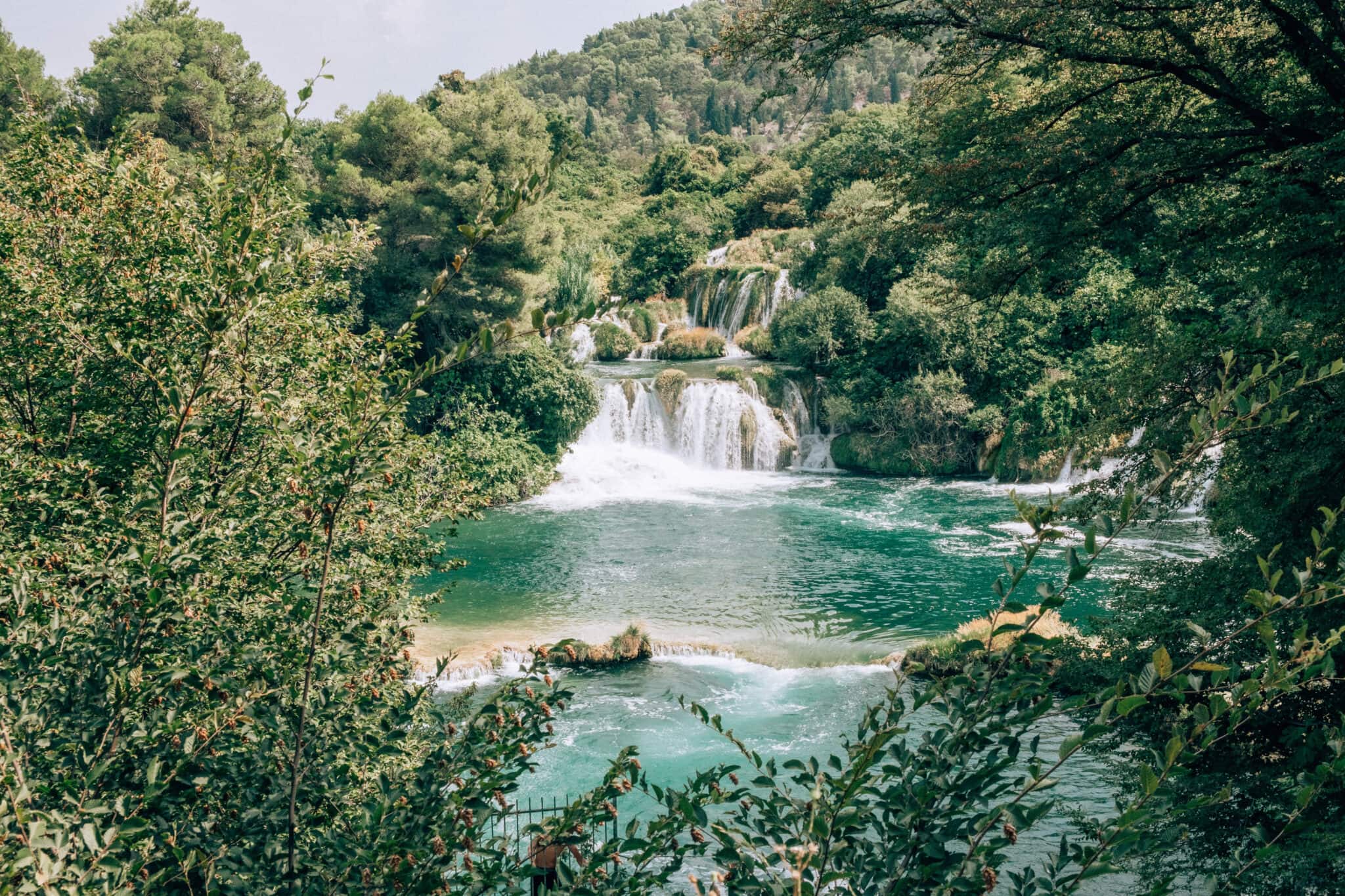
Krka National Park, located in central Dalmatia, is also very popular with tourists. Here you’ll find a system of rapids, cascades, and waterfalls, under which you can swim. When we visited the national park, we weren’t really in the mood for swimming because it was packed with people. Therefore, we recommend heading there right at opening time to enjoy the national park. Even with the high tourist interest, it’s truly a beautiful sight.

The park covers an area of 142 km², centers around the jade-green Krka River, and besides the waterfalls, there are many other attractions, including cycling paths and five medieval fortresses. One of the enjoyable activities in Krka National Park is a boat trip to the small island of Visovac, which was settled in 1445 by Franciscan monks and where a monastery with a library and preserved artifacts is located.

Tips and Tricks for Your Vacation

Don’t Overpay for Flights

Search for flights on Kayak. It’s our favorite search engine because it scans the websites of all airlines and always finds the cheapest connection.

Book Your Accommodation Smartly

The best experiences we’ve had when looking for accommodation (from Alaska to Morocco) are with Booking.com, where hotels, apartments, and entire houses are usually the cheapest and most widely available.

Don’t Forget Travel Insurance

Good travel insurance will protect you against illness, accidents, theft, or flight cancellations. We’ve had a few hospital visits abroad, so we know how important it is to have proper insurance arranged.

Where we insure ourselves: SafetyWing (best for everyone) and TrueTraveller (for extra-long trips).

Why don’t we recommend any Czech insurance company? Because they have too many restrictions. They set limits on the number of days abroad, travel insurance via a credit card often requires you to pay medical expenses only with that card, and they frequently limit the number of returns to the Czech Republic.

Find the Best Experiences

Get Your Guide is a huge online marketplace where you can book guided walks, trips, skip-the-line tickets, tours, and much more. We always find some extra fun there!
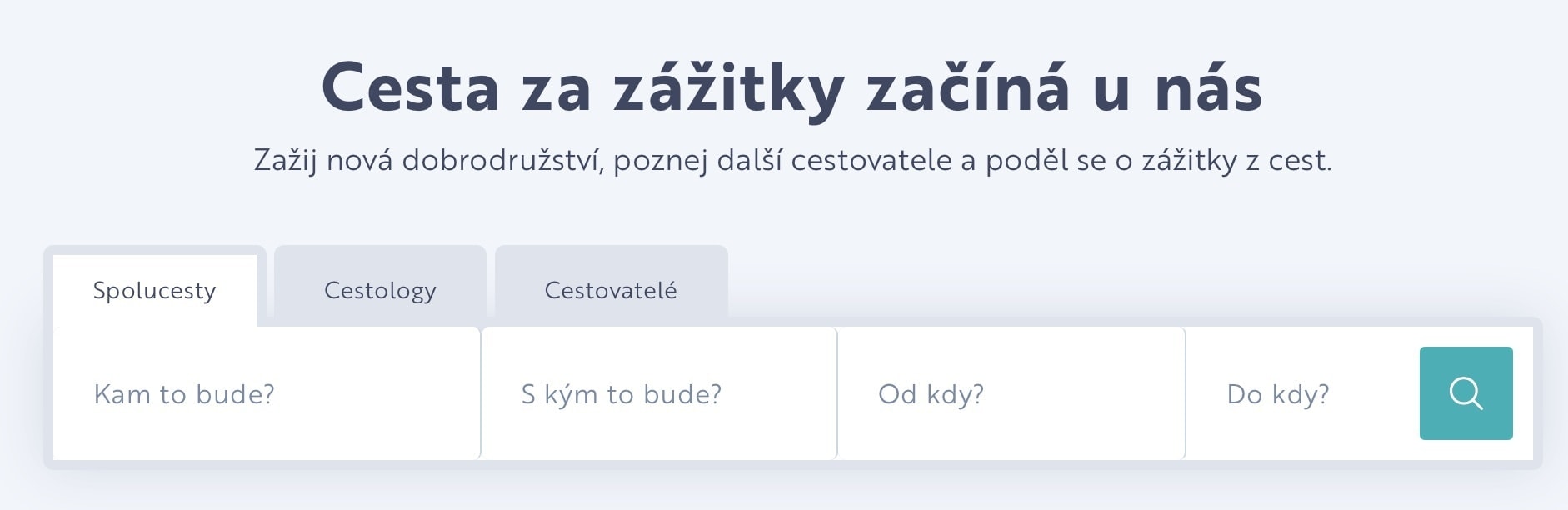
Cestolidi: A New Travel Platform for Finding Travel Buddies

TL;DRCestolidi is a Czech online platform that connects travellers looking for a companion on the road, thanks to its Spolucesty (Travel Together) feature and identity verification for safety. Behind the project is traveller and travel influencer Kryštof Paleta, along with Martin Jač and David Šindelář, who spent four years developing it. Users can create free travel blogs called cestologies and mark the places they’ve visited on a personal map, earning points for their activity that can be swapped for rewards from partners like Peak Design or Czech-us. A week after the platform’s full launch in July 2021, it had already passed the 1,000-user mark. Looking ahead, Cestolidi plans to offer experiences run by Czechs living abroad, such as surf and yoga retreats or rafting trips in Slovenia.

For many people, travelling is a true passion — a way to collect unforgettable experiences and broaden their horizons. Most travellers prefer hitting the road with a buddy or even a whole group of fellow adventurers, but finding the right person who shares your expectations for a trip can be surprisingly tricky. That’s exactly why a new travel platform called Cestolidi was created, with the main goal of connecting travellers on their way to new adventures.

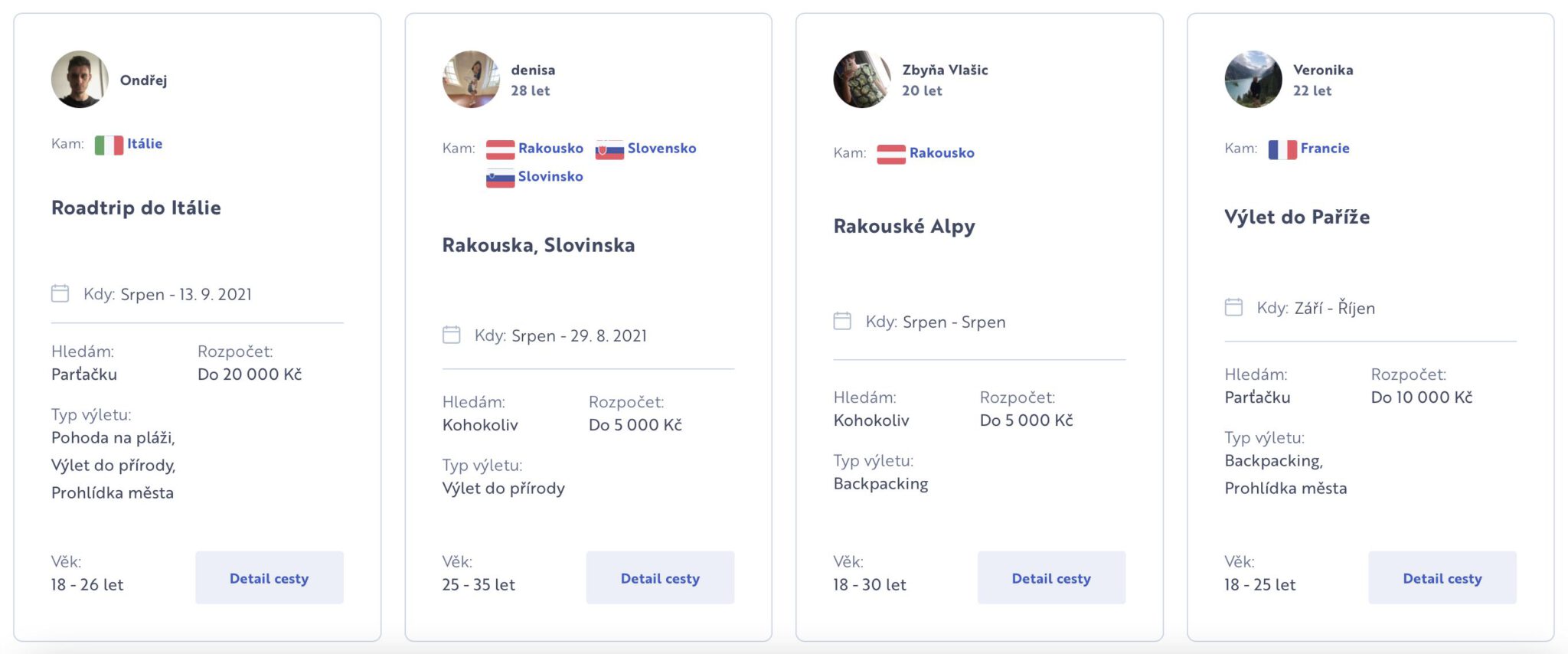
Plenty of people want to explore the world, but they often find themselves without the means or the company to do so. On the Cestolidi platform, anyone can safely find a travel companion with similar plans and set off together. And who knows — your ideal travel buddy might even turn out to be a lifelong friend (or more). The platform ensures maximum safety through an identity verification feature for every user, keeping scammers at bay.

“I wanted a place to log my own trips and find someone to travel with. Co-travelling does happen on social media, but posts get buried quickly, or people reach out with no proper introduction. That’s exactly why we fine-tuned the My Profile section — it works like a traveller’s calling card and builds trust within the platform,” explains Kryštof Paleta, the platform’s creator and an avid traveller himself.

Beyond co-travel matchmaking, this community-driven travel platform offers its users a whole range of useful features. After returning from a trip, users can create free “cestologs” — essentially travel blogs — in their My Profile section, where they can write down and save all their travel memories. Every destination they’ve visited gets pinned on their personal travel map. These cestologs also serve as inspiration for other readers and travellers looking for tips on new adventures anywhere in the world.

By writing cestologs, organising co-travels, and supporting fellow adventurers, users earn points and badges that can later be exchanged for rewards from partners. Among the partner brands, you’ll find interesting companies like Peak Design, Onlinejazyky.cz (an online language learning platform), Travel Bible, and Czech-us.

In the coming months, users can look forward to a host of new features. On top of what’s already available, a curated experiences section is in the works — offering unique activities hosted by Czechs living all over the world, bookable directly on the platform. Think surf camps, yoga retreats, work-and-travel programmes, white-water rafting in Slovenia, and much more.

“We’re currently working on fine-tuning the experiences section. Right after that, we want to make trip planning easier for our users — and with that will come a way for them to earn money on our site. Finances are a real barrier for many of our users when it comes to travelling, so we want to help with that. User verification for greater trust is also just around the corner,” Paleta hints at what’s coming next.

About the Cestolidi Project

Cestolidi was founded by Czech traveller and travel influencer Kryštof Paleta, whose vision was to build a space where travellers could come together, inspire each other, and fuel their passion for exploring the world. Kryštof started travelling back in secondary school, but his biggest adventure came in 2018 when he embarked on a round-the-world trip — a journey that kicked off and filled his YouTube channel.

Back in 2017, he created a Facebook group for this purpose, which has since grown to nearly eight thousand members. He had the idea, but lacked the resources and experience to bring it to life. Two years later, he teamed up with Martin Jač, and together they built the first test version during a time when the world was gripped by the COVID-19 pandemic.

Over time, another passionate traveller, David Šindelář, joined the duo to handle the technical development and help shape the platform into what it is today. Just one week after launching the live version of Cestolidi in July, the team broke through the one-thousand registered users mark — giving them valuable feedback and the energy to keep pushing the project forward.

“From idea to reality, it was a long road — four years — and on top of everything, the pandemic hit. I felt we needed to launch because after all that time, our motivation was starting to fade. So I convinced the lads, and we went live without extensive testing or a grand strategy. In the end, it worked out well. Even though we know the pandemic will still throw obstacles our way for a while, we see it as an opportunity to iron out the bugs and build momentum,” Paleta adds.

Tips and Tricks for Your Vacation

Don’t Overpay for Flights

Search for flights on Kayak. It’s our favorite search engine because it scans the websites of all airlines and always finds the cheapest connection.

Book Your Accommodation Smartly

The best experiences we’ve had when looking for accommodation (from Alaska to Morocco) are with Booking.com, where hotels, apartments, and entire houses are usually the cheapest and most widely available.

Don’t Forget Travel Insurance

Good travel insurance will protect you against illness, accidents, theft, or flight cancellations. We’ve had a few hospital visits abroad, so we know how important it is to have proper insurance arranged.

Where we insure ourselves: SafetyWing (best for everyone) and TrueTraveller (for extra-long trips).

Why don’t we recommend any Czech insurance company? Because they have too many restrictions. They set limits on the number of days abroad, travel insurance via a credit card often requires you to pay medical expenses only with that card, and they frequently limit the number of returns to the Czech Republic.

Find the Best Experiences

Get Your Guide is a huge online marketplace where you can book guided walks, trips, skip-the-line tickets, tours, and much more. We always find some extra fun there!
Dollar Flight Club Review – Is It Worth It in 2021?

TL;DRDollar Flight Club really earns its keep with the premium membership, at $69 (roughly £55) a year, since it gives you four times as many daily deals as the free version, lets you pick a specific departure airport, and flags error fares plus Weekend Warrior deals with up to $250 off domestic US flights. The free version only sends one deal a day, with no say over which airport it’s from. Discounts through the service can run 60-90% off the usual fare — one United Airlines First Class error fare, for instance, dropped from $4,000 to $79. You can try it free for 14 days before committing to a paid plan, which is handy for working out whether premium membership is worth it for your own travel style — say, a trip to Bali, where a return flight normally sets you back around £1,150.

Whenever you decide to travel somewhere, the first hurdle is usually booking the flights. In your quest to find the best flight deals at the lowest prices, you can easily spend hours trawling the internet. With so many options out there, it’s enough to make your head spin.

Fortunately, there are websites that can help solve this problem by doing all the legwork for you. One such service is Dollar Flight Club.

Airfare Is Often the Most Expensive Part of Travel

The second issue that anyone who’s ever searched for flights knows all too well is the price. Airfare tends to be the most expensive part of any holiday.

Imagine you want to fly to Bali. It’s an island in Indonesia where the cost of living is relatively low compared to the UK. A decent hotel in Bali averages around €14–22 per night, while a more luxurious option runs about €32 per night.

While a holiday in Bali might seem affordable compared to a destination like Dubai, keep in mind that a return flight from London can cost around €720 per person — and that’s not exactly pocket change.

What If Someone Could Track the Cheapest Flights for You?

Faced with steep airfares, it’s tempting to ditch the exotic destinations and settle for a weekend in Brighton instead. But what if someone could monitor flight deals on your behalf and send you a notification every time they found an amazing fare?

Let’s take a closer look at Dollar Flight Club. Is it really worth paying $69 for premium membership?

What Is Dollar Flight Club?

Dollar Flight Club is a website that saves you money on flights. It handpicks the cheapest fares and sends alerts straight to your phone so you never miss a deal. Sounds great, right? Let’s dive into how it all works.

Dollar Flight Club (DFC) uses technology to search for the cheapest flight deals automatically. This sets it apart from other similar services that often rely on teams of people manually hunting for fares.

DFC doesn’t charge any commission on flight bookings or premium perks. The company makes money through premium subscriptions and ads shown to users on the free plan. You’ll find all the details about premium benefits and how to access them below.

DFC claims to reduce flight prices by up to 60–90%. How is that possible?

It depends partly on which plan you’re on. Premium members also receive alerts for so-called mistake fares. What are those? While ticket sales are largely automated these days, prices are still set and published by humans — and as we all know, humans make mistakes.

A classic example: United Airlines once listed a First Class ticket that normally costs $4,000 for just $79.

Free Membership

You don’t have to pay for a DFC membership — there’s a free version available. But is it actually worth it? With the free plan, you only receive 1 flight deal alert per day. On top of that, you can’t select a specific departure airport — you can only choose a general region or country from which you’d like to fly to popular destinations.

Premium Membership

Premium membership costs $69 per year (approximately £55 / €64).

Not only can you select your specific departure airport, but you’ll also receive 4 times more flight deal alerts per day compared to the free plan.

The best part? You don’t need to sit glued to your computer waiting for a bargain to pop up. When DFC finds a cheap flight for you, it simply sends you a notification — which you can customise yourself, including SMS alerts.

Only premium members get access to the Weekend Warrior feature, which offers domestic US flights with discounts of up to $250 per ticket. If you’re based in the UK, you’ll still benefit from the international flight deals that DFC surfaces from London and other major UK airports.

If you’re not sure about going premium, just give it a try. Dollar Flight Club offers a 14-day free trial when you first sign up, so you can test the Premium account risk-free.

Dollar Flight Club Review

Lukáš Konečný

Ease of use
Quality of flight deals
Premium membership value

Summary

Dollar Flight Club is a handy tool if you set it up properly. The annual membership pays for itself with your first discounted flight, though it’s best suited for frequent travellers who are ready to book at a moment’s notice.

4.7

Tips and Tricks for Your Vacation

Don’t Overpay for Flights

Search for flights on Kayak. It’s our favorite search engine because it scans the websites of all airlines and always finds the cheapest connection.

Book Your Accommodation Smartly

The best experiences we’ve had when looking for accommodation (from Alaska to Morocco) are with Booking.com, where hotels, apartments, and entire houses are usually the cheapest and most widely available.

Don’t Forget Travel Insurance

Good travel insurance will protect you against illness, accidents, theft, or flight cancellations. We’ve had a few hospital visits abroad, so we know how important it is to have proper insurance arranged.

Where we insure ourselves: SafetyWing (best for everyone) and TrueTraveller (for extra-long trips).

Why don’t we recommend any Czech insurance company? Because they have too many restrictions. They set limits on the number of days abroad, travel insurance via a credit card often requires you to pay medical expenses only with that card, and they frequently limit the number of returns to the Czech Republic.

Find the Best Experiences

Get Your Guide is a huge online marketplace where you can book guided walks, trips, skip-the-line tickets, tours, and much more. We always find some extra fun there!

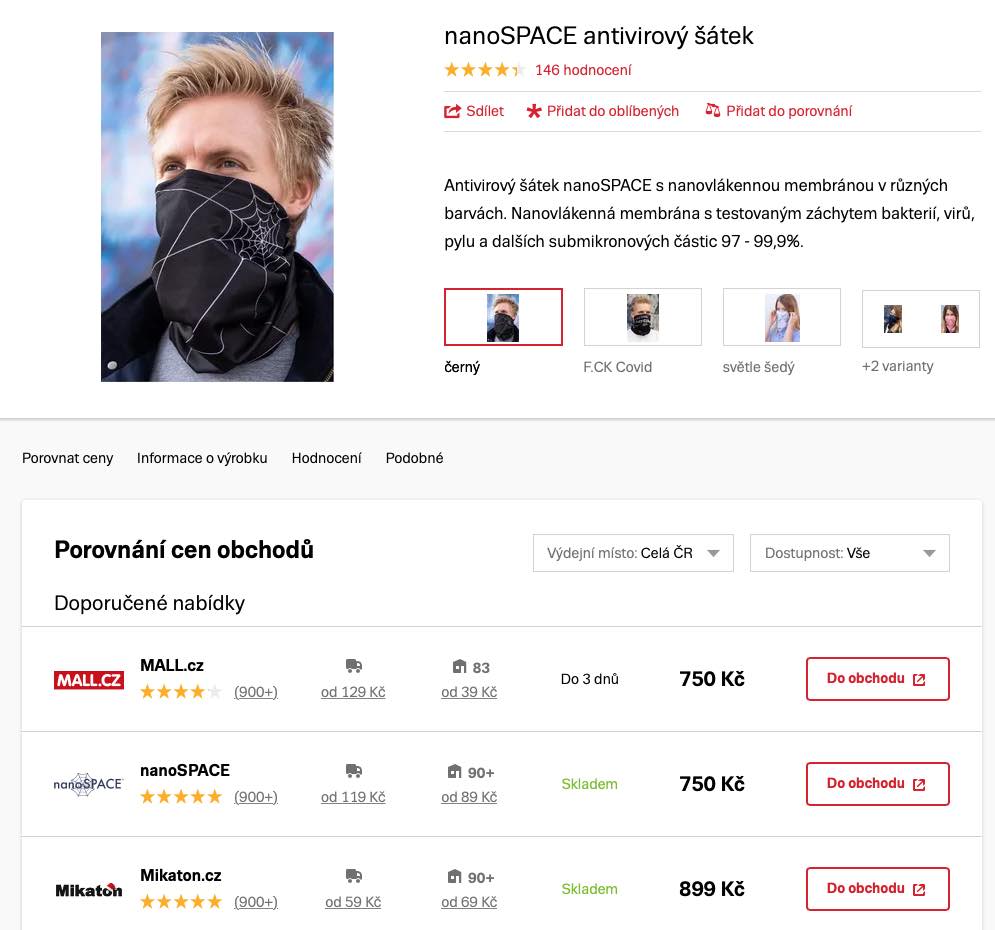
Boost Your E-Shop Revenue by Using Price Comparison Websites Effectively

TL;DRGetting listed on price comparison sites like Heureka, Zboží.cz, Google Shopping or Modio.cz can genuinely boost an online shop’s turnover. They work as a search engine and catalogue, showing your products right next to the competition. That means wider reach, more conversions, and a clear view of who’s selling what, plus which trends and gaps are worth chasing. Shoppers arriving from a comparison site already know the price, picture and description, so they’re much closer to buying. These platforms also let you keep an eye on competitive pricing, track store ratings and reviews, and spot popular products and trends — which helps smaller shops go up against the big brands, while the extra traffic gives your search rankings a lift too.

When growing your online business, you’ll need to leverage a range of strategies and tools to support your e-shop’s development. Marketing campaigns can prove extremely beneficial, but have you also considered using price comparison websites to drive sales and gain a competitive edge?

How Do Price Comparison Websites Work?

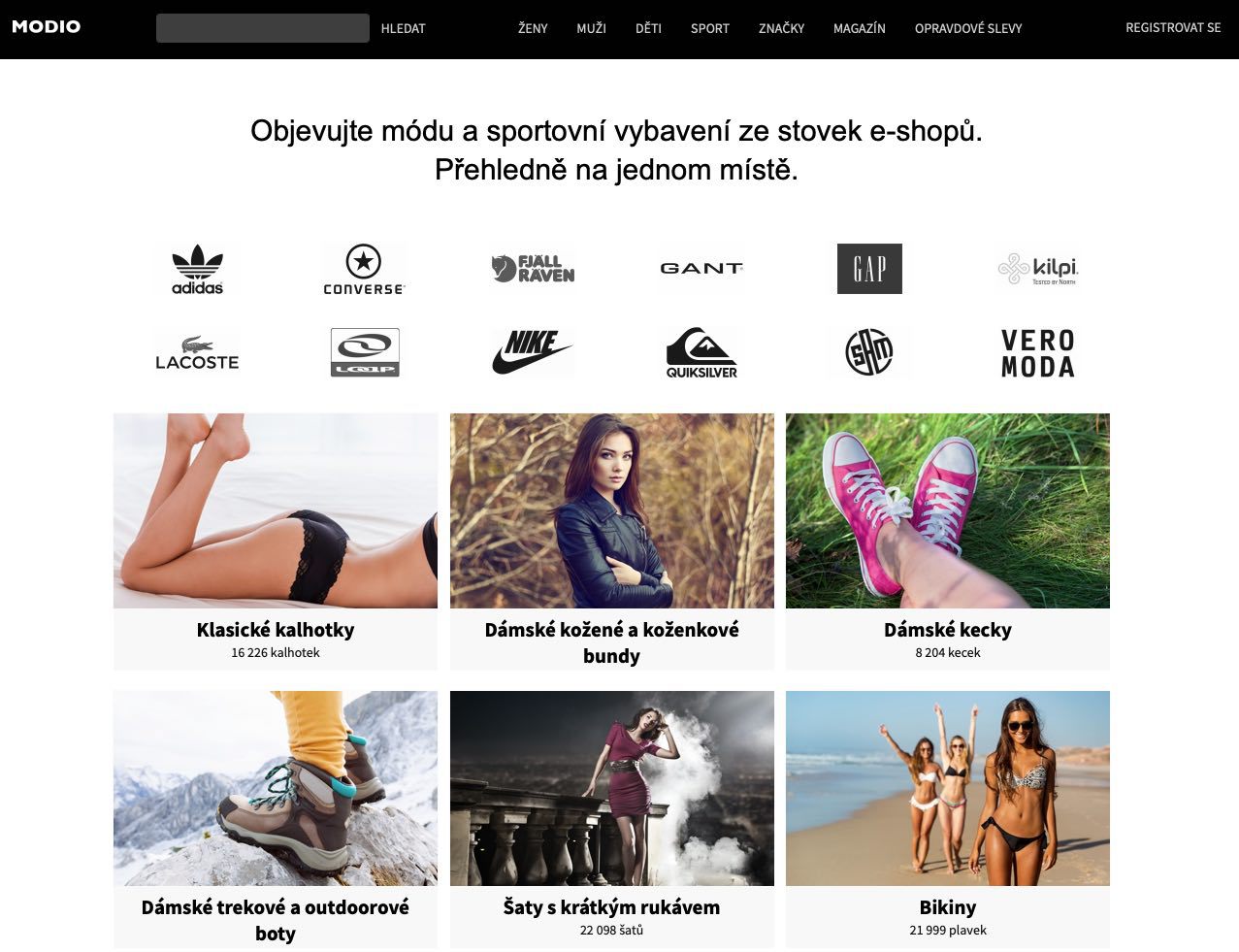
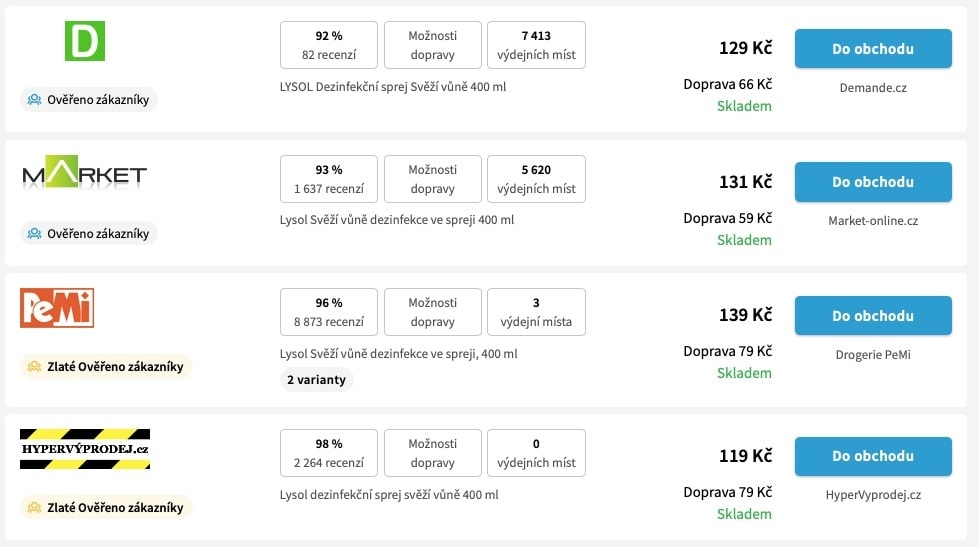
For consumers, price comparison websites like Google Shopping, PriceRunner, Kelkoo, or Modio.cz essentially function as search engines and catalogues that display products side by side, comparing features such as product images and prices.

The comparison platform typically charges the e-shop a fee and requires you to submit photos, descriptions, prices, and other product information so your items can appear in relevant searches alongside other comparable products.

It’s easy to see why online shoppers love price comparison tools, but how can you, as an e-commerce retailer, benefit from these platforms?

💡 While it might seem counterintuitive to place your products on the same comparison site as your competitors, the reality is that this strategy can help you gather valuable competitive intelligence and accelerate sales.

Comparison websites don’t just help customers pick the best product — they also offer you, as a retailer, a wealth of data about the current marketplace and where your brand or products stand.

By using a comparison tool in your sector, you can stay continuously informed about who’s selling what, product costs and trends, and even identify gaps in your competitors’ offerings or the products and services being sold.

Beyond helping you keep tabs on market indicators, these tools can benefit your business in many other ways.

  • Since most customers using a price comparison site have already decided to buy, you’ve already won half the battle — your products are just one click away from being purchased. The customer is now trying to find the best product at the best price. This is your opportunity to capture their attention and drive them to your website.
  • The biggest advantage of using comparison sites is the increased traffic to your website, which in turn improves your search engine rankings. You can therefore also leverage comparison sites for SEO optimisation. For small and medium-sized online retailers, this can be the fastest and most cost-effective approach that enables you to compete with major brands.

Using Price Comparison Websites to Grow Your Business

Greater Reach

Price comparison websites allow you to extend the reach of your online shop and discover new customers who might never have found you through traditional search alone.

More Conversions 🥇

A potential customer may visit your website through a price comparison tool after seeing your product image, noting the price, and reading about your brand or shop. Because shoppers on comparison sites are more inclined to click on products that catch their eye, there’s a much higher chance of converting them into paying customers.

Discover Who’s Selling What 🥈

A comparison site lets you analyse competing products in one place, giving you a clear overview of the market. You can search for similar products and find out who your competitors are and what makes each of them unique — do they offer better customer service or a more user-friendly website? It’s also worth discovering what else your competitors sell, because your shop might be missing popular products, which means you could be losing out on lucrative business opportunities.

Set Attractive Prices for You and Your Customers 🥉

Retailers constantly adjust their prices in an effort to stay ahead of the competition. Regardless of your business size, your products should never carry outdated pricing. While competing on price alone may not be your strategy, you should always make sure you’re offering your customers a competitive deal. Comparison websites provide a straightforward way to benchmark your pricing against the rest of the market.

Look at All the Details

Most customers don’t simply choose the cheapest option available. Before making a final purchase, they also consider additional information, including shipping costs, service guarantees, and the seller’s reputation. As a result, many shoppers are happy to pay a little extra if a shop stands out in some way. This opens up an opportunity for you to examine all these details across your competitors and find ways to differentiate.

Check Ratings and Reviews

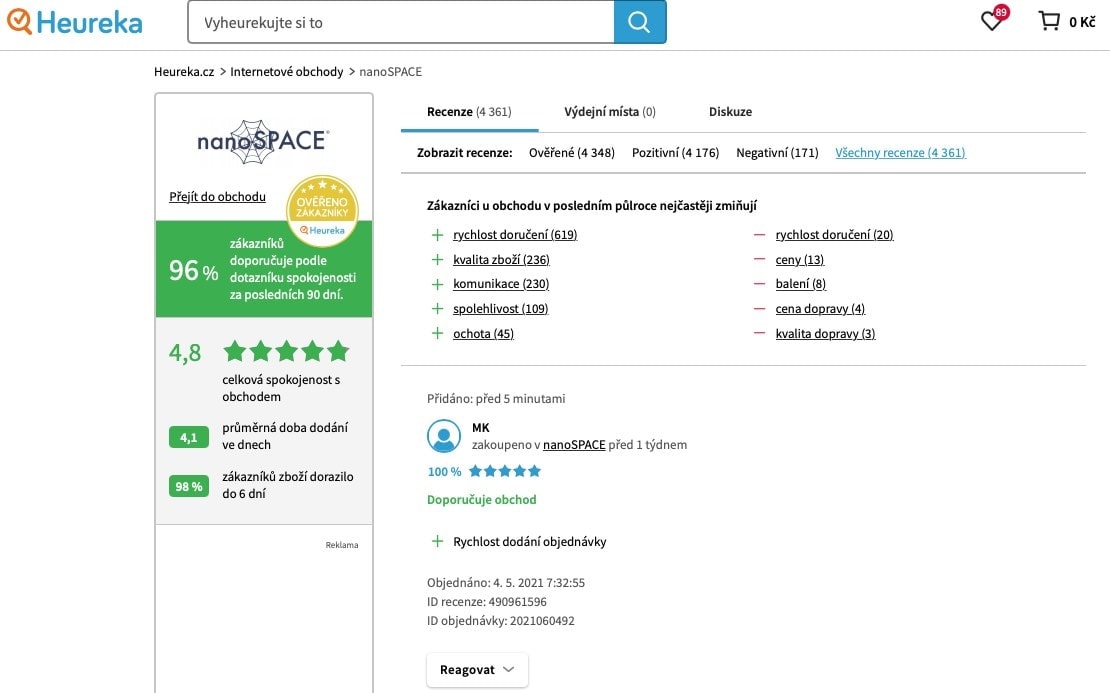
It’s crucial for every online shop to maintain a strong reputation among its customers, and many price comparison websites support word-of-mouth feedback through customer ratings and reviews. By monitoring the ratings and reviews posted by customers, you can identify which products receive the highest praise.

What’s more, most reviews include criticism of the service alongside the product review itself, so you can gauge how well your competitors are meeting customer expectations. This is where you can spot opportunities to do a better job.

Keep an Eye on Popular Products and Trends

Many comparison sites highlight top products or feature trending items on their homepage. By keeping track of market trends, you can ensure you have the right stock on hand and are selling it at a competitive price to fully capitalise on increased demand.

Final Thoughts

To stay ahead in the world of e-commerce, businesses must find ways to attract a fragmented consumer base and deliver what they’re looking for quickly and easily. A price comparison tool can be an extremely effective channel — not only for growing revenue, but also for staying one step ahead of the competition.

Beyond using these comparison platforms as part of your marketing strategy, they provide a quick snapshot of important market trends, freeing up your time to focus on other areas of promoting your business.

Tips and Tricks for Your Vacation

Don’t Overpay for Flights

Search for flights on Kayak. It’s our favorite search engine because it scans the websites of all airlines and always finds the cheapest connection.

Book Your Accommodation Smartly

The best experiences we’ve had when looking for accommodation (from Alaska to Morocco) are with Booking.com, where hotels, apartments, and entire houses are usually the cheapest and most widely available.

Don’t Forget Travel Insurance

Good travel insurance will protect you against illness, accidents, theft, or flight cancellations. We’ve had a few hospital visits abroad, so we know how important it is to have proper insurance arranged.

Where we insure ourselves: SafetyWing (best for everyone) and TrueTraveller (for extra-long trips).

Why don’t we recommend any Czech insurance company? Because they have too many restrictions. They set limits on the number of days abroad, travel insurance via a credit card often requires you to pay medical expenses only with that card, and they frequently limit the number of returns to the Czech Republic.

Find the Best Experiences

Get Your Guide is a huge online marketplace where you can book guided walks, trips, skip-the-line tickets, tours, and much more. We always find some extra fun there!
How Much Do Influencers Earn? Up to €24,000 for a Single 14-Day Campaign

TL;DRInfluencers in the Czech Republic earn anywhere from a few thousand crowns to over 600,000 CZK for a 14-day campaign, and the actual figure depends mainly on the type of payment and the quality of the collaboration, not just follower count. Campaign data for the client Online jazyky shows influencers with 10,000–15,000 followers earned 10,000–65,000 CZK, while accounts with 101,000–200,000 followers pulled in 50,000–600,000 CZK. The best deal for influencers is a commission-based payment model (5–15% of sales for physical products, up to 30% for online courses), which pays out 15–25% more than a flat fee. Influencers on a 10–30% commission earned an average of 1.3 CZK per follower and generated an average turnover of 4.2 CZK per follower for the brand — a single Insta Story from an account with 200,000 followers drove 600 orders in a single day.

Influencer campaigns have been a hot topic in digital marketing for years. Big and small brands use influencers on Instagram, YouTube, TikTok, Facebook, and other platforms to promote their products. But how much do influencers actually cost, and what real impact do they have on sales? Understanding influencer earnings is key for both brands and creators alike.

A year and a half ago, we launched a test campaign together with Online Jazyky (a major online language school) and several other clients. Since then, we’ve run dozens of campaigns with influencers, collected and analysed data, and arrived at some surprising results that we’re sharing with you today.

In this article, we specifically mention the client Online Jazyky, the largest online language school in the Czech Republic, but data was gathered from several companies. The others preferred to remain anonymous.

We’ll tell you how much influencer campaigns cost, but more importantly, we’ll reveal how to run an effective campaign that generates profit for both you and the influencers. We’ll also cover how to choose the right influencers to work with, how to evaluate their profiles, and how to select them.

What Is Influencer Marketing?

Influencer marketing typically refers to a type of online marketing that leverages so-called influencers — influential people, bloggers, or accounts with large followings who promote products or services on their channels (social media, blogs) in exchange for payment or barter (receiving a product in return).

Influencer marketing is highly effective because it capitalises on the relationship followers have with the person or account recommending the product — people trust their recommendations. From psychology, we know that when someone we feel close to recommends something, it has a far greater impact than a recommendation from a stranger.

Who Is an Influencer?

An influencer is simply a person who has influence. They can be bloggers, Instagrammers, YouTubers, celebrities, or even people who run interest-based groups on Facebook or LinkedIn.

One big advantage of working with influencers is that many of them focus on a single niche — food, personal development, travel, or fitness, for instance — which allows brands to target their promotions much more precisely.

How Much Does an Influencer Campaign Cost?

This is the most common question from companies — and from influencers themselves. How much does a campaign with an influencer cost? How much should I charge? It’s not a straightforward question. Online, you’ll find that influencers in the US are paid $10–25 per 1,000 followers per post, which works out to roughly €9–23 per 1,000 followers. If we adjust for European markets, you’d be looking at approximately $4–10 per 1,000 followers, or around €3.50–9 per 1,000 followers.

The problem is that follower count is just one factor among many. In reality, you need to evaluate an influencer based on their follower count, engagement rate (a metric showing how many people interact with published content), and — crucially — the frequency of sponsored content and how the influencer presents brands.

As we’ll show later, these last two factors have an enormous impact on results. Our clients paid influencers anywhere from a few hundred euros up to more than €24,000 for a single 14-day campaign.

What Are the Types of Influencer Campaigns?

There are several types of collaborations between brands and influencers. They can be categorised by duration as well as by the type of compensation.

By Duration:

Short-Term Collaborations

The influencer works with the brand on a one-off campaign with a clear start and end date. It doesn’t matter whether it’s a barter deal (the influencer receives a product in exchange for promotion) or a paid collaboration with a financial reward.

Long-Term Collaborations

Many brands look for ambassadors — influencers who commit to long-term partnerships. This means the influencer agrees to promote the product on a regular basis. In this case, brands should be particularly careful from a legal standpoint when drafting contracts with influencers.

For legal guidance on influencer marketing, we recommend looking into specialist courses on advertising law and influencer contracts — they’re well worth the investment compared to learning the hard way.

Long-term collaborations can also take the form of repeated short-term partnerships, where there’s no single long-term contract but rather new agreements or amendments signed for each campaign.

Long-term influencer partnerships are mutually beneficial. The influencer becomes associated with the brand, so followers trust the collaboration more. It also looks far better than promoting a different product every week. When followers see that the influencer remains happy with and continues to promote a brand, they develop greater trust in it.

By Type of Compensation

Collaborations are also divided by how the influencer is compensated. Options include barter (product only), a fixed fee, a fixed fee plus commission, or a purely commission-based arrangement. From the influencer’s perspective, commission-based collaborations often yield the highest influencer earnings.

With a commission-based campaign, an influencer can earn up to 1,525% more than with a fixed fee

Based on our data, an influencer with 15,000 followers earns between €160 and €320 from a fixed fee for a 14–30 day campaign (9 stories, 1 post). However, with a commission-based campaign, Instagrammers with the same follower count earned between €440 and €2,600. That’s up to 1,525% more than a fixed fee arrangement.

Barter Collaborations

A barter collaboration is one where the influencer is compensated solely with a product. This is most common with micro-influencers or for higher-value products. Even in this case, it still counts as advertising and should be disclosed as such.

Fixed Fee

The most common form of paid collaboration. It works well for companies that have a well-designed campaign, can select quality influencers, and have an influencer marketing manager who ensures that posts and stories are published as agreed.

If you opt for a fixed fee, you should agree with the influencer not only on the number of stories but also on timing. The scheduling during a campaign is absolutely crucial.

Commission-Based System — Ideal for Quality Influencers and Quality Products

A commission-based system is the most rewarding for high-quality influencers. For physical products, commissions typically range from 5–15% of sales, while for digital products (such as online courses), commissions can reach up to 30% of sales. If influencers genuinely care about their followers and have a strong relationship with them, accounts with just 10–15 thousand followers can earn as much as €2,600.

This was a shocking discovery for us — the number of followers barely mattered. We had influencers with 50,000 followers who couldn’t sell a single online course, and then we had influencers with 150,000–200,000 followers who earned over €24,000.

Smaller influencers on commission-based campaigns can earn more than influencers with tens of thousands more followers

This model is becoming increasingly popular with brands, precisely because the influencer only earns as much as they sell. With commission-based deals, you don’t dictate how or how often they should post (though you can recommend what works best).

The key is to keep the influencer informed during the campaign about how much they’ve earned so far — it keeps them motivated to push for better results. Influencers on a 10–30% commission earned an average of €0.052 per follower (ranging from €0.0016 to €0.18 per follower) and generated an average revenue of €0.17 per follower for the client (ranging from €0.0056 to €0.61 per follower).

Case Study: Online Jazyky, 30% Commission

How Much Did Influencers Earn

Number of FollowersEarnings Range
10,000–15,000€400 – €2,600
16,000–30,000€80 – €1,200
30,000–60,000€1,200 – €3,600
60,000–100,000€3,600 – €4,800
101,000–200,000€2,000 – €24,000

As the table clearly shows, smaller influencers on commission-based campaigns can earn even more than influencers with tens of thousands more followers. It all comes down to the quality of the influencer themselves.

Tip: The more influencers earn, the higher the amounts they can invest to build passive income. The most successful ones buy property to rent out or put money into stocks, ETF funds, or cryptocurrency.

Fixed Fee + Commission

This compensation model is less popular with companies because it’s the least advantageous for them. Not only do they need to monitor whether the influencer fulfils the brief, but they also pay a sales commission on top. Commission rates here are significantly lower for the influencer, usually between 5% and 10%. This model is typically reserved for large influencers where strong results are virtually guaranteed.

How to Choose a Quality Influencer

We’ve already covered selecting quality influencers in our blog post How to Build a Good Collaboration with Influencers — YouTubers, Instagrammers, and Bloggers. Don’t just look at follower counts, likes, and comments on photos — pay close attention to how they present the brands they work with. If an influencer is doing one sponsored collaboration after another, steer clear. These influencers tend to deliver the worst results.

Look for influencers who genuinely care about their followers and only promote products they believe in. The product you’re offering should be something they enjoy or love. The best influencer collaborations we ran were ones where the influencers approached us first. That was the case with an influencer who had fewer than 15,000 followers but generated over €8,000 in revenue for the company and personally earned €2,600.

What drove that kind of success? This influencer had already been using Online Jazyky as a student, was happy with the product, and reached out directly to the brand about a partnership. They’d been mentioning Online Jazyky in their posts and stories long before the campaign — and continued after it ended. Their followers could see they were promoting a product they genuinely loved.

The worst collaborations were ones where it turned out the influencer just wanted the money — and while they pretended on Instagram to be studying the course, they actually only opened it to film an Instagram Story. Followers aren’t stupid. They can tell when someone is promoting a product sincerely versus just going through the motions for a payday.

One last thing: Don’t beat yourself up when a collaboration doesn’t work out. Sometimes an influencer seems enthusiastic about working with you, only to turn into the type who never opens the product or poses with it without even knowing what they’re actually promoting.

How to Measure Campaign Results

For measuring campaigns, we recommend using a discount code — it’s an elegant way to track each influencer’s impact on sales. For influencers who operate on Instagram, measuring via affiliate links doesn’t make much sense. Based on our data, affiliate links only capture about one-third of the conversions an influencer actually generates.

How Much Do Influencers Earn for Companies?

Before we dive into the numbers, it’s worth noting that influencer campaigns aren’t suitable for every brand or product type. While you can find dozens of influencers for fashion, if you’re selling industrial bolts, you’ll have a much harder time finding the right fit. It’s not impossible though — you might find a DIY enthusiast. But let’s be honest, you’re probably not going to turn screws into a love brand on Instagram.

Looking at Online Jazyky, who sell language courses: in a single 14-day campaign, one influencer generated nearly €80,000 in revenue for the company. Across all campaigns, influencers generated between €0.0056 and €0.61 per follower in revenue. On average, influencers brought in €0.17 per follower.

The power of influencers can be truly staggering. A single Instagram Story from an account with 200,000 followers brought in 600 orders. For a company that averages 300 orders per day, that’s a massive difference.

Of course, there are also campaigns that completely flop. An influencer with great engagement and thousands of followers might bring in conversions you can count on one hand — either because they simply couldn’t be bothered with the product, or (perhaps even worse) they did a brilliant job but their audience just wasn’t interested in the product. Perhaps the most famous example is Arianna Renee, who had 2 million followers but couldn’t sell even 36 T-shirts.

How to Run an Effective Campaign

Whether you’re an influencer or a brand, if you want to successfully promote a product, you need to invest time in both preparation and execution. The influencer must have enough time to get to know the product. If it’s a course, they need time to actually try it. If they don’t dedicate enough time to it, the collaboration simply won’t work. If the influencer isn’t happy with the product, this is also the stage where they can agree with the brand to cancel the campaign and return the product.

We divide campaigns into two phases: the pre-campaign and the campaign with a discount code. For 14 days before the influencer shares the discount code on their channels, a pre-campaign runs where the influencer gradually introduces the product into their content. By this point, the influencer should already be well acquainted with the product. Some influencers even hint during this phase that a discount code is coming, so they don’t miss out on potential commission.

After those 14 days, the actual campaign begins. For the best results, the influencer communicates the discount code at the start of the campaign, in the middle of the campaign, and during the last 2–3 days. The final days of the campaign typically drive the most conversions, as the discount code is about to expire.

To make sure the campaign runs smoothly, don’t forget to communicate with your influencers throughout. For commission-based campaigns, you can update them halfway through and before the end on how much they’ve earned. For fixed-fee deals, send them reminders to post their content and fulfil their contractual obligations.

Is It Worth Running Mass Campaigns with Multiple Influencers?

Mass campaigns involving more than 5 influencers turned out to be our biggest flops. Influencers in these campaigns achieved 50–80% lower results on average compared to having an exclusive campaign or sharing it with a maximum of two other influencers. This was likely because followers felt bombarded with the product from all directions.

With shared campaigns of 2–3 influencers, we didn’t observe similar problems. So if you’re planning a larger campaign with multiple influencers, opt for a smaller number with different target audiences.

Thanks to our colleagues Gábi Dvořáková and Lukáš Konečný for their help with data collection and campaign analysis. A big thank you also to our clients, especially Online Jazyky, who agreed to make their data public.

Want to incorporate influencers into your marketing but still not sure how? Get in touch with us. 😊

BONUS: Online Course on Legal Aspects of Influencer Marketing

Very few people ensure that influencer collaborations with brands or agencies are legally compliant. Beyond potential issues with regulators, this can erode follower trust in the influencer, damage the brand itself, and make the agency look unprofessional.

An online course by Petra Dolejšová called Law in Influencer Marketing is useful for any marketer, influencer, or brand manager who wants to do their job properly and within the law. The course is just 30 minutes long. Note: the course is in Czech, but the legal principles around disclosure and advertising law apply across the EU.

What you’ll learn:

  • How collaborations should and shouldn’t be disclosed
  • What influencer marketing looks like from a legal perspective
  • Which products and goods influencers are prohibited from promoting
  • What counts as advertising for an influencer and what doesn’t
  • How to handle barter deals and gifts
  • What to watch out for in influencer collaborations
  • What contracts with influencers should look like
Petra Dolejšová - Law in Influencer Marketing online course

Tips and Tricks for Your Vacation

Don’t Overpay for Flights

Search for flights on Kayak. It’s our favorite search engine because it scans the websites of all airlines and always finds the cheapest connection.

Book Your Accommodation Smartly

The best experiences we’ve had when looking for accommodation (from Alaska to Morocco) are with Booking.com, where hotels, apartments, and entire houses are usually the cheapest and most widely available.

Don’t Forget Travel Insurance

Good travel insurance will protect you against illness, accidents, theft, or flight cancellations. We’ve had a few hospital visits abroad, so we know how important it is to have proper insurance arranged.

Where we insure ourselves: SafetyWing (best for everyone) and TrueTraveller (for extra-long trips).

Why don’t we recommend any Czech insurance company? Because they have too many restrictions. They set limits on the number of days abroad, travel insurance via a credit card often requires you to pay medical expenses only with that card, and they frequently limit the number of returns to the Czech Republic.

Find the Best Experiences

Get Your Guide is a huge online marketplace where you can book guided walks, trips, skip-the-line tickets, tours, and much more. We always find some extra fun there!
How to Live to 120: A Beginner’s Guide to Longevity

TL;DRLiving to 120 isn’t science fiction, according to the author — it comes down to science-backed habits. Think switching on longevity genes (sirtuins, mTOR, AMPK) through hormesis, cold exposure and sauna sessions, plus supplements like resveratrol, NMN or NR that boost NAD+ levels, and tests such as DNA analysis or gut microbiome mapping. Diet matters just as much: Michael Greger’s “daily dozen”, intermittent fasting, and cutting back on meat and sugar. Add quality sleep with a fixed routine and no blue light in the evening, regular exercise (ideally 30 minutes of HIIT a day, or running 5–8 kilometres a week, which can cut heart attack risk by up to 45%), and managing stress through meditation and journalling.

I’m convinced that with today’s knowledge, technology, and medical advances, every one of us can live to 120. The key to longevity is consistently following both time-tested and cutting-edge strategies that scientists across all fields of human life research offer as solutions to various health problems and ageing prevention.

Since 2021, I’ve been trying to follow these principles as closely as possible, so I put together a list to remind myself how to live. This guide is applicable to everyone, but especially when it comes to the “life extension” protocols, I’d recommend deeper study to understand all the important mechanisms. Here’s the essential reading list to get you started:

Key Concepts

Survival Genes

We all carry so-called longevity genes (mTOR, AMPK, and sirtuins) that protect the body under adverse conditions by activating survival mechanisms. By frequently activating these genes, it’s possible to improve health, build better resistance to disease, and extend lifespan.

There are several ways to activate survival genes without causing harm to the body. It comes down to inducing mild stress through exercise, cold, or hunger. This state is known as hormesis.

Hormesis

Hormesis forces the body to conserve resources and repair cells as much as possible. In practical terms, this extends your life because instead of building new cells, your body repairs existing ones — essentially rejuvenating them. Hormesis can even be triggered artificially with certain compounds.

Sirtuins

Sirtuins are among the most important longevity genes. They unpack and repackage our DNA, switching genes on and off. During stress (exercise, fasting, etc.), they initiate processes that repair cells and prevent cell death. A decline in sirtuin activity — linked to dropping NAD levels — is one of the primary causes of ageing.

NAD+

NAD is a chemical compound that serves as a central regulator of many critical biological processes, including ageing and disease. Without sufficient NAD levels, sirtuins can’t function effectively. NAD levels naturally decline with age, which is one of the main drivers of ageing. Boosting NAD levels fundamentally impacts cellular ageing.

Note: There are more longevity genes than these, but for this article I don’t need to list them all. If you want to dive deeper, check out David Sinclair’s book Lifespan.

Fighting Disease

We all know that the cheapest and most effective way to fight disease is prevention. So why not use the most advanced methods available on the market?

DNA Analysis

Getting a DNA test to identify genetic predispositions — from lactose intolerance to cancer risk — now costs just a couple of hundred pounds. You only need to do it once, and as the global database grows, you’ll keep learning new things about yourself.

Sleeping badly? Frequent stomach pain? Struggling with depression? Your genetic makeup might be partly to blame.

DNA analysis through genome sequencing is the foundation of predictive medicine, which responds to the probability of disease and tries to prevent it. I ordered my genome sequencing from SelfDecode on a recommendation, and I’d encourage you to do the same.

Gut Microbiome Analysis

A gut microbiome test is a non-invasive method (just a stool sample 😊) that delivers excellent results. Your gut flora influences not only digestion but also mood, appetite, and allergies.

The analysis reveals the optimal composition of your gut microbiome and recommends dietary adjustments, as well as possible supplements or medications. In short, you’ll learn how to keep your gut happy and thriving.

Services like Atlas Biomed, Viome, or Zoe offer comprehensive gut microbiome testing available in the UK.

Cold Exposure

Cold activates longevity genes. Exposing yourself to cold in any form stimulates the production of beneficial brown adipose tissue, because the body is under stress.

I’d recommend brisk walks in winter wearing just a t-shirt, exercising in cold environments, and leaving a window open overnight. Personally, I also add cold showers three times a week and sitting on my balcony in nothing but my birthday suit for five minutes twice a week (in winter).

Sauna

Just as cooling down is beneficial, so is going the other direction away from your thermoneutral zone — heat. Using a sauna once a week can reduce the incidence of heart disease by up to 50%, although the exact mechanisms behind this haven’t been fully described yet.

TIP: For full-body warming, we recommend regular sauna sessions. If you prefer something at home, a portable hot tub or infrared sauna blanket can be a great investment in your longevity routine.

Boosting NAD+ to Slow Down Ageing

Through so-called sirtuin activators, you can trigger the same processes in your body that occur during physical stress. By swallowing a pill, you can artificially boost your NAD+ levels and help your body repair damaged cells — essentially “growing younger.”

Resveratrol

The first activator is resveratrol, a compound that influences the same pathways as caloric restriction (which is just as effective as intermittent fasting). Taking it triggers a conservation response in the body. In yeast studies, regular resveratrol supplementation extended lifespan by up to 50%.

Plants produce resveratrol when under stress (for example, organically grown produce). Resveratrol was the pioneering compound for boosting NAD+ levels and is now freely available in online shops. Following a wave of research, even more effective compounds emerged: NR and NMN.

NMN or NR

Both NMN and NR are even more effective NAD+-boosting compounds that are now fairly easy to find. NR has been around longer and is much more extensively studied. The original manufacturer and patent holder sells NR under the brand name Tru Niagen.

💡 We recommend ordering Tru Niagen directly from their official US website — it’s significantly cheaper. To ship from the US to the UK, you can use a package forwarding service like Planet Express.

Diet

Don’t Eat Meat

Meat is murder — at least when it comes to your own body. Consuming animal protein has been linked in numerous studies to high mortality rates from cardiovascular disease and cancer.

The worst offender is processed red meat (sausages, hot dogs, ham, and bacon), which demonstrably contributes to colon, pancreatic, and prostate cancer. As David Sinclair puts it, our diet “should look less like a lion’s feast and more like a rabbit’s nibbling.”

Buy or Grow Organic Vegetables

Even vegetables and fruit have their own survival genes, which are activated by stress. And stress comes from a challenging environment — meaning natural growing conditions without chemicals or artificial aids.

Intermittent Fasting

Intermittent fasting means eating less frequently and feeling hunger more often, but it doesn’t mean dieting. You don’t change what you eat — you simply optimise when you eat. There are several intermittent fasting methods to choose from, and even spontaneously skipping meals counts.

The sensation of hunger triggers beneficial mechanisms in the body that lower blood pressure, reduce blood sugar, decrease cholesterol, and of course help with weight loss.

And a few more tips:

  • Eat more vegetables, legumes, and whole grains
  • Limit dairy, white bread, and sugar
  • Cut out sugar and white bread entirely
  • Aim for a maximally balanced diet
  • Drink a glass of water with every meal

The Daily Dozen

According to Michael Greger (from his book How Not to Die), the ideal daily diet looks like this (try to stick to it as closely as you can):

Daily ServingsFood Type
3legumes
1berries
3other fruit
1cruciferous vegetables
2dark leafy greens
2other vegetables
1flaxseeds
1nuts and other seeds
1herbs and spices
3whole grains
4beverages
1physical exercise

Sleep

The Power of Routine

Our bodies have their own internal clock — the circadian rhythm — which dictates when and how long we should sleep. Everyone’s circadian rhythm is slightly different, but the general rule is that you should go to bed and wake up at the same time every day, ideally without an alarm.

Ever since my partner Lucka and I started paying attention to our sleep, my sleep quality has improved dramatically. I spend more minutes in deep sleep each night, and I haven’t yawned during the day in nearly two years.

Home Lighting

Artificial lighting can perfectly trick your brain into thinking it’s still daytime, preventing your body from producing enough melatonin — a hormone crucial for falling asleep easily.

The extent to which evening electric light delays our internal circadian rhythm is staggering. On average, it’s a two- to three-hour shift every single evening. So even though the clock reads midnight, your body still thinks it’s daytime.

In the evening, stick to dim spotlights and avoid blue light. Ideally, invest in smart bulbs that adapt to the time of day. You can even sync them to your individual sleep cycle with automatic transitions from warm, dim light in the evening to bright light in the morning.

Longevity Supplements

My partner Lucka and I occasionally supplement with melatonin. It’s particularly useful on evenings after a day when you couldn’t avoid blue light exposure in time.

TIP: If you’re considering other vitamins and supplements for longevity, do your research and look for reputable brands with third-party testing. Sites like Examine.com are excellent for evidence-based supplement reviews.

Sleep Tracking

I’ve been tracking my sleep with a Fitbit for over six years. While it’s only an indicative measurement, I can now reliably connect my sleep data with how the following day goes.

By measuring your sleep quality, you can uncover a range of issues that lead to general fatigue or feeling exhausted despite a full night’s rest. These might include breathing problems or shallow, interrupted sleep.

I’d recommend sleep tracking to everyone. Popular options include the Oura Ring, Fitbit, Whoop, and Apple Watch — pick the one that suits your lifestyle best.

Exercise

Breaking a proper sweat during physical activity is the single best thing you can do for your longevity. And it’s not just about building muscles (flattering as they may be) or improving circulation — it’s about the changes happening at a molecular level.

The more you exercise, the longer your telomeres, meaning your cells are in better condition. Exercise (just like fasting) puts the body under stress, which in response raises NAD levels, repairs cells, and builds new capillaries that improve blood flow throughout the entire body.

What matters most is exercise intensity, and the most effective method turns out to be HIIT training (working out at 85% of your maximum heart rate). You only need half an hour a day of this kind of exercise.

If you’re a runner, here’s some good news — 5 to 8 kilometres per week (roughly 15 minutes a day) reduces the risk of death from heart attack by up to 45%.

If traditional exercise isn’t your thing, try combining it with fun. At home, we’ve had great success with an Xbox with the Kinect motion sensor (and a range of fitness games), and after Christmas I got hooked on fitness games in virtual reality using an Oculus Quest 2.

Stress

Managing stress and anxiety is a topic I haven’t yet explored in depth, but I plan to change that. I’ve had chronic stomach ulcers since I was 12, which flare up whenever I experience excessive stress. So how do I deal with it?

Meditation

During tougher periods — when I’m facing difficult decisions or an overwhelming workload — I turn to meditation. A simple 10-minute morning session before the workday begins is all I need.

I’m not interested in diving deep into meditation philosophy, so I rely on apps for guided meditation. I alternate between subscriptions to Calm and Headspace — both are excellent and widely available.

Journaling (Daily / Weekly / Monthly)

Writing letters to yourself might sound a bit mad, but for venting and organising your thoughts, it works brilliantly. Despite all the tech at our fingertips, good old pen and paper works best for me.

Every month I fill dozens of pages, repeatedly jotting down my current priorities, problems, and whatever thoughts are burning a hole in my mind.

Write letters to yourself on a regular basis.

This list is a WORK IN PROGRESS. I’m gradually adding all the tricks and tactics that come to mind or that I discover through self-study. I’d love to hear your additions or comments below the article. Here’s to a long life! 😊

Tips and Tricks for Your Vacation

Don’t Overpay for Flights

Search for flights on Kayak. It’s our favorite search engine because it scans the websites of all airlines and always finds the cheapest connection.

Book Your Accommodation Smartly

The best experiences we’ve had when looking for accommodation (from Alaska to Morocco) are with Booking.com, where hotels, apartments, and entire houses are usually the cheapest and most widely available.

Don’t Forget Travel Insurance

Good travel insurance will protect you against illness, accidents, theft, or flight cancellations. We’ve had a few hospital visits abroad, so we know how important it is to have proper insurance arranged.

Where we insure ourselves: SafetyWing (best for everyone) and TrueTraveller (for extra-long trips).

Why don’t we recommend any Czech insurance company? Because they have too many restrictions. They set limits on the number of days abroad, travel insurance via a credit card often requires you to pay medical expenses only with that card, and they frequently limit the number of returns to the Czech Republic.

Find the Best Experiences

Get Your Guide is a huge online marketplace where you can book guided walks, trips, skip-the-line tickets, tours, and much more. We always find some extra fun there!
Year Review 2020 and Plans for 2021

TL;DRIn this personal round-up of 2020, the author swaps a plot of land near Vodňany for a flat in Písek, where he now spends about 4 days a week. He’s grown his investment portfolio too — shares through Patria, Revolut and Degiro, P2P loans on Mintos yielding around 17% a year in Kazakhstan, property via Upvest, the Bondster platform, and a strategy running on Portu. His company nanoSPACE rode the demand for nano face masks and respirators to a turnover of over 100 million korunas. His site Loudavymkrokem.cz has expanded into marketing, finance and investing, pulling in content from his powerofdoing.blog. For 2021, he’s planning to dig into the longevity field, grow nanoSPACE’s export business, get back to publishing 2 articles a month, and finally finish the move to Písek.

This year, I decided to publish my year review publicly for the very first time. I was inspired by František Szabó, who has been publishing his annual reviews since 2011.

2020 was a wildly turbulent year, and the paths that led to achieving my goals were ones I couldn’t have imagined back in December 2019.

Year Review: 2020 Goals

Buy a plot of land

It turned out that changing the zoning plan near our target area wasn’t straightforward, so we had to come up with an alternative solution. Instead of the plot we’re still fighting for, we bought a flat in Písek (a charming town in South Bohemia). In a few months, we’ll be moving in and finally achieving our long-term goal of leaving Prague behind. We were already spending about 4 days a week in Písek anyway.

Growing the investment portfolio

About a year and a half earlier, I started slowly preparing to secure our future family’s finances and our retirement. The first half of 2020 turned out to be a fantastic opportunity to increase some positions and pick up new stocks. I won’t tell you how much I invested, but I will share what I bought:

  • On Patria: Erste, Moneta
  • On Revolut: AbbVie, Apple, Thermo Fisher Scientific, Virgin Galactic, Activision Blizzard
  • On Degiro: AbbVie, Apple

Although I reduced my P2P lending exposure, I still found room for new investments on Mintos — particularly in Kazakhstan, where I’ve been consistently achieving returns of around 17% per year.

I also invested in real estate through Upvest and tried out the Czech platform Bondster. On top of that, I set up an investment strategy on Portu, where I send a fixed amount every month. So overall, growing the investment portfolio — mission accomplished.

Implement financial planning and family expense analysis

Inspired by Czech entrepreneurs Víťa Války, Daniel Gamrot, and Robert Vlach, I created detailed spreadsheets to track our family spending, investments, and cash flow management. I borrowed ideas from each of them and built an ultimate spreadsheet that I update once a month using bank statements.

Here’s what it looks like (if you’re interested, I can send you the template via email):

Make the family business nanoSPACE profitable

I set this goal because I wanted to use nanoSPACE as a reference for our small marketing agency LK MEDIA. What I didn’t anticipate was that the pandemic would overnight turn nanoSPACE into a company with annual revenue well over €4 million — and that I’d have to put my SEO specialisation on hold (or rather, stop taking on new clients).

The demand for nano face masks and nano respirators caught us completely off guard at the start of the year, and we had to dive headfirst into scaling the business. You can read here about how we automated the entire e-shop, and from there it was a proper rollercoaster ride (here’s some of our media coverage).

Today, both Lucka and I work full-time at nanoSPACE, and thanks to the capital we’ve gained, we can finally push the promotion of our anti-allergy nano bedding — a product that truly deserves the spotlight.

Growing our own projects

Loudavymkrokem.cz fell behind due to the pandemic, and hitting our target of 45,000 monthly visits with travel content alone seemed unrealistic. So I made a bold move: I migrated all the marketing, finance, and personal development content from our other site, powerofdoing.blog (which is now focused exclusively on cryptocurrency).

Alongside travel, I added these content verticals:

Affiliate income from these topics fully replaced the travel revenue, and once travel bounces back, I’ll be grateful we diversified. Loudavým krokem is no longer just a travel blog — it’s evolved into a broader platform about online business and personal finance.

Establish myself publicly as an SEO specialist

Although I’ve been developing SEO strategies for several clients over the years, very few people knew about it. Before the pandemic, my plan was to go all-in on SEO — investing all my energy into further learning and growing both my own sites and clients’ sites to build a visible track record. Unfortunately, nanoSPACE’s explosive growth forced me to put that on hold. I only got as far as registering on navolnenoze.cz (a Czech freelancer platform), because I already had more work than I could handle.

Plans for 2021

Investments

In 2021, I plan to do a deep dive into the emerging field of longevity (the fight against ageing) and, if possible, make my first investments — ideally at the pre-seed stage. I’ll most likely go through one of the dedicated longevity funds.

Strategic growth of nanoSPACE

Towards the end of 2020, we started exploring international trade at nanoSPACE, and it’s showing real potential. That’s where we’ll be channelling our energy, and I’ve set a specific revenue target for 2021.

We’re still working on finalising our cash flow management processes and professional investment and cost planning. It’s a big topic that takes up a lot of my time.

We’re also planning a return to our bedding range, which took a back seat during the pandemic while we focused on protective equipment sales.

We’ve also set an annual revenue target for the company.

One personal wish of mine: to get Lucka on the Forbes 30 Under 30 list. She managed nanoSPACE phenomenally during a turbulent year. She still has a year and 9 months to qualify. 😉

Growing our own projects

  • Loudavymkrokem.cz – get back to publishing 2 articles per month, regardless of the topic
  • Powerofdoing.blog – a major update of the cryptocurrency course (complete rewrite + a new module on DeFi tokens)
  • Secret online project – Lucka and I are planning to launch an online project with serious passive income potential. Since it’s still under wraps, I can’t say more — you’ll just have to wait until we go live. 😊

Personal goals

  • Finish the flat and become proper South Bohemians. 😊 We’ll complete the move from Prague to our new flat in Písek and leave the big city behind. We’re planning to start a family, so having our own place is key. But first, we need to sort out:
    • Bathroom, floors, walls, doors, kitchen, and bedroom.
  • Do more of what I love. That means: morning yoga with incense burning, morning meditation, drinking quality teas, deep-focus computer work with headphones on, walks with the dog, and gaming together (shouldn’t be a problem — we bought WoW and an Oculus Quest 😂).
  • Get a thorough health check-up and adjust my habits so we’re still around at 120. This includes: genome sequencing, microbiome analysis, and regular monitoring of key biomarkers.
  • Read the books on my list. I typically read about 30 books a year, but there are a few must-reads for 2021:
    • Getting to Yes
    • Influence: The Psychology of Persuasion
    • Pre-Suasion
    • To Sell Is Human
    • The Intelligent Investor
    • Money Thinks Small
    • Common Stocks and Uncommon Profits
    • Man’s Search for Meaning

I’ve also made a resolution to live to 120. You can find the full list of tactics I’m using to get there in a separate article.

Year reviews from friends, colleagues, and people I follow:

Tips and Tricks for Your Vacation

Don’t Overpay for Flights

Search for flights on Kayak. It’s our favorite search engine because it scans the websites of all airlines and always finds the cheapest connection.

Book Your Accommodation Smartly

The best experiences we’ve had when looking for accommodation (from Alaska to Morocco) are with Booking.com, where hotels, apartments, and entire houses are usually the cheapest and most widely available.

Don’t Forget Travel Insurance

Good travel insurance will protect you against illness, accidents, theft, or flight cancellations. We’ve had a few hospital visits abroad, so we know how important it is to have proper insurance arranged.

Where we insure ourselves: SafetyWing (best for everyone) and TrueTraveller (for extra-long trips).

Why don’t we recommend any Czech insurance company? Because they have too many restrictions. They set limits on the number of days abroad, travel insurance via a credit card often requires you to pay medical expenses only with that card, and they frequently limit the number of returns to the Czech Republic.

Find the Best Experiences

Get Your Guide is a huge online marketplace where you can book guided walks, trips, skip-the-line tickets, tours, and much more. We always find some extra fun there!
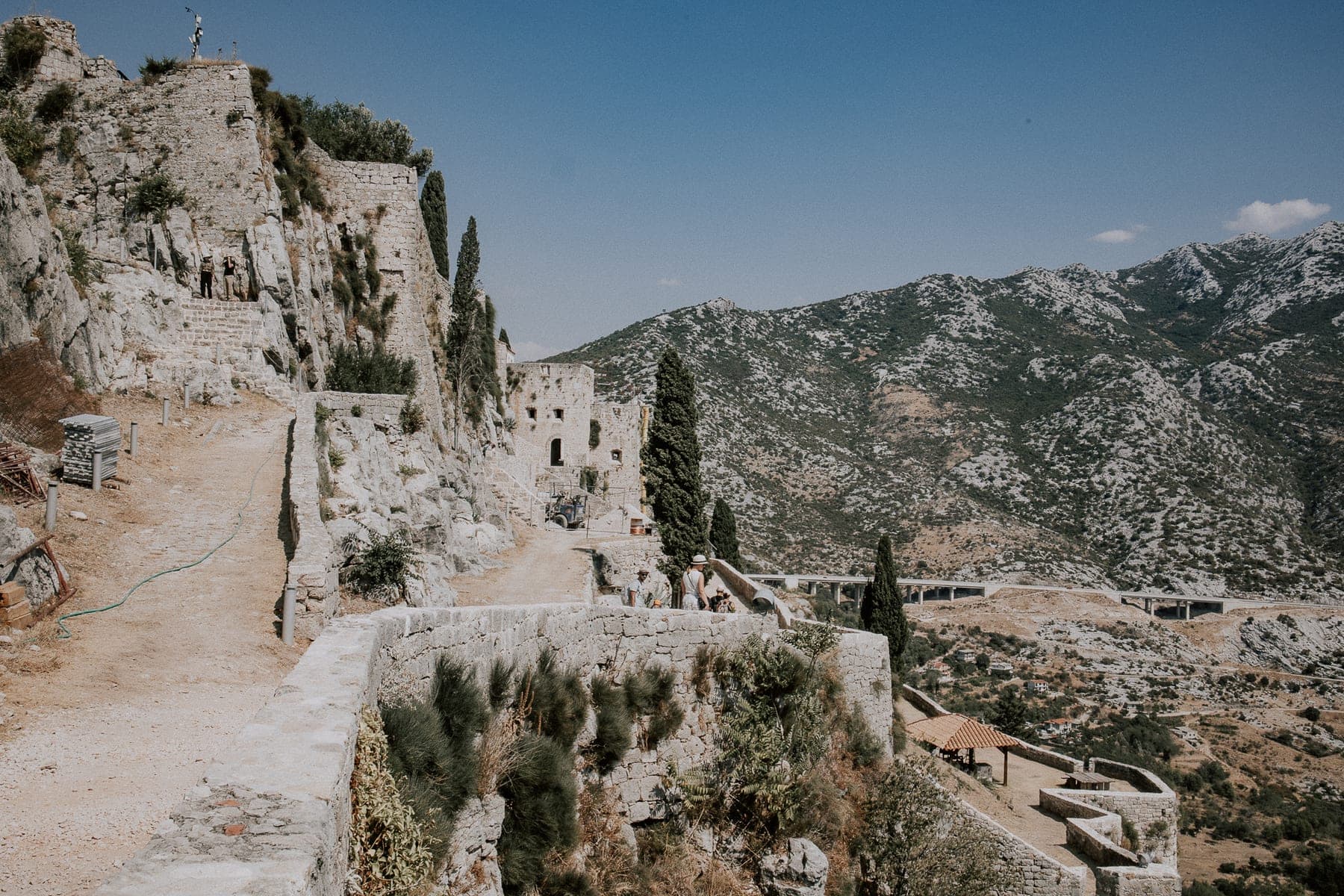
Pálava, Czech Republic: 15 Best Things to Do and See

TL;DRIn the Pálava Hills, a protected landscape area and UNESCO biosphere reserve in Czechia’s driest region, don’t miss Mikulov and its wine cellars, the ruined Děvičky Castle near Pavlov, a swim at the Lom U Mariánského mlýna quarry lake (entry 100 Kč), the Pavlov Archaeopark (an hour covers it) and the Lednice-Valtice Area with Lednice Chateau, which is worth a full day on its own. There are 15 ideas here for trips around Pálava, including Aqualand Moravia in Pasohlávky, the lavender fields at Starovičky (season runs June–July), and a boat trip on the Nové Mlýny reservoir from Camp Merkur. The highest point is Děvín, at 549 metres above sea level.

The Pálava Protected Landscape Area is located in the northwestern tip of the Pannonian Plain, and it is the driest region of the Czech Republic, where it rarely rains, the sun shines a lot, and grapevines thrive. Pálava is our favorite holiday destination in the Czech Republic, ideal for hiking and cycling trips. In this guide I will share with you Pálava, Czech Republic: 15 Best Things to Do and See.

In Pálava, you’ll find valuable cultural and historical monuments, excellent establishments, numerous observation towers, and great swimming spots. Pálava was declared a protected landscape area in 1976 and ten years later a UNESCO biosphere reserve. So, let’s take a look at what to see in Pálava.

Pálava Accommodation: where to Stay in Pálava

You should carefully consider your accommodation choice before visiting Pálava; if you’re coming here to taste wine, definitely choose Pavlov or Mikulov.

In Pavlov, there are many wine cellars, fewer tourists, but also fewer restaurants. Mikulov has plenty of tourists, but in return, you’ll find many great restaurants and cafes in addition to wine. Serious wine enthusiasts might also want to consider spending a night in Valtice. 🙂

In Mikulov, we can recommend Penzion Na Kapucínské, Apartmány Antico, or Štajnhaus. In Pavlov, you can try Pálavské Apartmány. If you’re looking for something outside the towns, Vinařství U Kapličky or Cafe Fara are wonderful options.

You can find more tips for TOP accommodation here.

Where to Eat Well in Pálava

Where to get Good Coffee

Pálava, Czech Republic: 15 Best Things to Do and See

The most important starting points for tourism are Mikulov and Pavlov, but we will also explore other places together and give you tips on where to visit not only in Pálava but also in its immediate surroundings.

1) Mikulov

The most charming town in Pálava is certainly Mikulov. You won’t find any similar town in the Czech Republic. I often say that time moves differently in Mikulov; no one rushes, everyone is relaxed, and a glass of wine at 10 AM is perfectly acceptable. In short, it has a distinct Southern European feel.

True connoisseurs will be pleased that although Mikulov is a small town, you’ll find a large number of excellent restaurants and cafes here. Since I’ve already written a guide to Mikulov, if you’re interested in what to see in Mikulov, where to stay, or where to eat, I recommend reading our article about Mikulov.

2) Pavlov

Pavlov is primarily known for its wine cellars; we won’t give you a tip for one specific one, because tasting wine from cellar to cellar is actually part of the experience itself. 🙂 You’re sure to find your favorite on your own.

Pavlov is an excellent starting point for trips to the surrounding area, and three educational trails also pass through Pavlov itself: Děvín, the Mikulov Wine Educational Trail, and the Pavlov Vineyards and Wine Cellars Educational Trail.

3) Archeopark Pavlov

Lovers of modern architecture will be captivated by the Archeopark from the outside. Archeopark Pavlov was designed by architects Radko Květ and Pavel Pijáček and has received numerous awards, for example, the building won the Building of the Year award in 2016. The museum strives to be modern and interactive, but it is somewhat small, and a tour will take you a maximum of an hour, yet it is still worth a visit.

In the museum, you’ll learn about the most significant Ice Age human encampment on Earth, located nearby in Dolní Věstonice.

4) Mariánský Mill Quarry

Our favorite swimming spot is the Mariánský Mill Quarry, where the water is crystal clear. It’s worth noting that this flooded limestone quarry is very popular, and on summer weekends, it tends to be crowded with tourists. Therefore, from the end of June 2020, an entrance fee of 100 CZK per adult was introduced, and tourists should only use environmentally friendly sunscreens.

5) Děvičky – Maiden Castles

The very popular ruin of the Gothic castle Dívčí hrady (also known as Děvičky) dates from the early 13th century and can be reached directly from Pavlov with a short and pleasant walk along the vineyard.

Dívčí hrady got its name from three rock formations that stand directly in front of the ruin on the slope, which, according to legends, represent petrified girls. From the ruin, there’s a beautiful view of the Pálava Protected Landscape Area. The path to the ruin is not suitable for strollers; a baby carrier would be better.

6) Aqualand Moravia

If you have children, you might want to visit the aquapark a short distance from Pasohlávky, which features 16 pools and 24 slides. Parents will appreciate the wellness zone with 30 types of saunas.

7) Lavender Field in Starovičky

We’ve already written about the lavender field in our Mikulov guide. Lavender and photography enthusiasts surely know about it. It’s located in Starovičky, and entry to the field is charged. During the season, self-picking is available here.

8) Dolní Věstonice

Those interested in the history of mammoth hunters should stop in Dolní Věstonice, where you’ll find a museum exhibition about the local finds at the mammoth hunters’ settlement, housed in the former 16th-century Baroque town hall. In Dolní Věstonice, you’ll also find a charming Baroque St. Michael’s Church , which records mention as early as 1389.

lukas a lucka
Lukáš and Lucie recommend
Where to Stay in Pálava
6 accommodations — hotels and other lodging options

9) Kobylí Vrch Observation Tower

We love structures that seamlessly blend into their surroundings while adding something extra. The Kobylí vrch observation tower is precisely that; it has been here since 2018, and architects J. Roleček and J. Vojtěšek, a native of Kobylí from the Brno studio KEEO Design, truly outdid themselves.

What’s particularly appealing about it is its shape, which makes it accessible even for wheelchair users. The observation tower is 7.5 meters high and stands on the highest point in the village, Kobylí vrch, which locals call Homole, at an altitude of 334 meters above sea level.

10) Na Turoldu Cave

A short distance from Mikulov is Na Turoldu Cave (385 m a.s.l.), which is one of the oldest nature reserves in the territory of today’s Pálava Protected Landscape Area and Biosphere Reserve.

Na Turoldu Caves are the only accessible caves in Jurassic limestone in the Czech Republic; it is not a stalactite cave. The cave is adorned with unique “Turold decoration” – corrosive shapes, similar to coral reefs, which evoke a walk on the bottom of a Jurassic sea.

The cave is open to the public from May to October; in April and November, it’s accessible by prior telephone arrangement only.

11) Dívčí – Orphan Castles

A pleasant walk to the Sirotčí hrádek ruin starts in Klentnice, which you can reach by car in a few minutes from Mikulov. The ascent takes about half an hour and can be managed by families with children.

The castle was built on two limestone rocks separated by a deep gorge and today offers magnificent views of Pálava. After descending back to Klentnice, you can grab a bite at the excellent Cafe Fara cafe and restaurant.

12) Lednice Chateau and Gardens

Allocate at least one day for Lednice; we spent two full days there. Lednice Chateau is one of the most beautiful English Neo-Gothic complexes in Europe. Several guided tours pass through the chateau interiors, but even if you’re not a fan of guided tours, there’s still plenty to do here.

Lednice Chateau boasts a beautiful French garden and a chateau park. In the park, you can take a boat ride from the Moorish Waterworks to Janohrad, enjoy a horse-drawn carriage ride, or climb the Minaret observation tower. Why a minaret was built here isn’t entirely clear, but a legend suggests that Alois Lichtenstein originally wanted to build a church, but the church didn’t permit him a second one, so he decided to build a mosque out of spite.

13) Valtice

In Valtice, you’ll find a chateau that is part of the Lednice-Valtice Cultural Landscape and is inscribed on the UNESCO list. In the 17th and 18th centuries, it served as the representative seat of the Liechtensteins. However, in good weather, we recommend embarking on one of the educational trails that will lead you through the beautiful surroundings full of sunflowers and vineyards. In Valtice, you can also visit the Valtice Underground, a labyrinth of wine cellars that have been here since the 13th century. A short distance from Valtice, you’ll also find the Iron Curtain Museum.

14) Kočičí Skála

If you enjoy walks, you can set off from Mikulov to Kočičí skála. A red-marked hiking trail passes around Kočičí skála, and parallel to it, a cycling path and the Mikulov educational trail.

Kočičí skála is made of limestone, and in spring and summer, you can encounter typical flowers of the Pavlov Hills here, such as the dwarf iris, hairy flax, and tuberous comfrey. From Kočičí skála, you have a view of other peaks and landmarks of the Pavlov Hills, such as Děvičky, Sirotčí hrádek, or Svatý kopeček in Mikulov.

Do you have any other tips for Pálava and the surrounding area? Write them in the comments; we return to Mikulov every year and would love to discover new places.

15) Take a Boat Ride on the Novomlýnská Reservoir

You can rent a boat at Merkur campsite. The enclosed campsite area with two water lagoons is located on the bank of the upper Novomlýnská Reservoir, and entry is charged 100 CZK per person during the season. The price of renting a boat depends on the type you choose. We opted for a motorboat with a canopy, and it cost us 350 CZK per hour. We recommend booking in advance.

What to Do in Pálava

Pálava is a paradise for nature lovers, wine enthusiasts, and those seeking active relaxation. You can embark on hiking trails leading through the Pavlov Hills and enjoy magnificent views from peaks like Děvín or Sirotčí hrádek. The area is crisscrossed with cycling paths that will take you through vineyards and historical monuments.

If you’re looking for relaxation and pampering, head to Aqualand Moravia in Pasohlávky or enjoy a break by the Nové Mlýny Reservoir. And of course, Pálava is the heart of winemaking – a visit to the wine cellars in Mikulov, Pavlov, or Dolní Věstonicích is a wonderful experience for every good wine lover.

Pálava Excursions

Pálava offers countless beautiful excursion spots. Mikulov entices with its chateau, Svatý kopeček, and a historic center with a romantic atmosphere. History enthusiasts shouldn’t miss Archeopark Pavlov, where they can learn more about the prehistoric settlement of the area.

The Lednice-Valtice Cultural Landscape, inscribed on the UNESCO list, is ideal for a full-day trip. If you want to explore nature, head to Děvín, which offers a magnificent panoramic view, or to Stolová hora.

Pálava with Kids: What to Visit in Pálava

Pálava is also a great place for families with children. Aqualand Moravia in Pasohlávky is a must-stop on hot summer days – it offers slides, pools, and wellness. Little adventurers will be thrilled by Archeopark Pavlov, where they can play as prehistoric mammoth hunters.

For short walks with children, the path to Sirotčí hrádek or the ascent to Svatý kopeček in Mikulov is suitable. If you want to combine fun with learning, visit the Puppet Museum in Lednice or the Zoopark in Sedlec.

FAQ

Where is Pálava located?

Pálava is located in South Moravia, near the town of Mikulov, close to the Austrian border. It is part of the Pálava Protected Landscape Area and is one of the most beautiful regions of the Czech Republic.

What is the highest mountain in Pálava?

The highest peak of Pálava is Děvín, with an altitude of 549 m. At the summit, you’ll find the ruin of Děvičky Castle and a magnificent view of the South Moravian landscape.

What to visit in Pálava?

Among the main attractions are Mikulov, the ruins of Děvičky and Sirotčí hrádek castles, the Nové Mlýny Reservoir, the Lednice-Valtice Cultural Landscape, Archeopark Pavlov, and the Pavlov Hills with beautiful hiking trails.

What activities does Pálava offer?

Pálava is ideal for hiking, cycling, wine tourism, and relaxation by the water. Nature lovers will appreciate the protected areas and trails with views of vineyards and limestone rocks.

Is Pálava suitable for families with children?

Yes, children will enjoy walks to castles, a visit to Archeopark Pavlov, swimming in Nové Mlýny, or Aqualand Moravia in Pasohlávky.

What are the most beautiful viewpoints in Pálava?

The most beautiful views are offered by Děvín, Sirotčí hrádek, Stolová hora, or Kočičí skála.

Tips and Tricks for Your Vacation

Don’t Overpay for Flights

Search for flights on Kayak. It’s our favorite search engine because it scans the websites of all airlines and always finds the cheapest connection.

Book Your Accommodation Smartly

The best experiences we’ve had when looking for accommodation (from Alaska to Morocco) are with Booking.com, where hotels, apartments, and entire houses are usually the cheapest and most widely available.

Don’t Forget Travel Insurance

Good travel insurance will protect you against illness, accidents, theft, or flight cancellations. We’ve had a few hospital visits abroad, so we know how important it is to have proper insurance arranged.

Where we insure ourselves: SafetyWing (best for everyone) and TrueTraveller (for extra-long trips).

Why don’t we recommend any Czech insurance company? Because they have too many restrictions. They set limits on the number of days abroad, travel insurance via a credit card often requires you to pay medical expenses only with that card, and they frequently limit the number of returns to the Czech Republic.

Find the Best Experiences

Get Your Guide is a huge online marketplace where you can book guided walks, trips, skip-the-line tickets, tours, and much more. We always find some extra fun there!
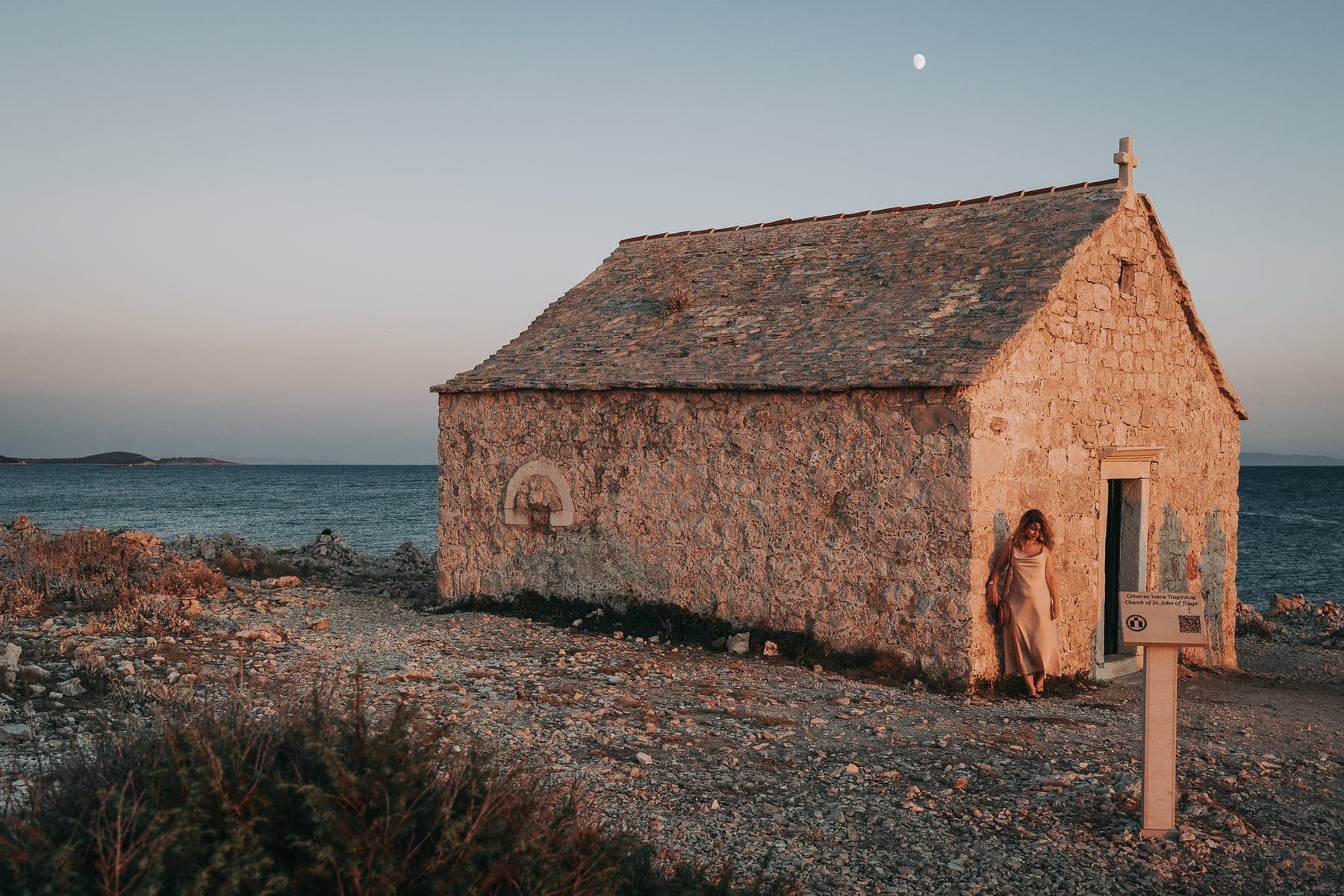
Ore Mountains, Czech Republic: 14 Best Things to Do and See

TL;DRThe Ore Mountains, stretching from Cheb to Děčín along the German border, are packed with things to do — 14 solid ideas in all. Climb the highest peak, Klínovec (1244 m), or walk the Božídarské rašeliniště peat bog trail, with its 12 information boards. The Royal Mint in Jáchymov has 15 exhibition halls, while Adit No. 1 runs 250 metres underground — or try the Mauritius mine instead. For a thrill, there’s the Plešivec rope centre with a 13-metre jump, and Most Lake, the Czech Republic’s second-largest, ringed by a 9km trail. Jáchymov makes a peaceful base, or head for romantic Boží Dar, the highest town in the country at 1028 m. It’s a great region for families, cyclists and couples alike, with spa towns and wellness breaks thrown in too.

The Ore Mountains, formerly also known as Rudohoří, are an ideal place for families with children, cyclists, and couples of all ages to visit. You’ll be surprised by the number of cycling paths, hiking trails, rich history, and couples of all types will appreciate the spas.

For children, there is a rope adventure centre or an aquapark at an affordable price. Many of you will be pleased to know that there are still many places in the Erzgebirge that are neglected by tourists, so you can enjoy them almost on your own.

So let’s take a look together at what to see in the Ore Mountains.

In this guide I will share with you Ore Mountains, Czech Republic: 14 Best Things to Do and See.

Ore Mountains Accommodation: where to Stay in the Ore Mountains

If you prefer less touristy places, the quiet town of Jáchymov is an excellent starting point. Among the best accommodations in the Ore Mountains are the four-star hotel Honour and Grace, Penzion Jezirko, or Apartmán Albreit.

Far more romantic, but also more visited, is God’s gift, or “Bozak” as the locals call it. We also stayed here, in the Jurica Apartments, where you can also arrange half board in the local restaurant Radniční sklípek.

Ore Mountains, Czech Republic: 14 Best Things to Do and See

To make your experience of the Ore Mountains complete, we recommend taking at least one walk in the local nature, visiting the highest mountain Klínovec or Plešivec, climbing an observation tower, and spending a day at the spa.

But there is much more to see here and we believe you will love it and come back regularly.

Klinovec

The highest mountain of the Ore Mountains is Klínovec with its 1244 m above sea level. Parking is free at Klínovec.

God’s Prospect

The modern lookout tower in the shape of a matchbox is located at the upper end station of the ski lift behind the Prague Hotel directly above the town of Boží Dar. The building opened only in 2020 and was built according to the project of architect Jan Mach from the Liberec company Mjölk, s.r.o. The view is truly divine, as Lukáš would say, and we recommend it to everyone for a visit. You can walk here from the center of God’s Gift or park a few steps from the viewpoint.

Božídara peat bog

You should not miss the short and beautiful walk through the national nature reserve Božídarské peat bog. The walk is on a flat path and there are beautiful sunsets in summer. On the route of the Božídar Peat Bog Nature Trail you will find 12 information boards from which you can learn interesting facts about the peat bog and the history of peat mining in the Erzgebirge.

The bald man

You may know the Plešivec area from winter skiing, but it is worth visiting in summer as well. The area offers a beautiful view of the surroundings and a pleasant restaurant Na nebi.

Mythical Erzgebirge Trail

Near the Plešivec Ski Area also starts the Mythical Ore Mountains Trail (Trail of Ore Mountains Legends), which is especially suitable for families with children; at the end of the trail, there is a nice photogenic view. Along the way you will meet a number of wooden statues where you can read mythical stories.

Rope adrenaline centre Plešivec

If you like adrenaline, you probably won’t want to miss the local rope adventure park. In addition to the rope trail, you can also try a free fall jump from 13 metres or a giant swing or a banjee with a safety harness. For children, there is a children’s rope centre.

Jáchymov

At first glance, Jáchymov may not catch your eye, but just climb one of the adjacent hills and you will find that the town has its own charm. In the town, we recommend restaurant U vodopádů, and for something good, head to Incognito Coffee.

The Jáchymov Hell Nature Trail

For those who feel up for a longer walk, you can follow the yellow trail marker to the educational trail Jáchymov Hell, which starts in front of St. Joachim’s Church and is 8.5 km long. It leads through beautiful Ore Mountains nature and commemorates the sad history of Jáchymov.

You will learn not only about the local flora, but especially about the lives of thousands of political prisoners from the nearby uranium mine labour camps.

Royal Mint Jáchymov

If it is raining or you want to take shelter from the heat, be sure to visit the Royal Mint in Jáchymov. The current museum exhibition called Jáchymov in the Mirror of Time has a total of 15 halls and will guide you through the geology and mineralogy of the Ore Mountains, archaeological findings from the Royal Mint, ore mining 16. century, numismatics and coinage. The mint also has an exhibition mapping the labour camps in the Jáchymov region after 1948.

Aquacentrum Agricola in Jáchymov

At the local Agricola aquacentre, adults and children will have a blast. The swimming pool hall includes 2 swimming lanes with a length of 25 m, a water slide and a whirlpool. We recommend to buy an entrance to the Sauna Mine.

Sauna Mine

One of the most pleasant sauna centres that Lukas and I visited. Here you will find a steam sauna, Finnish sauna, infrared sauna and our popular herbal sauna. The sauna mine also includes a very pleasant relaxation room. The sauna mine belongs to the Aquacentrum Agricola.

Adit no. 1 in Jáchymov

You can take a very interesting tour in adit no. 1 , which is 250 m long and has been accessible since 2008. It was dug in the 50s. years 20. century and today you can see it with a guide who will introduce you to mining in Jáchymov, show you what the veins of some minerals look like and introduce the techniques of the original mining.

Mauritius Mine

I never want to go down, and then I get a helmet and a raincoat and I’m thrilled. I recommend you visit the mine, even if you may have some doubts. The Mauritius mine has been mined for 400 years and on the tour you will learn about the unimaginably arduous and dangerous work the miners did during the mining process. The mine is open from May to September. Bats hibernate here in winter.

Nature trail Horní Blatná – Wolf pits

A short trail around the natural monument of the Wolf Pit, which consists of the eponymous Wolf Pit and the Ice Pit. Both pits were formed by mining activity, the Wolf Pit by the collapse of the Wolfgang Mine and the Ice Pit by the collapse of the Jiří Mine. It is one of the most photogenic places in the area. The route also leads over Blatenský vrch, where the lookout tower stands.

Lake Most Lake

Lake Most pod Hněvínem was created relatively recently (2020), but it has already found its loyal community . It is the second largest lake in the Czech Republic, the flooded area is more than 300 hectares.

There is a 9-kilometre walking circuit around the lake, the lake has terraced pebble beaches and there are also dog beaches. Don’t miss the lake. 🙂

lukas a lucka
Lukáš and Lucie recommend
Where to stay in the Ore Mountains
6 accommodations — wellness hotels and other lodging options

Ore Mountains – Interesting Facts

Finally, I have compiled several interesting facts about the Ore Mountains for you.

  • Mining History – The Ore Mountains have a rich mining past, dating back to the Middle Ages. Thanks to the mining of silver, tin, and other metals, crafts and towns developed here. Since 2019, the mining monuments of the Ore Mountains have been part of UNESCO.
  • Boží Dar – The Highest Town in the Czech Republic – Located at an altitude of 1,028 m, Boží Dar is the highest town in the Czech Republic. It is known not only for its beautiful nature, but also for Ježíškova cesta (Jesus’s Trail), which is a themed trail for families with children.
  • Klínovec – The Highest Mountain of the Ore Mountains – With a height of 1,244 m, Klínovec is not only the highest peak of the mountain range but also a popular place for skiers and tourists. From the observation tower at the summit, a magnificent view opens up to Bohemia and Germany.
  • Jáchymov – The Cradle of Radium – The element radium, which Marie Curie-Skłodowska researched, was discovered in the local mines. Jáchymov is also the birthplace of the world’s first radon spa treatment.
  • Longest Railway Tunnel in the Czech Republic – The Ejpovice Tunnel, which measures 4,150 m and is the longest railway tunnel in the Czech Republic, is located in the Ore Mountains. It was completed in 2018 and accelerated the connection between Prague and Pilsen.
  • Blatenský Ditch – A technical monument from the 16th century, which served to supply water to the mines in the Horní Blatná area. Today, there is a beautiful tourist route around the ditch, leading through forests and peat bogs.

Where are the Ore Mountains located?

The Ore Mountains are located in the northwest of the Czech Republic and form a natural border with Germany. They stretch from Děčín to Cheb, and their German part is called Erzgebirge.

What is the highest mountain in the Ore Mountains?

The highest mountain in the Ore Mountains is Klínovec, with an altitude of 1,244 m. At the summit, there is an observation tower with a beautiful view and a ski resort.

What to visit in the Ore Mountains?

Among the most interesting places are Boží Dar, Jáchymov, Horní Blatná, Duchcov with its Baroque chateau, or mining monuments inscribed in UNESCO. Natural attractions include Boží Dar Peat Bog, Přebuz Heathlands, or Waterfalls in the Prunéřov Stream Valley.

What activities do the Ore Mountains offer?

In summer, the Ore Mountains are ideal for hiking, cycling, and visiting natural monuments. In winter, they are a popular destination for skiers – ski resorts like Klínovec, Boží Dar – Novako, Plešivec, or Bublava are among the best known.

Are the Ore Mountains suitable for families with children?

Yes! Children will enjoy Ježíškova cesta (Jesus’s Trail) in Boží Dar, cable car rides, educational trails, as well as fun activities in aquaparks and entertainment centers in Karlovy Vary or Chomutov.
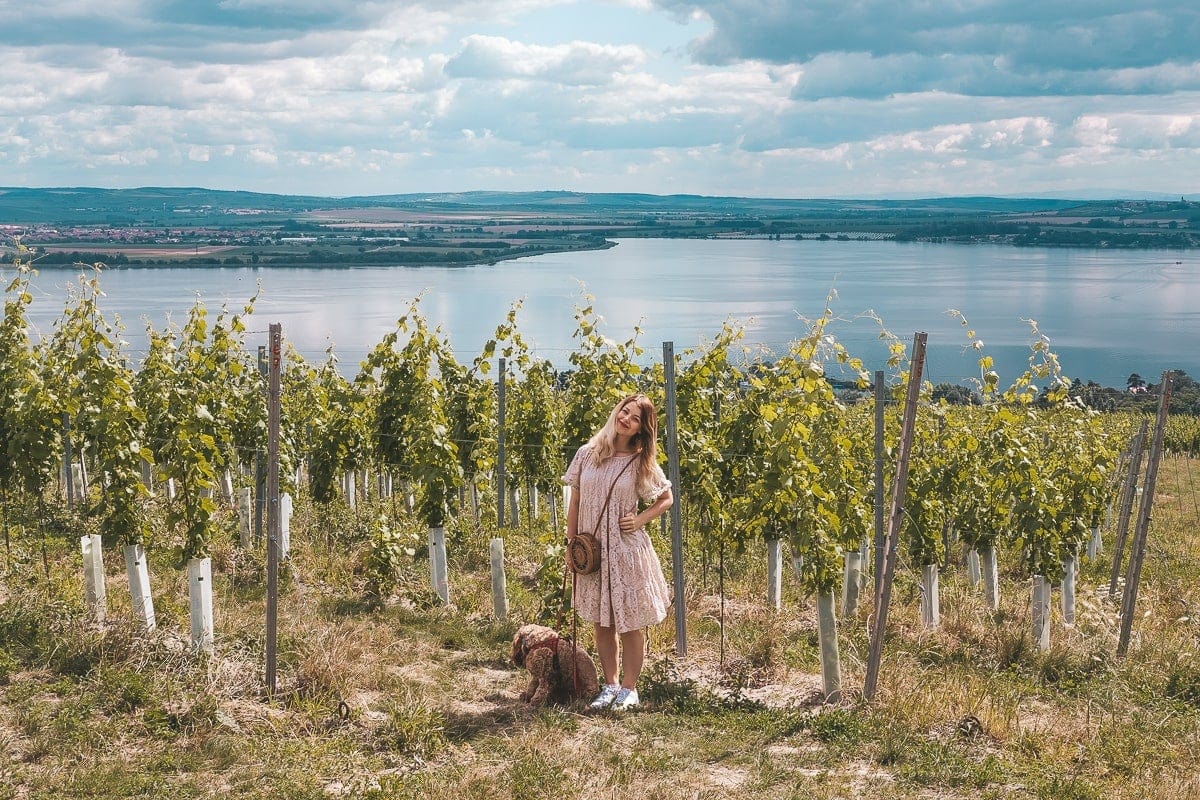
What are the most beautiful viewpoints in the Ore Mountains?

The most beautiful views are offered by Klínovec observation tower, Blatenský Hill, Plešivec observation tower, or the Jezeří viewpoint.

Tips and Tricks for Your Vacation

Don’t Overpay for Flights

Search for flights on Kayak. It’s our favorite search engine because it scans the websites of all airlines and always finds the cheapest connection.

Book Your Accommodation Smartly

The best experiences we’ve had when looking for accommodation (from Alaska to Morocco) are with Booking.com, where hotels, apartments, and entire houses are usually the cheapest and most widely available.

Don’t Forget Travel Insurance

Good travel insurance will protect you against illness, accidents, theft, or flight cancellations. We’ve had a few hospital visits abroad, so we know how important it is to have proper insurance arranged.

Where we insure ourselves: SafetyWing (best for everyone) and TrueTraveller (for extra-long trips).

Why don’t we recommend any Czech insurance company? Because they have too many restrictions. They set limits on the number of days abroad, travel insurance via a credit card often requires you to pay medical expenses only with that card, and they frequently limit the number of returns to the Czech Republic.

Find the Best Experiences

Get Your Guide is a huge online marketplace where you can book guided walks, trips, skip-the-line tickets, tours, and much more. We always find some extra fun there!