Thinking about your next holiday and fancy hiring a motorhome? Caravan travel is something you can absolutely do without any prior experience, but if you’re heading abroad, it pays to be prepared. Read our practical guide to motorhome travel in Europe — so nothing catches you off guard on the road.
The full destination guide: Europe — guide and what to see
Where to hire a caravan
Since the pandemic, the number of motorhomes available for hire has exploded online. While that means more choice, it also means you need to be more careful. Many private owners may not keep their vehicles in top condition, or might not have adequate insurance — the kind where you won’t end up paying a €1,200 excess for every little scratch.
If you’re taking a motorhome abroad, you need to be confident you’re hiring a well-maintained, quality vehicle. That’s best done through specialist rental companies. We’ve travelled around both the UK and mainland Europe several times with rented motorhomes from reputable hire firms. Look for companies with strong reviews and transparent insurance terms — it makes all the difference.
What type of caravan to choose
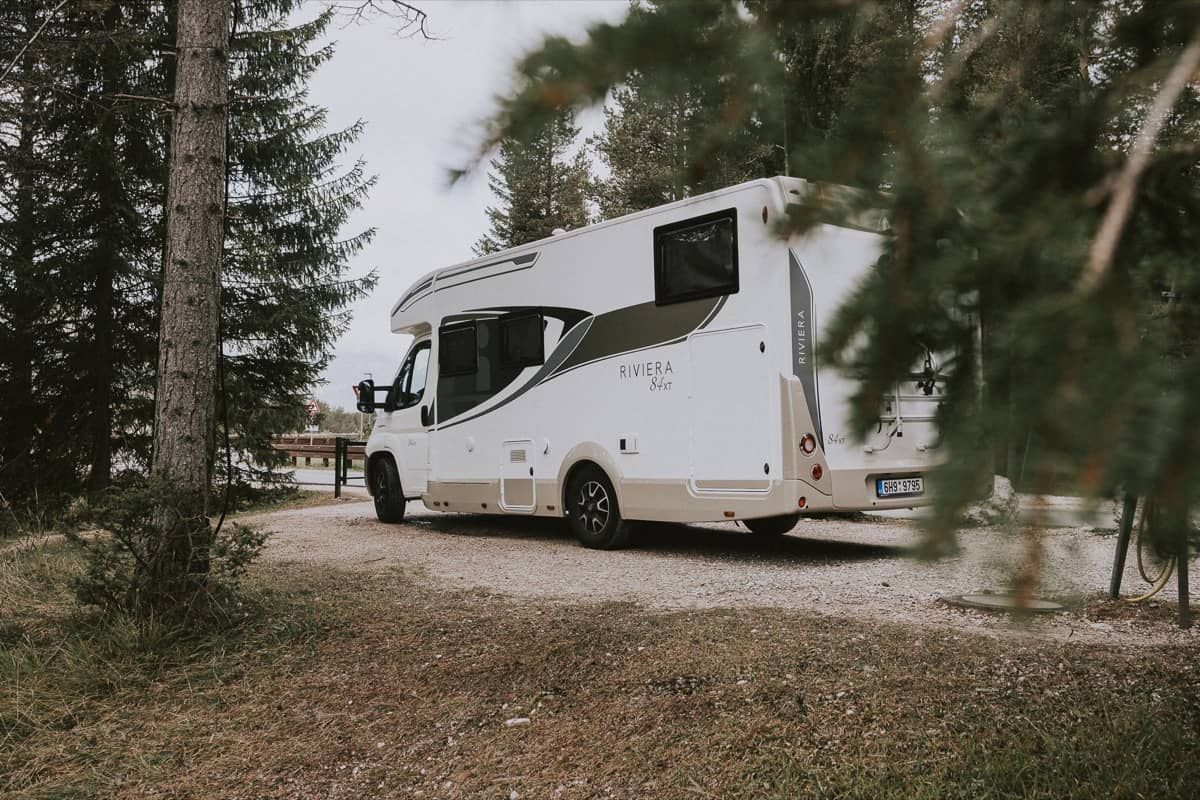
Choosing the right motorhome is just as important as choosing the right hire company. I’m no expert when it comes to recommending the most reliable make and model, but you should know that motorhomes come with varying levels of equipment and differ in how many people they can sleep.
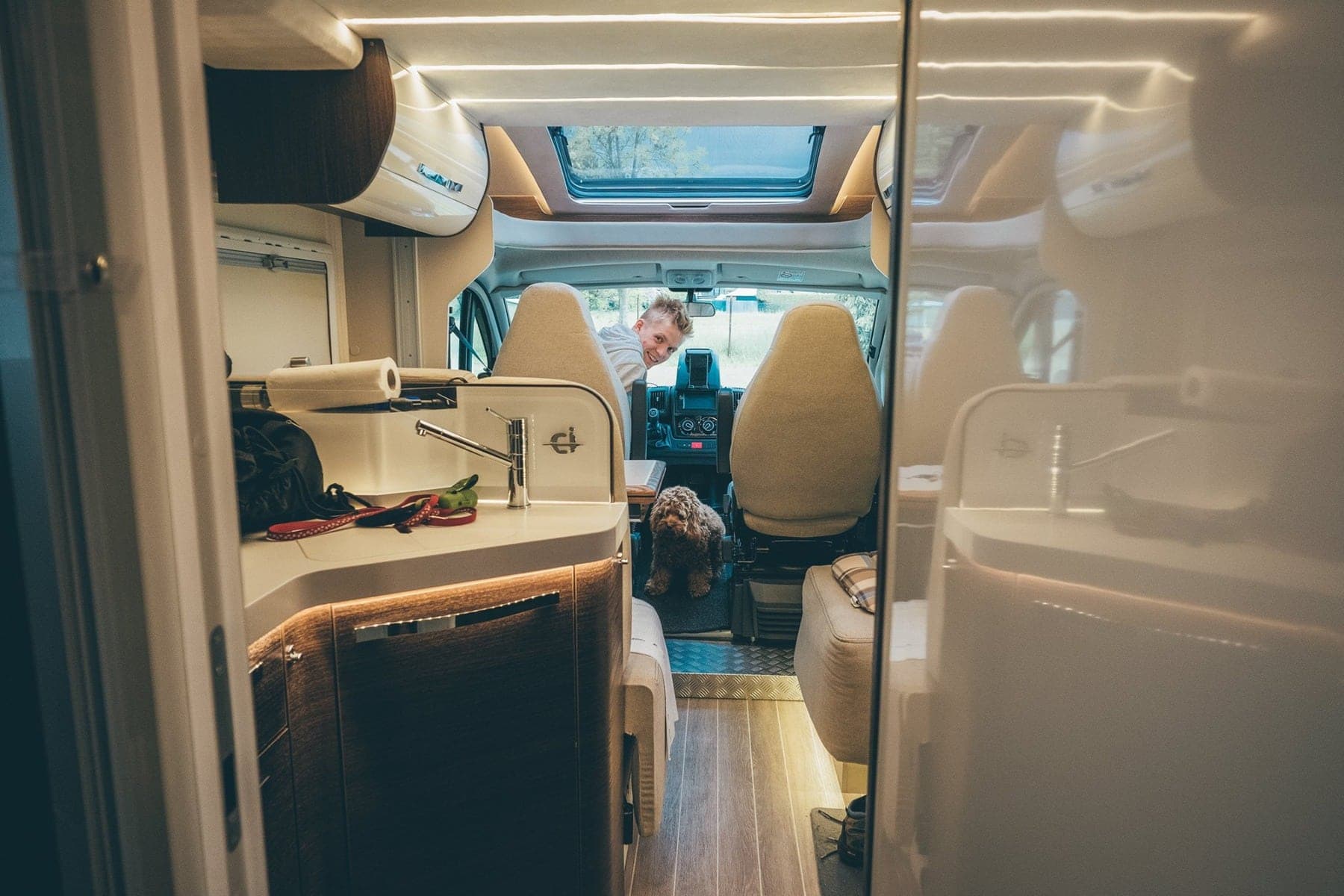
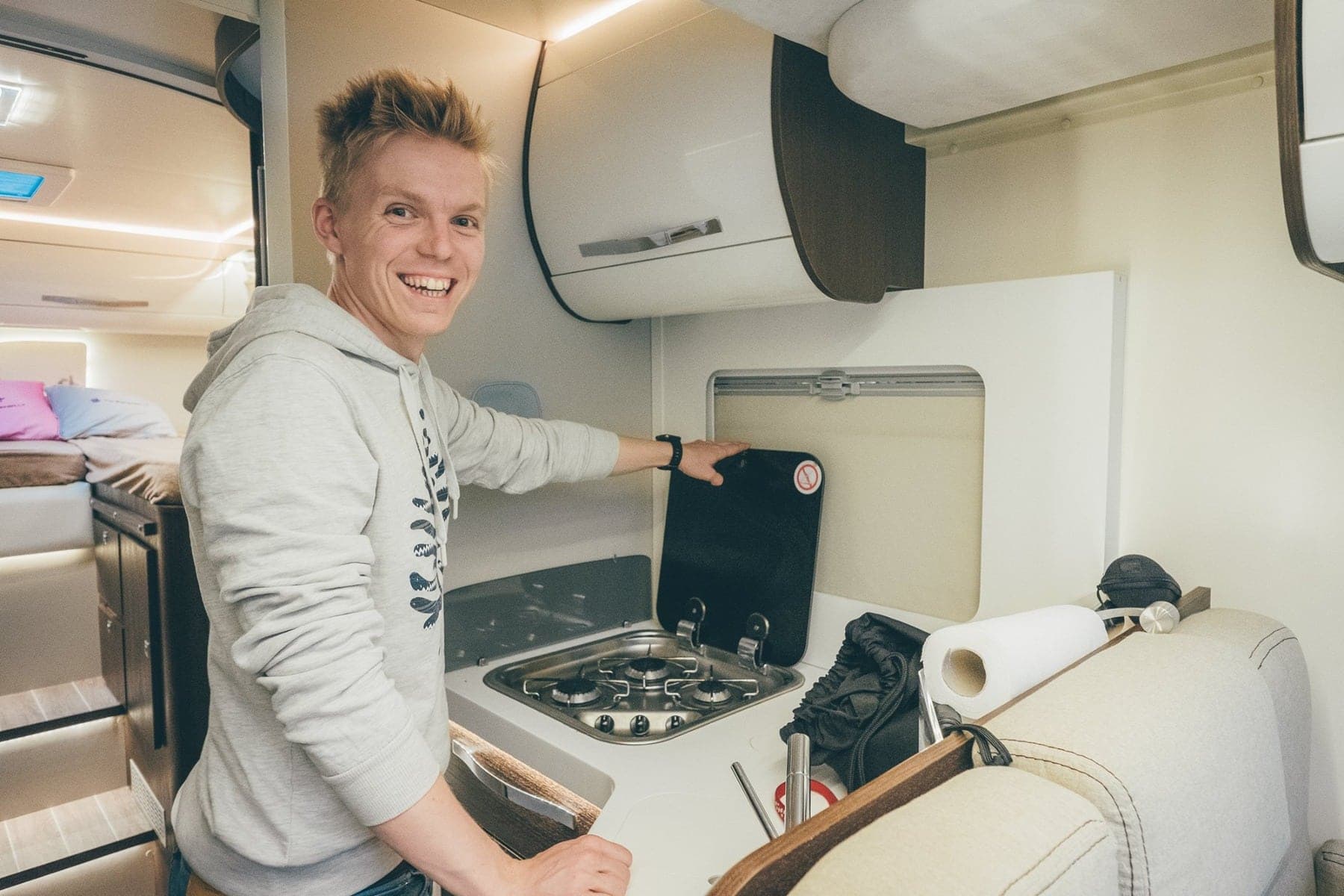
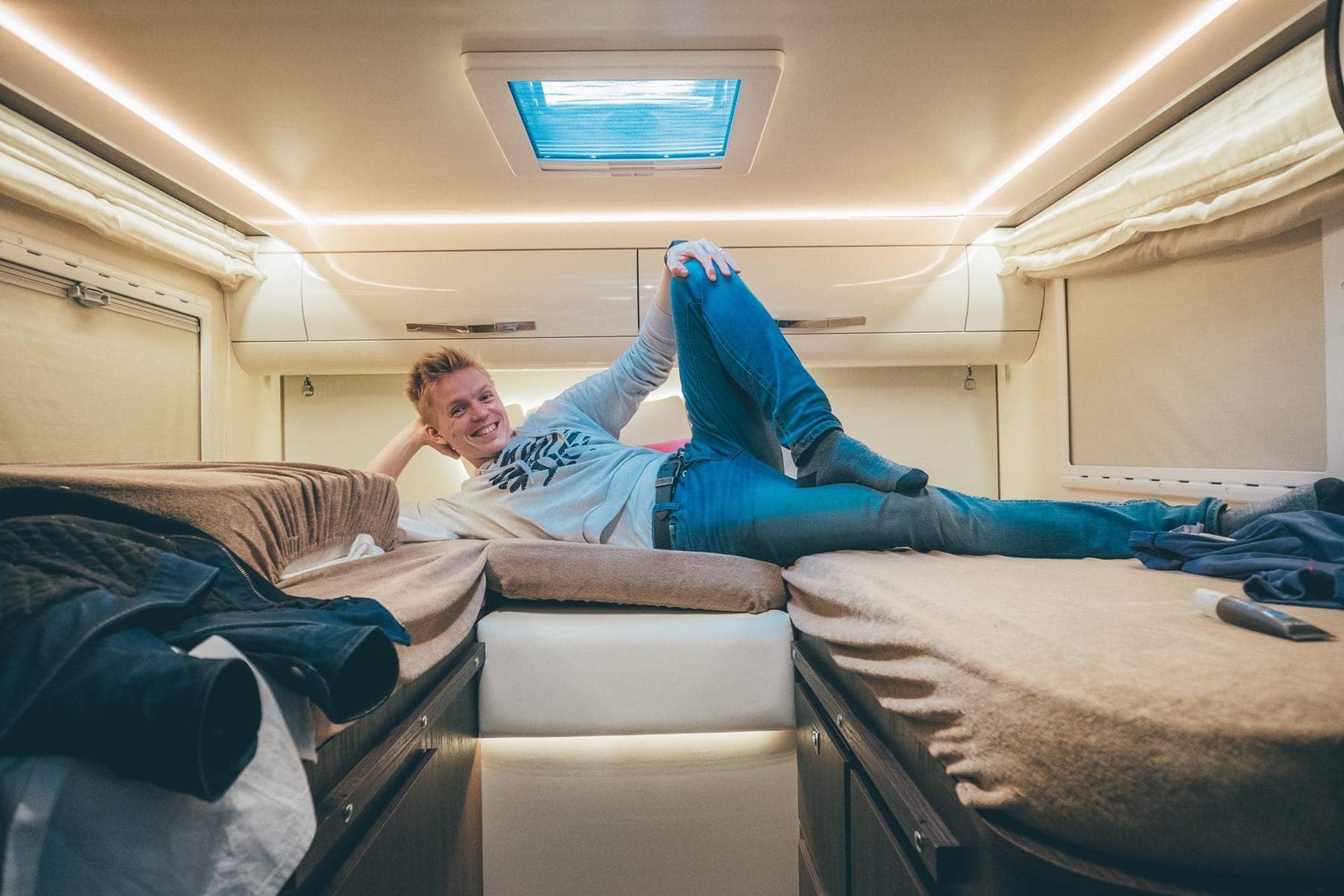
Most motorhomes carry and sleep 4 people, but it’s not hard to find 6-berth vehicles. For maximum comfort, look for recently manufactured models with the following features:
- chemical toilet (tablet-based)
- fridge with a dual power source (switching between gas and electricity to prevent outages)
- shower with adjustable water heating (you don’t want to waste electricity when wild camping)
- at least a small bathroom (usually combined with the toilet)
- kitchen with gas burners
- solar panels (for charging batteries during the day)
- diesel or gas heating
- engine-powered air conditioning
If you’re planning to bring bikes along, check that the motorhome has a bike rack, or that there’s room in the so-called “garage” — the storage area at the rear where you’d typically keep folding chairs, a table, and other gear.
It’s also worth considering whether you need an awning. An awning provides shade from the sun and shelter from the rain, and it’s much easier to set up than an add-on tent. If you’re planning to stay in one spot for a while, you might also want a drive-away awning that attaches to the motorhome and effectively creates an extra room — perfect for a week-long base.
Everything you need to know about caravan travel
Before hitting the road, make sure you get a thorough walkthrough on how to properly handle the following:
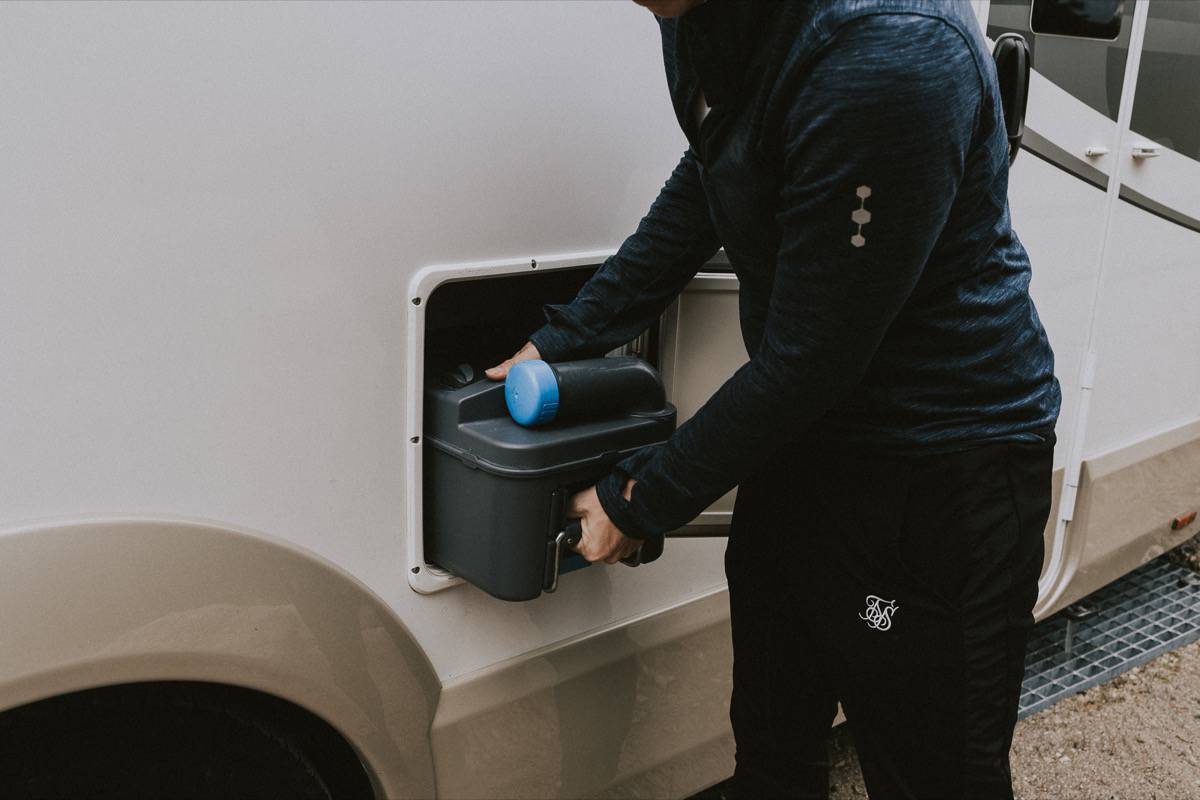
Emptying the chemical toilet
You can’t just dump a chemical toilet anywhere down a drain. Campsites have designated disposal points for this. In the UK, these aren’t always easy to find outside of campsites, but across mainland Europe, many petrol stations also have disposal facilities.
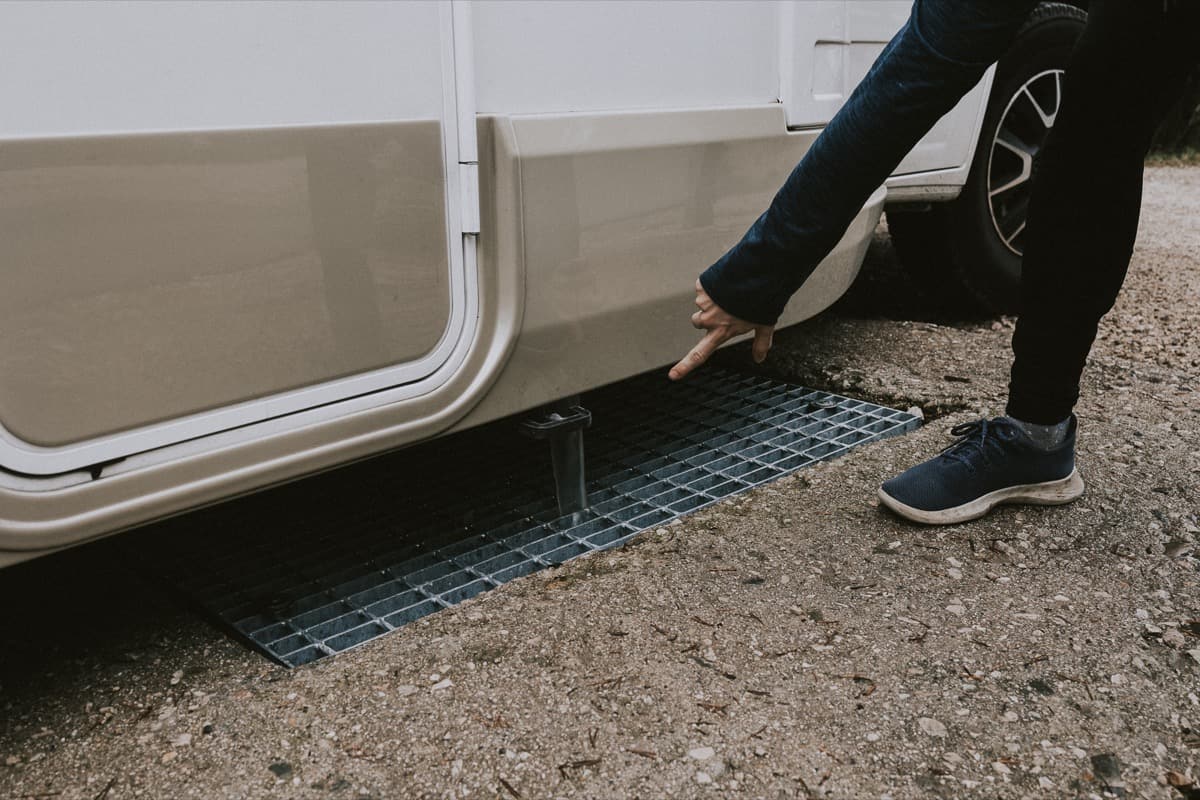
Draining grey water
Motorhomes have two water tanks — one for fresh water and one for grey water (from the shower, taps, etc.). Grey water is drained via a valve on the underside of the vehicle into a designated drain. If it’s your first time, get your passenger to guide you as you position the valve over the drain. You need to hit it spot on! If you pull the valve while you’re not lined up, the water will splash everywhere — and I can guarantee you’ll end up with soaked shoes. 🙂
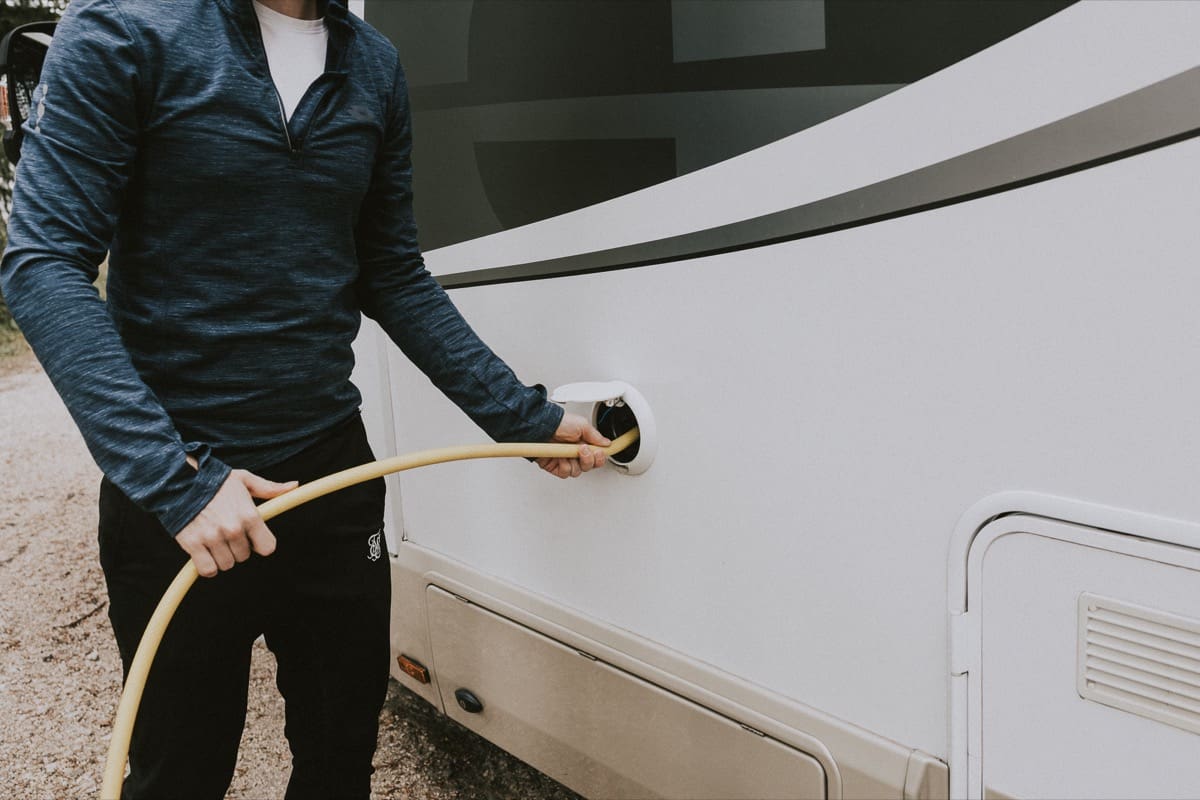
Refilling fresh water
Fresh water is refilled via a hose through an inlet on the side of the motorhome. Always ask whether the water is potable when refilling. It’s not always clearly marked at campsites and petrol stations whether the water is safe for drinking.
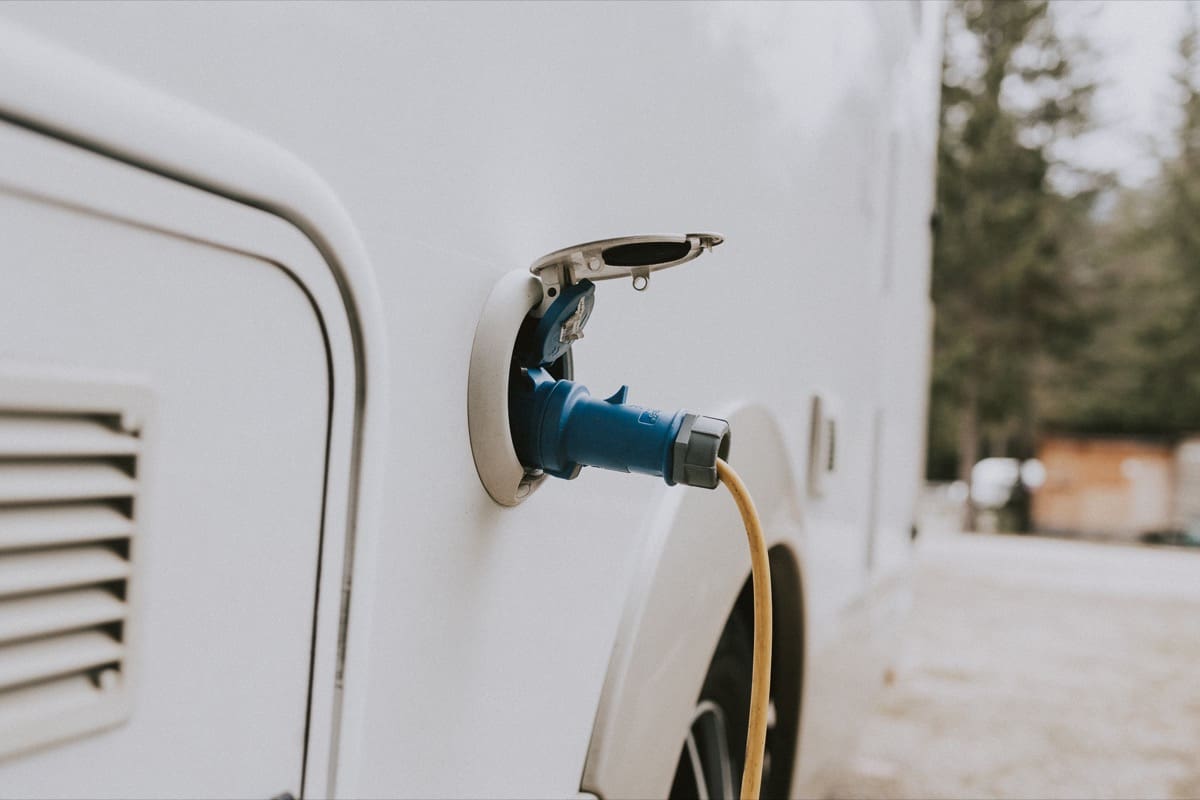
Hooking up to electricity
A motorhome with solar panels and appliances set to eco mode (fridge, water heater) will last 2–3 days before the batteries run flat. At campsites and stellplätze (motorhome service areas) near motorways, there’s usually an electric hook-up available (often included in the pitch fee). I’d recommend plugging in wherever you can — you’ll be able to switch on all the lights, properly heat the water, and if you’ve got electric heating, run it through the night without worrying.
Replacing the gas bottle
Always make sure the hire company hands over the vehicle with a full gas bottle. Swapping the bottle is straightforward enough, but motorhomes rarely come with a spare. For someone unfamiliar with gas systems, hunting down a replacement bottle and fitting it can quickly turn into an unwelcome holiday chore.
Do I need a special driving licence for a motorhome?
The vast majority of motorhomes fall under 3.5 tonnes and can be driven with a standard Category B driving licence. You only need a higher category licence for the really large motorhomes that are more like coaches.
What documents do you need for caravan travel in Europe?
For motorhomes weighing up to 3.5 tonnes (the vast majority of campervans), a standard Category B driving licence is all you need. You should also carry the vehicle registration document (V5C or equivalent) and proof of insurance. If the vehicle is hired, take the rental agreement with you — ideally in both English and the local language. Don’t forget your passport, and if you’re driving from the UK to mainland Europe, you may also need a GB sticker or appropriate number plate markings.
Motorway tolls and road charges
Caravan travel in Europe is generally more expensive than travelling by car. On top of higher fuel consumption, you need to factor in steeper motorway tolls and road charges. Many countries have separate tariffs for motorhomes under 3.5 tonnes. Tunnel crossings tend to be pricier too, especially through the Alps.
Very occasionally, you might get asked to have your motorhome weighed. In Austria, for example, police sometimes weigh motorhomes and issue fines for exceeding the permitted gross vehicle weight.
You can find up-to-date toll charges for all European countries on the website tolls.eu. Vignettes (motorway stickers) can almost always be purchased at petrol stations before the border, or online.
I’d recommend buying vignettes online and in advance. In Portugal, for instance, it’s not straightforward to buy a vignette outside the internet — you need to borrow a small box with an electronic chip. If you don’t enter Portugal via a main border crossing, you might not be able to get one at all.
Motorhome fuel consumption
A typical motorhome uses between 10–12 litres per 100 kilometres (roughly 23–28 mpg). Keep this in mind when budgeting for your trip — fuel costs add up quickly on longer European road trips.
What it’s like to drive a motorhome
If you’ve ever driven a large van, you won’t be surprised. And if you haven’t, don’t worry — you’ll manage. I’d strongly recommend choosing a motorhome with a reversing camera, or at the very least parking sensors. That way, you won’t end up picking bits of broken indicator lens off the ground, like I did. 🤡
Parking a motorhome in cities
Driving a motorhome comes with its limitations, and you’ll feel them most in busy cities, where finding a parking spot can be a real headache. I’d recommend searching online in advance for a suitable parking spot, or even booking one ahead of time.
💡 A safe bet is to always look for larger paid car parks — the kind where you can see vans parked on Google Street View.
You won’t get a motorhome into almost any underground car park, as they typically have a height restriction of around 2.2 metres, and motorhomes are at least 3 metres tall (plus aerials, roof windows, etc.).
Taking a motorhome on a ferry
Generally speaking, you can take a motorhome on any ferry in Europe. This is particularly appealing in Croatia, where you can comfortably island-hop. Ferry fares are based on the length of your vehicle, and several islands have campsites with motorhome pitches right by the port. If you’re heading to the continent from the UK, you can also take ferries from Dover, Portsmouth, or other south coast ports.
Travelling with a dog in a motorhome
A motorhome is ideal for travelling with dogs — during the day we usually keep our dogs outside next to the vehicle, and we bring along a portable dog pen. Planning a caravan holiday with your furry companion? Make sure your pet has a valid pet passport, is microchipped, and has up-to-date rabies vaccinations — these are essential for travelling between the UK and European countries.
Best destinations for a caravan holiday
We fell in love with the Dolomites, which are absolutely perfect for motorhomes. We went in autumn, so we had no trouble finding space at campsites. If you’re after a longer road trip, a brilliant route is through France into Spain and on to Portugal — the Channel Tunnel or a ferry from Dover gets you to France, and from there the road south is spectacular.
Parking outside campsites — wild camping
Wild camping rules vary from country to country. So what are the regulations in Europe’s most popular destinations?
TIP: Try the Camperguru app, where you’ll find an overview of the best campsites and wild camping spots across the whole of Europe.
Austria by motorhome
Throughout Austria, it’s legal to park at designated motorhome areas, known as Stellplätze. You can find them on a map using the Stellplatz-Radar mobile app.
Wild camping is only permitted in four Austrian federal states:
- Upper Austria
- Styria
- Vorarlberg
- parts of Salzburg.
Slovenia by motorhome
Unfortunately, wild camping is not allowed in Slovenia. You’ll need to stick to Stellplätze, official campsites, or arrange to stay on private land with the owner’s permission.
Montenegro by motorhome
Wild camping outside designated areas is also illegal in Montenegro.
Belgium by motorhome
Wild camping isn’t allowed in Belgium either. Due to the country’s dense population, you’d struggle to find a remote spot anyway. Belgium has Stellplätze, and you’re generally allowed to park overnight in any car park as long as there’s no sign prohibiting it.
Germany by motorhome
In Germany, you’re allowed to park for one night in any car park where there’s no explicit prohibition. The Germans love their motorhomes, and you’ll find Stellplätze even in the middle of cities — Munich alone has several with a total capacity of hundreds of spaces.
France by motorhome
Wild camping isn’t explicitly banned in France. However, you must not camp near monuments, along the coastline, or in protected natural areas.
Camping in Italy — what to know about motorhome travel
In Italy, camping is only permitted at designated, registered campsites. Wild camping is illegal — both on public land and on private property.
Tips and Tricks for Your Vacation
Don’t Overpay for Flights
Search for flights on Kayak. It’s our favorite search engine because it scans the websites of all airlines and always finds the cheapest connection.
Book Your Accommodation Smartly
The best experiences we’ve had when looking for accommodation (from Alaska to Morocco) are with Booking.com, where hotels, apartments, and entire houses are usually the cheapest and most widely available.
Don’t Forget Travel Insurance
Good travel insurance will protect you against illness, accidents, theft, or flight cancellations. We’ve had a few hospital visits abroad, so we know how important it is to have proper insurance arranged.
Where we insure ourselves: SafetyWing (simple monthly subscription) and TrueTraveller (for extra-long trips).
Find the Best Experiences
Get Your Guide is a huge online marketplace where you can book guided walks, trips, skip-the-line tickets, tours, and much more. We always find some extra fun there!