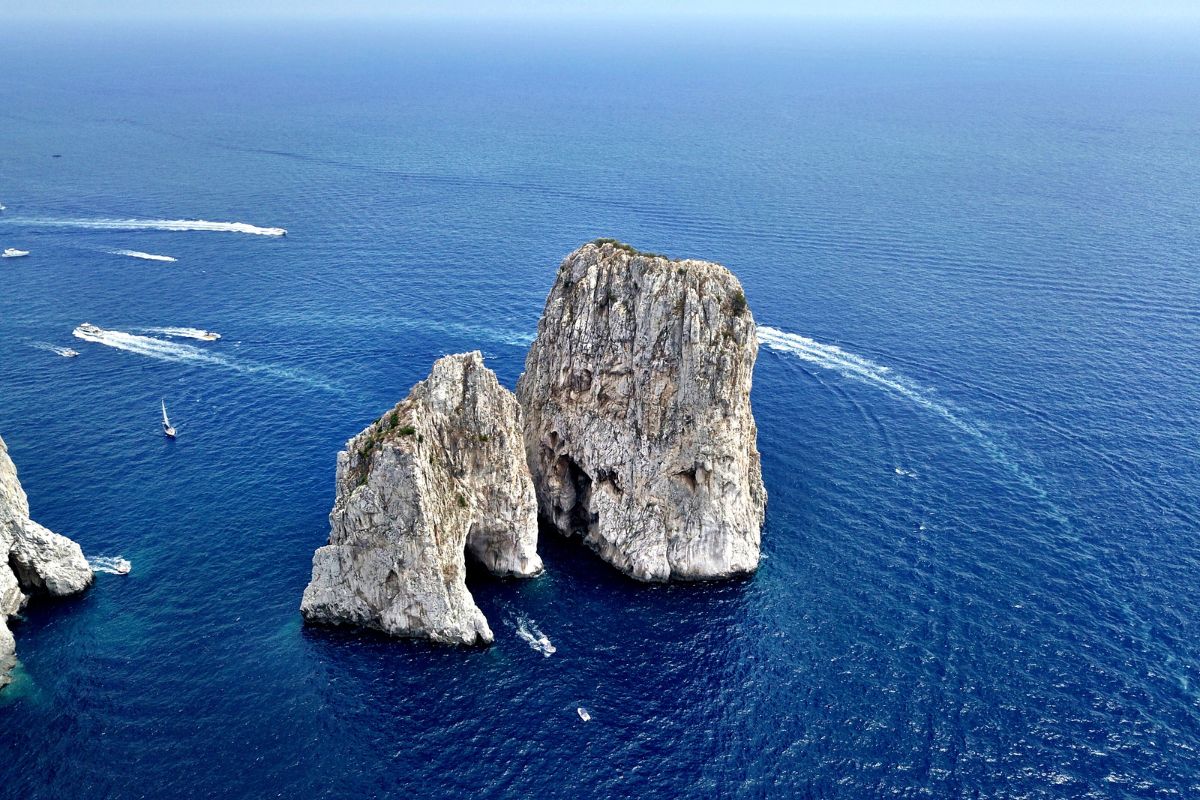
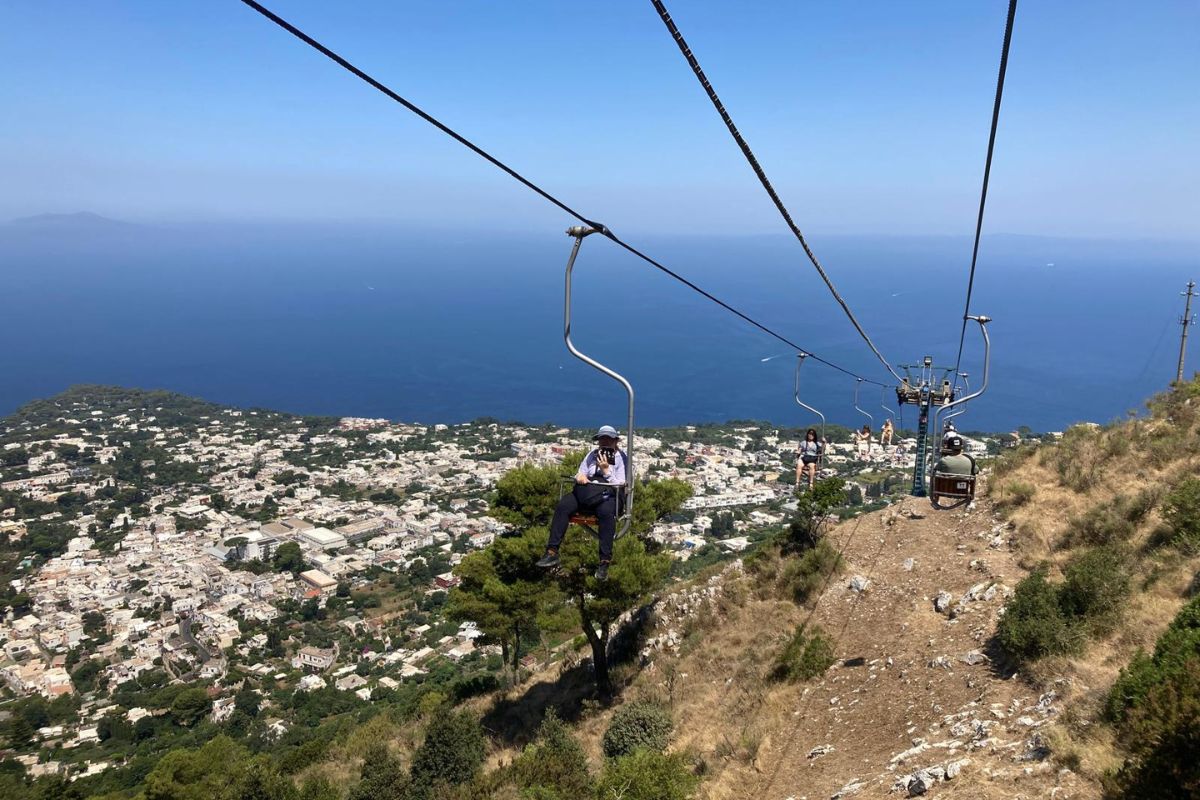
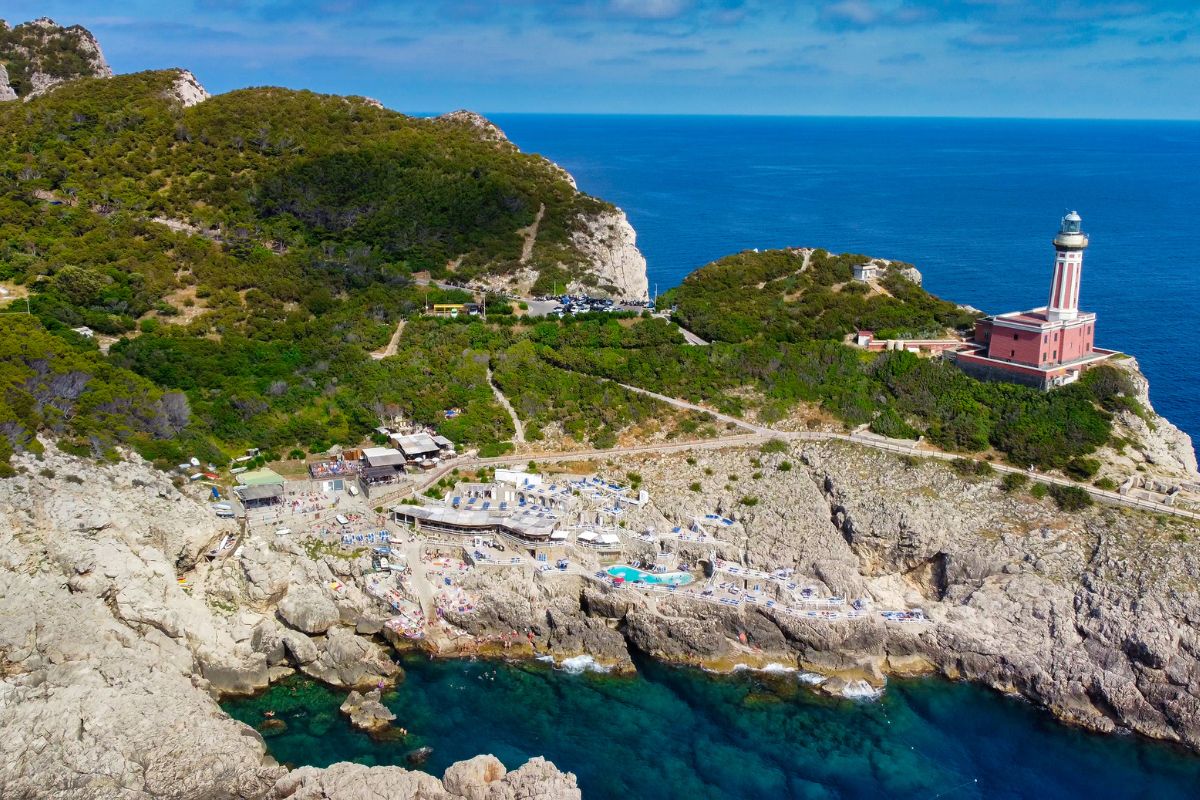
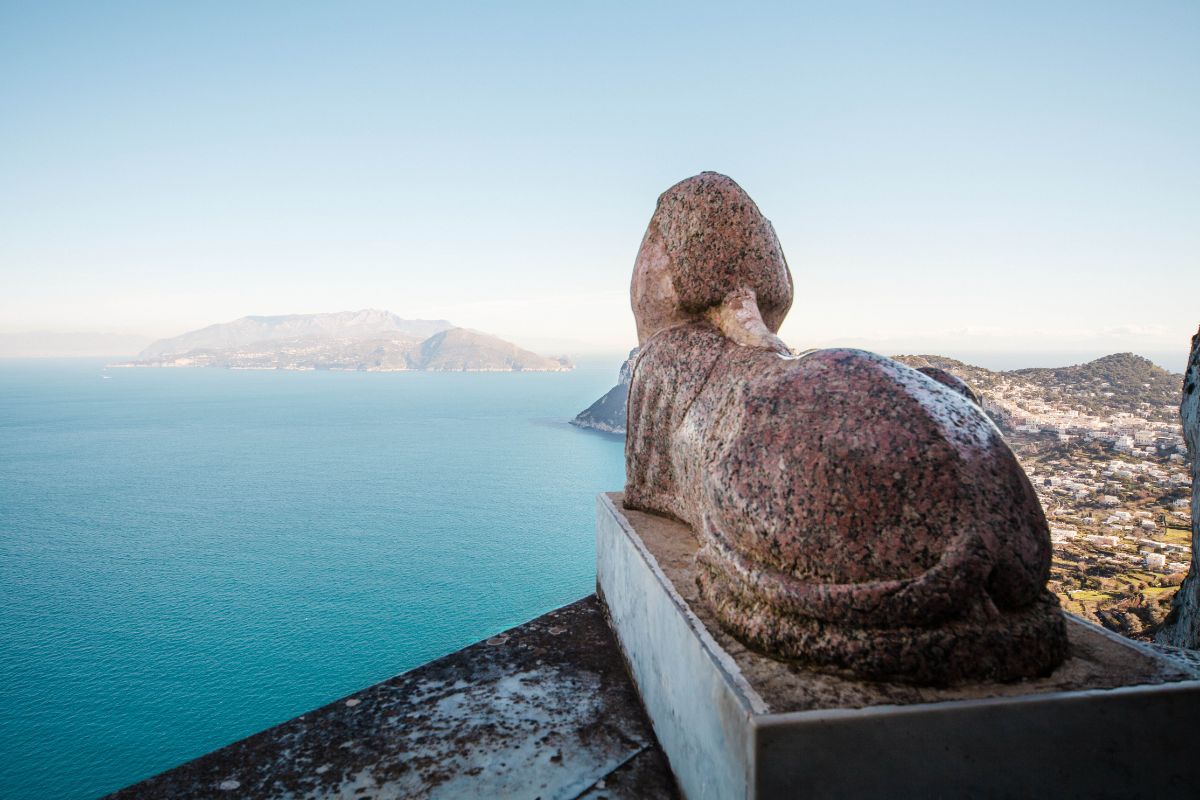
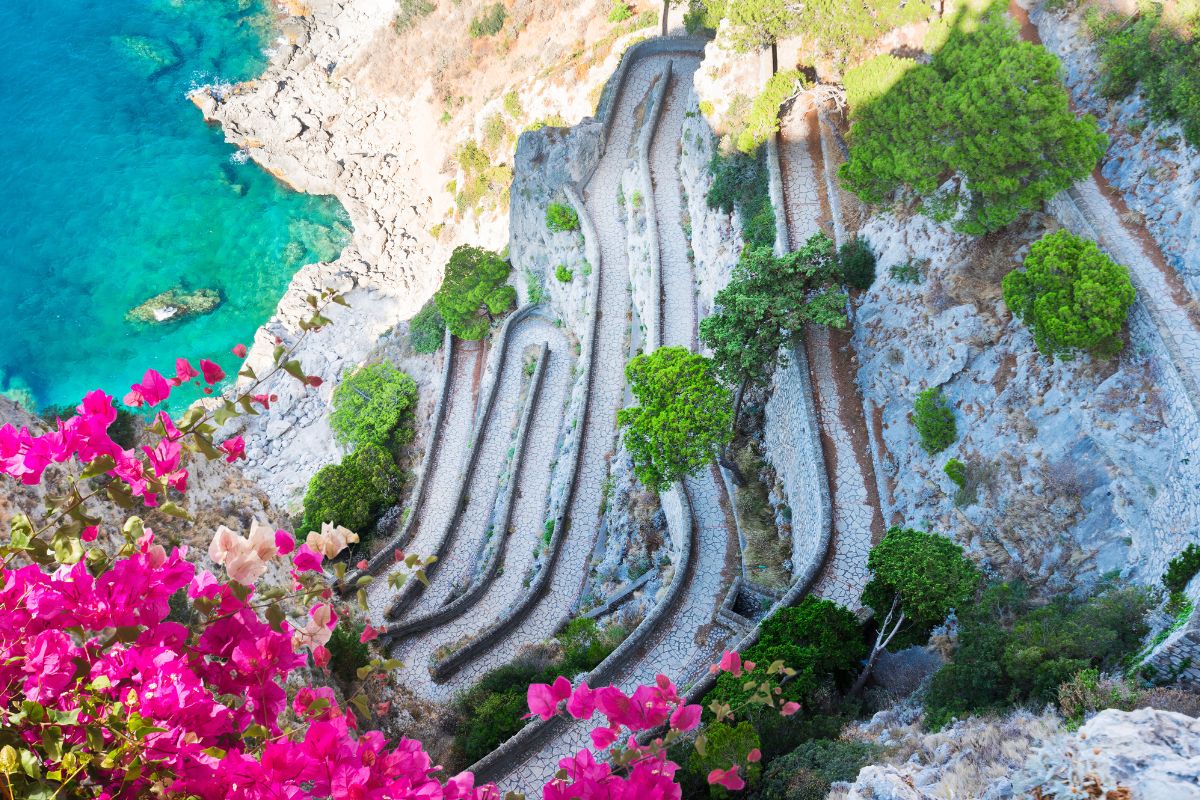
TL;DRHere are 11 top tips for the Amalfi Coast, which stretches about 50 kilometres along the southern edge of the Sorrentine Peninsula and takes in Sorrento, Positano, Amalfi, Praiano, Atrani, Ravello, Vietri sul Mare, Maiori, Fiordo di Furore, the Path of the Gods and Salerno. The best time to visit is April to October, with May or September giving you a crowd-free break from the July and August peak season. Allow 5–7 days to properly cover the coast, ideally as a road trip from Sorrento to Salerno, though be warned the roads are narrow and parking is a headache. For a bit of luxury, base yourself in Positano, Amalfi or Ravello, while Maiori and Vietri sul Mare are cheaper options that also suit families, thanks to their beaches and easier-going pace.
The Amalfi Coast is probably one of the most beautiful and sought-after places in Italy. It stretches along the Tyrrhenian Sea and will captivate you with breathtaking views, picturesque towns, and beautiful nature. In this guide I will share with you Amalfi Coast, Italy: 11 Best Things to Do and See. I have compiled 11 places worth seeing and visiting on the Amalfi Coast for you.
The best time to visit the Amalfi Coast is from April to October. During these months, the weather is pleasant, and temperatures are ideal for walks, swimming, and exploring the beauty of this region.
July and August are the high season, when the Amalfi Coast has the most tourists, so if you prefer a quieter atmosphere, I recommend going in May or September instead.
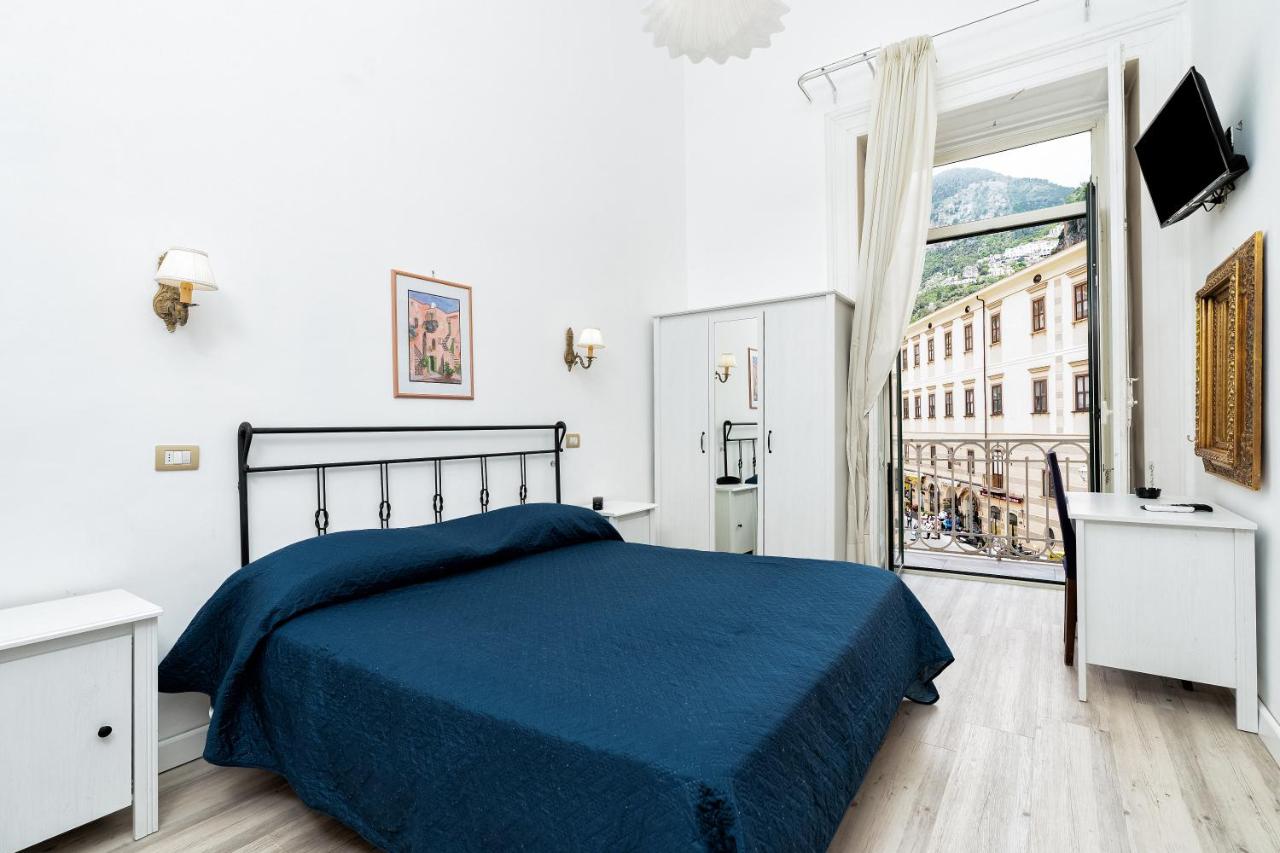
If you are looking for luxury and are willing to pay extra, then accommodation in Positano, Amalfi, or Ravello is a perfect choice. For those of you who prefer a more authentic experience and lower prices, the towns of Maiori or Vietri sul Mare are ideal choices.
Sorrento is a great base for exploring the coast and nearby islands, such as Capri. You can also base yourself in Naples.
Accommodation tips:
Palazzo Vingius,
Hotel Le Terrazze,
Hotel Fontana.
Hotel Fontana
How to get around the Amalfi Coast
Perhaps the most practical means of transport for a road trip along the Amalfi Coast is a car. You can drive through everything you want and stop wherever you want. But on the other hand, be aware that the roads are narrow and full of turns, so driving can be challenging for less experienced drivers. Parking can also be quite problematic, especially during high season.
Other options are boats, ferries, or SITA buses, which connect all the main towns on the coast.
And if you don’t dare to explore the Amalfi Coast on your own, then use the services of the travel portal GetYourGuide.
🔗 These are affiliate links — they don't change your price and help us create content. · All experiences →
Amalfi Coast, Italy: 11 Best Things to Do and See
The Amalfi Coast stretches for about 50 kilometers along the southern coast of the Sorrento Peninsula. If you are one of those travelers who want to see absolutely everything, just like me, then I highly recommend taking a road trip along the Amalfi Coast. Start your journey from Sorrento and ideally drive all the way to Salerno. This way, you’ll have all the beautiful views on the right side of the car, right within reach.
If you can’t choose which towns to visit or don’t have time to see them all, then I recommend visiting Positano and Amalfi in particular.
TIP: The Cinque Terre National Park offers a similar experience, so go there too.
Sorrento
Sorrento is essentially the gateway to the Amalfi Coast. This picturesque town is known for its beautiful architecture, cozy streets, and excellent limoncello. Sorrento is also a great starting point for trips to the island of Capri or to the excavations in Pompeii.
TIP: You can find basic information about entering Pompeii in our article.
Sorrento
Positano
What you definitely shouldn’t miss on the Amalfi Coast is the magnificent Positano. It is one of the most famous and photographed towns. The colorful houses cascading down the hillside will surely captivate you. Positano is also full of boutiques, restaurants, and beaches where you can enjoy relaxation and sunshine.
Positano
Amalfi
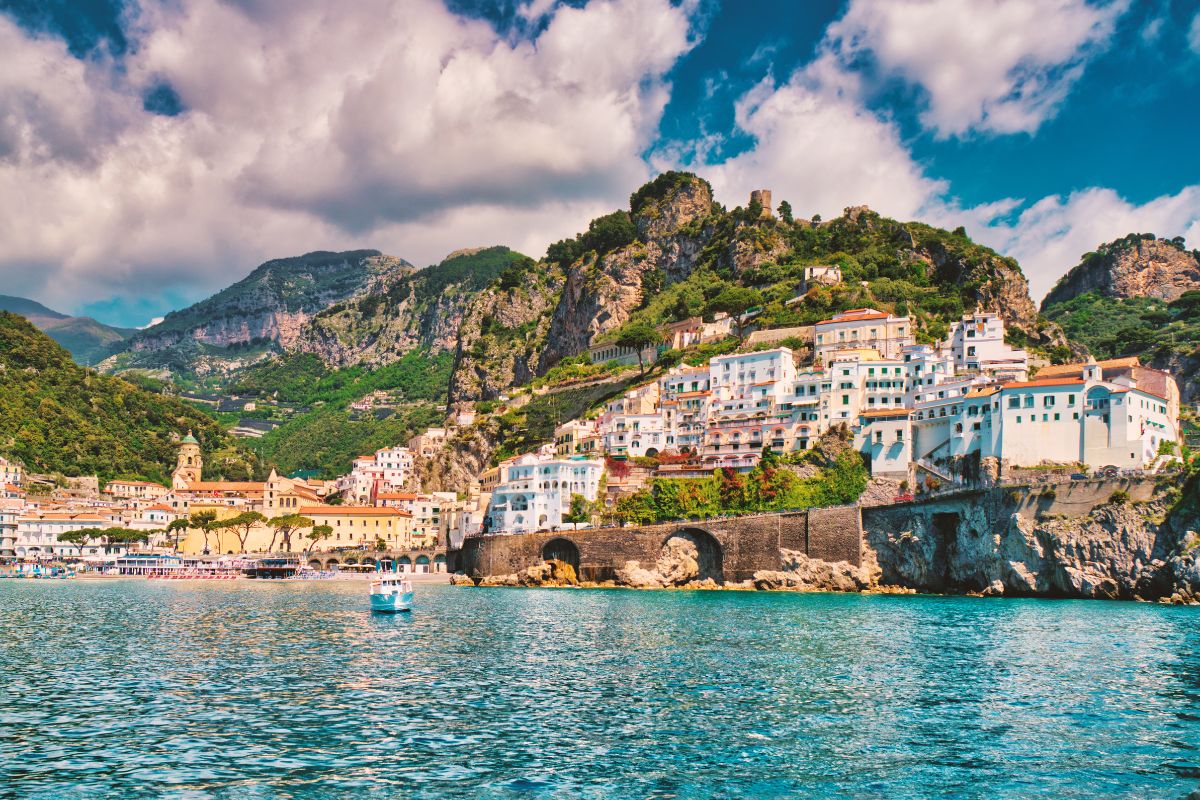
The town of Amalfi, which gave its name to the entire coast, is the heart of the region. Its historic center with Sant’Andrea Cathedral is beautiful, and you will surely like it here. Visit the local paper museum to learn more about the tradition of paper making, which has a long history here.
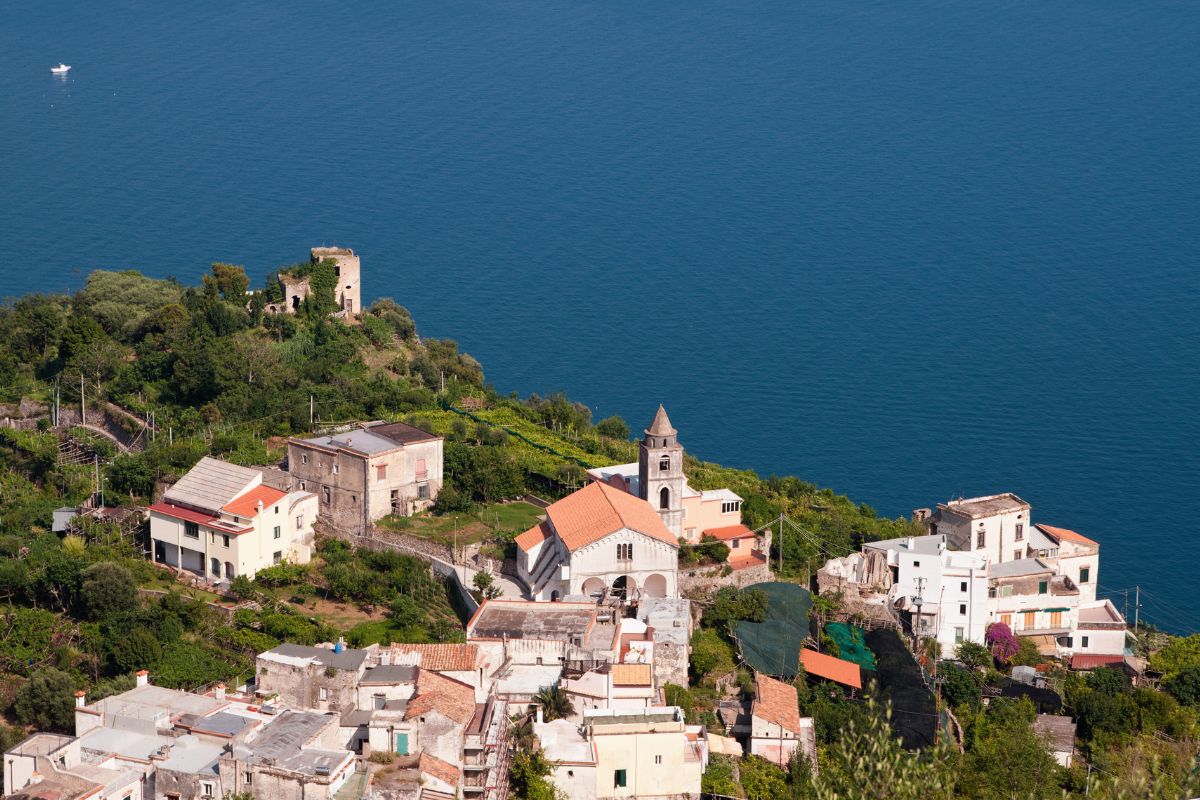
Praiano is quieter and less touristy, ideal for those seeking a more peaceful Italian atmosphere. The town offers beautiful sea views, traditional Italian restaurants, and wonderful beaches where you can cool off after a day of walking and exploring.
Praiano
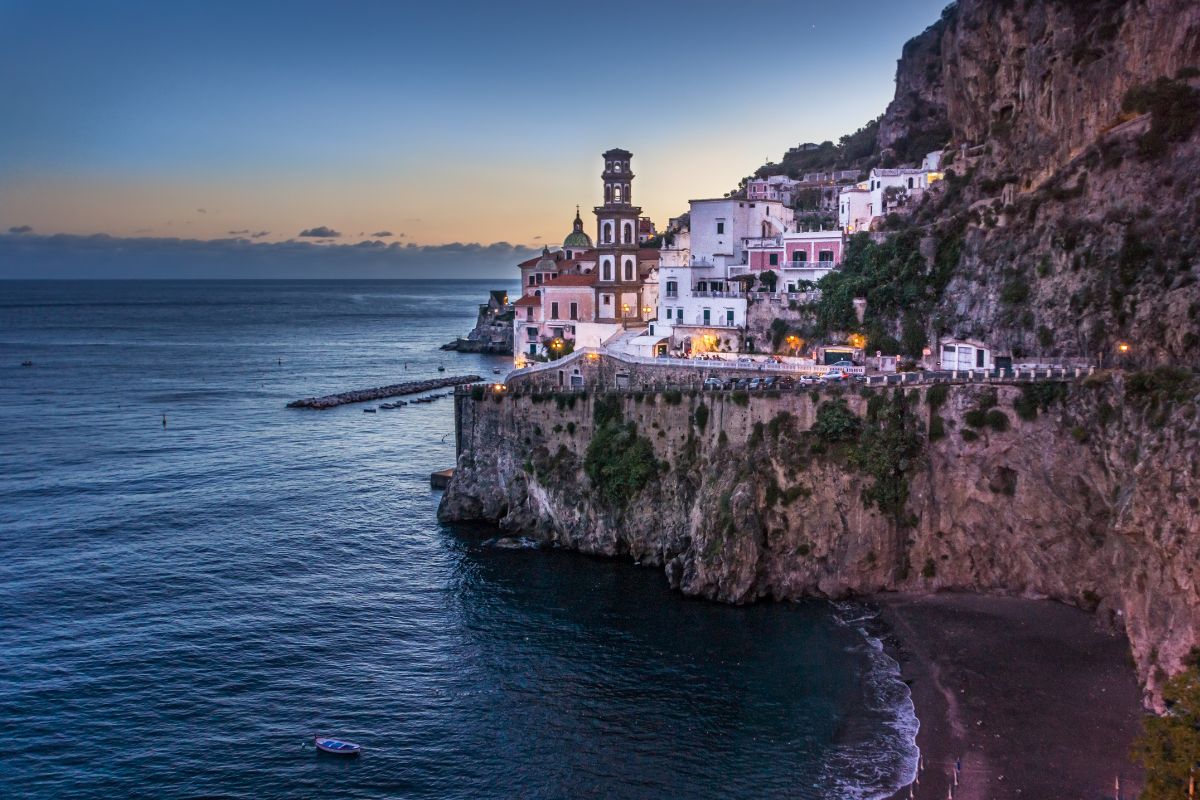
Atrani
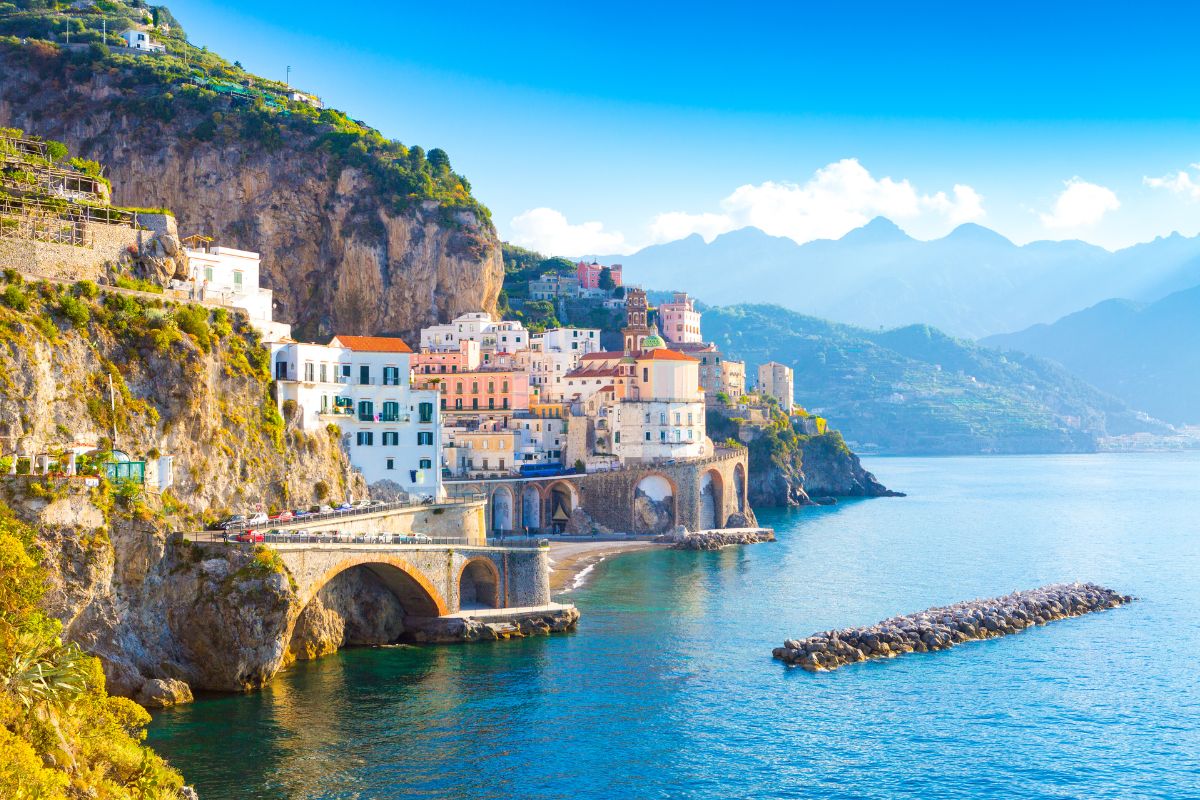
Atrani is one of the smallest towns on the coast. Walk through its narrow streets and enjoy the peace and quiet. Atrani is perfect for those who want to experience a true Italian lifestyle without the hustle and bustle of tourists.
Atrani
Ravello
Ravello is known for its breathtaking views and culture. It is famous for its music festival and the gardens of Villa Rufolo and Villa Cimbrone. If you love beautiful gardens and panoramic views, Ravello will surely charm you. It is also an ideal place for artistic souls and music lovers.
Ravello
Vietri Sul Mare
The town of Vietri sul Mare is famous for its ceramic products, which are known throughout Italy. If you want to take home a souvenir, be sure to visit the local workshops and shops. Vietri also offers beautiful beaches and is ideal for a swimming stop.
Vietri sul Mare
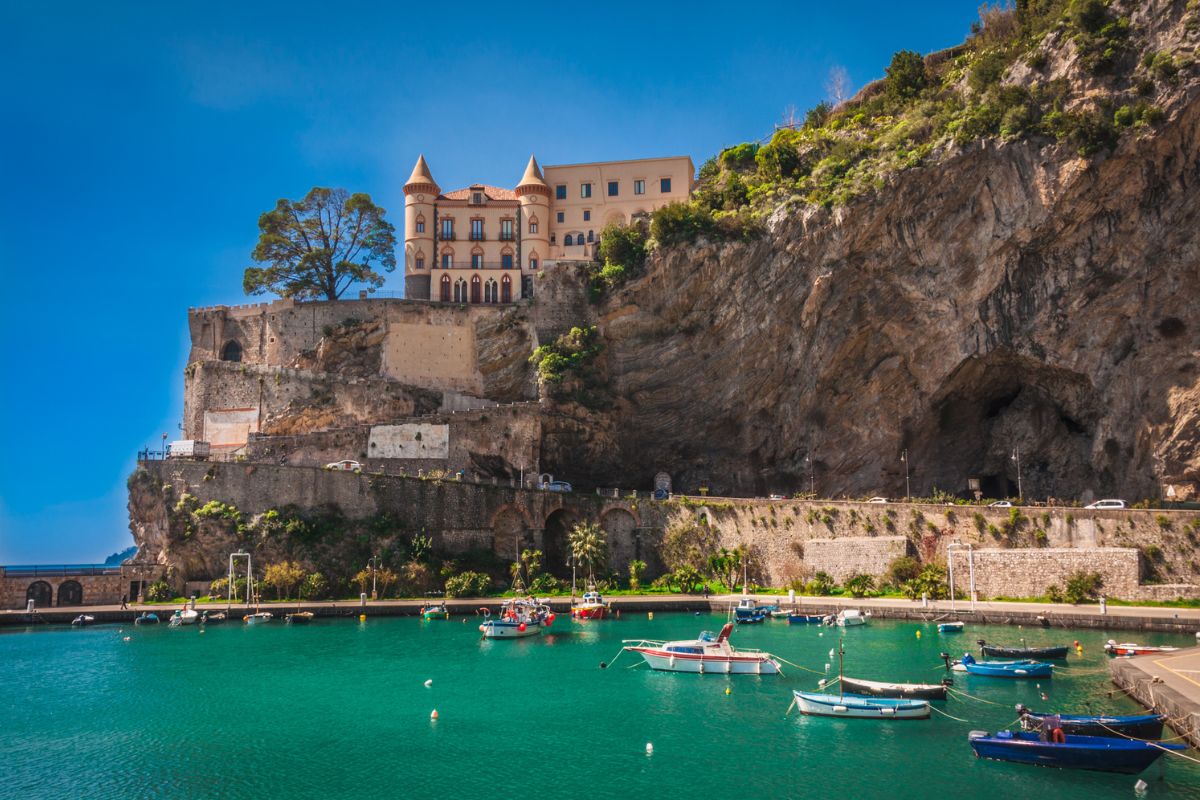
Maiori
Maiori has one of the longest beaches on the Amalfi Coast, which is ideal for families with children. Besides the beach, you will also find beautiful promenades and a picturesque historic center that is also worth exploring.
Maiori
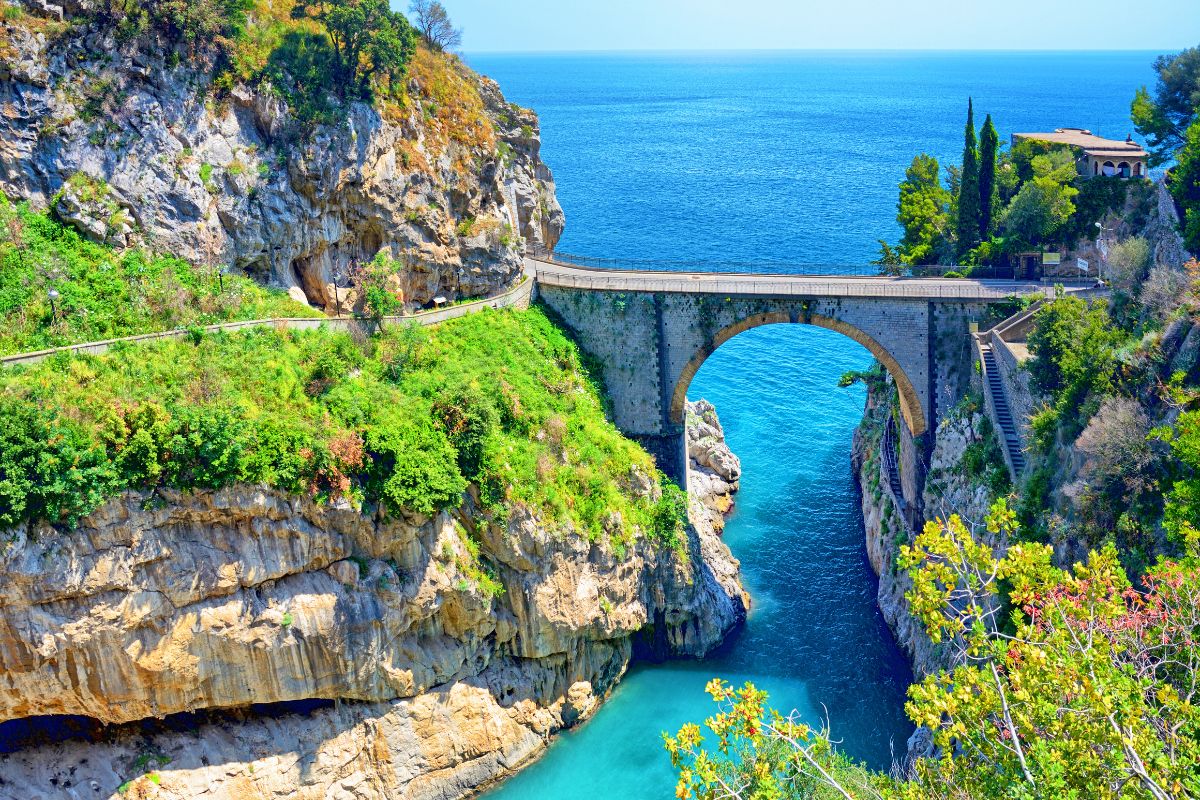
Fiordo Di Furore
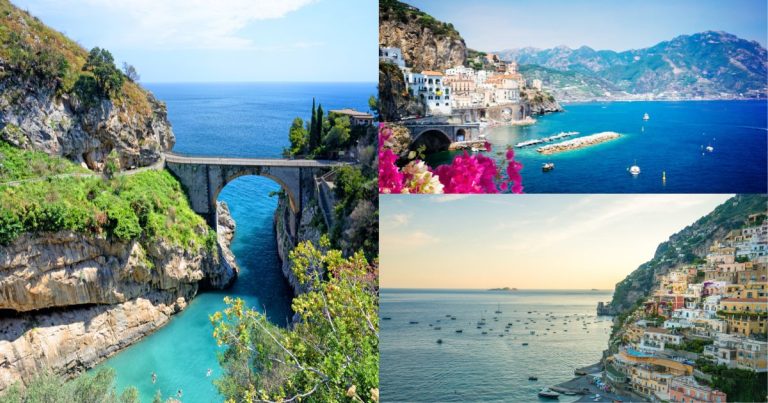
Fiordo di Furore is one of the most unique places on the coast that you must not miss on your trip! This small fjord is located between rocks and offers a breathtaking view. It’s a place for a short stop on your coastal journey where you can take beautiful photos.
Fiordo di Furore
Path of the Gods
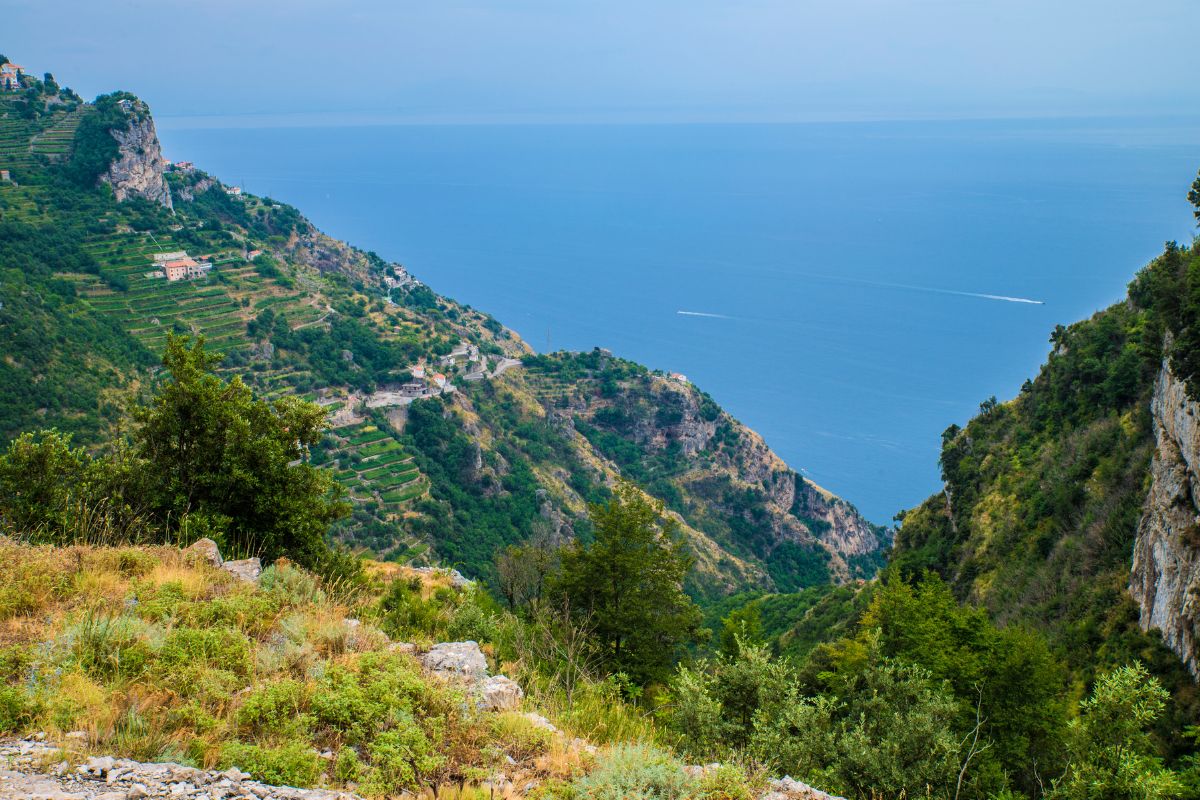
The Path of the Gods (Sentiero degli Dei) is one of the most popular hiking trails in the region. So if you are a fan of hiking, I highly recommend it. This trail offers breathtaking views of the sea and the surrounding landscape.
Sentiero degli Dei (Path of the Gods)
Salerno
Salerno is a larger city at the eastern end of the Amalfi Coast. Salerno offers a beautiful historic center, a wonderful promenade, and great restaurants with local cuisine where you will surely enjoy your meal.
Salerno
Lukáš and Lucie recommend
Where to stay on the Amalfi Coast
4 accommodations — hotels and other lodging options
The best time is from April to October, when the weather is pleasant and conditions are ideal for travel.
What is the best way to get around the Amalfi Coast?
The most practical way to travel along the Amalfi Coast is by car, but you will experience the most beautiful views from ferries or boats.
How many days should I dedicate to visiting the Amalfi Coast?
I recommend at least 5–7 days to experience all the main destinations.
Where is the best place to stay on the Amalfi Coast?
For luxury, I recommend Positano or Ravello; for a cheaper option, Maiori or Vietri sul Mare.
Is the Amalfi Coast suitable for families with children?
Yes, especially towns like Maiori and Vietri sul Mare offer beaches and activities suitable for families with children.
Is the Amalfi Coast expensive?
Yes, the Amalfi Coast is generally a more expensive destination, especially during high season.
Tips and Tricks for Your Vacation
Don’t Overpay for Flights
Search for flights on Kayak. It’s our favorite search engine because it scans the websites of all airlines and always finds the cheapest connection.
Book Your Accommodation Smartly
The best experiences we’ve had when looking for accommodation (from Alaska to Morocco) are with Booking.com, where hotels, apartments, and entire houses are usually the cheapest and most widely available.
Don’t Forget Travel Insurance
Good travel insurance will protect you against illness, accidents, theft, or flight cancellations. We’ve had a few hospital visits abroad, so we know how important it is to have proper insurance arranged.
Where we insure ourselves: SafetyWing (best for everyone) and TrueTraveller (for extra-long trips).
Why don’t we recommend any Czech insurance company? Because they have too many restrictions. They set limits on the number of days abroad, travel insurance via a credit card often requires you to pay medical expenses only with that card, and they frequently limit the number of returns to the Czech Republic.
Find the Best Experiences
Get Your Guide is a huge online marketplace where you can book guided walks, trips, skip-the-line tickets, tours, and much more. We always find some extra fun there!
TL;DRIn Monopoli, in Italy’s Puglia region, don’t miss the historic centre with its winding lanes and Piazza Vittorio Emanuele II., the baroque Madonna della Madia cathedral, the Castello Carlo V., and the smaller seafront Castello di Santo Stefano. The most popular beaches are Lido di San Stefano and Lido Porto Ghiacciolo. Monopoli also makes a great base for day trips to Bari, Polignano a Mare, Alberobello or Matera. Spring and autumn are the best times to visit, and it’s worth staying at least 3 days. Bari airport is about an hour’s drive from Monopoli.
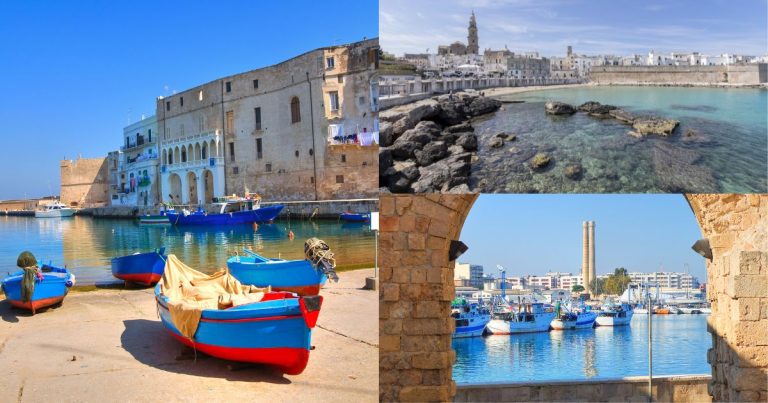
Monopoli, a small seaside town in Italian Apulia (a short distance from Bari), is a gem definitely worth visiting. Coincidentally, it has nothing to do with the popular game Monopoly, even though some Italians might try to convince you otherwise.😄
History, culture, the sea, and breathtaking views – all this makes Monopoli unforgettable. Are you wondering what to do and see in Monopoli? In this guide I will share with you Monopoli, Italy: 11 Best Things to Do and See.
Ideally, visit Monopoli in spring or autumn, when temperatures are pleasant and there aren’t as many tourists. In the summer months, expect more hustle and bustle and higher temperatures, but Monopoli is not usually overcrowded with tourists even during peak season. In winter, the city is quieter, but some tourist attractions may be closed.
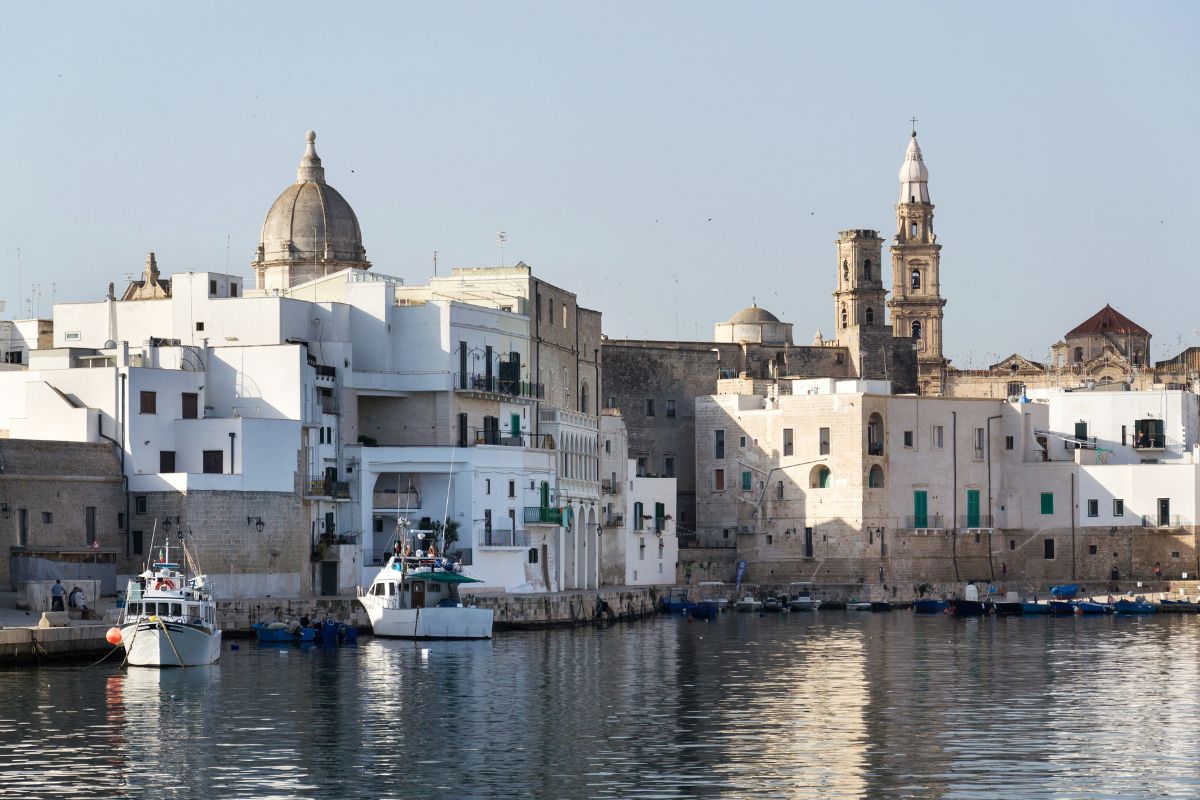
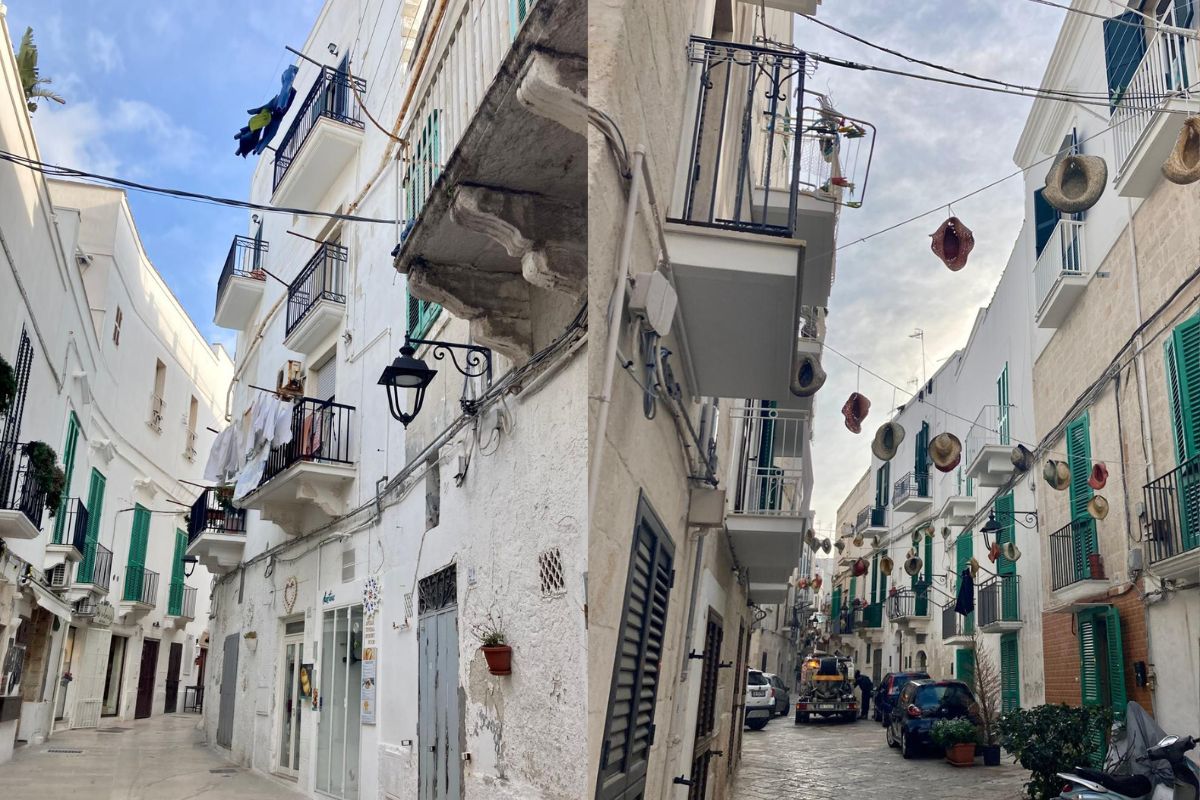
Monopoli’s historic center is a labyrinth of narrow streets, stone buildings, and charming squares. As you walk through these streets, you’ll feel the atmosphere of old Italy, as if time has stood still. Don’t forget to notice the picturesque balconies with flowers and historic houses with typical white facades.
Town streets
Piazza Vittorio Emanuele II.
Piazza Vittorio Emanuele II. is Monopoli’s main square. The square is surrounded by cafes, shops, and ancient buildings.
Cathedral of Madonna Della Madia
The impressive Baroque Cathedral of Madonna della Madia in the heart of Monopoli is dedicated to the Virgin Mary. Inside, you’ll find a beautifully decorated interior with frescoes and statues. According to legend, the icon of Madonna della Madia was found at sea on a wooden board, which was then used to complete the roof of this cathedral.
Madonna della Madia
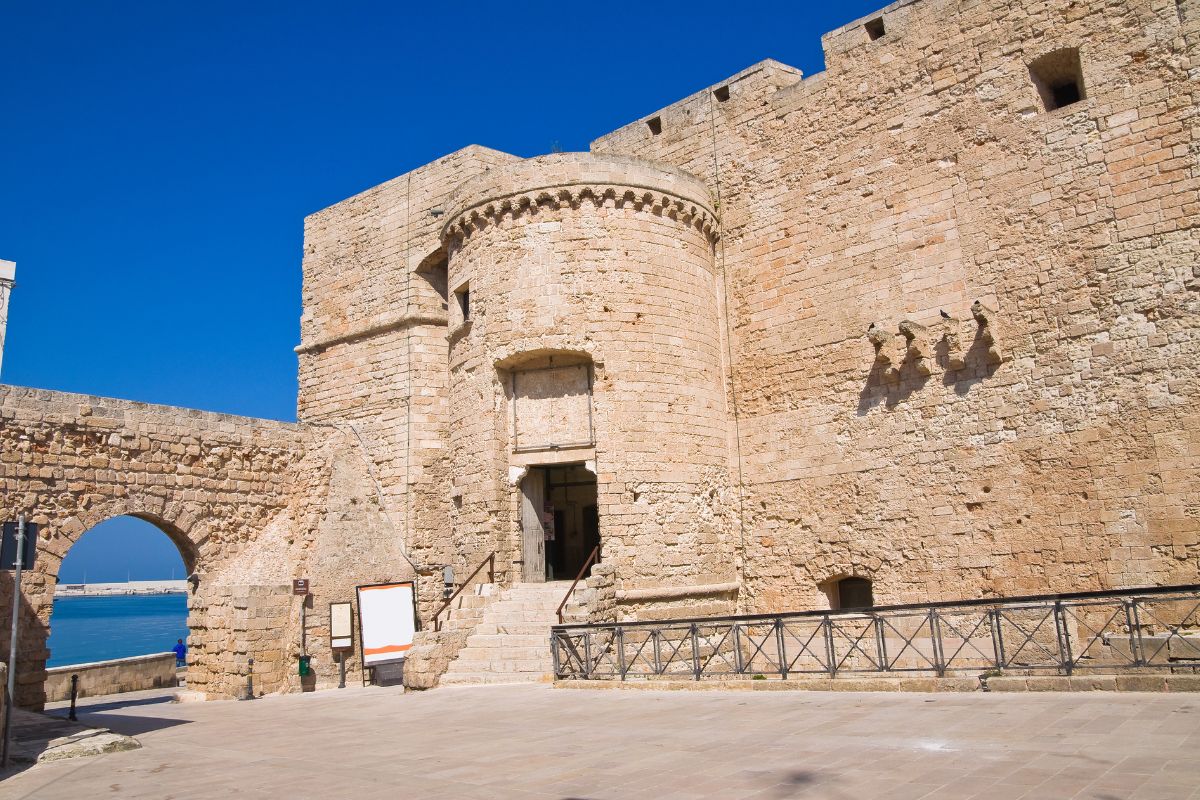
Castello Carlo V.
This castle, built in the 16th century by Charles V, served to defend the coast from pirates. Today, it is open to the public, and you can enjoy views of both the sea and the city from it.
Castello Carlo V.
Castello Di Santo Stefano
Outside the city center, you’ll find this smaller castle, which was originally a Benedictine abbey. Castello di Santo Stefano is located right by the sea and is surrounded by beautiful nature.
Lido Di San Stefano and Lido Porto Ghiacciolo Beaches
If you’re looking for relaxation on a beautiful beach, these two are among the most popular with locals. Lido di San Stefano is a quiet, sandy beach where you can enjoy the day. Lido Porto Ghiacciolo is smaller but offers crystal-clear water and pleasant surroundings with views of Santo Stefano Castle.
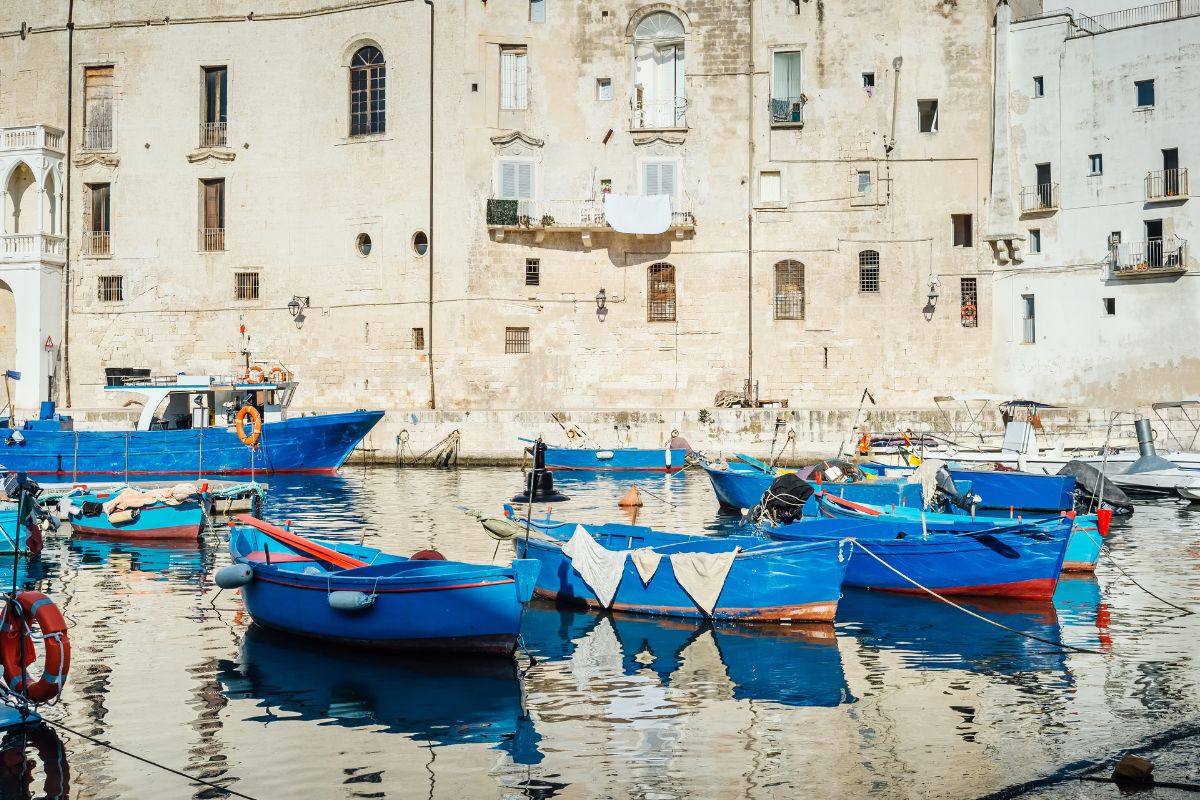
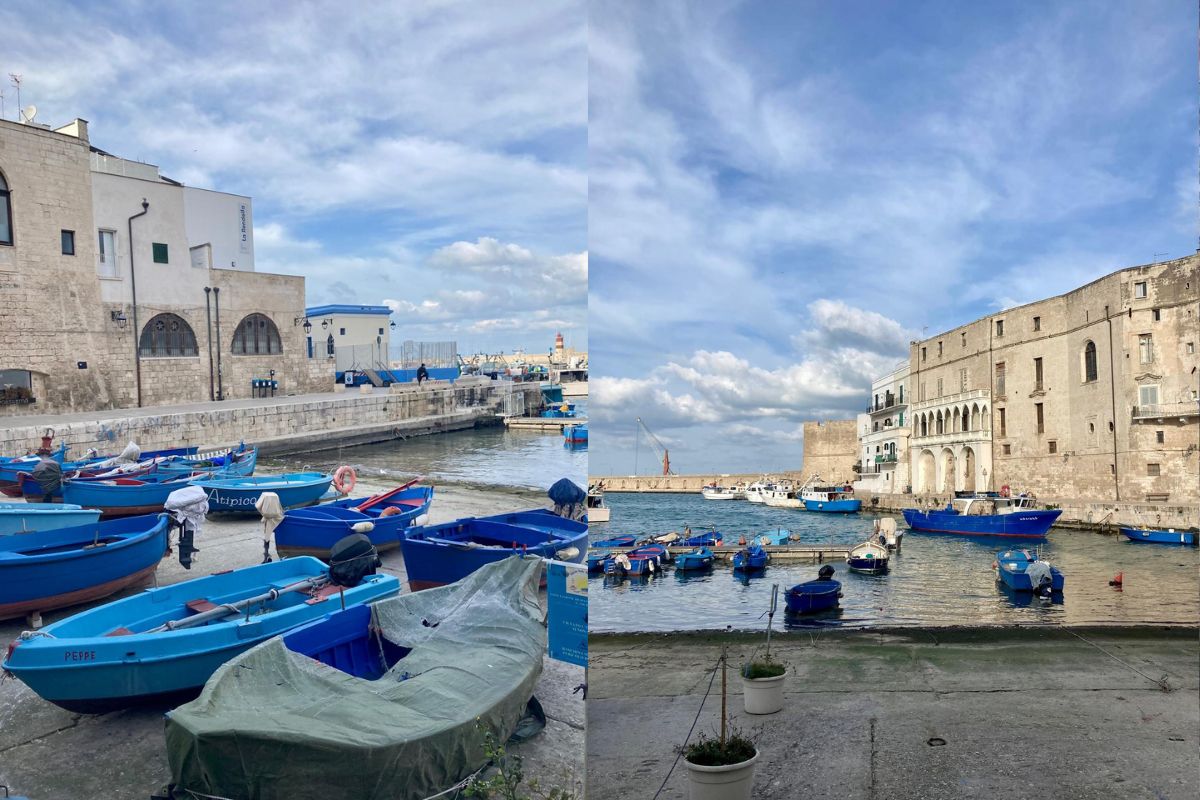
Port with Small Boats
Monopoli has a small but picturesque port where typical fishing boats called “gozzi” are moored. So head here for a stroll.
Port
Excursions in the Surroundings
The Italian region of Apulia is beautiful and offers a lot to see. If you’re traveling to Monopoli, then also visit:
Bari: The capital of Apulia is just a short train ride from Monopoli. Bari has a beautiful old town, the impressive Basilica of Saint Nicholas, and a port with views of the Adriatic Sea.
Polignano a Mare: The town is primarily known for its magnificent cliffs and crystal-clear water. Diving competitions are held here.
Alberobello: The unique and fascinating town of Alberobello, a UNESCO World Heritage site, is famous for its typical white houses with conical roofs, called “trulli”.
Matera: This ancient city has been the backdrop for many films (e.g., James Bond), and its “sassi” (cave dwellings) are famous.
And if you want to be inspired by even more trips, check out the offerings of the travel portal GetYourGuide.
Monopoli is easily accessible by train from Bari or by car via the highway. If you’re flying into Bari Airport, the journey to Monopoli takes approximately an hour.
When is the best time to visit Monopoli?
The best time to visit is spring, autumn, or summer.
Is Monopoli suitable for families with children?
Yes, Monopoli is a great place for families. The beaches are safe, and the town offers plenty of activities for all age groups.
What are the best beaches in Monopoli?
Lido di San Stefano and Lido Porto Ghiacciolo are among the best beaches in the area.
How long to stay in Monopoli?
The ideal length of stay is at least 3 days to explore both the town and its surroundings.
Tips and Tricks for Your Vacation
Don’t Overpay for Flights
Search for flights on Kayak. It’s our favorite search engine because it scans the websites of all airlines and always finds the cheapest connection.
Book Your Accommodation Smartly
The best experiences we’ve had when looking for accommodation (from Alaska to Morocco) are with Booking.com, where hotels, apartments, and entire houses are usually the cheapest and most widely available.
Don’t Forget Travel Insurance
Good travel insurance will protect you against illness, accidents, theft, or flight cancellations. We’ve had a few hospital visits abroad, so we know how important it is to have proper insurance arranged.
Where we insure ourselves: SafetyWing (best for everyone) and TrueTraveller (for extra-long trips).
Why don’t we recommend any Czech insurance company? Because they have too many restrictions. They set limits on the number of days abroad, travel insurance via a credit card often requires you to pay medical expenses only with that card, and they frequently limit the number of returns to the Czech Republic.
Find the Best Experiences
Get Your Guide is a huge online marketplace where you can book guided walks, trips, skip-the-line tickets, tours, and much more. We always find some extra fun there!
TL;DRLago di Braies (Pragser Wildsee) is an emerald mountain lake in the heart of the Italian Dolomites, sitting at 1,496m, part of the UNESCO World Heritage site and one of the most photographed spots in the Alps. Over 1.2 million people visit each year, so in season you’ll need to book parking in advance, and traffic can get restricted. You can hire a wooden rowing boat or just walk the easy loop around the lake. It’s loveliest early in the morning, before the crowds arrive. The guide covers when you need to book ahead, how to get there, where to eat, and what else is worth seeing nearby.
Lago di Braies is one of the most beautiful but also one of the most touristy lakes in Italy. In this guide, Lago di Braies, Italy: Everything You Need to Know and Where to Park, I cover what to expect, how to get there, and practical tips about visiting. Annually, this emerald lake in the heart of the Dolomites is visited by over 1.2 million tourists. Lago di Braies is part of the UNESCO World Heritage, making it one of the most valuable natural treasures in South Tyrol.
Lago di Braies, also known as Pragser Wildsee or Lake Prags, is located in the Braies Valley in the heart of the Italian Dolomites. This magnificent alpine lake at 1496 meters above sea level lies south of Alta Pusteria, between the towns of Bruneck and Toblach.
Lago di Braies
It is surrounded by the natural park Fanes-Sennes-Braies, which is part of the UNESCO World Heritage. This park offers not only breathtaking views but also rich fauna and flora. The lake is protected as a natural monument, which testifies to its extraordinary ecological and aesthetic value.
Lago di Braies is characterized by emerald to turquoise water, whose charm is enhanced by the surrounding landscape composed of pines and larches. In autumn, these trees are adorned in fiery colors, further enhancing the lake’s beauty. Above it rises the majestic mountain Croda del Becco.
Its geographical location near Lanzoni and the climbing center Cortina d’Ampezzo makes the lake a popular tourist destination. Accessibility by car from Innsbruck takes less than two hours, making it an easily accessible destination with magnificent scenery.
How Lago Di Braies Was Formed
Lago di Braies was formed as a result of a natural phenomenon known as lago di sbarramento (a lake formed by damming). Geologically, it was formed centuries ago when massive rockslides blocked water flows in the Braies Valley, thus creating this magnificent mountain lake.
The water that accumulated behind the rocks gave rise to the lake, whose waters now drain through underground channels.
According to legend, its origin is linked to the local “wild” mountain dwellers, who created the lake to protect their treasures from greedy shepherds. They opened underground springs, whose waters flooded the valley and formed the lake, thus separating the mountains from the valley.
Access to the lake is very easy thanks to a road leading almost to the water’s surface. This easy access makes Lago di Braies a popular destination for trips in the Dolomites.
How to get to Lago Di Braies and where to Park
The easiest way to get to Lago di Braies is by car; the lake is about a 1.5-hour drive from Bolzano. When driving north on the A22 motorway, you then need to follow signs to Bruneck and further to the lake.
Public transport works quite well here. From Cortina d’Ampezzo, you can take bus line 445, which will transport you via Dobbiaco/Toblach to Lago di Braies.
Parking at Lago Di Braies
As more and more tourists flock to Lago di Braies, parking options were restricted in 2024, even though there is a huge parking lot in front of the lake, during the main summer season from July 10 to September 10, 2024 from 9:30 AM to 4:00 PM, the road was closed to cars, motorcycles, and buses without prior reservation.
If you wanted to come here, it was necessary to purchase a DAY-STAY TICKET for €38, which secured you a spot at the nearest parking lot P4 by the lake and also included a food voucher worth €15, which could be redeemed at the local restaurants (Emma’s Bistro or Panorama Restaurant).
However, you could easily park in more distant parking lots.
Lago di Braies in the Dolomites is one of the most beautiful places you can visit, which is also why there is such a huge number of tourists here. Its emerald waters and magnificent mountain backdrop attract tourists from all over the world.
If you do come here, we recommend at least walking around the lake; this route is approximately 3.6 km long and takes 1 to 1.5 hours.
If you prefer more challenging hikes, you can try climbing Croda del Becco (2810 m), from where you’ll have magnificent views of the Dolomites.
Another option is a trip to Malga Foresta, where a relatively gentle trail leads, suitable even for families with children. This trip includes a beautiful walk through the forest and a pleasant stop at a mountain hut.
For those looking for something exceptional, try heading to Picco di Vallandro for panoramic views; if you’re up for it, it’s best there at sunrise.
All trails are well-marked and lead through the beautiful landscape of the Fanes-Sennes-Braies park, so no matter what you choose, you’ll be thrilled.
Boat Rental at Lago Di Braies
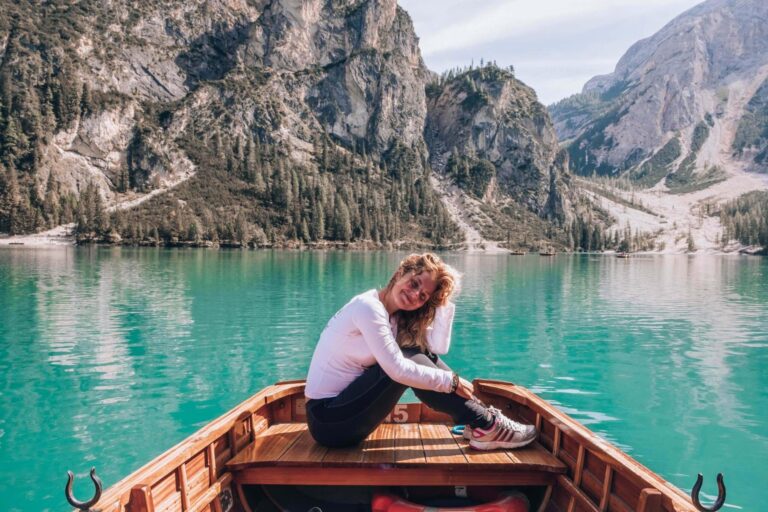
One of the most popular activities is to go boating on Lago di Braies. Wooden rowboats are available for rent there from June to the end of September, every day from 10:00 AM to 5:00 PM. The price is €18 for half an hour or €28 per hour. Sometimes, there’s a wait of up to 2 hours for them.
Boats at Lago di Braies
Where to Stay at Lago Di Braies + Restaurant Tips
If you want to stay right by the lake, on the shore is Hotel Lago di Braies, from where you have a direct view of the lake; this is an ideal choice if you really want to explore the lake early in the morning without crowds.
Restaurant Tips
You don’t have to worry about there being nothing to eat at the lake; right on the lake shore is the restaurant at Hotel Pragser Wildsee, which offers traditional Italian dishes. It’s nothing special, but you’ll get a meal.
Last time, we went for coffee and something good at Emma’s Bistro, and even though it doesn’t have great reviews on Google, we ate very well and the coffee was good too. Generally, we rarely had a bad meal in Italy.
When to Visit Lago Di Braies?
We prefer autumn (specifically October), when there are fewer people at the lake and you can comfortably park there. April or May are also good. In short, we avoid the main tourist season.
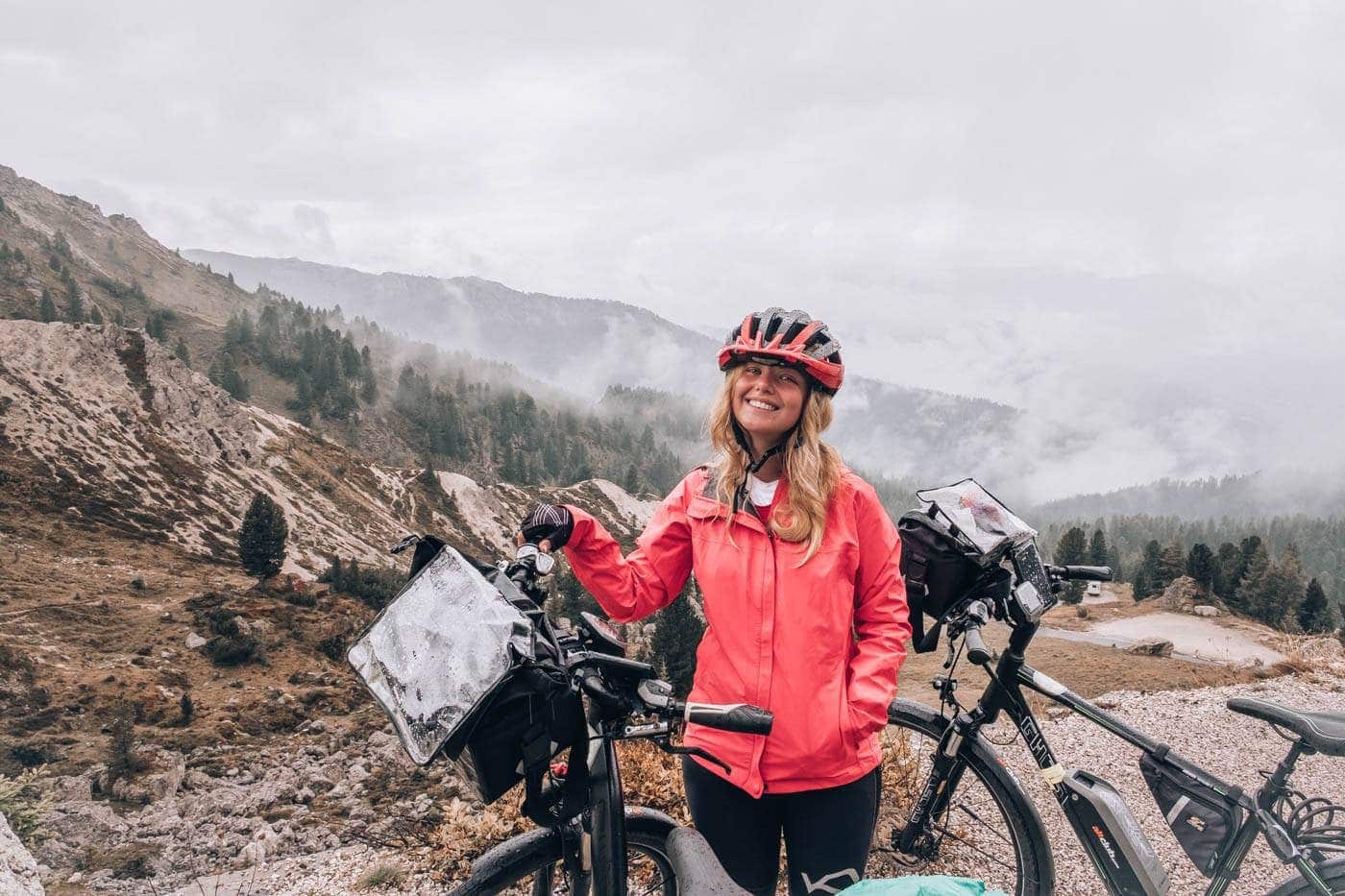
We’ve crisscrossed the Dolomites by bike, in a camper van, and by regular car
What to See around Lago Di Braies
You are in the middle of Fanes-Sennes-Braies Nature Park, where you’ll find a huge number of hiking trails, and most importantly, you are in the Dolomites (we definitely recommend checking out our article to find out what to see in the Dolomites), so there’s a lot to see.
A nice stop is Prato Piazza, a high plateau with breathtaking panoramas. Quite close by, you’ll also find the popular Tre Cime di Lavaredo, iconic triple peaks that are one of the most famous symbols of the Dolomites.
For those looking for quieter corners, Val Pusteria offers picturesque valleys with traditional villages and rich culture.
FAQ
Where to park at Lago di Braies
You can park right by the lake, but if you come here during high season, it’s necessary to book in advance.
Can you swim in Lago di Braies?
Swimming in Lago di Braies is not allowed.
What are the best hikes around the lake?
The most popular is the route around the lake and then the ascent to Croda del Becco (2810 m).
Can I visit the lake with a stroller?
Certainly, you can go around the lake even with a stroller.
Tips and Tricks for Your Vacation
Don’t Overpay for Flights
Search for flights on Kayak. It’s our favorite search engine because it scans the websites of all airlines and always finds the cheapest connection.
Book Your Accommodation Smartly
The best experiences we’ve had when looking for accommodation (from Alaska to Morocco) are with Booking.com, where hotels, apartments, and entire houses are usually the cheapest and most widely available.
Don’t Forget Travel Insurance
Good travel insurance will protect you against illness, accidents, theft, or flight cancellations. We’ve had a few hospital visits abroad, so we know how important it is to have proper insurance arranged.
Where we insure ourselves: SafetyWing (best for everyone) and TrueTraveller (for extra-long trips).
Why don’t we recommend any Czech insurance company? Because they have too many restrictions. They set limits on the number of days abroad, travel insurance via a credit card often requires you to pay medical expenses only with that card, and they frequently limit the number of returns to the Czech Republic.
Find the Best Experiences
Get Your Guide is a huge online marketplace where you can book guided walks, trips, skip-the-line tickets, tours, and much more. We always find some extra fun there!
TL;DRCracking Instagram in 2025 comes down to consistent content, real community-building, and using Reels and Stories properly – there are 25 tips here to get you there. The numbers worth knowing: Reels average a reach of 30.81%, carousels get 22% more engagement than plain photos, and over 500 million people use Instagram Stories every day. Aim for 3 to 5 hashtags per post (30 tops), keep captions to 138–150 characters, and go for blue or light-toned photos, which perform 24% better. The author herself hit a million views on one video within three months, despite having only around 10,000 followers at the time – proof these Instagram tips actually work. She’s also clear that fake likes and buying followers do more harm than good – time, patience and authentic content are what count.
Would you like to start making money on Instagram, become an influencer or use Instagram to promote your business? We have compiled tips and tricks for you based on personal experience, recent studies and professional publications. Let’s do it.
What is Instagram and why does everyone want to be on it?
More and more companies want to be visible on social media, and today’s young generation can no longer imagine life without it. Instagram is one of the fastest growing social networks, the second most downloaded app on the Apple Store and the tenth most searched word on Google.
According to the study.Hootsuite63% of Instagram users open the app every day and spend an average of 28 minutes a day there. 500 million people use Instagram Stories daily. It’s no wonder more and more brands are turning to Instagram and the phenomenon of the so-called “Instagram” is growing. Influencer Marketing, even though average engagement on Instagram has dropped from 3% to 2% in the past year .
Is it hard to succeed on Instagram?
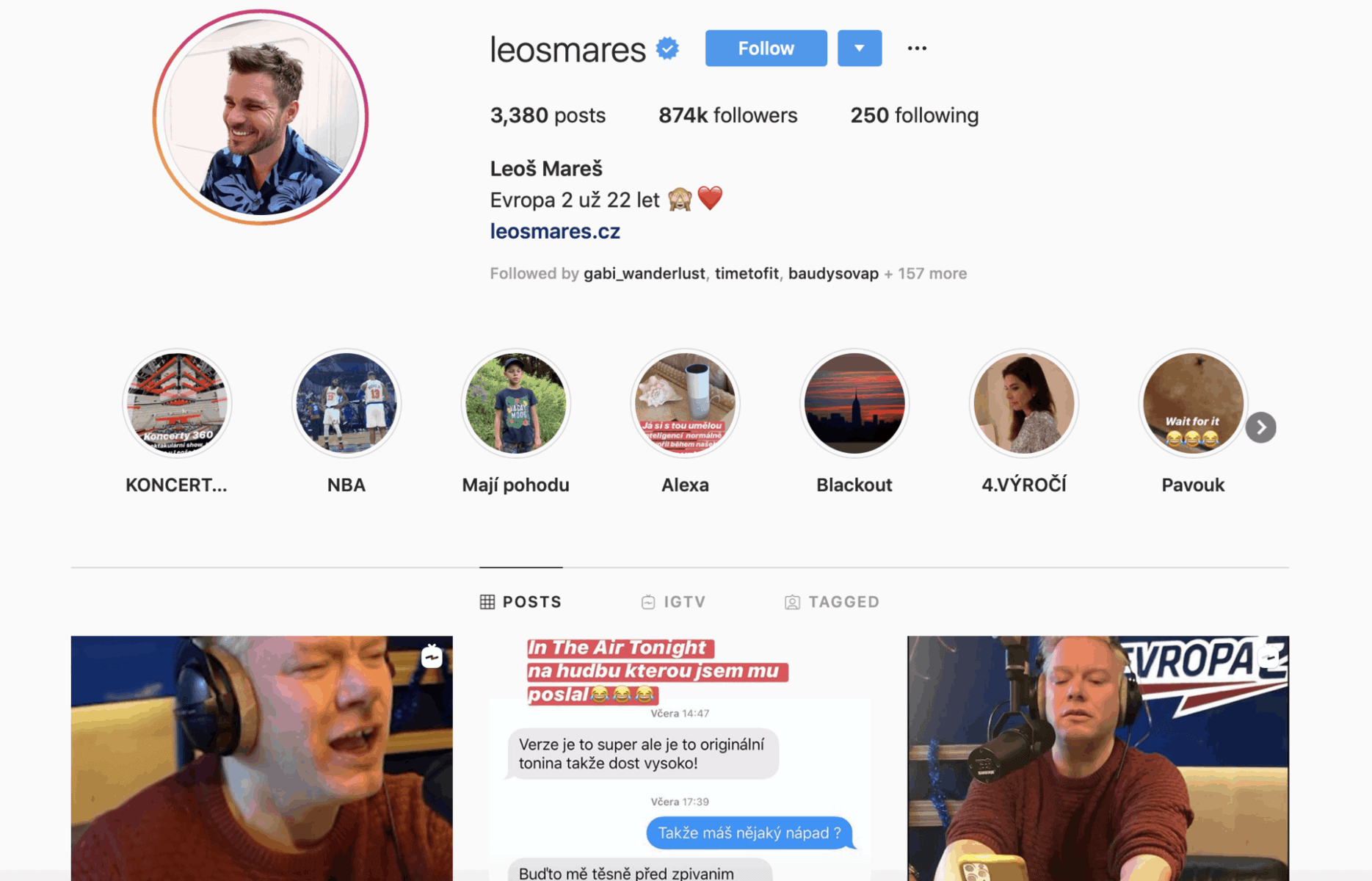
Leoš Mareš has one of the most followed Czech Instagrams, source: Instagram
According to surveys, up to 95% of people looking for success on Instagram fail. What are the most common reasons for failure?
They have no idea what to do on social media and just try. They have no plan
They have no patience and think the bill will grow in a few weeks
They are trying to find a “shortcut” and buy fake likes and fake followers
They’re dealing with a subject to which they have no relation
They are trying to apply tactics from abroad that don’t work in the Czech Republic and will never work in the Czech Republic
How much does it cost to be successful on Instagram?
Unlike Facebook, Instagram can still be built without having to put money into advertising at all costs. But the biggest investment will be your time. And a lot of time. If you’re serious about Instagram, count on the fact that there are no shortcuts and you’ll have to dedicate that time to the app. Companies should therefore not be afraid to invest in a quality manager or promotion of Instagram posts, even a very low budget can help you grow the platform and build your brand faster.
Which profiles work best on Instagram?
Sjana Elise Earp is one of the most followed people on Instagram in the fitness industry, source.
It’s a known fact that fitness guys generally get fewer followers and fewer likes than fitness girls, so you should… No, you should never think like that. You should never choose your focus based on what is most profitable, but on what you really enjoy. If you manage an account whose topic you have no interest in, you can’t count on success. Keep this in mind when choosing a social media manager, for example.
The only thing that is important in choosing your focus is this: Pick one and stick with it.
Not every business belongs on Instagram
Instagram is the talk of all marketing conferences, but that doesn’t mean your business has to have it. If your target audience is aged 40+, you should probably consider other promotion channels, 71% of Instagram users are under 35. It won’t be the best promotional channel for B2B oriented companies either.
Not all products have a target audience on Instagram, source.
30-point checklist for a successful Instagram download
The article may make you feel like it’s a lot to take in. We understand! We have therefore prepared a 30-point checklist in Google Docs and Excel where you can tick off individual tasks in these areas (it is also available for purchase at the end of the article):
User profile settings
Preparation of a publication plan
Before the first post
Check-list per post
Check-list of daily tasks
Check-list of weekly tasks
Check-list of monthly tasks.
How to create a successful Instagram profile that captures attention
It doesn’t have to be love at first sight, but you have to impress. Your profile is your business card, so you should take great care to optimise your profile. What should you focus on?
Username
Name
Profile photo
Bio (description about you)
Link
1) How to choose a username
Most of you probably already have a name you want to stick with. But if you’re just getting started with Instagram or want to set up a profile for your business, here are two tips:
Think of a catchy name
It’s similar to coming up with a website name or brand, you want something that people will remember and ideally you want to associate it with what you do. For example, when you see @dnescestujem, you immediately realize that it is a travel profile. The problem arises if you want to change your focus after years, like Cestology, which recently decided that it no longer wants to be Cestology, but Christopher Paleta. Connections to a specific place are also problematic, I can think of @Terezainoslo, who is now in Prague.
Your real name
A far easier option is your real name if your profile is about you or is corporate. If your name isn’t too long or busy, there’s no reason not to choose it.
What everyone is interested in
I think it’s time for me to post somewhere why I’m on Instagram as Endijka. Often people think I’m Andrea because, how did Lucia become Endijka? I’ve been using that nickname for over 15 years and it started in World of Warcraft. I have it on all my social media, and while it’s confusing and I don’t recommend anyone make up a completely different name, I’m sticking with it.
2) What name to chooseon Instagram
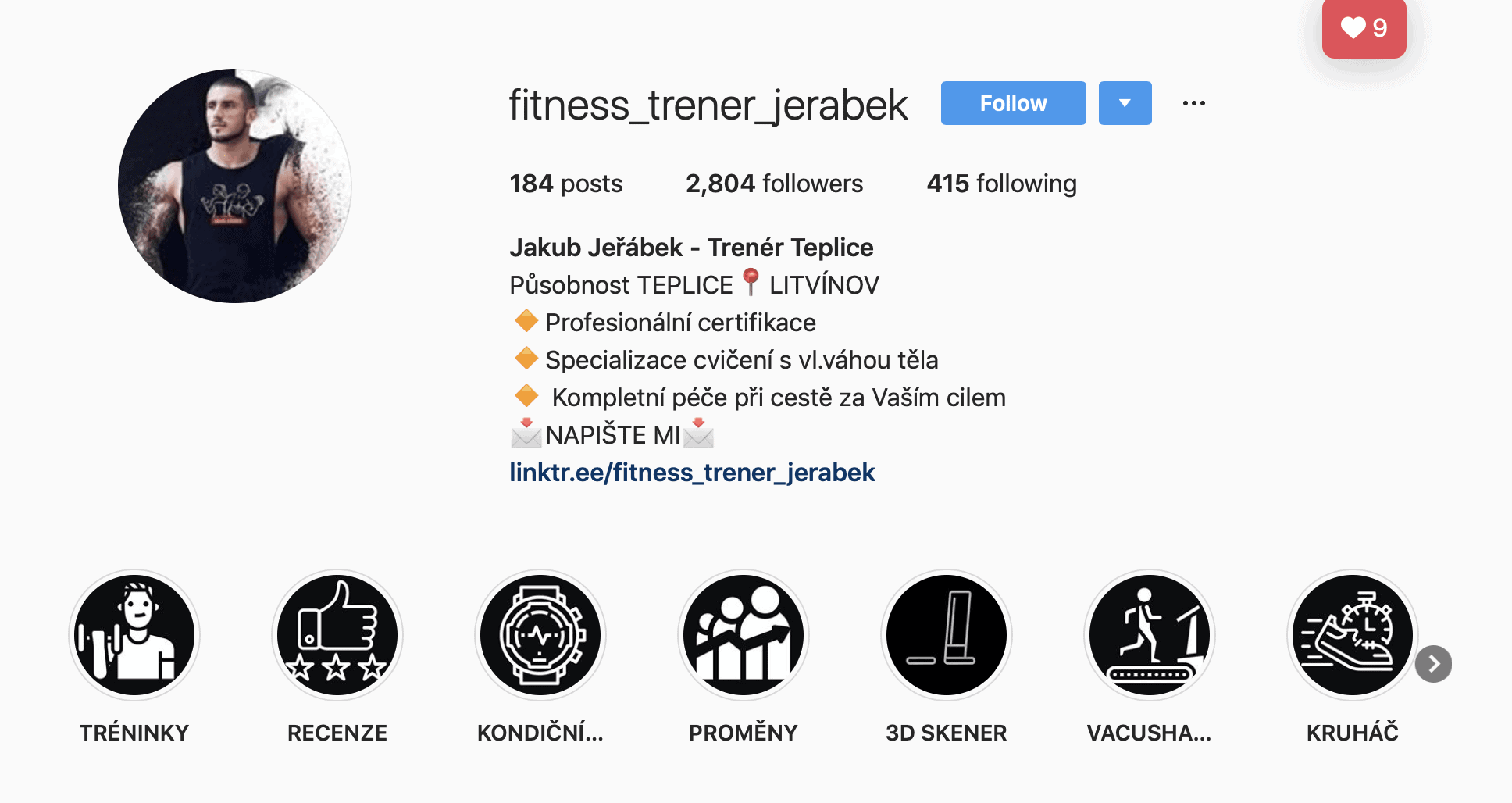
Jakub Jeřábek made great use of the name to increase traceability by adding “Coach Teplice” after the name
And that’s a tough one – coming up with a name? I’ll put my name there and that’s it, right? This is how the average Instagram user thinks, but you should go further. Instagram gives you quite a bit of space for your name, and you can use that to your advantage.
If you are a fitness trainer, write Fitness trainer Tomáš Novák. What good is that gonna do you? If someone searches for a fitness trainer on Instagram, you increase the chances of them finding you.
3) How do I choose aprofilephoto?
Companies have it easy, here you choose a logo to instill it in people’s memory. But if your brand is associated with you, you need to do some thinking. Instagram is all about the visuals, so approach it that way.
Your profile photo should say a cheerful “hello” and be pleasing to other users at first glance. According to the study. Photofeeler a brighter photo, a wide American smile, and if your focus allows, formal attire is more flattering, according to studies. You shouldn’t be too far away in the photo to be recognizable even on smaller phones.
Don’t forget that you shouldn’t change your profile photo too much, people will remember what you have and it makes it easier to quickly identify yourself in Stories for example.
Just try it, can you remember the profile pictures of your favourite Instagram accounts? If you change your profile picture, this can also lead to a short-term drop in views. Remember that it is advisable to use the same one on all social networks.
4) Bio – What must not be missing in the description?
Use every letter of the 150 that Instagram allows. The goal is to explain who you are, what you do, why they should follow you. Quotes are great, but the most people will get out of them is that you like Churchill.
Rather, use the caption to entice people to click through to your blog or e-shop.
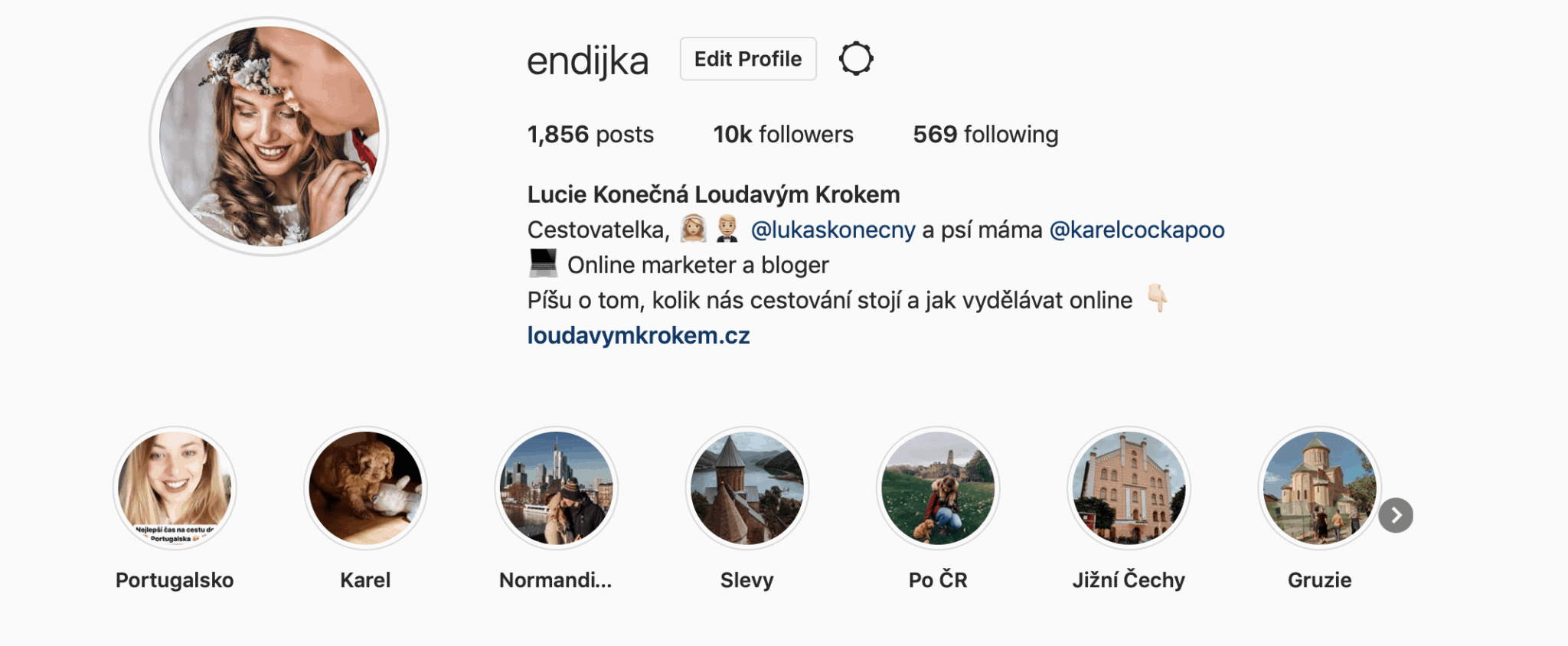
So my description is:
Traveler, 👰🏼🤵🏼@lukaskonecny and dog mom @karelcockapoo 💻Online marketing and blogger I write about how much travel costs and how to make money online 👇🏻
From this you should understand that my profile will be a lot about travelling with my husband and our dog Karl. You will also find out that I am an online marketer and blogger. At the same time, there is an invitation to click on the link below that leads to our articles.
If your main goal is to get users to your site, your product or your project, invite them to click. For example, just write “Listen to my podcast” or “Download the free ebook How to make money for free” or “Read an article about zero waste”. Studies have confirmed many times that these call-to-action words like “Listen”,“Download”,“Look” or “Read ” really work. So why not take advantage of it?
Tip: Before you start writing your bio, check out profiles of your competitors or your inspiration in the same industry.
How to create content that people enjoy
What to publish, what to write about and how to get people to read it. In this section, we’ll look at some tips on how to do this.
5) Be consistent
Much has already been written about the matched “feed”. If you don’t know what a feed is: That’s what Instagram calls the archive of posted photos you see when you open your profile. The user should know at a glance what your profile is about. “But if I’m into all sorts of things!” I’ve heard this response hundreds of times in training. And I always give the same answer:
It’s really important to stick to one theme. If you travel, people look to you for inspiration around travel and don’t want to read a recipe for a cake. You better put it in Stories. It’s the same as with a blog (although here it’s more for SEO), there’s no point in making a blog where you write about travel, marketing, fashion and throw in a recipe here and there!
The profile should be unified not only in terms of theme, but also visually consistent. Most marketers and influencers use Lightroom (how to use Lightroom), but you can use other apps or edit directly in Instagram (choose one filter and stick to it). A great course on Lightroom can be found on Kurzeo.cz, my review can be found here.
What not to do:
There are “artists” who run their photos through 20 apps. You’d better take a course on Lightroom or buy presets from bloggers (preset filters) because Lightroom really can handle everything you need. Editing one photo with 20 filters in different apps is a waste of time.
Tip: In Preview or Buffer, you can upload the photos you plan to publish and see how they fit together.
6) What photosto publish?
Don’t post photos and videos that you are not absolutely happy with. If you don’t have good quality visuals, don’t contribute. The optimal photo size for Instagram is 1080 x 1350 pixels (portrait). Of course, you can stick to the classic square format, which also works. What I don’t recommend for marketers and brands are landscape formats, as they take up much less screen space and are less likely to engage.
Photos should match at first glance, source Instagram @ochutnejorech
What to look out for in a photo
To keep it sharp
It was understandable to users
Relevant to your focus
Please note: High quality content doesn’t always mean you have to shoot on a DSLR, everything has to be perfectly arranged and edited in Lightroom. Your feed can consist of snapshots. But I don’t recommend posting a cold product photo one day, reposting a photo from another user the next day, taking a behind-the-scenes snapshot the third day, and posting a photo from a professional photographer the fourth day. Do not forget to be united and not to be, as the Czech saying goes, “every dog a different village”.
7) What colours work best!?
Repeated studies confirm that photos where blue is the dominant colour perform 24% better than photos where red or yellow is the dominant colour. After all, no wonder blue is the most popular colour in the world. Similarly, light-coloured photos are 24% more successful than photos that are dark.
8) Photo, gallery or video: Which type of post works best?
The latest study by Social Insider shows that photo galleries get the best engagement, between 1.65% and 5.13% depending on account size. It achieves 0.25% – 0.51% higher engagement than videos and single photos. These had the worst engagement rates in this study. What applies to others may not apply to you. In the end, it’s always about the quality of the content.
9) How and what to post on Instagram
If you want to be successful on social media, you’re going to have to be a bit of a copywriter. Emotions and wit are the rule on social networks – especially in the Czech Republic, we can’t do without jokes. Write and publish only when you have something to say. Or you’d better shut up.
What should I write about?
Try to anticipate what people might be interested in, save the questions they write to you and help them with the issues that are bothering them. If you’re doing Instagram for a business, have the questions that come in chat and in the mail, store them. These are the best resources to write social media posts and company blog posts. Be interested in what your customers or followers are concerned about and talk to them.
Where to find inspiration?
Inquiries from customers, followers (email, chat, direct messages)
Discussion forums about the topic you are writing about
Interest groups on FB
Blogs about the topic
Competition
Reviews
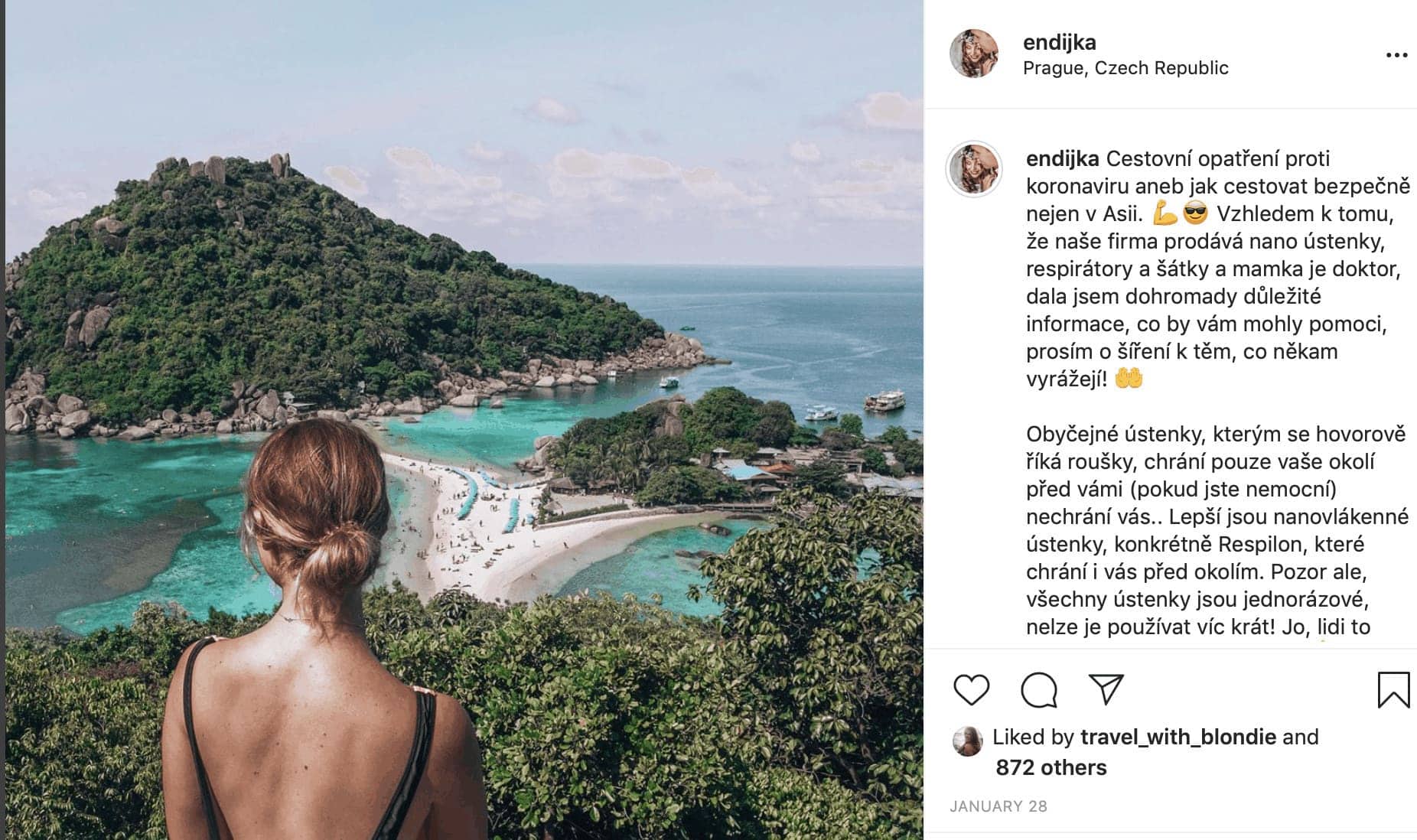
Write about what people are currently interested in, feed my Instagram @endijka
Tips for aspiring influencers
Read what other influencers in your field write, what works and what doesn’t
Don’t copy, but be inspired
Be honest and authentic
If you want to improve your braids, I recommend downloading three e-books from the God of all copywriters in the country. Okay, I don’t know if Ottu Bohus is a copywriting god, but his e-books are great, practical and you can read them in no time. And most importantly – they’re FREE.
10) How long should the labels be?
You’ve probably noticed that many Czech influencers specialize in captions that are more like styles. These can work great – if you have something to say. But as studies show, less can be more. This is especially true for corporate profiles.
The best performing posts, according to a Social Insider study last year, were less than 10 words. However, this is an international study and the posts are in English, so take this information with a grain of salt. Something different may work for each profile. So rather than counting words, spend your time writing quality and valuable posts that people will enjoy. And experiment.
11) Why and how to use hashtags?
Instagram uses hashtags (crosses before a word, such as #travel, #vacation, etc.) to categorise posts. That’s why when you search for #sunset or #sunset, you get photos of users with sunsets. If you add this hashtag to your photo, users can use it to find your photo.
In addition, people can now “follow” hashtags, so it’s possible that by choosing the right hashtags, your photos can appear to users directly in their feed (the main board where photos from users you follow appear).
If you’re new to hashtags, you should know that they can’t be made with periods (.), symbols (!?) or spaces. Conversely, they may contain smileys.
Hashtags can be the key to not only getting your first followers, but also the so-called “hashtags”. “power likes” (more below) and you’ve been noticed by more influential accounts. Choosing the right hashtags is therefore crucial.
Tip: Whenever we develop a strategy for a client, we also work on relevant hashtags, which is why we’ve already managed to reach an astonishing 10,000 views with the first posts on a brand new account.
How to write a # hashtag? On Windows and Macbook
The easiest way is to use the right Alt key, or Alt Gr. Alt can be found to the right of the spacebar button. Press and hold it, and press the X key while you do so.
On a Macbook, the #hashtag is written by holding down the right option key and pressing the number three.
12) How to choose hashtags?
Some hashtags are so popular that you can find millions of photos under them, for example, users have already posted 467,757,079 posts under #travel. Therefore, it is not worth using such a hashtag at all, because photos are added there so quickly that your post will get stuck.
There’s no point in making up your own hashtags like #jdurybarit, which you won’t find a single post under. People don’t use or follow that hashtag.
For starters, I recommend choosing hashtags that have 10-100 thousand photos.
How to search for relevant hashtags?
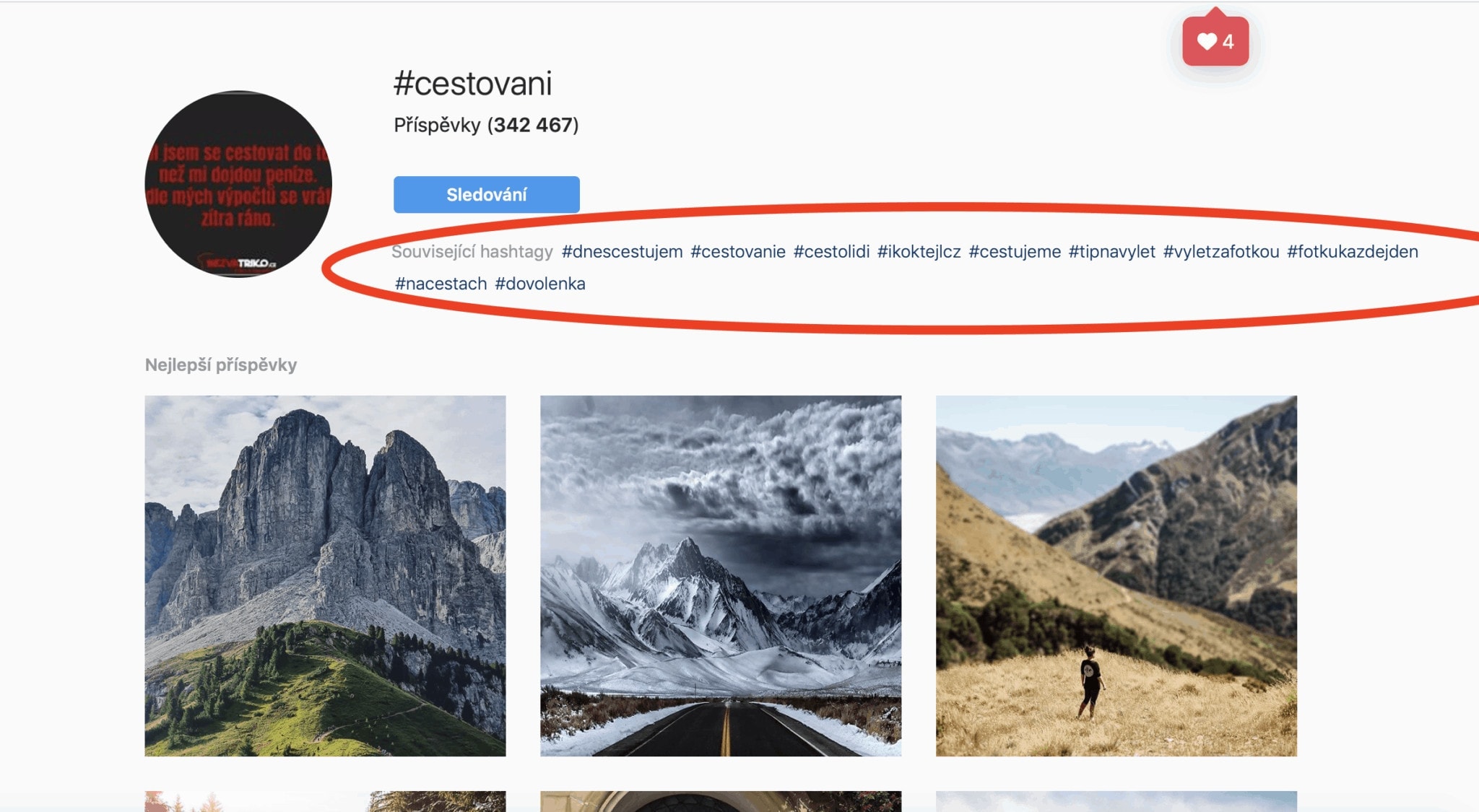
There are various tools for this, but ultimately the best one is already on your mobile phone. Put a hashtag with your focus (in Czech) in your instagram search. If you are into travel, it will be “travel”. Instagram will show you similar hashtags “related hashtags”, and like this, go through the various hashtags one by one until you’ve collected 9-15 hashtags.
Use the whisperer directly from Instagram
For hashtags, don’t just look at the number of posts posted, but also what posts are posted underneath them. They should be consistent with the content you publish or plan to publish.
13) How many hashtags to put under a post?
Instagram allows you to use 30 hashtags, but how many is best for marketers to use is a matter of debate. It’s true that hashtags help your organic (unpaid) reach, and they can make you discoverable to other users.
But some claim the 30 hashtags look “spammy” and link to studies that have confirmed that too many hashtags can reduce engagement. The most common “safe” number they talk about is 11 hashtags, but some say you can use 2-8 hashtags in the caption and another 4-5 in the comment.
I recommend testing and testing and eventually you will see what works best for you.
Tip: It doesn’t matter if you put hashtags directly in the photo caption or as a comment under your photo.
14) What to do with emoticons or why use emojis
To use or not to use emojis? Although studies vary on how much using emojis increases engagement, the conclusion is always the same: Use them. And the more the better. According to the latest data from Social Insider, posts with 25 emojis perform best. Honestly, I don’t know if I’ve ever managed to get that many smileys in one post, or if I’ve ever seen a post with that many smileys.
An older study from quintly in 2017 claims it can increase engagement by up to 15%, a more recent study from Social Insider in the second half of 2019 showed that photos with emojis in the caption have 26% higher engagement on average, and the difference is even more dramatic for videos. Videos with emojis in the description have 70% higher engagement than videos without emojis. Despite this, 50% of users don’t use emojis, so why not include them?
15) English or Czech – or why do so many people make the mistake?
“I wrote my first post in Czech and it got the best response ever,” my friend reported to me, and I wondered if she had been listening to me for the last three years. I write in English, something in Spanish, occasionally cut a quote in French, and when I want to swear, I write it in Czech.
Let’s get this straight: Writing in English when most of your followers are from the Czech Republic is stupid. Yeah, it’s stupid, even if you’re currently living in NZ or Canada and your five friends from work who don’t understand Czech have started following you on Instagram.
“But the Czechs speak English!” or “My friends speak English”. I don’t want to disillusion you, but many people have tested this theory, and in the end they always found that writing in Czech is more profitable.
Yes, some influencers write in English and then in Czech. But..:
They’re in a different situation than you
How do you know that their followers wouldn’t grow faster if they wrote in Czech?
16) Insta Stories and Instagram Reels
Insta Stories, or stories that disappear on Instagram within 24 hours. This is a feature that has spread to most social networks from Snapchat and is most successful on Instagram in the Czech Republic. The quality of your Stories can determine whether people will follow you in the long run.
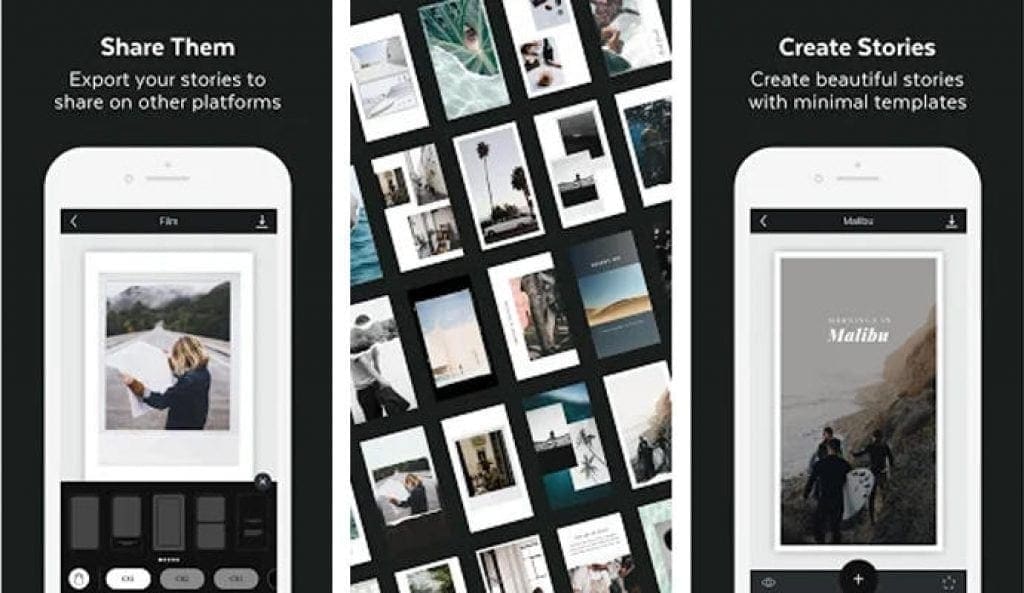
Unfold – app for creating stories
With 500 million users using storiesky (as we sometimes familiarly call them) every day, they are becoming increasingly important to influencers and brands.
For creating Stories, I recommend the mobile app Unfold or Mojo, where you can create stylish-looking Stories in no time.
People love to play and Instagram knows this, which is why it’s adding more and more gamification elements. You can add polls, votes and even a countdown to stories. You can easily add music to the background, write or paint something there. Great article about 18 (hidden) features and tips for Instagram Stories Diana Zadakova has on her blog.
Tip: You can now add polls to Insta Stories ads, and the first stats show a tens of percent increase in conversions
What are Instagram Reels and why create them?
The Instagram Reels format was first launched for users in Brazil (where there was a 4.3% increase in Instagram usage) as well, and is a short video format that Instagram is using to combat its competitor TikTok. This is one of the reasons why Instagram currently supports Reels more than other types of content. Initially, the range was only 15 seconds, then it was increased to 30 seconds and eventually to 60 seconds, and in May, Instagram started testing 90-second Reels with select users. Organically, you can achieve a much higher reach with them than with any other format on Instagram
Reels videos have a maximum size of 4GB and a maximum length of 60 seconds (unless you’re one of the select group of people for whom Instagram is testing a longer format).
9 out of 10 Instagram users watch videos weekly and 50% of users use Explore monthly. Reels has become the fastest growing format in the world.
Instagram Reels also have the highest engagement rate, so it’s worth investing in them.
How to get your first followers
And now we’re finally at the chapter you’ve all been waiting for. If you’ve read this far: thank you. If you just scrolled here, it’s okay. I know, you’re pressed for time. I’m not going to take any more time.
The biggest evil that a successful profile cannot do without is time. Your invested time. All those who will invent some shortcuts, try to find bots, programs and apps to like, follow and “do God knows what” will end up with either a block from Instagram, fake or inactive followers and an Instagram that will be useless. I won’t explain the Instagram algorithm here, but keep in mind what every social network wants: for you to spend time and be active.
17) Follow others
To get your first followers, you need to follow others, to create your own community of people.
Find accounts that have 10,000 or more followers and are thematically similar to your account. Look who gave them the last follow. From these people, choose the people you will follow.
Choose people who have a profile picture of themselves, never follow people without a profile picture, here is according to Brandon Gaile less likely to give you a follow back. There is also reportedly a lower chance for profile pictures with couples.
Before you follow, check out the profile, browse the photos on the account, like them and comment if something catches your eye. It’s a lot of work, but work that will pay off.
Never give follow to more than 20 people at a time. Don’t ever frantically slap a profile picture on one either. Instagram will deem this suspicious and block your account.
Remember, you’ re creating a community of people, you’re not just trying to get someone to click follow. You want to build a relationship with them – a virtual relationship – and that, like real ones, will take some work.
There will come a time when you’ll be watching so many people that you’ll lose your bearings. There’s nothing wrong with unfollowing people who don’t communicate, don’t respond to your posts, and you don’t find inspiration in their posts either. It is not in your power to keep in touch with everyone, and that is fine.
18) Liking – give out hearts
Instagram has long recognised when you use bots to like. Moreover, users are not stupid either. So don’t use apps or bots. Rather, set aside part of your day to go through the posts of those you follow and the posts under relevant posts and highlight what catches your eye.
Avoid frenzied liking, not only can Instagram block your account, but you want users to pause over your post rather than liking it in a frenzied attack on Instagram.
19) Comment and get comments
If you want people to actively start interacting with you and commenting on your posts, you need to invest time and start interacting with them first. Don’t try to compete on how many photos you can comment “Beautiful photo🤗”, read the posts and really respond to what people write.
Again: give it time and energy. Don’t let it happen that you add a comment “This is an amazing place! Wonderful.” Yes, it’s happening. And often. Of course, this is not to say that you should never text people that they took a beautiful photo.
How to get more comments
Be interested in the opinions of your followers. Invite them to tell you what they think or how they feel about it. You’d be amazed how much the right question can increase the number of comments. One of my first most successful posts ended with a question about where they had the most expensive beer and how much it cost.
You can also arrange with friends and employees to comment on your Instagram posts. Please note that comments should be at least four words long.
20) Fake Likes
There are hundreds of apps and websites that offer fake likes from both fake and real users. Simple: Don’t do it. Although it can sometimes be frustrating to build an account from scratch, and buying likes can seem like a quick shortcut to getting more likes on your posts. However, it won’t help you at all, on the contrary, it can hurt you in the long run. If you’re interested in this topic more, you can read this short article.
21) Power likes / Power likes
But what you want to get are the so-called. Power Likes. This means that your post will get likes from accounts that are bigger than you. How does it work?
The more people like your post, the more its reach increases. You’ve probably already noticed that. If you are liked by users with fewer followers and less engagement, your reach will increase just a little. But when big accounts like you, your reach can skyrocket. Really.
It happened to me that an account that normally has 500-1000 likes on a photo got a few power likes and the post got 45k likes within a few hours. Power likes can get you into the “discovery” part of Instagram and into the top hashtag positions as “top posts” in the long run.
But how to get power likes?
Use hashtags created and used by influencers. It’s quite likely that they’re following these hashtags.
If it fits, don’t be afraid to tag big accounts in the comments or captions (when you mention them), there’s a good chance they’ll respond and link to your post
Comment on and like the posts of great accounts, reply to them in Stories – become part of their community
Post at a time when people are online (no point in posting late at night when people go to bed), i.e. between 9:00 and 21:00. If you want to know the best time to publish on your account, check the statistics.
22) Giveaways and competitions
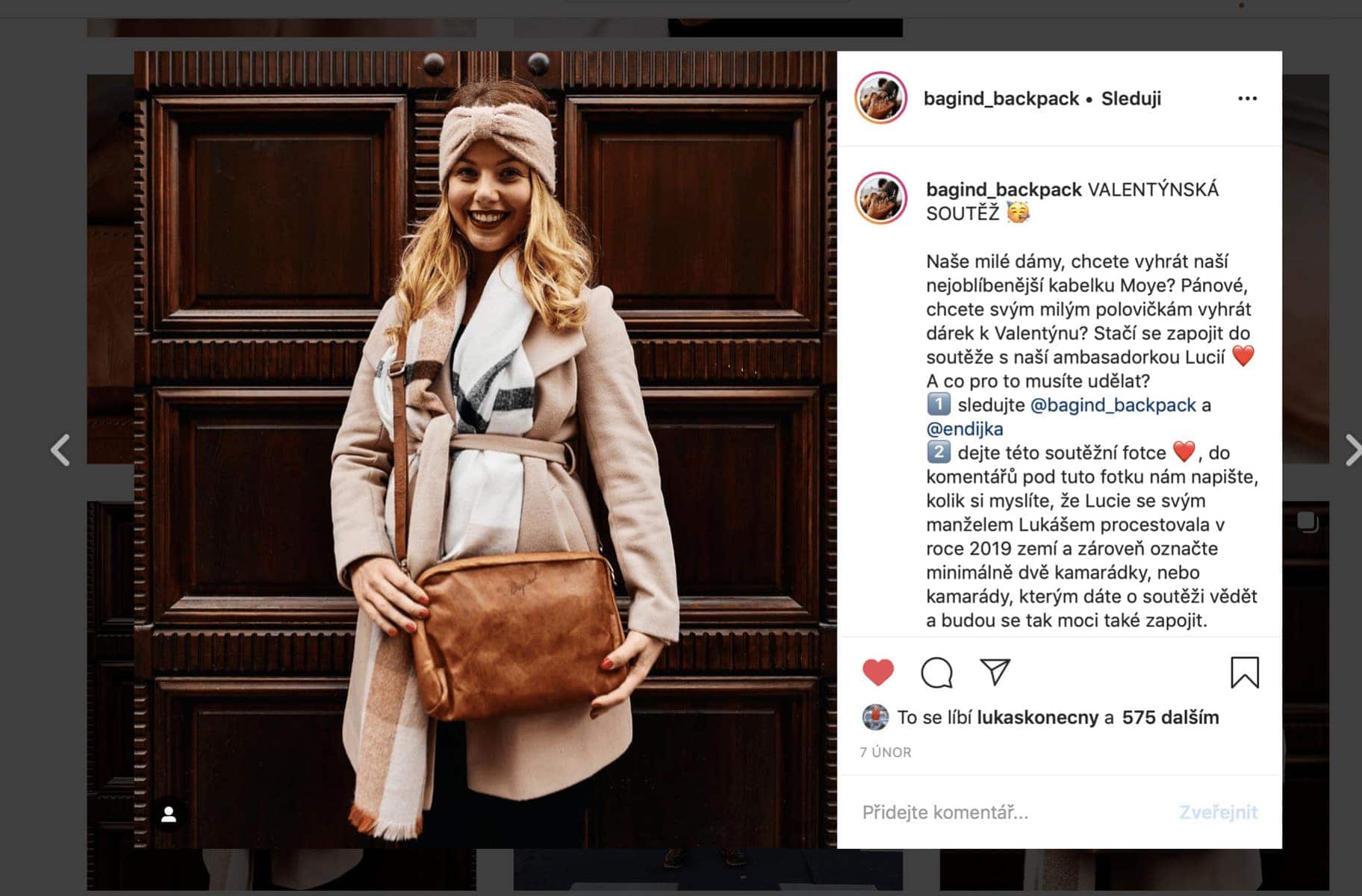
Bag contest on Instagram @bagind_backpack, source: Instagram
Giveaways and contests are still popular on Instagram. Giveaway entries used to be about 65x more comments and 3.5x more likes. The statistics are clear: Accounts that run contests and giveaways grow 70% faster than those that don’t.
But how to have a successful contest/giveaway?
The most successful competitions are those that are simple and fun. Don’t try to come up with overly complicated terms and conditions, this can put many people off. Make sure that your contests always comply with Instagram’s rules.
23) Collaboration with influencers / companies
You can see how not to do it on @svetinfluencer’s account, screenshot from Instagram
Collaboration between companies and influencers can bring money to both parties, new followers and higher average engagement. Because I wrote a detailed article for companies, on how to work successfully with influencers, here I’ll only cover the influencer perspective on working with brands.
Even for an influencer, working with a brand can bring a number of benefits beyond money. New followers, connections with other influencers, products for contests and giveaways, prestige.
In the beginning, offers to collaborate can be very tempting, with the thought in your head, “They’re giving me something for free, I’ll take it!” Everyone probably has to go through this. But if you take one collaboration after another, you become less attractive in the eyes of brands and a walking advertisement in the eyes of followers. Don’t take cooperation if:
A) Companies make you cheap labour
That’s what’s happening. The company will offer you things for 10 000 CZK, but in the contract you will get a condition that you will write 8 articles for them, 20-30 photos, list them as a sponsor everywhere and share everything they tell you. Such cooperation certainly makes no sense.
B) The product is completely out of your focus
When a traveller promotes a washing machine, it’s a bit strange, isn’t it?
C) Product/brand you don’t like
There’s nothing worse than promoting a product or brand that you don’t like and doesn’t suit you. Always reserve the right to return a product and not review it, same for services.
24) How to use shoutouts
Shoutouts or mentions of other users and brands are a great way to gain more followers. It’ s common abroad to buy a shoutout from an influencer, but I haven’t come across it here. But you don’t have to do anything like that to get a shoutout.
Set aside a day of the week to share accounts worth following with your followers in stories, it’s only a matter of time before one of those accounts pays you back. Reciprocity works very well on social media.
25) Plan andevaluate
You can’t do Instagram without planning. For personal accounts, I recommend at least using apps like Preview or Buffer (free for one account), where you can schedule posts ahead of time and see how each photo looks next to each other. Anyone who is serious about Instagram should have a publishing plan.
In a company, Instagram shouldn’t be a lonely channel where posts are invented from day to day, but should be a solid part of a marketing strategy with clear and predetermined goals. Posts should be consistent with other online and offline marketing activities, and should match visually and in content.
Tip: How we do it
We develop the company’s marketing strategy into a social media strategy, where we set clear objectives
We will create a thematic plan for each month of the following year
Create subtopics for each week
Contributions are always created 14 days – 1 month in advance (by appointment)
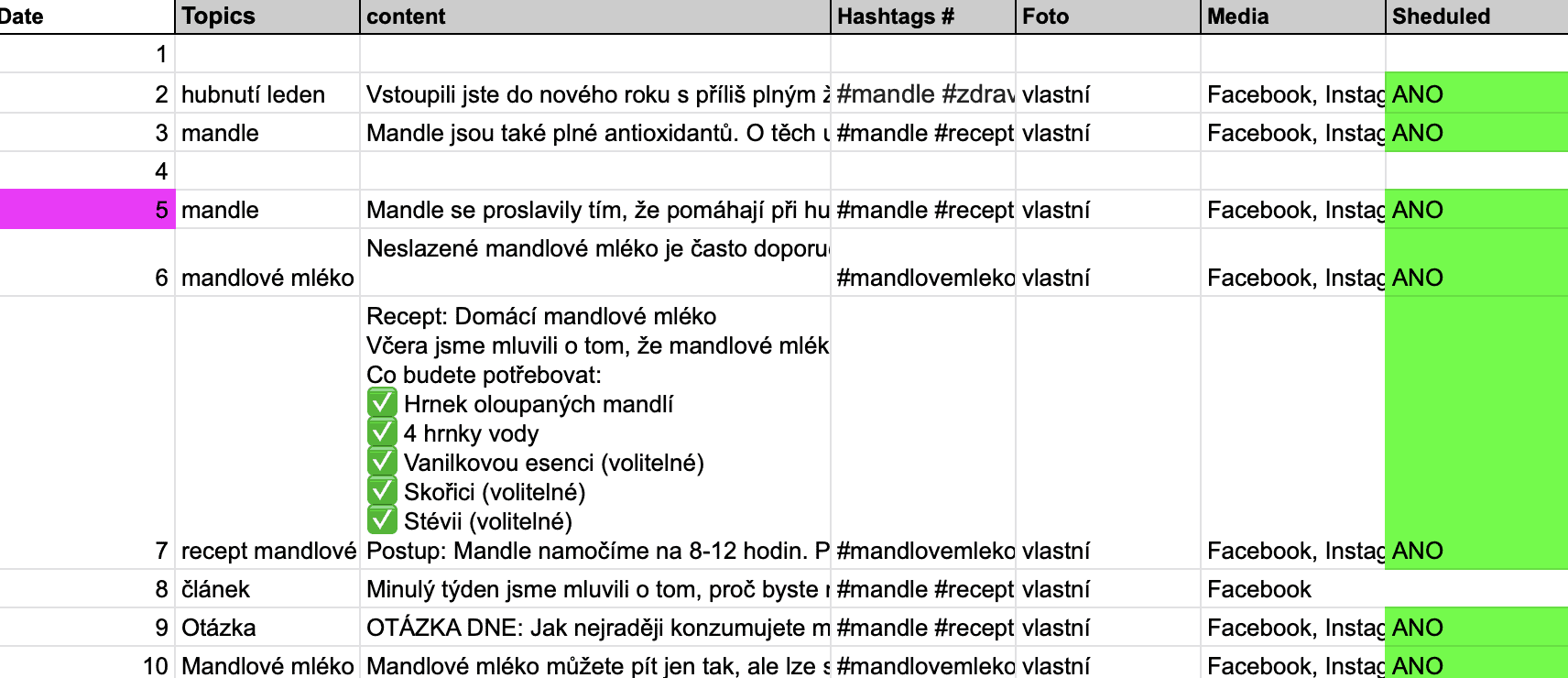
Example:
January: Topic: Almonds Subtopics of each week:
The Week: almond Benefits
Week: almond milk
This week: almond butter
Week: savoury recipes from almonds
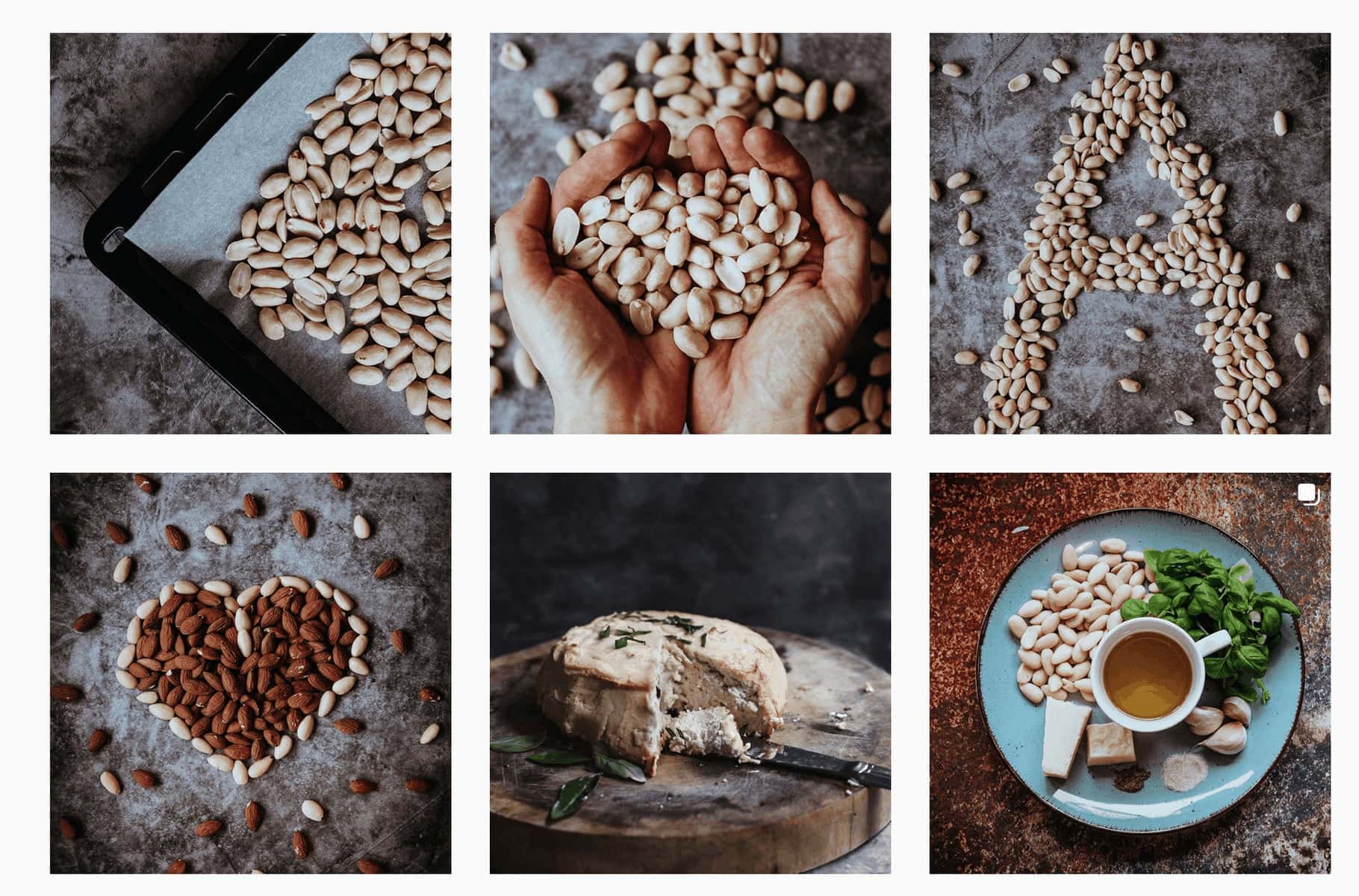
Example of the publication plan for January, which focused on almonds
Evaluating
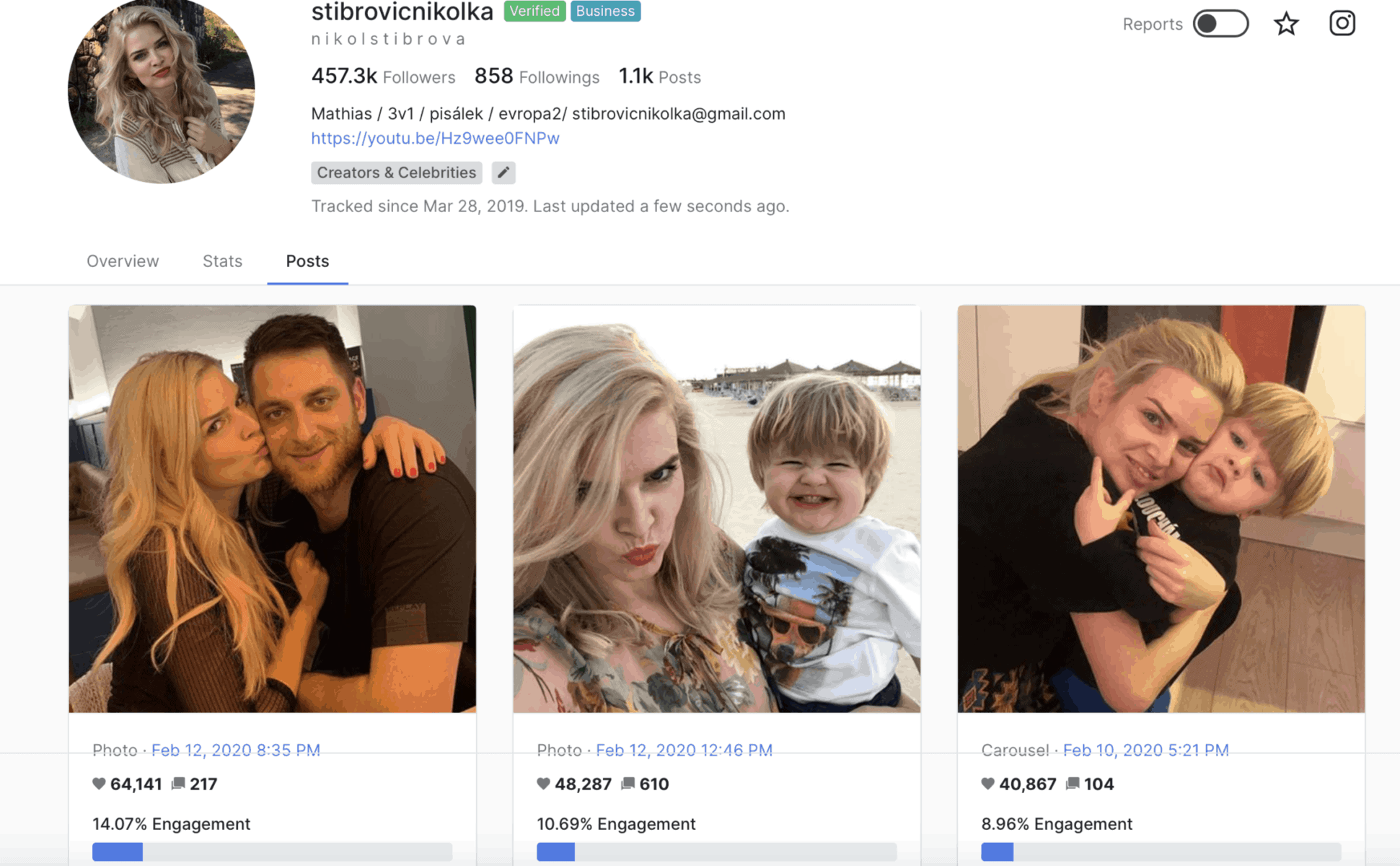
While we want to build a community of followers, the number of followers is not a telling metric for us at all. Is that contradictory? No. You’ve probably heard about the Instagram case with 2 million followers that didn’t even manage to sell 36 t-shirts. We want followers who are genuinely interested in our account, we don’t just want a number that looks good.
Stats of Nicole Stybrova’s instagram account from Igblade
More interesting for us are numbers like engagement (interest) or reach, the number of hashtags used by our company, mentions, the number of saved recipes, purchases via Instagram or discount codes used that were distributed via Instagram. The metrics you are interested in are based on predetermined goals.
If you’re new to stats, the ones offered by Instagram itself will suffice. But you can also find out interesting numbers for free from Taggy.cz, Igblade or Hypeauditor. The biggest experts in reporting is the Czech company Socialbakers.
Promotionon Instagram
You can significantly support the growth of your company account by sponsoring contributions. If you have quality posts, you can reach thousands of people for just a few pennies. On most of the accounts we manage, the price per interest ranges from CZK 0.20 to CZK 1.90.
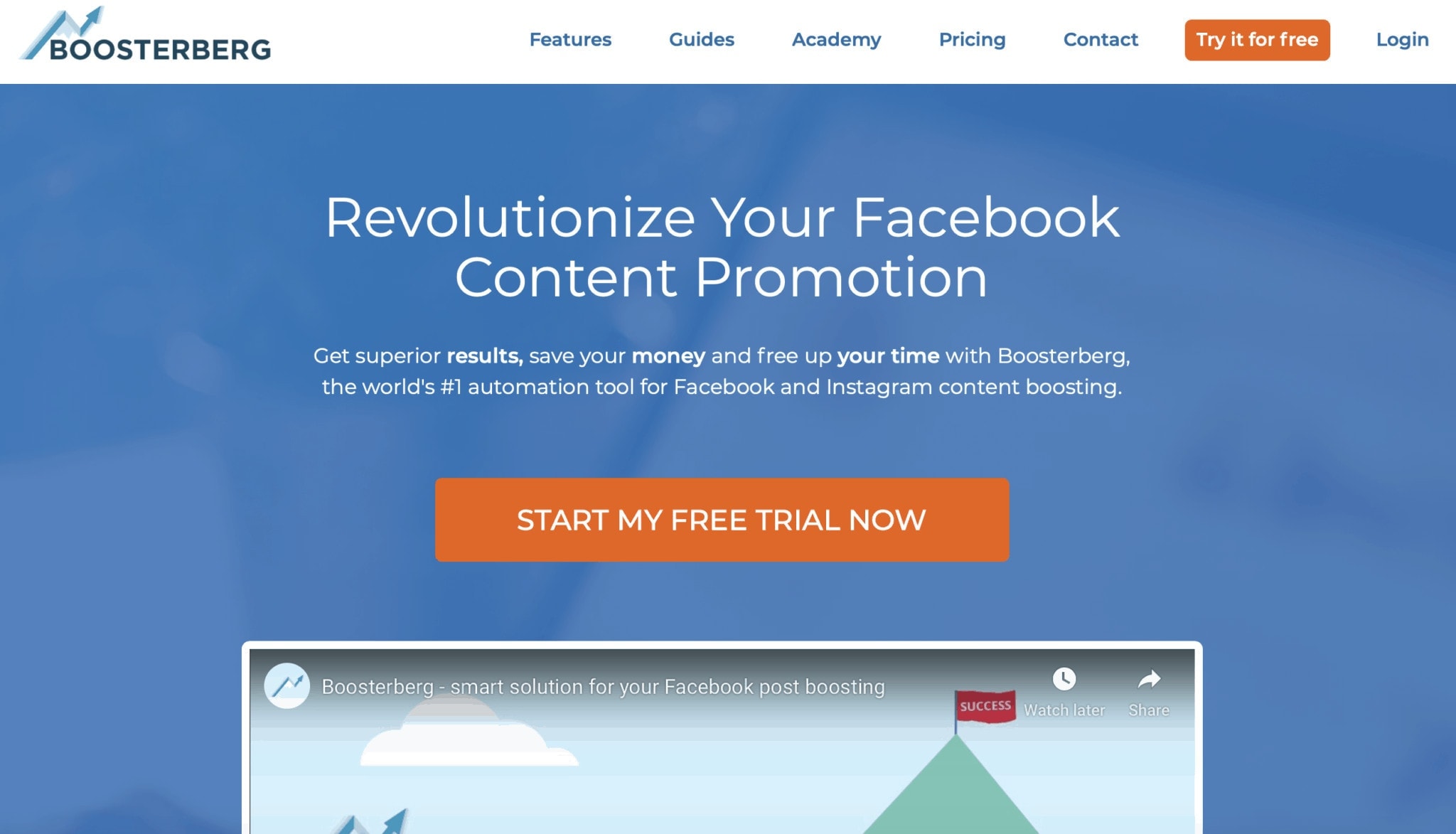
I also recommend trying out Boosterberg automation, which sponsors new posts for you according to pre-set rules. Just set it up once and you don’t have to worry about it anymore.
That’s all for today. Is there a topic you would like me to elaborate more on, or have I forgotten something? Let me know in the comments.
Summary of how to make a successful Instagram
Choose a catchy name and an attractive profile picture.
Use analytics tools such as Buffer, Hootsuite or Later.
Post photos that work on Instagram (the most popular photos are with predominantly blue).
Create Instagram Reels .
Choose relevant hashtags.
Use emoticons.
Write in your native language and the language of your followers.
Be active – follow others, like and comment.
Try to get power likes.
Never buy likes or followers.
Do meaningful contests and collaborate with companies/influencers.
Share other interesting accounts – reciprocity works.
Do you have any questions? Write to me at Instagram or lucie@lkmedia.cz
30-point checklist for a successful Instagram download
The article may give you the feeling that there is a lot on your plate. We understand! We’ve prepared a 30-point checklist in Google Docs and Excel for you to check off tasks in these areas:
User profile settings
Preparation of a publication plan
Before the first post
Check-list per post
Check-list of daily tasks
Check-list of weekly tasks
Check-list of monthly tasks.
Tip: If you want to become successful on TikTok, I recommend David Duca’s course on Kurzeo.cz
Frequently asked questions
What is Instagram
Instagram is a social network from Facebook that allows users to share photos and videos with others. It’s popular among the young and middle generation and has given rise to a field of influencers who promote themselves on Instagram for a living.
How to be successful on Instagram?
Success depends primarily on your originality, but by using these 25 tips and tricks you can help yourself significantly. They are based on our experience and are based on personal experience, recent studies and professional publications.
How to write a hashtag?
Windows: right Alt + X. Mac: Option + 3.
How to delete Instagram?
Instagram can only be permanently deleted from your computer. On the page to delete your account log in and click Delete account permanently in the settings.
Tips and Tricks for Your Vacation
Don’t Overpay for Flights
Search for flights on Kayak. It’s our favorite search engine because it scans the websites of all airlines and always finds the cheapest connection.
Book Your Accommodation Smartly
The best experiences we’ve had when looking for accommodation (from Alaska to Morocco) are with Booking.com, where hotels, apartments, and entire houses are usually the cheapest and most widely available.
Don’t Forget Travel Insurance
Good travel insurance will protect you against illness, accidents, theft, or flight cancellations. We’ve had a few hospital visits abroad, so we know how important it is to have proper insurance arranged.
Where we insure ourselves: SafetyWing (best for everyone) and TrueTraveller (for extra-long trips).
Why don’t we recommend any Czech insurance company? Because they have too many restrictions. They set limits on the number of days abroad, travel insurance via a credit card often requires you to pay medical expenses only with that card, and they frequently limit the number of returns to the Czech Republic.
Find the Best Experiences
Get Your Guide is a huge online marketplace where you can book guided walks, trips, skip-the-line tickets, tours, and much more. We always find some extra fun there!
TL;DRThis year’s guide rounds up more than 36 verified ways to make money online – from freelancing and UGC videos to blogging, affiliate marketing, e-commerce, dropshipping and investing. The authors themselves earn over 27,000 CZK a month from their blog, and more than 1,000,000 CZK from it in total, while their agency has generated over half a billion for its clients. Some real-world numbers: a 30-second UGC video sells for 500–6,500 CZK, P2P loans return 5–20% a year, and standard savings accounts manage just 3–4%. One of the key tips is to start with the Small Bets philosophy – small, low-effort projects that pay off quickly.
Lukas and I tried everything. We have an e-shop, we freelance for a living, we were digital nomads and we sell physical i online products. We’ve even made over a million with the blog, getting paid for collaborations like influencers, we’re going all out in affiliate marketing and investing. So let’s take a look at more than 36 ways to make money online on the internet.
How to start making money online step by step
The most important thing is to start. We know a lot of people who would like to make money online, but they tell themselves they’ll start tomorrow, next week, next month, and then a few years go by and they haven’t started yet. Don’t be like them. The best time is now. And how to start? Read more.
Where to start and what to start with
First read this article in VERY detail. Why? Here you will find all possible ways of earning online with links to other resources. Once you’re done reading, think about which method is most interesting to you. What are you most drawn to? Think about what you are good at, what you are good at, or what you would like to learn.
For almost everything, we give you additional links. If you choose to join one of the online earning methods we operate, you can join to our community. Please note: Our community is only for those who are serious. We help you reach your dream goal. Just what is it? That’s for you to figure out first.
Small Bets Philosophy – Small Bets
If you want to start an online business, we recommend you try the Small Bets philosophy. “Small Bets” is a concept that was popularized in the book “Little Bets: How Breakthrough Ideas Emerge from Small Discoveries” by Peter Sims.
Okay, but what do you mean by that? This means that you don’t immediately start your own work and move to the mountains and then start thinking about how to make money, but you put a few hours a week into a small and well thought out project that can start making you money.
Small Bets is a concept that applies to quick, low-cost and low-time projects with clearly defined boundaries and goals. They should be implemented in hours, not months, and have the potential for a high return on investment. And what exactly do you mean by that?
What can be a small bet?
You have a blog – you start selling a pdf on it, which until then was FREE.
You have an Instagram – you start offering your services in the form of consultations.
You know how to take and edit photos – create your own presets and offer them for sale. You try the Amazon Influencer program – you start filming video reviews and earn 3-5% in commission.
He’s most famous on the internet for them Daniel Vassallowho has made millions of crowns from them and now has a community around him that he helps develop their own Small Bets.
36 tips on how to make money online on the internet
There are thousands of ways to make money online. We will focus on the ones we have tried or know from friends and colleagues. We will divide them into several categories.
Freelancing and consulting,
selling digital content and products,
blogging for a living: Affiliate marketing and content monetization,
earning through social networks,
e-commerce and dropshipping,
investing and cryptocurrencies,
apps and clicks(and why not give it a miss).
Freelancing – how to become a freelancer
Freelancing, coaching and online consulting are probably among the most common ways to earn money online. Lukas and I started as freelancers, it’s also one of the most popular forms of online work that offers flexibility, freedom and the opportunity to use your specific skills to earn an income. Now – what is freelancing?
What is freelancing? Freelancing means working as an independent professional – freelancing – not as an employee of a specific company. Freelancers often work on a project basis and have several clients at once. One of the main differences between freelancing and traditional employment is flexibility – freelancers can often choose when and where they work.
Who can be a freelancer? Almost anyone with specific skills or expertise can be a freelancer. Common freelance jobs include copywriting, graphic design, programming, digital marketing, translation, consulting and many more. If you don’t have specific skills to offer, you can also become a virtual assistant or assistant.
The most common ways of earning online as a freelancer
As a freelancer, you can focus on a wide range of areas including (but not limited to) online marketing (social media management, PPC ads, FB ads, emailing,content creation, SEO), copywriting, creating graphics, programming or proofreading.
But you can also work as a virtual assistant, illustrator, UX designer or offer your services in the field of video and podcast production. Let’s look at some of the professions in detail and how to get started with them.
Marketing Specialist
The most common freelancers and digital nomads are marketing specialists – from SEO to PPC advertising to social media management. Well, yeah, but what if you can’t do any of those things, but you’d like to make it in the industry?
Show what you can do on your projects. Build a blogwhere you can learn the basics of SEO a affiliate marketing or start a YouTube or TikTok channel or Instagram. Then you can start offering your services to your friends and gradually build your name.
Educate yourself. Interesting and very inexpensive courses on FB advertising or TikTok are offered, for example, by the Kurzeo platform. A review of their courses can be found here.
Graphics, illustration and programming
Learn to program and you’ll be able to make a living as a freelancer. Unfortunately, we can’t give you much advice in this area, but as in the case of marketing I recommend starting with a project of your own that you can present further.
Graphic anyone can do graphics today. If you don’t trust Photoshop and InDesign, start experimenting with Canva. By the way, an absolutely awesome course on Canva is on the Kurzeo platform. It really has everything in it.
Can you illustrate? Illustrating is another job you can do from anywhere. All you have to do is set up your presentation website, social networks and start looking for your first clients.
Copywriting and translation – artificial intelligence can help you
Do you like to write or do you want to eventually make it in online marketing? Start as copywriters. A good marketeer must be able to write. How to write the perfect article can be found in our Patreon community, plus you can with artificial intelligence.
The articles can then be sold, for example, on copywriting.cz. Through this site you have verified earnings on the Internet.
Another way to make a simple living online is through translation. In addition, for translations into English, you can effectively use, for example ChatGPT so you don’t have to be a trained translator to deliver great performances. But sometimes he writes crap, so we don’t recommend this way of earning money without knowing a foreign language. ☺️
Proofreading
Do you speak perfect Czech and are you a bit of a grammar Nazi? You could try proofreading for a living. Proofreaders are experts in checking the grammar, spelling and stylistics of texts. As a freelancer, you will most often review websites, e-books, articles, but also academic texts, books and other publications. Proofreaders are often sought by university students when writing bachelor’s and master’s theses.
Accountant online
A good accountant is better than gold and hard to find. If you understand accounting and enjoy it, the profession can be done online and can pay very well. Especially if you learn the processes automate and lead your clients to become more digital and AI driven.
Financial advisers are even better paid. Yes, they too can work online and remotely for the most part.
How to attract clients to make money online?
Interested in freelancing but don’t know where to start? Let’s take a look at how you can make yourself visible and get clients.
Create a portfolio: A portfolio showcases your work to potential clients and demonstrates your skills. It can be a website or blogwhere you share examples of your work. If you are starting out, present your own projects!
Sign up Freelance: if you are targeting Czech clients, sign up Freelancer. It’s really worth the money. We got half of our first clients through Navolnenoze.cz and had to cancel our registration over time because we were getting more inquiries than we could handle. For international jobs, use platforms like Upwork or Fiverr.
Networking: relationships are key in freelancing. We now get all our new clients by referral. Networking can include attending conferences and events, being active in Twitter communities and relevant FB groups and forums. Find people on social media that are doing the same work you want to do and interact with them.
Social networks and personal branding: personal branding is the basis for success. In addition to a nicely prepared portfolio, you should also have an optimized Linkedin and active profiles on relevant social networks.
Referrals and testimonials: satisfied clients can recommend you to others, which is one of the most effective ways to get new business. We receive dozens of inquiries about our work every year, and we don’t actively promote our work.
Online counselling and coaching
Do you have a high level of expertise in marketing, accounting or are you a psychologist? Have you built several companies or managed finance for a long time? Whatever you are an expert in, you can become a consultant or a coach.
In such cases, however, you should already have something behind you. The most important things are references, personal branding and your digital presence. In which areas you can become a consultant and personal coach:
Business,
finance,
Relationships,
Career,
Health.
As a consultant or coach , you can offer one-to-one meetings, group workshops or webinars using online tools such as Zoom or Skype.
Personal development and life coaching
Find a good personal coach can change your life. Many people are looking for ways to become better versions of themselves, to improve and enhance their lives.
As a life coach, you help clients identify and achieve their personal goals, whether it’s improving self-esteem, managing stress, improving communication skills or achieving work-life balance.
Fitness, health and wellness coaching
In today’s hectic times, people are increasingly concerned about their health and wellness. As a fitness or wellness coach, you can help clients with their eating habits, exercise, stress management and other aspects of a healthy lifestyle.
It doesn’t have to be just about exercise, but people make a living, for example, by recommending what lighting to have in your home to help you sleep better.
Career counselling and coaching
Career counselling and coaching is becoming increasingly popular abroad. As a career coach, you help people identify career goals, design action plans and help them achieve their career dreams. This can include preparing for interviews, writing a CV or helping you change careers.
Coaching in finance and business
Coaching in the field of finance and business is extremely popular in the Czech Republic. These coaches usually guarantee that if you follow them they will help you build a profitable business and achieve financial success over a period of time. There is a lot of so-called. high-ticket offers (= selling your services for a big chunk of money).
Online language learning and tutoring
Coaching in the field of education is also very widespread, specifically online language learning. But you can also tutor online or educate people in your field, whether it’s marketing, graphics or programming.
How to establish yourself as a coach and consultant?
If you want to establish yourself as a coach and consultant, you should start building your personal branding. Social media is very important, and specifically Instagram or in some cases Twitter, but also a personal blog.
A personal blog should serve as a showcase page that not only shows your prices and services, but also that you understand your industry. How?
Set up on your website blog and publish quality content from your industry. Don’t forget to then apply SEO basics so that other potential clients can find you through your content.
Virtual assistant
Can you communicate well and have organisational skills? Become virtual assistant / assistant. Provide administrative services to clients from the comfort of your own home. You can work as a virtual assistant for individuals or for companies (e.g. e-shops).
Selling digital content and products
Digital content is absolutely great, why? Once you create it, you have almost no more costs. Now let’s take a look at what all a digital product can be.
What is a digital product?
Digital content is any contentthat exists in the form of digital data. This includes, for example: e-books, Online courses, music tracks, photos or videos. But they can also be presets for Lightroom or prompts for ChatGPT.
Ebooks and online courses
Creating and selling ebooks and online courses is a popular way to share your knowledge with others and still make money. You can really do online courses for everything:
Personal development and relationships,
cooking,
learning foreign languages,
online marketing,
programming,
gardening (tree trimming, planting),
psychology (psychology of influence, etc.),
hair care, skin care, nail care… just about anything.
Music, Photos and Videos
If you’re a creative soul, you can sell your music, photos or videos on platforms like Shutterstock, Adobe Stock, SoundCloud or Spotify. Just sale of photographs has earned me several hundred thousand over the years. And I hardly pay attention to it.
Selling domains
Selling domains is also a very interesting way of making money online. For example, you can catch expired domains (expired owners) or follow trends and buy domains that might be in demand in the future.
For example, if you manage to catch a domain of a big foreign brand that wants to penetrate the Czech market, it is possible that you could make tens of thousands of dollars for it.
Blogging, affiliate marketing and content monetization
We have already made over one million crowns with our blog and we share this with our community on Patreon. We know bloggers who earn but hundreds of thousands a month with their content blogs. Let’s see how to do it.
Affiliate Marketing
Affiliate marketing is a form of online marketingthat allows you to make money through your blog, website, social networks or mailing. This way of earning money does not require any special skills or education.
To ensure success in affiliate marketing, it is important to carefully select the products and partners you work with. Detailed instructions, on how to do affiliate marketing we’ve written for our community.
Google adsense
If you learn the basics SEO, you can drive visitors to your website and you can place ads on your website.
PR articles and sponsored articles
When you build a successful blog, companies that understand content marketing and SEO will want to pay you to link to their site or to sponsor content. It’s actually similar to when companies pay influencers to advertise on social media.
Monetizing blog content
You can also sell your products on your own blog. These can be physical products (cookbooks) or online products (e-books, courses), but even services. For example, you can buy maps, various checklists, prompts for ChatGPT or templates for social network management.
Making money on social media
You can make money on social media in a variety of ways. Most often people make money by having brands work with them, but you can also sell your products and services through them.
Making money on Instagram
Making money on Instagram
We’ve got Instagram to make money detailed articlethat we recommend you read. The good thing is that you can make money on Instagram from just a few thousand followers.
How to make money on YouTube and TikTok
If you like to create videos, then you should consider YouTube and TikTok in addition to Instagram. The Kurzeo platform has a very good course on how to be successful on TikTok.
Making money on YouTube: What you need to know
YouTube provides not only a platform for sharing content, but also a unique opportunity for content creators to make money. The basic prerequisite is joining the YouTube Partner Program. Each YouTube channel will be screened before entering the program and must adhere to YouTube’s policies on an ongoing basis.
Once you become a member of the Affiliate Program, you can start earning. How?
Ad revenue: if you enable ads on your YouTube channel, you will receive a financial share from them. This is the most common way of earning money on YouTube, if you don’t count collaborations with companies.
Purchases: using the affiliate programmeYouTube Purchases you can sell your own or third-party products.
YouTube Premium revenue: when your content is watched by YouTube Premium subscribers, you earn a portion of their subscription.
Channel Membership: YouTube can also introduce a membership fee for premium content. For example, if you were a fitness trainer, you could make a series of videos about weight lossthat only subscribers will see.
How to make money on TikTok
If you’re a TikTok lover and believe you’ll be successful (or you’ve just completed a great TikTok course on Kurzeo), below you’ll find ways to earn TikTok.
TikTok Creativity Program
Creators with a large number (over 10,000) of followers can use the TikTok Creativity Program to make money. TikTok pays creators based on the number of views of their videos, so the more viewers and views you have, the more you can earn.
Live streaming and virtual donations
TikTok allows its users to broadcast live streams and receive “virtual donations” from their followers. These donations can then be converted into money. But everything is based on the assumption that you have a built-in community of followers.
Partnerships and sponsorships
Even on TikTok you can become Influencer and collaborate with brands. Unfortunately, so far influencers on TikTok are mostly not as well paid as those on YouTube or Instagram, mainly because many brands don’t have a target audience on TikTok. But this is gradually changing.
Member platforms (Patreon, HeroHero, Pickey, Only Fans)
If you already have a good name on social media, you can start creating premium content on platforms where people only have access if they pay for a membership, which can cost anywhere from a few tens of crowns to thousands per month. These platforms include Patreon, HeroHero, Pickey and OnlyFans.
What premium content should look like
We, for example. on our Patreon we share exactly how much and what we earn from blogging, teach people tactics on how to use AI effectively and our best online marketing tricks. But premium content can look different.
For example , some share tips on investing in interesting and cheap real estate around the world, others share tips on investing in general. However, you can also find artists (such as Ewa Farna) who share different content for their more loyal fans than on social media.
There are often pretty girls on OnlyFans who post nude or semi-nude photos of themselves for a fee. HeroHero is a popular platform in the Czech Republic for influencers who usually share more intimate things (birth, sex life, etc.), in short, topics for all curious people.
E-commerce and dropshipping
The most popular way to make money online is to set up your own e-shop with physical products. But you don’t necessarily have to make your own products or keep them in stock. You can sell using the so-called. dropshipping or Amazon.
E-shop and dropshipping
If you believe that you could build a functioning e-shop, but you do not want to keep the goods in stock, you can pursue the so-called. dropshipping. This means that when you receive an order, you place it with the supplier of the goods, where it goes straight to the customer. All of this can work completely automatically, so you can concentrate on selling your goods.
Selling via Amazon
Amazon is one of the largest online marketplaces in the world that offers opportunities to make money online. Again, you don’t have to sell your own goods, you can just become a distributor of brands and leave the warehouse and logistics to Amazon.
Selling on Amazon has its own rules and marketing works a little differently here, so not everyone is successful. If you would like to go in this direction, we recommend that you study the rules thoroughly and preferably find a course on selling on Amazon.
In addition, Amazon has a new program that can earn you money without you adding anything. What? Yes, that’s right. Just create video reviews for products, and if people buy the product through your review, you get a commission.
Anyone can invest
Investing can be easier than you think, you just need to choose a method that suits you. Investing is for everyone and it’s not just about buying shares. Investing is a great way to secure your passive income.
If you want to get started with investing but don’t want to dive in too deeply, we recommend the platform Portwhere you can set up an automated strategy. I did it, so you can do it too. If you are interested in investments, read the article by Lukáš How to invest. Now let’s take a look at what you can invest in.
The least interesting is building savings
Building savings is a very popular investment product in the Czech Republic, but it is not very interesting. It is better than nothing….but read on.
Do you still want to know how it works? It works like a savings account hybrid, except that the state contributes CZK 2,000 per year.
This product is suitable for those who plan to take out a mortgage in 6-7 years. After deducting all fees, you can look forward to an average return of around 3-4% per year.
Savings account
A savings account is another classic financial product that we all have. It is a place where you can store your financial reserves. While a savings account won’t provide you with inflation protection, it does provide a safe place to store your money.
Supplementary pension savings
Supplementary pension saving is another way to save for retirement. As with building society savings, the state contributes up to CZK 230 each month. In addition, your employer can contribute tax-free. Supplementary pension savings are therefore particularly interesting if you receive contributions from your employer. Without these contributions, the attractiveness of this product is pretty slim.
Shares, bonds and investment funds
If you’re ready to expand your investment portfolio, you may want to consider stocks, bonds and mutual funds. You can buy shares on a trusted platform Degiro or even easier with a card Revolut.
On Degir and Port you can invest, for example, in ETFs (Exchange Traded Funds) that follow the development of a given market, sector or group of companies, allowing you to make money depending on how these market players behave.
You can choose from a variety of ETFs, such as funds reflecting the price of the largest US companies (S&P 500), technology companies (NASDAQ) or replicating the German economy (DAX).
Investing in real estate
Real estate is a great way to invest, if you follow us on Patreon you know that we are currently looking for a dream home to invest in Portugal. But you don’t have to invest only abroad (Spain and Albania are probably the most popular at the moment), but also in the Czech Republic.
The investment can be in houses and flats for short or long term rental or in commercial property. Don’t you have the whole property? Never mind, you can also invest in real estate using the Upvest platform through various types of loans.
Cryptocurrencies
Cryptocurrencies It’s not just Bitcoin and Ethereum anymore, it’s now a rapidly evolving world where you can buy NFTs, lend money to people and companies, and invest. Those who go very deep can literally make hundreds of dollars by clicking and transferring money here and there. As a source of information we recommend Bankless.
An overview of cryptocurrency exchanges can be found at here.
P2P lending – people lending to people
P2P stands for Peer-to-Peer and it just means one person lending to another person (or loan company) at interest. The yield is between 5% and 20%.
And you know what’s great? Interest and a portion of the principal (repayment) is credited to your platform account monthly and you can reborrow (or withdraw) this amount immediately.
How to make money on the internet using apps – clickbait
If you are just looking for a quick and small income, you can try popular clickbait sites where you can earn some change almost immediately. Beware, it is often a waste of time. So it’s not a way to make a long term and big profit, but it’s simple and quick. But really for peanuts.
For example, there is an app Poll Pay or iPollwhich are made for market research. Personally, I’d avoid the clickers. 🙂
Frequently Asked Questions
How to make money instantly on the internet?
Immediate earnings on the Internet are possible, for example, through the sale of articles on copywriting.cz. Just reply to the inquiry and start writing.
What are the money making apps?
For example, you can earn money through iPoll, a personalised market research app that allows you to earn money through market research.
How to earn money for clicks?
There are apps for filling out surveys, opinions on apps and games.
How to make money online?
You can make money online by social media, freelancing, selling online content and investing.
How to earn 5000 a day?
Write 5-10 articles by word count, sell dozens of photos or create a custom video or get 10 subscribers in one day on OnlyFans at a fee of 500 CZK / month.
How to earn 1000 CZK per day?
For example, you can earn 1,000 CZK per day as a copywriter by writing 1-3 articles.
How to make money on the internet without investment?
To make money on the Internet without too much time and money investment you can, for example, use the so-called. small bets
Tips and Tricks for Your Vacation
Don’t Overpay for Flights
Search for flights on Kayak. It’s our favorite search engine because it scans the websites of all airlines and always finds the cheapest connection.
Book Your Accommodation Smartly
The best experiences we’ve had when looking for accommodation (from Alaska to Morocco) are with Booking.com, where hotels, apartments, and entire houses are usually the cheapest and most widely available.
Don’t Forget Travel Insurance
Good travel insurance will protect you against illness, accidents, theft, or flight cancellations. We’ve had a few hospital visits abroad, so we know how important it is to have proper insurance arranged.
Where we insure ourselves: SafetyWing (best for everyone) and TrueTraveller (for extra-long trips).
Why don’t we recommend any Czech insurance company? Because they have too many restrictions. They set limits on the number of days abroad, travel insurance via a credit card often requires you to pay medical expenses only with that card, and they frequently limit the number of returns to the Czech Republic.
Find the Best Experiences
Get Your Guide is a huge online marketplace where you can book guided walks, trips, skip-the-line tickets, tours, and much more. We always find some extra fun there!
TL;DRCapri, out in the Tyrrhenian Sea, is all crystal-blue water, dramatic white cliffs and a properly glamorous feel. Highlights include Marina Grande (the main harbour, packed with restaurants and shops), the pretty towns of Capri and Anacapri linked by bus, and swimming spots along the coast. The best time to visit is spring (April–June) or autumn (September–October), when the weather’s pleasant and the crowds thin out compared to high summer. You’ll get there by ferry from Naples, Sorrento or Positano, with a return ticket costing 45–50 euros.
If you’re looking for crystal-clear blue sea, white cliffs, luxury, and breathtaking scenery, then the so-called “Blue Island” in the Tyrrhenian Sea is the right place for you. We’re talking about the Italian island of Capri, which lies near Naples and is very (really very, very😄) popular among tourists. But there’s a reason why. In this guide I will share with you Capri Island, Italy: 20 Best Things to Do and See.
Capri is truly a pearl of the Tyrrhenian Sea. It’s a tiny, yet absolutely fascinating island.
And not just in the present, Capri was already a favorite refuge for Roman emperors and artists, who found inspiration and peace here. For many years, Capri has attracted all its visitors with a combination of azure waves, dramatic cliffs, blooming gardens, and a touch of luxury. Let’s take a look together at what to see and do on Capri Island.
The best time to visit Capri is in spring (April to June) or in autumn (September to October). The weather is pleasant, temperatures are not too high, and it’s warm enough for swimming and walks.
Moreover, outside the main tourist season (July and August), there are fewer people on Capri, which means less crowded sights and beaches, and lower prices for accommodation and services. In summer, the island is usually very busy and temperatures can be high, which can make your visit quite unpleasant.
Capri Island: Best Hotels and where to Stay
You can take a day trip to Capri, but of course, it’s ideal to spend a bit more time here; these accommodations have an ideal location:
Palatium Mari (mid-range option)
Hotel Villa Blu Capri (luxury option)
Casa Rosetta (cheaper alternative)
Accommodation in Capri
How to get to Capri Island
You can simply and easily get to Capri by ferry or boat. Ferries from various operators regularly depart from Naples, Sorrento, Positano or Amalfi , or from the neighboring island of Ischia.
You can search for all connections HERE, but I recommend buying tickets directly from the respective company. Also, in my opinion, it’s better and cheaper to buy them online.
If you’re traveling to Capri from Naples, like I did, then three operators depart from the port of Naples, namely:
A round trip will cost you around 45 to 50 euros and takes approximately an hour.
View of Capri from the Ferry
How to get around the Island
Capri Island and its two small towns are tiny, so you can get by on foot, but it’s really very hilly. Therefore, if you don’t want to exhaust yourself, use the city buses.
On Capri, there are mini-buses that connect the town of Capri with Anacapri and other main tourist spots. The buses are comfortable but can be crowded during peak season. Moreover, the entire ride through narrow streets and turns is truly an experience. You can buy tickets at the counter in the port or at local shops that sell them.
Another option is a taxi or scooter rental, if you dare.😉
20 Best Things to Do and See
So, if you’re planning to explore the beauties of the Blue Island, I’ve compiled 20 tips for you on what to see and do in Capri. I believe that with my list, you’ll explore the most interesting places, best sights, and most beautiful beaches in Capri, and thus enjoy the island to the fullest.
Marina Grande
Marina Grande is the main port on Capri, where you’ll likely arrive by ferry during your visit. It’s a lively and bustling place with many shops, restaurants, and cafes. The port is surrounded by picturesque buildings and offers beautiful views of the surroundings. At the same time, it’s the starting point for all the activities you have planned.
Marina Grande
Spiaggia Marina Grande
Spiaggia Marina Grande is the main beach, which you’ll find just a short walk from the port. Although it’s a city beach, it’s very popular and, most importantly, clean. The beach is ideal for a refreshing dip in the water, but it can be quite crowded during peak tourist season.
Marina Piccola Beach
Marina Piccola Beach is a smaller, but very picturesque beach on the southern side of the island. It’s sheltered from the wind and offers calm and clear water, ideal for swimming. From this beach, there’s a magnificent view of the impressive Faraglioni rock formations.
Small Beach
Capri Town
Few people realize it, but there are two towns on Capri Island: Capri and Anacapri. Capri Town is the main center of the island, known for its luxurious atmosphere and vibrant life. It’s a place where you’ll find luxury shops, stylish restaurants, and historical sights.
Piazzetta Di Capri
When visiting Capri Town, you definitely shouldn’t miss its heart – the Piazzetta, officially known as Piazza Umberto I.
In this main square, you’ll find several interesting historical buildings. The dominant feature of the square is the clock tower, which is a symbol of Capri and an excellent landmark.
Nearby stands the Church of Santo Stefano, a Baroque building with a beautiful interior, which you can explore if you want a little peace from the bustling square.
Around the square, there are also several historical buildings that now serve as cafes and restaurants with outdoor seating.
Anacapri Town
In the town of Anacapri, located on the quieter part of Capri Island, you’ll find a number of interesting places and historical buildings. One of the main sights is Villa San Michele, the original residence of the Swedish physician and writer Axel Munthe, with beautiful gardens and a stunning view of the bay.
History lovers shouldn’t miss the Church of San Michele Arcangelo, a Baroque building with a magnificent floor mosaic depicting a scene from Paradise.
For those who love breathtaking views, there’s also Mount Solaro, the highest point on the island, which you can reach by chairlift to enjoy a panoramic view of the entire island and the Tyrrhenian Sea.
Also, stroll through the winding streets full of traditional houses and discover the charm of local shops with handmade souvenirs.
Blue Grotto (Grotta Azzurra)
The Blue Grotto is one of the most iconic attractions on all of Capri. The grotto is known for its magical blue light, created by sunlight passing through the water’s surface.
Entry to the grotto is only possible on small boats that take you through a narrow entrance. Let’s be honest, it’s not an attraction for claustrophobics.🤭
However, entry is charged (14 euros) and during peak tourist season, there can be several-hour long queues for this experience, even though the actual stay in the grotto is only a few minutes.
But if you want to truly enjoy the Blue Grotto and other activities, take advantage of the offers from the travel portal GetYourGuide (you can simply book your entry online and cancel it anytime if your plans change).
🔗 These are affiliate links — they don't change your price and help us create content. · All experiences →
Island Boat Tour
If you truly want to enjoy the beauties of Capri Island, then book a boat trip on GetYourGuide around the island. Tours often include visits to grottoes, including the Blue Grotto, and scenic stops at impressive rock formations like the Faraglioni.
🔗 These are affiliate links — they don't change your price and help us create content. · All experiences →
Faraglioni
The Faraglioni are three majestic rock formations that rise from the sea near the coast of Capri. These iconic rocks are one of the island’s most famous symbols and offer breathtaking views. You can admire them from various viewpoints, or approach them during a boat trip around the island.
Faraglioni
Mount Solaro
Monte Solaro is the highest point on Capri, from where you can enjoy breathtaking views of the entire island and the surrounding sea. You can reach the summit by a scenic chairlift from Anacapri town. A round trip by chairlift costs 14 euros.
Chairlift to Monte Solaro
Gardens of Augustus
The Gardens of Augustus are beautiful gardens full of various flowers in Capri Town, from where you also get very nice views of the famous Faraglioni rock formations and Marina Piccola bay.
Gardens of Augustus
Punta Carena
Punta Carena is a beautiful lighthouse on the western coast of Capri. It’s also a great spot for watching the sunset.
Punta Carena
Villa Jovis
Villa Jovis is an ancient palace of Emperor Tiberius, located on a hilltop on Capri Island. This sprawling villa was Tiberius’s main residence during his reign and showcases Roman architecture and history. From the site, there’s a beautiful view of the sea and the surrounding landscape.
Villa Jovis
Villa Lysis
Villa Lysis is another historic villa on Capri, built by the Swedish poet and playwright Jacques d’Adelswärd-Fersen. The villa is known for its architecture and magnificent gardens. It offers breathtaking sea views and is surrounded by a beautiful environment that invites walks and wandering.
Villa Lysis
Villa San Michele
Villa San Michele was built by the Swedish physician Axel Munthe and now serves as a museum. The villa is known for its beautiful architecture and magnificent gardens. From here, breathtaking views of the Bay of Naples and the surrounding landscape open up.
View from Villa San Michele
Phoenician Steps
The Phoenician Steps are a historic pathway connecting Capri Town with Marina Grande beach. These steps were built in ancient times and are one of the most interesting ways to take a walk from the town to the coast.
Phoenician Steps
Pizzolungo Path
The Pizzolungo Path is a picturesque hiking trail leading along the coast of Capri. It offers magnificent views of the sea, rock formations, and cliffs. It’s an ideal place for hiking and discovering the beautiful natural scenery of the island.
Certosa Di San Giacomo
Certosa di San Giacomo is a historic monastery that was founded in the 14th century. This monastery is mainly known for its architecture and peaceful atmosphere.
Certosa di San Giacomo
Arco Naturale
Arco Naturale is a natural rock arch formed by the erosion of limestone rocks. This natural formation is one of the most beautiful geological phenomena on Capri and offers breathtaking views of the surrounding landscape. It’s a popular spot for photography and admiring the natural beauty of the island.
Shopping in Capri
Capri is also a great place for shopping, if you’re a shopaholic. Via Camerelle is the main street full of luxury shops. It’s located in the center of Capri Town and is lined with boutiques of world-renowned fashion brands such as Gucci, Prada, and Louis Vuitton, as well as local designers.
Besides shops, you’ll also find elegant cafes and restaurants where you can relax after shopping and observe life around you. TIP: Try the famous lemon sorbet, which they’ll serve you in a giant lemon.🍋
Lukáš and Lucie recommend
Where to stay on Capri island
4 accommodations — wellness hotels, hotels and other accommodation options
The ferry trip from Naples or Sorrento takes approximately one hour.
Is it possible to visit Capri for one day?
Yes, many tourists go to Capri for a day trip, but we recommend staying at least two nights to fully explore the island.
When is the best time to visit Capri?
Spring and autumn are ideal, when the weather is pleasant and there are fewer tourists.
Is Capri expensive?
Yes, Capri is considered a more expensive destination, especially during the summer months when the island is full of tourists. Prices for accommodation, restaurants, and services can be higher than in other parts of Italy, especially in luxury hotels and restaurants in the center. However, it’s possible to find more affordable options, especially outside the main tourist season or in the quieter town of Anacapri.
Tips and Tricks for Your Vacation
Don’t Overpay for Flights
Search for flights on Kayak. It’s our favorite search engine because it scans the websites of all airlines and always finds the cheapest connection.
Book Your Accommodation Smartly
The best experiences we’ve had when looking for accommodation (from Alaska to Morocco) are with Booking.com, where hotels, apartments, and entire houses are usually the cheapest and most widely available.
Don’t Forget Travel Insurance
Good travel insurance will protect you against illness, accidents, theft, or flight cancellations. We’ve had a few hospital visits abroad, so we know how important it is to have proper insurance arranged.
Where we insure ourselves: SafetyWing (best for everyone) and TrueTraveller (for extra-long trips).
Why don’t we recommend any Czech insurance company? Because they have too many restrictions. They set limits on the number of days abroad, travel insurance via a credit card often requires you to pay medical expenses only with that card, and they frequently limit the number of returns to the Czech Republic.
Find the Best Experiences
Get Your Guide is a huge online marketplace where you can book guided walks, trips, skip-the-line tickets, tours, and much more. We always find some extra fun there!
TL;DRThis traveller’s top pick for backpack of the year is the Gregory Baltoro 65, which takes 1st place in a list of ten recommendations at around £220, followed by the Fjällräven Kajka 55 at roughly £260 and the Lowe Alpine Airzone Trek ND 43:50 at about £140. Prices in the test range from around £40 (Zulu Sandstone 35) up to £260, though you can pick up a decent hiking backpack for as little as £35, while the priciest models run up to £1,000. By capacity, packs fall into three groups: small (20–30 litres) for day trips, medium (30–50 litres) for weekend breaks, and large (50 litres and up) for multi-day treks. Key things to weigh up when choosing include volume, weight, material, the back system, and whether you go for a men’s or women’s fit.
Heading off on a hike, a camping trip, a mountain getaway or just a longer adventure abroad and looking for the right travel backpack? I’ve put together a clear guide on how to choose the perfect one, and for a little inspiration I’ve also picked out 10 of the best travel backpacks on the market.
How to Choose a Travel Backpack
Travel backpacks are the most versatile type of pack for travelling. They’re great for day trips and multi-day outings, light hiking and even wandering around the city.
Picking a travel backpack is a key decision, but also a tricky one that can shape your entire trip. A quality backpack gives you comfort, support and enough room for everything you need, while a poorly chosen one can cause discomfort, unnecessary hassle and a thoroughly spoiled mood.
So let’s take a look at some of the best travel backpacks out there and what you should consider when choosing one.
Once you start browsing travel backpacks, you’ll notice they come in various sizes, measured by volume (in litres) — based on how much each pack can actually hold.
Backpacks can be split into three main groups by capacity:
20–30 litres:Smaller backpacks, ideal for day trips and short hikes. They comfortably fit the essentials — personal items, food, a first-aid kit and a few spare layers or a rain jacket.
30–50 litres:Mid-size backpacks are a great choice for shorter multi-day trips or weekend breaks. Compared with smaller packs, they offer more room for clothing, food and basic camping gear. They usually have dedicated pockets and attachment points for a sleeping mat, tent, trekking poles or a water bottle.
50 litres and up:Large-capacity backpacks of 50 litres or more are made for experienced travellers heading out on longer treks or multi-day expeditions into the wild. They provide plenty of space for all your gear, such as a tent, sleeping bag, mat, stove and more.
Weight
Another factor worth considering is the weight of the backpack. Ideally, it should be as low as possible so the pack carries well without any extra, unnecessary load.
Storage Space
Storage space naturally plays another major role when choosing a travel backpack. A backpack is primarily made for carrying your belongings, so it’s important to look at its internal layout as well as how it opens, so you can get to your things quickly and easily.
For better organisation, internal and external pockets or organisers are handy, letting you keep things within easy reach. It’s also worth checking whether the pack has attachment points for larger gear, such as sleeping mats or trekking poles, depending on your needs.
The backpack’s material should be lightweight, yet durable and resistant to wear and the weather. Popular materials for travel backpacks are nylon and polyester. Some models also have a water-resistant finish or a built-in rain cover, which comes in handy in bad weather.
Safety Features
Travel backpacks often come with a range of safety features, such as reflective elements, hidden pockets, lockable zips, a hydration sleeve, a whistle or a rain cover.
Men’s, Women’s and Unisex Travel Backpacks
Travel backpacks can also be chosen by gender. In shops you’ll find unisex packs as well as men’s and women’s models. Women’s travel backpacks are designed to fit the female frame better. They have narrower shoulder straps, a shorter back length and a differently shaped hip belt. Men’s models, in turn, are tailored to the male physique.
Brand
Some of the most popular travel backpack brands include:
Zulu,
Deuter,
Osprey,
The North Face,
Fjällräven,
QUECHUA,
Gregory.
Price
And the last — and often the most important — factor is price. The cheapest hiking backpacks start at around £35, while pricier packs range from roughly £100 up to as much as £1,000. In the end, it’s up to you how much you want to invest in your backpack.
10 of the Best Travel Backpacks
Choosing the right travel backpack can be tough, but if you factor in your needs and the conditions you’ll be using it in, you’re sure to find a model that works for you. Investing in a quality backpack pays off in the form of comfortable, carefree hikes wherever you go. To make things easier, I’ve put together 10 tips on the best travel backpacks.
The Zulu Sandstone 35 hiking backpack is an ideal choice for trips and everyday wear alike. Thanks to its ventilated back system with a mesh construction, it keeps you comfortable even on hot summer days. The pack offers a large main compartment with room for a hydration bladder, a front pocket with an organiser and a key clip, plus a small pocket for odds and ends and a loop for trekking poles. Reflective elements ensure good visibility in poor conditions, while the adjustable chest strap with a whistle adds extra safety and comfort.
The Deuter Speed Lite 23 SL hiking backpack is perfect for both hiking and trail running. Thanks to the deuter Lite back system, the pack is lightweight yet sustainable, made from 100% recycled, bluesign®-certified fabric. Perforated shoulder straps, flexible hip fins and a precisely adjustable chest strap ensure maximum comfort while you carry it.
Side compression straps, designed for fast hiking and trail running, minimise load sway and allow a full range of movement. A handy pocket on the shoulder straps holds everything you need on the trail. The pack isn’t just functional — it’s eco-friendly too.
The AirZone Trek ND 43:50 women’s trekking backpack from Lowe Alpine is designed with the specific needs of the female frame in mind. It stands out with its comfortable, fully adjustable Centro Adjust AirZone back system, which provides optimal ventilation thanks to minimal contact area between the pack and your back. That means your back stays dry even on demanding ascents on hot summer days.
The pack features a hip belt with Adaptive Fit technology, ensuring stable, even weight distribution even during strenuous movement. The top of the pack is protected by tear-resistant Ripstop fabric. A practical pocket layout and dedicated attachment loops for gear such as trekking poles or an ice axe make this an ideal choice for multi-day treks.
The Fjällräven Kajka 55 is an updated version of this much-loved hiking backpack, boasting an improved design, lower weight and recycled materials for the lining and reinforced sections.
The pack features the Perfect Fit Adjustment System, which — together with its unique wooden frame — allows precise back-length adjustment and even distribution of heavy loads. Ergonomic shoulder straps and a padded hip belt keep you comfortable even on long carries.
With a 55-litre capacity, the pack offers plenty of room for multi-day treks and trips abroad. In addition to the main compartment, it has 10 more pockets for keeping everything neatly organised.
The backpack also features attachment points for trekking poles and an ice axe, an integrated rain cover, hydration-bladder compatibility and compression straps. The removable lid easily converts into a hip pack or shoulder bag. For extra safety and comfort, the pack comes with a chest strap with a whistle and the option to attach the shoulder straps across the chest — handy when carrying valuables or a camera.
The Pinguin Explorer 60 hiking backpackoffers outstanding flexibility and organisation thanks to its two-compartment construction, which lets you separate gear by how often you use it — or combine the compartments into one by unzipping the divider.
The innovative 4WE — four-way entry — system gives you four different ways to access the pack. The roomy lid detaches easily and can be used as a hip pack or shoulder bag.
The pack features a height-adjustable ABS back system with padding covered in breathable 3D mesh fabric, which efficiently ventilates your back while ensuring optimal load distribution. The back is reinforced with dural stays and an HDPE sheet, which help distribute weight evenly and minimise pressure on your back.
The pack features the FreeFloat A3 back system, which allows the hip belt, shoulder straps and lower back panel to mould to the shape of your body. This patented system, along with the auto-rotating shoulder straps, ensures stability without the need to constantly counterbalance — saving energy with every step.
The AirCushion back panel, made from a patented 3D-structured mesh, offers more than 90% open air, ensuring excellent breathability, minimising pressure points and providing cooling, moisture-wicking properties.
The rubberised ComfortGrip lumbar pad stops the pack from slipping, allowing comfortable carrying without having to over-tighten the hip belt.
The pack offers extensive storage with a main compartment and a lower one separated by a removable divider. The main compartment is accessible via the lid as well as a wide front entry. On the front of the pack are two roomy zip pockets and a stretch pocket for quick access.
Another stretch pocket sits on one side of the pack, while the other side has a mesh bottle holder you can reach without taking the pack off. On the hip belt are two zip pockets for small items, plus handy pockets on top of and inside the lid, where the rain cover is stored.
The Abisko Hike 35 is a versatile hiking backpack ideal for shorter trips and day hikes. It offers an adjustable back-length system and breathable mesh on the back panel, shoulder straps and hip belt for maximum comfort. The pack has a spacious main compartment with top-loading and front access, plus a top lid with a drawcord and two zip pockets.
Inside the main compartment are two pockets and one zip pocket, accessible from the front or the top. Two larger side pockets are ideal for storing bottles, while two more pockets on the hip belt provide extra storage options.
The front of the pack has attachment points for trekking poles or an ice axe, and the backpack is compatible with a hydration system. A rain cover is also included, providing protection in poor weather conditions.
The Quechua MH 500 backpack, with a 40-litre capacity, offers excellent carrying comfort thanks to its contoured hip belt, adjustable padded straps and thumb loops. The well-ventilated back with taut mesh (AirCooling) ensures effective air circulation. The pack measures 66 cm × 30 cm × 26 cm, which matches carry-on luggage dimensions.
The backpack has nine pockets, including two for bottles, a hydration-bladder pocket and two large pockets on the belt. It’s made from a coated water-repellent fabric, and the rain cover is stored in a pocket at the bottom of the pack to protect the contents. A side zip opening makes it easy to access the main compartment. The pack weighs just 1,260 g in size S and 1,390 g in size L, and comes with a 10-year warranty.
The Osprey Talon 33 hiking backpack features a cleverly designed, height-adjustable AirScape™ back panel with profiled foam for optimal ventilation and comfort.
The pack comes with a smart trekking-pole attachment, ice-axe loops, compression straps and hydration-bladder compatibility. It has plenty of pockets, including two small ones on the hip belt — perfect for a phone or energy bars — and a large front pocket for storing a fleece or jacket.
It also has stretch side pockets for bottles, a stretch pocket on the shoulder strap, and side compression straps to adjust the volume. Safety reflective elements and the option to attach a light improve visibility.
An external hydration-bladder pocket makes it easy to refill water without opening the pack. The Osprey Talon 33 has a 33-litre capacity, weighs 910 g and measures 30 × 62 × 29 cm.
The Zulu Summit 55l hiking backpack offers a comfortable, breathable back system with ergonomically shaped shoulder straps that keep you comfortable even on long carries.
The hip belt has two small pockets, ideal for snack bars, a mobile phone or other small items you want to keep within reach. The lid has one internal and one external pocket for documents, keys and other essentials.
The pack features a handy suitcase-style front entry, making it easy to access your gear. Two elastic side pockets are designed for bottles, while the front pocket is ideal for a jacket or fleece. For protection against bad weather, there’s a rain cover tucked into a pocket in the lid.
Other features include side compression straps, a bottom entry, external straps for a sleeping mat or tent, and a front pocket for a wet jacket or odds and ends. The pack measures 70 cm in height and 33 cm in width.
Rating
Zulu Summit 55l
Great storage for organisation and comfort on the road
When choosing a travel backpack, the best thing you can do is try it on to see if it fits you perfectly. Test it in the shop, or as soon as it arrives at your door if you’re buying online. For trying on a hiking backpack, I recommend the following steps:
Fill the pack: Load the backpack with around 10 kg to simulate a real load. Place lightweight, bulky items like a sleeping bag at the bottom, while heavier items should sit as close to your back as possible, near your centre of gravity. Pack lighter gear at the top.
Tighten the compression straps: A quality hiking backpack has side straps and compression straps that let you secure useful items while reducing the pack’s volume.
Adjust the back length: Match the back system to the length of your own back. Taller people should set the pack to the maximum length, while shorter people should shorten the back length.
Adjust the hip belt: The hip belt should sit across the top of your hip bones, not across your stomach or too high on your sides. A properly adjusted hip belt takes the weight off your shoulders and stabilises the pack, stopping it from swaying side to side or tipping forward when you lean. The belt should be firm, hold well and, for comfort, be padded.
Tighten the shoulder straps: Make sure the pack sits snugly against your back and that the shoulder straps aren’t too tight at your neck or slipping off your shoulders. The shoulder straps are one of the most heavily loaded parts of a pack, so their build quality matters a lot. When lifting the pack off the ground, always grab both carry straps to avoid damaging it.
Fasten the chest strap: This strap helps distribute the pack’s weight across your back, reducing the strain on your shoulders. Most chest straps are height-adjustable and shouldn’t restrict your breathing or cause any discomfort.
Adjust the load-lifter straps: These straps sit above your shoulders, between the shoulder straps and the pack. They’re especially useful when carrying a fully loaded backpack, as they help the top of the pack sit closer to your back.
Fit the rain cover: Test how easily the rain cover goes on and whether it’s stored at the bottom or in the lid of the pack. Keep it within easy reach so you can deploy it quickly if it suddenly starts to rain.
Frequently Asked Questions
What backpack capacity should I choose for a multi-day hike?
For multi-day hikes, a backpack with a capacity between 40 to 70 liters is recommended, depending on the length of the hike and the amount of gear you plan to carry. If you’re expecting cold weather or need to carry additional equipment, such as a tent or sleeping bag, choose a backpack with a larger capacity.
How to properly adjust a backpack to make it comfortable?
Start by adjusting the hip belt, which should sit over your hip bones and carry most of the weight. Then adjust the shoulder straps so the backpack fits snugly against your back, but doesn’t strain your shoulders. The chest strap will help stabilize the backpack and prevent it from moving while walking.
What material is best for a hiking backpack?
Nylon and polyester are commonly used materials that are lightweight, durable and have a long lifespan. Water-resistant treatment or an integrated rain cover are advantageous if you’re planning hikes in areas with frequent rainfall.
What features should I look for in a hiking backpack?
Important are padded shoulder straps, an adjustable hip belt, good back ventilation, plenty of pockets for organization and easy access to items inside. Water bottle pockets, hip belt pockets and the possibility of side or bottom access are other practical features.
How do I know if my backpack fits correctly?
Try the backpack with a load to find out how it fits when loaded. The backpack should be comfortable, shouldn’t press on your shoulders or back, and should distribute weight evenly. If you feel pressure or discomfort, try adjusting the strap settings.
How much should I invest in a quality hiking backpack?
“`html
The prices of hiking backpacks can vary considerably. An investment in a quality backpack that will provide you with comfort and durability typically ranges from €120 to €280. More expensive models usually offer better construction, more durable materials, and more features.
“`
What’s the difference between women’s and men’s hiking backpacks?
Women’s backpacks are designed to fit the female body better. They have narrower shoulder straps, a shorter back length, and a differently shaped hip belt. Men’s models are adapted to the male body and often have a larger capacity. When choosing a backpack, it’s important to consider individual body shape and comfort.
Tips and Tricks for Your Vacation
Don’t Overpay for Flights
Search for flights on Kayak. It’s our favorite search engine because it scans the websites of all airlines and always finds the cheapest connection.
Book Your Accommodation Smartly
The best experiences we’ve had when looking for accommodation (from Alaska to Morocco) are with Booking.com, where hotels, apartments, and entire houses are usually the cheapest and most widely available.
Don’t Forget Travel Insurance
Good travel insurance will protect you against illness, accidents, theft, or flight cancellations. We’ve had a few hospital visits abroad, so we know how important it is to have proper insurance arranged.
Where we insure ourselves: SafetyWing (best for everyone) and TrueTraveller (for extra-long trips).
Why don’t we recommend any Czech insurance company? Because they have too many restrictions. They set limits on the number of days abroad, travel insurance via a credit card often requires you to pay medical expenses only with that card, and they frequently limit the number of returns to the Czech Republic.
Find the Best Experiences
Get Your Guide is a huge online marketplace where you can book guided walks, trips, skip-the-line tickets, tours, and much more. We always find some extra fun there!
TL;DRThe best hiking boots for 2024 come down to terrain, materials, sole and what you’ll actually be doing, and this guide picks out 9 specific models split between women’s, men’s and kids’ options.
Among the women’s boots, standouts include the AKU Rapida Evo GTX, weighing just 280g per boot, and the Hanwag Alaska Lady GTX, built from a single piece of leather with a Gore-Tex membrane. For men, look at the Merrell Moab 3 Gtx or the ultralight, year-round Alfa Holt Aps GTX, made with low-maintenance Alfa-Air material. Kids are covered by models like the Merrell Trail Glove 7 A/C or the Adidas Terrex Mid Gtx K, which comes with a quick-lacing system.
A good fit means enough wiggle room for your toes and a heel that stays locked in place — try boots on with proper hiking socks to be sure.
Hiking boots are an essential piece of kit for every walker and outdoor enthusiast. If you’re planning any kind of trek, you simply can’t do without the right footwear. A good pair of hiking boots not only makes walking more comfortable, they also protect your feet from injury and keep you moving safely across all kinds of terrain. So I’ve put together this ultimate guide to the world of hiking boots just for you.
Hiking boots
How to choose hiking boots
Choosing the right hiking footwear can be tricky, especially if you’re not sure what to look out for. Here are the main factors you should consider:
Size and shape: It’s vital that your boots fit well — otherwise you risk discomfort and injury.
Material: Leather, synthetic materials or a combination of both. Each material has its own pros and cons.
Sole type: Different soles suit different terrain. For demanding ground you’ll need a sturdier, more durable sole.
Type of terrain: Think about where you’ll be wearing your hiking boots — whether you’re facing gentle countryside or more extreme conditions.
Type of activity: Consider what you’ll actually be doing in them. Are they for city walks, running or climbing?
If you’re still unsure, I’ve rounded up 9 of the best hiking boots for you. To make things easier, I’ve split them into hiking boots for women, men and children.
Best hiking boots for women
Ladies’ hiking boots are designed with a narrower heel and a wider forefoot. They also tend to be lighter, taking into account a woman’s lower average weight and the need for more comfortable walking. On top of that, they’re often made in a range of colours and designs.
AKU Rapida Evo GTX
The women’s Rapida Evo GTX is the winter version of the Rapida Air model, combining lightness and a sporty look with practical features for light treks and everyday wear.
The upper is made from 1.4 mm suede for excellent breathability, complete with a protective GORE-TEX® EXTENDED COMFORT membrane that keeps your feet dry. Weighing just 280 g per half pair, this boot is light and comfortable enough to wear all day long.
AKU Rapida Evo GTX
Hanwag Alaska Lady GTX
The women’s Hanwag Alaska Lady GTX hiking boots are the ideal choice for long treks and high-mountain tours. They feature a waterproof Gore-Tex® membrane that offers not only protection from water but also great breathability, keeping your feet comfortable in any weather.
The boot is constructed from a single piece of leather, which minimises seams and therefore the risk of rubbing and pressure points. A moulded insole keeps your foot stable, while the high lacing system provides excellent ankle support.
Hanwag Alaska Lady GTX
Salomon Quest 4
The women’s Quest 4 Gore-Tex boots from Salomon are designed for optimal stability and comfort during demanding tours. The leather upper offers excellent durability and a long lifespan, while the mesh and textile lining provides breathability and comfort. The Gore-Tex membrane keeps the boots waterproof, and the integrated tongue stops dirt and debris from getting inside.
Salomon Quest 4
Best hiking boots for men
Men’s hiking boots tend to be sturdier and heavier. They also generally have a wider cut, particularly around the heel and instep, to better match the shape of a man’s foot.
Merrell Moab 3 Gtx
The men’s Merrell Moab 3 Gtx hiking boots from Merrell are a firm favourite thanks to their all-round versatility. The boots bring innovations in the form of a supportive footbed and a softer midsole that delivers comfortable cushioning with every step.
The upper is made from quality pigskin suede combined with breathable Mesh, with a lining made from recycled mesh. Thanks to the Gore-Tex® membrane, the boots are not only waterproof but also nicely breathable, keeping you comfortable in any weather. Traditional lacing made from fully recycled laces and a sewn-in padded tongue that keeps out dirt all add to your overall comfort. The moulded toe cap protects your toes from knocks and boosts the boot’s durability.
Merrell Moab 3 Gtx
Bennon Terenno High
The high-cut Bennon Terenno High hiking boots are full-leather and, thanks to their quick-lacing system, you’ll quickly grow to love them. One of the main strengths of these boots is the waterproof Regi-Tex membrane, which keeps your feet dry even on rainy days.
The full-rubber Vibram sole provides great comfort and stability when walking on demanding terrain — something you’ll really appreciate on mountain treks.
Bennon Terenno High
Alfa Holt Aps GTX
The men’s waterproof Alfa Holt Aps GTX hiking boots are ultralight yet extremely durable, making them ideal for demanding terrain all year round. The boots feature a groundbreaking innovation in the form of the maintenance-free Alfa-Air™ upper material, which protects the waterproof GORE-TEX® membrane. As a result, you no longer need to reproof the boots — just wash them when they get dirty and their 100% functionality is restored.
This model is perfect for spring or autumn and for wearing in wet, muddy terrain. The boots not only resist water perfectly but also wick away excess moisture very well.
Alfa Holt Aps GTX
Best hiking boots for children
Children’s hiking boots are designed to be as light and flexible as possible, making it easier for little ones to move around. They often have simple fastenings such as Velcro straps or quick-lacing systems, which make putting them on and taking them off a doddle.
Merrell Trail Glove 7 A/C
The kids’ Trail Glove 7 A/C barefoot shoes from Merrell are the perfect choice for all little adventurers who’ll appreciate a stylish, minimalist design and a more natural foot position on their expeditions. The upper is a combination of synthetic and mesh for optimal air circulation. Classic lacing plus a Velcro strap make them easy to put on and adjust.
Merrell Trail Glove 7 AC
Asolo Enforce GV
The kids’ Asolo Enforce GV JR ankle hiking boots are designed with the needs of little hikers in mind. The upper is made from durable 1.8 mm hydrophobic suede leather, which gives the boots a long lifespan. They also feature a Gore-Tex® Extended Comfort Footwear membrane, offering increased breathability while protecting little feet from moisture.
Thanks to excellent ankle support and the Asolo Softy sole with a cushioning EVA midsole, children can move safely across all types of terrain. The self-cleaning sole, which stops dirt sticking, also adds to the comfort.
Asolo Enforce GV
Adidas Terrex Mid Gtx K
The kids’ Adidas Terrex Mid Gtx K hiking boots are designed for maximum comfort and protection of little feet out on the trails. They feature a durable upper and a moulded TPU toe cap that protects the boot from scuffing.
The GORE-TEX lining keeps feet dry and comfortable even in wet conditions, while the sturdy Continental rubber sole provides excellent grip even on slippery surfaces. The quick-lacing system makes putting the boots on and adjusting the fit easy, with no need to tie laces.
Adidas Terrex Mid Gtx K
Frequently asked questions:
How do I know if trekking boots fit me well?
“`html
You should have enough room for your toes and the boot should hold your heel firmly. Try on the boots with the socks you plan to wear on the trail.
“`
Can I use trekking boots for everyday wear?
Yes, some lighter models are suitable for everyday wear as well, but heavier models are designed primarily for hiking.
Is it necessary to waterproof hiking boots?
Yes, impregnation increases water resistance and extends the lifespan of the material.
IMPORTANT: the previous attempt left part in CZECH. Translate ABSOLUTELY EVERYTHING, NOT A SINGLE Czech word may remain.
What’s the difference between hiking boots and trekking footwear?
“`html
Hiking boots and trekking boots aren’t quite the same thing, even though they’re often used interchangeably. Both categories of footwear are designed for outdoor activities, but they have certain differences in design and functionality that make them suitable for different types of terrain and activities.
“`
Tips and Tricks for Your Vacation
Don’t Overpay for Flights
Search for flights on Kayak. It’s our favorite search engine because it scans the websites of all airlines and always finds the cheapest connection.
Book Your Accommodation Smartly
The best experiences we’ve had when looking for accommodation (from Alaska to Morocco) are with Booking.com, where hotels, apartments, and entire houses are usually the cheapest and most widely available.
Don’t Forget Travel Insurance
Good travel insurance will protect you against illness, accidents, theft, or flight cancellations. We’ve had a few hospital visits abroad, so we know how important it is to have proper insurance arranged.
Where we insure ourselves: SafetyWing (best for everyone) and TrueTraveller (for extra-long trips).
Why don’t we recommend any Czech insurance company? Because they have too many restrictions. They set limits on the number of days abroad, travel insurance via a credit card often requires you to pay medical expenses only with that card, and they frequently limit the number of returns to the Czech Republic.
Find the Best Experiences
Get Your Guide is a huge online marketplace where you can book guided walks, trips, skip-the-line tickets, tours, and much more. We always find some extra fun there!
TL;DRLucerne comes with 14 tips for sights and things to do: the Chapel Bridge from 1333 with its Water Tower, the Lion Monument carved into the rock in honour of the Swiss Guard, the Jesuit Church built between 1666 and 1677, Weinmarkt square, the Musegg Wall with its nine towers, and the Spreuer Bridge. Worth the trip out too are Mount Pilatus, Lake Lucerne (Vierwaldstättersee) with paddleboarding and boat trips on offer, Schloss Meggenhorn castle, and the Verkehrshaus, Switzerland’s most-visited museum. The Wochenmarkt Unter der Egg market runs every Tuesday and Saturday from 7am to noon. You can get around on foot, by bus, tram or bike, and hotel guests get a fourteen-day Visitor Card Lucerne with free travel thrown in.
Planning a holiday in Switzerland? Lucerne is one of the most visited cities in Switzerland, and for good reason. In this guide, Lucerne, Switzerland: 14 Best Things to Do and See, I’ll share the top sights and activities to help you make the most of your visit. The city is absolutely beautiful, and at the same time, it’s not yet overrun with tourists like other popular European cities. Let’s take a look at what to see and do in Lucerne, where to stay, and how to get around the city.
Where to Stay in Lucerne? Tips for the Best Hotels
One of the best-rated hotels in Lucerne, located right in the center, is Mandarin Oriental Palace, but be aware that it’s also more expensive. Switzerland is expensive overall.
If you’re on a budget, check out the hostel Capsule Hotel – Chapter Lucerne; a good middle ground is The Lubo.
Lucerne, Switzerland: 14 Best Things to Do and See
Let’s now take a look at everything you can see and experience in Lucerne. We’ll introduce you to the most beautiful sights, as well as other activities that the whole family will enjoy.
Chapel Bridge in Lucerne
Chapel Bridge and Water Tower
The main attraction of the city and a place you should head to first thing in the morning to experience it without tourists is Chapel Bridge (Kapellbrücke). It is one of the oldest covered wooden bridges in Europe.
It was built in 1333 and features unique triangular roof paintings depicting scenes from Lucerne’s history. The Water Tower, part of the bridge, served various purposes, including a prison and a torture chamber.
The Lion Monument is definitely among the most important things to see in Lucerne.
Lion Monument (Löwendenkmal)
Mark Twain, who visited the monument in the 19th century, described it in his book A Tramp Abroad as “the most mournful and moving piece of rock in the world”.
This monument, known as the Lucerne Lion or also the Swiss Lion, was carved into sandstone rock in honor of more than 700 members of the Swiss Guard who fell defending Louis XVI during the French Revolution in 1792.
The sculpture was designed by the Danish sculptor Bertel Thorvaldsen and executed between 1820–1821 by Lukas Ahorn.
The impressive lion, measuring ten meters in length and six meters in height, lies wounded by a spear above a small pond. This placement not only adds to the sculpture’s dramatic effect but also protects the monument from tourists’ touches.
The Latin inscription above the sculpture “Helvetiorum Fidei ac Virtuti” translates as “To the Loyalty and Bravery of the Swiss”, which underscores the heroic legacy of this monumental sculpture.
The Lion Monument is located about a kilometer from the famous Chapel Bridge.
Jesuit Church in Lucerne
Jesuit Church
You definitely shouldn’t miss the Jesuit Church in Lucerne, the first Baroque sacred building in Switzerland, whose construction began in 1666 and was completed in 1677!
This architectural gem, inspired by the Roman church Il Gesù, boasts magnificent Baroque and Rococo stucco work, an impressive altar, and unique acoustics, which has made it a popular venue for concerts. Whether you’re interested in history, art, or music, a visit to this church will be an unforgettable experience!
What to see in Lucerne? Visit the Weinmarkt
Weinmarkt
One of the most beautiful places we visited in Lucerne was definitely the Weinmarkt, or the Wine Market. It’s a historic square full of beautifully painted medieval houses, and in the center, you’ll find a lovely fountain.
Mount Pilatus
Mount Pilatus
When you’re in Lucerne, definitely head to Mount Pilatus. Our tip: Book a trip from Lucerne via the GetYourGuide portal, including a panoramic train ride, a visit to Lake Lucerne, and a gondola (cable car) ride up Mount Pilatus.
Purchase a trip on GetYourGuide: “From Lucerne: Self-Guided Round-Trip Train to Mount Pilatus.” Why via GetYourGuide? You can easily cancel it online if the weather is bad.
🔗 These are affiliate links — they don't change your price and help us create content. · All experiences →
Museggmauer
Museggmauer is a historic city wall in Lucerne. This massive wall, built in the 14th century, is one of the most important remnants of medieval city fortifications.
The Museggmauer stretches along the northern side of the old town and includes nine towers, four of which are accessible to the public. Both the wall and the towers are very well preserved and offer magnificent views of the city and the surrounding landscape, including Lake Lucerne and the Alpine peaks.
Museggmauer
Promenade along the Reuss River
A beautiful promenade runs along the Reuss River (Rus in Czech), so if the weather permits, you definitely shouldn’t miss it; moreover, you’ll come across most of the most important sights there.
Where to go for an excursion from Lucerne? To Lake Lucerne
Lake Lucerne
Lake Lucerne, also known as Vierwaldstättersee, is quite large and absolutely beautiful. You can explore it by paddleboard, steamboat, or even yacht!
We stayed by the lake and only went to Lucerne for day trips, so we went paddleboarding every day. The views were absolutely breathtaking.
🔗 These are affiliate links — they don't change your price and help us create content. · All experiences →
Spreuerbrücke
You definitely shouldn’t miss Spreuerbrücke, another beautiful wooden bridge in Lucerne, which you’ll find a bit further downstream on the Reuss River than the more famous Kapellbrücke.
Spreuerbrücke got its name because chaff from the city mills was thrown directly into the river from it. Although it is less known, it has magnificent paintings inside.
Few people know that it inspired the English amateur painter Constance Mary Hemsworth, so much so that she had a faithful copy of it built at her residence in Monk Fryston, England.
Spreuerbrücke
Verkehrshaus – Switzerland’s most Visited Museum
You might be surprised that the most visited museum in Switzerland is a transport museum (that’s why it’s a good idea to book your ticket in advance to avoid queues; you can do this via GetYourGuide, I’ll put the link directly to the entrance below – you can also cancel it anytime through this portal).
At the Swiss Museum of Transport in Lucerne, you can see historic steam and electric locomotives, including the modern Giruno EC250 train, a unique “Auto Theatre” with iconic cars such as the Lamborghini Miura P400.
If you’re a fan of Formula, you’ll be interested to know that there are also Formula 1 simulators and crash tests, but of course, you’ll also find models of ships and submarines there. You’ll even see a model of the International Space Station (ISS) or a rotating “Space Transformer” simulating movement in space.
The visit concludes with an interactive exhibition dedicated to shipping, space travel, and even chocolate production, which you probably wouldn’t expect in a transport museum.
Rathaus Am Kornmarkt
Along the Reuss River, you’ll also come across Lucerne’s town hall. What makes it so special? It was built between 1602 and 1606 and represents one of the finest examples of Renaissance architecture in Switzerland.
It has a beautiful stone facade and a distinctive roof in the Italian Renaissance style, which will catch your eye without you even having to focus on it.
Originally, it served as the city’s administrative center and a marketplace; today, various city events are held there.
Town Hall in Lucerne
Schloss Meggenhorn
A tip for an excursion from Lucerne? Above the city, you’ll find the beautiful Schloss Meggenhorn, which was built between 1868 and 1870 in the style of a 16th-century French château and is surrounded by an extensive park with vineyards, gardens, and magnificent views of Lake Lucerne and the Swiss Alps.
Schloss Meggenhorn
Sammlung Rosengart (Art Collection)
If you love art, one of your stops should be the art collection Sammlung Rosengart, where you’ll find works by Pablo Picasso and Paul Klee. The collection is located in a former bank.
Wochenmarkt Unter Der Egg
Do you like markets? Then you can definitely visit the one in Lucerne, which is held every Tuesday and Saturday from 7:00 AM to 12:00 PM. This market, considered one of the most beautiful in Switzerland, stretches along both banks of the Reuss River – on the right bank near Rathausquai and Unter der Egg, and on the left bank at Jesuitenplatz and Bahnhofstrasse.
You can taste typical Swiss cheeses and pastries here!
Lukáš and Lucie recommend
Where to stay in Lucerne
4 accommodations — wellness hotels, hotels and other accommodation options
For tourists in Lucerne, the local train station is an ideal starting point. Right in the station building, you’ll find an information center where you can get maps and tips on what’s currently happening in the city.
If you stay in a hotel in Lucerne, you’ll receive a free Visitor Card Lucerne. This card is valid for up to fourteen days and provides free transportation by bus and train in Zone 10.
Most attractions can still be reached on foot; if not, you can use the bus and tram network. The main public transport lines stop at all key tourist attractions, such as the Chapel Bridge or the Lion Monument.
There are also extensive cycling paths, so if you’re not afraid to cycle around the city, you can rent a bike.
Free transportation also applies to the train connection to Kriens – the starting point for the cable car to Mount Pilatus.
FAQ
Where to park in Lucerne?
The ideal place to park is right in the center at Flora.
What to do with kids in Lucerne?
Head to the Transport Museum, where they have Formula 1 simulators.
Tips and Tricks for Your Vacation
Don’t Overpay for Flights
Search for flights on Kayak. It’s our favorite search engine because it scans the websites of all airlines and always finds the cheapest connection.
Book Your Accommodation Smartly
The best experiences we’ve had when looking for accommodation (from Alaska to Morocco) are with Booking.com, where hotels, apartments, and entire houses are usually the cheapest and most widely available.
Don’t Forget Travel Insurance
Good travel insurance will protect you against illness, accidents, theft, or flight cancellations. We’ve had a few hospital visits abroad, so we know how important it is to have proper insurance arranged.
Where we insure ourselves: SafetyWing (best for everyone) and TrueTraveller (for extra-long trips).
Why don’t we recommend any Czech insurance company? Because they have too many restrictions. They set limits on the number of days abroad, travel insurance via a credit card often requires you to pay medical expenses only with that card, and they frequently limit the number of returns to the Czech Republic.
Find the Best Experiences
Get Your Guide is a huge online marketplace where you can book guided walks, trips, skip-the-line tickets, tours, and much more. We always find some extra fun there!
TL;DRWacaco is a manual travel espresso maker with no electronics, priced at 1,500–3,000 Kč, with the classic Nanopresso weighing 336g and holding an 80ml tank, while the Outin Nano is an automatic electronic machine costing around 3,500 Kč, weighs about 700g, and won’t make coffee once the battery’s dead. Wacaco needs you to heat your own water and takes 5–7 minutes to brew, whereas the Outin Nano has a built-in rapid heater and pulls an espresso in under 3 minutes, managing 4 espressos per charge from cold water or up to 200 cups if you feed it hot water. Wacaco offers a whole range of models (Minipresso, Nanopresso, Picopresso and others), while the Outin Nano so far comes in just one model, available in several colours. So it comes down to whether you’d rather save money and stay off the grid, or pay for convenience and speed.
Do you often travelte and are you looking for a travel coffee maker? In this article Wacaco vs. Outin Nano: Comparison of Travel Coffee Maker Brands, we will compare the two popular brands on the market — Wacaco and Outin Nano. But which one is right for you? In this article, we will compare their features, pros, and cons in detail. So let’s dive in!
Comparison: Outin Nano and Wacaco
Brand Comparison: Wacaco vs. Outin Nano
Wacaco and Outin Nano are two leading brands that specialize in travel coffee makers, designed for coffee lovers who want to enjoy their favorite cup of coffee truly anytime, anywhere. Especially when traveling in somewhat challenging conditions. 😉
Wacaco Brand
Wacaco is among the first pioneers in the travel espresso machine market. It offers high-quality, small-sized coffee makers that have gained popularity among coffee enthusiasts worldwide. Their main product lines include these coffee makers:
The Wacaco brand was founded in 2013 thanks to the idea and passion of founder Hugo Cailleton and his colleague Jessie Wang in Hong Kong. Hugo Cailleton, a lover of good espresso, wanted to find a way to enjoy quality coffee even away from home. This idea led to the creation of the first Minipresso model, which was an immediate success.
Minipresso Travel Espresso Maker
Outin Nano Brand
Outin Nano is a younger brand of travel coffee makers that only recently entered the market. Its goal is to bring a modern and technologically advanced solution for all those who want to enjoy quality coffee easily and quickly while traveling.
Outin Nano stands out primarily by integrating electronics into its coffee makers, which allows for easier preparation of various types of coffee, even without access to hot water.
Wacaco coffee makers are known for their minimalist and practical design. They are lightweight, compact, and easily fit into a backpack or bag.
Outin Nano, while focusing on compact size and modern design, weighs around 700 g, whereas the classic Wacaco Nanopresso, for example, weighs 336 g.
Wacaco coffee makers are therefore smaller and lighter compared to Outin Nano, which you will certainly appreciate when traveling, especially if you are only carrying carry-on luggage.
Wacaco Nanopresso Travel Espresso Maker
Regarding their construction, both brands have coffee makers that consist of similar parts. The coffee makers have a sturdy body, a water tank, a coffee reservoir, a portafilter with a nozzle, a measuring scoop, and a removable espresso cup.
The Wacaco brand already offers a good range of the aforementioned coffee maker types.Outin Nano, on the other hand, currently has only one model, which you can purchase in multiple colors.
TIP: 💡 I like the coffee maker so much that I wrote to the manufacturer and begged for a 10% discount 😂 Just click through this link.
Outin Nano Coffee Maker Parts
Ease of Use
Preparing coffee with Wacaco coffee makers is very simple, although it may require a bit of manual force to create the necessary pressure for espresso production. Wacaco brand coffee makers are mechanical.
Wacaco Cannot Heat Water
Just add ground coffee, hot water (the biggest disadvantage!), and then manually press the coffee maker’s piston, which will create a perfect cup of espresso.
Outin Nano Won’t Make Coffee with a Dead Battery
Outin Nano, on the other hand, comes with automatic pressure, which means you make coffee with just the press of a button. Just add coffee and water and hold the button for a few seconds. The coffee maker does the rest for you, which is a great advantage for those seeking maximum convenience. However, you need to charge the coffee maker, and it won’t make coffee without power.
Technical Specifications
Wacaco offers models with manual operation that create pressure around 18 bars, which is comparable to professional espresso machines. The coffee makers are designed to be highly portable and durable.
Outin Nano boasts similar pressure, but thanks to its automatic system, the entire process is simpler. Additionally, the Outin Nano model is equipped with rapid water heating.
Performance and Coffee Quality
Wacaco coffee makers are capable of preparing espresso with rich crema and excellent taste. For example, the established classic Wacaco Nanopresso has an 80 ml water tank capacity, which is sufficient for preparing one espresso.
Outin Nano is designed to prepare espresso quickly without compromising quality. Thanks to its automatic system, the entire process is simpler, and it also heats the water for you, so you don’t have to worry about finding a kettle.
Its tank also has an 80 ml capacity and on a single charge, it can brew 4 espressos from cold water. From hot water, it can make up to 200 cups. Coffee from the Outin Nano coffee maker also has rich crema, and the taste is arguably more similar to espresso from professional machines.
Its big advantage is also that you can use both ground coffee and capsules. Whereas with Wacaco coffee makers, you need to have a capsule adapter, which is purchased separately.
Outin Nano Ready Coffee
Maintenance and Cleaning
Wacaco coffee makers require regular maintenance after each use, especially due to the manual system, which can leave coffee residues. However, cleaning is simple and does not require any special tools. Just disassemble the coffee maker and rinse it with water.
Outin Nano is also easy to maintain thanks to its simple design. Most of its components are easily accessible and quick to wash. After each use, it is recommended to rinse individual parts, especially the water tank and coffee holder, with warm water. It is also important to regularly remove coffee residues from the filter and seals.
Additionally, the Outin Nano coffee maker has a cleaning mode that should be activated before each coffee preparation.
Price and Availability
Wacaco ranges in price from 1,500 to 3,000 CZK, depending on the model type and its features. Outin Nano is slightly more expensive, priced around 3,500 CZK (but we have a 10% discount for you).
Outin Nano Coffee Maker in Pink
Conclusion: which Coffee Maker is the Better Choice?
Travel coffee makers from both brands have their advantages and disadvantages. Wacaco offers great coffee quality at an affordable price, but its use requires manual effort and water heating (in a kettle or on a stove). On the other hand, Outin Nano provides greater convenience and speed, but at a higher price.
The choice therefore depends on your preferences – if you want a manual coffee maker without the need for electricity and a lower price, choose Wacaco. If you prefer comfort and technology, Outin Nano is the right choice for you.
Can I use capsules with Wacaco and Outin Nano coffee makers?
Yes, some Wacaco models are compatible with coffee capsules; you need to purchase a capsule adapter. With Outin Nano, Nespresso capsules can be used.
How long does it take to prepare coffee with these coffee makers?
With Wacaco, it can take 5–7 minutes, while Outin Nano prepares coffee in under 3 minutes.
Are both brands of coffee makers suitable for air travel?
Yes, both brands produce compact and portable coffee makers, making them suitable for air travel.
Do I need electricity to use Wacaco or Outin Nano?
Wacaco operates without electricity, which is ideal for outdoor use. On the other hand, Outin Nano requires electrical charging.
Are Wacaco and Outin Nano coffee makers suitable for preparing milk-based beverages, such as cappuccino?
The coffee makers themselves are primarily designed for espresso preparation. If you want to prepare cappuccino or latte, you will need an external milk frother or an adapter for the respective capsules.
Search for flights on Kayak. It’s our favorite search engine because it scans the websites of all airlines and always finds the cheapest connection.
Book Your Accommodation Smartly
The best experiences we’ve had when looking for accommodation (from Alaska to Morocco) are with Booking.com, where hotels, apartments, and entire houses are usually the cheapest and most widely available.
Don’t Forget Travel Insurance
Good travel insurance will protect you against illness, accidents, theft, or flight cancellations. We’ve had a few hospital visits abroad, so we know how important it is to have proper insurance arranged.
Where we insure ourselves: SafetyWing (best for everyone) and TrueTraveller (for extra-long trips).
Why don’t we recommend any Czech insurance company? Because they have too many restrictions. They set limits on the number of days abroad, travel insurance via a credit card often requires you to pay medical expenses only with that card, and they frequently limit the number of returns to the Czech Republic.
Find the Best Experiences
Get Your Guide is a huge online marketplace where you can book guided walks, trips, skip-the-line tickets, tours, and much more. We always find some extra fun there!