

When Lukáš and I decided that Jonáš would fly for the first time, we had one number in our heads: 45 minutes. That was exactly how long our son could stay in his car seat if he was awake. He hated the baby carrier, he hated the stroller too, and we had a flight from Faro to Vienna ahead of us at Christmas, when he was not quite two years old. Flying with children suddenly felt like a very big challenge.
Terka’s Flying with Children course, from the Cestuj za babku travel blog, came our way at exactly that stage. She offered us access so we could test and review it, and the timing seemed perfect: we wanted to make sure nobody at the airport would tell us that we could not take our stroller or bag with us.
We went through the course, managed the flight, and have taken several more trips with Jonáš since then. Here is our honest review: what the course genuinely gave us, where we got stuck, and who we would recommend it to.
For the sake of transparency: we did not buy the course—we received access from the author in exchange for a review. Everything in this review is purely our own experience, and nobody influenced what we wrote.
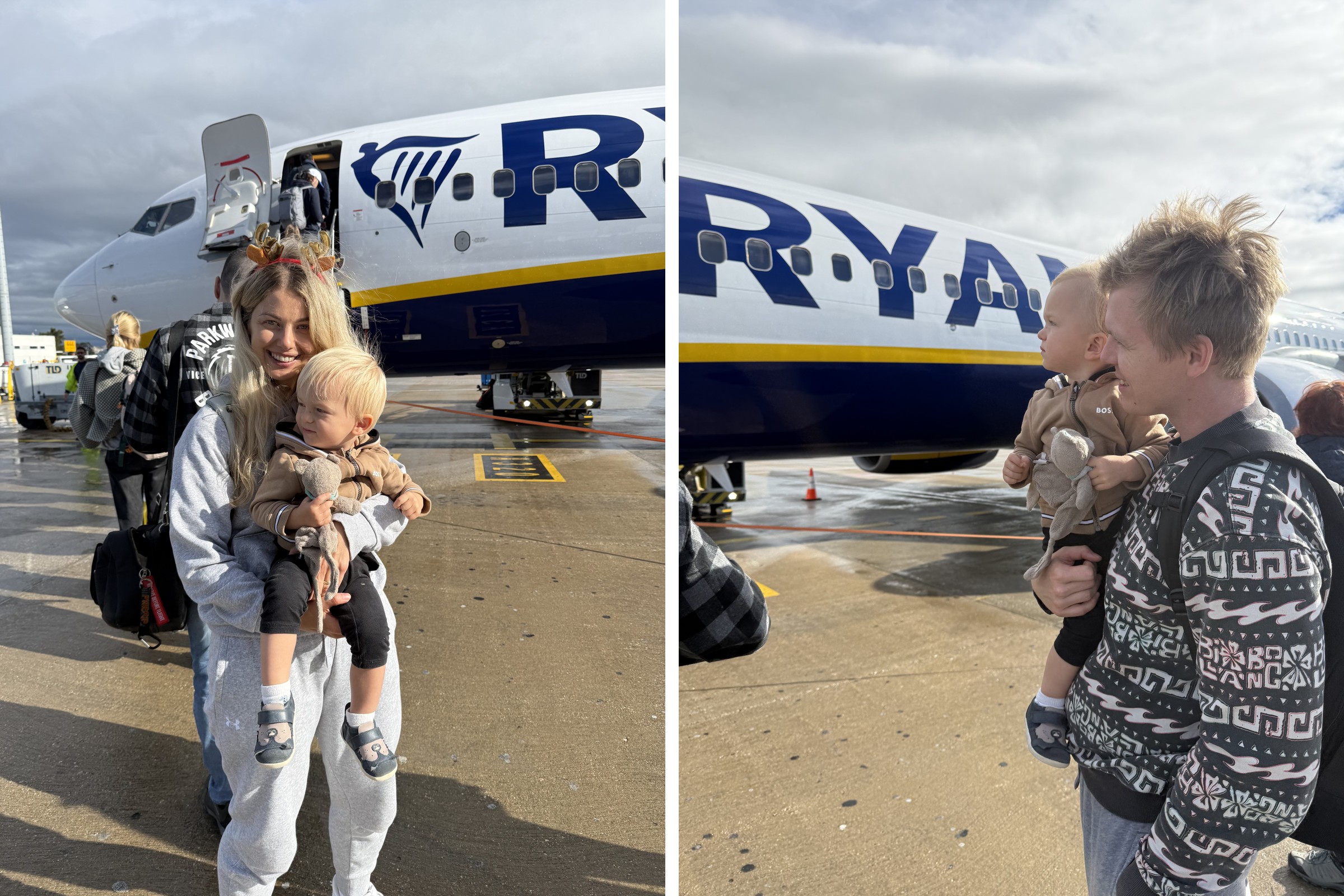
In brief: is the Flying with Children course worth it?
The short answer: if you are flying with a child for the first time, especially with a low-cost airline, yes. But there is one condition, which we explain below because it is exactly where we came unstuck ourselves.
- What it is: 11 video lessons (just under 80 minutes of video in total), plus additional bonus videos, with text, links and tables below each video.
- Price: €55, although the author runs discount promotions several times a year.
- Bonuses: PDF cheat sheets for Ryanair, Wizz Air and Smartwings, a packing list, a “My First Flight” certificate for children, a section with partner discounts, and the chance to ask the author questions directly.
- Biggest advantage: everything is in one place instead of having to collect it from fifteen airline websites and four discussion threads.
- Biggest drawback: the pace of the videos. We watched them at double speed and still had to look some things up ourselves.
- Our verdict: it is a good foundation that takes the stress out of your first trip, but it is not a manual for every possible situation. If you enjoy researching everything yourself, you can manage without the course.
Why we considered the Flying with Children course
Jonáš was—and still is—a wonderful travel companion, but long journeys have never been his strong point. If he was awake, he could manage a maximum of 45 minutes in the car, and whenever we tried the baby carrier or stroller, he made his feelings very clear. Flying was therefore a major question mark for us.
Then there was the list of worries that probably every parent knows before a first flight. We had no idea what we were allowed to take for free, whether the stroller would make it through check-in, how seating would work when the three of us were travelling, or what would happen if Jonáš decided halfway through take-off that he did not want to wear the belt.
We accepted the offer mainly because the course was created by a mother who had genuinely taken dozens of trips with children on low-cost airlines, rather than by a travel agency. That turned out to be its greatest strength, because what we found most useful were the concrete experiences along the lines of, “this worked with this airline, but not with that one.”
What you get in the course
The course is divided into eleven modules that follow a logical progression, from deciding where to fly to what to pack in your carry-on. Each module includes a video plus text below it, and some also include tables and links directly to the airlines’ rules.
| Module | Video length | What you will learn |
|---|---|---|
| When to start flying and where to go | 3:43 | From what age children can fly and which destinations to choose for a first trip |
| Travel documents | 2:45 | ID card versus passport, passports within 24 hours, and how much the child’s photo resembles them |
| How to book flights | 6:26 | The difference between an infant and a child over two, and what is not worth paying extra for with Ryanair |
| Seats on the plane | 4:47 | How to get your family seated together for free and what the European recommendation says about it |
| Children’s baggage allowance | 5:23 | What counts as a baby item and what you get for free with different airlines |
| Strollers, baby carriers and hiking carriers | 5:03 | Whether to check in your stroller, put it in a bag, or take it all the way to the aircraft |
| Car seats and cots | 8:08 | Why you might bring your own car seat and how to pack it |
| Food, drinks and a first-aid kit | 7:59 | Liquids for children over 100 ml and what can pass through security |
| What happens at the airport | 12:08 | Everything from arrival to the gate, baby rooms, priority queues and lounges |
| What happens on the plane | 8:44 | Seating children under two, infant belts, bassinets and changing nappies |
| What to bring on a trip | 12:02 | What to pack for children in your carry-on and how to keep them entertained on the plane |
You also get a downloadable packing list, a “My First Flight” certificate (Jonáš was not impressed with it yet, but it must be a hit with older children), and a section with private partner discounts. We will not list those here because they are only available to course participants.
💡 Tip: download the cheat sheet for your airline right at the start. It is a one-page PDF with dimensions and rules that you can save to your phone, so you do not have to search for anything at the check-in desk.
What the course actually helped us sort out
The most valuable part for us was the section on baggage and baby items. We learned that with most airlines, both a stroller and a car seat can be checked in for free, and that this does not apply only to babies but also to older children—which we had no idea about. It saved us money and unnecessary stress at check-in.
The second thing was seating. With low-cost airlines, we automatically assumed we would have to pay extra to sit together. The course explained that the system automatically assigns a child next to a parent, and that there is also a European recommendation you can refer to. It worked for us.
The third was the rules for liquids and food. Before a trip, this is the sort of thing that feels like a minefield, yet all you need to know is that small children are exempt from the 100 ml limit and that the rules vary from one airport to another. Nobody questioned anything in Portugal, but it was reassuring to know this in advance.
And then there is a fourth benefit that is difficult to measure: peace of mind. When we set off for the airport, we knew what to expect, where the changing table would be and why we were leaving two hours early. Even though we did not pay for the course ourselves, we think the €55 price is justifiable for a first trip, even if you only take away half of the information.
What slowed us down in the course
We will be honest here, because a review where everything is perfect is not useful to anyone.
The pace of the videos
We had to watch the videos at double speed for them to feel comfortable to listen to. Terka speaks calmly and thoughtfully, which is great if you are folding laundry while watching, but we were dealing with the course in the evening after putting our son to bed and wanted to get to the point more quickly. At 2× speed, it was exactly right, turning just under 80 minutes into 40.
The most important information is in the text, not the video
This was our main takeaway, and we have to admit that we were partly to blame. After the course, Lukáš still could not work out exactly what we were allowed to take as baby items, so he searched through the airlines’ websites. Yet the table with all the airlines and their permitted baggage had been sitting right there in the course the whole time, hidden below the video.
We received the course directly and did not go through the sales page, where it explains that the videos are only one part of the course and that the key dimensions and tables are deliberately provided as text, so they can be updated when airlines change their rules—which happens all the time. Terka explained this to us straight away and made a note to emphasise it more clearly in the course. We appreciated that, because she responded within a few hours without getting defensive.
If you buy the course, take this as our first piece of advice: scroll below the video. There is more information there than in the video itself.
What we would have liked to see
We were missing a few things that would have turned a good foundation into a course you keep coming back to:
- Chapters in the videos or a written summary below each lesson, so you could jump straight to whatever you needed to deal with at that moment.
- “What to do if” scenarios: if your flight is delayed and your routine falls apart, if your child refuses to be strapped in during take-off, or if your checked stroller does not arrive.
- More about children around the age of two, because they are no longer babies who sleep through the whole flight, but they are not yet at the age when a tablet will keep them entertained.
None of these is a serious flaw, but if we were to recommend the course “wholeheartedly”, these are the things that really ought to be included.
How our first flight went
We deliberately chose a direct flight, so there would be no connection, our bags would not have to be transferred, and we would not have to run around an unfamiliar airport with a tired child. In our opinion, that was the best decision of the entire trip.
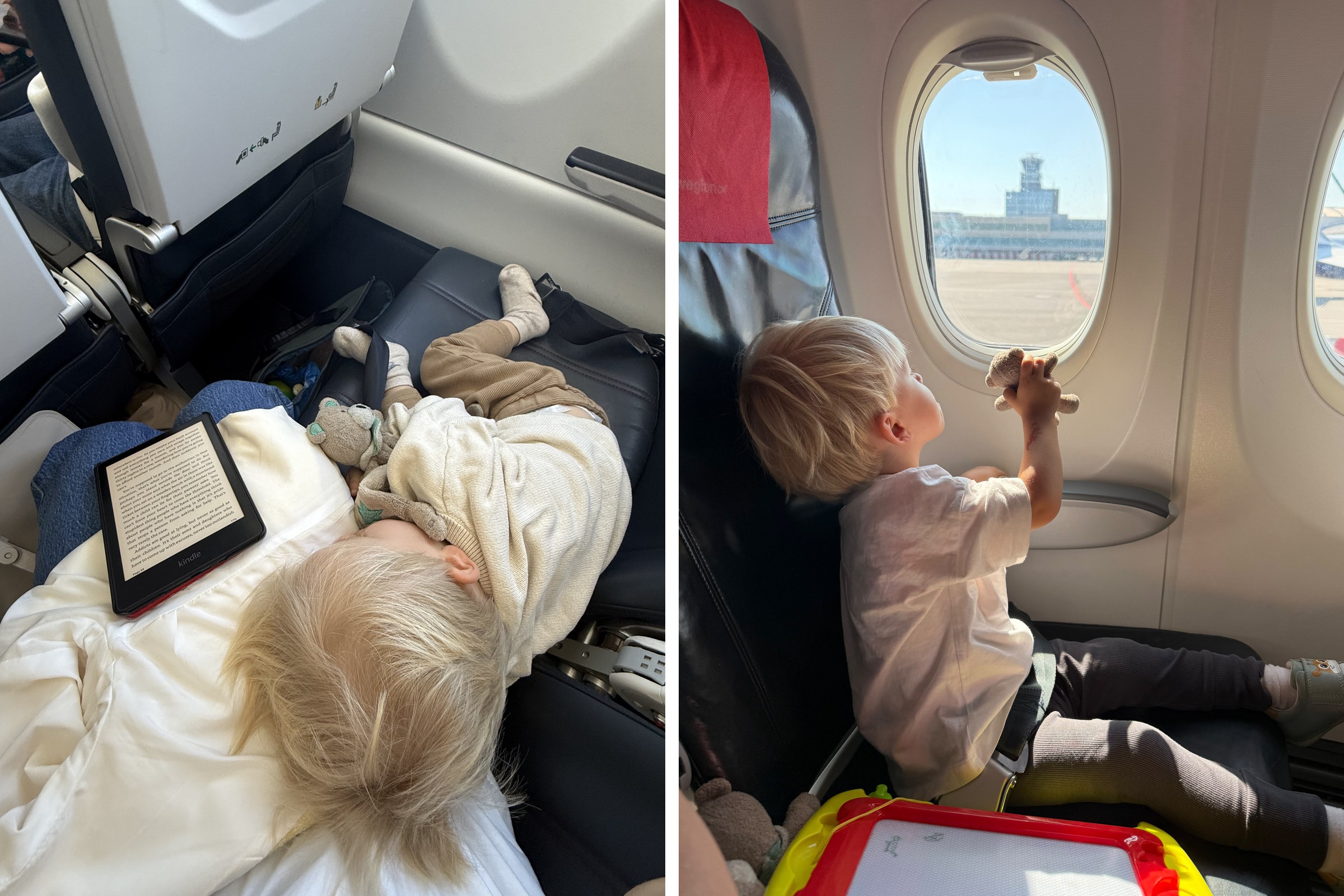
The second decision was to schedule the flight for Jonáš’s naptime. On the way from Faro to Vienna, it worked perfectly: he fell asleep during take-off and managed fine when he woke up. We felt as if we were living in a fairy tale and thought we were genius parents. 😅
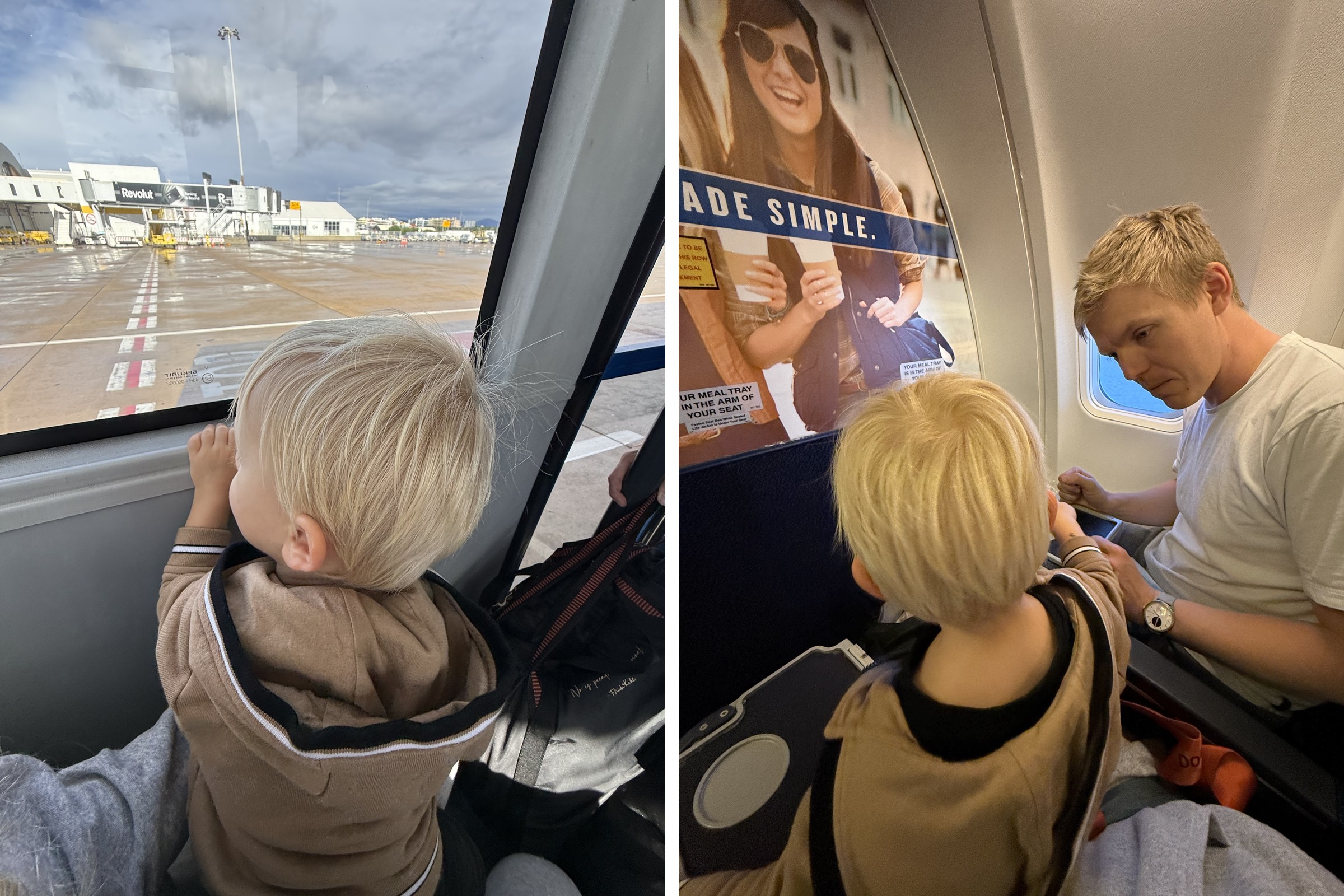
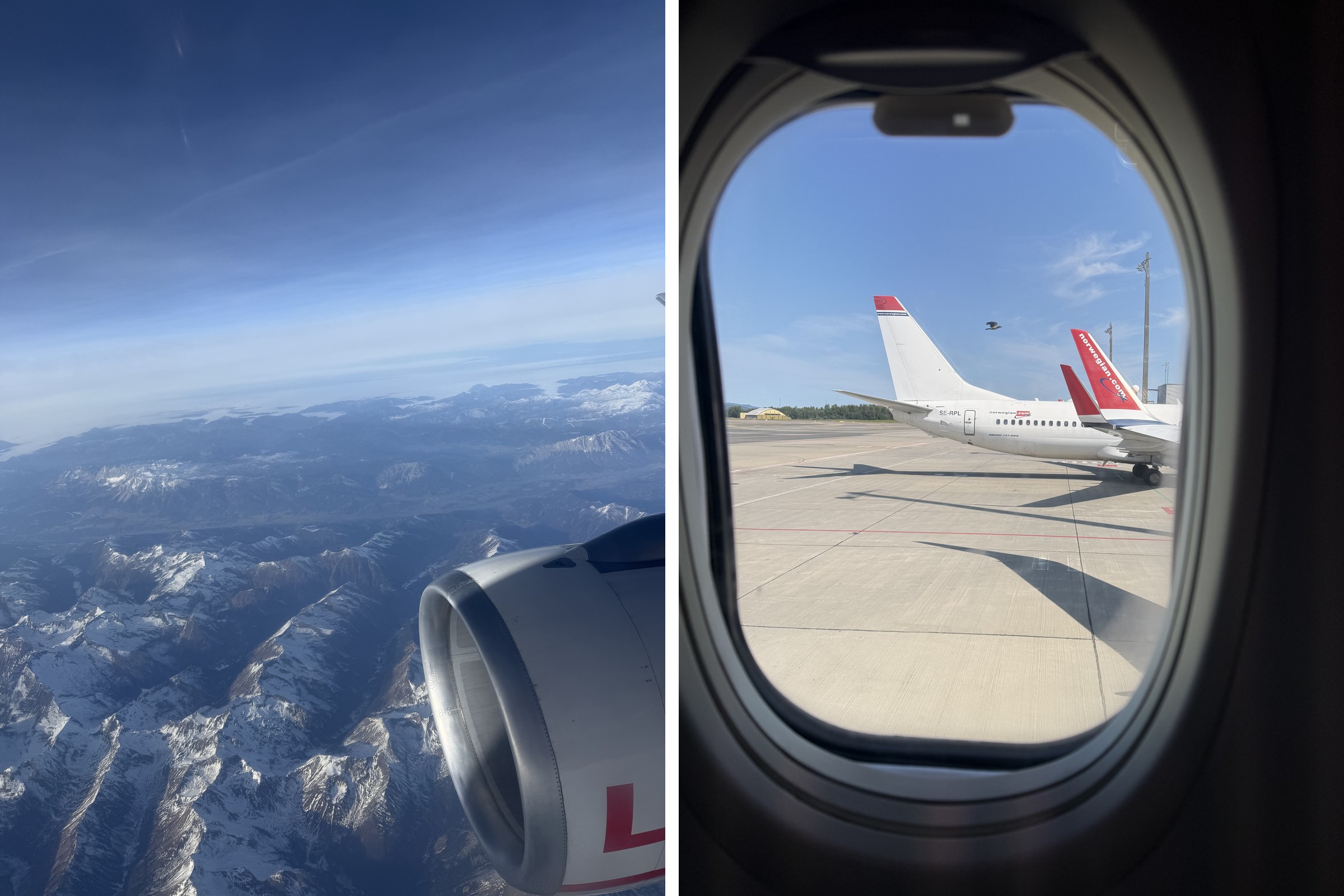
The return journey brought us back down to earth. We were delayed, the sleep plan fell apart, and Jonáš was awake practically the entire time. And would you believe it? It was fine. He liked the plane, watched out of the window, walked along the aisle with us, and in the end it was calmer than 45 minutes in the car.
The only genuinely difficult situation we experienced was on the flight to Paris, when Jonáš refused to be strapped in during take-off and landing. These are the two moments when a child under two has to be secured to you with an infant belt, and there is no getting around it. And, just our luck, it must have been the longest post-take-off period I have ever spent strapped in—almost 45 minutes. By our last flight, however, we did not even have this problem; he was willing to listen to our explanation.
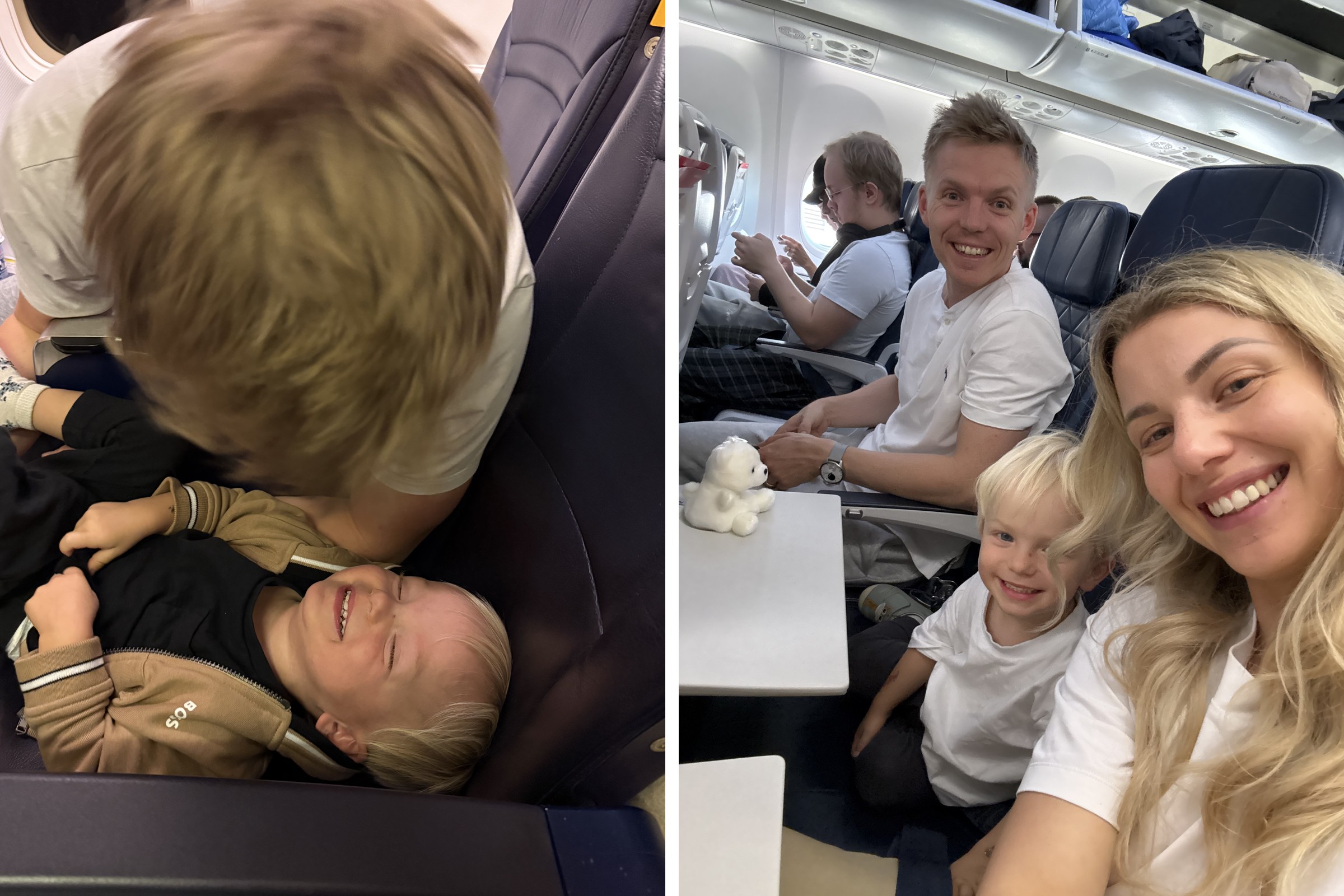
And now for some good news for all nervous parents, because this is exactly the sentence we needed to hear a year and a half ago: flying is now the easiest way for us to get anywhere with our child. At two, Jonáš handles it better than the car, better than the train, and incomparably better than any baby carrier.
5 things we would recommend
This goes beyond the course and is based purely on our own experience:
1. Choose a direct flight, even if it costs a little more. A connection with a small child means twice the stress and twice as many things that can go wrong.
2. Plan the flight around nap time, but do not rely on it. Assume there will be a delay and that your plan will collapse. Ours did, and nothing terrible happened.
3. Take-off and landing are the hardest parts, not the flight itself. Have something reliable ready for those two moments. At two, we still rely on Duplo, while at a year and a half food was the best distraction.
4. Try a short first flight, because every child is different.
5. Leave plenty of time at the airport. Arriving two hours early may sound unnecessary, but with a child who needs to run around by the window and look at the planes, the time disappears incredibly quickly.
Who we recommend the course to—and who we do not
The course makes sense if:
- you are flying with a child for the first time and do not have anyone nearby who can advise you,
- you are flying with a low-cost airline, where it is easy to spend too much on baggage,
- you do not want to spend your evenings reading Ryanair’s terms and conditions and discussion forums,
- you have a child under two, because this is when there are the most rules and they are the least straightforward.
You probably do not need the course if:
- you have already flown with your child twice or more, because you will remember most of it anyway,
- you enjoy looking everything up yourself (the information can be collected for free; it will simply eat up an afternoon),
- you are expecting a polished, professionally produced video course. This is an honest home-made video course from a mother who has been through it all herself, not a rehearsed studio production.
How much does the course cost and where can you buy it?
The Flying with Children course costs €55 and is available on the Cestuj za babku website. Access does not expire, and the author regularly adds updates, which you will genuinely appreciate with a topic like this because airlines change their rules several times a year (Ryanair alone changed its cabin bag dimensions and its system for reserving seats for children over the last year).
💡 One final tip: once you buy the course, start by going through the texts and tables below the videos, and only then watch the videos. If we had done it that way, we would have saved ourselves an evening of searching airline websites.
Where to next
If you are planning your first trip with a child, take a look at our other articles too:
- Ryanair baggage: dimensions, weight and what you can take for free
- Wizz Air baggage: cabin bags, suitcases and fees
- What can and cannot you take on a plane?
- Travel first-aid kit: what to pack
- The Lofoten Islands with children: what to see and how to manage it
- Croatia with children: where to go on holiday
Frequently asked questions
Is the Flying with Kids course worth it?
For your first trip with a child, we’d say yes, especially if you’re flying with a budget airline. You get all the rules for luggage, seats, strollers and liquids in one place, which otherwise you’d collect from dozens of websites. If you already fly with your child regularly, you’ll know most of the content.
How much does the Flying with Kids course cost?
The base price is €50 and access is unlimited, including later updates. The author runs discount promotions several times a year, so it’s worth following her website or social media.
What does the Flying with Kids course include?
Eleven video lessons with a total length of just under 80 minutes, plus texts, tables and links to official airline rules. Bonuses include cheat sheets for Ryanair, Wizzair and Smartwings, a packing list, a “My First Flight” certificate and a section with partner discounts.
From what age can a child fly on a plane?
Most airlines will carry a baby from around one to two weeks of age, Ryanair for example from eight days. Always check the specific limit with your airline, as it varies, and for premature babies a doctor’s confirmation is usually required.
How do you manage a flight with a two-year-old?
What helped us most was a direct flight without transfers, scheduling departure for sleep time and things your child knows from home. Keep in mind that the hardest parts are takeoff and landing, when a child under two must be strapped in with you, and have something tried-and-tested ready for those two moments.
How long does it take to get through the entire Flying with Kids course?
The videos themselves total just under 80 minutes, so you can get through them in two evenings. But also factor in the texts and tables below them, because that’s where the specific dimensions and rules for individual airlines are, which you’ll want to go through more slowly.
What can I take for my child on a plane for free?
With most airlines you can check in a stroller and car seat for free, and for children under two on your lap there’s usually also a bag for essentials. But the scope varies from airline to airline, so always check the rules directly with the carrier before departure.
Tips and Tricks for Your Vacation
Don’t Overpay for Flights
Search for flights on Kayak. It’s our favorite search engine because it scans the websites of all airlines and always finds the cheapest connection.
Book Your Accommodation Smartly
The best experiences we’ve had when looking for accommodation (from Alaska to Morocco) are with Booking.com, where hotels, apartments, and entire houses are usually the cheapest and most widely available.
Don’t Forget Travel Insurance
Good travel insurance will protect you against illness, accidents, theft, or flight cancellations. We’ve had a few hospital visits abroad, so we know how important it is to have proper insurance arranged.
Where we insure ourselves: SafetyWing (simple monthly subscription) and TrueTraveller (for extra-long trips).
Find the Best Experiences
Get Your Guide is a huge online marketplace where you can book guided walks, trips, skip-the-line tickets, tours, and much more. We always find some extra fun there!


